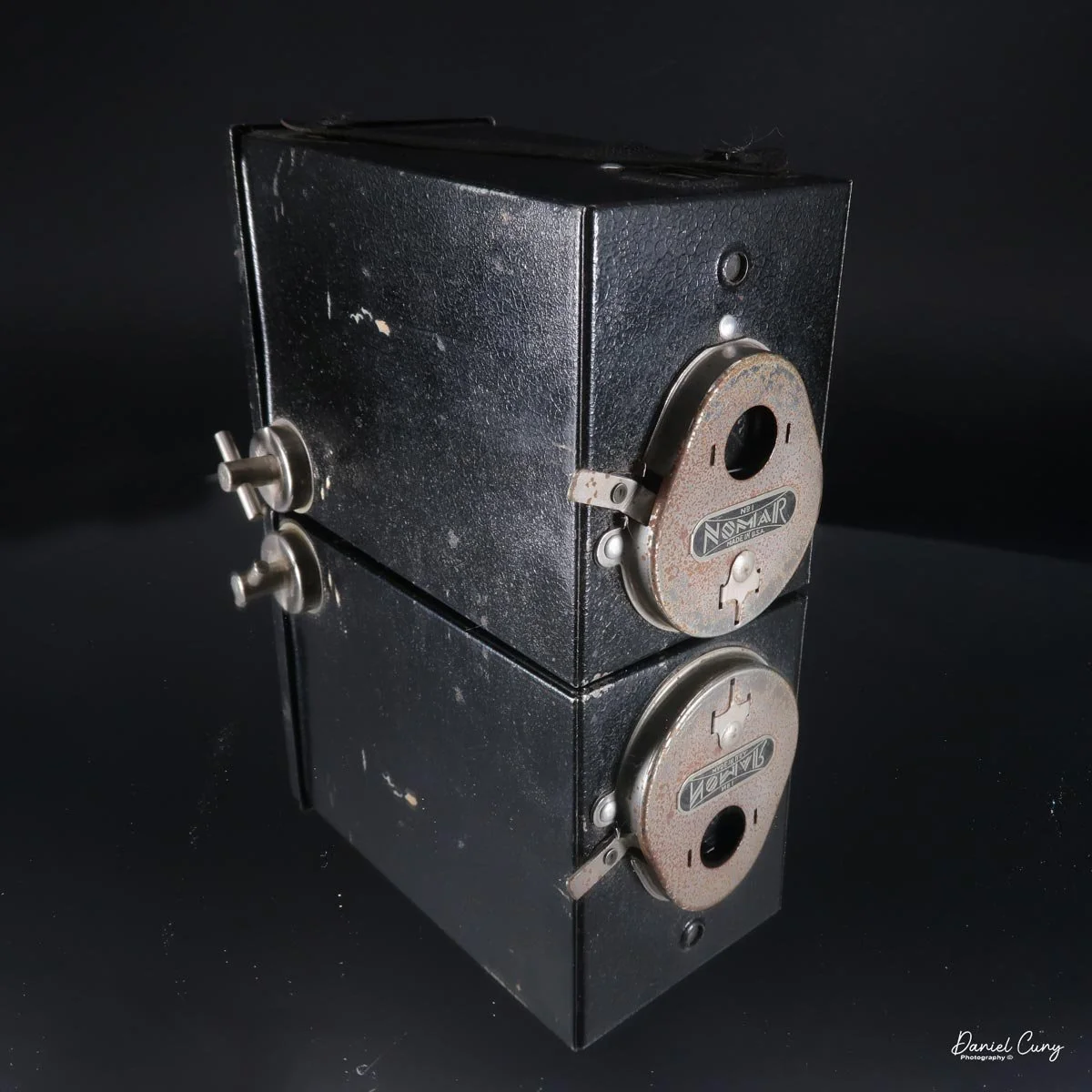
My Nomar No. 1 camera
The first time I ever saw a Nomar camera was in the late summer of 2015. The camera was in the basement of Central Camera on Wabash Ave. in Chicago. I was visiting customers on a business trip, and while Central Camera wasn't one of our dealers, I had heard the owner was a collector. As one of the oldest and most classic camera stores in Chicago, I couldn't pass up an opportunity to browse.
As I walked into the store, a nostalgic feeling of familiarity and calmness washed over me. The store featured older vintage showcases, and several salespeople were busy assisting customers.
I introduced myself to one of the salespeople, handed him my business card, and explained that I was a collector who had heard the owner was one, too. The salesperson smiled and said, "You should see our basement. It's filled with old cameras and photo items." I asked if I could take a look. "Sure," he replied, "but the owner doesn't sell anything."
I asked if I could briefly meet the owner to introduce myself, but the salesperson explained he was in a meeting with a rep and couldn't be disturbed. It was disappointing, but understandable.
As we walked down the stairs, I saw boxes upon boxes of older cameras and photo equipment stacked in rows. Most were common, good-selling items—mainly 1950s to 1980s SLR and rangefinder-style cameras, lenses, flashes, and accessories.
However, a couple of the boxes held odder, more unusual items. One of them was a small green box camera. When I pulled it out, I saw a brand name I hadn't heard of before: Nomar. It was a very simple metal camera with a basic face, but as a collector of colored cameras, my heart immediately started racing.
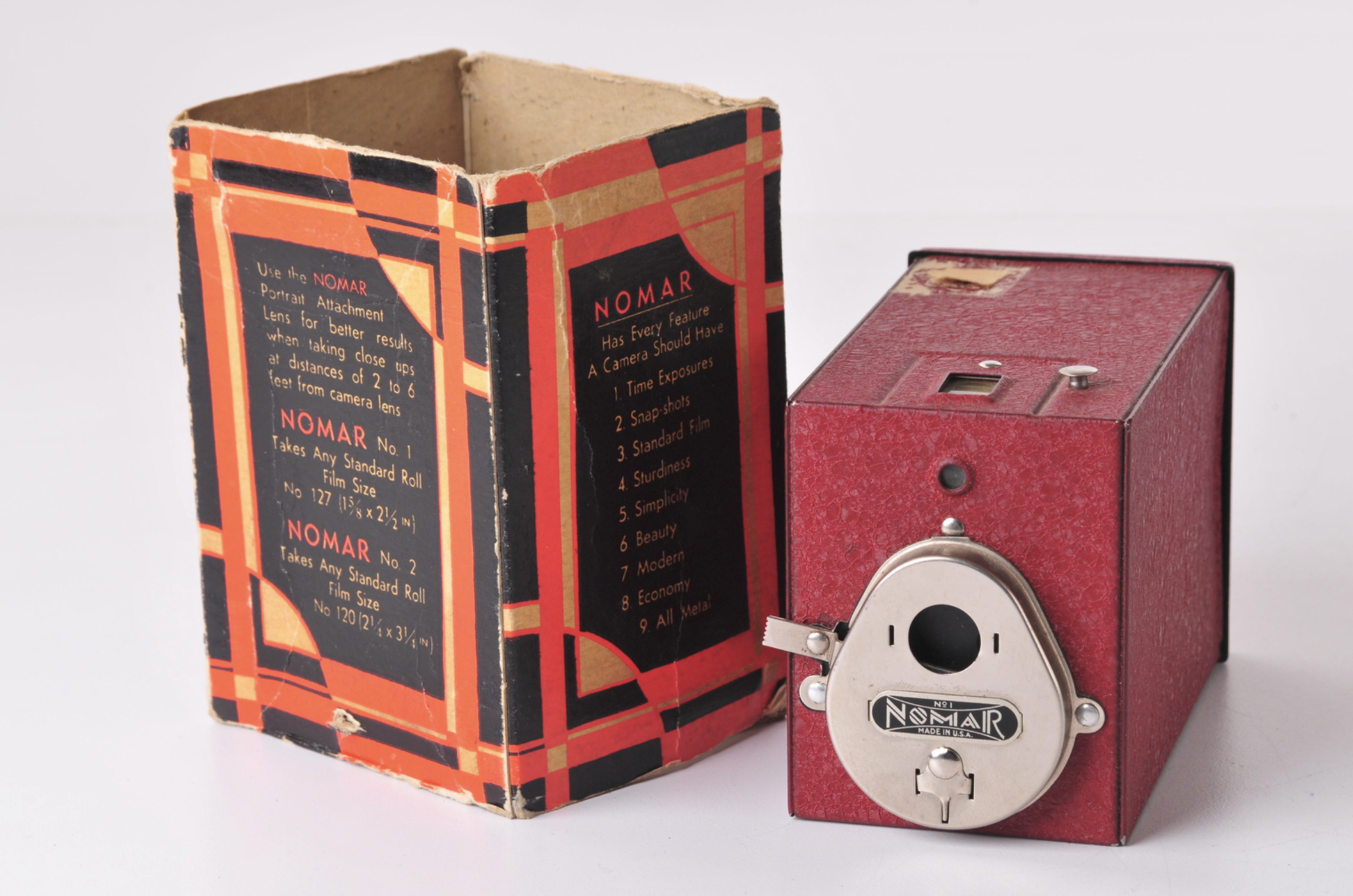
Nomar camera in red w/Box. Image courtsey of Charlie Kamerman
Holding the green Nomar and a couple of other items in that dark basement, I asked the salesperson if he would ask the owner about selling them, considering they were tucked away in such an obscure spot. He agreed to ask but warned me not to get my hopes up. When he returned, my crossed fingers were to no avail. "No," the owner had said, "it's not for sale!"
My hopes were dashed. Without the chance to talk to the owner directly, I knew there was little hope of convincing him to part with it. The silver lining, however, was that I had discovered a new brand of colored vintage cameras.
Armed with that information, I returned to my hotel that evening and started researching the Nomar. I learned the camera was quite rare and came not only in green but also in red and standard black.
It wasn't until several years later that I finally acquired one. It was included in a camera "lot" I purchased rather inexpensively, though it was the most common black version. I still have my feelers out to find the elusive red and green versions of this odd, basic little camera.
The Elusive History of Nomar
Writing the history of the Nomar Corporation has been extremely difficult. I've spent hours scouring internet archives, the New York Times archives, New York Commerce records, NY City Library records, and patent searches.
The only concrete information I could find was a notice published in the New York Times business section on August 30, 1934 (page 28): NOMAR CORPORATION, manufacturing cameras at 129 Grand St., has assigned to Chihaku, 224 East 59th St.
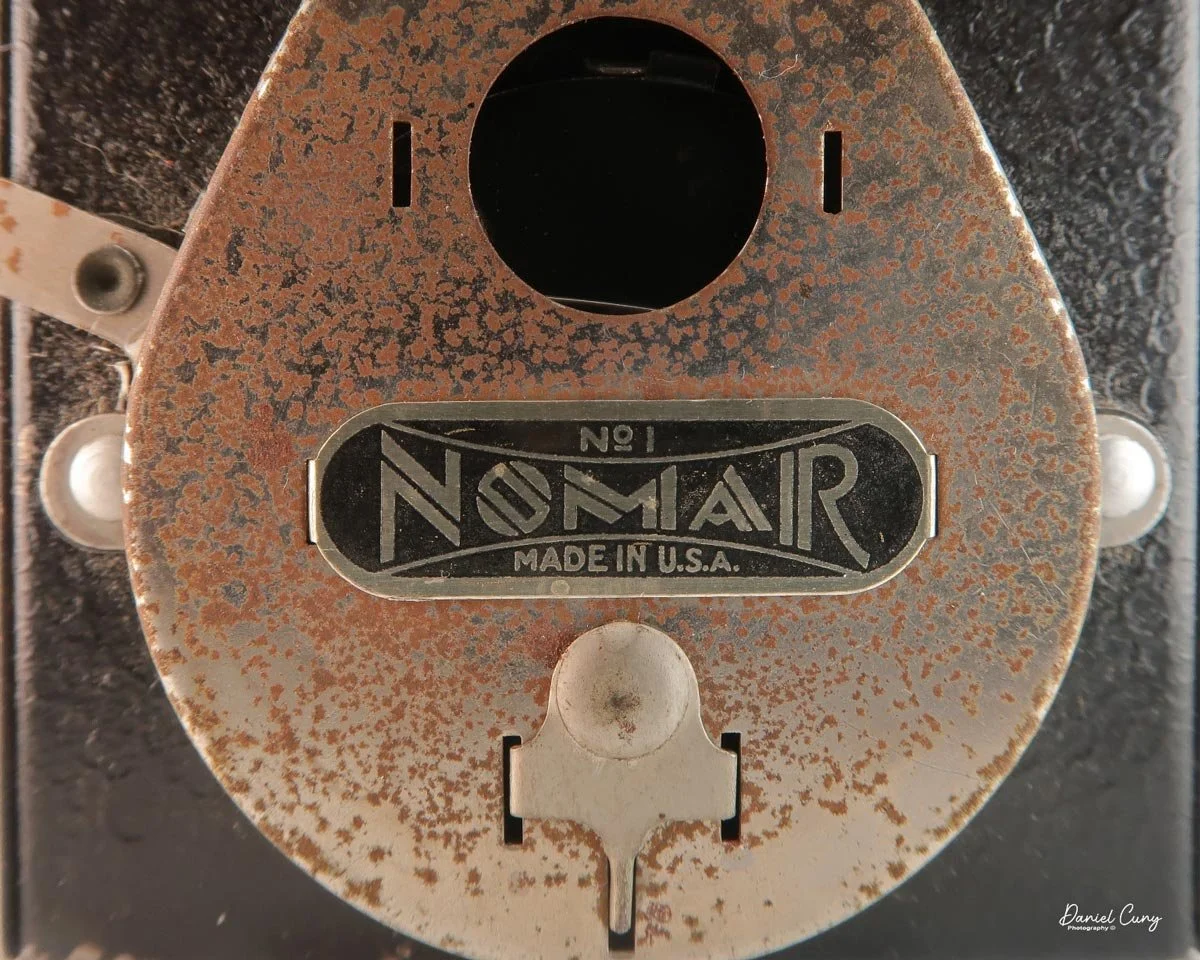
Nomar camera faceplate
In business terms, an "assignment" is a voluntary legal process in which a financially distressed business transfers its assets to an independent third party, who then liquidates them to pay off creditors.
It makes sense when you look at the timeline. Nomar Corporation started in 1930—one of the worst possible times to open a business in the US. It was just months after the massive stock market crash of October 1929, which left millions of Americans penniless and jobless.
Records also note that the Nomar Corporation distributed darkroom equipment and manufactured two camera models:
The No. 1: The model featured in this blog.
The No. 2: A model that used 120-size film and produced 2 1/4" x 3 1/4" negatives. (I have yet to see a No. 2 model anywhere. If someone has one, please confirm and send a photo!)
My Camera
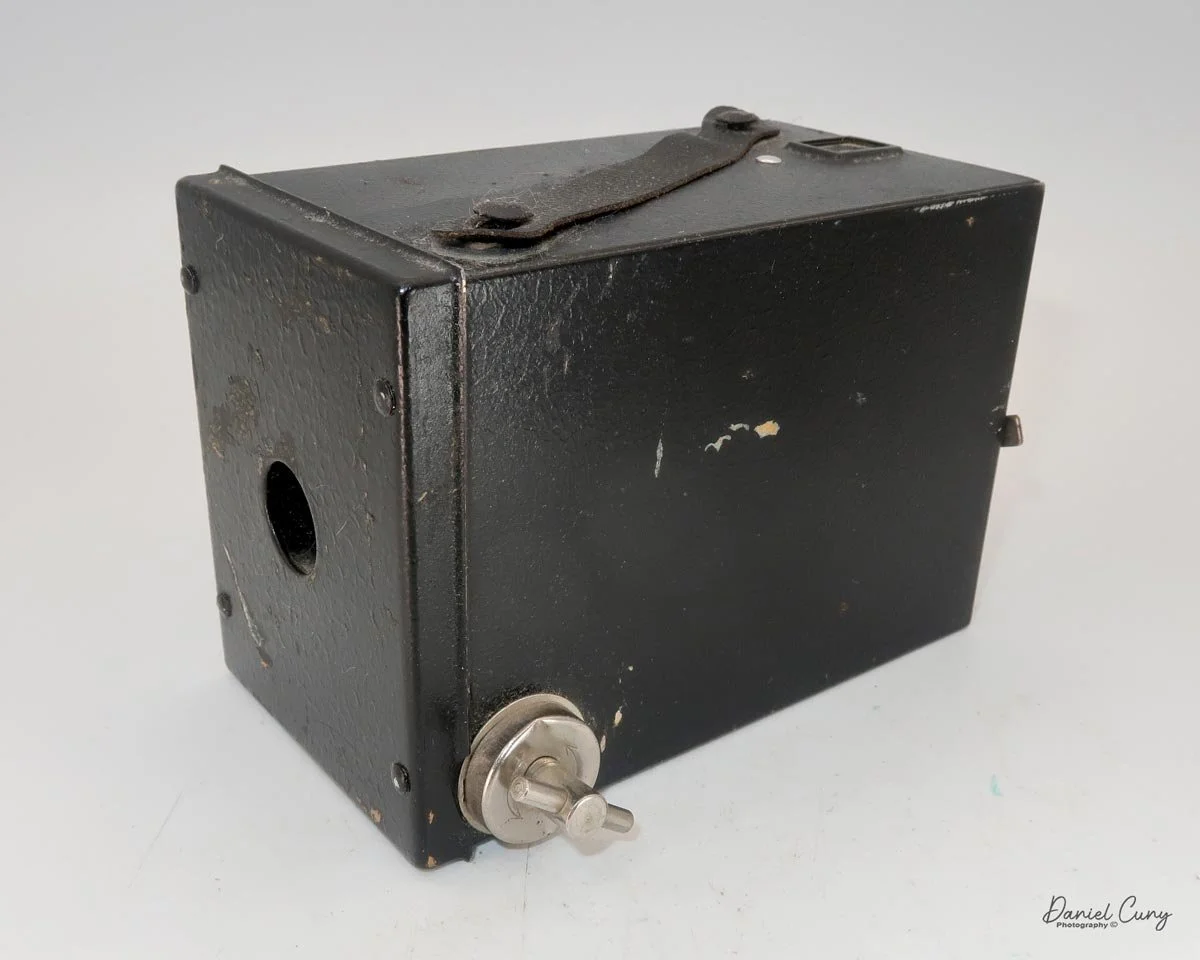
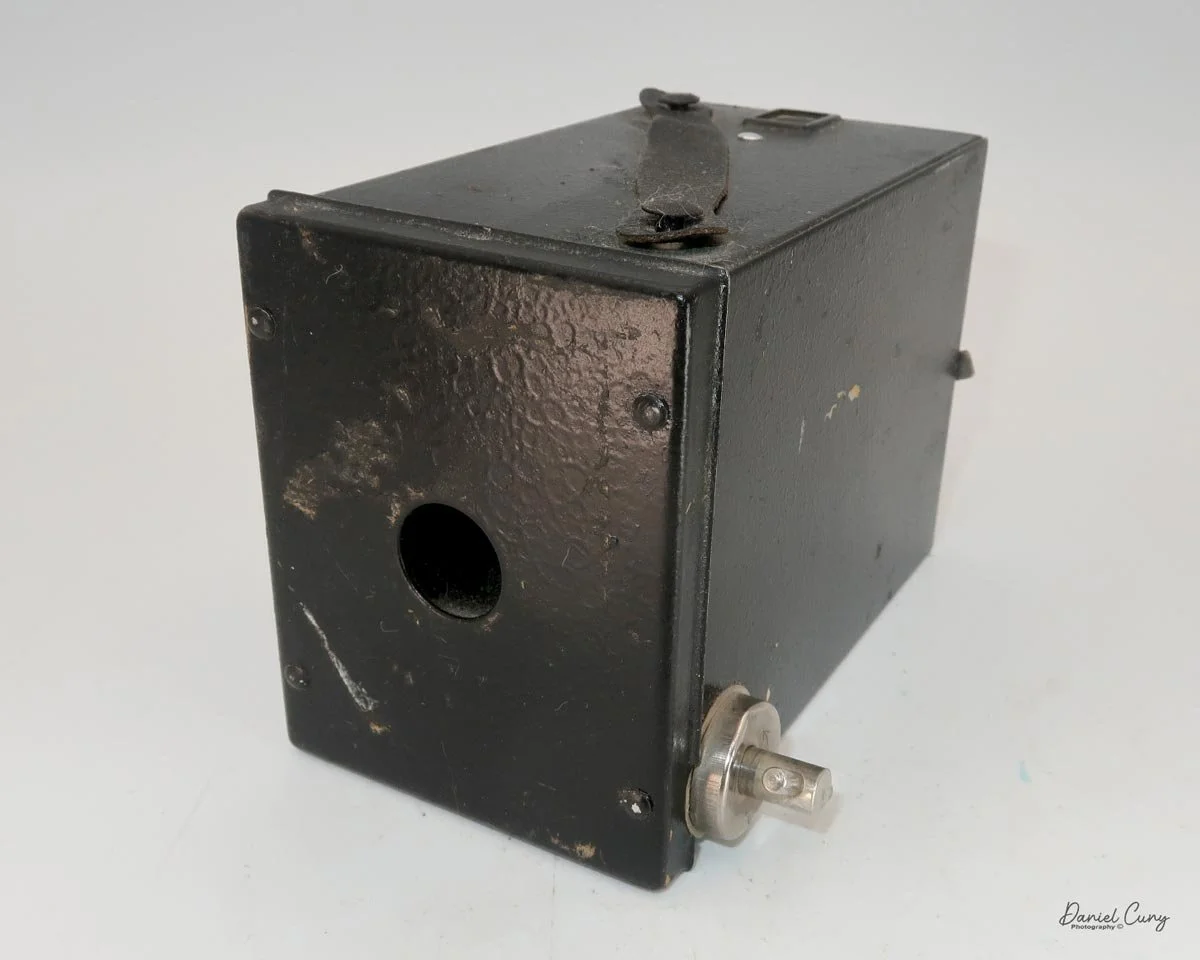
The camera is extremely basic, featuring a somewhat complicated loading process. Between the Great Depression and this clunky design, it's easy to see why the company eventually went out of business.
Camera Specs:
Dimensions: 4.75" long x 3" tall x 2 3/8" wide
Weight: 7.5 ounces
Film: 127 film (produces a 3x4cm image)
Viewfinder: Vertical orientation only (top-mounted)
Aperture: Fixed (no adjustable settings)
The camera features a chrome cover over the shutter and lens, accented by a beautifully stylized Art Deco "Nomar" nameplate. There are two slots on either side of the lens designed to hold an auxiliary close-up lens in place.
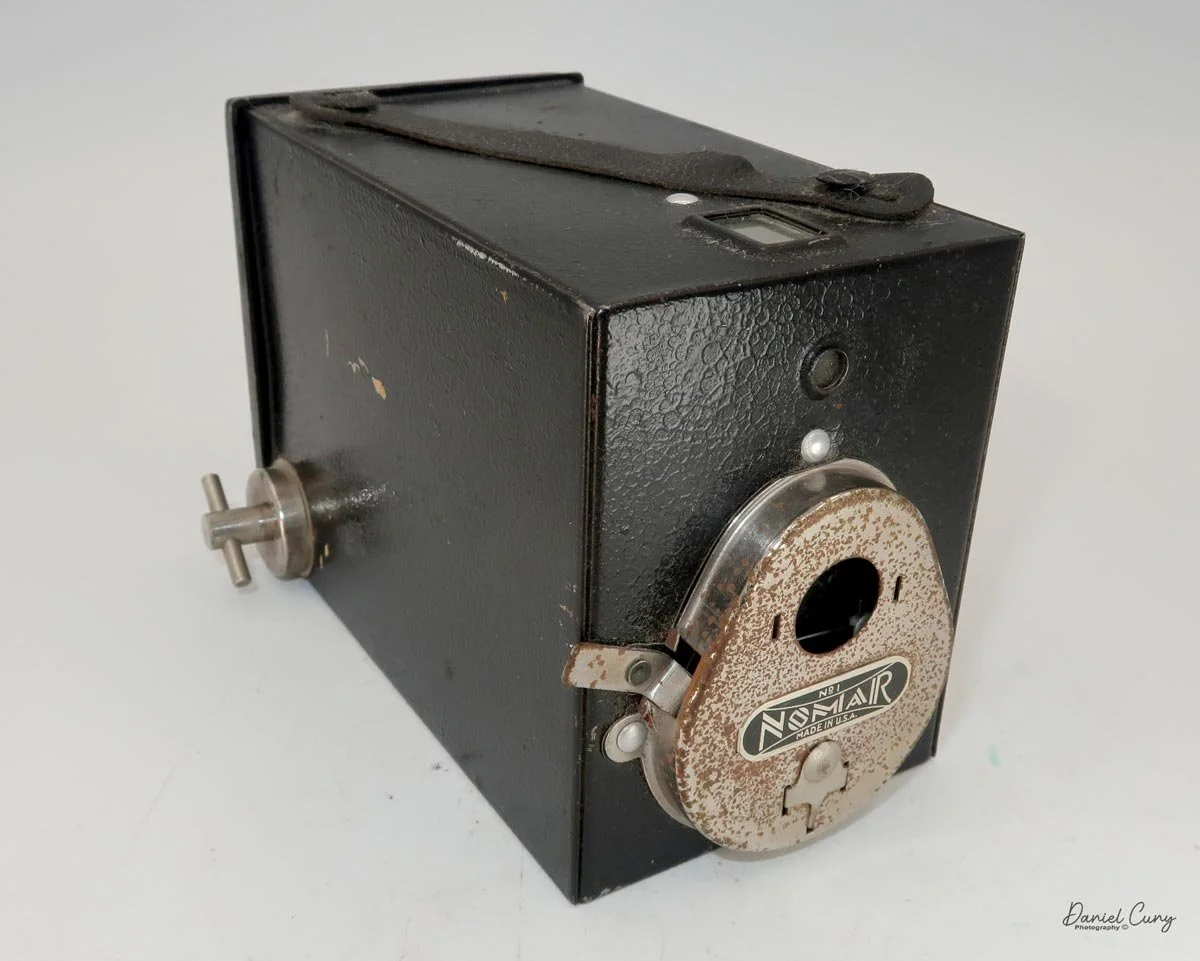
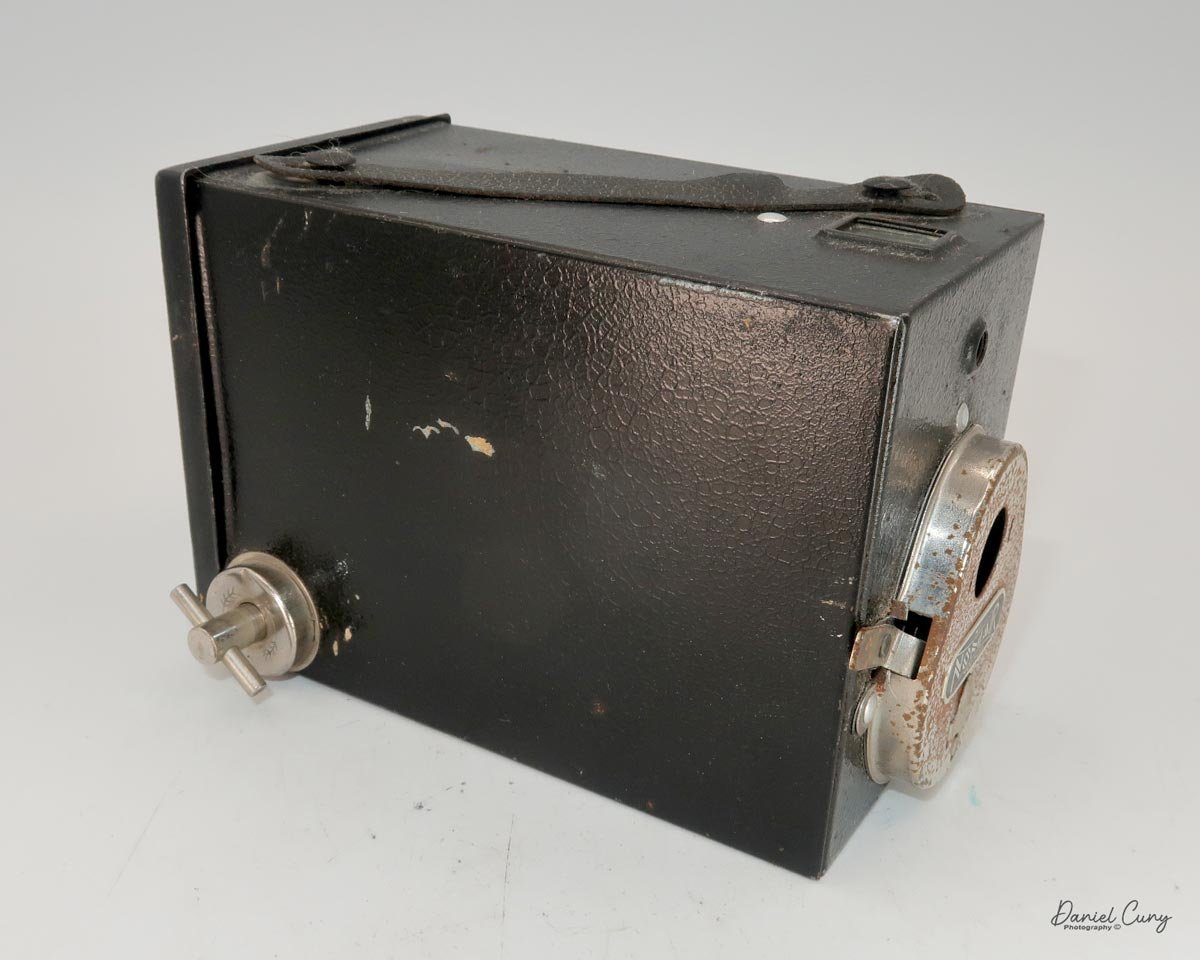
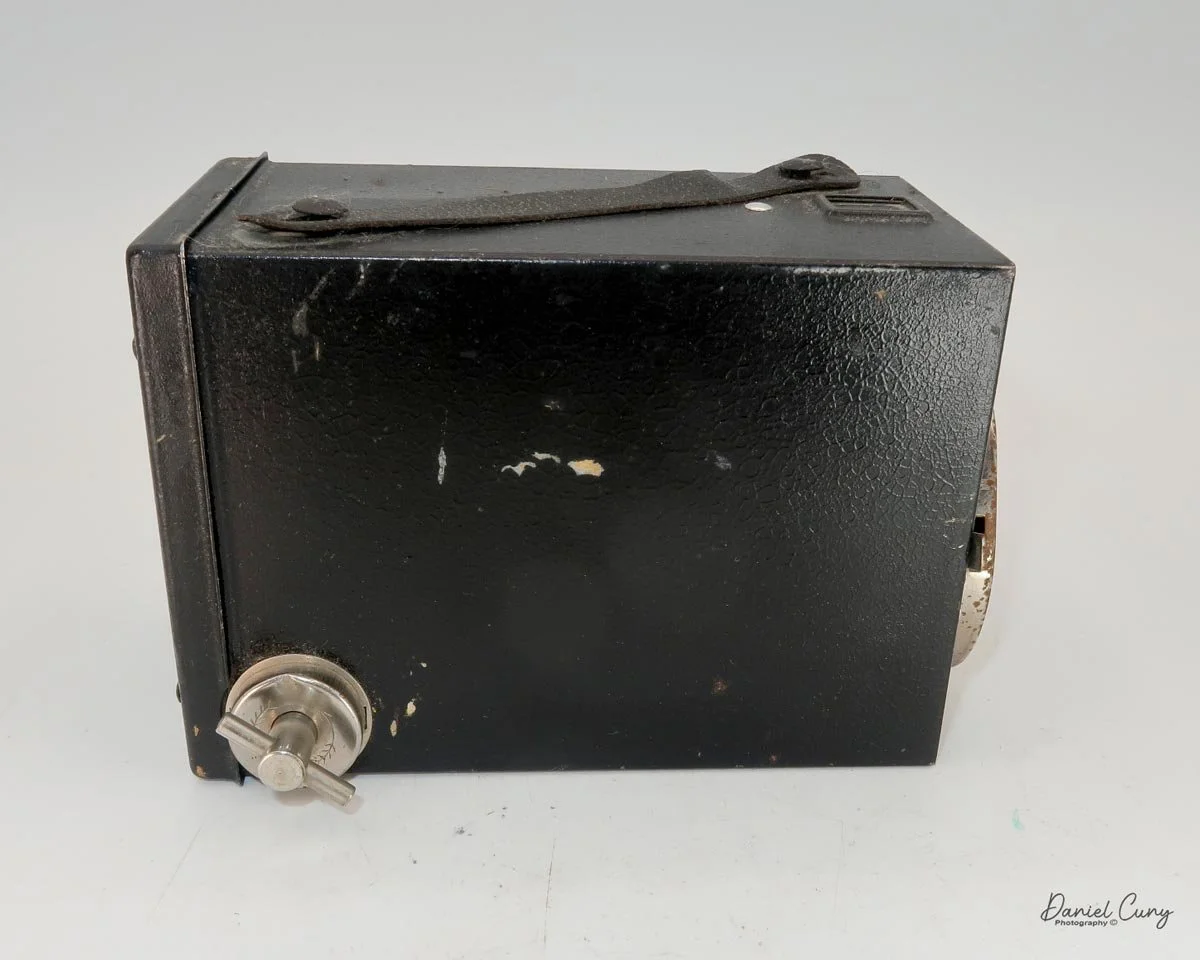
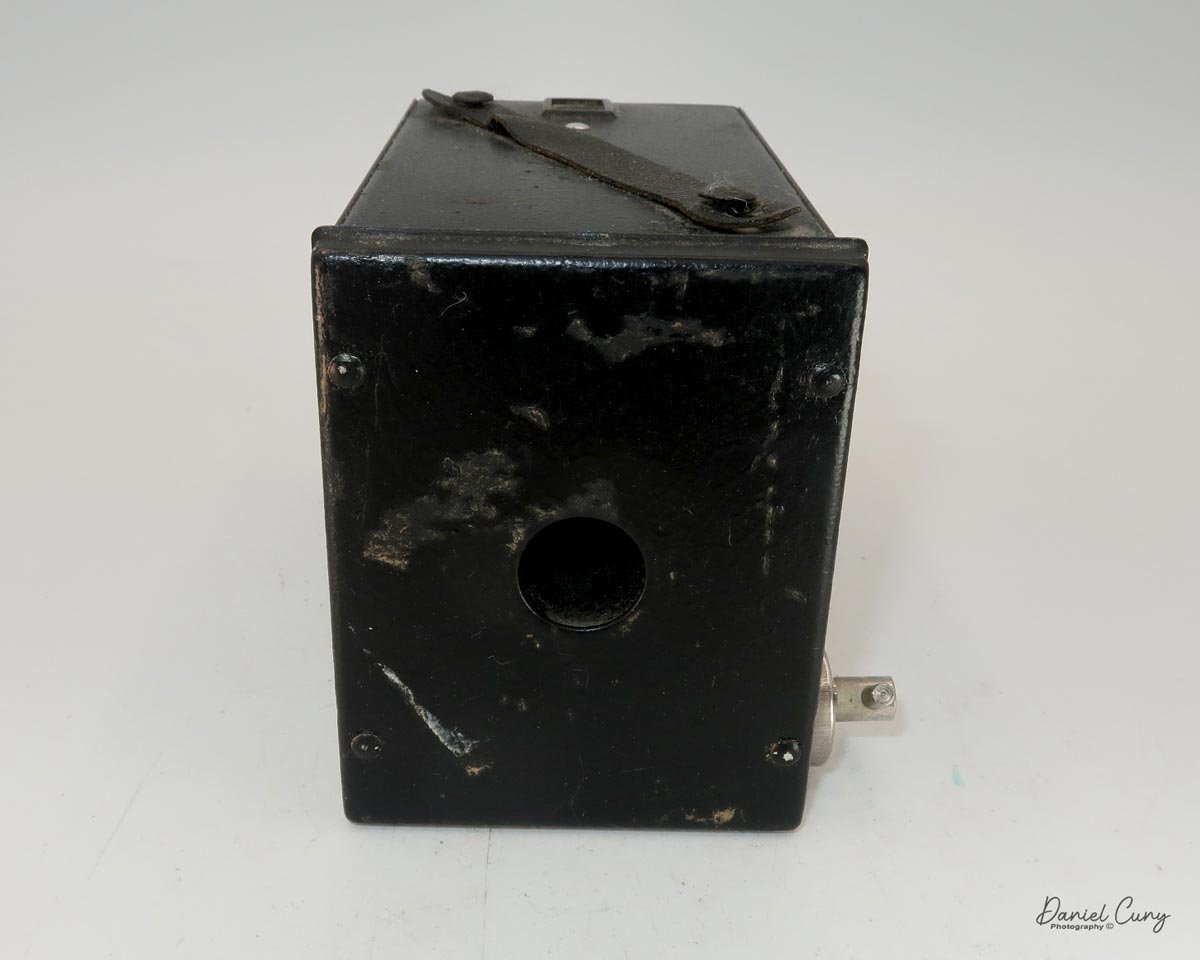
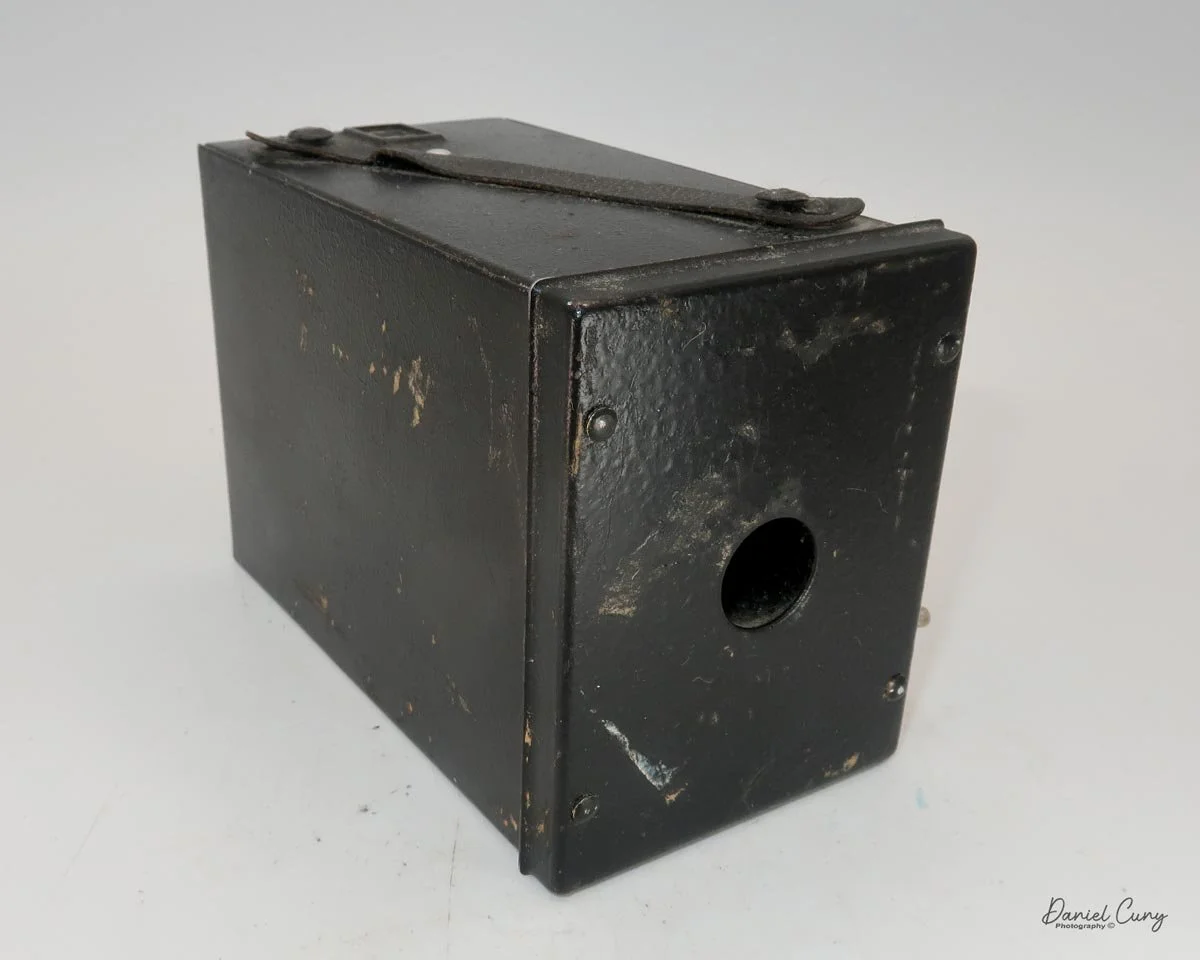
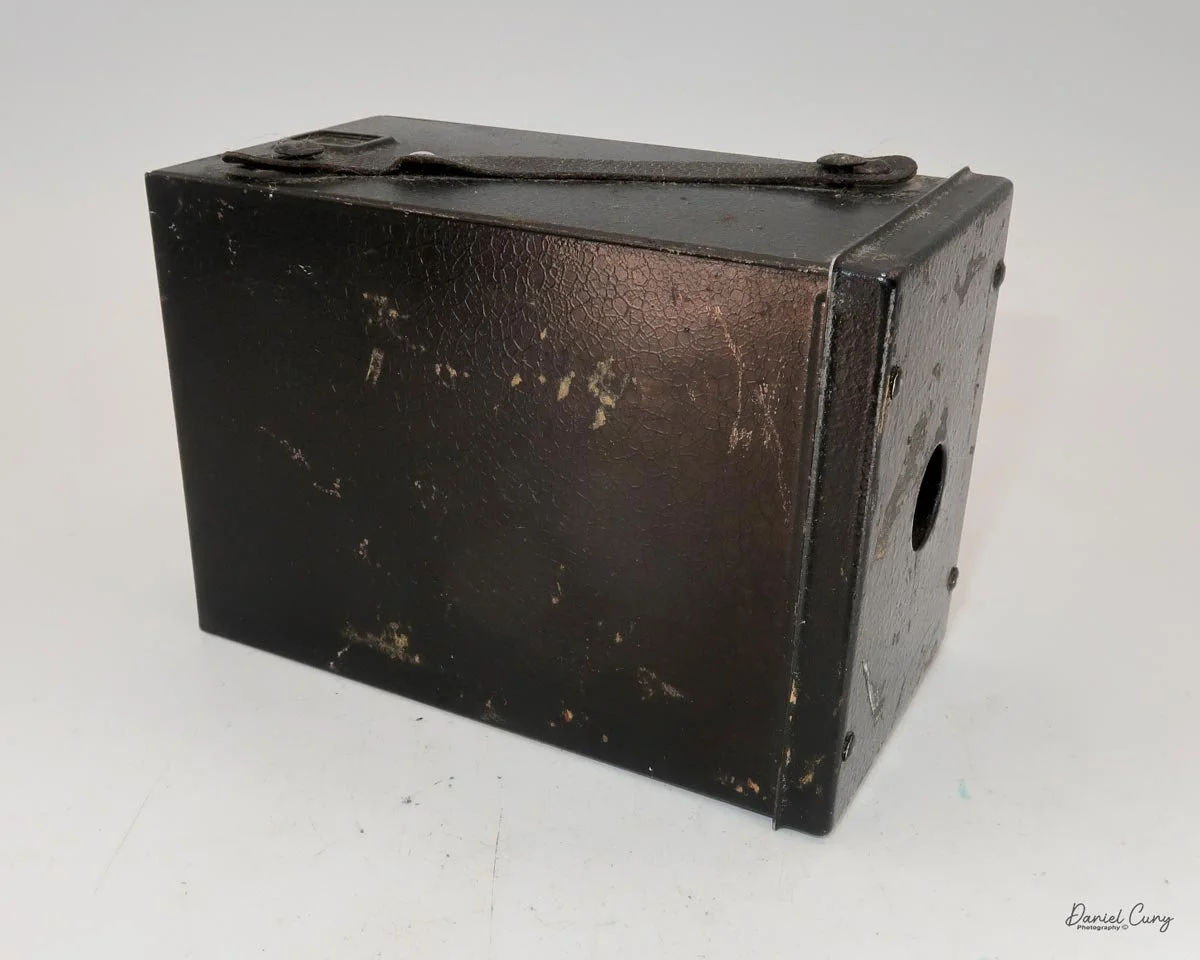
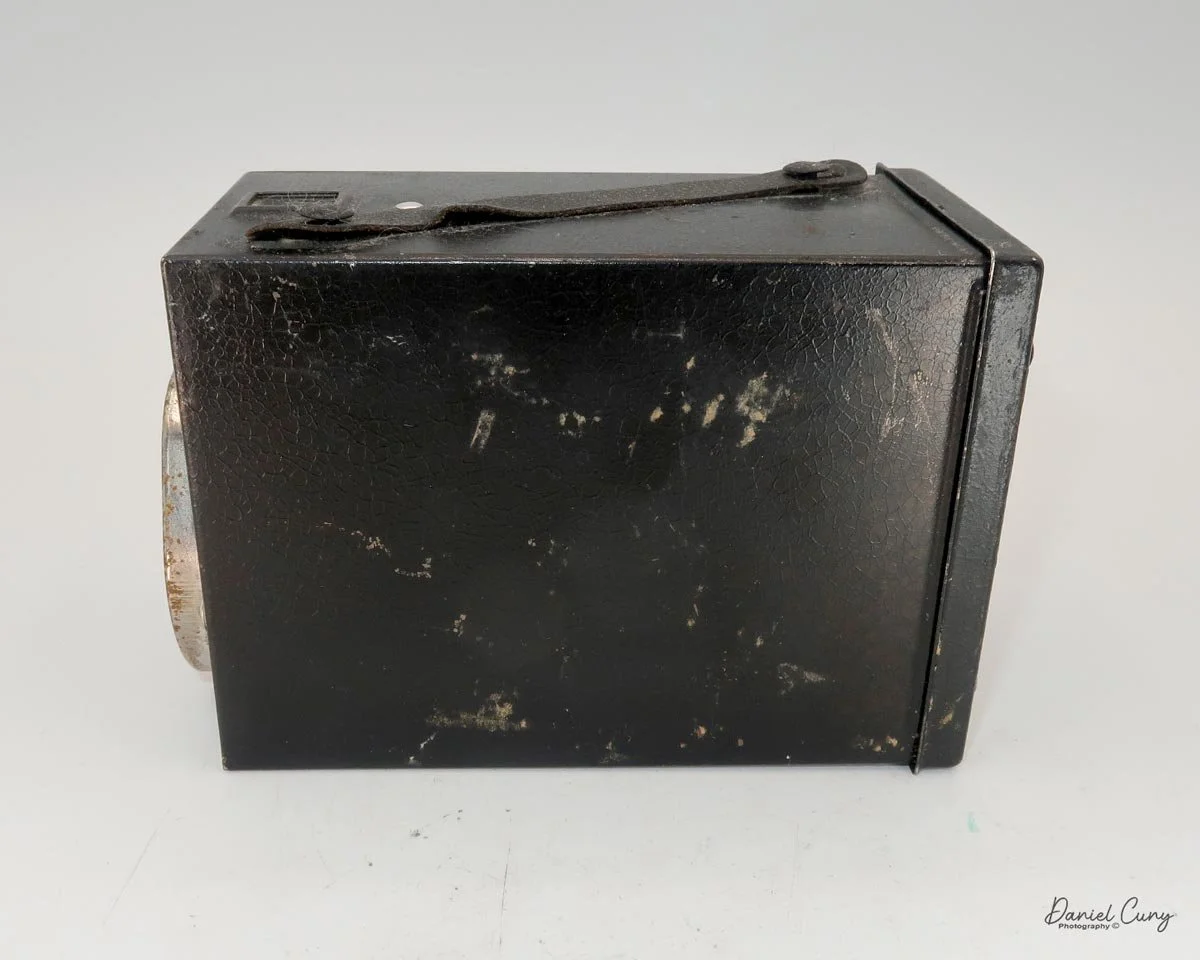
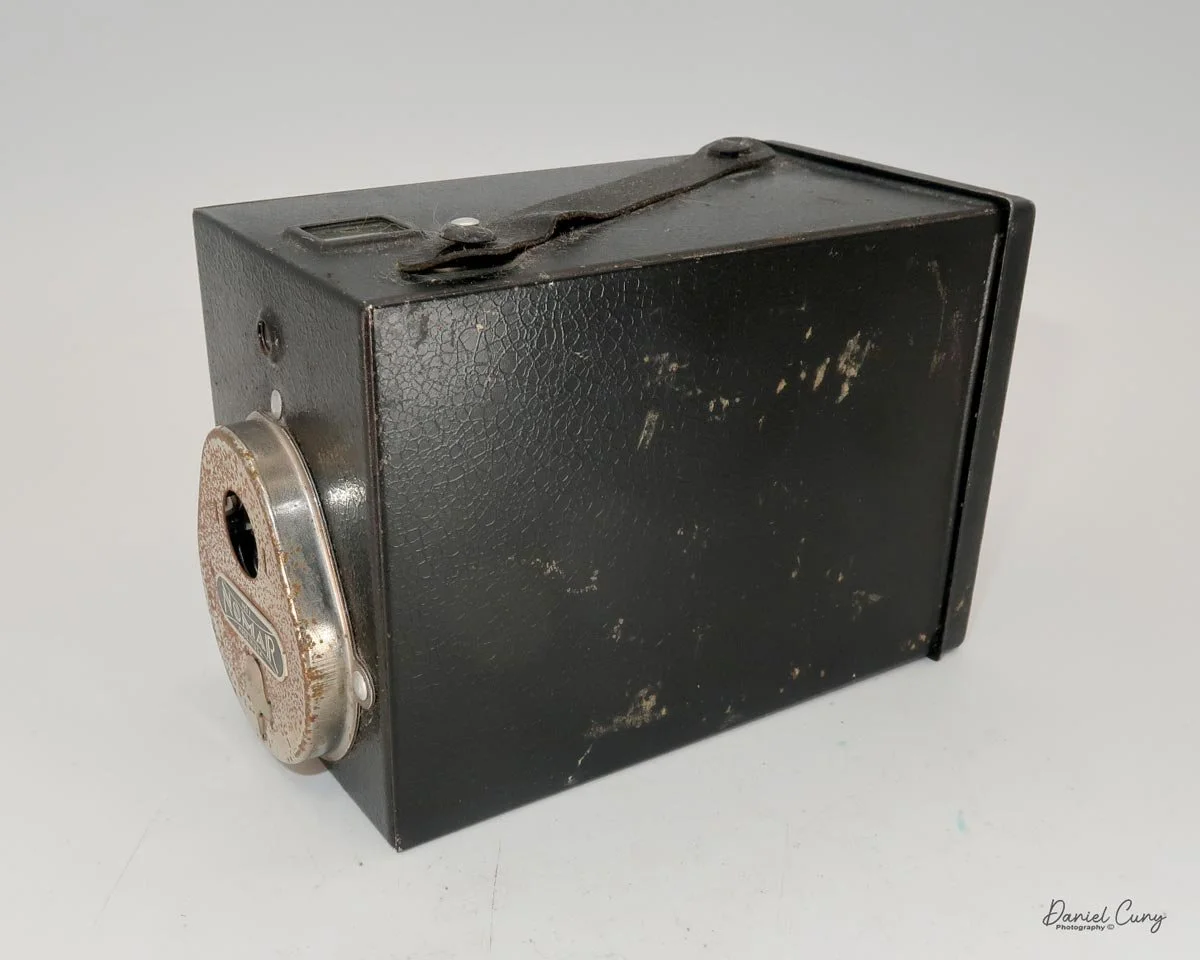
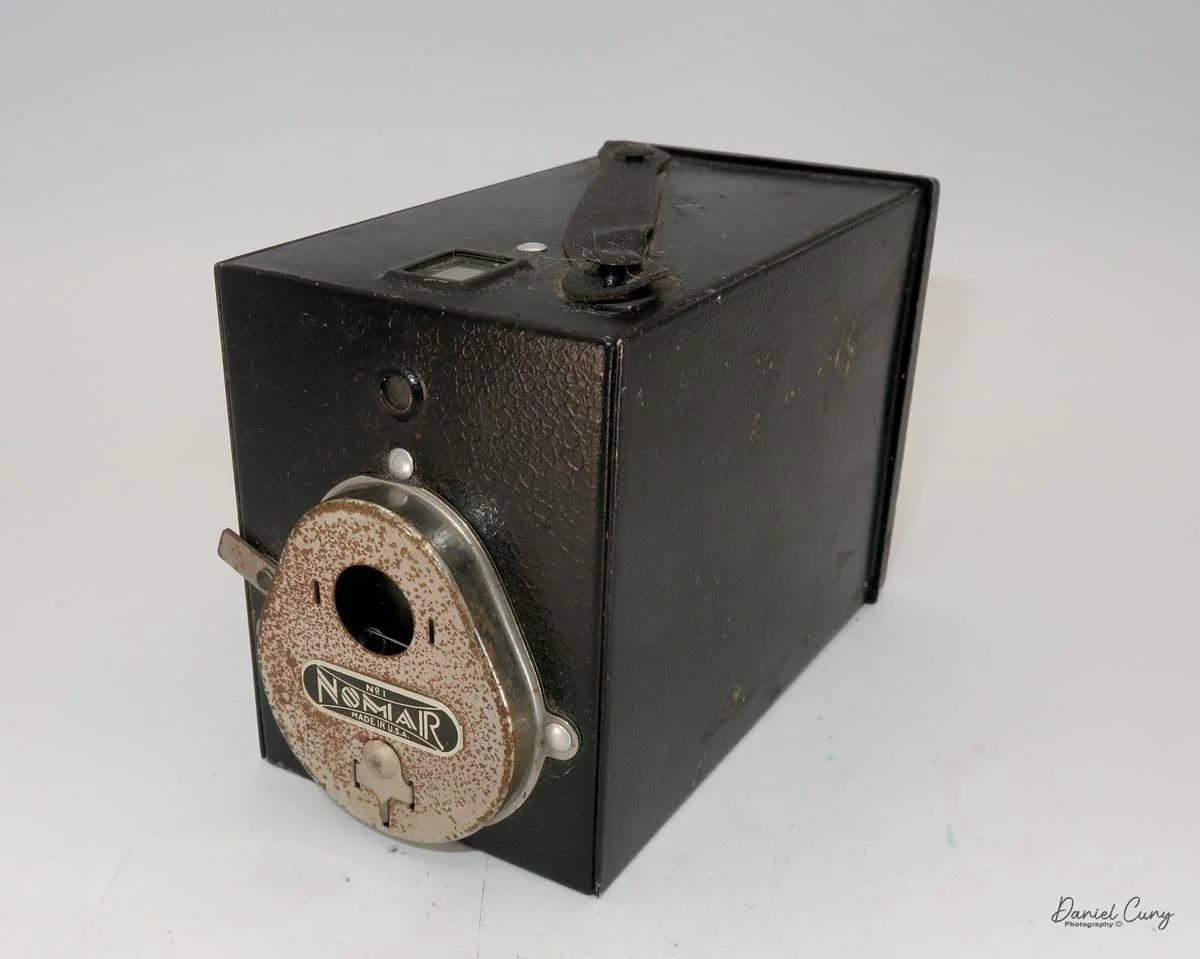
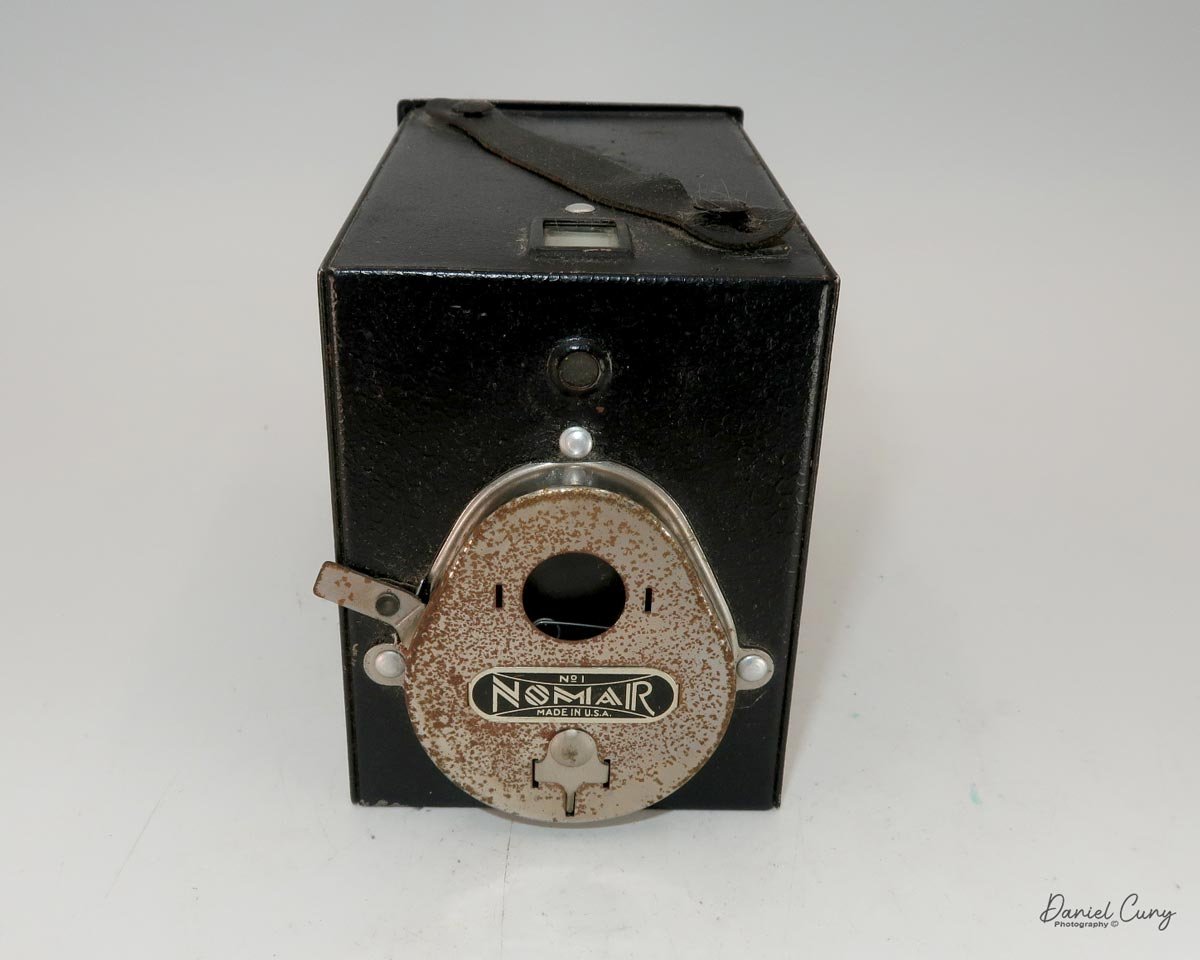
Just to the left of the lens is the shutter release, which activates in both upward and downward motions. To take a photo, you move the lever up or down. To take your next photo, you simply move it in the opposite direction.
Just below the nameplate is a small lever that switches the shutter between instant and timed modes (up for instant, down for timed). Because the lever has very little travel, it is sometimes difficult to tell which mode you are in without test-firing the shutter.
Loading the Film
Loading this camera was a challenge. Not only did my roll of 127 film try to unravel, but the camera's loading mechanism is incredibly awkward.
The back presses onto the body, with the winding lever located on the back right-hand side. To open it, you pull out the film winding knob, dig your fingernails under the top lip of the film holder, and pull the back off. Once removed, the recessed red window comes off.
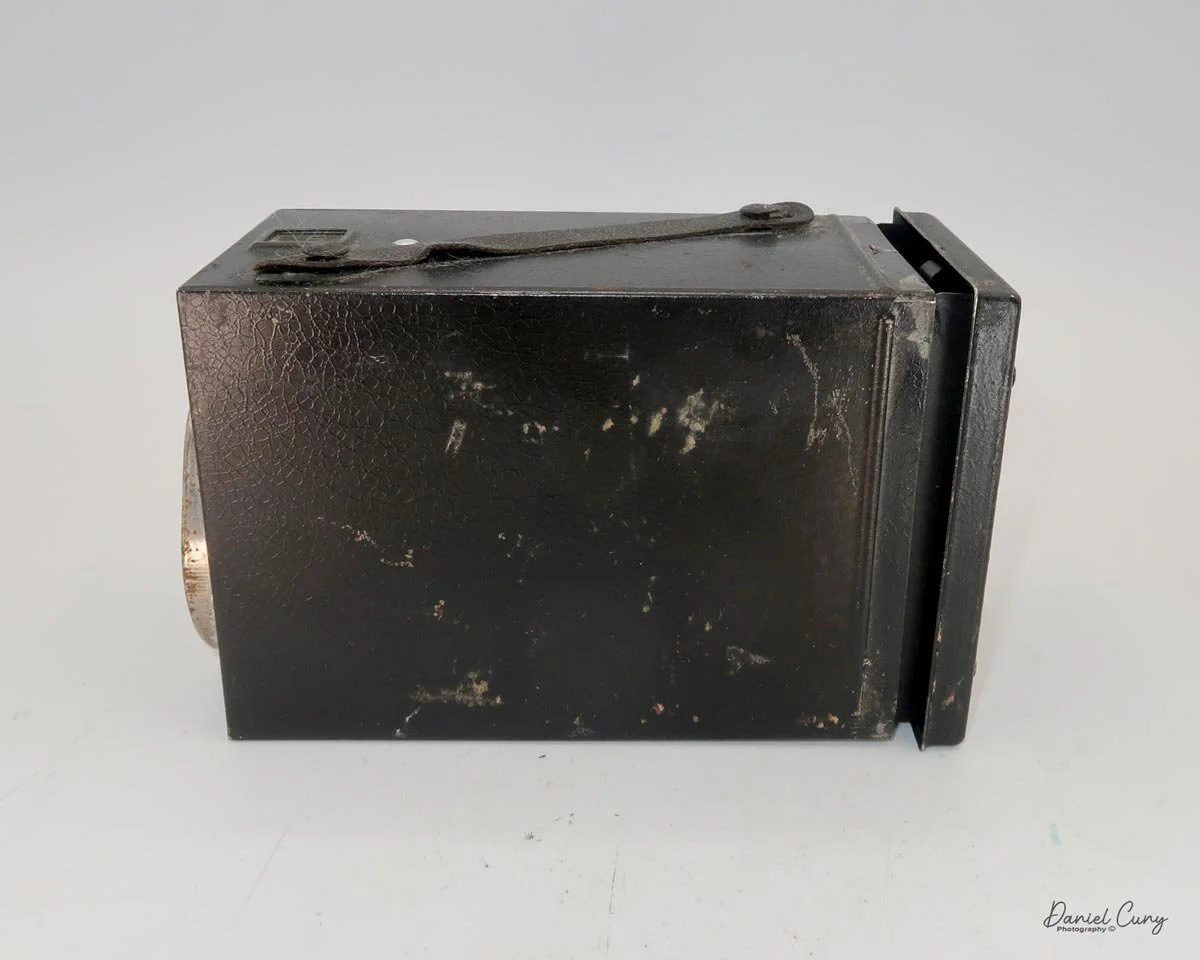
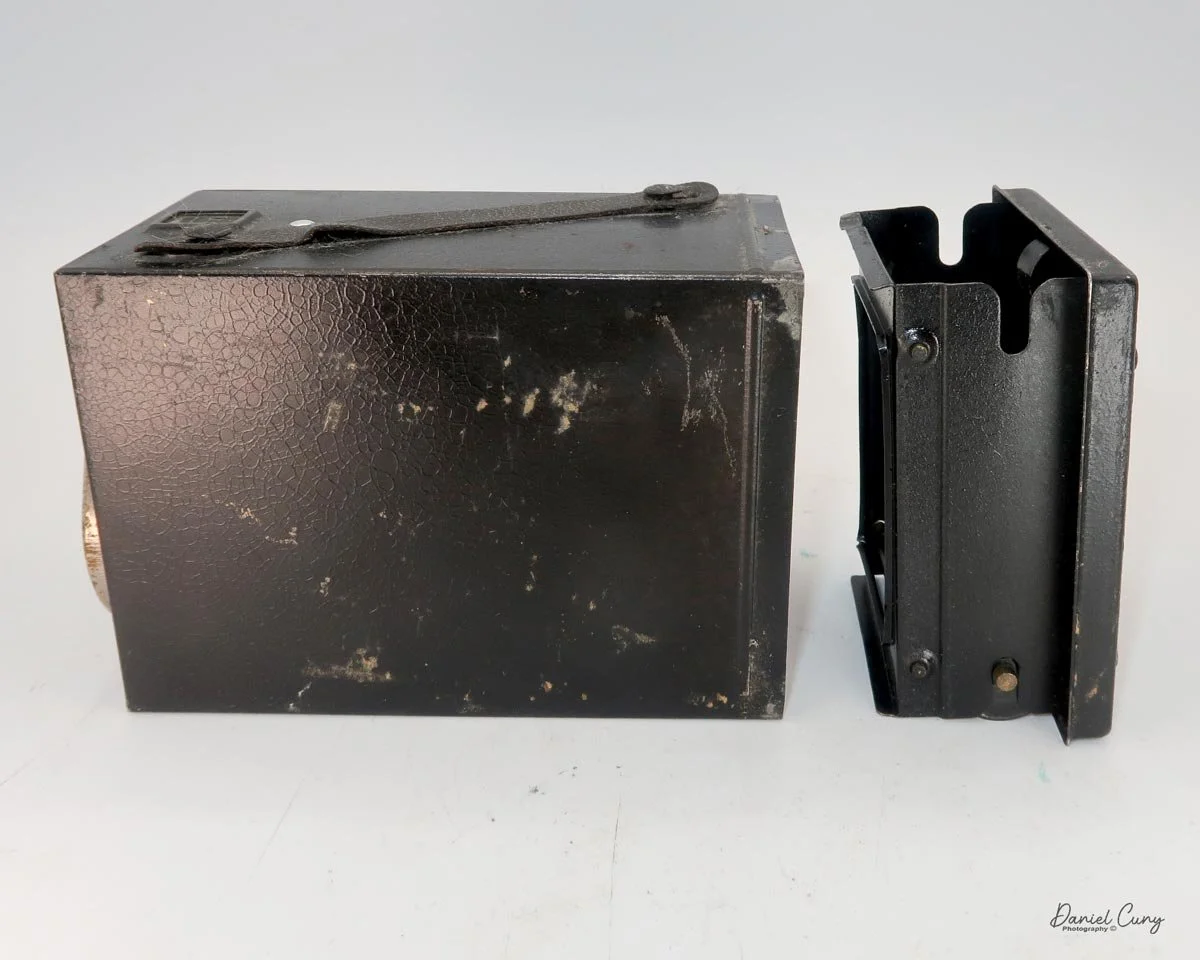
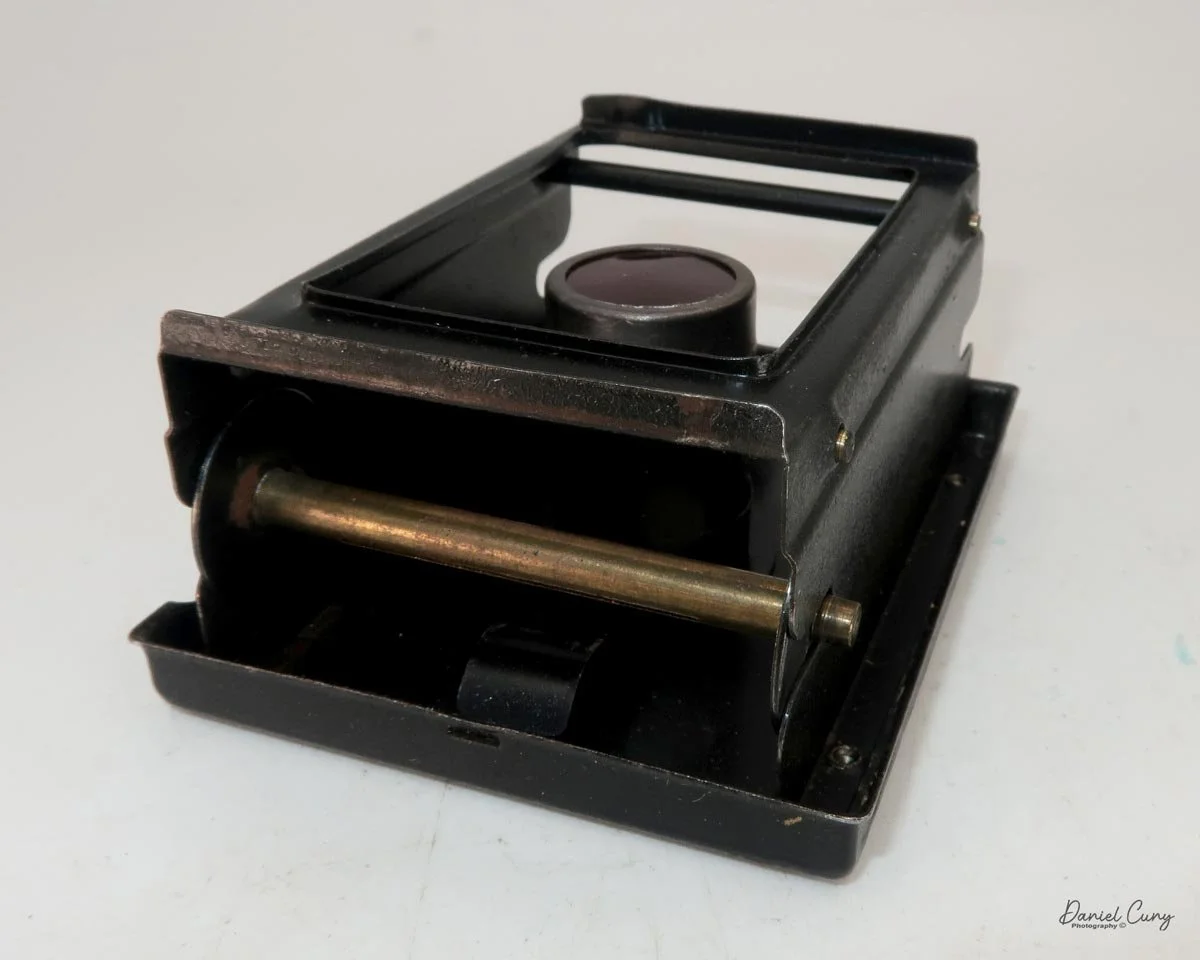
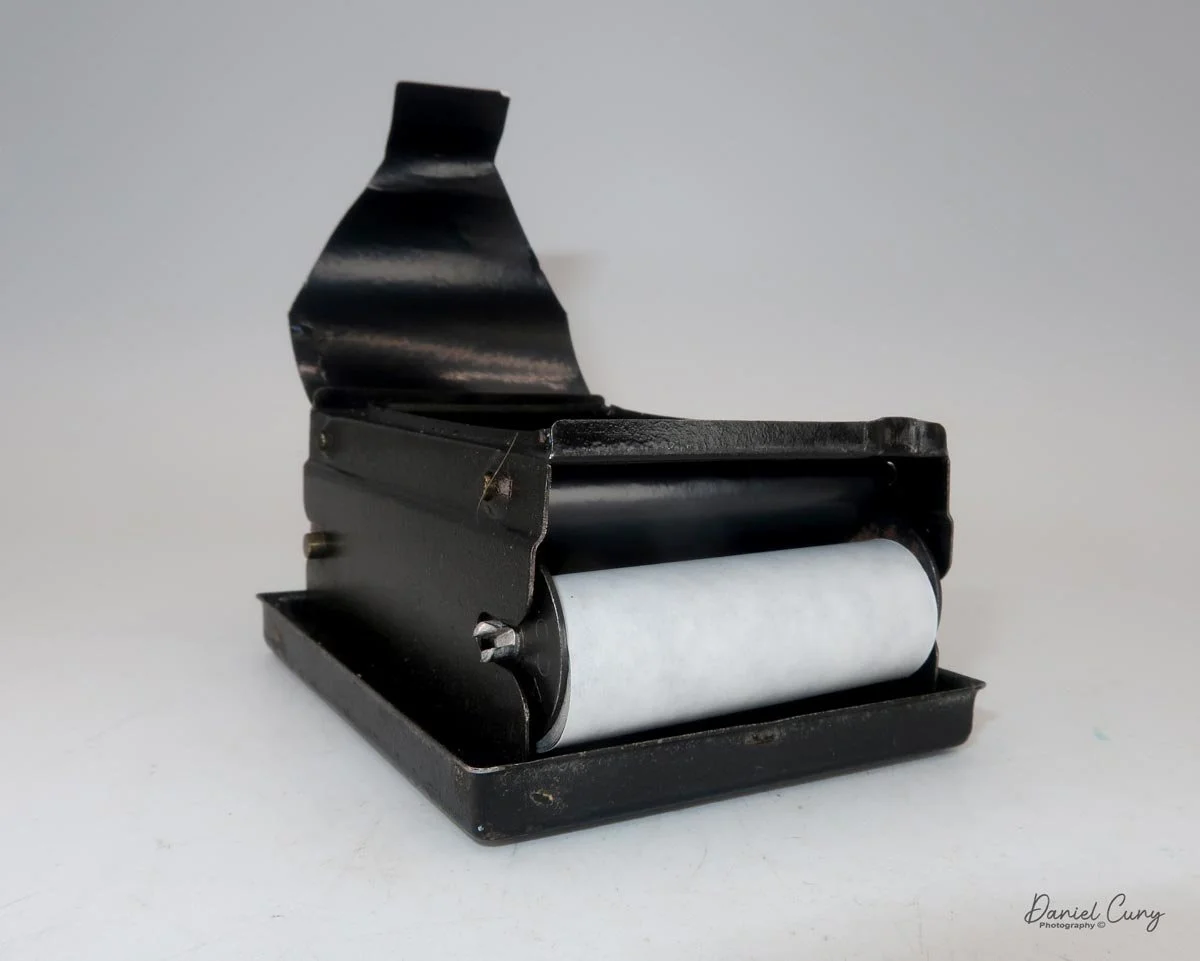
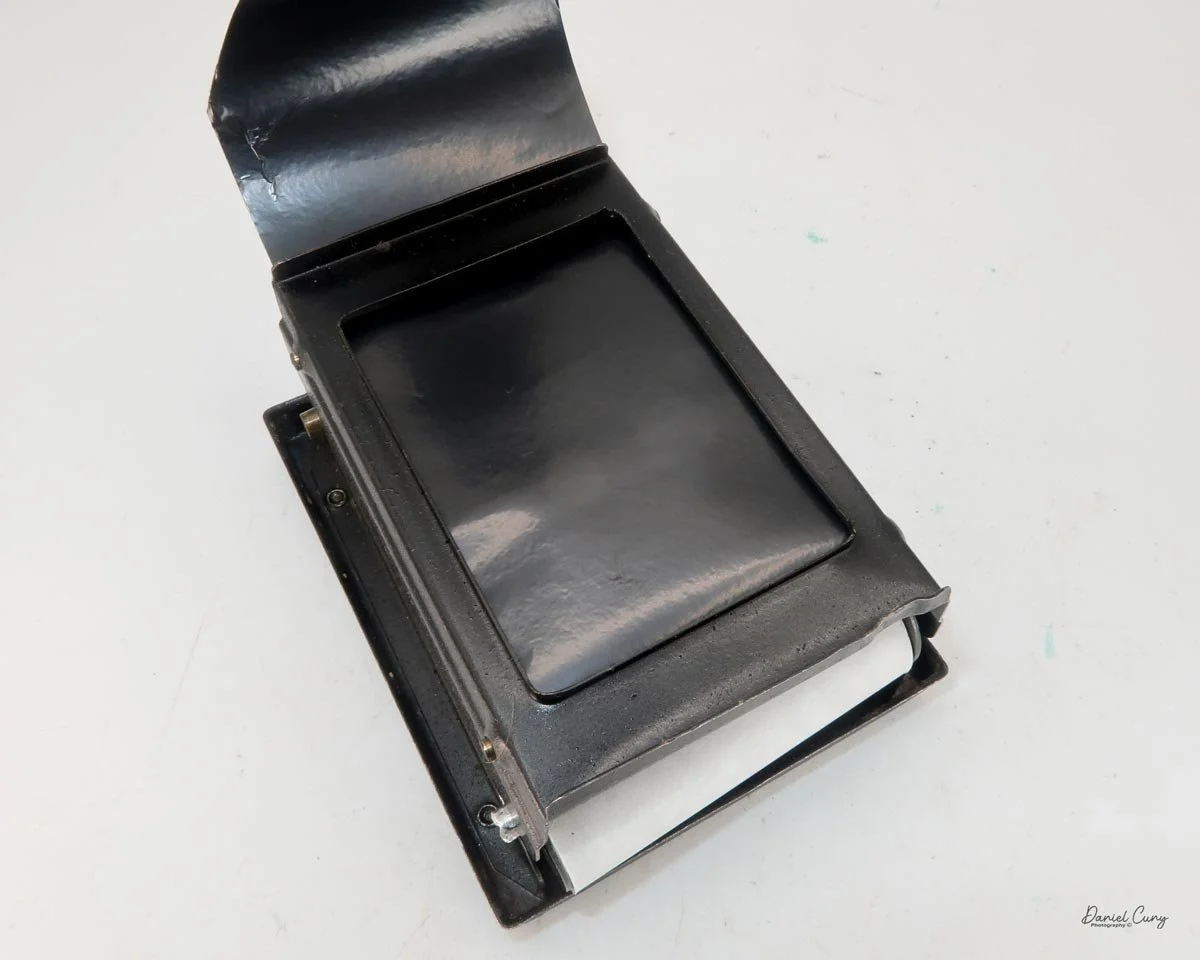
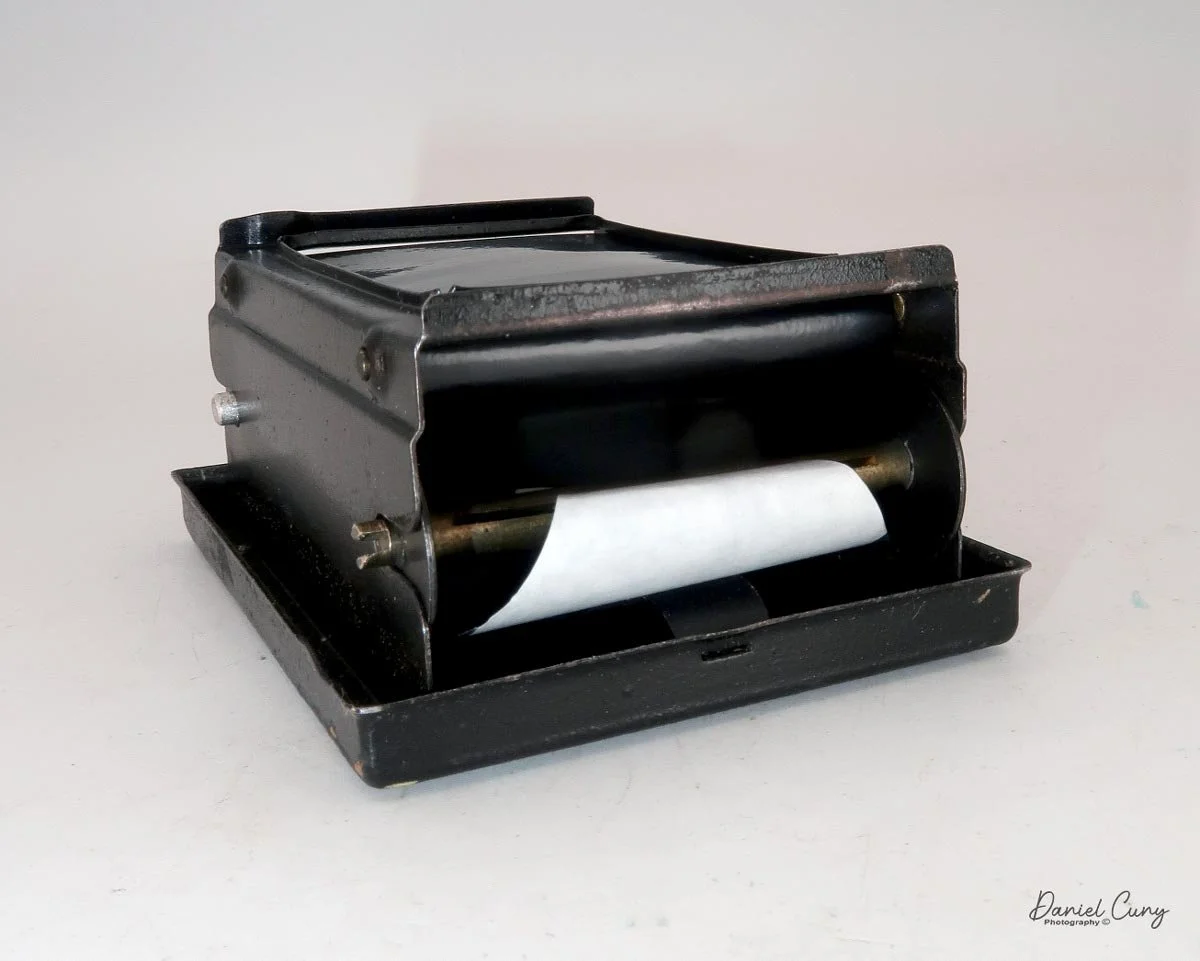
When loading the film, you must thread it through two internal slots to keep it flat and taut across the spools. You also have to ensure the slotted part of the take-up spool is perfectly aligned to engage with the winding lever when you press the back onto the camera.
Finally, the film must be loaded so the numbers on the paper backing are visible through the red window. I messed this up the first time and had to unwind the film in a dark bag to try again, to ensure it was done properly. For such a "simple" box camera, it certainly isn't easy to load.
My Results
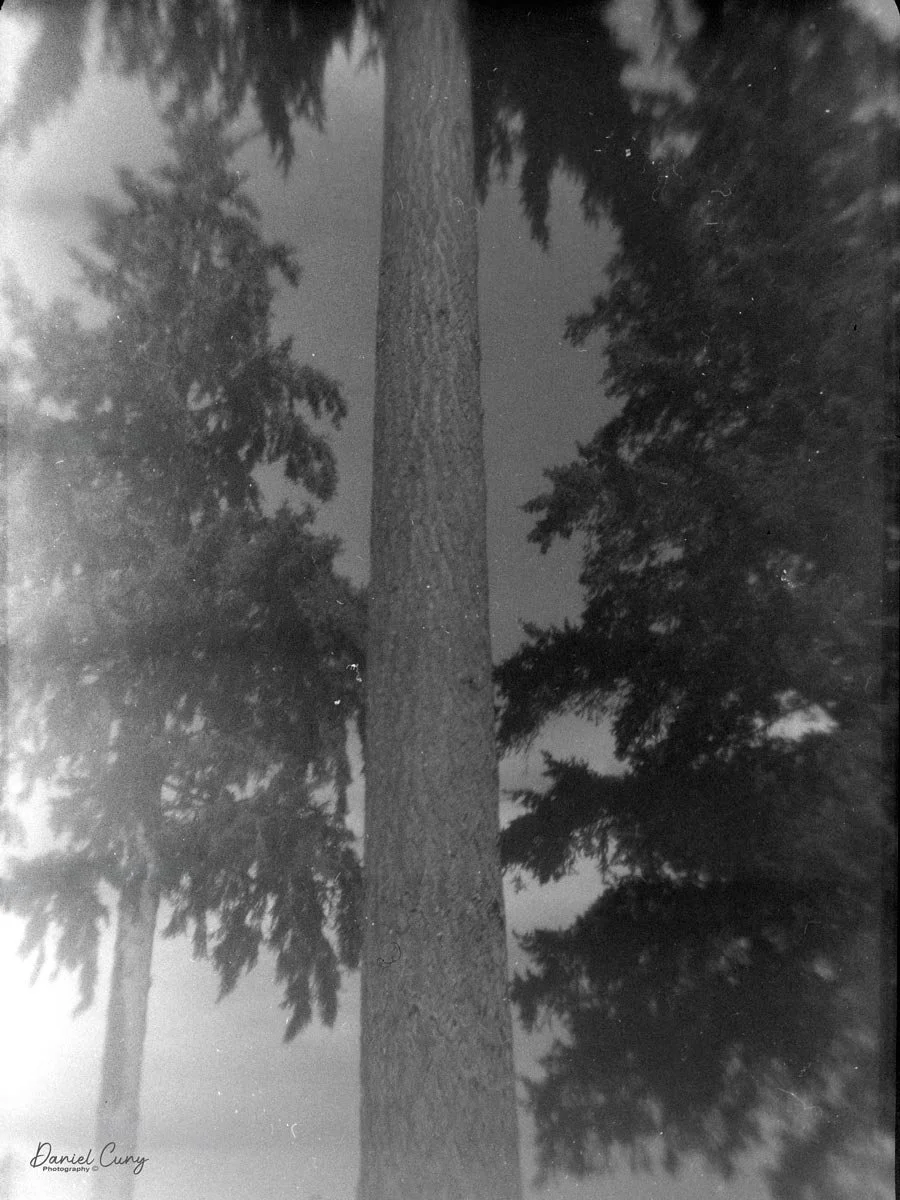
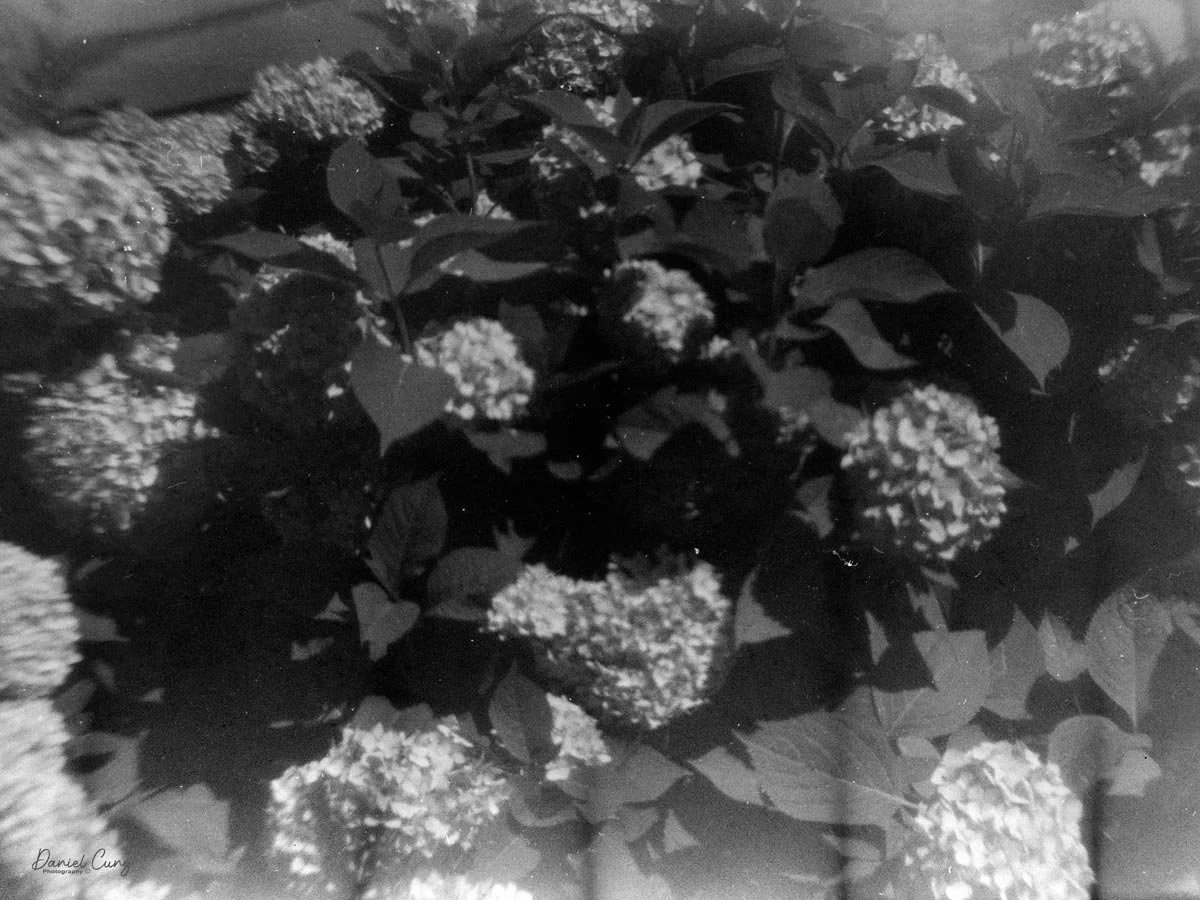
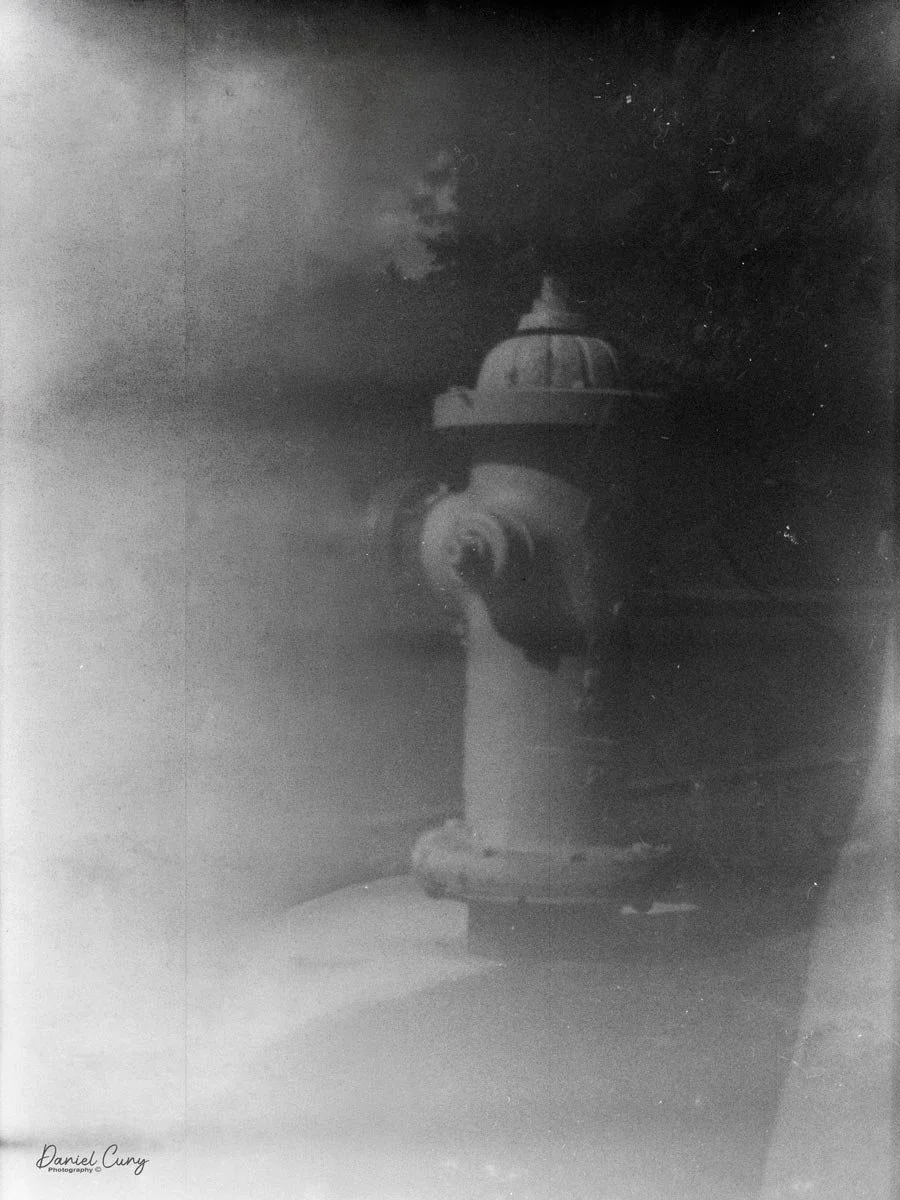
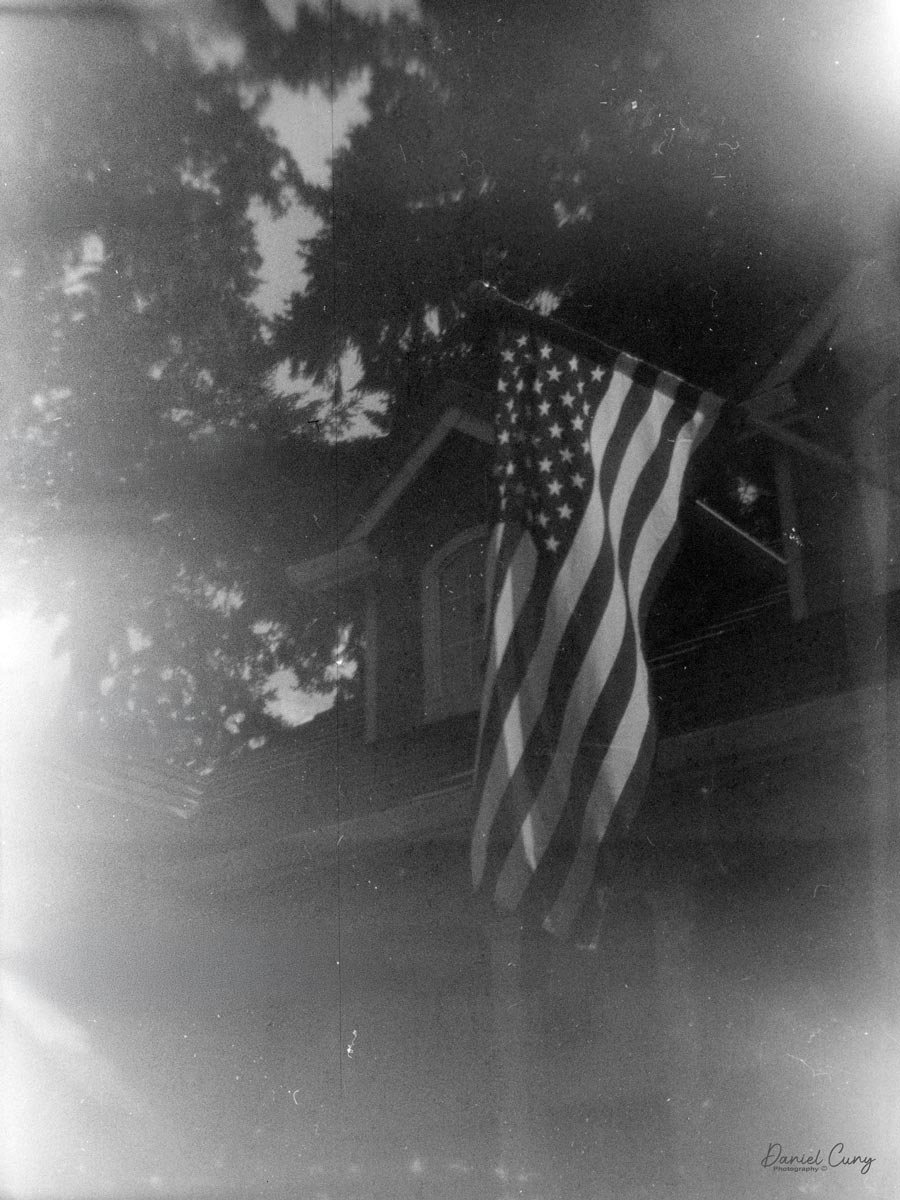
Now that I had a (probably fogged) roll of film loaded, I took a walk through the neighborhood to see how it performed. After processing, I confirmed that my initial loading struggles did indeed fog the film, but here are some of the better, albeit hazy, images the Nomar captured.
Conclusion
While I originally bought the Nomar purely as a collector's piece, taking it out and shooting with it was a fun, informative experience. Aside from the frustrating loading process—and the fact that my ineptitude fogged the film—the camera did exactly what I expected it to do.
The images aren't incredibly sharp, though I admittedly didn't clean the rear lens element before shooting. I doubt it would have made a massive difference, but you never know.
At this point, the hunt continues for the green and red versions of the camera—and the mythical No. 2 model, if it actually exists. The more I think about it, the more I suspect this camera may have been manufactured by a third party for the Nomar Corporation, though I haven't found a similarly designed camera from that era to prove it.
Thank you for taking some time out of your busy day to learn about this little-known camera from a little-known New York company!
Here's a link to my other Camera Reviews.
I also started a YouTube channel. Cuny’s Camera Collection with camera overview videos.
Cuny's Cameras and Photos is my online eBay store where you'll find some of the cameras I've reviewed for sale, along with many other cameras, lenses, and photo items from my collection.
Until next week, please be safe.