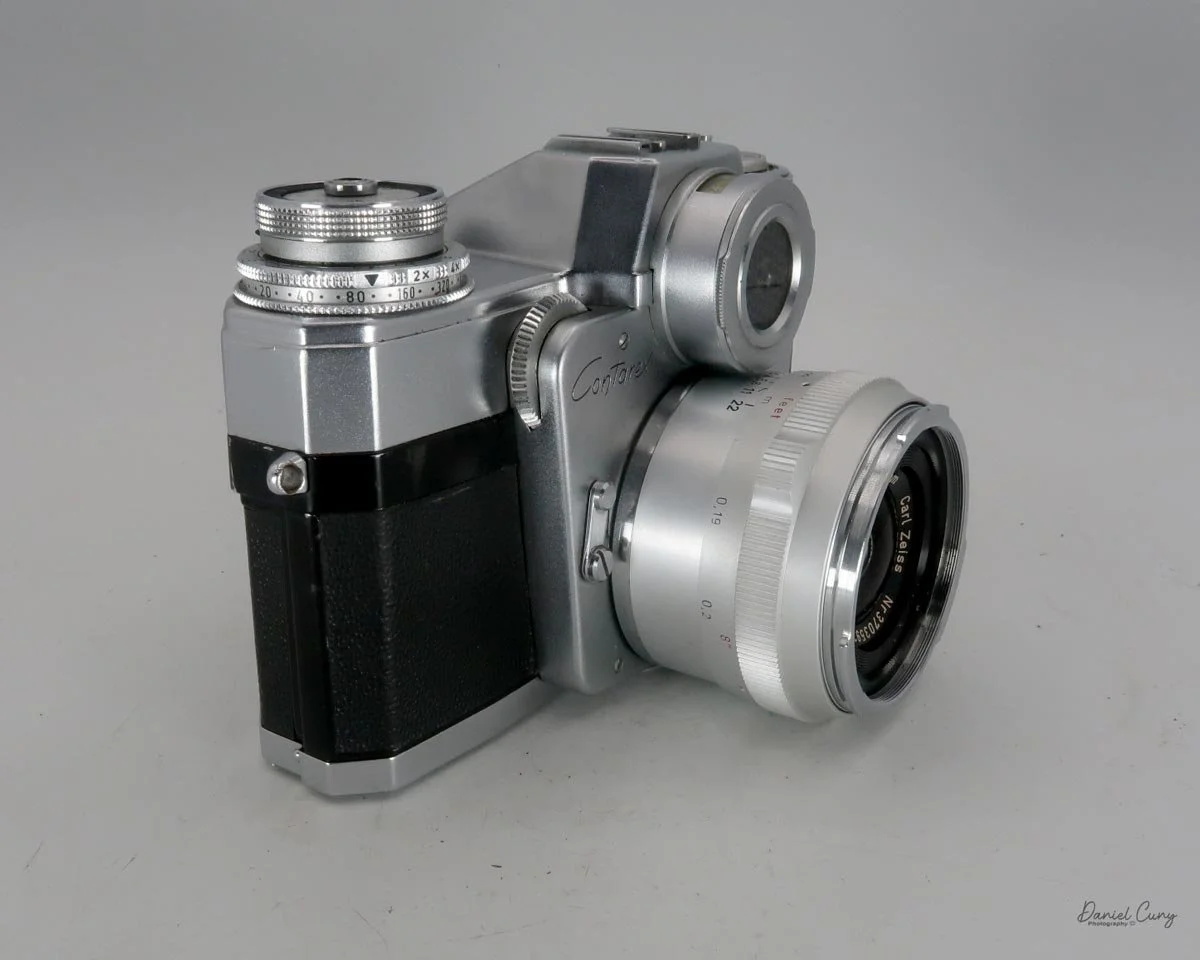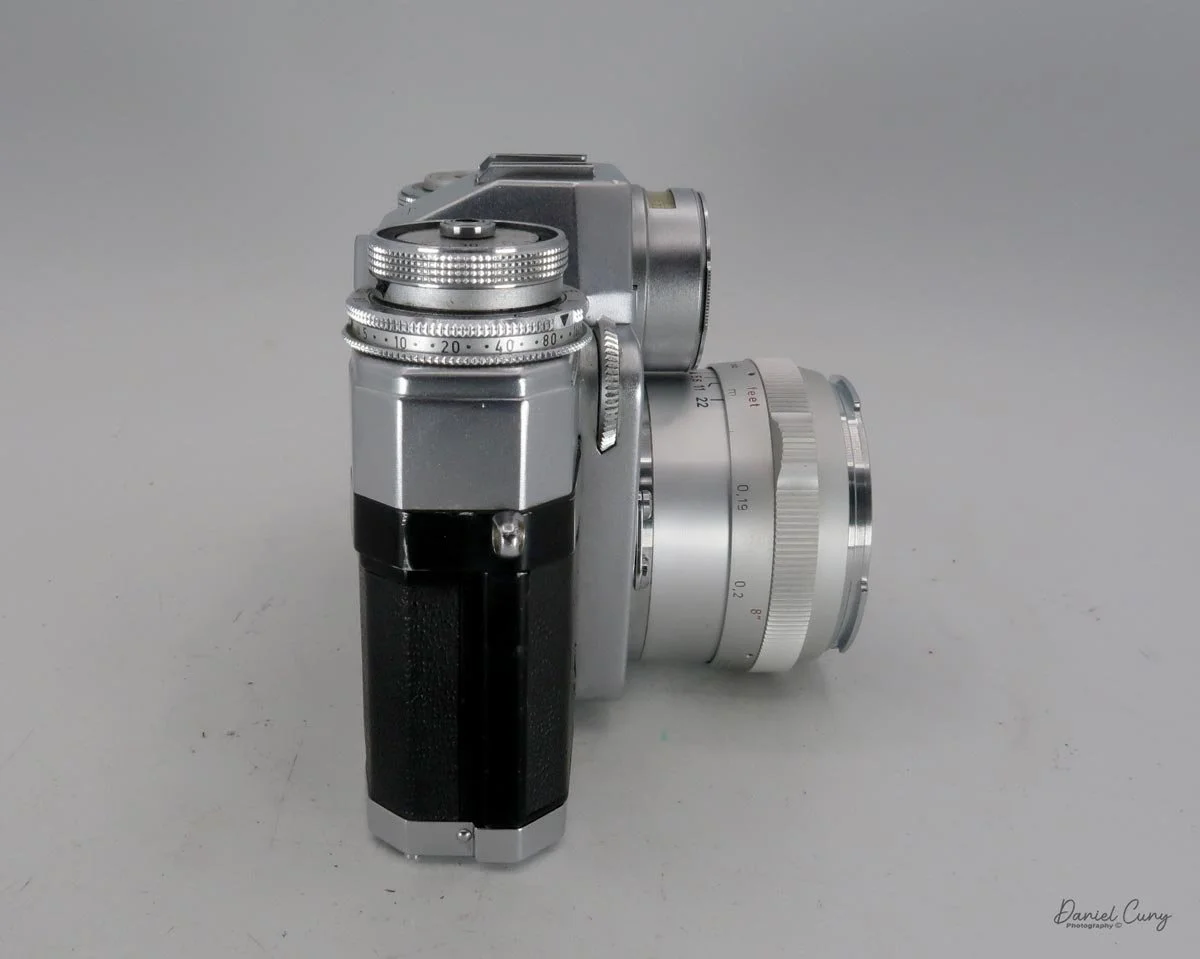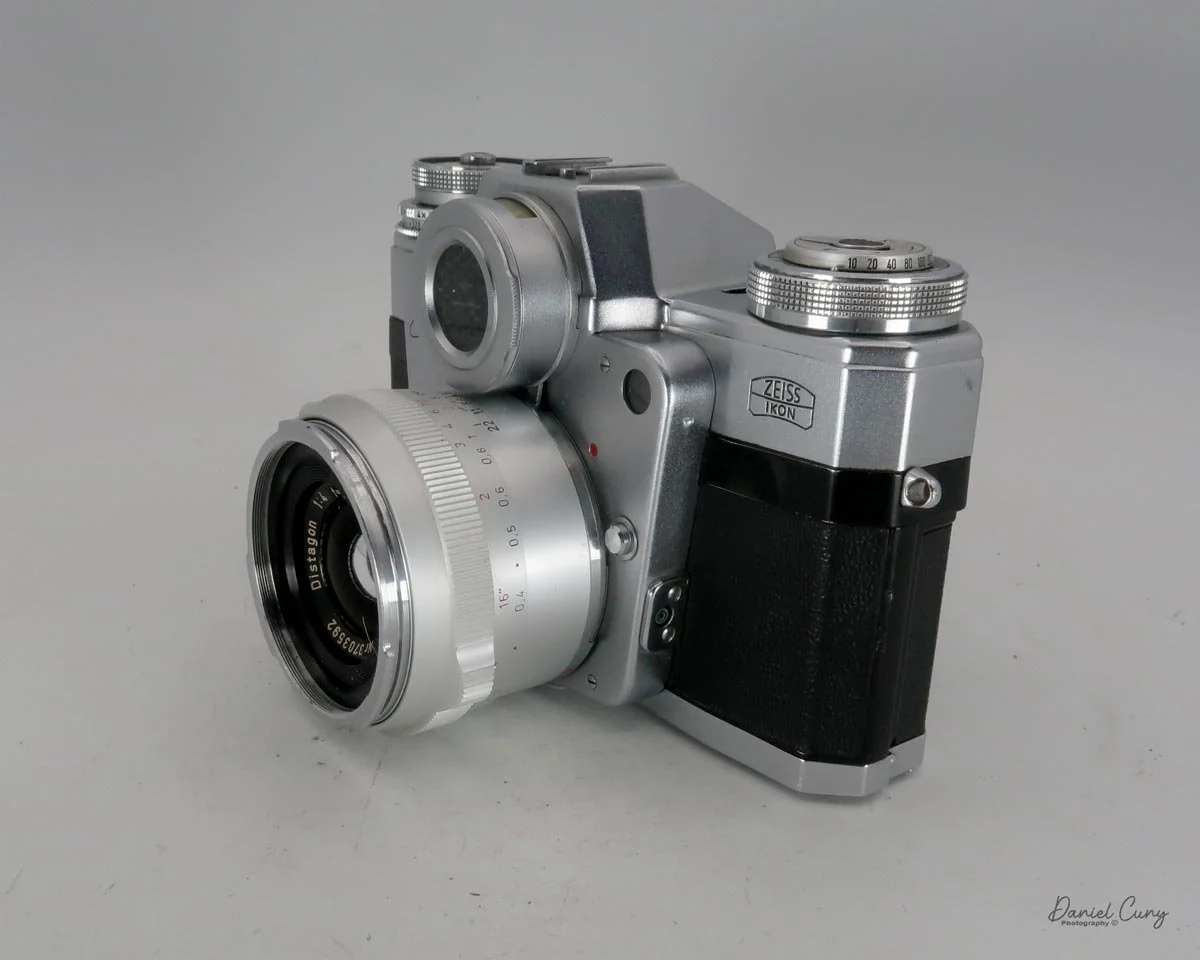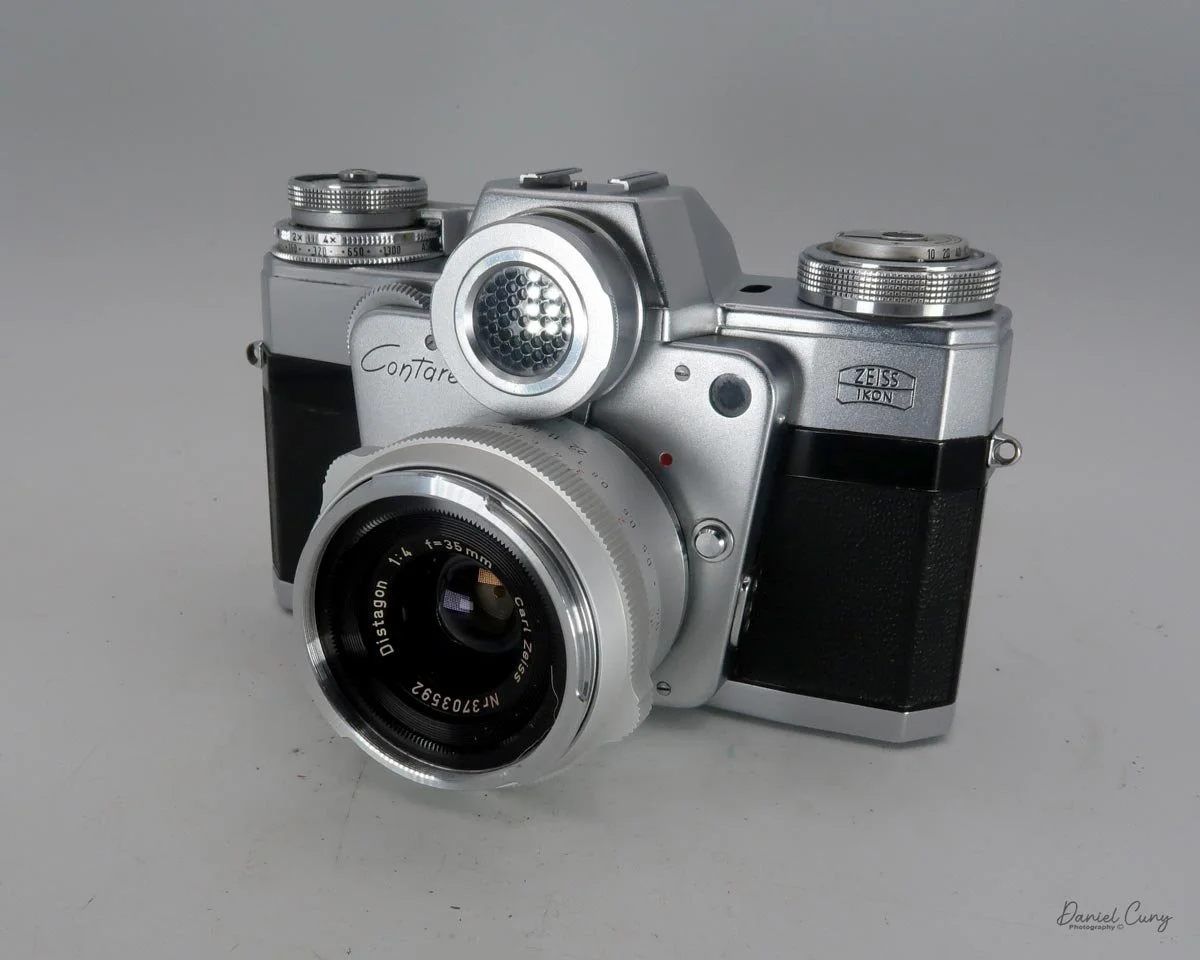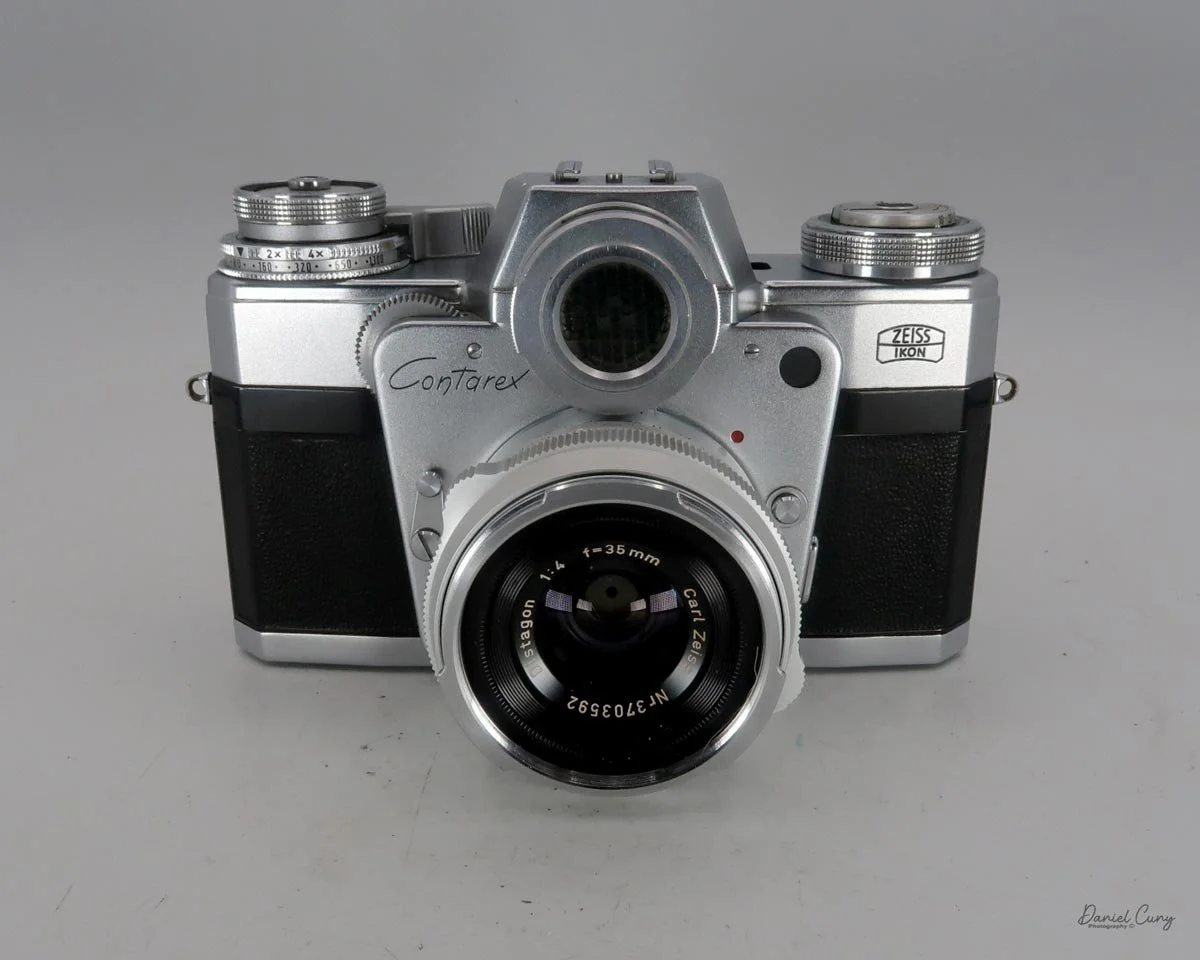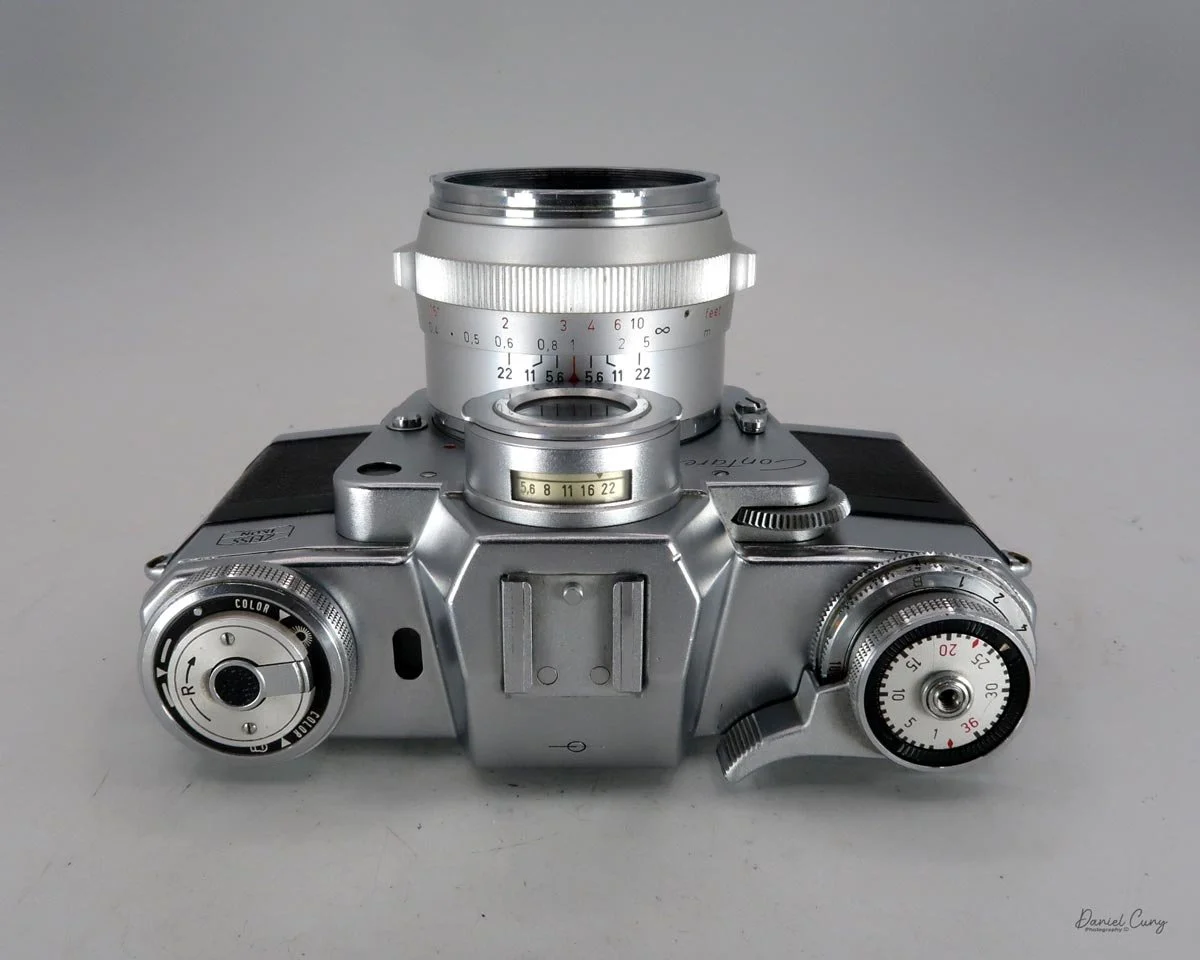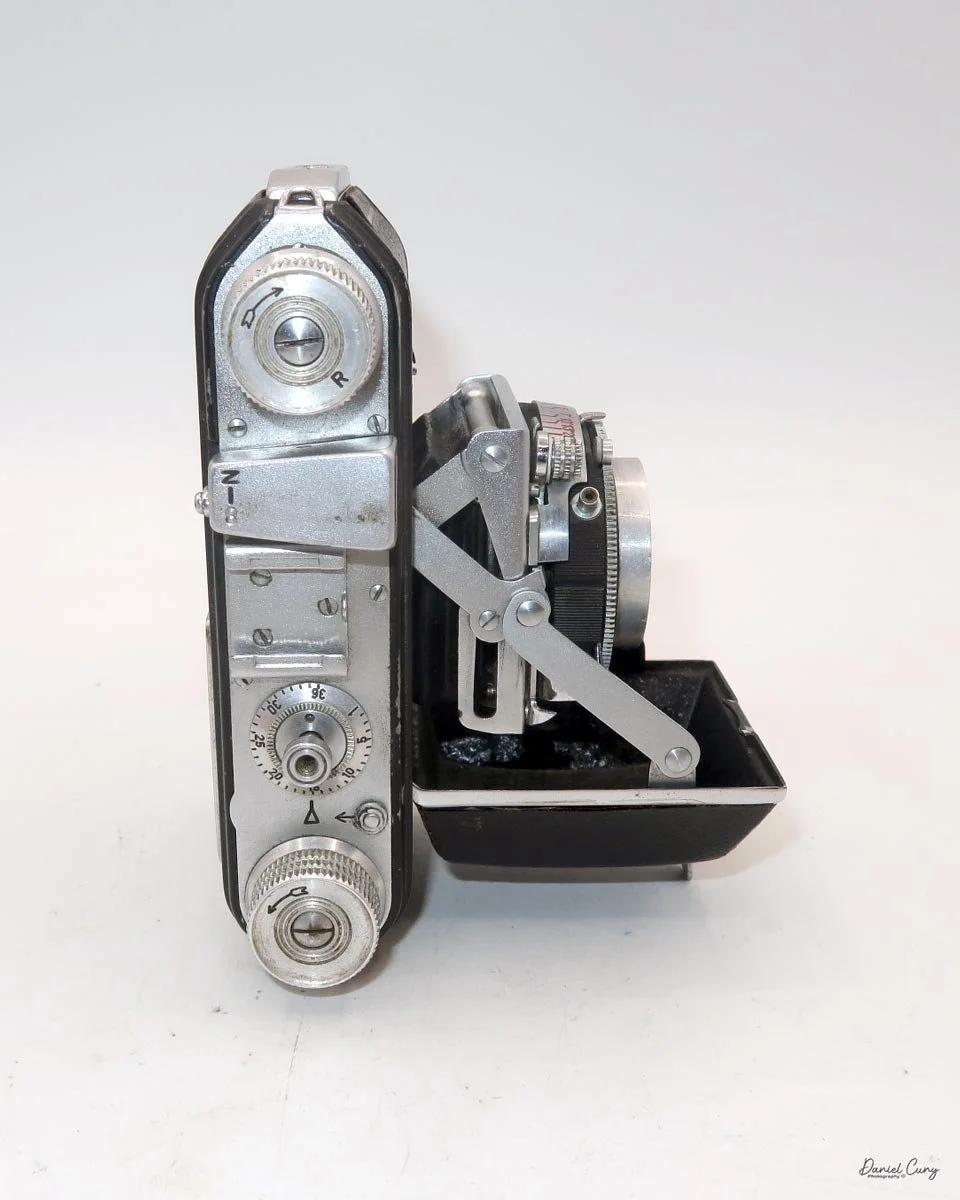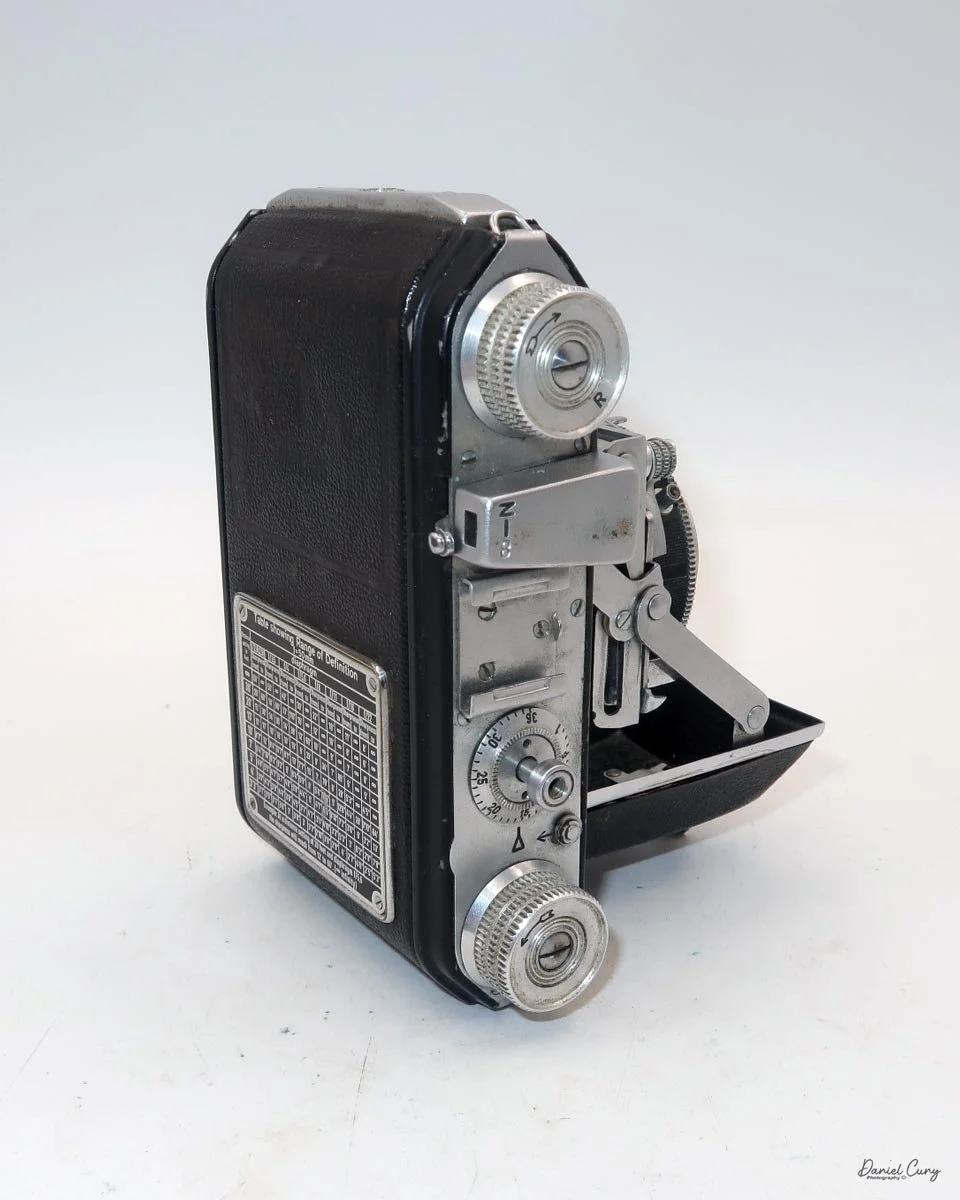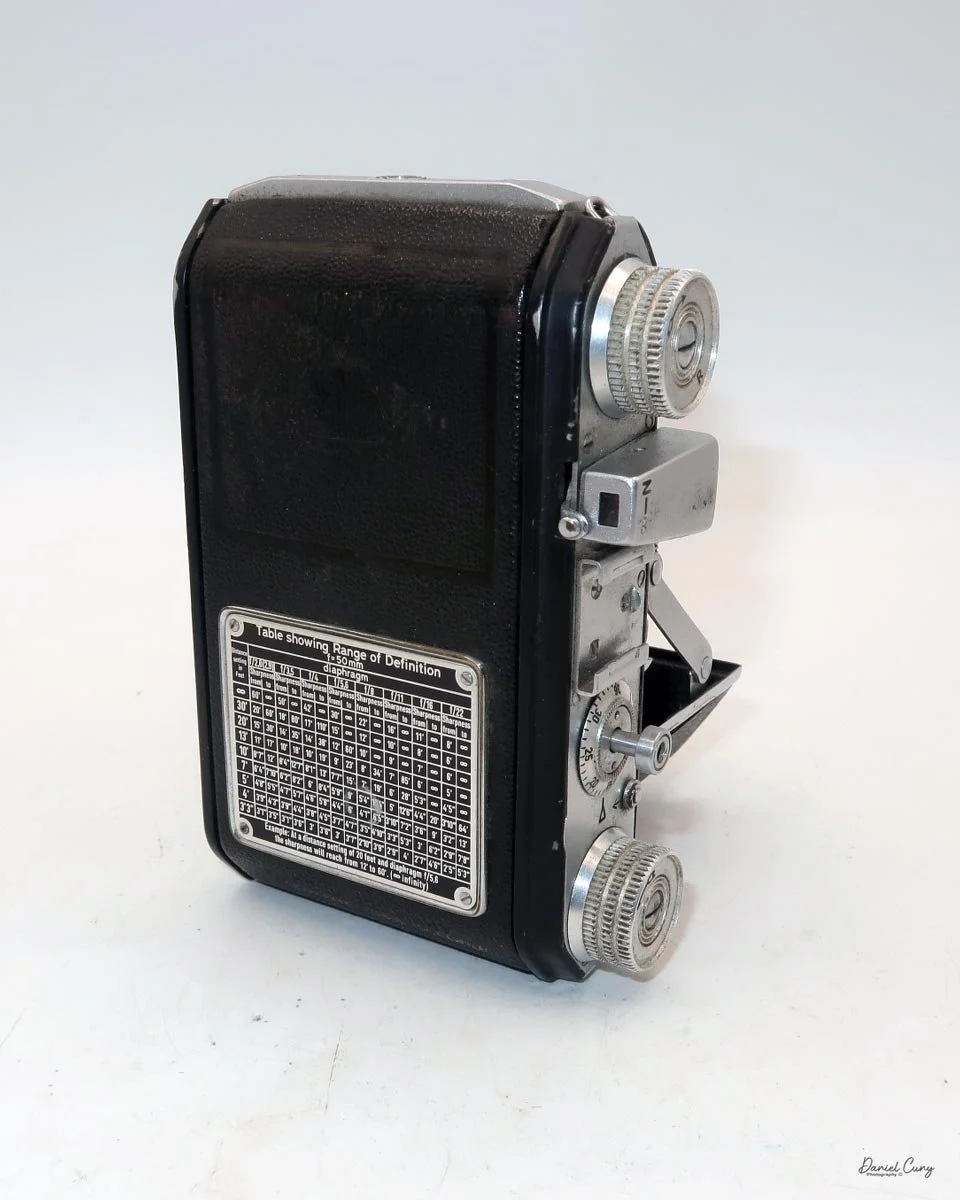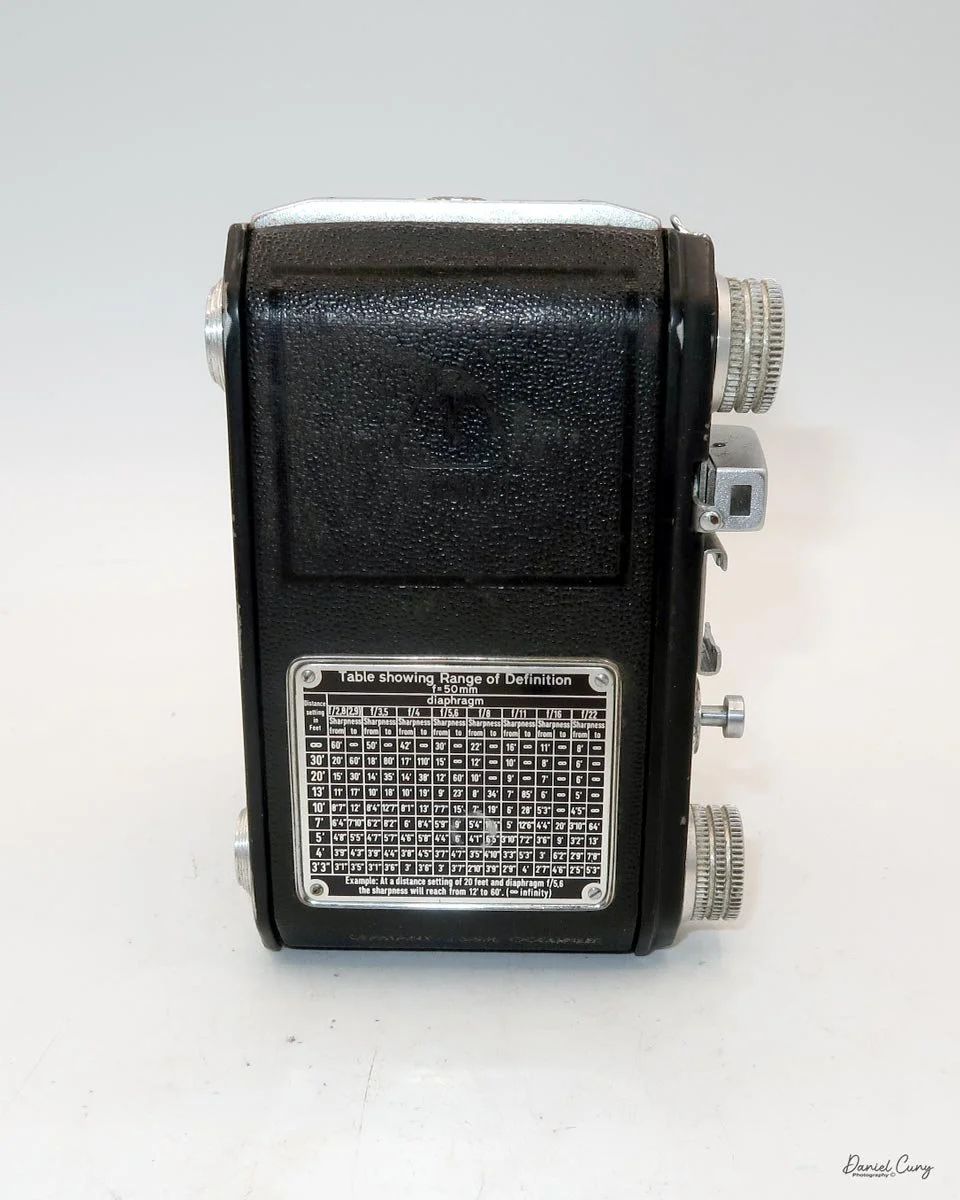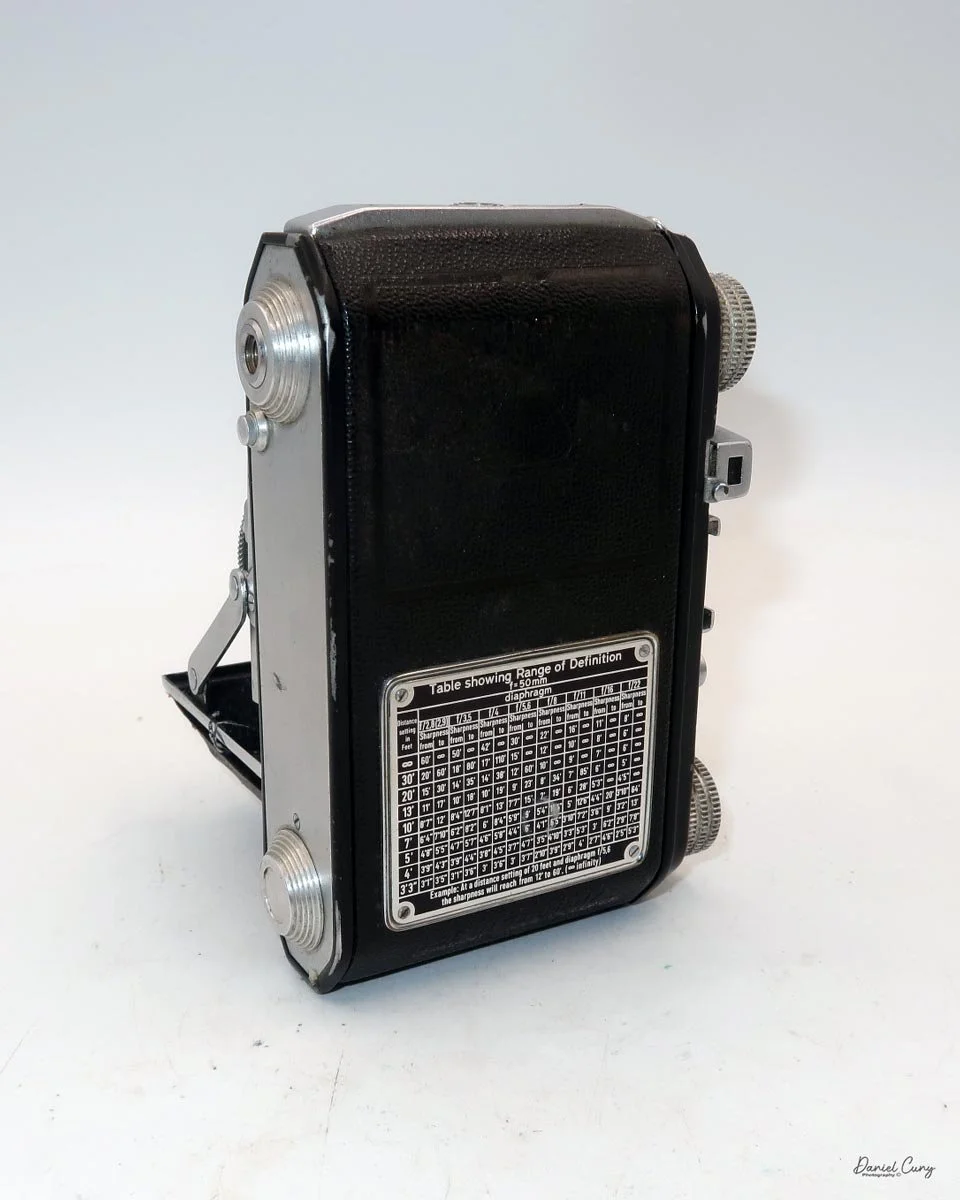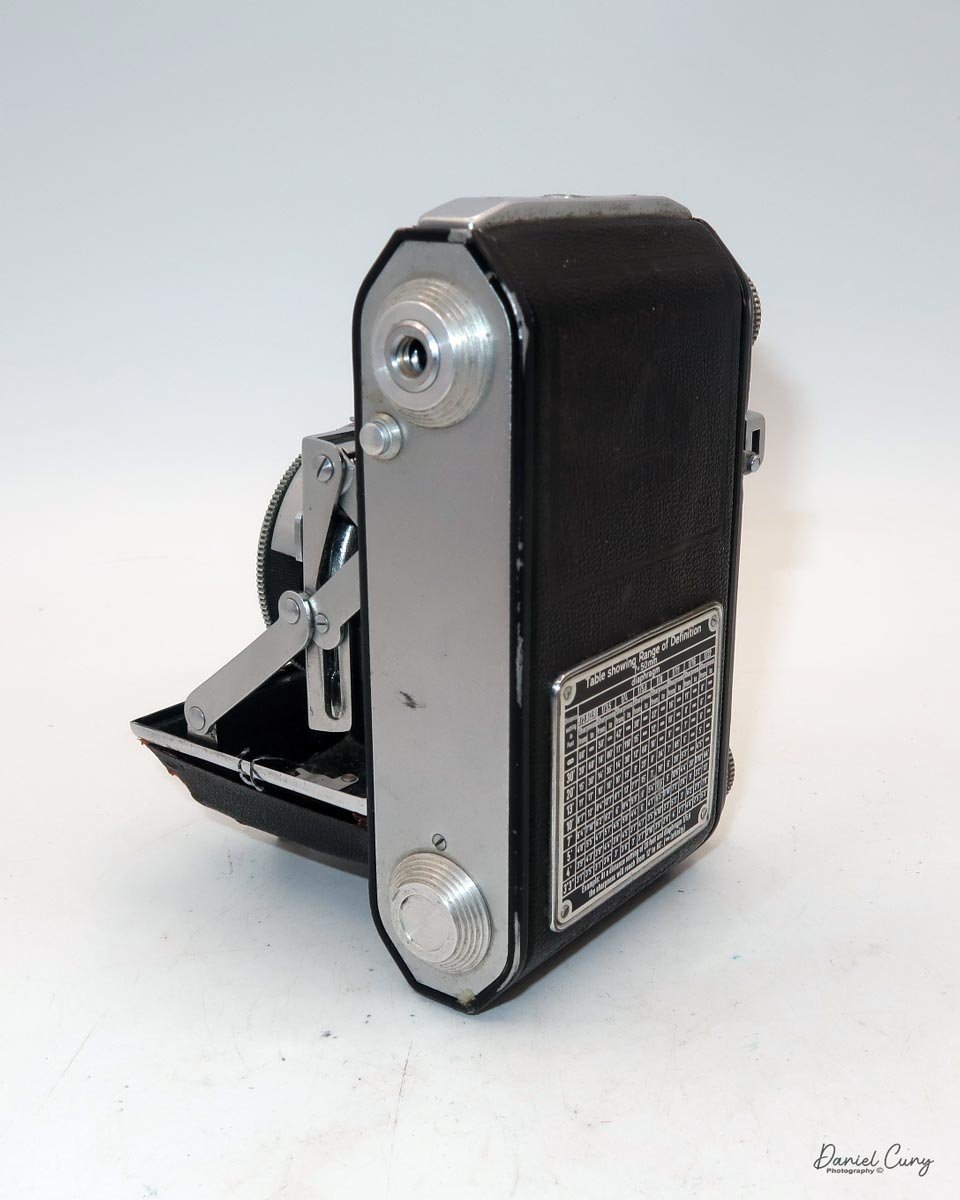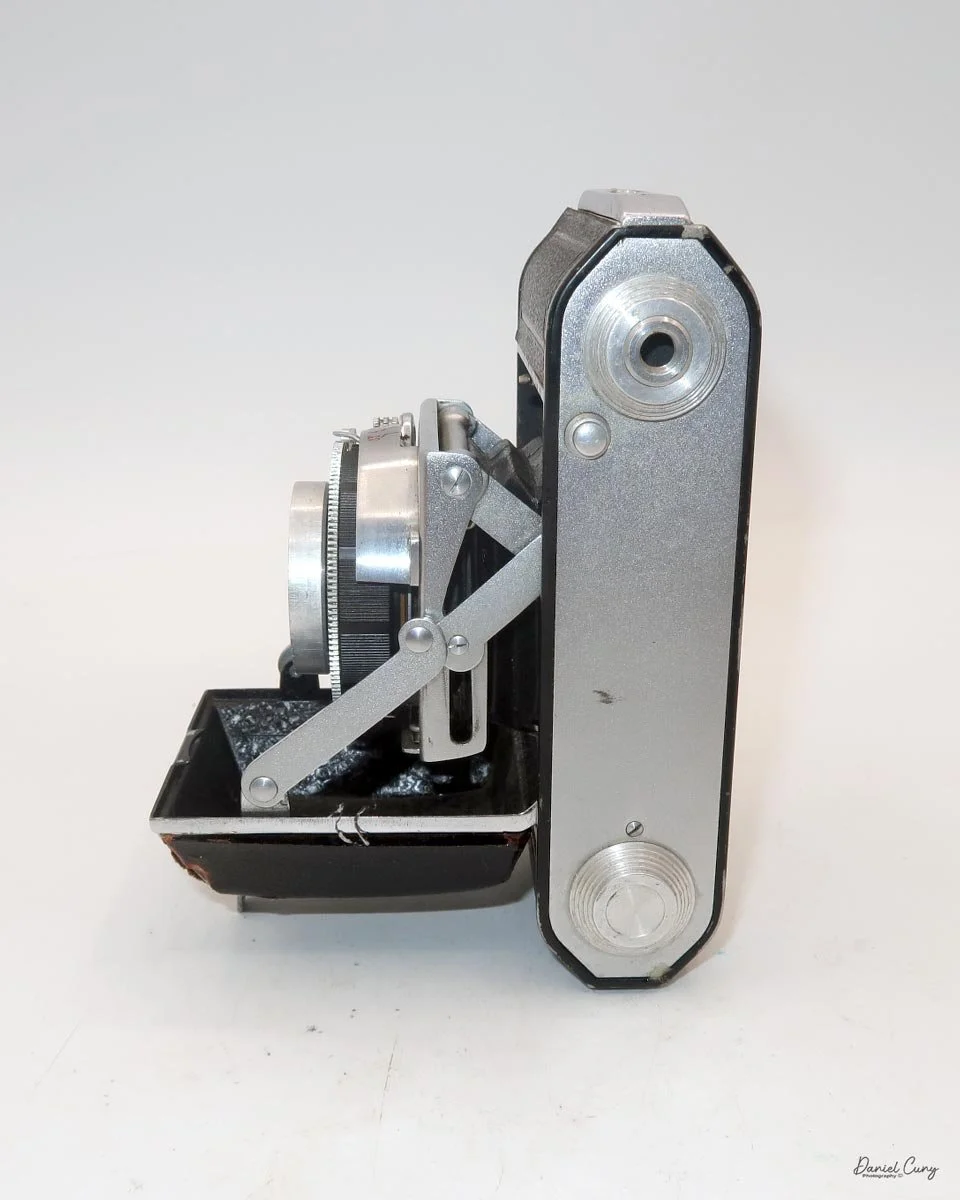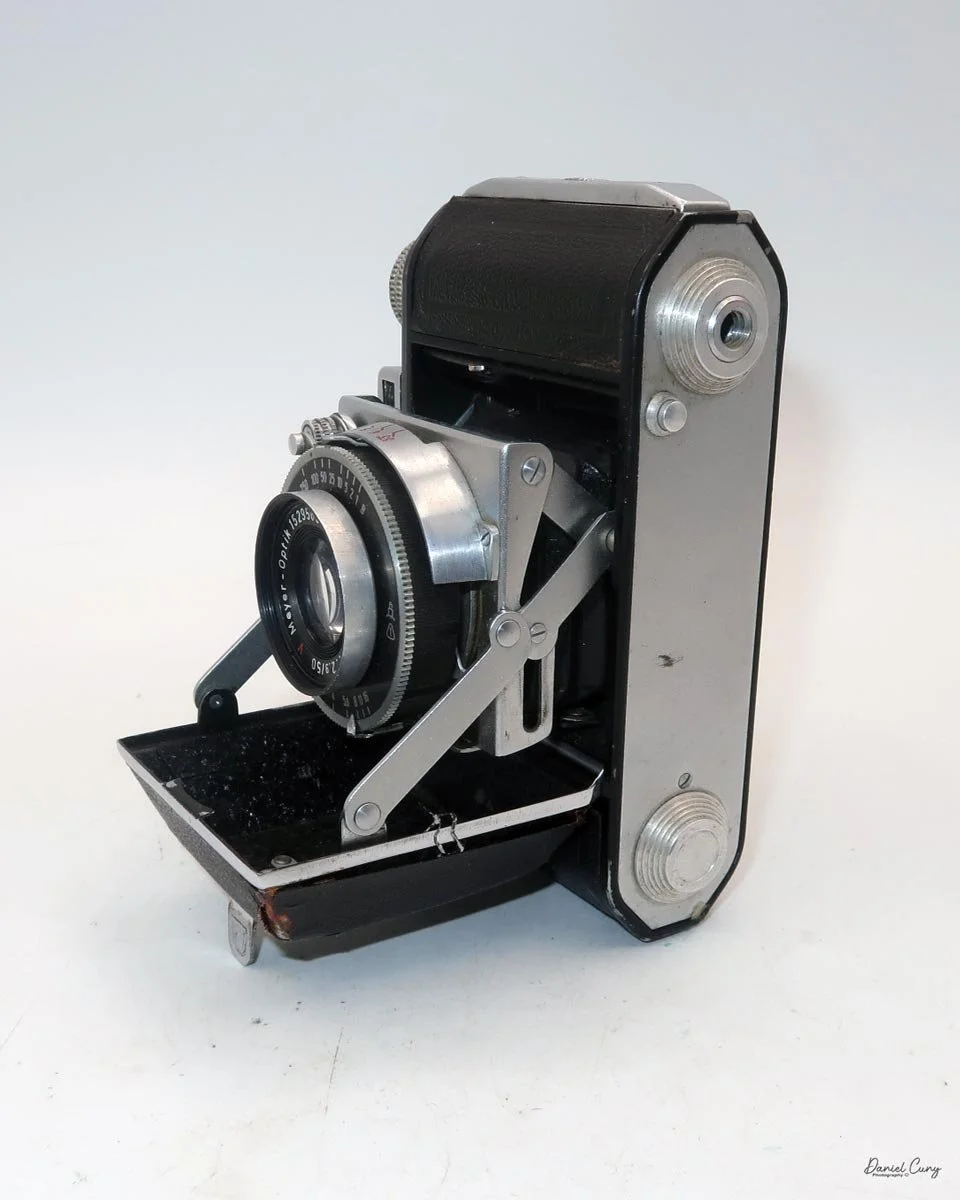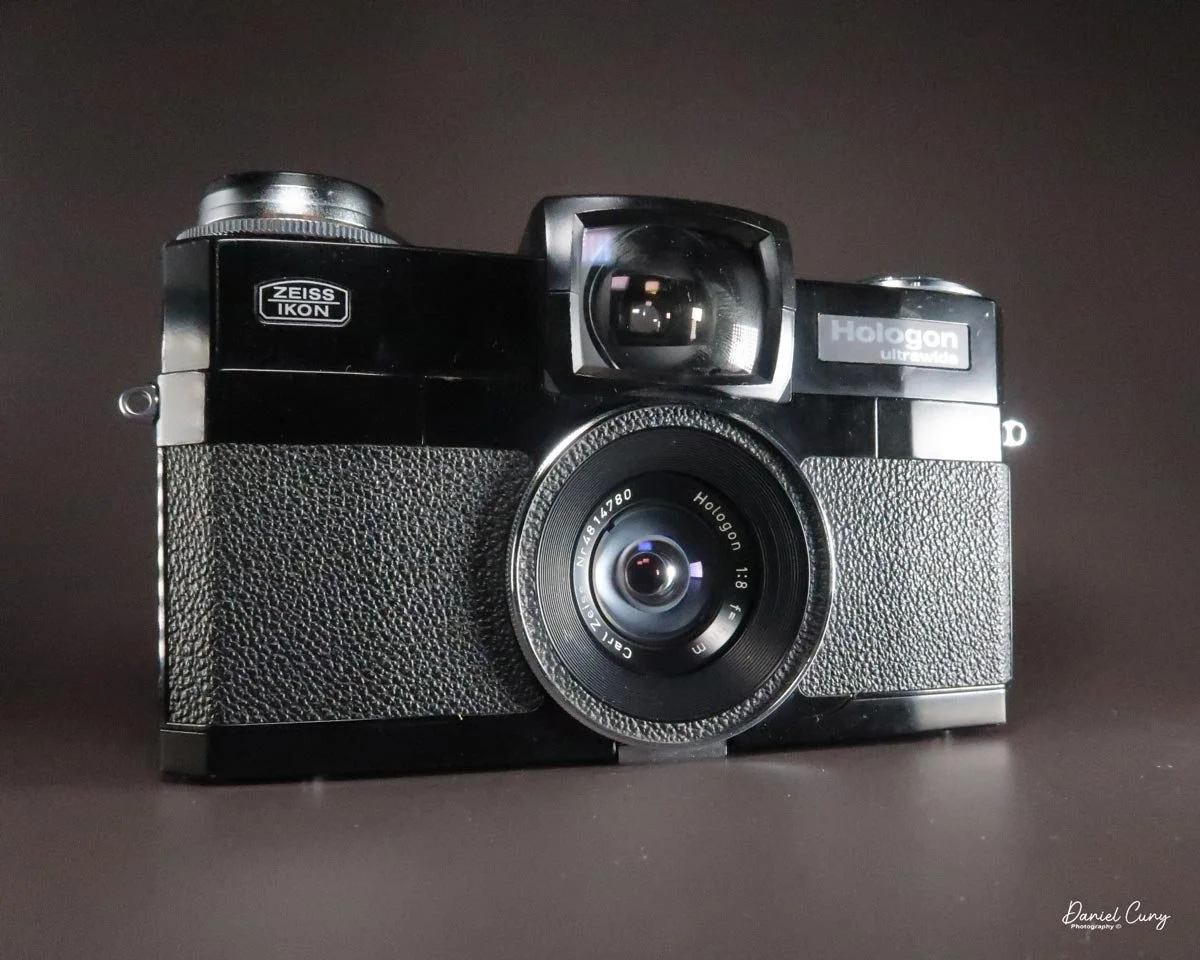
My Zeiss Ikon Hologon Ultrawide camera
When it comes to photography, I have a passion for all things panoramic and wide-angle, so the rare Zeiss Ikon Hologon Ultrawide camera was a camera I've always wanted to purchase. What's not to like? The whole camera was built around an incredible Carl Zeiss 15mm f/8 Hologon ultra-wide-angle lens, which the camera is named after.
It wasn't until later in my career in the photo industry that I had the financial means to purchase one of these wonderful cameras. I'd seen them at camera shows, in online sales on eBay, and in other stores. I've even had the opportunity to purchase one back when I was first starting out collecting cameras, but the price was always beyond my reach.
About 10 years ago, I was looking through the online catalog from Wetzlar Auctions in Germany. Basically, I was dreaming about the cameras that were still out of my reach. It wasn't the super-rare Leicas that caught my eye, but a hard-to-find Zeiss Ikon Hologon Ultrawide with the handle, cable release, center filter, lens caps, and case that made me pause.
At the time, Wetzlar Auctions had a fairly low starting price, so I thought, "Why not? Let's give it a go," and see how quickly I'd be outbid. I put in a fair price that I was willing to pay for the camera, as they said it was in "good working condition."
As time passed and the auction got closer, there weren't that many people interested in the camera, but my thoughts kept saying, "You'll be outbid soon."
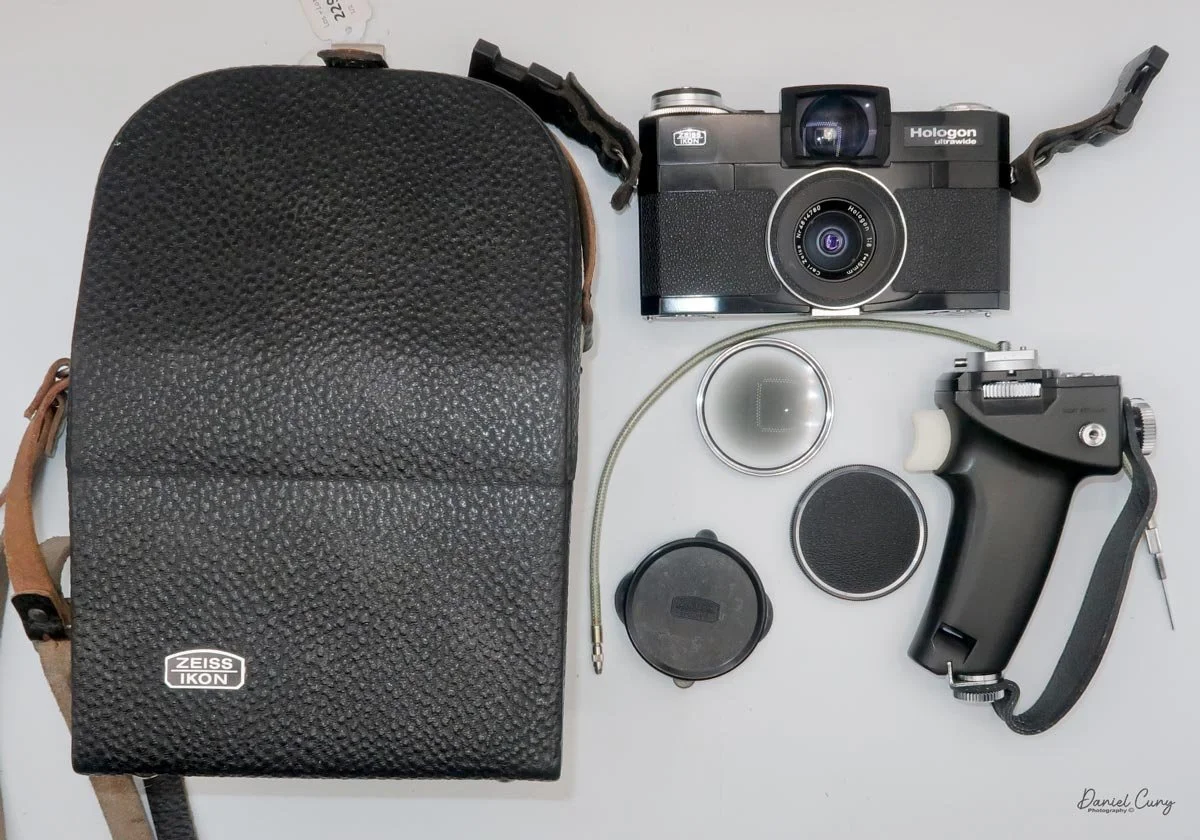
My outfit with case, center filter, grip, cable release and lens caps.
On the day of the auction, I watched the results, and the price didn't reach my high bid. So, by the time the auction closed, I was the winner of the camera. There were concerns that the camera may not have met expectations, and there were underlying issues the auction house didn't disclose that I wasn't aware of.
After paying for the camera, along with the auction house fees, etc., I then needed to pay to have the camera shipped from Germany to my home in the USA. It was a little bit more than I expected, but to me, it was still under the value of the camera, so I was pleased. Especially to have such a rare and special camera in my collection.
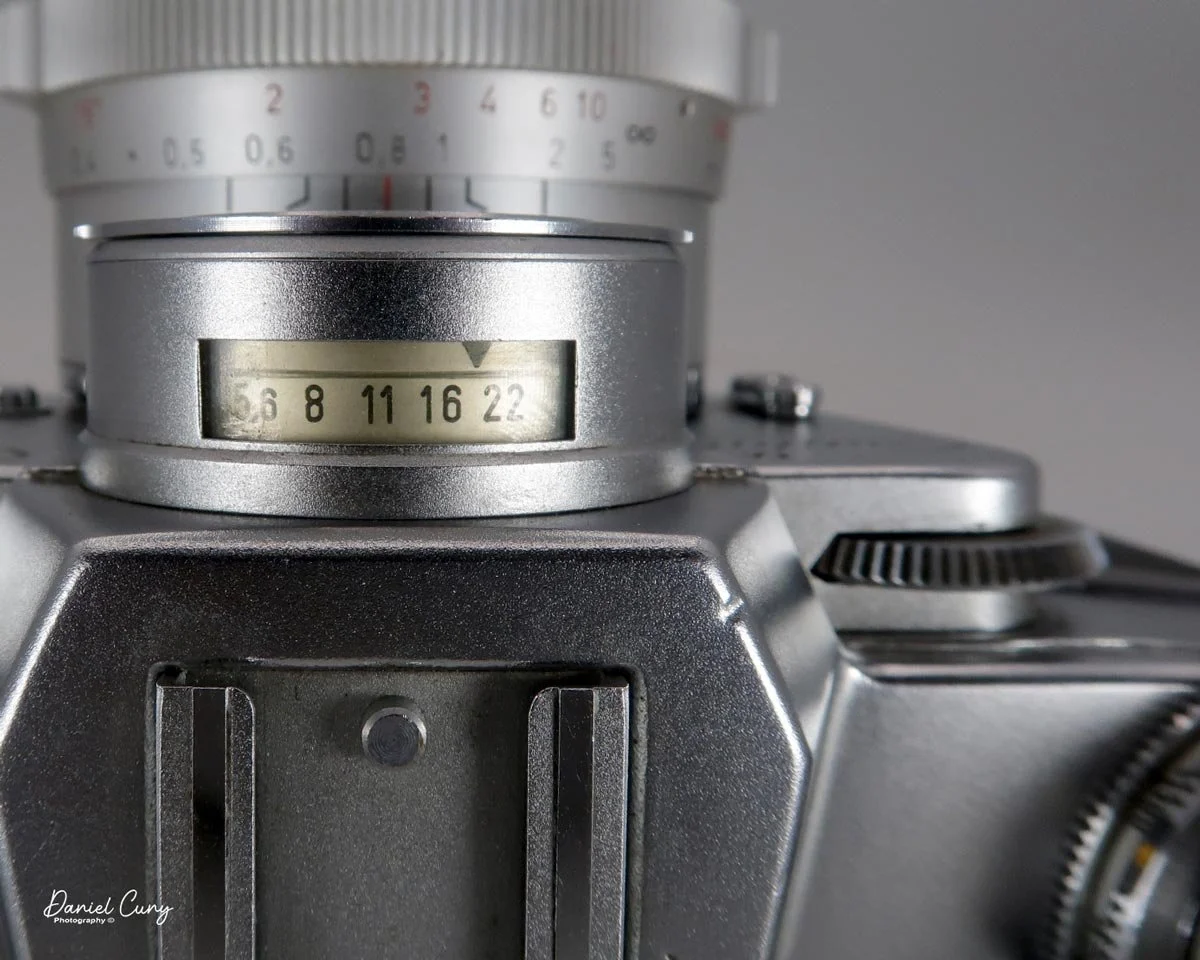
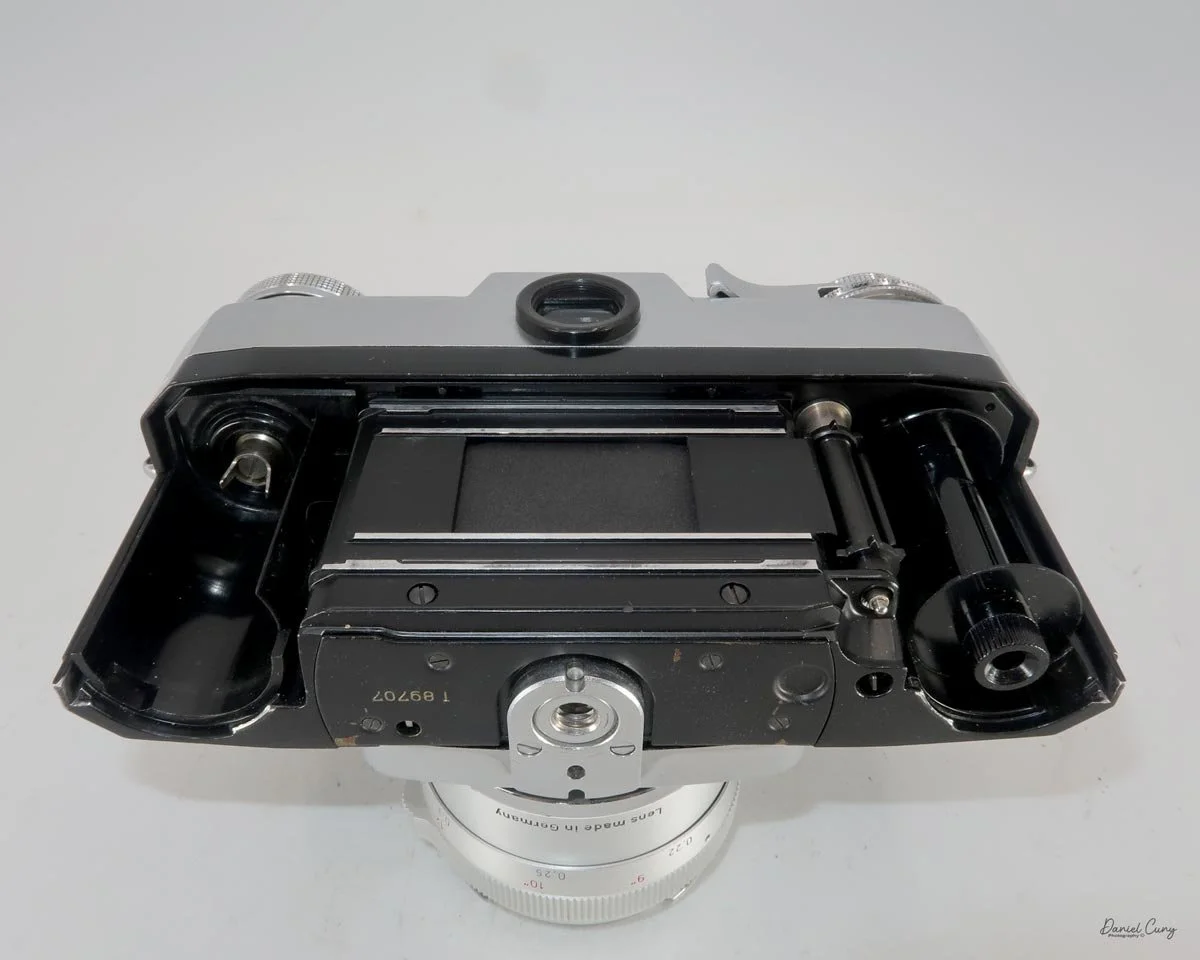
It wasn't until I received the camera that I noticed the camera's take-up spool was missing, and the bubble level on top was dried out. Not the end of the world, as I purchased a Contaflex/Contax take-up spool that fits the camera well. It wasn't the original take-up spool with the red tips on the end, but it would wind the film in the camera.
There wasn't much I could do about the bubble level, but at this point, it's water under the bridge. I now have a working Zeiss Ikon Hologon Ultrawide camera to put in the collection and use when I want.
History:
The Zeiss Ikon Hologon is one of the most unusual and technically ambitious 35mm cameras ever produced. Introduced in 1969, it was created around an extraordinary lens rather than the other way around. Its Carl Zeiss Hologon 15mm f/8 lens offered an astonishing 110-degree angle of view, making it one of the widest-angle lenses available for 35mm photography at the time.
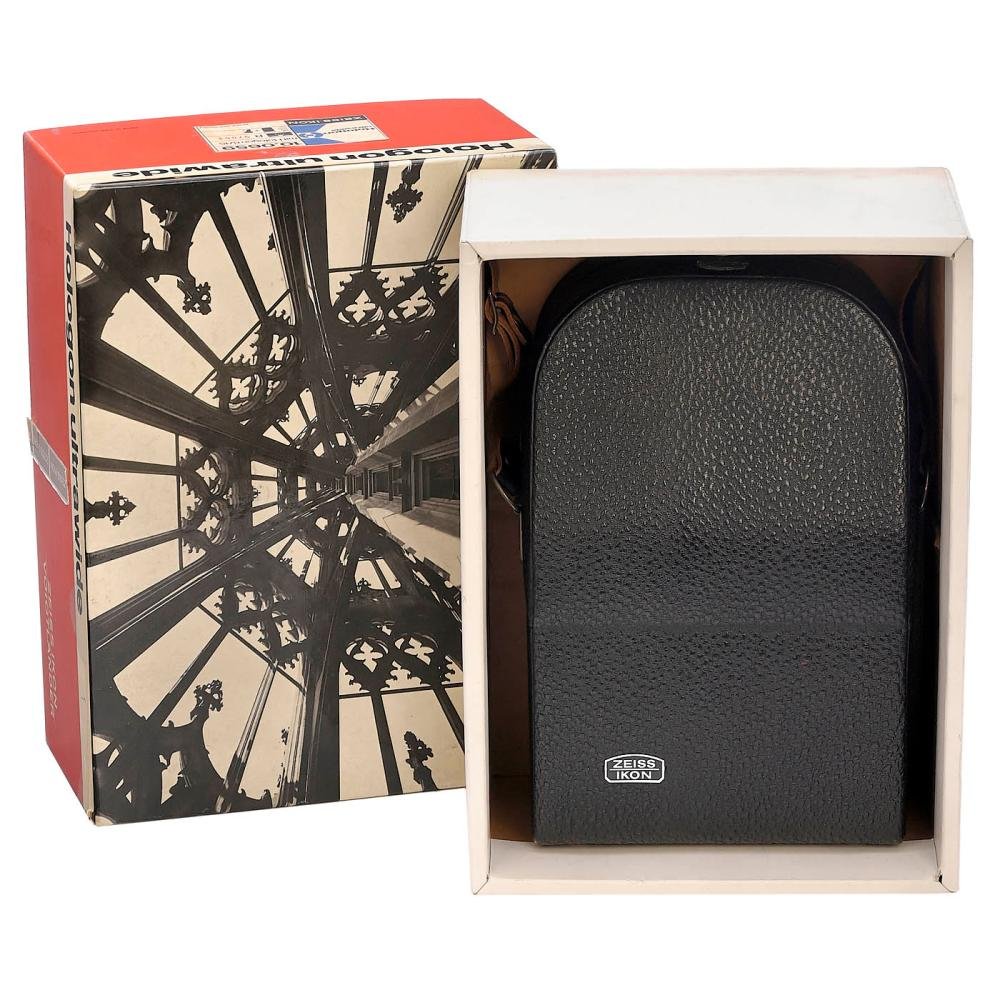
Outfit in the original box.
The story began with German optical designer Dr. Erhard Glatzel and his work at Carl Zeiss. The Hologon was an innovative three-element design intended to produce an extremely wide, rectilinear image with remarkably low distortion. The lens was so physically unusual that conventional 35mm camera bodies could not accommodate it properly. Its rear element needed to sit exceptionally close to the film plane. Rather than compromise the lens design, Zeiss created a camera specifically around it.
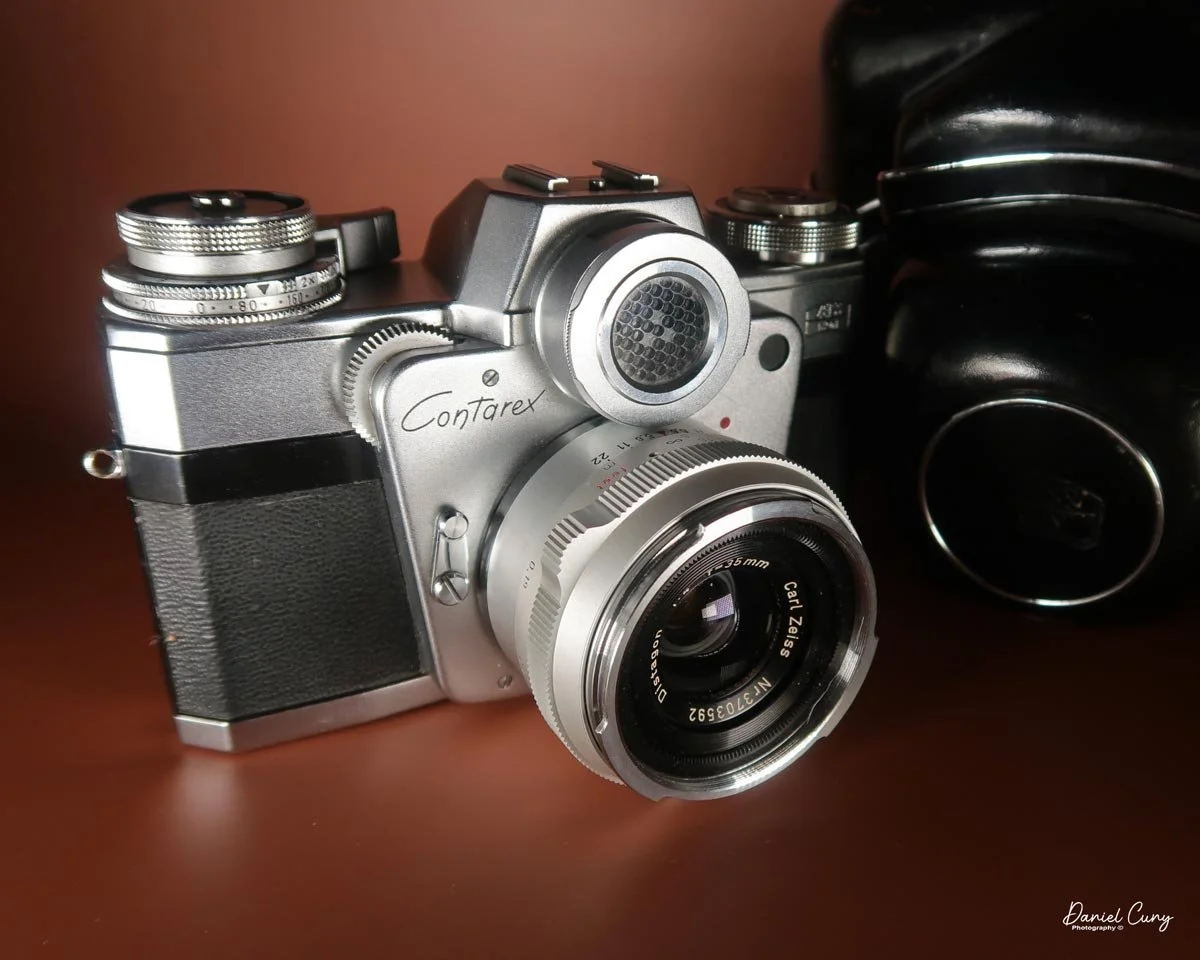
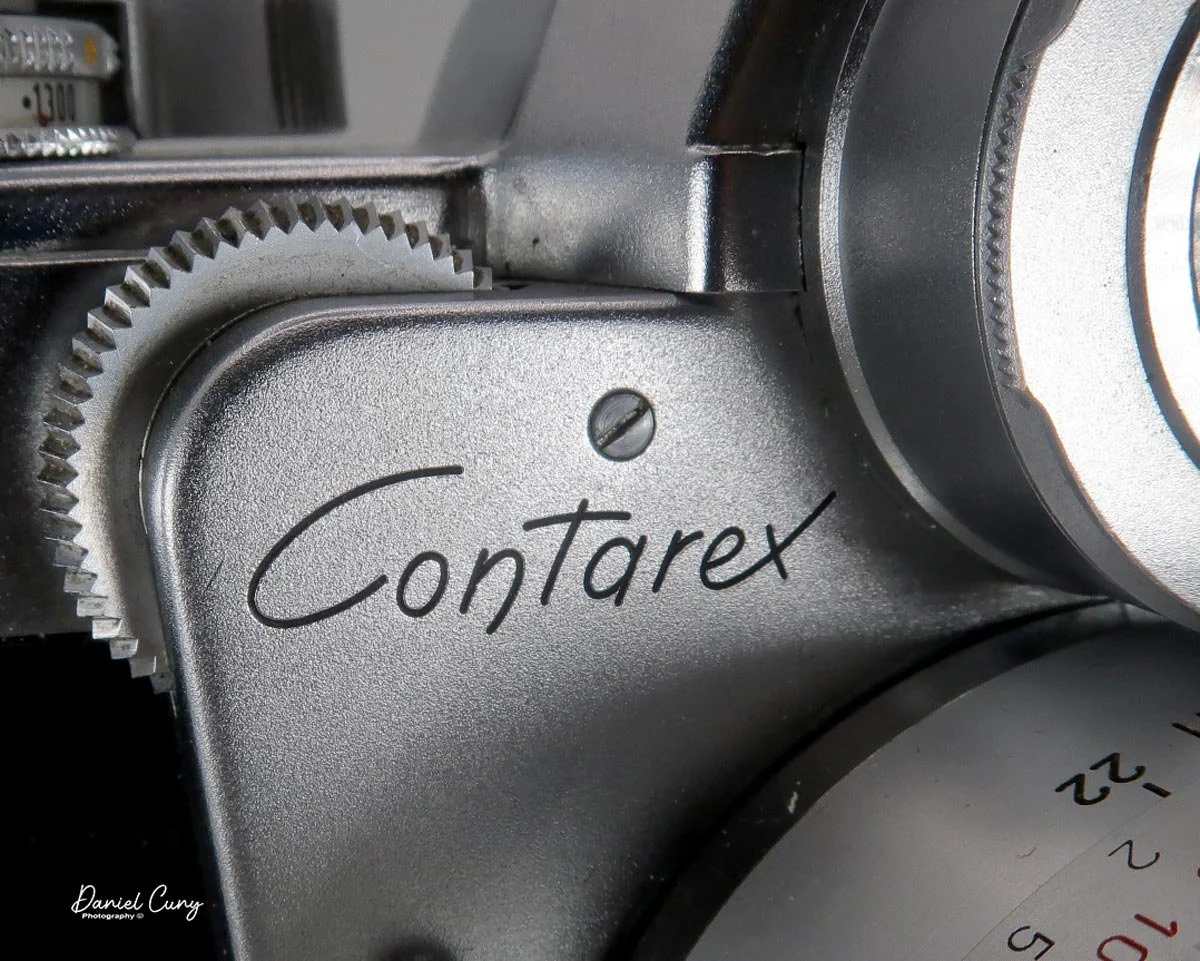
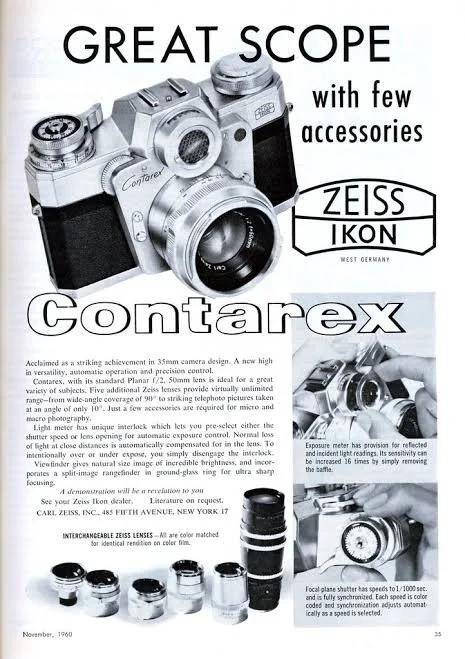
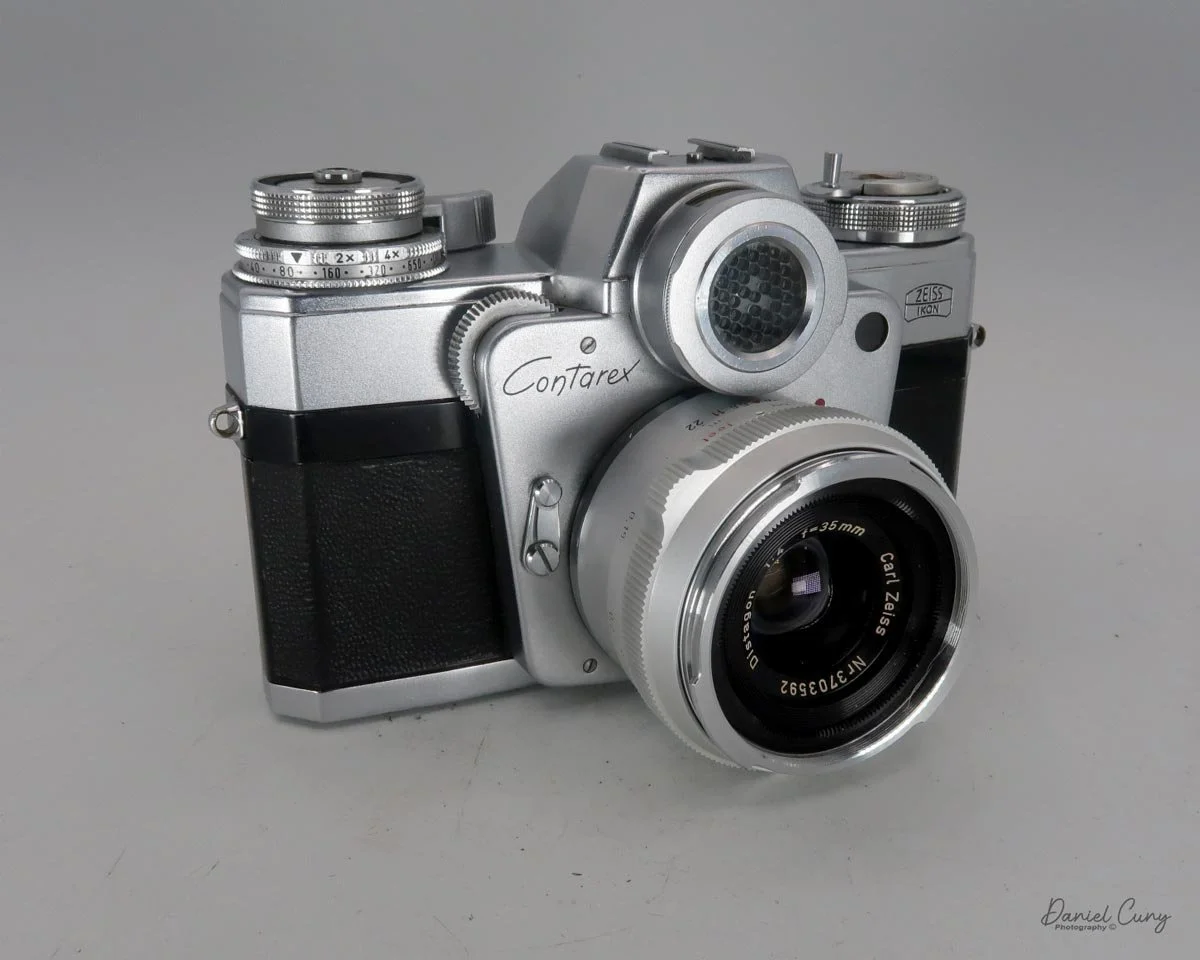
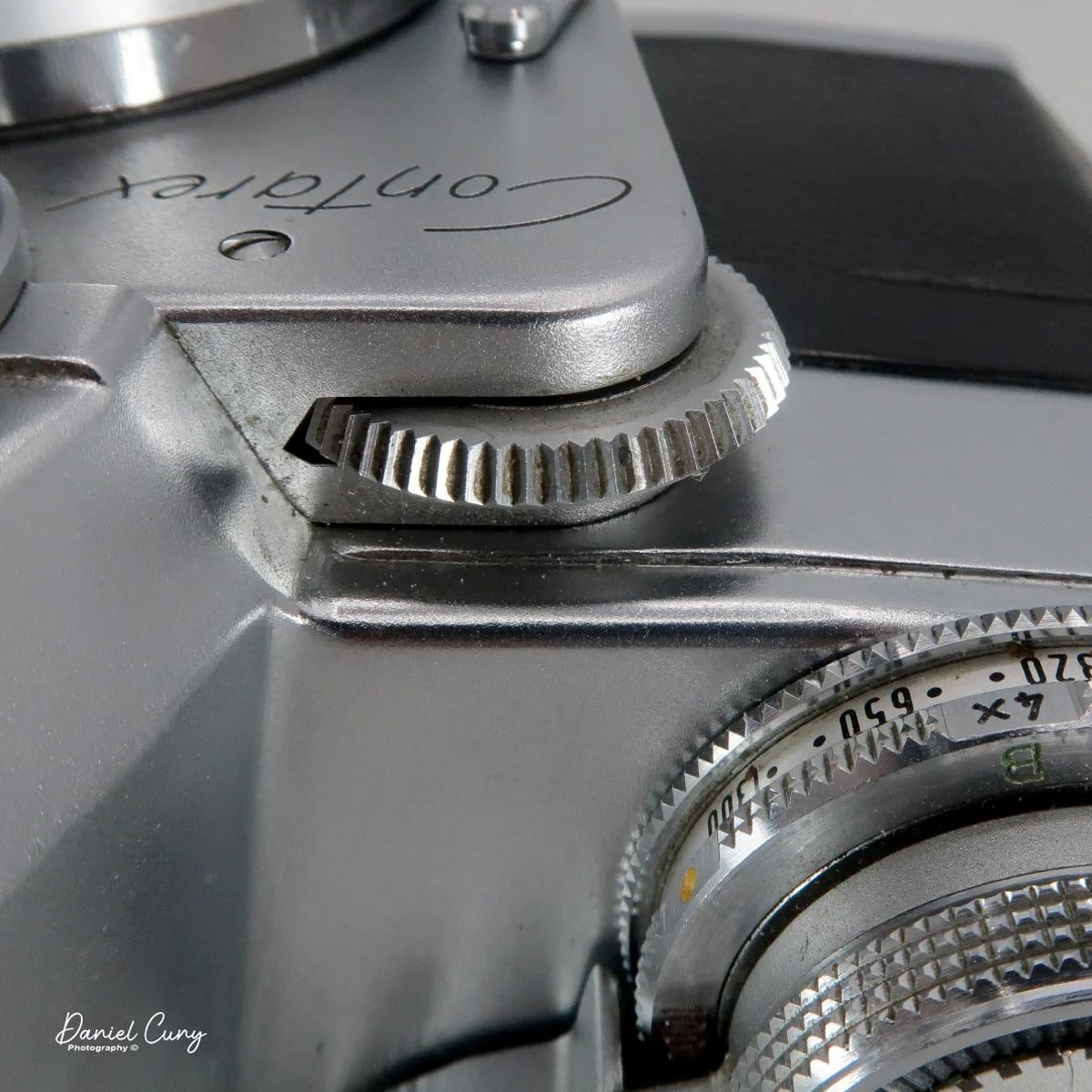
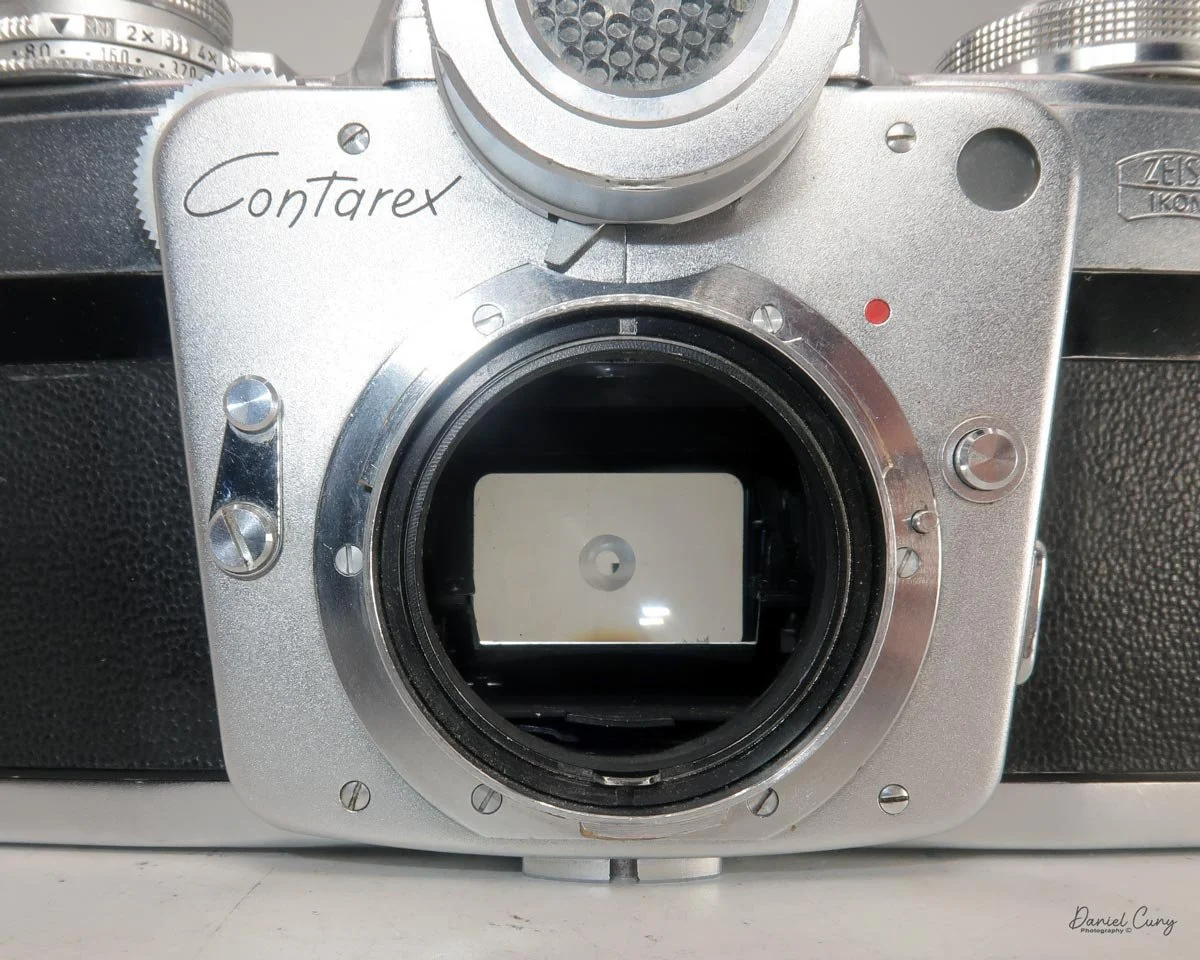
The resulting Hologon camera was based on the chassis of the Zeiss Ikon Contarex but eliminated the SLR mirror and reflex viewing system. In their place was a large optical viewfinder with a built-in bubble level. The level was important because the enormous field of view made even a slight tilt of the camera very noticeable in the finished photograph. The camera also came with a distinctive pistol grip, designed partly to keep the photographer's fingers from appearing at the edges of photographs.
The Hologon's lens was fixed at f/8 and had fixed focus, providing sharpness from approximately 0.5 meter to infinity. Because such a wide-angle optical design naturally suffered from illumination falloff toward the edges of the frame, Zeiss supplied a specially graduated center filter. This accessory was an essential part of the system rather than simply an optional convenience.
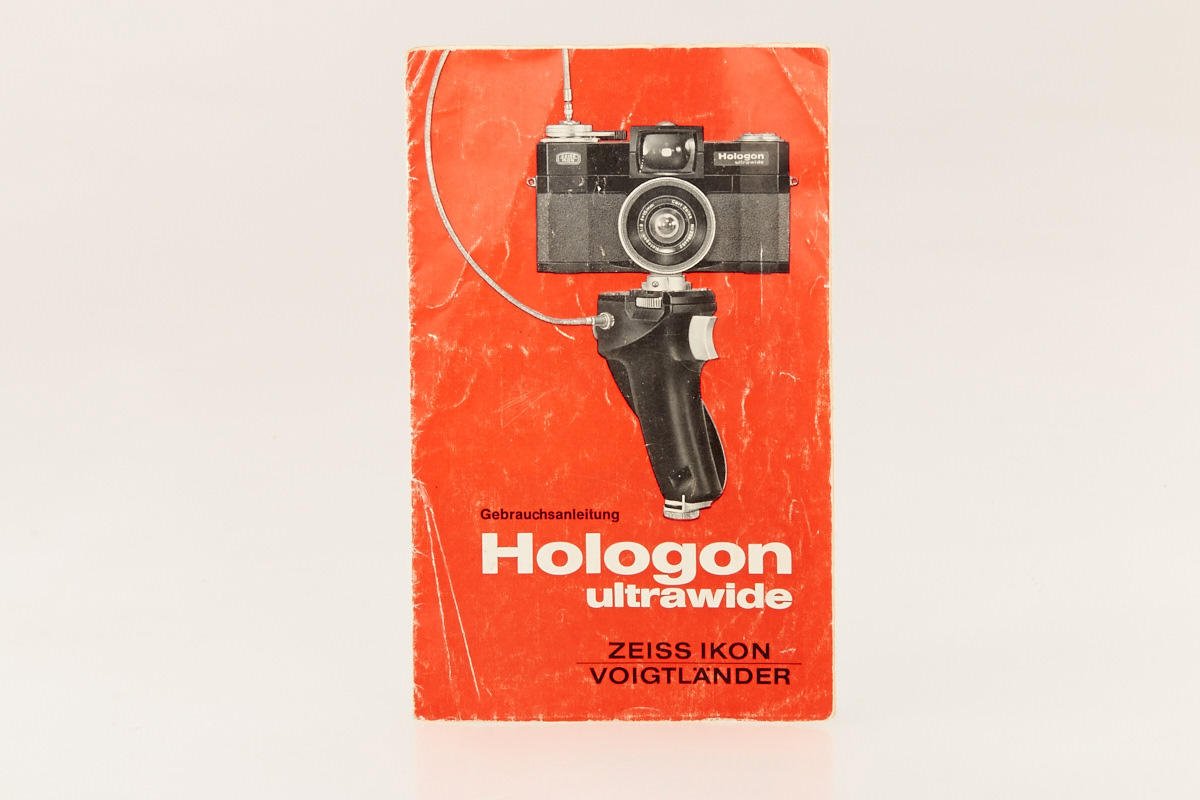
Zeiss Ikon Hologon Ultrawide manual
Production numbers were extremely small. Approximately 1,400 Hologon cameras were produced, making it one of the rarest members of the Contarex family. Zeiss Ikon's camera manufacturing ended in the early 1970s, and the Hologon became one of the final and most exotic products associated with the Zeiss Ikon name.
The Hologon lens itself survived beyond the camera. In 1972, unused lenses were offered in Leica M mount, complete with the appropriate accessories. The Hologon name was eventually revived in the 1990s for a redesigned 16mm f/8 lens used with the Contax G system.
Today, the Zeiss Ikon Hologon is highly prized by collectors. It represents a remarkable moment when optical engineering took priority over conventional camera design—a camera literally built around a lens. Its rarity, distinctive appearance, and extraordinary 15mm Hologon optics have secured its place as one of the great classics of German camera history.
My Camera:
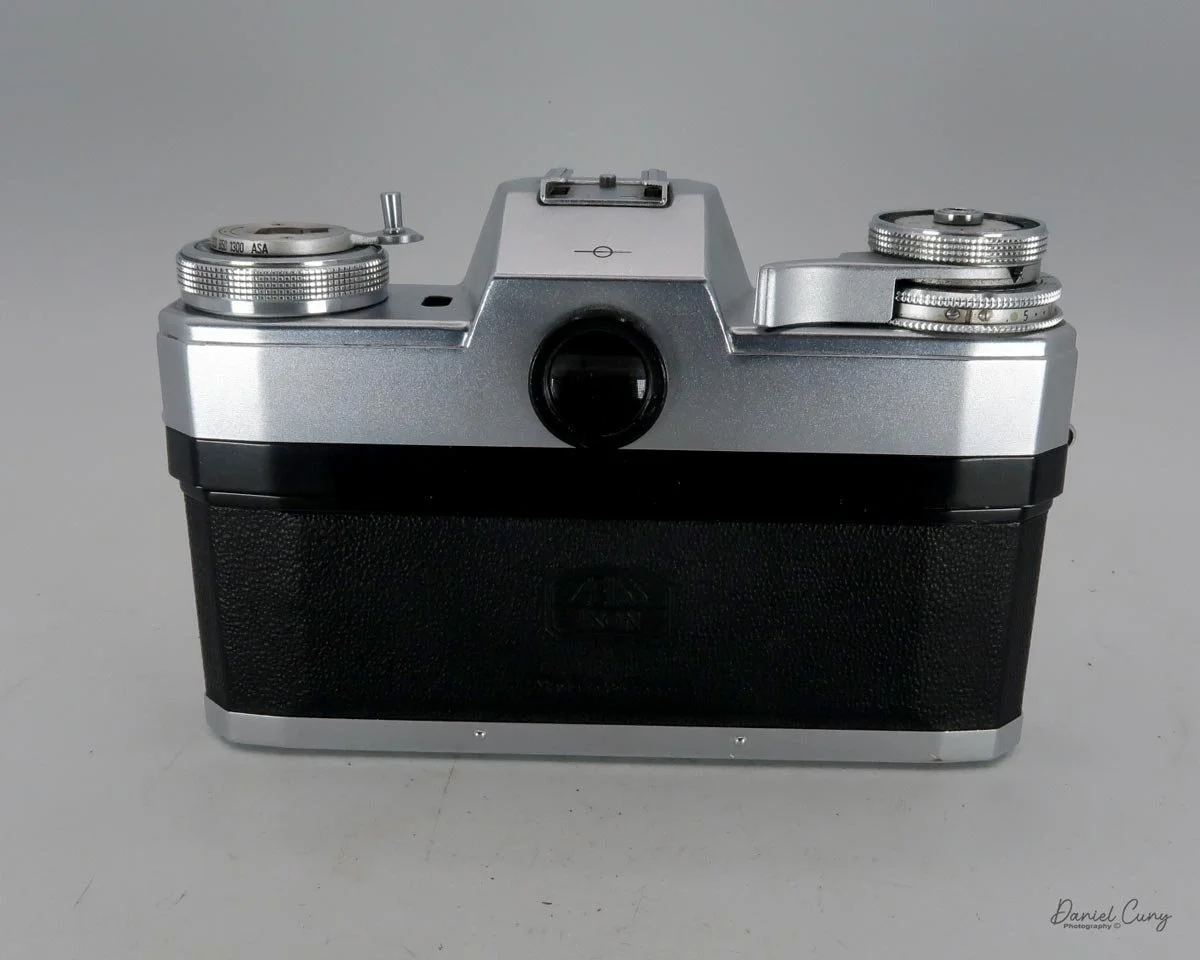
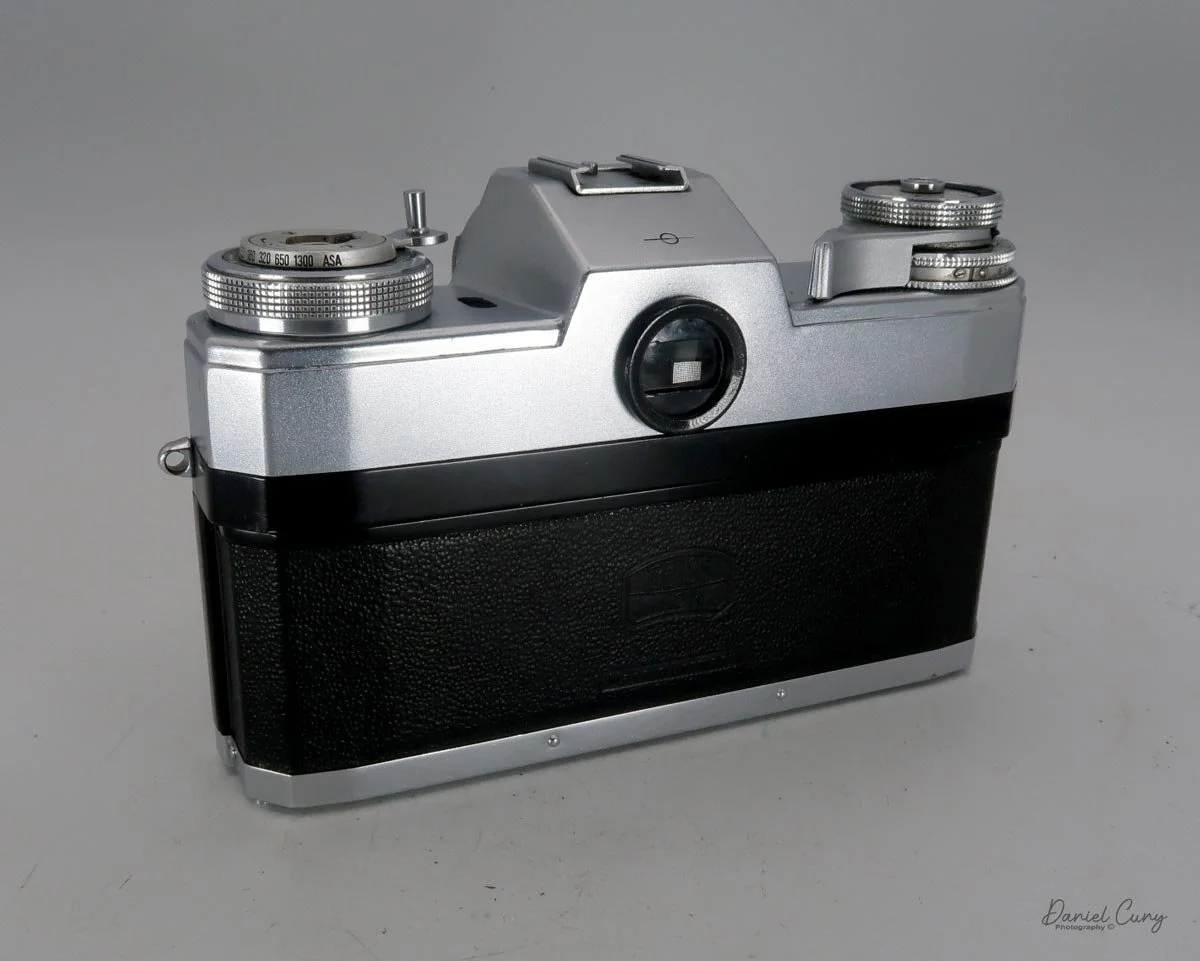
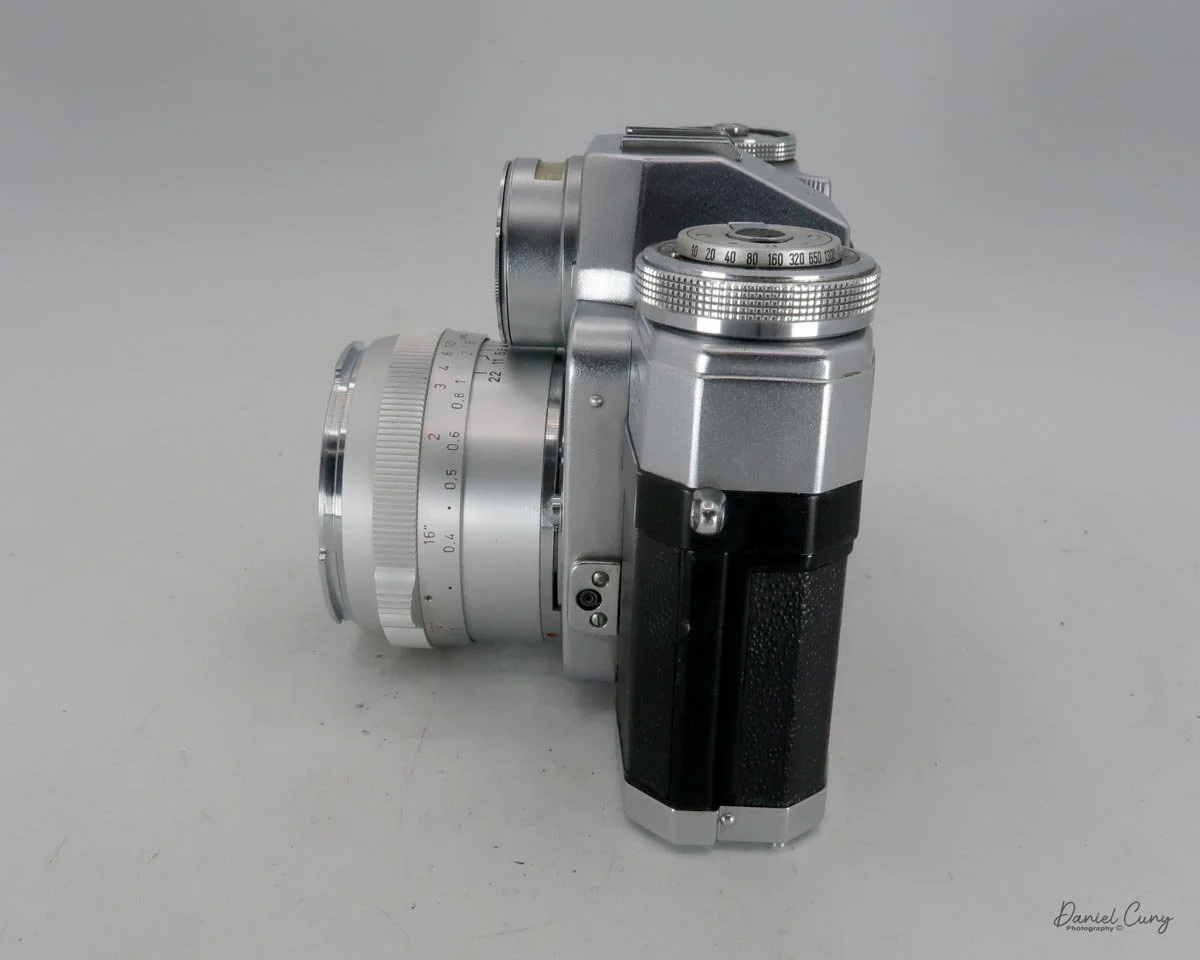
My Zeiss Ikon Hologon Ultrawide camera is based on the Zeiss Ikon Contarex body and is 6" wide by 3.5" tall by only 2" deep. The camera weighs in at 1 pound, 11.5 ounces with the Carl Zeiss Verlauffilter S 57 4x (center filter) and plastic lens cap. The camera's serial number is P76233. The camera has a Carl Zeiss Hologon 15mm f/8 lens, serial number 4814780.
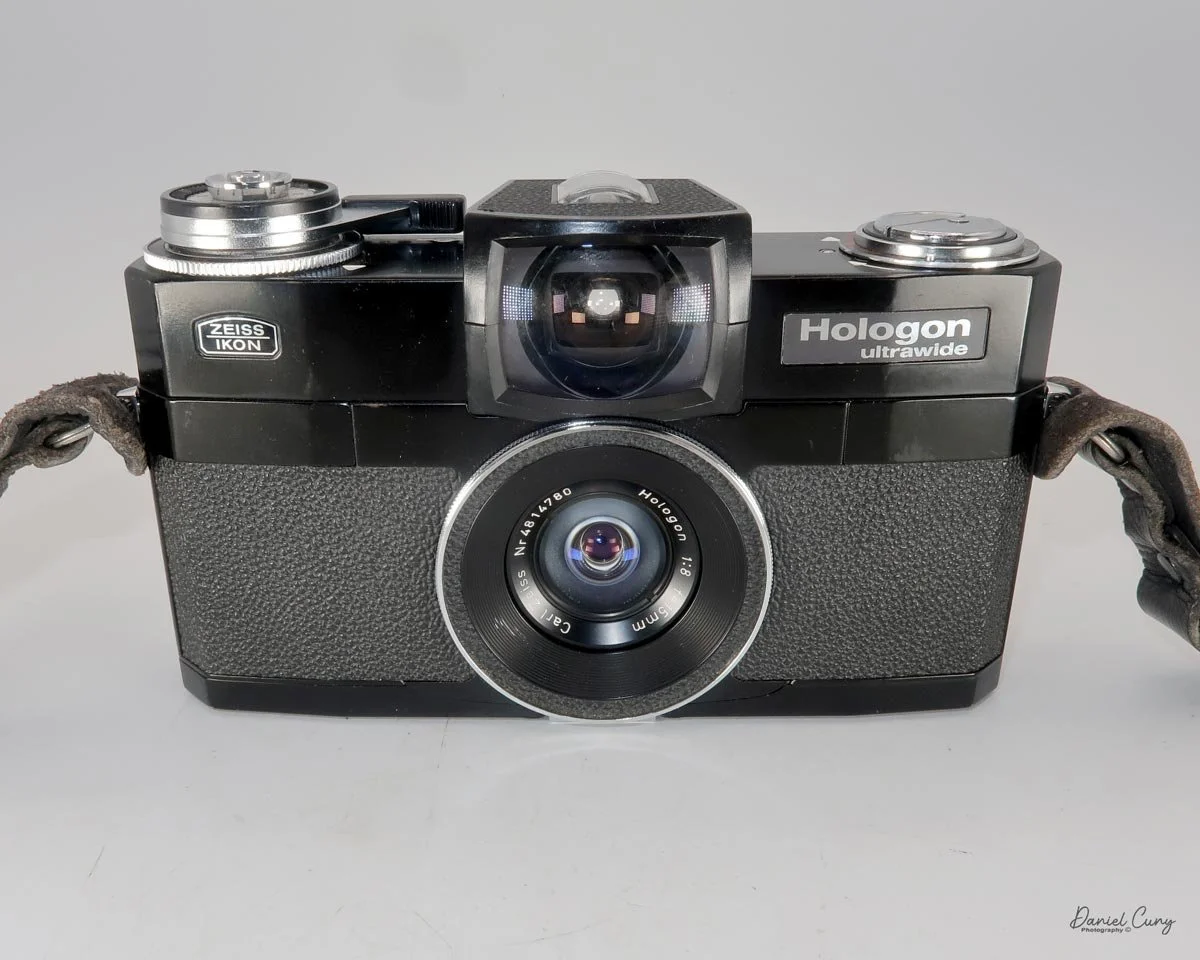
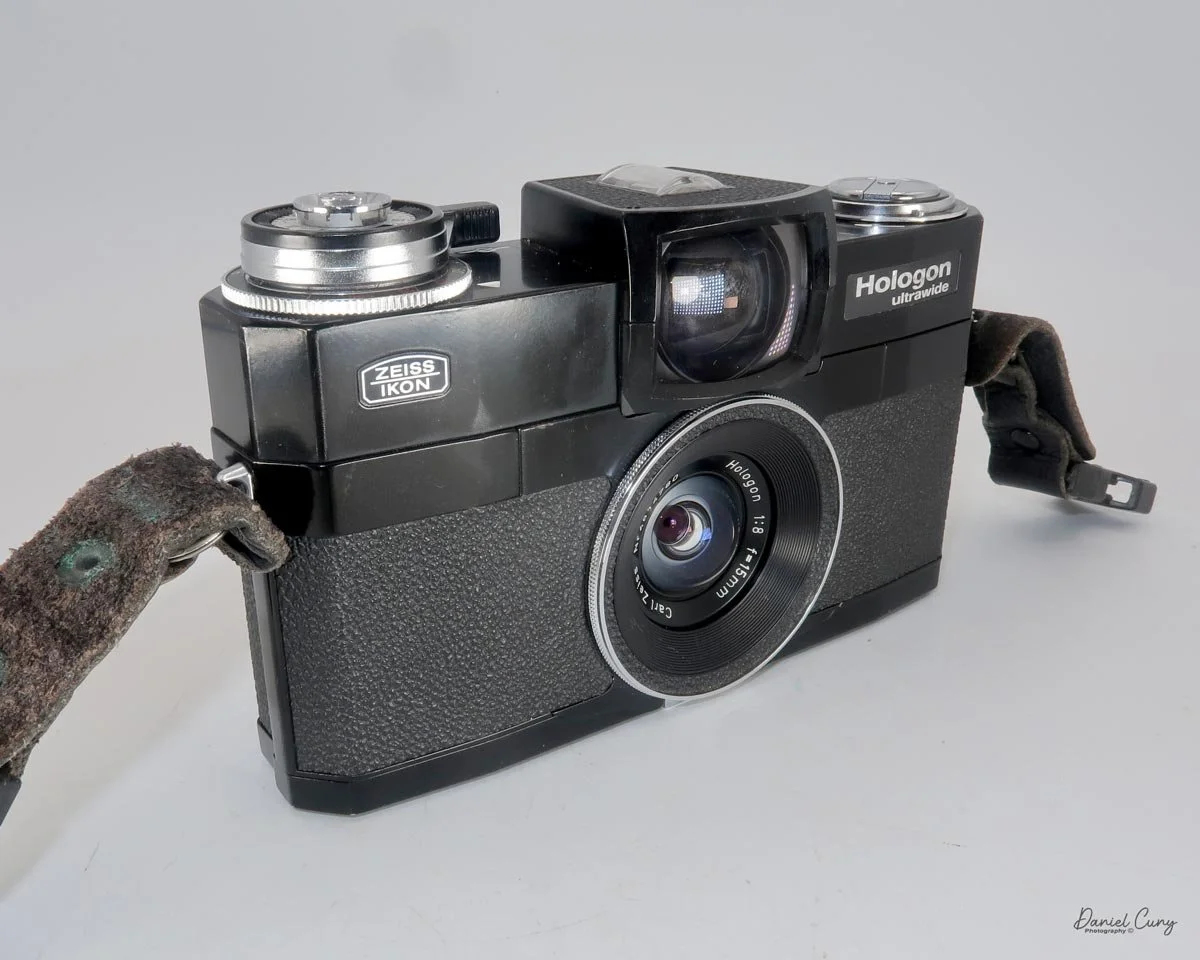
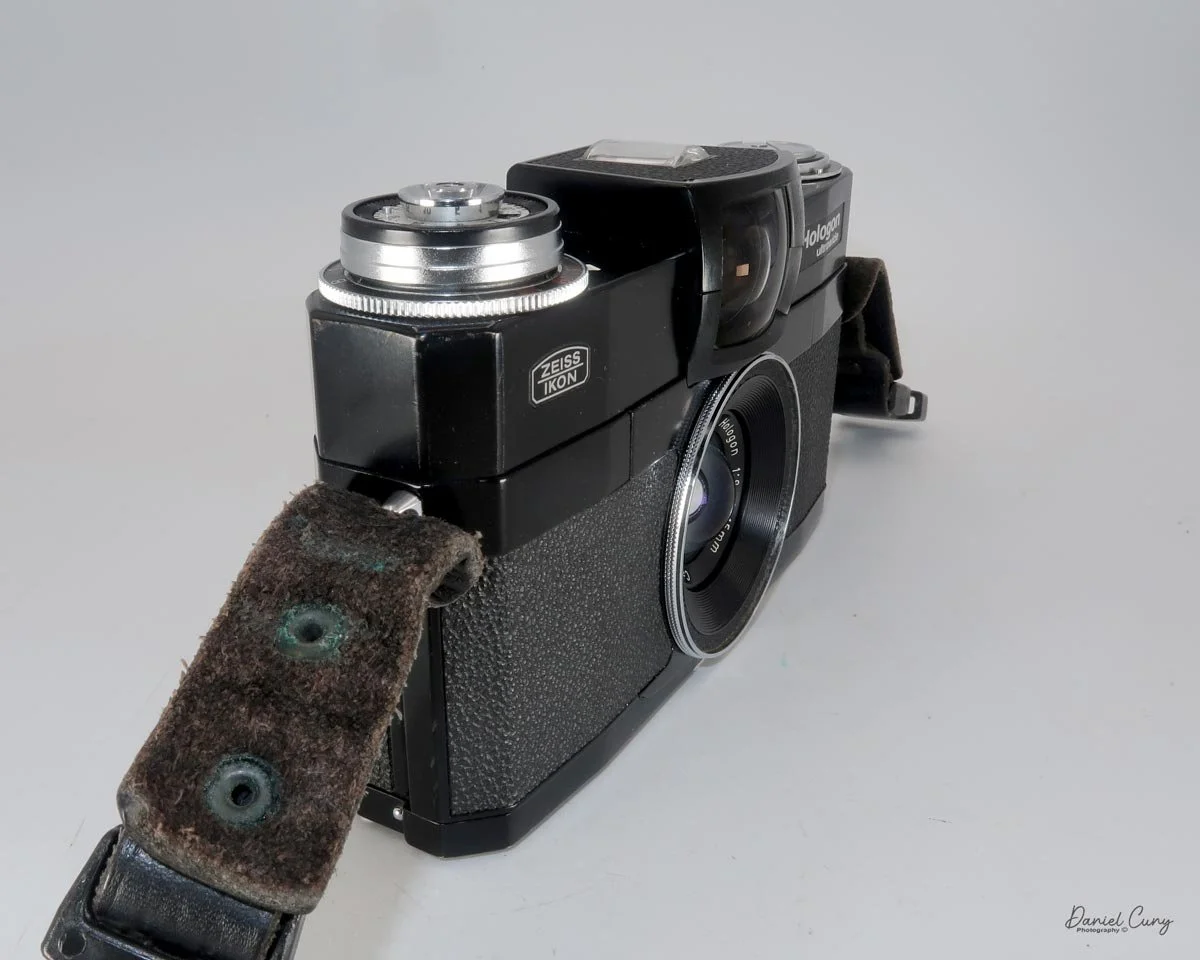
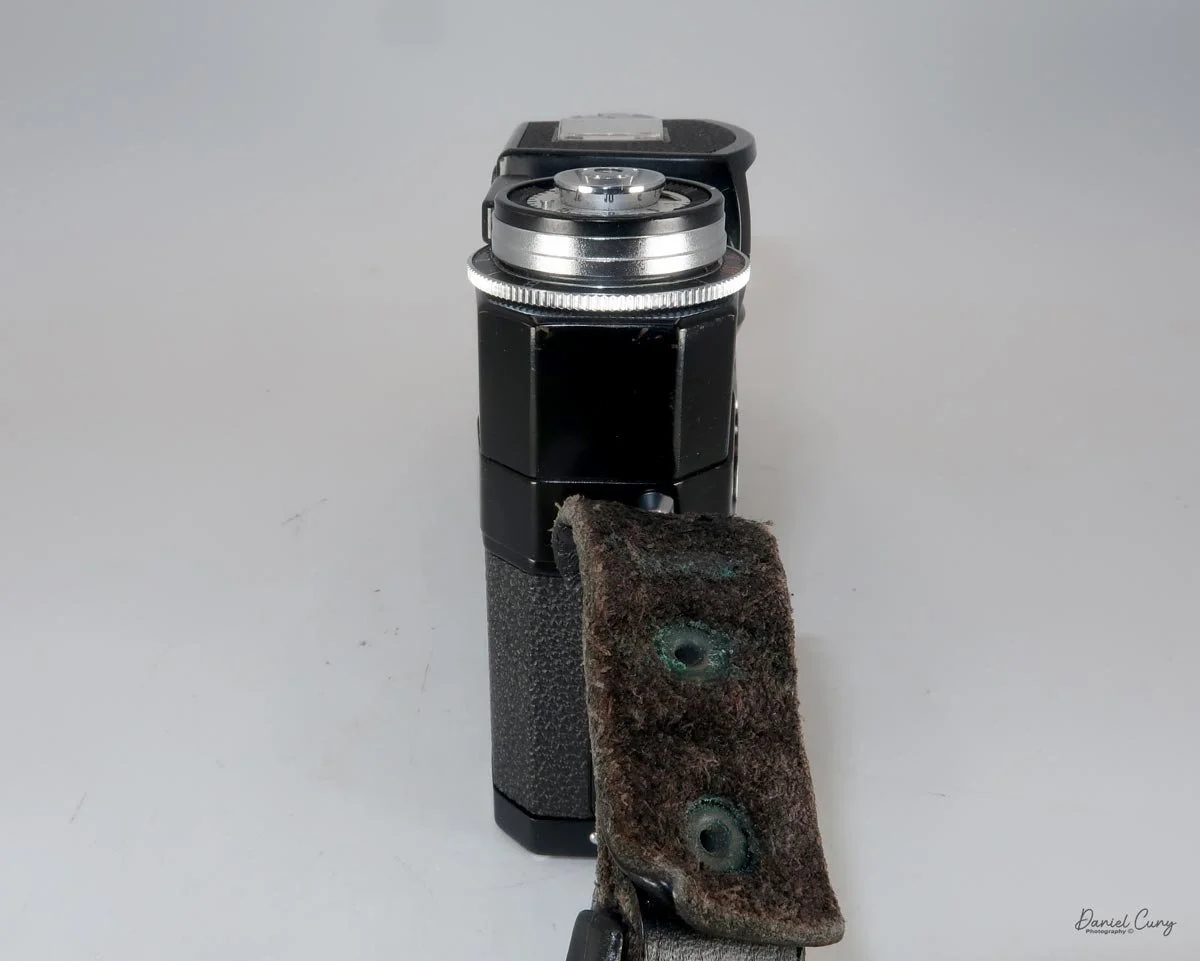
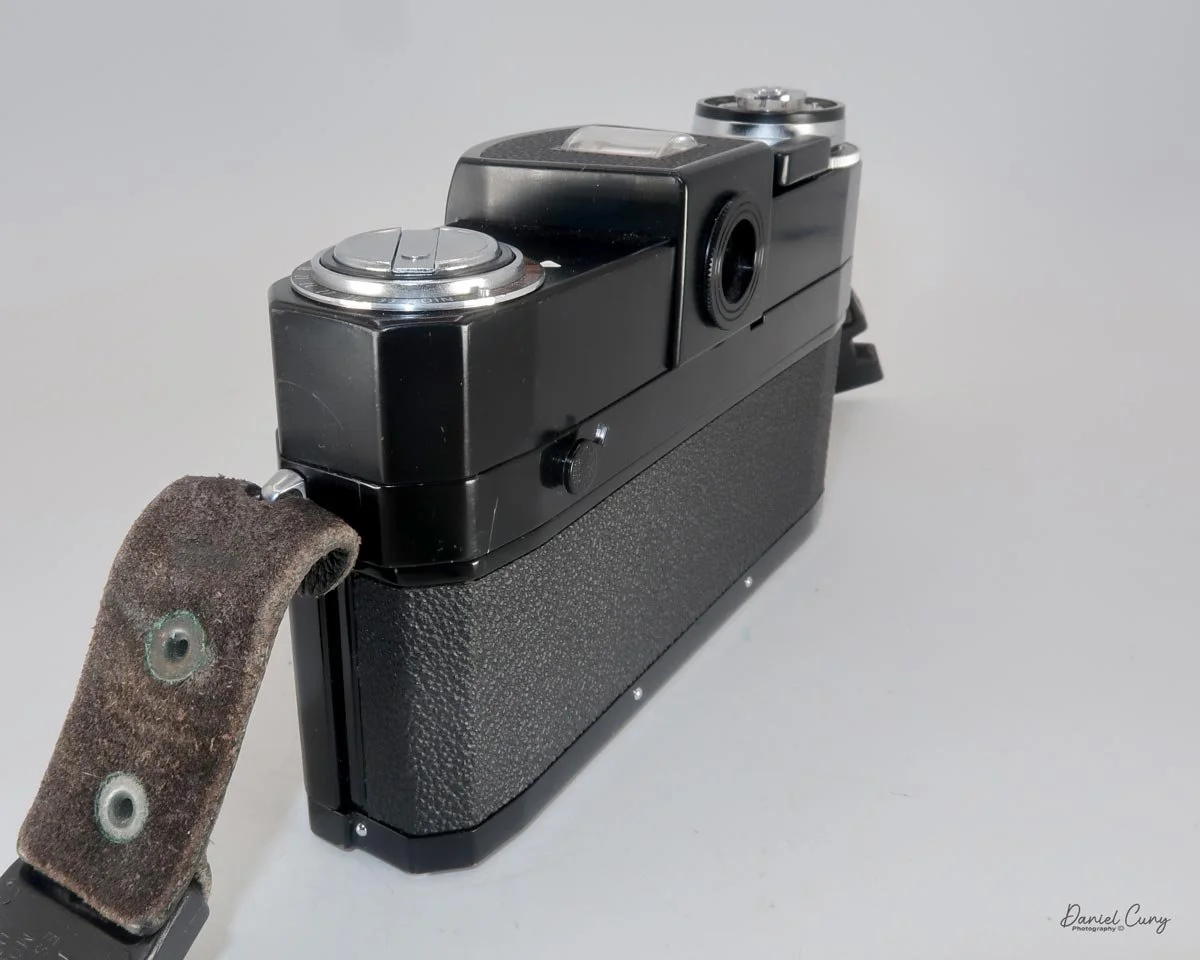
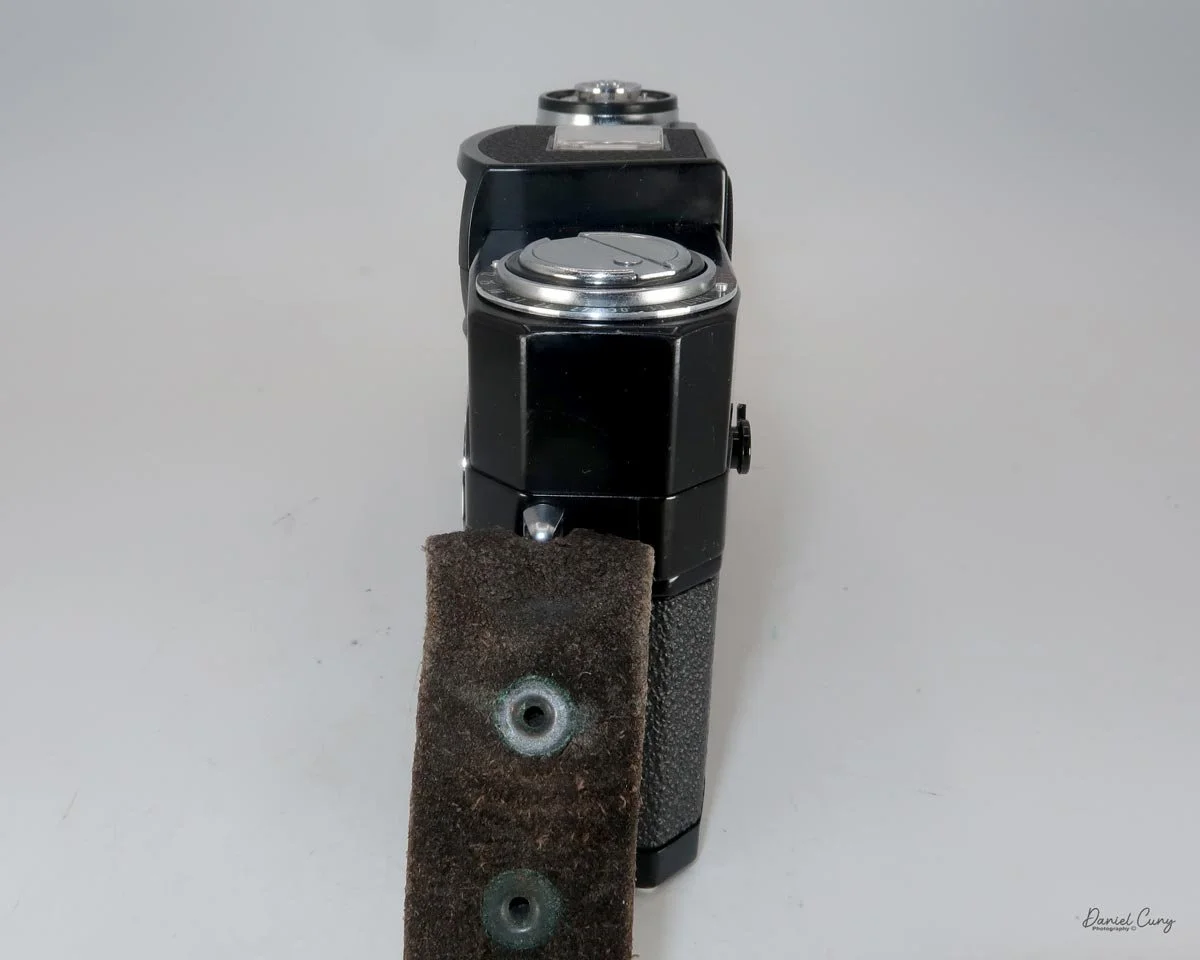
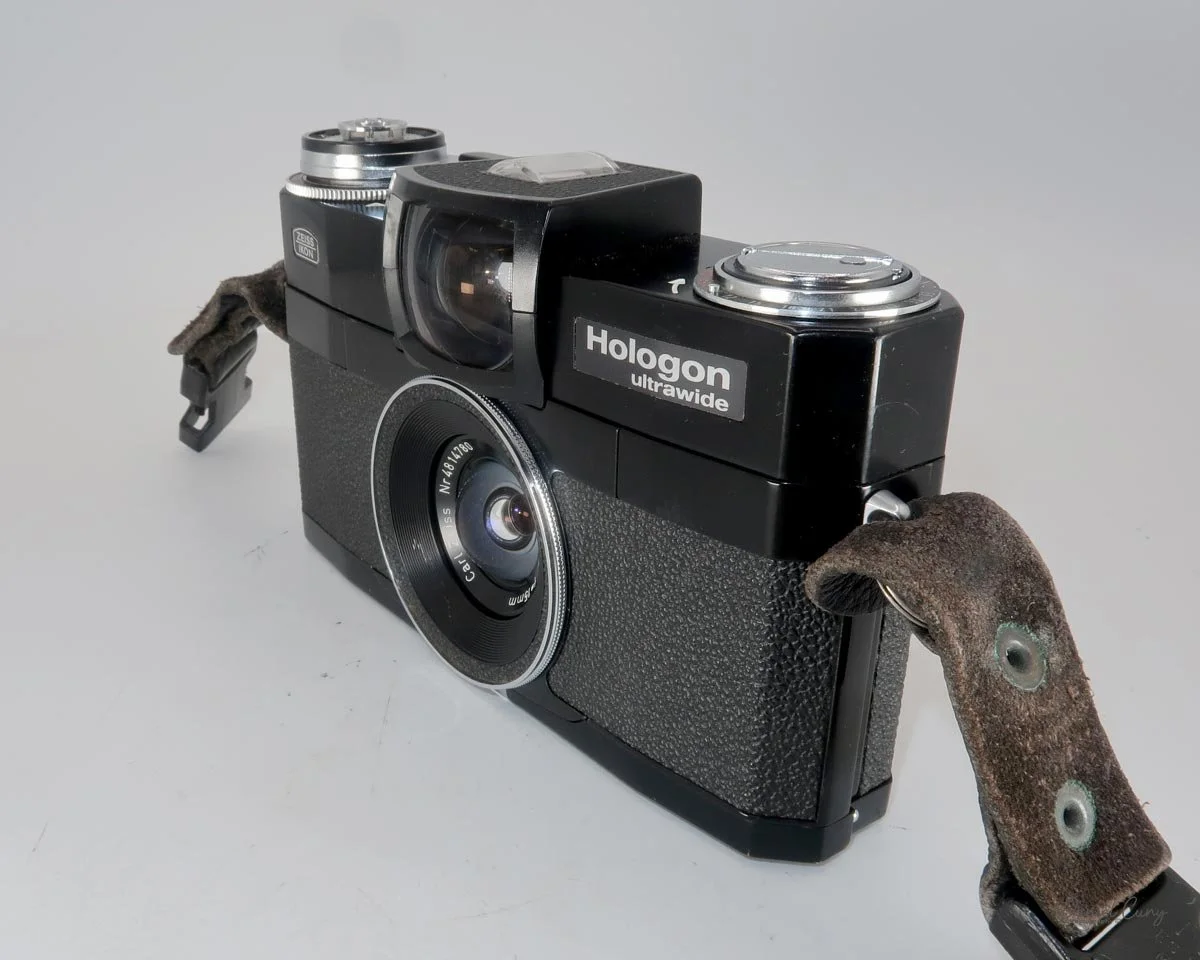
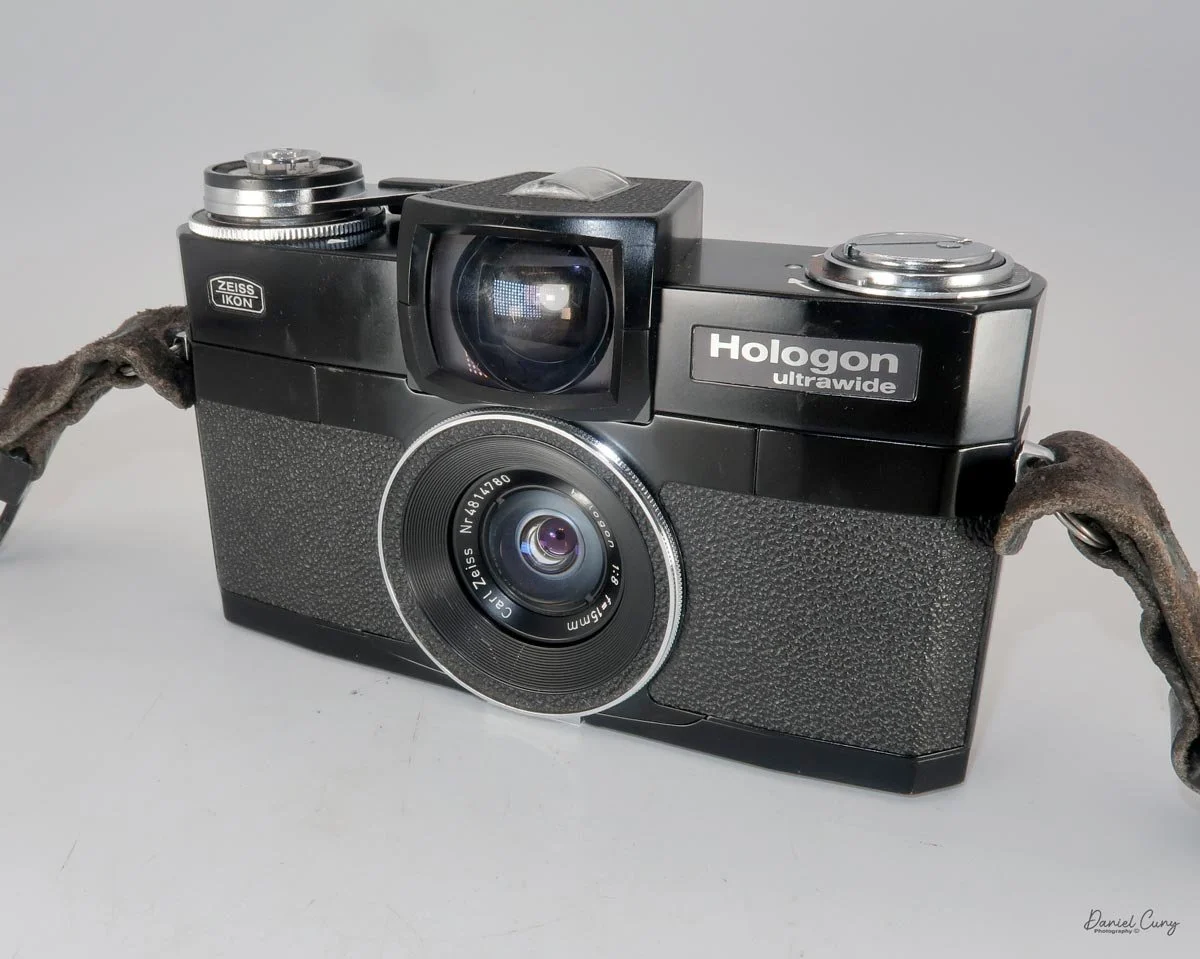
Due to the lens's wide angle of view, the camera has a center filter that is darker in the middle and lighter on the sides. This helps to even out the exposure in your images. If the camera didn't have the center filter, all the images would have a darker ring on the sides, giving the images a slight vignette appearance. The center filter evens out the vignette appearance in your images.
The filter has threads on the outside that thread into the threads on the outside of the lens and wrap around the lens. This is different from most filters, which thread onto the inside of a lens.
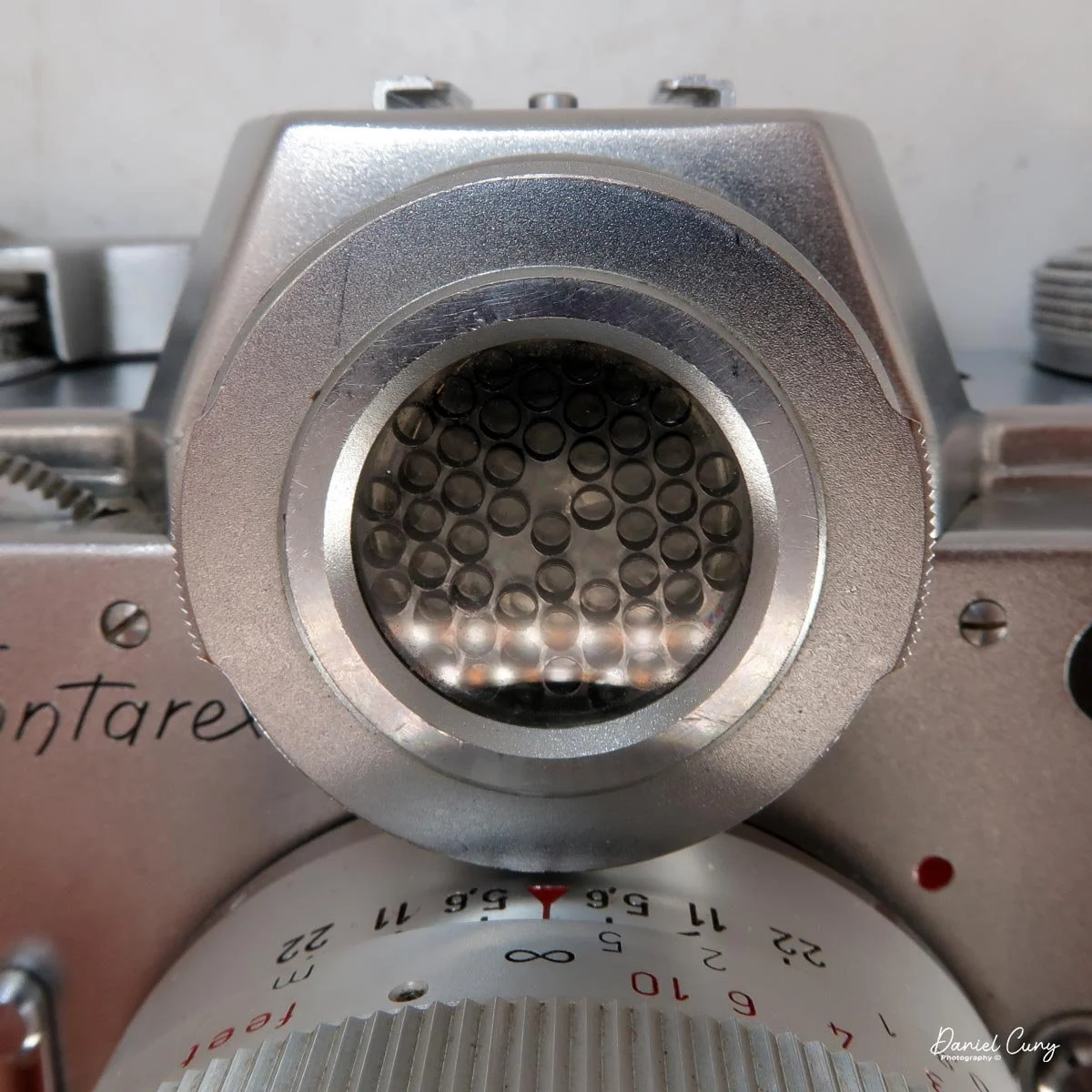
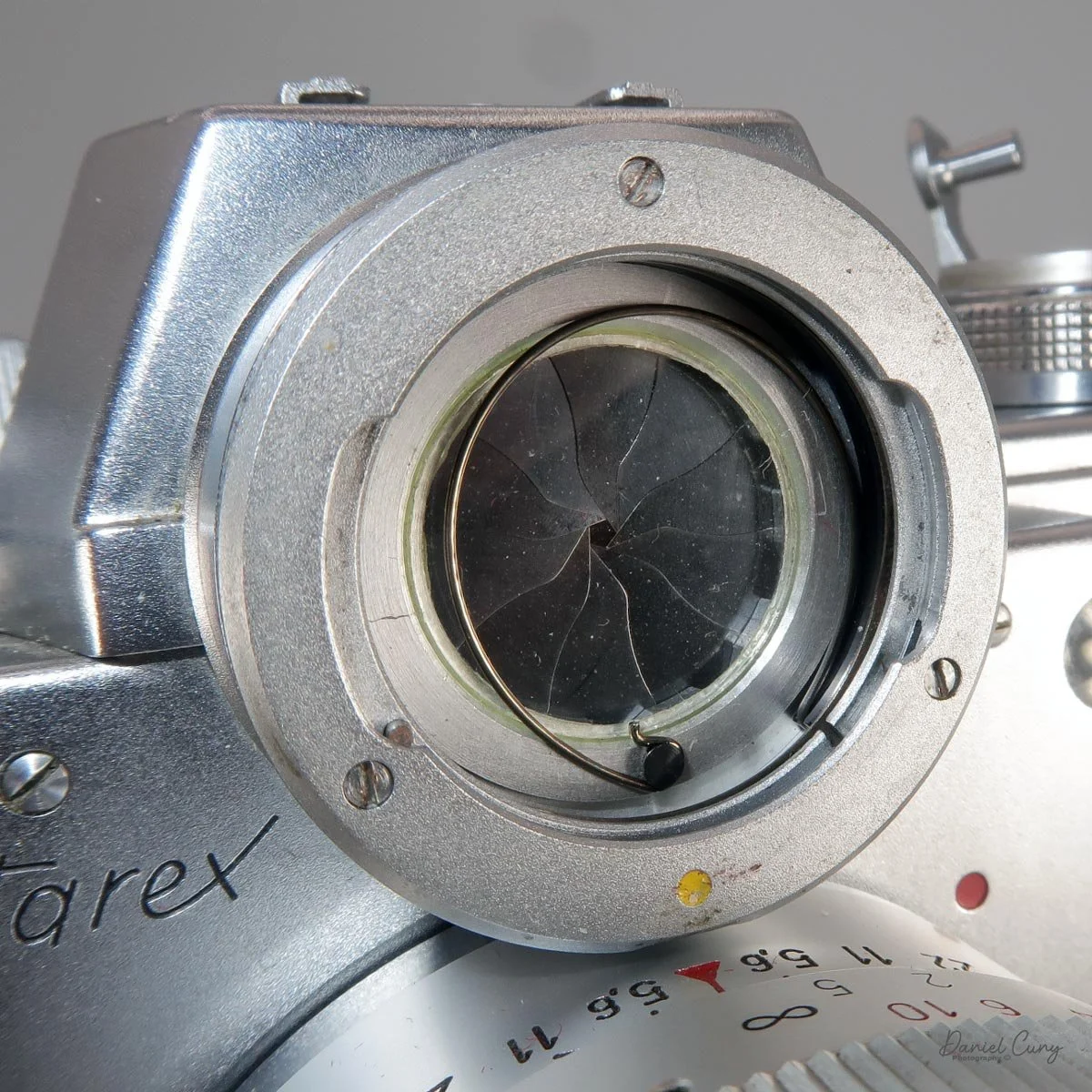
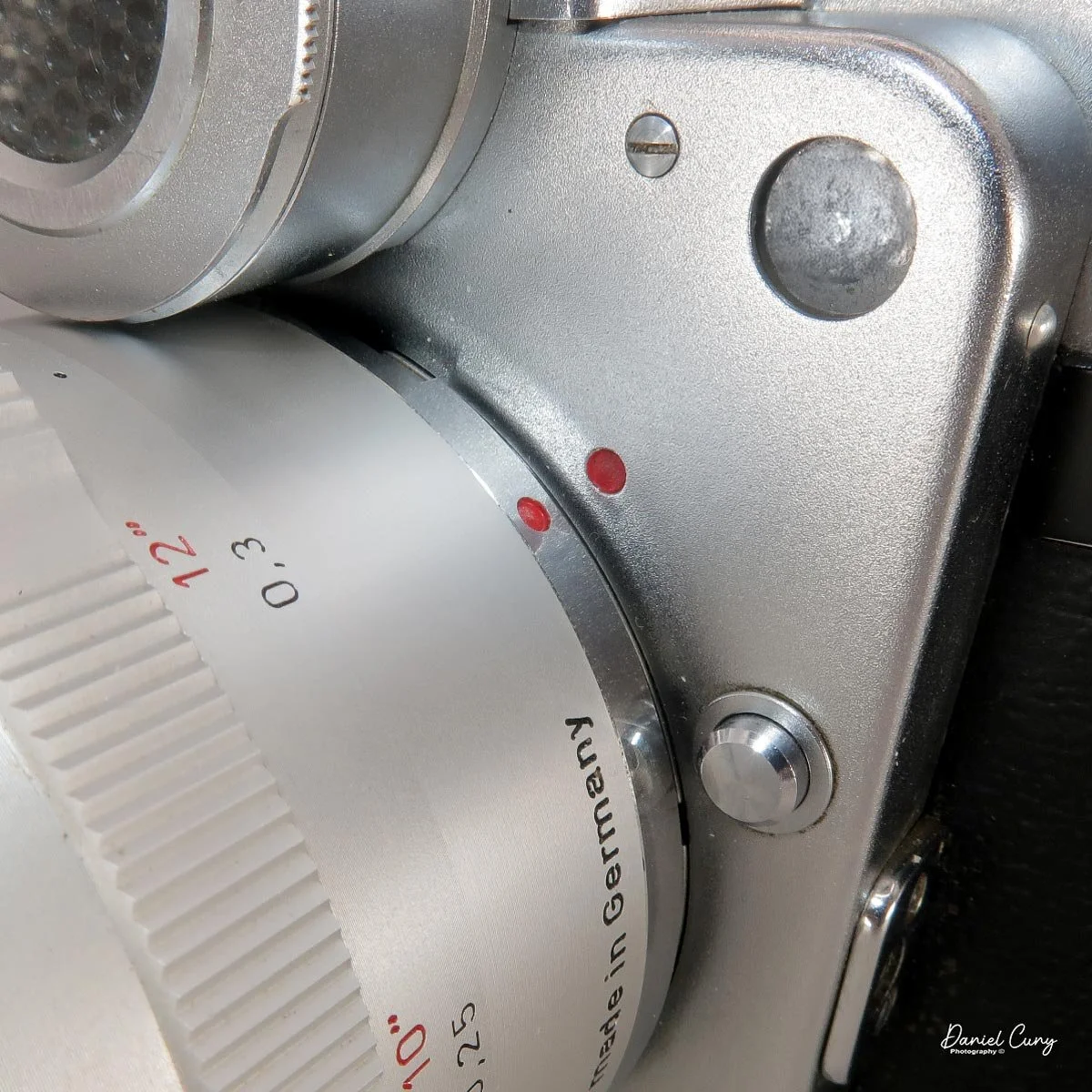
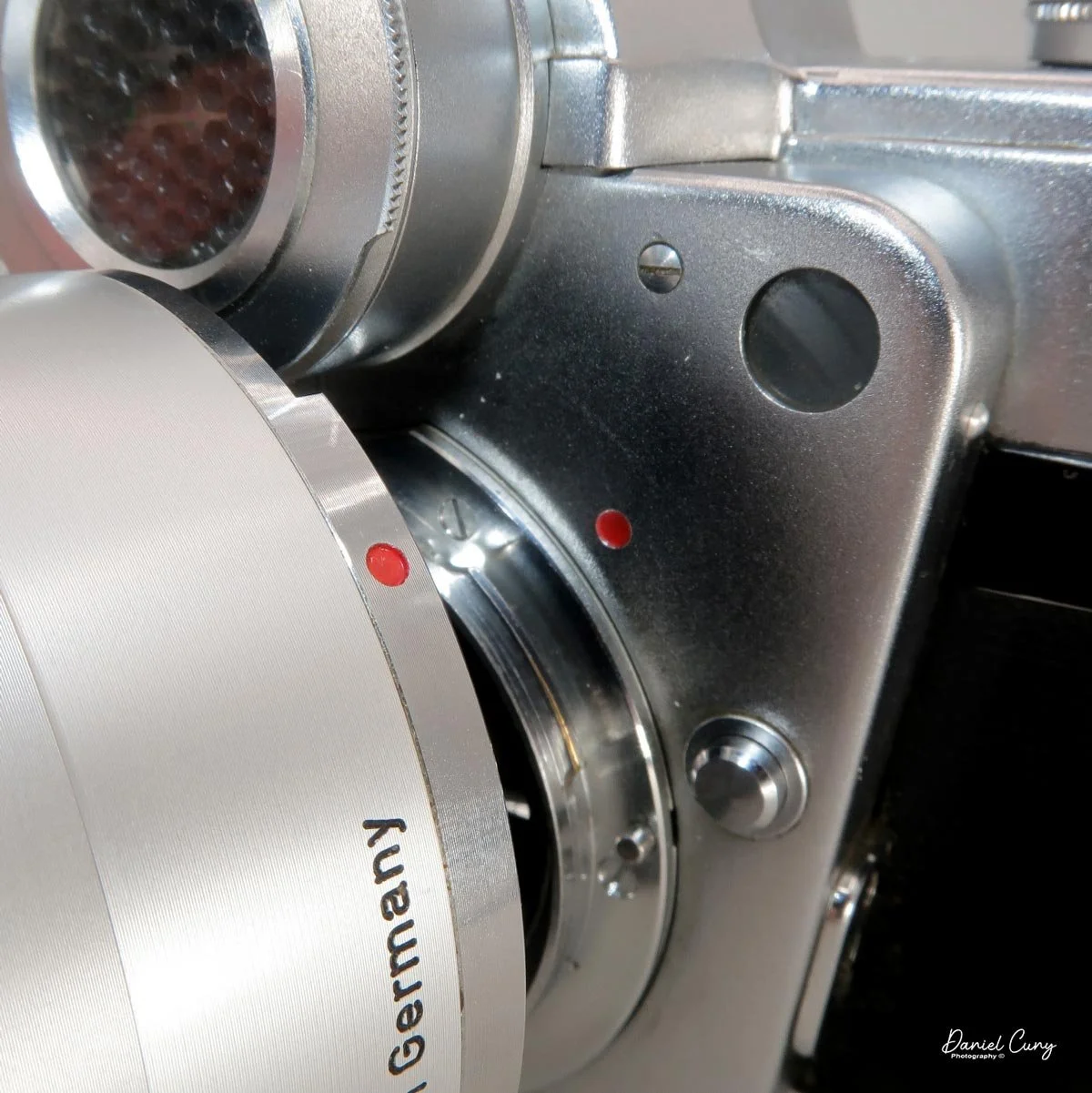
When you look closely at the lens from the front, it has a rather flat appearance, but when you turn the camera and get in close to look at the lens, it definitely has a dome appearance. Its three-element configuration was revolutionary because it produced an exceptionally wide, essentially rectilinear image without relying on the fisheye projection used by many extreme wide-angle lenses.
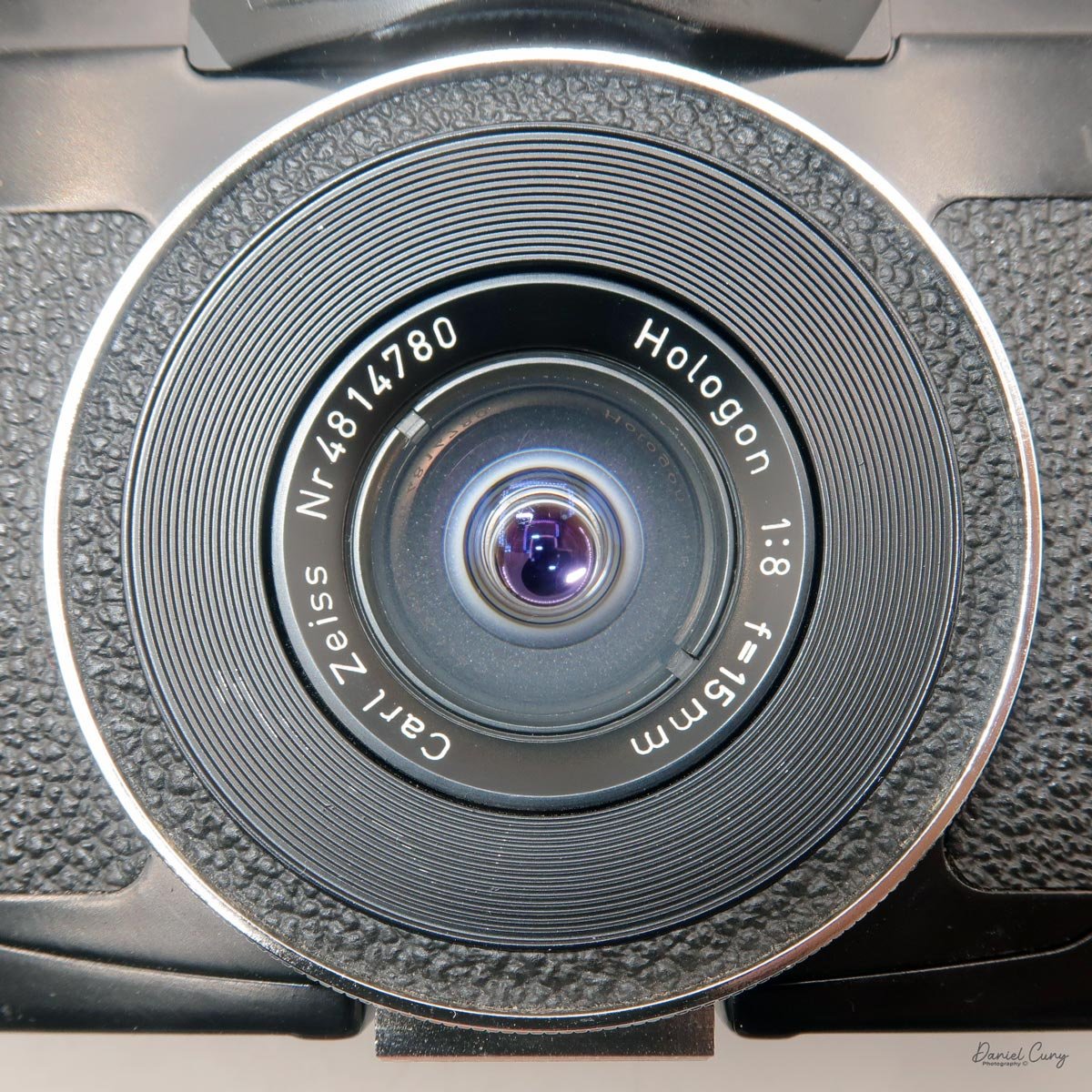
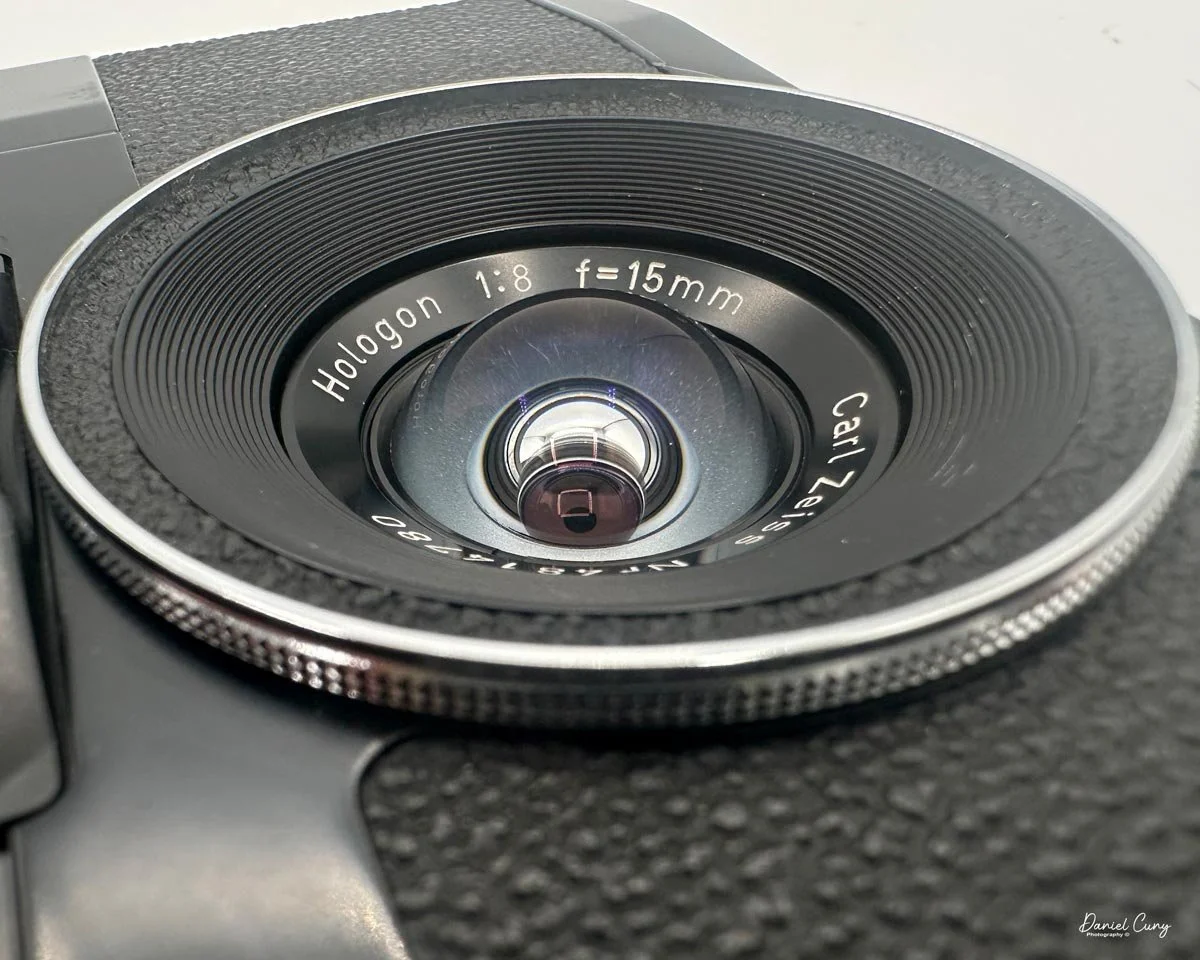
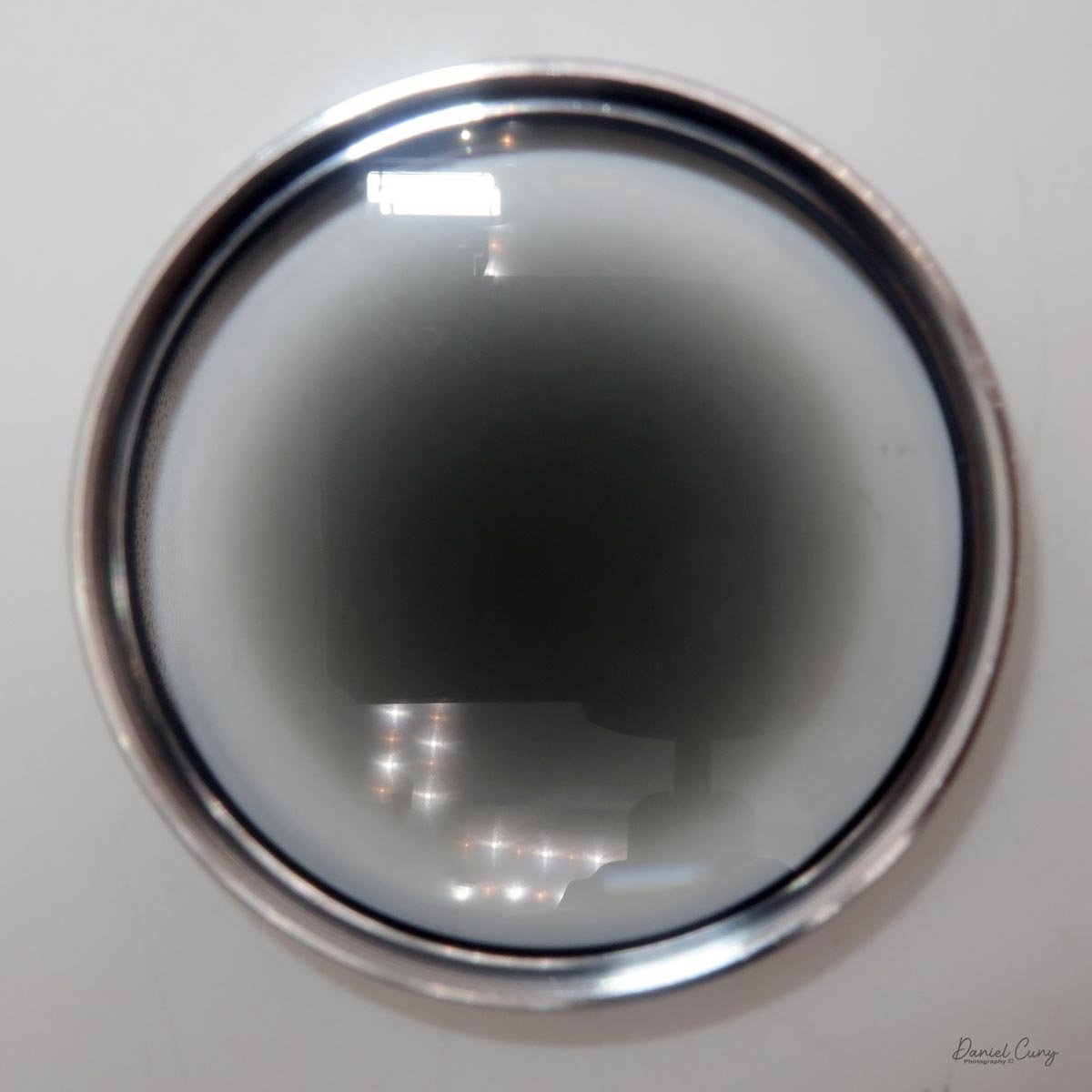
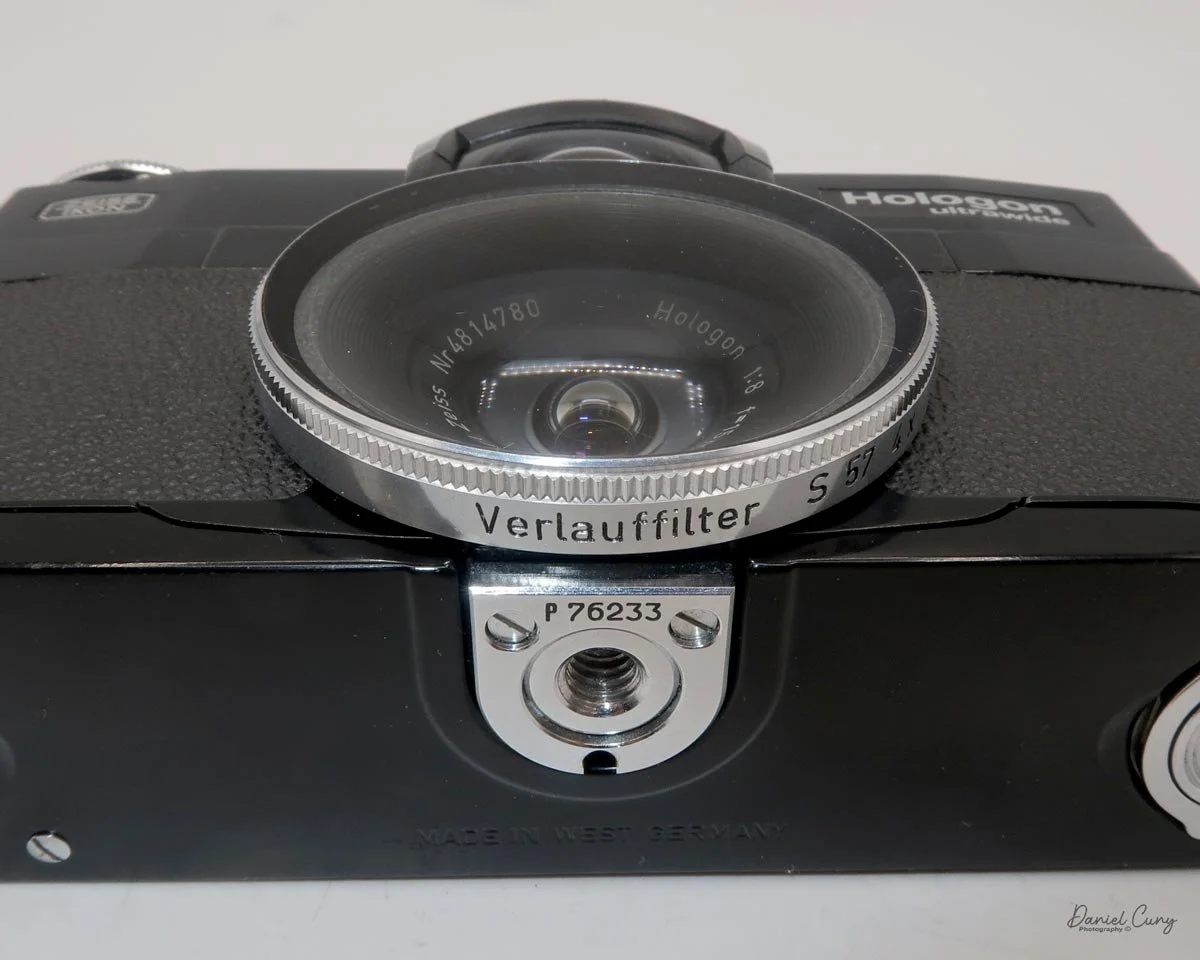
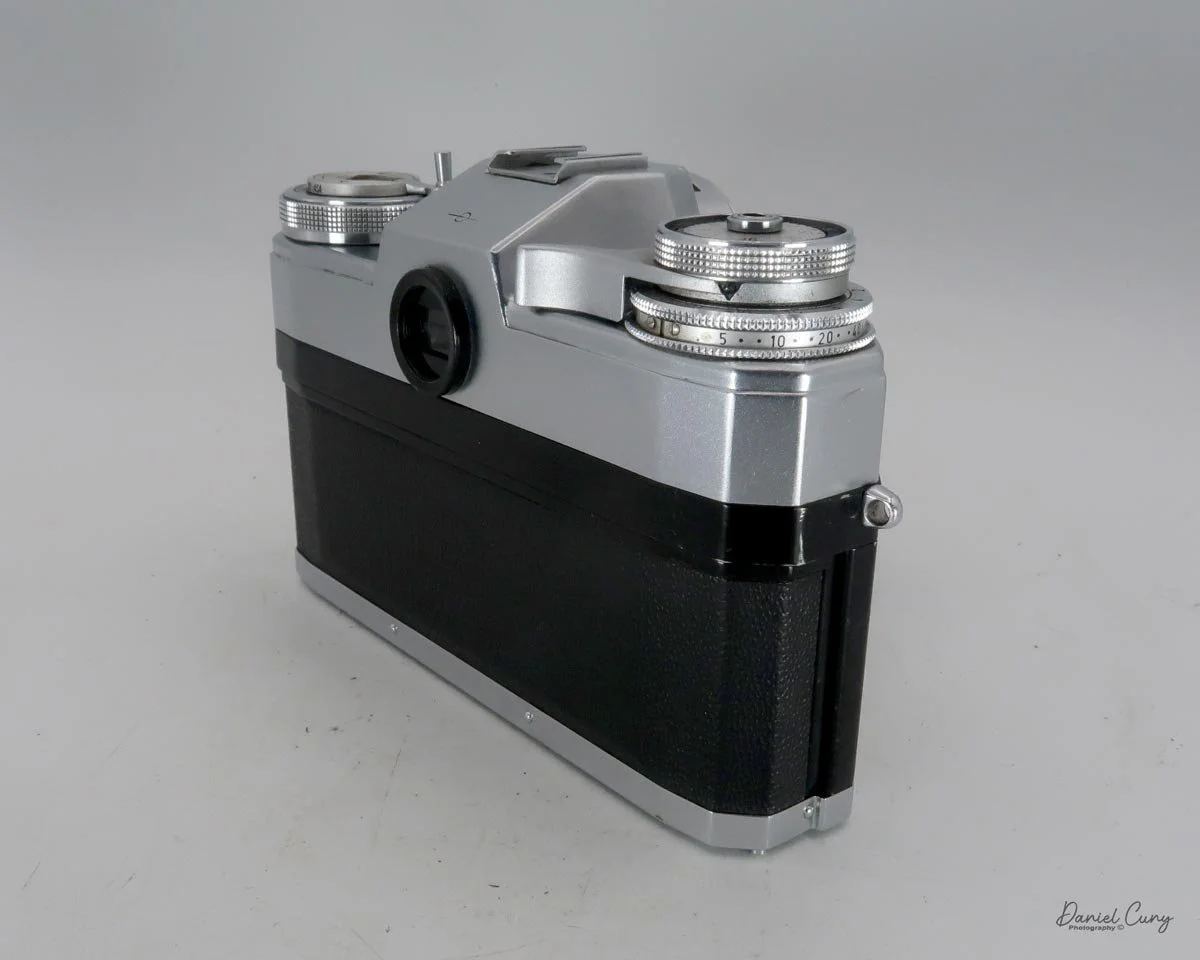
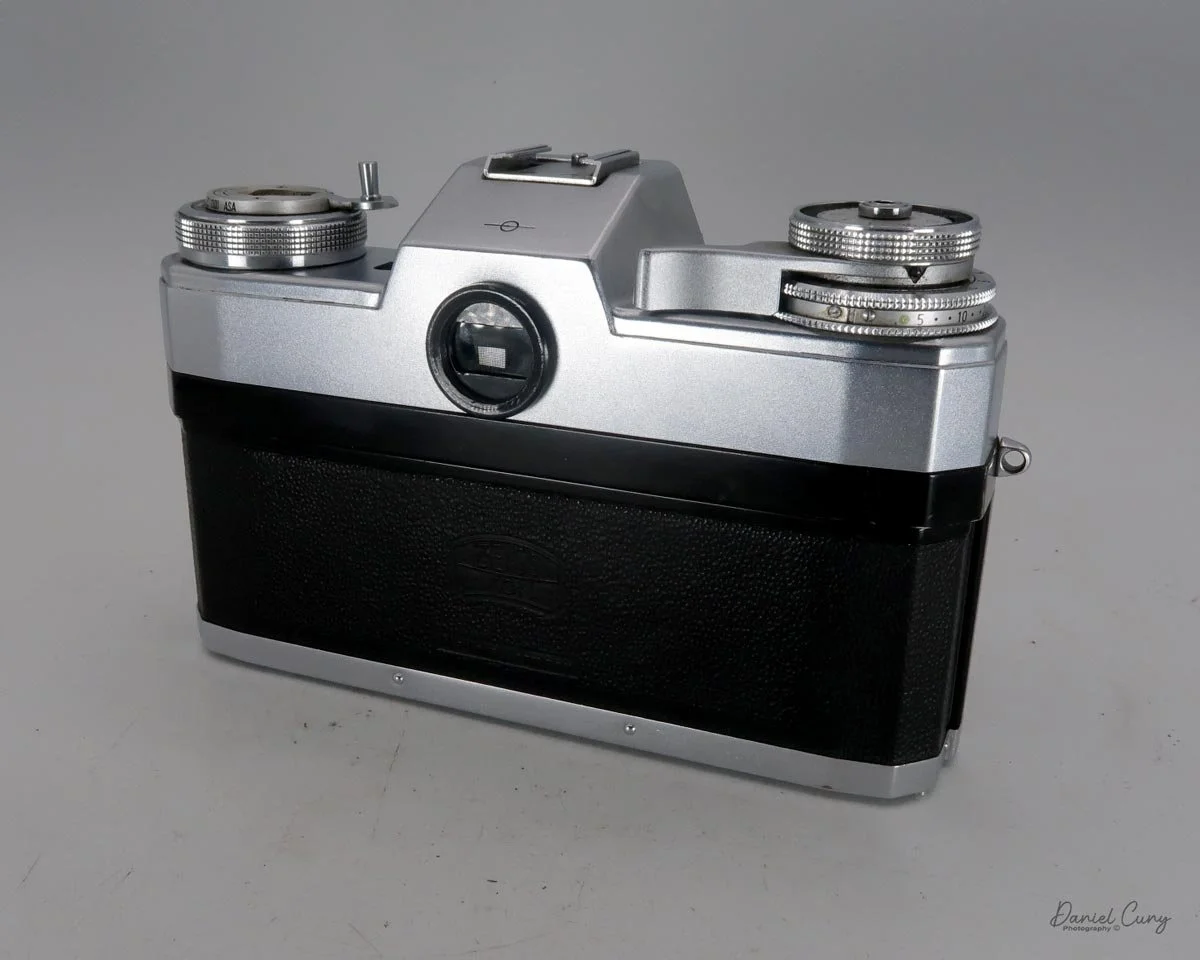
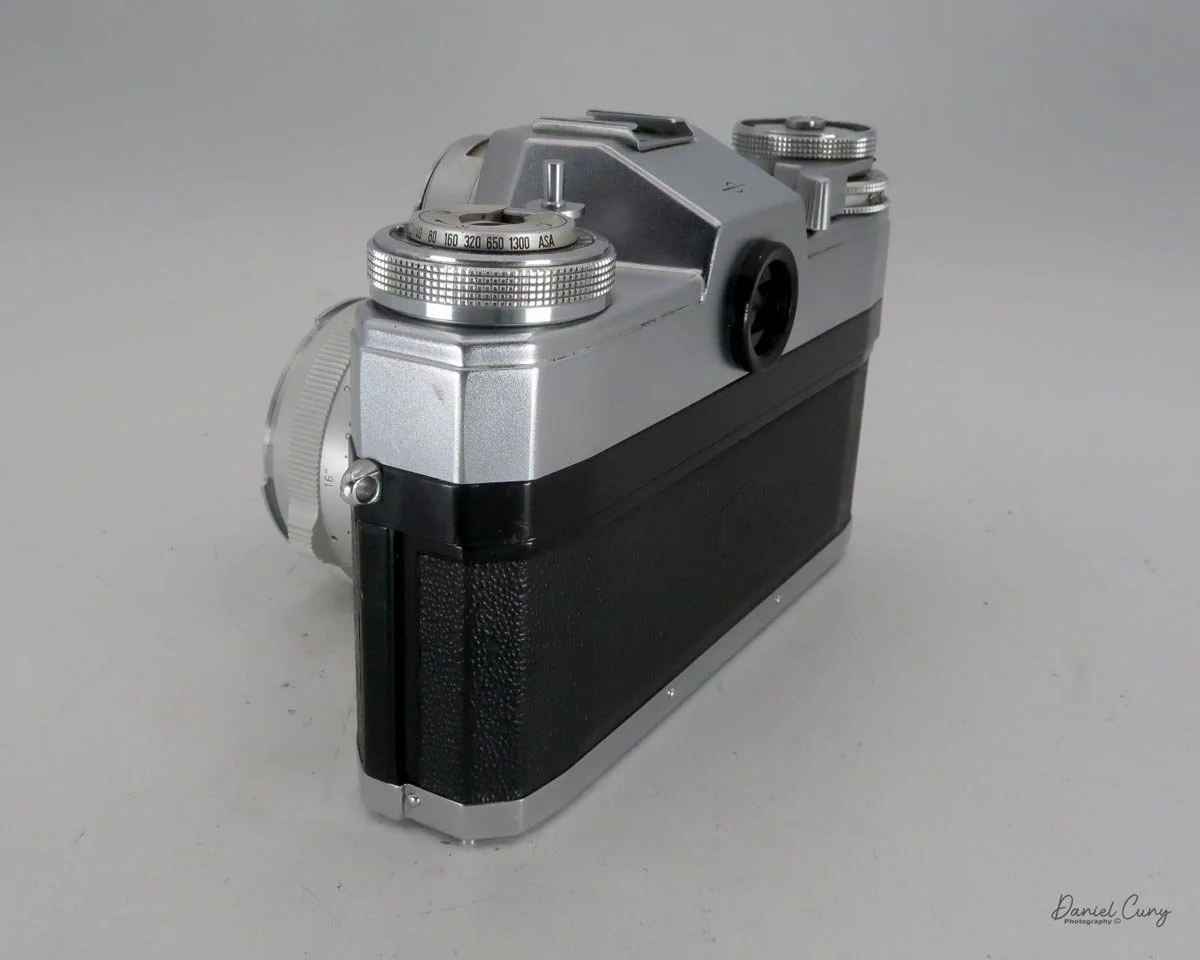
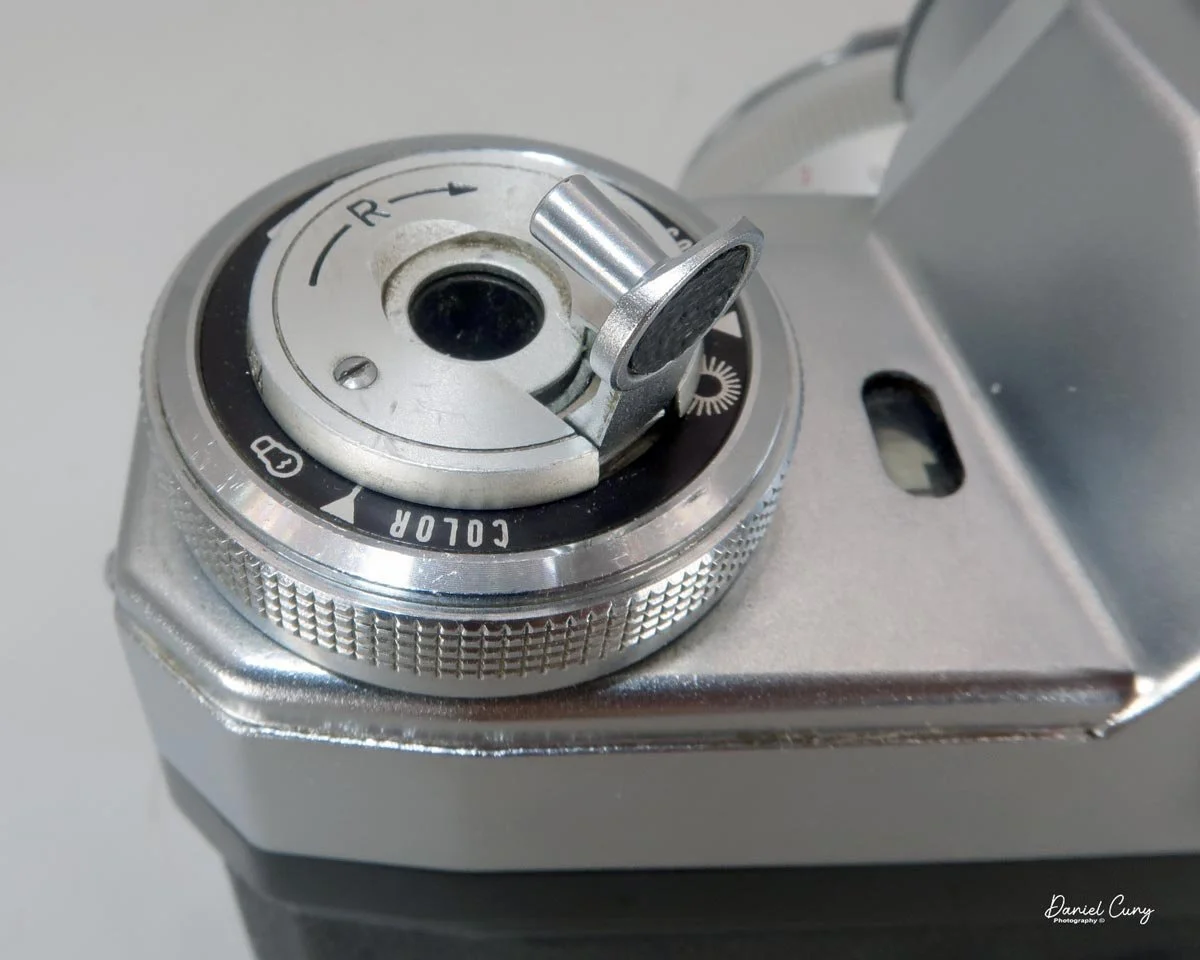
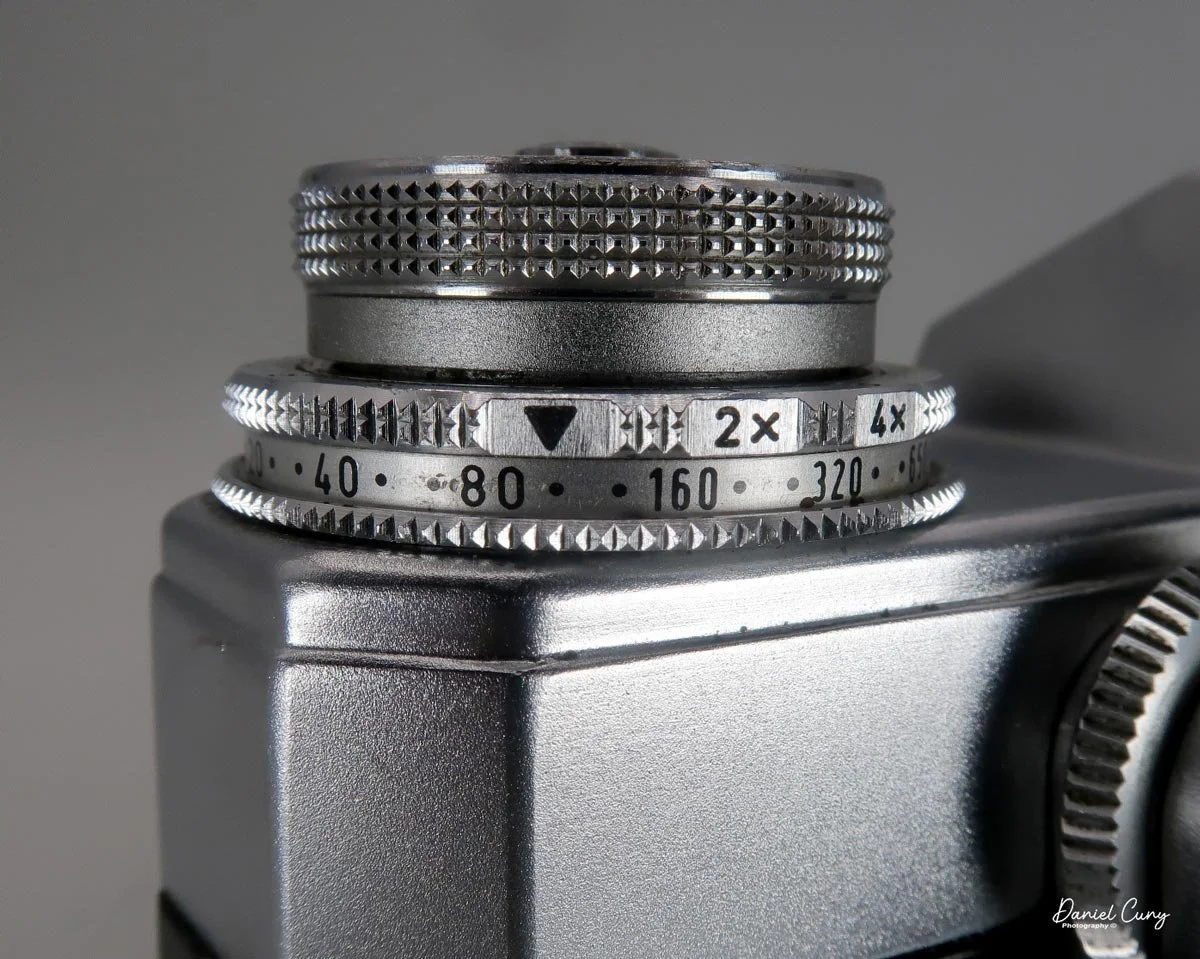
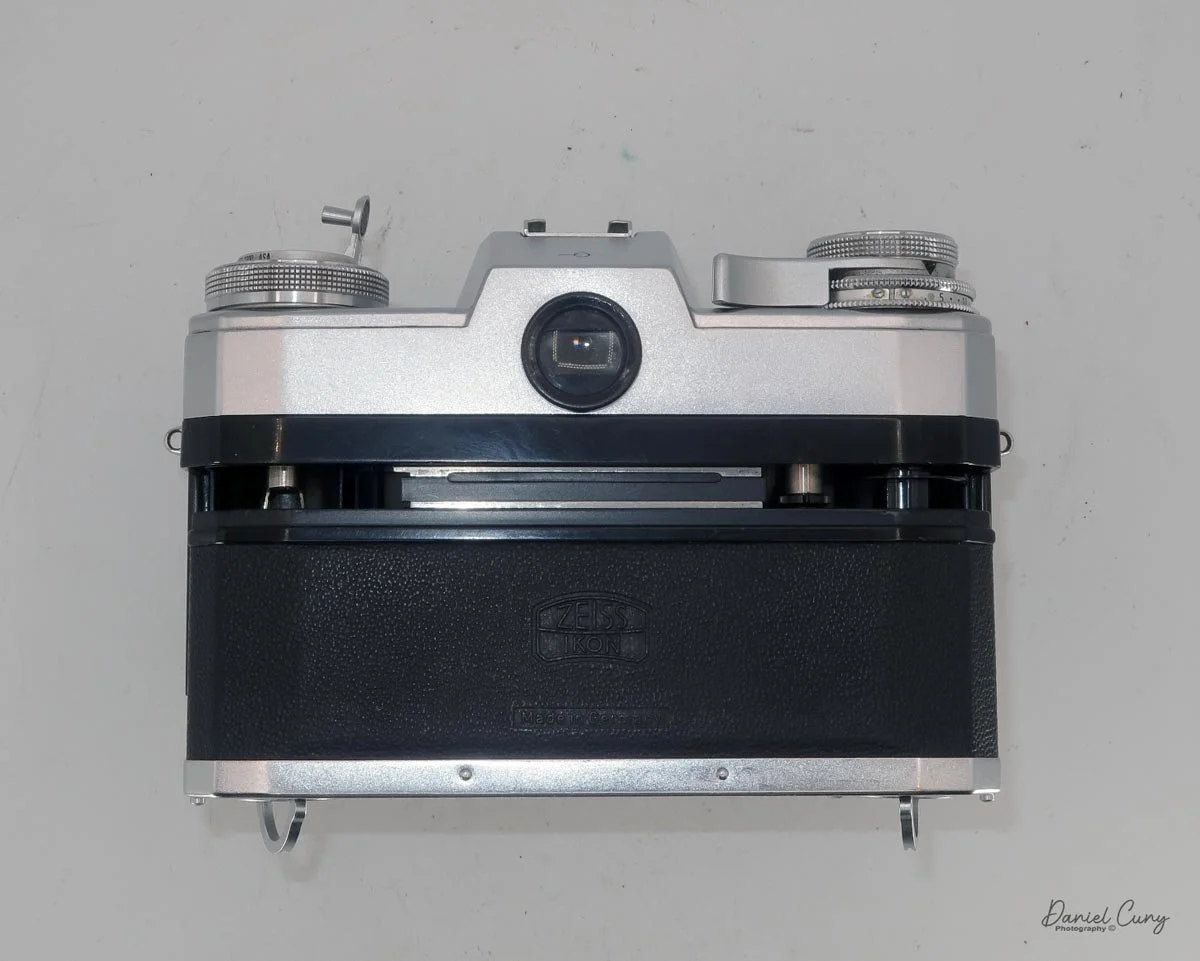
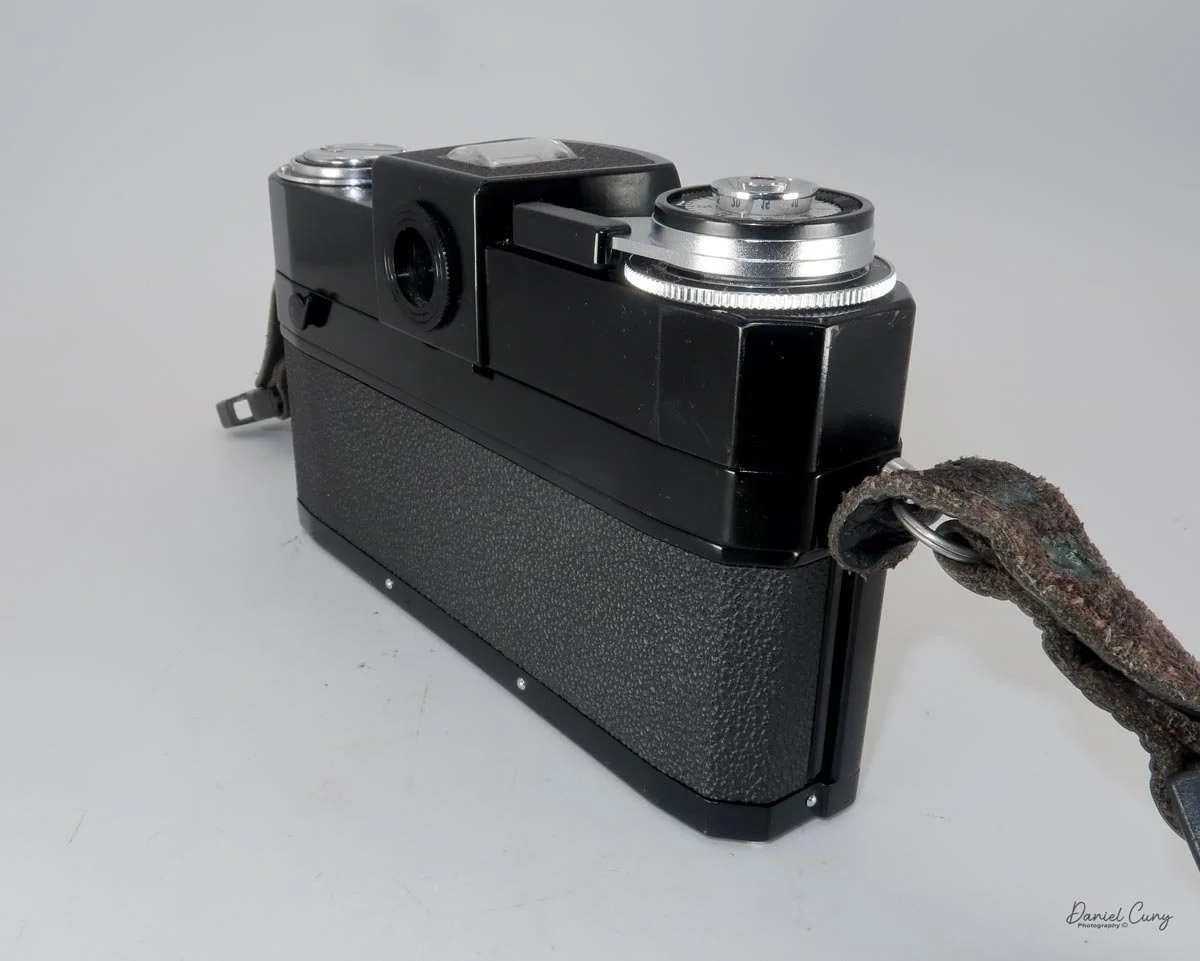
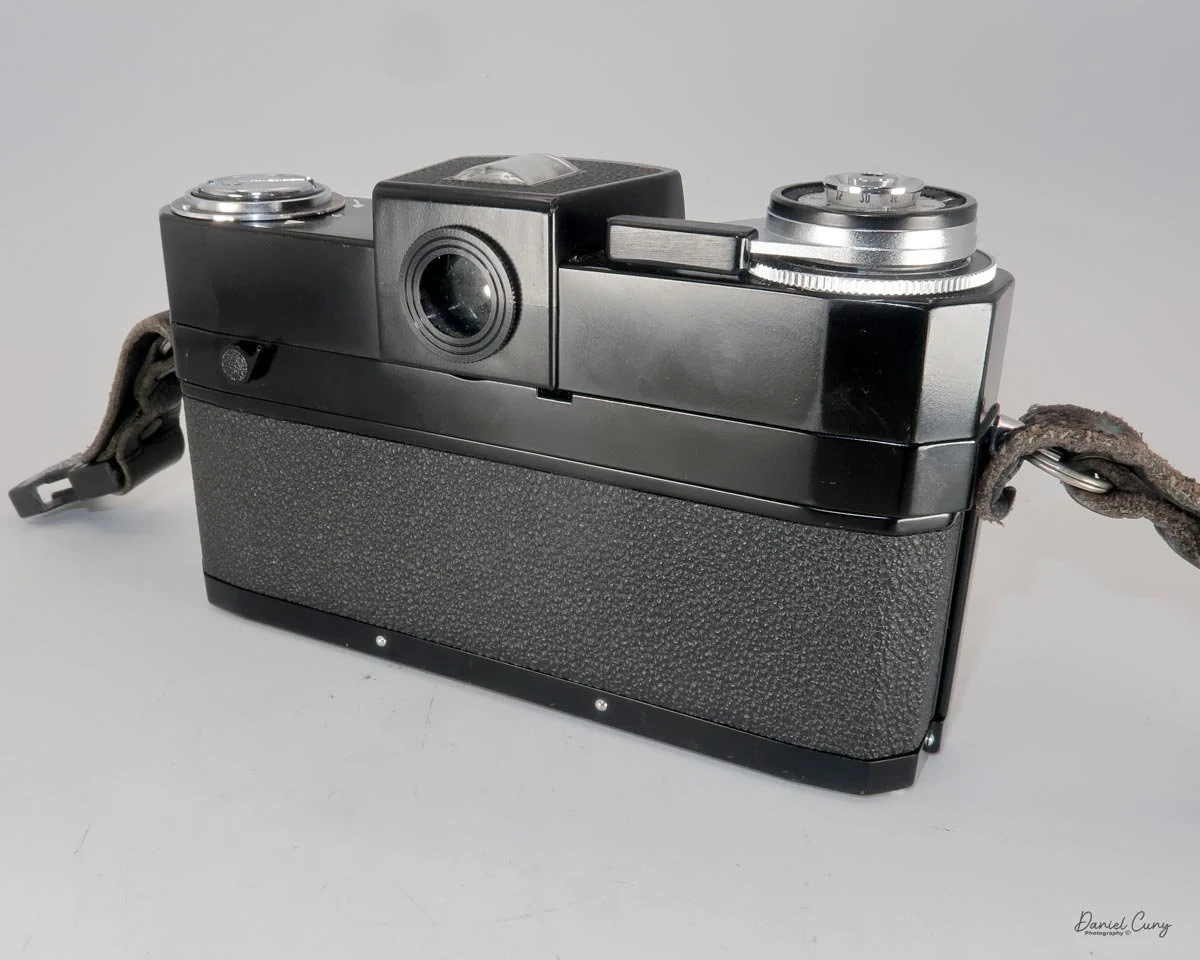
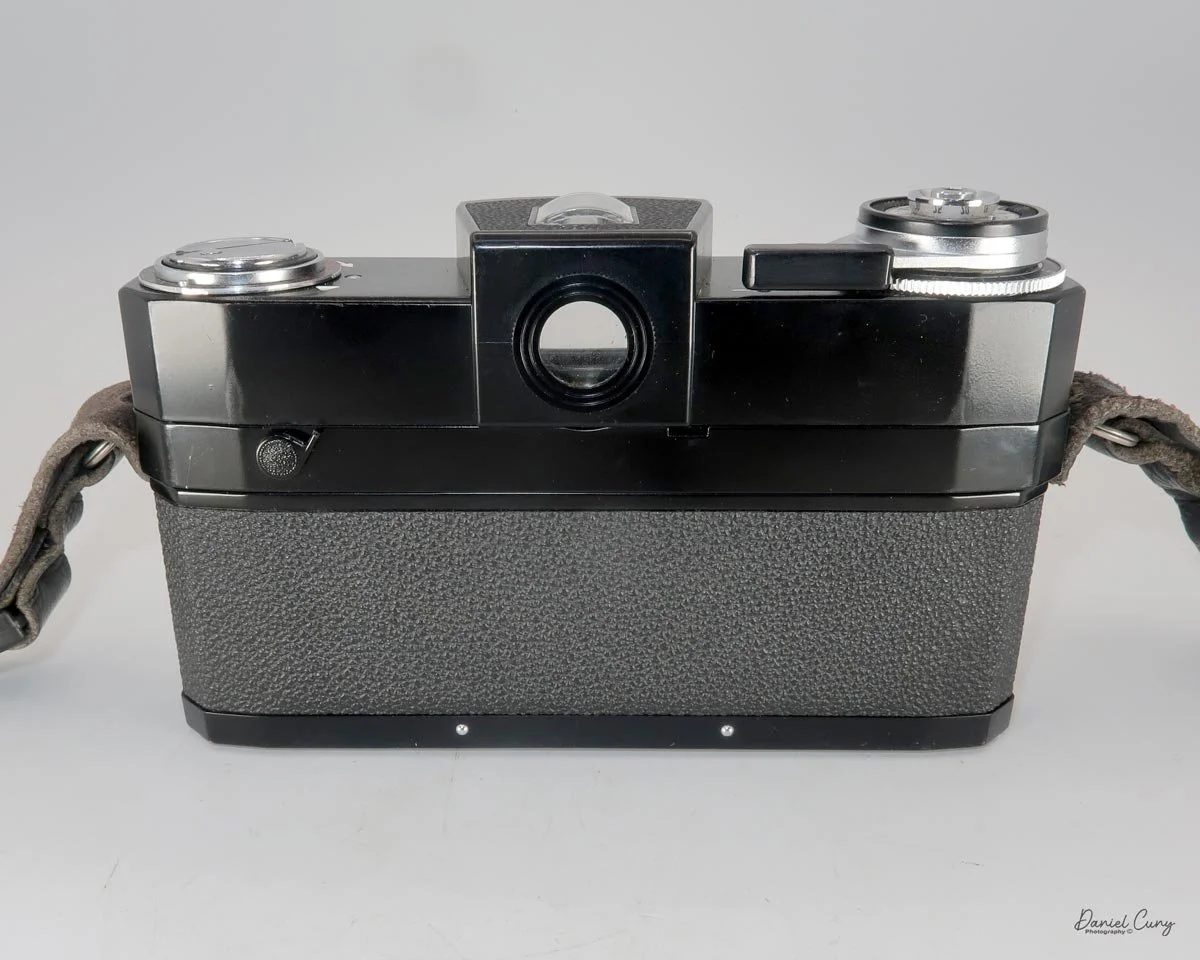
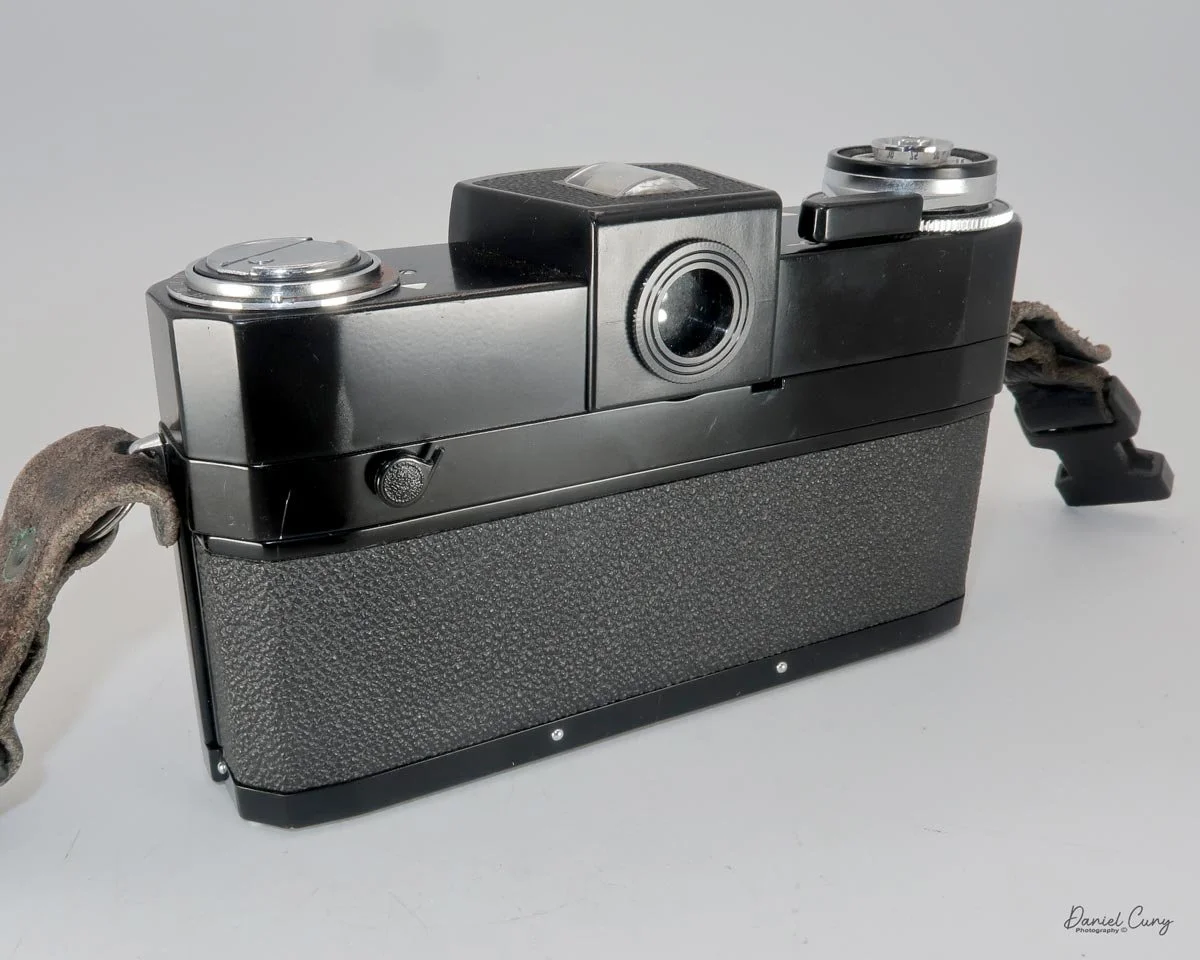
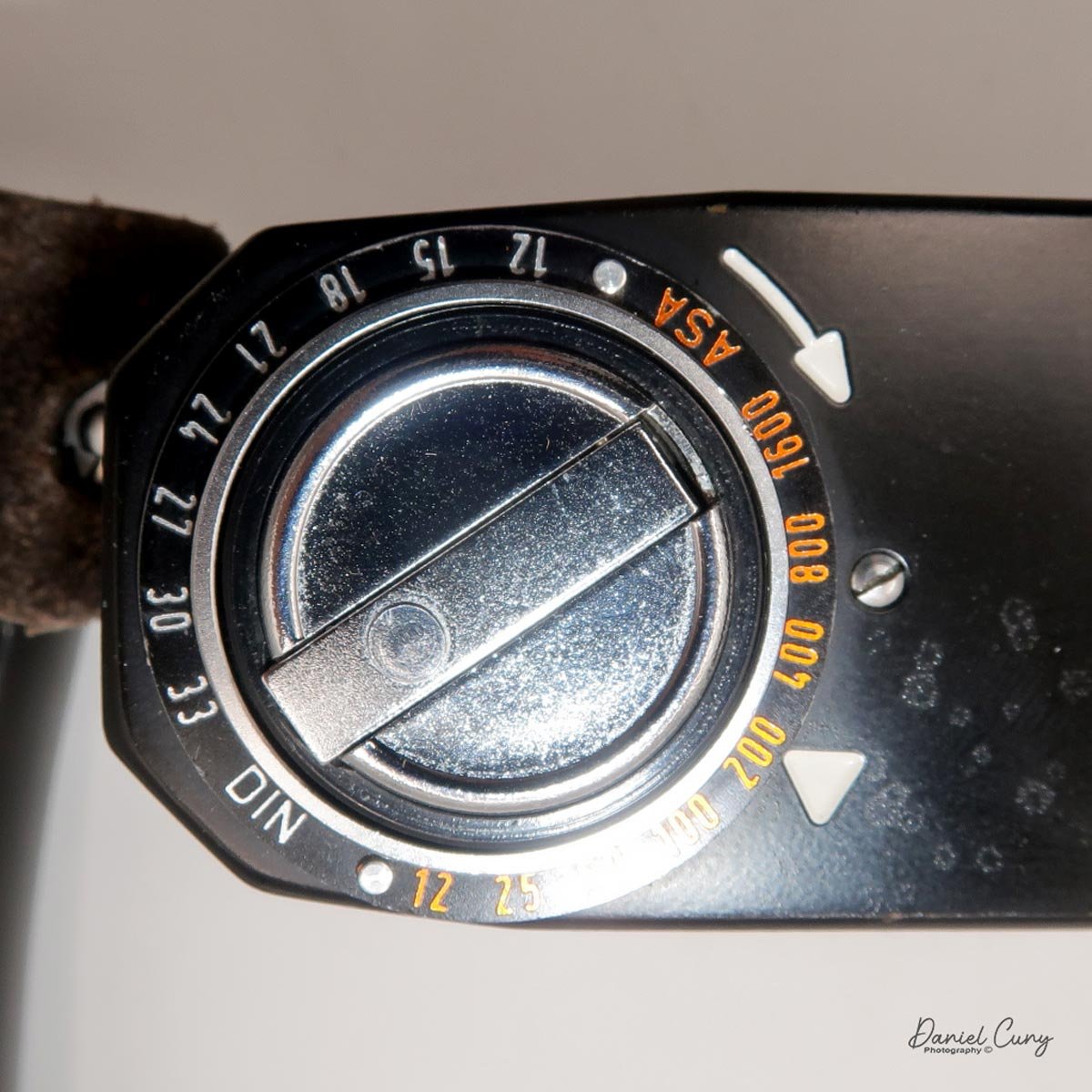
The camera is very basic and, as I mentioned, is based on the Zeiss Ikon Contarex body. Looking at the top of the camera, the camera's rewind crank is on the far left, surrounded by a movable wheel that shows, as a reminder to the photographer, what ASA (ISO) is in the camera. There is no meter in the camera, so it's really used as a reminder to the photographer what film speed they loaded into the camera.
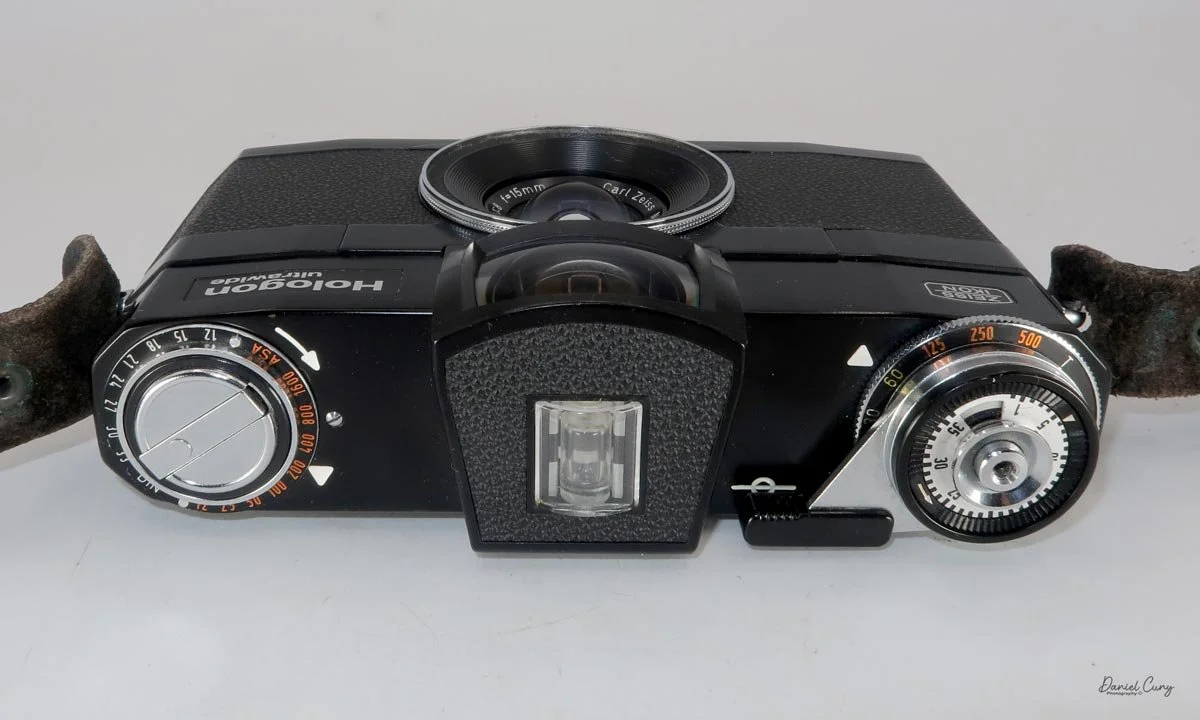
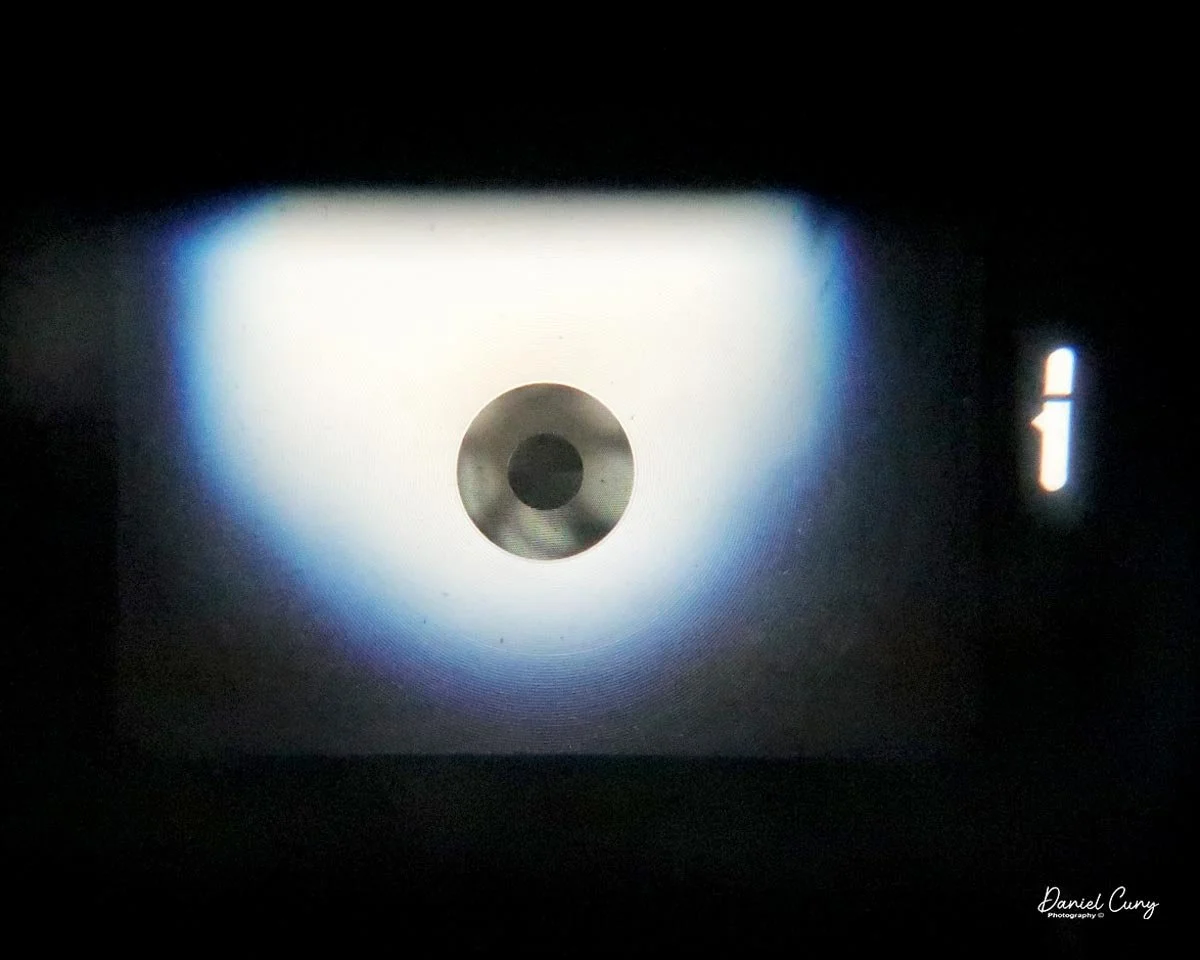
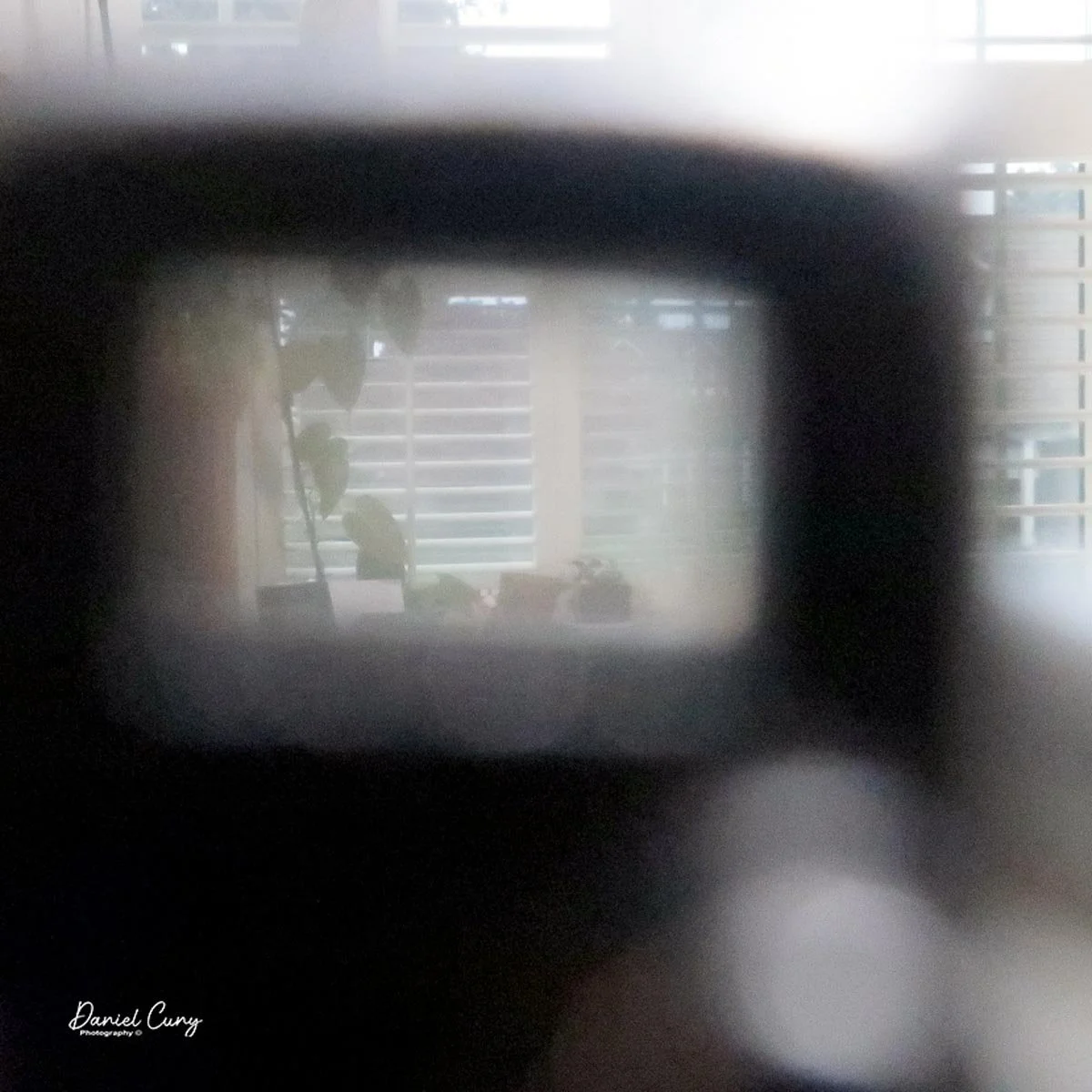
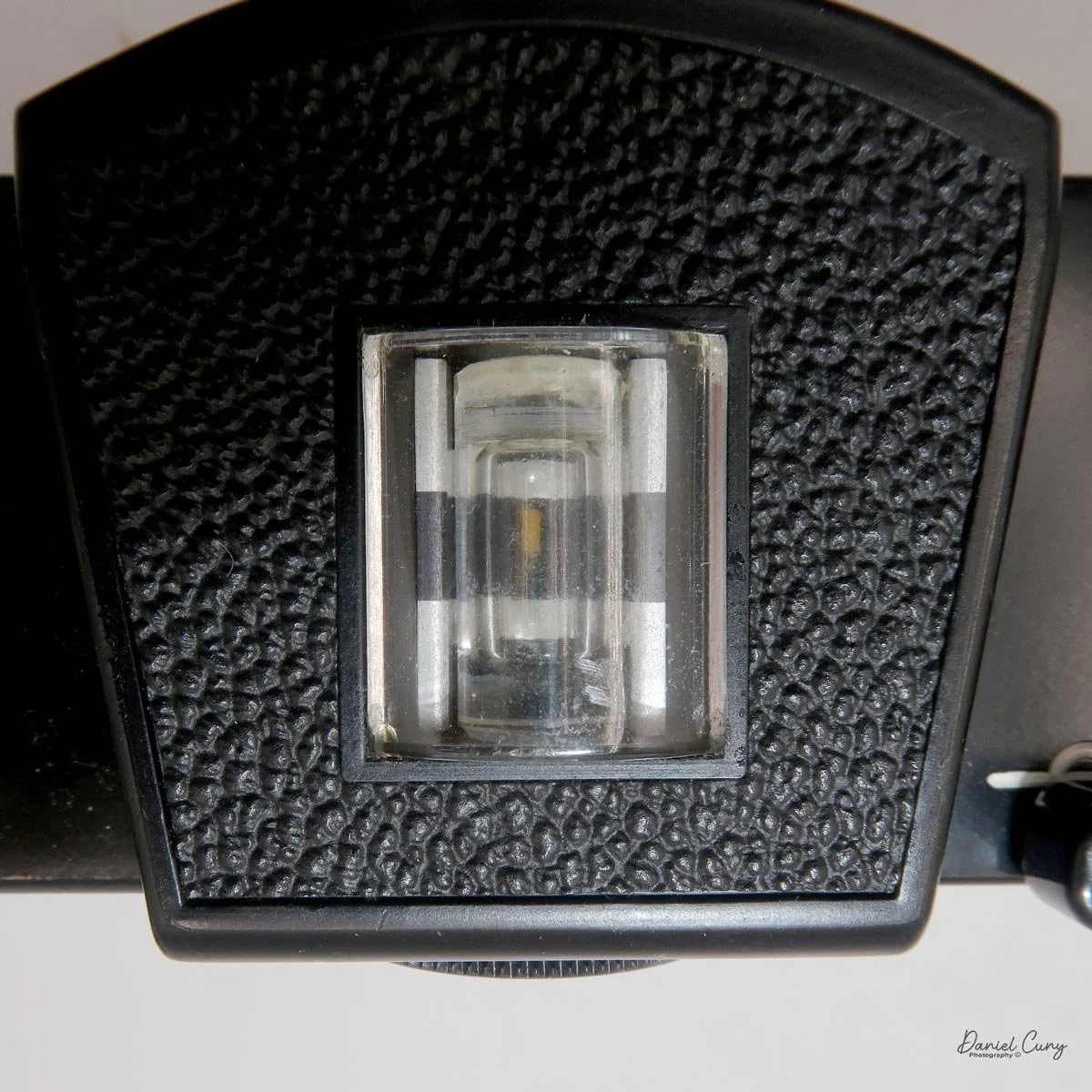
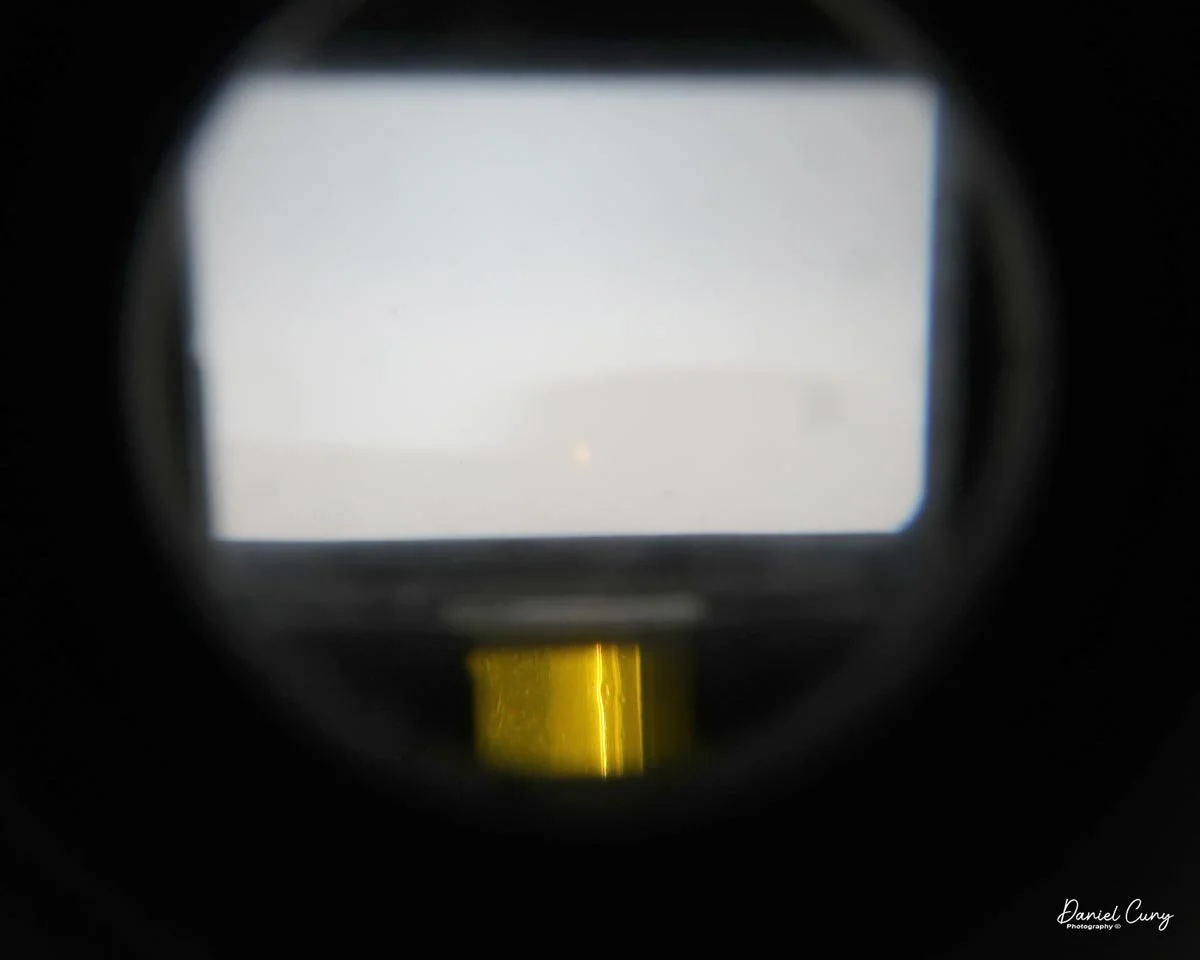
In the middle is a bubble level, which sits on top of a fairly large viewfinder. It needs to be especially big and wide to show approximately the same angle of view as the ultra-wide 15mm lens. Looking inside the viewfinder, you can see the bubble level just under the viewfinder. The bubble level is for vertical adjustment so you can keep the camera level for horizontal images. As previously mentioned, my bubble level is dry, so there is no bubble to see in mine.
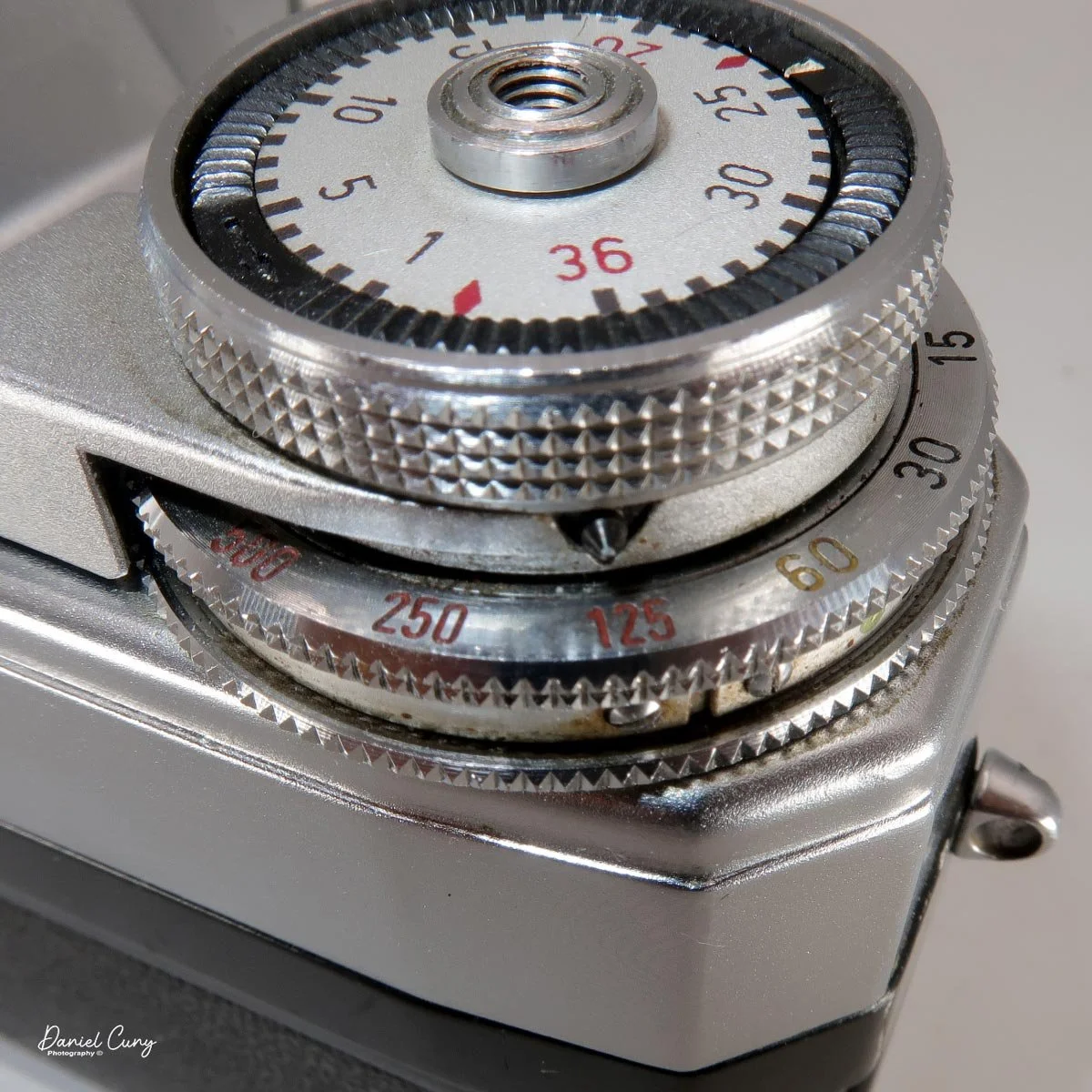
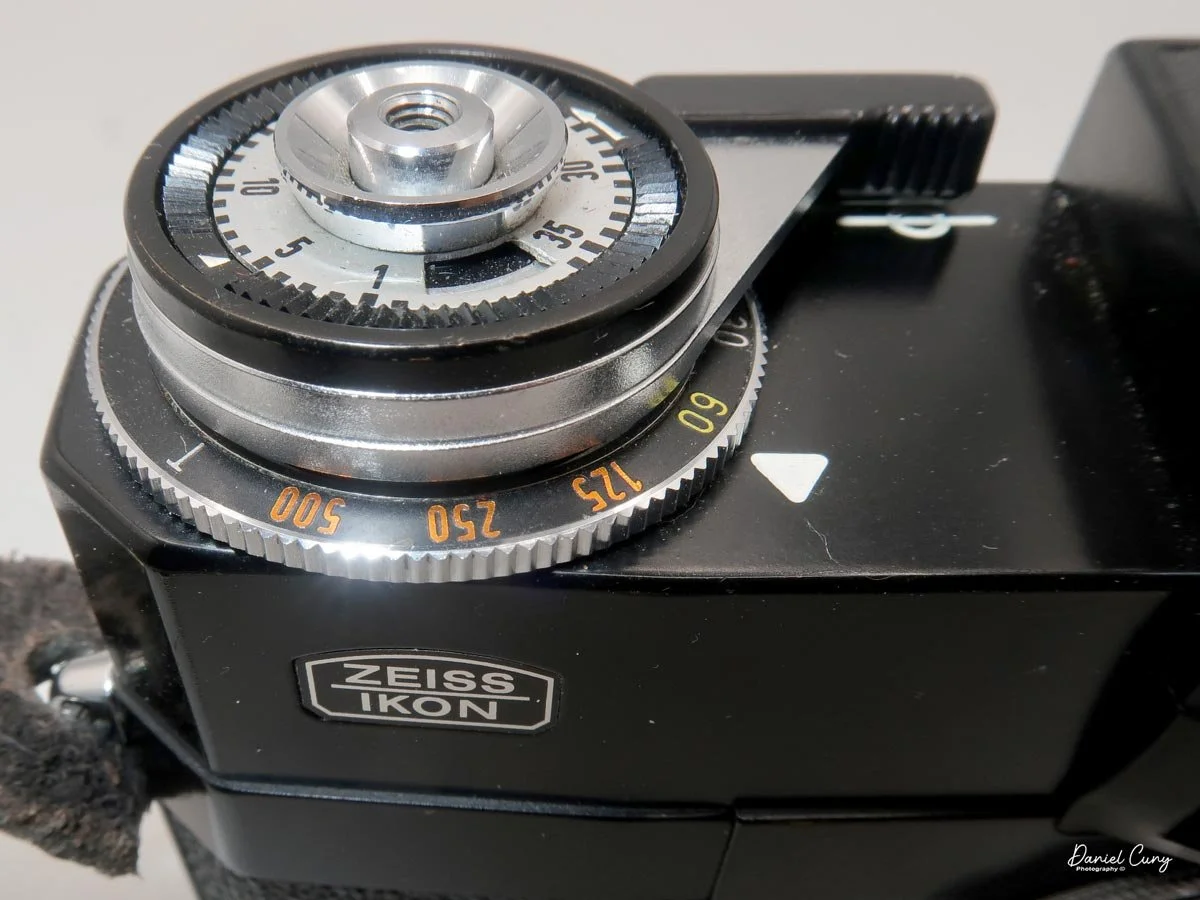
Moving to the right on the top of my camera is the film-winding lever, which sits on top of the camera's shutter-speed dial. The shutter speeds range from 1/500 to 1 second, plus "B" for bulb, and “T” for timed exposures. Above the winding lever is the camera's film counter, with the shutter release in the middle. The shutter-release button also has threads that accepts a cable release.
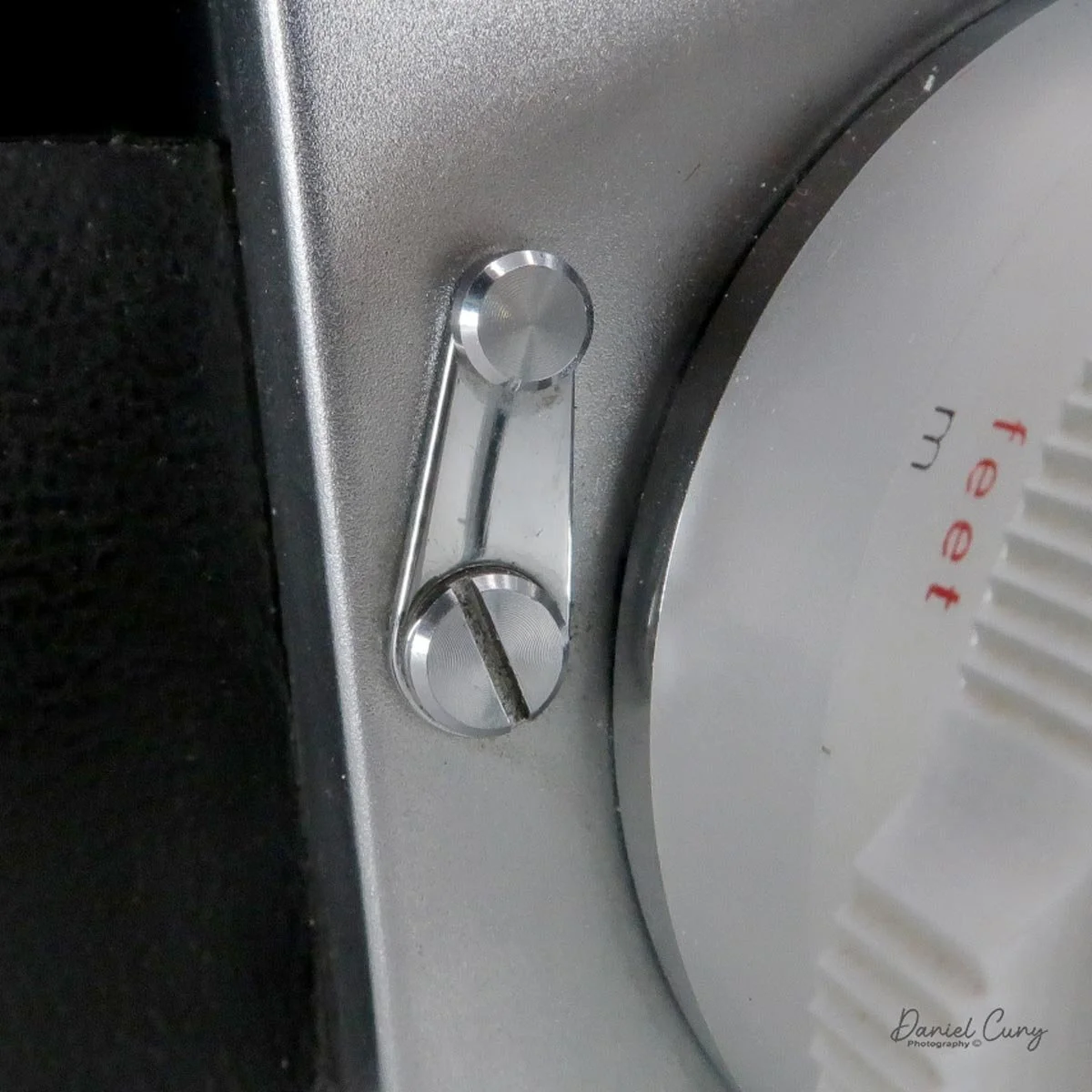
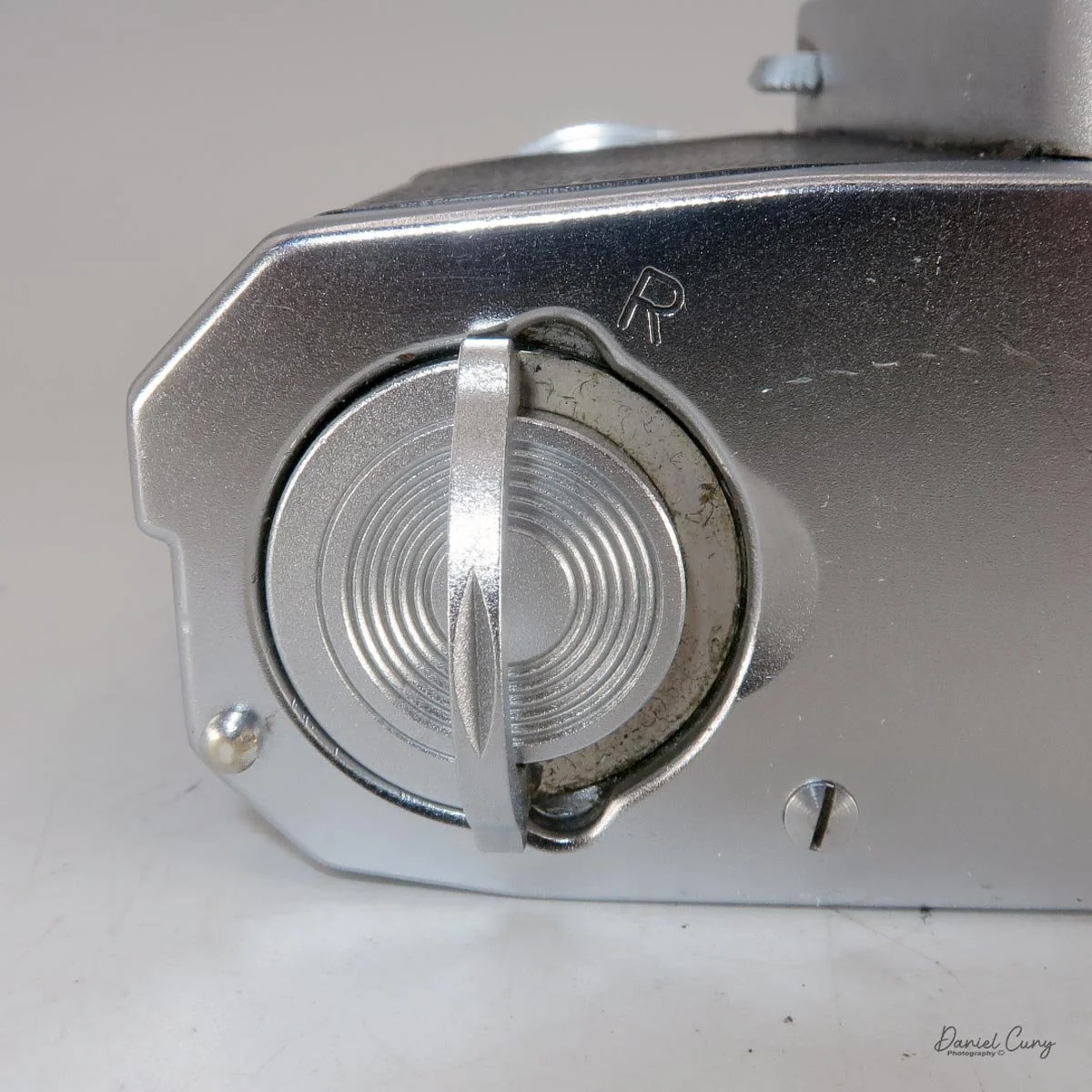
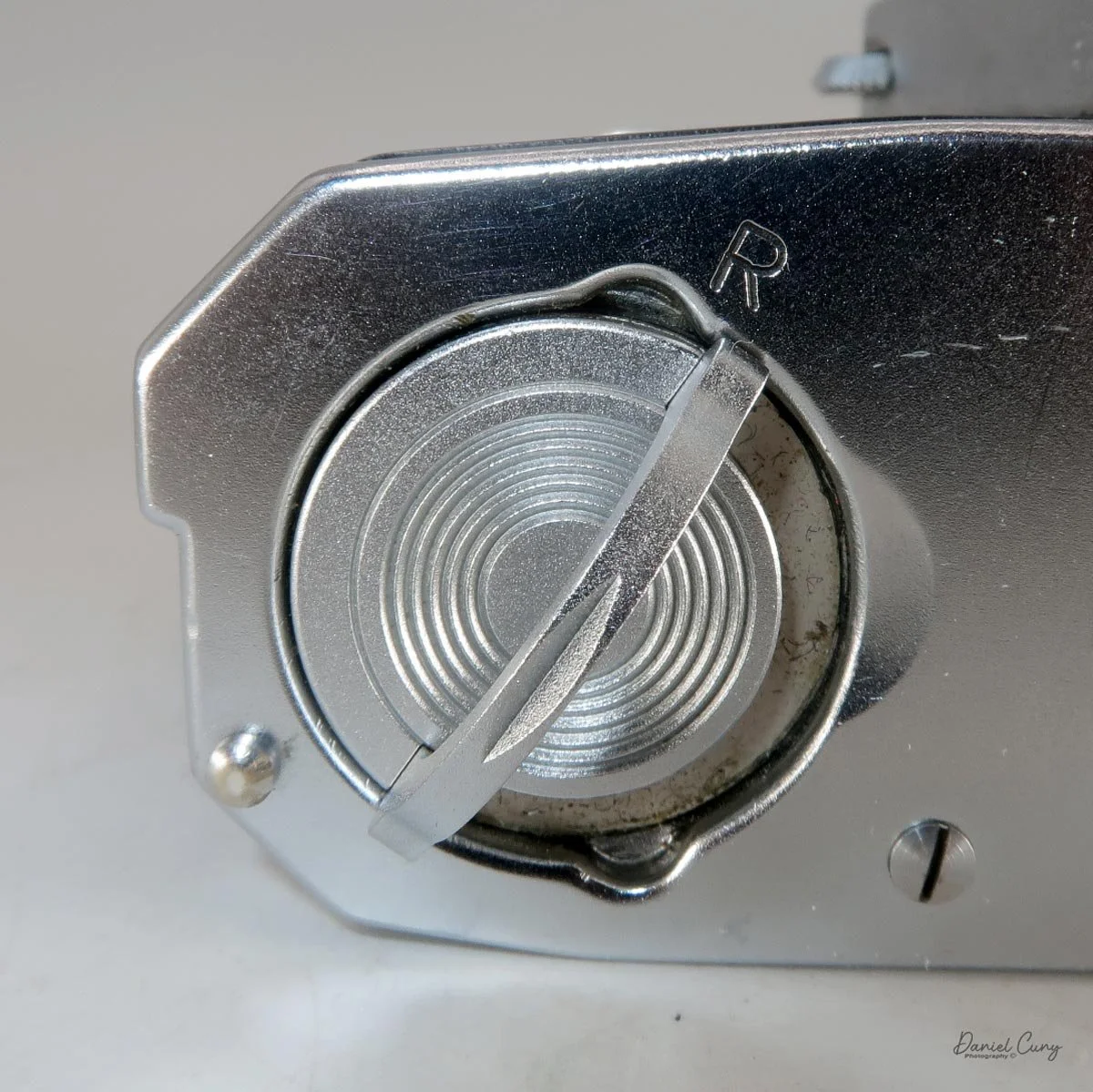
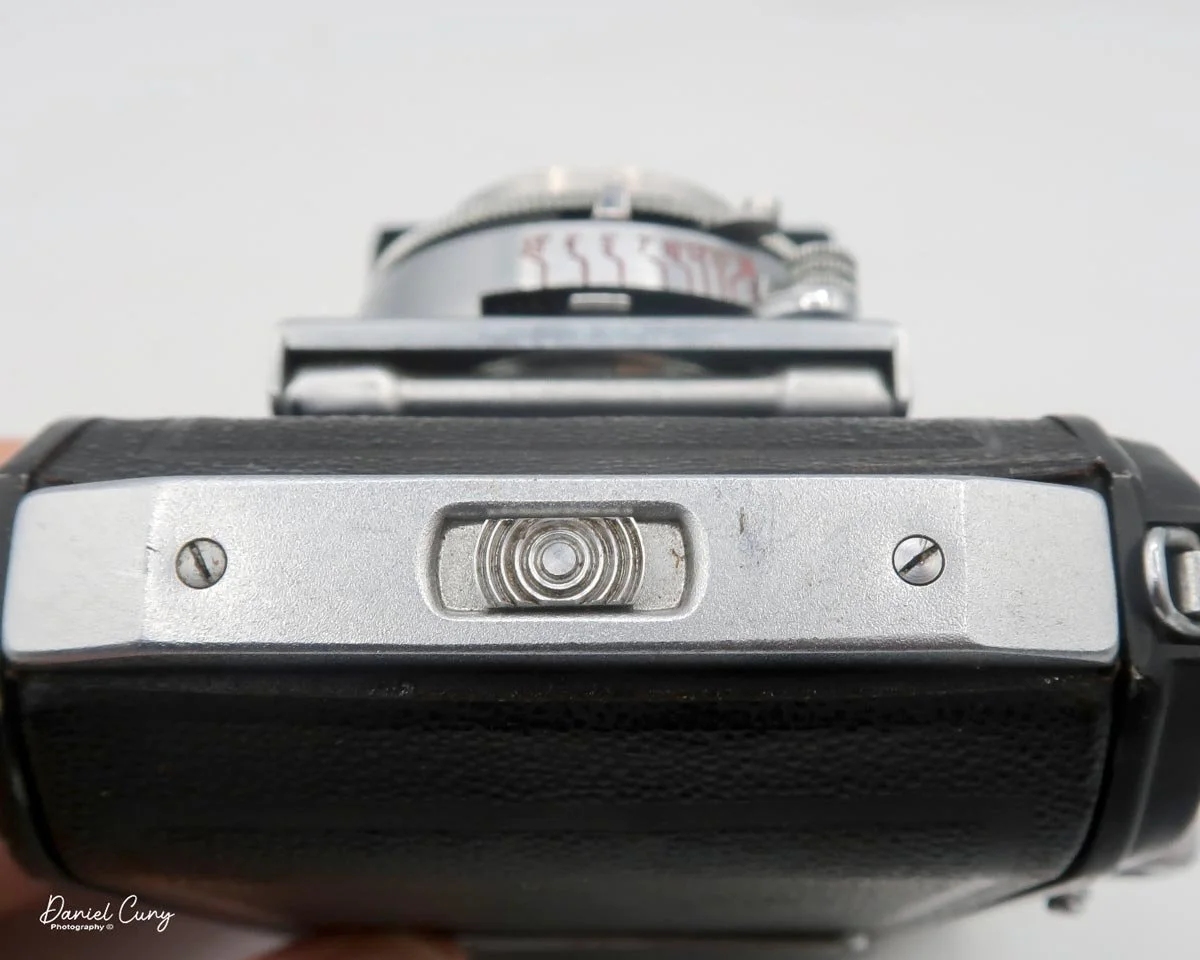
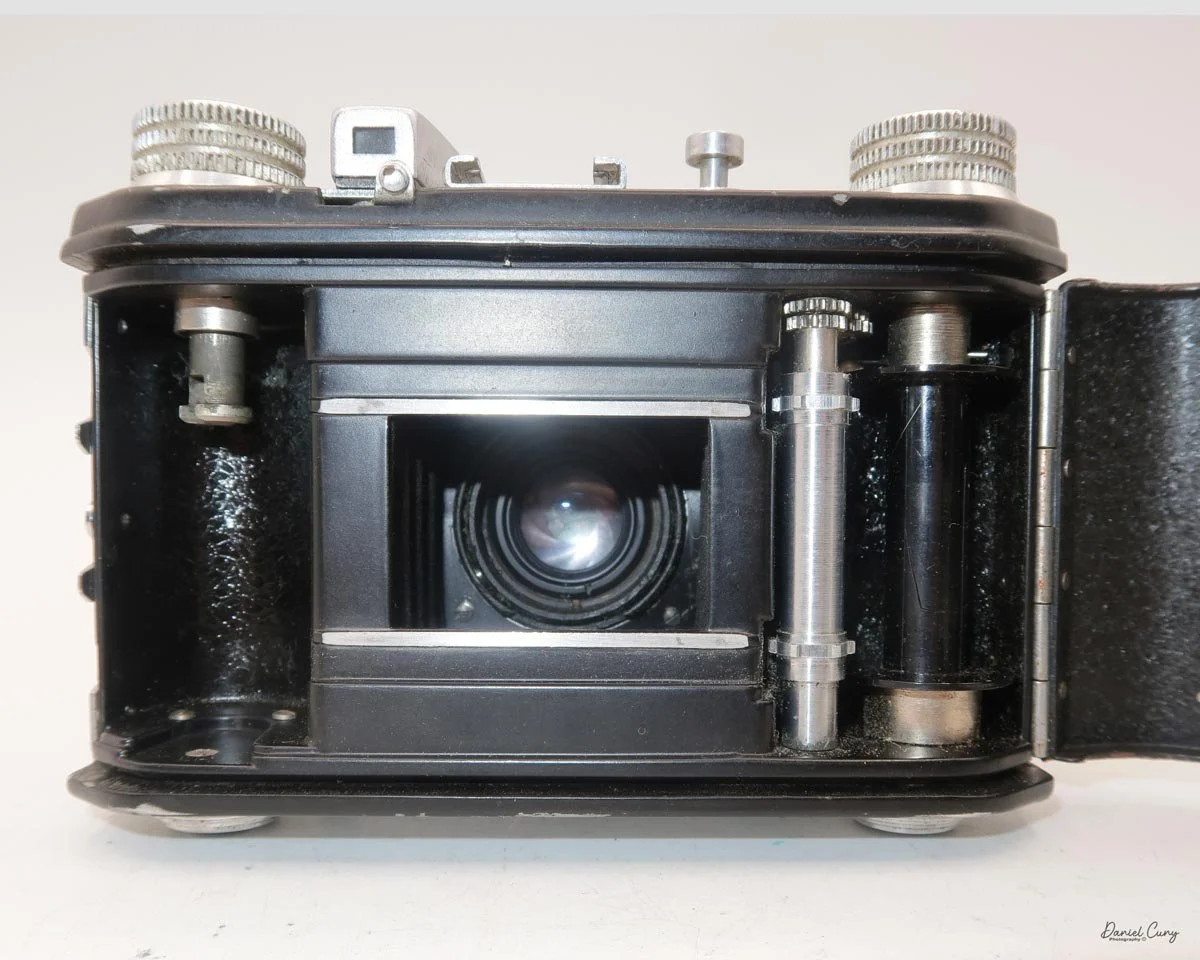
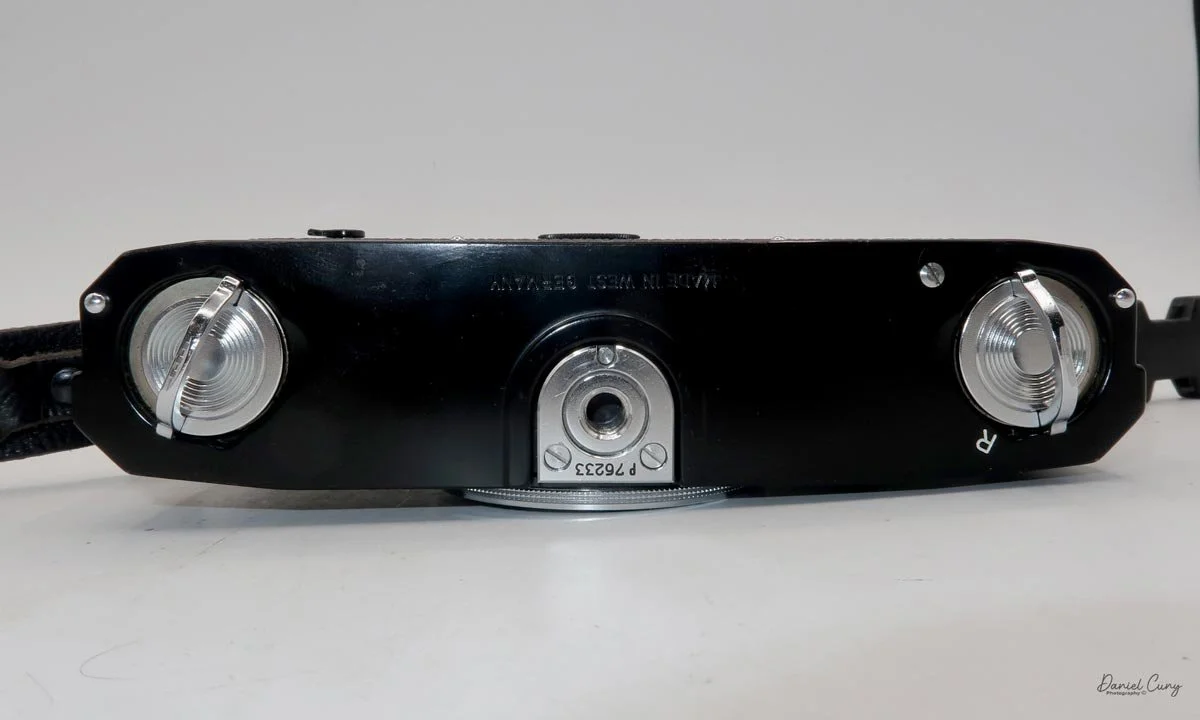
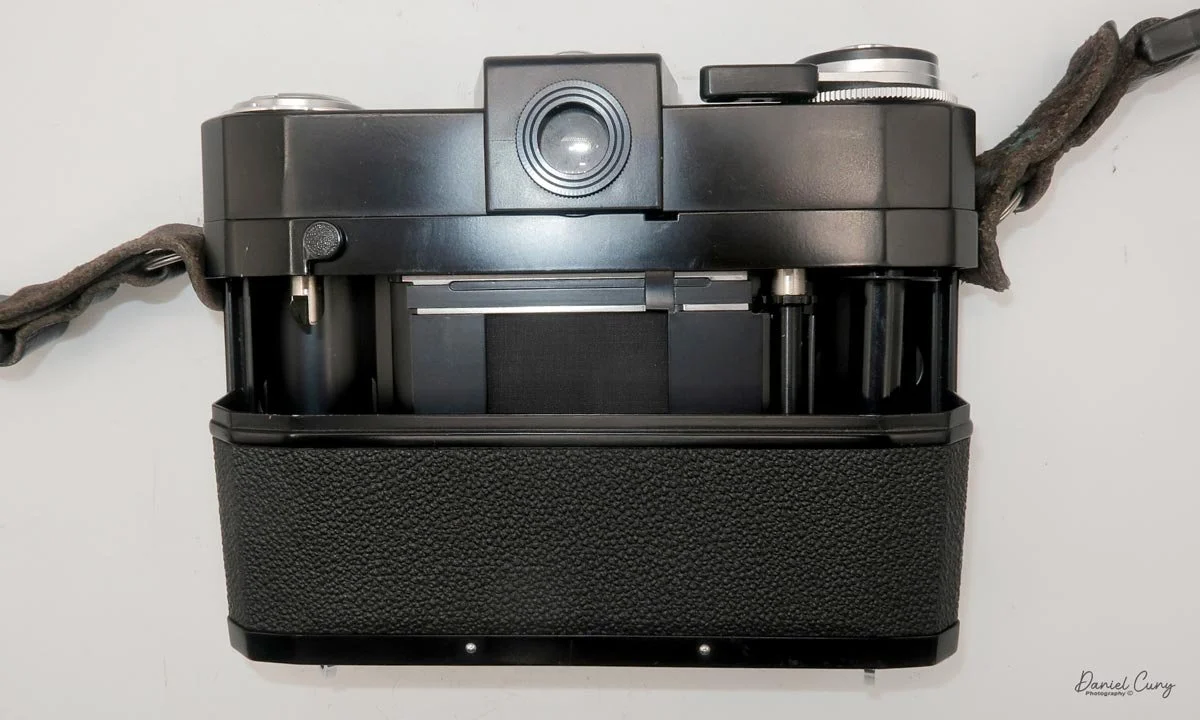
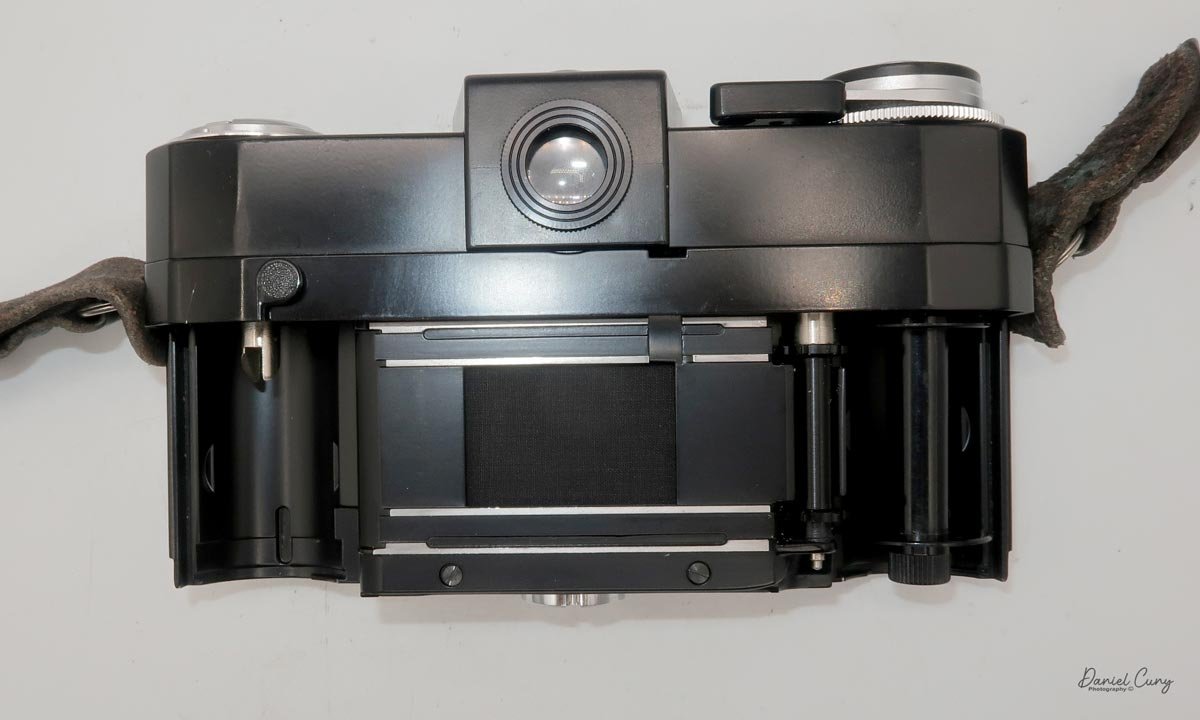
On the bottom of the camera are two latches that need to be turned, which allow you to slide the back off the camera and expose the film chamber. Once the back is removed, you'll load the 35mm film like you would with any other 35mm camera. Once you've loaded the film, put the film back into the grooves in the camera body and slide the back up and into position on the back of the camera. Once it's on, lock the two latches and flip down the handles so the camera sits flush.
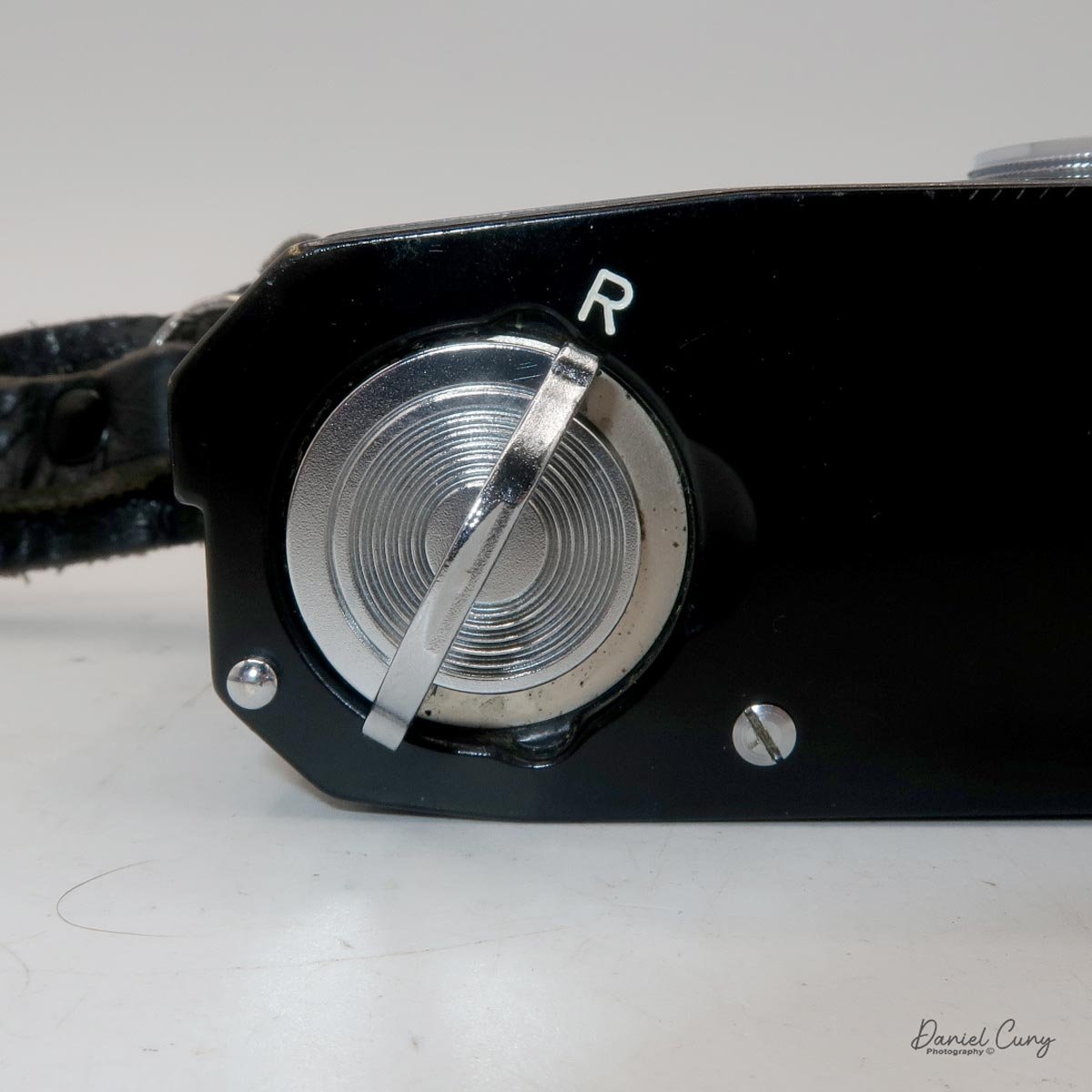
When you get to the end of the roll, and it's time to rewind the film into the cassette, one of the latches on the bottom of the camera has an "R" for rewind. Lift the handle of this latch only and turn the lever until the handle is pointing at the "R" for rewind. Flip up the handle on the rewind knob and rewind the film into the 35mm cassette. Once the film is rewound, turn both levers to the open position, take the back off the camera, and remove the film for processing.
The Zeiss Ikon Hologon camera came with different accessories. There is a center filter, which I discussed earlier, and two lens caps. One is plastic and pops over the center filter when it's on the camera, and the other is a metal cap that threads around the lens, like the center filter, when the center filter is off the camera.
There is also a pistol grip with a removable top, which allows the photographer to place the camera at different angles onto the pistol grip if desired. There is also a cable release that threads into the pistol grip and into the camera's shutter release. The pistol grip also has a leather strap to secure the grip to your hand when carrying it.
The pistol grip is used so you don't wrap your hands around the camera when shooting, like you would with a regular 35mm camera. If you did, your fingers would appear on the sides of your images, very similar to the way they do with Widelux cameras.
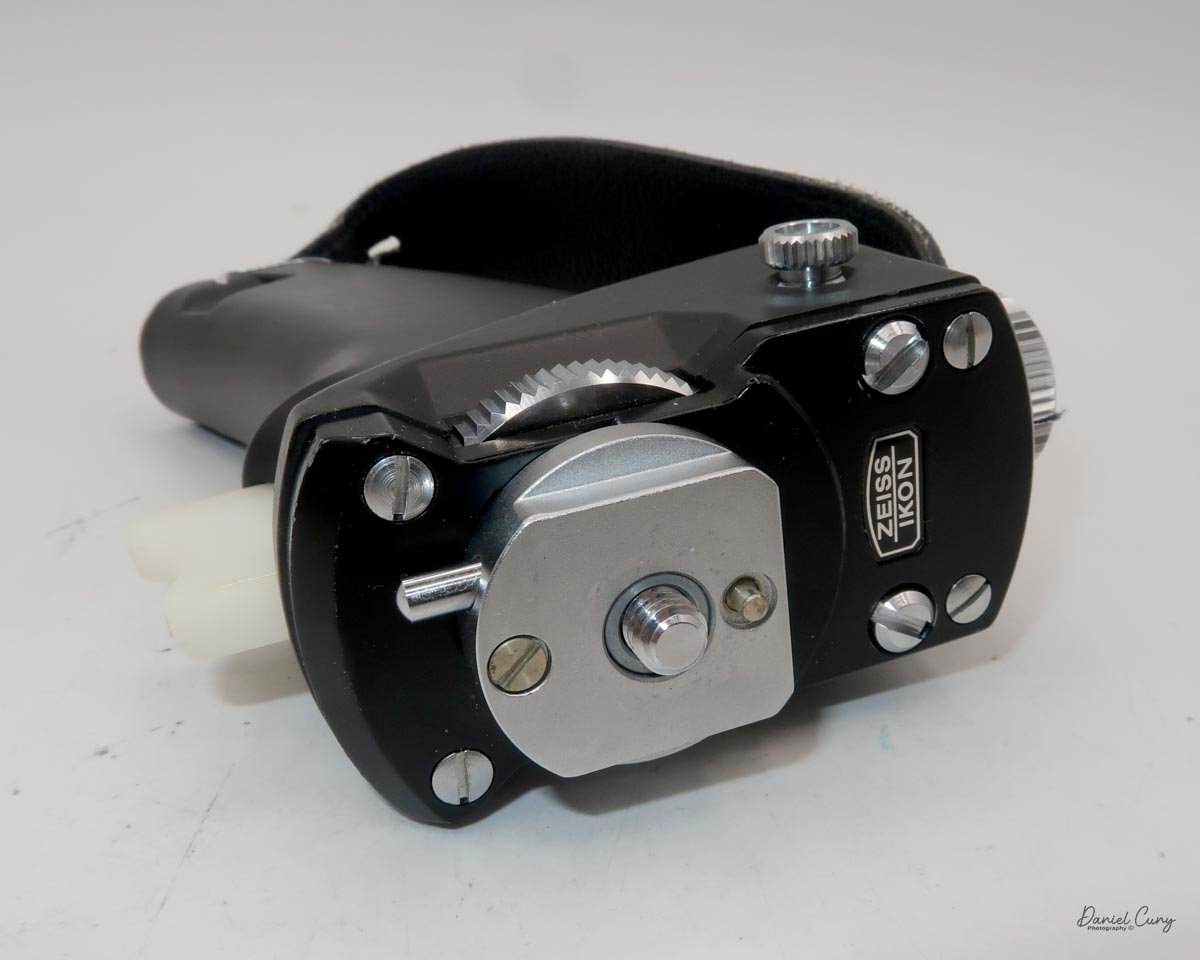
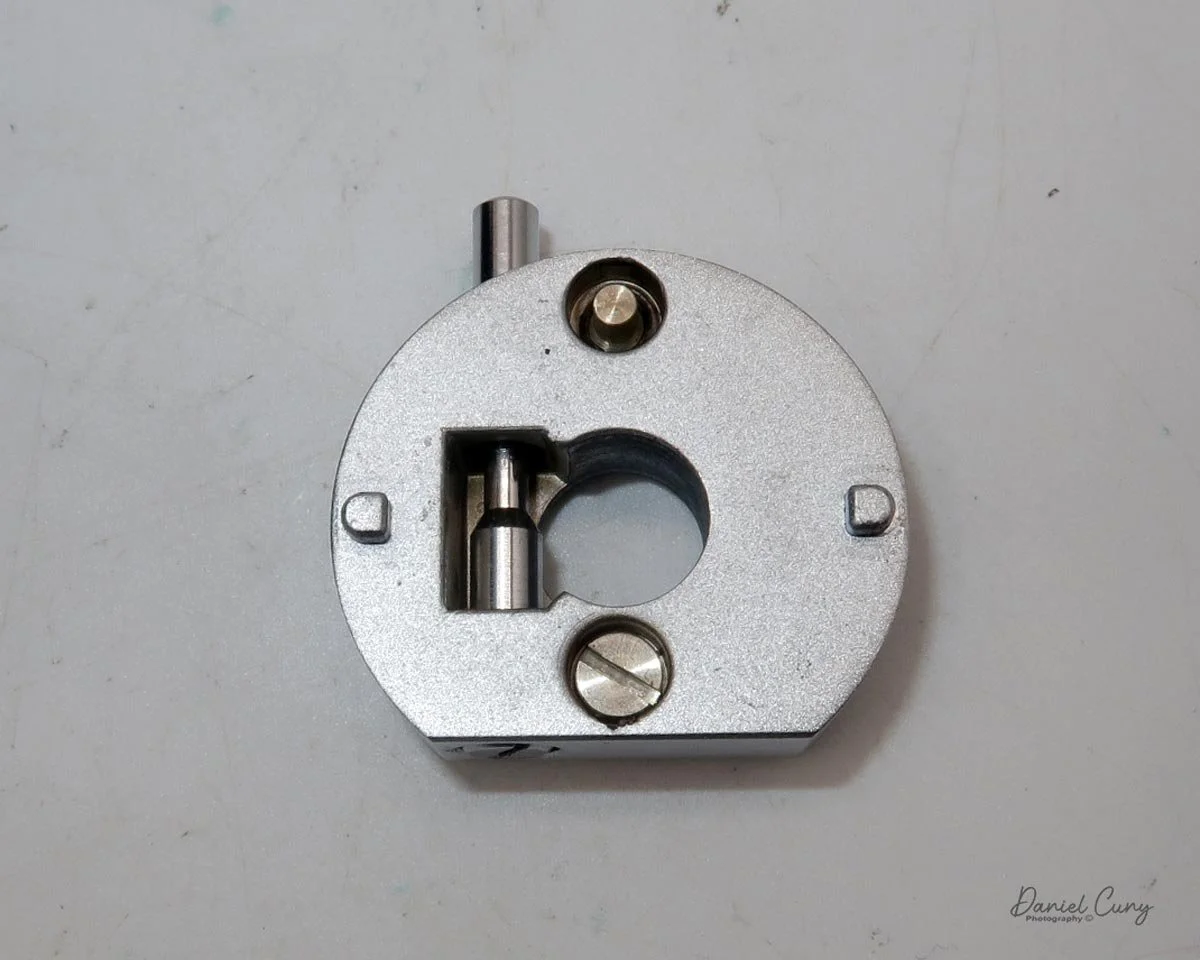
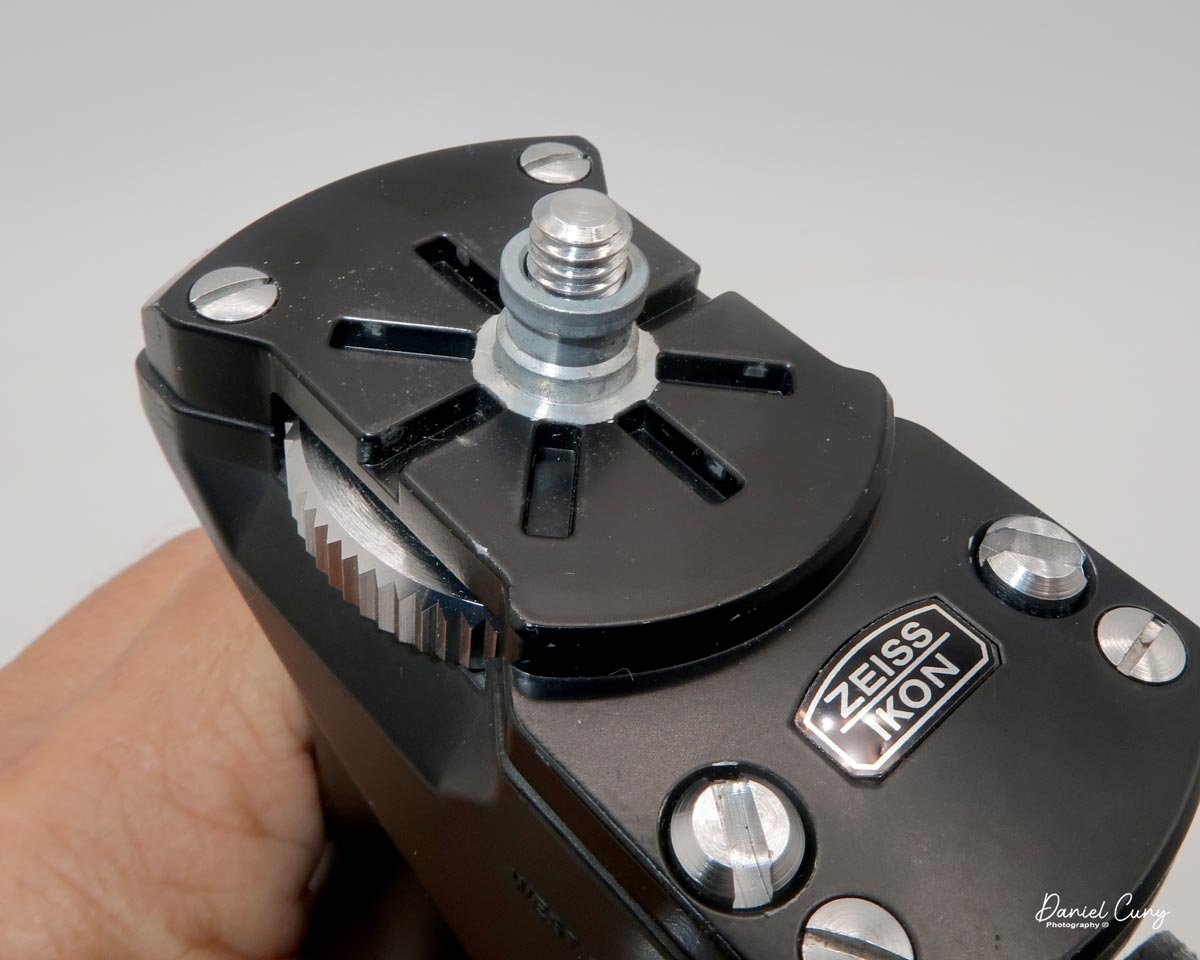
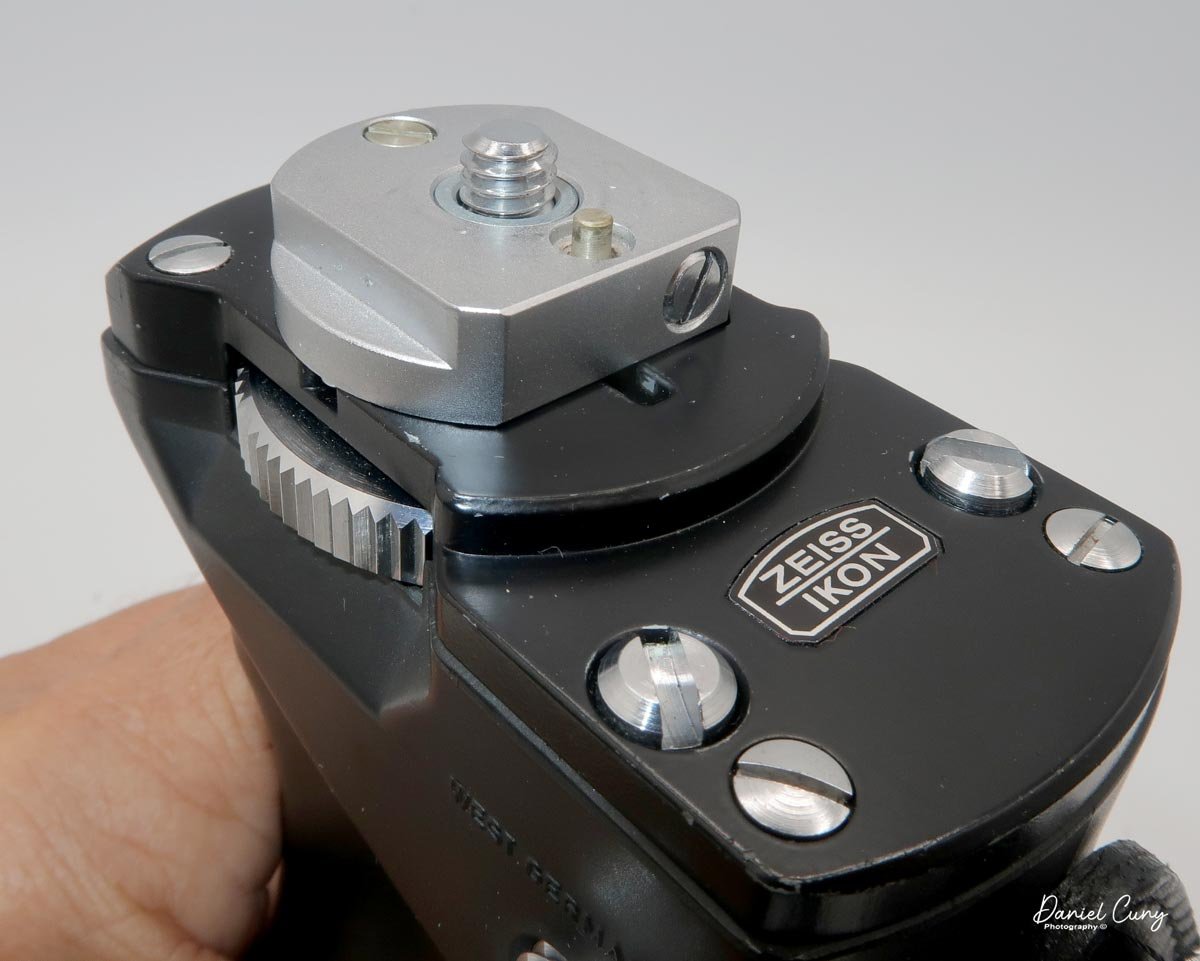
Without the pistol grip, you'd need to hold the camera with your finger on top and your thumbs under it to stabilize it, much like you'd hold an Instamatic camera. You don't wrap your hands around this or Widelux cameras to avoid having your fingers in the images.
Also included in the kit were the strap for the camera and a very nice hard compartment case for the camera, with room to hold the pistol grip. The case also has elastic straps to hold the center filter and extra lens cap.
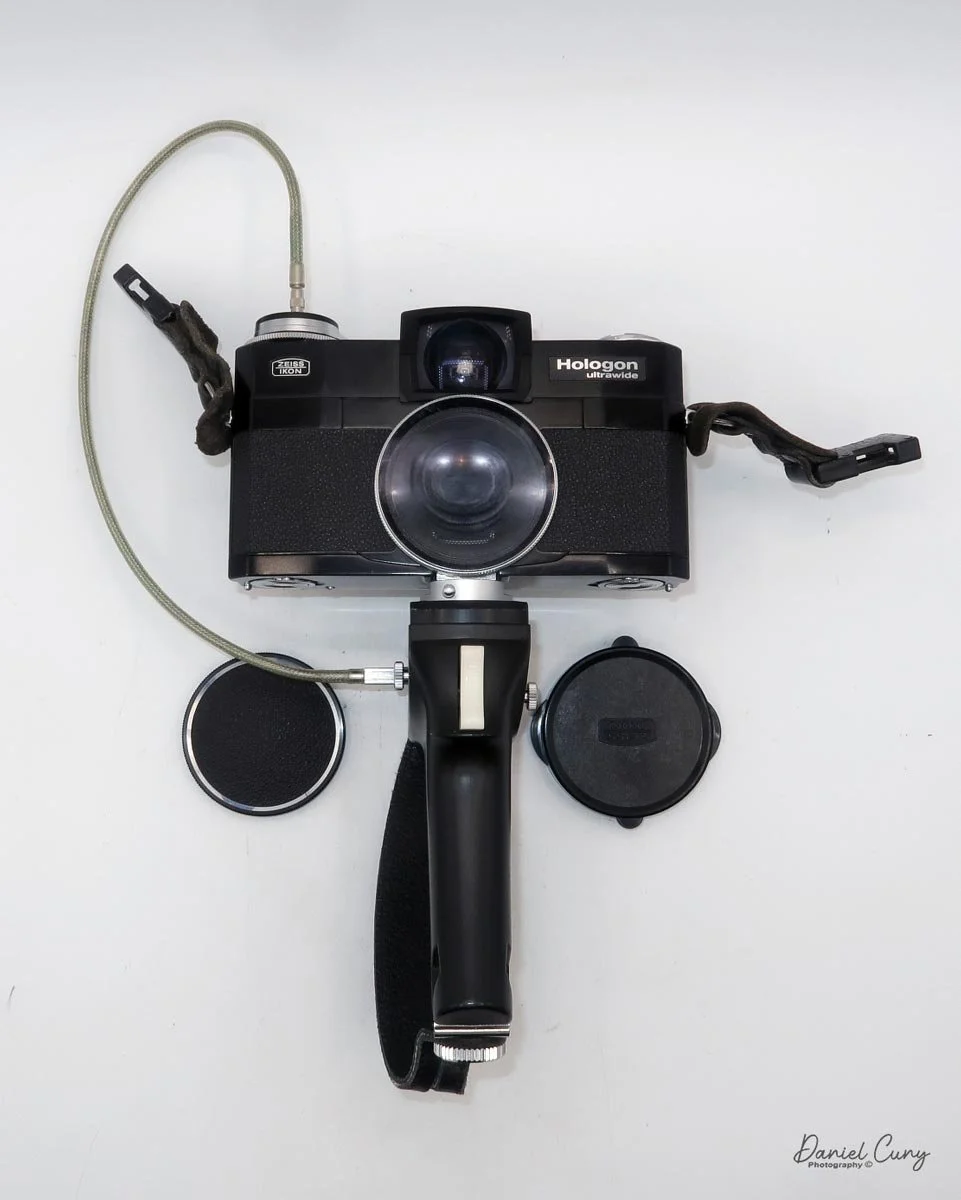
Zeiss Ikon Hologon Ultrawide mounted on the pistol grip with center filter, and cable release. Two lens caps too.
Now that we have the camera loaded, let's take it out to see how it performs under normal working conditions.
Results:
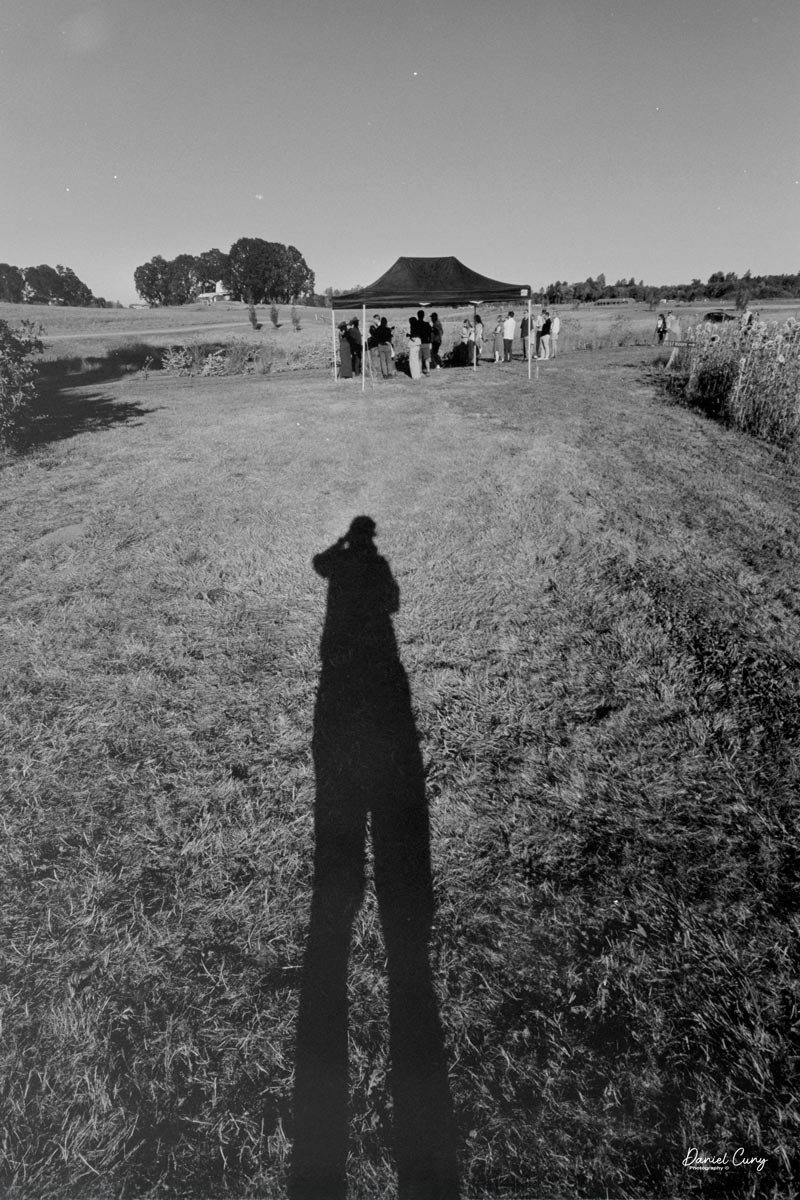
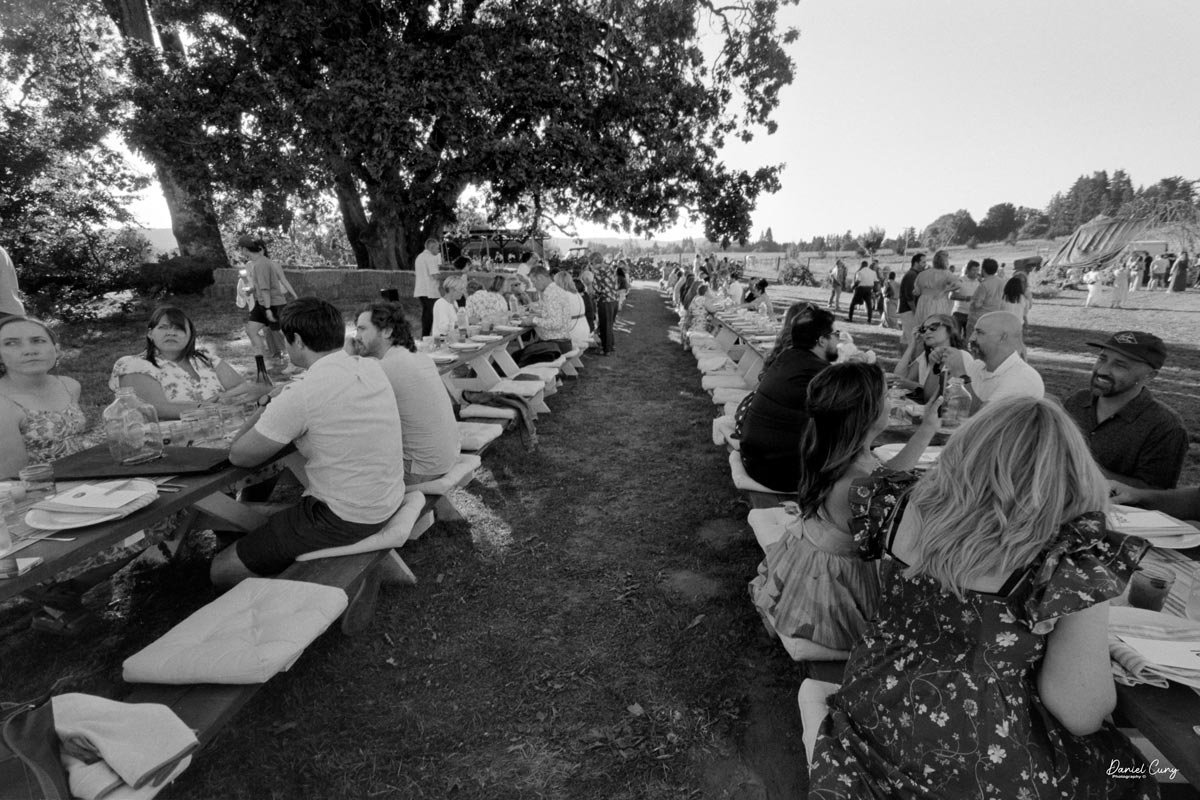
I took the camera to three different locations to try it out. First was a local farm that has a "farm-to-table" dinner we go to near Portland, OR. The name is Topaz Farms, and they are spectacular people who put on the most delicious dinners during the summertime.
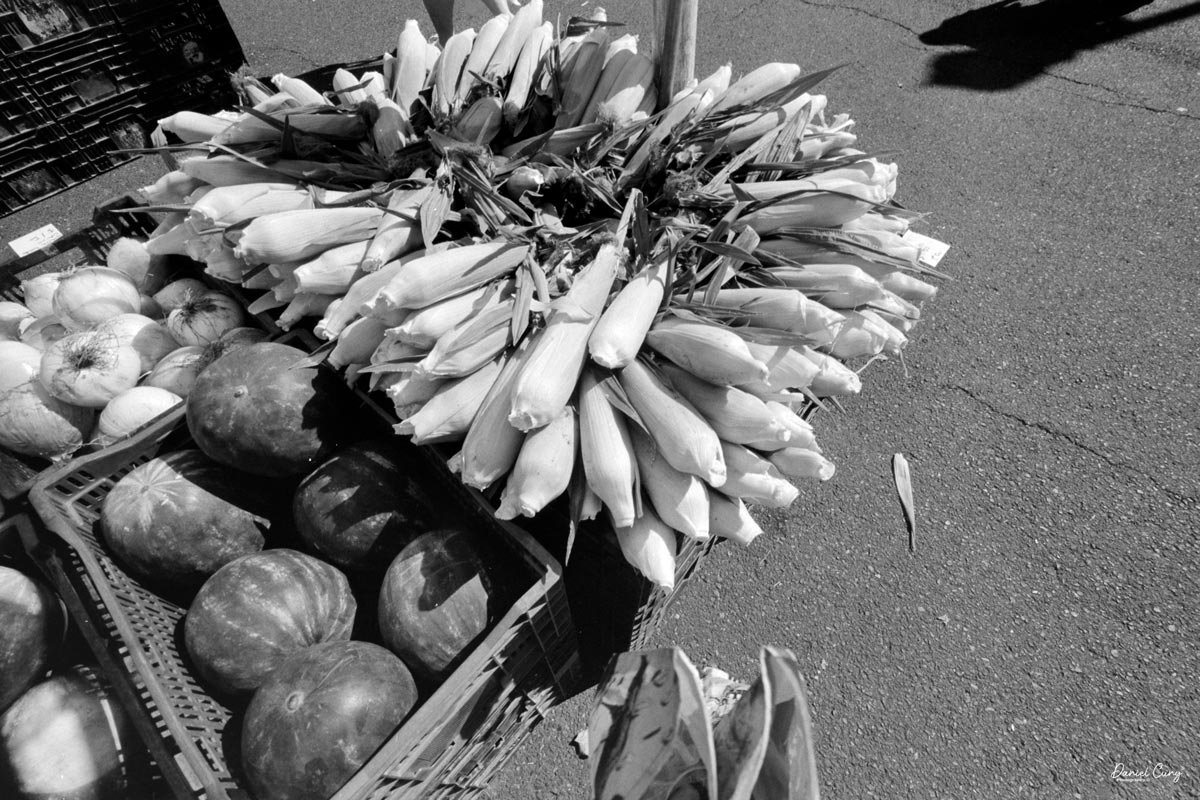
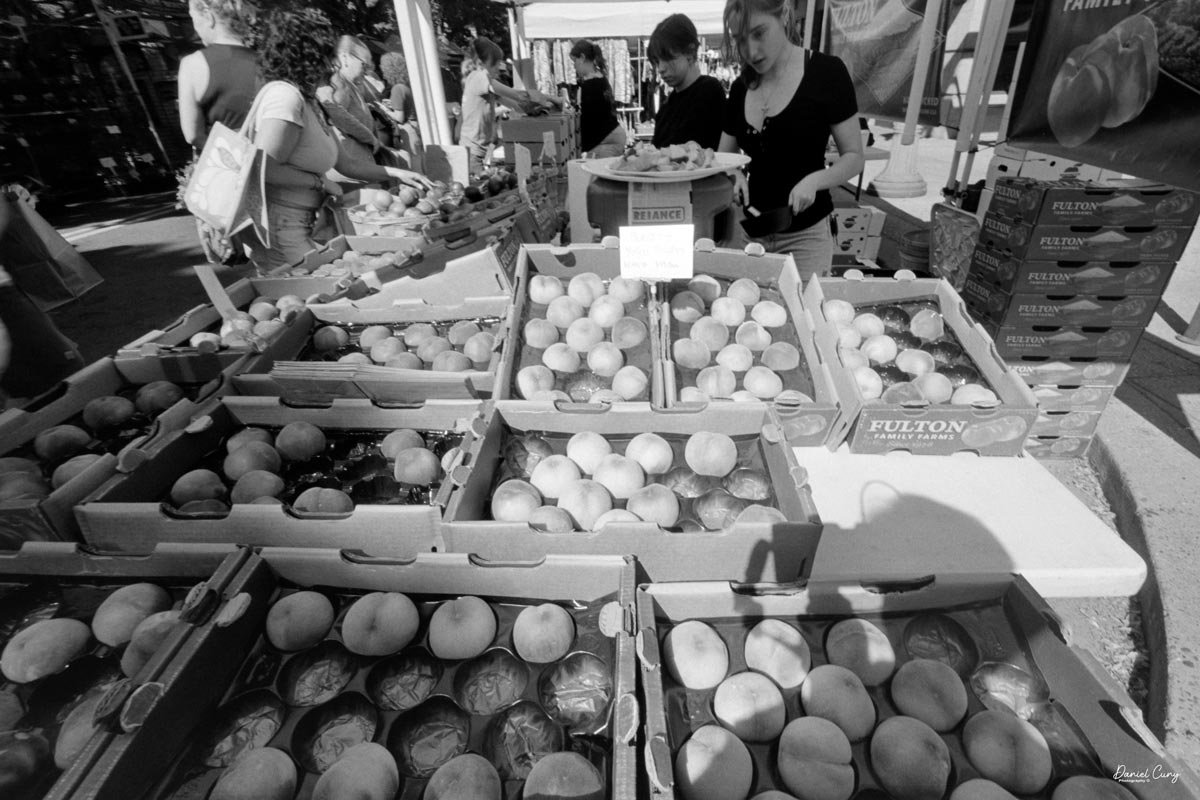
The second was a local farmers market in the town we live in. I'd walk around and take photos of some of the vendors and their wares.
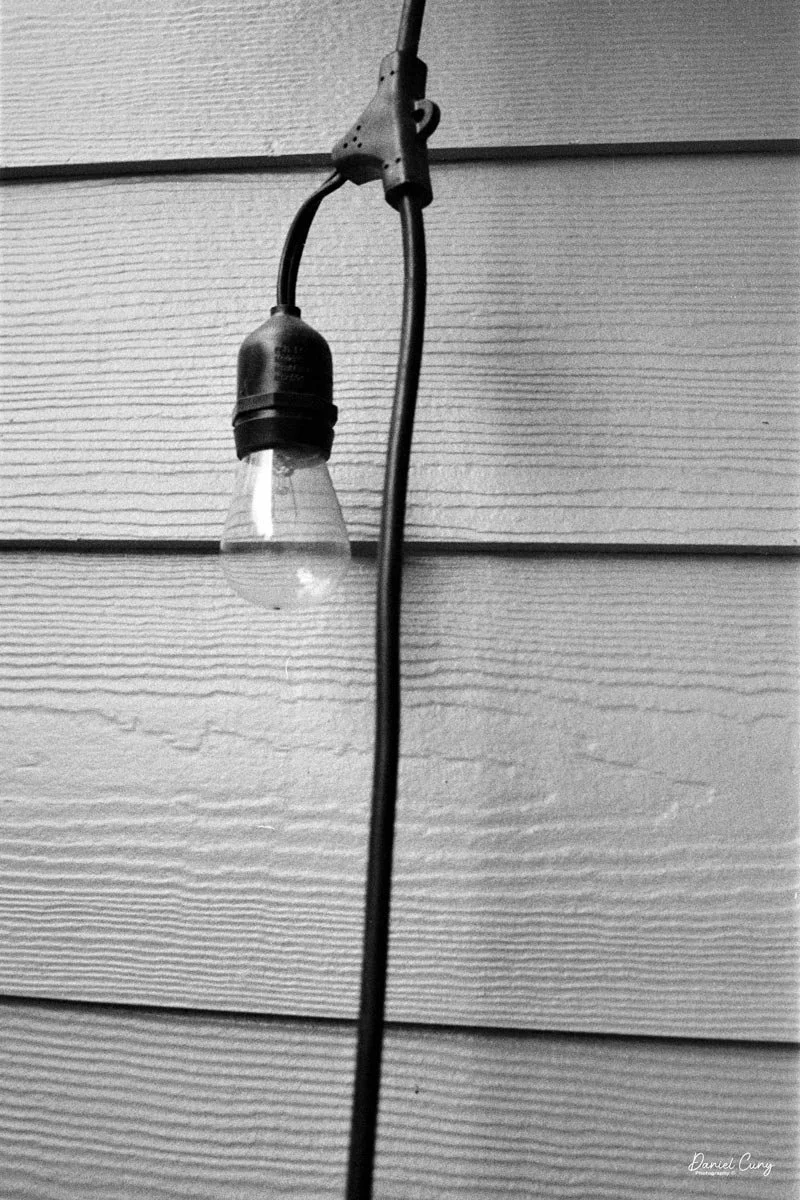
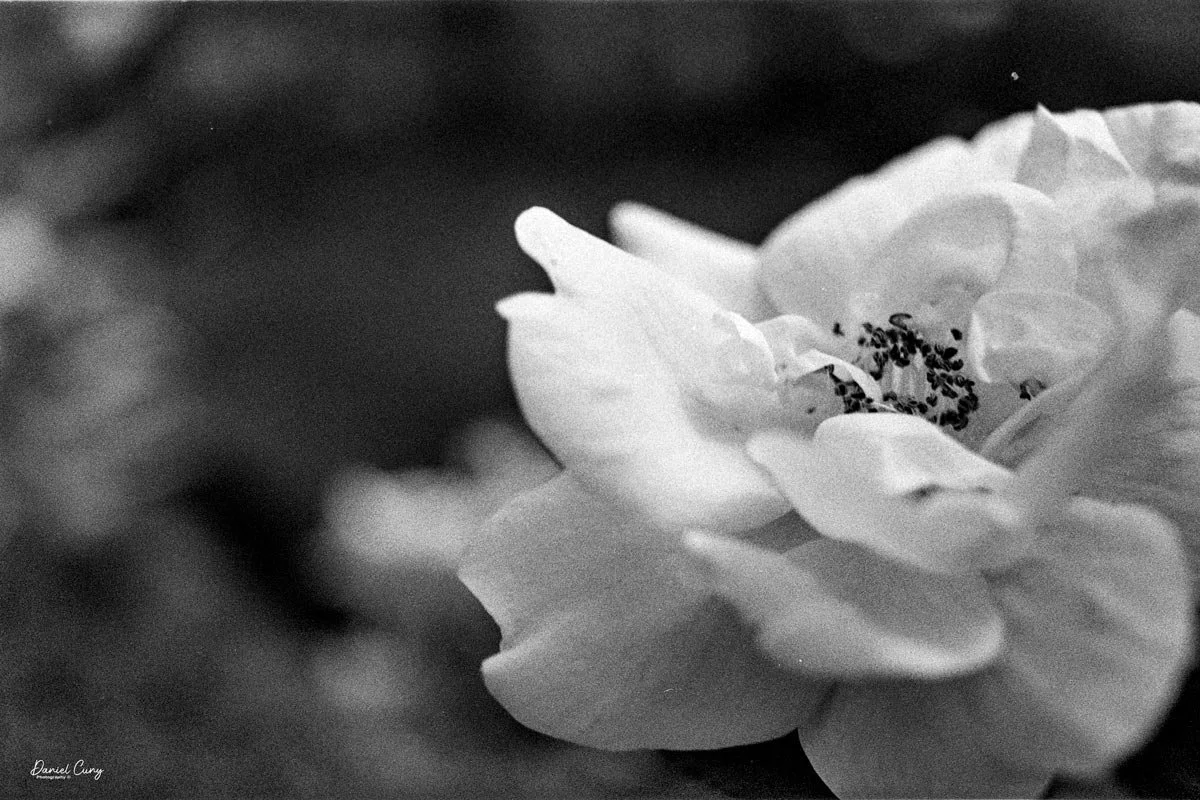
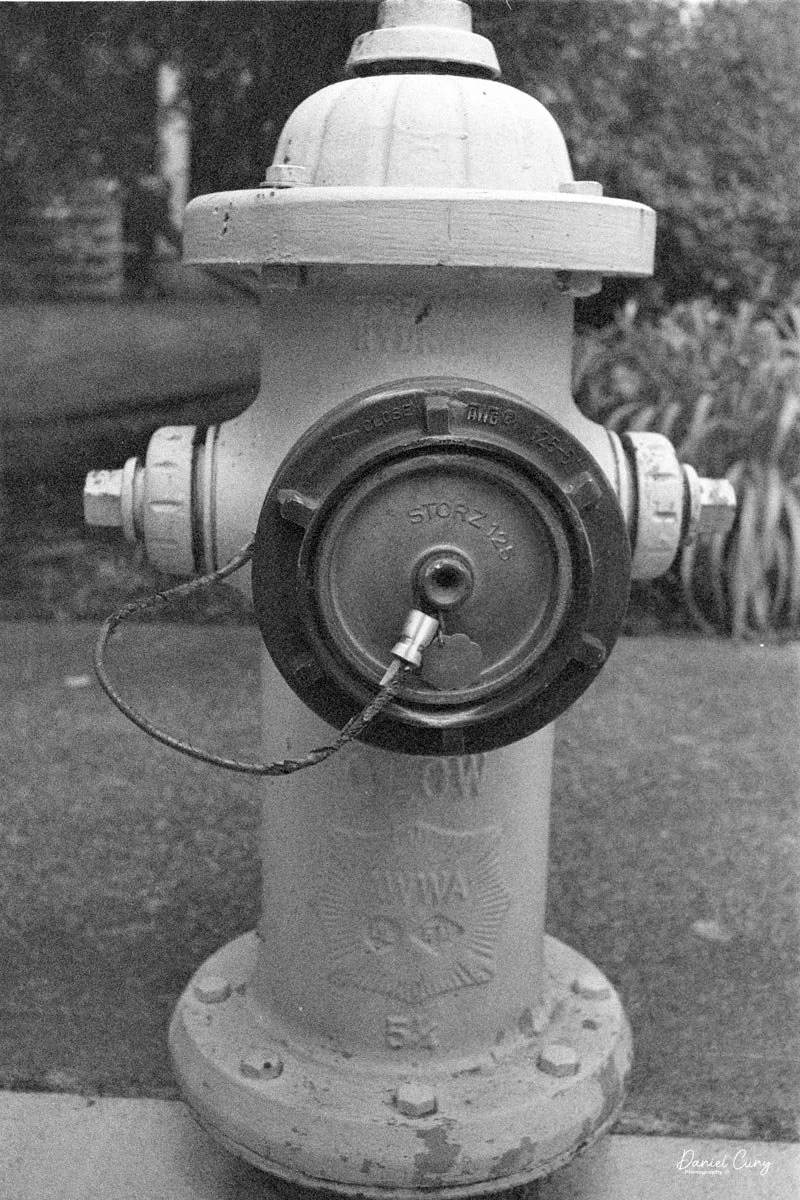
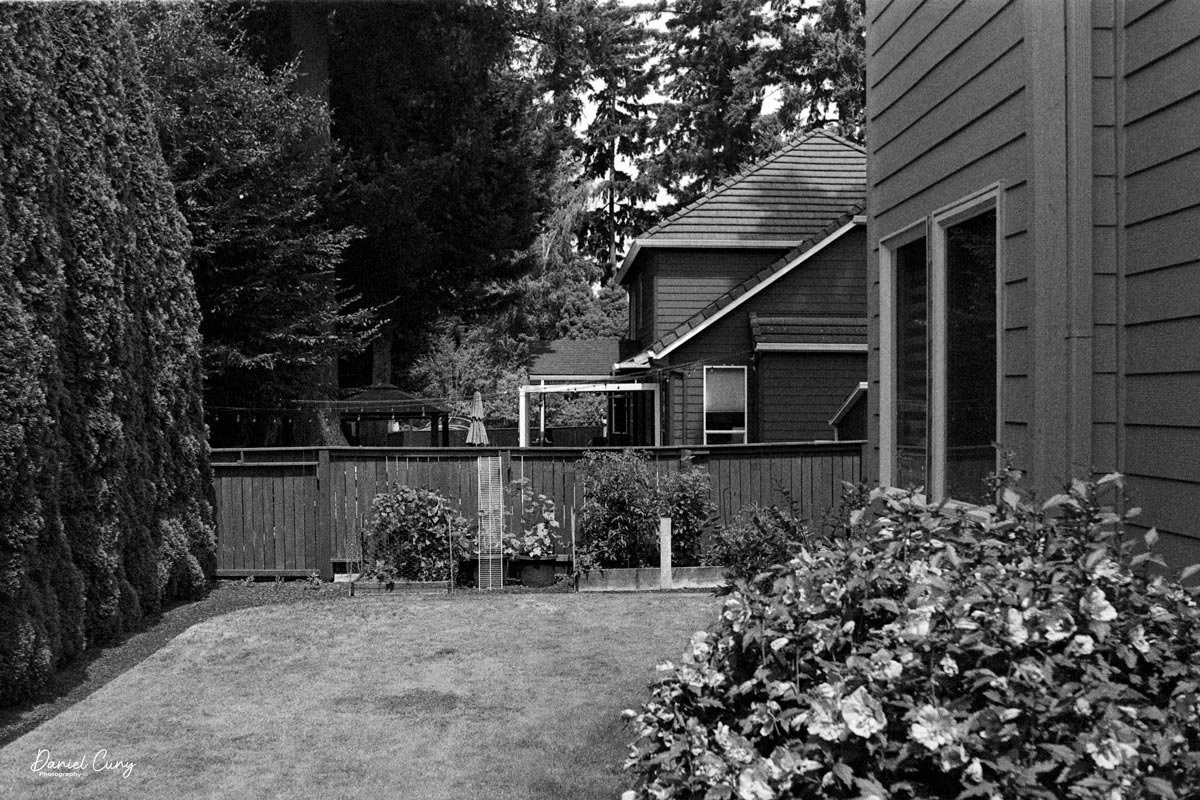
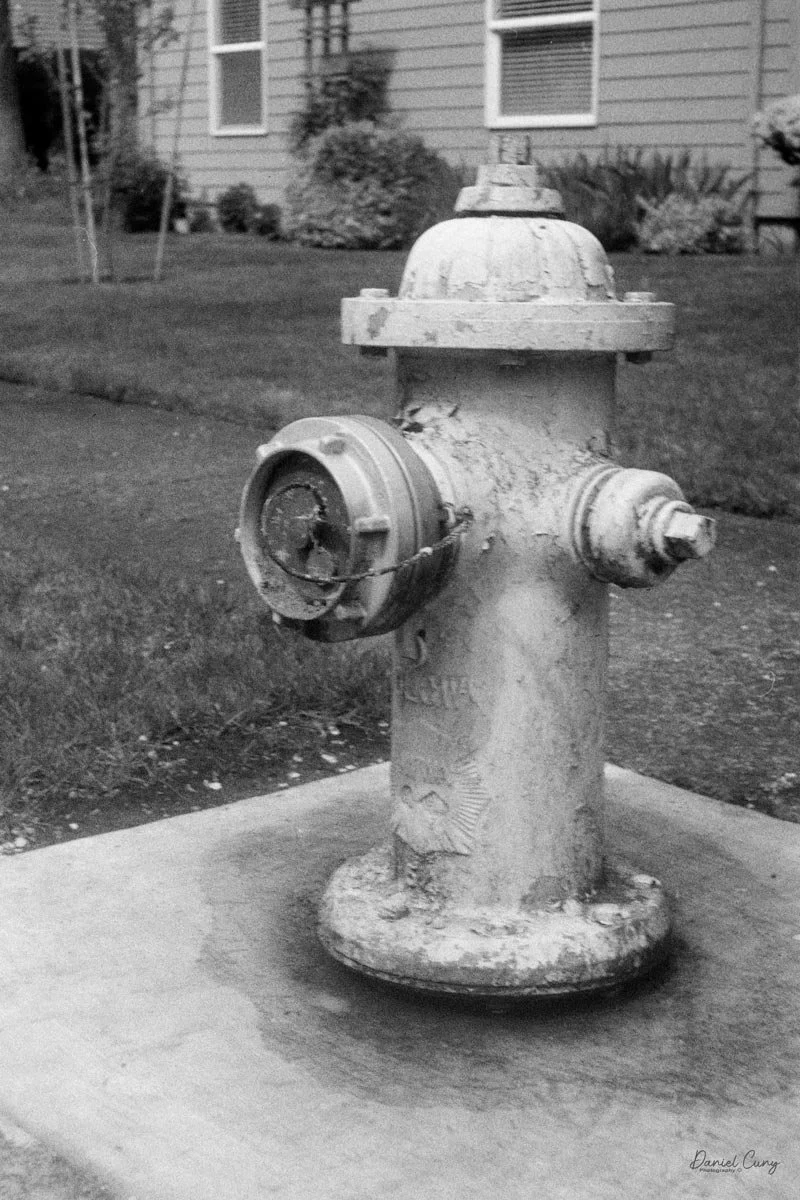
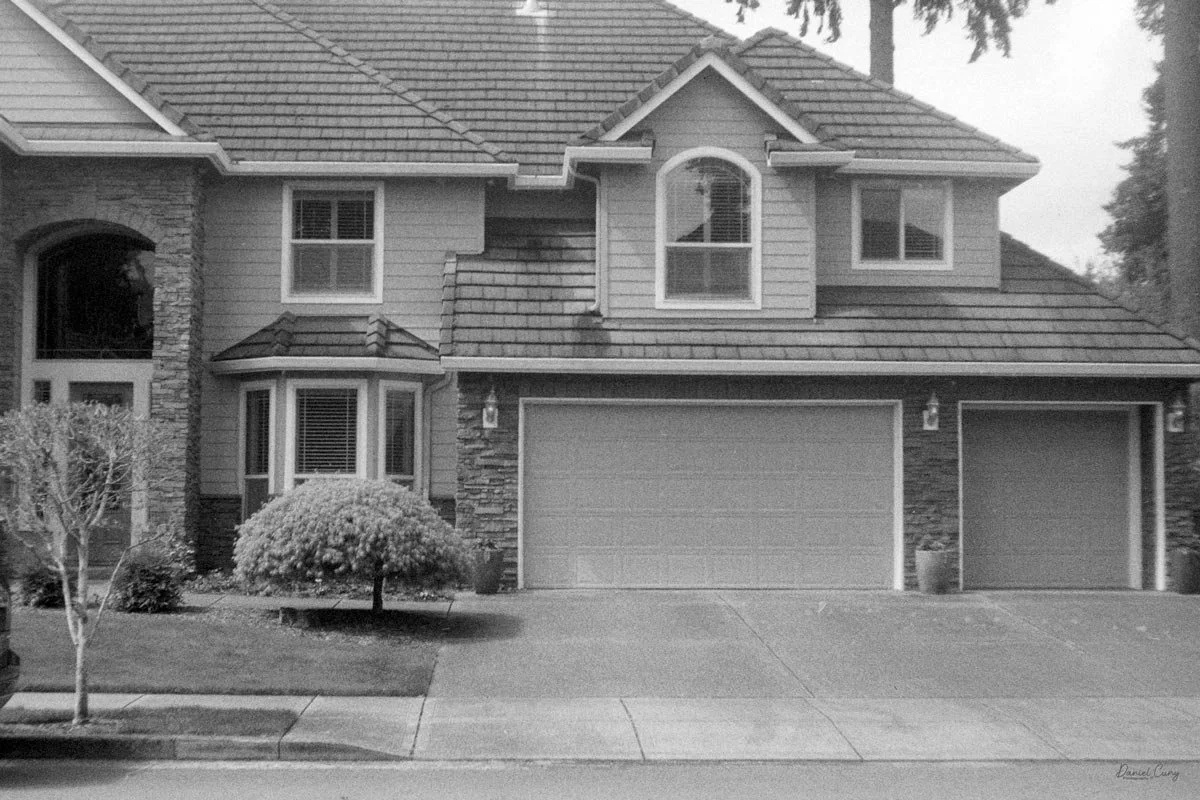
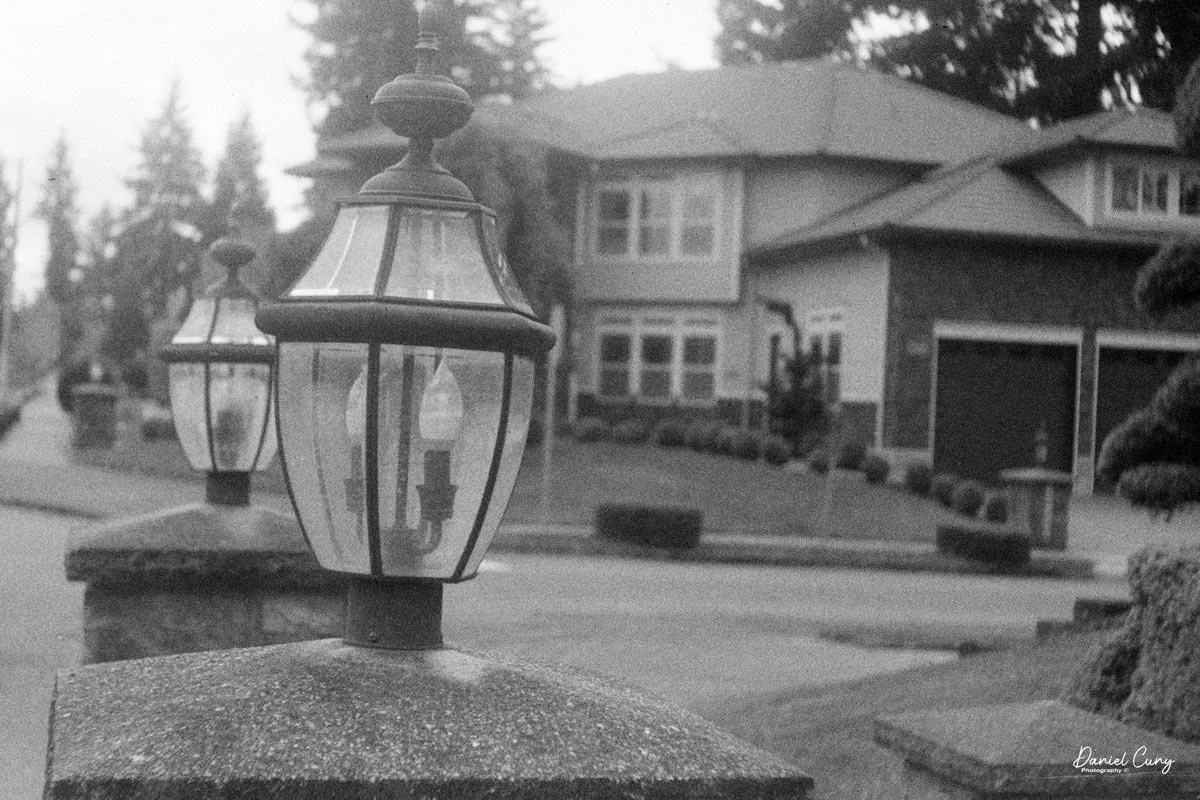
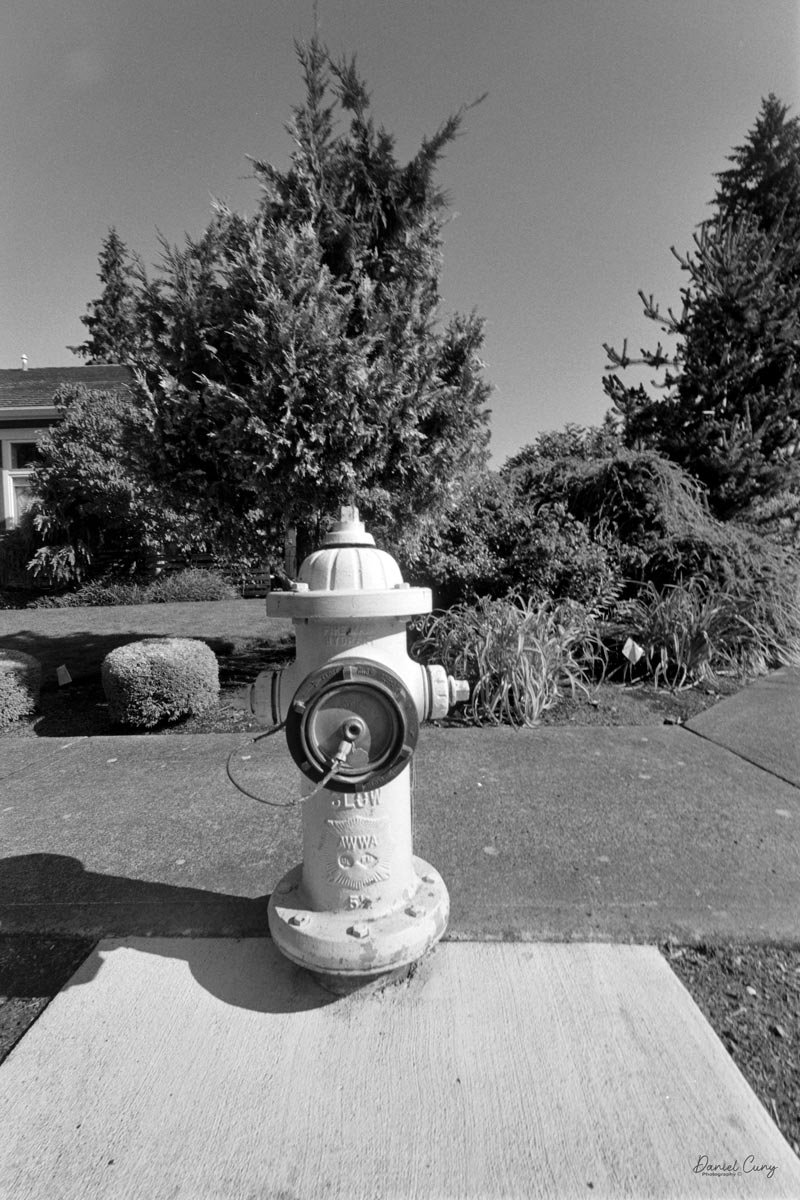
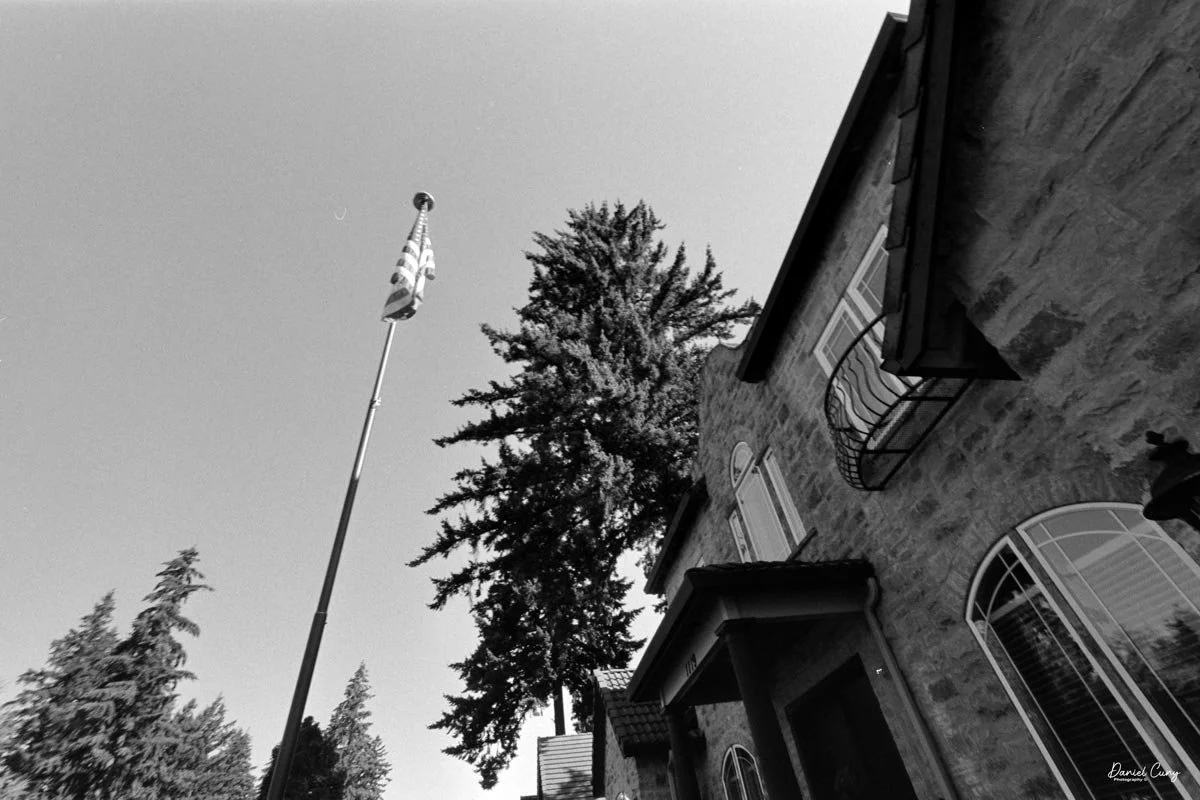
Finally, I walked the neighborhood, taking some of the standard photos I try to take with all the cameras so that, if you want to look back and see the images, they would be in similar locations.
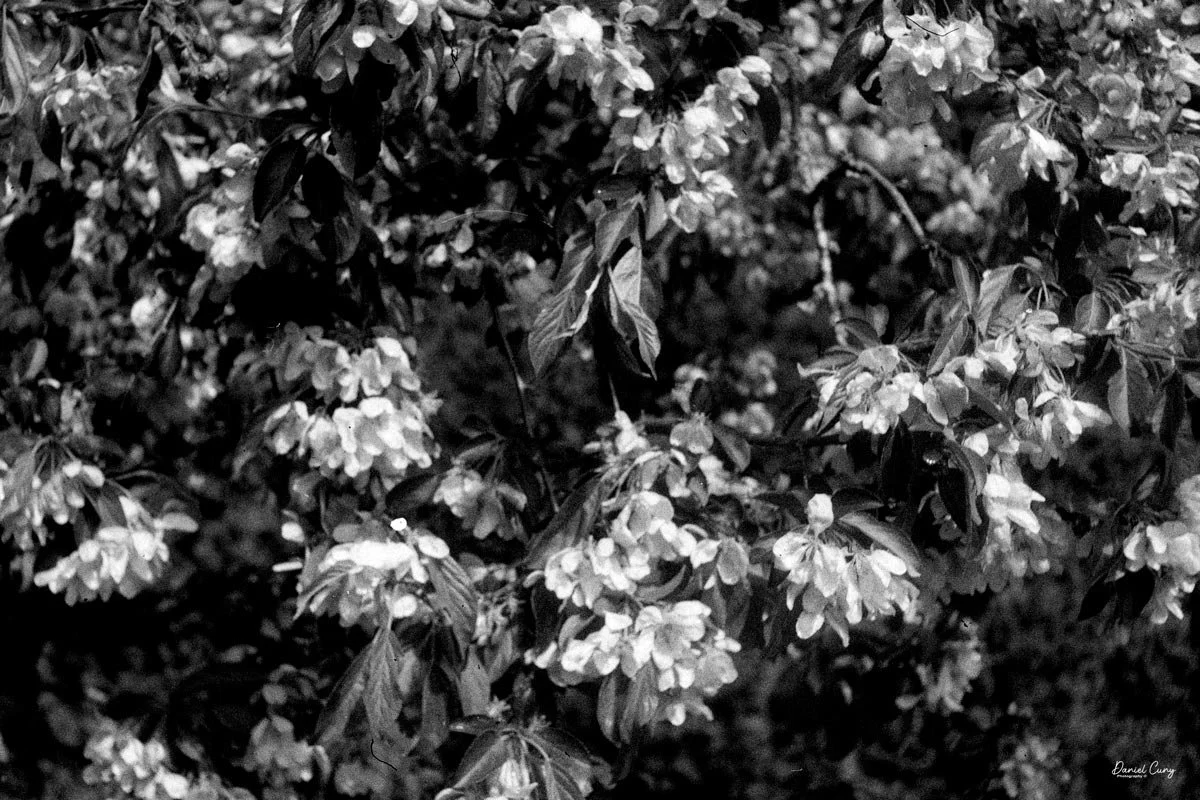
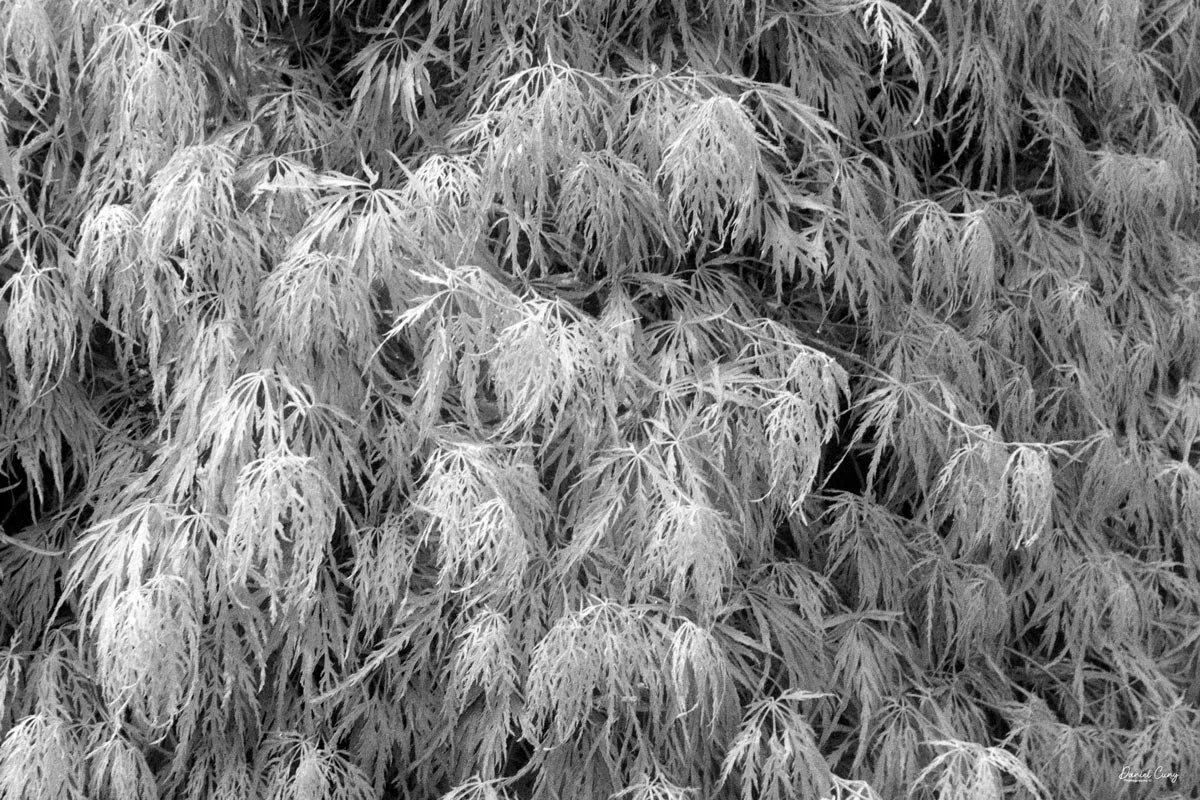
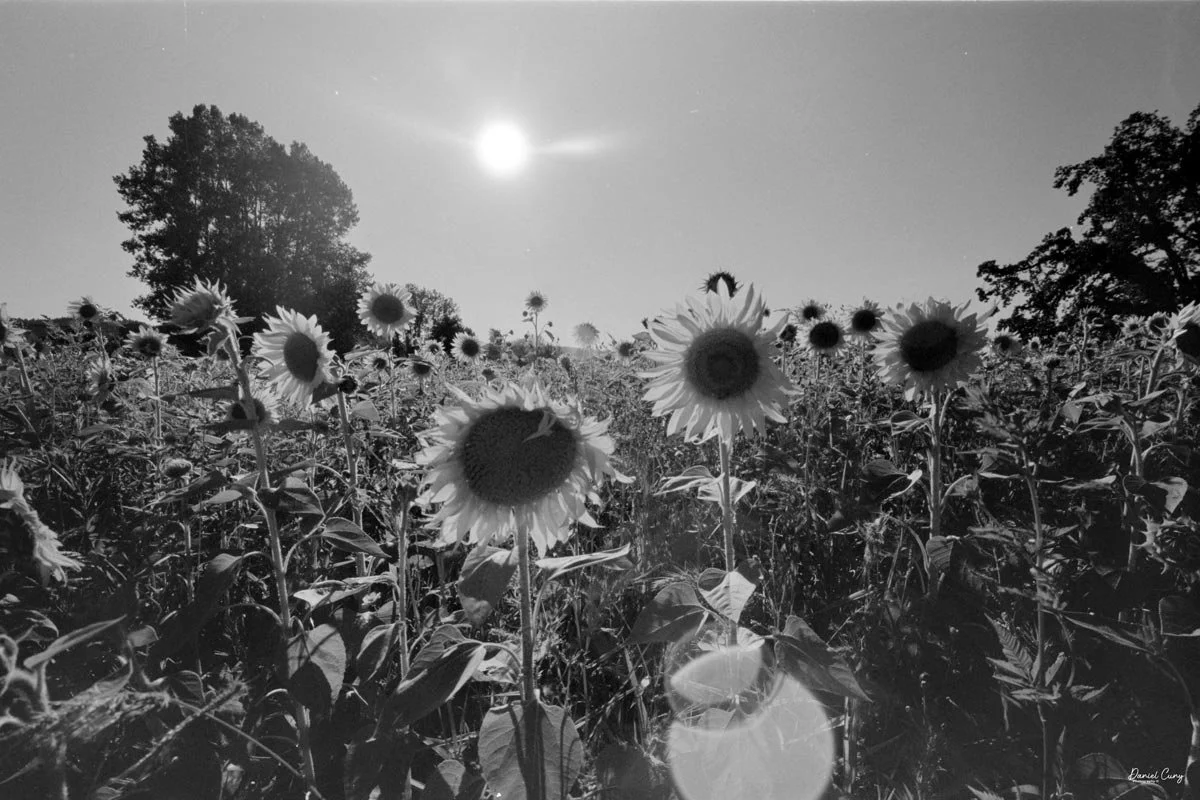
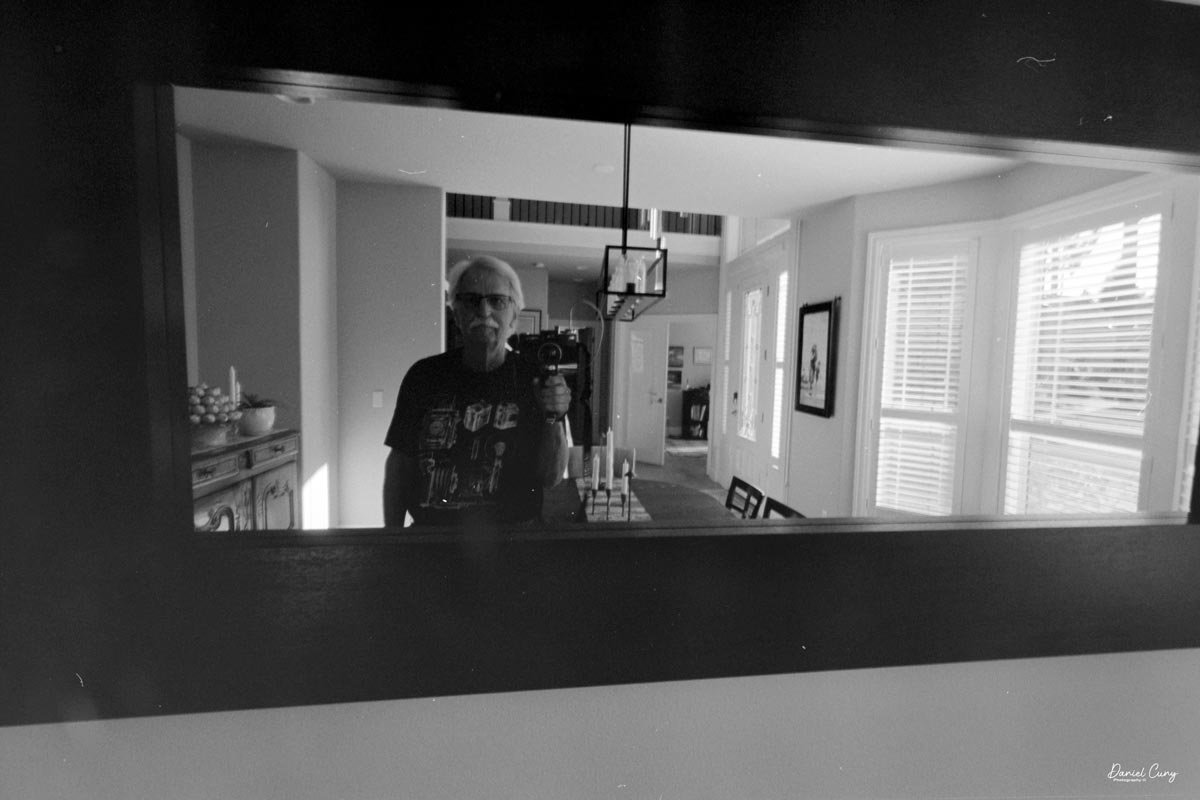
Here are some of the results from these events and locations.
Conclusion:
Once I processed the film, I noticed a few things about the camera that I felt were a bit odd. The spacing of the negatives was very thin and not the normal spacing I was expecting. This may have been caused by me purchasing a Contaflex/Contax take-up spool, which is thinner in diameter, giving the film less area to travel between images.
The second thing is that the images didn't seem as sharp as I was expecting. Don't get me wrong, they are sharp, but not as sharp as last week's Contarex “Bullseye” body and lens. Especially being so wide and stopped down, I was expecting super-sharp images, but these were OK.
It may have been the filter, but that was clean. My expectations were higher, and the images fell short.
Because of that, I'll try another roll of film, and if I'm not impressed with those images, you may see this on eBay in the near future.
Want to see other cameras? Here are some of my other Camera Reviews.
Check out my Cuny's Camera Collection YouTube channel, where I am putting together video overviews of the cameras I write about. Be sure to subscribe and like the channel, too!
Cuny's Cameras and Photos is my online eBay store, where you will find some of the cameras I have reviewed, along with a wide range of other cameras, lenses, and items from my collection that I am thinning out.
Until next week, please be safe.