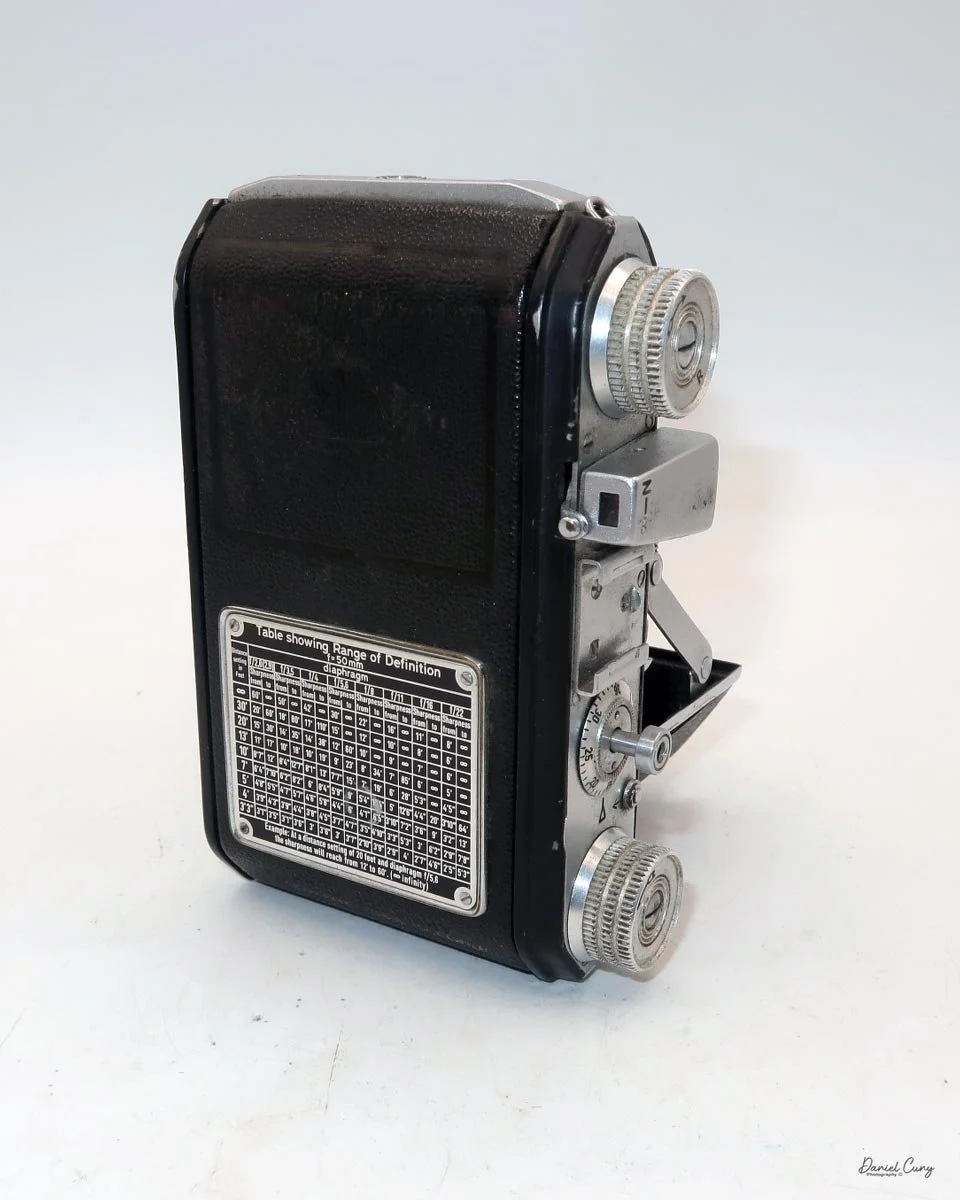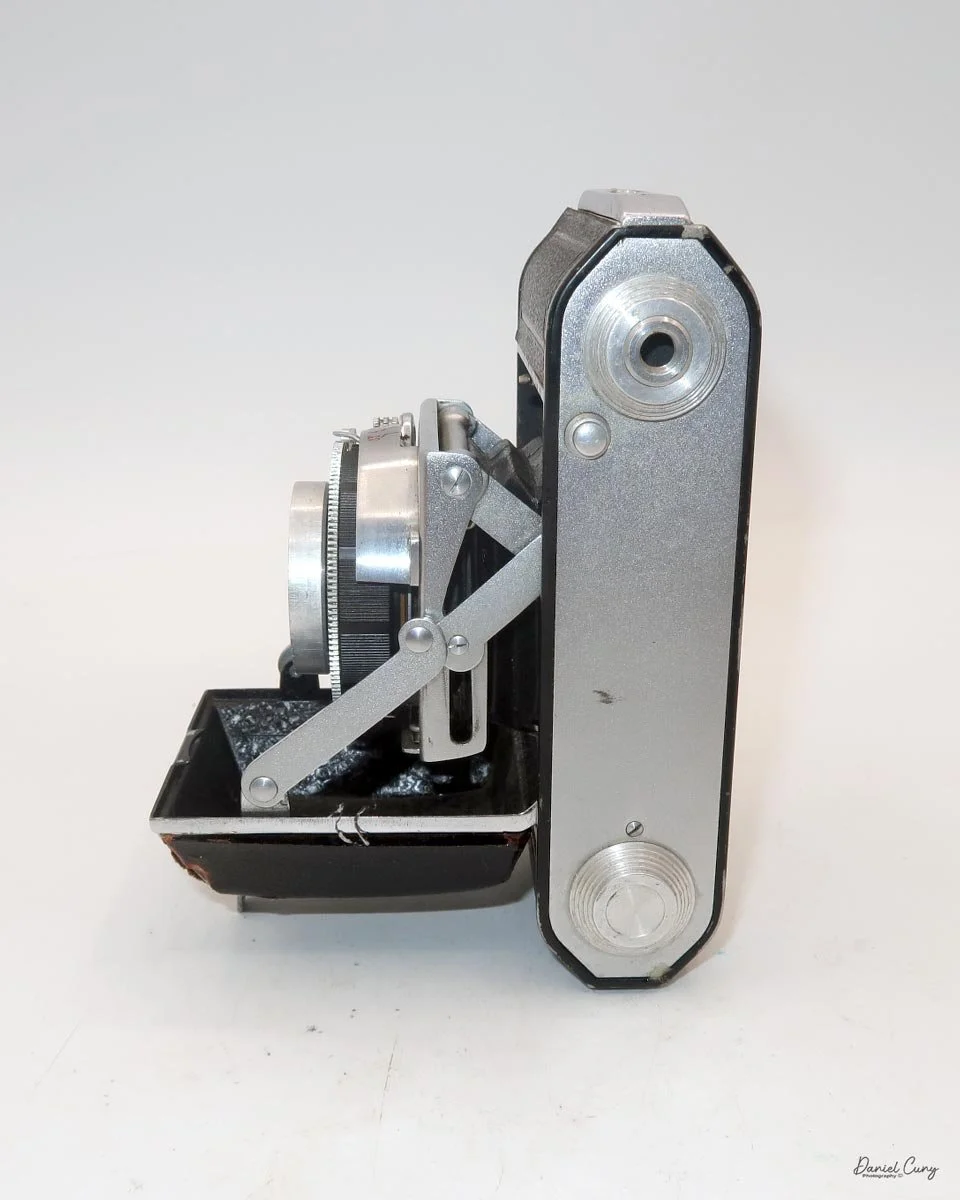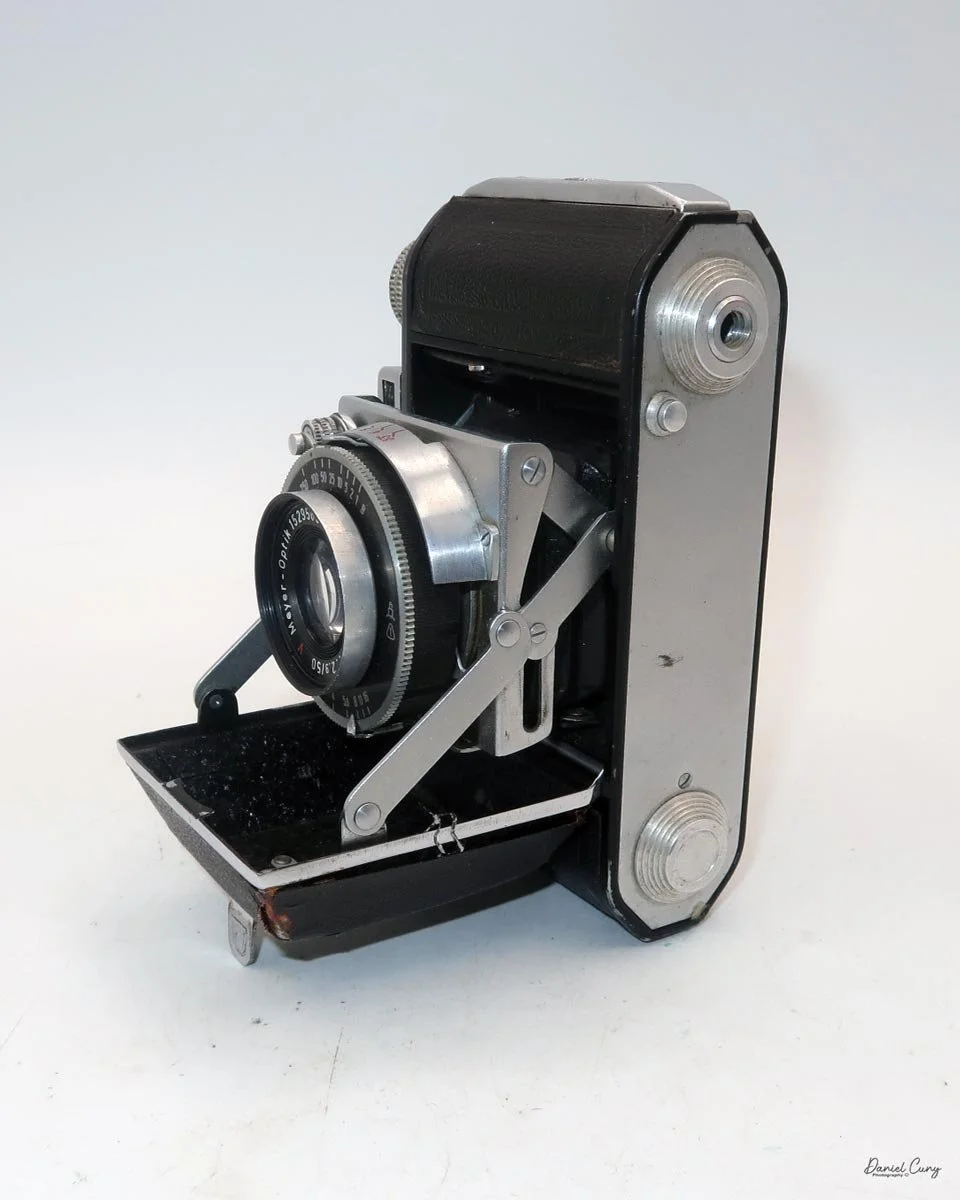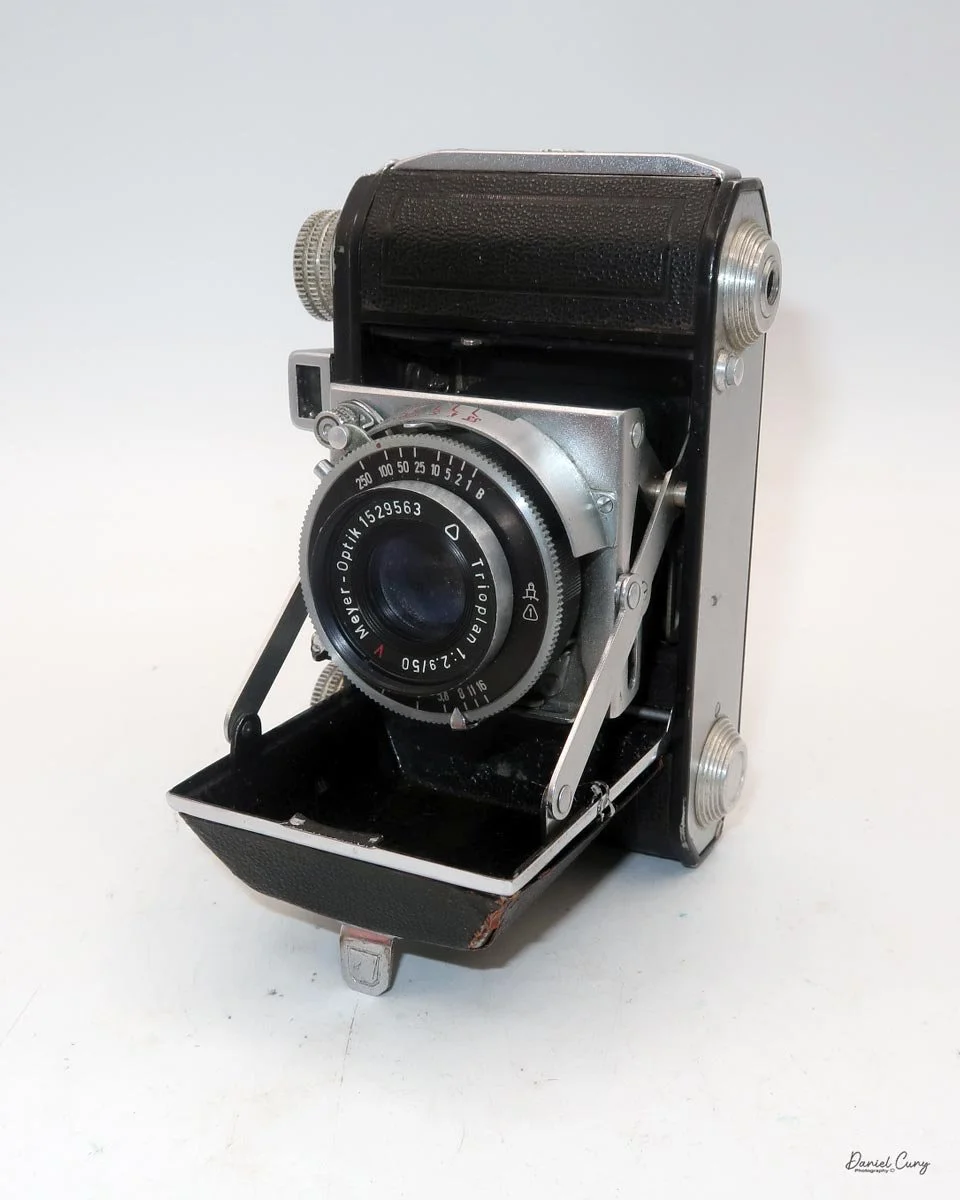
Welta Welti camera

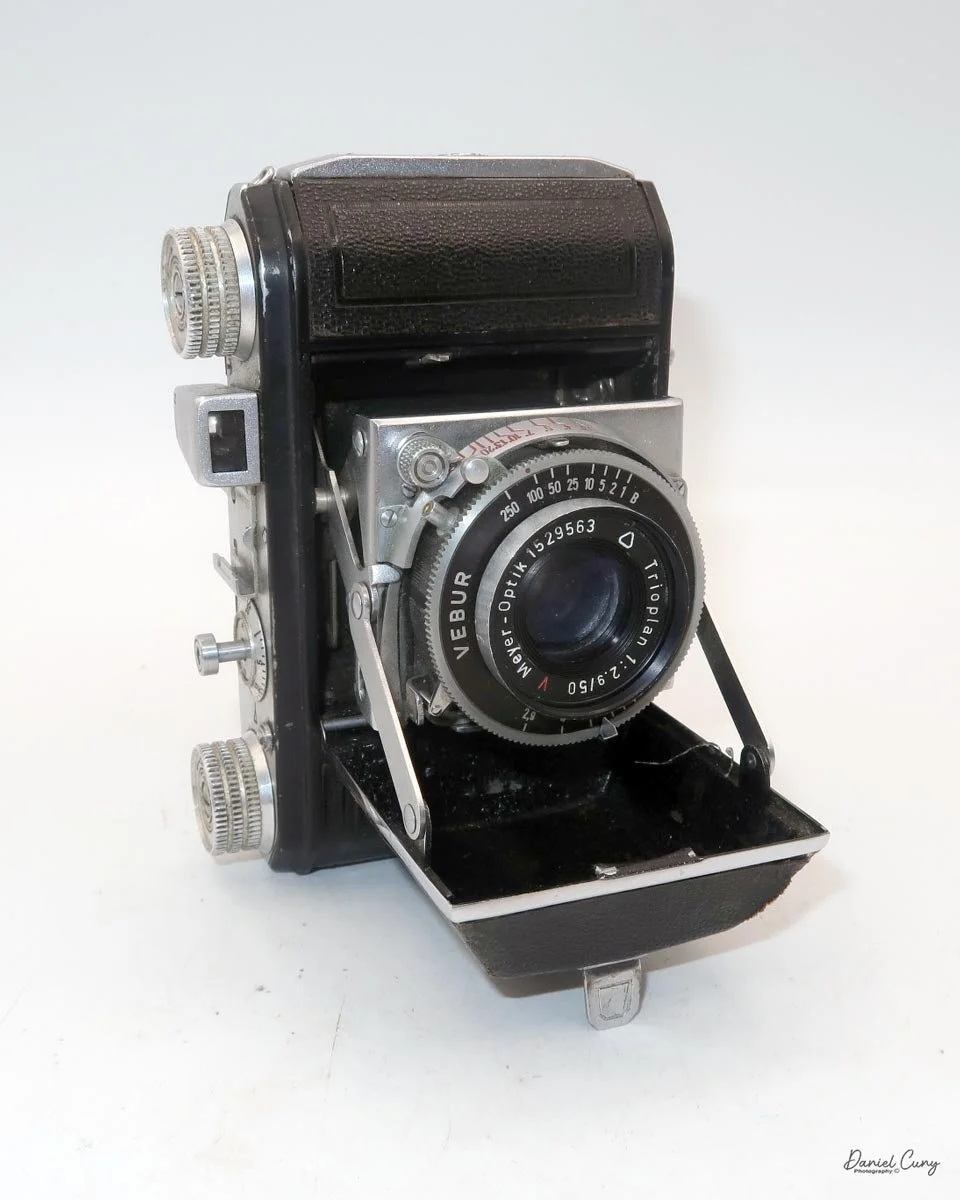
My Welta Welti camera

While looking for a camera to discuss in this week's camera collecting blog, I was unpacking cameras I took to the recent camera show outside of Seattle, and I picked up a nondescript leather case for one of them. Opening the case to see which camera it was, it turned out to be a fairly plain-looking 35mm folding camera. 

 I opened the camera to see which one it was, but nothing was screaming the manufacturer to me. The only few telltale signs I could see were the words "Germany USSR Occupied" in gold embossed letters, along with "Made in Germany" embossed into the leather. There was also the number 1 inside a triangle and the numbers 37/373/1001 embossed into the leather on the back of the film door.

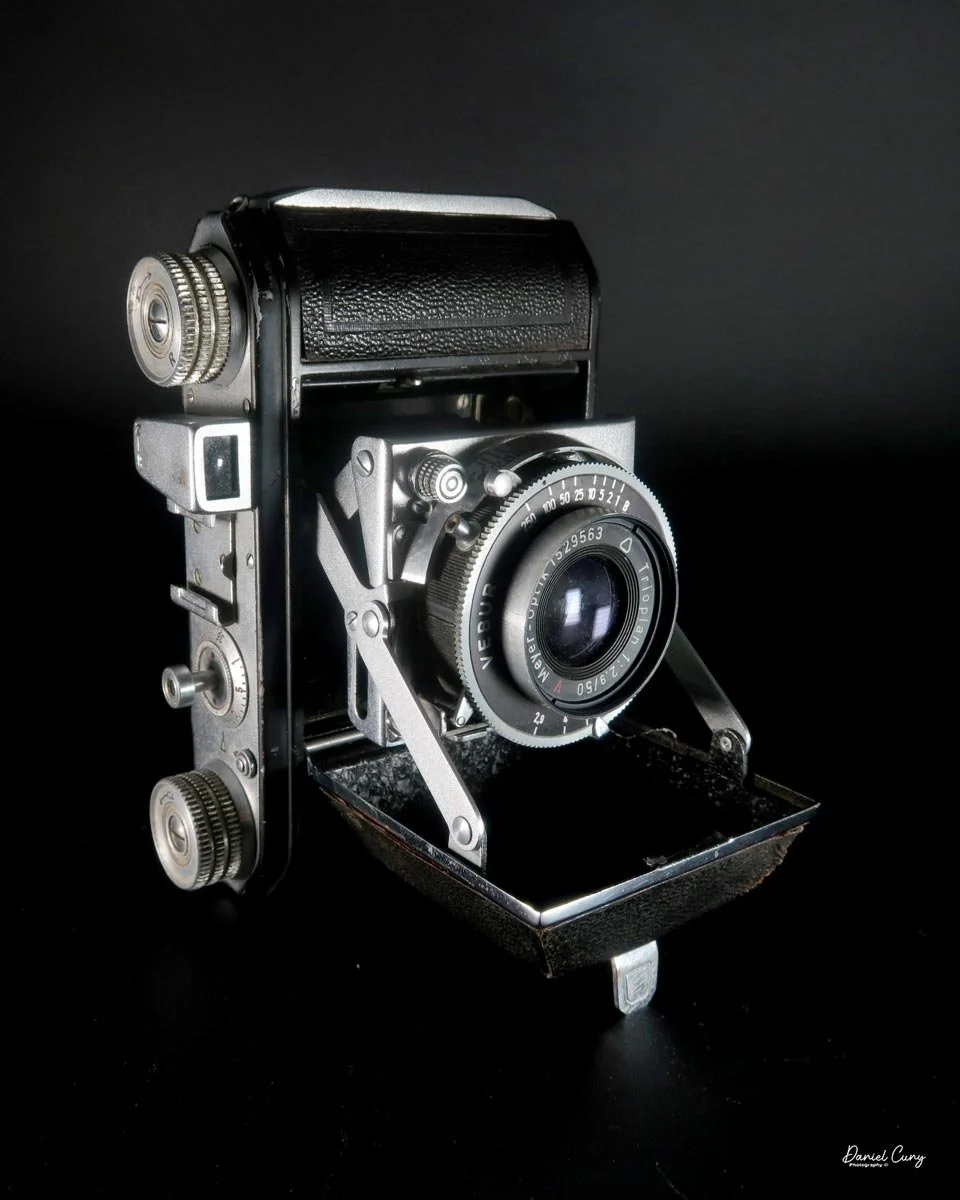
 Opening the door to see what lens the camera had, it wasn't what I expected. Unlike a Schneider or Zeiss lens, the camera has a less popular Meyer Optik lens in a Vebur shutter.

 Now I was more perplexed about the brand of camera I was holding. I researched the information I had, and I found that I was holding a Welta Welti camera made soon after WWII.
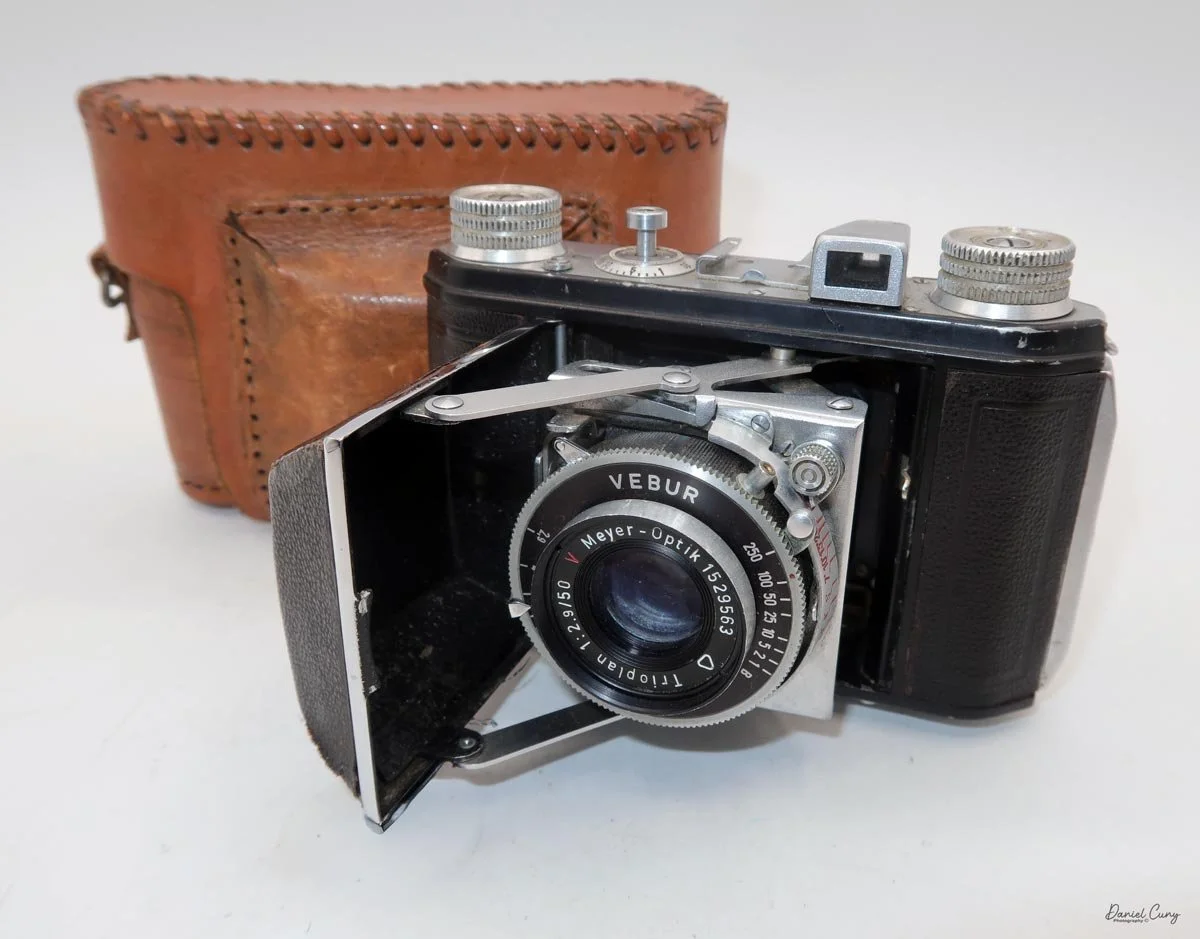
My Welta Welti camera with leather case.

 Usually, on cameras of this era, the manufacturer's name is embossed on the side of the camera, close to the film door. I looked at the camera again, and it was either worn off from use or never there in the first place.

 Testing the camera's shutter, it worked at all speeds, and the aperture was smooth and functioning as it should. The lens was clean, and the transport seemed in good condition, so for the week I go camera shopping in Tokyo, and being a fan of Welta cameras, like the Perfekta and Superfekta, I found the camera to write about for this week's blog post.

History:

 For those of us who spend our days restoring, shooting, and studying vintage cameras, the name Welta carries a distinct weight—both literally and figuratively. Founded in 1914 by Walter Waurich and Theodor Weber in Freital, Germany, the company originally operated under the moniker Waurich & Weber. By 1919, the "Welta" trademark was born, marking the beginning of a remarkable, albeit turbulent, chapter in the history of photography.
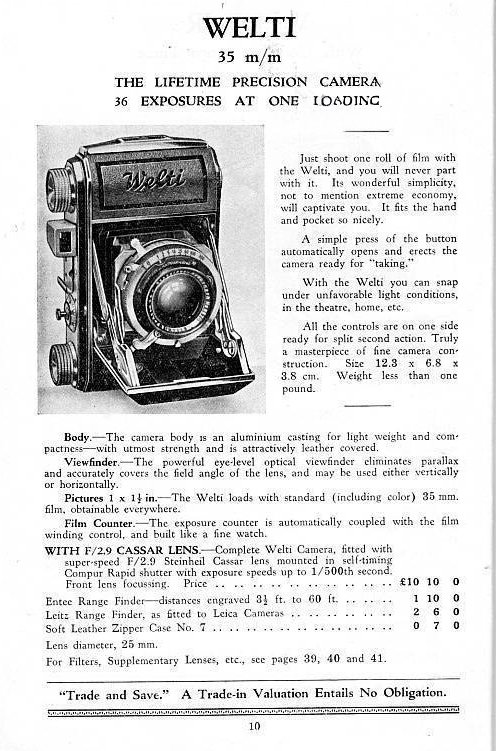
 Welta quickly earned a sterling reputation during the 1920s and 30s. At a time when German optical and mechanical engineering set the global standard, Welta held its own against titans like Zeiss Ikon. They mastered the folding camera format, producing medium format workhorses outfitted with top-tier Compur shutters and stunning optics from Schneider-Kreuznach or Carl Zeiss. For a working photographer or a serious enthusiast, a Welta meant uncompromising precision wrapped in a beautifully crafted, leather-bound brass body.

 As the 1930s progressed, the photographic landscape shifted dramatically as the 35mm film format gained popularity. Competitors were releasing compact, pocket-sized folding 35mm cameras, most notably the Kodak Retina. Welta's brilliant response was the Welti.

 Introduced in 1935, the Welti was a marvel of compact engineering. It wasn't just a scaled-down medium format folder; it was a purpose-built 35mm instrument. With its incredibly robust struts, precision-focusing helix, and satisfyingly dense, all-metal heft, the Welti proved that "compact" didn't mean compromising on professional-grade durability. It remains the perfect embodiment of Welta's meticulous design philosophy.

 The devastation of World War II completely altered Welta's trajectory. Finding itself in the Soviet occupation zone (later East Germany), the company was nationalized in 1946, becoming VEB Welta-Kamerawerke. Despite this massive structural shift, the Freital factory continued to produce incredible cameras, including refined post-war iterations of the Welti, the Weltax, and the Belmira.

 However, as the East German government moved to consolidate its optical industries to compete on the global stage, Welta was eventually absorbed by VEB Kamera-und Kinowerke Dresden in 1959, which later evolved into the massive Pentacon conglomerate.

 By the mid-1960s, the Welta name faded into history. Yet, when you hold a Welti today, you are holding a defiant piece of history—a tactile testament to a specialized factory that, for a few brilliant decades, built some of the finest folding cameras the world had ever seen.

My Camera:

 My Welta Welti camera is similar in size and shape to the Kodak Retina cameras. The camera is 4.5" wide by 3.5" tall by 2" deep with the lens retracted, and 3.5" deep with the lens door open and the lens in the normal "taking" position. The Welta Welti weighs 1 pound, 2.9 ounces.
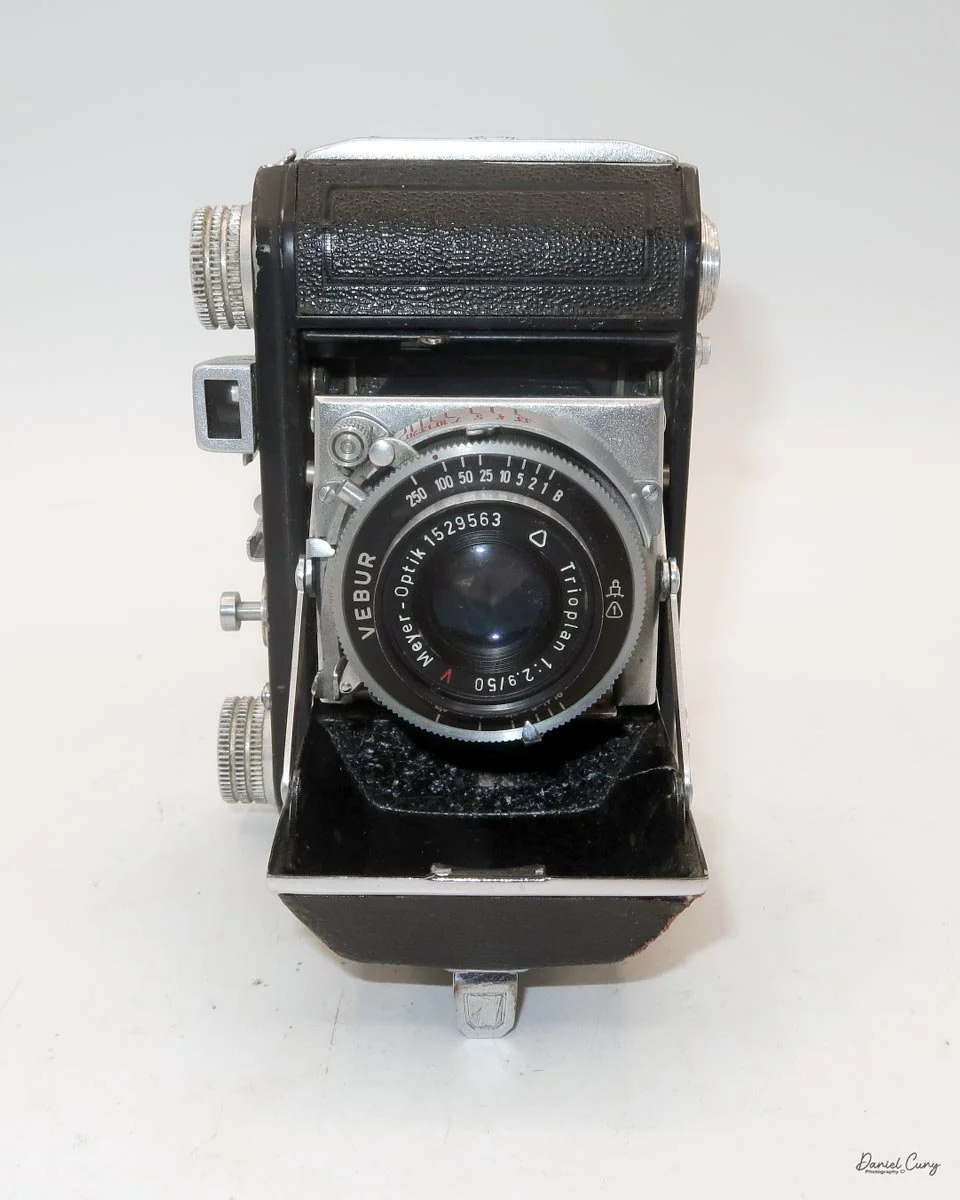
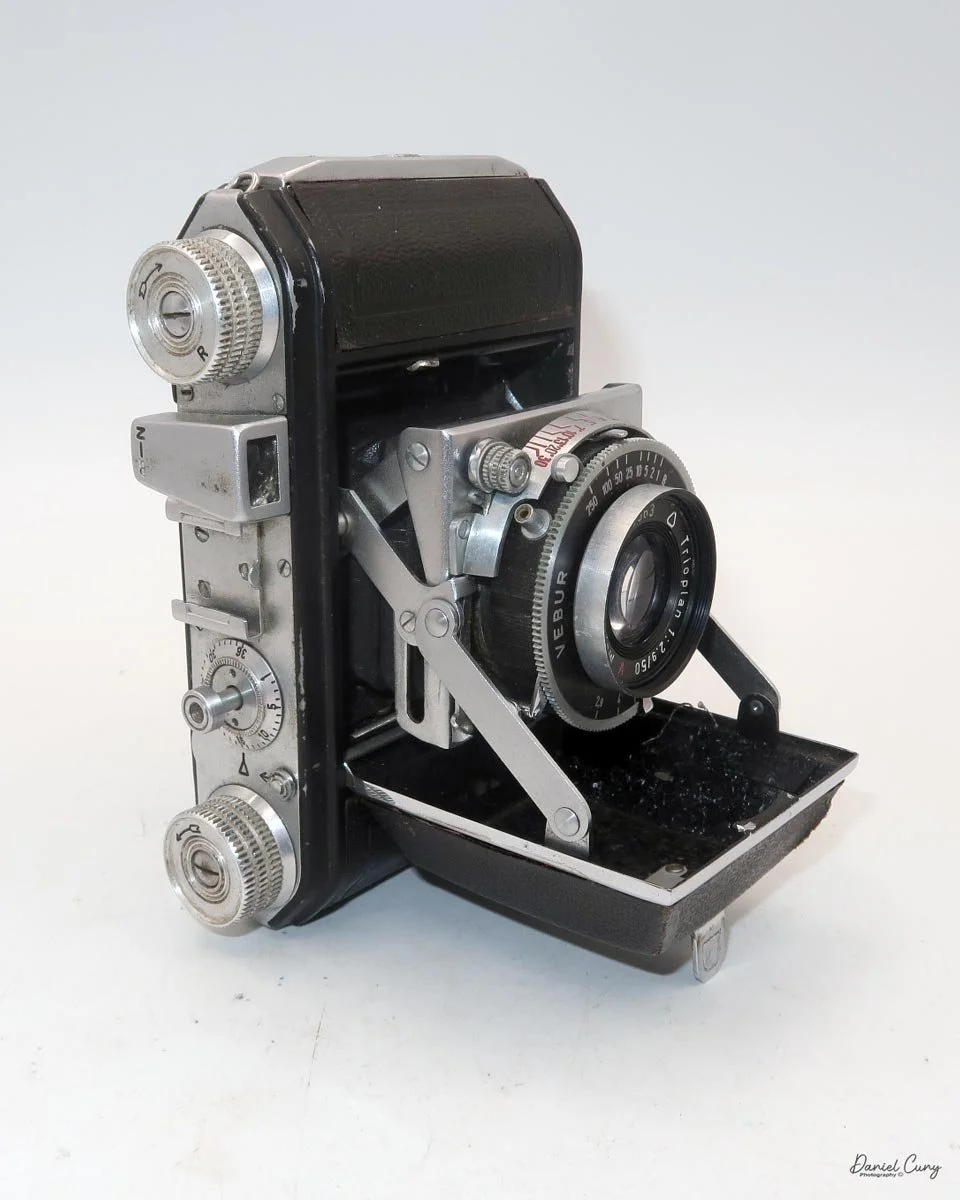
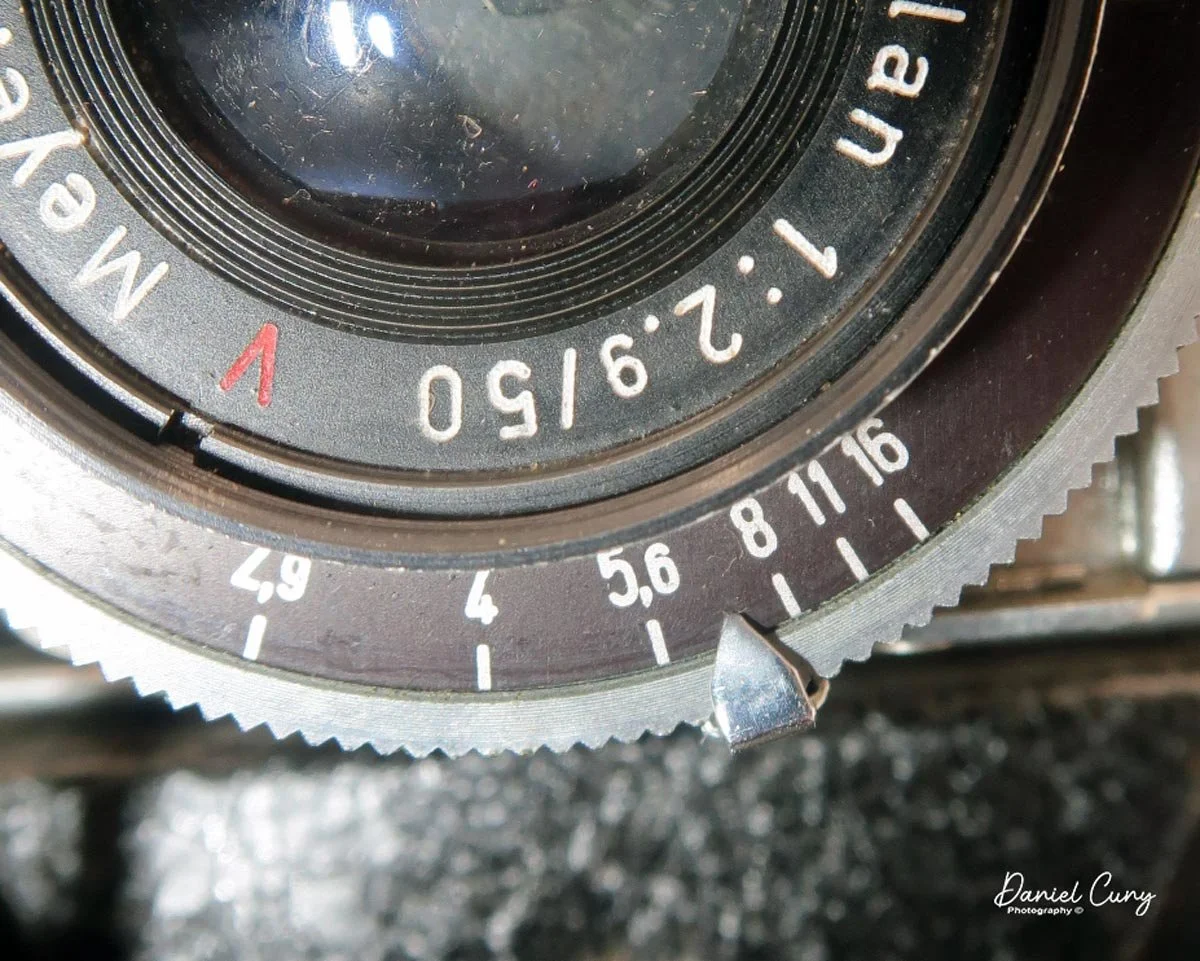
To open the lens door, press a small button at the bottom of the camera, and the lens door opens, exposing a Meyer-Optik Trioplan 50mm f2.9 lens (serial # 1529563), in a Vebur shutter at the end of a small bellows that extends, then the front door is opened.

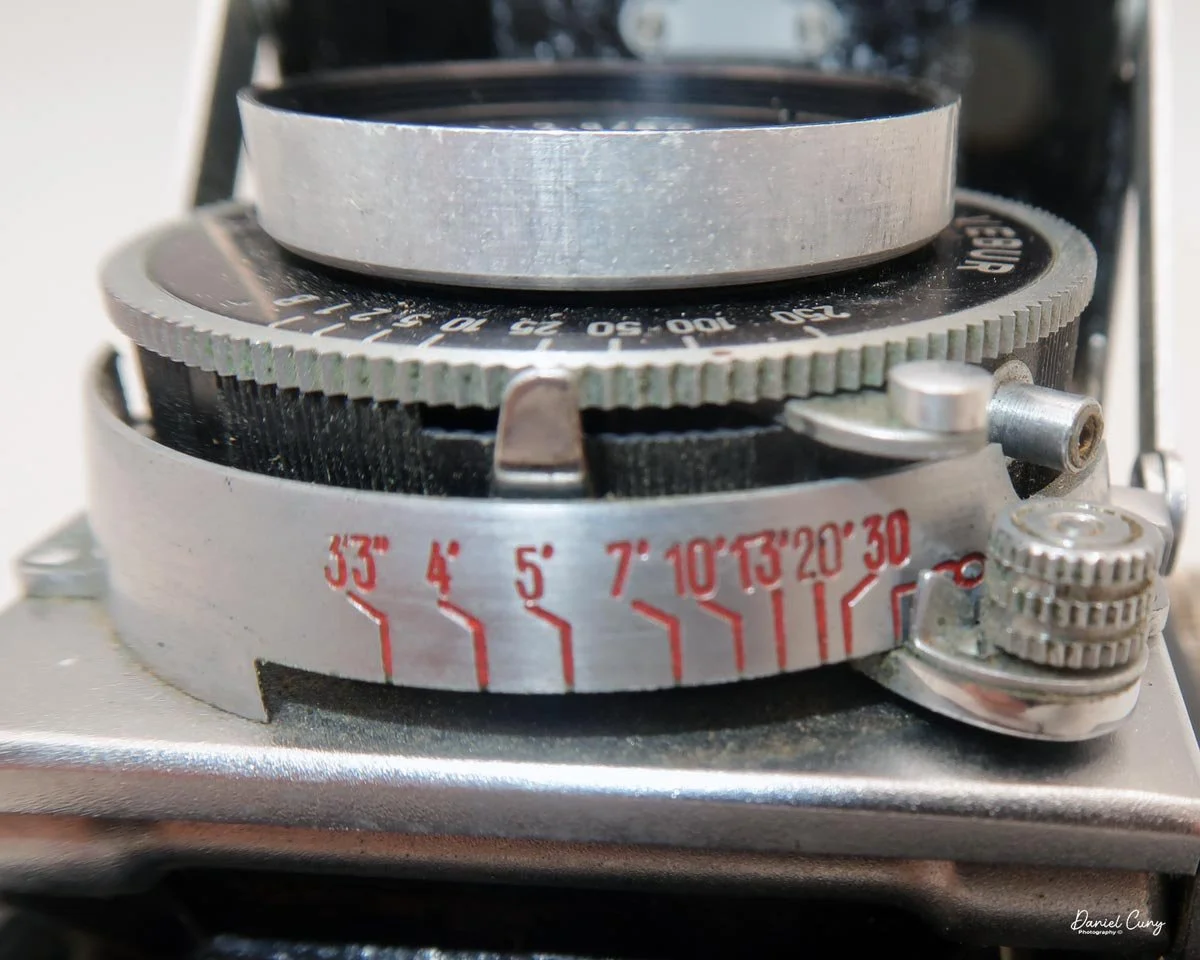
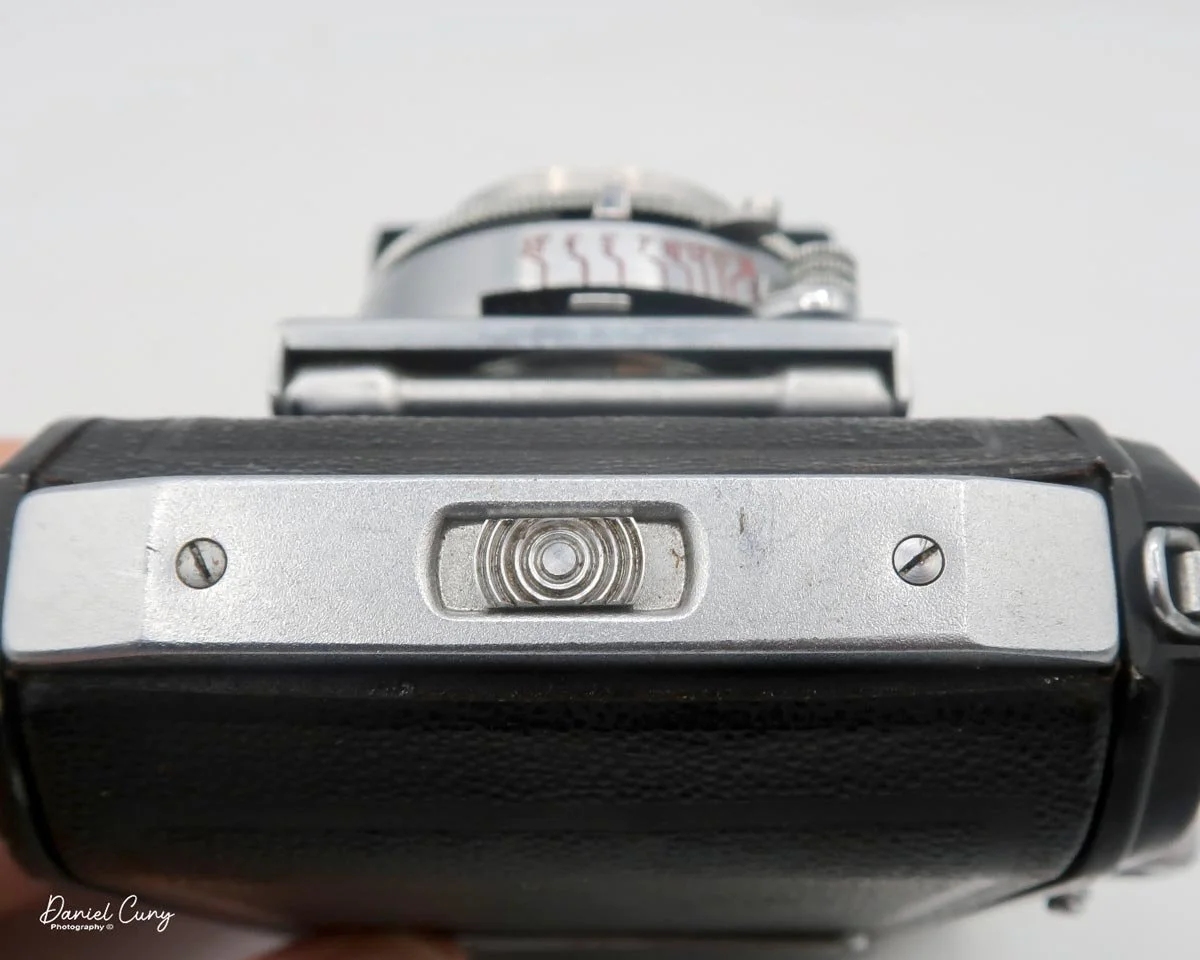
 The shutter speeds range from 1/250 to 1 second, along with "B" for timed exposures. To set the shutter speed, turn a knurled ring on the outside of the shutter, lining up the desired shutter speed with the red dot on the ring. Just behind the shutter speed selector is the shutter cockling lever. You'll need to pull the lever over each time you're going to make an exposure, as there is no automatic shutter cocking mechanism on the Welta Welti camera.
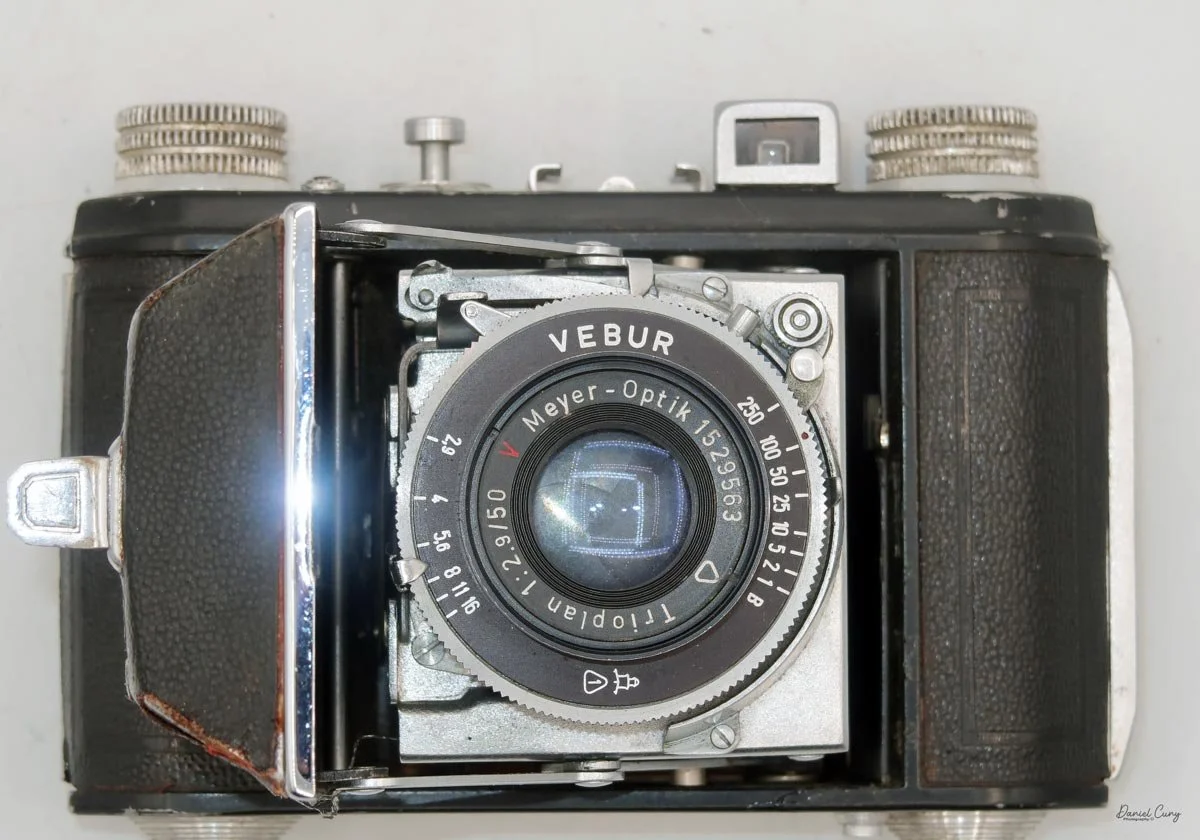
The aperture on my Welta Welti camera ranges from F/2.9 to 16 and is set by a sliding lever under the shutter, below the lens.

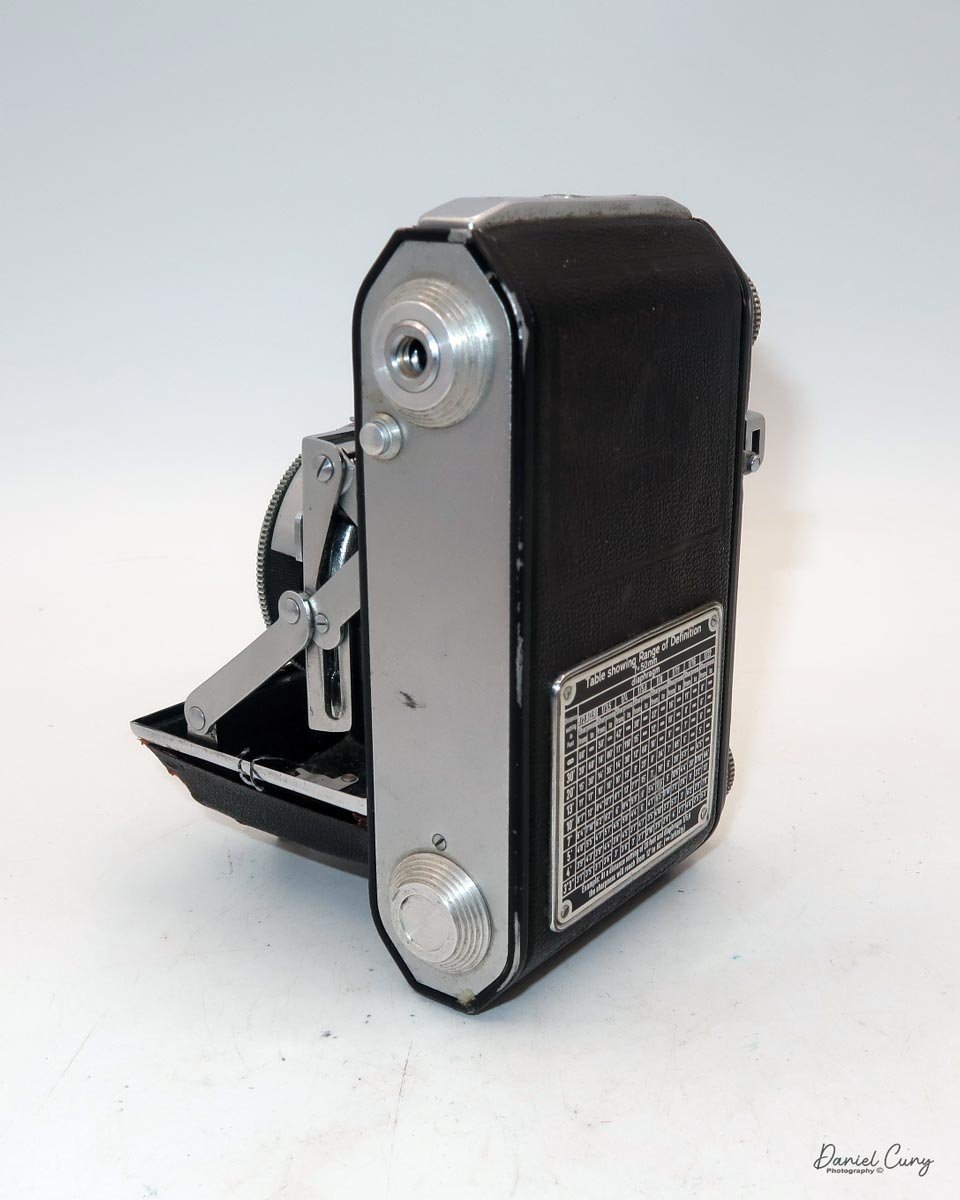
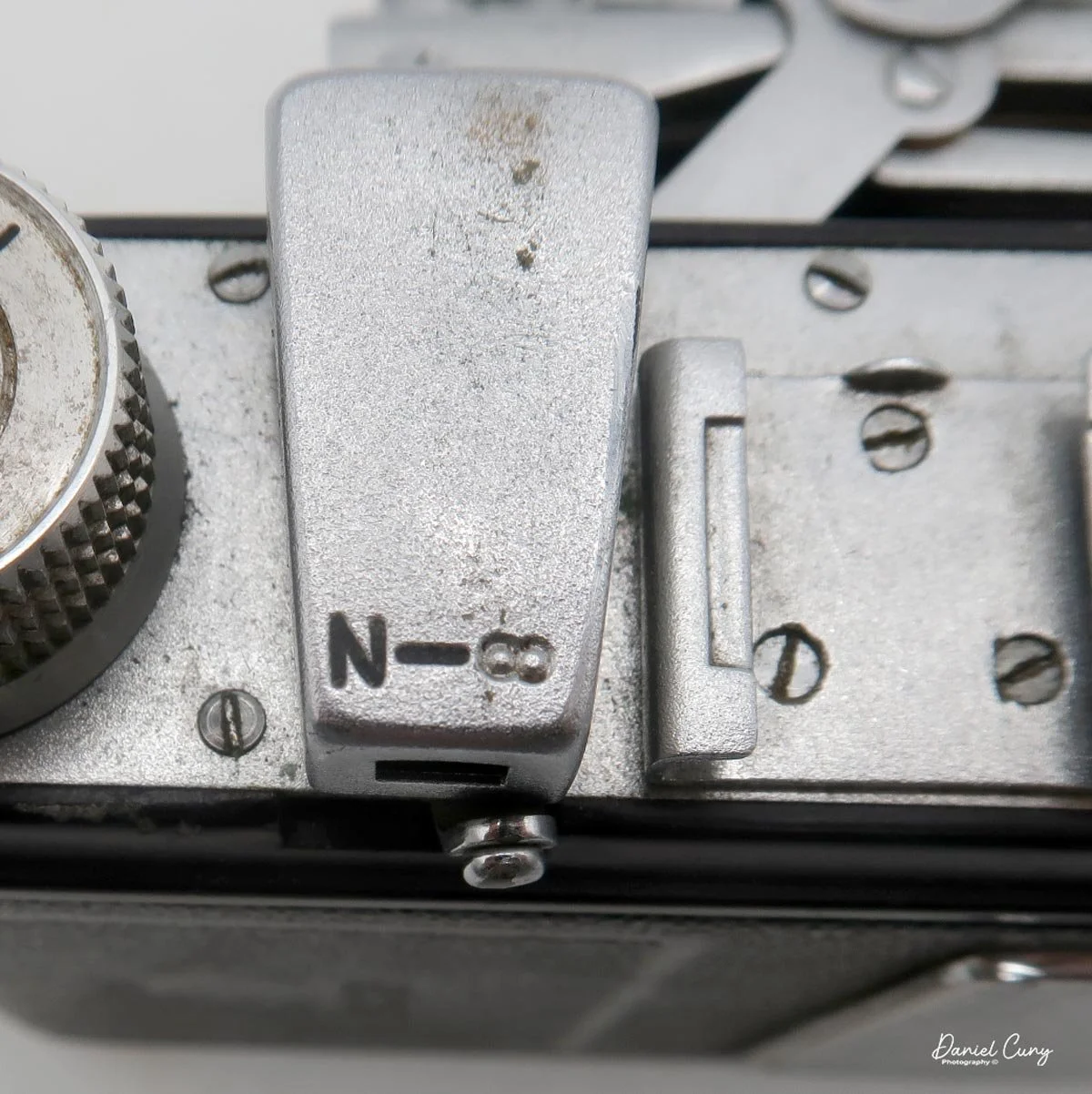
 On the back of the lensboard is a large knob that serves as the focusing lever for the camera. There is no rangefinder or internal focusing on the camera, so the distances you set are just guesses. Sliding the knob to the left or right focuses the lens. The lens can focus as close as 3.3 feet to infinity. At the end of the focus knob is a small pointer that sets the desired distance. 

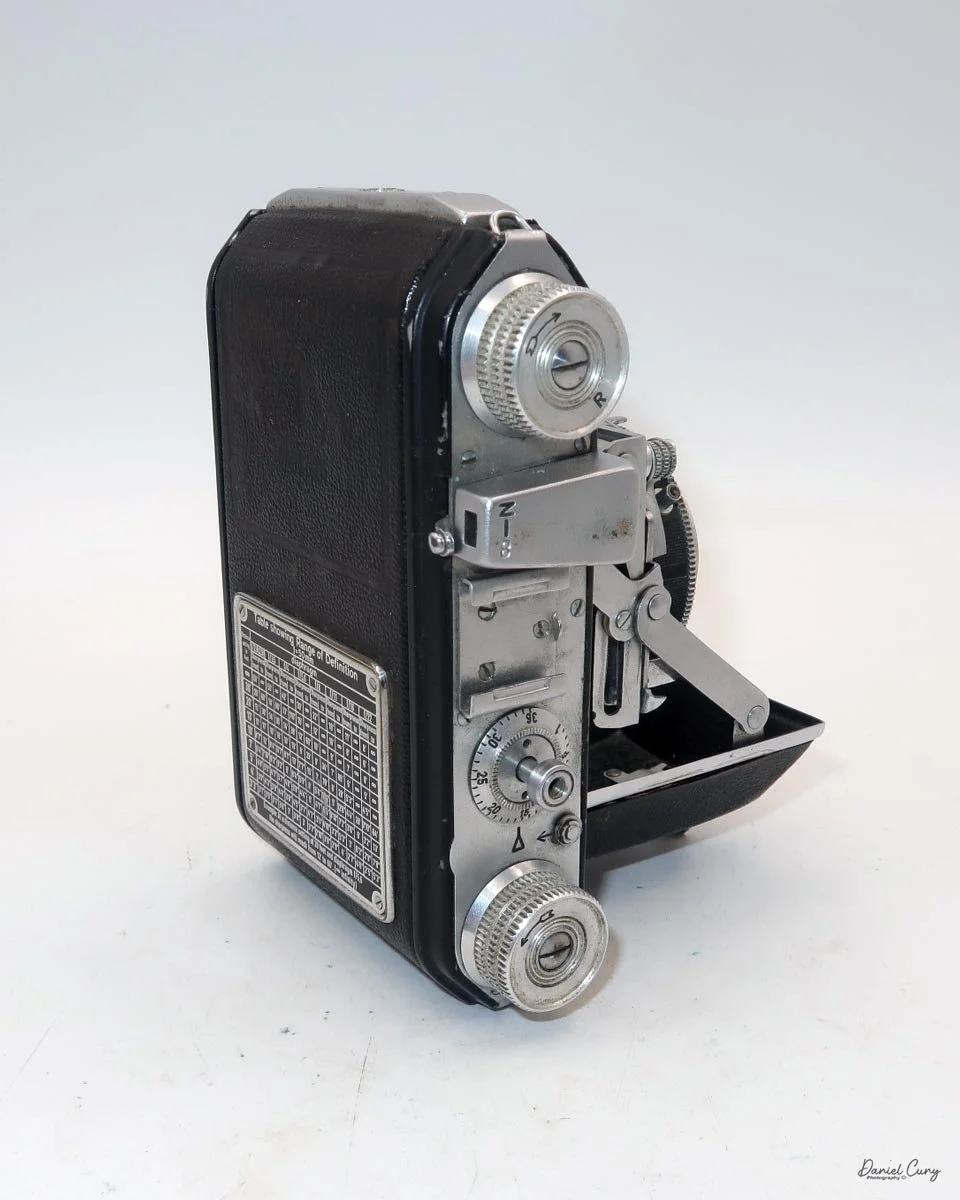
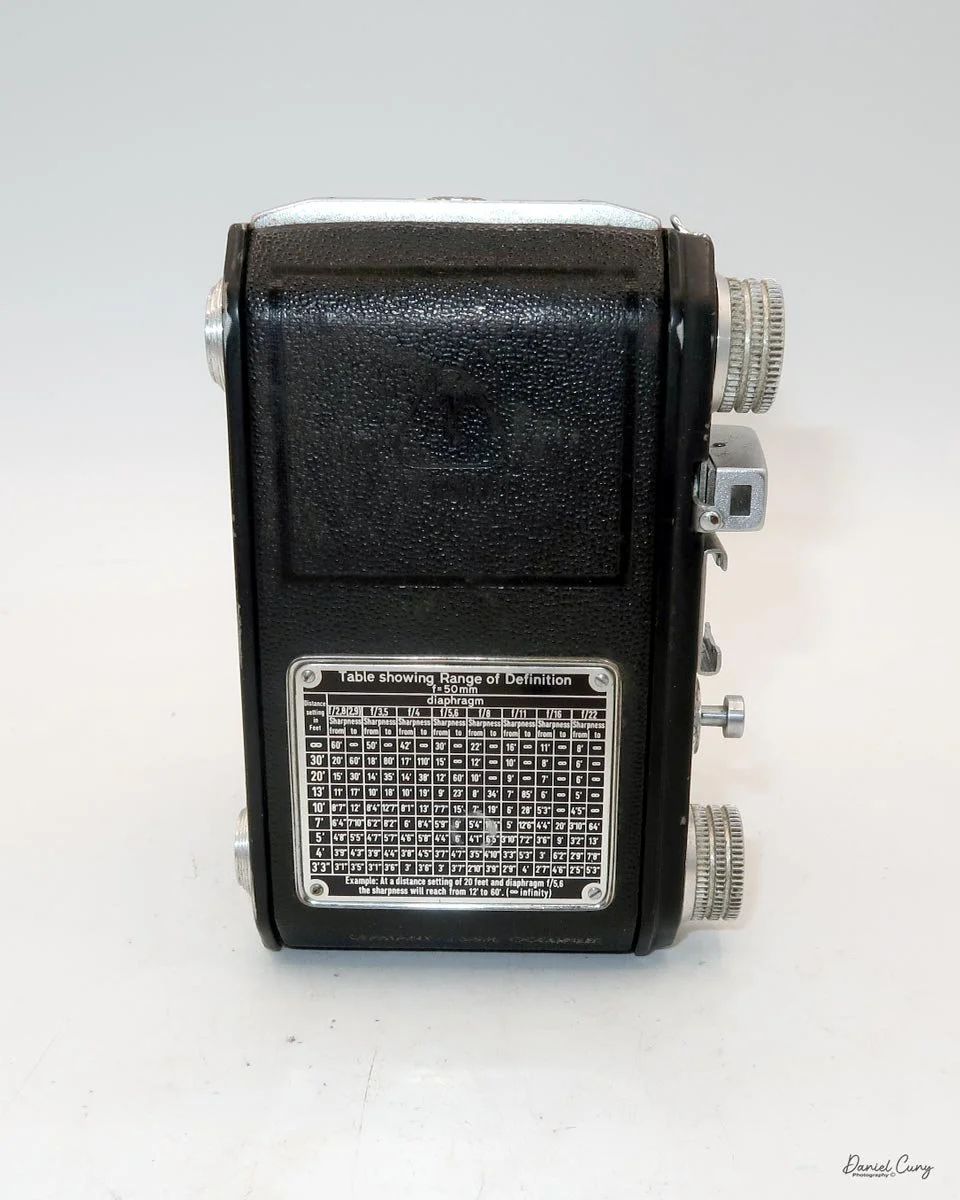
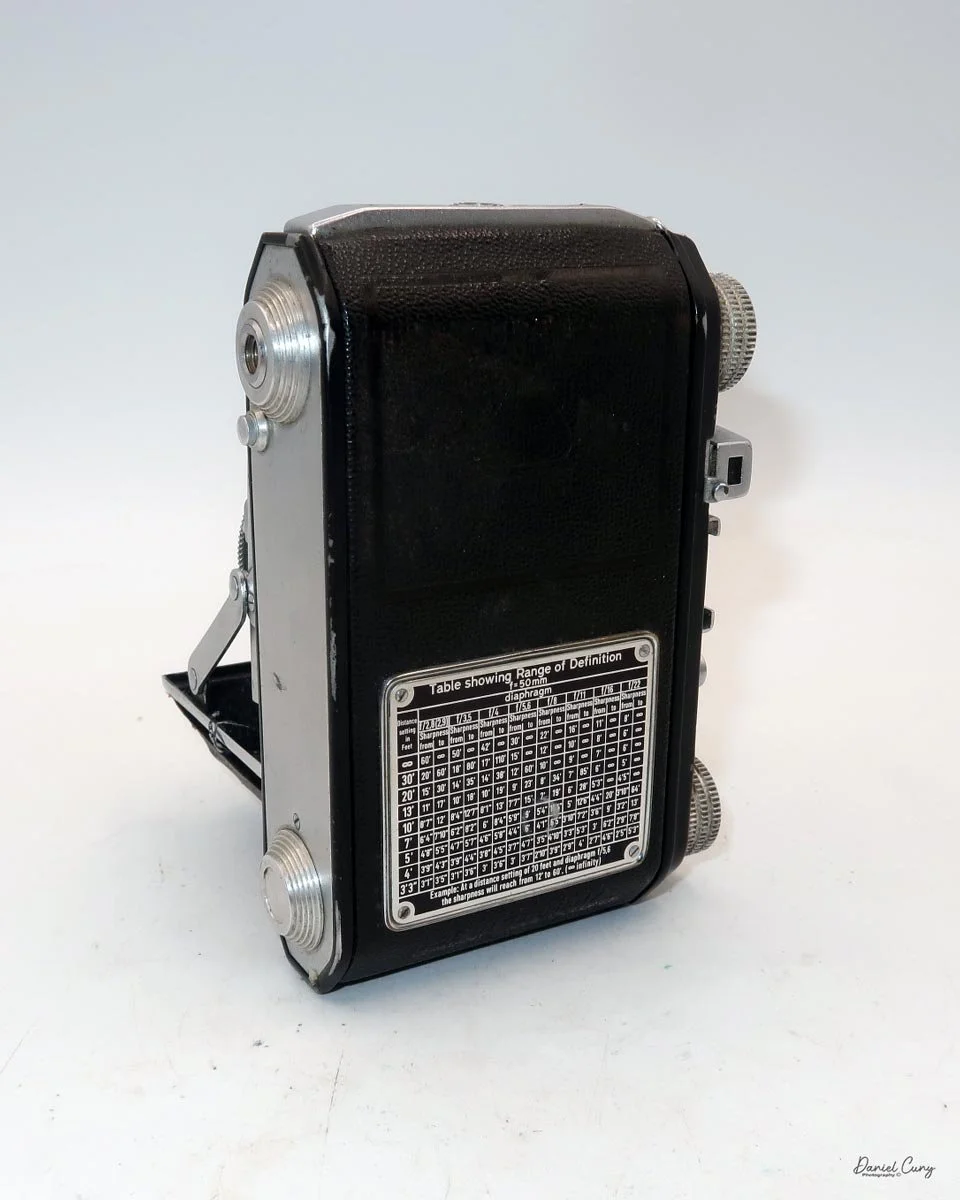
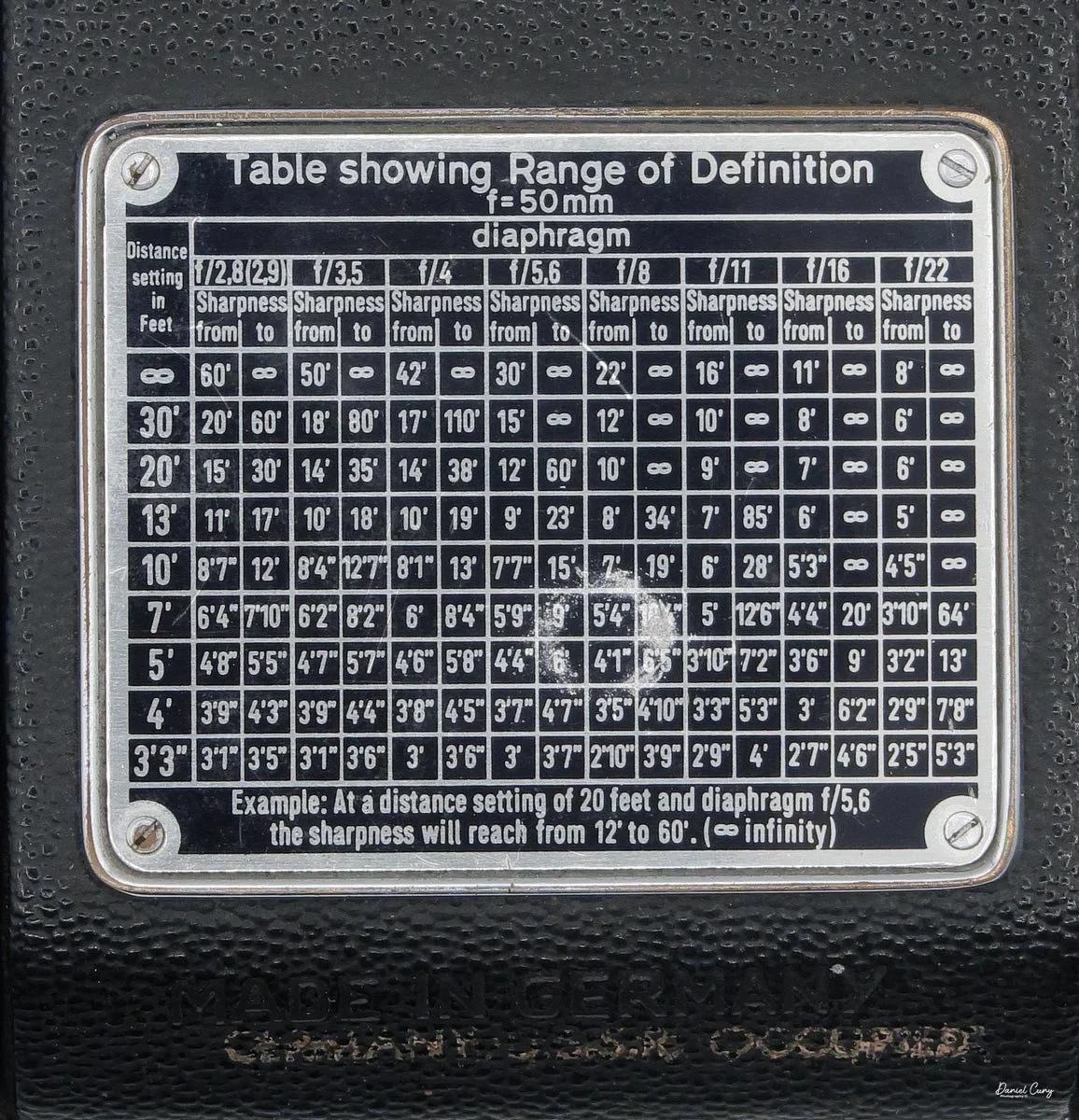
 On the back of the camera is a depth-of-field scale that shows the minimum and maximum distances that will be in focus, depending on the distance the camera is focused to and the aperture set on the camera. 

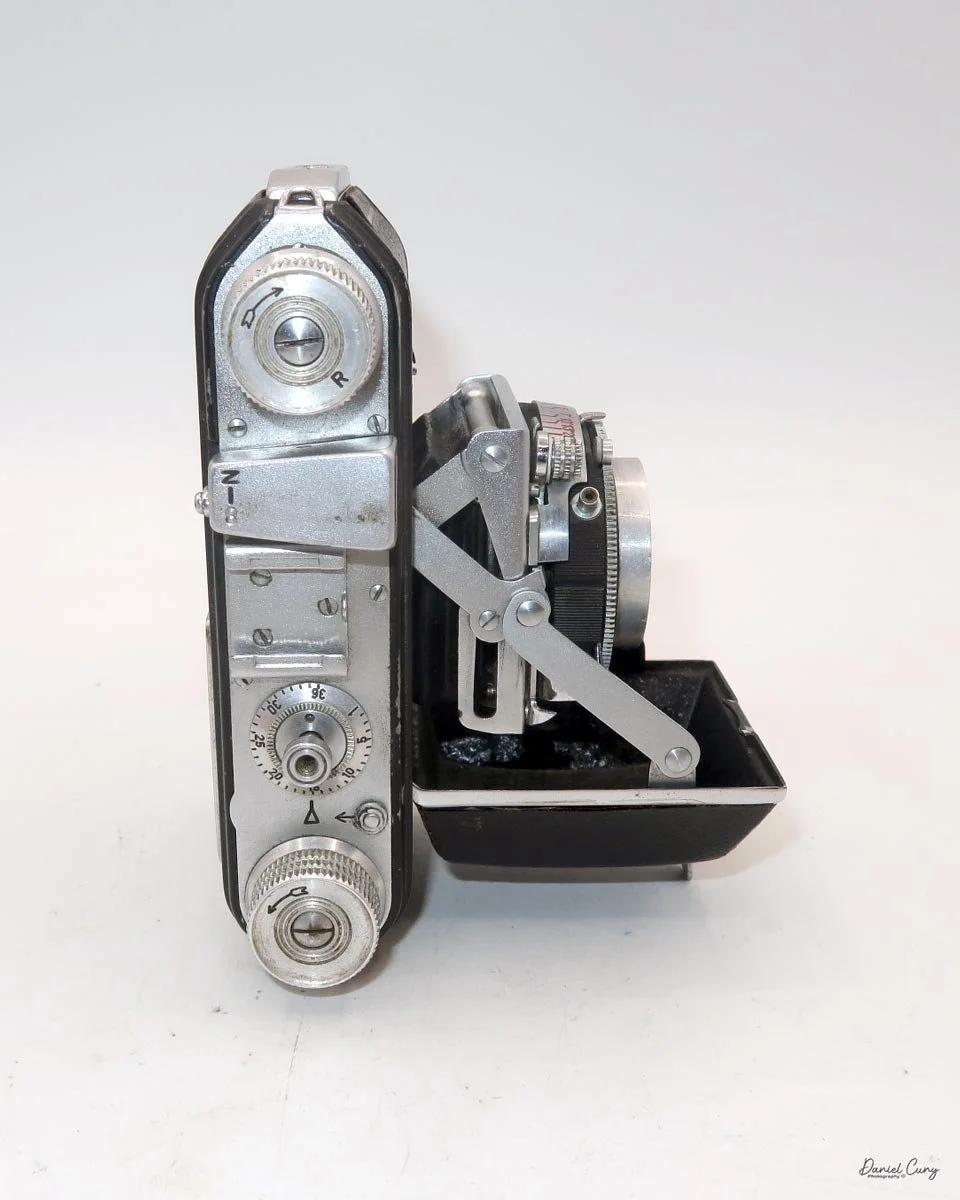
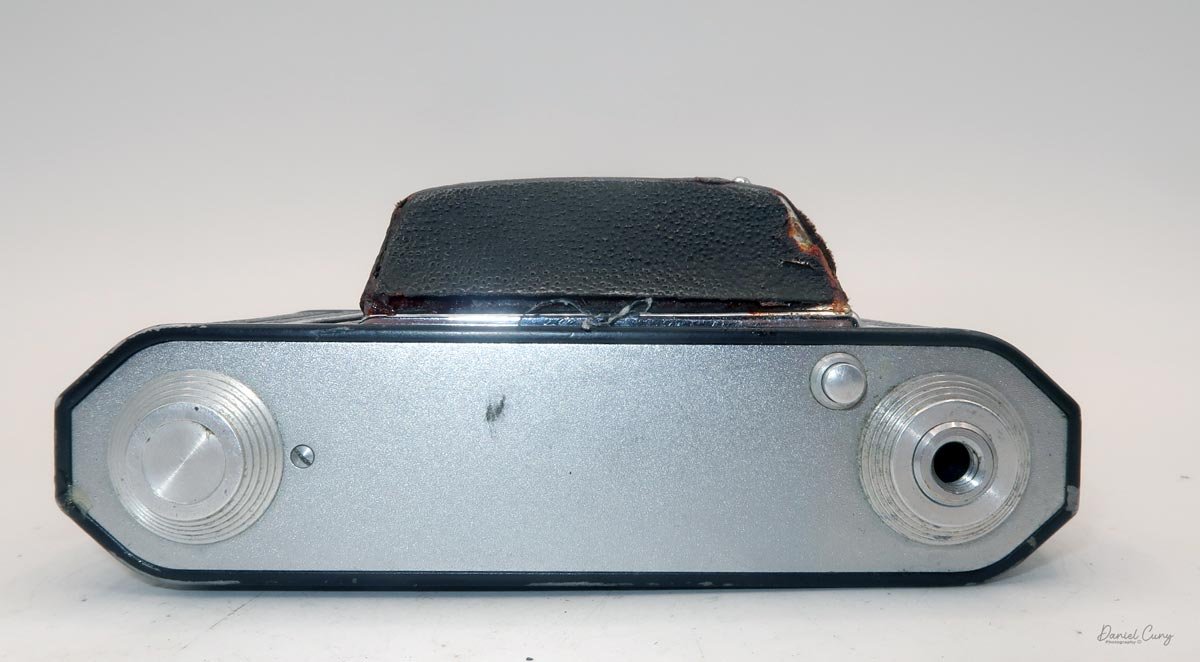
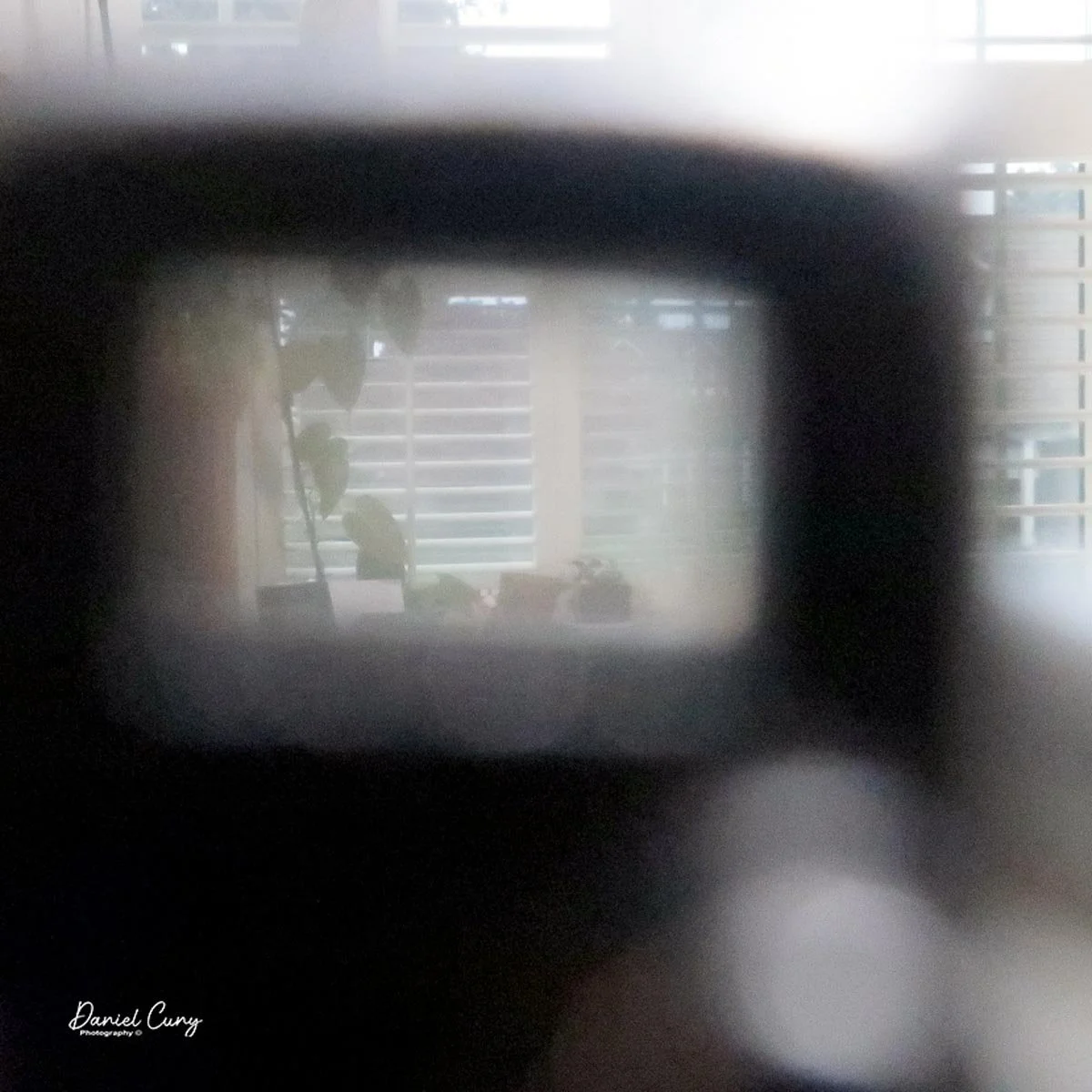
 Looking at the top of the camera, from left to right, is the rewind knob, the viewfinder used to view and frame your image. The viewfinder has a small lever under it that allows it to be pointed level for landscape images and to point down slightly for closer portrait images.
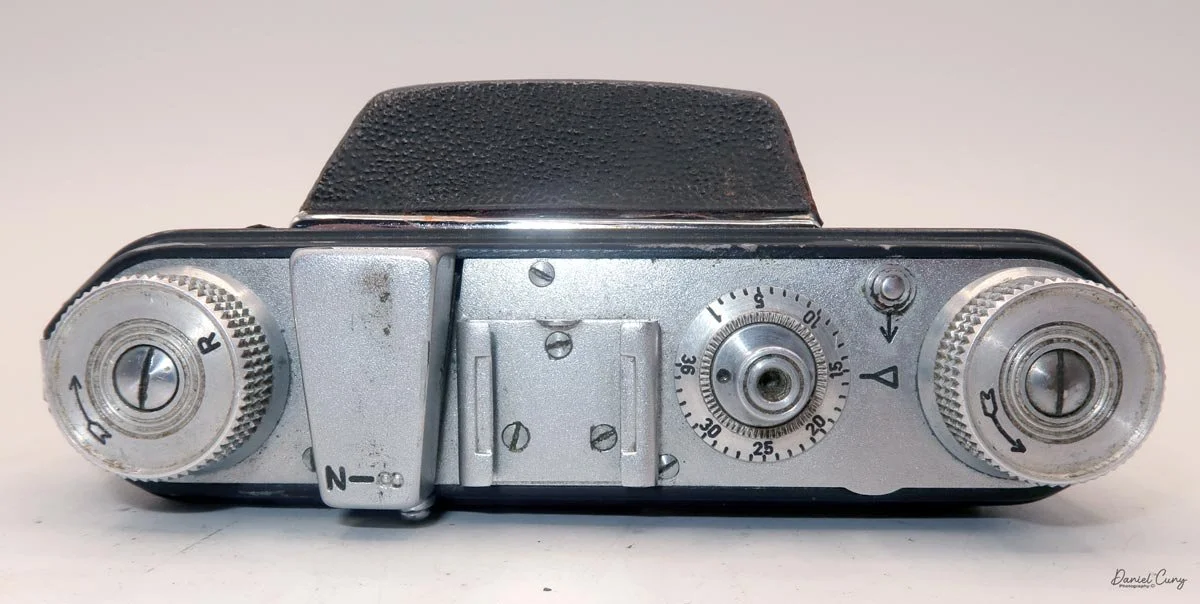
To the right of the viewfinder is a cold shoe that can be used for a separate rangefinder to aid in focus distance or a flash for indoor or night photographs. Moving on to the shutter release inside the frame counter, a small sliding button to unlock the film drive gear for film advance and rewind, and on the far right-hand side is the film winding knob with an arrow on the top showing the direction you turn it to advance the film to the next frame.

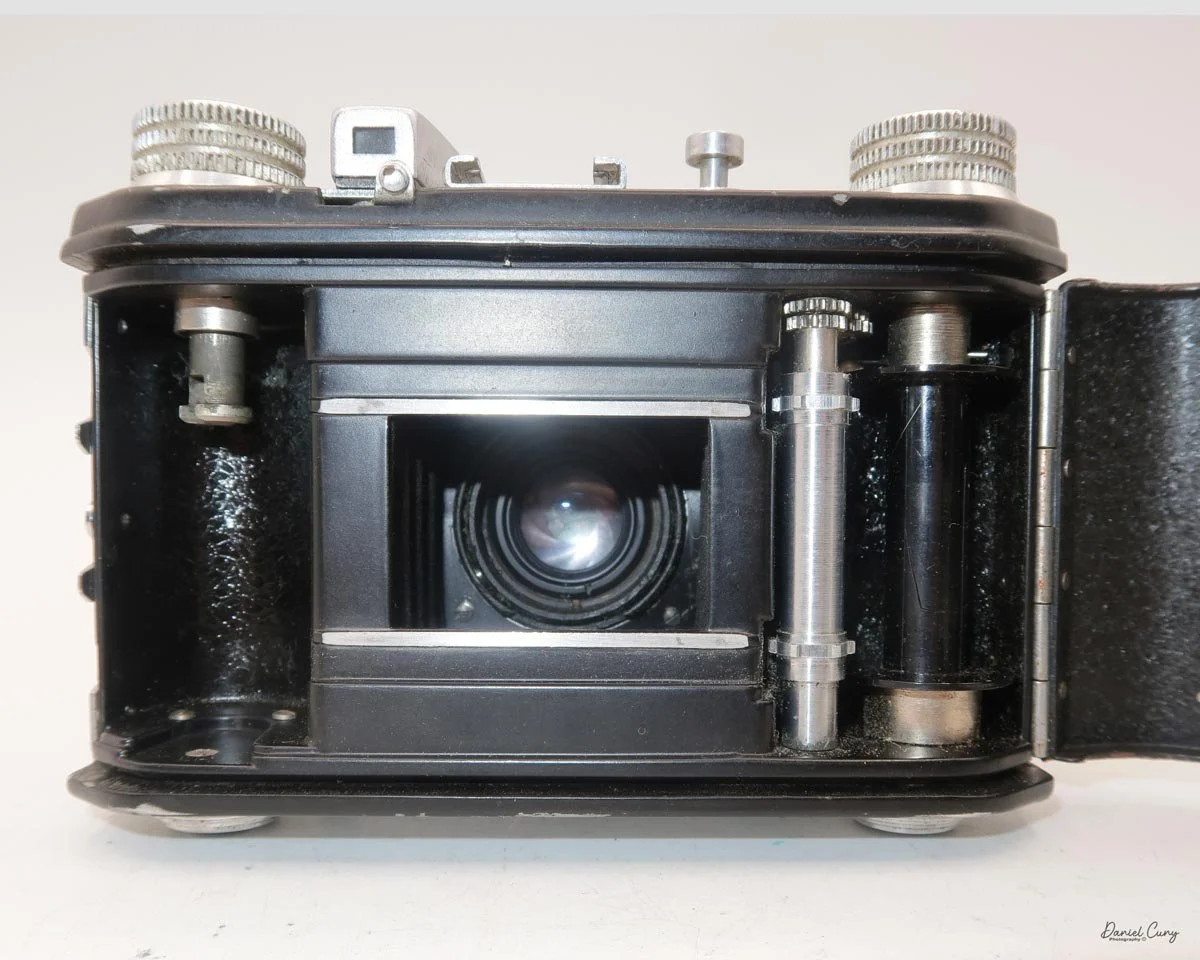
 On the left side of the Welta Welti camera is a lever that opens the film door for loading and unloading film. Opening the film door exposes the inside of the shutter. The camera has a standard film-loading area for a 35mm camera. The take-up spool is on the right side, and right next to it is the silver film drive gear. On the back of the camera door is the pressure plate. Once the film has been exposed, slide back the small lever between the film winding knob and the frame counter, which makes the film drive gear free-moving and allows you to rewind the film into the film cassette without tearing up the sprocket holes.
To close the lens door for transportation, press down on the two angled struts on the side of the lens; the lens and film door will begin to retract into the camera body. Just press it all the way back until you hear a clicking sound, which means the door is shut and won't pop back open by accident. 


My Results:

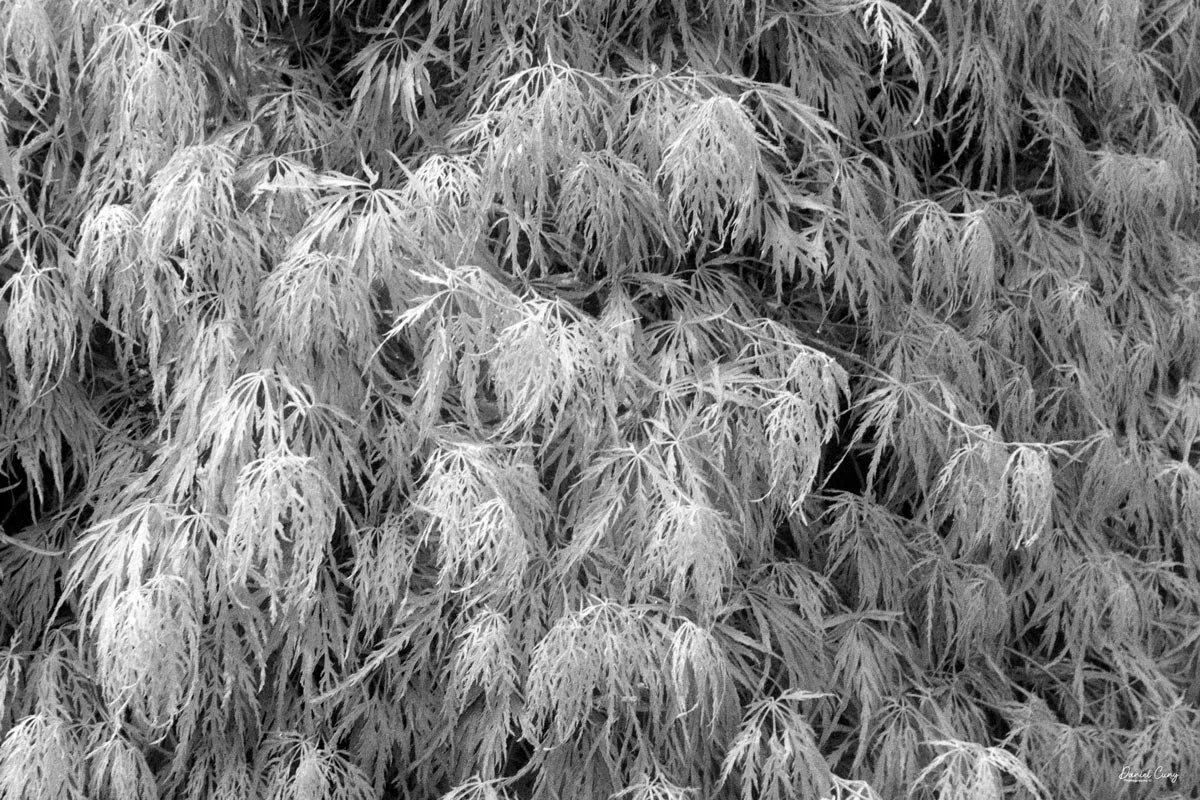
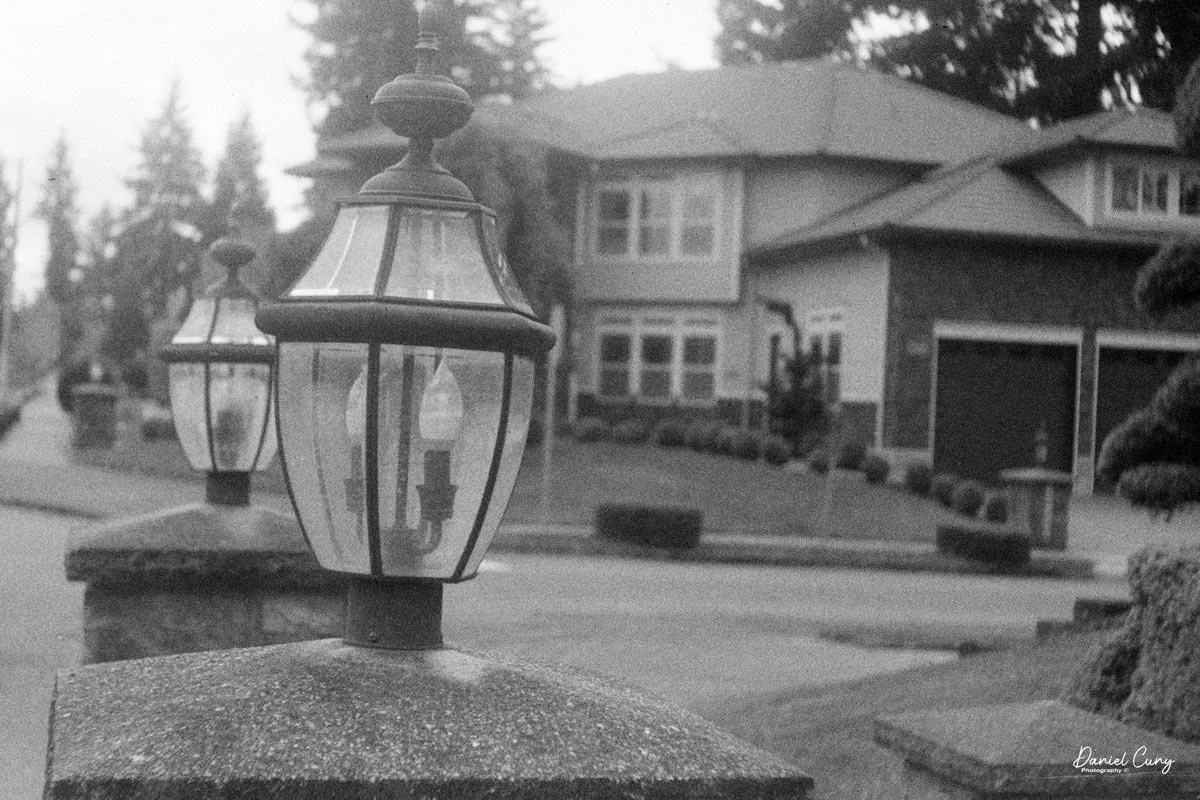
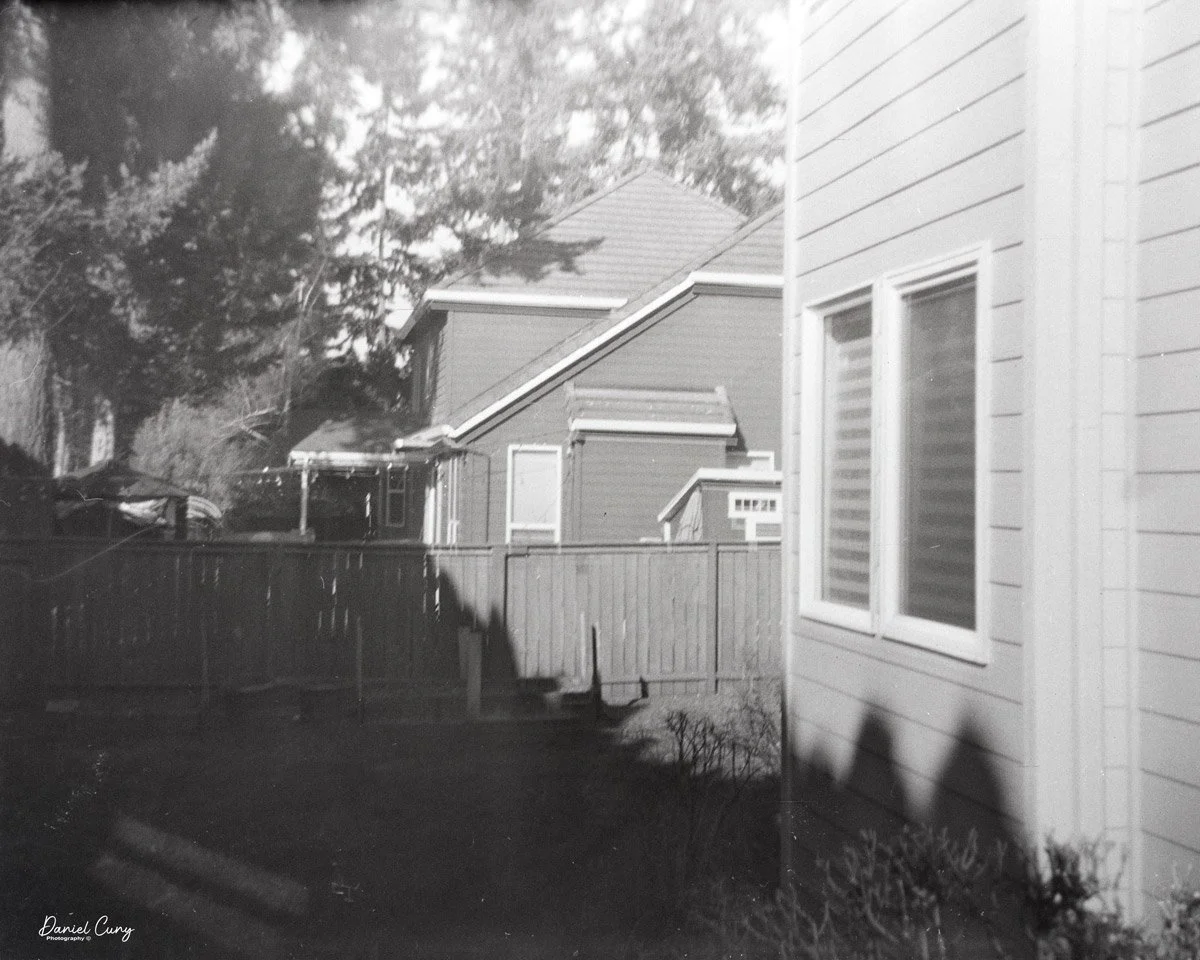
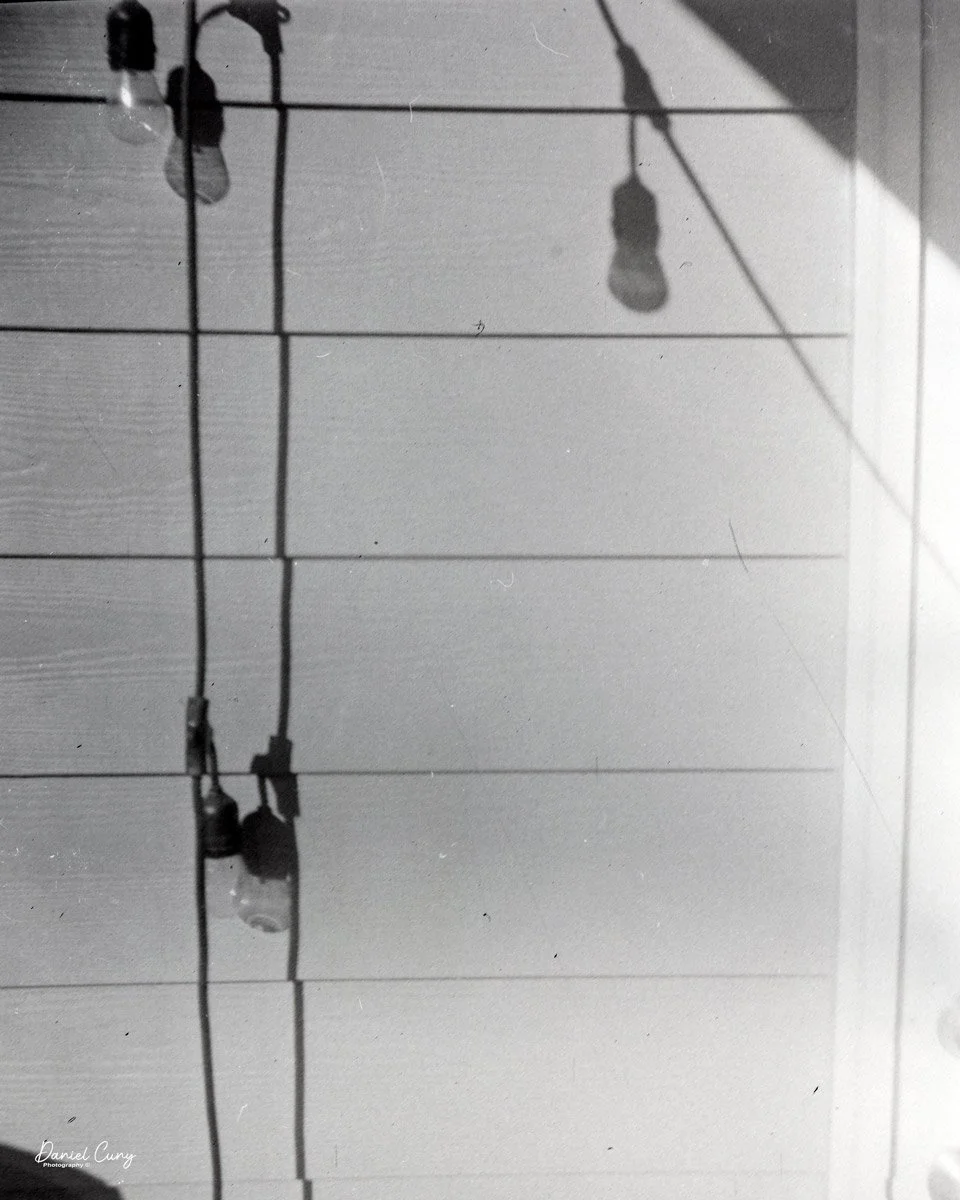
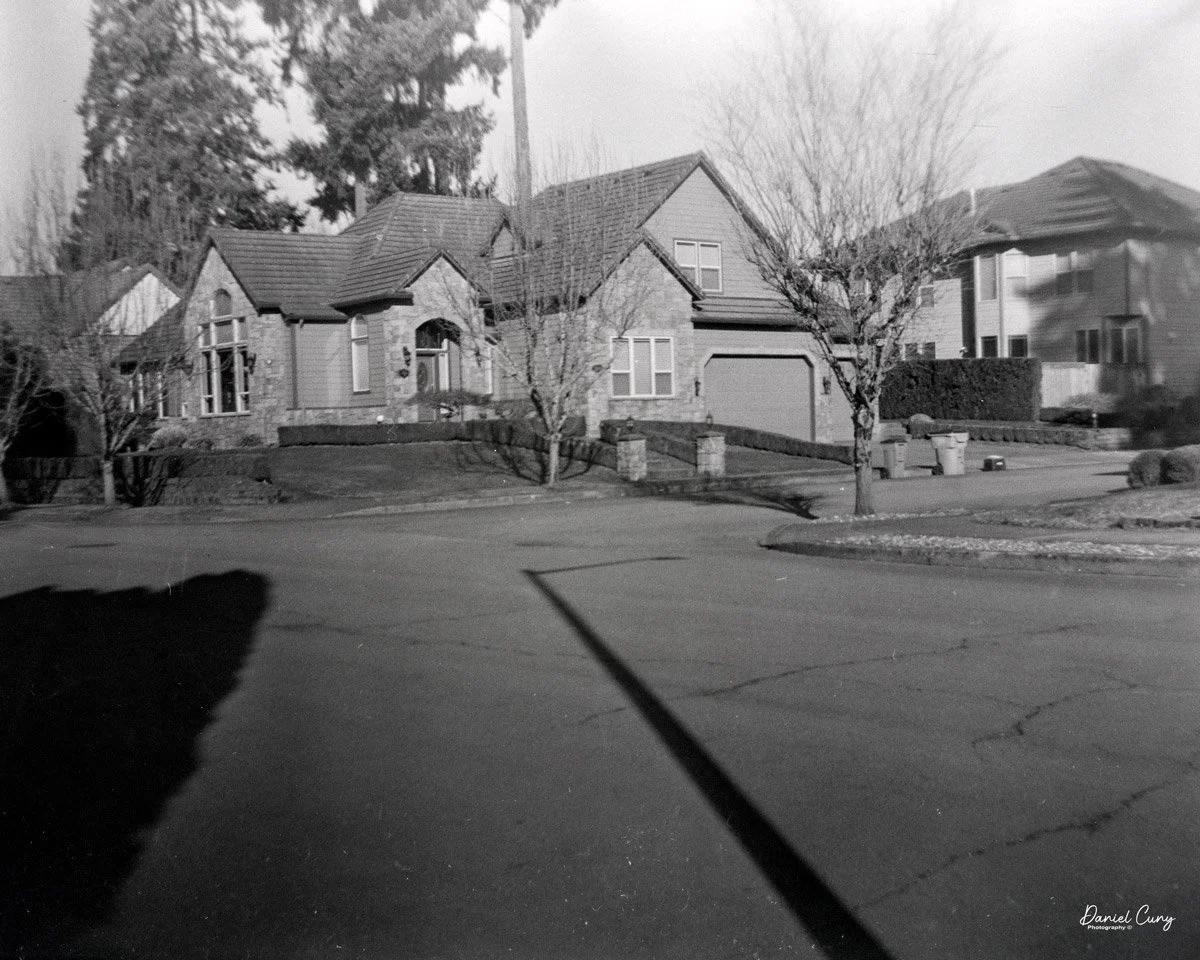
 I have some 200 ISO film in my bulk loader, which I enjoy using, especially for testing 35mm cameras, as I can roll a shorter roll of film into the film cassette and not use up a full roll of 36 exposures for my blog. Rolling about 20 frames into the film cassette, I took the camera for a nice spring day walk through the neighborhood.

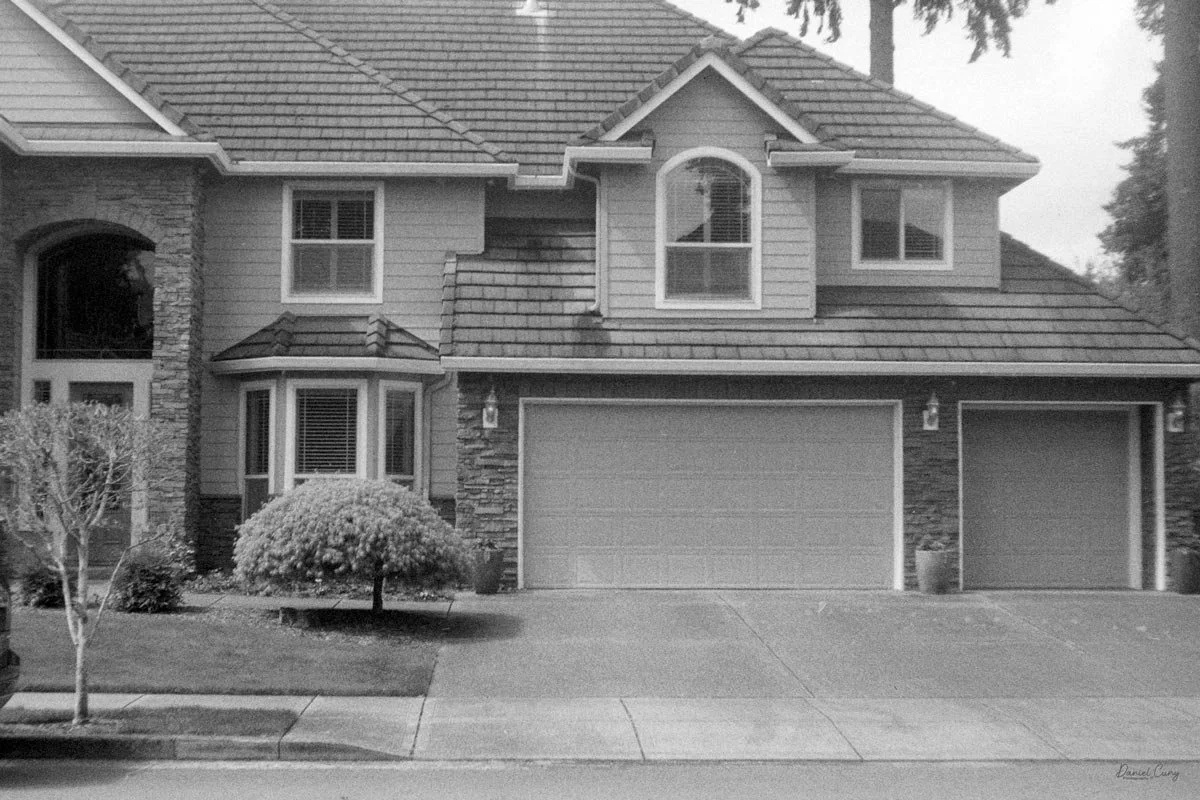
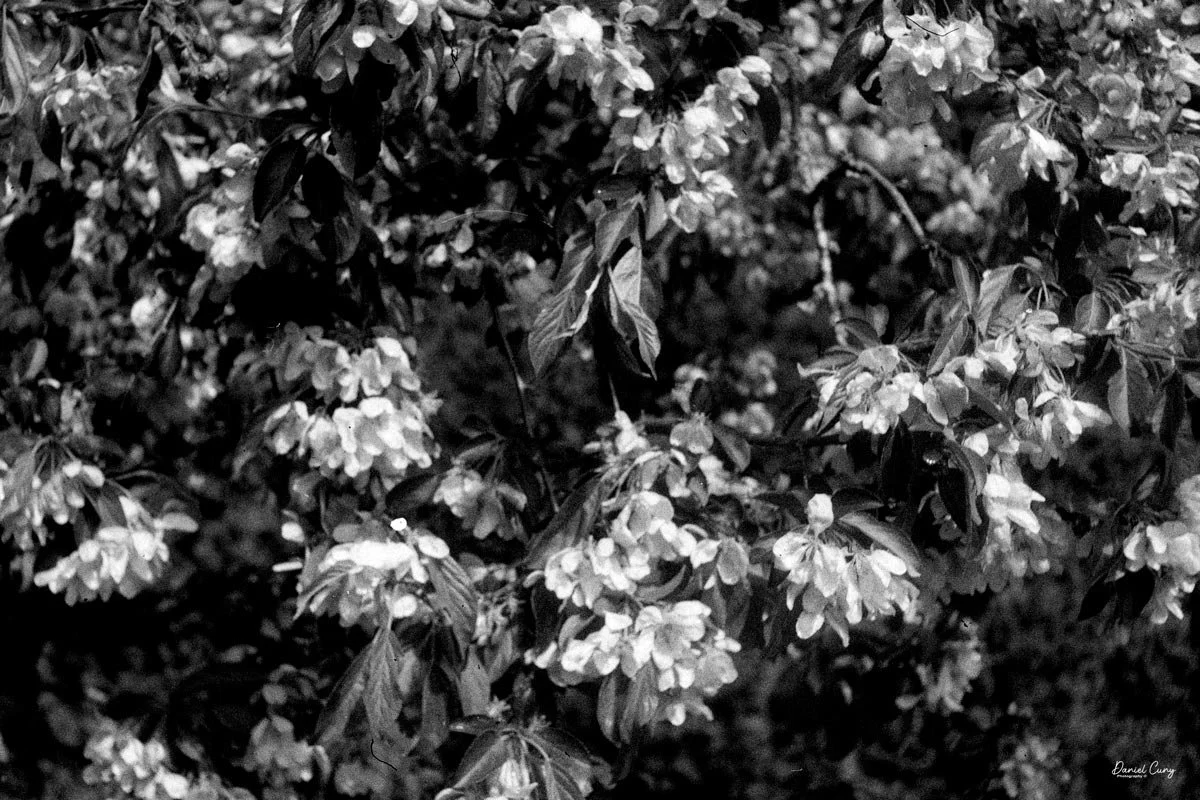
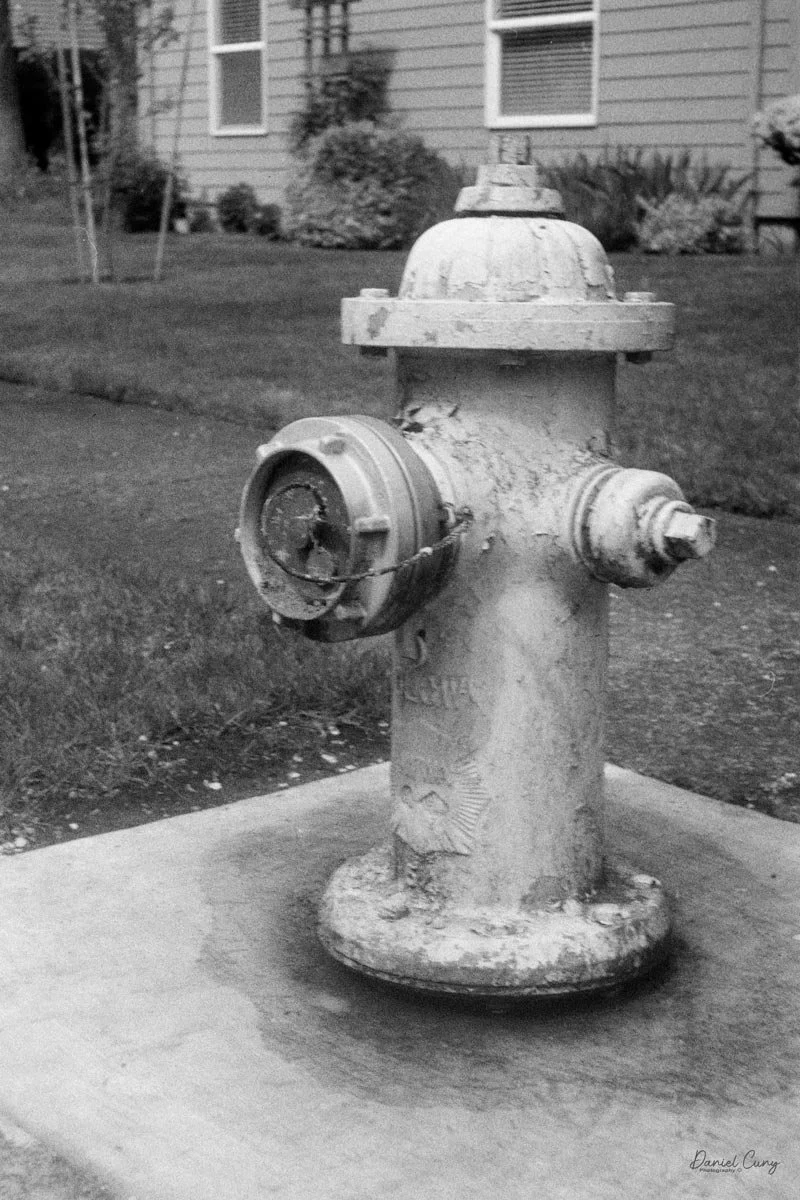
 The flowers and trees are blooming, and the sun is shining. Here are a few of the images I got with the Welta Welti camera.
 Conclusion:

 Looking at the images, they turned out better than I anticipated. The exposures were good, and the focus was enough to produce sharp images, so I'm fairly good at judging distance to the subjects and setting the proper focus distance. I understand that having an external rangefinder for the camera would be helpful, but it would also slow down the process.

 The transport was smooth along with the film rewind. The viewfinder is pretty small, and with glasses, it made it a bit more difficult. That, along with having to remember to cock the shutter each time, was the only real drawback to the camera.

 The Welta Welti is similar to other 35mm cameras from this era, like the Kodak Retina. They are small, pocketable 35mm cameras with a nice range of shutter speeds and good optics. I now understand why I brought the camera to the camera show. It's a nice camera, but I'll probably put it up on my online store for someone else to enjoy.

 Thank you for taking some time from your day to read about this compact 35mm camera made in the late 1940s to early 1950s. Here's a link to the Welta Welti manual. Thanks to Butkus.org.

 I'd love to hear from you about this or any of the other Camera Reviews I've done.

 Cuny's Cameras and Photos is my online eBay store where I sell cameras I've written about, along with other camera oddities I've accumulated over my 50-plus years collecting photo items. 

 I'm taking next week off for my trip to Japan, so I'll see you in a couple of weeks. Please be safe.
Sakura Bakelite camera

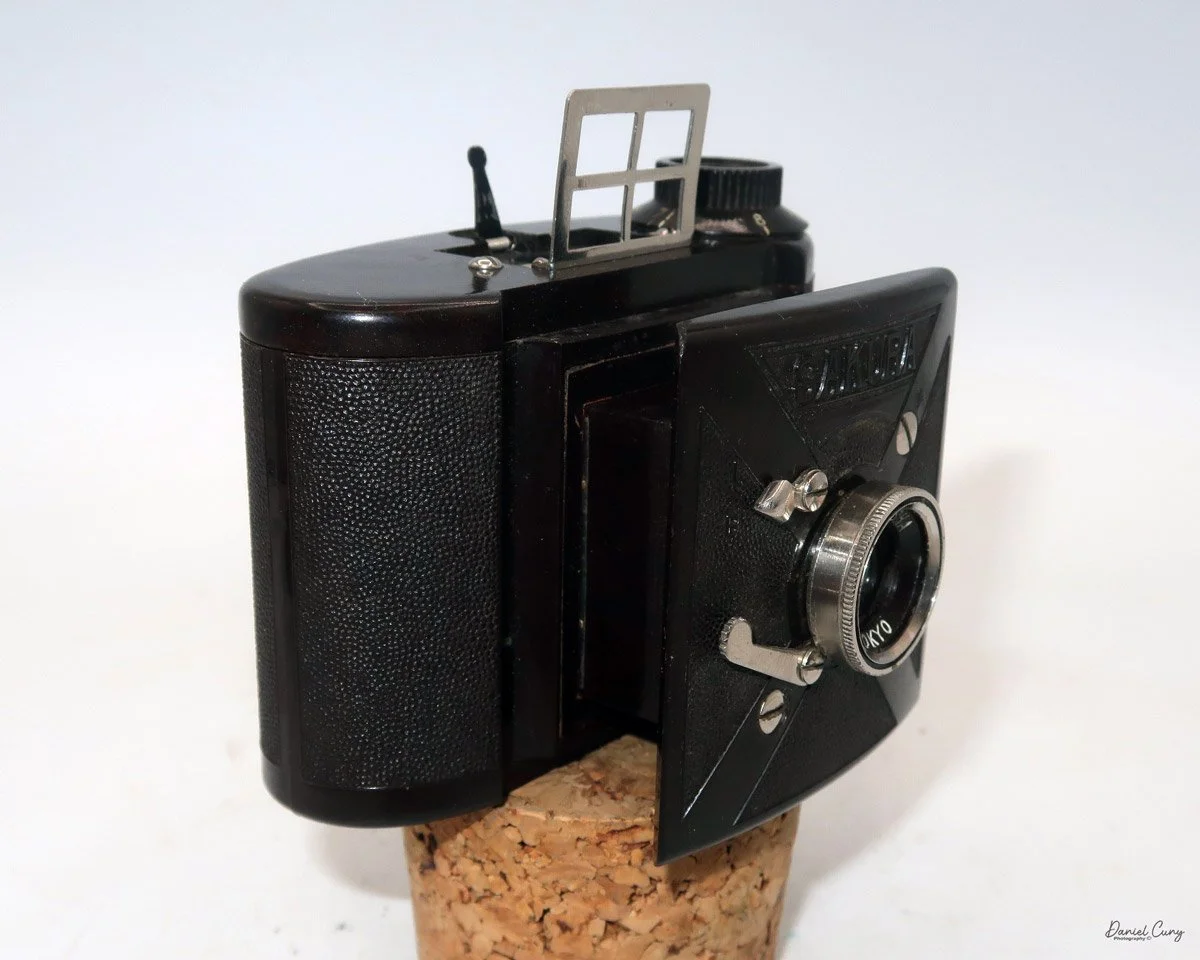
The 1930s Sakura Bakelite: A pocket-sized piece of Japanese history with a surprisingly modern 'X' design.

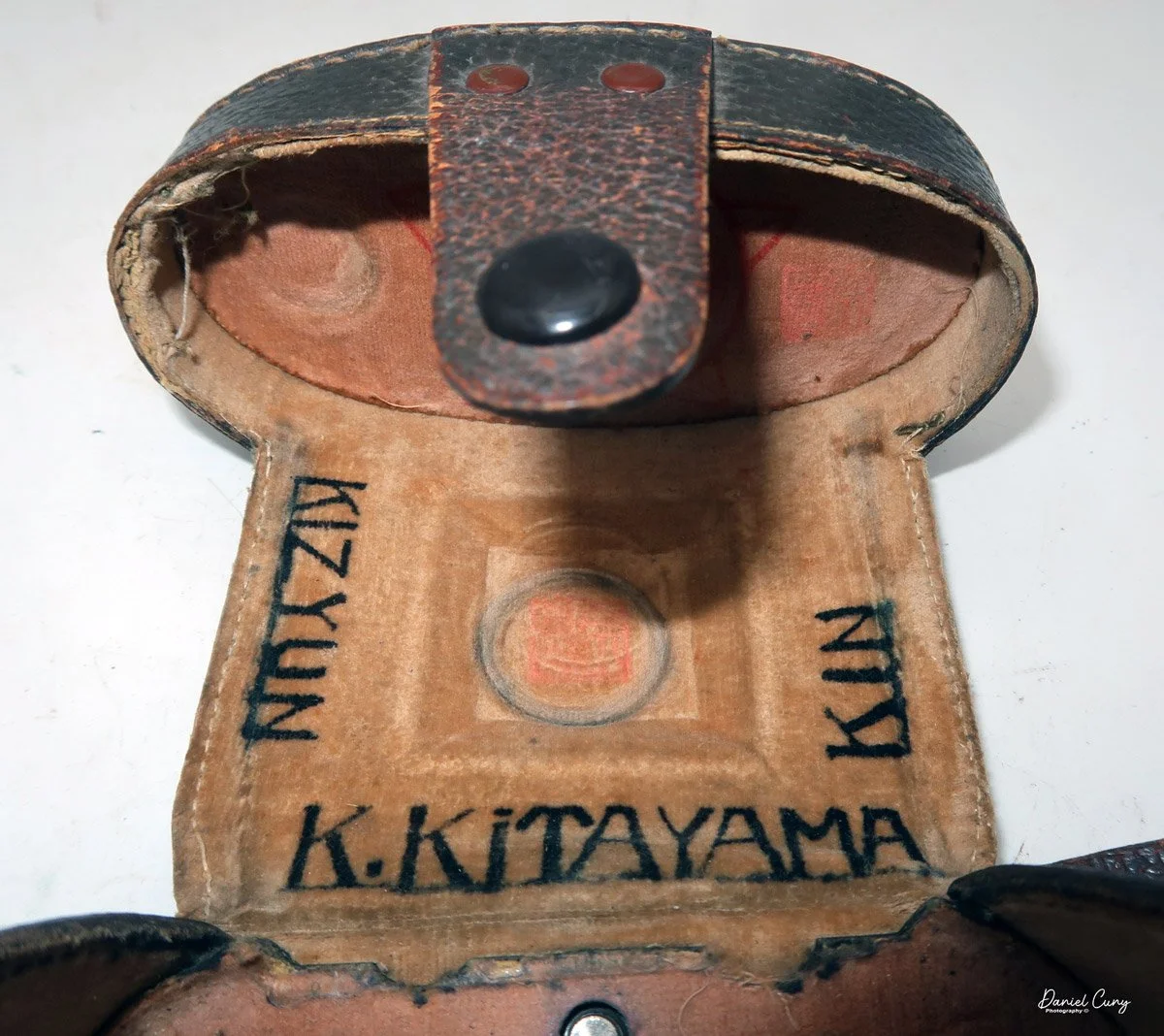
Looking through my camera collection, I wanted to find something more unusual to write about this week. When I picked up the Sakura camera in its case, I didn't think much about it until I opened the camera's case and saw the writing inside. 

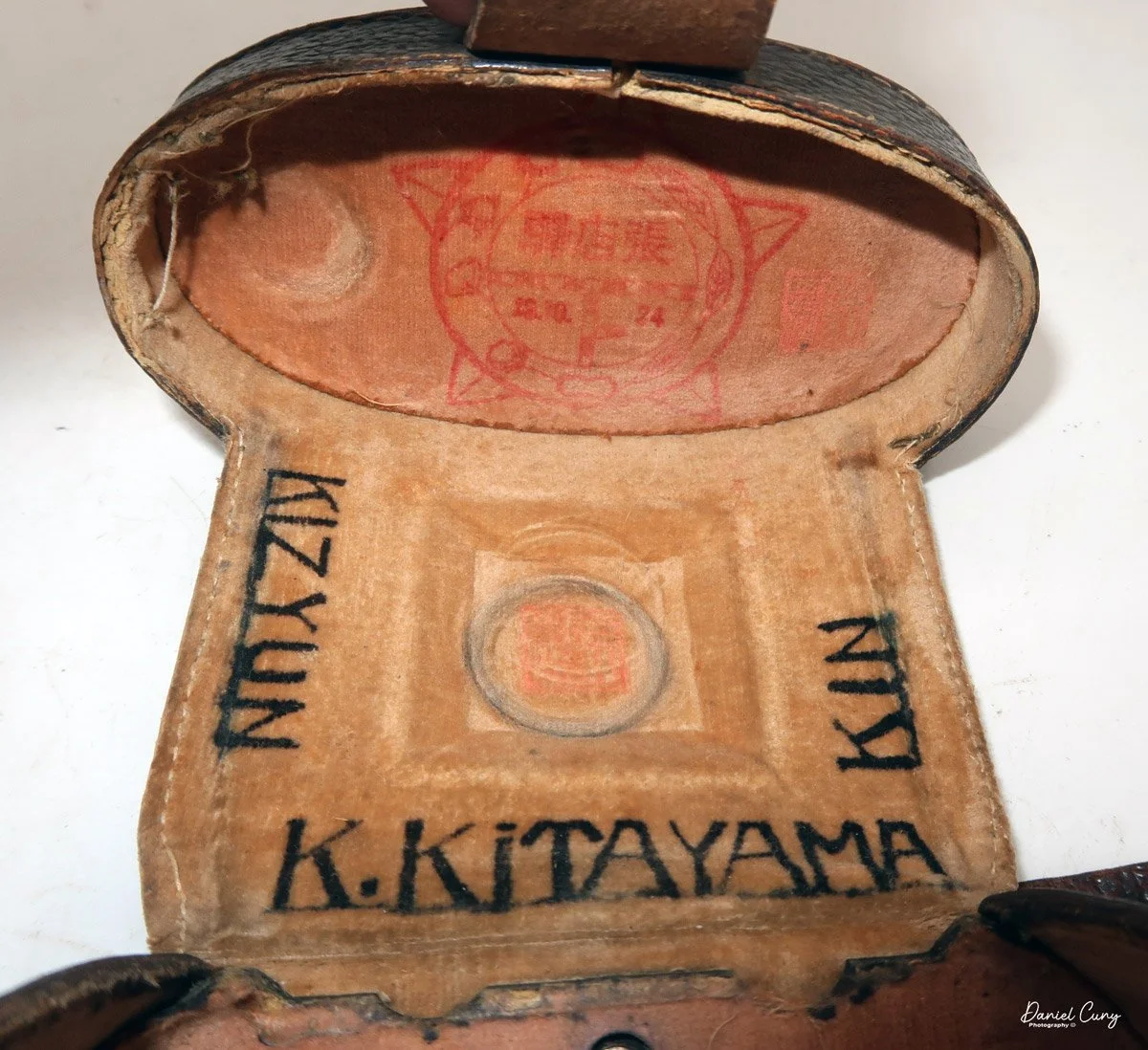
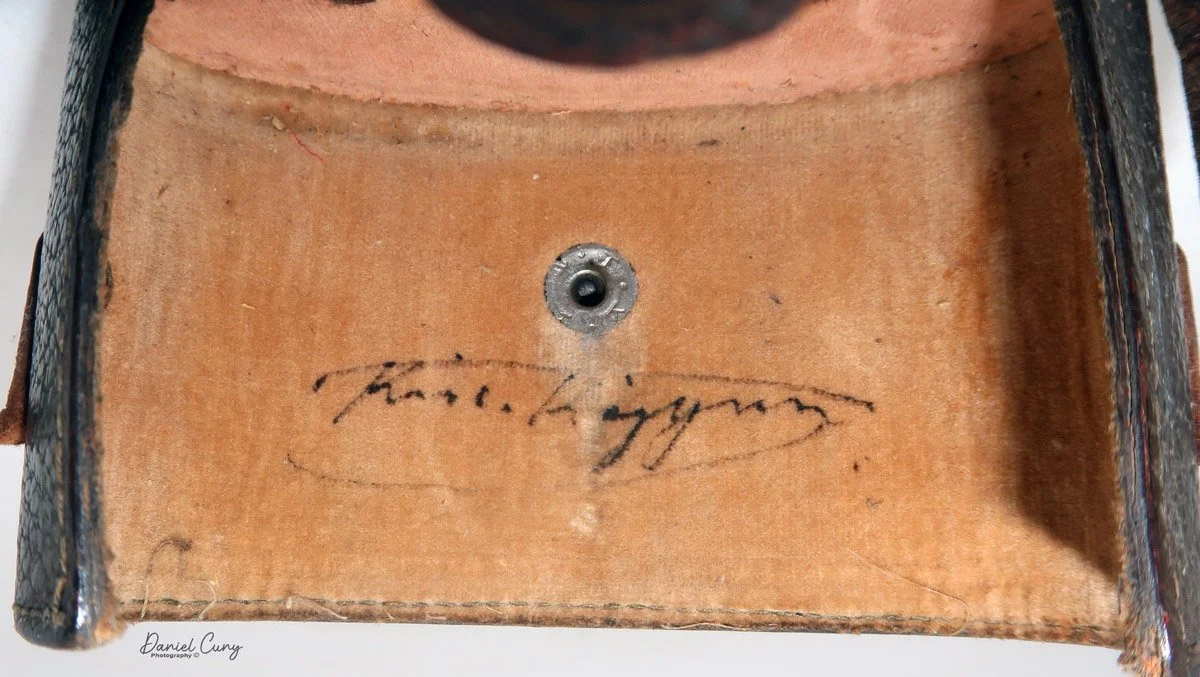
 The writing said, "K. Kitayama" along the bottom, and "kin" on the right and kizyun" on the left, so my immediate thought was to try and do some research to see if I could find the ancestors of the camera, or possibly even the owner of the camera. 

 Since the camera was released in Japan in 1937, I imagined the original owner might still be alive, but the chances are slim. Also, since the lettering was in English and not Japanese, the camera was brought to the US by the owner, but when? 

 Looking more closely at the case, there is a red stamp on the inside top. It appears to be in Japanese, but it's pretty faded; there's also a number "74" that is pretty visible in the lower right corner. So, did the camera enter the US in 1974 when the owner brought it here from Japan, and was it stamped by customs or the Japanese government before leaving?

 Also, when I took the camera out of the case to inspect it for this week's blog, on the back wall of the case is a signature written in ink that appears to be a name starting with K. and Kizyun? I tried many different Google searches for different spellings. While I find these things fascinating, my chances of finding the original owner, or possibly some family members, are very slim. Still, my passion for finding the original owner remains. 

Have you ever found a piece of gear with a name inscribed on it? I'd love to hear your detective stories in the comments.

 Now that I've spent way too many hours going down the rabbit hole trying to find out who the camera belonged to, let me tell you more about the camera itself.

My Sakura Bakelite camera

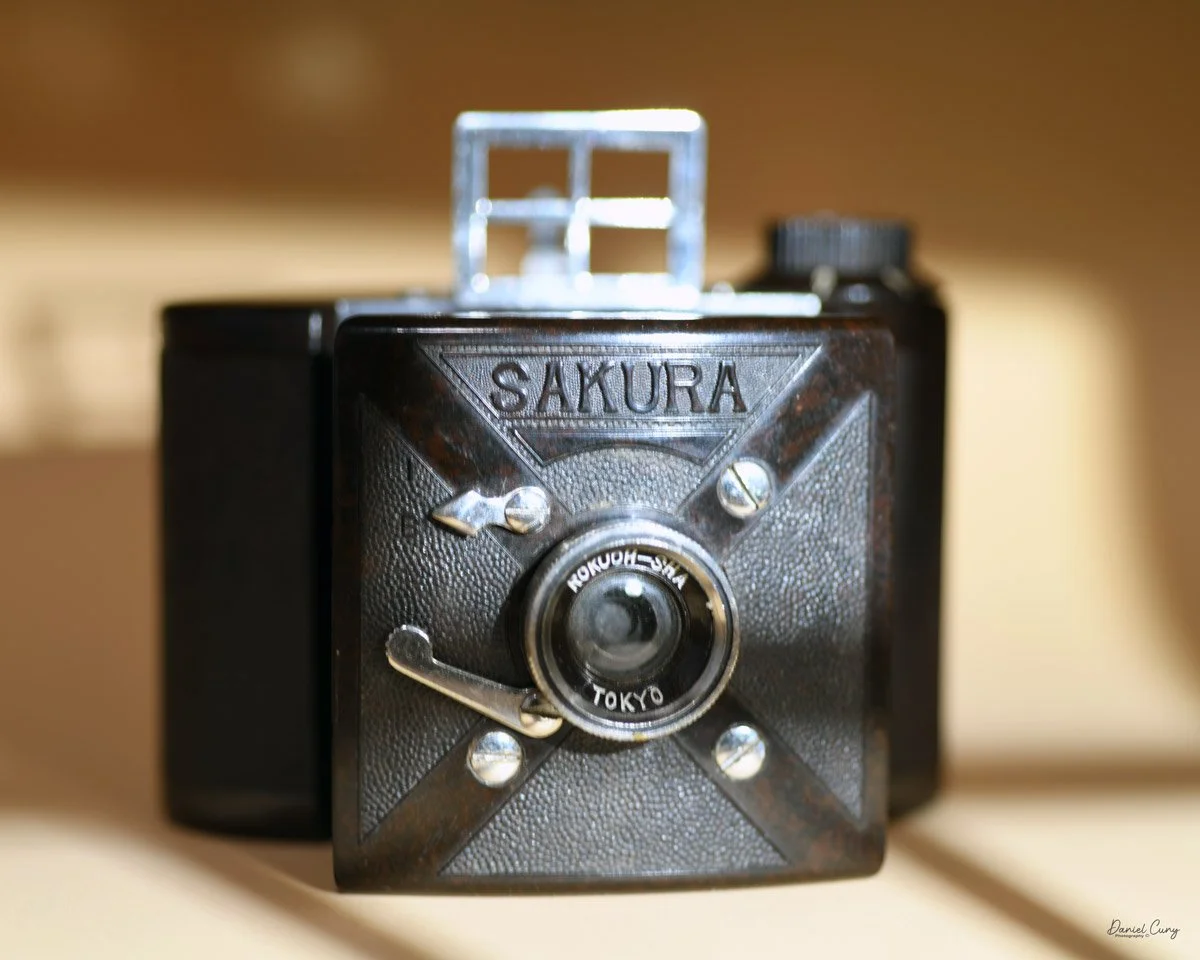
 The Sakura (Bakelite) camera is an odd, oval-shaped model made by Konishiroku in the late 1930s. Konishiroku was the original company that became Konica. While the Sakura camera is a very basic model that I'll describe below, I understand it's rather rare.

 Sakura, meaning "Cherry" in Japanese, was a short-lived brand produced by Konishiroku during the 1930s. Their most popular items were a series of 3 different, beautifully colored, Sakura Box cameras. One of the cameras used 127-sized film for its 4x6.5cm format. In contrast, their larger cameras were 4.6x6cm or 6x9cm format cameras on 120 film. These cameras are also very collectible and rare items.


Konishiroku Before World War II:


The story of Konishiroku (the predecessor to Konica) is essentially the birth of the Japanese photographic industry. Long before it became a global imaging giant, the company began in 1873 when Rokusaburo Sugiura began selling photographic and lithographic materials at Konishiya Rokuemon, a traditional pharmacy in Tokyo.

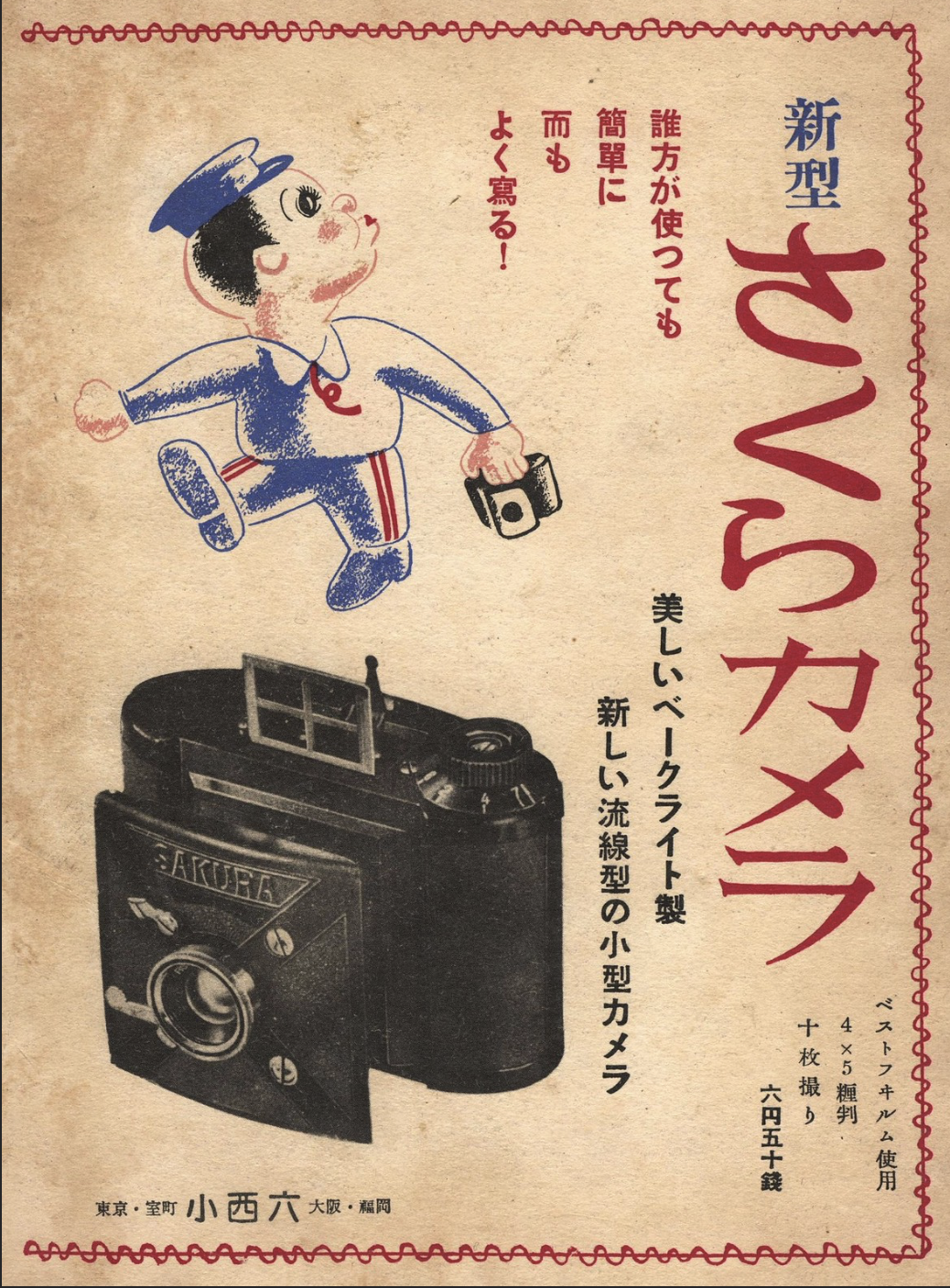
Ad for Sakura camera from Camera-Wiki

 By 1876, Sugiura moved the photographic department to a dedicated shop called Konishi Honten. This move was visionary; at the time, photography was a fledgling Western import, yet Sugiura foresaw its cultural and commercial potential in Meiji-era Japan.

 In the late 19th century, Japan relied almost entirely on imported cameras and chemicals from Europe and America. Konishi Honten sought to change this. In 1902, the company established the Rokuoh-sha factory in Tokyo, marking a pivotal shift from a mere retailer to a pioneer manufacturer.

Just one year later, in 1903, they released the Cherry Portable Camera. This was Japan's first brand-name camera, a simple box-type unit that democratized photography for the Japanese public, much like the Kodak Brownie did in the West.

 Throughout the 1920s and 1930s, the company refined its engineering to compete with high-end German imports. Several key milestones defined this pre-war era:


  • The Pearlette (1925): Based on the Vest Pocket Kodak, this folding camera became an icon in Japan, remaining in production in various forms for decades.

  • The Lily and Idea series: These cameras showed Konishiroku's ability to produce sophisticated folding and plate cameras that appealed to serious amateurs and professionals.

  • Establishment of the "Konishiroku" name: In 1921, the company reorganized as a partnership, and by 1936, it was incorporated as Konishiroku Honten Co., Ltd.

 By the mid-1930s, Konishiroku was not just making camera bodies; it was a master of the entire "imaging chain." They produced Sakura brand cameras, film, and photographic paper. In 1935, they began developing their own high-quality lenses under the Hexar name.

 As the 1930s drew to a close, the Japanese government began consolidating the industry for the war effort. Konishiroku's precision manufacturing was increasingly diverted toward military optics, such as aerial cameras and rangefinders. However, the foundation they built—combining retail savvy with deep technical manufacturing—ensured that when the "Konica" brand eventually debuted in the post-war era, it was backed by over 70 years of institutional expertise.

My Camera:

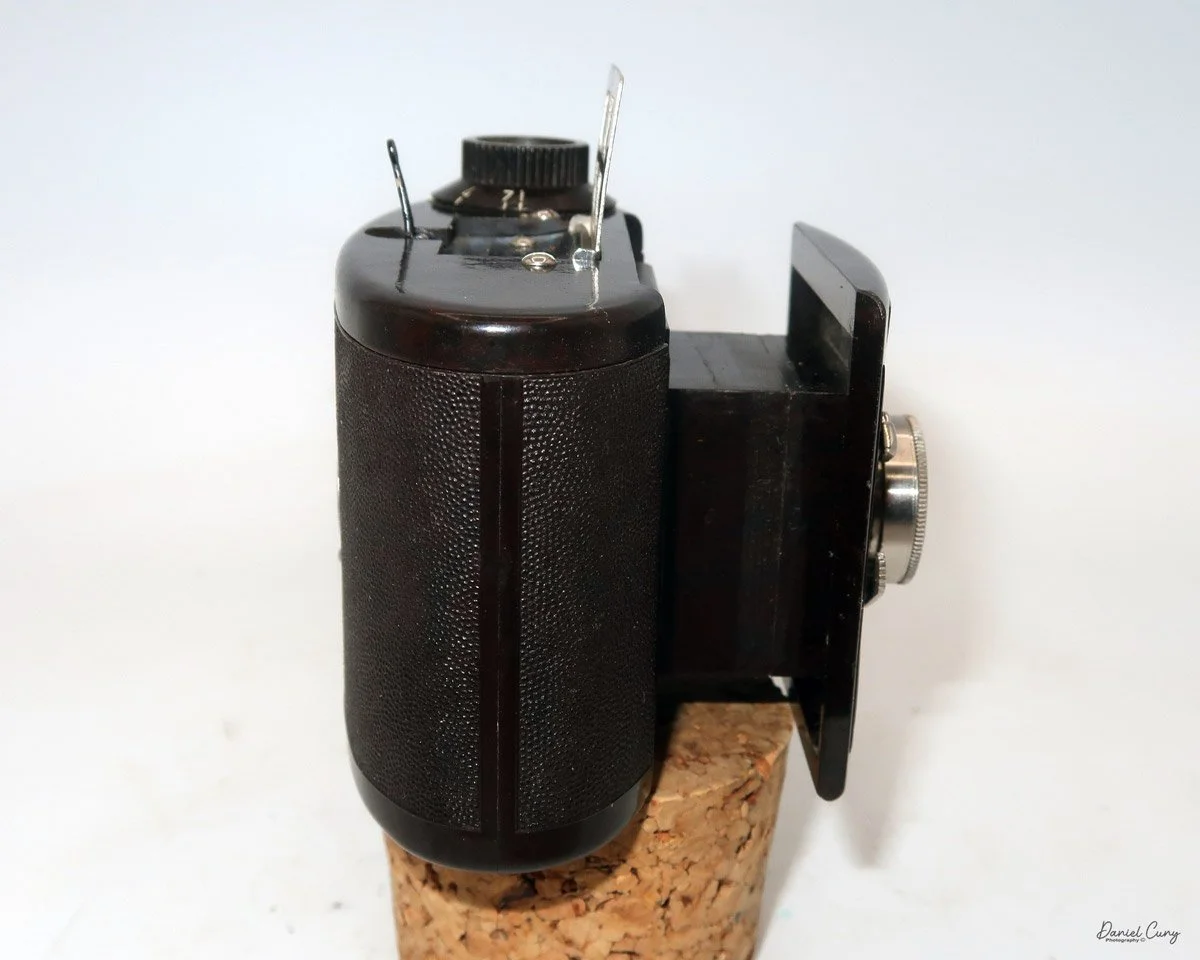
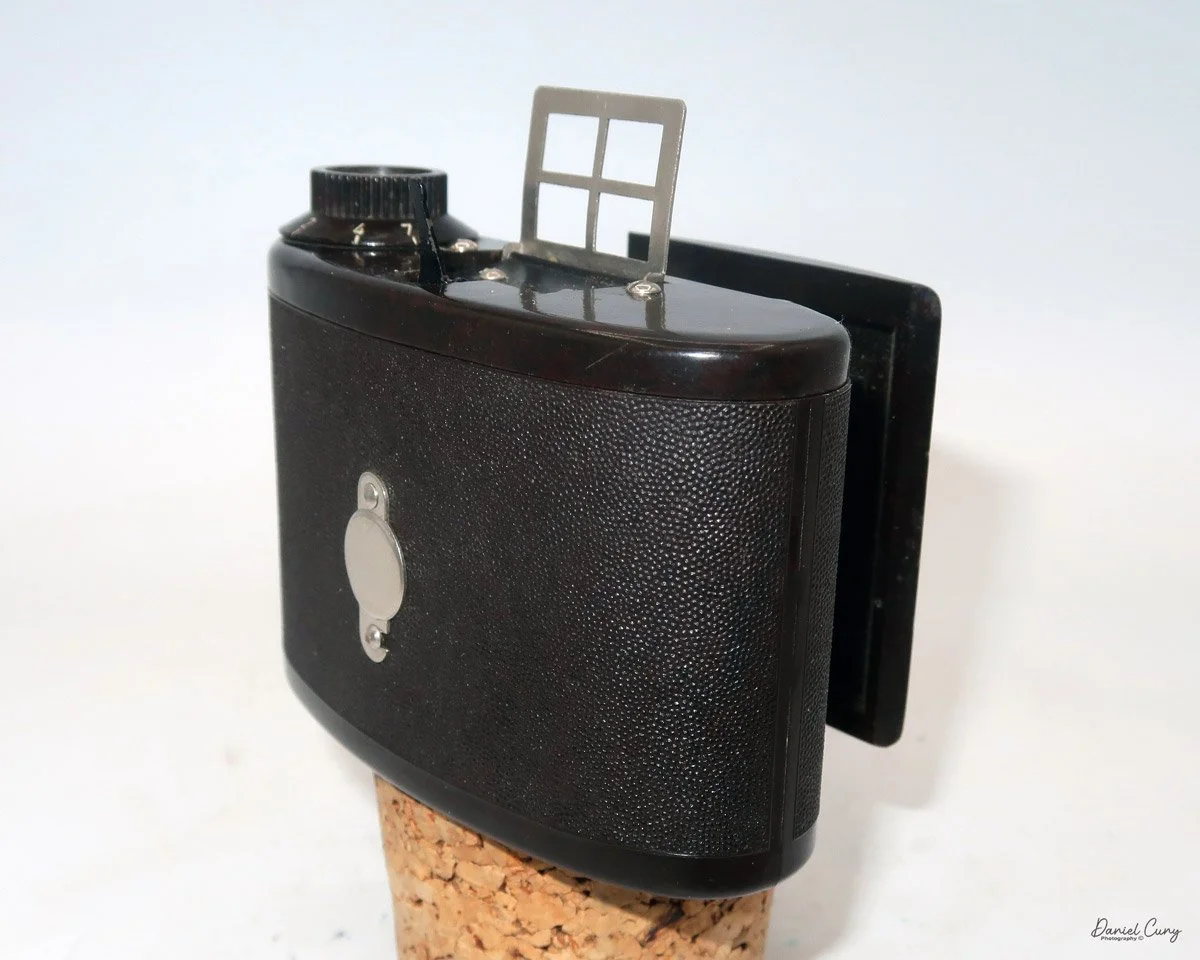
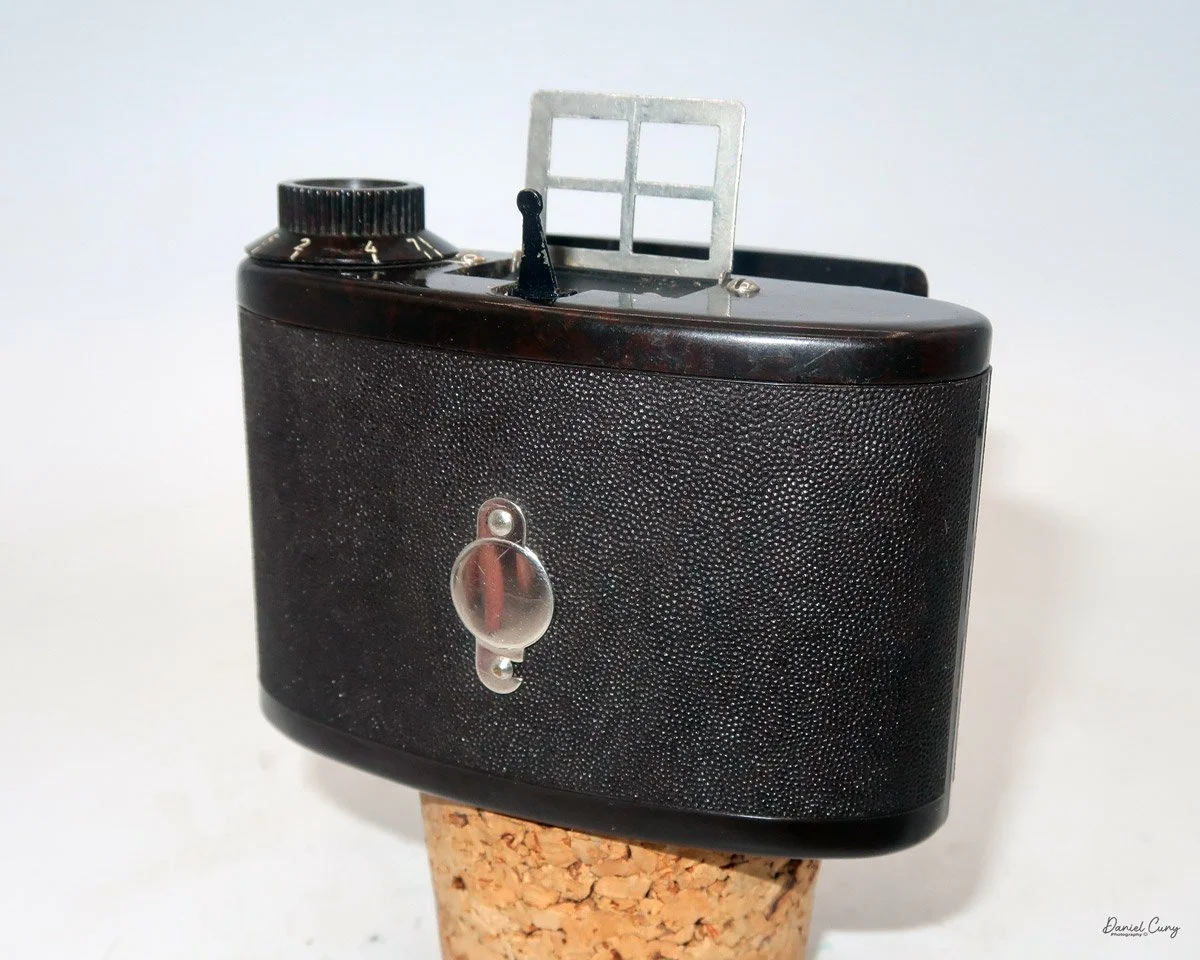
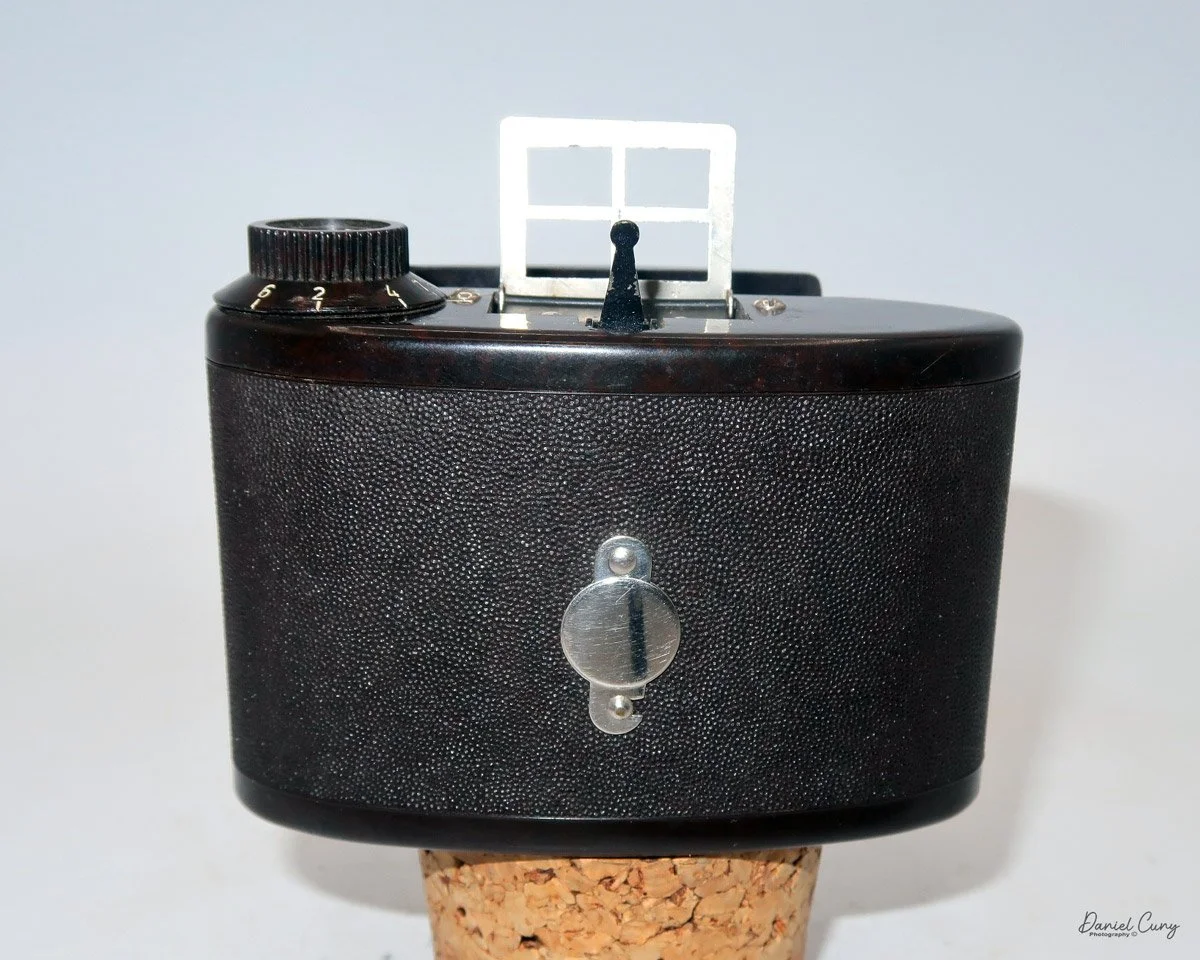
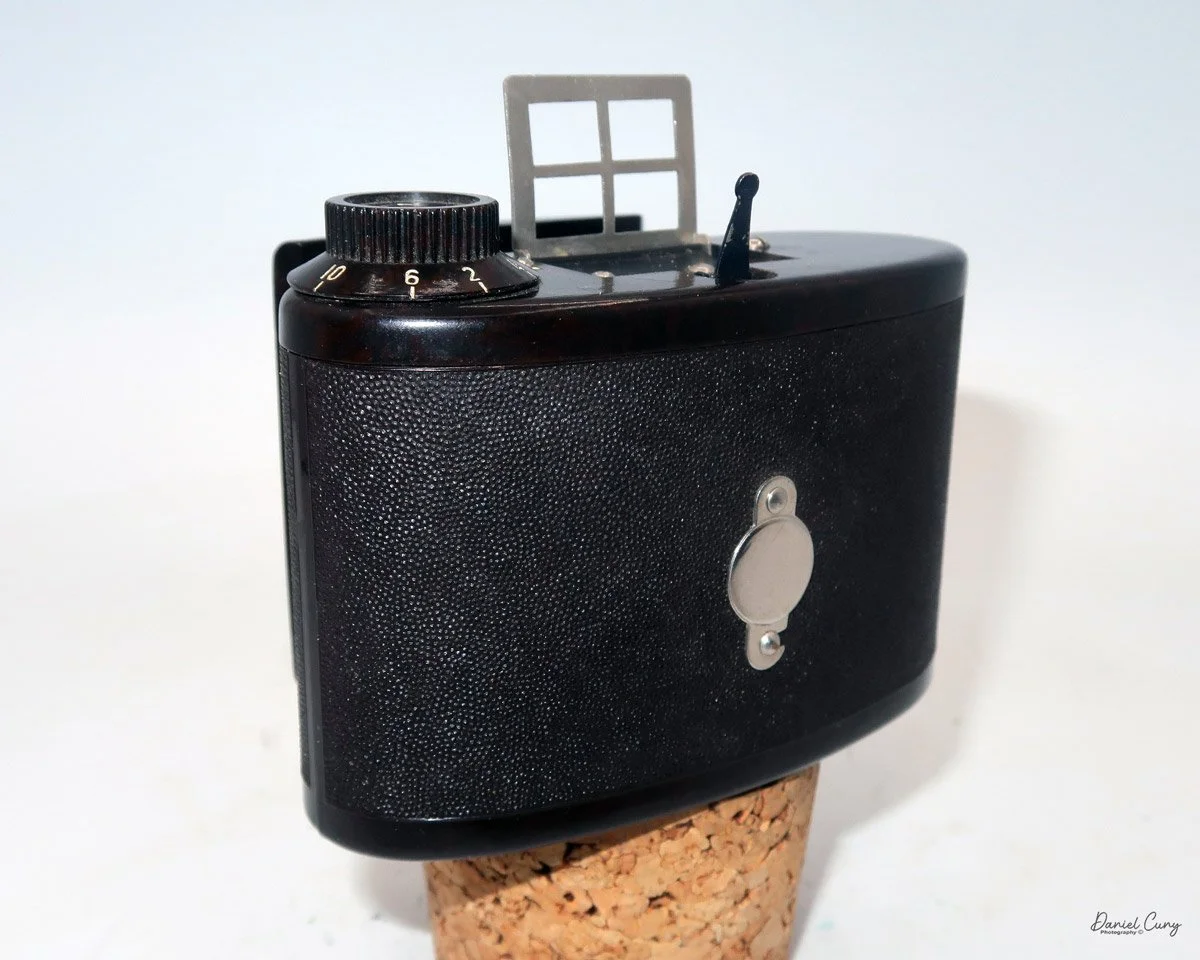
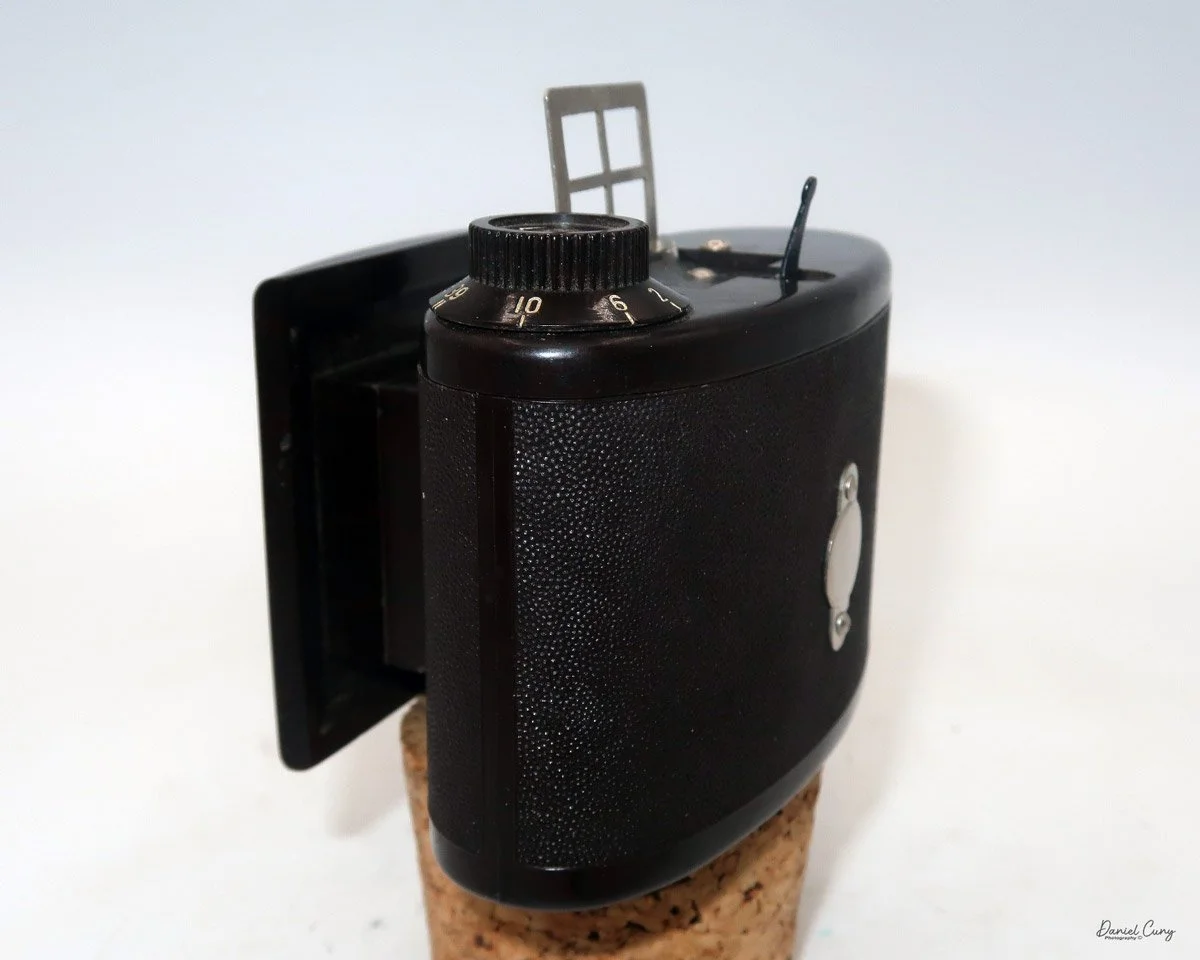
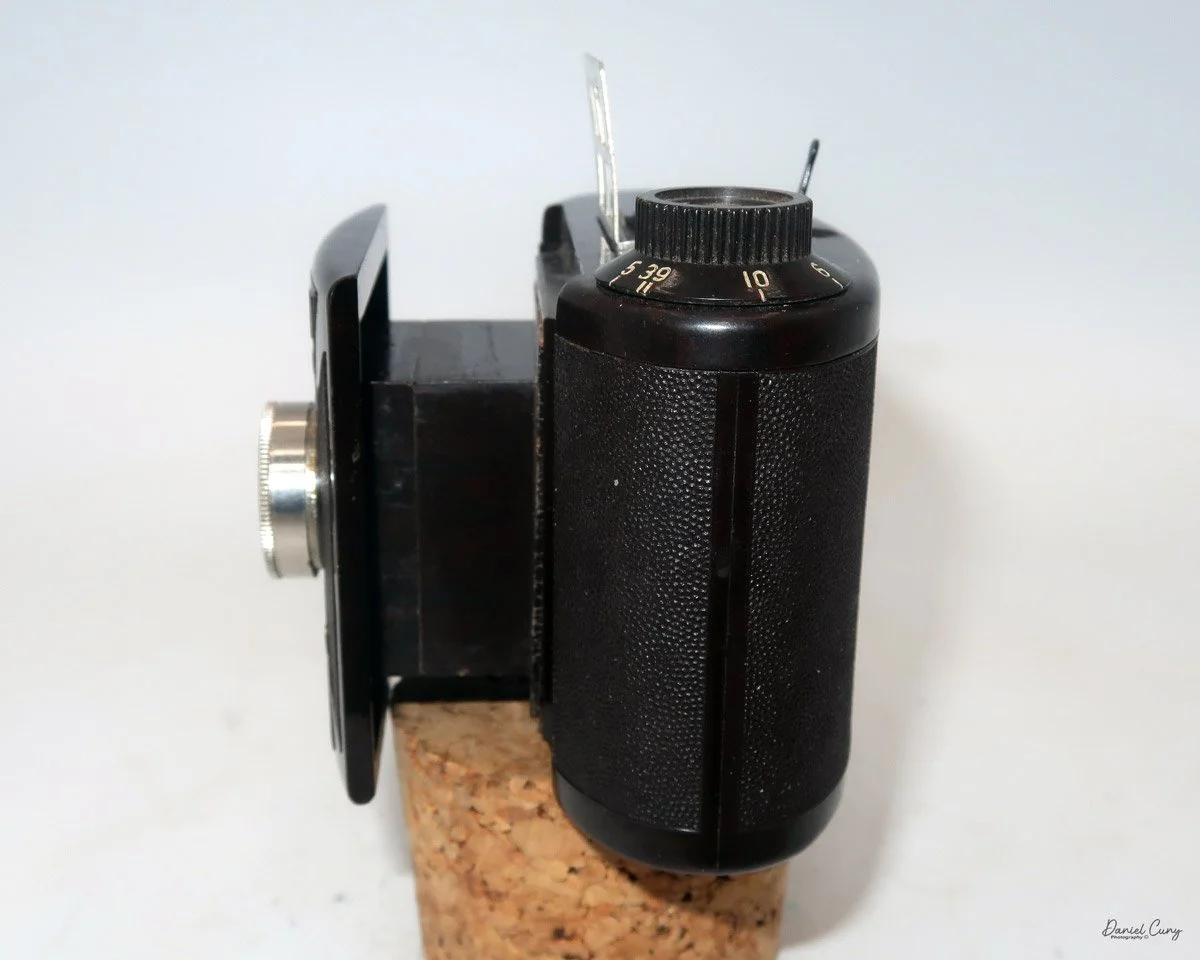
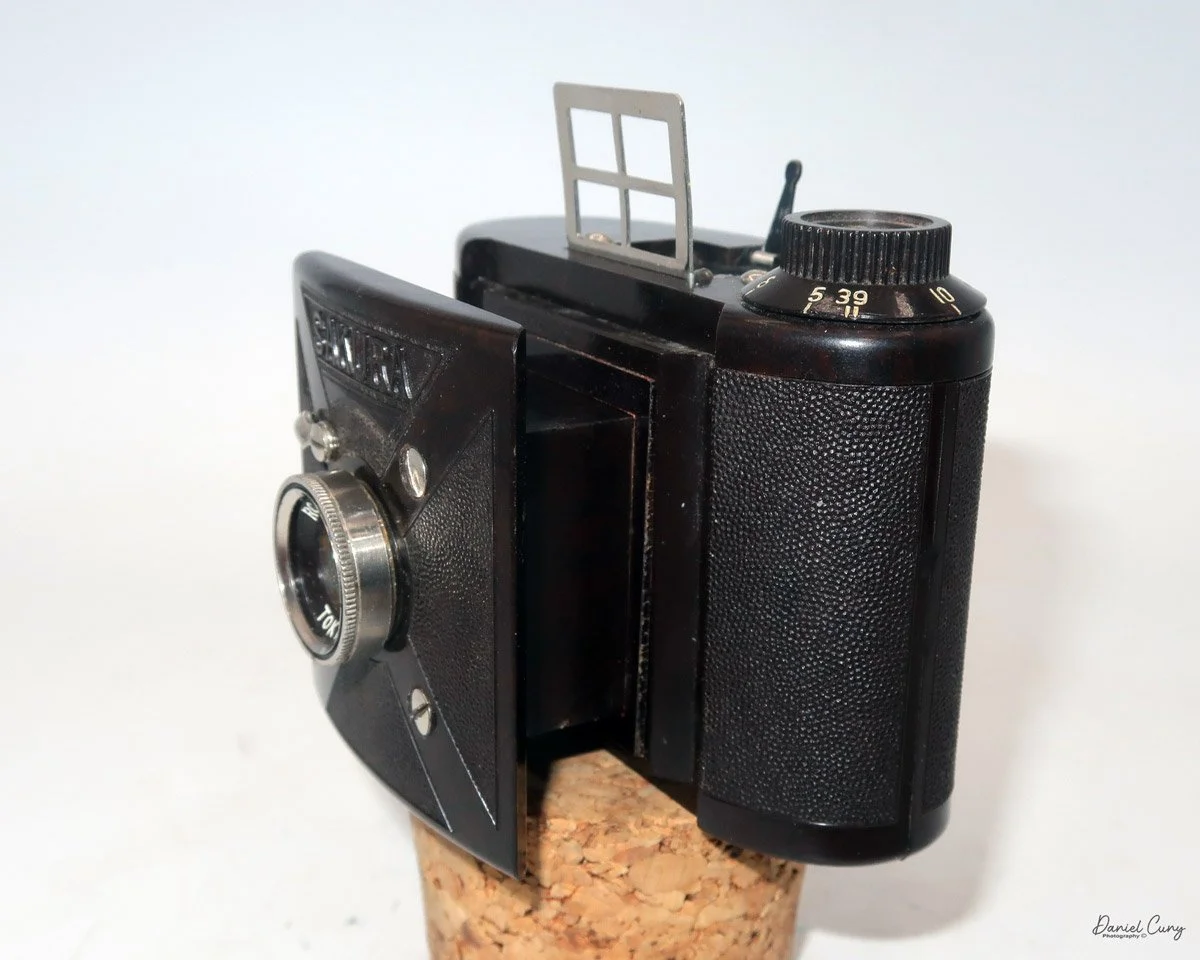
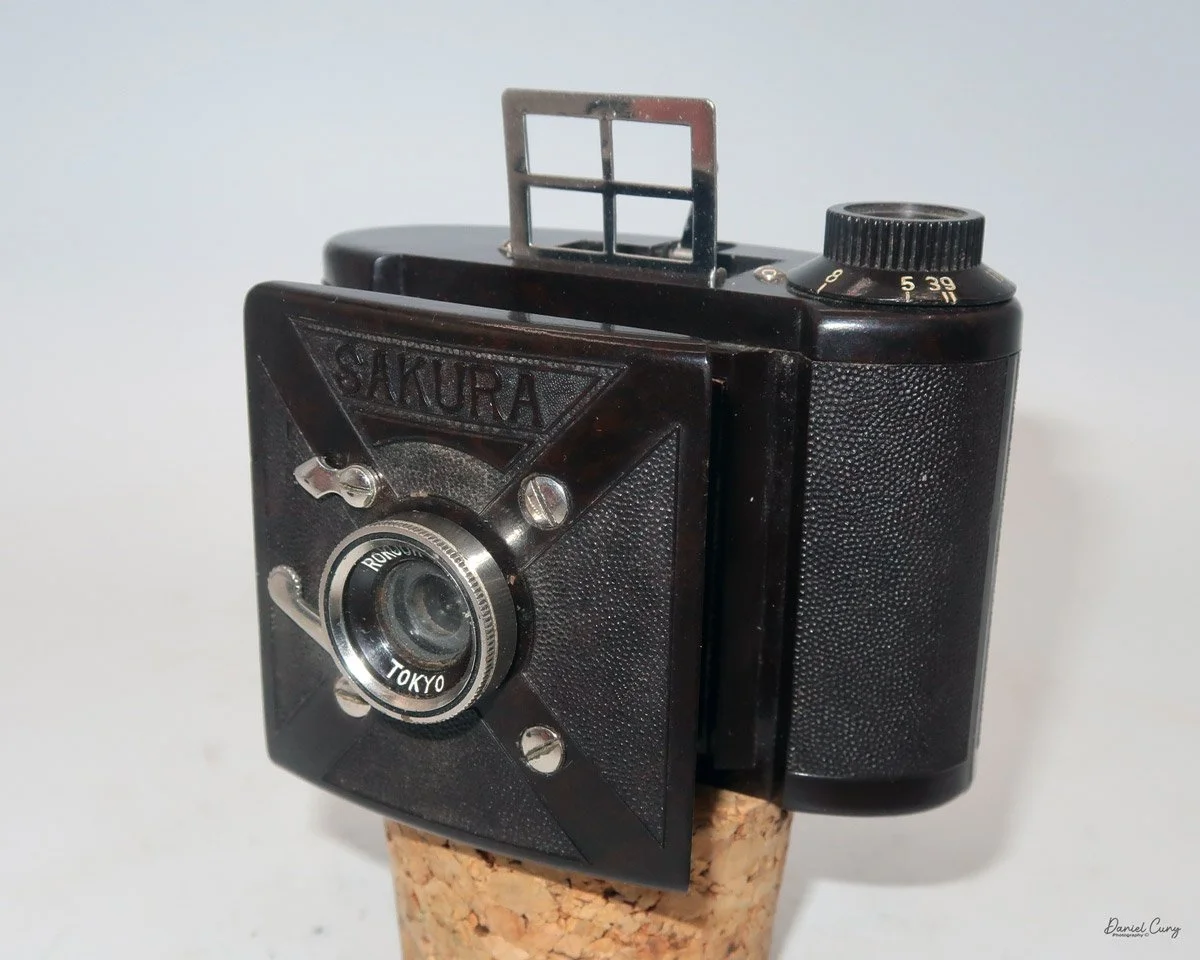
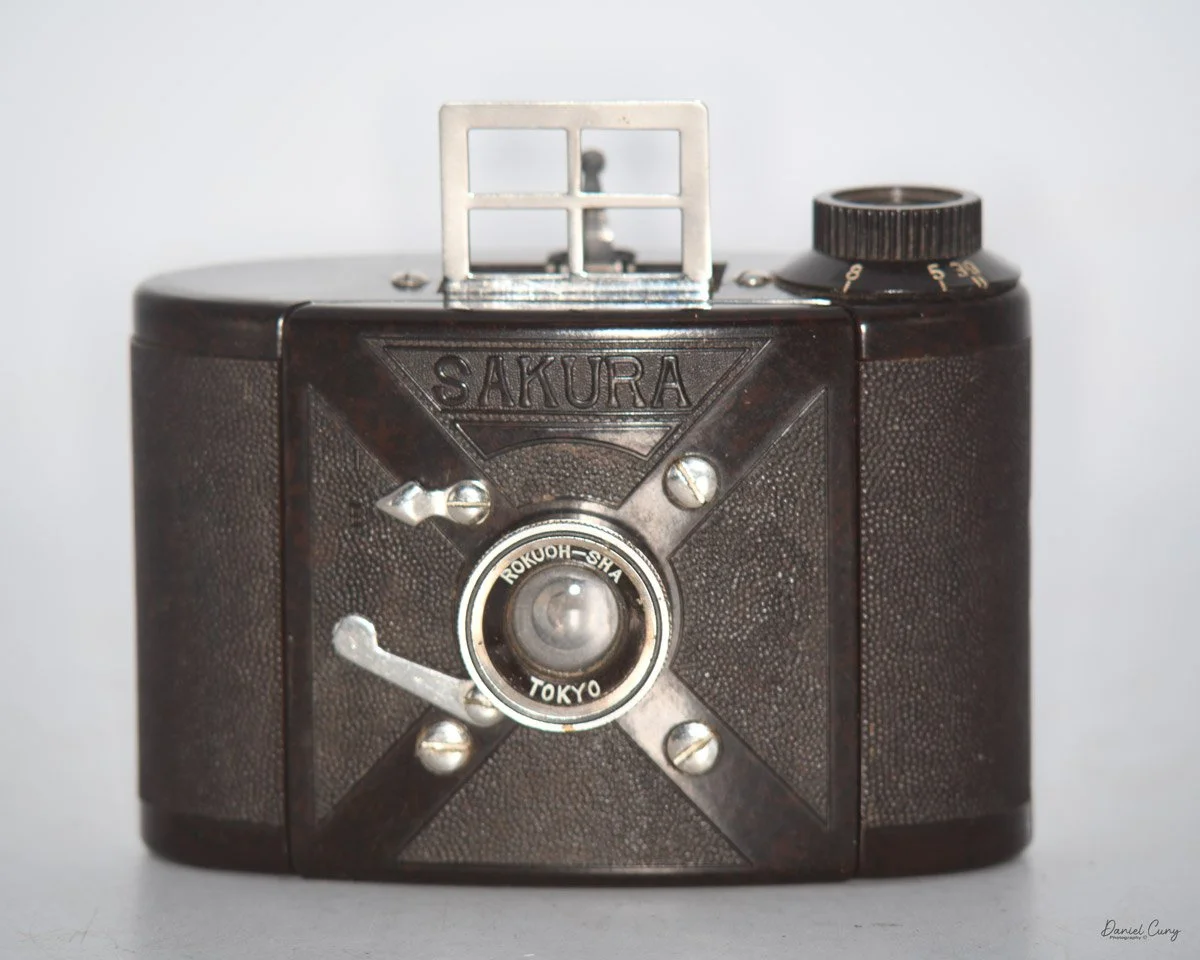
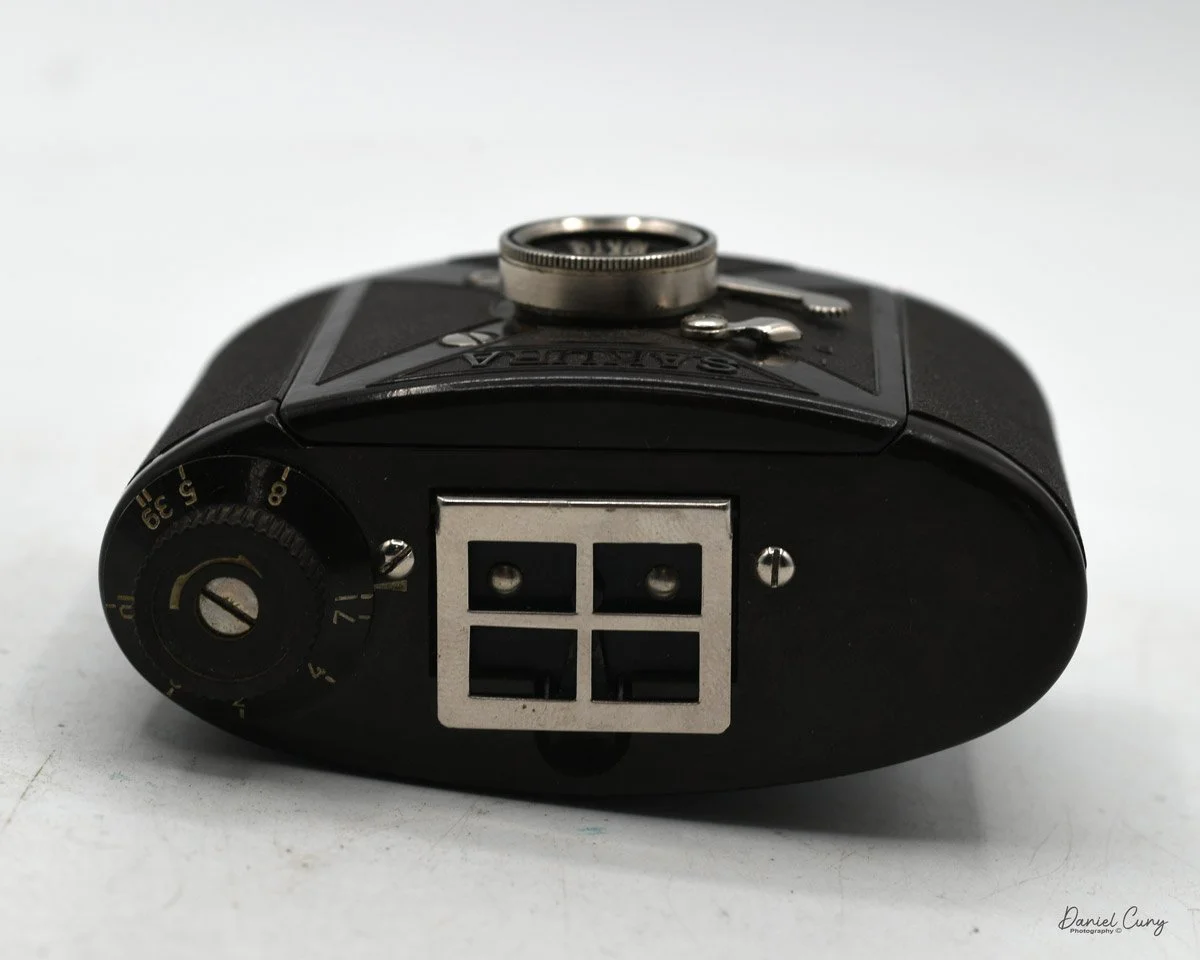
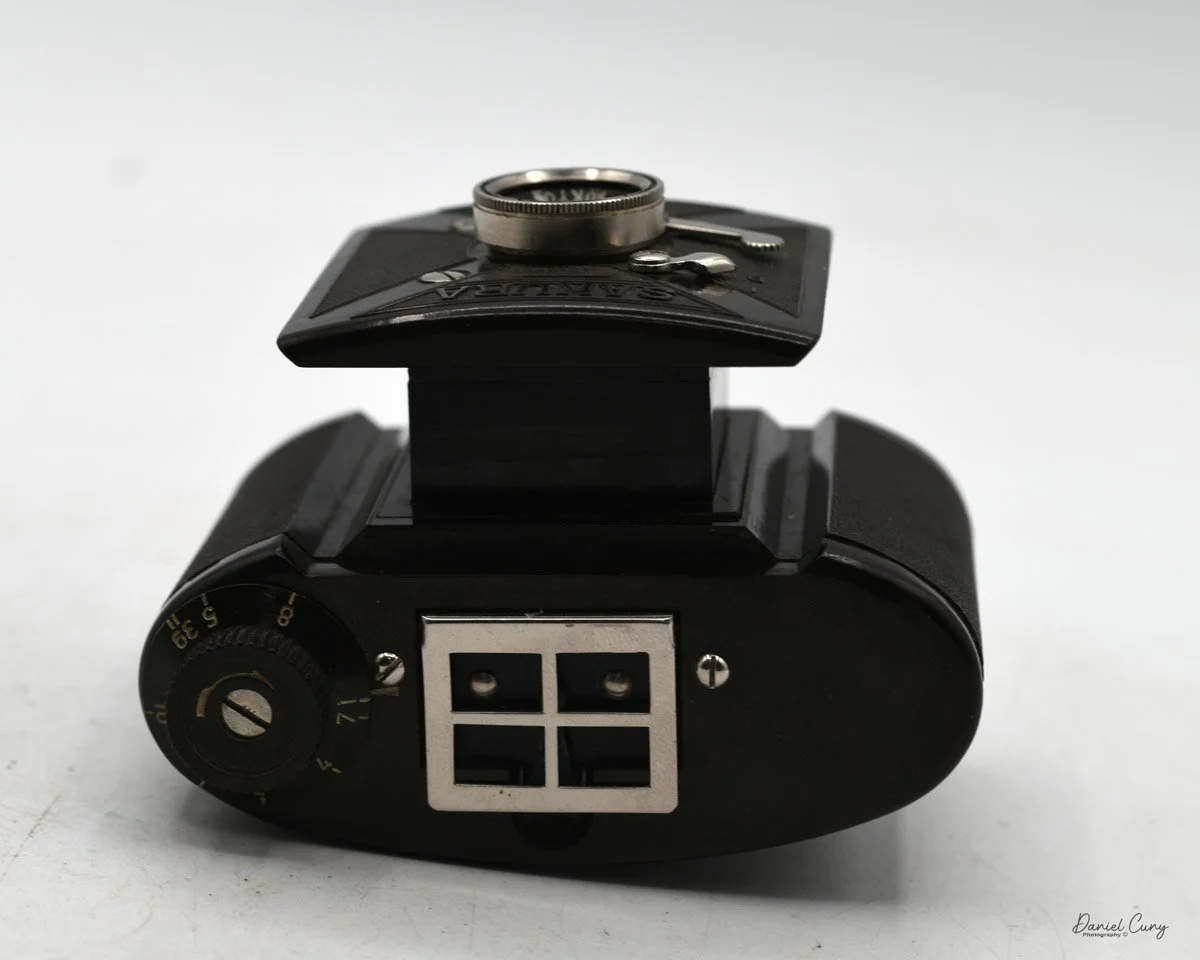
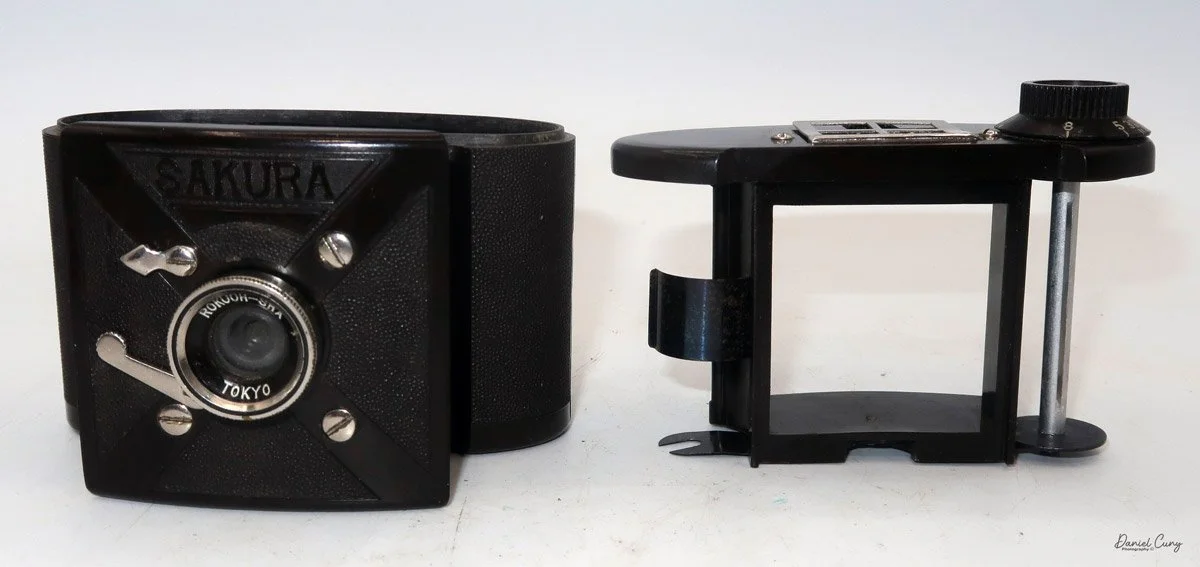
 My Sakura Bakelite camera is an odd, oval-shaped camera with a pull-out front lens used for taking photos, and it retracts when it's in its case for transport. It's only 3.75" wide by 2.75" tall, including the film winding knob, and 2" deep with the lens retracted or 3" with the lens extended. It only weighs 6.1 ounces without film in the camera.

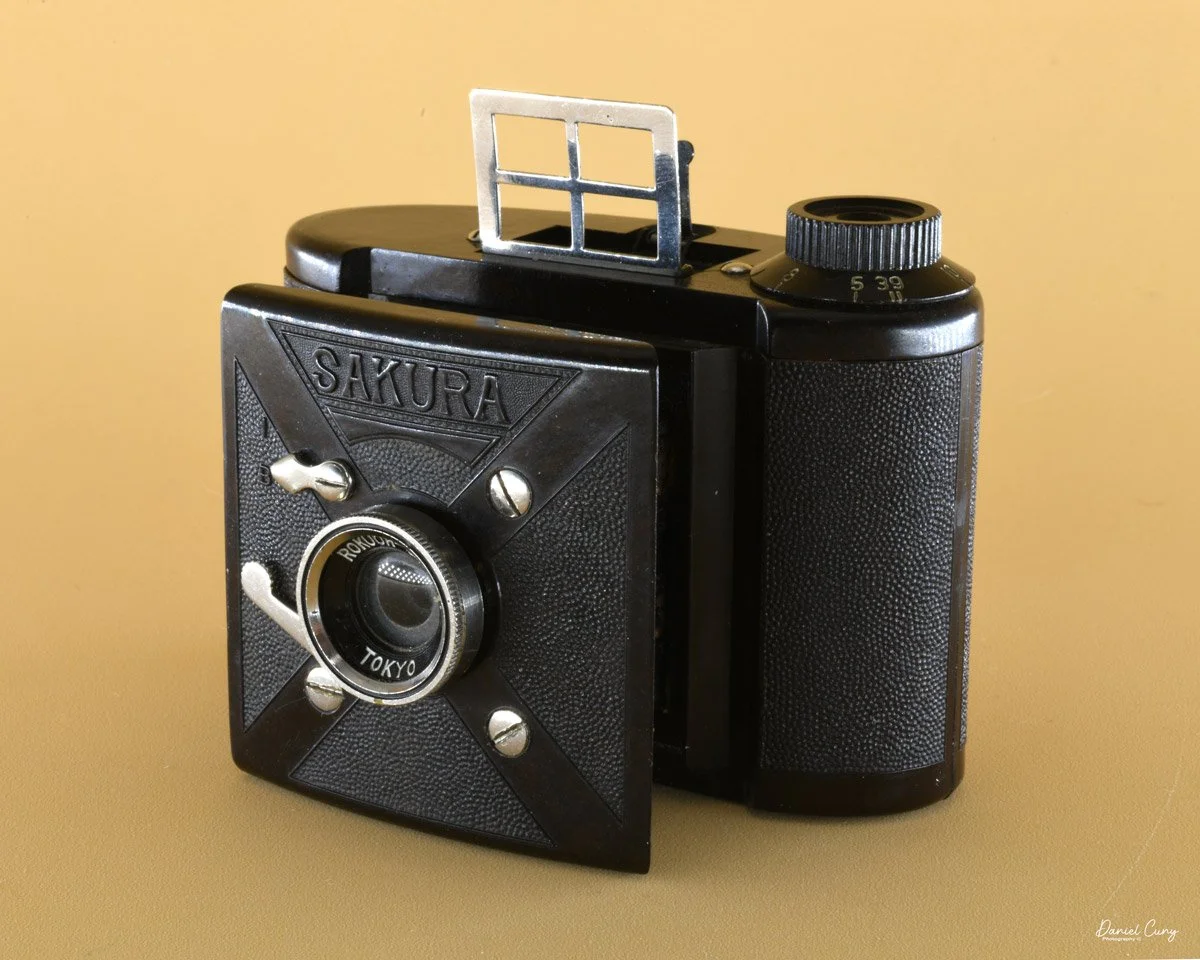
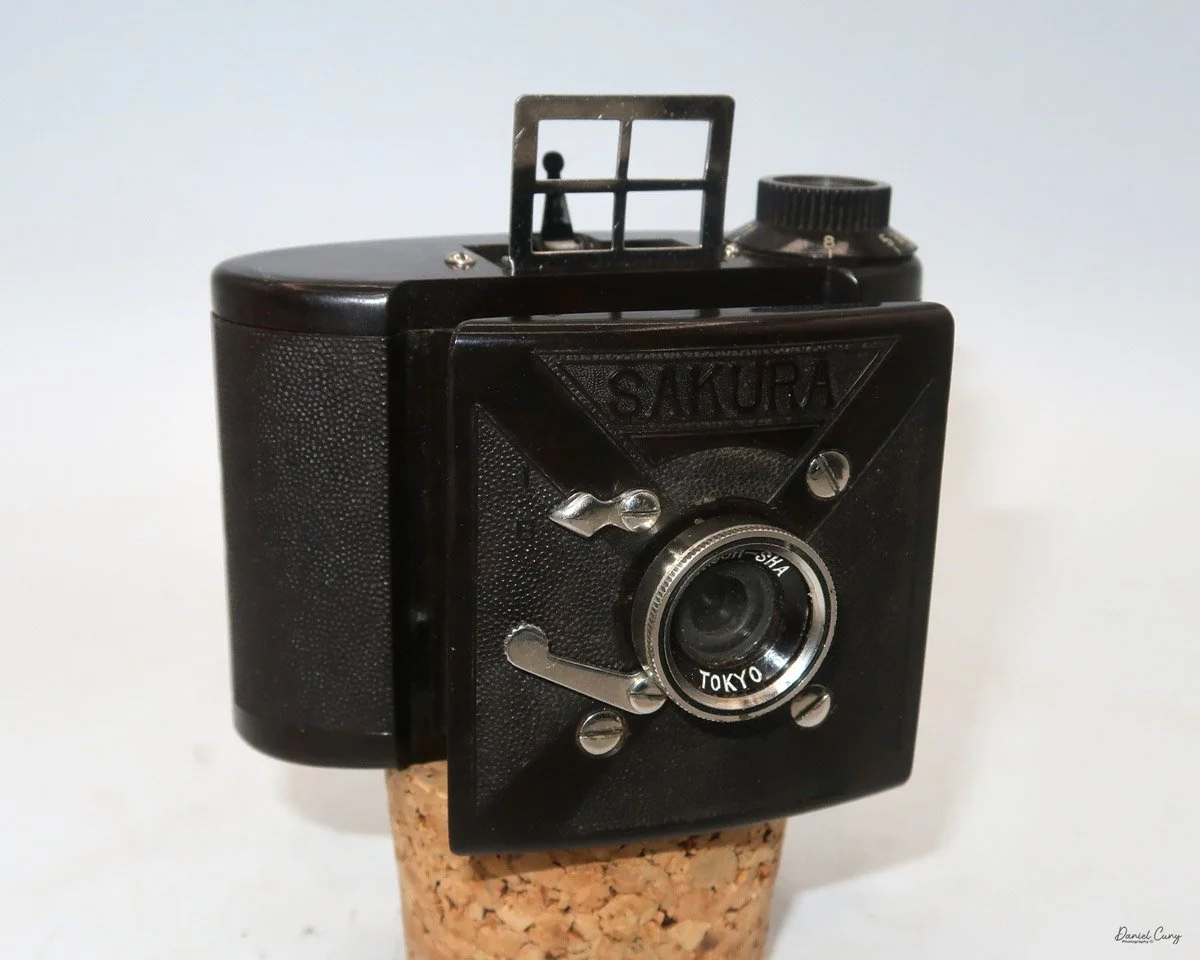
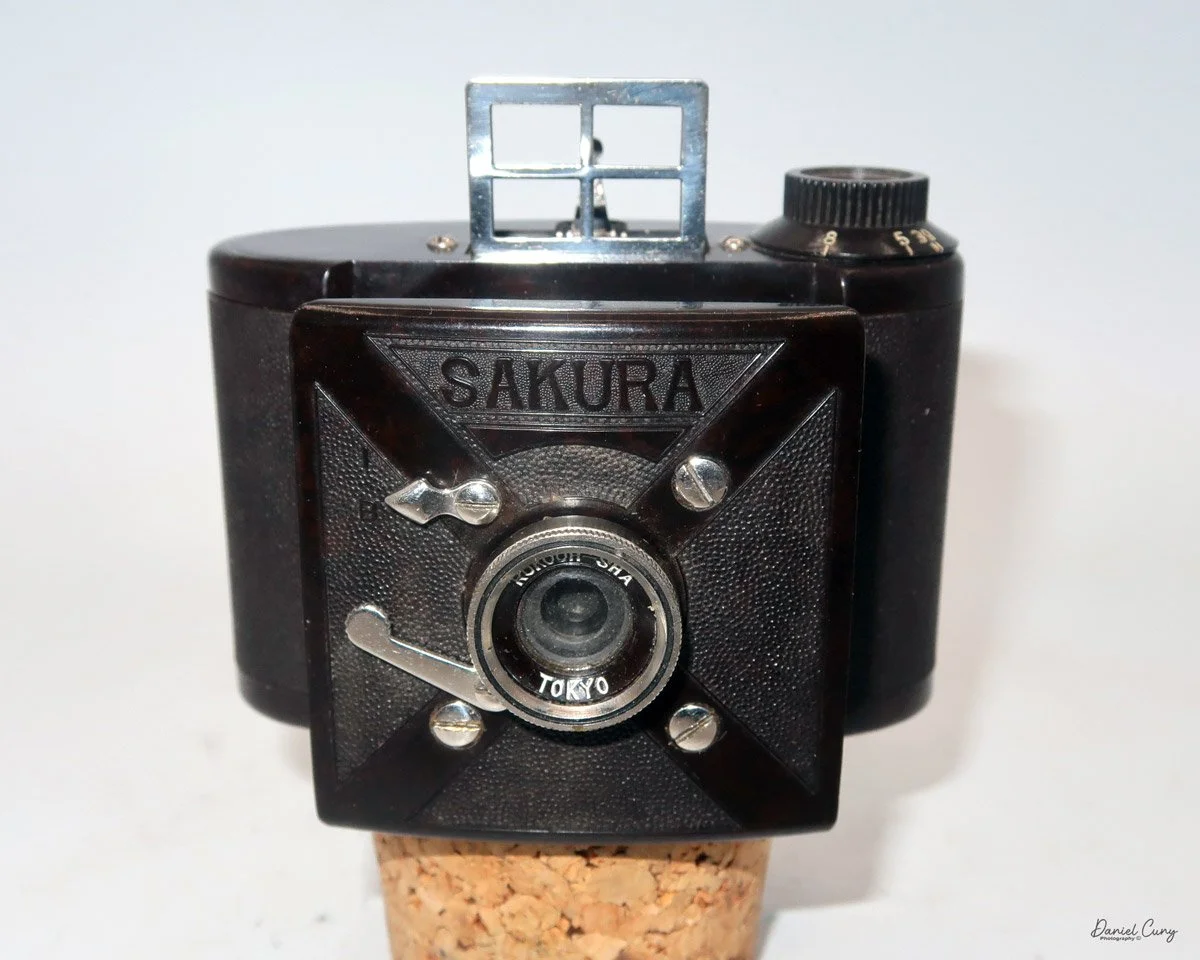
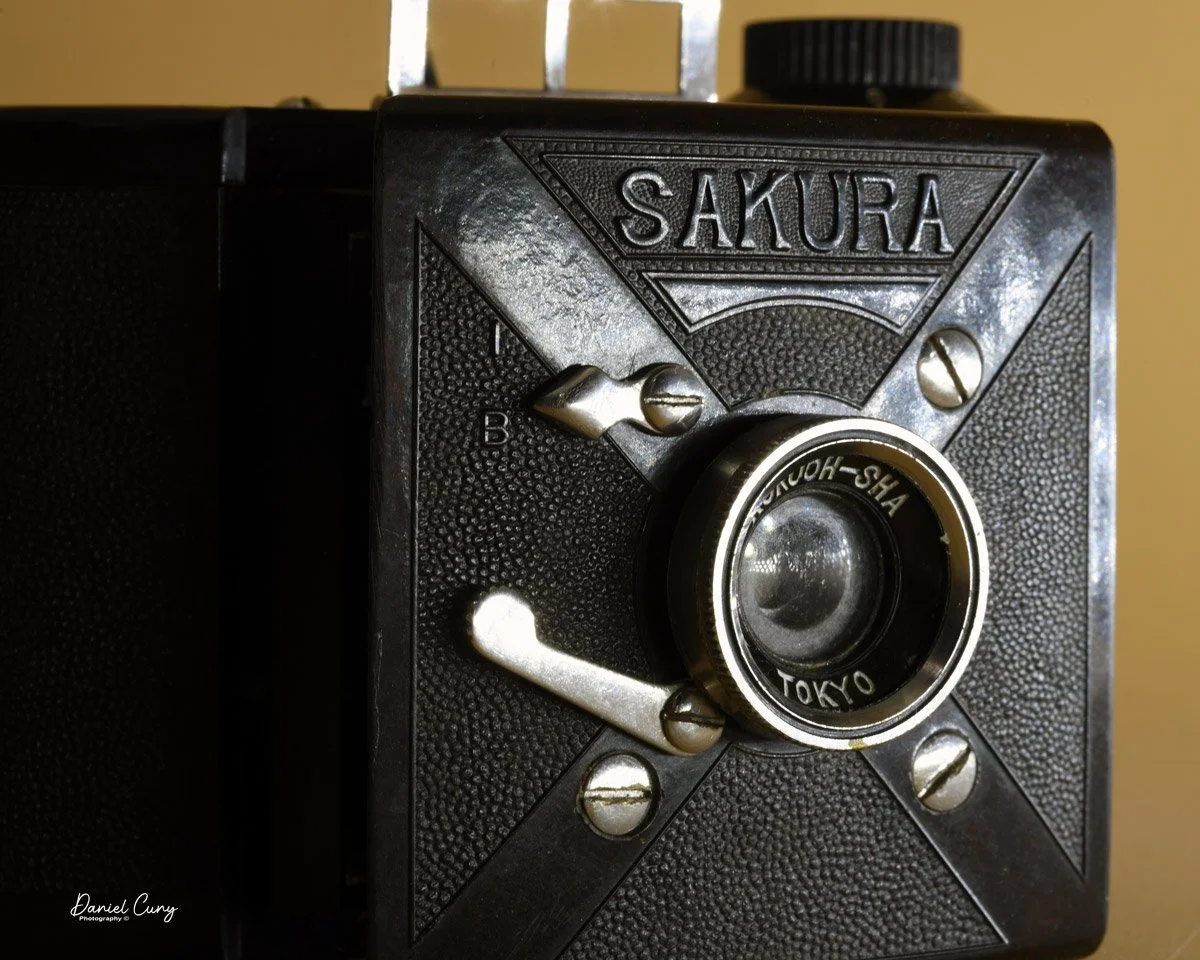
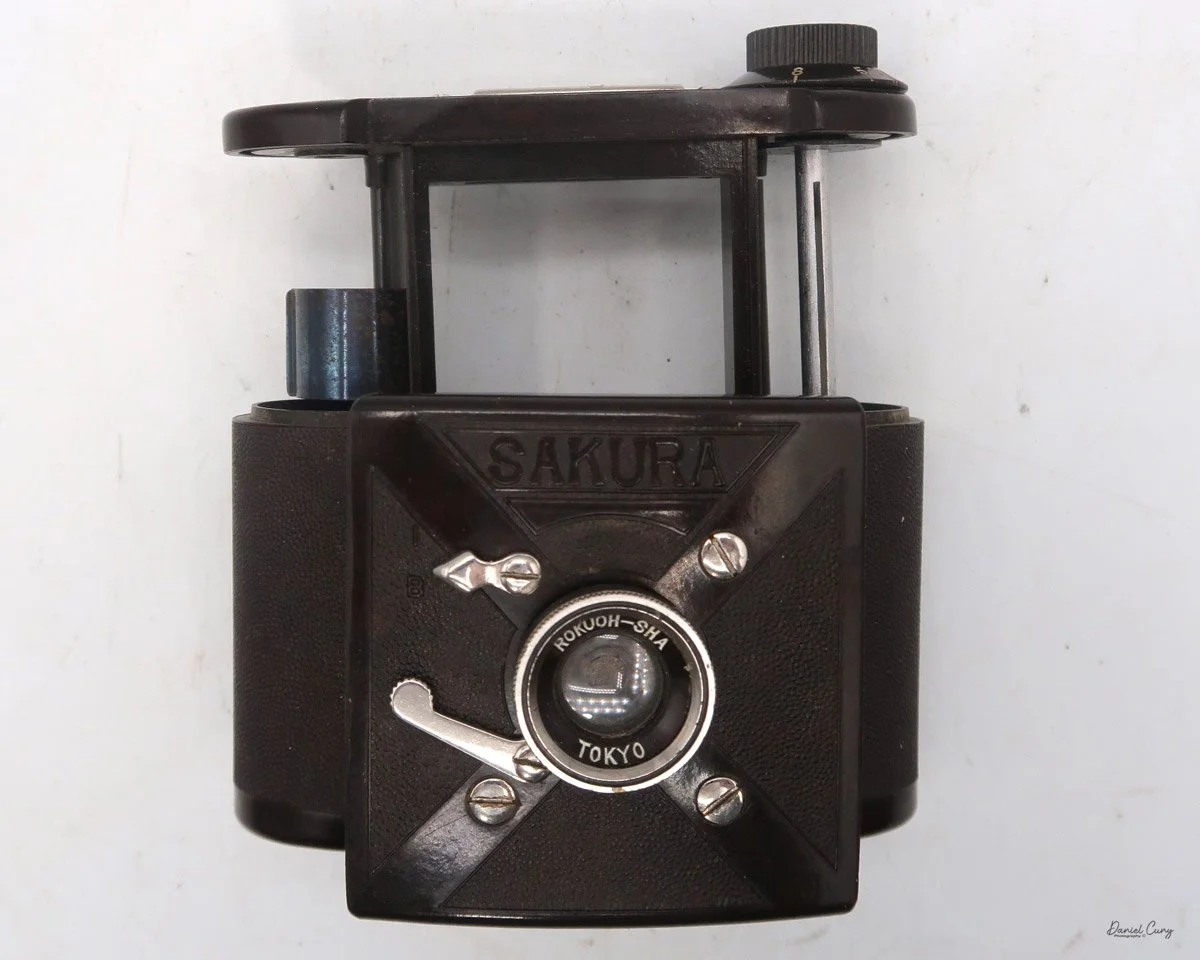
The camera is a rich, dark brown Bakelite with slight mottling and a grainy finish, giving it a nice texture. SAKURA is molded in Bakelite at the top of the pull-out lens area. There is a smooth "X" shape on the faceplate as well, with the lens centered at the "X"'s intersection. 

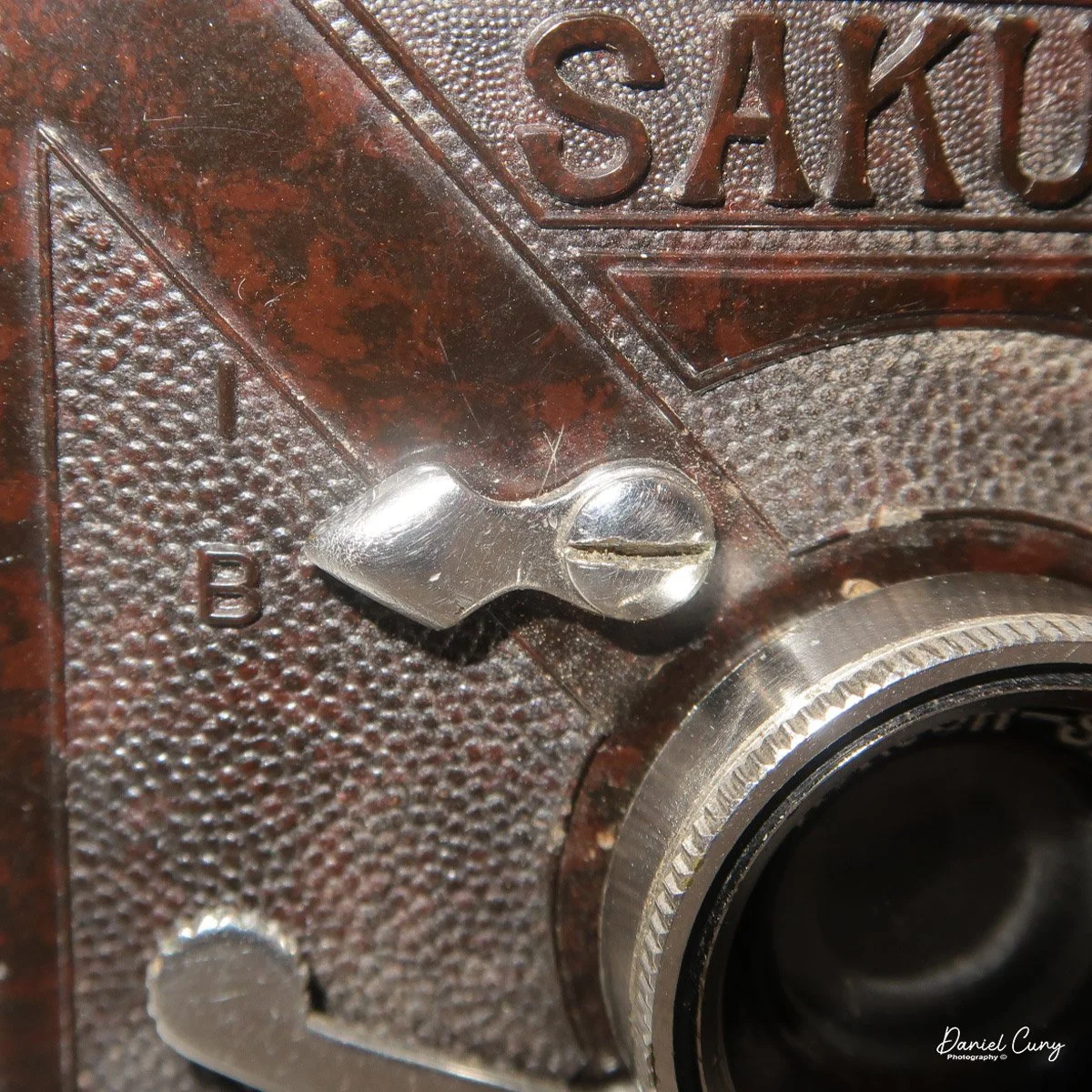
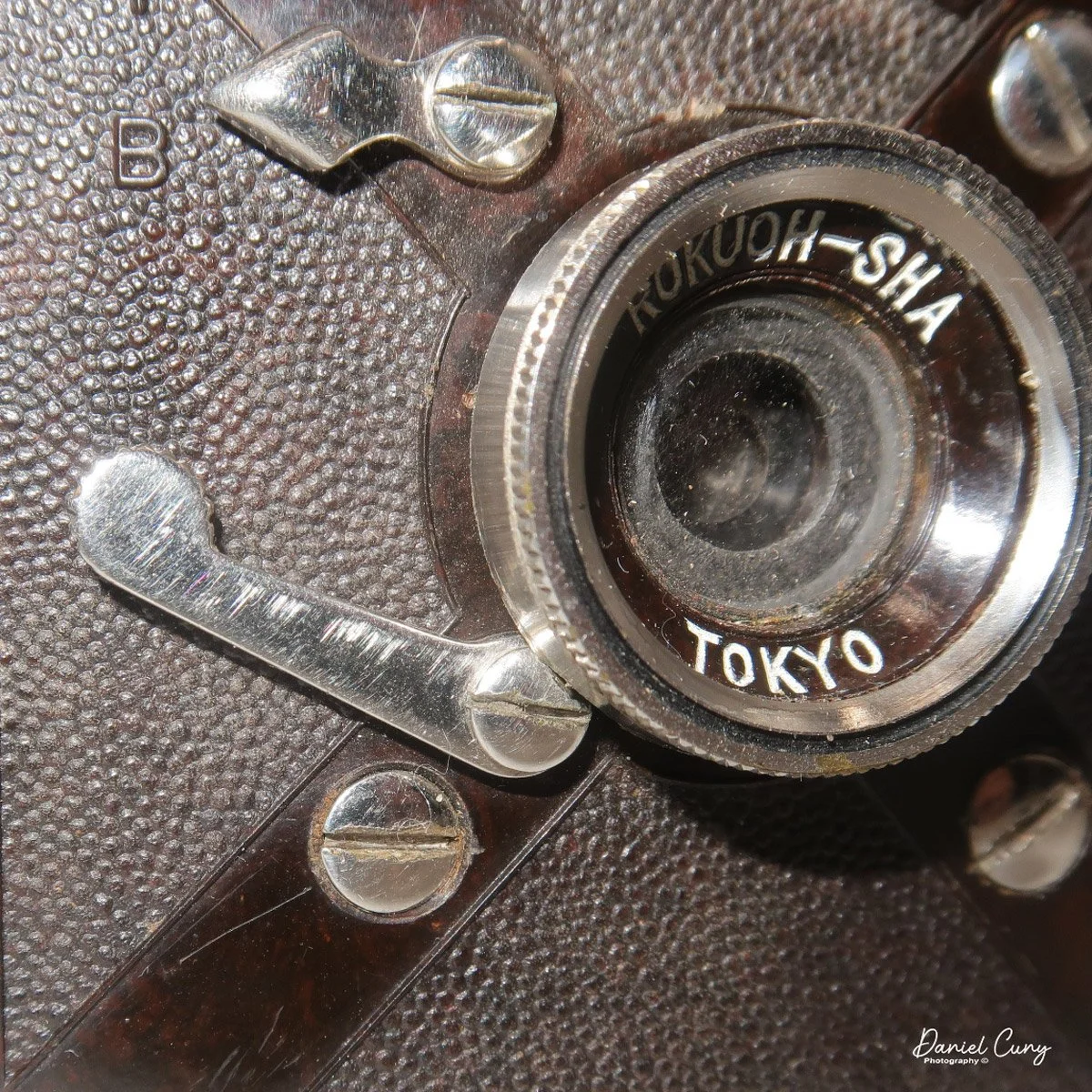
X design and controls on the face of the Sakura camera

The Sakura camera is extremely basic. Its fixed-focus Rokuoh-Sha Tokyo lens and lack of adjustable apertures make it simple to use, making it ideal for casual photography or quick snapshots. The shutter settings are either "I" for instant or "B" for bulb, used for timed exposures. The shutter is set by a chrome arrow pointing to the desired setting. The shutter release is just below the shutter setting. It is a longer, curved lever, emphasizing its straightforward design for beginners or vintage enthusiasts interested in minimalistic cameras.

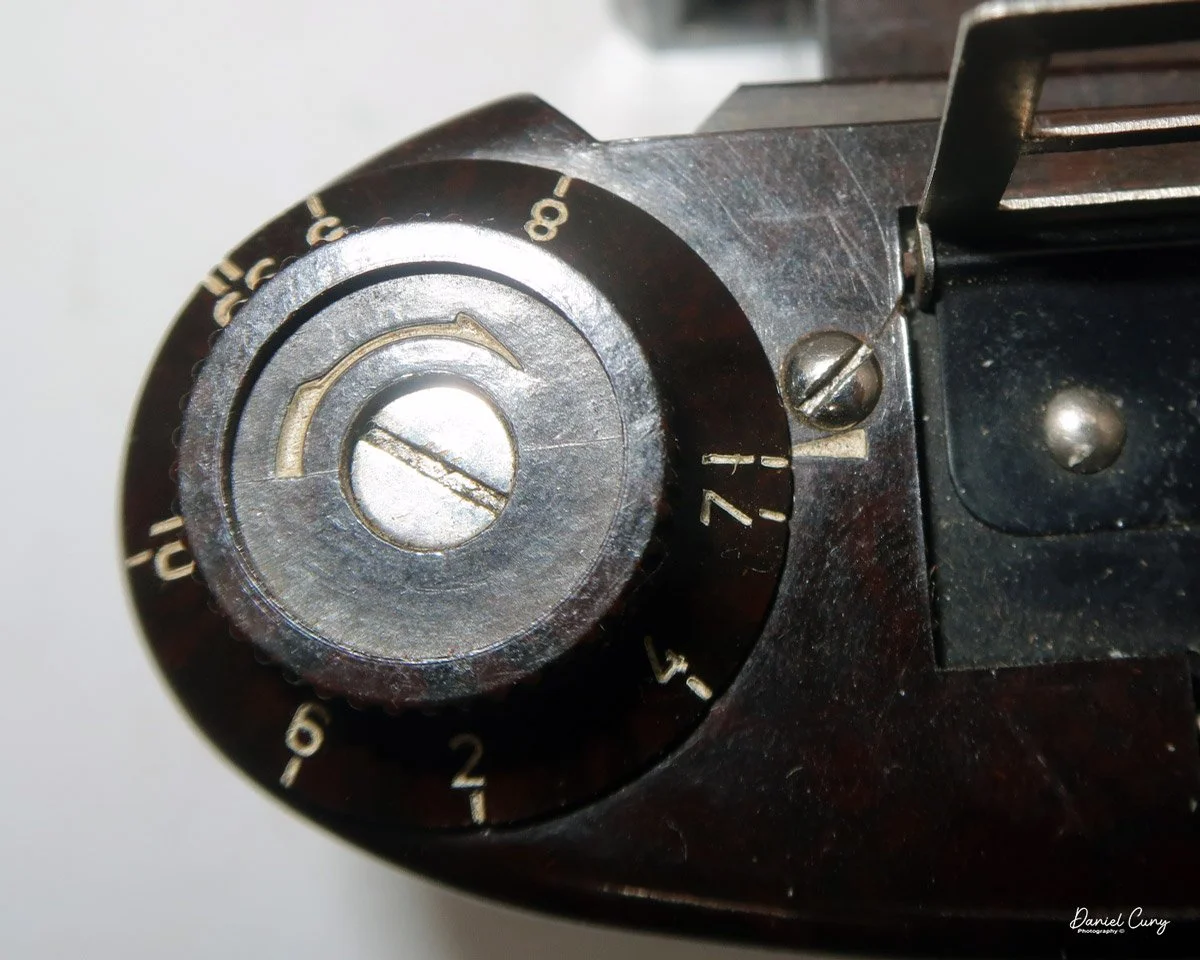
On top of the Sakura camera is a chrome pull-up viewfinder in the front, along with a pop-up pointer in the rear, which you use to center your subject before taking the photo. Also, at the top of the camera is the film winding knob, which has an unusual numbering system. The idea is that you start at number 1, then turn the nob to number 2, which is the proper amount of length to get the film to the next frame. I didn't use this method, but used the red window on the back of the camera to find the frame numbers. The red window also features a sliding chrome cover that opens or closes as needed.

At the bottom of the camera is a tripod socket for timed exposures. However, there is no cable release socket, as is generally used for this. Also at the bottom is a lever that locks or unlocks the film chamber, allowing it to be removed from the camera for loading or unloading film. Once the chamber is unlocked, the film chamber lifts up from the top of the camera, but this can only be done when the lens is extended; otherwise, the lens blocks the chamber in the camera body. Once the lens is extended, the film chamber extends from the top of the camera, and you can load film to take photos. Once loaded, slide the film chamber back into the camera body, lock it into place, set the frame counter to 1, and you're ready to snap some photos.

My Results:

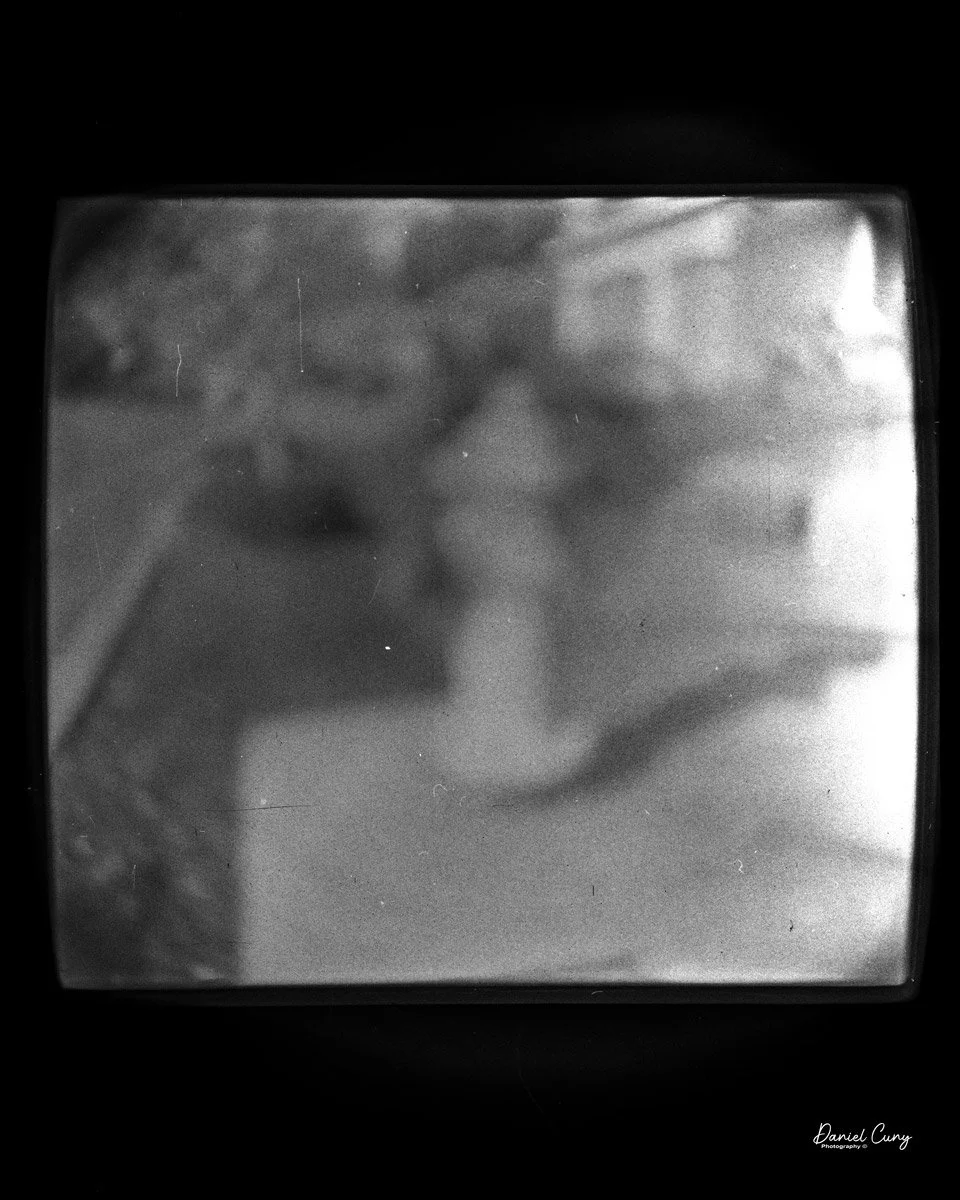
 I took two rolls of film with the Sakura camera because the first roll turned out so poorly. It didn't dawn on me that a couple of things happened when shooting the first roll. The first thing I noticed was that I forgot to pull the lens out of the camera body while shooting, but only for the first 1-2 photos, which resulted in some pretty unusual, very out-of-focus images. 

 The second thing that happened was when I was shooting the first roll, I was pulling the shutter speed lever in place of the shutter release, then when I found the shutter release, the shutter speed was set to "B", so all of these images were blurry from motion, as well as overexposed.

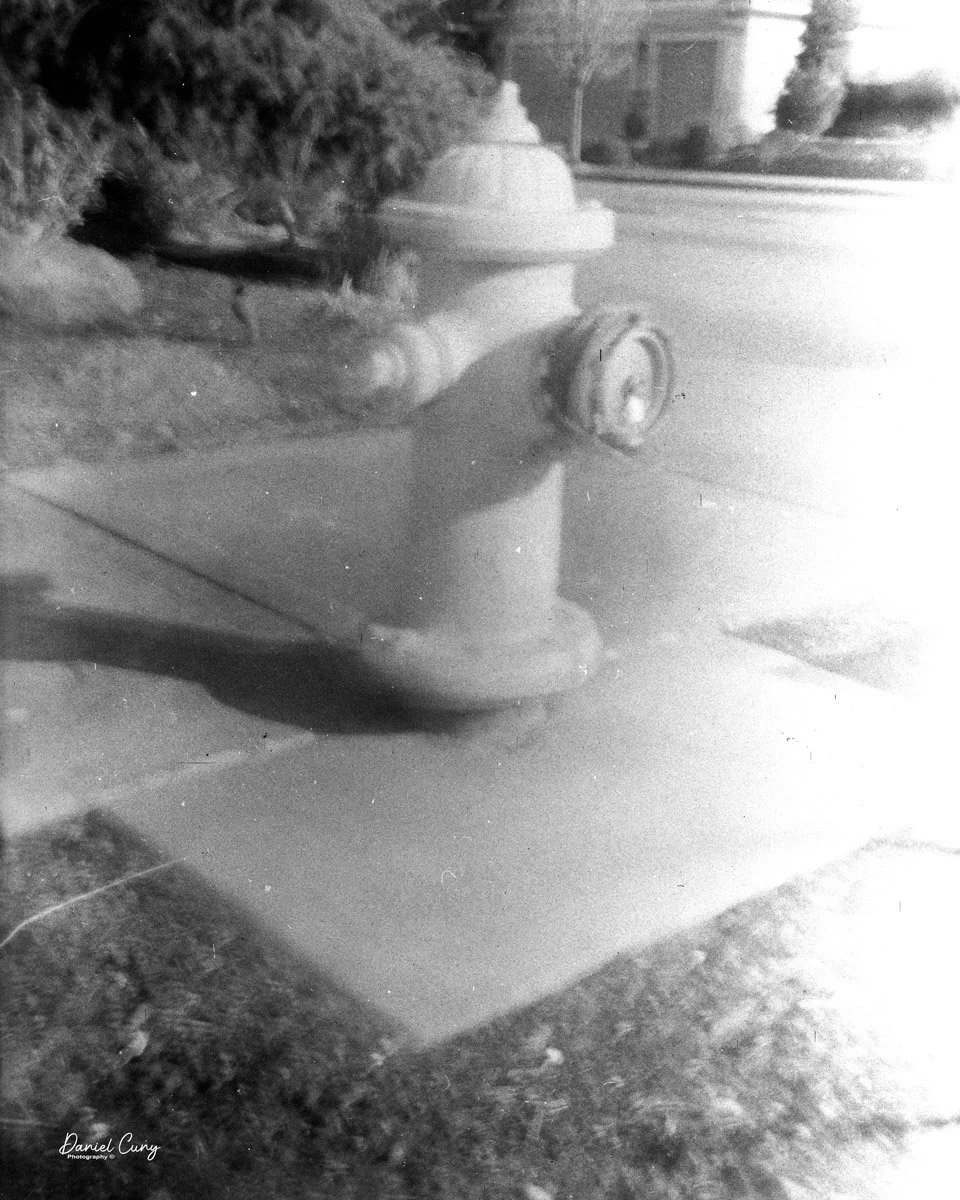
 So I loaded a second roll after seeing the disaster from my first roll, and #1 made sure the lens was extended, and #2, I put my finger on the shutter release lever before framing the photo so I wouldn't accidentally pull the shutter settings from "I" to "B". The second roll turned out much better than the first, and while I'm embarrassed by the first, I needed to share my experience with the camera.

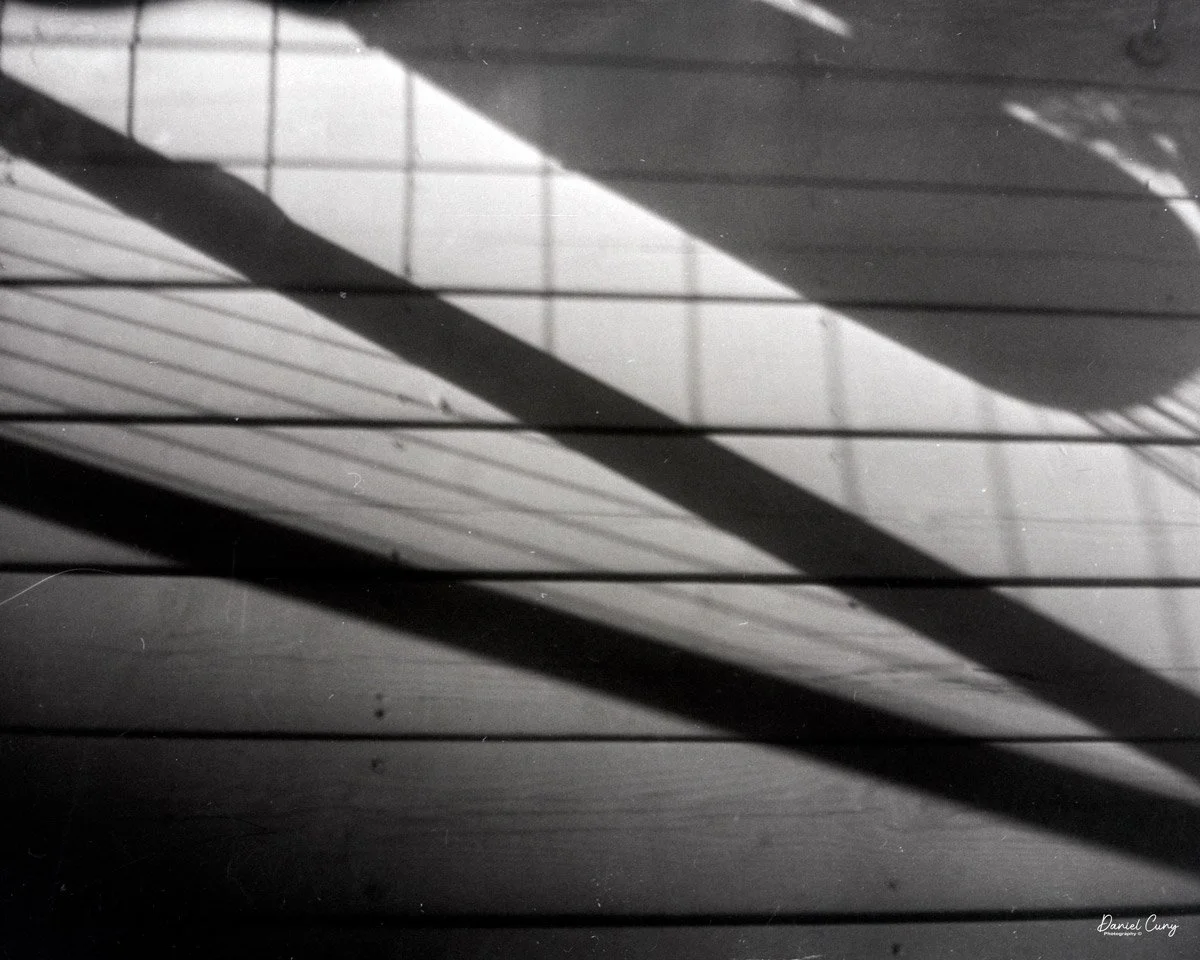
 Once I figured out the mistakes, the images actually turned out very nicely.

Conclusion:

 The Sakura was fun to shoot with, but the frustration of the first roll must have befuddled the original users, too. Putting the shutter control on the top of the shutter release made for an interesting, but frustrating, experience. If the company had switched the shutter release with the shutter controller, the experience could have been better. At least switching the "B" and "I" settings would have been helpful.

 Still, I enjoyed using the Sakura bakelite camera. There's still something gnawing at me: who and where, and the story behind this little, oddly shaped Bakelite camera that's approaching 90 years old.

Quick question: Have you ever found a piece of gear with a name inscribed on it? I'd love to hear your detective stories in the comments.

 Thank you for learning about this wonderful and rare Japanese camera, made just before World War II.

 Here is a list of my other CAMERA REVIEWS, with links.

 Cuny's Cameras & Photos is my online eBay store where I sell many of the cameras I've reviewed, along with other photos and camera accessories.

 Until next week, please be safe.