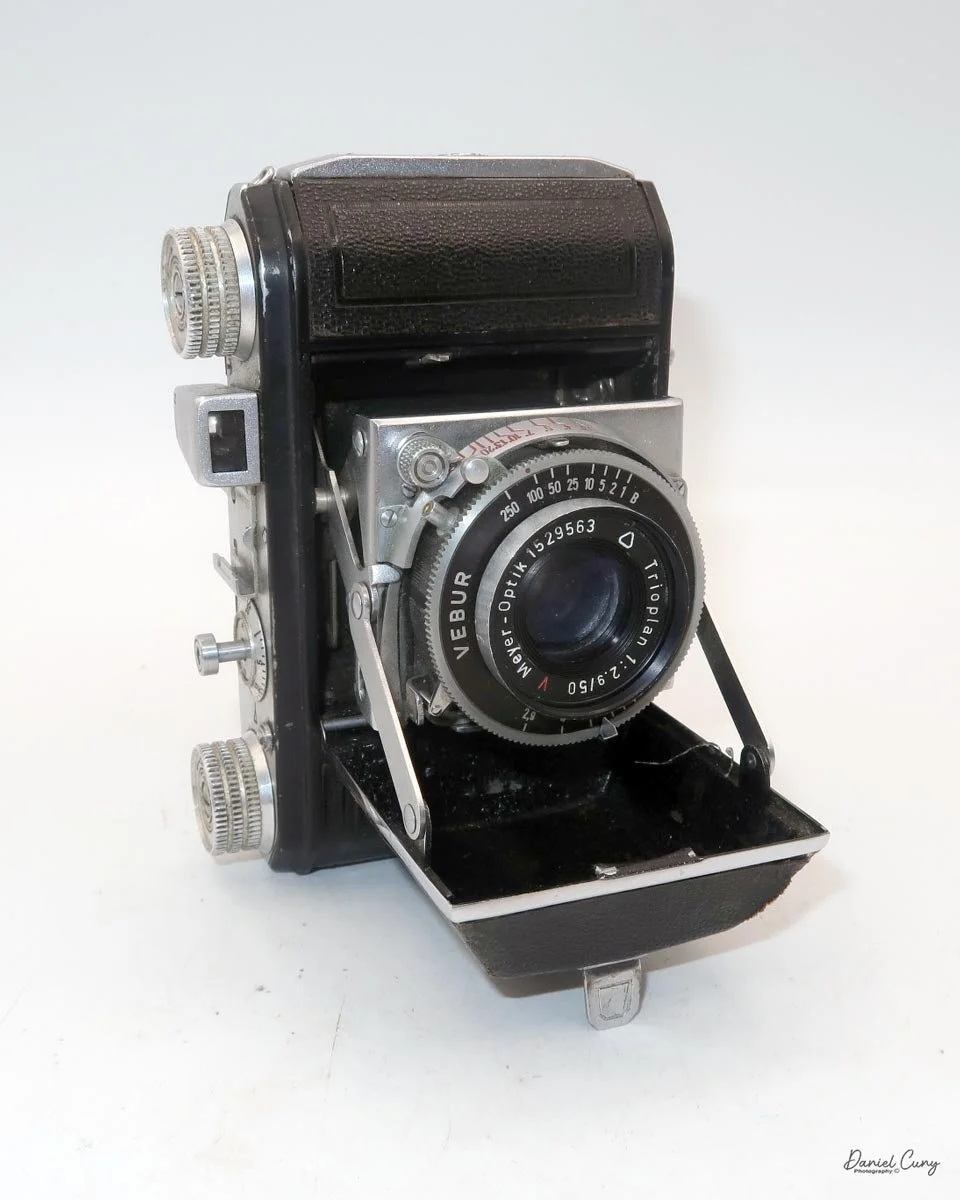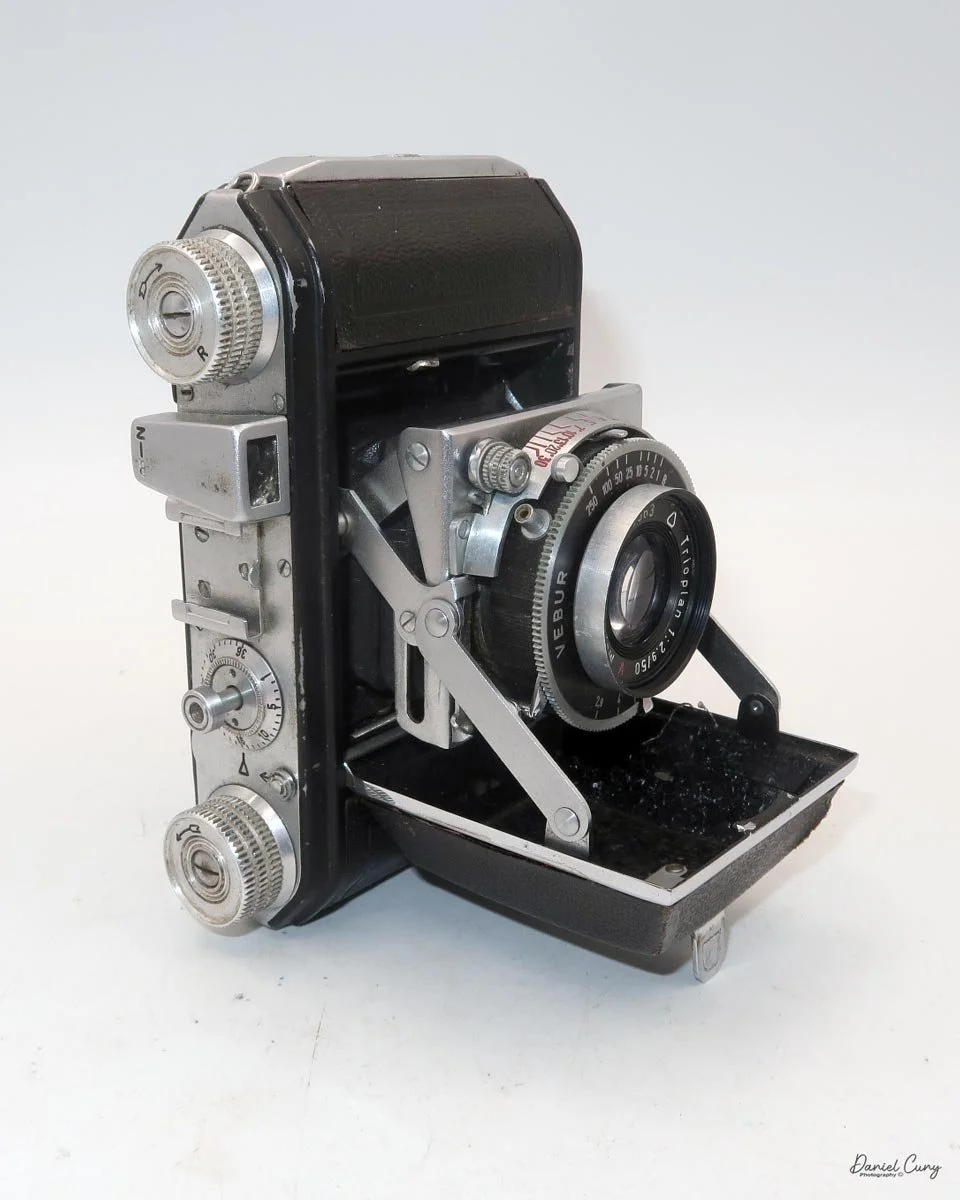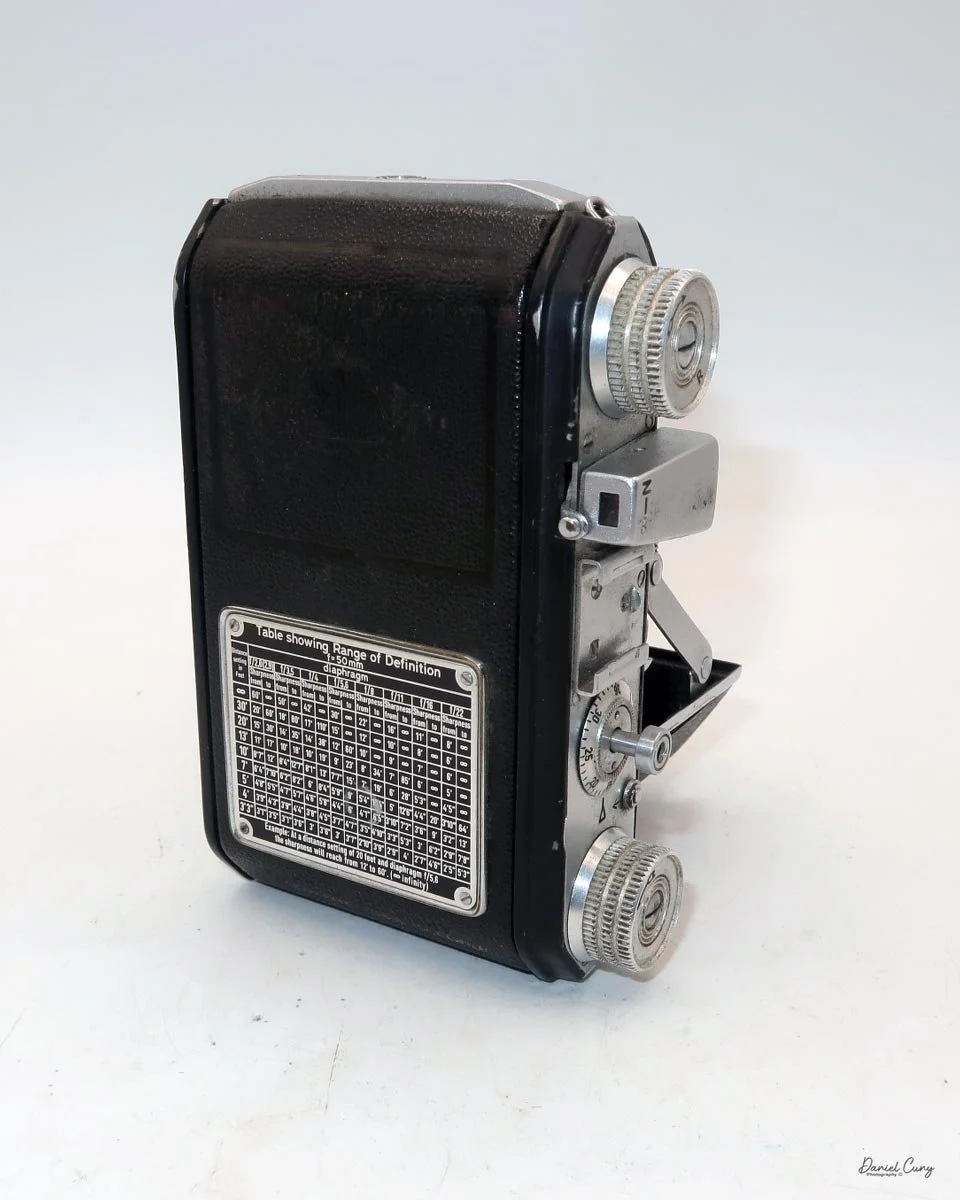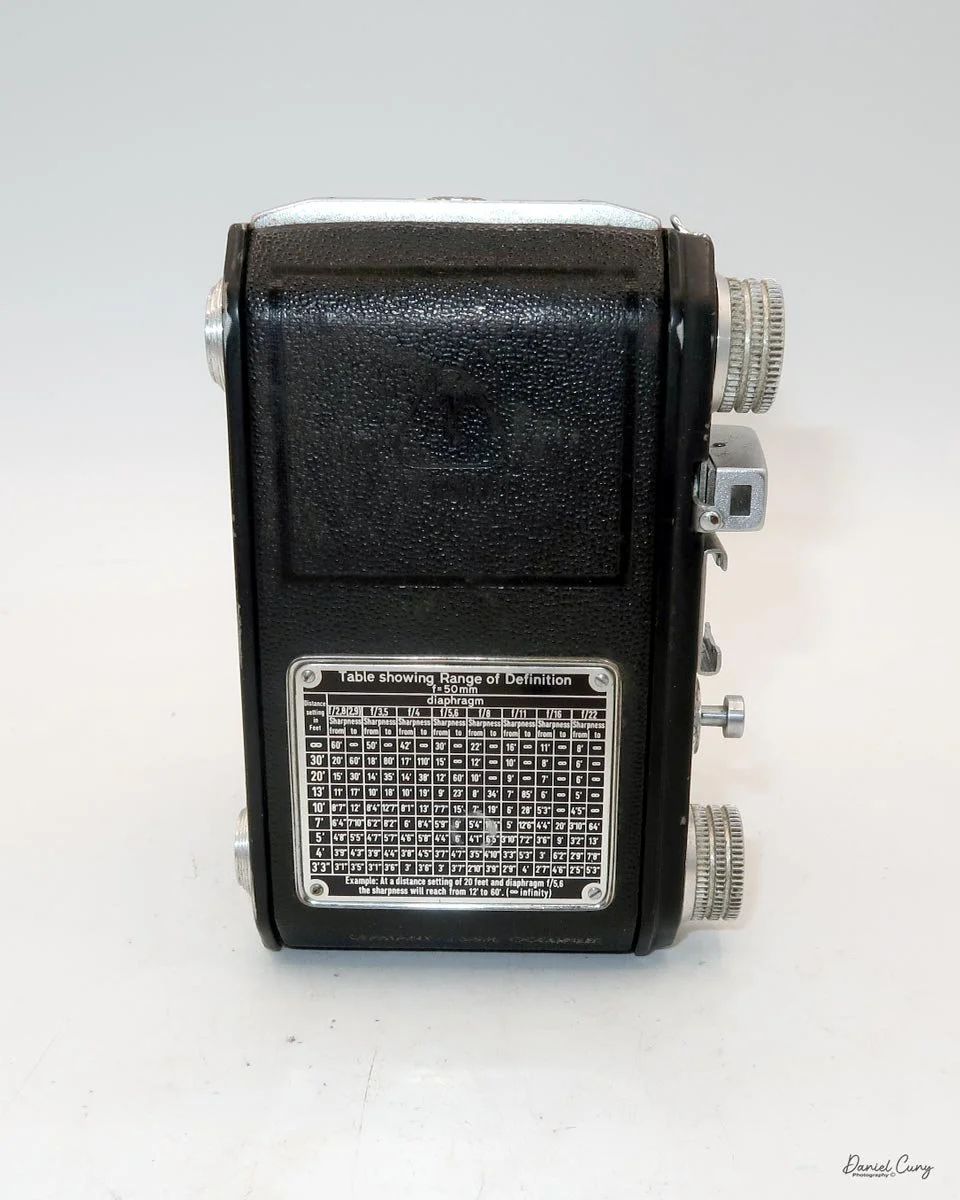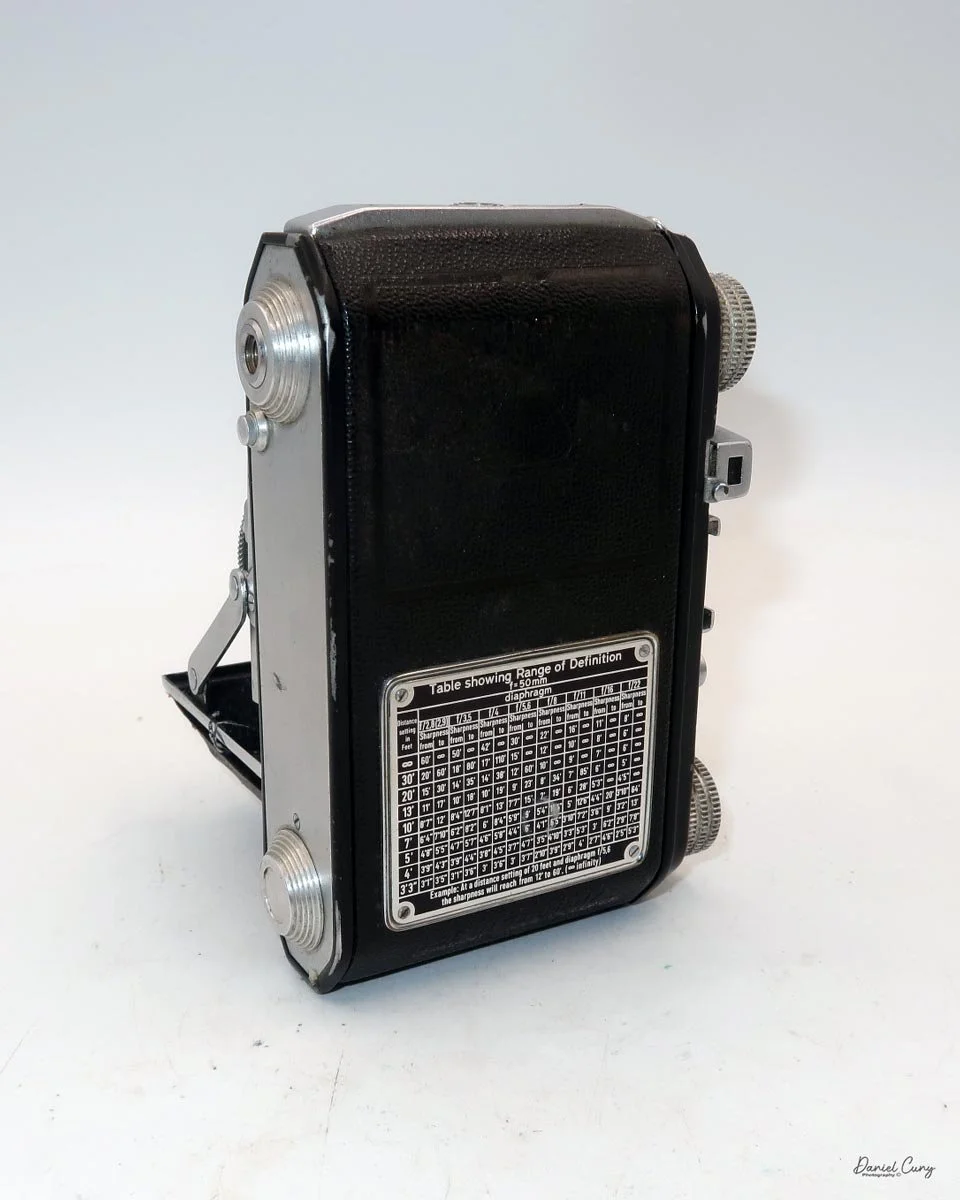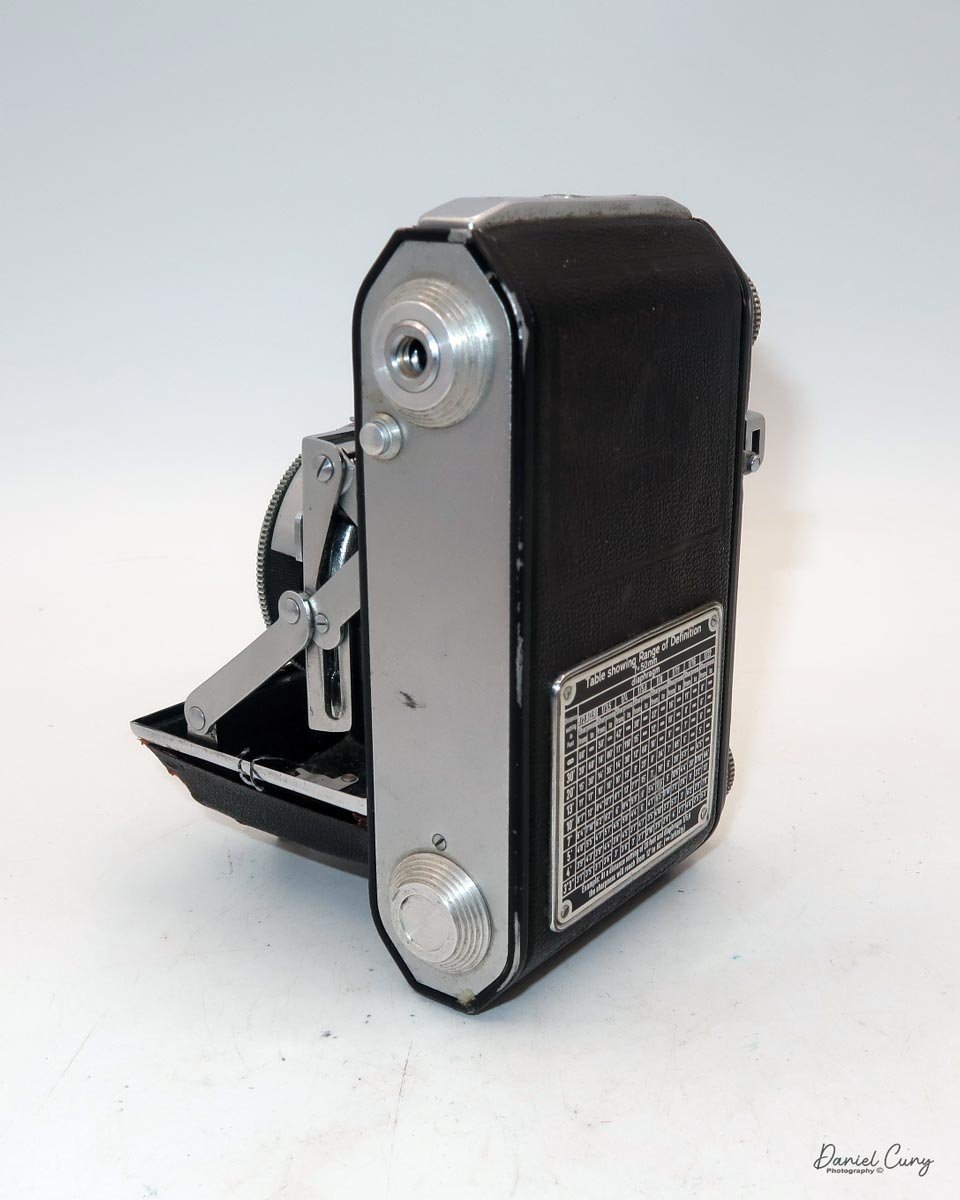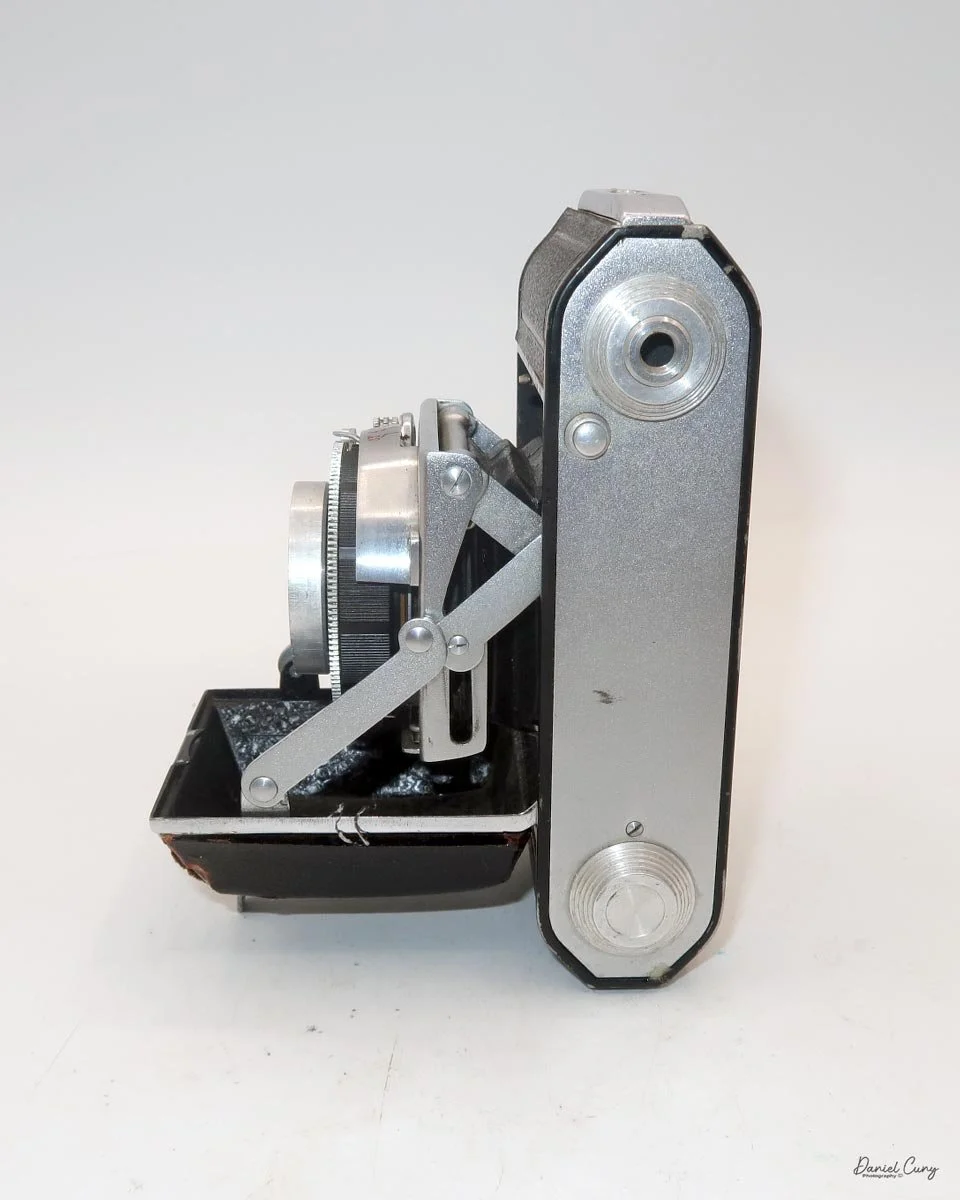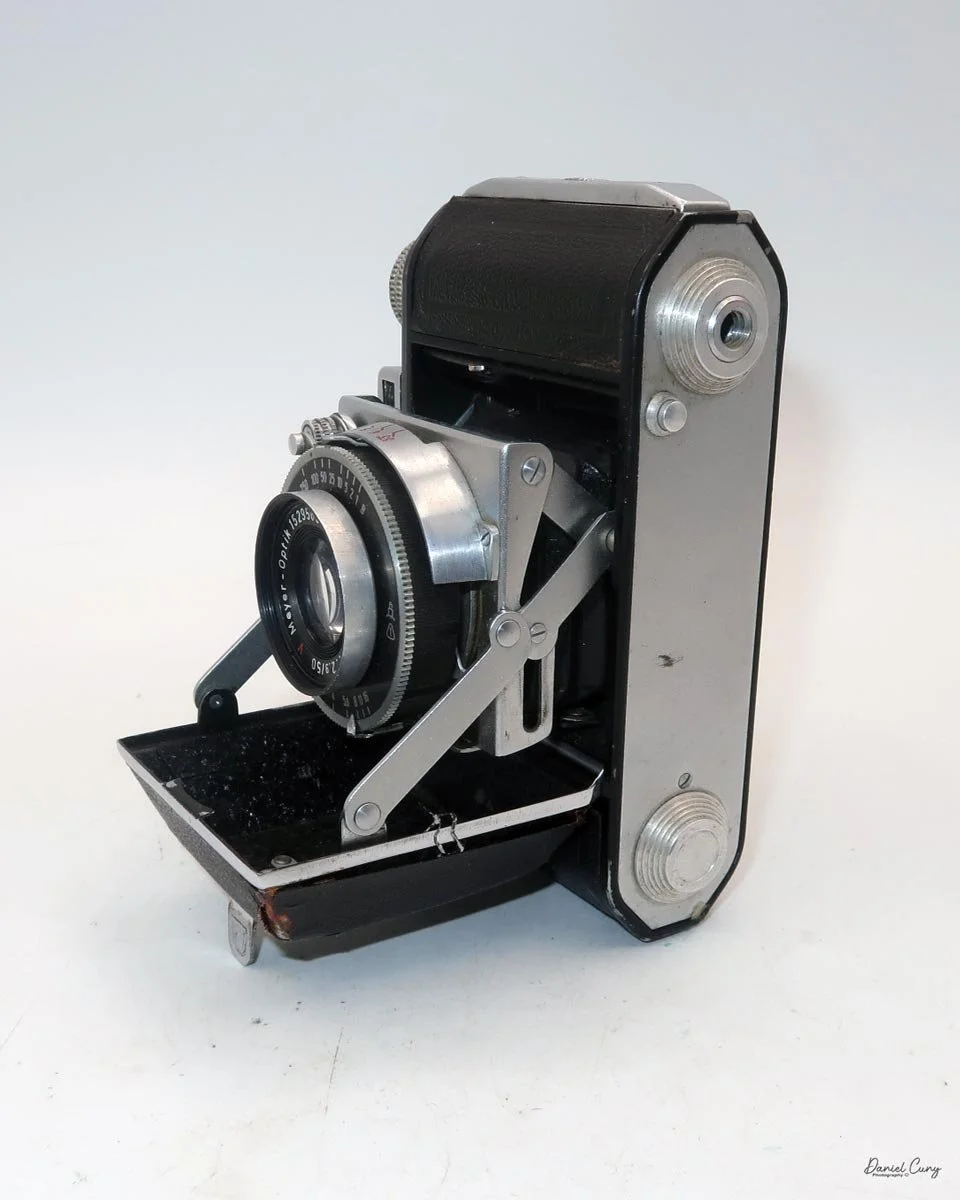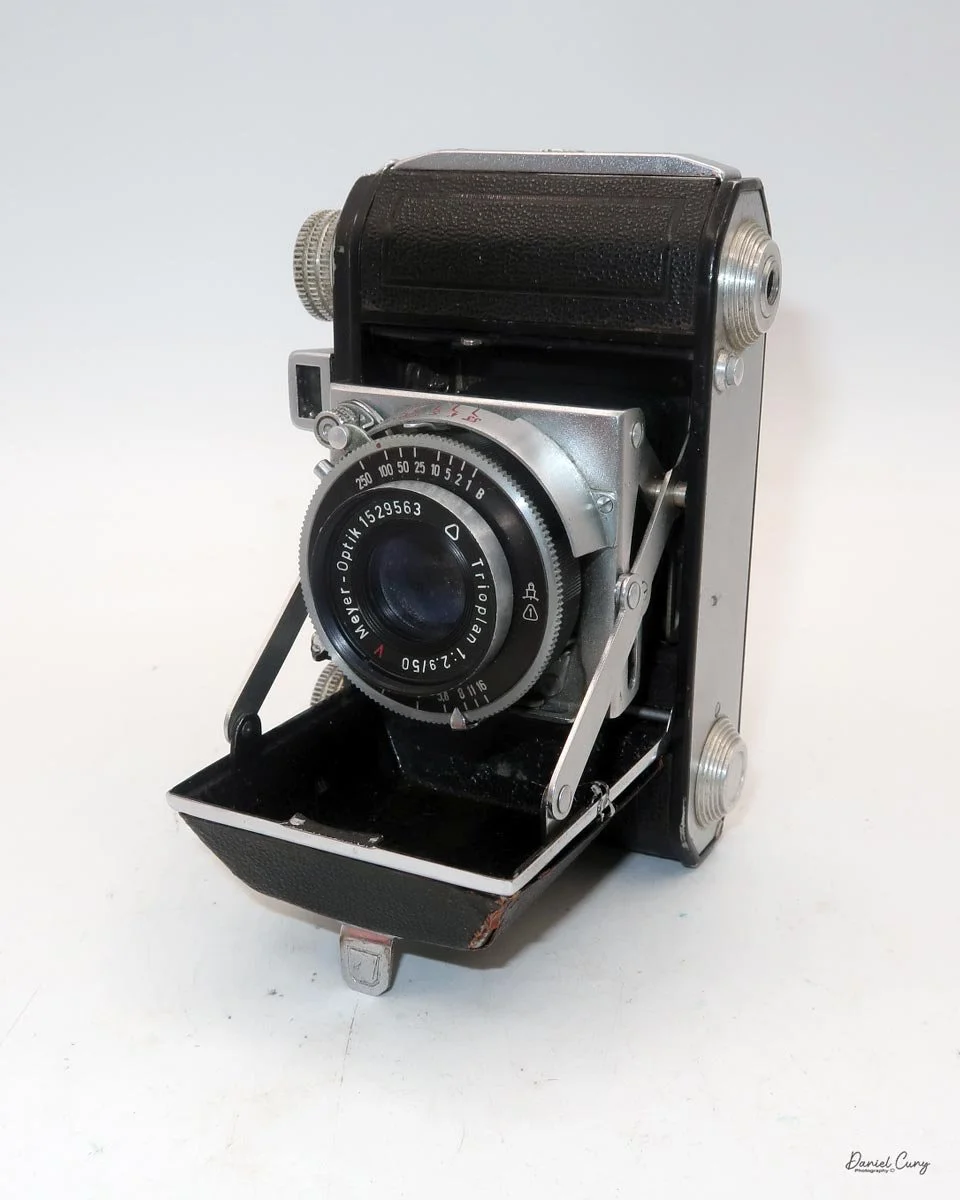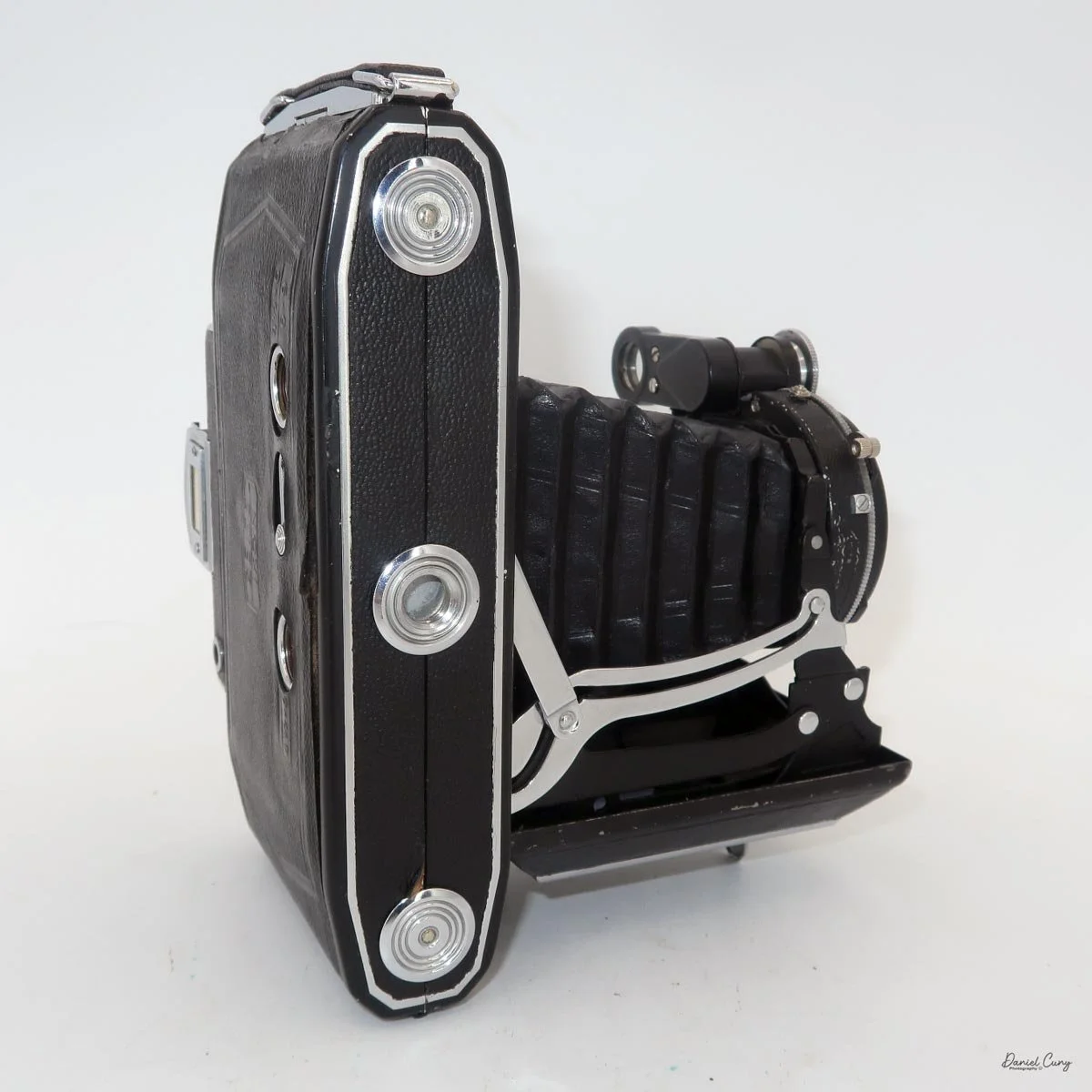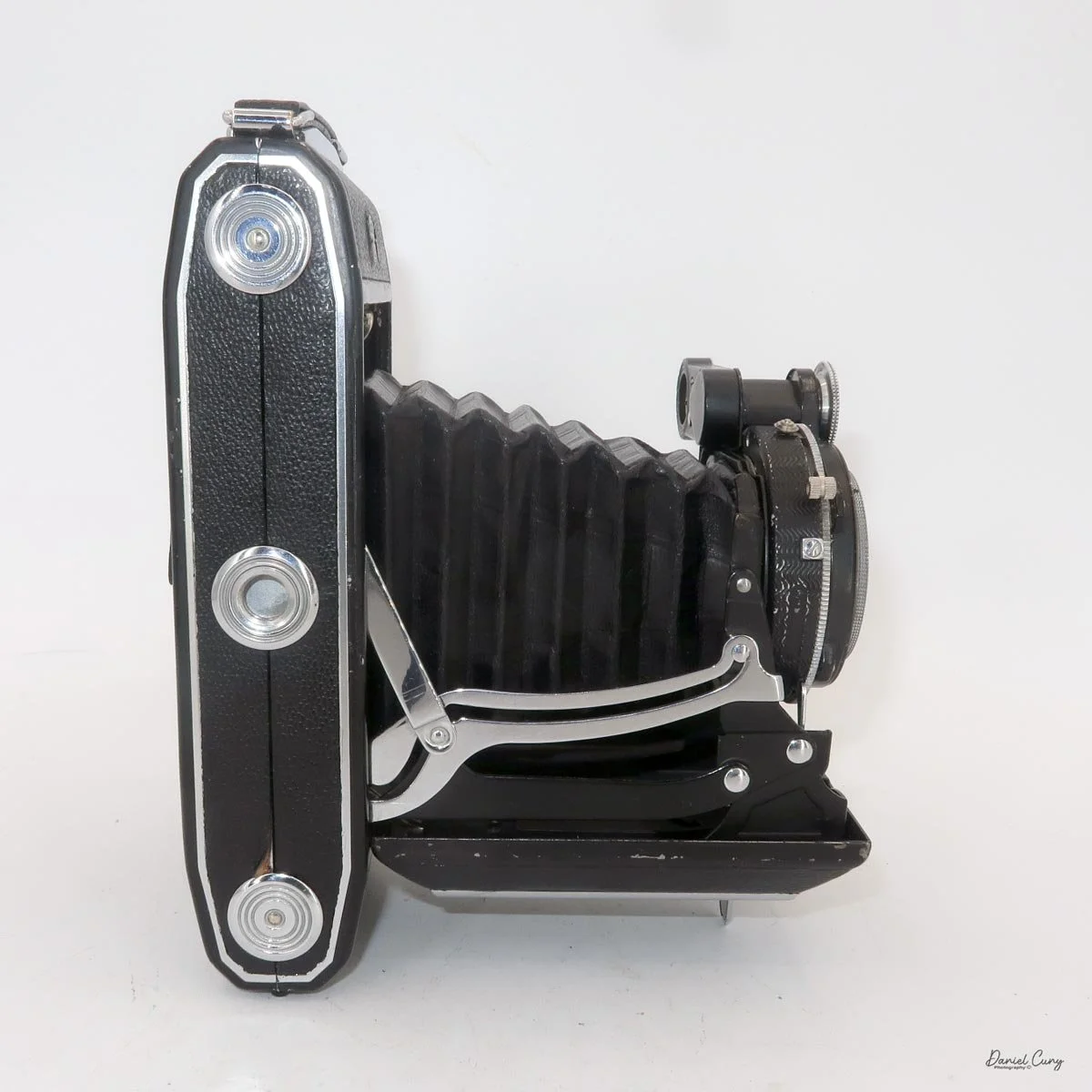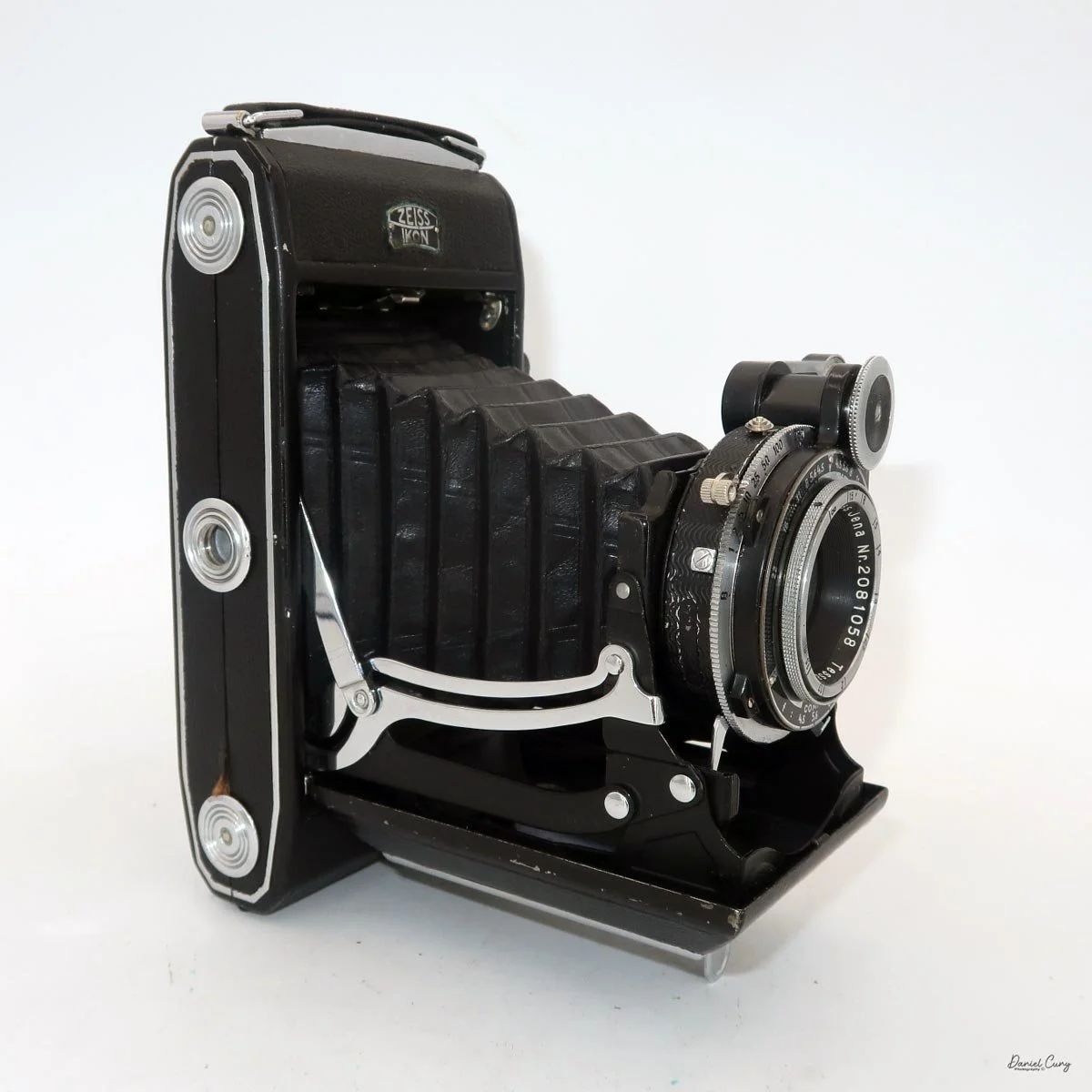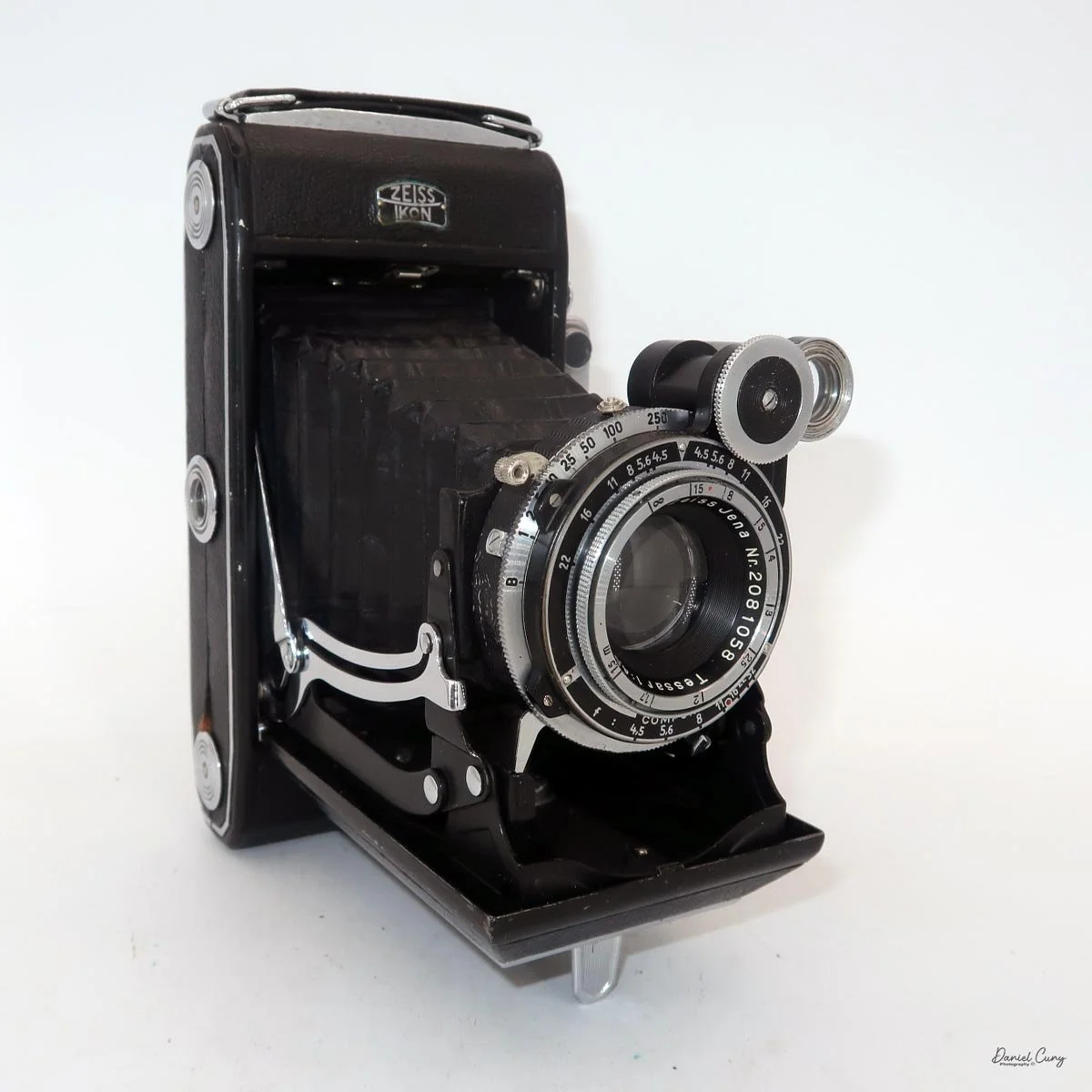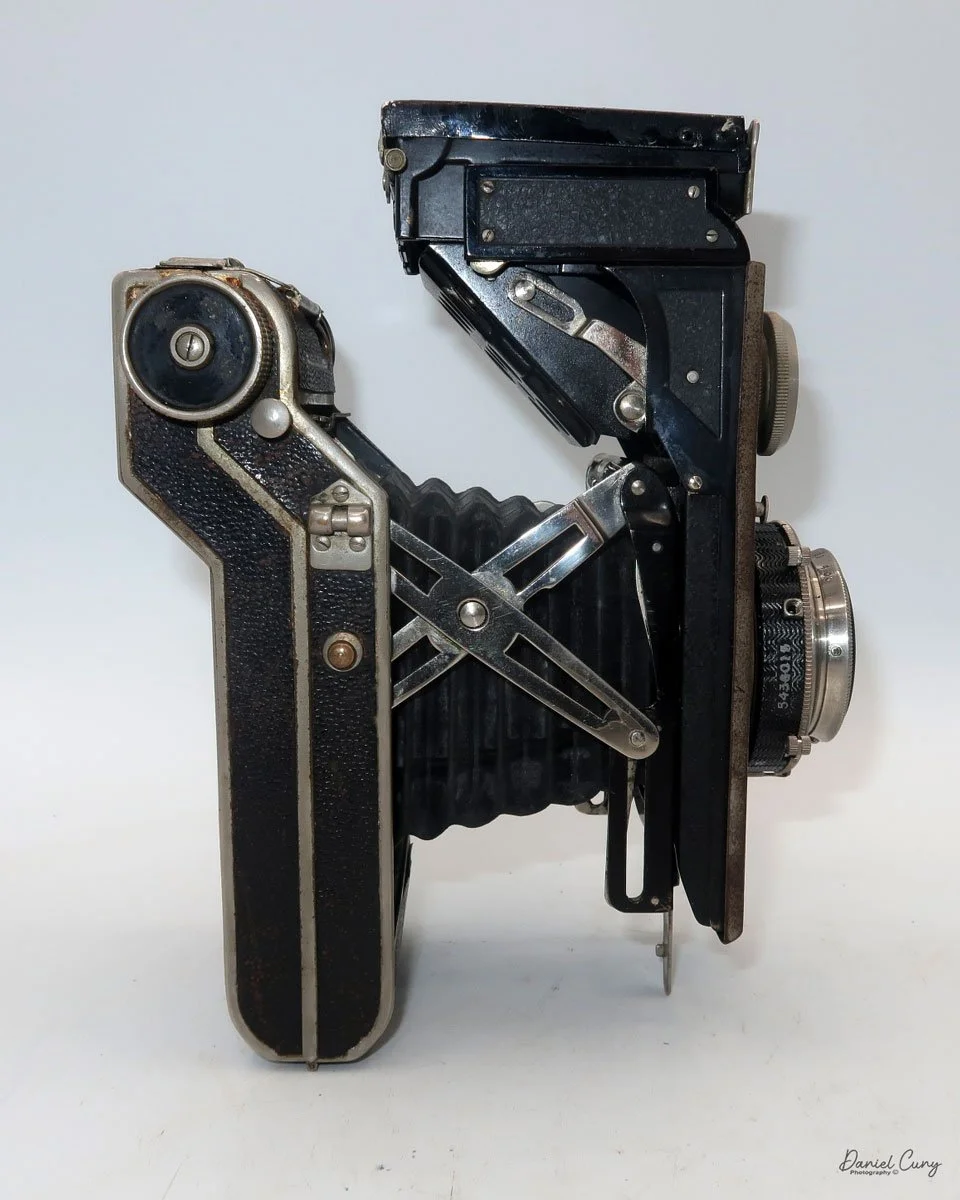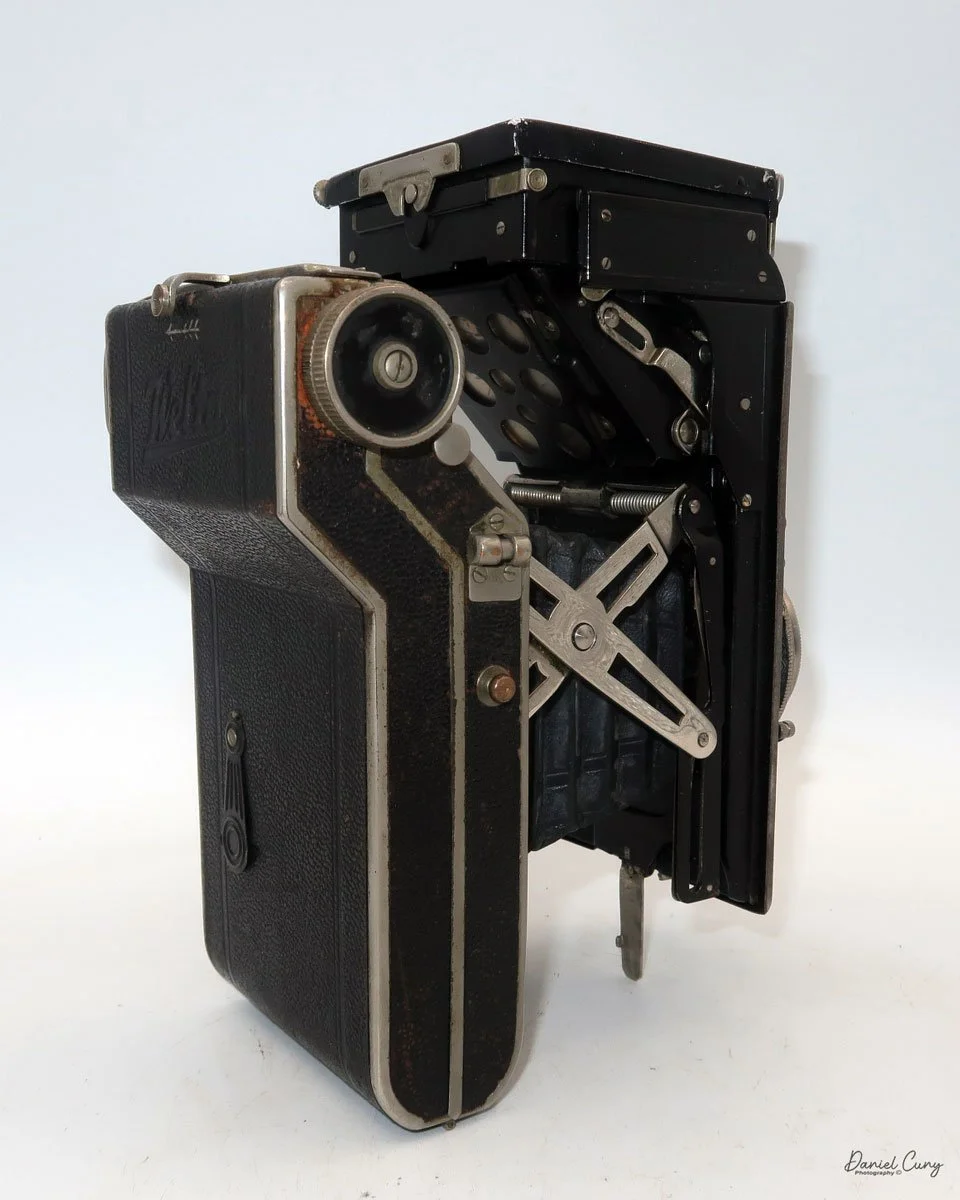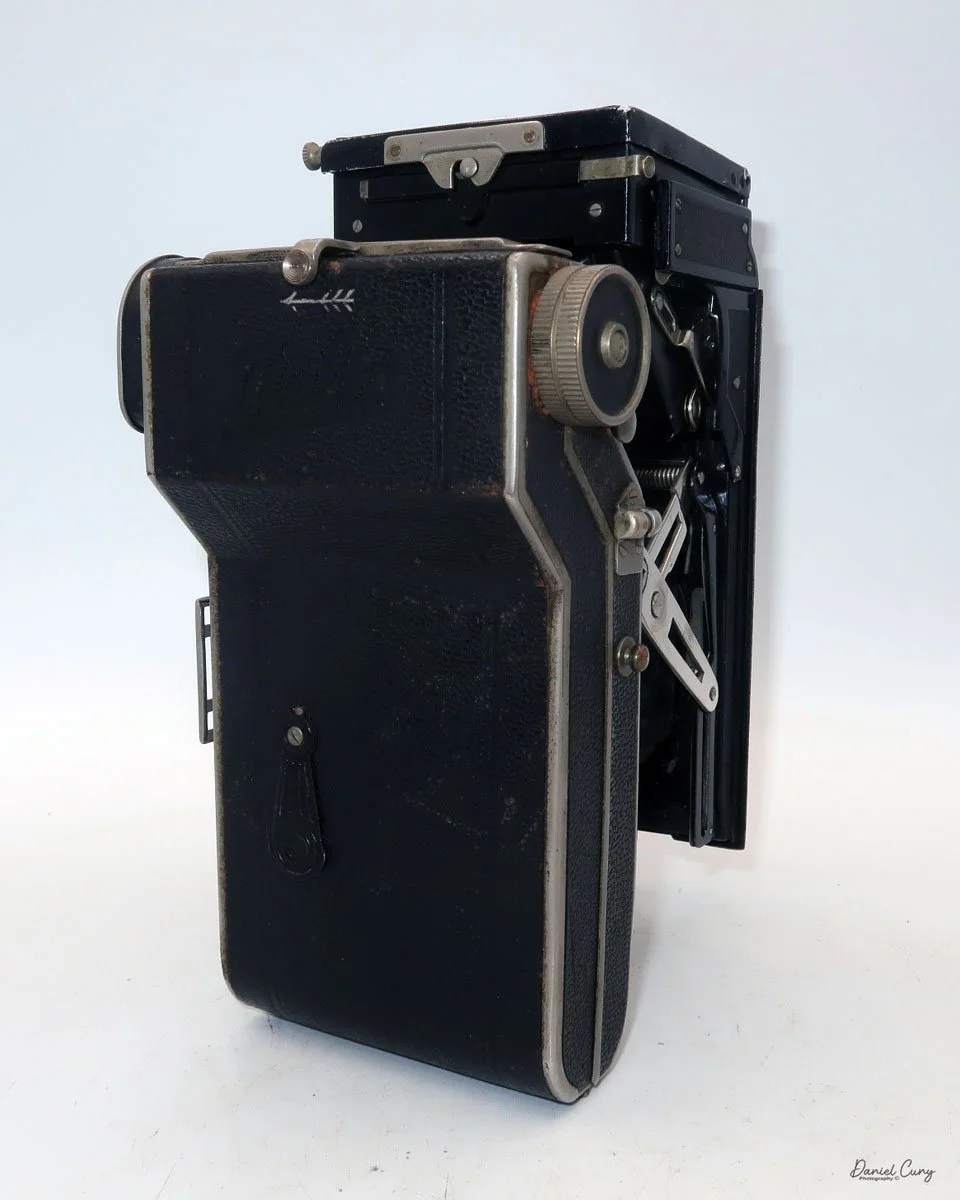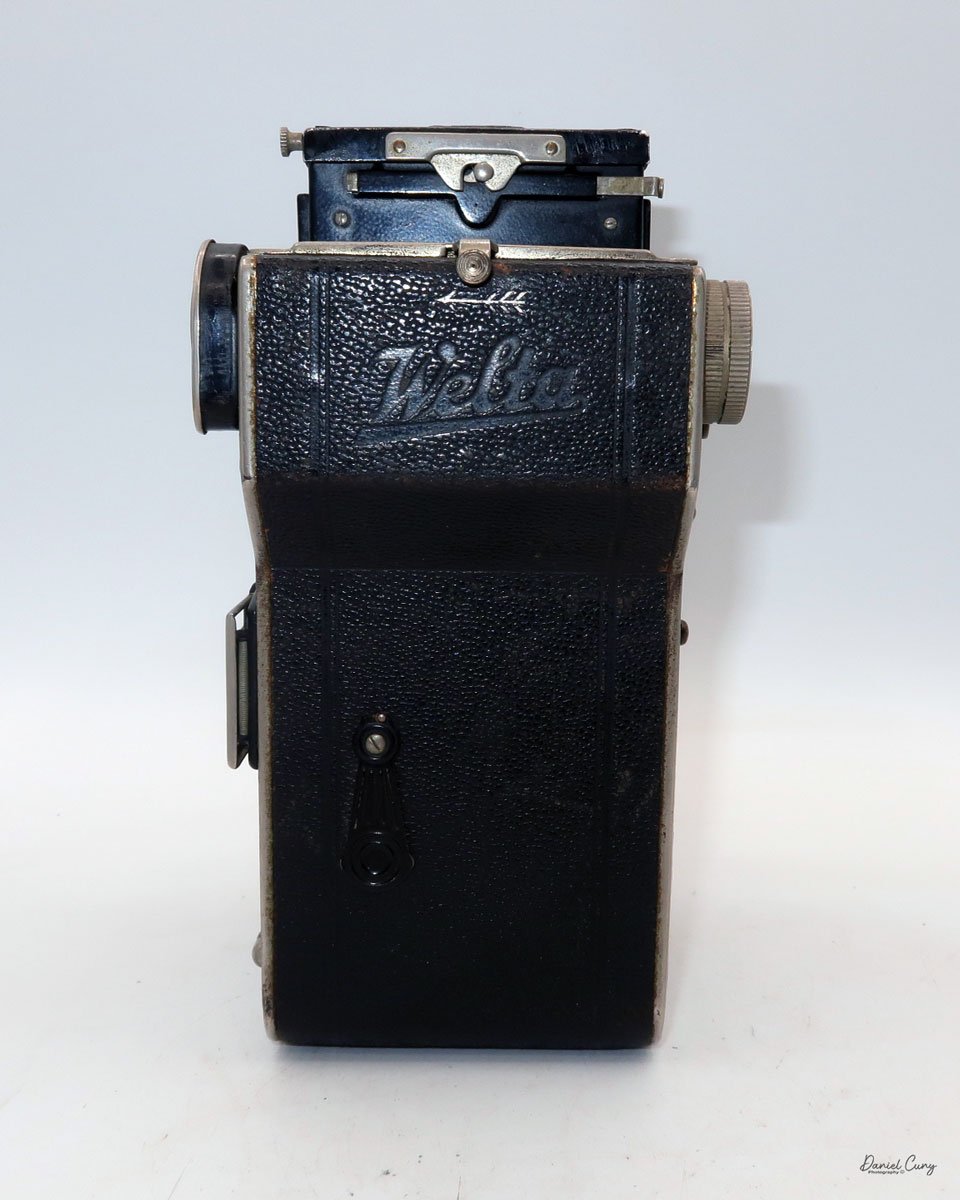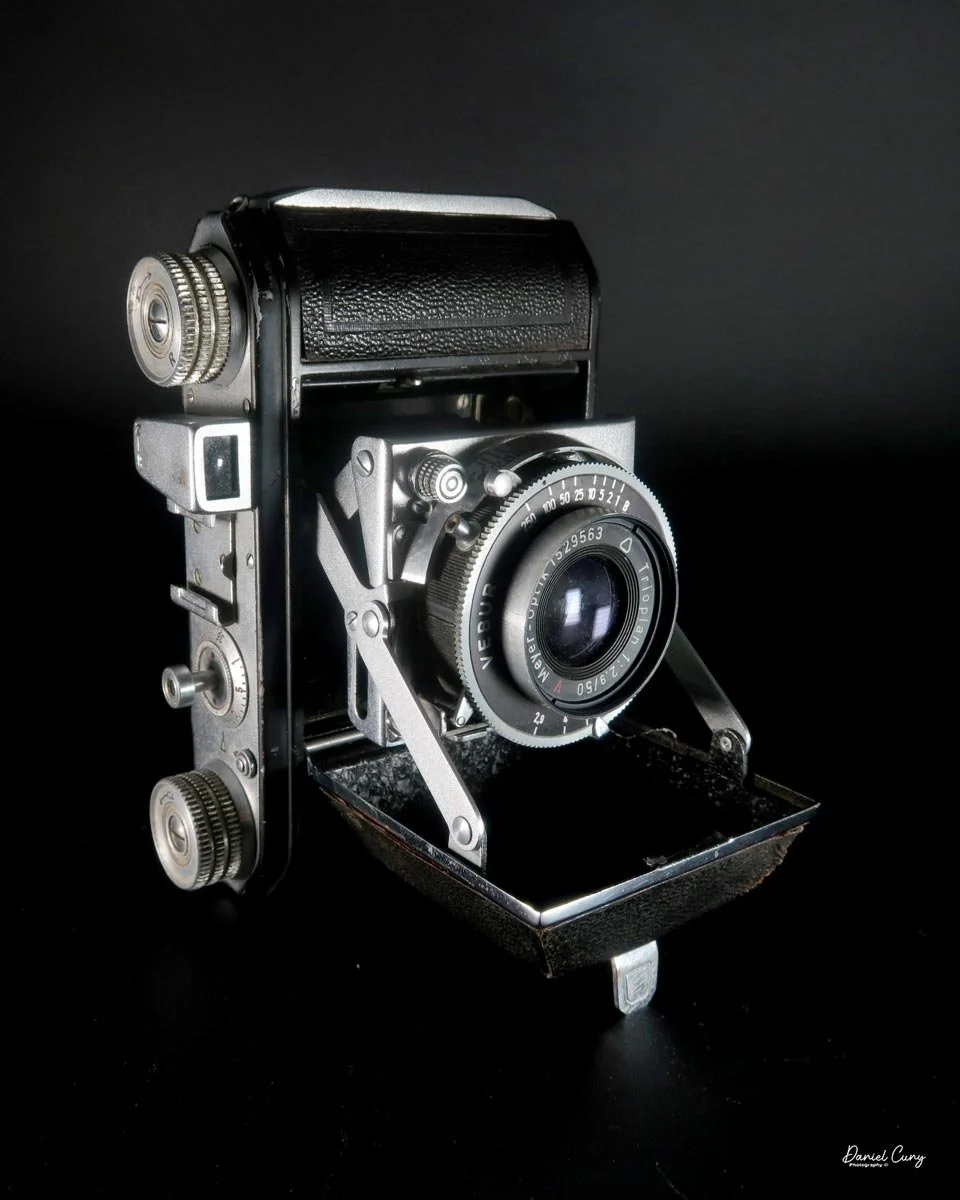
Welta Welti camera

My Welta Welti camera

While looking for a camera to discuss in this week's camera collecting blog, I was unpacking cameras I took to the recent camera show outside of Seattle, and I picked up a nondescript leather case for one of them. Opening the case to see which camera it was, it turned out to be a fairly plain-looking 35mm folding camera. 

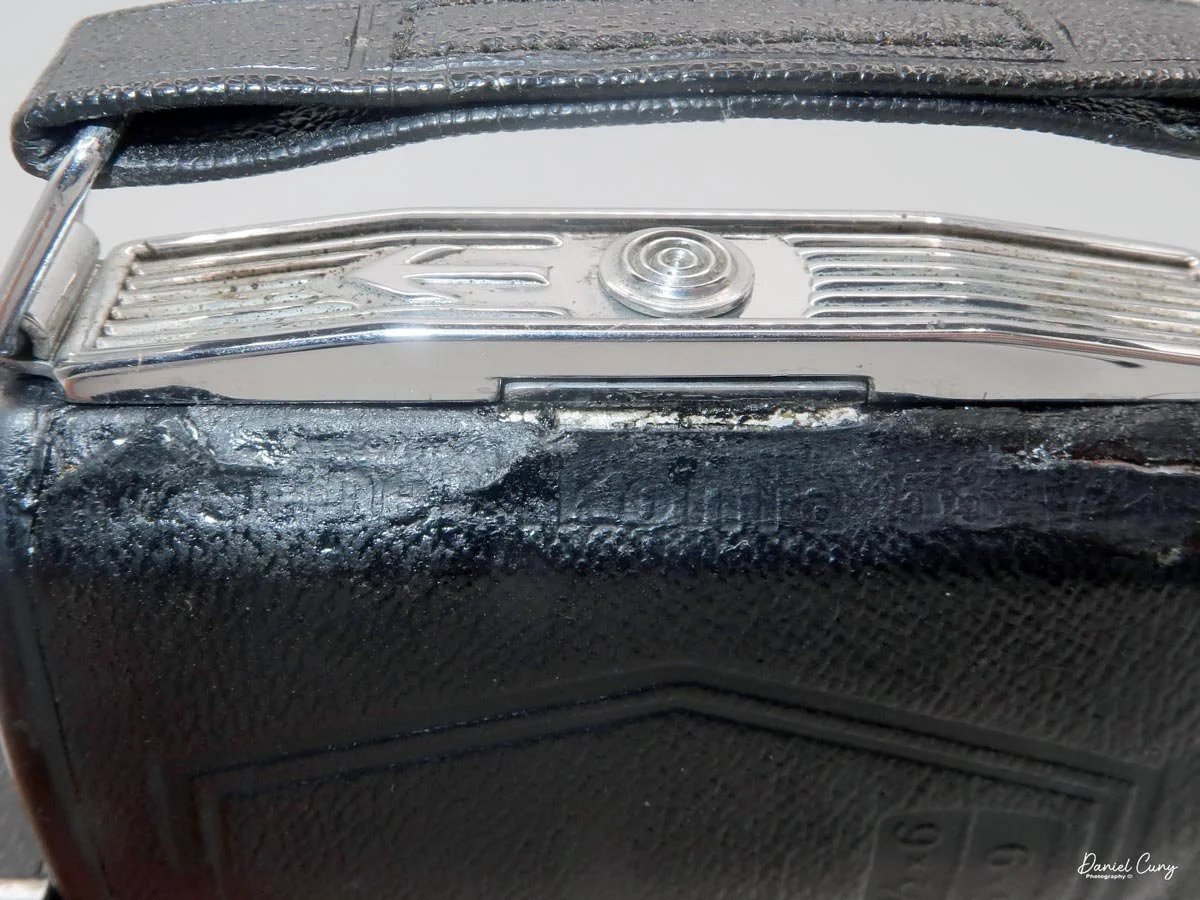
 I opened the camera to see which one it was, but nothing was screaming the manufacturer to me. The only few telltale signs I could see were the words "Germany USSR Occupied" in gold embossed letters, along with "Made in Germany" embossed into the leather. There was also the number 1 inside a triangle and the numbers 37/373/1001 embossed into the leather on the back of the film door.

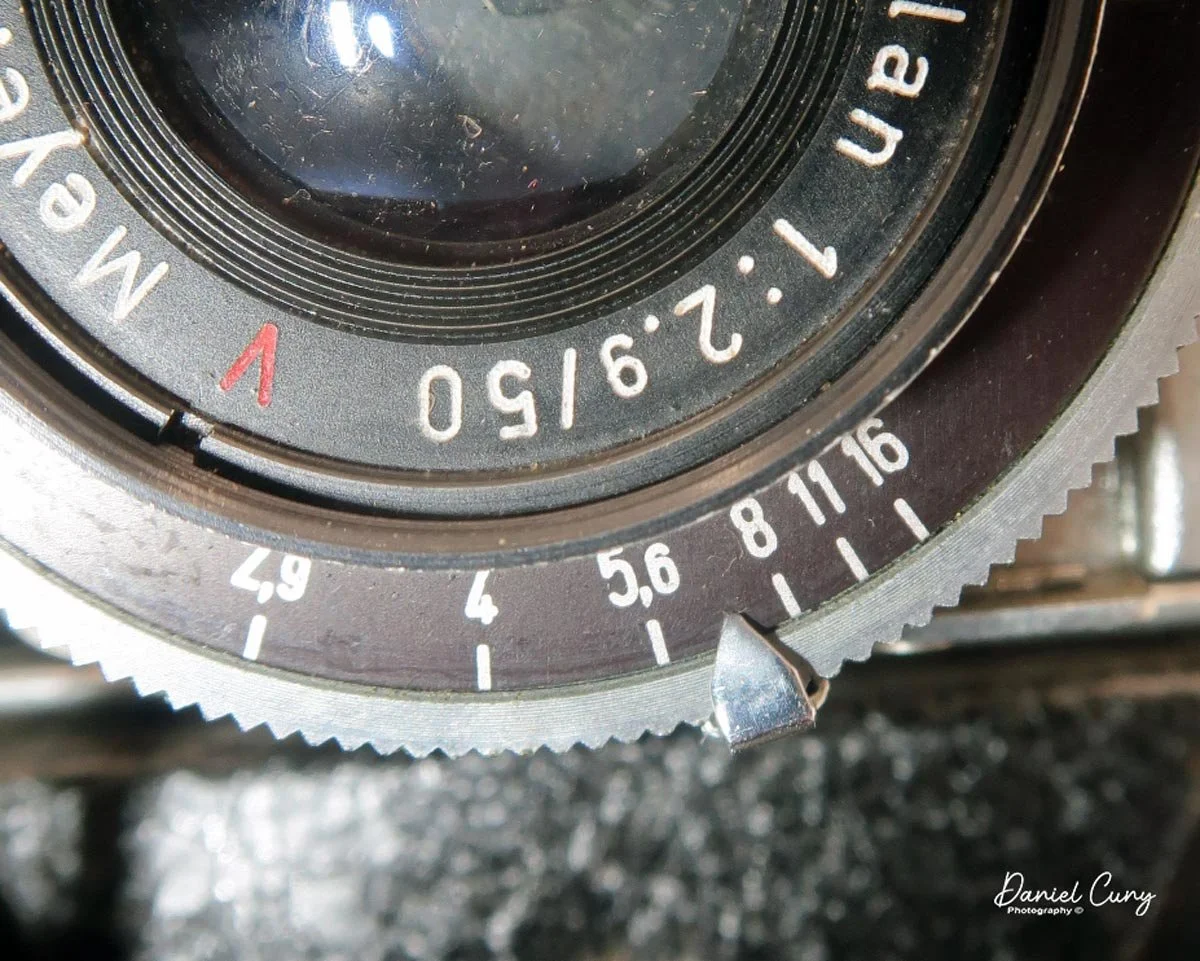
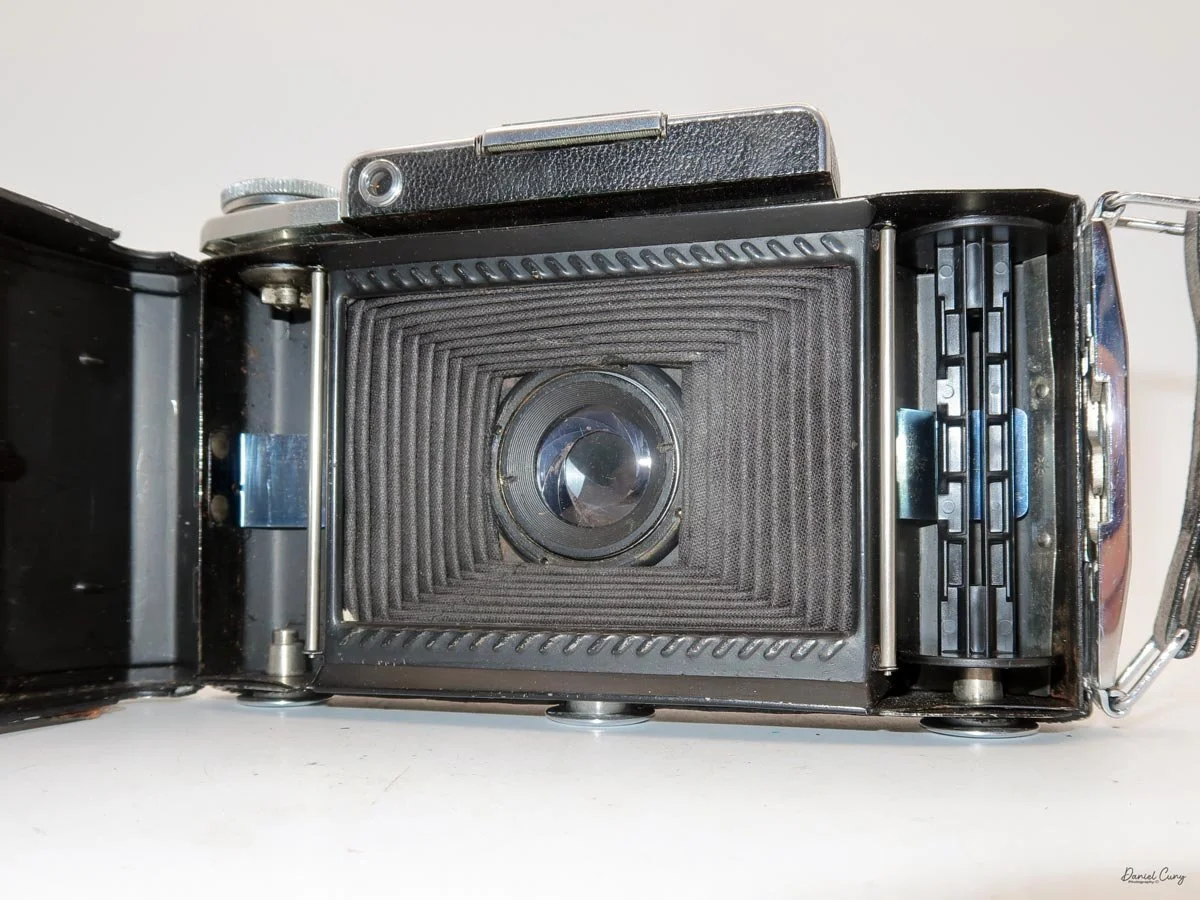
 Opening the door to see what lens the camera had, it wasn't what I expected. Unlike a Schneider or Zeiss lens, the camera has a less popular Meyer Optik lens in a Vebur shutter.

 Now I was more perplexed about the brand of camera I was holding. I researched the information I had, and I found that I was holding a Welta Welti camera made soon after WWII.
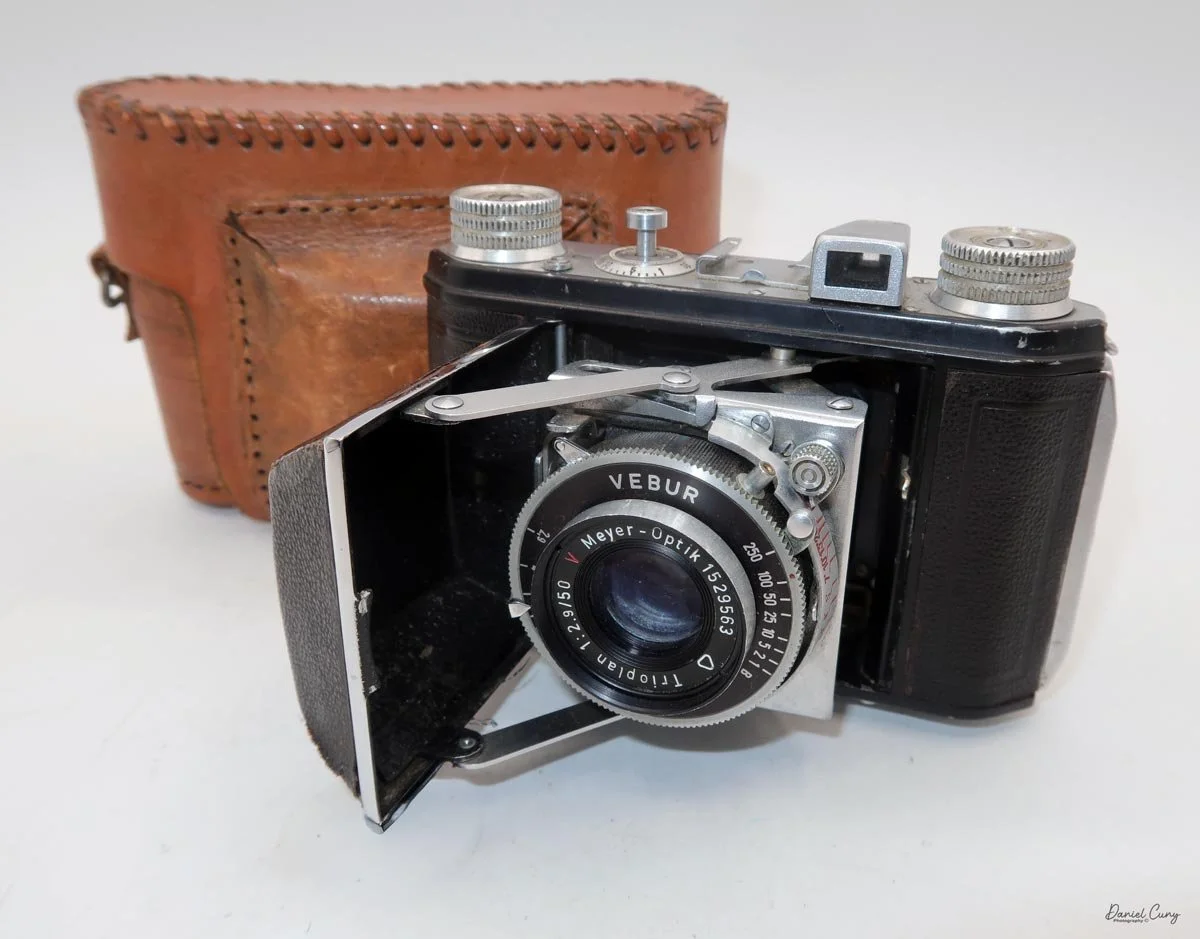
My Welta Welti camera with leather case.

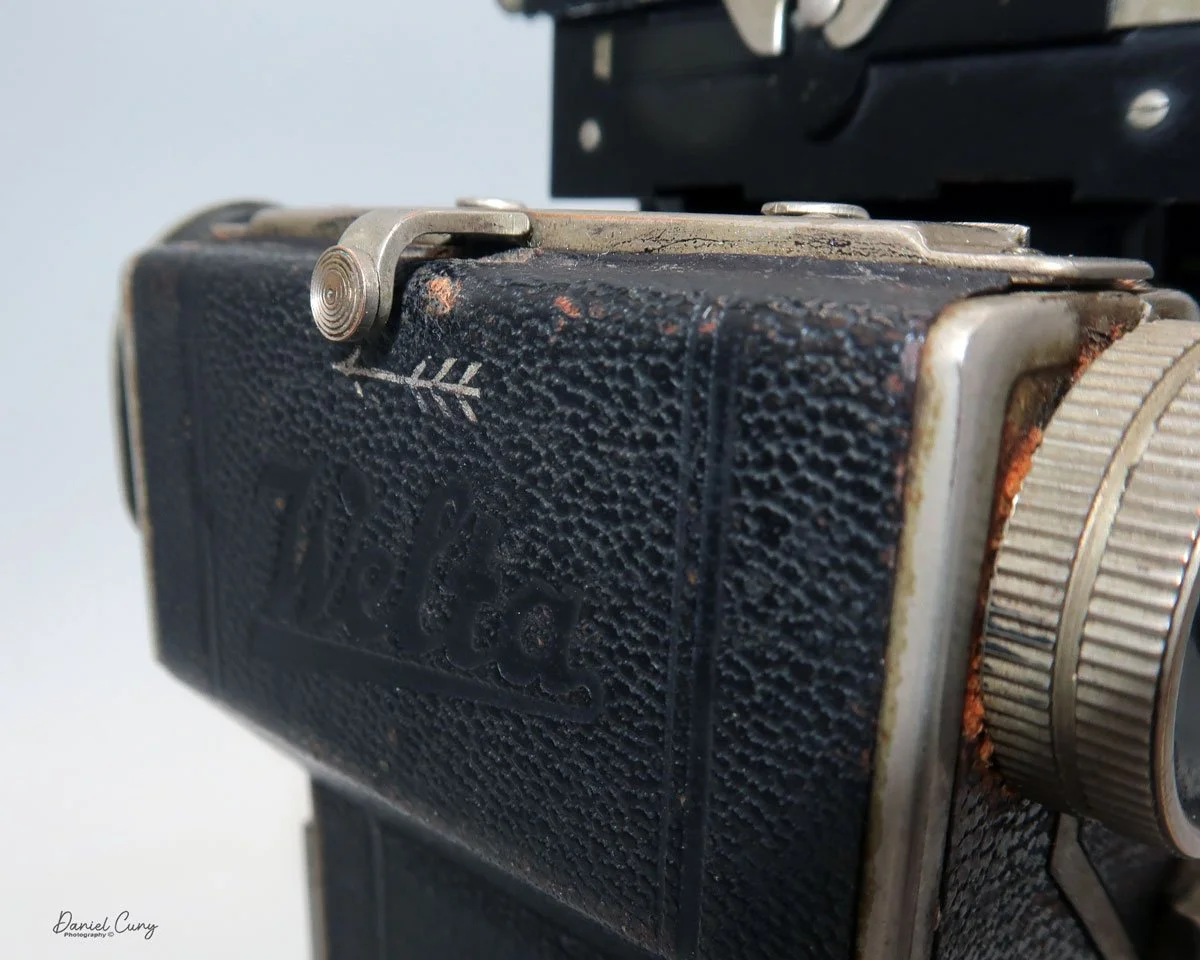
 Usually, on cameras of this era, the manufacturer's name is embossed on the side of the camera, close to the film door. I looked at the camera again, and it was either worn off from use or never there in the first place.

 Testing the camera's shutter, it worked at all speeds, and the aperture was smooth and functioning as it should. The lens was clean, and the transport seemed in good condition, so for the week I go camera shopping in Tokyo, and being a fan of Welta cameras, like the Perfekta and Superfekta, I found the camera to write about for this week's blog post.

History:

 For those of us who spend our days restoring, shooting, and studying vintage cameras, the name Welta carries a distinct weight—both literally and figuratively. Founded in 1914 by Walter Waurich and Theodor Weber in Freital, Germany, the company originally operated under the moniker Waurich & Weber. By 1919, the "Welta" trademark was born, marking the beginning of a remarkable, albeit turbulent, chapter in the history of photography.
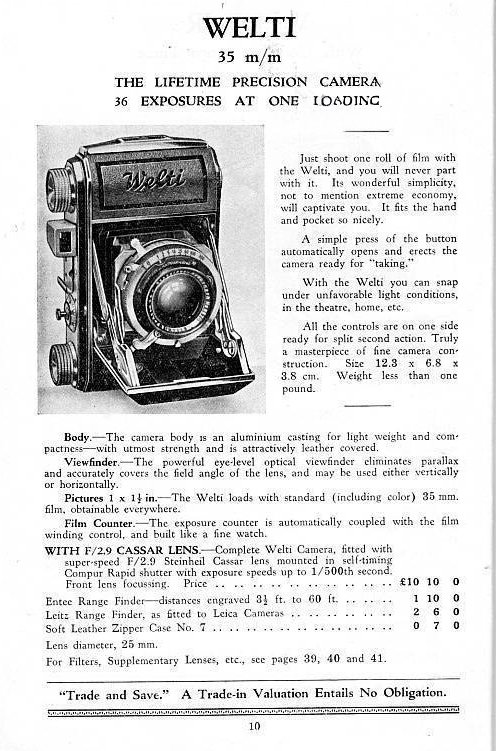
 Welta quickly earned a sterling reputation during the 1920s and 30s. At a time when German optical and mechanical engineering set the global standard, Welta held its own against titans like Zeiss Ikon. They mastered the folding camera format, producing medium format workhorses outfitted with top-tier Compur shutters and stunning optics from Schneider-Kreuznach or Carl Zeiss. For a working photographer or a serious enthusiast, a Welta meant uncompromising precision wrapped in a beautifully crafted, leather-bound brass body.

 As the 1930s progressed, the photographic landscape shifted dramatically as the 35mm film format gained popularity. Competitors were releasing compact, pocket-sized folding 35mm cameras, most notably the Kodak Retina. Welta's brilliant response was the Welti.

 Introduced in 1935, the Welti was a marvel of compact engineering. It wasn't just a scaled-down medium format folder; it was a purpose-built 35mm instrument. With its incredibly robust struts, precision-focusing helix, and satisfyingly dense, all-metal heft, the Welti proved that "compact" didn't mean compromising on professional-grade durability. It remains the perfect embodiment of Welta's meticulous design philosophy.

 The devastation of World War II completely altered Welta's trajectory. Finding itself in the Soviet occupation zone (later East Germany), the company was nationalized in 1946, becoming VEB Welta-Kamerawerke. Despite this massive structural shift, the Freital factory continued to produce incredible cameras, including refined post-war iterations of the Welti, the Weltax, and the Belmira.

 However, as the East German government moved to consolidate its optical industries to compete on the global stage, Welta was eventually absorbed by VEB Kamera-und Kinowerke Dresden in 1959, which later evolved into the massive Pentacon conglomerate.

 By the mid-1960s, the Welta name faded into history. Yet, when you hold a Welti today, you are holding a defiant piece of history—a tactile testament to a specialized factory that, for a few brilliant decades, built some of the finest folding cameras the world had ever seen.

My Camera:

 My Welta Welti camera is similar in size and shape to the Kodak Retina cameras. The camera is 4.5" wide by 3.5" tall by 2" deep with the lens retracted, and 3.5" deep with the lens door open and the lens in the normal "taking" position. The Welta Welti weighs 1 pound, 2.9 ounces.
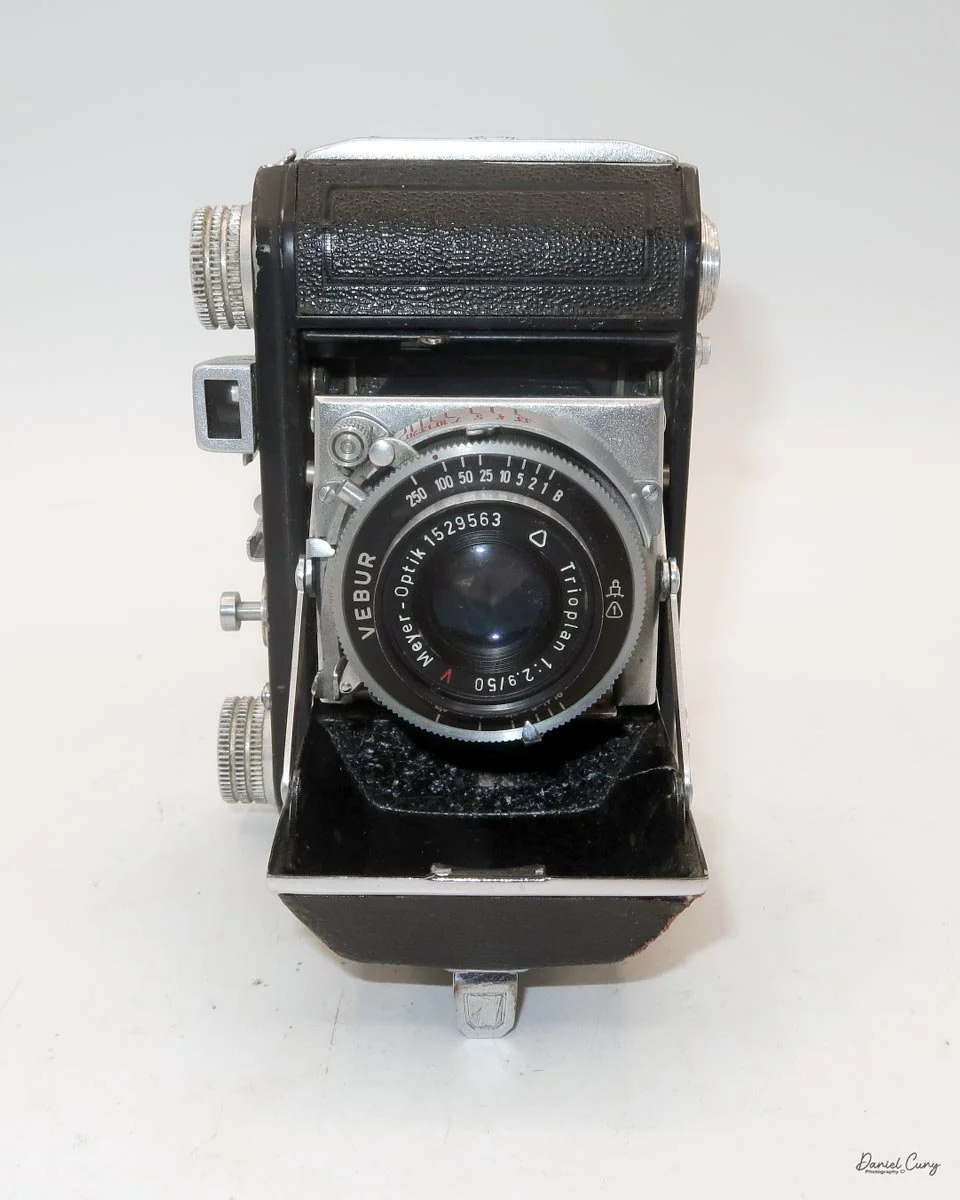
To open the lens door, press a small button at the bottom of the camera, and the lens door opens, exposing a Meyer-Optik Trioplan 50mm f2.9 lens (serial # 1529563), in a Vebur shutter at the end of a small bellows that extends, then the front door is opened.

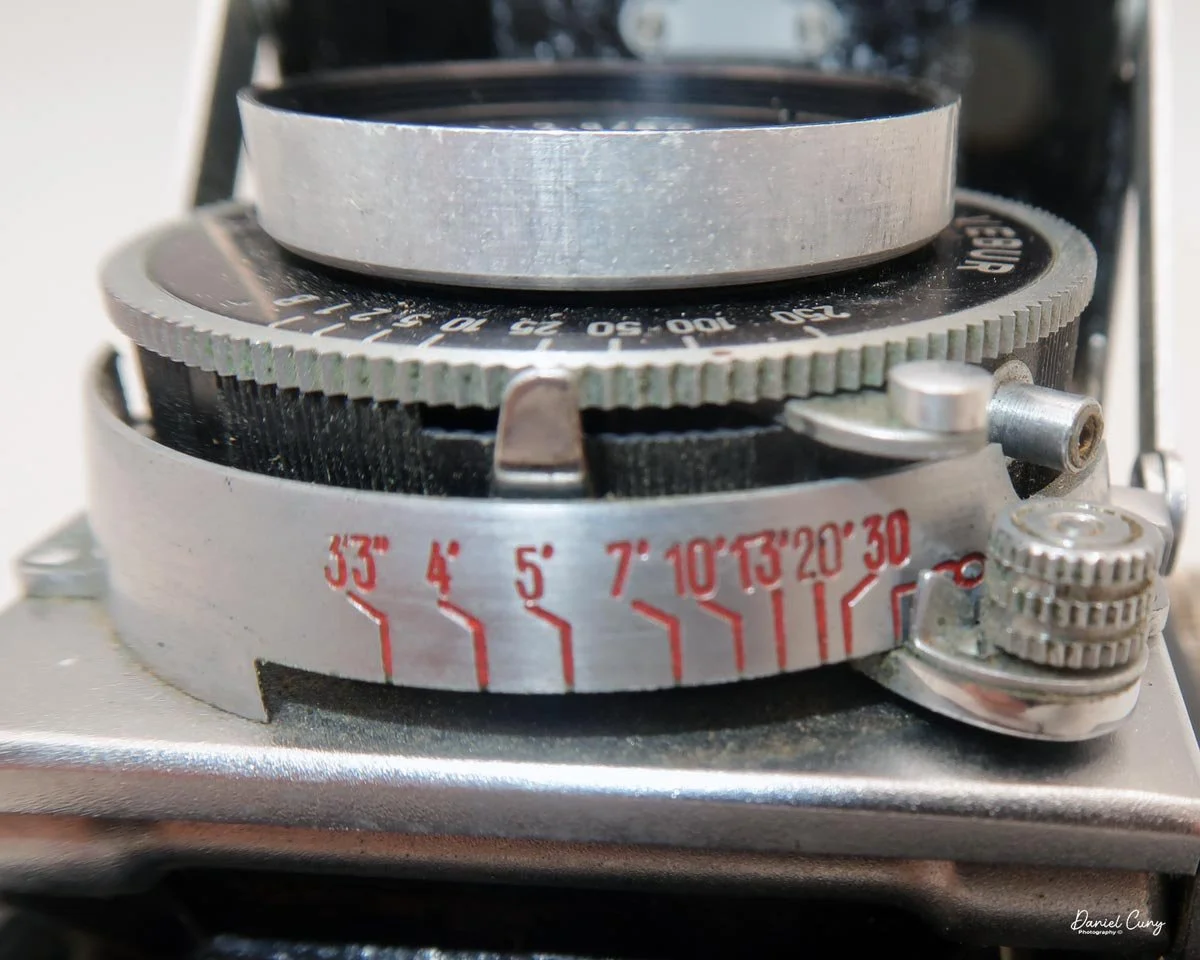
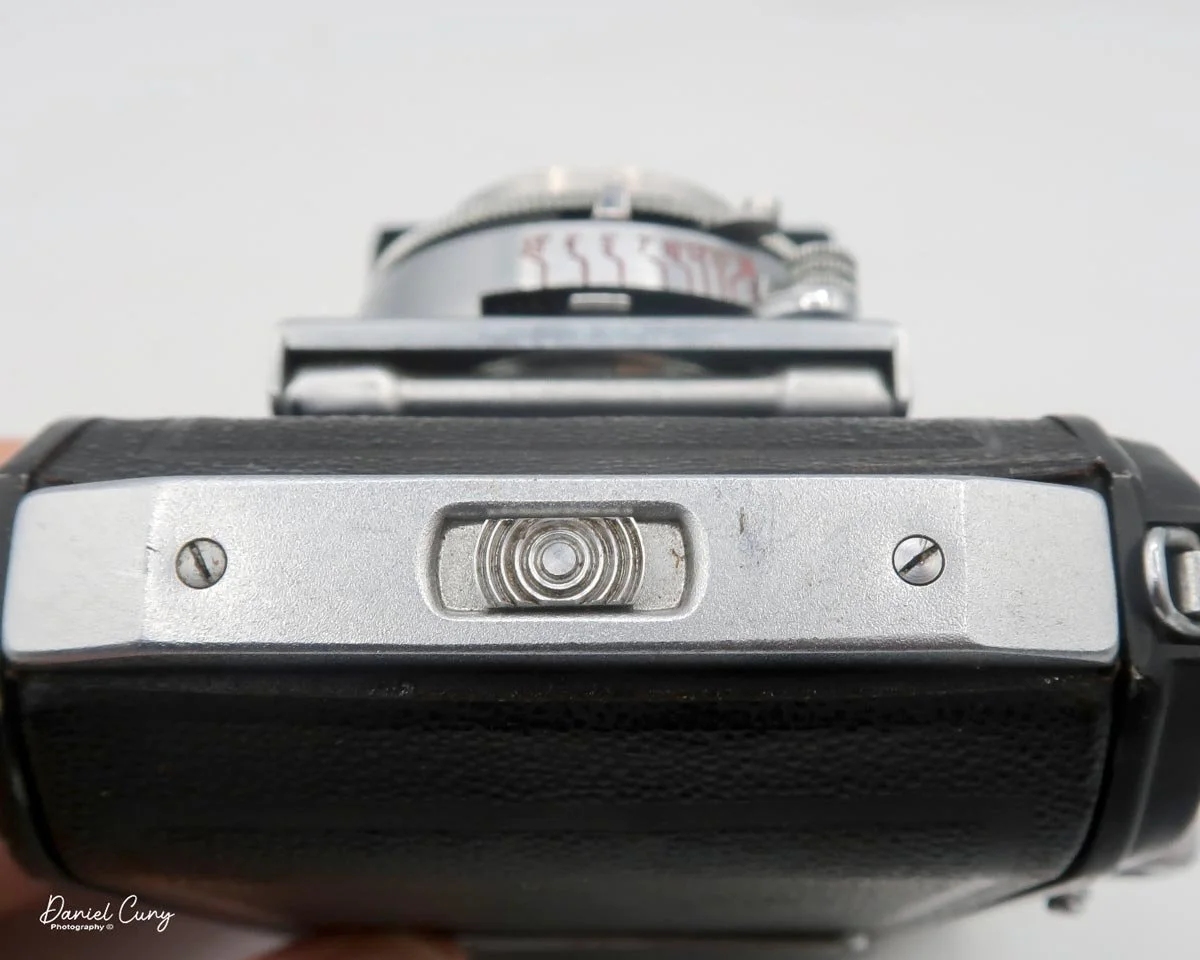
 The shutter speeds range from 1/250 to 1 second, along with "B" for timed exposures. To set the shutter speed, turn a knurled ring on the outside of the shutter, lining up the desired shutter speed with the red dot on the ring. Just behind the shutter speed selector is the shutter cockling lever. You'll need to pull the lever over each time you're going to make an exposure, as there is no automatic shutter cocking mechanism on the Welta Welti camera.
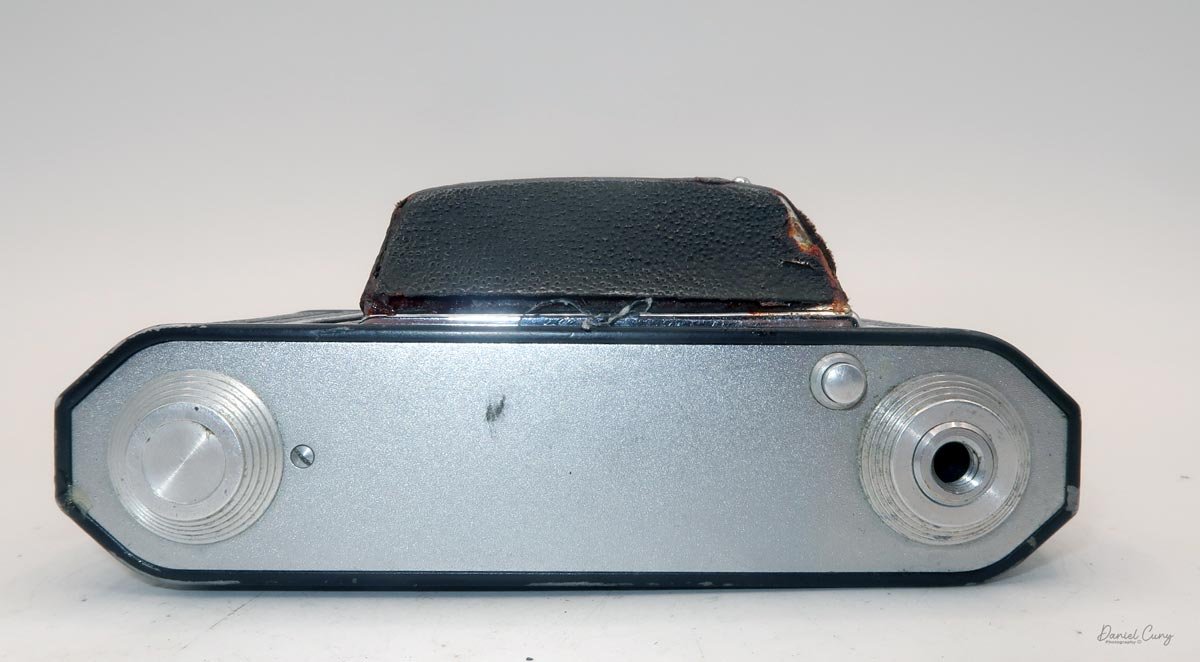
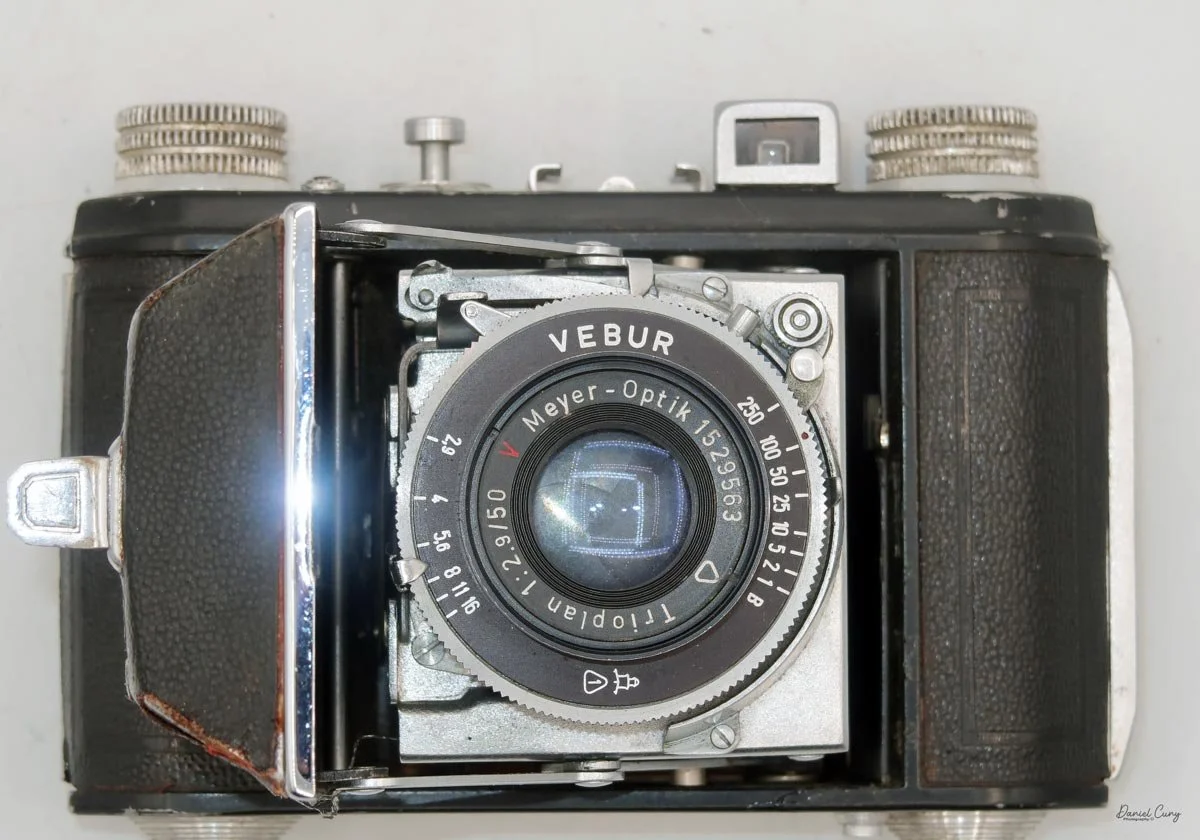
The aperture on my Welta Welti camera ranges from F/2.9 to 16 and is set by a sliding lever under the shutter, below the lens.

 On the back of the lensboard is a large knob that serves as the focusing lever for the camera. There is no rangefinder or internal focusing on the camera, so the distances you set are just guesses. Sliding the knob to the left or right focuses the lens. The lens can focus as close as 3.3 feet to infinity. At the end of the focus knob is a small pointer that sets the desired distance. 

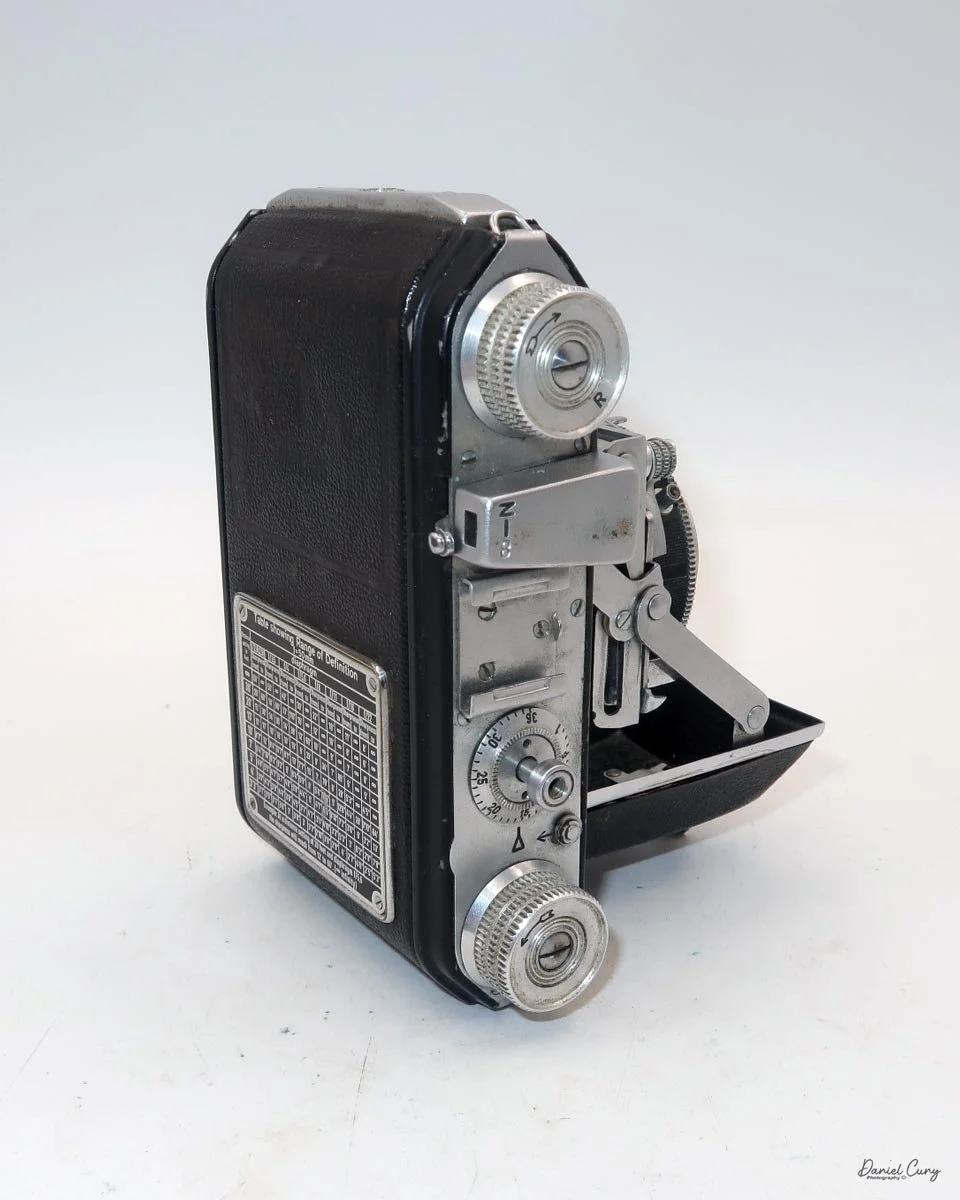
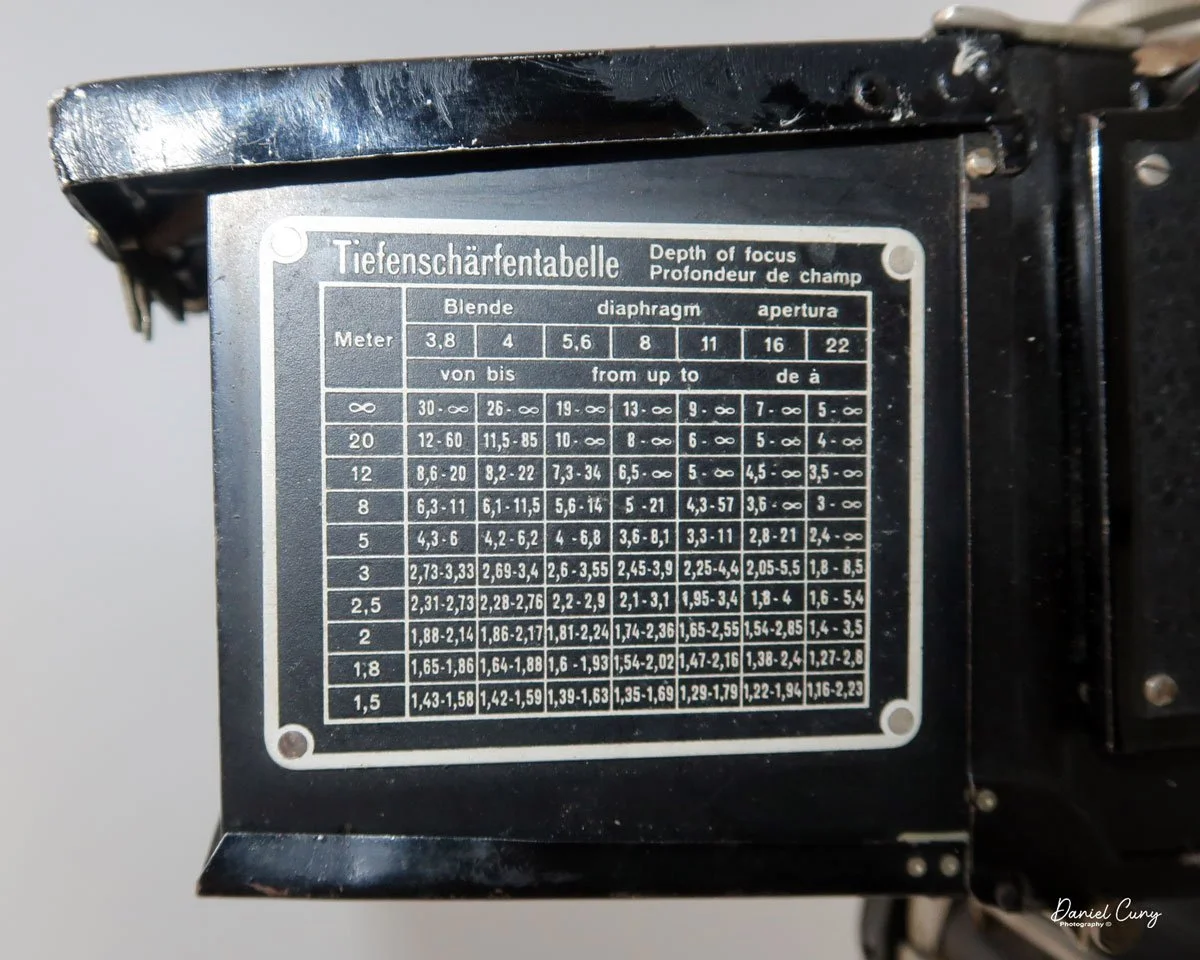
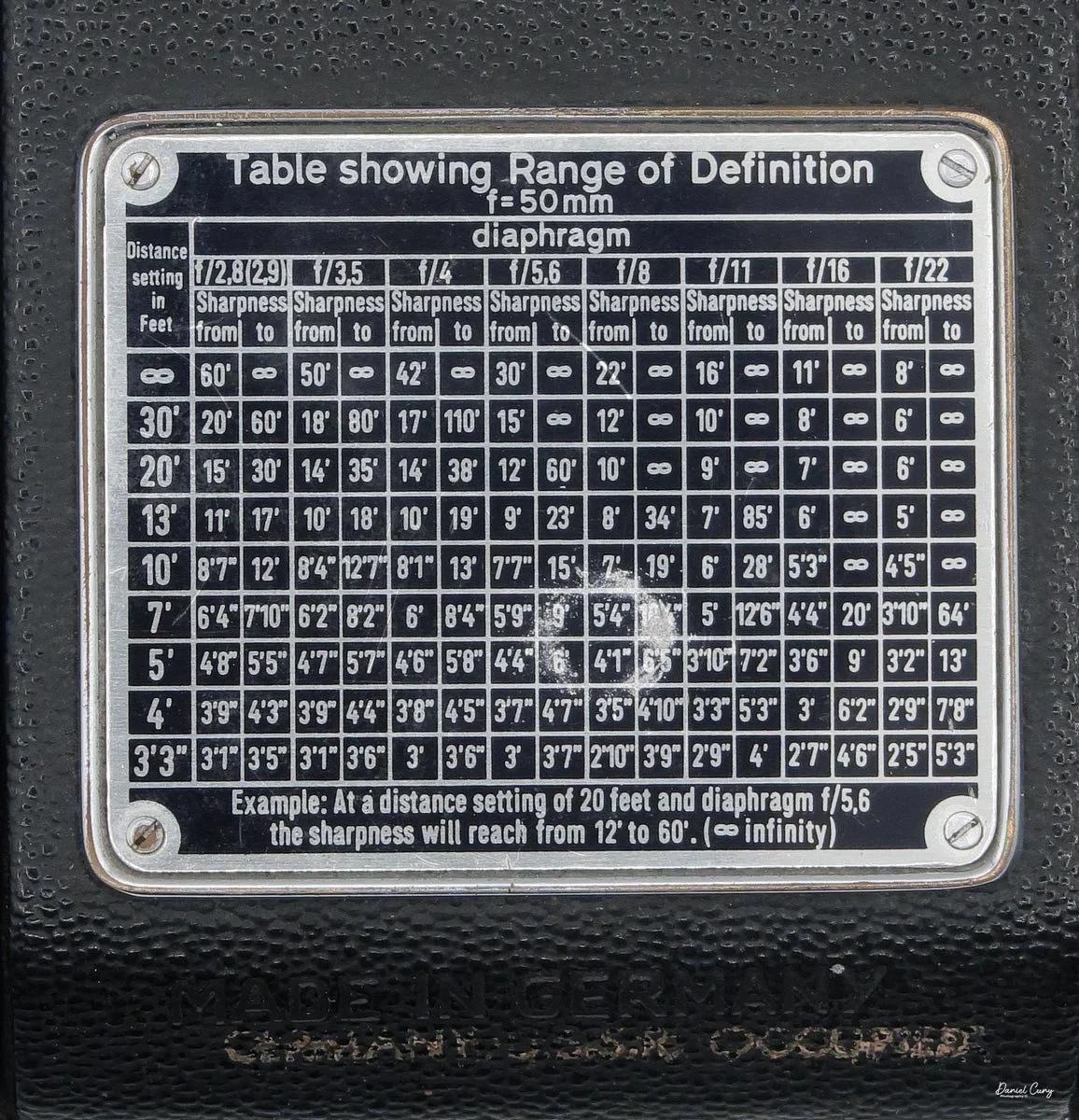
 On the back of the camera is a depth-of-field scale that shows the minimum and maximum distances that will be in focus, depending on the distance the camera is focused to and the aperture set on the camera. 

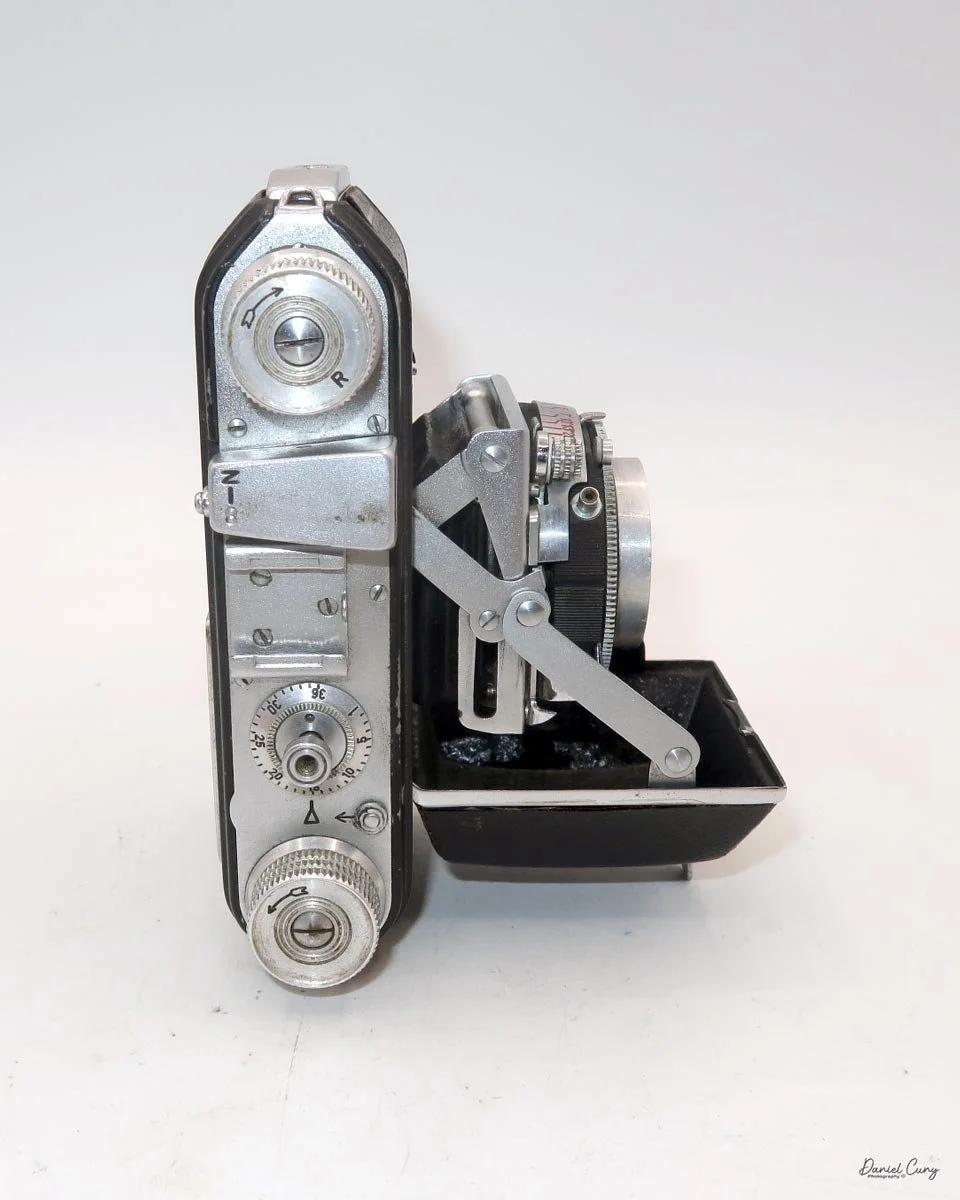
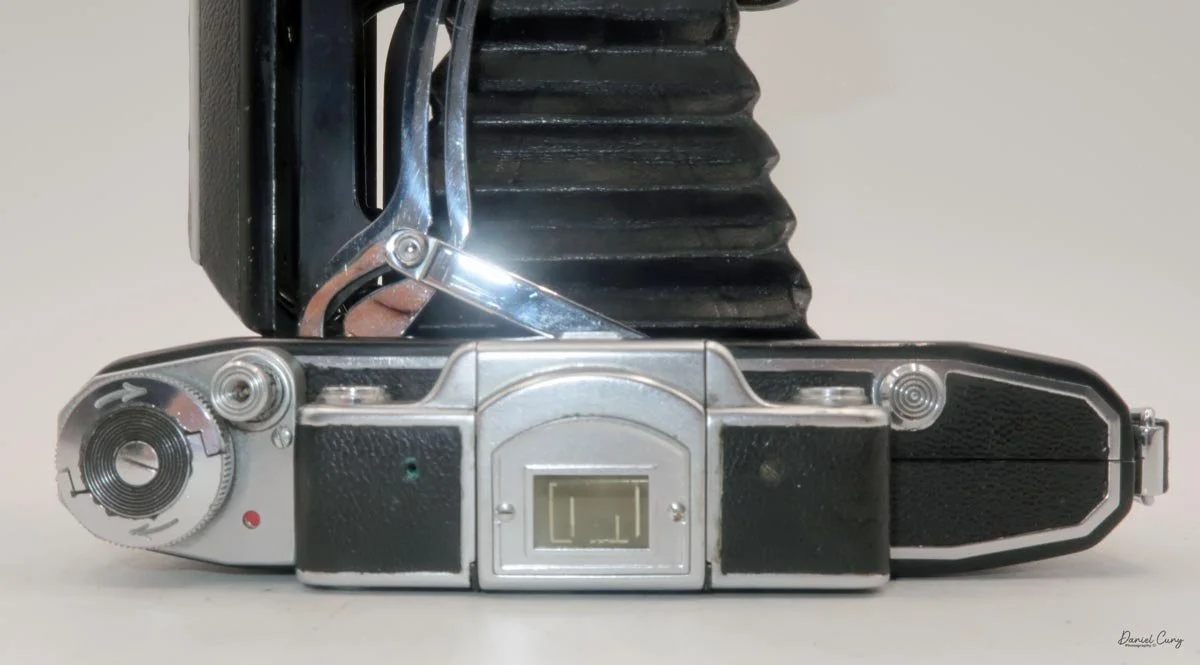
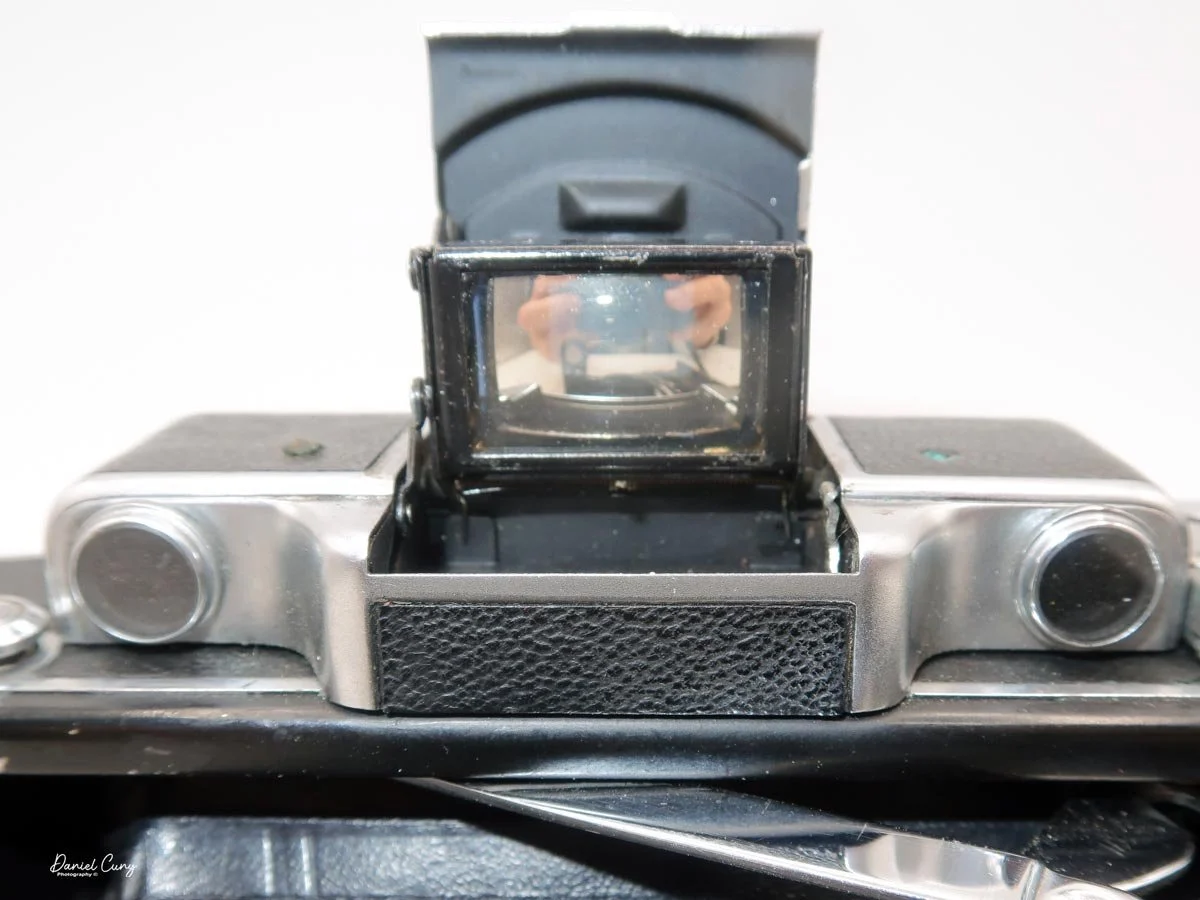
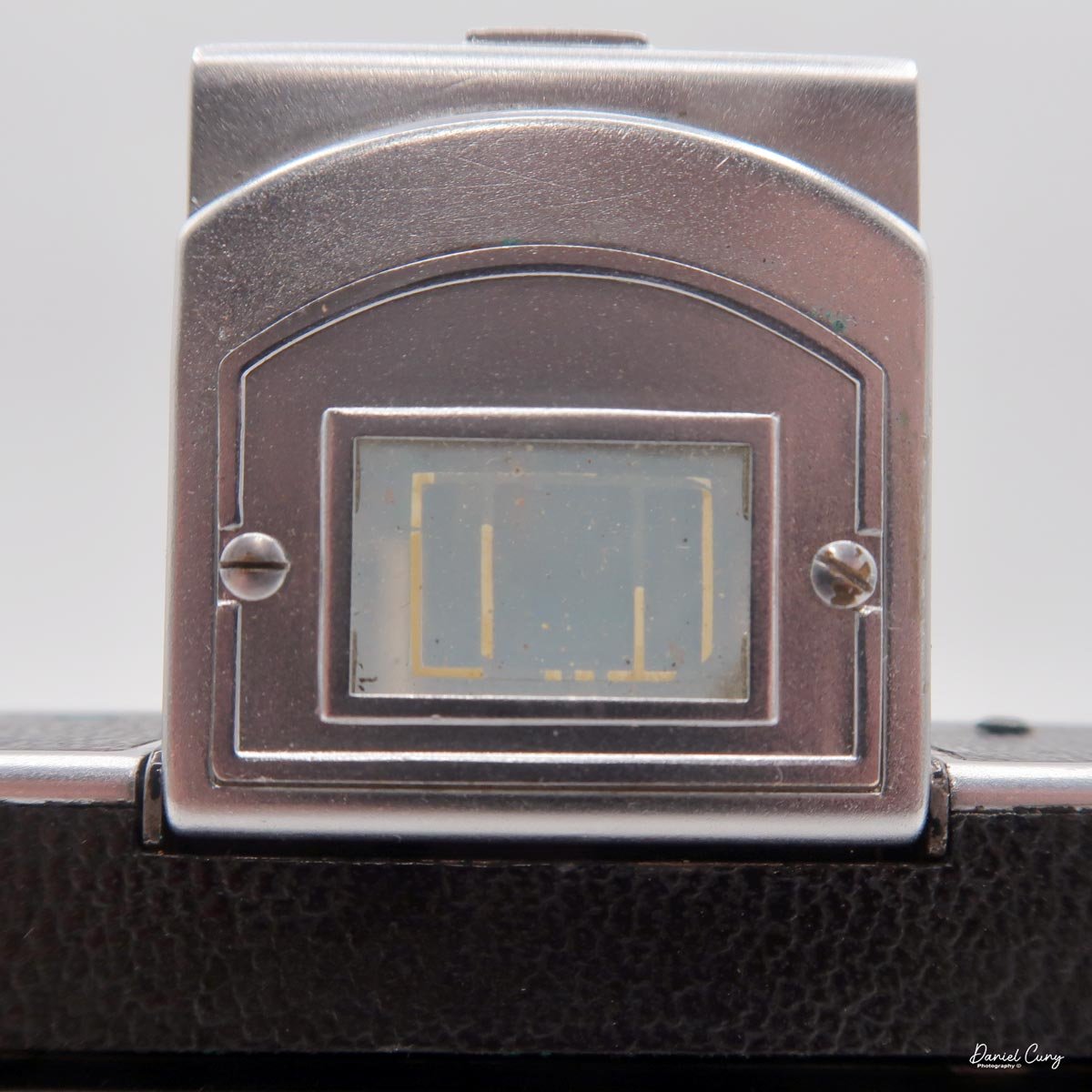
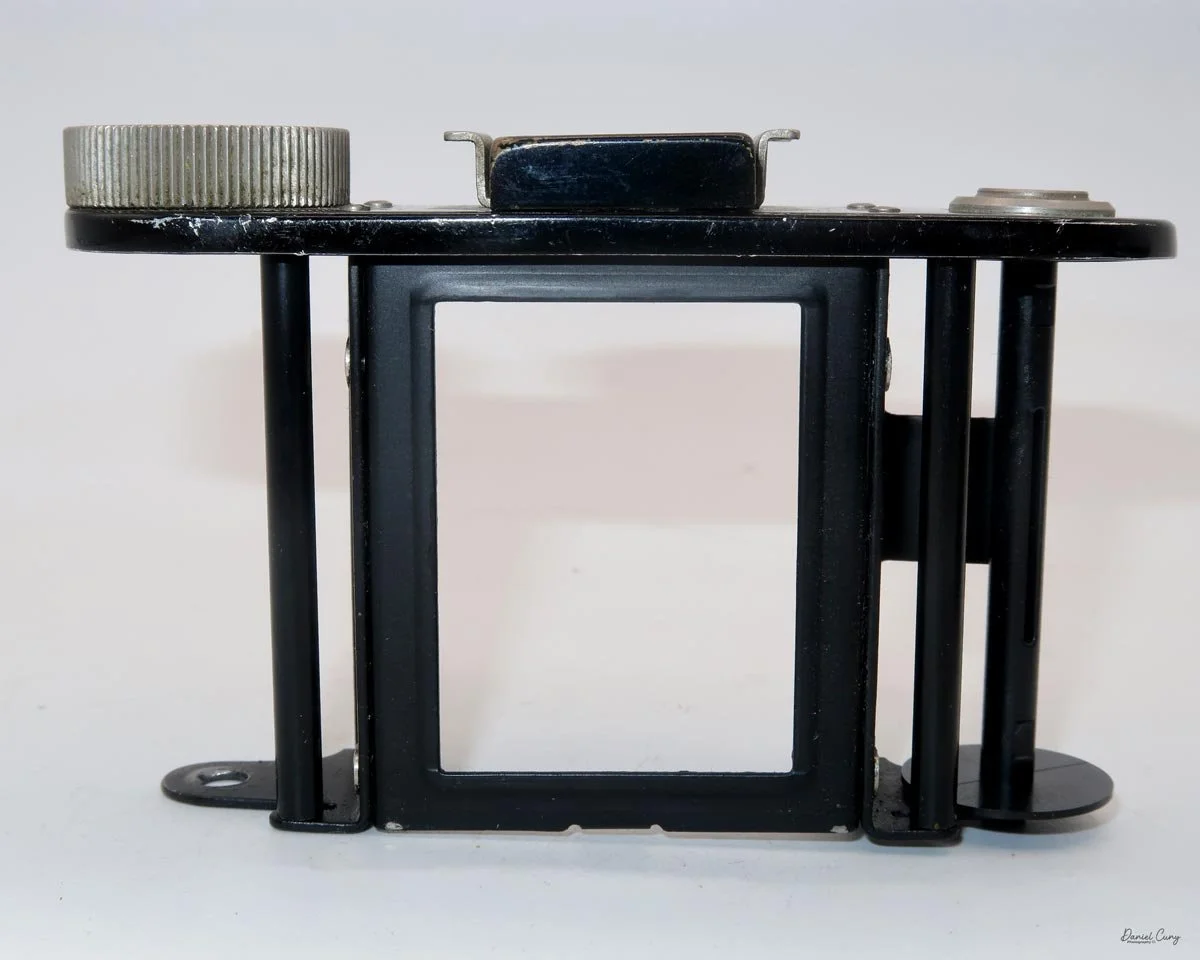
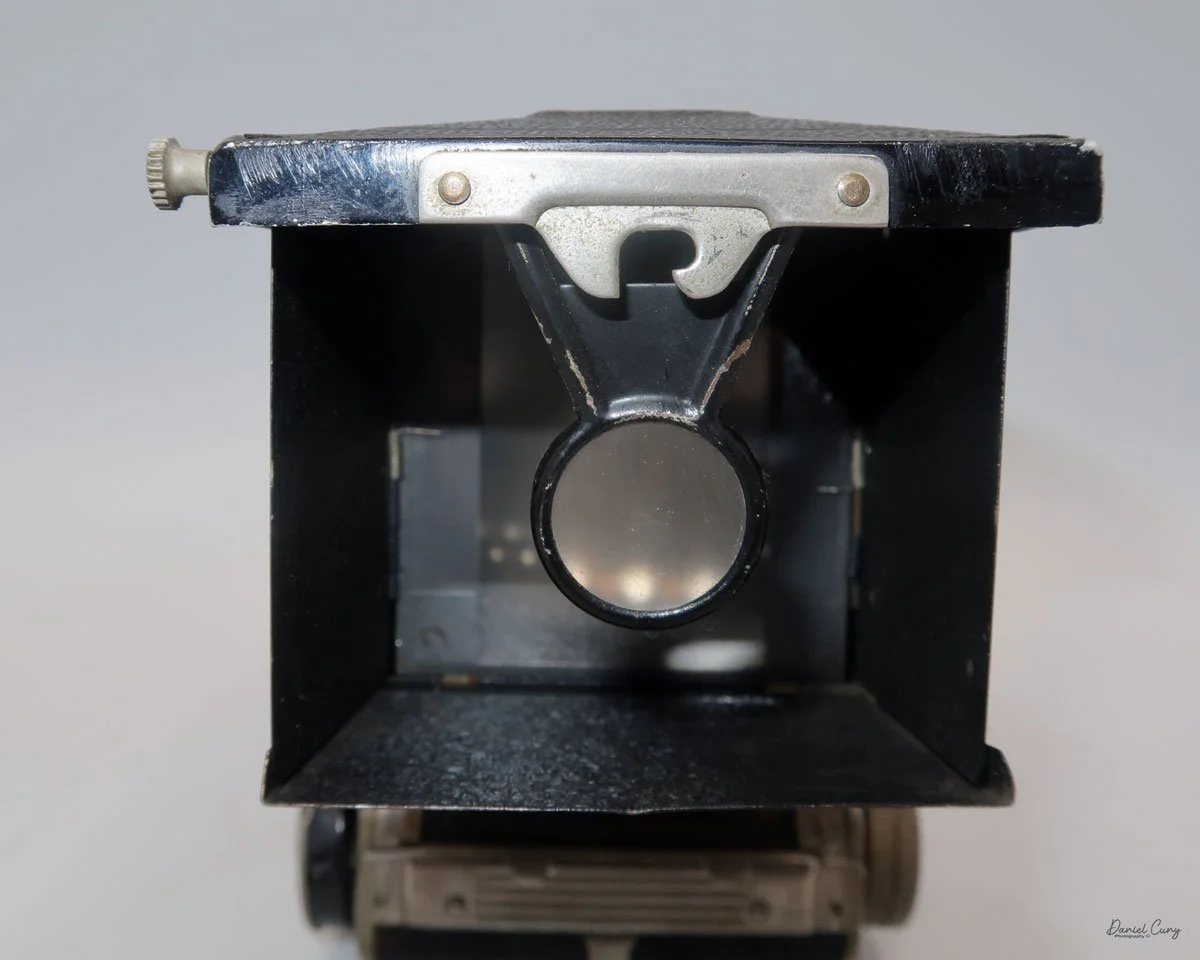
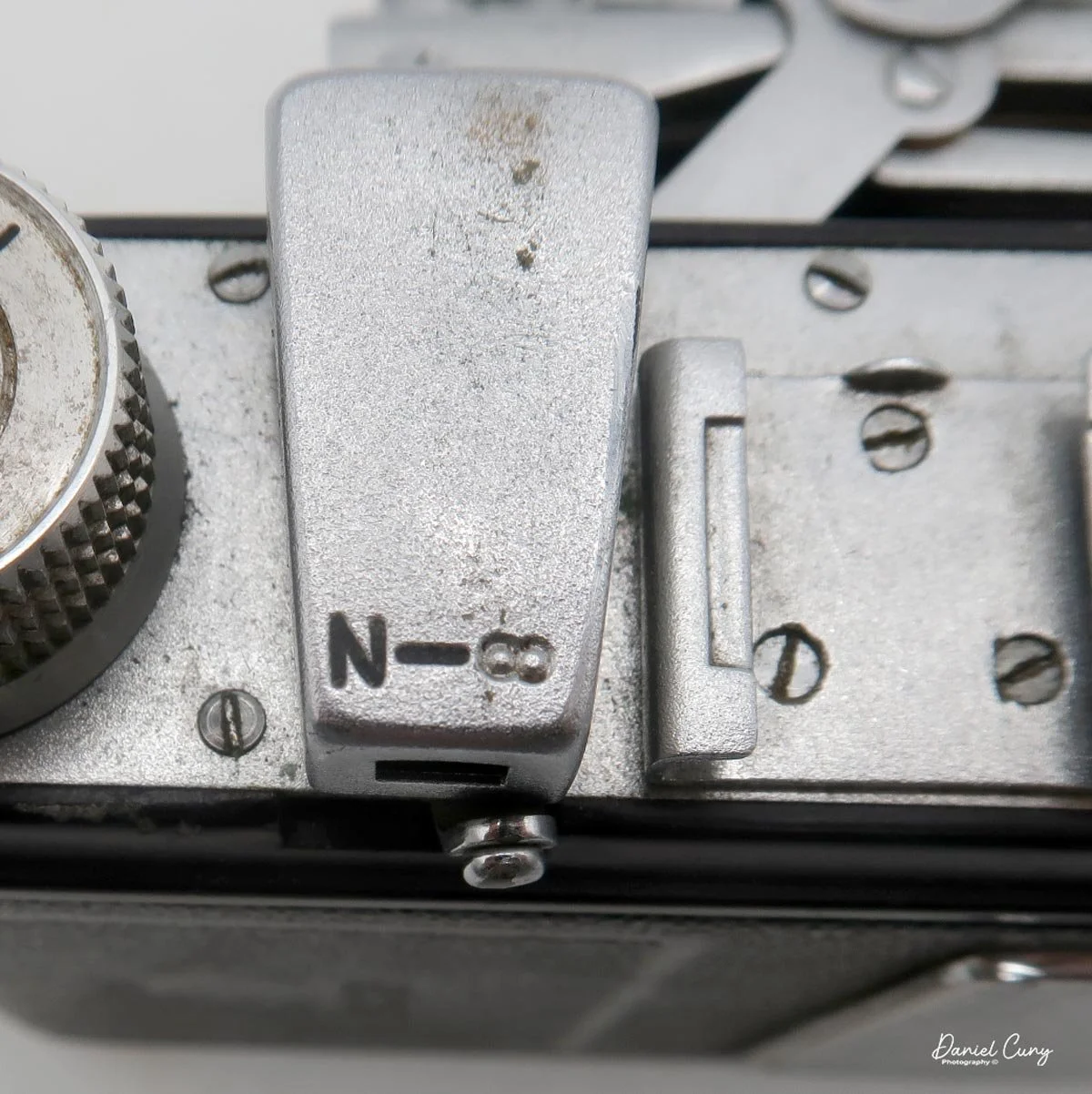
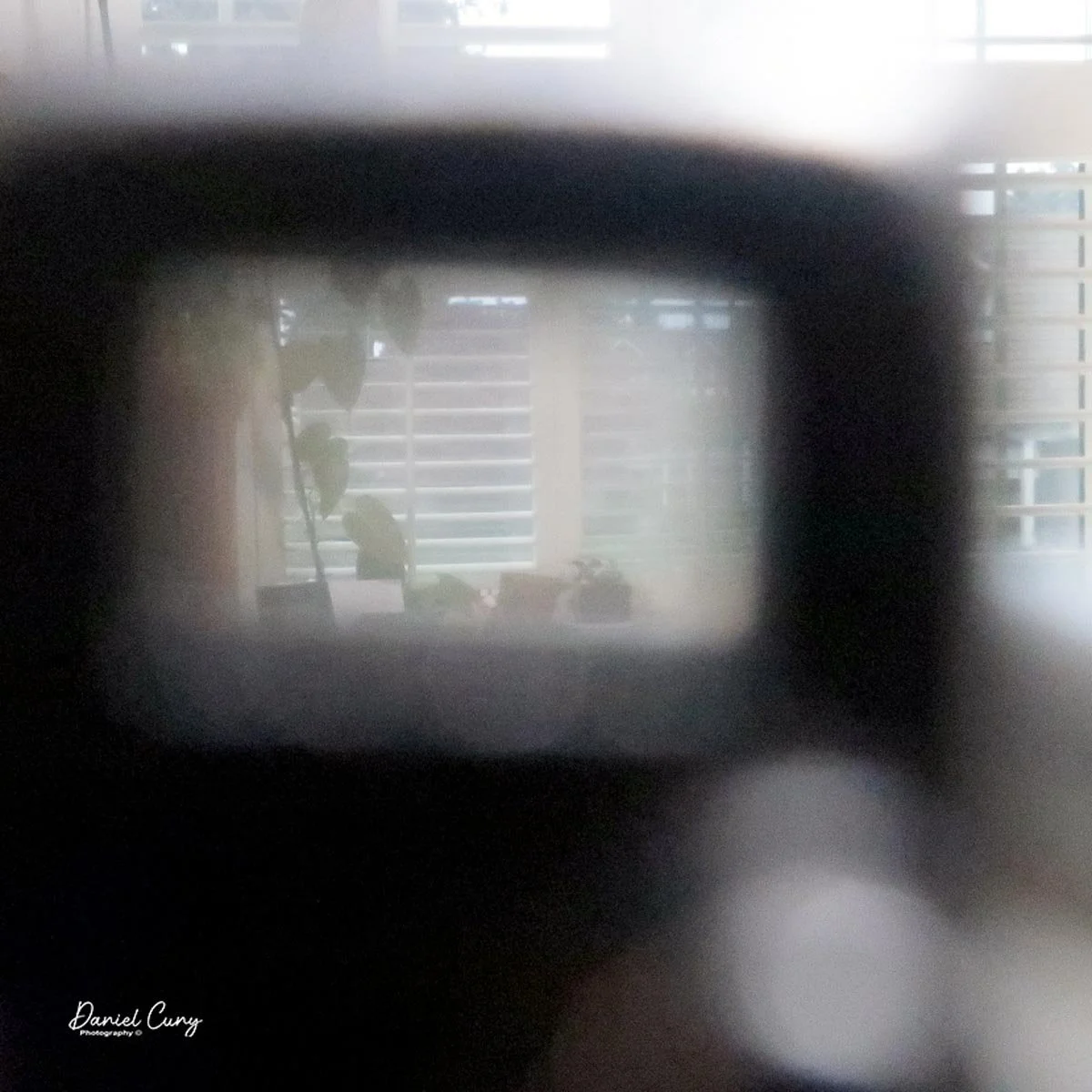
 Looking at the top of the camera, from left to right, is the rewind knob, the viewfinder used to view and frame your image. The viewfinder has a small lever under it that allows it to be pointed level for landscape images and to point down slightly for closer portrait images.
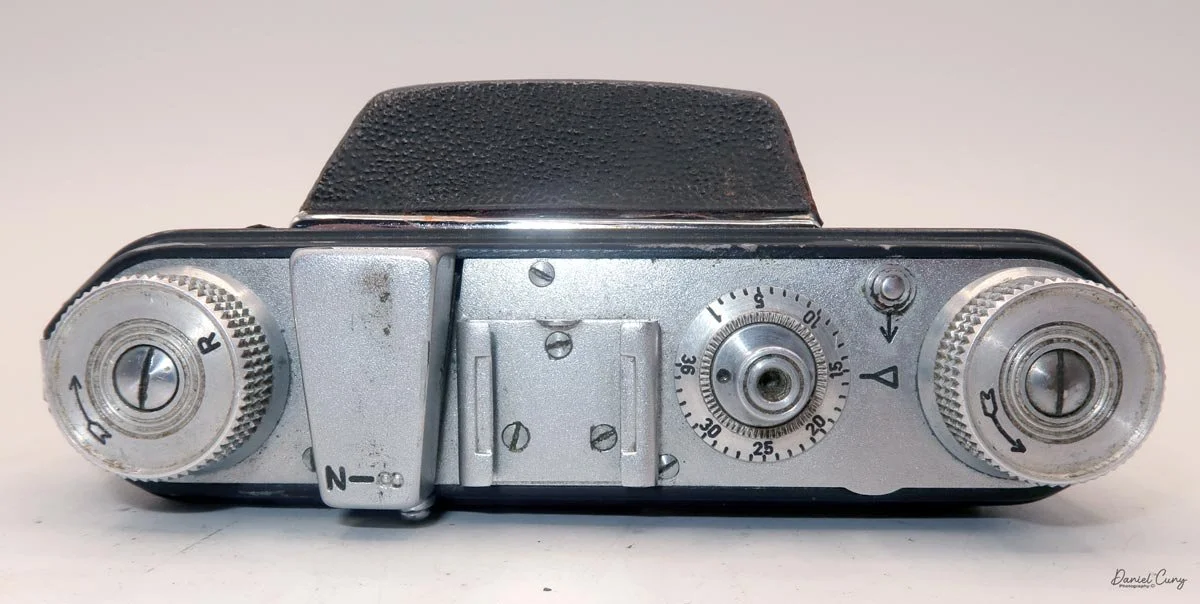
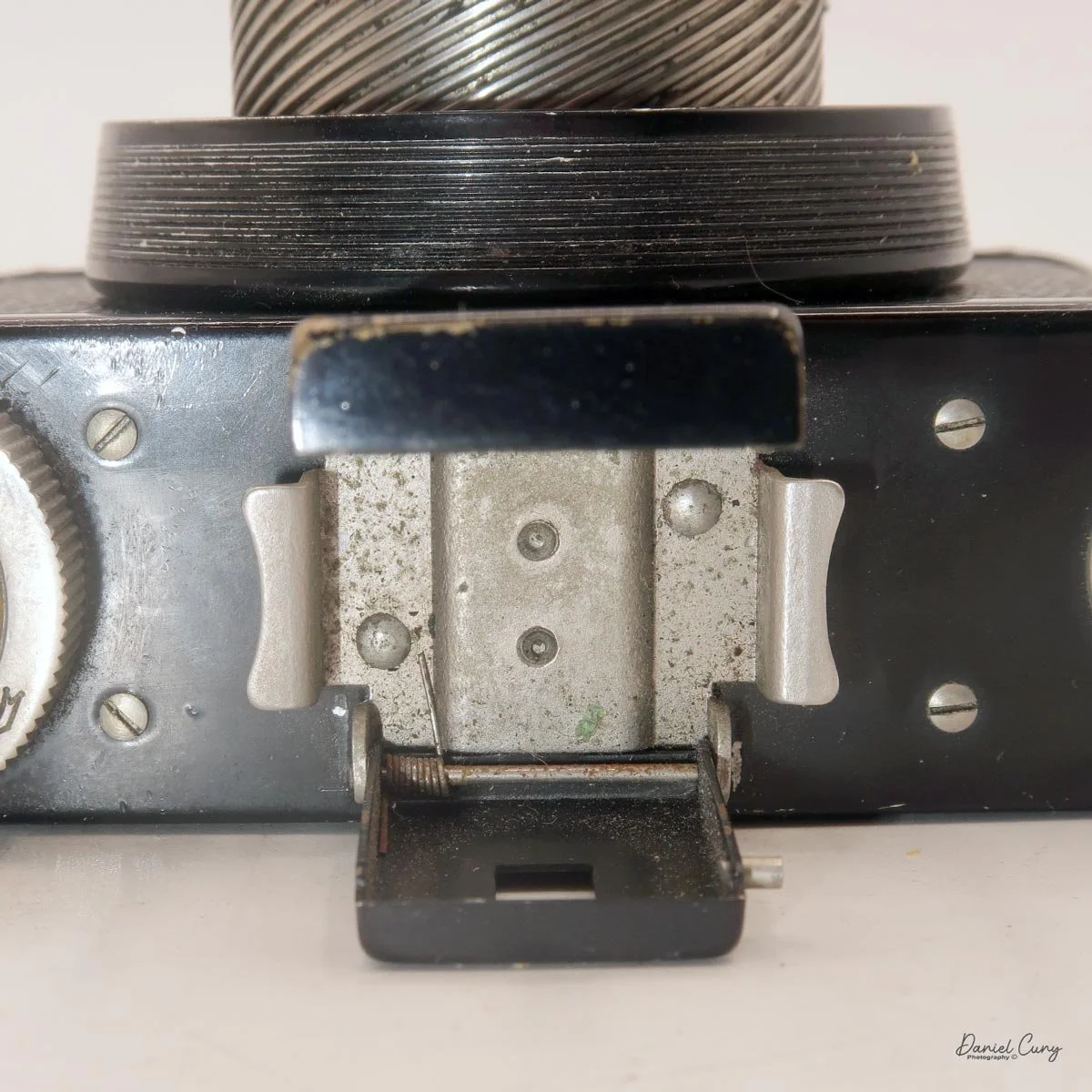
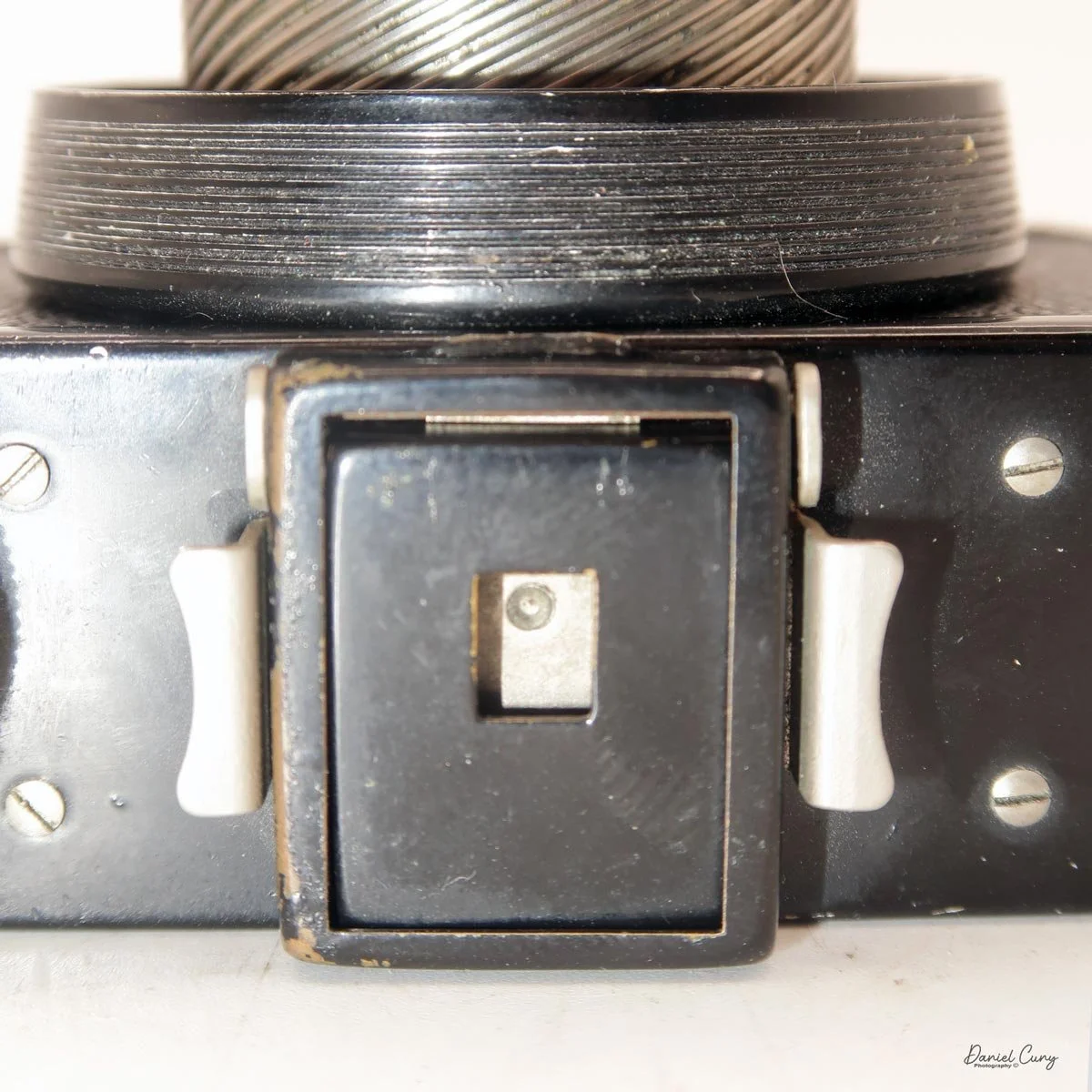
To the right of the viewfinder is a cold shoe that can be used for a separate rangefinder to aid in focus distance or a flash for indoor or night photographs. Moving on to the shutter release inside the frame counter, a small sliding button to unlock the film drive gear for film advance and rewind, and on the far right-hand side is the film winding knob with an arrow on the top showing the direction you turn it to advance the film to the next frame.

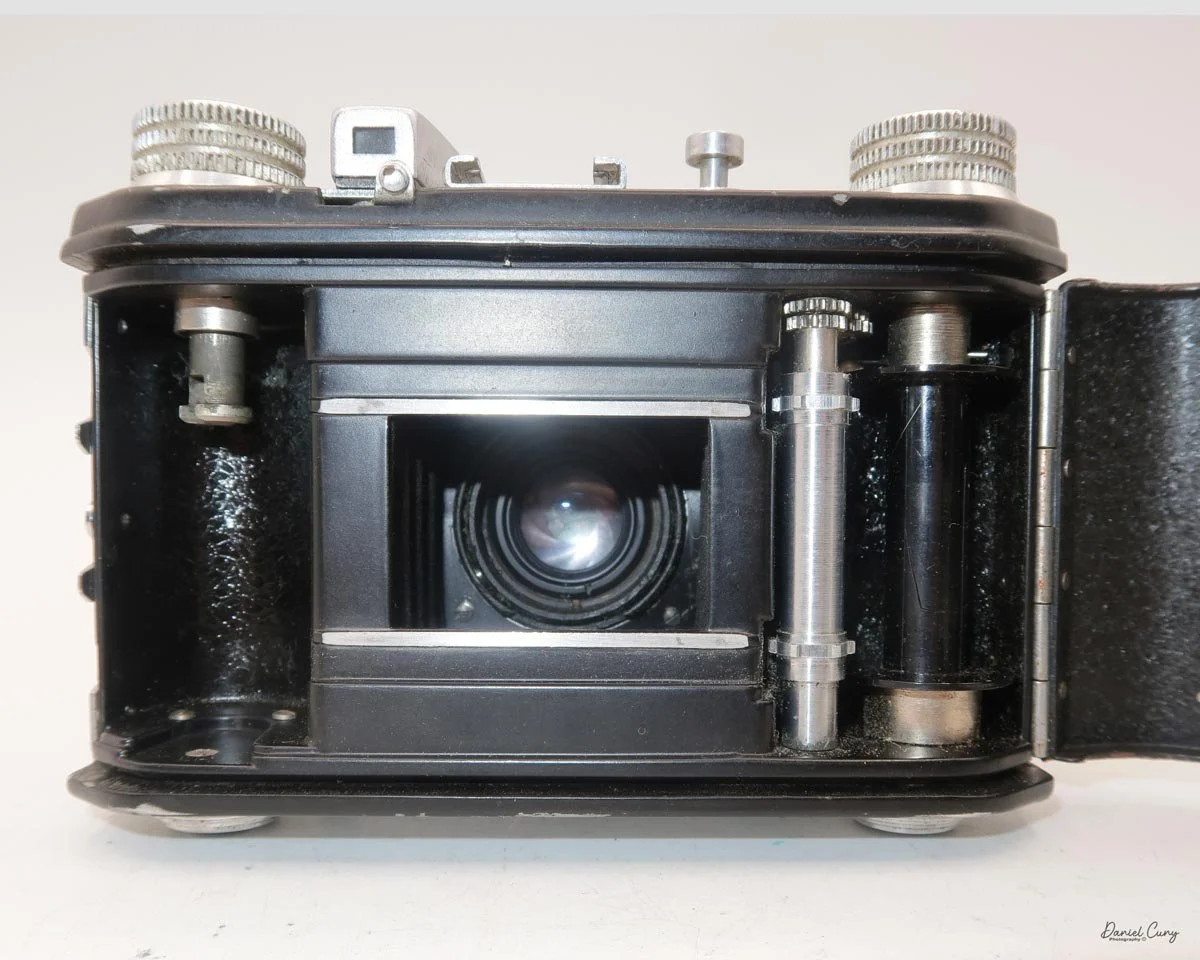
 On the left side of the Welta Welti camera is a lever that opens the film door for loading and unloading film. Opening the film door exposes the inside of the shutter. The camera has a standard film-loading area for a 35mm camera. The take-up spool is on the right side, and right next to it is the silver film drive gear. On the back of the camera door is the pressure plate. Once the film has been exposed, slide back the small lever between the film winding knob and the frame counter, which makes the film drive gear free-moving and allows you to rewind the film into the film cassette without tearing up the sprocket holes.
To close the lens door for transportation, press down on the two angled struts on the side of the lens; the lens and film door will begin to retract into the camera body. Just press it all the way back until you hear a clicking sound, which means the door is shut and won't pop back open by accident. 


My Results:

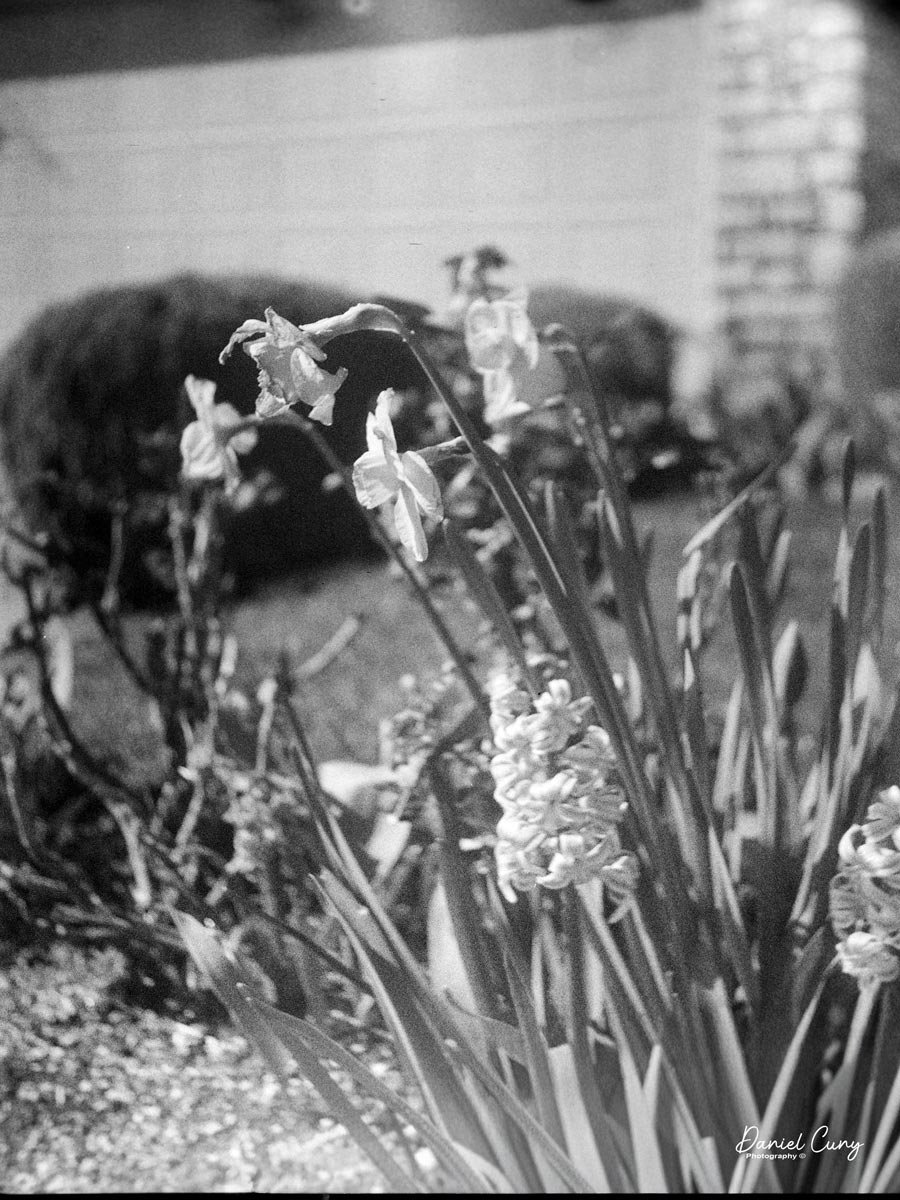
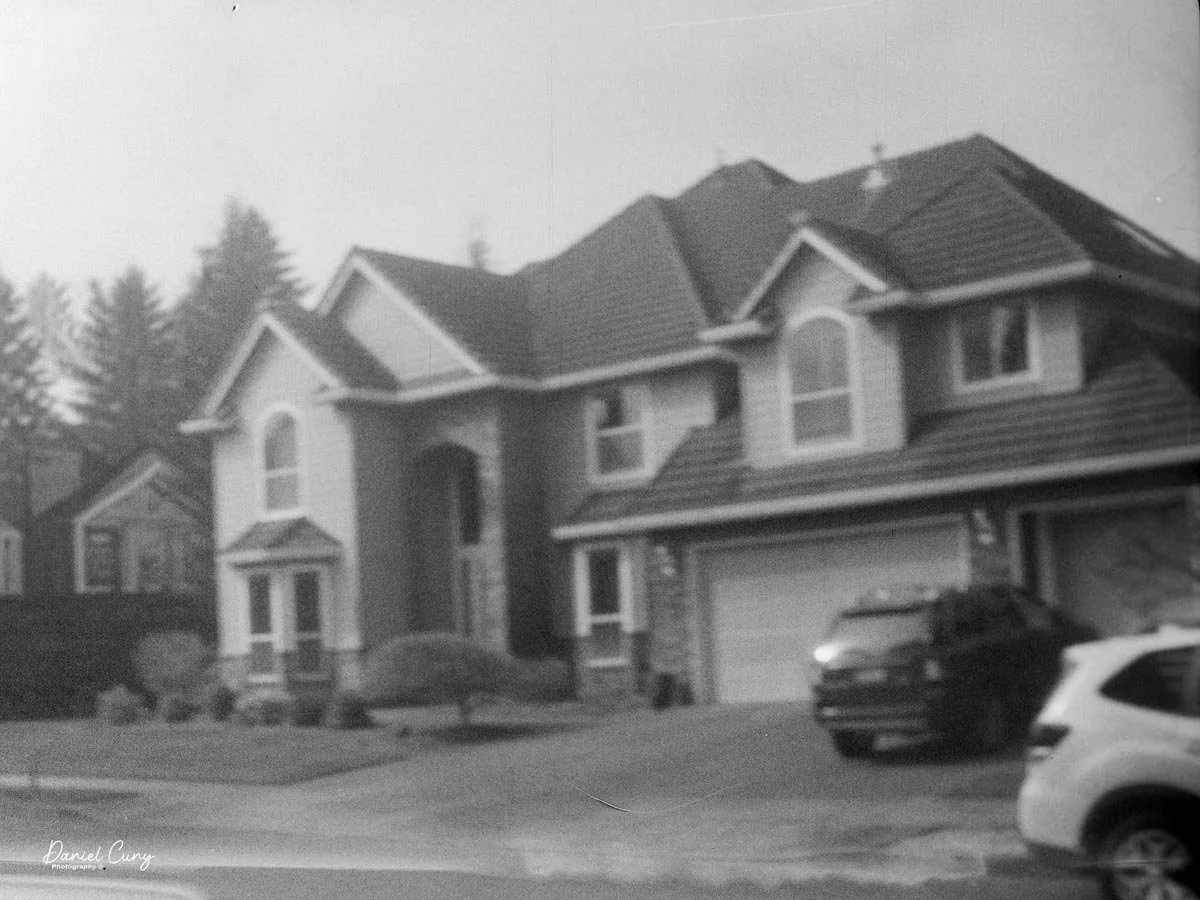
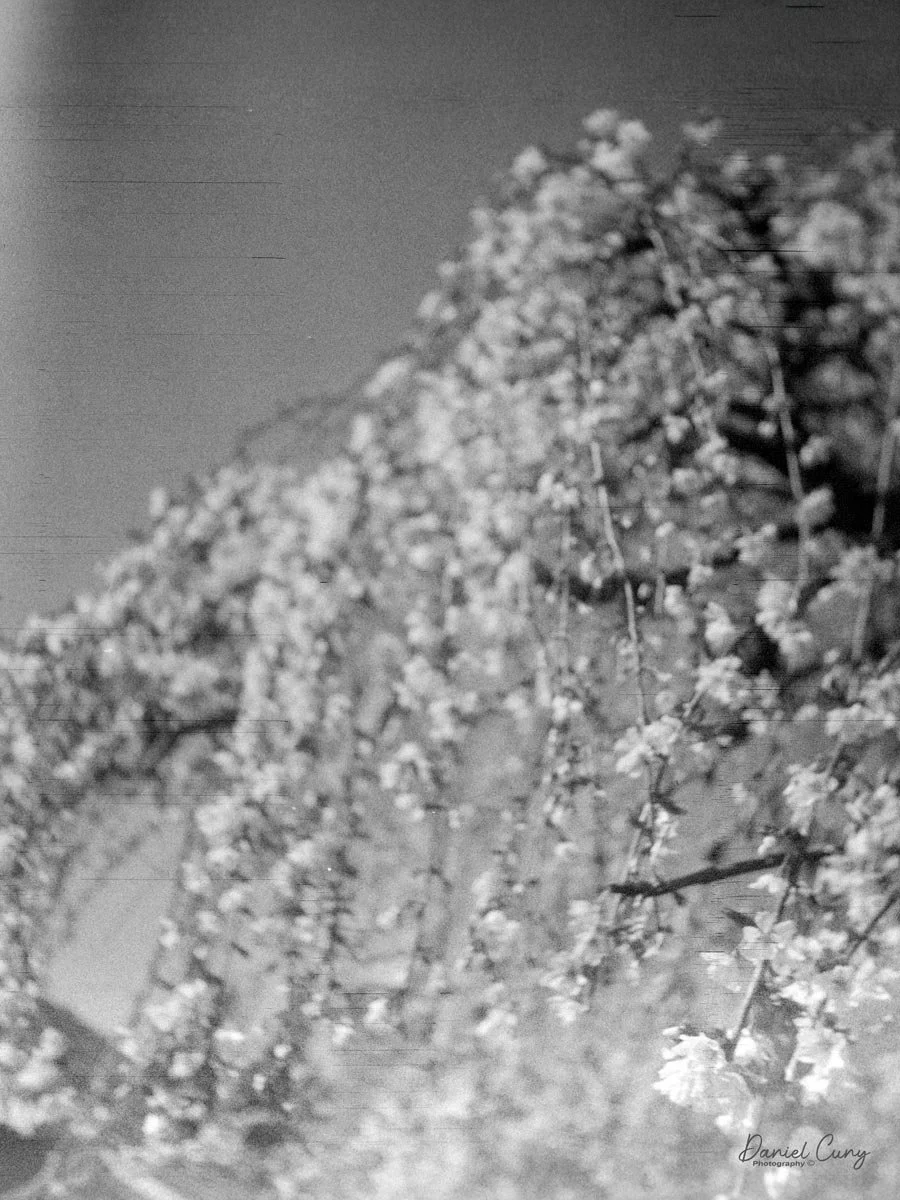
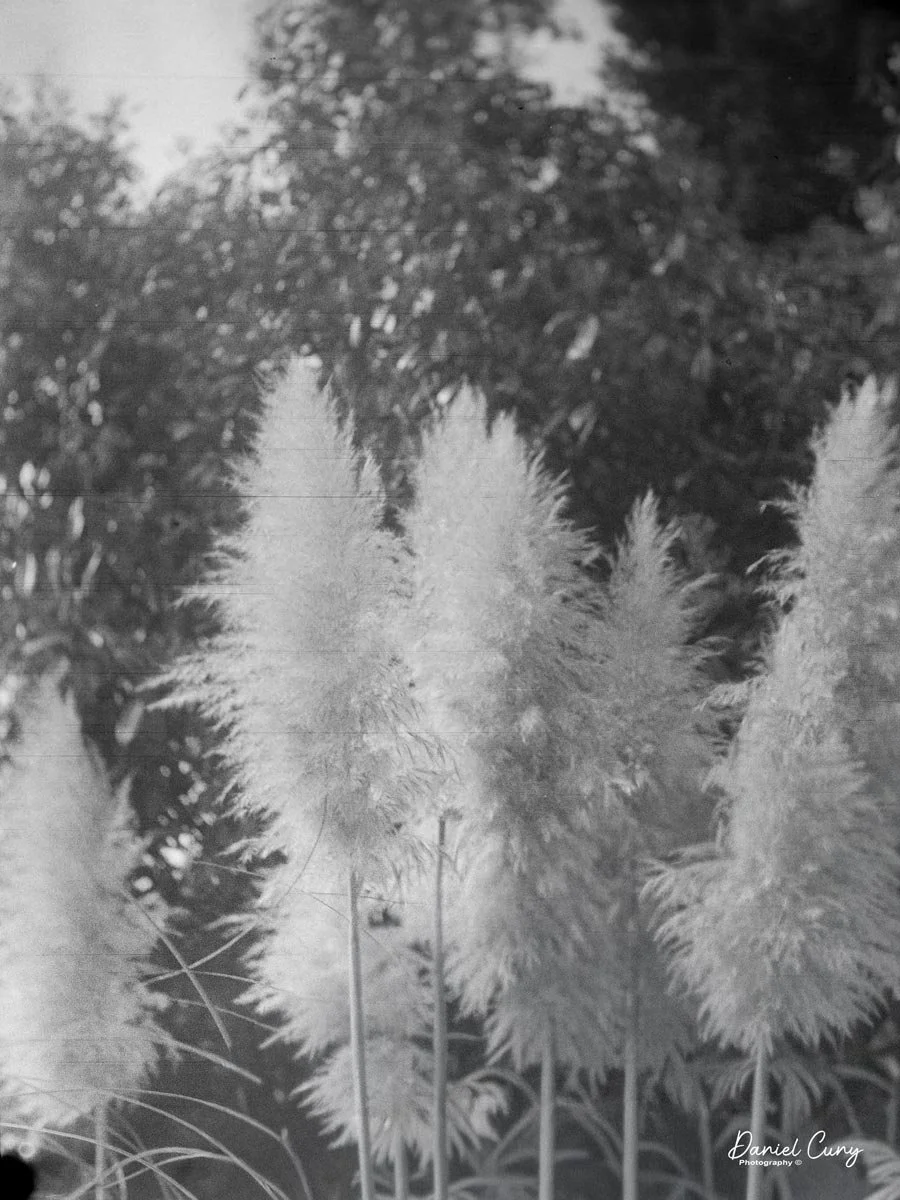
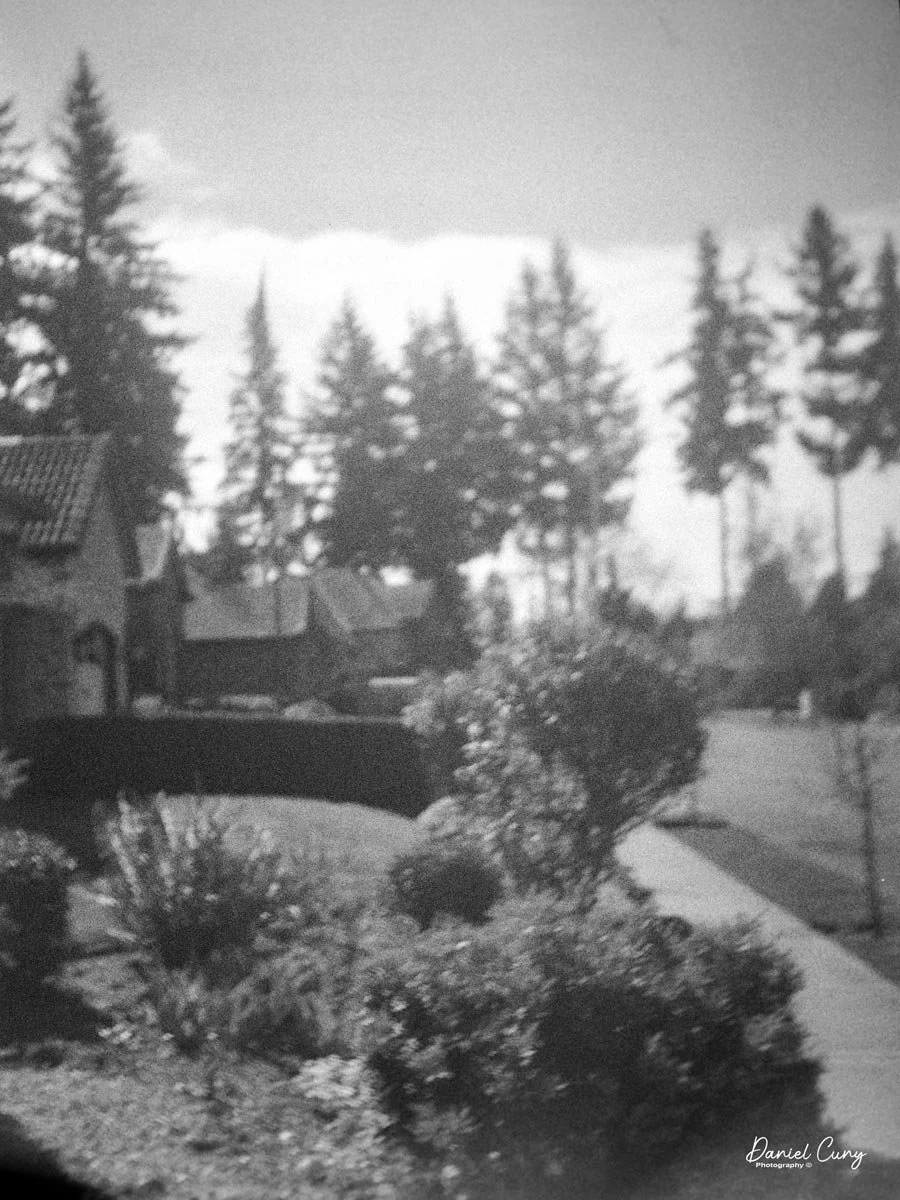
 I have some 200 ISO film in my bulk loader, which I enjoy using, especially for testing 35mm cameras, as I can roll a shorter roll of film into the film cassette and not use up a full roll of 36 exposures for my blog. Rolling about 20 frames into the film cassette, I took the camera for a nice spring day walk through the neighborhood.

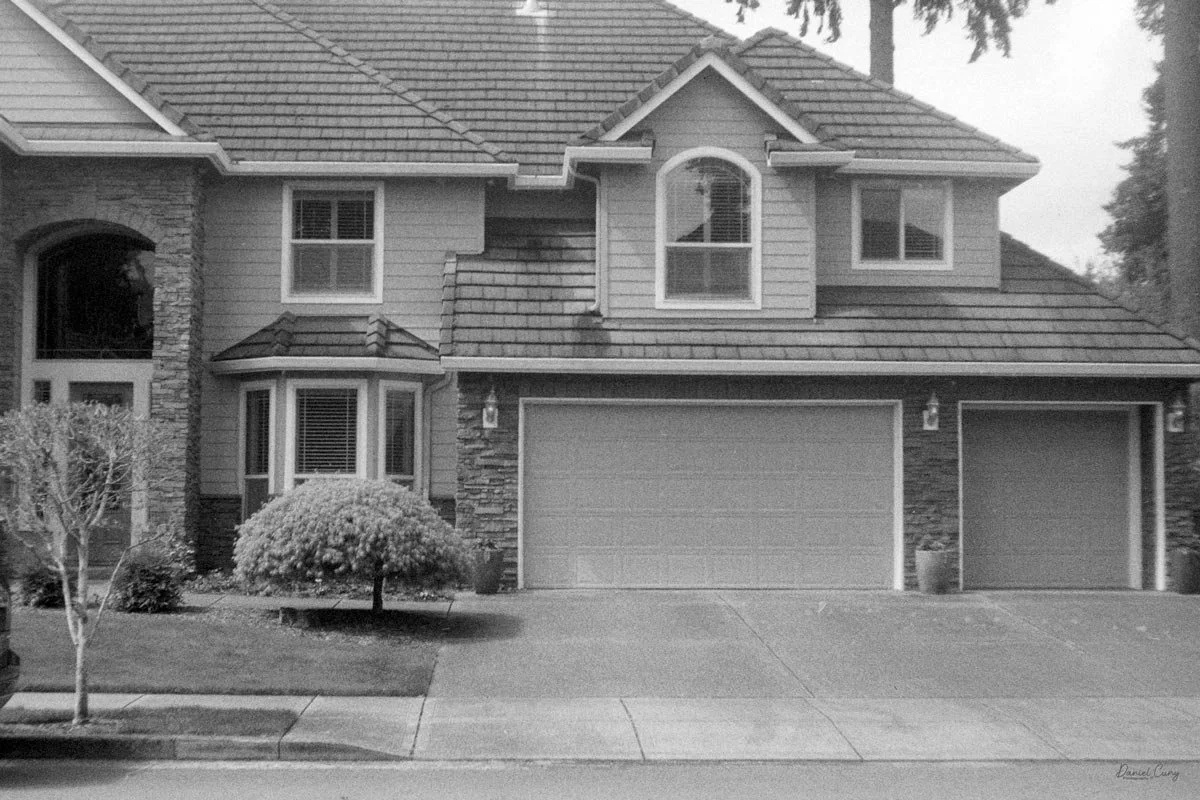
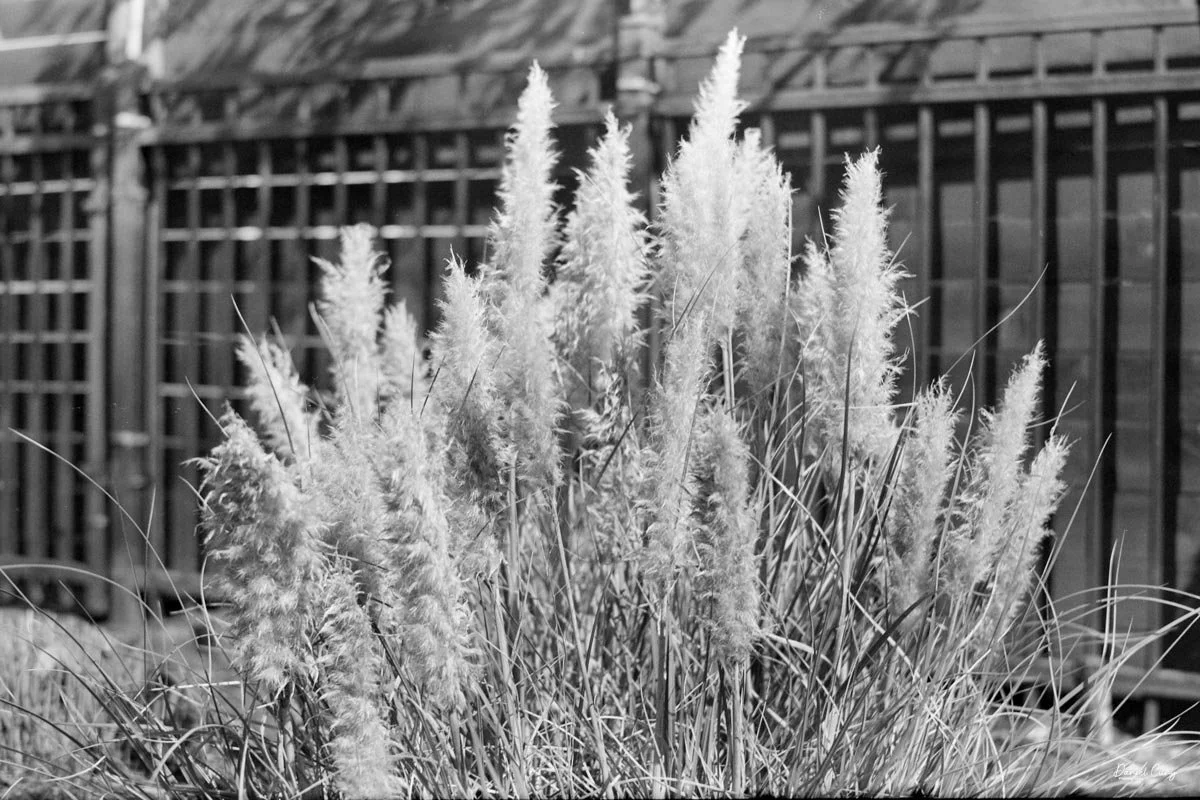
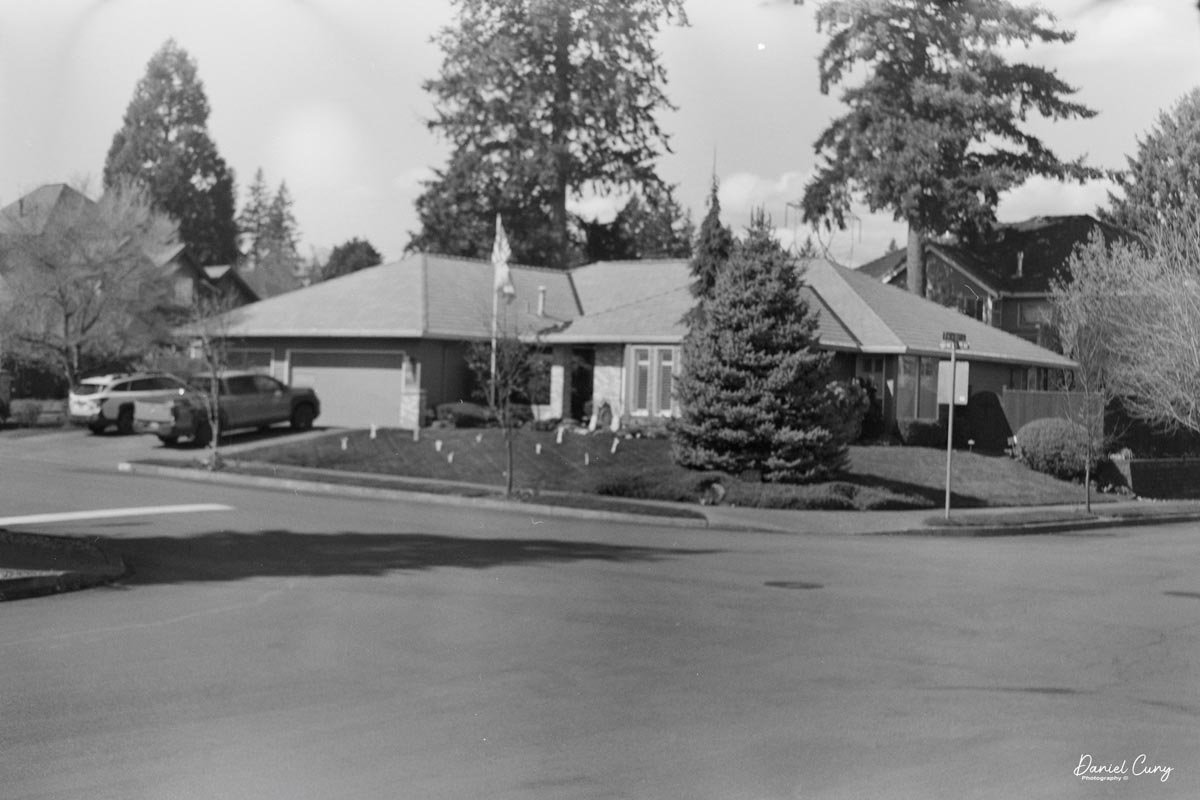
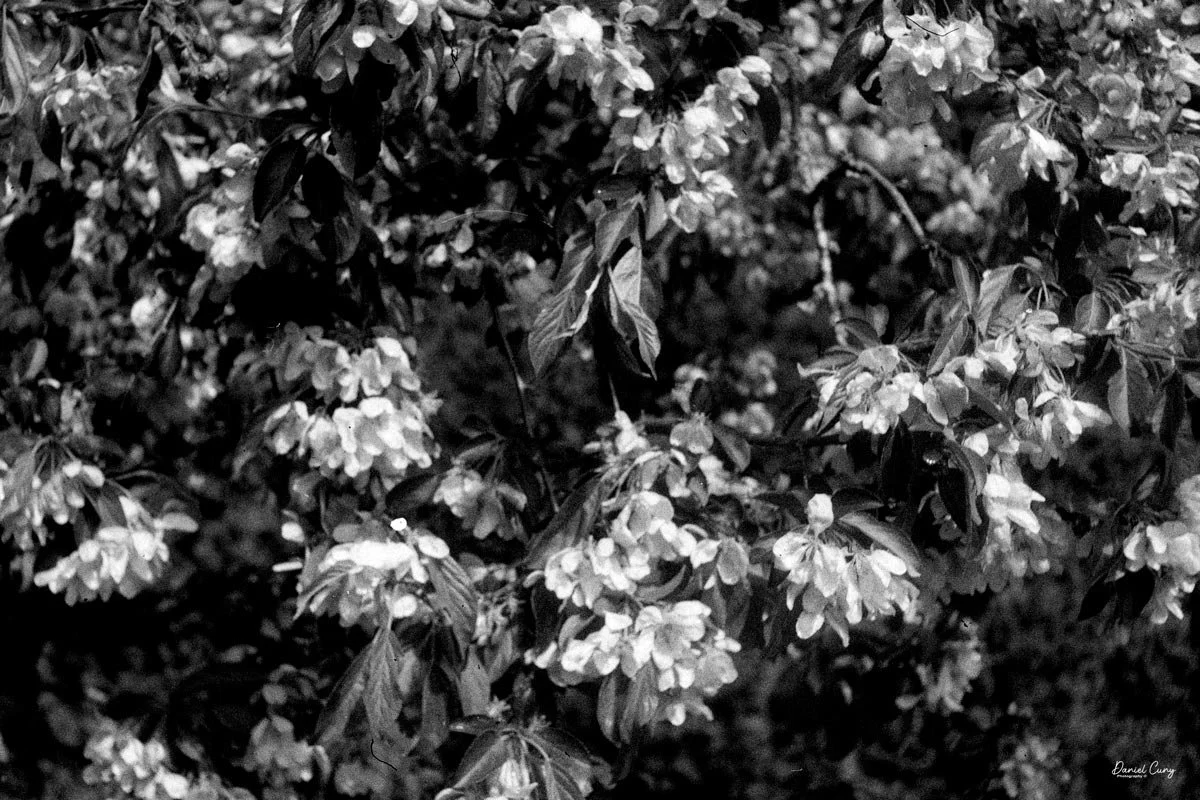
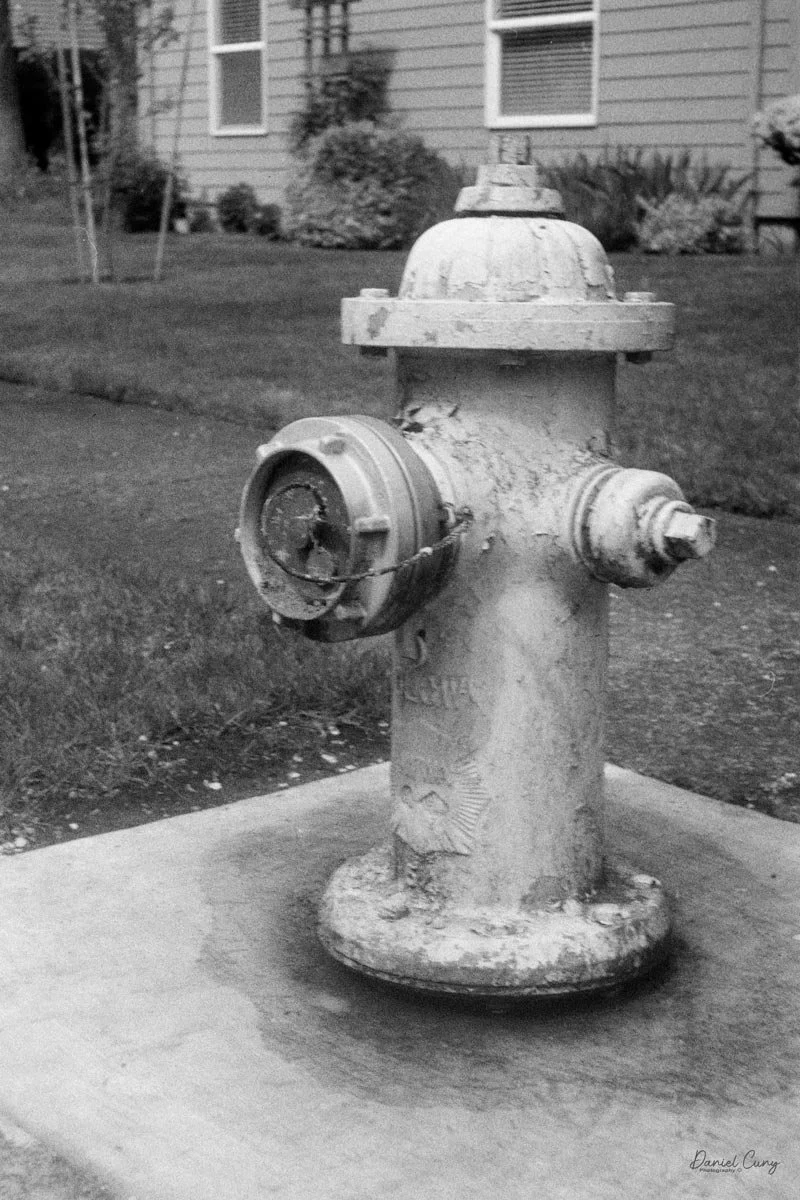
 The flowers and trees are blooming, and the sun is shining. Here are a few of the images I got with the Welta Welti camera.
 Conclusion:

 Looking at the images, they turned out better than I anticipated. The exposures were good, and the focus was enough to produce sharp images, so I'm fairly good at judging distance to the subjects and setting the proper focus distance. I understand that having an external rangefinder for the camera would be helpful, but it would also slow down the process.

 The transport was smooth along with the film rewind. The viewfinder is pretty small, and with glasses, it made it a bit more difficult. That, along with having to remember to cock the shutter each time, was the only real drawback to the camera.

 The Welta Welti is similar to other 35mm cameras from this era, like the Kodak Retina. They are small, pocketable 35mm cameras with a nice range of shutter speeds and good optics. I now understand why I brought the camera to the camera show. It's a nice camera, but I'll probably put it up on my online store for someone else to enjoy.

 Thank you for taking some time from your day to read about this compact 35mm camera made in the late 1940s to early 1950s. Here's a link to the Welta Welti manual. Thanks to Butkus.org.

 I'd love to hear from you about this or any of the other Camera Reviews I've done.

 Cuny's Cameras and Photos is my online eBay store where I sell cameras I've written about, along with other camera oddities I've accumulated over my 50-plus years collecting photo items. 

 I'm taking next week off for my trip to Japan, so I'll see you in a couple of weeks. Please be safe.
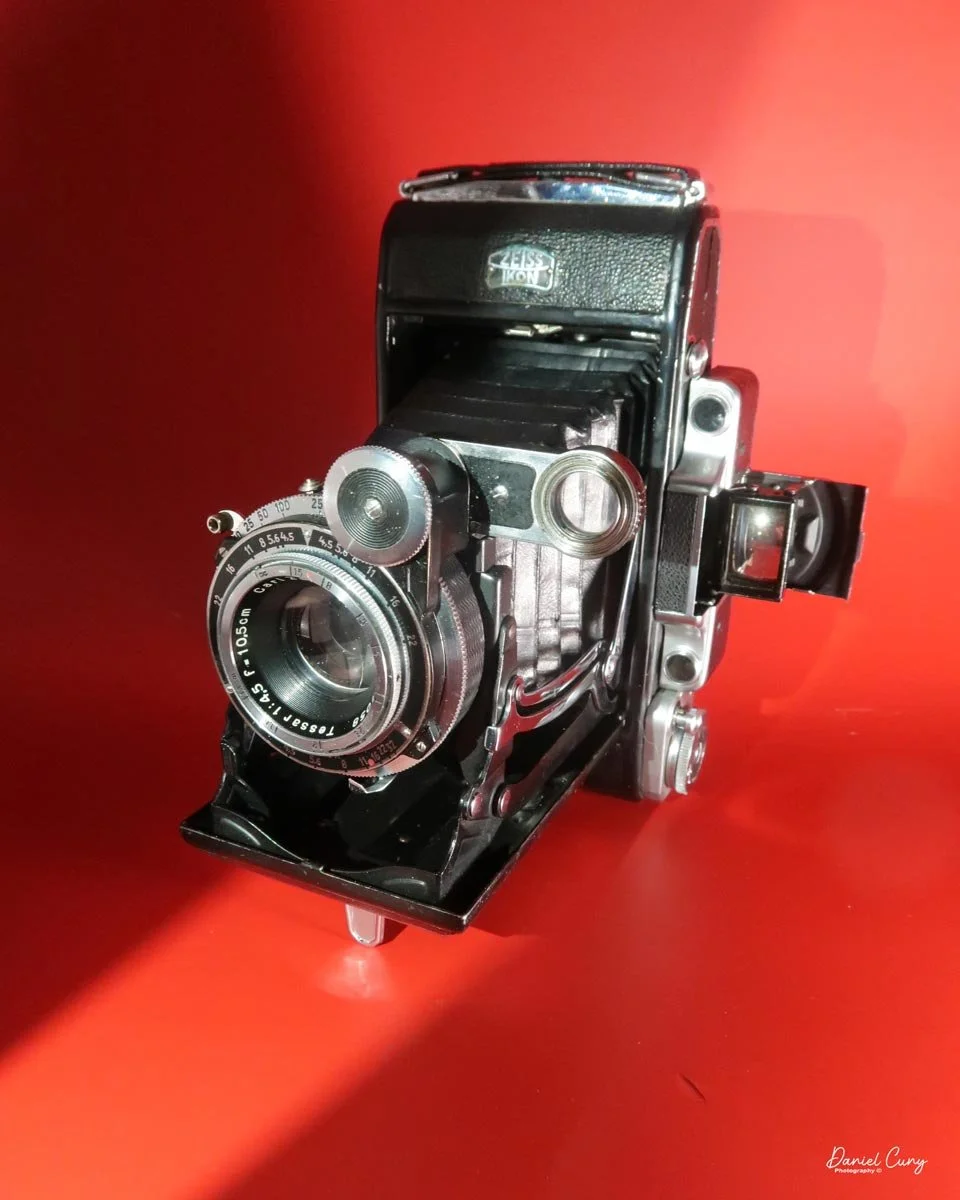
Zeiss Ikon Super Ikonta 531/2

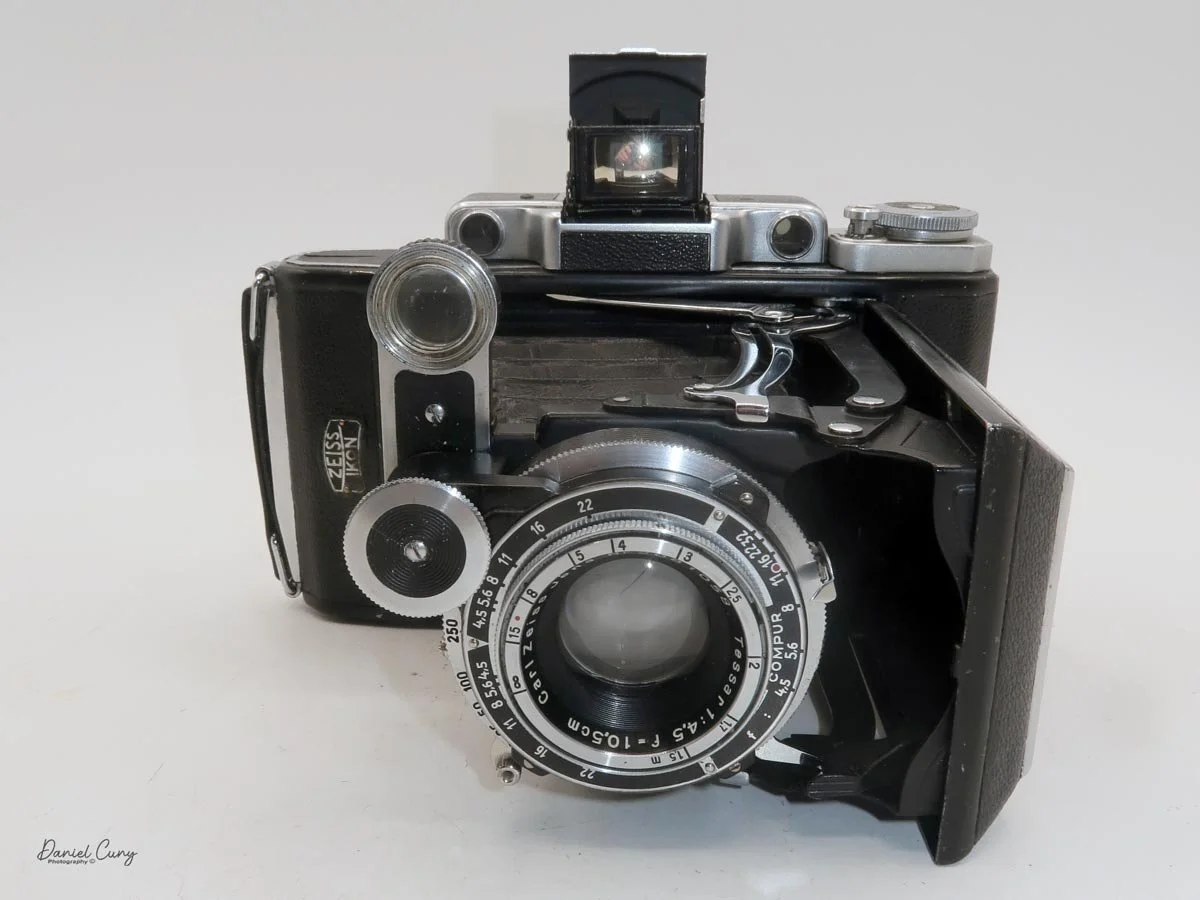
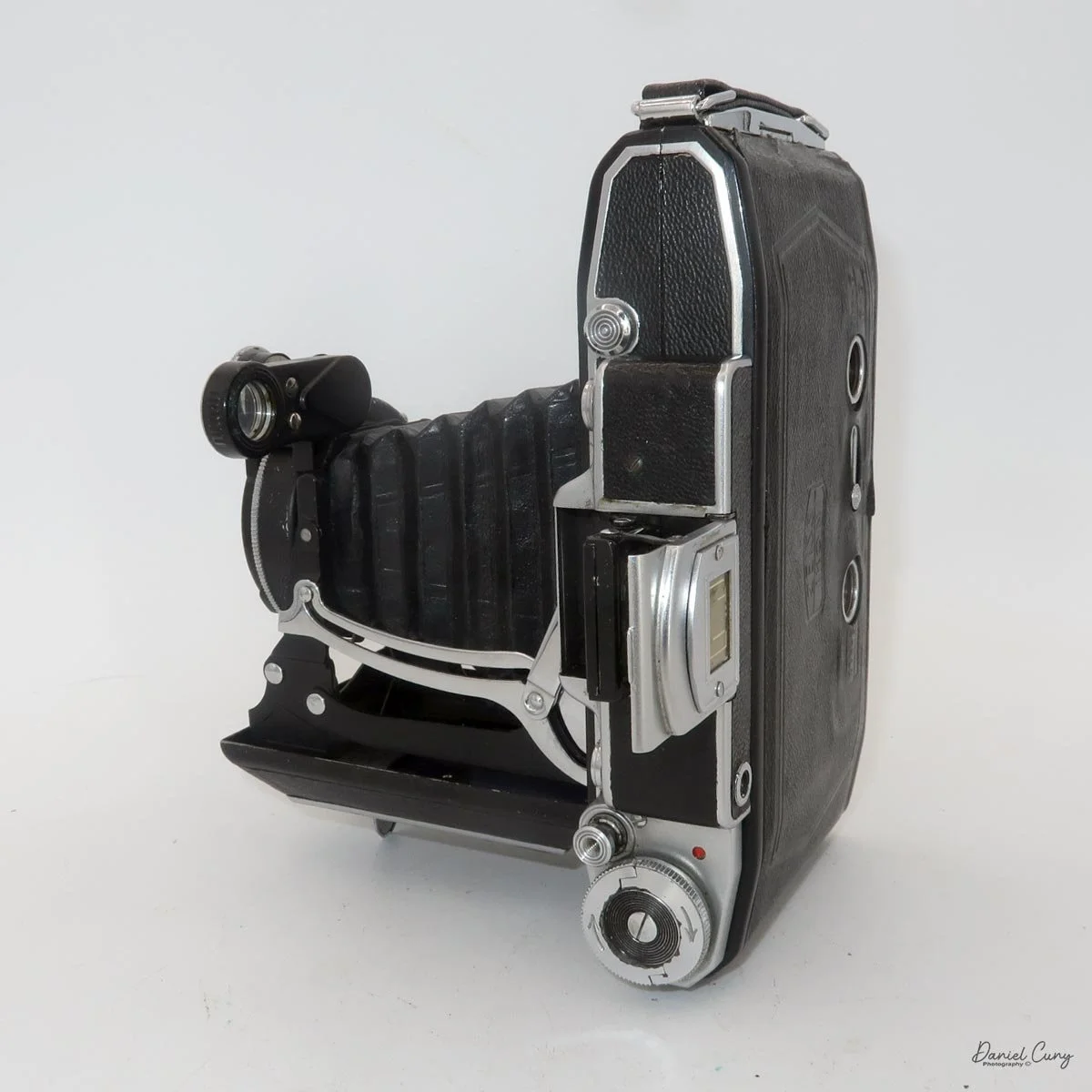
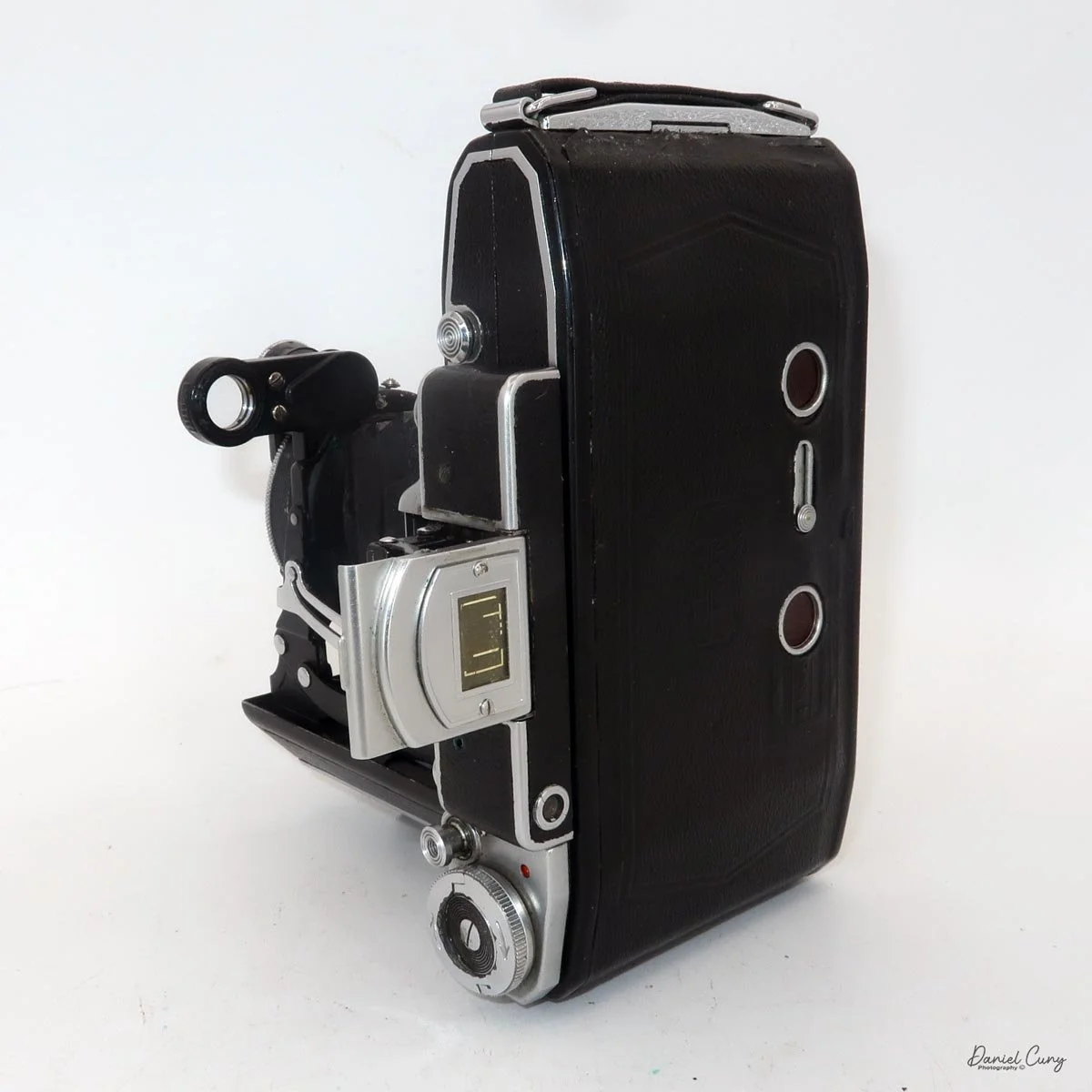
My Zeiss Ikon Super Ikonta 530/2 camera

Walking through flea markets, garage sales, or camera shows, I always stop to look at what Zeiss cameras they have, and the cameras that I always pick up to look over are any of the Zeiss Ikon Super Ikonta cameras. Not only because they look impressive even when closed, but also because I'm always struck by how well-made and intricate they are for a camera that's 90 years old.

 To me, the Super Ikonta cameras are like looking at a masterpiece of art. They are timeless in their form, compactness, and mechanical intricacies. When closed, they are compact and sturdy. They have a heft to them that you know they were manufactured to last a long time.

 Zeiss Ikon made four different Super Ikonta styles. There were the smaller models in 6x4.5 or 6x6cm formats, then they also made a larger, specifically longer version that shot 6x9, and a rare version that shot 6x11cm. The 6x9cm version came with a metal insert that reduced the image size to 6x4.5, essentially allowing the photographer to get twice as many images on the 120 roll film loaded in the camera.

 Having owned both in my life, I'm torn between them. On the one hand, I prefer the longer negatives, so the 6x9cm version is appealing, but it's also a bit bigger to carry. The more compact 6x6cm version is a terrific camera to carry when you travel. They are compact, fit in your pocket, have wonderful optics, and use a rangefinder to focus.

 Looking at the cameras on my shelf for a camera to write about, the Zeiss Ikon Super Ikonta 530/2 was a camera I recently got back from a full CLA, so I knew, or at least hoped there wouldn't, or shouldn't be an issue putting film in the camera and running a roll of film through it. 

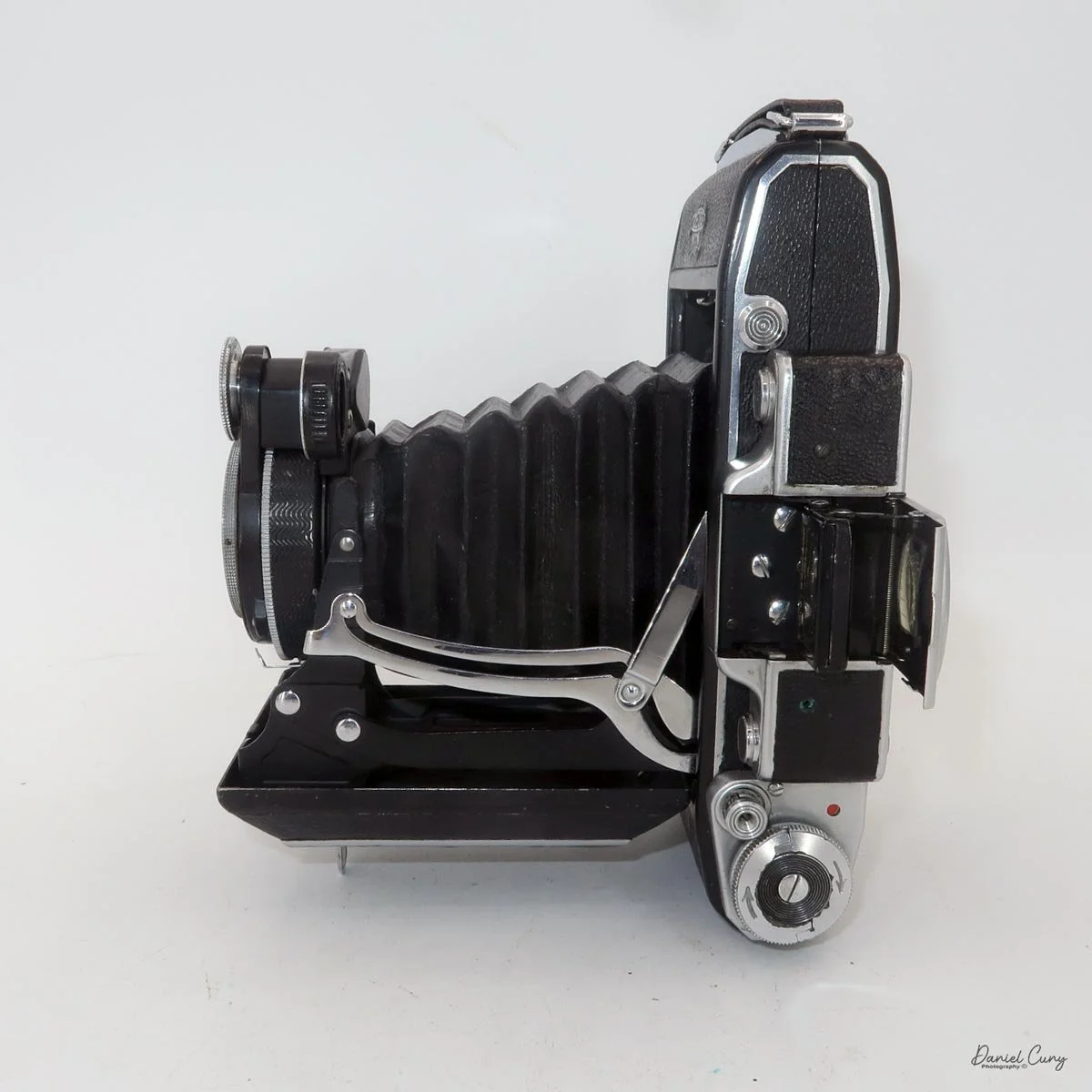
Horizontal view of my Zeiss Ikon Soper Ikonta 530/2 camera

 The camera I had purchased almost a year ago was from an online auction. I saw it at the auction along with a few other cameras, placed a fairly low bid, and won it. The camera was shipped to me, and upon inspection, I noticed the shutter wasn't working. It worked at higher speeds, but the camera needed servicing, so I sent it for CLA.

 My camera came back from the technician and looked flawless. The rangefinder was bright and accurate, the lens was bright, the focus was smooth, and the lens popped out of the camera as if it were new. 

 Whenever I see a Zeiss Ikon Super Ikonta or another rangefinder folding camera, the first thing I check is the shutter to see if it's opening/closing, especially at slower speeds. Then I check the focus to see how smoothly the lens and focus knob turn. It seems that many of the cameras have very stiff focusing, so when the camera came back, and the focus knob turned so nicely, I must have had a large grin on my face, as this was a new experience for me: a smooth focus.

 With all that said, it was time to put a fresh roll of 120 film into the camera and take a walk through the neighborhood on a wonderful spring afternoon. The sun was out, and so many of the trees and flowers were in bloom, it was the ideal opportunity to take my newly CLA'D Zeiss Ikon Super Ikonta for a spin.

Brief History of the Zeiss Ikonta Cameras:

 Zeiss Ikon and the Ikonta cameras sit at an important crossroads in European camera history. Formed in 1926 from the merger of four major German makers—Contessa-Nettel, Ernemann, Goerz, and Ica—Zeiss Ikon became one of the largest and most influential camera companies in the world, backed by the Carl Zeiss optical tradition.

 The Ikonta line emerged around 1929 as Zeiss Ikon's premium folding-camera family. It was introduced in several sizes, including 6x4.5, 6x6, and 6x9 roll film frames, and represented the company's effort to rationalize and modernize the crowded product lines inherited from the merger. These cameras were built as elegant folders: compact when closed, but capable of producing high-quality medium-format images when opened.

 What made Ikonta especially significant was its market position. Zeiss Ikon used better lenses and more refined construction on Ikonta models, while cheaper versions sometimes carried the related Ikomat name. The line became closely associated with Carl Zeiss lenses, such as the Tessar, which helped the cameras earn a strong reputation for sharpness and image quality.

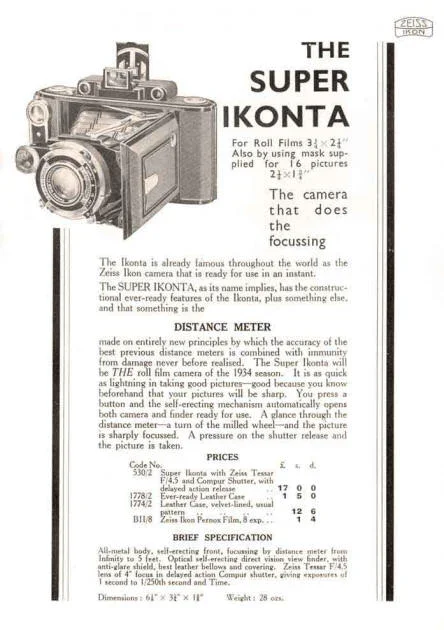
 A major step forward came with the Super Ikonta series, introduced in 1933. The "Super" name indicated the addition of a coupled rangefinder, making focusing far easier and more accurate than the original scale-focusing Ikontas. That innovation helped define some of the best prewar folding cameras available.

 Production continued through the war years and into the postwar period, but folding cameras gradually lost favor as photography shifted toward more modern fixed-lens designs and 35mm systems. Even so, Ikonta and Super Ikonta remain admired today for their craftsmanship, portability, and classic Zeiss optical quality.

My Camera:

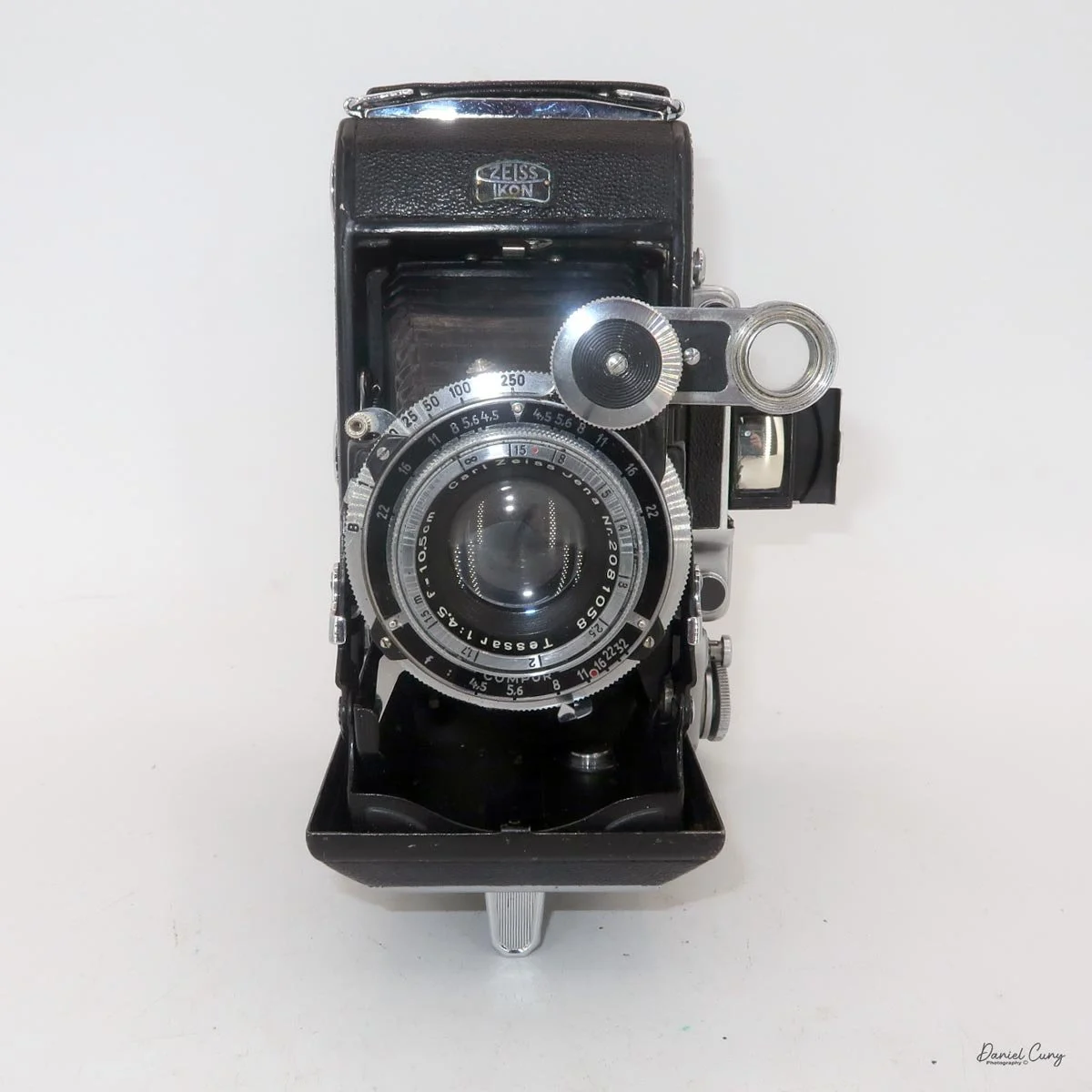
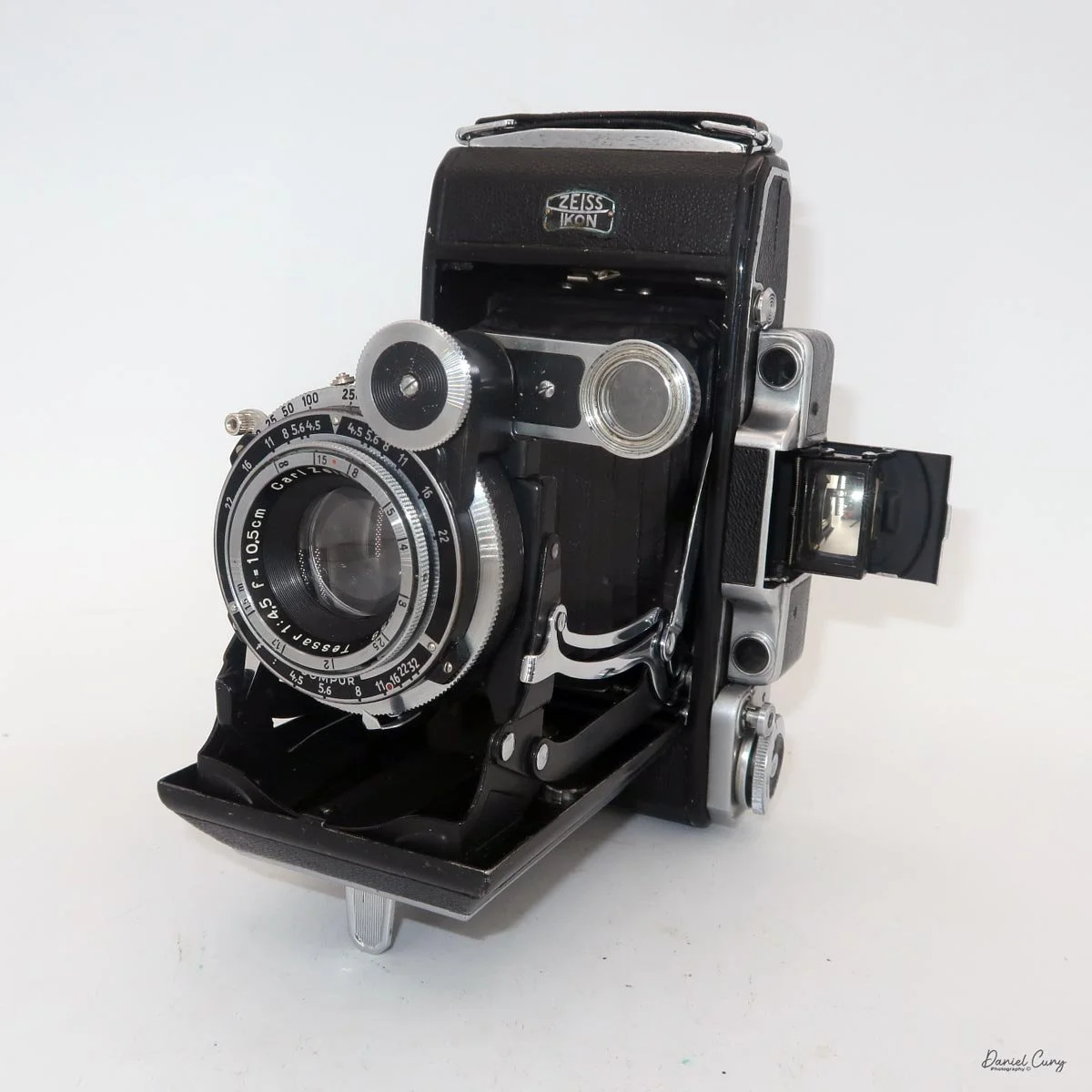
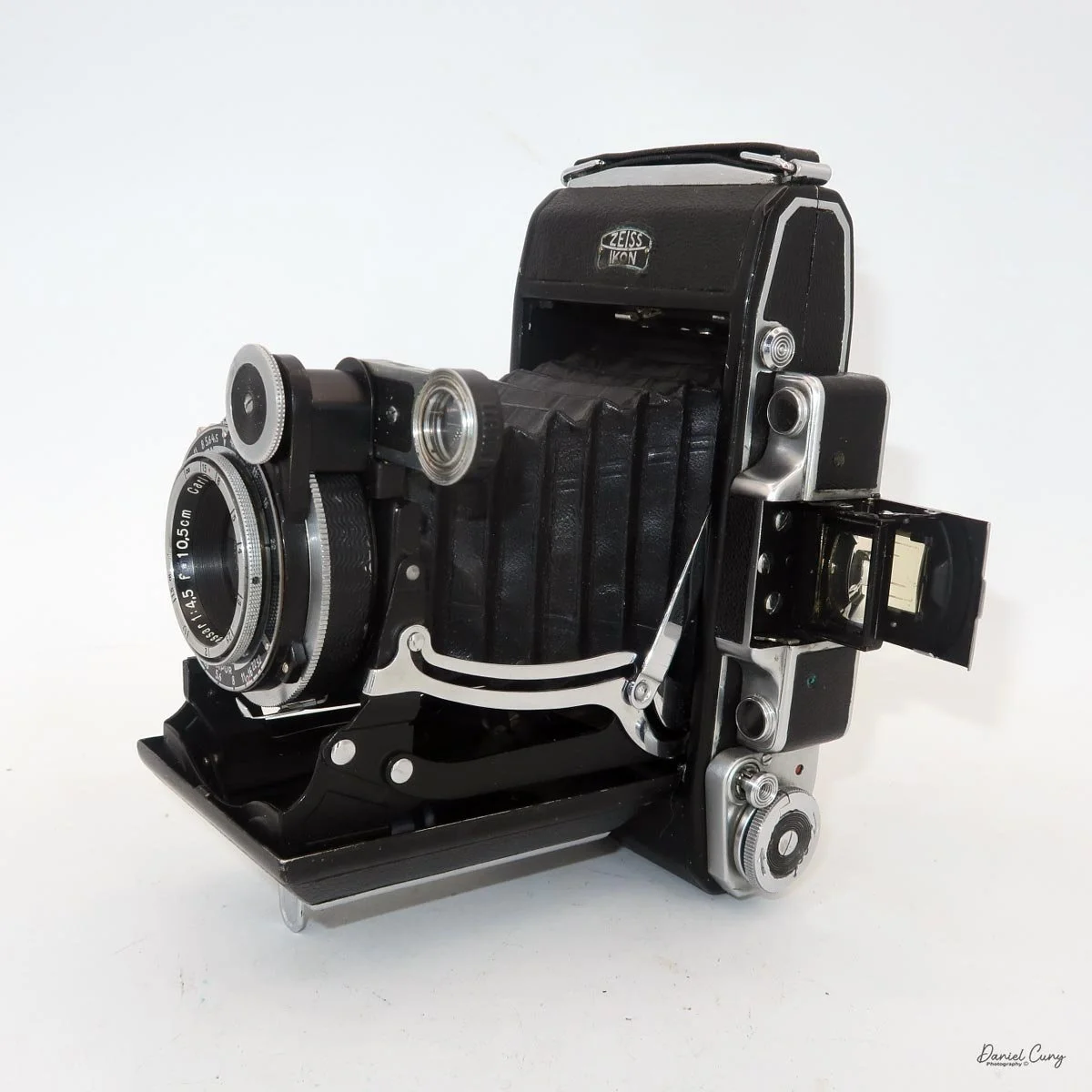
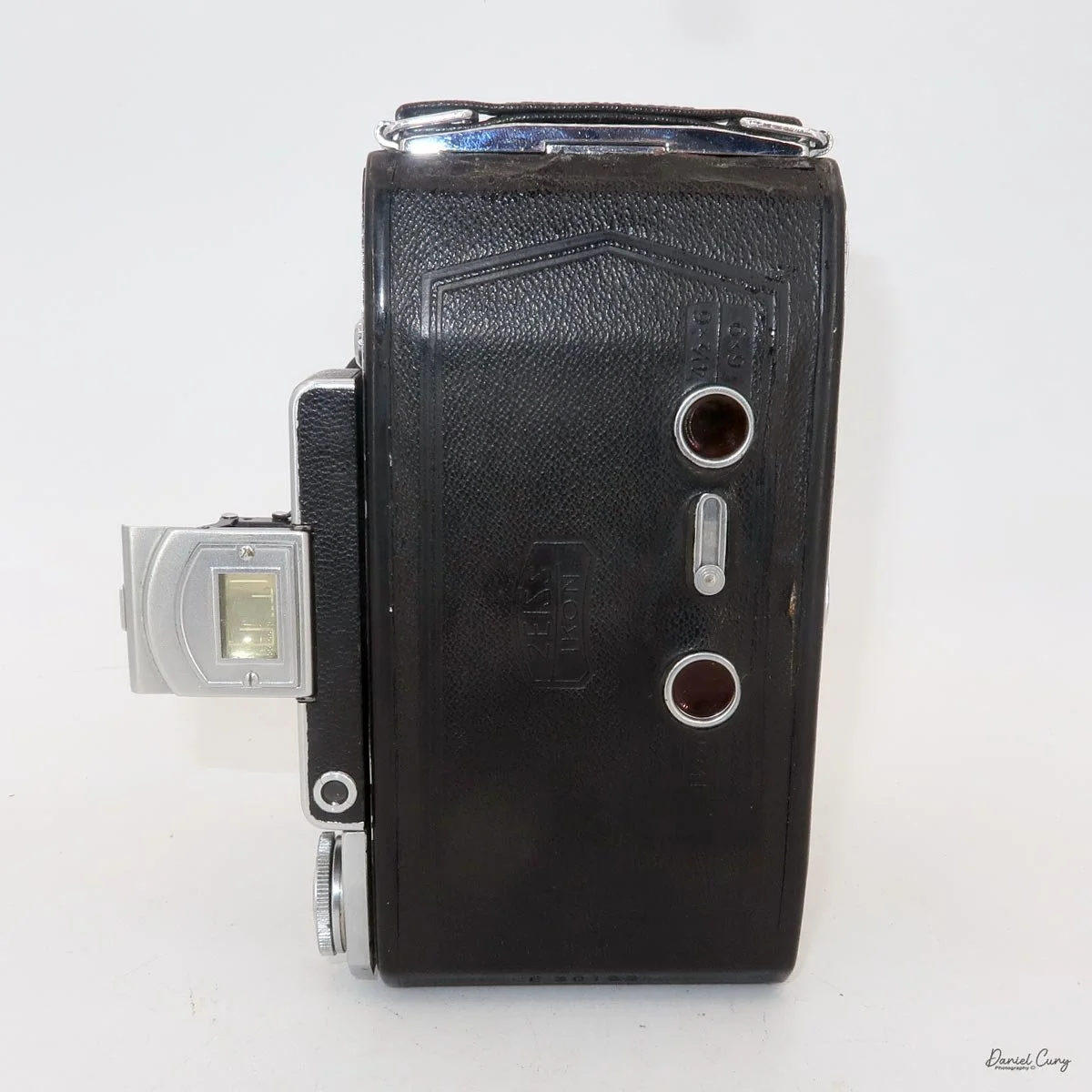
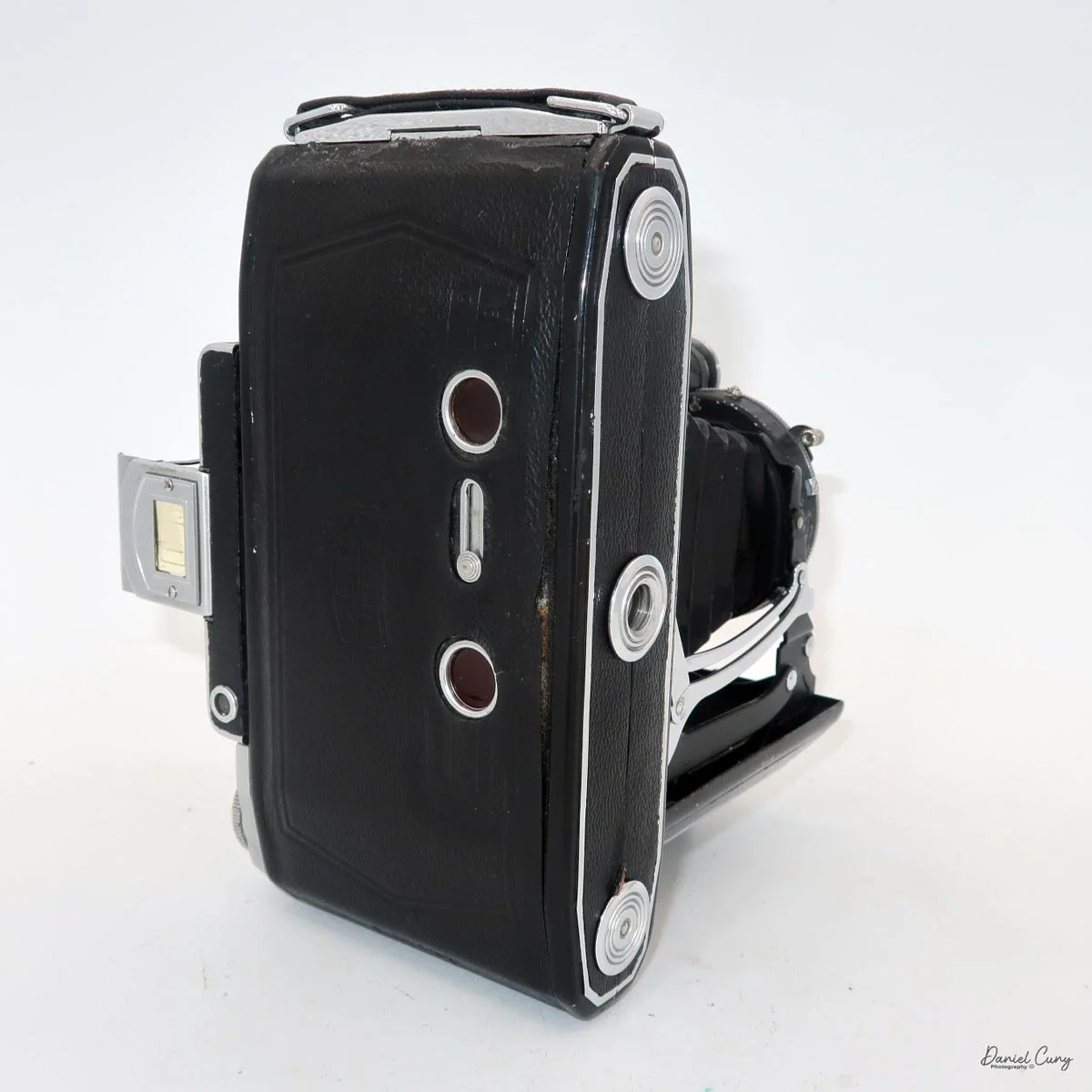
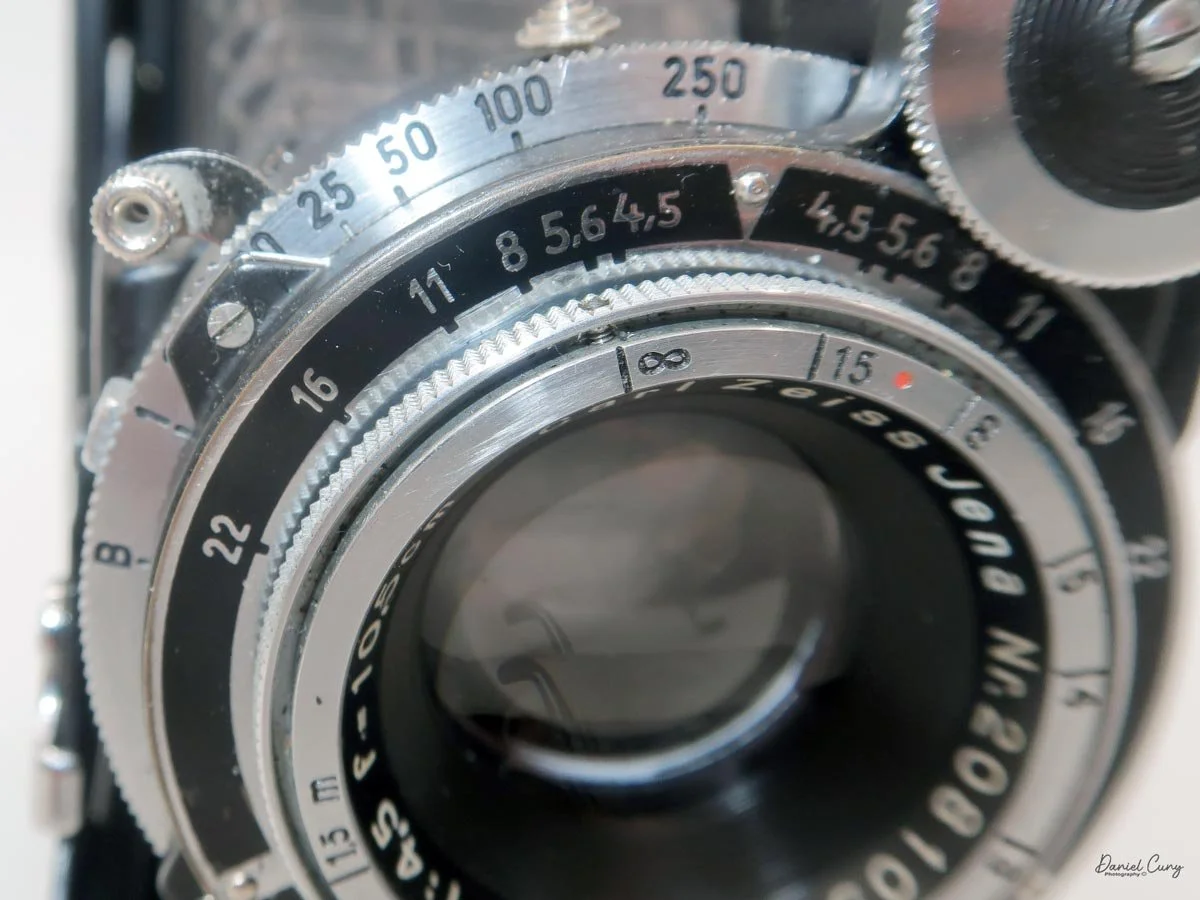
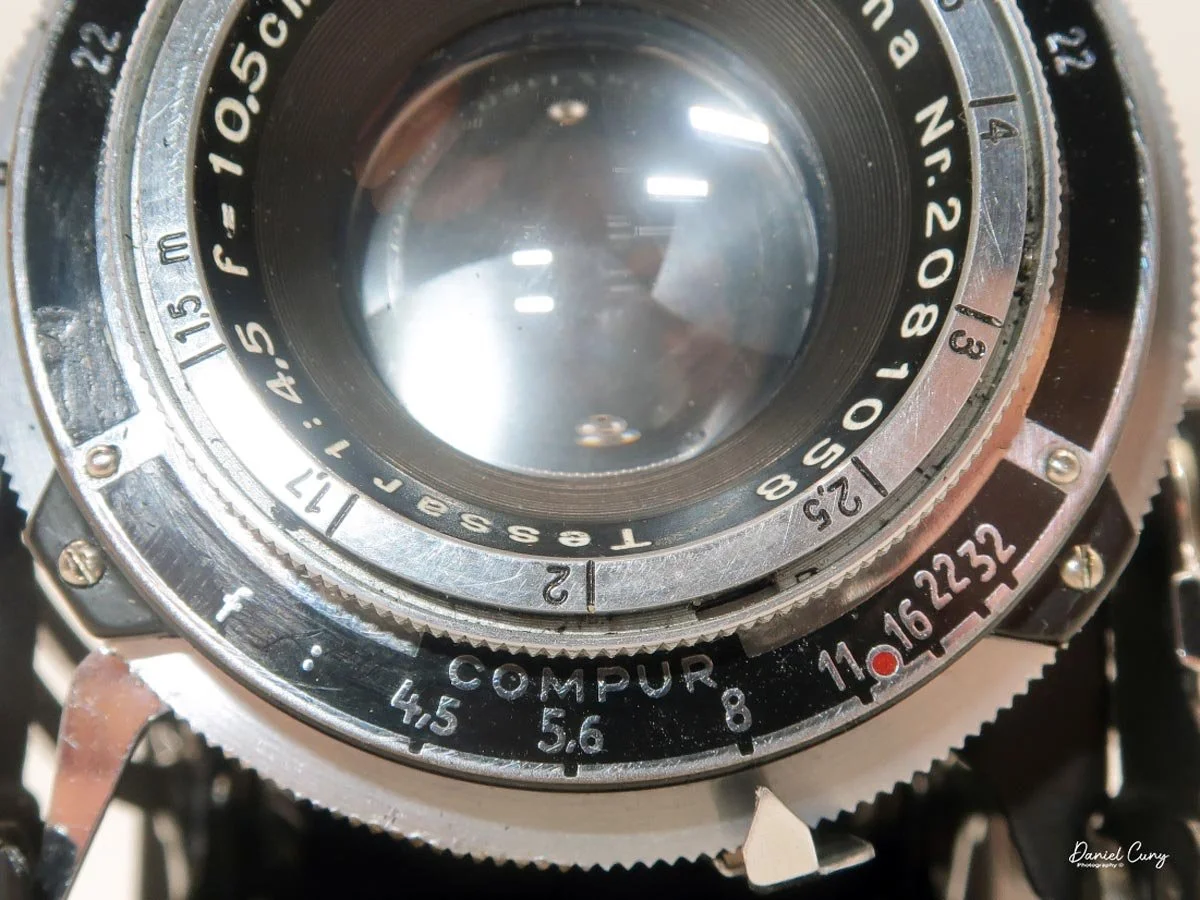
 My Zeiss Ikon Super Ikonta 531/2 is 7" wide by 4" tall and 2 "deep when the lens is retracted, and it's 5" tall when you open the camera, and the viewfinder pops up, and 5.5" deep when the lens is extended. The camera weighs 1 pound 15 ounces without the case or film loaded. My serial number is E30192.

The Zeiss Ikon Super Ikonta 531/2 camera has several different options for lens and shutter combinations:

  • Tessar 10.5 cm f/4.5 in a Compur shutter. This combination is the best-documented early setup for the 530/2, especially on black-enamel versions from the early 1930s.

  • Triotar 10.5 cm f/4.5 in a Klio shutter. Some early examples were fitted this way, making it a less common but real configuration.

  • Tessar 10.5 cm f/4.5 in a Klio shutter. At least one documented example shows this pairing, indicating that Zeiss Ikon used multiple shutters during the model's production.

  • Later or related Super Ikonta variants appear with Tessar lenses in Compur Rapid or Synchro-Compur shutters, though those are more typical of later Super Ikonta models.

Looking at the top of the camera, on the right side of the rangefinder, is a button that opens the camera when it's closed. According to the Zeiss Ikon Super Ikonta manual. Hold the camera in your right hand, with the front slightly pointed down. Press the button, and the camera should open slightly. Then pull down on the front cover so the bellows and lens extend to the taking position. Once the lens is extended, you'll need to swing the arm holding the small round lens into place so you can use the rangefinder for focusing. Also, when you open the camera, the Albada (sports) finder springs open. Look through the Albada finder; it has lines for both 6x9cm images in a horizontal format and for 6x4.5cm images for a vertical subject.

Now that the camera is open, you're ready to make exposures once the film is loaded, which we'll get to in just a moment. The shutter and aperture settings are located around the lens. Shutter speeds from 1/250 to 1 sec, plus "B," are set by turning the ring to the desired speed. The aperture is set by sliding the arrowed lever at the bottom of the lens to the desired aperture, which ranges from F/4.5 to F/32 on my camera.

 The focus wheel is on the front of the swing arm you moved over for the rangefinder, just above the lens when the camera is in the vertical position. For focusing, look through the small window on the back of the camera. Turn the dial to use rangefinder focus, which includes a small yellow area in the middle of the finder. When out of focus, the subject will appear as two images. Your main subject, and a second image in the yellow area. Turn the wheel until both images merge into one, indicating the subject is now in focus. 

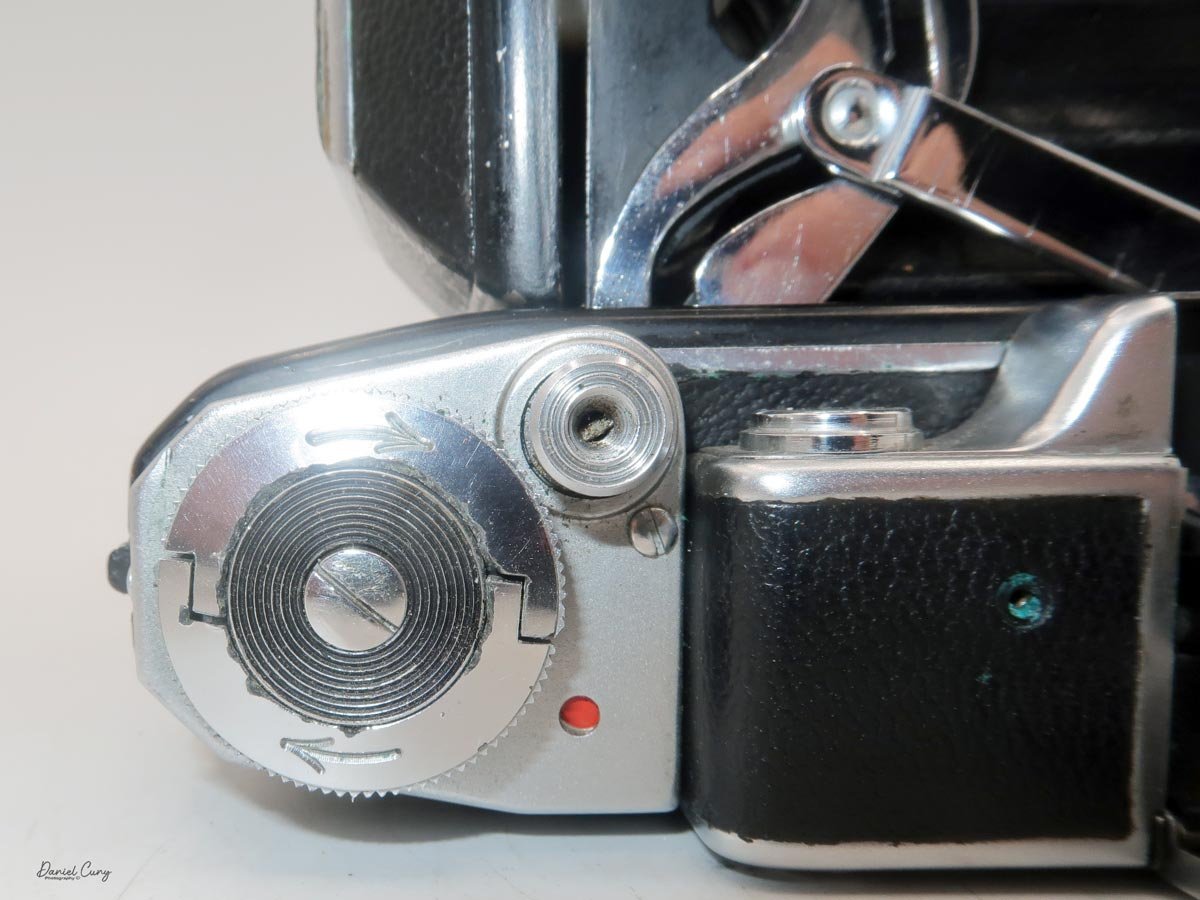
Set your shutter speed and aperture setting, and don't forget to cock the shutter. The shutter release is on the top, left side of the camera. Press the shutter release, which will trip the shutter via a series of linkages that run along the bottom of the lens bed. Just behind the shutter release is a small window. When the window is grey, the shutter has been tripped, and you'll need to turn the film winding lever until the small window turns red. At this point, you can re-cock the shutter and release it. 

To open the back of the camera to load film, under the camera's handle is a small slider with an arrow pointing toward the opening. Slide the small knob in the direction of the arrow, and the camera back will open. Load the film as you would any 120 roll film camera, roll the film so the "start" arrows are showing, then close the back of the camera, and wind the film advance knob so the number 1 shows up in the appropriate window on the back of the camera. 

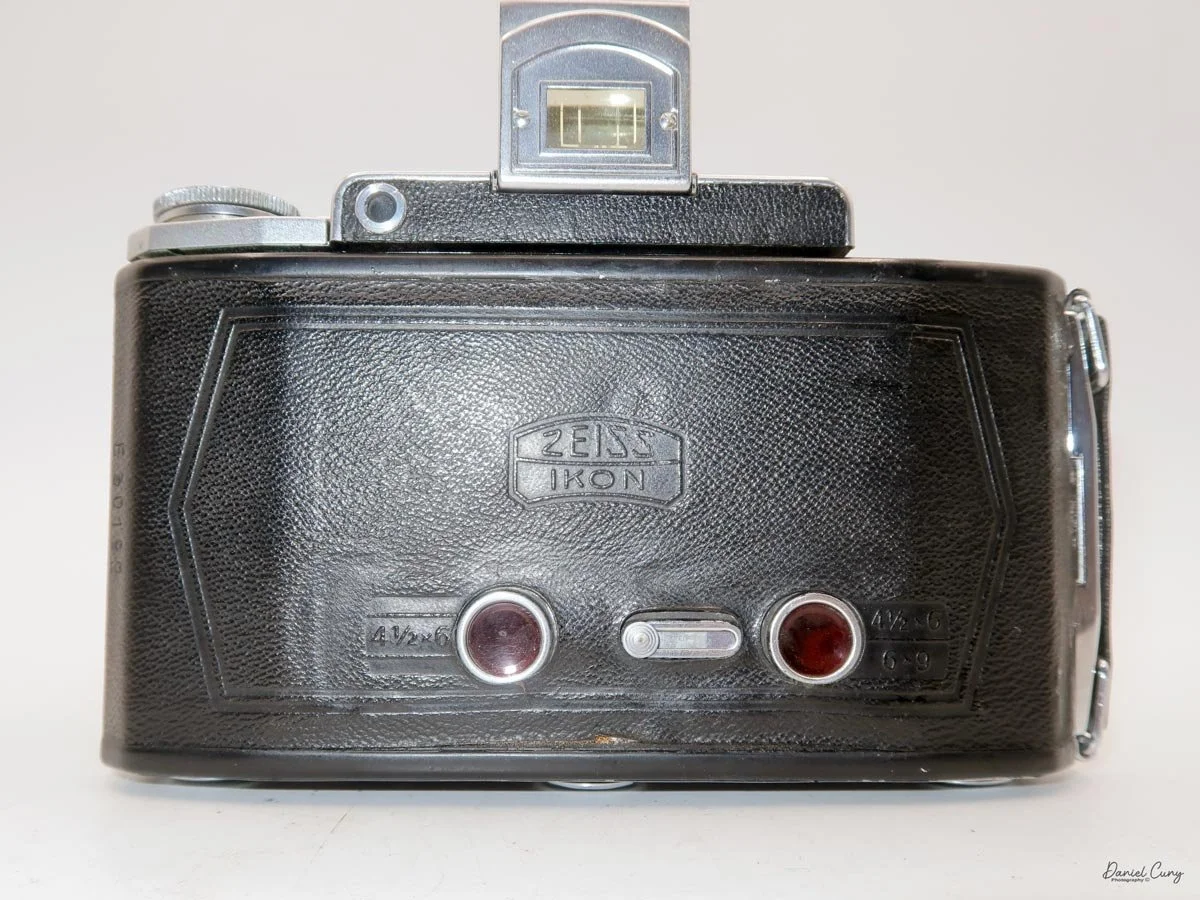
There are two red widows on the back of the camera: one for 6x9cm images and one for 6x4.5 cm images, if you have the metal insert in. If you have the insert in the camera, you'll use both windows for film advance, as you would with a 127 film camera with two windows. Stop at the number 1 on the far right window, then take your photo. Wind the film until the number 1 appears in the second window on the left, then take your photo. Then wind the film until the number 2 shows up on the first window on the right side, and so on through the number 8. For 6x9cm images, you'll get 8 exposures per roll; for 6x4.5, 16.

 To close the camera for transport, slide the arm you extended for focus back over the bellows. Holding the camera with both hands, press in on the locking arms on the struts to lock the bellows and lens into place; the bed will collapse a bit. Fold the lens back into the camera until the camera clicks closed, then flip down the Albana finder.

My Images:

 Let's take a look at how the images turned out. Here are a few of the images I took with the Zeiss Ikon Super Ikonta camera.

Conclusion:

 The first few images were incredibly sharp, well-exposed, and as I expected. I noticed that towards the end of the roll, the images became softer and less sharp, which concerned me. What did I do wrong?

 To give some background, I had eye surgery on my right eye, which is my dominant eye, about a year or two ago. When I went to see the eye doctor, I could barely make out details with my right eye, so surgery was necessary. Since then, it's gotten a bit better, but not as good as it used to be. Now I'm getting used to putting the camera up to my left eye, which is considerably better than my right. It still feels awkward, but it's my new normal.

Missing pressure plate

 I thought this contributed to the images being soft. Then I remember what a good friend, Mike Eckman, said a few weeks ago when we were discussing image sharpness. He said that he had a similar instance and noticed that the film's pressure plate was missing. At this point, I opened the back of the camera, and sure enough, the pressure plate was missing. 

 How could I miss that when I'm loading the camera? You get so used to looking at and loading cameras that you miss that a camera doesn't have a pressure plate.

 At this point, I'm sure I could manufacture one out of something like thin foamcore and just cut out circles for the red window. Still, it's a lot of fun to use, and the images are incredible. I'll chalk it up as a learning experience and double-check to be sure they have the pressure plate from now on.

 Here are some of the other Camera Reviews I've done.

 Cuny's Cameras and Photos is my online eBay store where I sell some of the cameras I've reviewed, along with other camera accessories, lenses, etc.

 Please feel free to comment on this or any of the other camera reviews I've done. I'd love to hear from you.

 Until next week, please be safe.
 

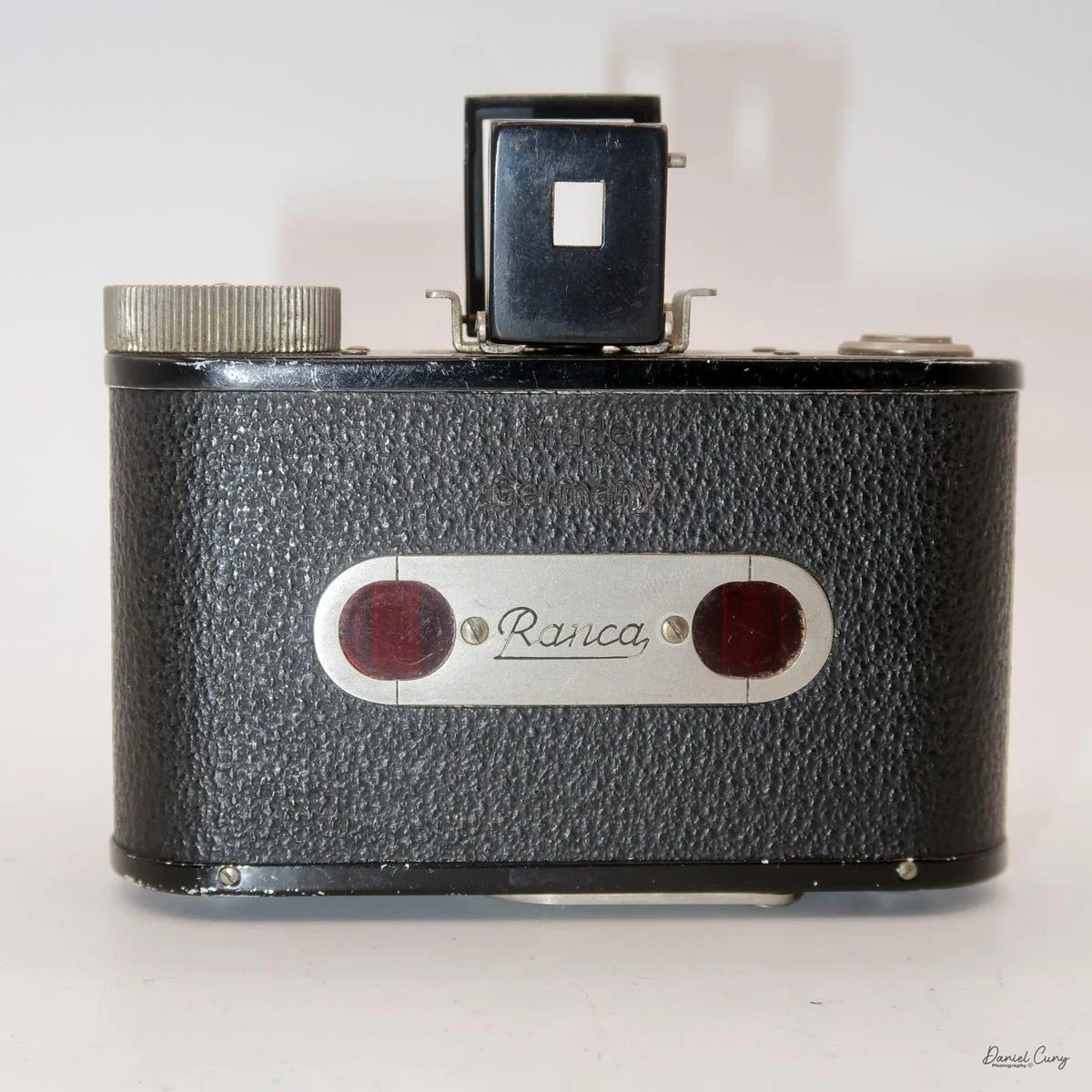
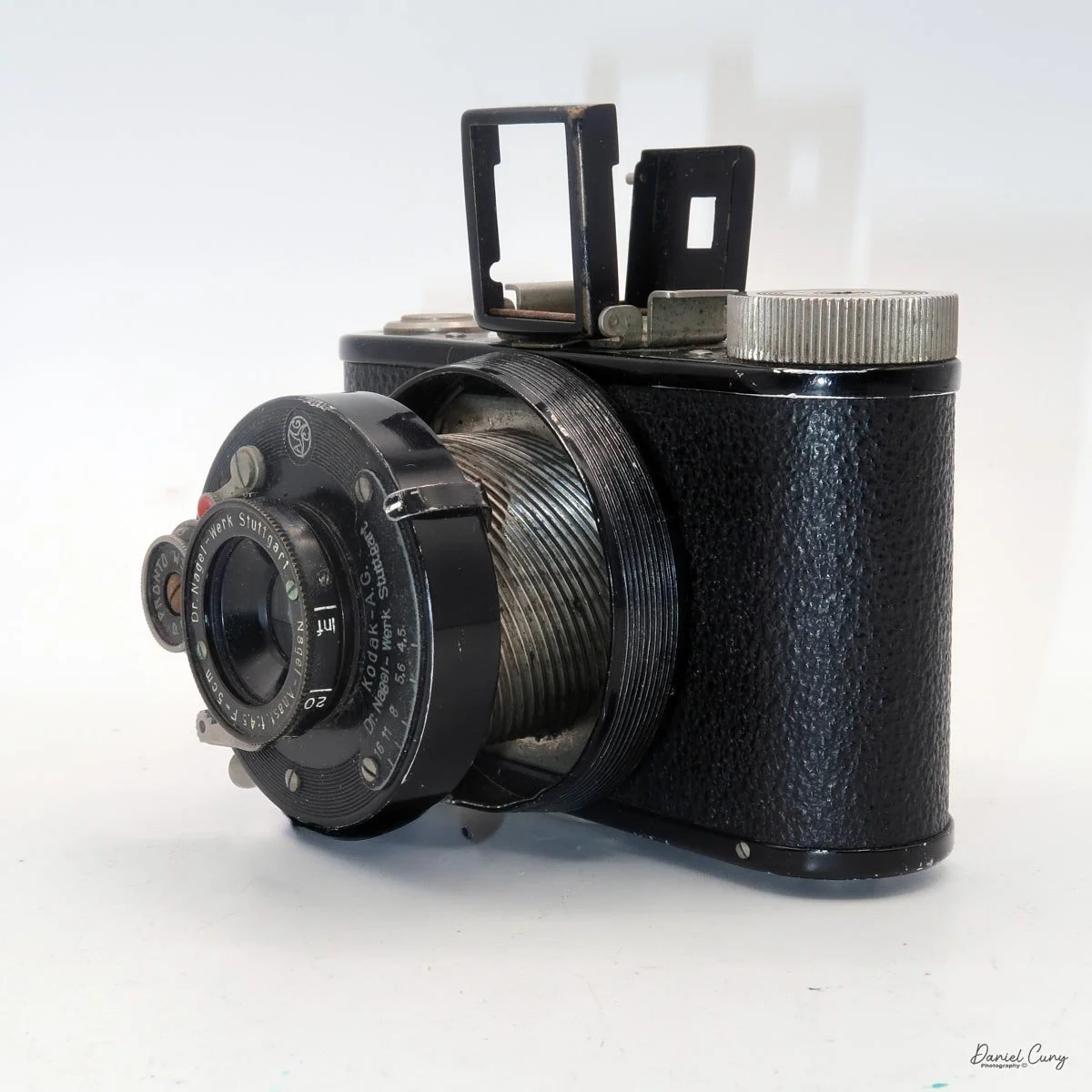
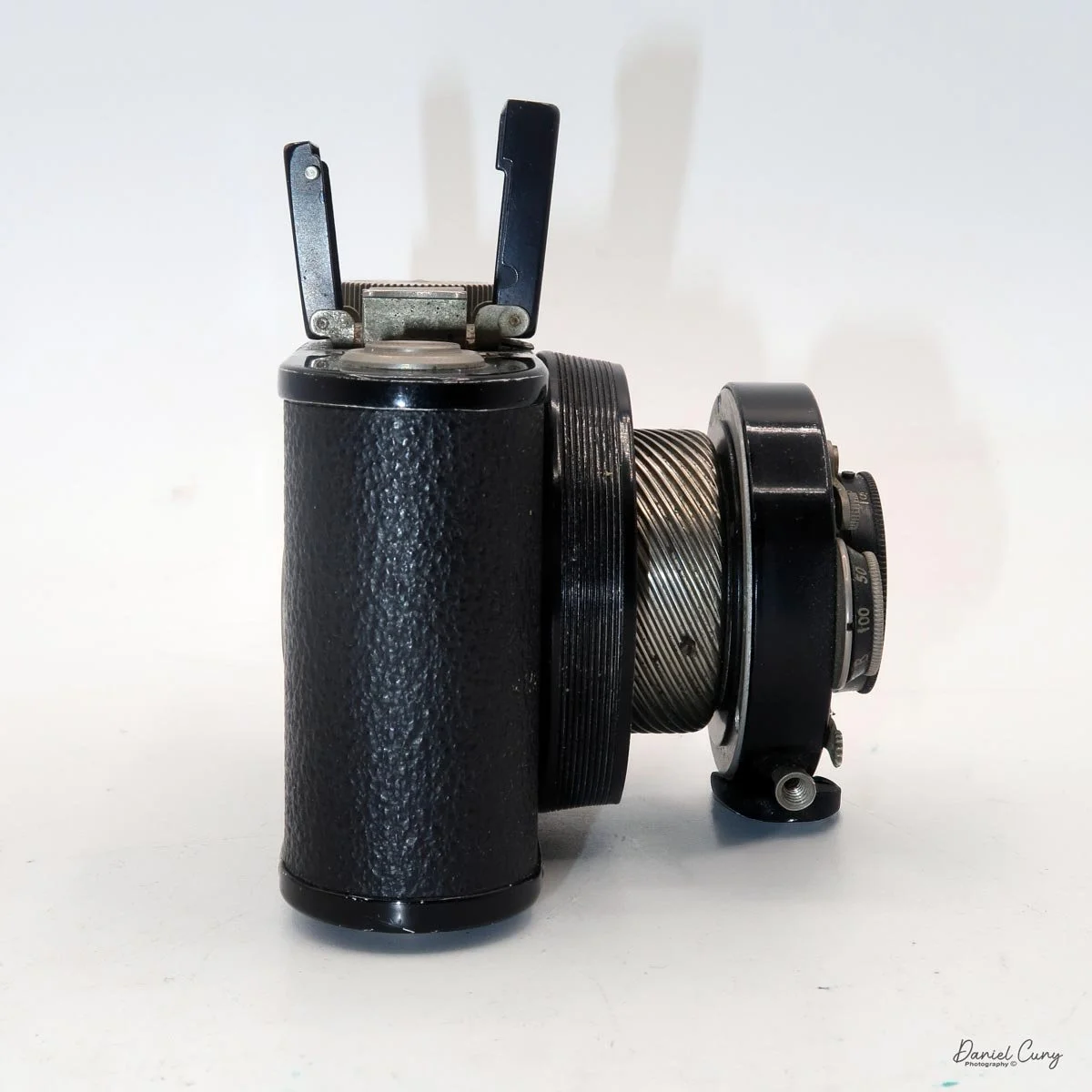
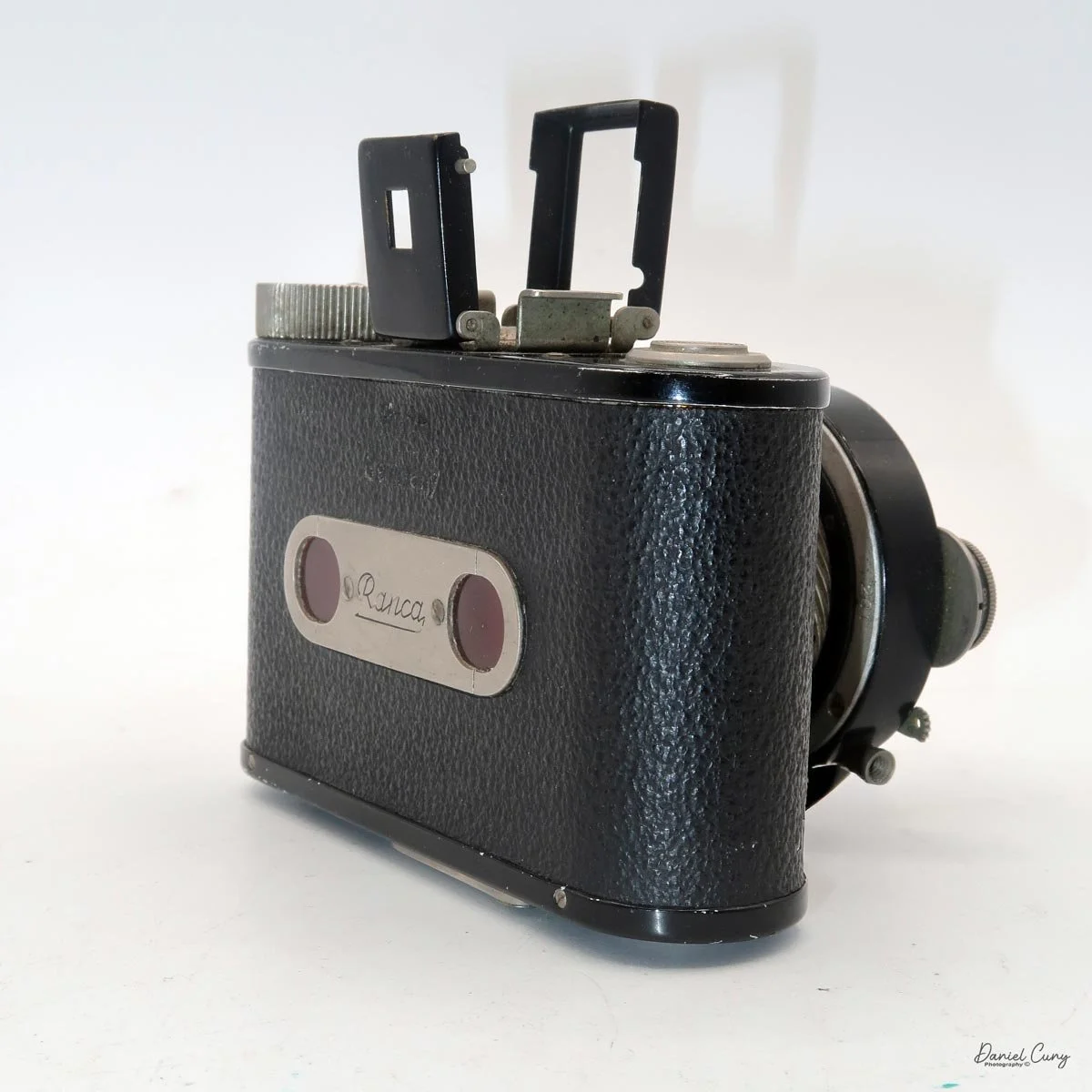
Kodak-Nagel Ranca camera

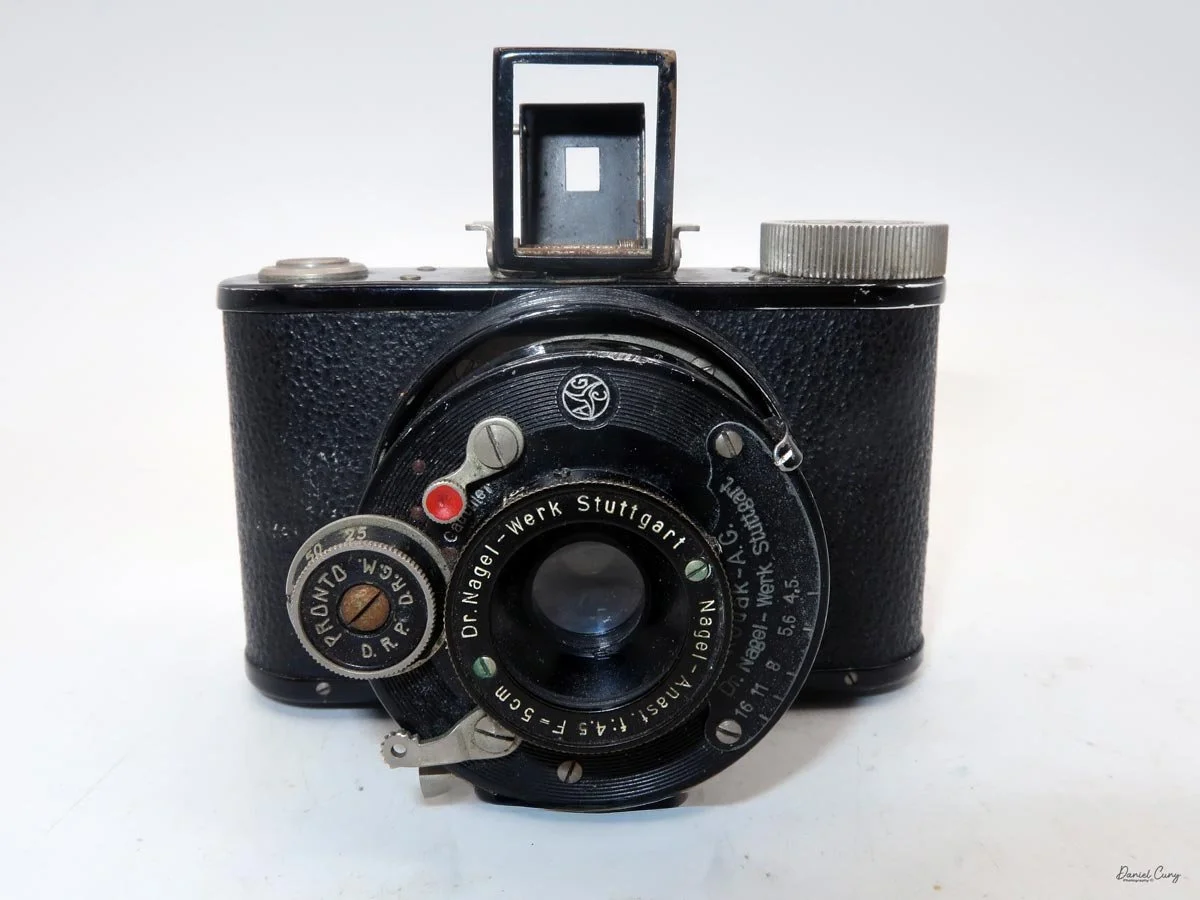
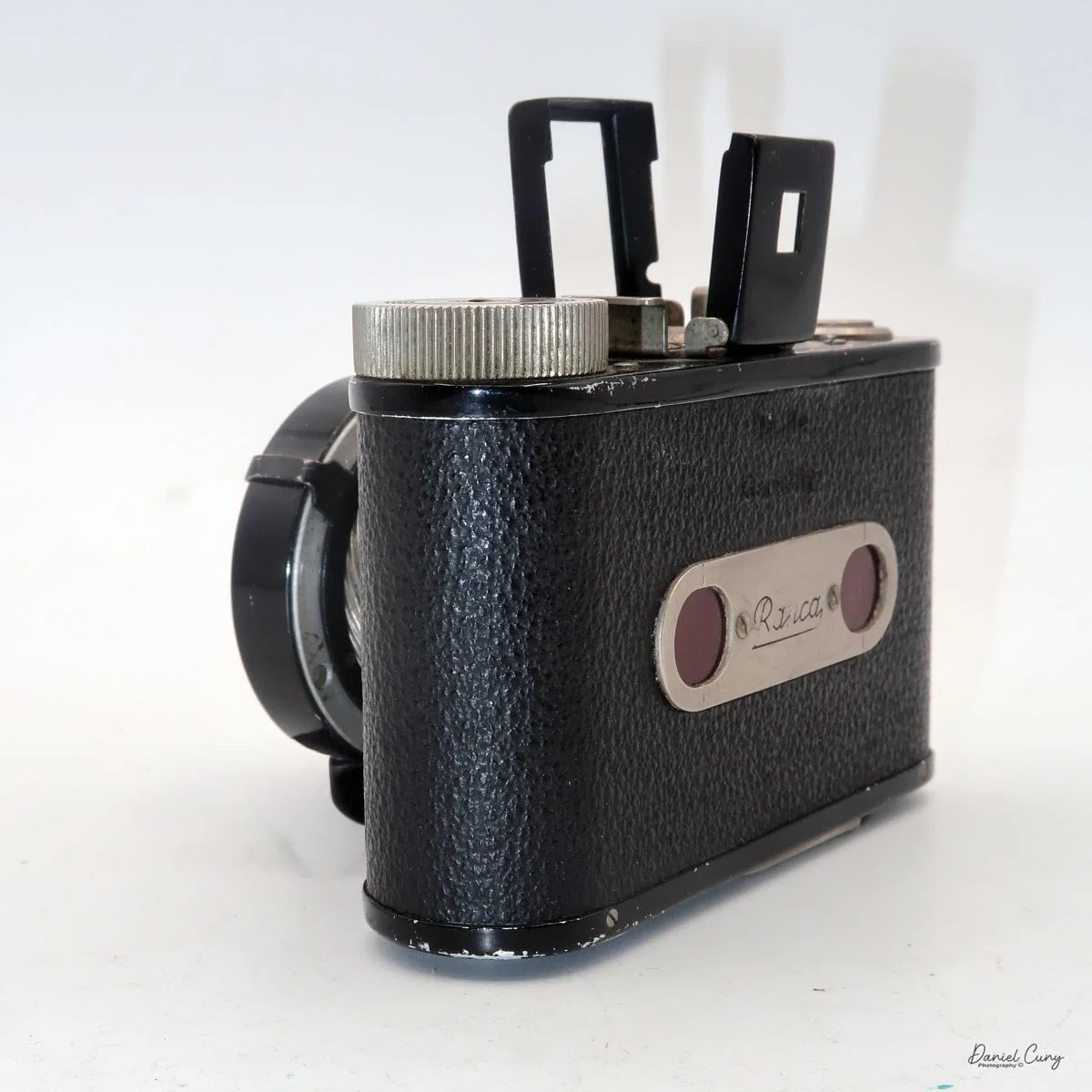
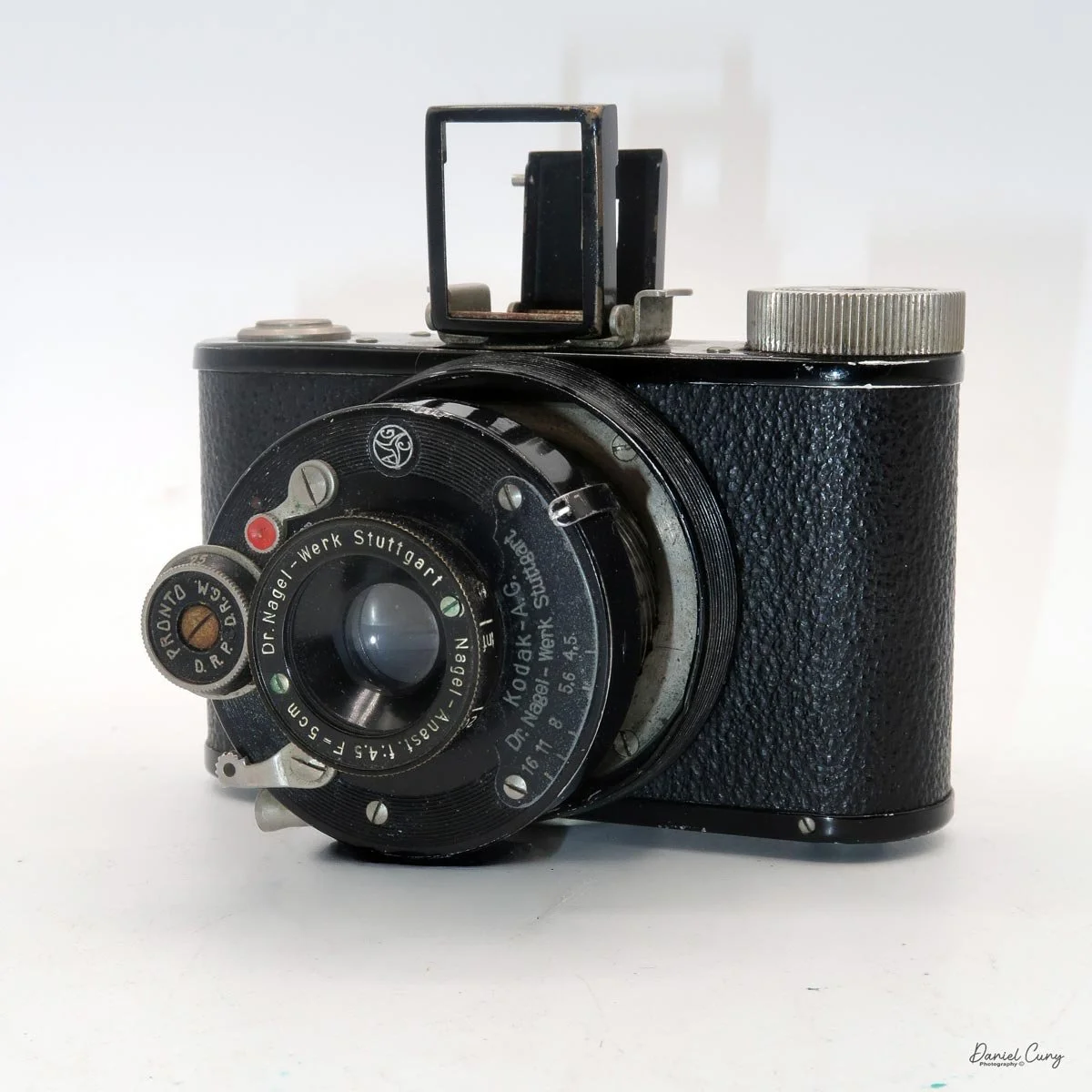
My Kodak-Nagel Ranca camera

Being a collector and working in the photo industry for more than 50 years, and, more specifically, in the photographic retail business for almost 20 of those years. My retail years were in the mid-1970s through to the early 1990s. It was the height of film photography with Nikon F's, Canon AE-1's, Minolta SRT's, Pentax, Rollei, Contax, etc. I can remember the introductions of many of the best-selling cameras from this era. I have seen and sold many cameras. But to this day, I still enjoy them.

 When I look at a camera, especially an older one I'm not familiar with, the first impression strongly influences whether I purchase it. I'm always on the hunt for the odd and unusual camera.  I imagine it's really about what you enjoy collecting. 

 Many collectors look for pristine examples of Leica, Rollei, Hasselblad, or items with a slight difference, making them a "rare" item. Still, if I see a camera I'm not aware of, and it has an unusual appearance or color that stands out, that's what catches my eye. It doesn't have to be expensive or rare; it just has to be unusual to me.

 That's where the camera I'm writing about this week comes in. The Kodak Ranca is a camera I first saw on my friend Mike Ott's website. Mike is the longtime owner of Pacific Rim Camera and one of the best photographic resources around. It's a website I often visit, very similar to Mike Butkus's Camera Manual, which offers information on cameras, catalogues, manuals, etc. 

 I purchased the Kodak Ranca because it was a compact camera I wasn't familiar with. It wasn't until it arrived that the camera had a very similar look and feel. I was aware that it was a Nagel-made camera, which was another reason I was attracted to it. Still, when I dug into the camera after it was purchased, it's considered the "less expensive" version of the very popular Nagel Pupille camera, which I reviewed a few months ago.

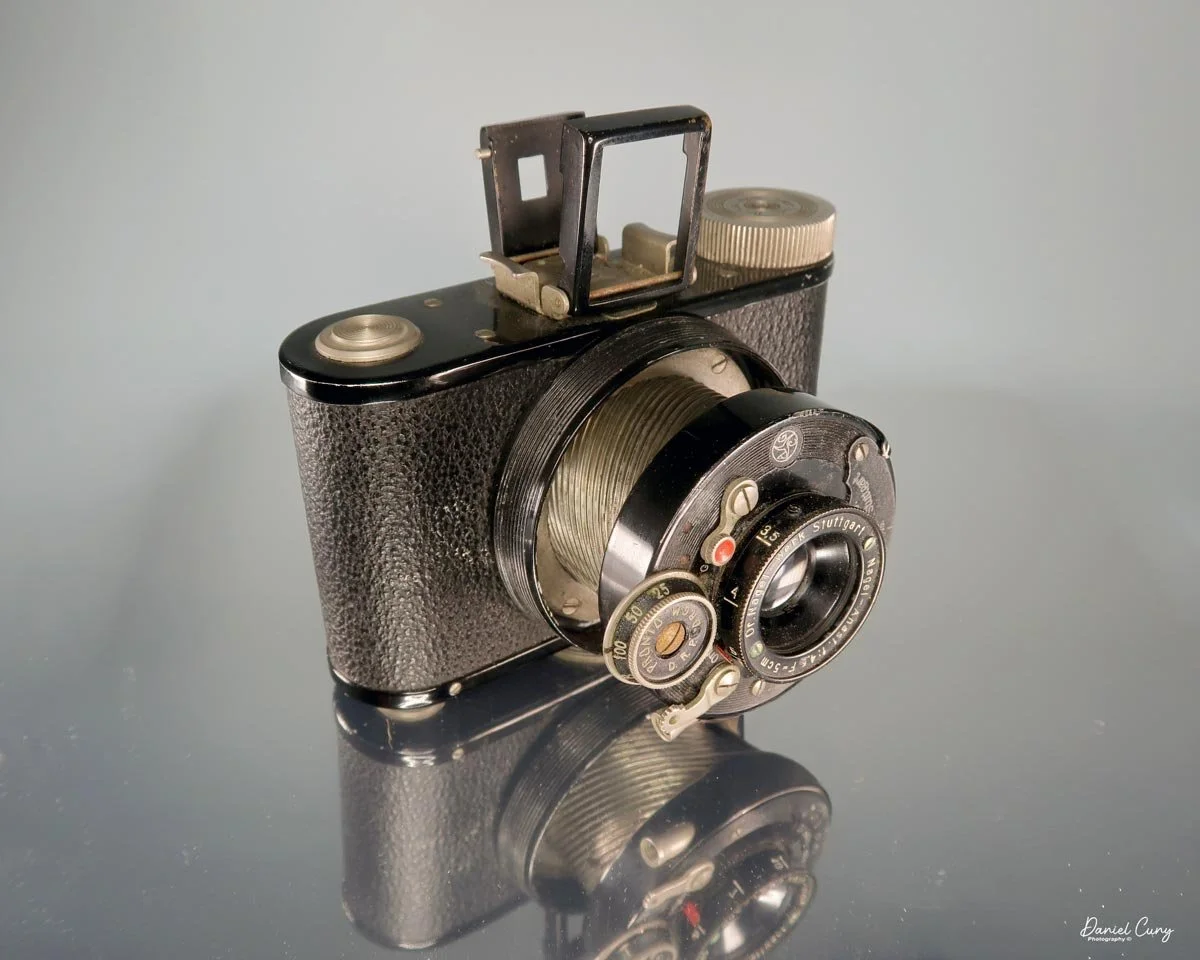
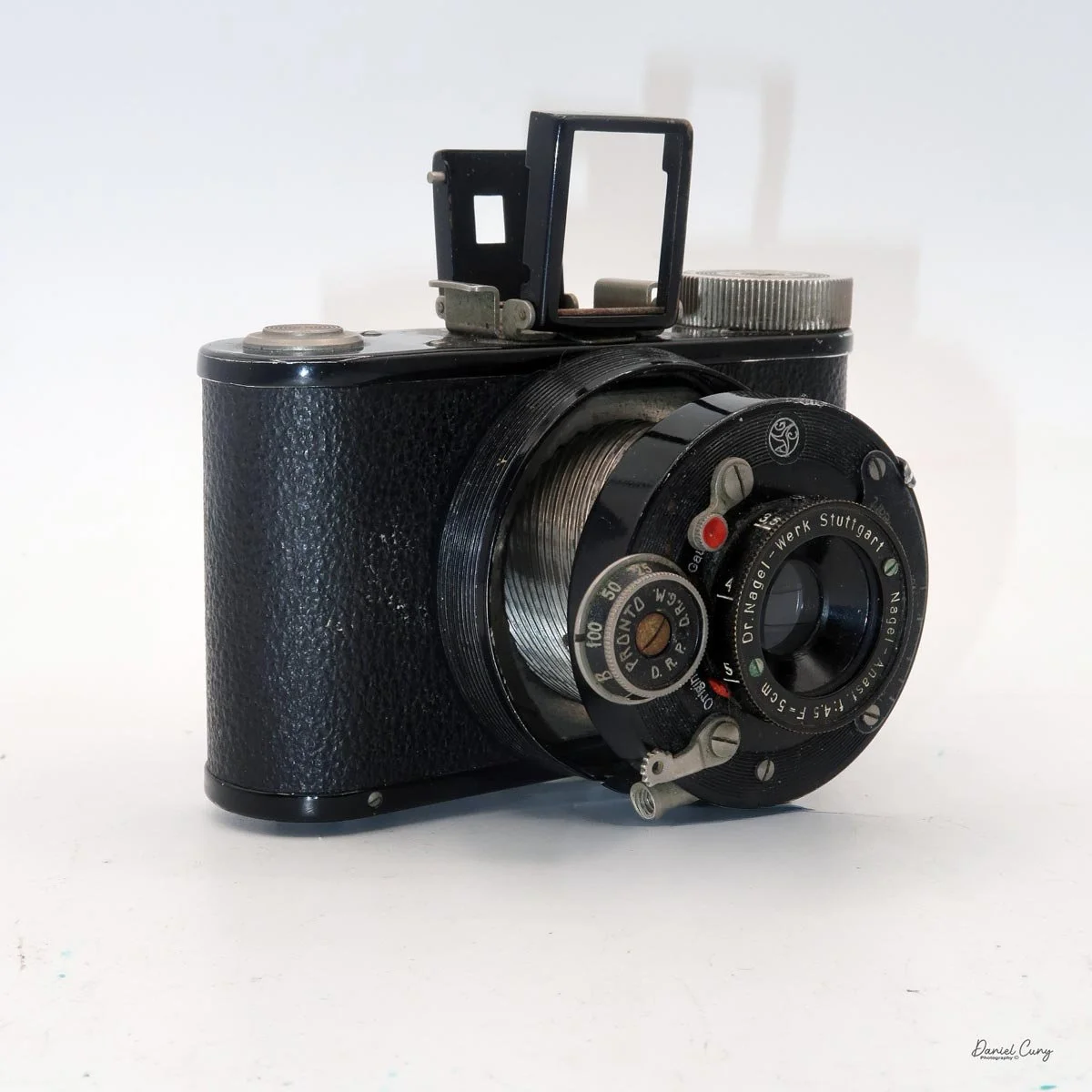
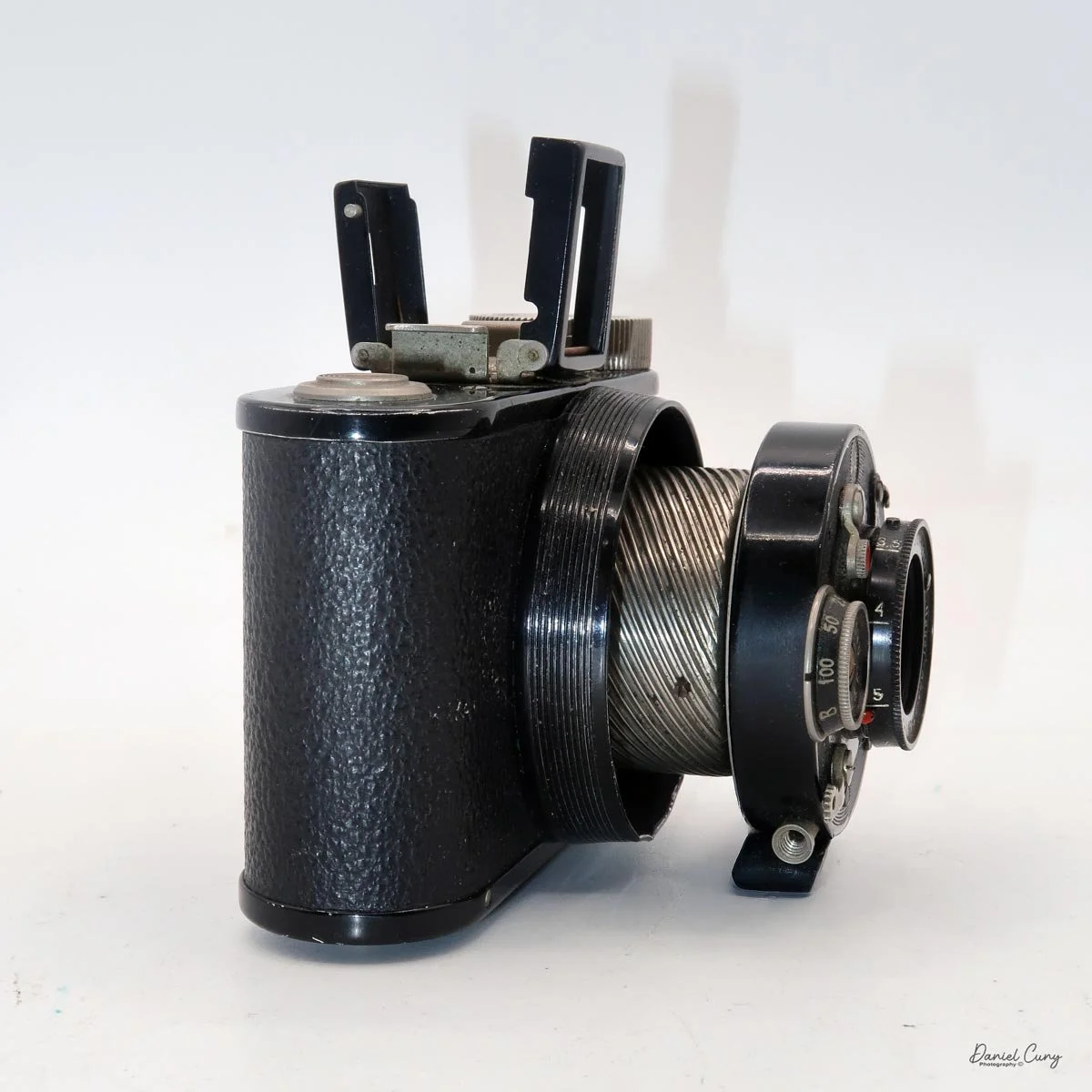
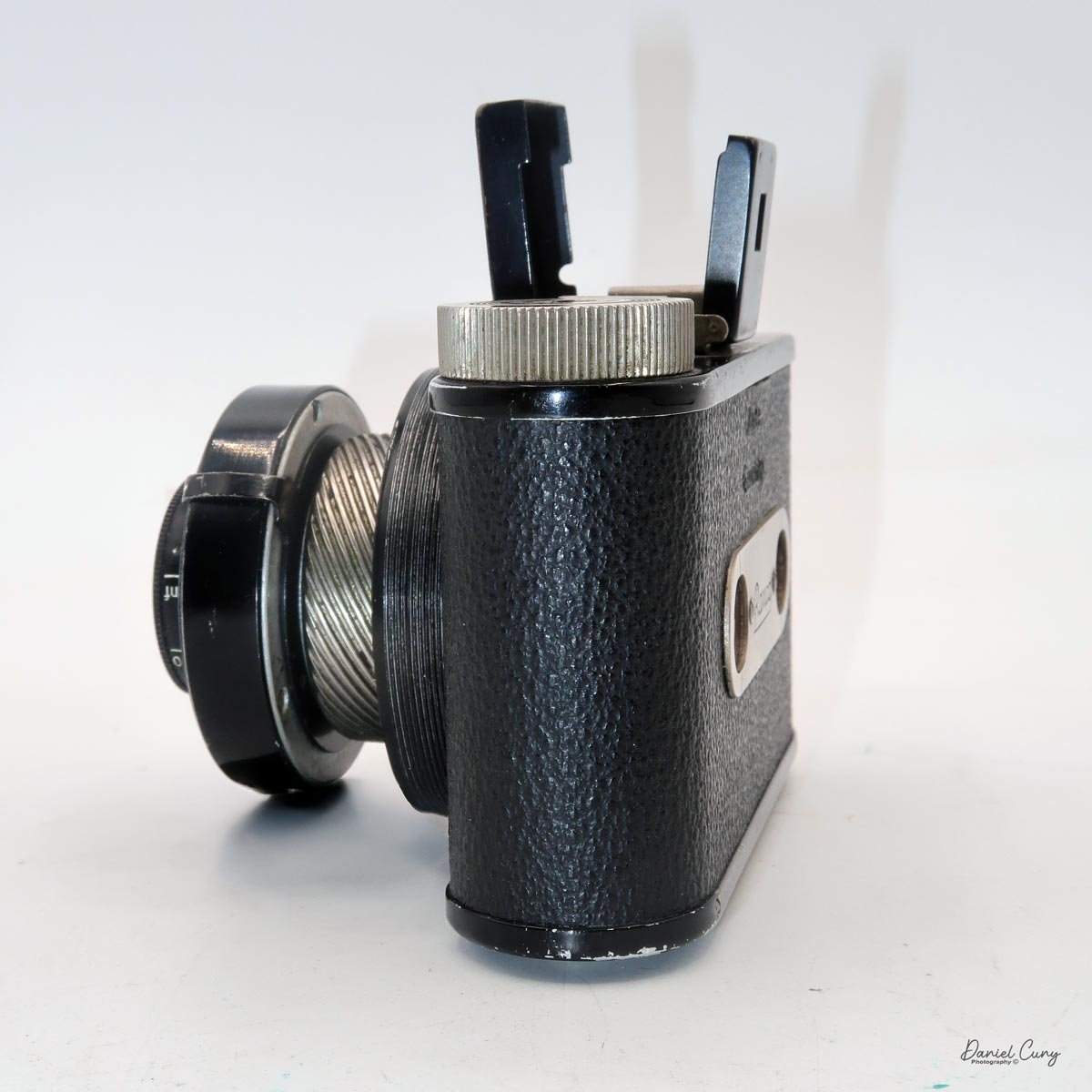
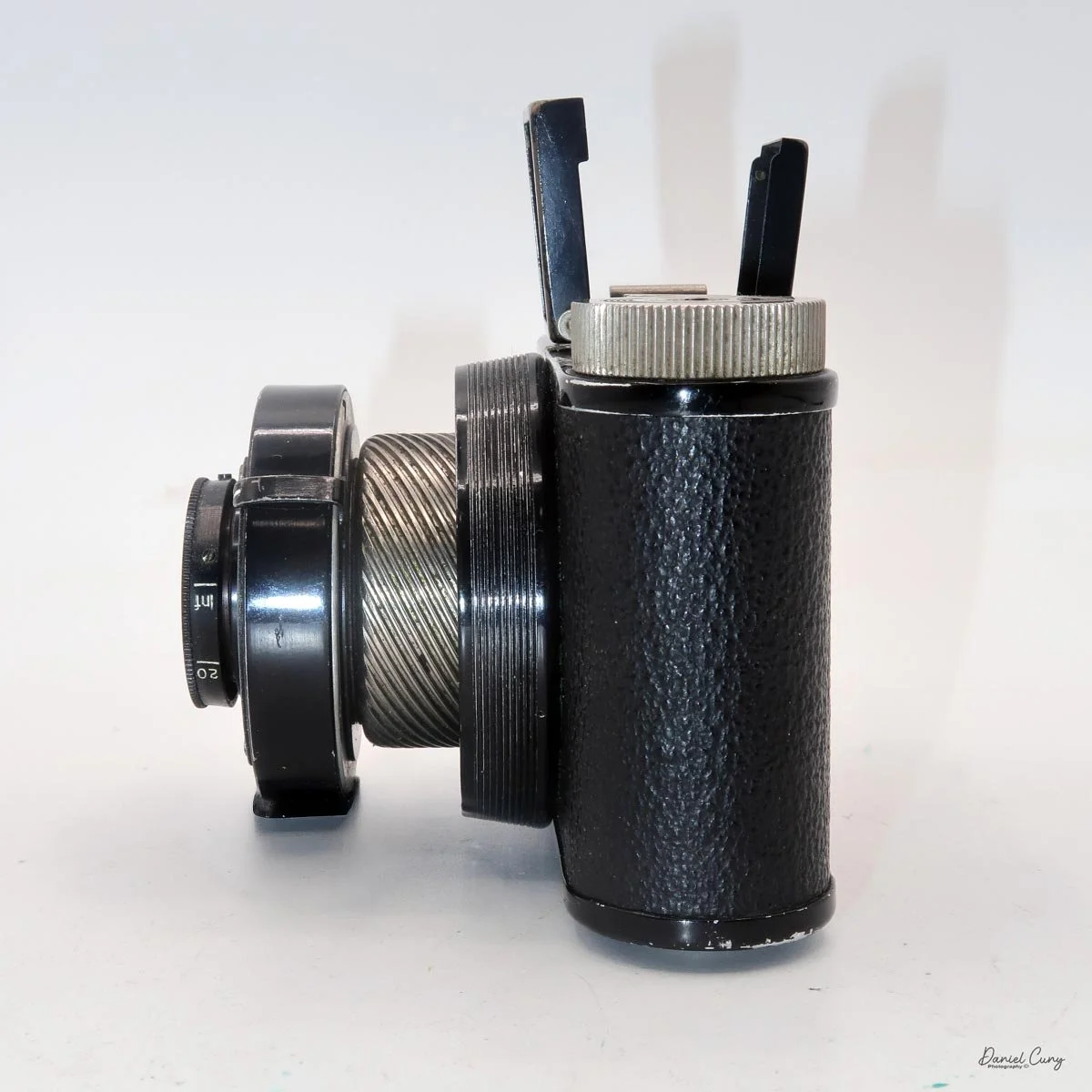
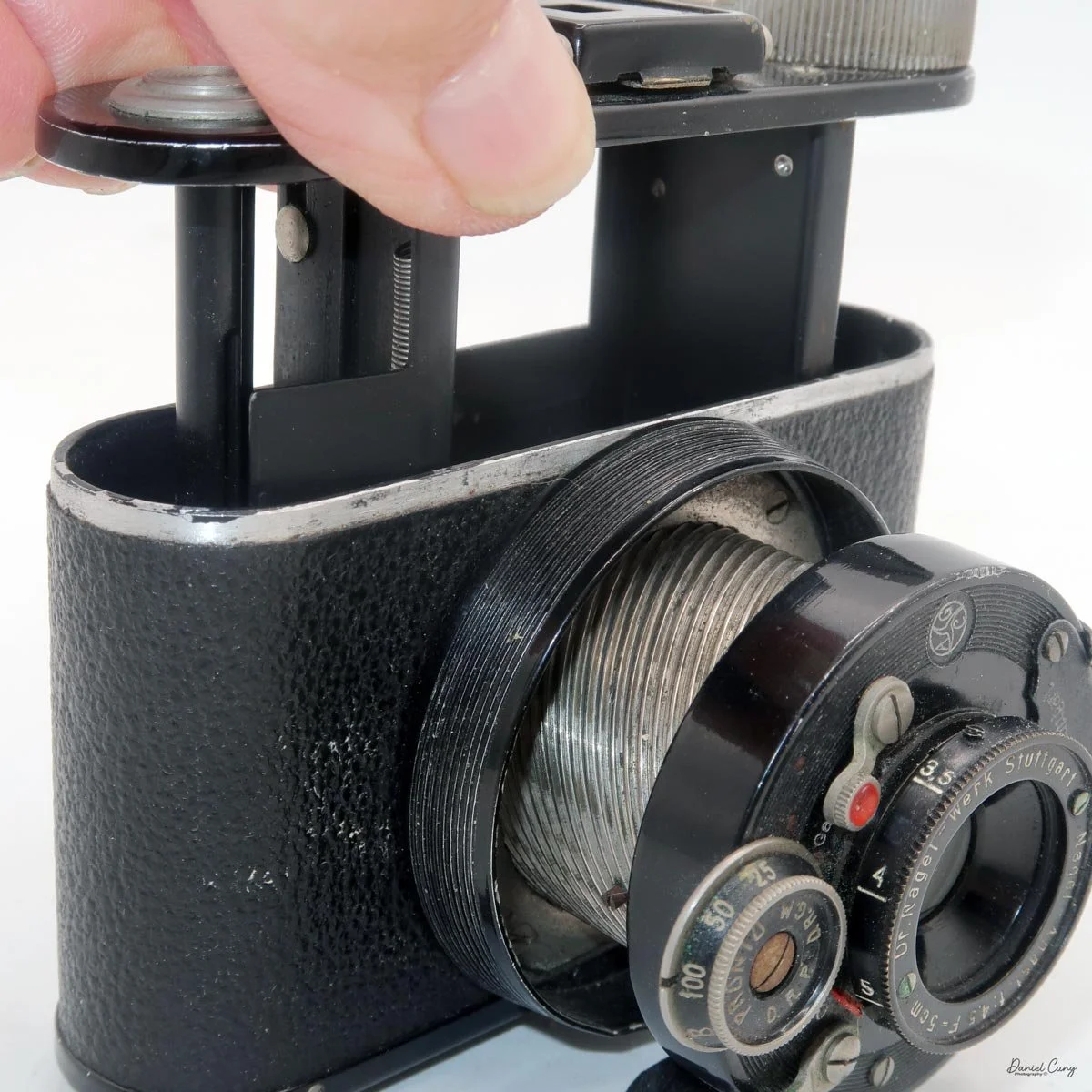
 According to my reading of the Ranca camera, there were two versions. The earlier model, known as 46/0, has a helicoid lens and shutter system that rotates out from the camera's body when you grip and rotate the shutter/lens area a quarter turn counterclockwise. This also exposes the helicoid on which the lens/shutter rotates. The second version is the 46/1, which has a rigid lens barrel with the lens and shutter on the end. 

 The camera was introduced in the middle of 1930 and remained available for only approximately 1 year, until the latter part of 1931. Both the Nagel Pupille and Ranca camera take 127-size film, producing 16, 3x4cm images on the roll. 

 Sources state that a total of 2,200 Ranca cameras were produced, compared to 5,000 of the more expensive, better-featured Pupille cameras. While the Pupille has superior features, fewer Ranca cameras are produced. Yet, the Pupille is more of a collector's item and fetches a higher price, even today.

 Some of the other differences between the two models: both cameras have "sports"-style pop-up viewfinders; some have glass on the front, and some don't. Different shutters, either Prontor or Ibsor, were available. The camera uses a front focus system, with some cameras opting for a very simple distance scale for portrait, group, or landscape. In contrast, others have the distance in feet on the lens barrel. 

History:

 Dr. August Nagel was one of the most important European designers ever associated with Eastman Kodak, and their partnership reshaped Kodak's position in the precision‑camera market. In 1932, Eastman Kodak purchased Nagel's Stuttgart-based firm, Dr. Nagel-Werke, and reorganized it as Kodak A.G., retaining Nagel as managing director and head of design. Before this acquisition, Kodak was dominant in film and popular roll-film cameras. Still, German makers like Leica and Contax defined the high‑end miniature camera segment. Kodak wanted a German-built precision camera to compete directly, yet at a lower price and in a form that fit its mass‑market philosophy. Nagel, already respected for compact folding designs and his work on Contessa-Nettel and Zeiss Ikon models, was the ideal partner to bridge that gap.

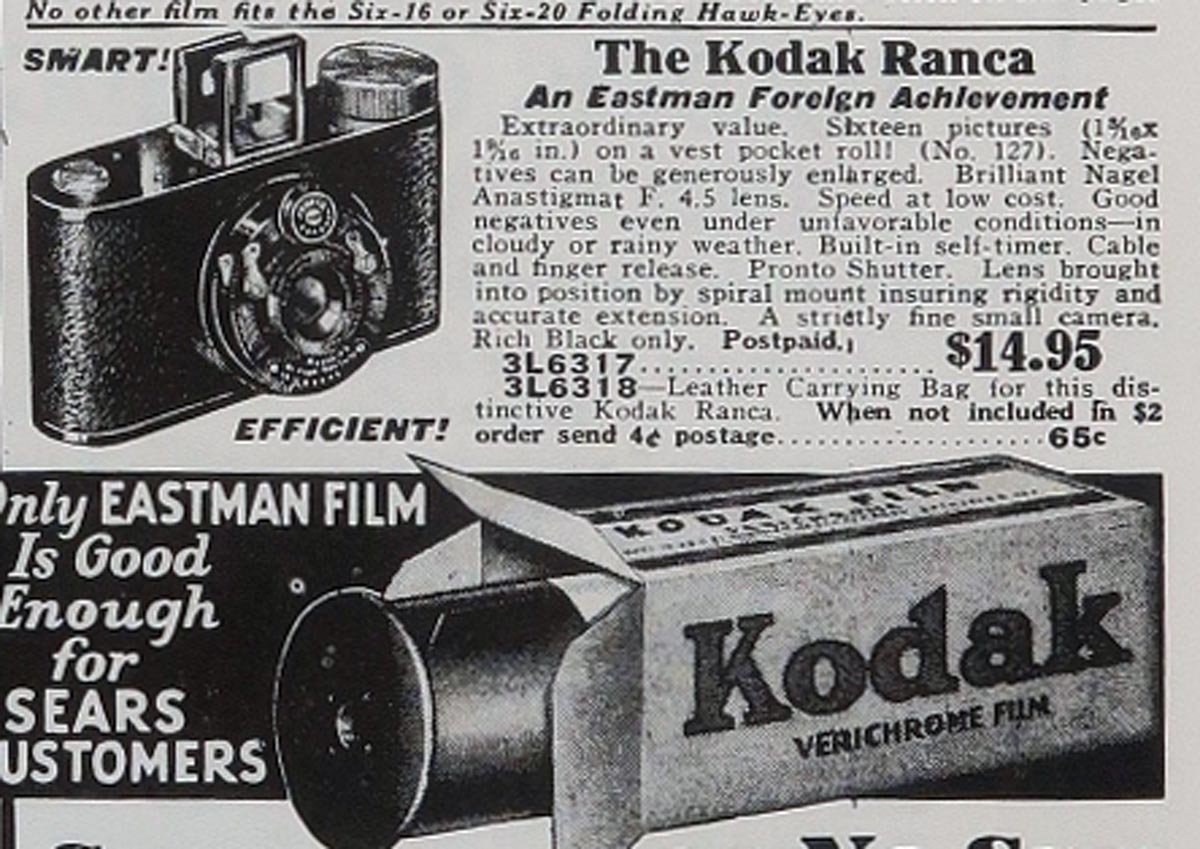
Kodak Ranca advertismant

 Within Kodak A.G., Nagel used generous Eastman funding and Kodak's global reach to develop a compact 35mm camera that could rival the established German leaders. The result was the Kodak Retina, introduced in 1934 (Type 117), a folding 35mm camera that offered solid German construction and good optics at a far more accessible price than Leica or Contax. At the same time, Nagel introduced a new daylight-loading 35mm cartridge—what became known as Kodak 135 film—which fit not only the Retina but also Leica and Contax cameras. This cartridge standardized 35mm still photography worldwide. It made 35mm use far easier for ordinary photographers, who no longer needed to roll film into cassettes in the dark.

 Nagel's collaboration with Eastman Kodak extended beyond the Retina itself. Under the Kodak A.G. banner in Stuttgart, he and his team produced several notable pre‑Retina and companion models, such as the Recomar plate cameras, the compact Pupille, the Vollenda folding cameras, and the Duo 620 medium‑format folders. These cameras married Nagel's hallmark precision and compactness with Kodak's branding and distribution, giving Kodak an instant foothold in the "serious enthusiast" and professional market that had previously looked almost exclusively to other German makers. 

 Although Nagel died in 1943, the Retina line continued to evolve with the introduction of the rangefinder. Later SLR versions, and the 135 cartridge he introduced, remain the standard for 35mm film, making his association with Eastman Kodak one of the most consequential designer–manufacturer partnerships in camera history.

My Camera:

 My Nagel Ranca camera is 4" wide by 2.5" tall with the viewfinder retracted, and 3.25" tall with the viewfinder extended. The camera is 2.25" deep with the lens retracted into the camera body. When it's extended and ready to take a photo, it's 2.75" deep. The camera weighs 10.1 ounces when a roll of film is not loaded.

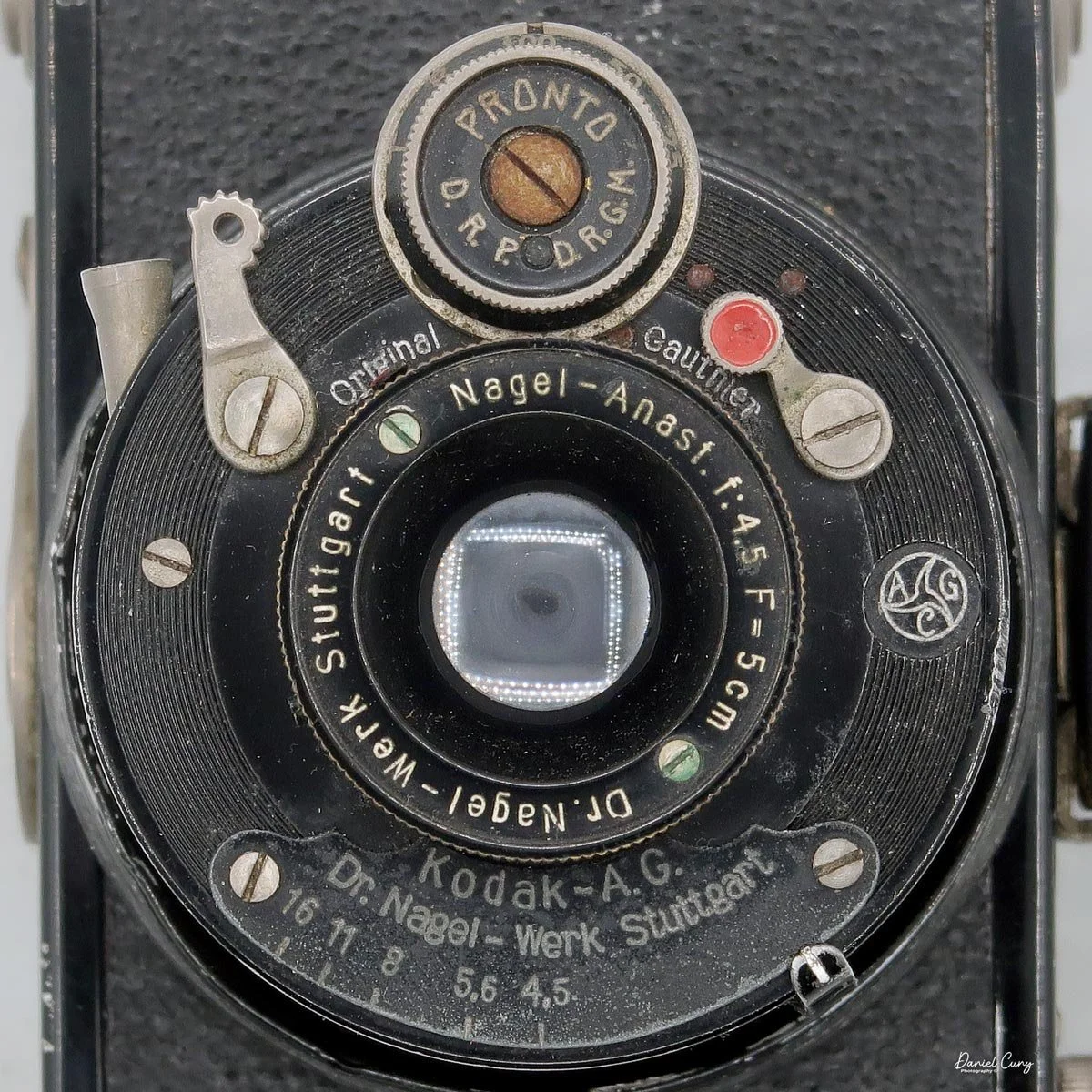
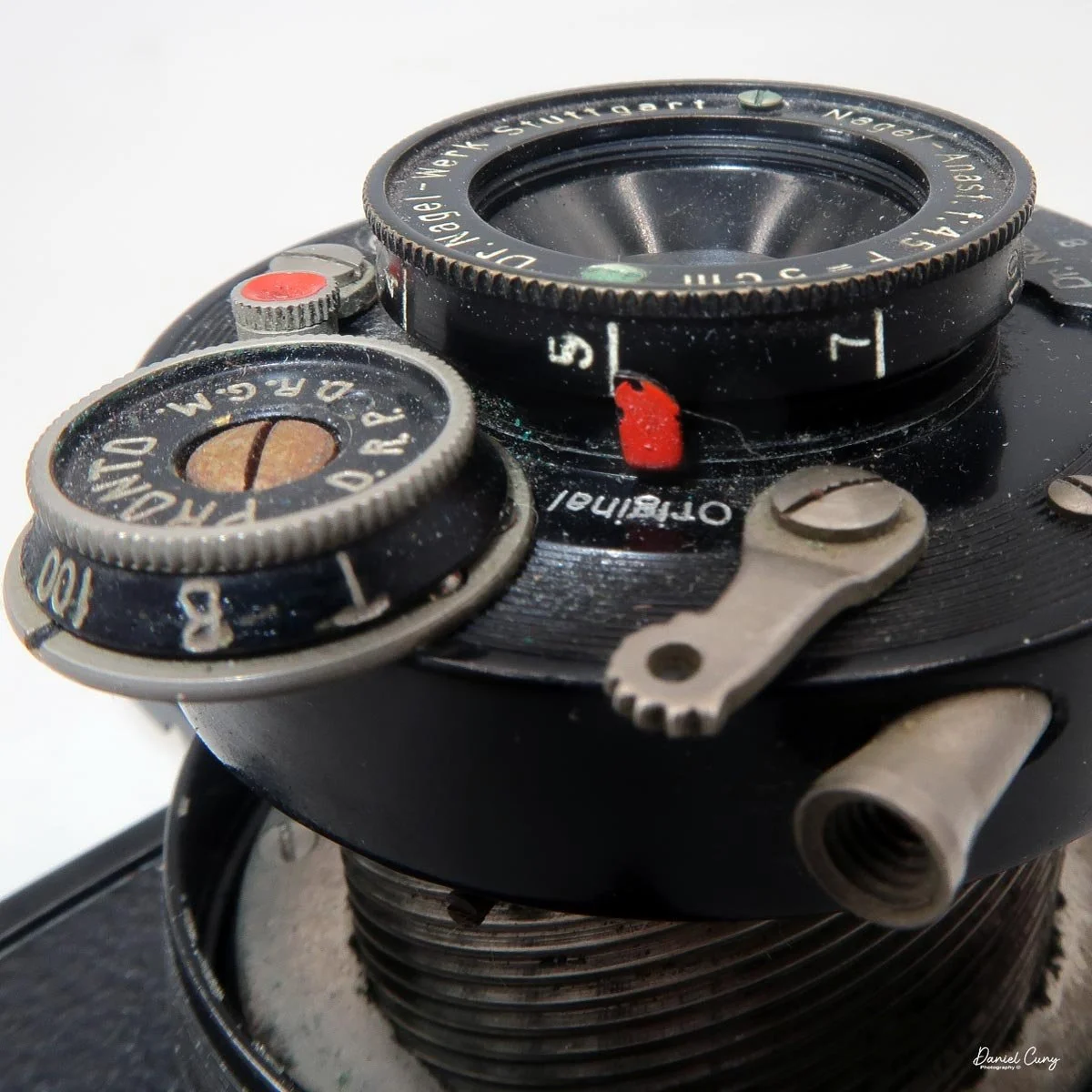
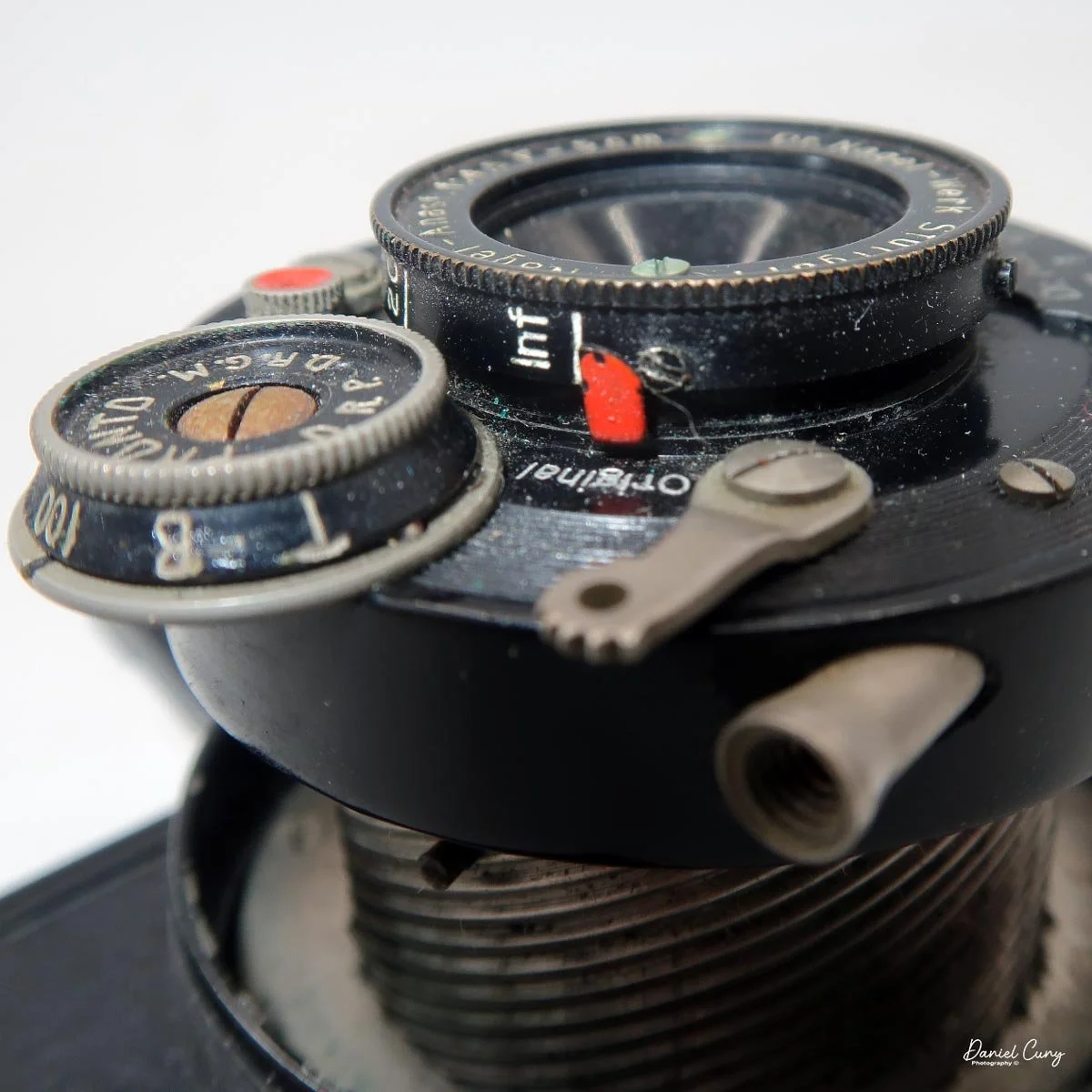
 My Nagel Ranca has a Nagel Anistigmat 5cm lens, an F/4.5 lens, a Protar shutter located above the lens with only three shutter speeds: 1/100, 1/50, 1/25, along with "T" for timed and "B" for Bulb. The aperture ring, which is located below the lens, has a slide that controls the aperture. The minimum aperture setting is F/16.

Shutter/Aperture settings on Kodak Ranca camera

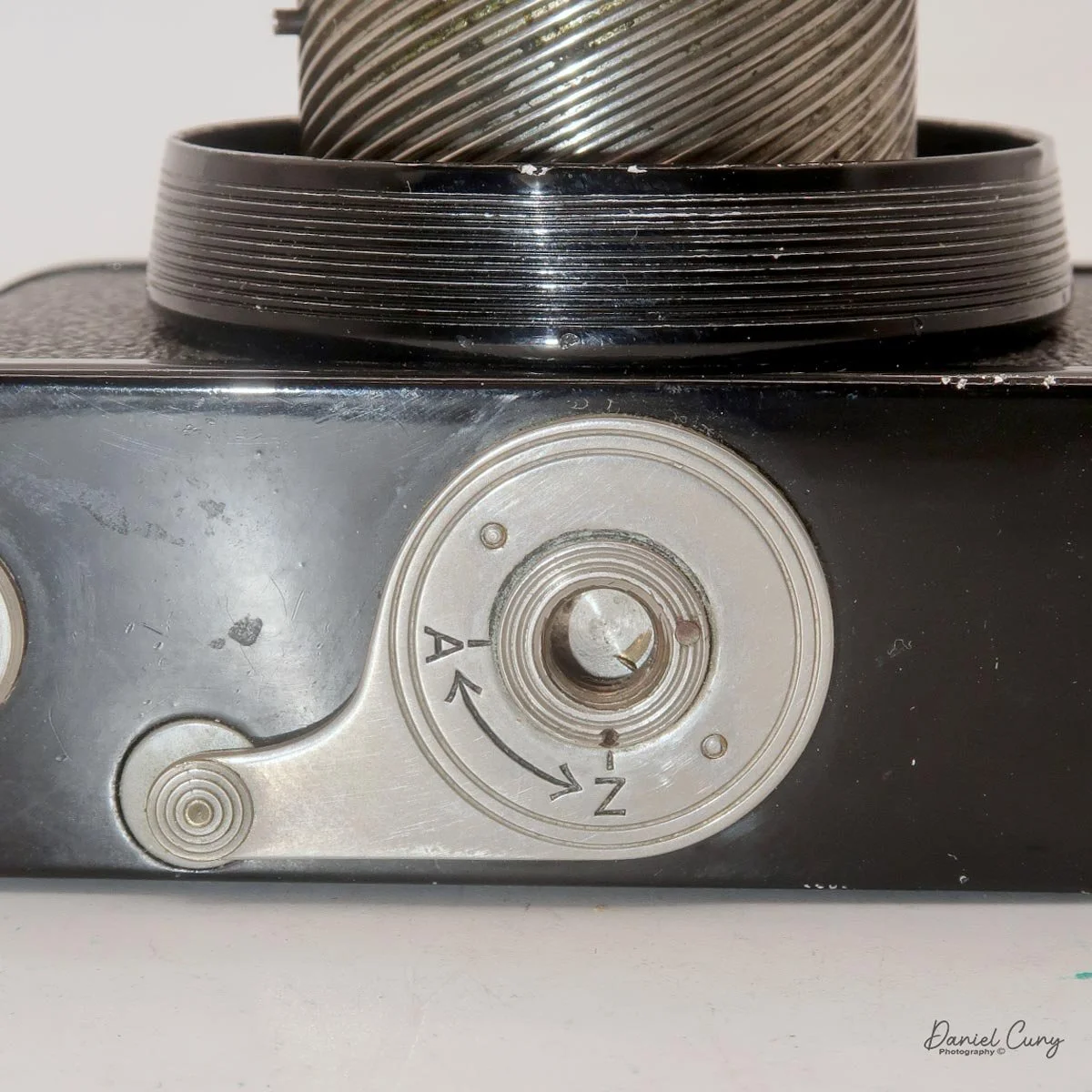
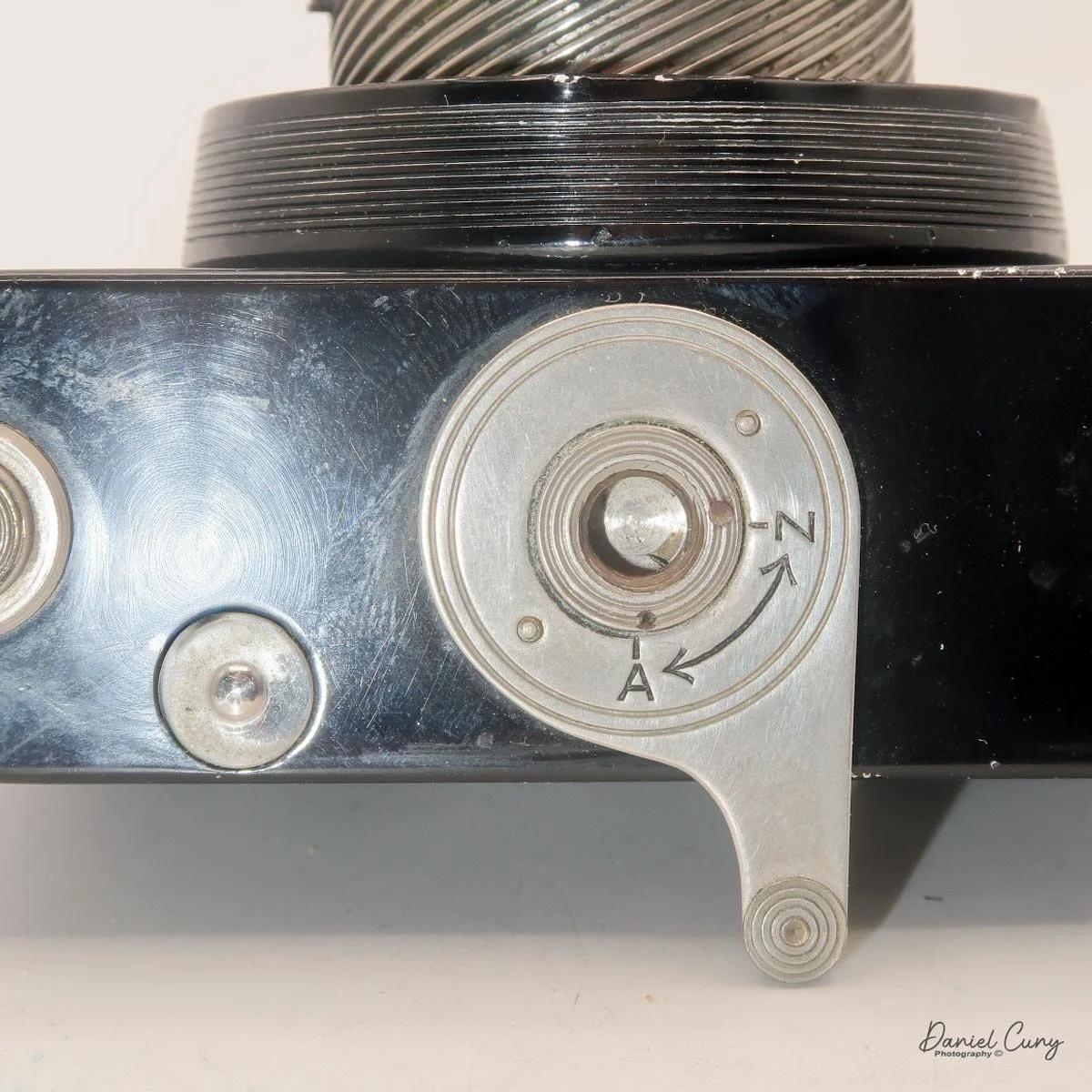
As mentioned previously, the lens/shutter needs to be turned counterclockwise a quarter turn to extend the lens on the helicoid. The unusual thing about doing this is that the shutter release is now in an odd and awkward position for use. The lens/shutter is retracted, and the shutter release is in the 11:00 o'clock position, which is ideal for tripping the shutter. However, when the lens is extended, it puts the shutter release in the 7:00-8:00 o'clock position, making it a bit more awkward, in my opinion. 

 There is a shutter release socket behind the shutter release if needed. On the right side of the shutter dial is a self-timer with a large red dot. Pull it down to set the self-timer, then press it to activate it. Mine isn't working properly, which is common for cameras from this era.

The lens is a front focusing lens. This means you rotate the lens itself to the desired distance from you to the subject. This is shown on the lens by a red line, which is also in an awkward position when the lens is extended. As opposed to being on the top, it's now on the side.

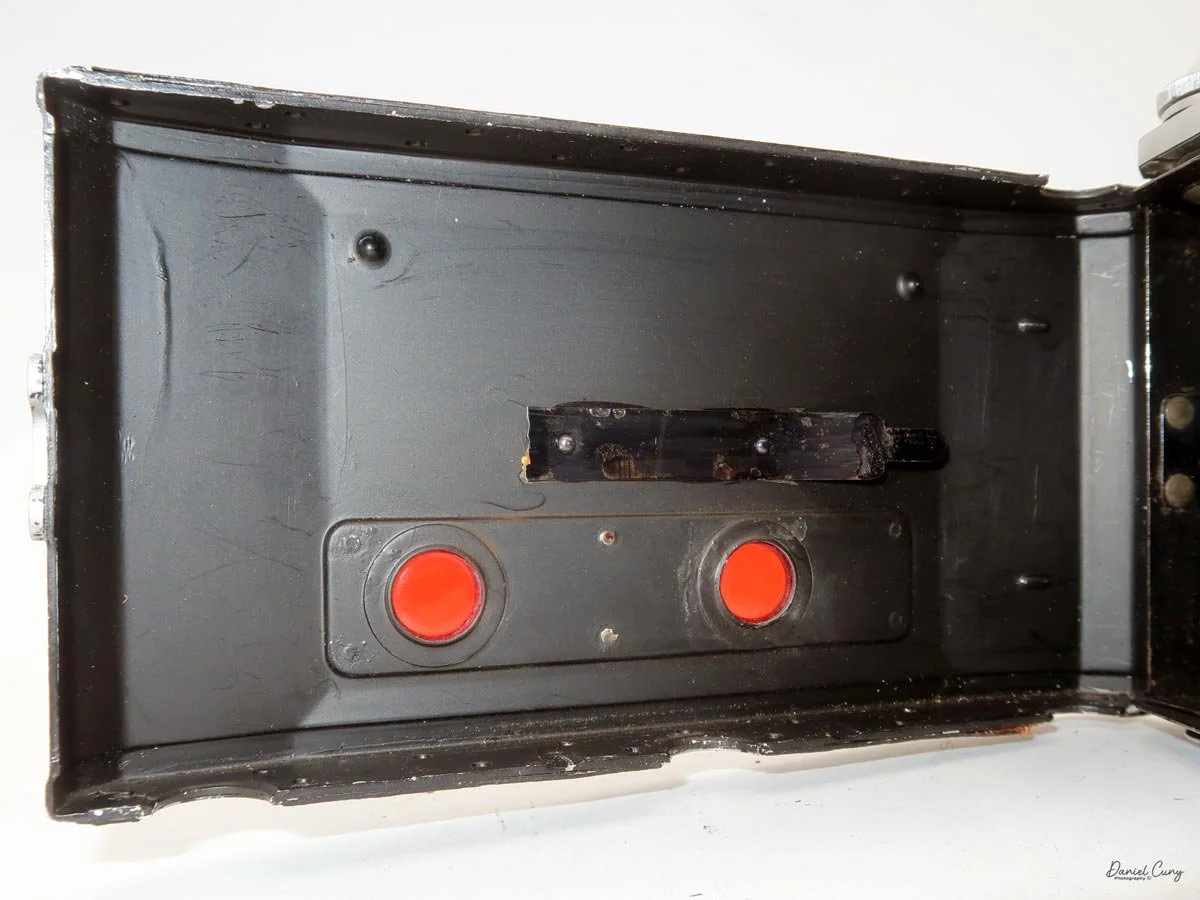
 The lens doesn't need to be extended to open the camera to load film into it. Slide the lever on the bottom of the camera to unlock the film chamber from the camera body. Gripping the chrome handles on either side of the viewfinder and lifting up allows you to remove the film chamber. Once removed, load the 127-size film into the film holder, then slide the film holder back into the camera body and lock it in place with the bottom locking mechanism.

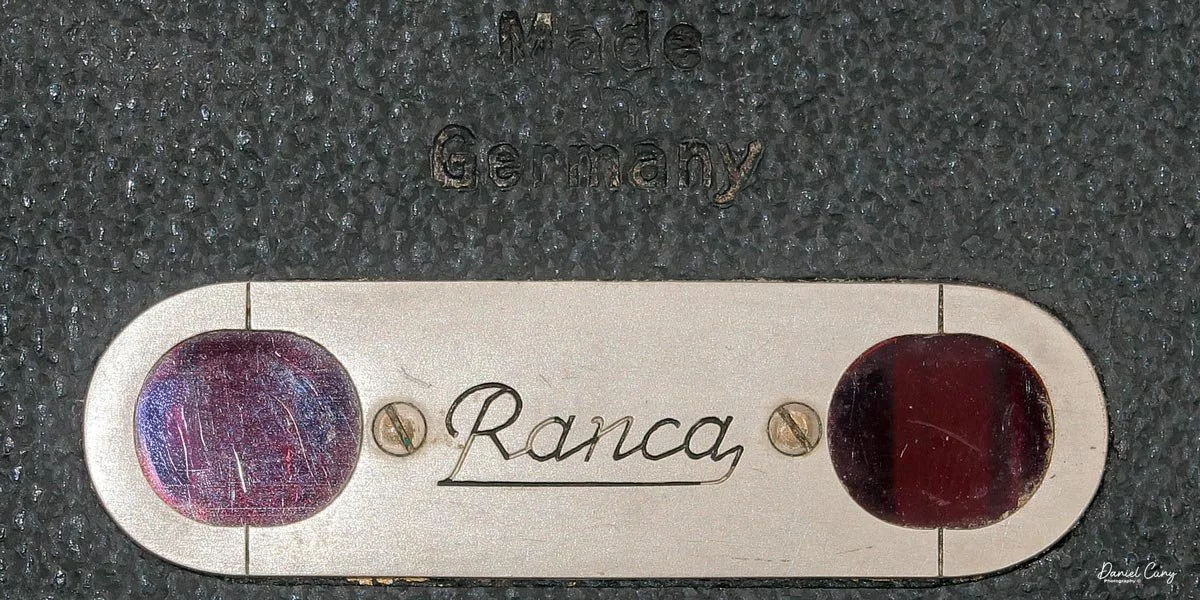
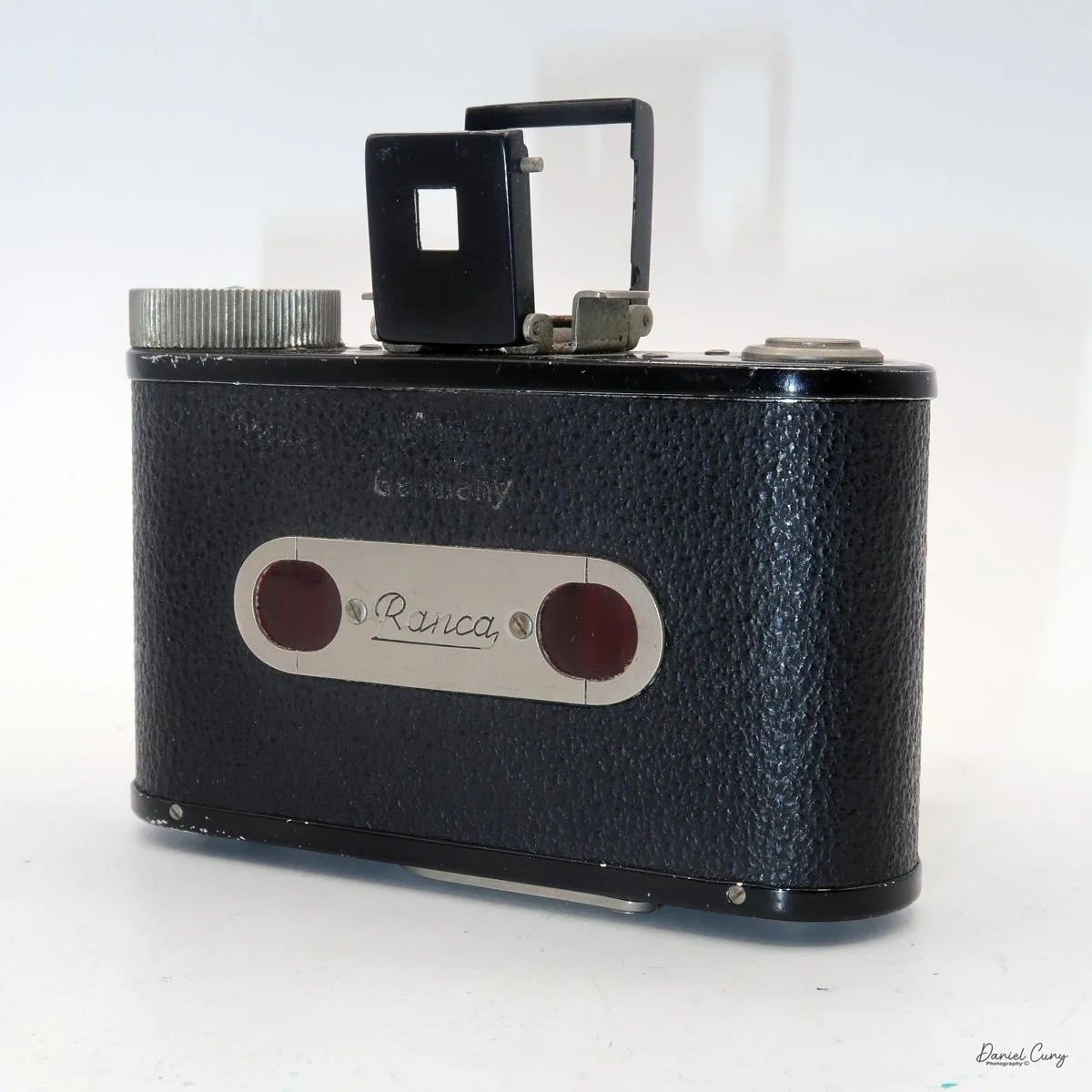
Since there are two red windows on the back, these are used to advance the film. First, wind the film until you see the number 1 in the right side window. Then take your photo. Now wind the film until you see the number 1 in the left side window. Take your next photo. Wind until you see the number 2 in the right side window. Then repeat this process through the number 8. At this point, you've taken 16 photos on your film, and it's time to get it processed, or process it yourself if you have the equipment and chemicals to do so.


My results:

 I loaded a roll of 400 ISO film into the Nagel Ranca camera because the day started out overcast. With the limited shutter speeds available, I needed the extra sensitivity to make good images.

 The day turned out sunnier than expected, and the lack of a high-speed shutter meant I needed to shoot all the images at 1/100, f/16. Even then, the negatives turned out a bit denser than anticipated, but I made the corrections needed in post-processing.

 I tried some close-ups and a few longer shots to assess the camera's lens quality. I was both surprised, in a good way, and surprised, in a bad way, by my results.

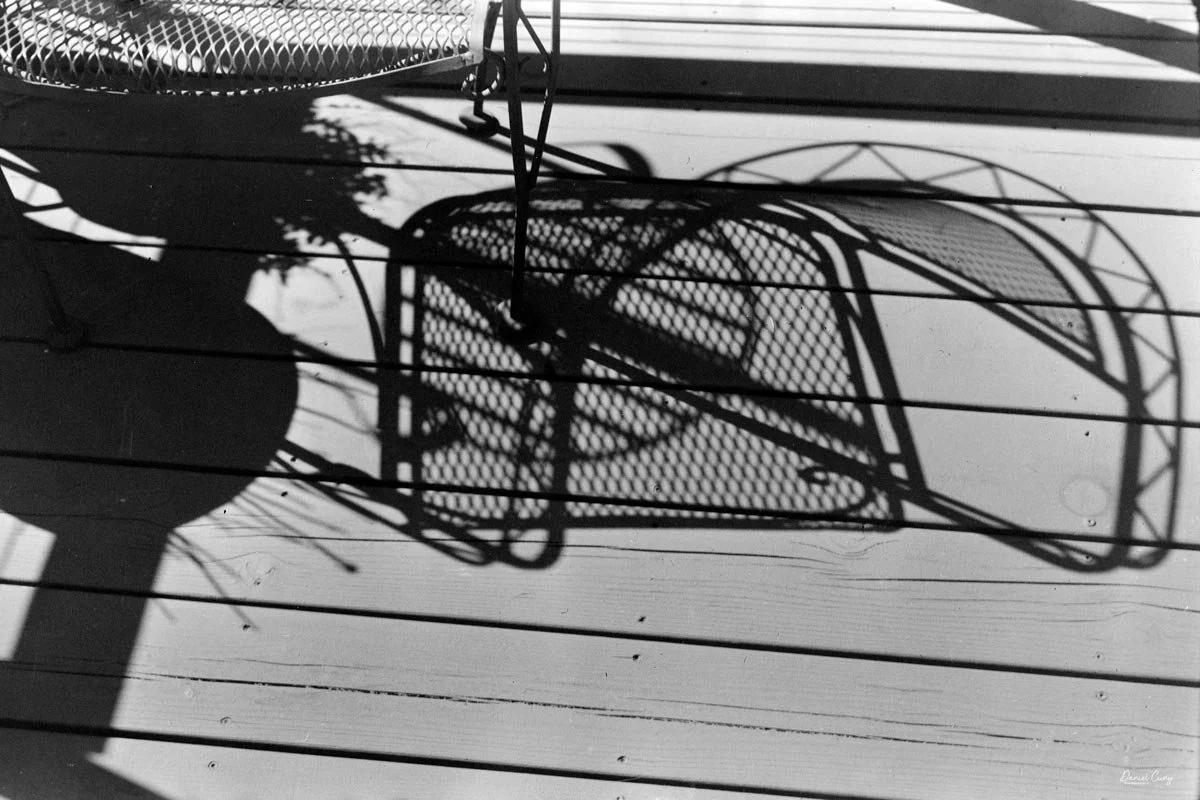
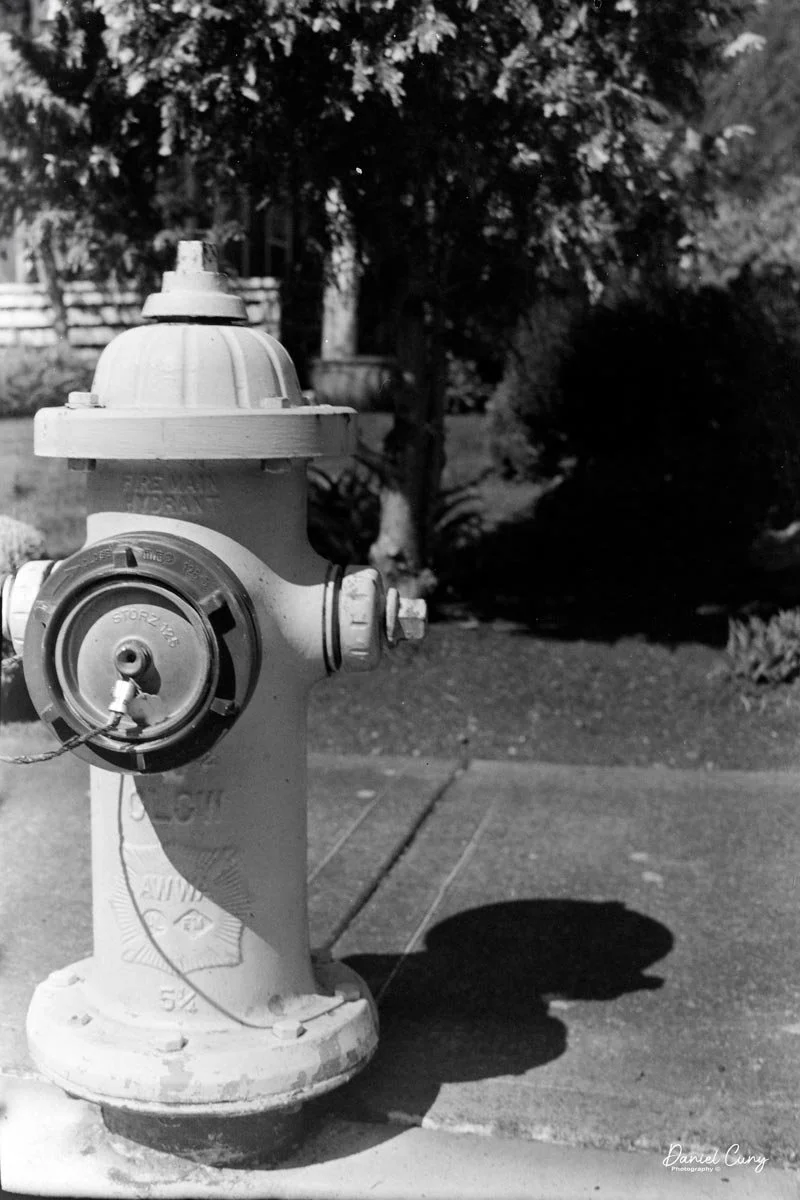
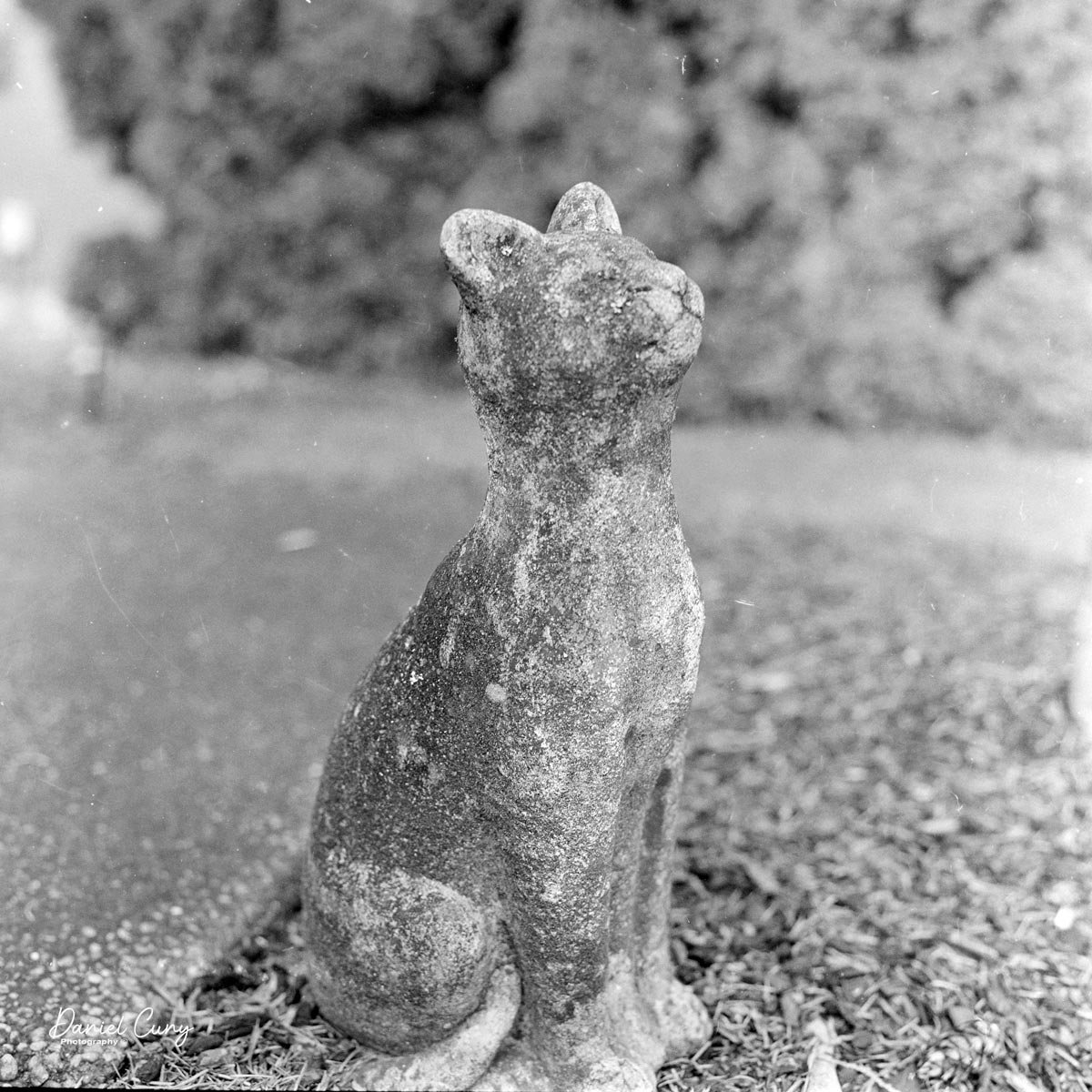
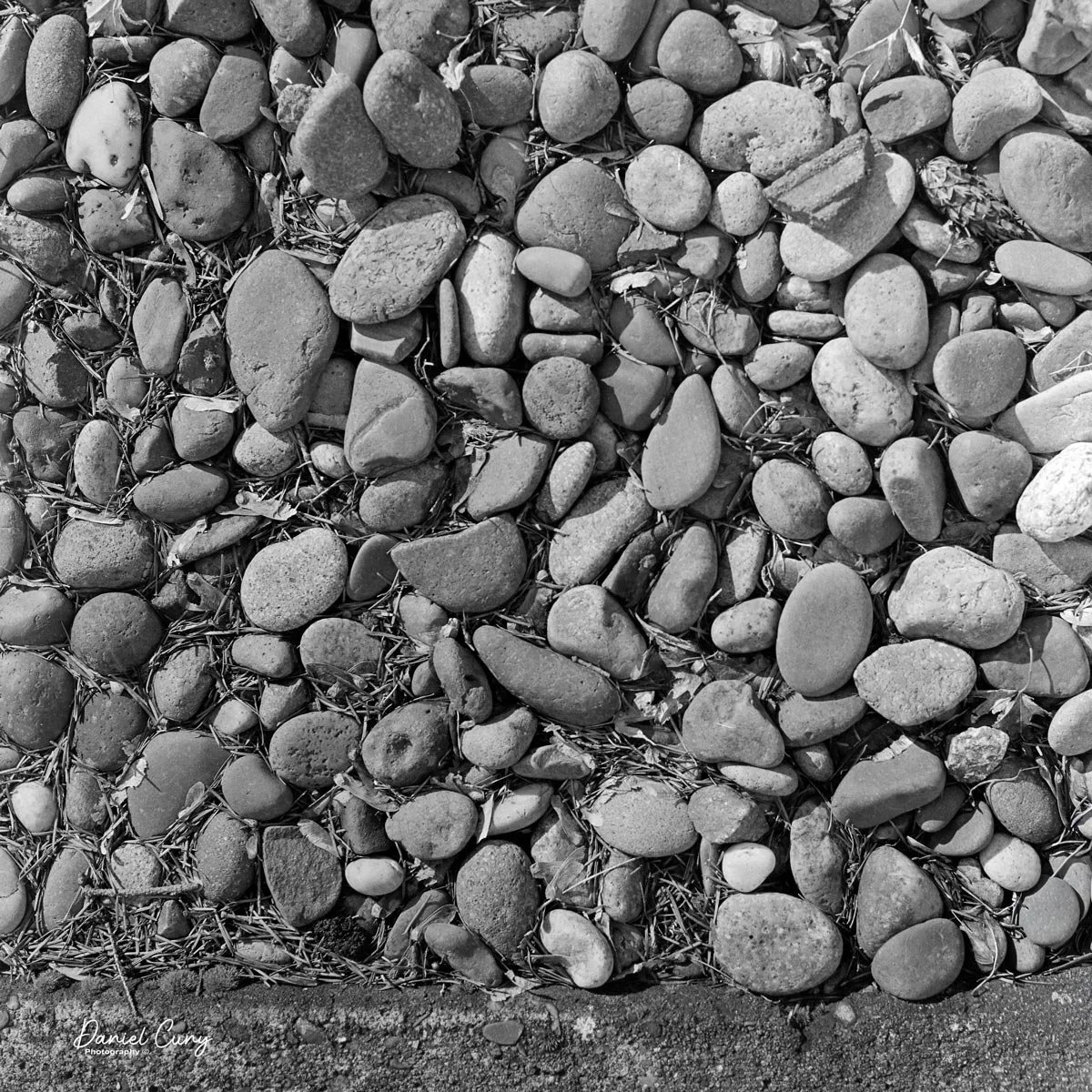
 Here are some of the photos from my walk through the neighborhood. 

Conclusion:

 To say I was disappointed by some of the results is an understatement. The closer images, which I thought wouldn't turn out very well, were the shining light of the camera roll. The images taken at infinity, assuming they would be sharp, especially at F/16, are unsharp and disappointing.

 The camera was fun to shoot with, and I always enjoy shooting 127 film in the 3x4cm format. Still, I was also disappointed with the shutter release's location after extending the lens to the "taking" position. The shutter release was in an awkward position, to the point that I had to shoot the camera with my thumb while resting it in my palm.

 I'll get used to it next time I take the camera out for a shoot, but I prefer using the Nagel Pupille.

 Thank you for taking some time to learn about the "lesser featured" brother of Nagel's Pupille, the Ranca camera. A compact 127 camera made in the early 1930s.

 Here are the other Camera Reviews I've done.

 Cuny's Cameras and Photos is my online eBay store where I sell some of the cameras reviewed, along with many other photo oddities I've accumulated over my 50-plus years with cameras and images.

 Until next week, please be safe.
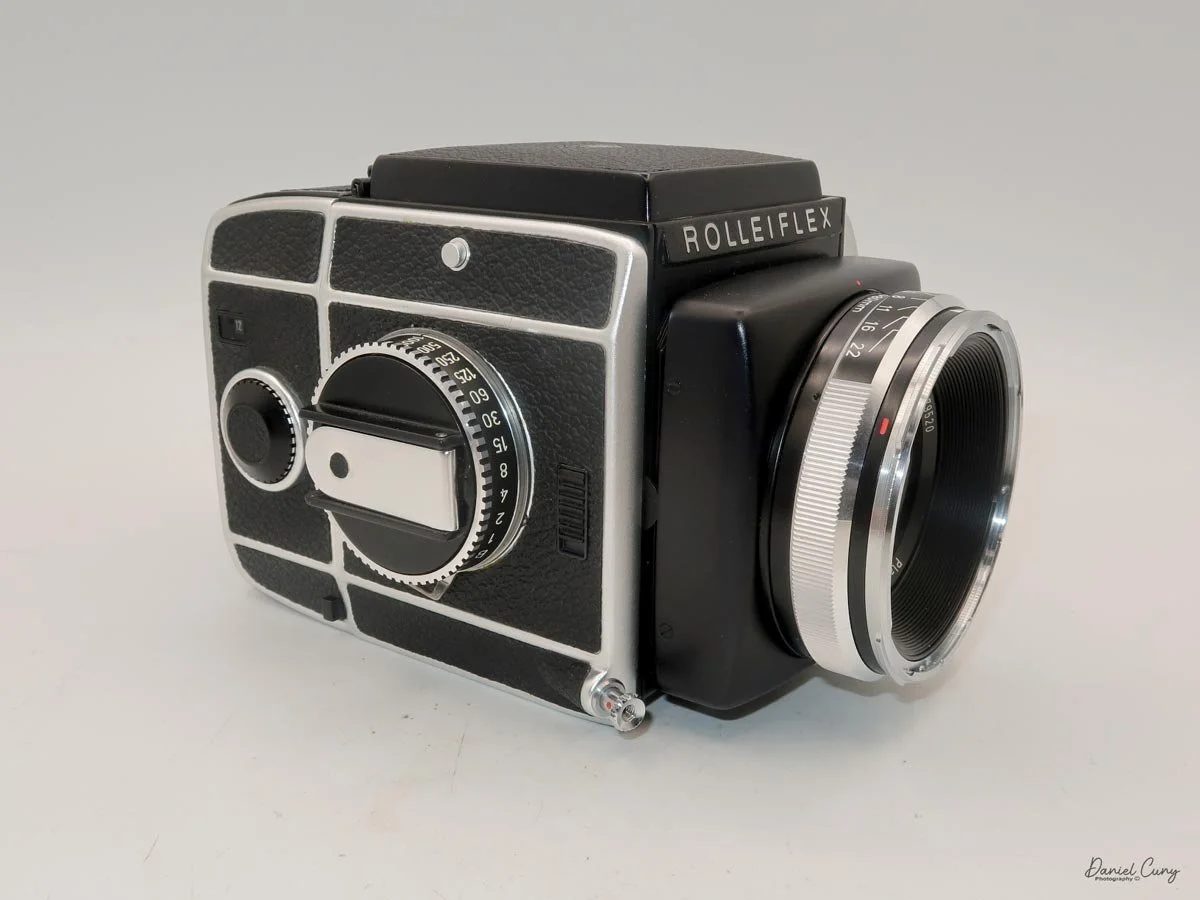
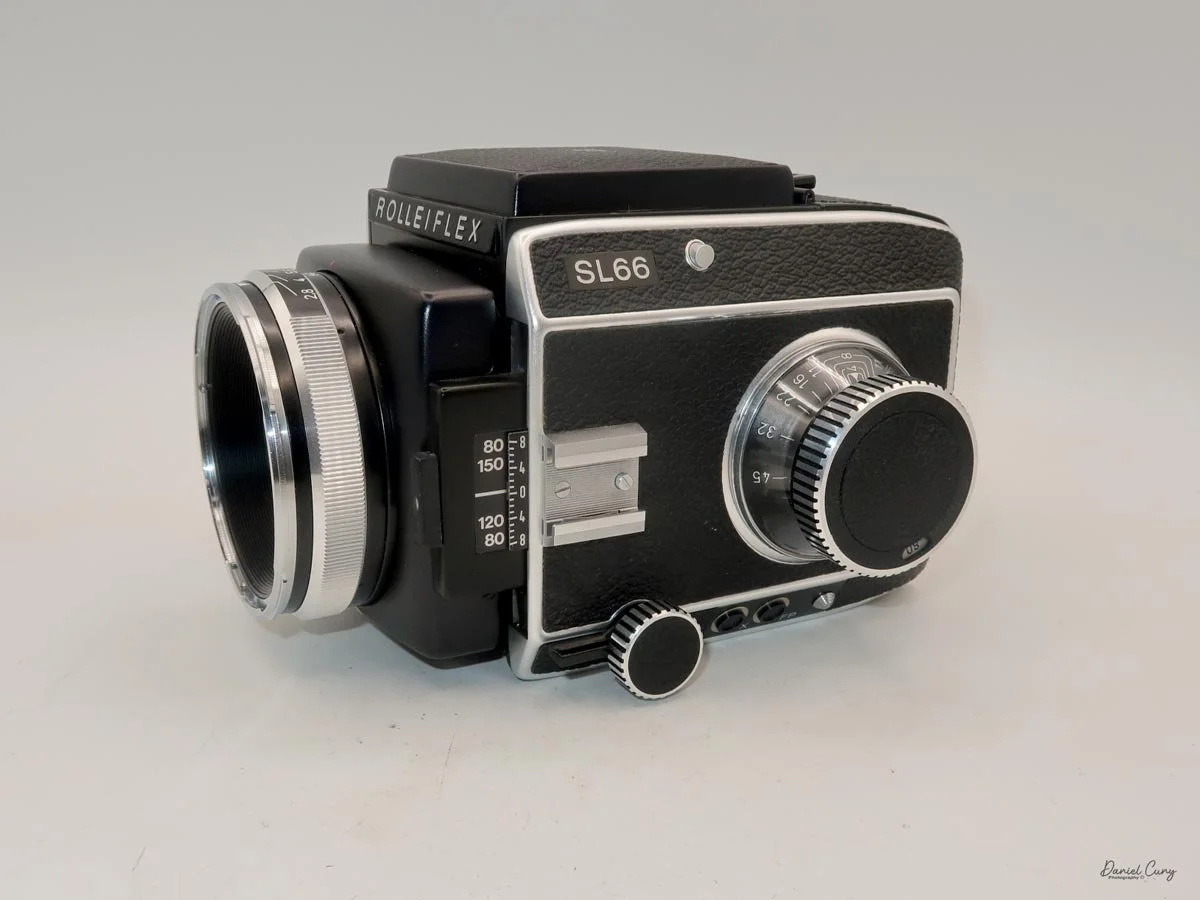
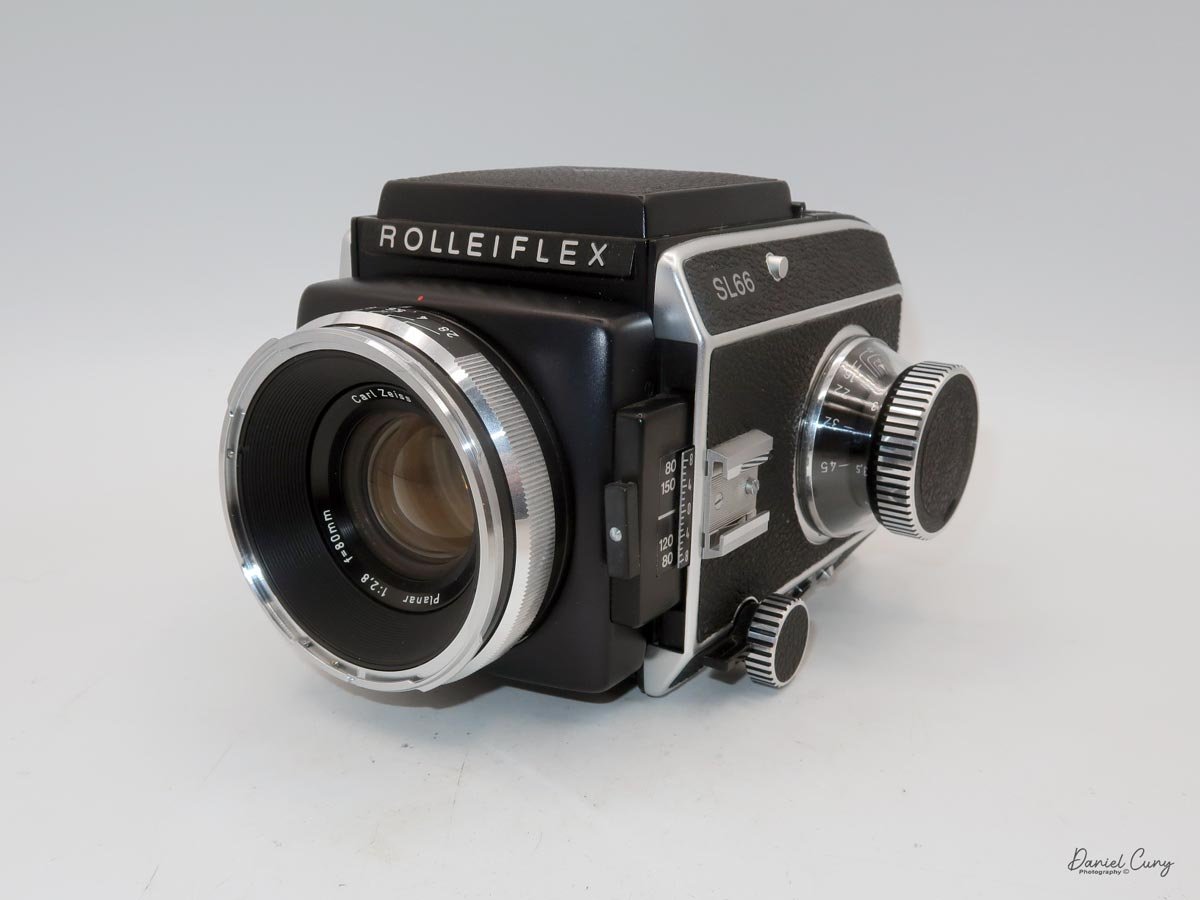
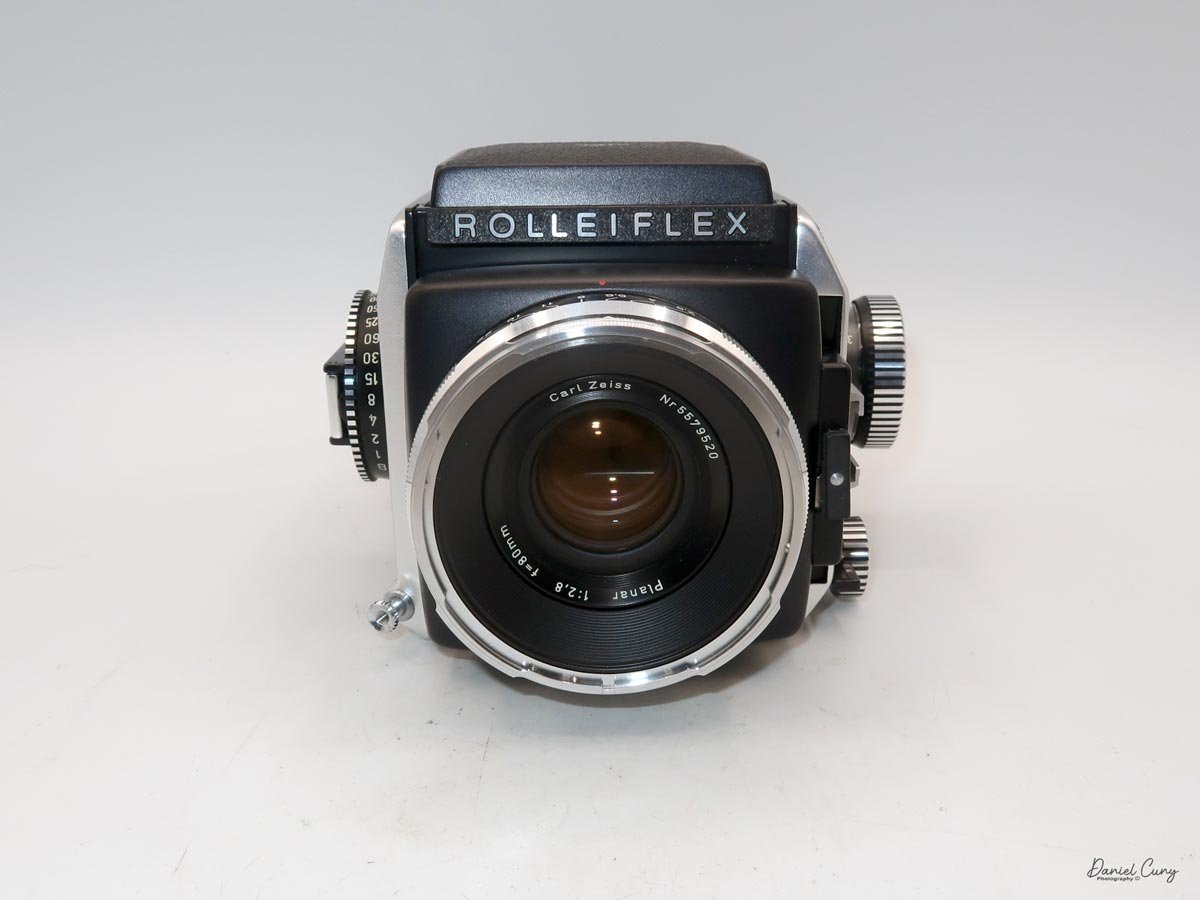
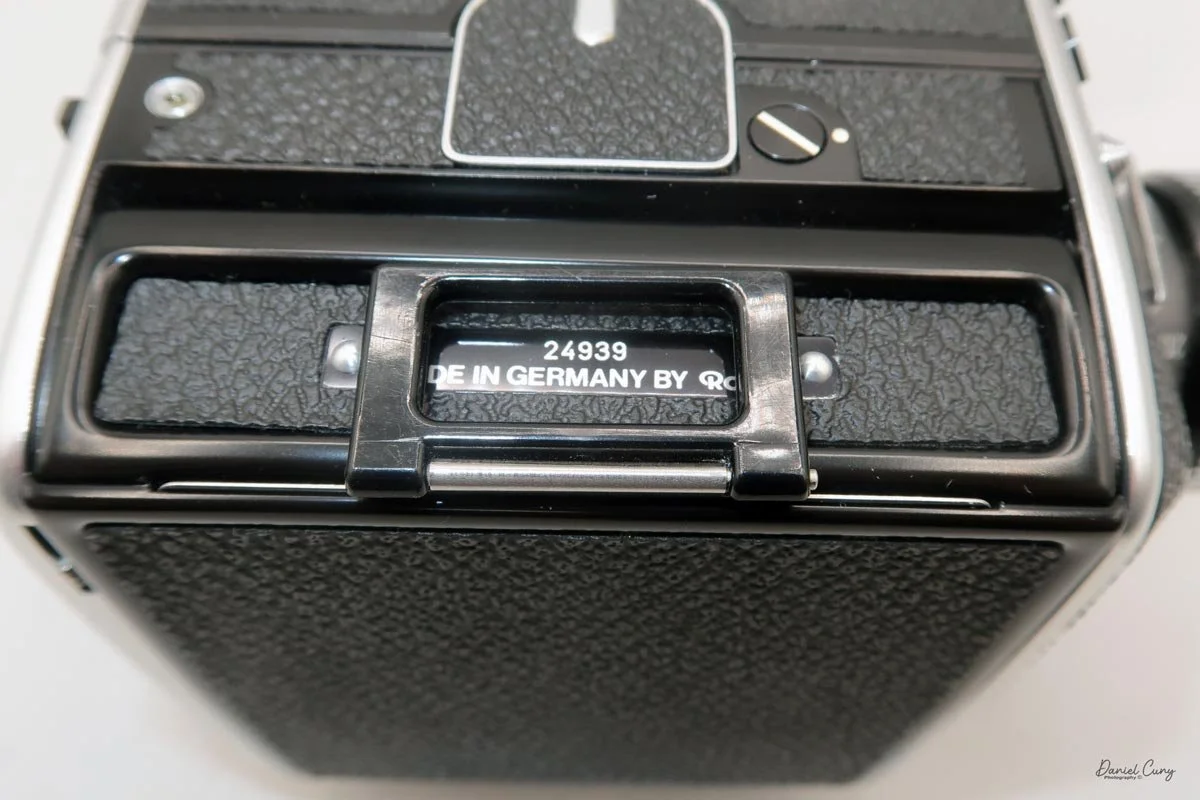
Rolleiflex SL66

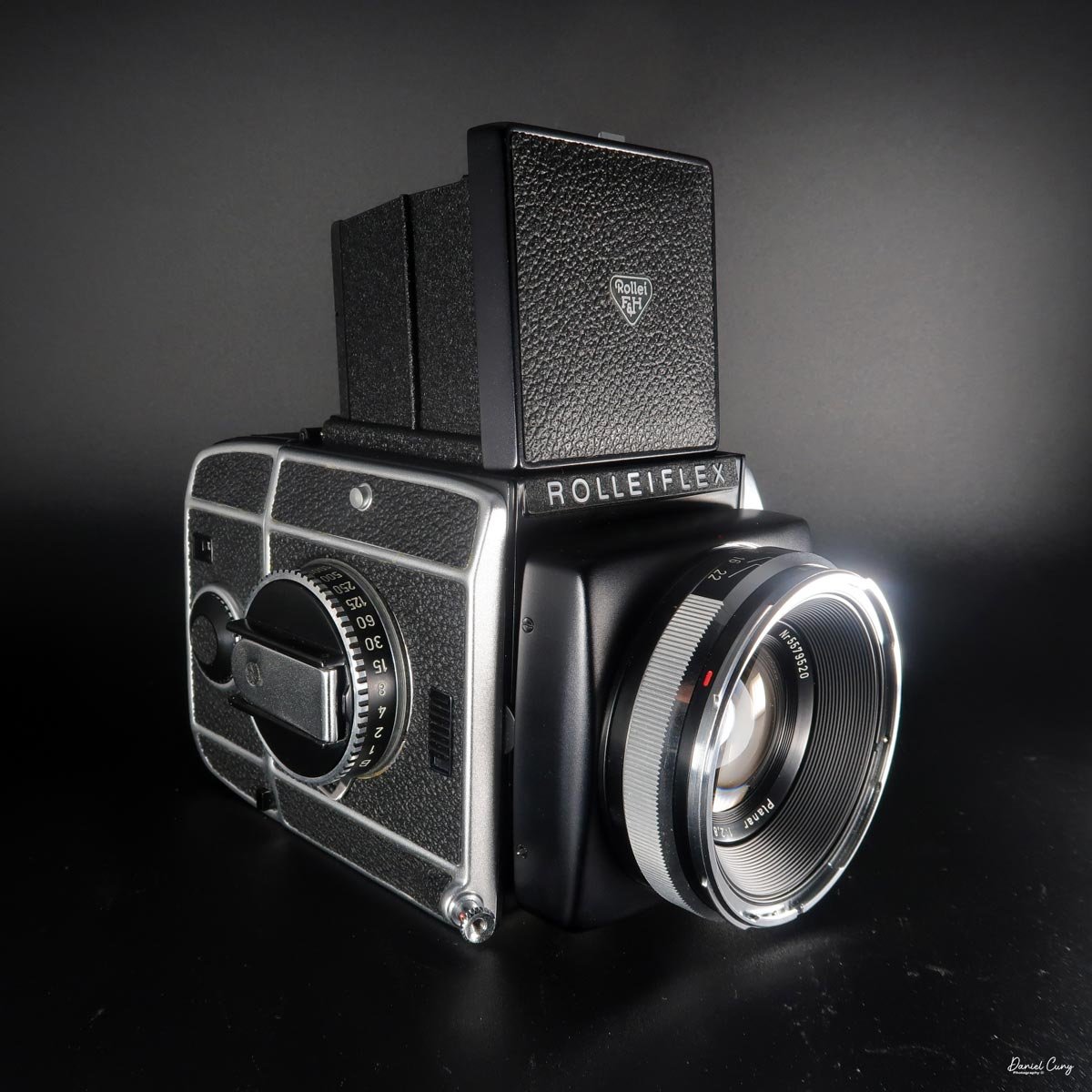
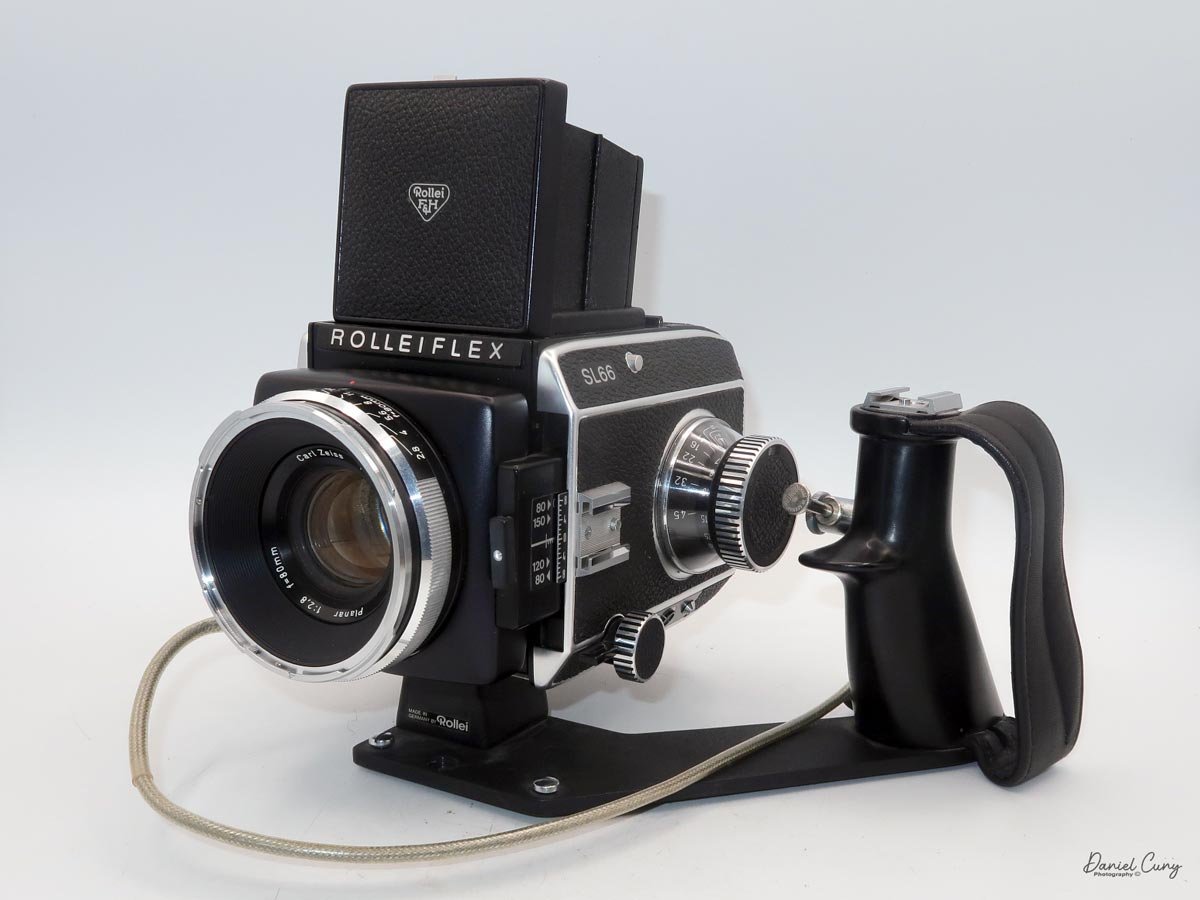
My Rolleiflex SL66

As a photographer and photo industry professional for well over 50 years, I've had the privilege of working with just about every kind of camera you can imagine. From everyday 35mm SLRs and rangefinders to Hasselblad systems, I've logged a lot of miles with medium‑format gear as well.
 In the late 1990s, I represented Sinar, which meant regular time behind some of the finest large‑format cameras available. Later, repping Leaf digital backs put me in front of Mamiya RBs and 645s, Hasselblad V and H systems, Fuji GX680s, and the Contax 645. With all that variety, there was still one big gap in my experience: I had never actually photographed with a Rolleiflex SL66.
 About a year before I retired—so roughly three years ago—I finally had my chance. An SL66 with 80mm, 50mm, and 250mm lenses came up for auction online. I wasn't sure about the condition, but I rolled the dice and bid anyway.

 When I won the lot at a surprisingly low price, my first reaction wasn't joy; it was suspicion. Inexpensive cameras often have a story. To my surprise, the body turned out to be mint‑to‑near‑mint, and the lenses were in equally excellent shape. The real question, of course, was whether it worked.

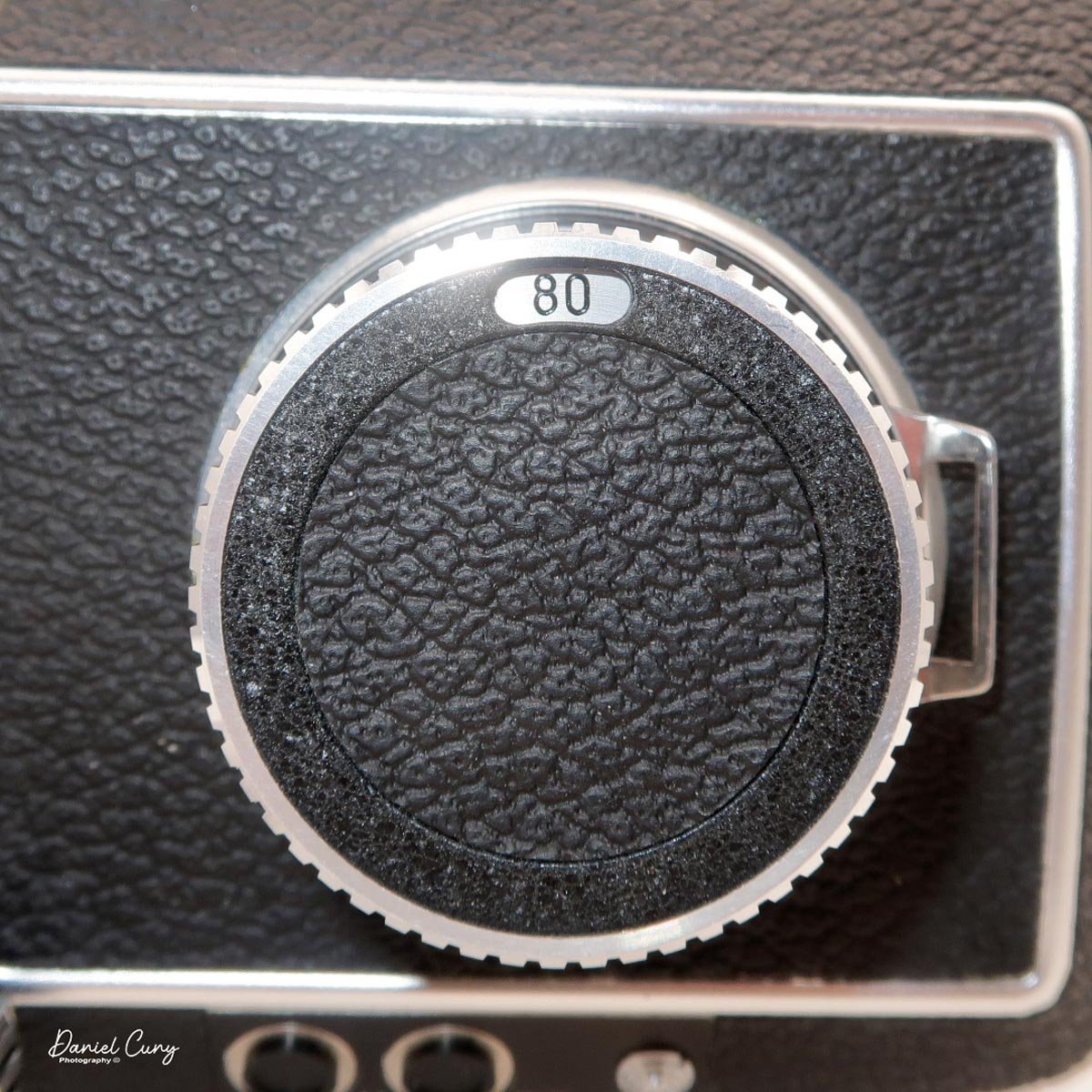
 I pulled off the lens cap, removed the dark slide, cocked the shutter, and pressed the release. At a fast speed, the camera rewarded me with that beautiful, crisp shutter sound. Then came the real test: I set it to 1/2 second. The shutter opened, paused, and closed exactly as it should. At that point, I had a big grin on my face—I knew I had a mechanically healthy SL66 on my hands.

 And then, like so many good intentions, the camera went on a shelf.

Background: Rollei's Leap into SLRs

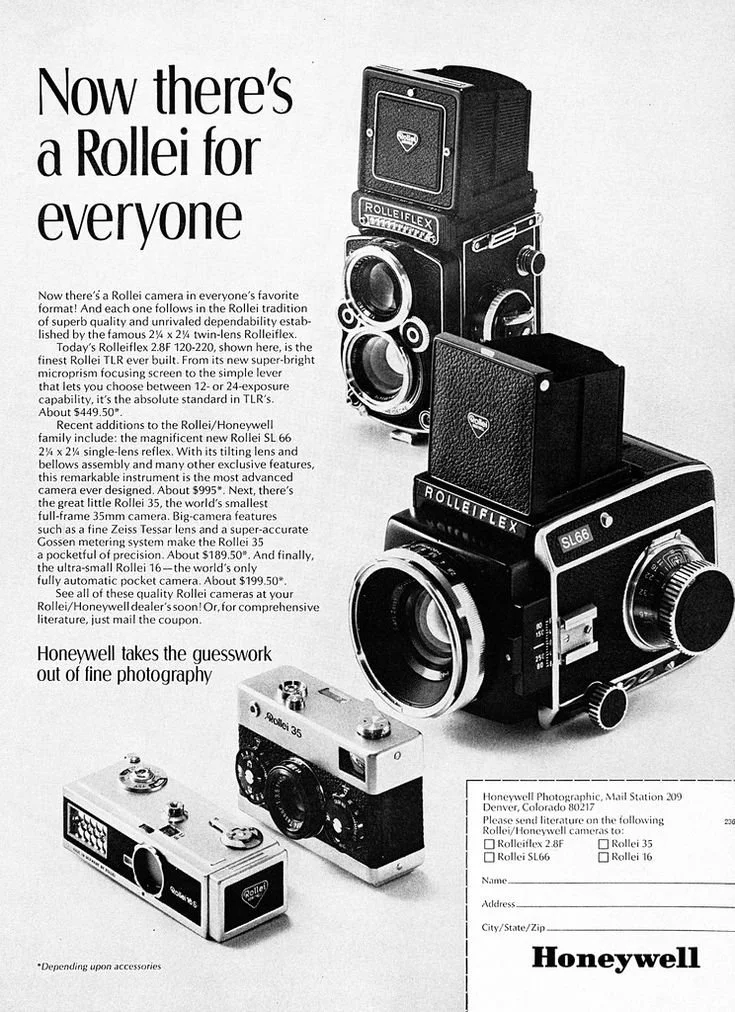
Rollei Advertisment

For decades, "Rolleiflex" meant twin‑lens reflex. That changed with the introduction of the Rolleiflex SL66 at Photokina 1966, Rollei's serious move into the professional 6×6 SLR world. Designed as a studio‑oriented system to challenge Hasselblad, the SL66 combined a focal‑plane shutter, modular film backs, and interchangeable finders with familiar Rollei ergonomics: left‑hand focusing and right‑hand film advance.

 Rollei had explored the idea of a medium‑format SLR as far back as the mid‑1950s, but strong TLR sales kept those projects on the shelf until demand shifted and Hasselblad began to dominate professional work. When it finally arrived, the SL66 was a true "engineer's camera": bellows focusing, the ability to reverse‑mount lenses for close‑up work, and front‑standard tilt for plane‑of‑focus control—features that gave it some of the movements you'd normally associate with a view camera.

 Built from 1966 to 1982, the SL66 used 120/220 roll film in 6×6 backs and typically wore Carl Zeiss Planar glass, firmly placing it in the high‑end studio category. Later SL66E and SL66SE models added through‑the‑lens metering and improved electronics. Still, the core concept stayed the same: a heavy, extremely capable, close‑focus‑friendly studio machine in a world increasingly moving toward lighter, more electronic medium‑format systems.

My Camera

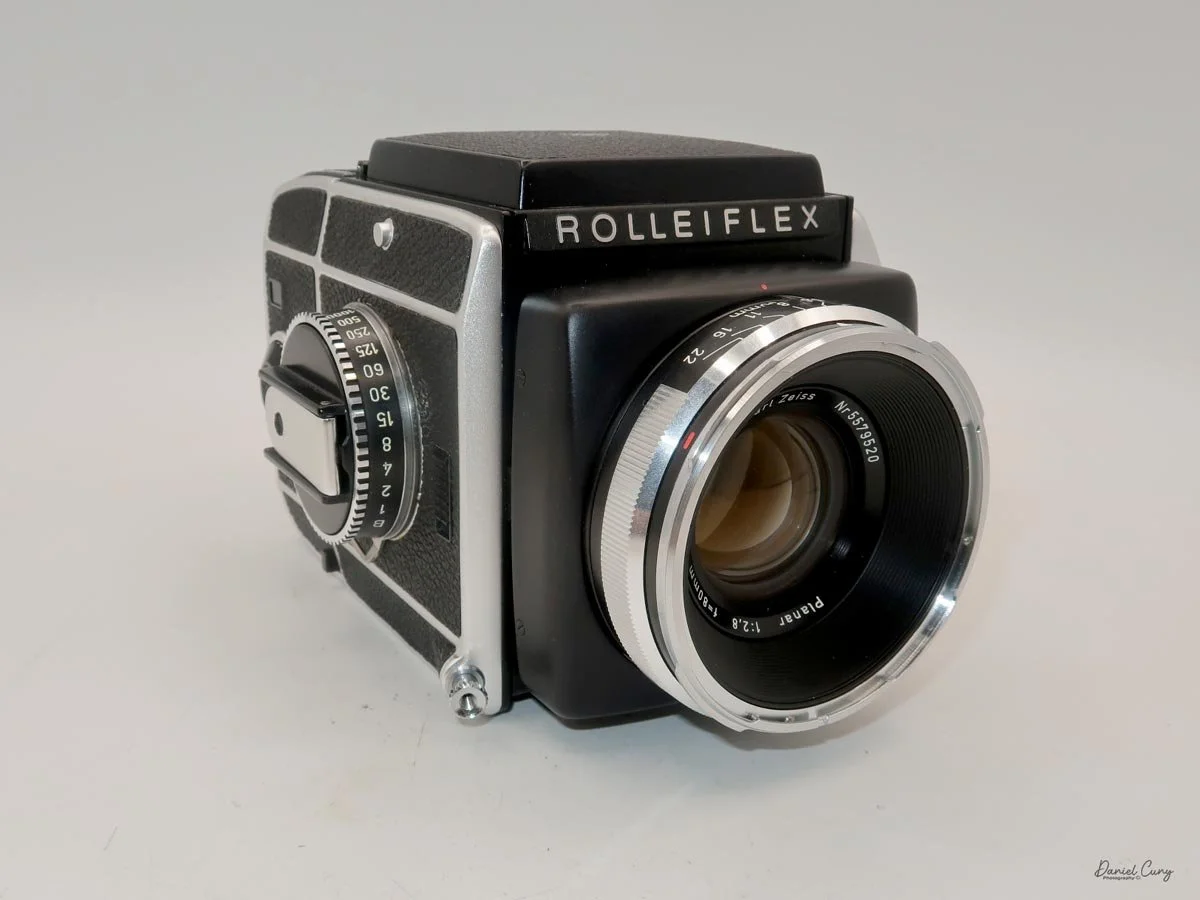
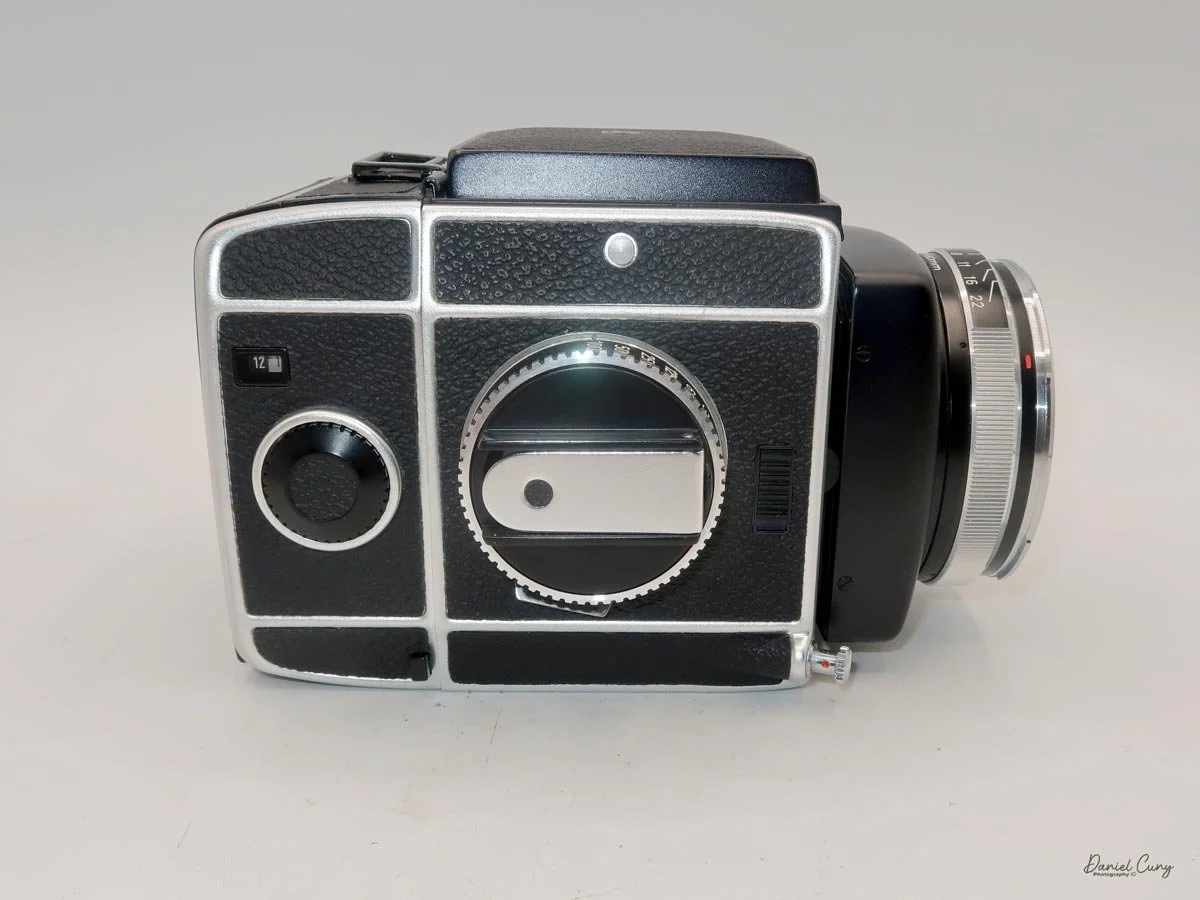
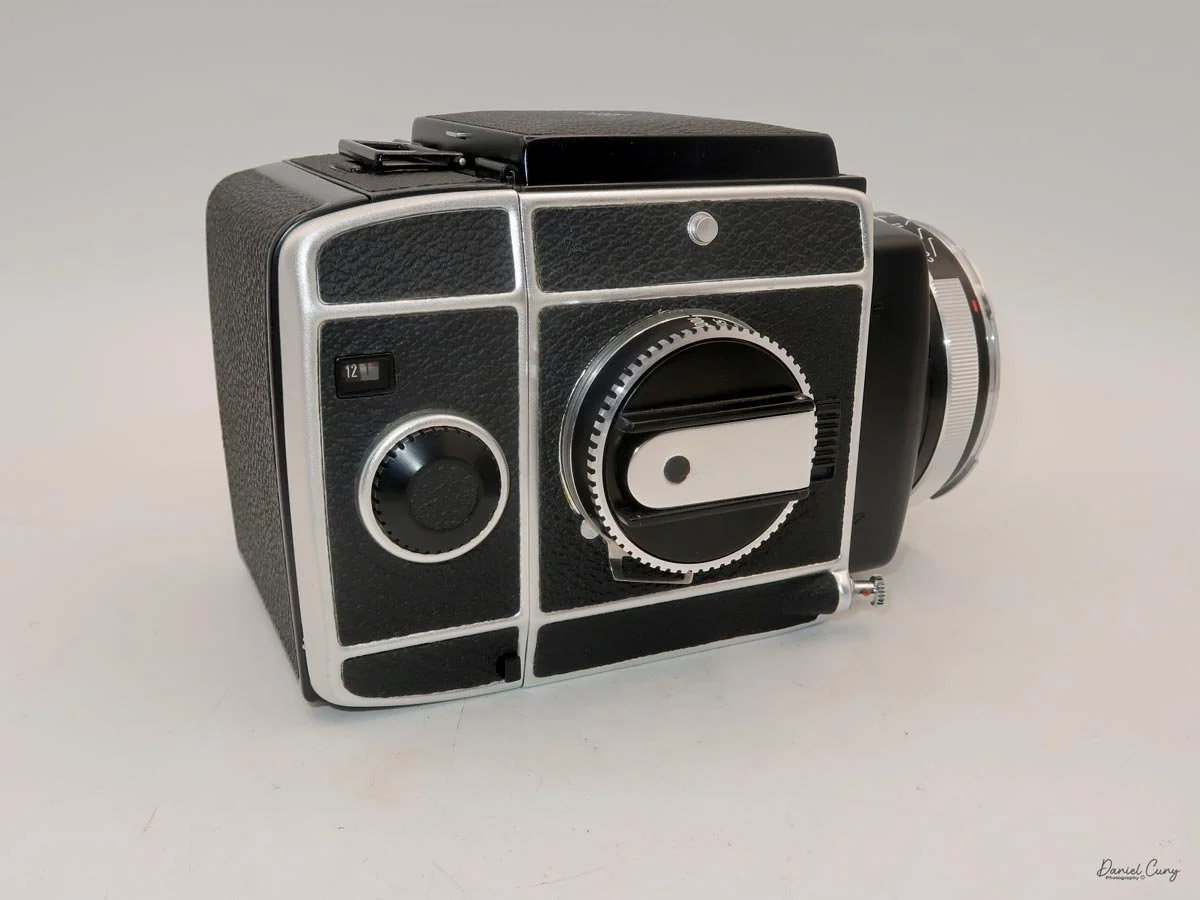
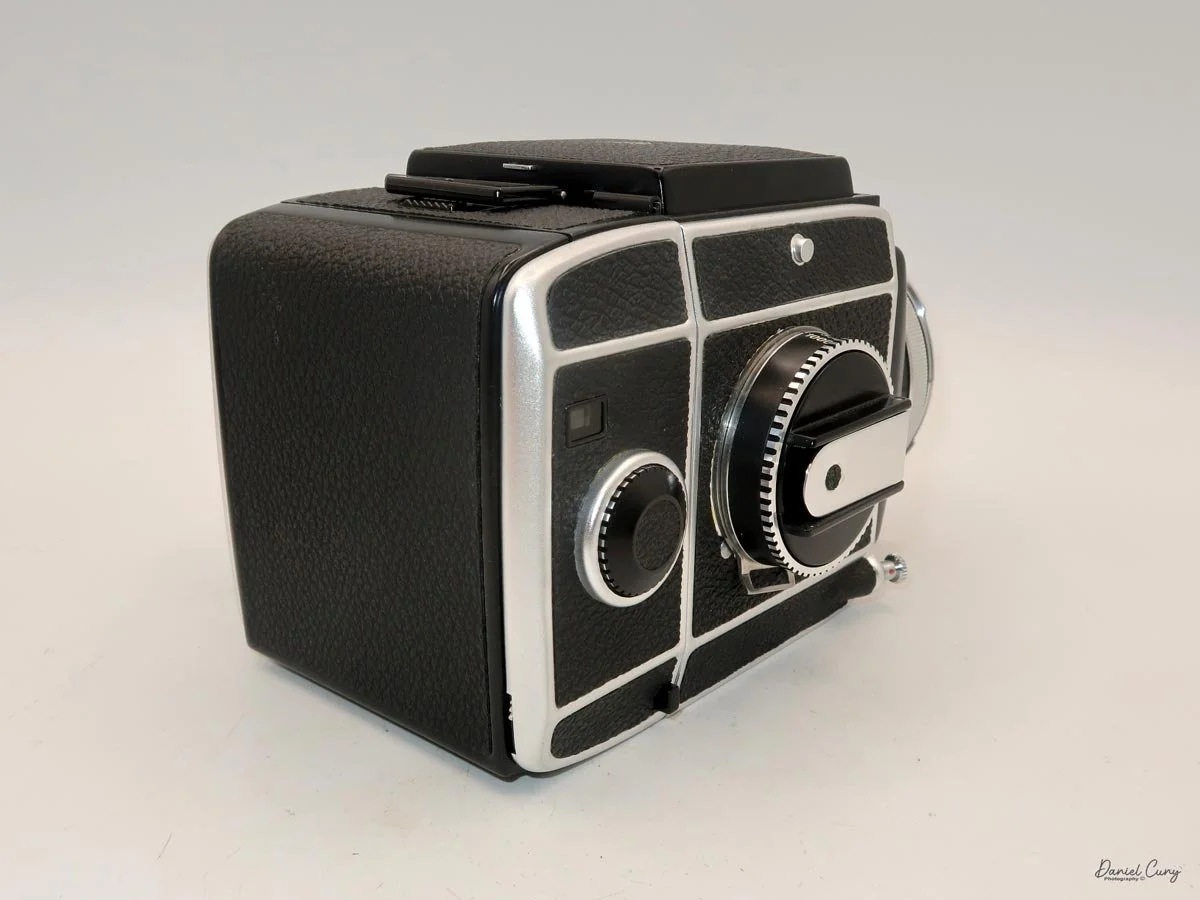
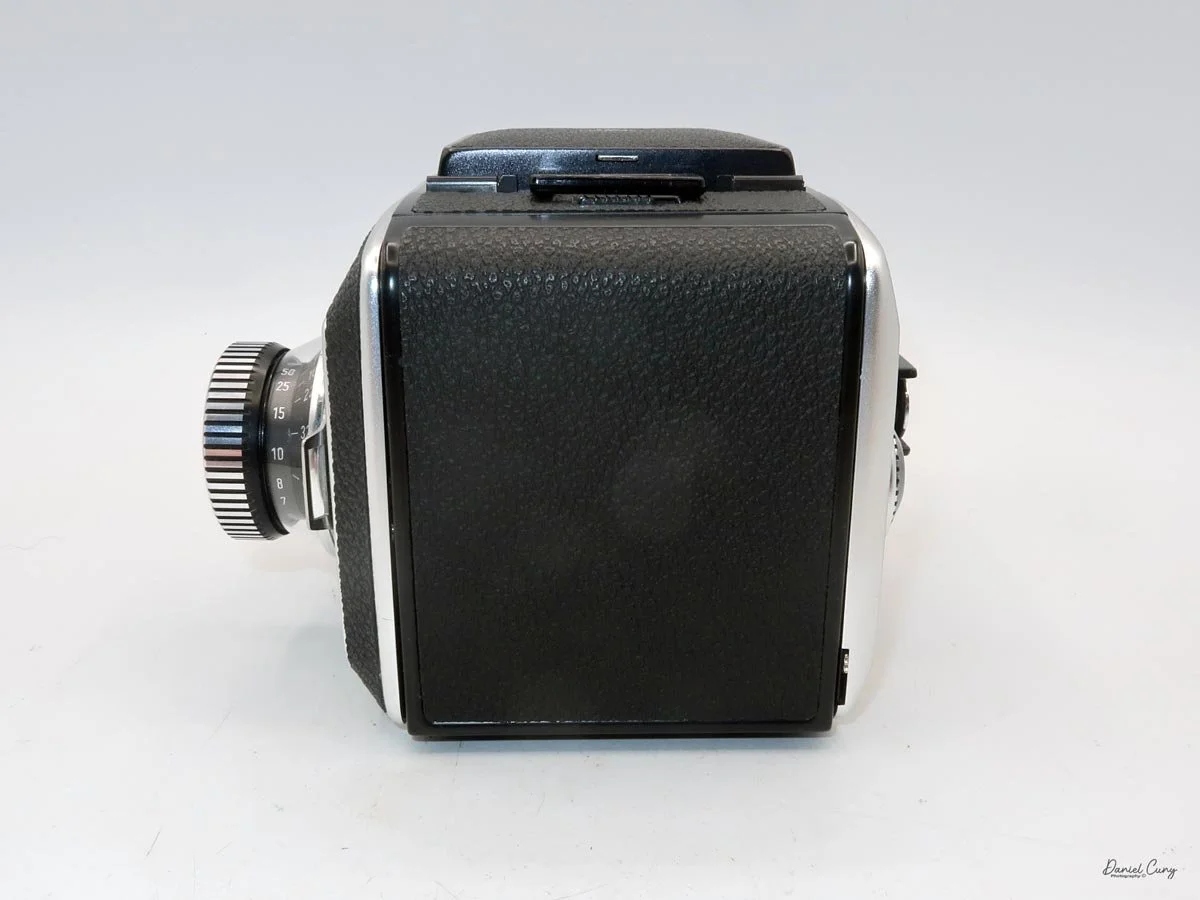
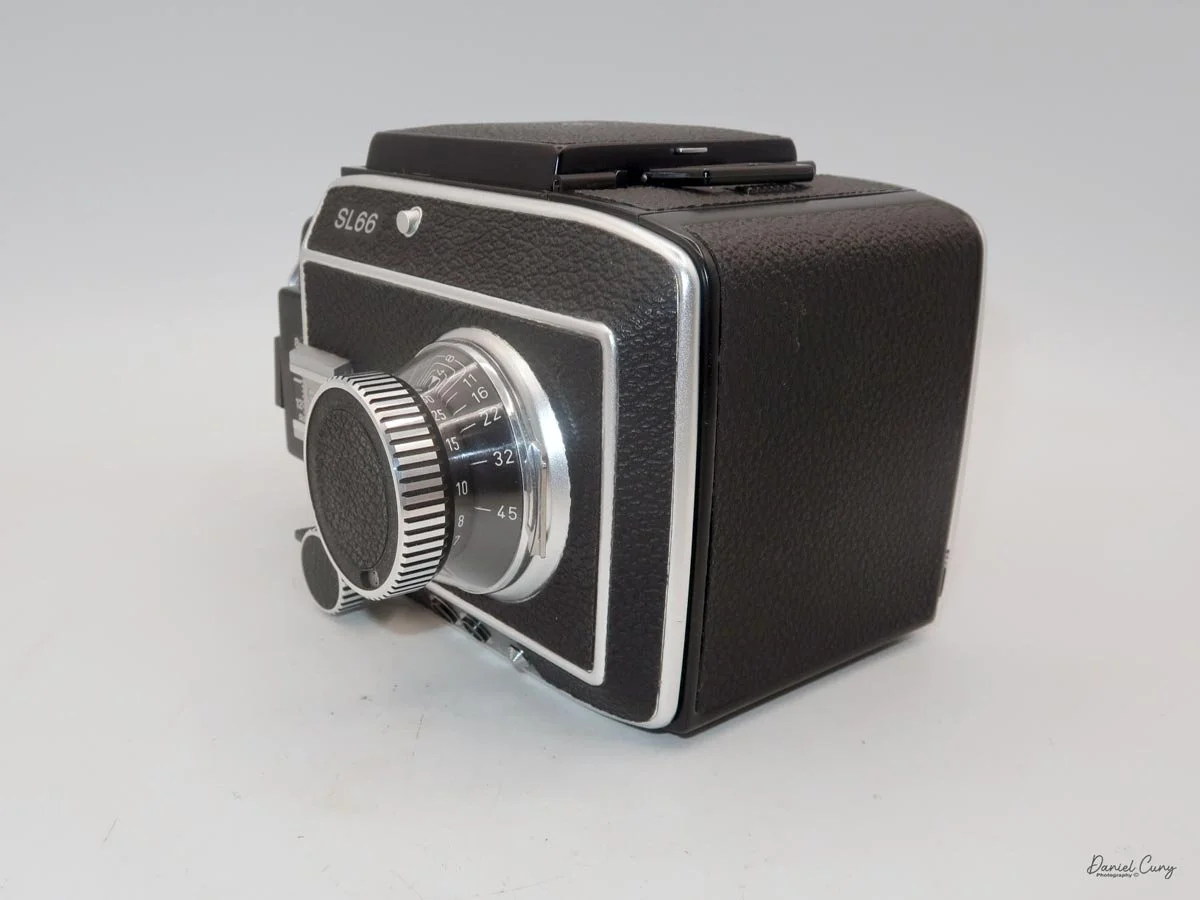
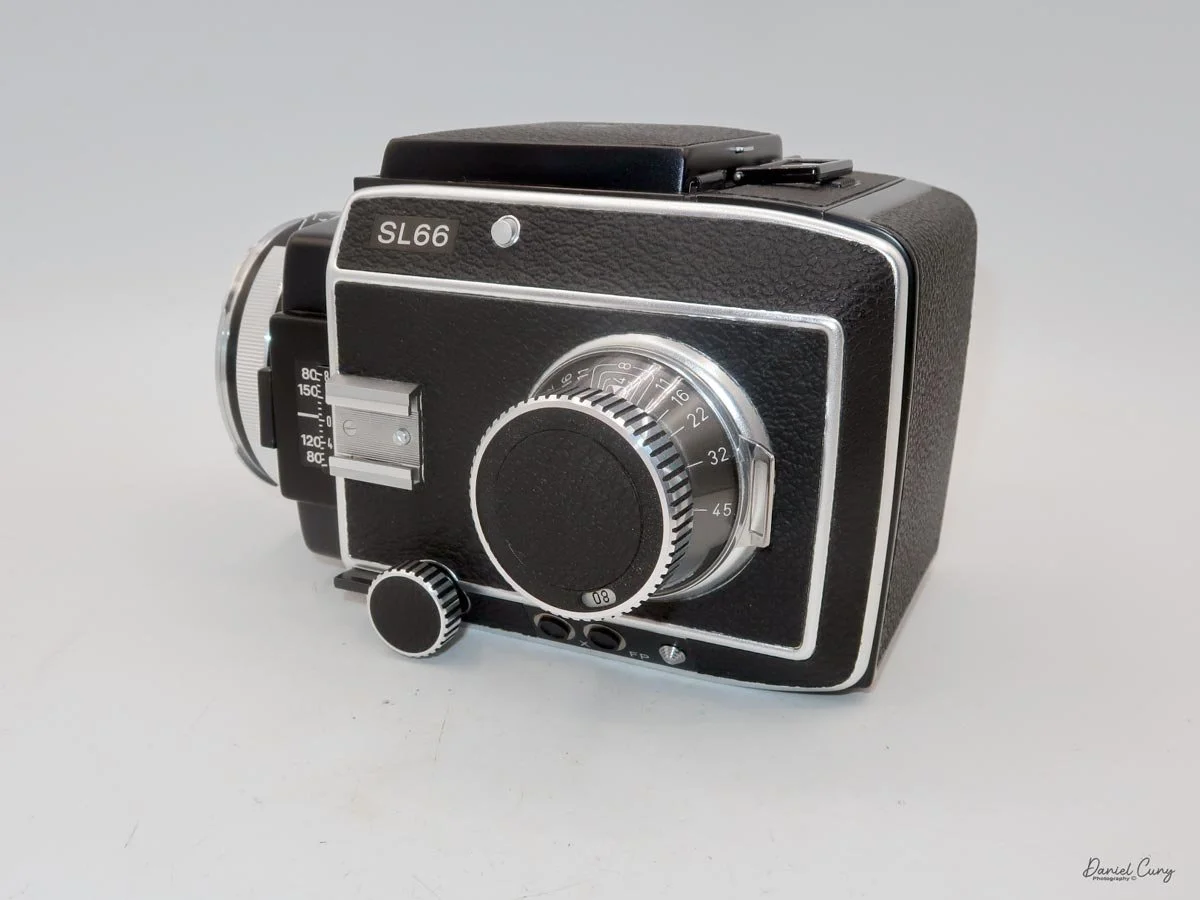
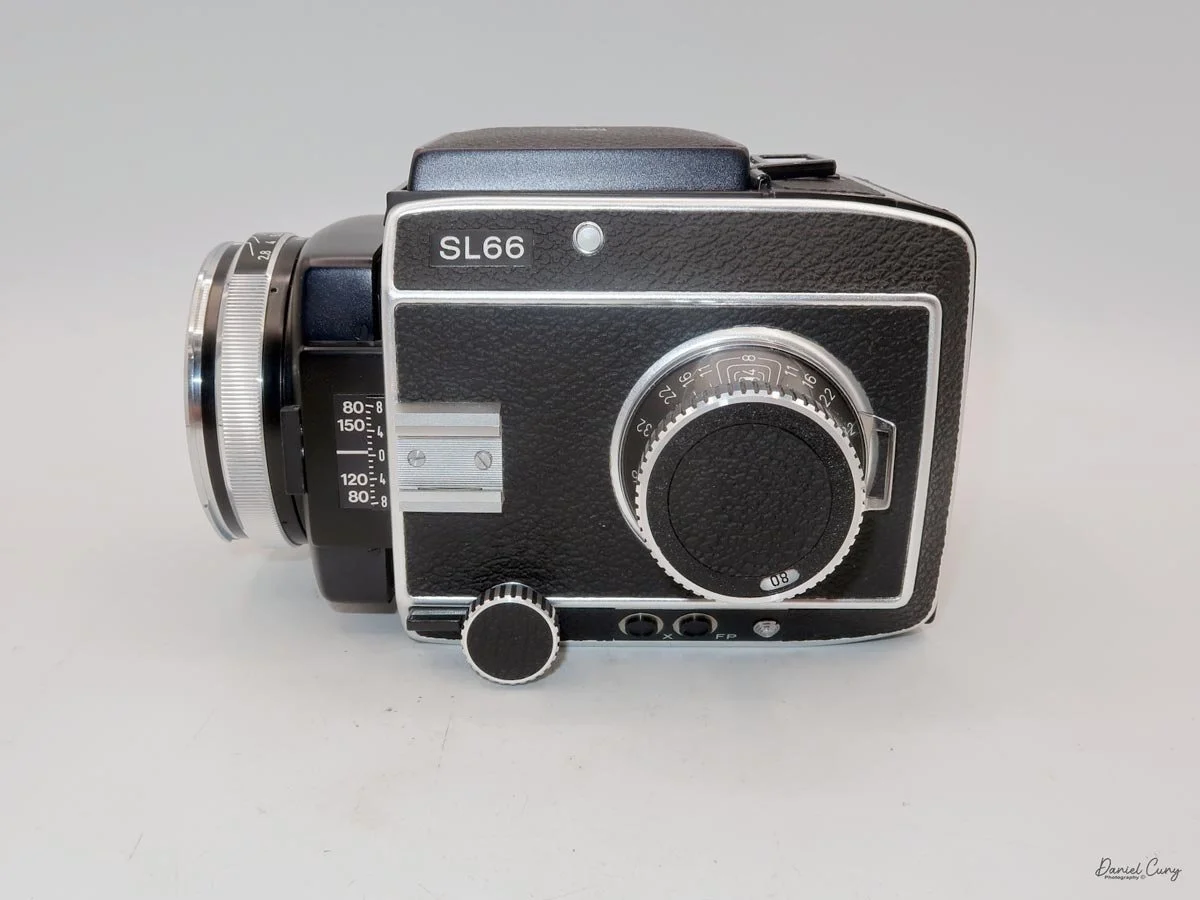
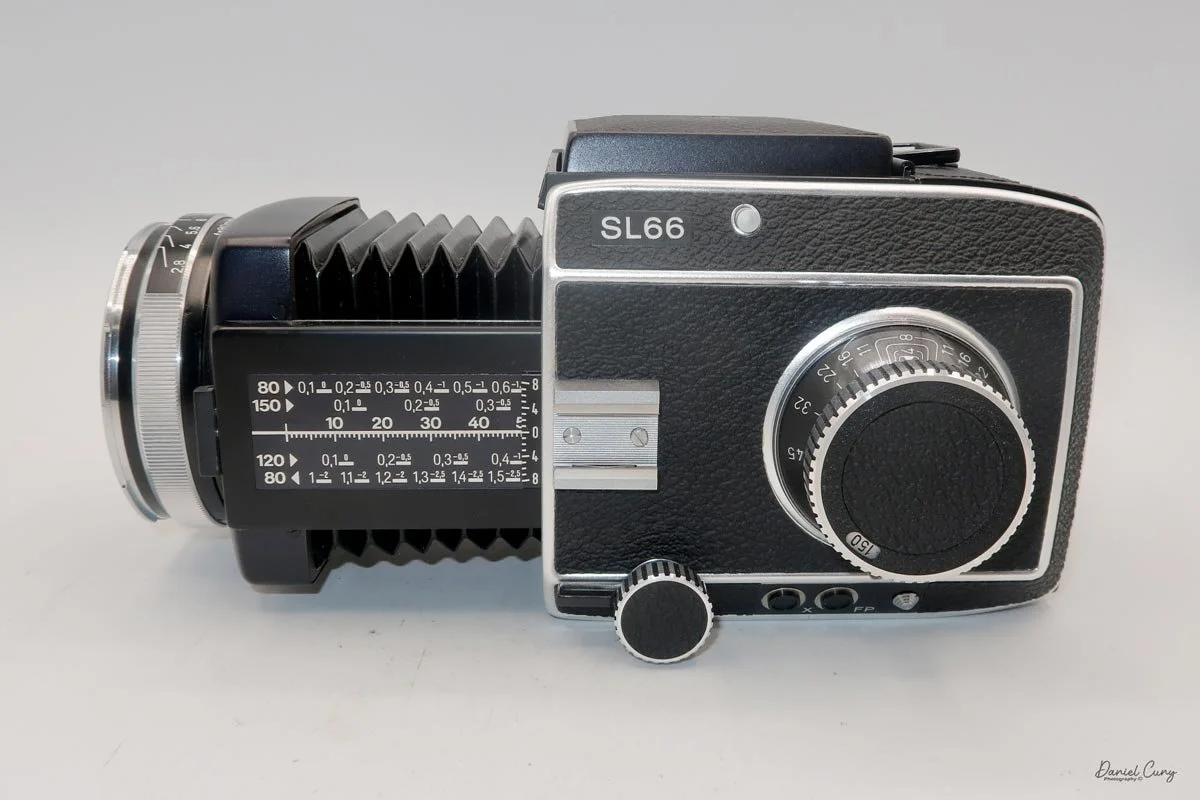
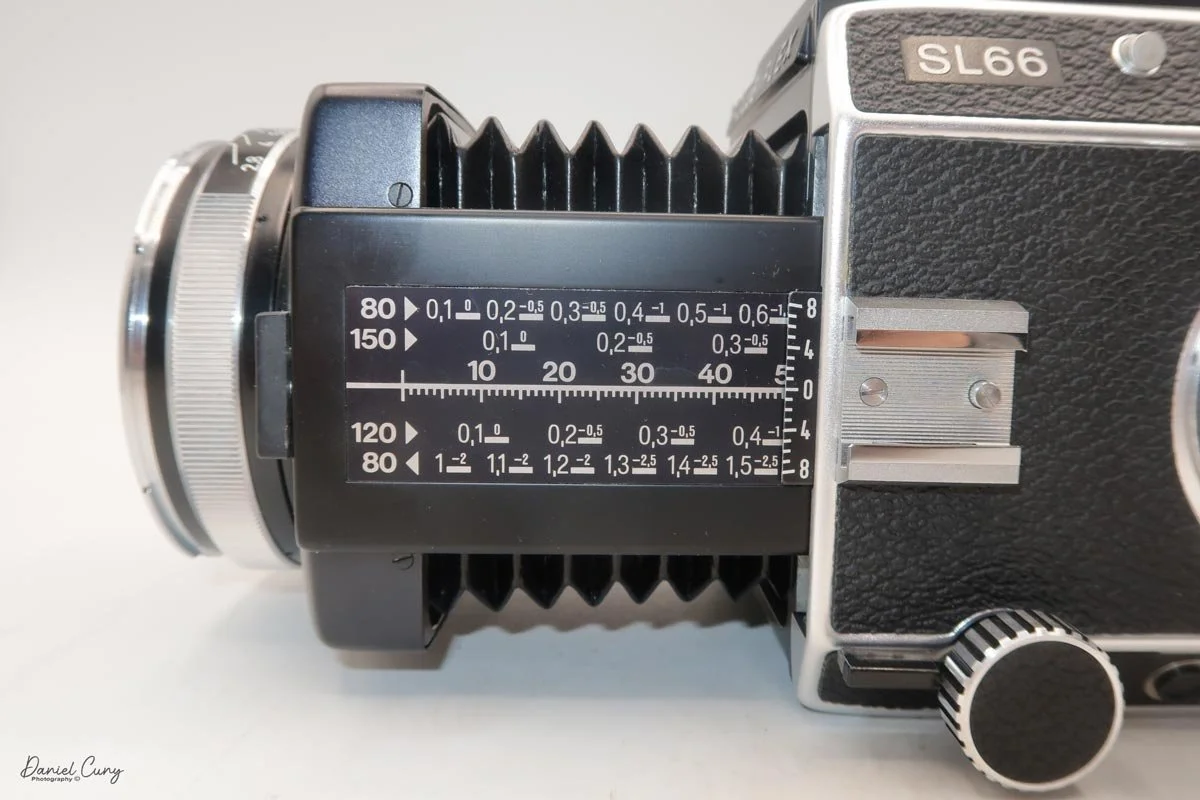
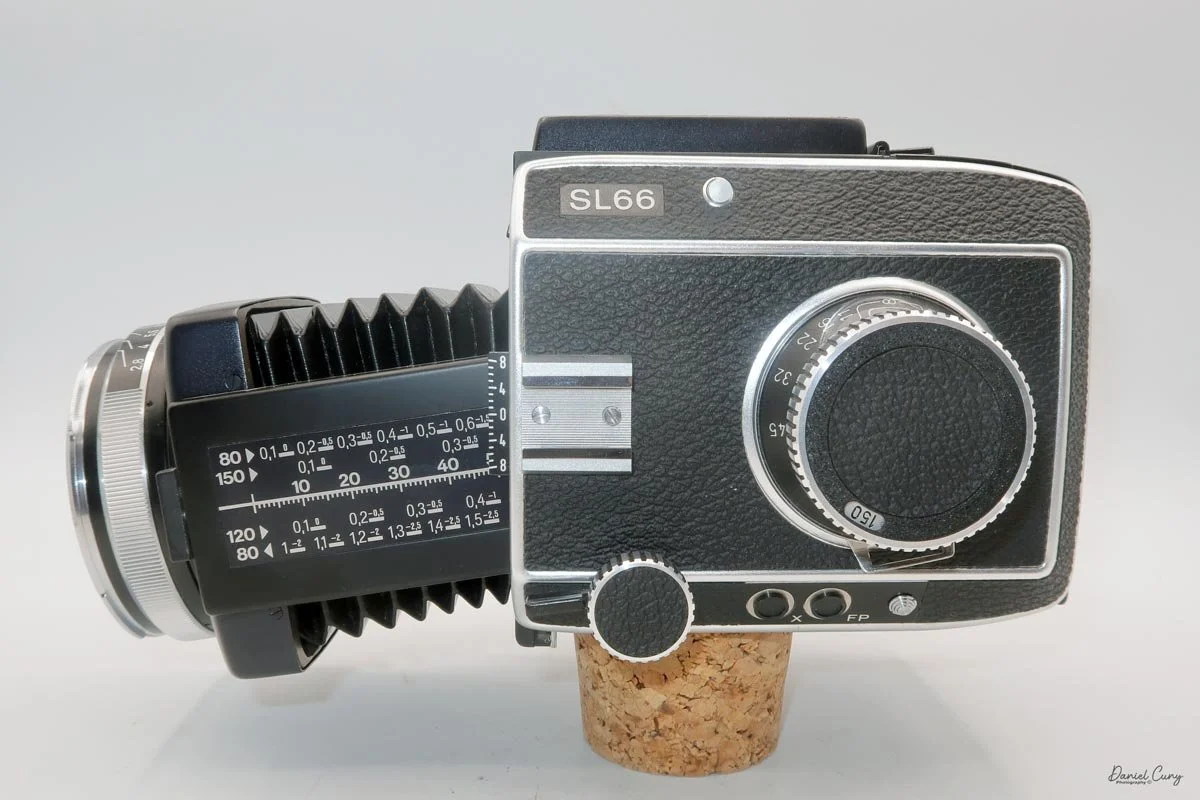
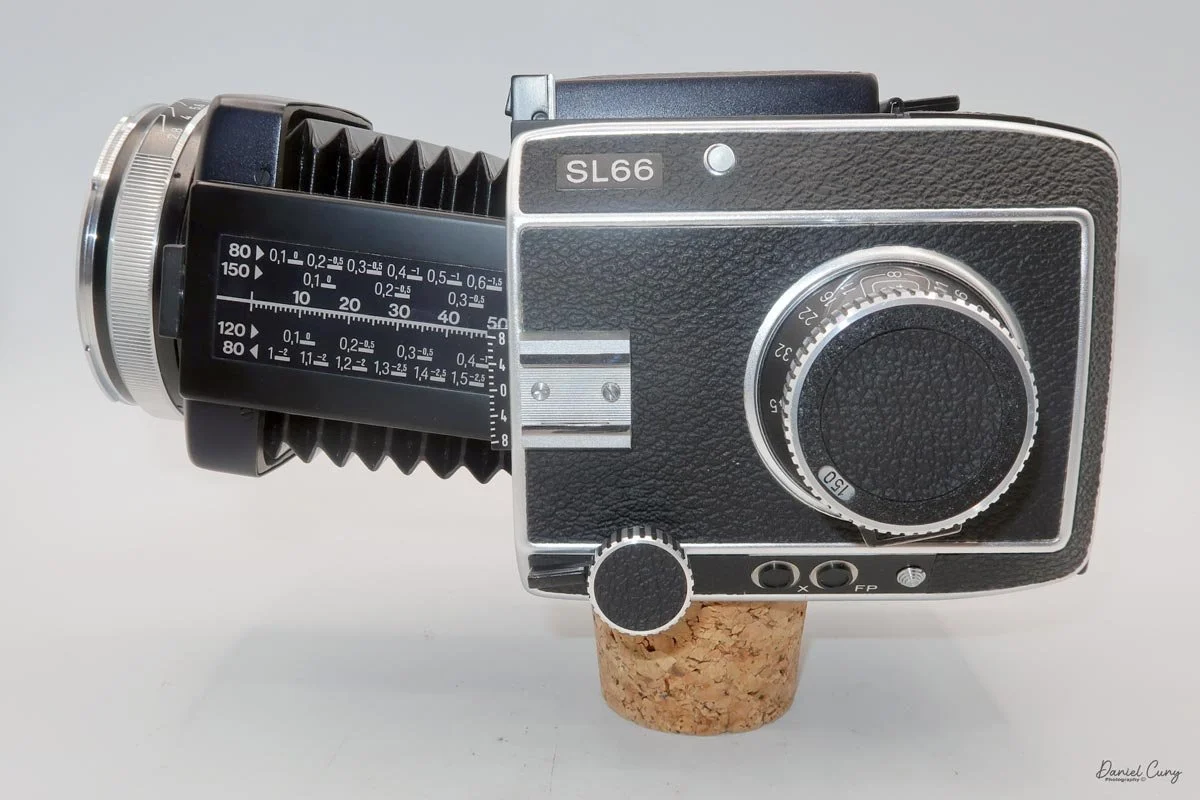
My Rolleiflex SL66 is a substantial camera. With the 80mm lens retracted, it measures about 7" front to back; with the bellows fully extended, it's closer to 9". It's roughly 6" wide thanks to the oversized focusing knob, about 4.5" tall with the waist‑level finder closed, and around 7" tall when the chimney is open. On the scale, the body with a back and an 80mm lens comes in at about 4 pounds, 4.5 ounces—this is not a casual walk‑around point‑and‑shoot.

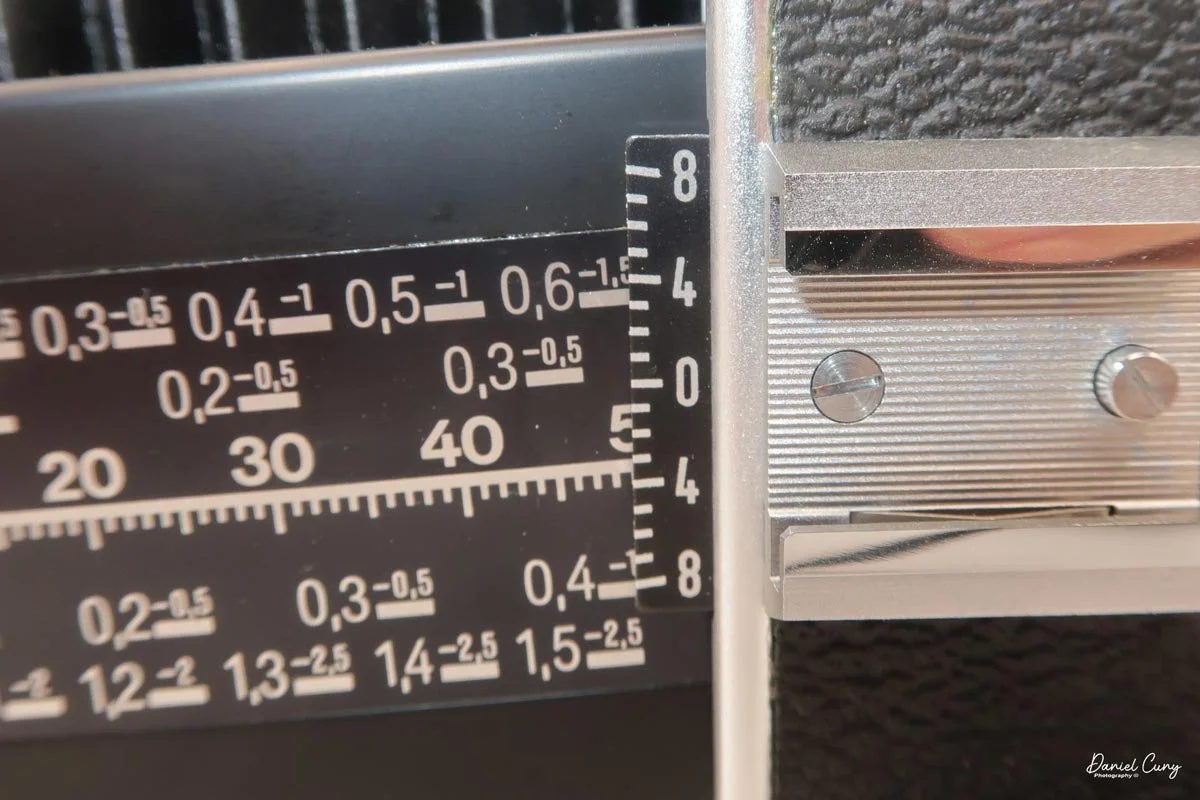
That weight buys you some very unique capabilities. The standout feature is the built‑in bellows, which allows the SL66 to focus much closer than most medium‑format SLRs I've used. Mamiya RB/RZ cameras also use bellows and can get in tight, but the SL66 manages similar close‑focus versatility in a slightly more compact, much lighter and a better‑balanced package. For anyone who loves close‑up or macro work, that alone makes the camera worth a serious look.

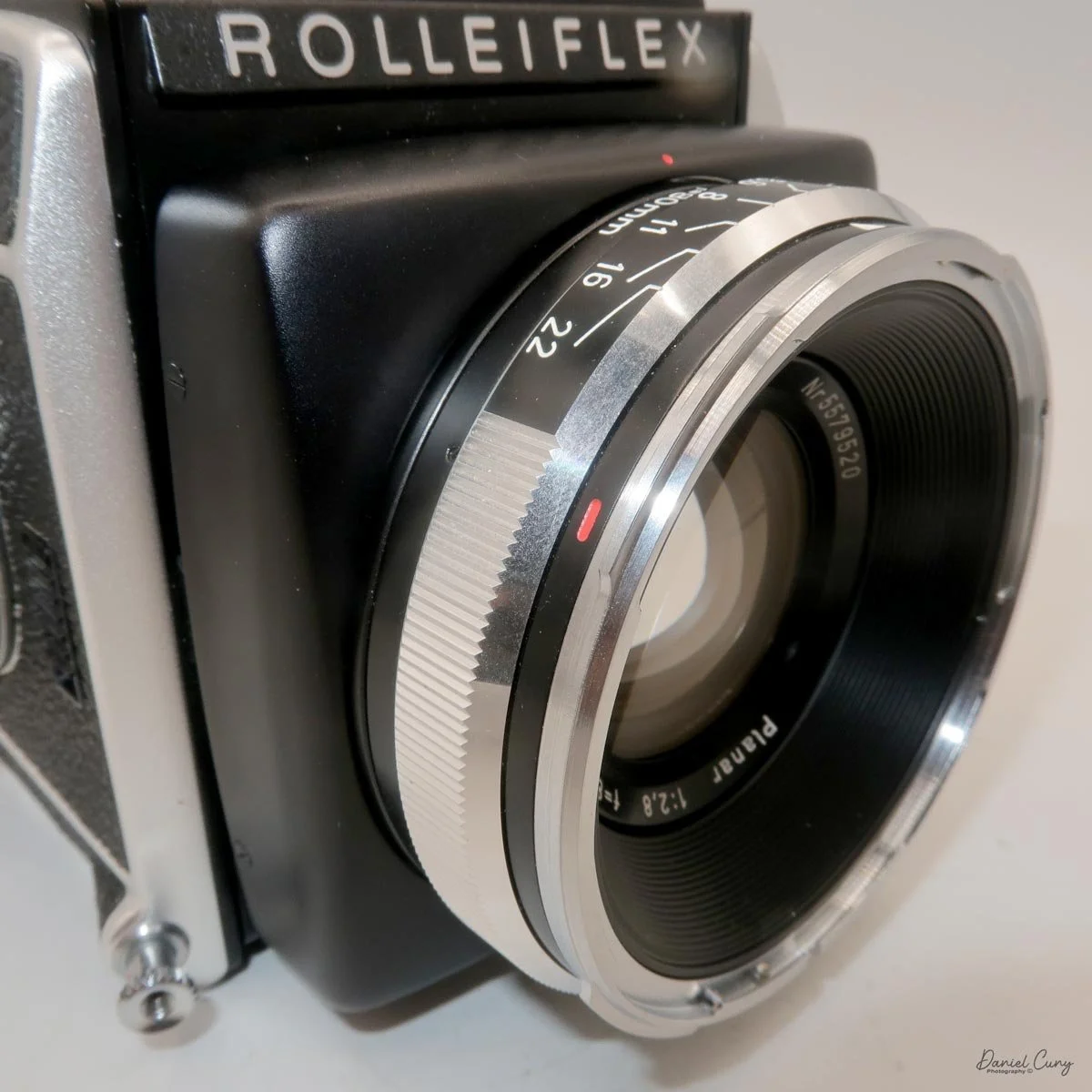
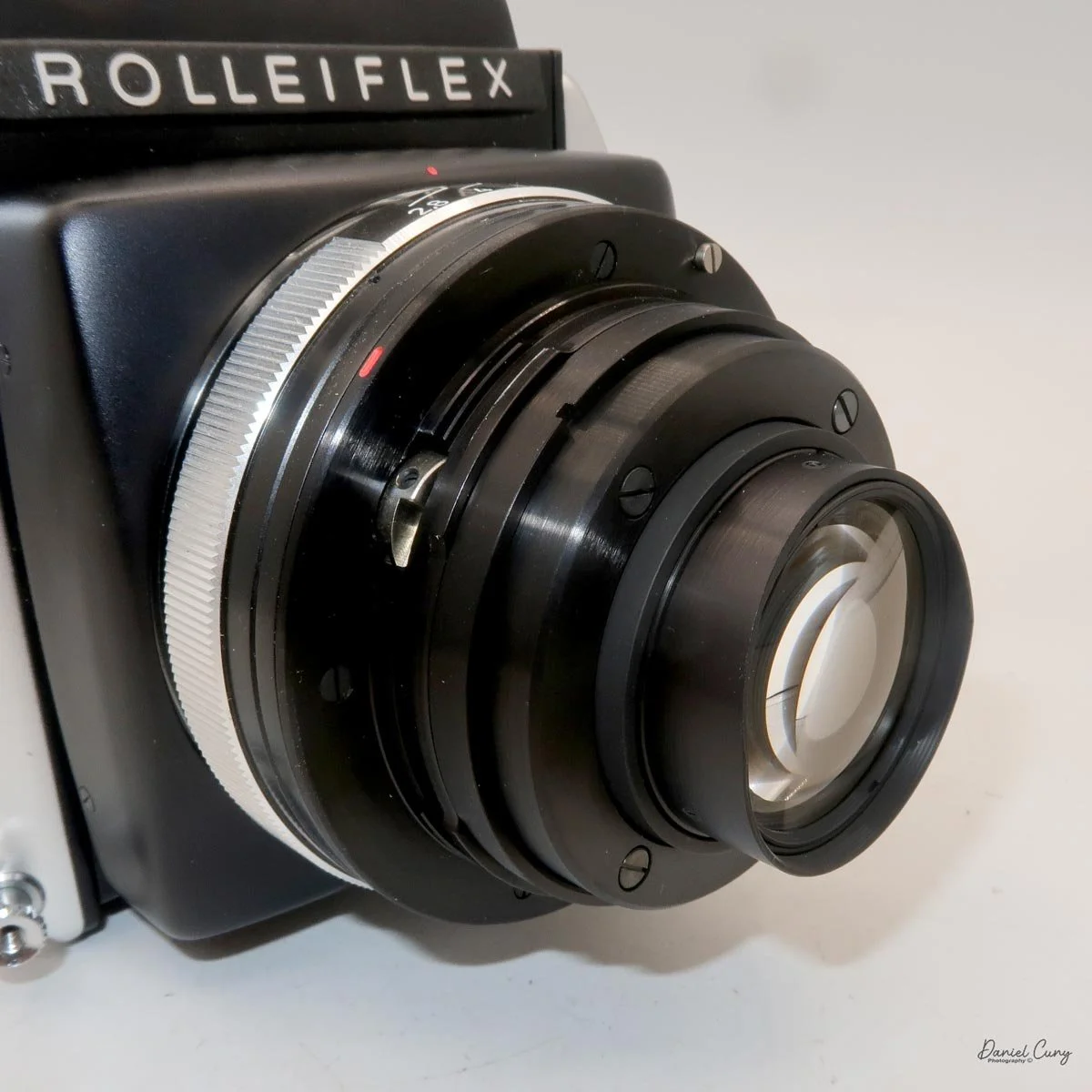
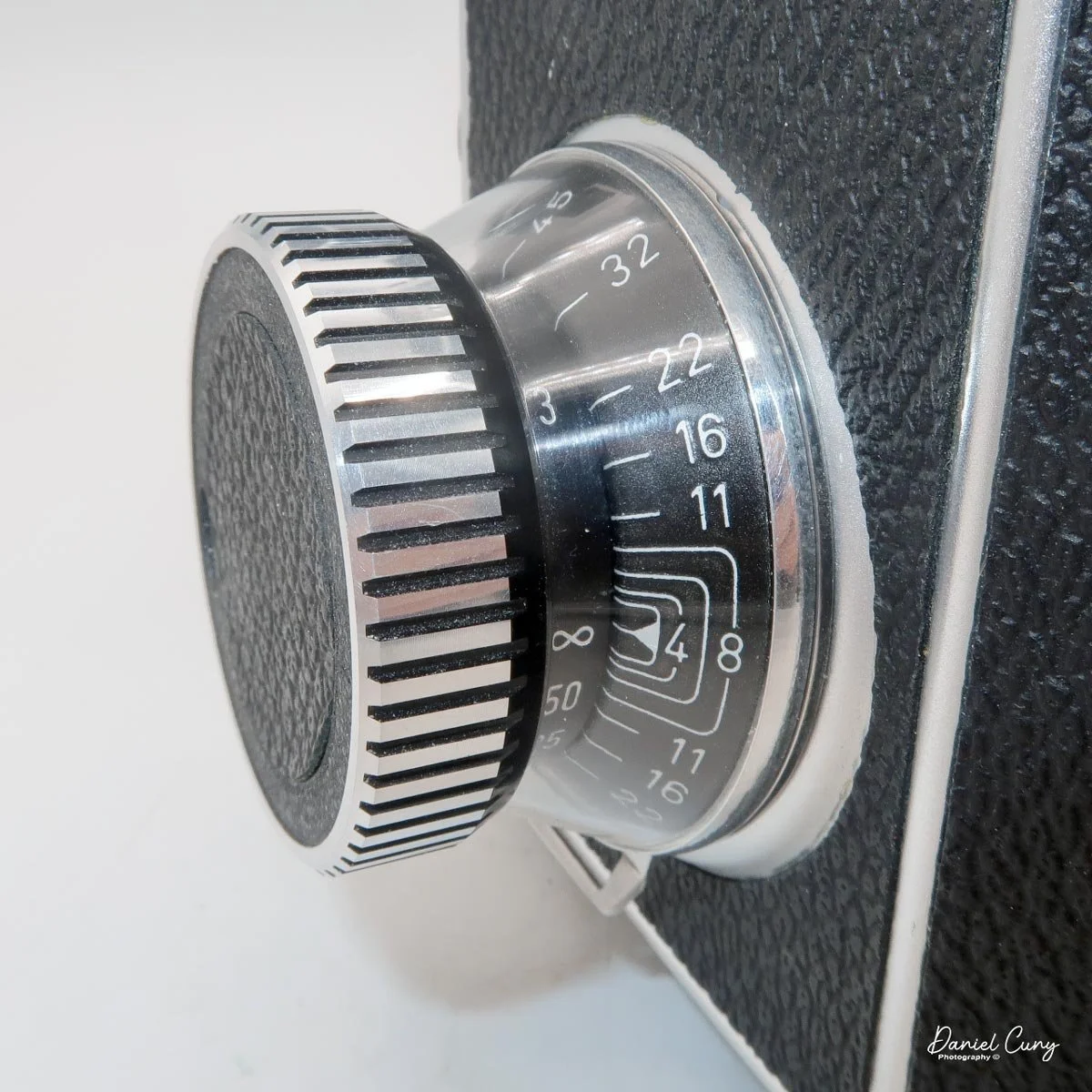
The second signature feature is the double-bayonet lens mount, primarily used with the 50mm, 80mm, and 150mm lenses. The lenses can mount in the normal way, with automatic aperture operation, or be reversed on the body for even greater magnification. In reversed mode, the aperture becomes manual: you open up to focus, then stop down to your chosen aperture for the exposure. It's slower than modern macro setups, but the flexibility it provides is excellent for tabletop and product work.

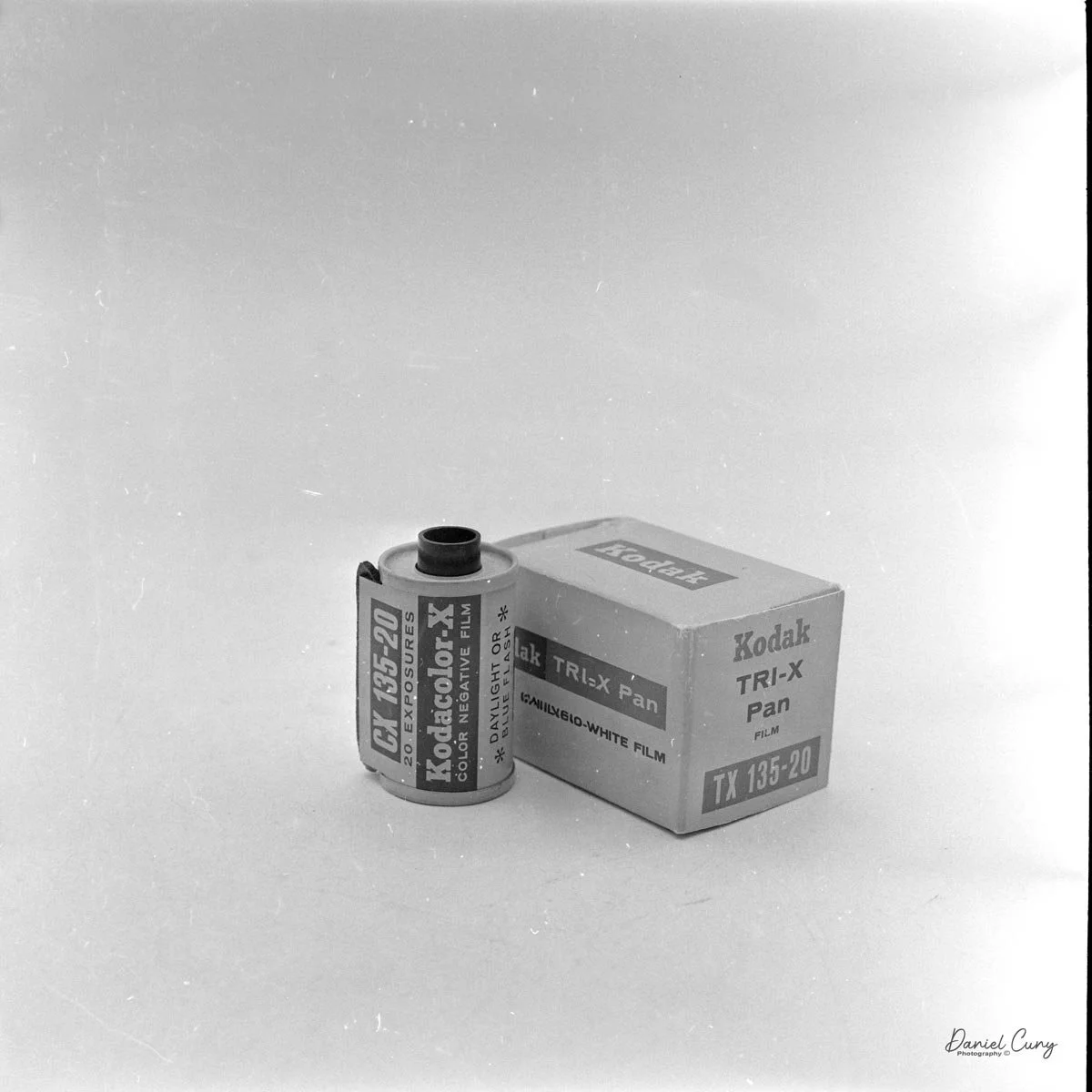
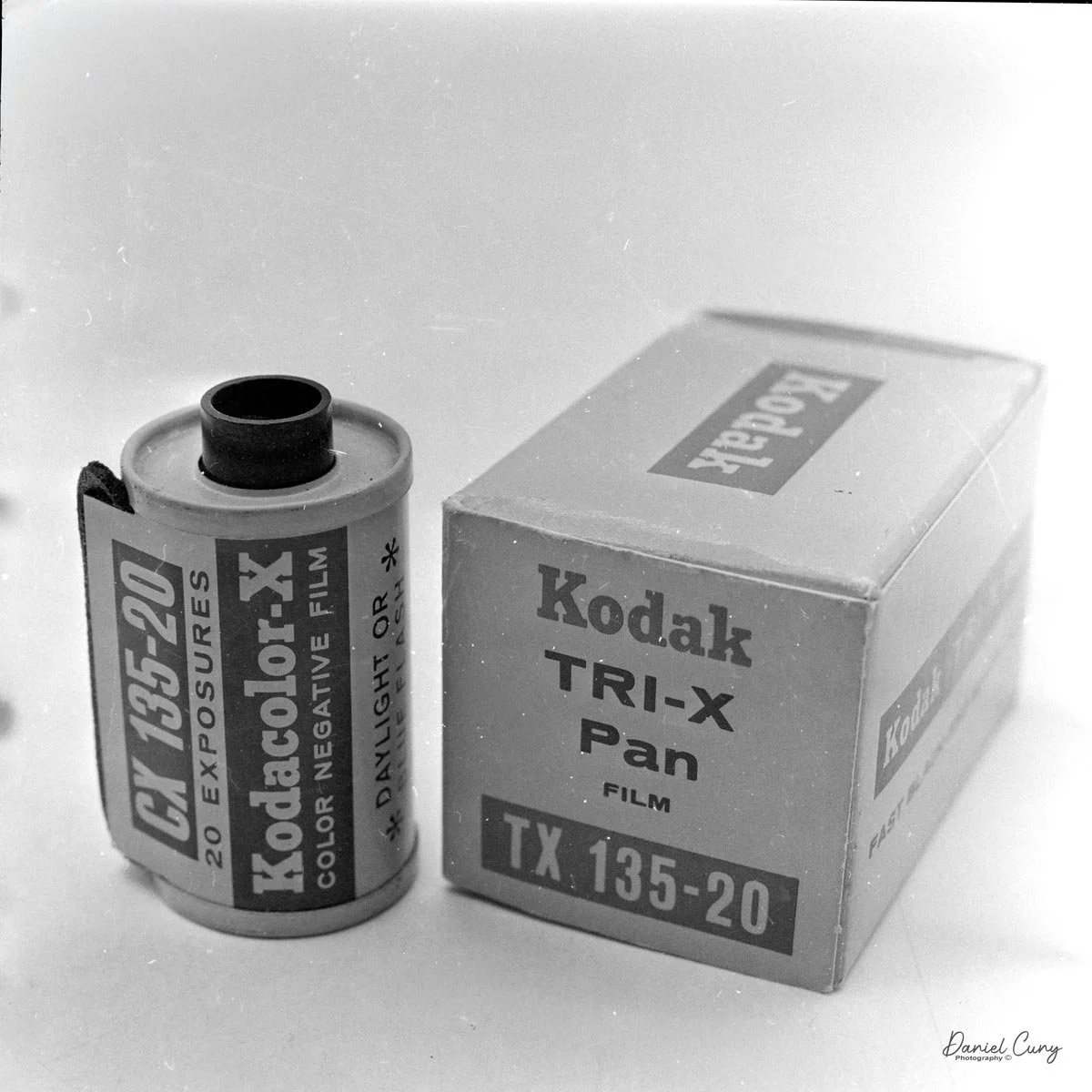
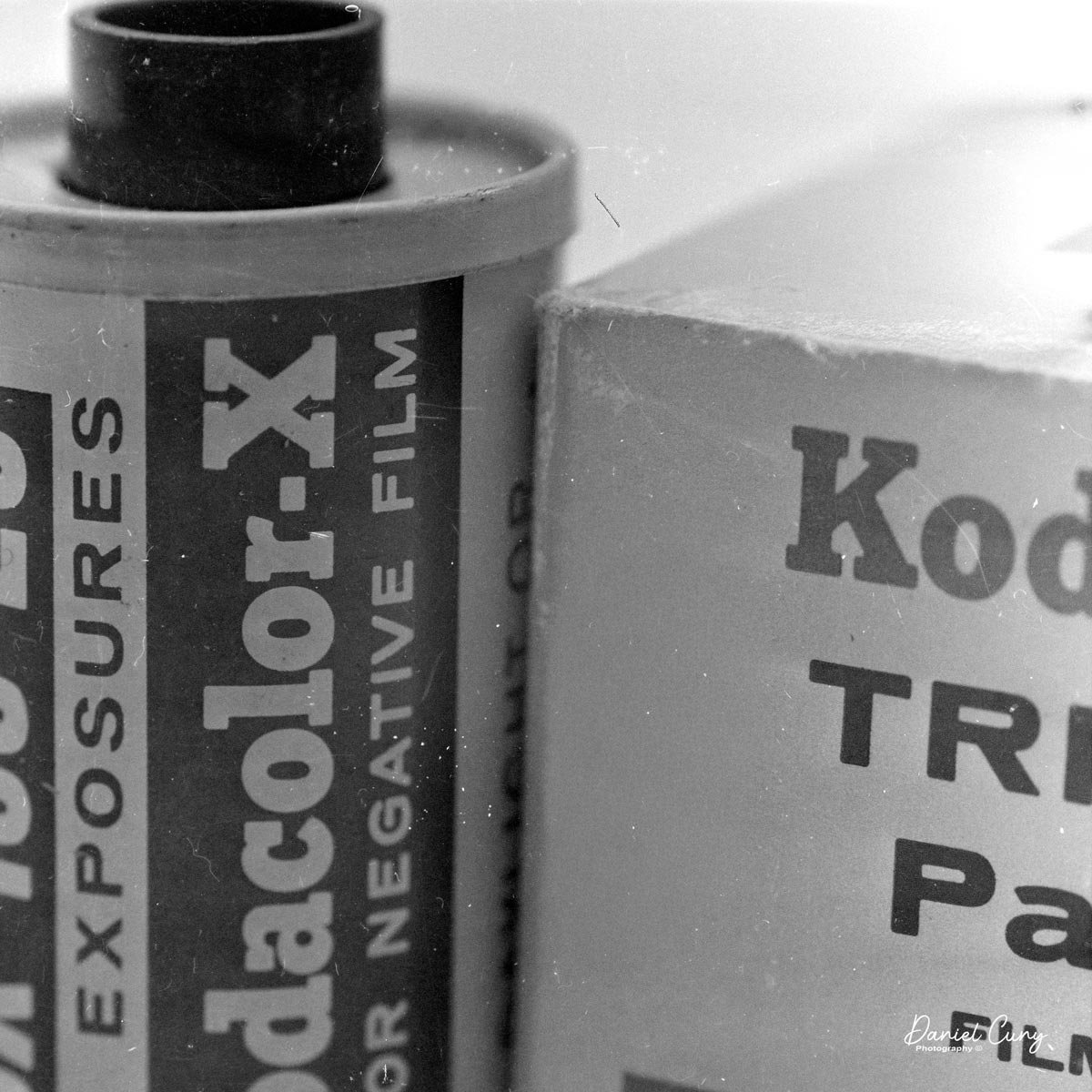
In addition to bellows and reverse mounting, the SL66 offers up to 8 degrees of lens tilt. That tilt lets you "lay down" the plane of focus, bringing more of a product or subject into sharpness at wider apertures. In practice, it means I can photograph something like a 35mm cassette and its box at close range and keep both on‑axis surfaces acceptably sharp without having to stop down to the smallest apertures.

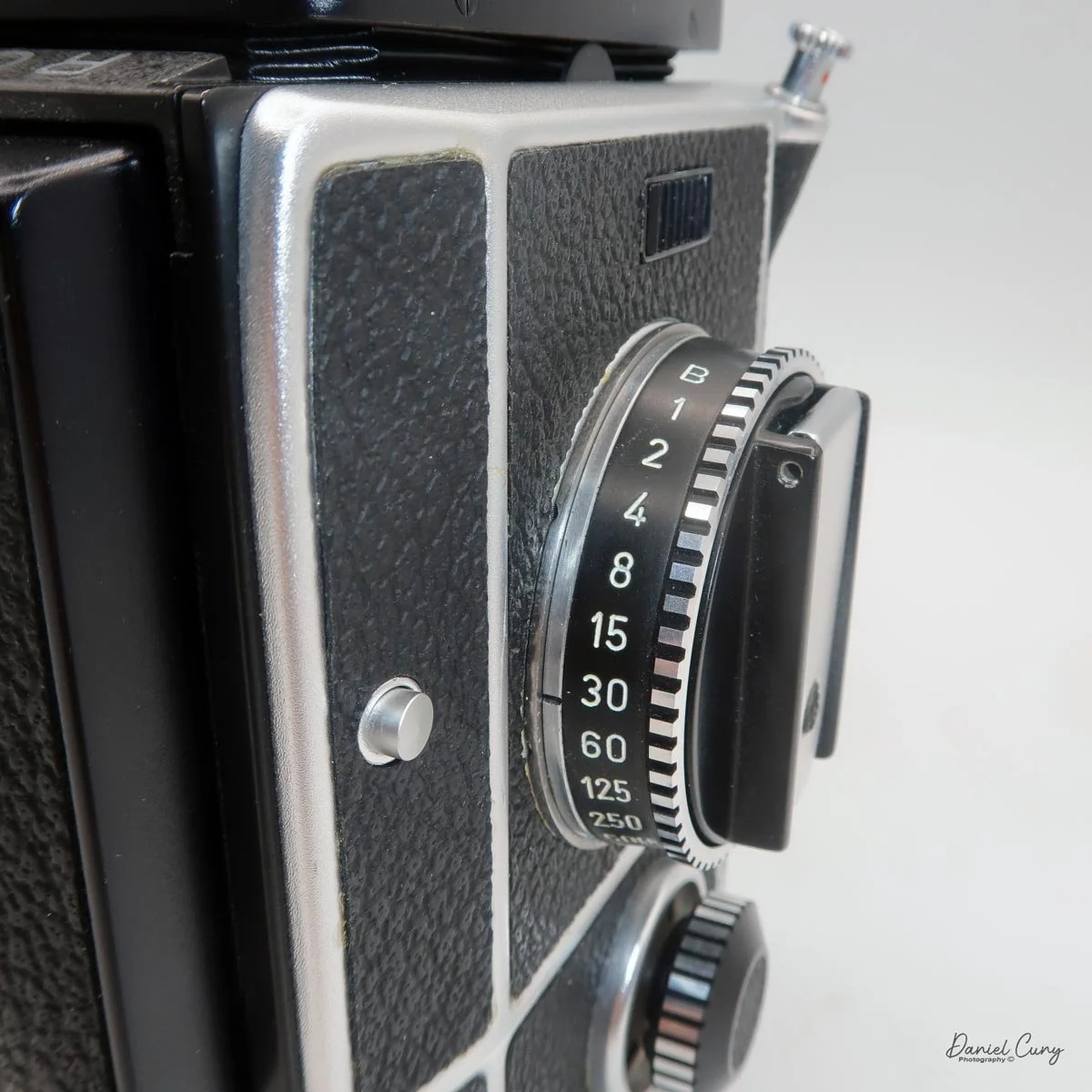
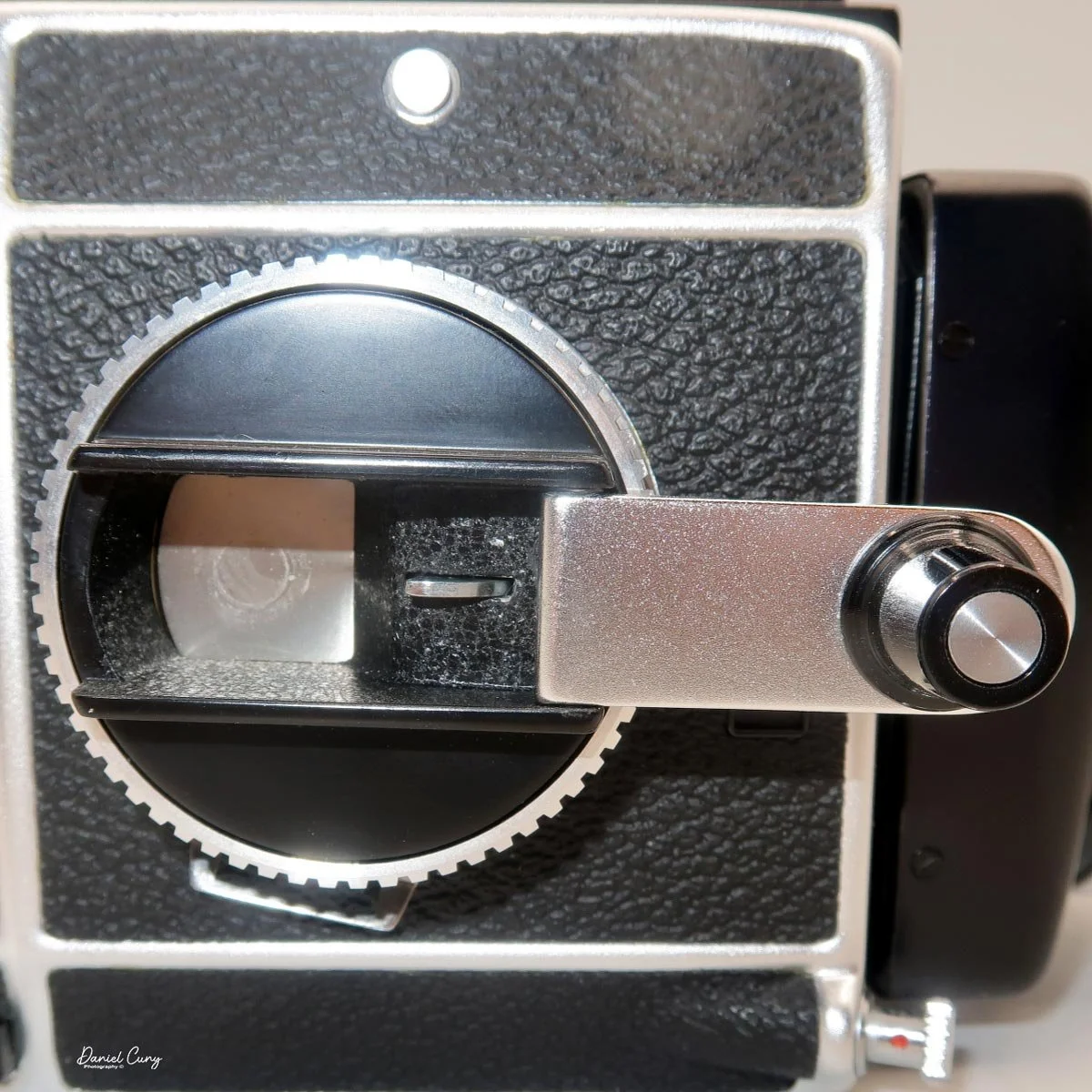
Unlike Hasselblad V‑series cameras, which use leaf shutters in the lenses, the SL66 uses a focal‑plane shutter in the body, with speeds from 1 second to 1/1000 plus "B" for long exposures. Flash sync is limited to 1/30, but for studio or location strobe work, the flash duration actually stops motion, so I haven't found the 1/30 sync speed to be a practical limitation with decent strobes. The shutter speed dial is integrated into the film advance: you pull out the handle, advance clockwise until it stops, then swing it back counterclockwise to cock the shutter for the next frame. Inside the crank is a multiple‑exposure switch, which makes stacking exposures on one frame very straightforward once you know where to find it.

The SL66 lens lineup was designed by Carl Zeiss, and it shows. Optically, the lenses I have are excellent, with contrast and sharpness fully in the "top tier" I expect from Zeiss glass. The system spans from 30mm all the way to 1000mm, and Rollei also offered two leaf‑shutter lenses—an 80mm Distagon and a 150mm Sonnar—with flash sync up to 1/500 for shooters who need higher sync speeds. In my experience so far, the standard lenses deliver exactly the kind of image quality you want from a camera of this size and weight.

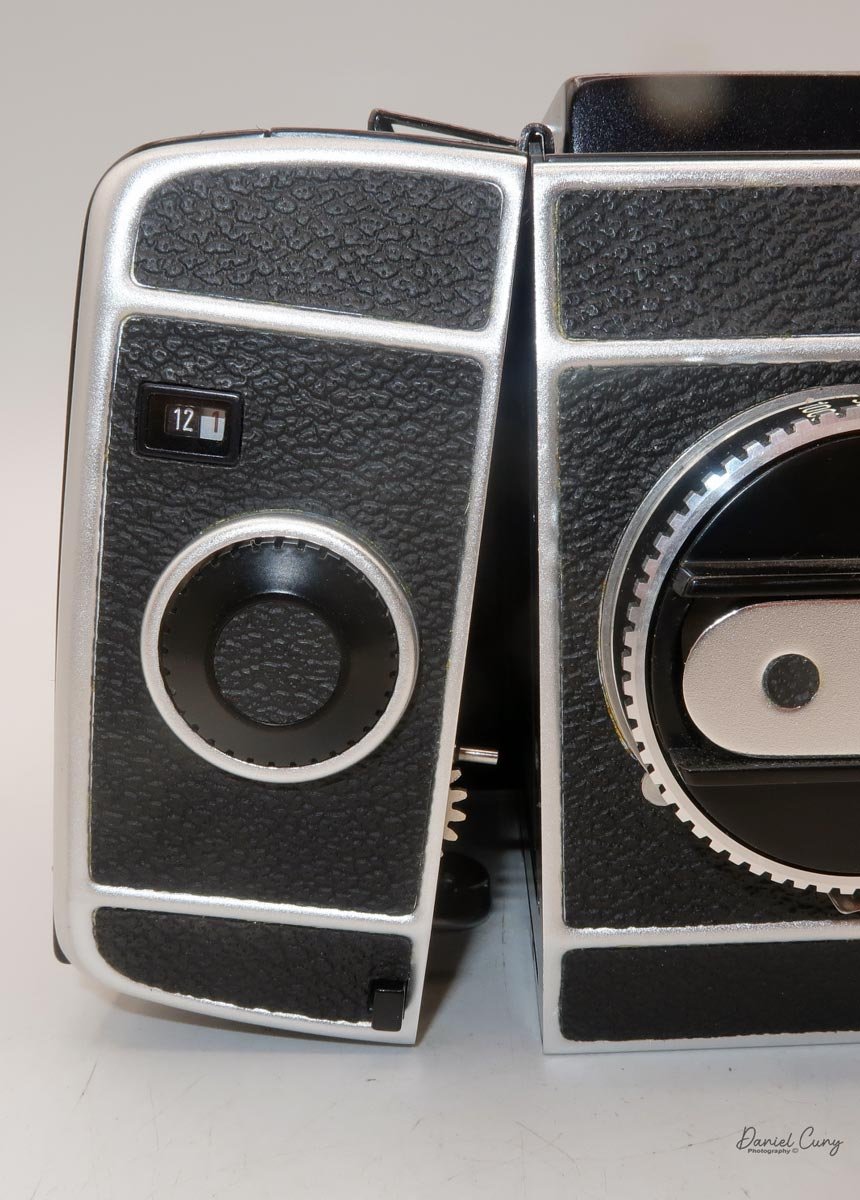
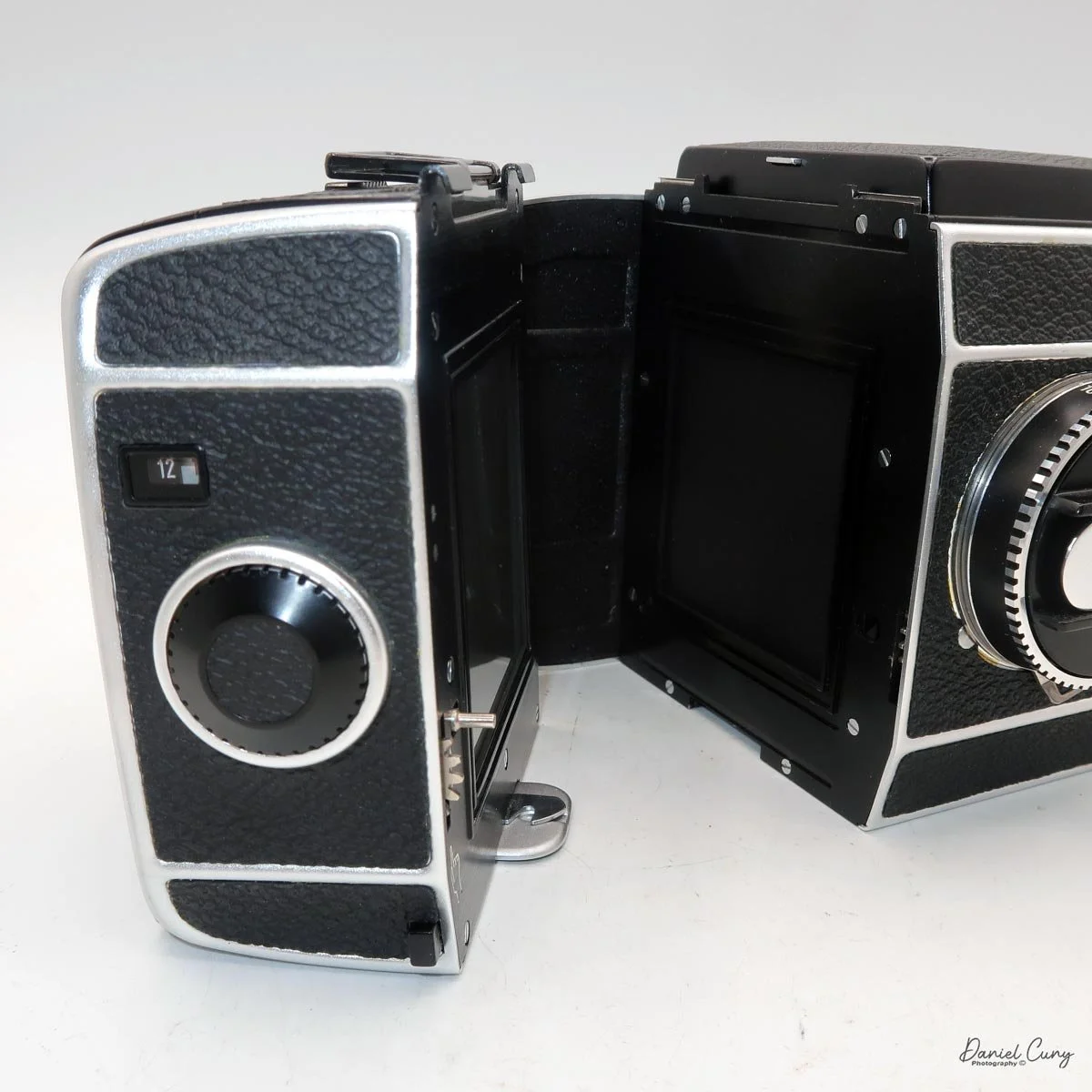
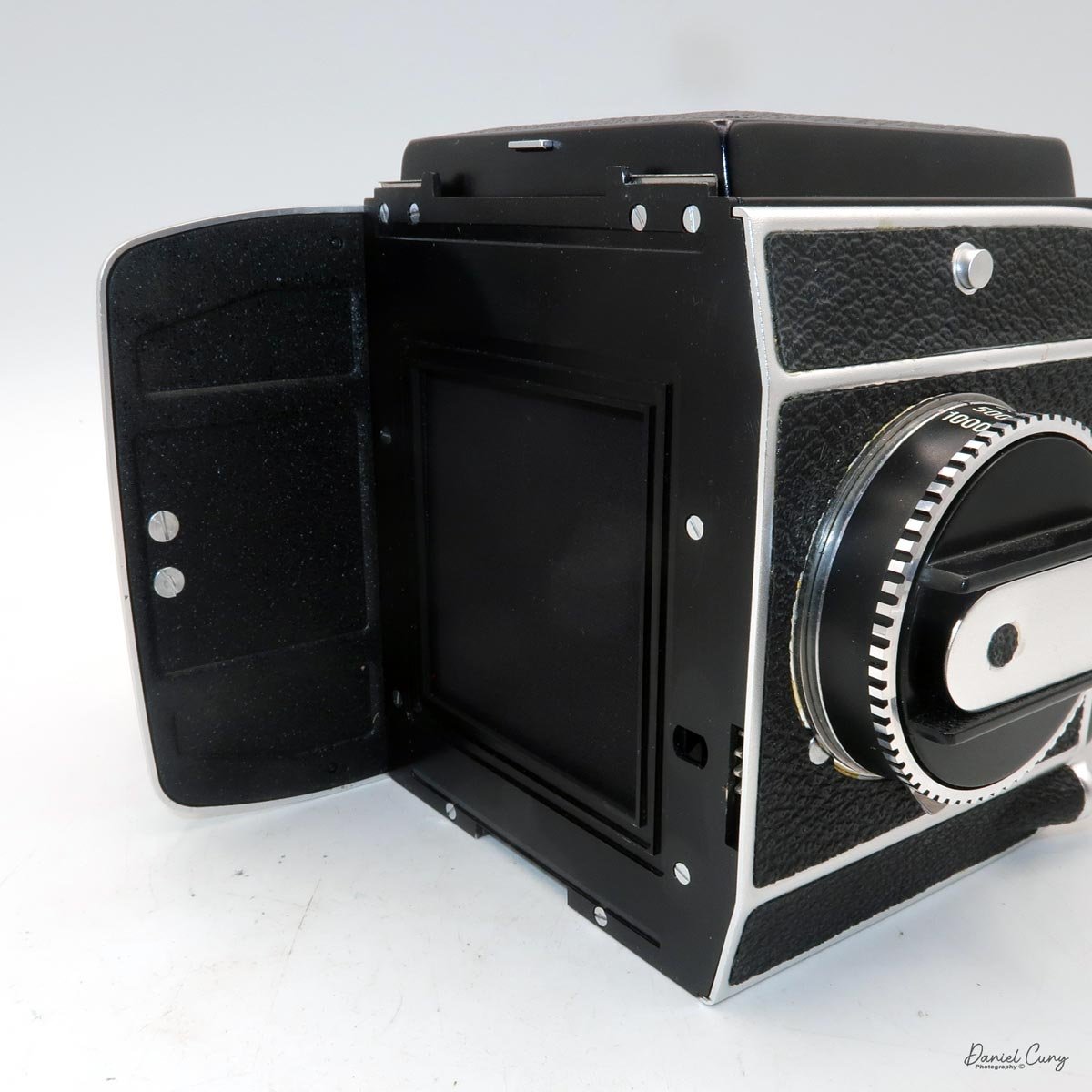
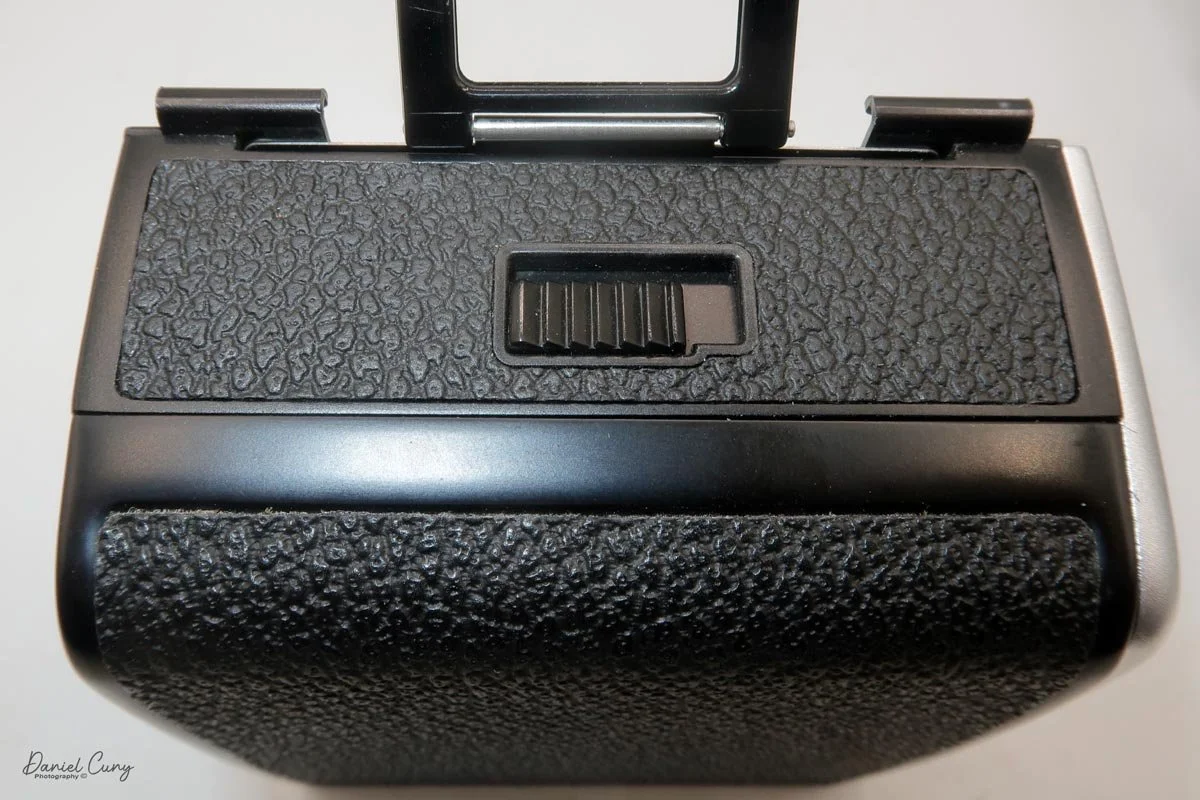
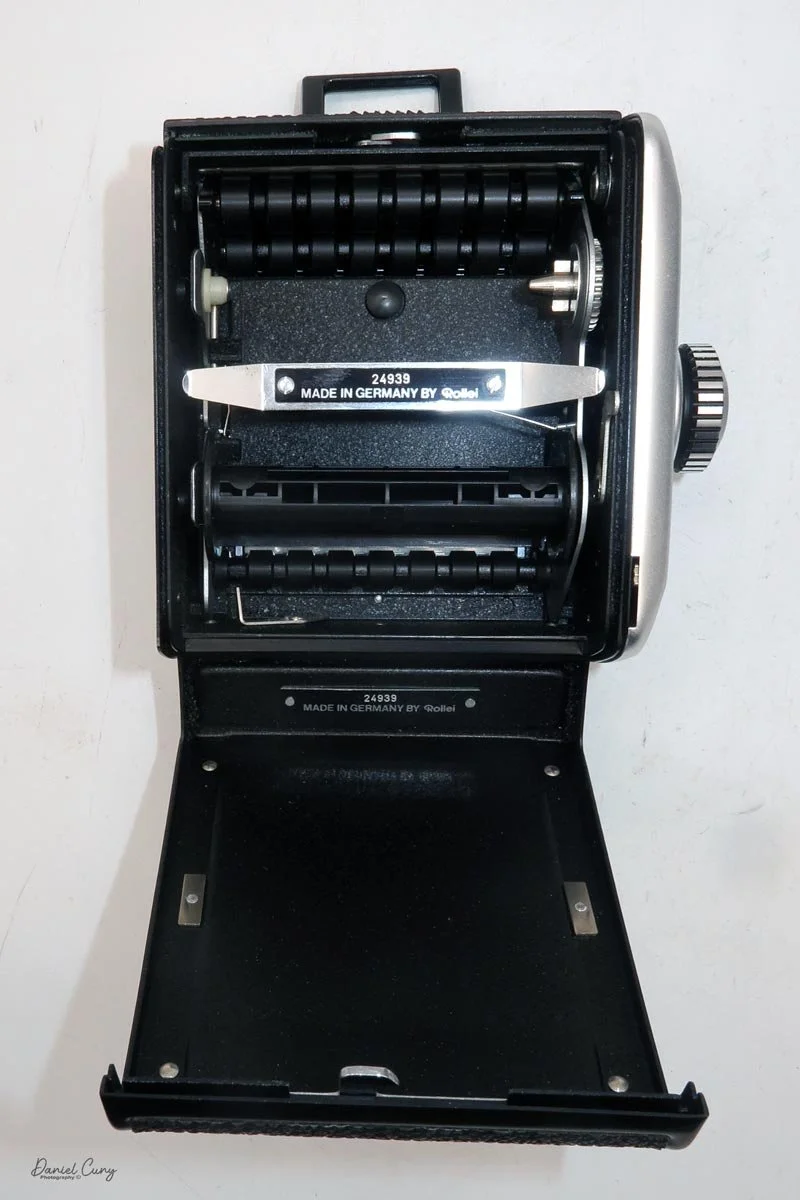
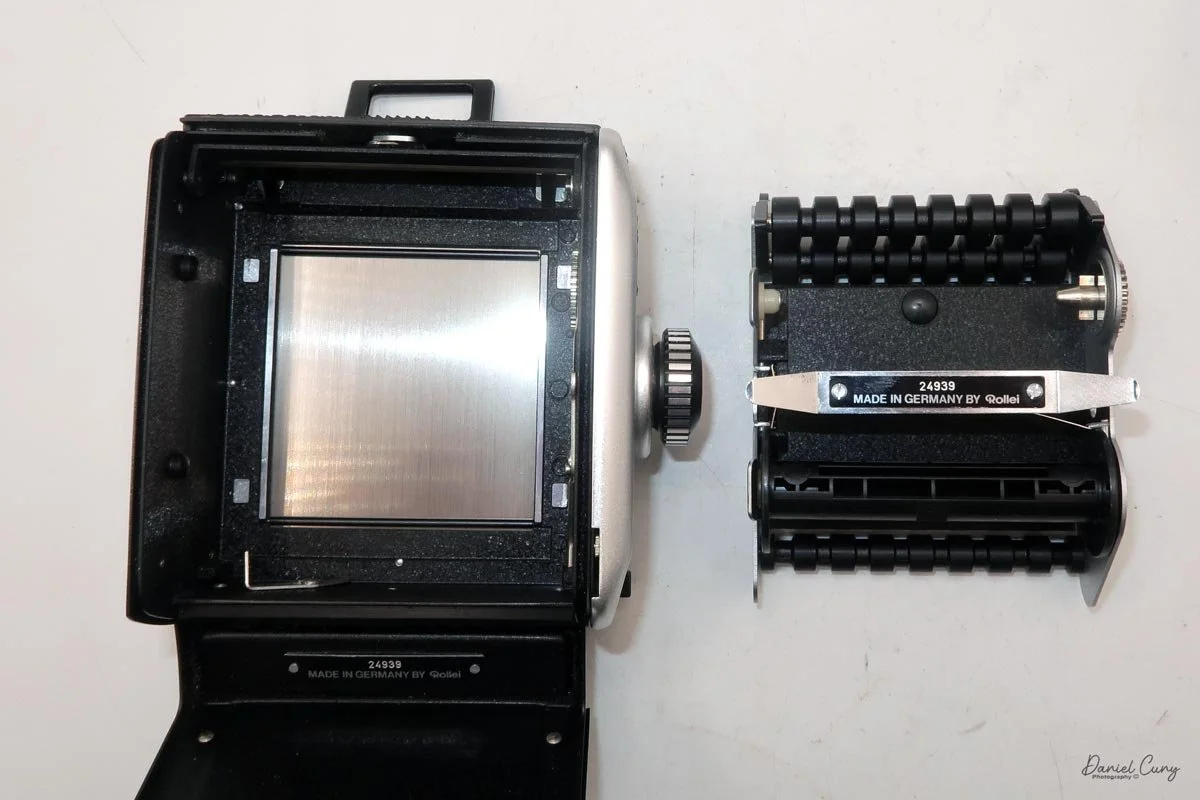
 The film back system is well thought out. The standard back takes either 120 or 220 film, and you can get inserts and backs for 6×6 or 6×4.5. The dark slide parks neatly on the back when you're shooting, which means you're not constantly wondering where you set it down. Loading is similar to Mamiya's insert‑based backs: open the door, pull the insert, load the film, reinsert, then wind to the first frame. A pop‑out winding wheel on the side of the back helps tension and advance the film before the main crank takes over. Once you've shot the twelve frames on 120, the wheel pops back out to let you wind the roll off before opening the back.

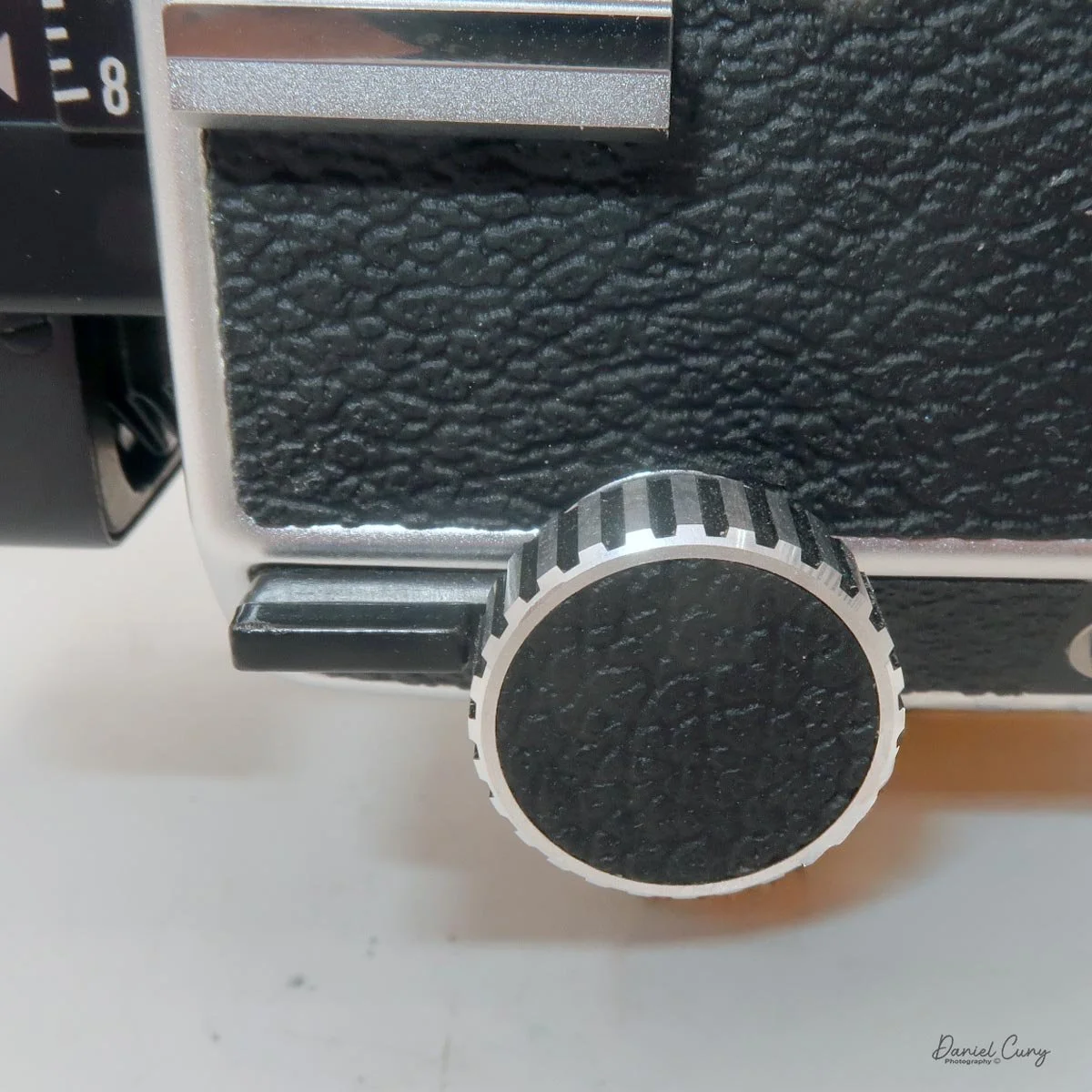
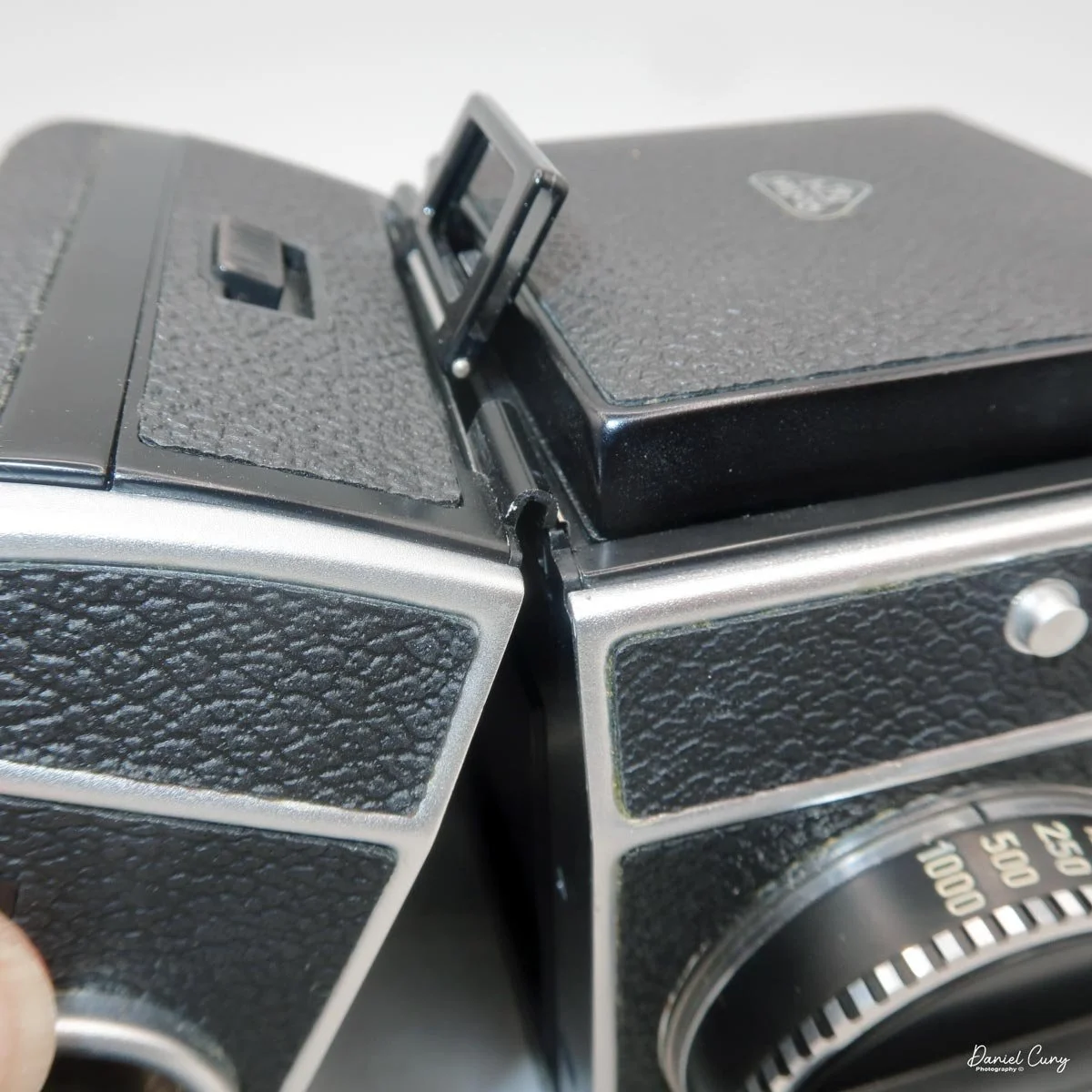
On the camera body's left side is that big focusing knob, which doubles as a reference for the lens in use; you can pull it out and set it for your focal length. The knob turns quite a bit when you're focused in tight, but the throw is smooth and precise. Just ahead of it is the tilt control: a locking lever and wheel for setting and securing the lens tilt angle. The body also carries a cold shoe for accessories and a pair of covered flash sync ports. Up top, pressing the chrome button opens the waist‑level finder, and a second press pops up the magnifier for critical focusing.

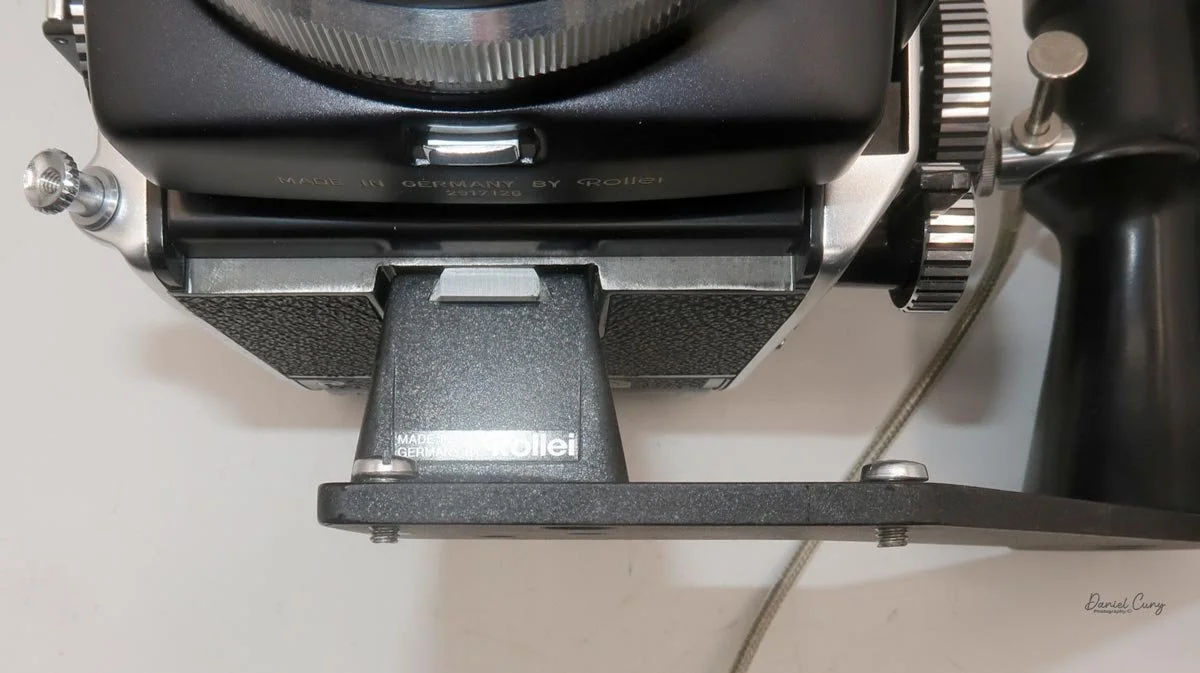
I use an L‑grip that mounts into the bottom quick‑mount slot alongside the tripod socket. That grip transforms the camera from a studio brick into something I'm comfortable hand‑holding for a walk, letting my left hand manage focus and support while my right handles shutter release and film advance. It doesn't make the SL66 light, but it does make it surprisingly usable off a tripod.

My Results

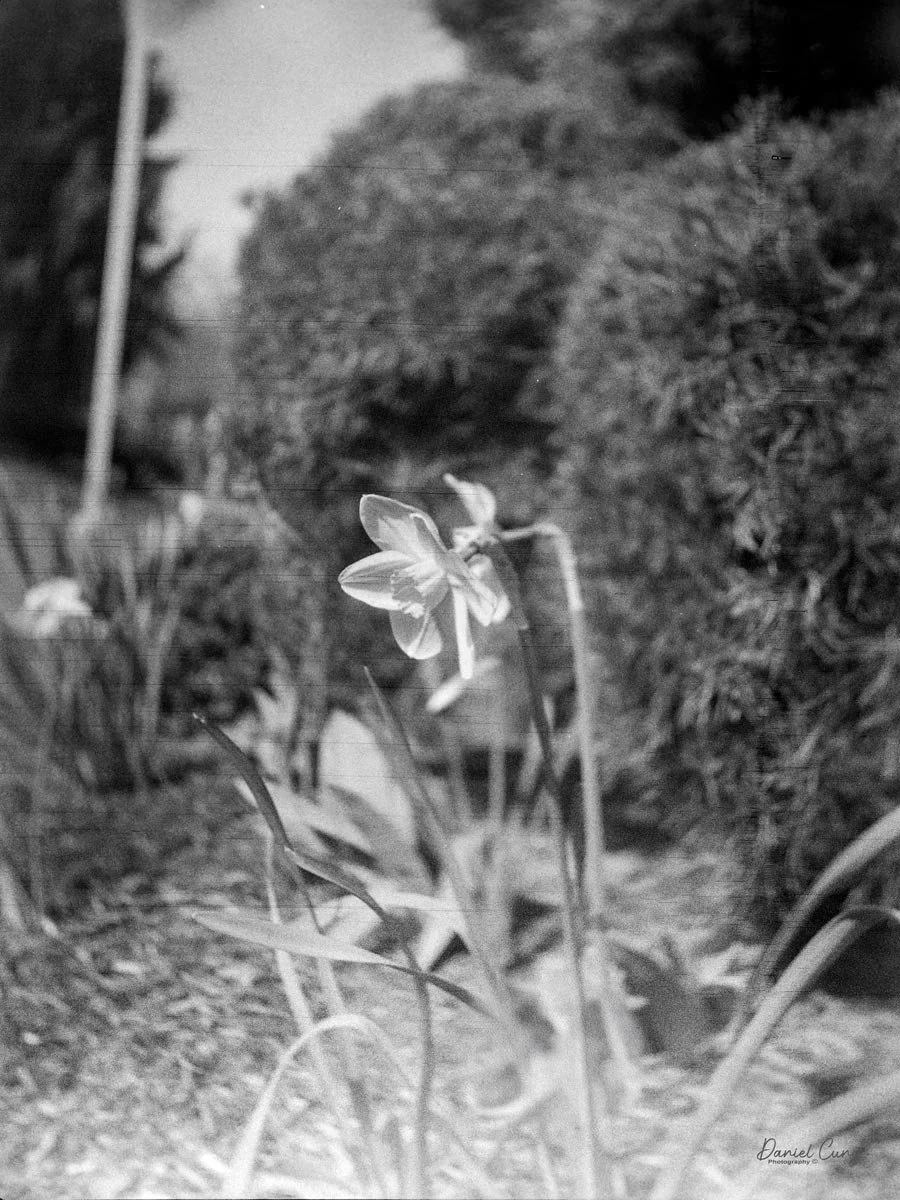
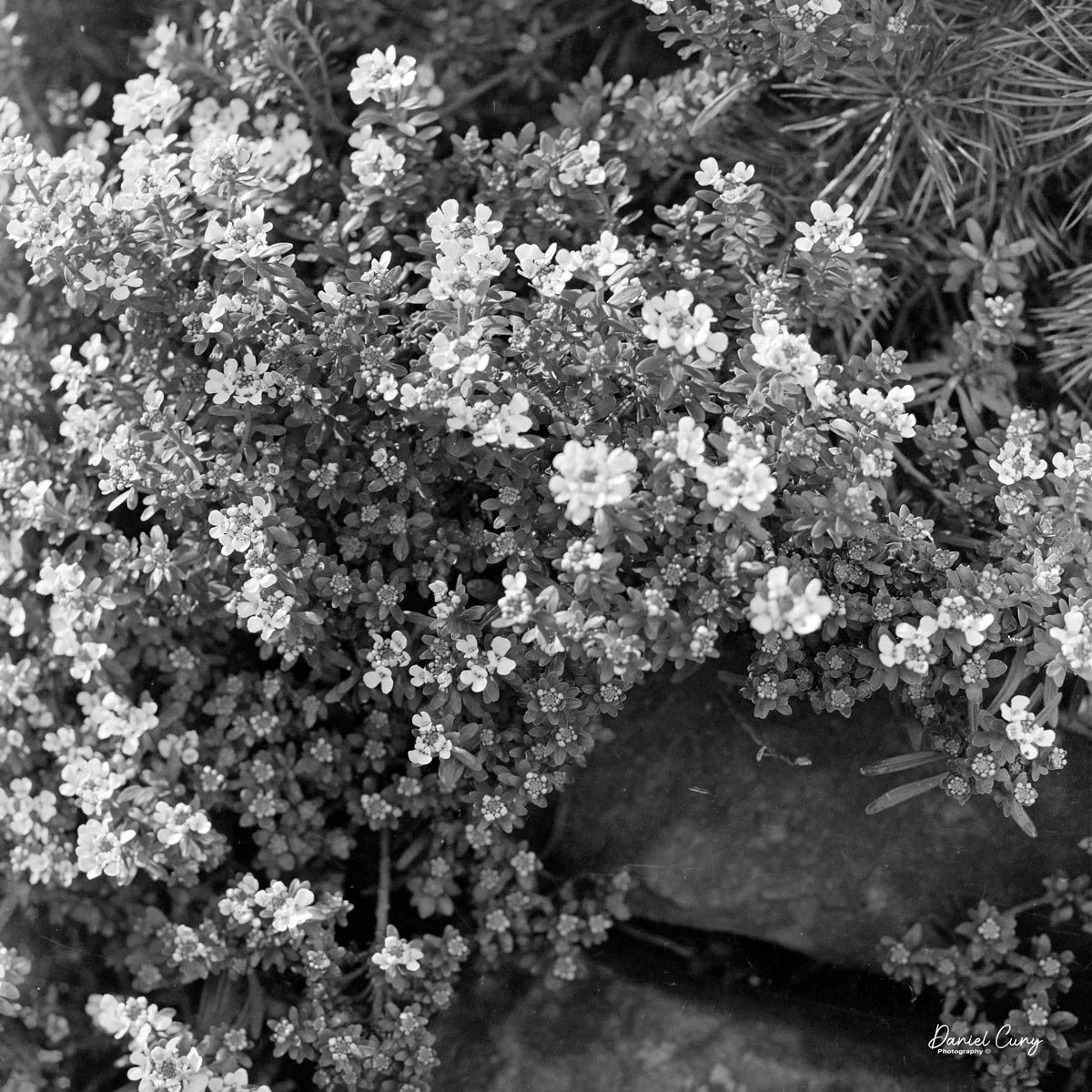
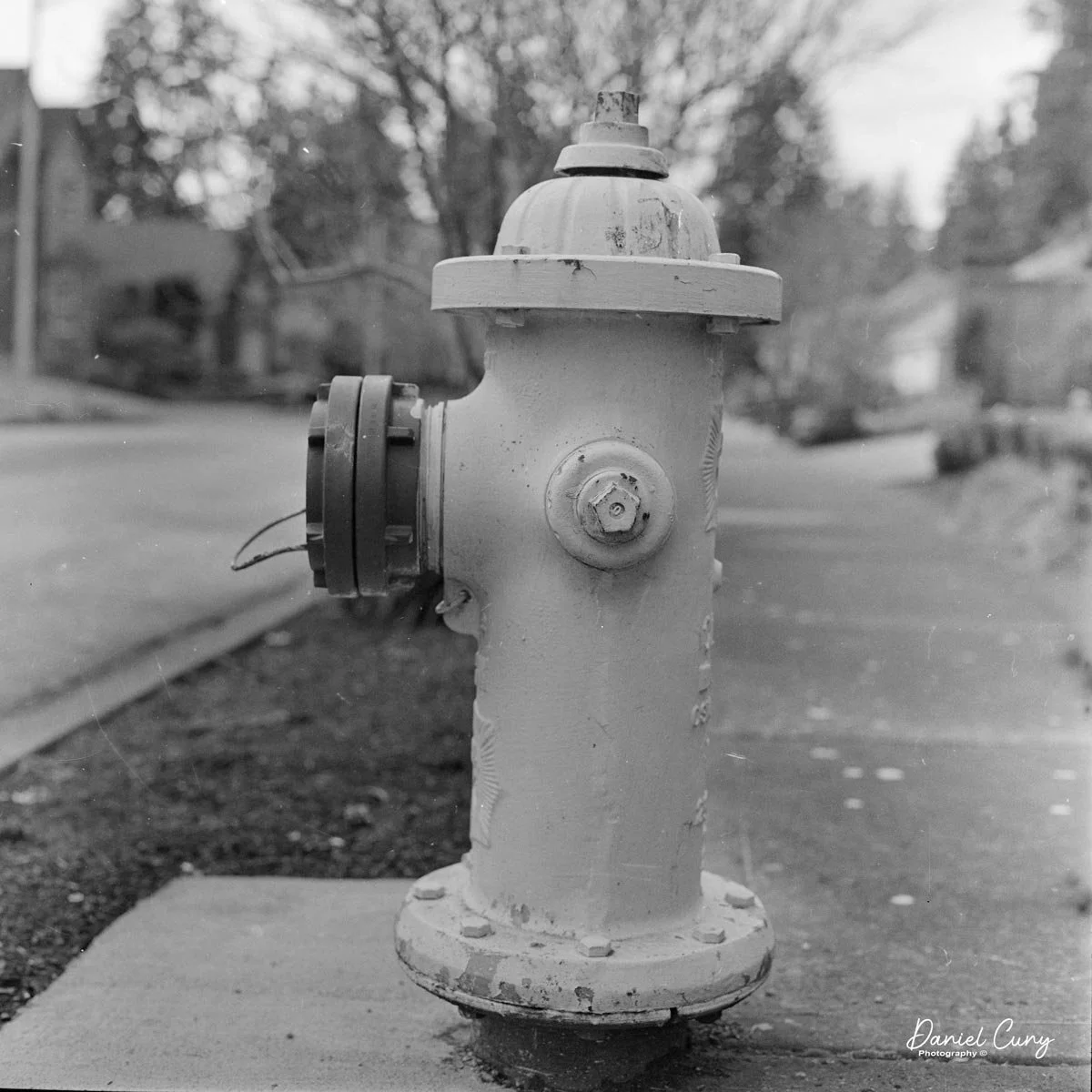
When I finally pulled the SL66 off the shelf this year, I decided not to overthink it. I loaded a roll of film, stepped out into my neighborhood on an uncharacteristically sunny February day in the Pacific Northwest, and treated it like any other camera I'd take for a walk. The first few frames were simple subjects—houses, trees, textures—mainly to get a feel for the shutter sequence, the advance, and how the camera balanced with the L‑grip in hand.

 What struck me almost immediately was how deliberate the camera feels. The weight and long focus throw slow you down in a good way; you don't "spray and pray" with an SL66. Composing on the waist‑level finder is a pleasure: the screen is bright, the magnifier makes critical focusing easy, and the big focus knob lets you land focus precisely rather than hunting back and forth. By the time I finished that first roll, the camera felt intuitive in a way only a well‑designed mechanical tool can.

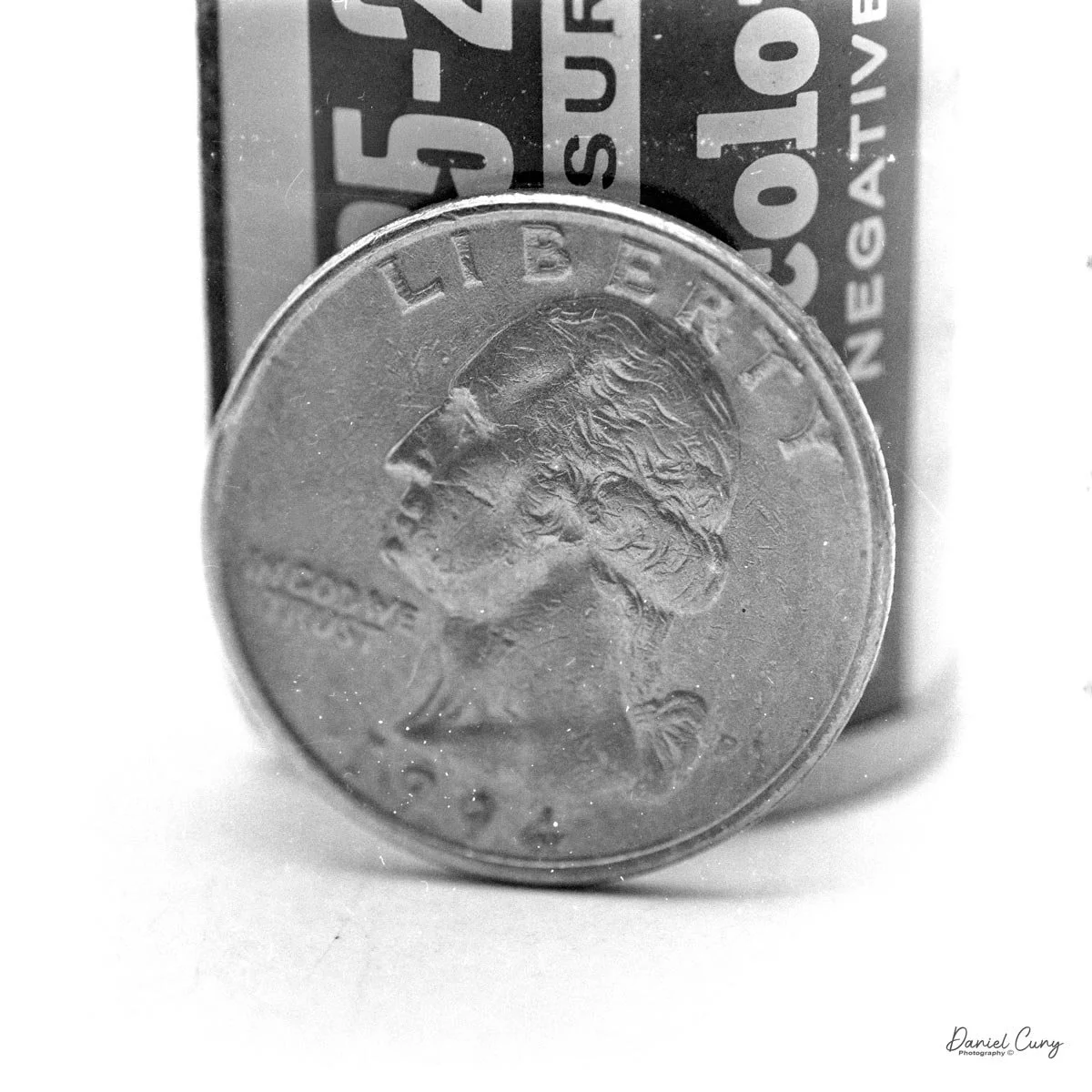
Back at home, I wanted to see what the SL66 could really do in its natural habitat: close‑up work. I set up a small scene with a 35mm film cassette and its box, first focusing as close as I could with the lens in the normal position. Even without reversing the lens, the built‑in bellows let me get in surprisingly tight. Then I flipped the lens around on the double bayonet mount and repeated the setup. The difference in magnification was obvious—the frame filled with the cassette and text on the box —and the tilt function came into its own, letting me hold both the front and top surfaces in focus at a reasonable working aperture.

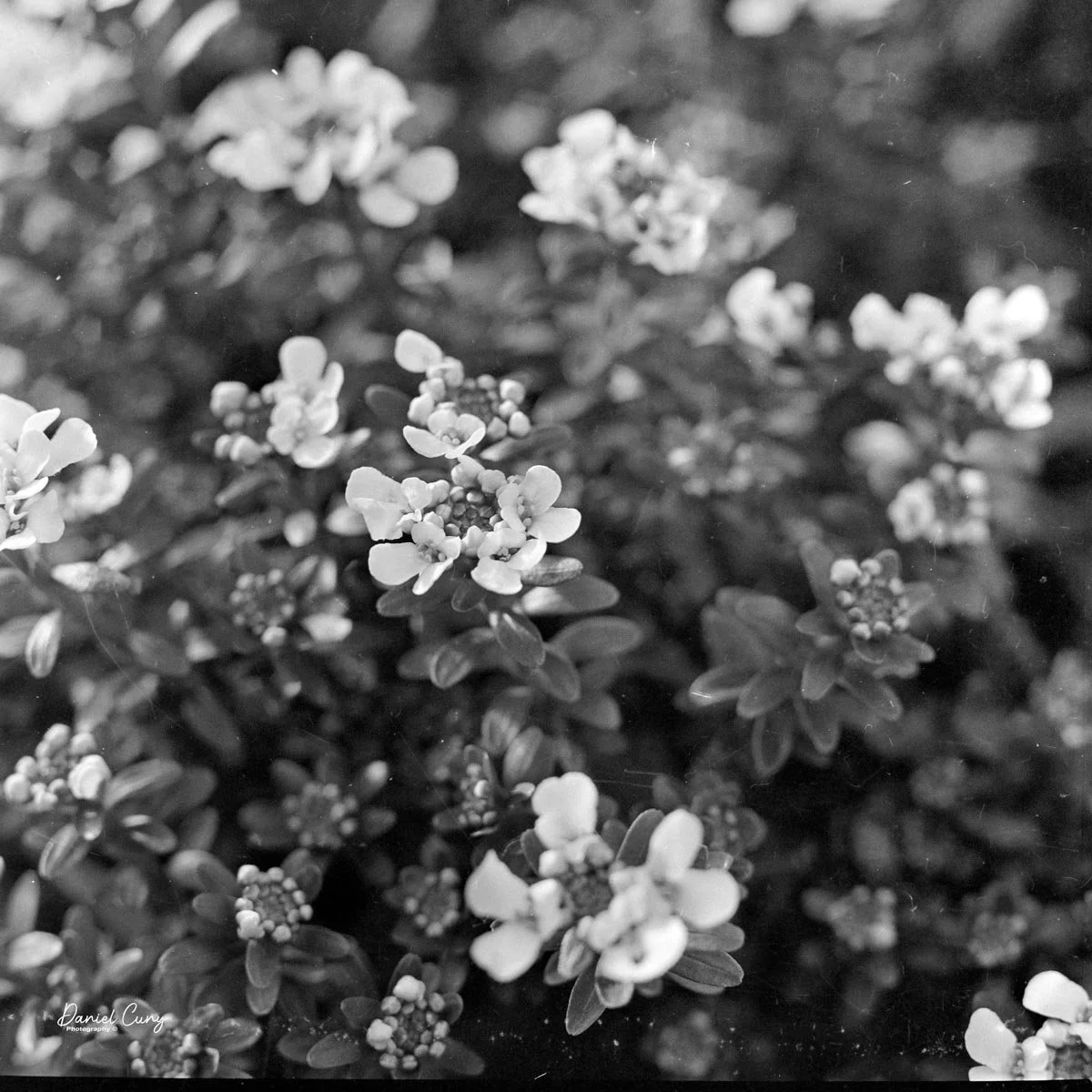
My apologies for the dusty images.

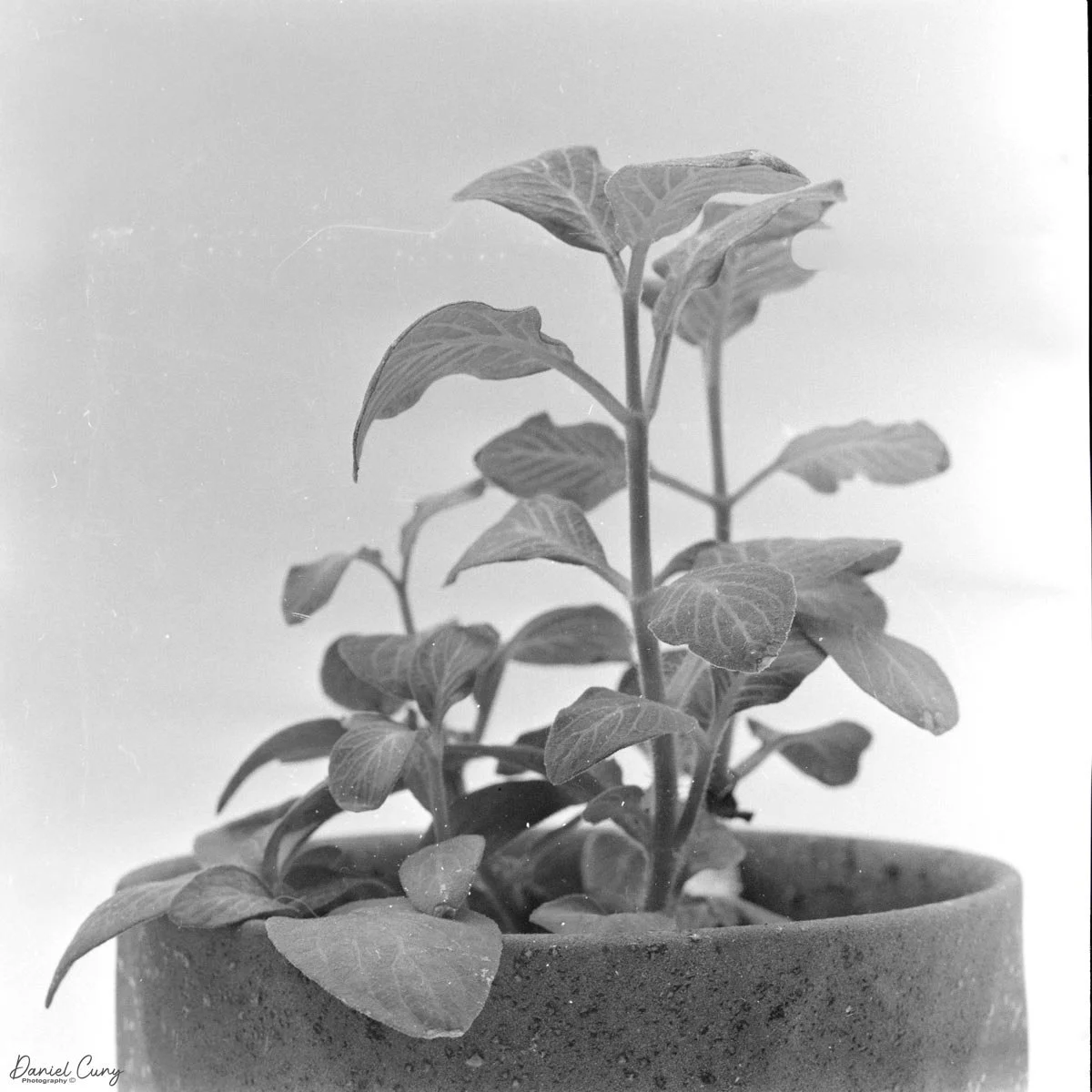
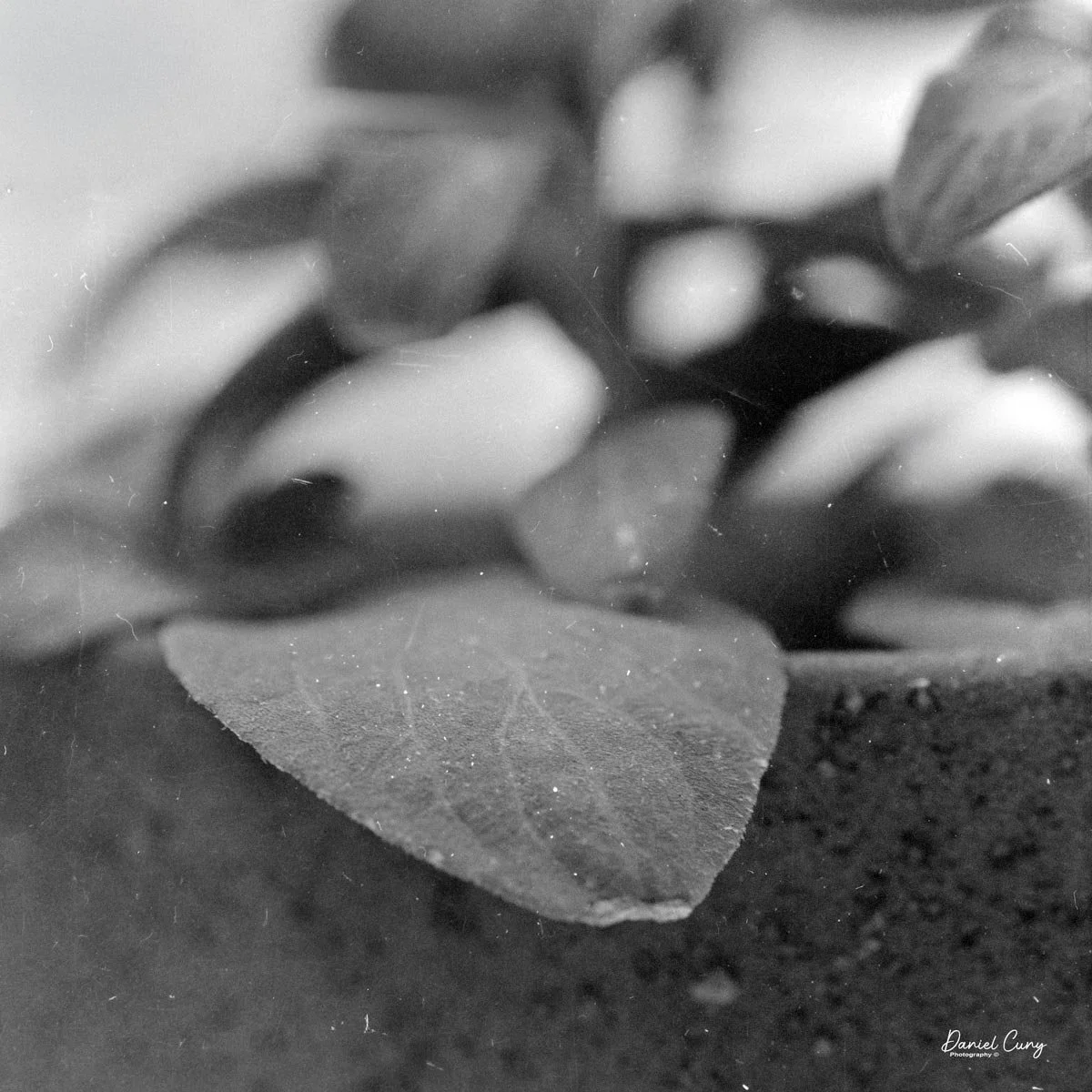
I also pointed the camera at a plant in my office, working closely again. Here, the combination of bellows, tilt, and that Zeiss glass really shone: crisp detail where I wanted it, smooth falloff where I didn't, and a rendering that feels more like a small view camera than a traditional medium‑format SLR. The process is slower than with a modern macro lens and autofocus, but the results—and the experience of making the images—are deeply satisfying.

Conclusion: Is the SL66 the Best Medium‑Format SLR?

In my personal opinion, the Rolleiflex SL66 is the best medium‑format single‑lens reflex camera I've ever used. It isn't the lightest, fastest, or most convenient option, but as a creative tool—especially for close‑up, product, and careful location work—it's truly exceptional.

 Why I let it sit so long is beyond me. The camera is a joy to shoot, and the results justify the effort. Small design touches like the dark‑slide holder, the smart film advance on the back, the generous close‑focusing via bellows, and the ability to reverse lenses for even greater magnification all add up to a macro photographer's dream. The overall build quality, leatherwork, and control layout make it feel every bit the premium instrument it was intended to be.

 That said, it's important to be honest about the downsides. The SL66 is heavy and bulky compared with many 6×6 systems; accessories and lenses can be harder to find and more expensive than Hasselblad equivalents, and the focal‑plane shutter's 1/30 flash sync may be a deal‑breaker for some styles of studio work. It's also an older, complex mechanical camera, which means a good technician and a healthy maintenance budget are essential.

 If you value portability, fast handling, and high sync speeds above all else, there are better choices. But if you're drawn to careful composition, close‑up and tabletop work, and you appreciate a camera that rewards deliberate, thoughtful photography, the Rolleiflex SL66 is tough to beat. It has become one of my favorite medium‑format cameras, and I fully expect it to see regular use.

 Thank you for taking the time to learn about my new favorite medium‑format camera. I'd love to hear your experiences with the SL66—or your questions about this or any of my other camera reviews—and if you're curious about owning one yourself, feel free to stop by my eBay store, Cuny's Cameras and Photos, to see what I currently have available.

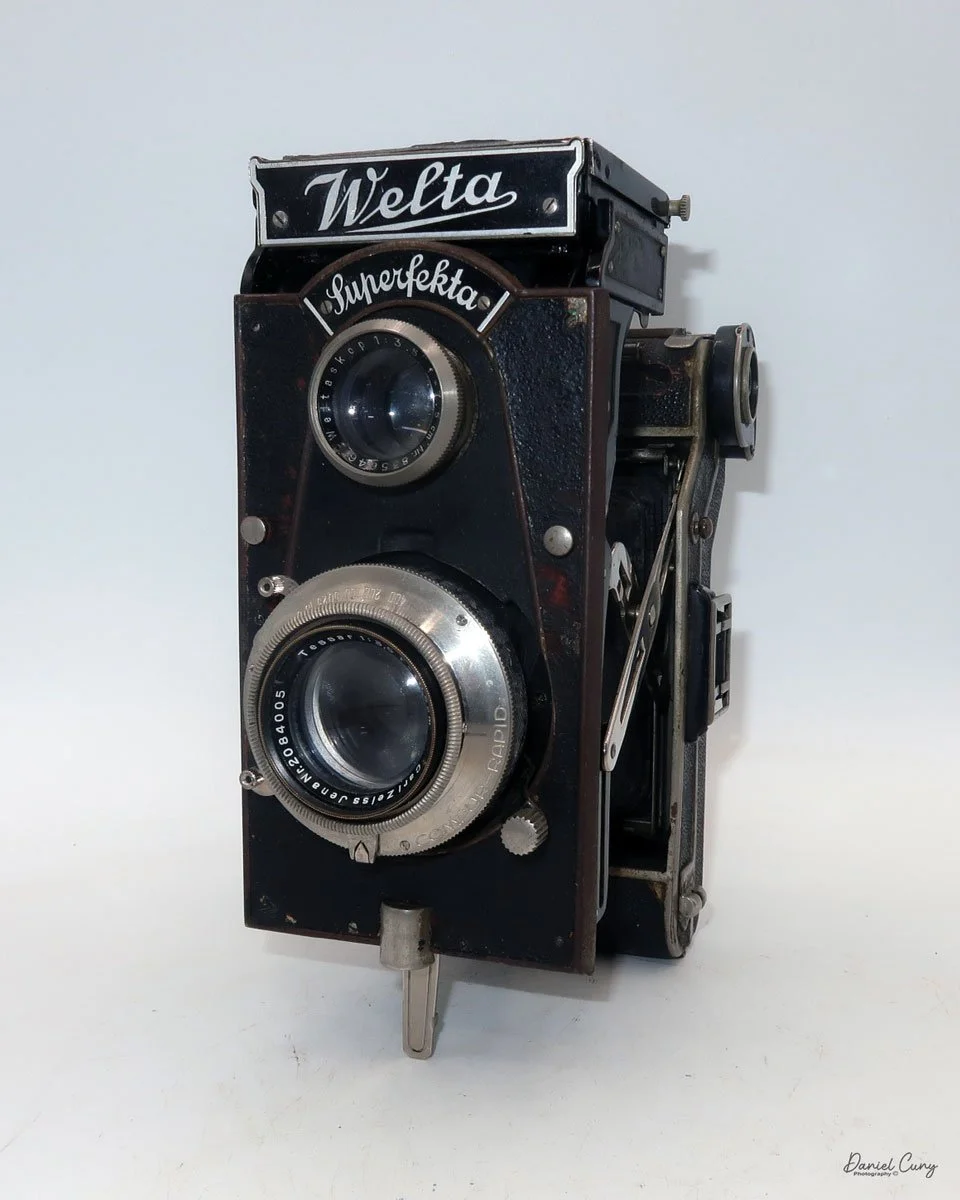
Welta Superfekta

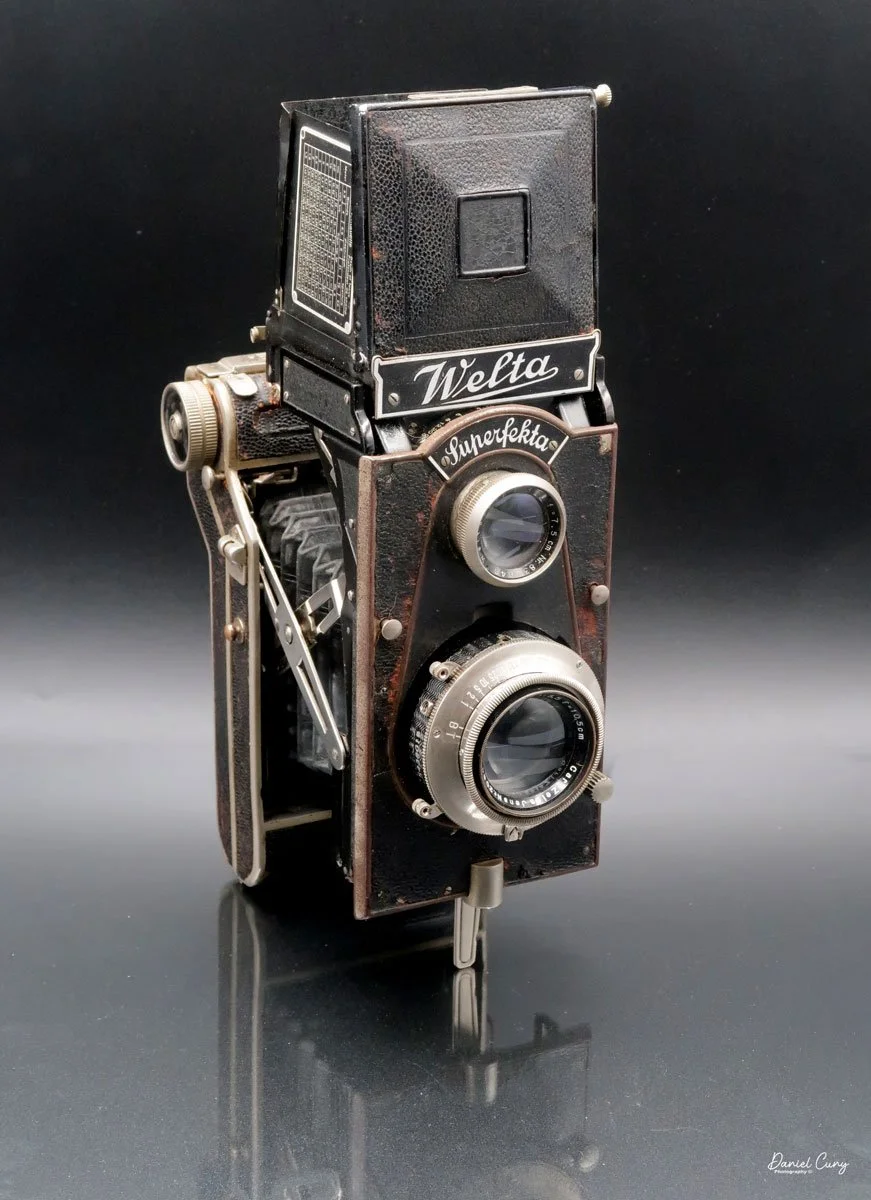
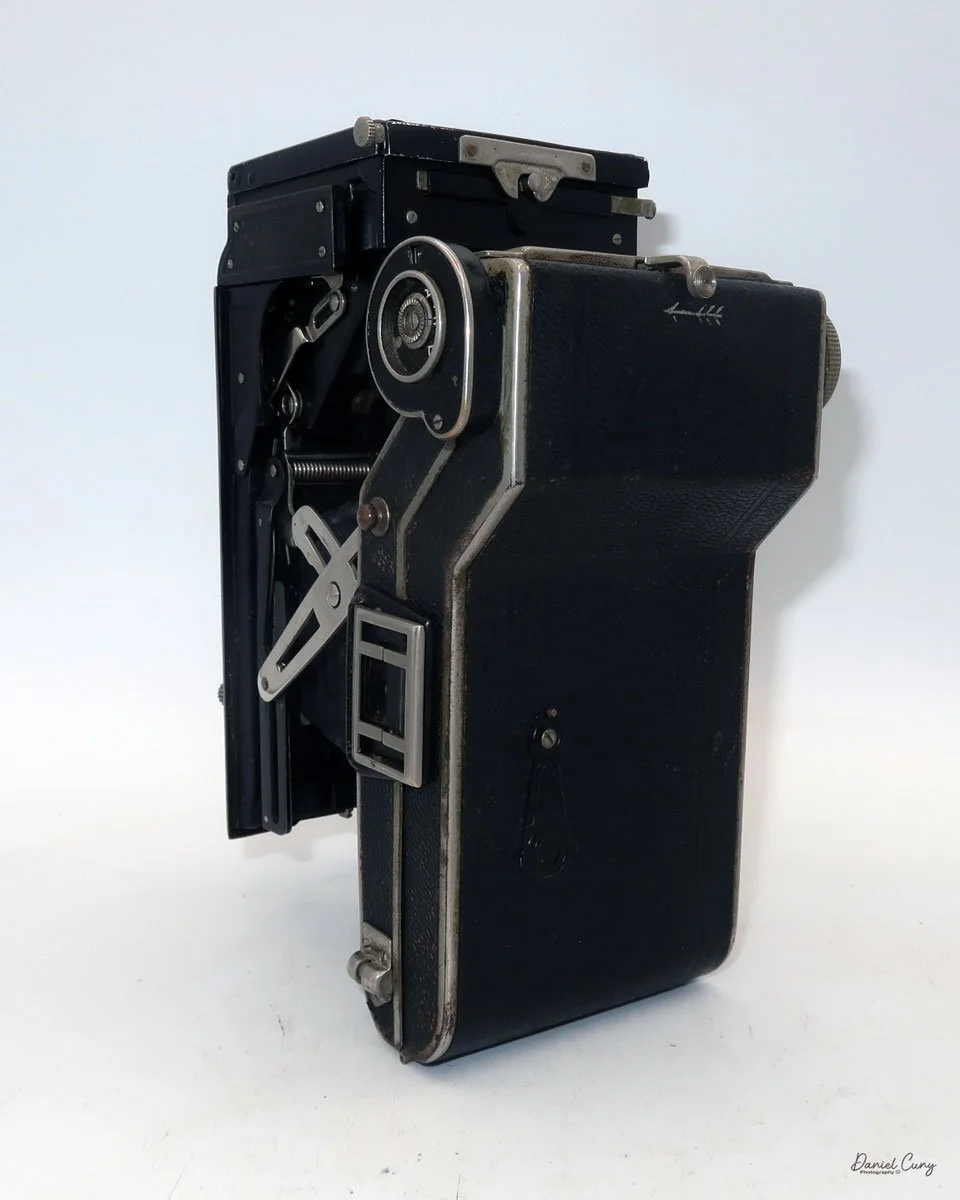
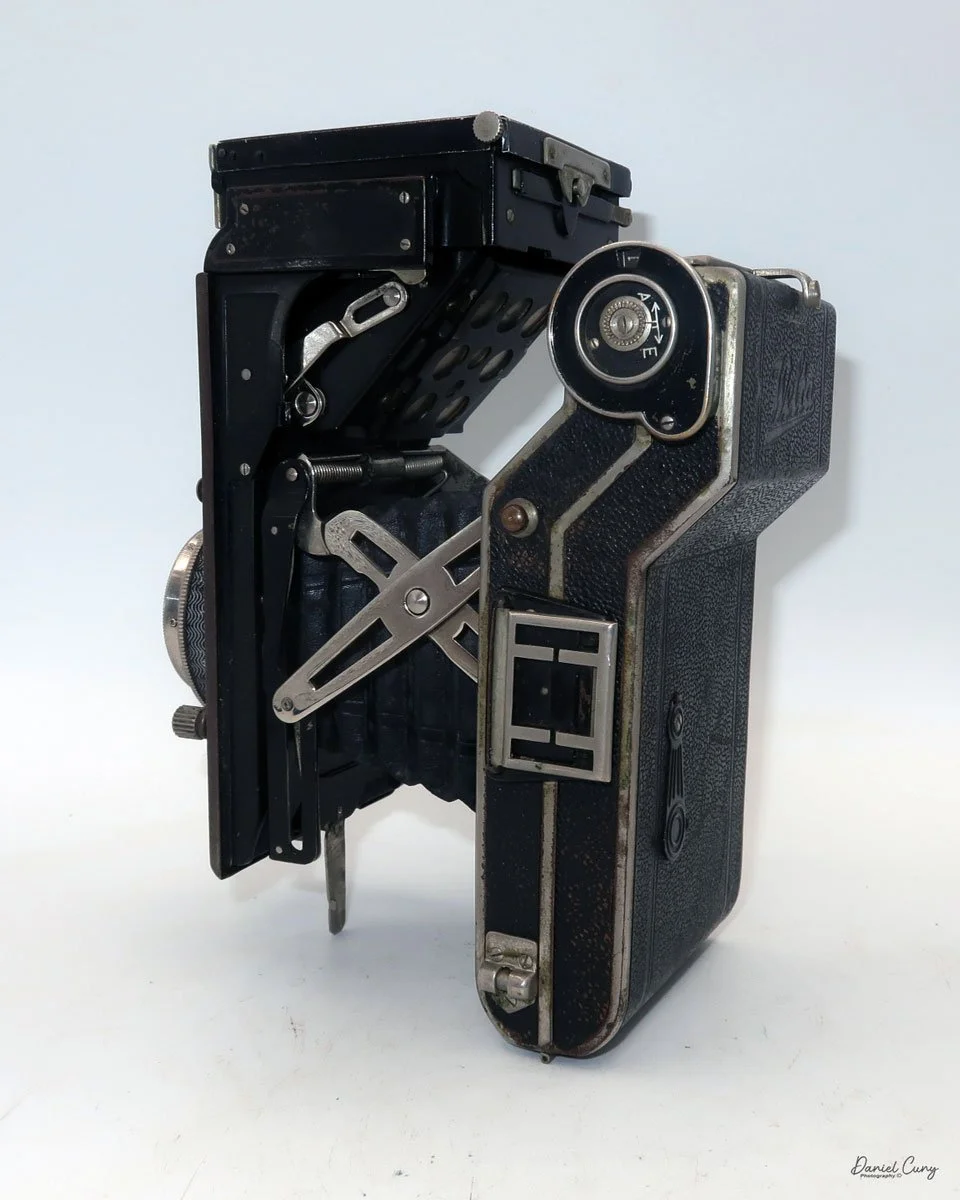
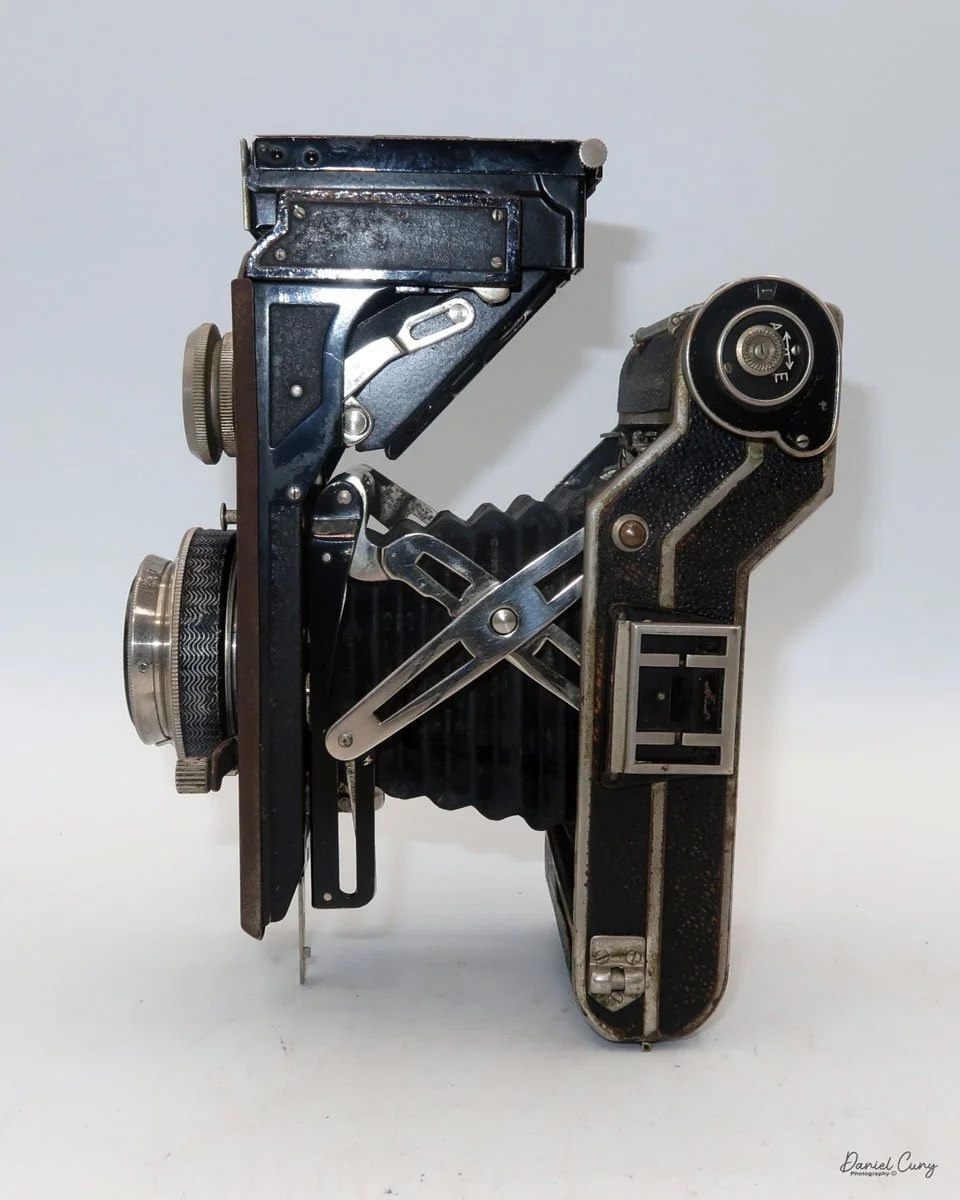
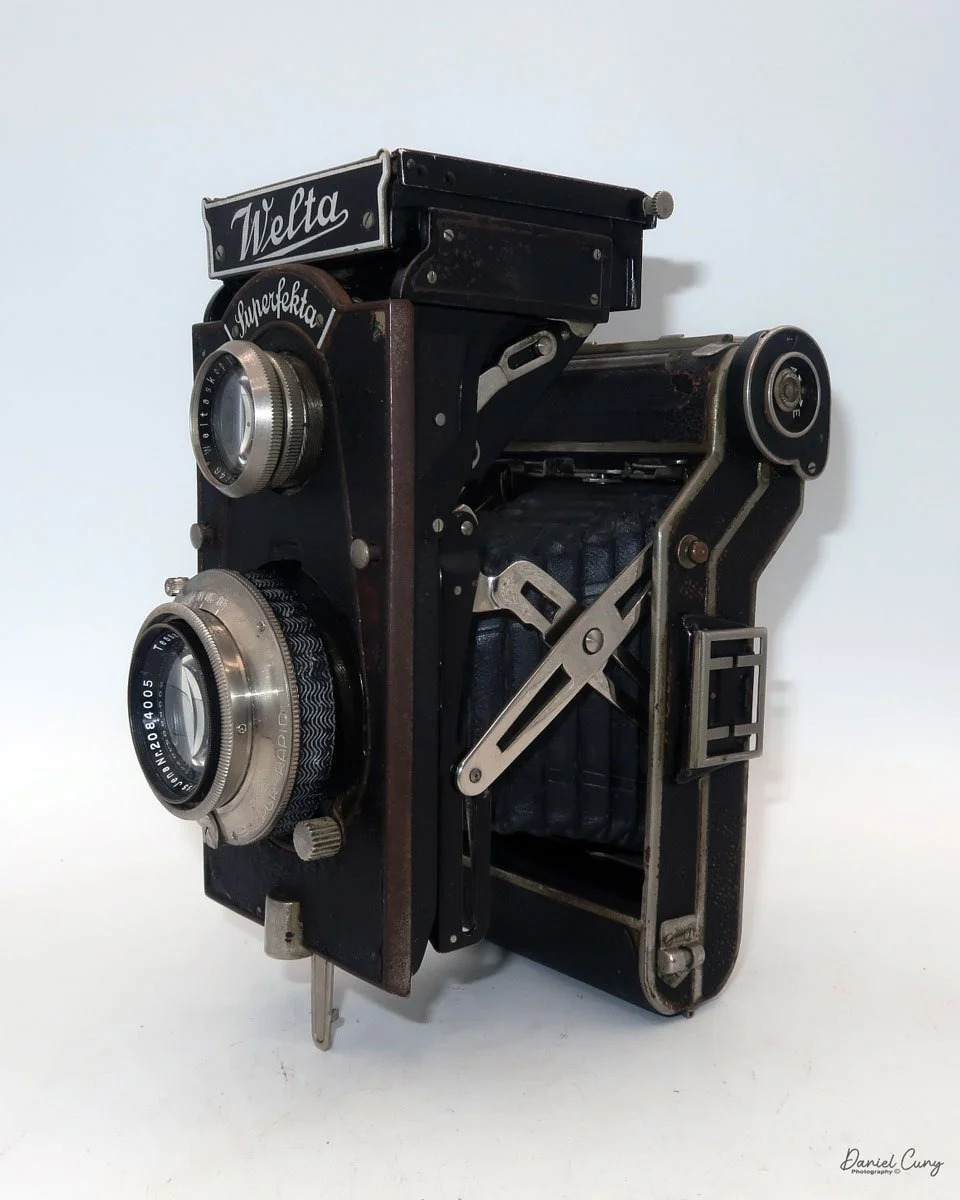
My Welta Superfekta camera

Not being wealthy, my collecting has always been focused on cameras well within our family's financial means. Up until my final ten years of working and before retirement, the cameras I purchased were items you could find at local flea markets and estate sales, or occasionally I made a trade for an item while selling at a camera show where I had a table.

 Being drawn to obscure and unusual cameras and having devoured McKeown's Camera Guide for many years, the Welta Superfekta is one camera I've always dreamed of adding to my collection. Due to its price and relative scarcity in the U.S., it's always been out of reach for me until this past few years.

 It wasn't until I looked at an online camera auction that I found the Welta Superfekta at a price that was not only reasonable but also inexpensive. Online, the camera looked in good to decent condition, but they said the shutter was erratic. To me, those words mean I'll need to send the camera in for a shutter repair, which isn't too uncommon for a camera reaching 100 years old. 

 I purchased the Welta Superfekta online, and when the camera arrived, as suspected, its shutter was extremely sluggish and needed to be CLA'd. I reached out to the person I usually send cameras for servicing, and he confirmed he could service the shutter but wasn't sure about other areas of the camera, as he wasn't too familiar with it.

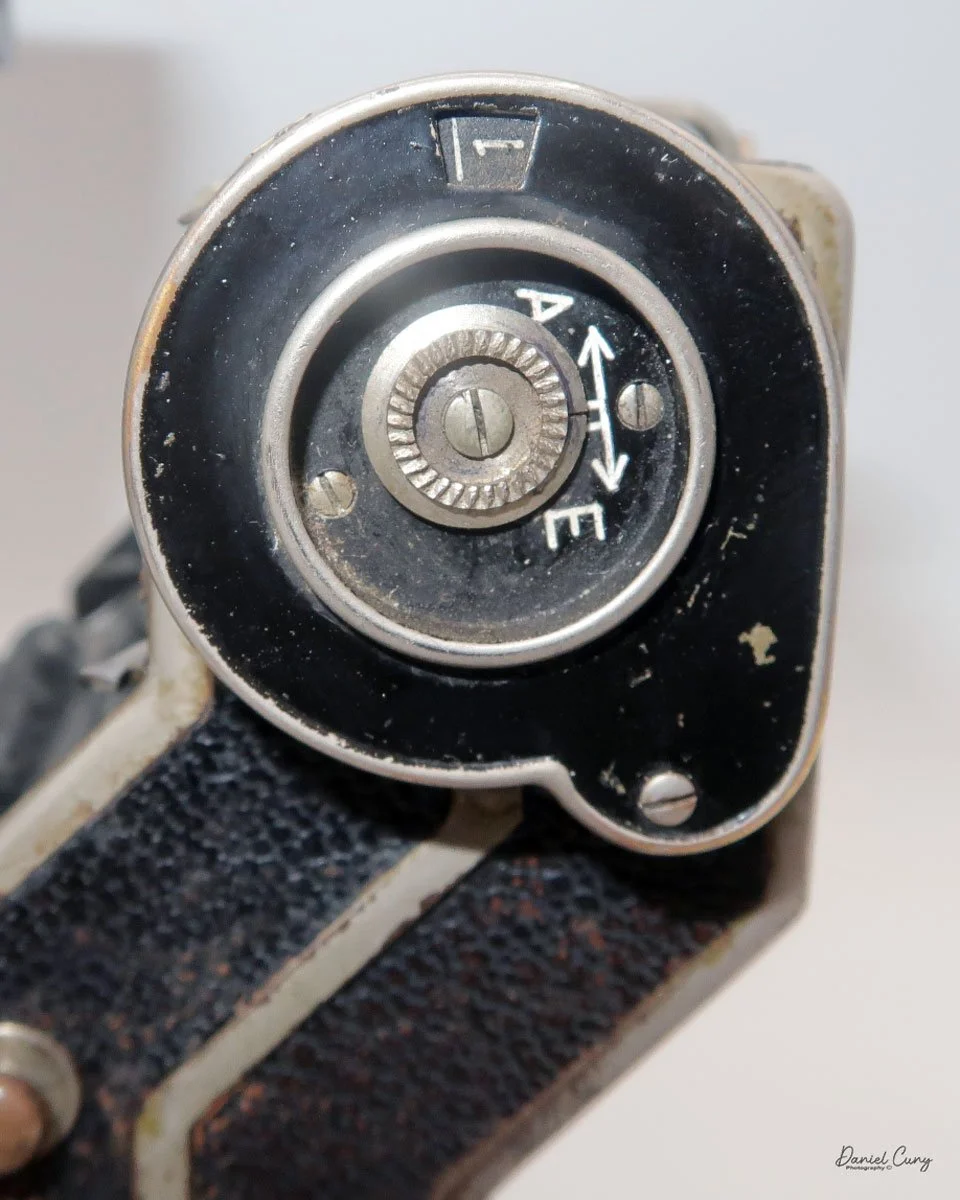
The excitement of adding the Welta Superfekta to my collection was wonderful, especially since it's a 6x9 cm-format camera that takes 120 film. Still, the more exciting part of the camera is that it's very similar to the Cornu Ontoflex, which has a rotating back, allowing the photographer to shoot both vertically and horizontally without turning the camera sideways. Just rotate the back from vertical to horizontal and flip the image orientation, as with the Mamiya RB67.

 The one thing I noticed when I turned my camera from vertical to horizontal is that the back doesn't turn all the way, which makes me curious about its history. This flaw, while concerning, adds character and a story to the camera, resonating with collectors who appreciate Imperfections.  

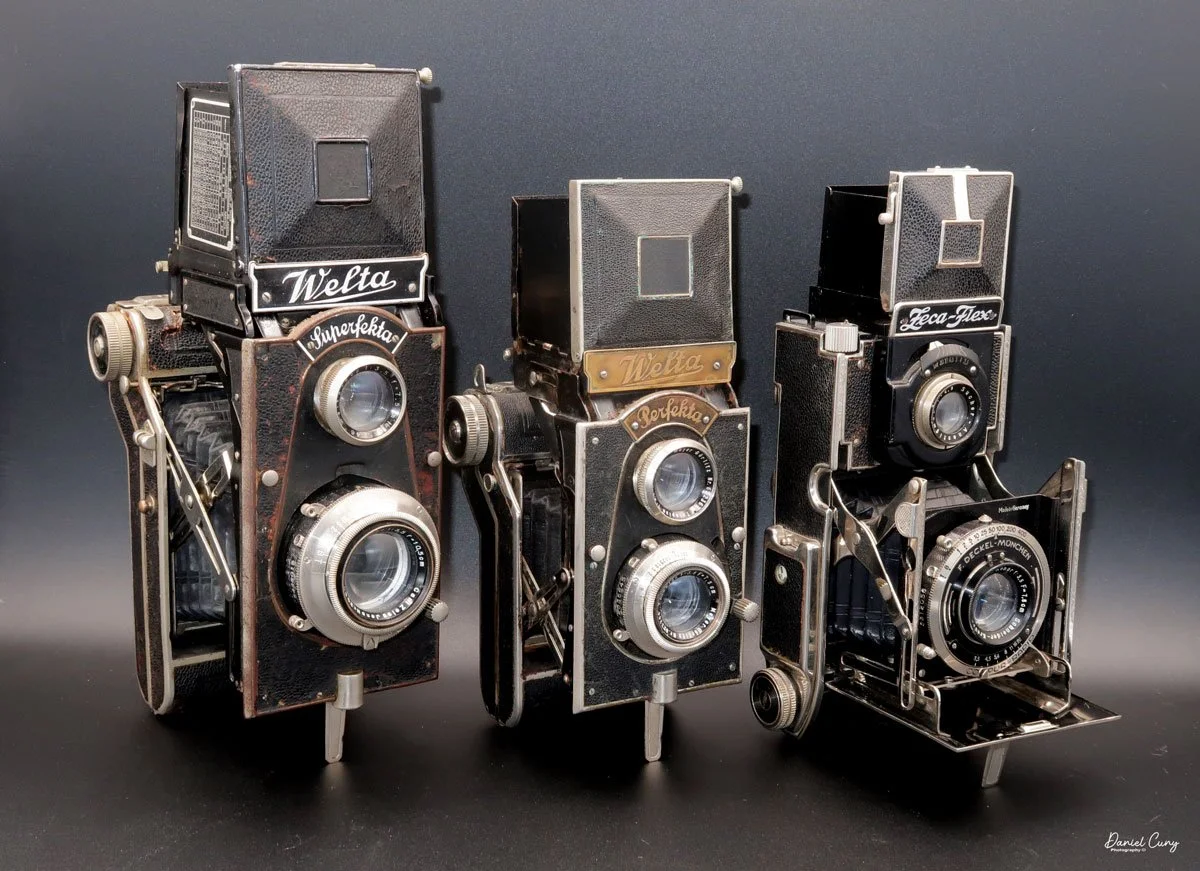
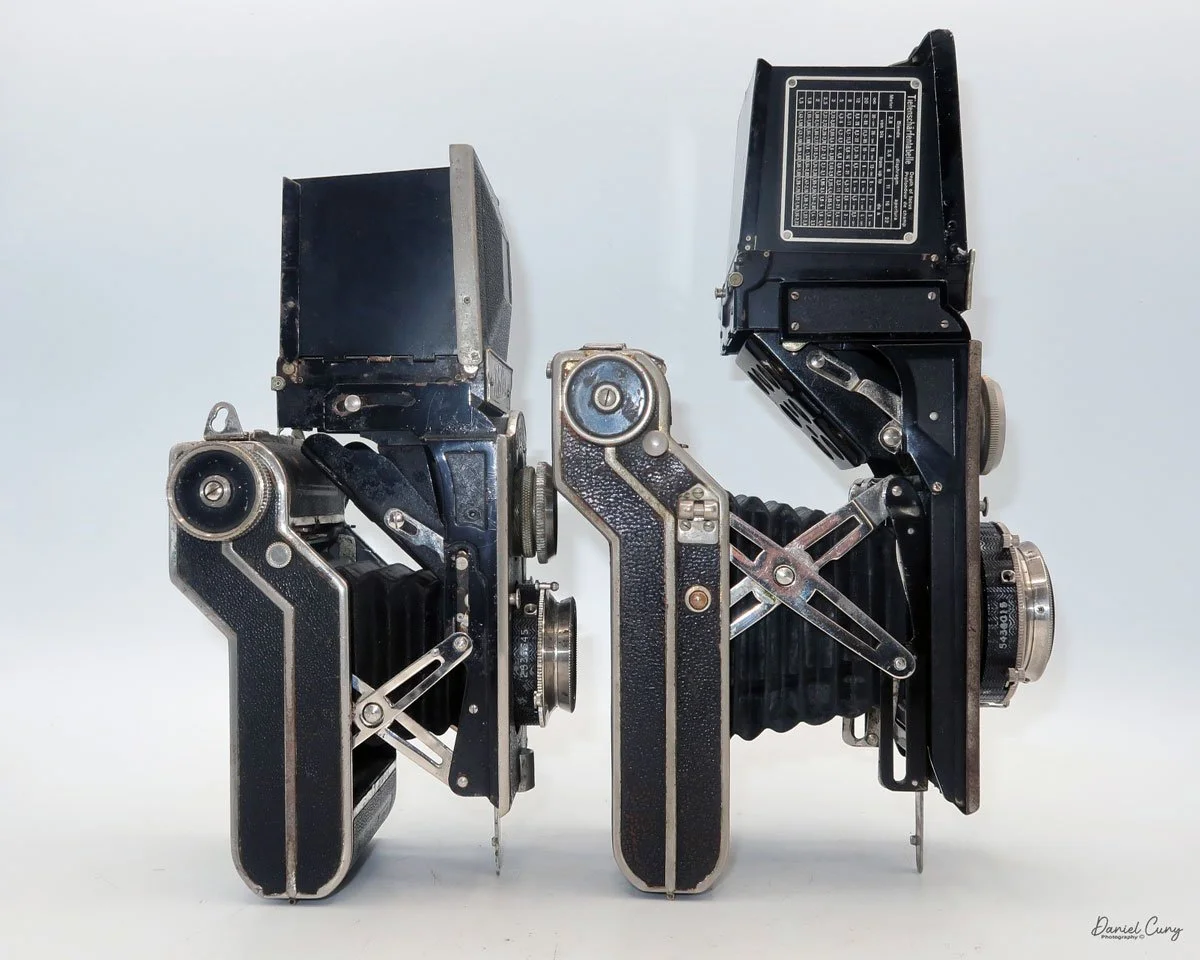
Another reason for my excitement to add the Welta Superfekta to my collection is that it would be the third folding Twin Lens camera in my collection. I had already purchased and written about both the Welta Perfekta and the Zeh Zeca-Flex cameras, making this the “Trifecta” of this camera style.

Welta Superfekta, Perfekta and Zeh Zeca-Flex camera.

Welta before World War II:

 The history of Welta Kamerawerke leading up to World War II is a testament to the rapid innovation and high-precision craftsmanship that defined the German photographic industry in the early 20th century. Founded in 1914 by Walter Waurich and Theodor Weber in Freital, near Dresden, the company began as "Waurich & Weber" before adopting the "Welta" brand name that would eventually become synonymous with high-end folding cameras.

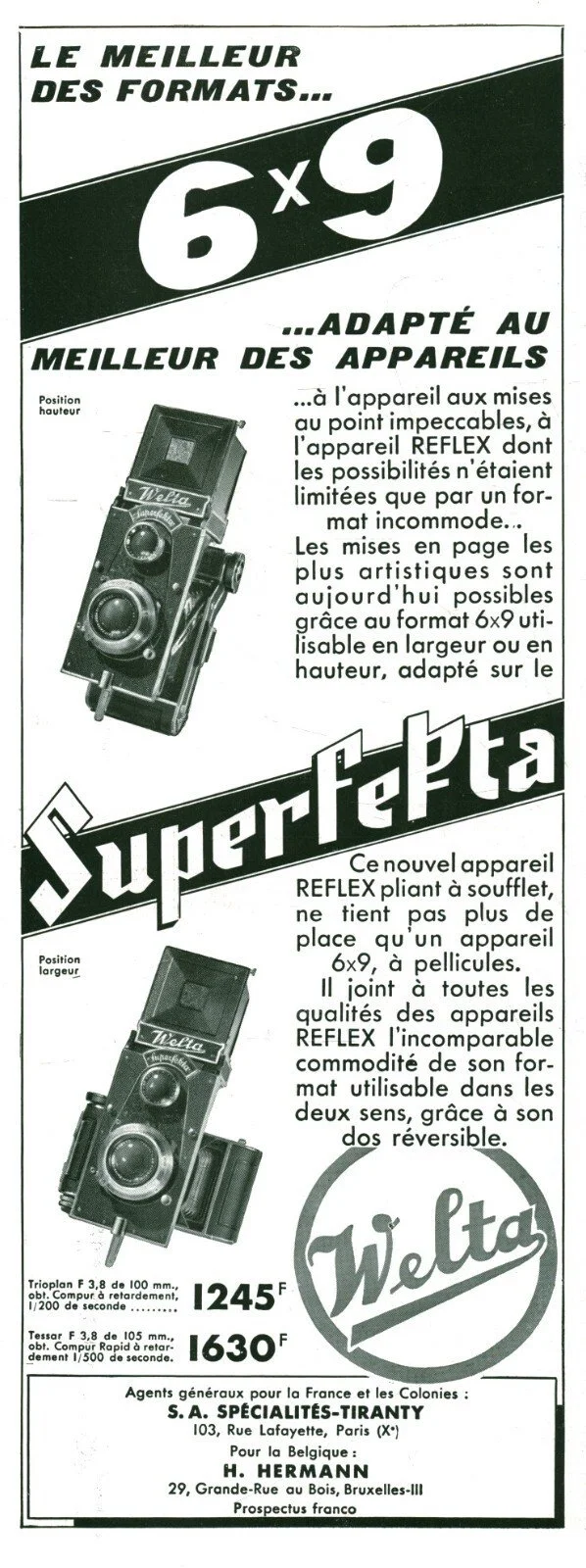
French ad for the Welta Perfekta and Superfekta cameras

 In its first decade, Welta focused on the transition from heavy glass-plate cameras to the more versatile roll-film formats. By the 1920s, Freital and the surrounding Dresden area had become the global epicenter of camera manufacturing, and Welta held its own against giants like Zeiss Ikon. Their early success was built on the folding camera—a design that allowed a high-quality lens and shutter to collapse into a slim, leather-covered metal body.

 The 1930s marked Welta's "Golden Era." During this decade, the company moved beyond standard designs to create some of the most mechanically complex cameras ever made. While competitors were focusing on the emerging 35mm trend, Welta mastered the 120 roll-film market with innovative models like:


  • The Weltur: A rangefinder folding camera known for its incredible build quality and integrated viewfinders.

  • The Perfekta and Superfekta: These folding Twin Lens Reflex (TLR) cameras were engineering marvels, offering the ground-glass focusing of a studio camera in a portable, collapsing frame.

  • The Welti: A foray into the 35mm market that proved Welta could compete with the Leica in terms of precision and optics, often featuring high-end Carl Zeiss Jena or Schneider lenses.

 Welta's pre-war philosophy was to offer a variety of price points without sacrificing mechanical integrity. You could find a simple Welta Trio for the casual hobbyist, or a Superfekta with a rotating back for the professional who demanded perfection. This versatility allowed Welta to export heavily to the UK and the United States, where their cameras were often rebranded for local retailers.

 By the late 1930s, Welta was a premier name in photography. However, as Germany shifted toward a war economy, production began to pivot away from consumer optics. After the war, Freital was part of the Soviet occupation zone (later East Germany), and Welta was eventually absorbed into the state-owned VEB Pentacon, marking the end of its era as an independent, family-founded innovator.

My Camera:

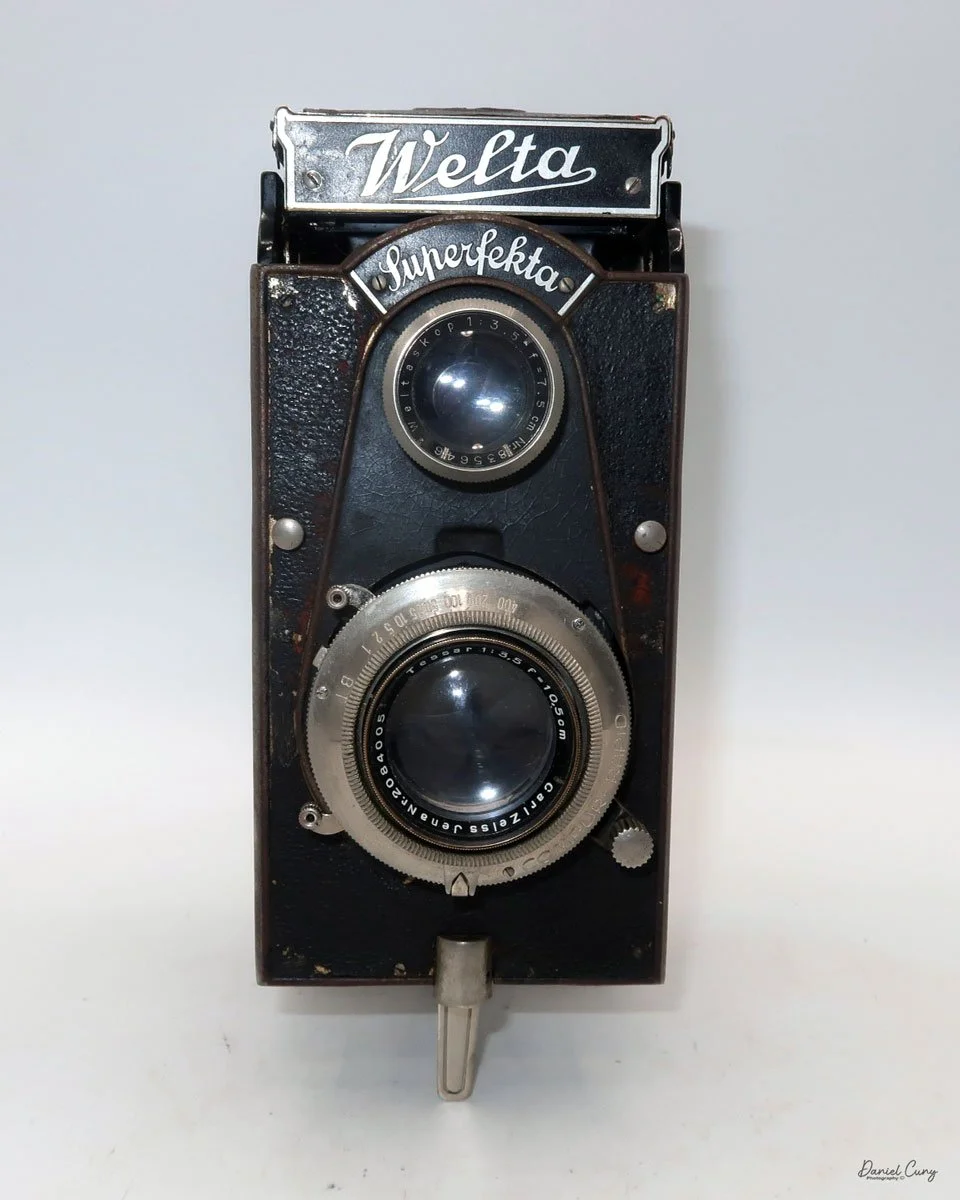
 My Welta Superfekta camera is 7.5" tall without the light chimney opened, and 10" with it opened, by 4" wide, and 3.5" deep with the body retracted, and 6.25" deep when the body of the camera is extended. The camera weighs 3 pounds, 0.2 ounces without film, so it has some heft.

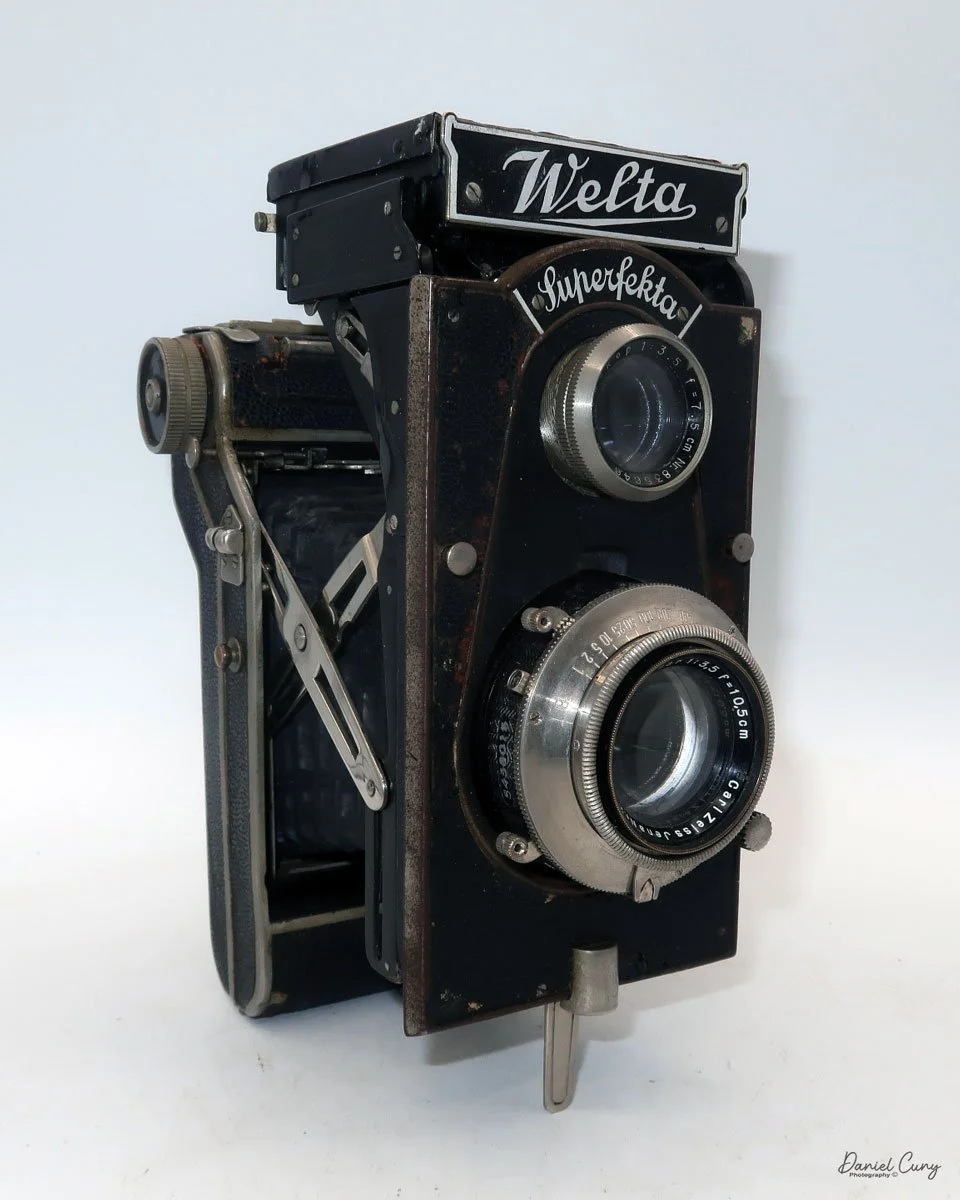
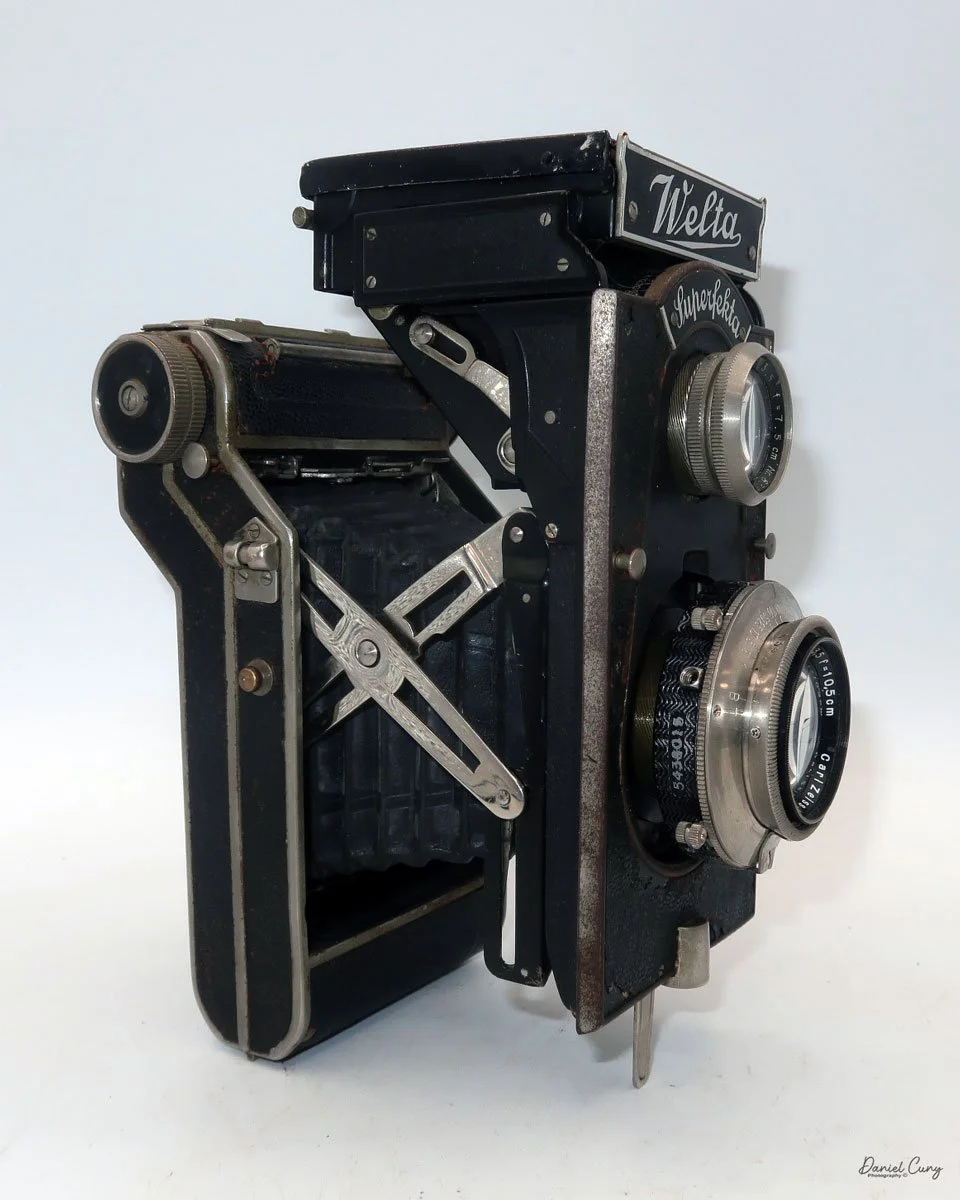
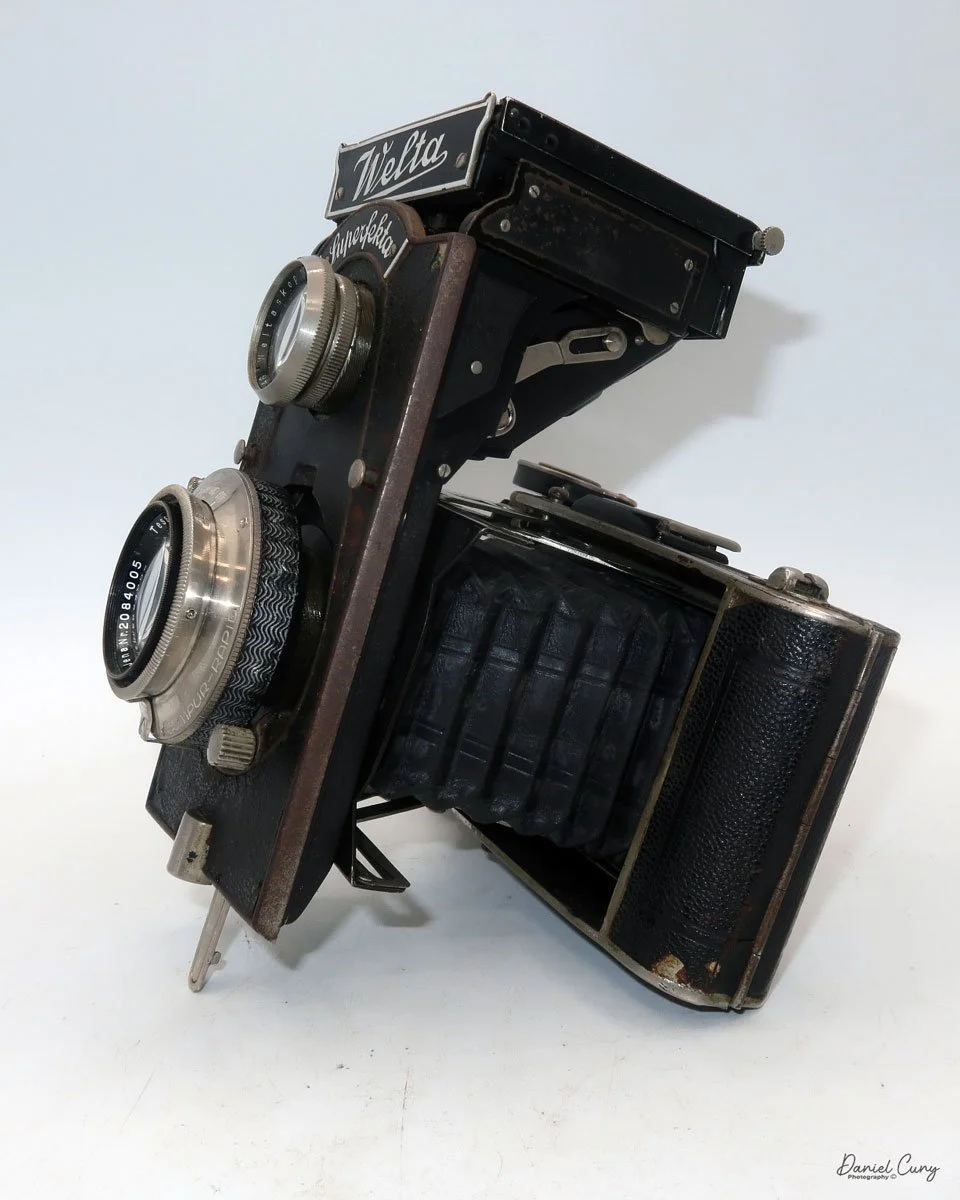
To extend the camera body away from the film chamber, press the silver button on the right side of the camera body, located just below the film winding lever. Pressing the button quickly extends the camera lens area, and you'll be able to see the bellows. By doing so, you'll see how the camera gets its name, a folding twin-lens camera. When I extended the camera's front from the rear, I noticed the bellows were in excellent light-tight condition.

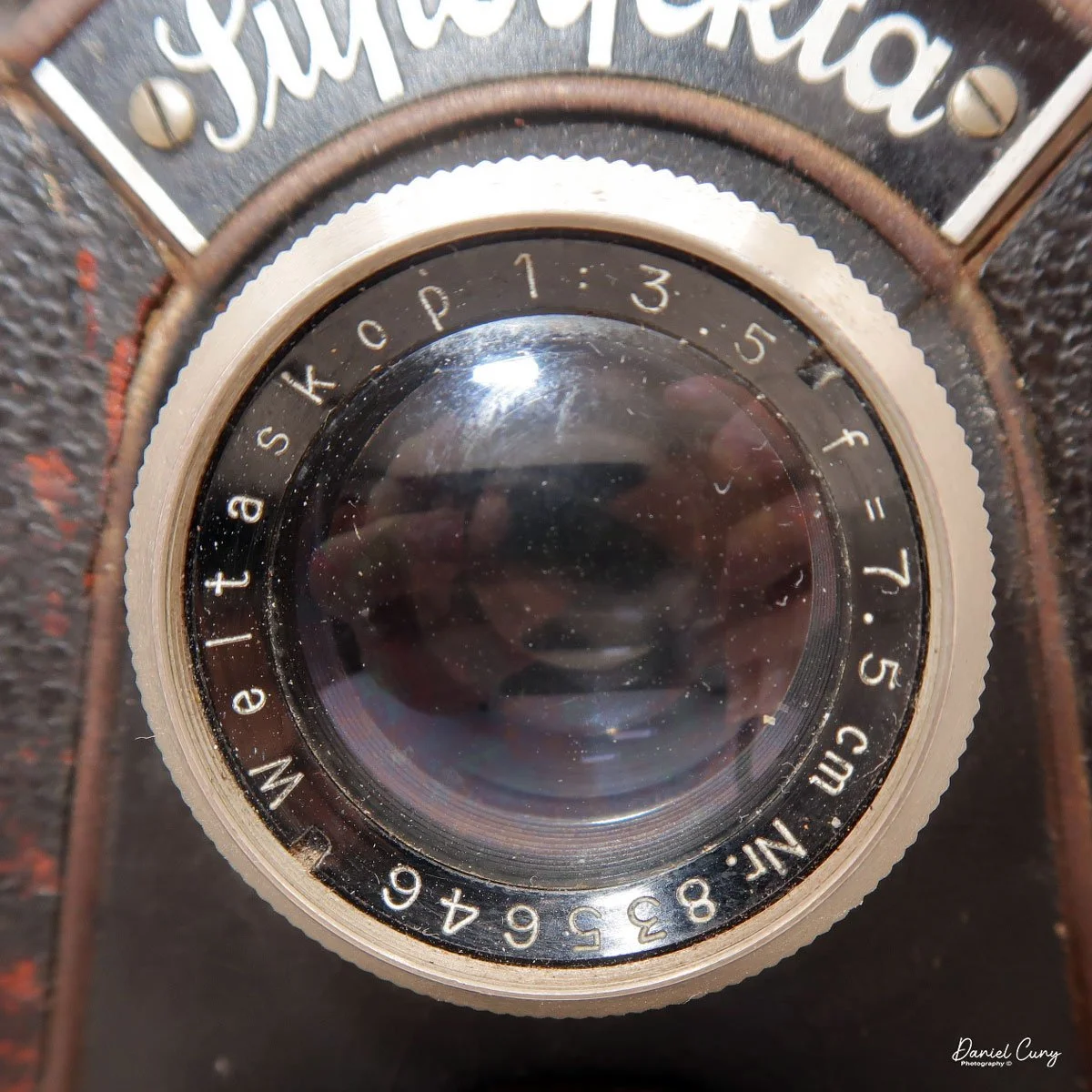
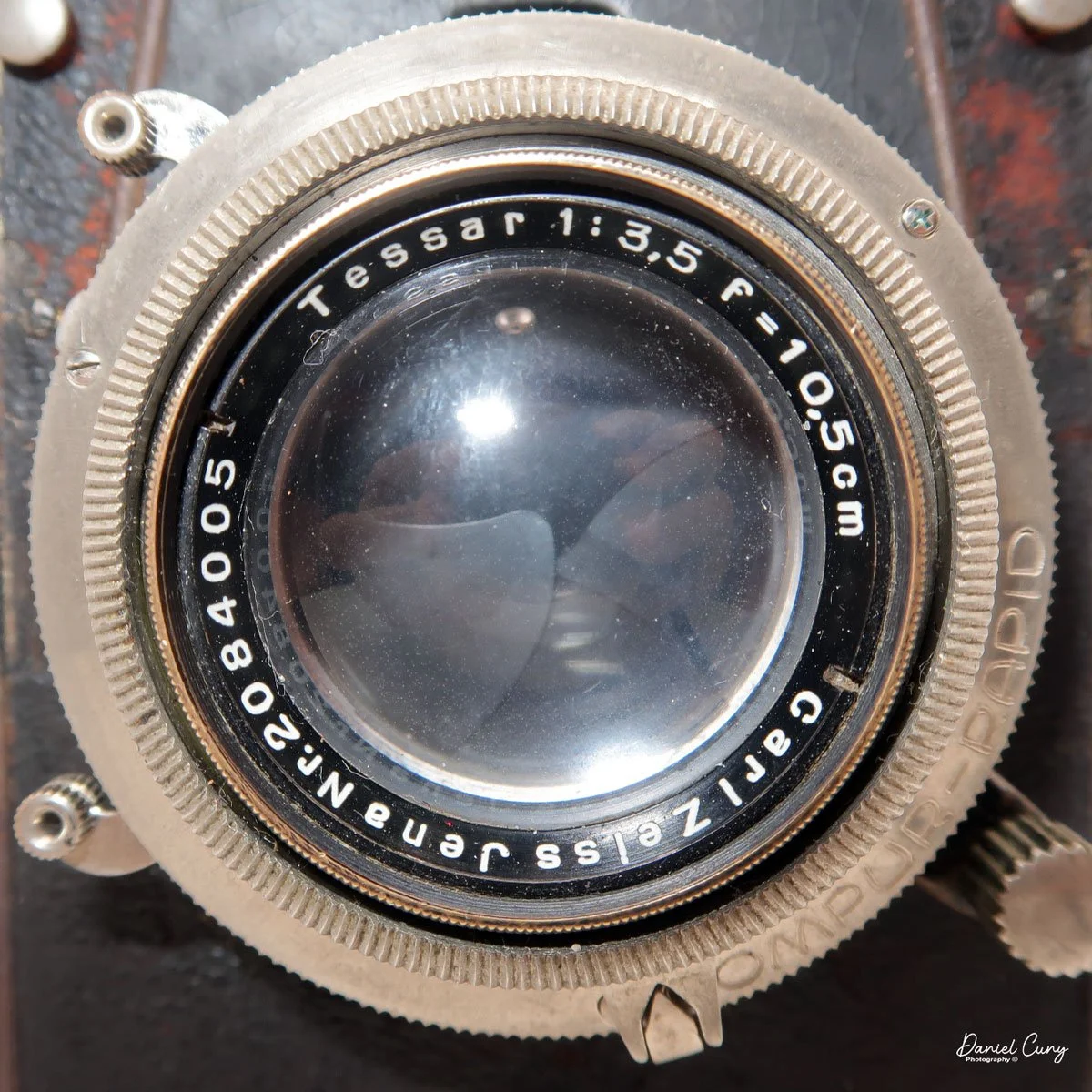
 My camera has a 7.5cm f/3.5 Weltaskop viewing lens, along with a Carl Zeiss Jena 10.5 F/3.5 Tessar taking lens, so the viewing lens is wider than the taking lens, and the taking lens is in a Compur-Rapid shutter with shutter speeds from 1/400 to 1 sec. along with "B", and "T". The focus lever is located on the left side of the lens when you're holding the camera, and it slides up and down to focus on your subject. 

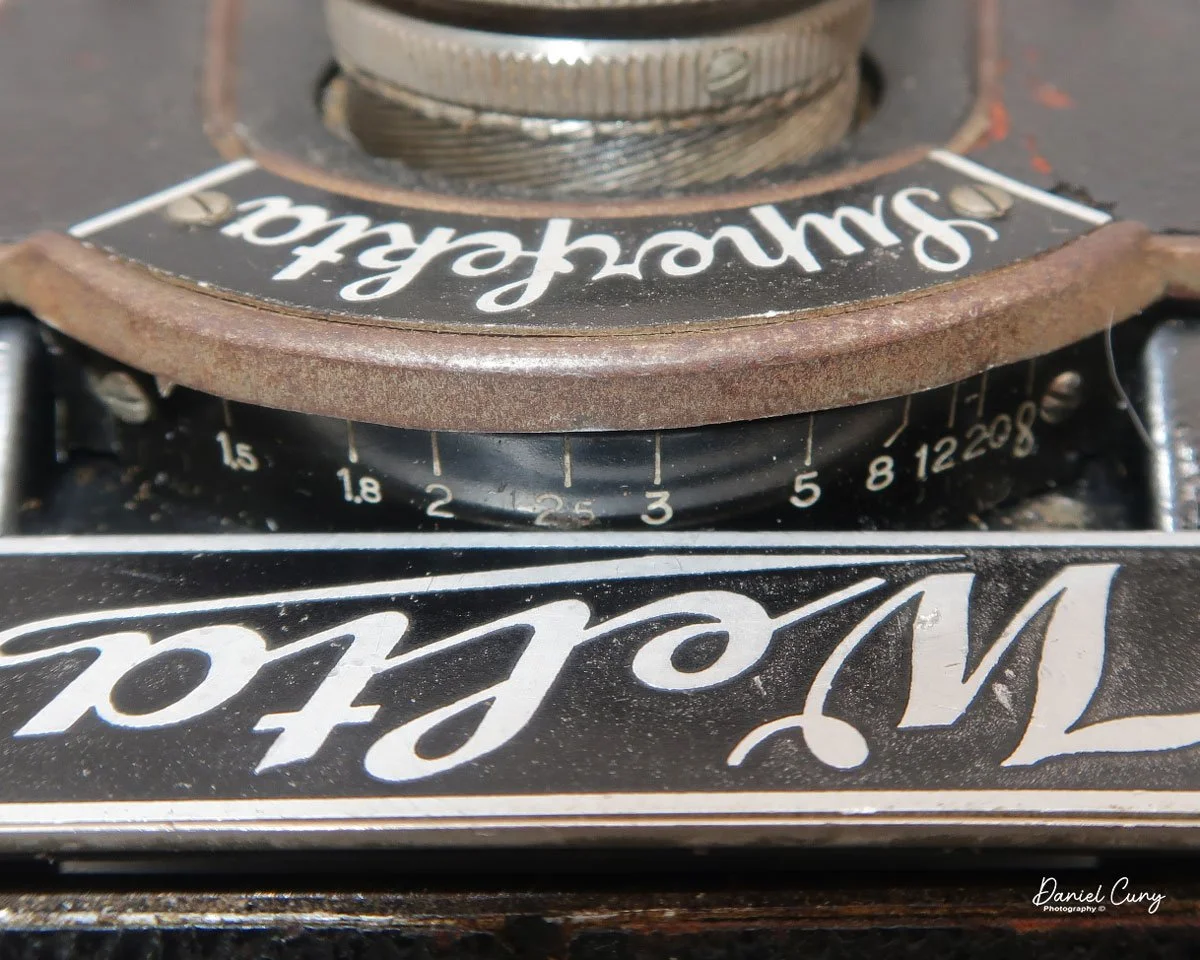
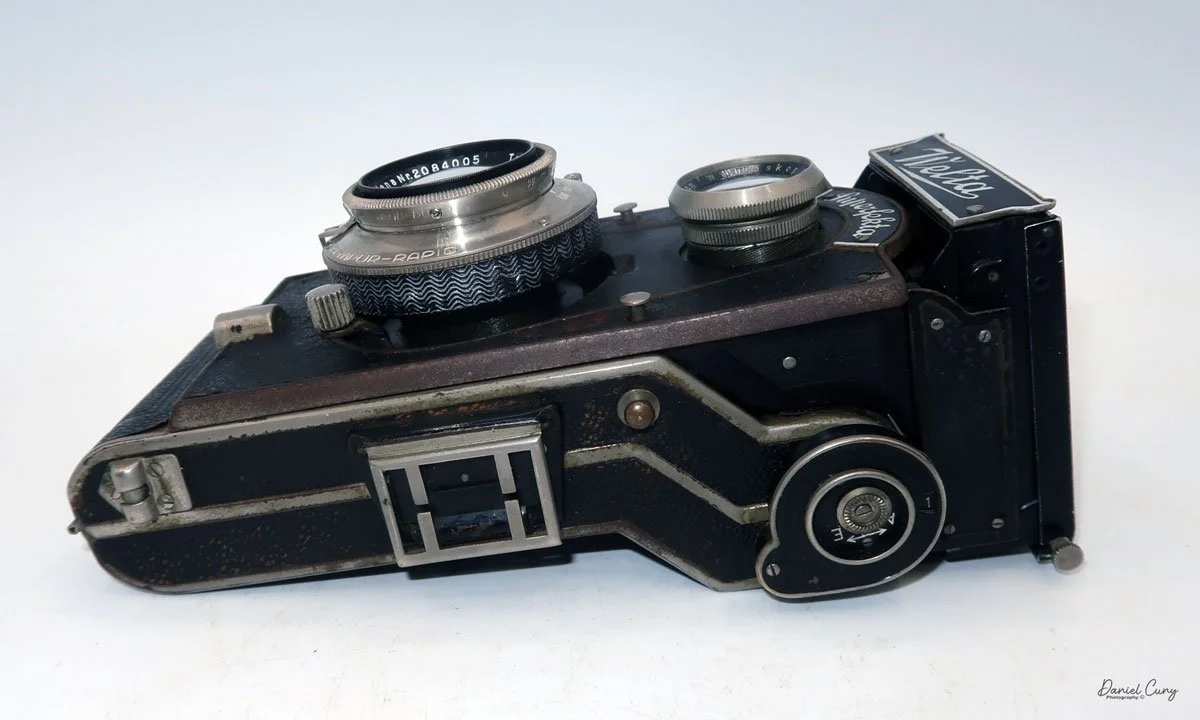
There is also a focus scale along the top of the camera, between the Welta sign on the film body and the Superfekta sign on the lens area. As you slide the focus lever up and down, you'll see a triangle move from side to side, indicating the distance to the subject on the focus scale, which is in meters.

 Along the back of the camera, by the viewfinder, there is a button to press to open the light chimney. The light chimney popped up, and along one side is a depth-of-field scale for the camera, and on the front is the magnifying lens, which flips as it should. 

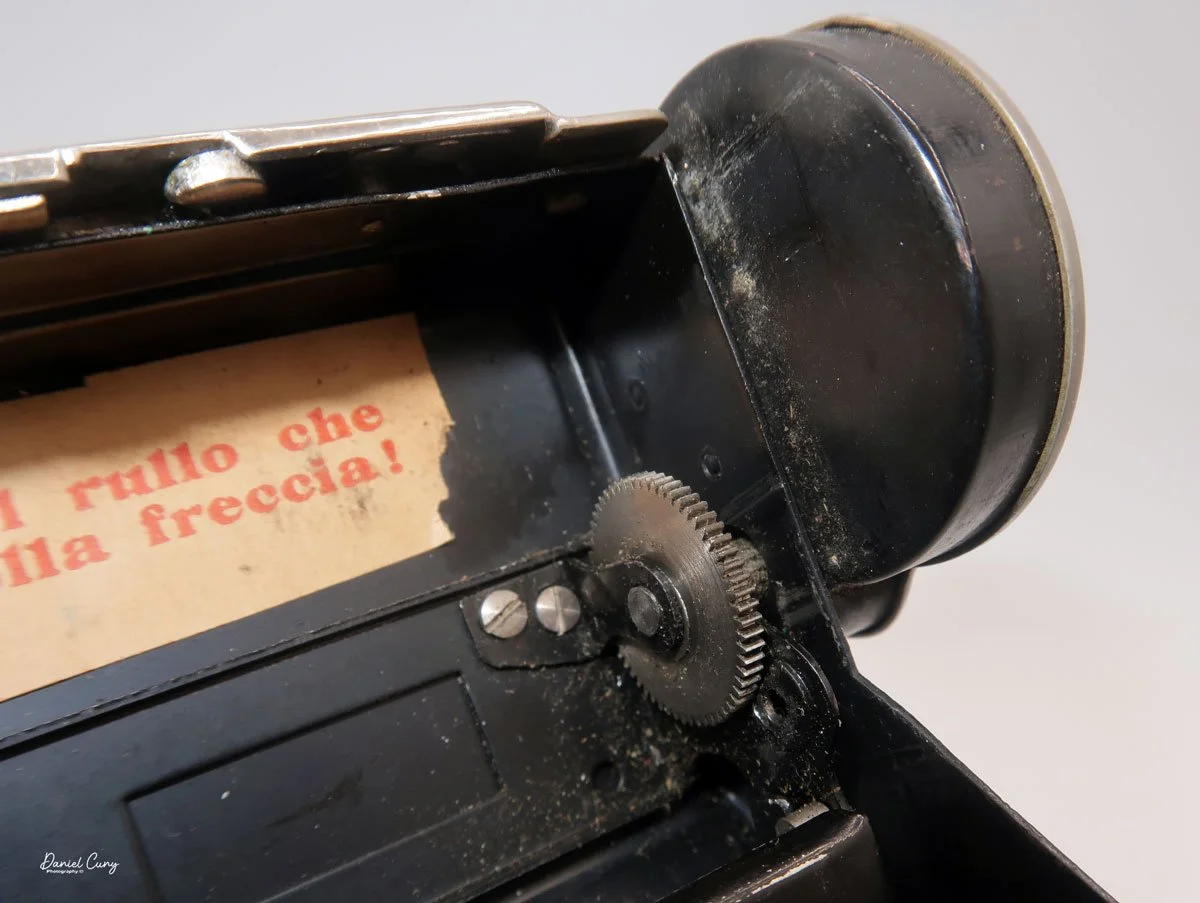
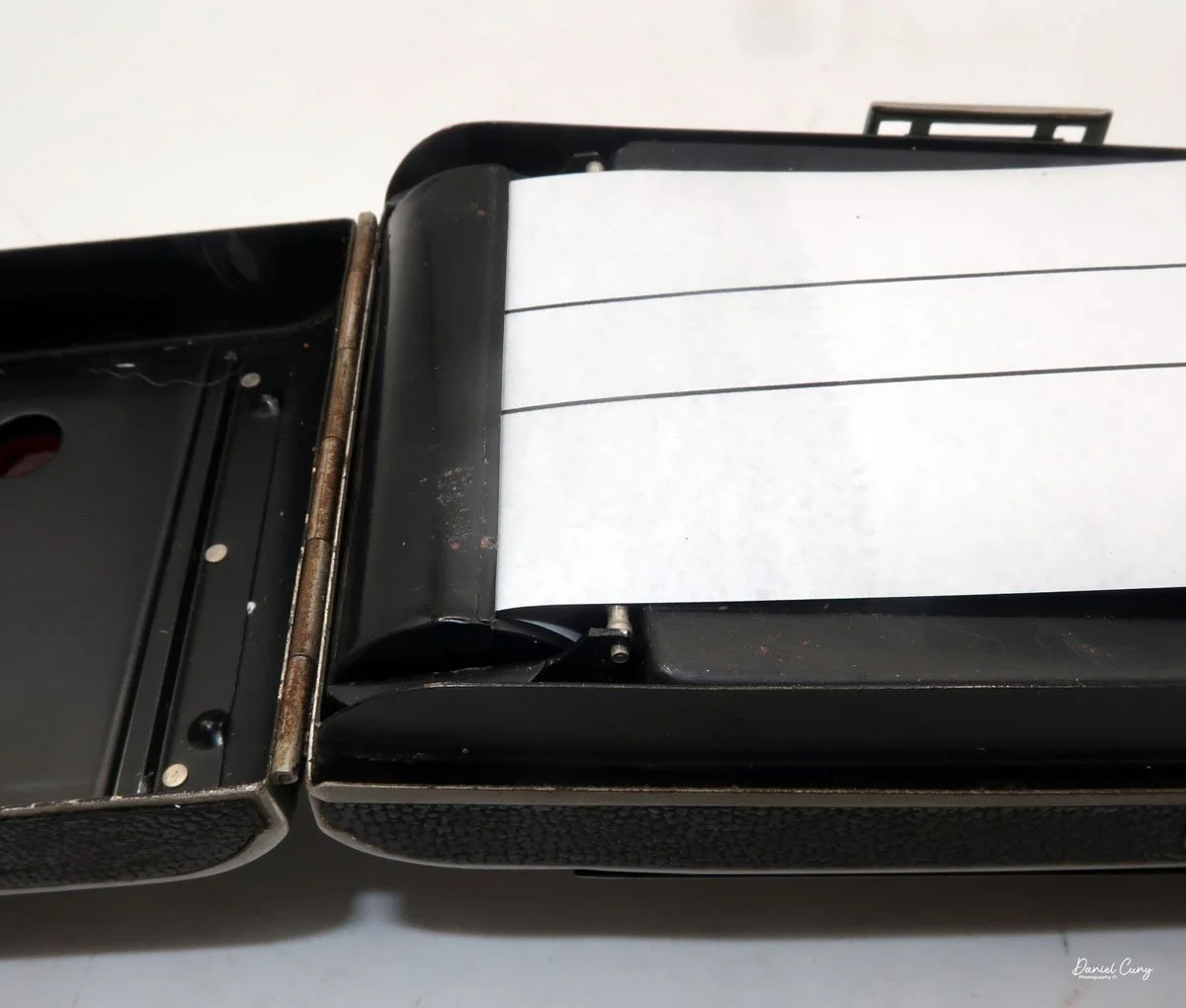
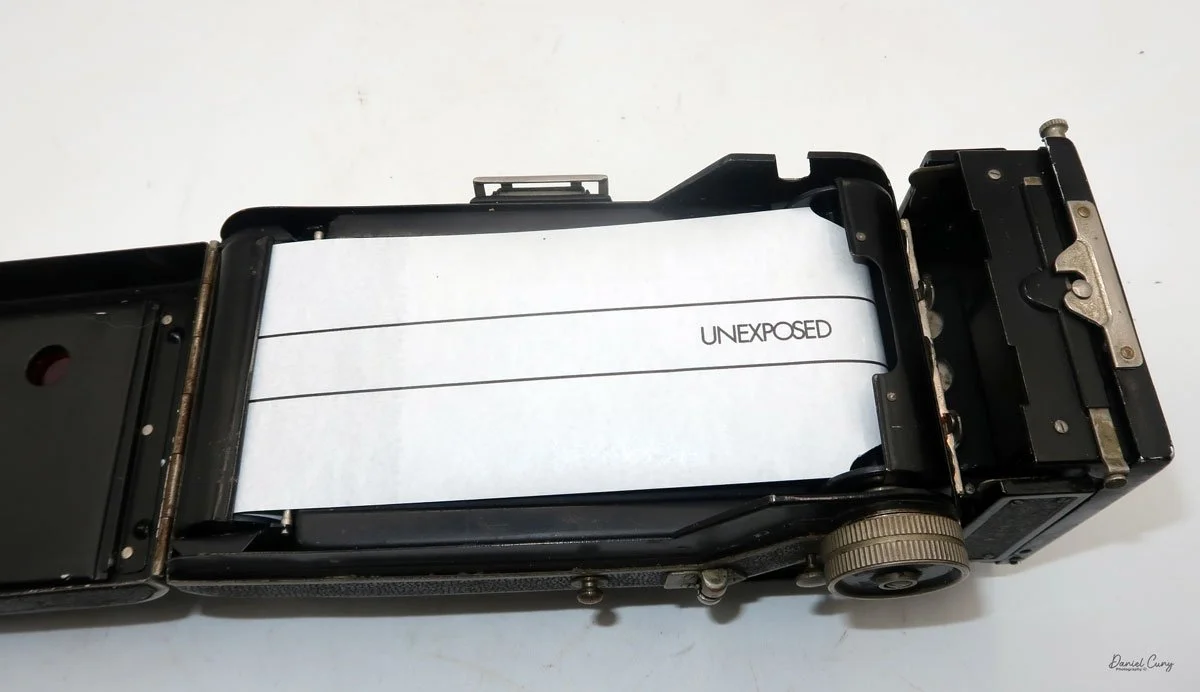
On the back of the film body is another sliding lever that you move to the left, in the direction of the arrow, and the back will open. Opening the back of the camera, I noticed that the film advance roller, which activates the frame counter, is missing, so the frame counter isn't operational on this camera. Luckily, there is a red window on the back door so you can see the numbers being transported as you roll the film from one image to the next. 

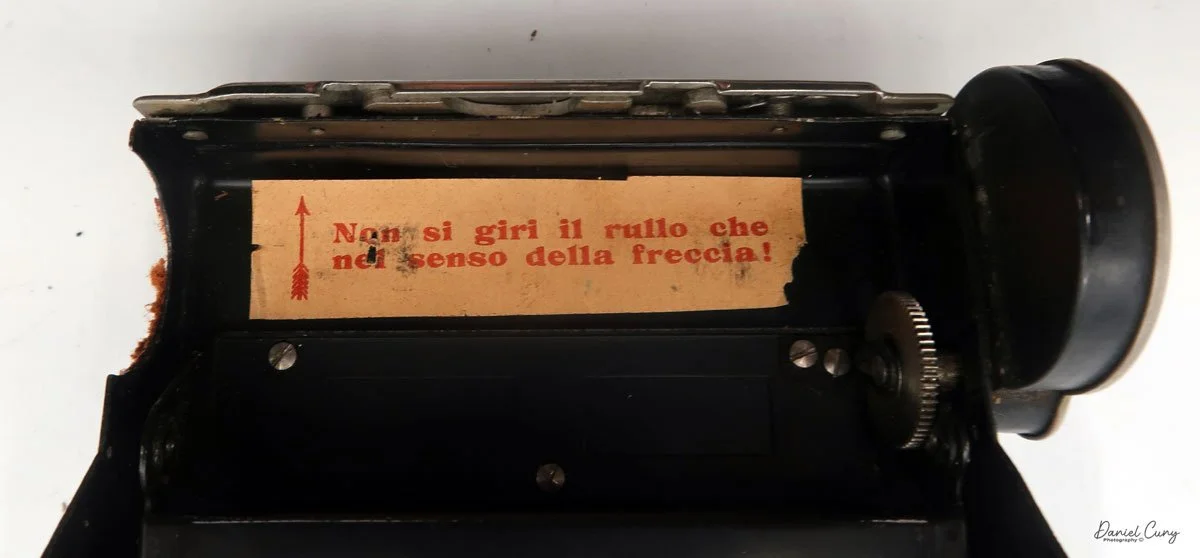
 I also noticed a paper sign glued to the inside of the back door at the top, which read, "non si girare il rullo che nel senso della freccia" (translation from Italian to English: "do not turn the roller in the direction of the arrow").  This message on the inside tells me the camera is originally from Italy. I guess the camera was made for the Italian market, but the reseller may have added that; I'm not certain. Still, it's interesting that a German camera was sold in Italy and found its way to the USA.

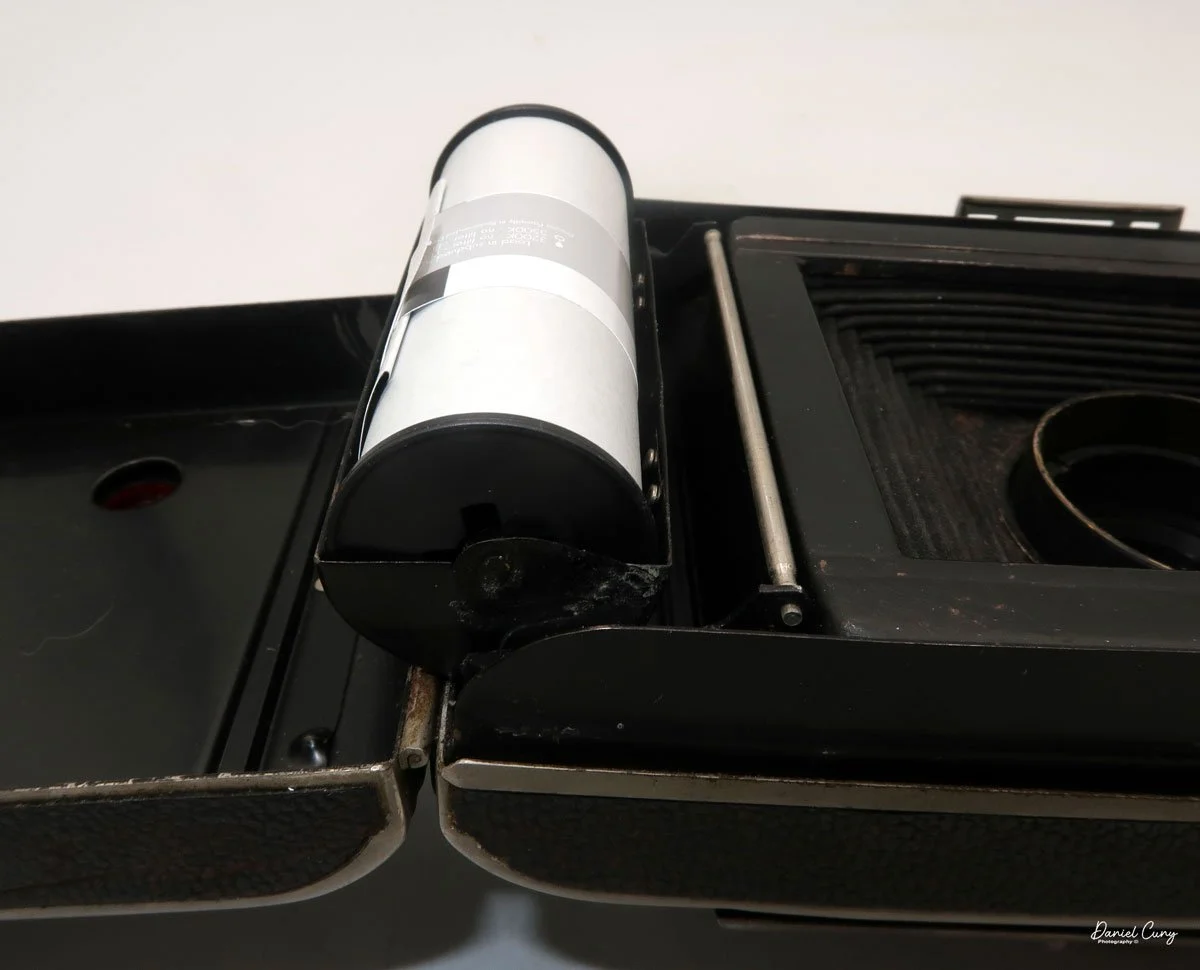
To load the camera with film, the chamber where you put in a fresh roll of film pulls up to make it easier to put in the film, which is a nice feature in the camera. Otherwise, the camera loads just like many roll film cameras, but it would have been nice to have a frame counter that advances from the roller on the back to indicate the frame numbers. I'll just have to do it the "old-fashioned" way and look through the red window to get to the next frame when I shoot.

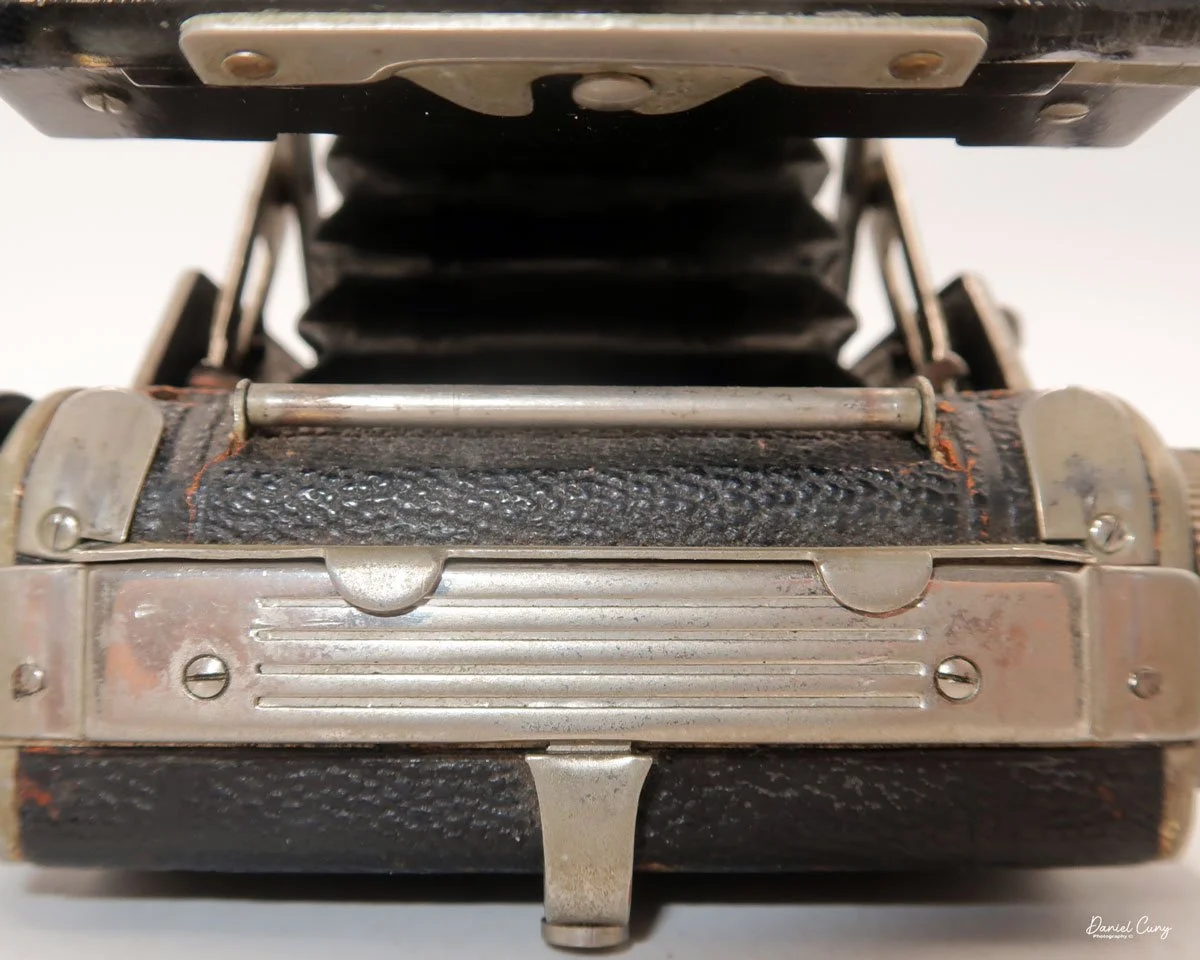
To collapse the camera lens area into the camera body, you'll need to press in two silver buttons on the front of the camera, placed between the viewing and taking lens, and press the lens area into the film body, which is extended by a couple of scissor struts on each side of the camera. Be sure to retract the camera stand leg, under the front lens area, just behind the tripod socket, before closing the camera. If you don't do this, the camera will not close. I know because I've tried a few times by accident.

 When you close the camera, another interesting thing is that there's a roller at the tip of the film area on the outside. When you close the lens into the film body, the viewfinder rolls along the roller, sliding it forward and covering the focus scale. Given that the camera is almost 100 years old, it's still interesting how it opens and closes mechanically. 

If you don't want to rotate the film chamber when shooting, there is a flip-up sports-type finder on the side of the camera you can use if that's easier for taking horizontal images. It just gives the photographer another option when using the camera.


My Results:

 I don't have a case that fits my Welta Superfekta camera. The camera doesn't have the standard loops you can snap into a carrying strap, so when I went out shooting a few times, I just put it in a pouch-style case to carry it and took it out when I was ready to shoot.

 Looking at the side of the camera, there are a couple of studs and other areas where a strap might fit, but without a manual or a nomenclature for the items on the camera, I'm unsure what they are used for.

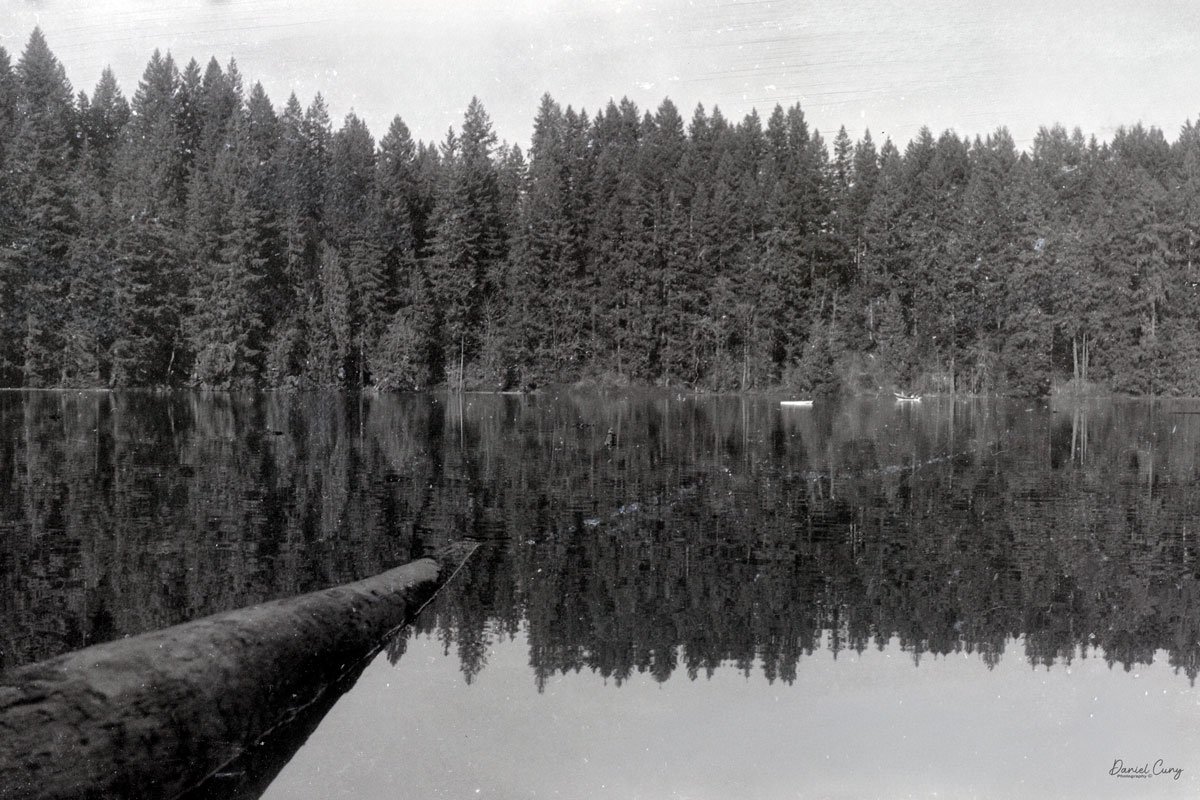
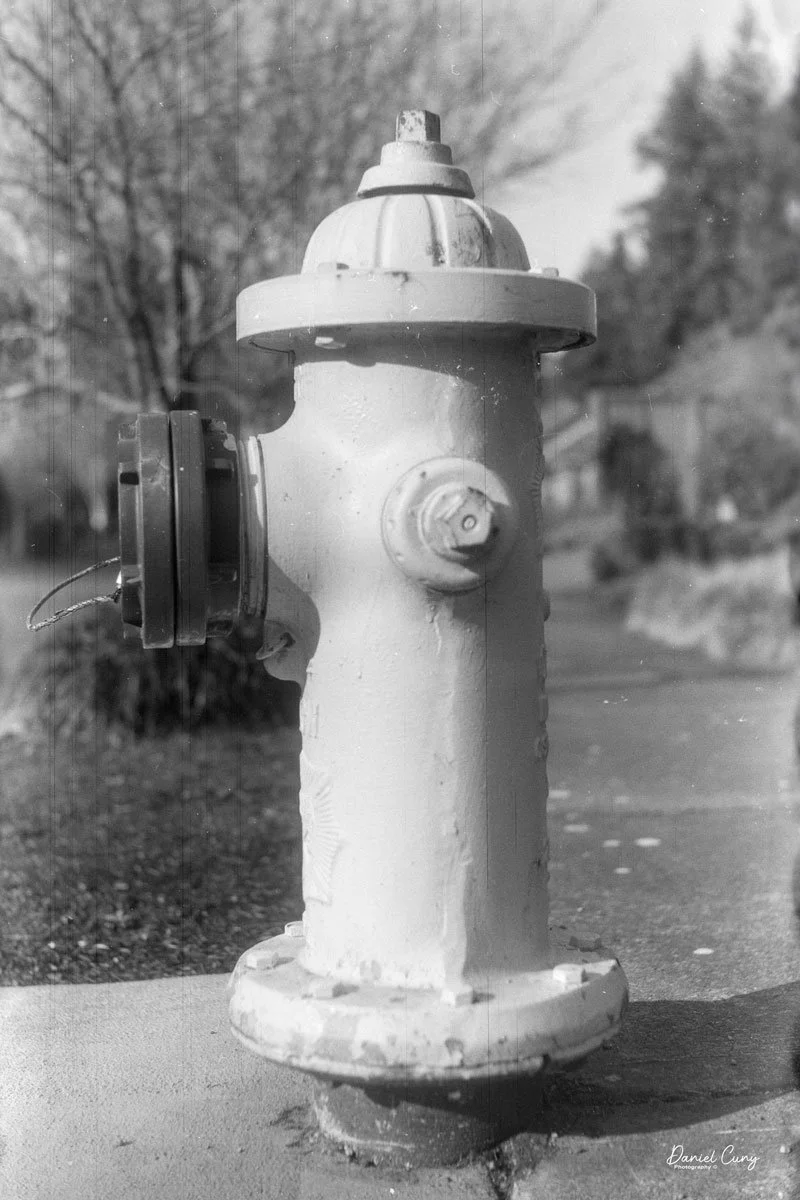
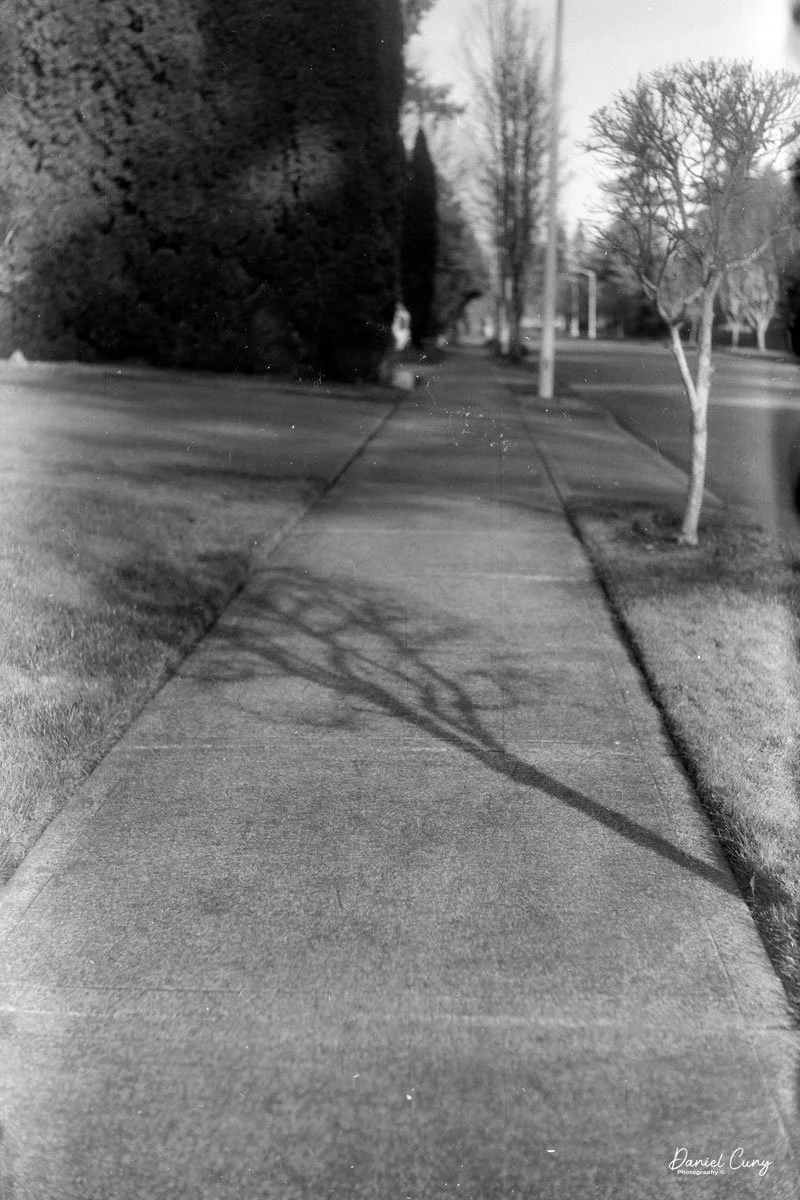
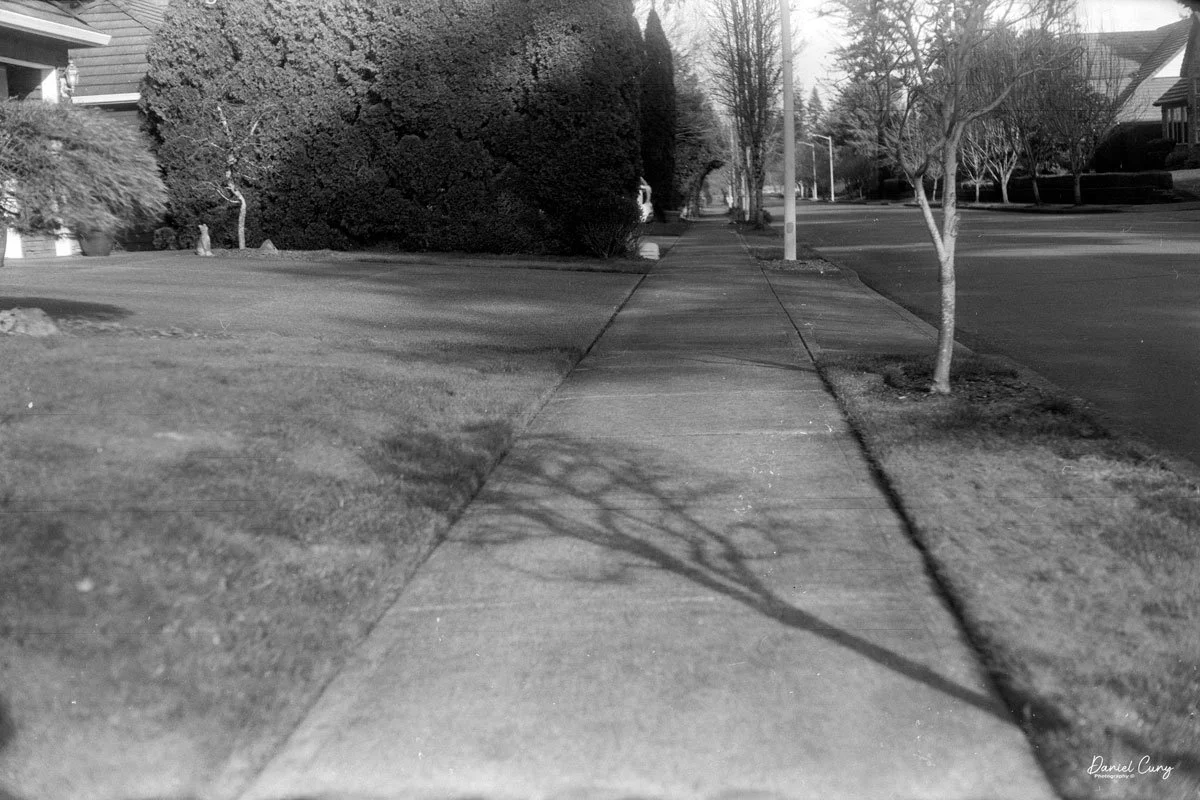
 I took the Welta Superfekta out a couple of times to shoot with: once to a local lake and another time while walking around the neighborhood to get closer-up images.

 Here are the results from my two times using the camera.

Conclusion:

 The camera's results underwhelmed me, as one of two things is happening. First, I didn't think the images would be as sharp as I had imagined; that may be because something happened to the camera, like a drop or impact, which is also why the camera doesn't flip all the way horizontally when shooting. 

 My weakening eyesight may also cause it, but because of eye surgery I had last year on my right and dominant eye, I'm becoming more and more dependent on using my left eye for focusing, which is difficult for me at times. Personally, I feel it's more the first issue: something tweaked the camera body, and the lens doesn't align properly, which is why I wanted to shoot the second, more close-up images walking through the neighborhood.

 Nonetheless, it's somewhat awkward to hold without a neck strap to keep it steady. Still, I absolutely love the camera's ability to rotate the film back for both vertical and horizontal photography. It's a wonderful camera to have in my collection, and for the price paid, even with the servicing, it's still a bargain.

Welta Perfekta and Superfakta side views

 Thank you for taking the time to learn about this wonderful photographic marvel from almost 100 years ago.

 Here's a link to my other Camera Reviews.

 Cuny's Cameras and Photo is my online eBay store, which sells some of the cameras reviewed, along with many camera and photo accessories.

 Until next week, please be safe.