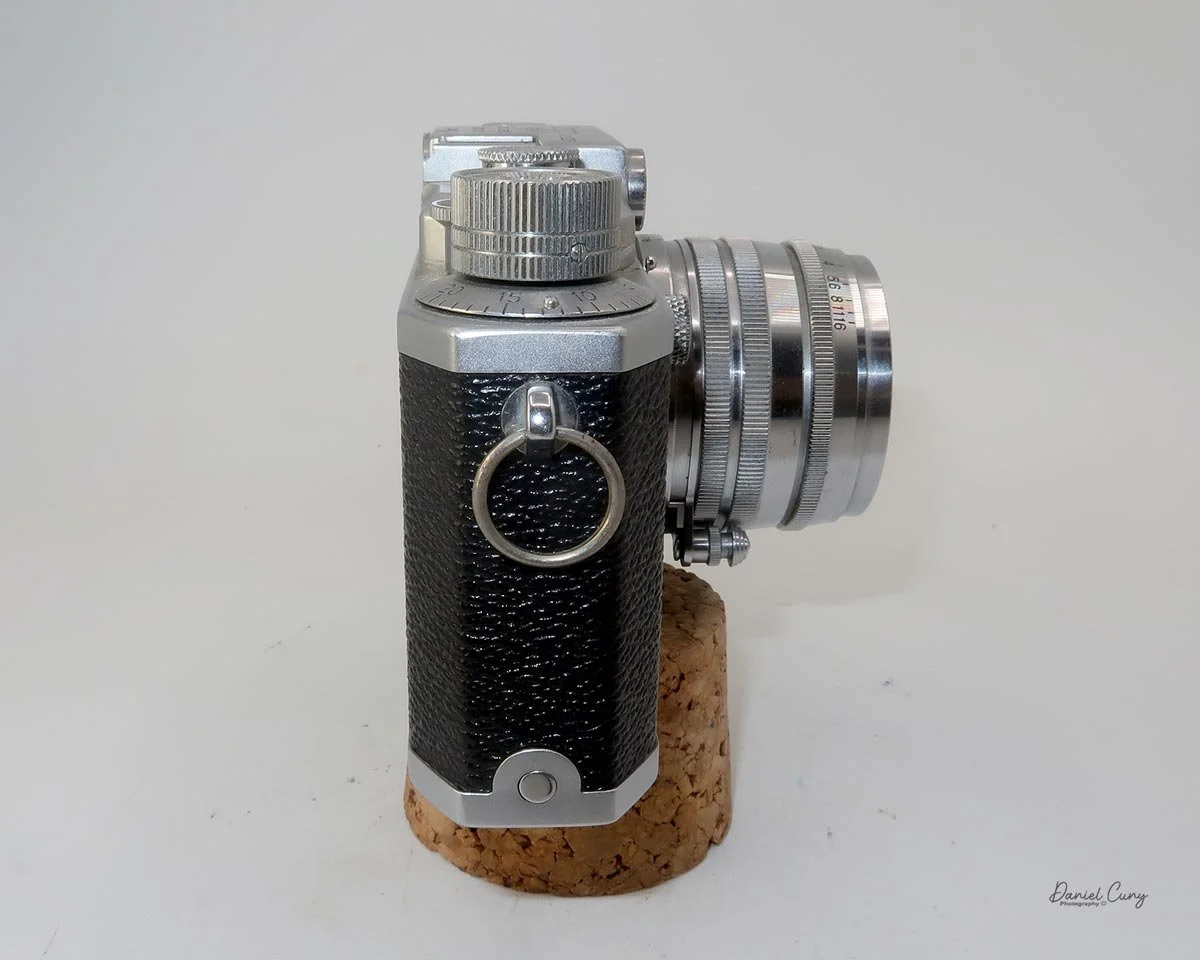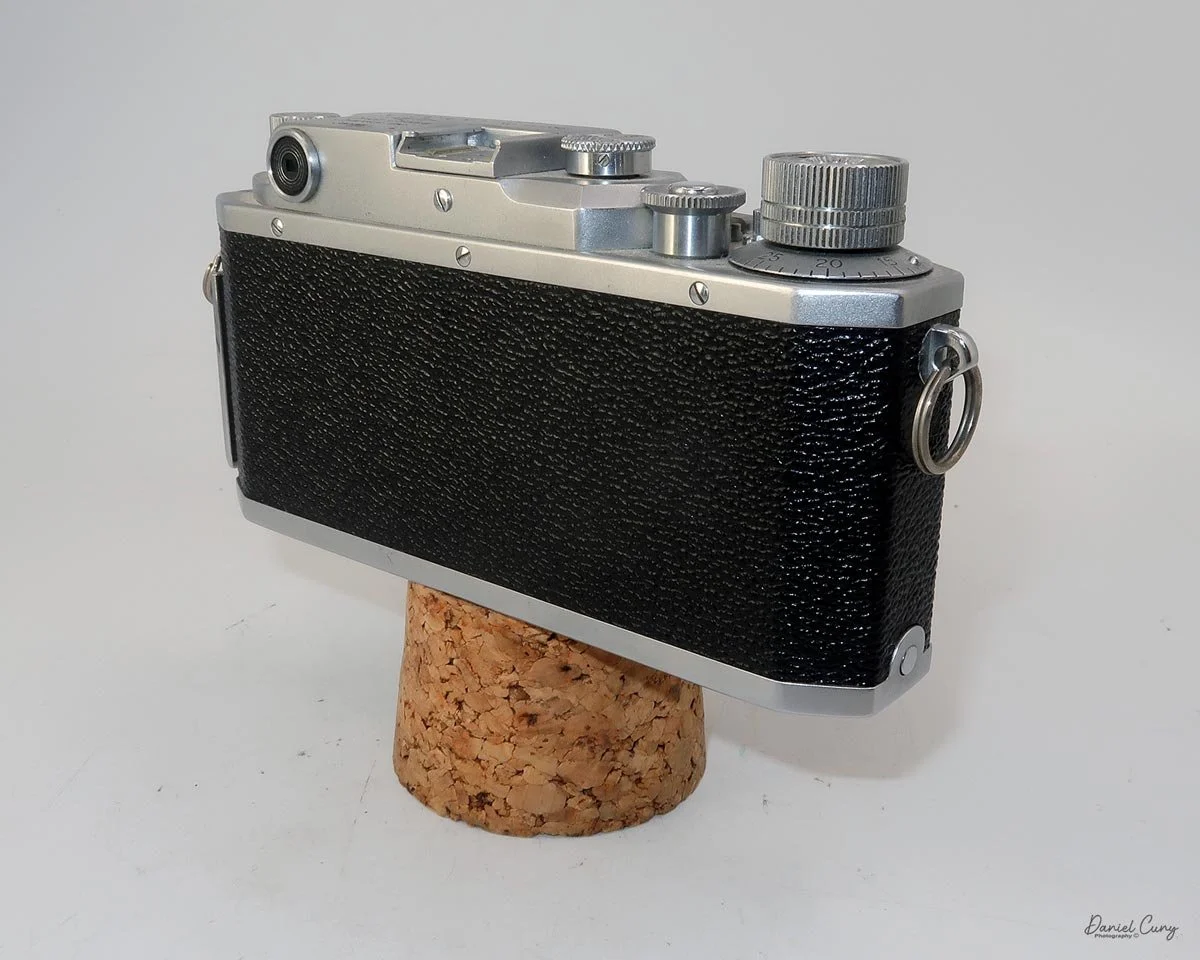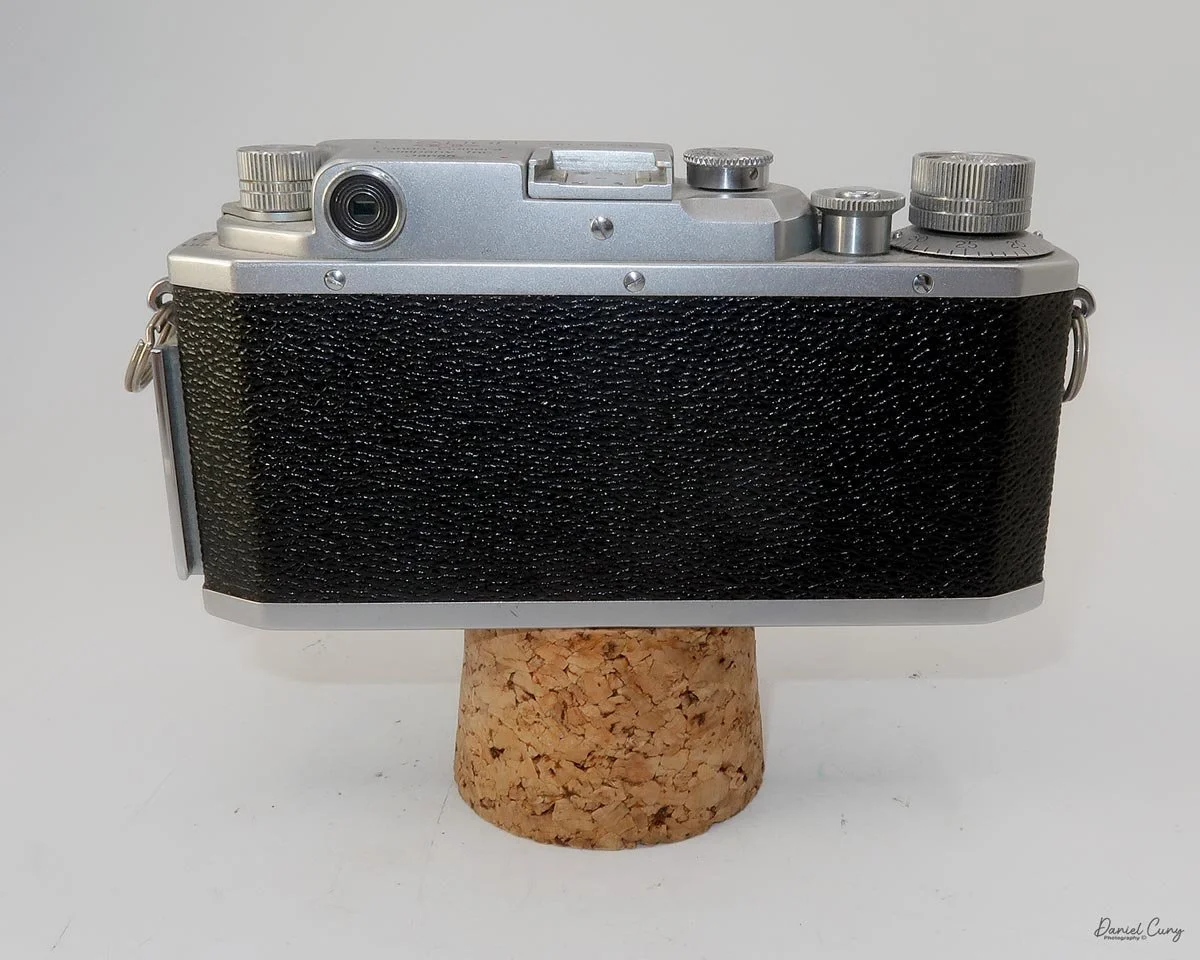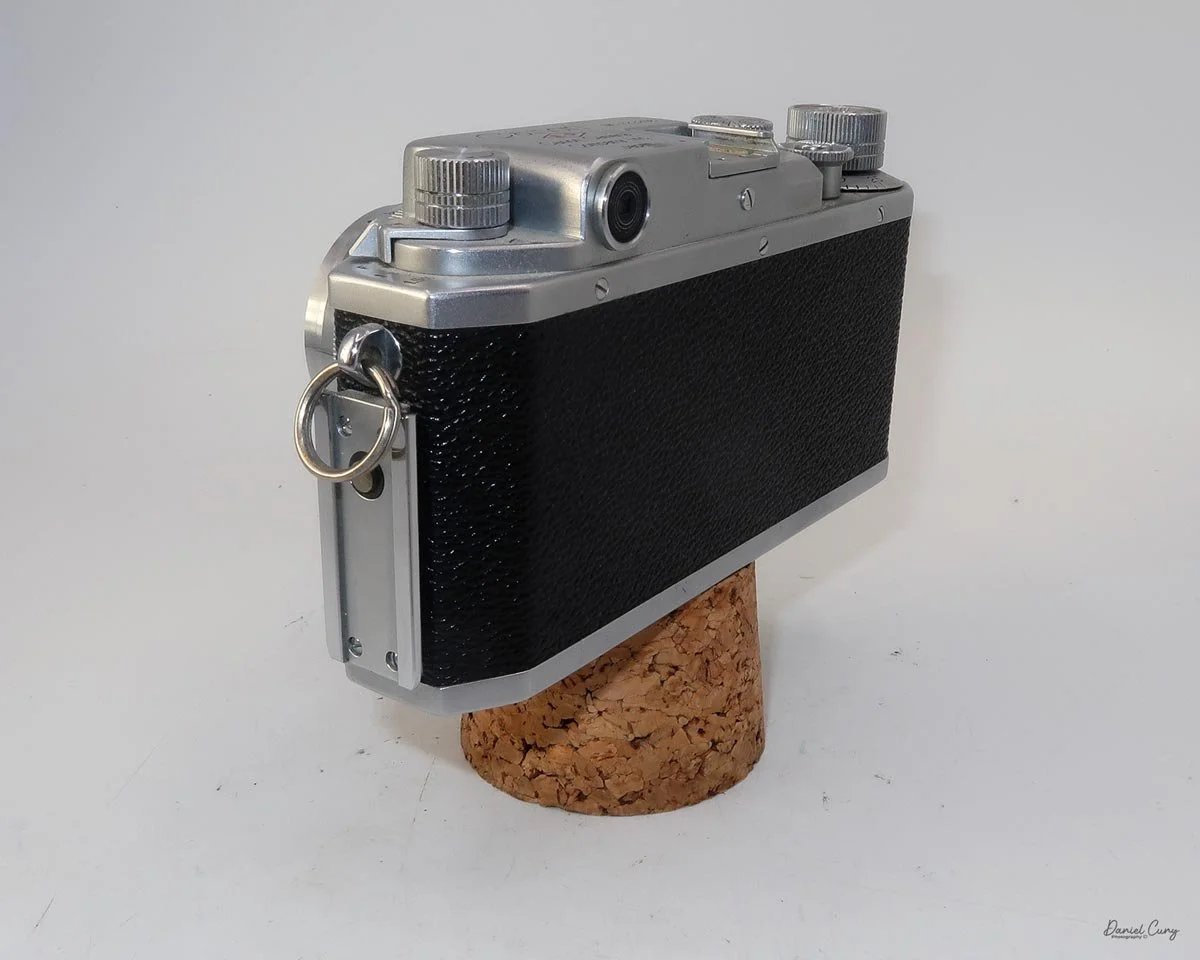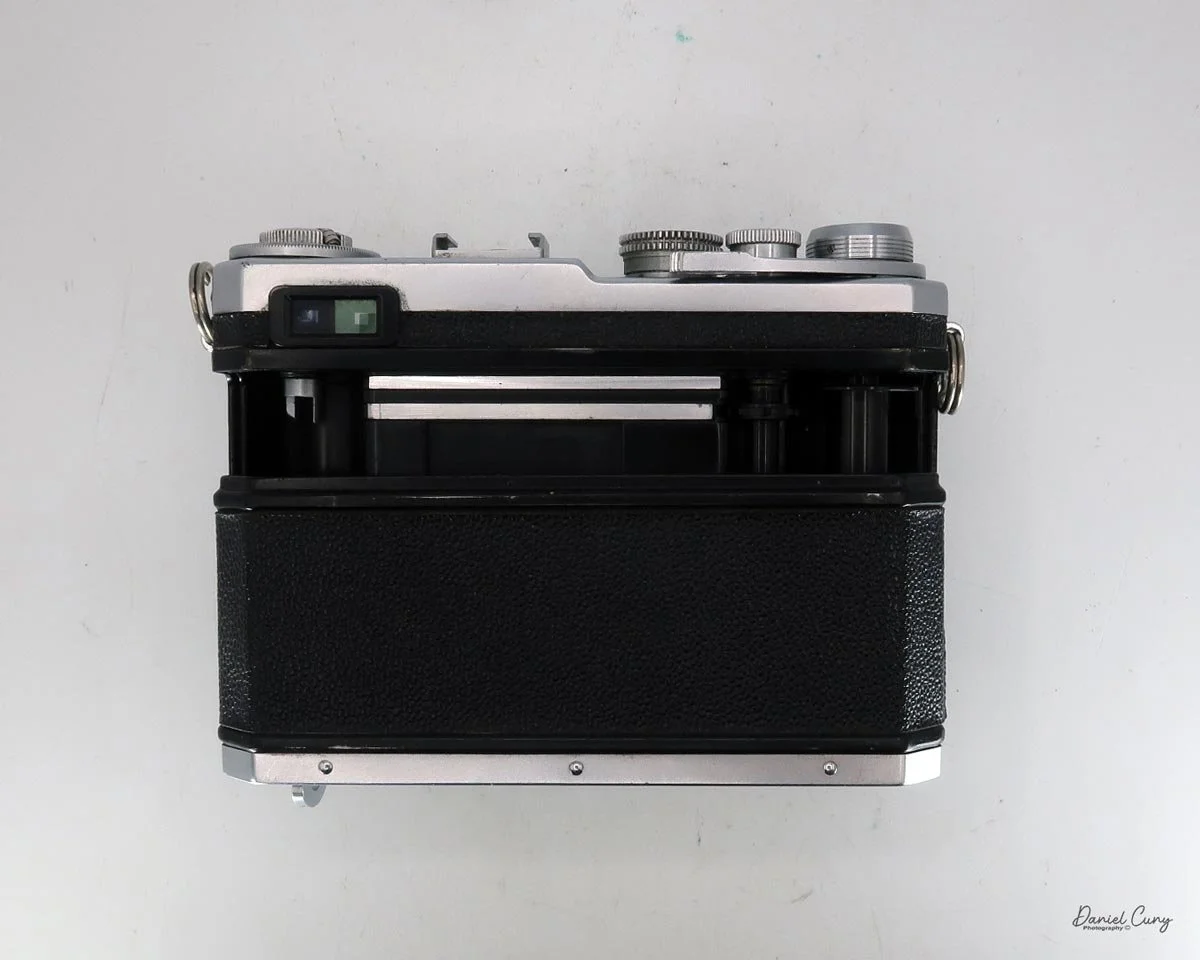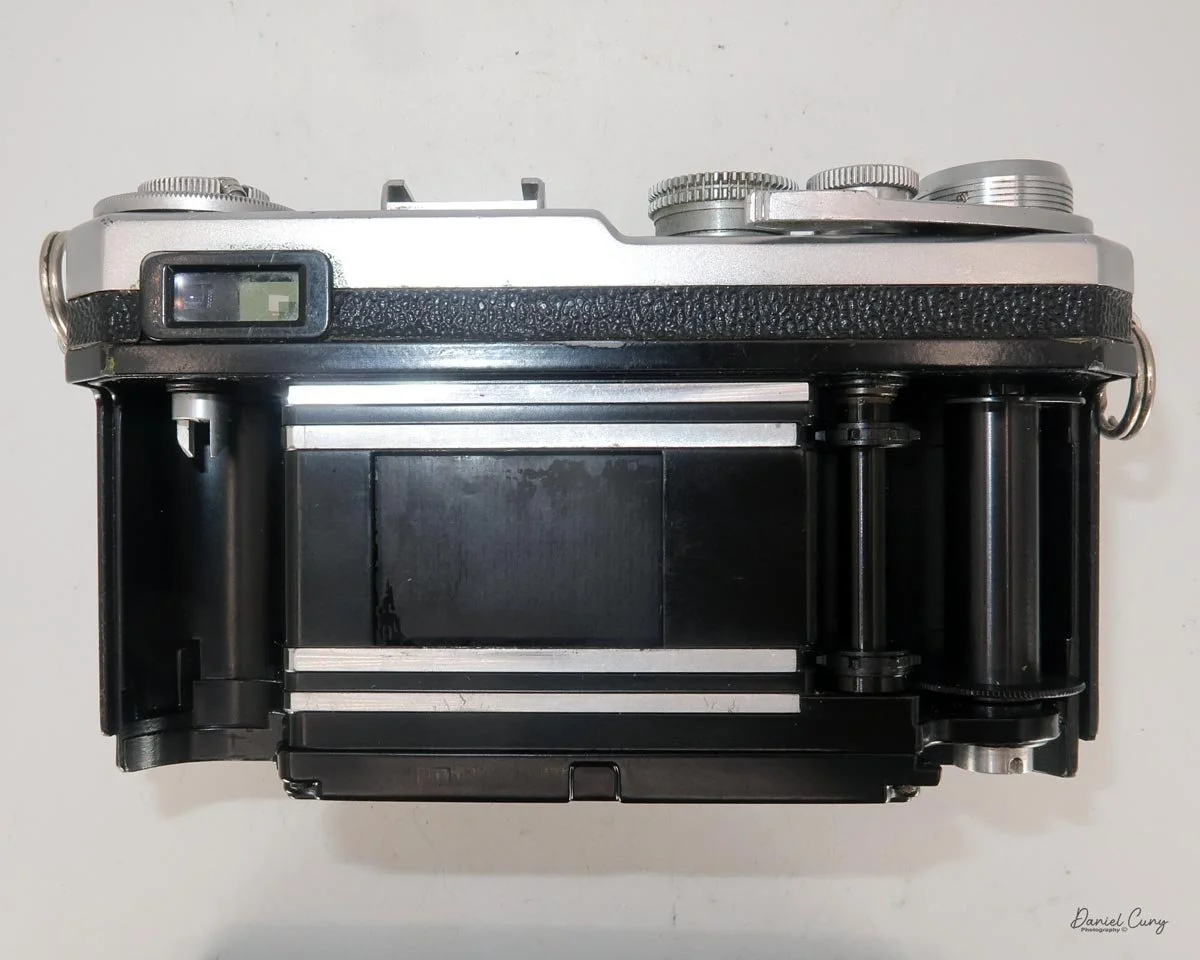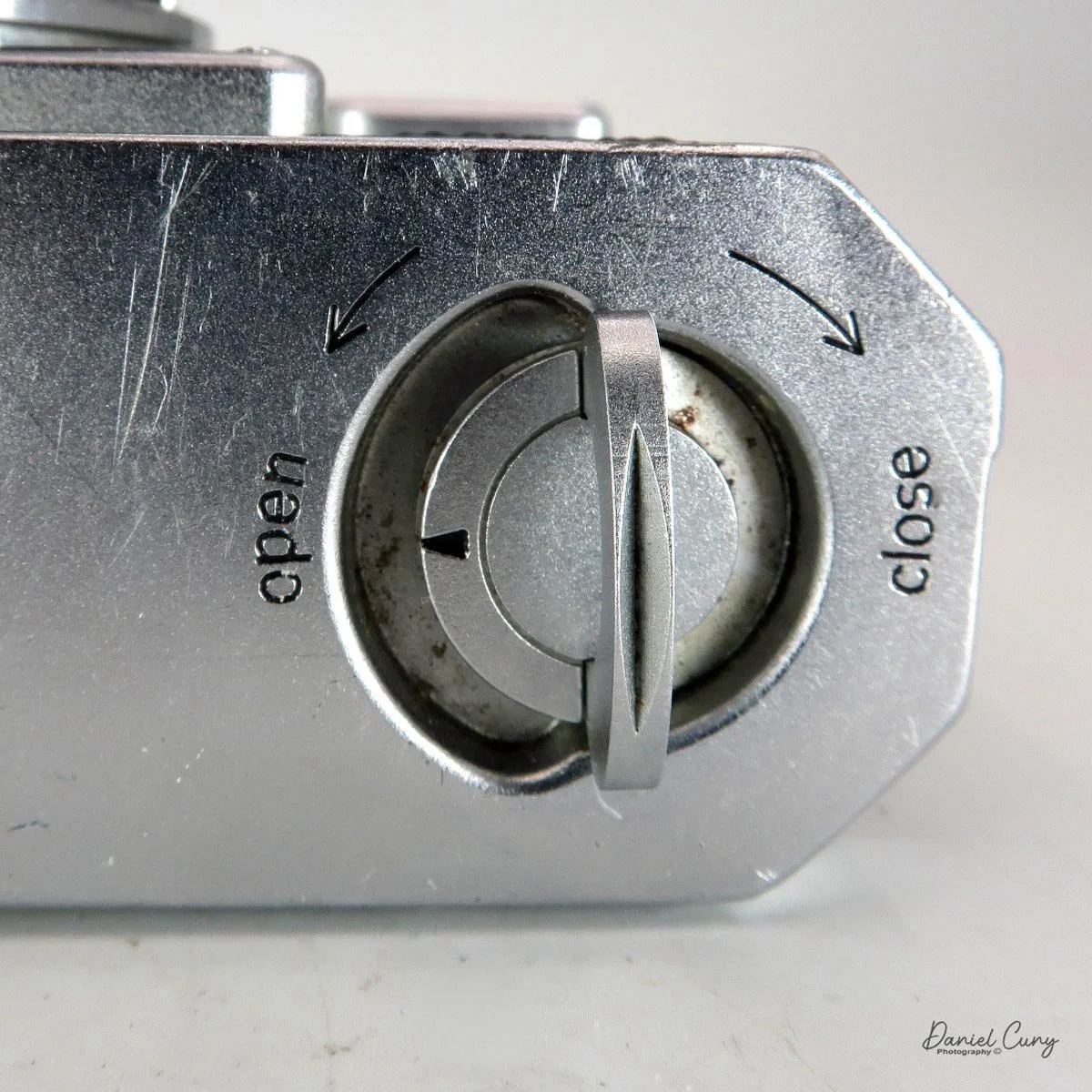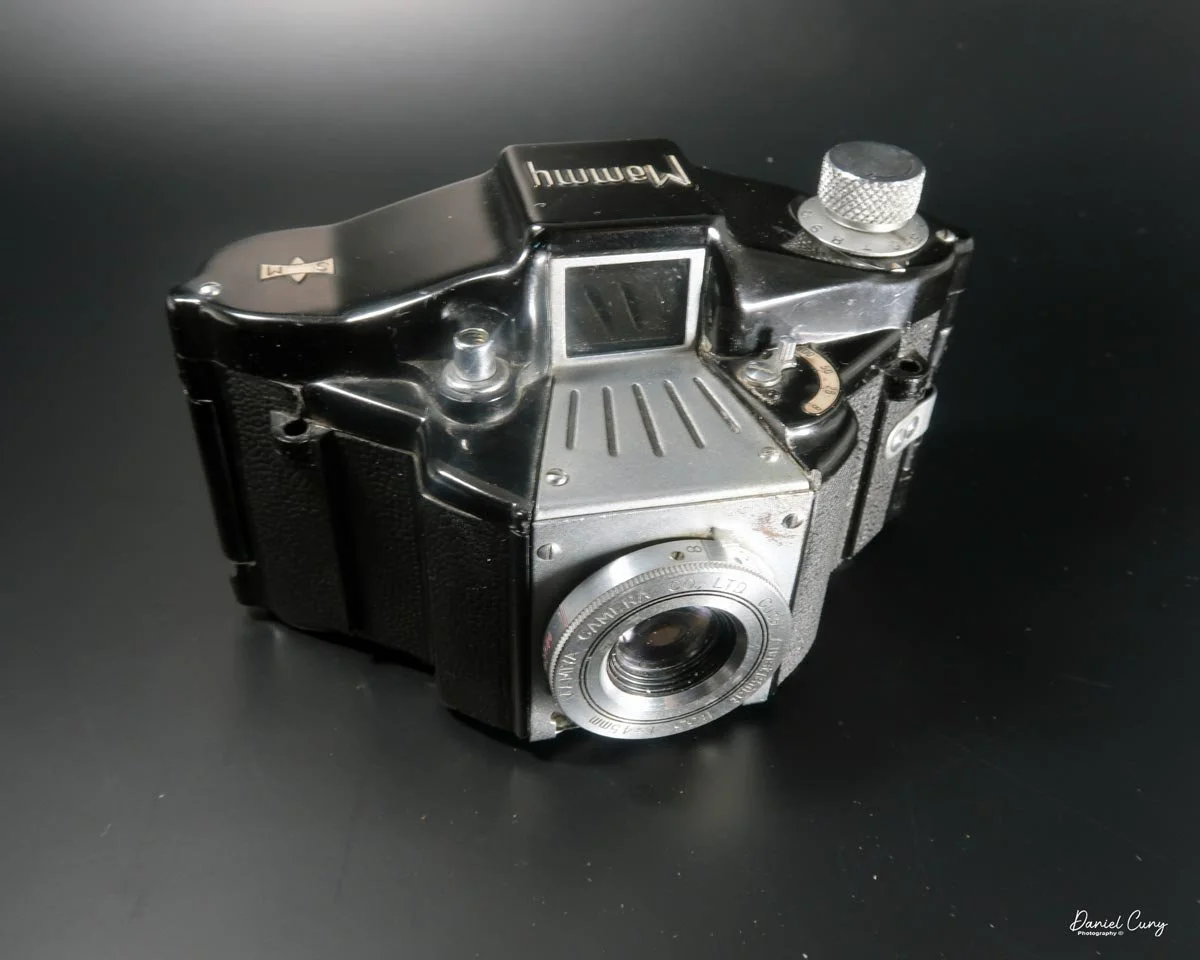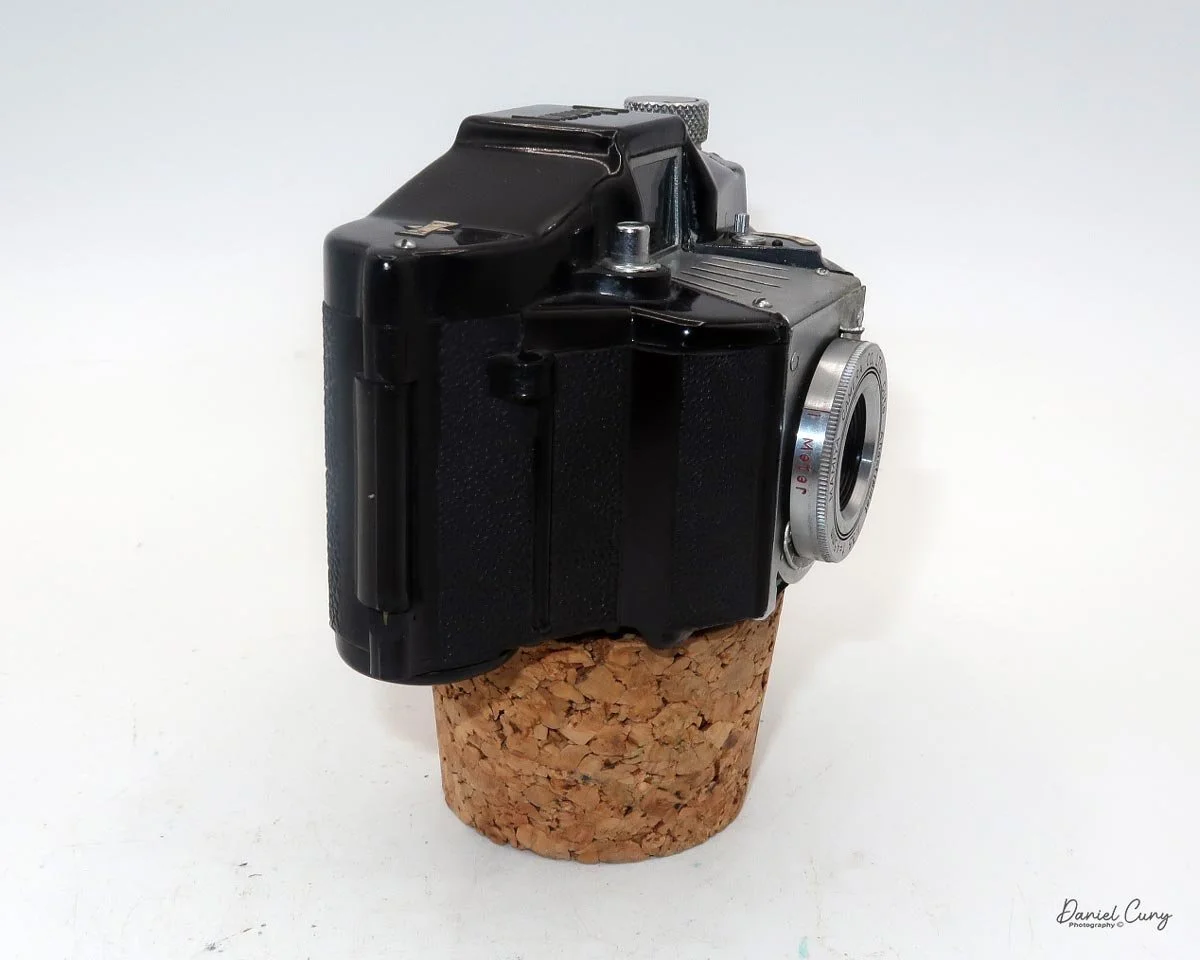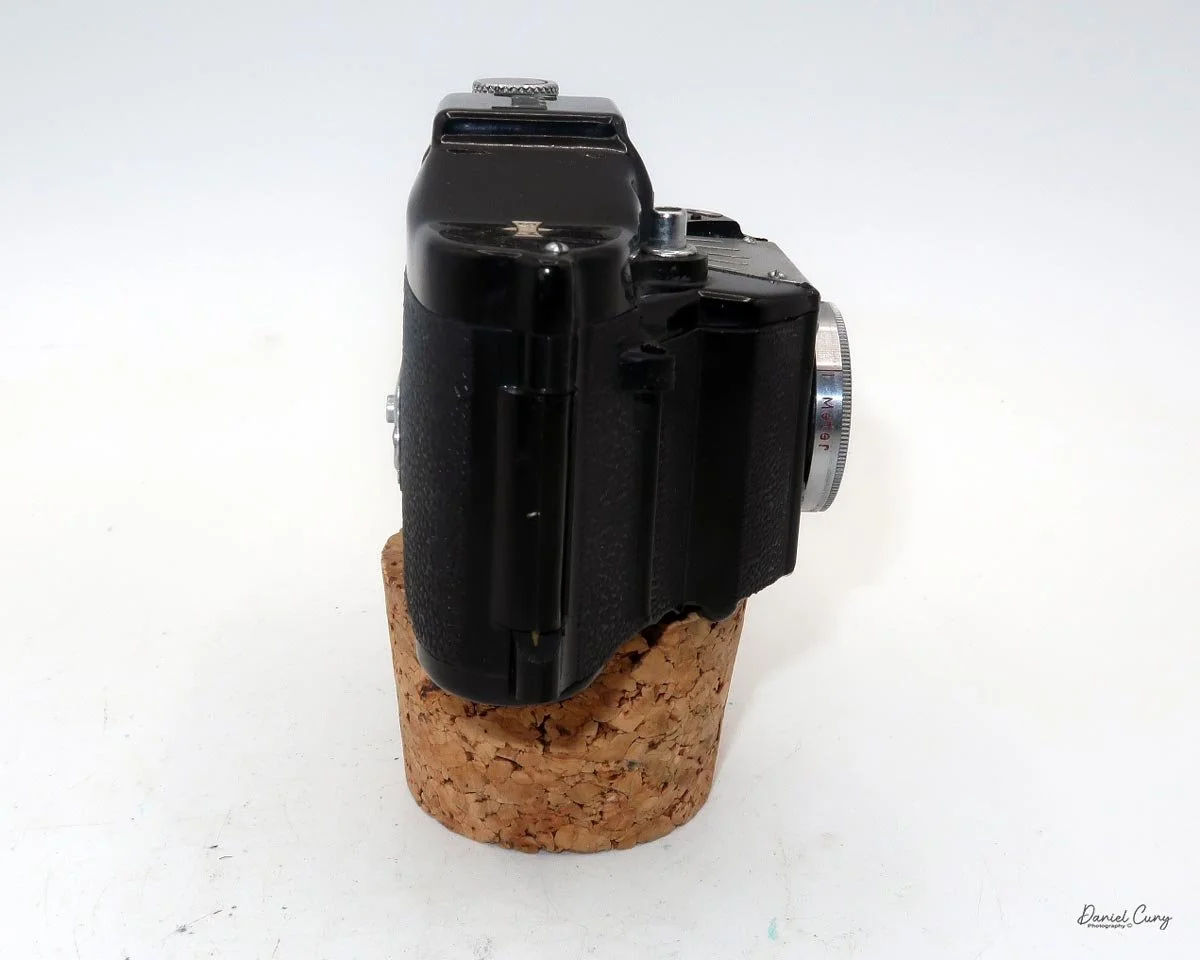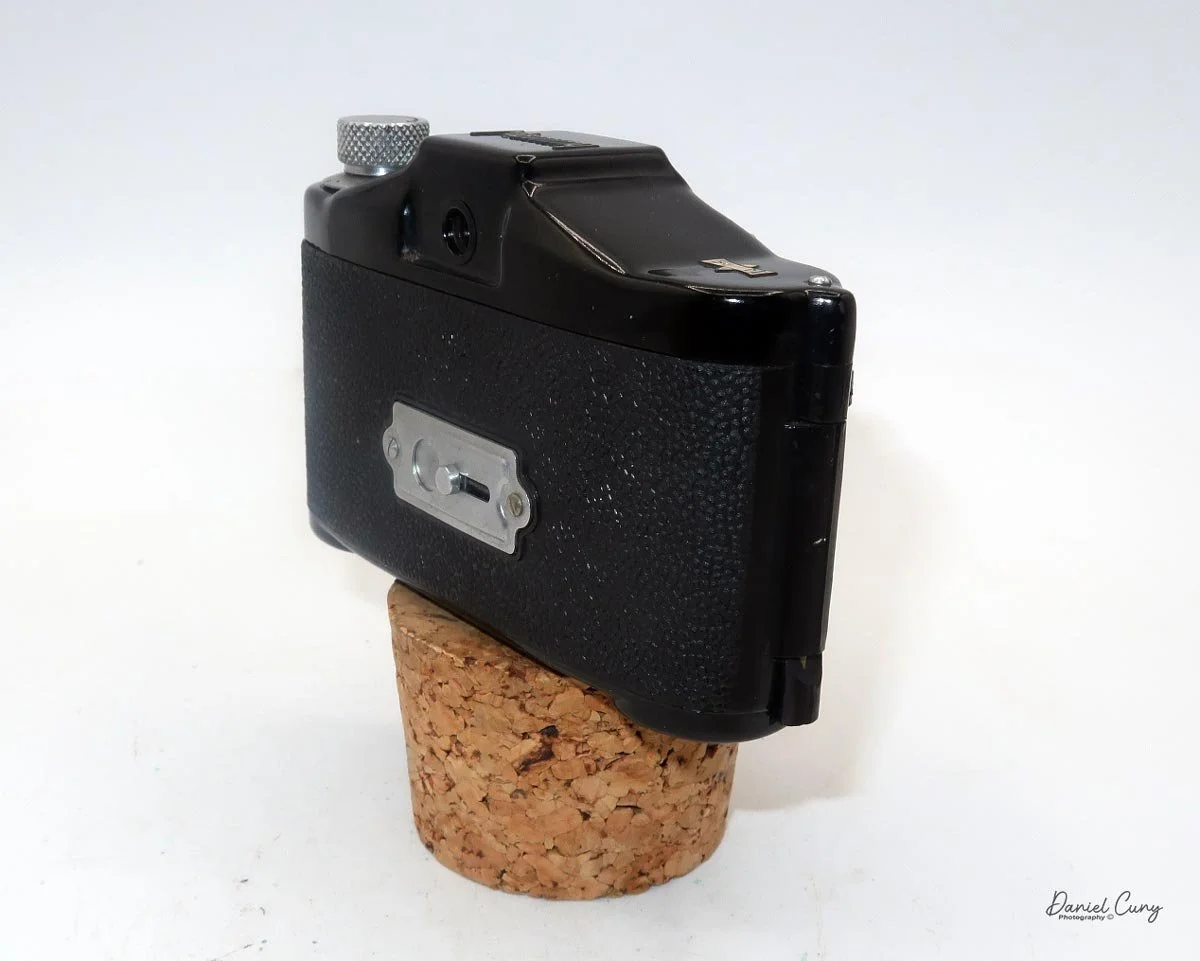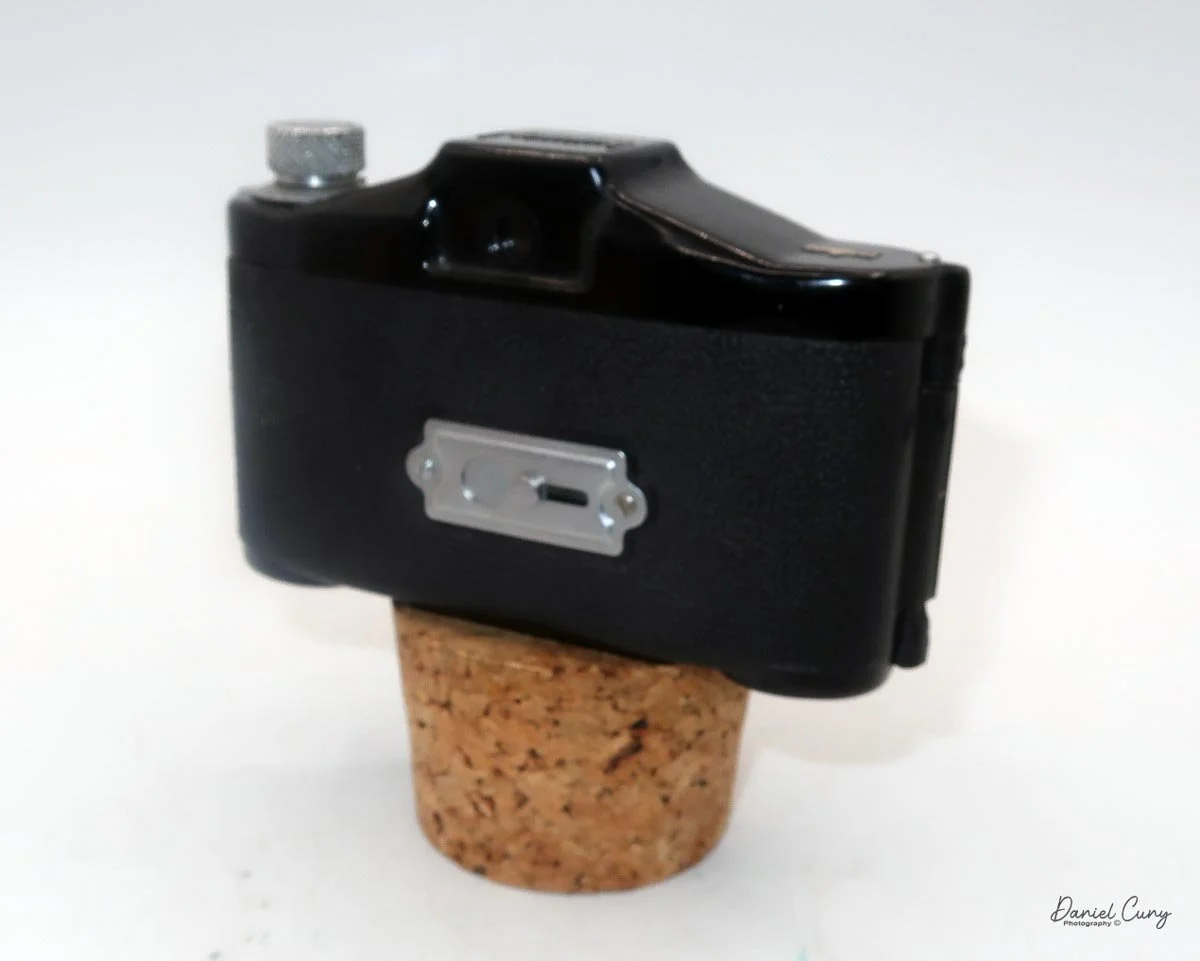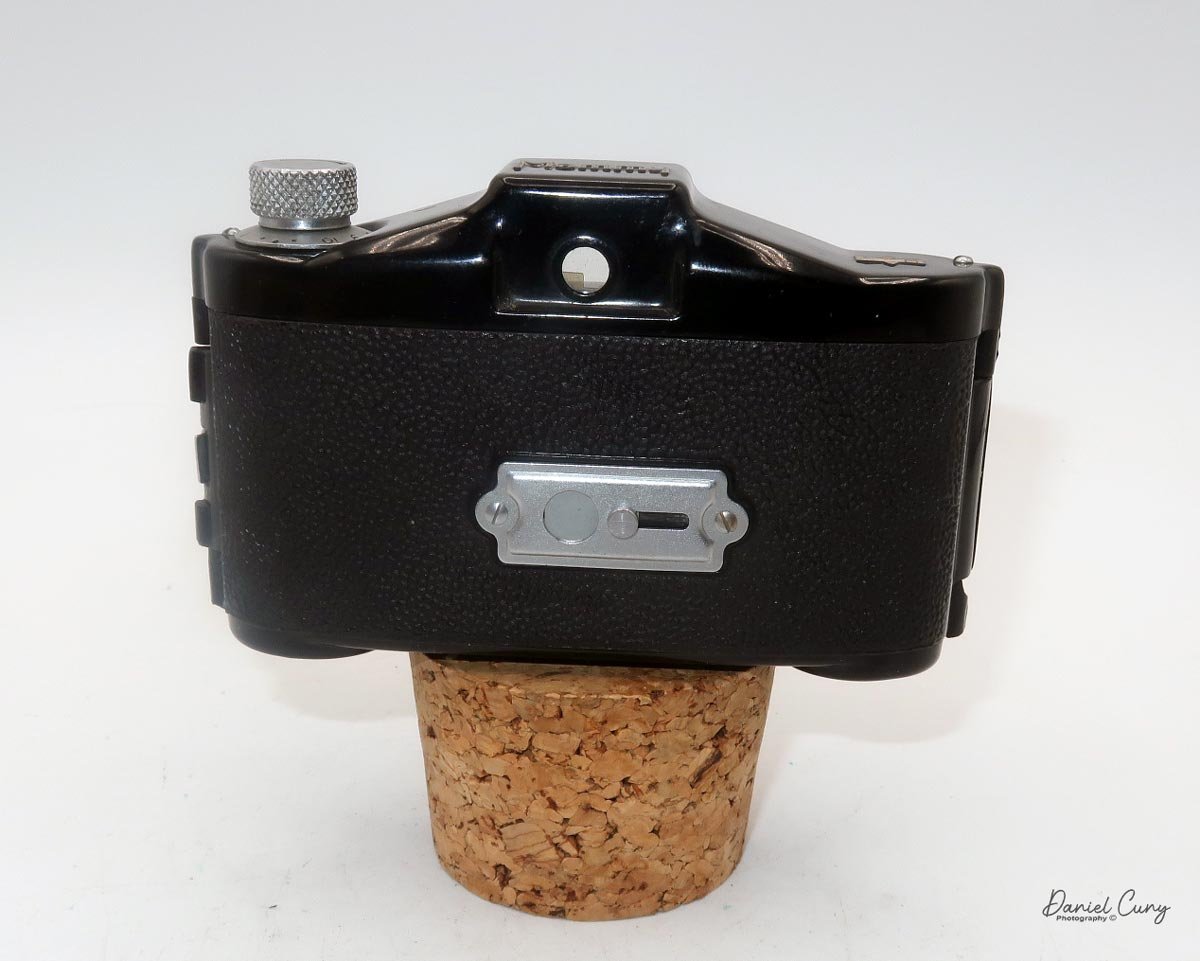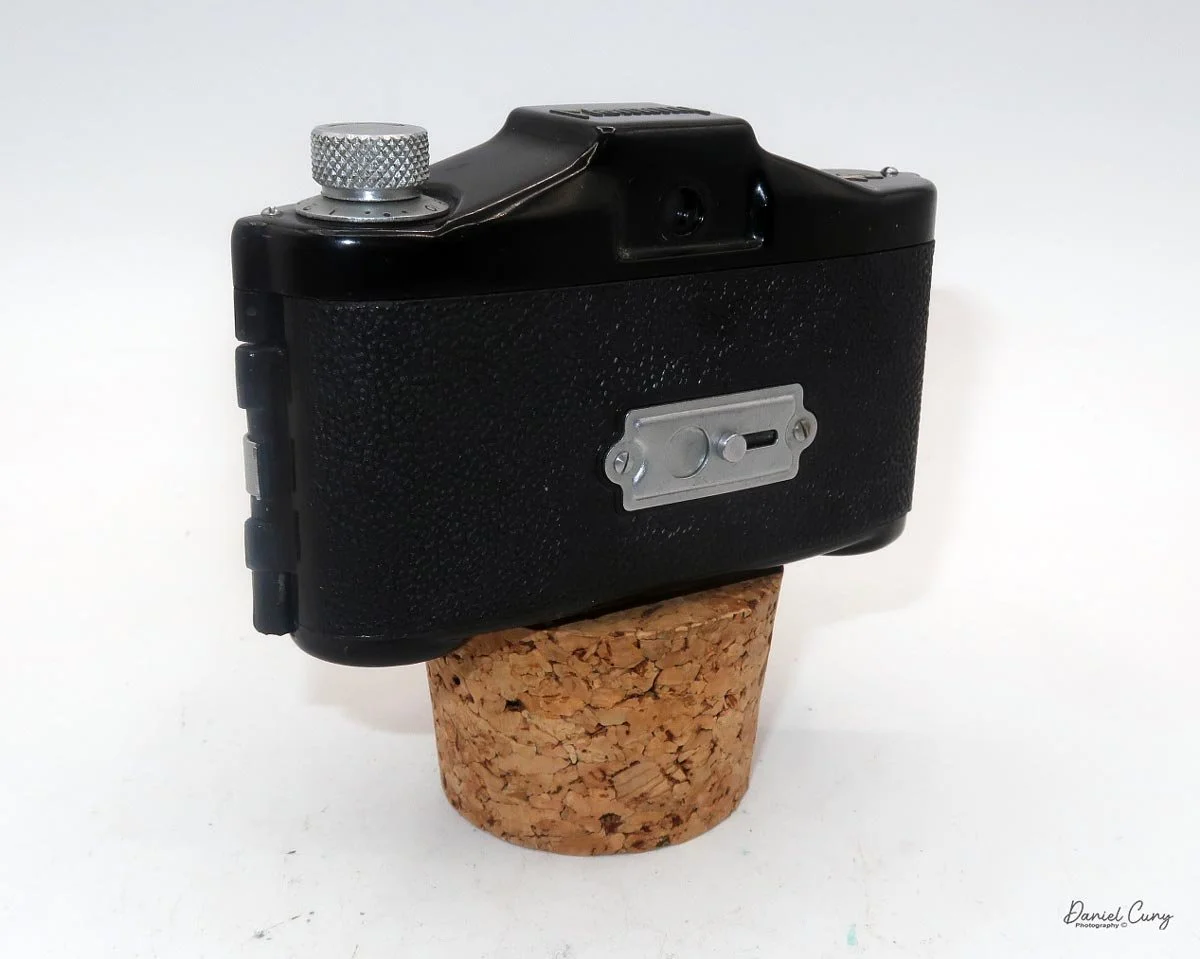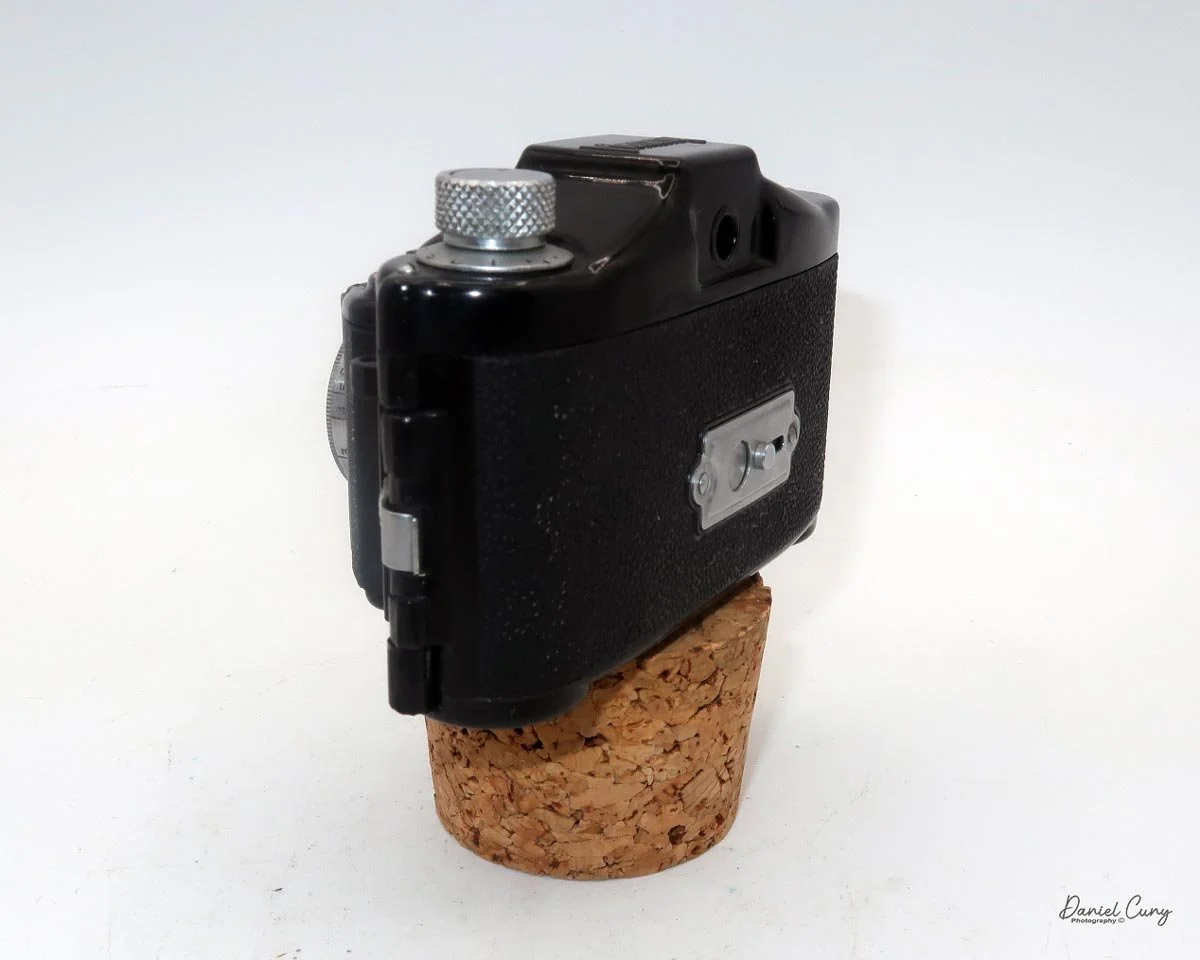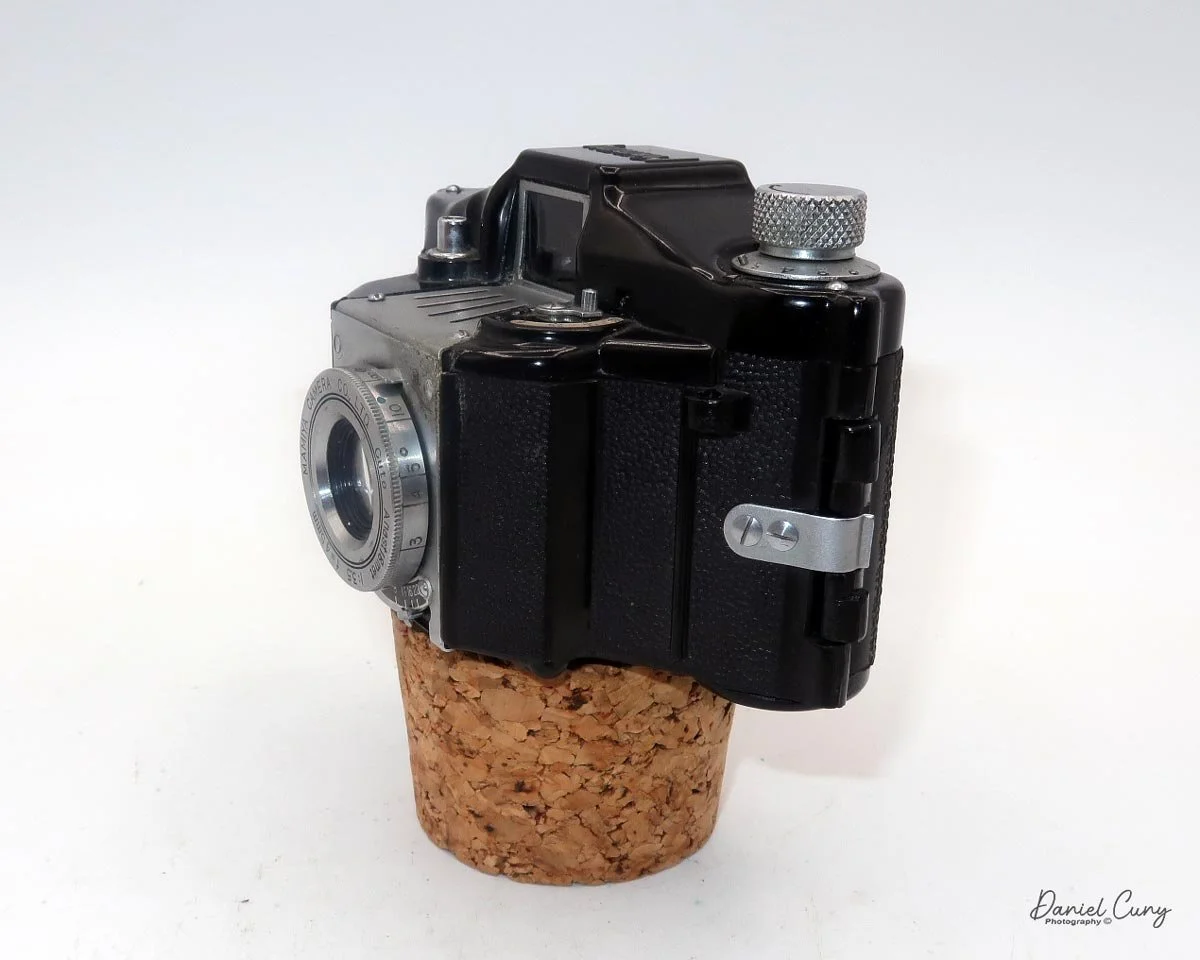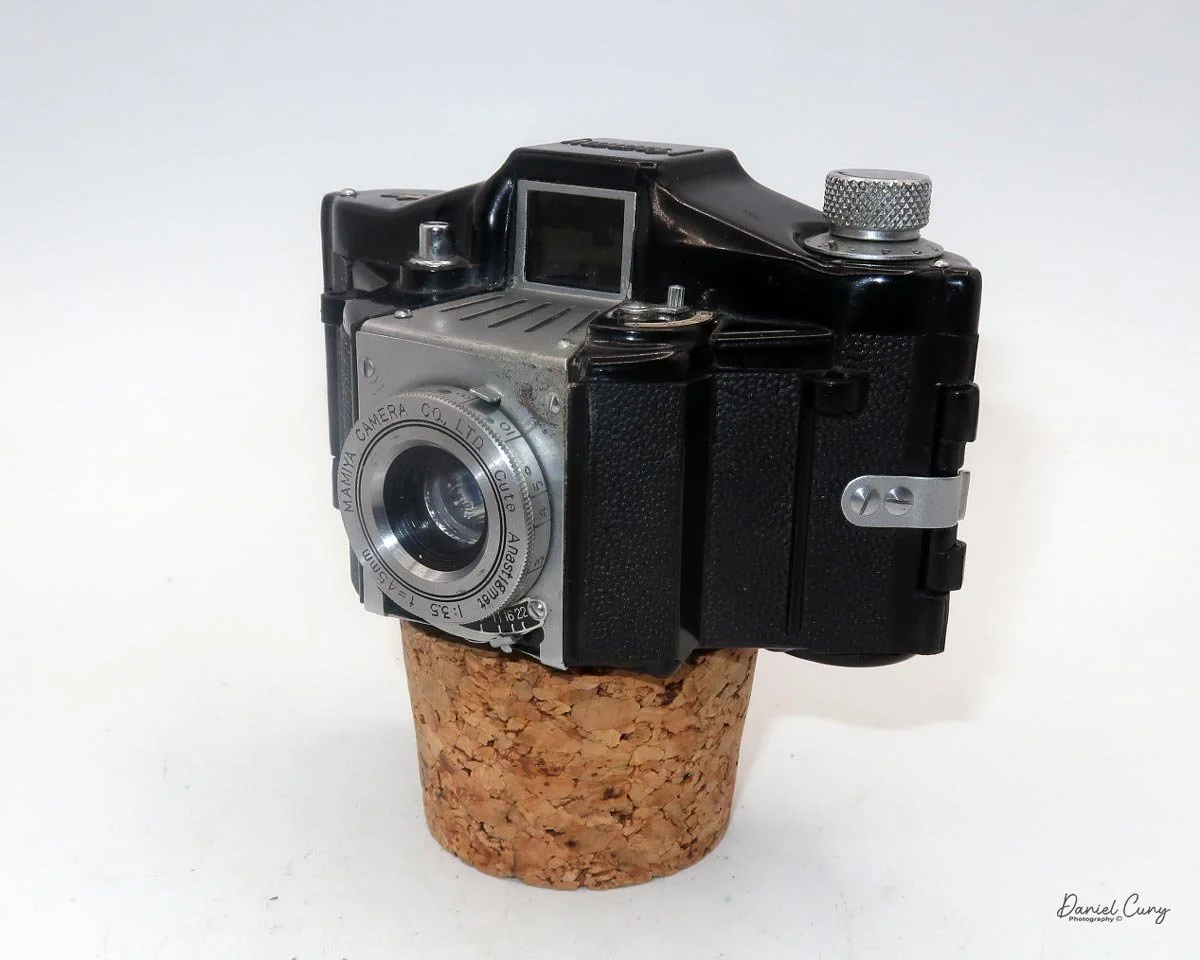
Mamiya Mammy camera

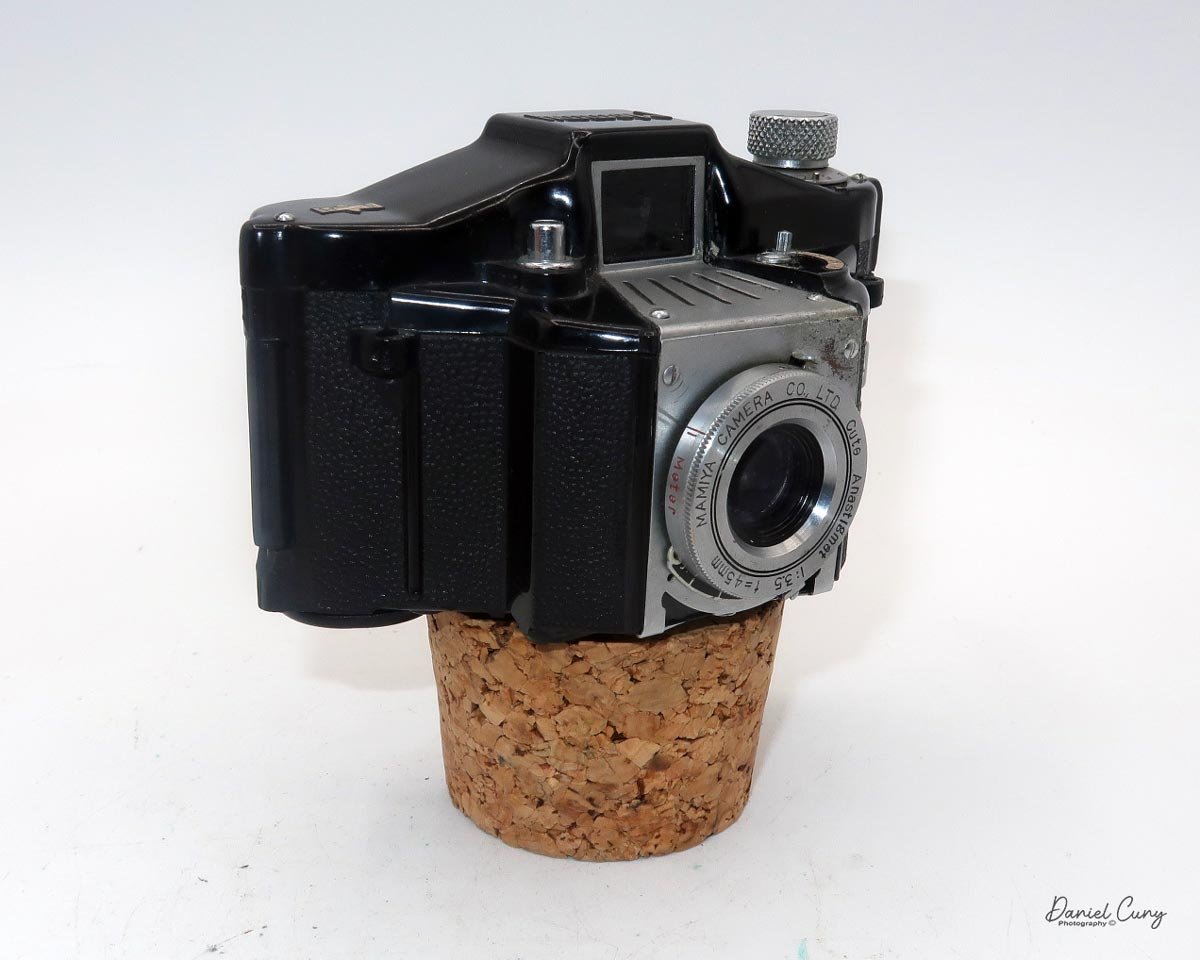
My Mamiya Mammy camera

It was on my first trip to Kitamura Camera's massive seven-story flagship store in Tokyo that I came across the camera for this week's camera-collecting blog: the Mamiya Mammy. It was on the third floor "bargain" area, tucked away in one of the corner showcases, where I spotted the camera.

 Asking the salesperson to take the camera from the showcase, he placed it on one of the lower, central showcases for me to look it over, along with other cameras I was considering purchasing.

 Having read the massive, latest version of McKeown's Camera from 2005-2006 several times over, I remember seeing and reading about the Mamiya Mammy camera and was intrigued by its shape.

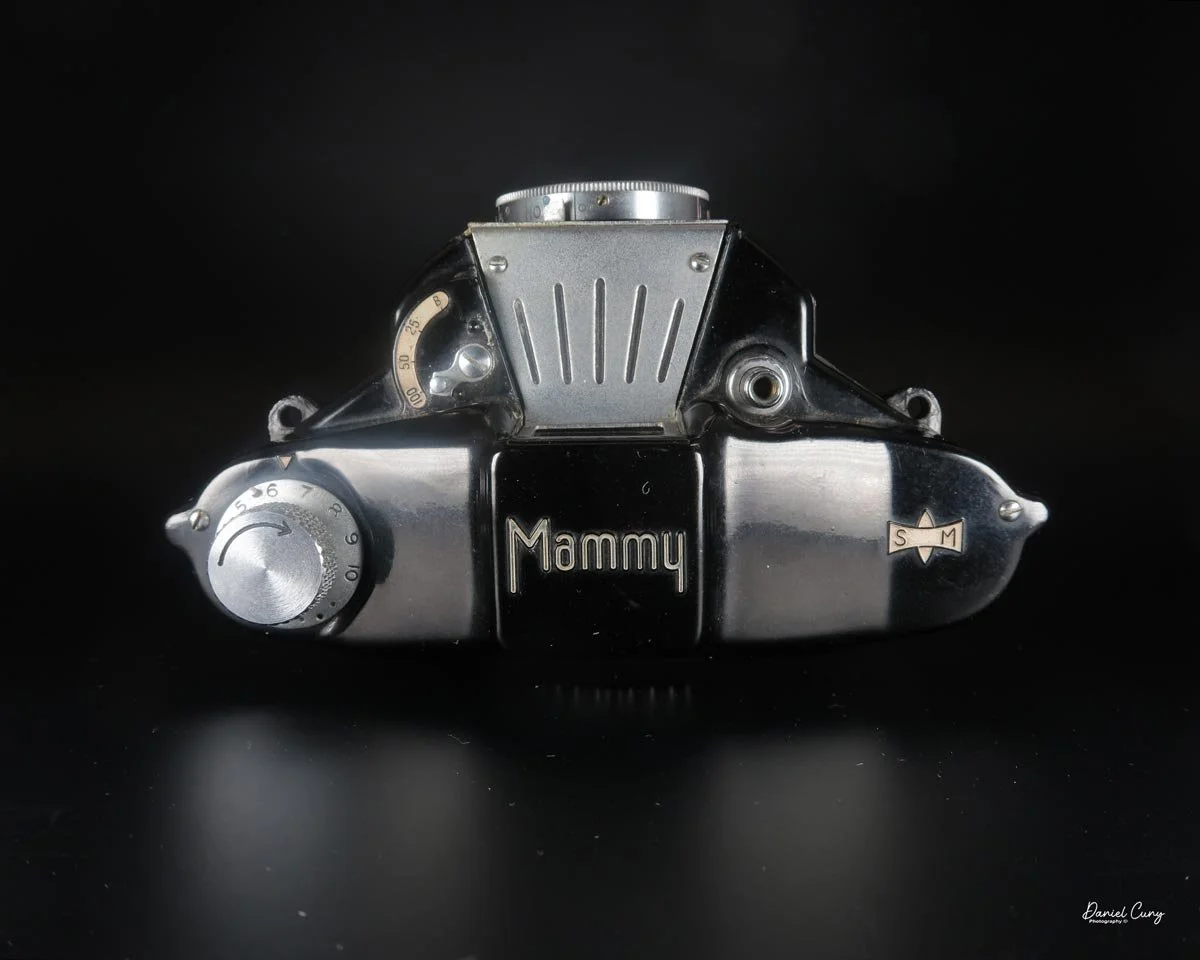
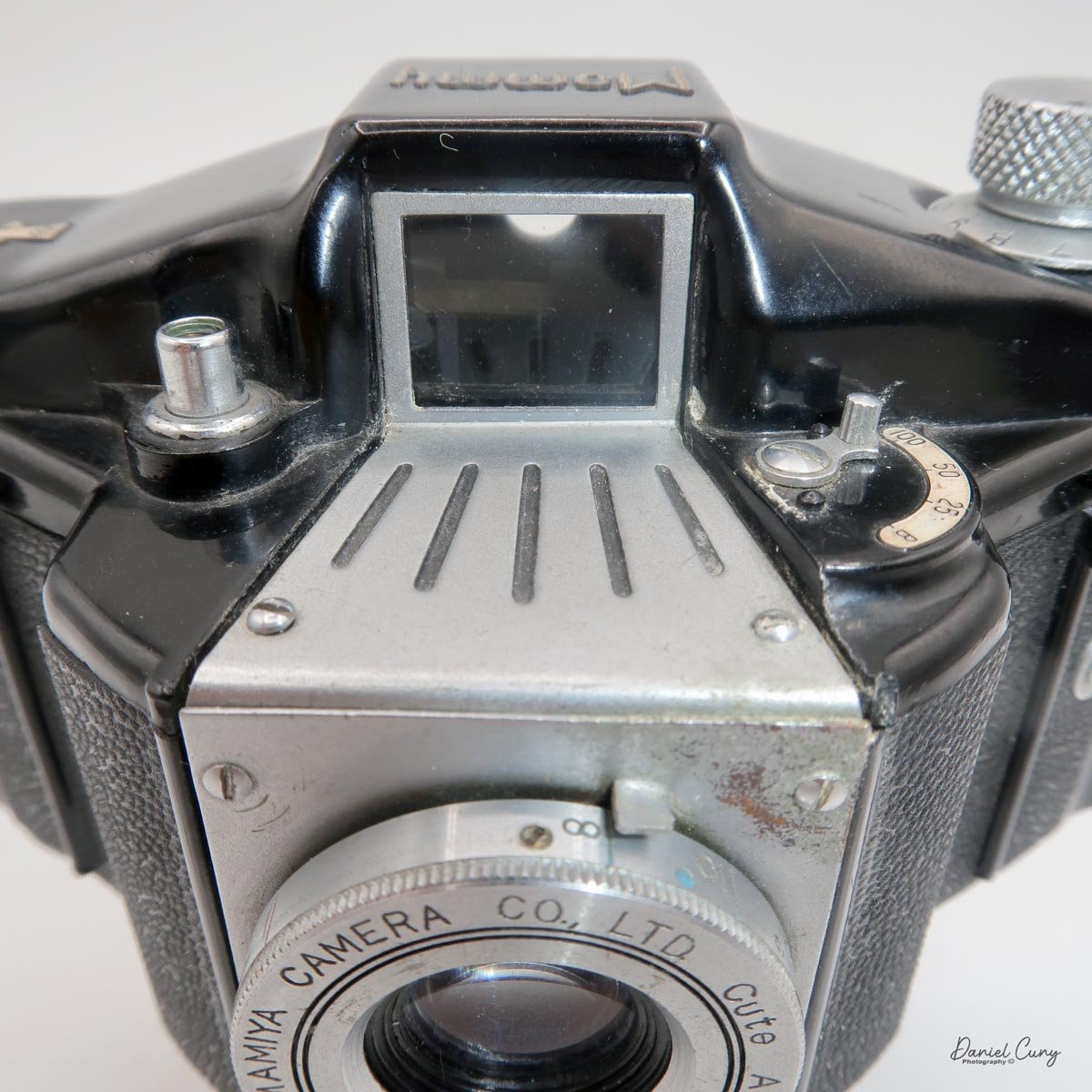
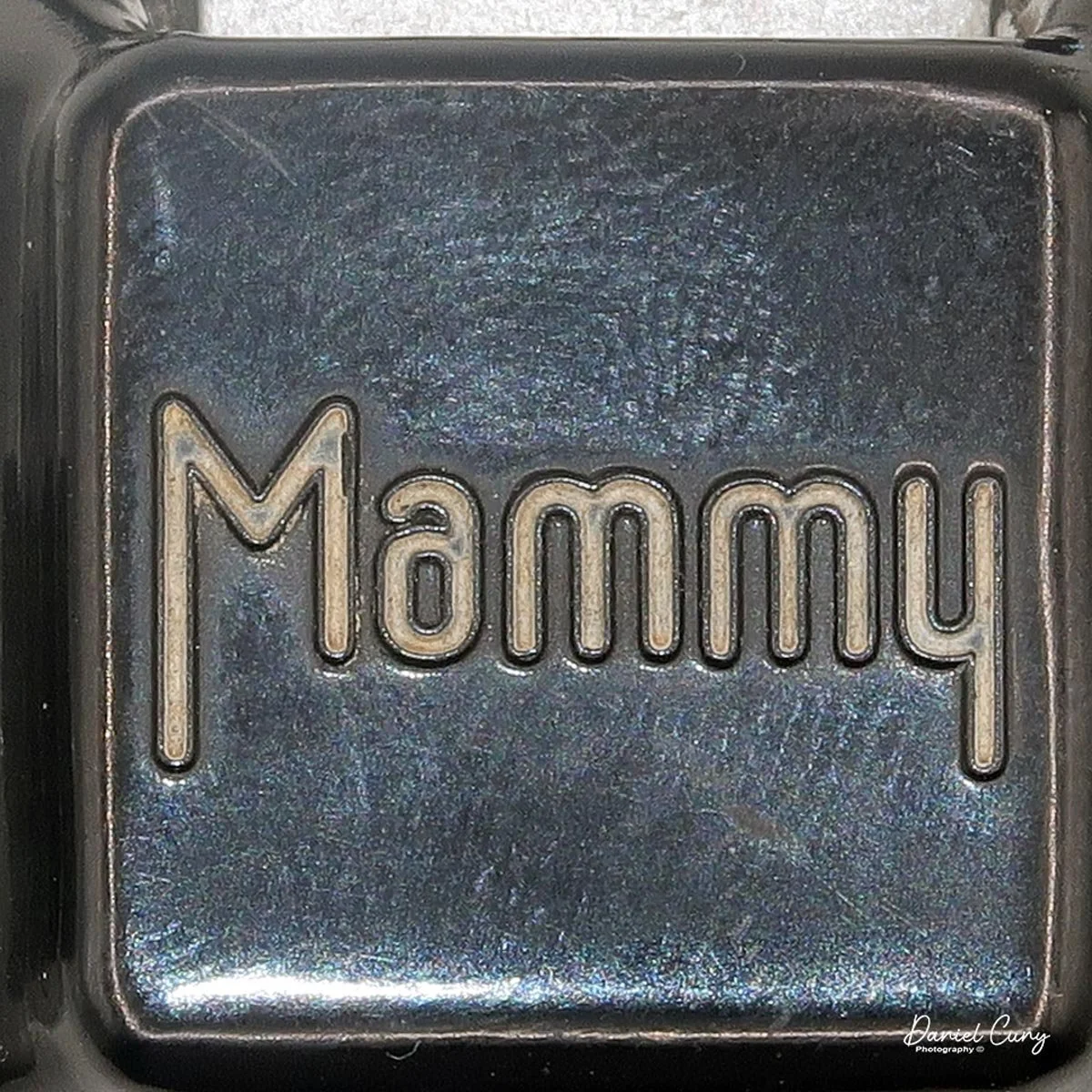
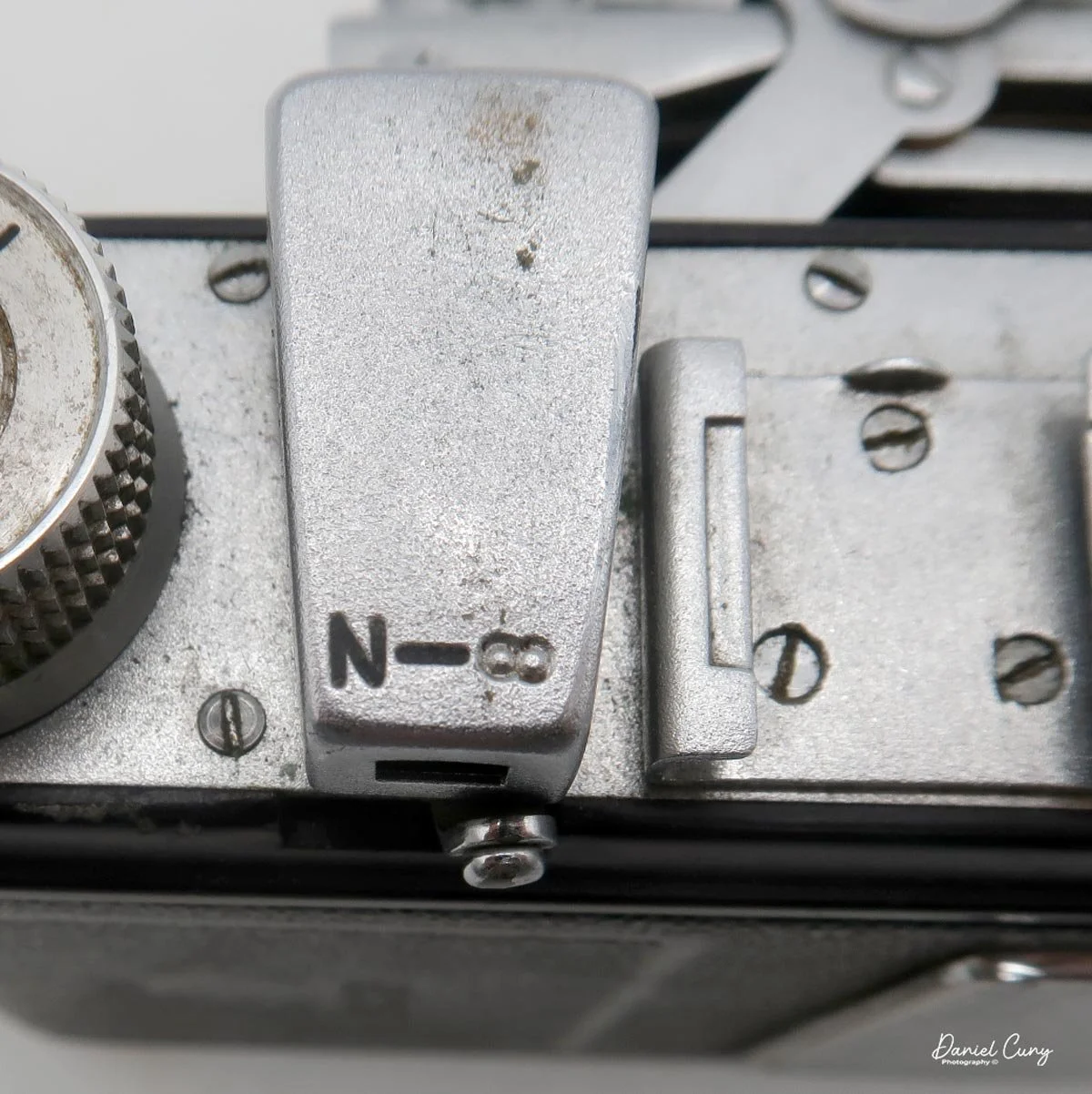
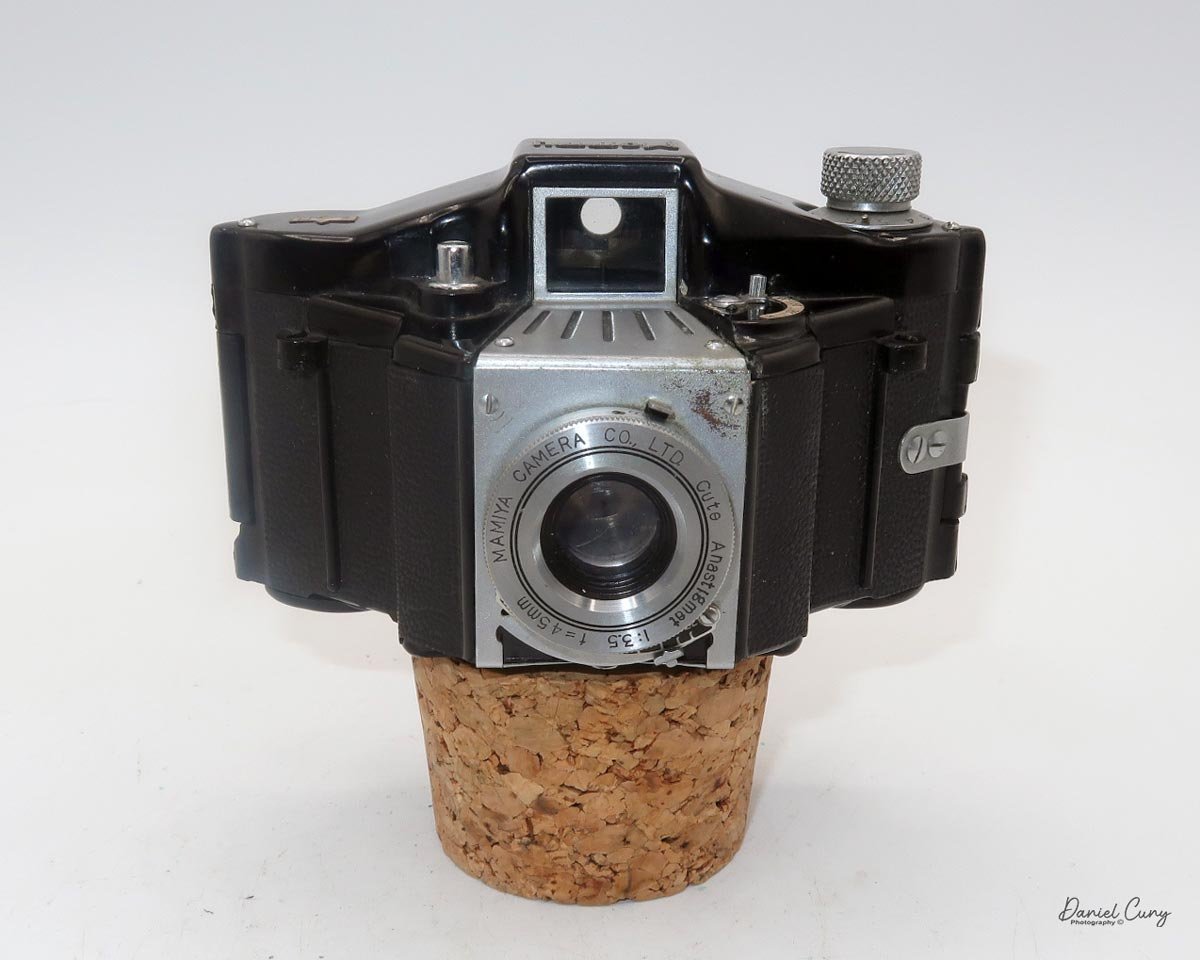
 It wasn't until I physically saw the Mamiya Mammy camera in the showcase that I realized the one thing that drew me to it was simply the text on the top. The extended leg on one of the M's matches the length of the "Y," and the rounded double "m's" in the center are a classic design.

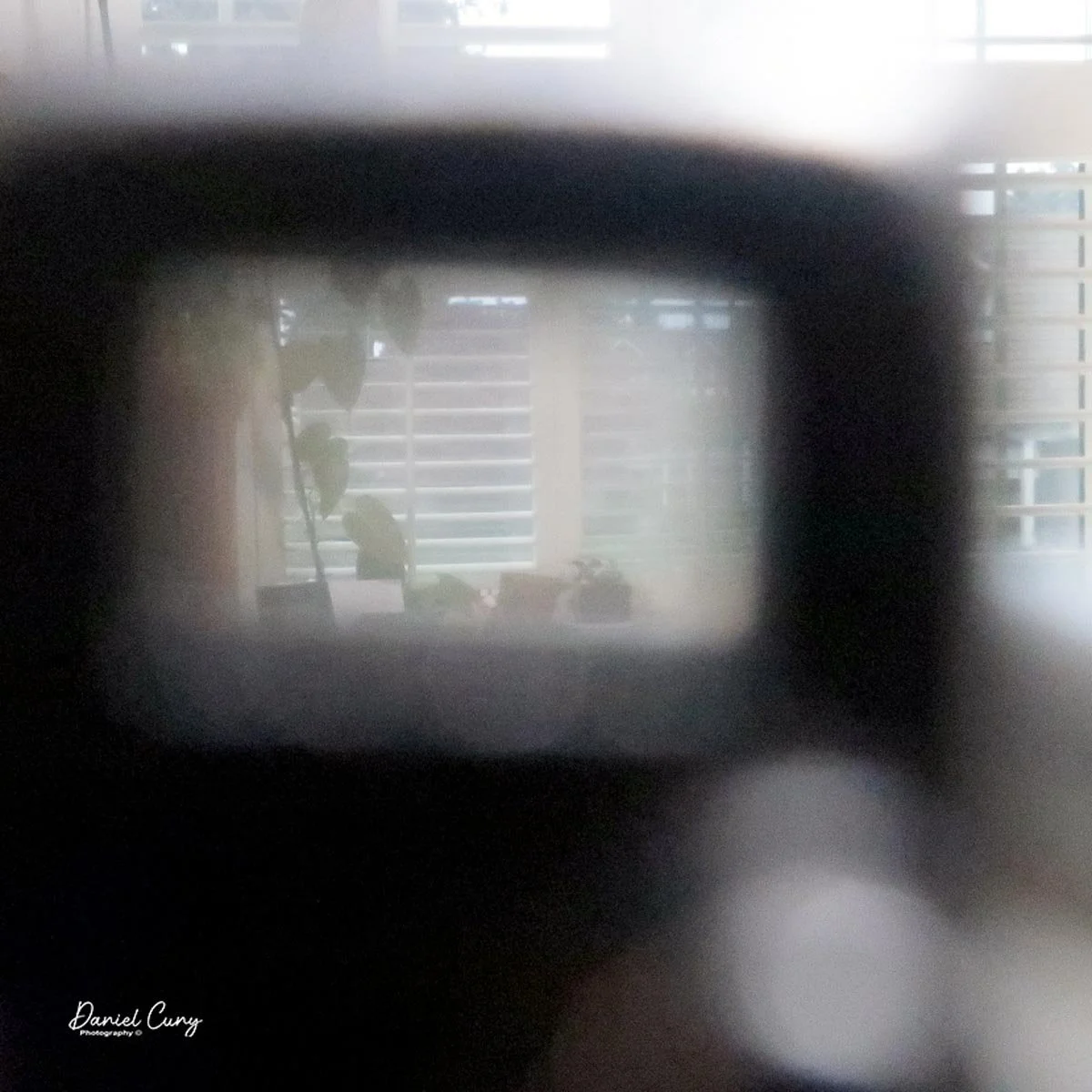
 At this time, I was actually holding a camera I had only seen in books. Not only did the camera's odd shape, classic text on top, and compactness give me joy, but I could also feel the excitement of holding one of these gems in my hands, operating the shutter, and looking through the camera's viewfinder. The tactile enjoyment of finding where the specific controls are located on the camera and adjusting the shutter speeds.

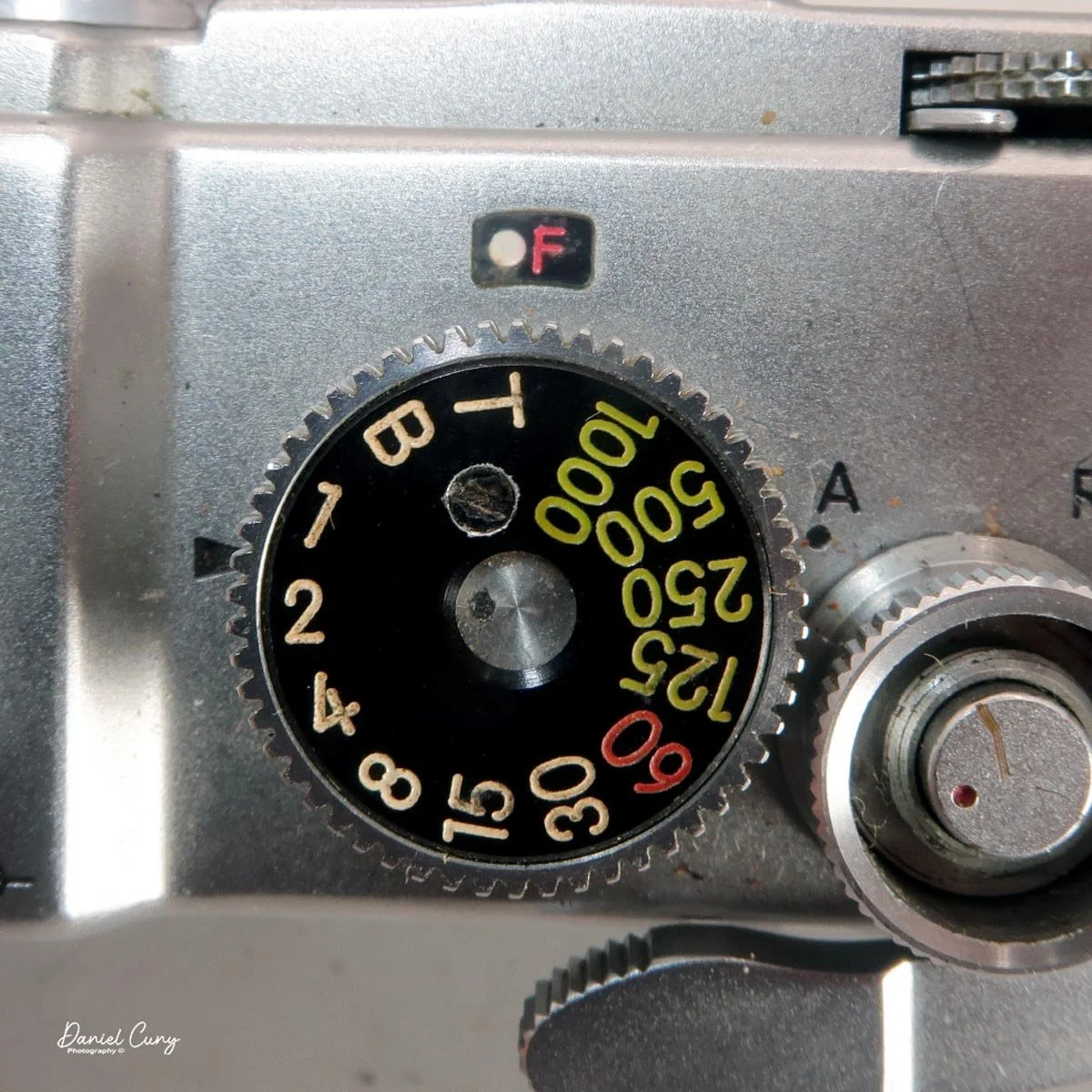
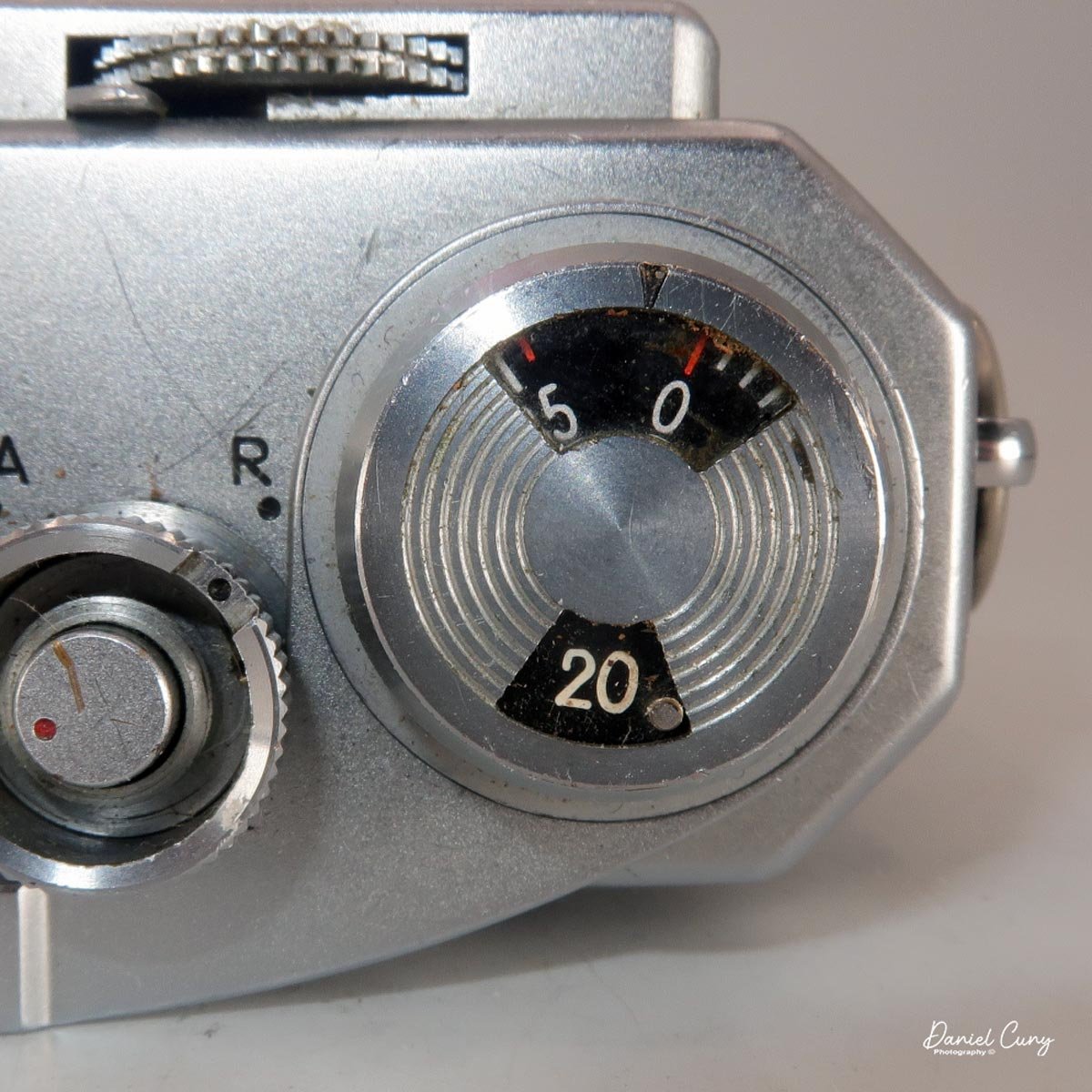
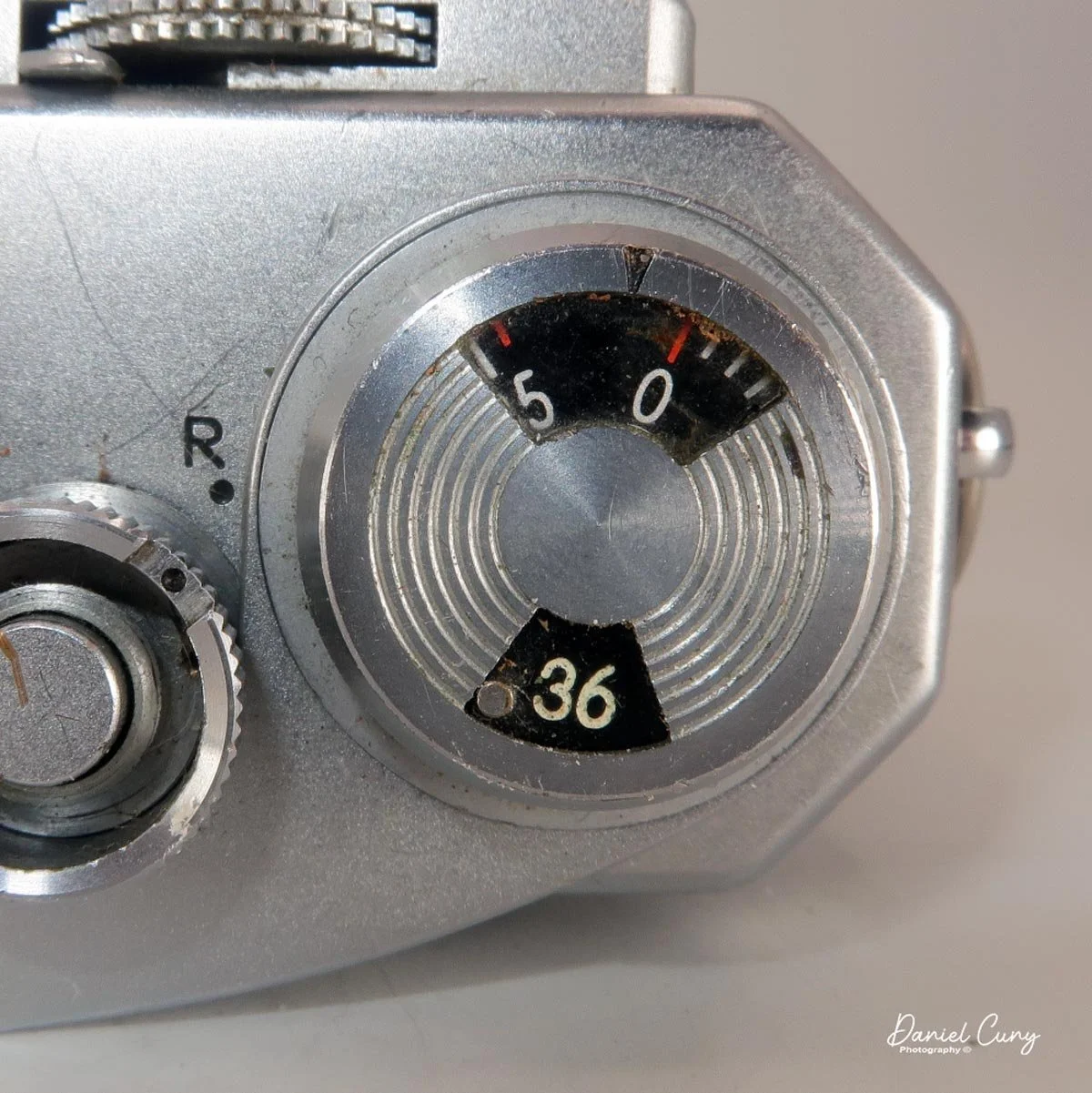
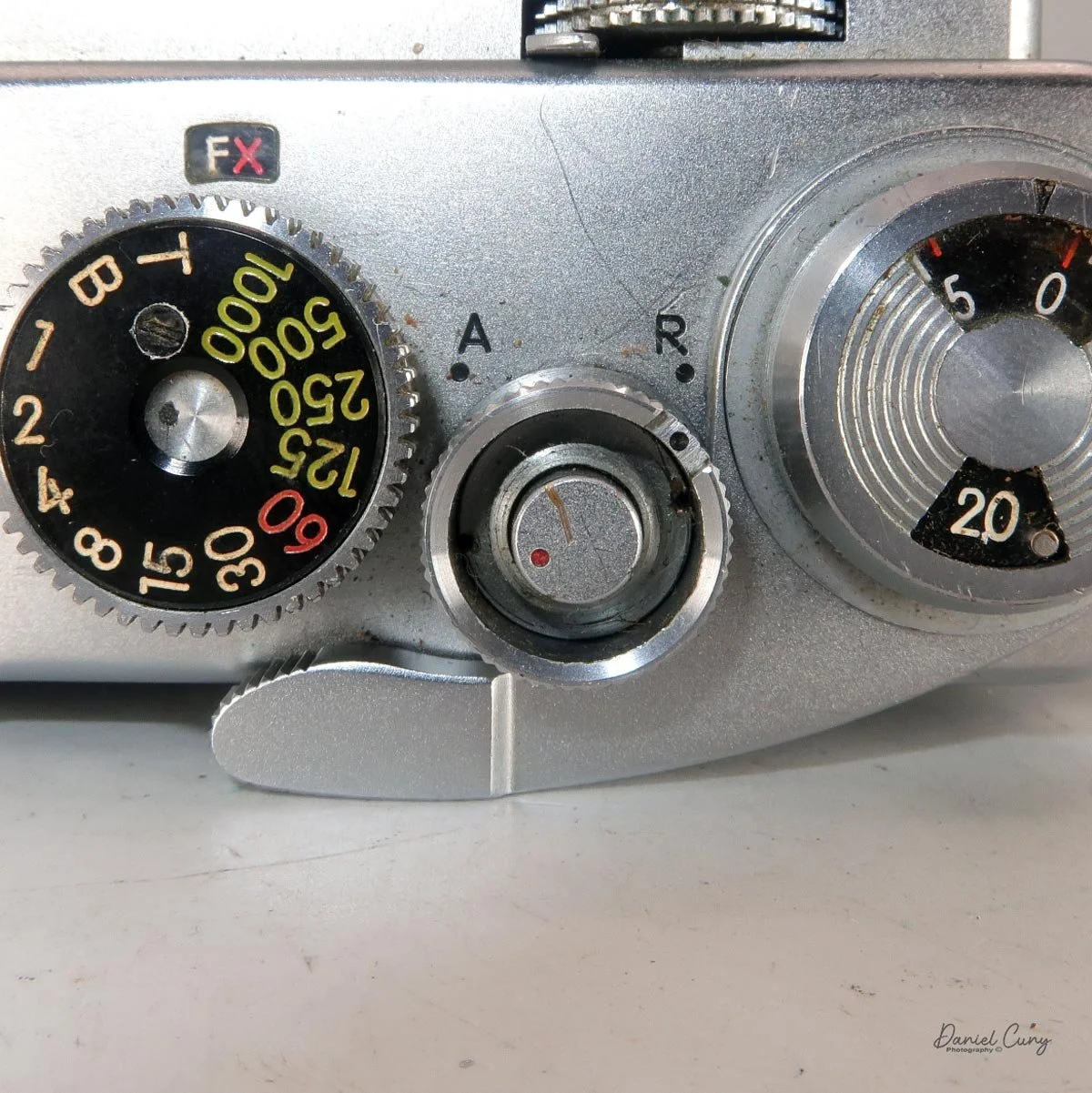
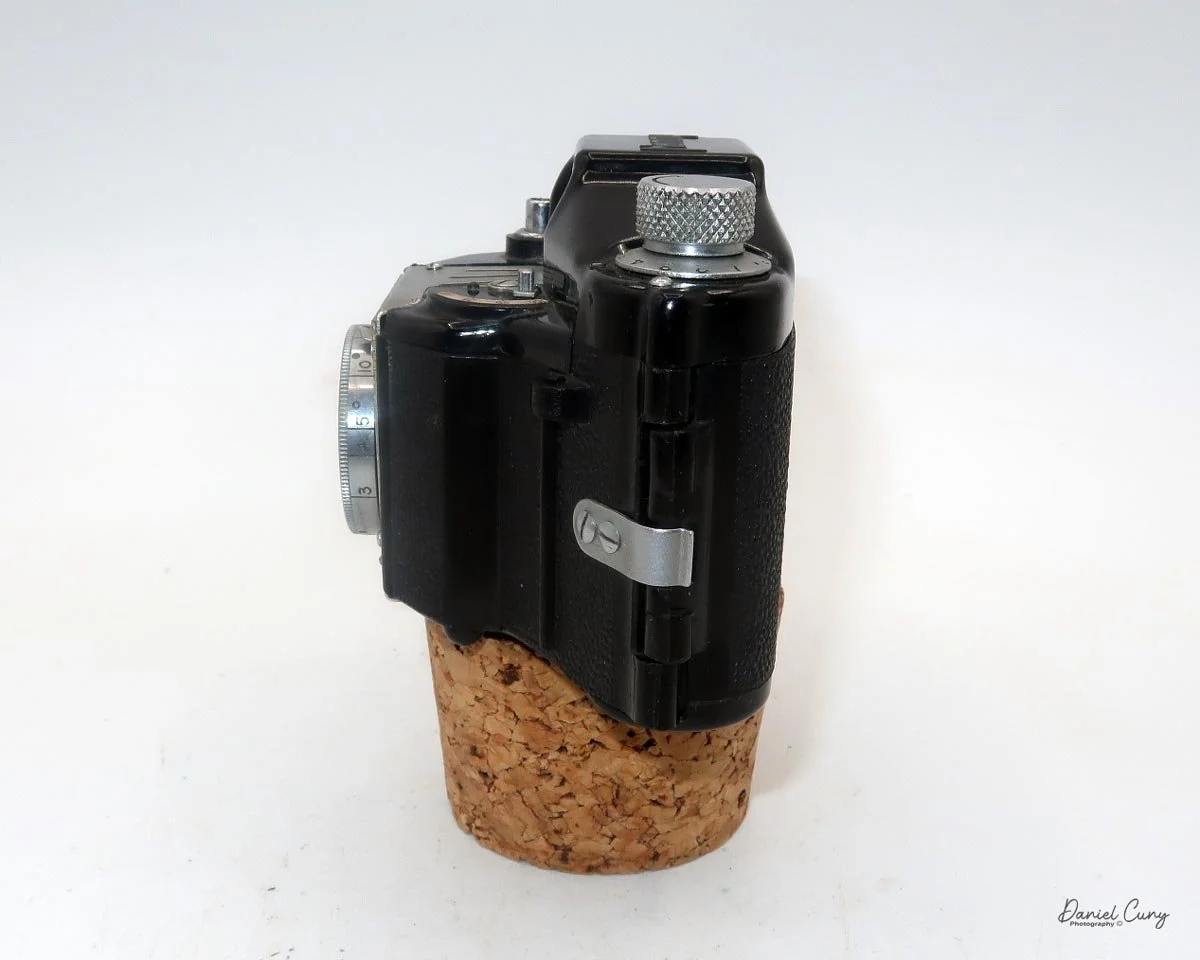
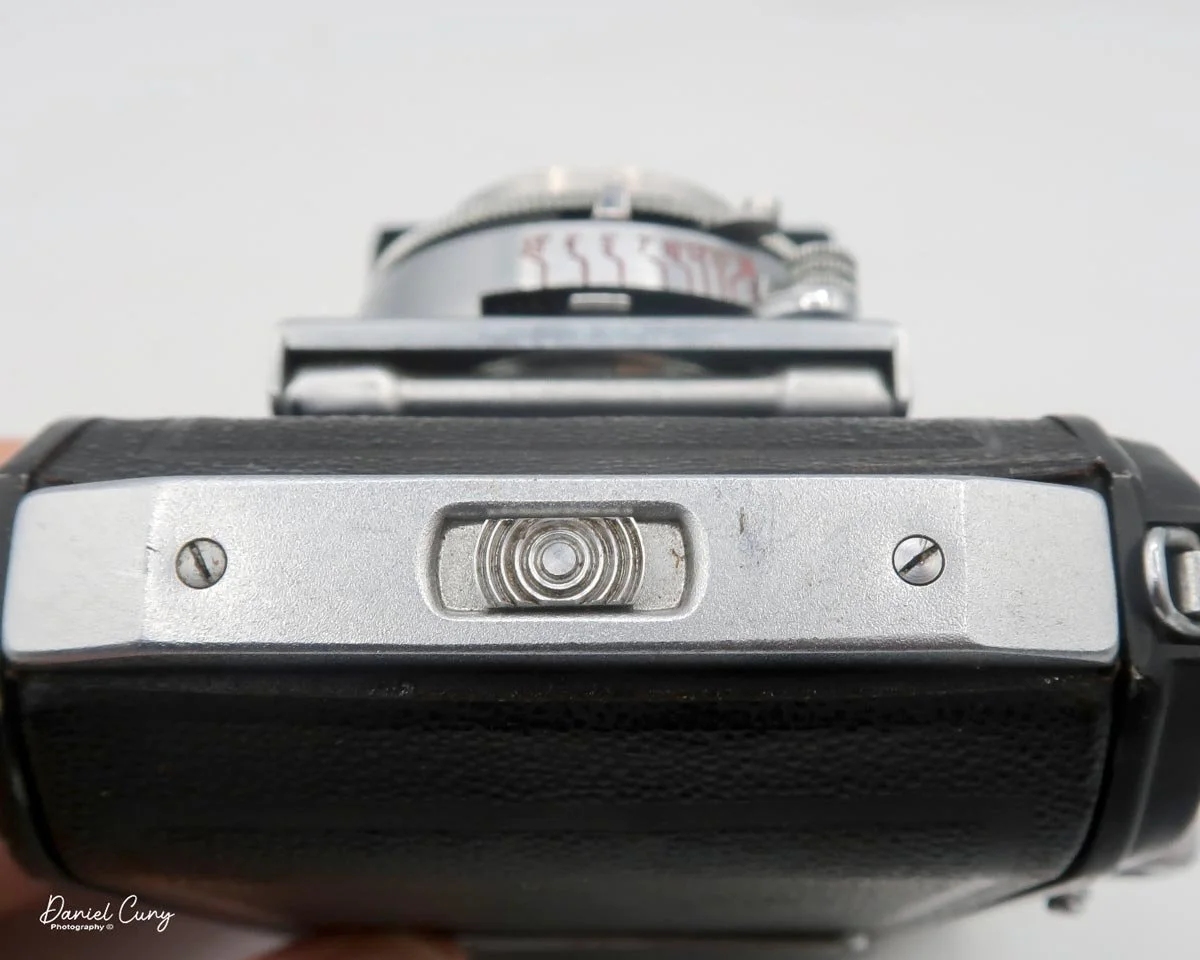
Top view of Mamiya Mammy camera

 This may sound odd to some, but for me having an unknown, but sought after camera in my hands, getting familiar with the controls and hearing the distinct "click" sound of the shutter are enjoyment to me.

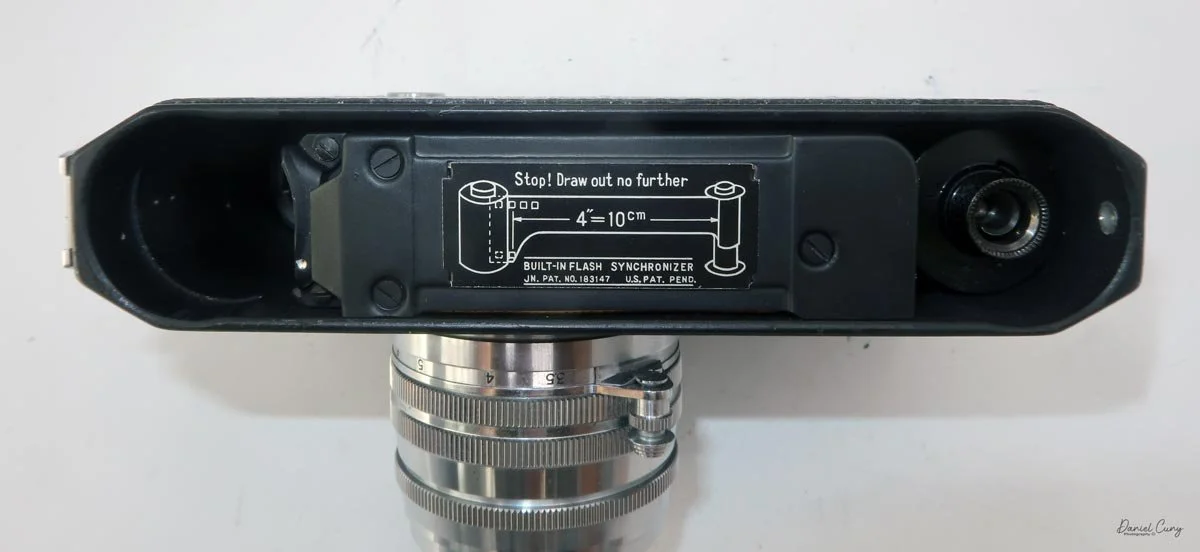
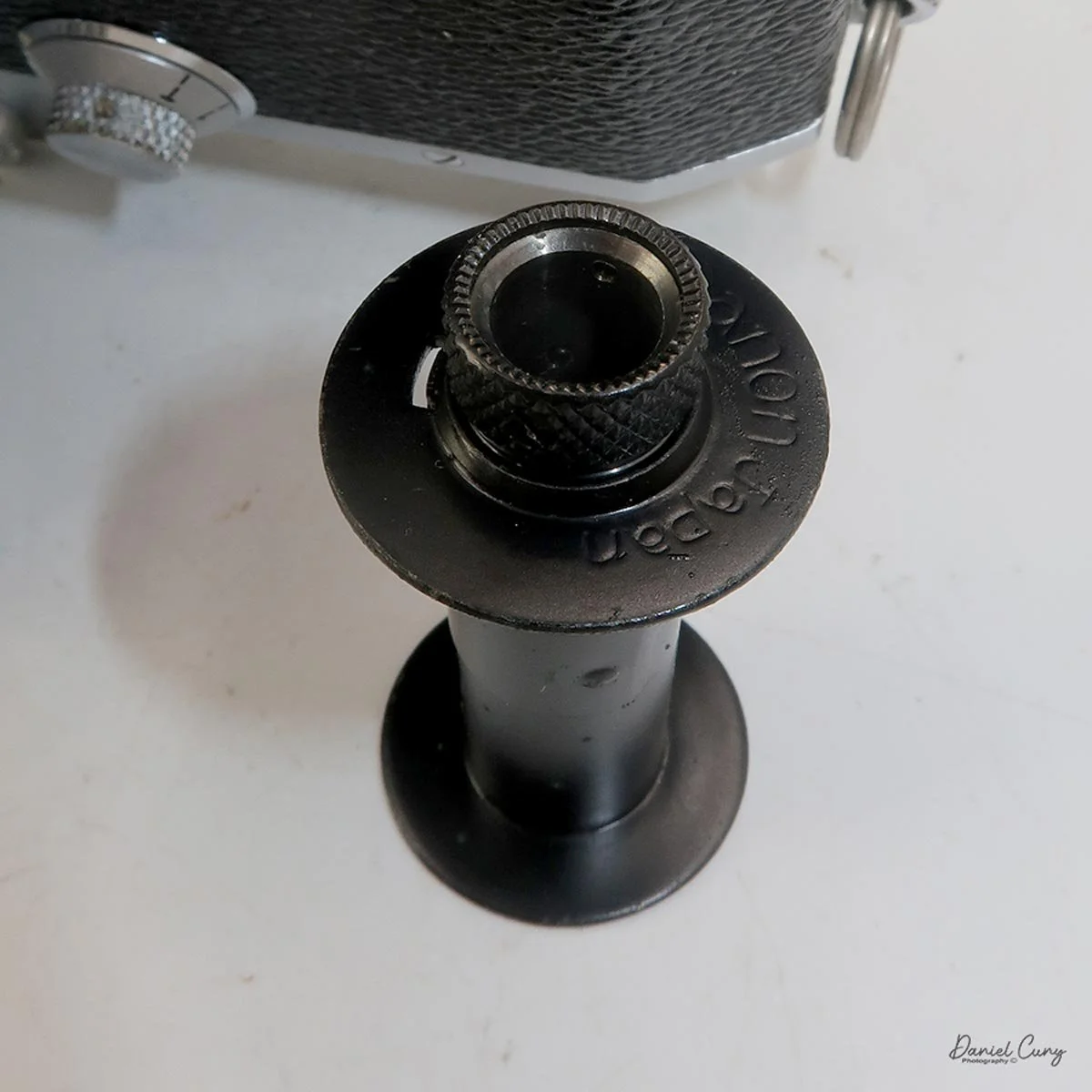
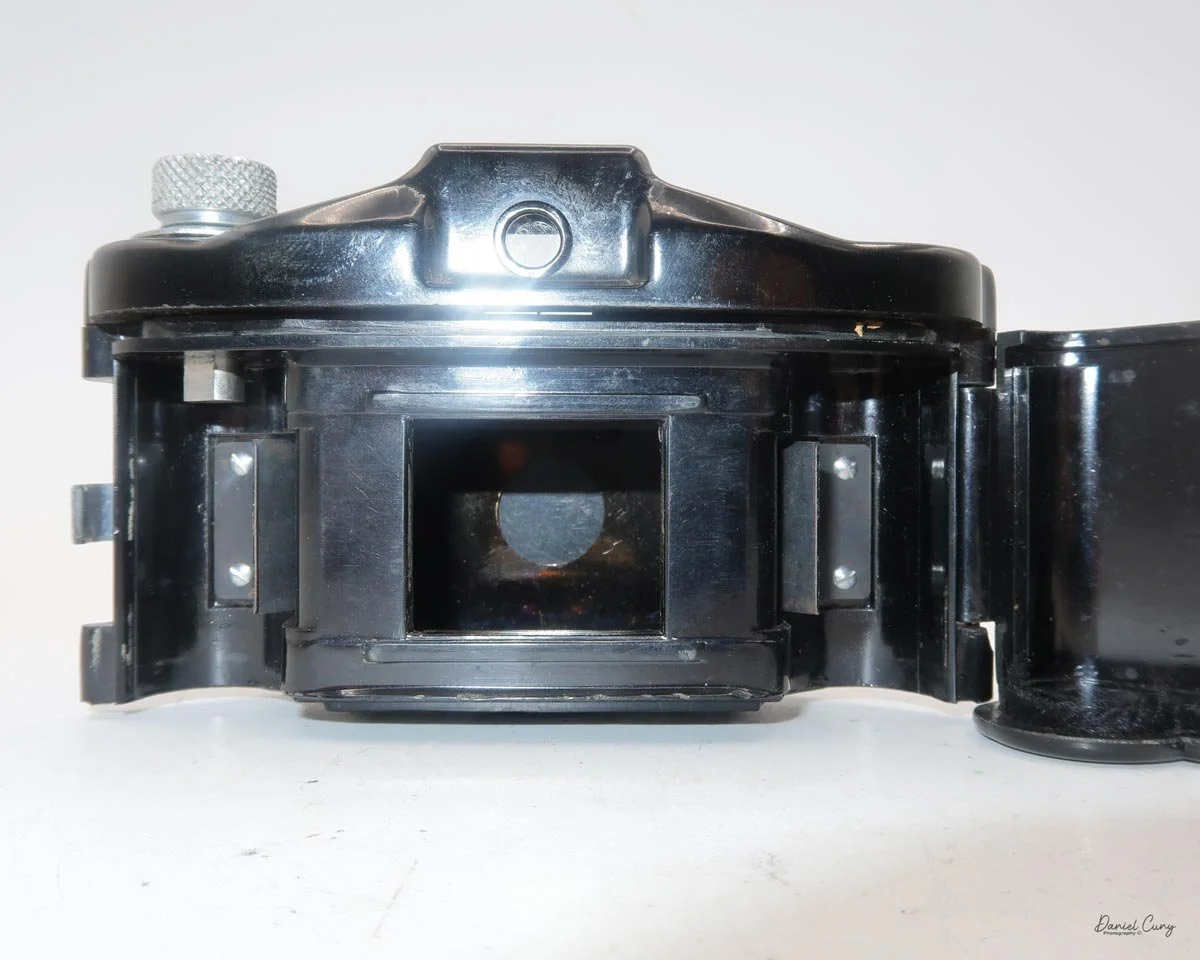
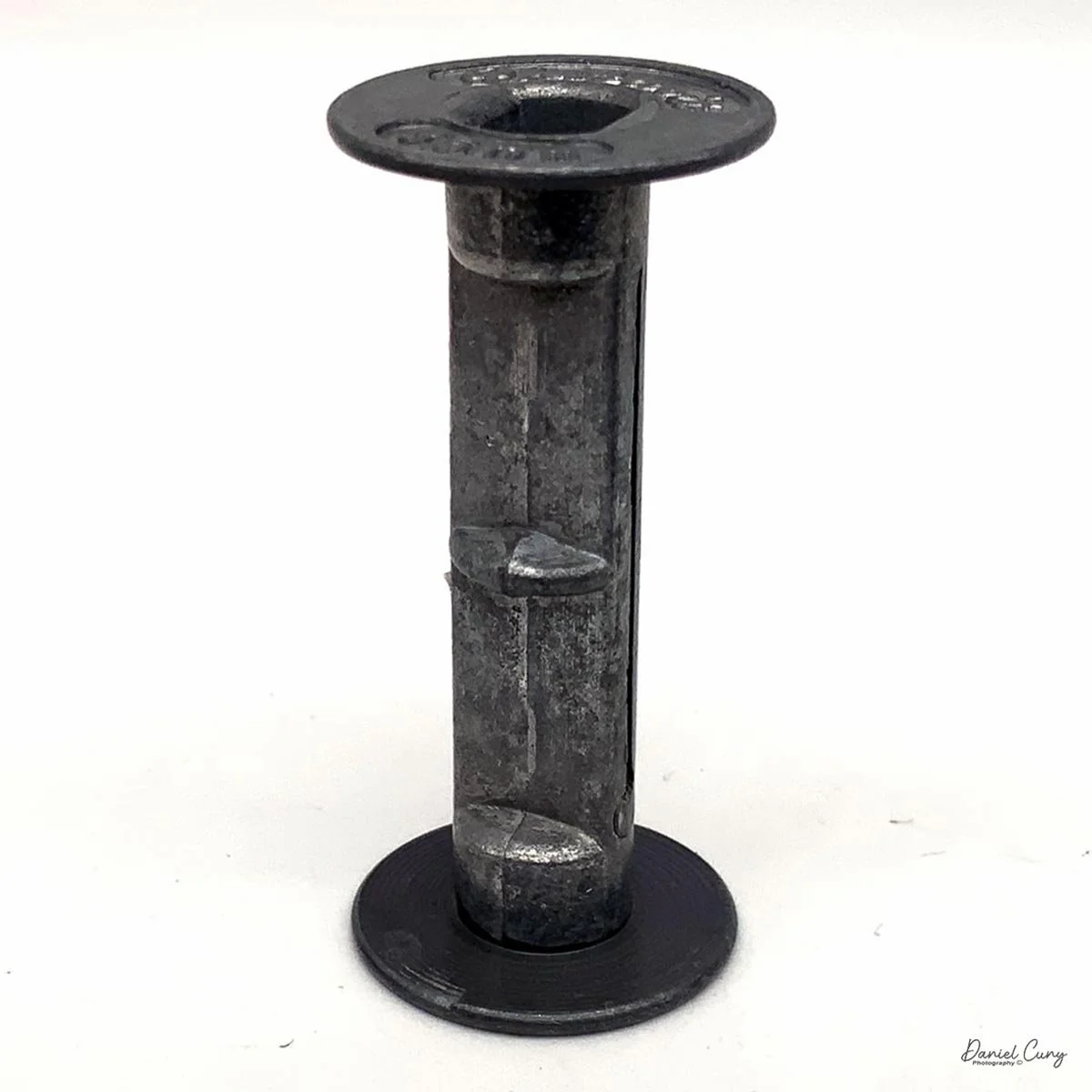
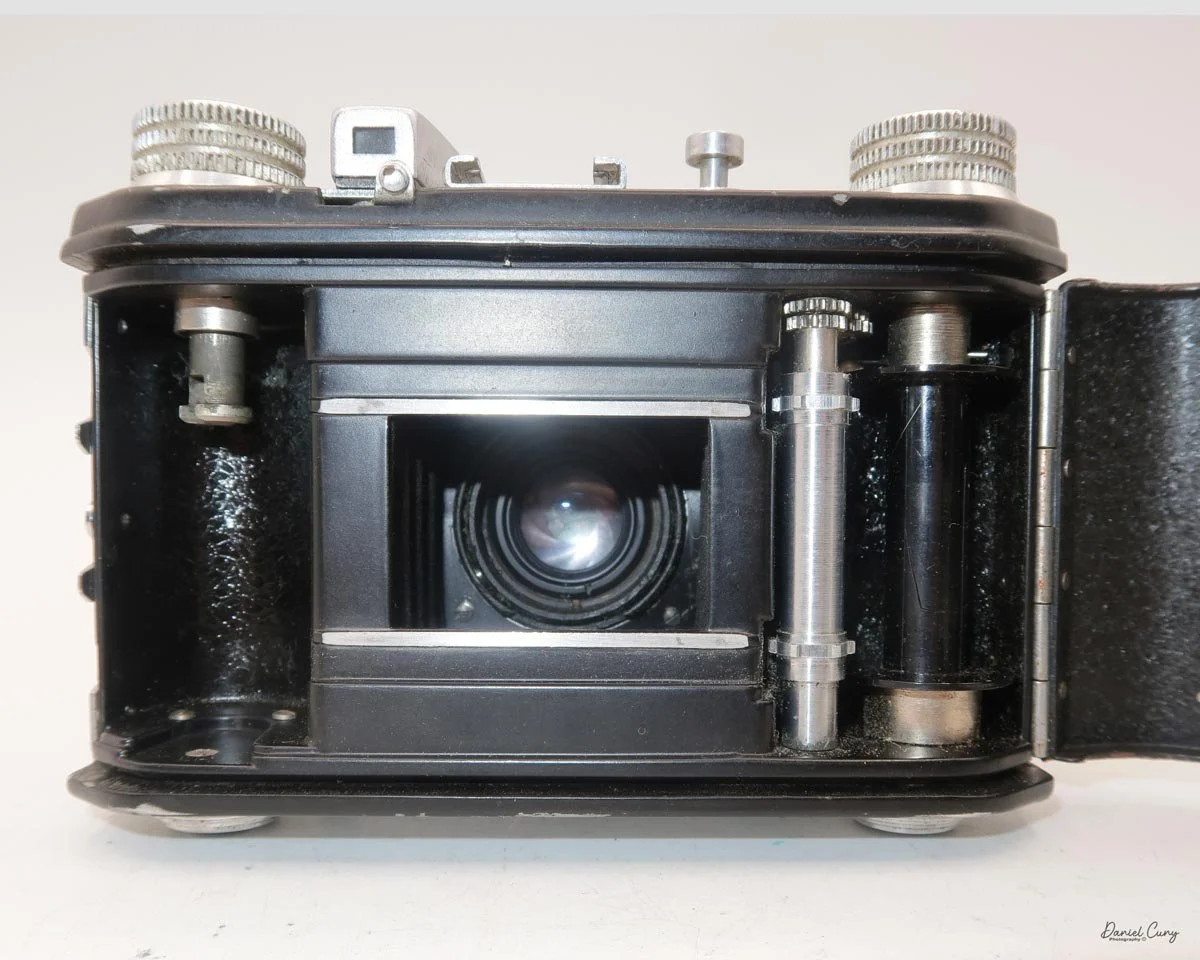
 While the camera appeared to be in tiptop shape, upon further inspection the shutter didn't always open and close as it should. Opening the back of the camera, there were no cassettes or empty film reels left behind, so it took me a minute to realize the camera was a Bolta film camera due to the odd shaped take up connector. It was considerably thicker than a normal film spool. But the price of the camera was extremely low, so I decided to snatch it up and take it home with me along with several other cameras from the shop.

 I've always been intrigued but the Bolta style of cameras like the Mamiya Mammy camera,  due to the compactness and smaller size they range in. I have a few other Bolta cameras in my collection, the very rare Inoca Stereo camera, the Photovit from Germany and,  Start camera from Japan. The last two I still need to review soon.

History:

 Mamiya Camera Company began in 1940 as Mamiya Koki Seisakusho, founded by businessman Tsunejiro Sugawara and engineer Seiichi Mamiya. Its early identity was shaped by a blend of business ambition and technical ingenuity, and the company’s first camera, the Mamiya Six, established the medium-format direction that would define much of Mamiya’s reputation.

 The Mamiya Six was a folding 6x6 camera introduced as the company’s first product, and it stood out for an unusual focusing system in which the film plane moved rather than the lens. That design reflected the inventive approach that became a hallmark of the brand. The camera was successful enough to lay the groundwork for Mamiya’s later expansion into other formats.

From: The Collectors Guide to Japanese Cameras

 World War II disrupted the company’s early growth. Mamiya’s Tokyo facilities were destroyed during the war, forcing a major rebuild afterward. In the immediate postwar period, production resumed under difficult conditions, and sales were initially limited to Allied personnel rather than the Japanese public.

 In the late 1940s, Mamiya began broadening its lineup. It built Japan’s first flash-synchronized twin-lens reflex camera, the Mamiyaflex, in 1948, and followed with its first 35mm camera, the Mamiya 35-I, in 1949. Around this time, the company also started producing more of its own components, including shutters and lenses, which helped it reduce dependence on suppliers and strengthen its manufacturing base.

 By 1950, the company had incorporated as Mamiya Camera Company, Ltd., and by 1951 it was listed on the Tokyo Stock Exchange. These milestones show how quickly Mamiya moved from a small postwar camera maker into a recognized industrial company. Its early history is especially important because it set up the medium-format specialization and engineering reputation that later made Mamiya a major name among serious photographers.

 In short, Mamiya’s early story is one of innovation, wartime disruption, and steady recovery. From the Mamiya Six to the Mamiyaflex and the Mamiya 35-I, the company built its identity through practical design and technical originality.

My Camera:

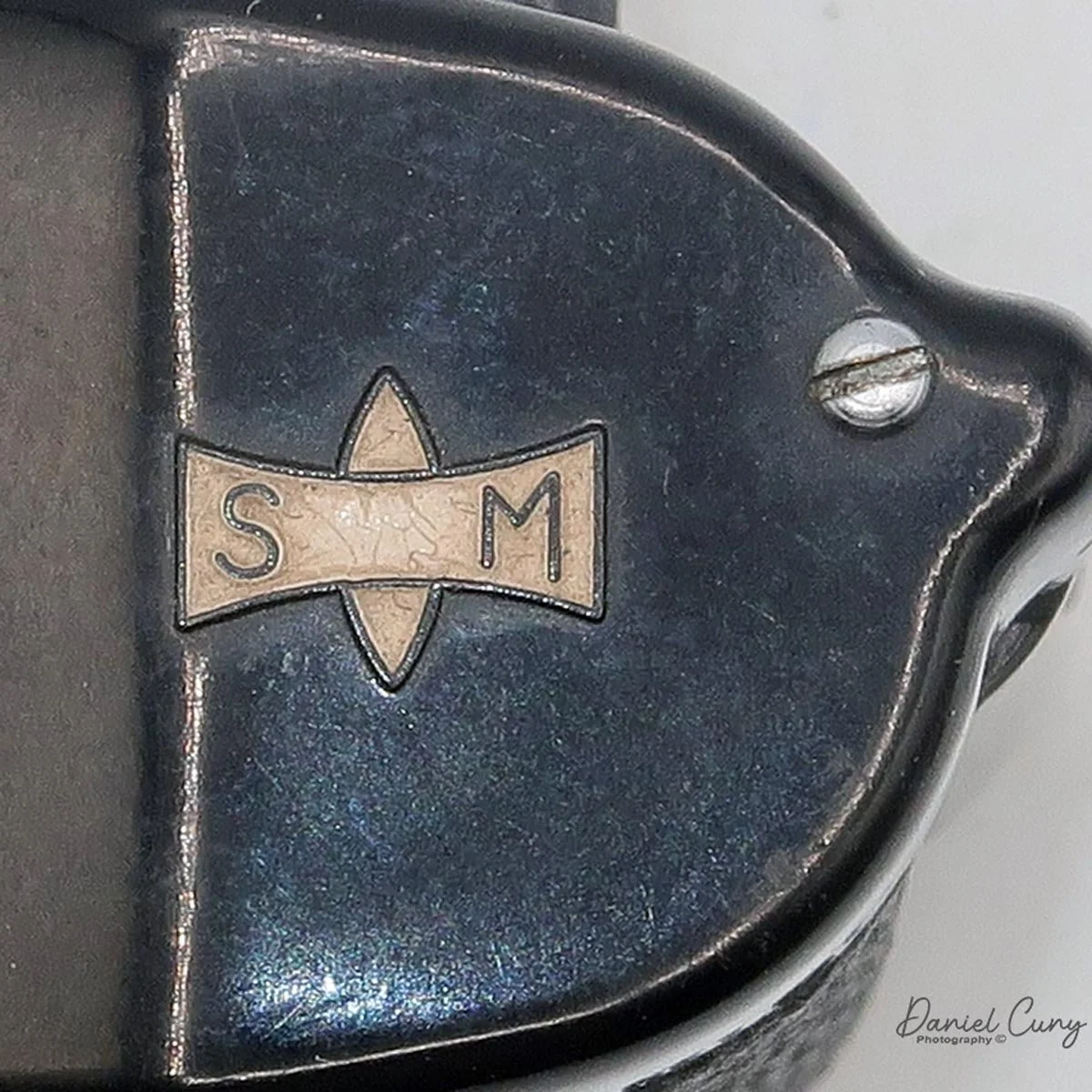
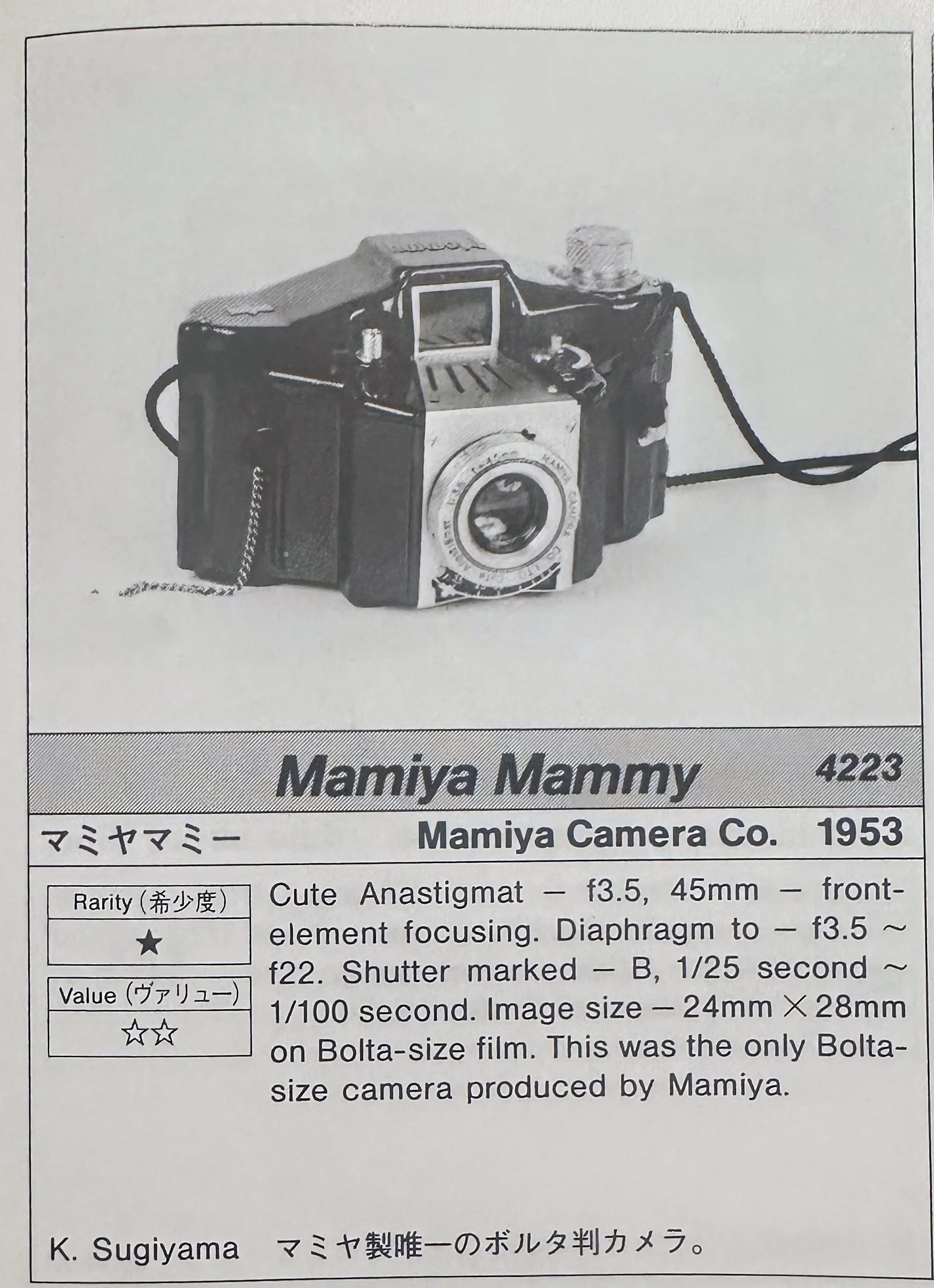
 My Mamiya Mammy camera is a small, compact camera made of Bakelite, with chrome accents along the top of the lens area, around the front viewfinder, the winding knob, shutter release, and lens. The camera was built in early 1953, soon after the end of World War II, during Japan's rebuilding. It was the only Bolta film camera produced by Mamiya.

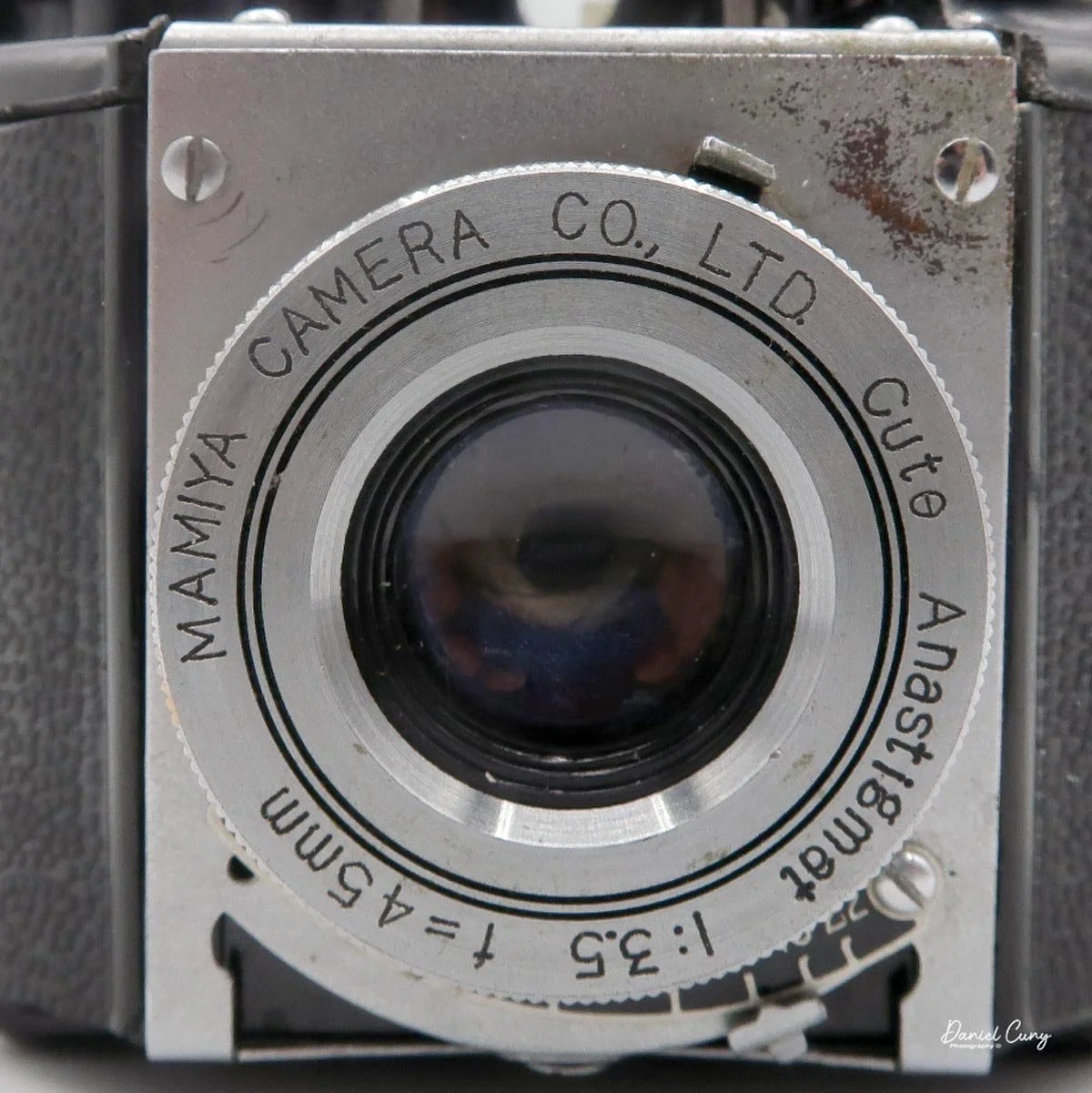
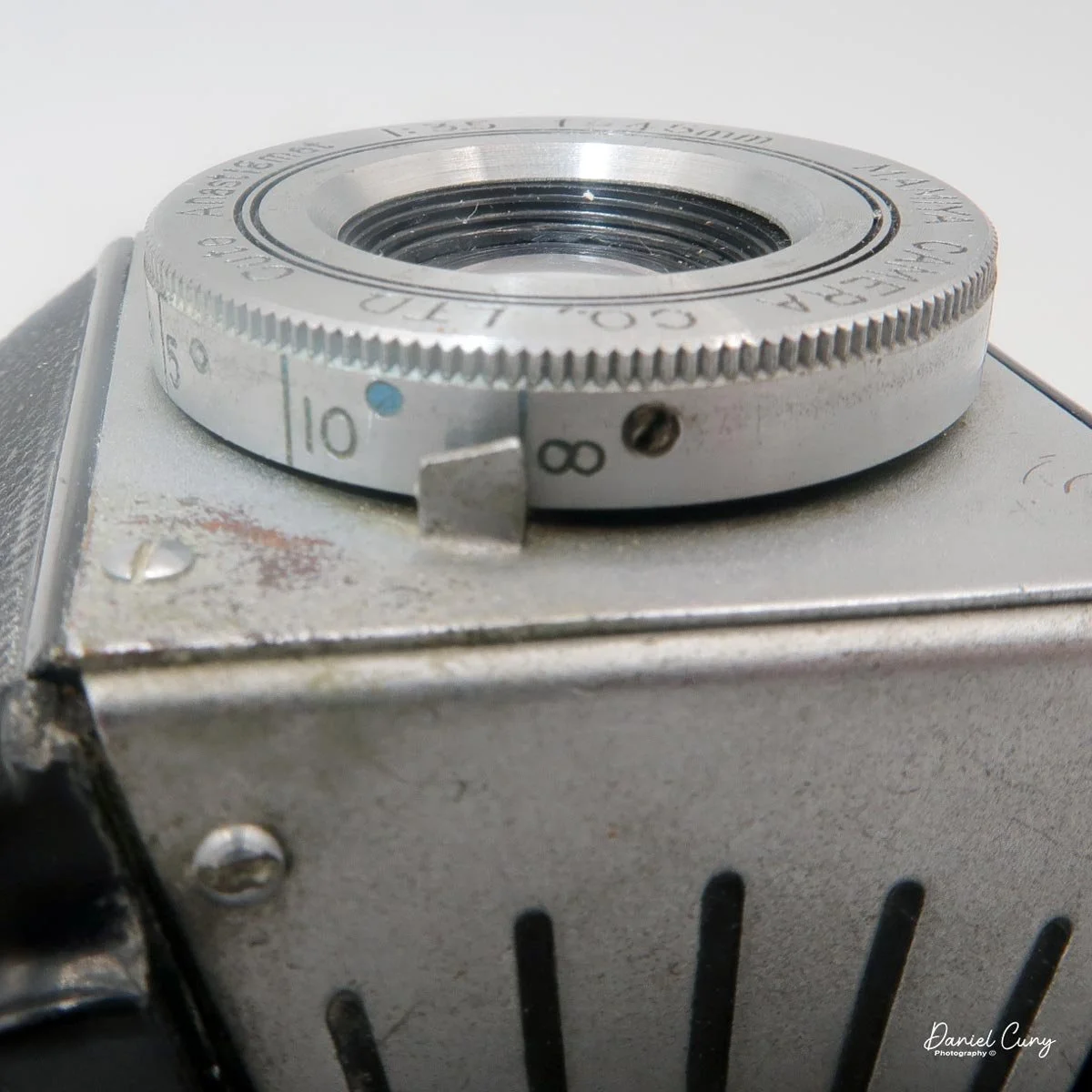
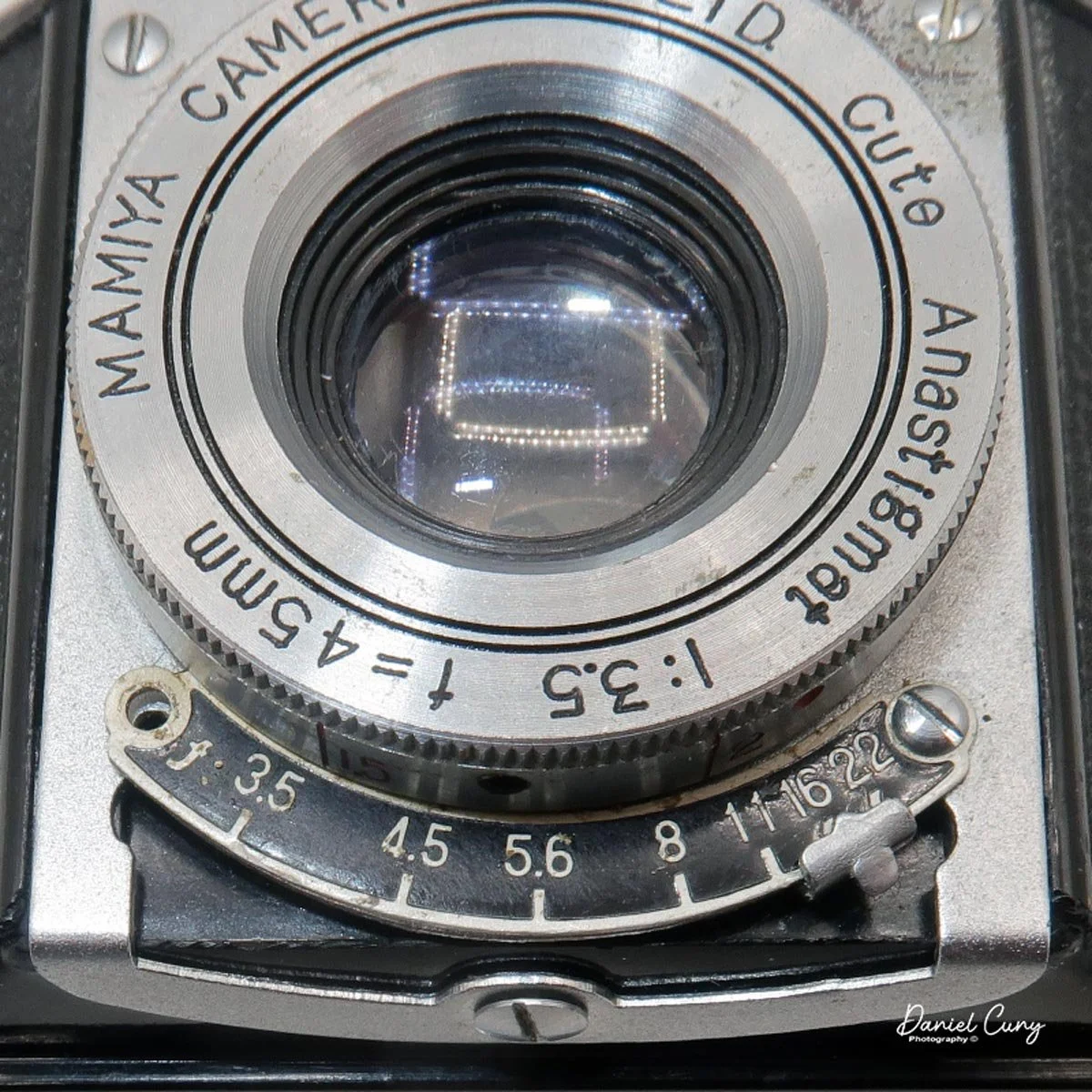
 The Mammy camera is 4.5" wide by 2.5" deep and 2.5" tall, weighing only 6.6 ounces without film loaded in the camera. The camera houses a Mamiya Camera Company LTD. Cute Anastigmat 45mm f/3.5 lens, which is focusable by turning the lens until you approximate the distance to your subject, and with a minimum focus distance of 2 meters to infinity.

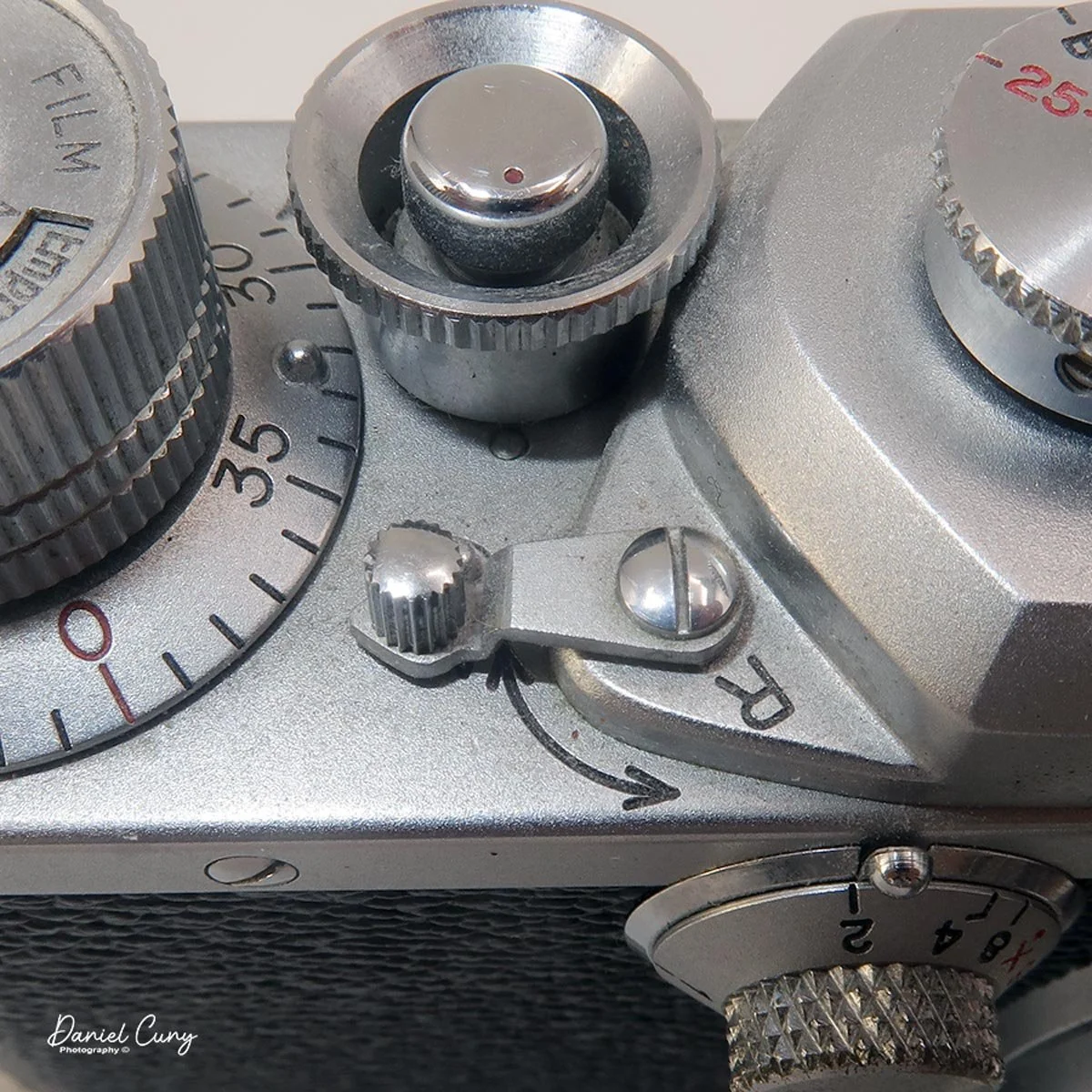
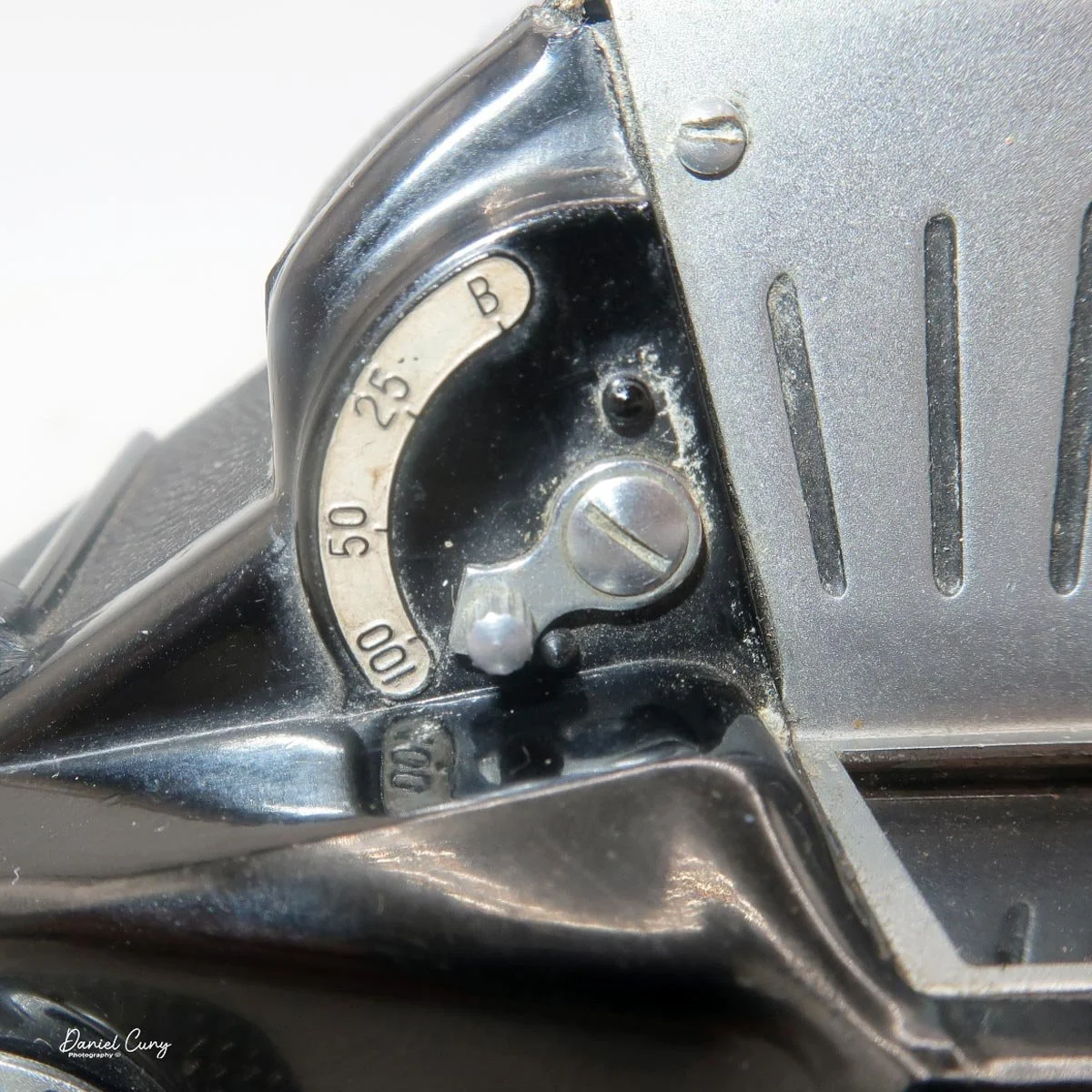
The camera offers three shutter speeds, of 1/100, 1/50, and 1/25, along with "B" for timed exposures. The shutter speed selector is on top of the lens housing on the left side of the camera and is selected by turning a lever to the desired speed.

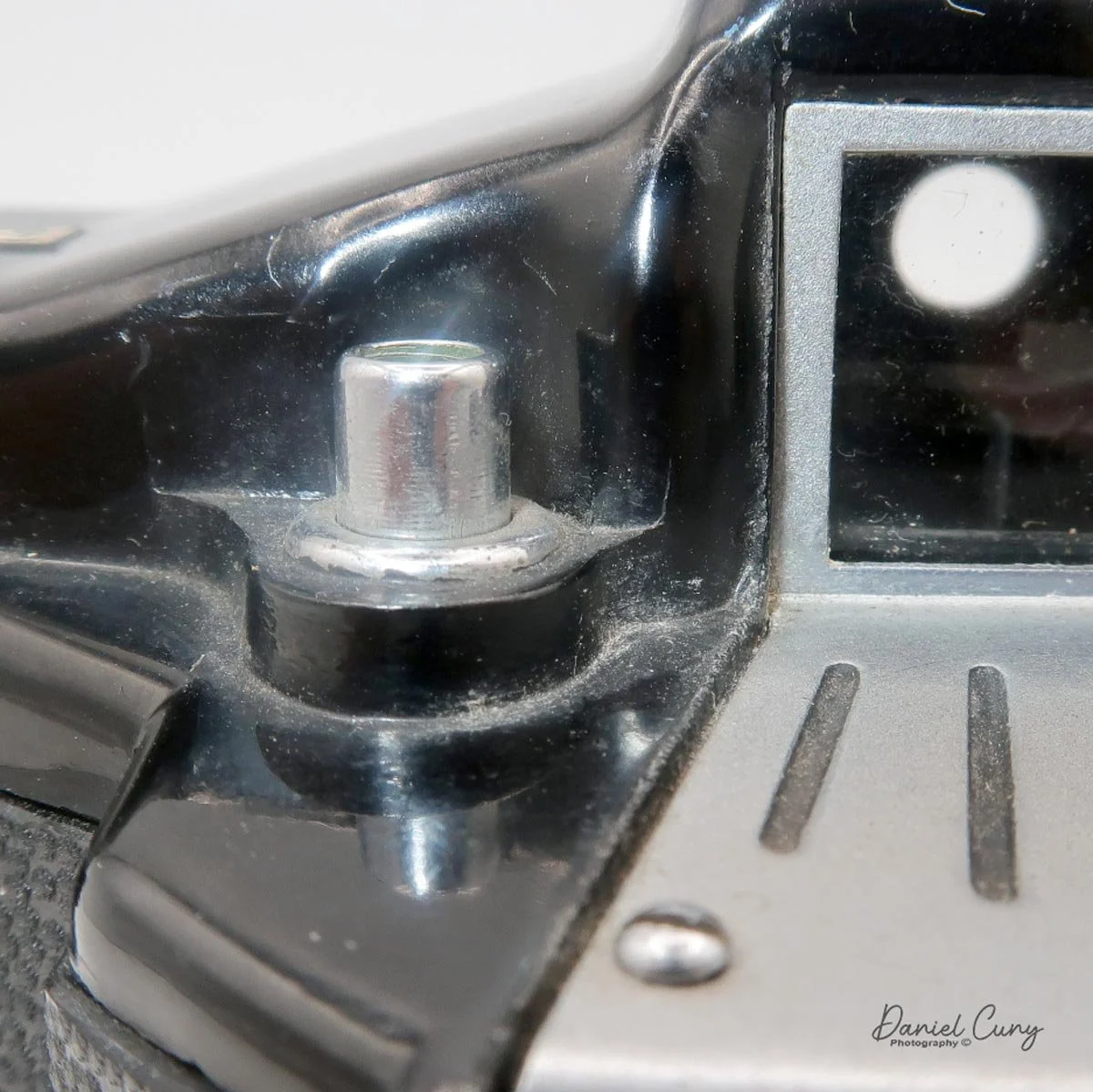
 The Mammy camera has an aperture range from F/3.5 to F/22. Under the lens is the aperture selector. Slide the small arrow to the desired aperture settings. It wasn't until I started taking photos of the aperture settings that I noticed one of the screws holding the aperture plate on the camera was missing. The shutter release is located on the  right side of the lens housing, opposite side of the shutter speed selector.

The Mamiya Mammy camera uses paperbacked Bolta film which was invented by Bolta-Werks in Germany in 1936 for their Boltavit model camera. Bolta film was paperbacked unperforated 35mm film which used a red window system on their camera to count the frame numbers. This was less expensive than using perforated film of the time. 

 Bolta film also became popular in Japan when a Japanese company produced a camera named Boltax in the late 1930s. Bolta sized cameras became very popular during the 1940s and into the 1950s due to the cost difference in films at the time. Bolta film was similar to any roll film camera like 127 or 828 film and was sold in paper backed rolls

 My Mamiya Mammy camera doesn't have an empty spool or cassette used in Bolta cameras from the time. I do however have a Photovit camera which uses special Bolta cassettes to house the film. Inside these cassettes is a spool that would fit into the Mamiya Mammy camera which has a much larger end on the spool to fit into the camera.

Most Bolta camera have a similar film format to 35mm, 24x36mm. Some Japanese Bolta cameras such as the Rich-Ray cameras who made Bolta cameras have a film format 24x24mm, but the Mamiya Mammy camera has a film format of 24x28mm.

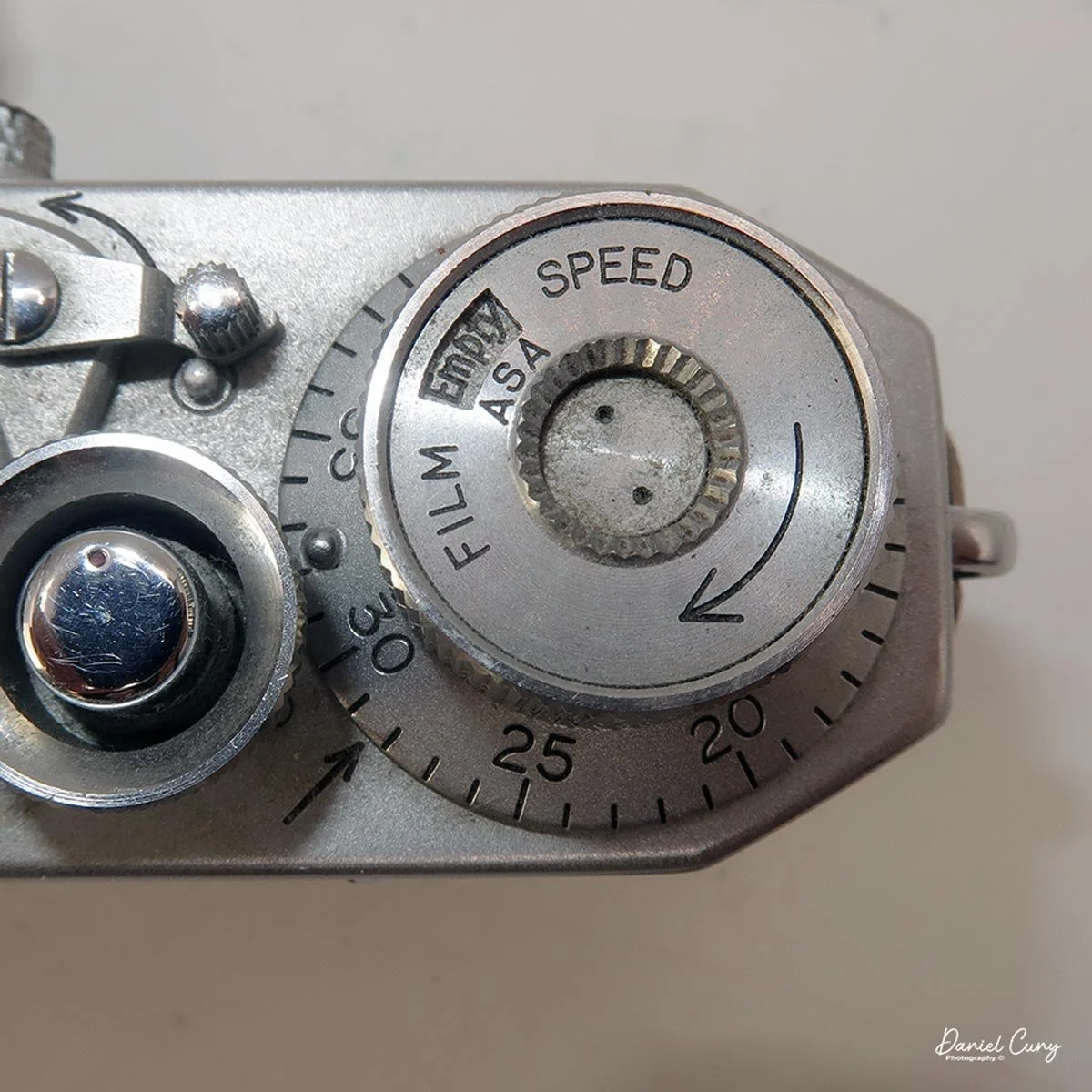
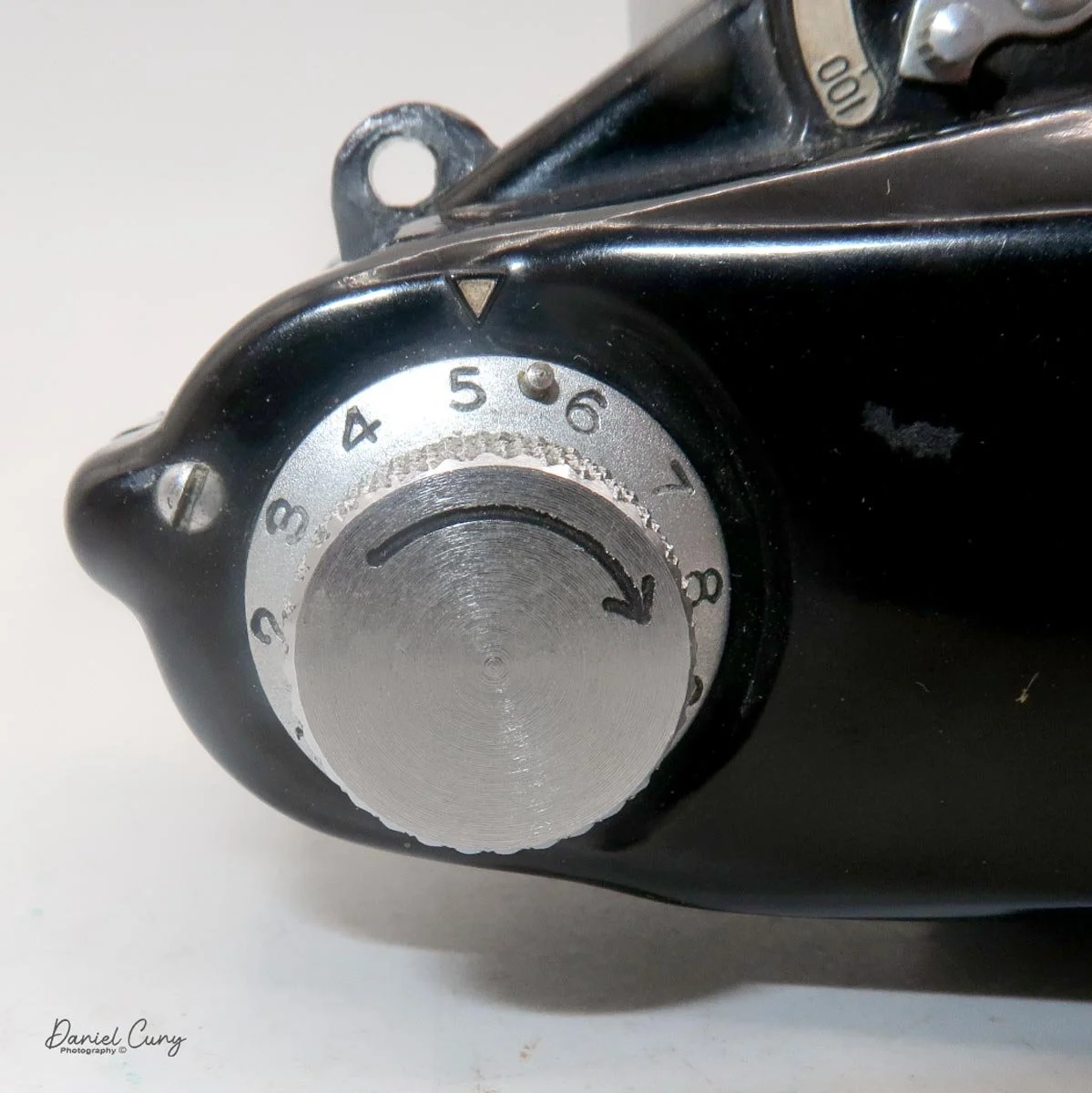
 I find that odd because Mamiya Mammy camera does have a red window on the back of the camera, but the film advance knob on the camera, which also cocks the shutter on the camera, stops after cocking the shutter. So unless you have the numbers set exactly in the red window, the red window frame counting system is no needed. Also, there a frame counter along the outside of the film advance knob which advances when you wind the film to the next frame.

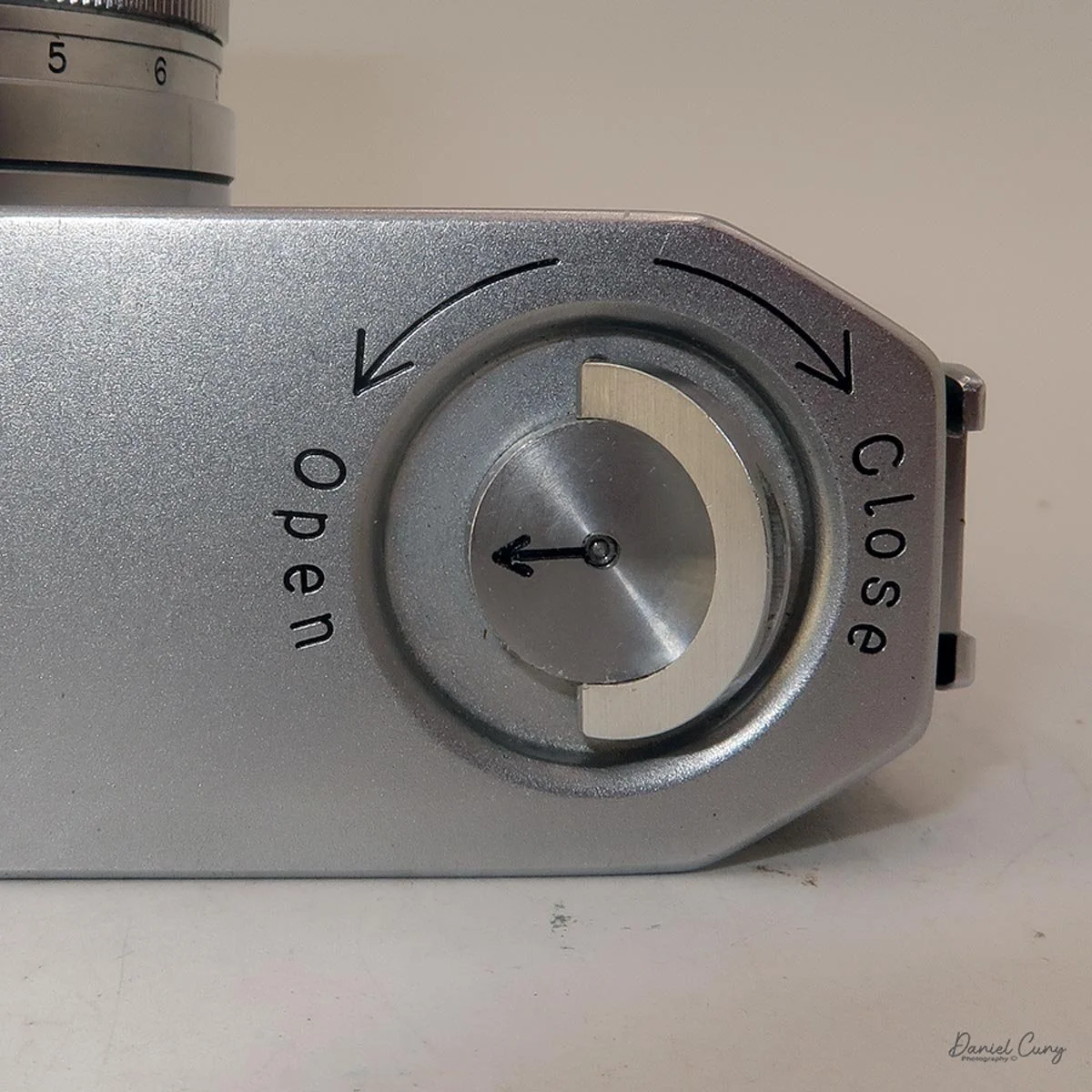
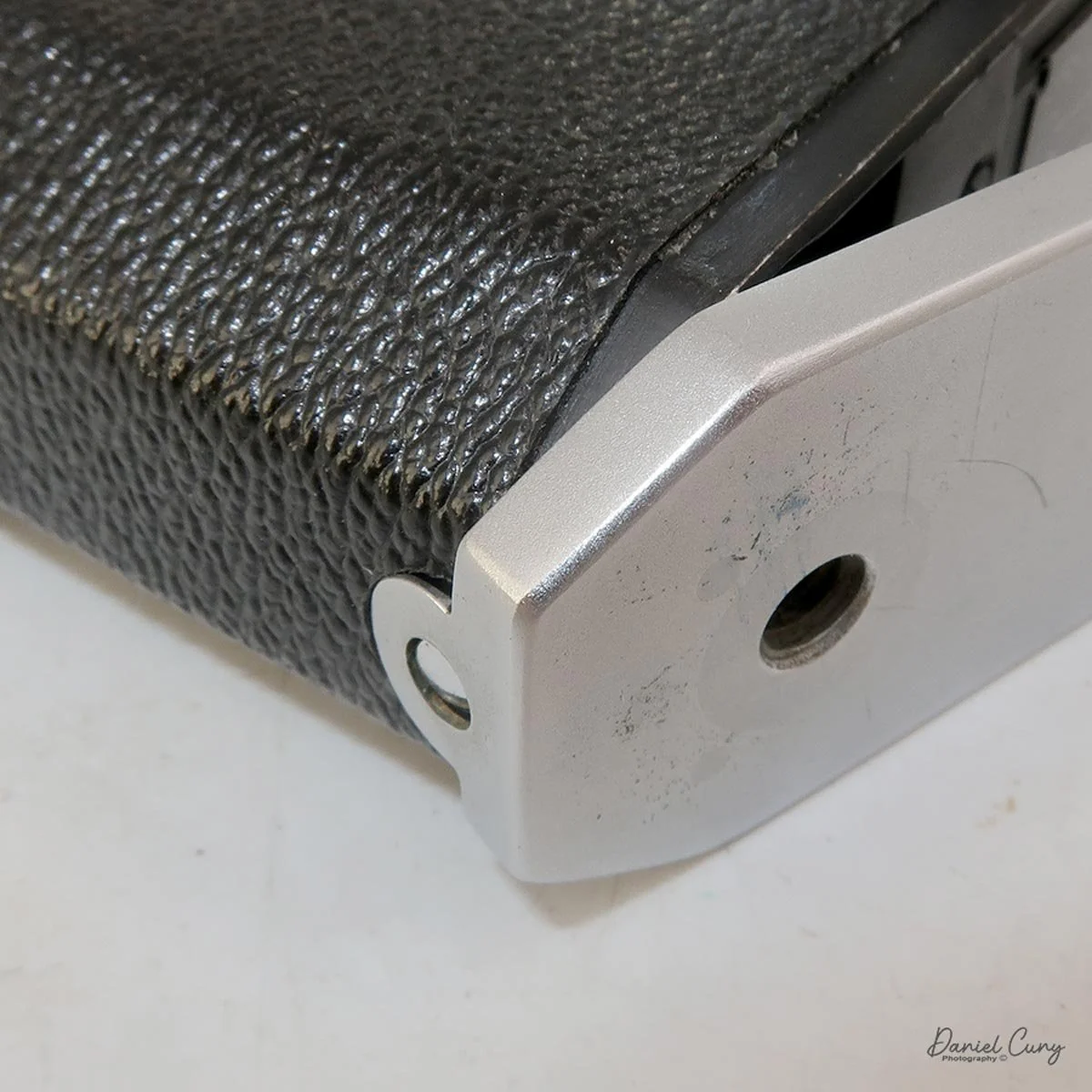
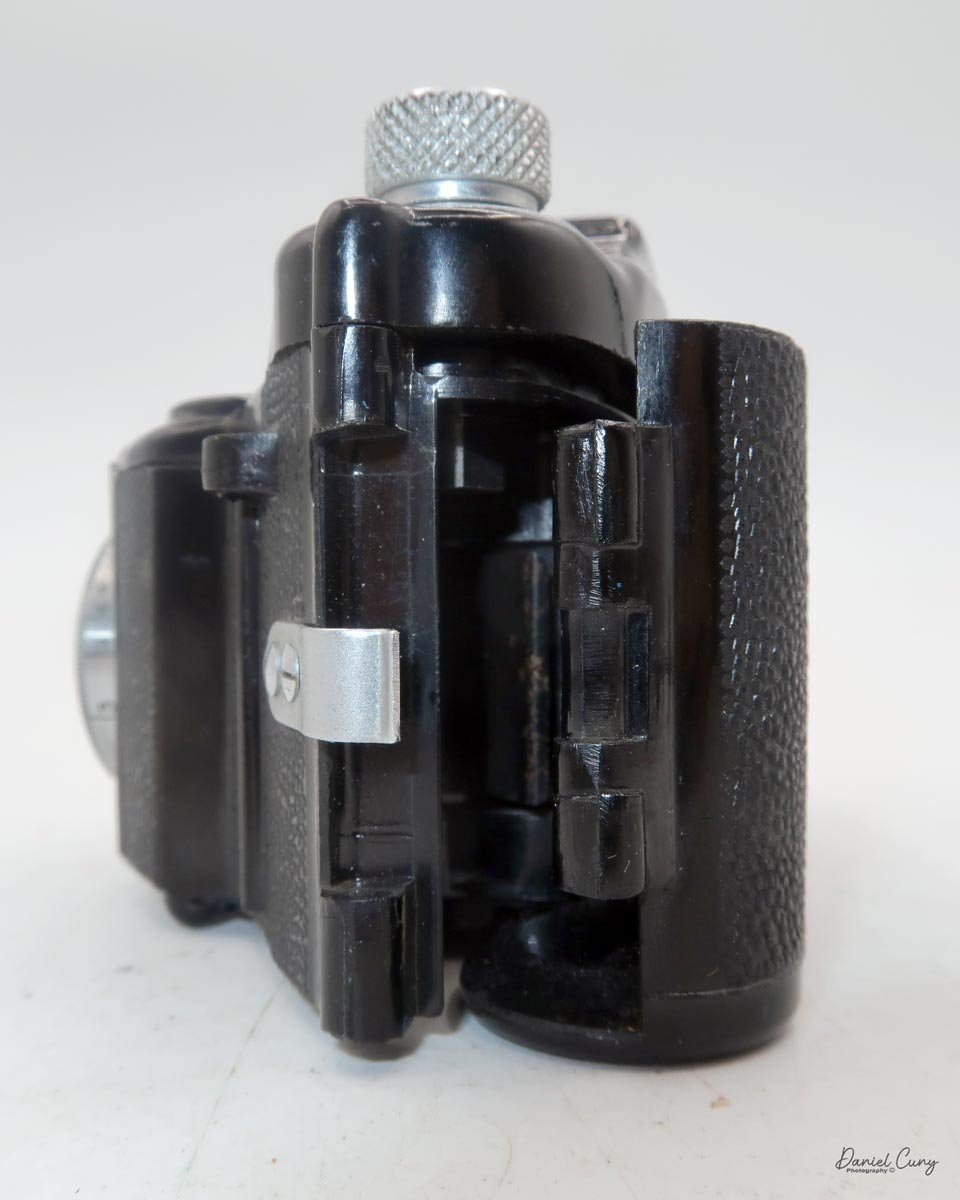
 To open the camera to load film, there is a spring clip on the left side of the camera which holds the front and rear together. Just pulling the back away from the camera body opens the back door, exposing the film chamber of the Mamiya Mammy camera.

Unfortunately, the shutter on my Mamiya Mammy is extremely sluggish, so even if I were to make some paper-backed 35mm film to load into the camera, I'm afraid the images wouldn't turn out because of the faulty shutter.

 Possibly in the future, if I can get the shutter working as it should, I do have some paper backing from some 828 film, and I'll load some 35mm film onto one of the Photvit spools and see if I can get the camera to make some images. But for this article, I'm sorry I won't be able to shoot with it.


Conclusion:

 The Mamiya Mammy is a camera I'm very happy to have in my collection. Having worked for Mamiya America Corp for many years, I hold almost any Mamiya camera dear to my heart. I do have to say, with all honesty, there are a few Mamiya cameras I doubt I'll own just due to my time working in camera shops. Cameras like the 1000DTL or 500DTL were ones I'd see almost daily. The sheer amount of them I saw over those almost twenty years, I seriously doubt I'd purchase.

Then there are some Mamiya cameras that I love owning. Any of the Mamiya RB, or RZ system cameras, some of the later 645 cameras, and of course, my all-time favorite medium format camera, and one that's eluded me, is the Mamiya 7II. WOW, what a beautiful camera.

 Thank you for taking Time from your day to read about this Bolta-style camera made in the early 1950s by one of the major camera companies to come out of Japan.

 Here are my other Camera Reviews.

 Cuny's Camera and Photos is my online eBay store where you can find some of the previously reviewed cameras for sale, along with other cameras, lenses, and photo oddities I've accumulated over the past 50 years of collecting.

 I'll be taking next week off due to a holiday my wife and I will be taking to celebrate our 50th wedding anniversary.

 Until next week, please be safe.
Konica Pearl II camera

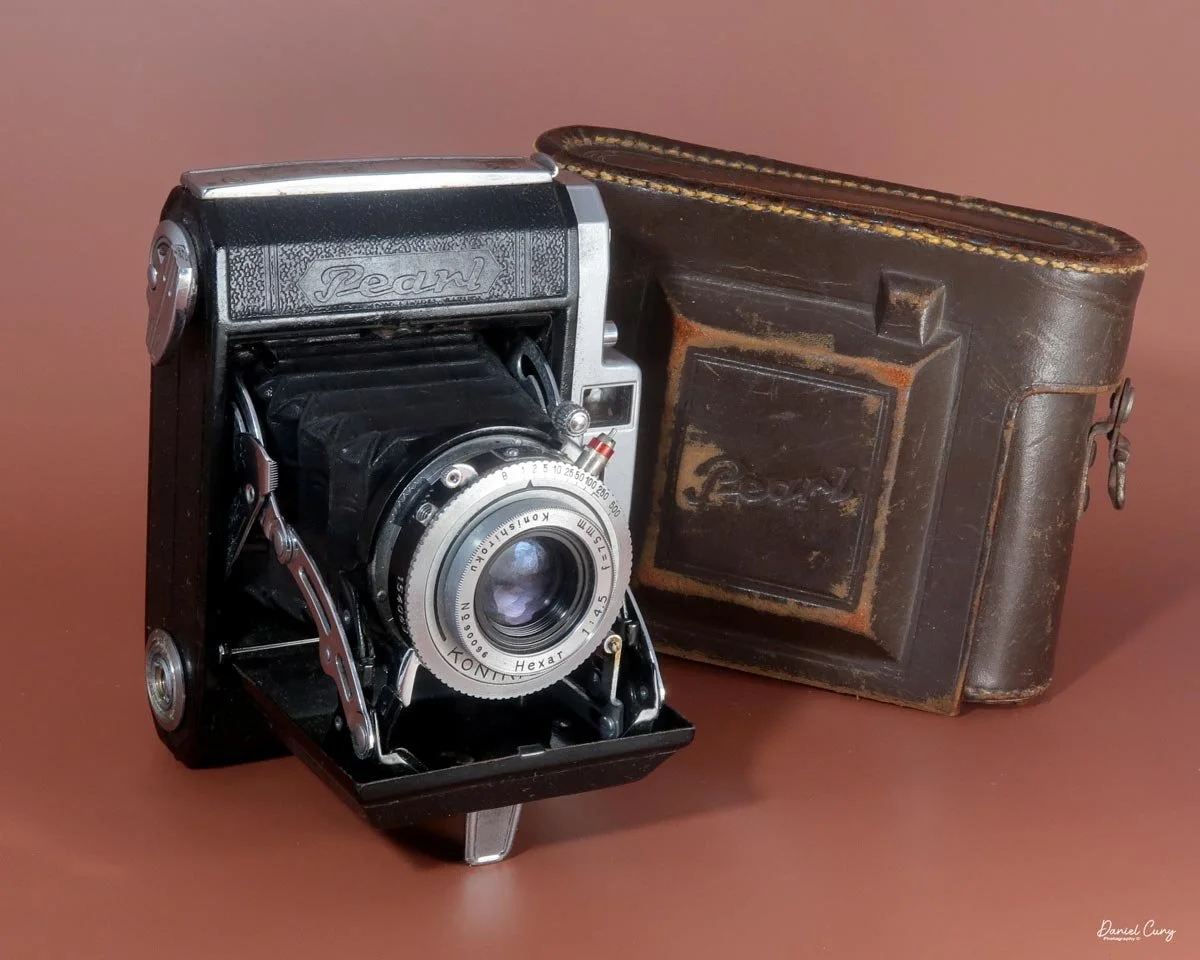
My Konica Pearl II camera & case

I purchased the Konica Pearl II on my first visit to Kitamura Camera, when I hired Bellamy Hunt of Japan Camera Hunter to show me many used camera stores in Tokyo. 

 It was our last stop on the half-day tour when we visited this massive, seven-story flagship store, which is one of more than 45 Kitamura Camera locations in Tokyo. It's on the fourth floor where they show their "high-end" items such as rare Leica cameras and lenses, Nikon rangefinders, Hasselblads, Rolleis, Mamiyas, and quite a few camera oddities. It's the floor that if you have an extra $10,000, $20,000, or even $100,000 burning a hole in your pocket to purchase rare photo items, they most likely have it.

 Unfortunately, I didn't win the lottery before coming to Japan, so I needed to be much more frugal in my camera purchases. Because of this, I much prefer the third floor of Kitamura's flagship store. It's where they have their "bargain" items. Personally, it has the items I'm much more accustomed to purchasing.

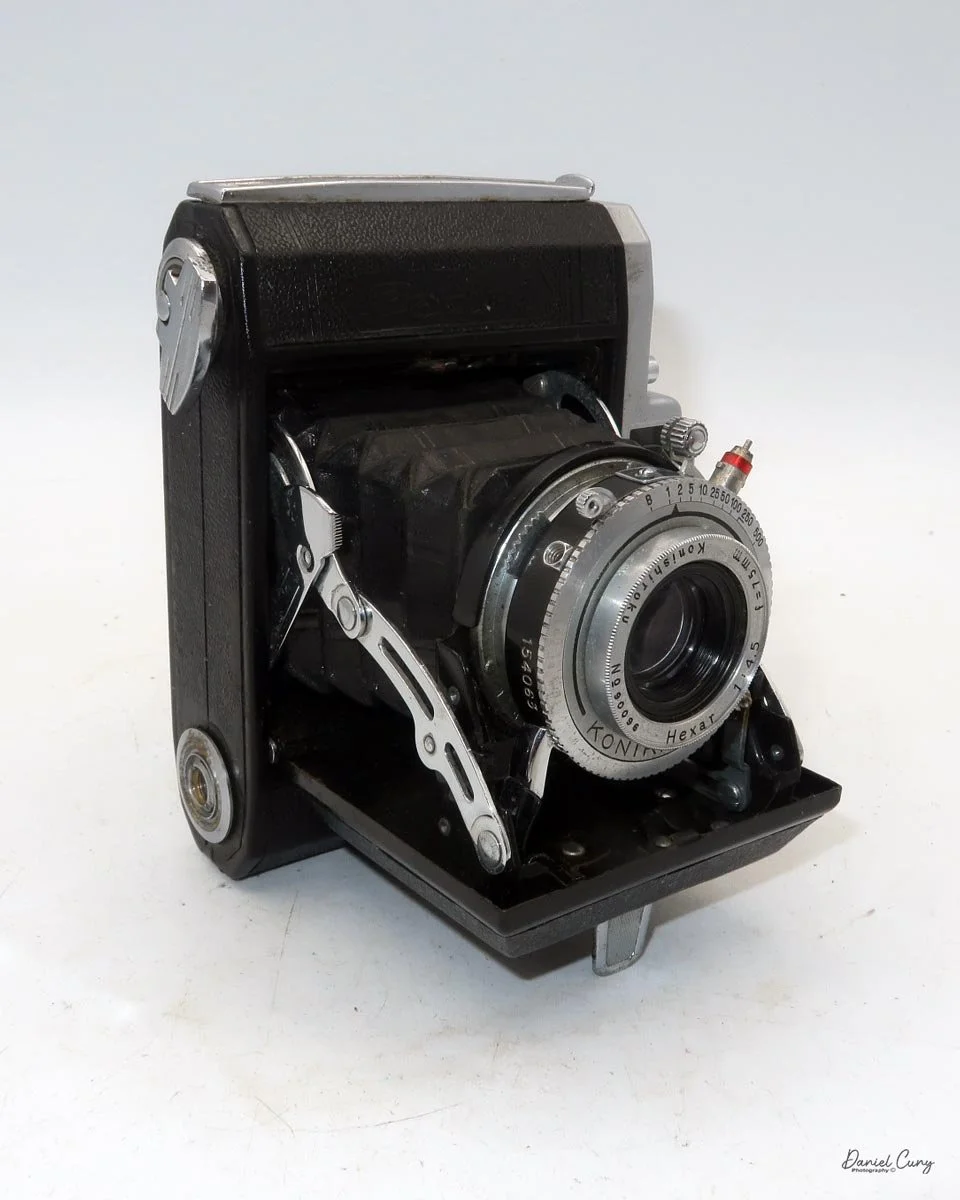
 The Konica Pearl II was a camera I didn't really notice until the second time I passed by a particular showcase. It was tucked in a back corner, not really visible except for the film winding knob, which I thought looked odd and different from many of the winding levers on this style of camera. It has more of a winding-key appearance rather than the standard round knob you see on most 120-style folding cameras.

 We asked one of the salespeople to get the camera out of the showcase for me to get a better look at, and he didn't even see the camera at first, tucked back in a corner of the showcase. But after guiding him to the correct camera I wanted to see, he took it off the shelf and put it on a mat in a lower showcase for me to look over.

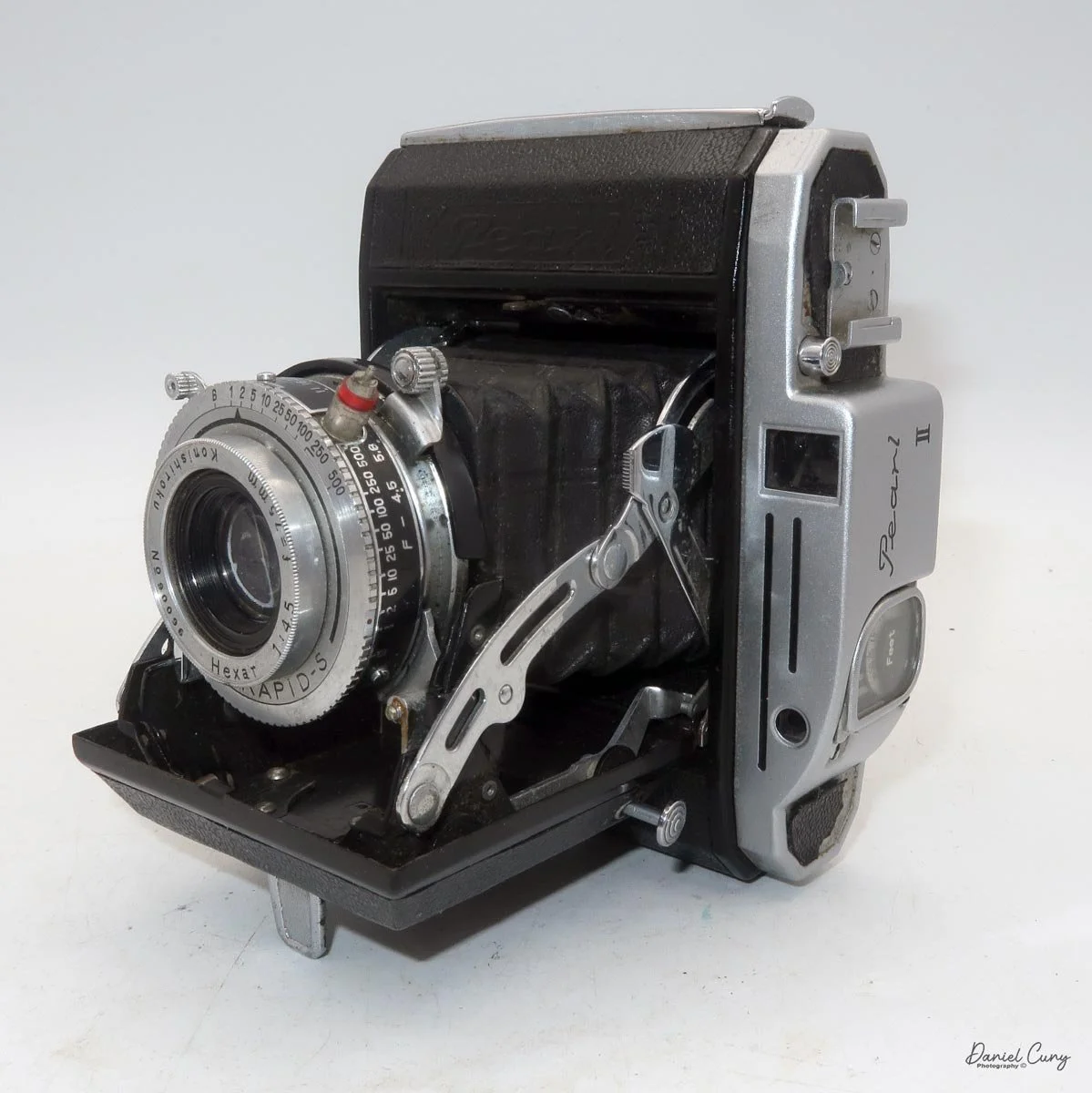
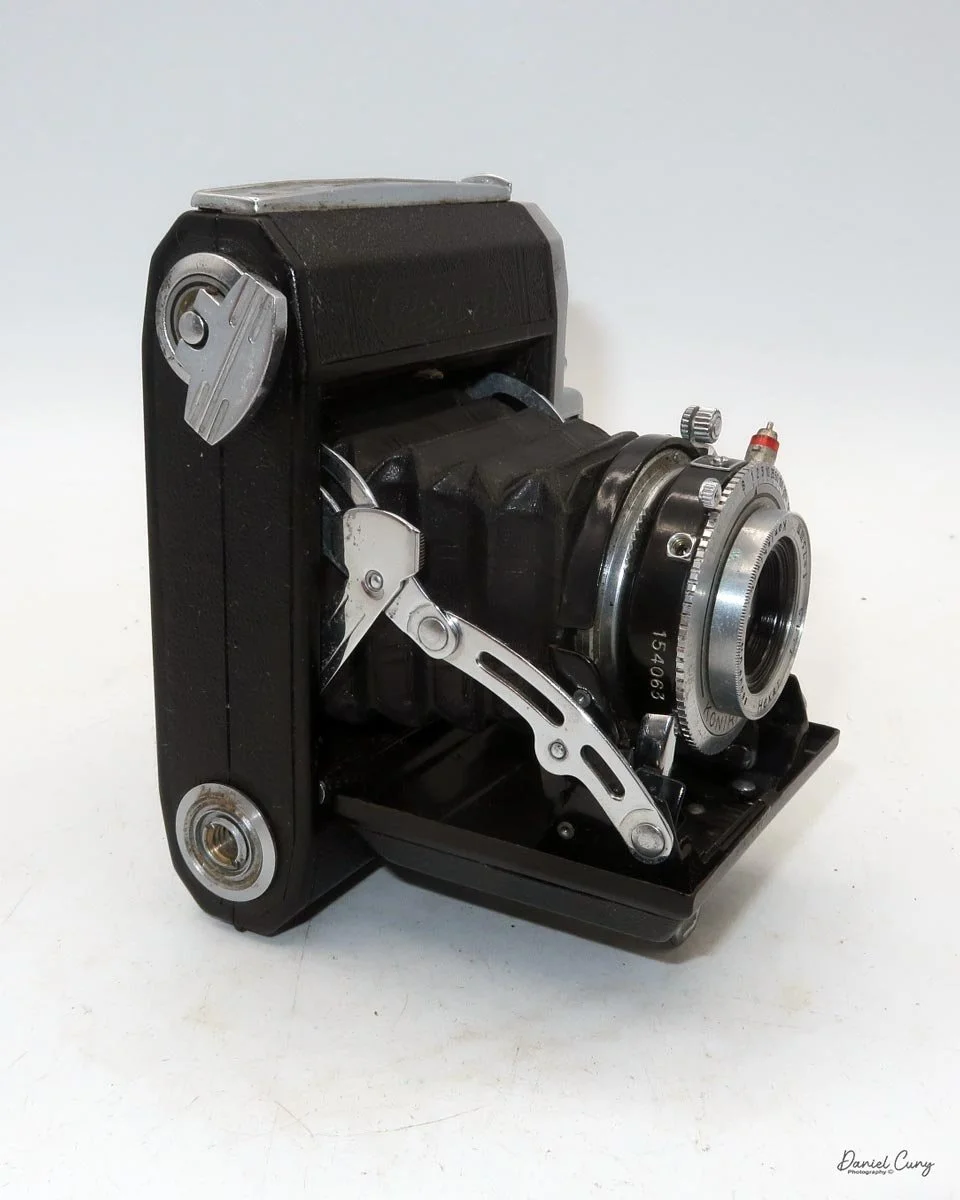
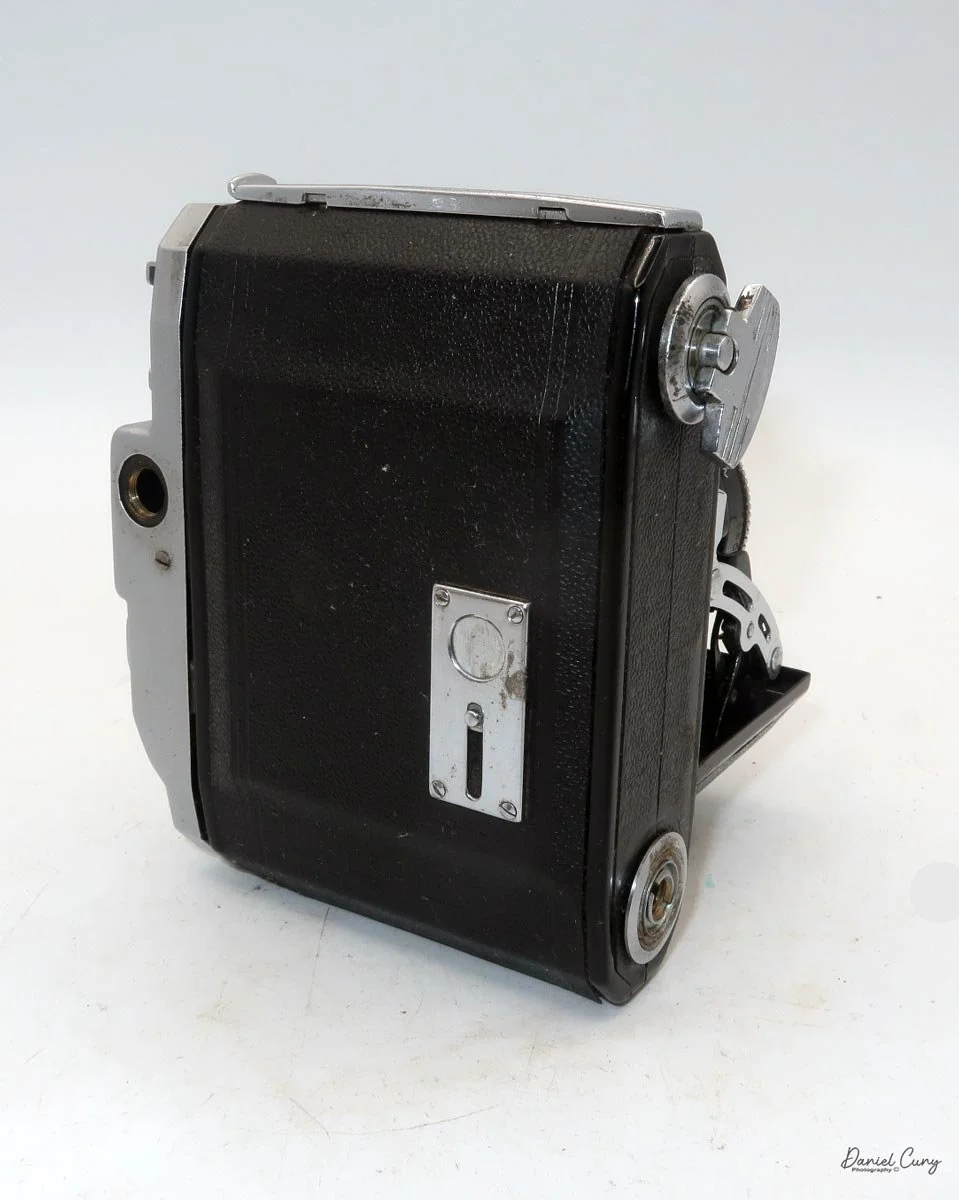
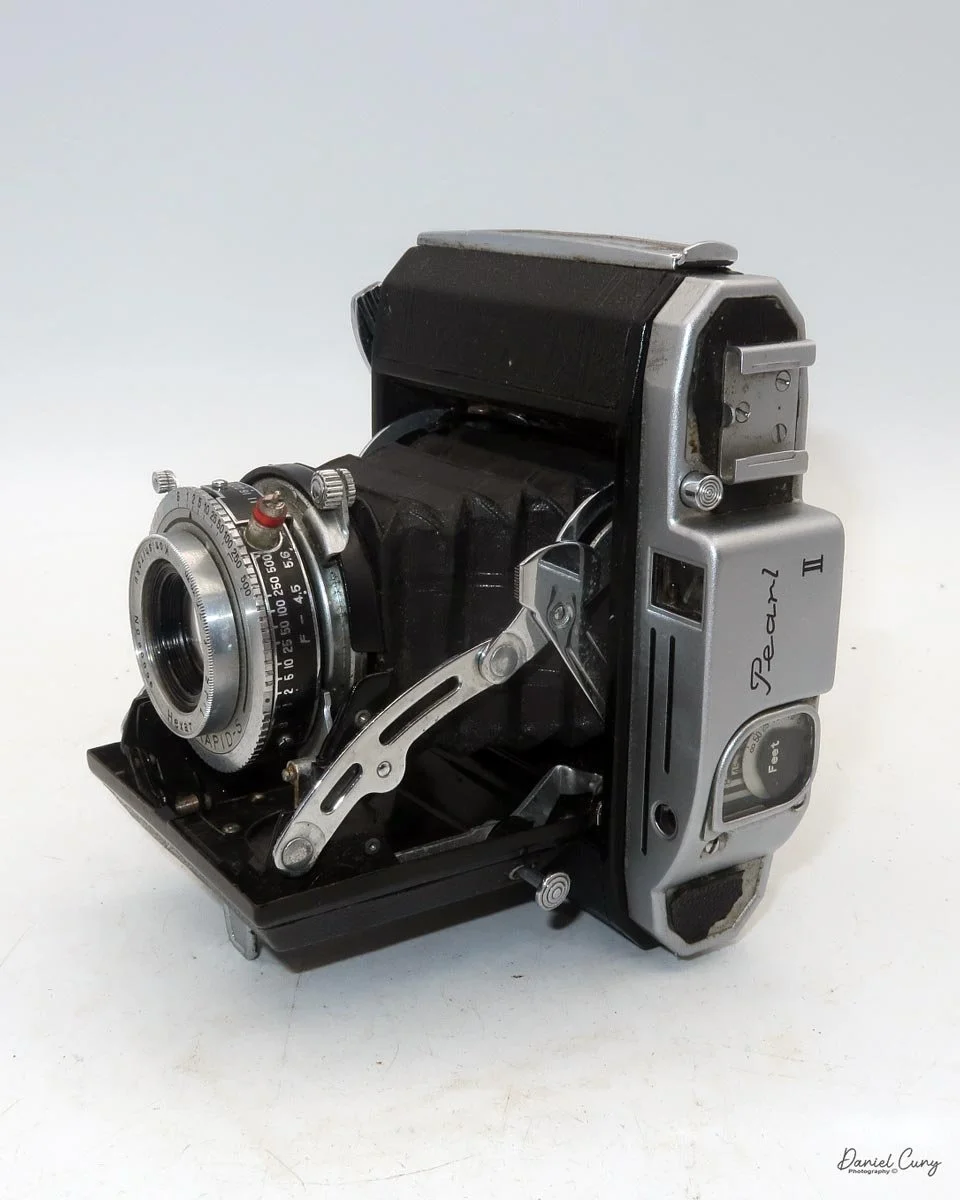
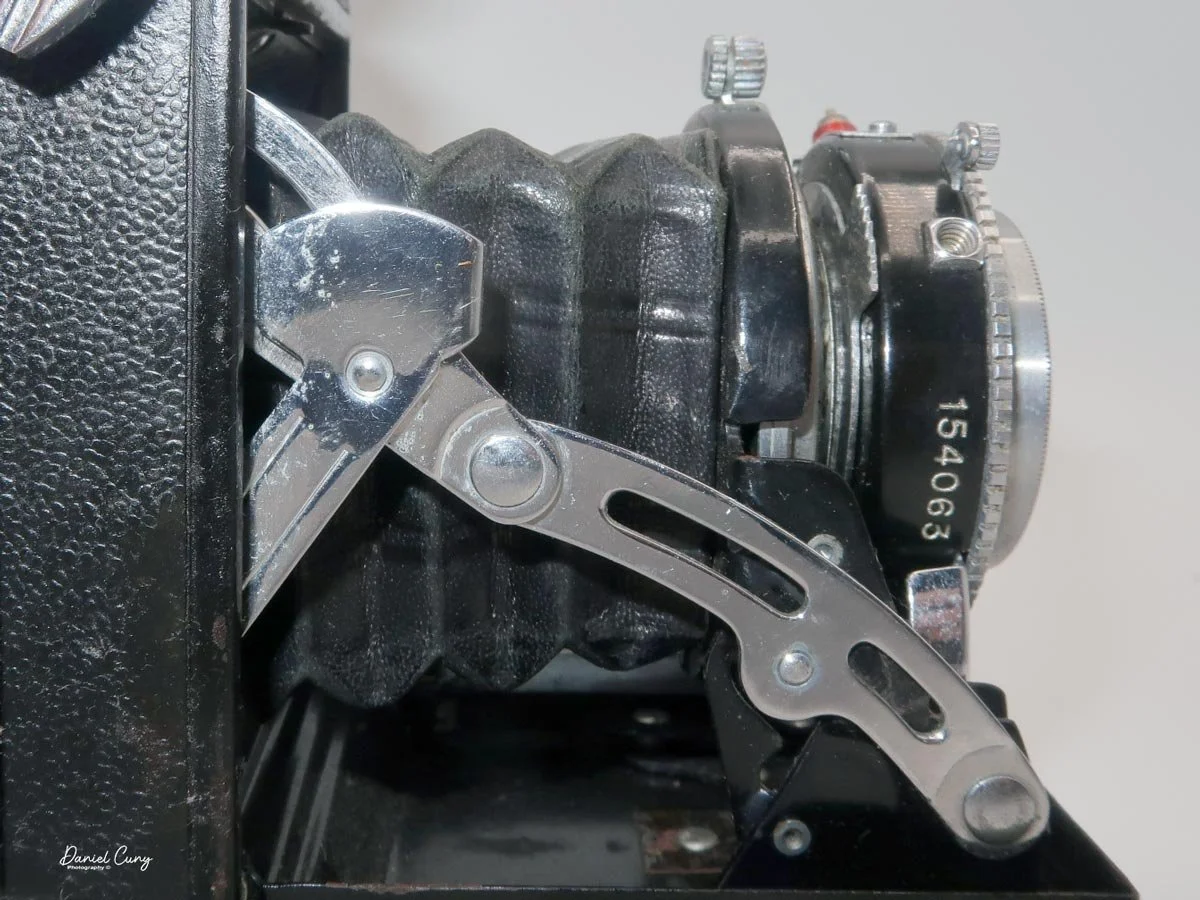
Different angle of the Konica Pearl II camera. Notice the shutter release on the lens door.

 To my surprise, the camera seemed to be in wonderful condition. The price for the camera seemed low, so I started to look over it with the thought in the back of my mind that there must be an issue. The shutter worked, the aperture moved smoothly. The camera opened and closed with ease, and the fitted leather case was also in good condition. 

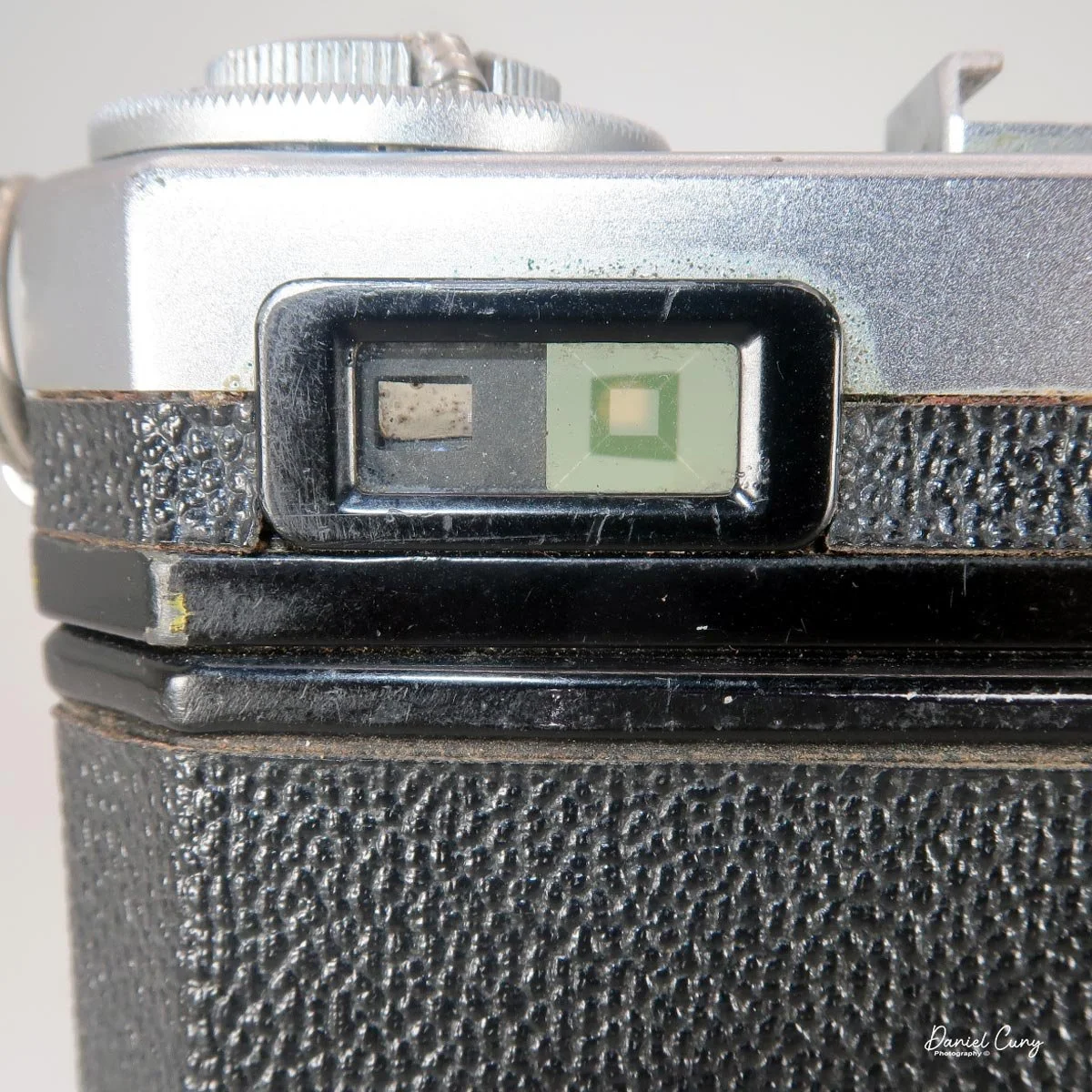
 Putting the camera up to my eye to look through the viewfinder, I found the issue. The back eyepiece was absent from the camera. Because of that, there were a couple of issues. First, when you looked through the viewfinder, the image was blurry, and you couldn't really see or frame it well.

 The second issue was something I didn't realize until the salesperson mentioned it. You couldn't see the yellow center area on the rangefinder. Initially, when I first picked up the camera, I didn't notice the two windows on the front, which would indicate a rangefinder-style camera, but on second look, there were two windows, which makes perfect sense.

 For the price of the camera, they offered to acquire a very compact medium-format camera with a functioning shutter, smooth focus, a light-tight bellows, and a fitted case. I figured I couldn't go wrong. All I needed (hopefully) was to find a "parts" camera to source the viewfinder glass from, and make this wonderful early 1950s camera whole again.

 During my time in Tokyo, I did spend time looking for a "parts" camera, but it wasn't until just a few weeks ago that I came across one for a reasonable price that I could harvest the viewfinder glass, and try to make this camera whole again. Unfortunately, it hasn't arrived yet. I'm eager to write this post, so once the glass arrives, I'll update it with the camera's progress (or lack thereof) with the new glass.


History:

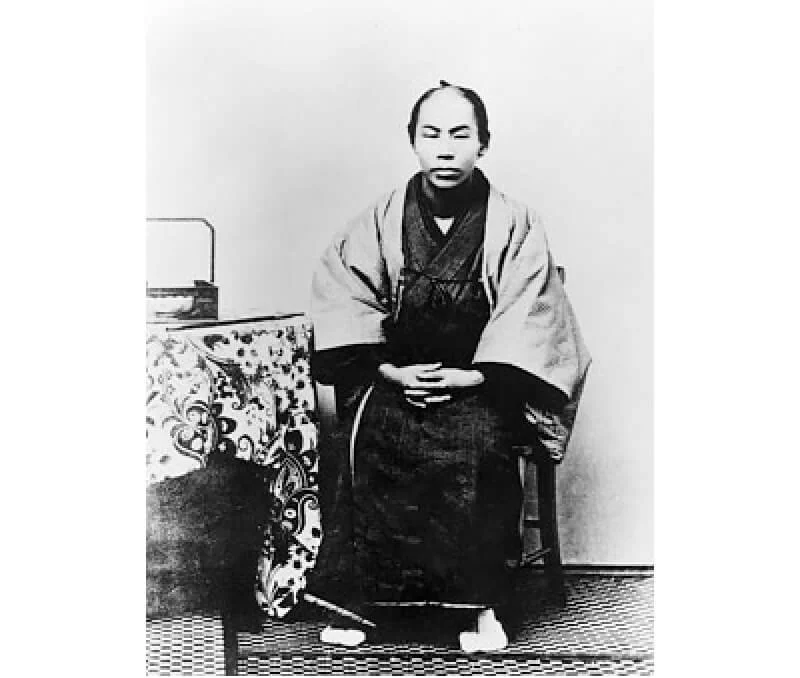
 Konica's early history begins in 1873, when Rokusaburō Sugiura started selling photographic materials in Tokyo, at a time when Japan was still importing nearly all such supplies from the West. That founding date makes the company older than Eastman Kodak, and it places Konica at the very start of Japan's photo industry.

Early photo of Rokusaburō Sugiura. Credit Konicaminolta website.

 Sugiura first operated through the family business in Tokyo's Nihonbashi area, where demand for photographic goods was growing fast enough to justify a separate line of business. By 1878, he had founded Konishi Honten, and in the 1880s, the firm moved beyond retailing imported goods to producing its own photographic materials in Japan. This shift mattered because it helped move Japanese photography from dependence on foreign products toward domestic production.

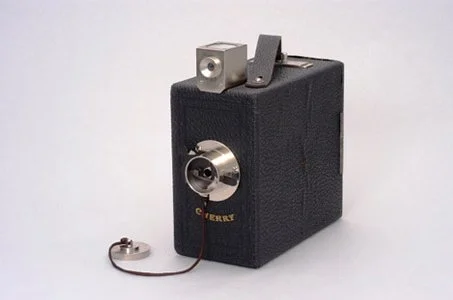
 In 1902, Konishi began producing its own photographic plates and printing paper, and soon after, in 1903, it introduced the Cherry portable camera, widely described as Japan's first branded camera. That product established the company as a pioneer rather than just an importer. Over the next decades, Konishi built a reputation as one of Japan's leading camera and materials companies.

 During the 1910s and 1920s, the company continued to expand its manufacturing base and deepen its role in Japan's optical and photographic sectors. Its name evolved through several forms, including Konishi Honten and Konishiroku, reflecting both family succession and corporate growth. By the interwar period, the firm was part of a broader Japanese camera industry that was still small by global standards but increasingly capable of making its own products.

Popular Cherry camera: Credit Konicaminolta history page

 In the 1930s, Konishiroku pursued further camera development, including prewar prototype work that pointed toward later 35mm designs. Like much of Japan's industrial base, its development was increasingly shaped by the era's tensions, and the coming war would disrupt civilian camera production. Still, by the eve of World War II, Konica's predecessor had already established the core identity that would define the brand: a Japanese photographic pioneer rooted in import substitution, careful manufacturing, and gradual technological independence.

 In the 1950s, Konishiroku cemented its medium-format legacy with the exceptional Pearl series of folding cameras. Shooting 6x4.5cm frames on 120 film, these compact powerhouses combined portability with remarkable optical precision. The decade introduced the Pearl II (1951), the Pearl III (1955), and the pinnacle of the lineup: the Pearl IV (1958). These beautifully engineered models proved that medium format didn't have to be bulky, providing a professional-grade folding tool that easily slipped into a coat pocket.

My Camera:

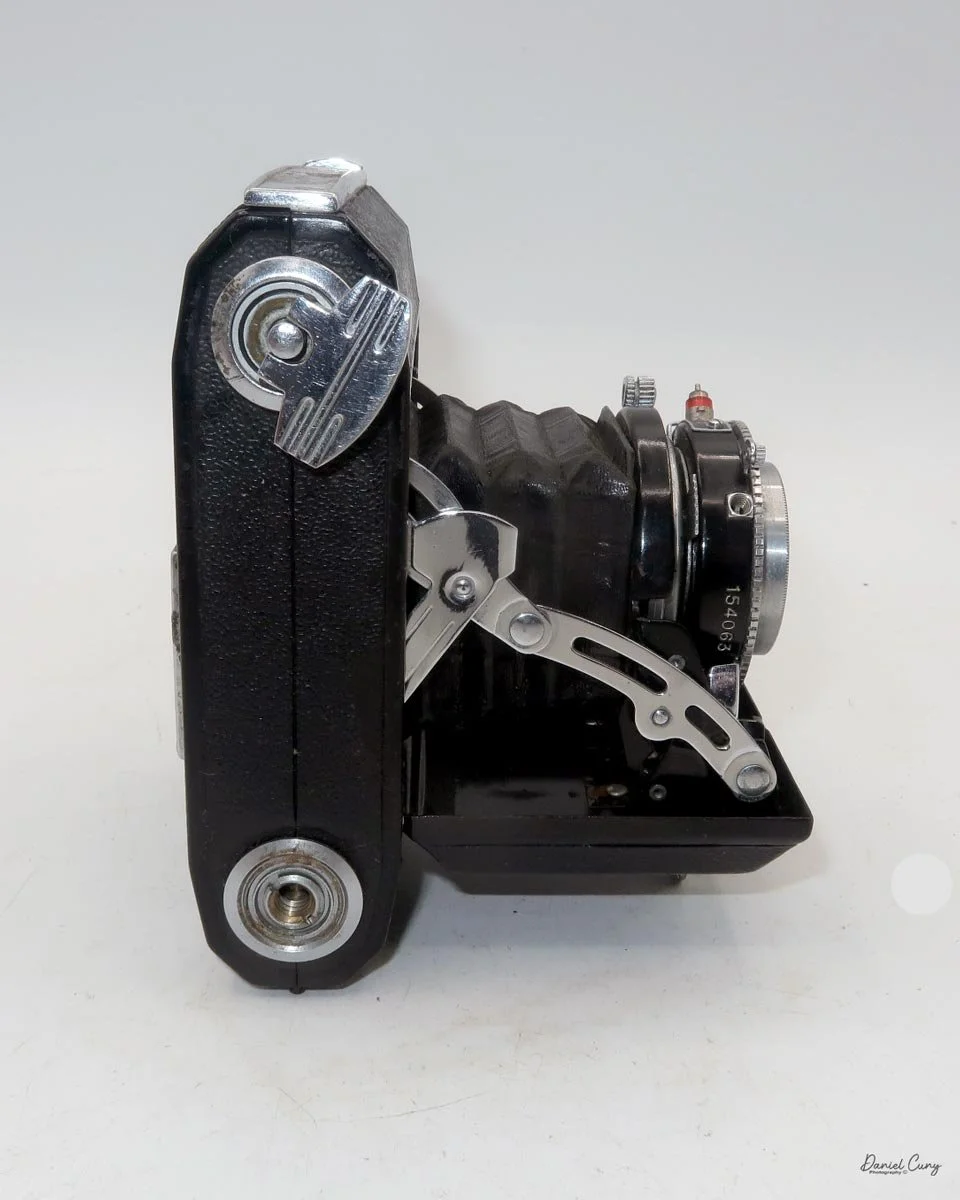
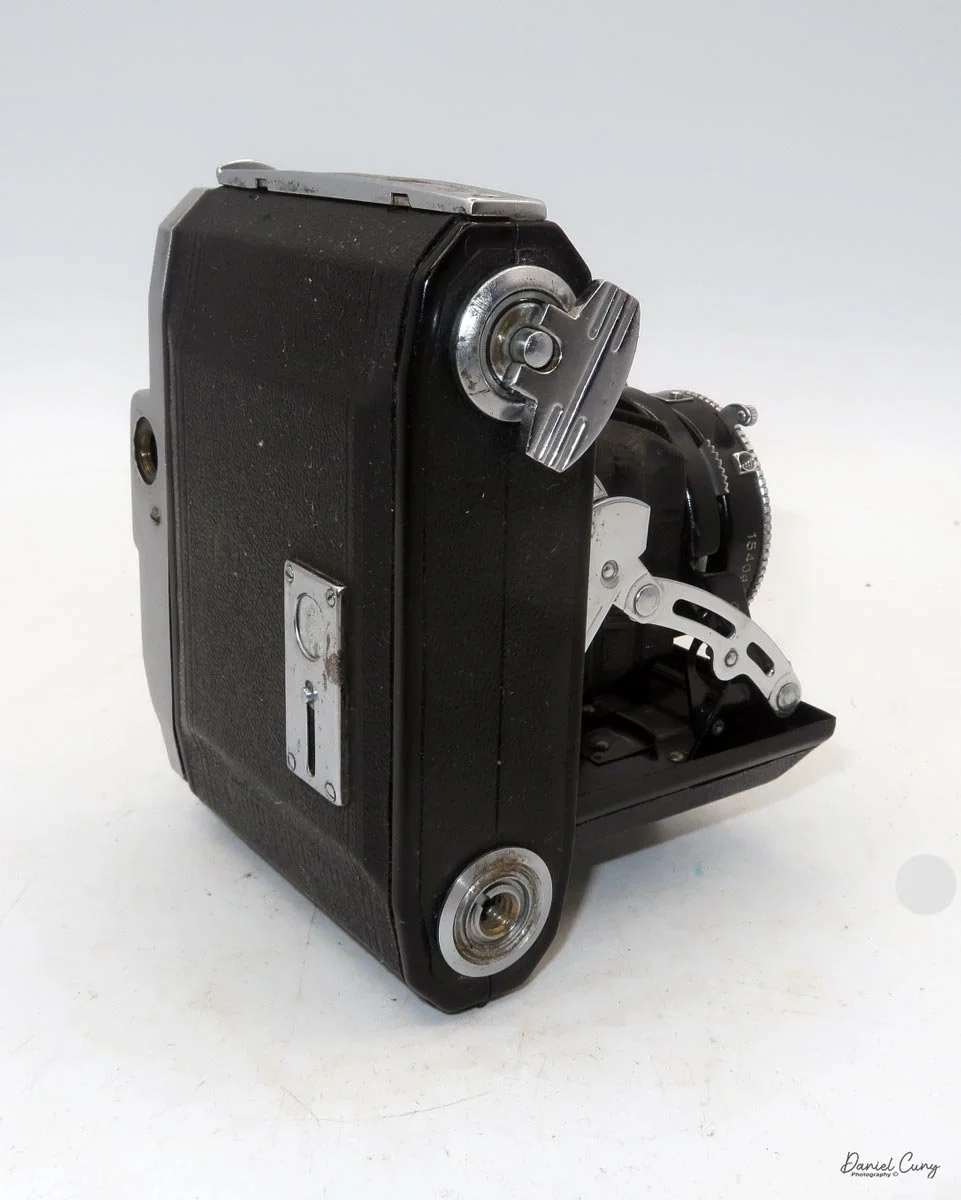
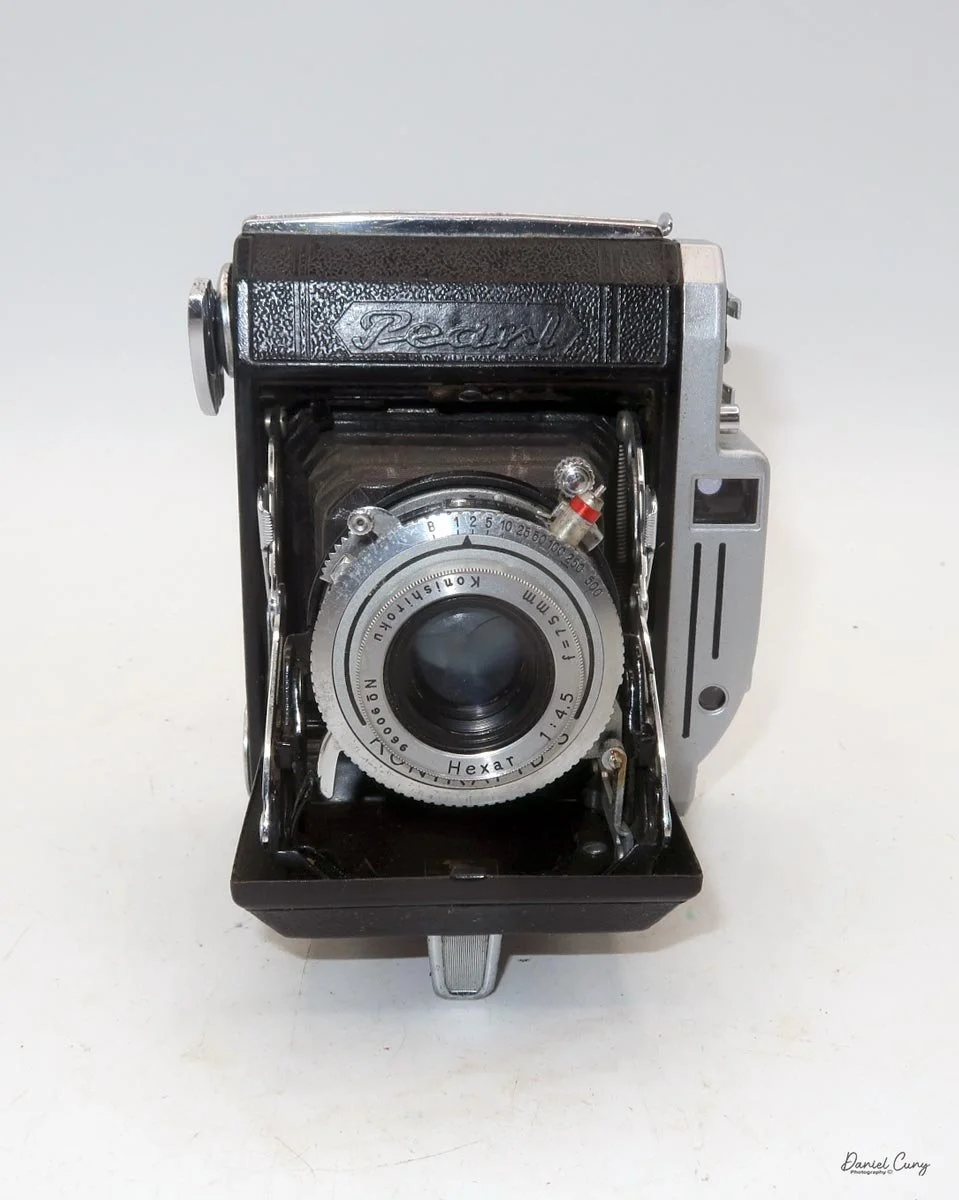
 My Konica Pearl II camera, manufactured in 1951, is a 6x4.5cm vertical-format camera. The physical size of the camera is 4.75" wide by 4.5" tall and 1.5" deep with the lens closed in the camera body, and 4" deep when you depress the button on the top of the camera, located in front of the accessory shoe, to open the camera's lens door. The camera weighs 1 pound, 4 ounces without film loaded.

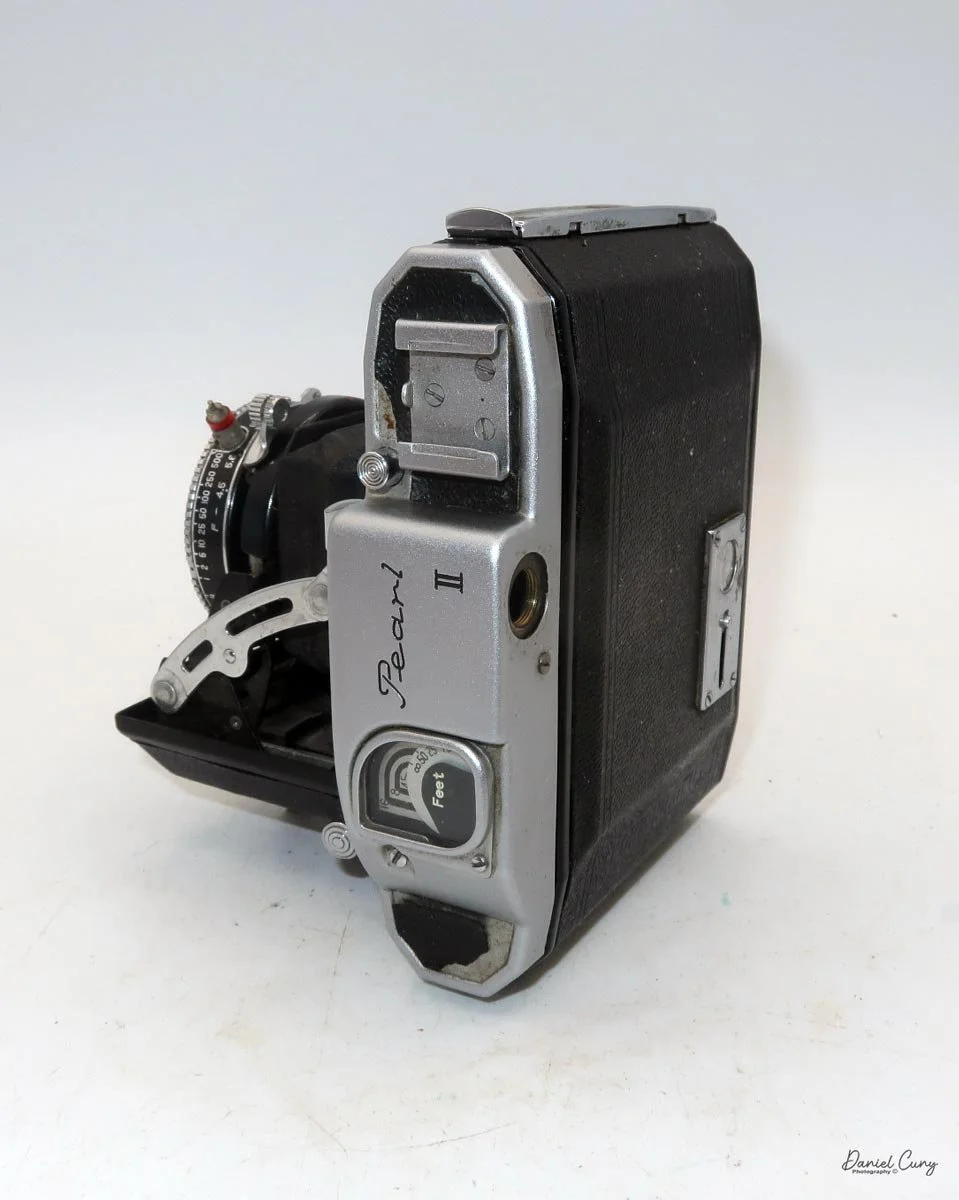
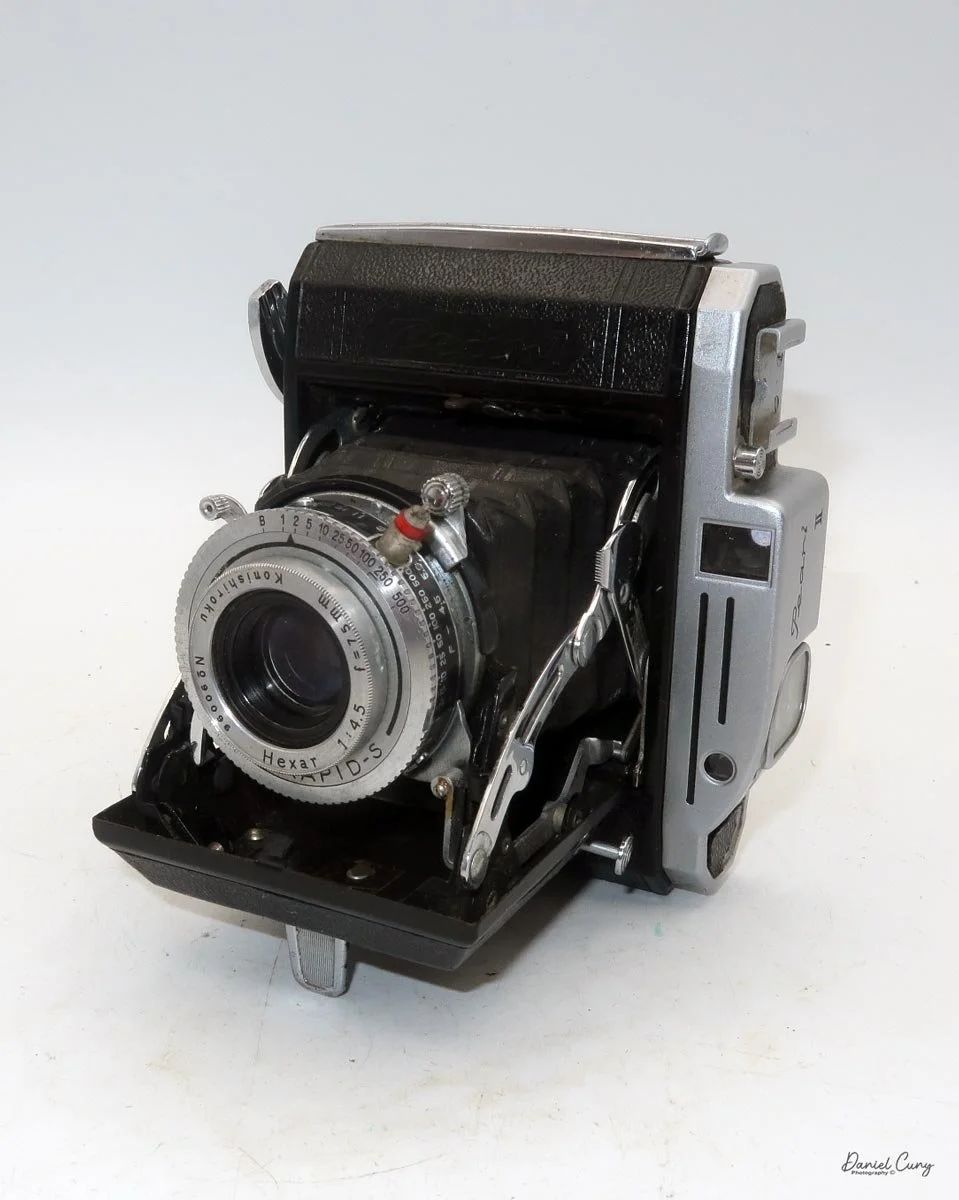
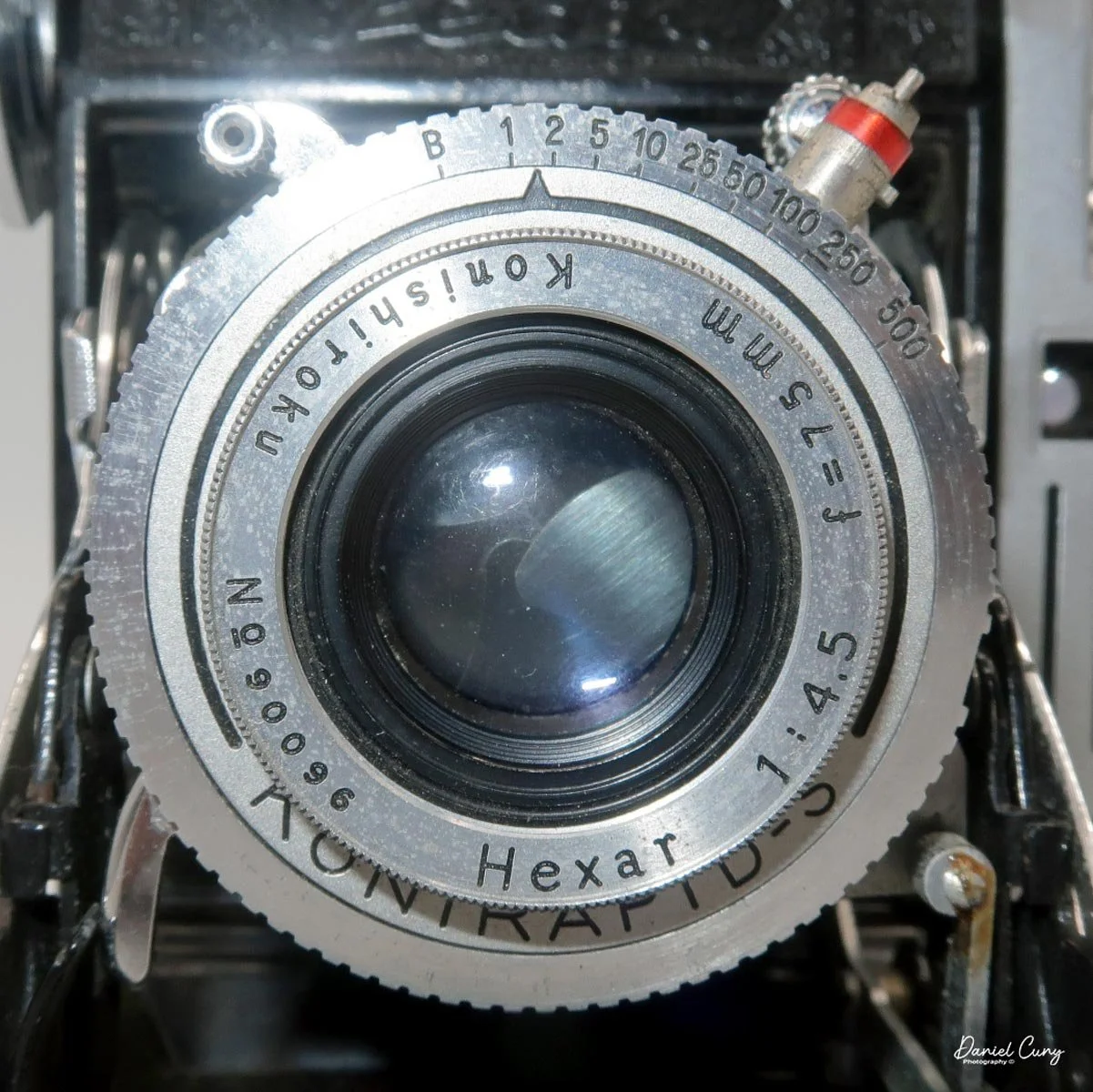
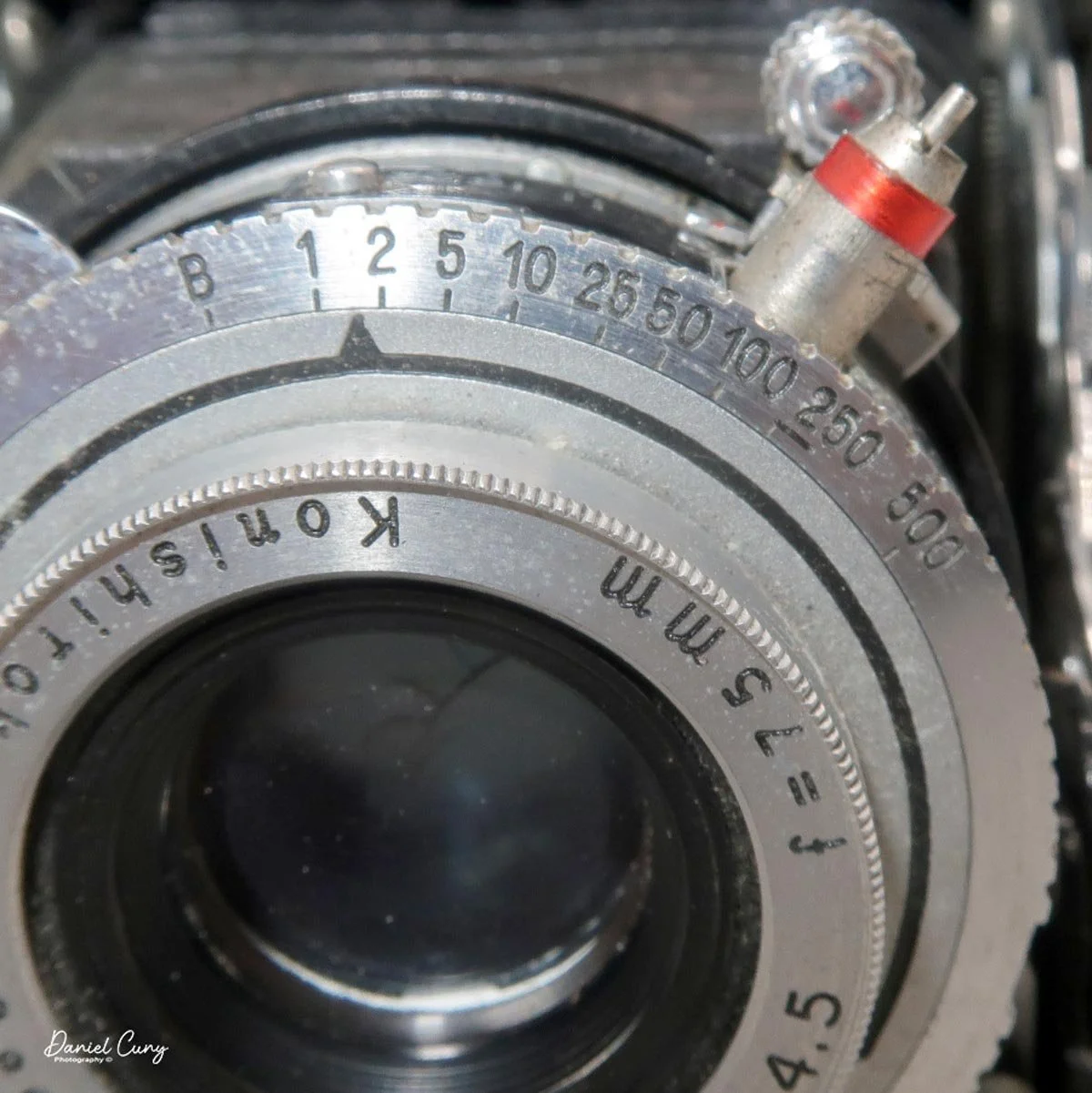
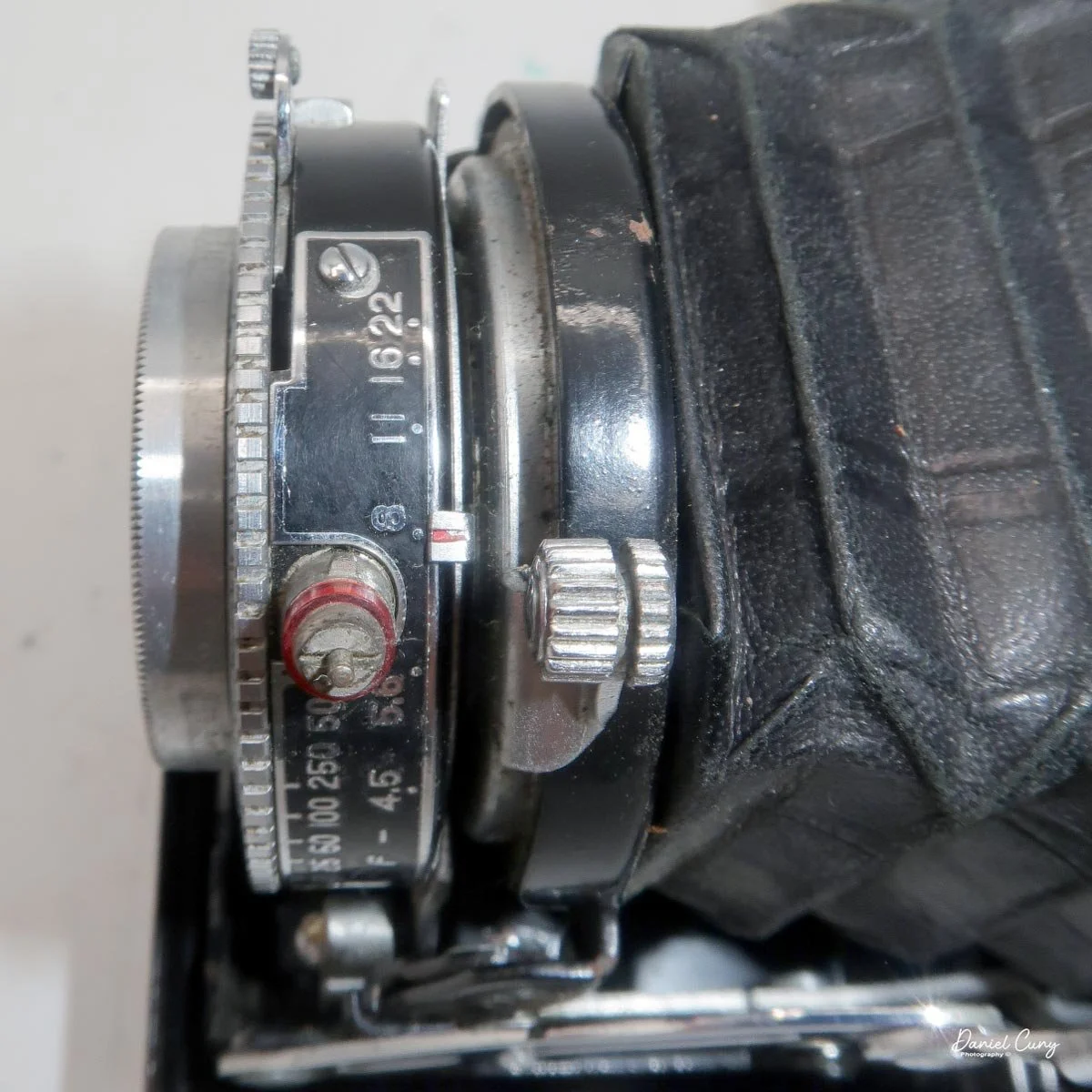
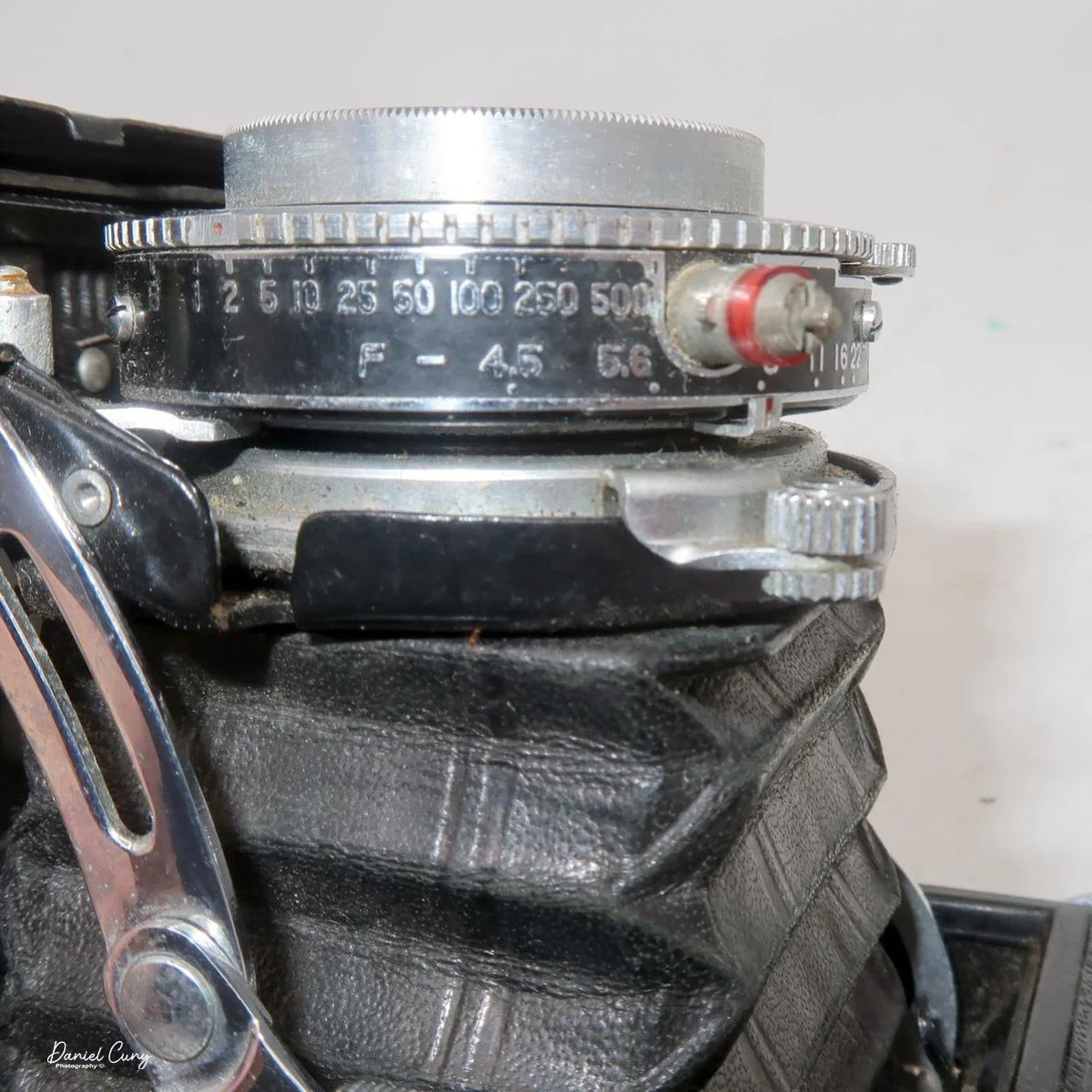
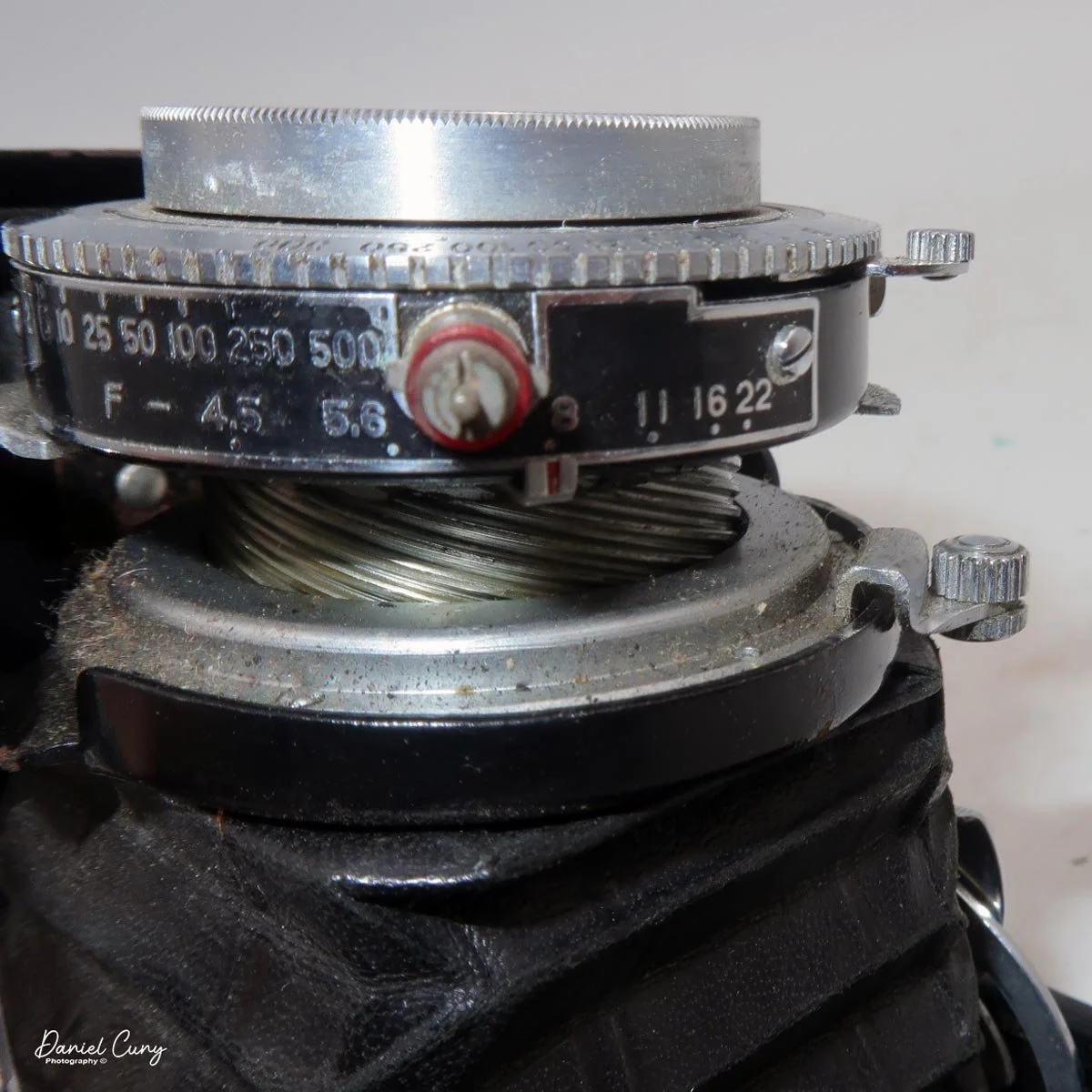
With the lens door open, it exposed the Konishiroku Hexar 75mm F/4.6 lens, serial #90096, in a Konirapid-S shutter with a range of 1/500 to 1 second, along with "B" for timed exposures. On so many cameras, shutter speeds are set by turning a ring to the desired value along the outer portion of the shutter. There is a shutter cocking lever located just behind the shutter speed setting ring on the shutter.

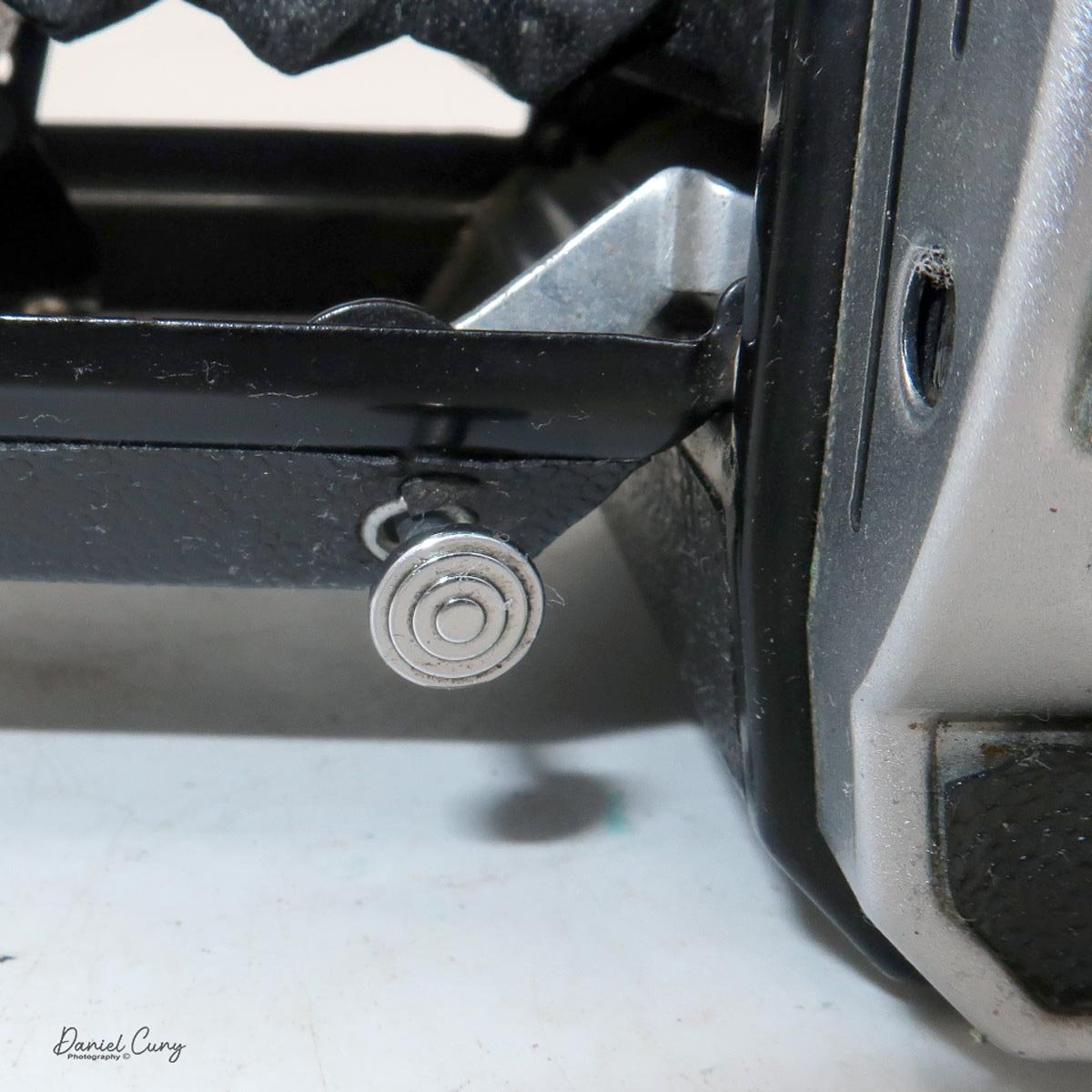
 The camera's shutter release button is located on the lens door and trips the cocked shutter via a linkage to the shutter release. A cable release socket is also in the shutter just next to the cocking lever.

The aperture ranges from F/4.5 to F/22 and is adjusted by turning a knurled ring at the back of the shutter to the desired aperture, indicated by a red dot on the setting ring. Also on the camera's shutter is an ASA flash terminal, which would be used for bulb flash units popular at this time.

Behind the camera's shutter is a larger knob used to focus the camera through the rangefinder system. As mentioned earlier, I'm not sure whether my rangefinder is working. There's another way to check, and that's the method I used to get the photos for this article. 

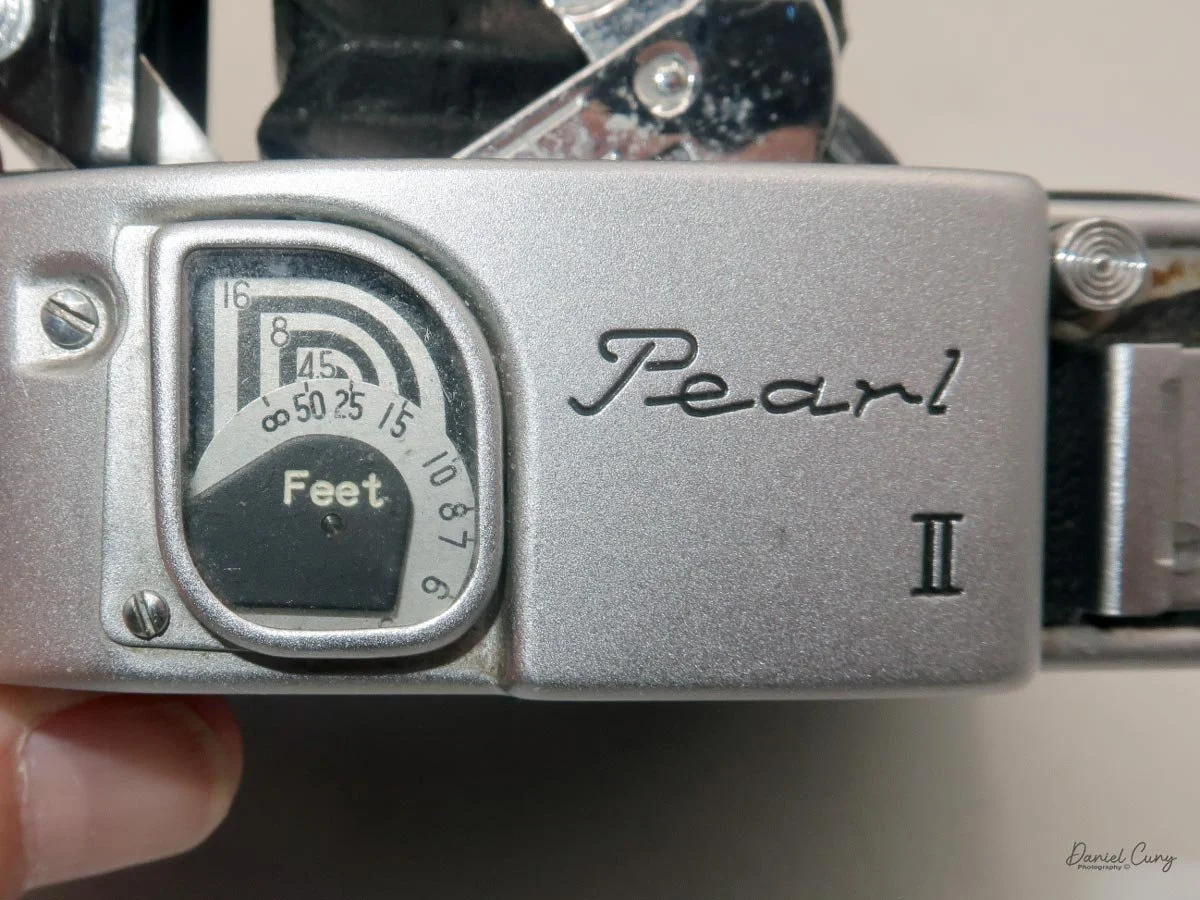
 Moving the focus knob on the camera one way or the other moves a bar in and out located on the opposite side of the shutter release linkage. This bar's movement changes the focus distance to the subject, which you can see through a window on top of the camera. I find these simple features on cameras fascinating. I don't know why, but I do.

To close the lens door back into the camera body, press inward on the side struts holding the lens erect, and the struts will collapse, allowing you to fold the lens back into the camera's body. Pressing it back locks it into place. You'll also need to set the camera's focus to infinity before it will close all the way.

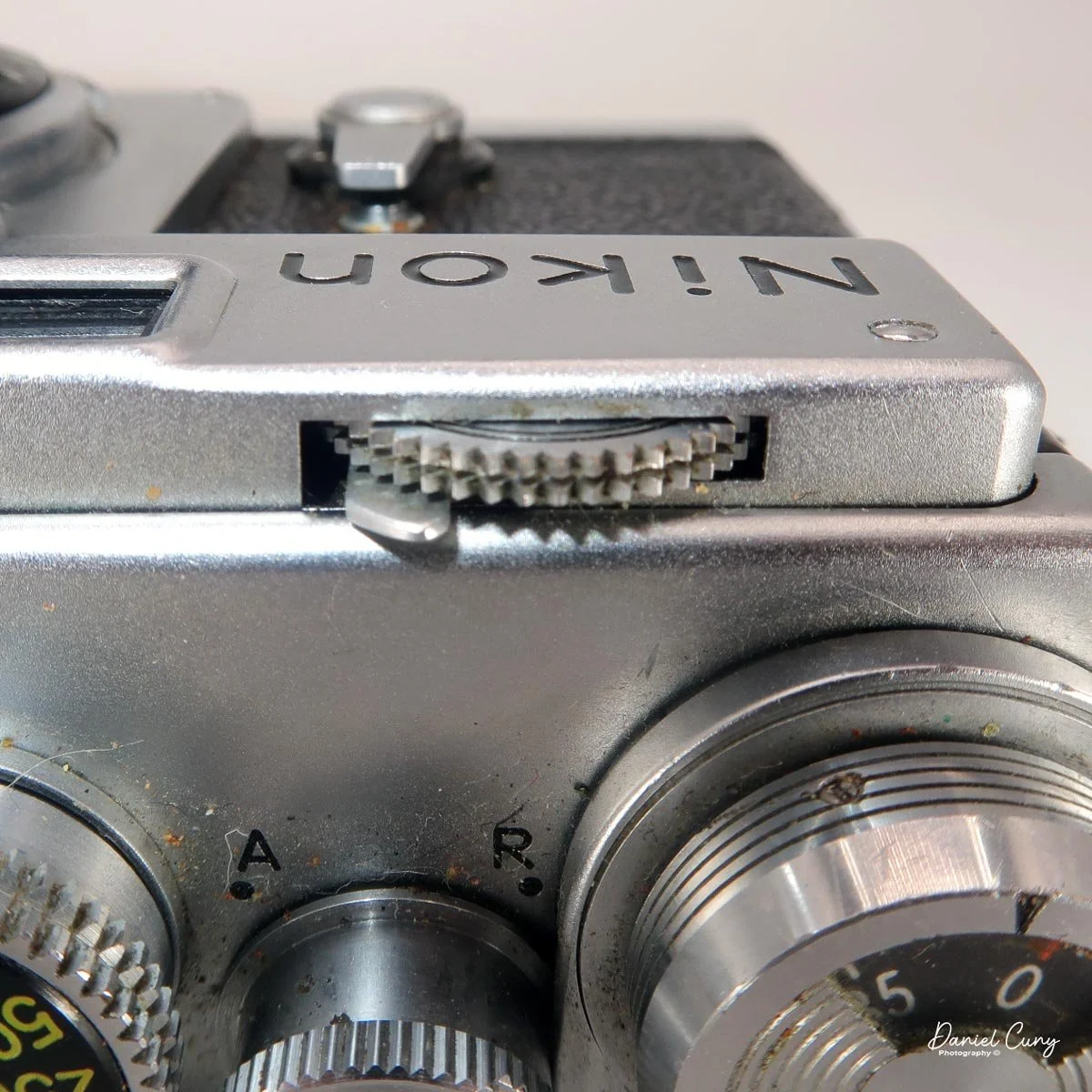
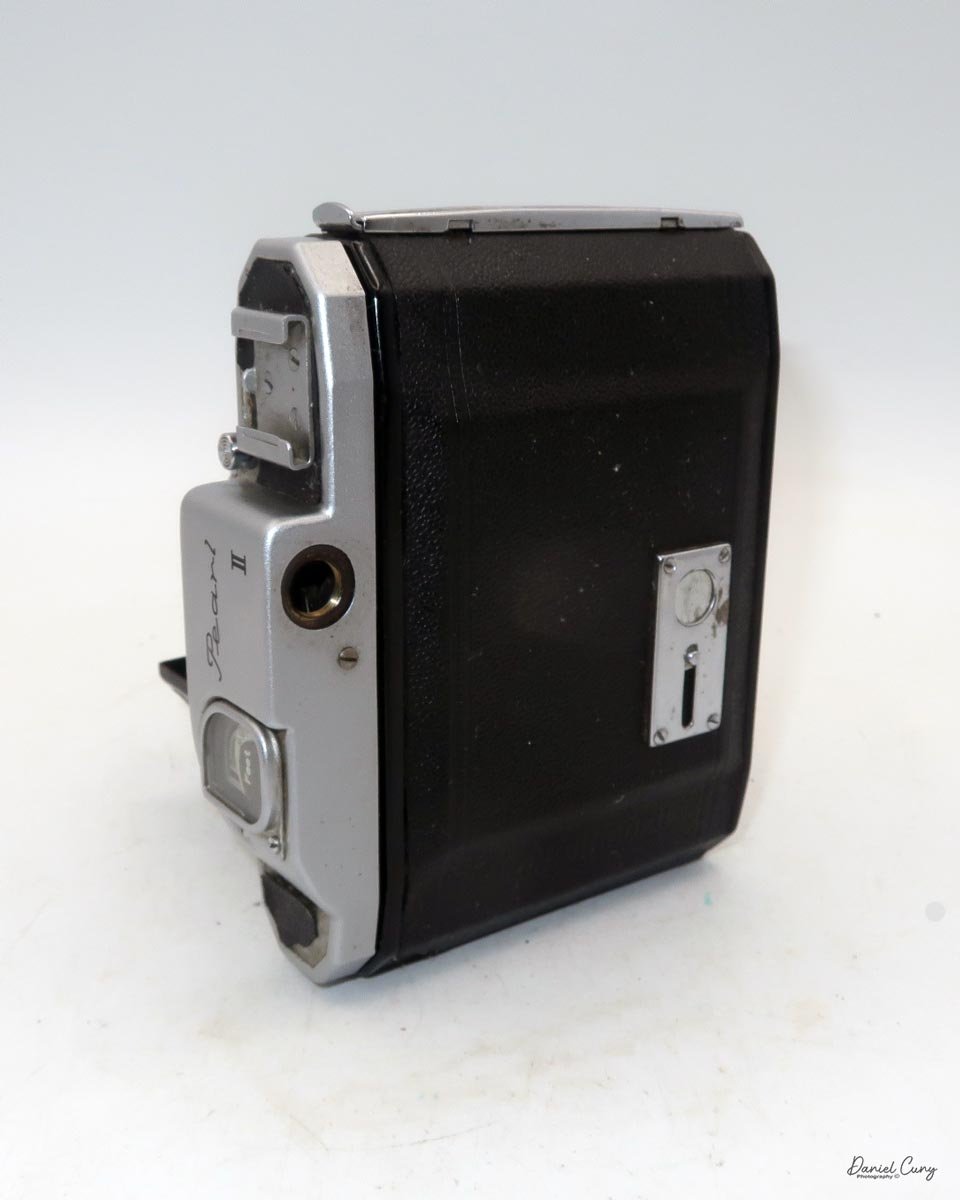
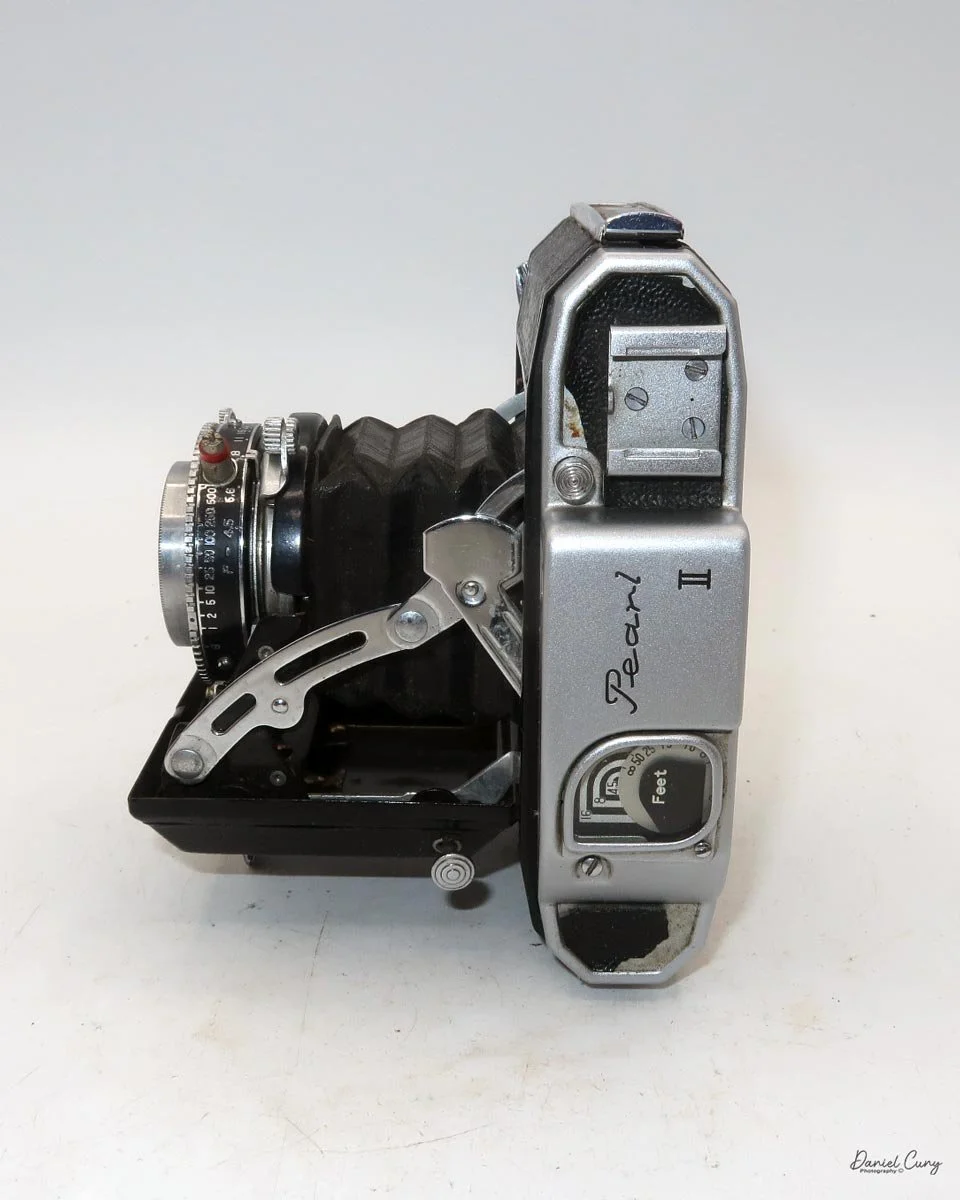
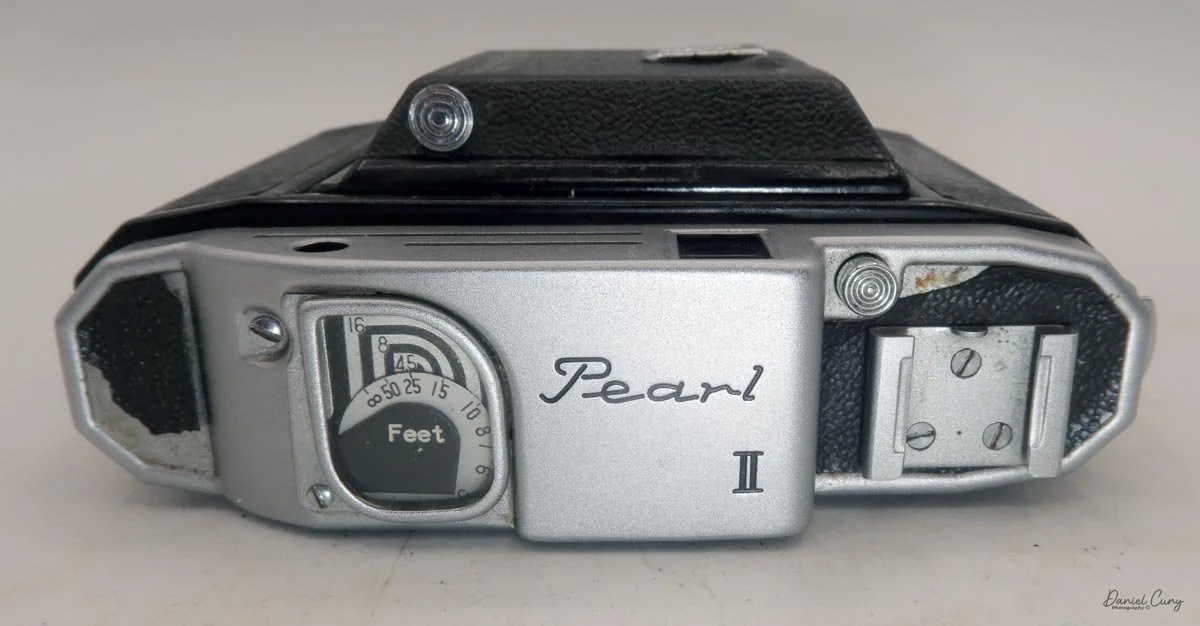
 Looking down at the top of the camera, there are just a few objects to see. There is a small area on the front of the rangefinder housing that is losing some of its leatherette. The wonderfully designed focus window with a depth-of-field scale. The name "Pearl II" is in a modernistic font, with the camera's accessory shoe on a lower plane and the button for releasing the lens door.

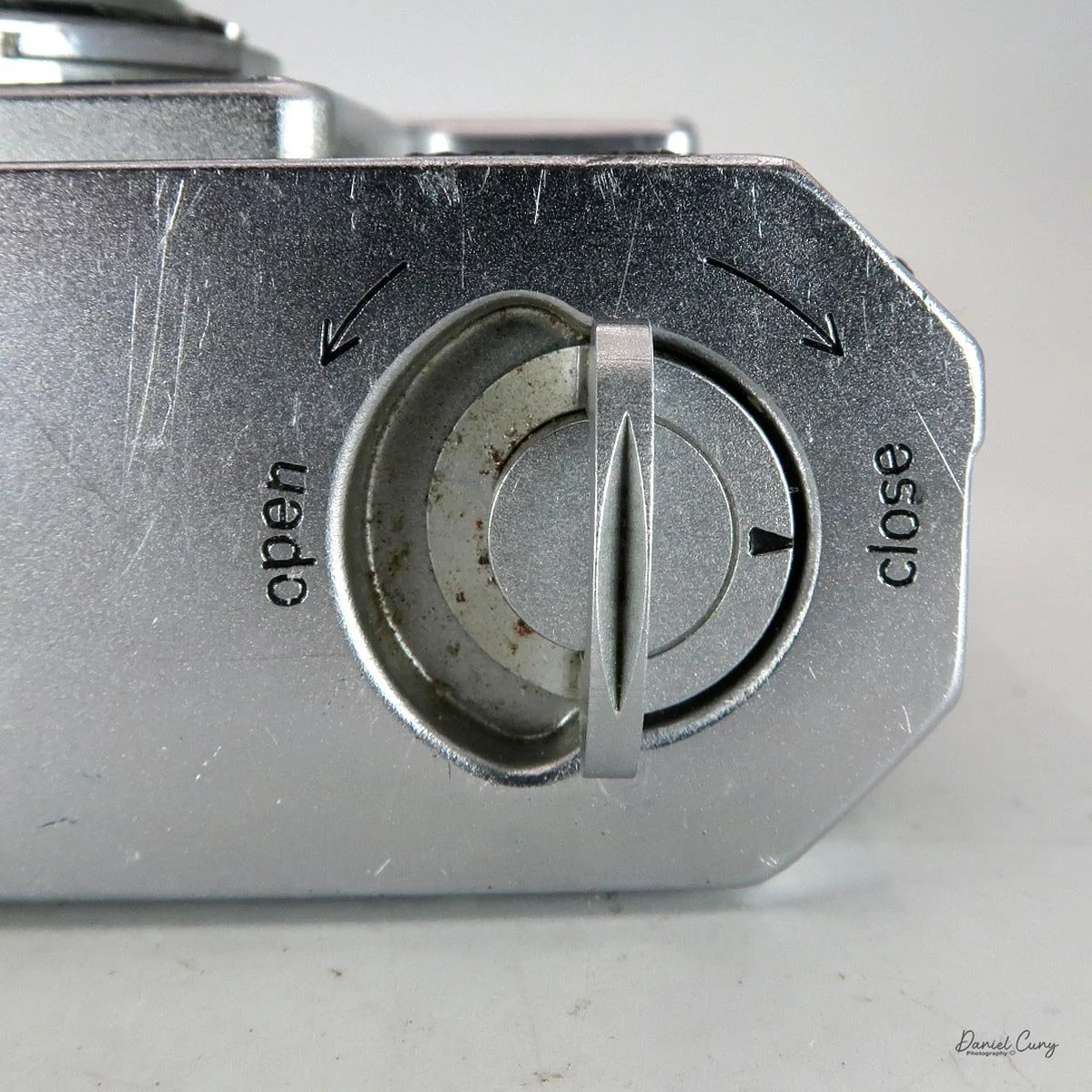
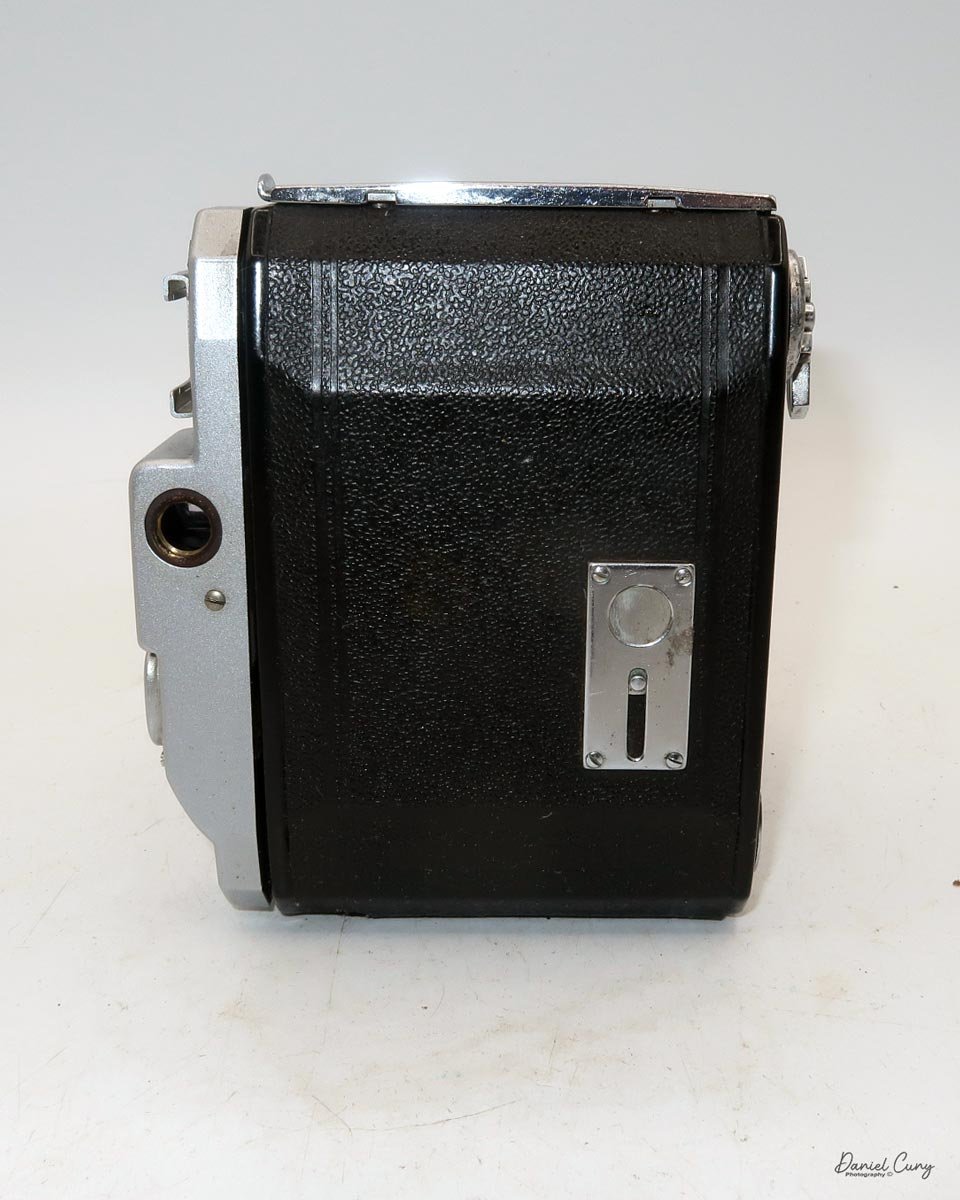
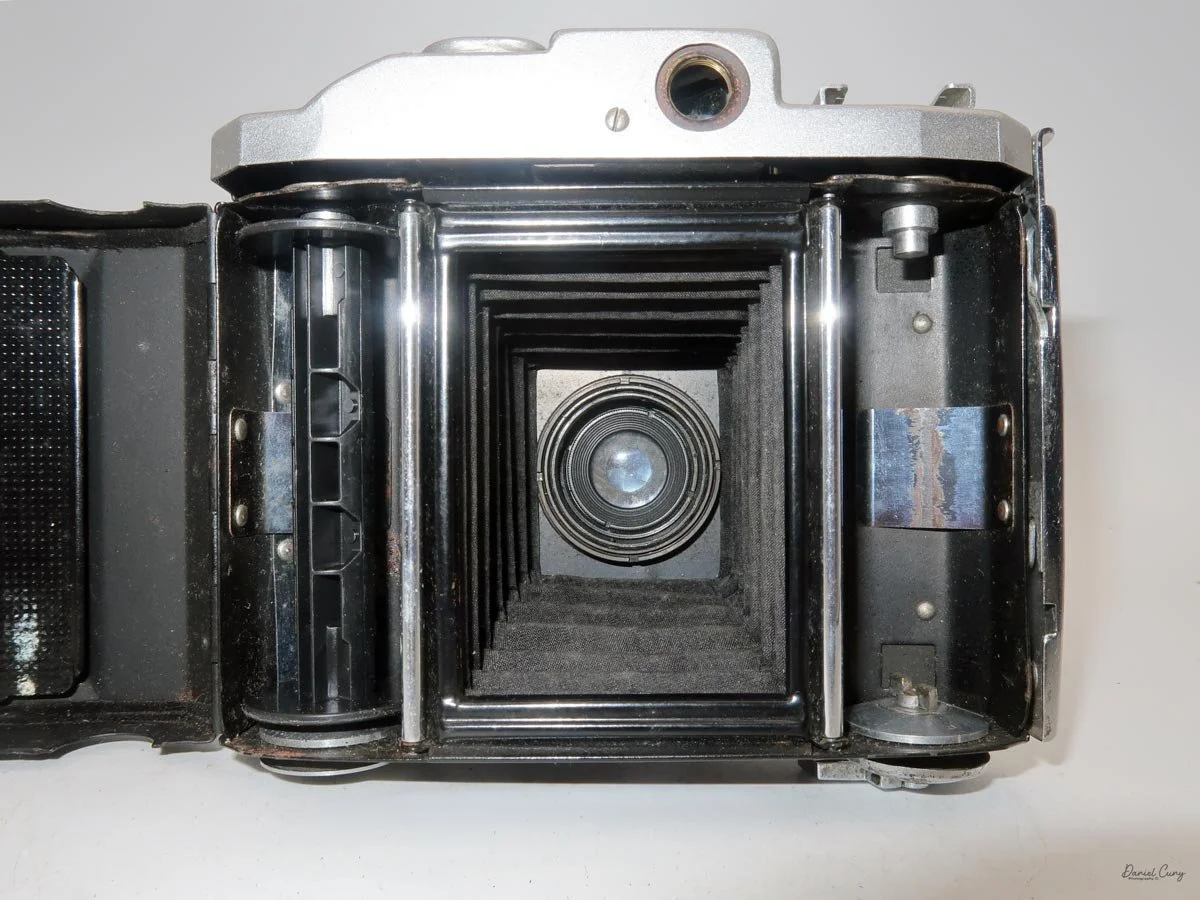
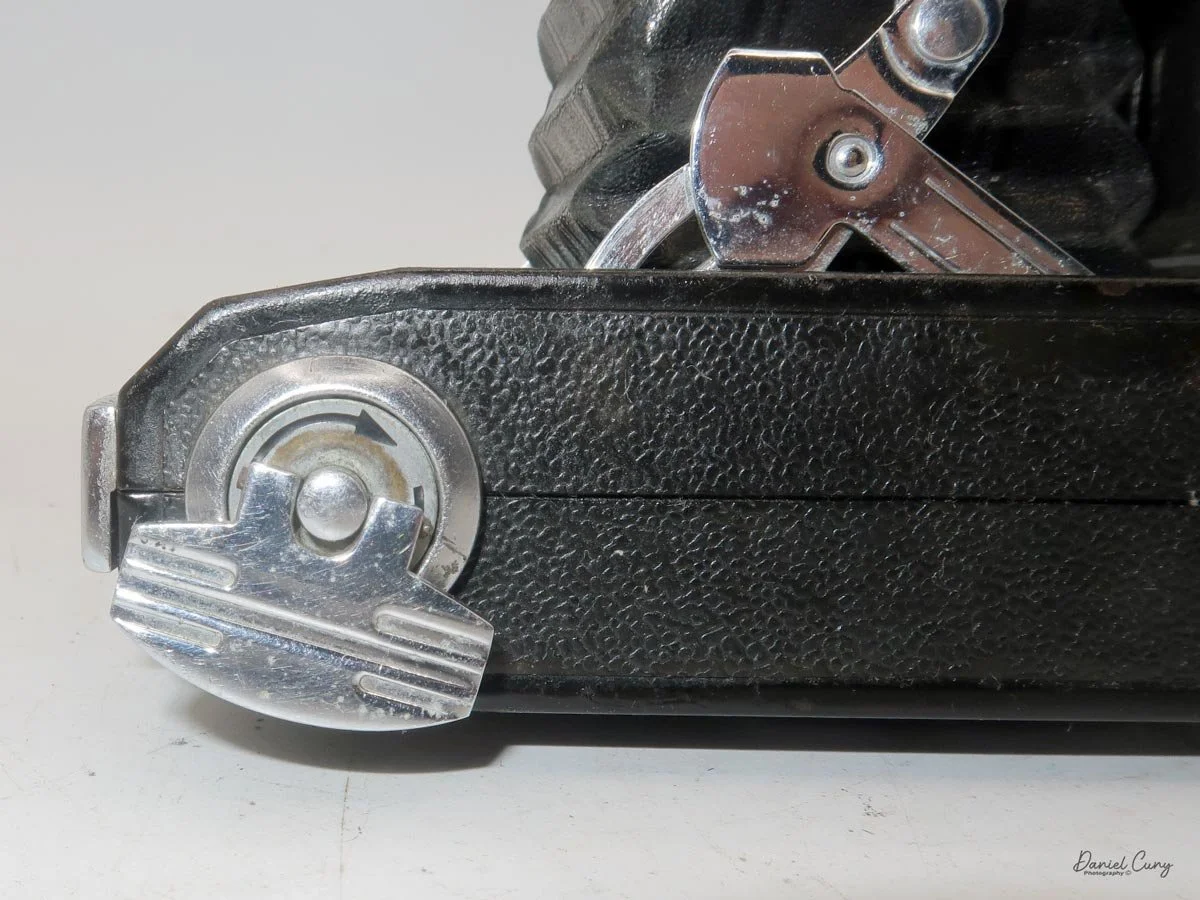
To load the camera with film, the film door release is on the right side of the Pearl II. Lifting the lever on top unlocks the film door, allowing you to open it and load film. The fresh roll fits on the left side, and the take-up spool will be on the right, where the larger key-style winding lever is located. Once loaded, close the back of the camera and wind until you see the number 1 in the rear chrome window, which has a sliding cover.

 With the film loaded in the camera, let's take a walk through the neighborhood to see how it performs. Even though I don't have a usable rangefinder, the distance scale on top of the camera should help me take sharp photos.

 My Results:

 Since the camera has a vertical 6x4.5 format, you can take 16 images on a roll of 120 film. If you're taking a horizontal image, you'll need to turn the camera to landscape orientation.

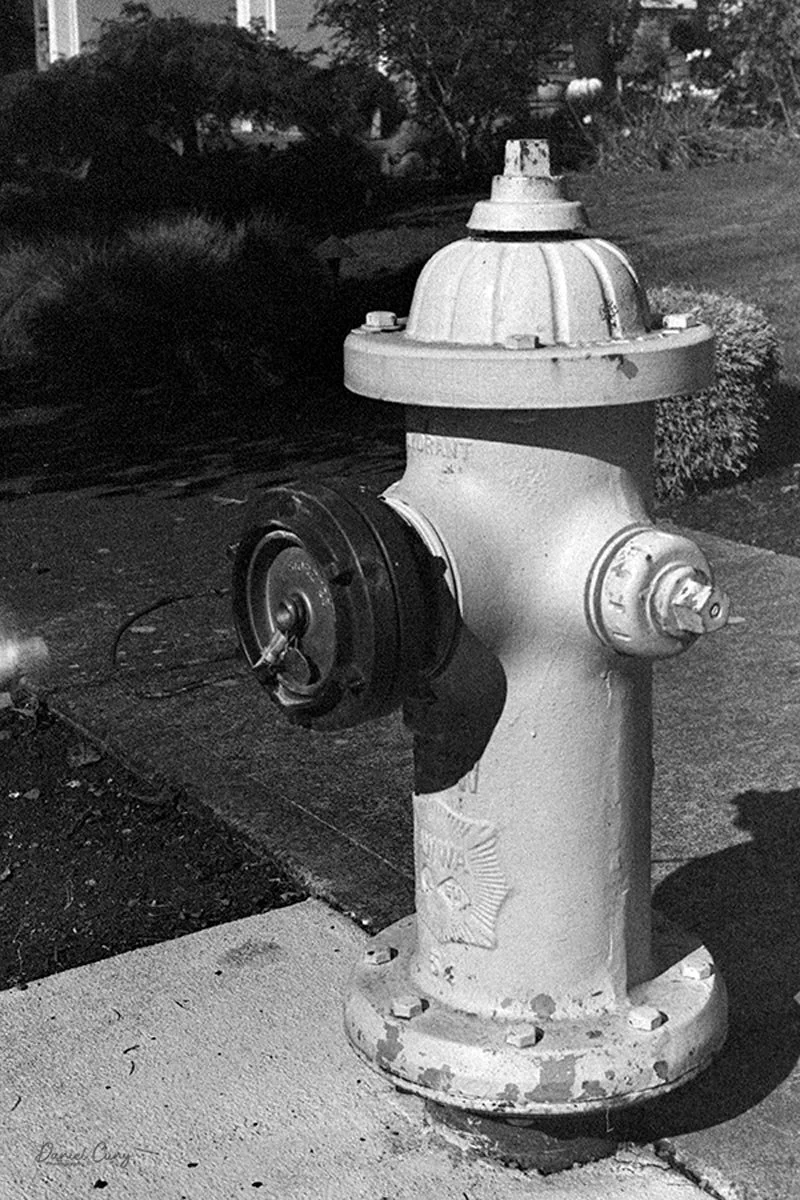
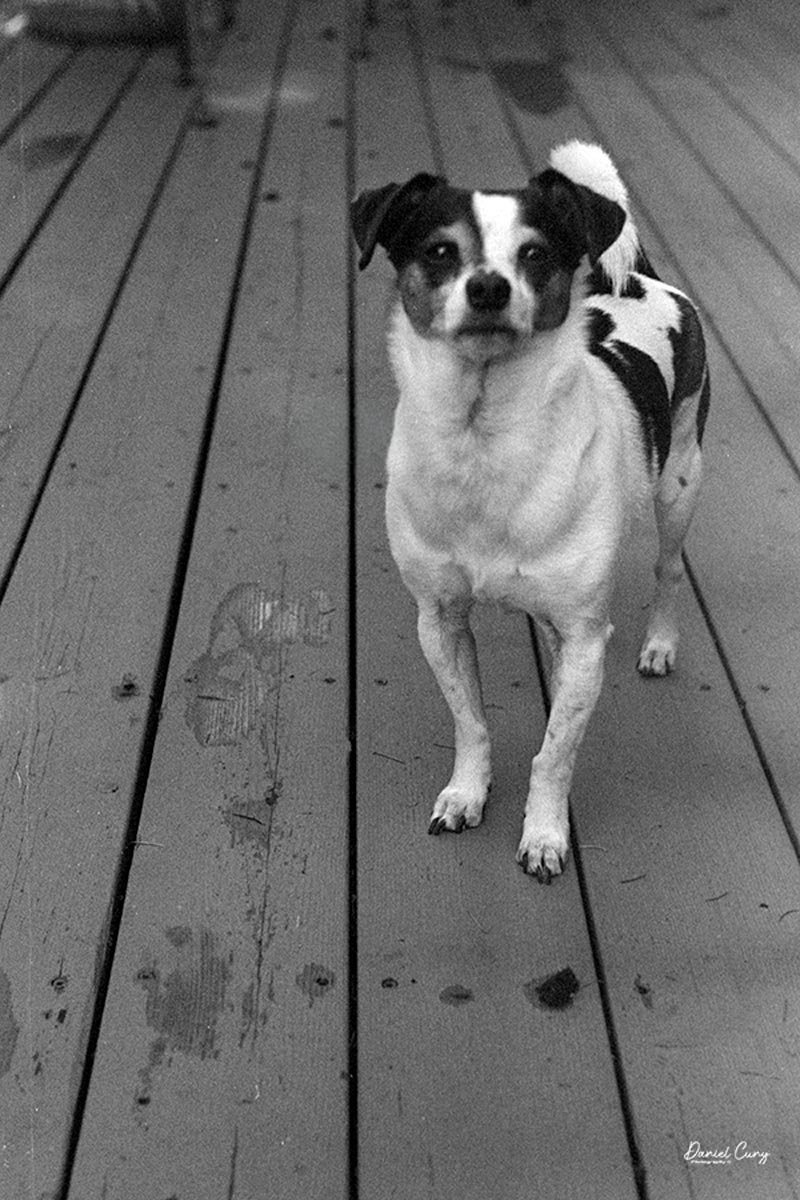
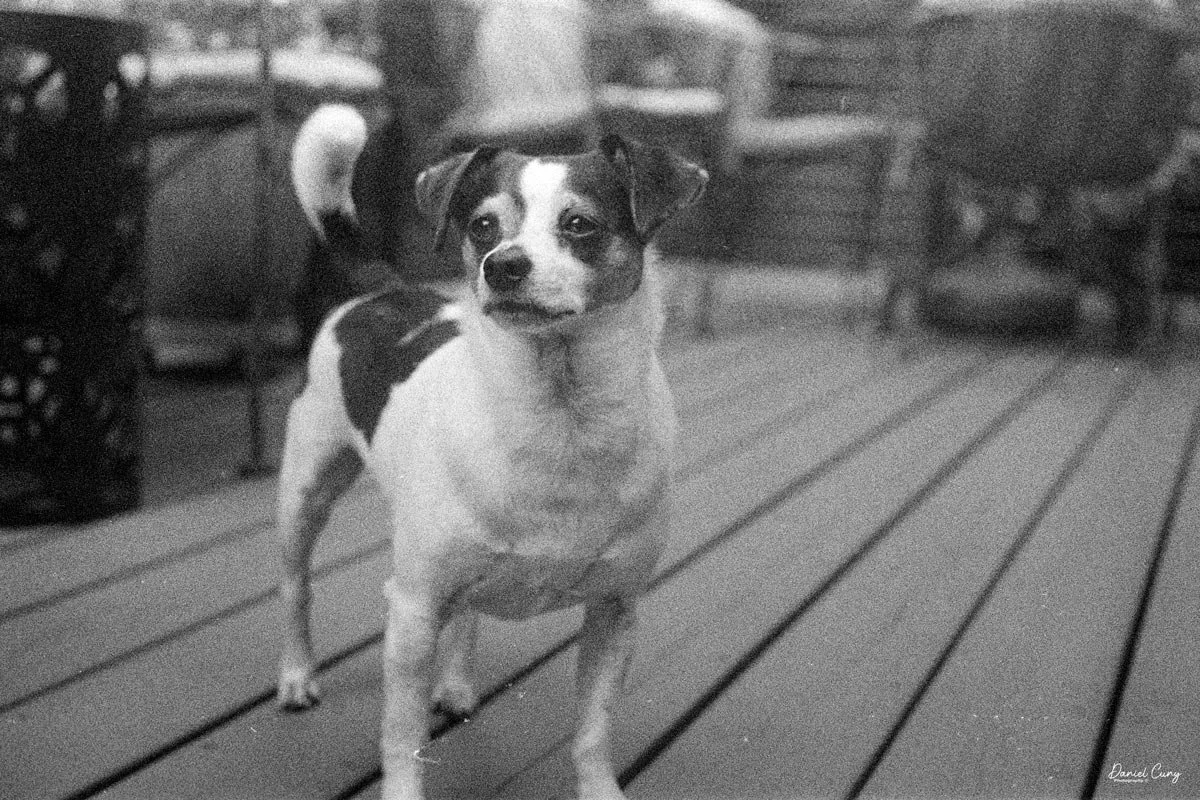
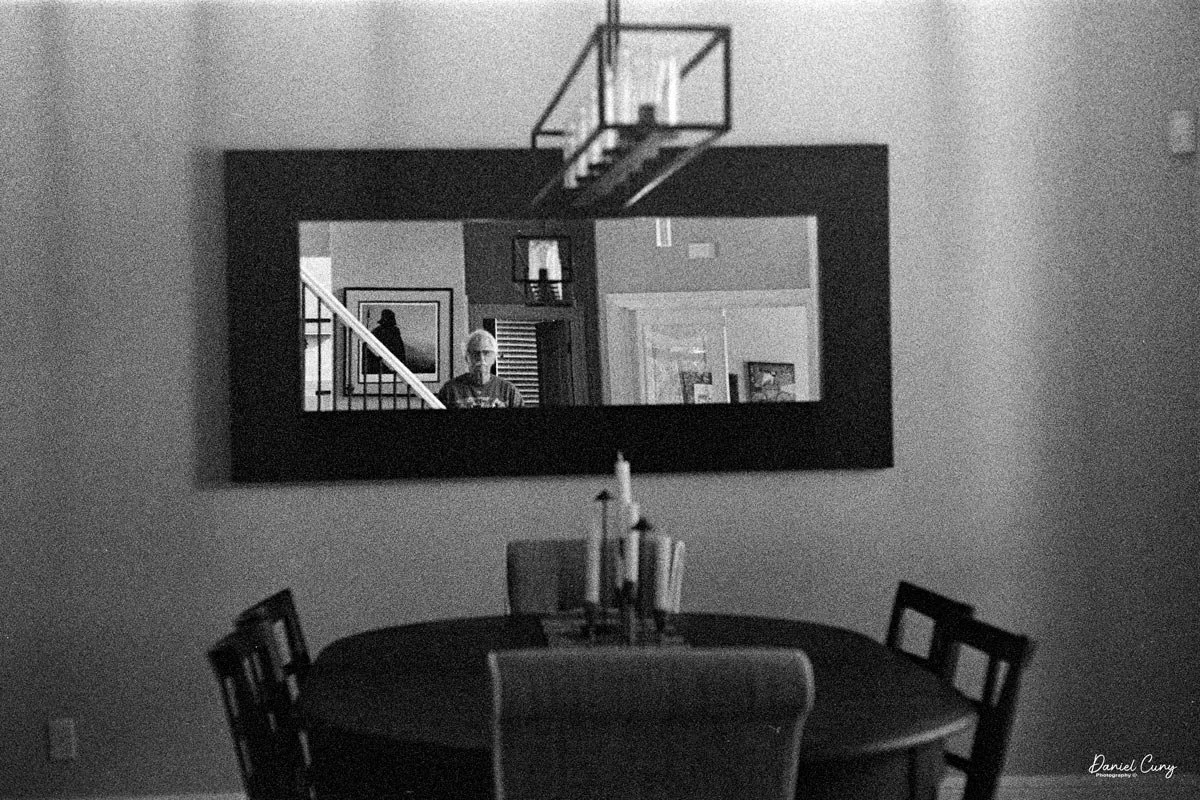
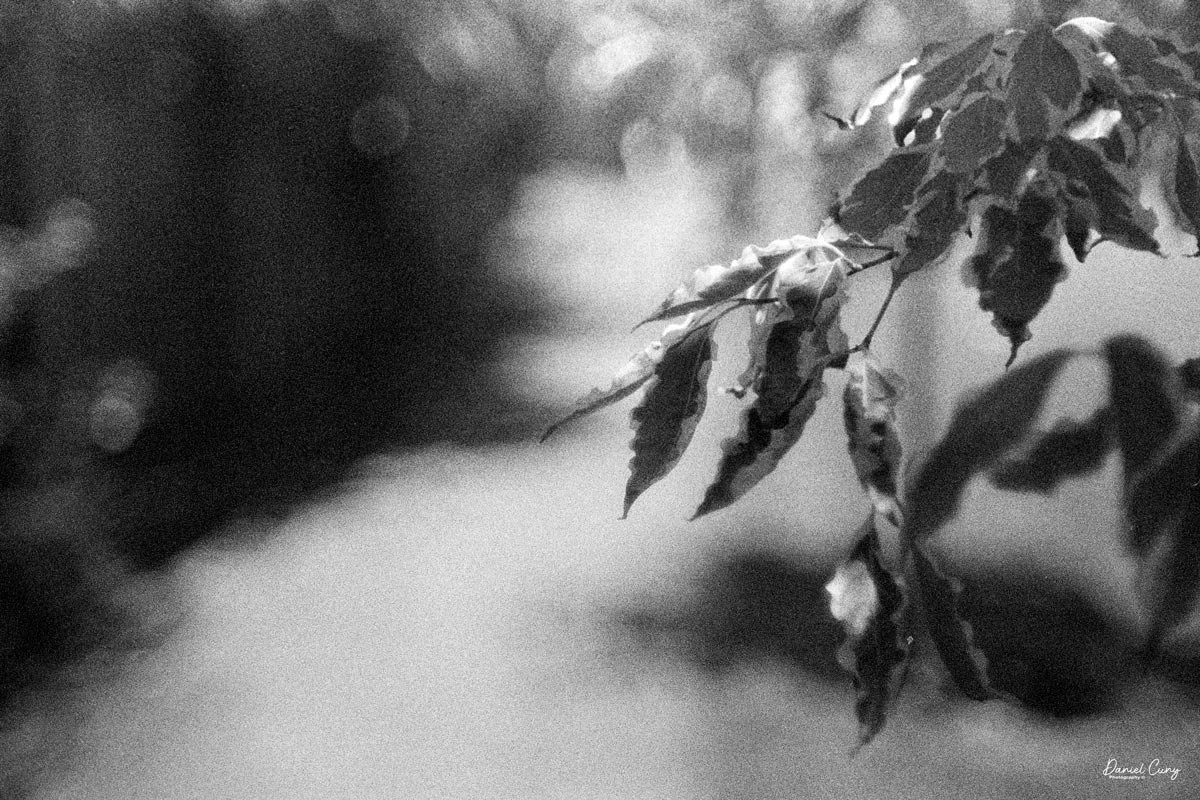
 Here are some of the photos I took during my walk in our neighborhood.

Conclusion:

 I understand why the Konica Pearl lineup is so desirable for an everyday pocketable film camera. It's sophisticated, yet simple. The camera can focus on your subject via an internal rangefinder system, rather than relying on a less desirable "guess" focus system. 

 The higher shutter speed of 1/500 for the time period allows for less camera or subject movement, and the iconic Konica Hexar lens is sharp and provides wonderful contrast to the images.

 I'm very glad I purchased this camera, and am keeping my fingers crossed that the viewfinder glass will bring the camera's rangefinder back to life, allowing for even easier focusing and possibly a sharper image.

 Thank you for taking the time to learn about this wonderful camera from Japan's early camera revolution after WWII, when many cameras had "Made in Occupied Japan" embossed somewhere on them, just like this one.

 Here are some of my other Camera Reviews

 I also have a YouTube channel where you can view overview videos of some of the cameras I've written about.

 Cuny's Camera and Photos is my online eBay store where I sell many of the cameras reviewed, along with other cameras, lenses, and photo oddities I've accumulated in my 50-plus years of collecting. Stop by and see if there's something for you there.

 Until next week, please be safe.
Welta Welti camera

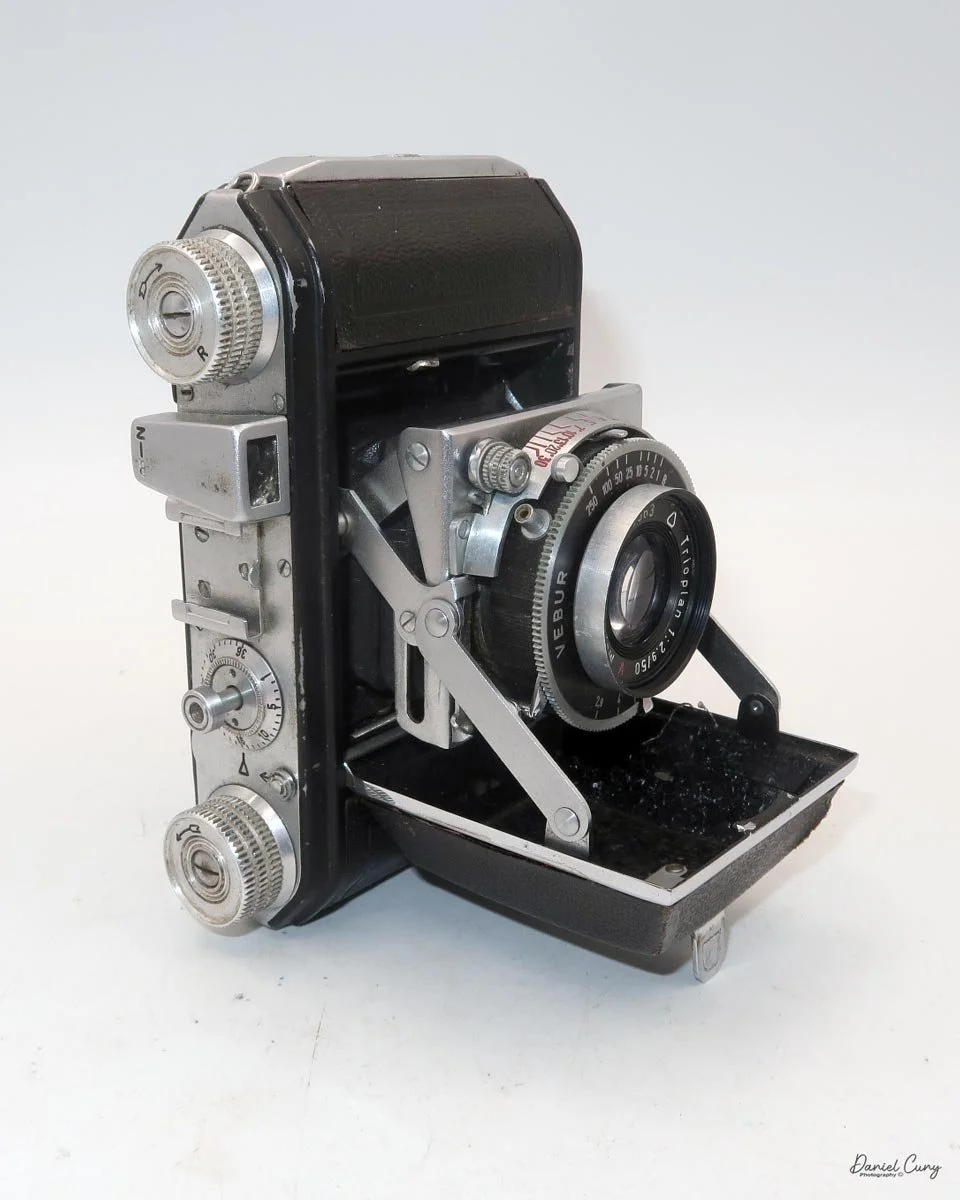
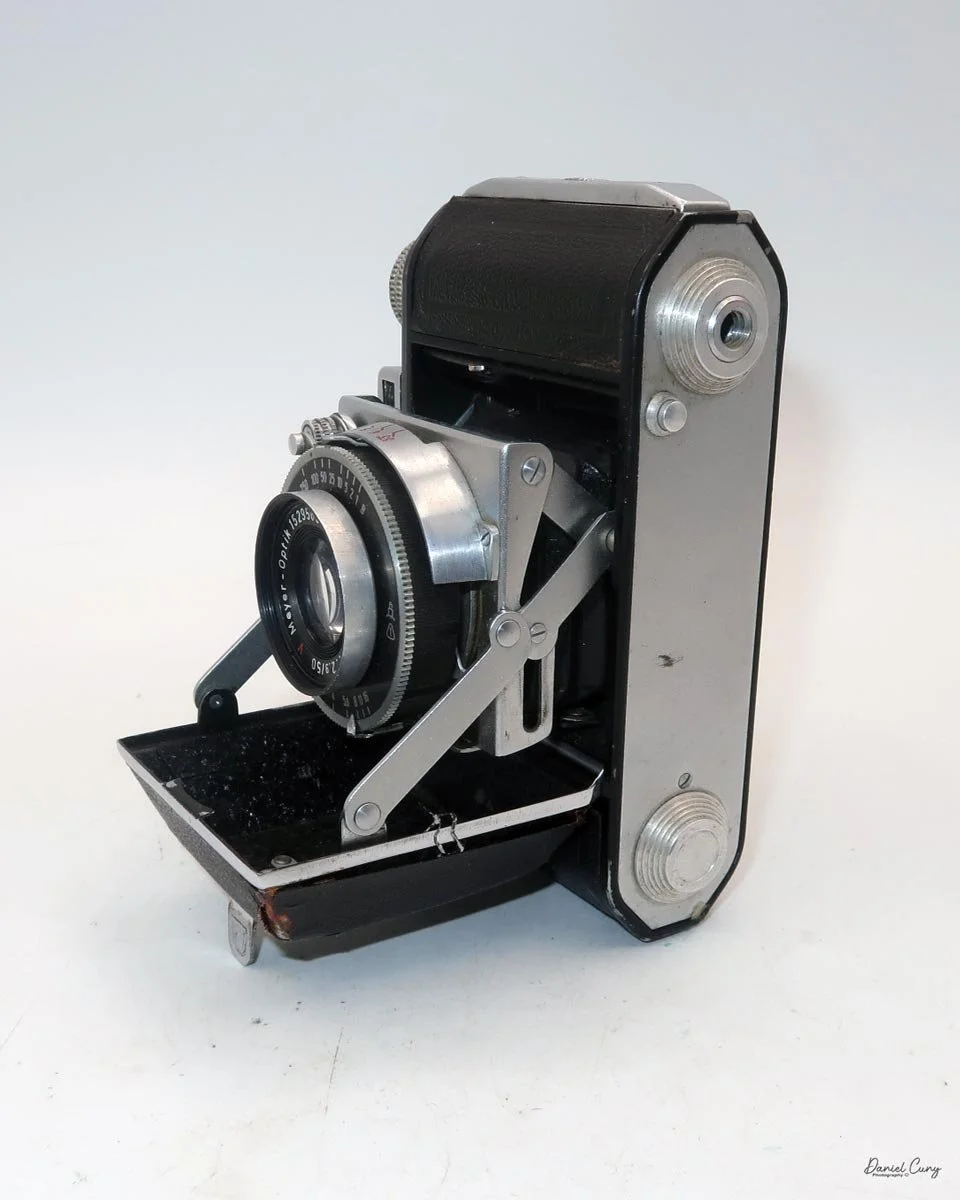
My Welta Welti camera

While looking for a camera to discuss in this week's camera collecting blog, I was unpacking cameras I took to the recent camera show outside of Seattle, and I picked up a nondescript leather case for one of them. Opening the case to see which camera it was, it turned out to be a fairly plain-looking 35mm folding camera. 

 I opened the camera to see which one it was, but nothing was screaming the manufacturer to me. The only few telltale signs I could see were the words "Germany USSR Occupied" in gold embossed letters, along with "Made in Germany" embossed into the leather. There was also the number 1 inside a triangle and the numbers 37/373/1001 embossed into the leather on the back of the film door.
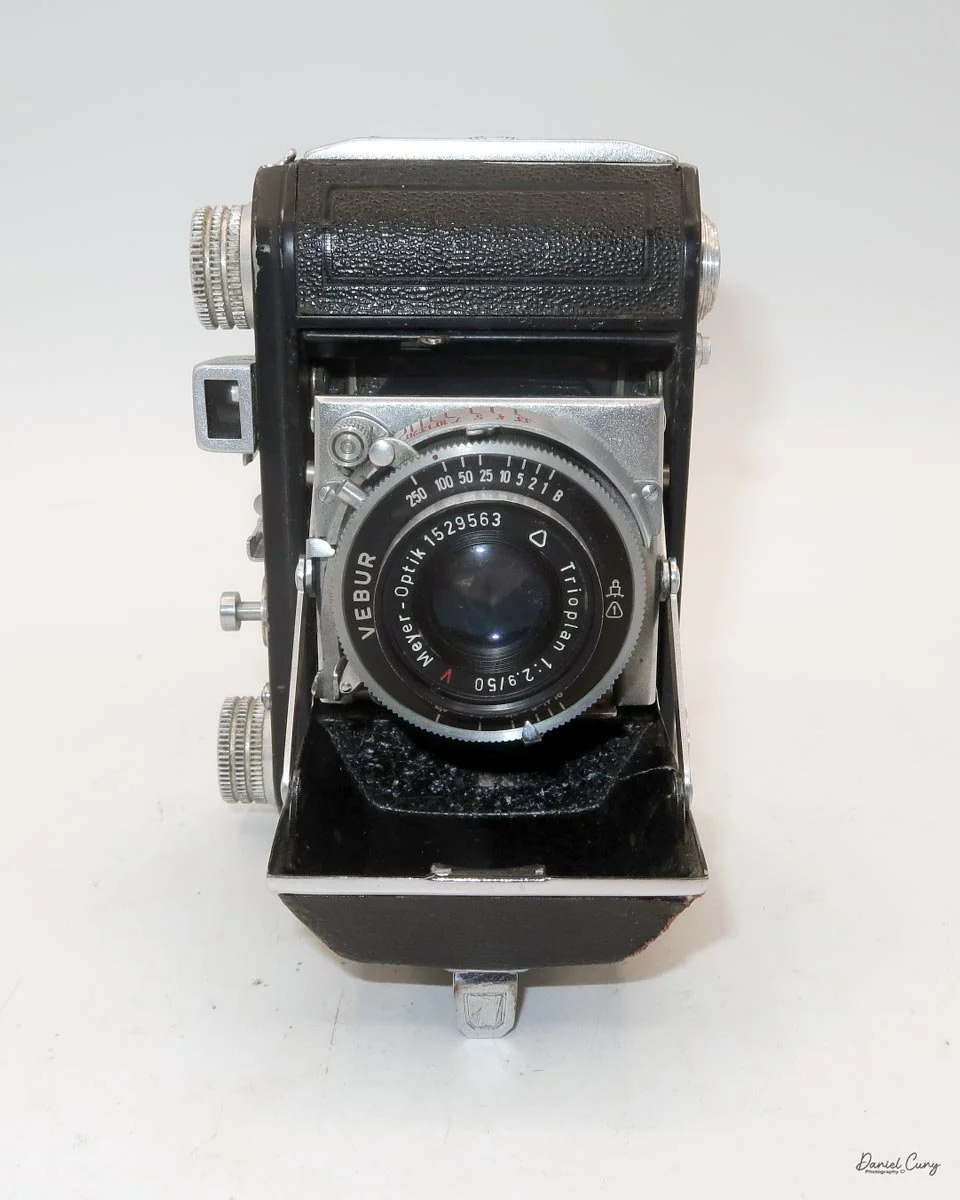
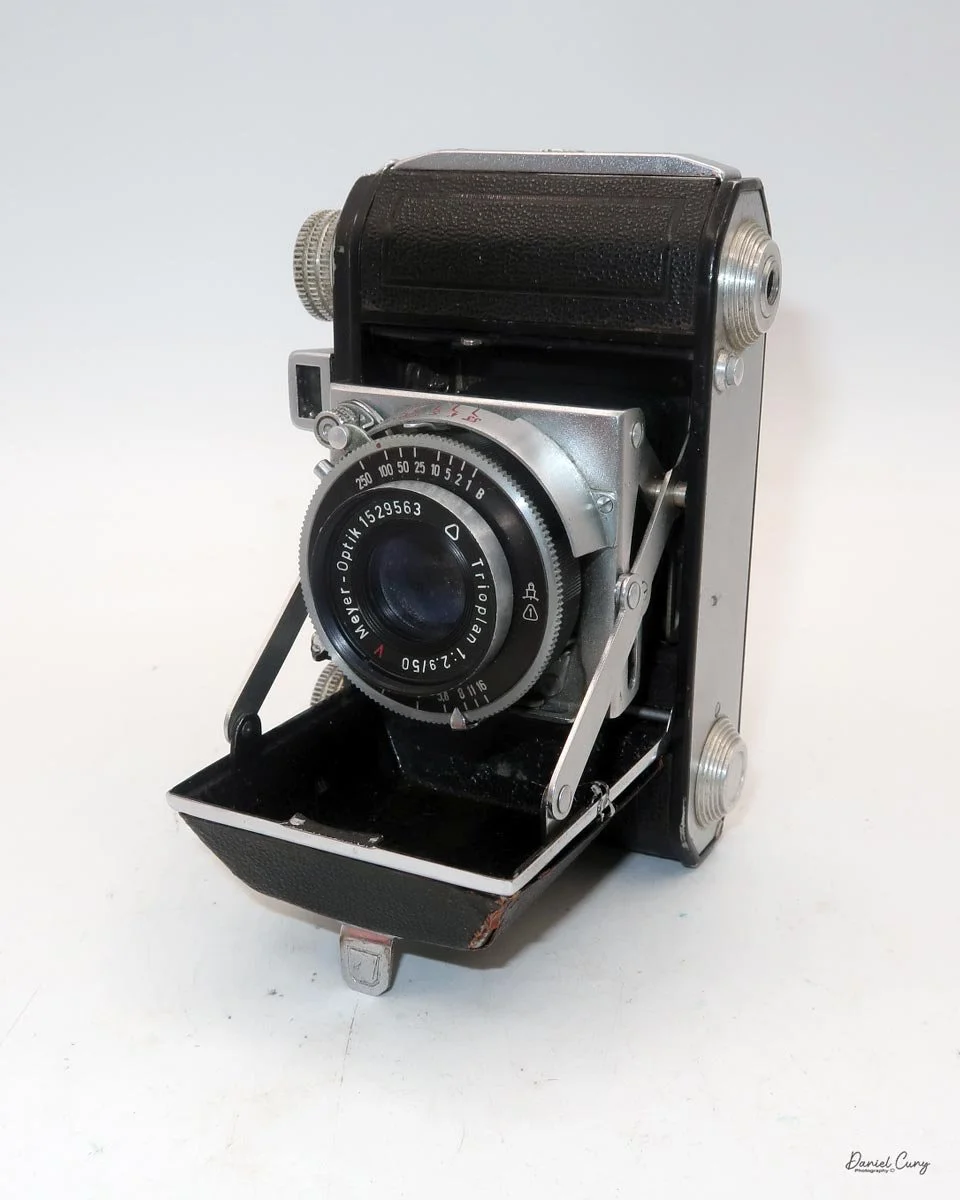
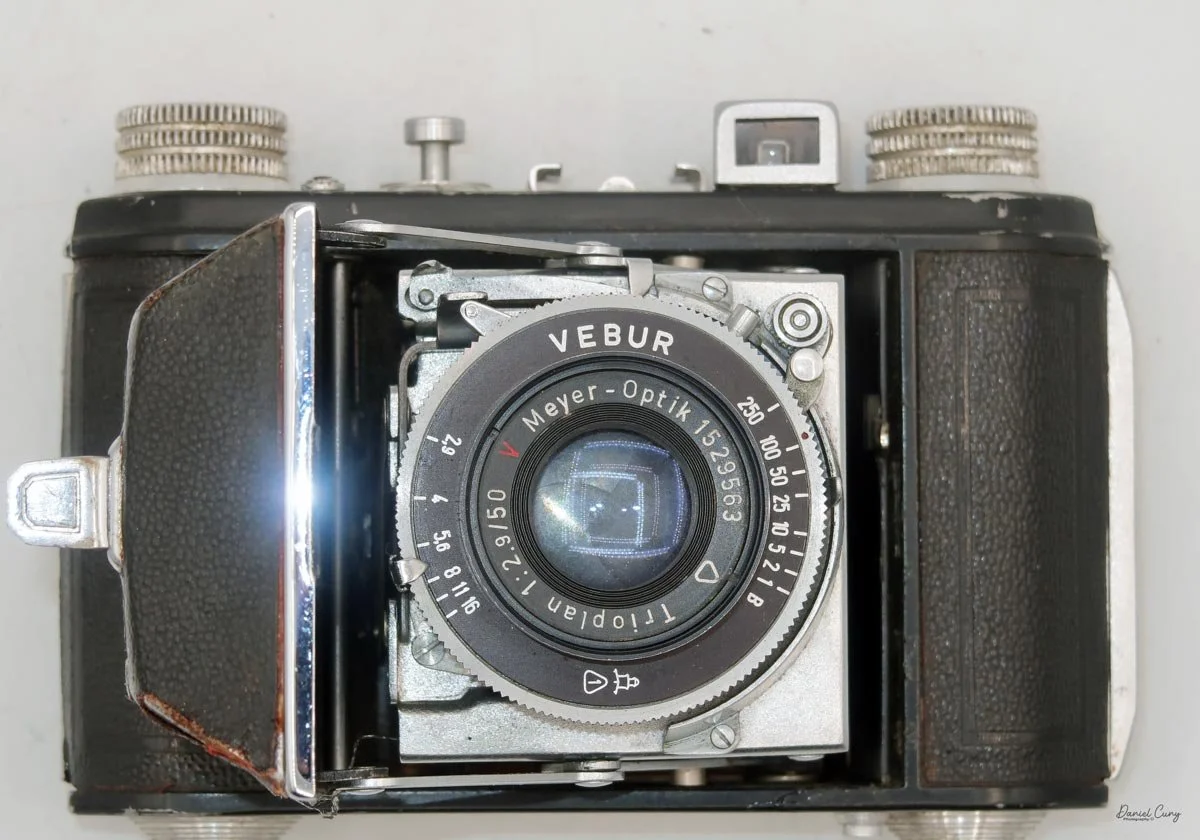
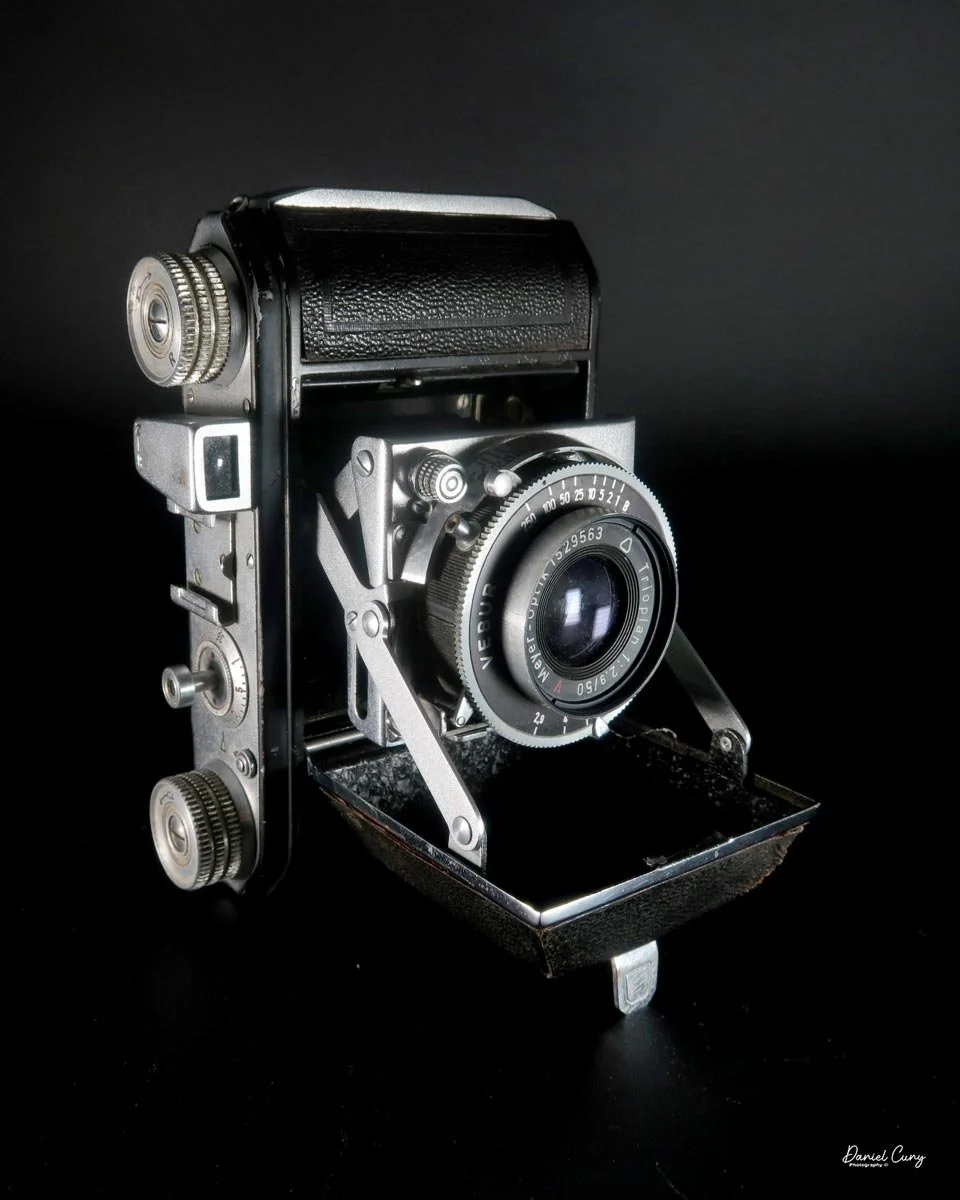
 Opening the door to see what lens the camera had, it wasn't what I expected. Unlike a Schneider or Zeiss lens, the camera has a less popular Meyer Optik lens in a Vebur shutter.

 Now I was more perplexed about the brand of camera I was holding. I researched the information I had, and I found that I was holding a Welta Welti camera made soon after WWII.

My Welta Welti camera with leather case.
 Usually, on cameras of this era, the manufacturer's name is embossed on the side of the camera, close to the film door. I looked at the camera again, and it was either worn off from use or never there in the first place.
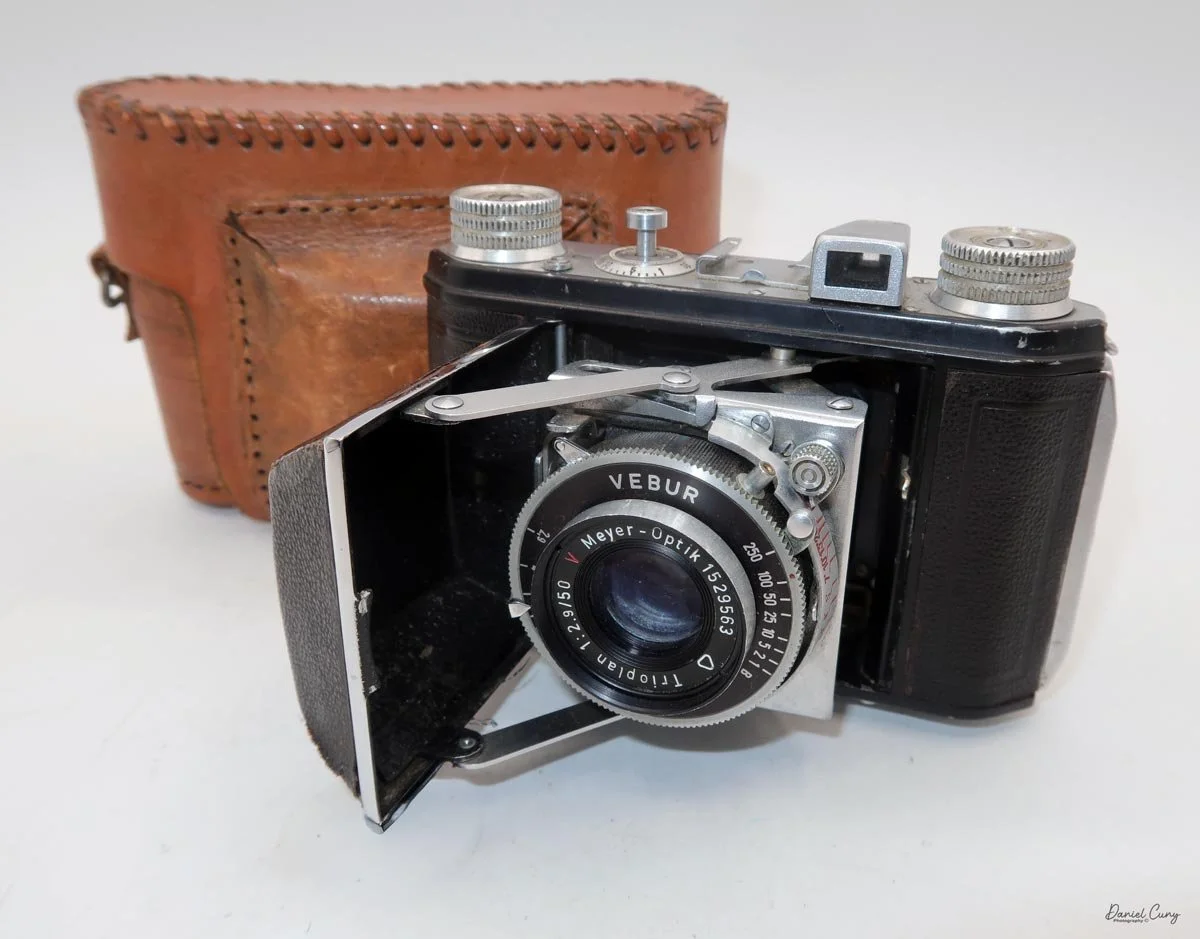
 Testing the camera's shutter, it worked at all speeds, and the aperture was smooth and functioning as it should. The lens was clean, and the transport seemed in good condition, so for the week I go camera shopping in Tokyo, and being a fan of Welta cameras, like the Perfekta and Superfekta, I found the camera to write about for this week's blog post.

History:

 For those of us who spend our days restoring, shooting, and studying vintage cameras, the name Welta carries a distinct weight—both literally and figuratively. Founded in 1914 by Walter Waurich and Theodor Weber in Freital, Germany, the company originally operated under the moniker Waurich & Weber. By 1919, the "Welta" trademark was born, marking the beginning of a remarkable, albeit turbulent, chapter in the history of photography.

 Welta quickly earned a sterling reputation during the 1920s and 30s. At a time when German optical and mechanical engineering set the global standard, Welta held its own against titans like Zeiss Ikon. They mastered the folding camera format, producing medium format workhorses outfitted with top-tier Compur shutters and stunning optics from Schneider-Kreuznach or Carl Zeiss. For a working photographer or a serious enthusiast, a Welta meant uncompromising precision wrapped in a beautifully crafted, leather-bound brass body.

 As the 1930s progressed, the photographic landscape shifted dramatically as the 35mm film format gained popularity. Competitors were releasing compact, pocket-sized folding 35mm cameras, most notably the Kodak Retina. Welta's brilliant response was the Welti.

 Introduced in 1935, the Welti was a marvel of compact engineering. It wasn't just a scaled-down medium format folder; it was a purpose-built 35mm instrument. With its incredibly robust struts, precision-focusing helix, and satisfyingly dense, all-metal heft, the Welti proved that "compact" didn't mean compromising on professional-grade durability. It remains the perfect embodiment of Welta's meticulous design philosophy.

 The devastation of World War II completely altered Welta's trajectory. Finding itself in the Soviet occupation zone (later East Germany), the company was nationalized in 1946, becoming VEB Welta-Kamerawerke. Despite this massive structural shift, the Freital factory continued to produce incredible cameras, including refined post-war iterations of the Welti, the Weltax, and the Belmira.

 However, as the East German government moved to consolidate its optical industries to compete on the global stage, Welta was eventually absorbed by VEB Kamera-und Kinowerke Dresden in 1959, which later evolved into the massive Pentacon conglomerate.

 By the mid-1960s, the Welta name faded into history. Yet, when you hold a Welti today, you are holding a defiant piece of history—a tactile testament to a specialized factory that, for a few brilliant decades, built some of the finest folding cameras the world had ever seen.

My Camera:

 My Welta Welti camera is similar in size and shape to the Kodak Retina cameras. The camera is 4.5" wide by 3.5" tall by 2" deep with the lens retracted, and 3.5" deep with the lens door open and the lens in the normal "taking" position. The Welta Welti weighs 1 pound, 2.9 ounces.

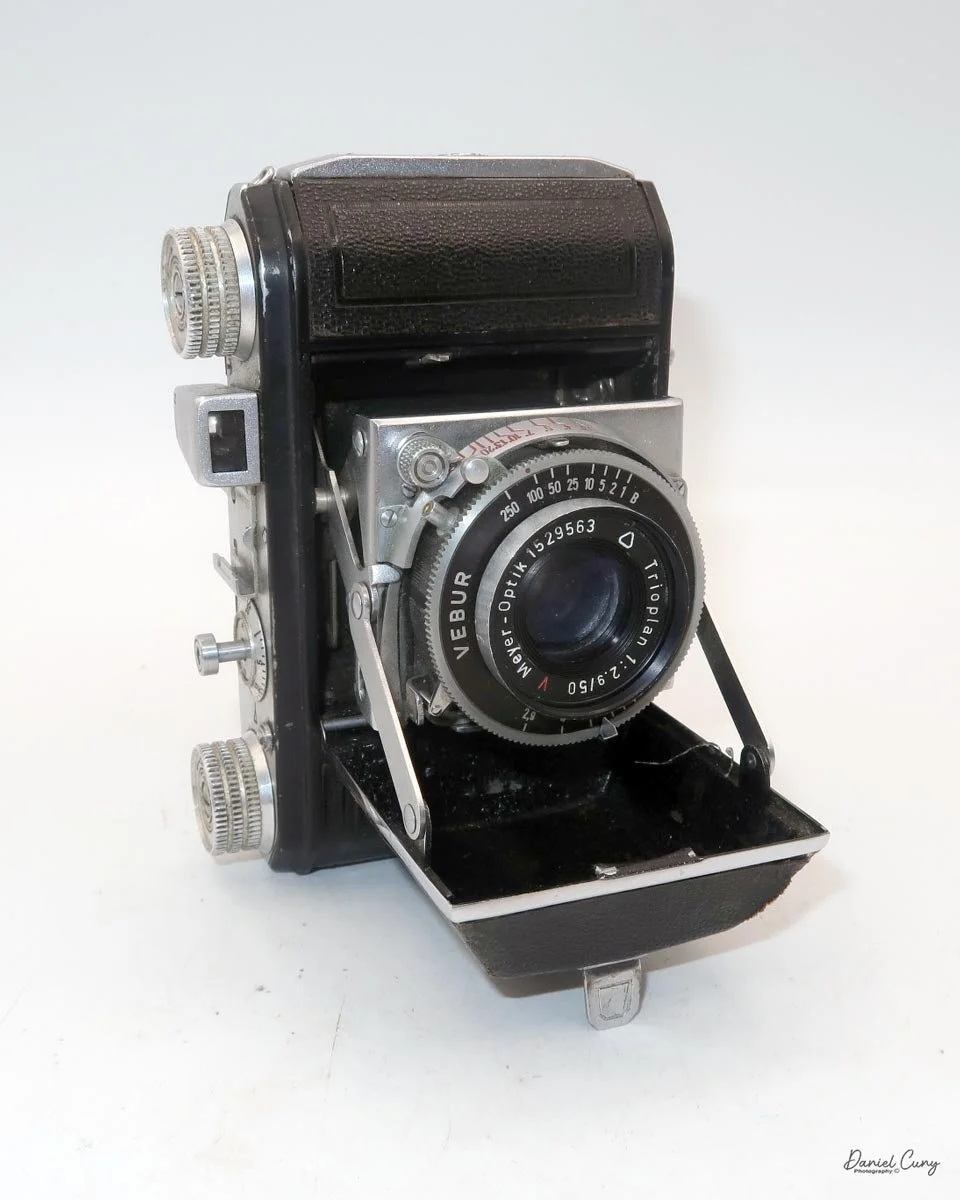
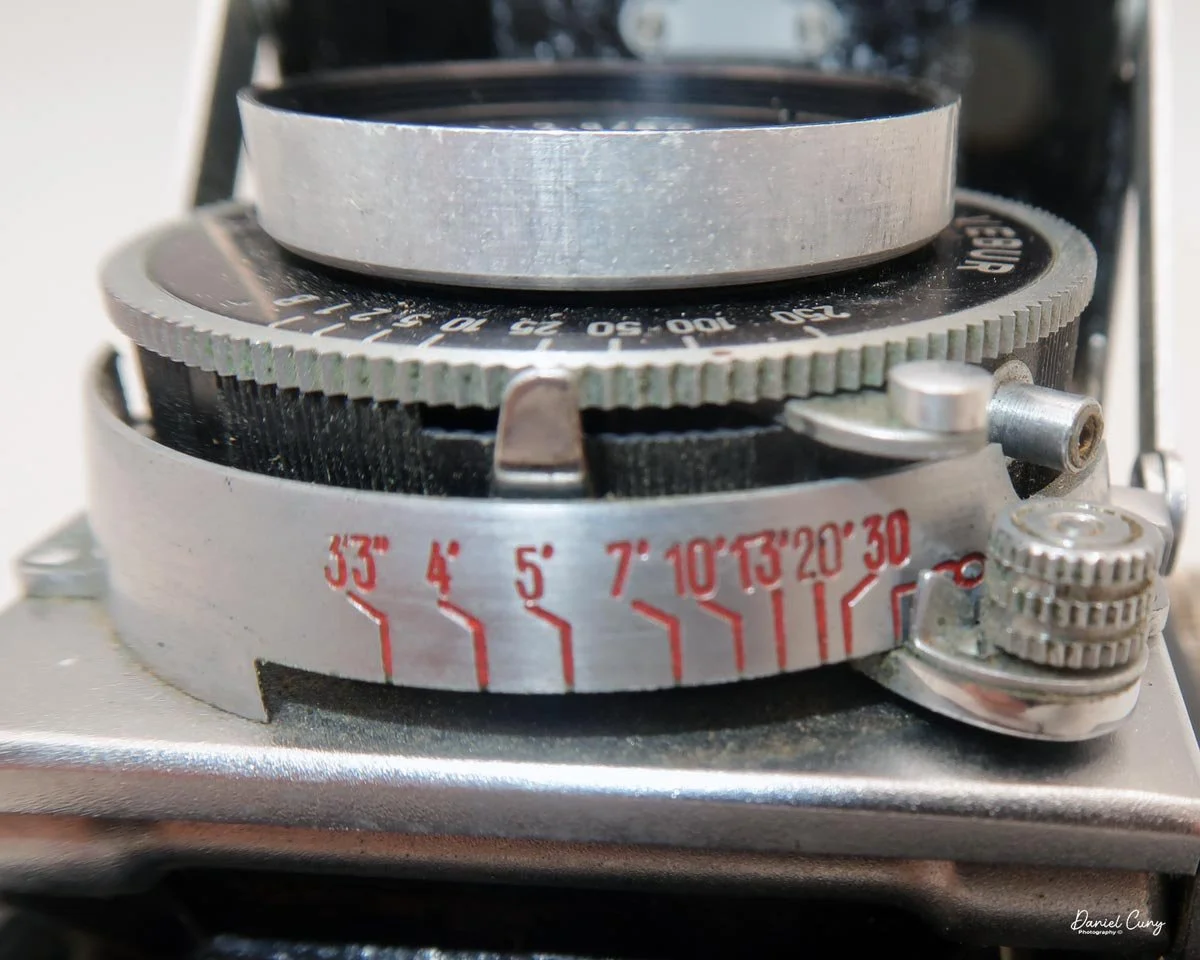
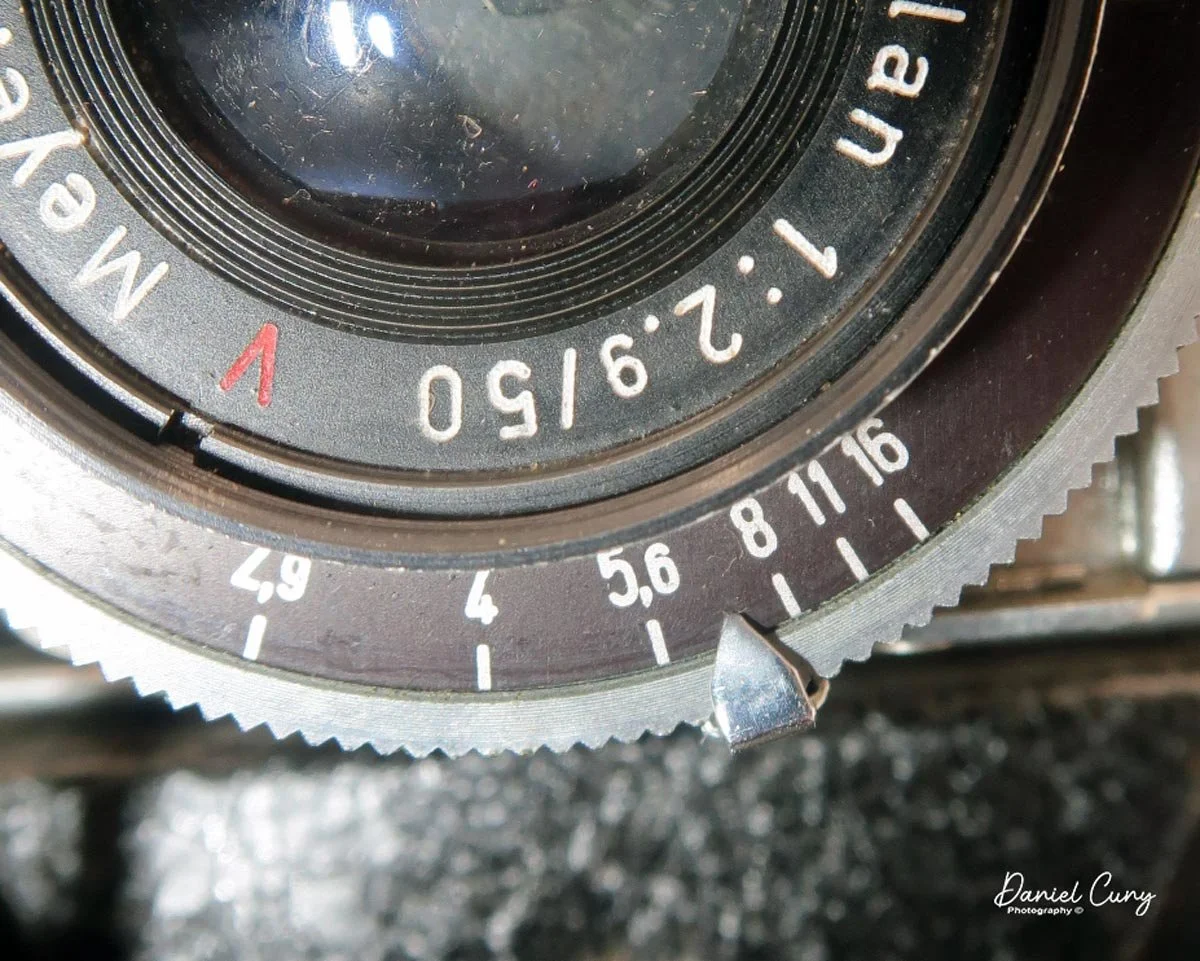
To open the lens door, press a small button at the bottom of the camera, and the lens door opens, exposing a Meyer-Optik Trioplan 50mm f2.9 lens (serial # 1529563), in a Vebur shutter at the end of a small bellows that extends, then the front door is opened.

 The shutter speeds range from 1/250 to 1 second, along with "B" for timed exposures. To set the shutter speed, turn a knurled ring on the outside of the shutter, lining up the desired shutter speed with the red dot on the ring. Just behind the shutter speed selector is the shutter cockling lever. You'll need to pull the lever over each time you're going to make an exposure, as there is no automatic shutter cocking mechanism on the Welta Welti camera.

The aperture on my Welta Welti camera ranges from F/2.9 to 16 and is set by a sliding lever under the shutter, below the lens.

 On the back of the lensboard is a large knob that serves as the focusing lever for the camera. There is no rangefinder or internal focusing on the camera, so the distances you set are just guesses. Sliding the knob to the left or right focuses the lens. The lens can focus as close as 3.3 feet to infinity. At the end of the focus knob is a small pointer that sets the desired distance. 

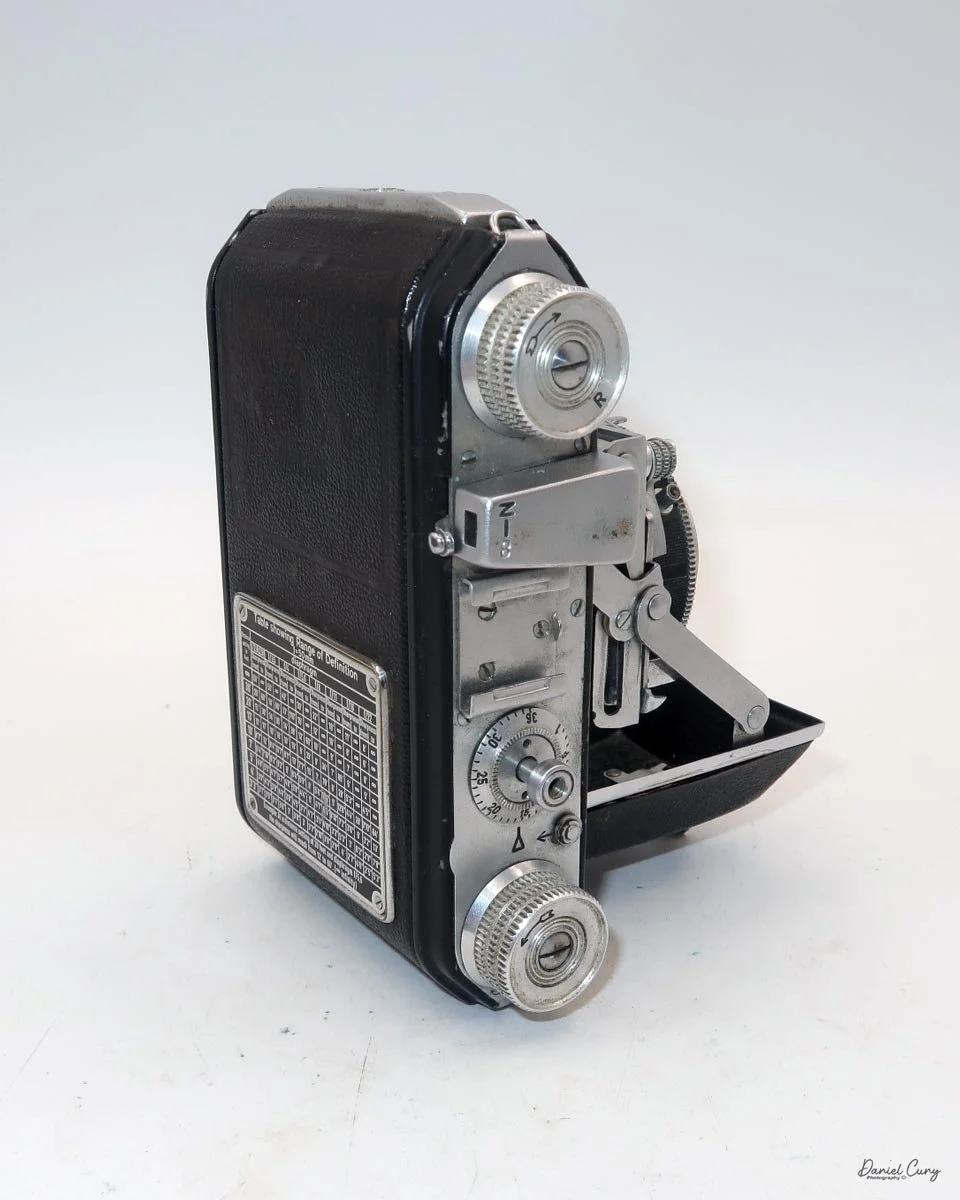
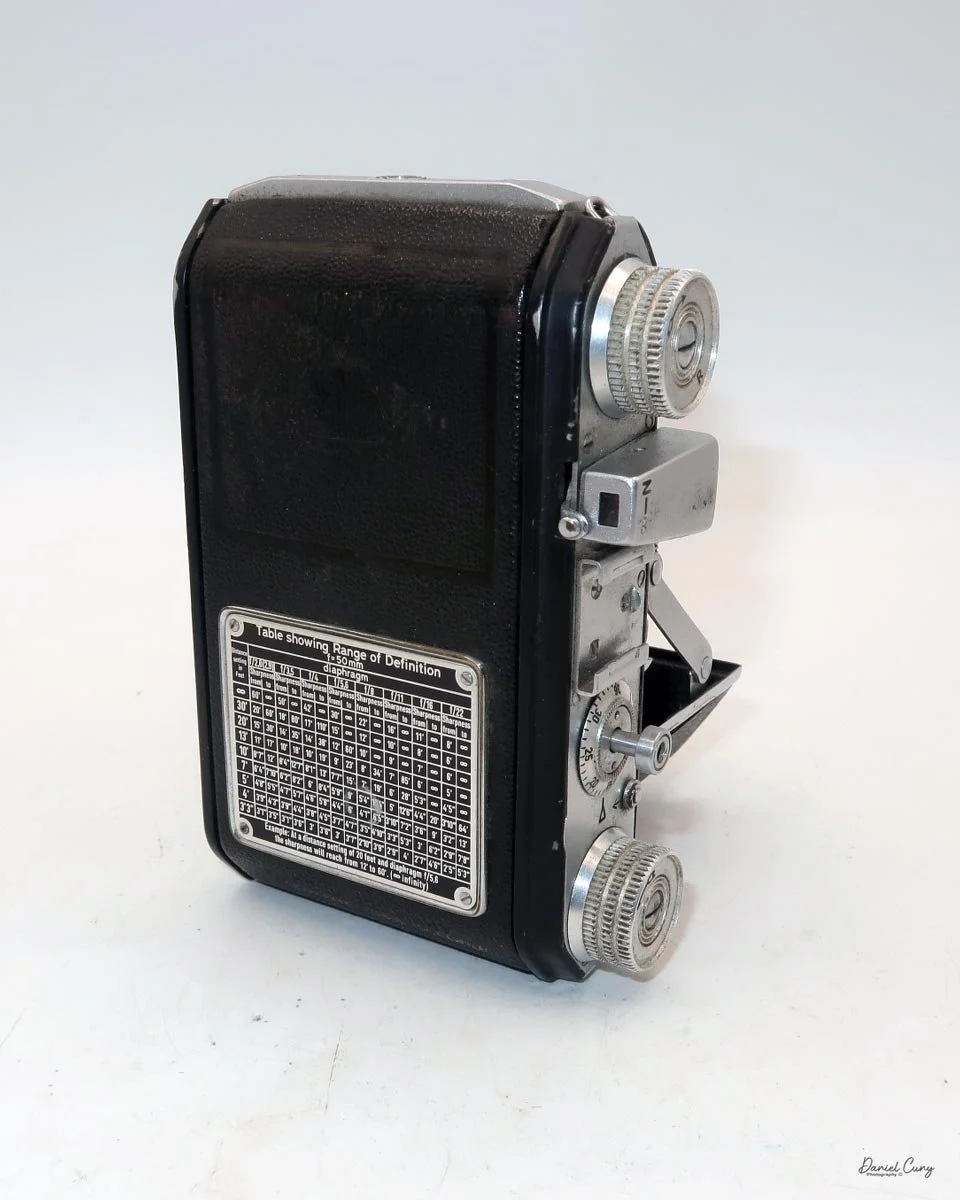
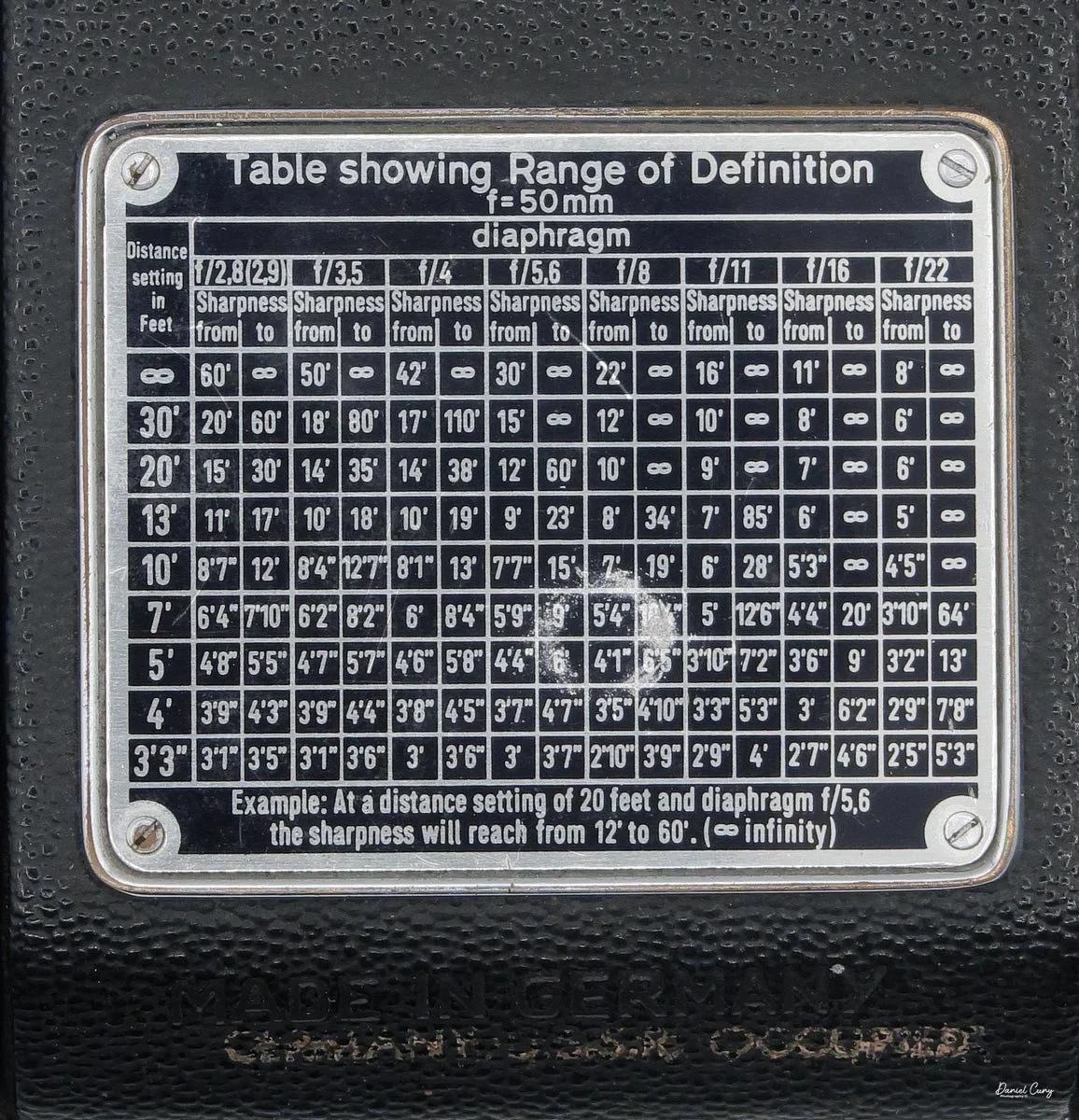
 On the back of the camera is a depth-of-field scale that shows the minimum and maximum distances that will be in focus, depending on the distance the camera is focused to and the aperture set on the camera. 

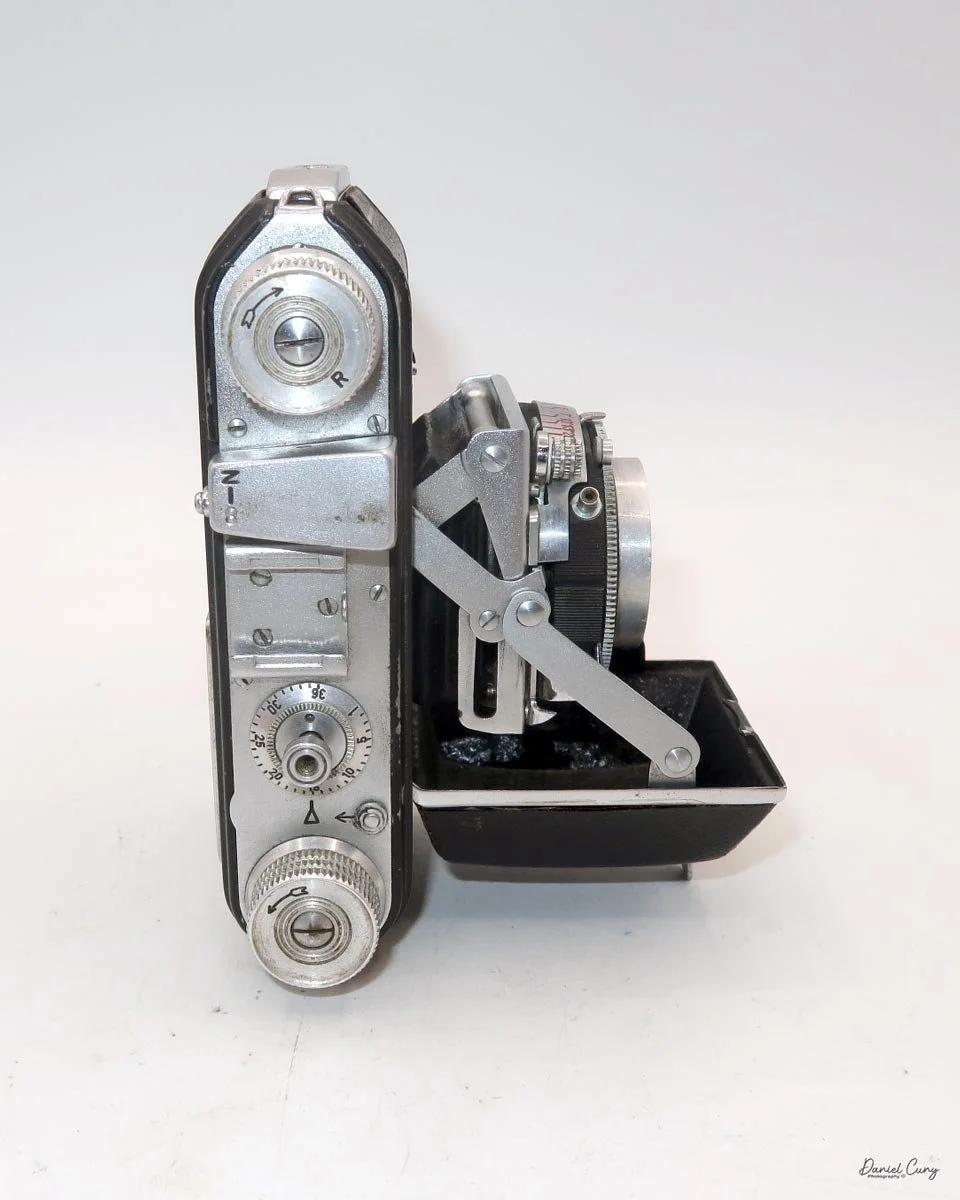
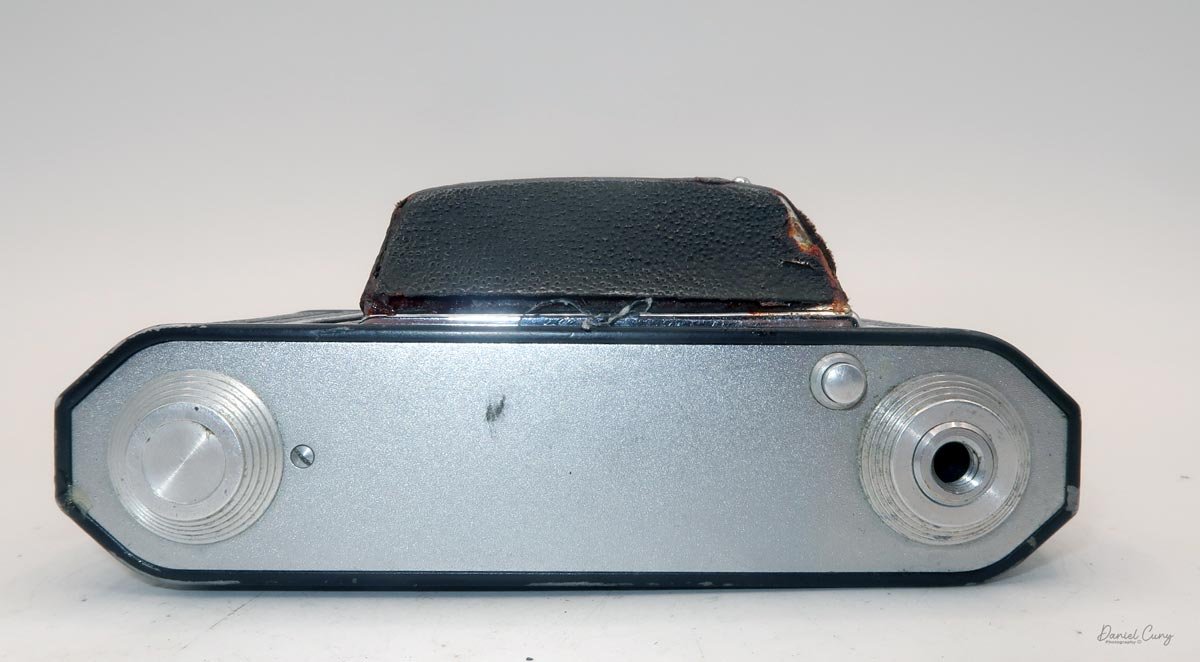
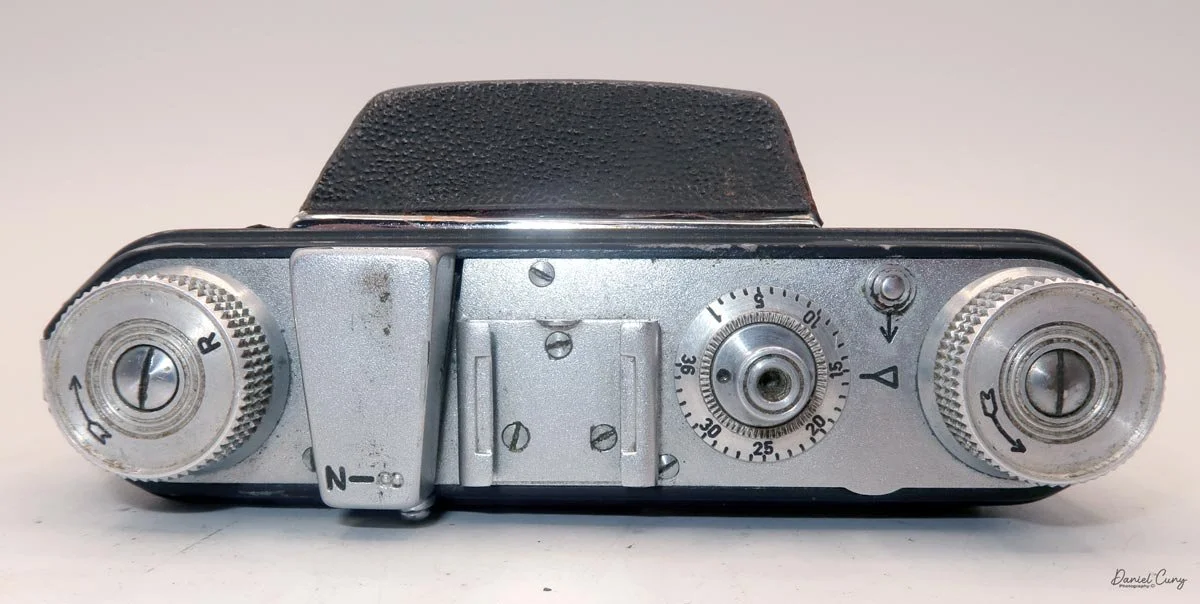
 Looking at the top of the camera, from left to right, is the rewind knob, the viewfinder used to view and frame your image. The viewfinder has a small lever under it that allows it to be pointed level for landscape images and to point down slightly for closer portrait images.

To the right of the viewfinder is a cold shoe that can be used for a separate rangefinder to aid in focus distance or a flash for indoor or night photographs. Moving on to the shutter release inside the frame counter, a small sliding button to unlock the film drive gear for film advance and rewind, and on the far right-hand side is the film winding knob with an arrow on the top showing the direction you turn it to advance the film to the next frame.

 On the left side of the Welta Welti camera is a lever that opens the film door for loading and unloading film. Opening the film door exposes the inside of the shutter. The camera has a standard film-loading area for a 35mm camera. The take-up spool is on the right side, and right next to it is the silver film drive gear. On the back of the camera door is the pressure plate. Once the film has been exposed, slide back the small lever between the film winding knob and the frame counter, which makes the film drive gear free-moving and allows you to rewind the film into the film cassette without tearing up the sprocket holes.

To close the lens door for transportation, press down on the two angled struts on the side of the lens; the lens and film door will begin to retract into the camera body. Just press it all the way back until you hear a clicking sound, which means the door is shut and won't pop back open by accident. 


My Results:

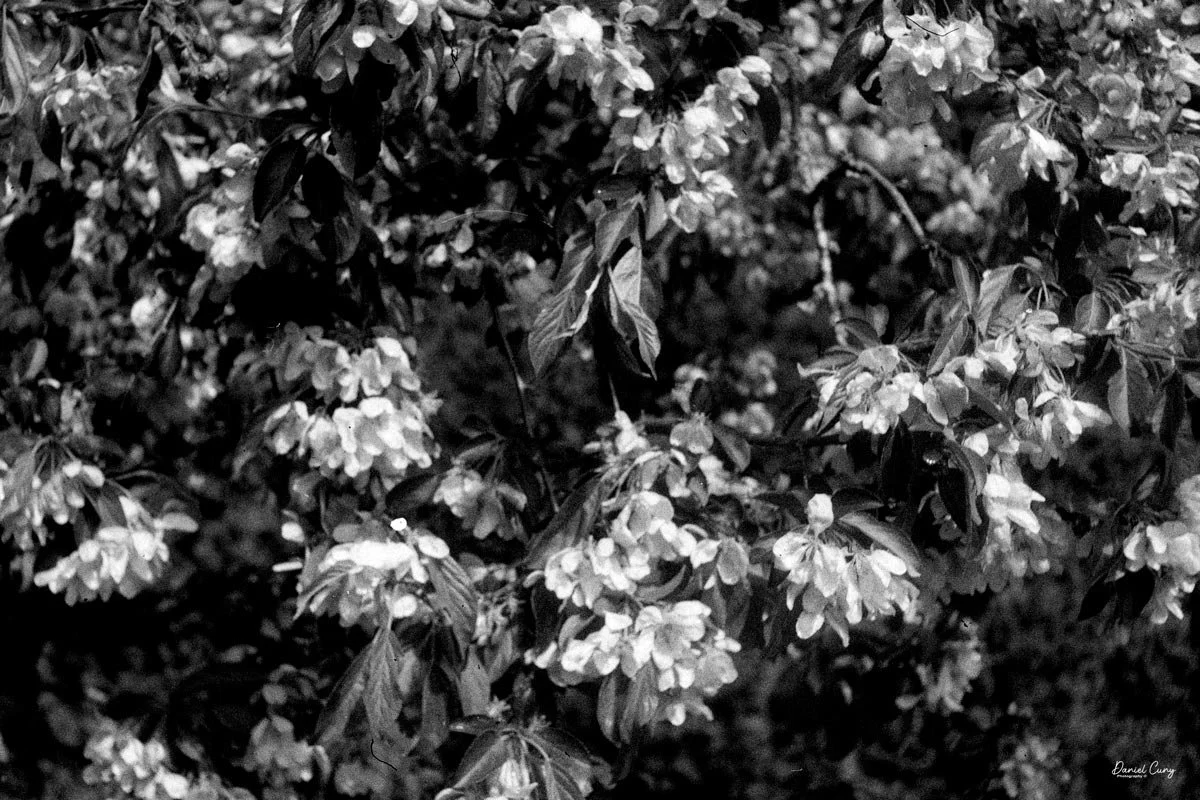
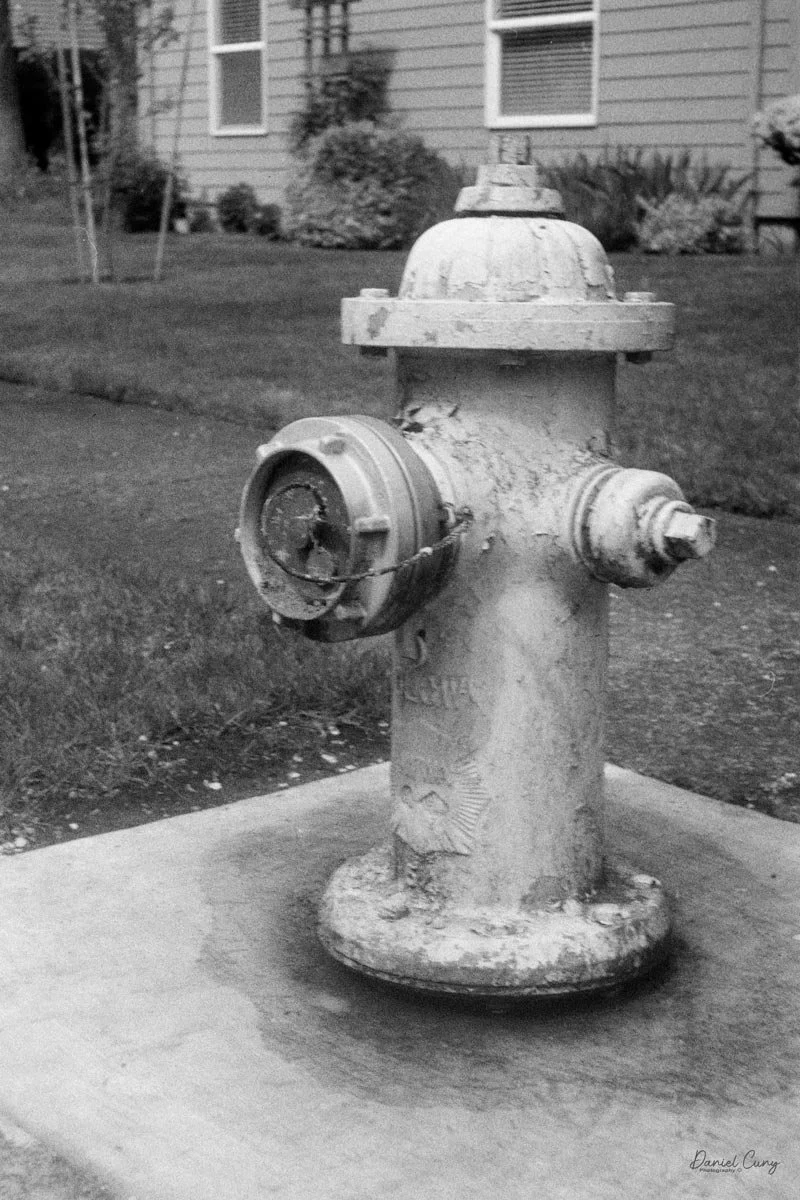
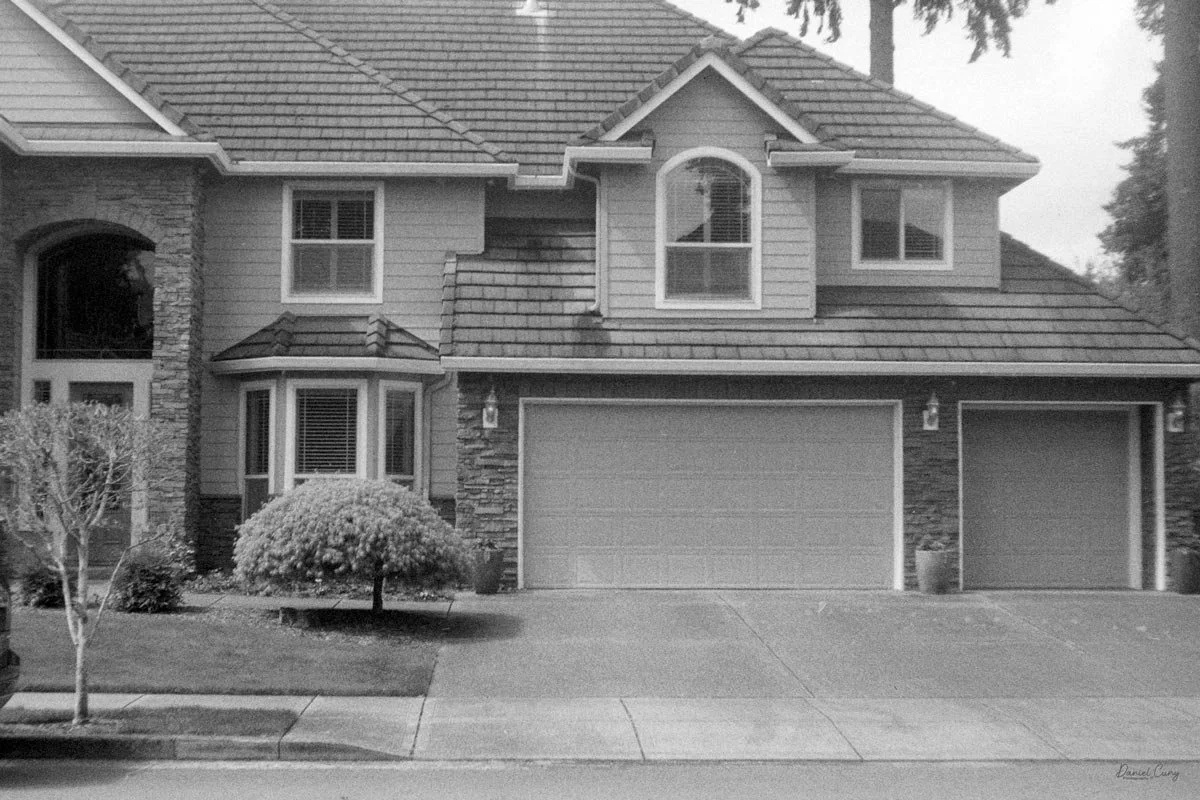
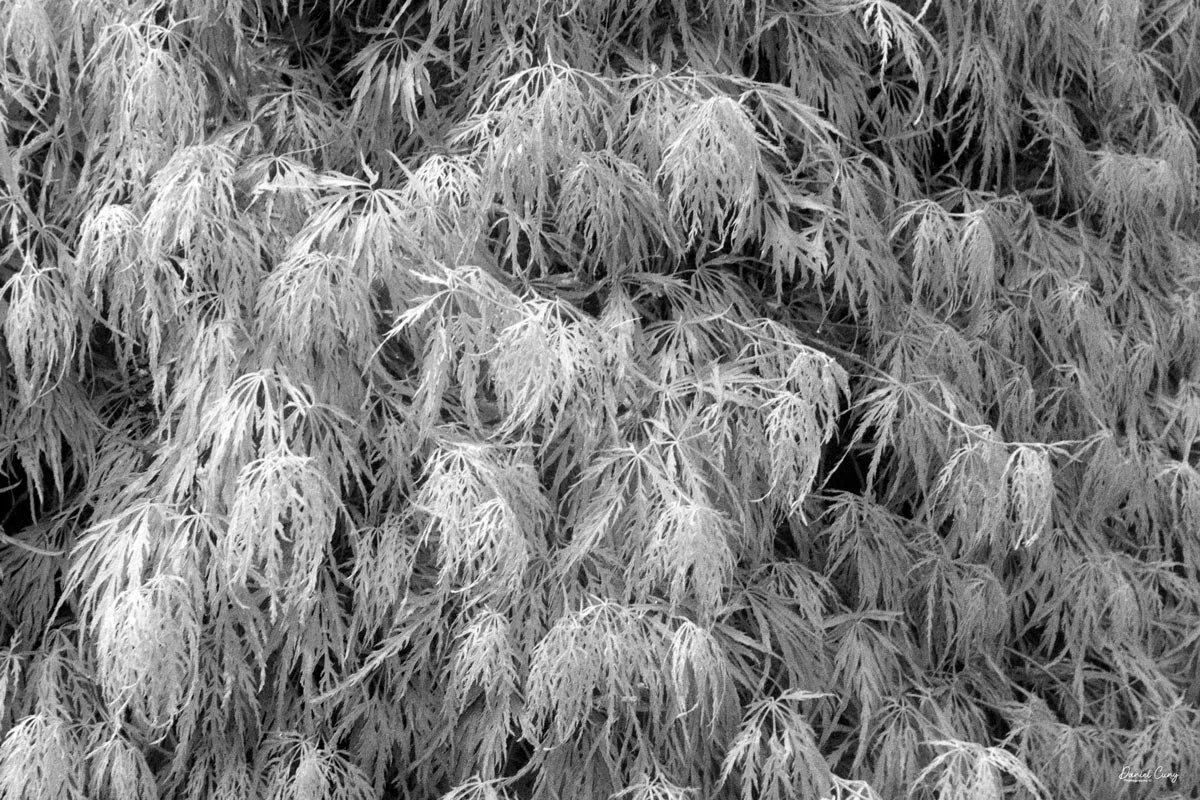
 I have some 200 ISO film in my bulk loader, which I enjoy using, especially for testing 35mm cameras, as I can roll a shorter roll of film into the film cassette and not use up a full roll of 36 exposures for my blog. Rolling about 20 frames into the film cassette, I took the camera for a nice spring day walk through the neighborhood.

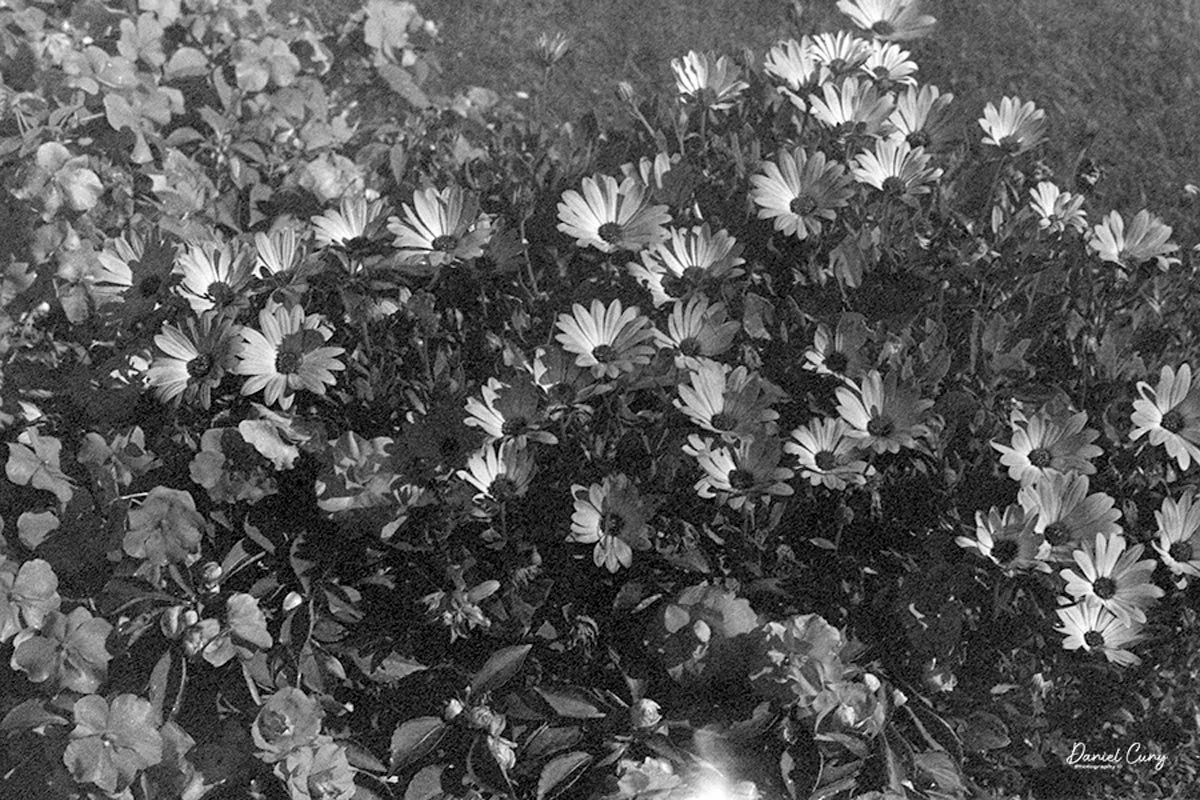
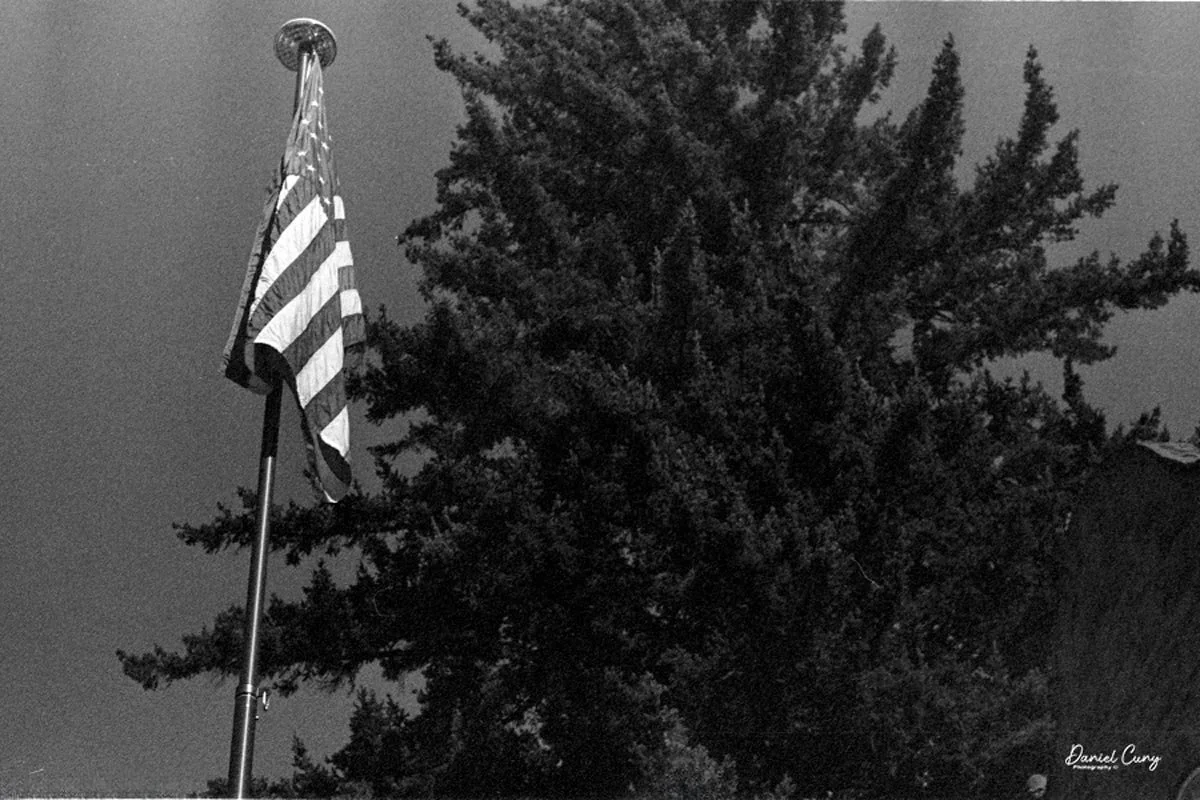
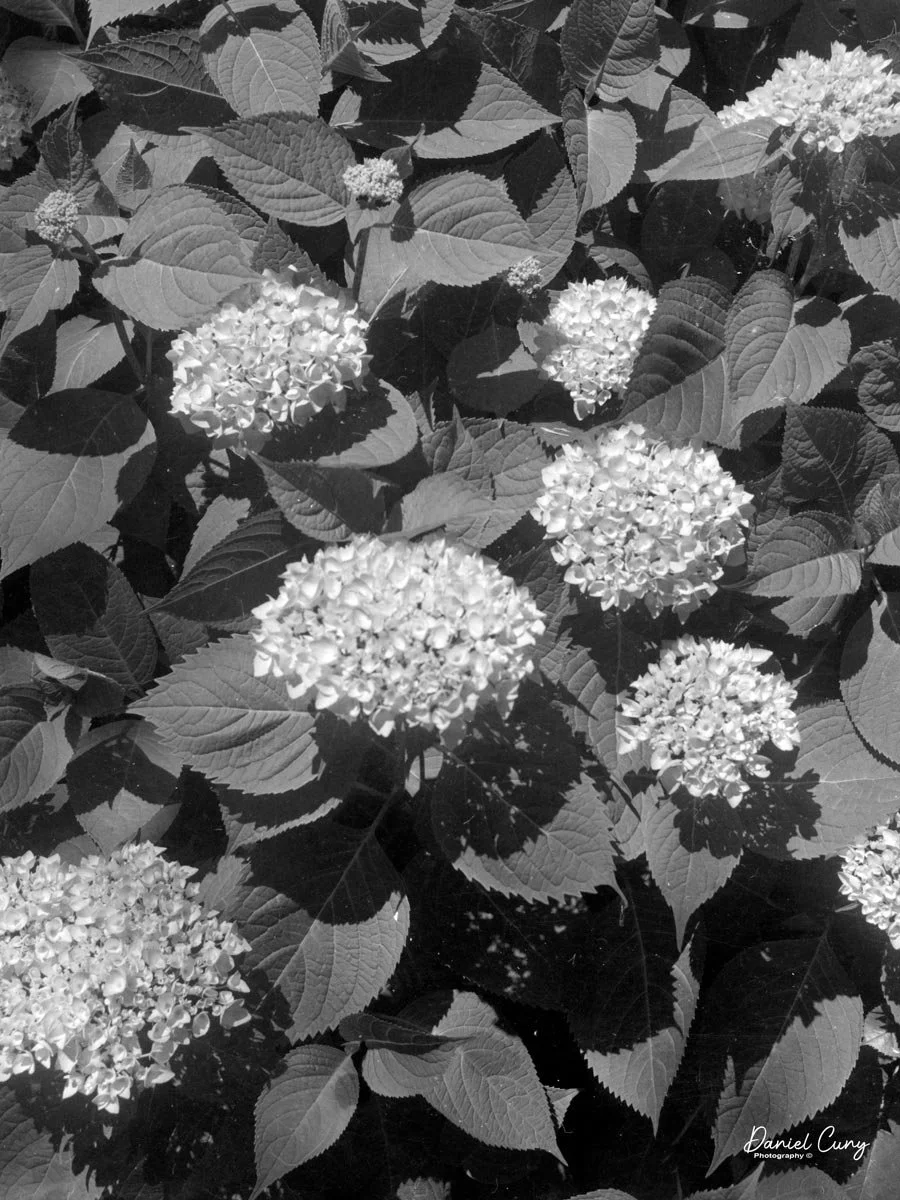
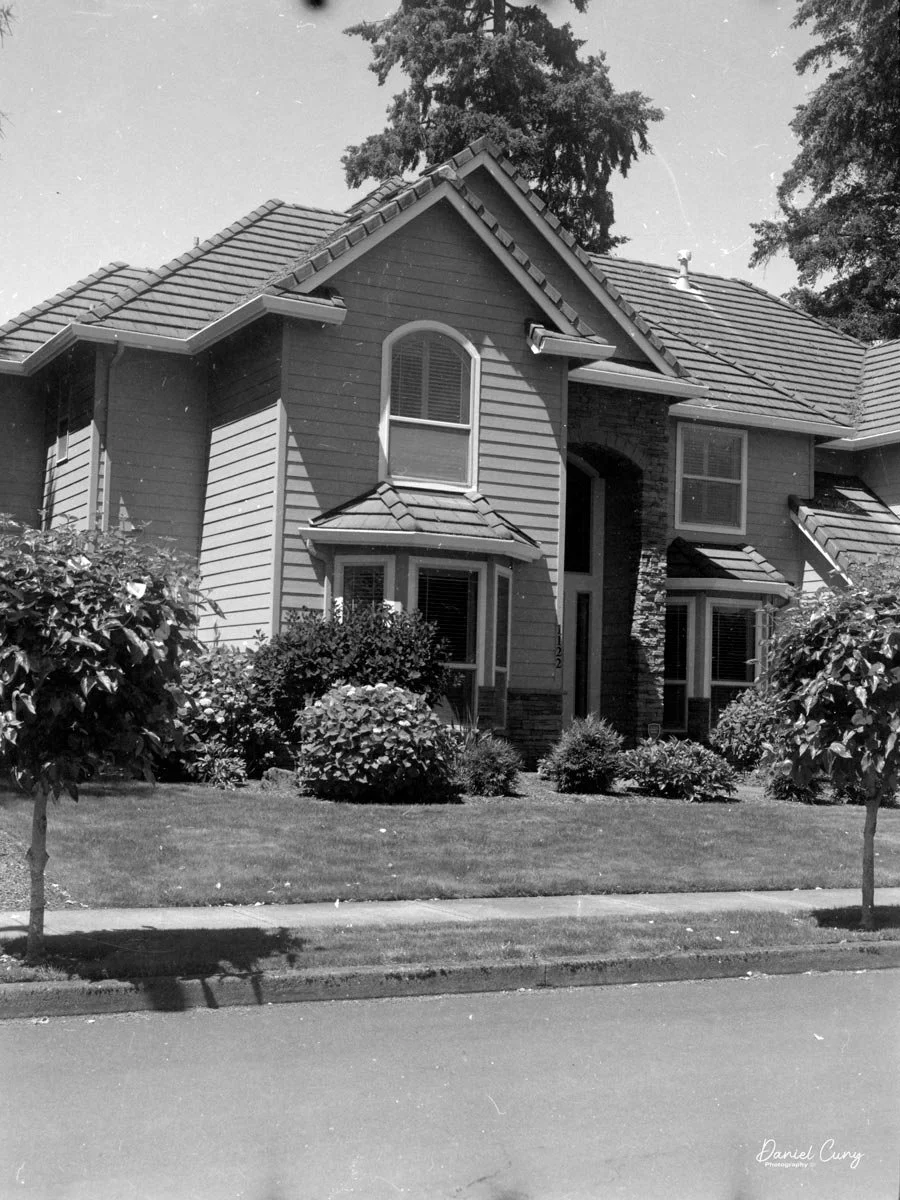
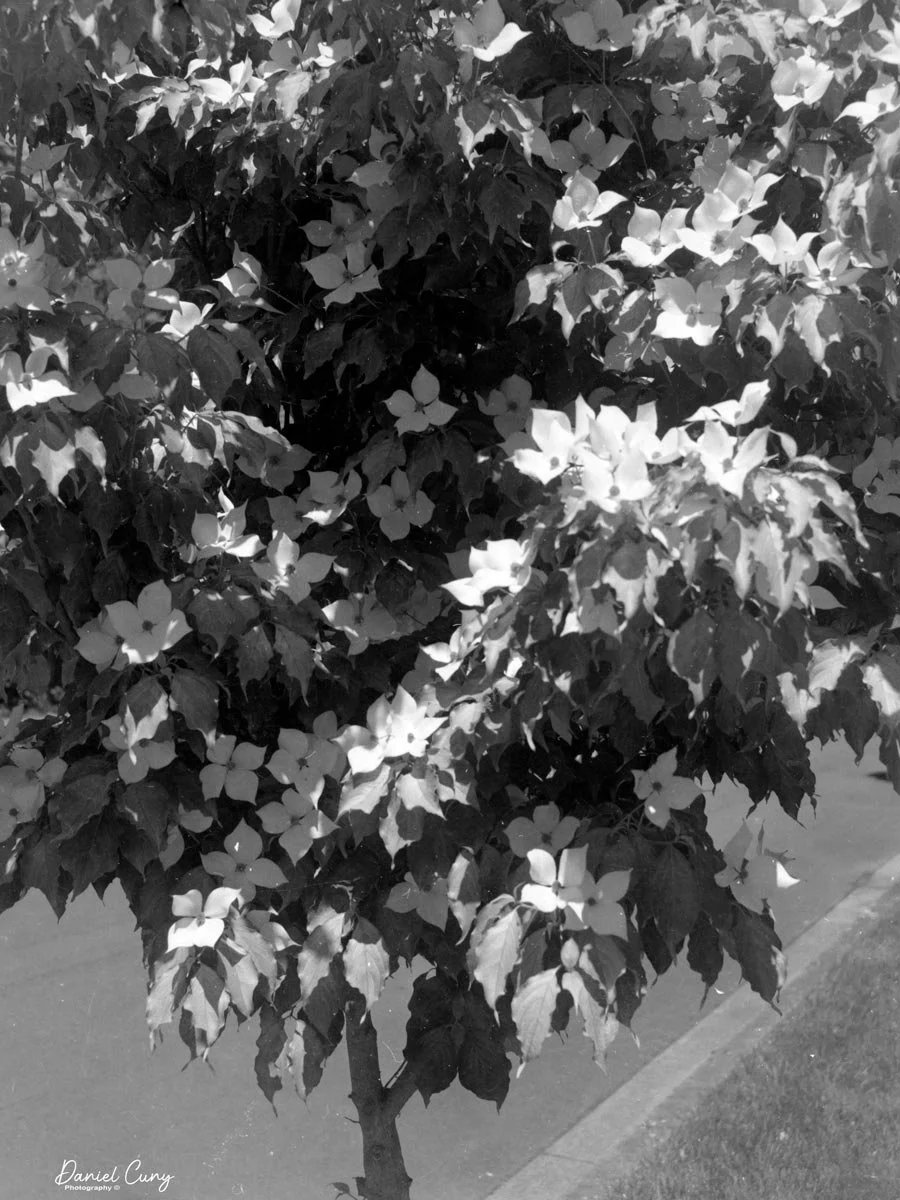
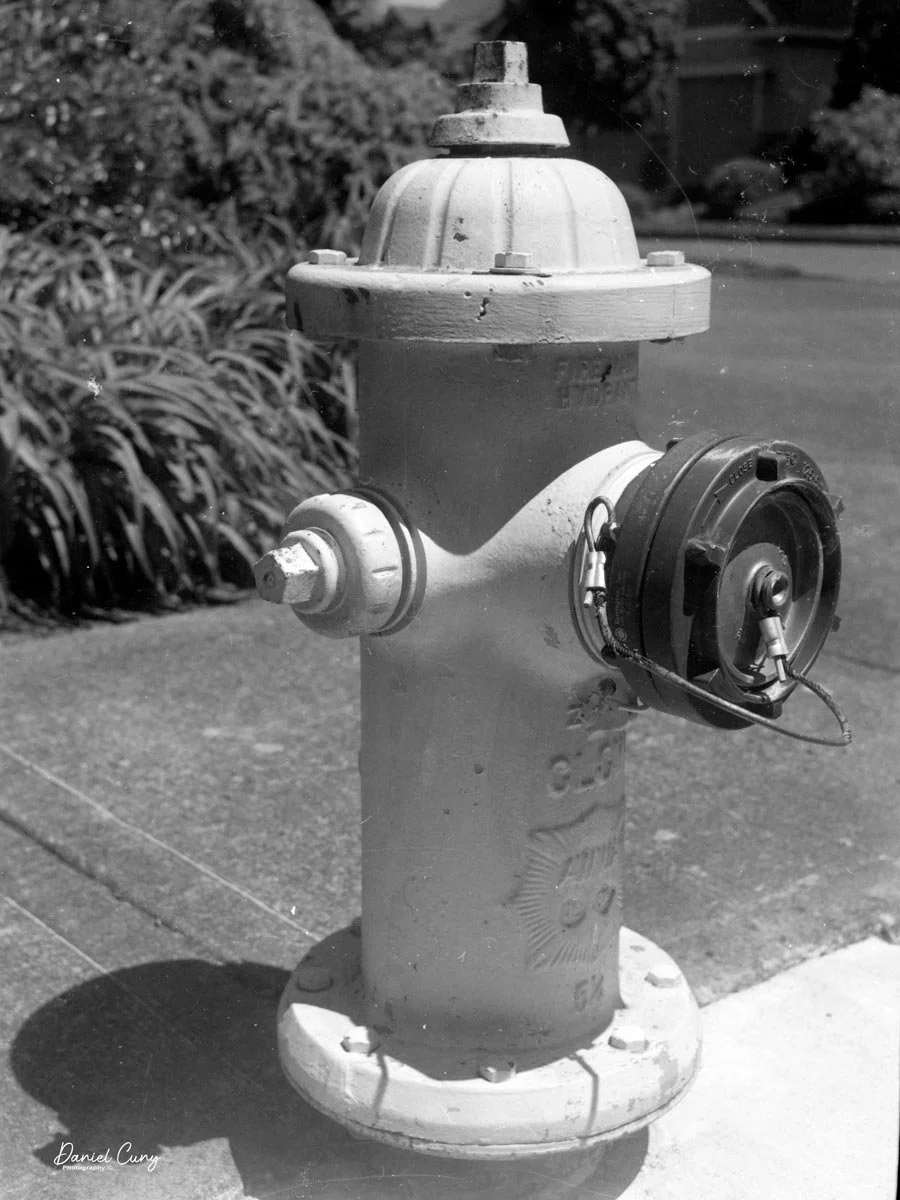
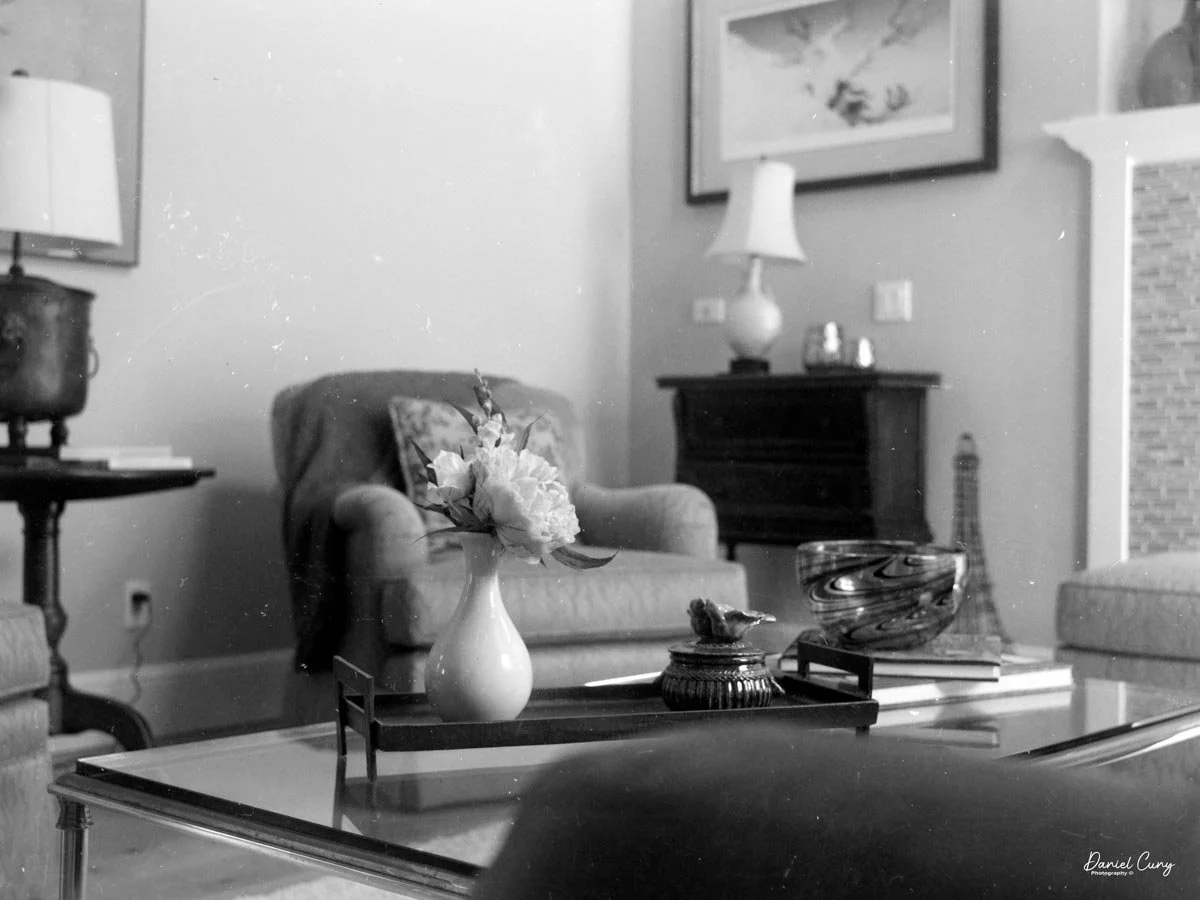
 The flowers and trees are blooming, and the sun is shining. Here are a few of the images I got with the Welta Welti camera.

 Conclusion:

 Looking at the images, they turned out better than I anticipated. The exposures were good, and the focus was enough to produce sharp images, so I'm fairly good at judging distance to the subjects and setting the proper focus distance. I understand that having an external rangefinder for the camera would be helpful, but it would also slow down the process.

 The transport was smooth along with the film rewind. The viewfinder is pretty small, and with glasses, it made it a bit more difficult. That, along with having to remember to cock the shutter each time, was the only real drawback to the camera.

 The Welta Welti is similar to other 35mm cameras from this era, like the Kodak Retina. They are small, pocketable 35mm cameras with a nice range of shutter speeds and good optics. I now understand why I brought the camera to the camera show. It's a nice camera, but I'll probably put it up on my online store for someone else to enjoy.

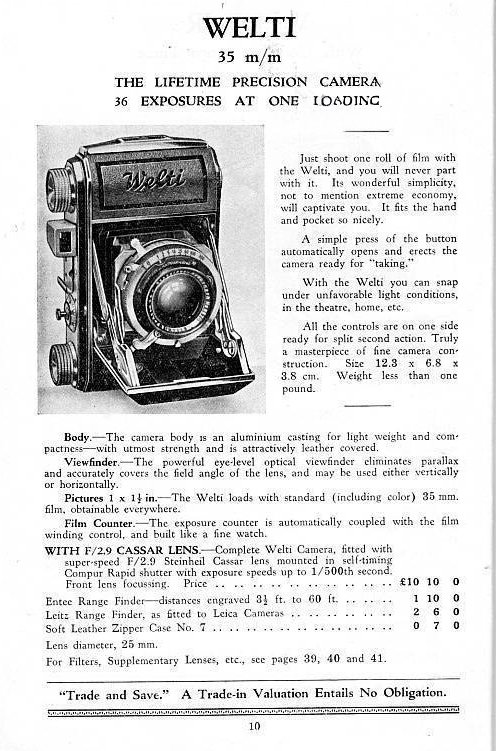
 Thank you for taking some time from your day to read about this compact 35mm camera made in the late 1940s to early 1950s. Here's a link to the Welta Welti manual. Thanks to Butkus.org.

 I'd love to hear from you about this or any of the other Camera Reviews I've done.

 Cuny's Cameras and Photos is my online eBay store where I sell cameras I've written about, along with other camera oddities I've accumulated over my 50-plus years collecting photo items. 

 I'm taking next week off for my trip to Japan, so I'll see you in a couple of weeks. Please be safe.