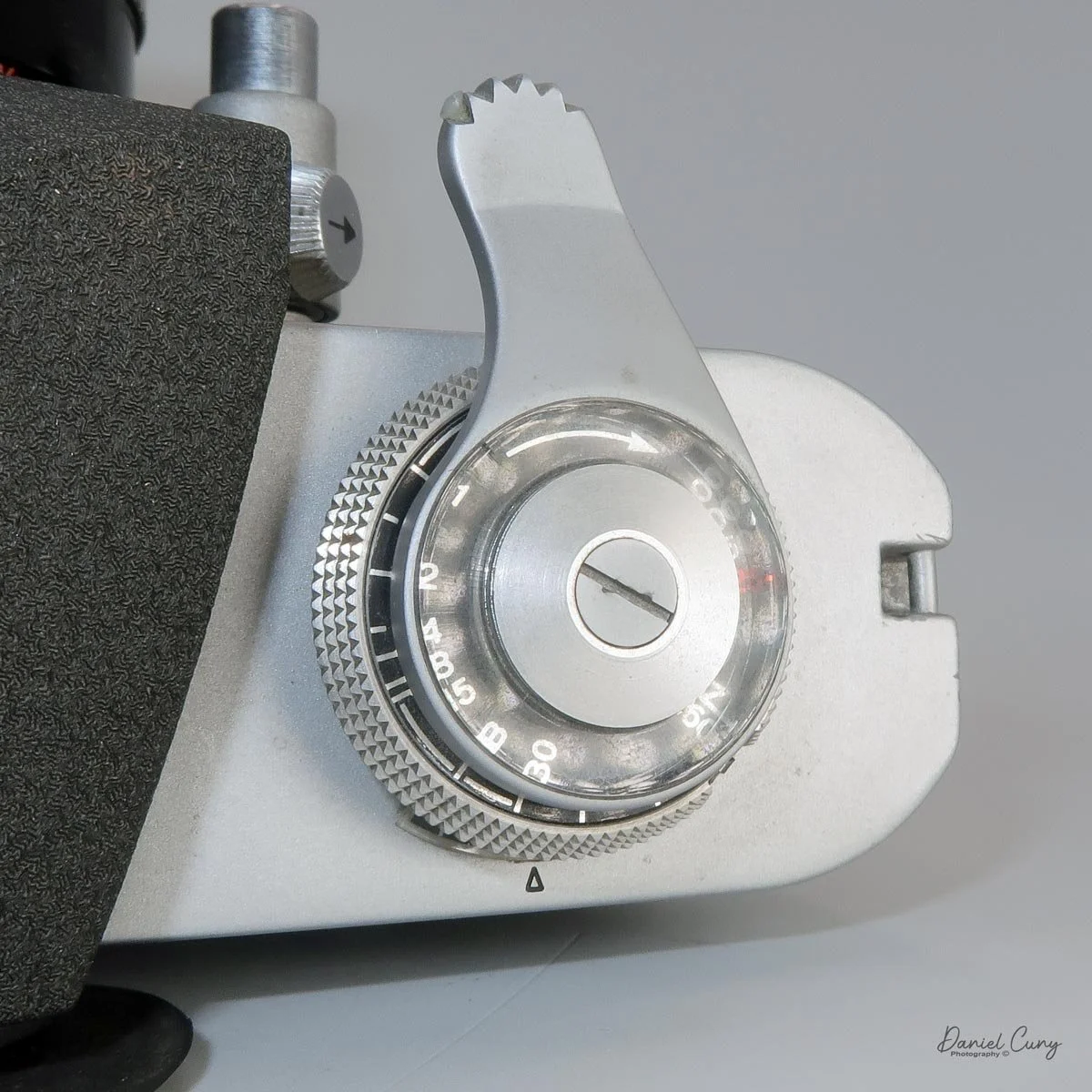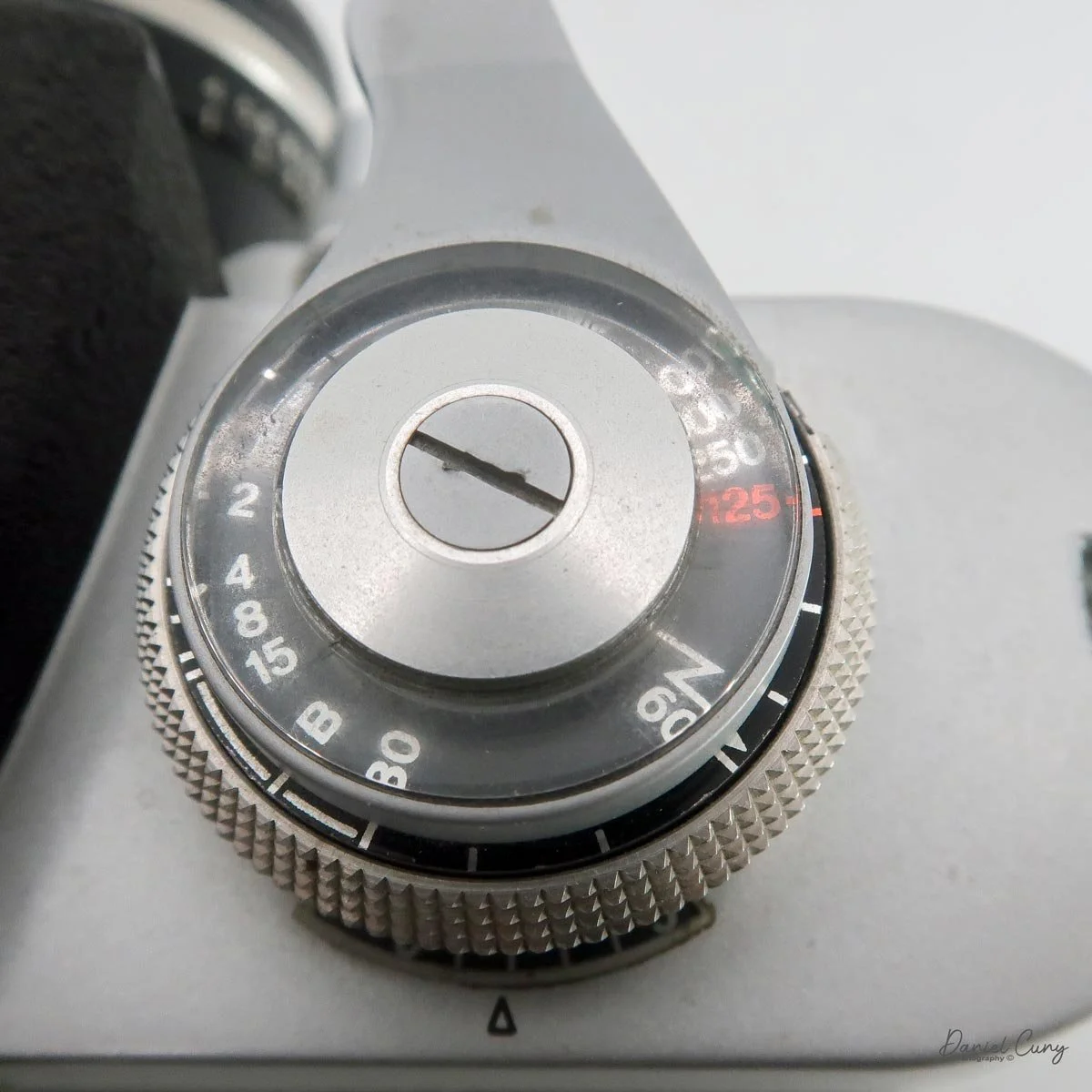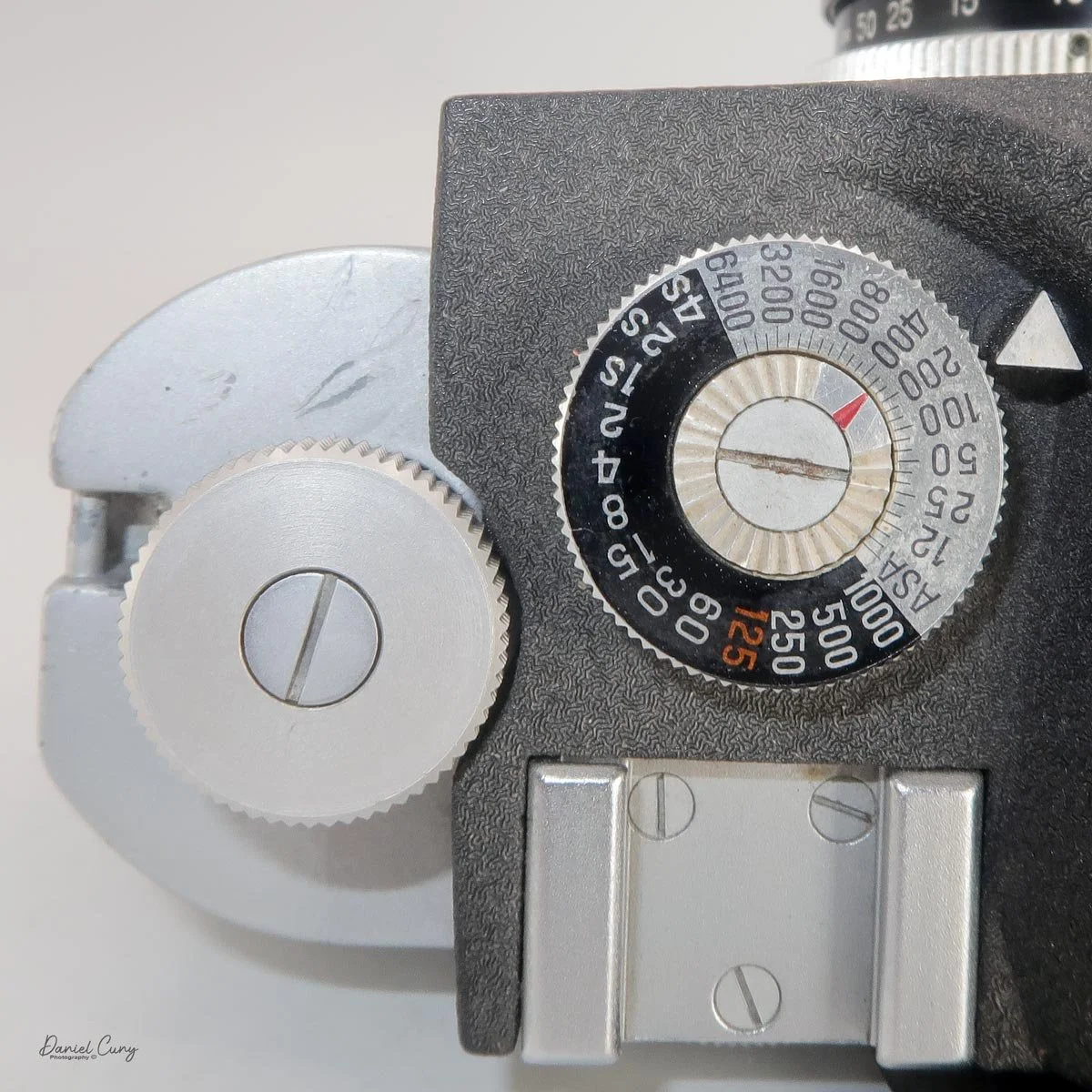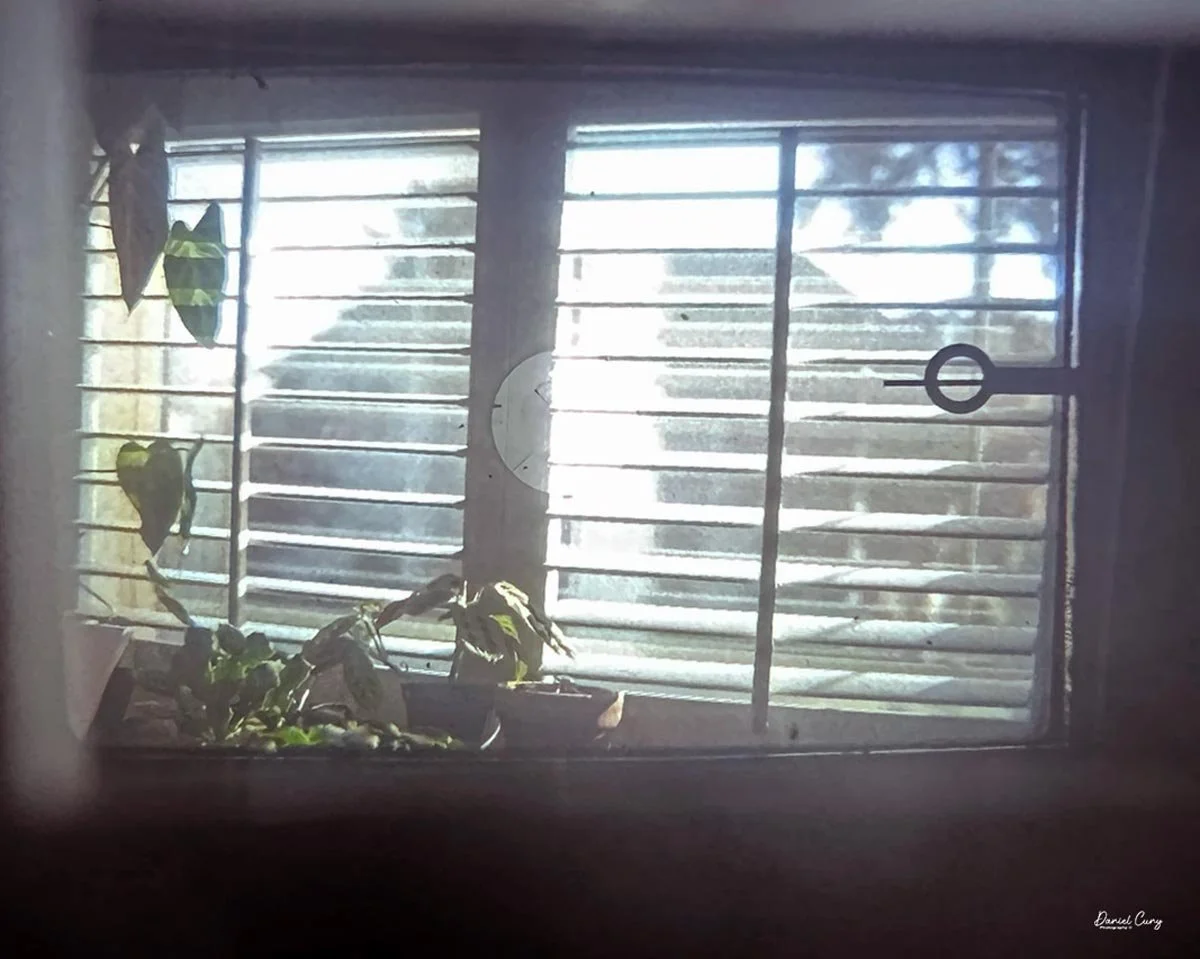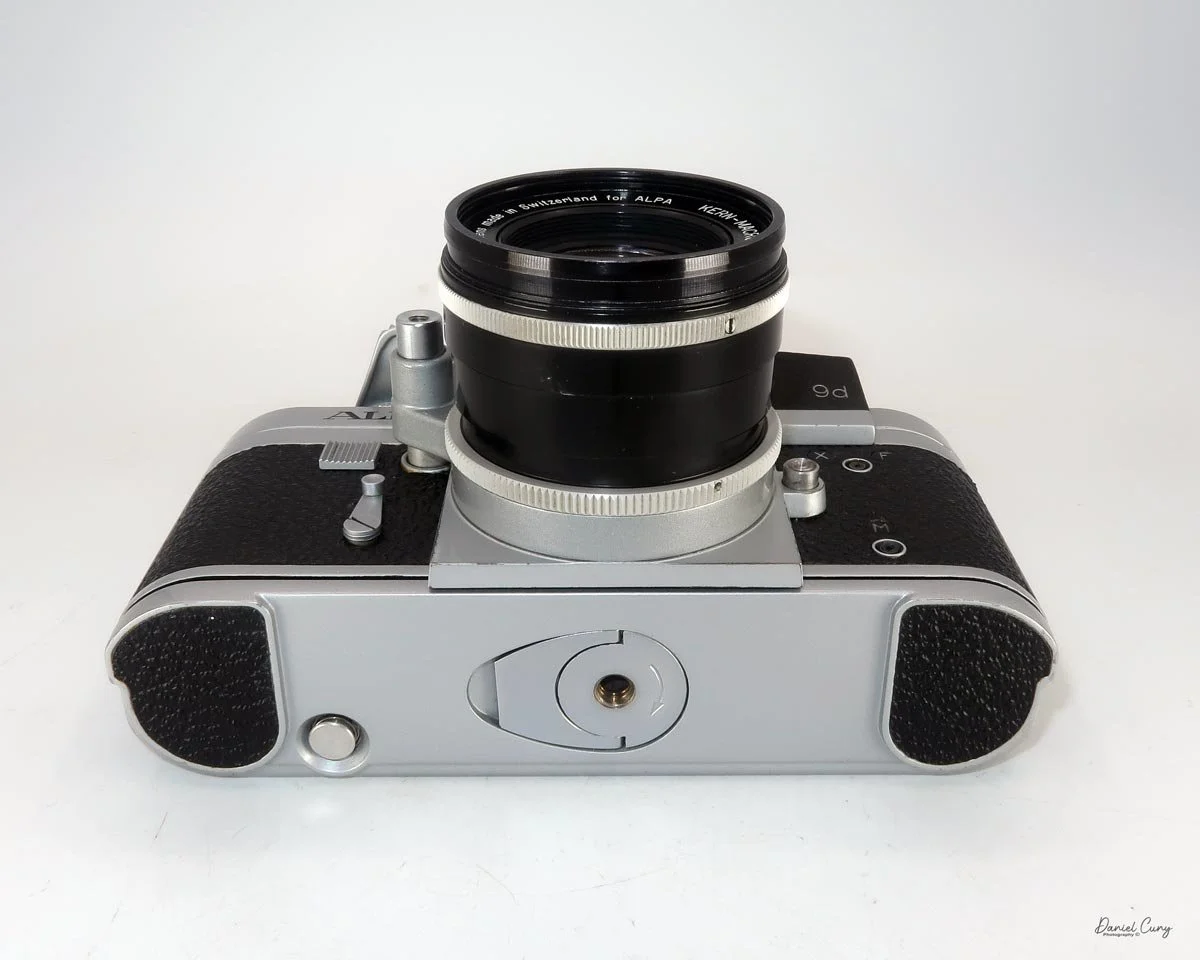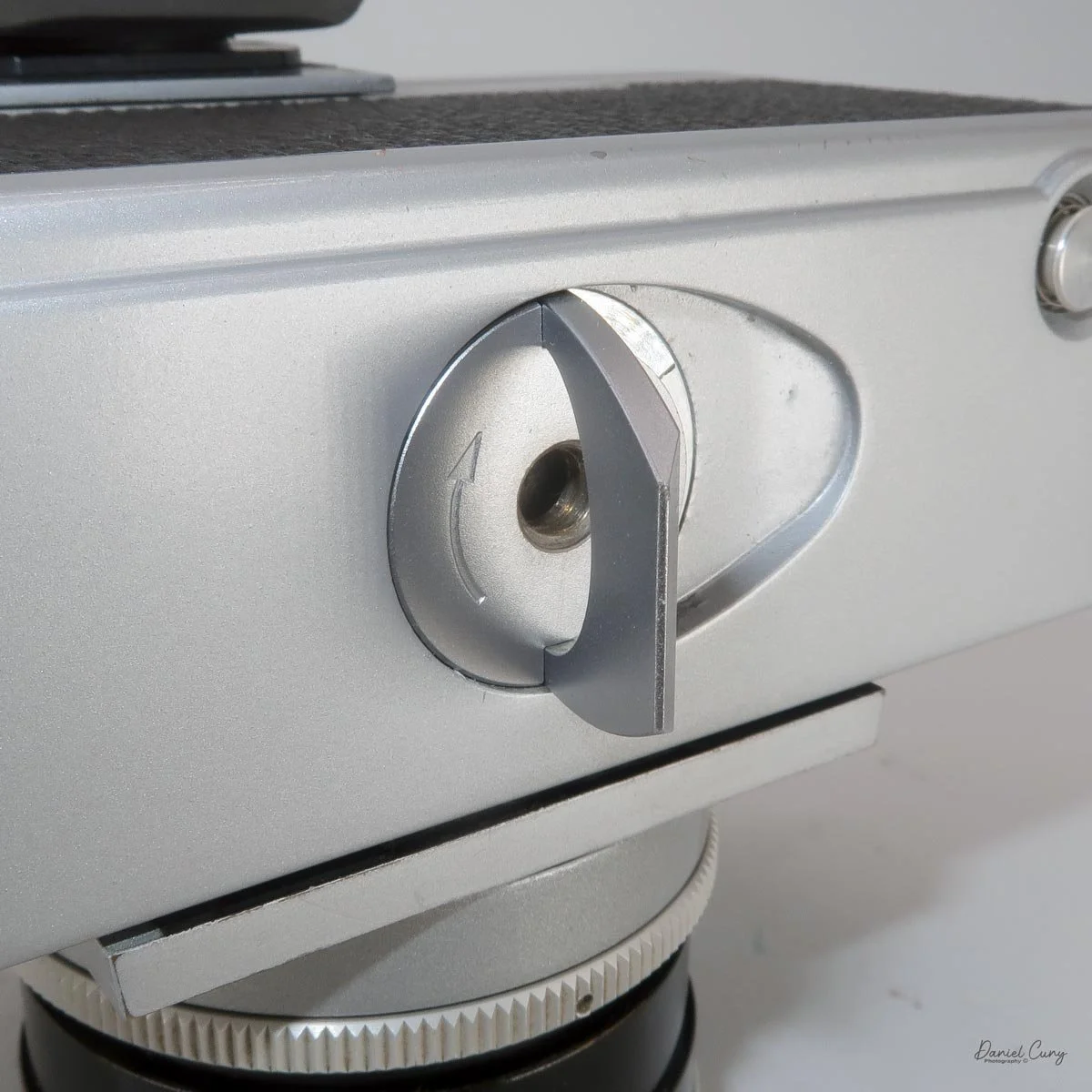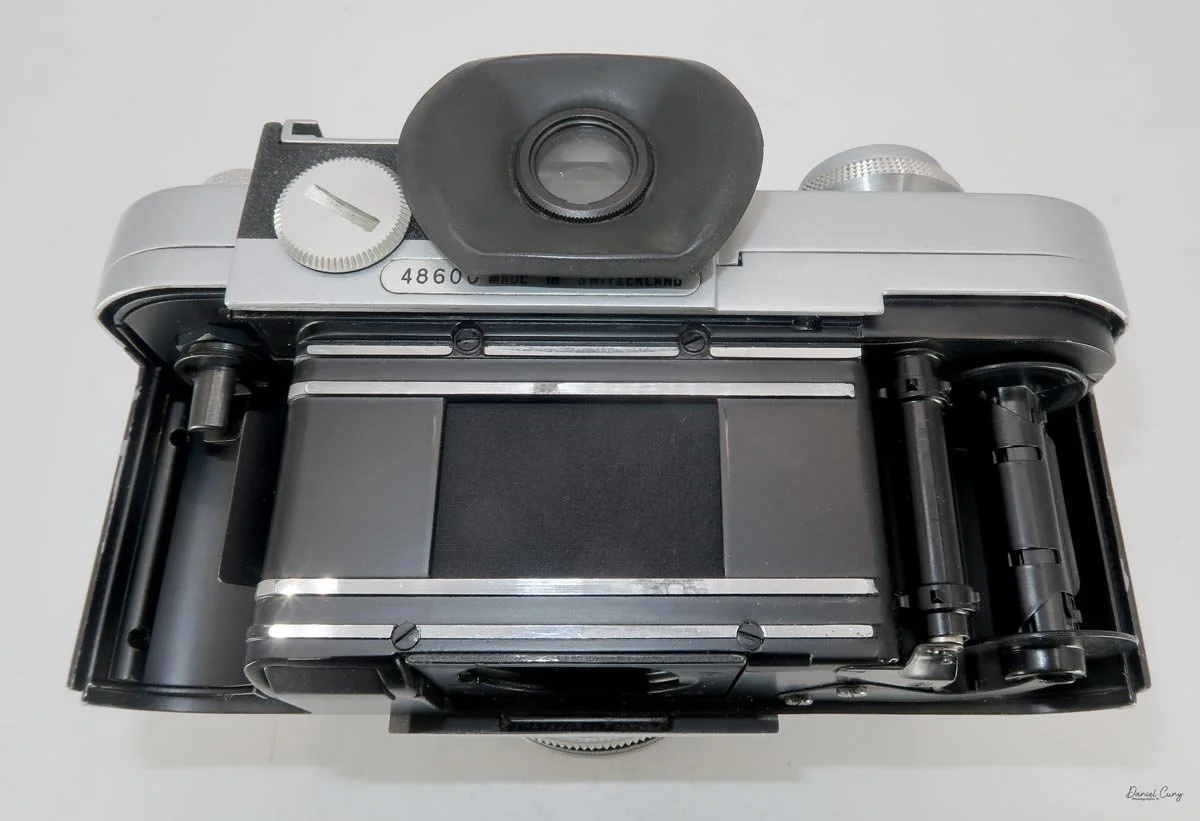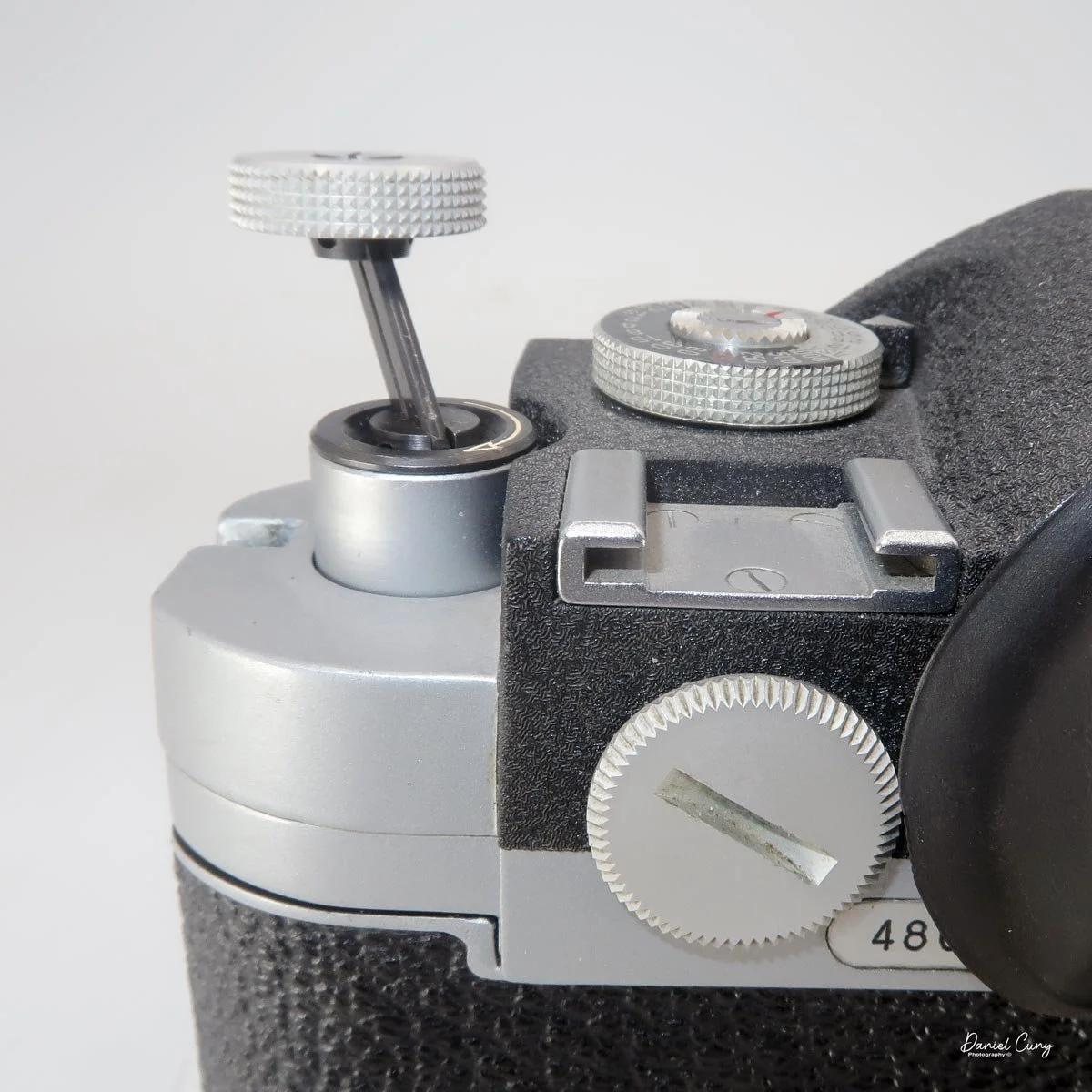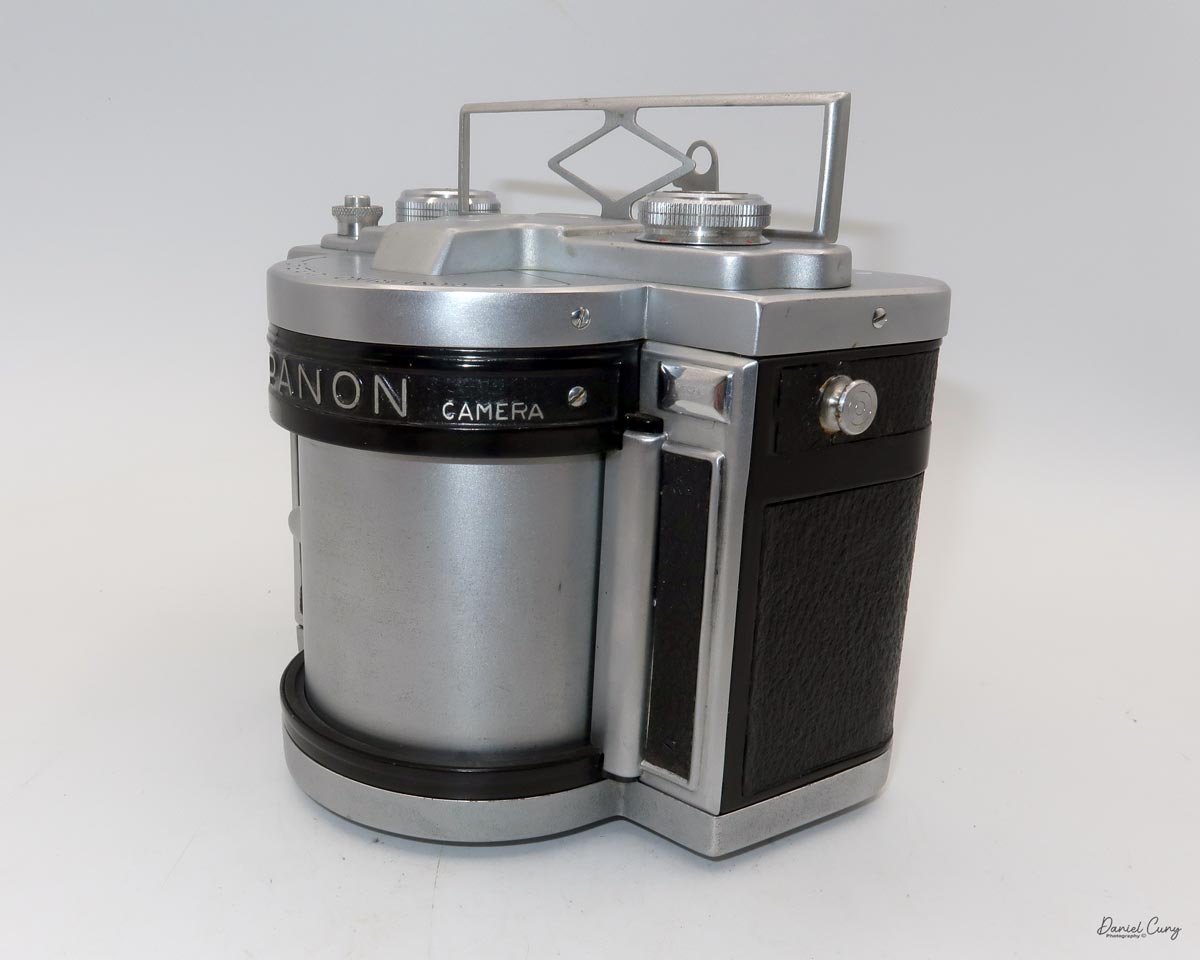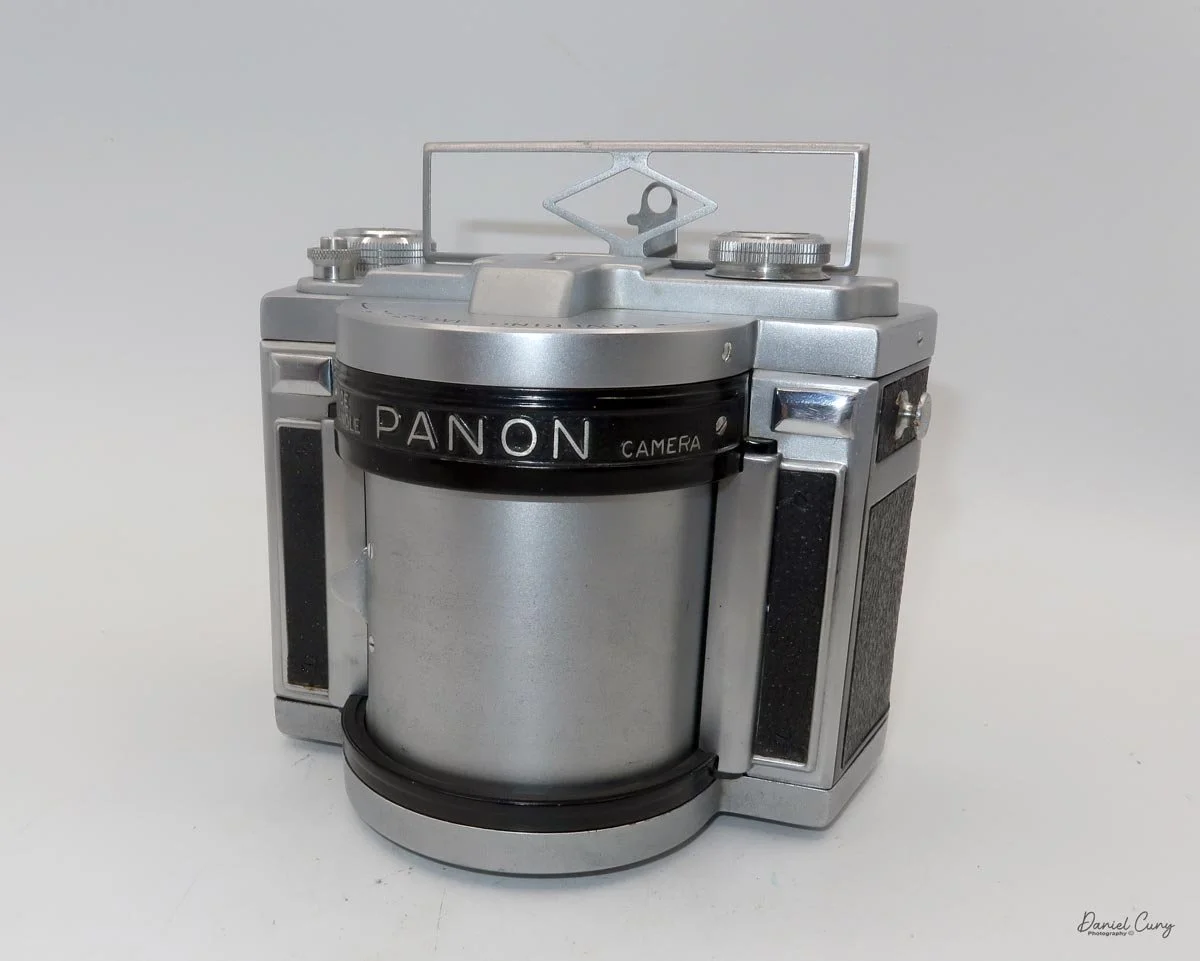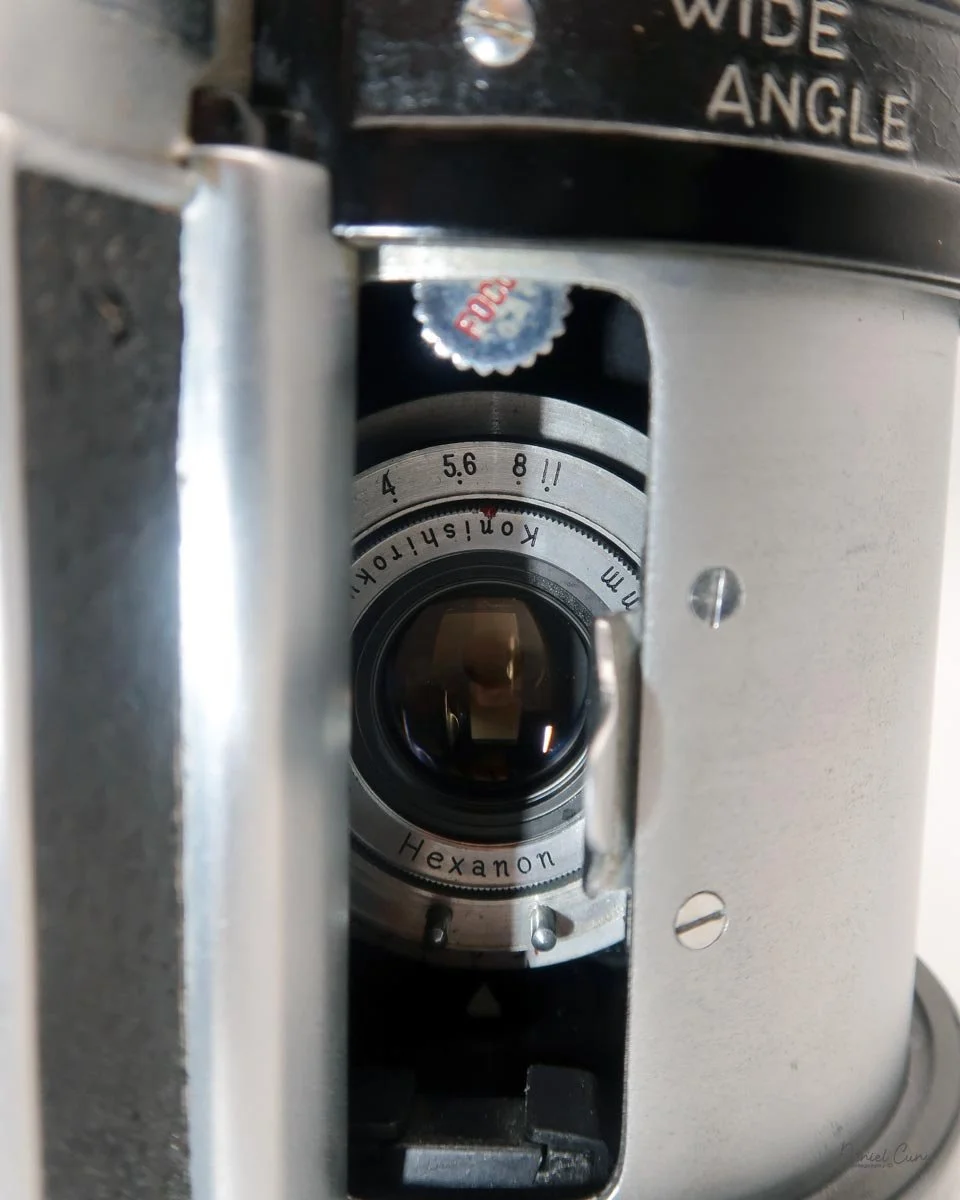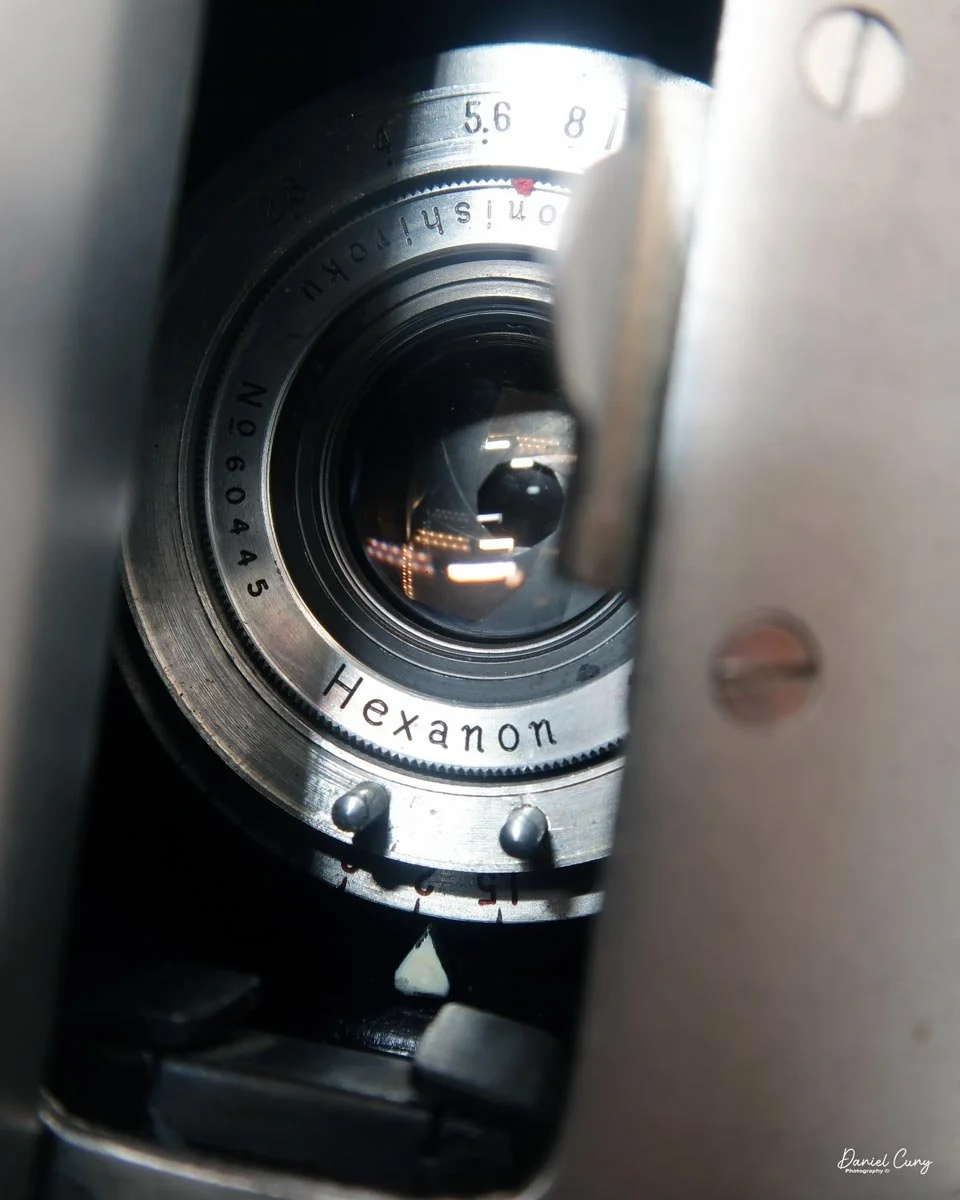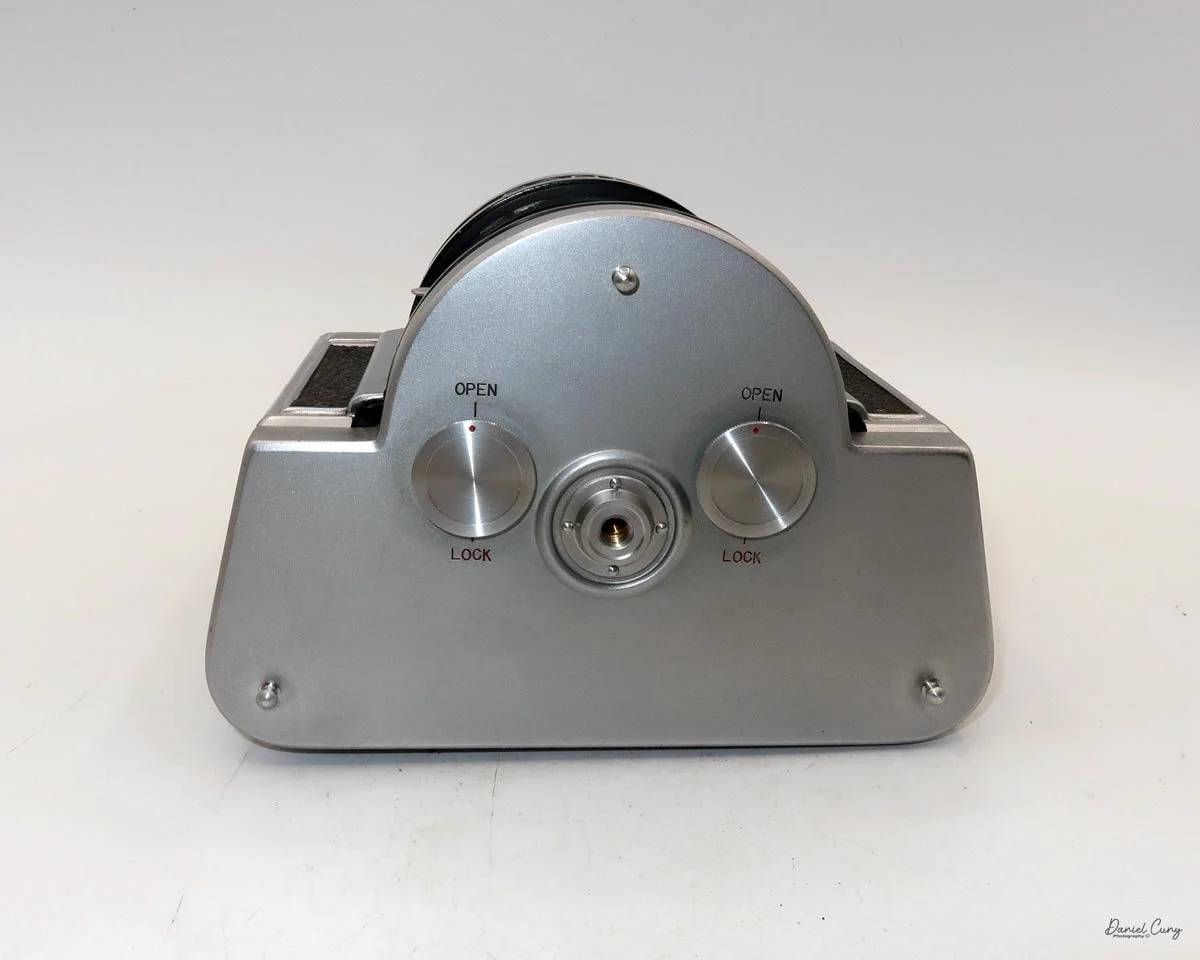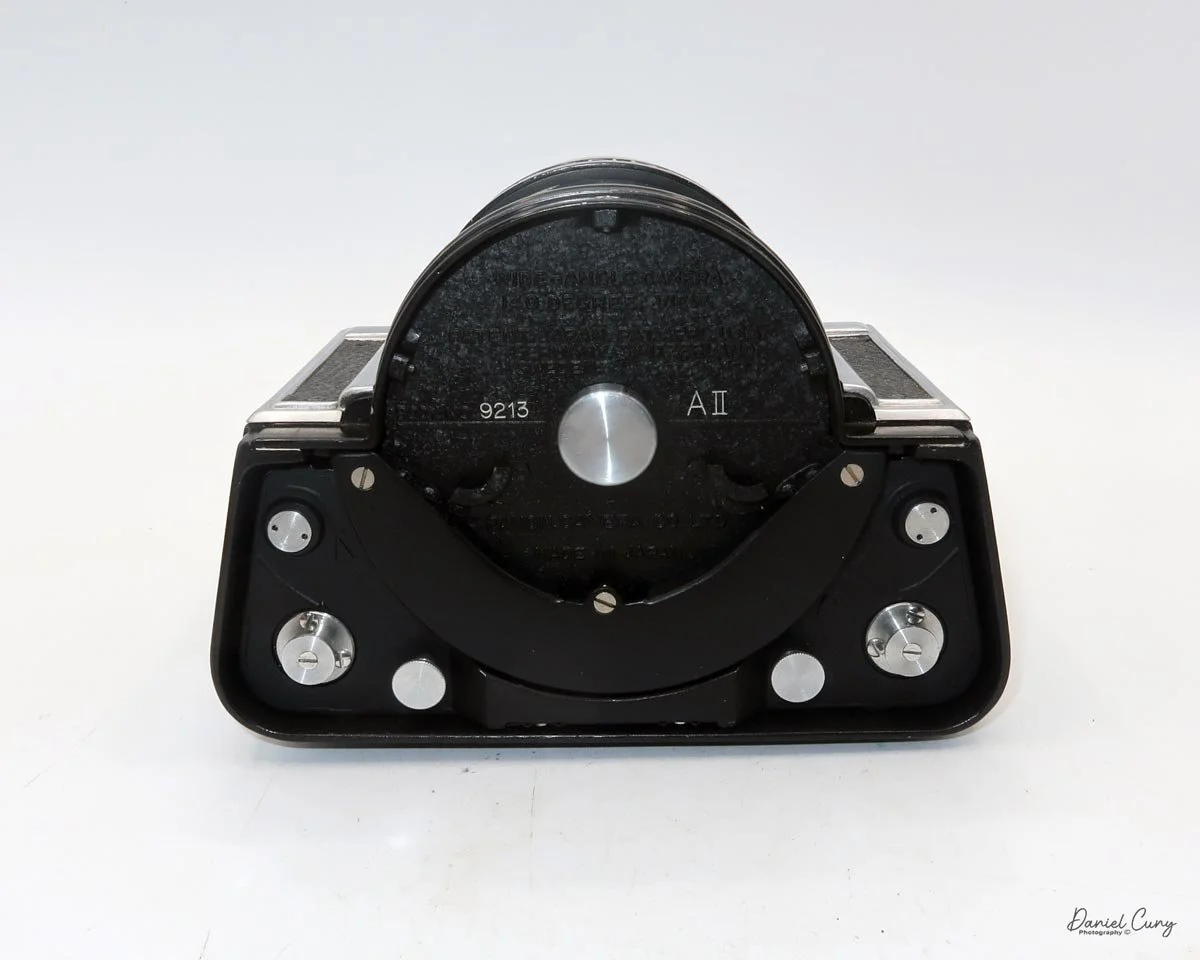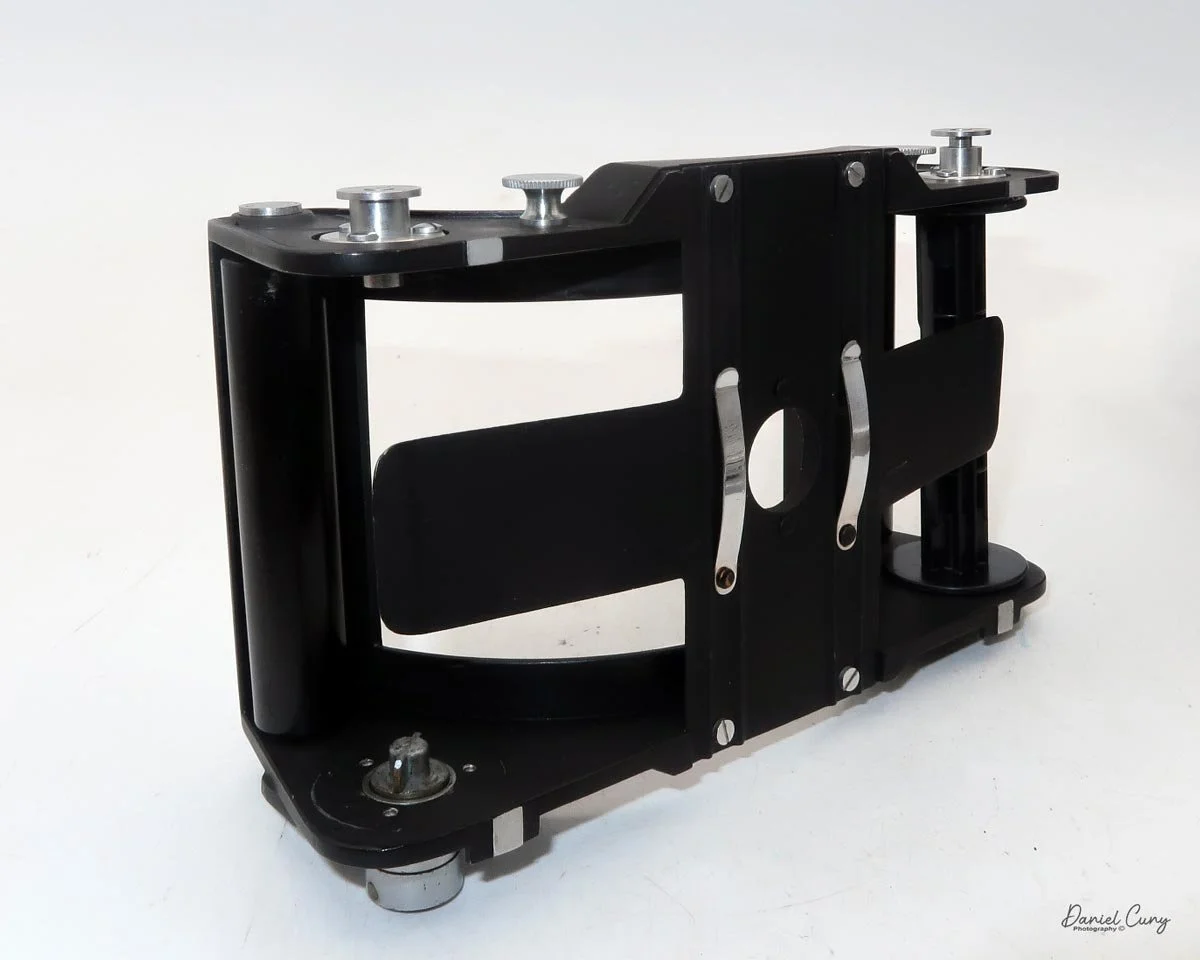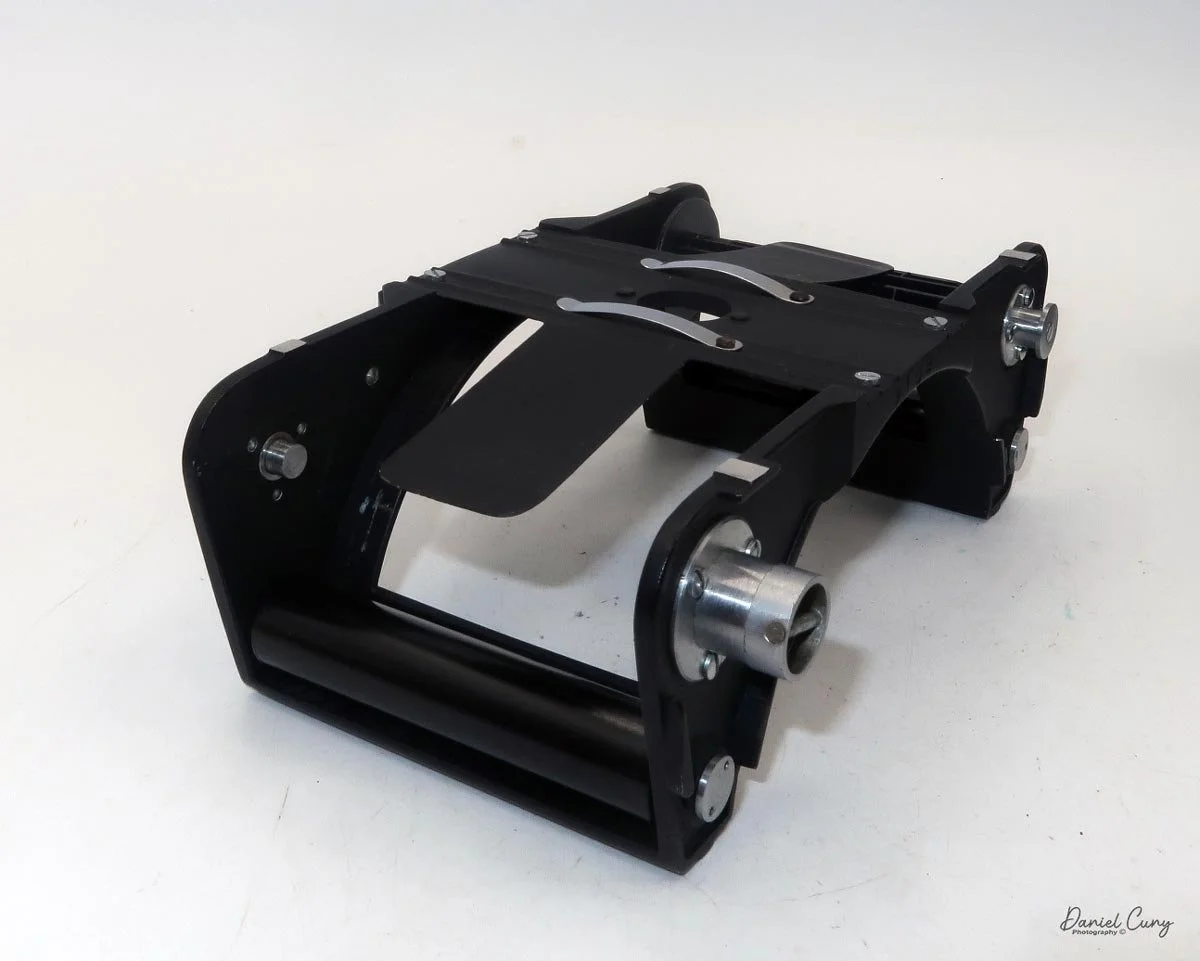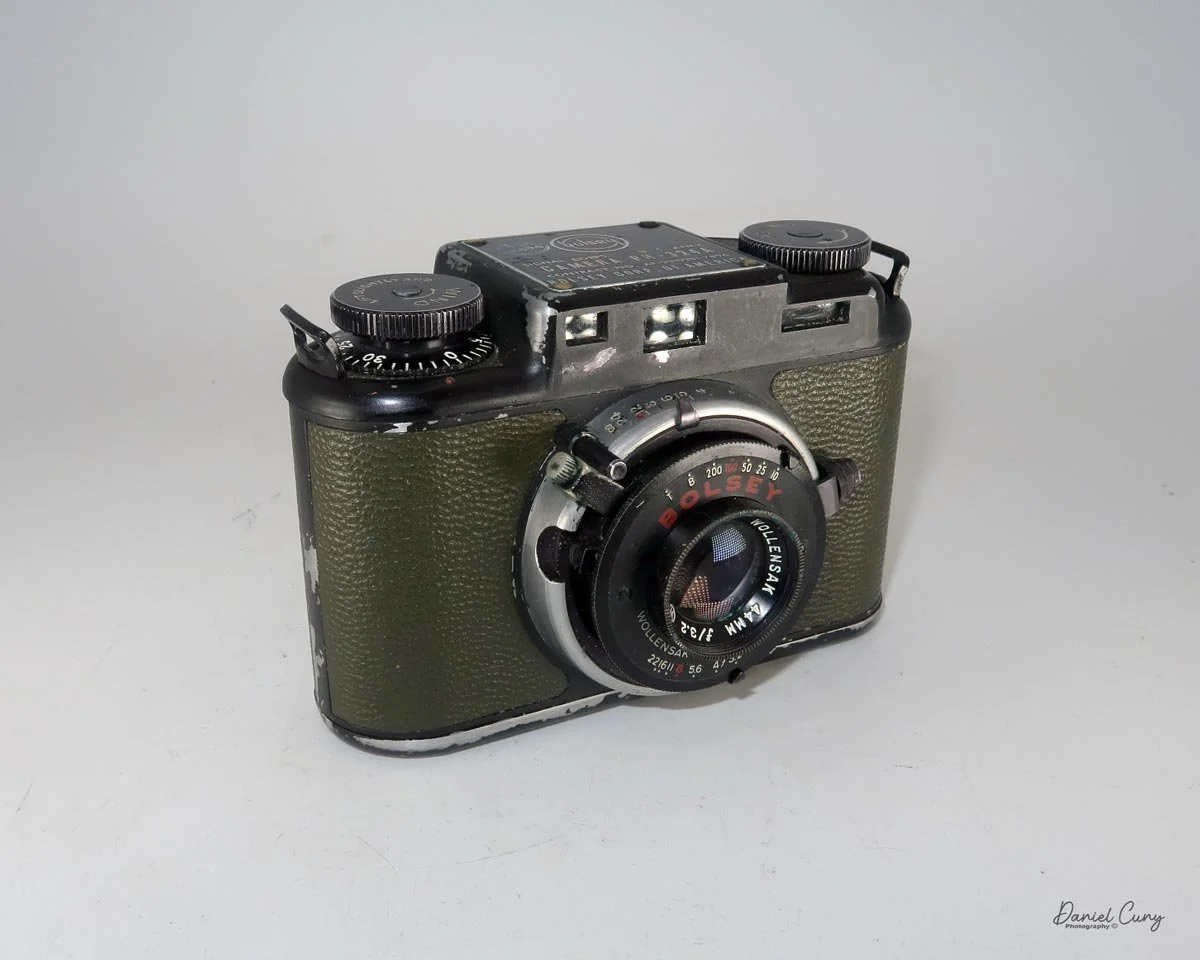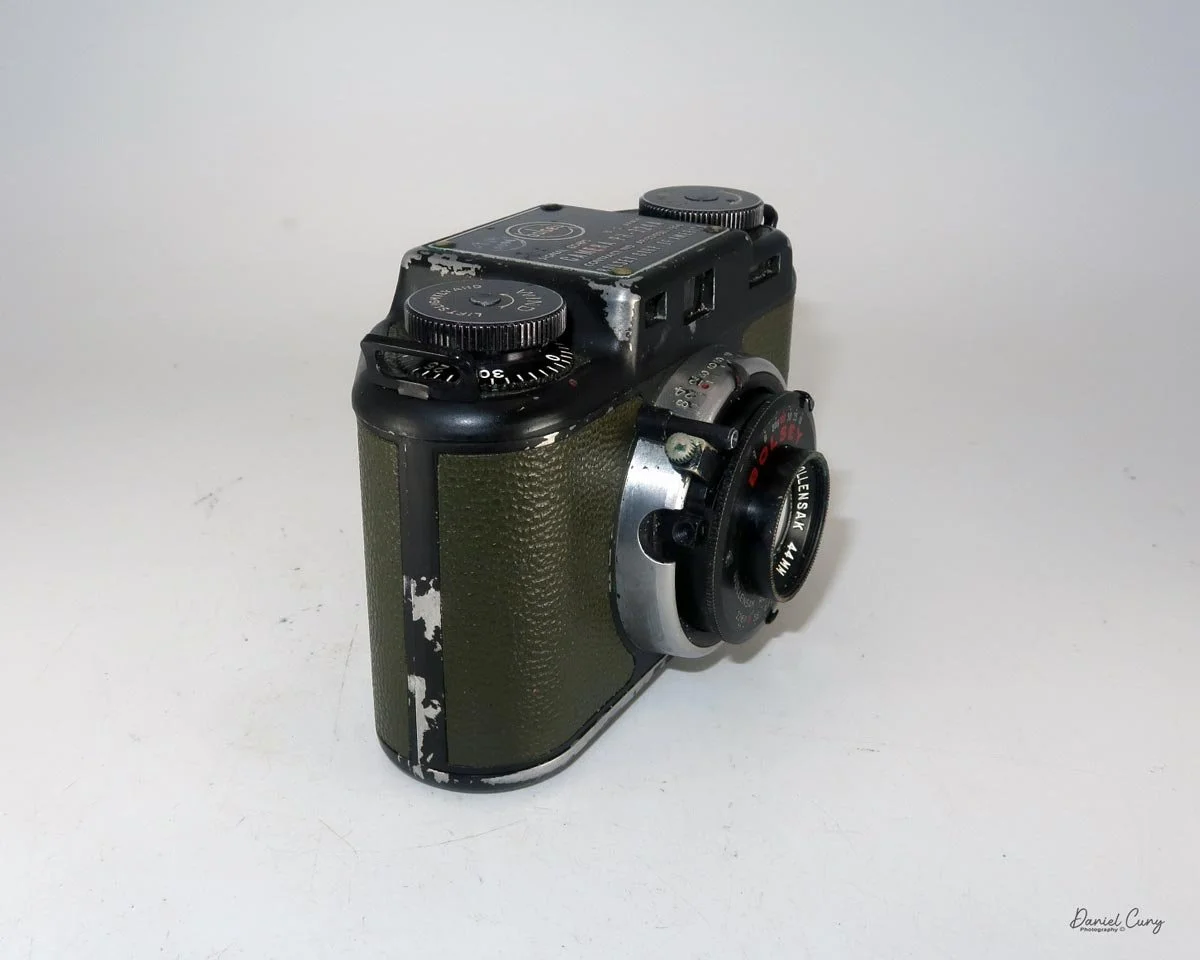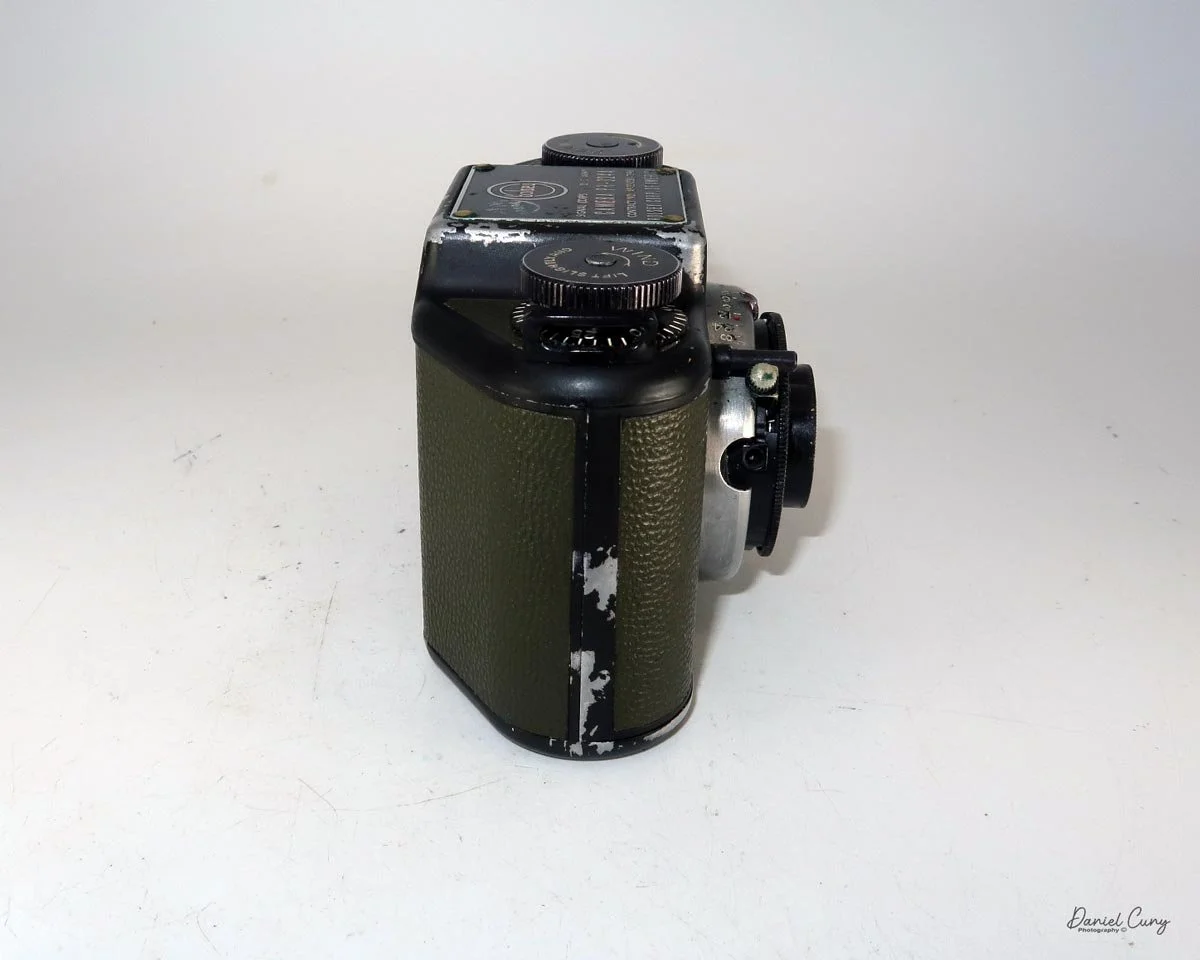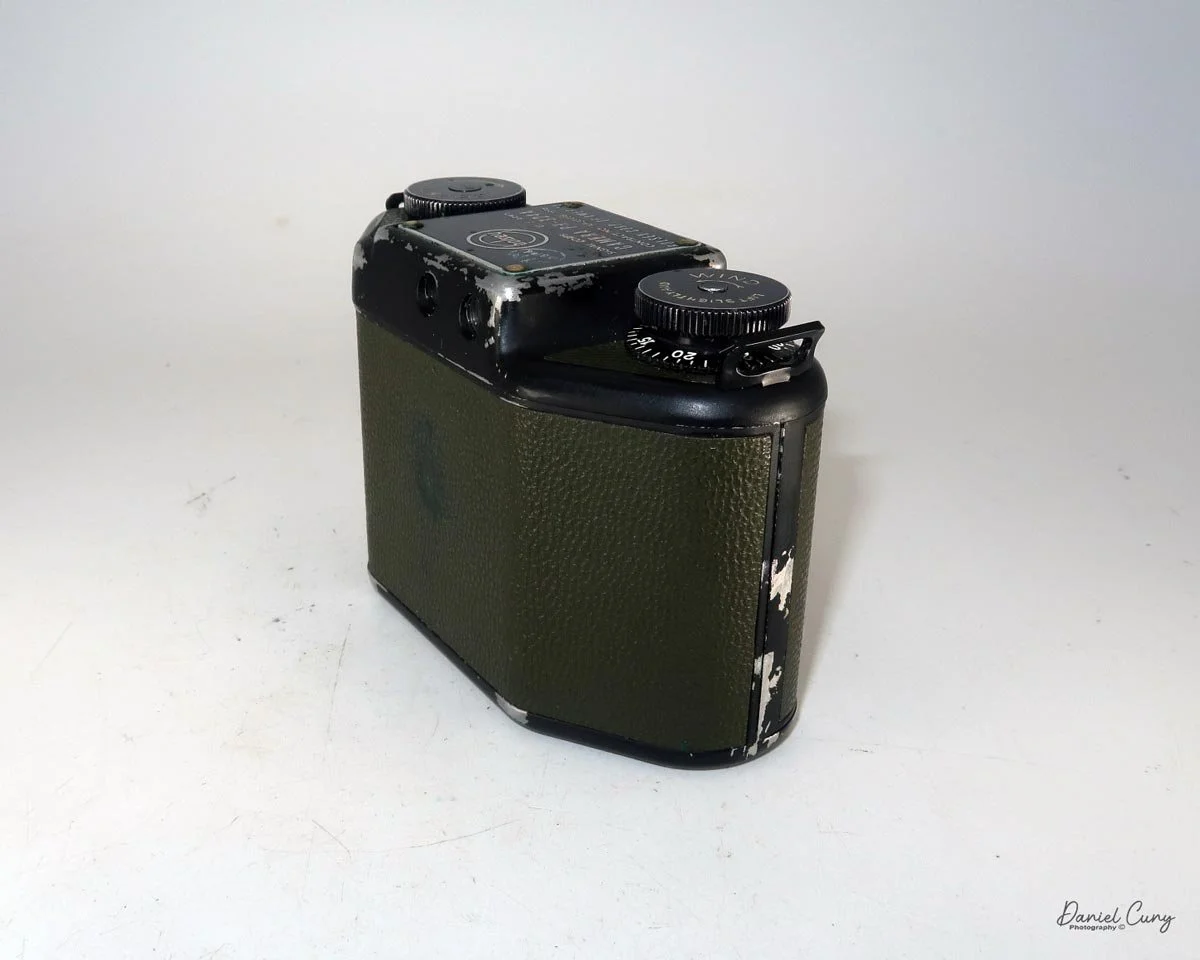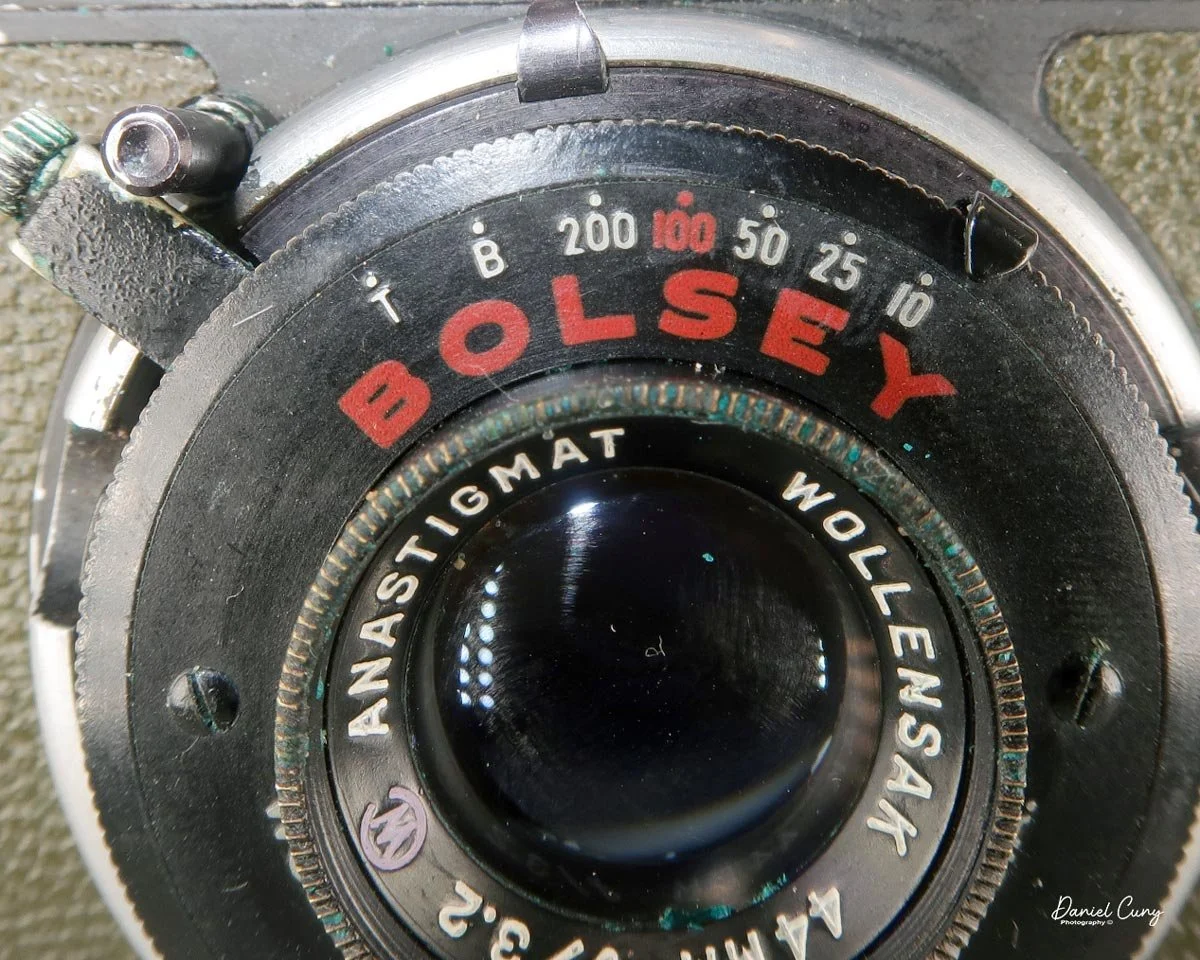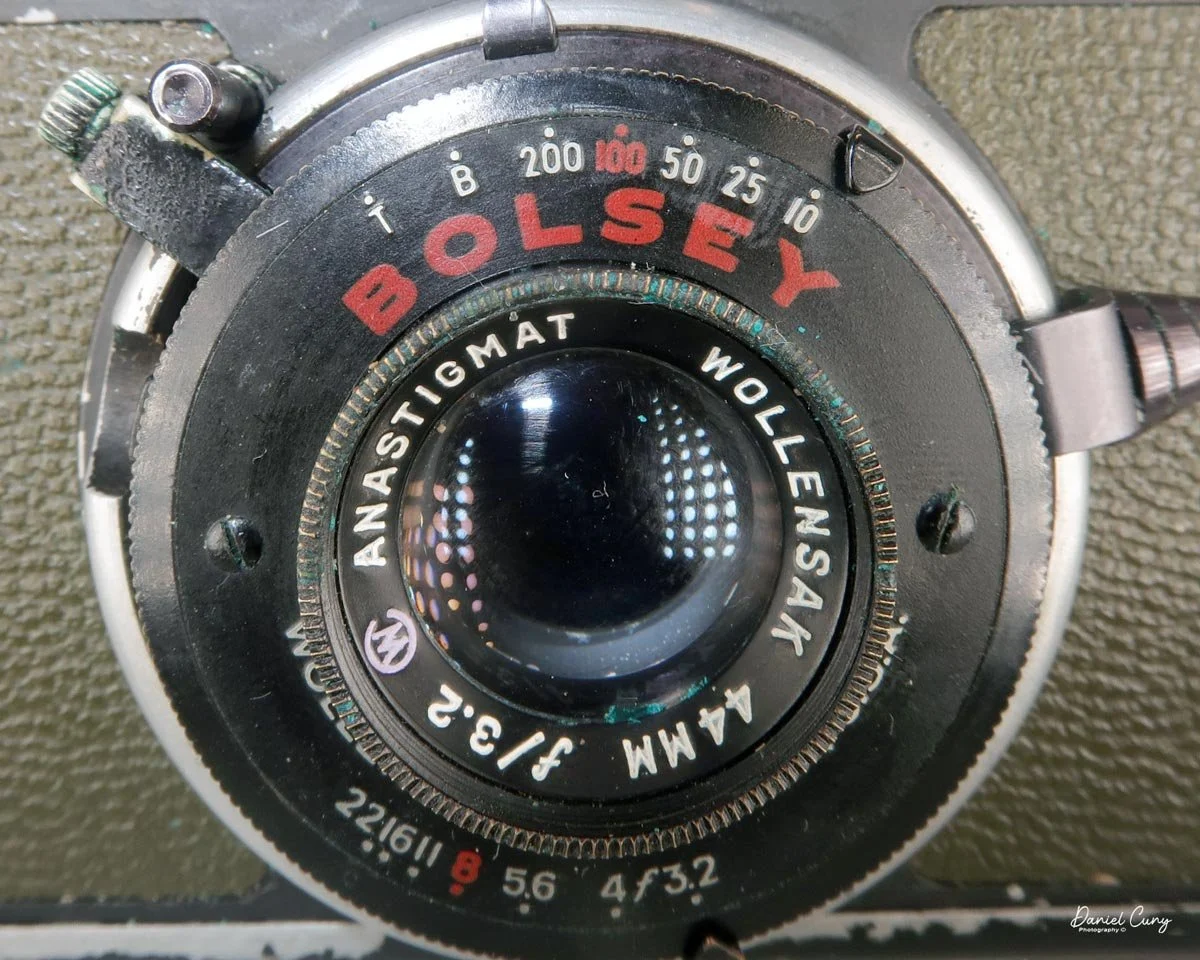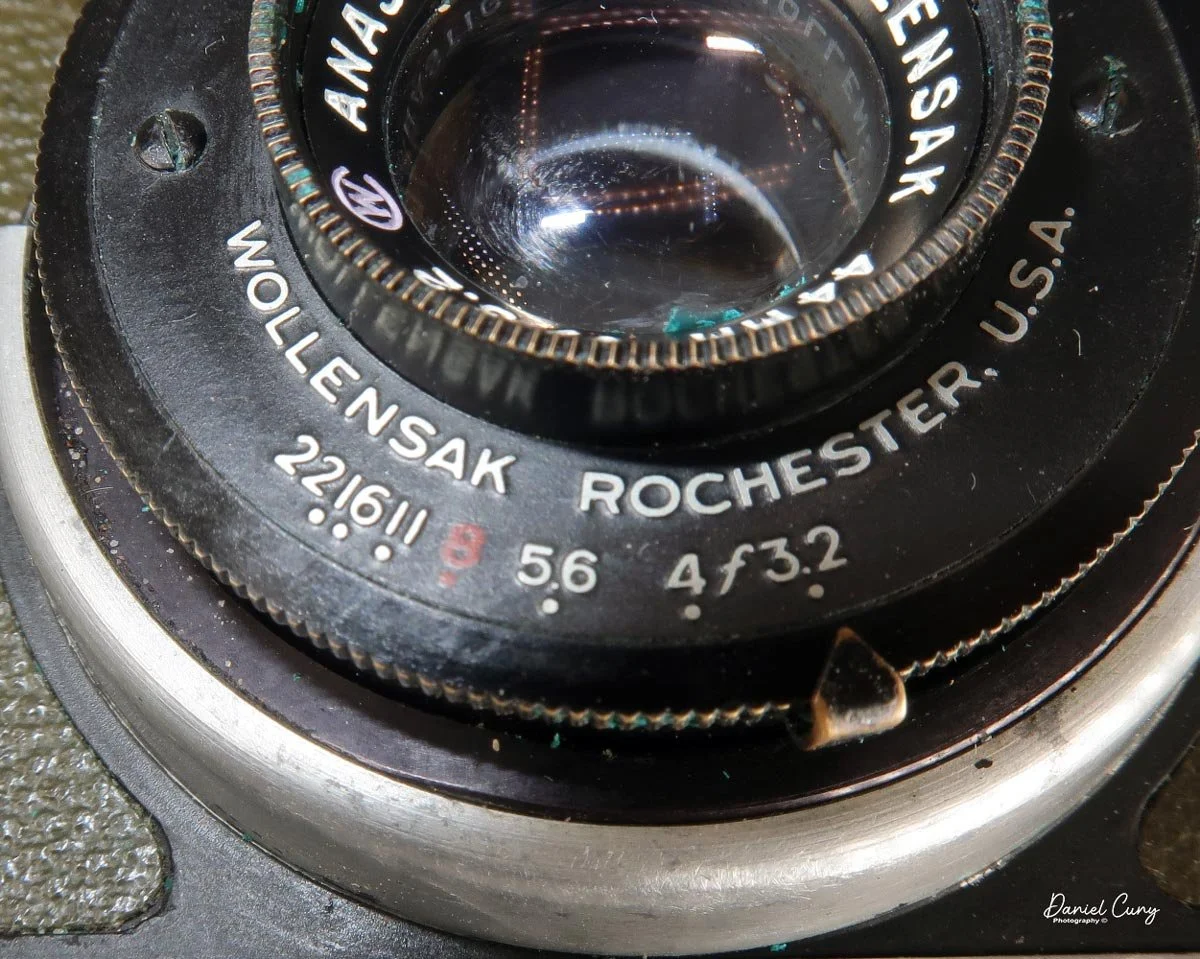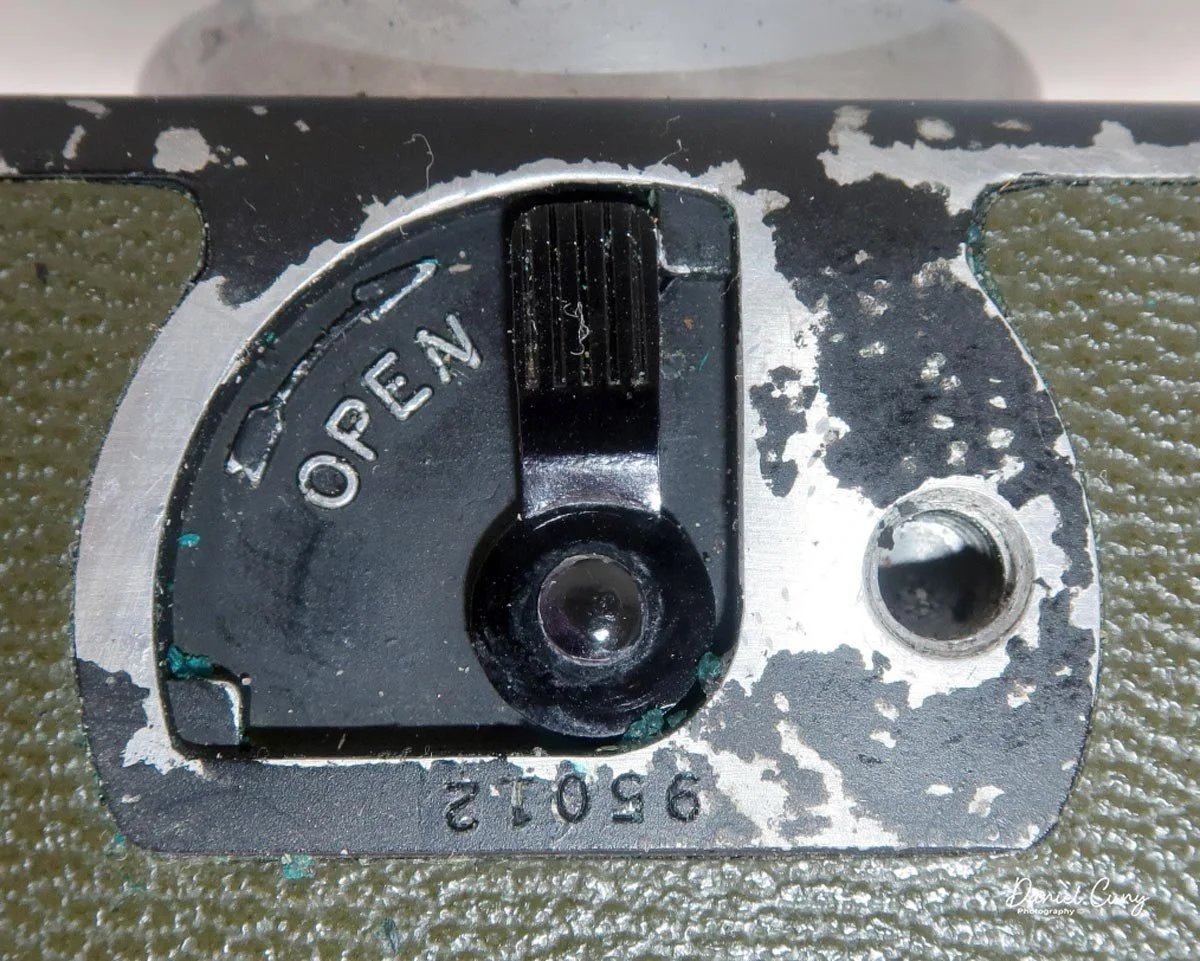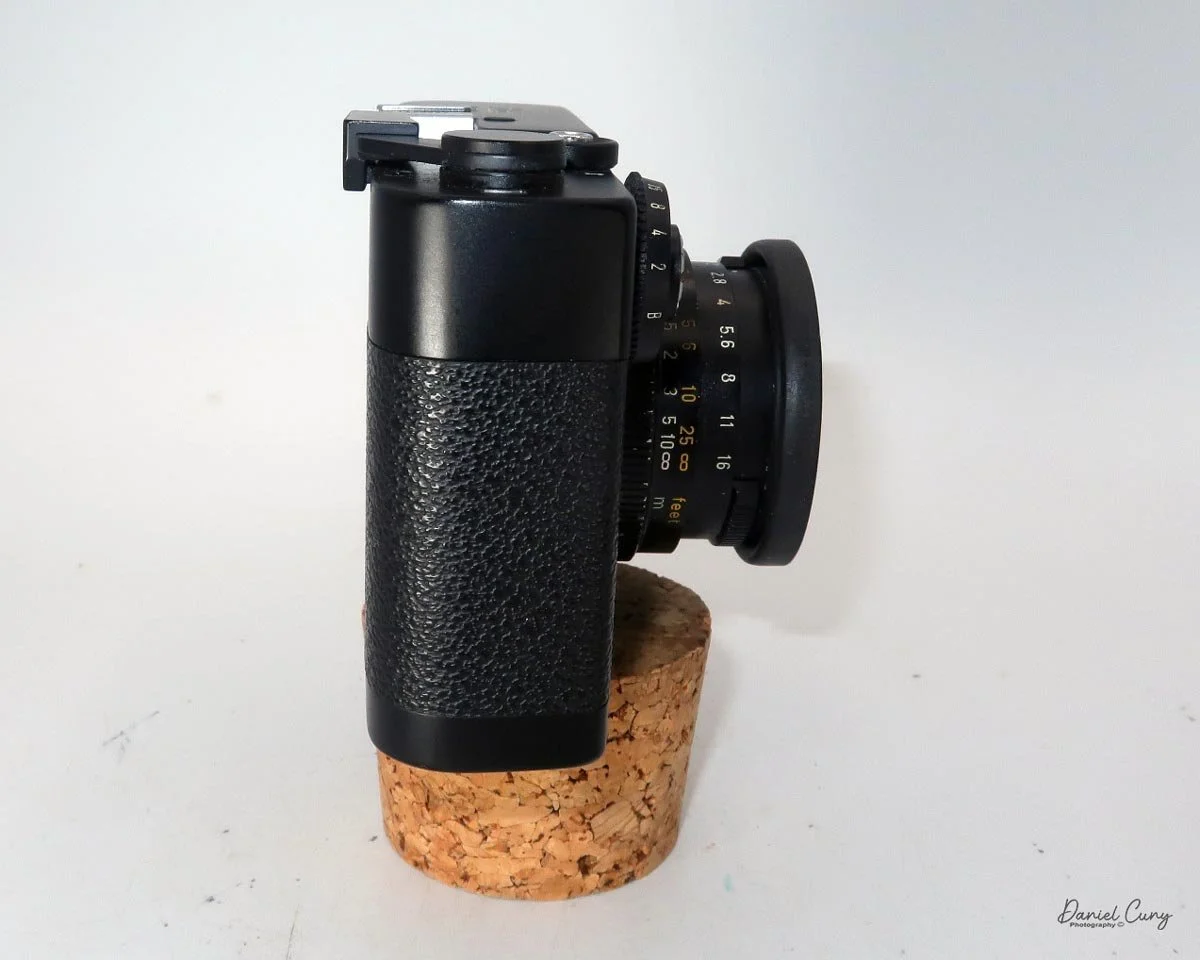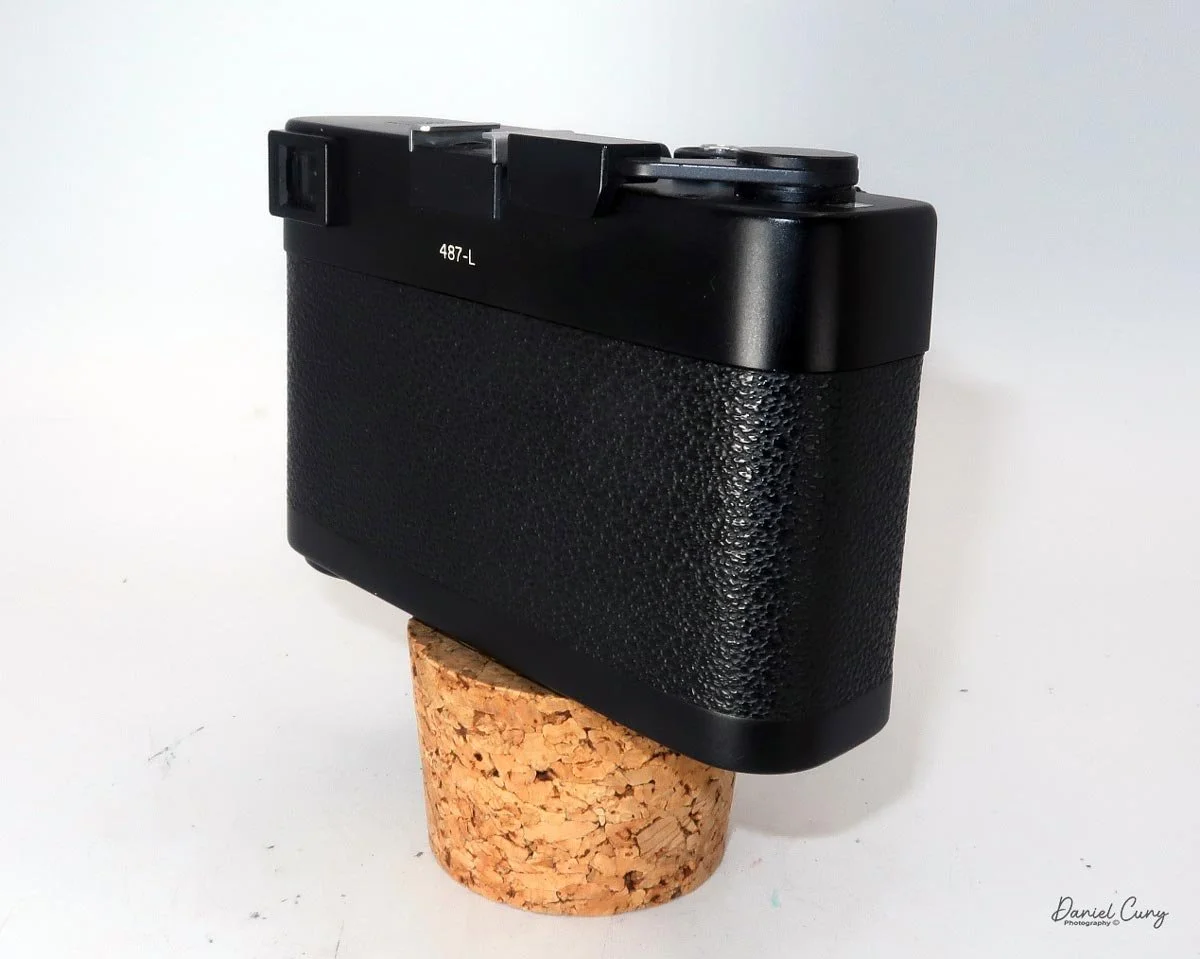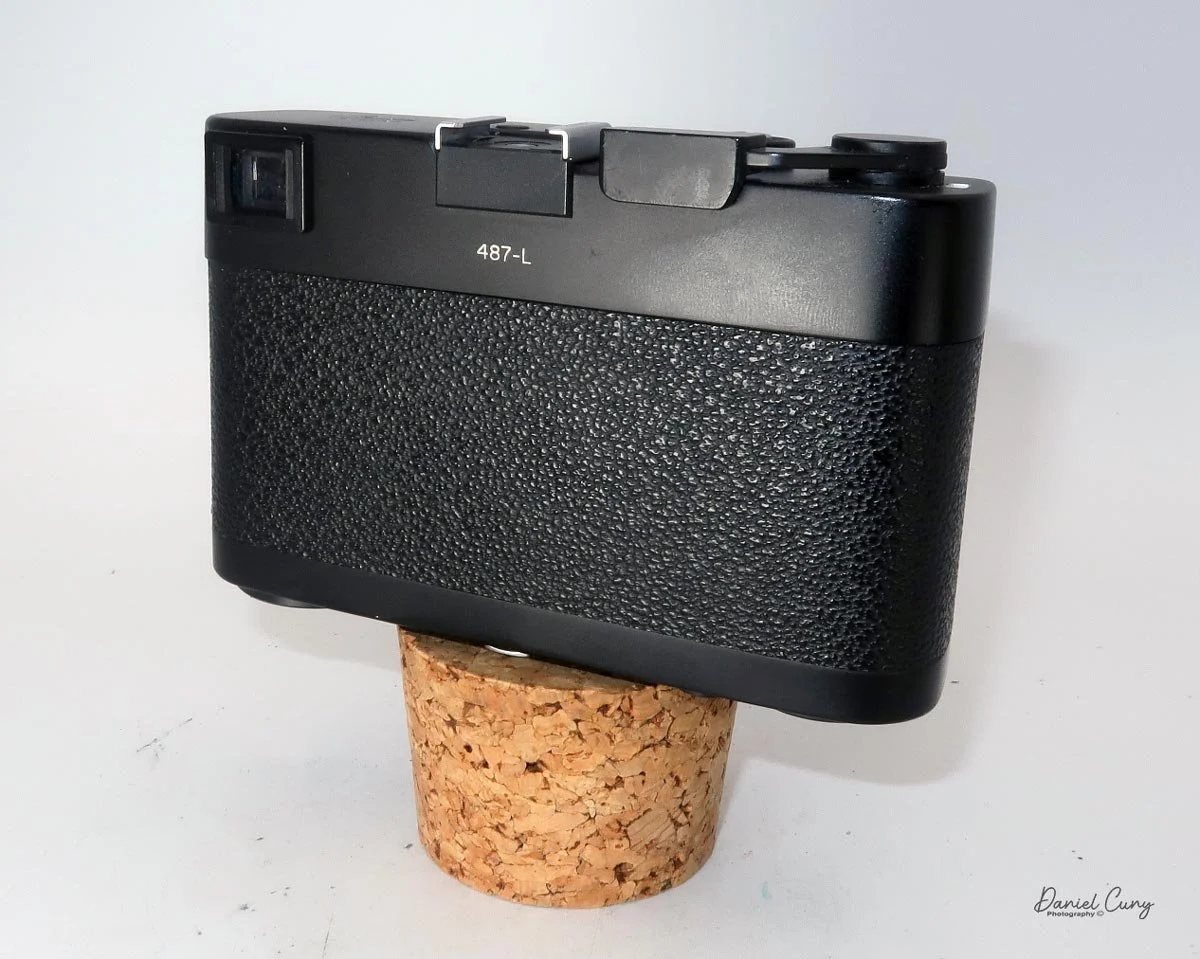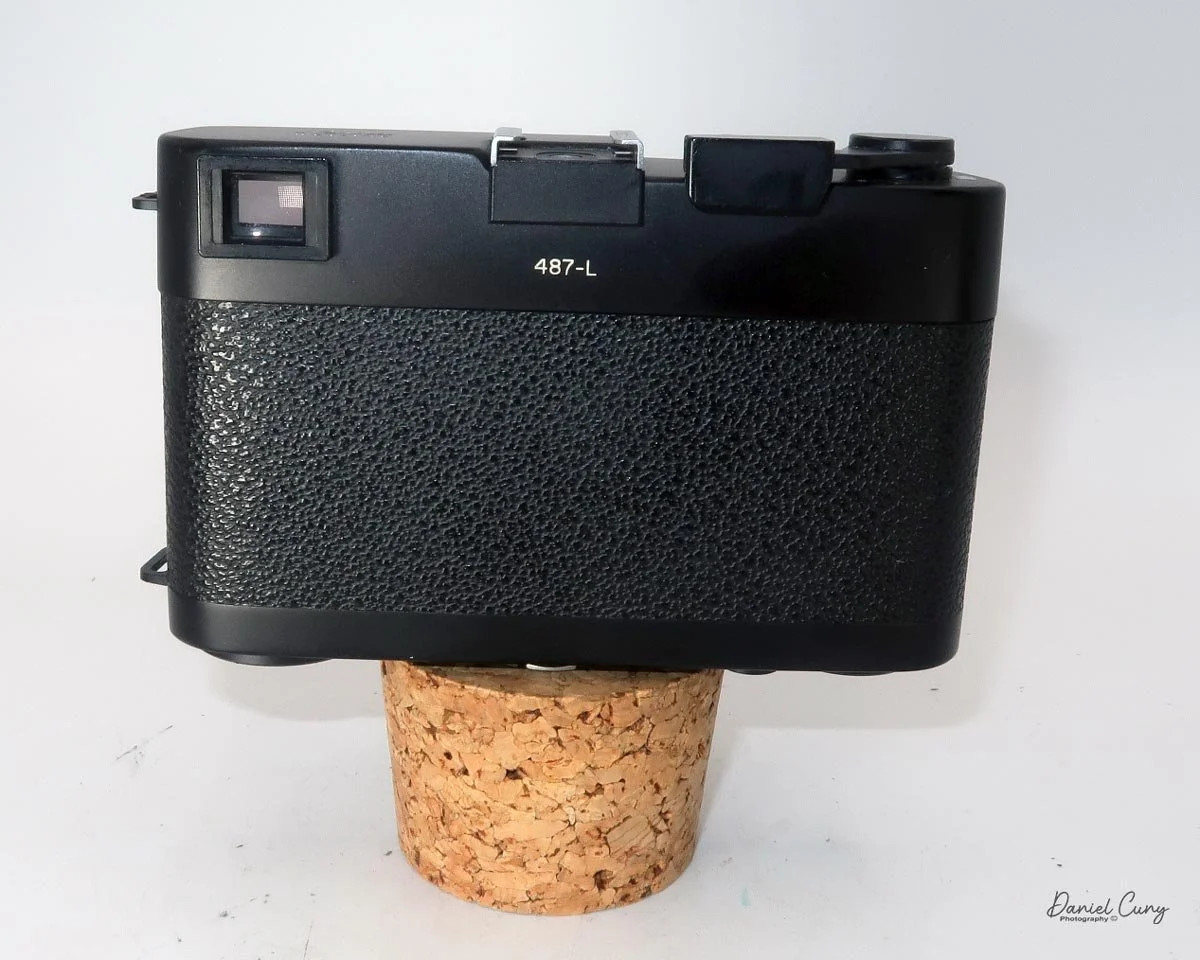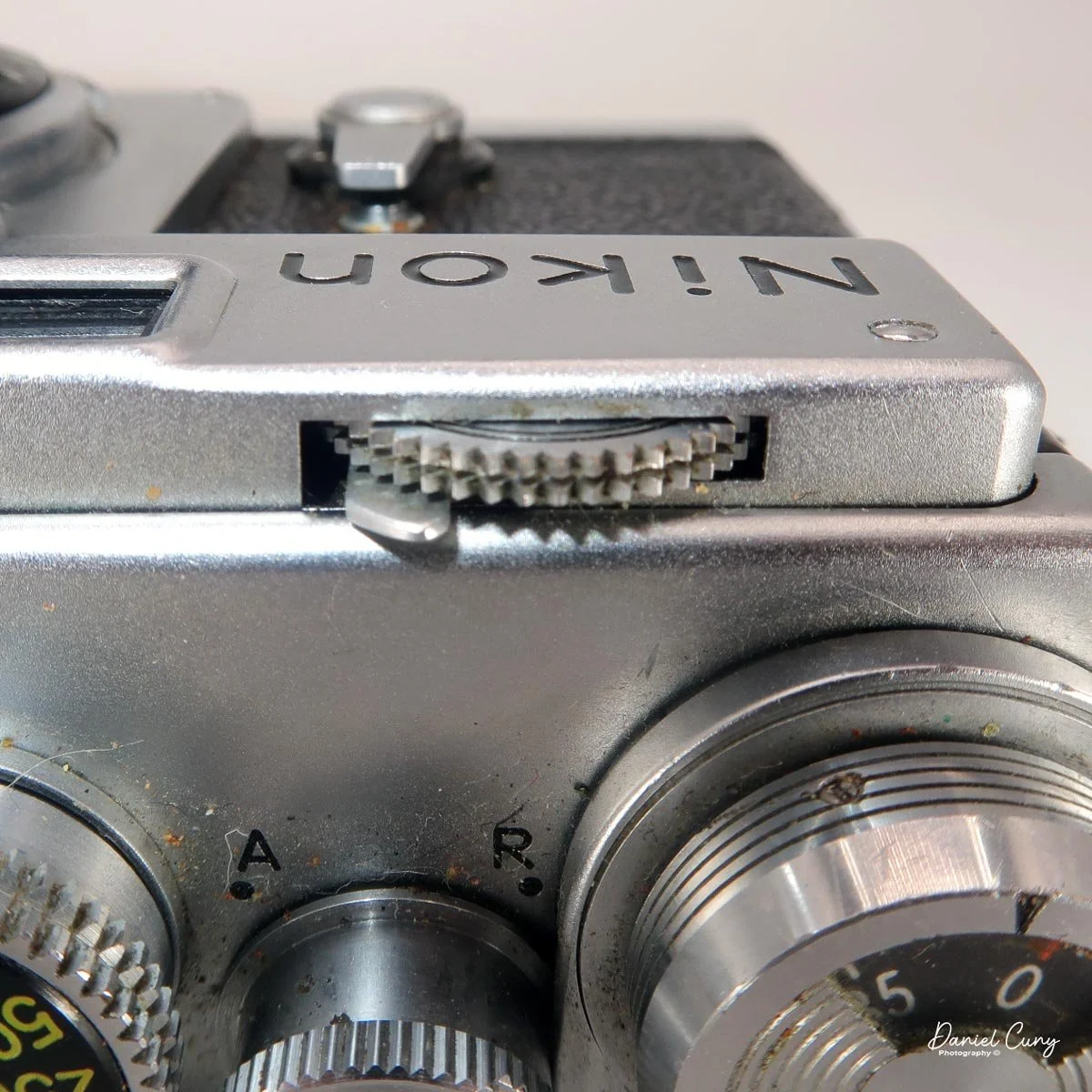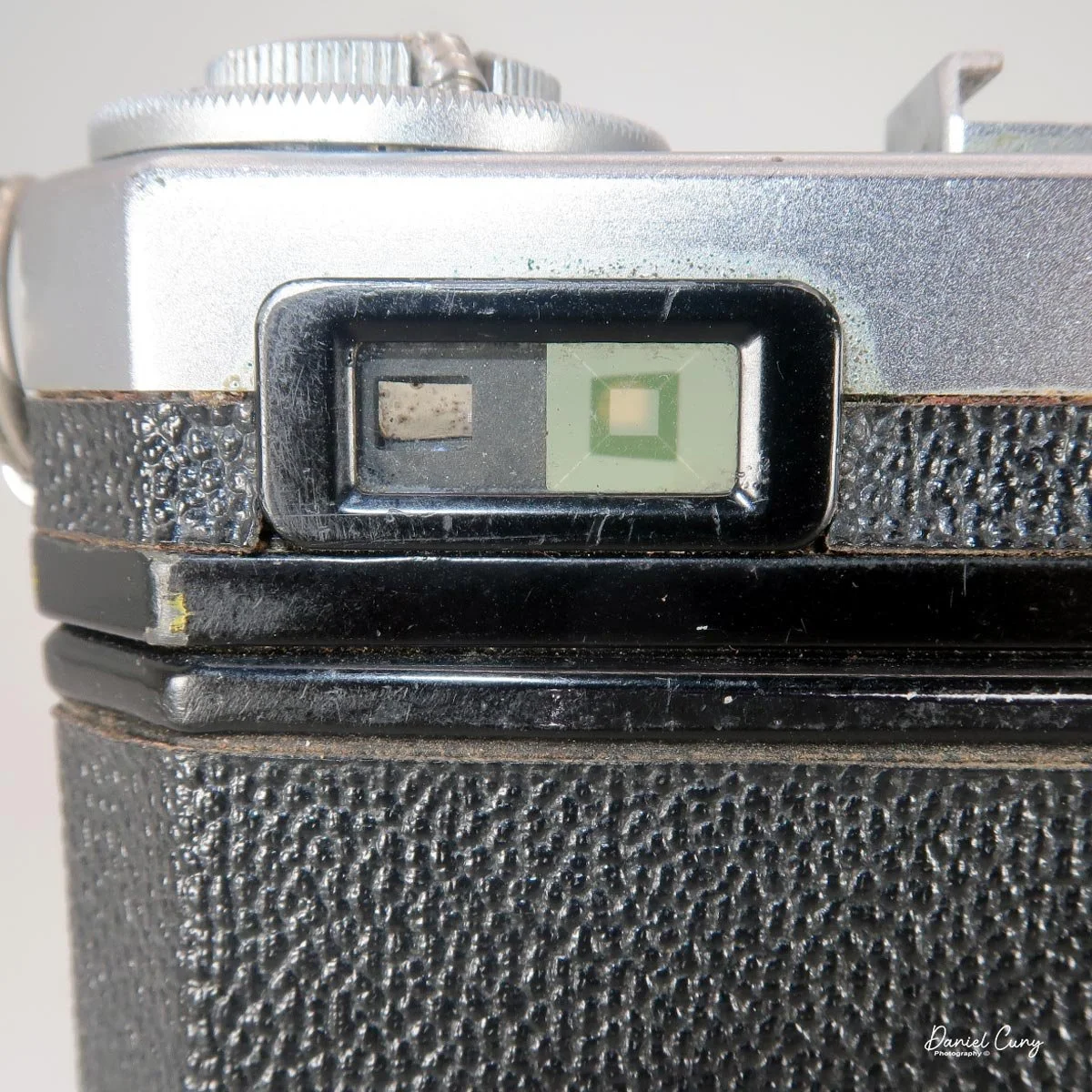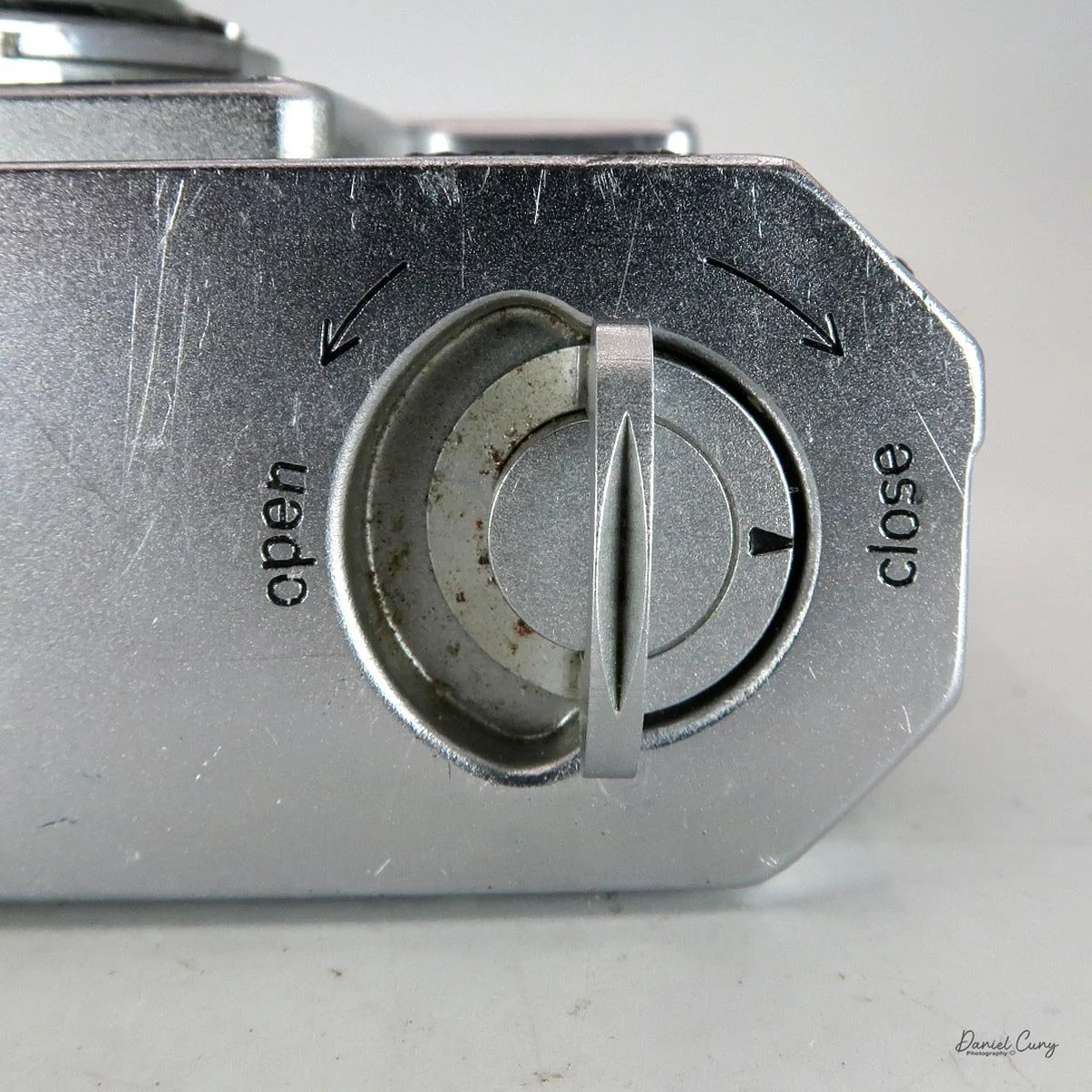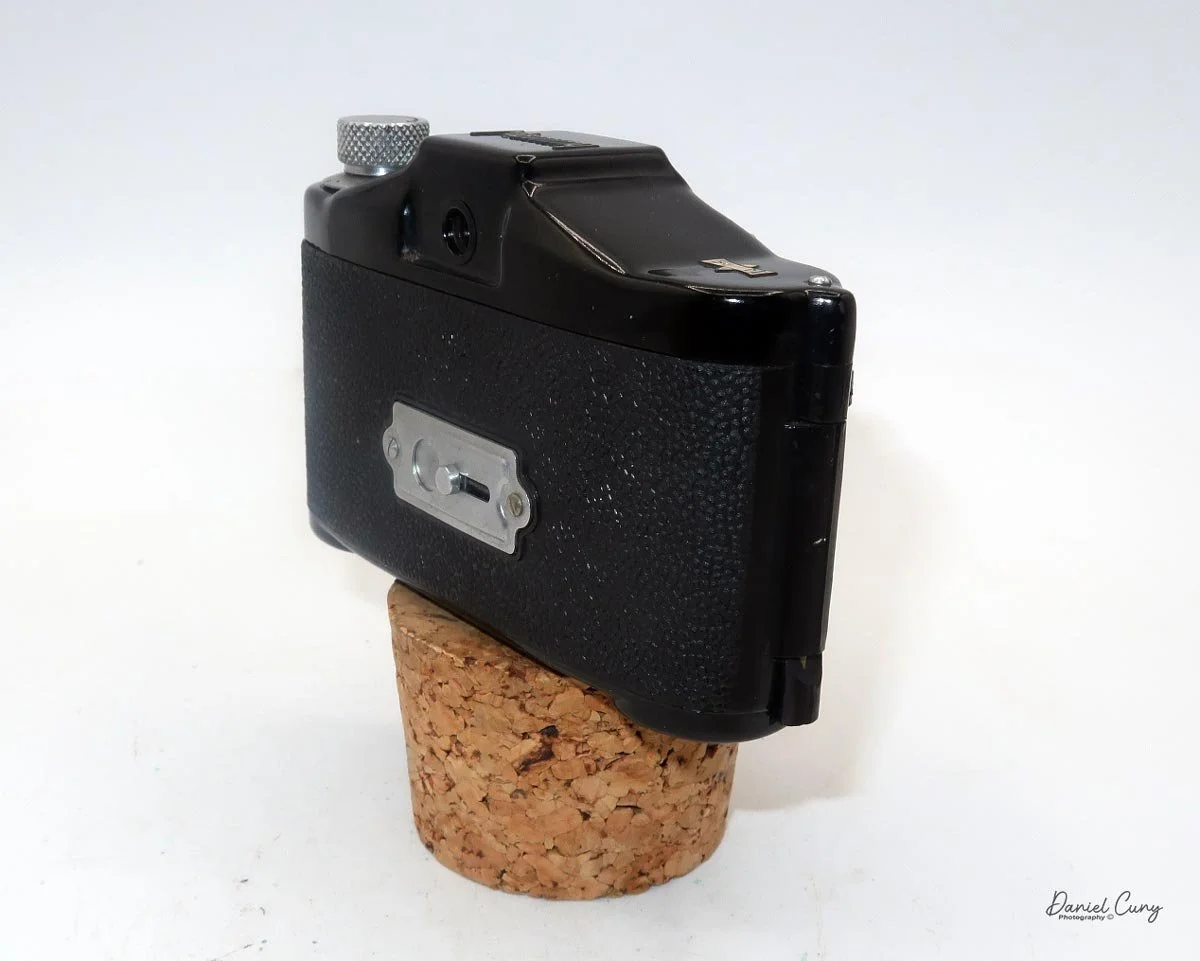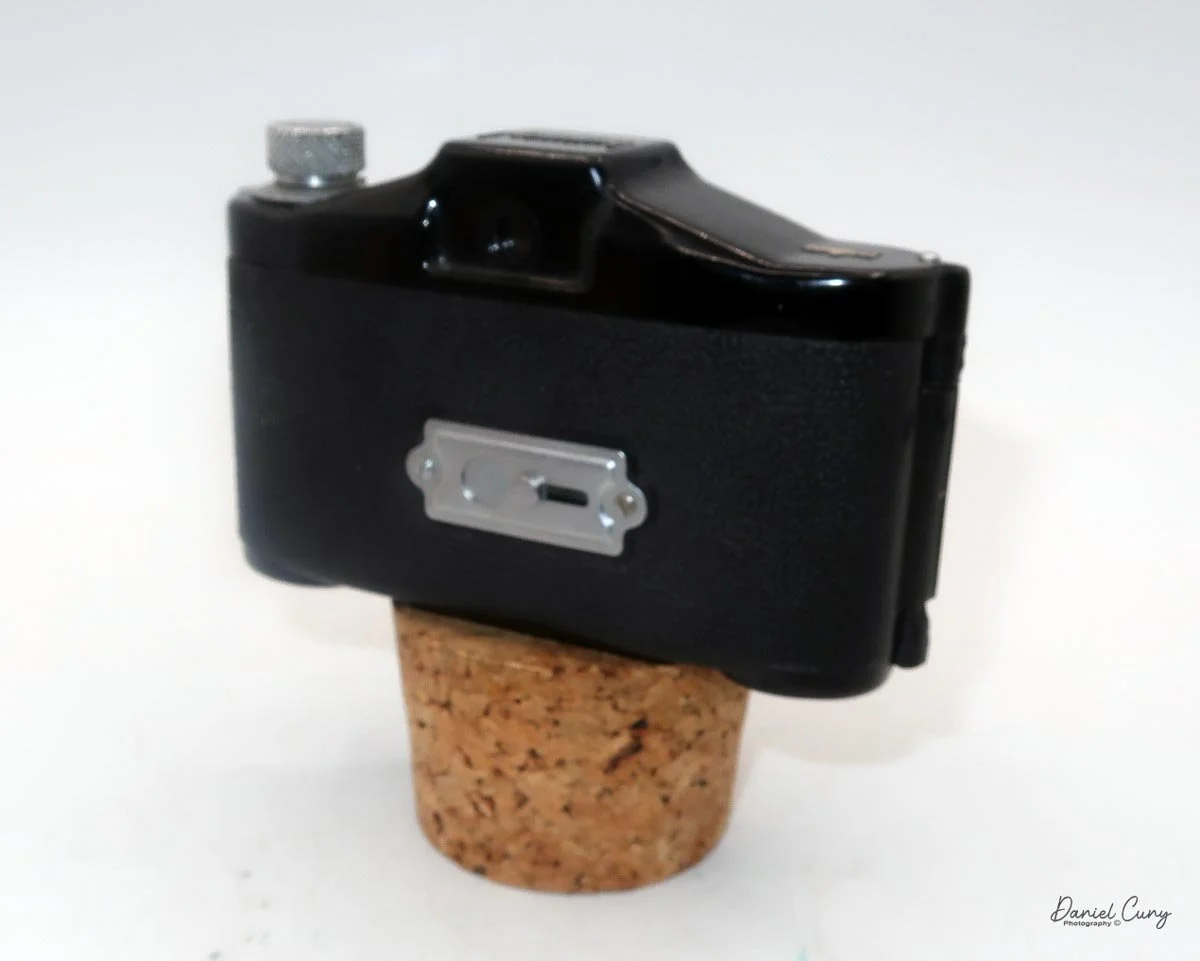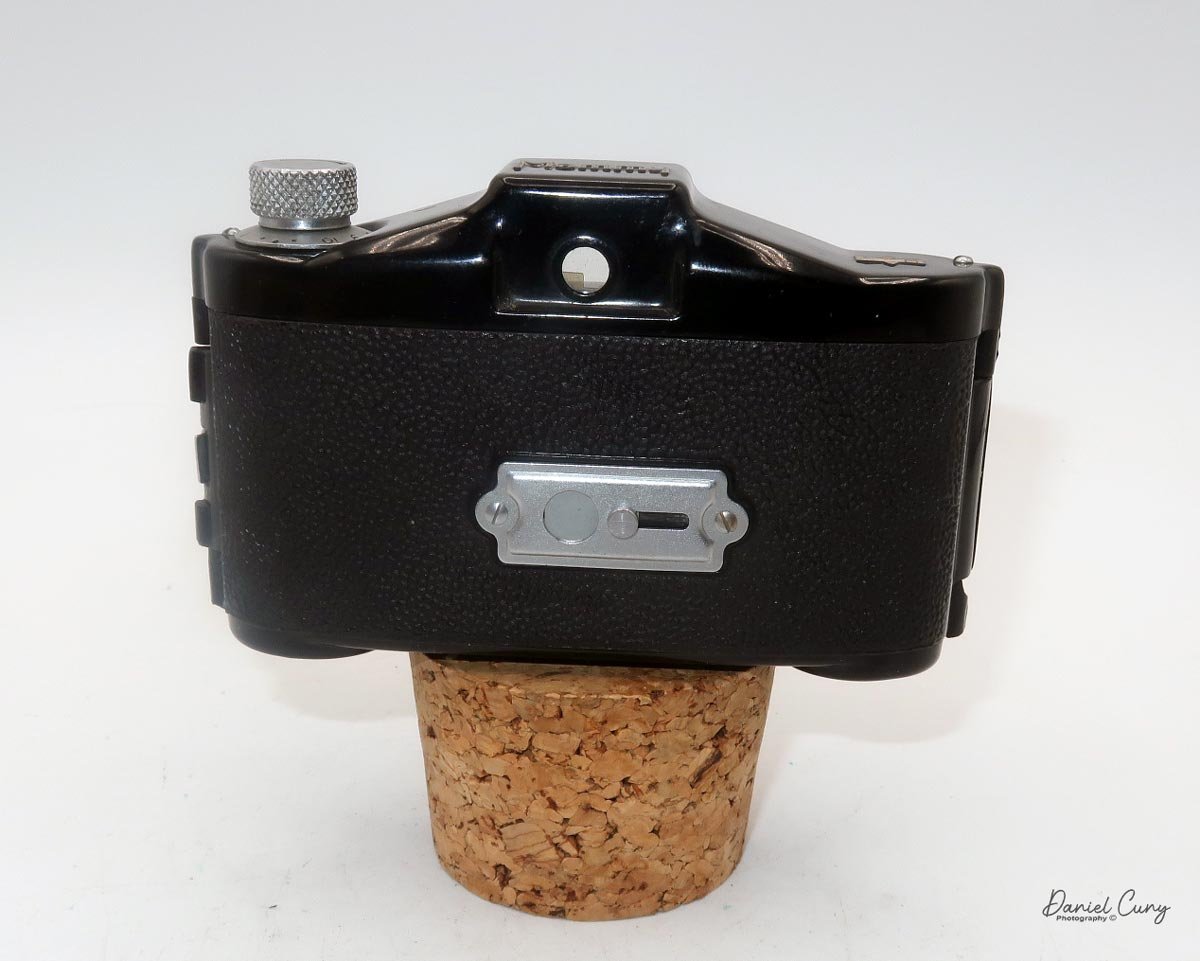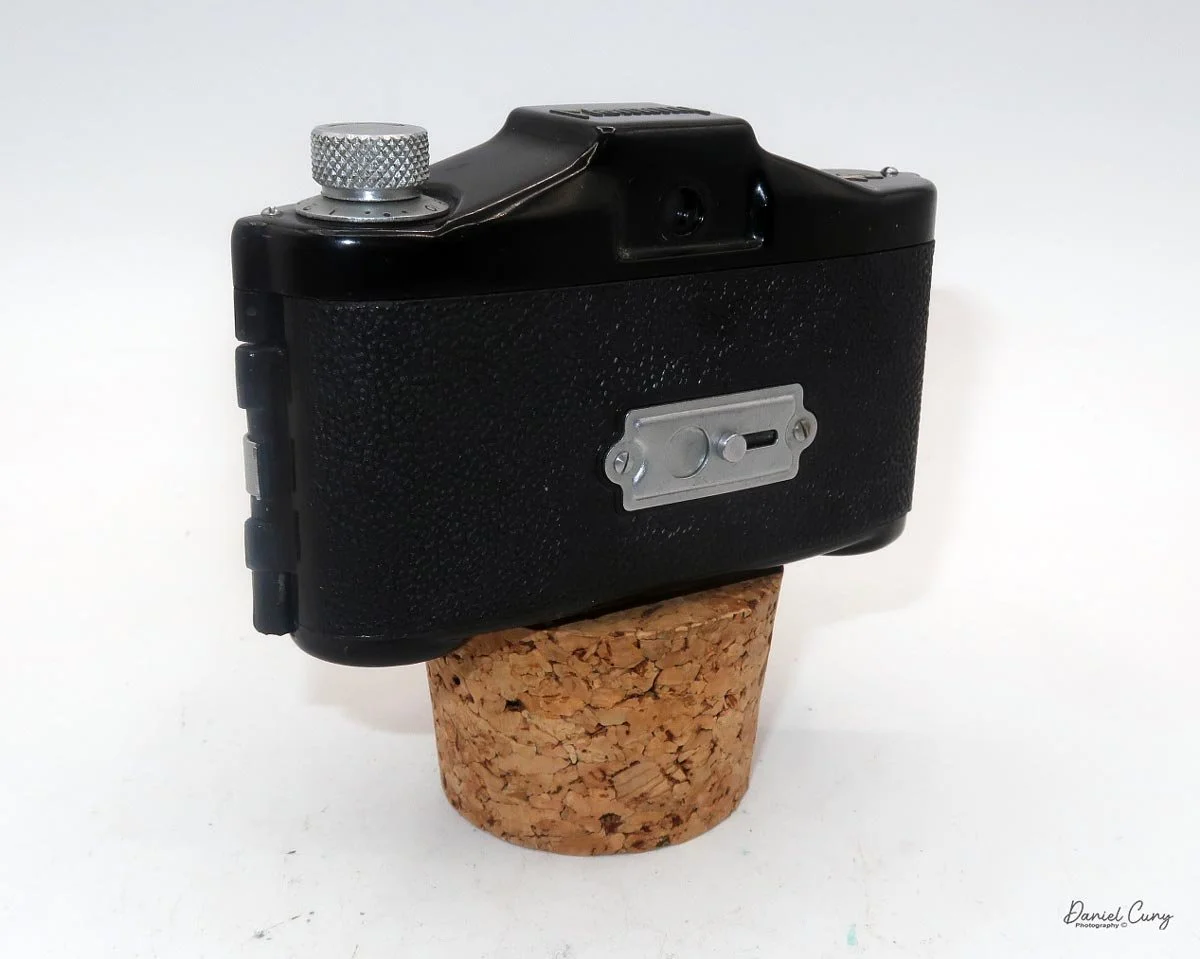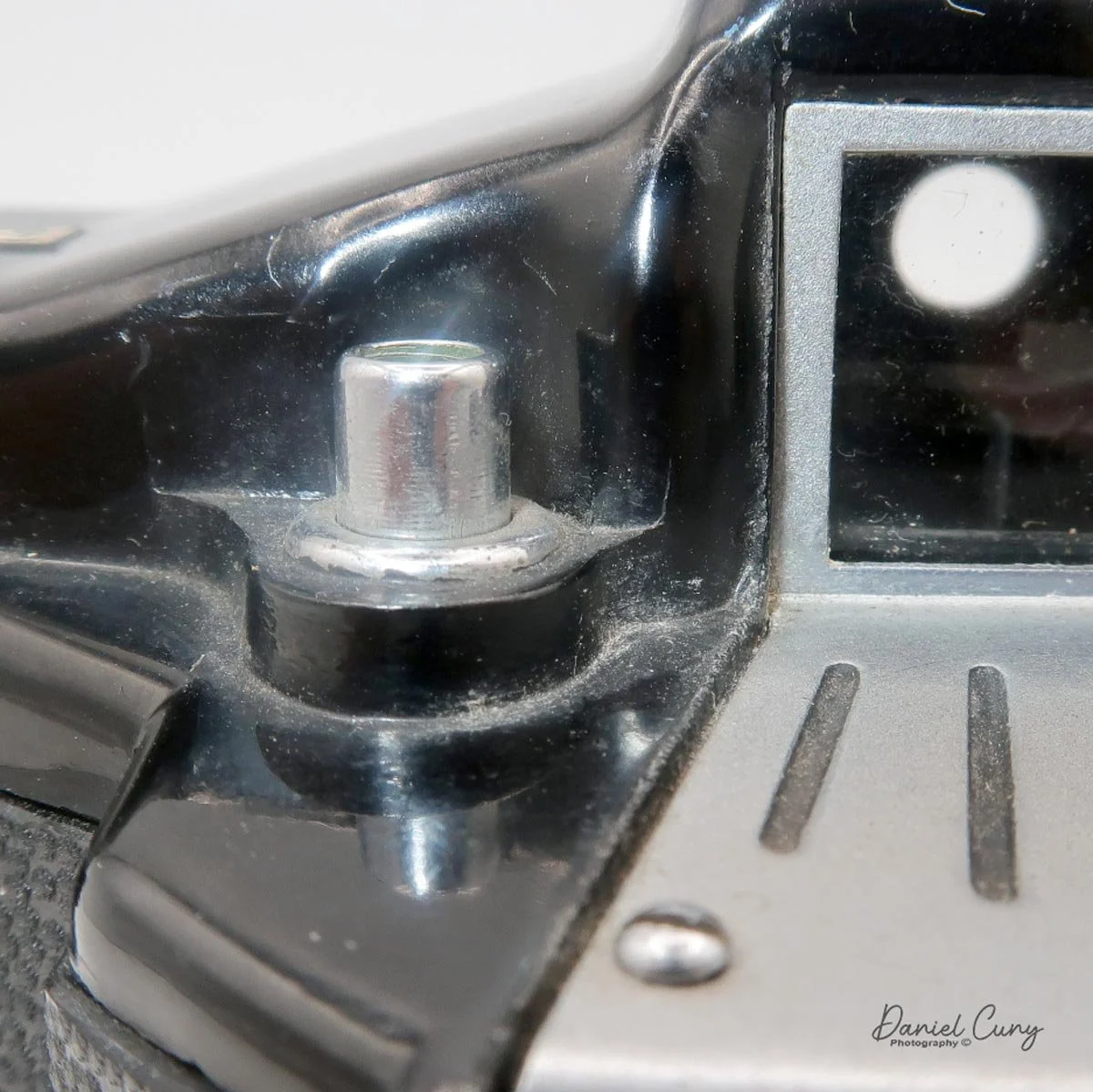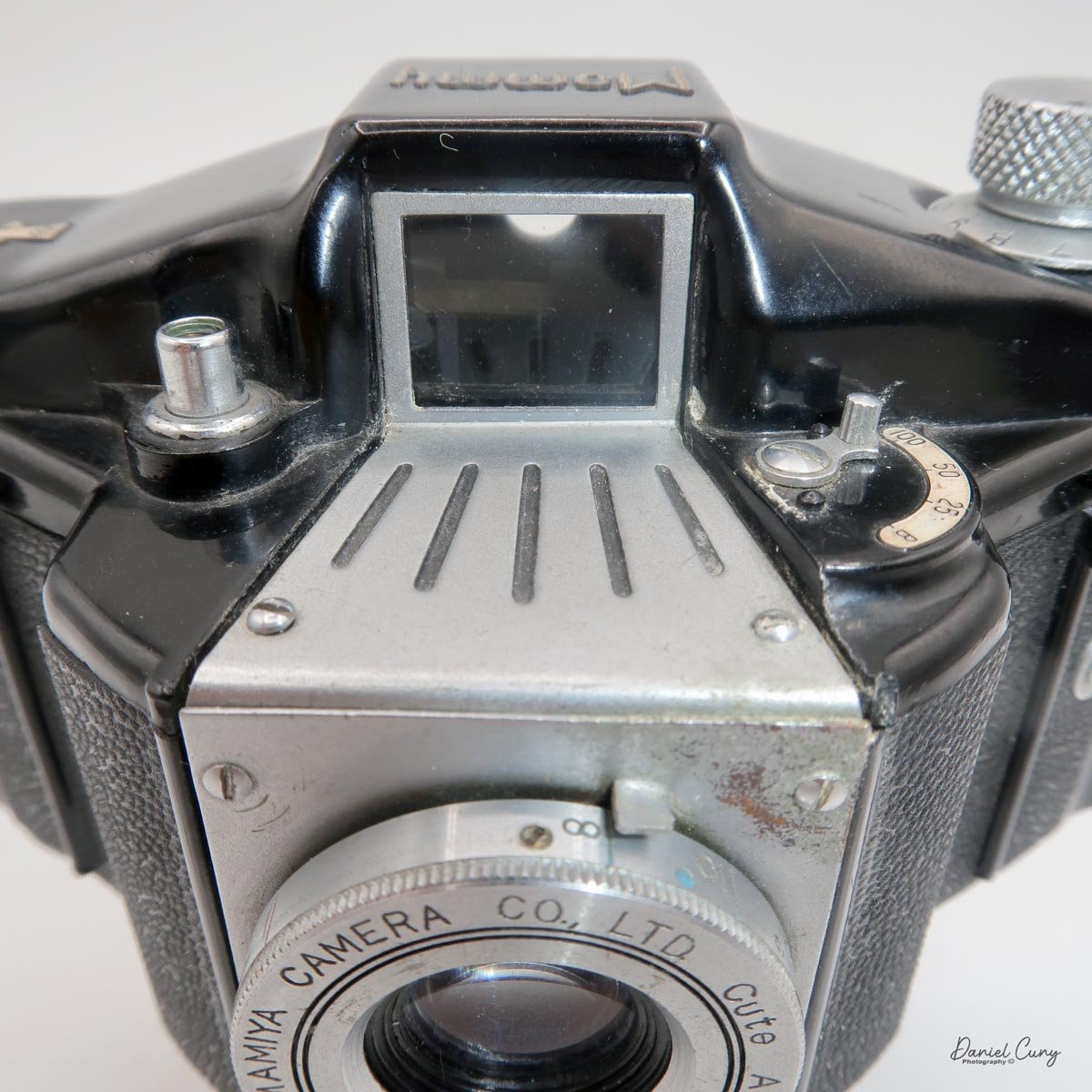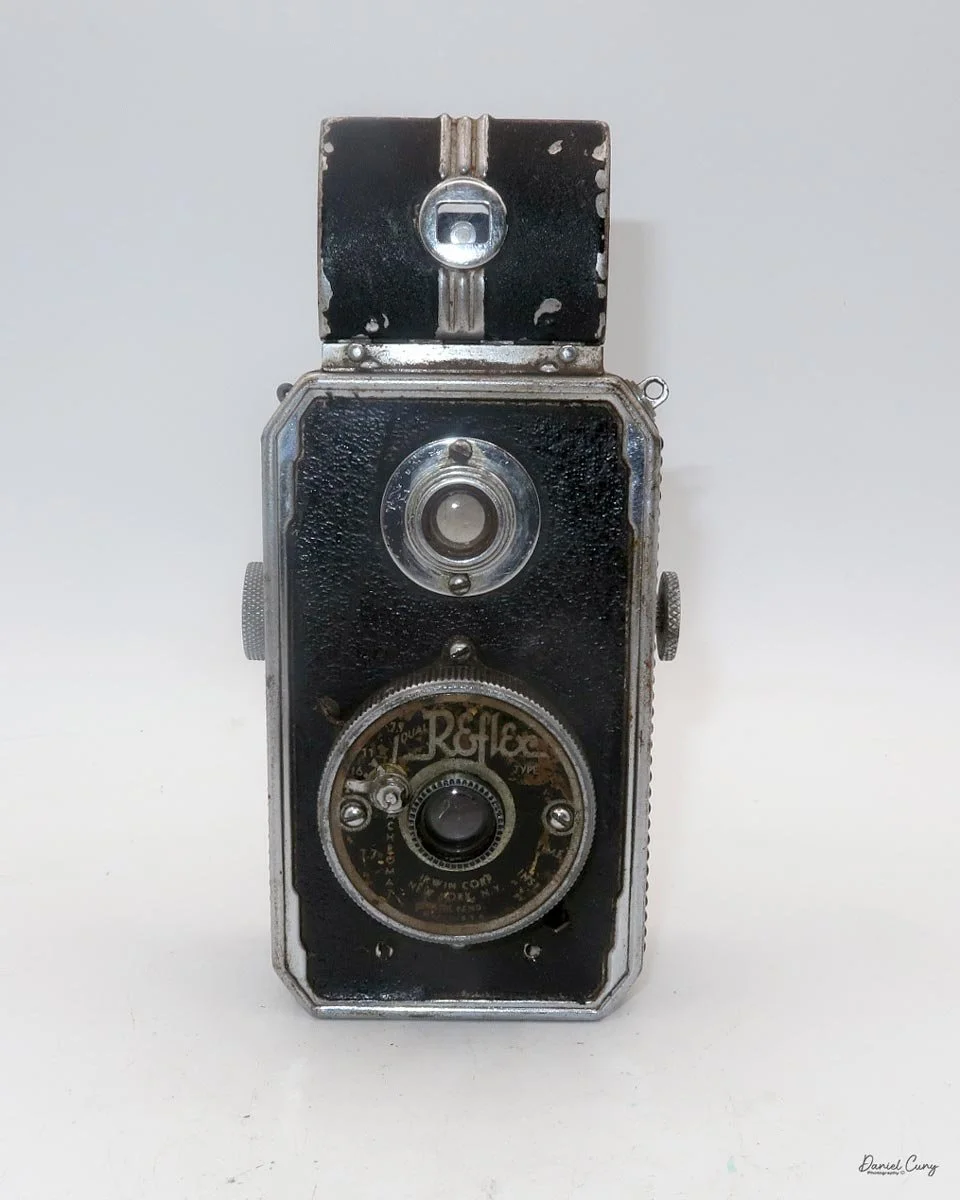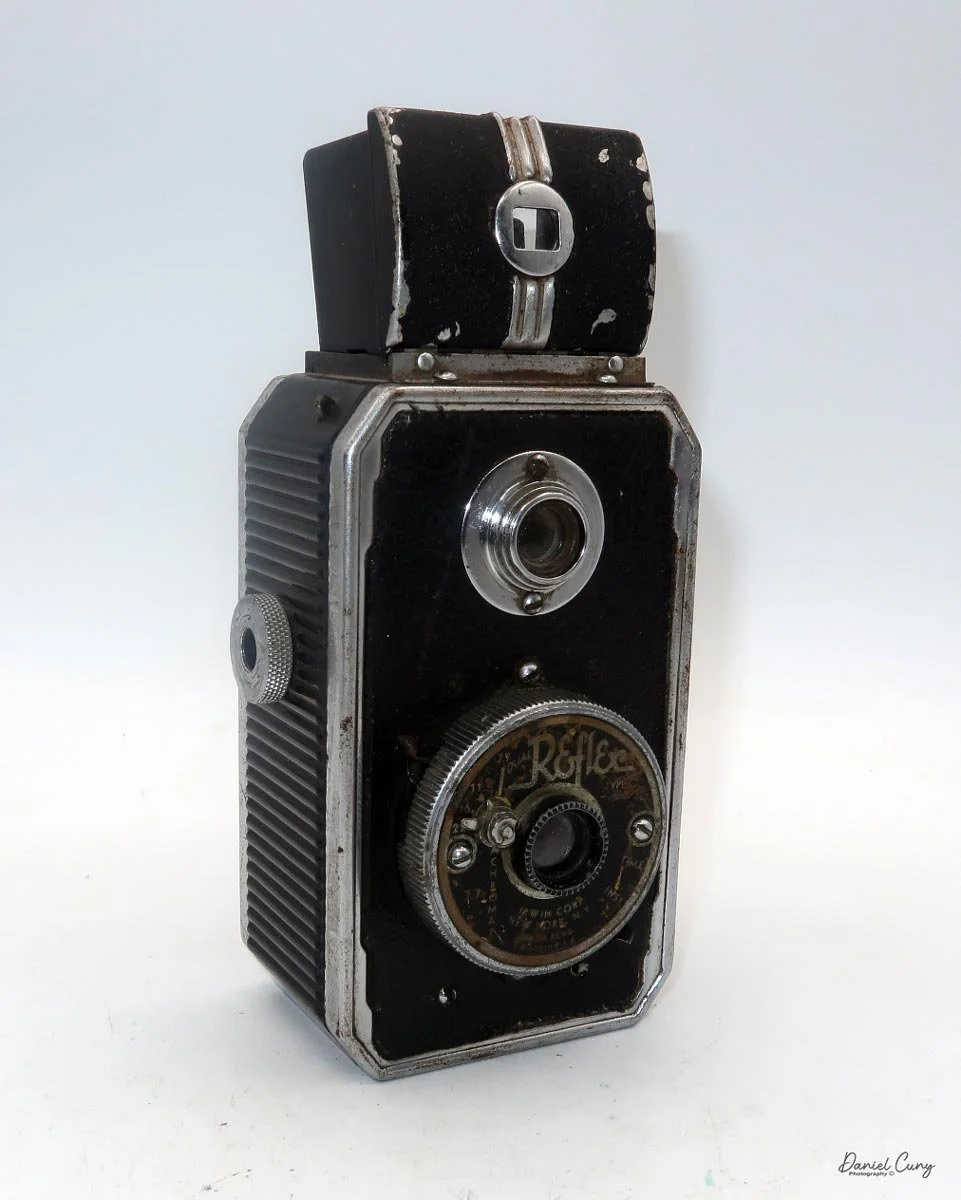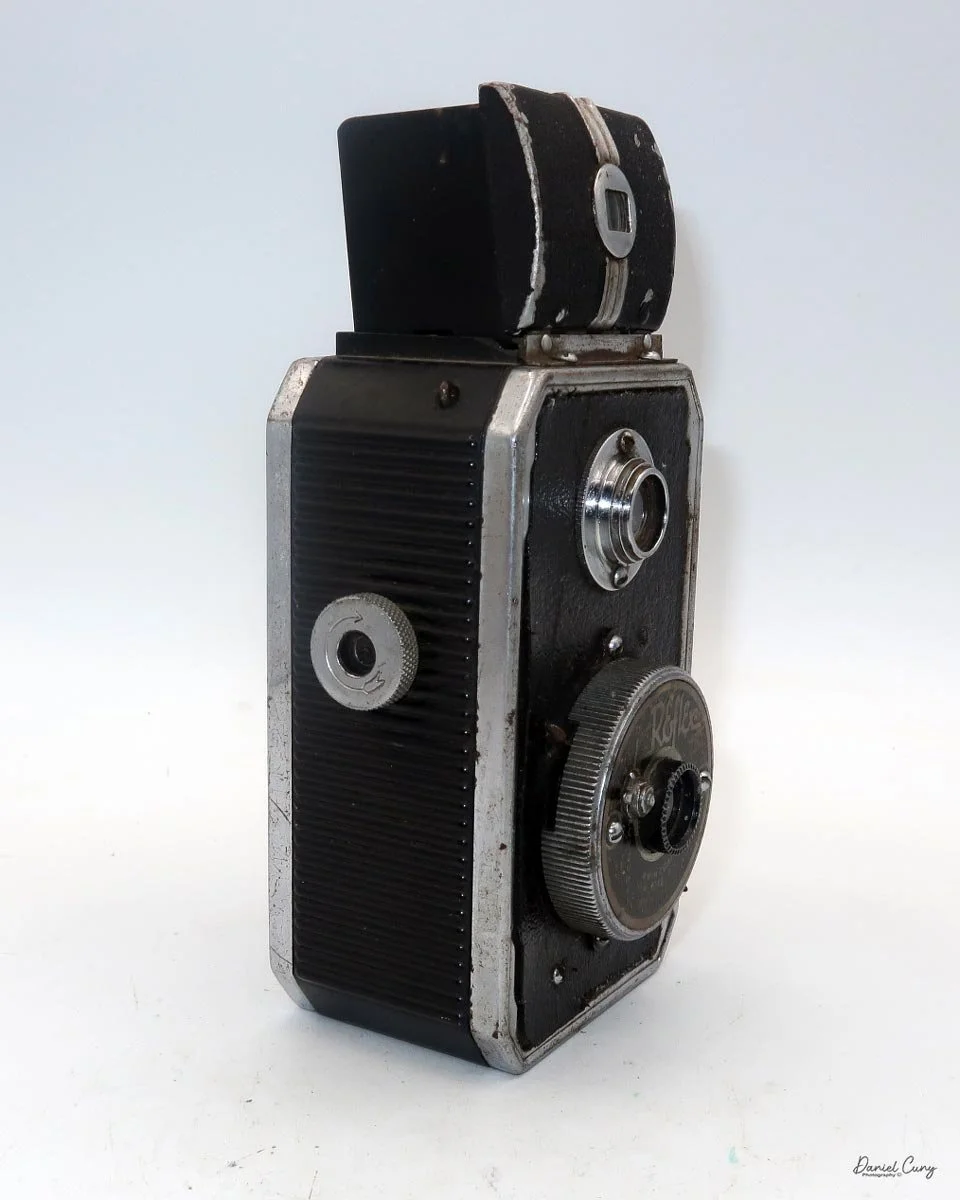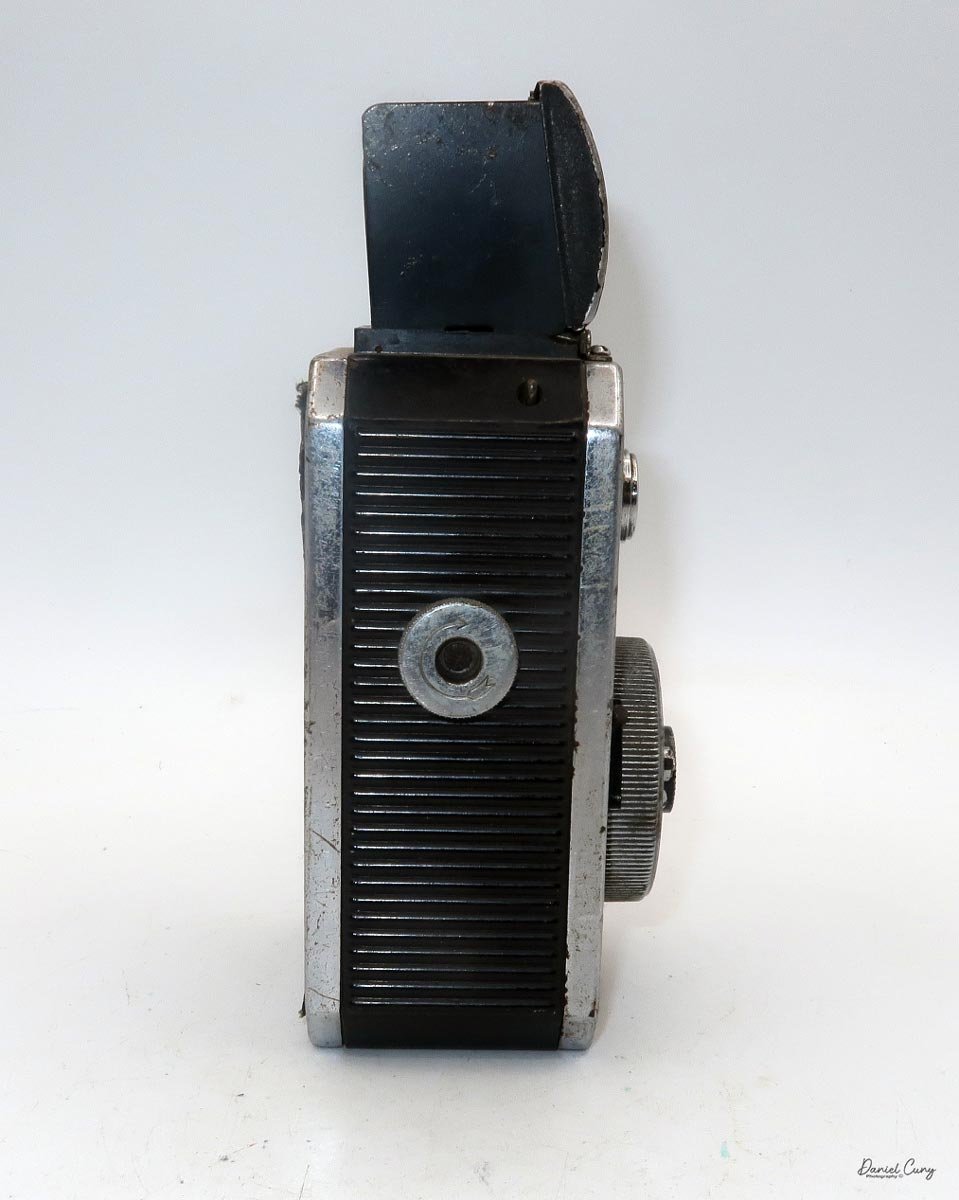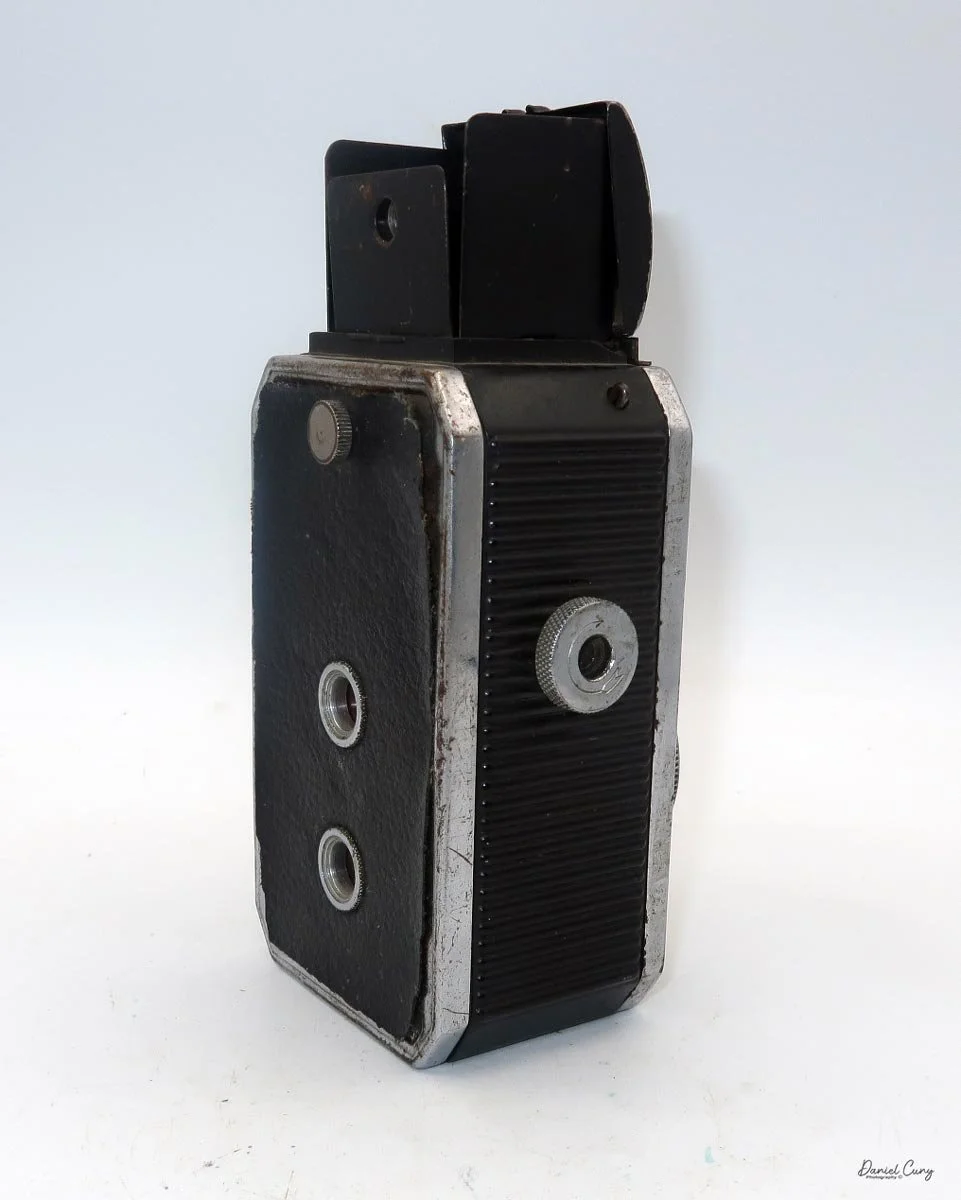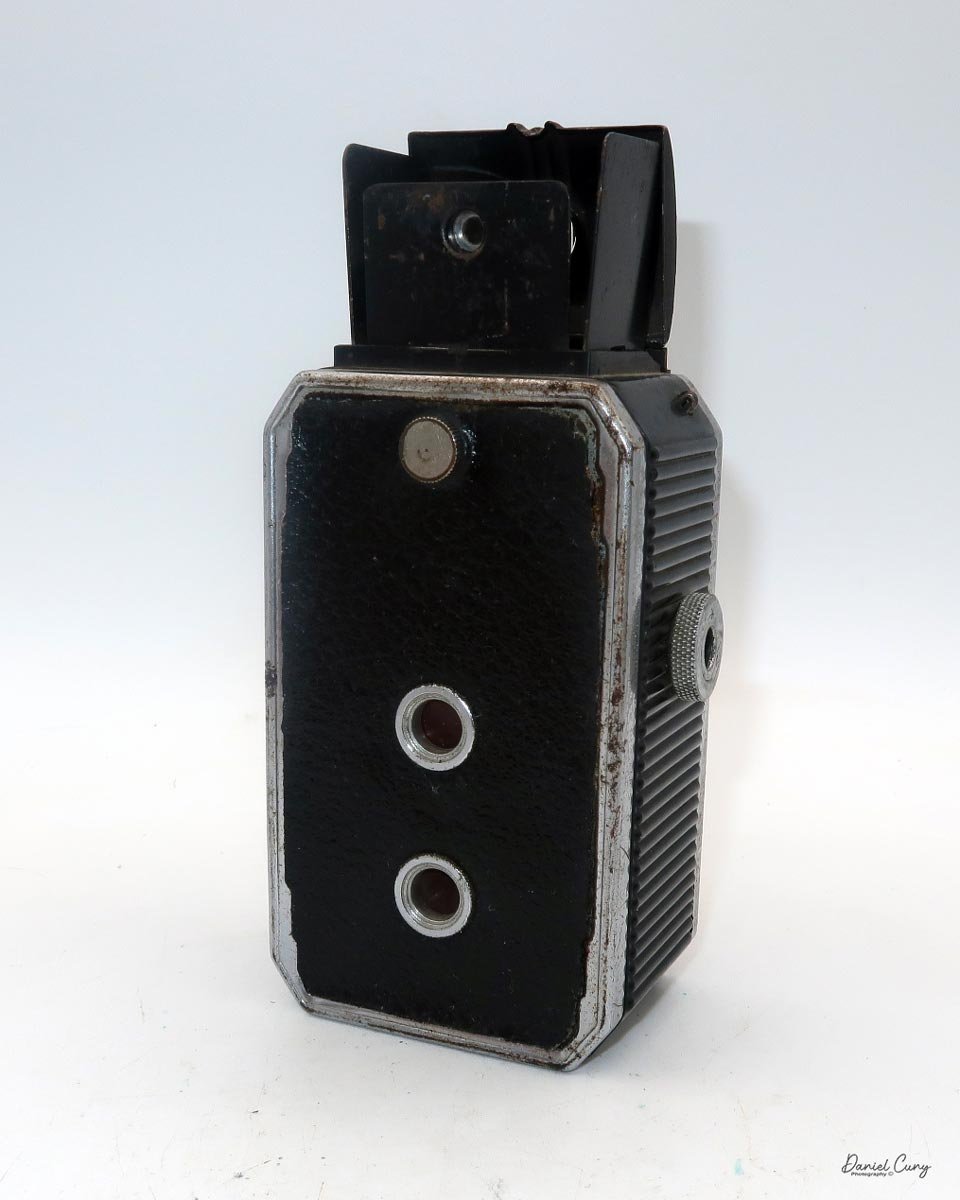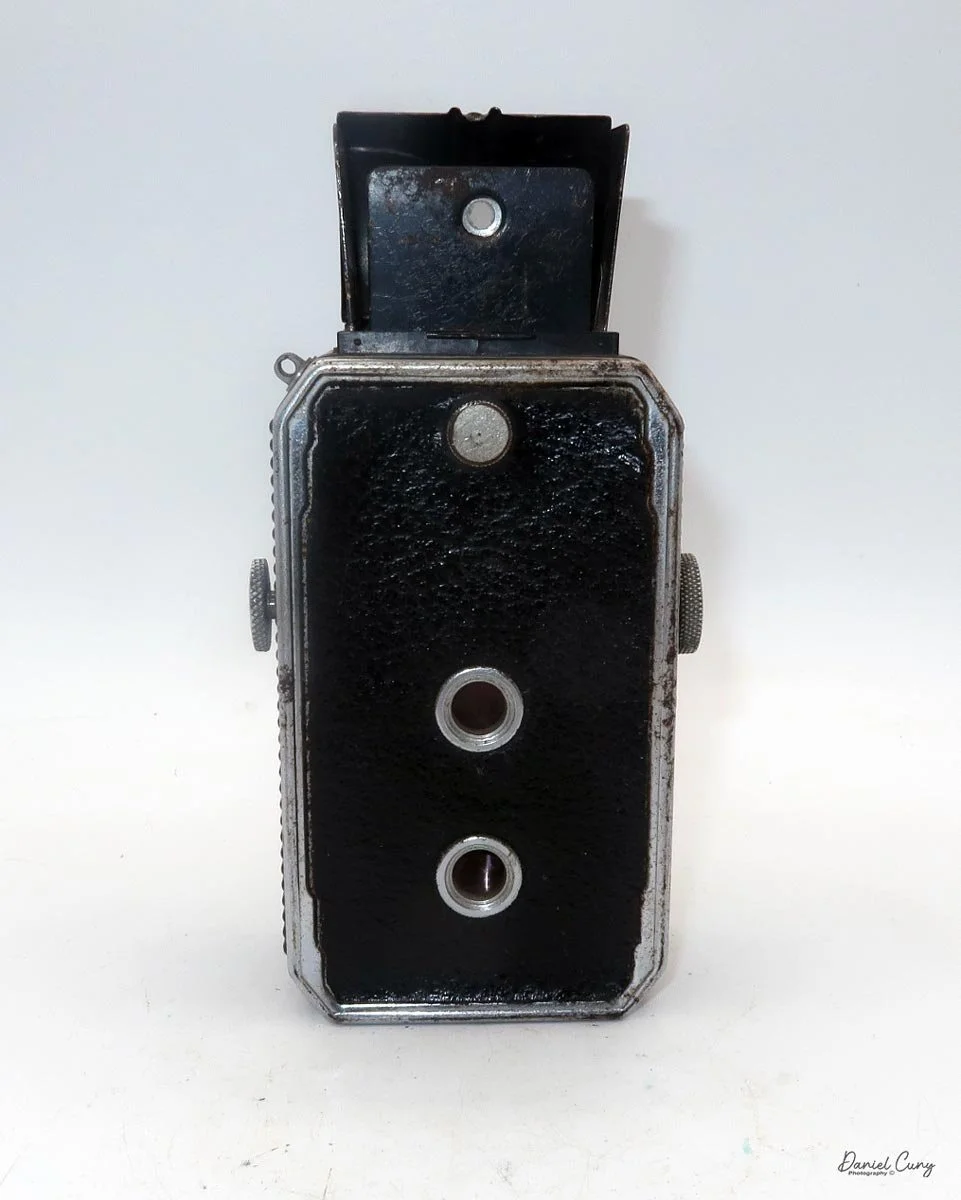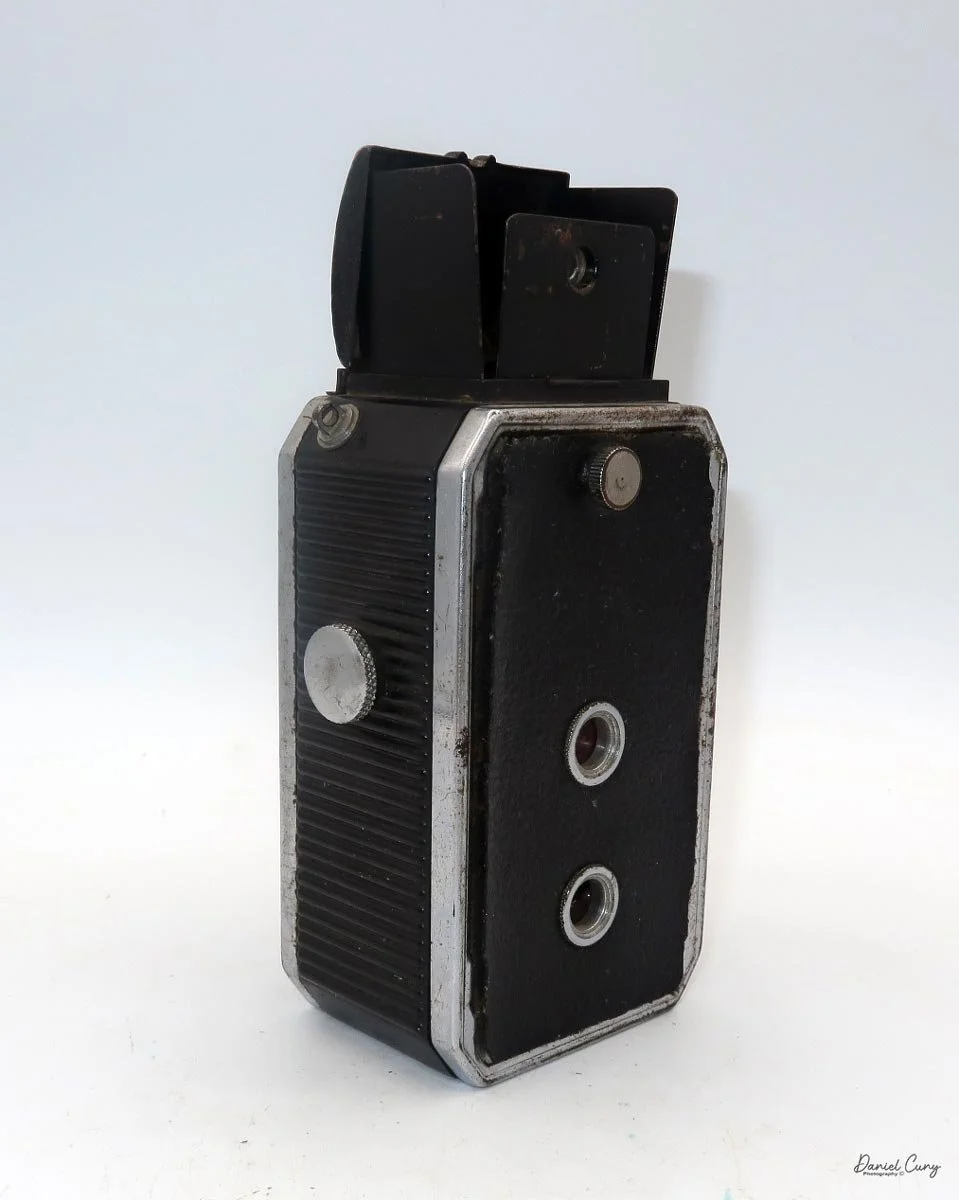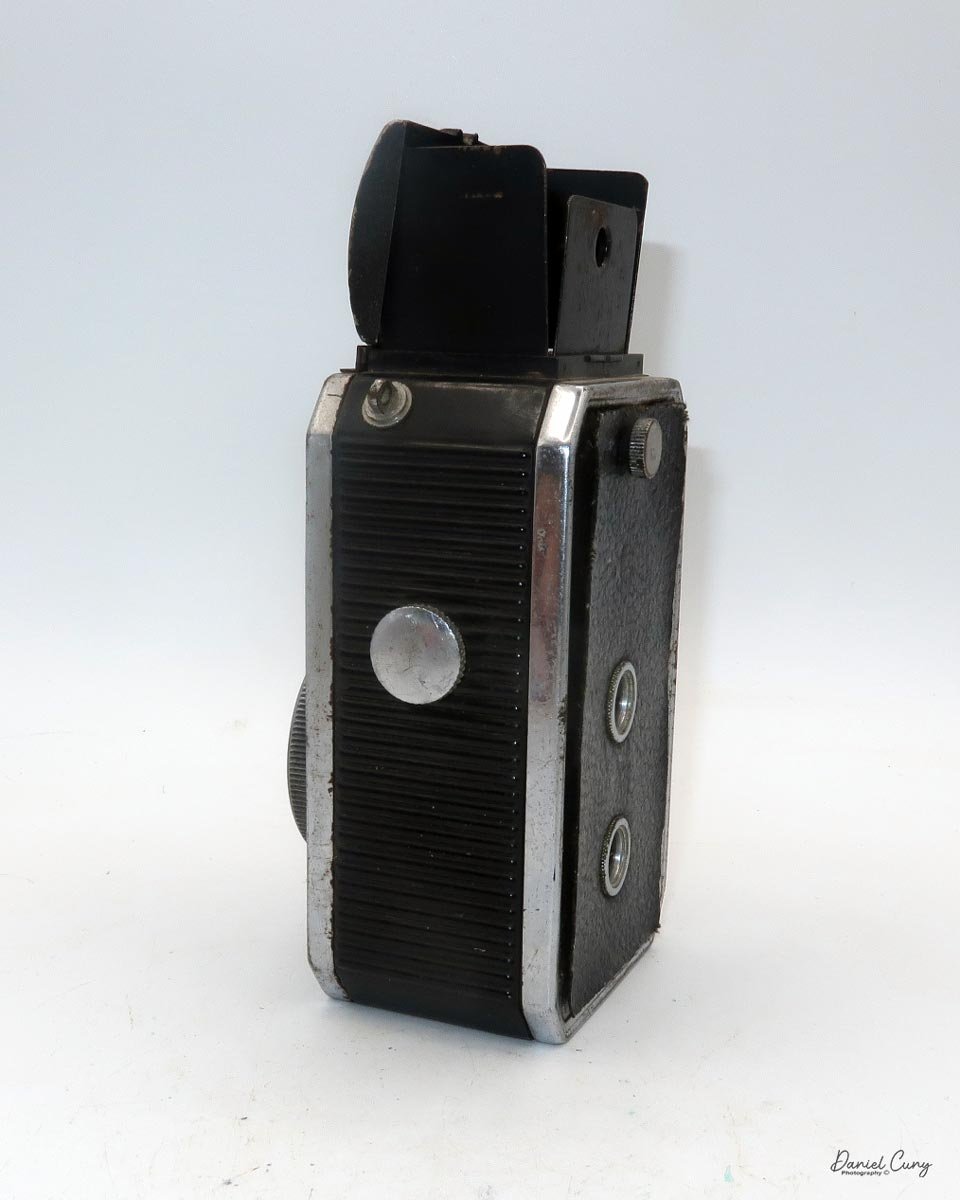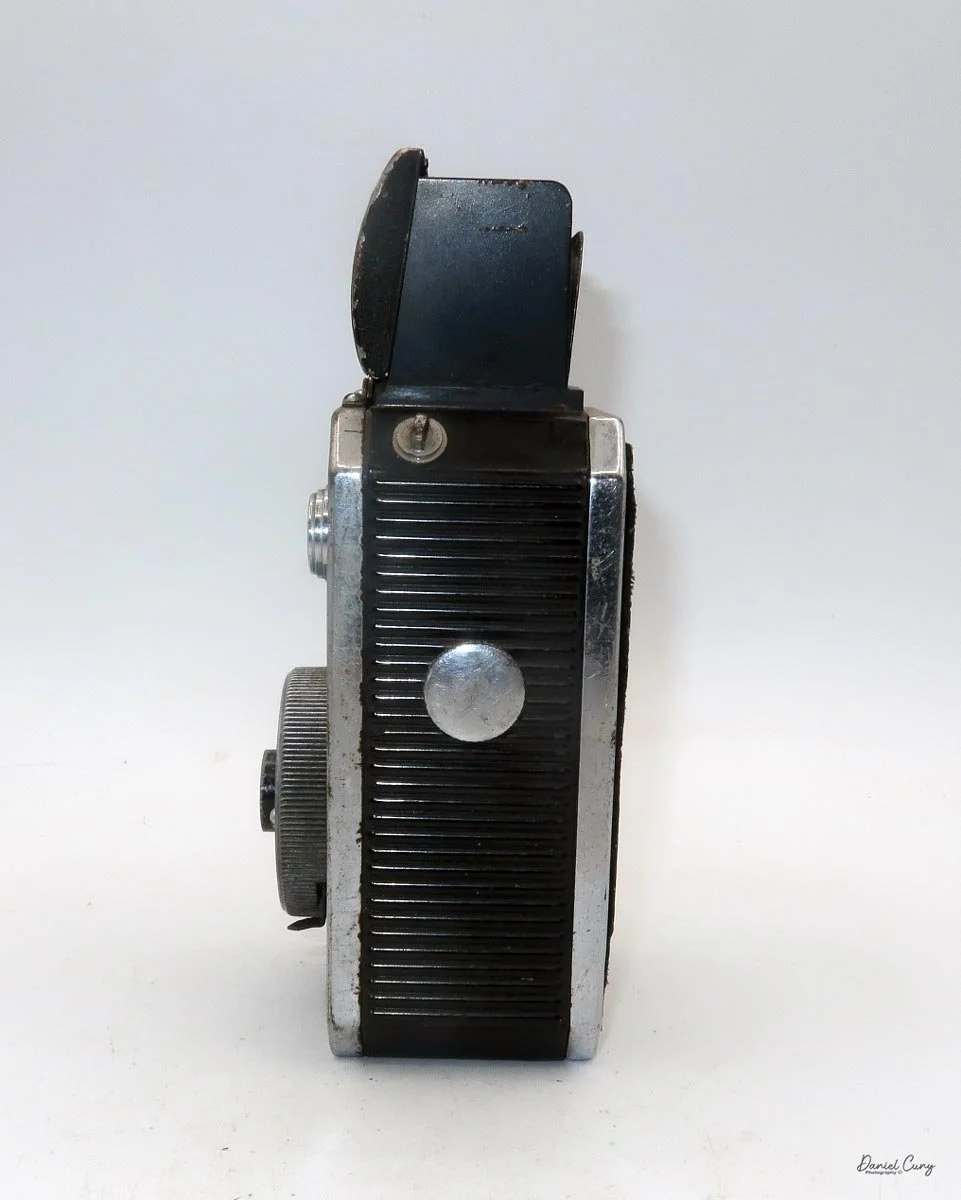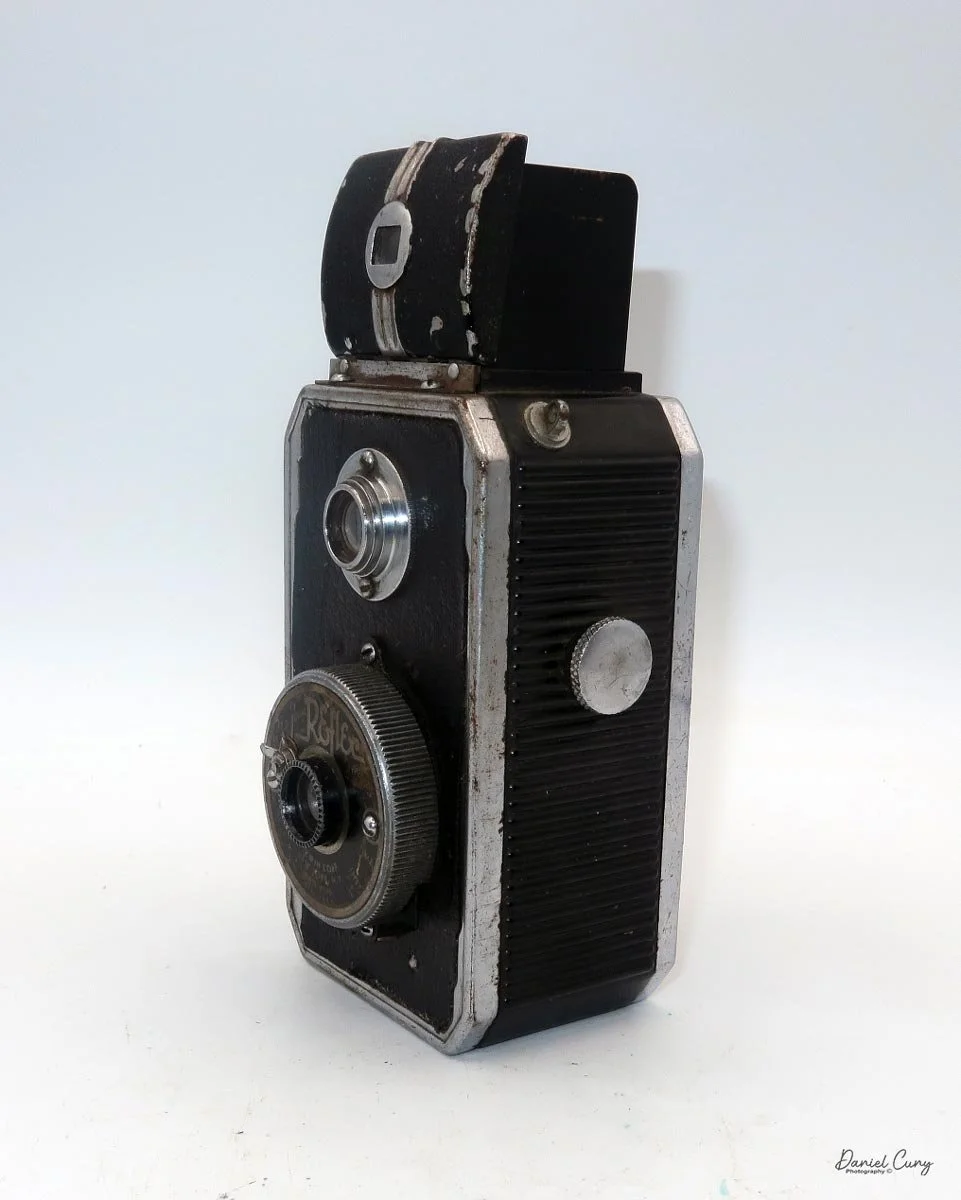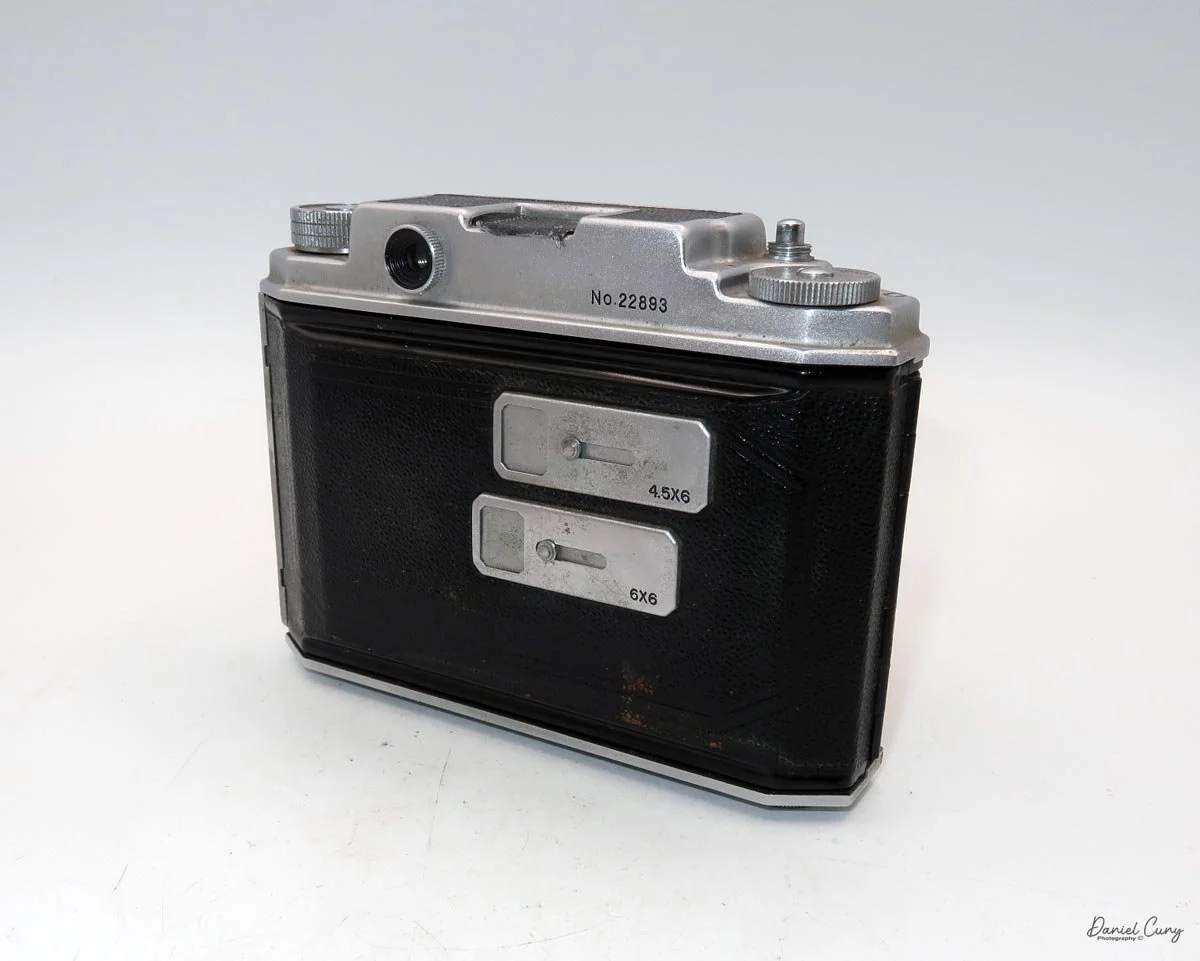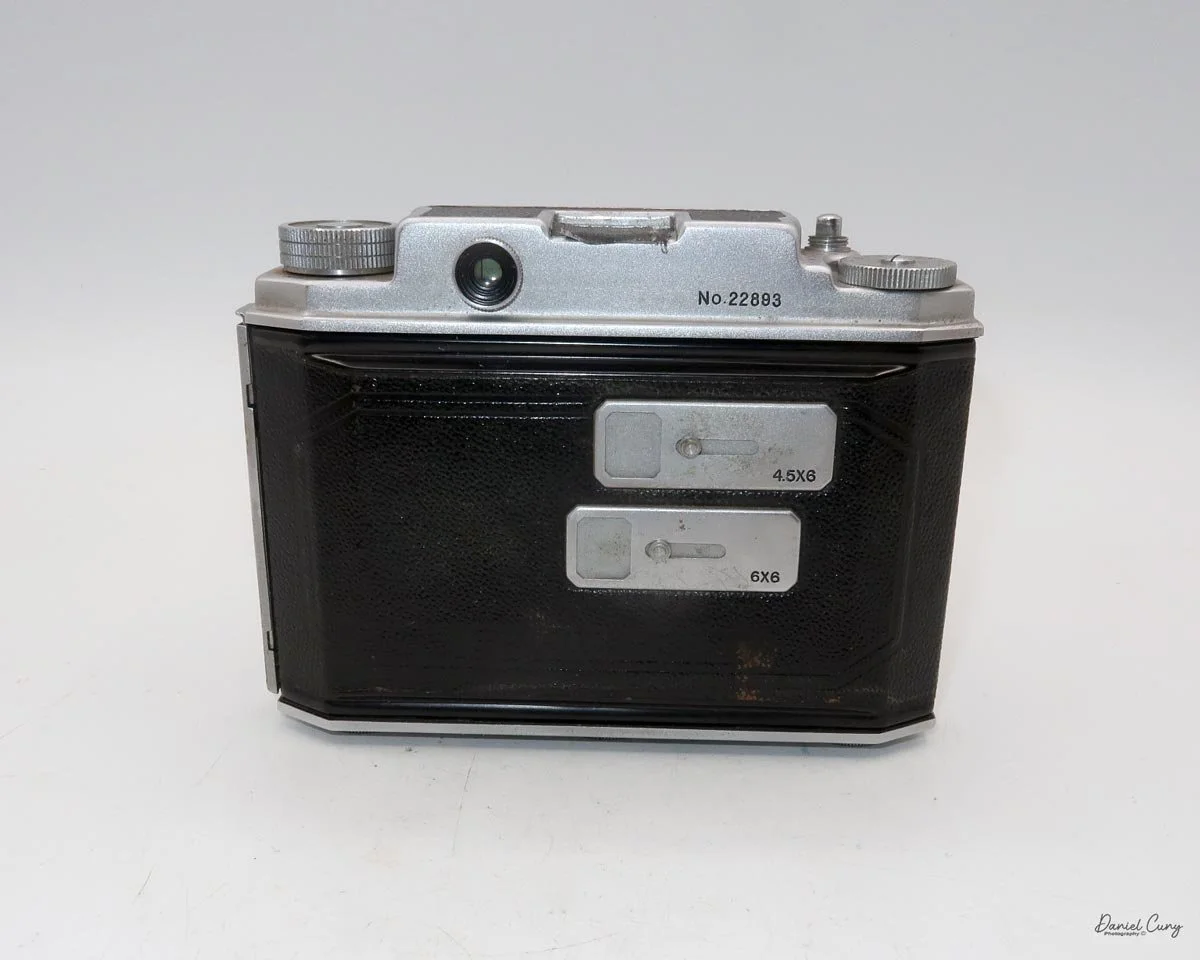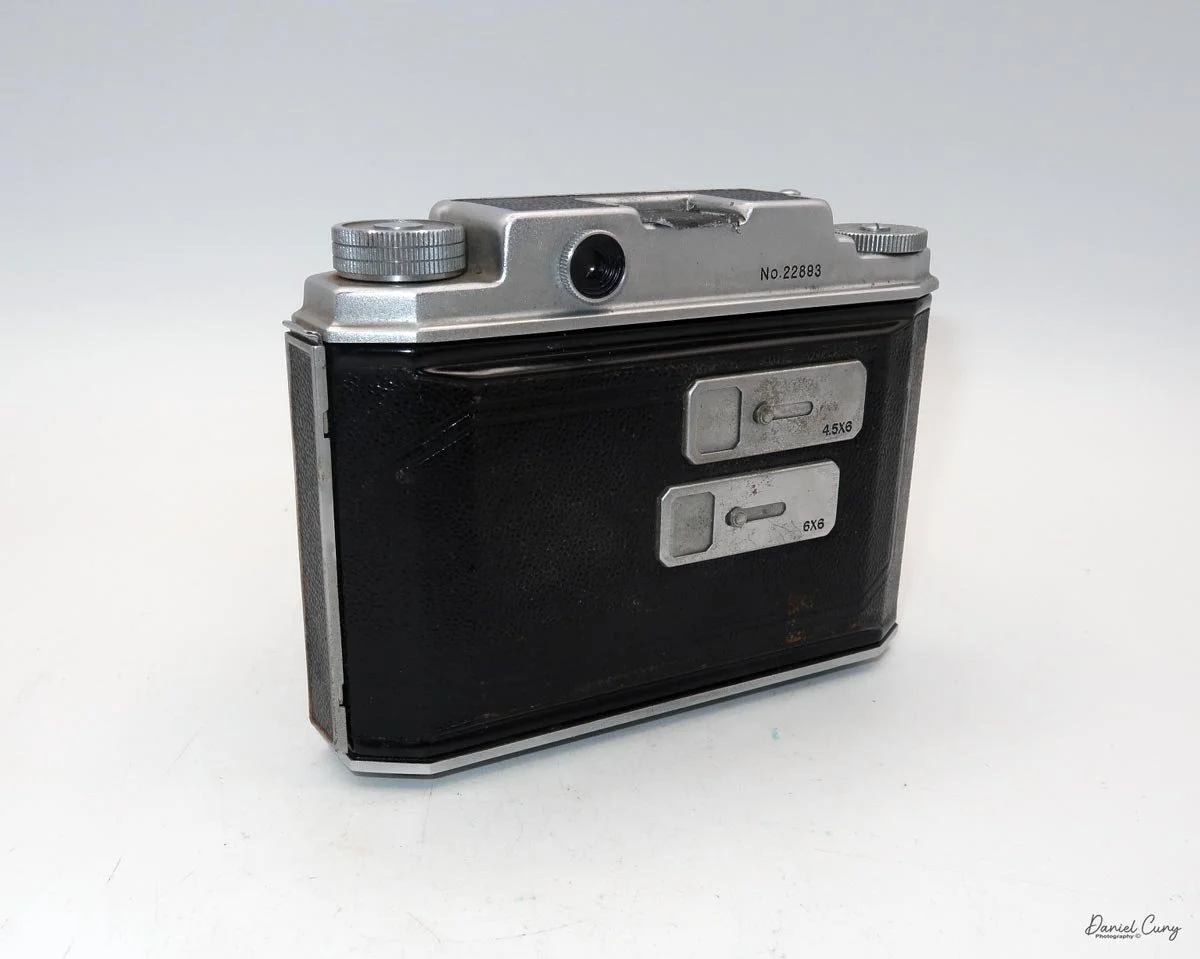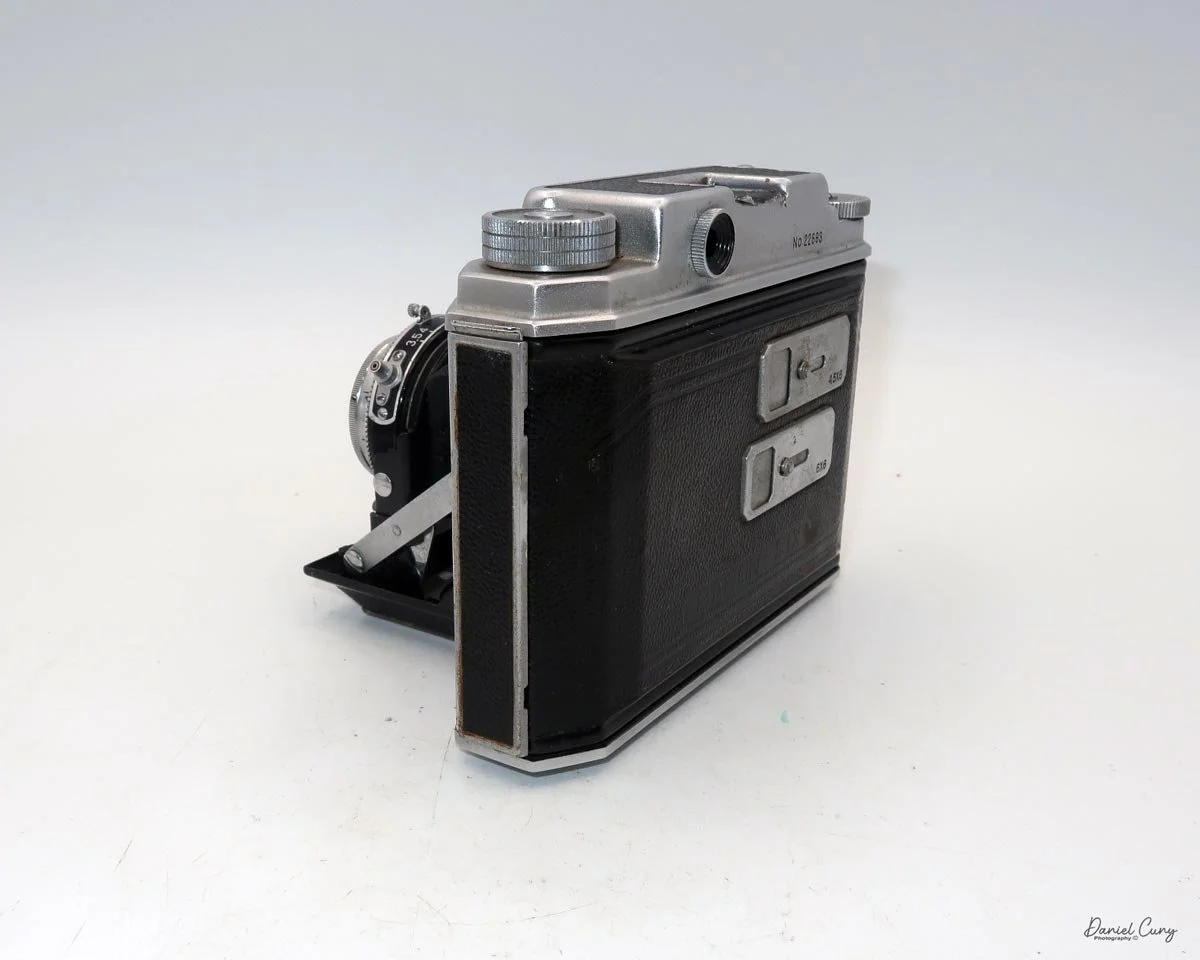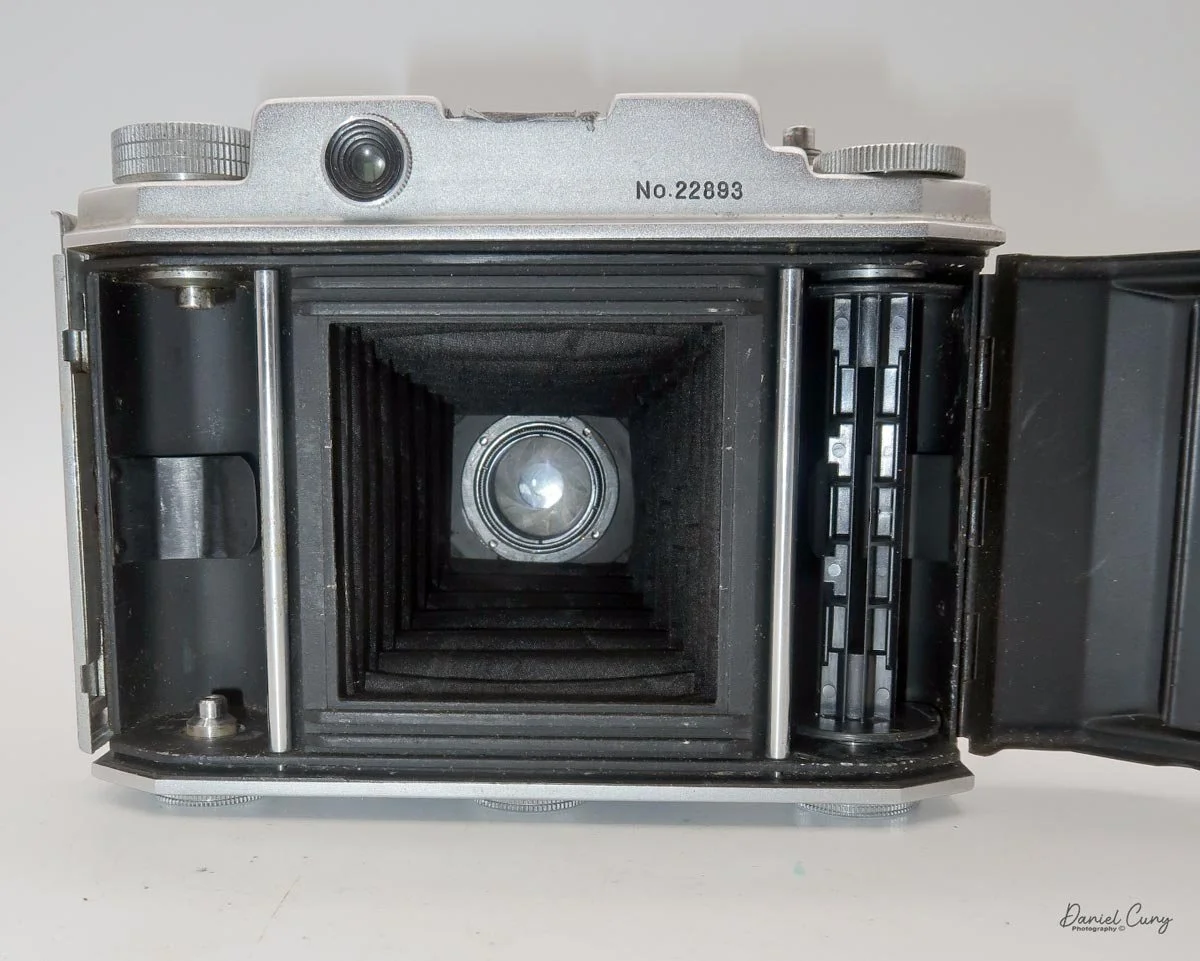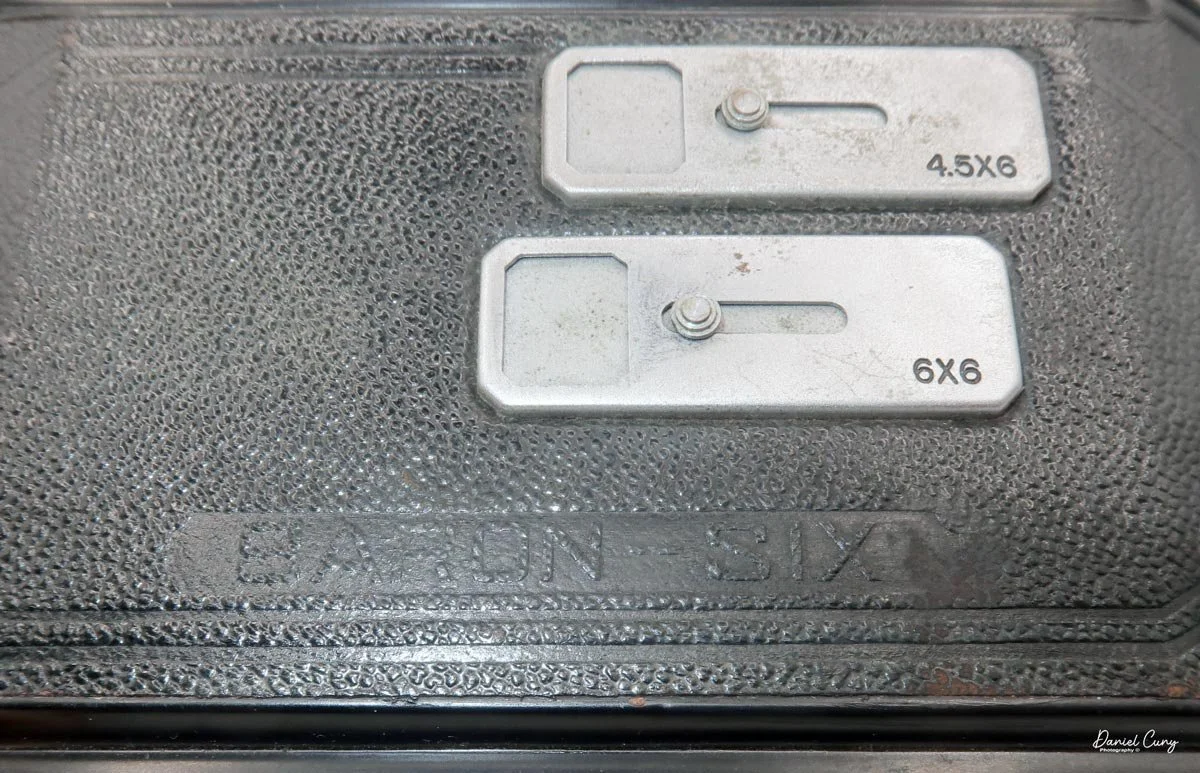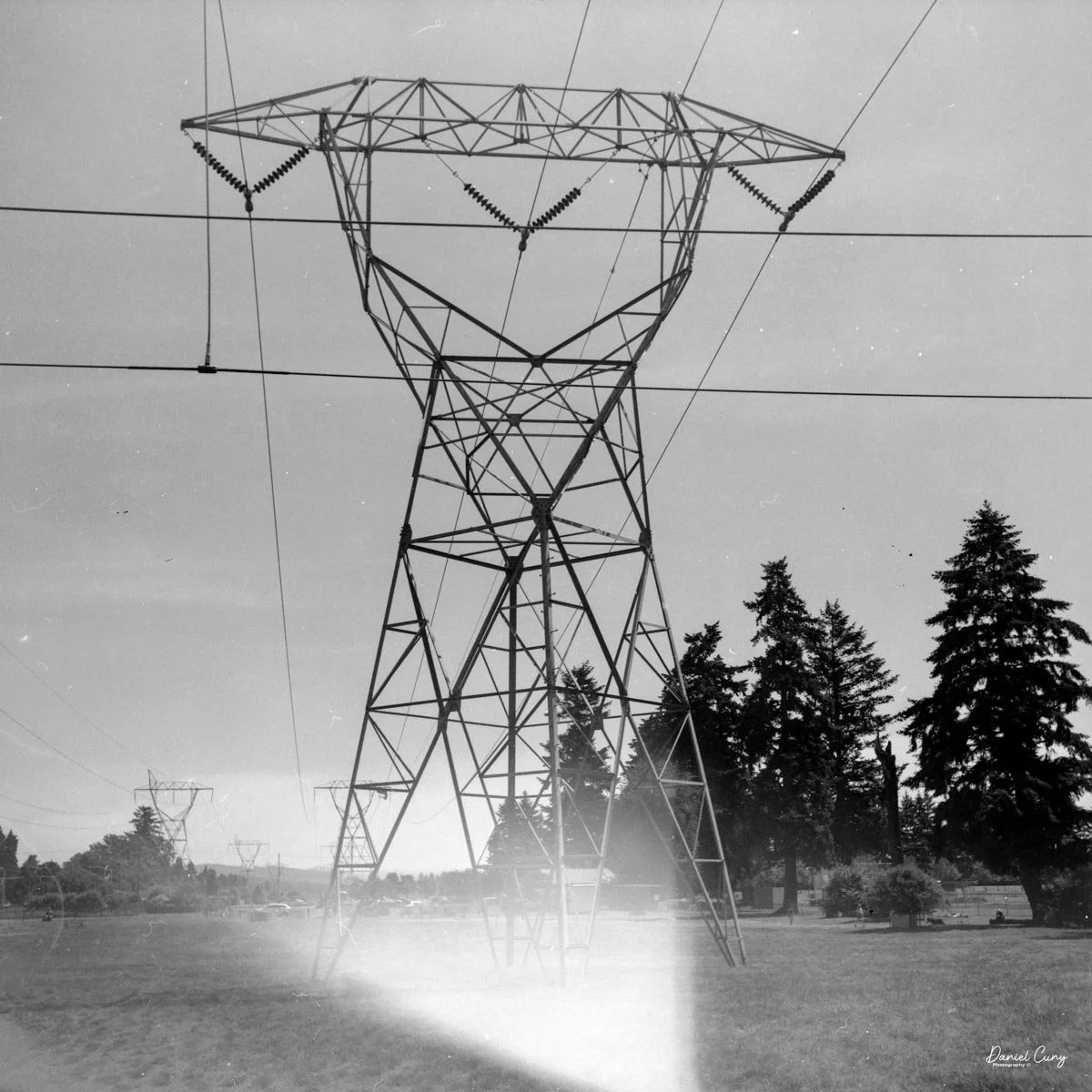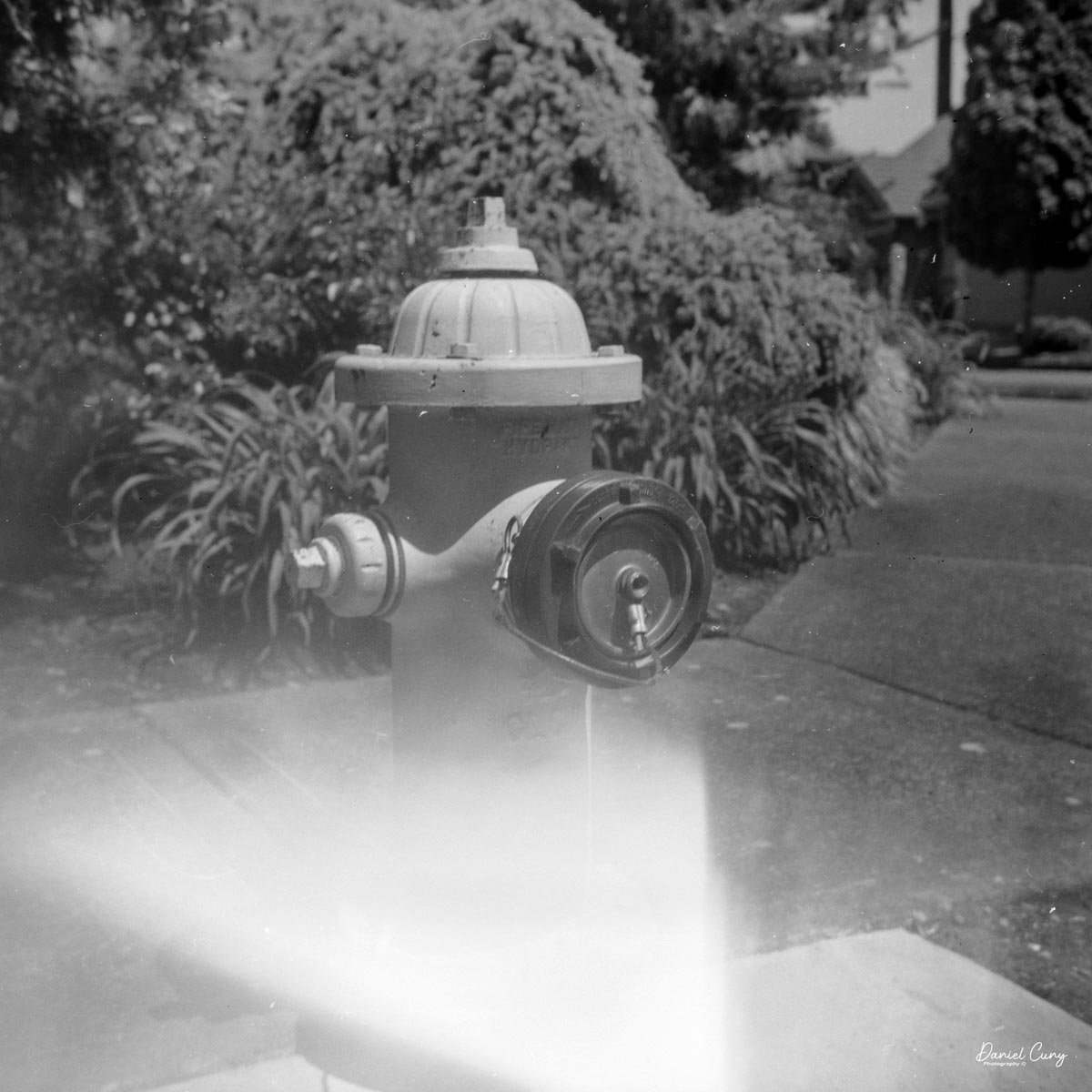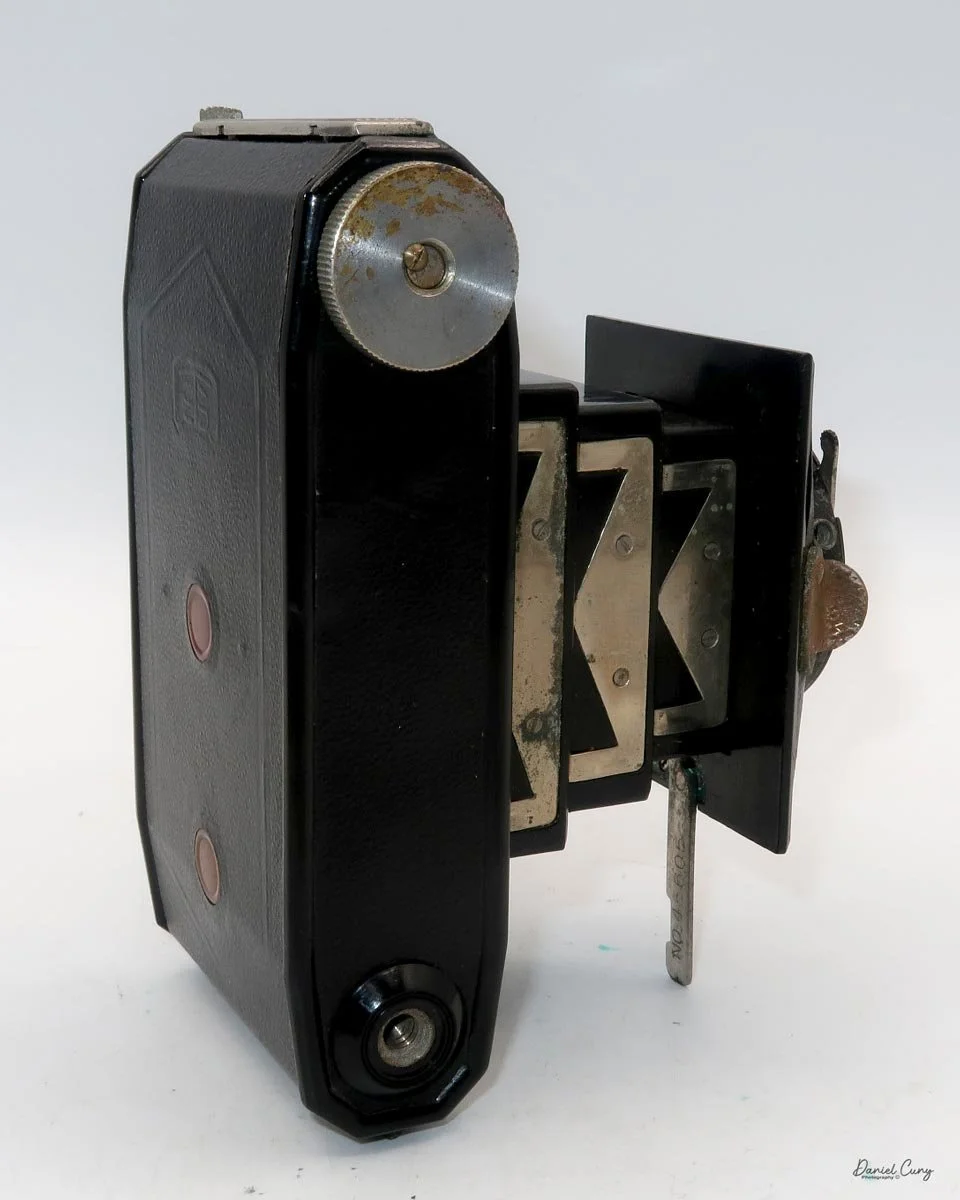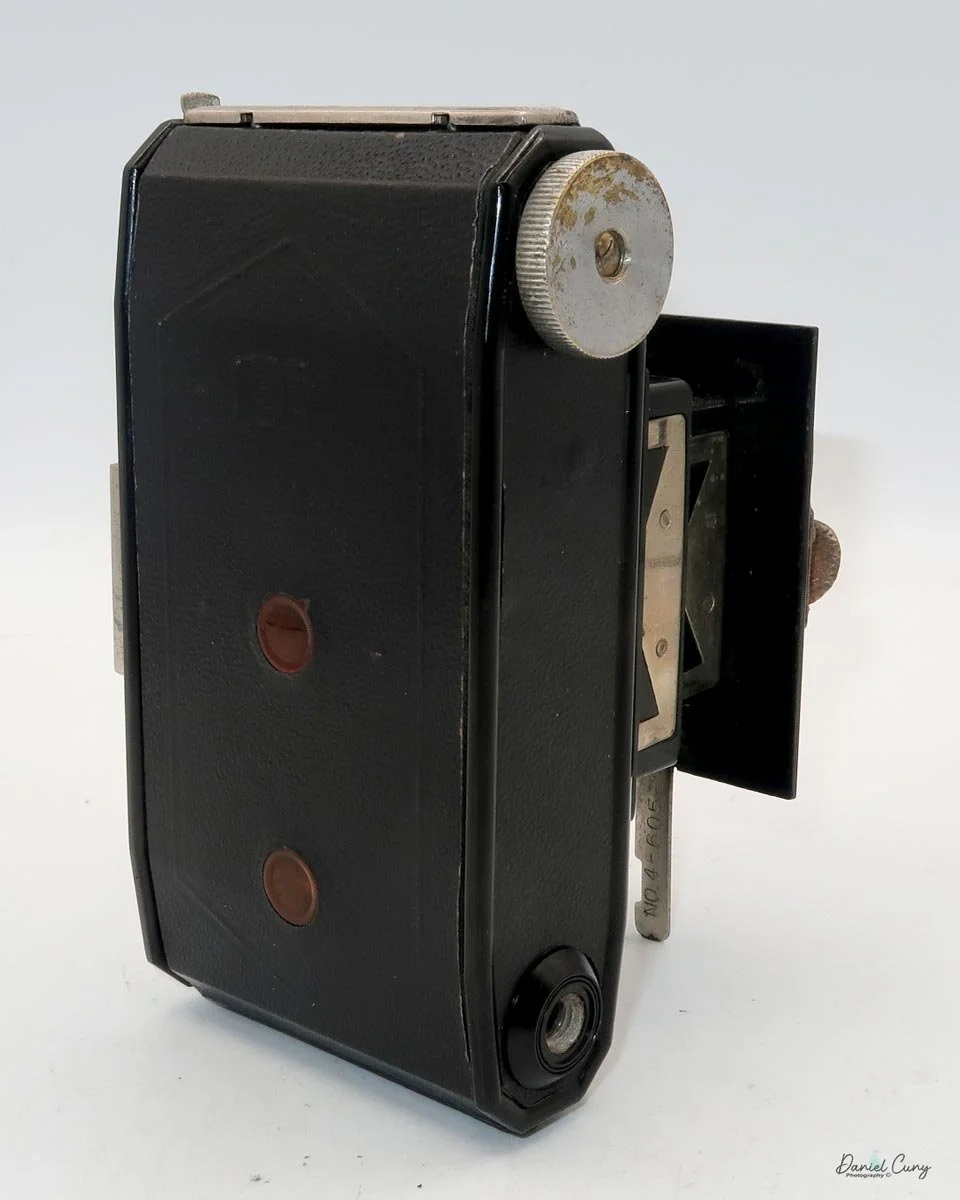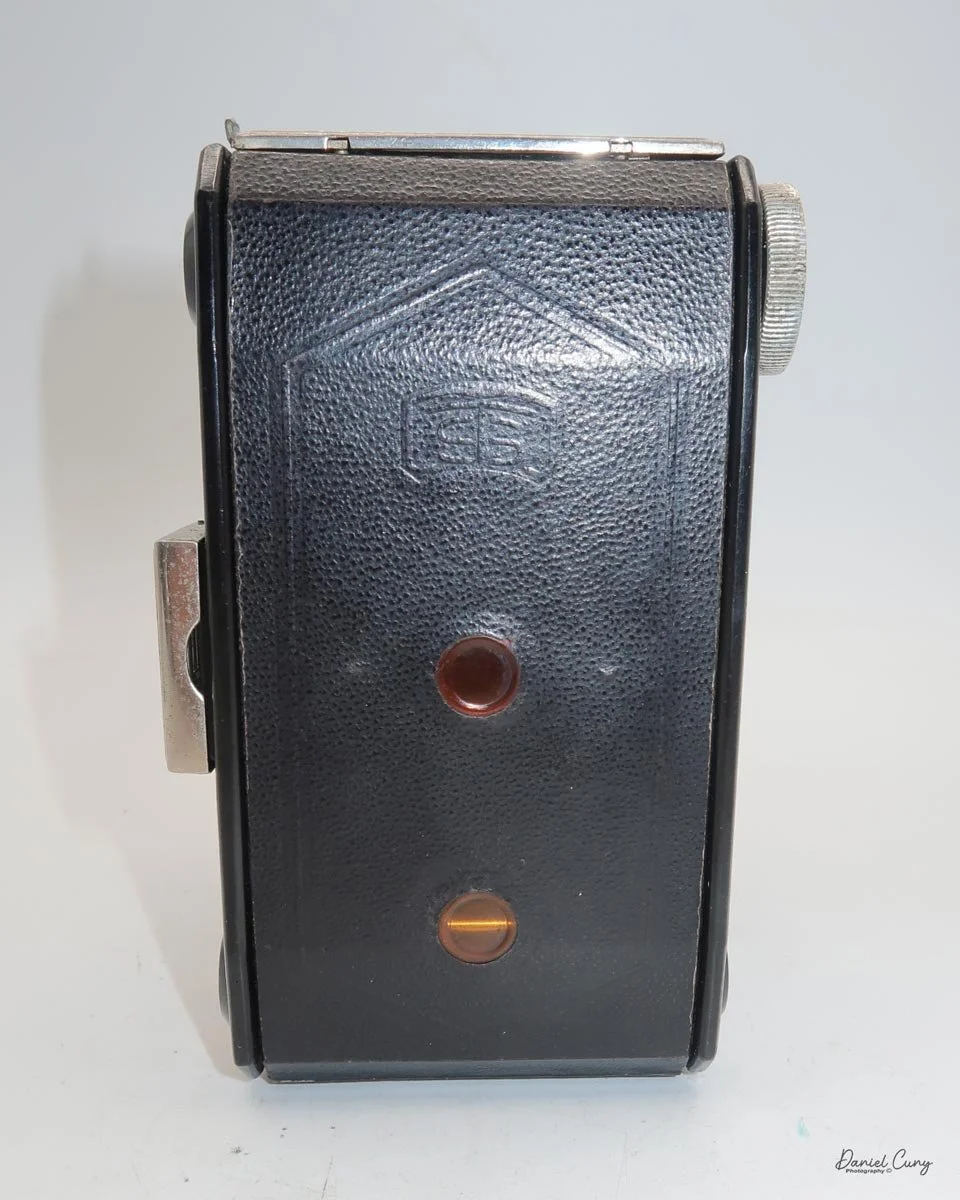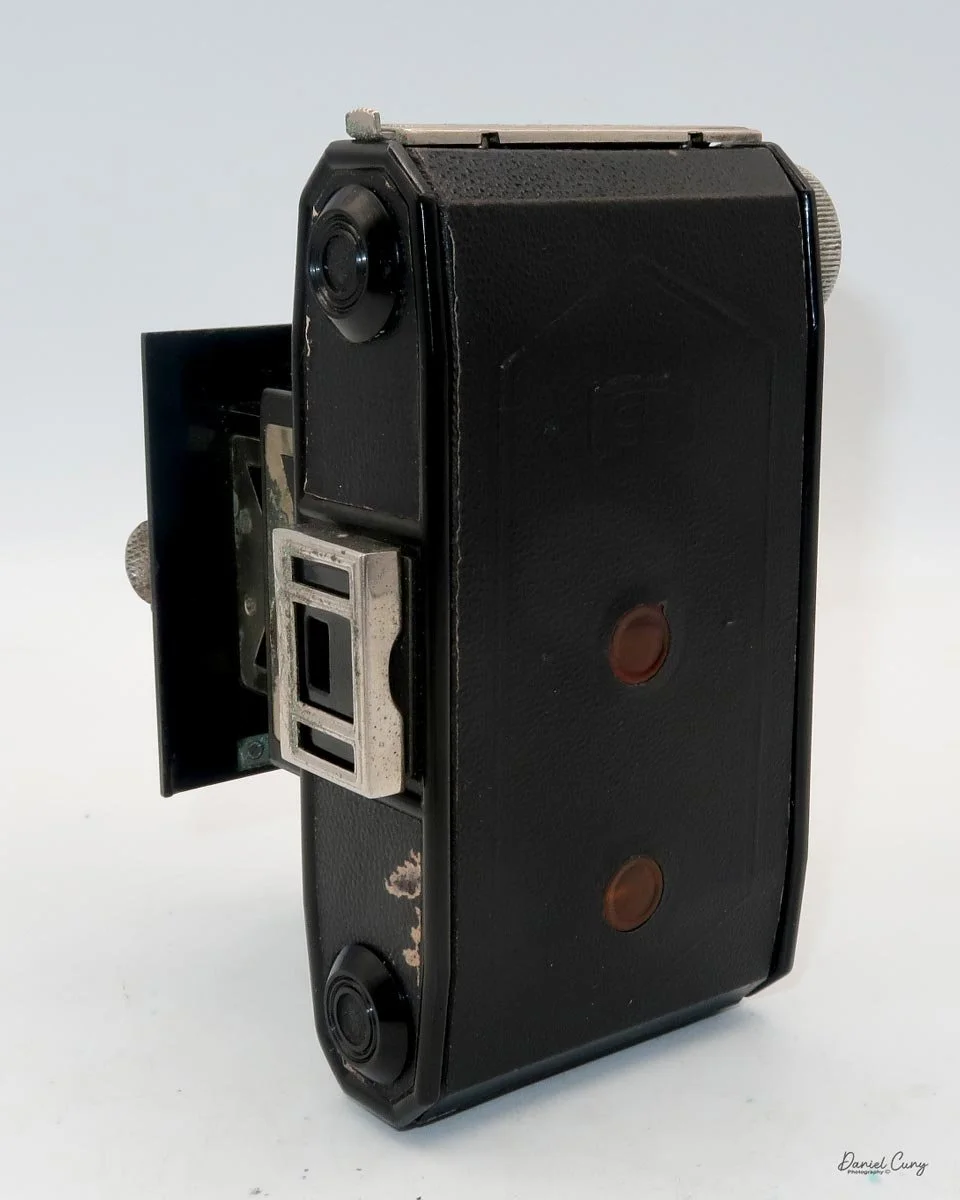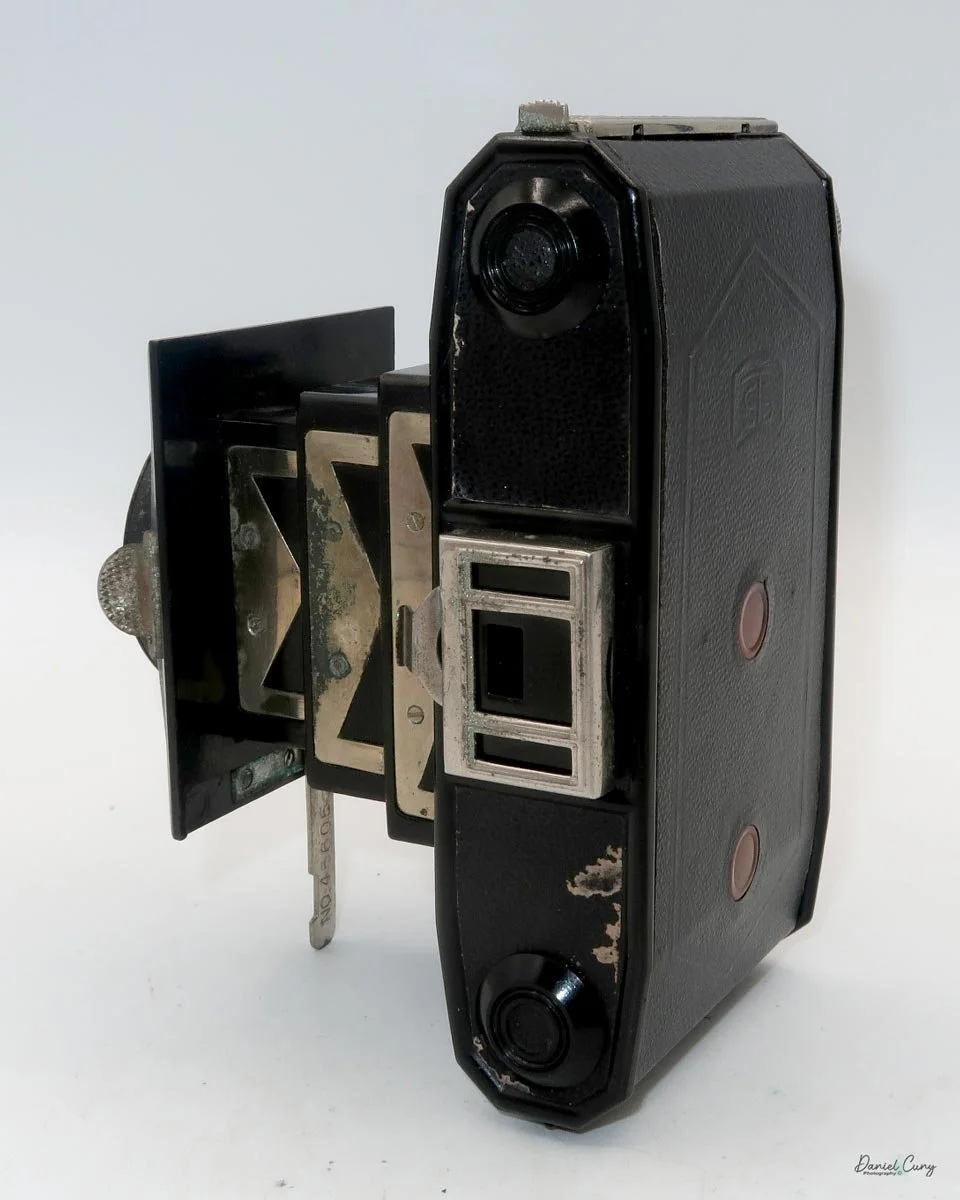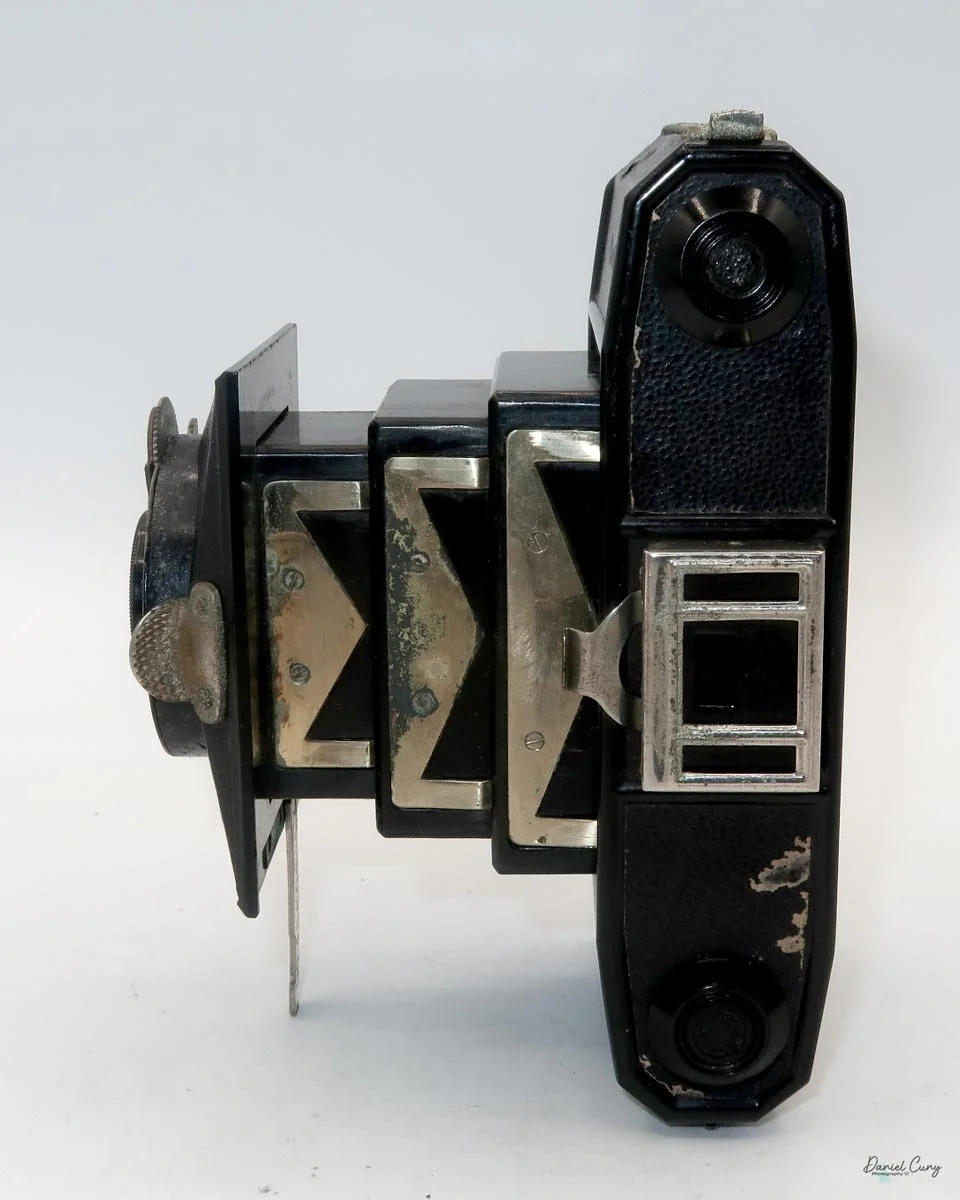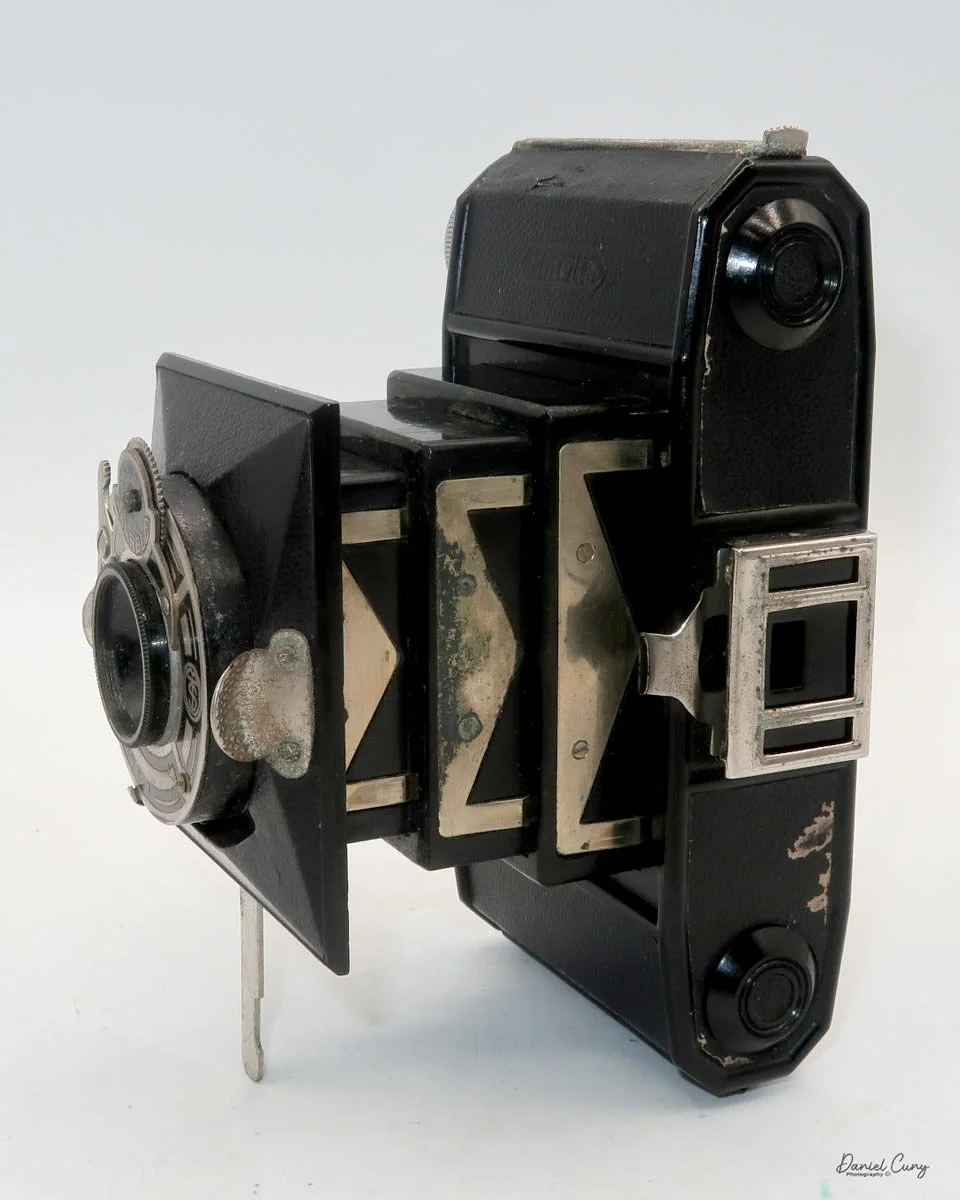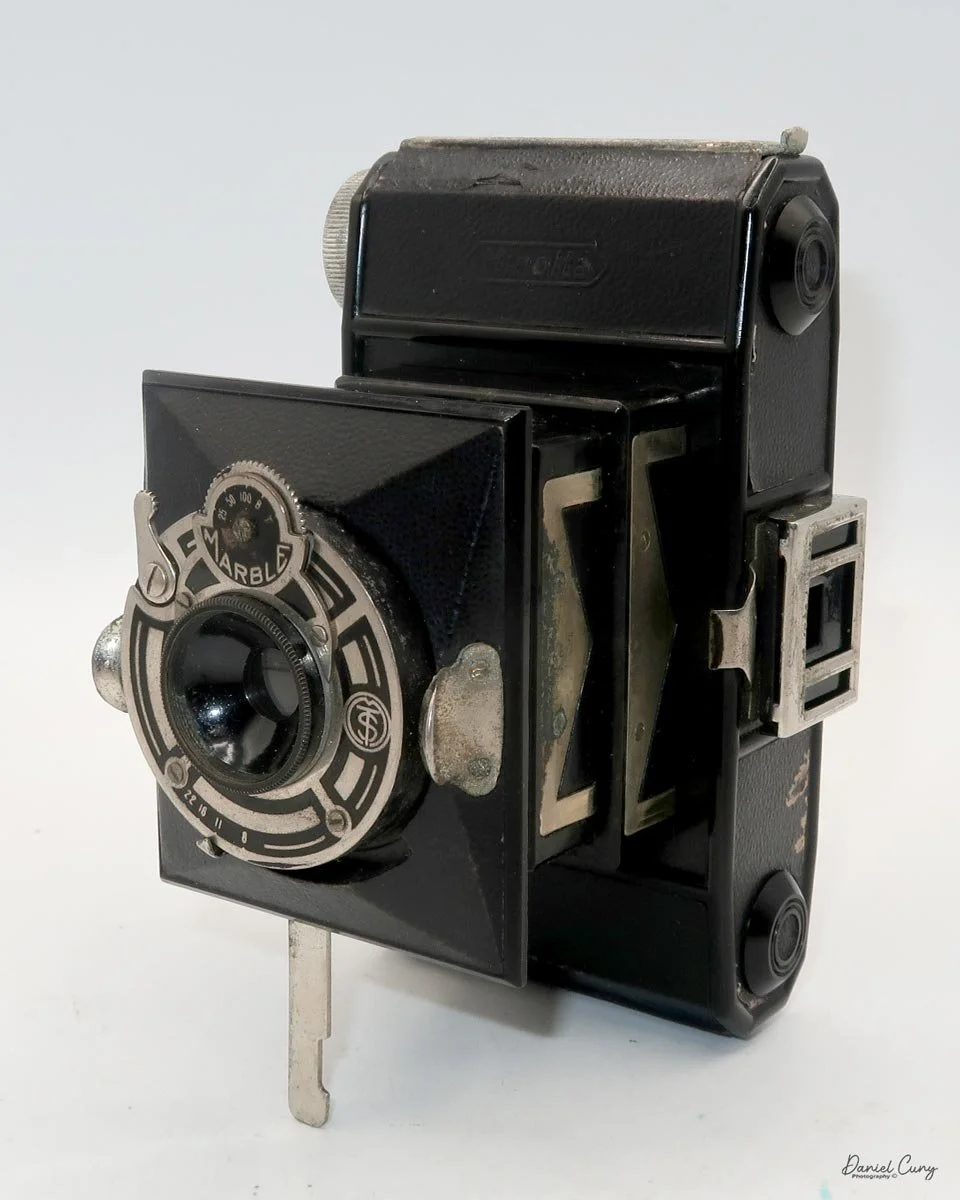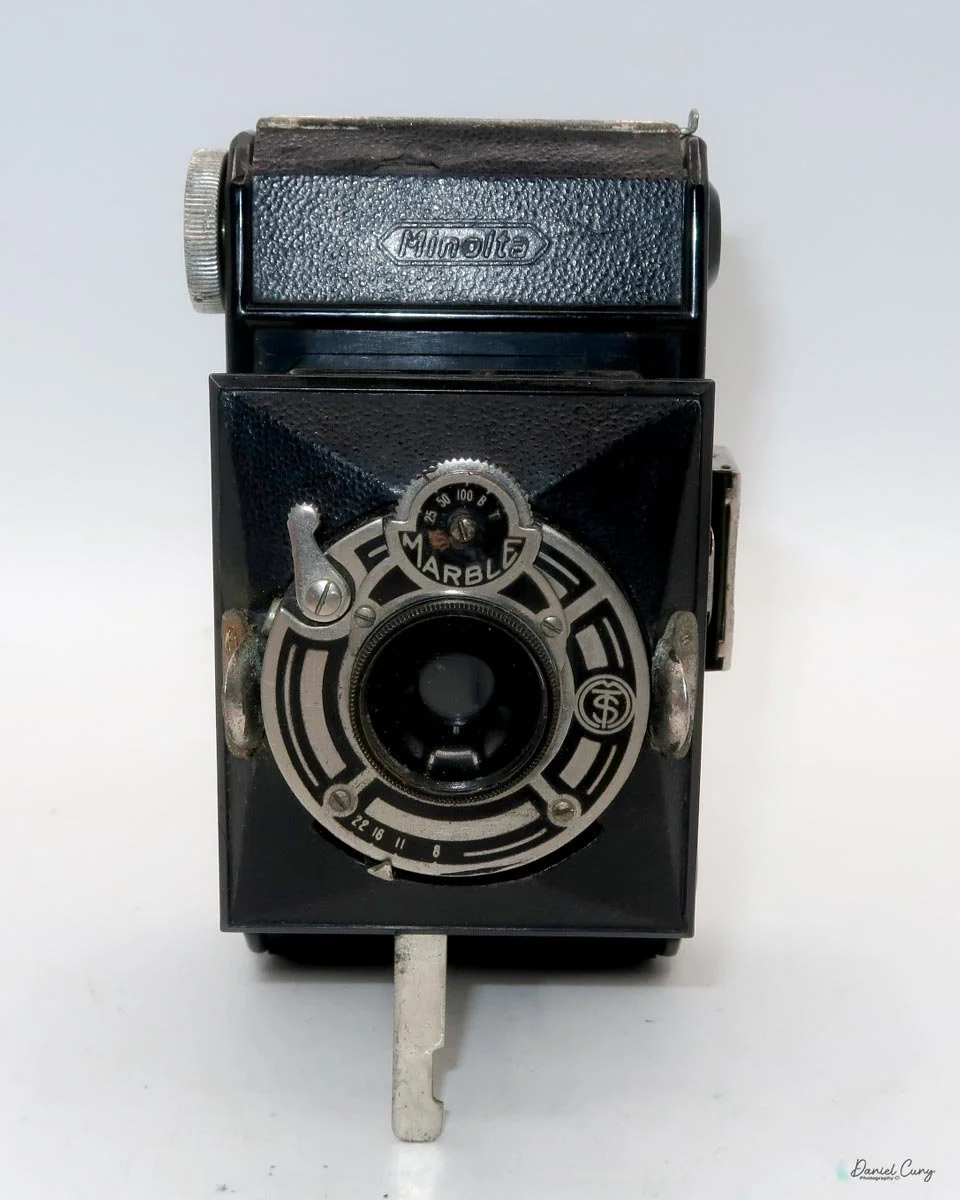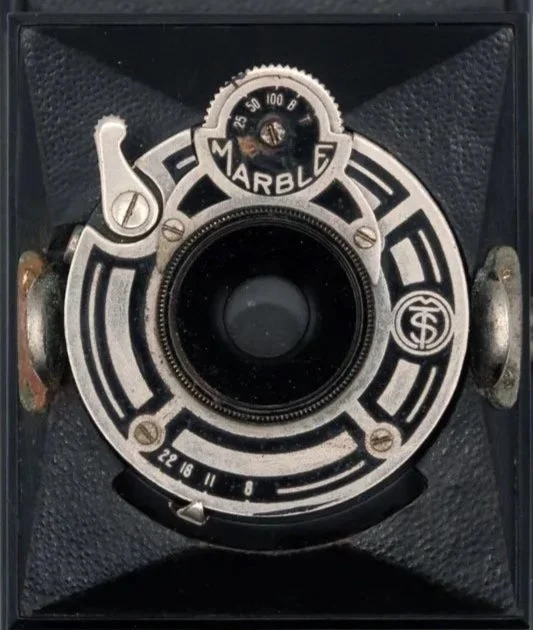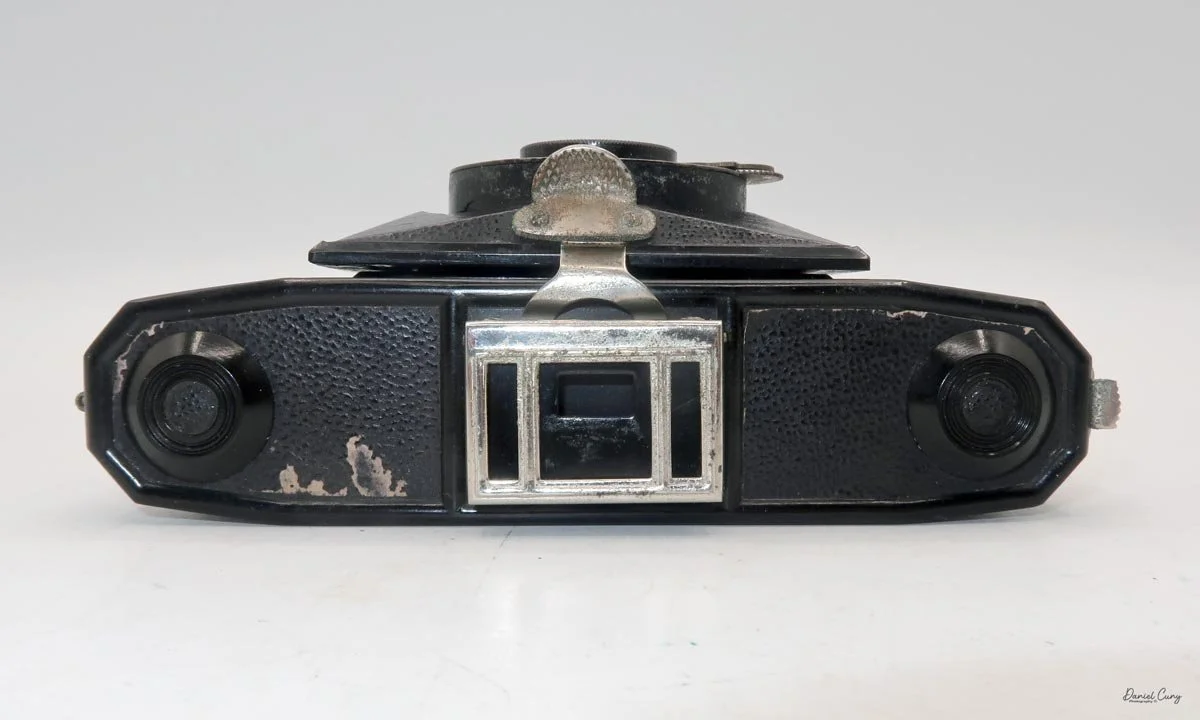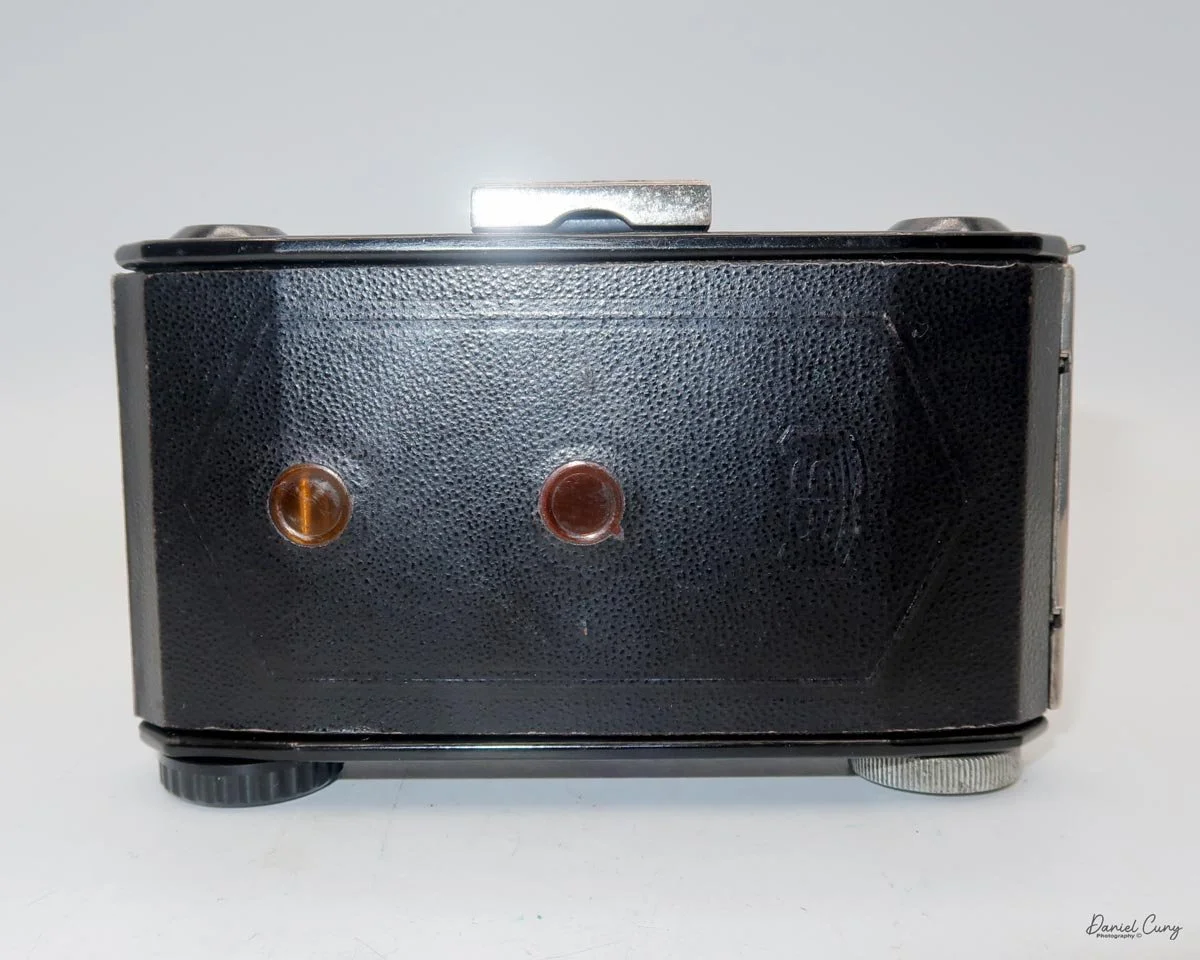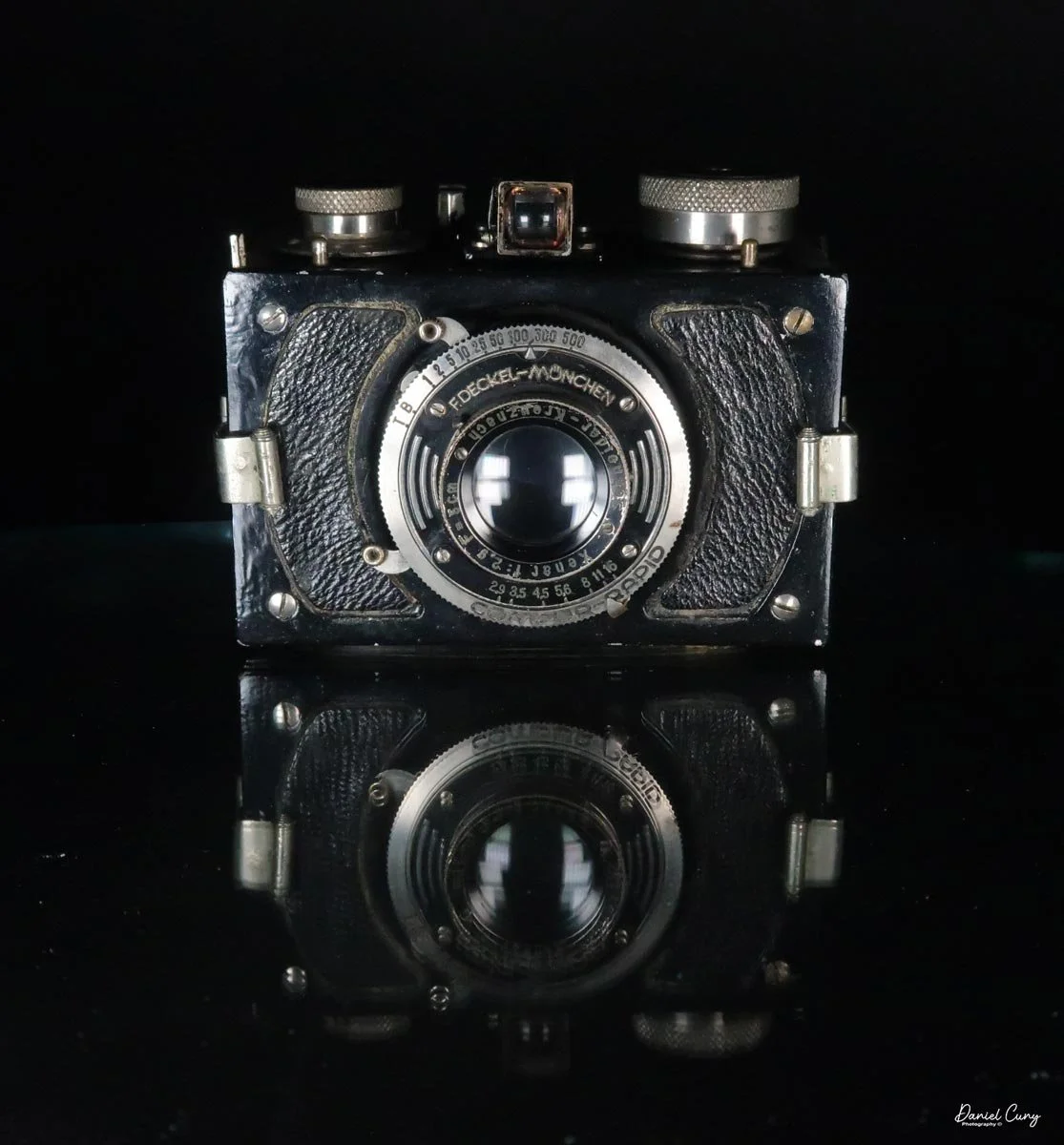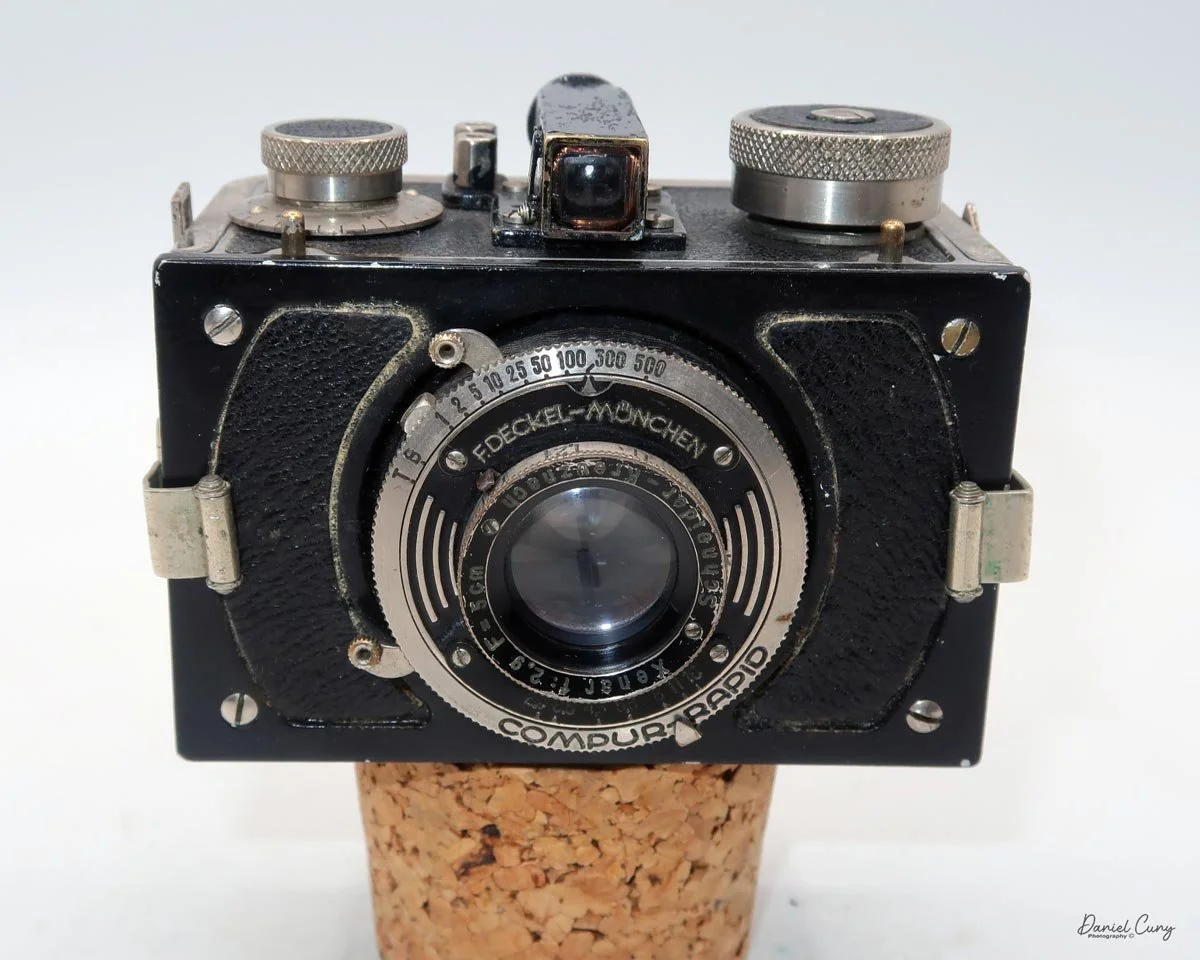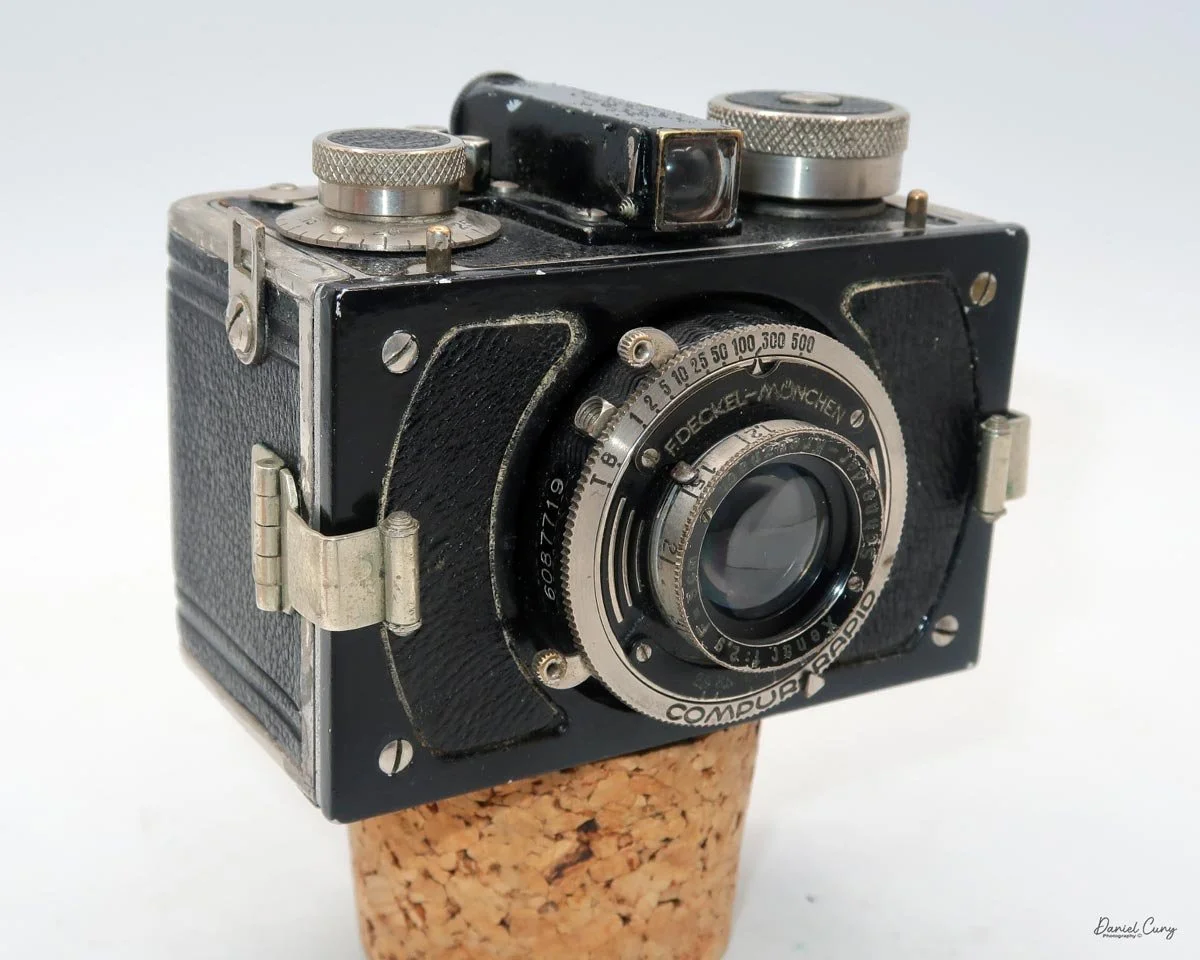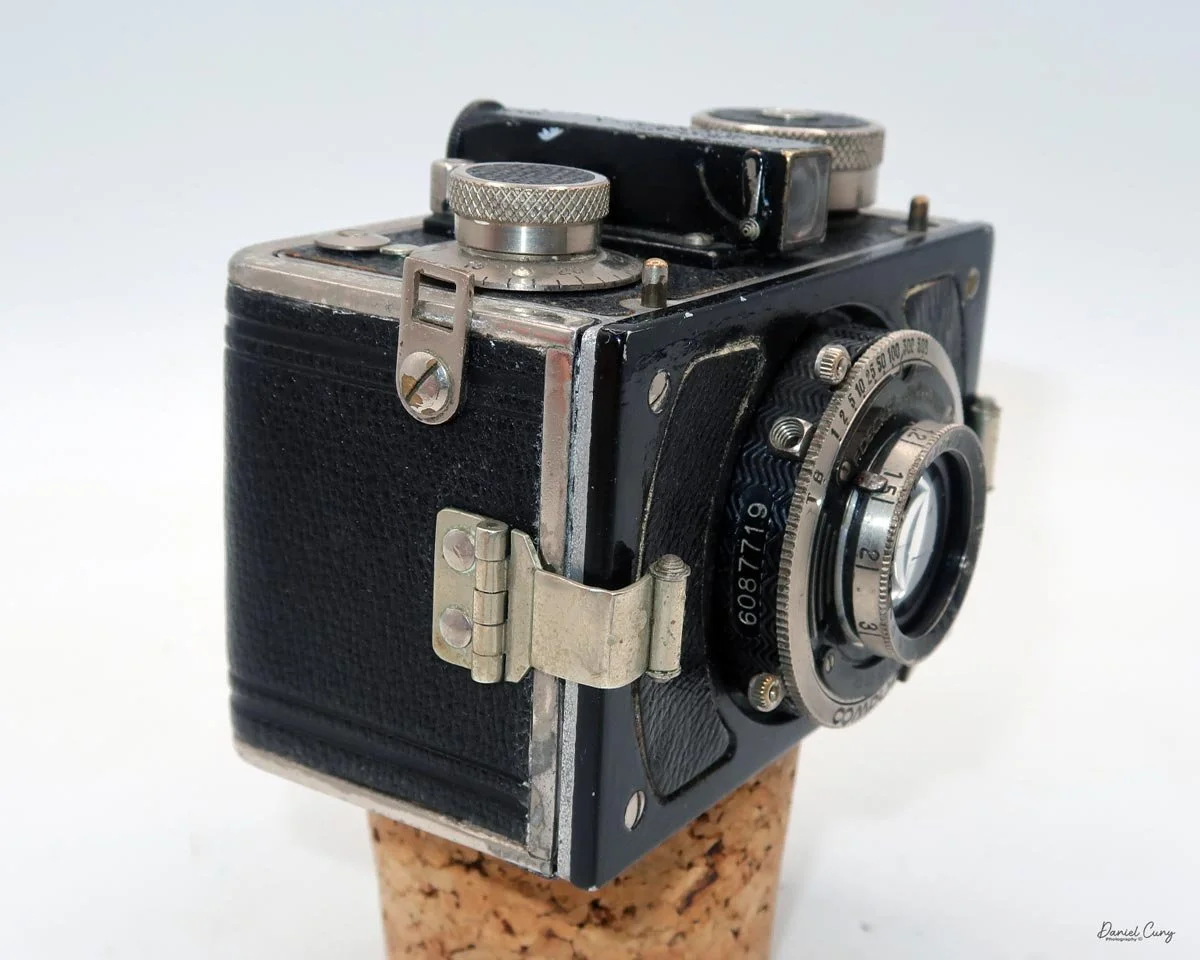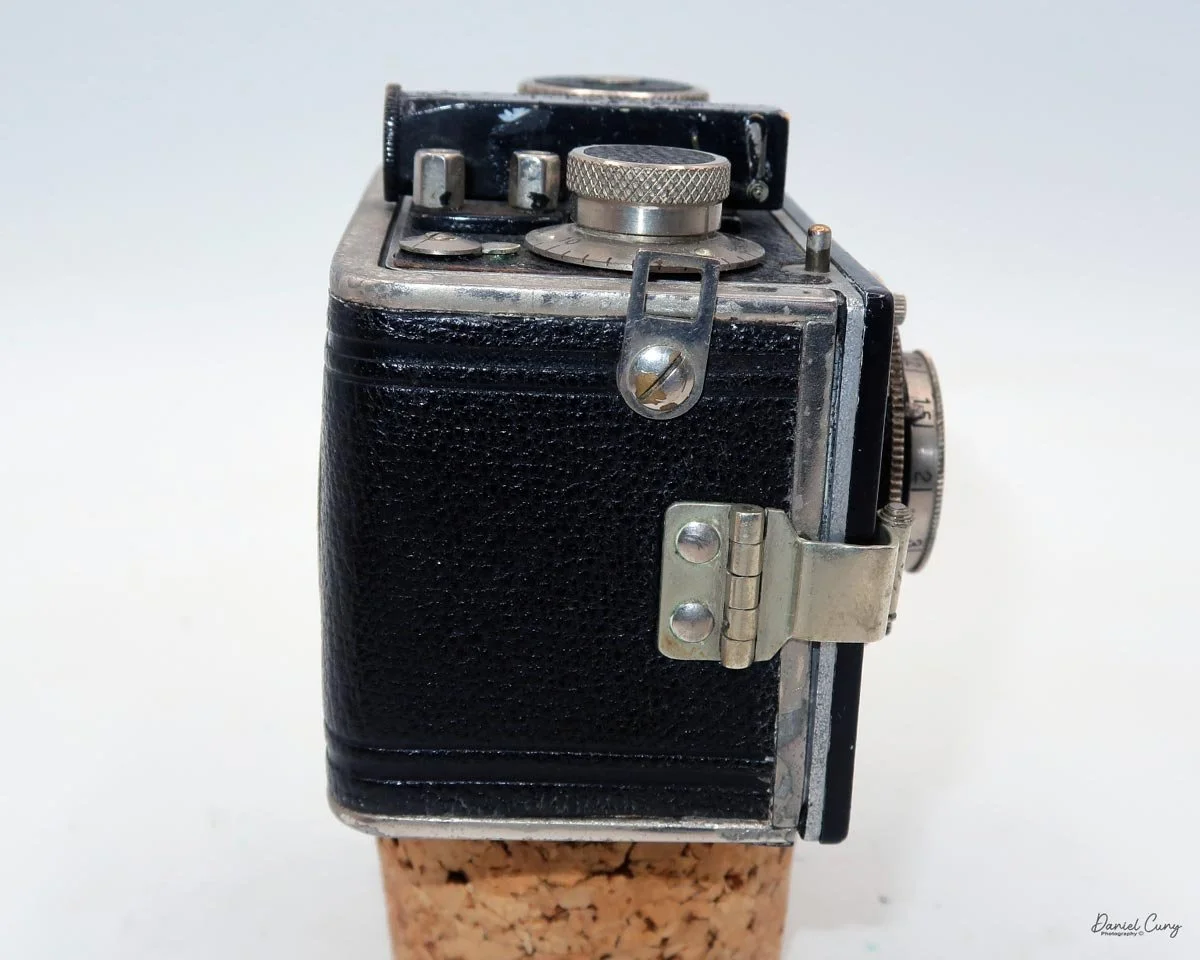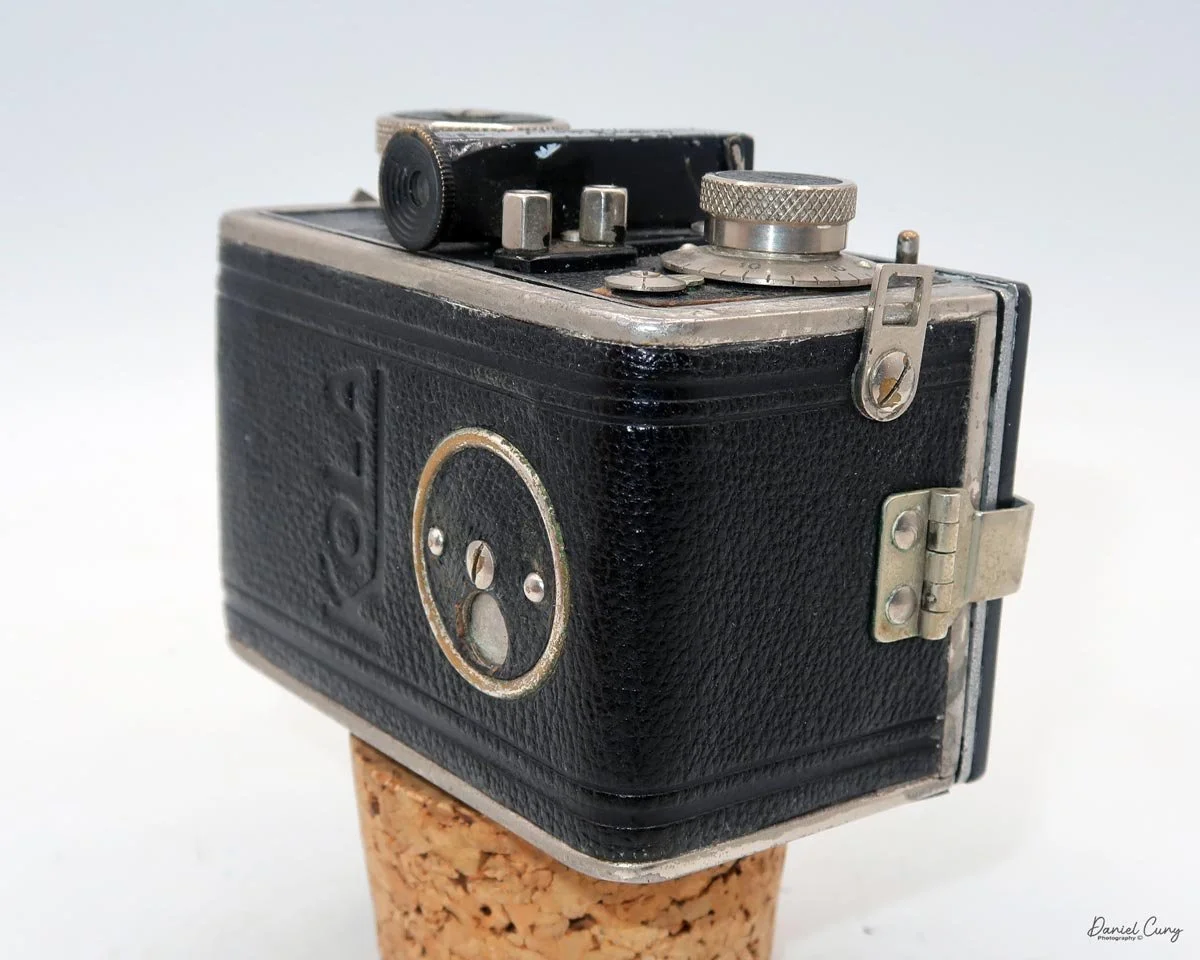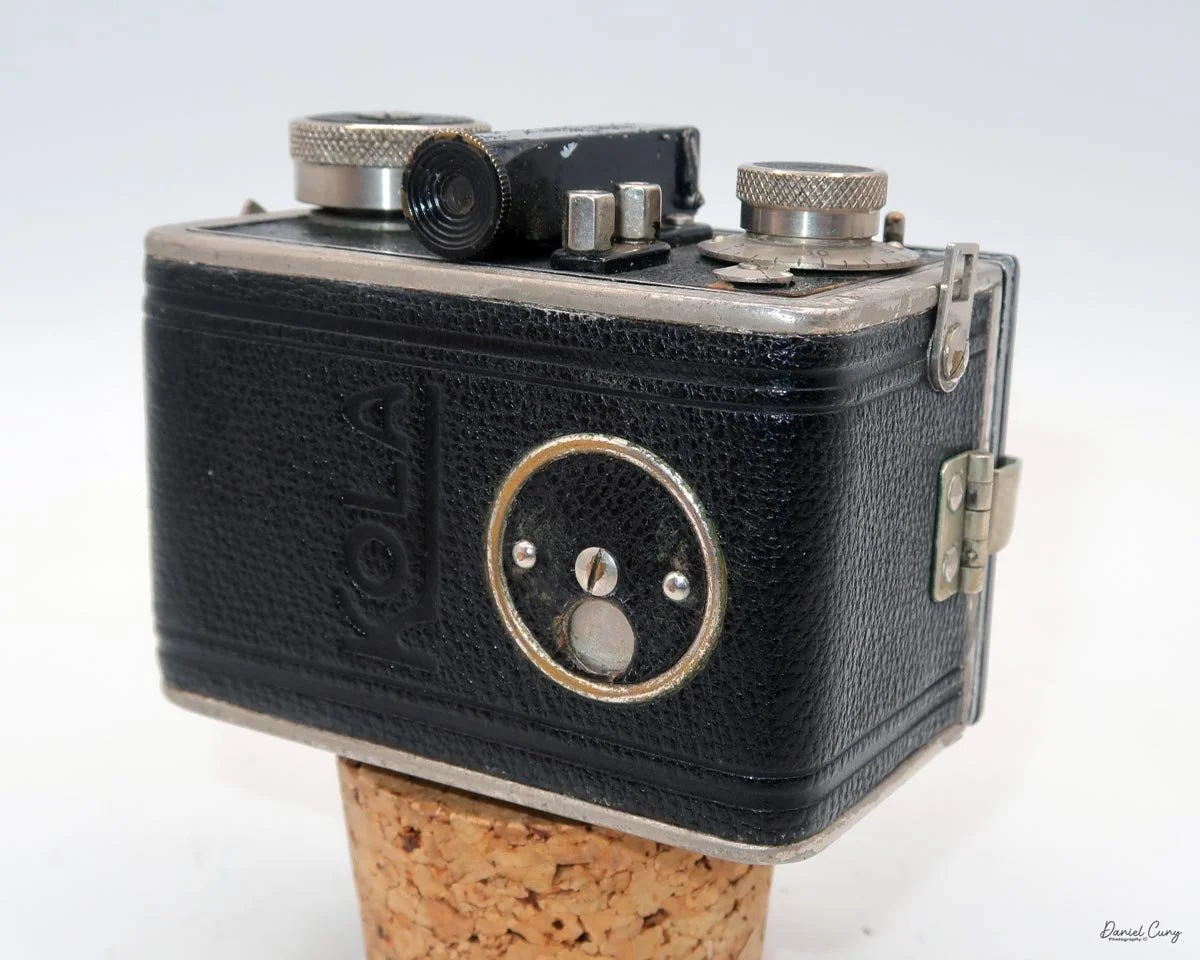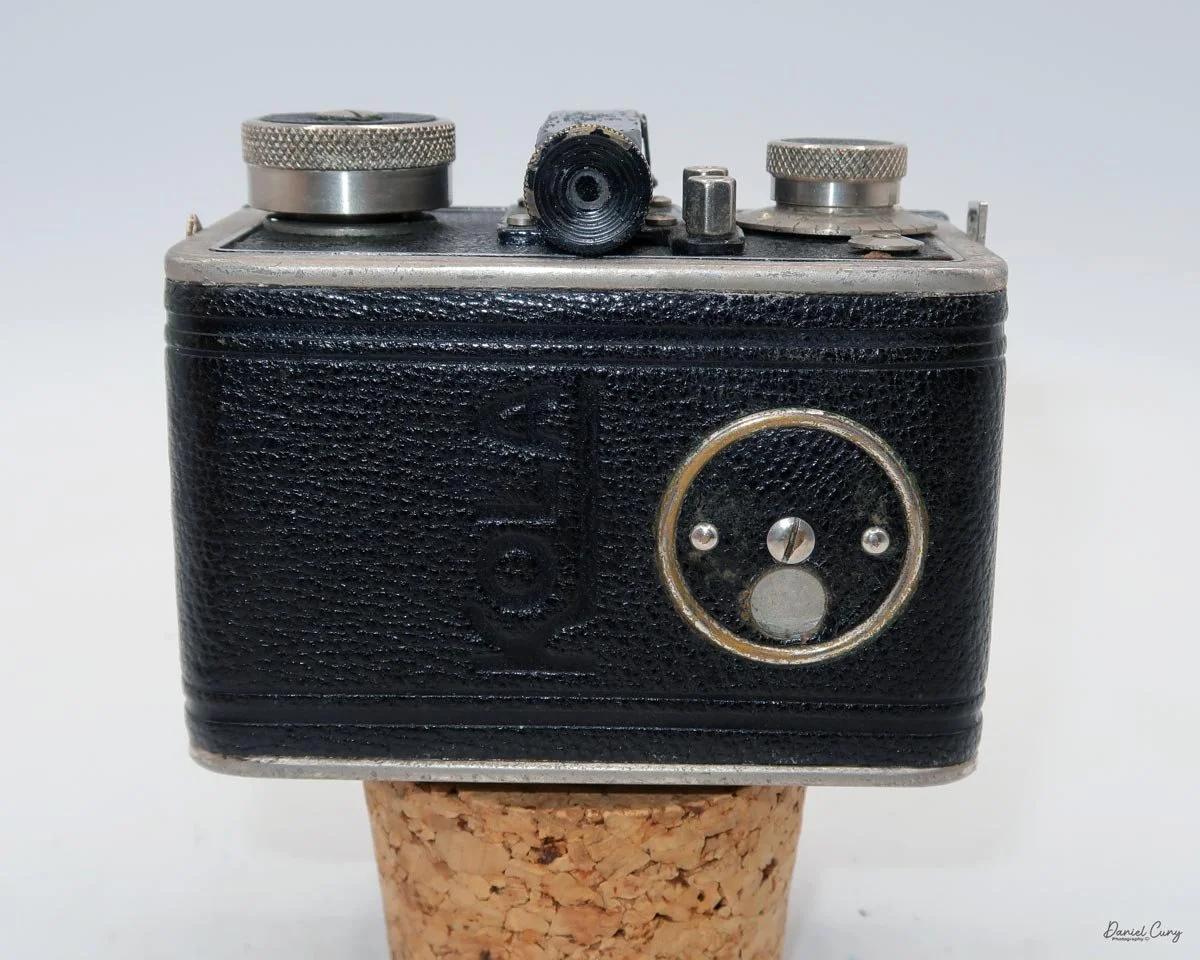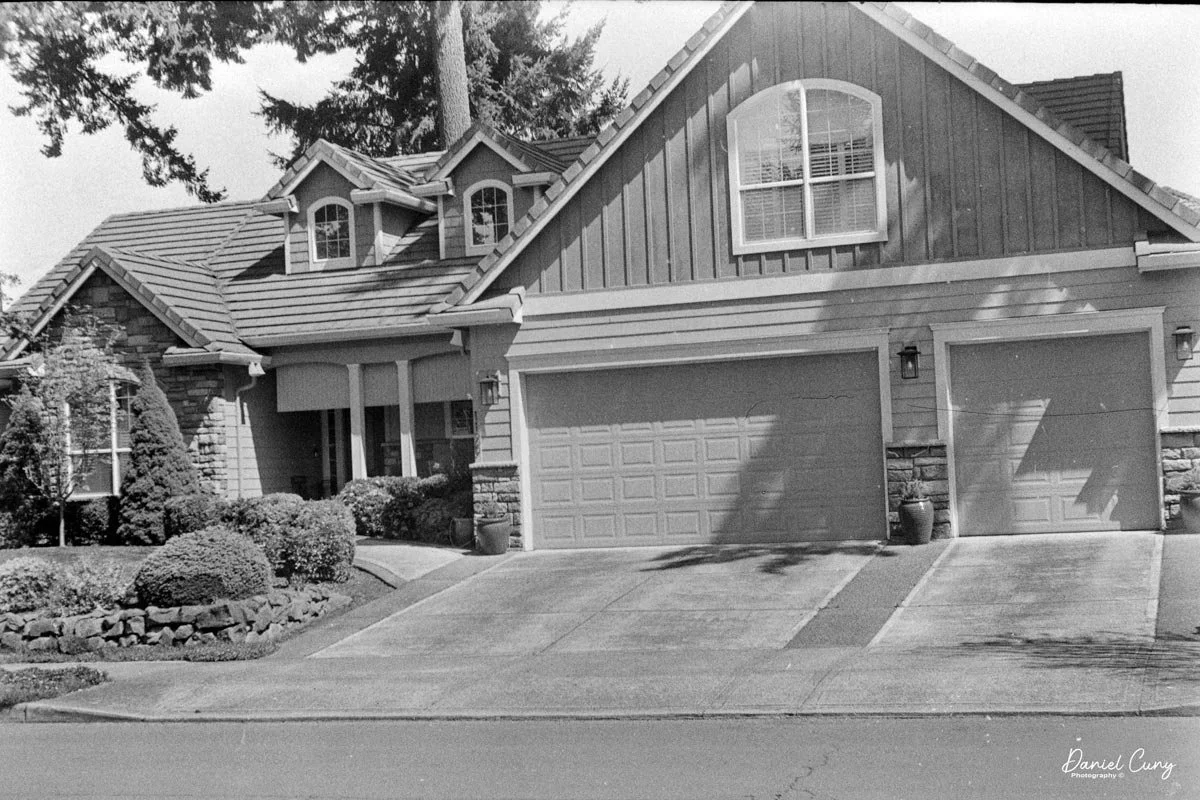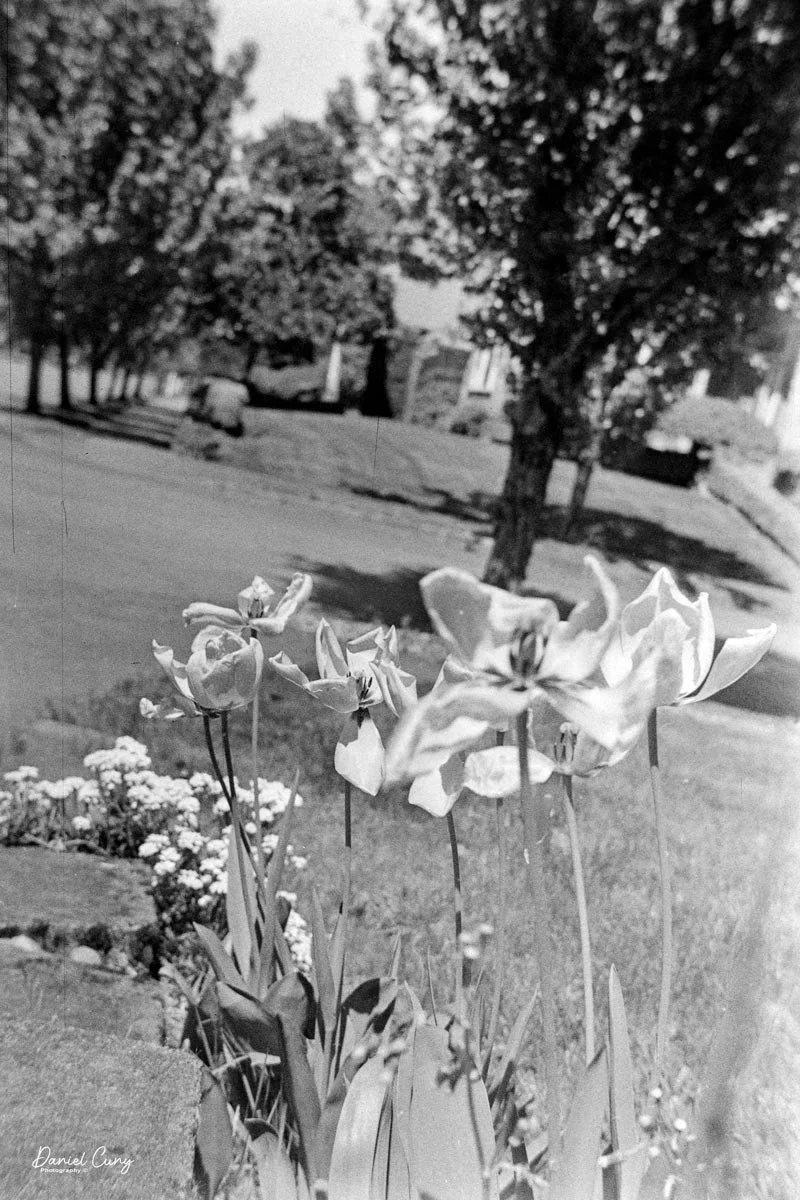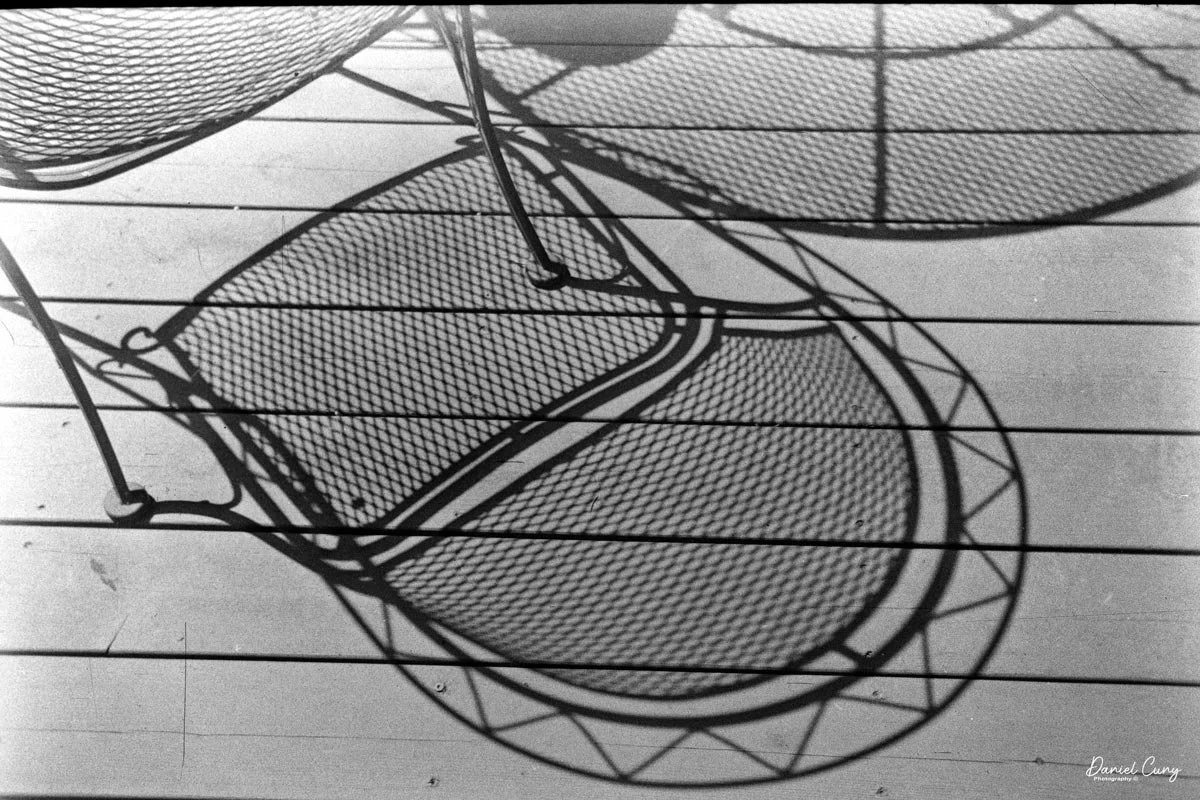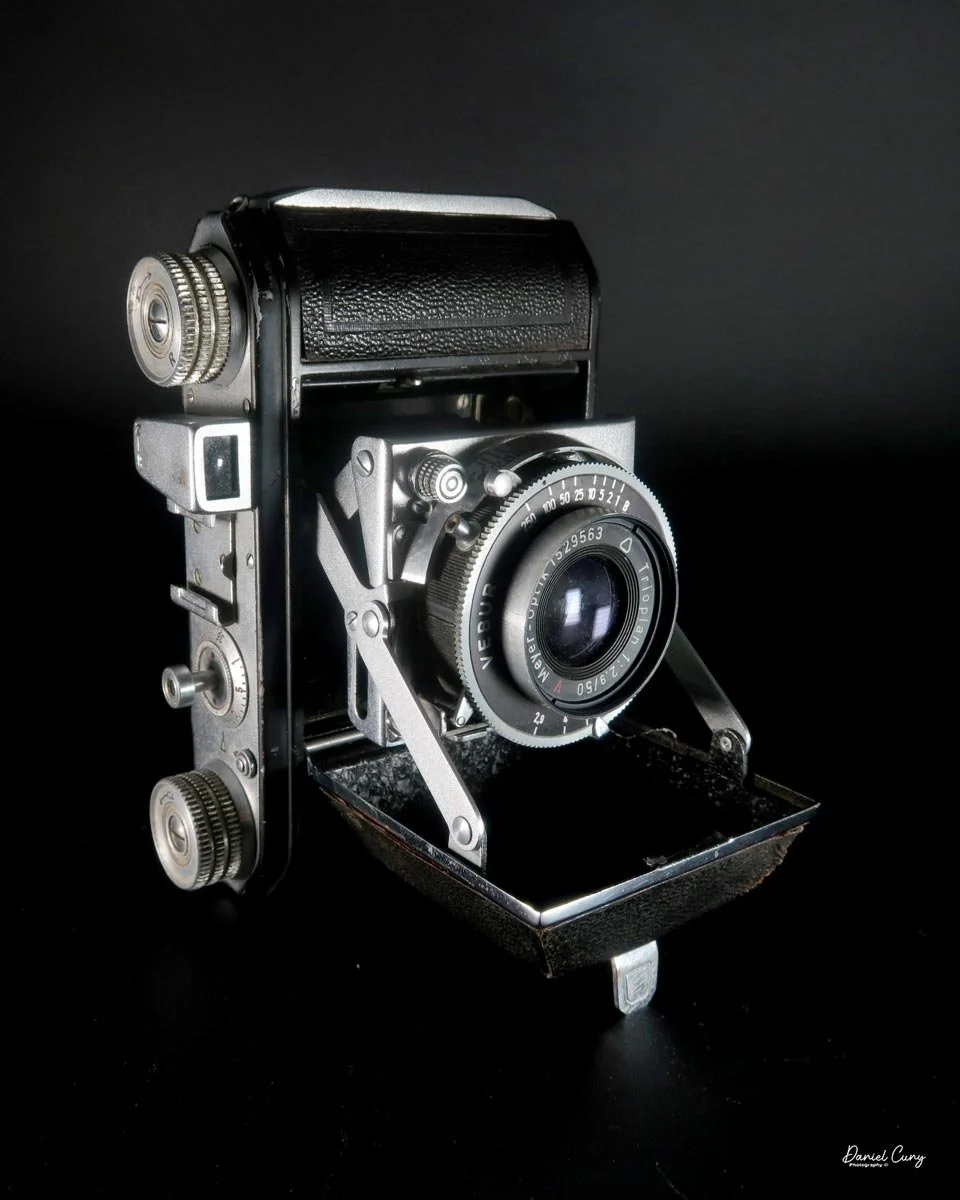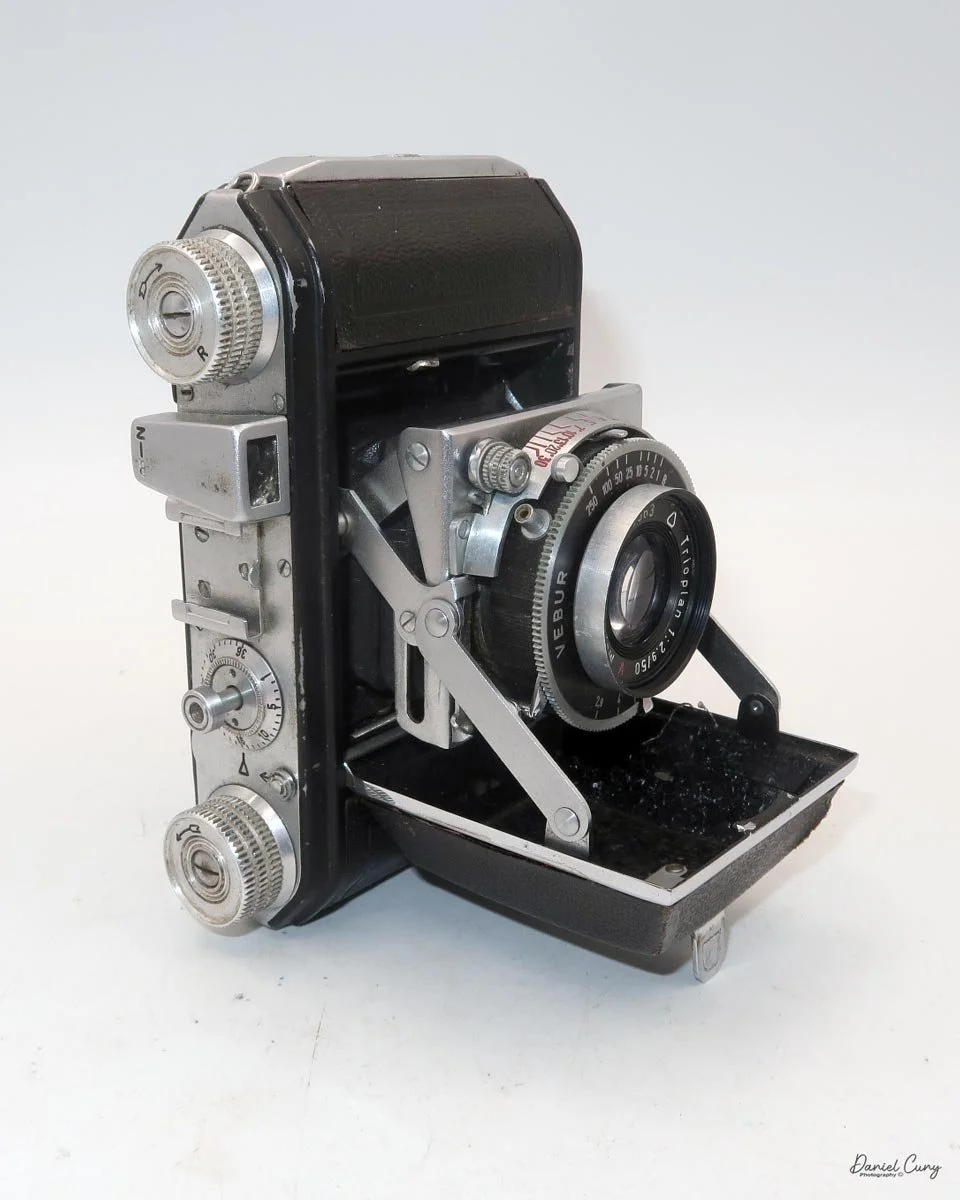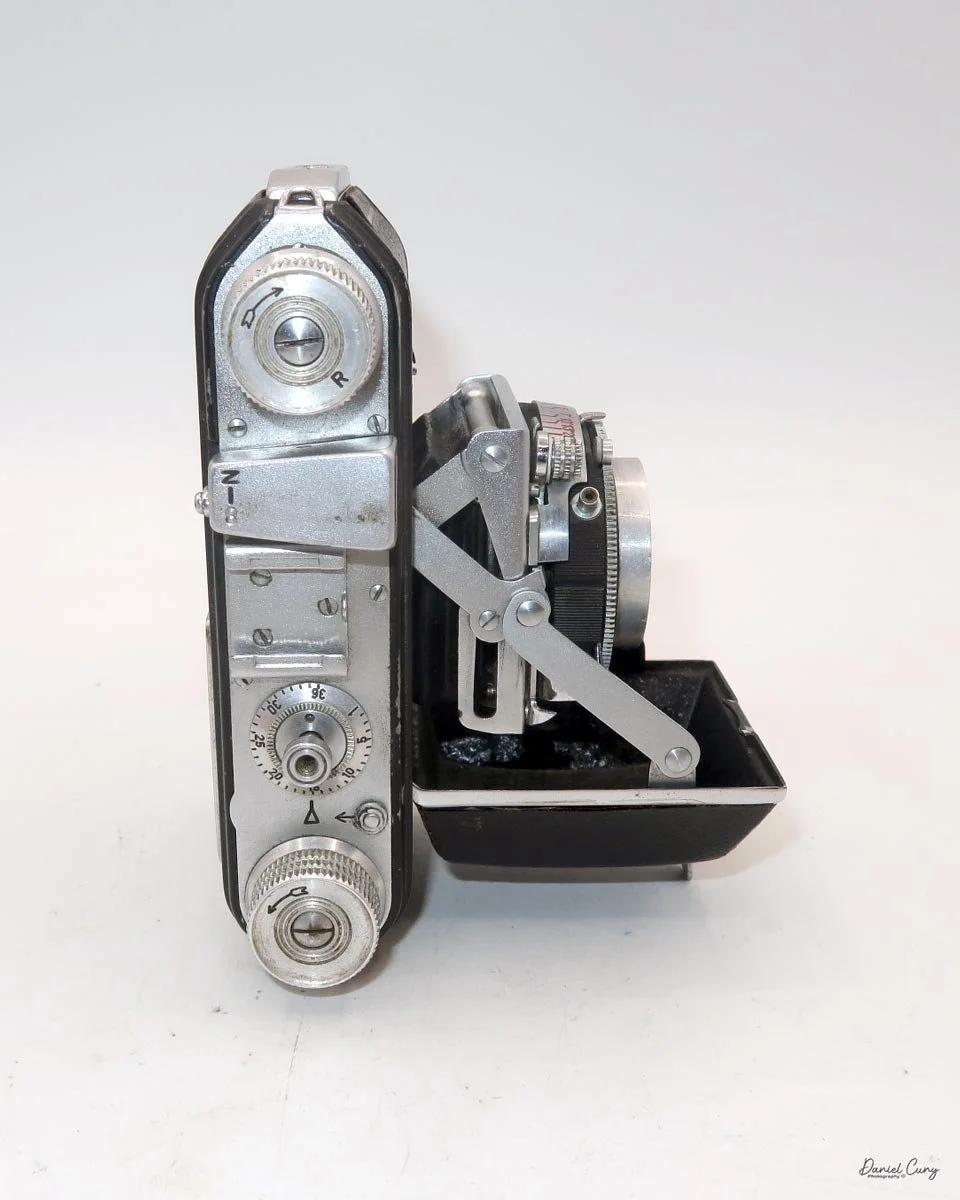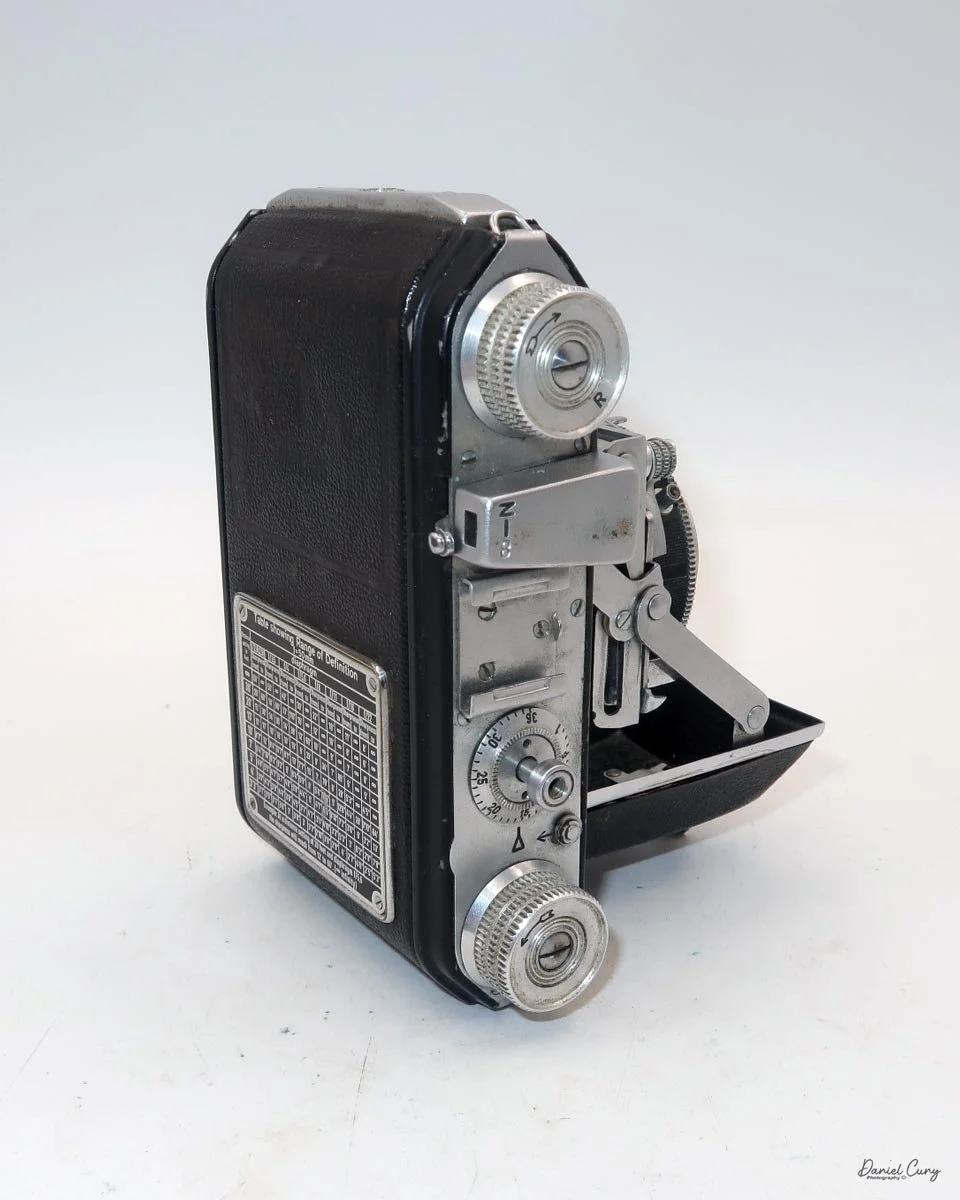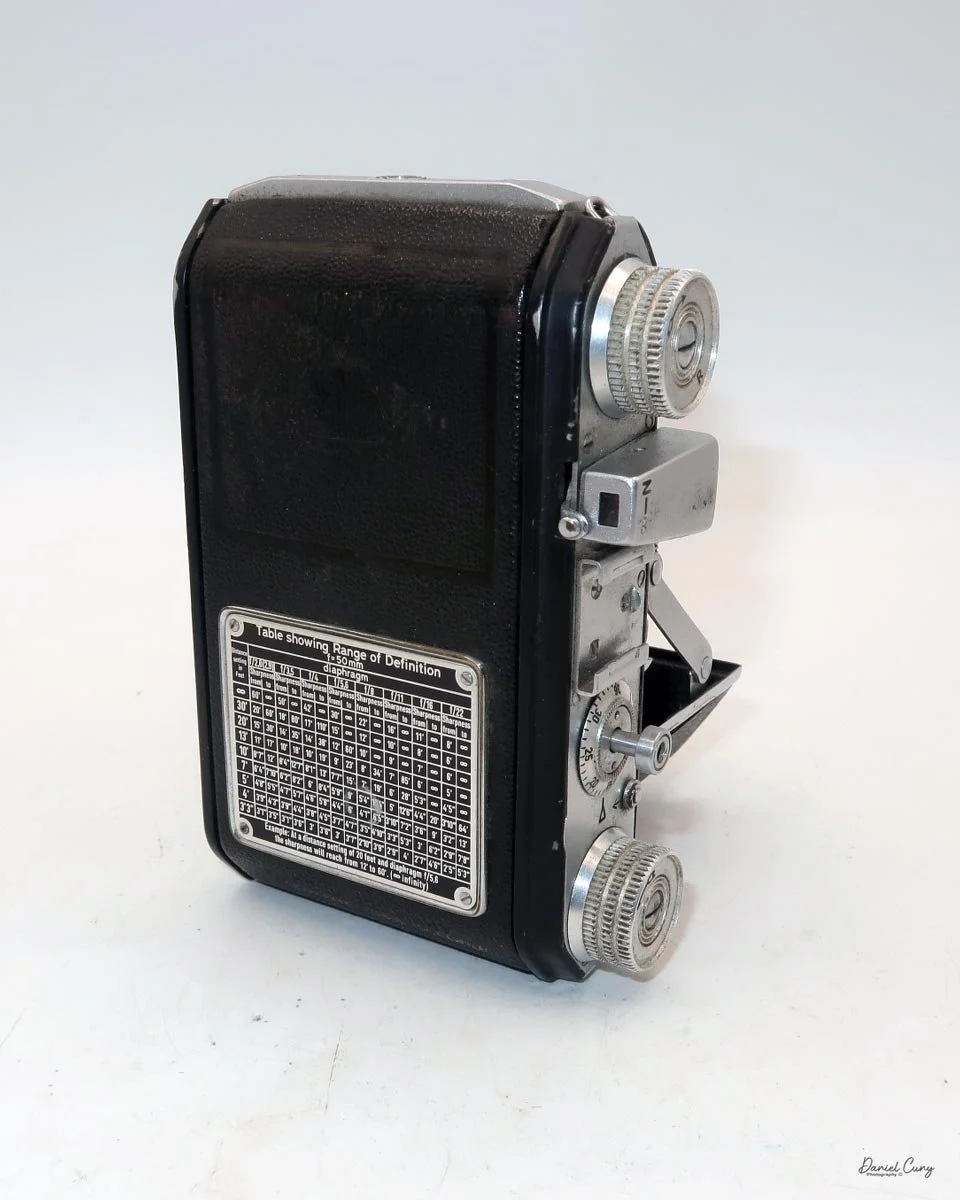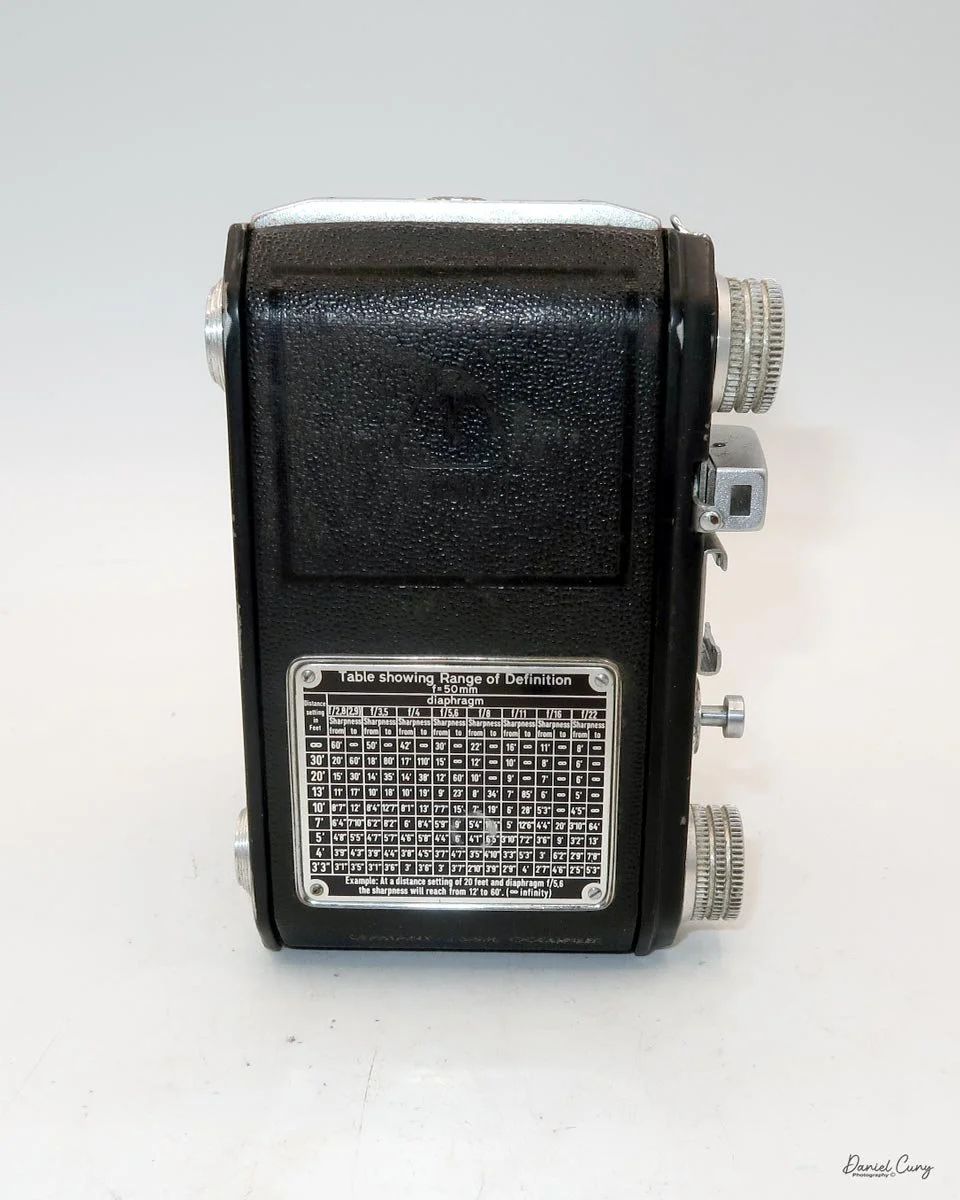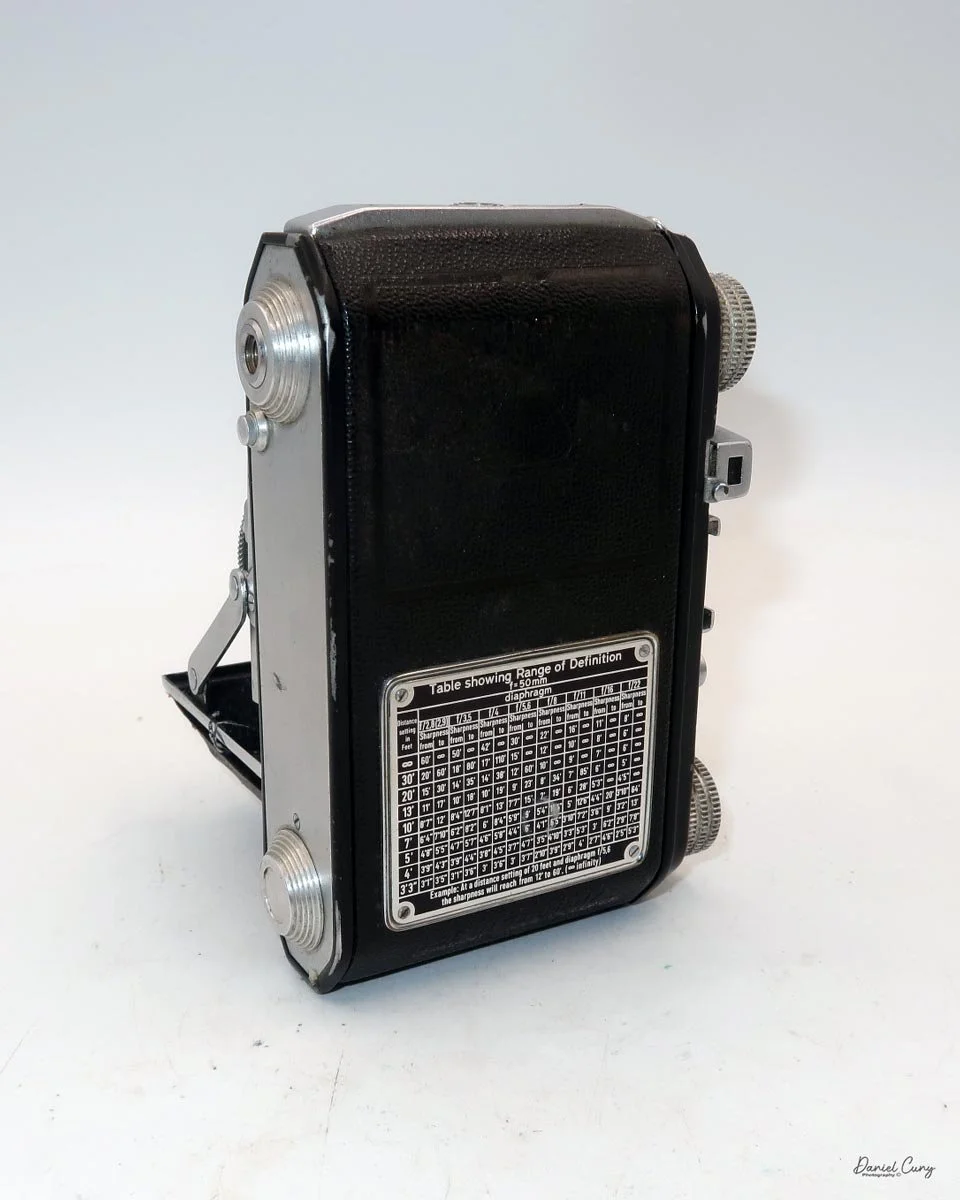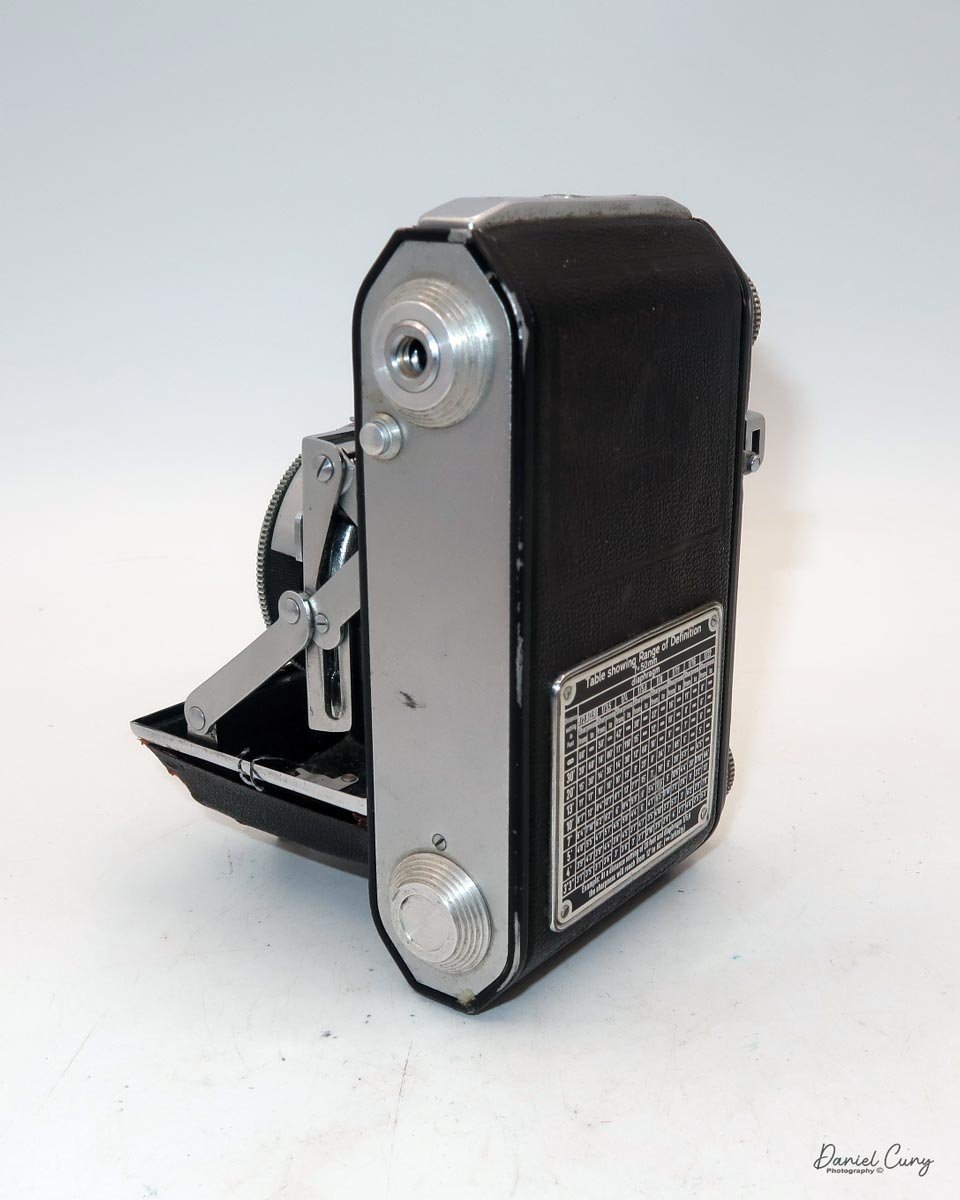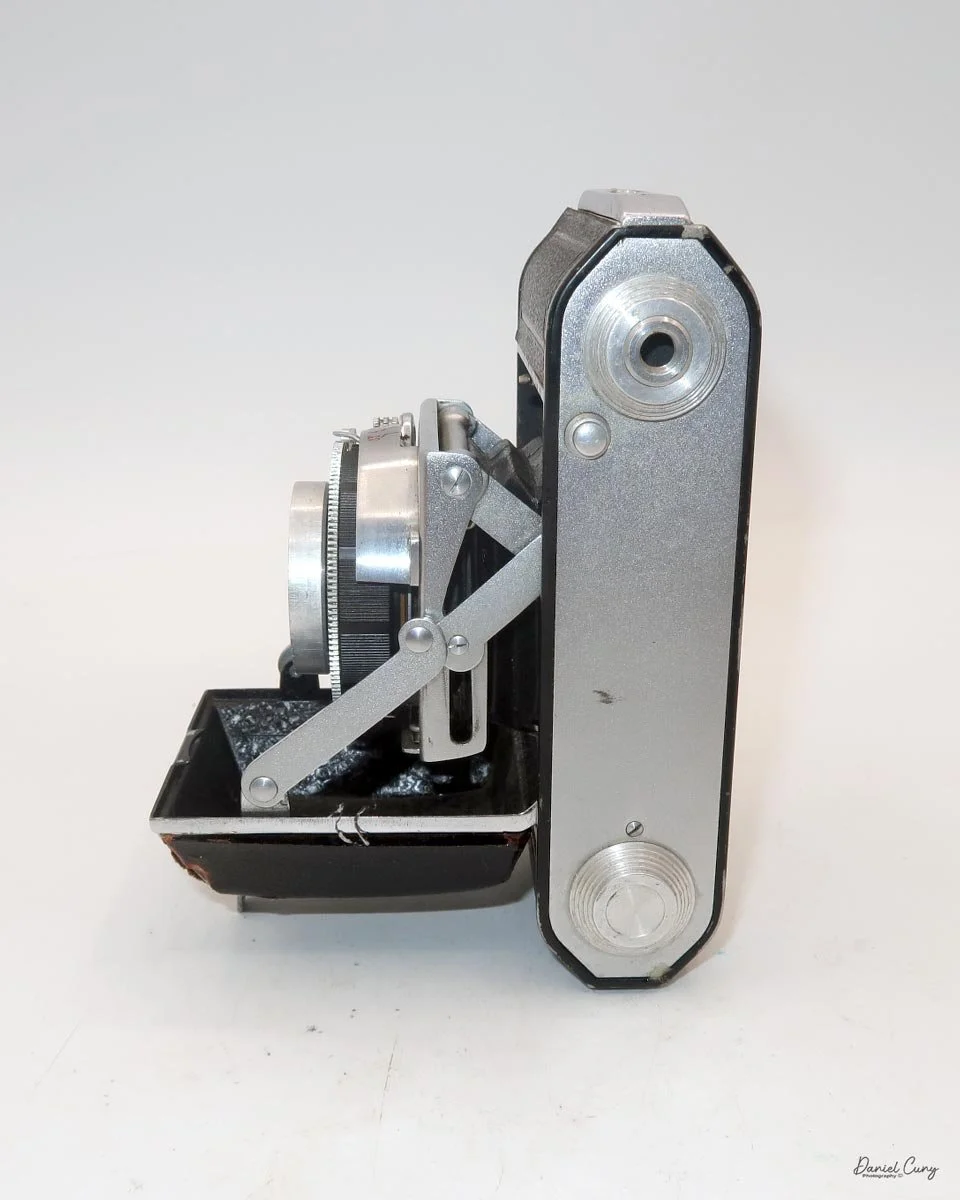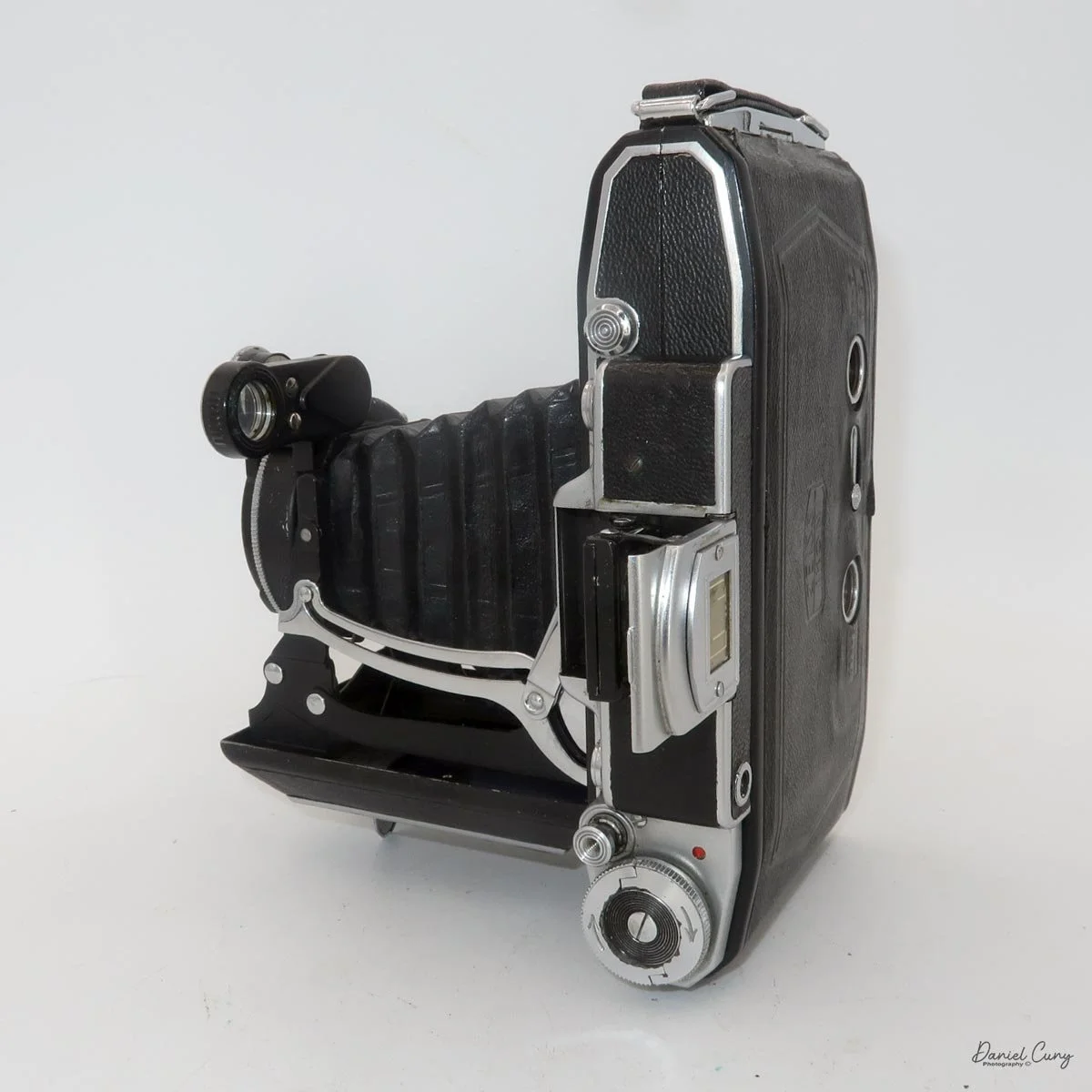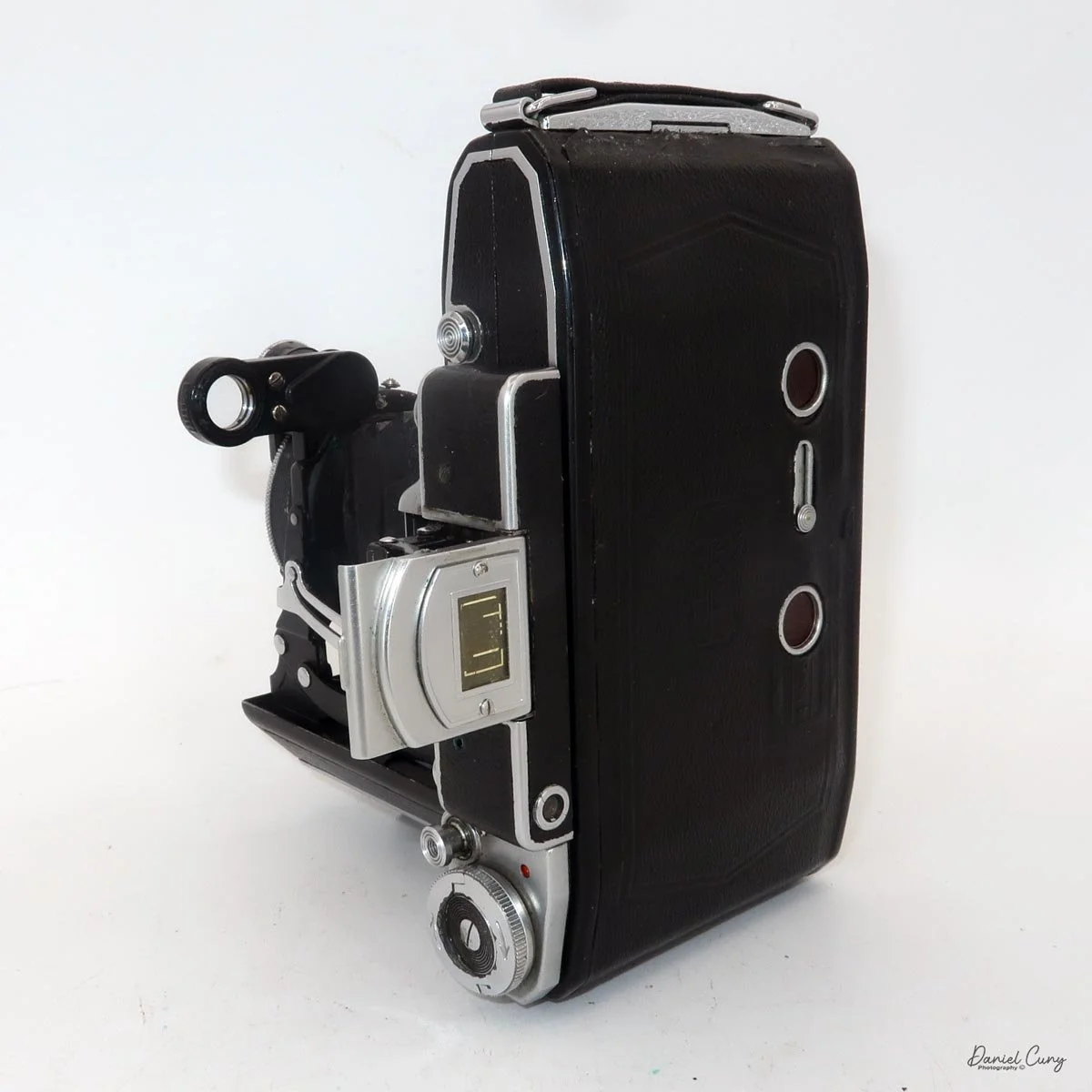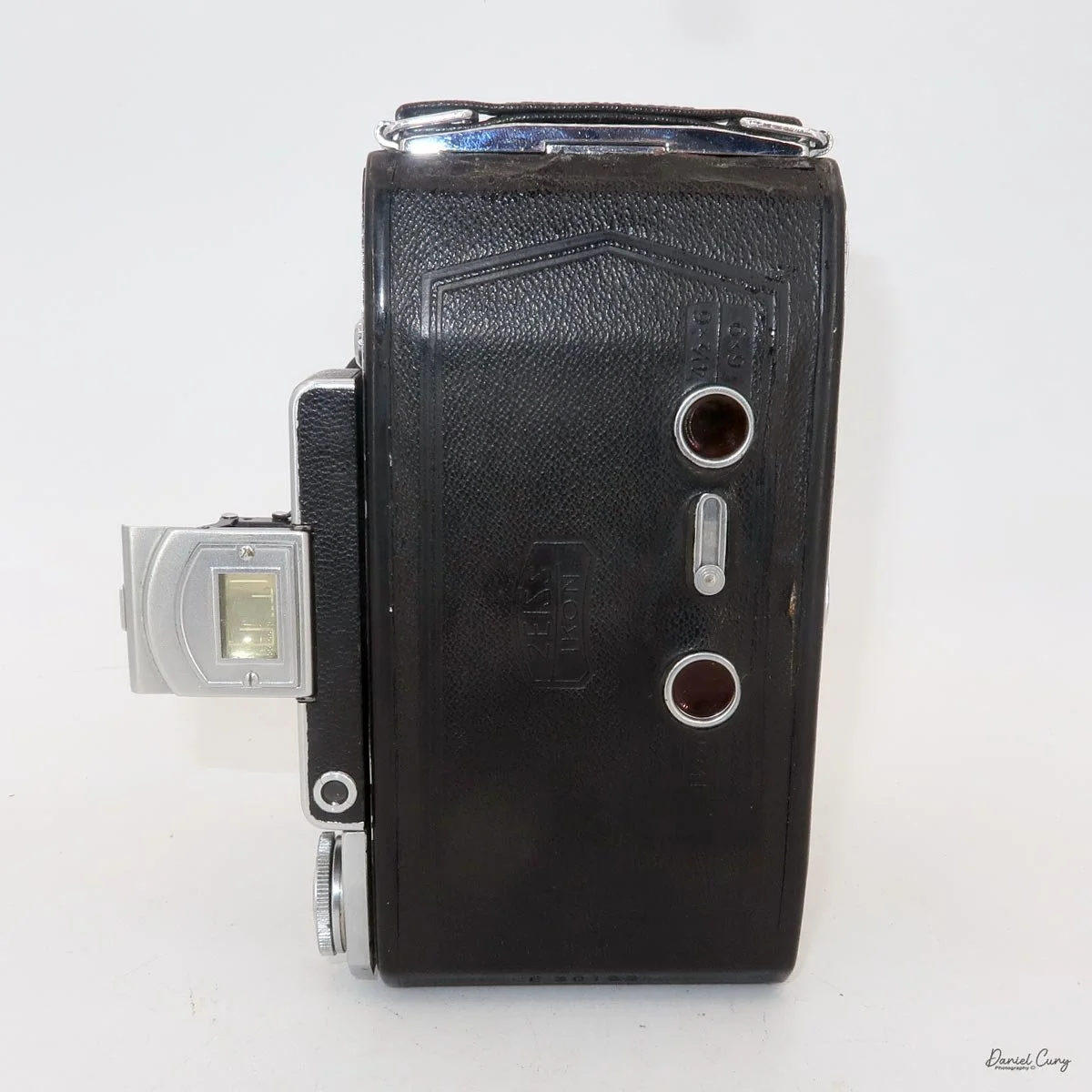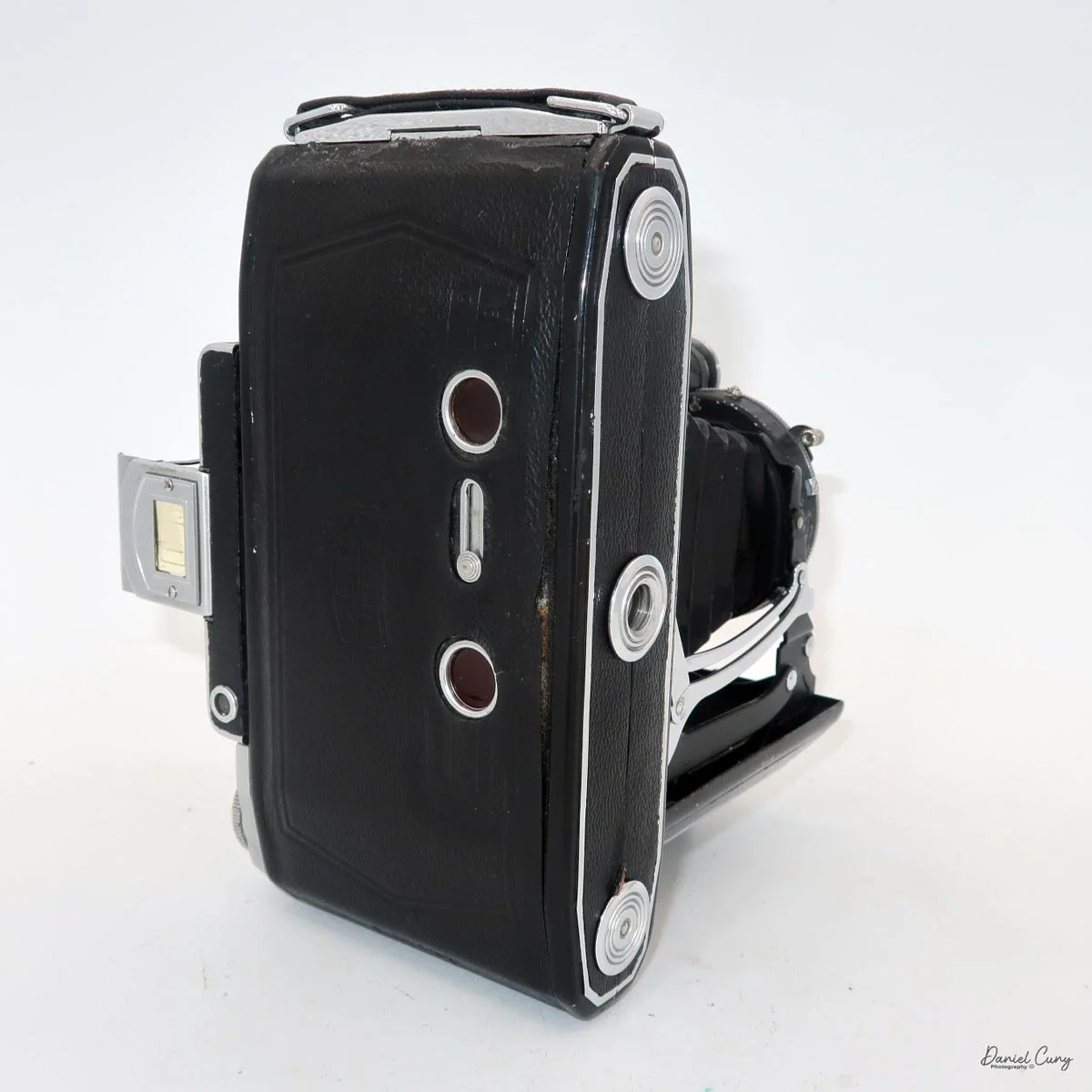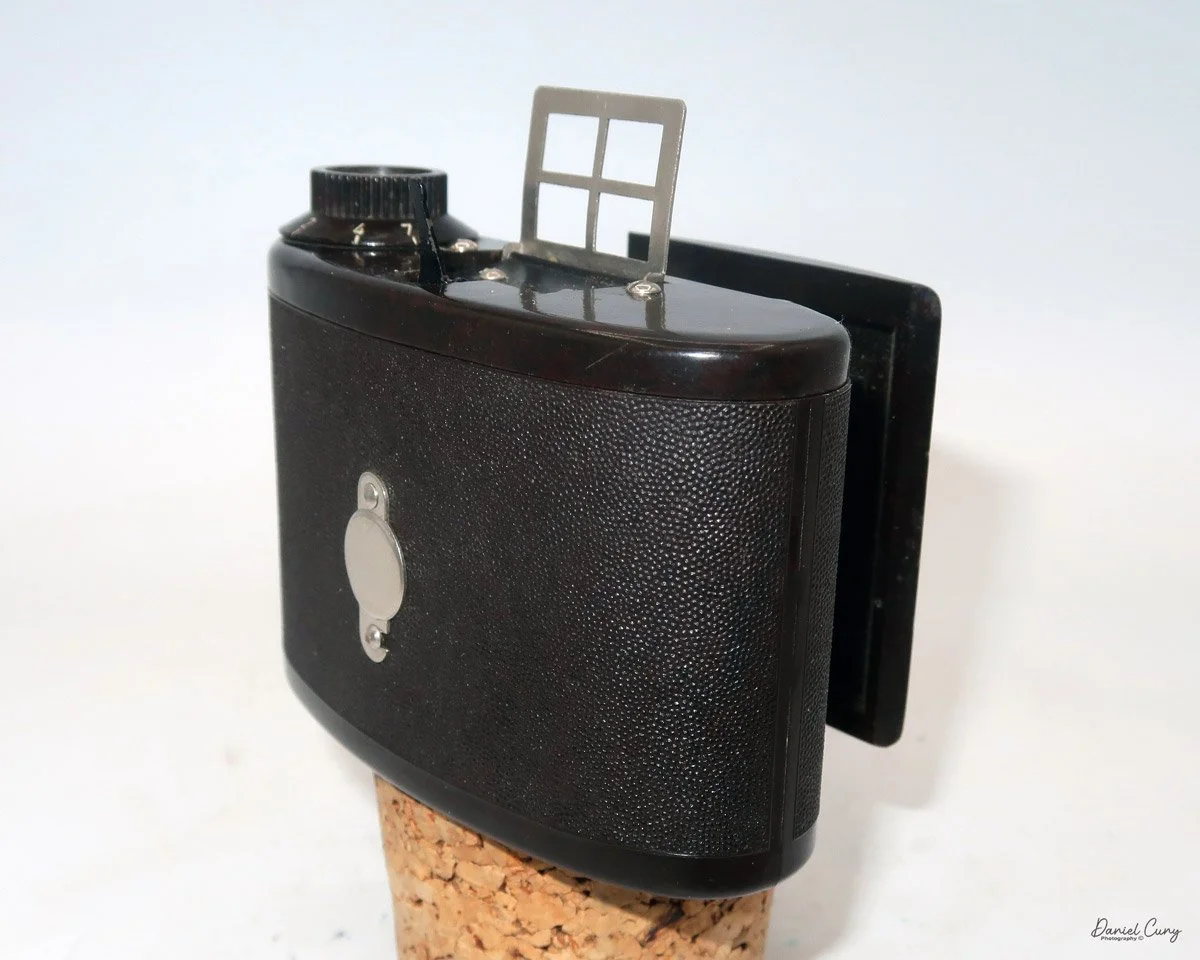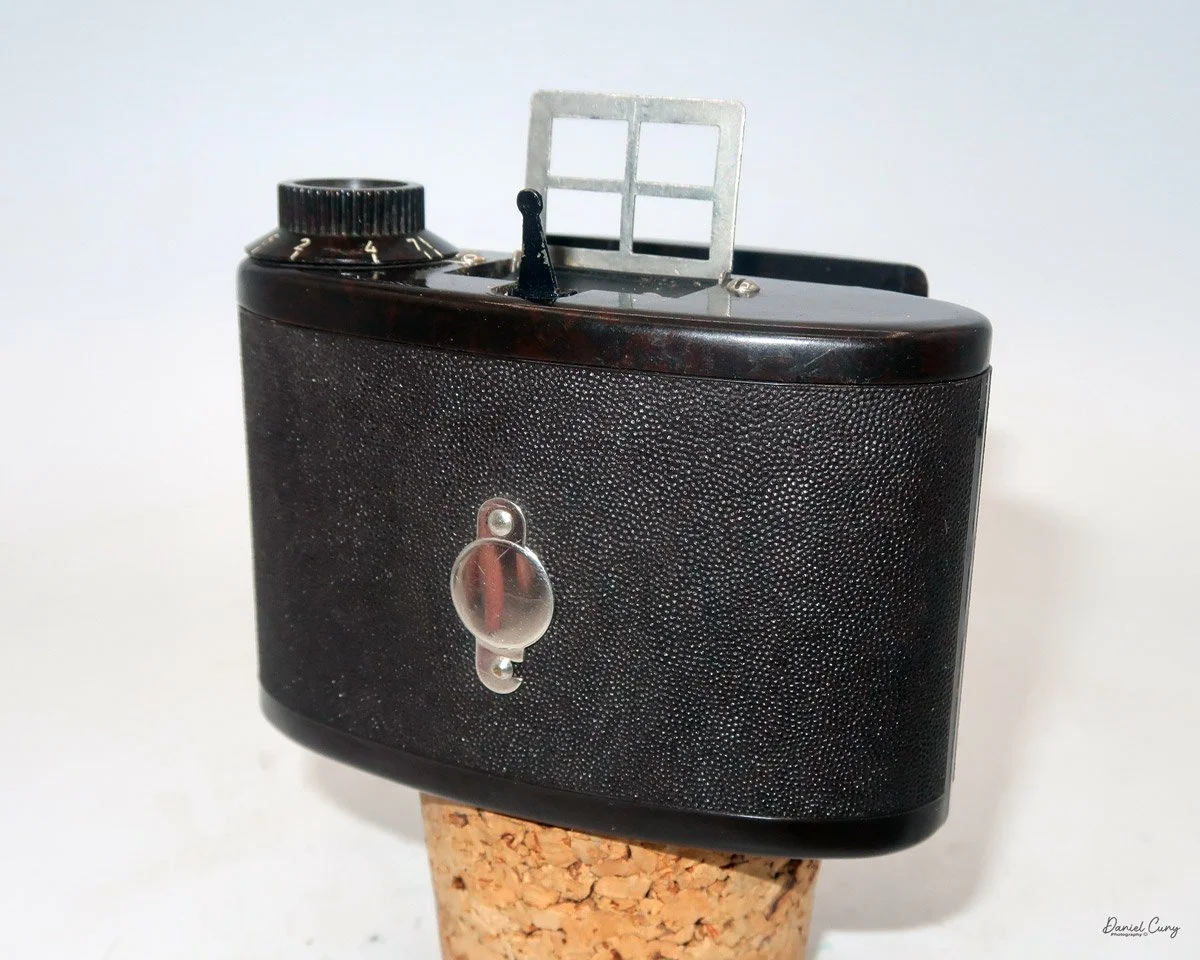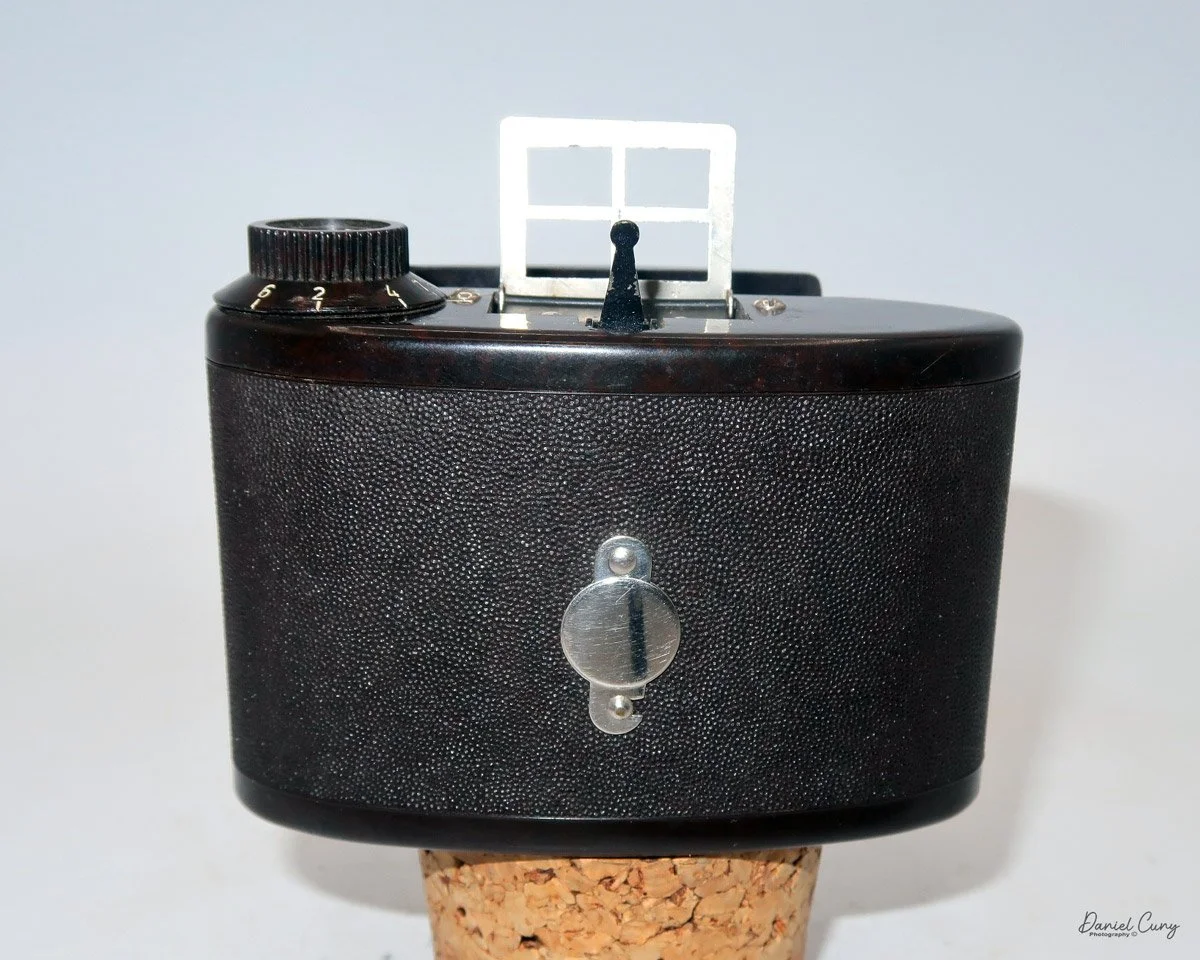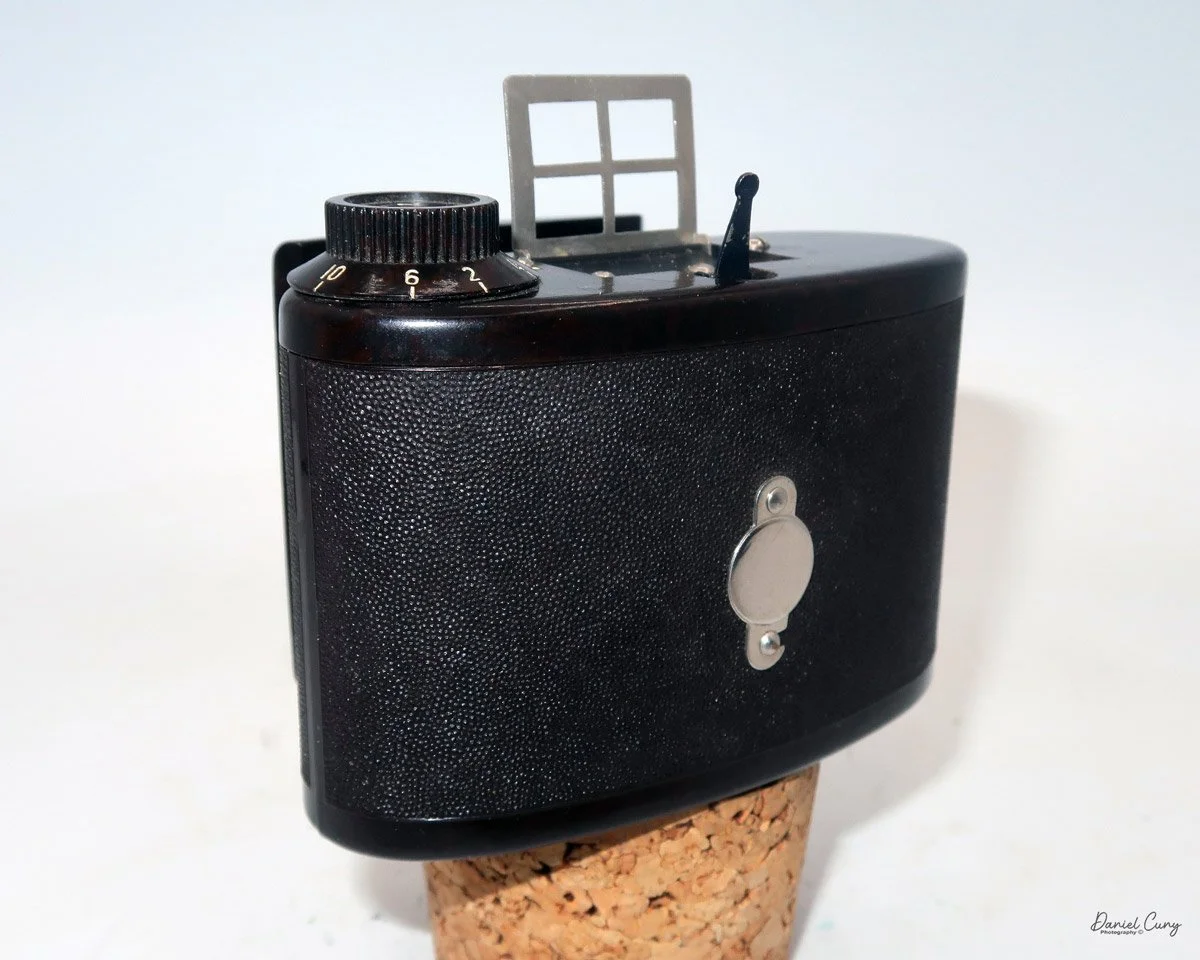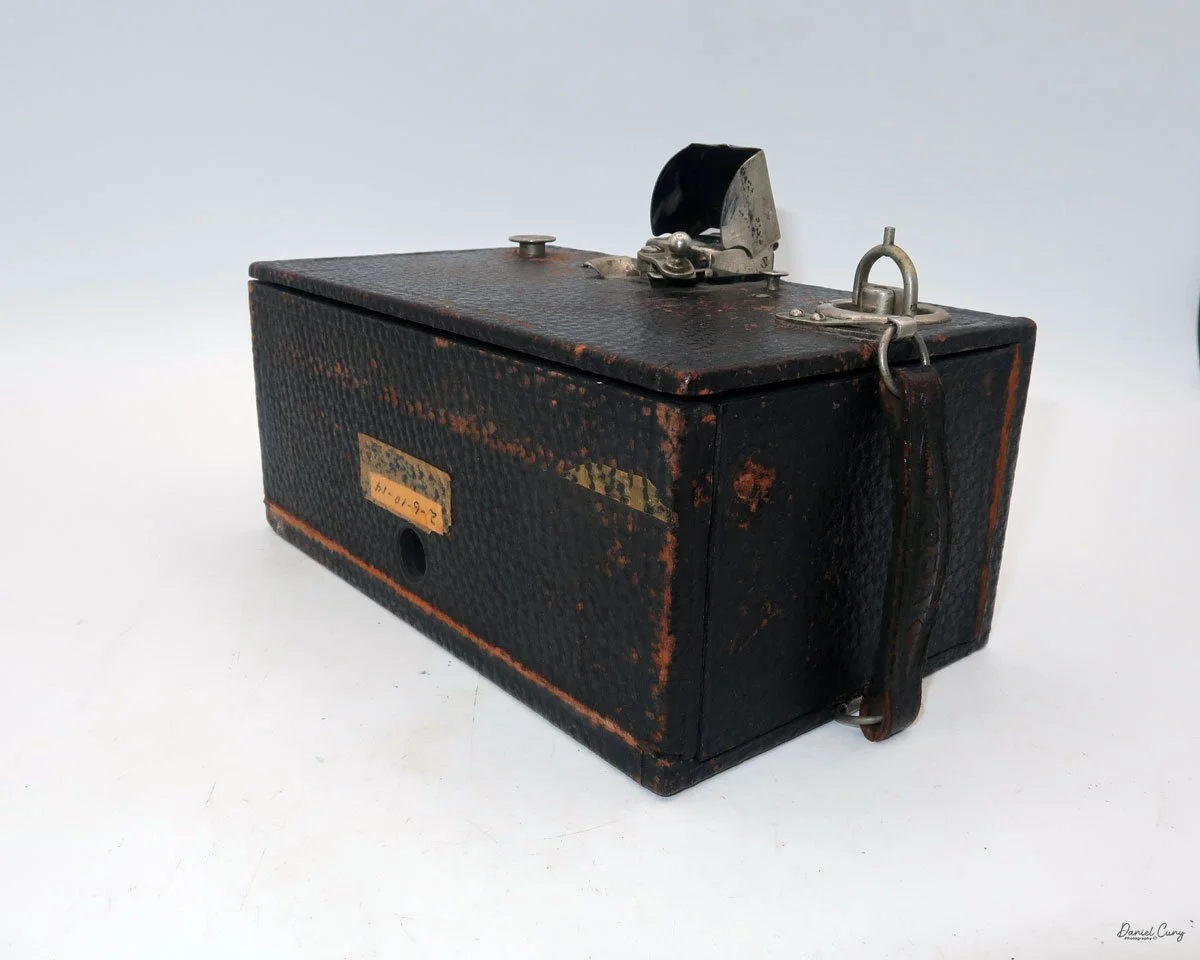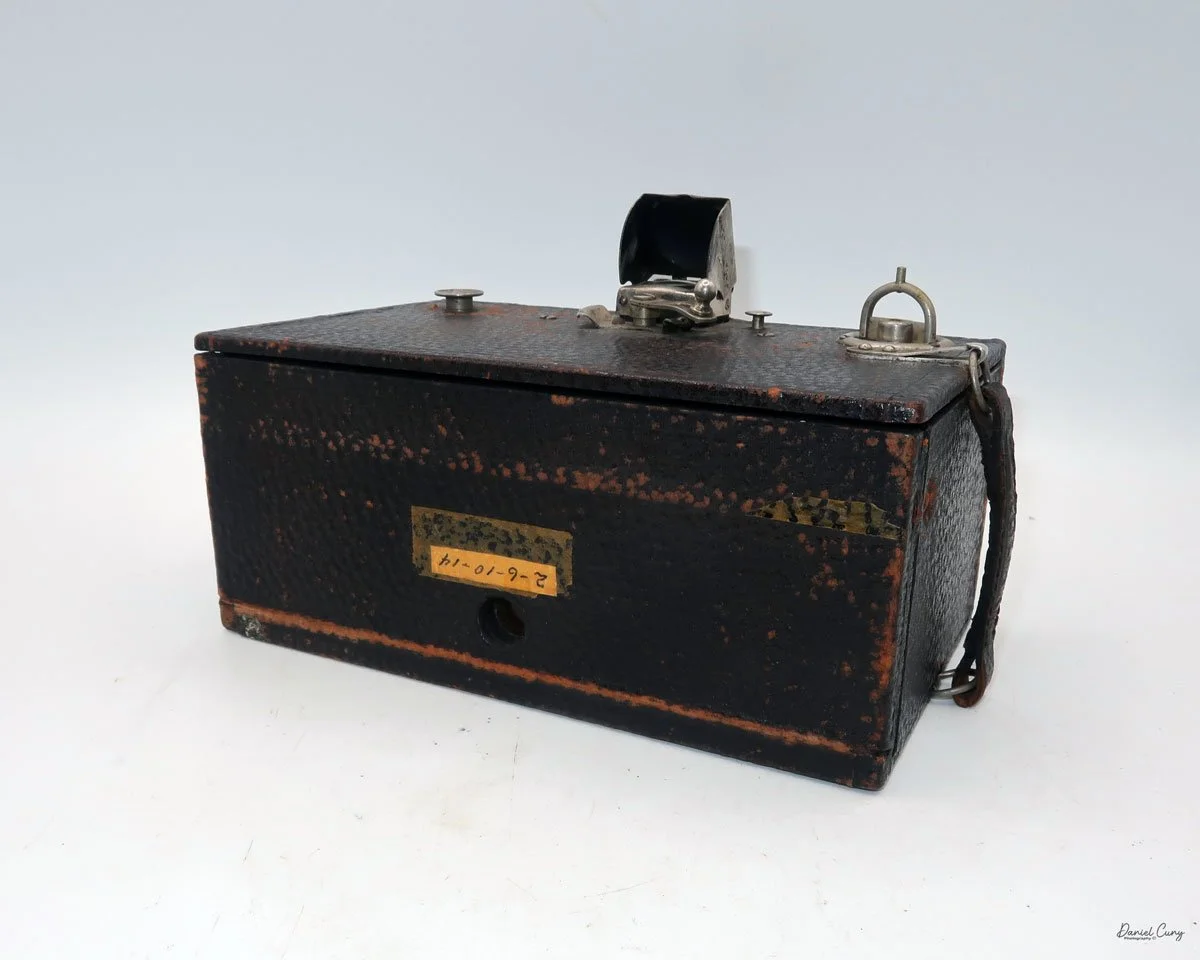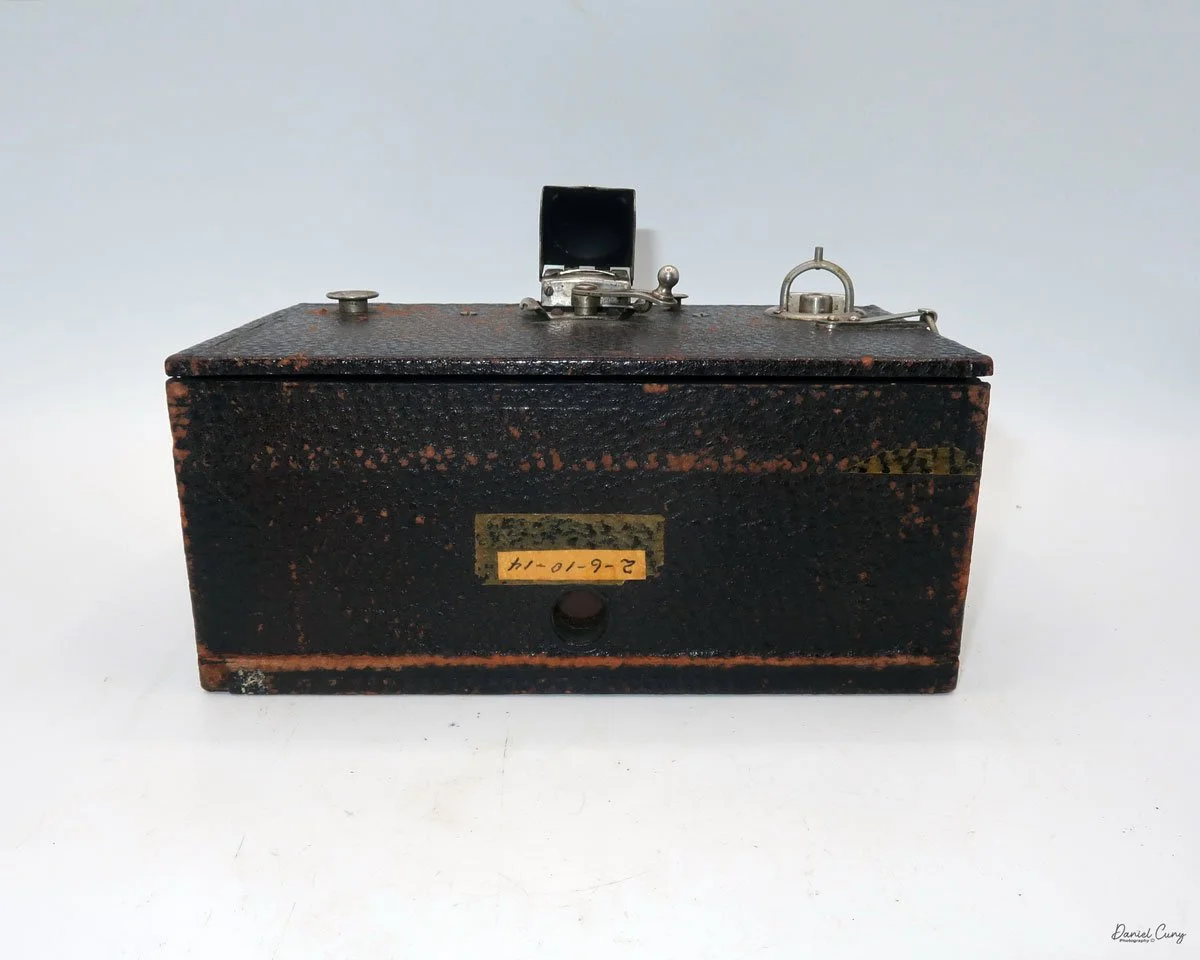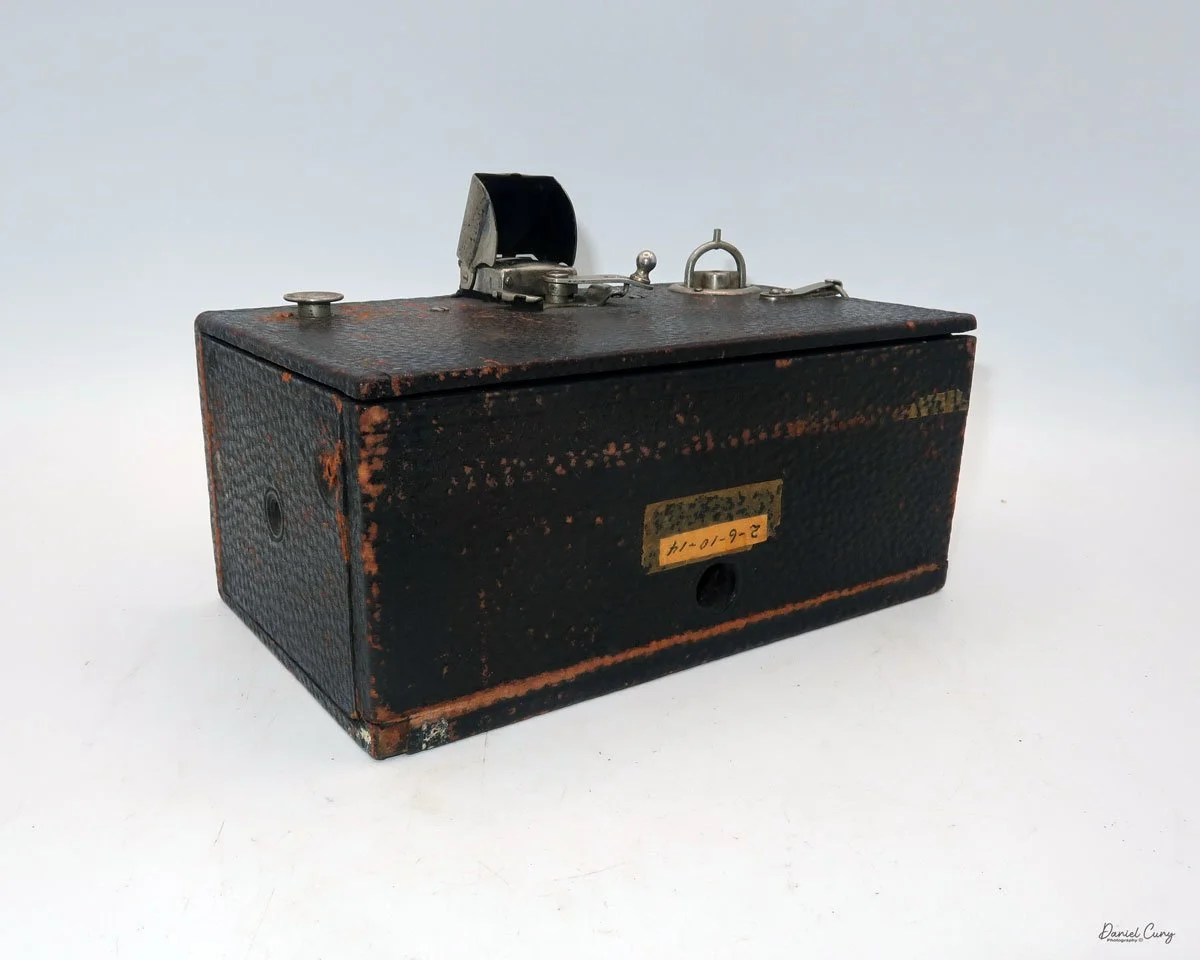
Durst Duca

A Tiny Full‑Frame Surprise: Shooting the Durst Duca

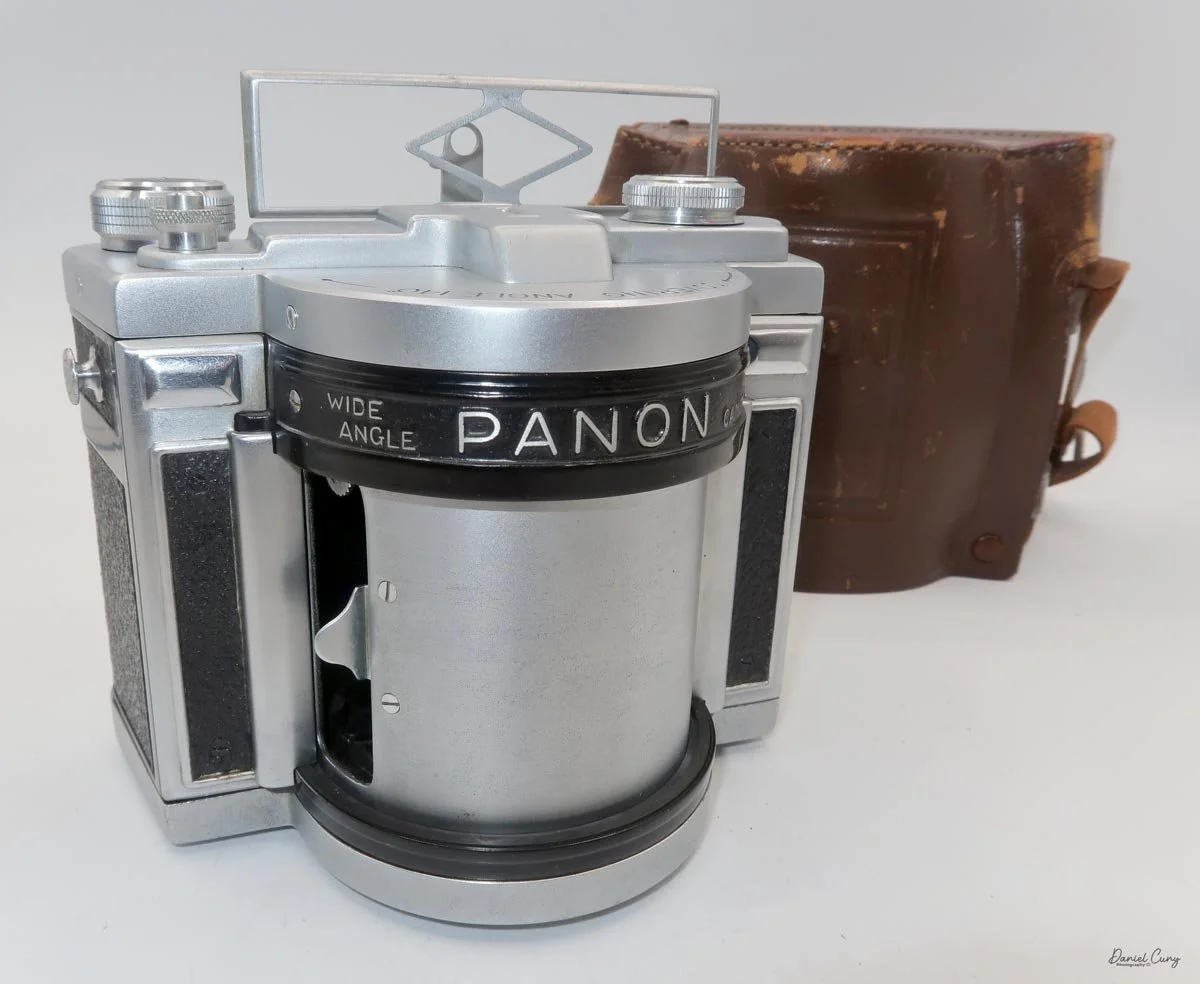
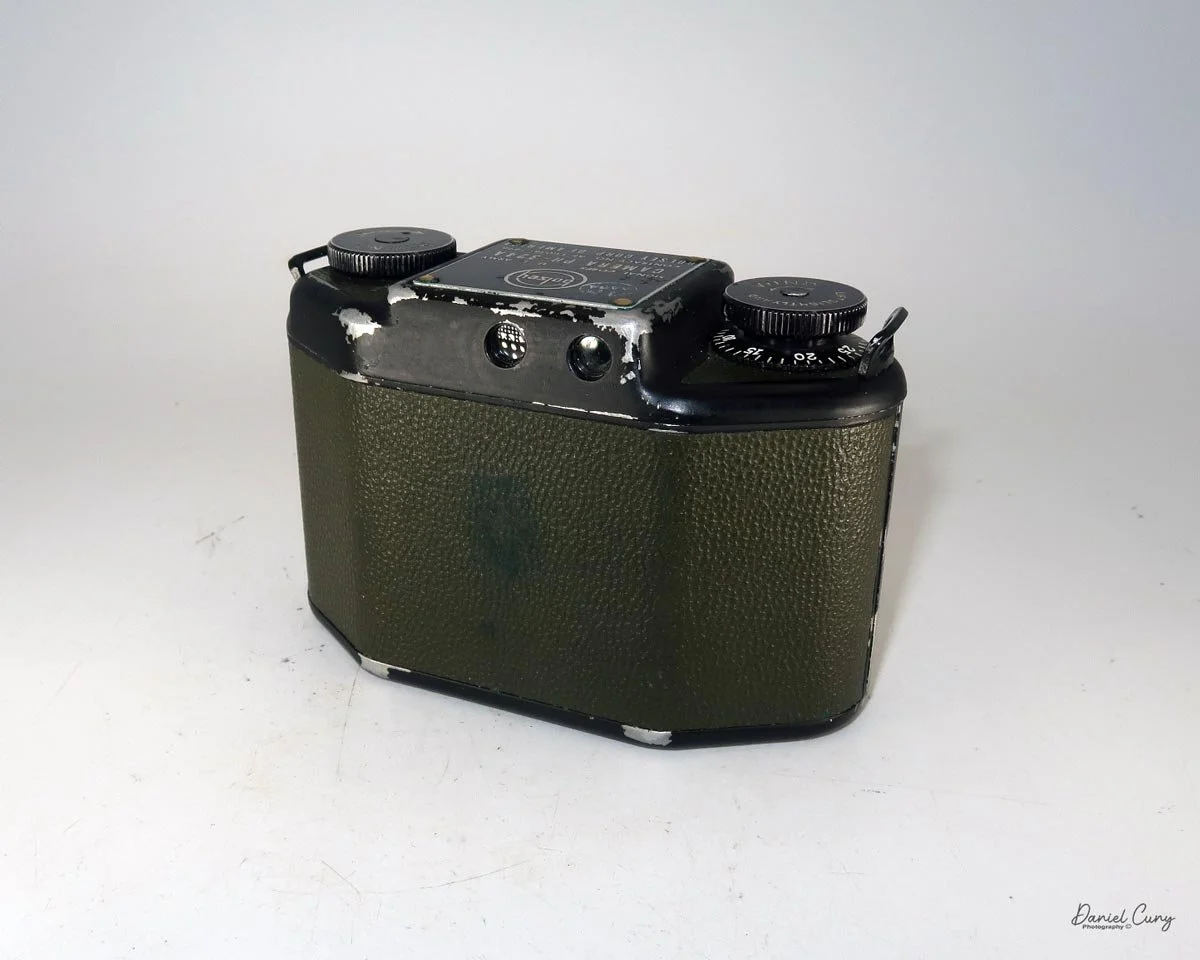
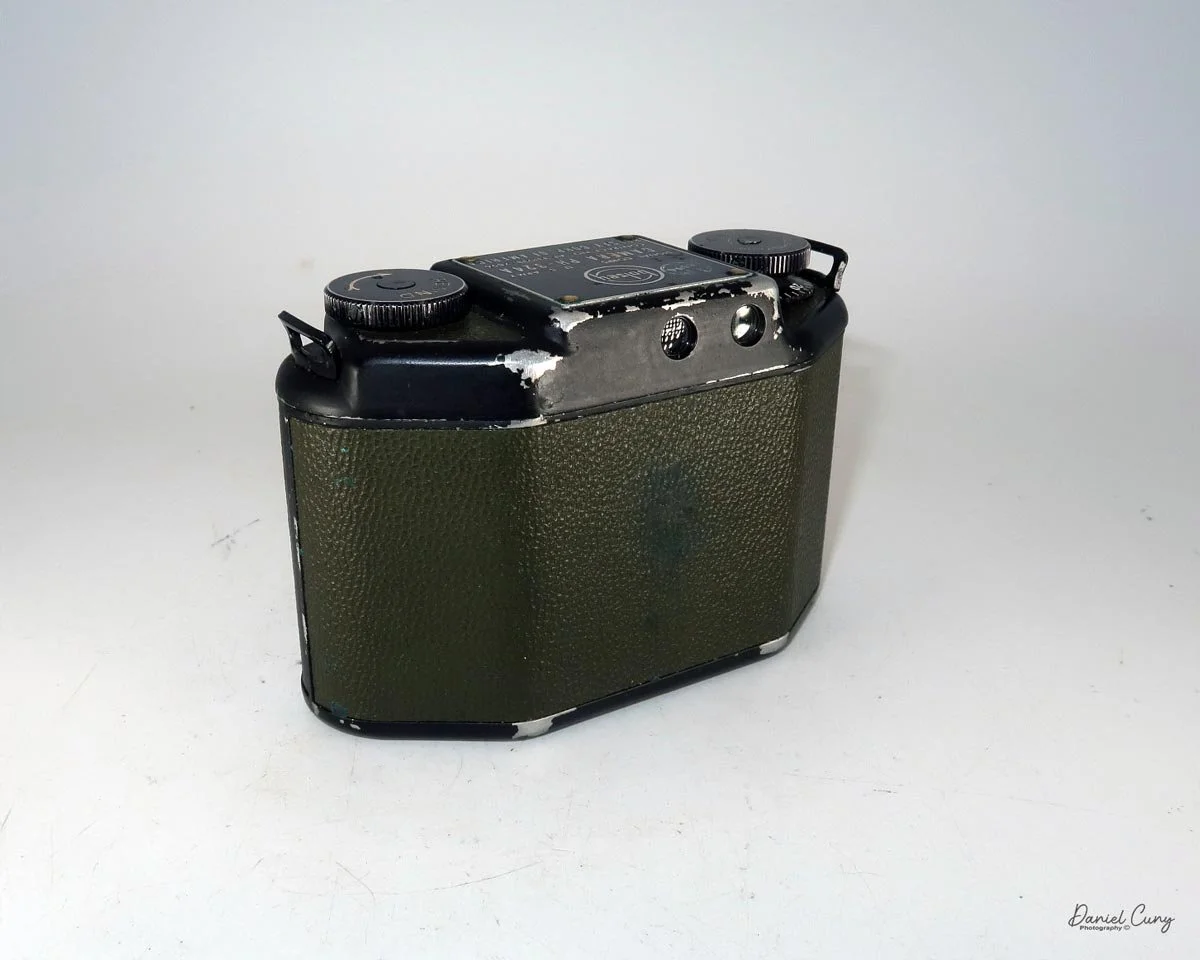
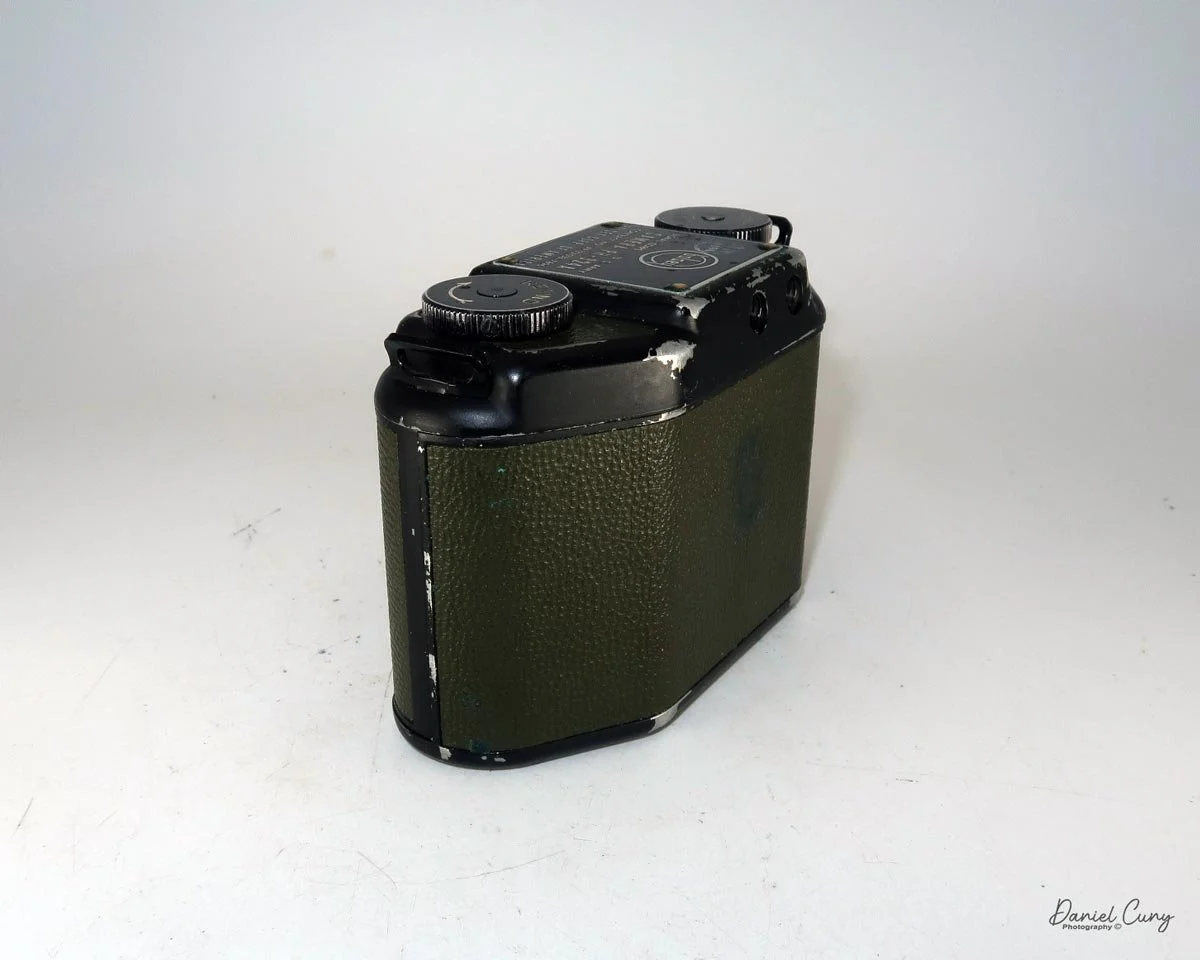
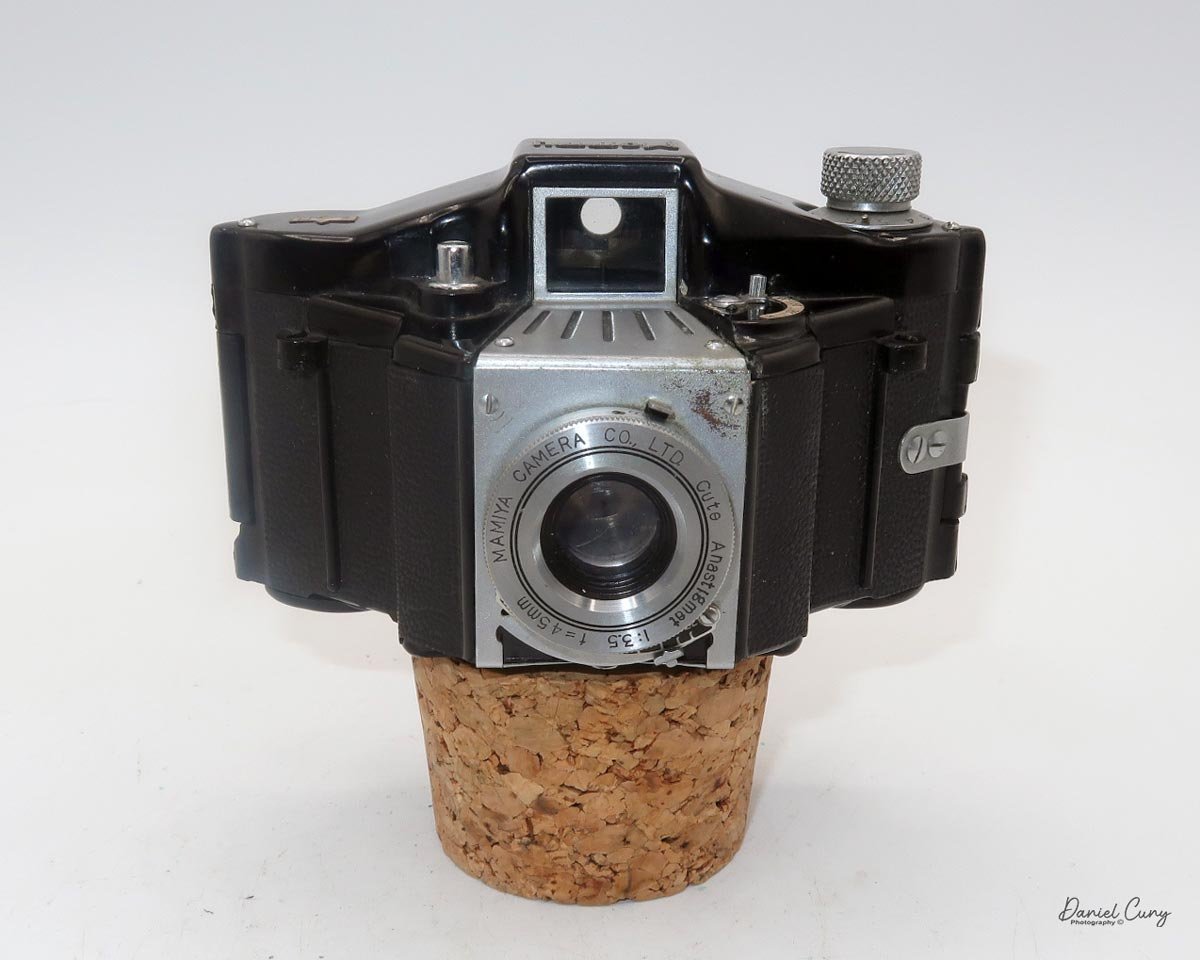
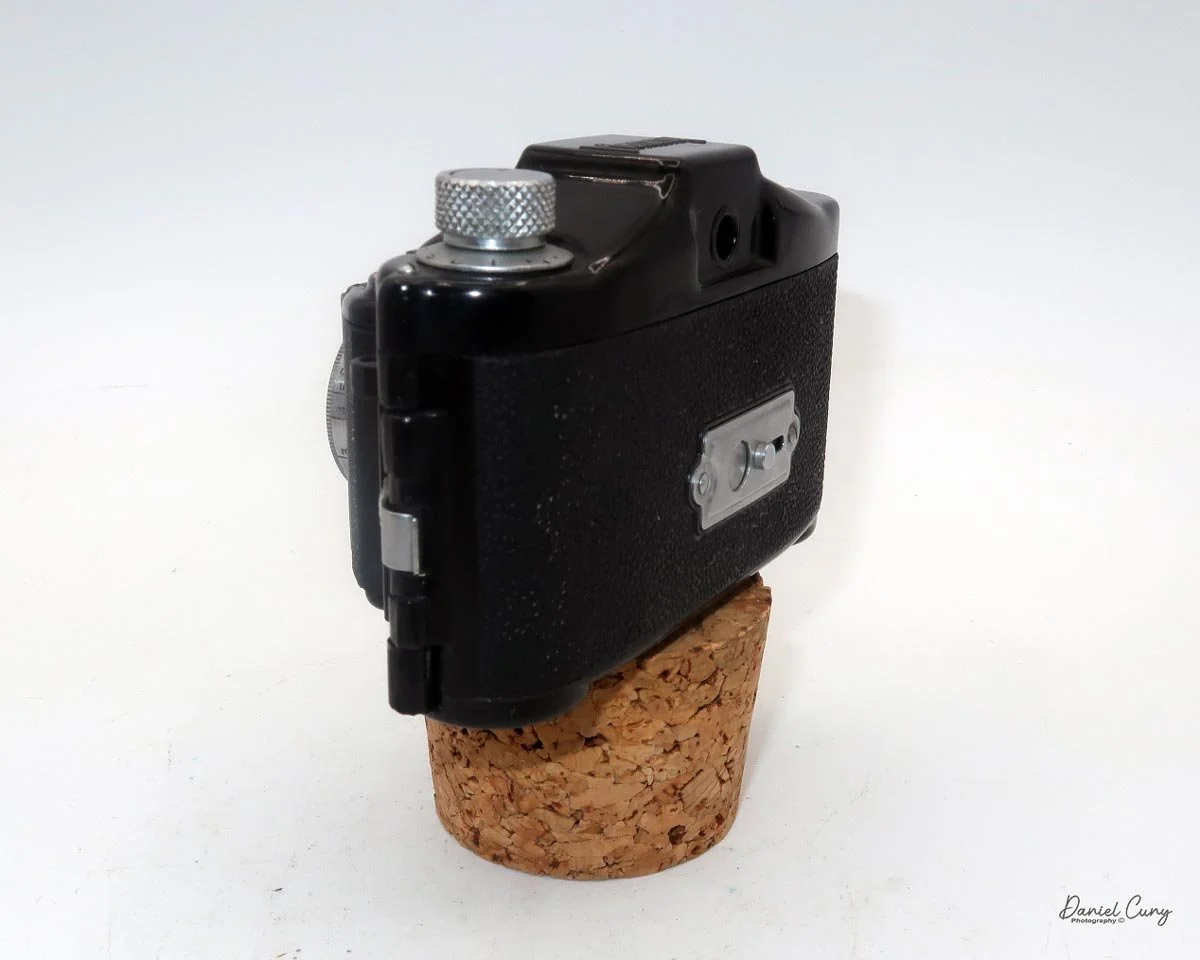
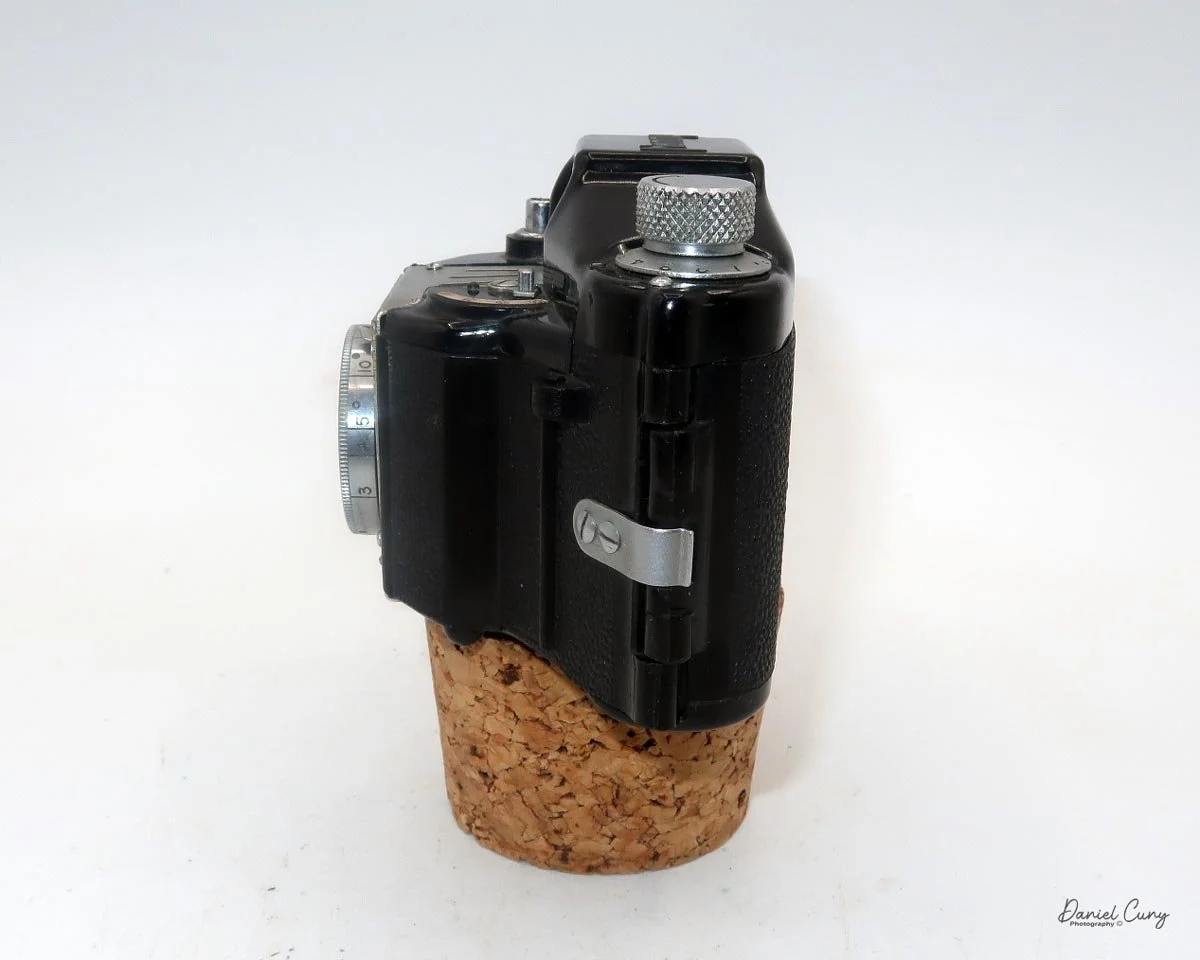
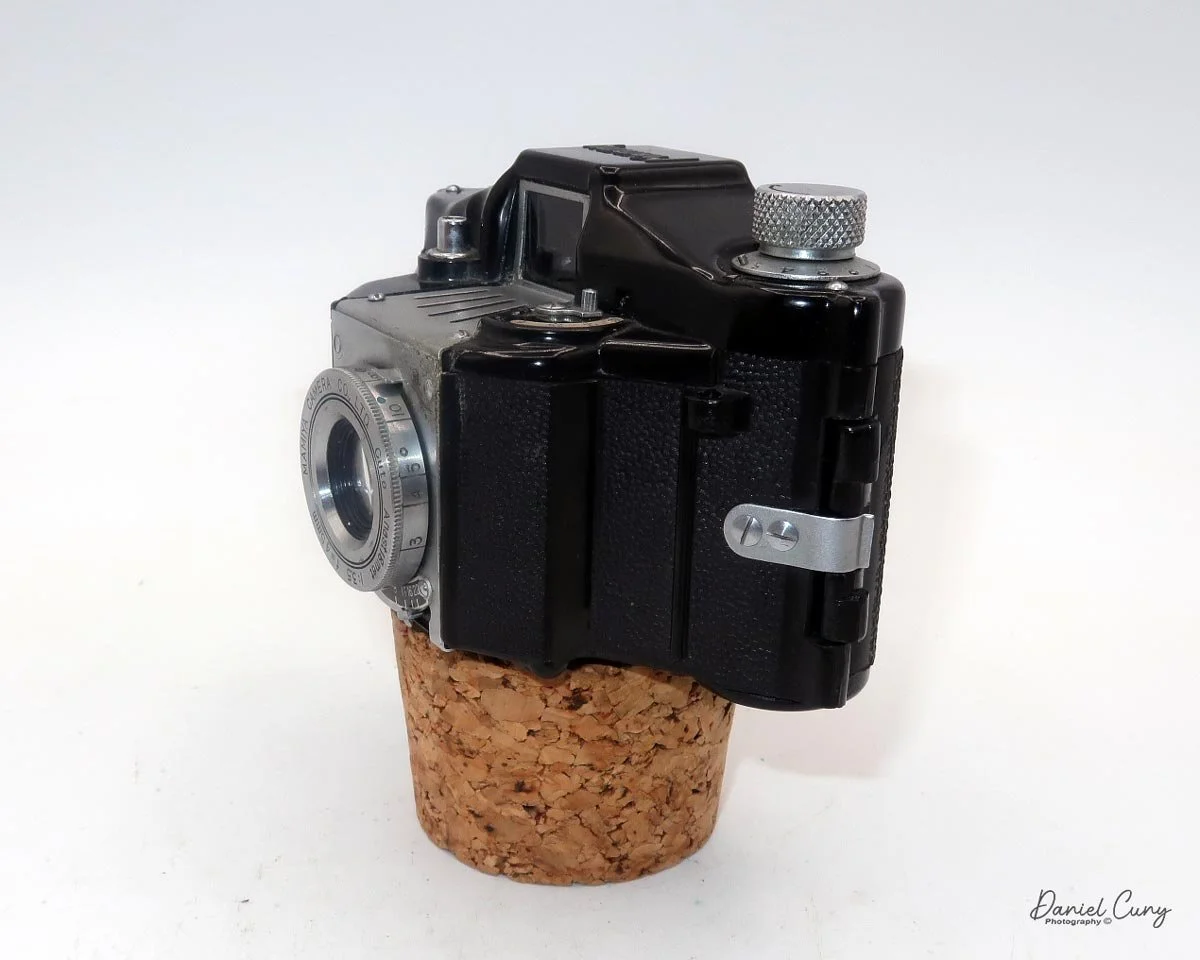
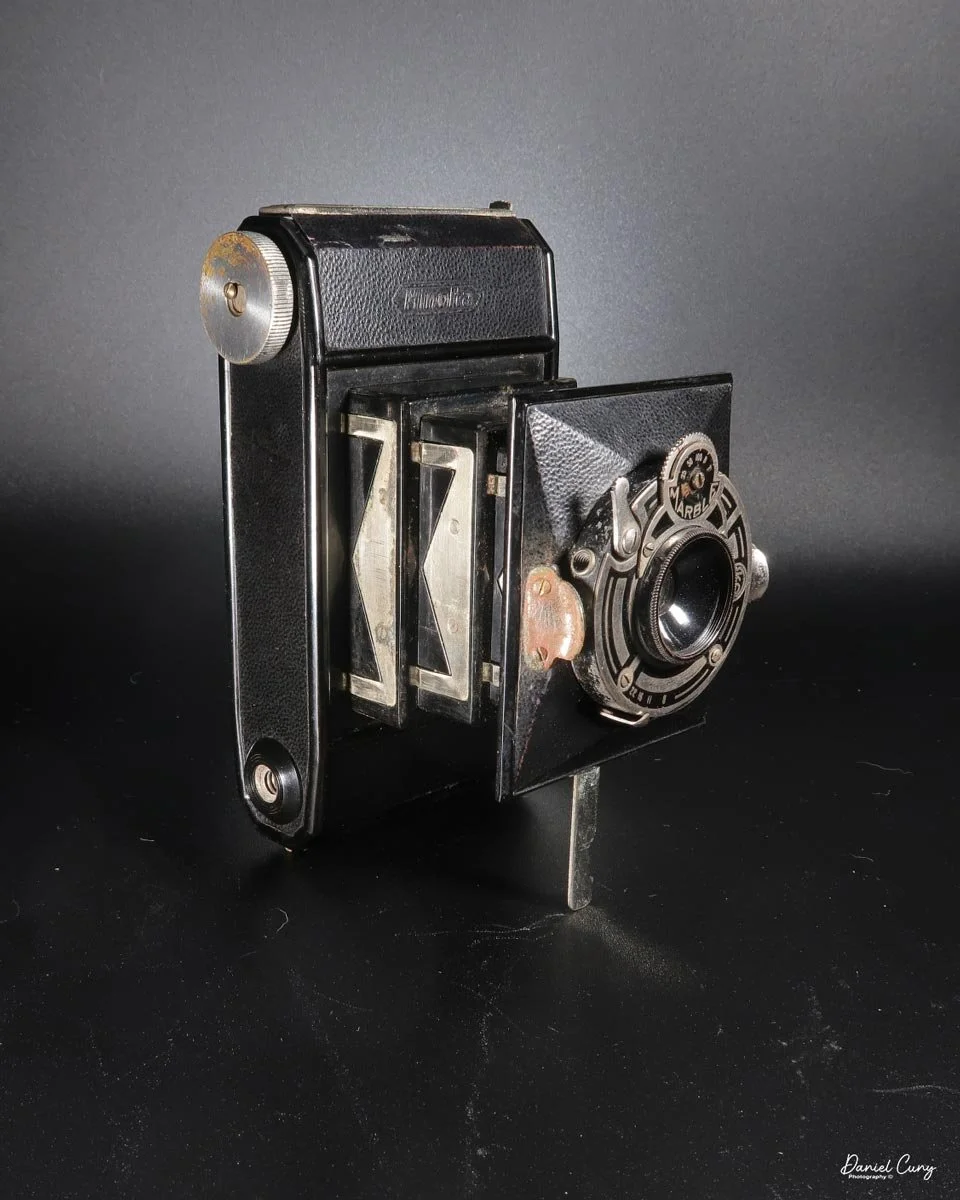
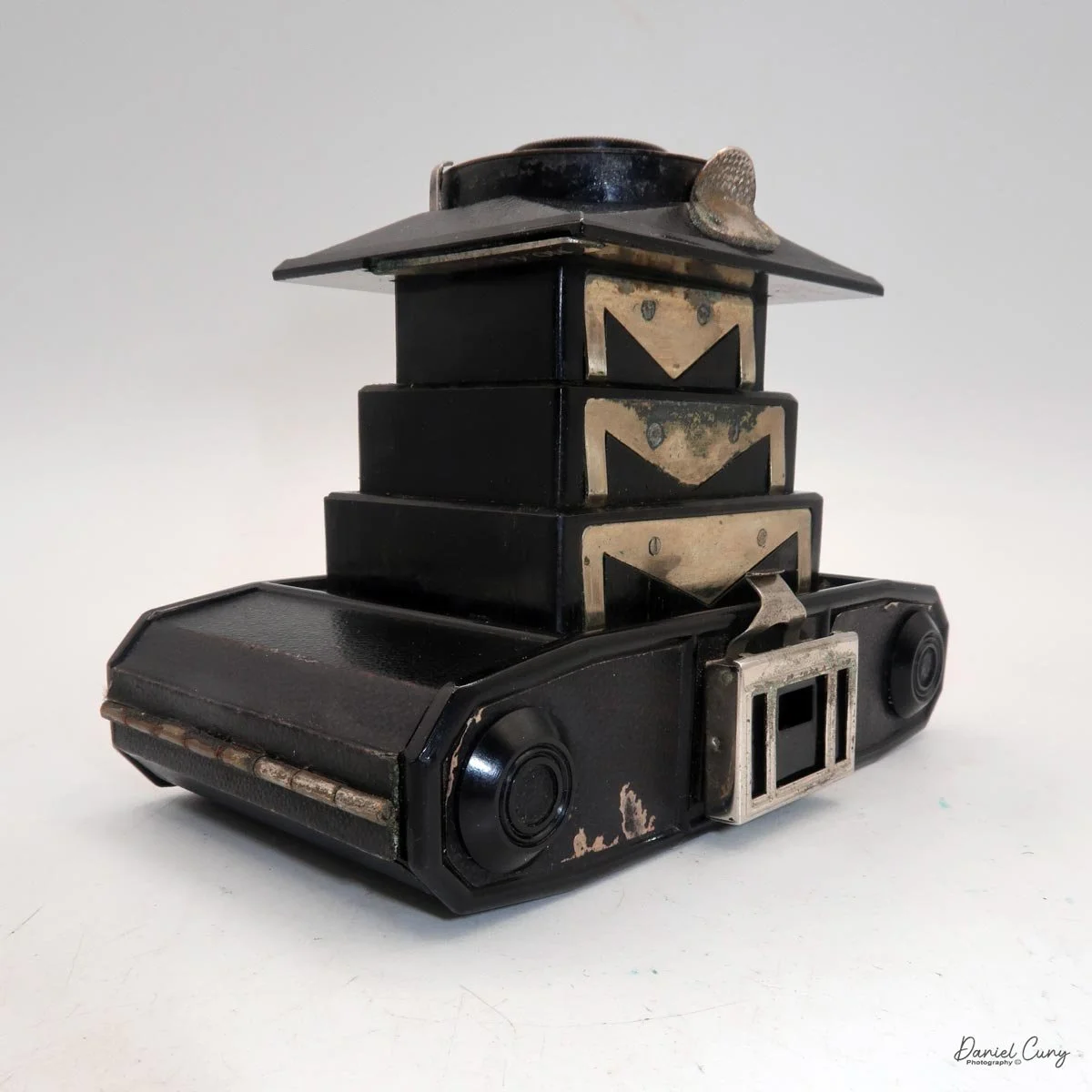
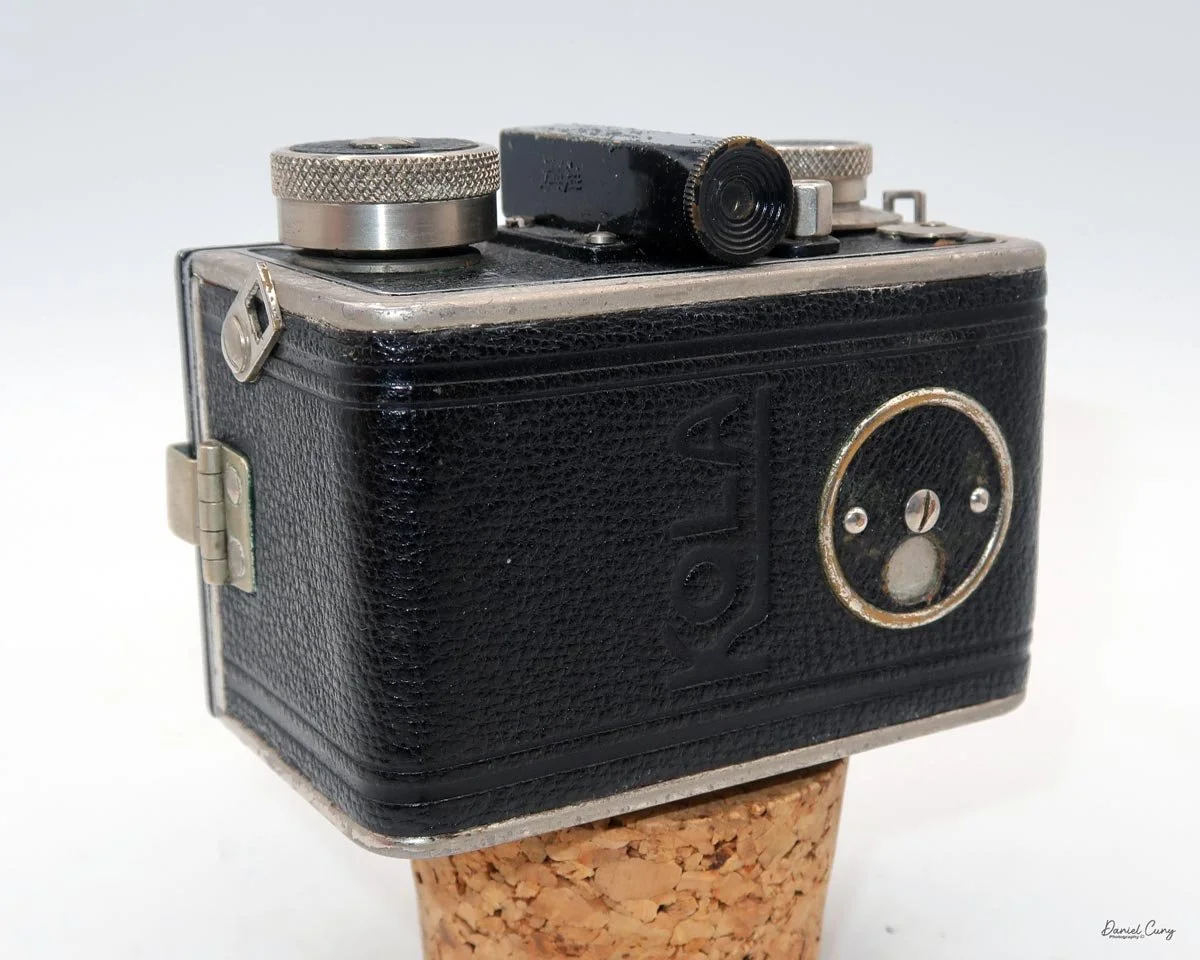
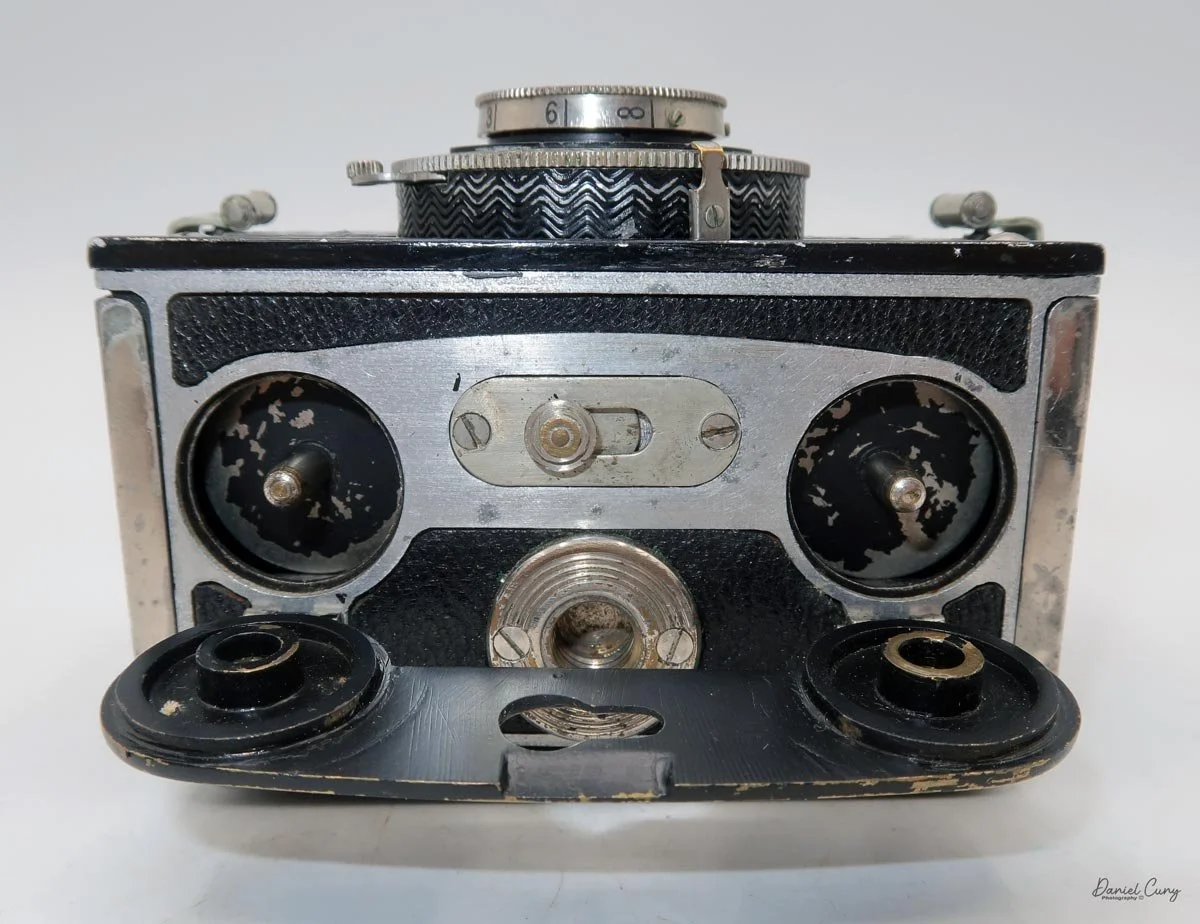
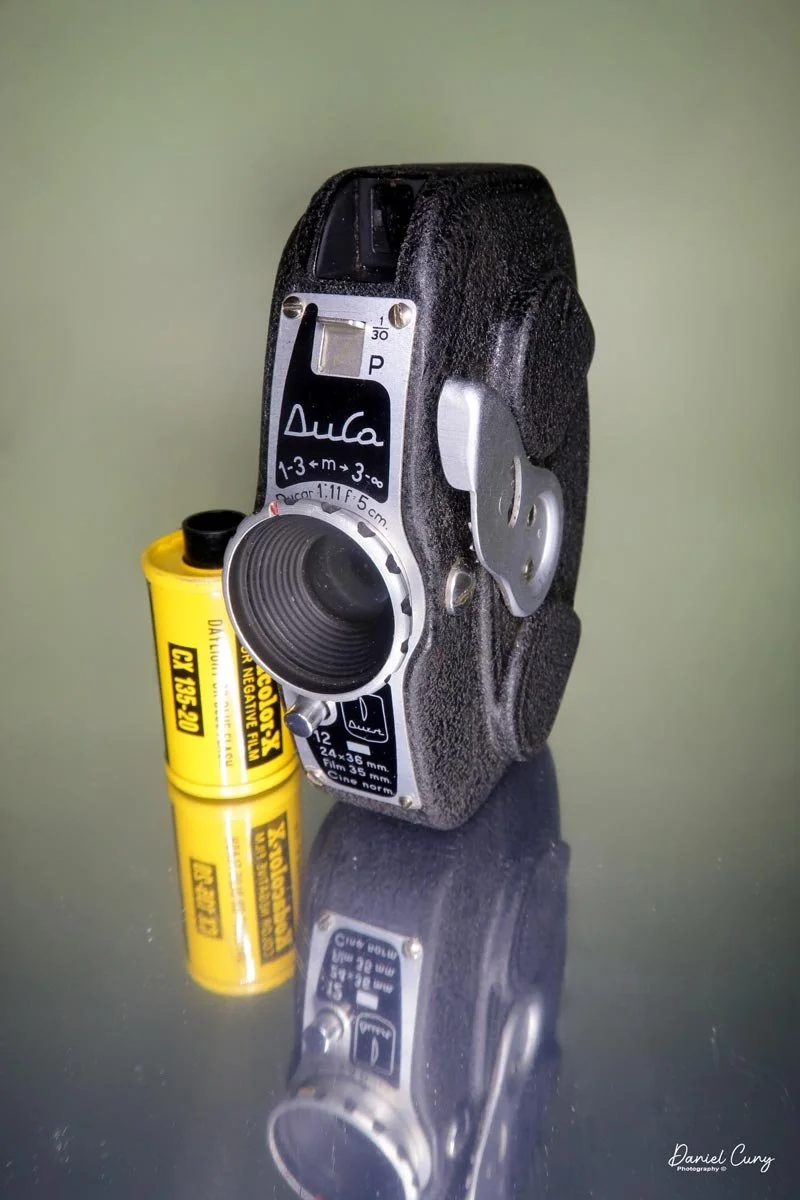
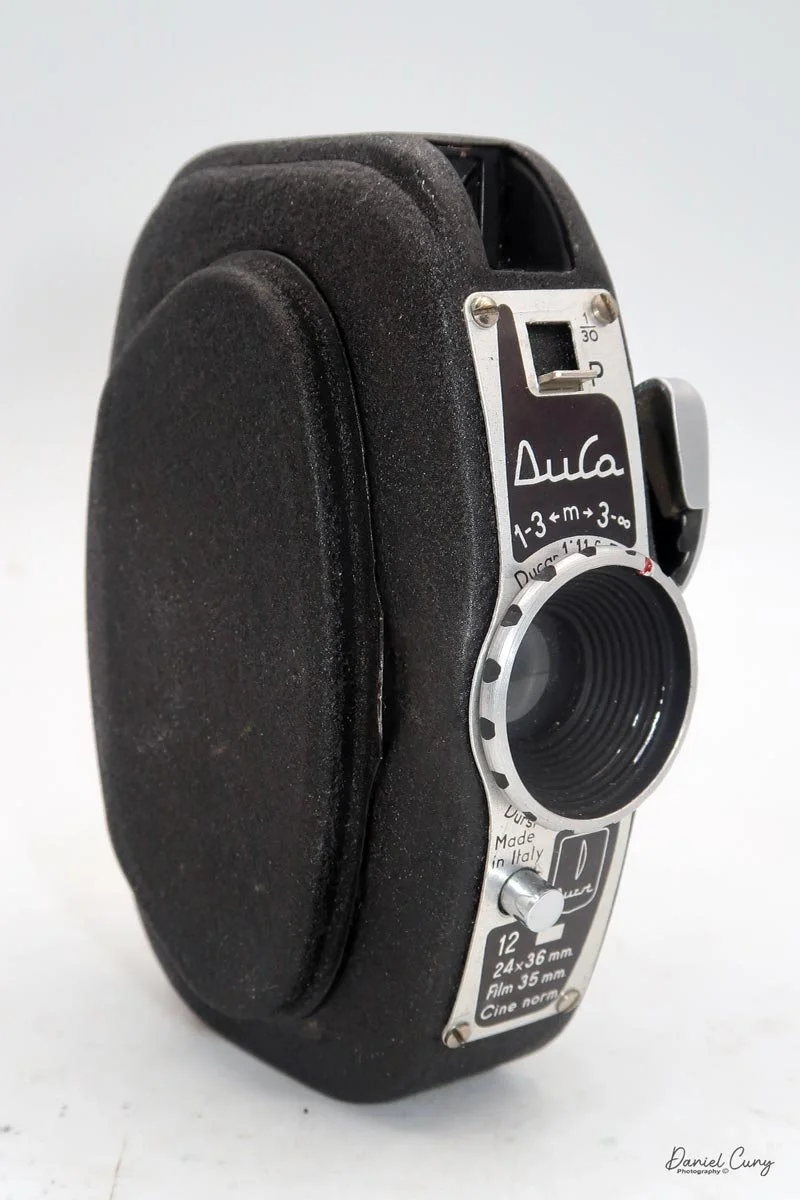
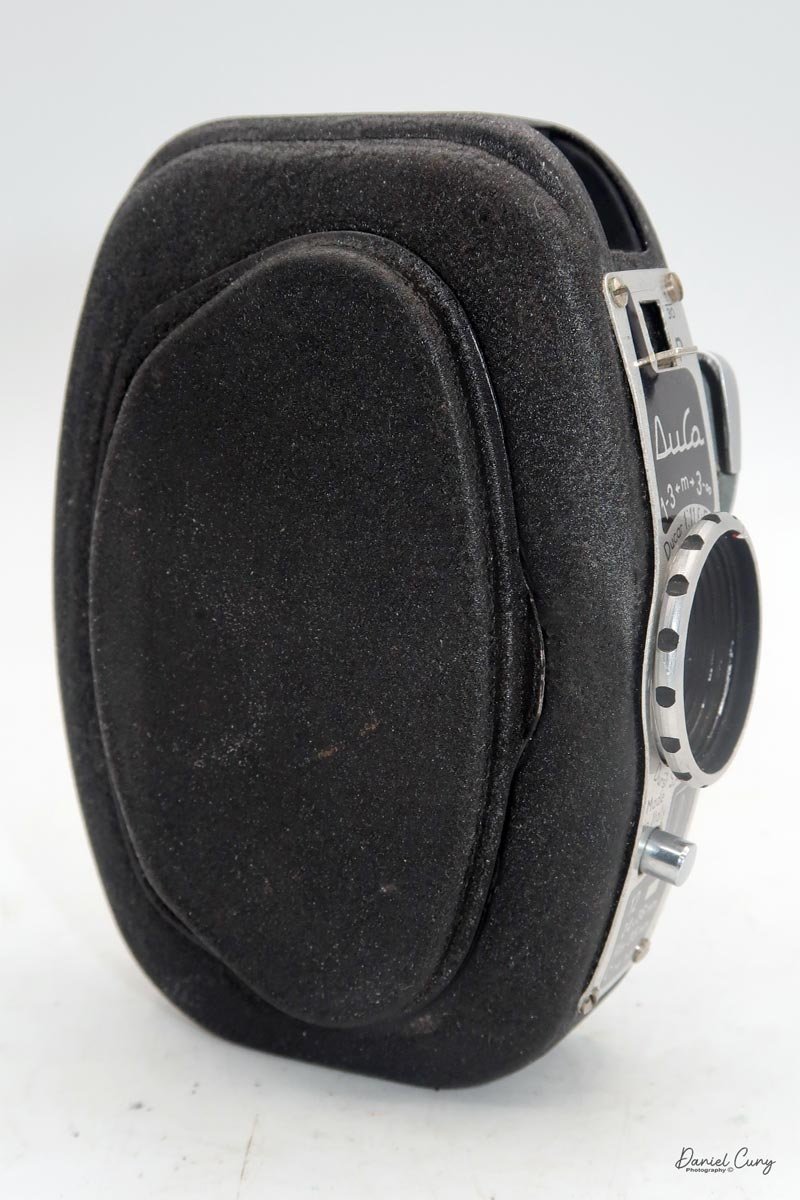
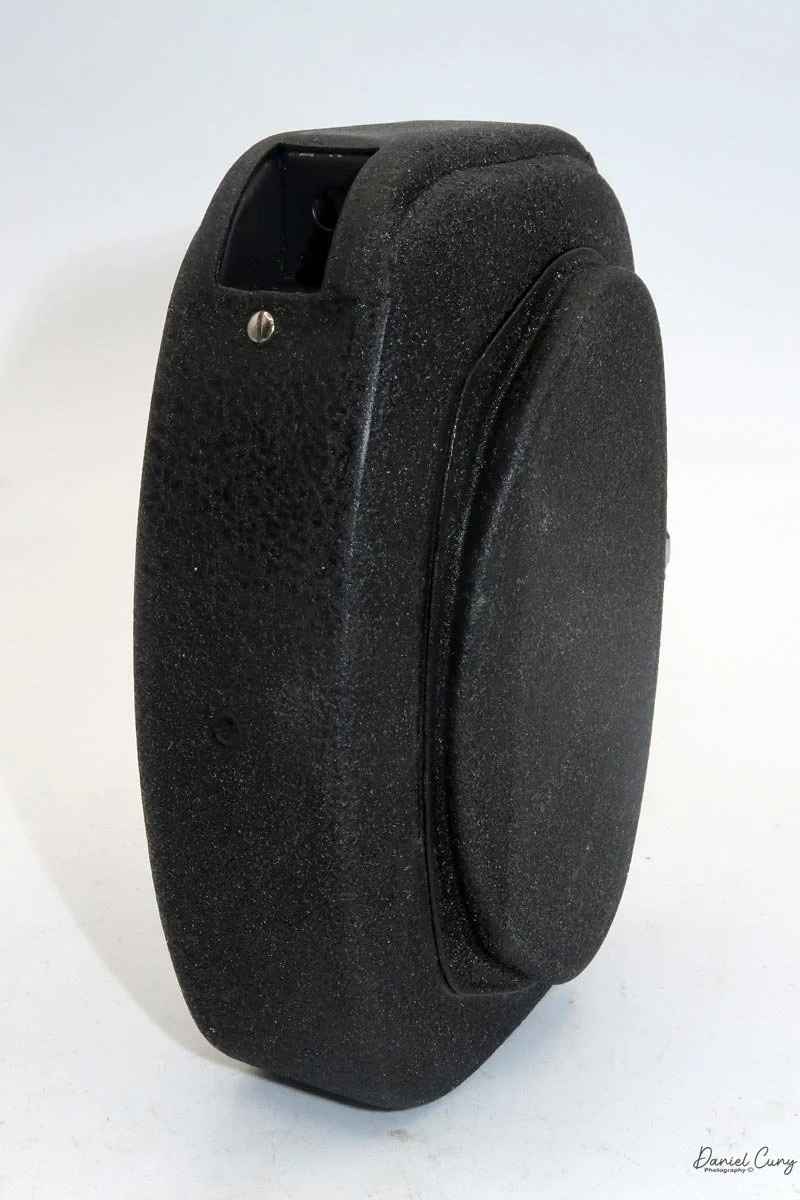
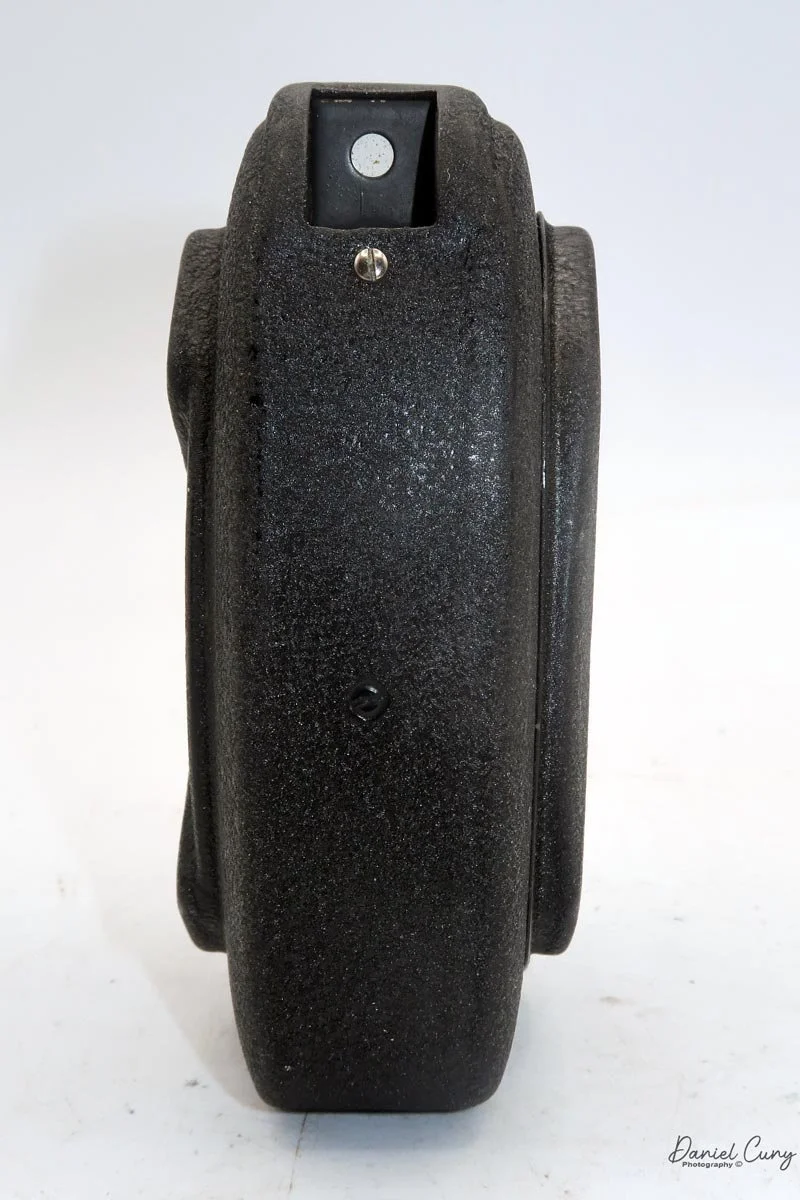
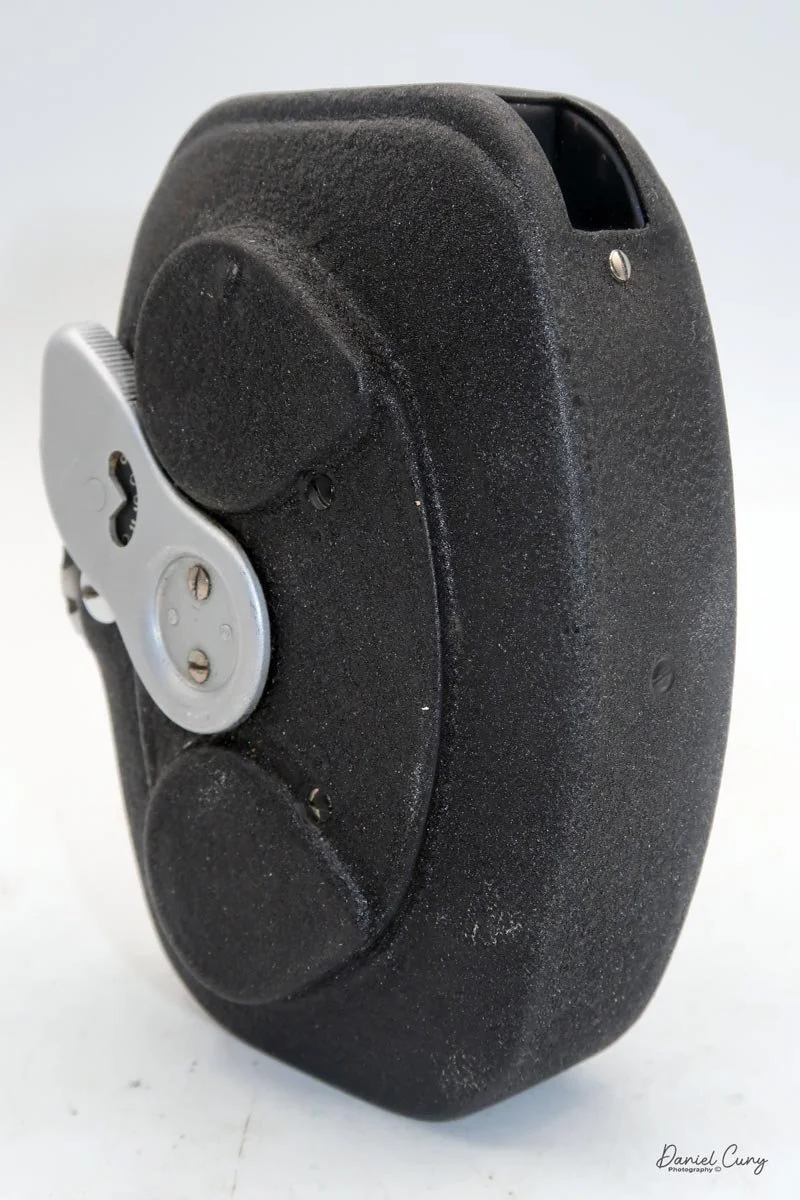
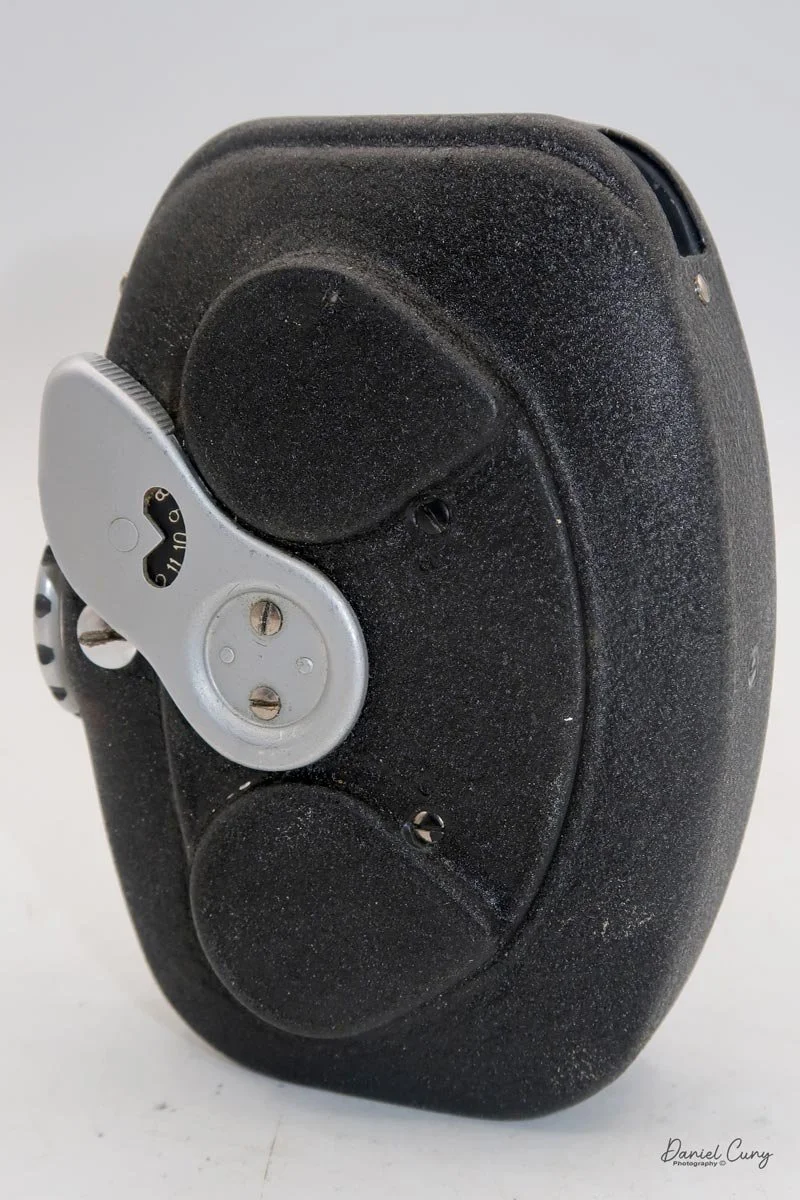
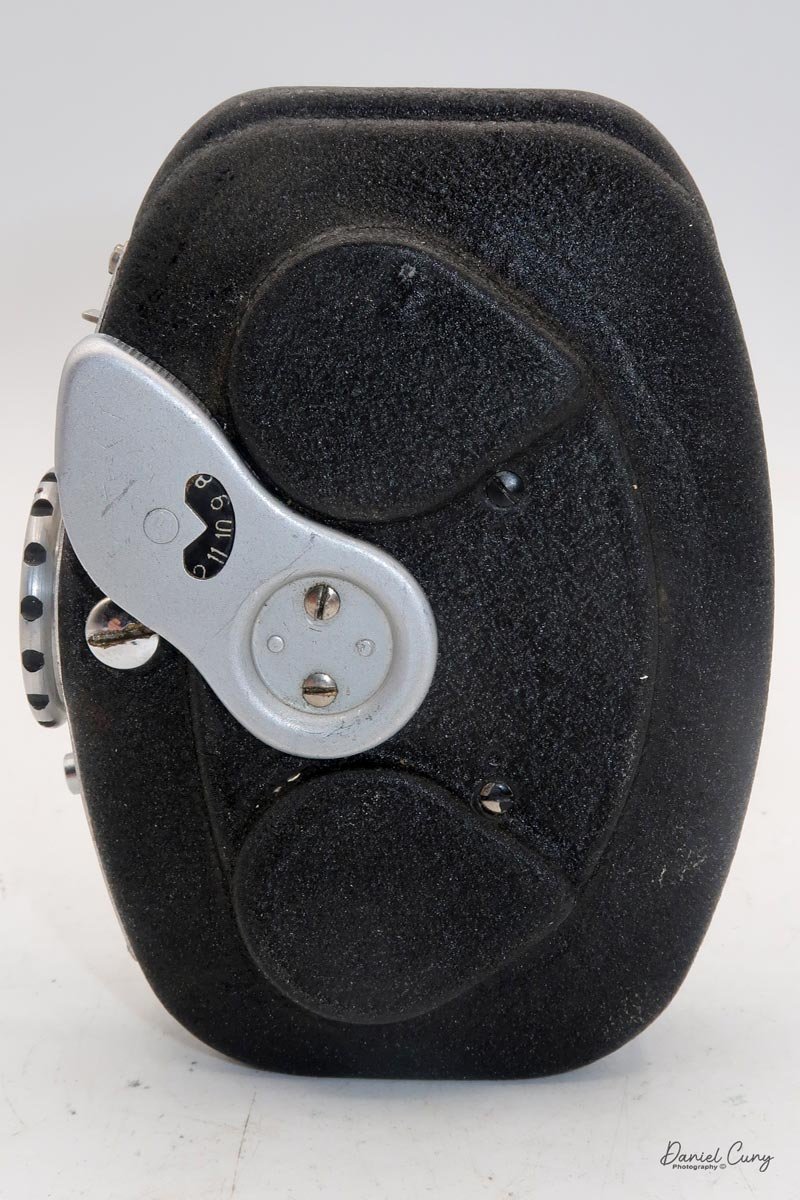
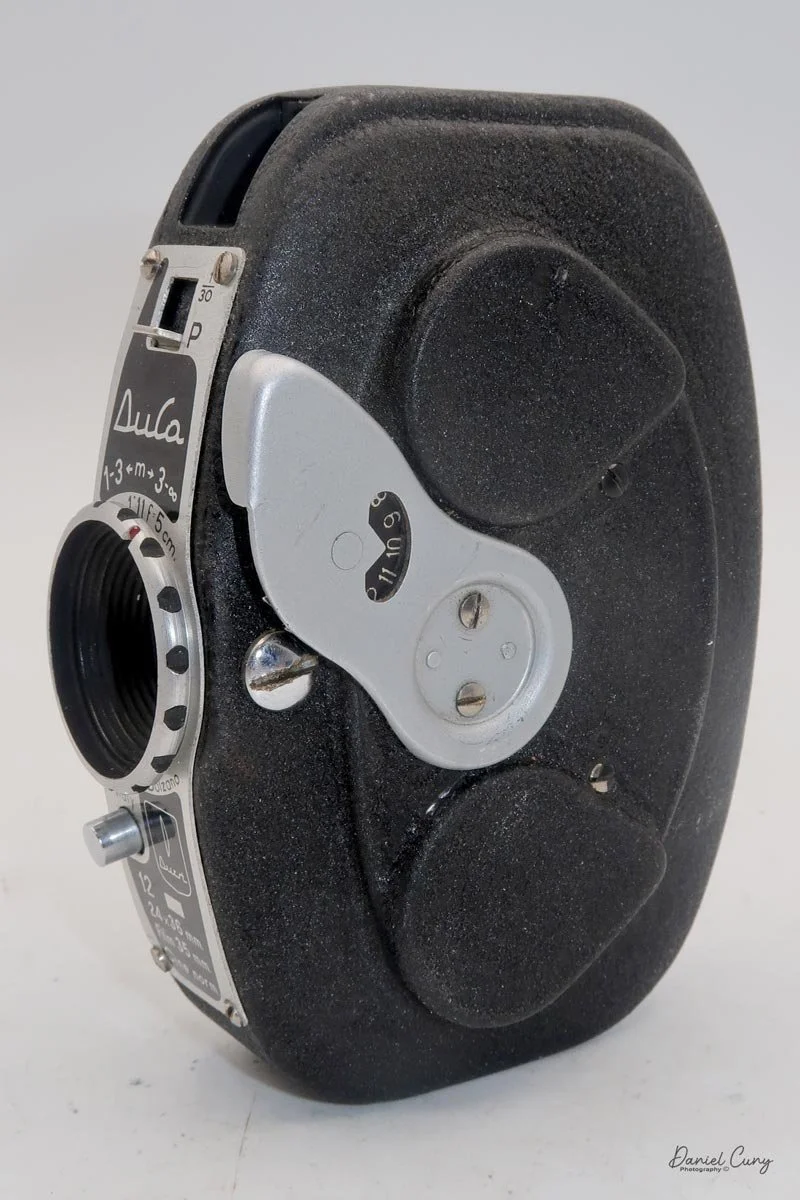
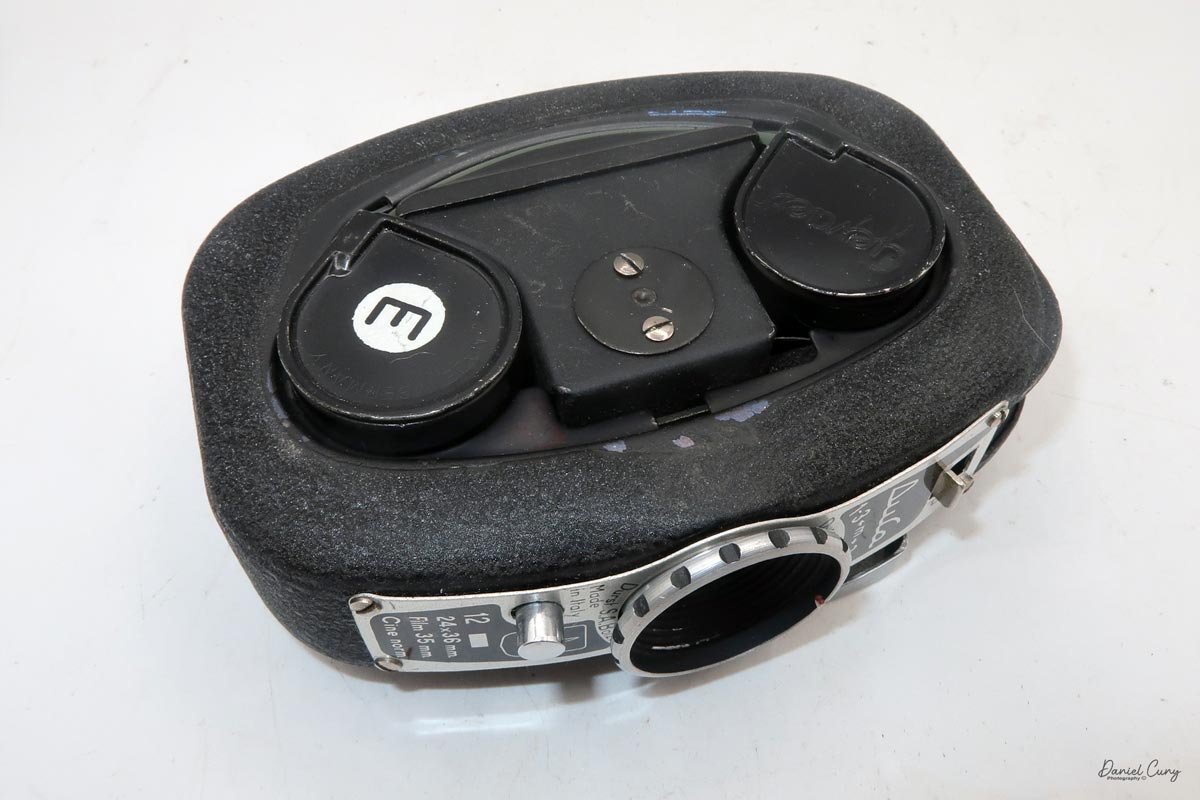
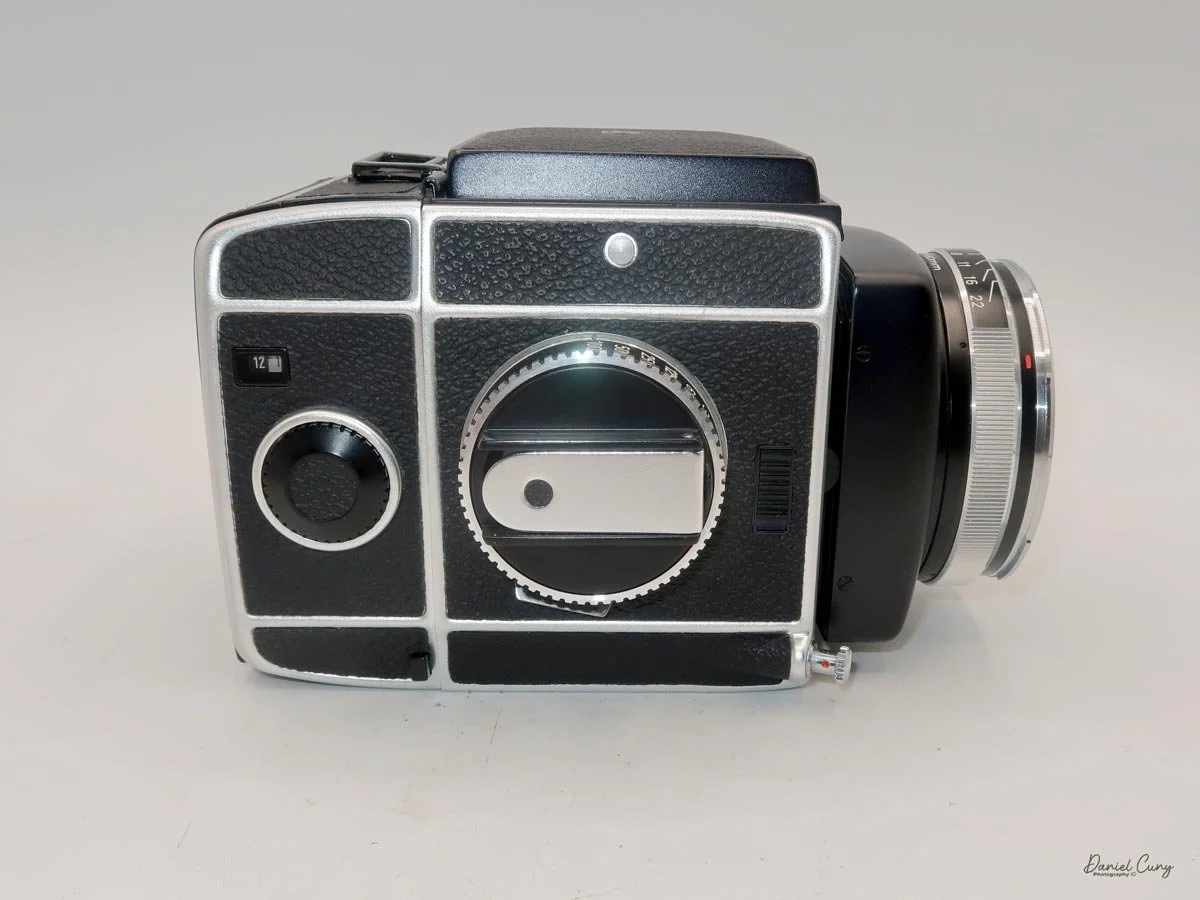
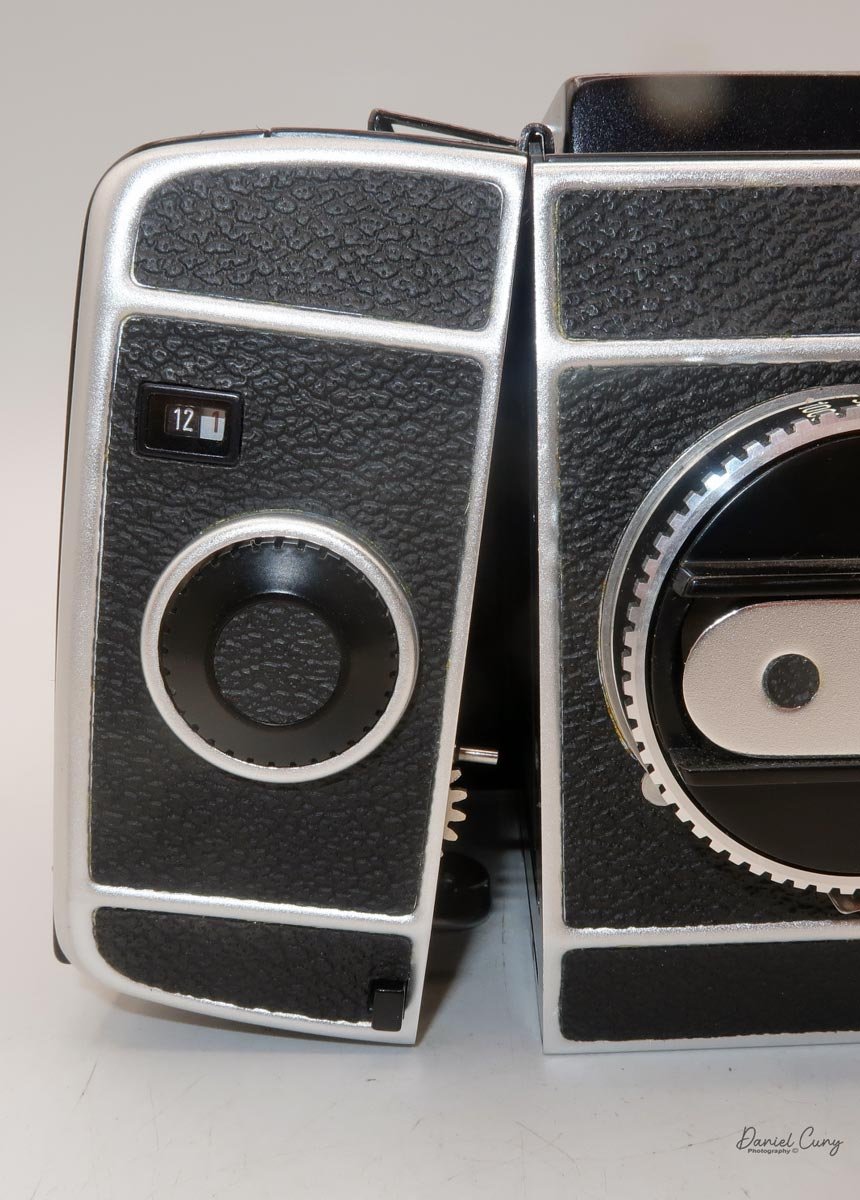
My Durst Duca camera.

I first saw the Durst Duca in McKeown's Camera Guide probably 30 years ago, and I can still remember my first instinct: this had to be a miniature camera. The tall, narrow body looked more like a tiny cine camera than anything that could handle standard 35mm film. With its vertical form, I assumed it used a 16mm cassette like a Minolta 16. So when I read that the Duca is actually a full‑frame 35mm camera, I was shocked.

 It just didn't seem possible. The camera looked too small and too skinny to hide a 35mm cassette sideways, especially with that unusual vertical format. For years, it stayed in the back of my mind as one of those oddball cameras I never expected to actually run across.

Finding My Duca

Being in the U.S., this little Italian camera rarely shows up at the usual places I haunt for gear—flea markets, garage sales, estate sales. On the big auction sites, I do see them once in a while. Still, they're usually priced higher than I'm willing to pay, especially once you tack on international shipping.

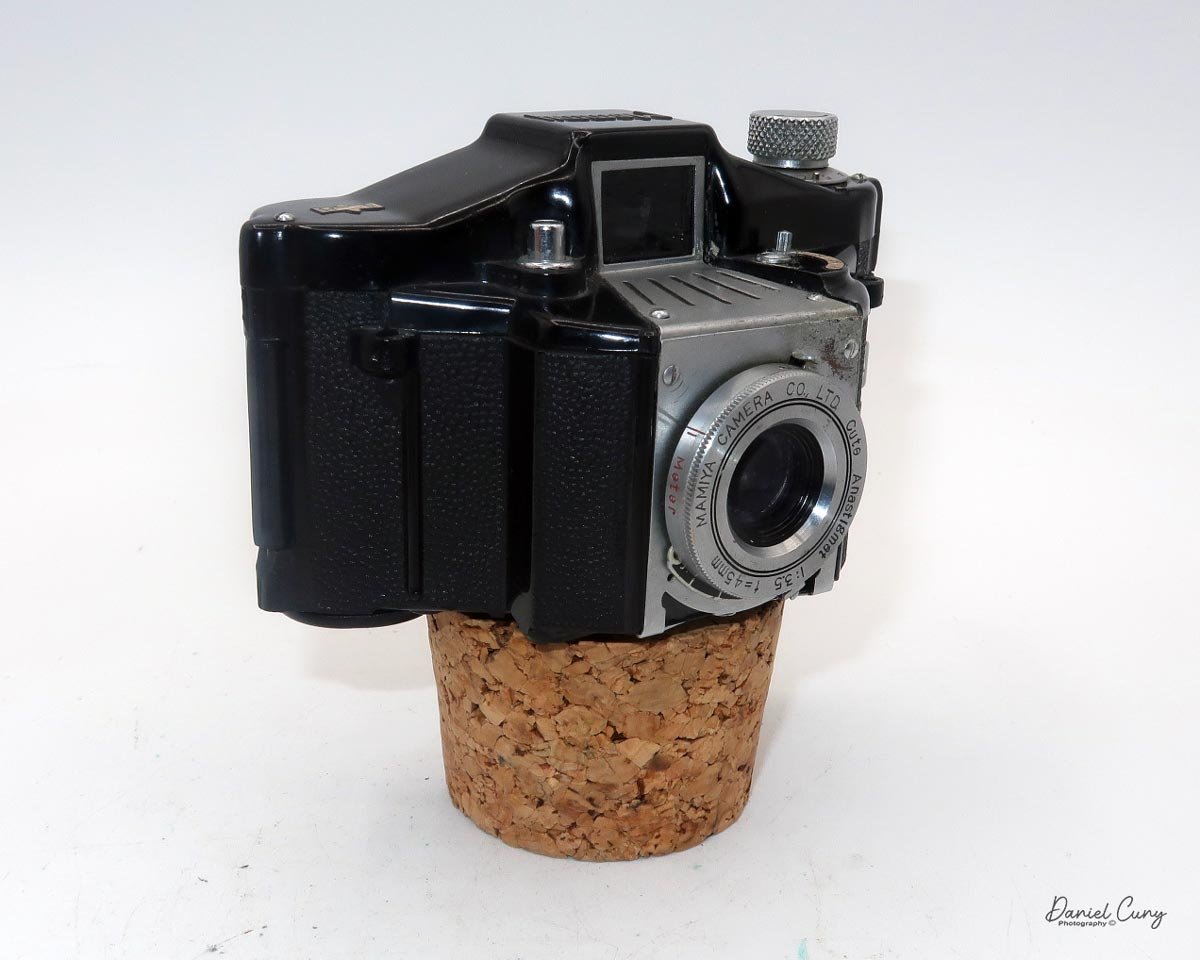
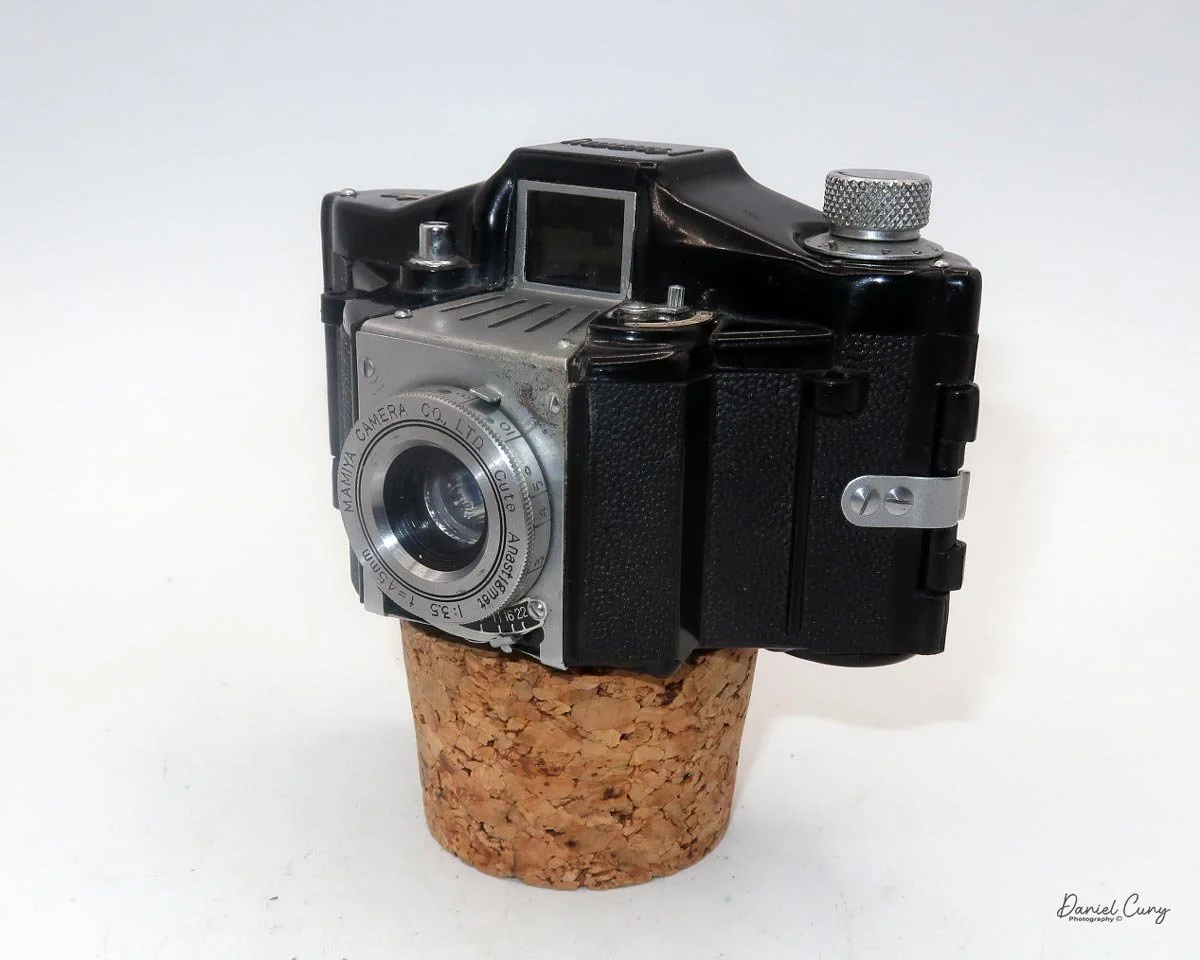
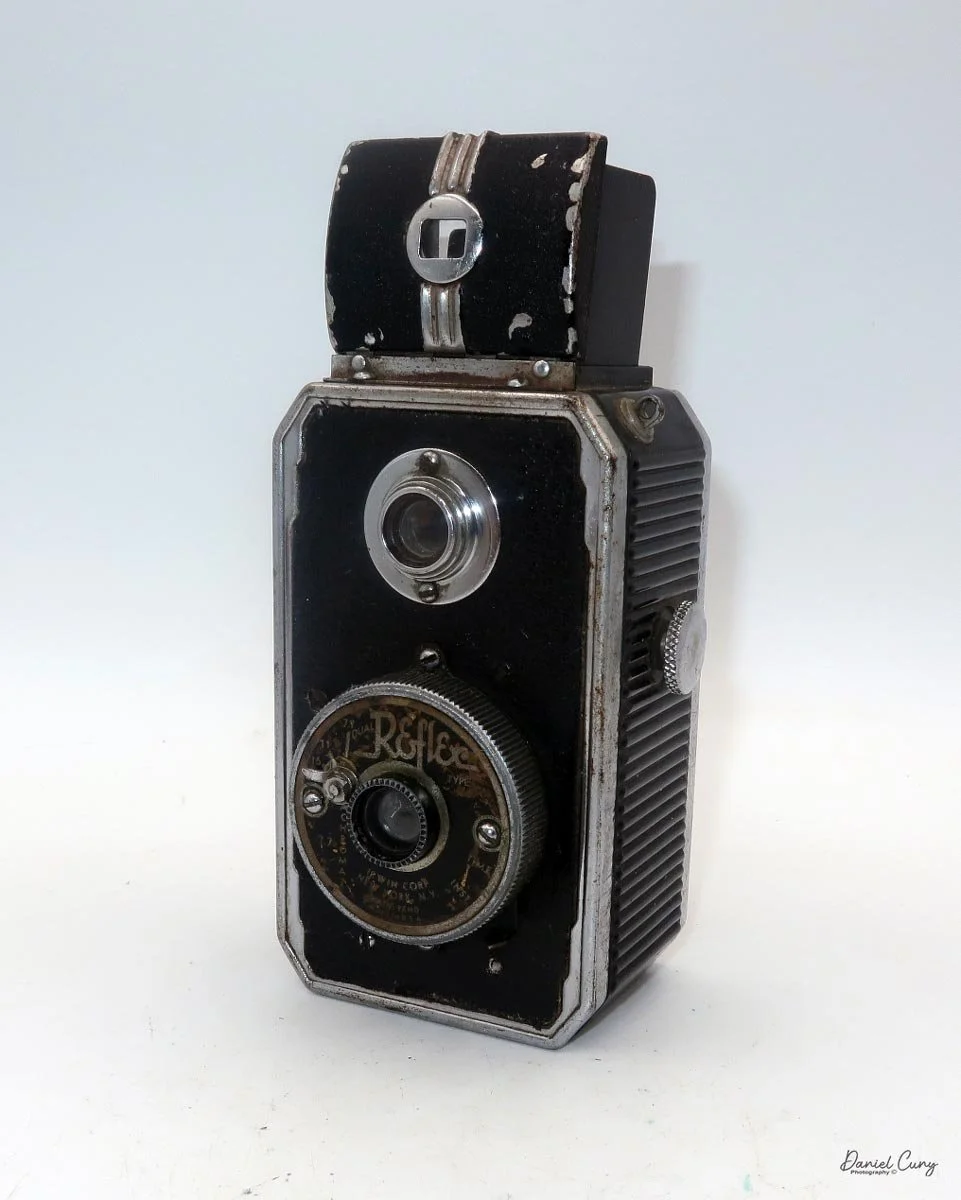
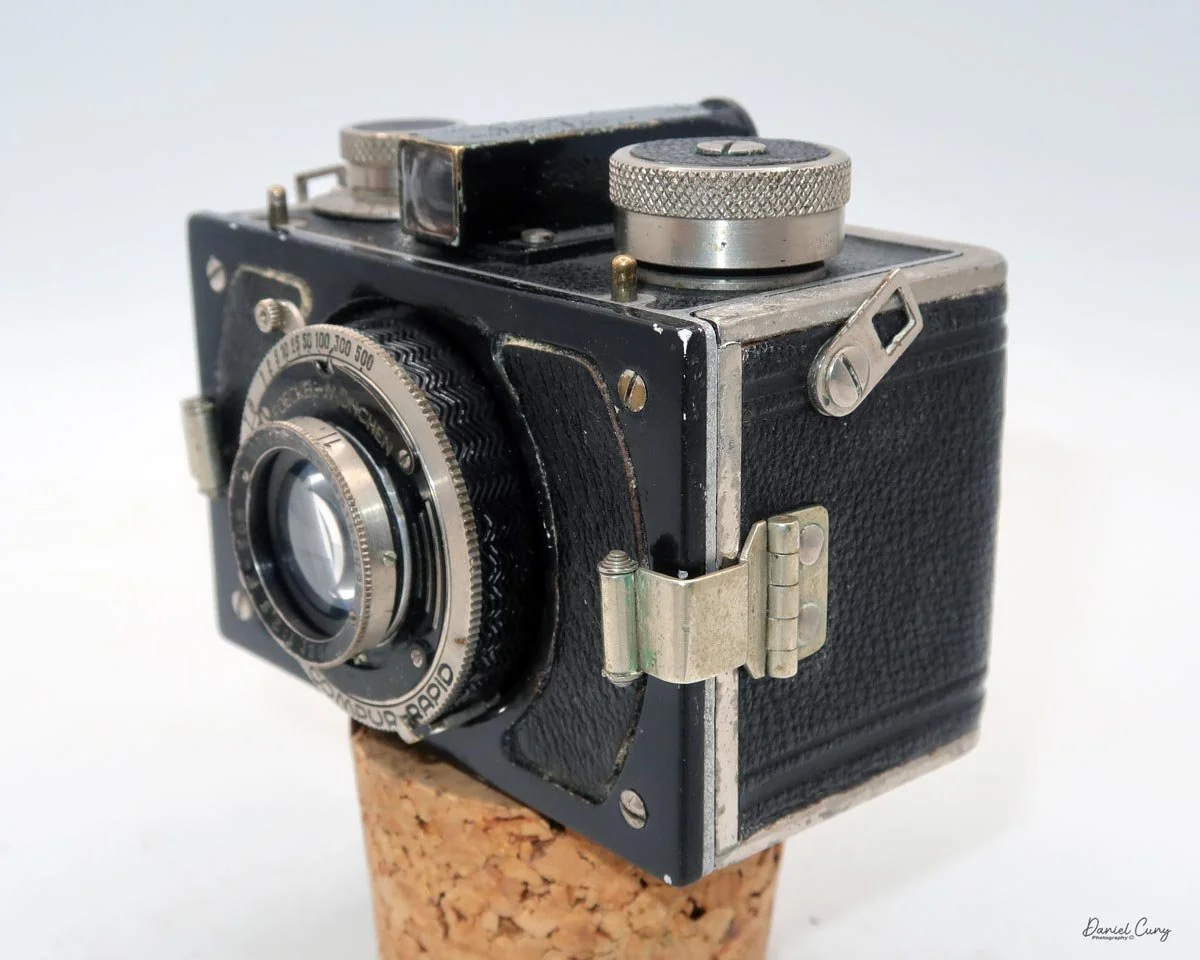
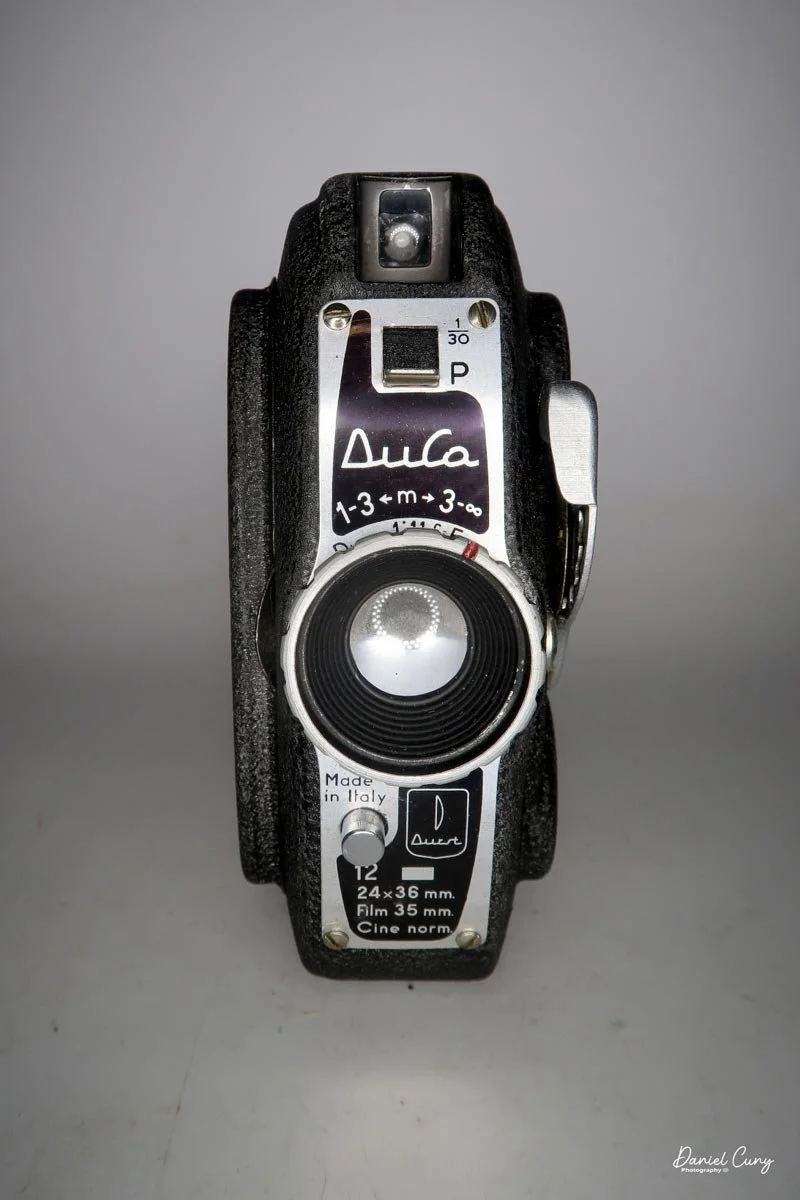
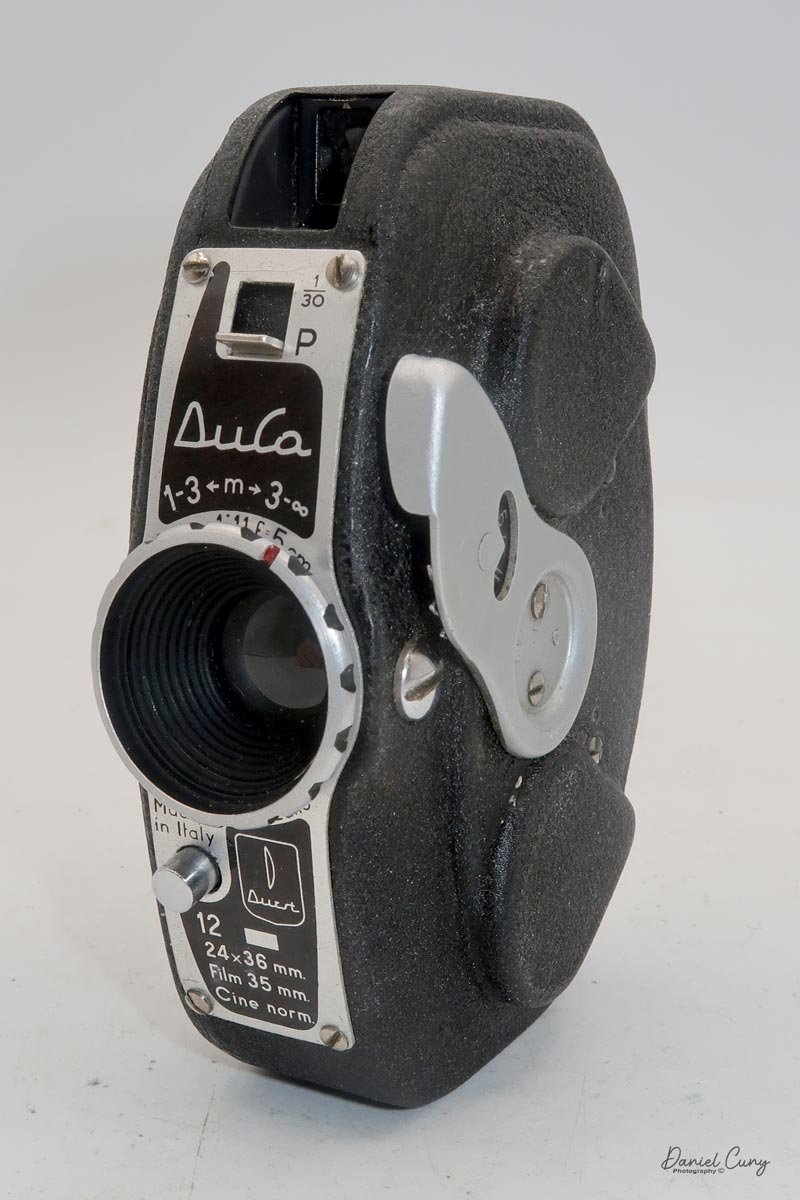
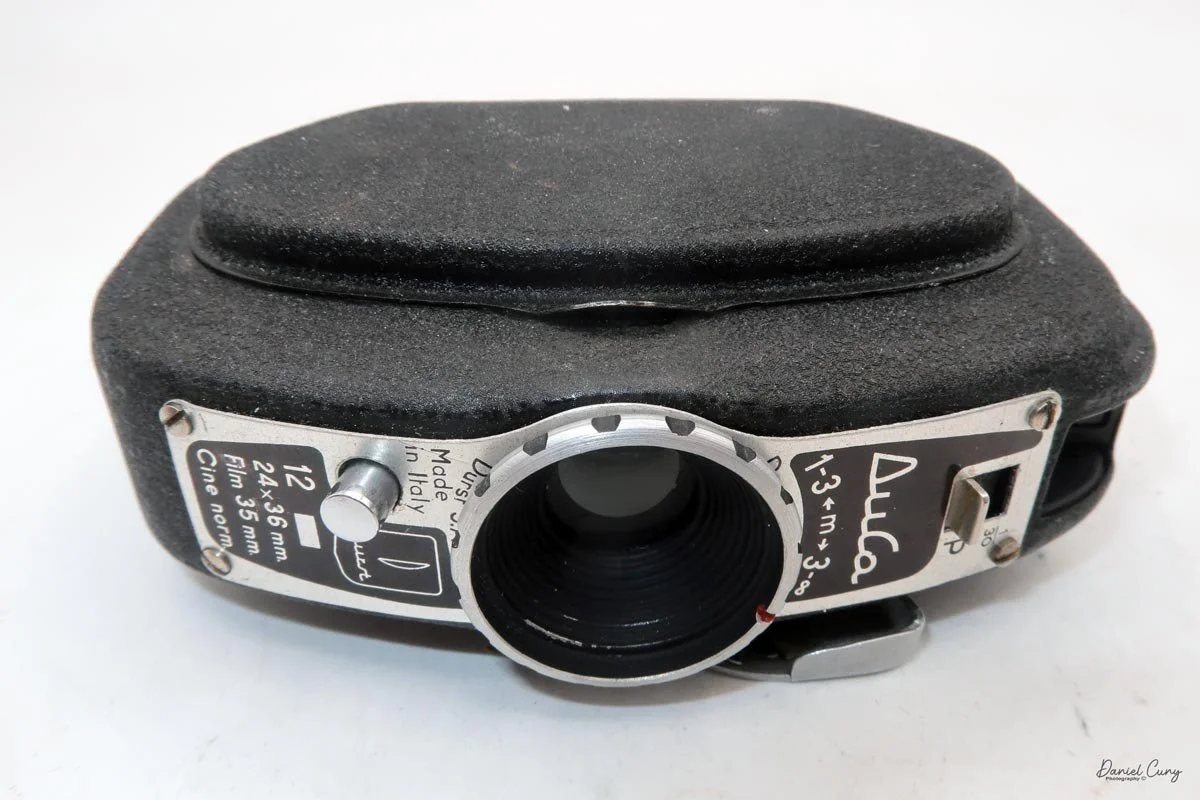
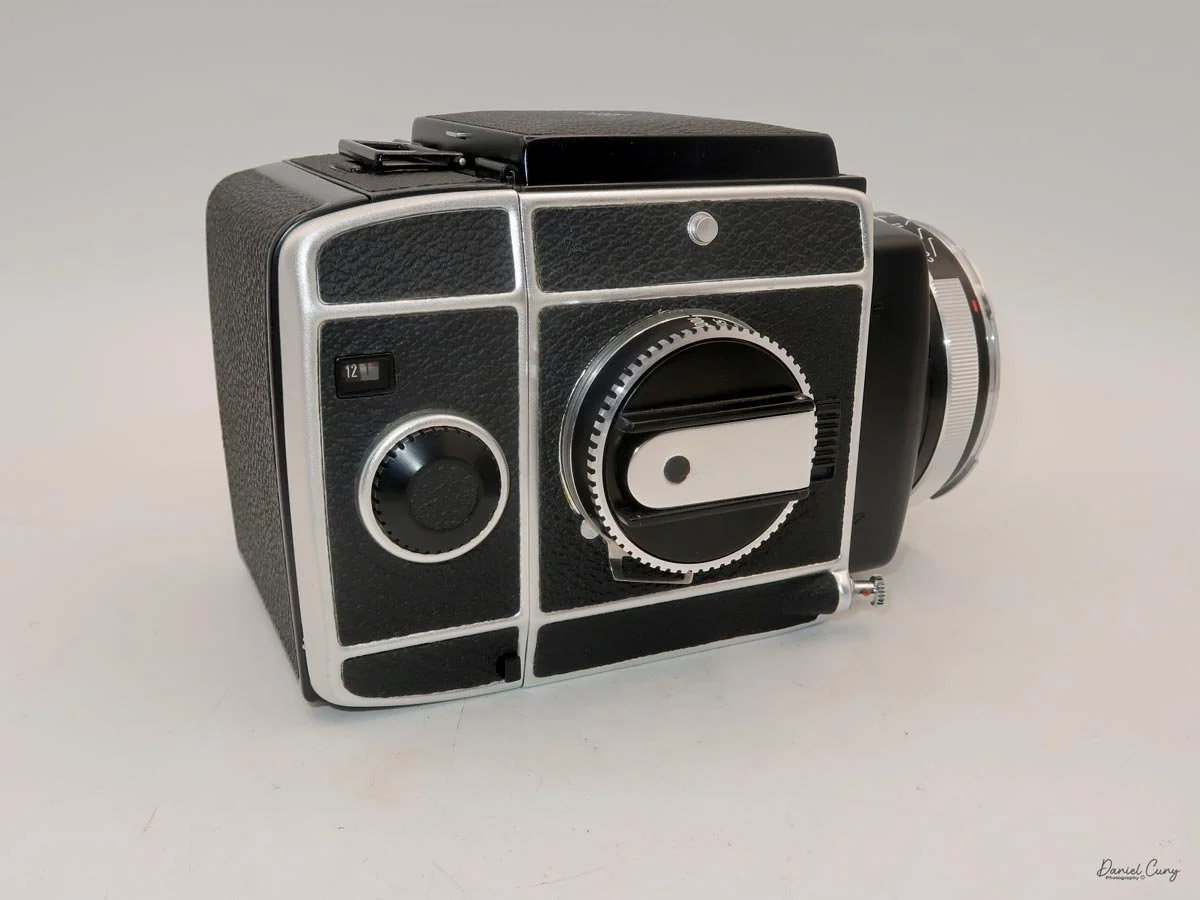
Front view of Durst Duca camera.

 When the auction was about to end, I logged in about 10 minutes before the finish. The price on the Duca had jumped up a bit, and I was outbid, so I nudged my max up—still on the low side—and watched the timer count down. No one else jumped in, and I ended up winning the camera.

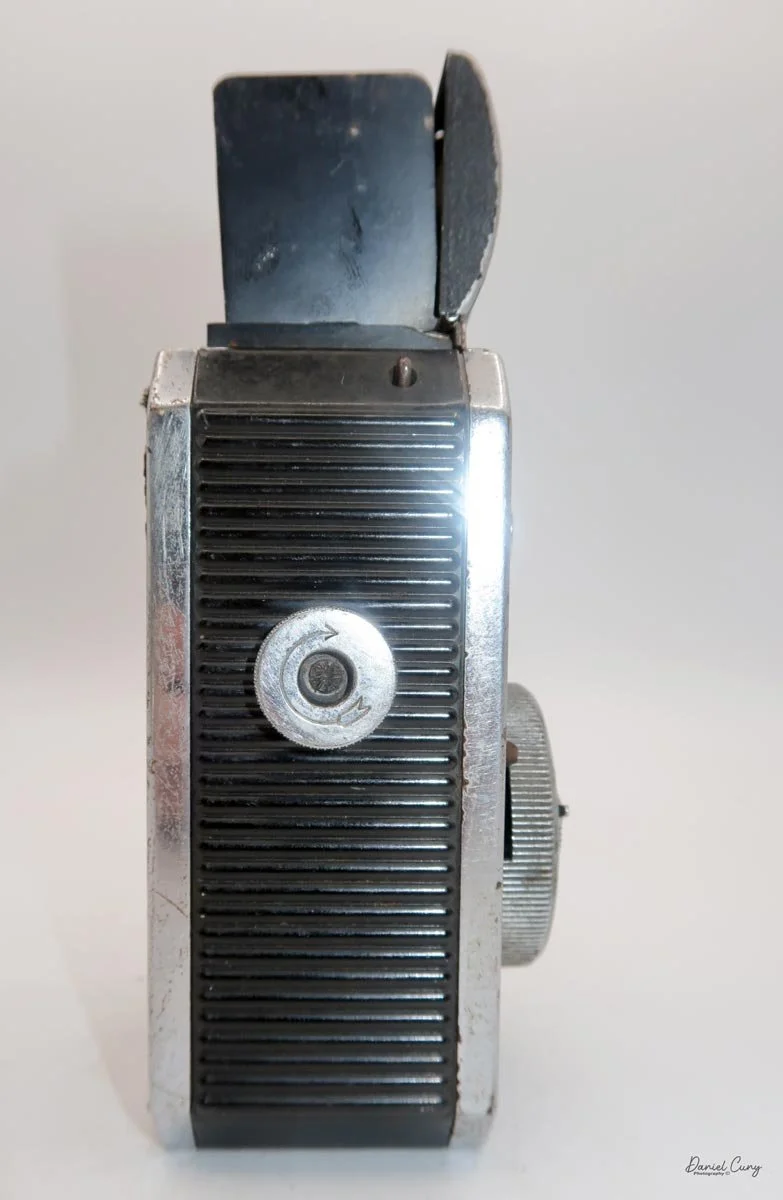
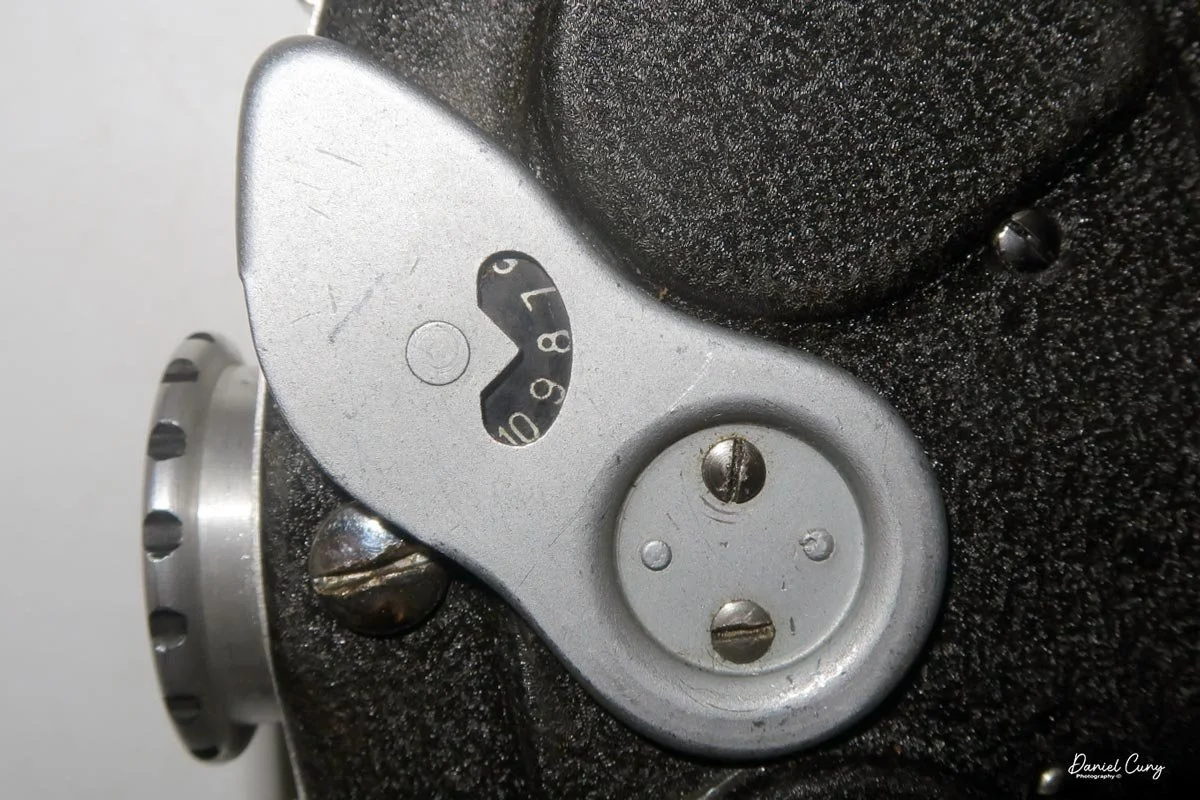
The auction house shipped quickly. When I opened the box, I was still surprised by how small the camera is in person. It was even smaller than I'd pictured. I started to check it over, winding the advance lever on the side and cocking the shutter. I heard a faint click, but it was so quiet I wasn't sure the shutter was actually opening and closing.

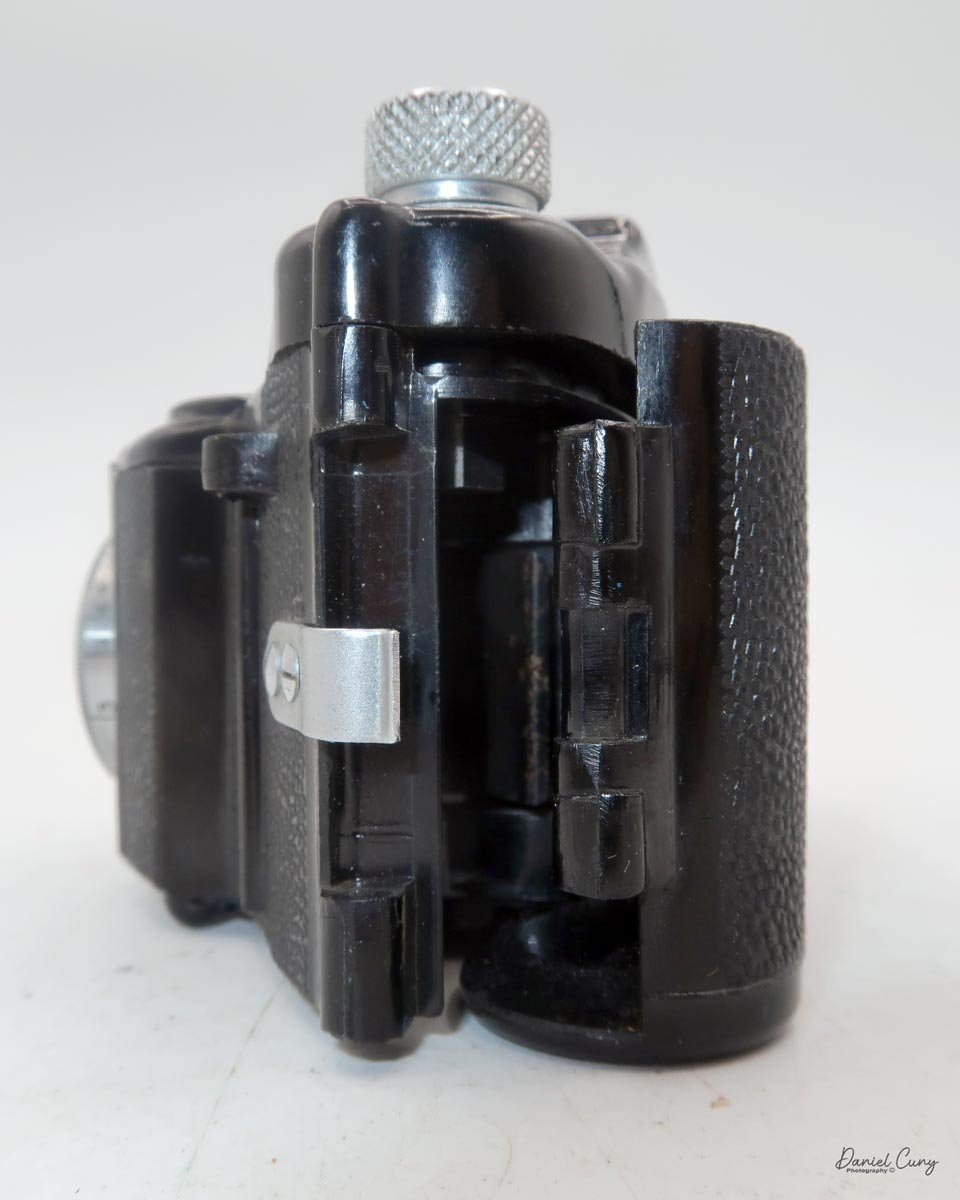
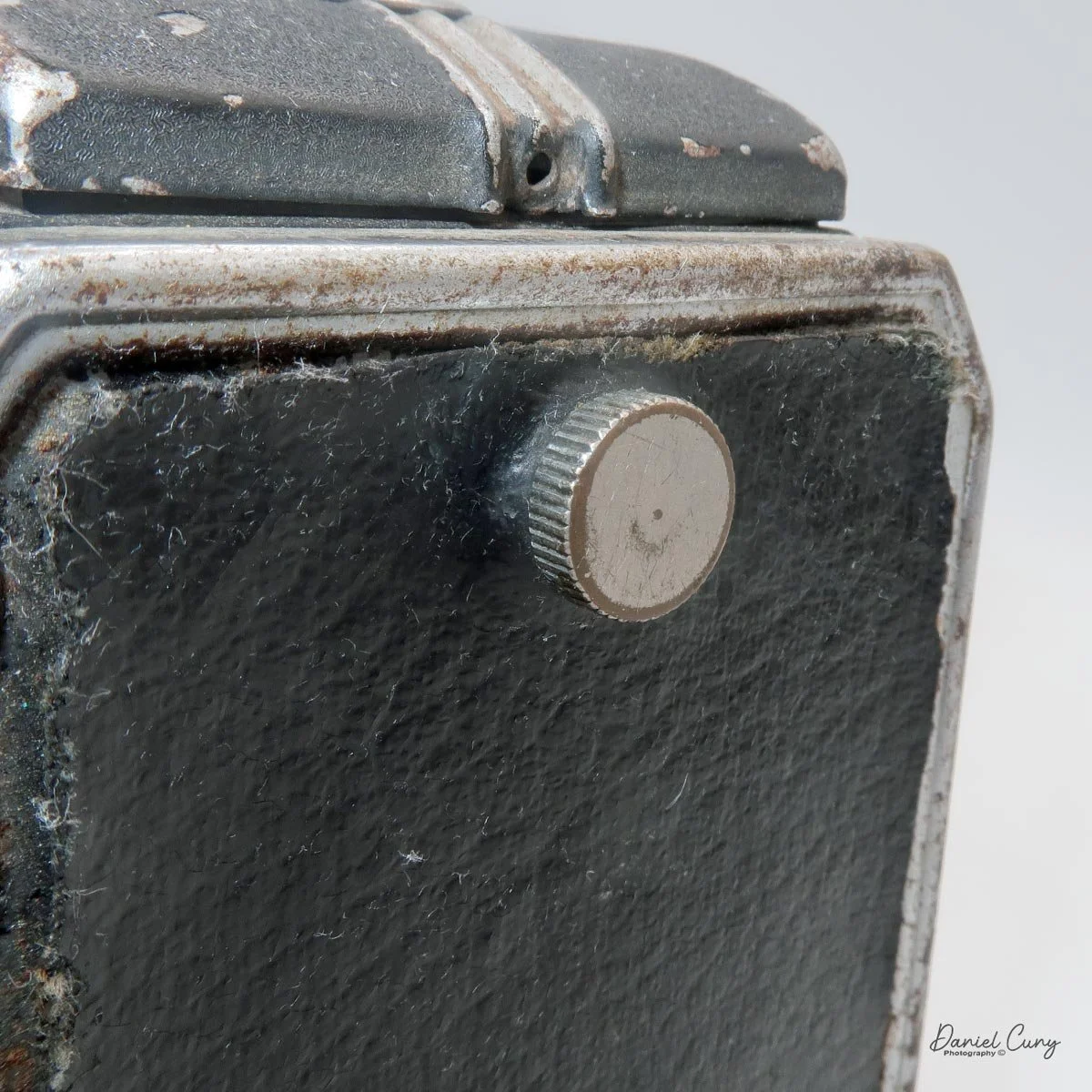
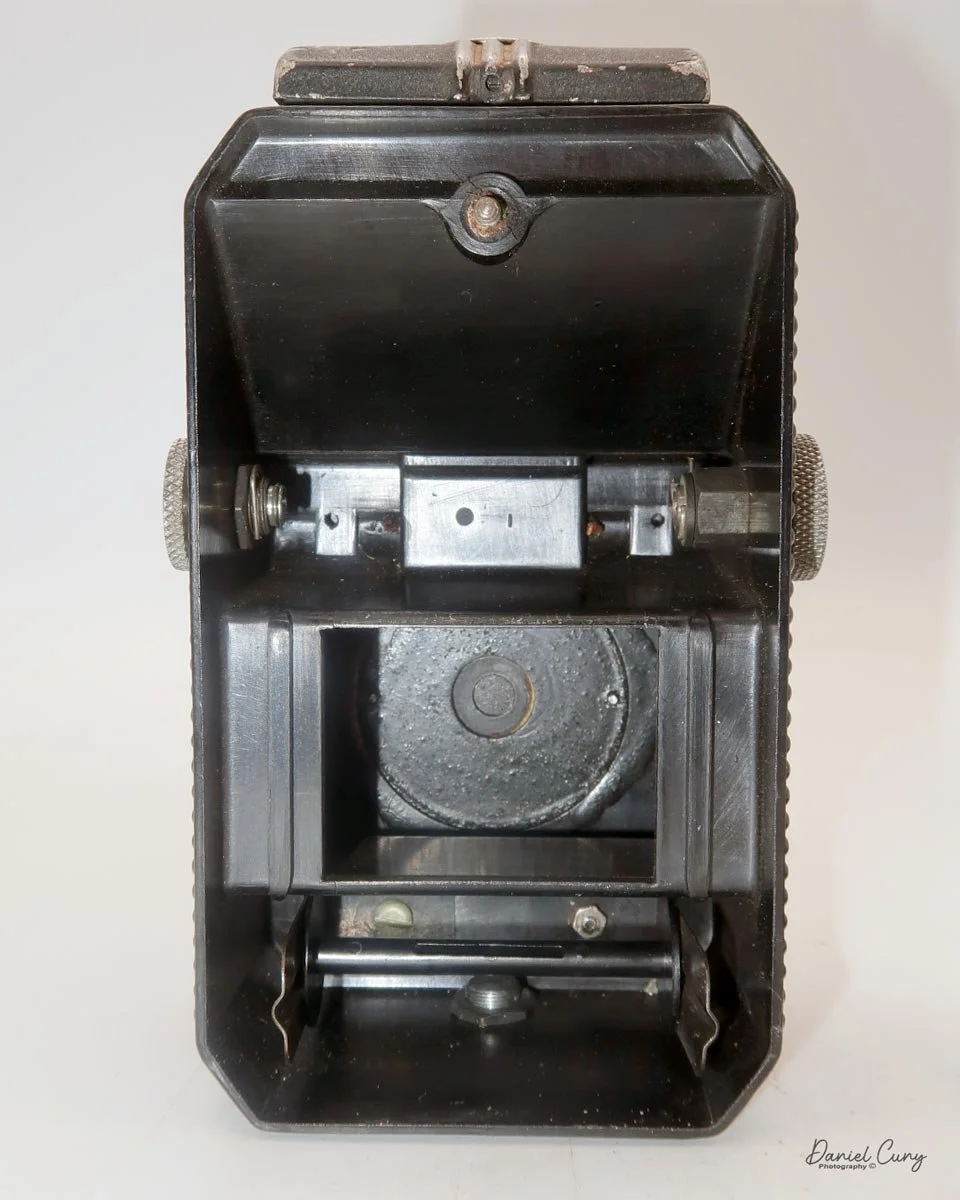
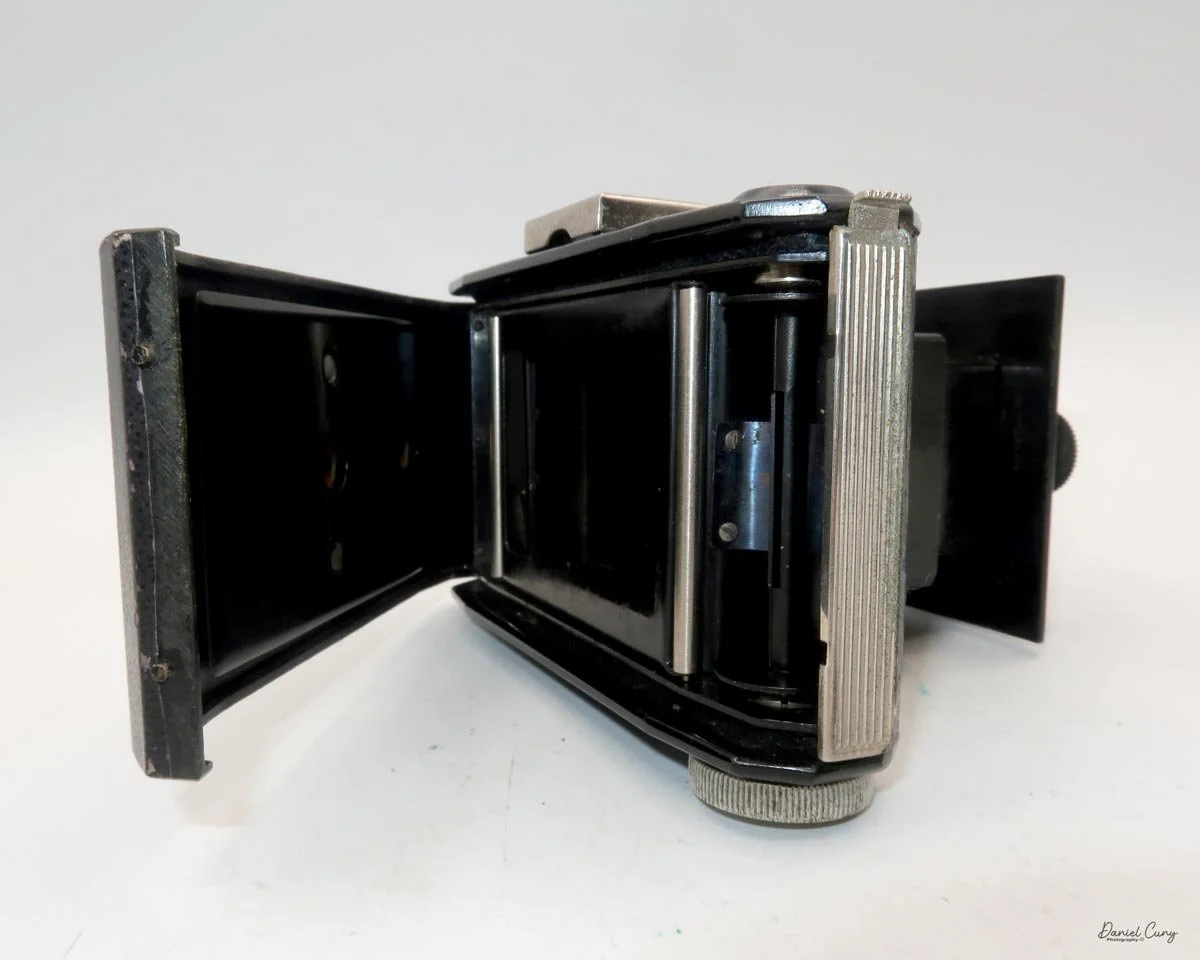
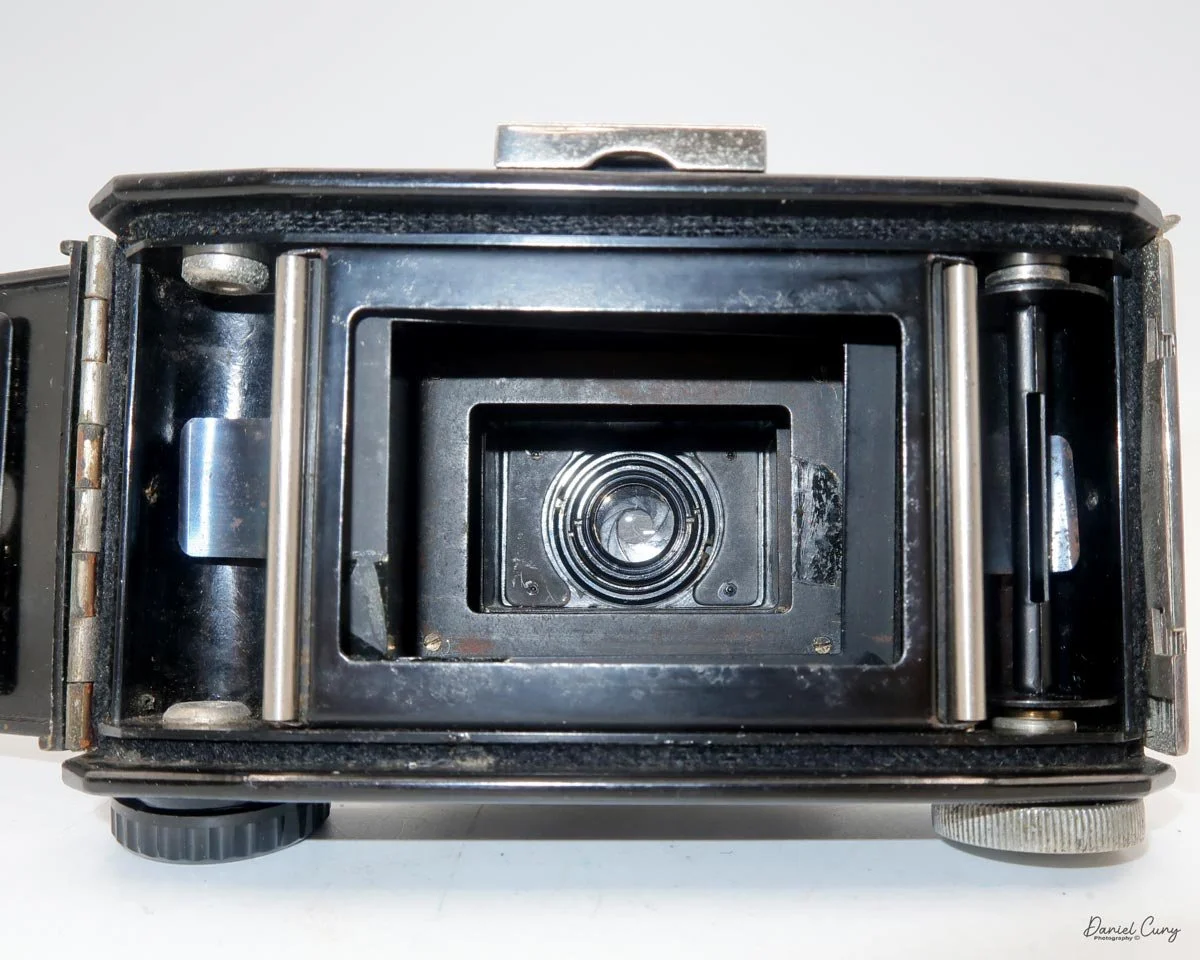
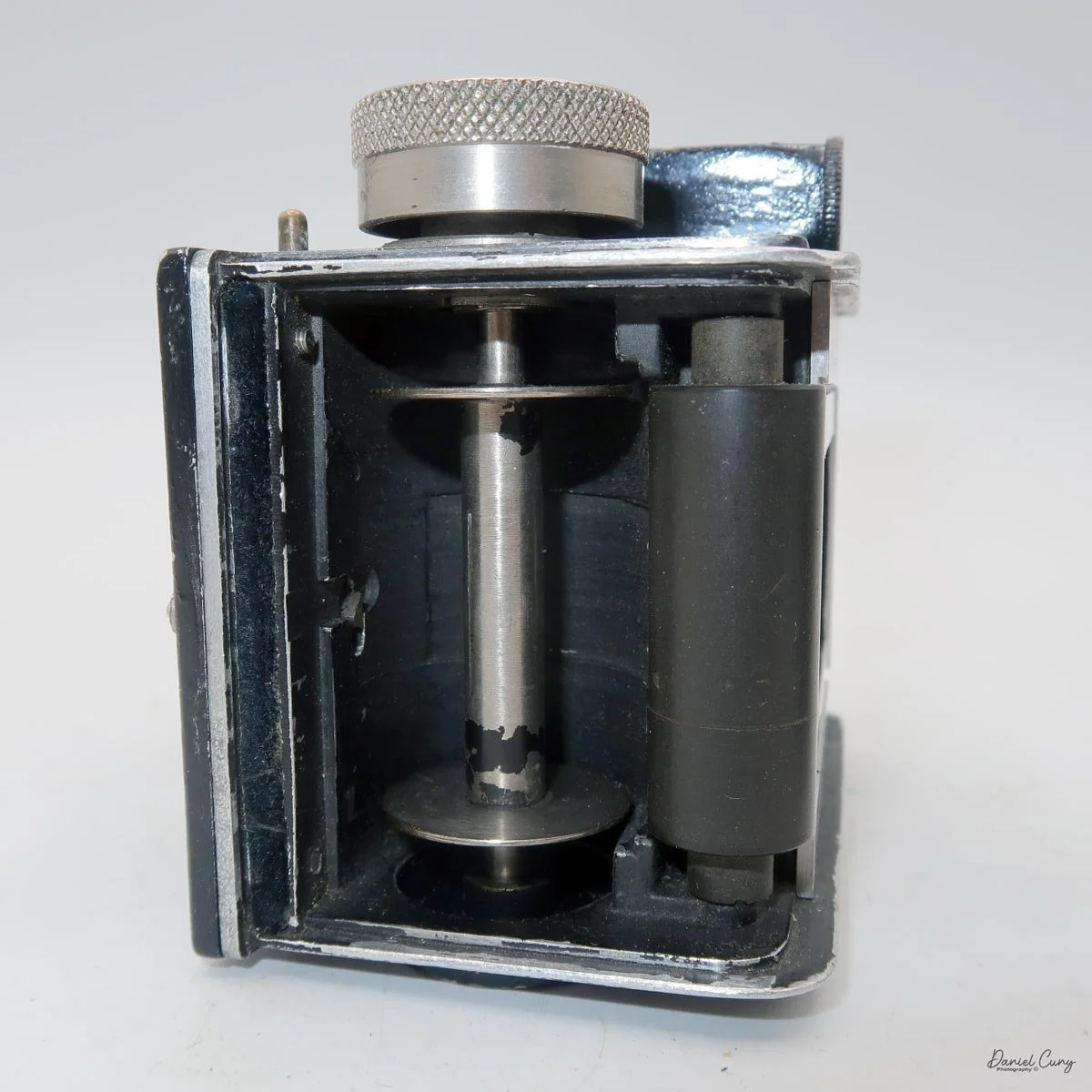
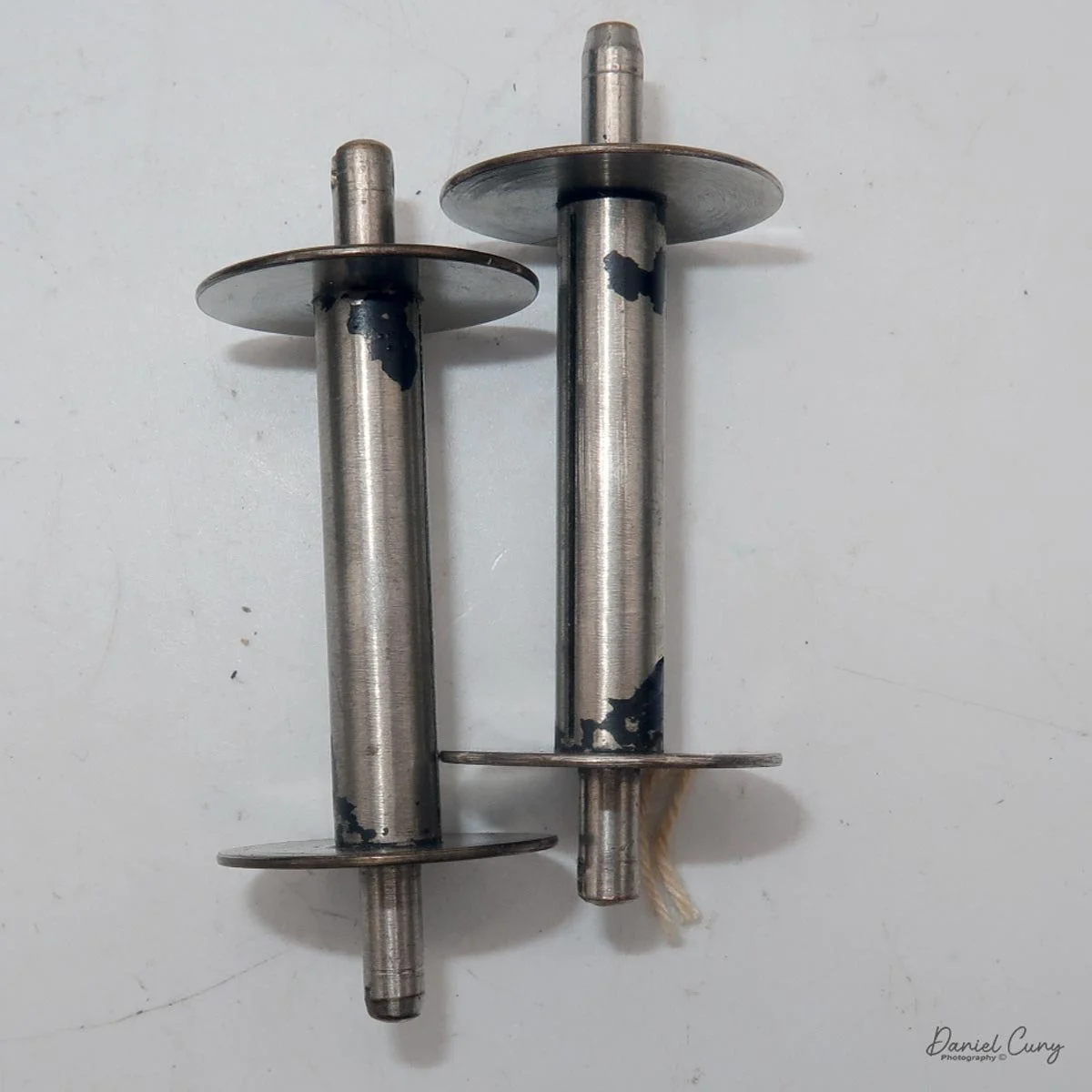
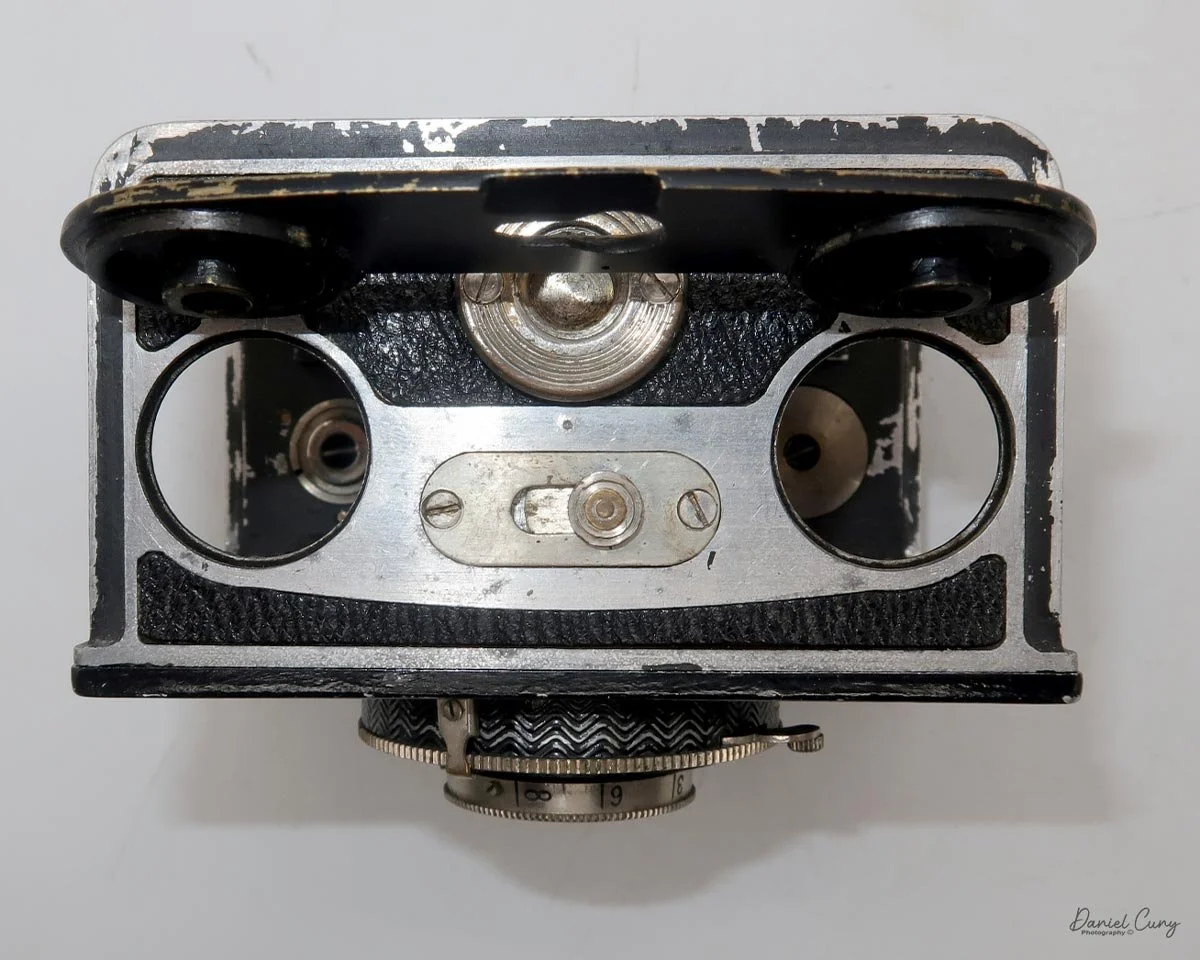
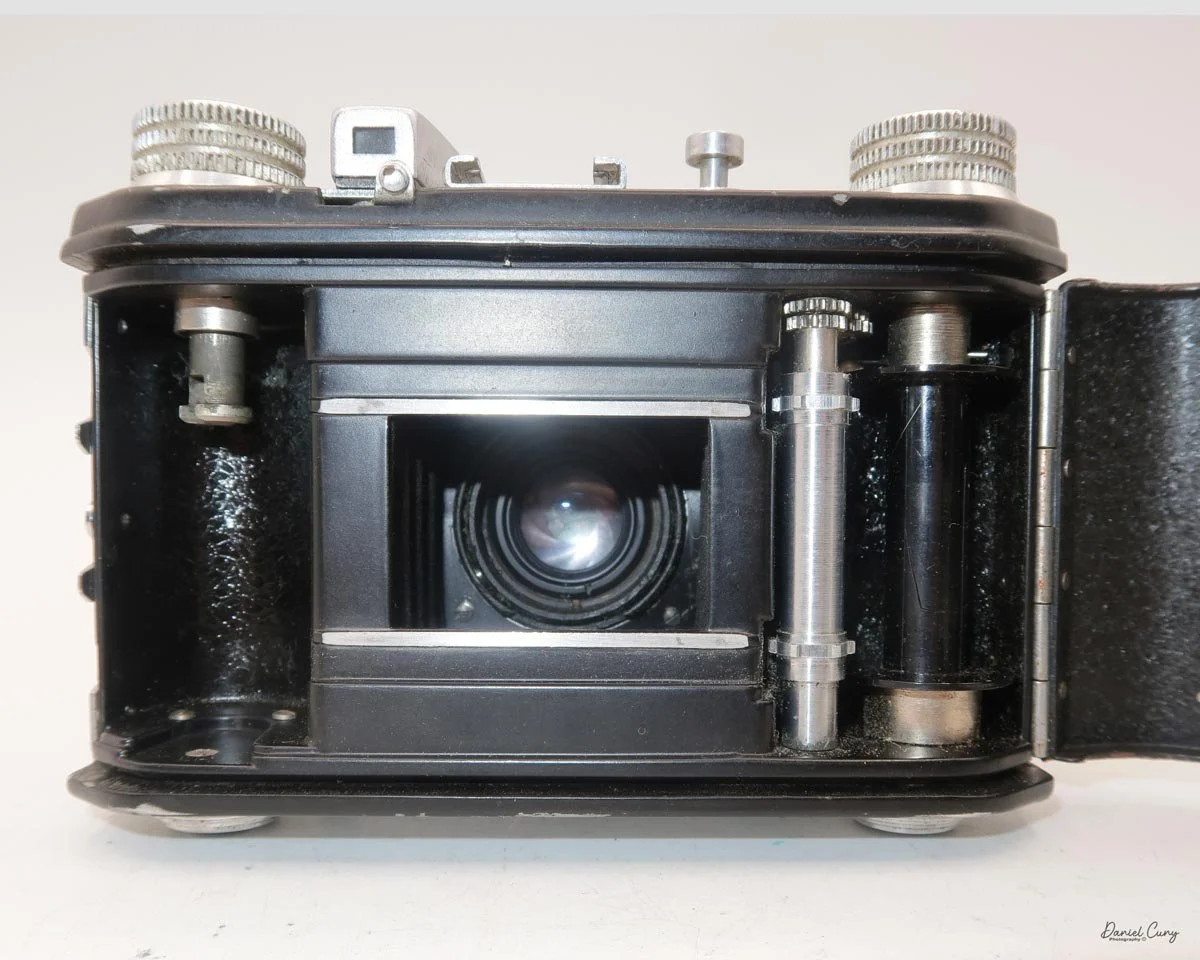
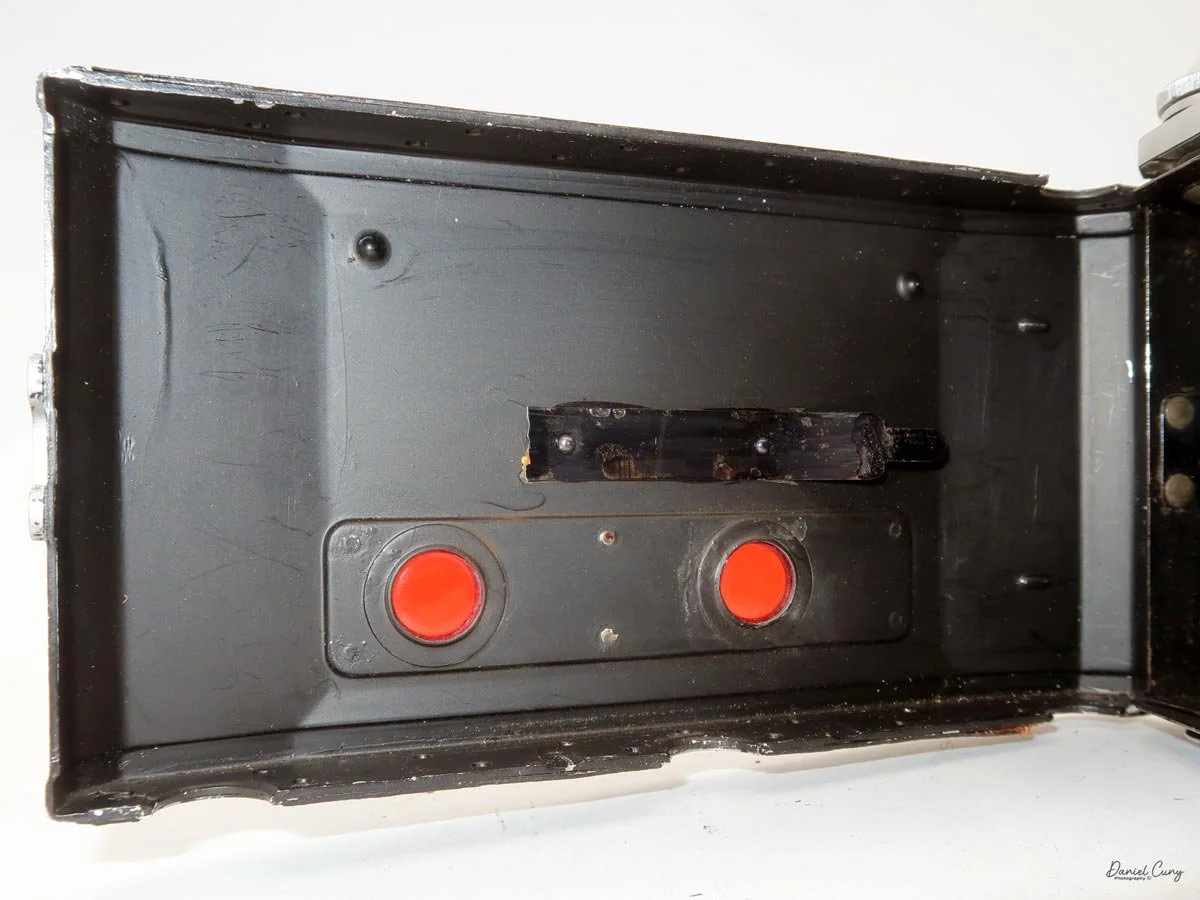
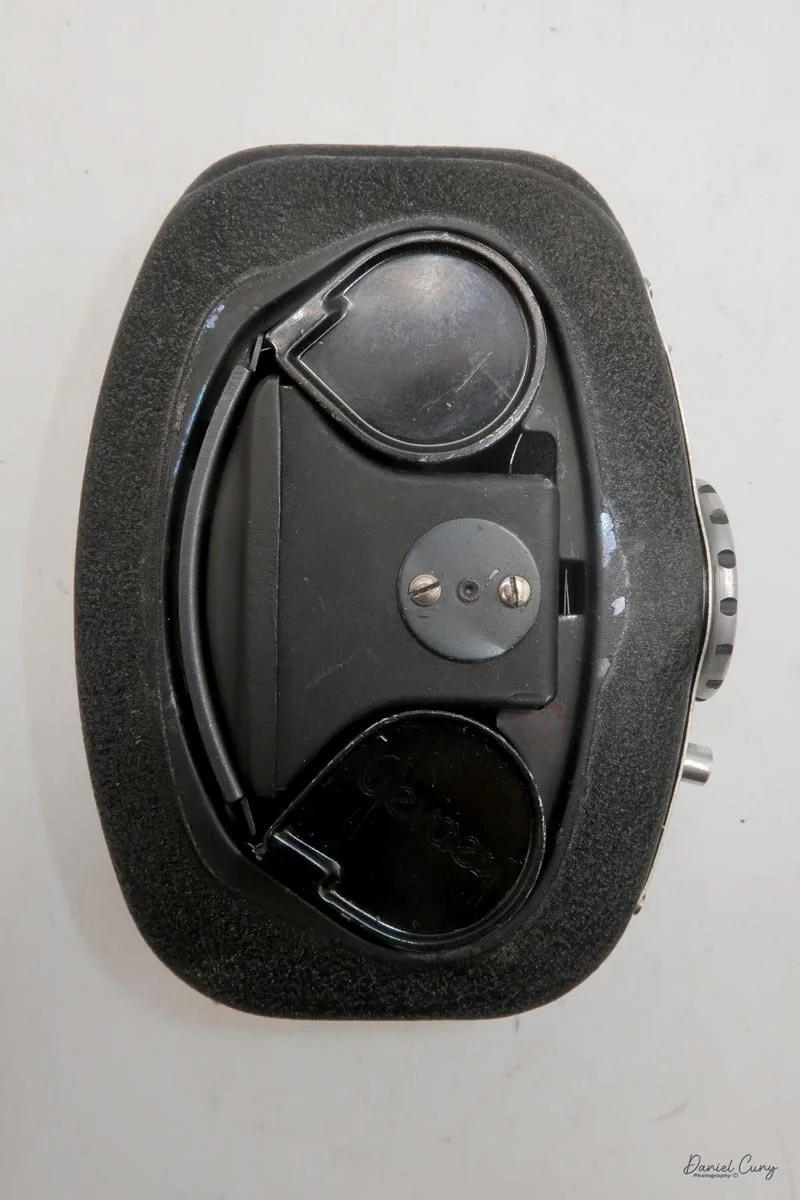
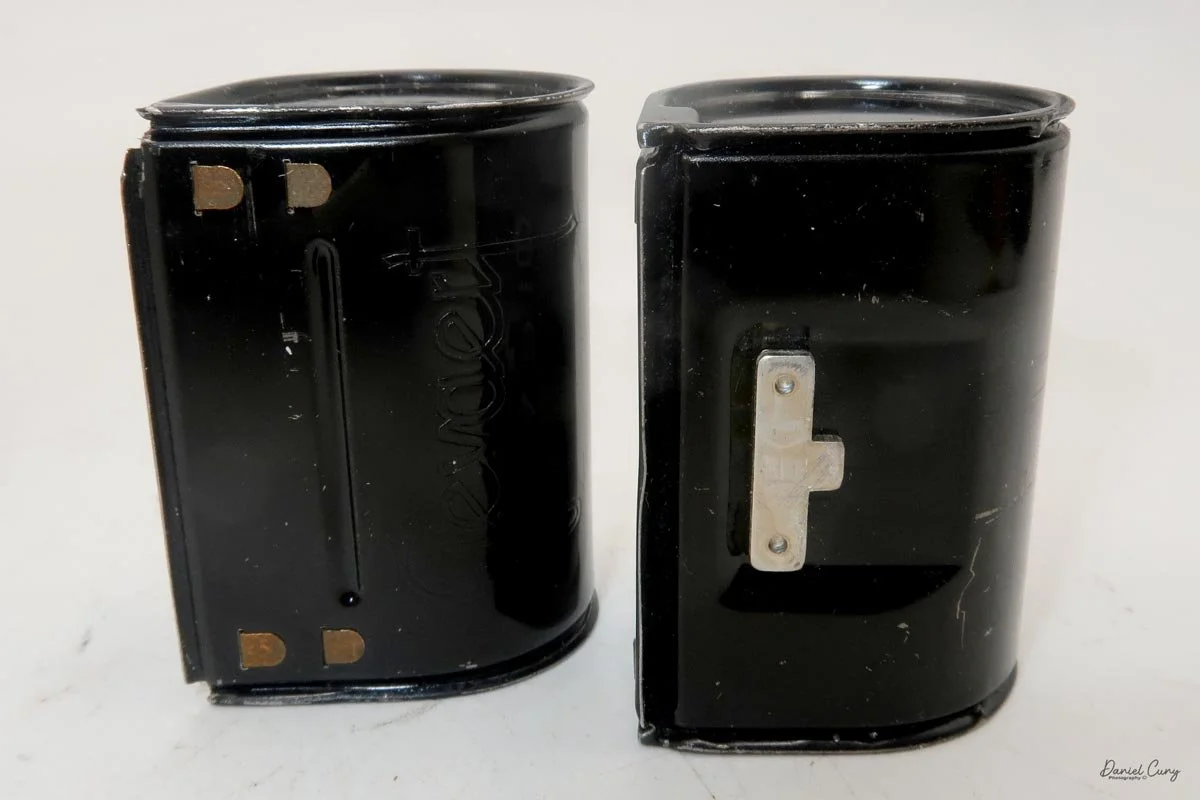
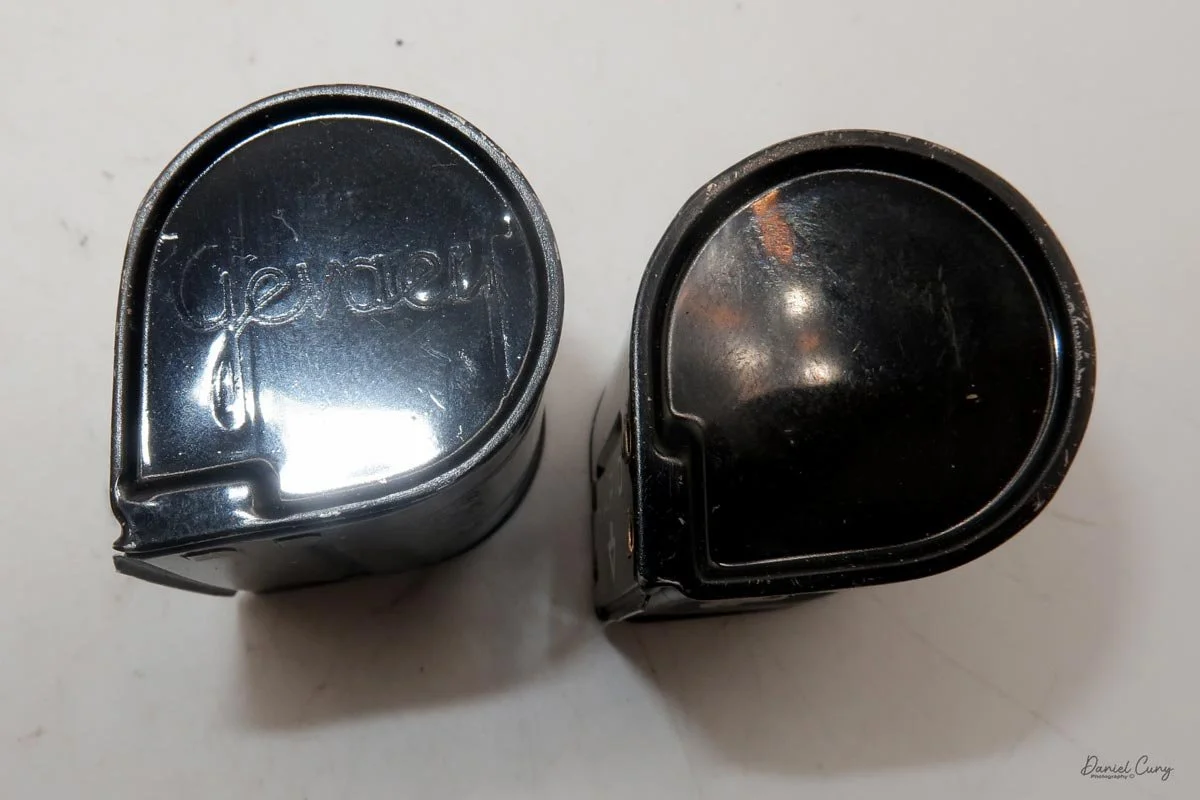
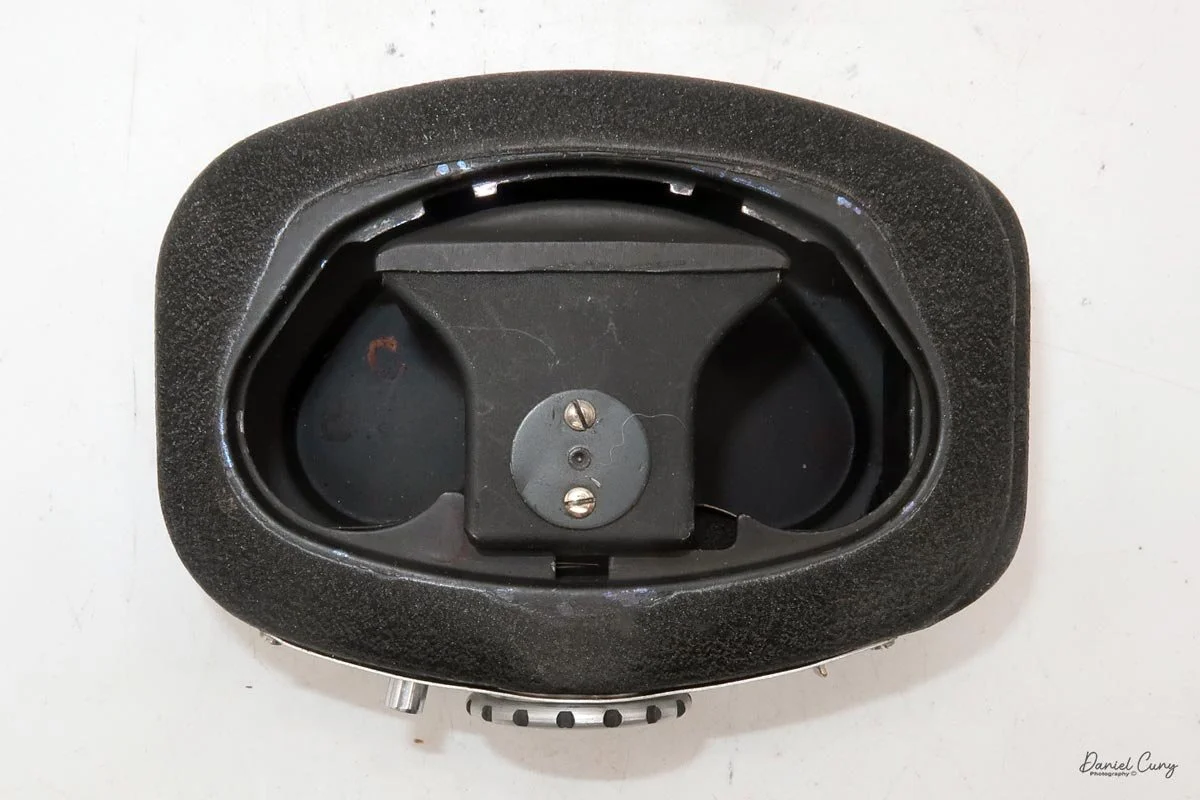
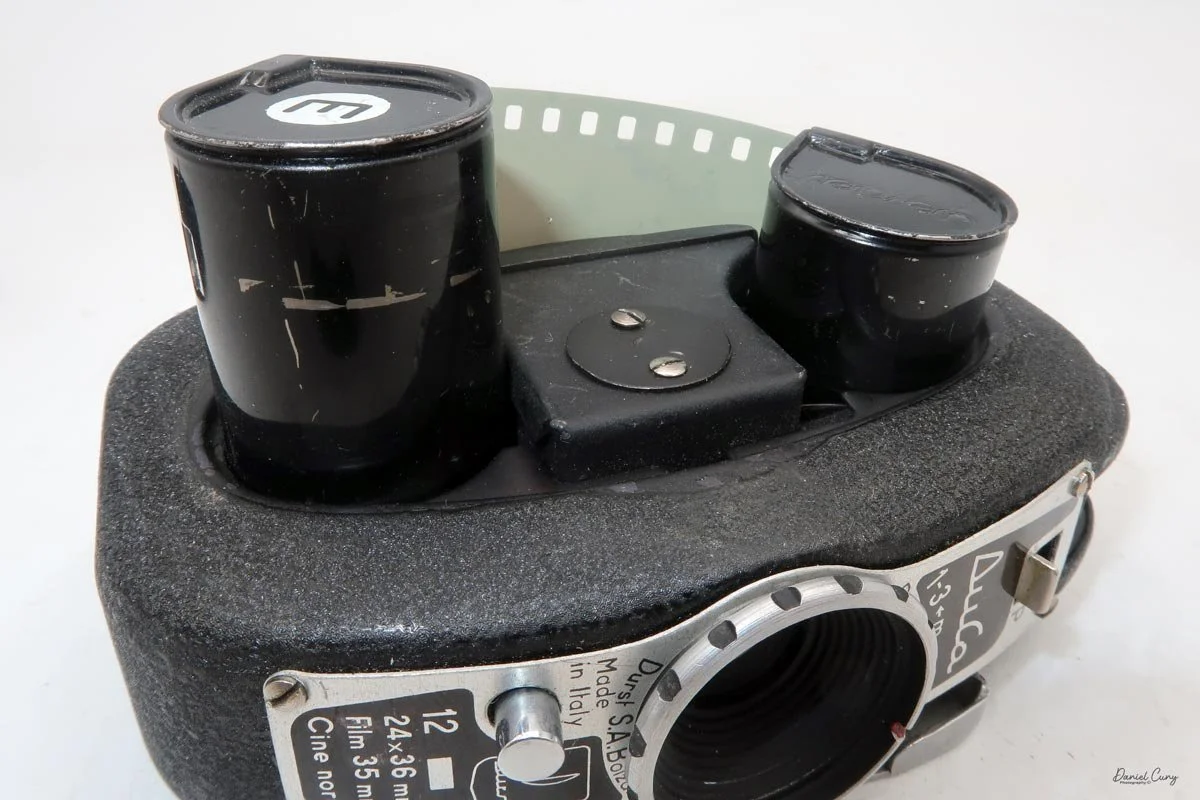
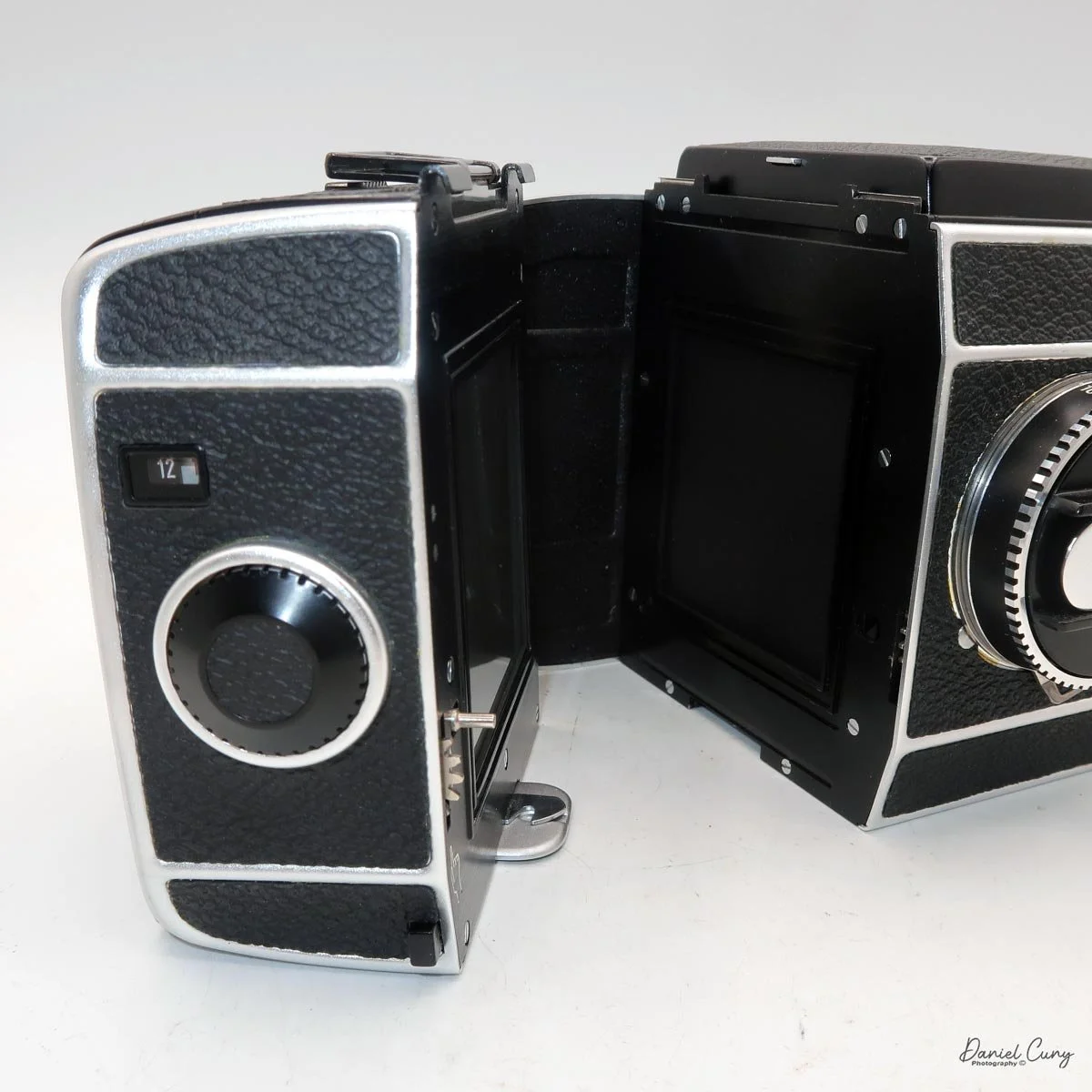
 I pulled the side of the camera off to get at the film chamber and saw that one of the two film cassettes was still inside—that was a nice bonus, since it meant I only needed to scare up one more cassette. Digging around in the drawer where I keep odds and ends of camera accessories, I found another cassette that would work.

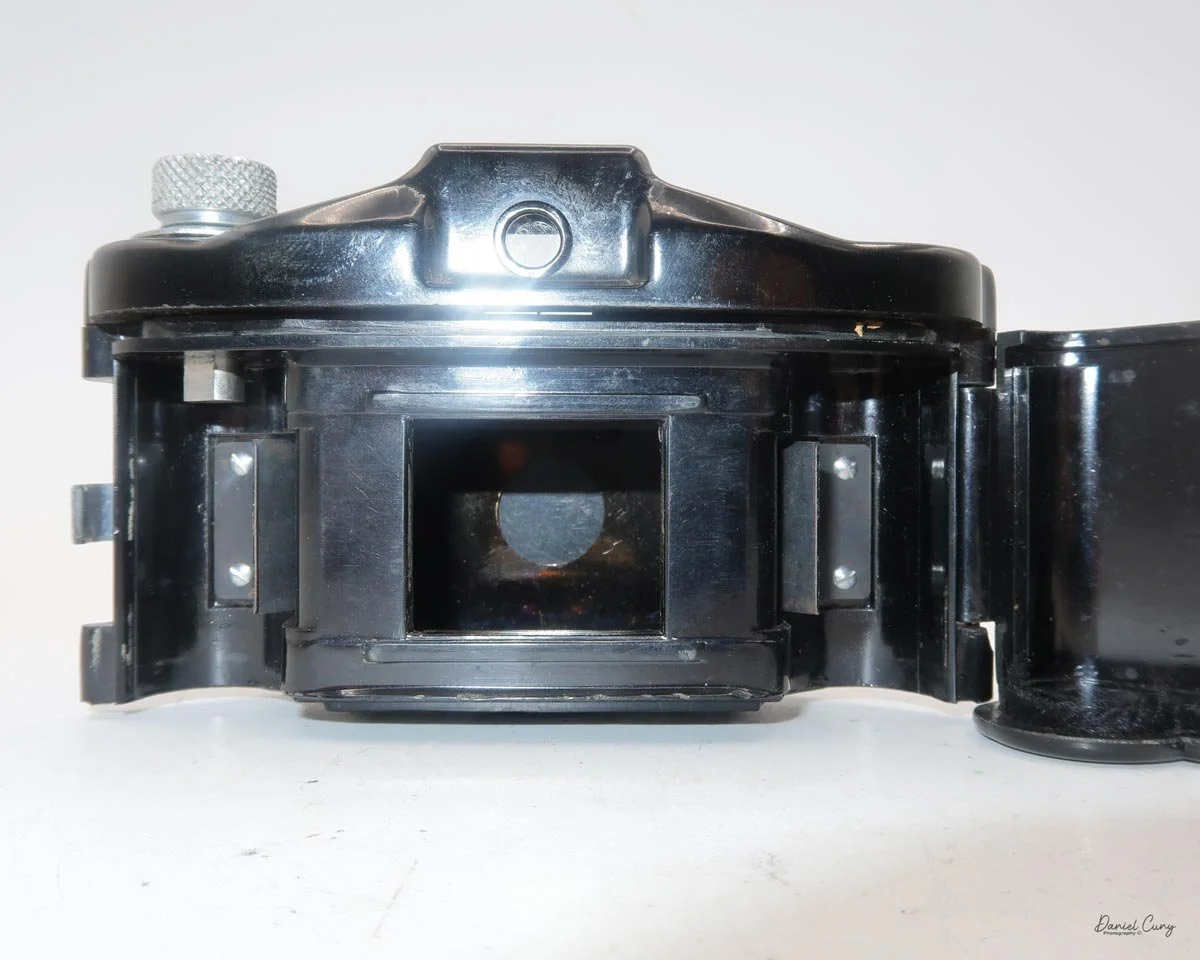
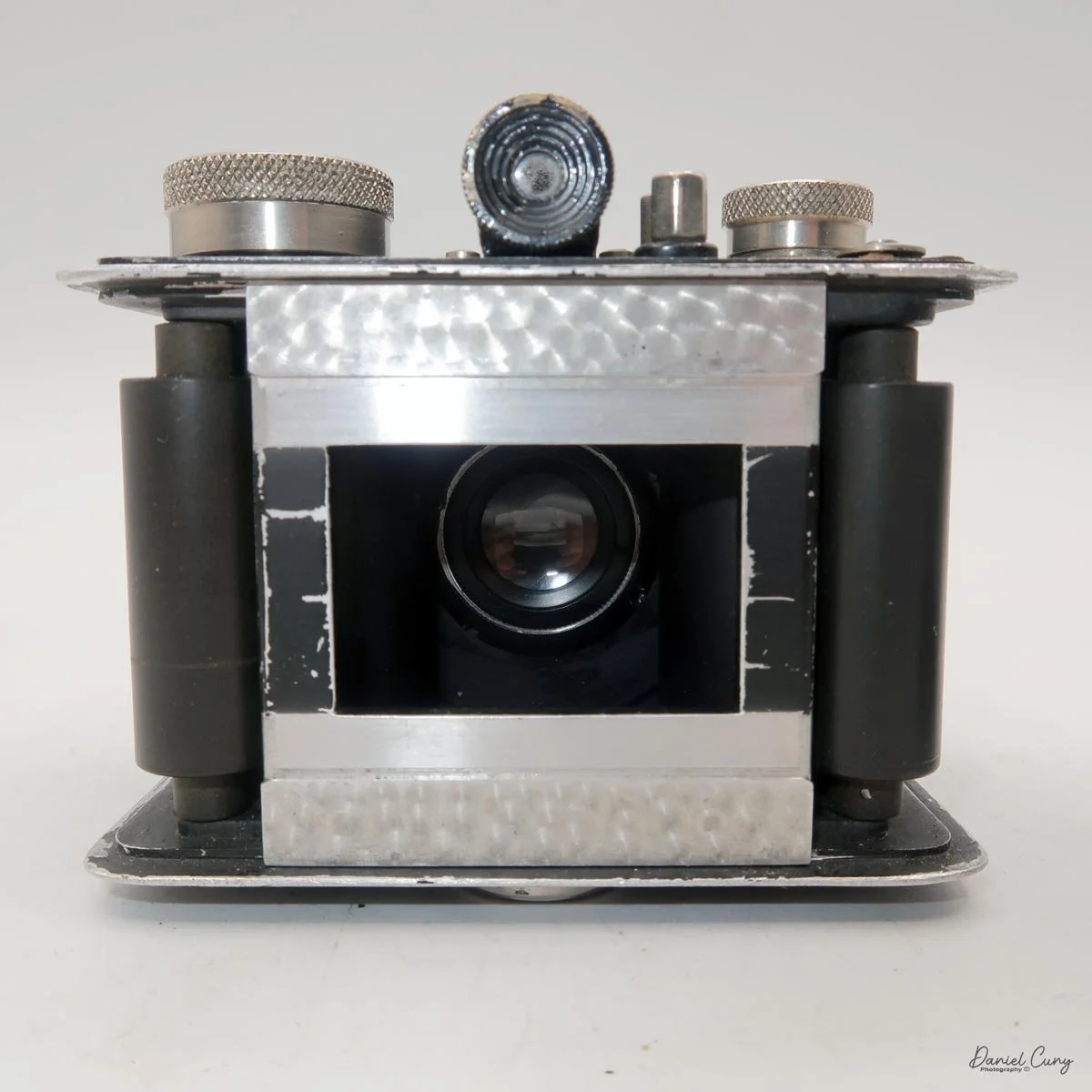
 In my darkroom, I shone a flashlight through the lens and fired the shutter. At first, I saw no light at all, and my heart sank; I figured the camera might be dead. Then I noticed the pressure plate that holds the film flat against the rails. I pulled the pressure plate out, pointed the flashlight into the front of the lens again, and tripped the shutter. This time, I saw a brief flash of light through the gate—success. The shutter was working. That was the moment I decided the Durst Duca would be the camera I'd write about for this week's blog.

A Little Durst History

Durst is best known today for its darkroom enlargers. Still, for about 25 years, the company also made a small, innovative line of cameras that reflected the same experimental mindset they brought to the darkroom. Founded in 1936 in northern Italy by brothers Julius and Gilbert Durst, the firm quickly gravitated toward photographic equipment, especially enlargers, which eventually became its main business.

 Durst's camera story starts with the Gil, a simple 120 roll‑film box camera introduced in 1938 for the growing amateur market. After World War II, Durst resumed production of the Gil and then shifted toward more compact designs, setting the stage for its 35mm experiments.

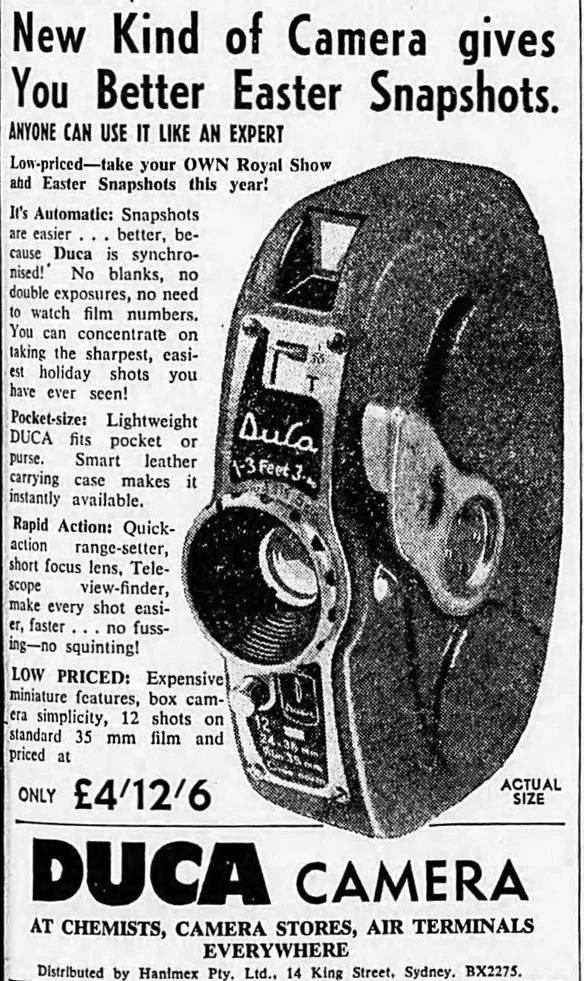
Australian Ad for Durst Duca camera

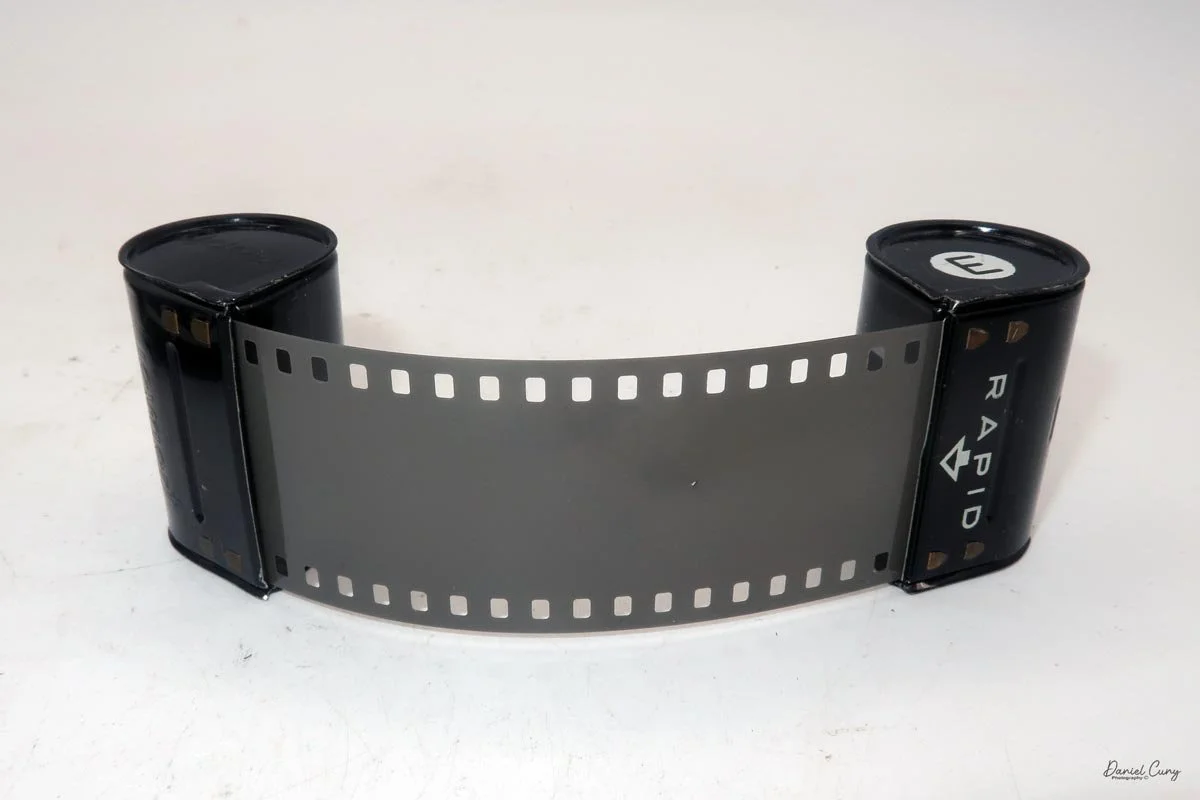
The Duca followed as a tiny 35mm still camera that used Agfa Karat cassettes instead of standard 35mm cartridges. That choice let Durst play with miniaturized body shapes: an oval, cine‑style form in a pocketable size, offered in several colors. This focus on unusual styling and packaging mirrored their enlargers, which often looked different from competitors but emphasized precision and usability.

 Next came the Durst 66, a modestly specified camera with an unconventional shutter and a quirky way of measuring exposure. You can already see Durst thinking outside the box, trying to rethink mechanisms rather than just copying others' work.

 All of that leads to the Durst Automatica, made from 1956 to 1963 and often regarded as the first 35mm camera with aperture‑priority automatic exposure. It used a pneumatic shutter derived from the Durst 66 and wrapped it in a very elegant body. For such a small camera line, it was an ambitious finale and shows how far Durst was willing to push design and automation.

My Durst Duca

The Durst Duca was introduced at the Milan Trade Fair in September 1946 and stayed in production until around 1952. It's a vertical‑format, full‑frame 35mm camera that uses Agfa Karat cassettes, and it was available in five colors: black, blue, red, white, and brown. I've only ever seen the black, blue, and red versions in photos. Still, now that I know more are out there, I'll keep an eye out—even if I suspect the more unusual colors will be priced higher than I'm willing to pay.

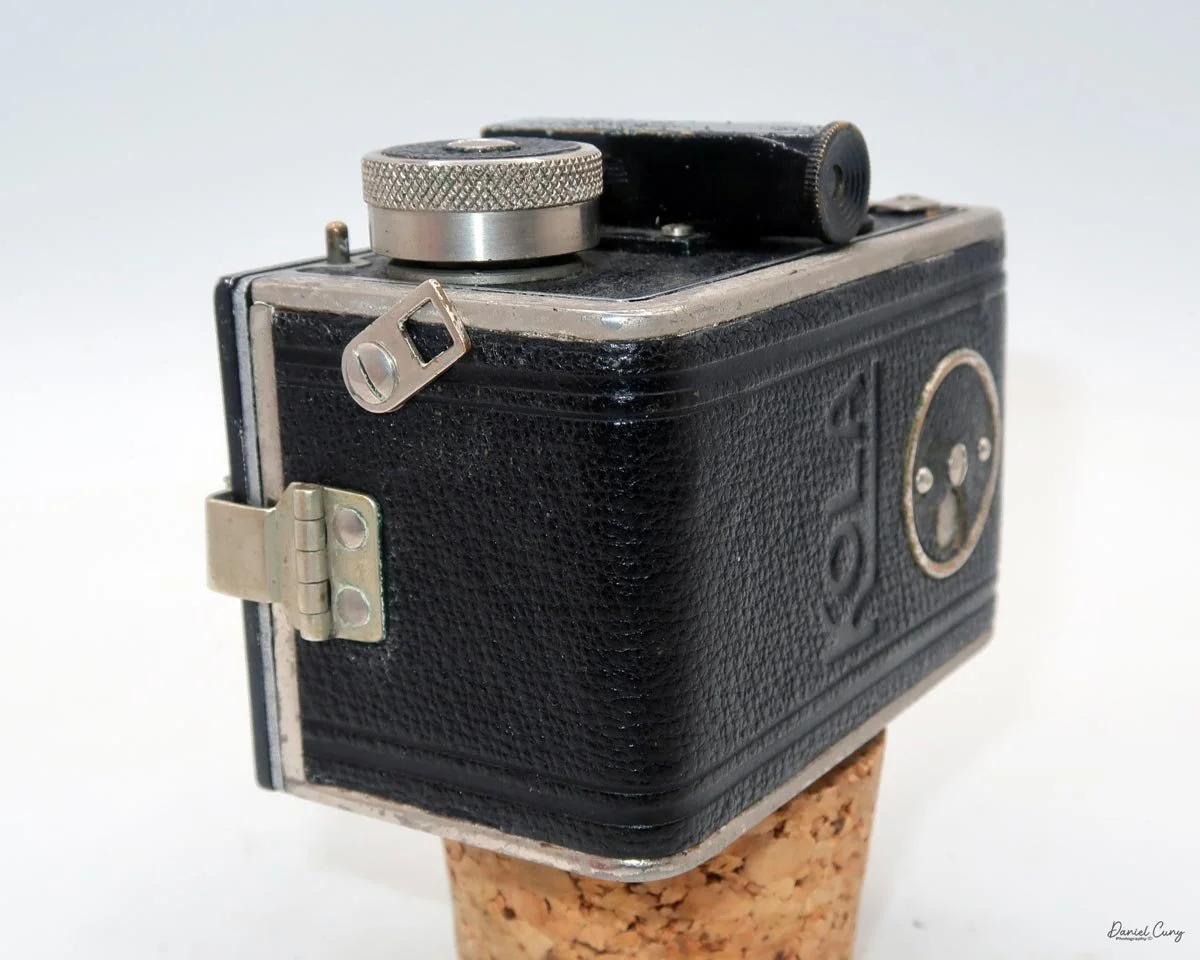
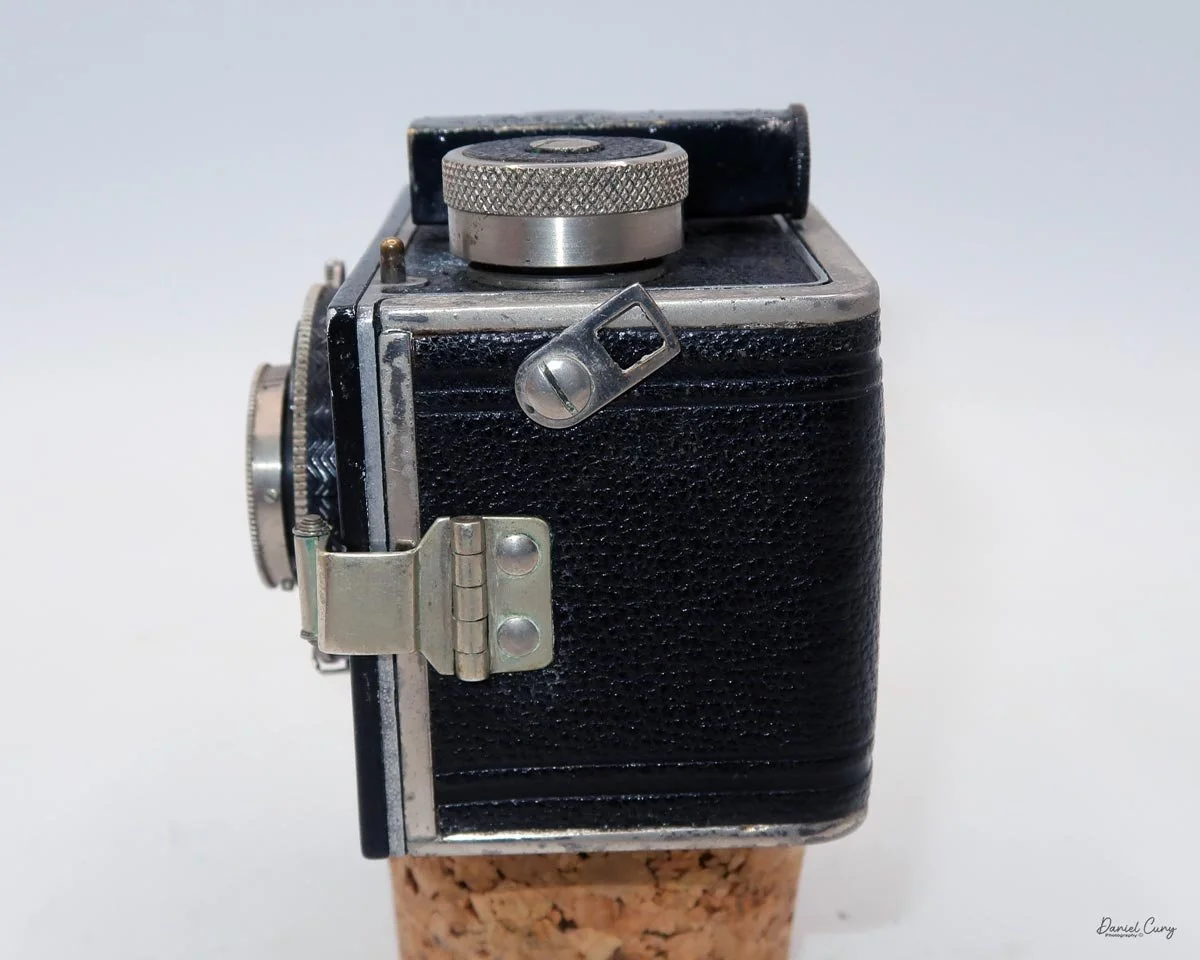
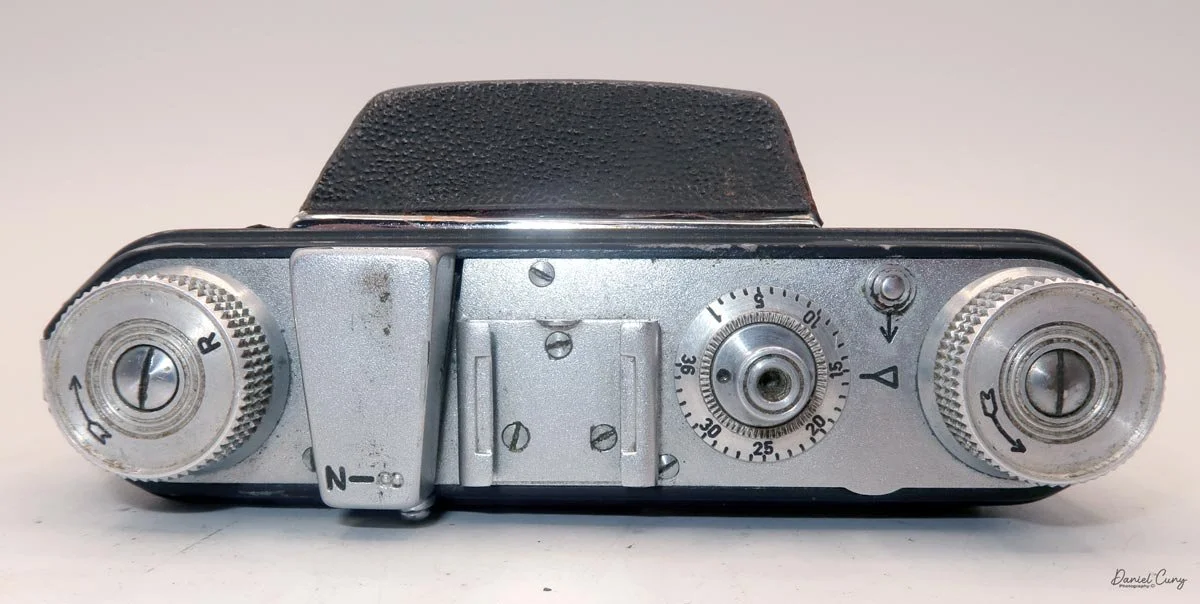
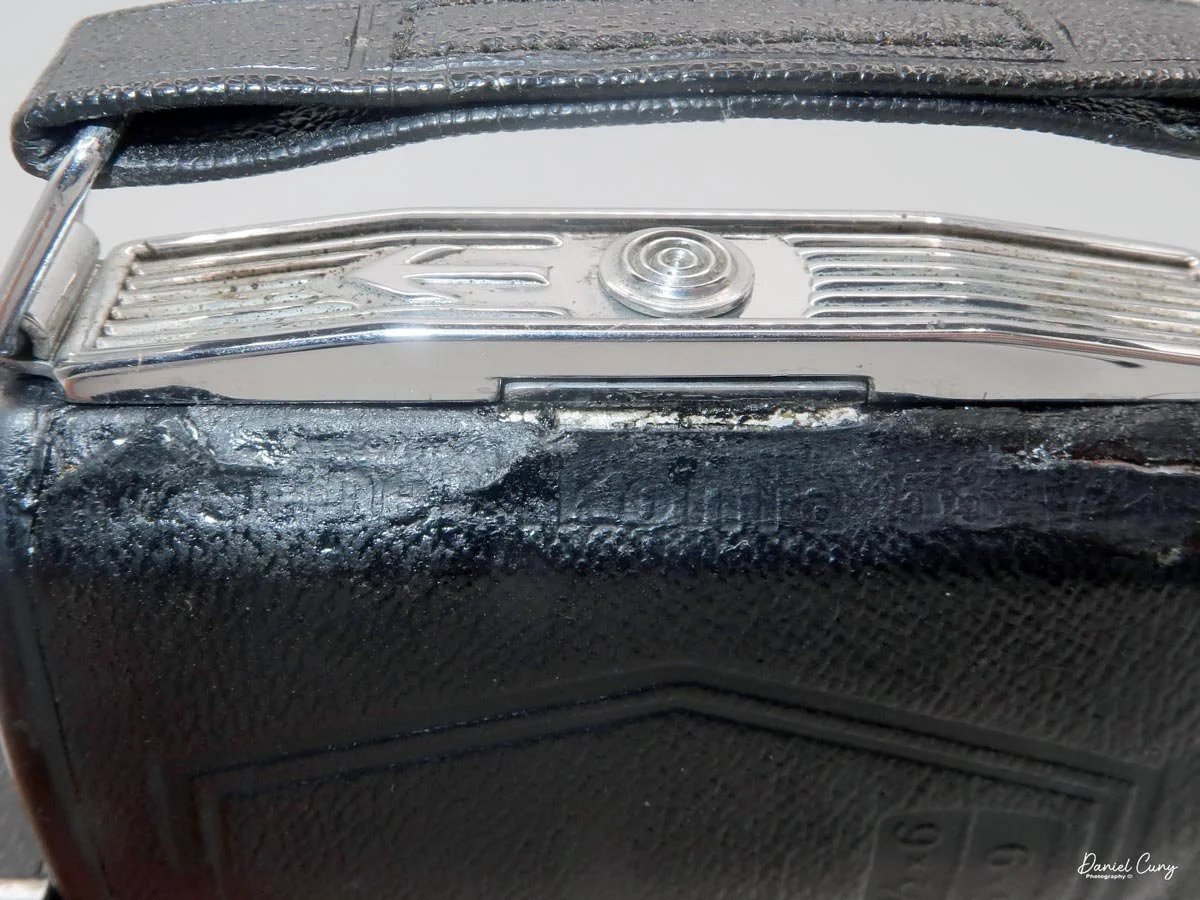
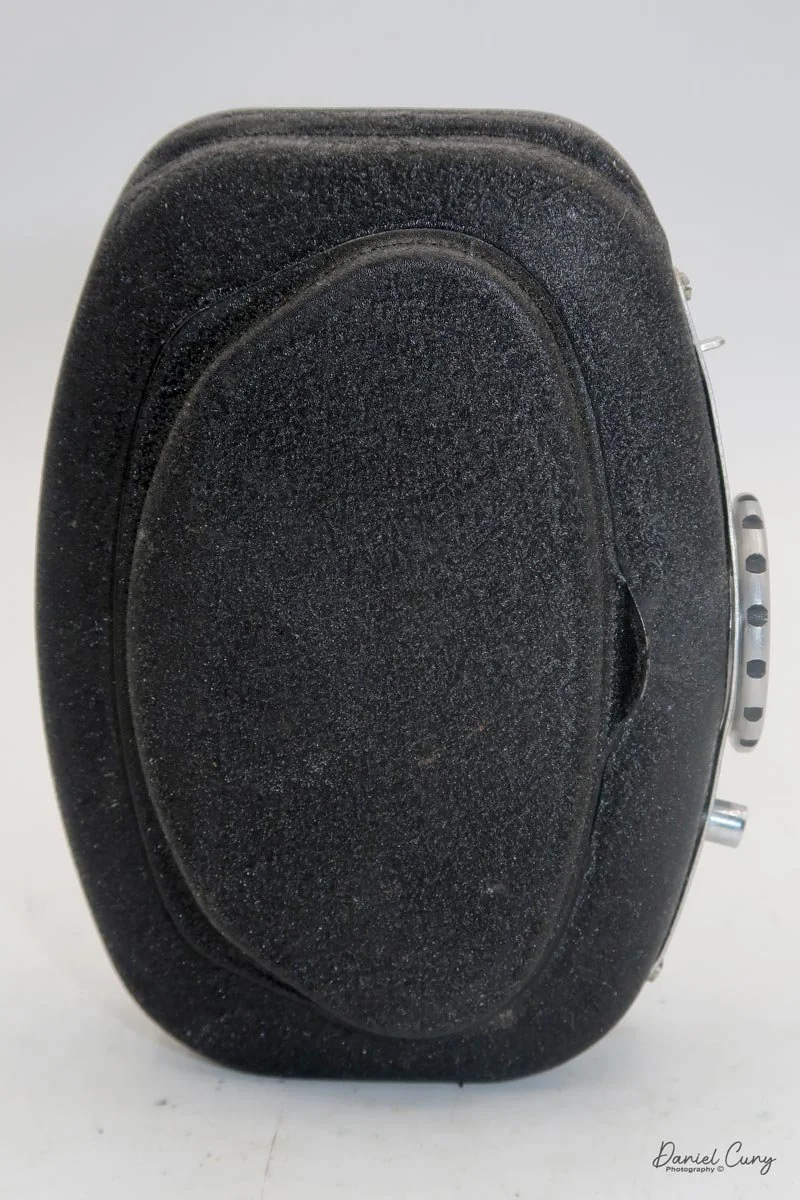
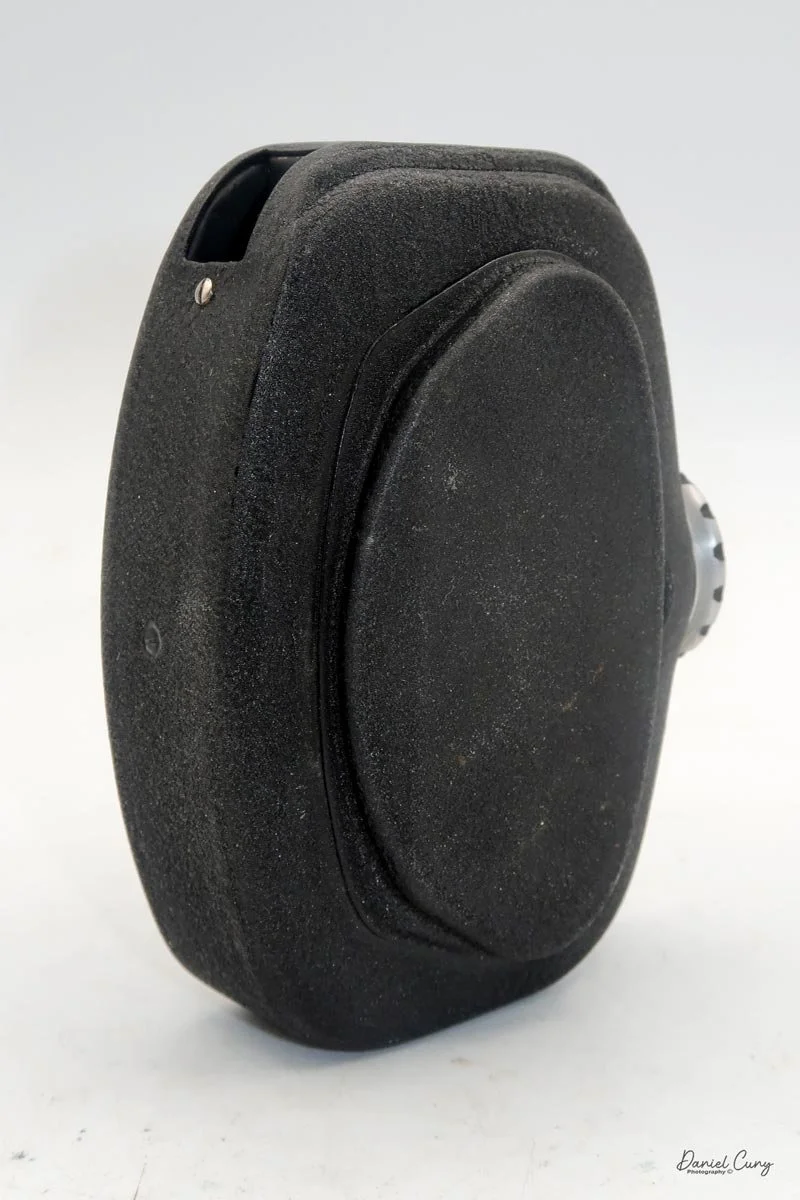
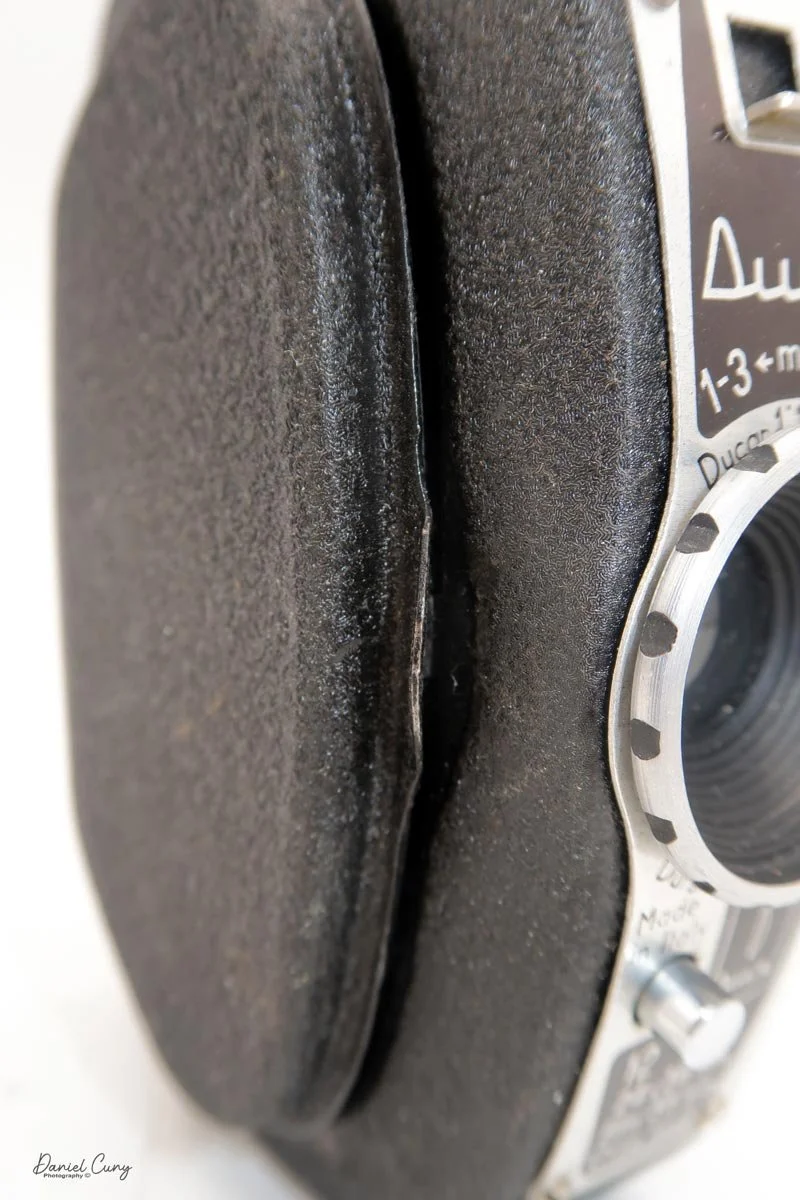
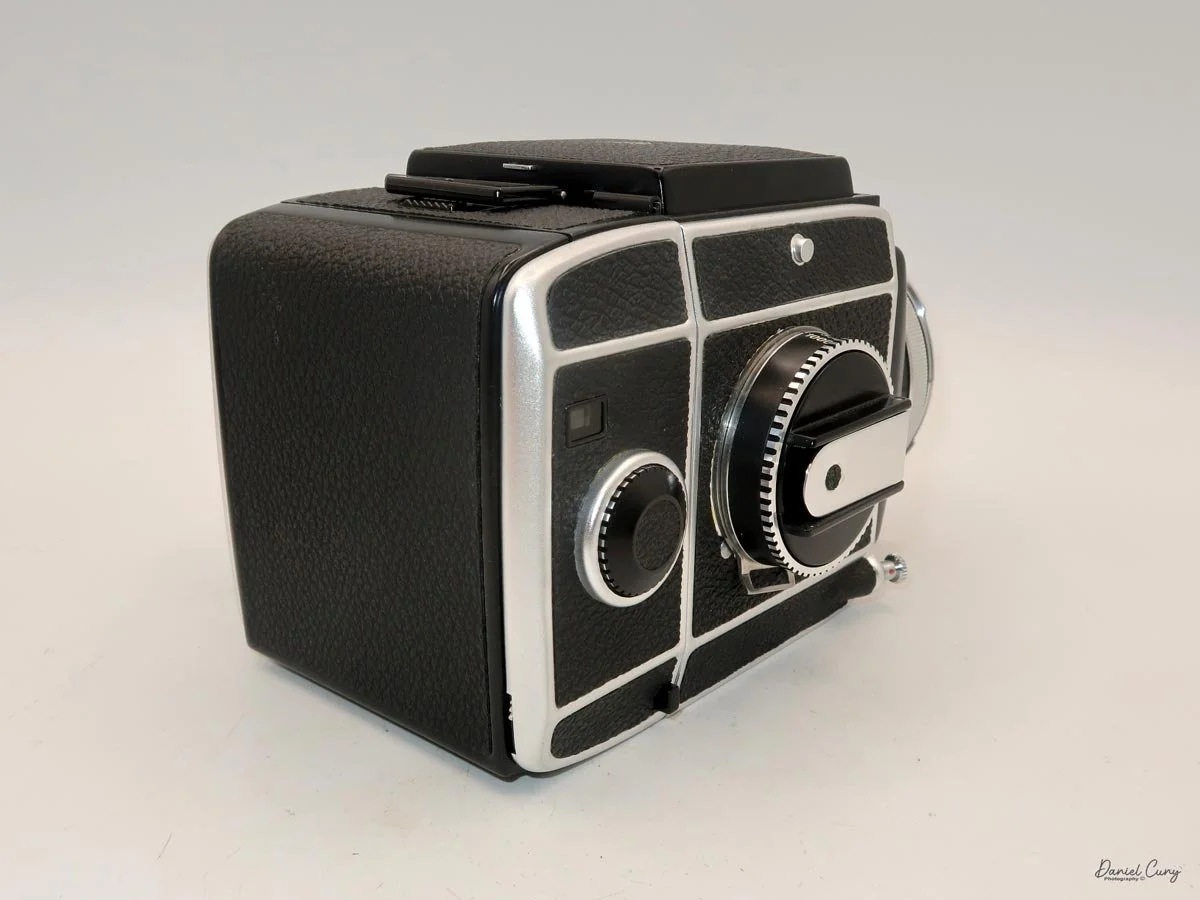
Physically, the Duca is tiny: only about 4 inches tall by 3.25 inches deep and just over 1.5 inches wide, and it weighs 10.1 ounces with the cassettes in place. The body is nicely rounded and fits well in the hand—definitely a camera you could drop in a coat pocket and forget about until you need it.

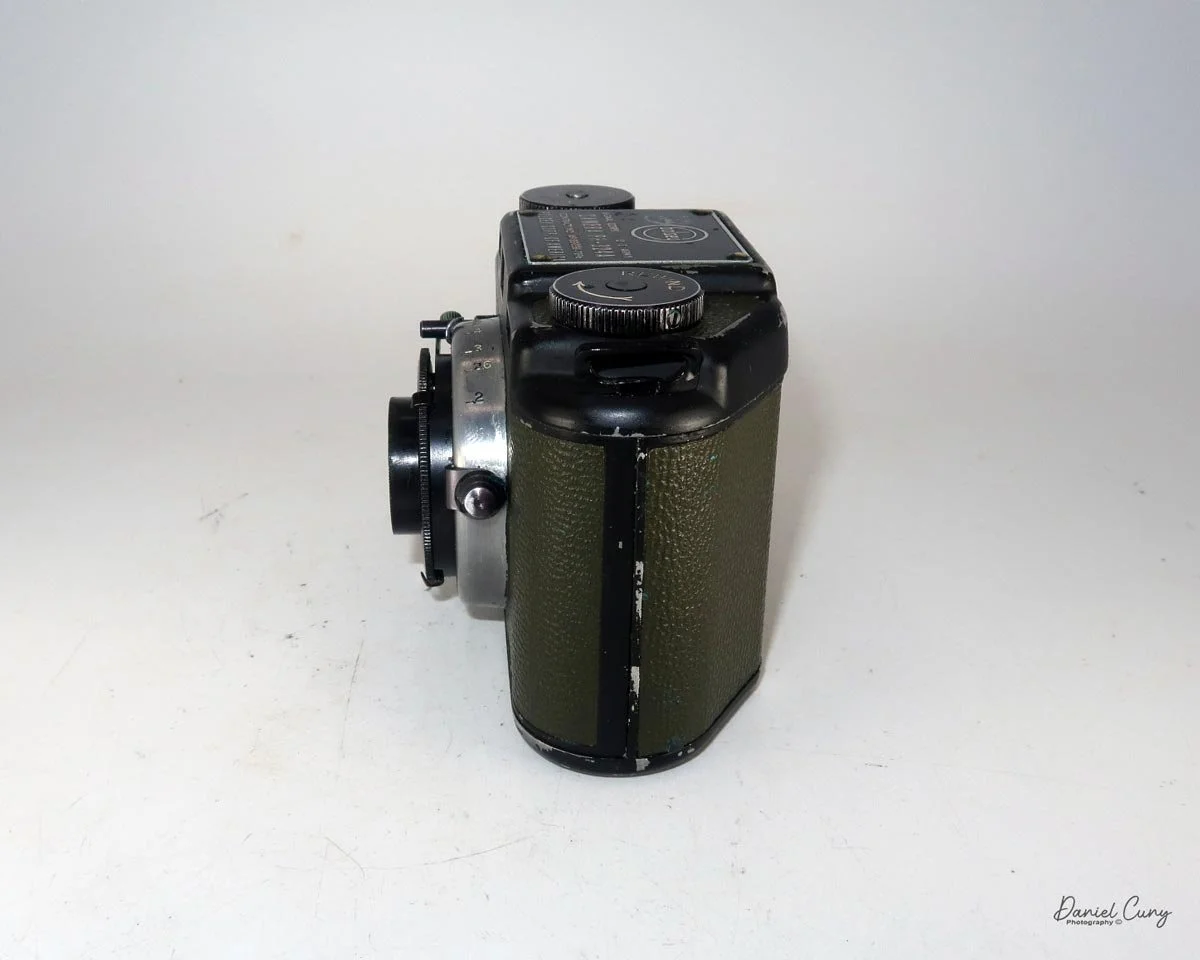
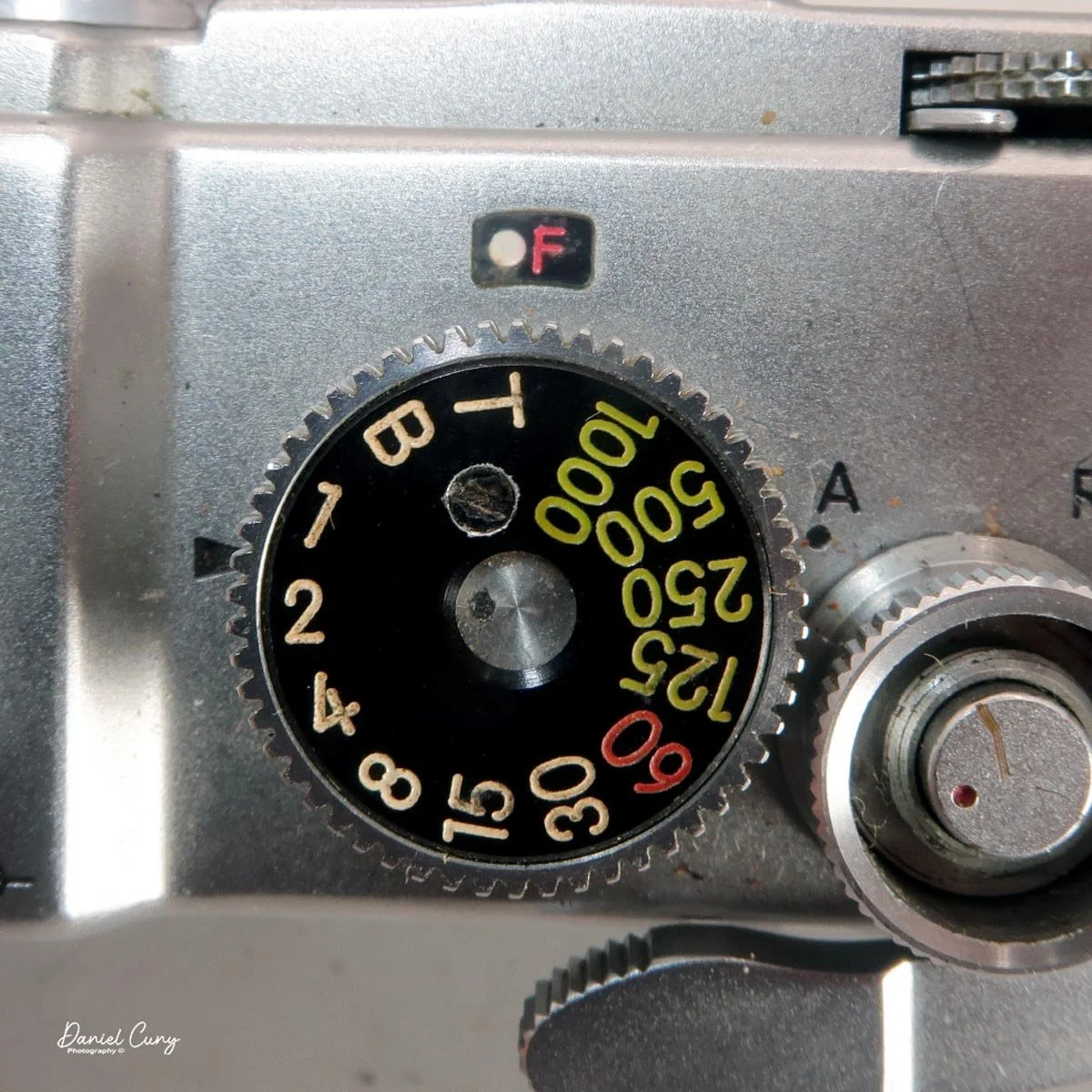
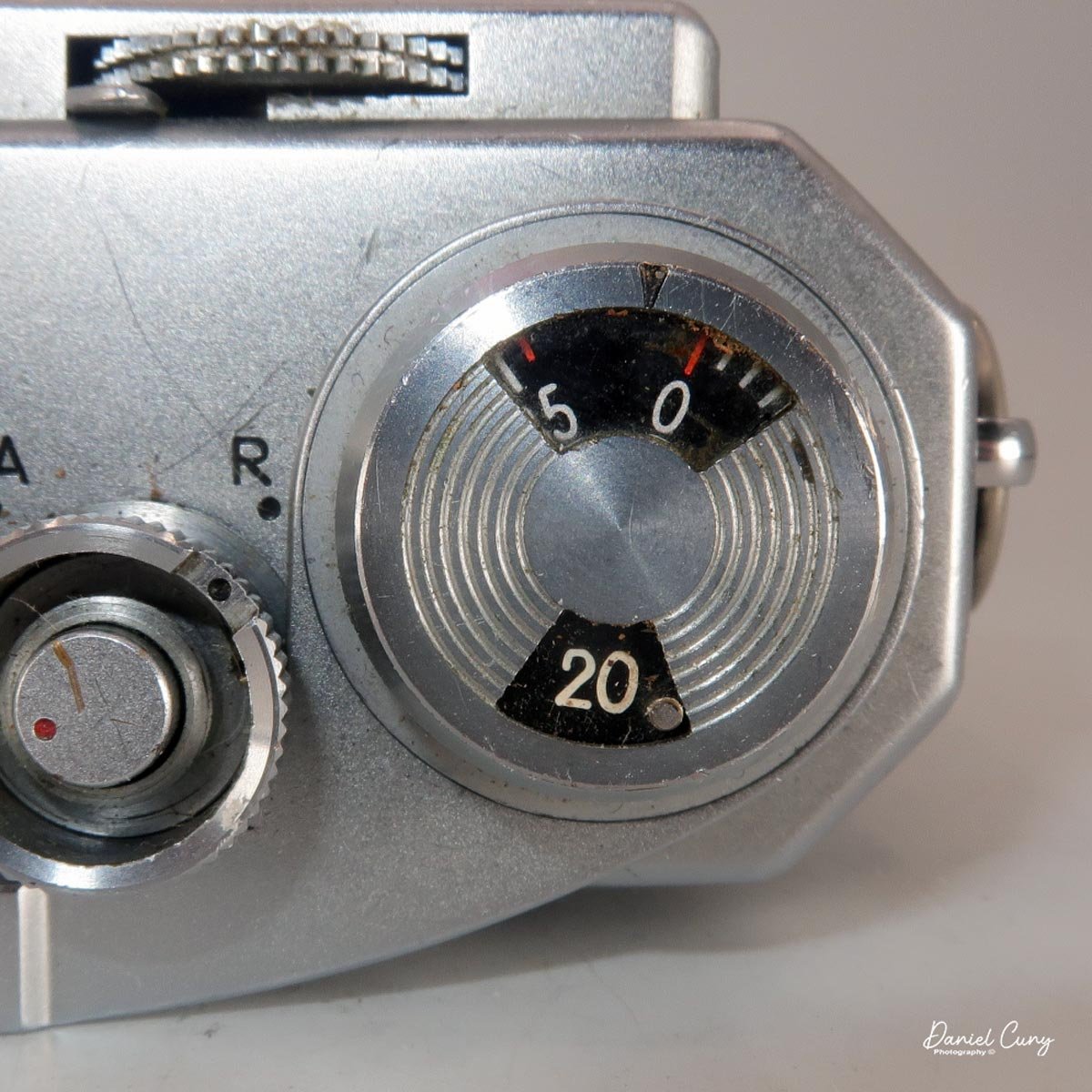
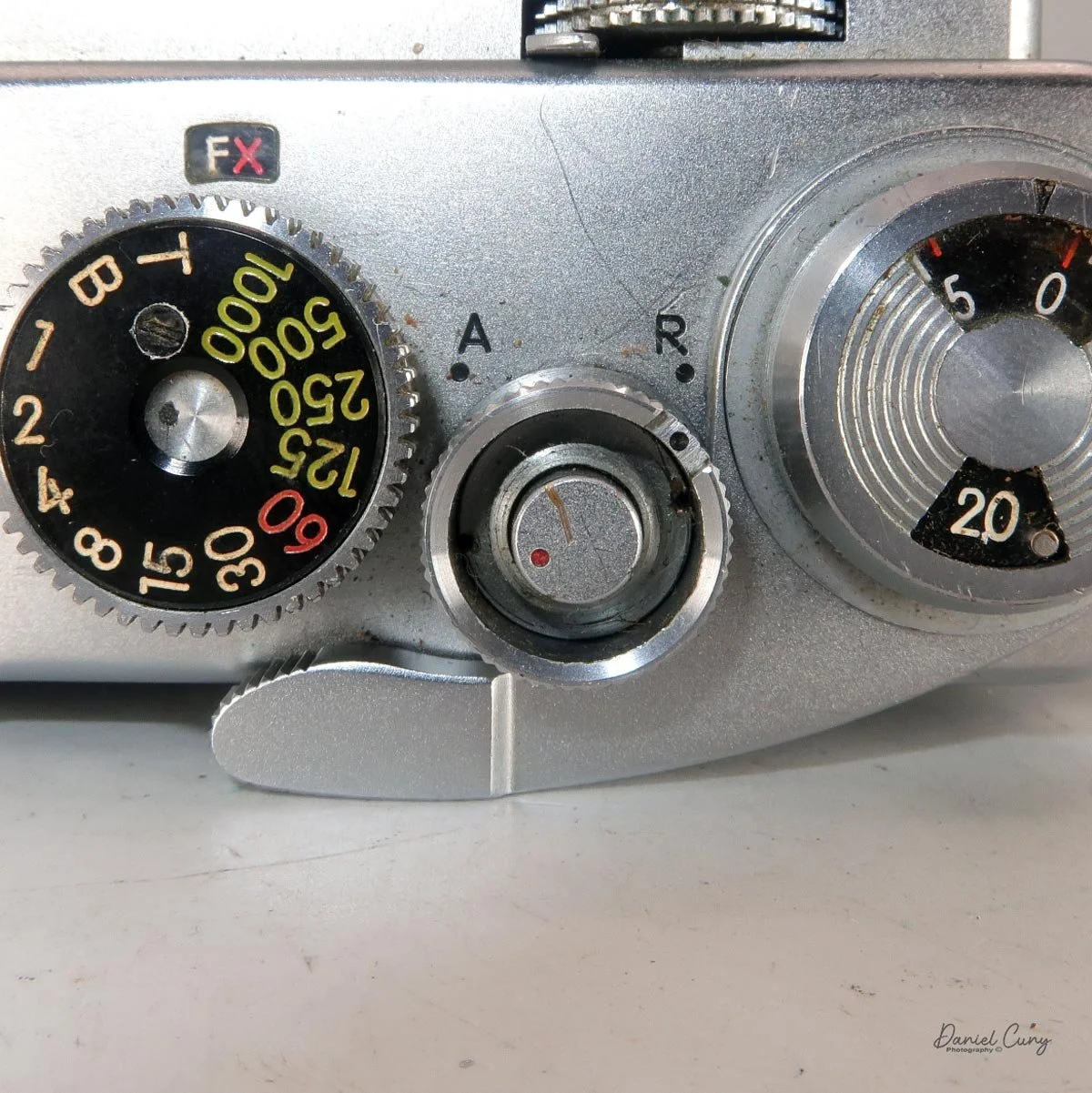
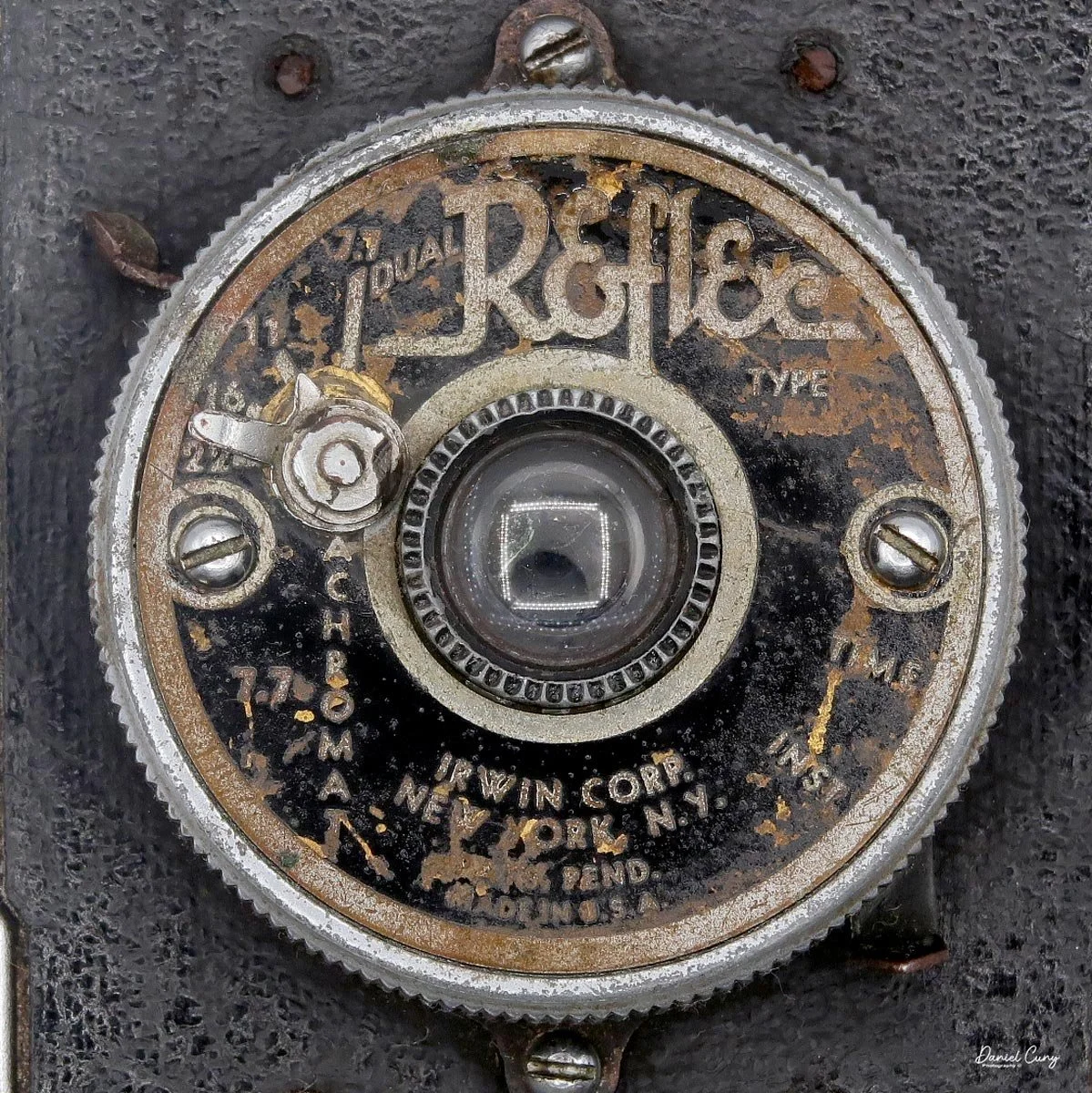
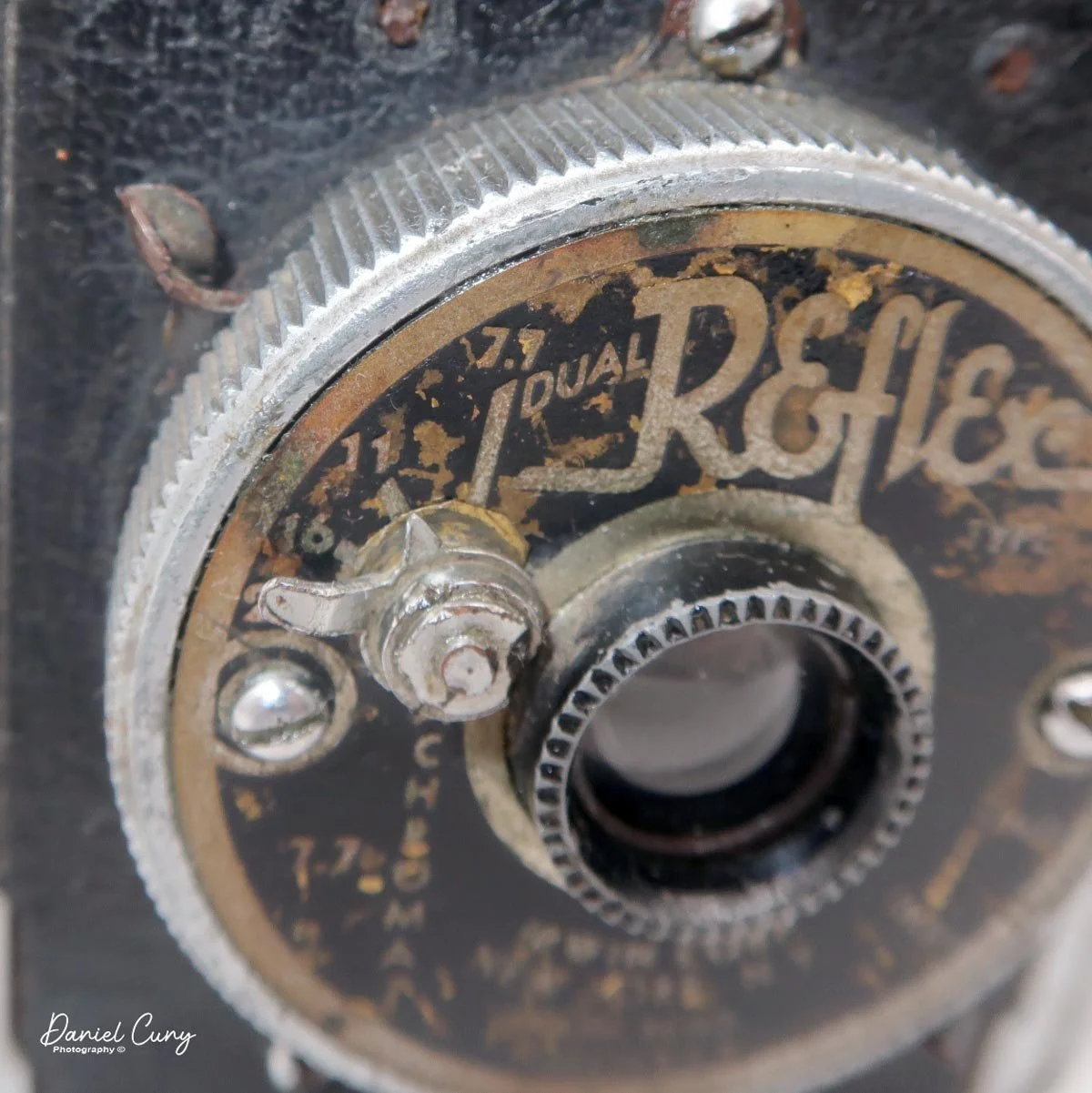
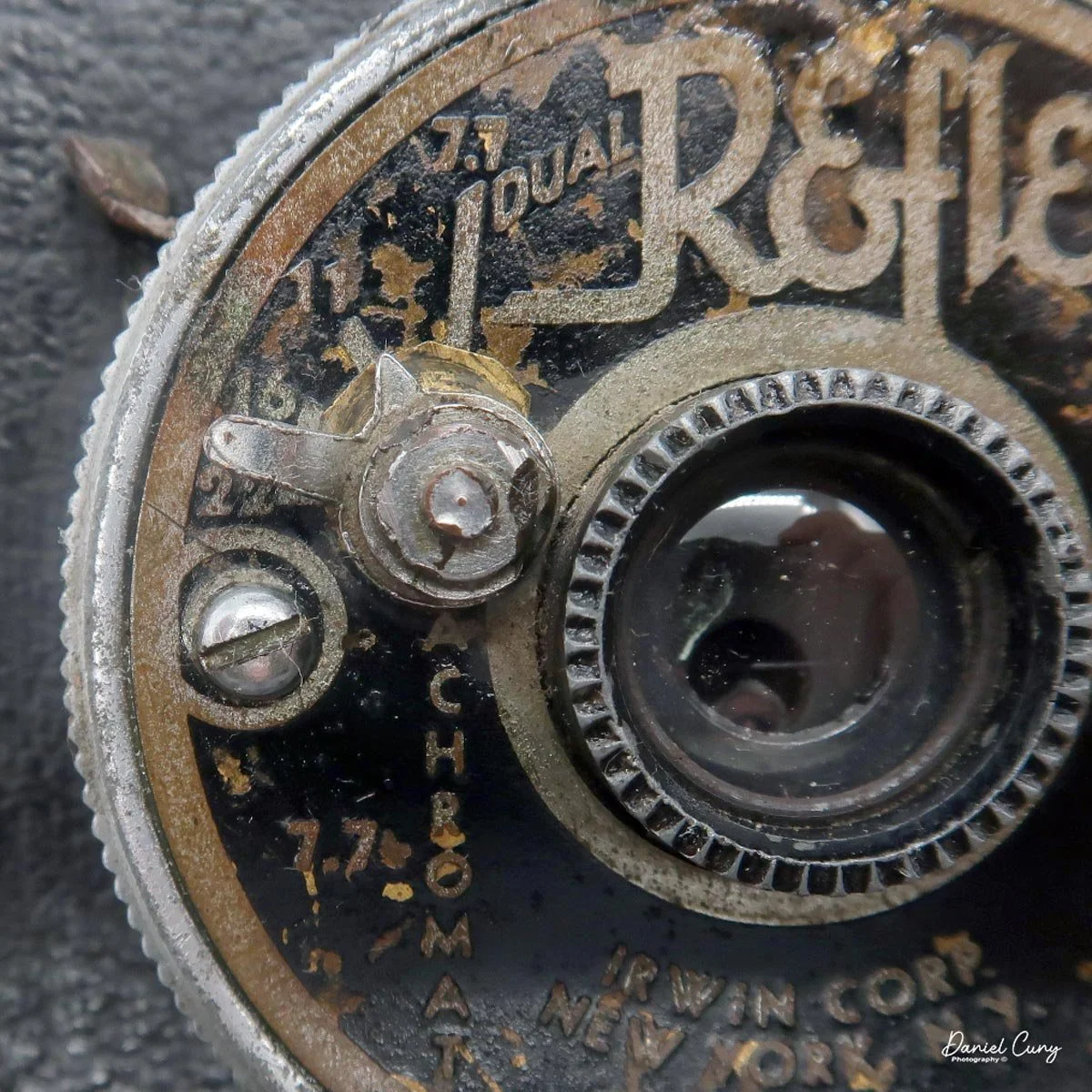
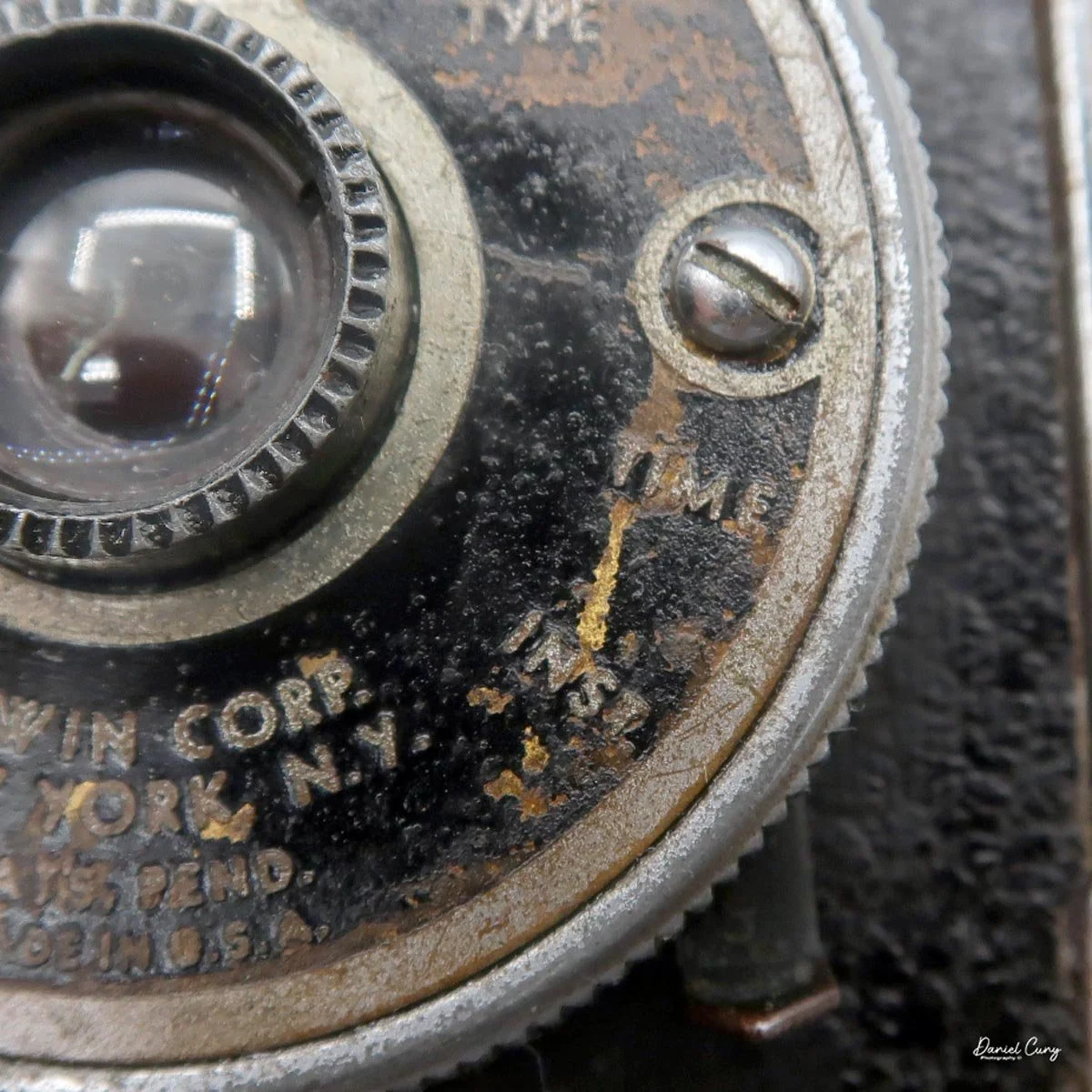
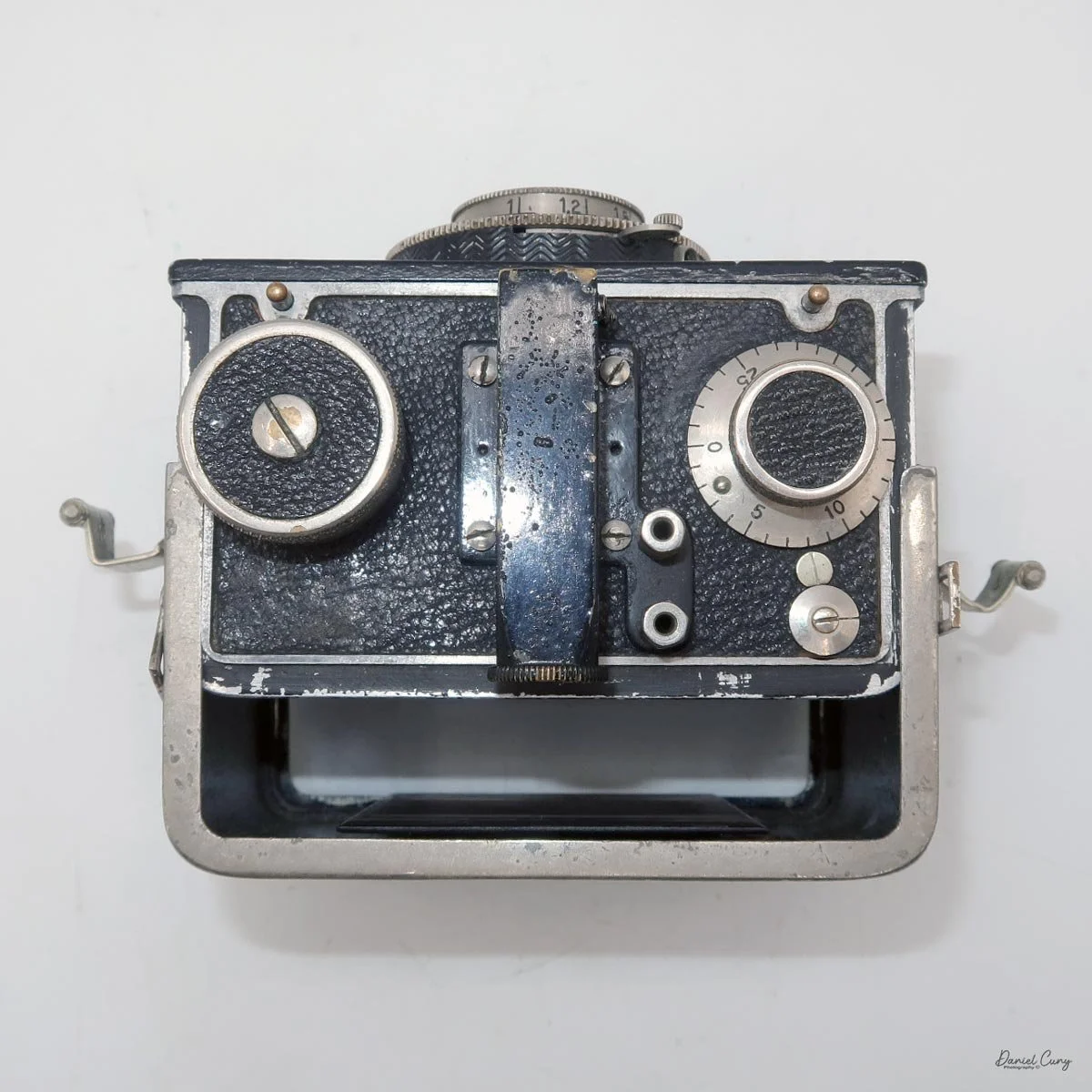
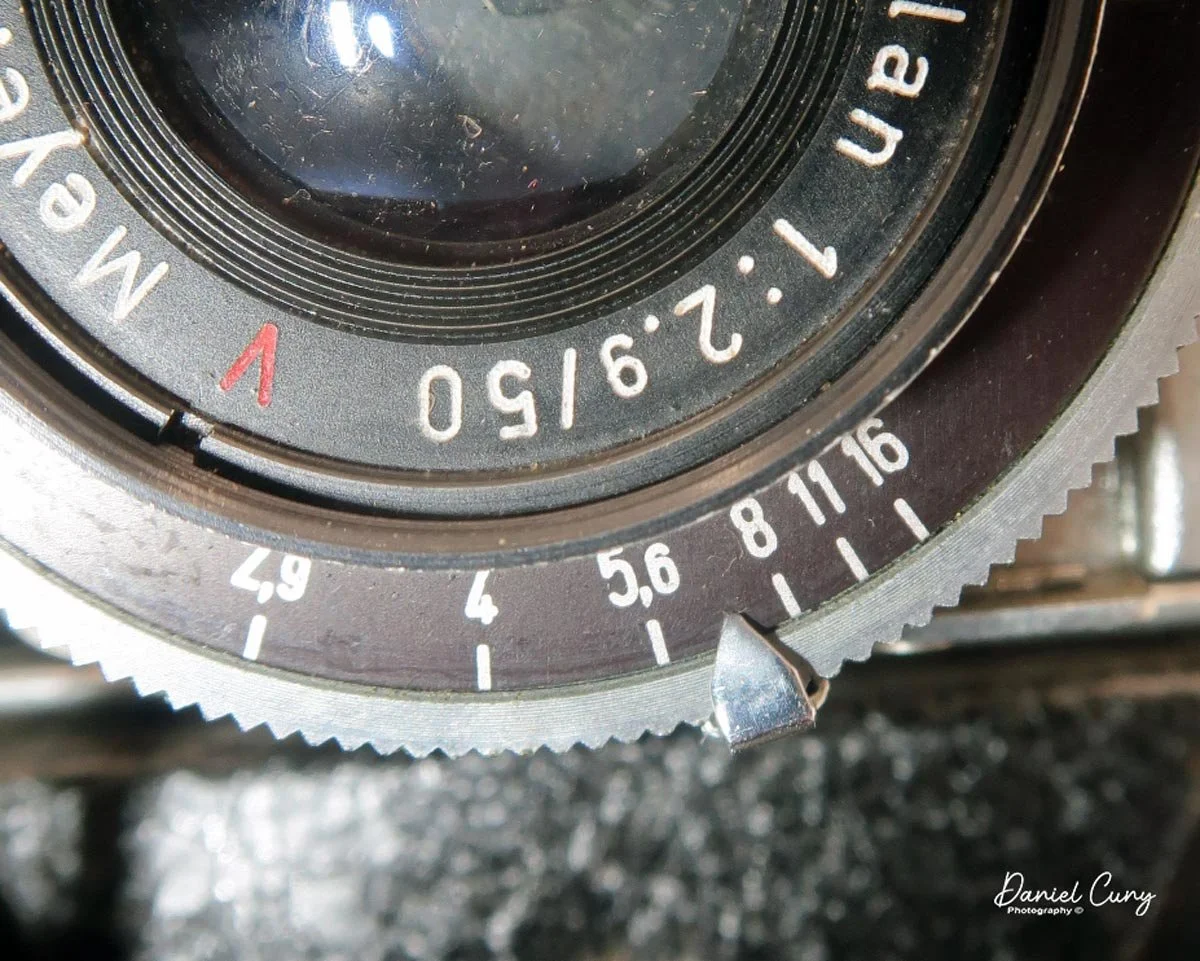
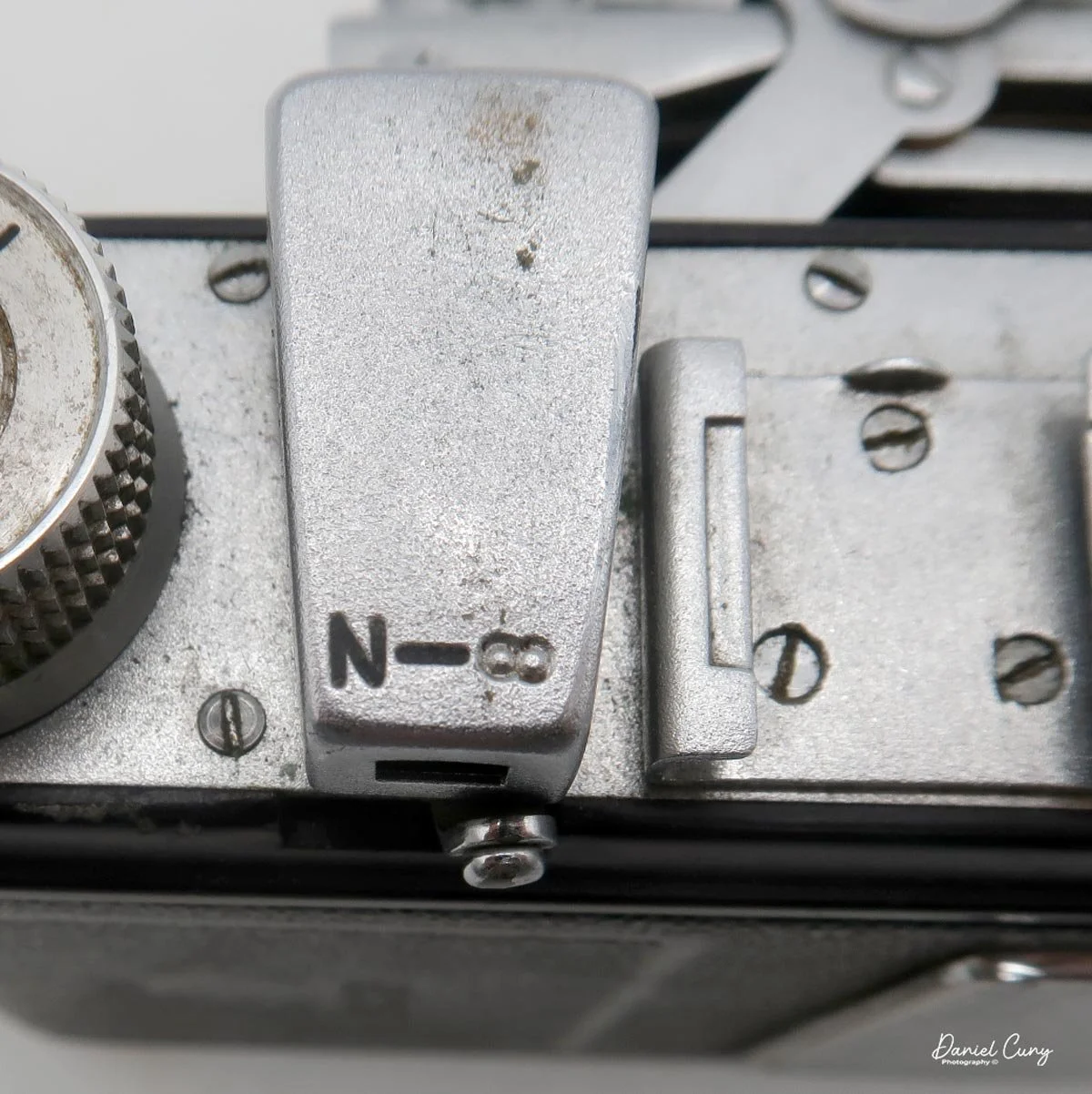
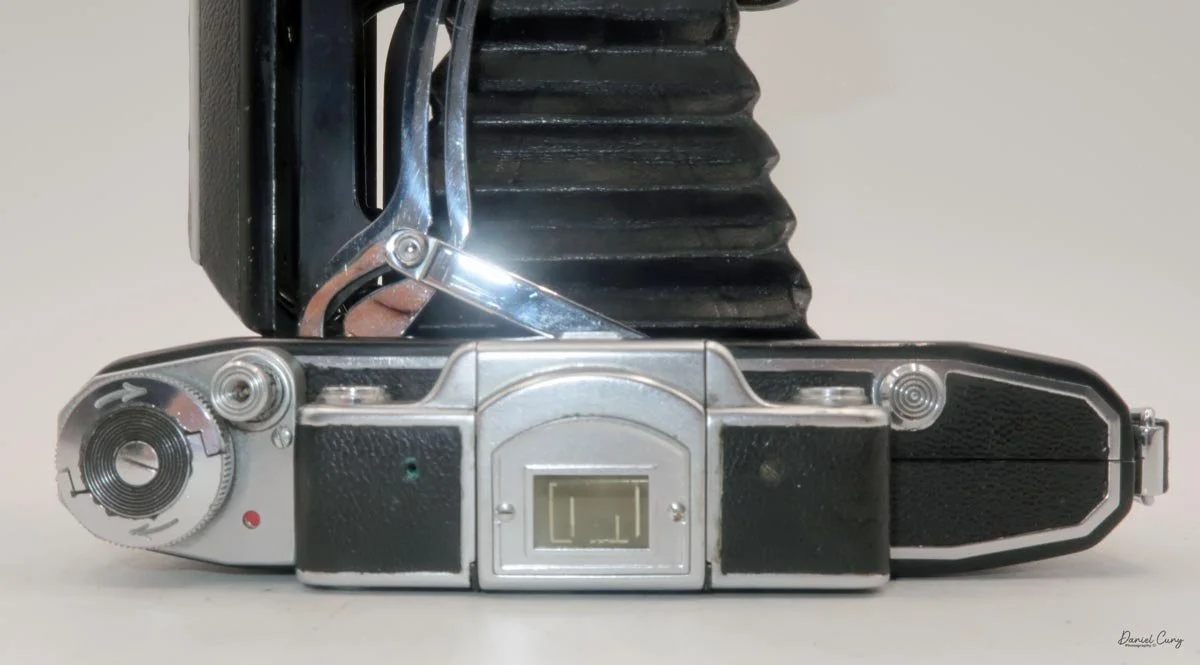
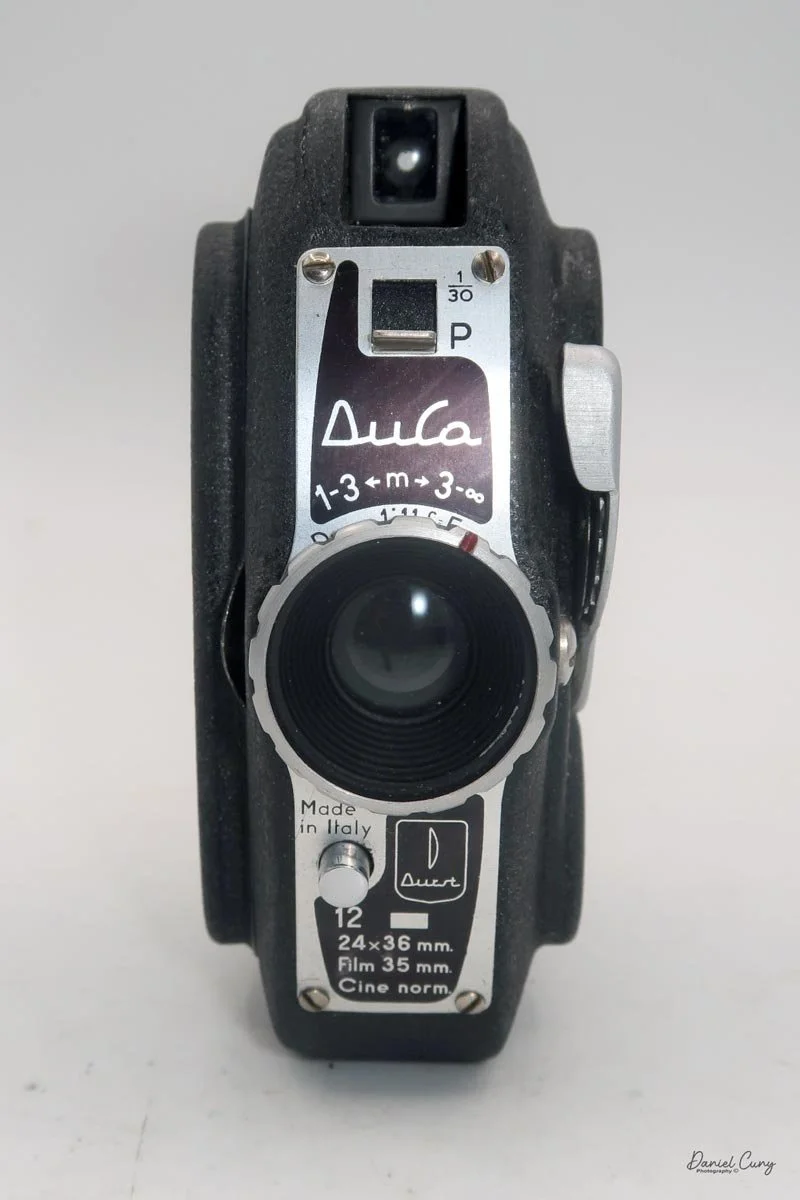
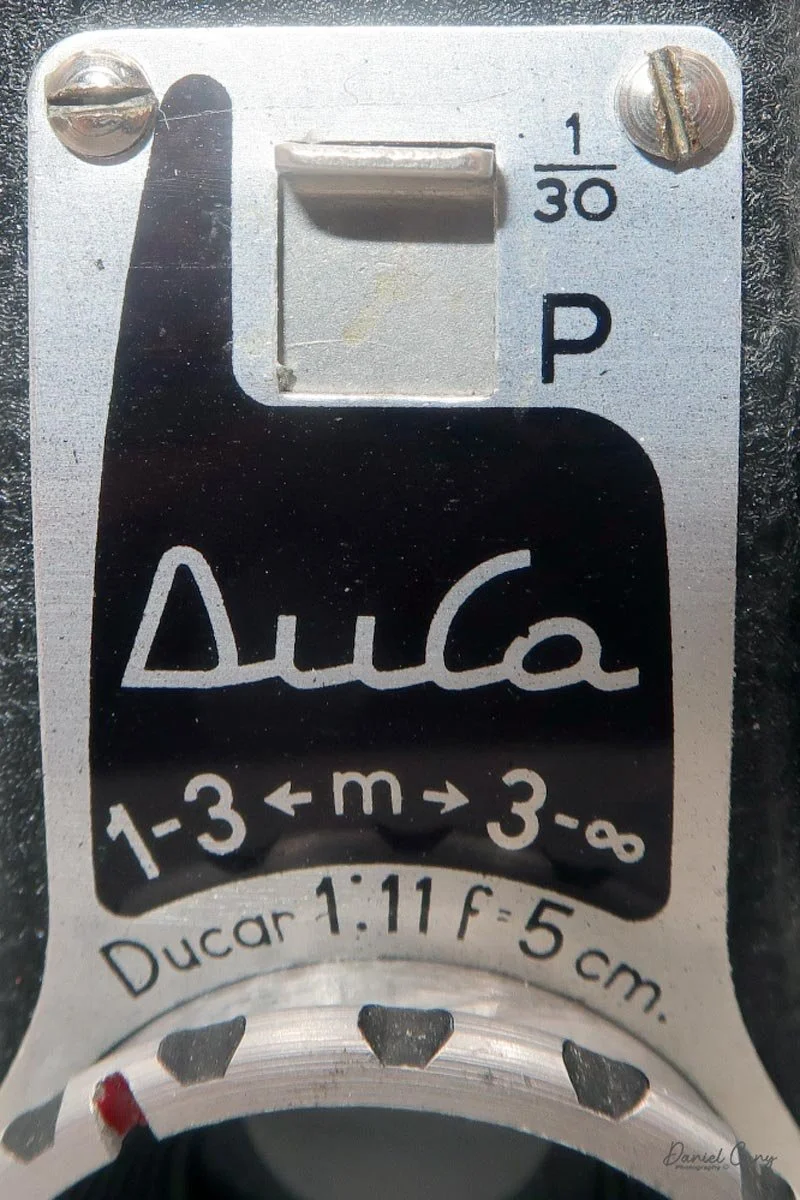
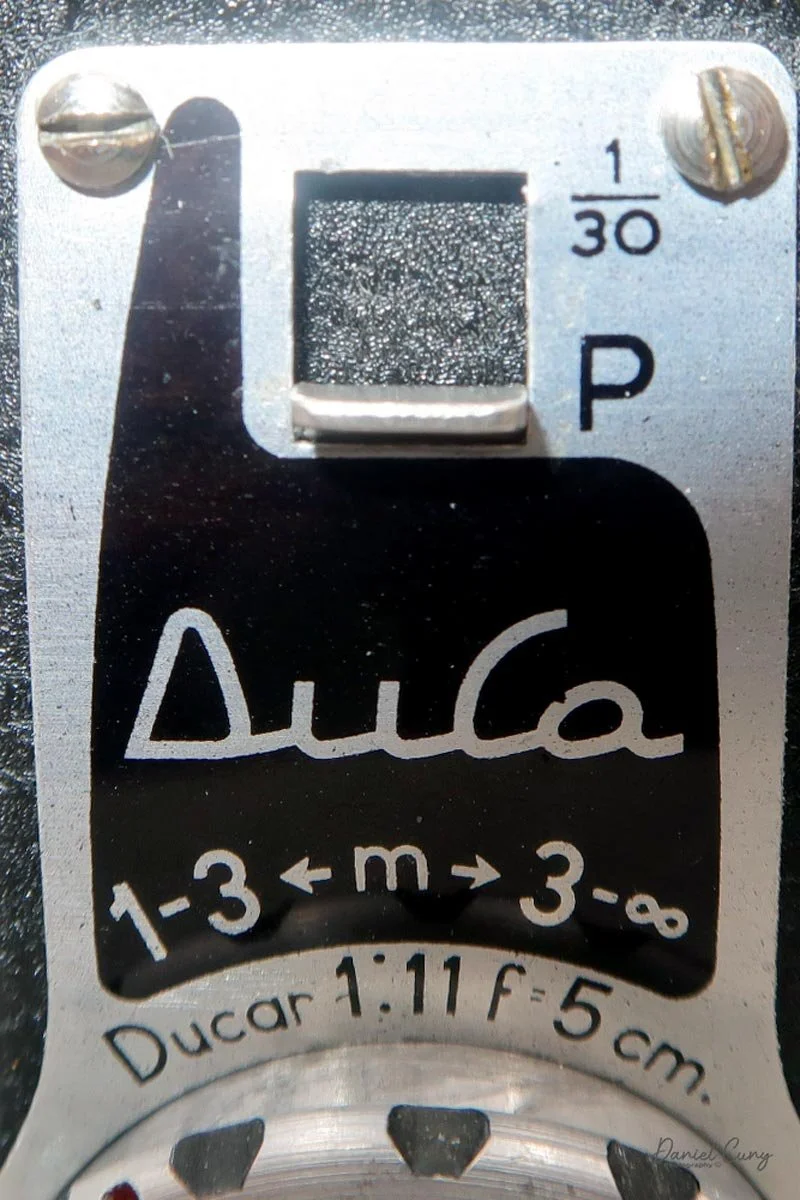
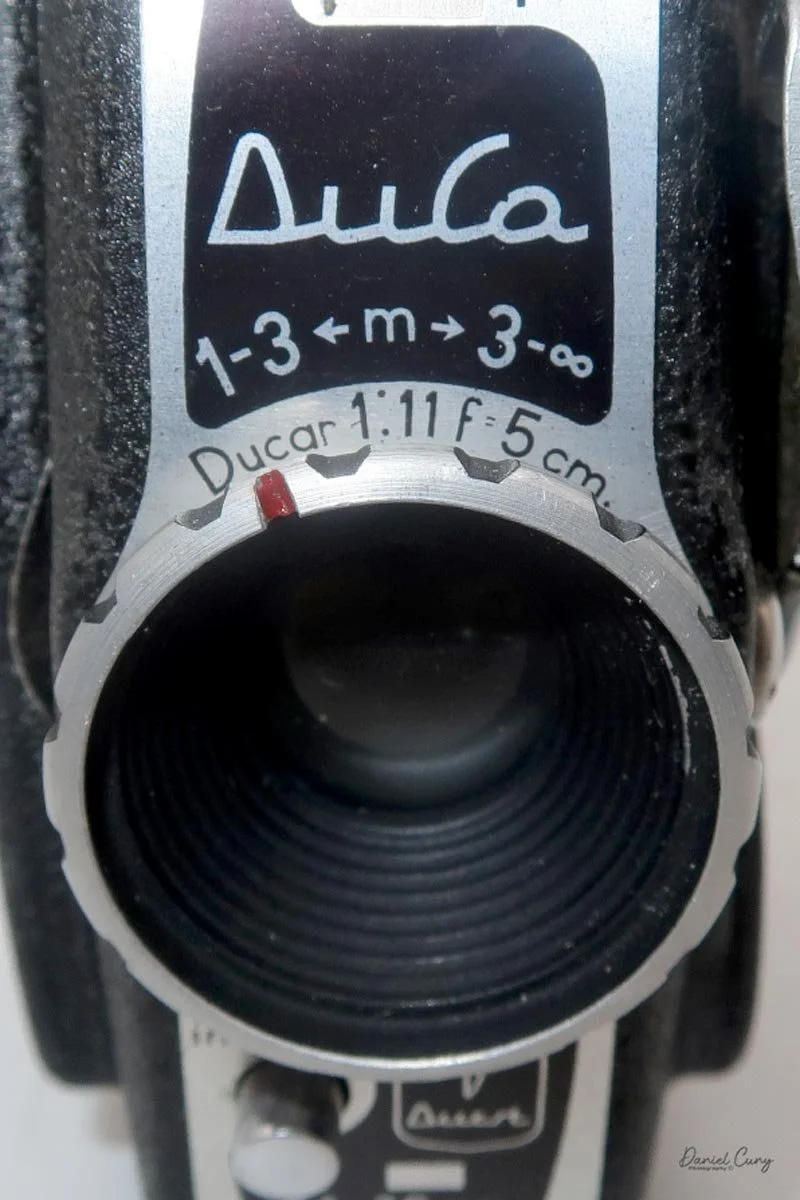
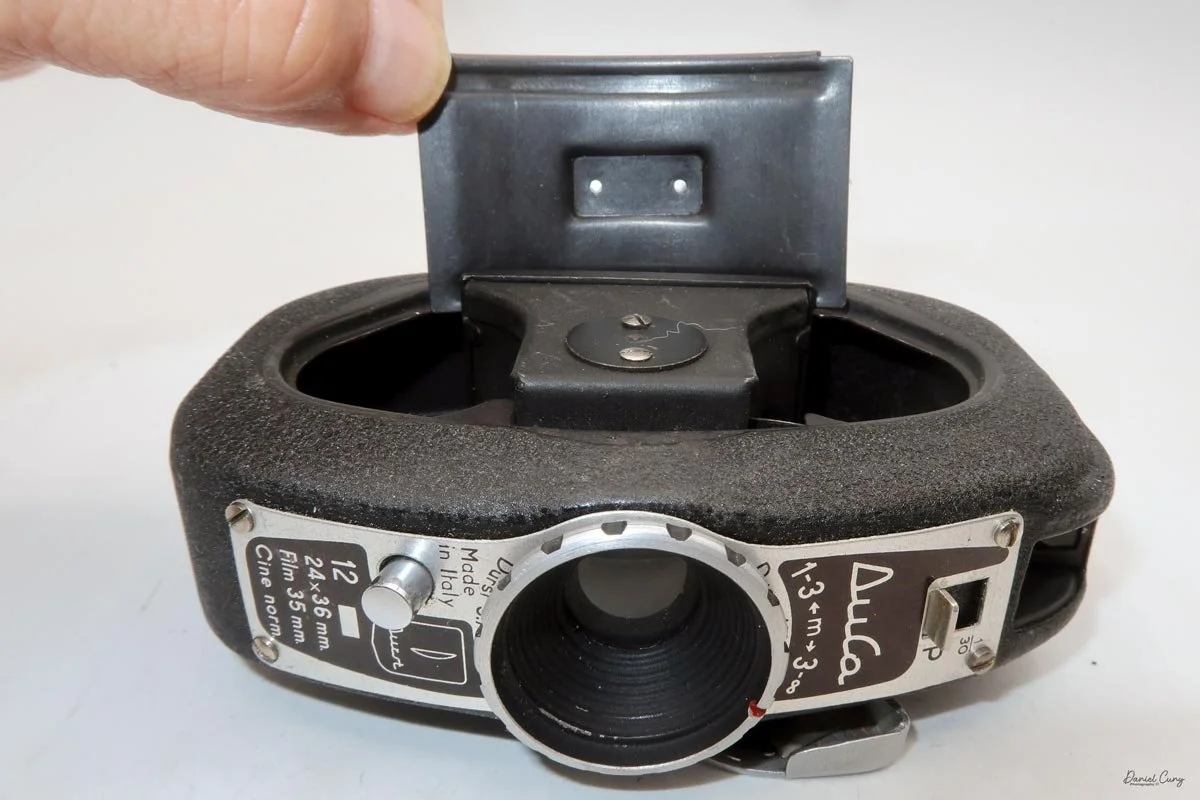
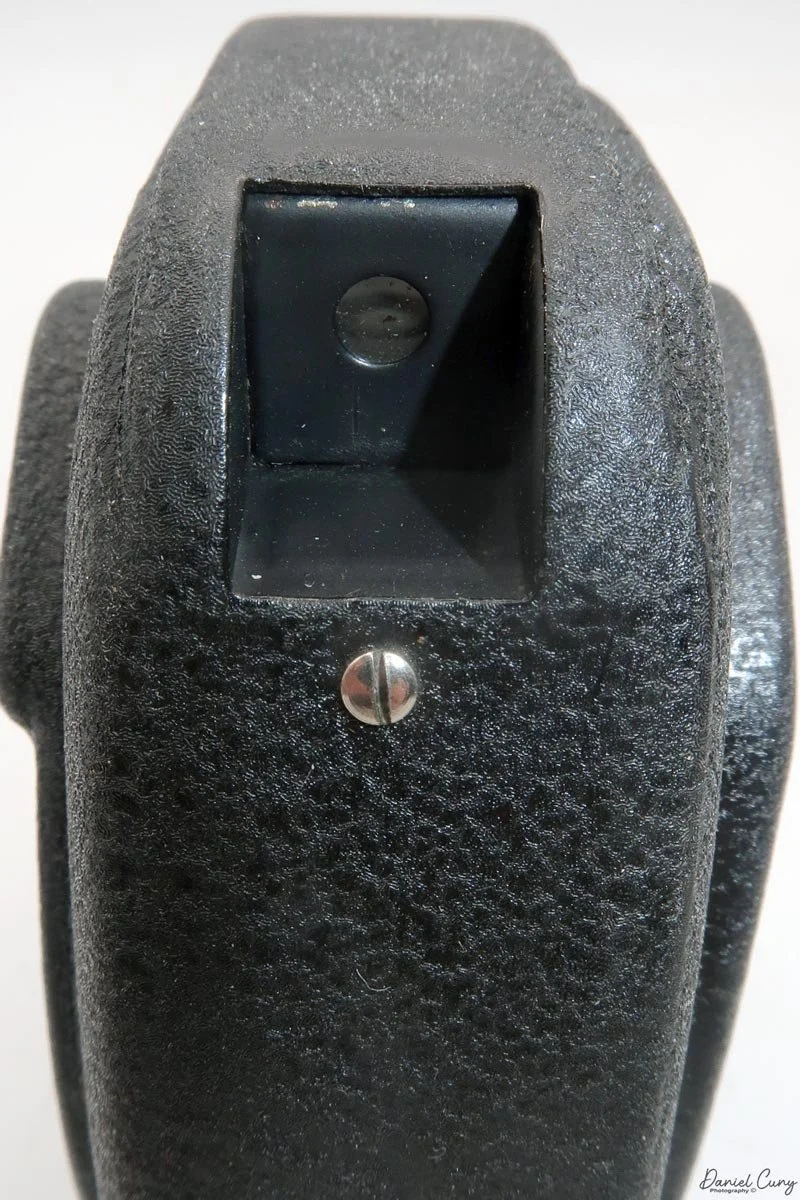
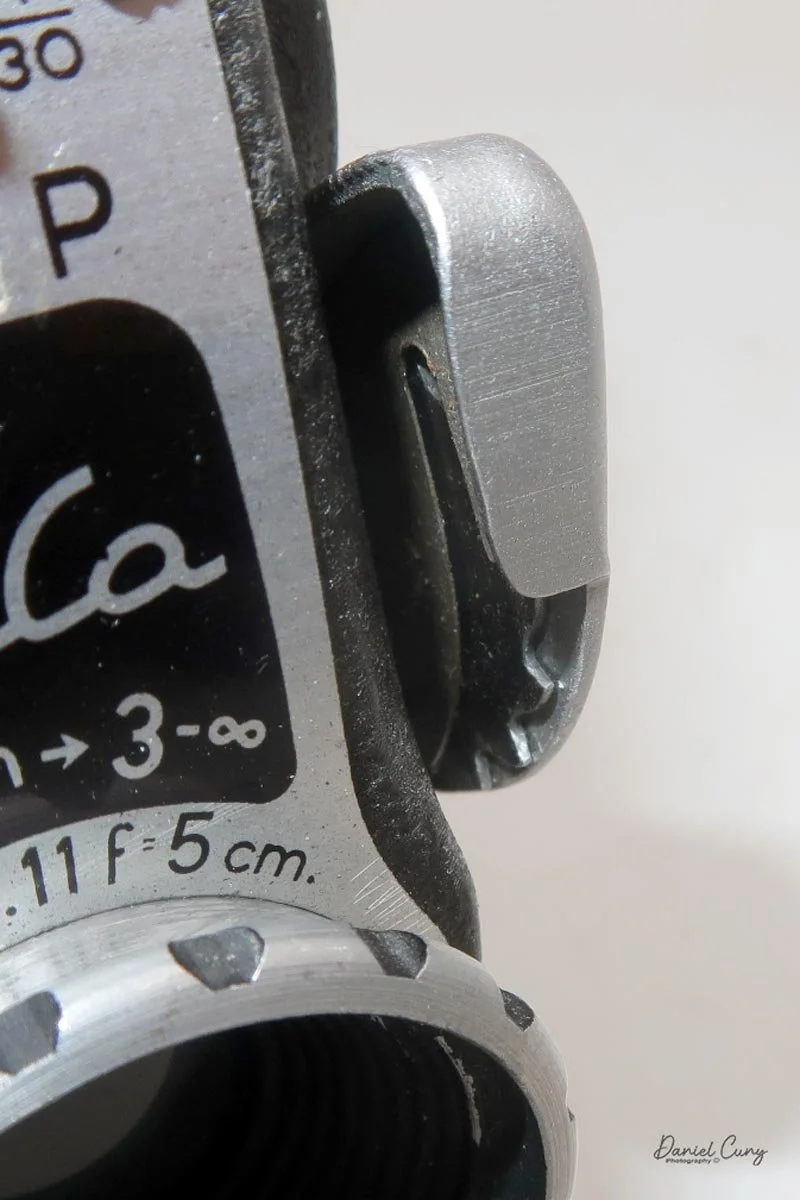
 The camera is very basic. The lens is a fixed 5 cm, f/11 meniscus design, though a rarer f/8 version is supposed to exist. Shutter speeds are limited to just two settings: 1/30 of a second and "P" for timed exposures. A small switch on the camera's faceplate, just below the viewfinder, sets the speed. I've also seen a version where the speeds are marked "I" for instant and "T" for timed. My guess is that mine is a later version, but I can't say that for sure.

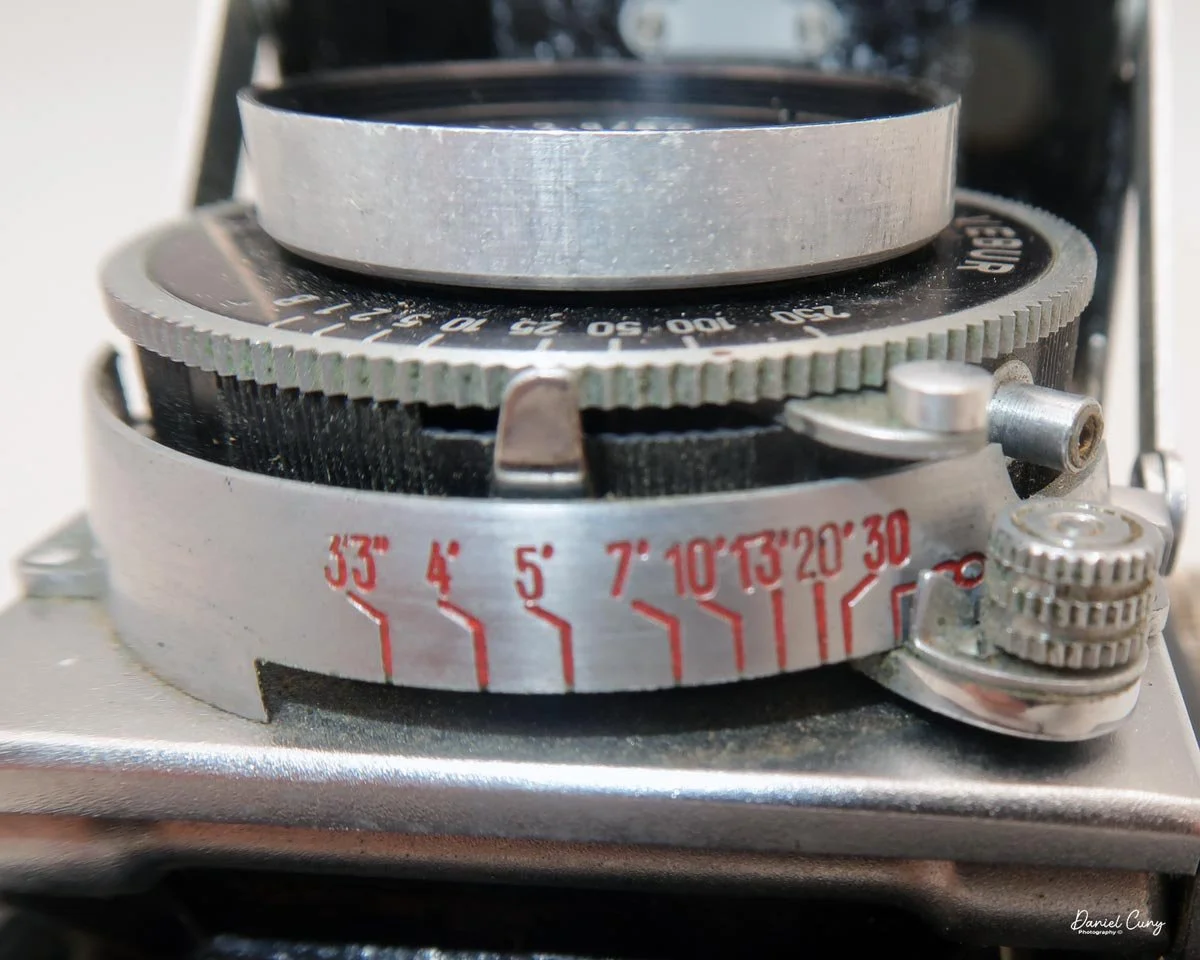
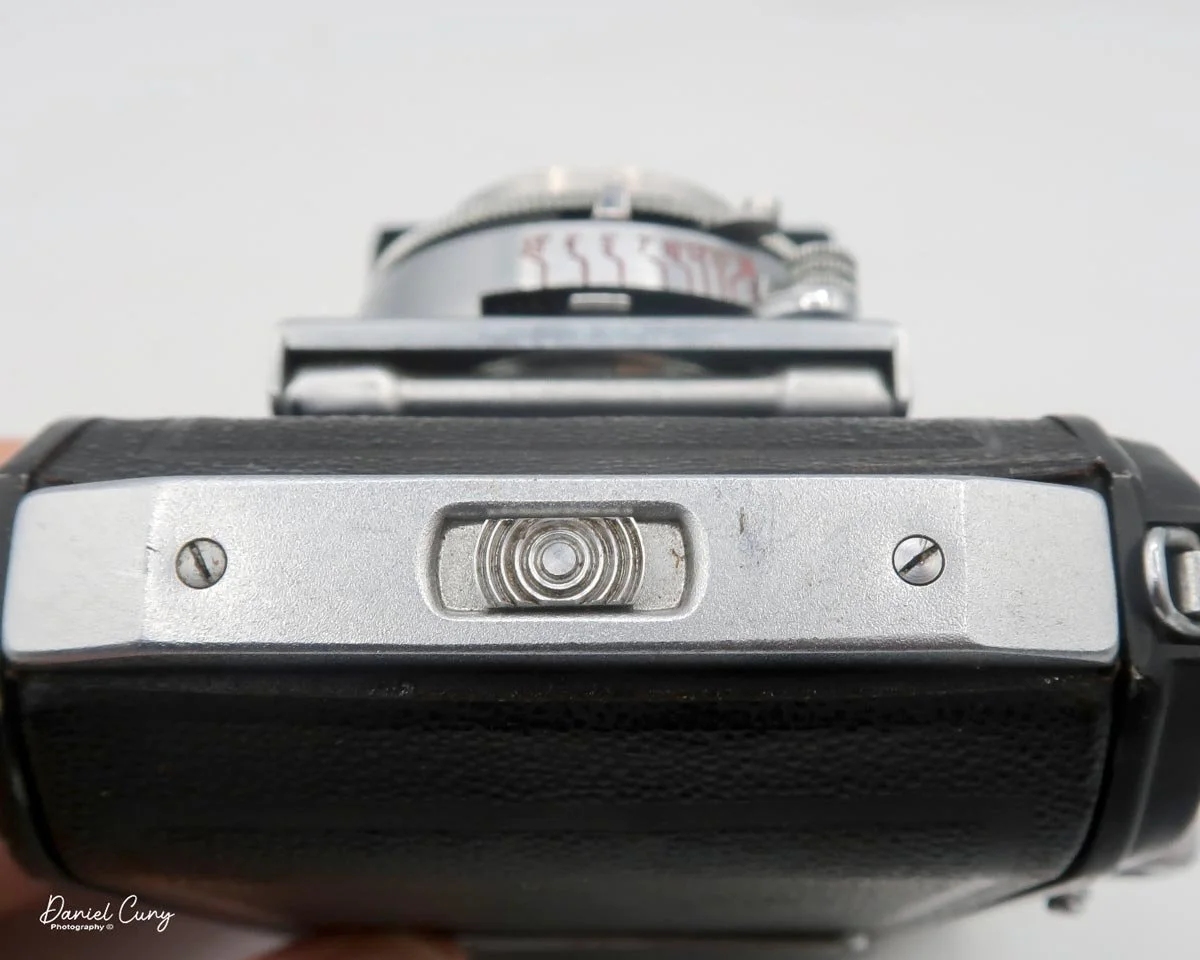
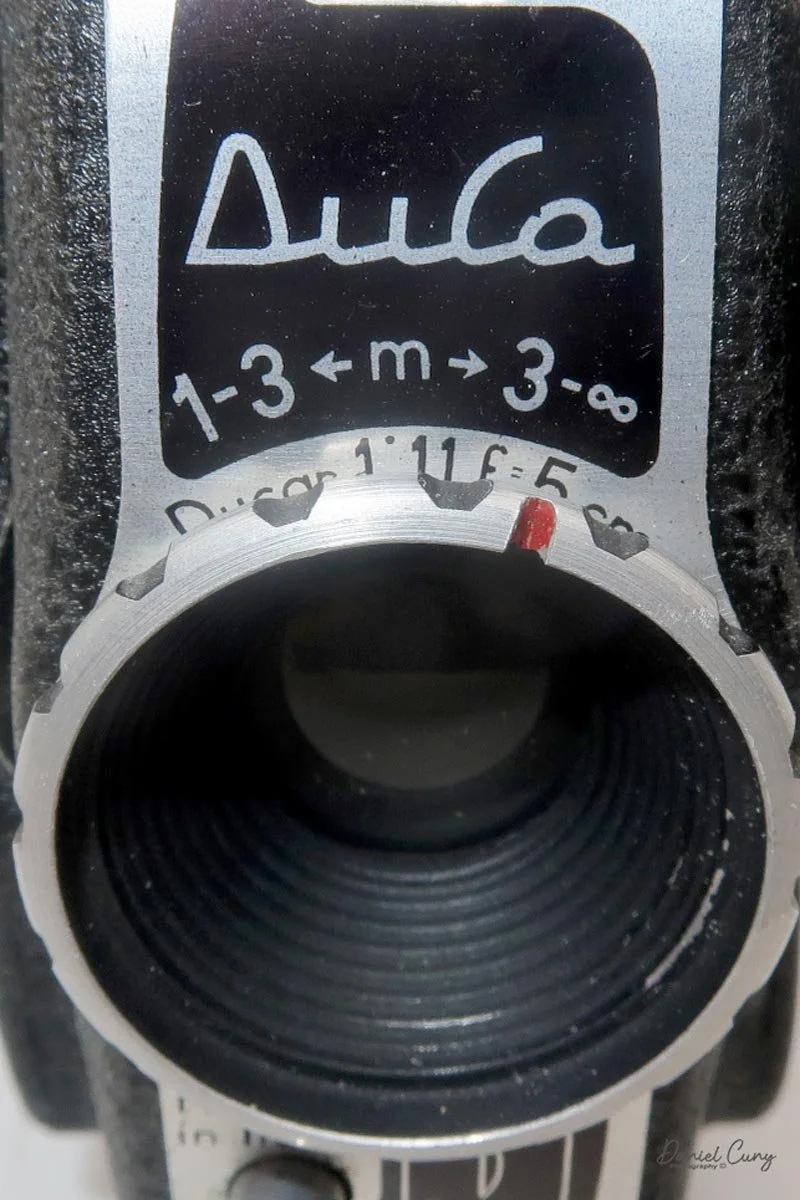
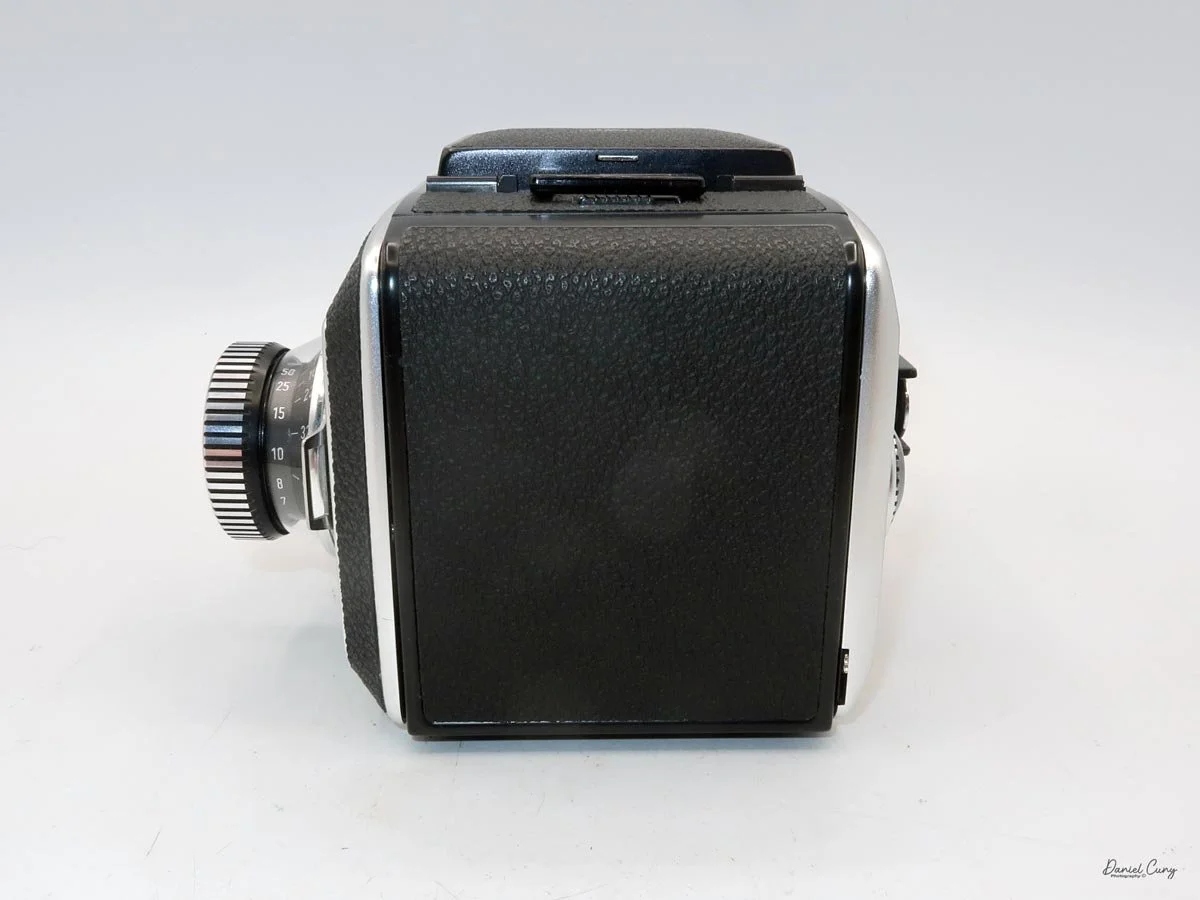
 Focusing is done in only two zones. You can set the lens for 1–3 meters or 3 meters to infinity. To focus, you turn the outer ring of the lens until the red line points to the distance you want.

Loading Film and Getting the Duca Ready

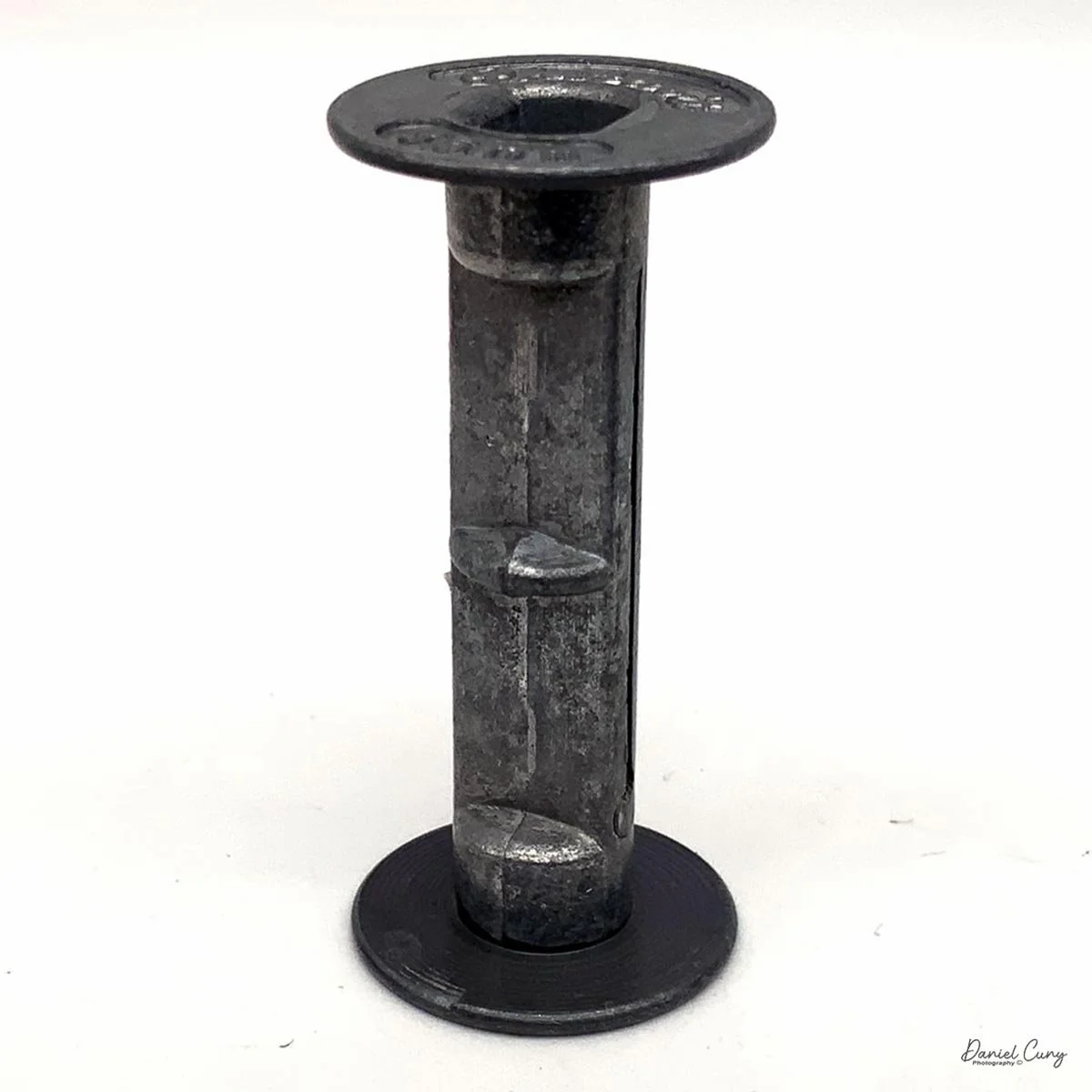
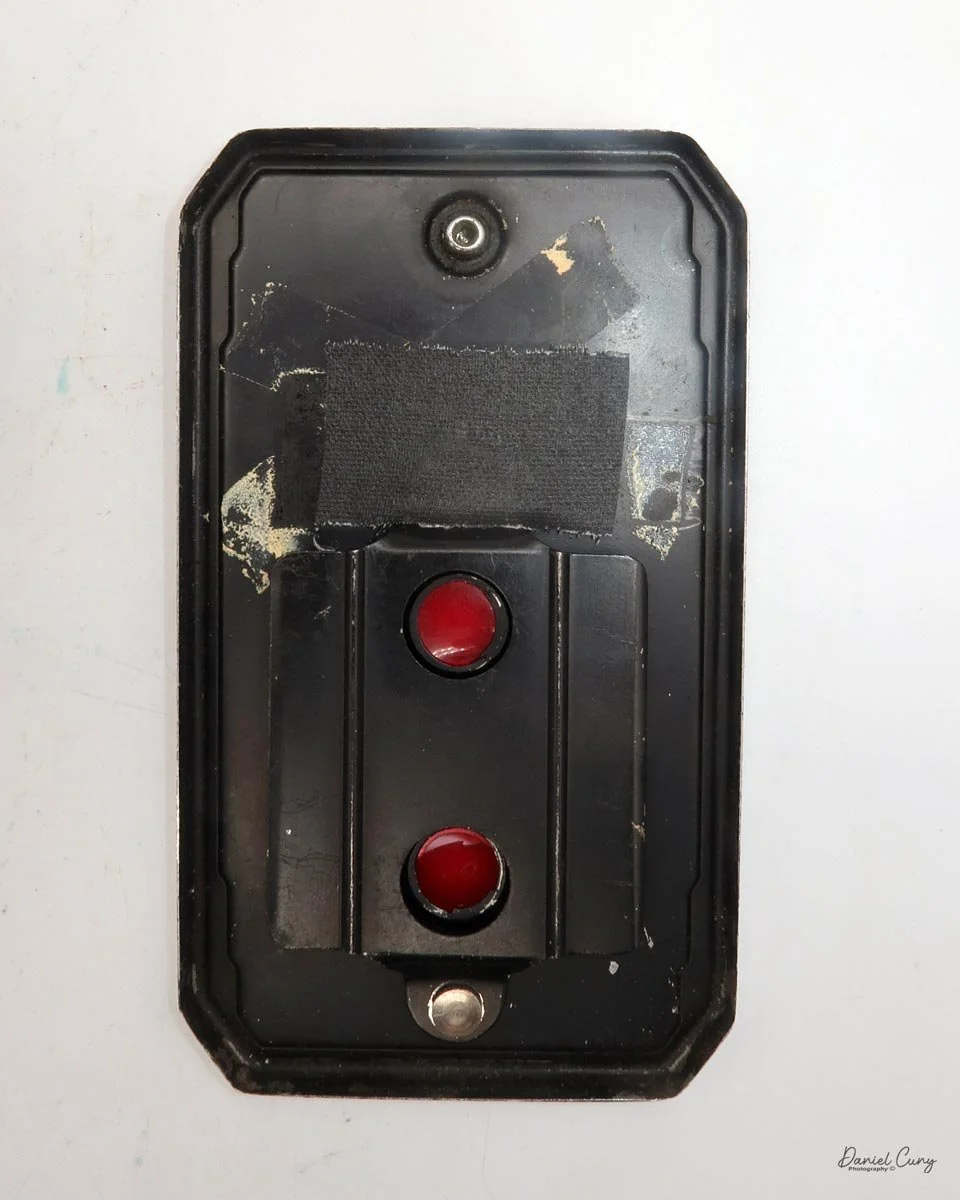
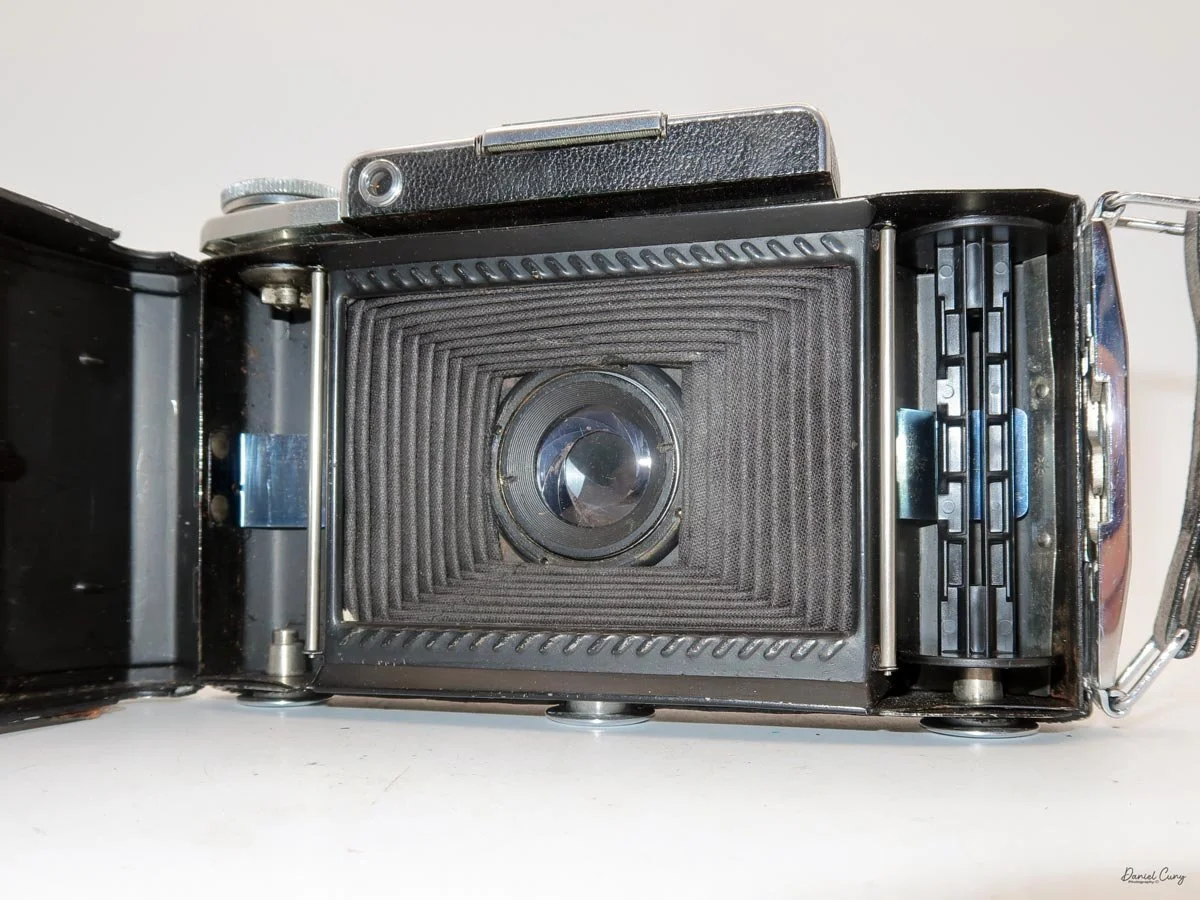
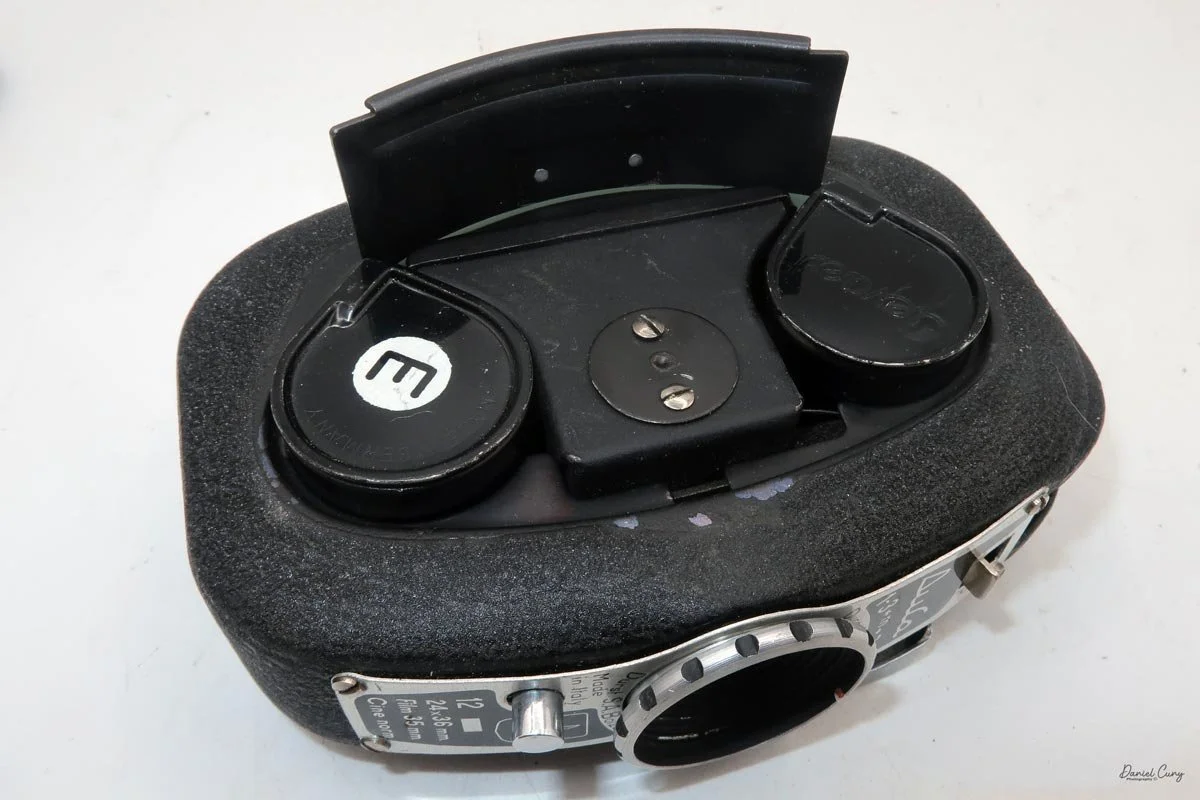
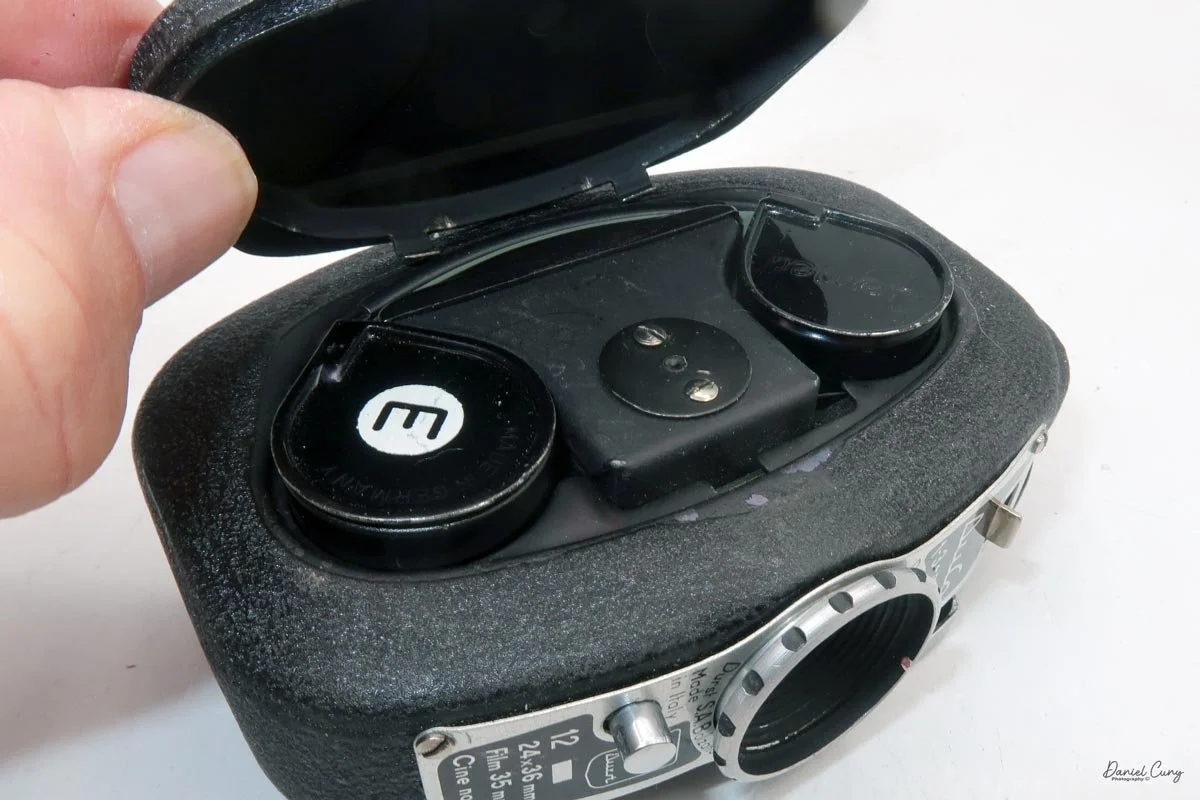
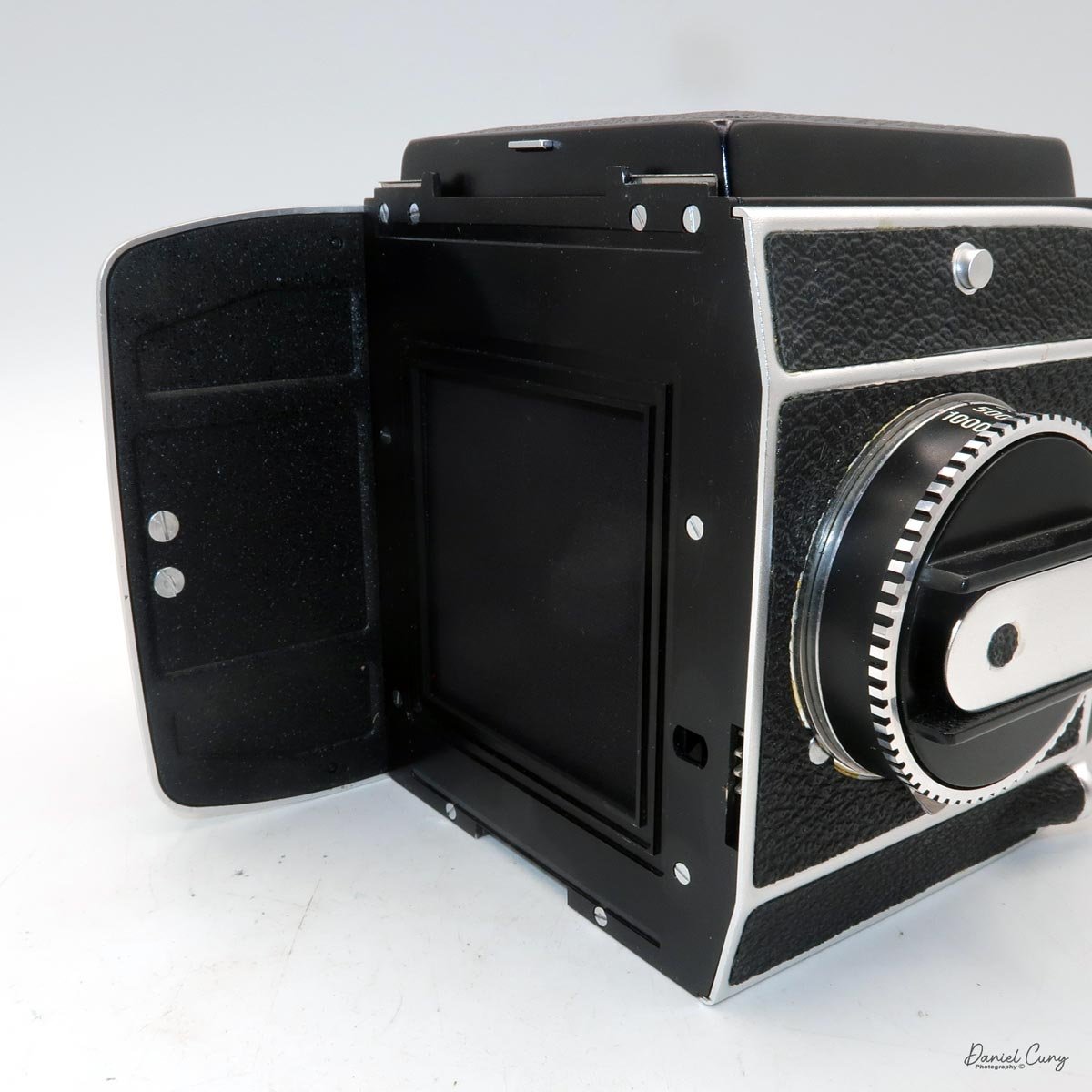
To open the camera for loading, there's a small curled‑up lip on the right side of the body that you lift to swing open the film door. Inside, you'll see the two Agfa Karat cassettes. They pop out along with the pressure plate, which sits just behind the film gate and pulls straight up and out for loading.

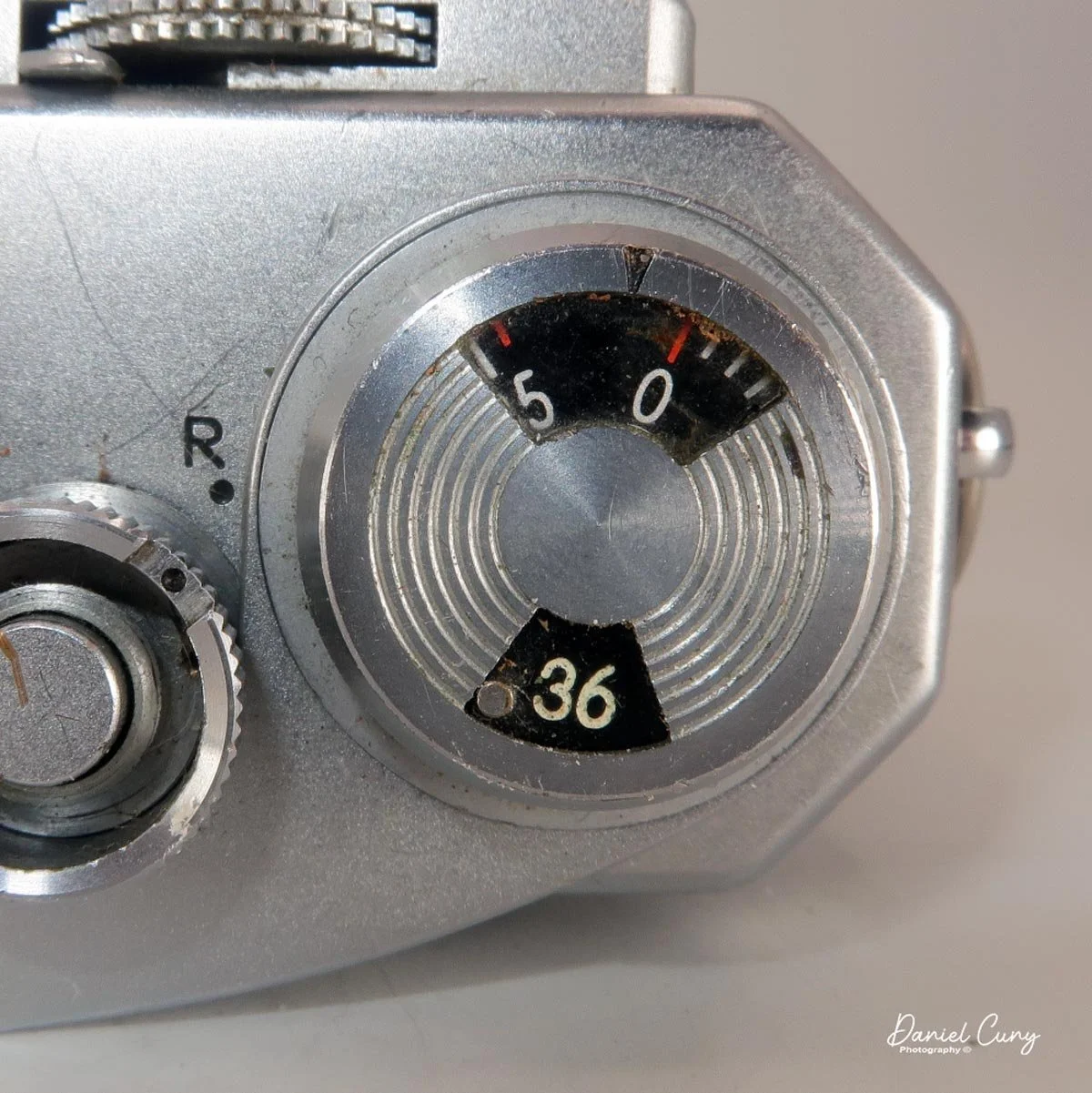
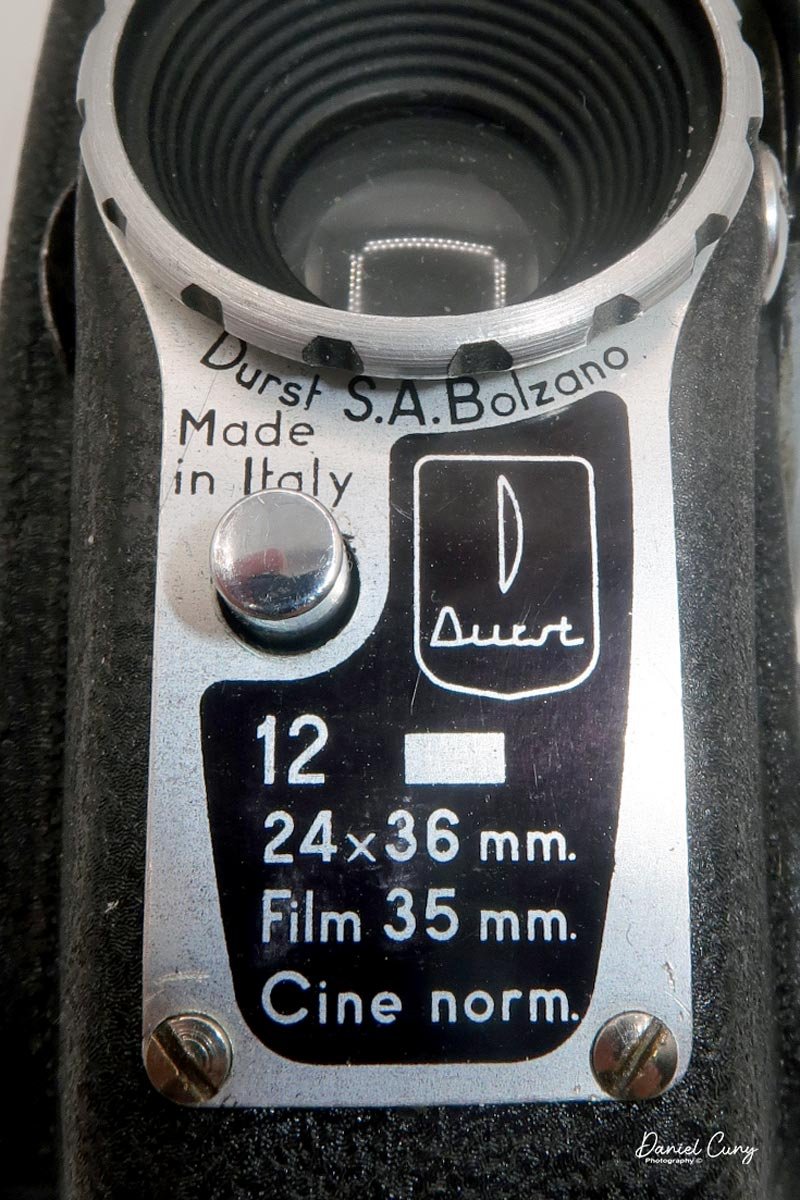
 As mentioned, the camera takes Agfa Karat cassettes. When these were sold new, each roll of 35mm film was cut for 12 exposures, and the front of the camera proudly states that it takes 12 photos per roll. Since I have bulk 35mm film and two cassettes, I loaded my own.

I put one of the cassettes and my bulk loader into a dark bag. Inside the bag, I opened the loader, pulled out what I guessed would be enough film for 12 exposures, and added a bit more to be safe. I fed the film into the first cassette and closed up the loader, leaving a short length to thread into the second cassette. Then I unzipped the dark bag and removed the loaded cassette.

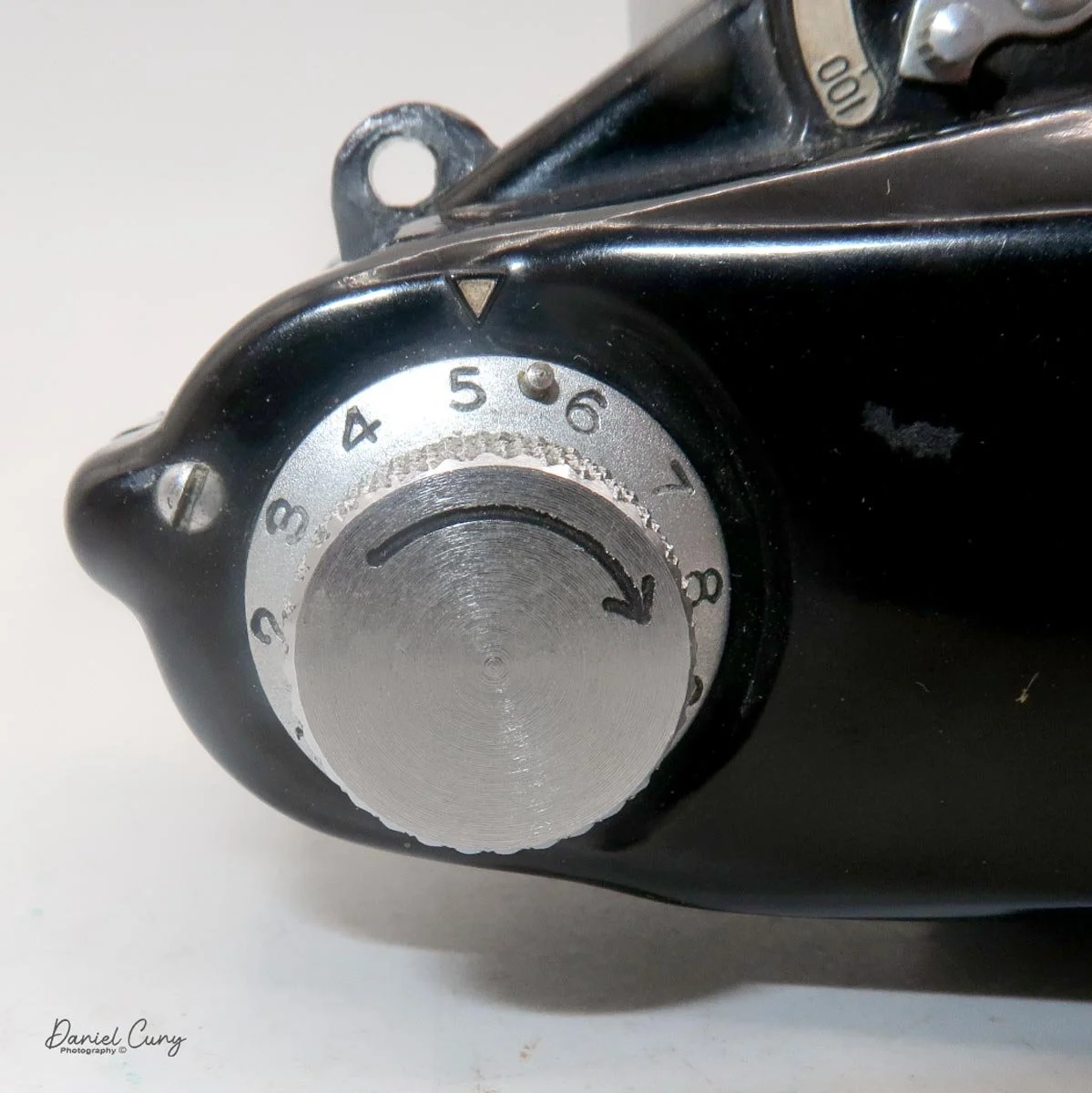
In the light, I could now feed the end of the film from the first cassette into the second one, slide both cassettes into the side of the camera, and drop the pressure plate back into place, making sure the film sat flat against the gate. Before closing the door, I advanced the film a bit to confirm that it was transporting. With the cassettes and pressure plate removed earlier, I'd noticed a small brass pin—very similar to the one in the Ansco Memo—that pops out, grabs a film sprocket, and moves up to advance the film.

Once everything looked right, I swung the back door into position and pressed it firmly against the body. Two small notches on the back have to line up with the body; if they're off even a little, the door won't sit snugly.

 Before heading out, I took a look at the lens and saw that the front element was pretty grimy. With some lens cleaner and tissues, I managed to clean the front, but because the camera is built the way it is, I couldn't get to the rear element at all. With the film loaded and the transport confirmed, I was ready to go for a walk through the neighborhood.


Shooting with a Vertical 35mm

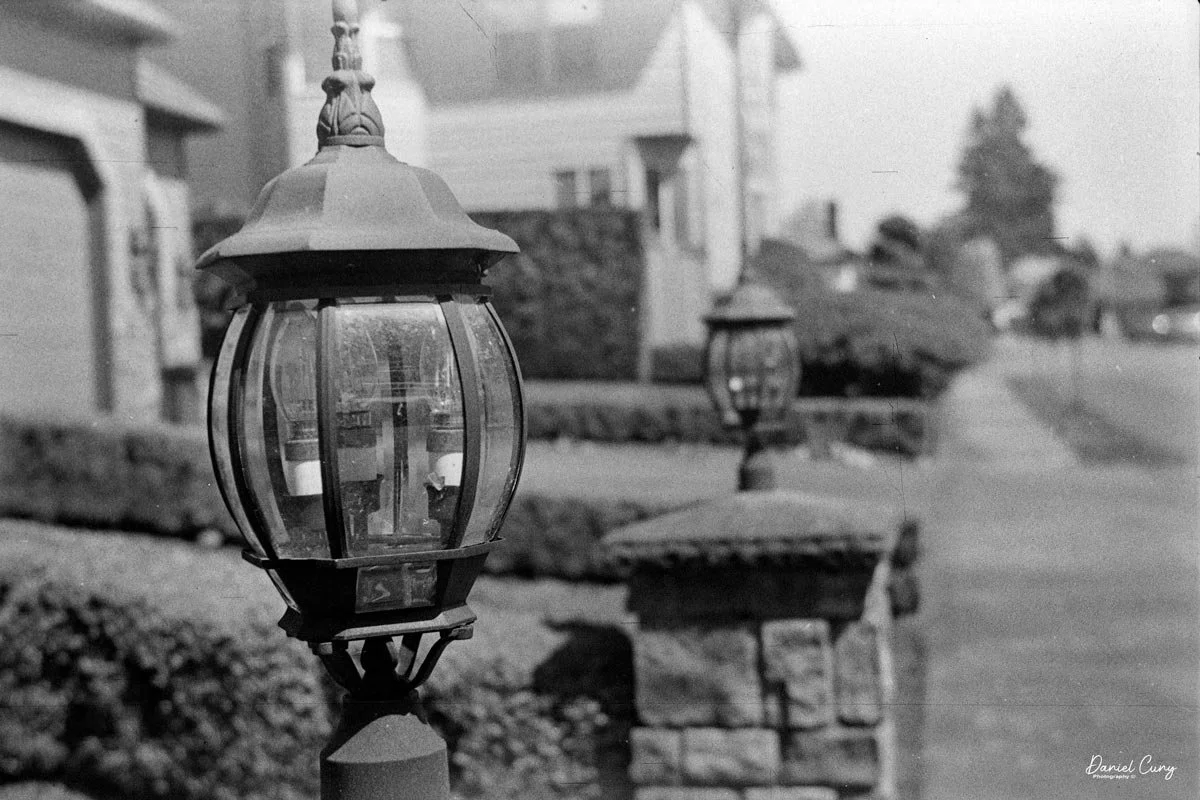
With film in the camera, I headed out around the neighborhood, trying to photograph some of the same subjects I usually shoot—houses, parked cars, trees, little details I run across on my walks.

 The camera's faceplate shows a horizontal rectangle next to the number 12, while the viewfinder is vertical. I found that confusing at first. Was this meant to be a horizontal or a vertical camera? With only 12 exposures per roll, it seemed logical that they'd be in a horizontal orientation to match most 35mm cameras. Still, the vertical viewfinder was telling me otherwise. I wasn't sure, so I shot in both orientations early on, turning the camera back and forth.

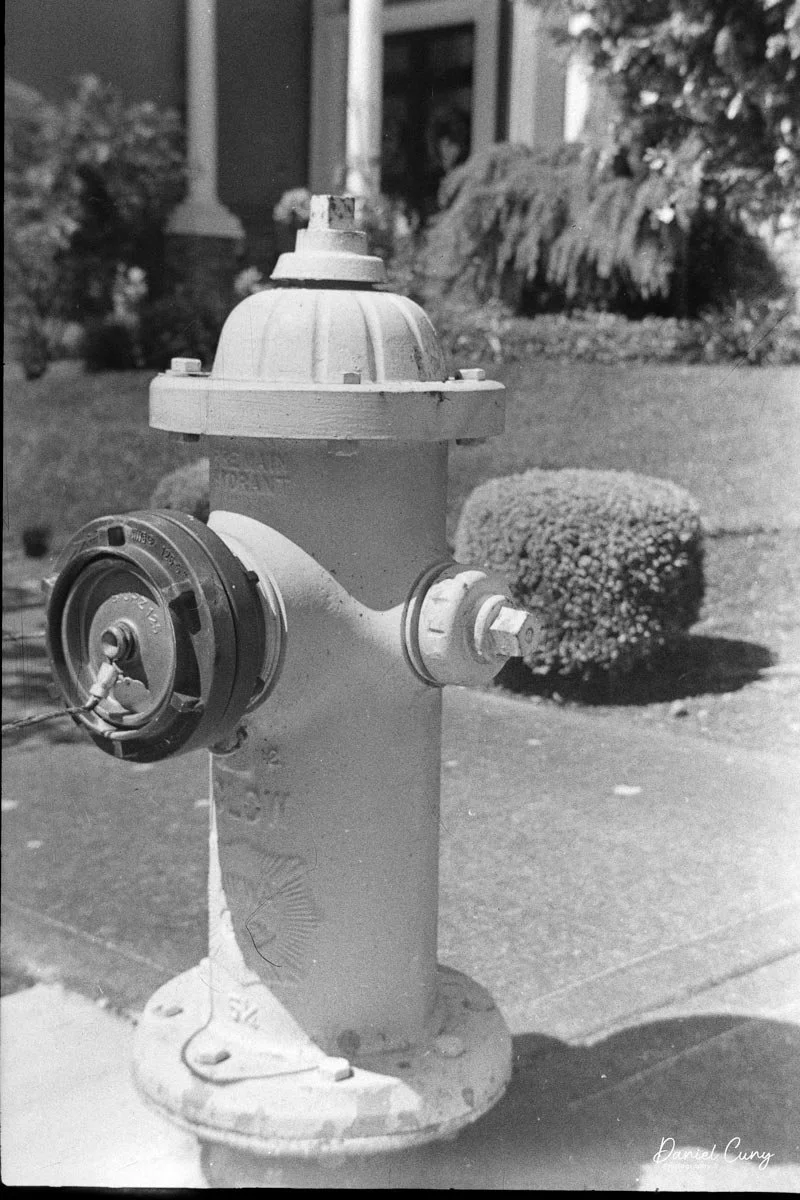
 Once I processed the film and looked through the negatives, it was obvious: the Duca is a vertical‑format camera. If you want a horizontal image, you turn the whole camera on its side. It's not complicated, but it does take a little mental adjustment when you're used to most 35mm cameras being the other way around.

Results and Thoughts

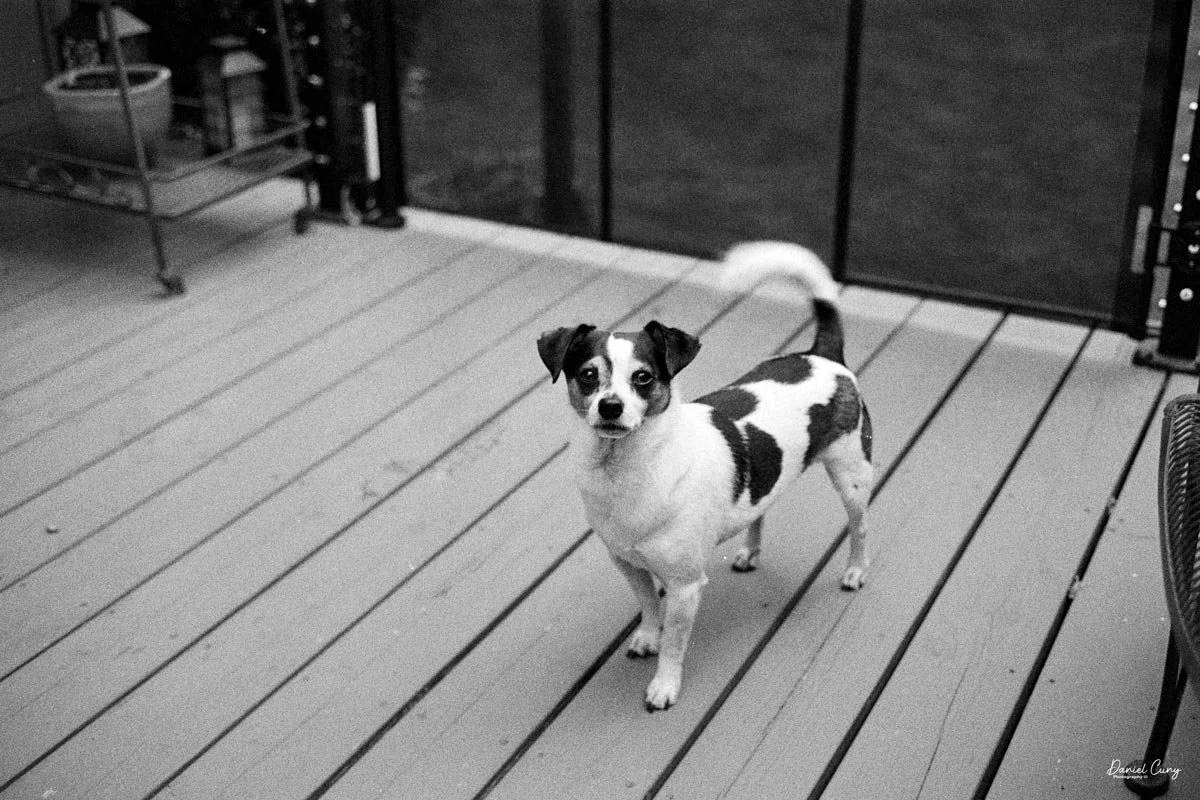
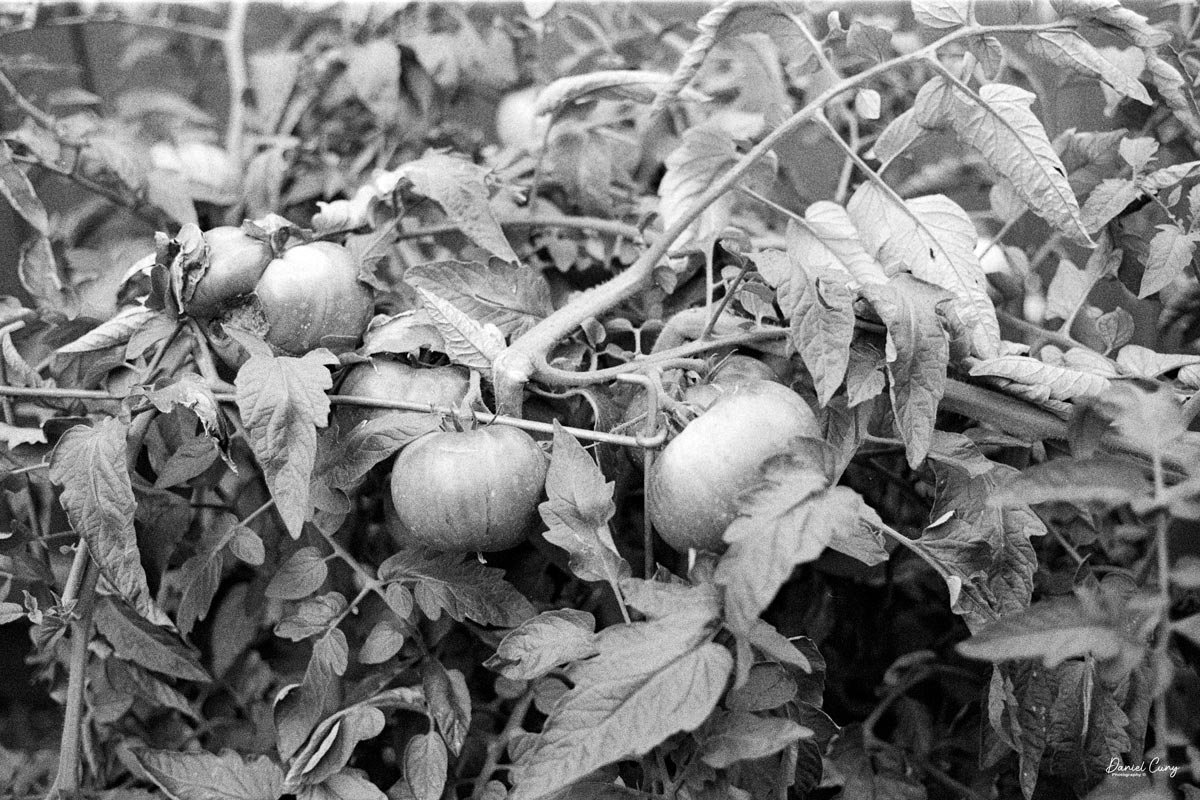
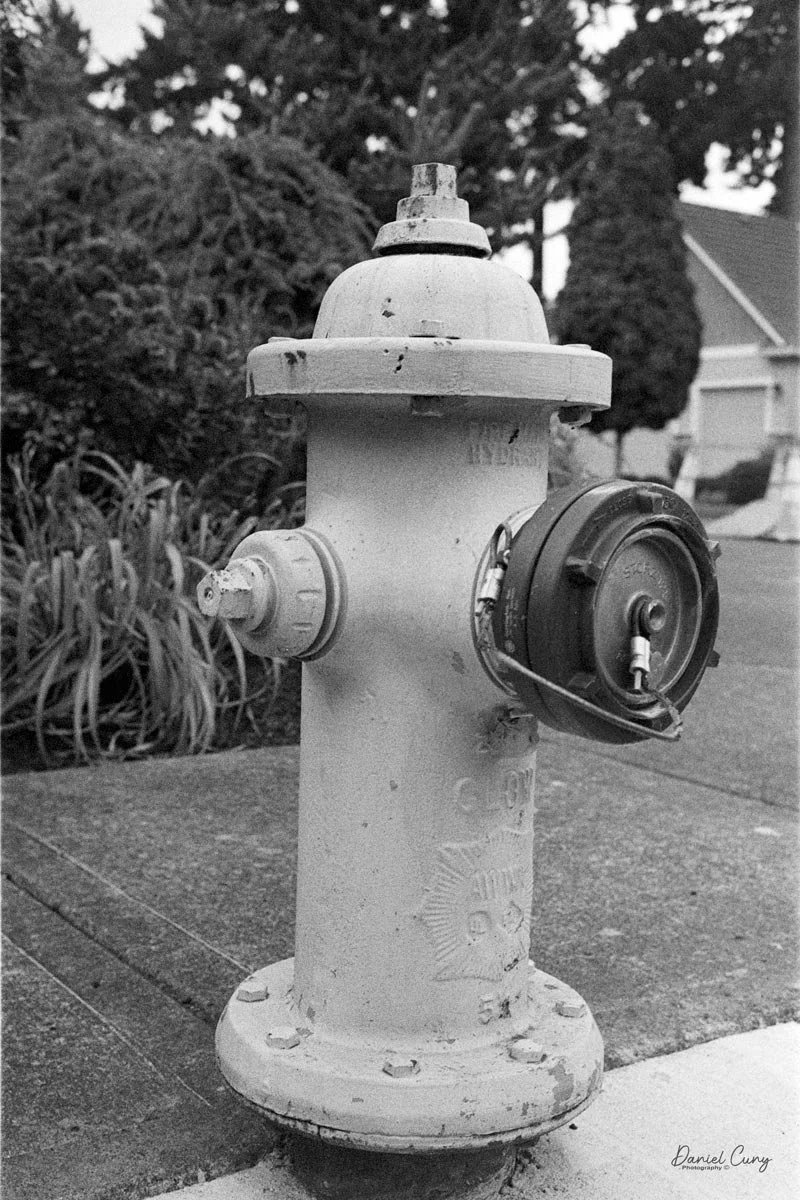
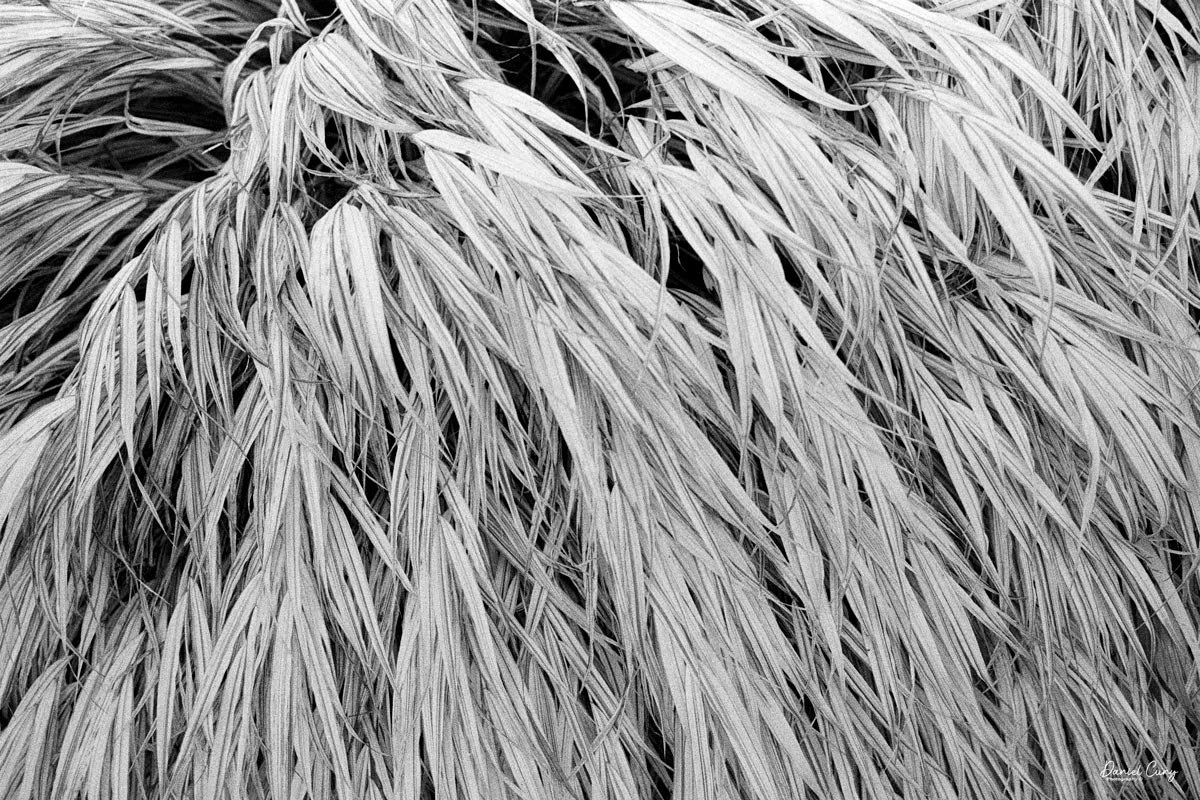
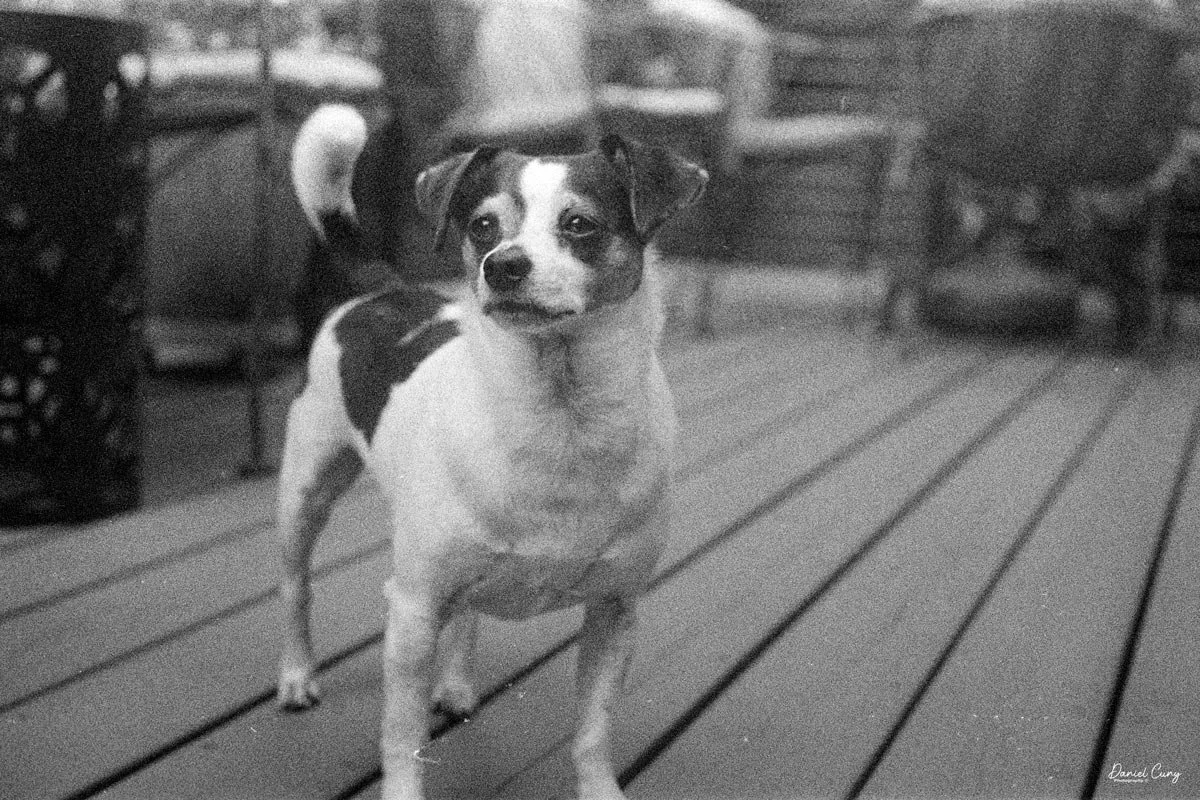
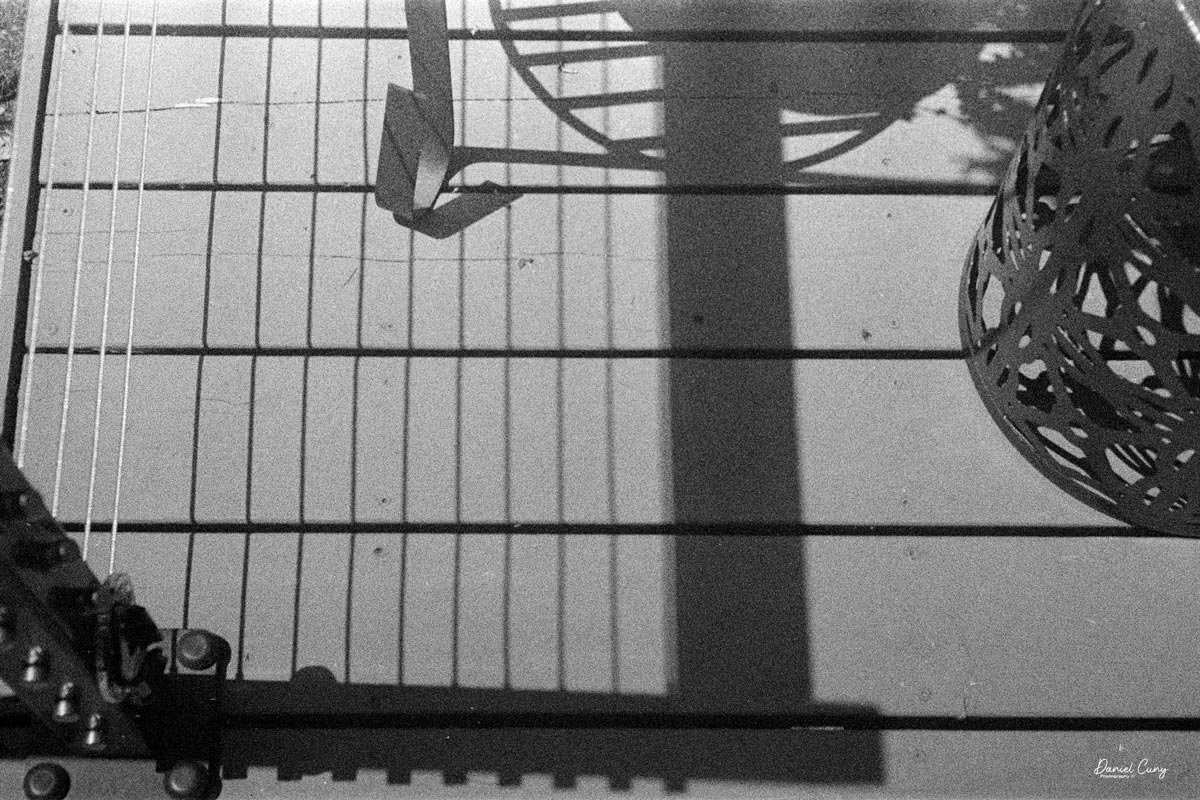
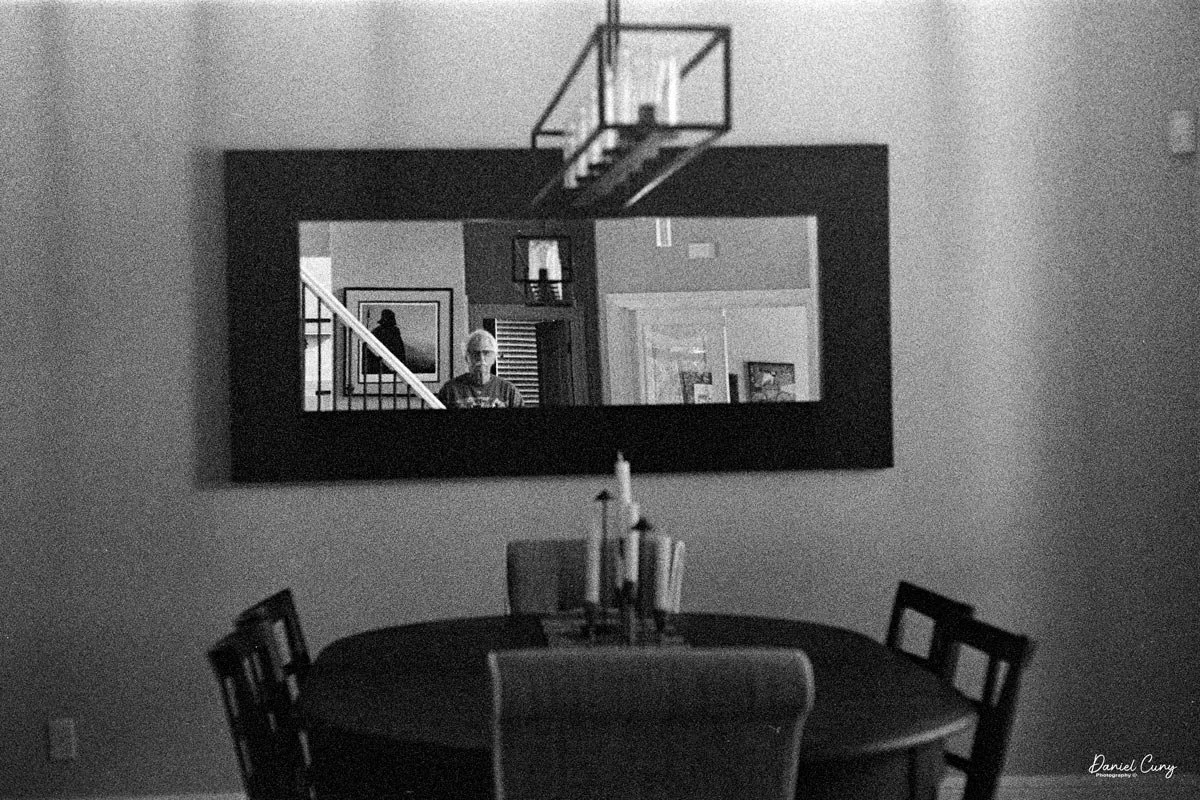
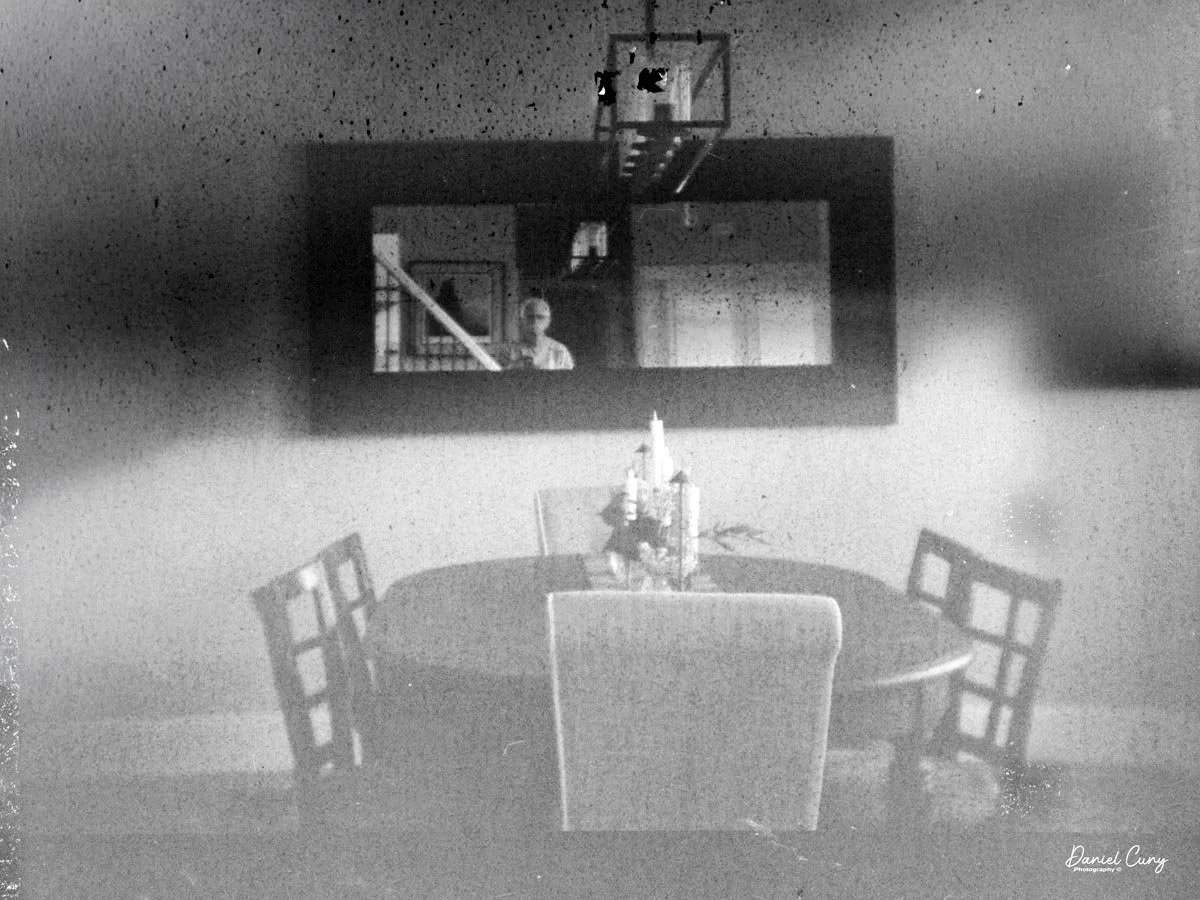
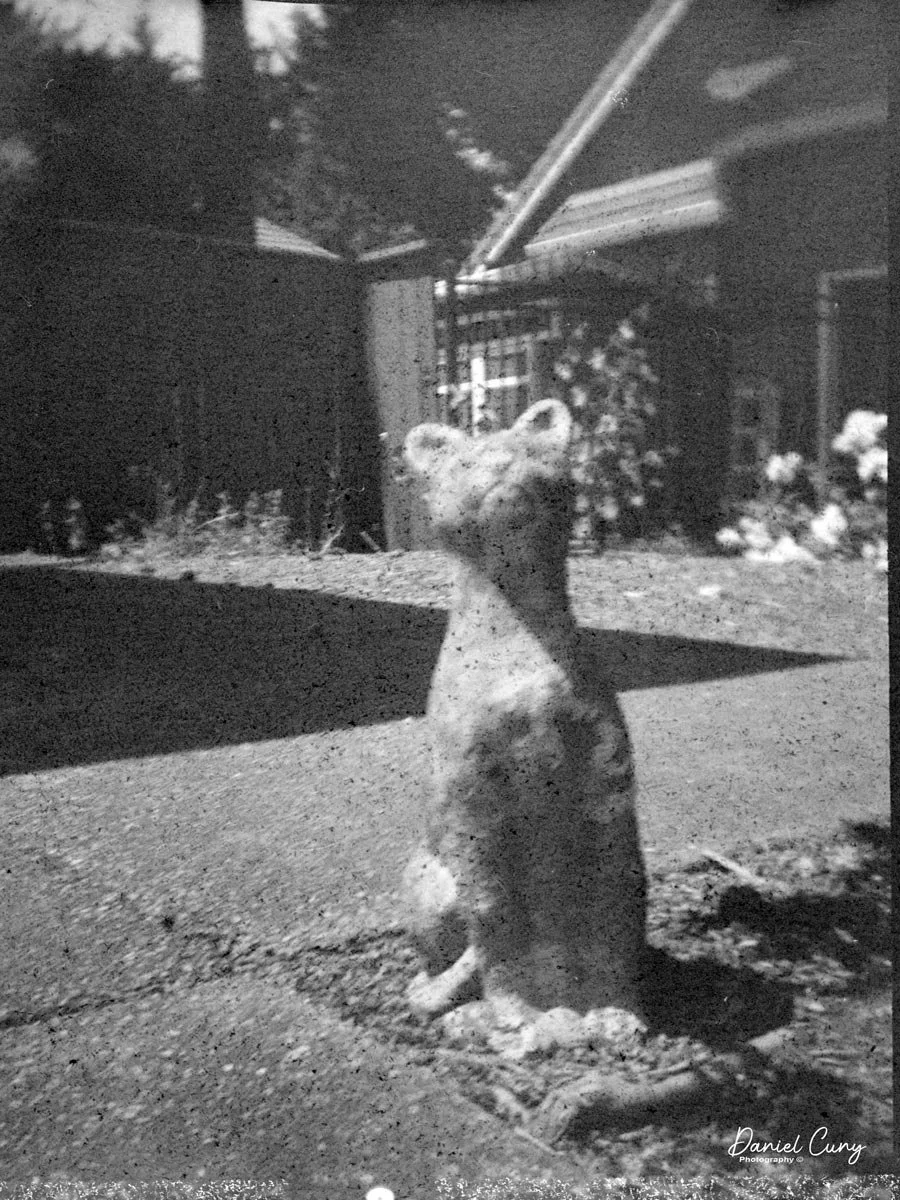
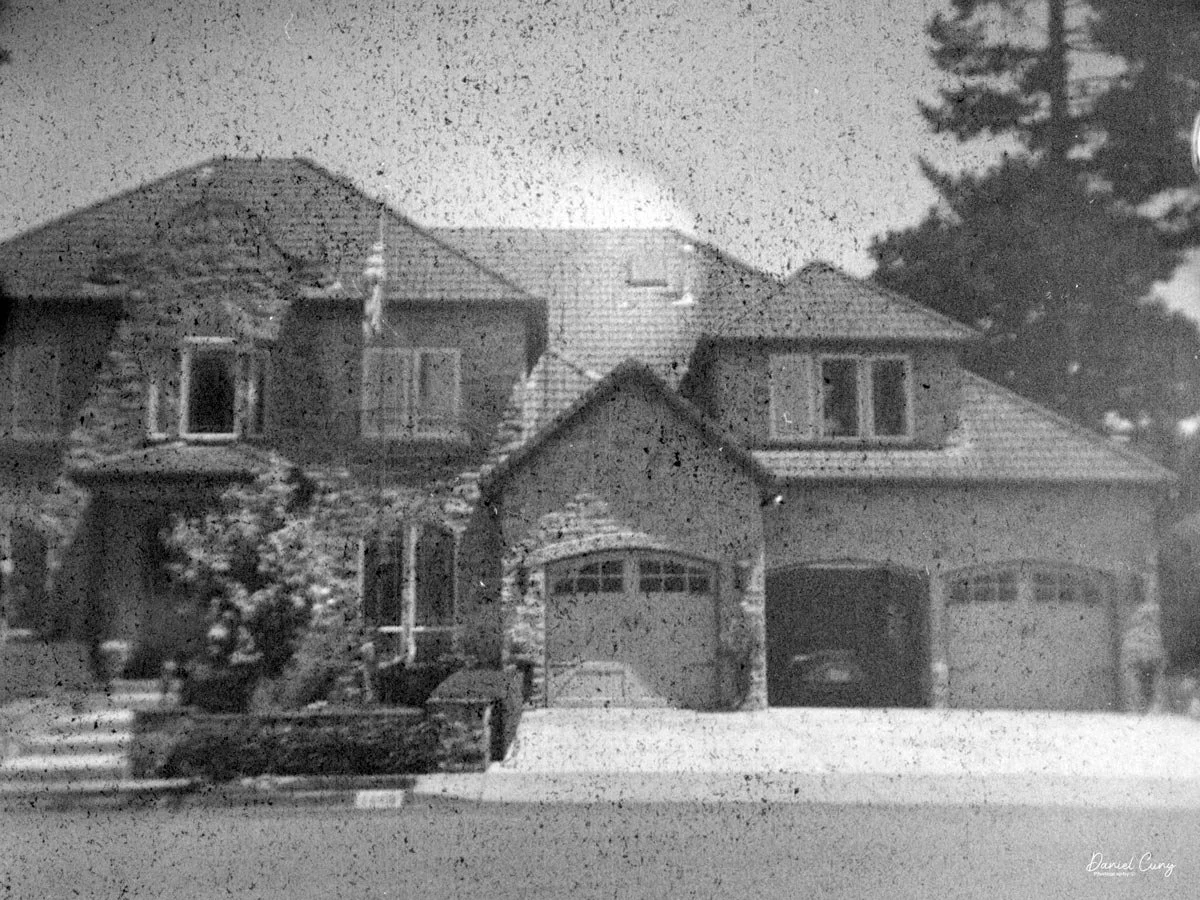
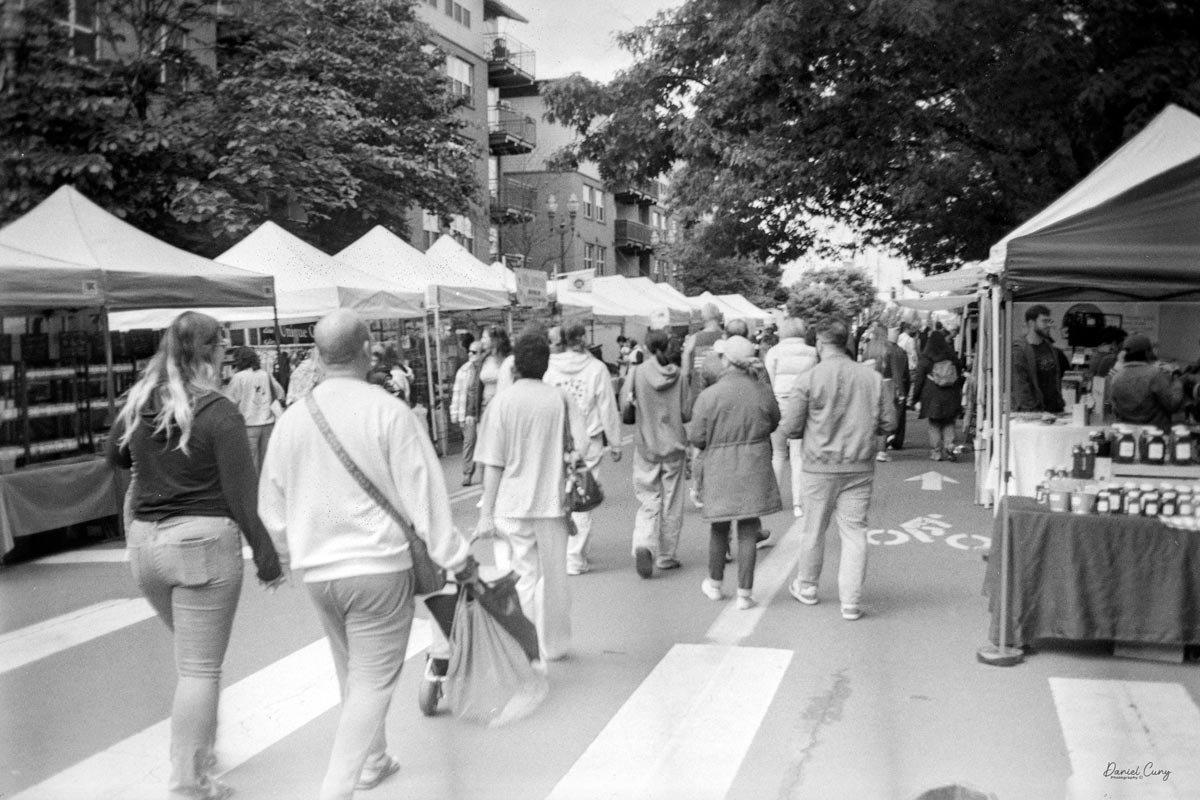
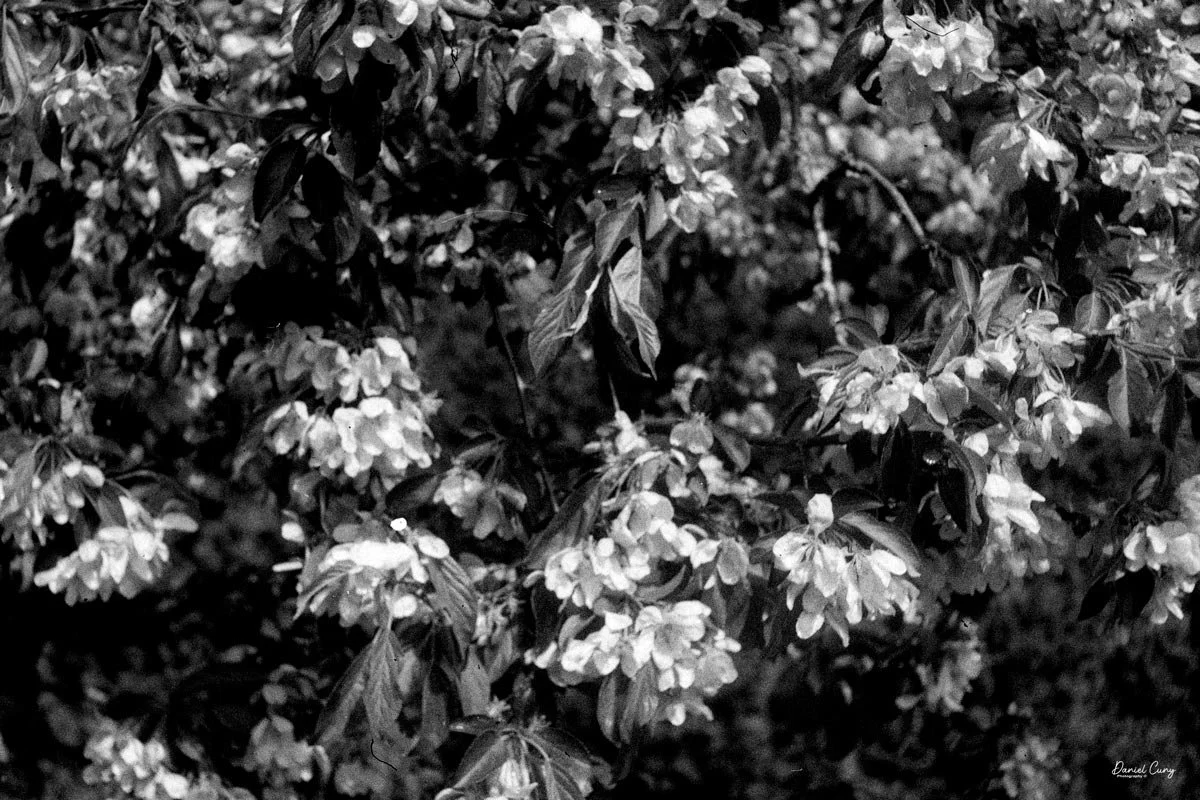
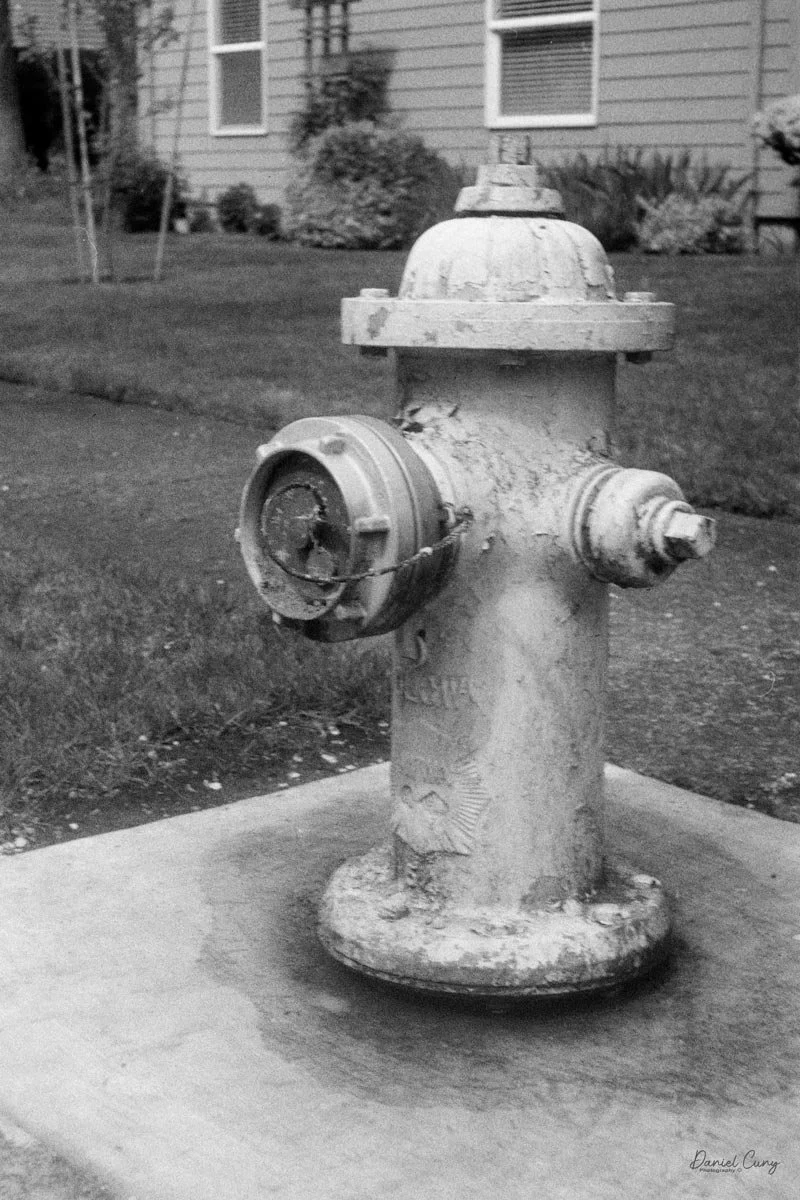
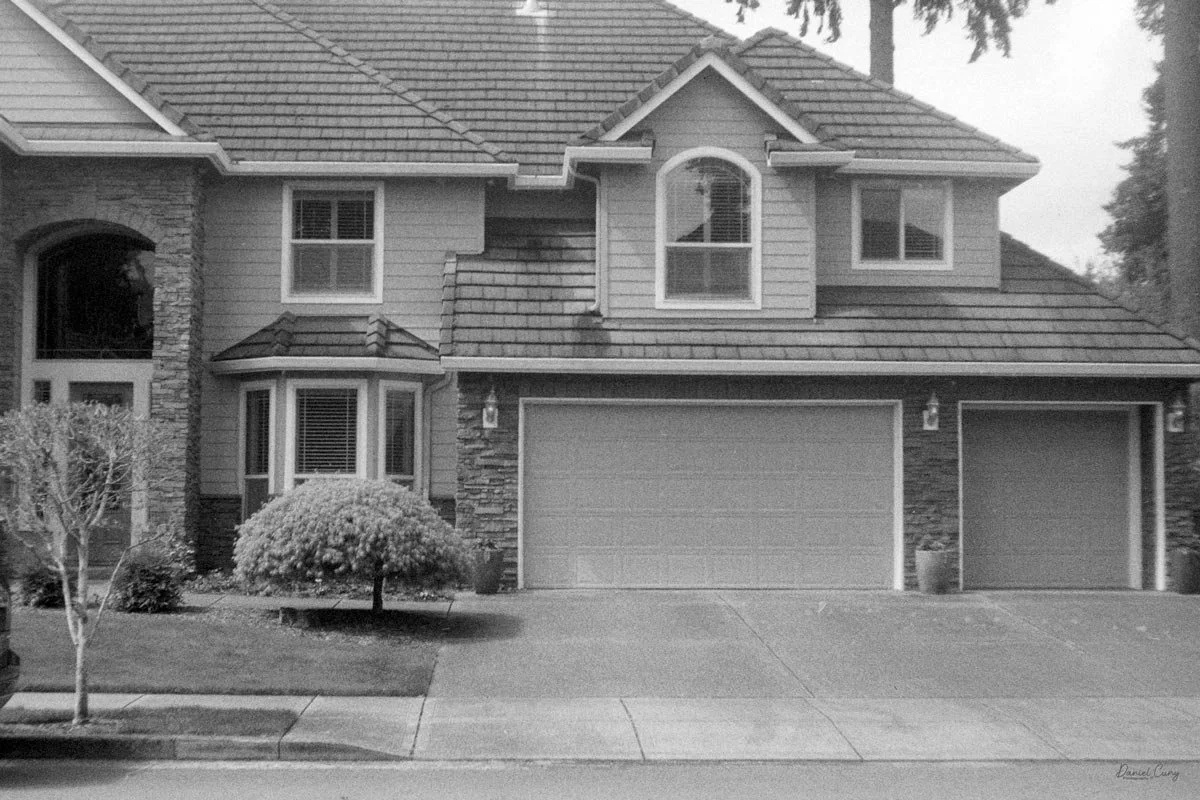
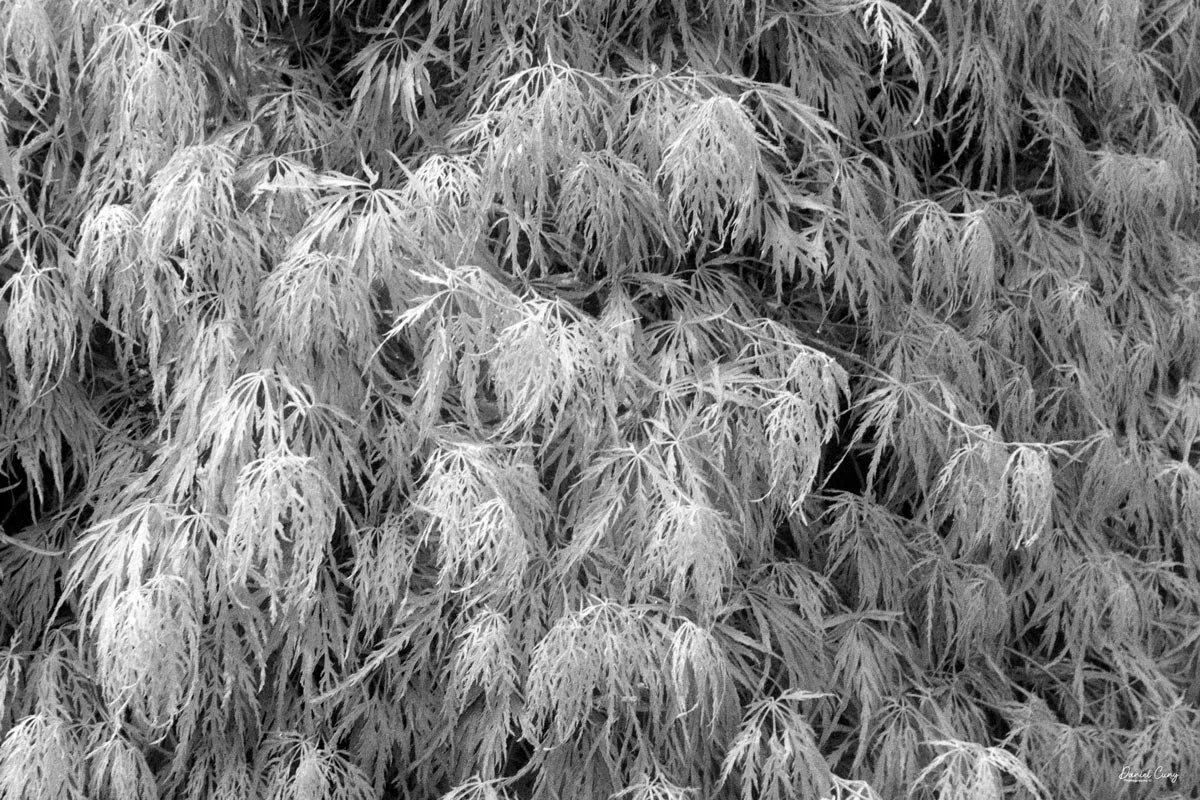
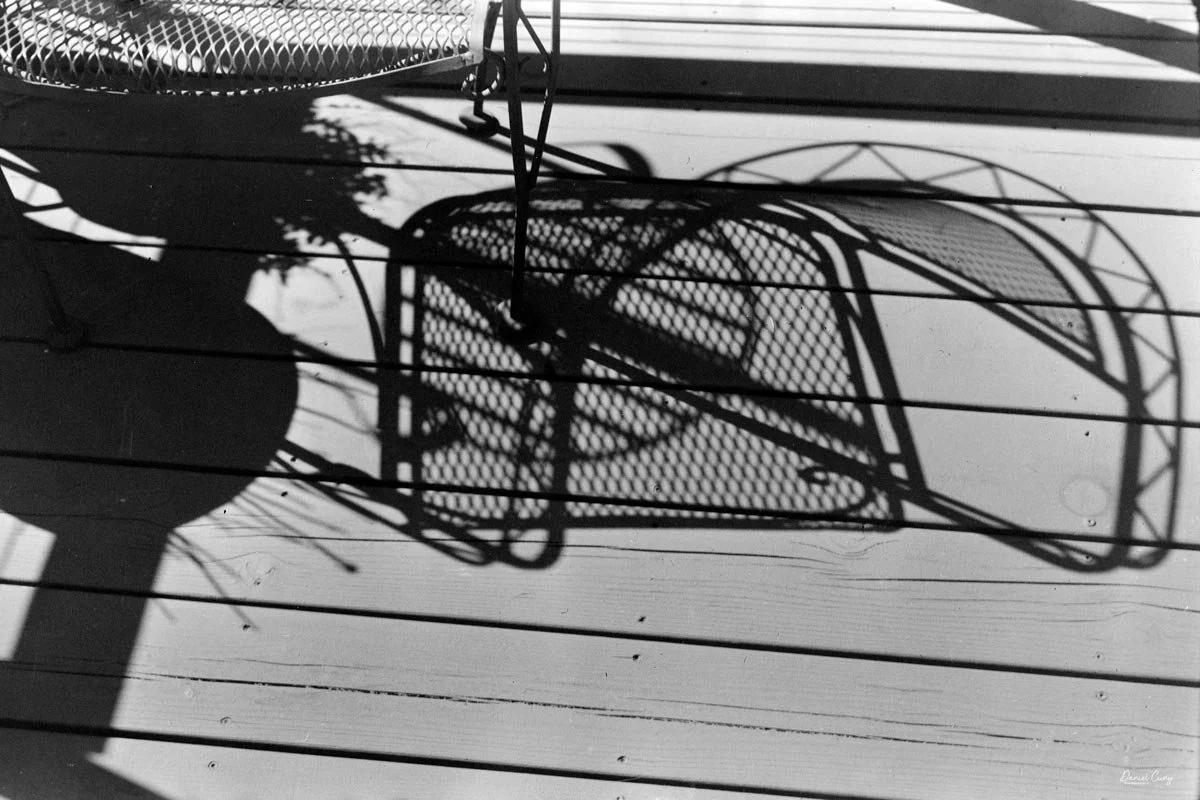
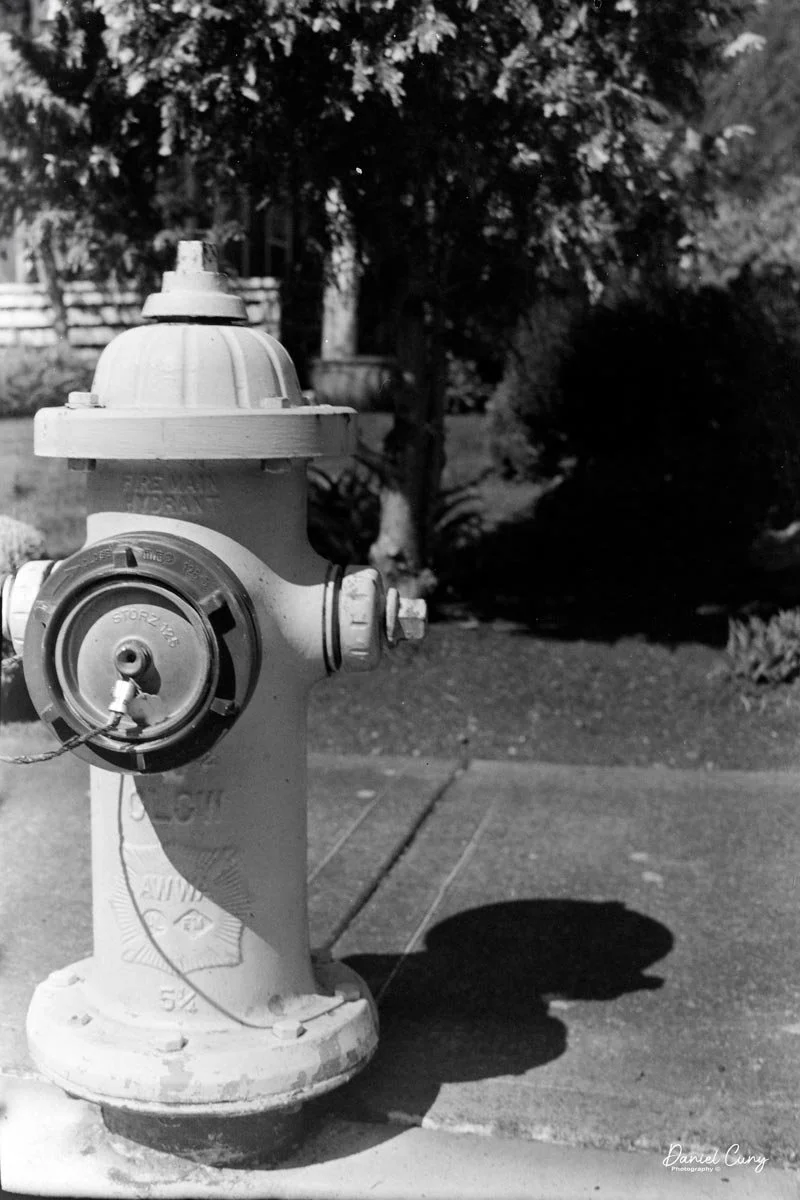
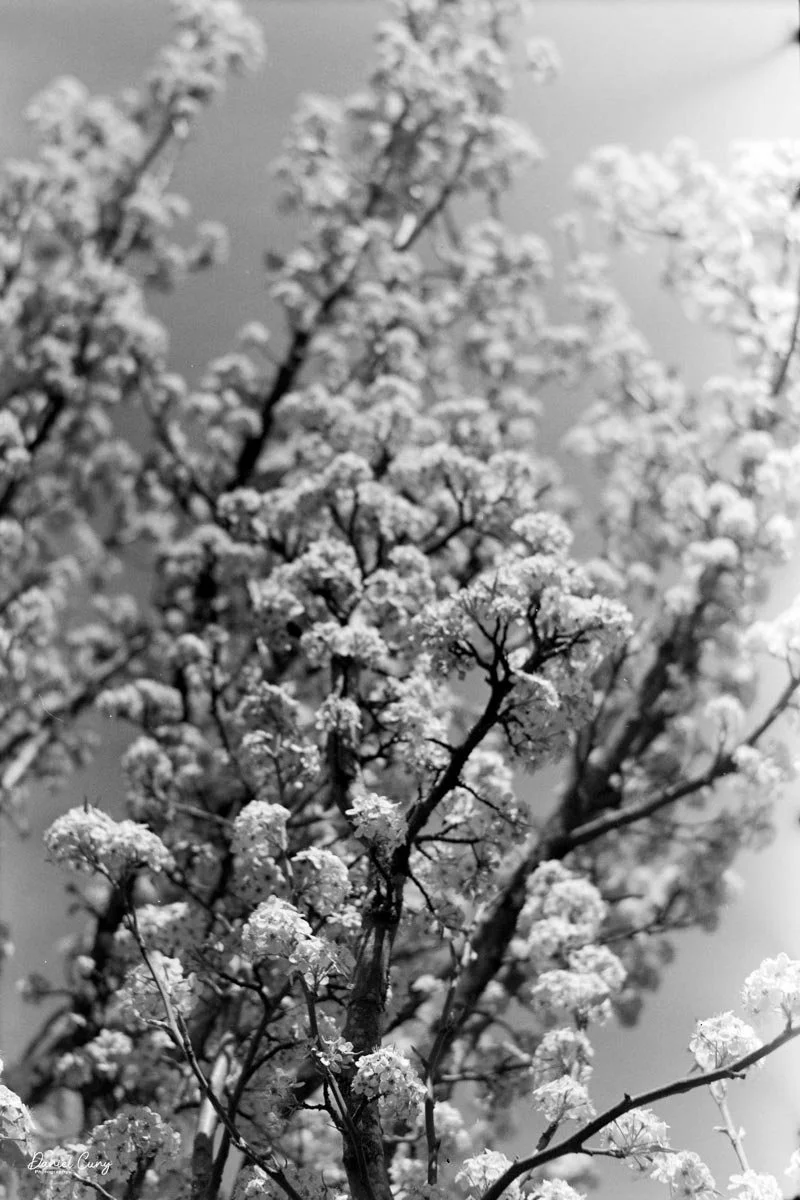
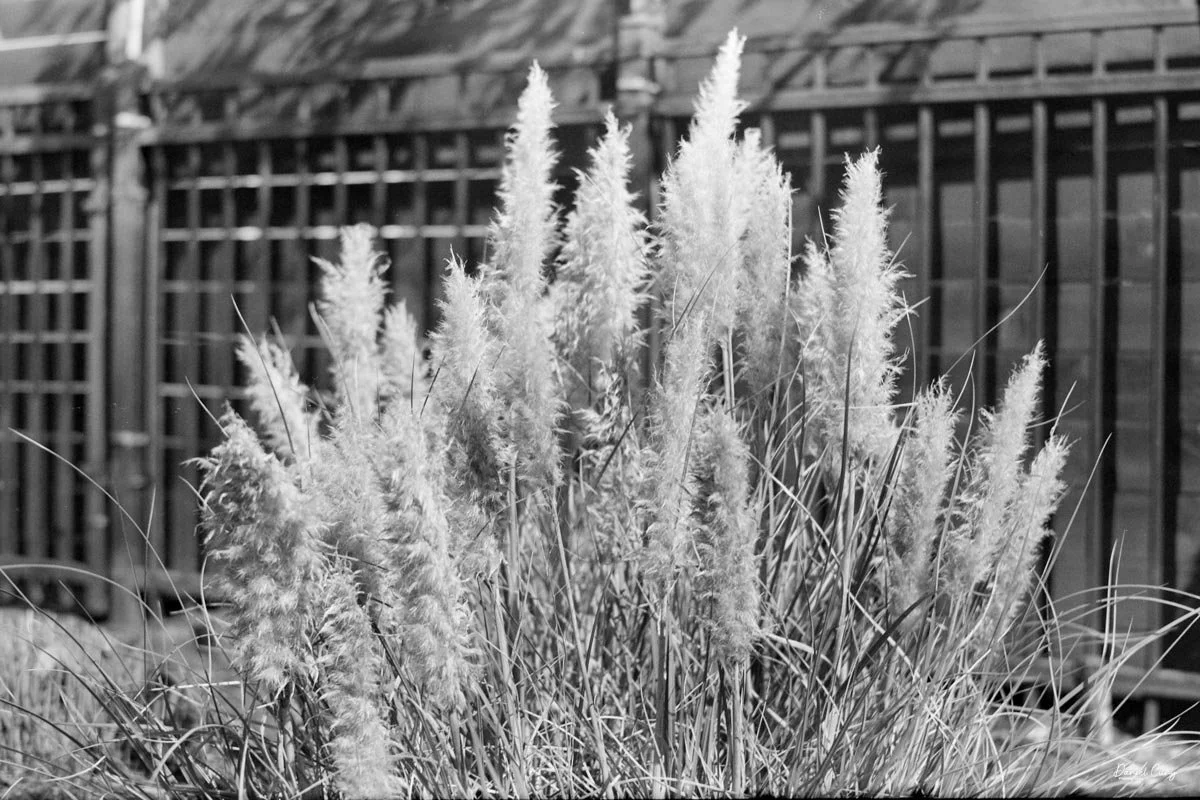
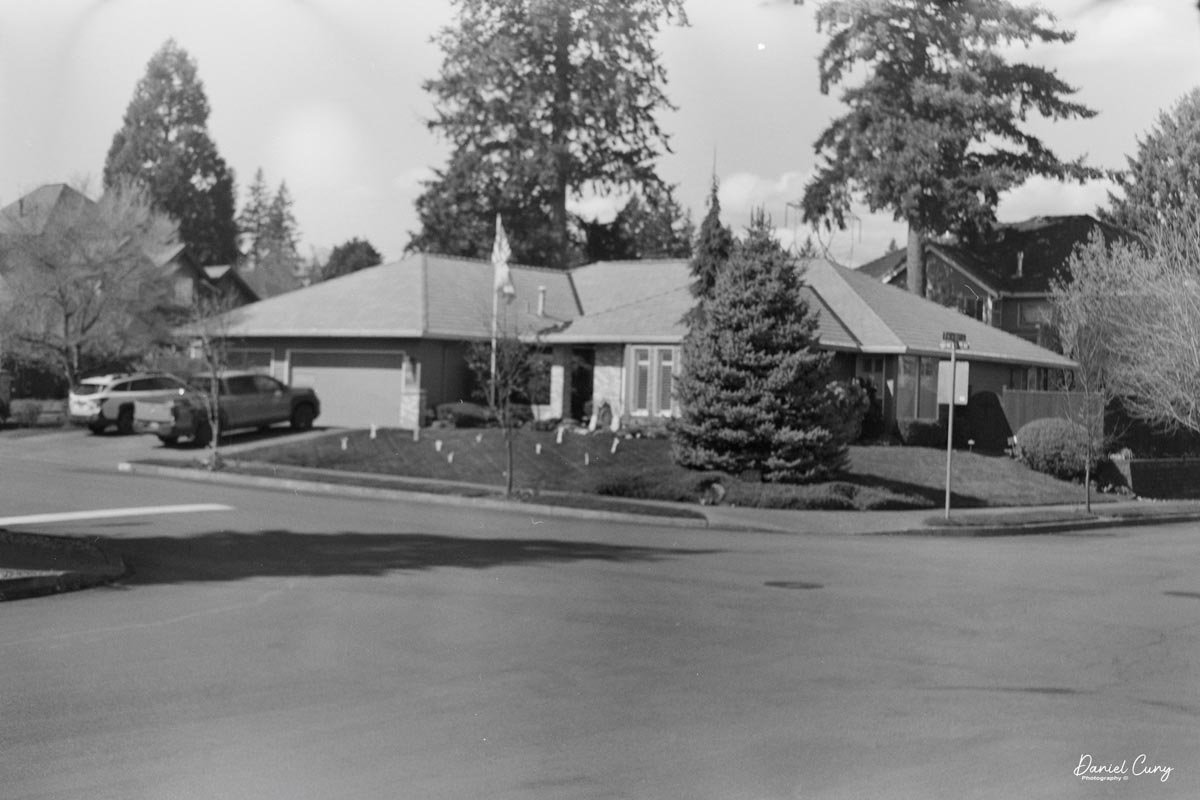
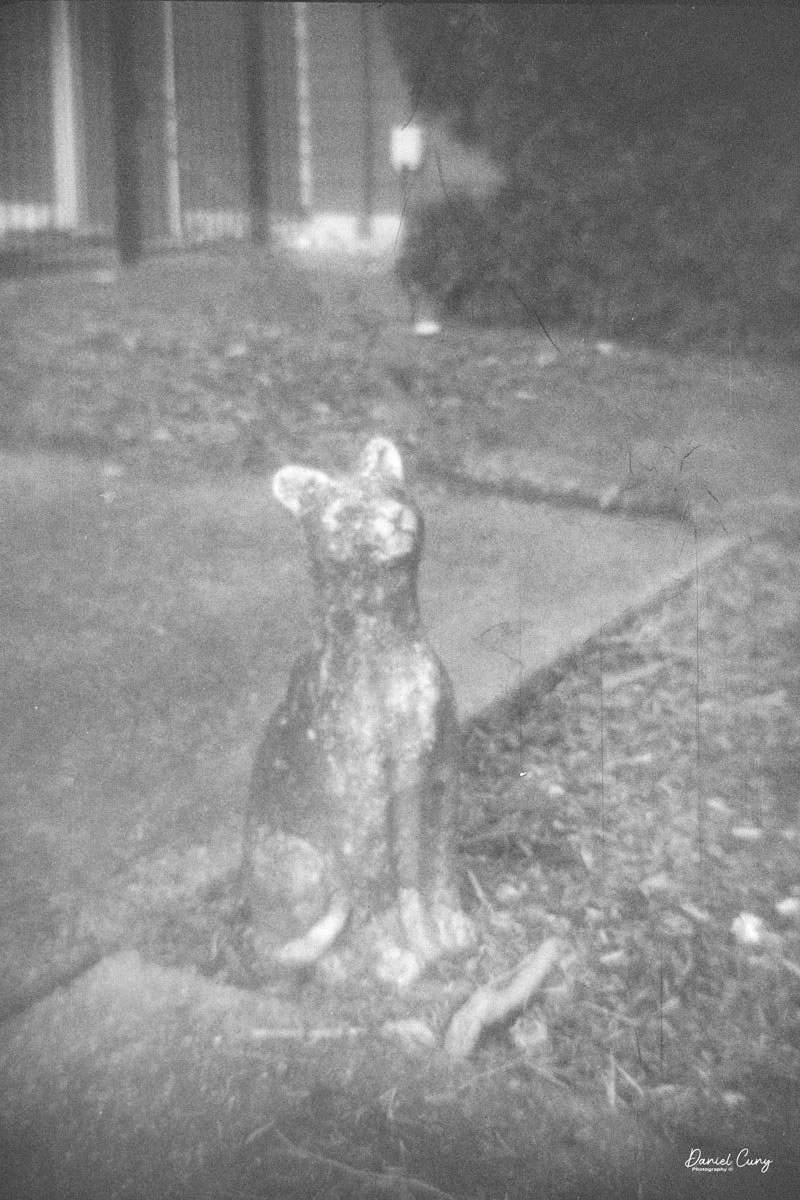
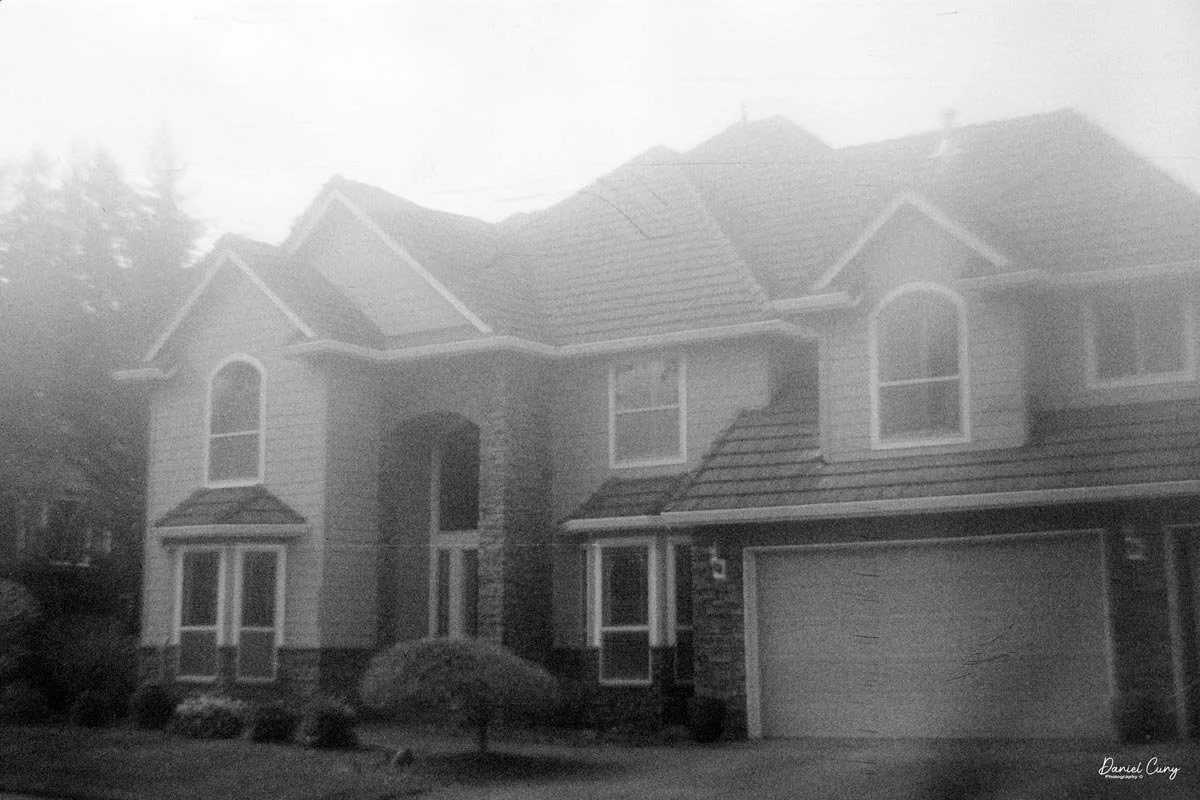
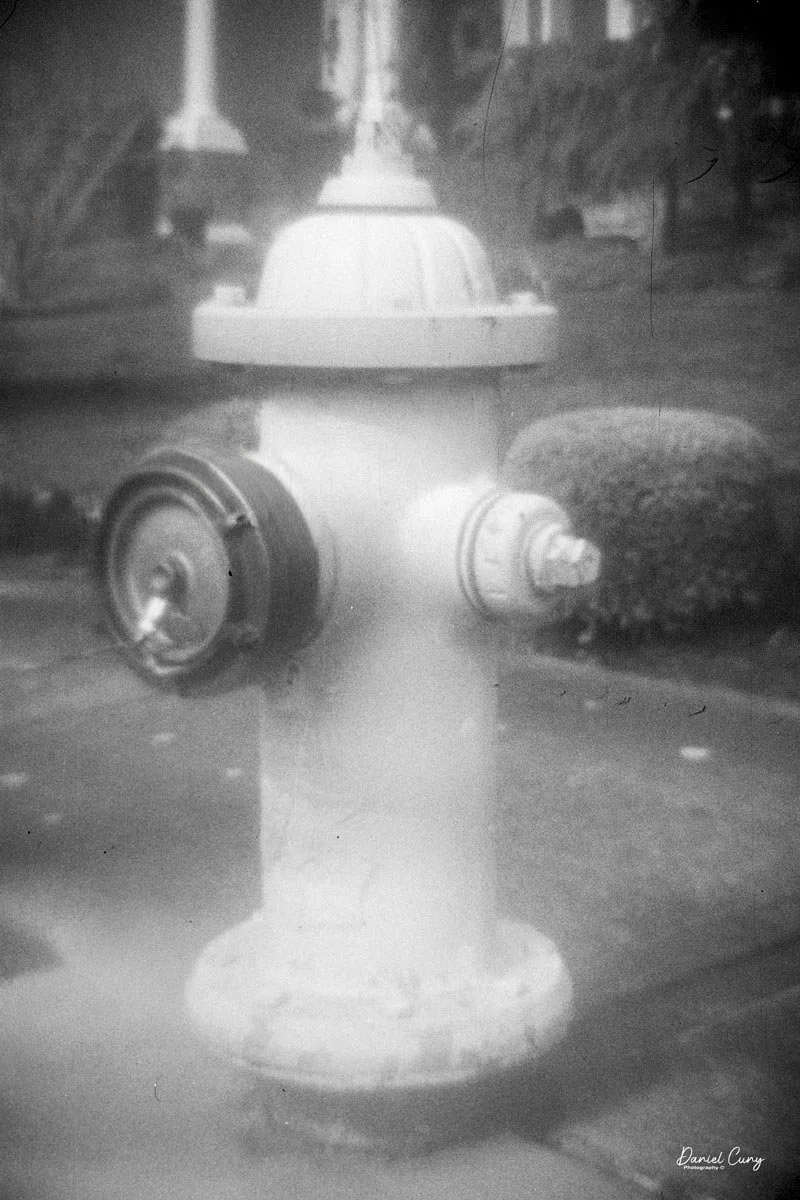
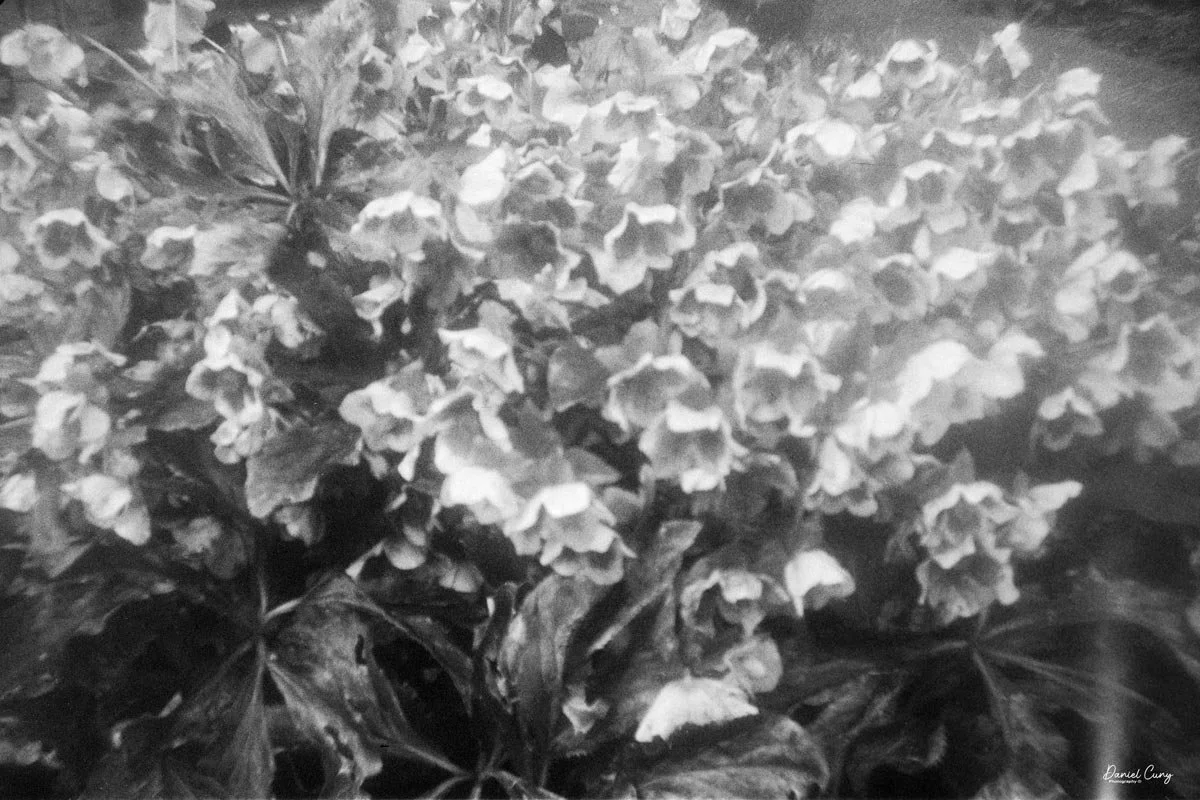
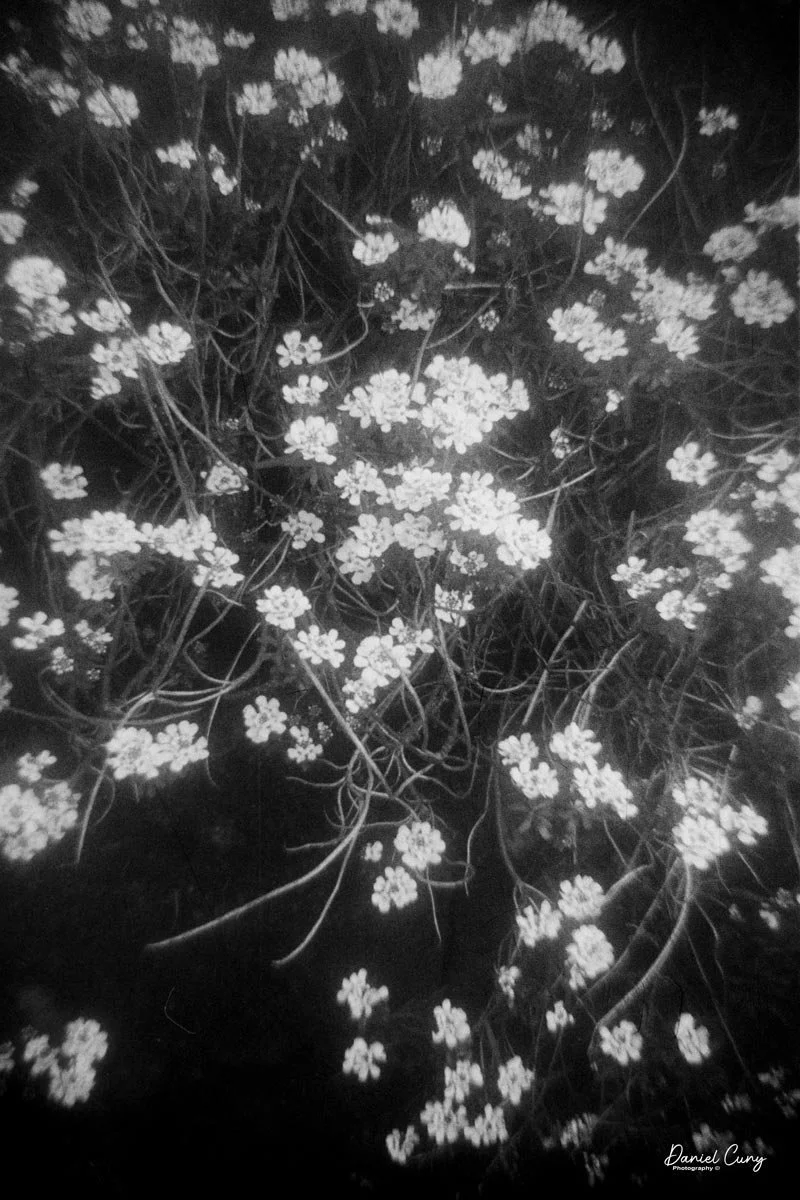
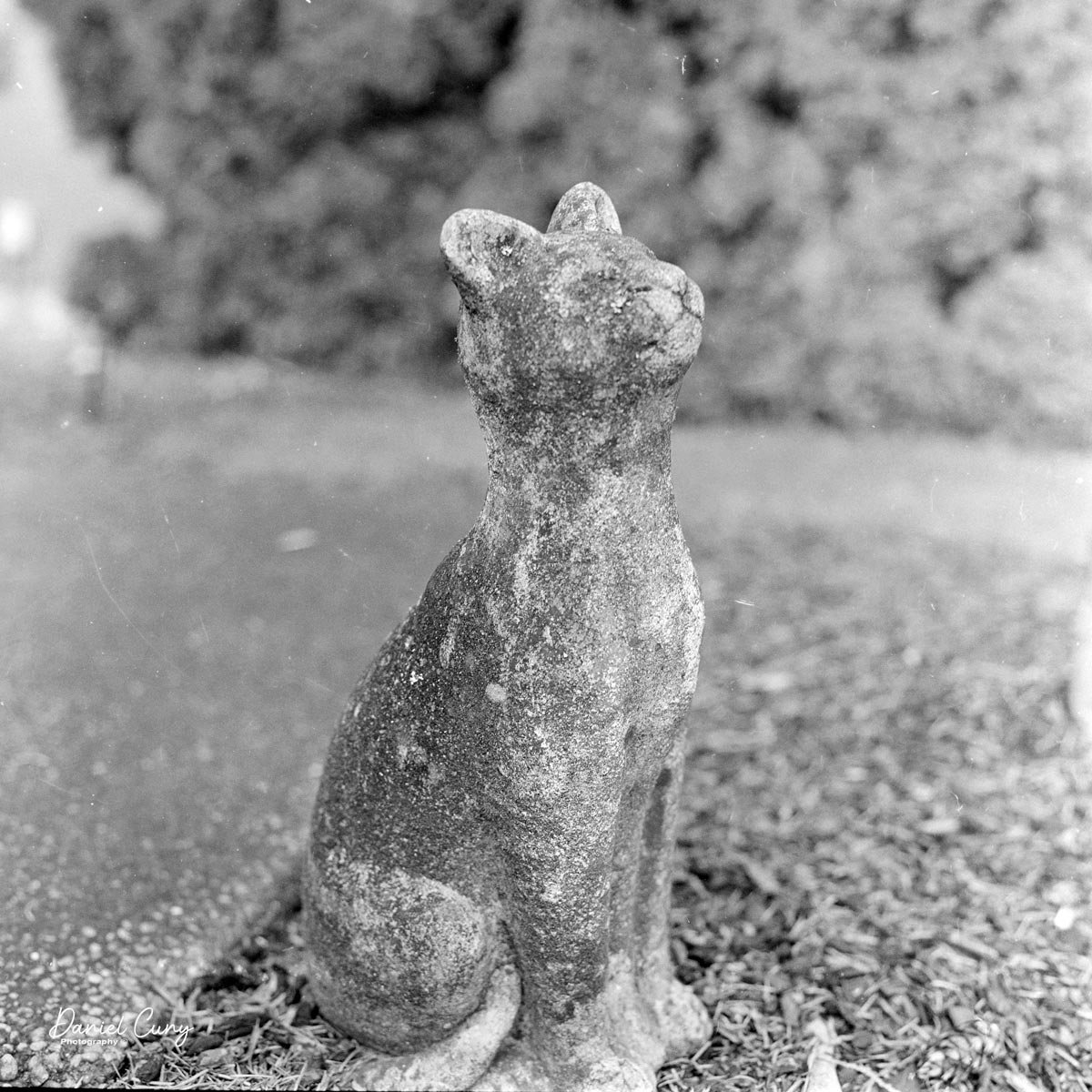
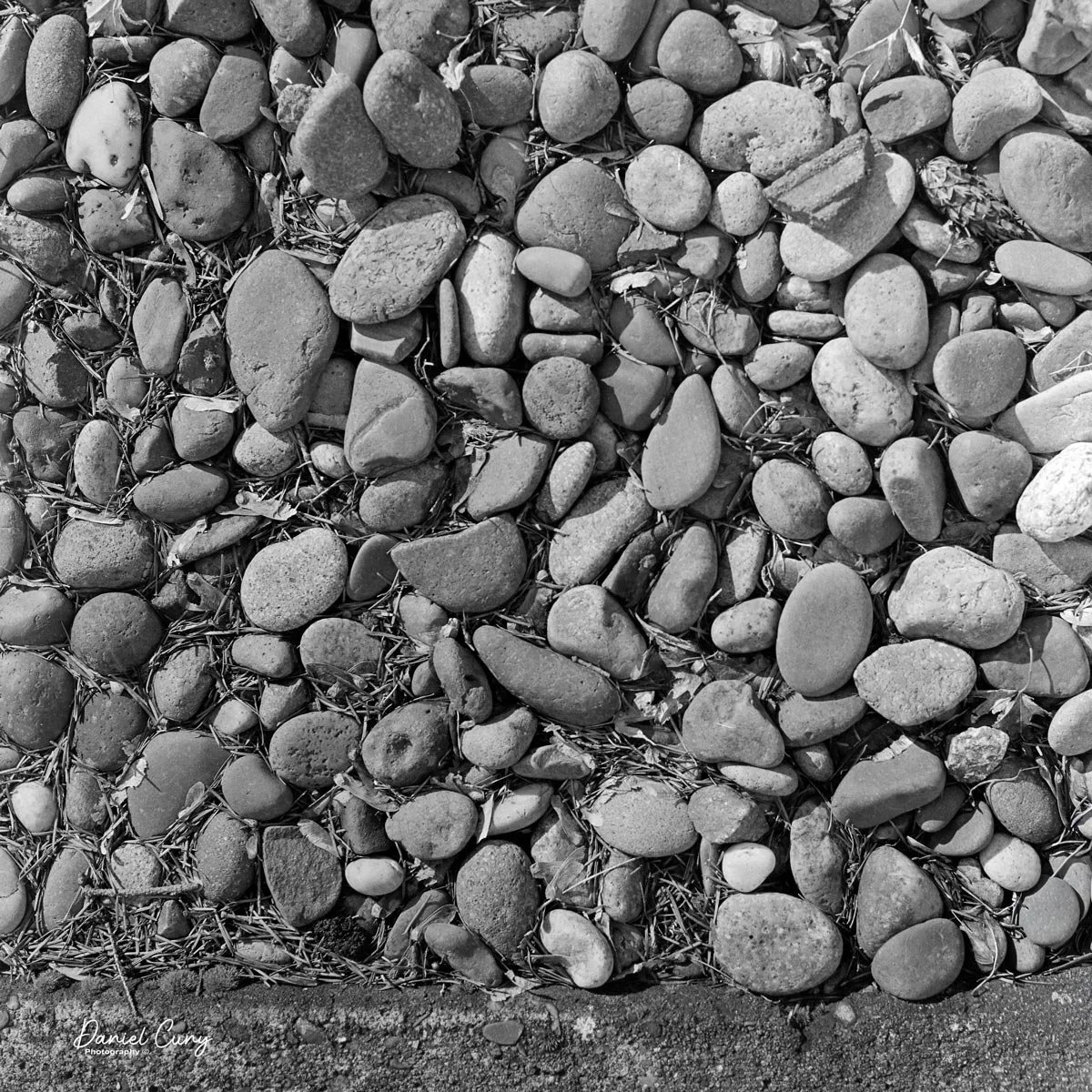
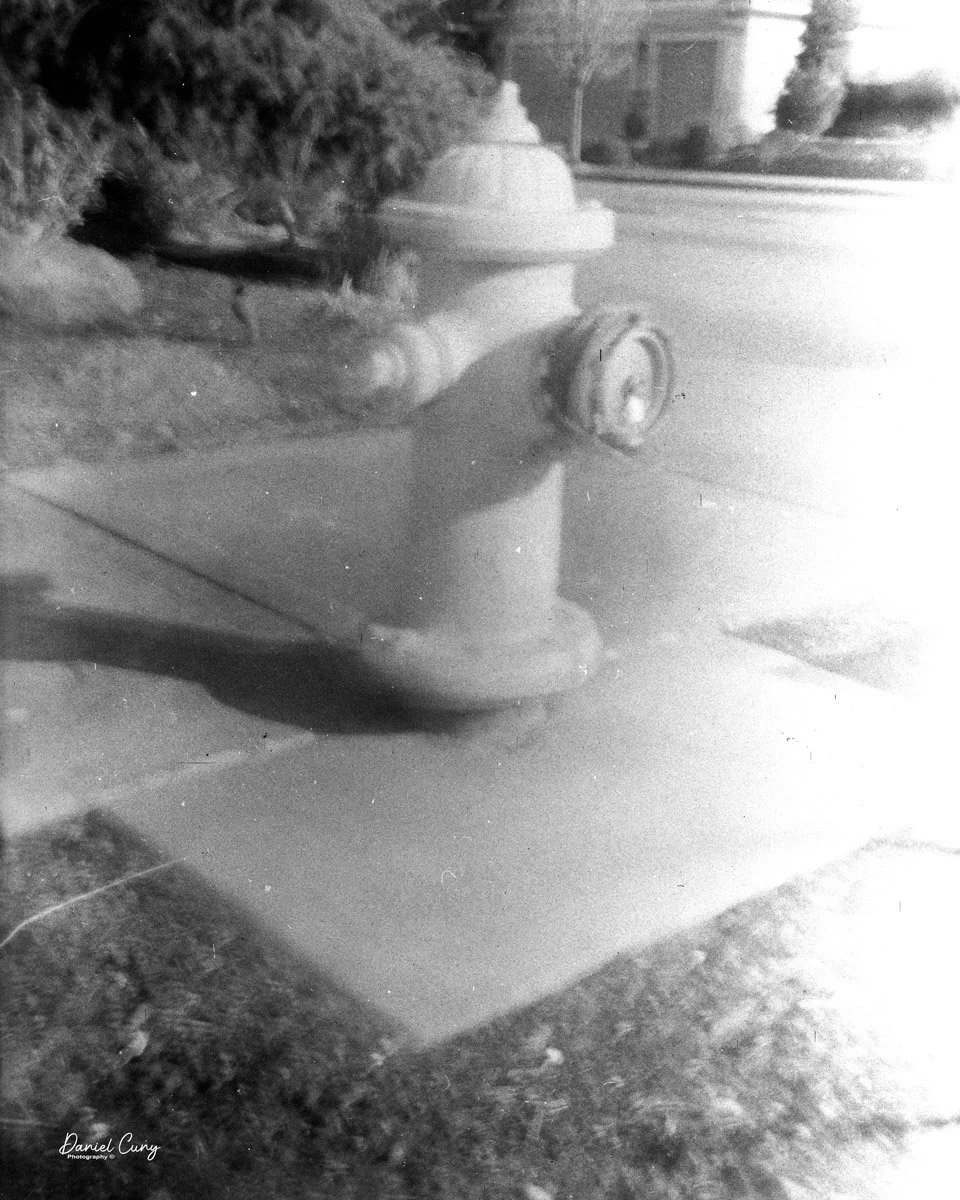
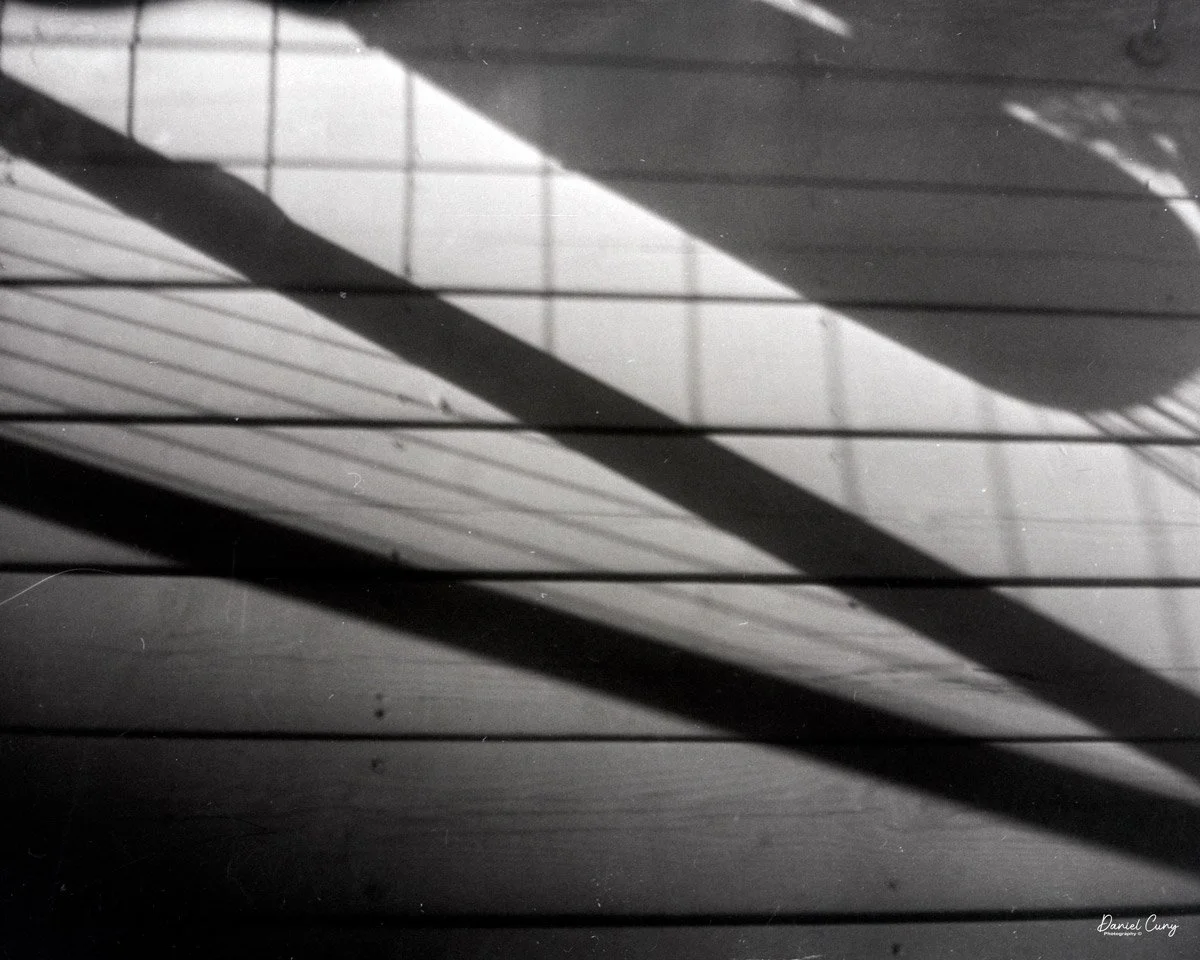
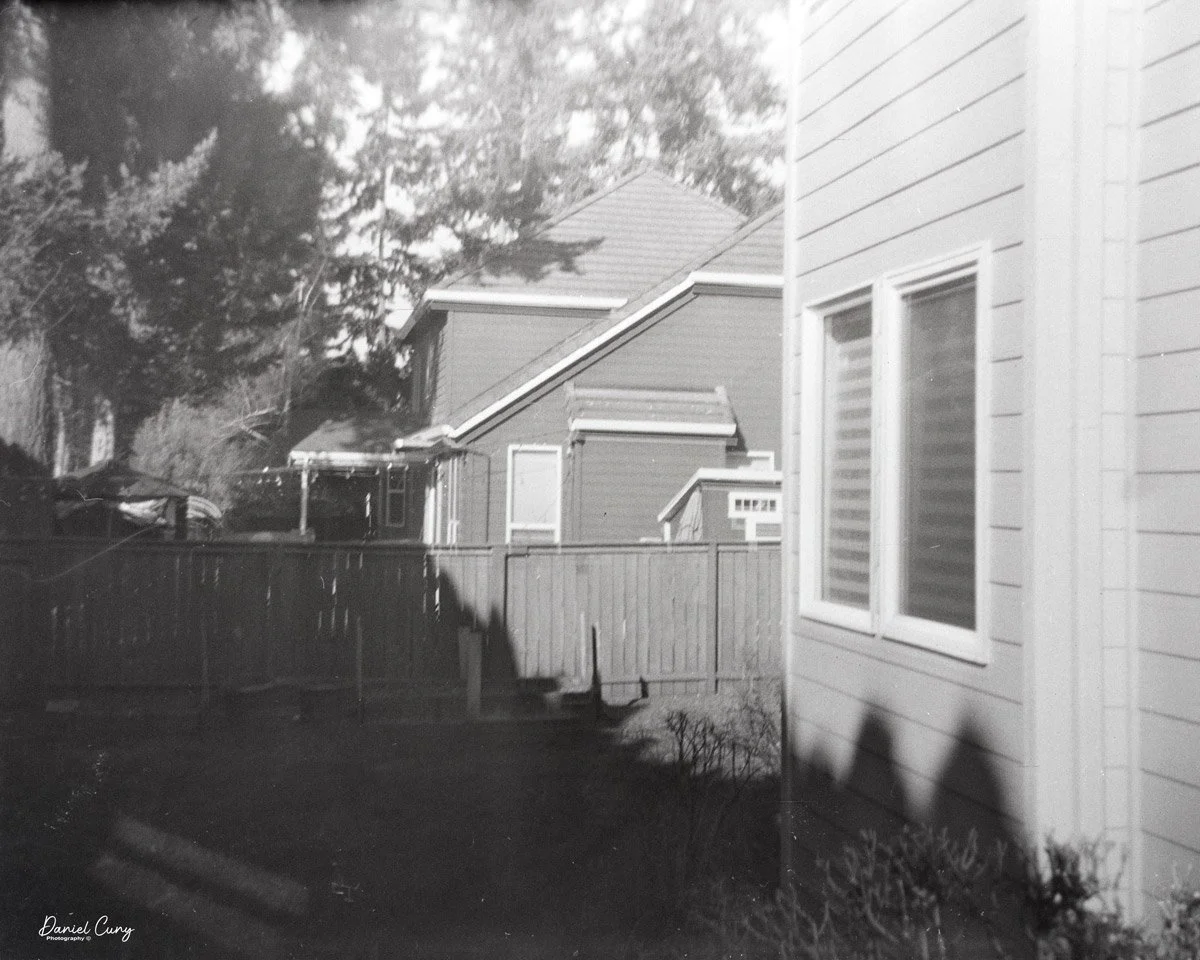
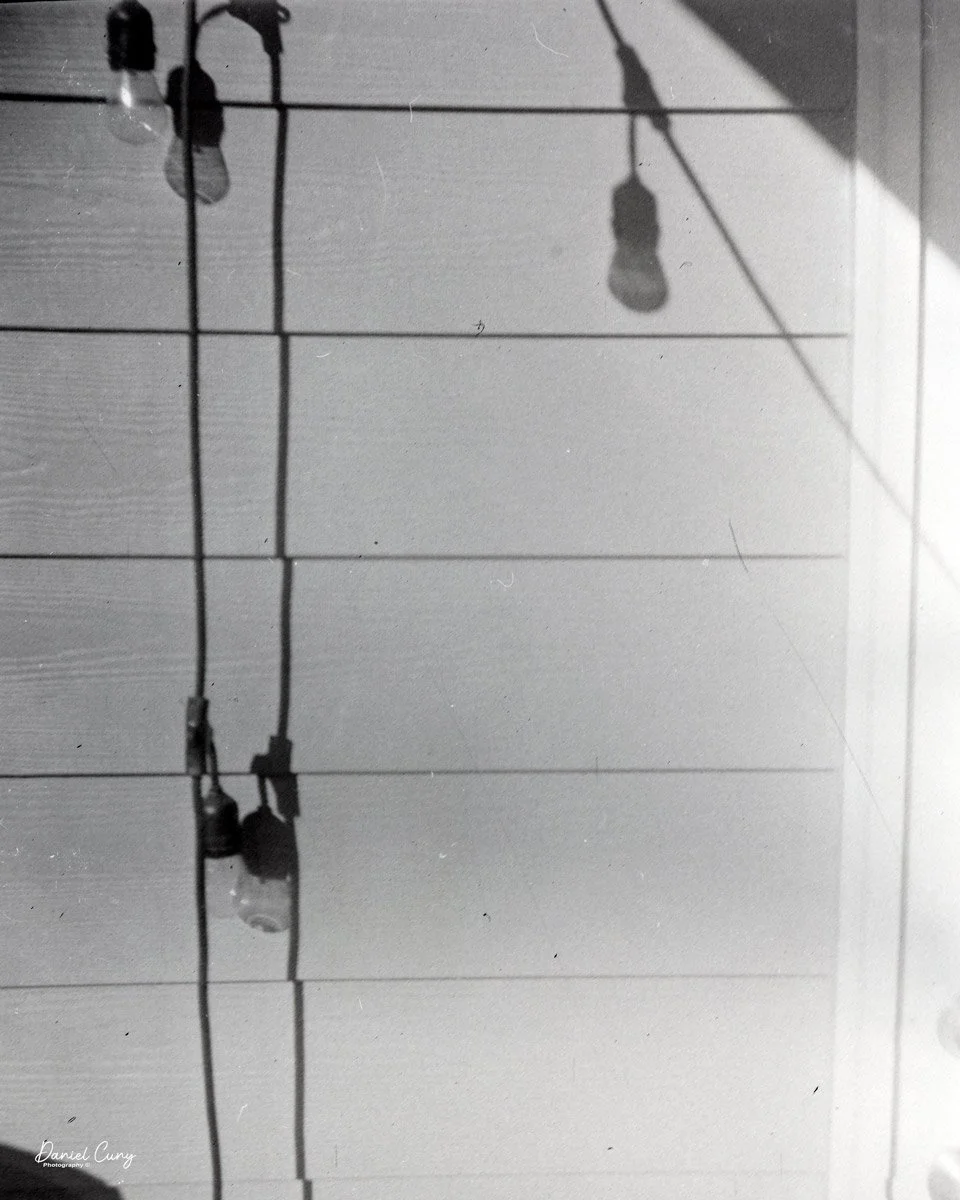
Some of the images turned out great, and some didn't. There are a few reasons for that. One is focus—I didn't always remember to switch between the two focus zones when I changed subject distance. The other is exposure. With only one shutter speed and one aperture, you're basically at the mercy of the light. The negatives showed some variation, but nothing I couldn't deal with in post‑processing. It reminded me a lot of shooting with an Instamatic: pick a film with a wide exposure latitude and let it do the heavy lifting.

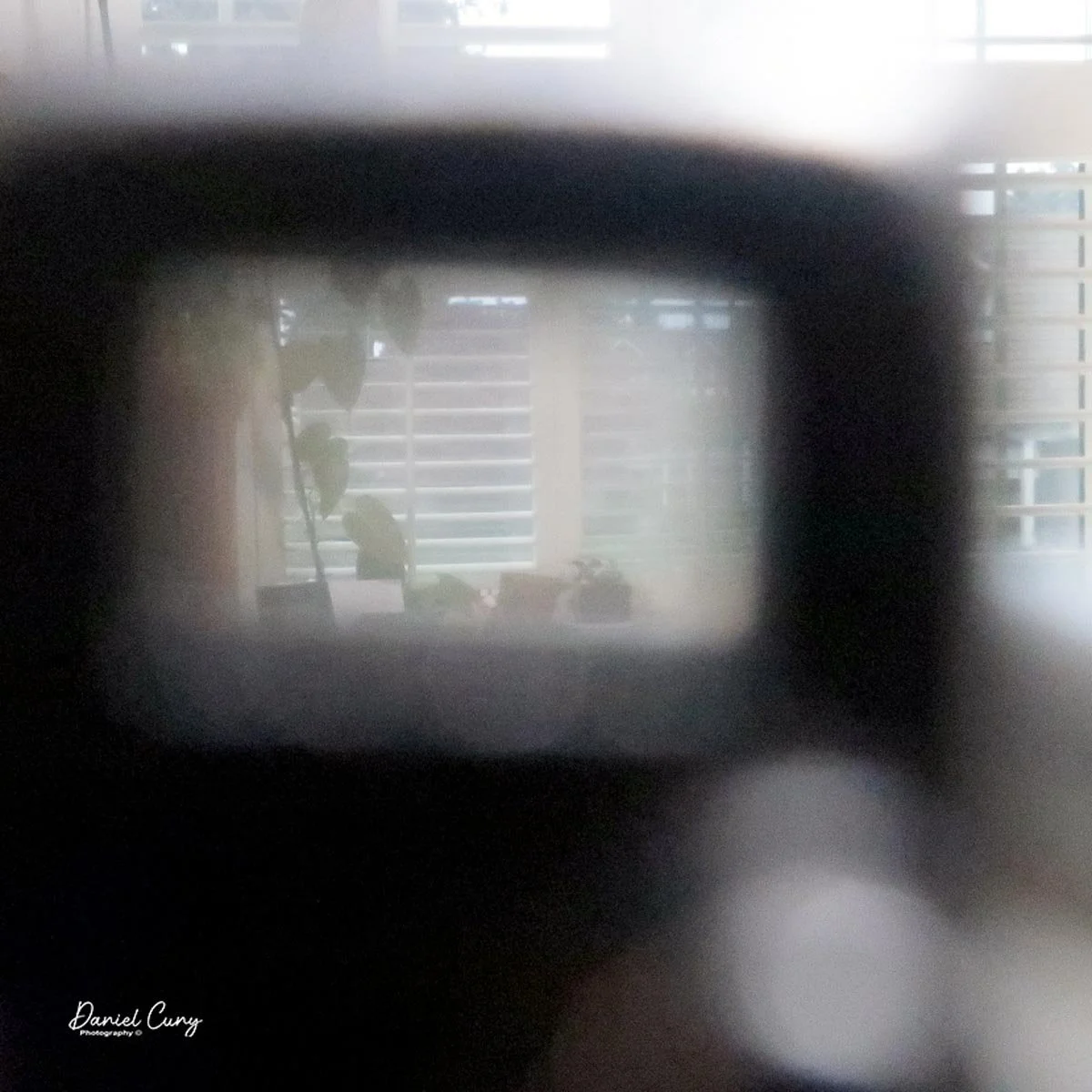
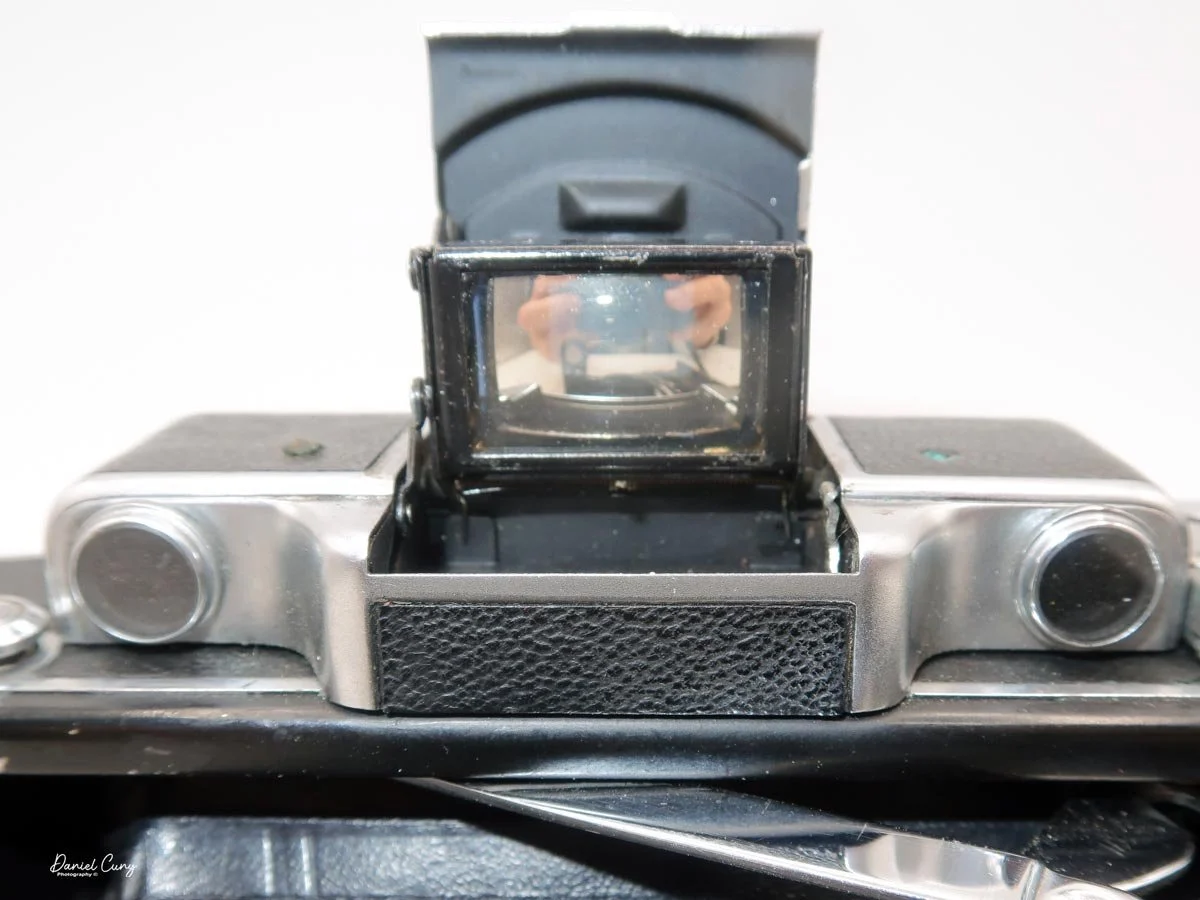
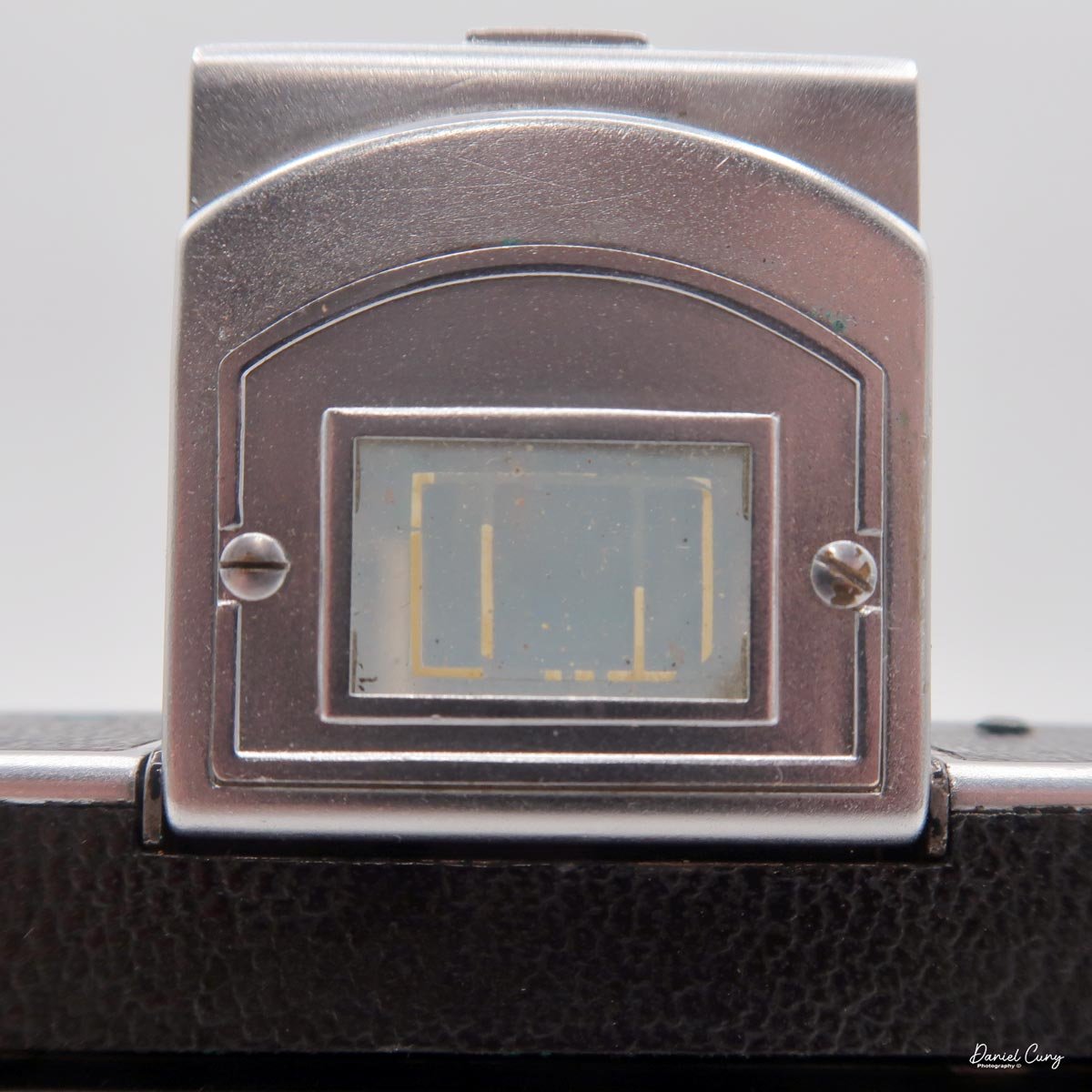
 I got 14 frames on the roll before the film refused to advance into the second cassette, which tells me my length estimate in the dark bag was close. The camera itself handled well. The viewfinder is on the small side and can be difficult to look through, especially if you wear glasses, but it's usable once you get used to it.

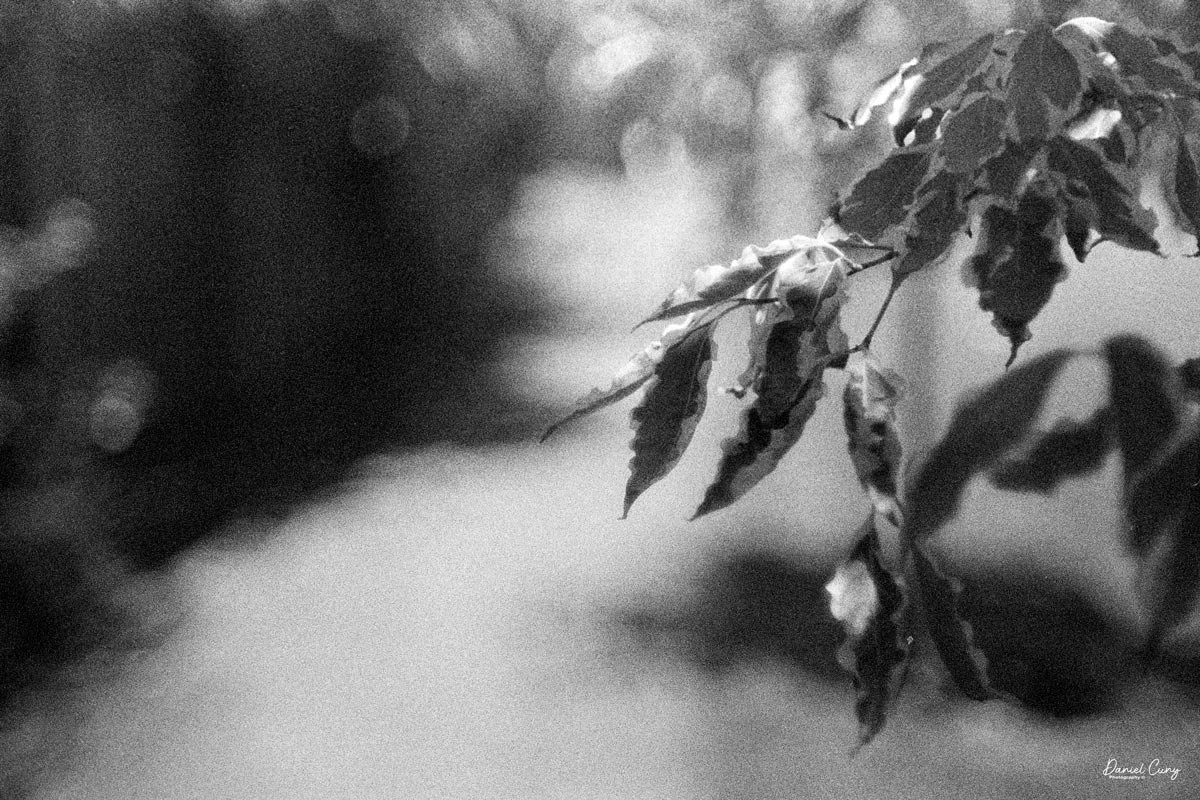
 The transport worked smoothly, and the shutter opened and closed as it should. The lens, however, is still dirty on the rear element, and there's really no easy way to clean it without taking the camera apart. That shows up in the photos as a general softness, almost like shooting with a soft‑focus filter. On some subjects, the look can actually be pleasant; on others, it just makes things a bit mushy.

 Overall, the Duca was a fun camera to use, and I'll definitely shoot it again. The whole process—from loading the Karat cassettes, to working with the vertical format, to seeing the results—was enjoyable. It's the kind of camera you could toss in a pocket when you head out on a trip and forget about until something catches your eye. I like that it's doing all of this as a full‑frame 35mm camera in such a tiny body.

 Thanks for taking the time to read about my experience with this little Italian wonder of a camera.

 If you'd like to see more of my camera adventures, here's a link to my other camera reviews. And if you're interested in cameras, lenses, or other photo gear I'm letting go of as I thin the collection, you can visit my Cuny's Cameras and Photos online store.

 Until next week, please be safe.
Rolleiflex SL66

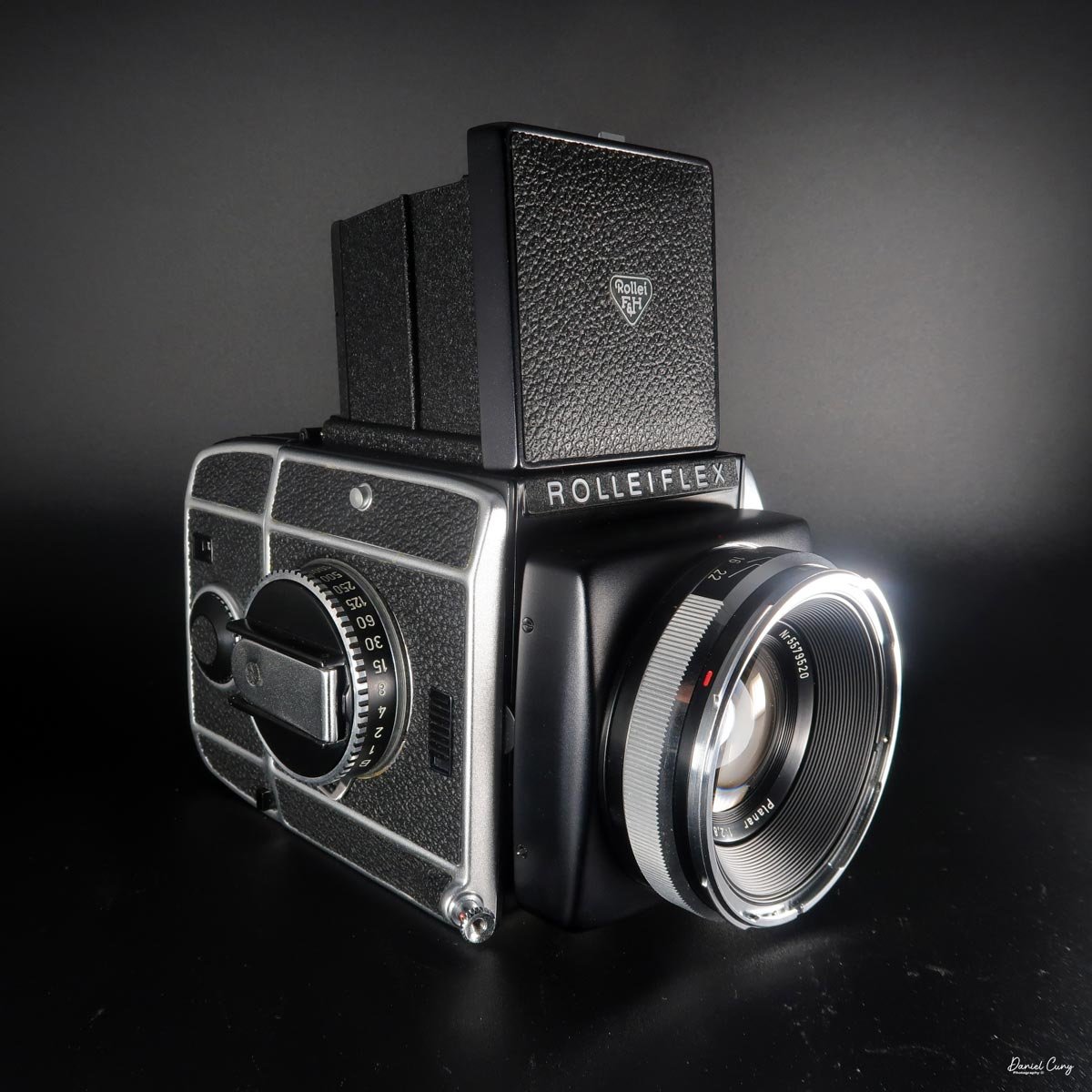
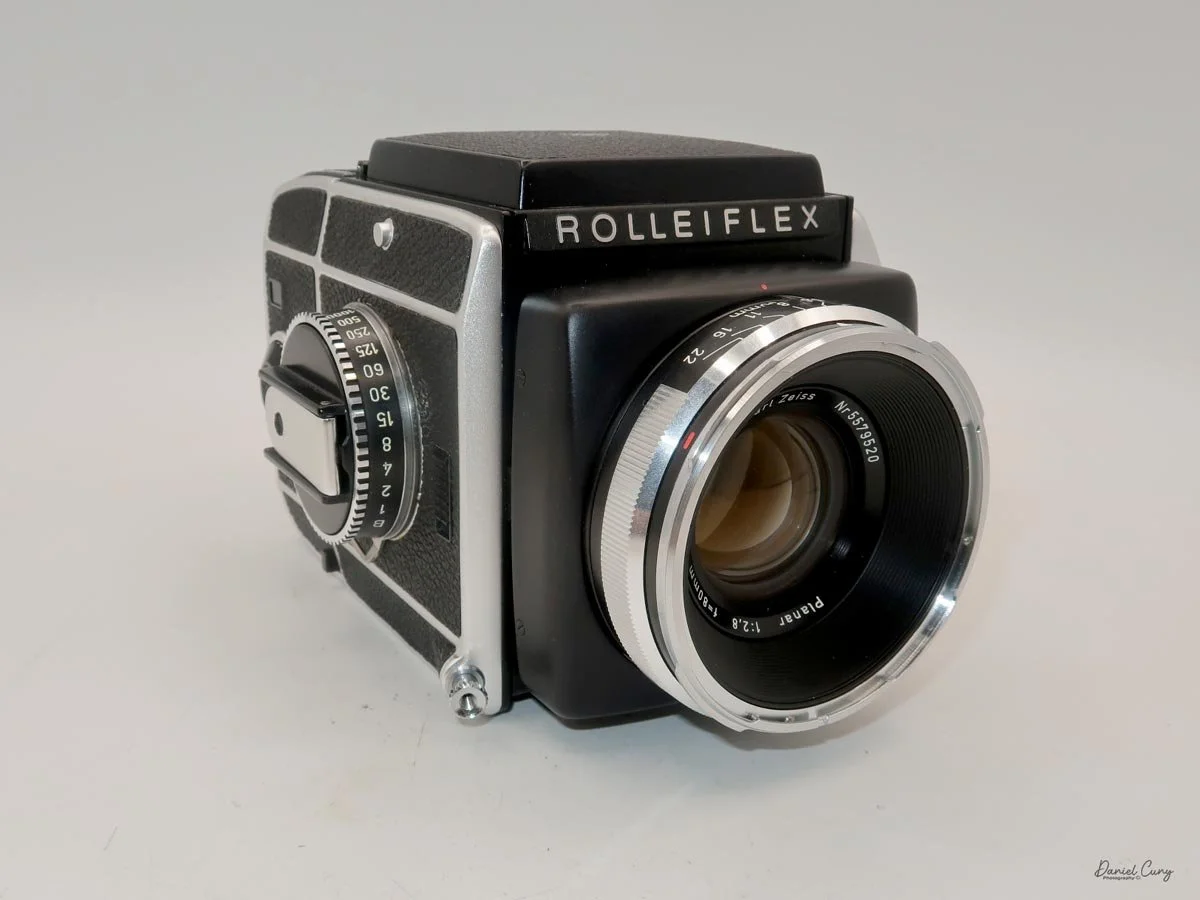
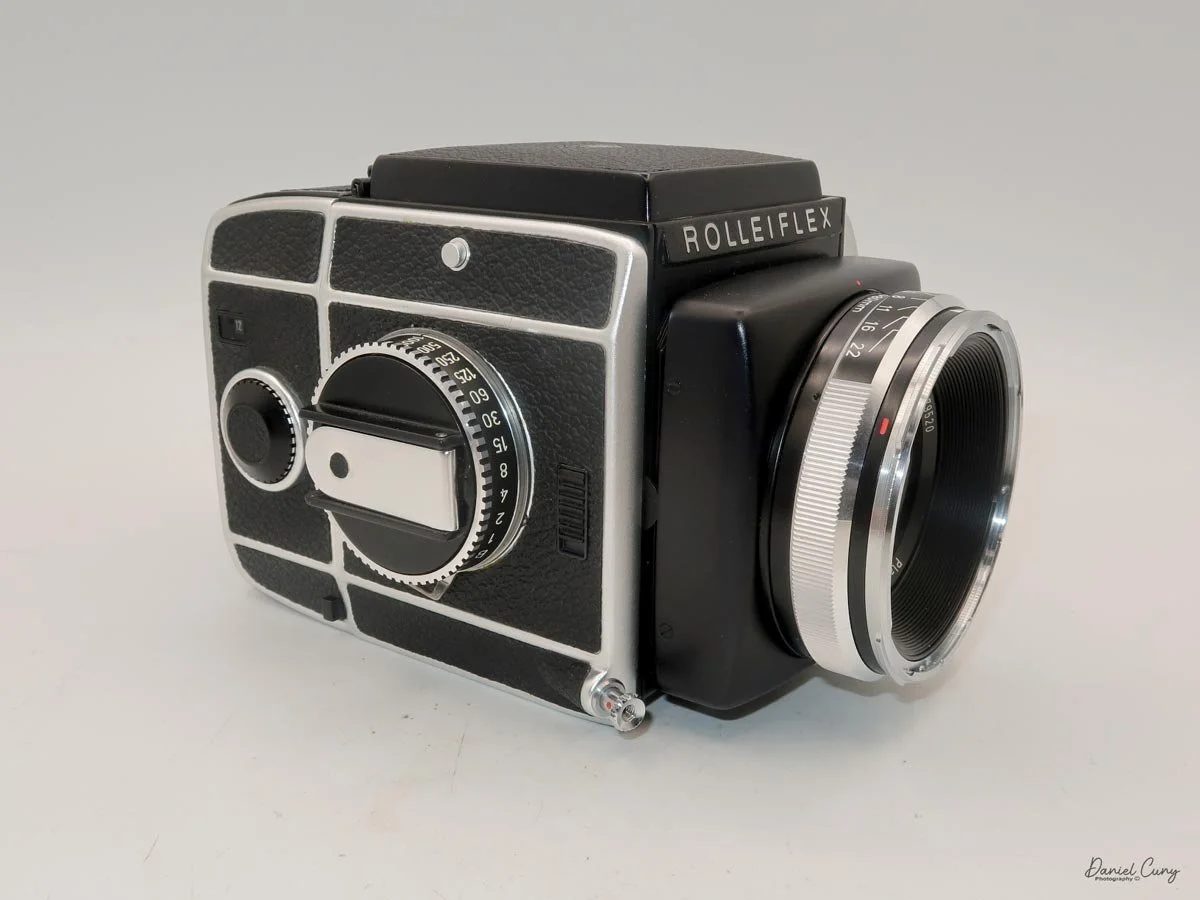
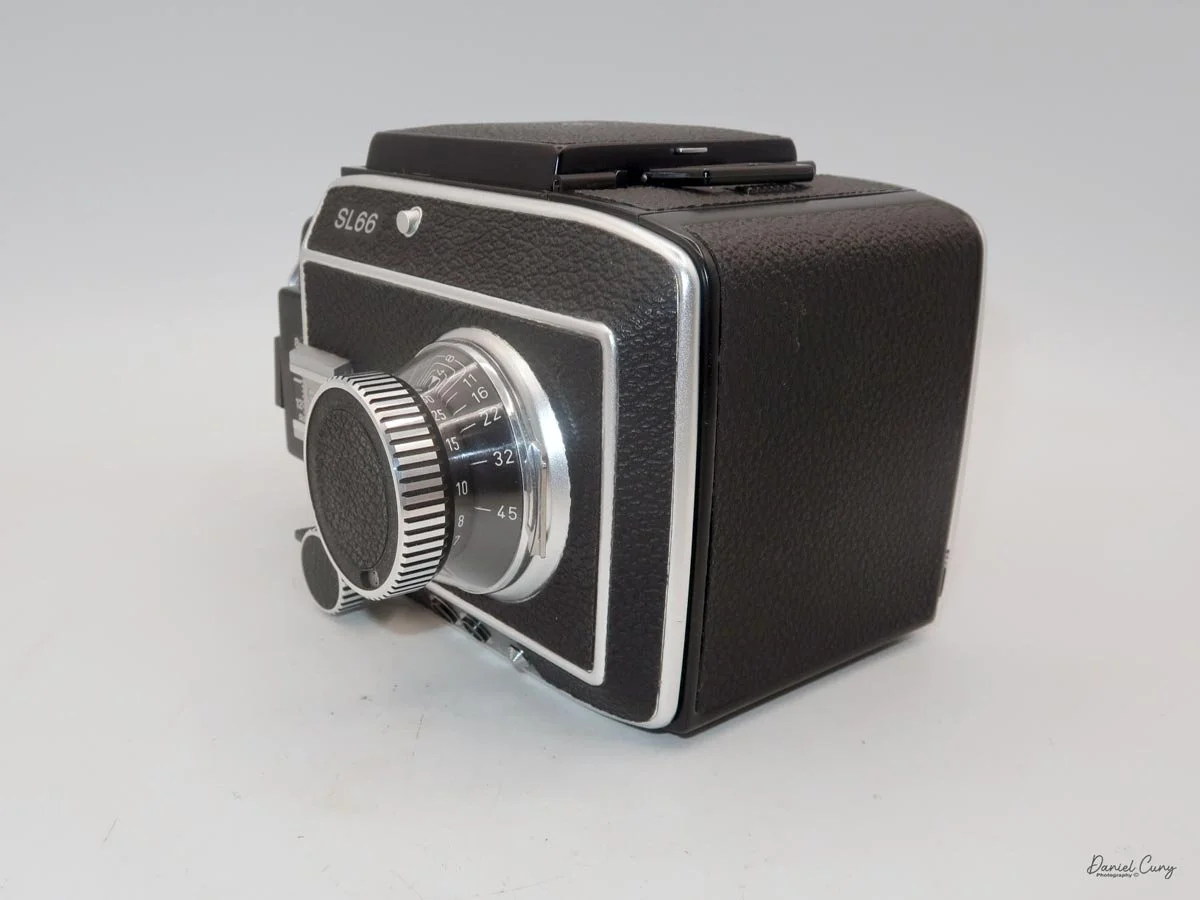
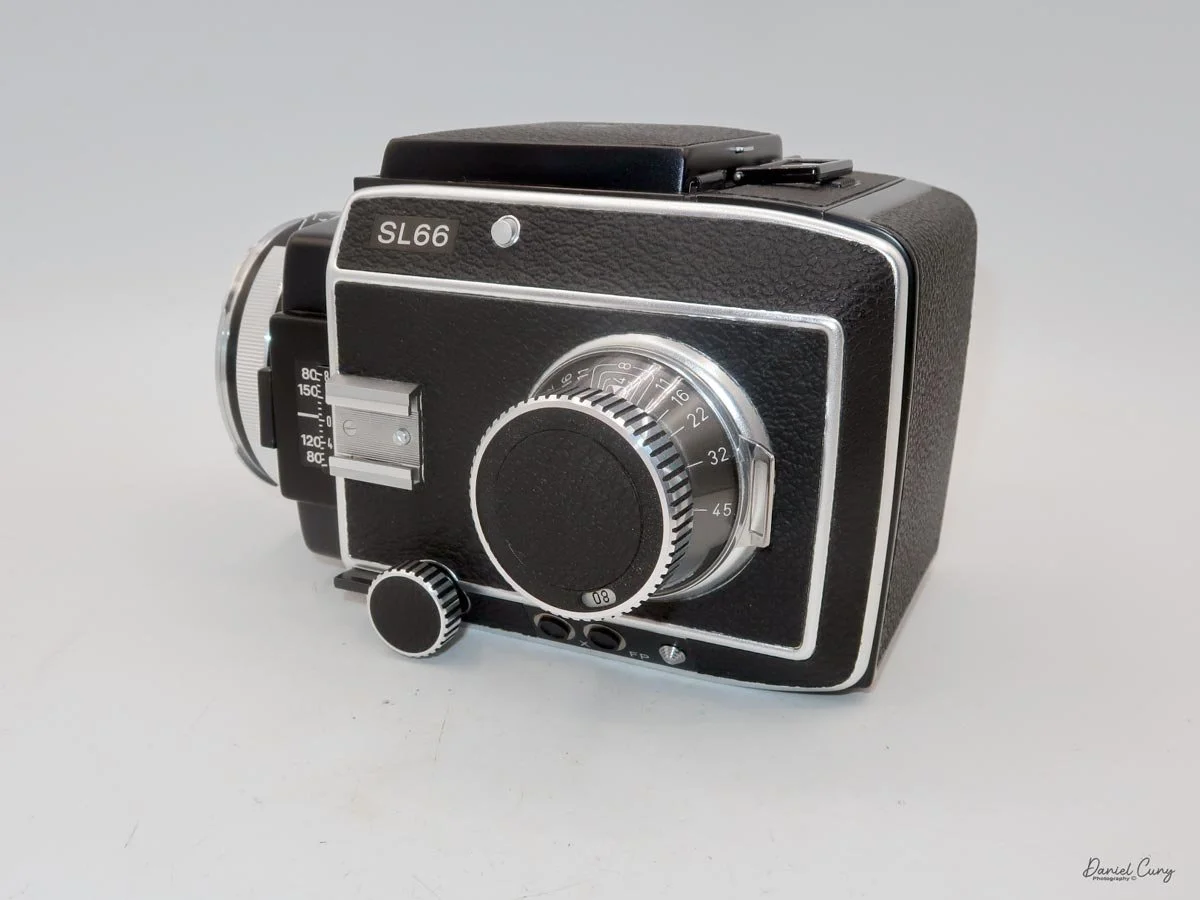
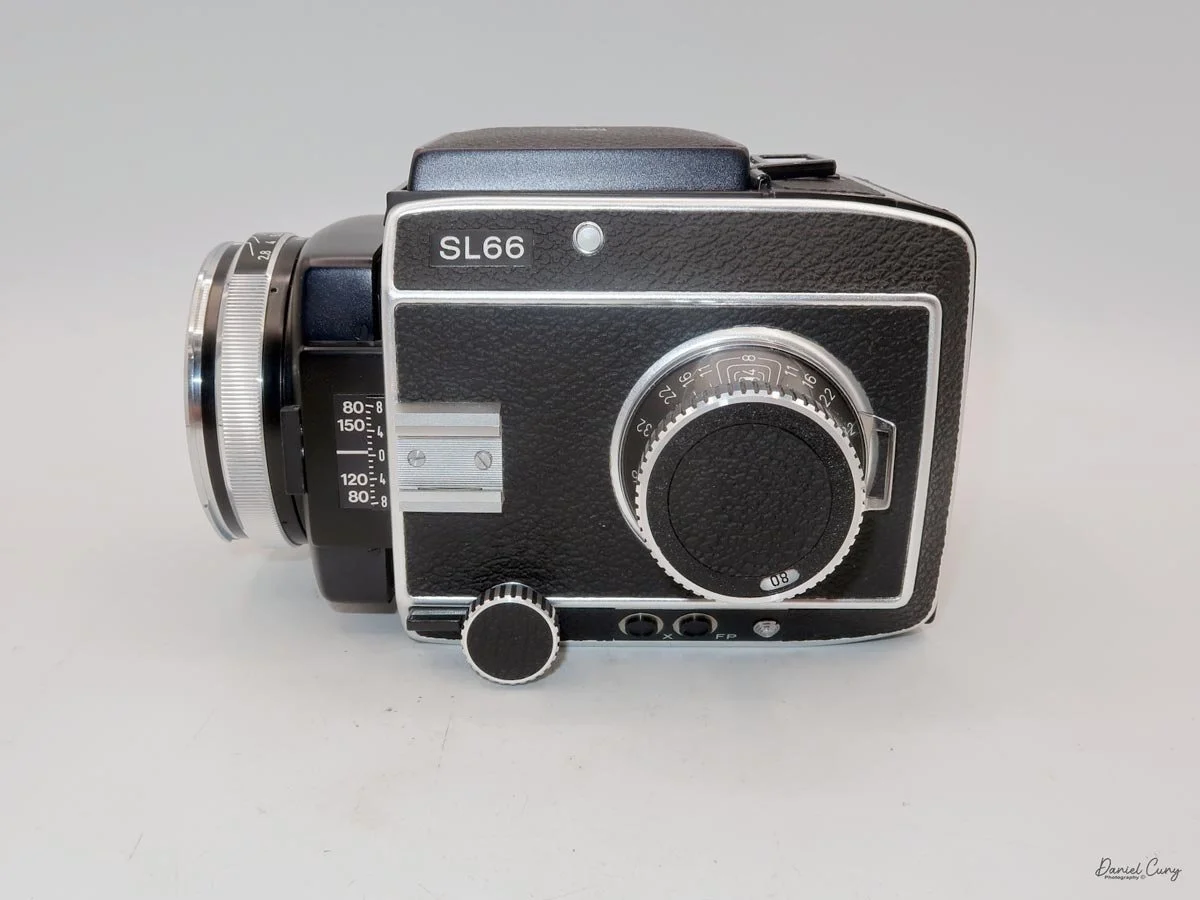
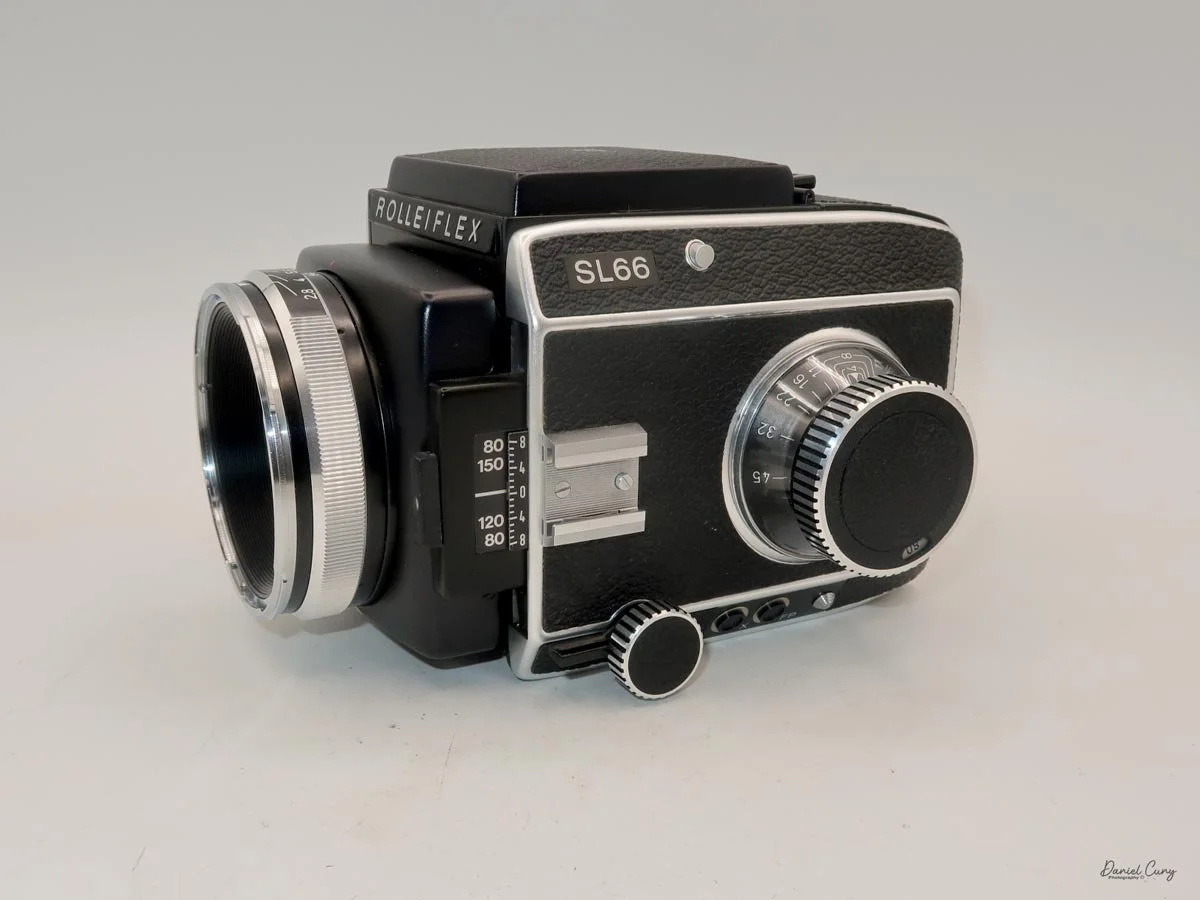
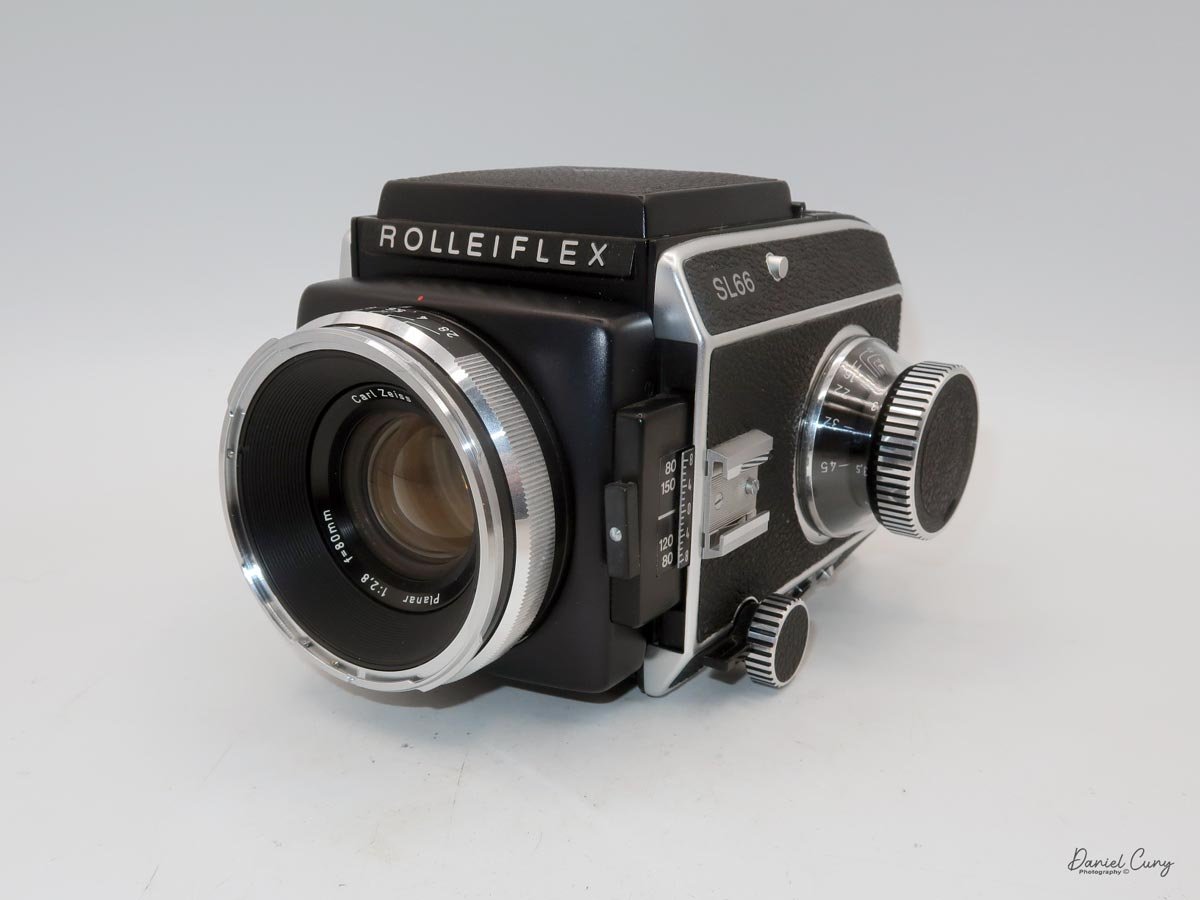
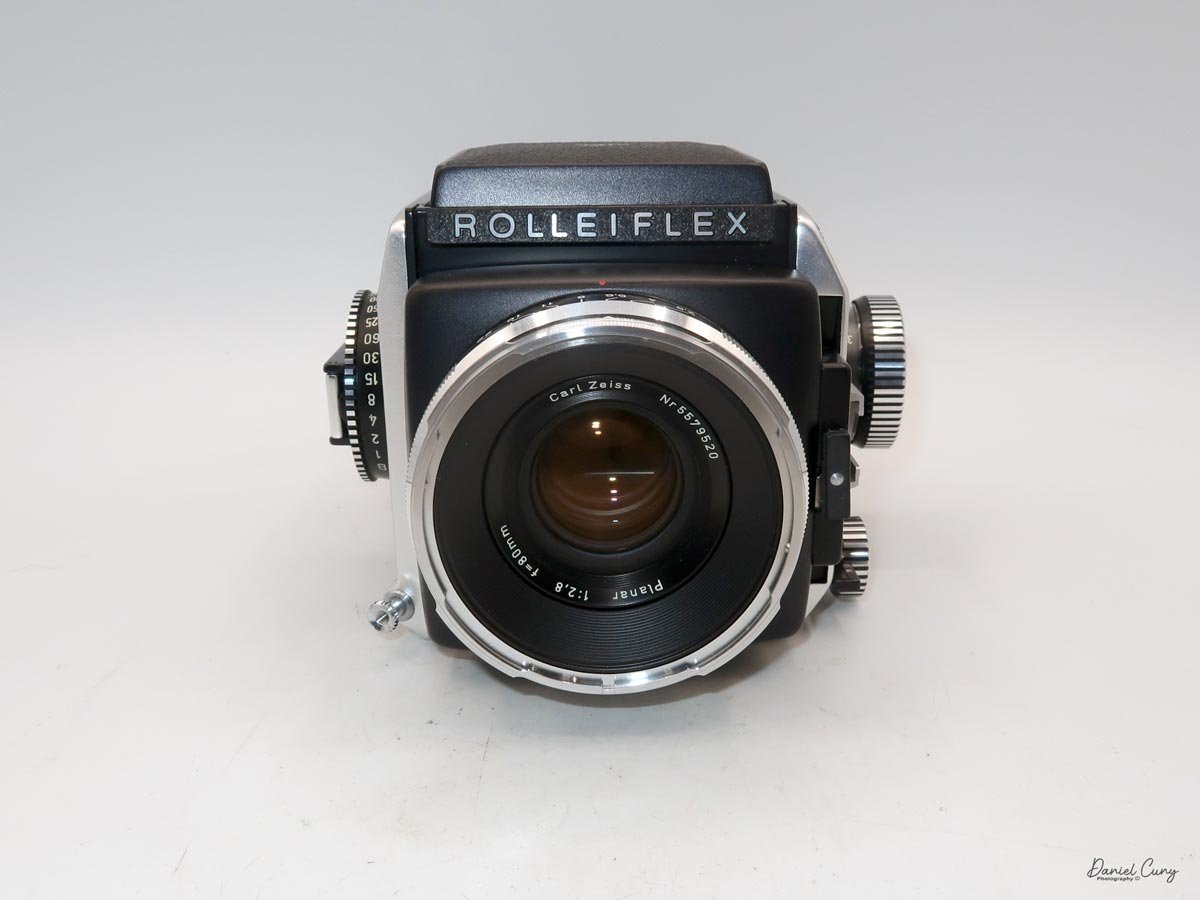
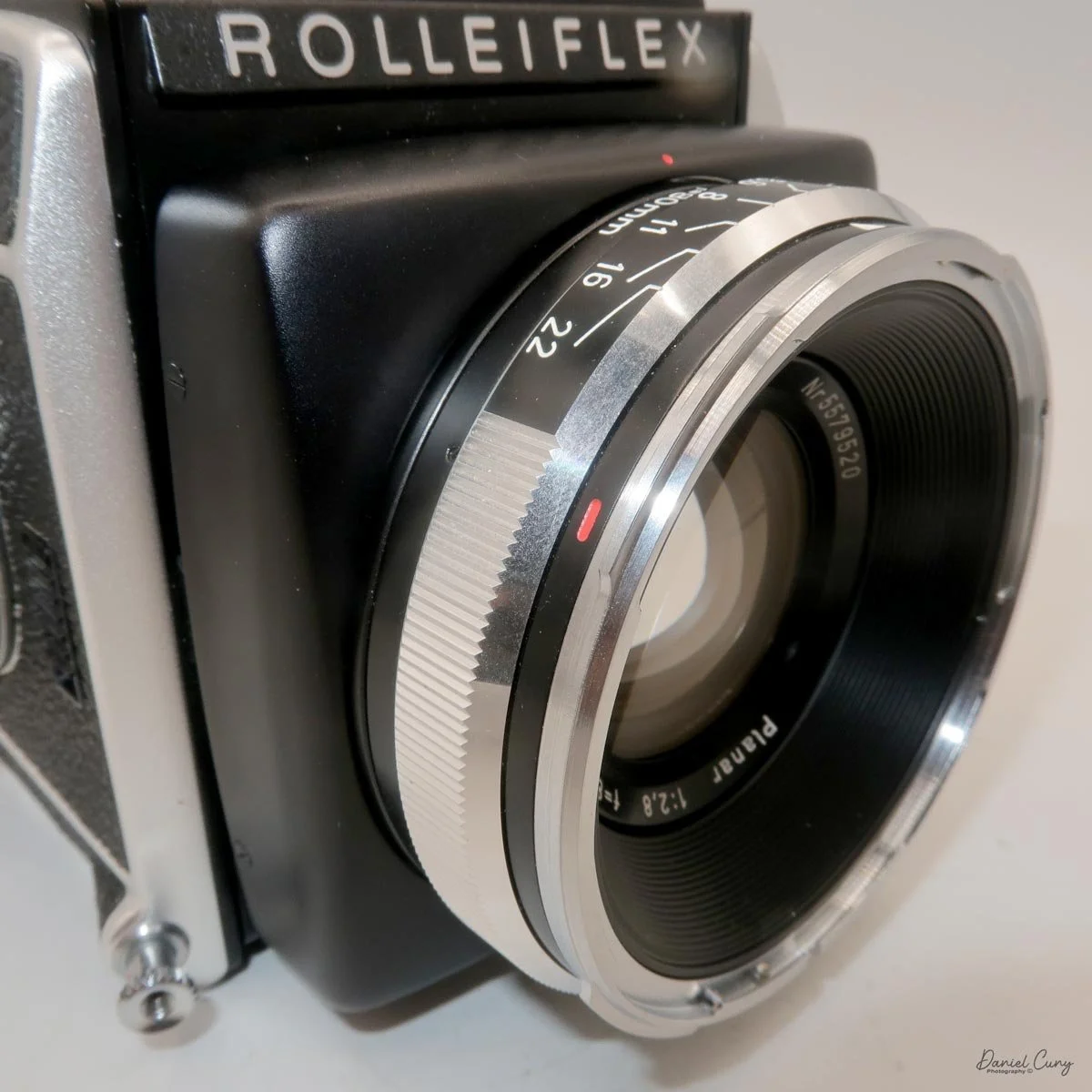
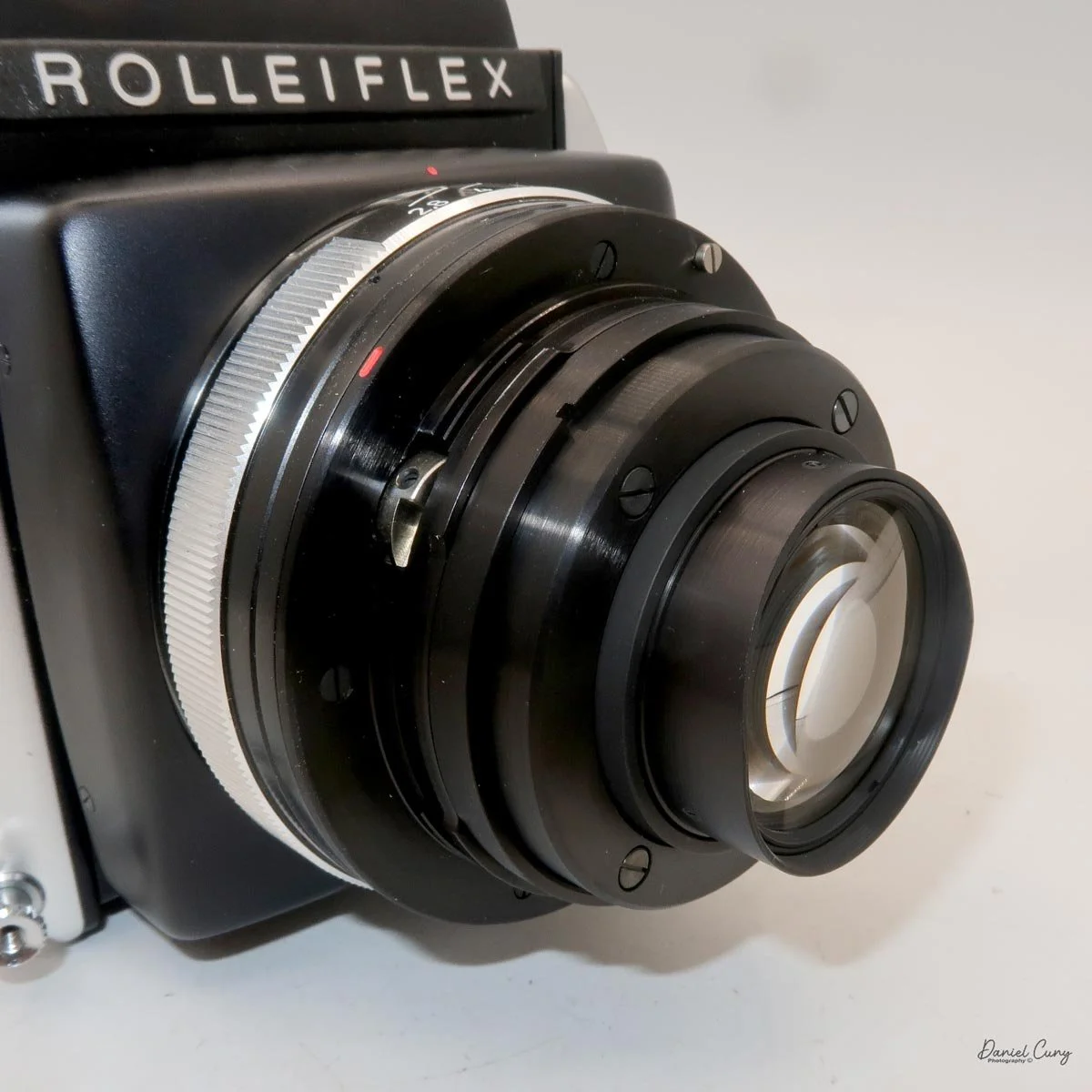
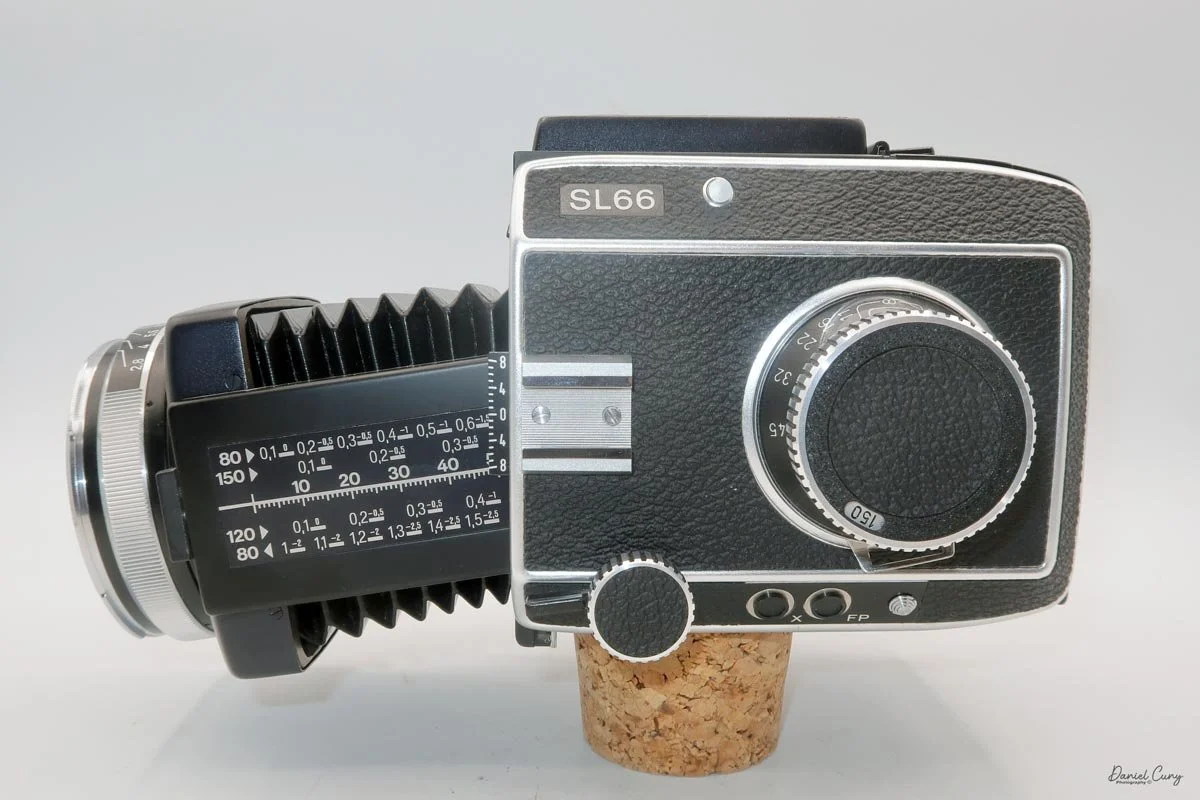
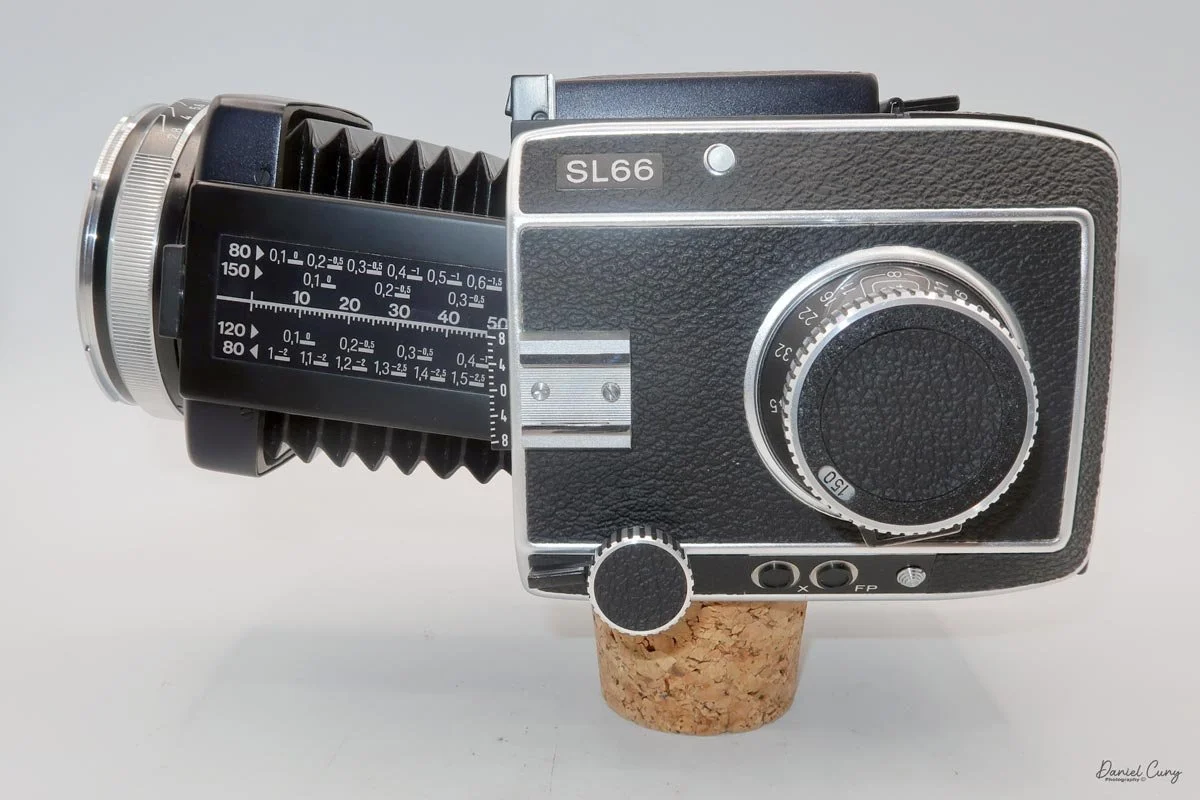
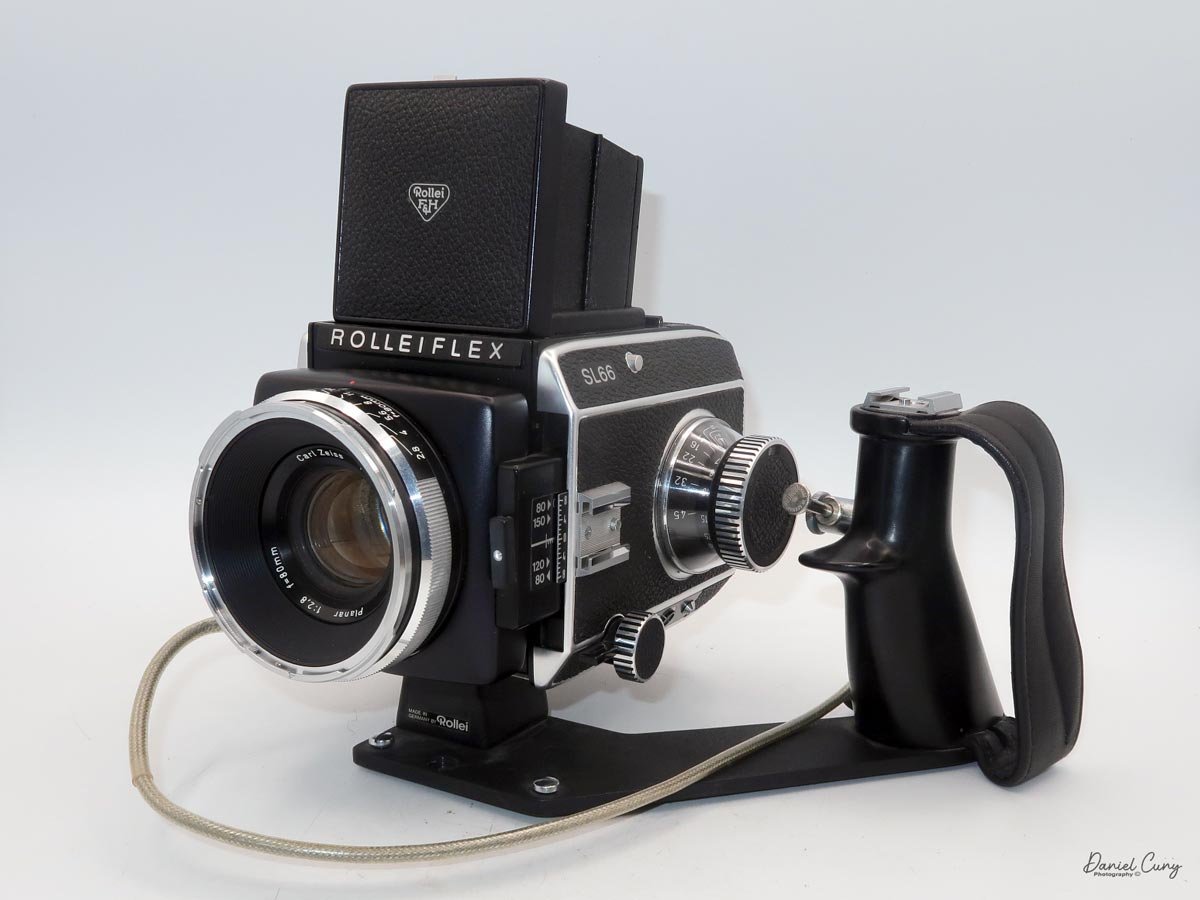
My Rolleiflex SL66

As a photographer and photo industry professional for well over 50 years, I've had the privilege of working with just about every kind of camera you can imagine. From everyday 35mm SLRs and rangefinders to Hasselblad systems, I've logged a lot of miles with medium‑format gear as well.

 In the late 1990s, I represented Sinar, which meant regular time behind some of the finest large‑format cameras available. Later, repping Leaf digital backs put me in front of Mamiya RBs and 645s, Hasselblad V and H systems, Fuji GX680s, and the Contax 645. With all that variety, there was still one big gap in my experience: I had never actually photographed with a Rolleiflex SL66.

 About a year before I retired—so roughly three years ago—I finally had my chance. An SL66 with 80mm, 50mm, and 250mm lenses came up for auction online. I wasn't sure about the condition, but I rolled the dice and bid anyway.

 When I won the lot at a surprisingly low price, my first reaction wasn't joy; it was suspicion. Inexpensive cameras often have a story. To my surprise, the body turned out to be mint‑to‑near‑mint, and the lenses were in equally excellent shape. The real question, of course, was whether it worked.

 I pulled off the lens cap, removed the dark slide, cocked the shutter, and pressed the release. At a fast speed, the camera rewarded me with that beautiful, crisp shutter sound. Then came the real test: I set it to 1/2 second. The shutter opened, paused, and closed exactly as it should. At that point, I had a big grin on my face—I knew I had a mechanically healthy SL66 on my hands.

 And then, like so many good intentions, the camera went on a shelf.

Background: Rollei's Leap into SLRs

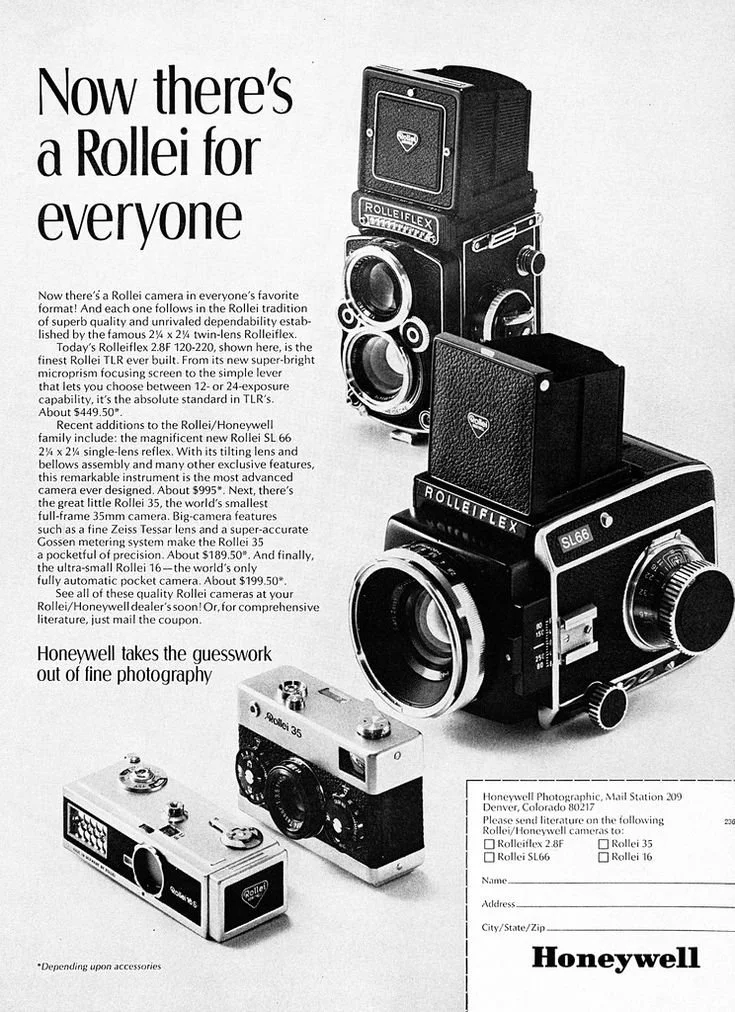
Rollei Advertisment

For decades, "Rolleiflex" meant twin‑lens reflex. That changed with the introduction of the Rolleiflex SL66 at Photokina 1966, Rollei's serious move into the professional 6×6 SLR world. Designed as a studio‑oriented system to challenge Hasselblad, the SL66 combined a focal‑plane shutter, modular film backs, and interchangeable finders with familiar Rollei ergonomics: left‑hand focusing and right‑hand film advance.

 Rollei had explored the idea of a medium‑format SLR as far back as the mid‑1950s, but strong TLR sales kept those projects on the shelf until demand shifted and Hasselblad began to dominate professional work. When it finally arrived, the SL66 was a true "engineer's camera": bellows focusing, the ability to reverse‑mount lenses for close‑up work, and front‑standard tilt for plane‑of‑focus control—features that gave it some of the movements you'd normally associate with a view camera.

 Built from 1966 to 1982, the SL66 used 120/220 roll film in 6×6 backs and typically wore Carl Zeiss Planar glass, firmly placing it in the high‑end studio category. Later SL66E and SL66SE models added through‑the‑lens metering and improved electronics. Still, the core concept stayed the same: a heavy, extremely capable, close‑focus‑friendly studio machine in a world increasingly moving toward lighter, more electronic medium‑format systems.

My Camera

My Rolleiflex SL66 is a substantial camera. With the 80mm lens retracted, it measures about 7" front to back; with the bellows fully extended, it's closer to 9". It's roughly 6" wide thanks to the oversized focusing knob, about 4.5" tall with the waist‑level finder closed, and around 7" tall when the chimney is open. On the scale, the body with a back and an 80mm lens comes in at about 4 pounds, 4.5 ounces—this is not a casual walk‑around point‑and‑shoot.

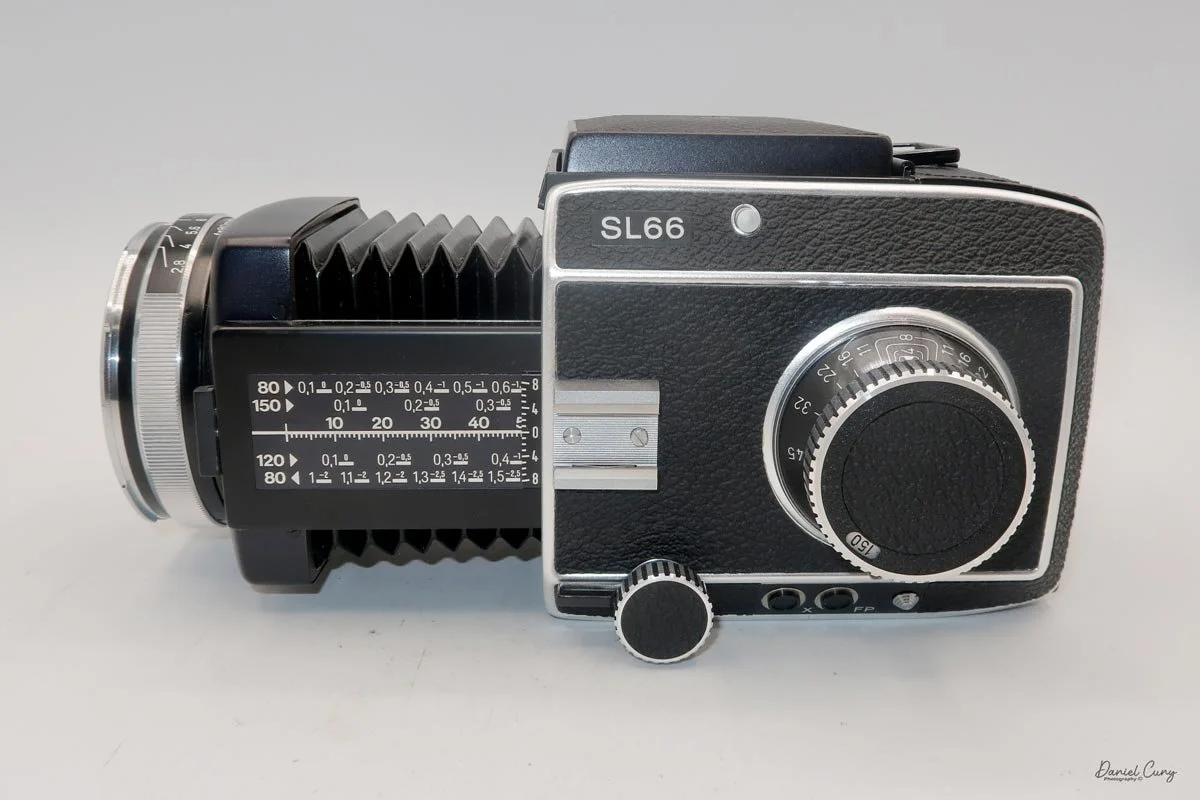
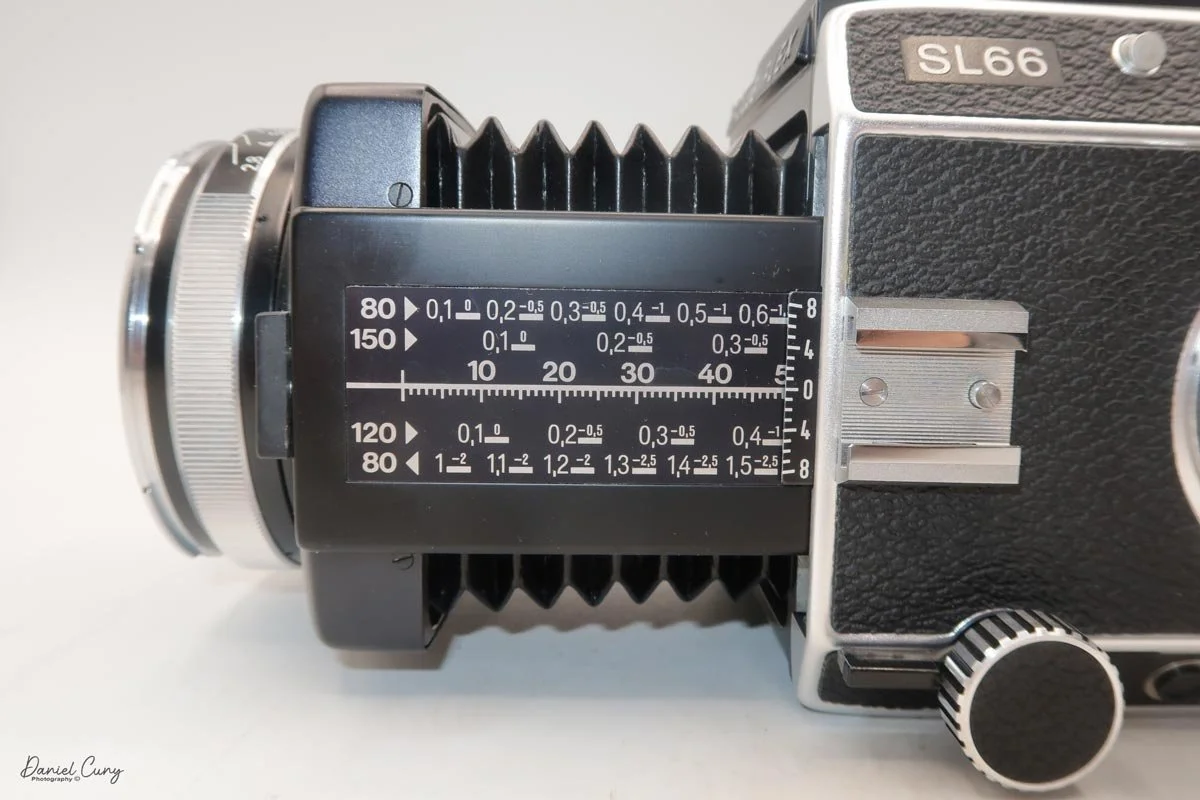
That weight buys you some very unique capabilities. The standout feature is the built‑in bellows, which allows the SL66 to focus much closer than most medium‑format SLRs I've used. Mamiya RB/RZ cameras also use bellows and can get in tight, but the SL66 manages similar close‑focus versatility in a slightly more compact, much lighter and a better‑balanced package. For anyone who loves close‑up or macro work, that alone makes the camera worth a serious look.

The second signature feature is the double-bayonet lens mount, primarily used with the 50mm, 80mm, and 150mm lenses. The lenses can mount in the normal way, with automatic aperture operation, or be reversed on the body for even greater magnification. In reversed mode, the aperture becomes manual: you open up to focus, then stop down to your chosen aperture for the exposure. It's slower than modern macro setups, but the flexibility it provides is excellent for tabletop and product work.

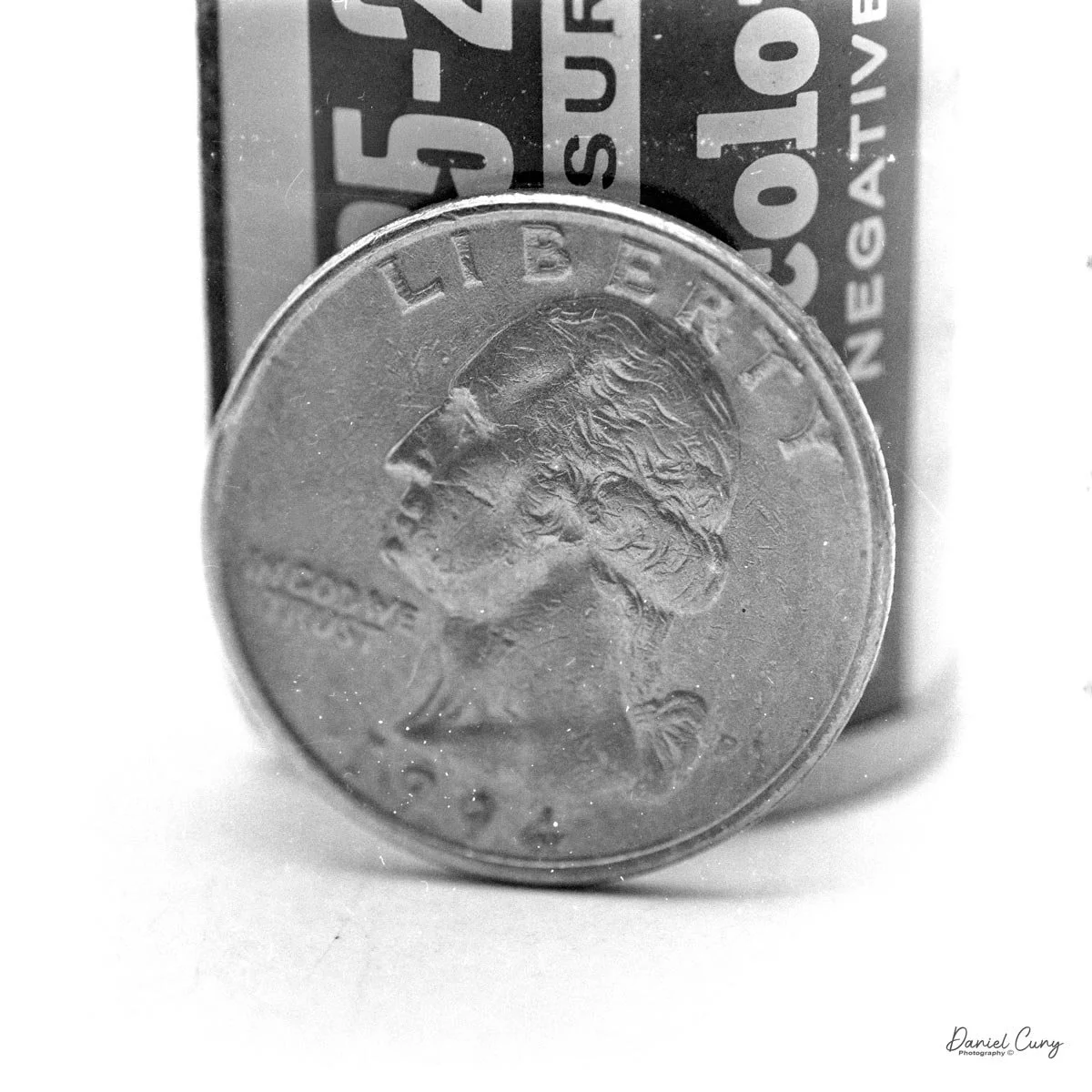
In addition to bellows and reverse mounting, the SL66 offers up to 8 degrees of lens tilt. That tilt lets you "lay down" the plane of focus, bringing more of a product or subject into sharpness at wider apertures. In practice, it means I can photograph something like a 35mm cassette and its box at close range and keep both on‑axis surfaces acceptably sharp without having to stop down to the smallest apertures.

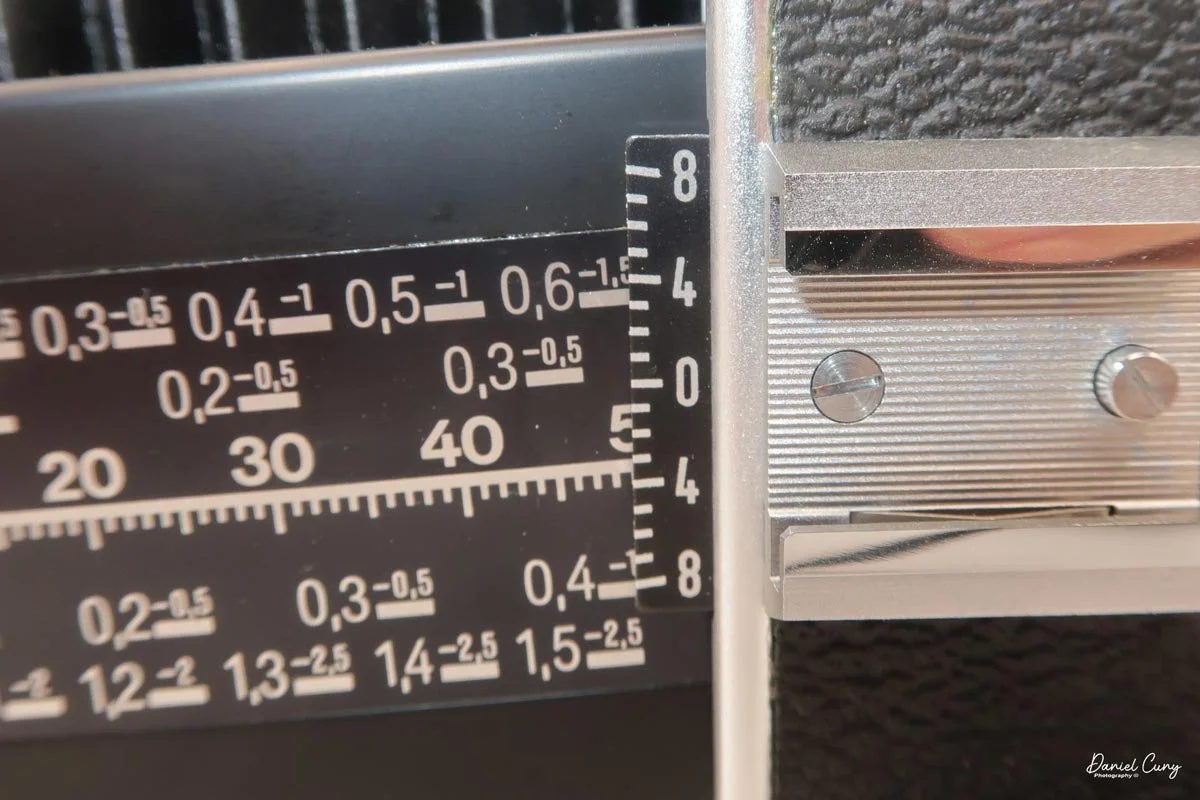
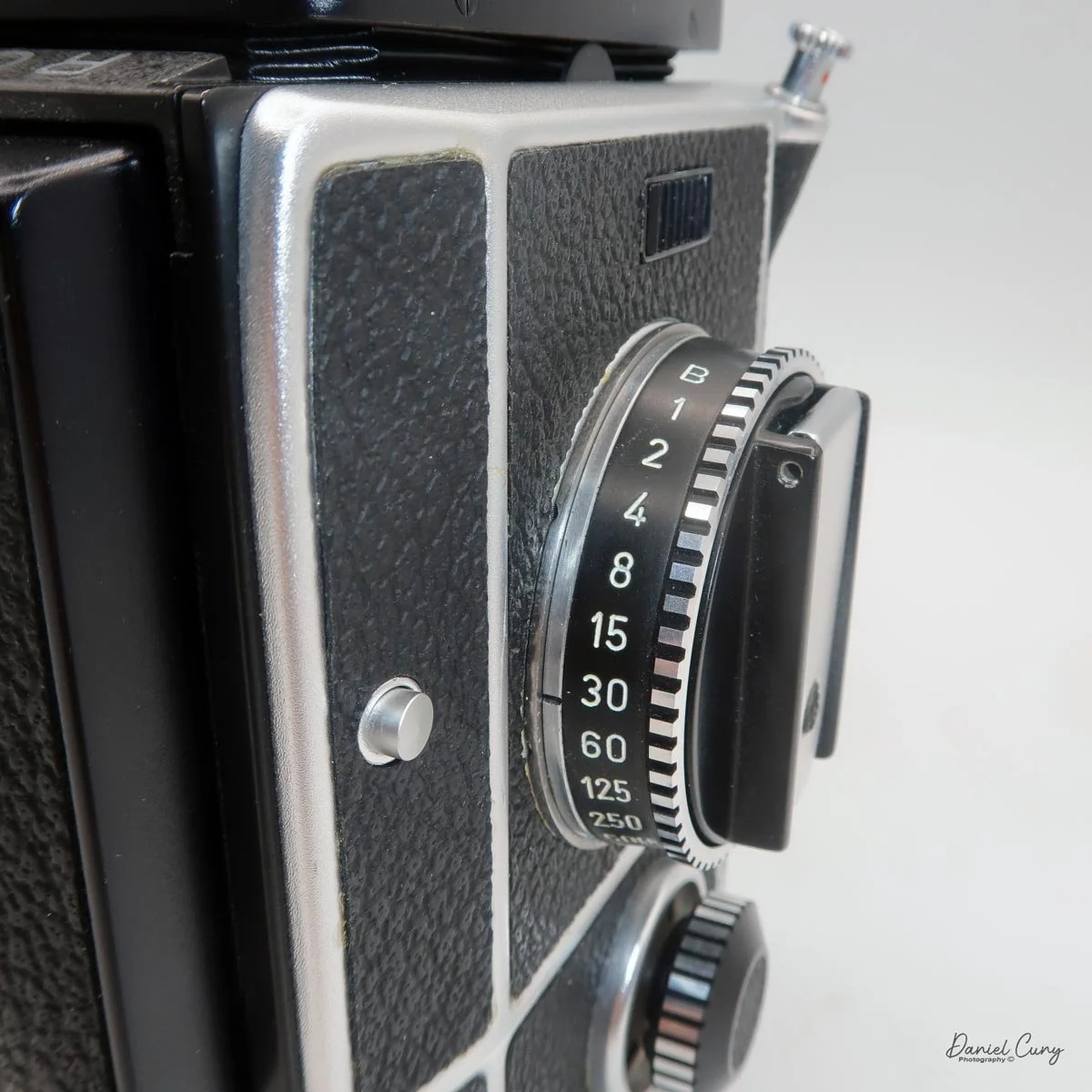
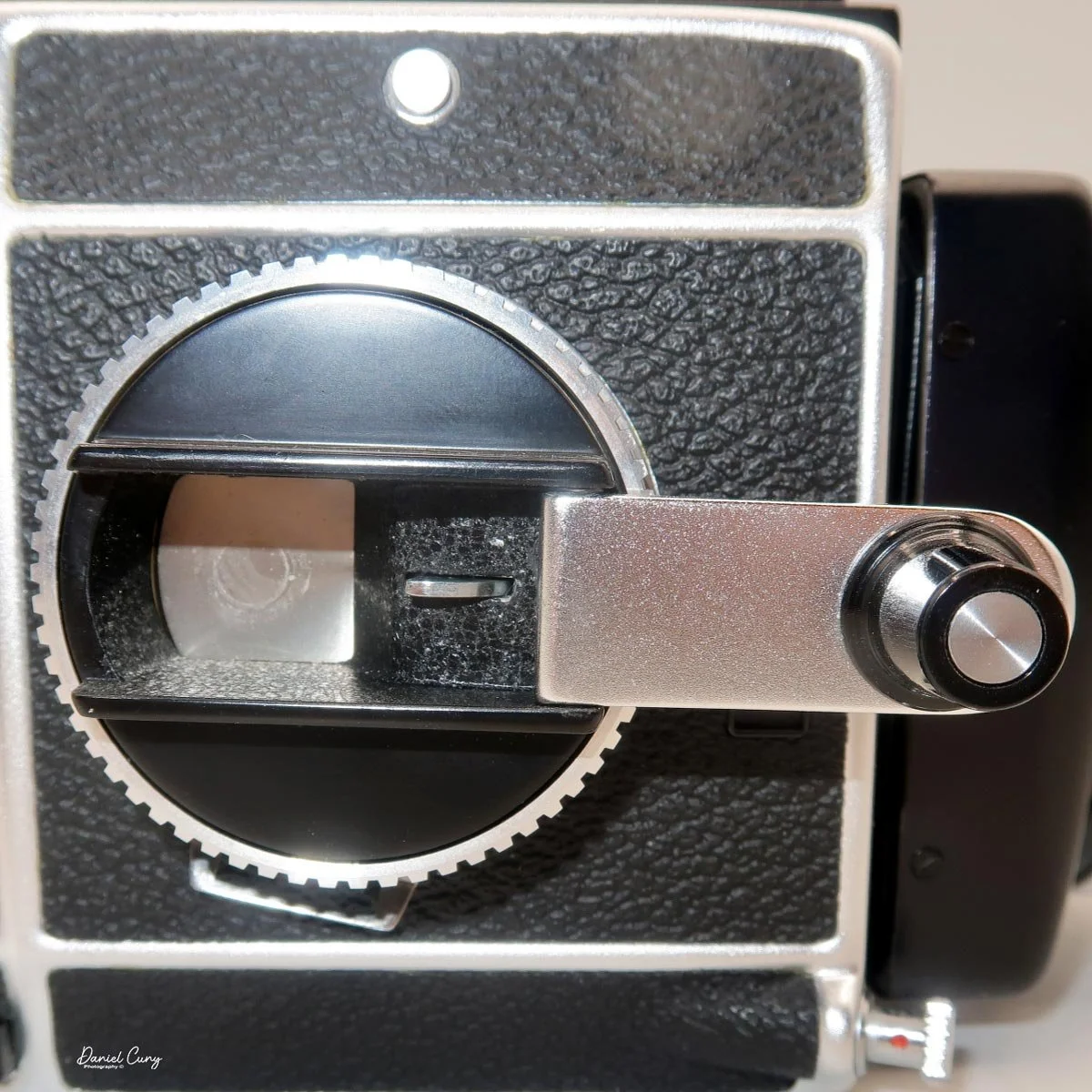
Unlike Hasselblad V‑series cameras, which use leaf shutters in the lenses, the SL66 uses a focal‑plane shutter in the body, with speeds from 1 second to 1/1000 plus "B" for long exposures. Flash sync is limited to 1/30, but for studio or location strobe work, the flash duration actually stops motion, so I haven't found the 1/30 sync speed to be a practical limitation with decent strobes. The shutter speed dial is integrated into the film advance: you pull out the handle, advance clockwise until it stops, then swing it back counterclockwise to cock the shutter for the next frame. Inside the crank is a multiple‑exposure switch, which makes stacking exposures on one frame very straightforward once you know where to find it.

The SL66 lens lineup was designed by Carl Zeiss, and it shows. Optically, the lenses I have are excellent, with contrast and sharpness fully in the "top tier" I expect from Zeiss glass. The system spans from 30mm all the way to 1000mm, and Rollei also offered two leaf‑shutter lenses—an 80mm Distagon and a 150mm Sonnar—with flash sync up to 1/500 for shooters who need higher sync speeds. In my experience so far, the standard lenses deliver exactly the kind of image quality you want from a camera of this size and weight.

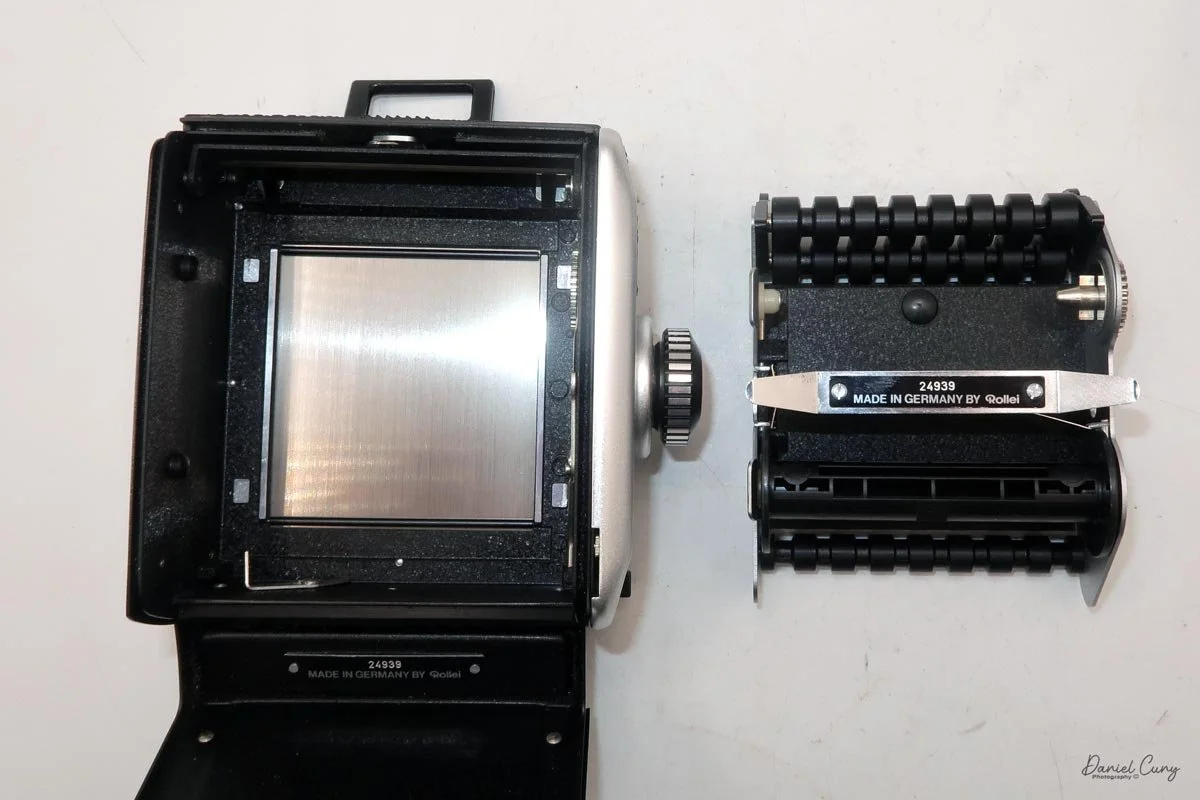
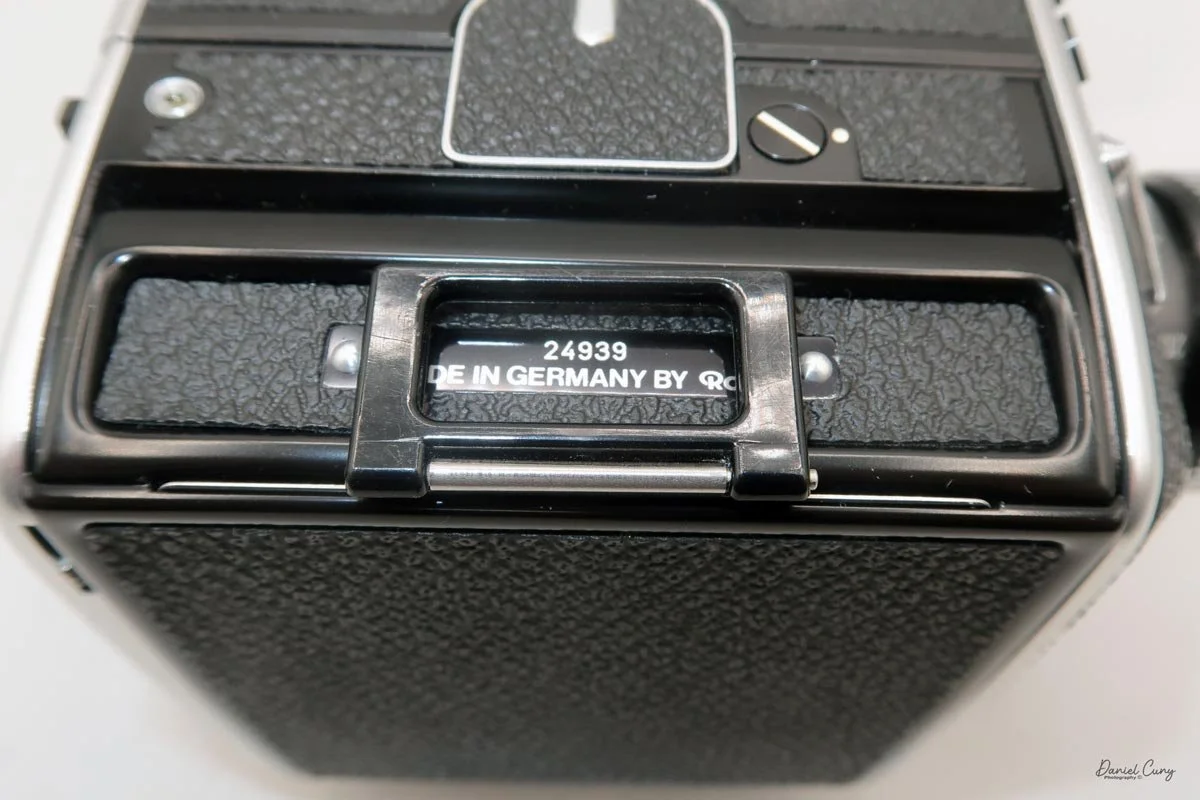
 The film back system is well thought out. The standard back takes either 120 or 220 film, and you can get inserts and backs for 6×6 or 6×4.5. The dark slide parks neatly on the back when you're shooting, which means you're not constantly wondering where you set it down. Loading is similar to Mamiya's insert‑based backs: open the door, pull the insert, load the film, reinsert, then wind to the first frame. A pop‑out winding wheel on the side of the back helps tension and advance the film before the main crank takes over. Once you've shot the twelve frames on 120, the wheel pops back out to let you wind the roll off before opening the back.

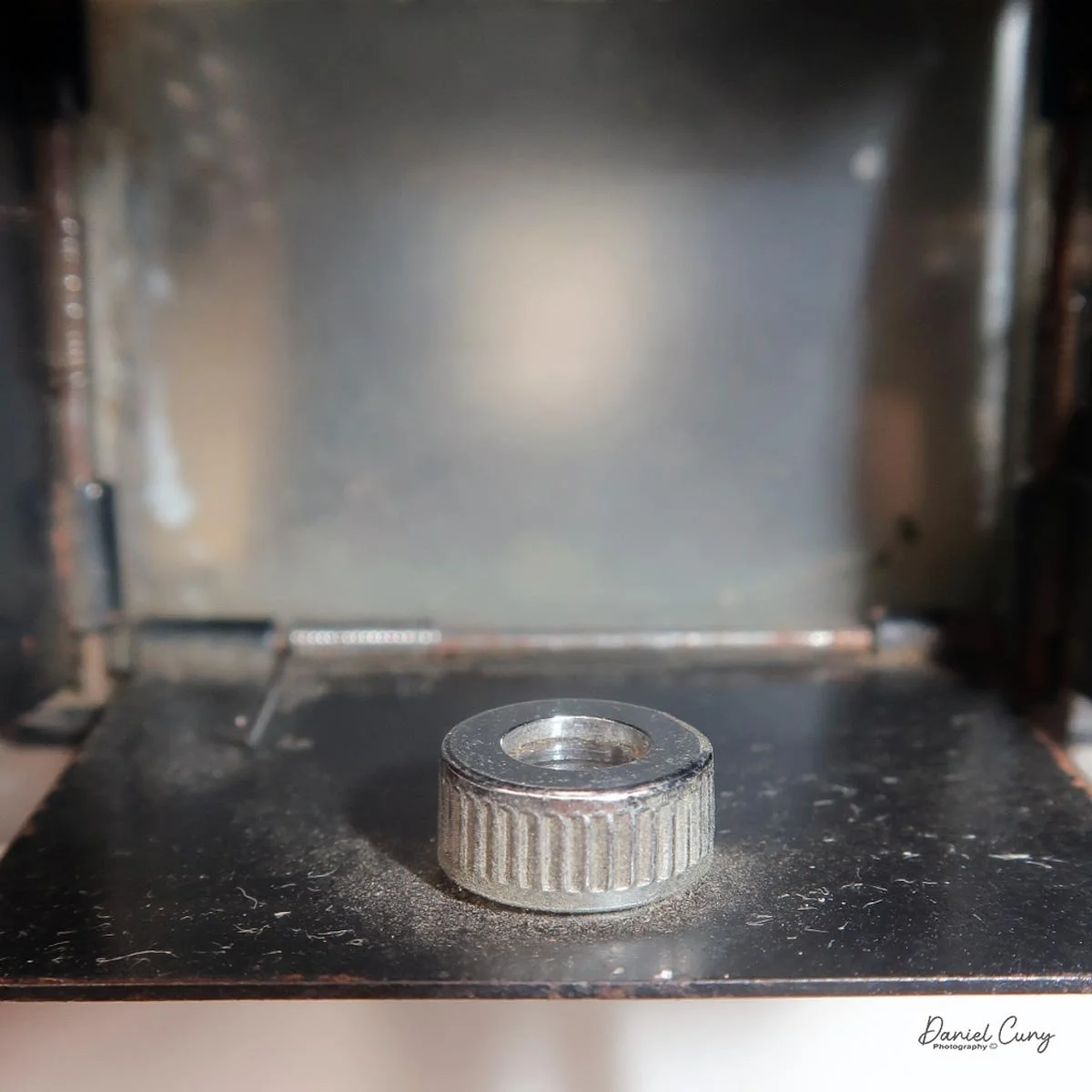
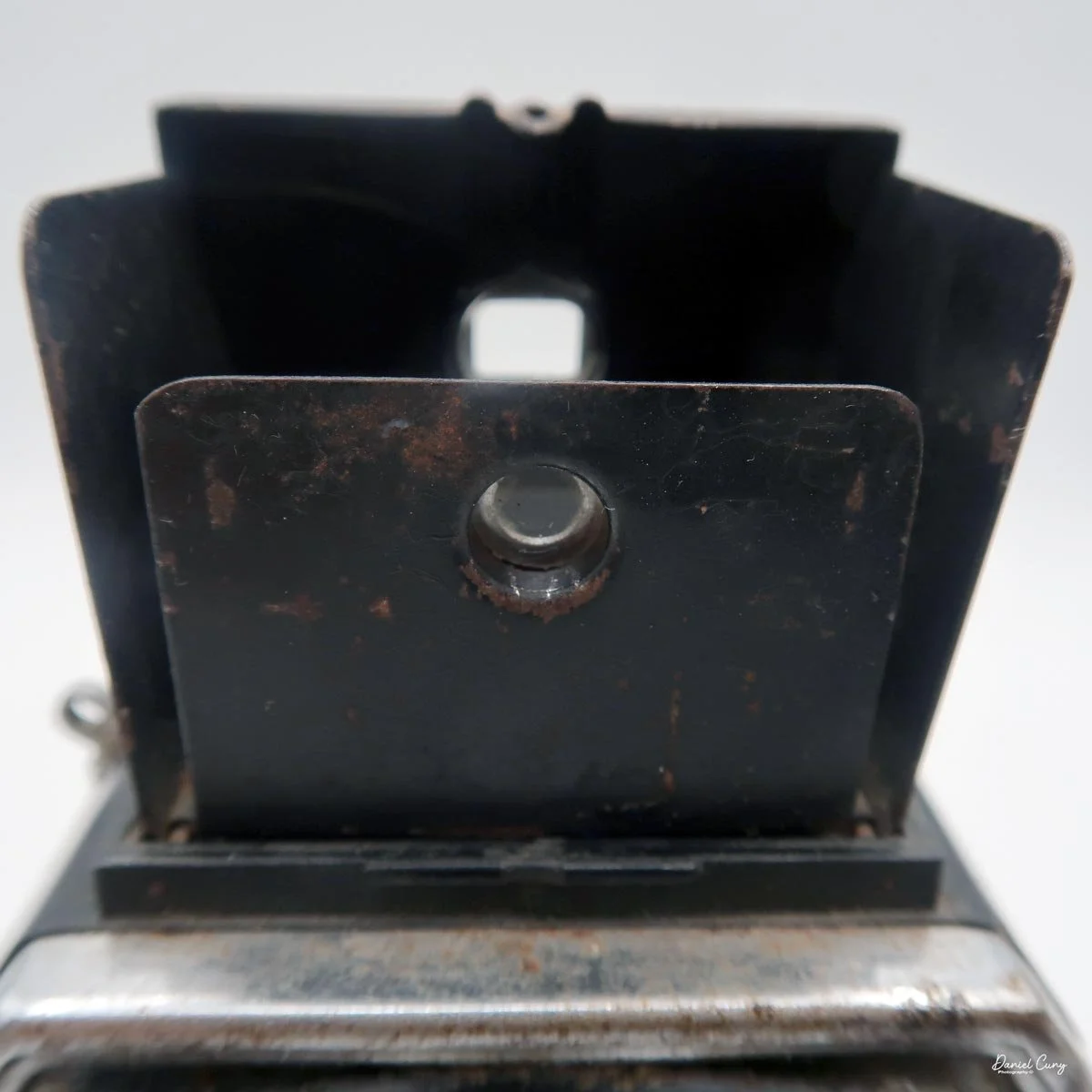
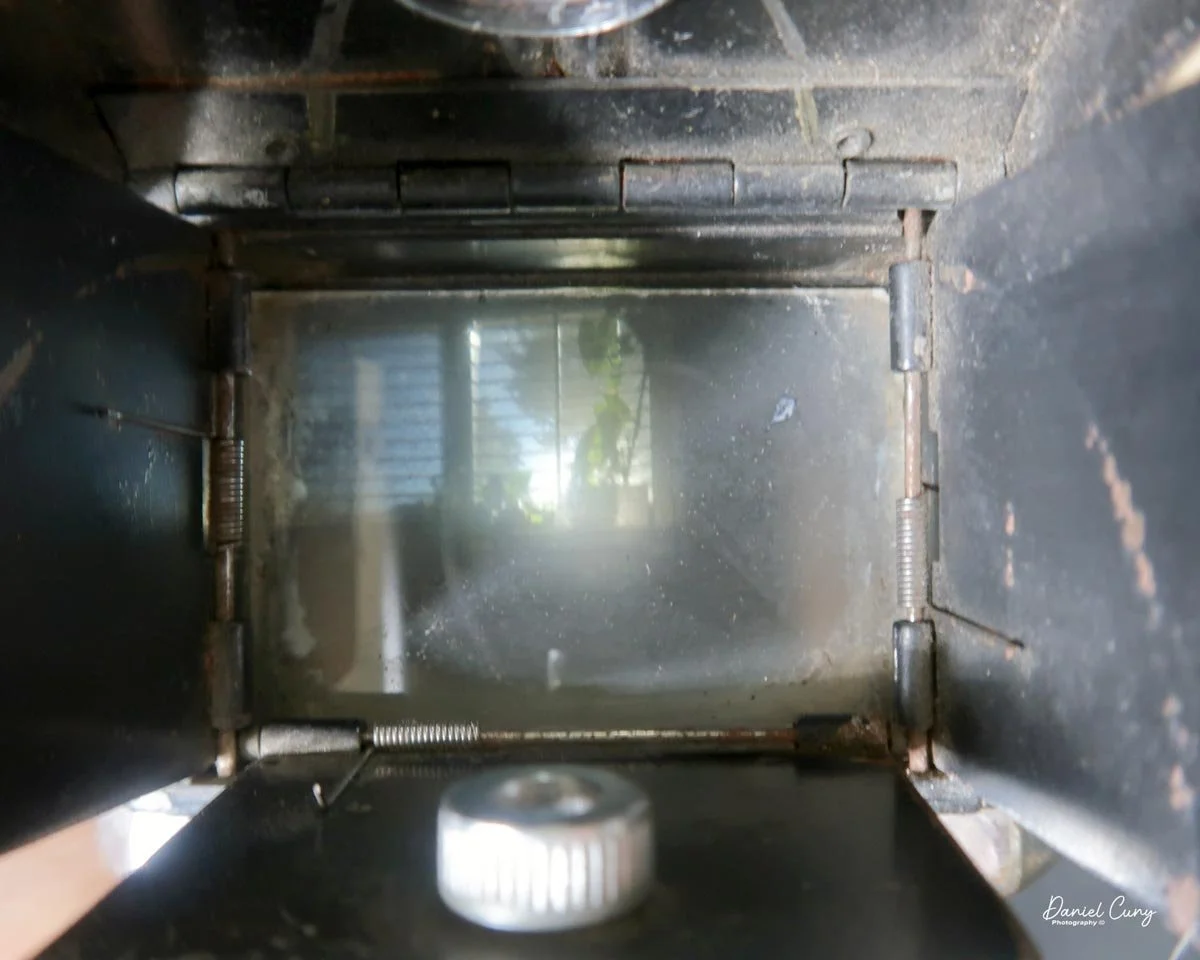
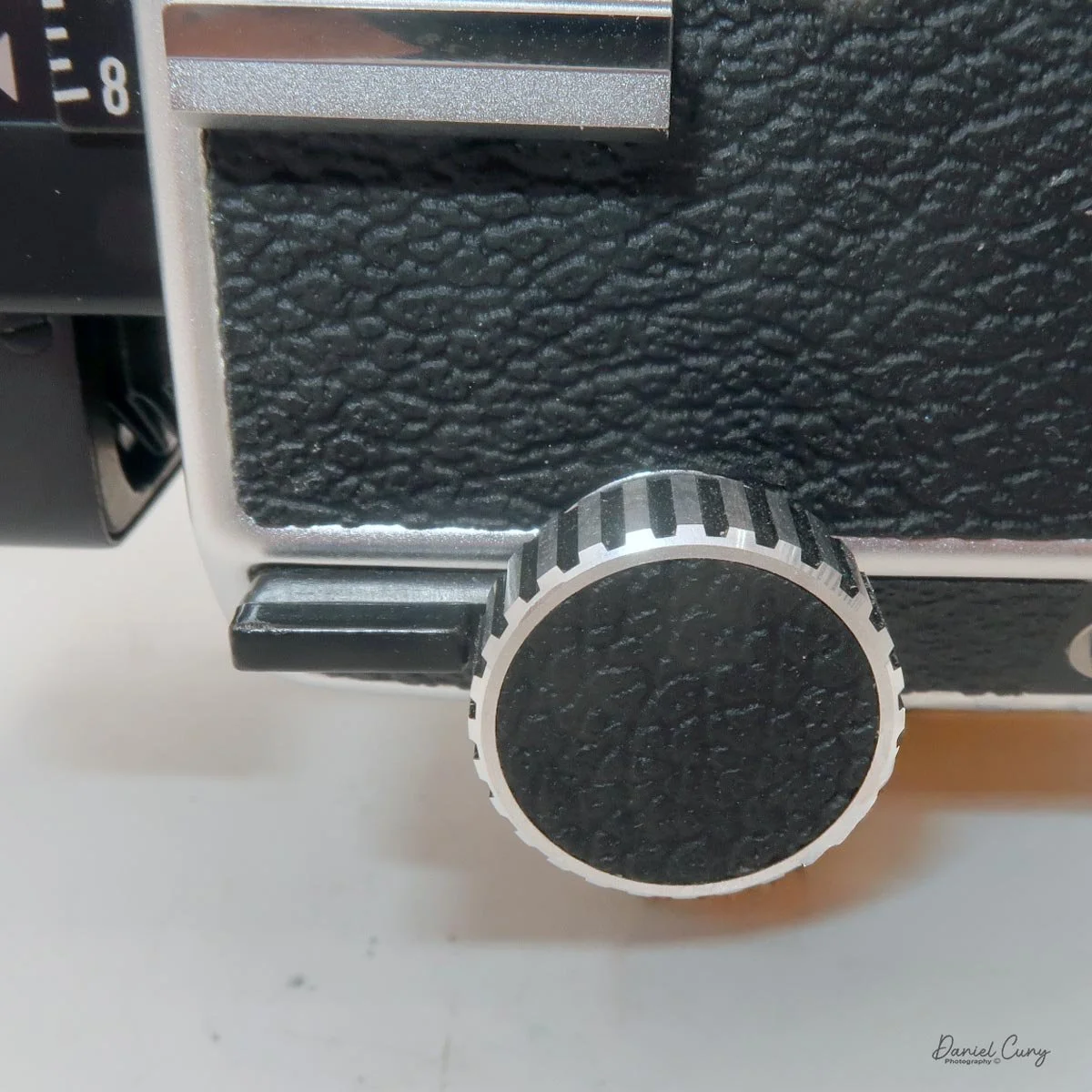
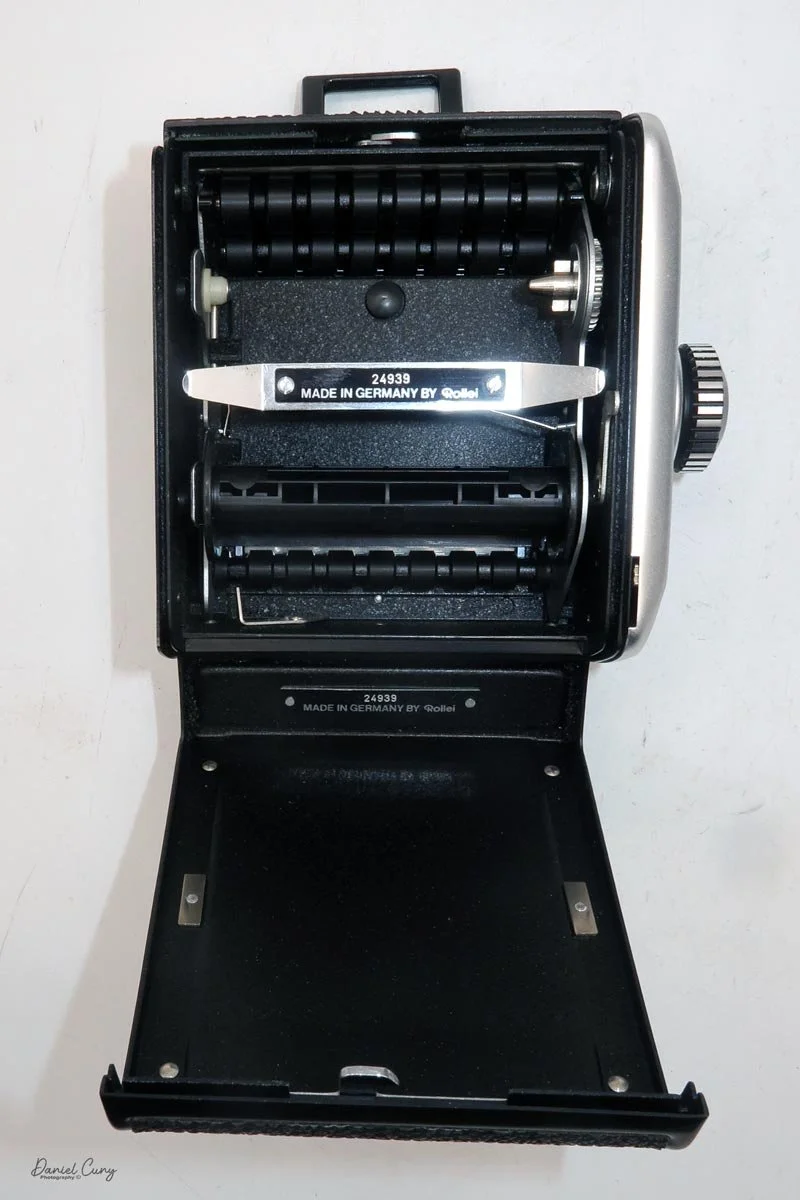
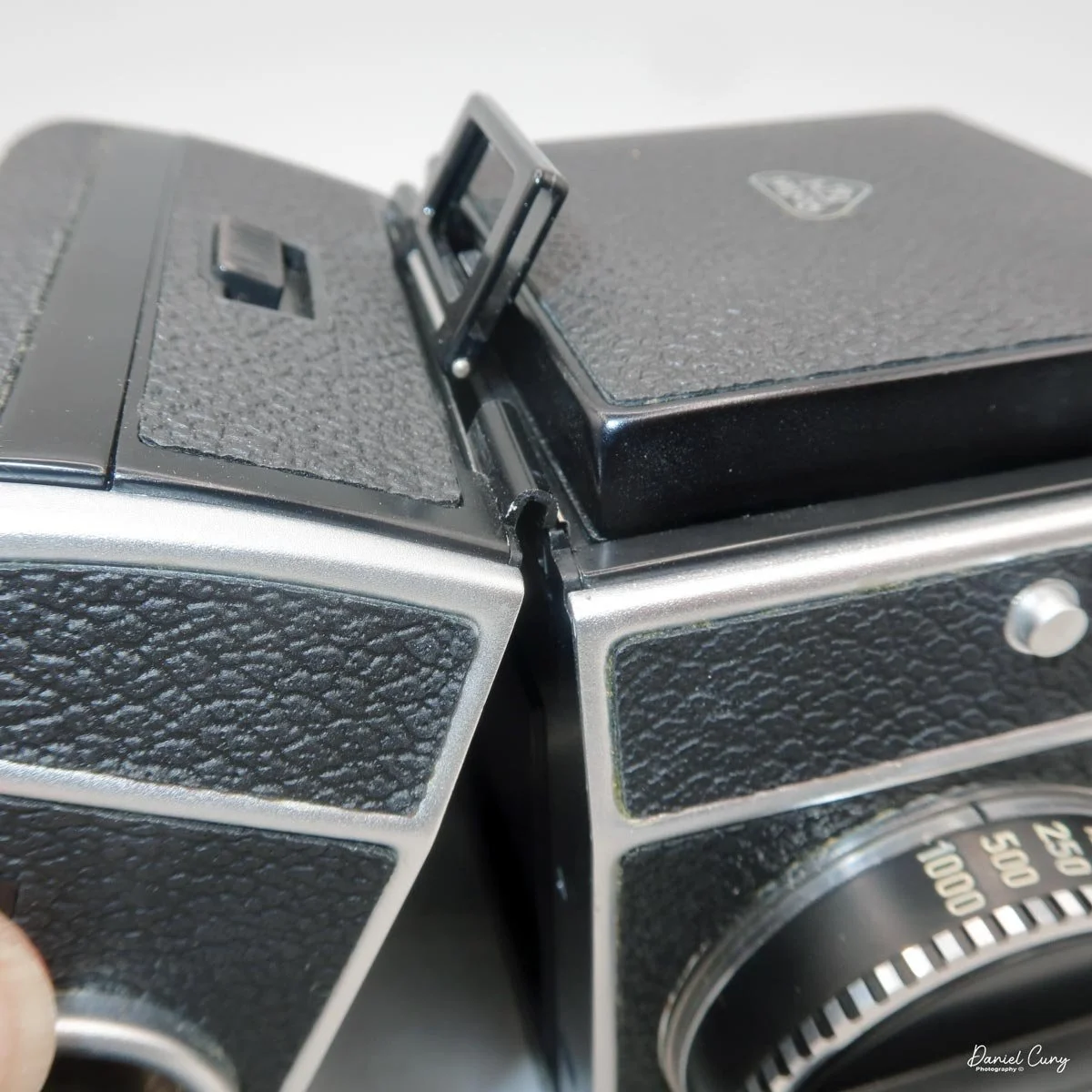
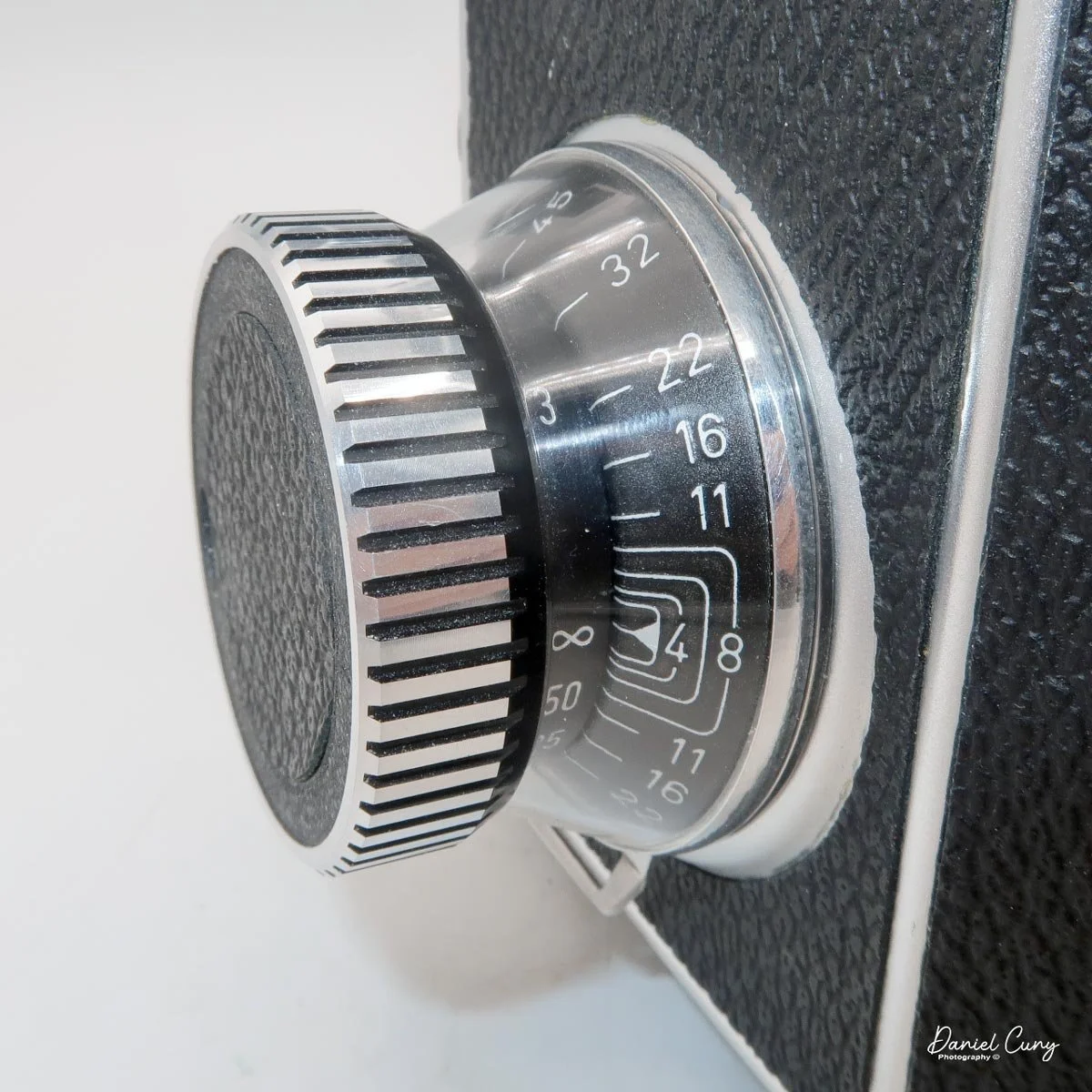
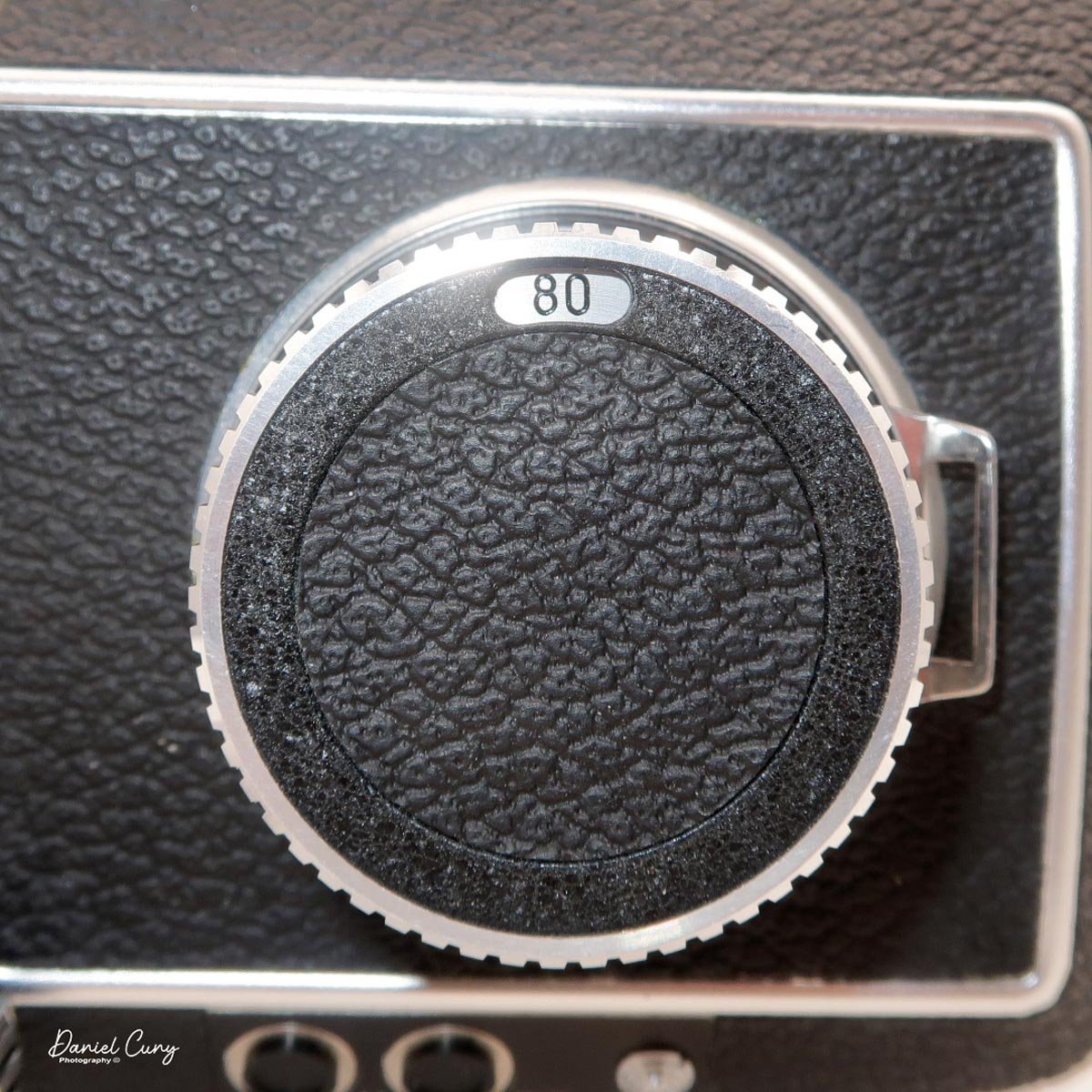
On the camera body's left side is that big focusing knob, which doubles as a reference for the lens in use; you can pull it out and set it for your focal length. The knob turns quite a bit when you're focused in tight, but the throw is smooth and precise. Just ahead of it is the tilt control: a locking lever and wheel for setting and securing the lens tilt angle. The body also carries a cold shoe for accessories and a pair of covered flash sync ports. Up top, pressing the chrome button opens the waist‑level finder, and a second press pops up the magnifier for critical focusing.

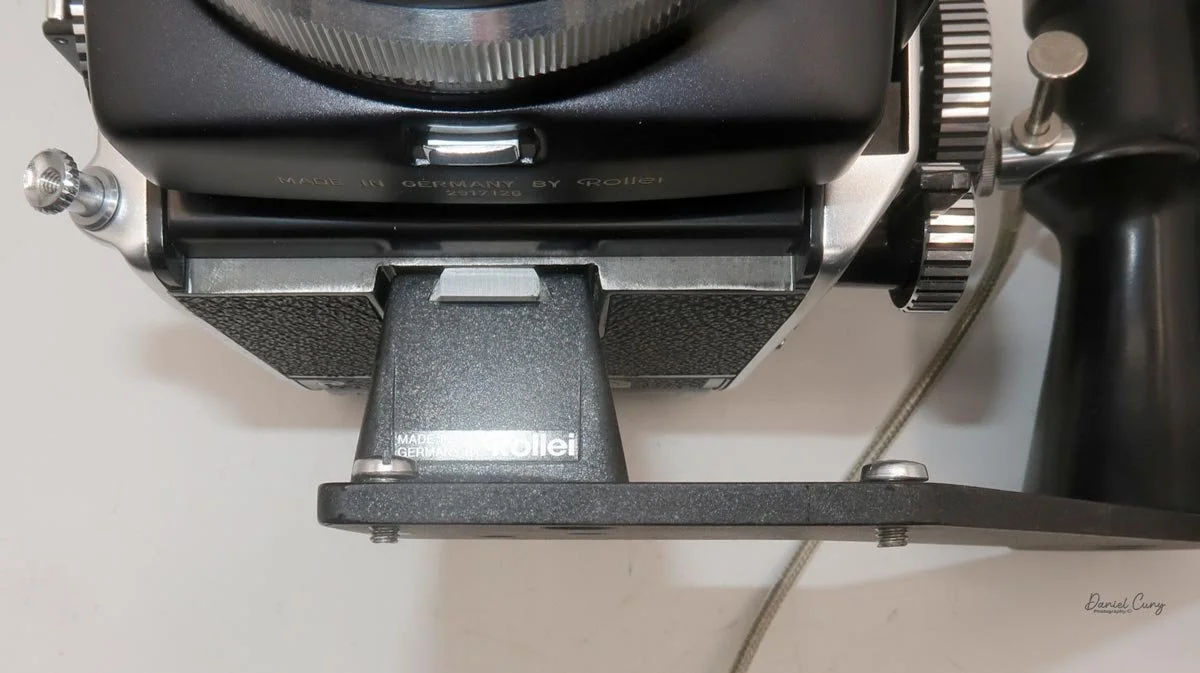
I use an L‑grip that mounts into the bottom quick‑mount slot alongside the tripod socket. That grip transforms the camera from a studio brick into something I'm comfortable hand‑holding for a walk, letting my left hand manage focus and support while my right handles shutter release and film advance. It doesn't make the SL66 light, but it does make it surprisingly usable off a tripod.

My Results

When I finally pulled the SL66 off the shelf this year, I decided not to overthink it. I loaded a roll of film, stepped out into my neighborhood on an uncharacteristically sunny February day in the Pacific Northwest, and treated it like any other camera I'd take for a walk. The first few frames were simple subjects—houses, trees, textures—mainly to get a feel for the shutter sequence, the advance, and how the camera balanced with the L‑grip in hand.

 What struck me almost immediately was how deliberate the camera feels. The weight and long focus throw slow you down in a good way; you don't "spray and pray" with an SL66. Composing on the waist‑level finder is a pleasure: the screen is bright, the magnifier makes critical focusing easy, and the big focus knob lets you land focus precisely rather than hunting back and forth. By the time I finished that first roll, the camera felt intuitive in a way only a well‑designed mechanical tool can.

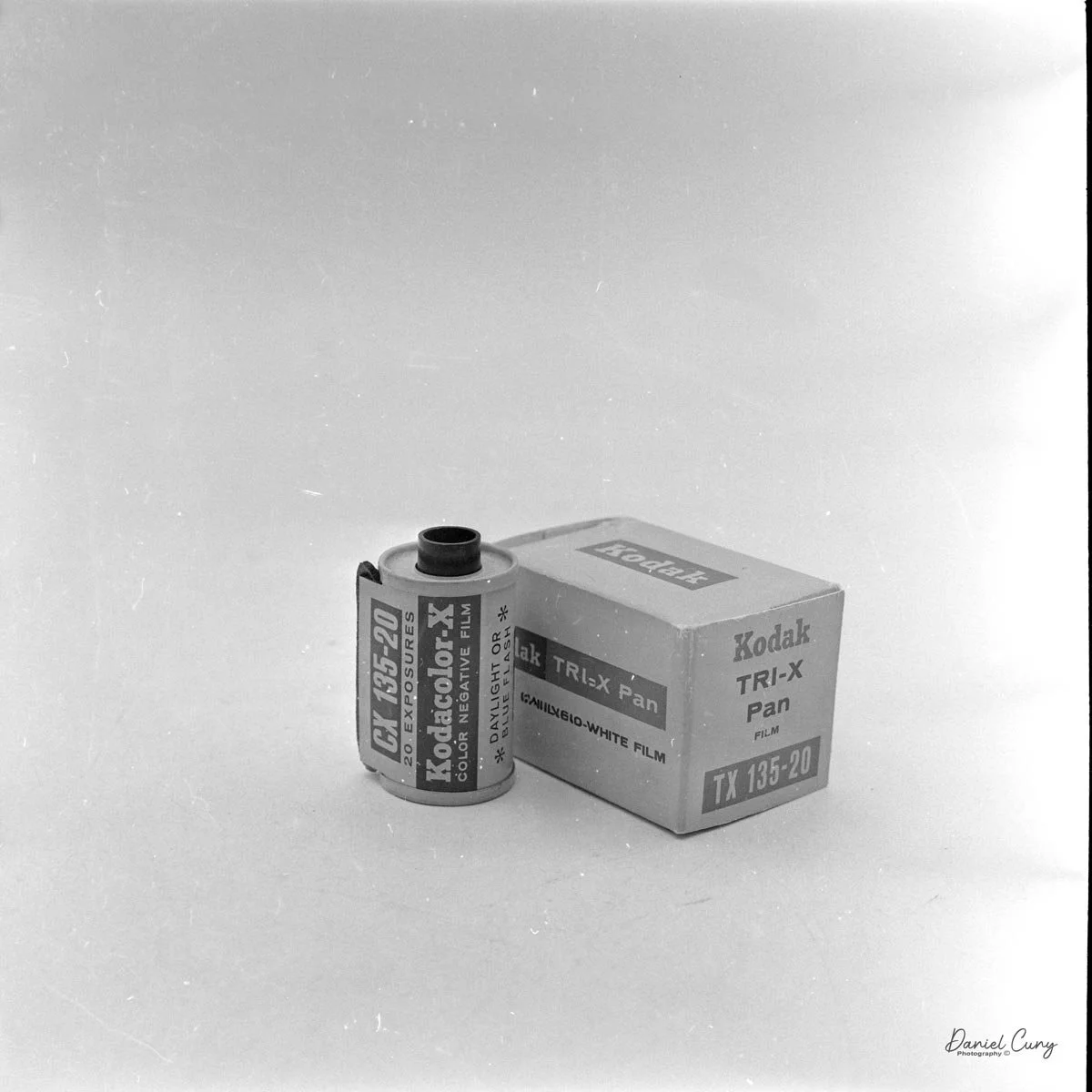
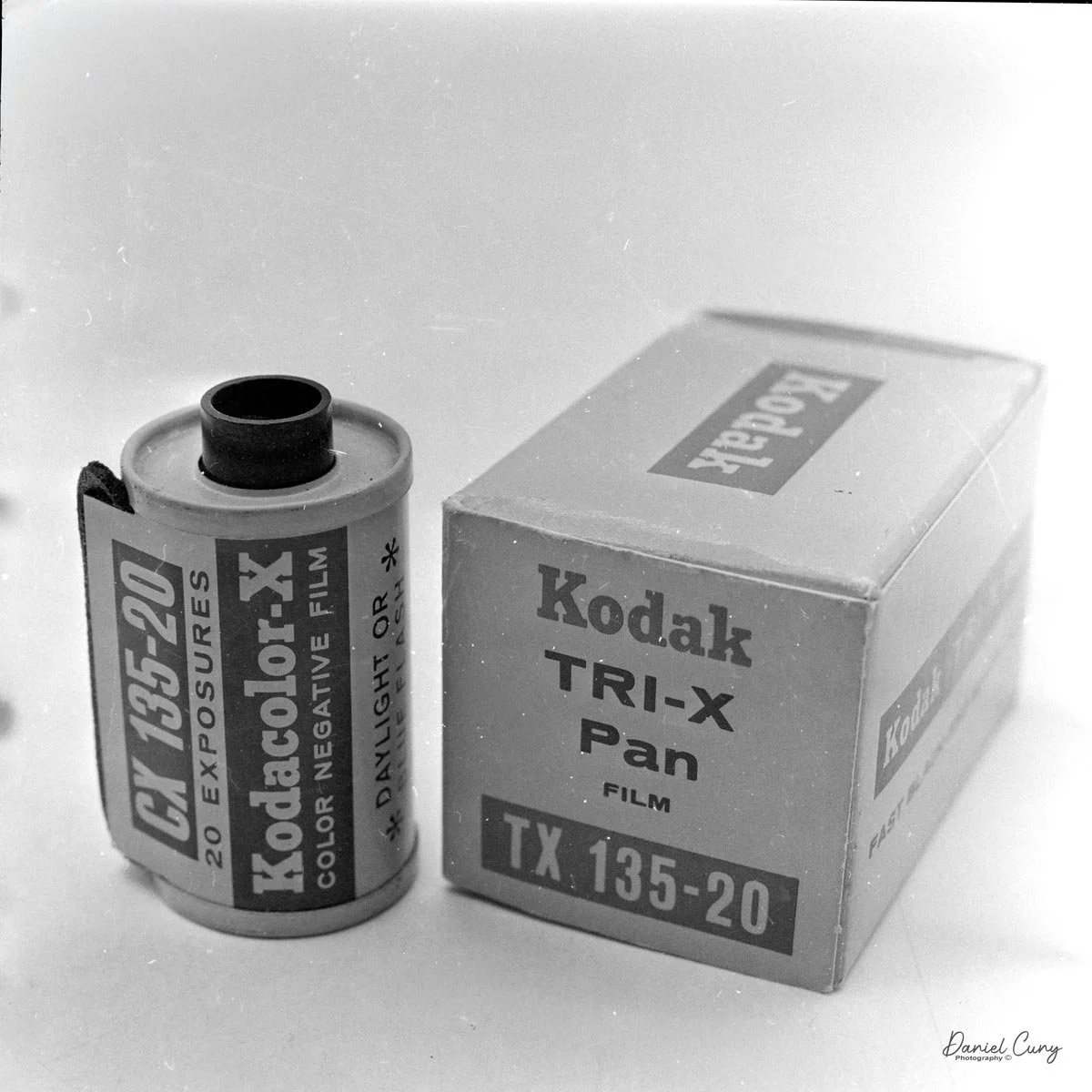
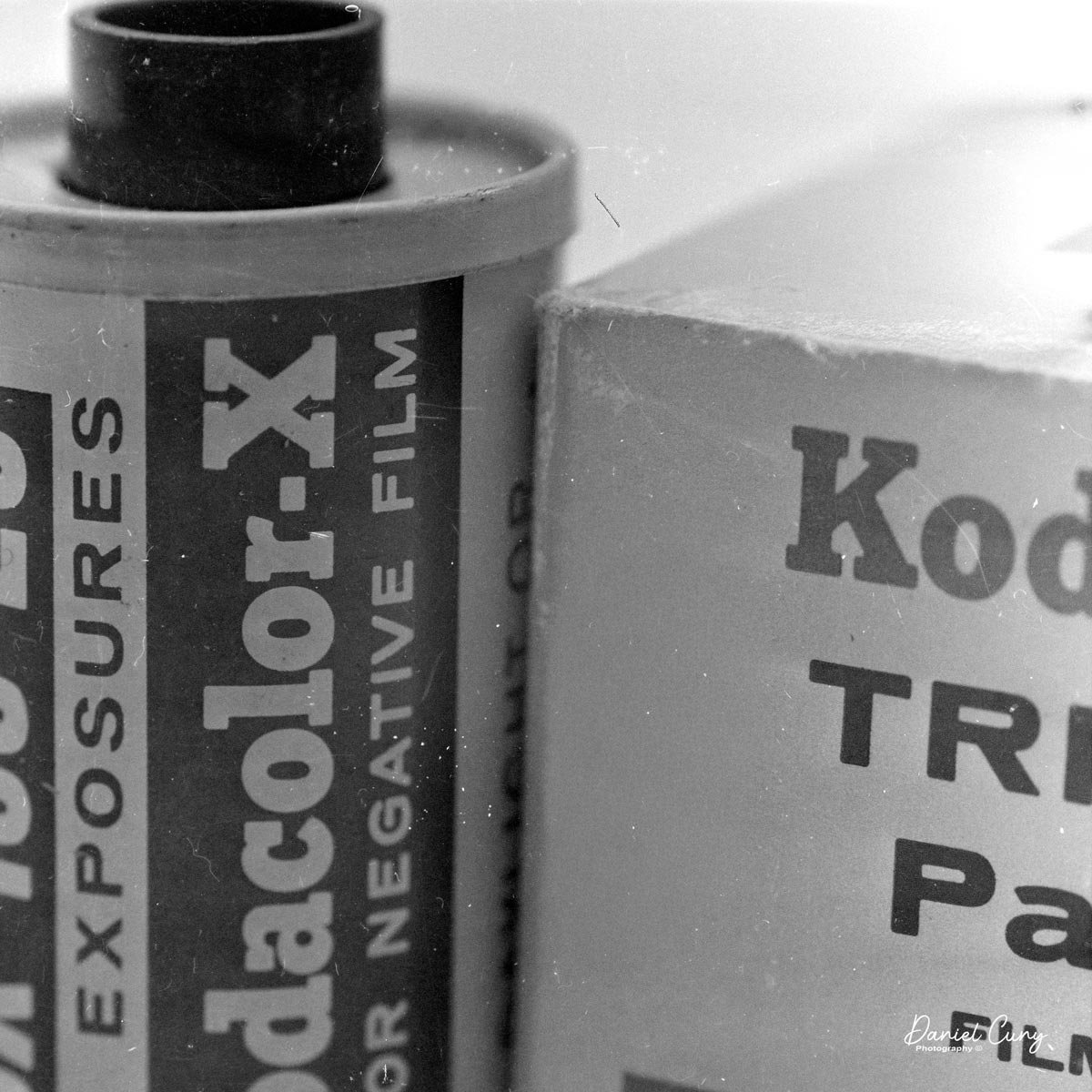
Back at home, I wanted to see what the SL66 could really do in its natural habitat: close‑up work. I set up a small scene with a 35mm film cassette and its box, first focusing as close as I could with the lens in the normal position. Even without reversing the lens, the built‑in bellows let me get in surprisingly tight. Then I flipped the lens around on the double bayonet mount and repeated the setup. The difference in magnification was obvious—the frame filled with the cassette and text on the box —and the tilt function came into its own, letting me hold both the front and top surfaces in focus at a reasonable working aperture.

My apologies for the dusty images.

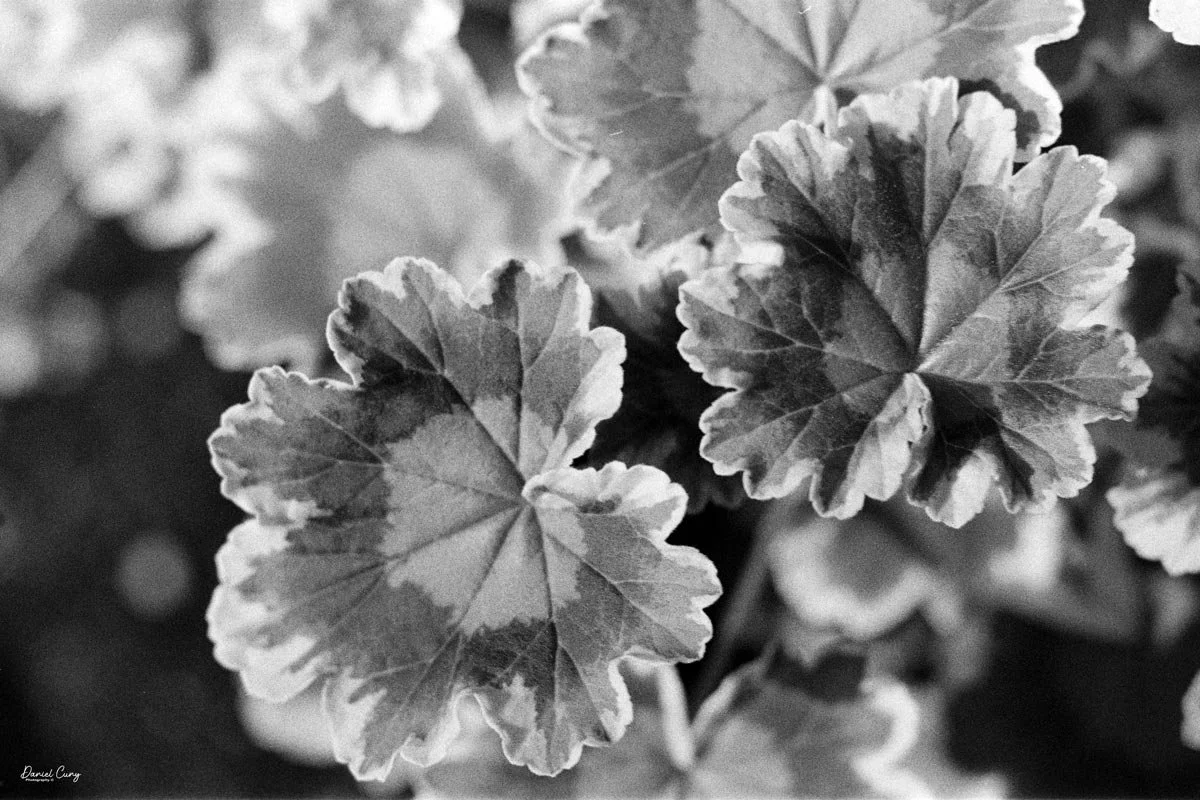
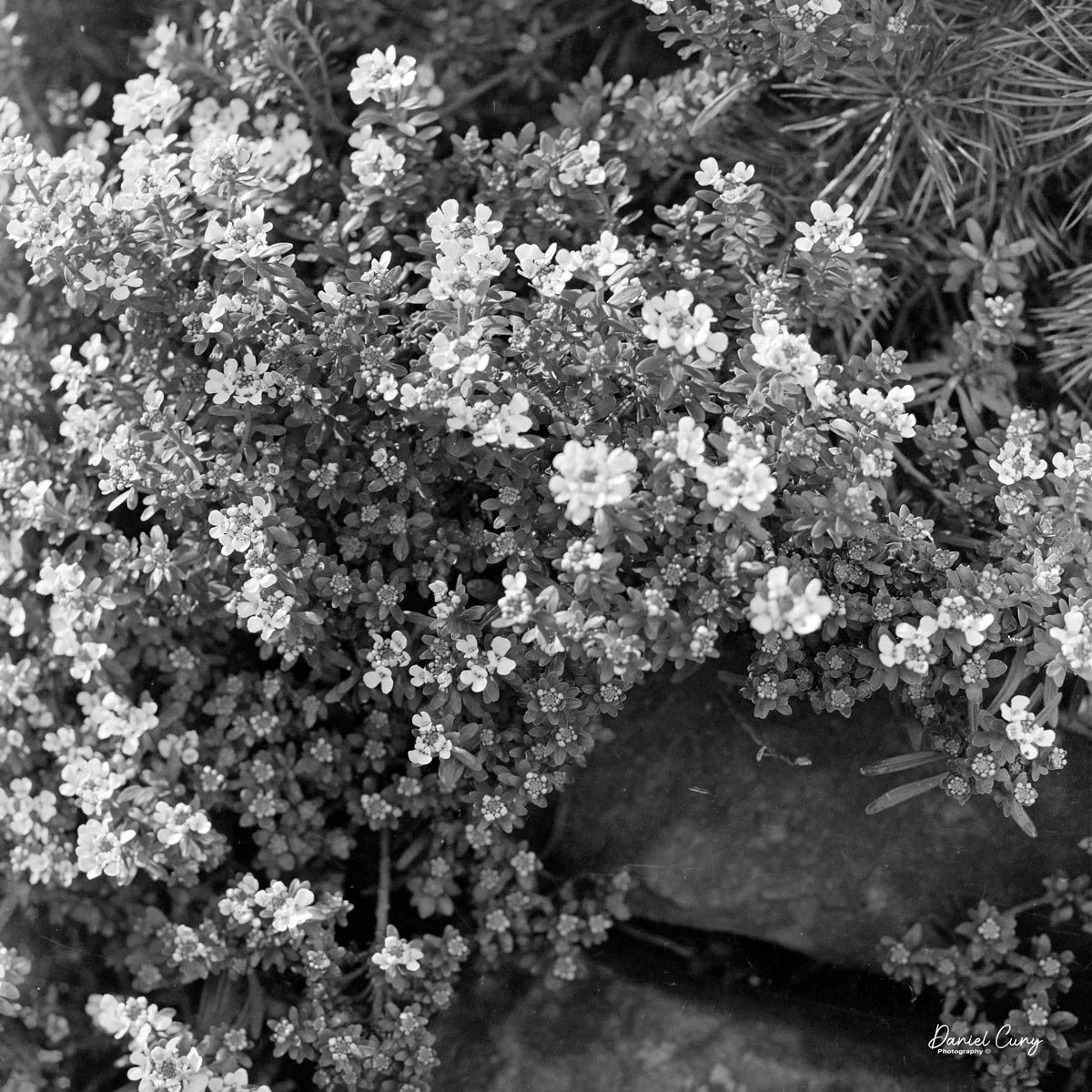
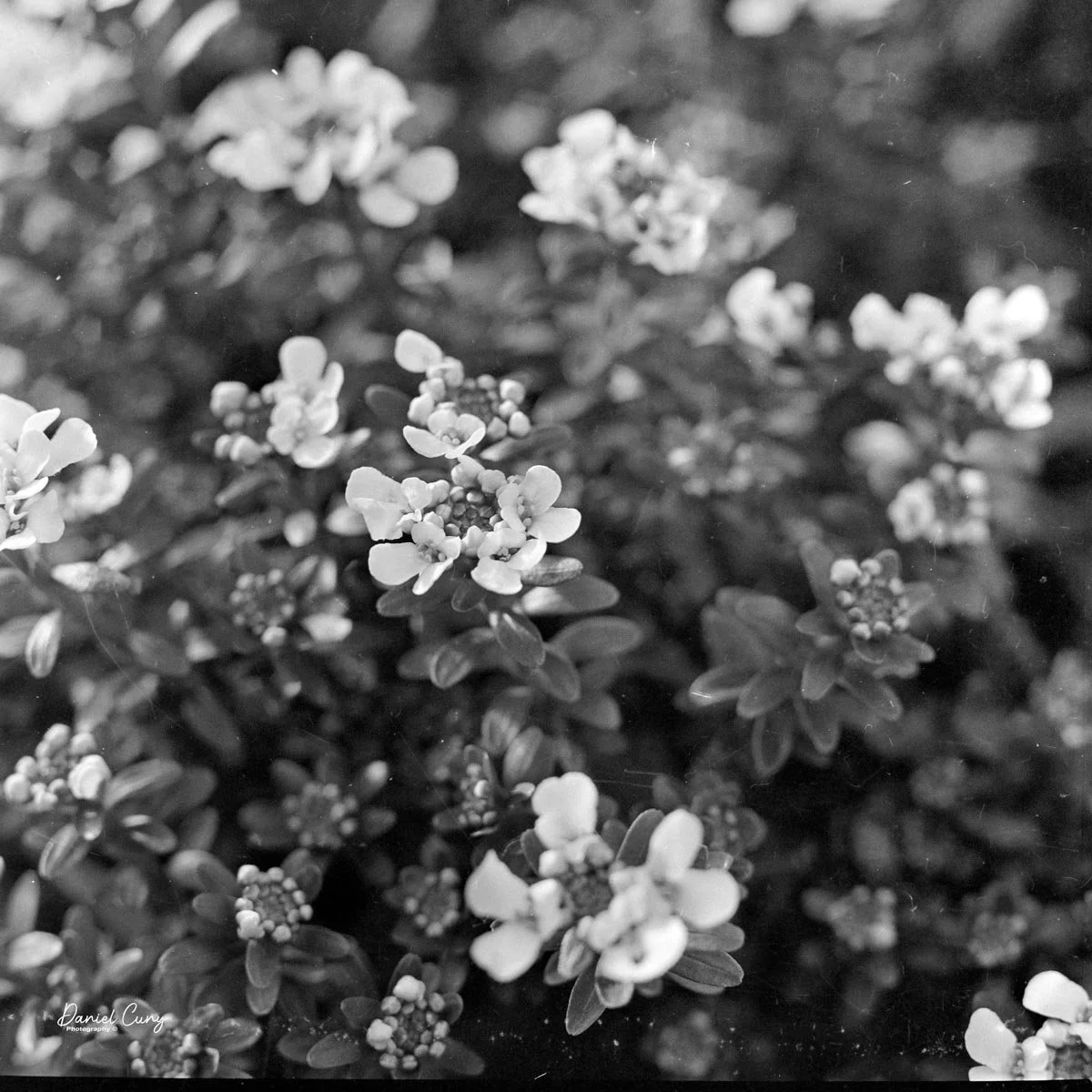
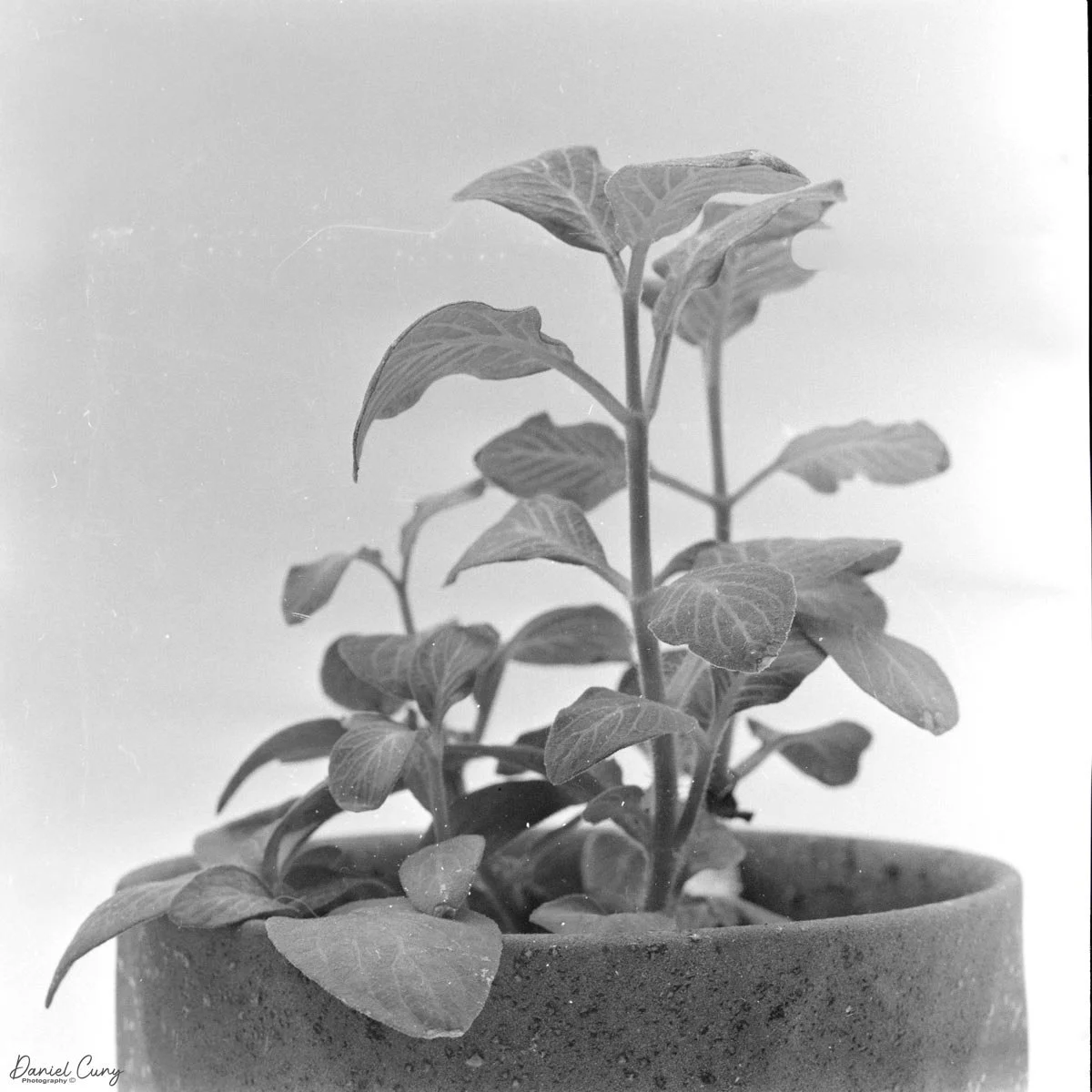
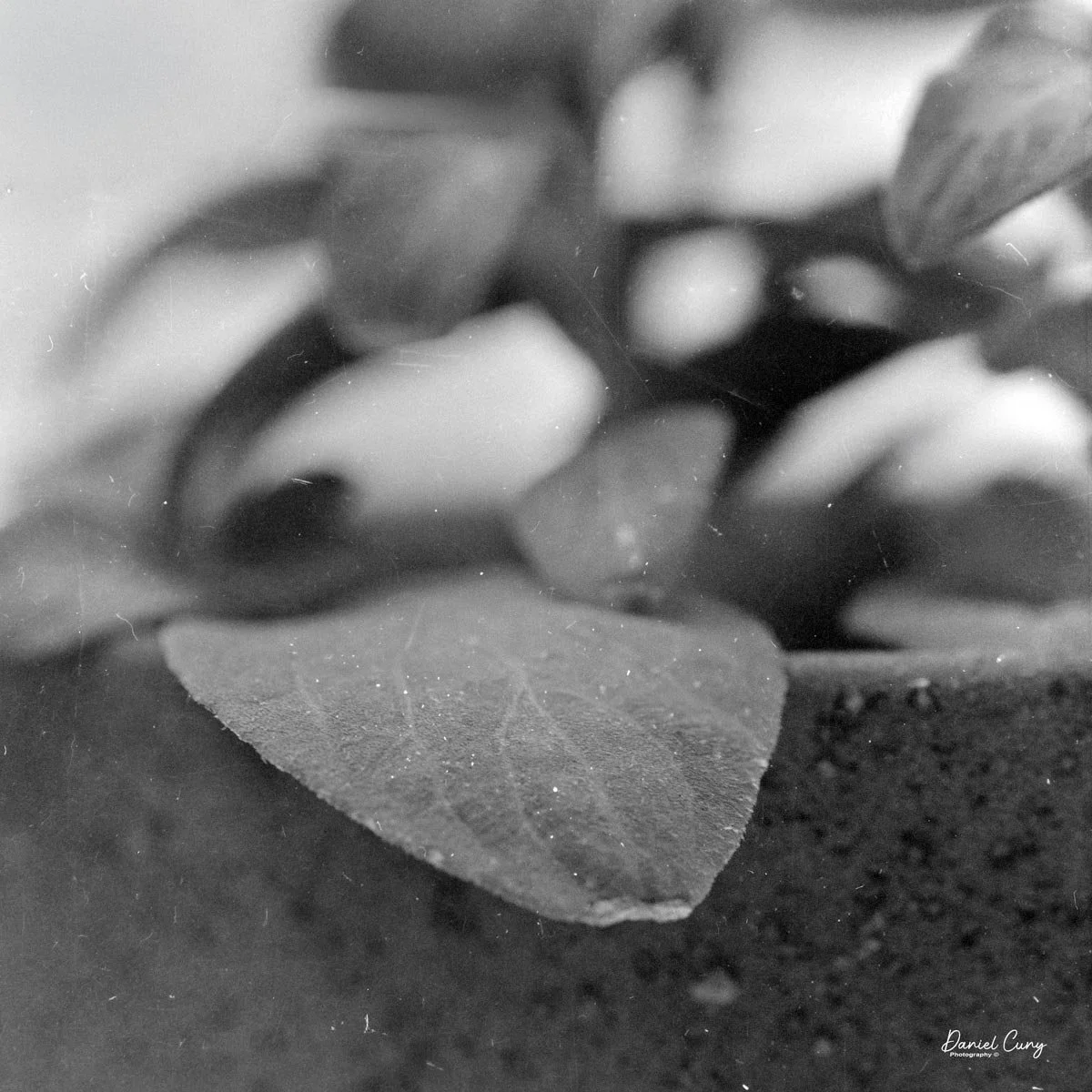
I also pointed the camera at a plant in my office, working closely again. Here, the combination of bellows, tilt, and that Zeiss glass really shone: crisp detail where I wanted it, smooth falloff where I didn't, and a rendering that feels more like a small view camera than a traditional medium‑format SLR. The process is slower than with a modern macro lens and autofocus, but the results—and the experience of making the images—are deeply satisfying.

Conclusion: Is the SL66 the Best Medium‑Format SLR?

In my personal opinion, the Rolleiflex SL66 is the best medium‑format single‑lens reflex camera I've ever used. It isn't the lightest, fastest, or most convenient option, but as a creative tool—especially for close‑up, product, and careful location work—it's truly exceptional.

 Why I let it sit so long is beyond me. The camera is a joy to shoot, and the results justify the effort. Small design touches like the dark‑slide holder, the smart film advance on the back, the generous close‑focusing via bellows, and the ability to reverse lenses for even greater magnification all add up to a macro photographer's dream. The overall build quality, leatherwork, and control layout make it feel every bit the premium instrument it was intended to be.

 That said, it's important to be honest about the downsides. The SL66 is heavy and bulky compared with many 6×6 systems; accessories and lenses can be harder to find and more expensive than Hasselblad equivalents, and the focal‑plane shutter's 1/30 flash sync may be a deal‑breaker for some styles of studio work. It's also an older, complex mechanical camera, which means a good technician and a healthy maintenance budget are essential.

 If you value portability, fast handling, and high sync speeds above all else, there are better choices. But if you're drawn to careful composition, close‑up and tabletop work, and you appreciate a camera that rewards deliberate, thoughtful photography, the Rolleiflex SL66 is tough to beat. It has become one of my favorite medium‑format cameras, and I fully expect it to see regular use.

 Thank you for taking the time to learn about my new favorite medium‑format camera. I'd love to hear your experiences with the SL66—or your questions about this or any of my other camera reviews—and if you're curious about owning one yourself, feel free to stop by my eBay store, Cuny's Cameras and Photos, to see what I currently have available.

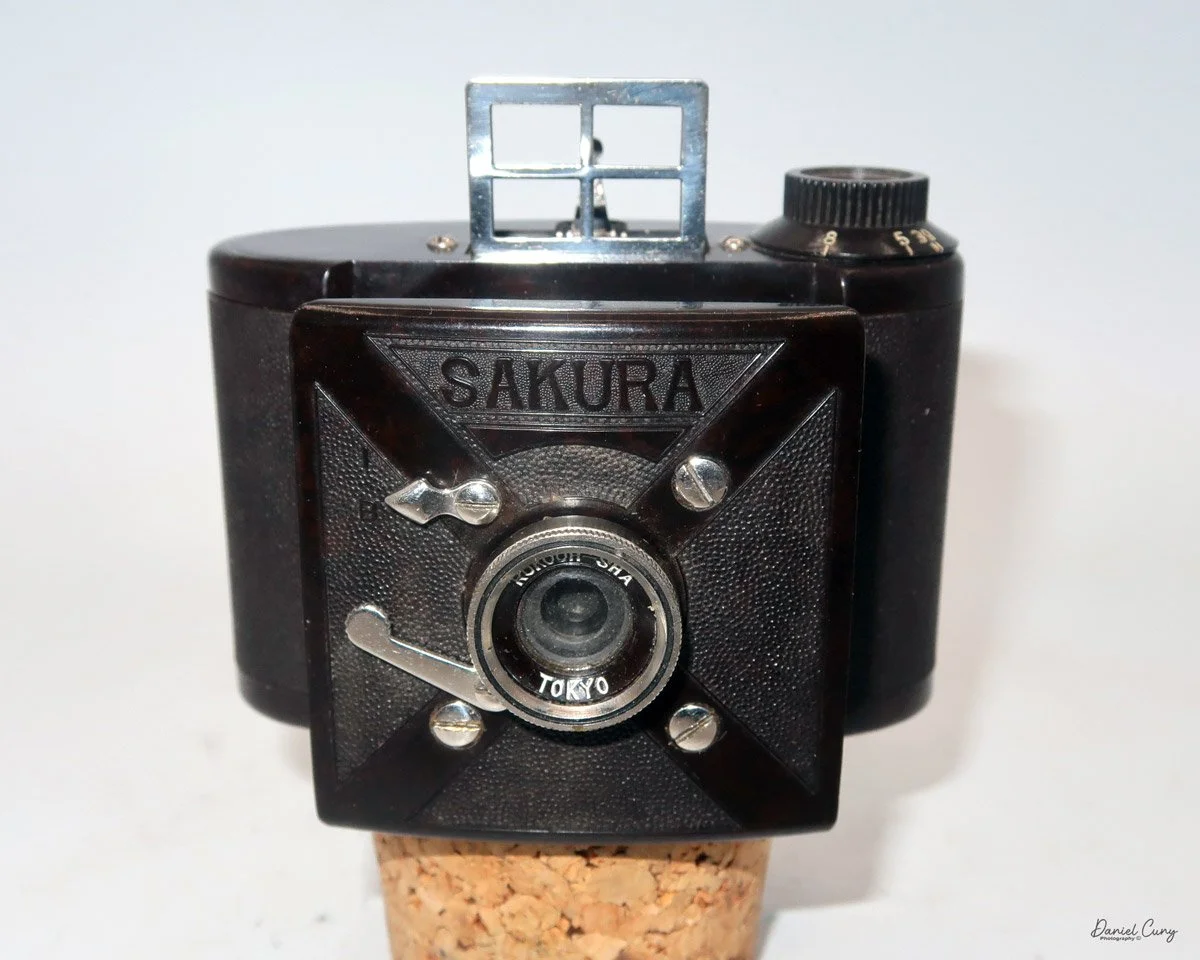
Sakura Bakelite camera

The 1930s Sakura Bakelite: A pocket-sized piece of Japanese history with a surprisingly modern 'X' design.

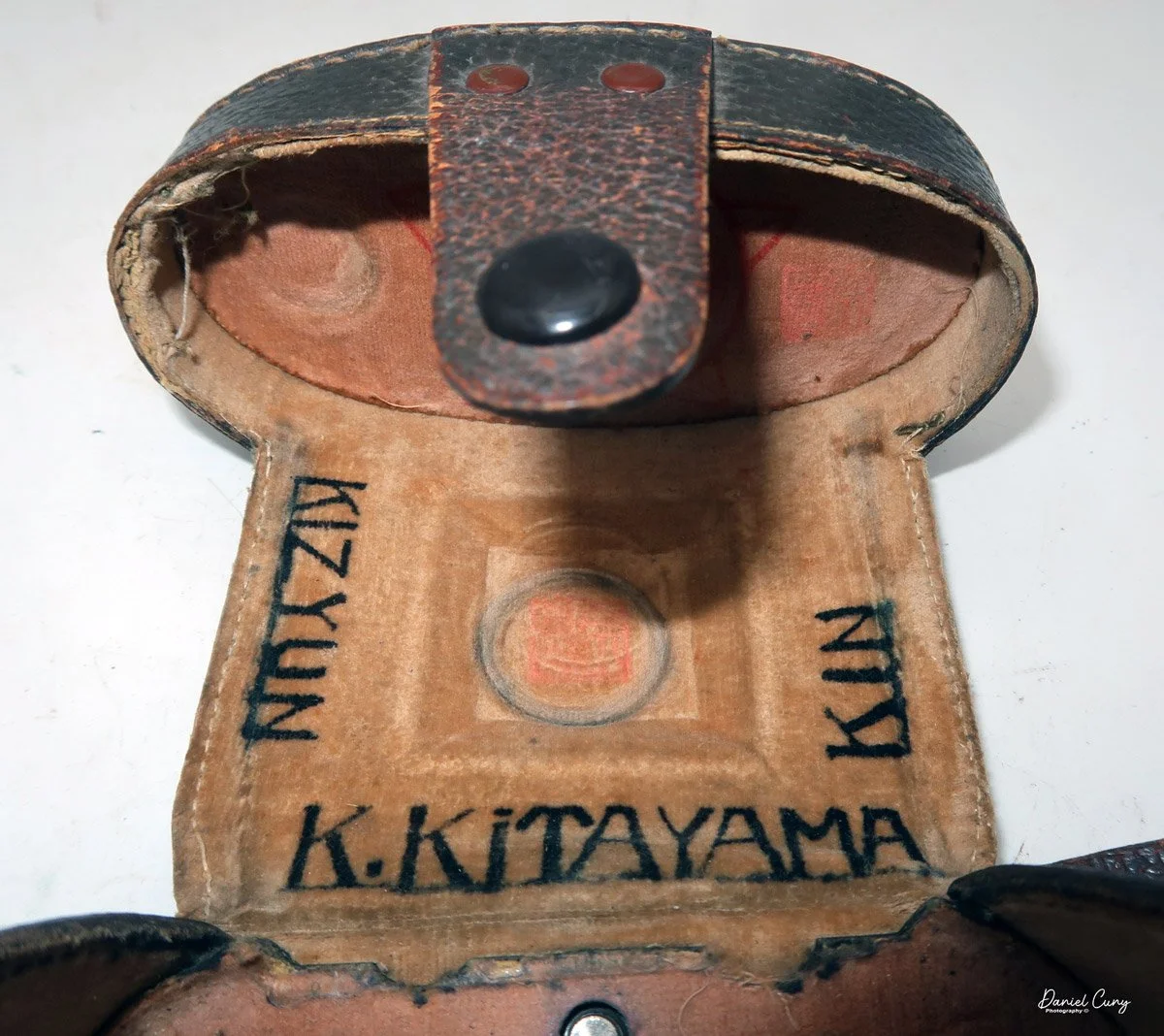
Looking through my camera collection, I wanted to find something more unusual to write about this week. When I picked up the Sakura camera in its case, I didn't think much about it until I opened the camera's case and saw the writing inside. 

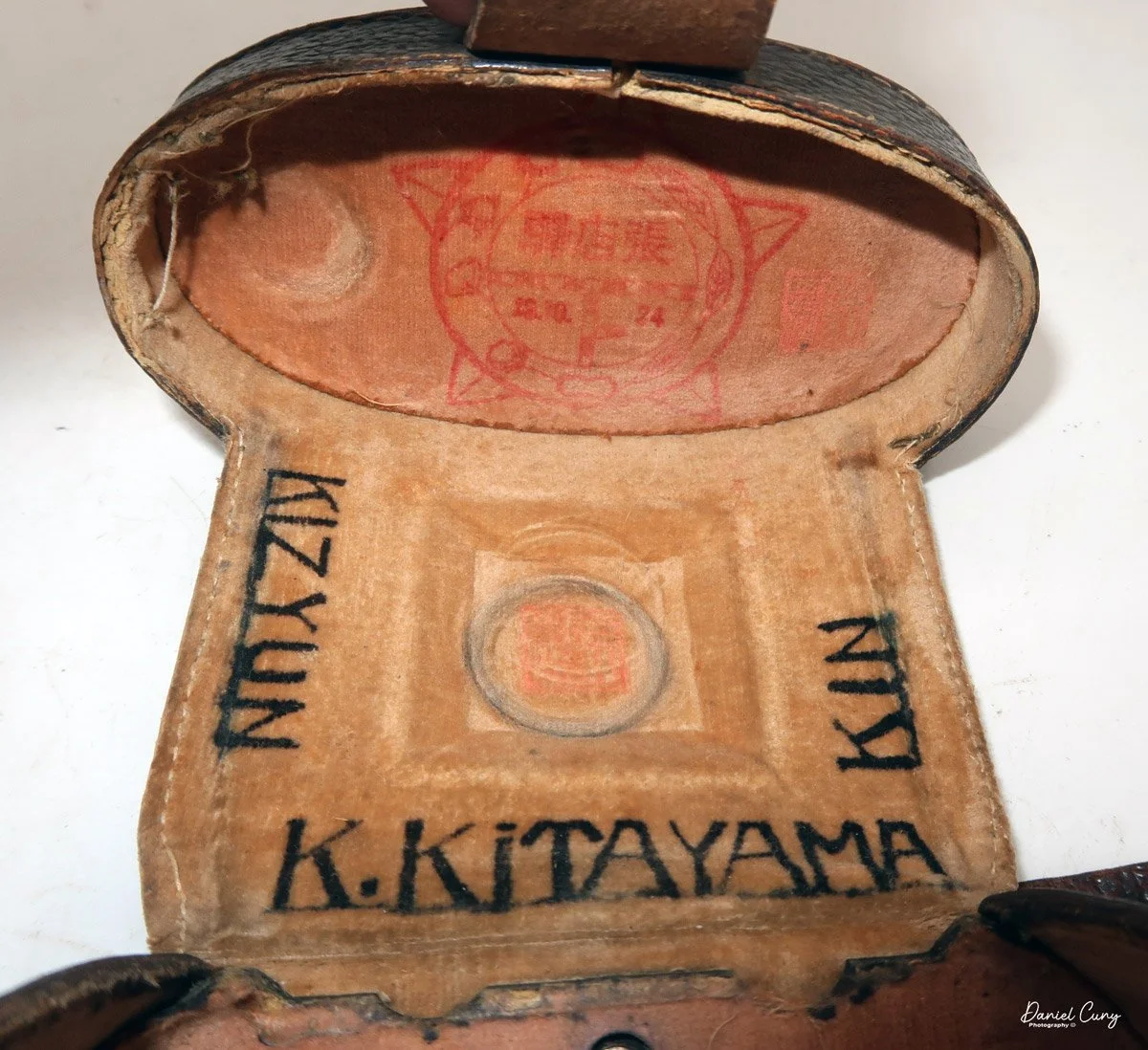
 The writing said, "K. Kitayama" along the bottom, and "kin" on the right and kizyun" on the left, so my immediate thought was to try and do some research to see if I could find the ancestors of the camera, or possibly even the owner of the camera. 

 Since the camera was released in Japan in 1937, I imagined the original owner might still be alive, but the chances are slim. Also, since the lettering was in English and not Japanese, the camera was brought to the US by the owner, but when? 

 Looking more closely at the case, there is a red stamp on the inside top. It appears to be in Japanese, but it's pretty faded; there's also a number "74" that is pretty visible in the lower right corner. So, did the camera enter the US in 1974 when the owner brought it here from Japan, and was it stamped by customs or the Japanese government before leaving?

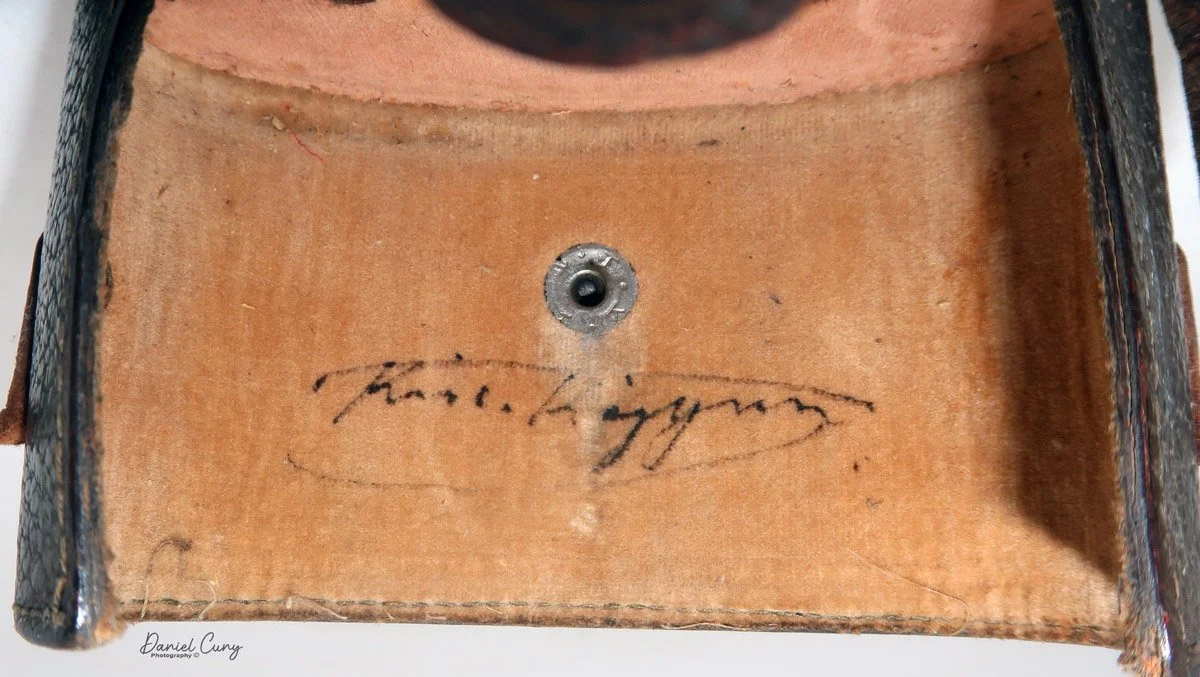
 Also, when I took the camera out of the case to inspect it for this week's blog, on the back wall of the case is a signature written in ink that appears to be a name starting with K. and Kizyun? I tried many different Google searches for different spellings. While I find these things fascinating, my chances of finding the original owner, or possibly some family members, are very slim. Still, my passion for finding the original owner remains. 

Have you ever found a piece of gear with a name inscribed on it? I'd love to hear your detective stories in the comments.

 Now that I've spent way too many hours going down the rabbit hole trying to find out who the camera belonged to, let me tell you more about the camera itself.

My Sakura Bakelite camera

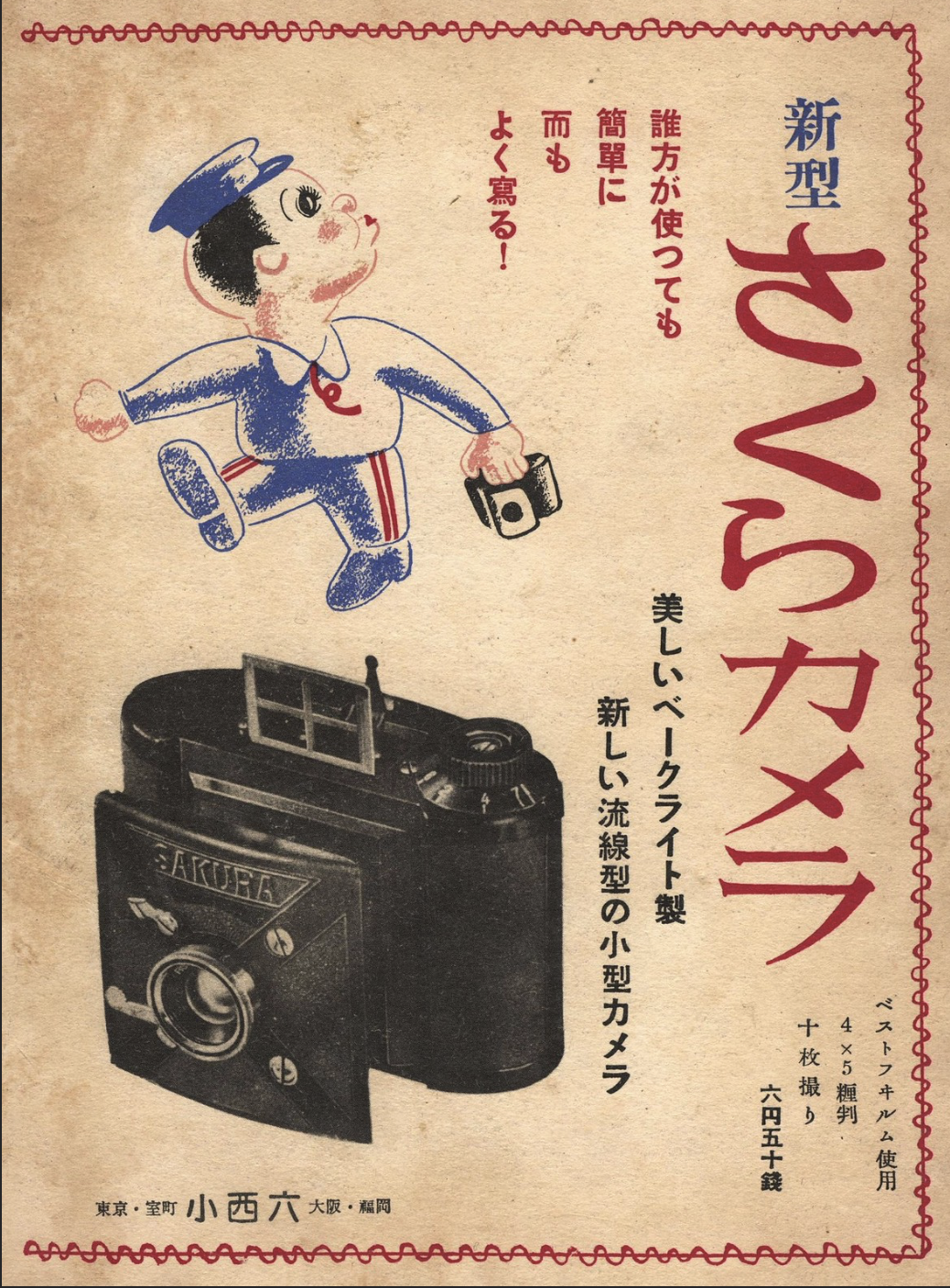
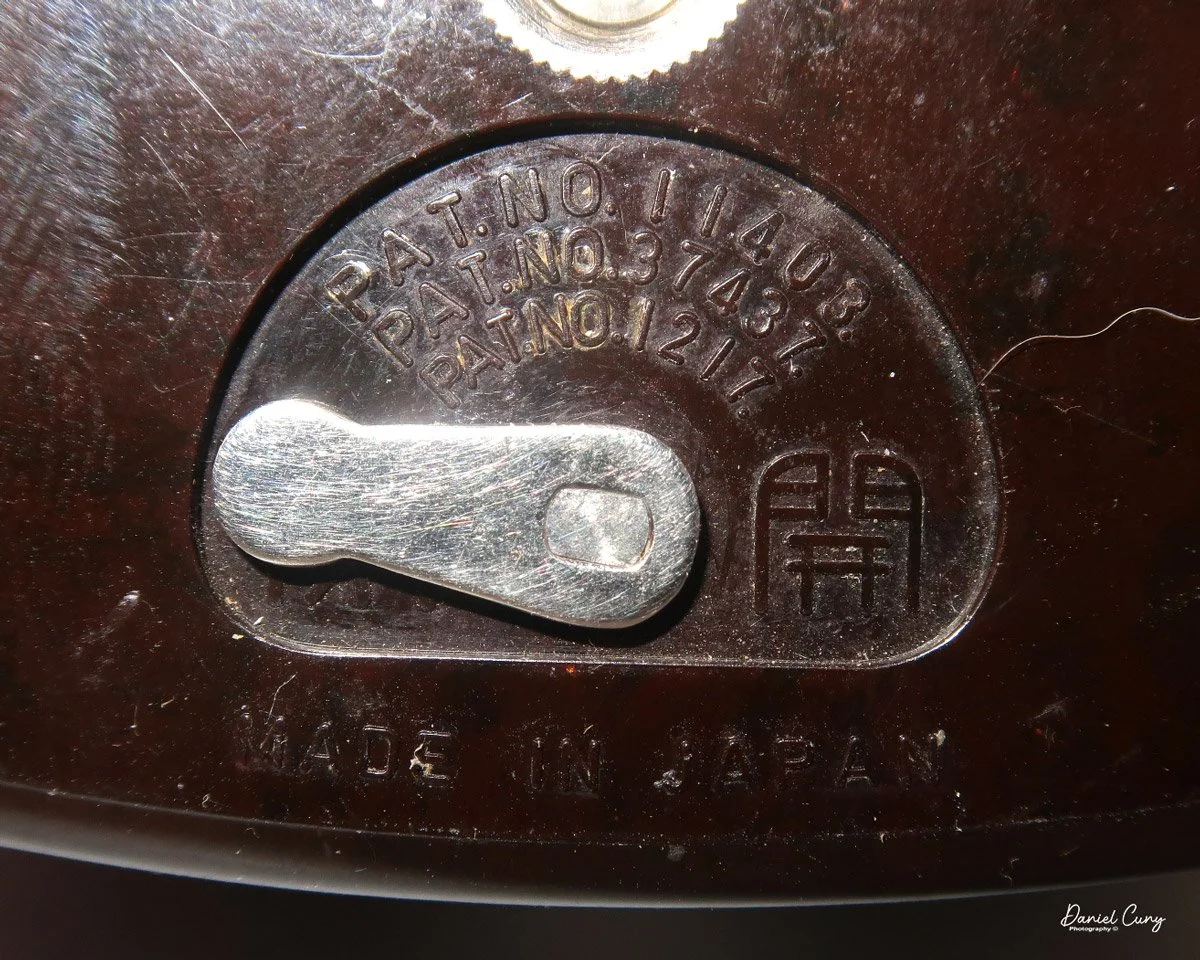
 The Sakura (Bakelite) camera is an odd, oval-shaped model made by Konishiroku in the late 1930s. Konishiroku was the original company that became Konica. While the Sakura camera is a very basic model that I'll describe below, I understand it's rather rare.

 Sakura, meaning "Cherry" in Japanese, was a short-lived brand produced by Konishiroku during the 1930s. Their most popular items were a series of 3 different, beautifully colored, Sakura Box cameras. One of the cameras used 127-sized film for its 4x6.5cm format. In contrast, their larger cameras were 4.6x6cm or 6x9cm format cameras on 120 film. These cameras are also very collectible and rare items.


Konishiroku Before World War II:


The story of Konishiroku (the predecessor to Konica) is essentially the birth of the Japanese photographic industry. Long before it became a global imaging giant, the company began in 1873 when Rokusaburo Sugiura began selling photographic and lithographic materials at Konishiya Rokuemon, a traditional pharmacy in Tokyo.

Ad for Sakura camera from Camera-Wiki

 By 1876, Sugiura moved the photographic department to a dedicated shop called Konishi Honten. This move was visionary; at the time, photography was a fledgling Western import, yet Sugiura foresaw its cultural and commercial potential in Meiji-era Japan.

 In the late 19th century, Japan relied almost entirely on imported cameras and chemicals from Europe and America. Konishi Honten sought to change this. In 1902, the company established the Rokuoh-sha factory in Tokyo, marking a pivotal shift from a mere retailer to a pioneer manufacturer.

Just one year later, in 1903, they released the Cherry Portable Camera. This was Japan's first brand-name camera, a simple box-type unit that democratized photography for the Japanese public, much like the Kodak Brownie did in the West.

 Throughout the 1920s and 1930s, the company refined its engineering to compete with high-end German imports. Several key milestones defined this pre-war era:


  • The Pearlette (1925): Based on the Vest Pocket Kodak, this folding camera became an icon in Japan, remaining in production in various forms for decades.

  • The Lily and Idea series: These cameras showed Konishiroku's ability to produce sophisticated folding and plate cameras that appealed to serious amateurs and professionals.

  • Establishment of the "Konishiroku" name: In 1921, the company reorganized as a partnership, and by 1936, it was incorporated as Konishiroku Honten Co., Ltd.

 By the mid-1930s, Konishiroku was not just making camera bodies; it was a master of the entire "imaging chain." They produced Sakura brand cameras, film, and photographic paper. In 1935, they began developing their own high-quality lenses under the Hexar name.

 As the 1930s drew to a close, the Japanese government began consolidating the industry for the war effort. Konishiroku's precision manufacturing was increasingly diverted toward military optics, such as aerial cameras and rangefinders. However, the foundation they built—combining retail savvy with deep technical manufacturing—ensured that when the "Konica" brand eventually debuted in the post-war era, it was backed by over 70 years of institutional expertise.

My Camera:

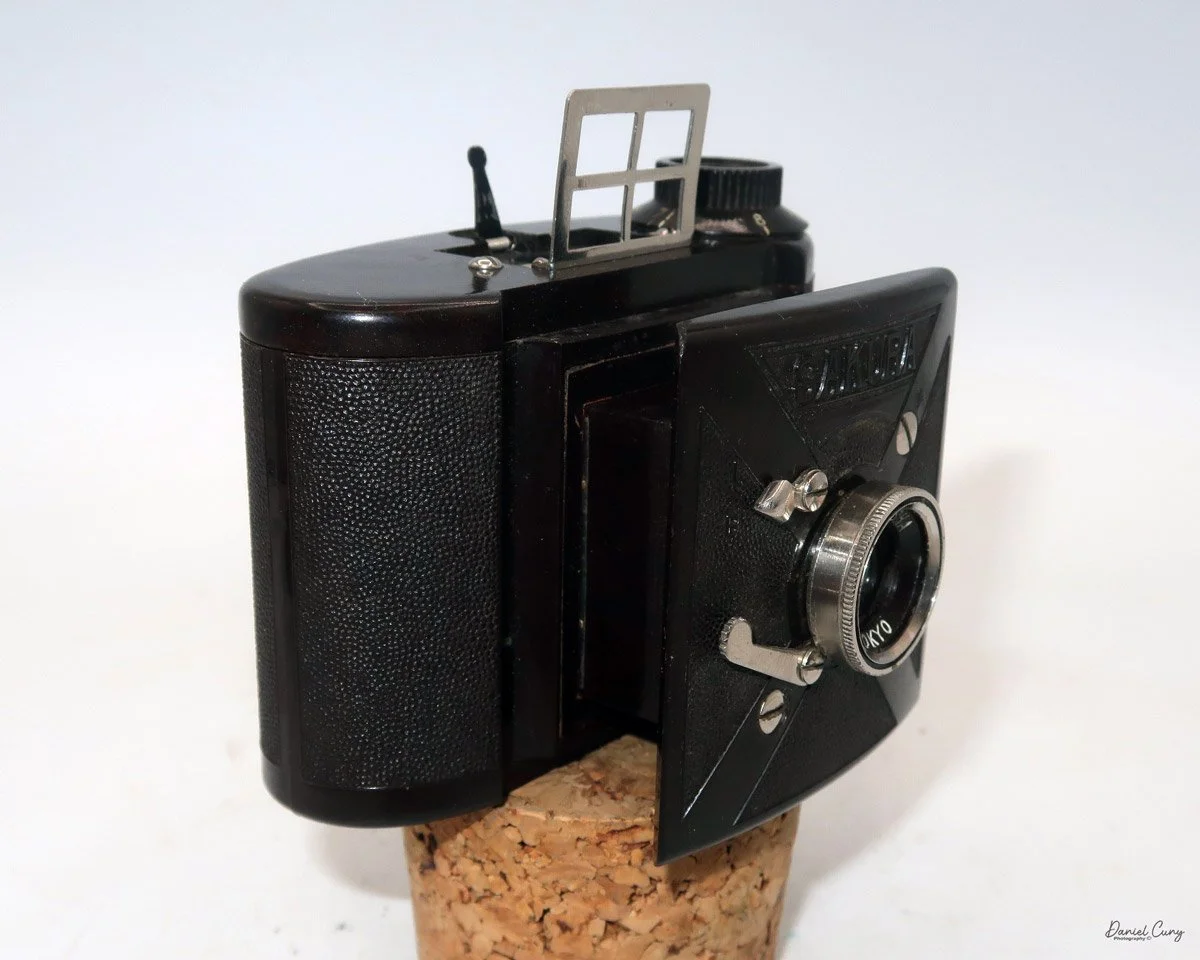
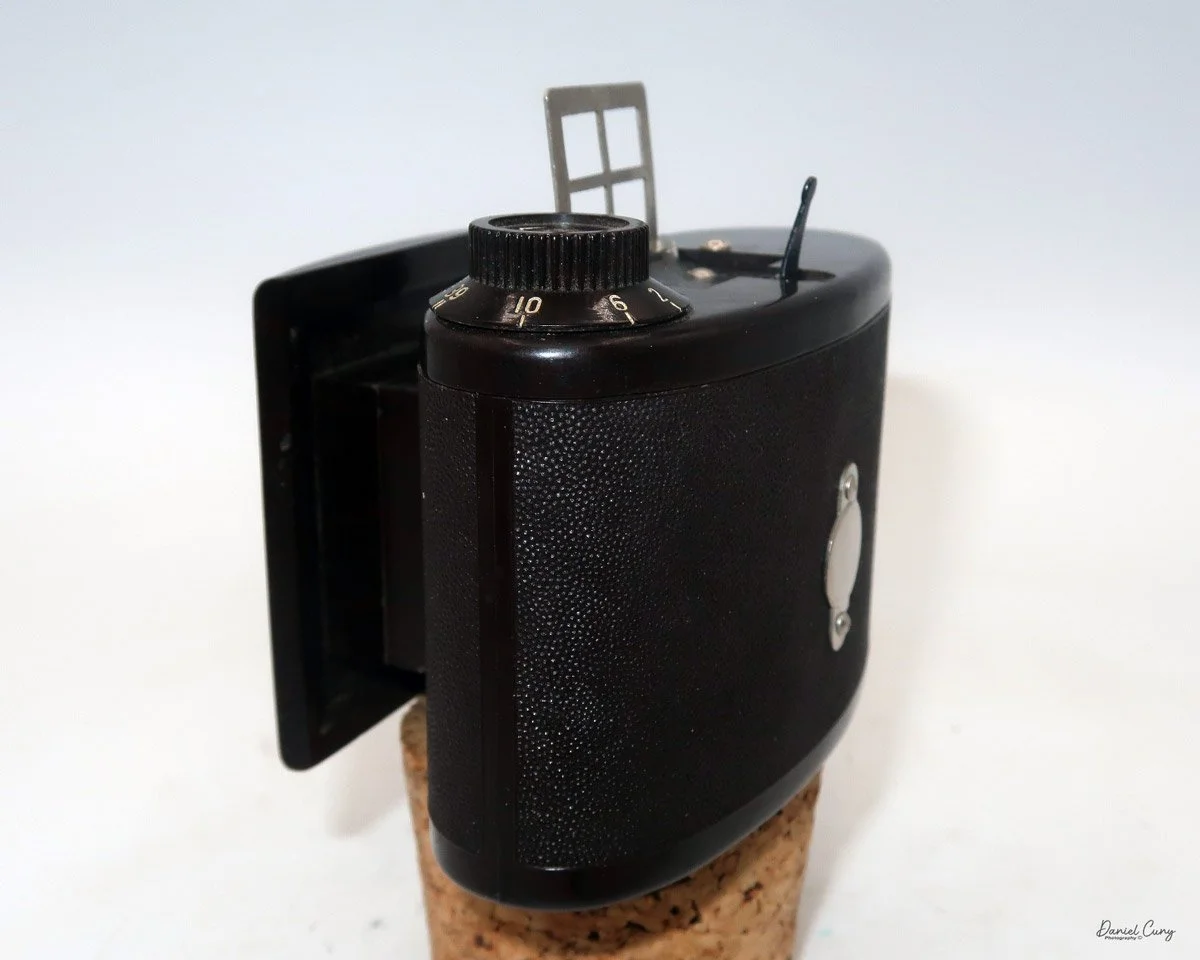
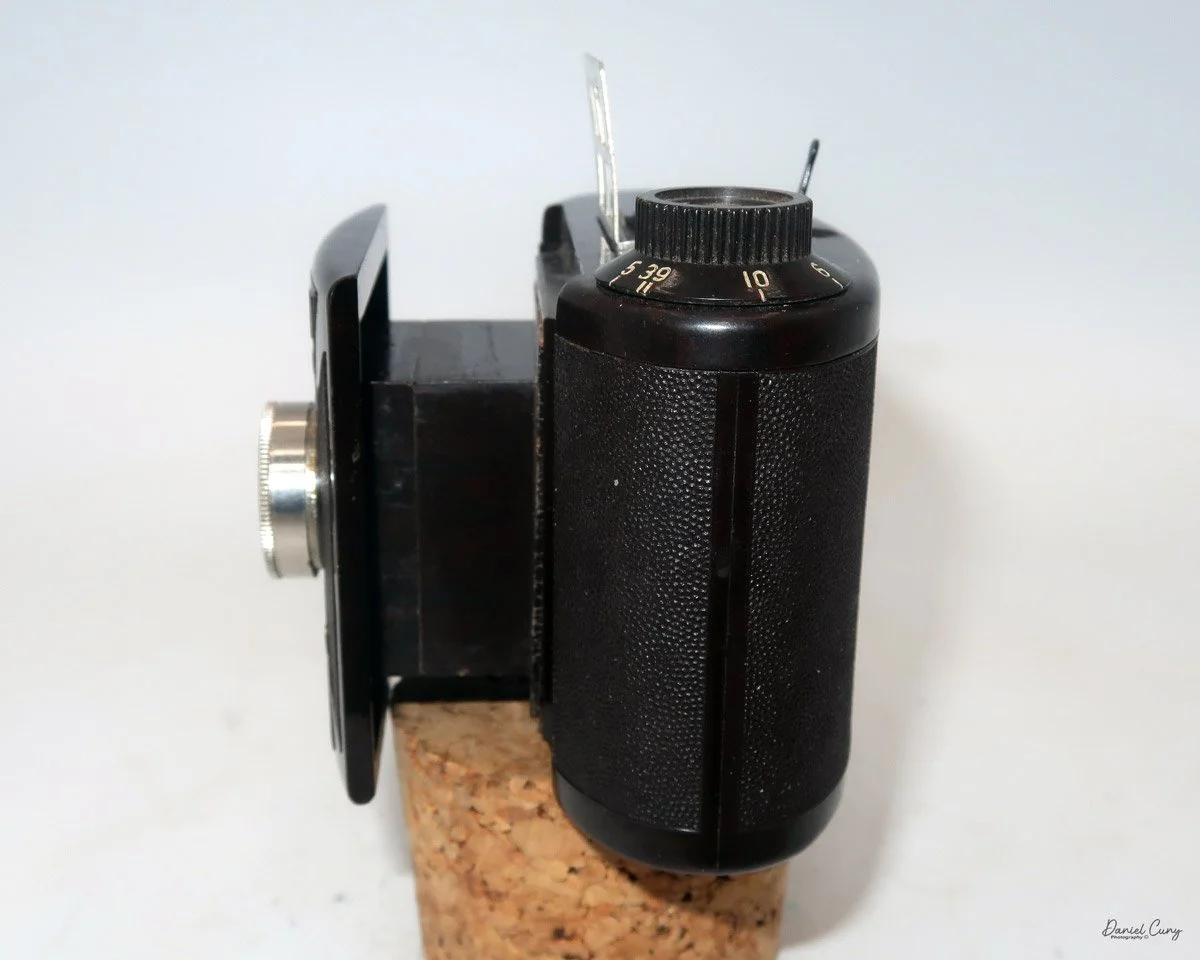
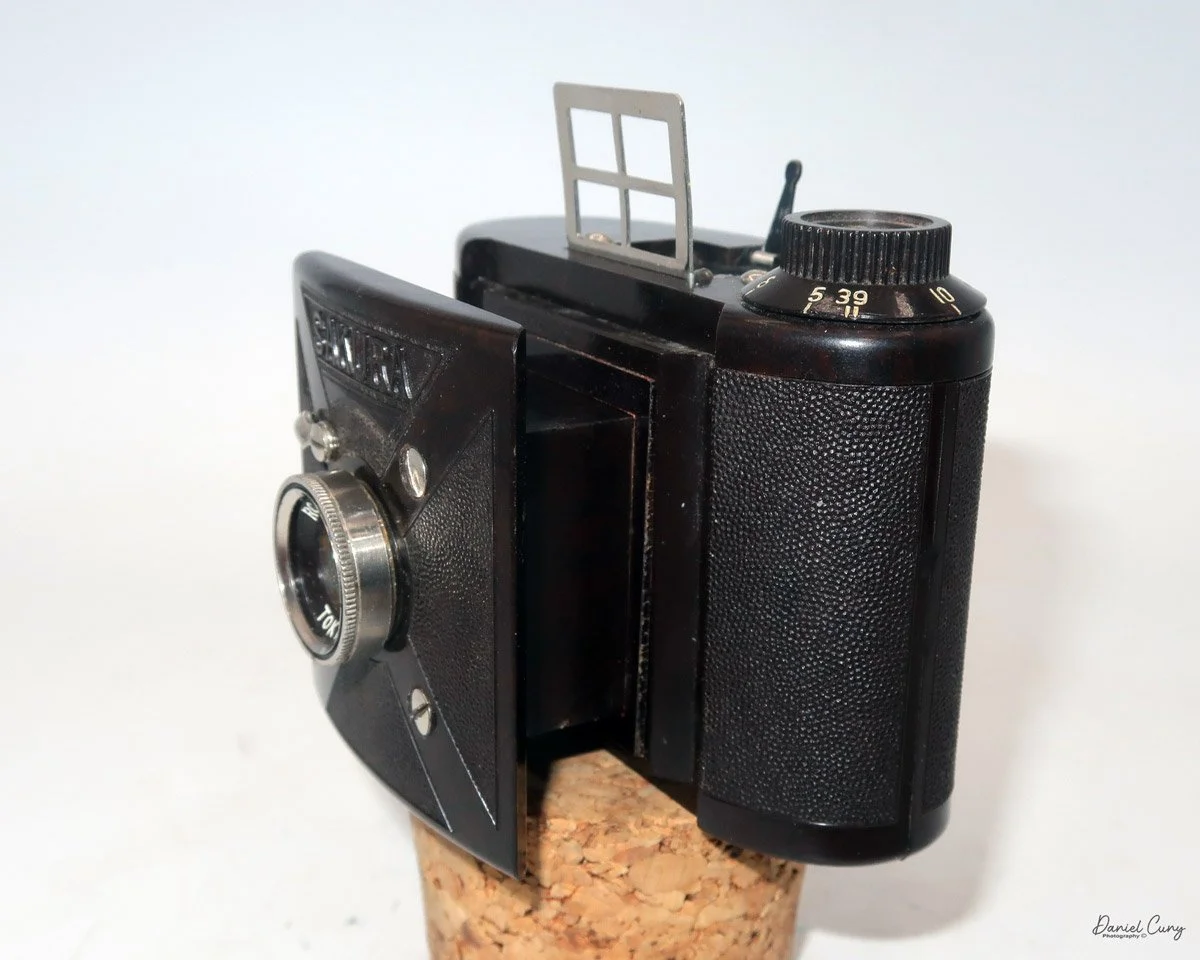
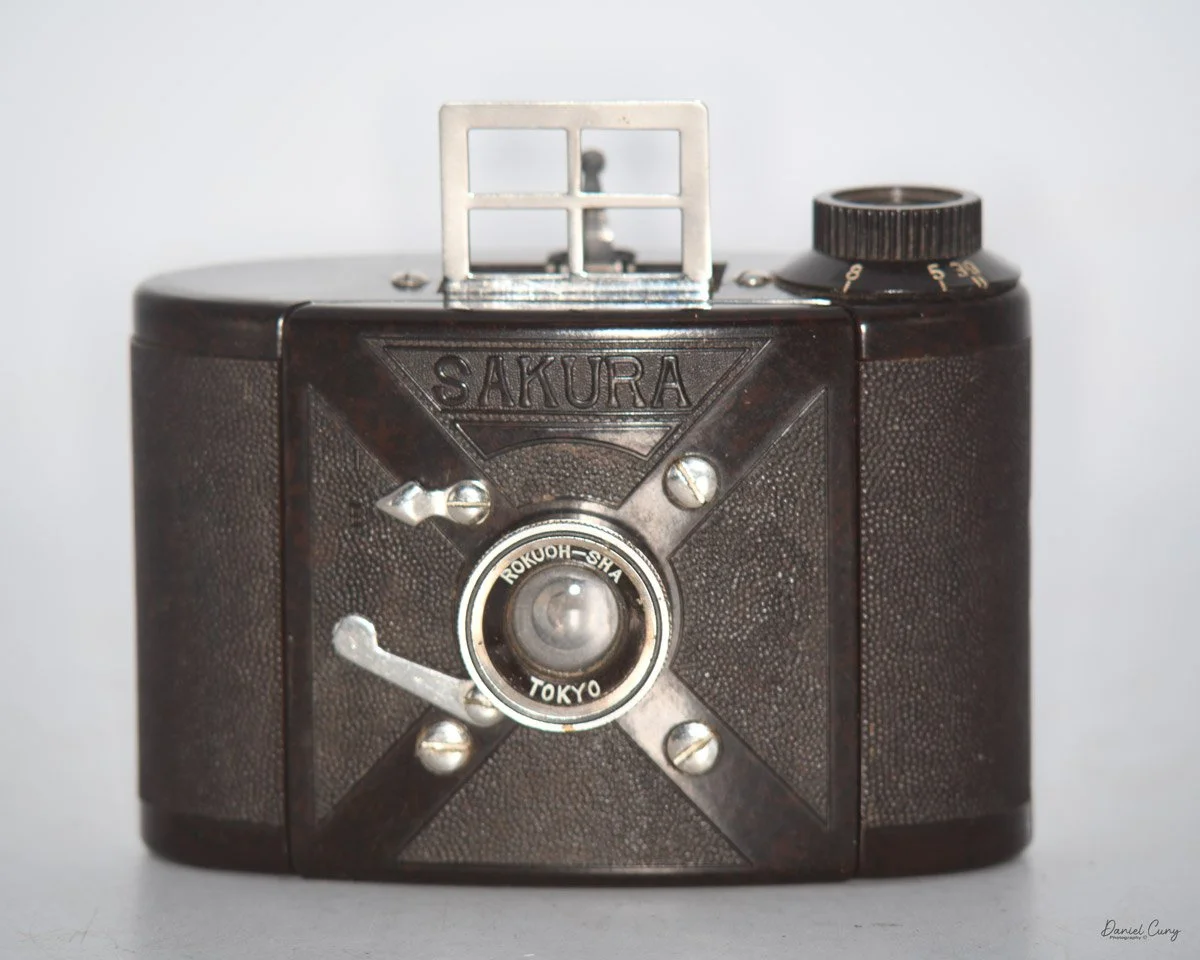
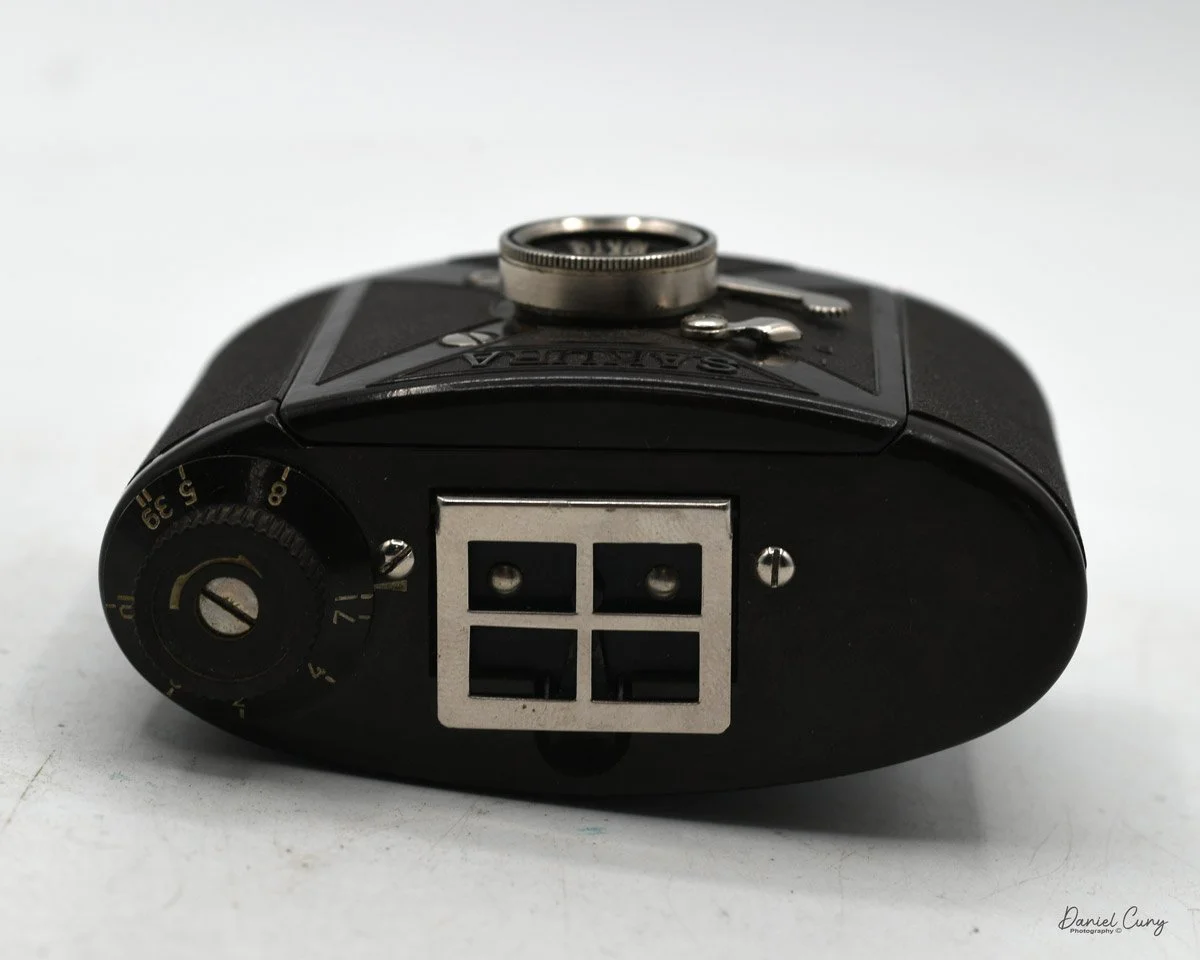
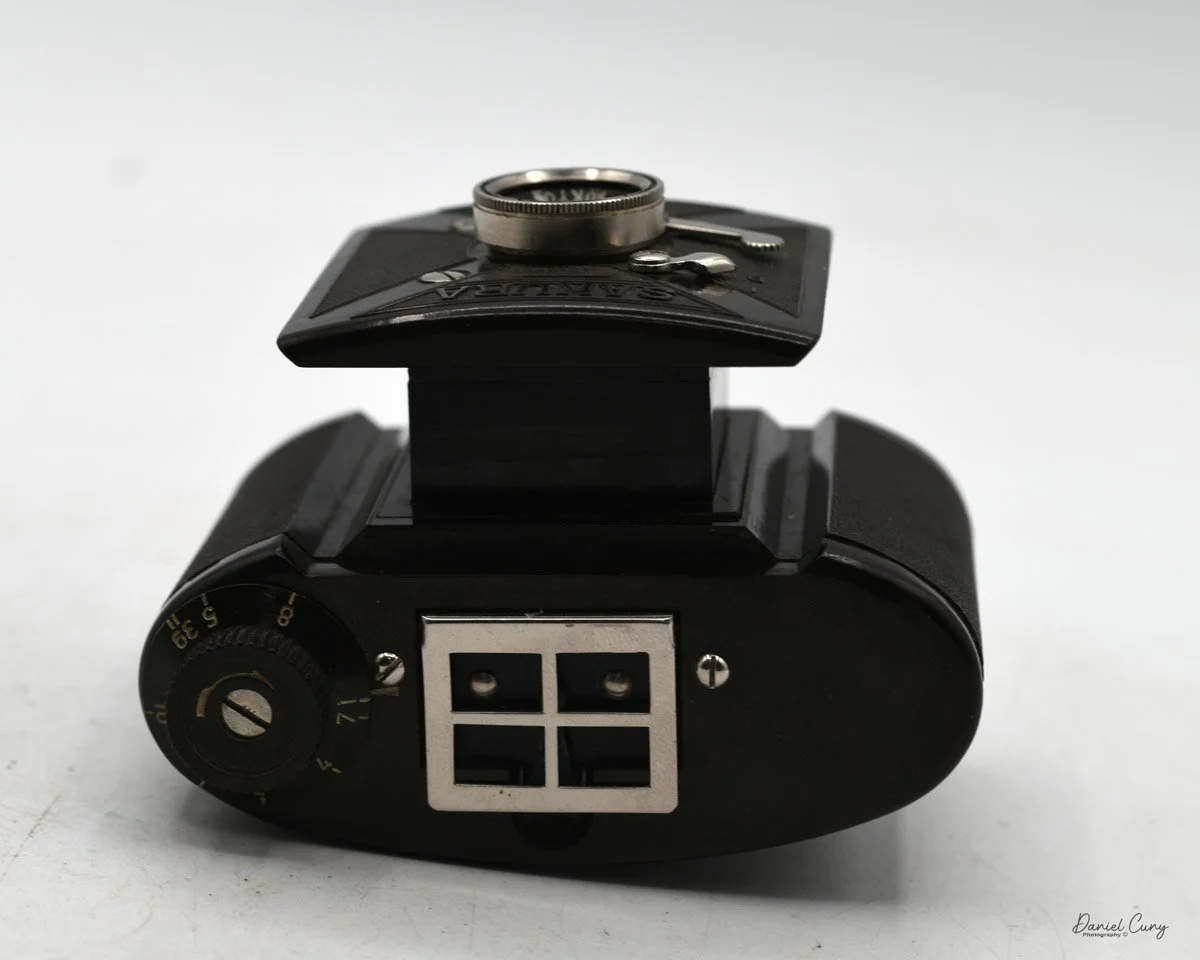
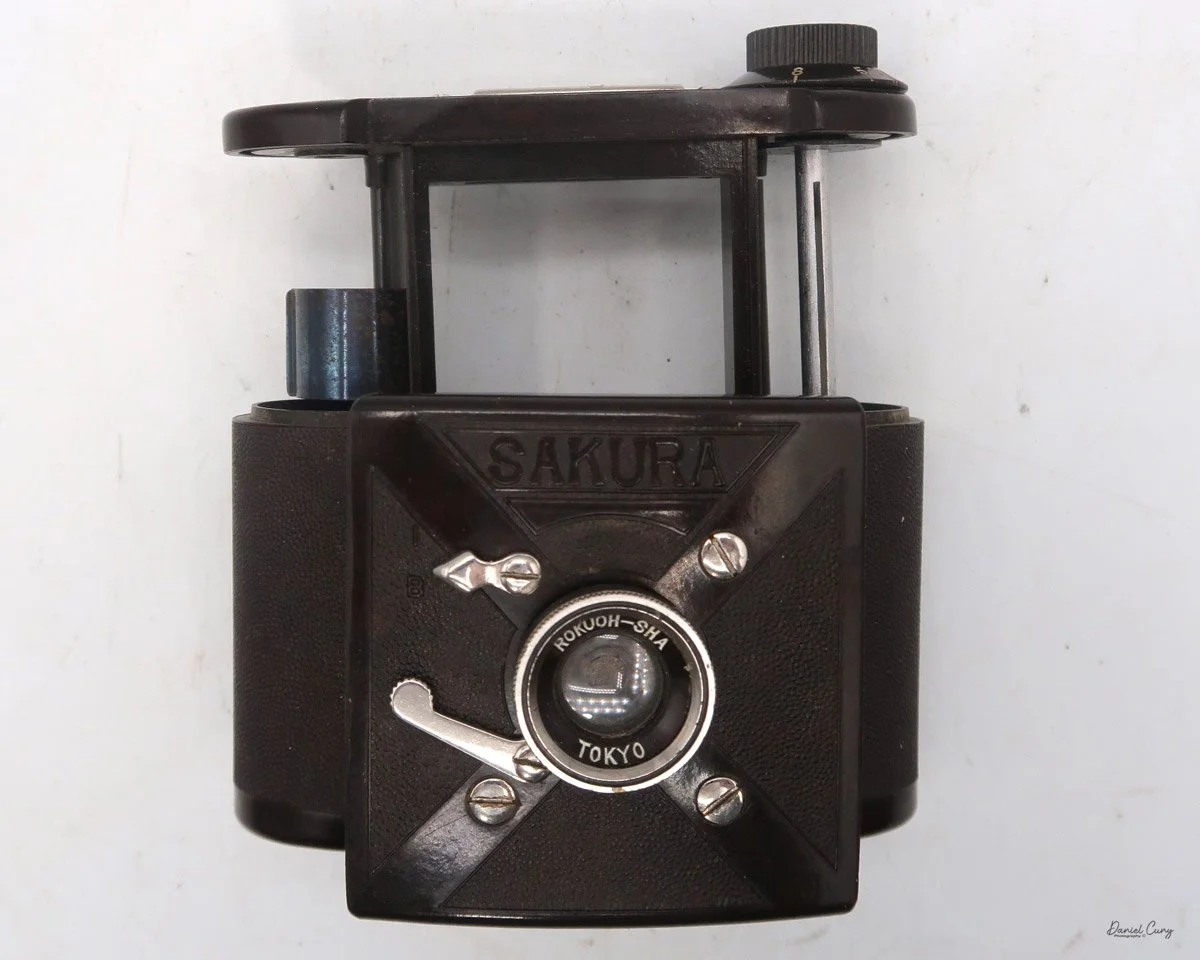
 My Sakura Bakelite camera is an odd, oval-shaped camera with a pull-out front lens used for taking photos, and it retracts when it's in its case for transport. It's only 3.75" wide by 2.75" tall, including the film winding knob, and 2" deep with the lens retracted or 3" with the lens extended. It only weighs 6.1 ounces without film in the camera.

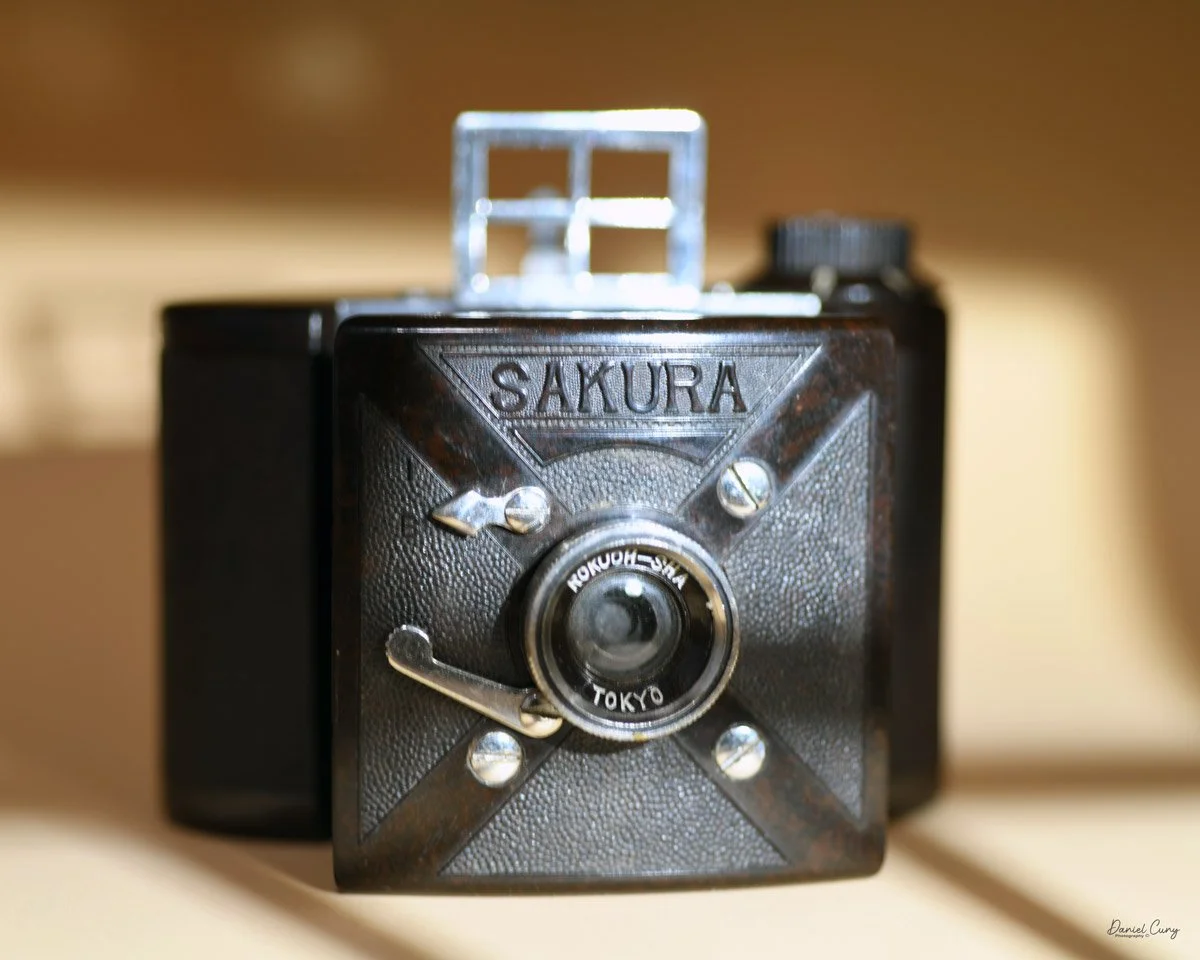
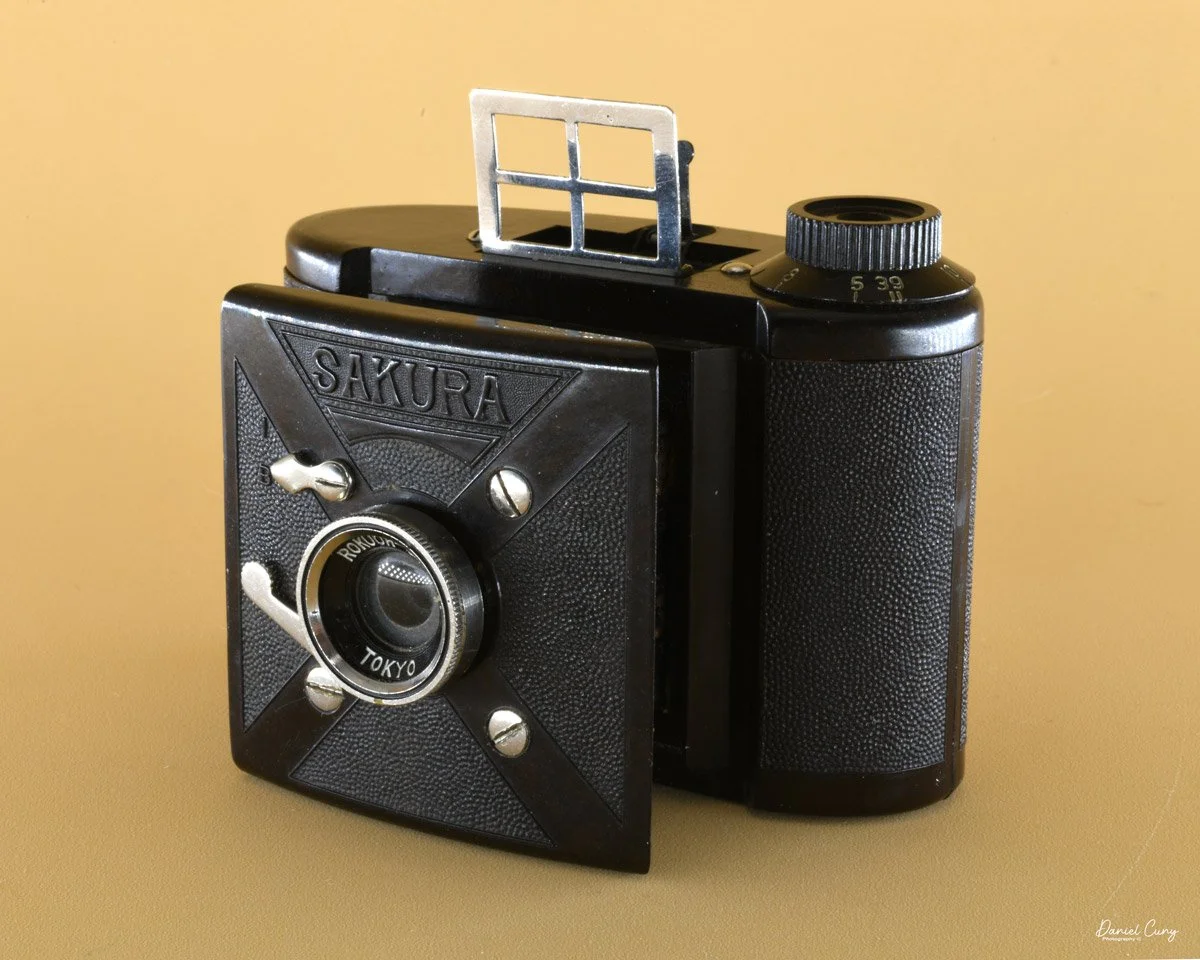
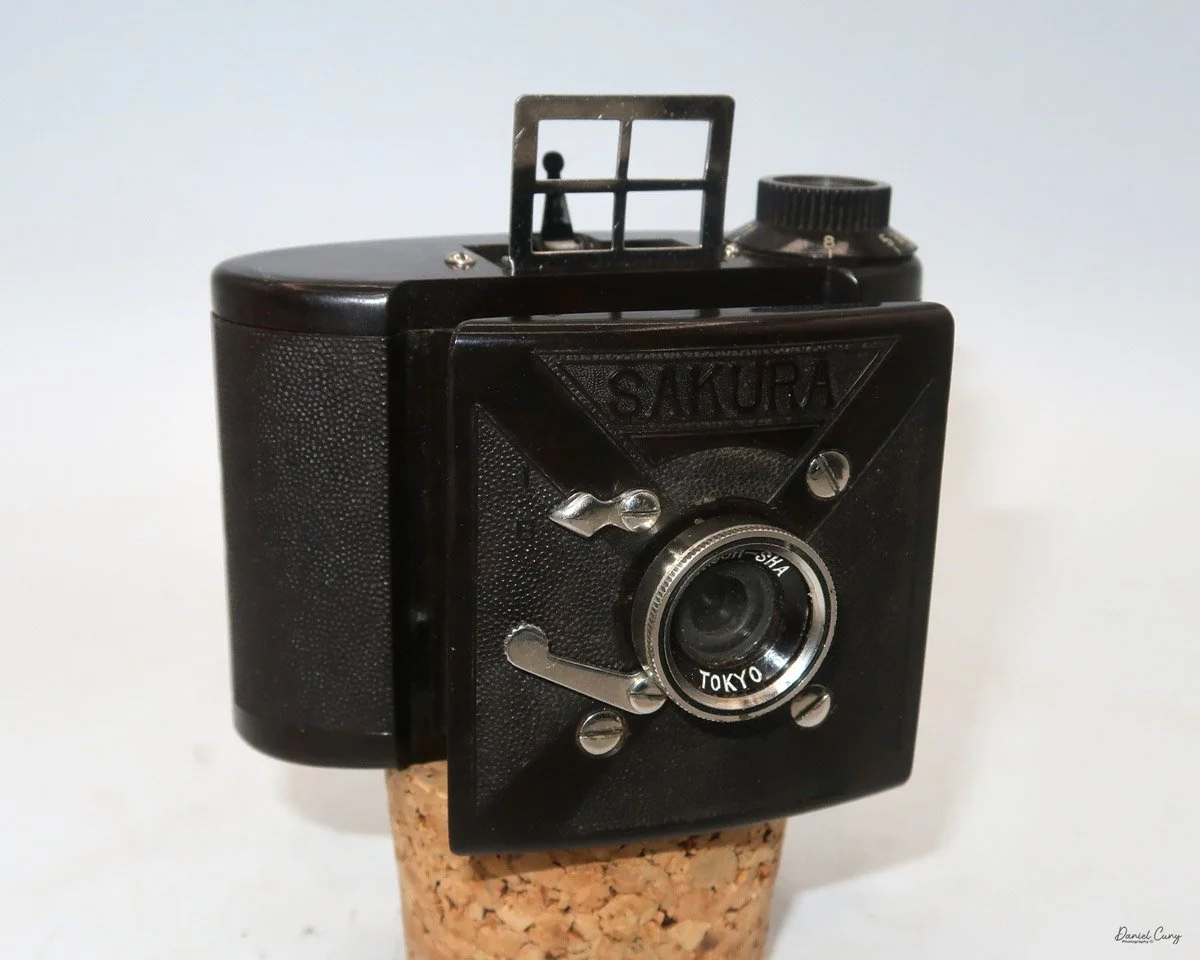
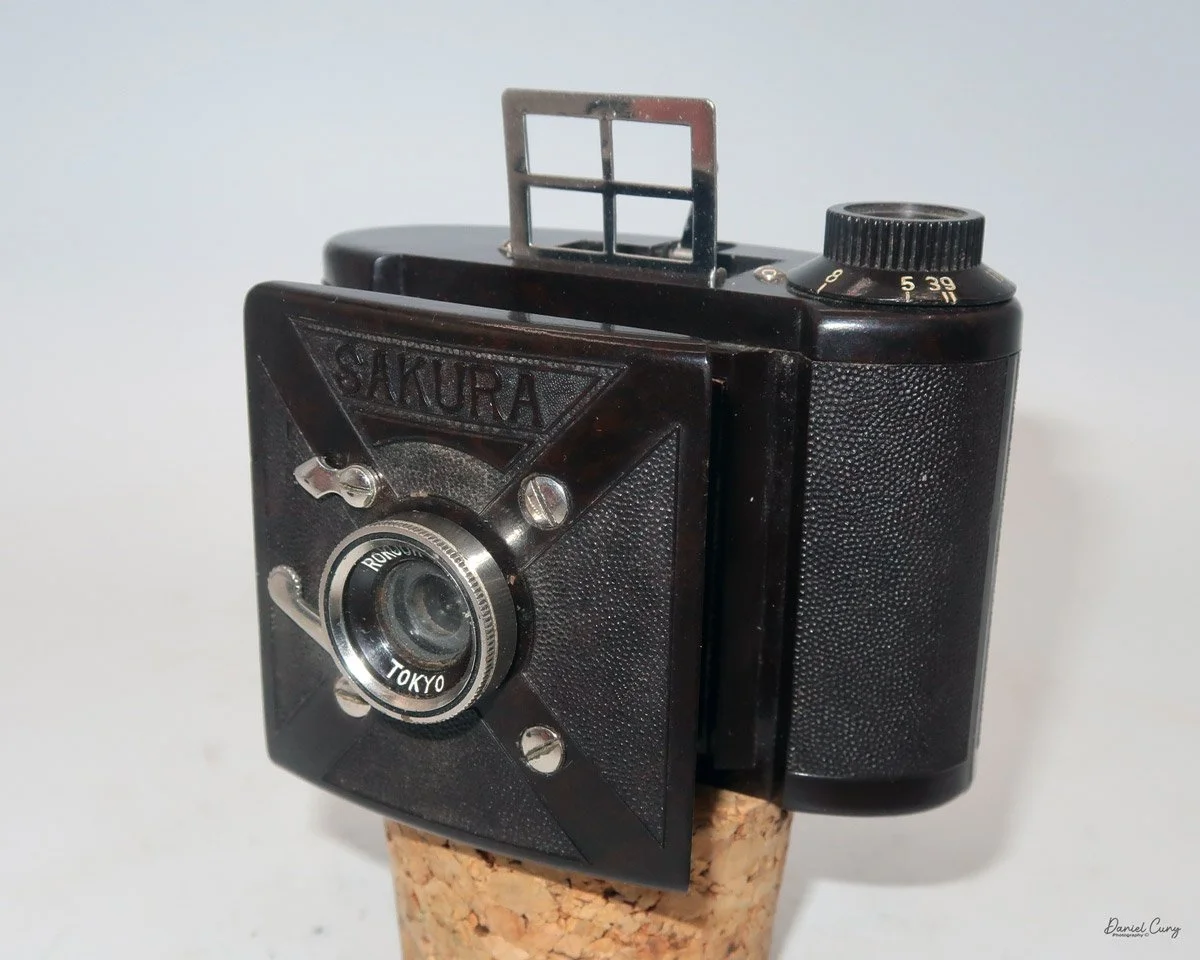
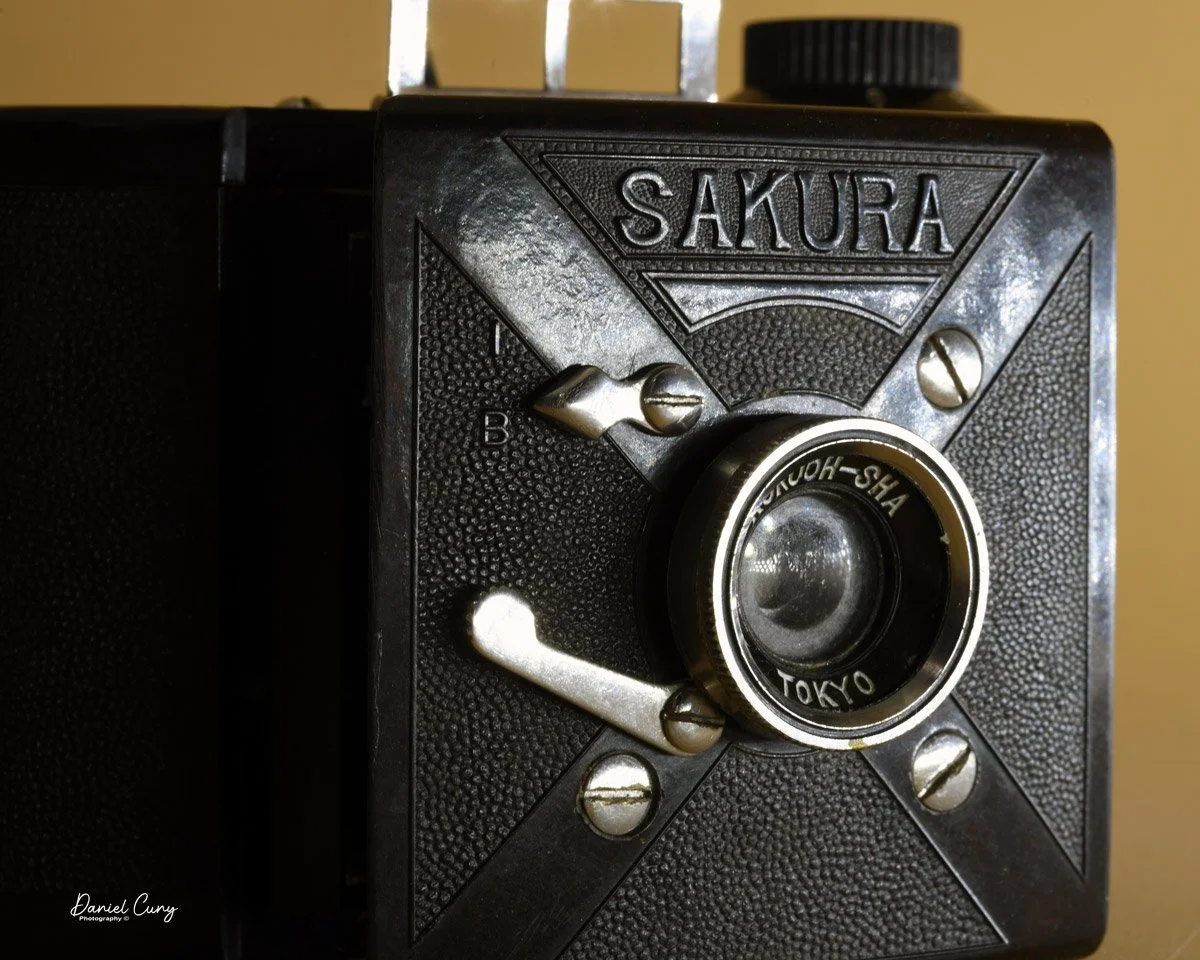
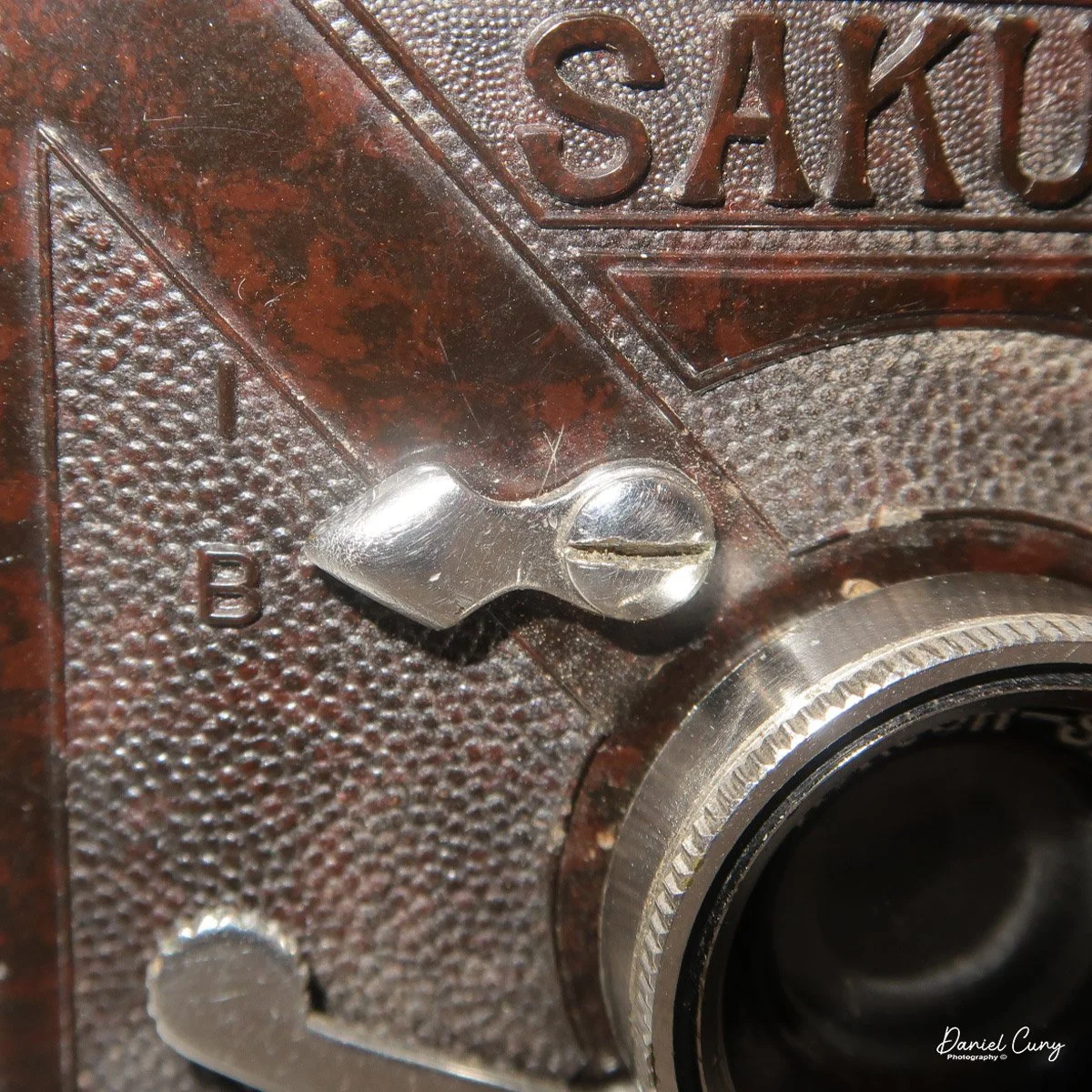
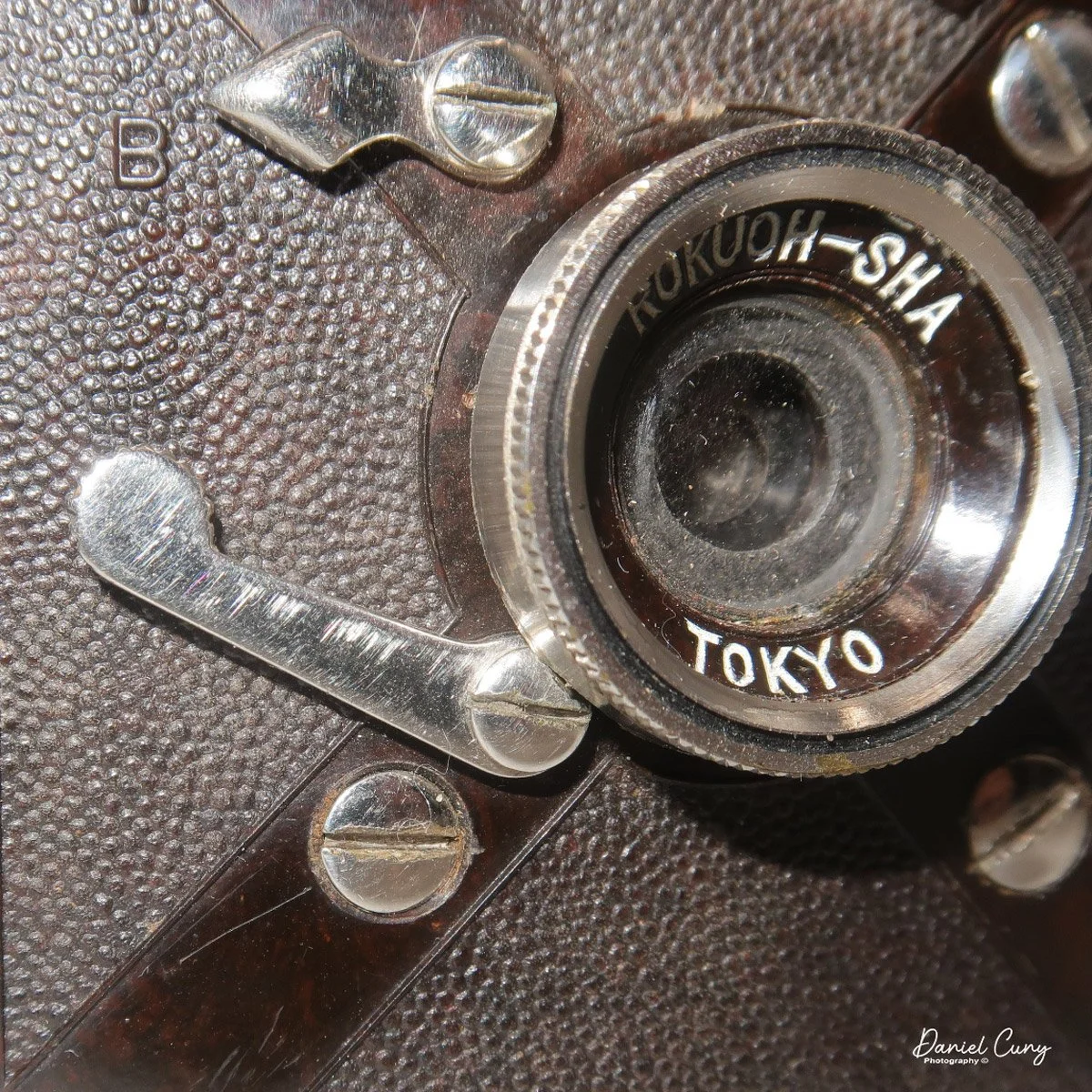
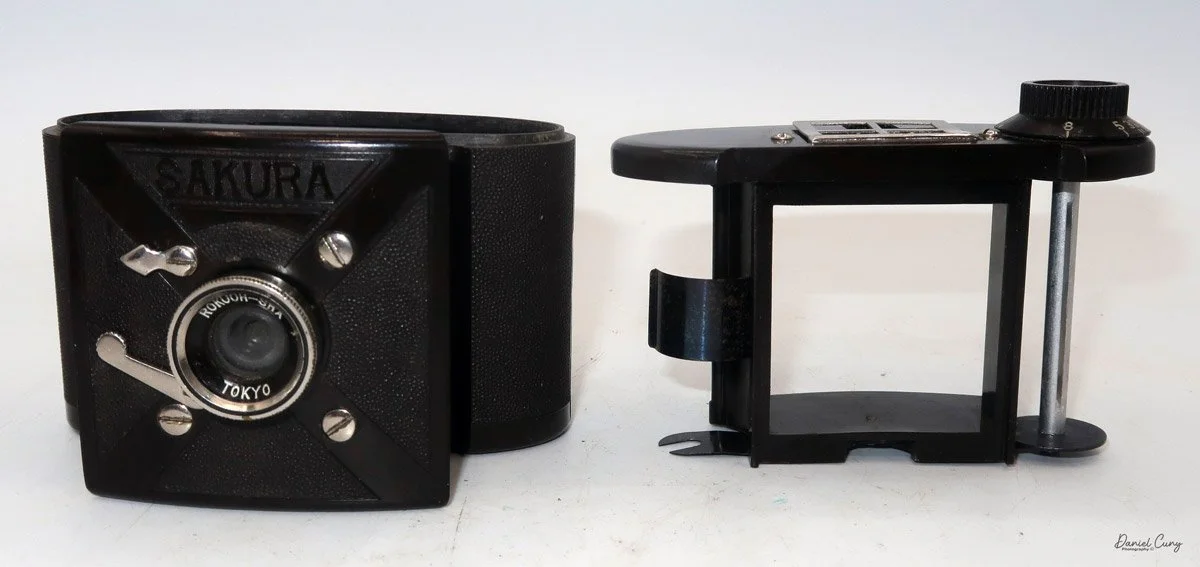
The camera is a rich, dark brown Bakelite with slight mottling and a grainy finish, giving it a nice texture. SAKURA is molded in Bakelite at the top of the pull-out lens area. There is a smooth "X" shape on the faceplate as well, with the lens centered at the "X"'s intersection. 

X design and controls on the face of the Sakura camera

The Sakura camera is extremely basic. Its fixed-focus Rokuoh-Sha Tokyo lens and lack of adjustable apertures make it simple to use, making it ideal for casual photography or quick snapshots. The shutter settings are either "I" for instant or "B" for bulb, used for timed exposures. The shutter is set by a chrome arrow pointing to the desired setting. The shutter release is just below the shutter setting. It is a longer, curved lever, emphasizing its straightforward design for beginners or vintage enthusiasts interested in minimalistic cameras.

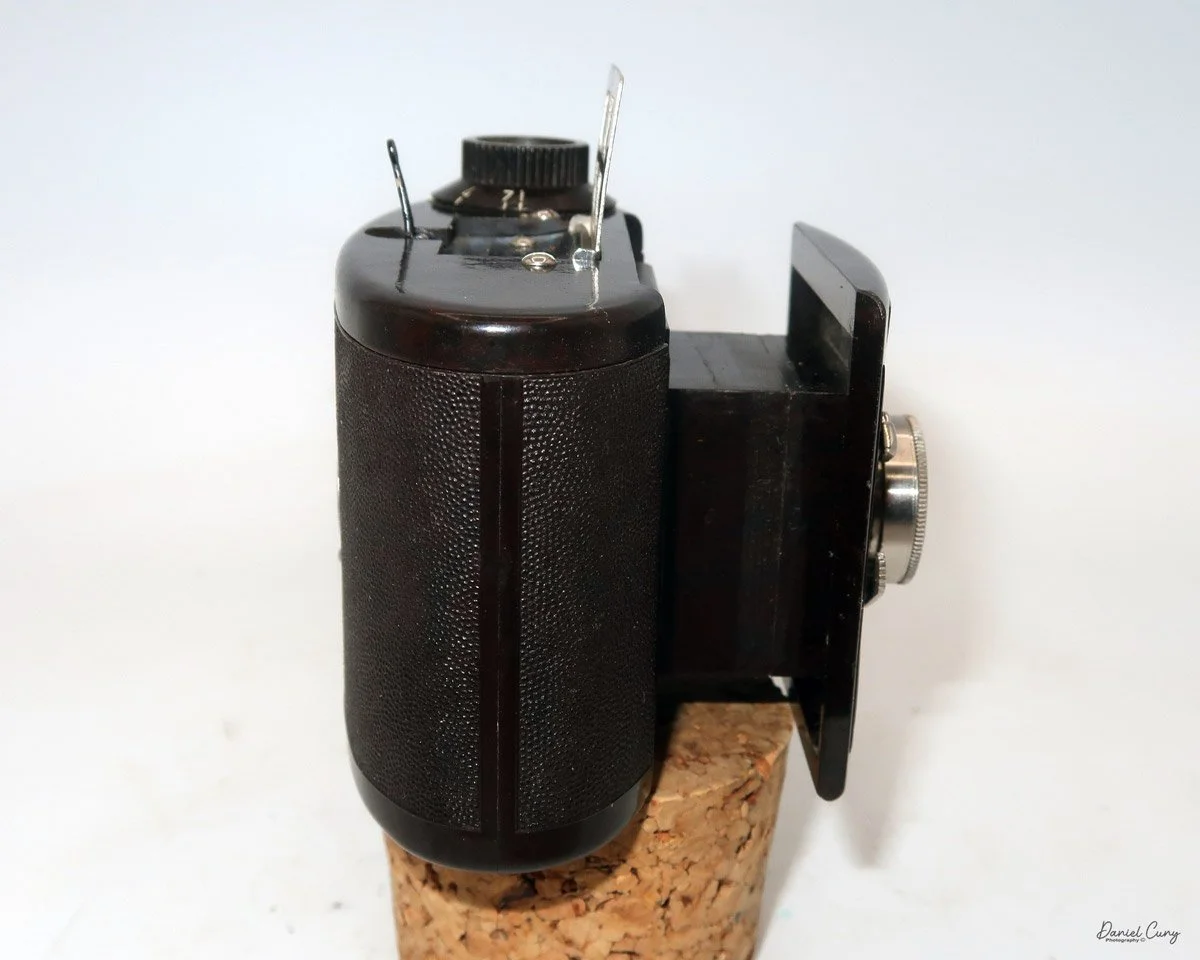
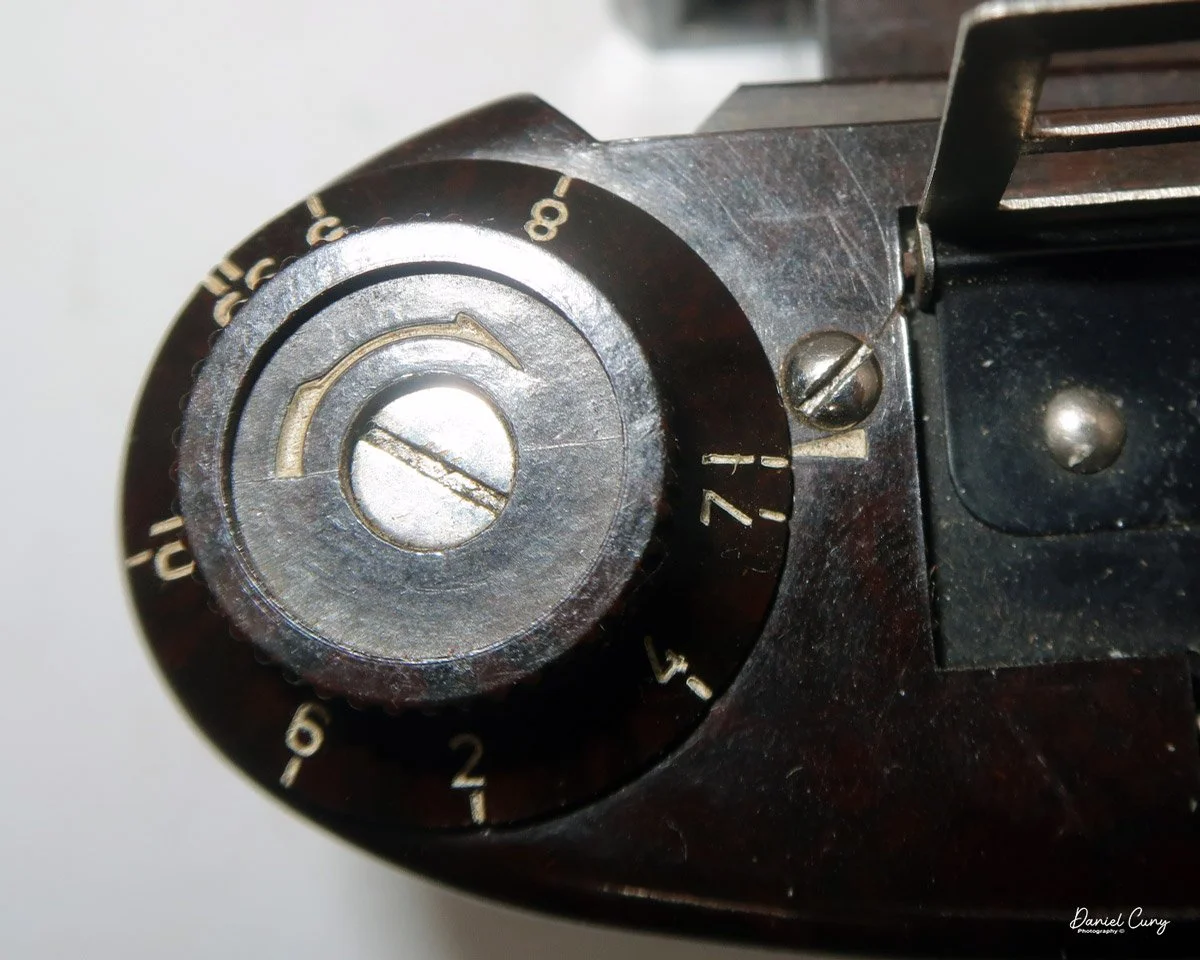
On top of the Sakura camera is a chrome pull-up viewfinder in the front, along with a pop-up pointer in the rear, which you use to center your subject before taking the photo. Also, at the top of the camera is the film winding knob, which has an unusual numbering system. The idea is that you start at number 1, then turn the nob to number 2, which is the proper amount of length to get the film to the next frame. I didn't use this method, but used the red window on the back of the camera to find the frame numbers. The red window also features a sliding chrome cover that opens or closes as needed.

At the bottom of the camera is a tripod socket for timed exposures. However, there is no cable release socket, as is generally used for this. Also at the bottom is a lever that locks or unlocks the film chamber, allowing it to be removed from the camera for loading or unloading film. Once the chamber is unlocked, the film chamber lifts up from the top of the camera, but this can only be done when the lens is extended; otherwise, the lens blocks the chamber in the camera body. Once the lens is extended, the film chamber extends from the top of the camera, and you can load film to take photos. Once loaded, slide the film chamber back into the camera body, lock it into place, set the frame counter to 1, and you're ready to snap some photos.

My Results:

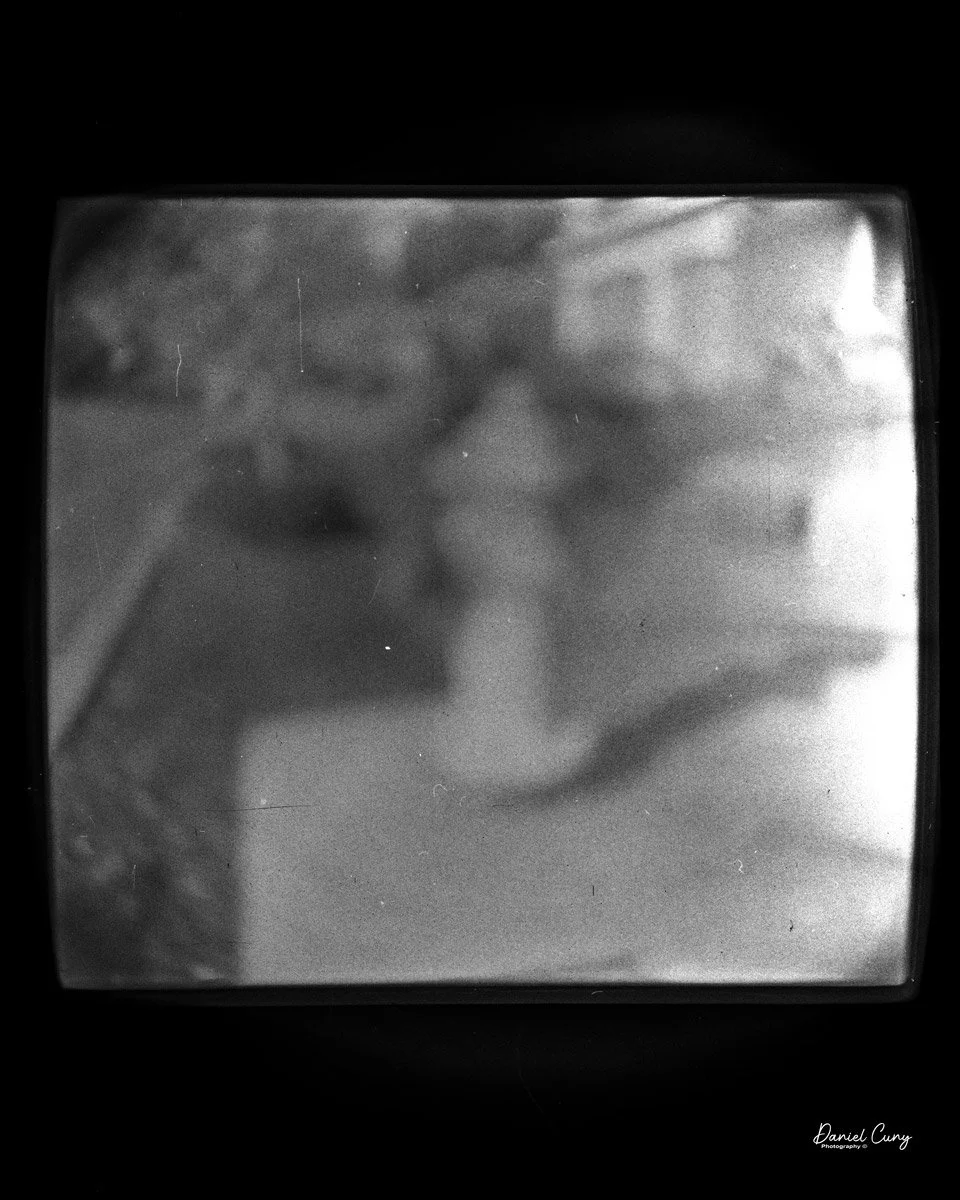
 I took two rolls of film with the Sakura camera because the first roll turned out so poorly. It didn't dawn on me that a couple of things happened when shooting the first roll. The first thing I noticed was that I forgot to pull the lens out of the camera body while shooting, but only for the first 1-2 photos, which resulted in some pretty unusual, very out-of-focus images. 

 The second thing that happened was when I was shooting the first roll, I was pulling the shutter speed lever in place of the shutter release, then when I found the shutter release, the shutter speed was set to "B", so all of these images were blurry from motion, as well as overexposed.

 So I loaded a second roll after seeing the disaster from my first roll, and #1 made sure the lens was extended, and #2, I put my finger on the shutter release lever before framing the photo so I wouldn't accidentally pull the shutter settings from "I" to "B". The second roll turned out much better than the first, and while I'm embarrassed by the first, I needed to share my experience with the camera.

 Once I figured out the mistakes, the images actually turned out very nicely.

Conclusion:

 The Sakura was fun to shoot with, but the frustration of the first roll must have befuddled the original users, too. Putting the shutter control on the top of the shutter release made for an interesting, but frustrating, experience. If the company had switched the shutter release with the shutter controller, the experience could have been better. At least switching the "B" and "I" settings would have been helpful.

 Still, I enjoyed using the Sakura bakelite camera. There's still something gnawing at me: who and where, and the story behind this little, oddly shaped Bakelite camera that's approaching 90 years old.

Quick question: Have you ever found a piece of gear with a name inscribed on it? I'd love to hear your detective stories in the comments.

 Thank you for learning about this wonderful and rare Japanese camera, made just before World War II.

 Here is a list of my other CAMERA REVIEWS, with links.

 Cuny's Cameras & Photos is my online eBay store where I sell many of the cameras I've reviewed, along with other photos and camera accessories.

 Until next week, please be safe.
Kodak Panoram 1-Model D

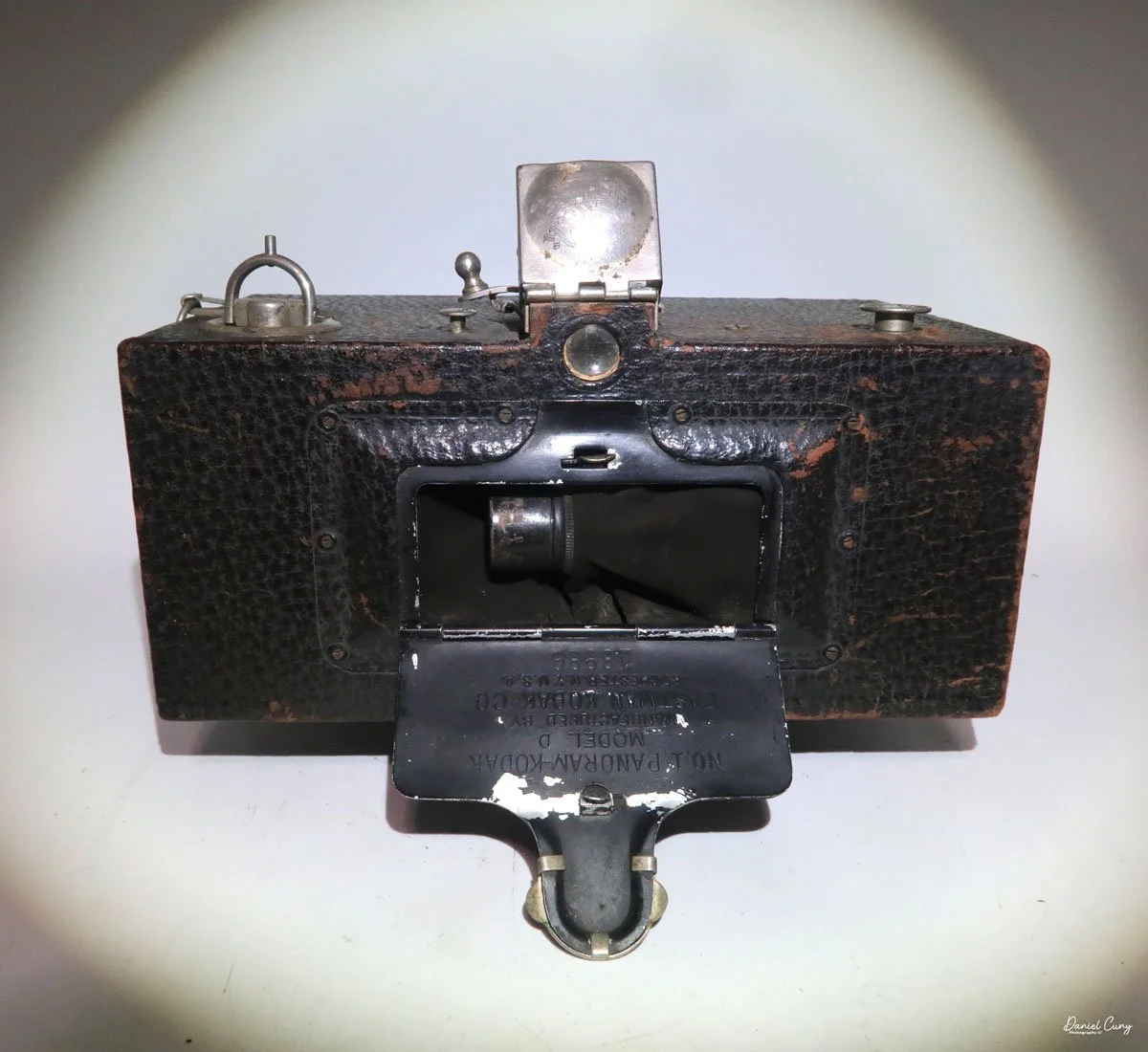
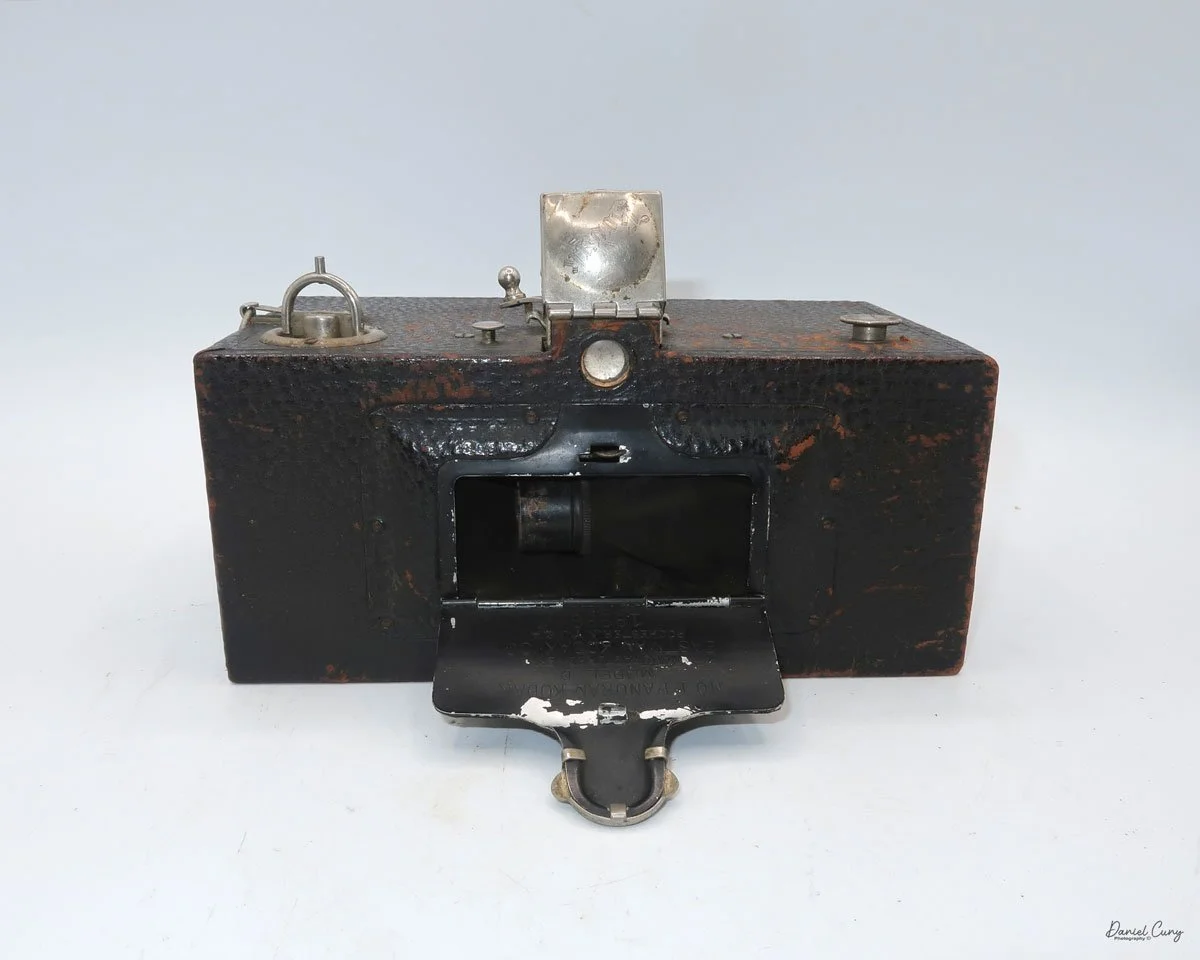
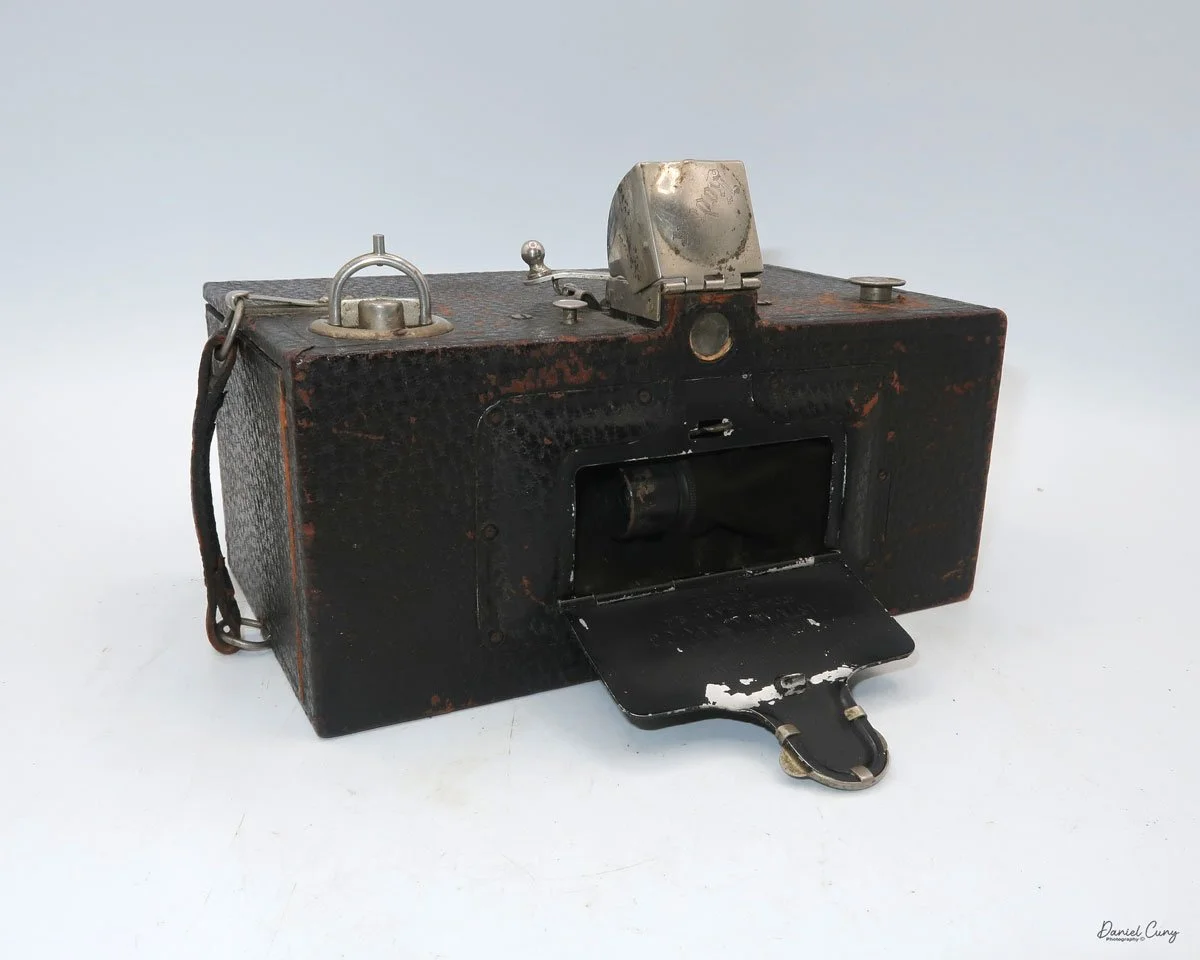
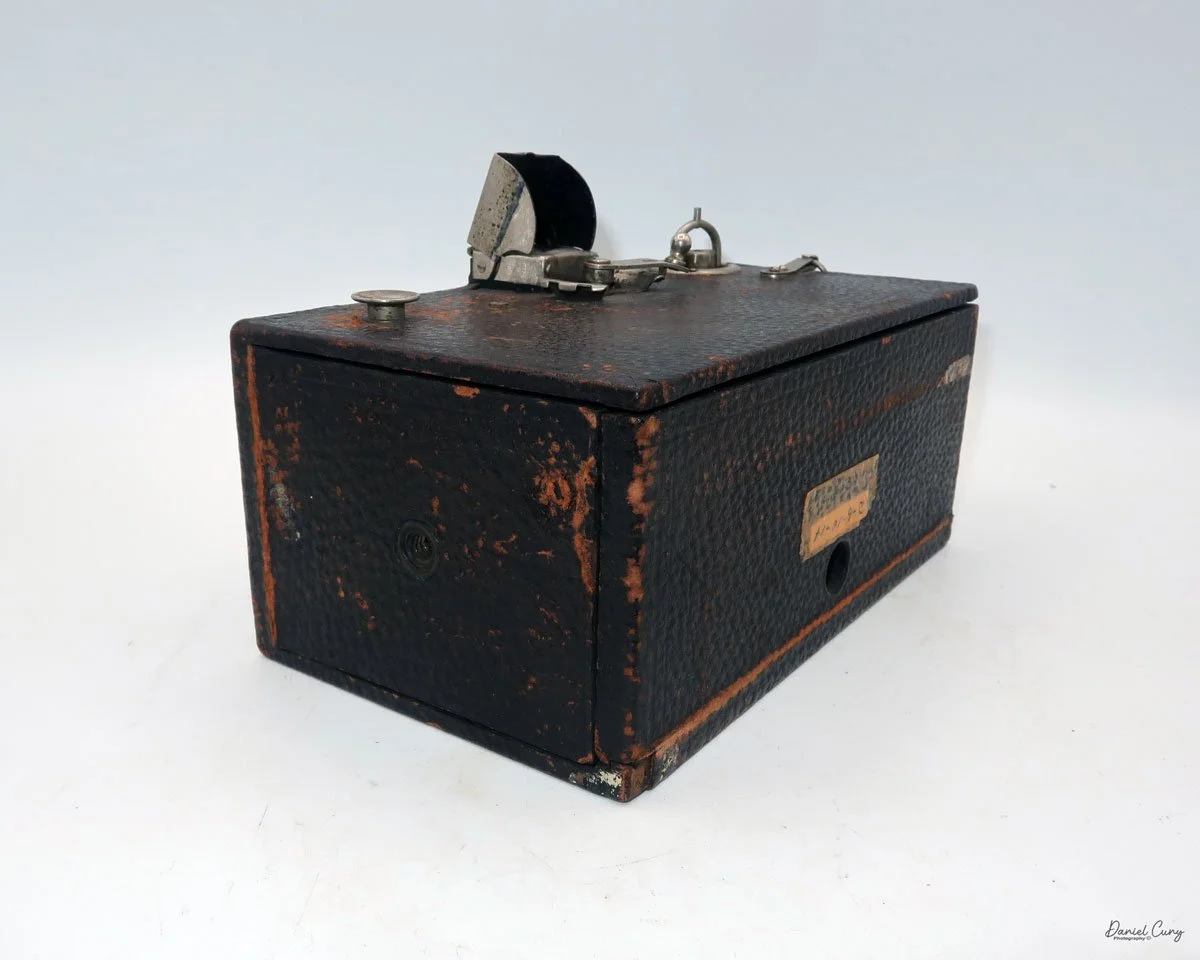
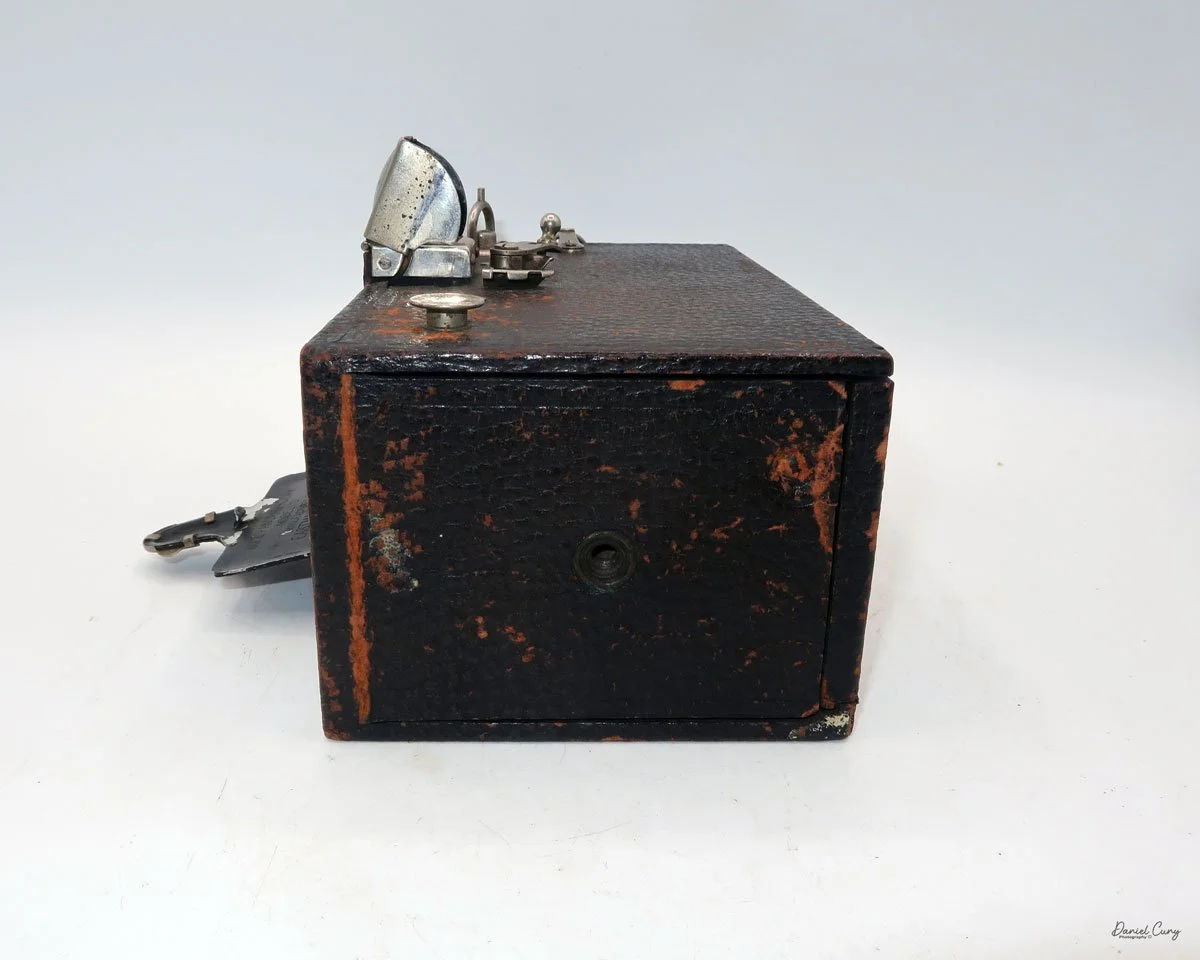
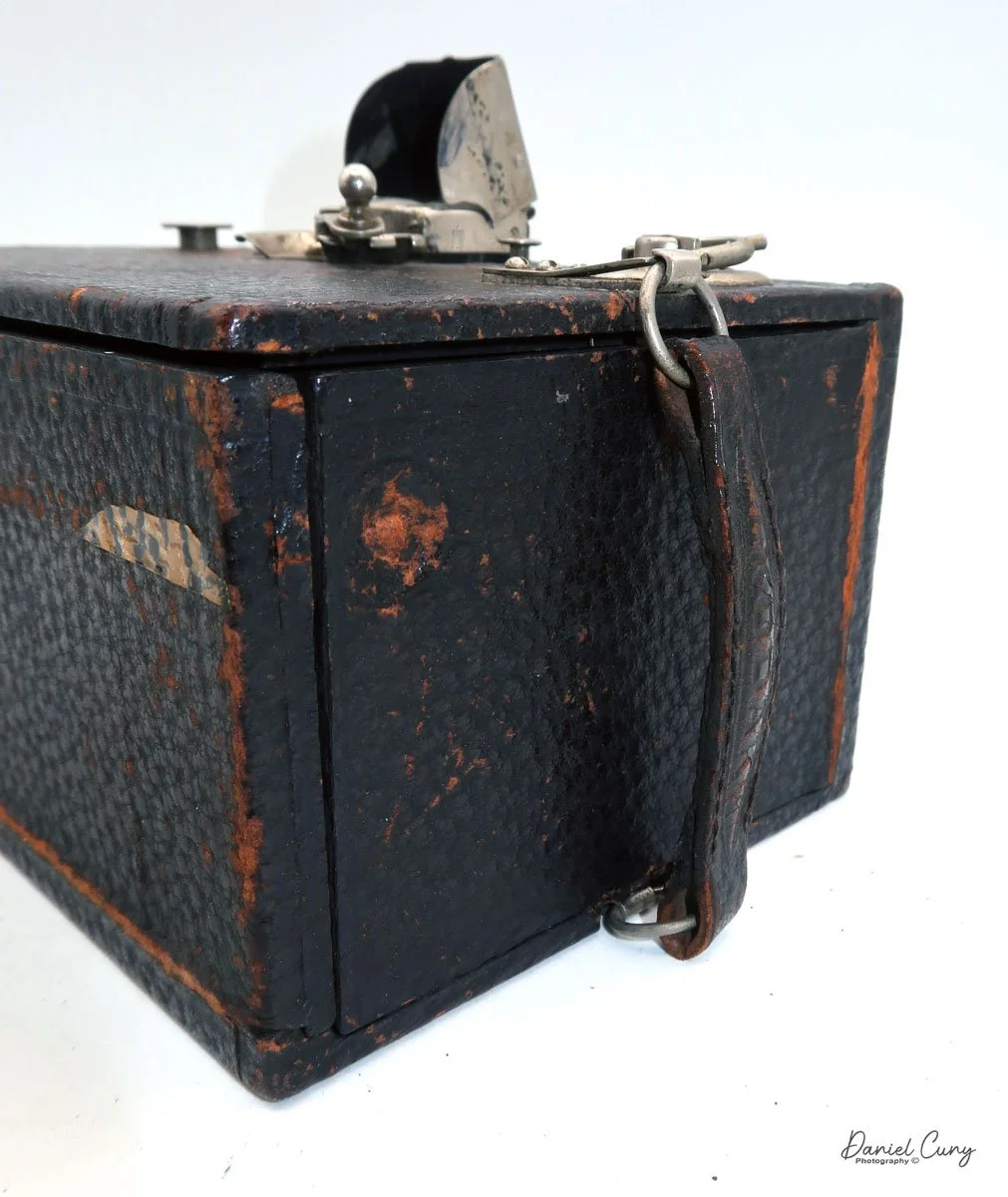
My Kodak Panoram 1, Model D camera

Panoramic cameras and images have always fascinated me. The thought of seeing such a wide area in a photo seems so natural to me. Whenever I look at subjects, the human eye always sees a wide field of view, and narrowing it down to a smaller angle just seems peculiar to me. Even when I look through telephoto lenses, I want to see a wider angle, just closer. Unfortunately, that’s not how lenses work, so the ability to get a wider view is wonderful.
 The Kodak Panoram 1 is one of the first panoramic cameras I've owned. The first panoramic camera I bought was a Russian Horizont, a 35mm model that came with an accessory handle, viewfinder, and case. Unfortunately, this model of camera, due to the lack of workmanship, has a tendency for image "banding" as the lens doesn't rotate smoothly when making the exposure, so when the lens hesitates, it creates a change in exposure, creating a vertical exposure difference, which is darker due to the extra exposure time.

 I only had that camera for a short time, but it was a wonderful one to learn from, and from that experience I found the Kodak Panoram 1. One of the main reasons I knew about Kodak's early panoramic cameras was a set of negatives of two of my friends, which I purchased around 35 years ago. They were a set of 40 nitrate panoramic negatives, measuring 2 1/4" x 7", from a family who visited San Francisco and the surrounding area in 1906. There were photos of the rubble from the 1906 earthquake, along with other images of the family traveling up the delta to Sacramento and into the forest areas. If you're interested, here is a link to pictures from the aftermath of the 1906 San Francisco Earthquake.

 While researching the negative size and cameras built around 1900, I came across the Kodak Panoram 1 and the Multiscope Baby Al-Vista. I believe the Baby Al-Vista's negatives are just a bit smaller. At this point, due to my love of panoramic images, I really wanted to find a good Kodak Panoram 1 camera not only to have in my collection, but also to shoot with.

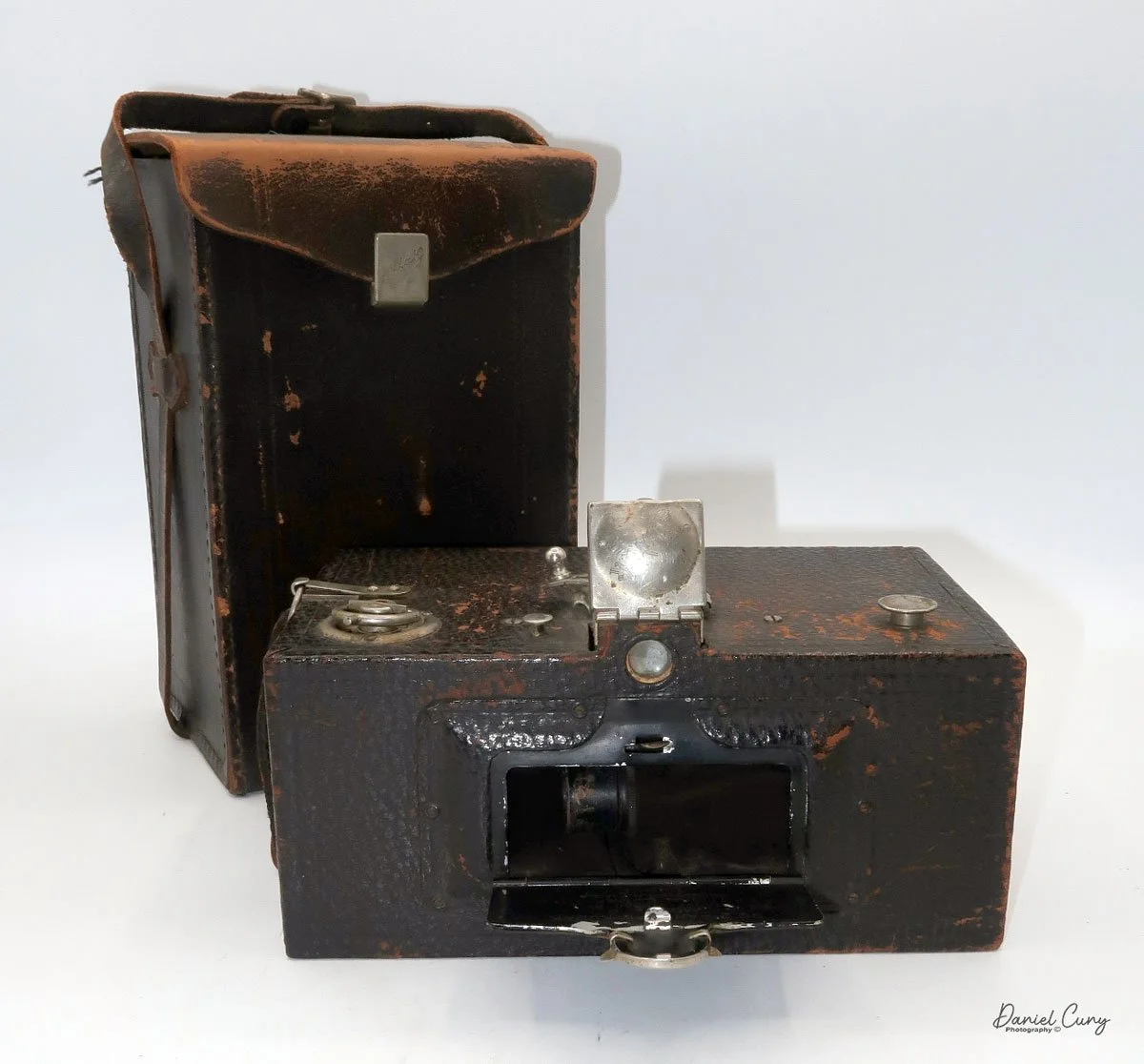
My Kodak Panoram 1, Model D with Case.

 The Kodak Panoram 1 camera used 105 film when it was manufactured, which is the same width as 120 film; the spools are just a bit different, as the flange is wider on 105 spools. Knowing that I could shoot 120 film in the Kodak Panoram 1 camera made it considerably more desirable. 

 Kodak also made larger Panoram cameras, the 3A and 4, which used larger film. The 3A produced 3 1/4" x 10 3/8" negatives on size 122 film; the 4 made 3 1/2" x 12" negatives on size 103 film. Since the necessary larger film is unavailable, choosing a usable Panoram was easy: I purchased the Panoram 1.

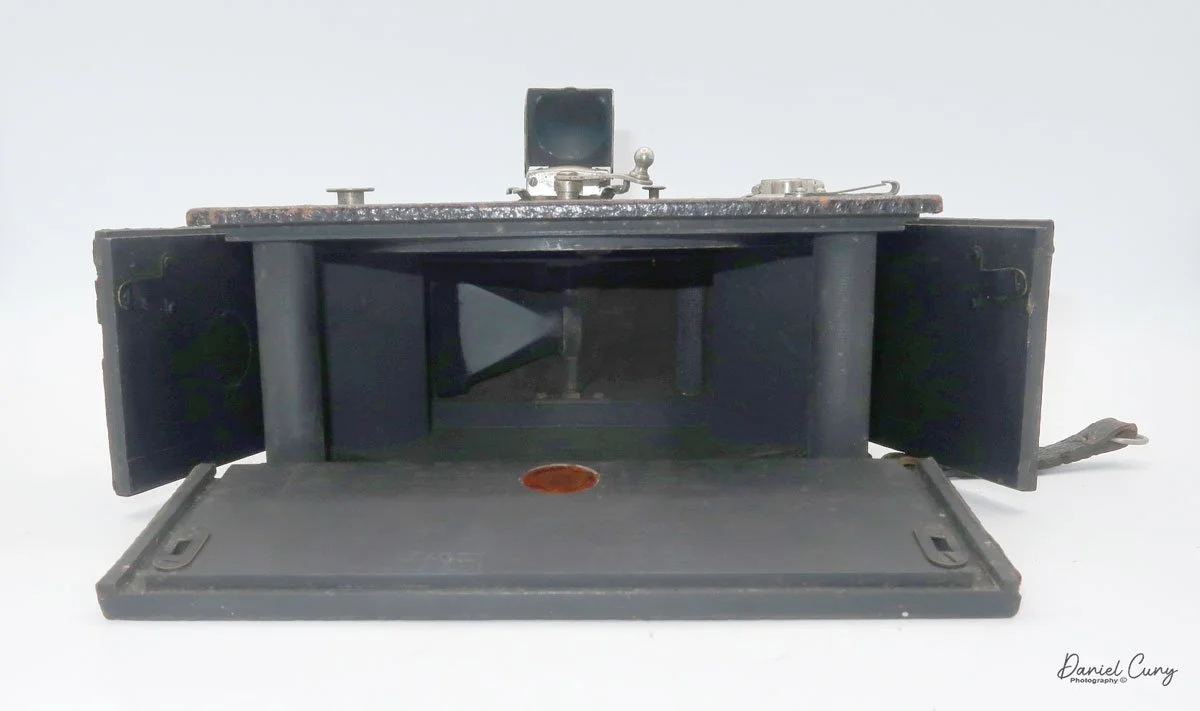
 The Kodak Panoram 1 comes in two distinct versions. There's the original Panoram 1, where the entire back of the camera comes off the body, revealing the curved arc of the film plane. The back of the camera is held to the camera body by two clips. 

 The second version of Kodak Panoram 1, the Model D, which I've had in my collection for 30-plus years, is slightly different. The back of the camera doesn't detach from the body, but, like some horizontal-folding cameras, there are buttons on either side you press to release it and fold it down. Then the camera's sides swing out to allow you to load and unload film.

 I have owned and restored several of both models, as the lens-swinging mechanism is the same, and the leather or suede bellows are similar. The main reason for the change in style was to reduce the camera's size. I prefer the original with the removable back, but both deliver fantastic images.

History of Kodak Panoram:

 Introduced by Eastman Kodak at the turn of the 20th century, the Kodak Panoram series democratized wide-angle photography, bringing it out of the domain of professional specialists and into the amateur market. Debuting in 1899 with the No. 4 and in 1900 with the smaller, popular No. 1, these "shoe-box"- shaped cameras remained in production until 1928.

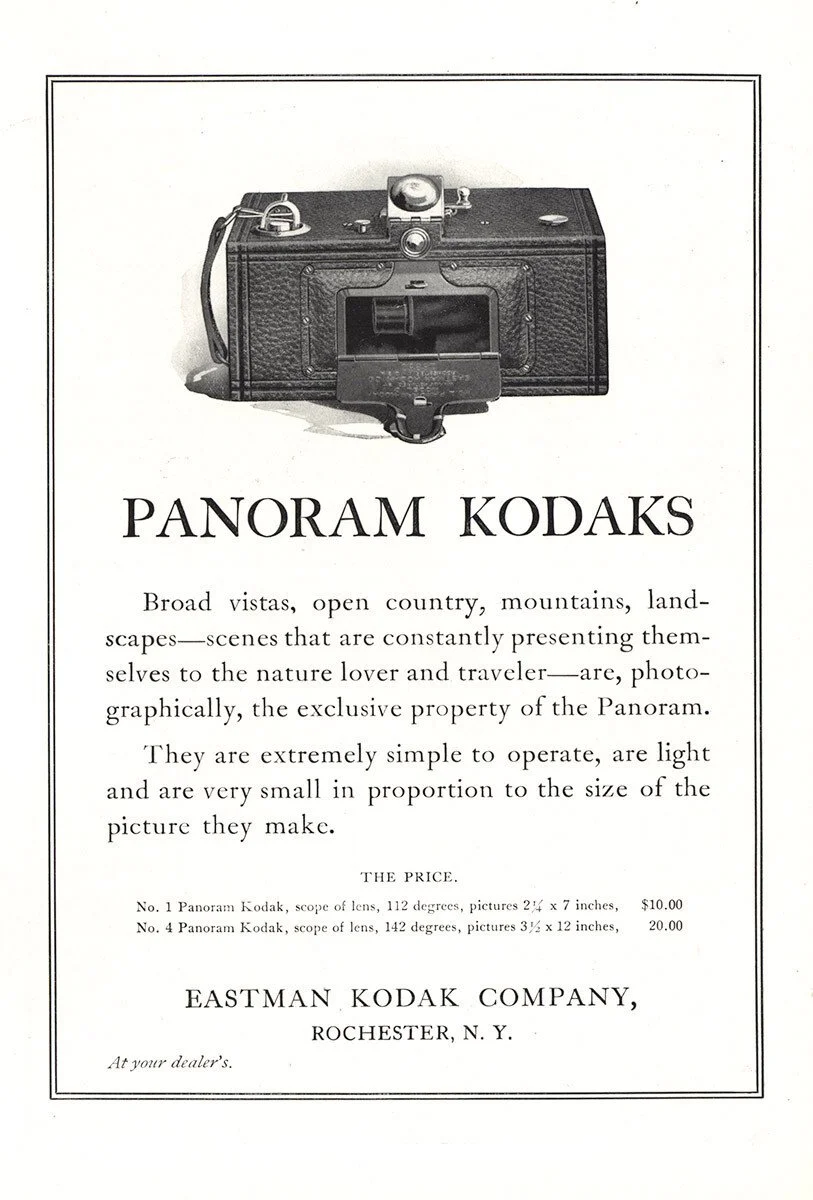
Advertisment for the Kodak Panoram cameras

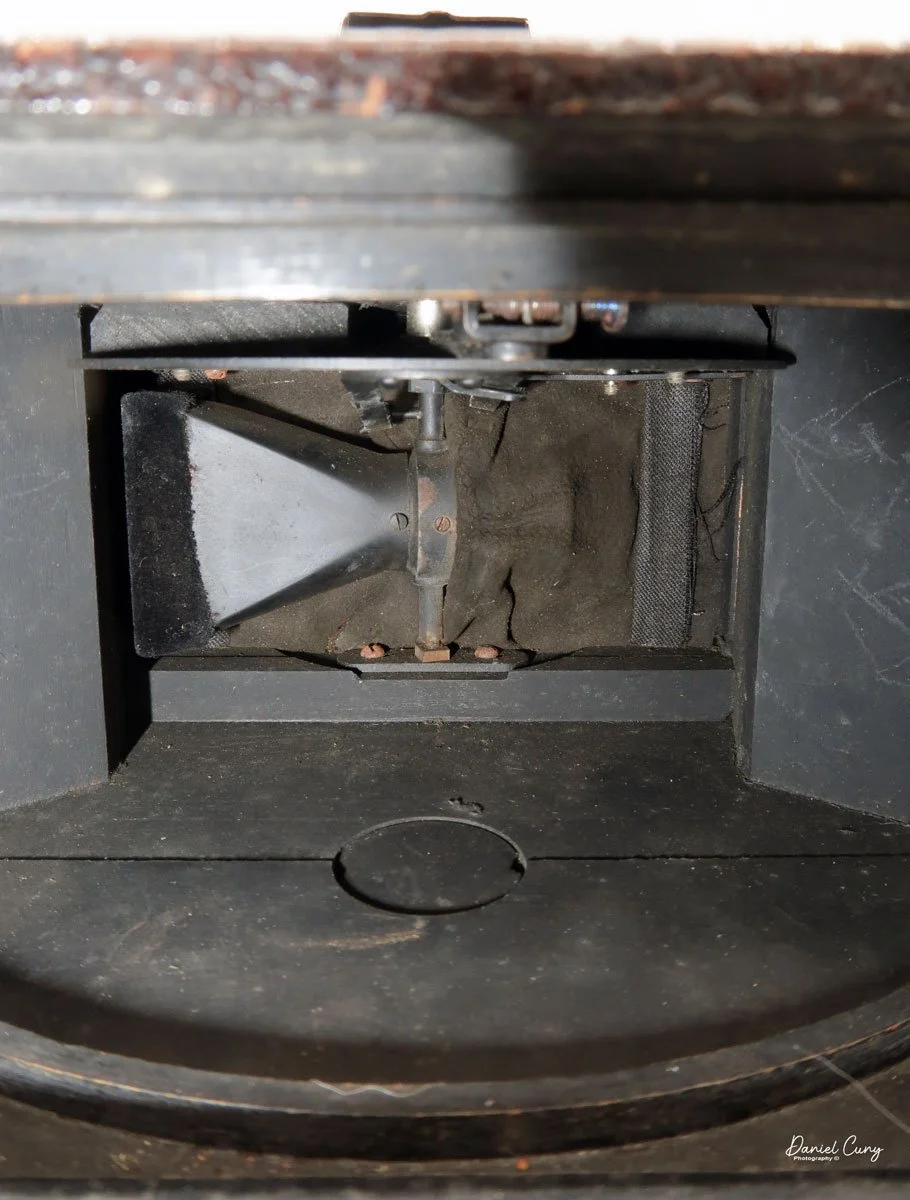
 The Panoram’s defining feature was its ingenious swing-lens mechanism. Unlike standard cameras with fixed lenses, the Panoram featured a lens mounted on a pivoting turret. When the shutter was triggered, the lens swung in an arc—typically between 112 and 142 degrees—sweeping light across a curved plane of film (the area of film bent to match the arc) at the back of the camera. This design minimized horizon distortion while capturing vast landscapes or large-group portraits in a single exposure. A swing-lens mechanism means the camera’s lens actually moves or "swings" during the exposure, rather than remaining stationary as in most cameras, to create a wide panoramic image.

 Aimed primarily at outdoor and travel use, Panoram cameras were used to document landscapes, expeditions, and colonial scenes, including polar exploration and industrial development in Southeast Asia. Their relatively simple wooden-and-leather construction, fixed focus, and minimal controls reflected Kodak’s broader strategy of making specialized photography accessible to non‑experts. At the same time, the nearly three‑decade production run indicates sustained popularity among enthusiasts of wide‑angle views.

 Three primary models defined the line: the No. 1 (using 105 film), the No. 4 (using 103 film for massive 12-inch negatives), and the short-lived No. 3A (introduced in 1926). While eventually displaced by newer formats and the 35mm revolution, the Panoram remains a cult classic today, prized by collectors and photographers for the unique, sweeping perspective that only a mechanical swing-lens can provide.

My Camera:

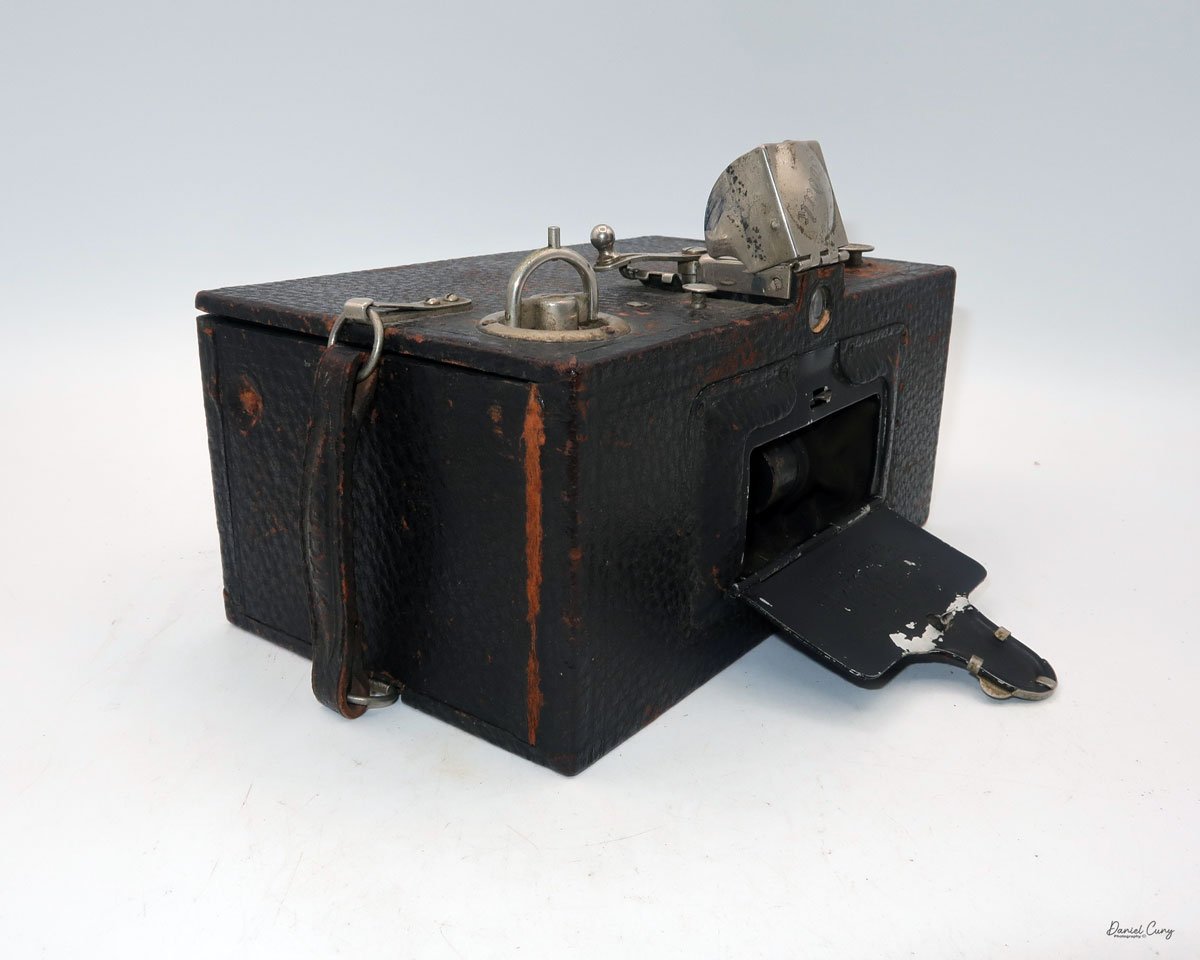
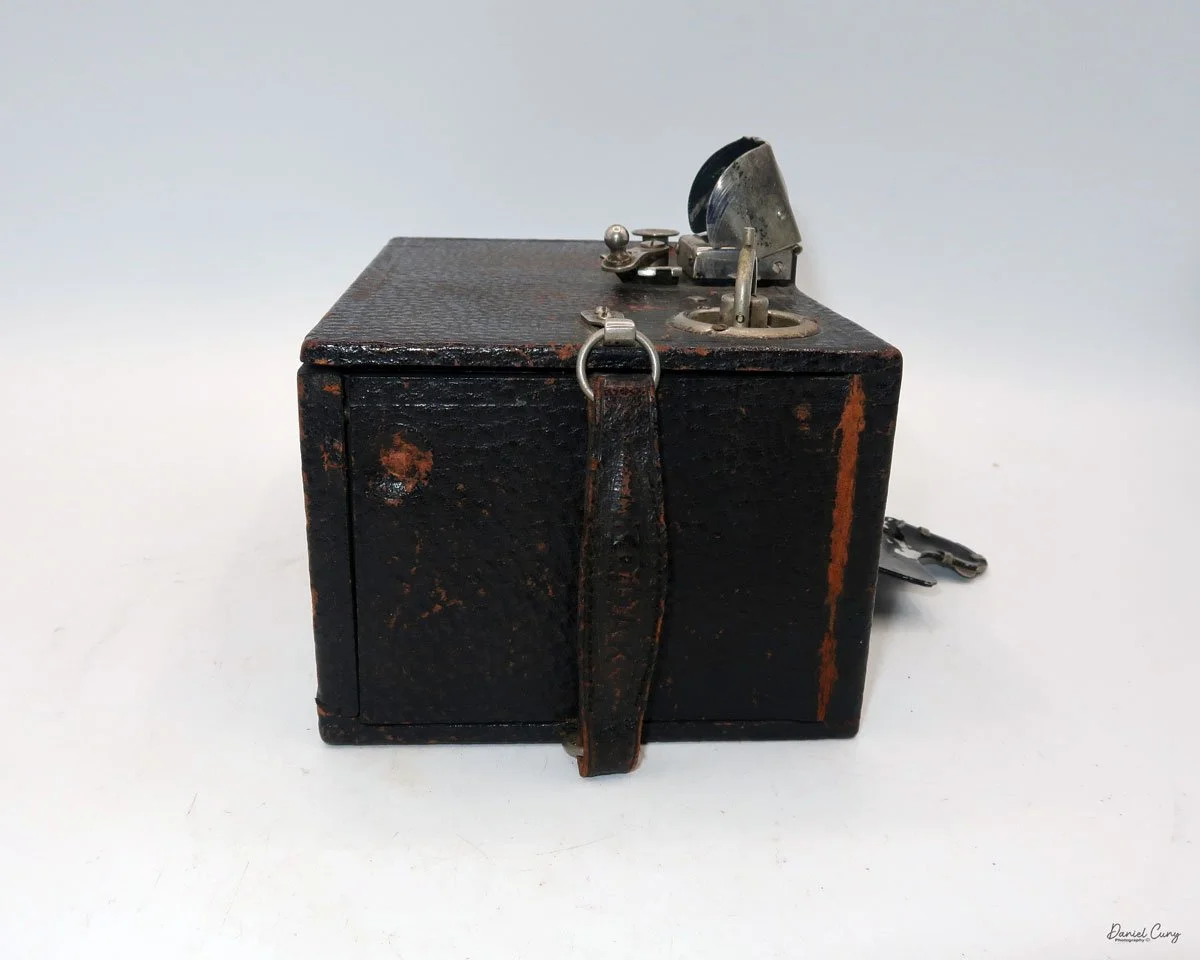
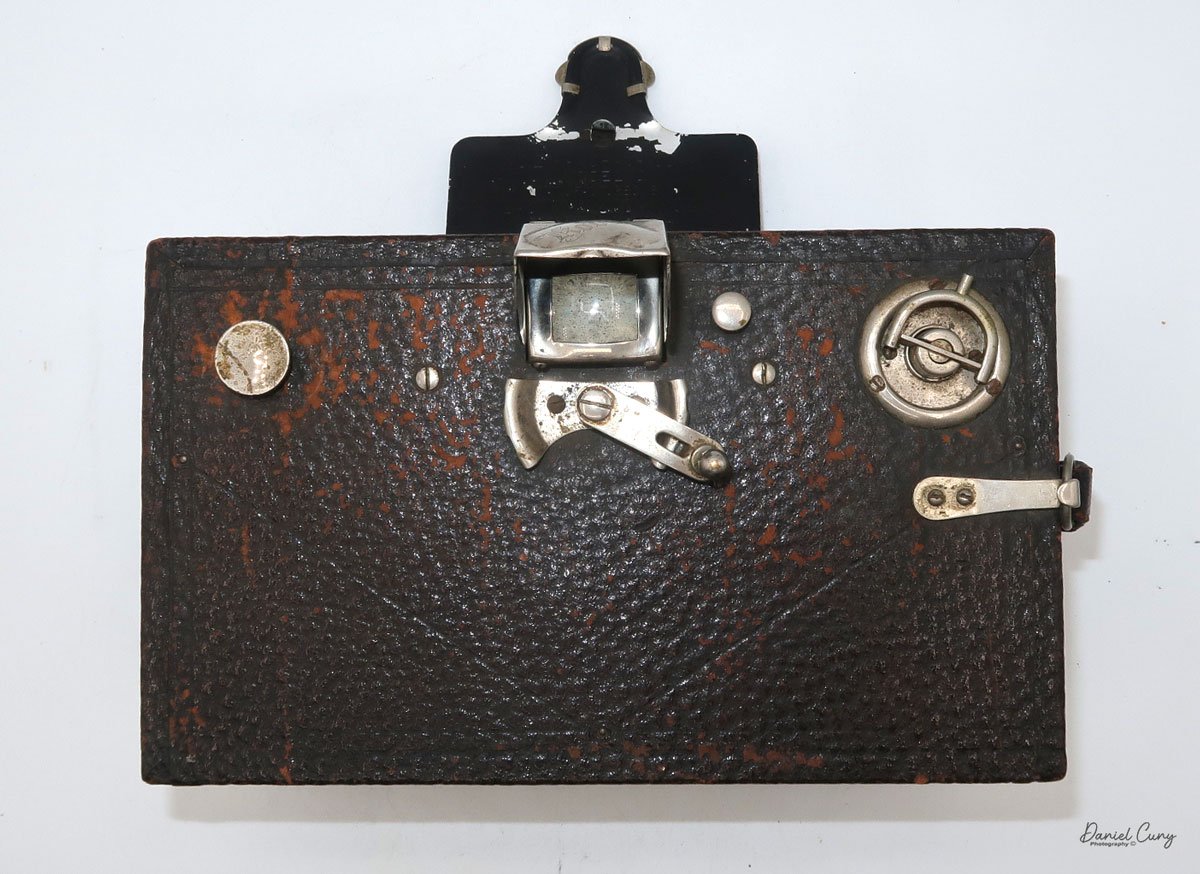
 My Kodak Panoram 1, Model D camera is 7.5" wide with the strap, by 4.5" deep by 4" tall, including the optical viewfinder, and weighs 1 pound 9.5 ounces without film loaded in the camera.

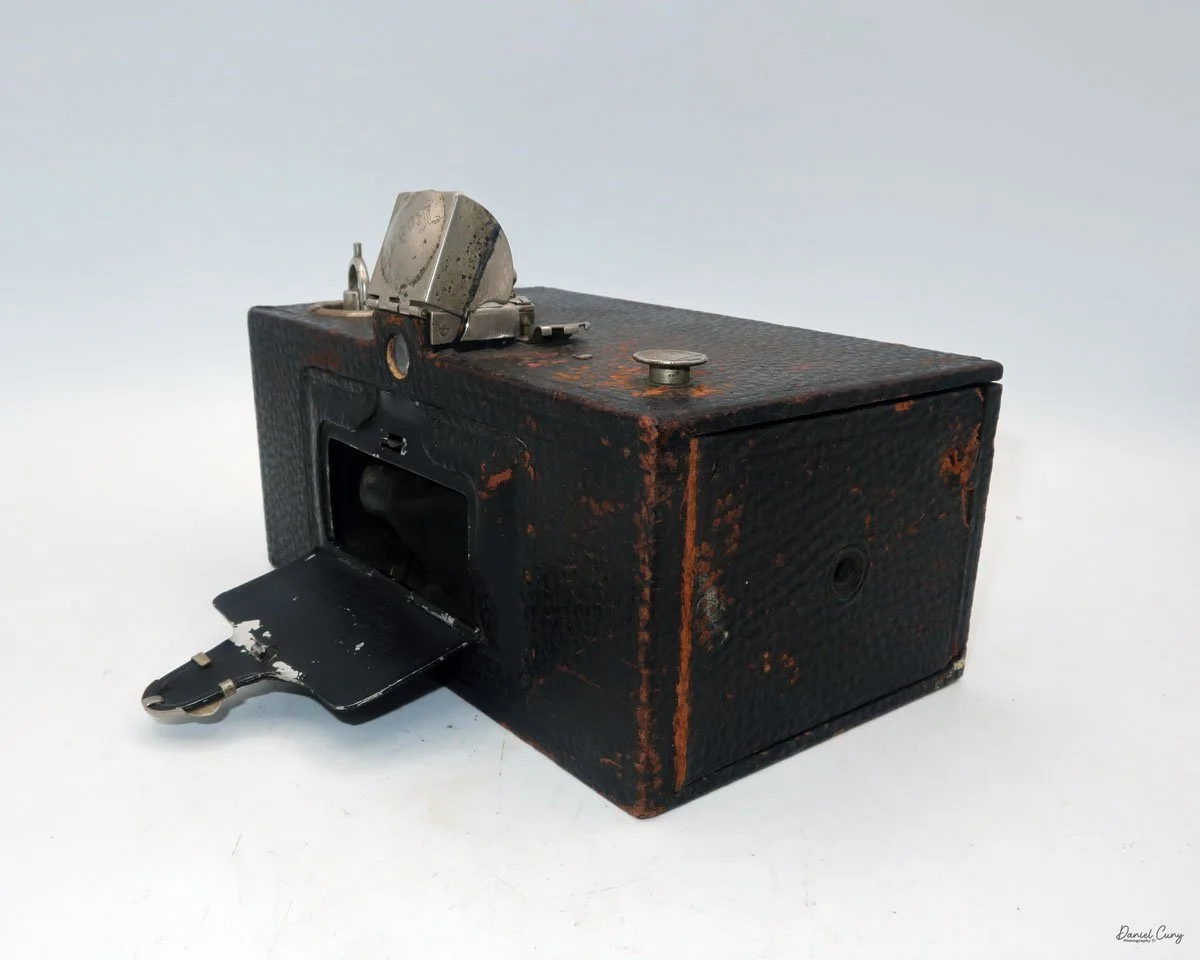
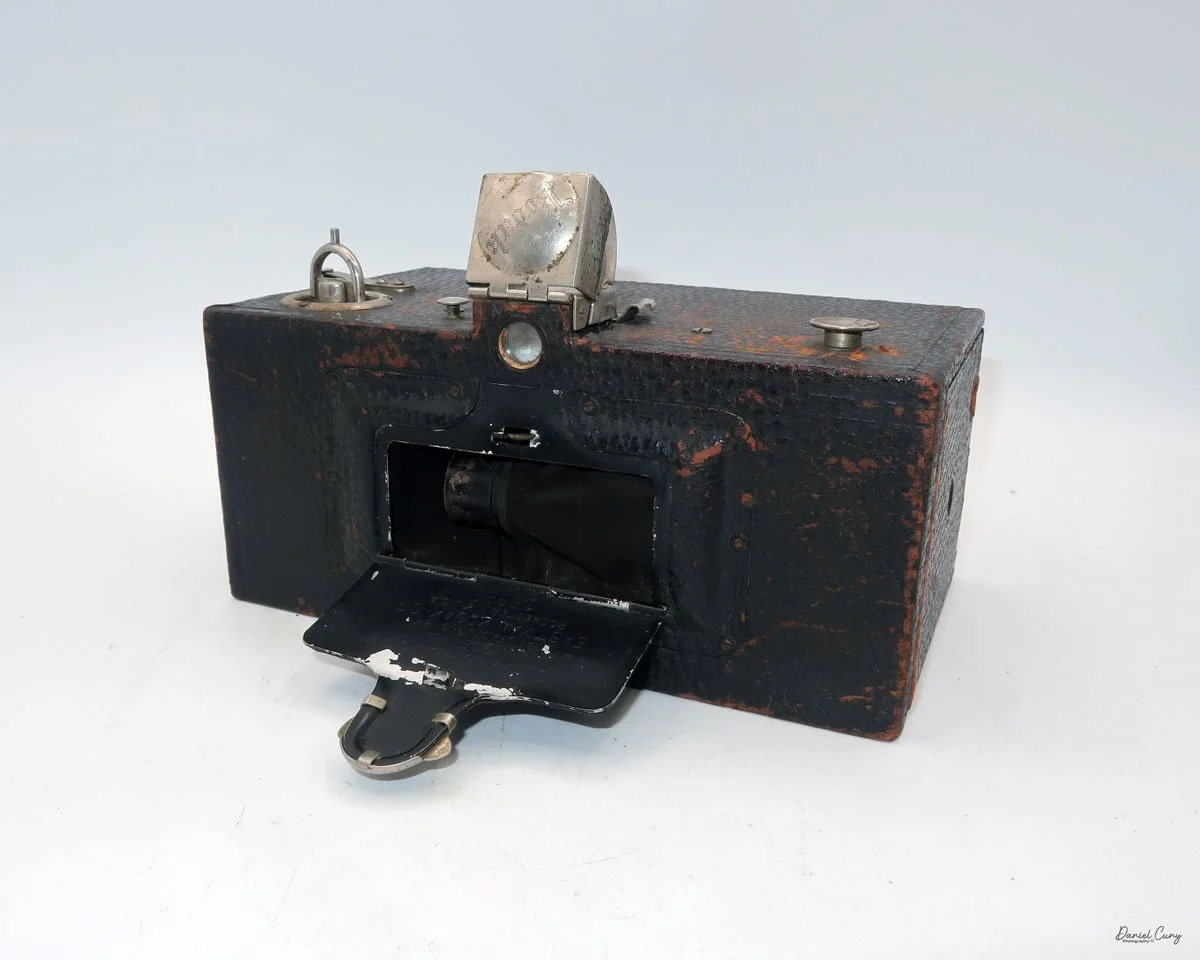
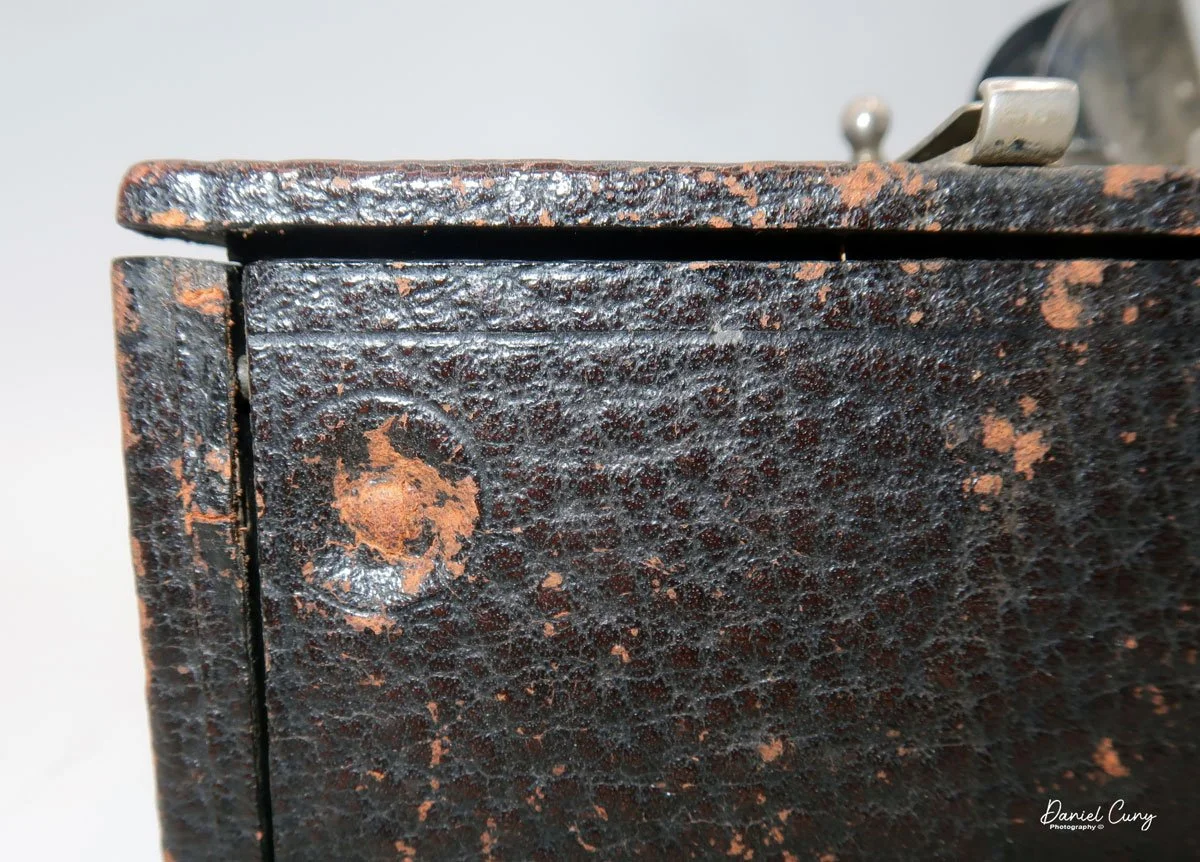
 To open the lens, pull down the front lens cover to reveal the swing lens to one side or the other. If it were pointing straight ahead, the lens cover wouldn't close. On the inside of the lens cover is the camera name, No. 1 Panoram, Kodak, Model D. On the bottom is the camera's serial number. My camera's serial number is 18986.

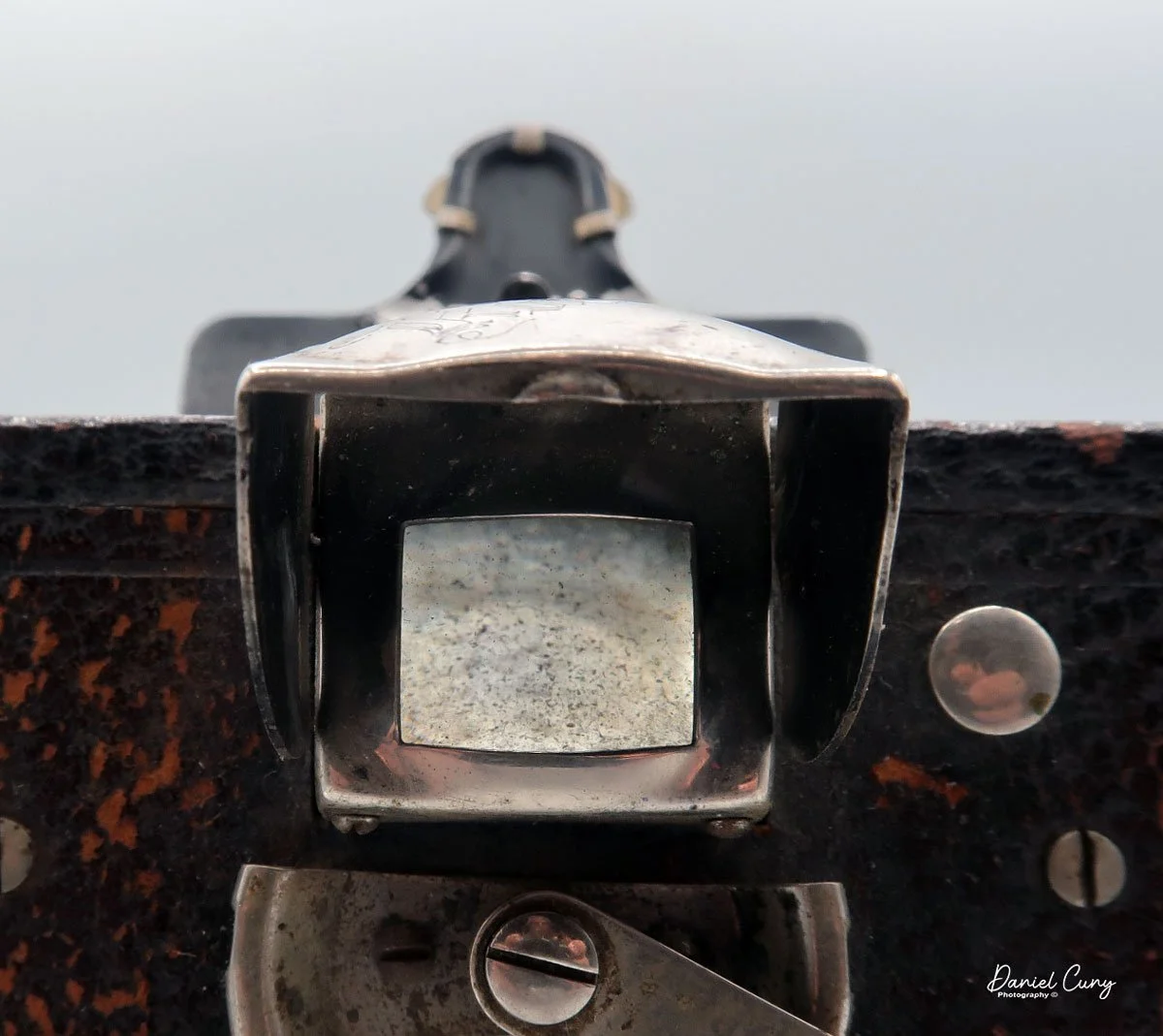
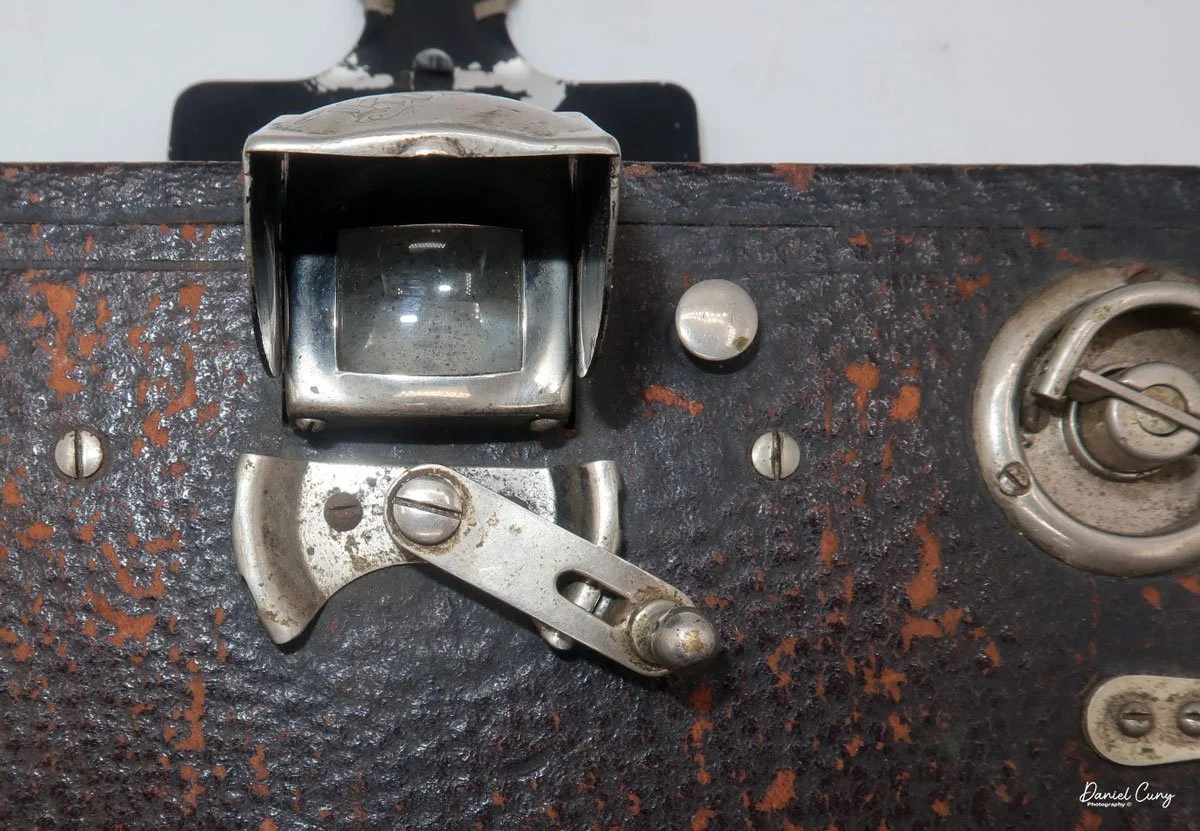
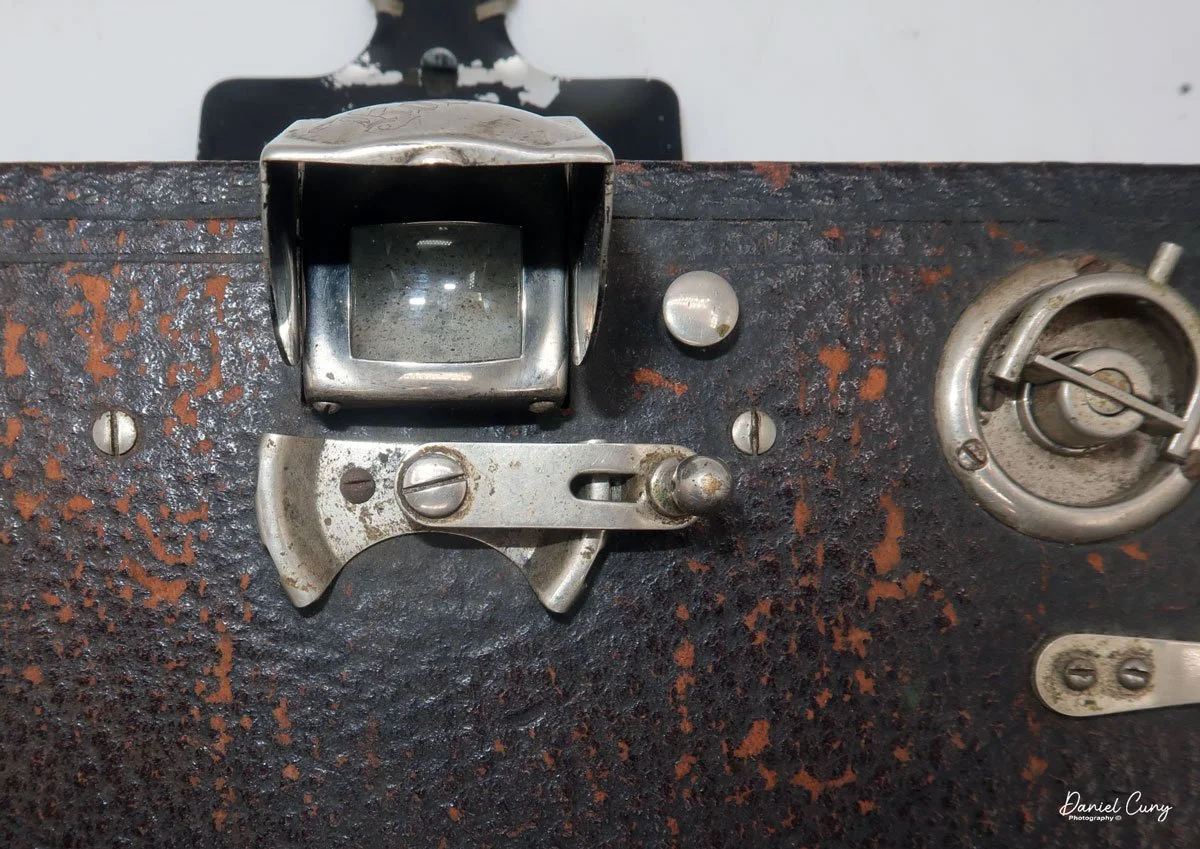
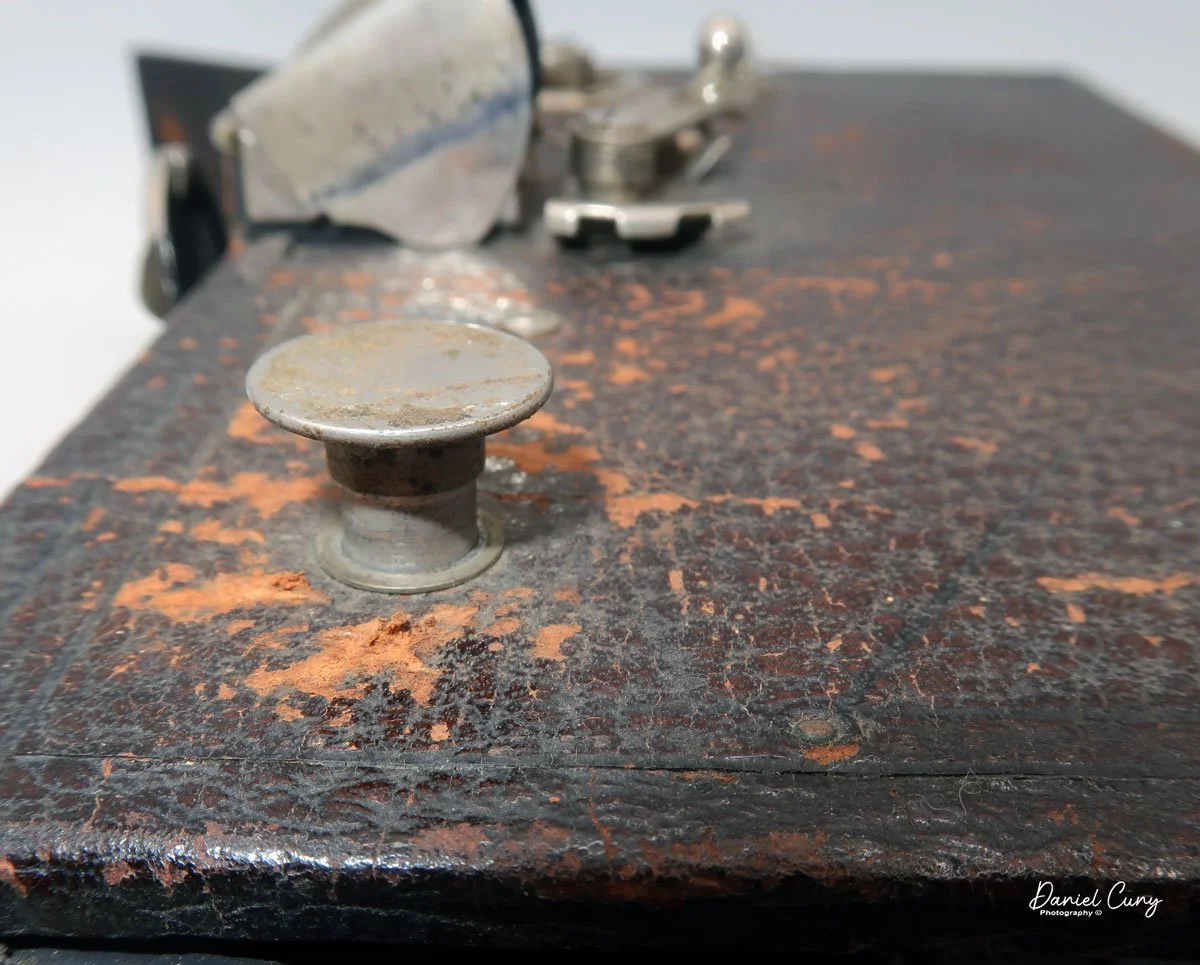
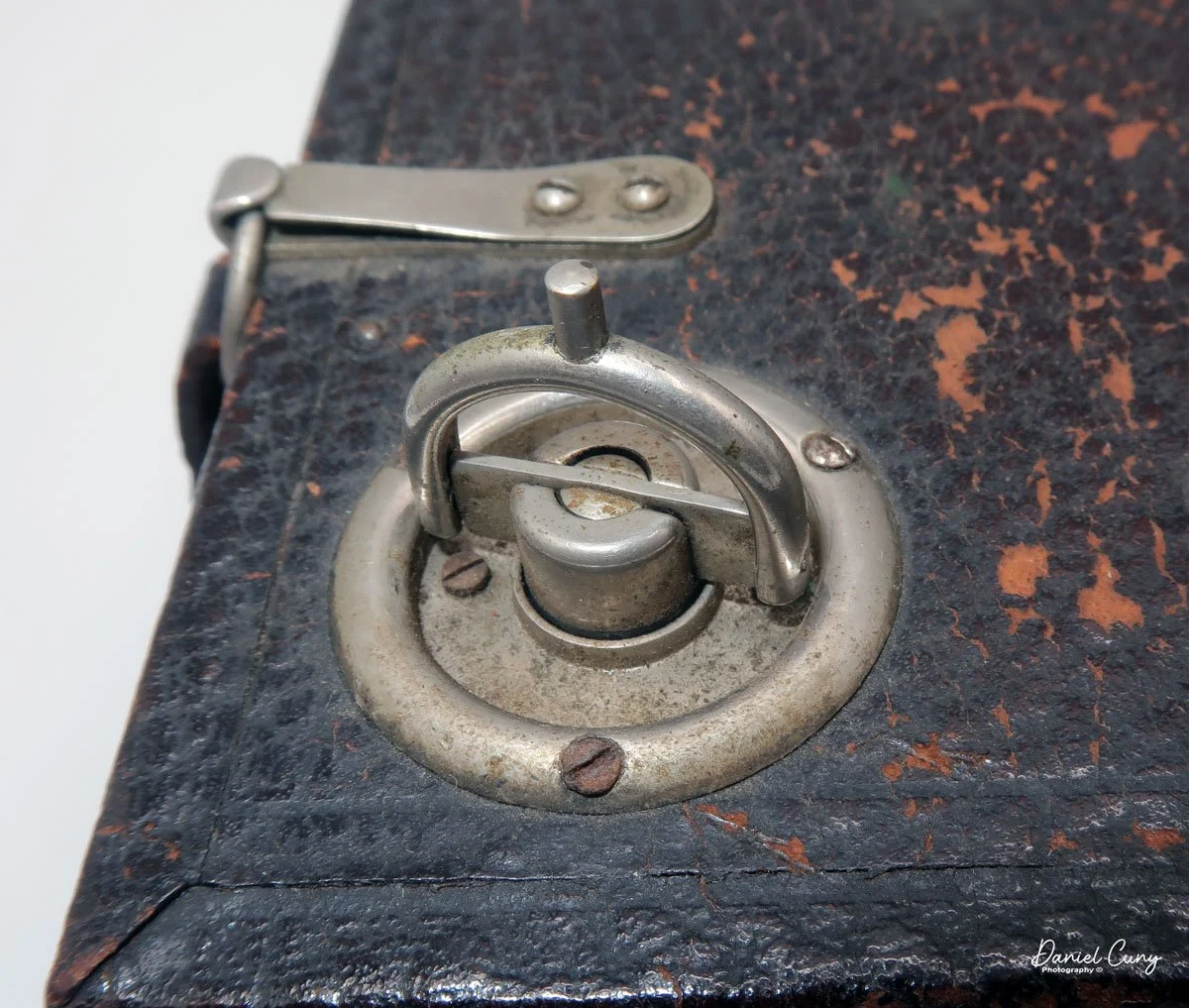
The camera is simple with minimal controls. On top is the etched nickel Kodak waist-level finder, which you lift to reveal the viewfinder. Behind the finder is the shutter speed selector. There are two notches: the one near the center is for a slower shutter speed, and pulling the selector to the end increases spring tension, making the lens swing faster at that speed.

 To set the speed, slide the bar opposite the lens direction. If the lens faces right, slide the bar left to set the next photo's shutter speed. Lock the chosen slow or fast speed with the clip under the selector bar. The shutter release is just right of the optical waist-level finder. Press the shutter button to release the lens and watch it swing to expose the film. Two lines form a "V" at the top, indicating the camera's approximate field of view.

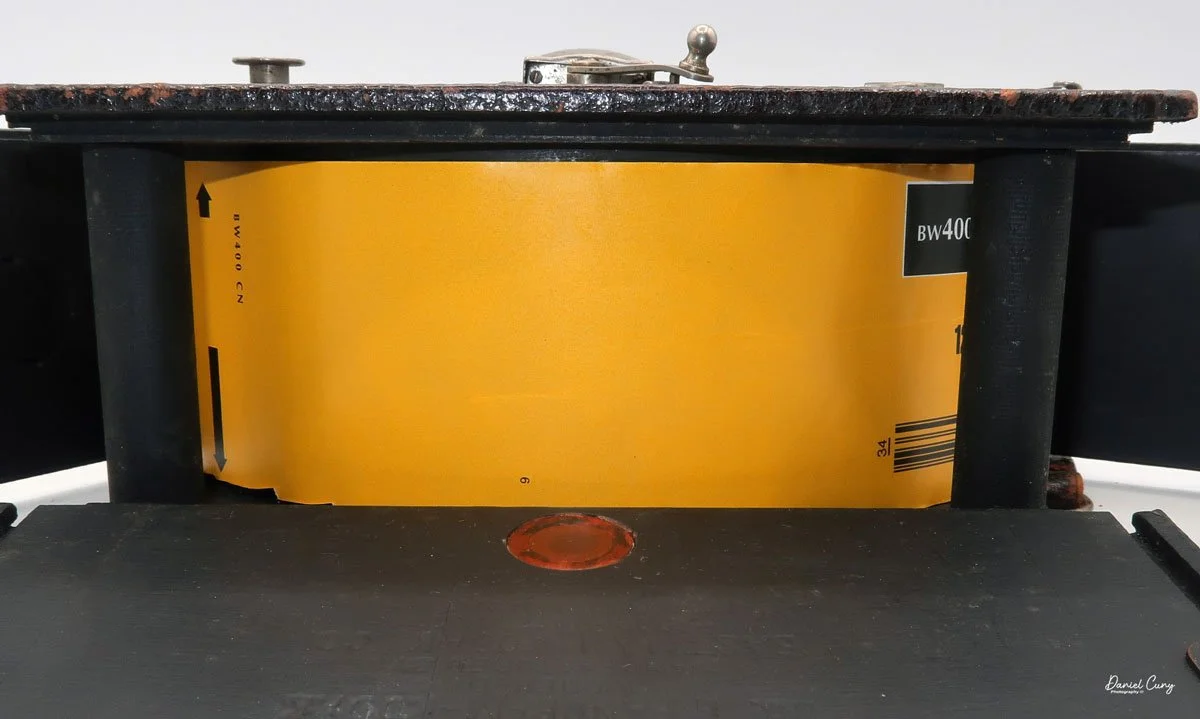
As mentioned previously, to open the back to load the film, unclip the strap on the right side of the camera, then press in the two buttons on the sides of the camera, which will release the camera's back, and it will swing down, and the sides of the camera will also swing open, revealing the film chamber. There you'll see the curved film plane the film travels over, and the very impressive cone on the back of the lens guiding the light onto the film as the lens swings from one side to the other.

To load film into the camera can be a bit tricky because the newer plastic film reels—that is, the circular pieces at each end of a roll that hold the film—can at times be thicker than what was used originally back in the early 1900s, when Kodak would use metal for the reel ends and wood for the film cores, meaning the spools—the cylinder around which the film is wound—would be a bit thinner. When I went to load film for the blog post, I tried a brand I'd never used before. The spool was just a bit too thick and wouldn't fit into the camera easily, and once I did get it in, it was so stiff that the film wouldn't transport across the shutter easily.

 I loaded a new roll by placing the empty spool on the right, then lifting the winding lever and button to fit it. Then I placed the new roll on the left, brought the paper backing over the film plane, and threaded the leader into the empty spool slot. I wound the film until the start arrows appeared, pressed in the camera sides, and swung the back up to lock it.

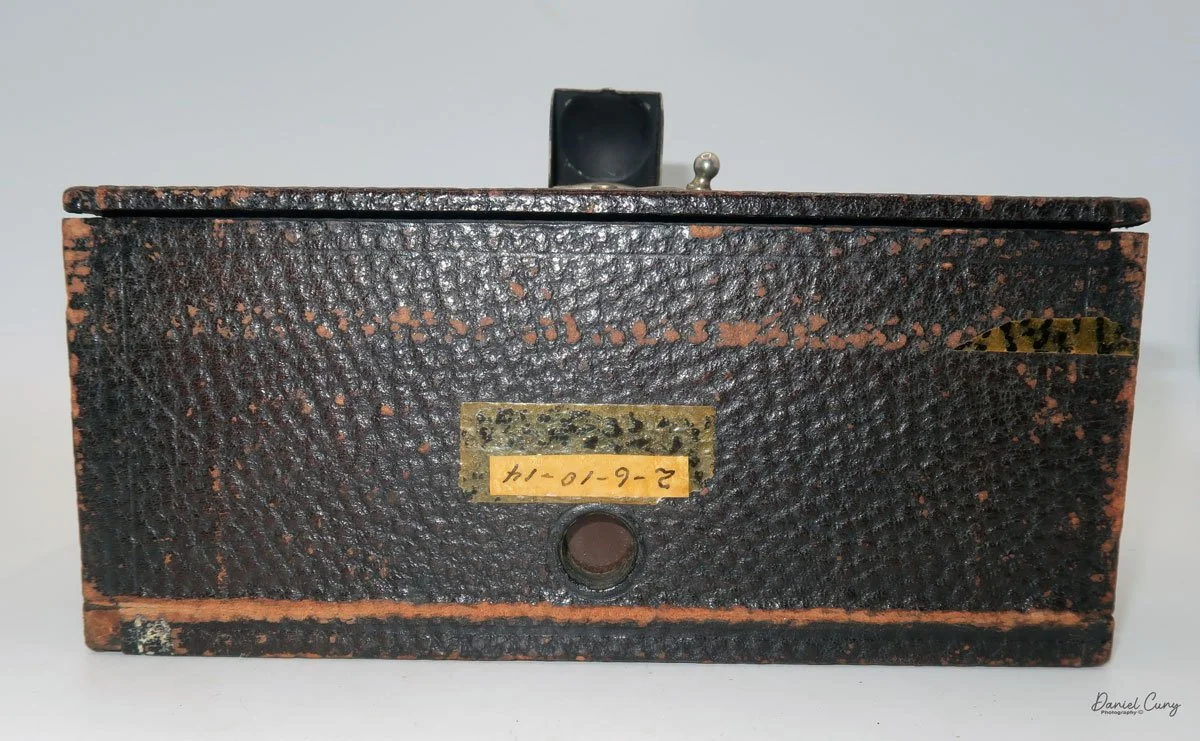
Since 120 film isn't designed for panoramic cameras, the numbers 2, 6, 10, and 14 appear on the back of my camera. These indicate the frame numbers to stop at for each of the four photos on 120 film. I wound the film to 2 and was ready to take my first shot.


My Results:

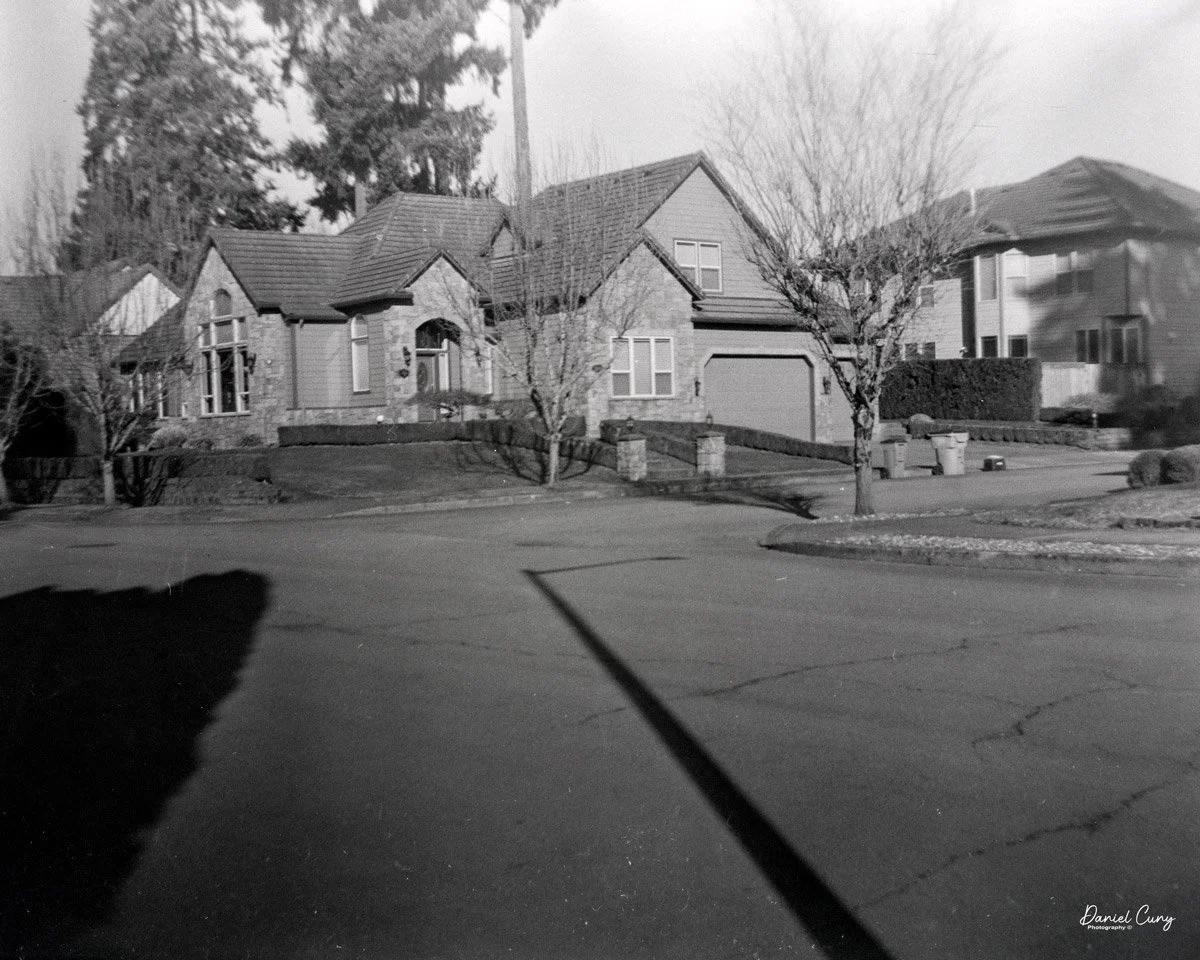
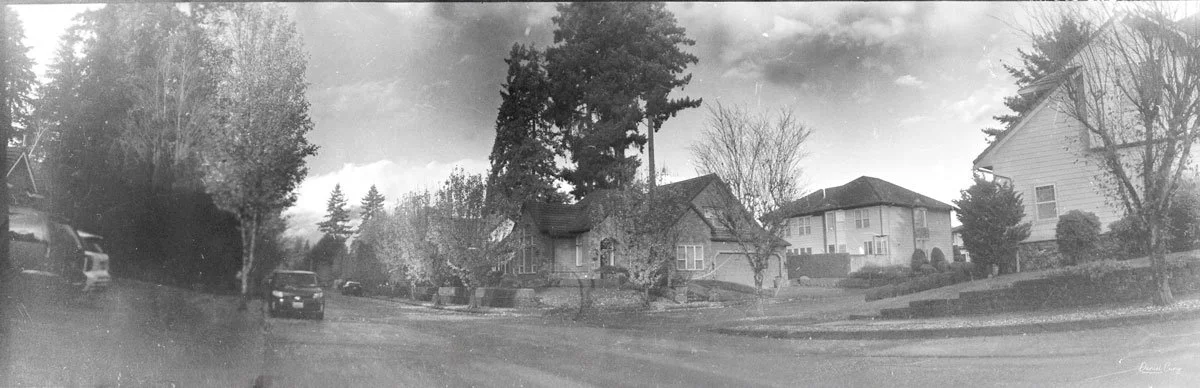
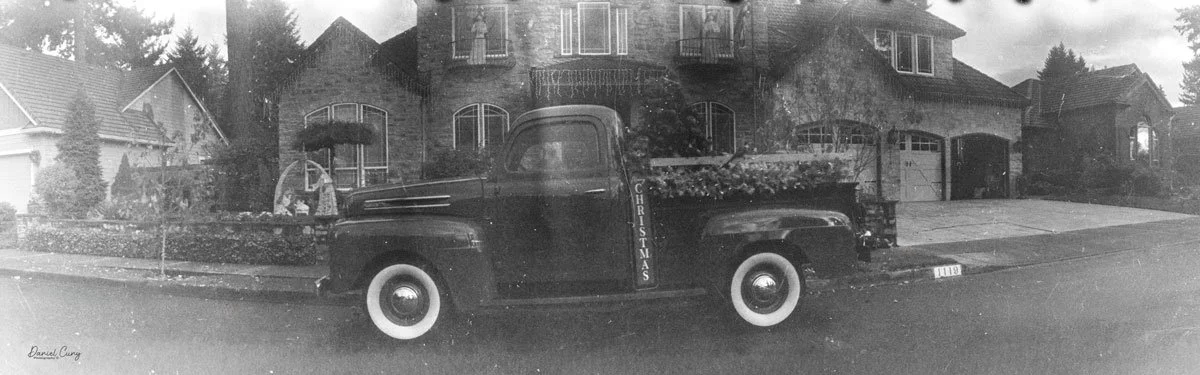
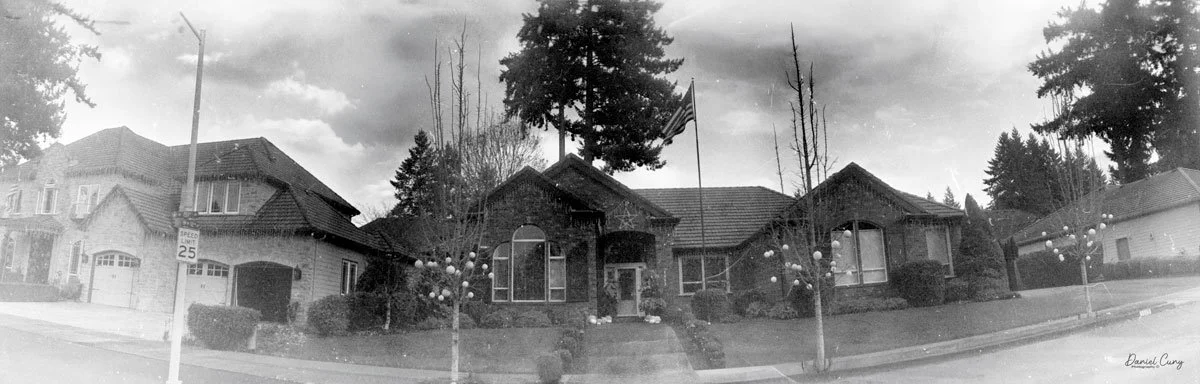
 The film I loaded into the camera was an older roll of Kodak BW400CN film I purchased at a local camera show a few months ago. One thing about the film is that it needs to be processed in C-41 chemicals, which is a standard color film developing process. For the article, I wasn't sure I'd have enough time to get the film processed. Looking online, people mentioned the film can be processed in B&W (black-and-white) chemicals, so that's what I did. 

 There was a break in the rain on Sunday, so I loaded the film into the camera because the Kentmere I had didn't fit because the spool was too thick. I took the photo and went back to the house to develop the negatives. Maybe I didn't process the film long enough, since the images were extremely thin. I had to do some magic in Photoshop to get the images I have, so my apologies for the poor examples.

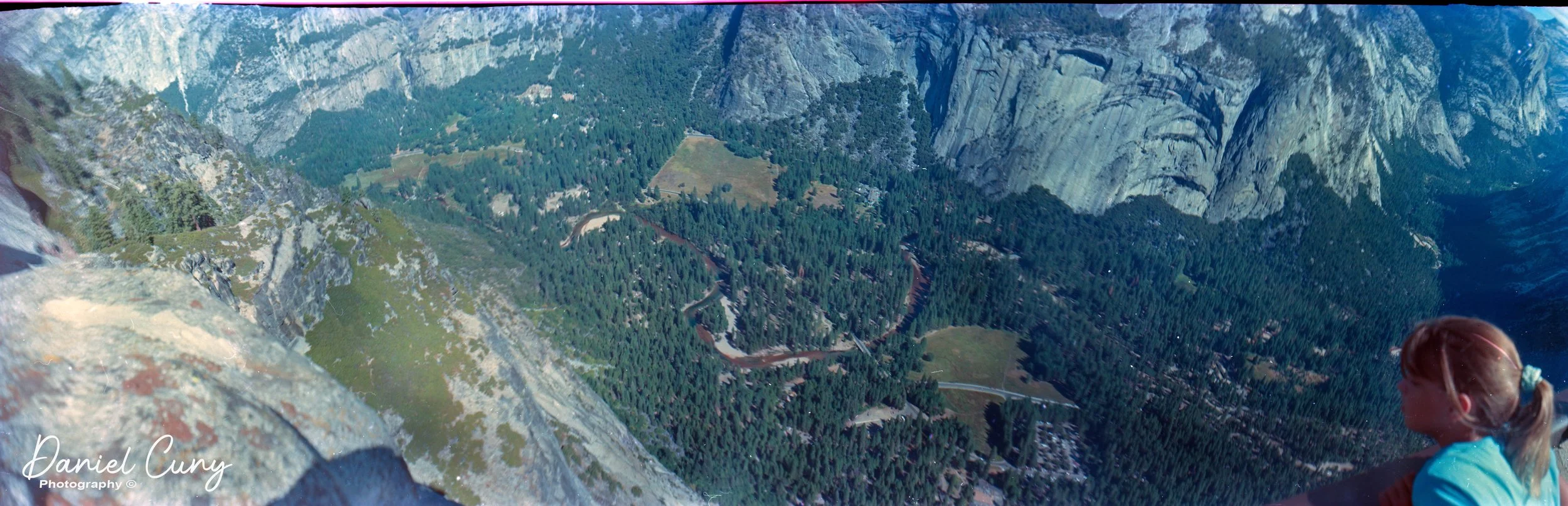
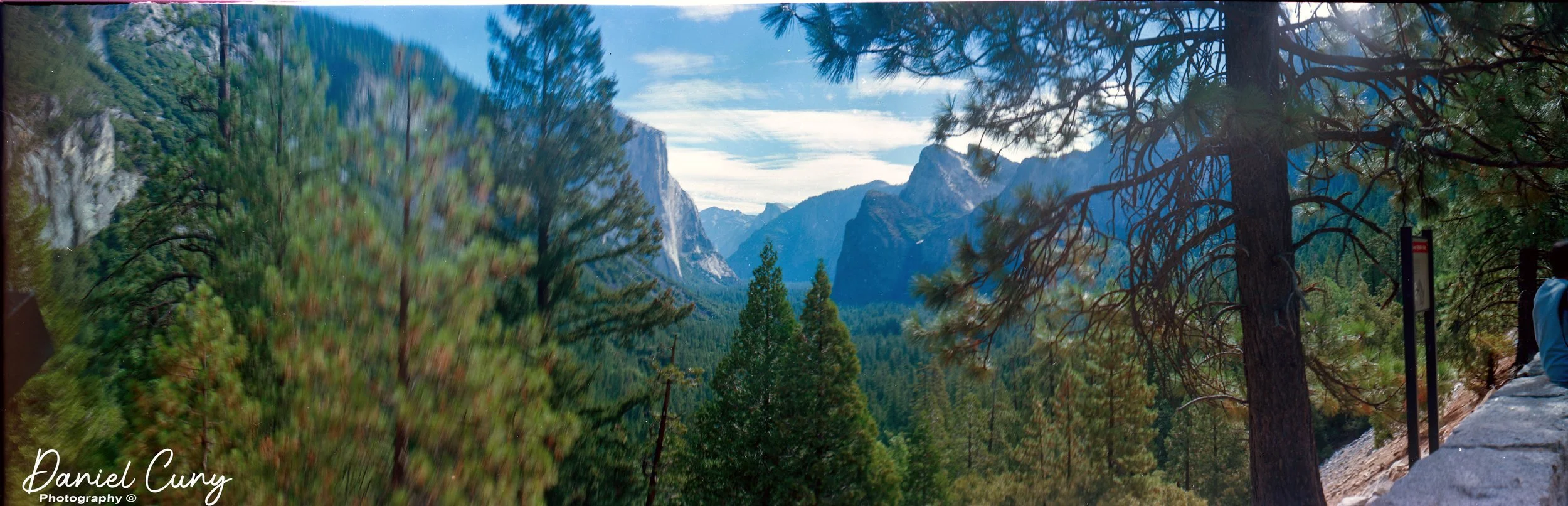
 However, I used the camera when I went to Yosemite a few years ago, and the images turned out great, so I'm adding a couple of color images from Yosemite to this blog to show how well the camera performs.

Conclusion:

 I've always been a huge fan of both the Multiscope Al-Vista and the Kodak Panoram camera. It's interesting that I've only owned the Panoram 1 camera and never the 3a or 4 Panoram, but I do have some of the larger Al-Vista cameras.

 The Panoram 1 is a fun camera to use, and the results are surprisingly good. I should have a camera with a smooth shutter. The cameras are compact, use 120 film, and, unfortunately, are becoming increasingly expensive as people learn about them and how much fun they are to use.

 Fortunately, I've had mine for many years, and I also have the camera case, which is a plus. It's just a real gem in my camera, and truthfully, I'm surprised I haven't written about it sooner than I have.

 Thank you for taking a few minutes from your day to read about his wonderful panoramic camera from over 100 years ago.

 Here's a link to my previous Camera Reviews.

 I also have an eBay shop, Cuny's Camera and Photo, where I sell cameras I've reviewed, along with other photo oddities. If you're interested in anything from my store, reach out to me, and I'll offer a discount. Just mention my blog.

 Until next week, please be safe.