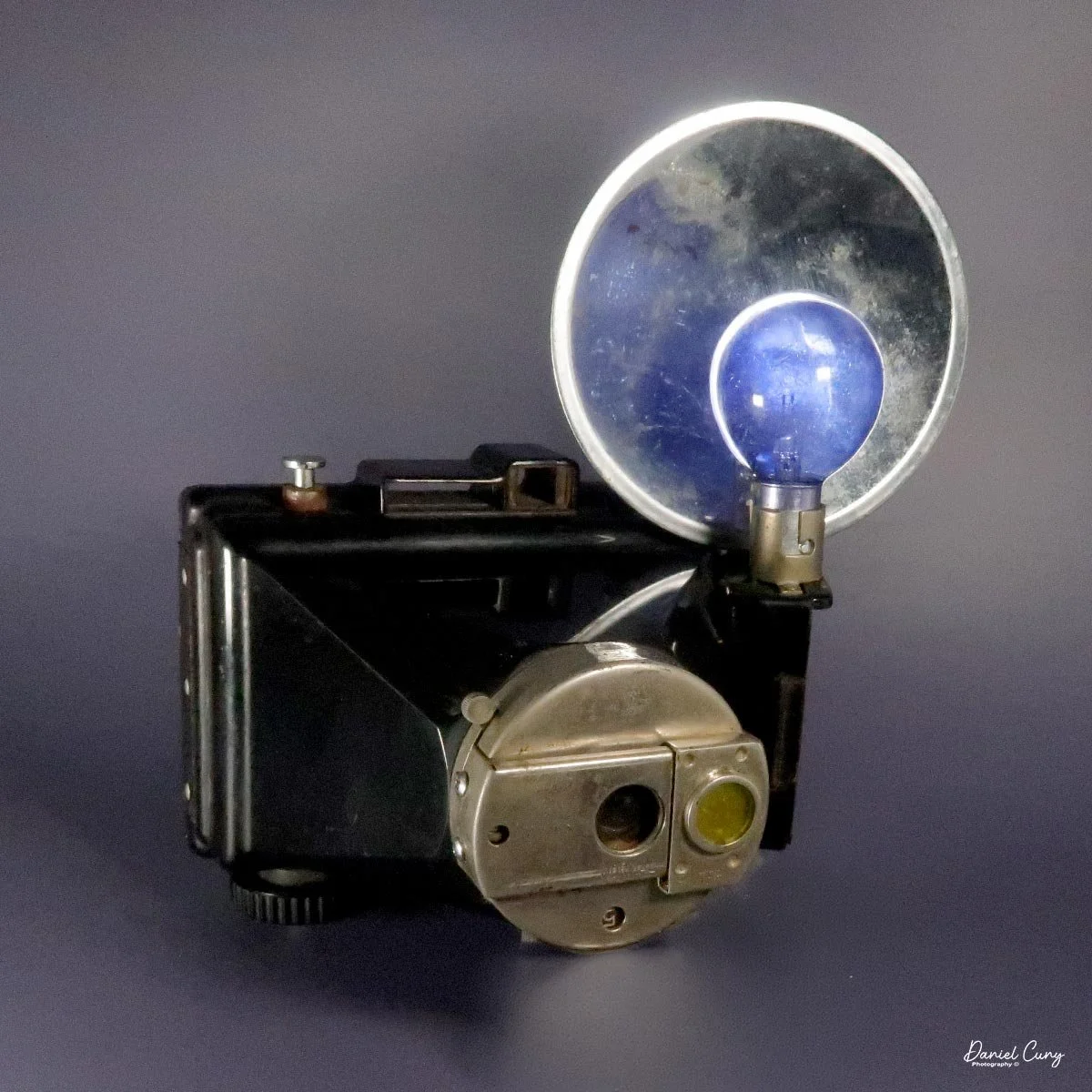
My Dover No. 620-A camera
It's always the odd and unusual cameras that grab my attention.
As I was looking through some online auctions, I saw a camera that really caught my eye. It wasn't your typical 35mm SLR, rangefinder, or even a twin-lens camera, but a triangular-shaped Bakelite camera with a large flash reflector. The feature that really made me give the camera some thought was the very large exposure guide on the rear of the camera, along with the sliding yellow filter on the lens.
As I was scanning the photos of the camera online, I saw "Dover No. 620-A" on the side of the camera. It's a camera I was not aware of, which is somewhat odd given the amount of time I've spent scanning McKeown's Camera Guide.
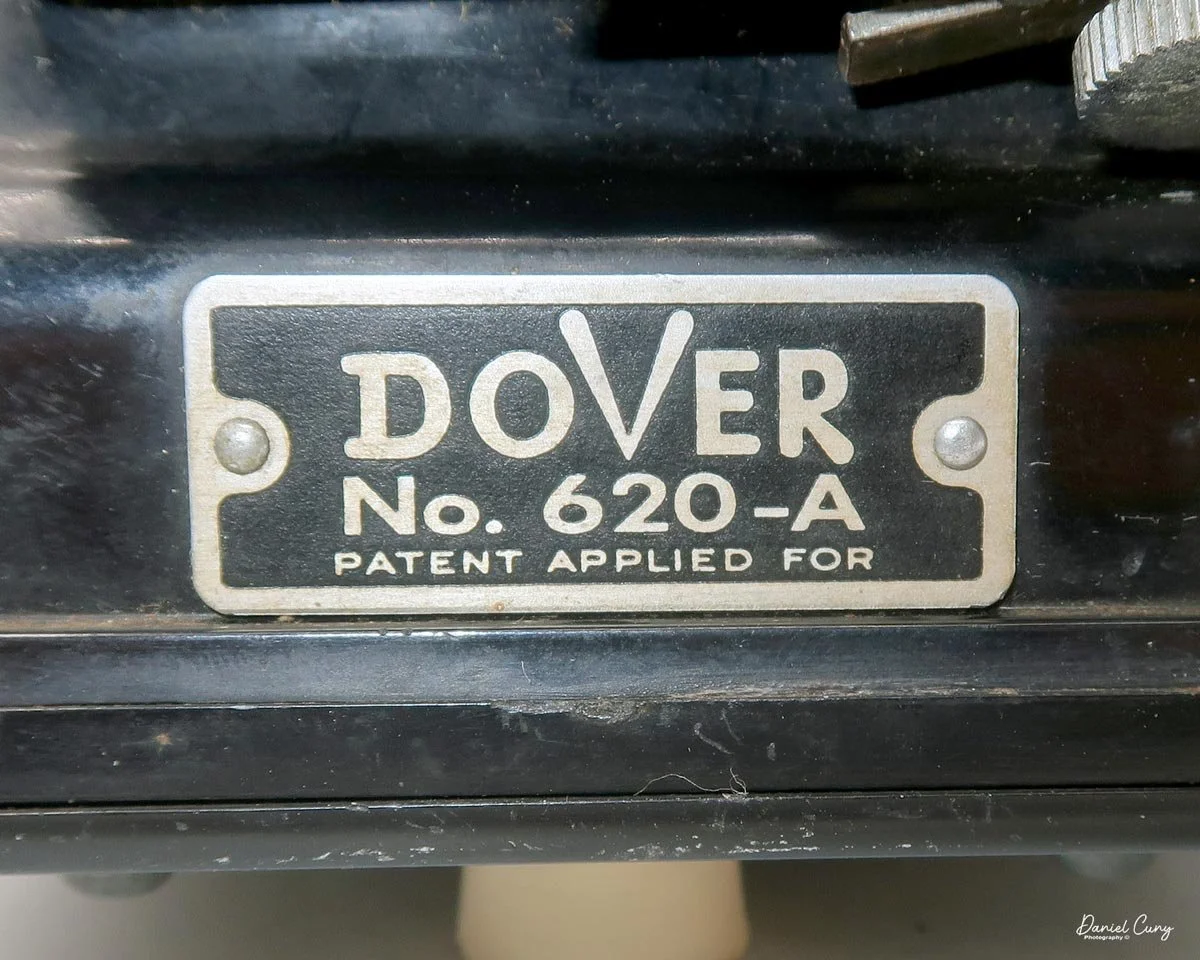
Nameplate on the camera
At this point, I picked up the camera bible (McKeown's Camera Guide) to see what they had on the camera. They had a short description linking it to the Speed-O-Matic, which is a camera I'd read about a long time ago, but I didn't remember much about it until I refreshed my memory looking through the guide.
I also did some online research, which offered up identical information, along with a few more images of the camera. The photos showed the yellow filter on one side of the lens along with a second filter (Portrait) on the other side. Unfortunately, the camera I saw online only had the yellow filter.
The price of the camera online was very low, so I thought it might be fun to pull the trigger, purchase the camera, and write about it for one of my blog posts. I did see others on eBay and other places, but at the time, none of them had the flash reflector, the flash battery compartment wasn't as nice, and the price, even with shipping, was more than the one I saw online.
History:
The Dover 620-A is one of those cameras that's interesting for all the wrong reasons. It's a big, heavy chunk of black Bakelite with chrome trim, made around 1950 by the Dover Film Corp. — a company you've probably never heard of, and for good reason. The 620-A shoots 16 exposures of 4.5x6cm on 620 film, with a Somco f/9 meniscus lens, five rotary disc stops, a single-speed shutter, and a built-in flash. Its one genuinely clever feature is a pair of little filters — portrait and skylight — mounted right on the lens that slide across it. The operating instructions are even riveted onto the back, in case you lose the manual.
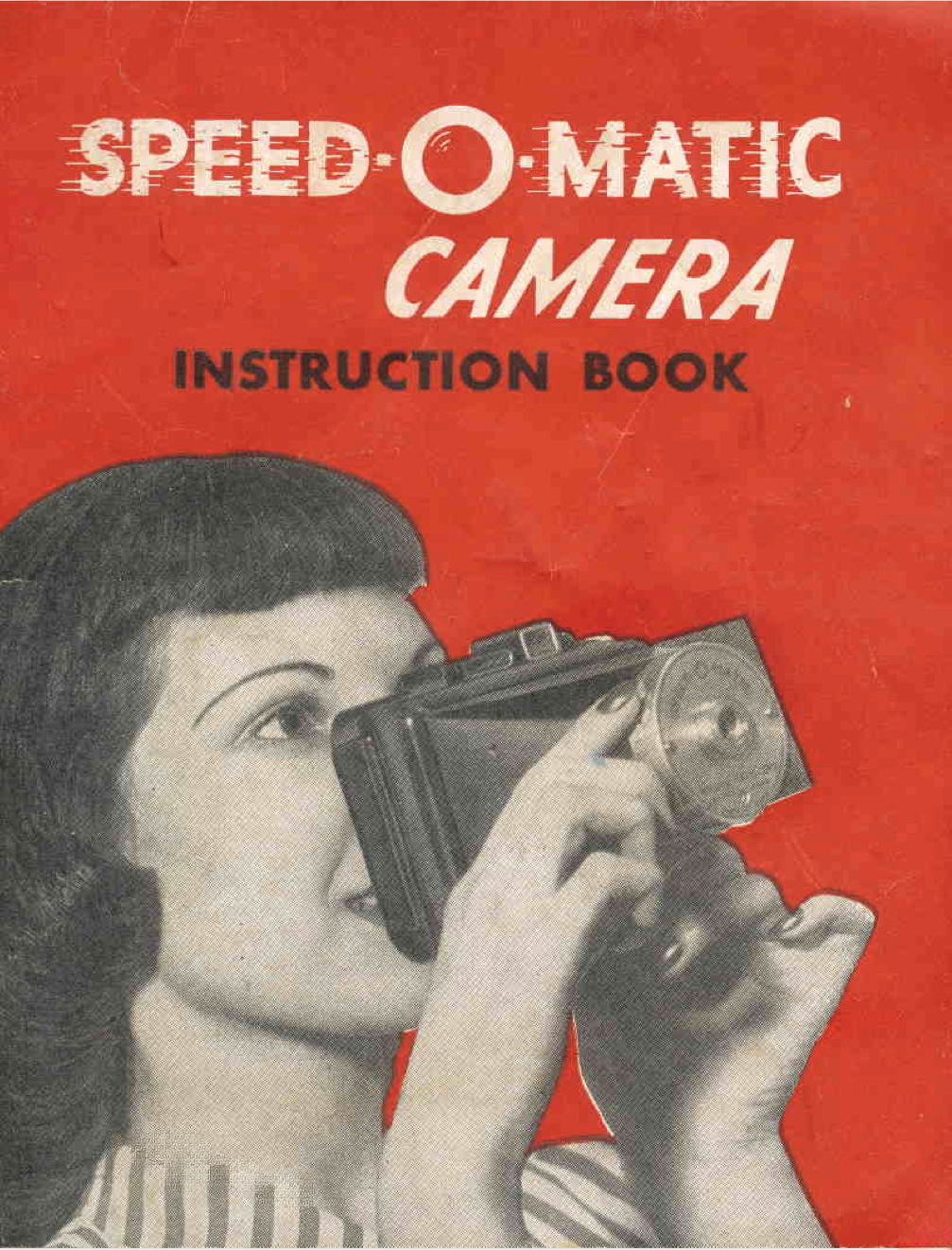
Cover from the Speed-O Matic camera
But the real story starts a few years earlier, with a camera called the Speed-O-Matic. Made around 1947-48 by the Speed-O-Matic Corp., it was an "instant" camera from before instant was easy: it shot direct-positive paper in a film pack, twelve 2x3-inch shots, and then you developed the paper yourself in a tank that came with the camera. Meniscus lens, single-speed shutter, extinction meter. Simple in theory, clunky in practice — you were essentially running a darkroom in a box.
The timing couldn't have been worse. Polaroid's Land camera debuted in 1948 and showed the world what instant photography was supposed to feel like. The Speed-O-Matic's shoot-paper-then-develop-it-yourself routine was a dead-on-arrival flop. The camera flopped, but the tooling survived.
That's where Dover Film Corp. comes in. Rather than design a camera from scratch, Dover took the Speed-O-Matic body molds and modified them for conventional roll film — and the Dover 620-A was born. Same bulky body, now a plain snapshot camera for standard 620 film. One curious footnote: the George Eastman Museum holds a Speed-O-Matic in its collection — camera, developing tank, film kit, and original box — a gift from the Eastman Kodak Company. Kodak kept an eye on the competition, even the competition that couldn't sell.
So the 620-A is a second act built on a failure: an instant camera that couldn't compete with Polaroid, reborn as a conventional snapshot camera by a company that saw value in molds nobody else wanted. And for the record, there probably wasn't ever a model B.
The Camera:
The camera is a very odd duck, measuring 5" wide by 4.5" deep and 7.5" tall from the bottom of the film winding knob to the top of the flash reflector. The Dover 620-A weighs just under one pound, at 15.5 ounces.
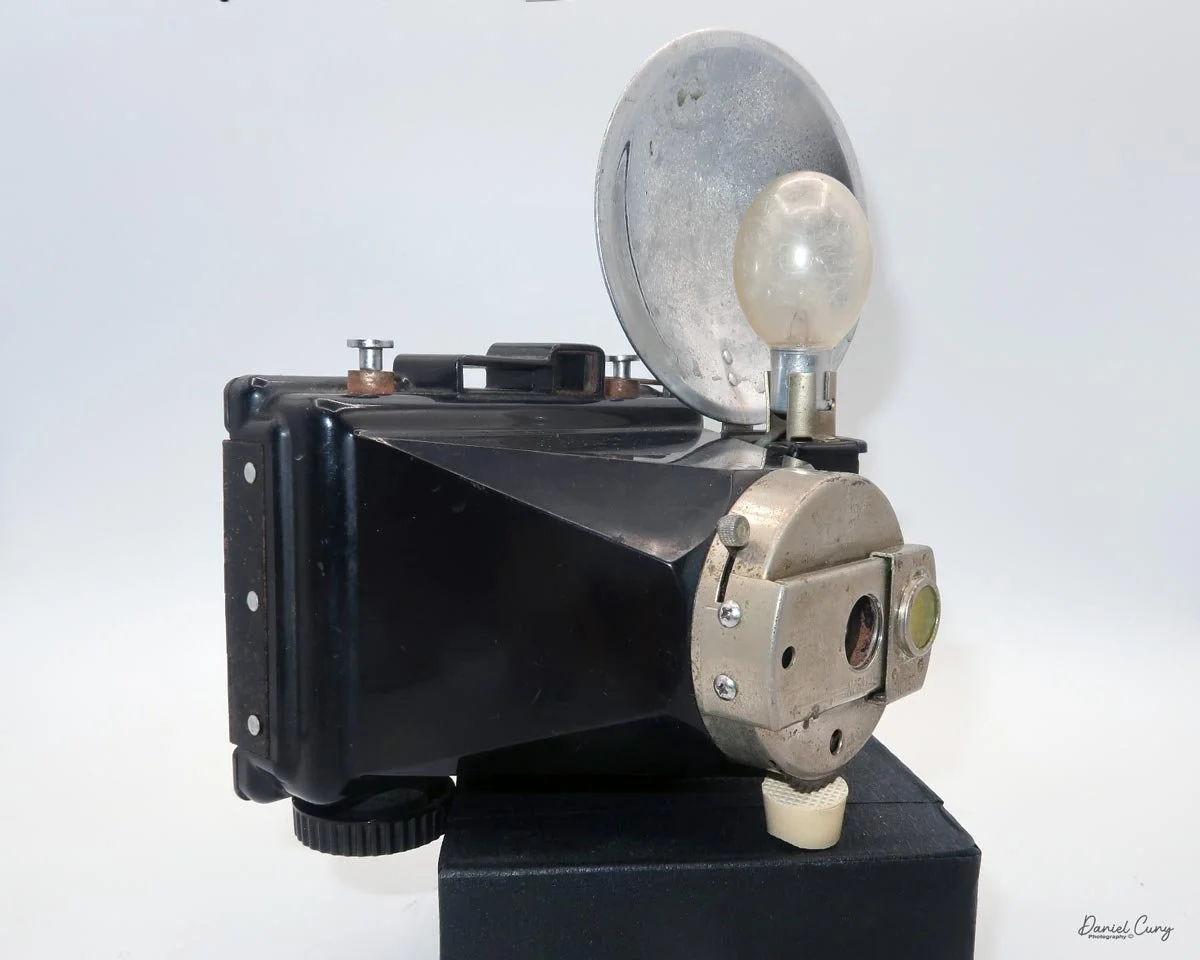
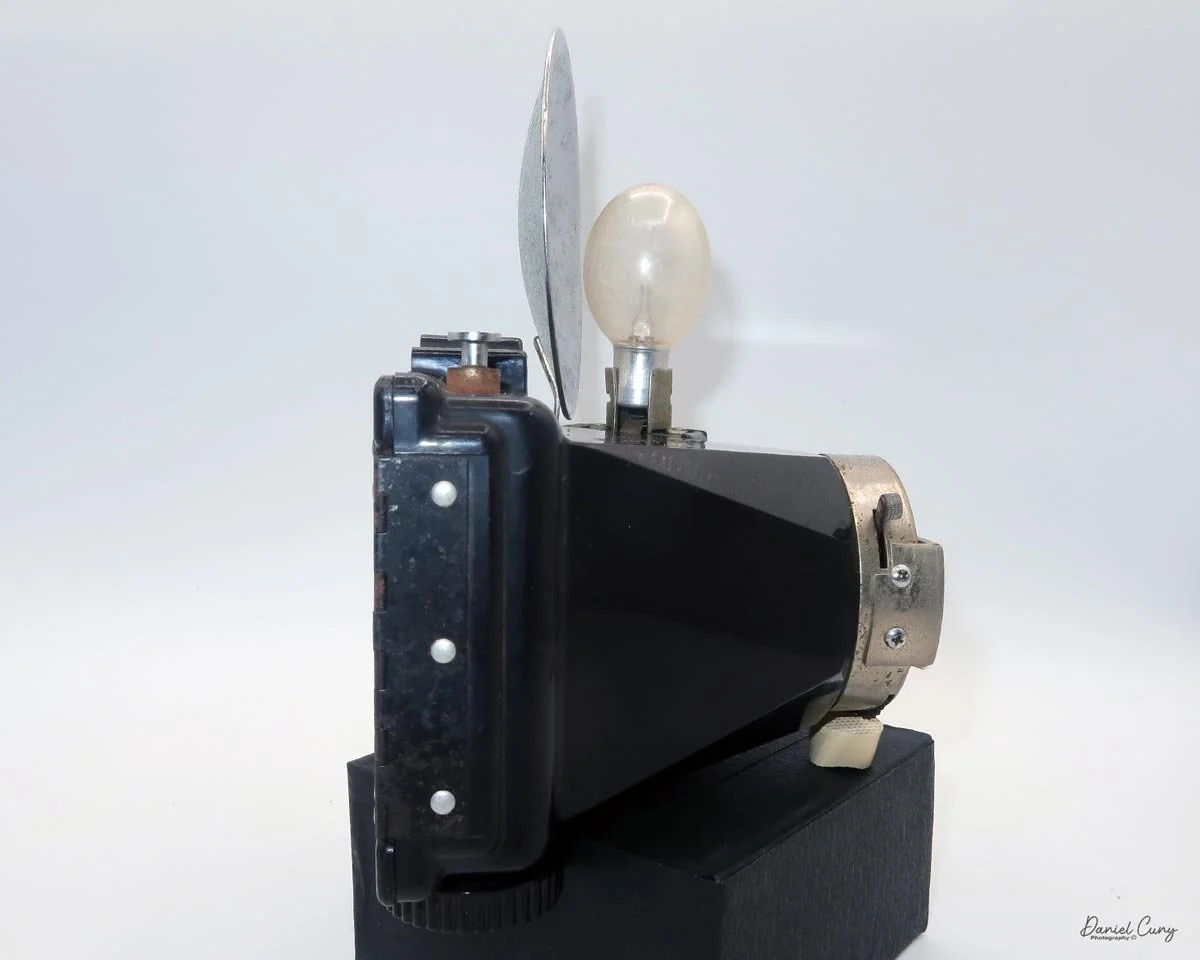
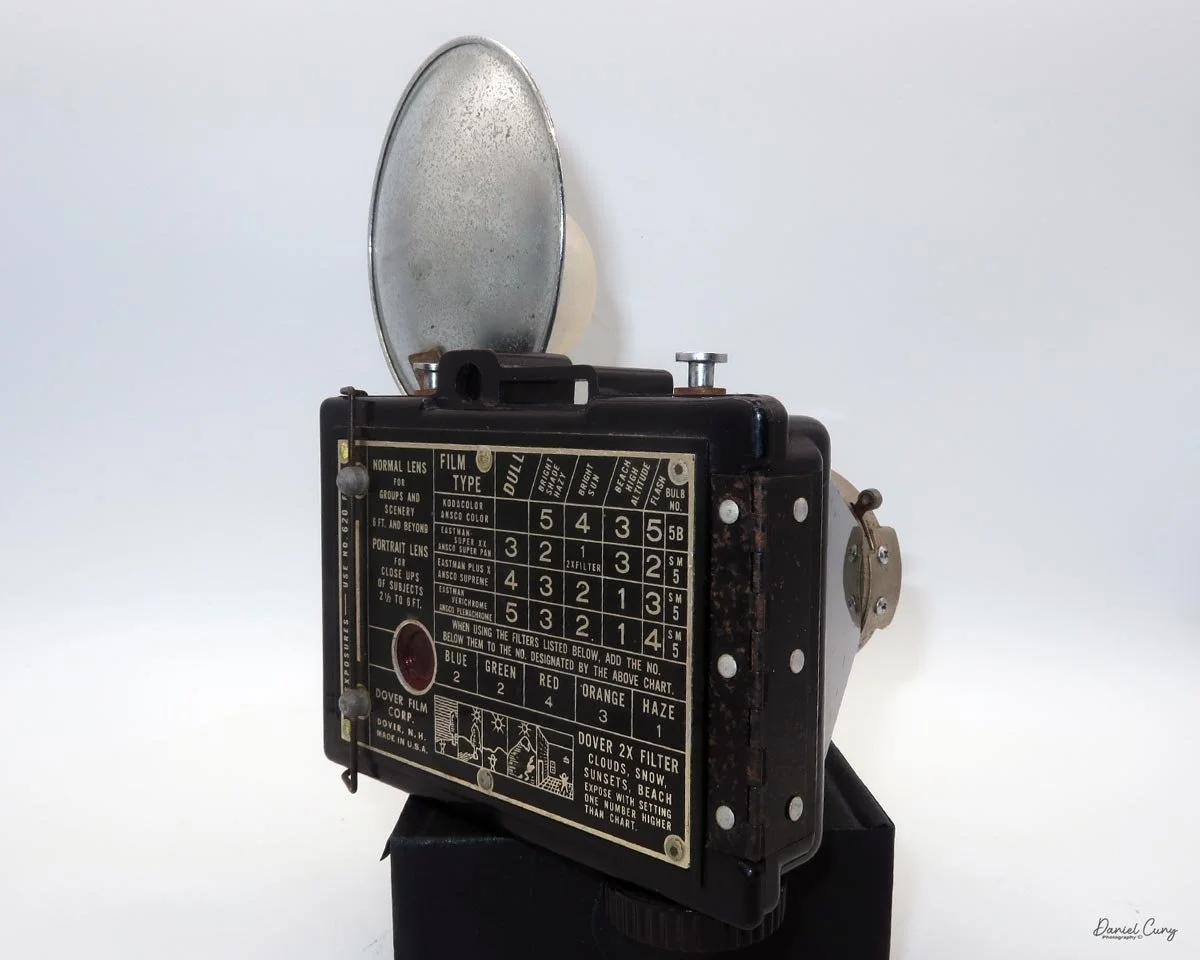
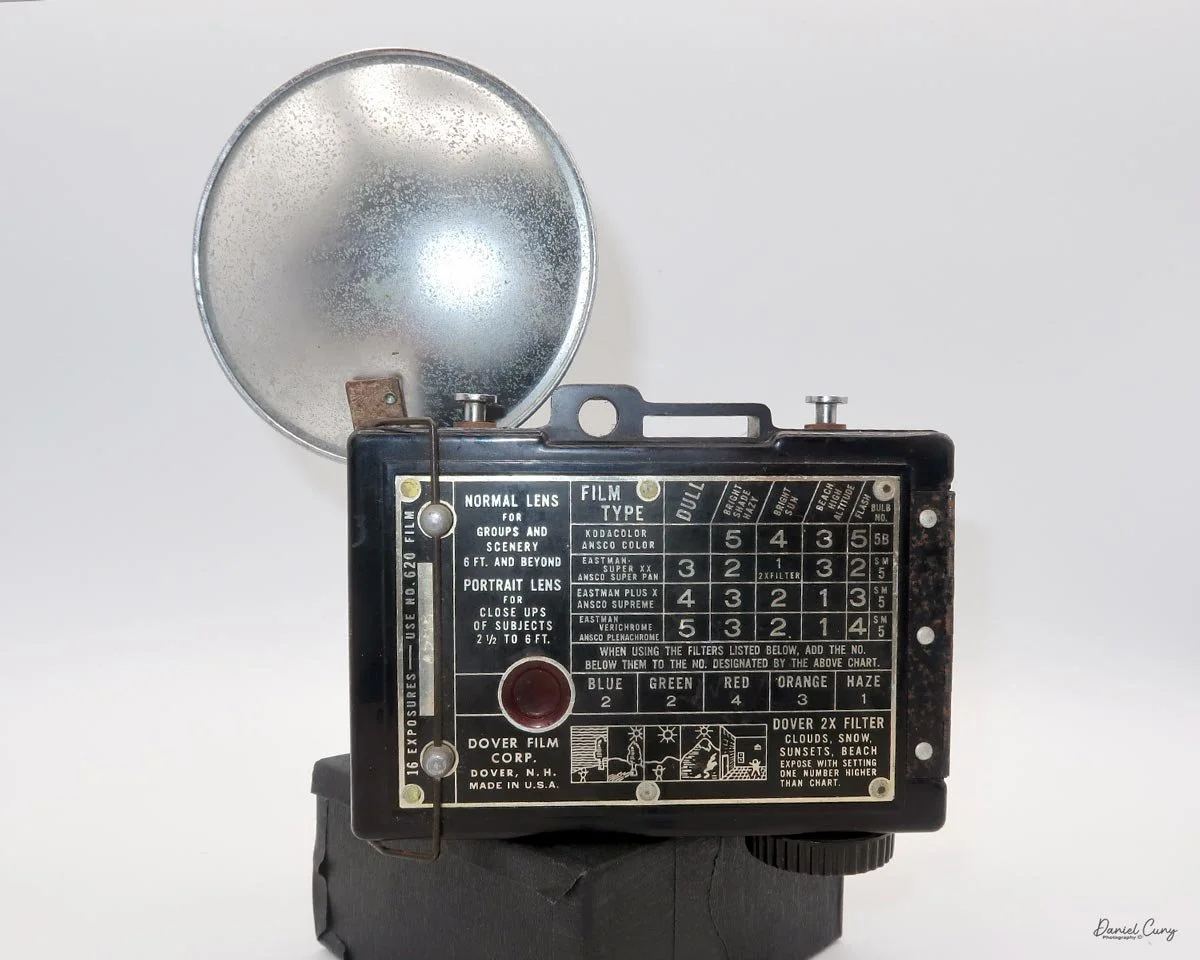
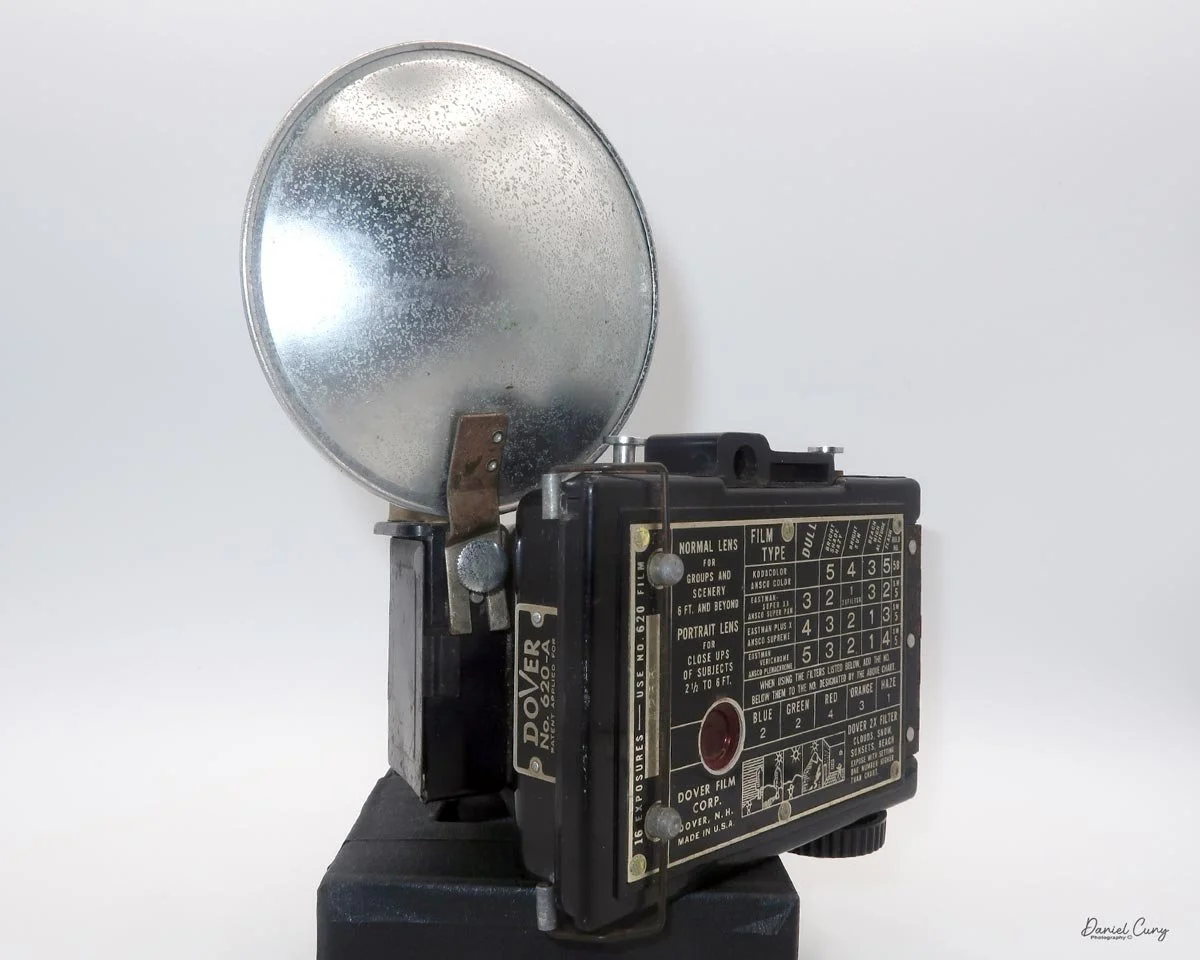
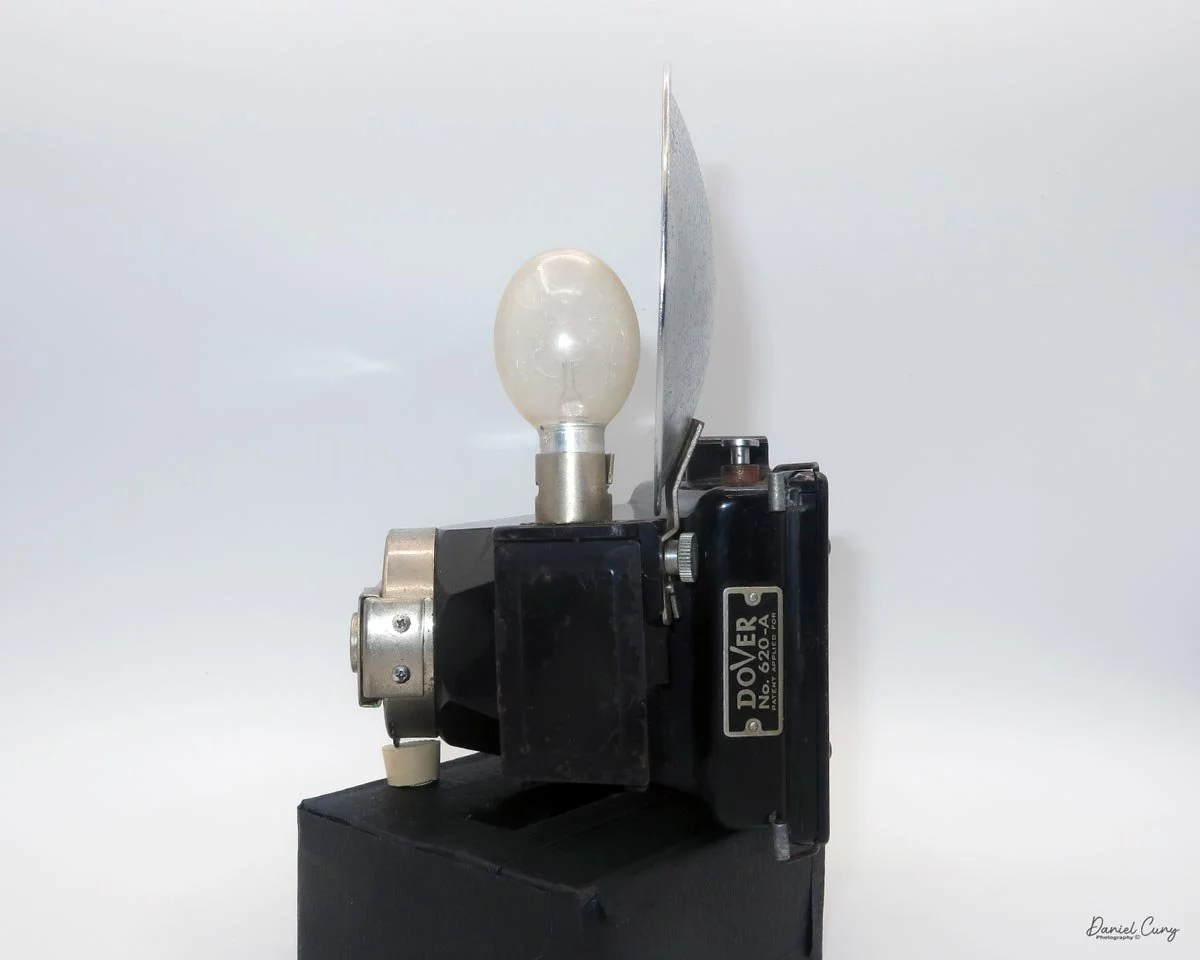
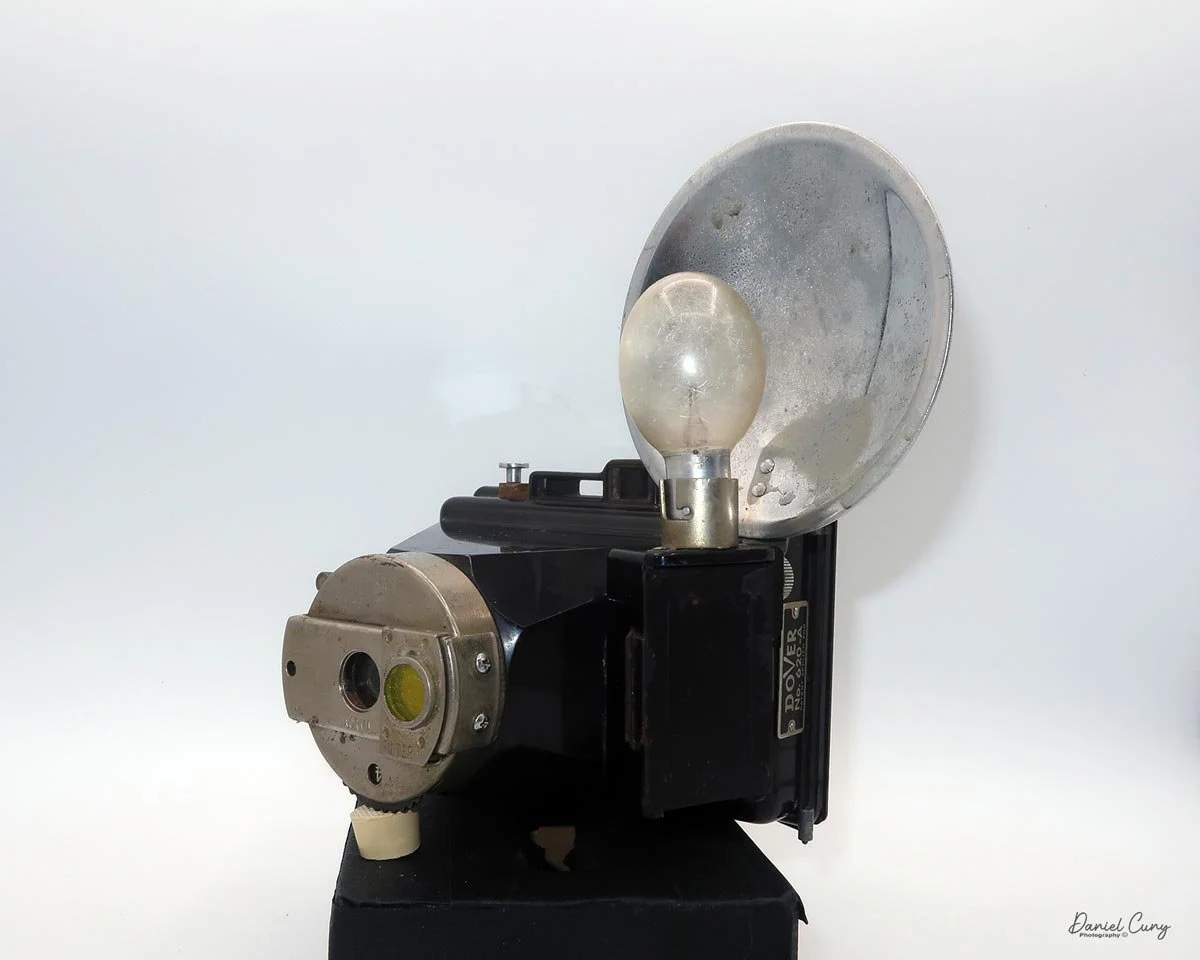
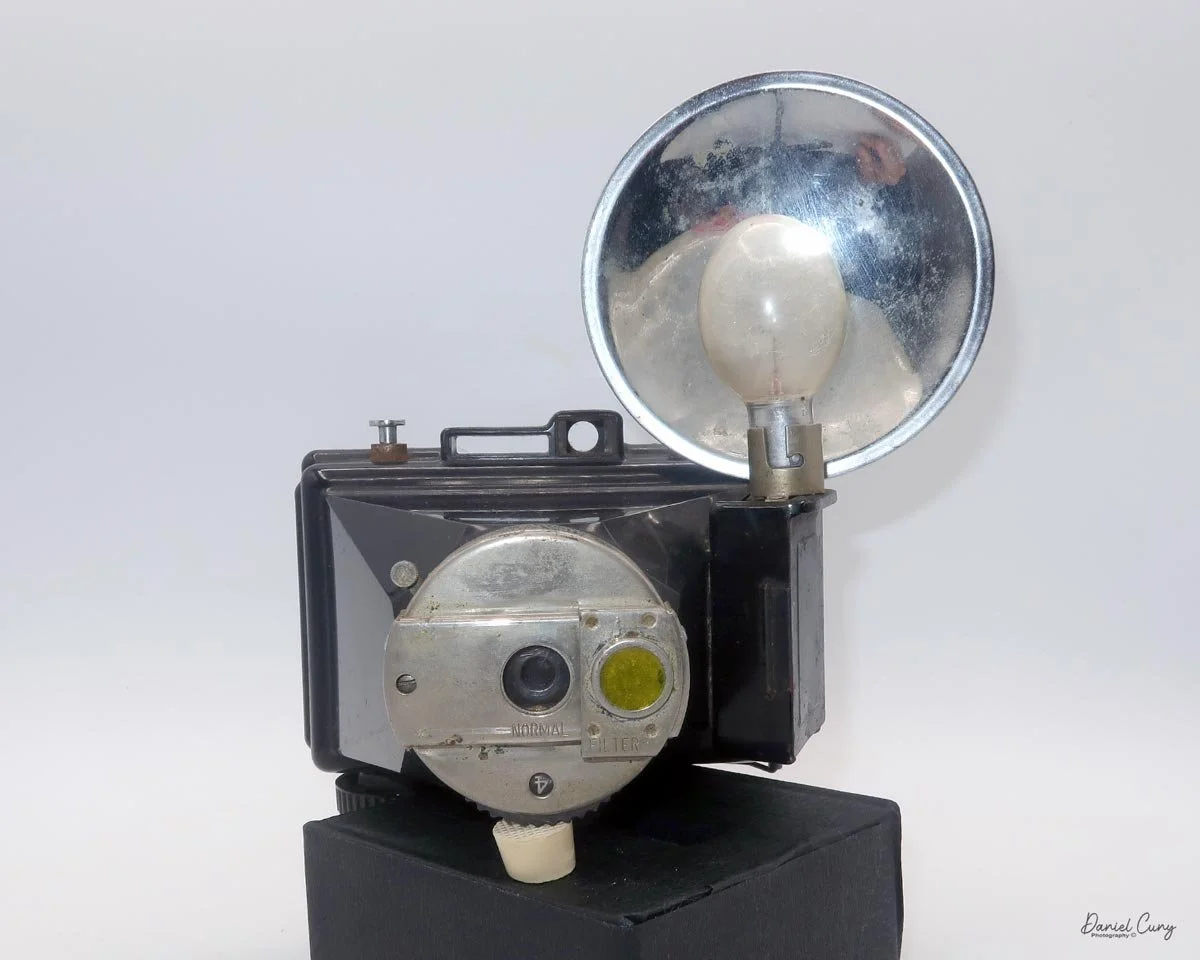
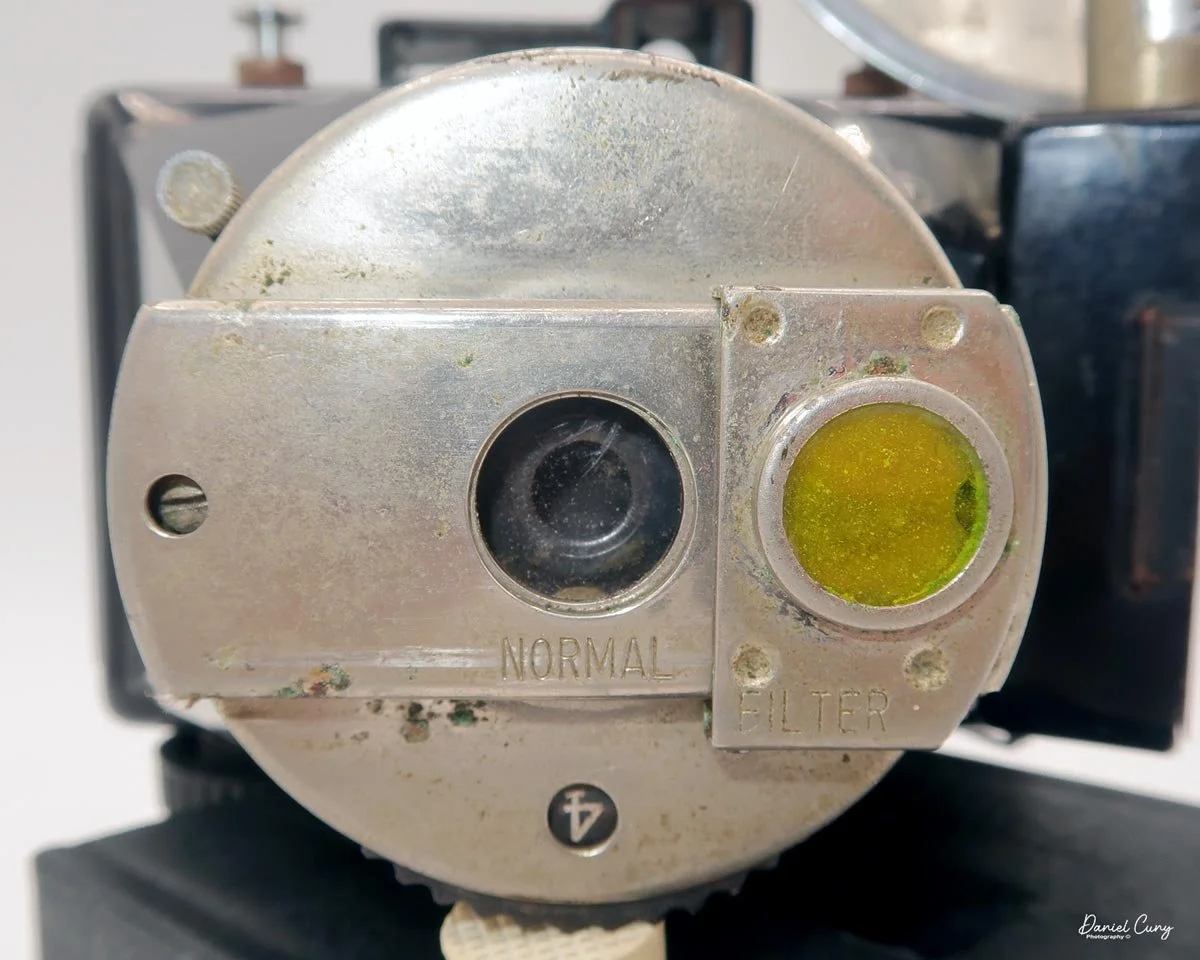
There's really nothing much to the camera itself. On the front of the camera is the lens, and on my camera the sliding yellow filter is on the right side — the portrait filter that should be on the left is missing.
Just below the lens is a rotary disk numbered 1 to 5; rotate it and the aperture in the lens changes. The number 1 is the widest opening and the number 5 is the smallest. The shutter release is above the lens at the 11 o'clock position. There is only one shutter speed, and that appears to be approximately 1/60.
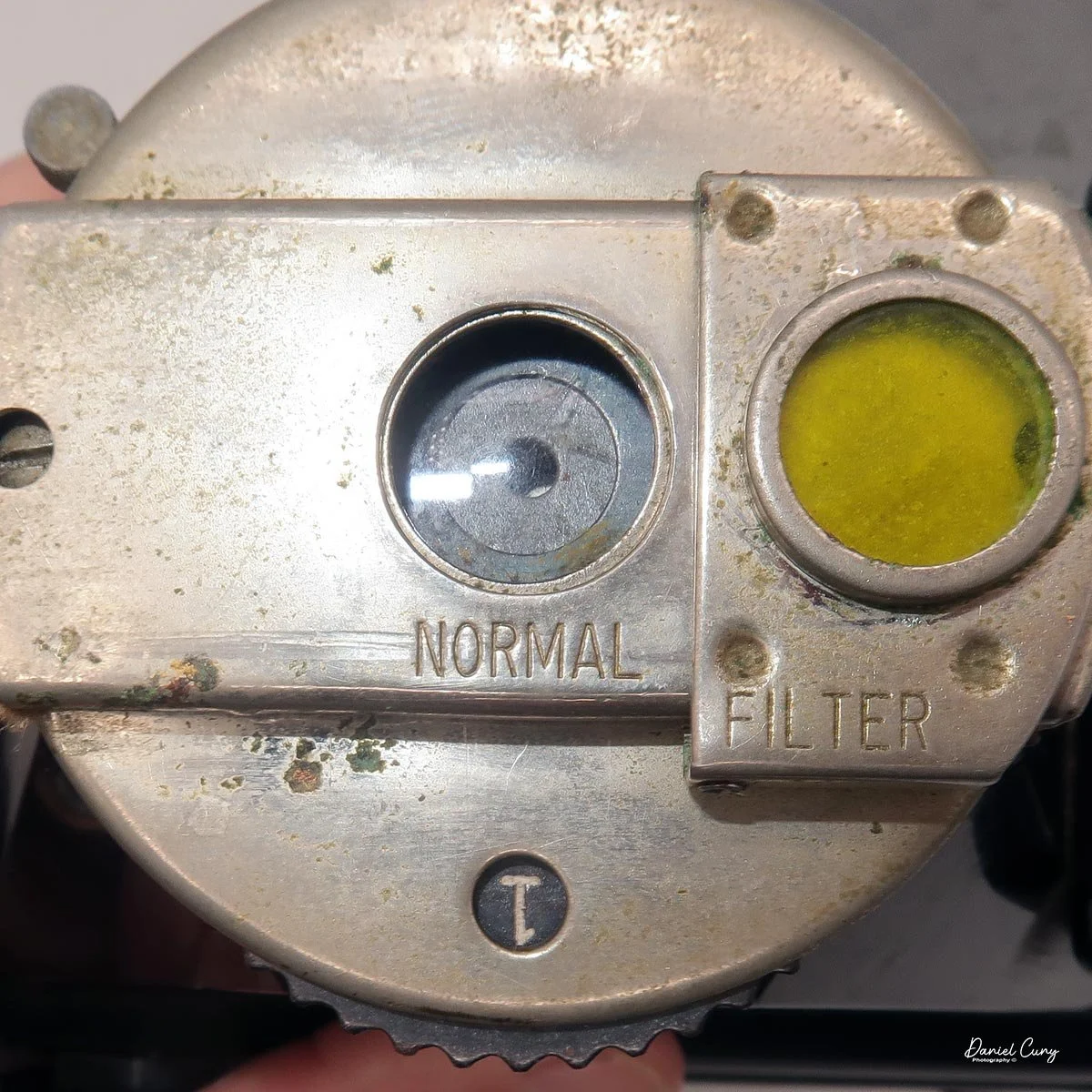
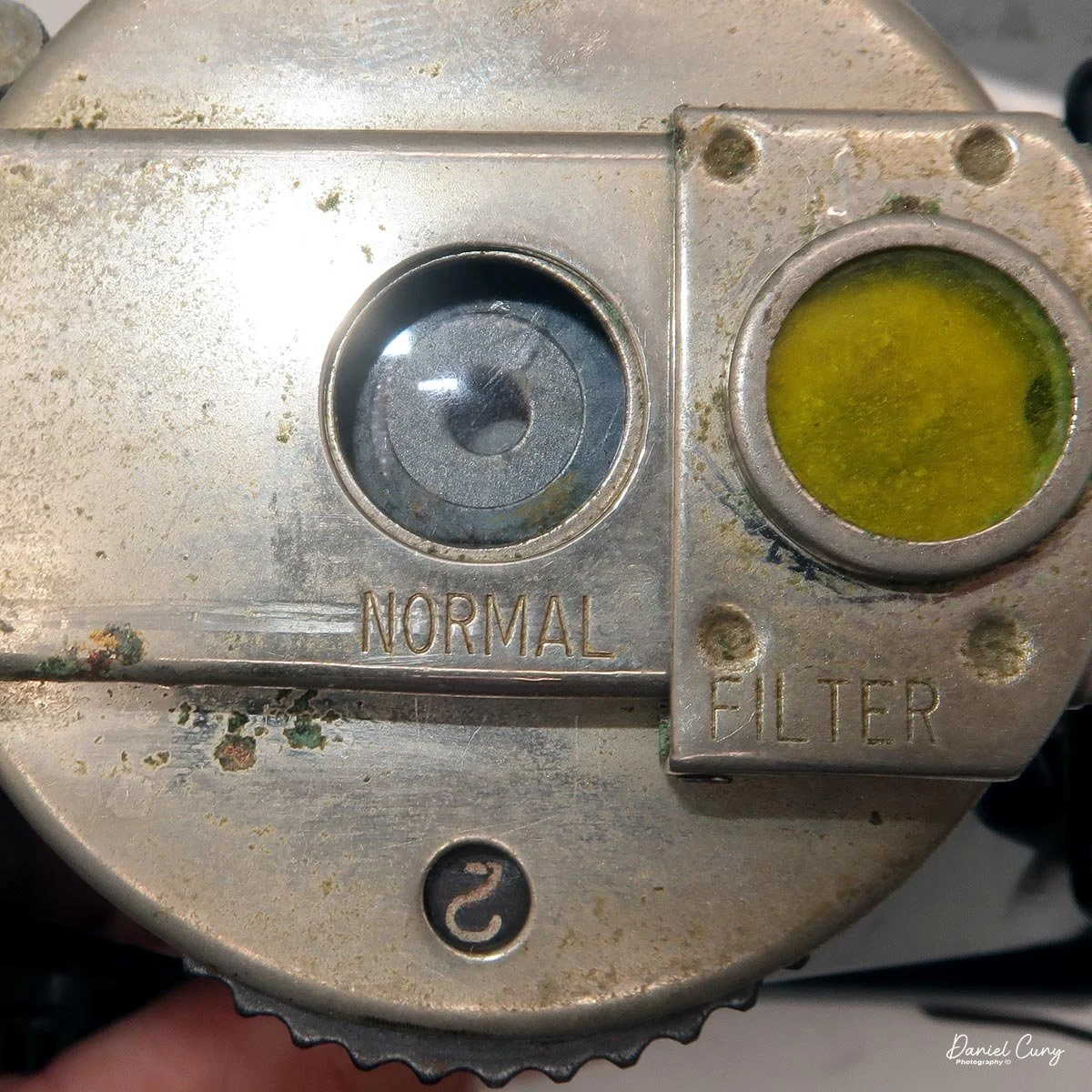
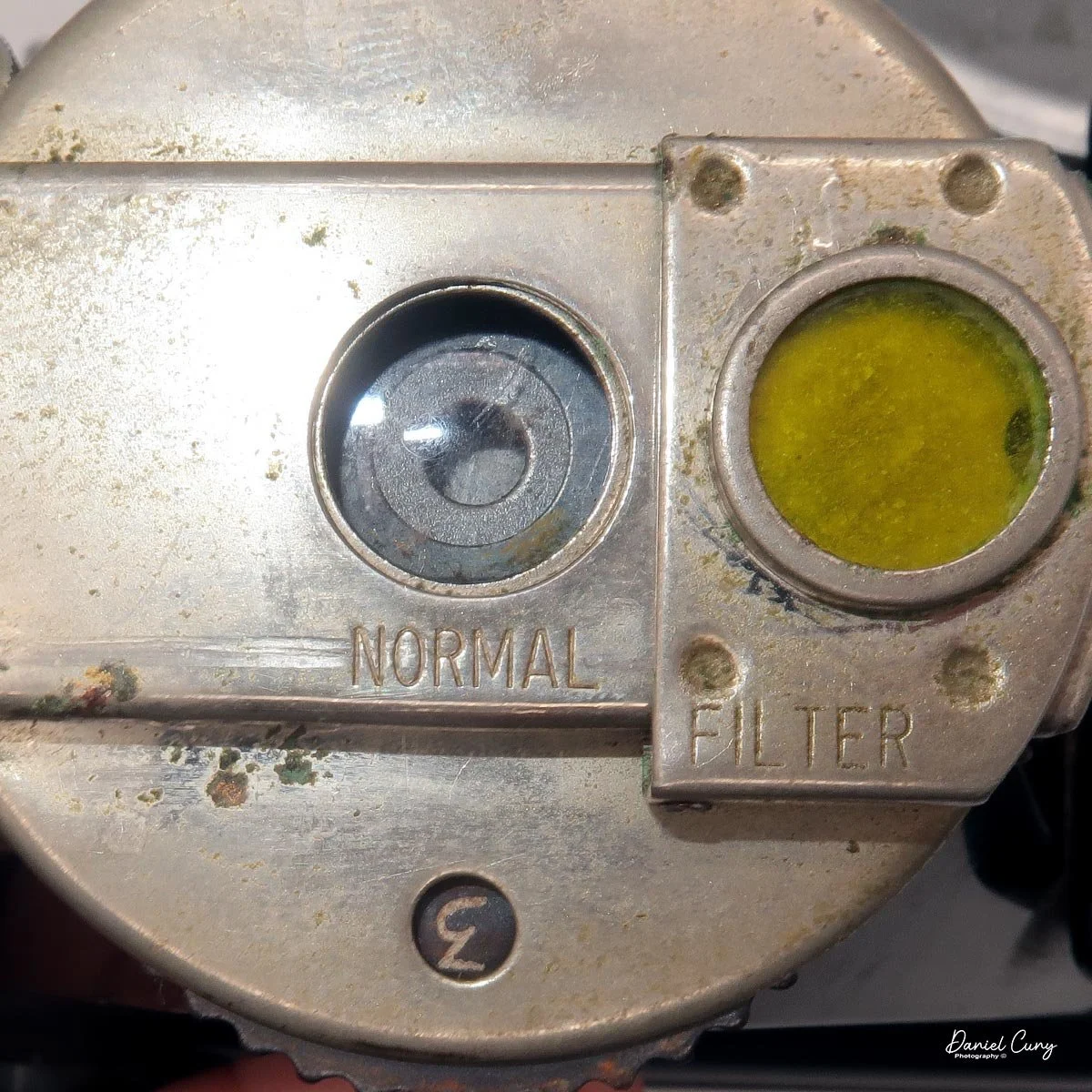
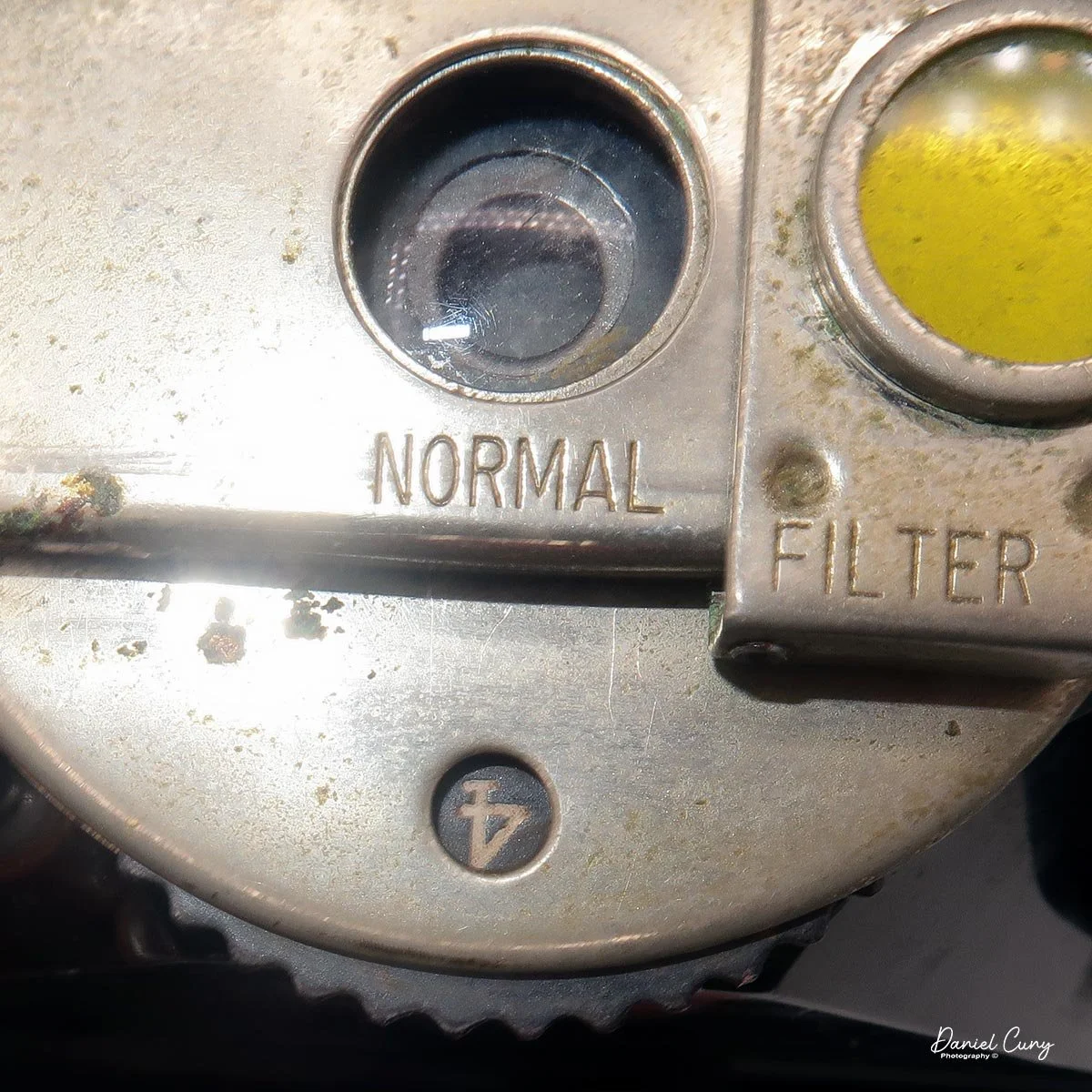
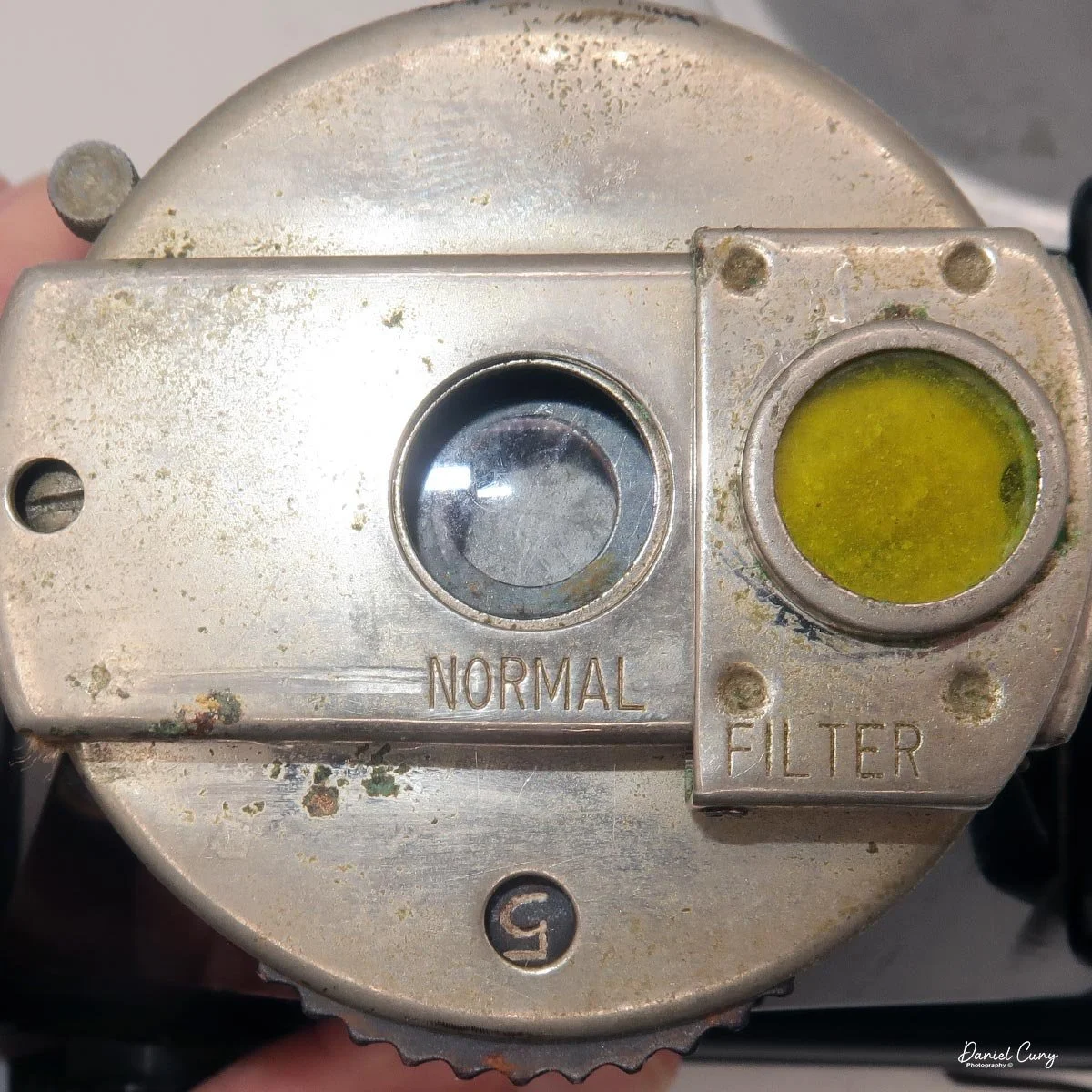
The Dover No. 620-A produces 16 images on a roll of 620 film. The film back is held onto the front of the camera by two clips — one on top, one on the bottom — hinged on the back of the camera.
Once you unhinge the top and bottom clips and open the back, you load it like any roll-film camera: the take-up spool on the left side, the fresh roll of film on the right.
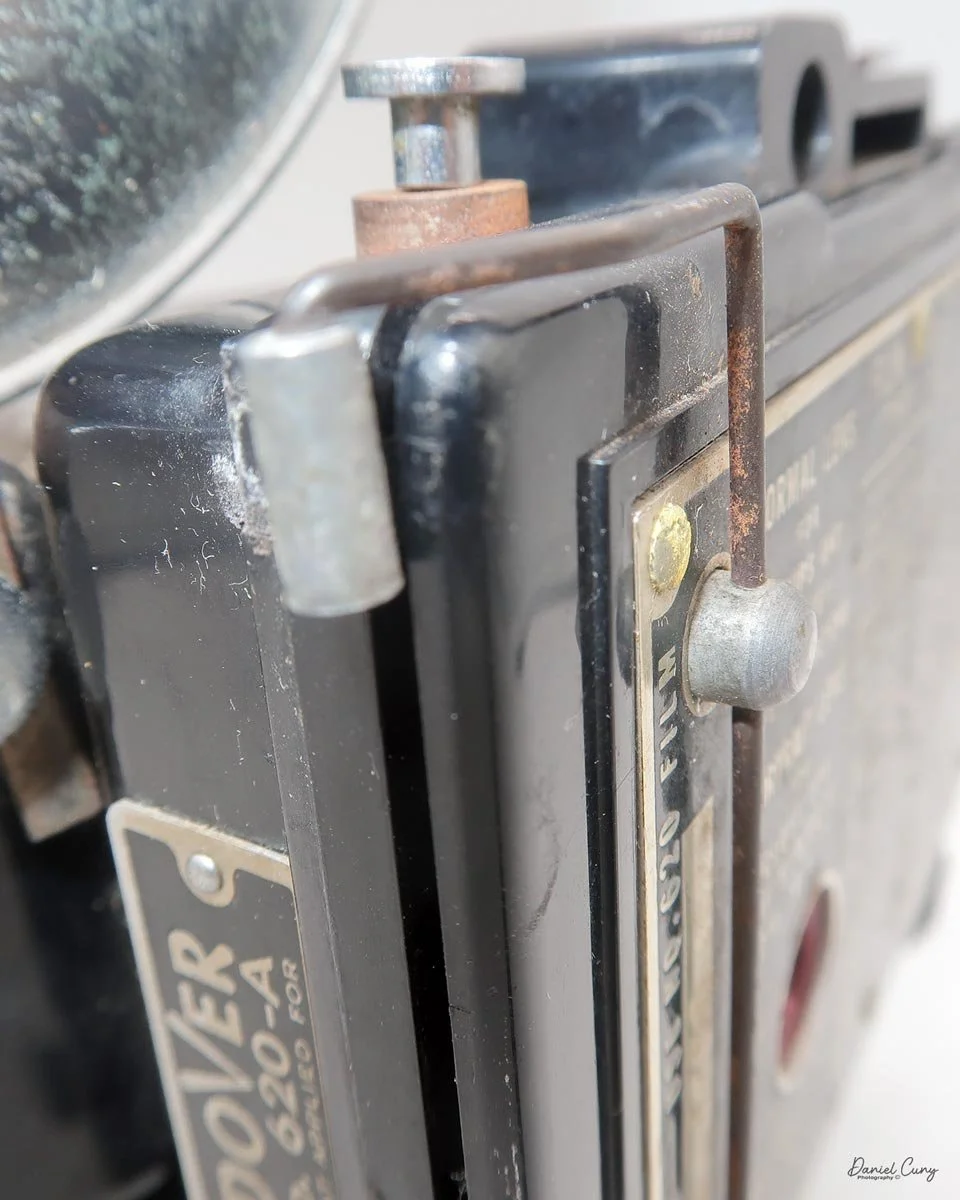
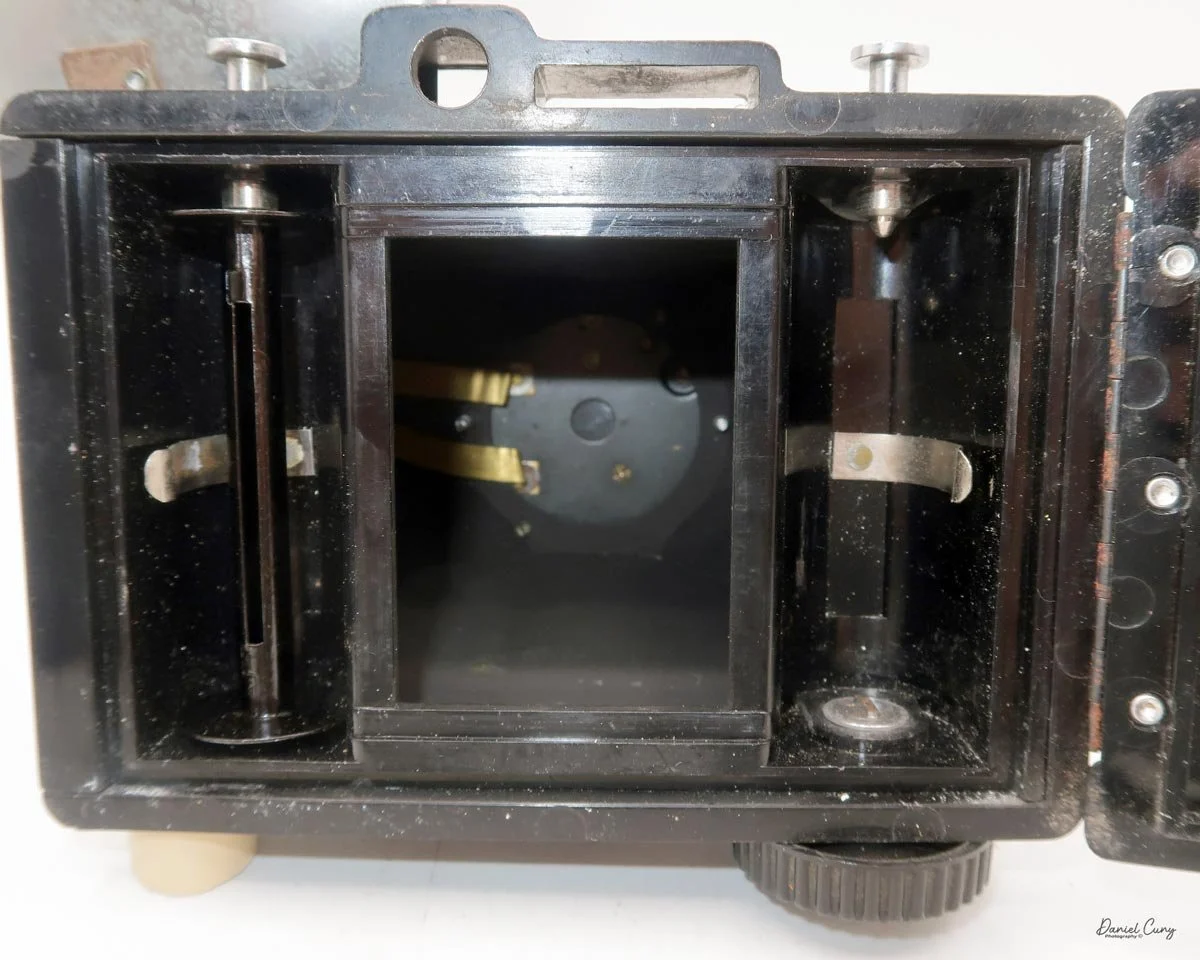
The take-up knob on the bottom of the camera is much larger than on many other cameras, but on the bright side, it makes winding from one frame to the next very easy. On the negative side, the camera doesn't sit straight when you set it down on a counter or table — the size of the knob made photographing the camera more difficult.
To me, the bright side of the camera is the exposure guide on the back, which fills up the entire back door. It's easy to read, and it has more information than a camera this simple would ever expect a photographer to know.
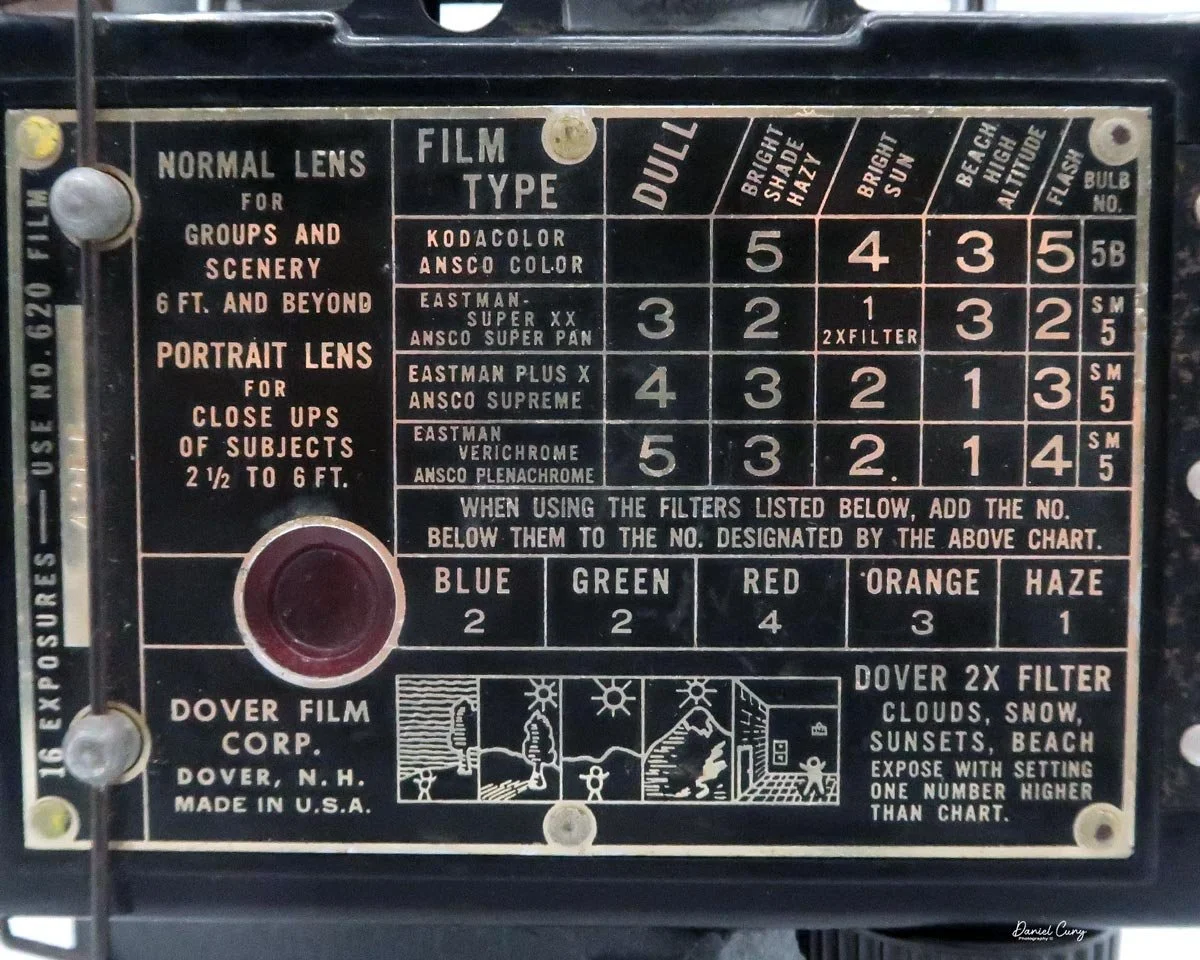
Exposure guide on the back of the Dover No. 620-A camera.
On the left side of the camera is the flash, which takes either a type 22 clear bulb (for black & white film) or a 22B for color film. The battery compartment seemed pretty clean, so I put in 2 fresh AA batteries, but no flash. At this point, I scuffed up the contacts and put a fresh type 22 bulb in the holder, and success — the flash worked. I forgot how bright flash bulbs were until you accidentally look at one when the flash goes off. YIKES.
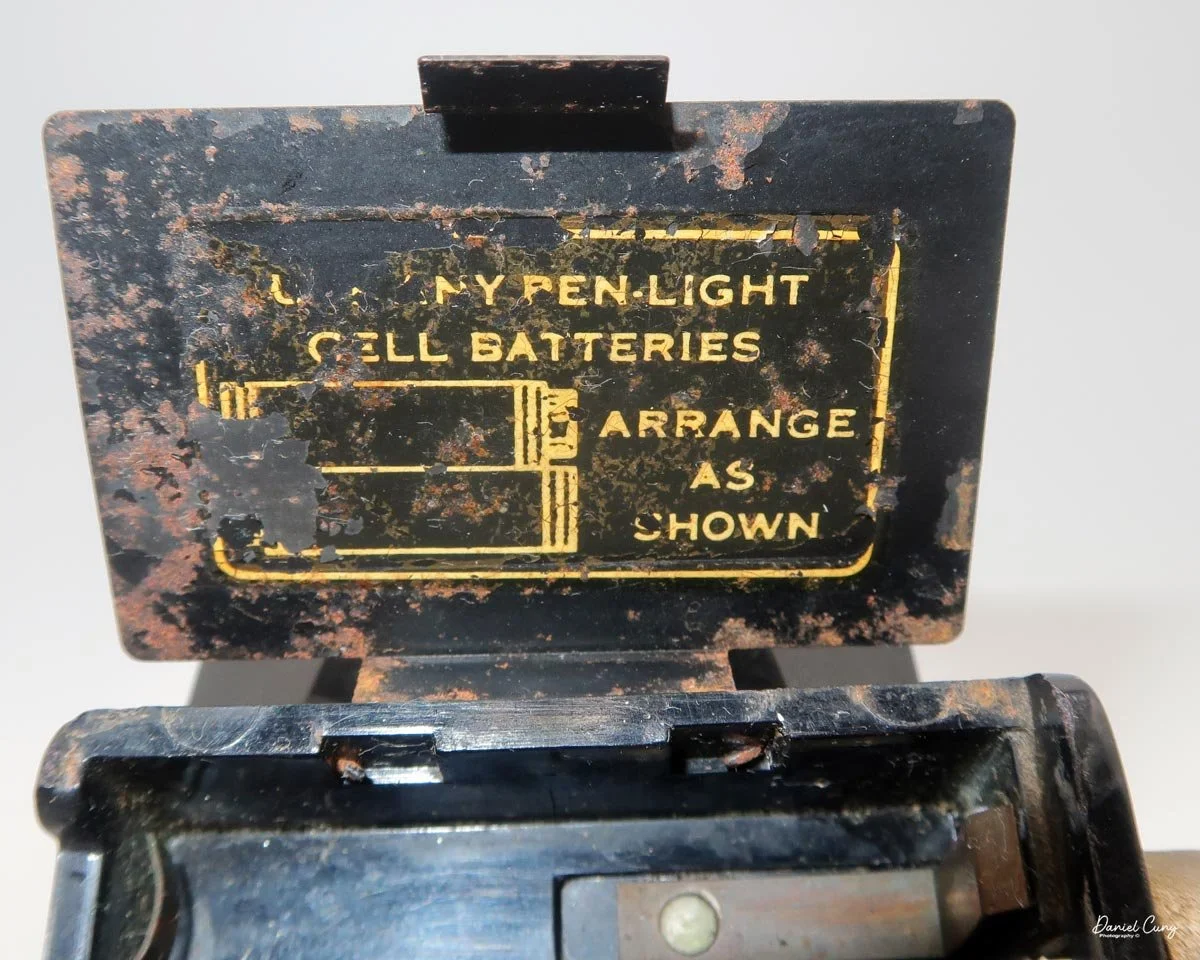
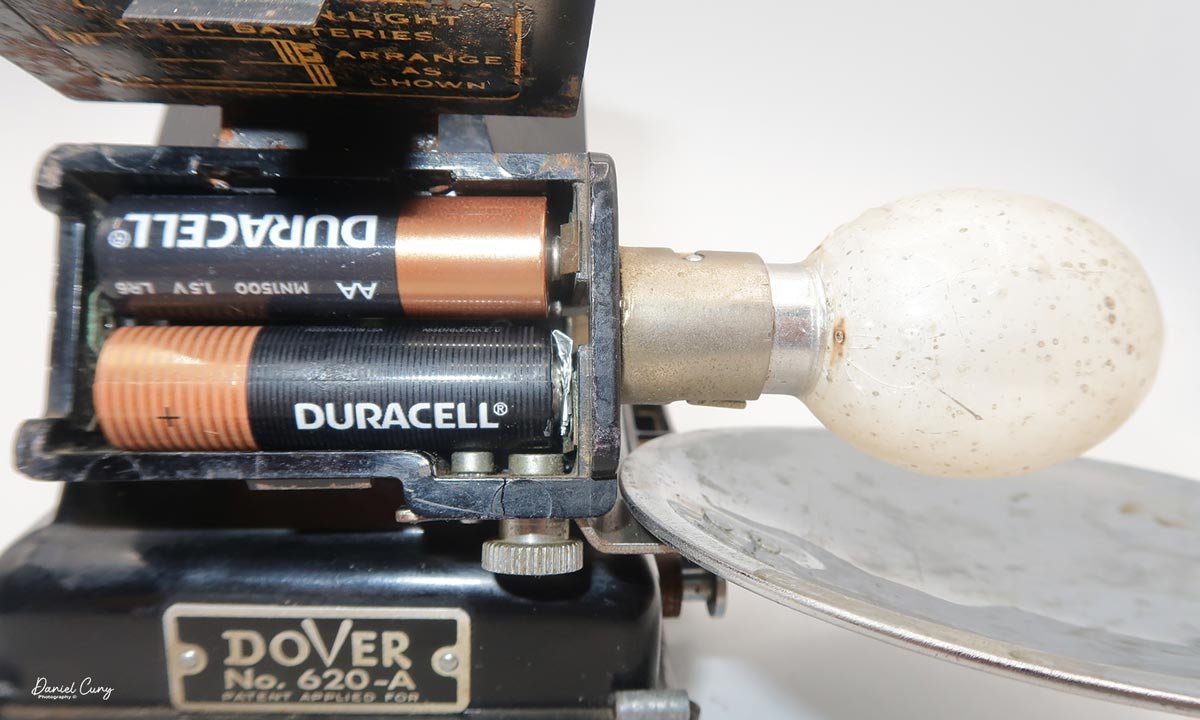
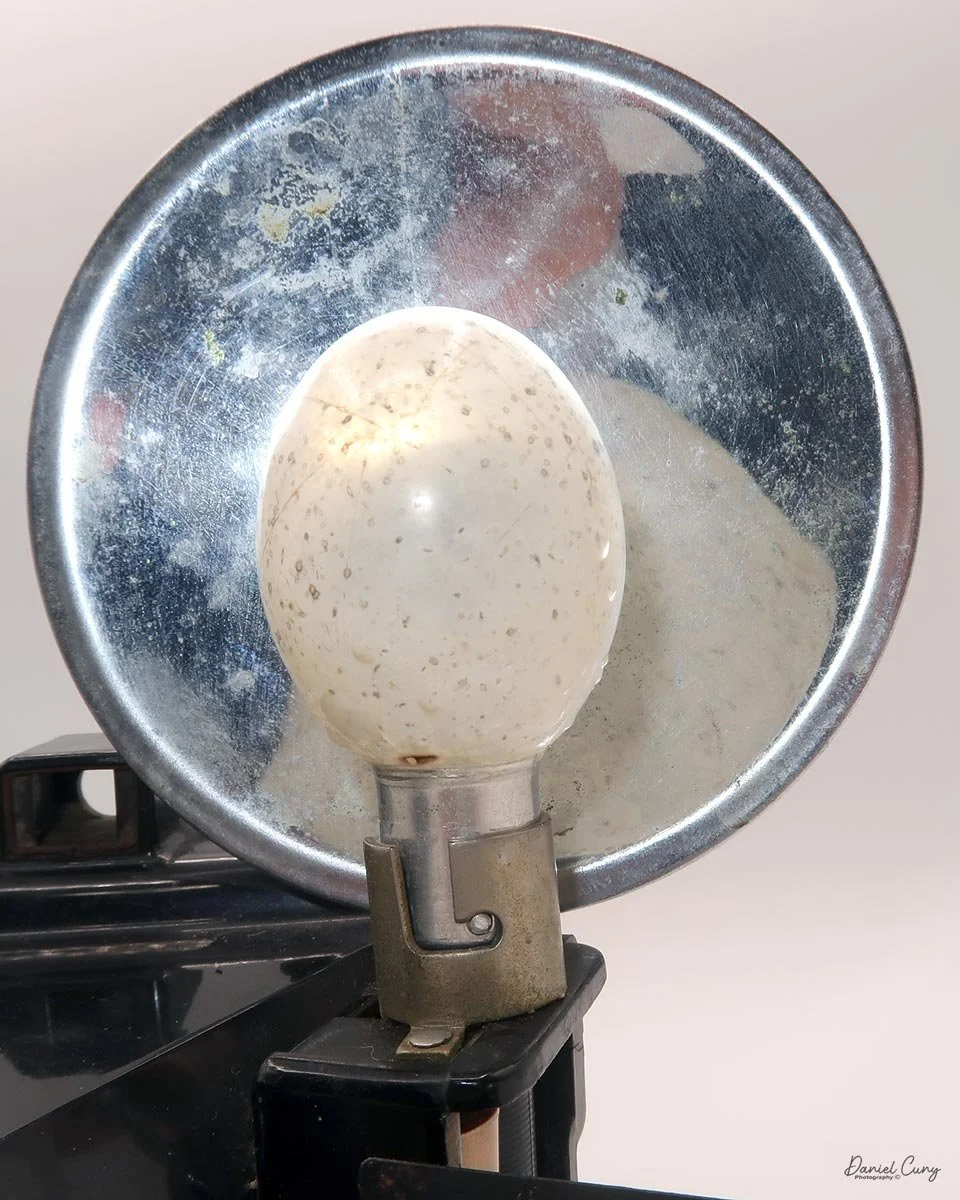
With a working camera, I wanted to put it through its paces and see what it could produce in terms of images. Unfortunately, the only film I had was from the 1950s, and not in very good condition. Anxious and unwilling to wait, I popped a roll in the camera and walked through the neighborhood, taking some images with the Dover No. 620-A.
My Results:
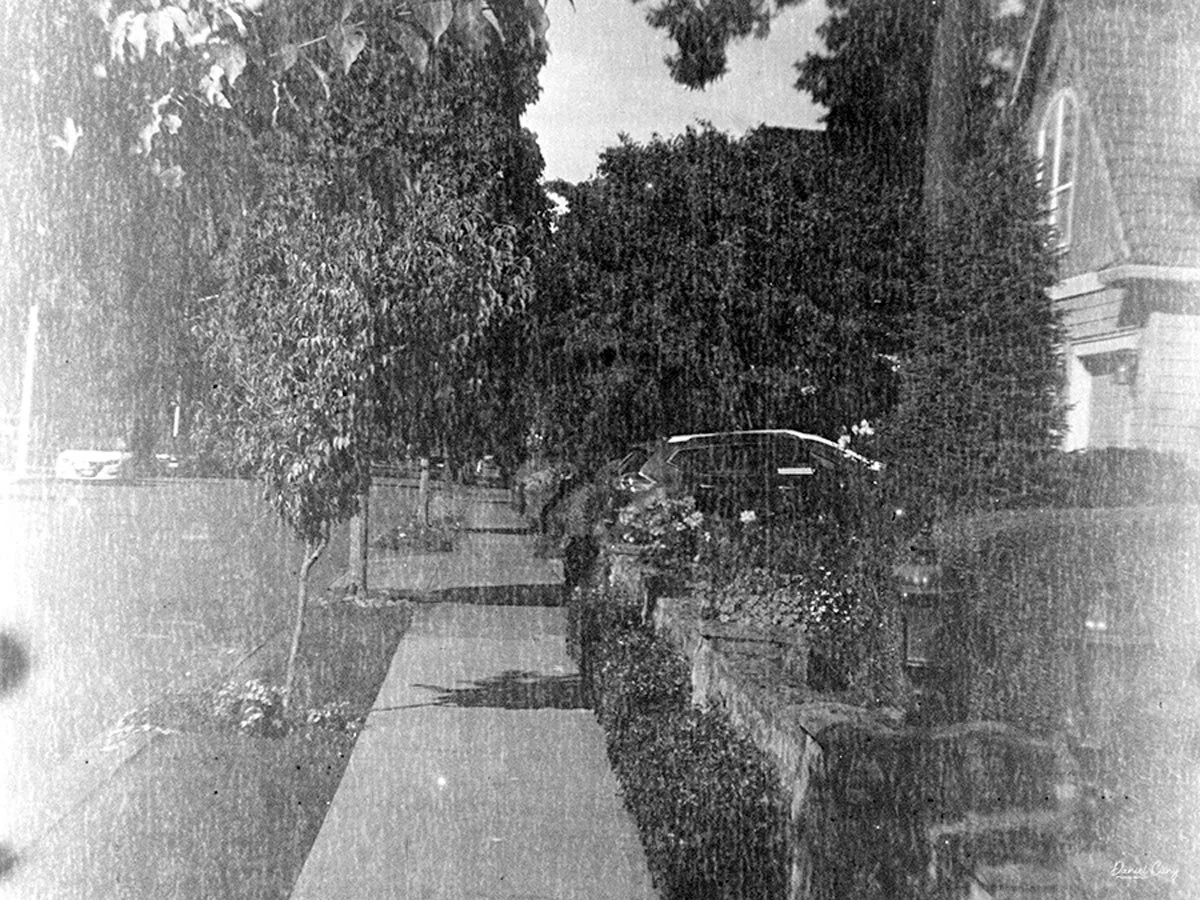
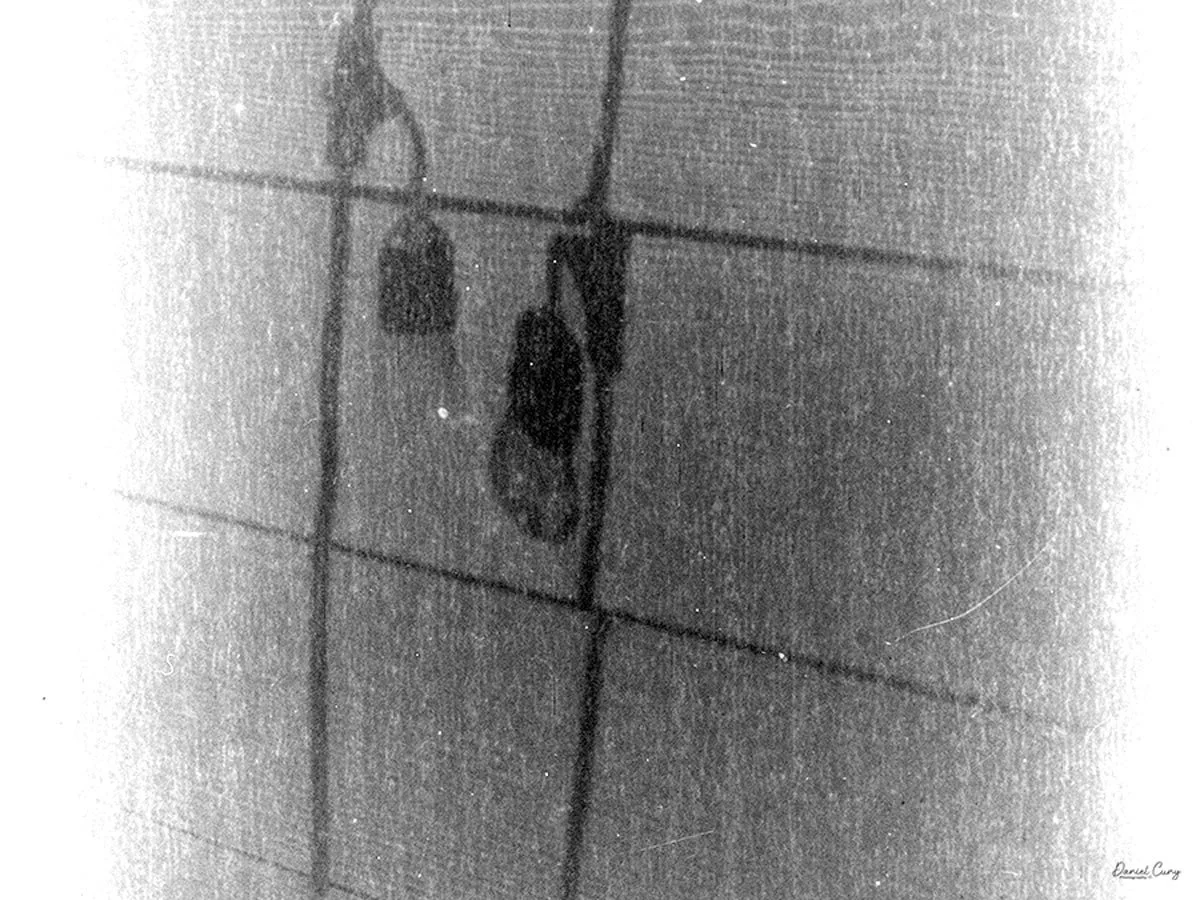
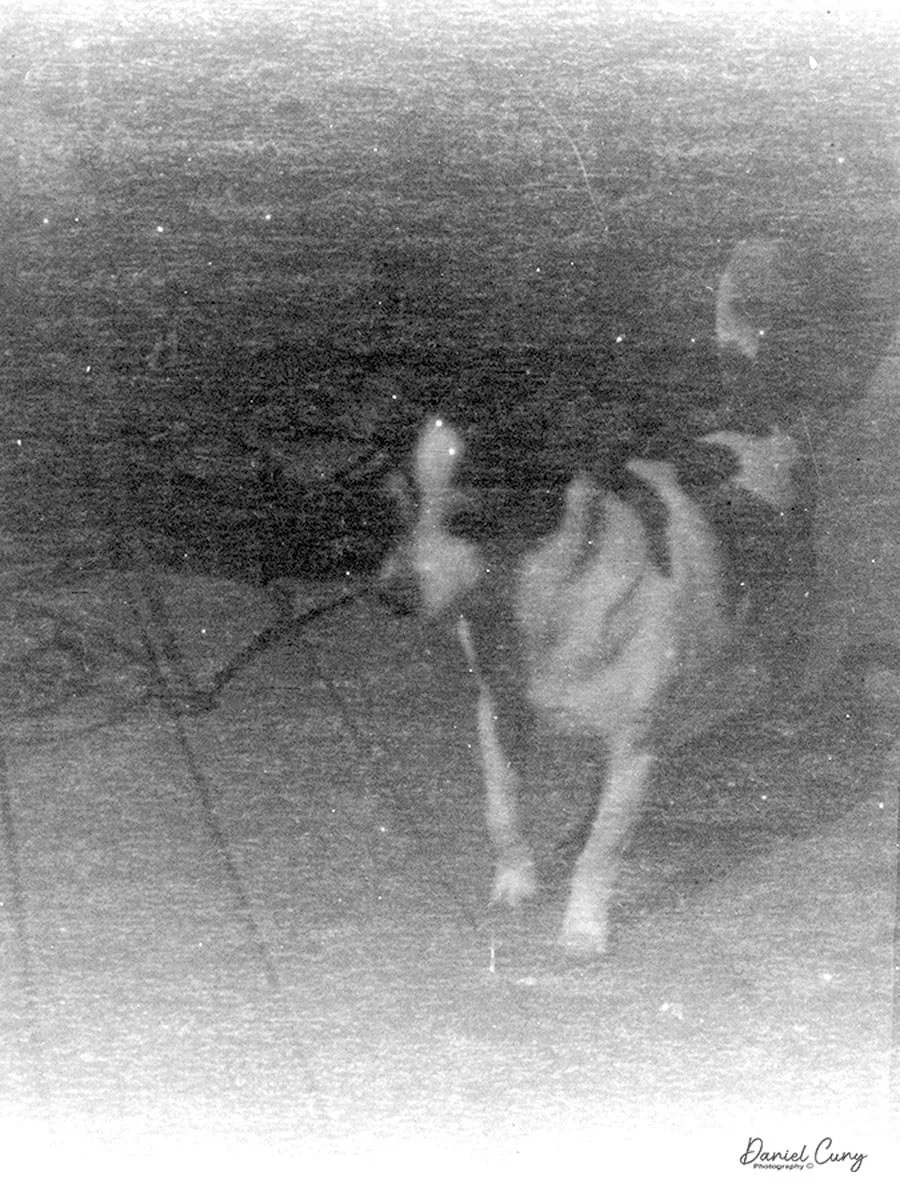
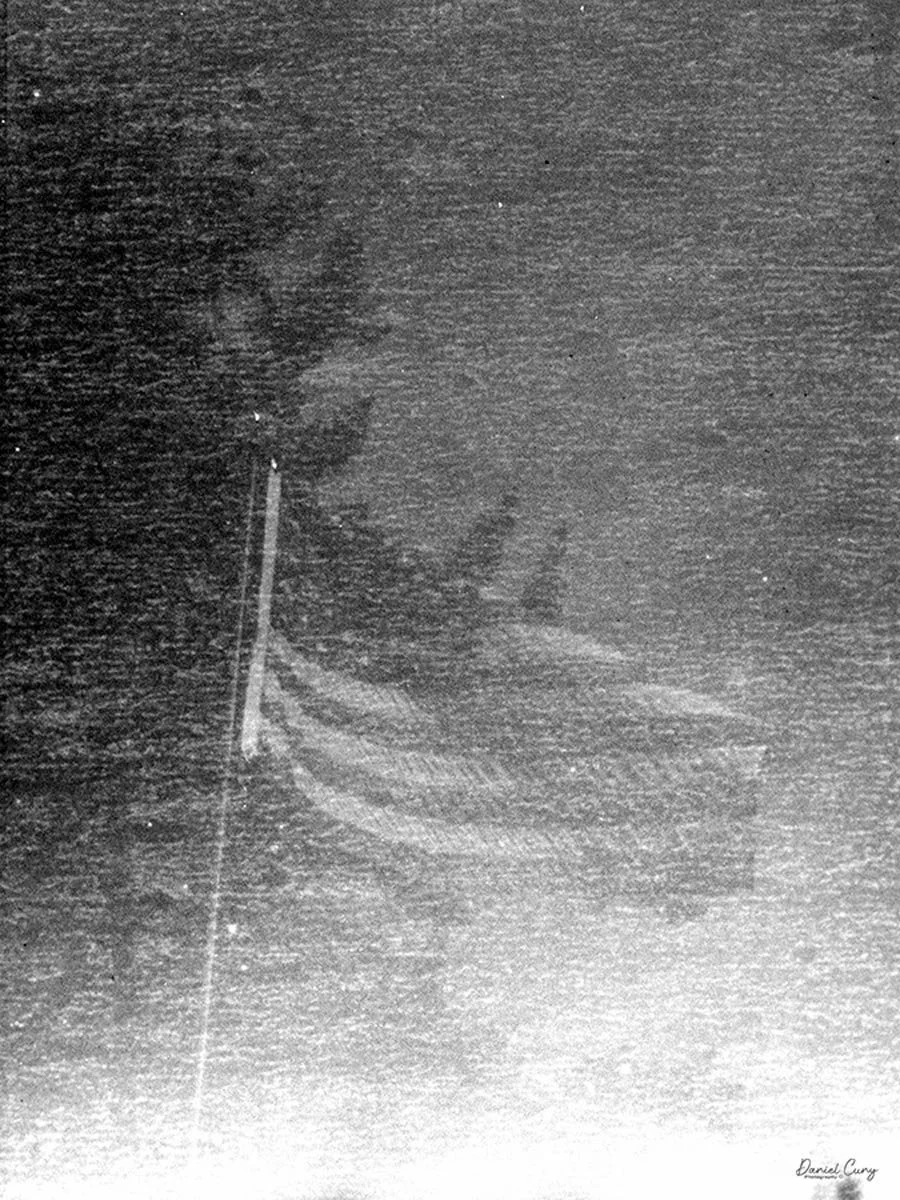
Well, the camera performed as it should, and I should have waited to get fresher film, because the exposures from the very outdated film were off, and due to the film's age, the images have an unusual texture from what I can only presume is a breakdown of the emulsion.
Conclusion:
While the photos didn't turn out as I hoped, the camera was fun to use and, other than the odd and extraordinarily large winding knob on the bottom, it's a relatively rare camera for the collection.
Thank you for taking the time to read this updated review of the Dover 620-A camera!
Are you interested in other vintage gear? Be sure to check out some of my other Camera Reviews.
Check out my Cuny's Camera Collection YouTube channel, where I'm putting together video overviews of the cameras I write about. Be sure to subscribe and like the channel, too!
Cuny's Cameras and Photos is my online eBay store, where you'll find some of the cameras I've reviewed, along with a wide range of other cameras, lenses, and gear from my personal collection that I am thinning out.
Until next week, please be safe!