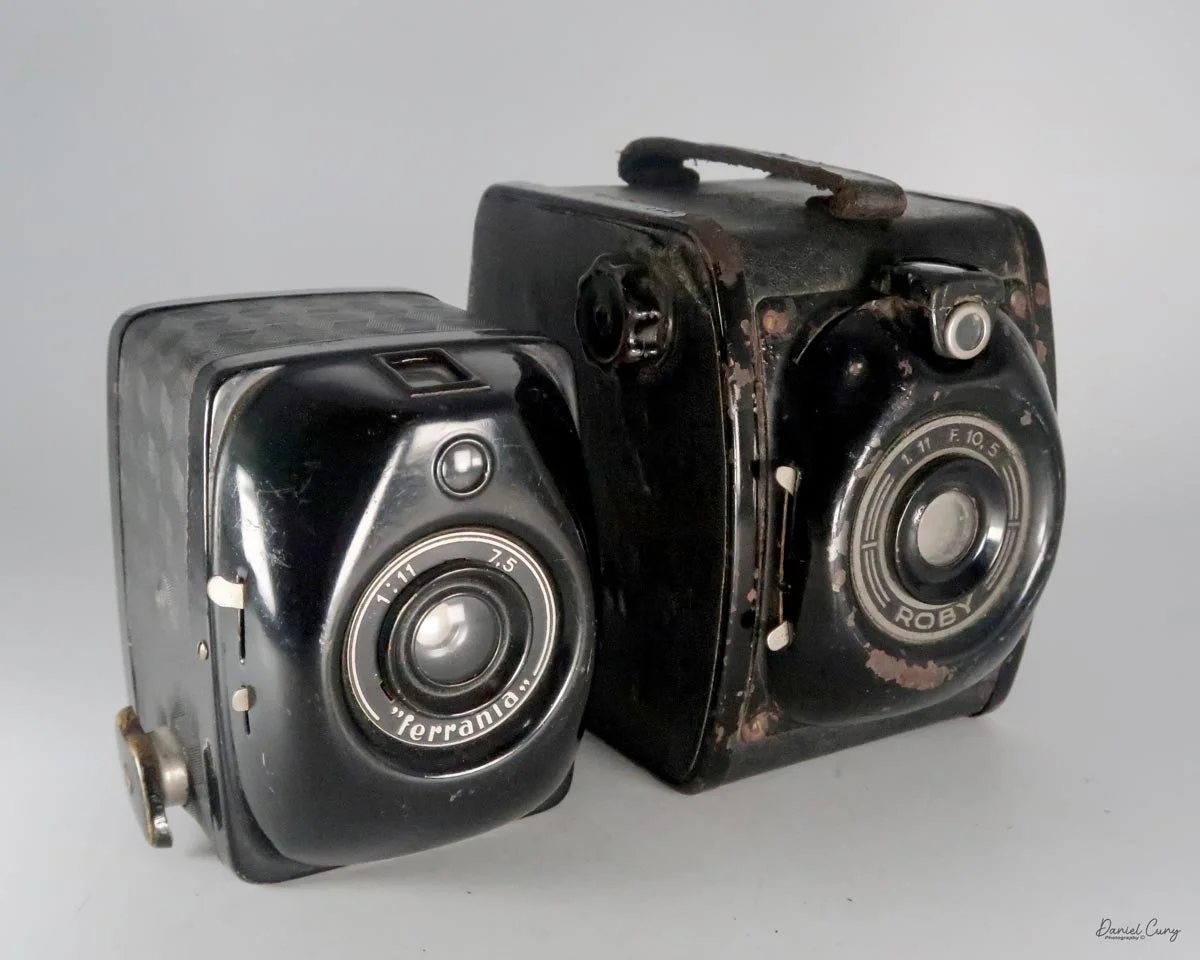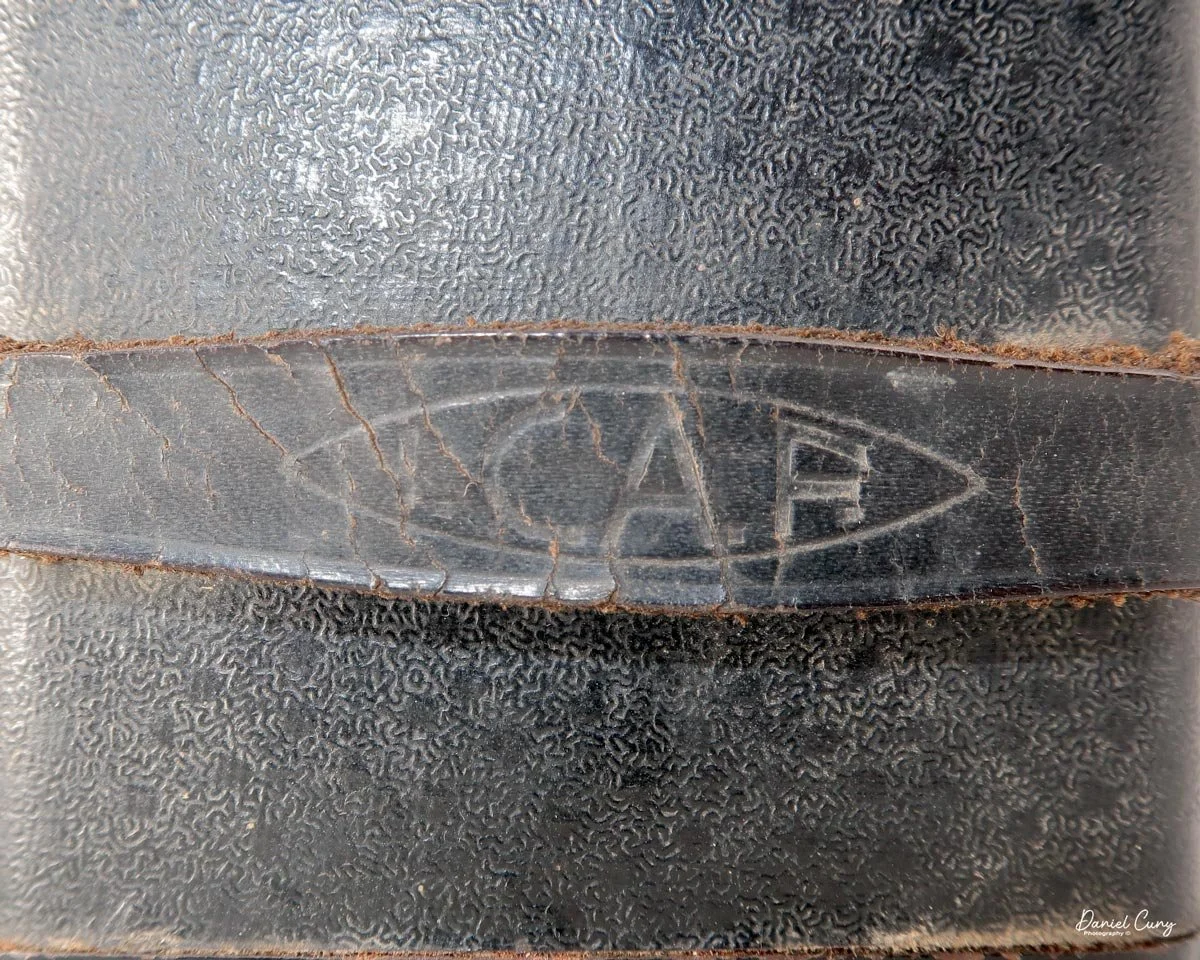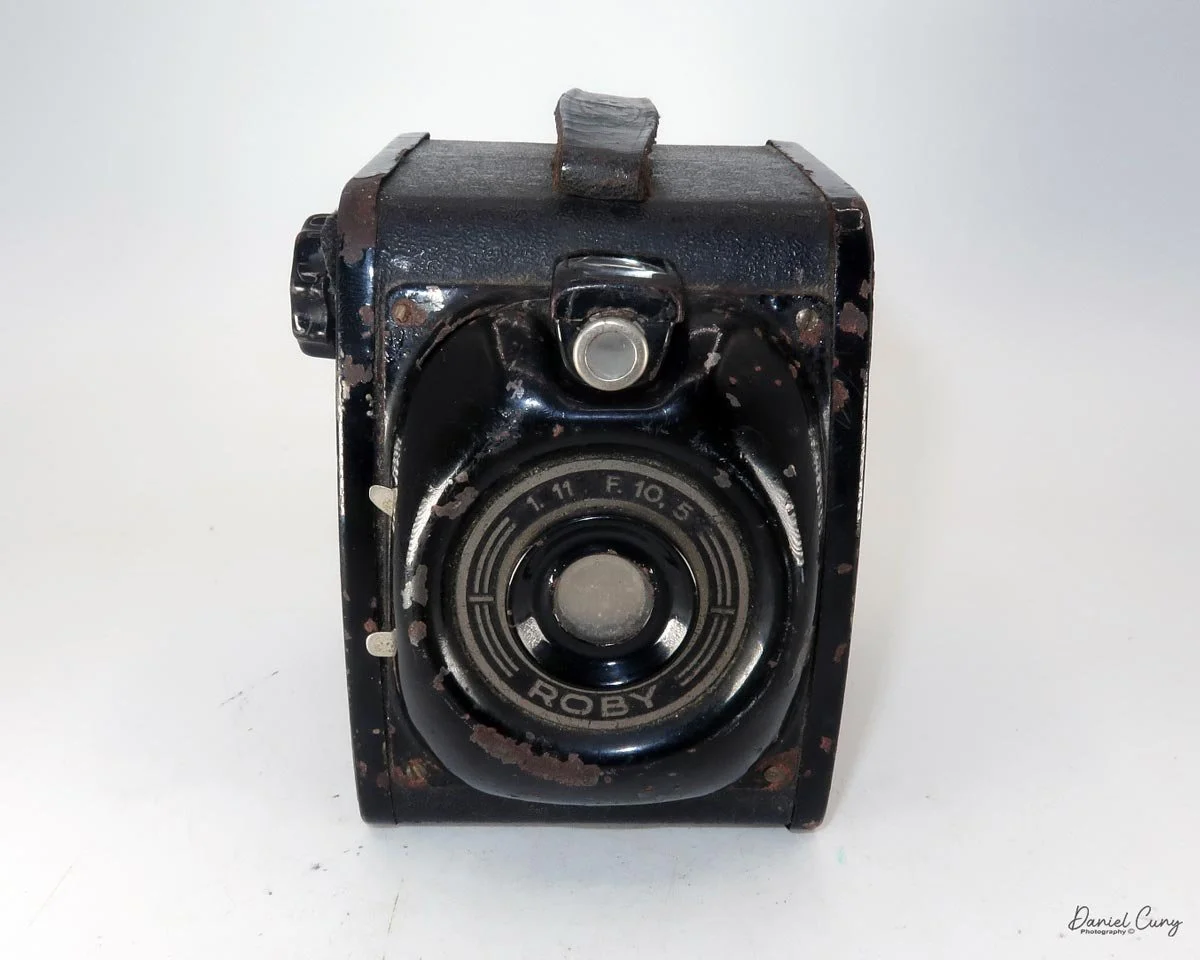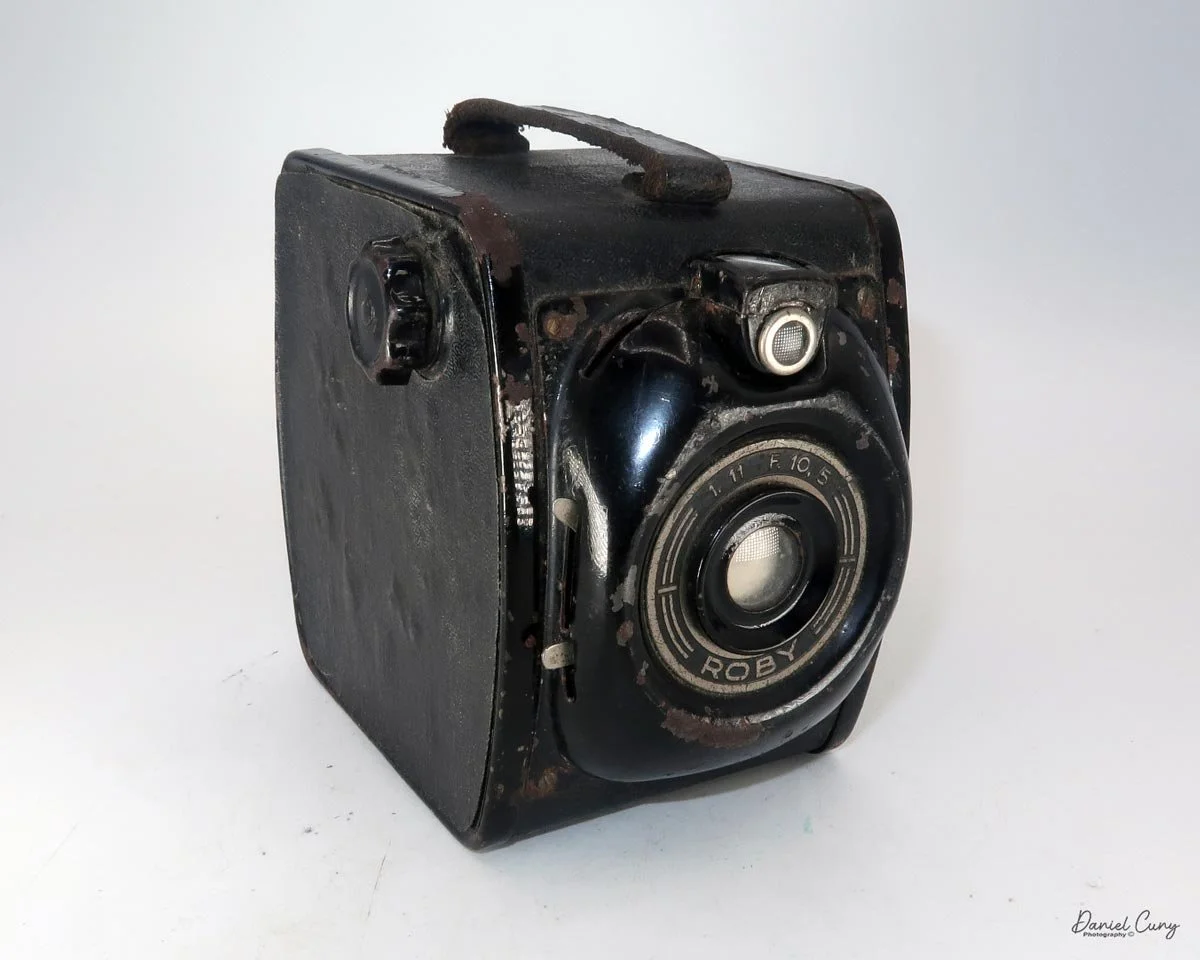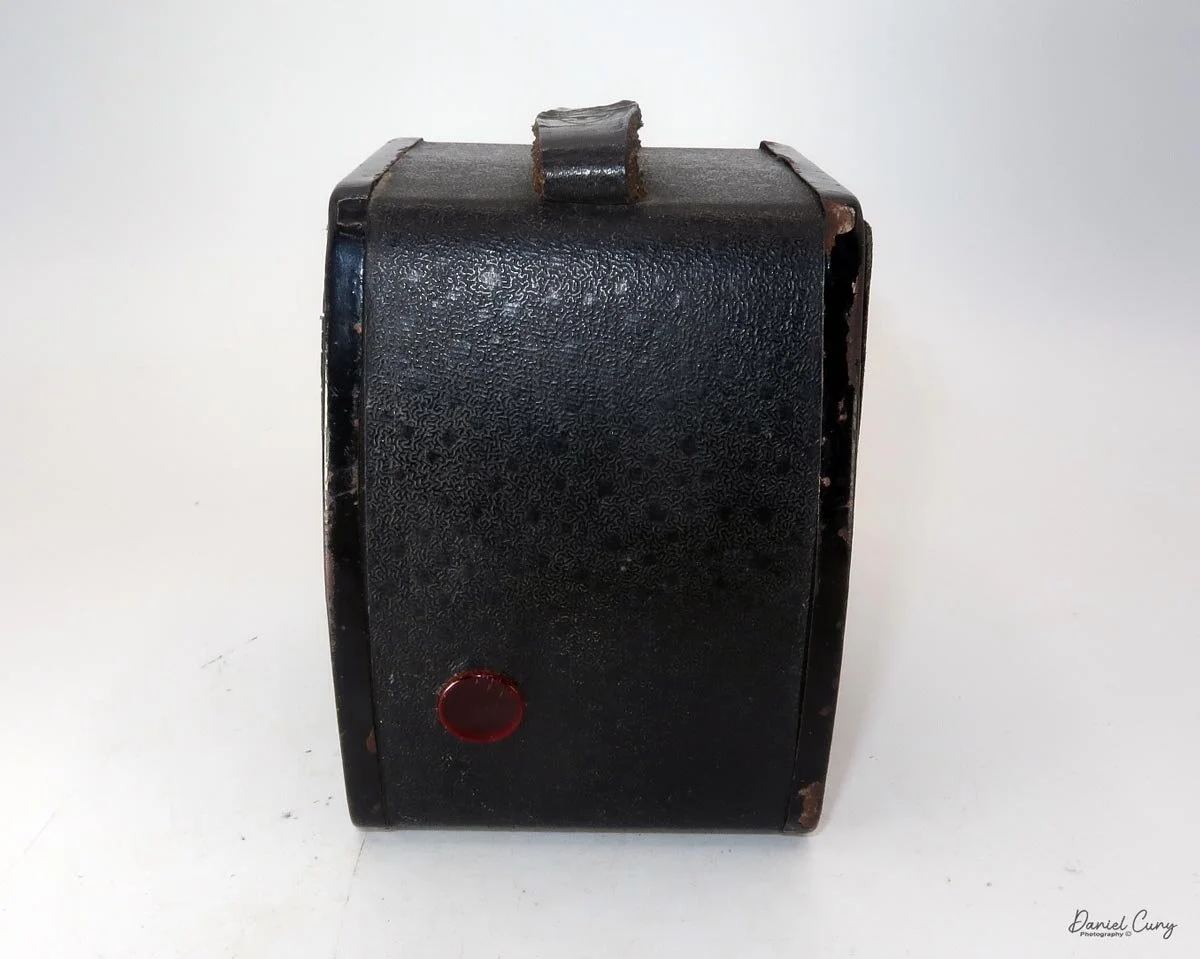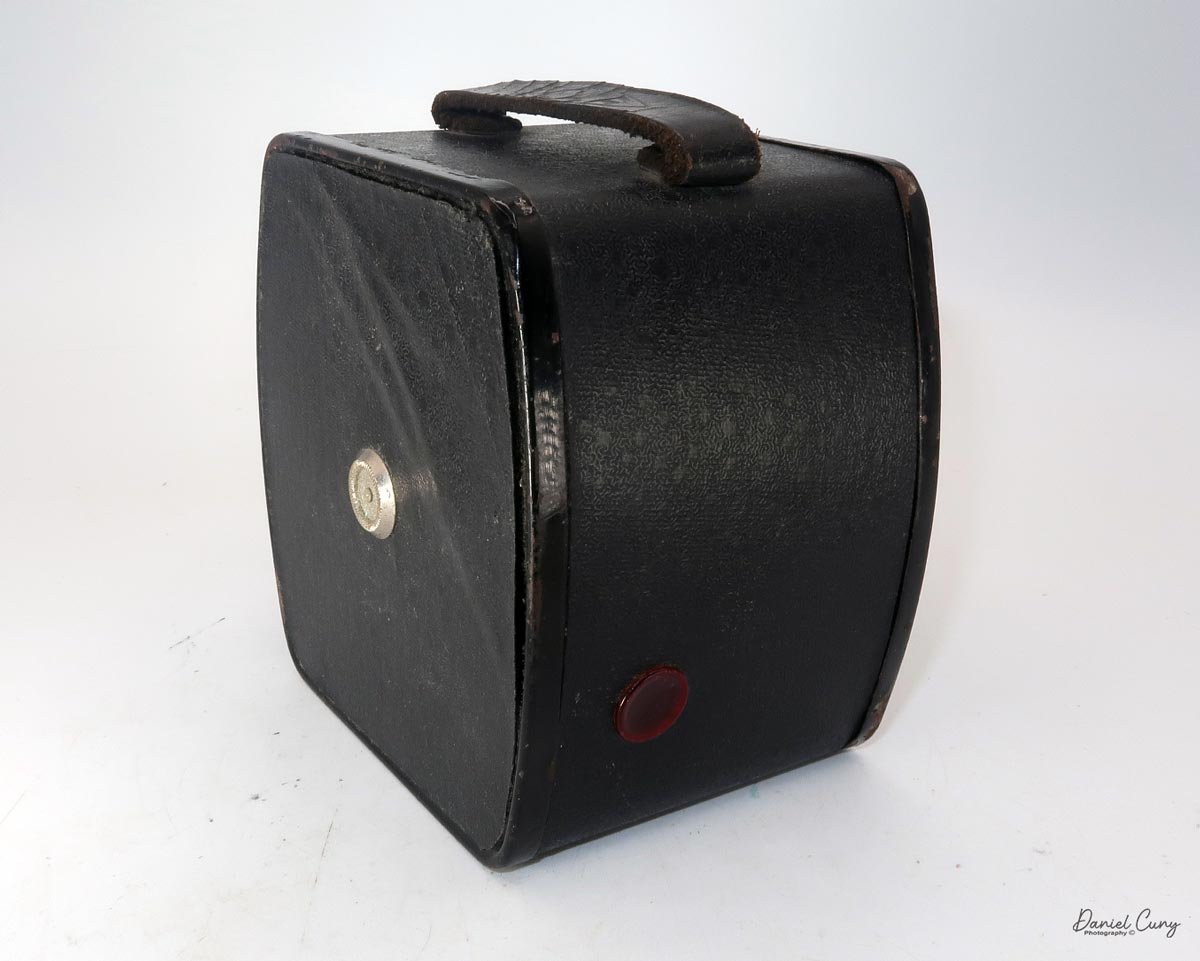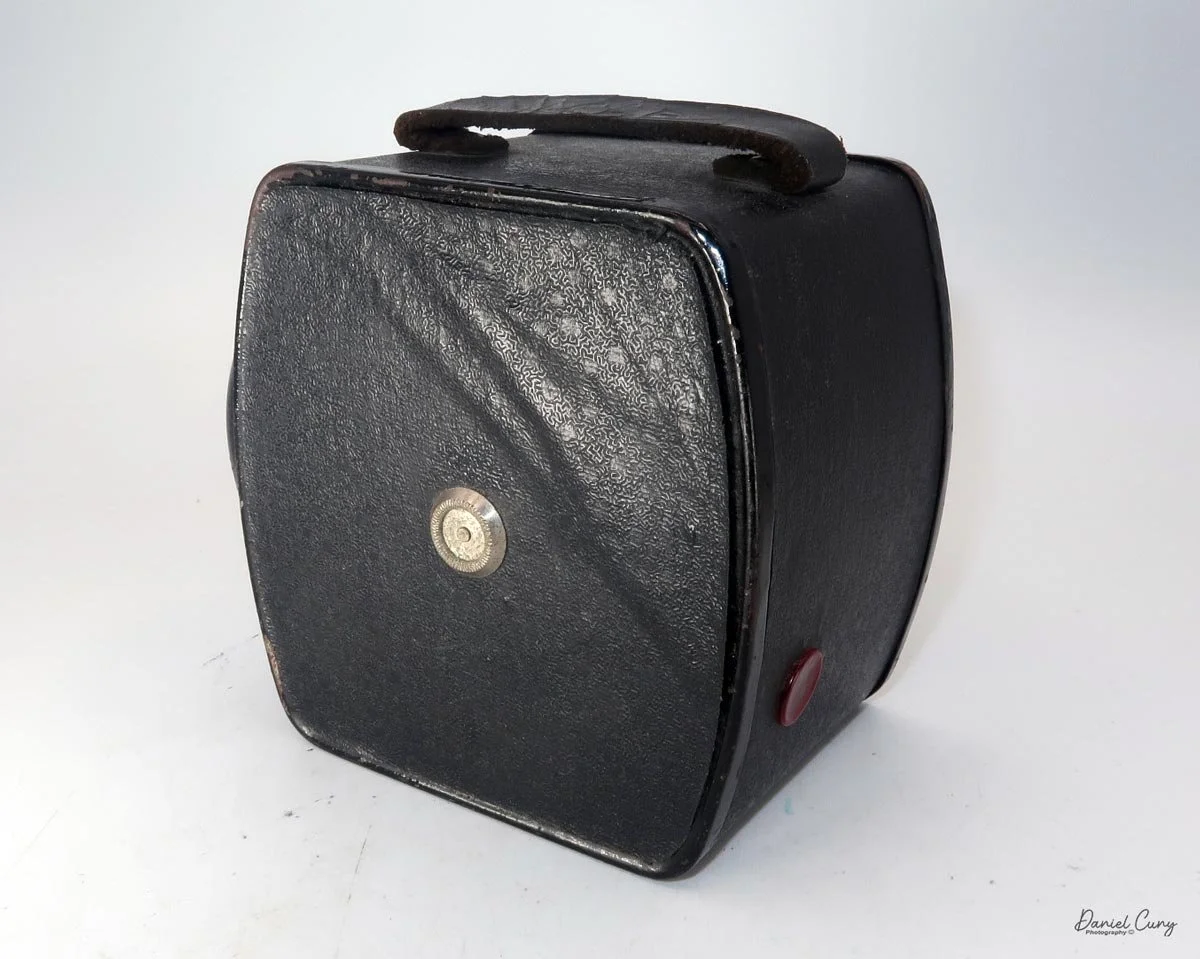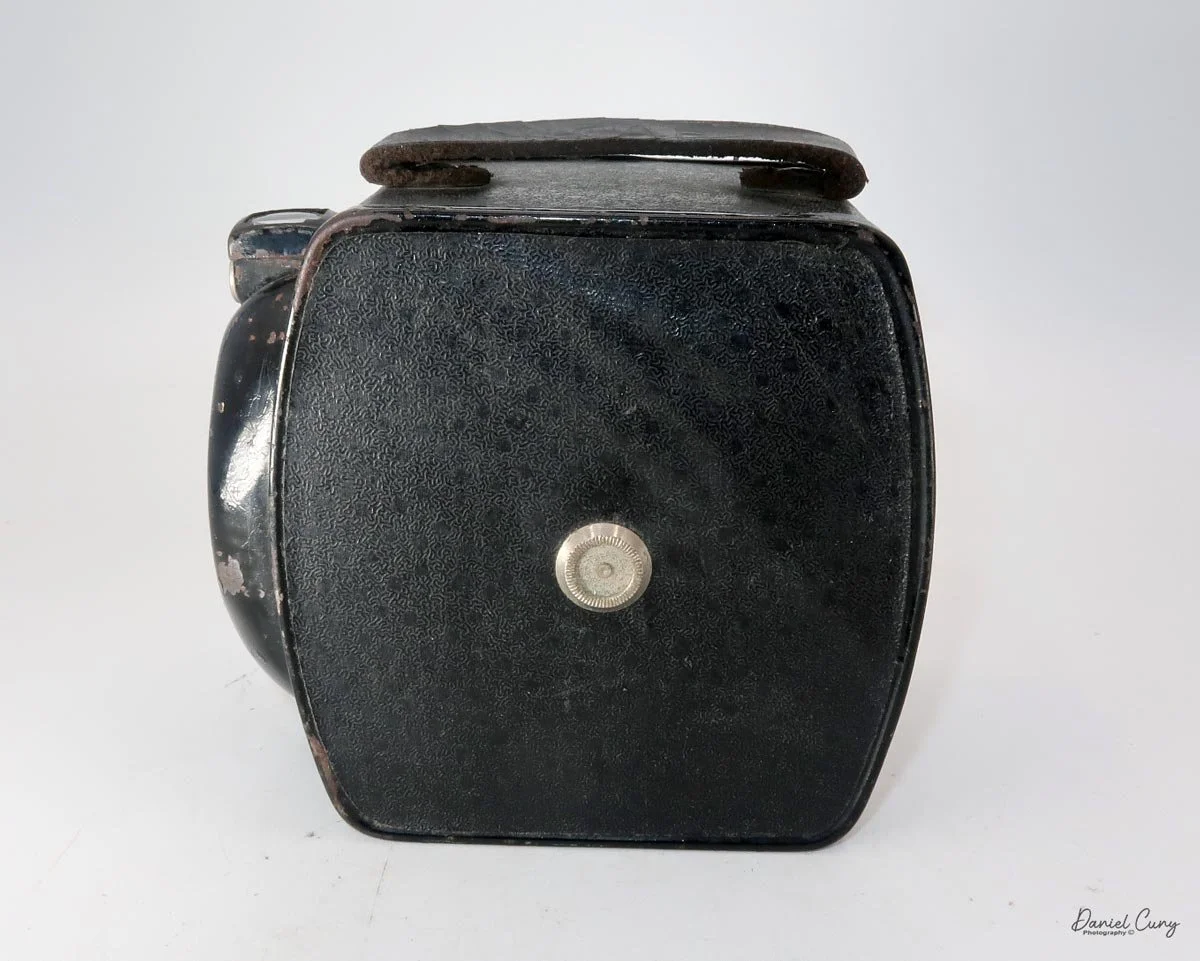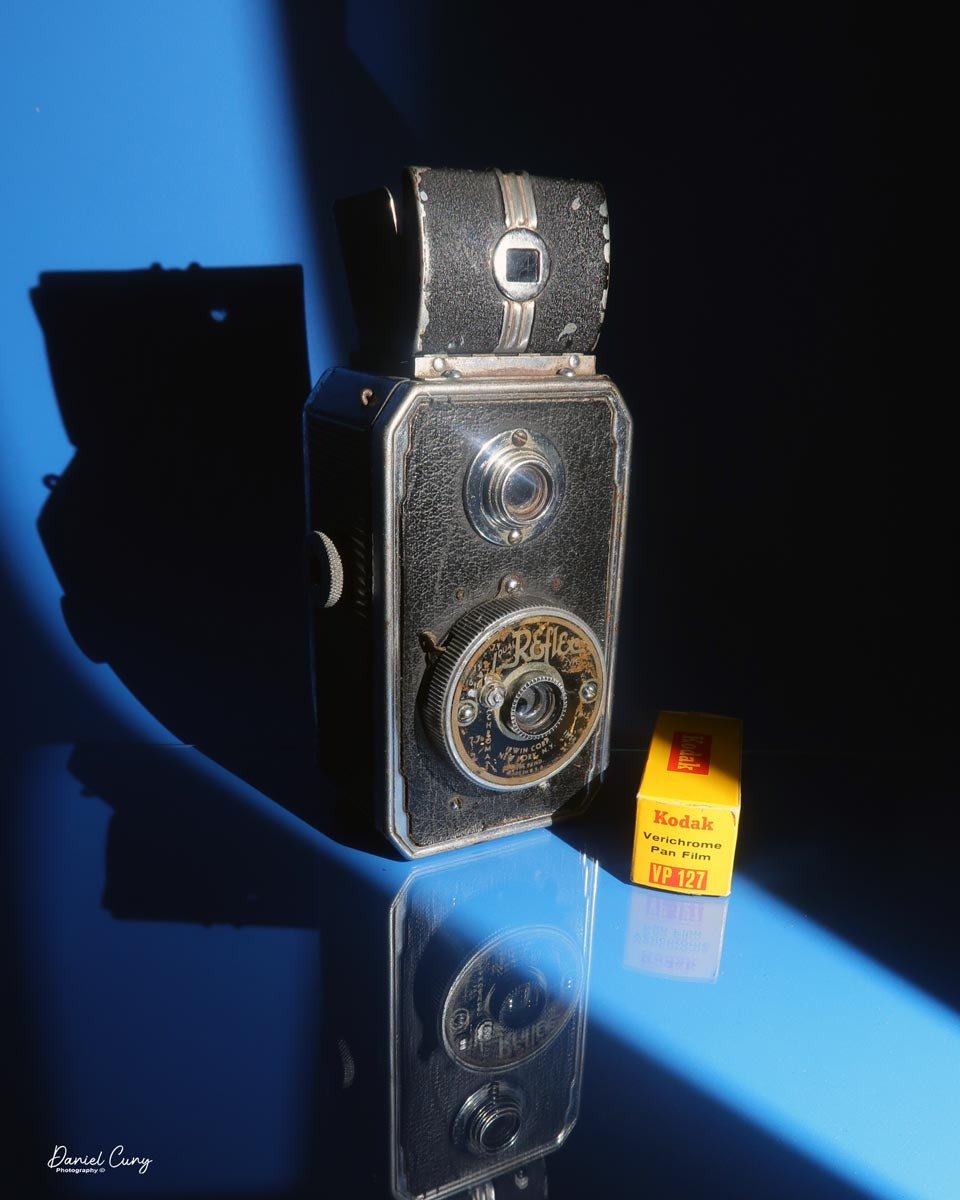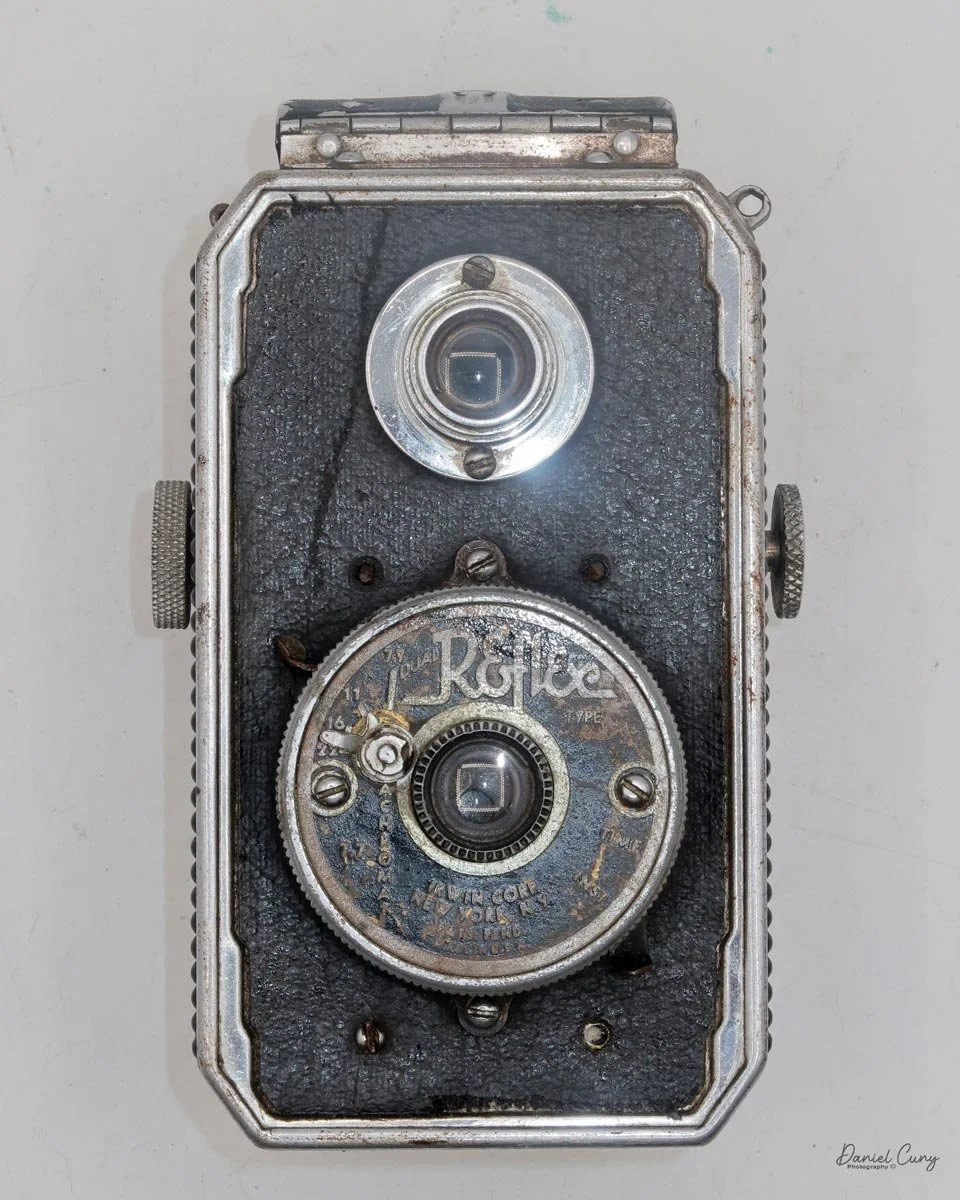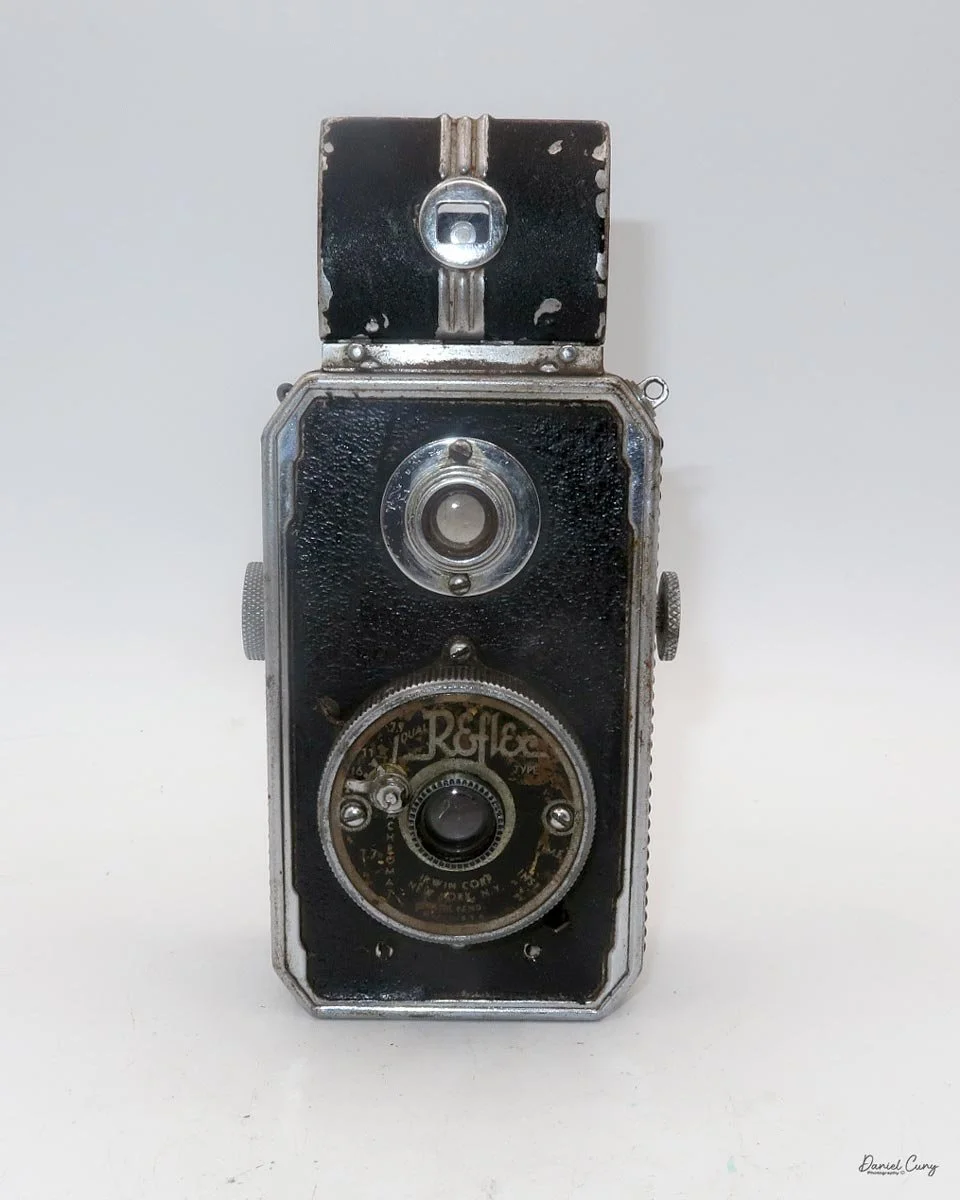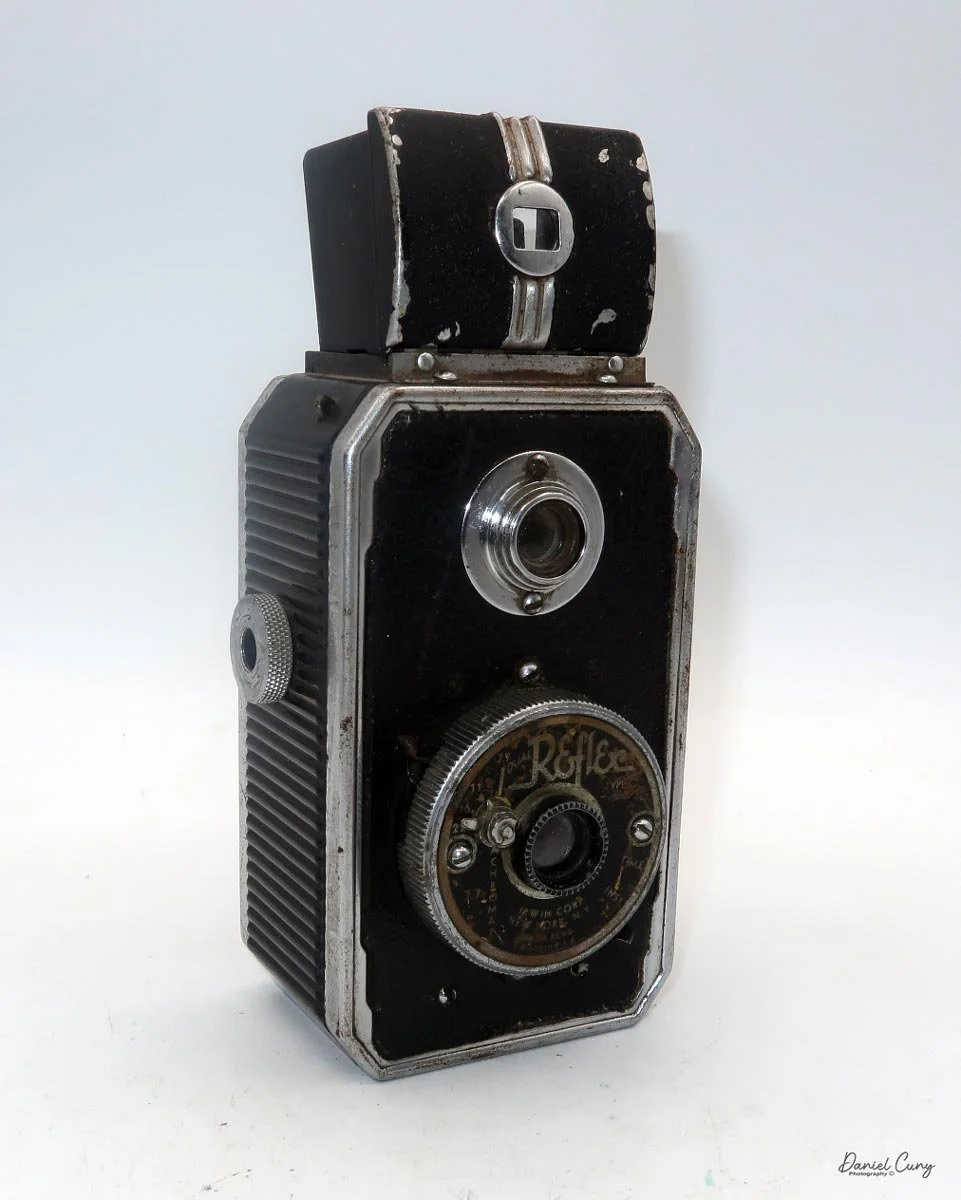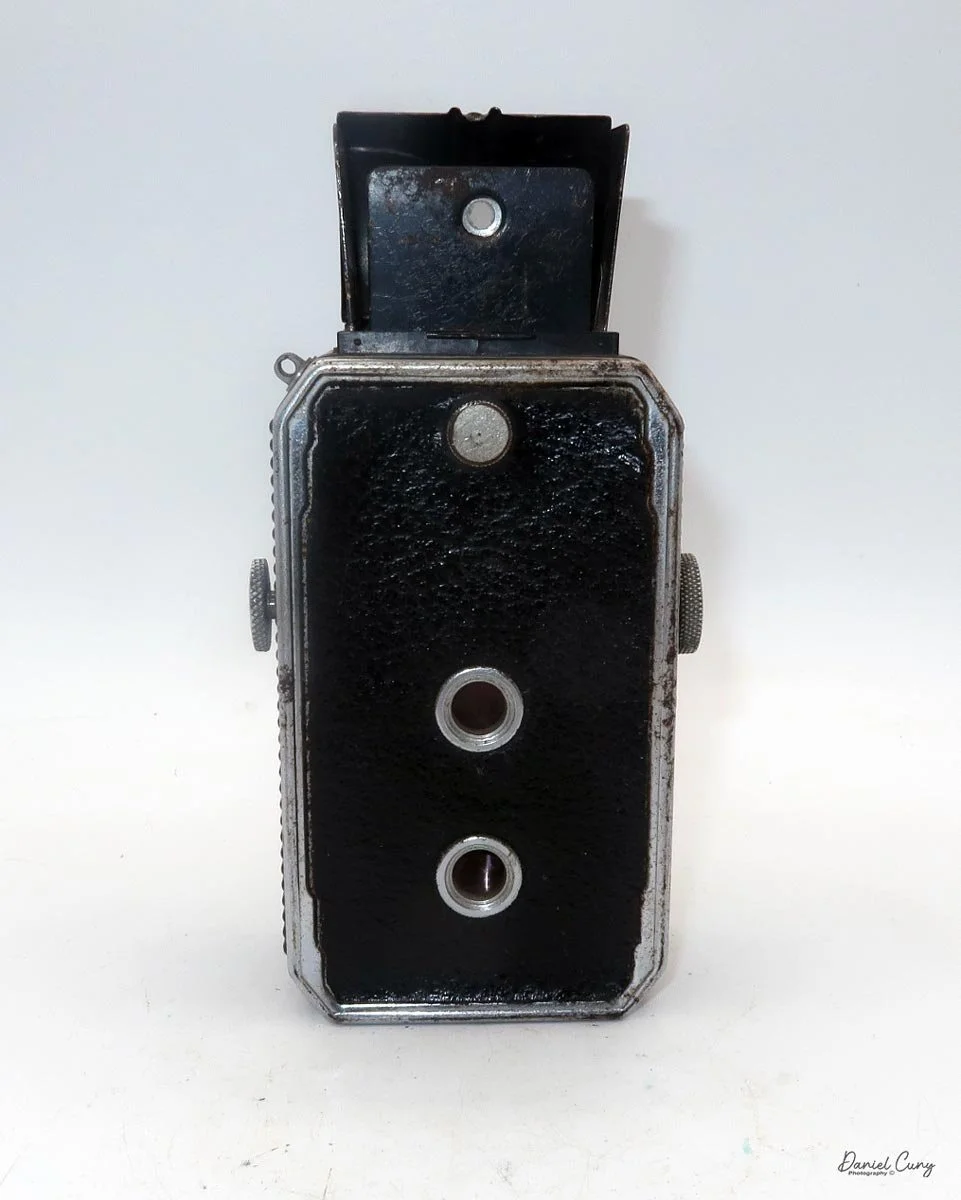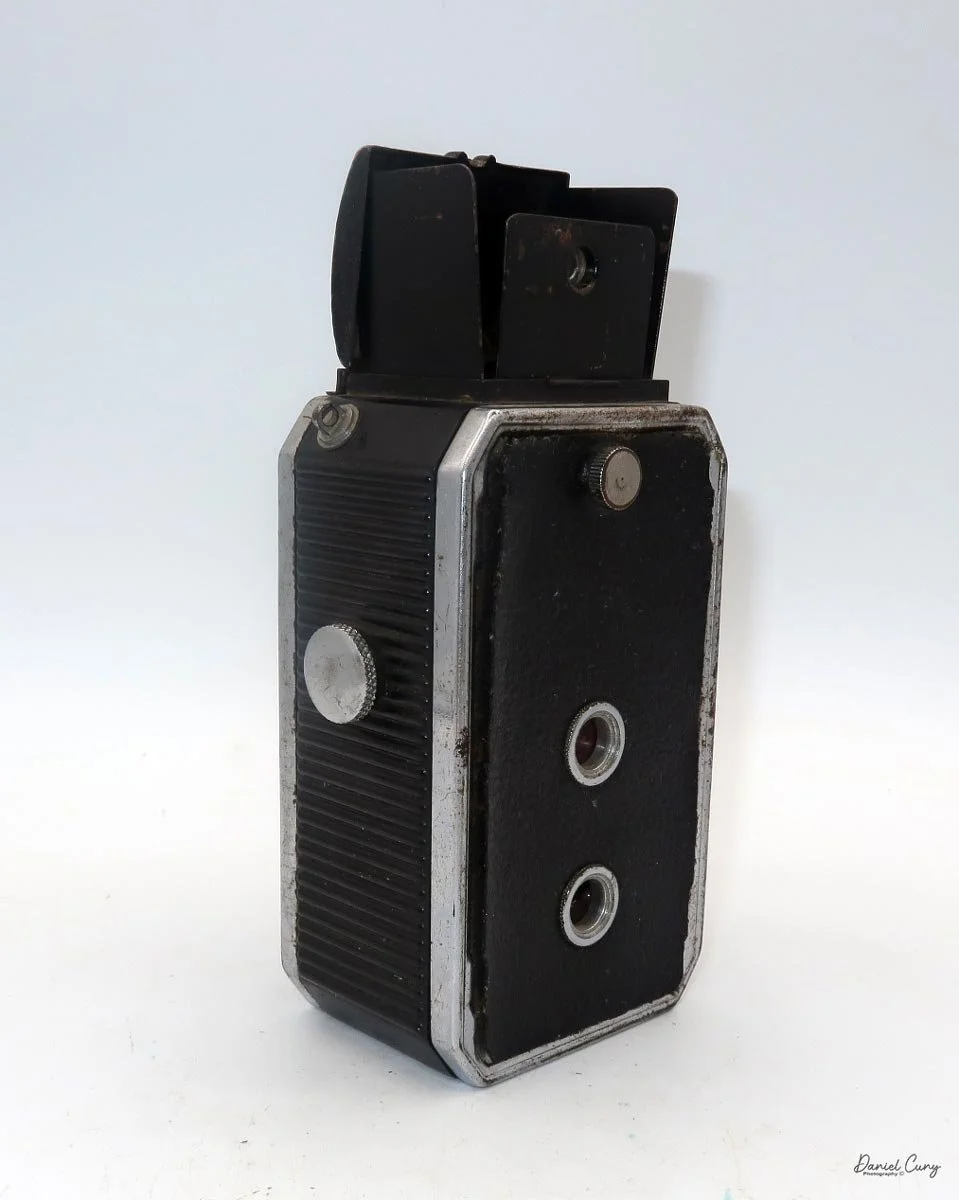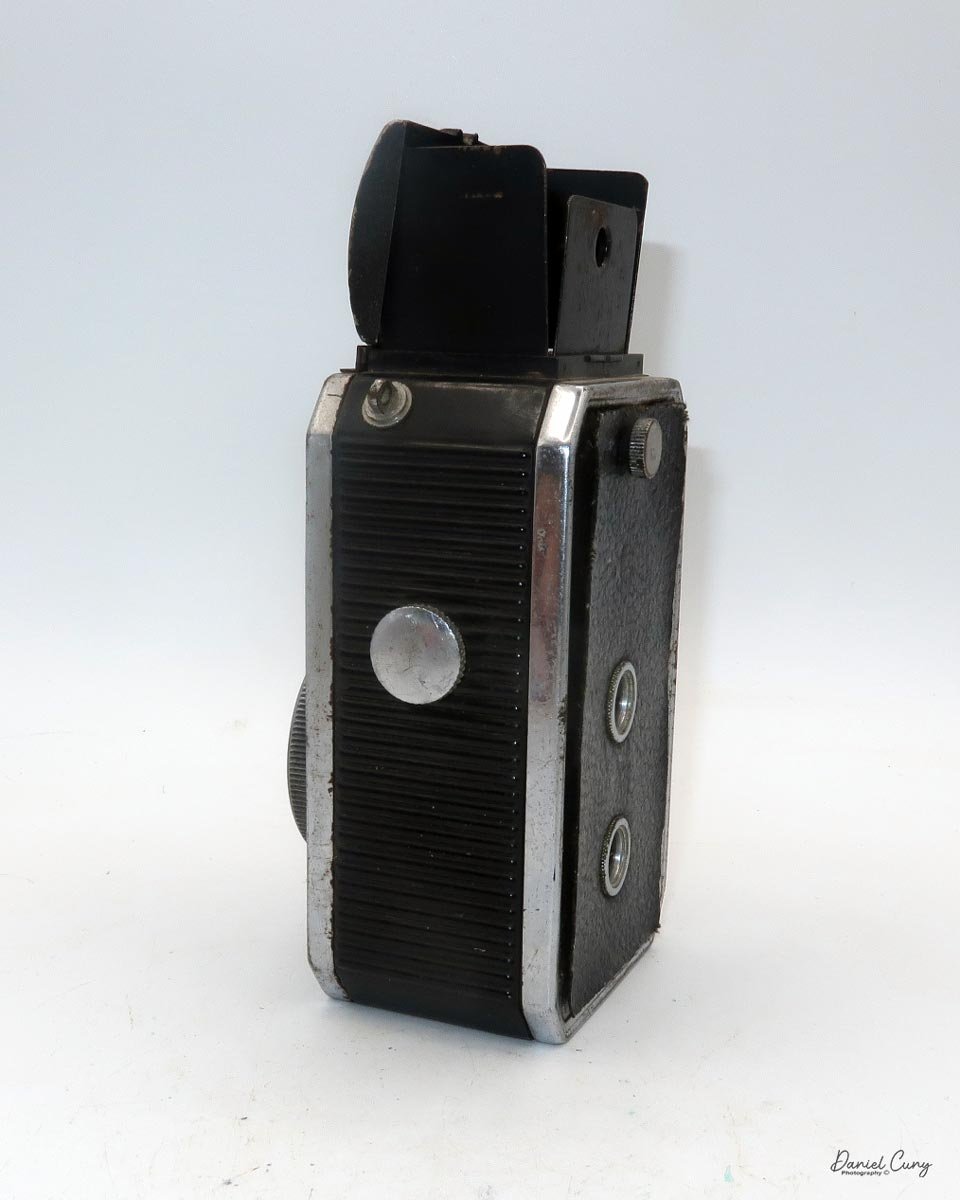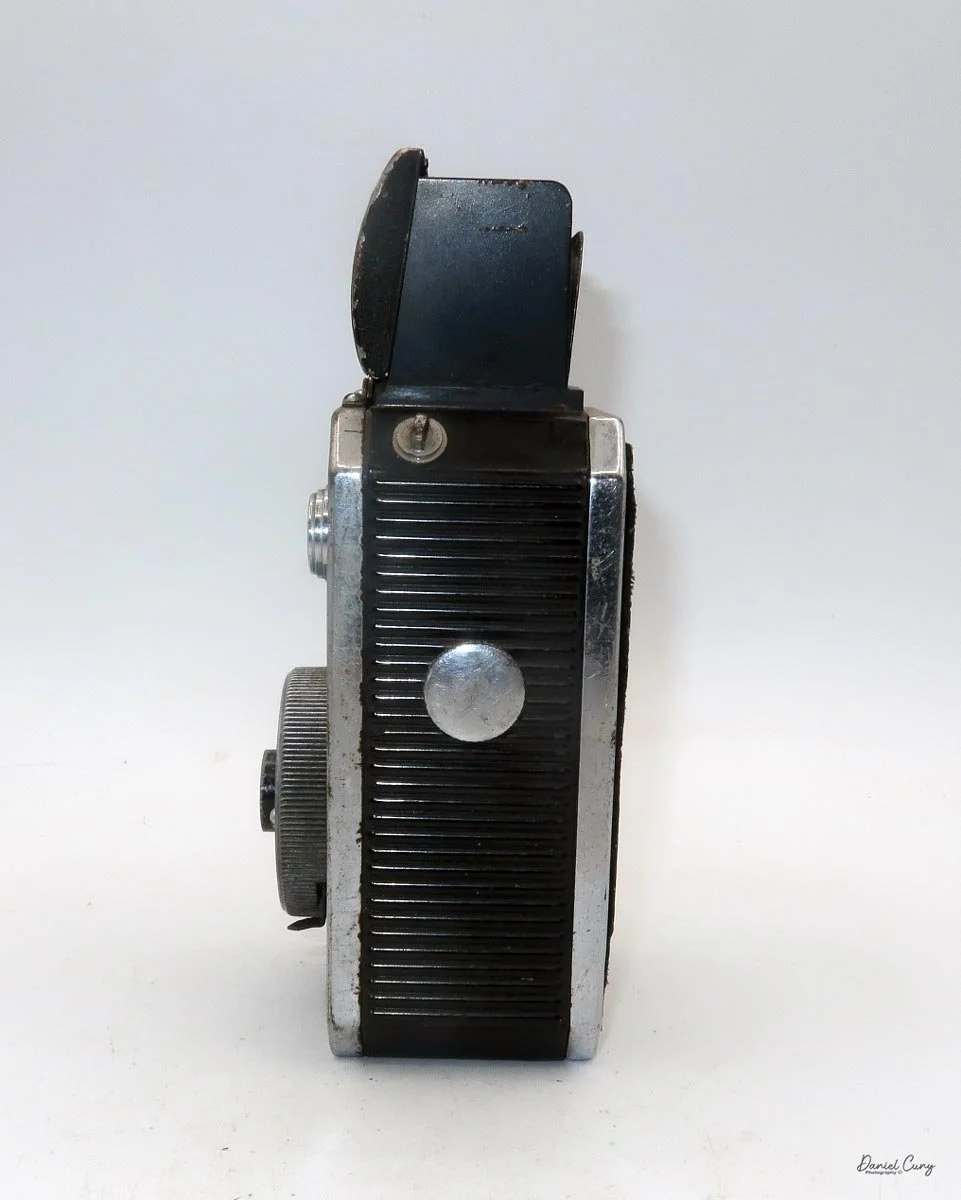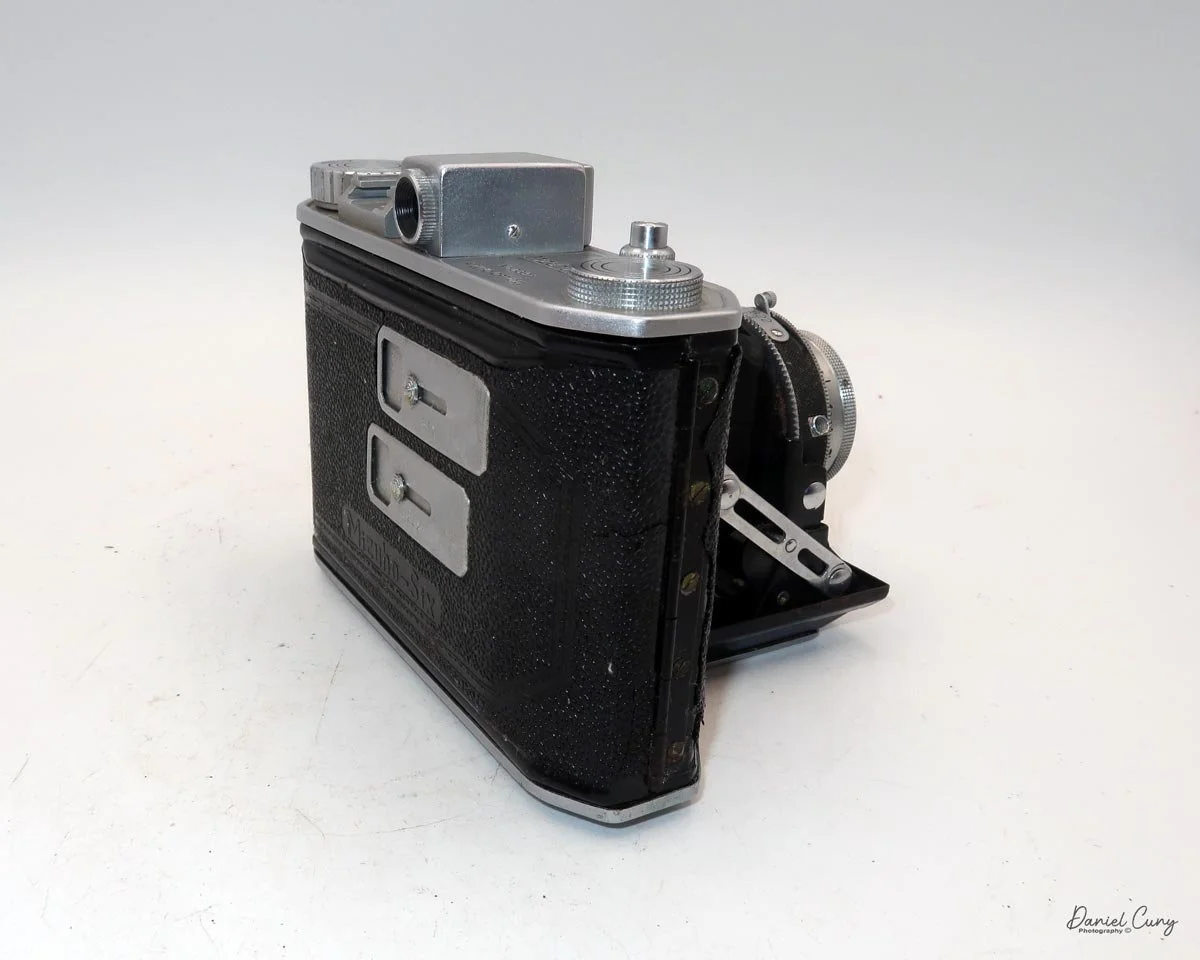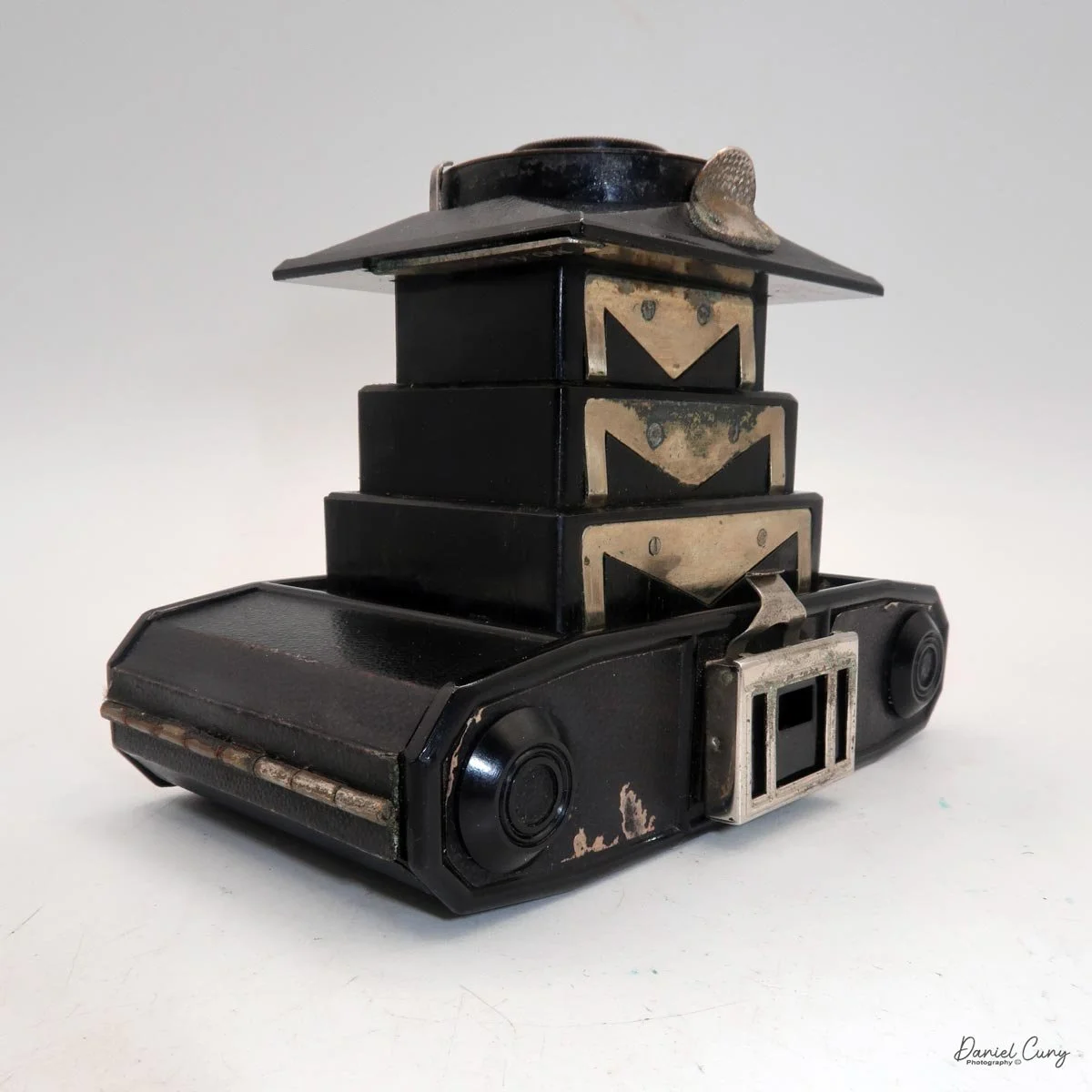
Dual Reflex Camera

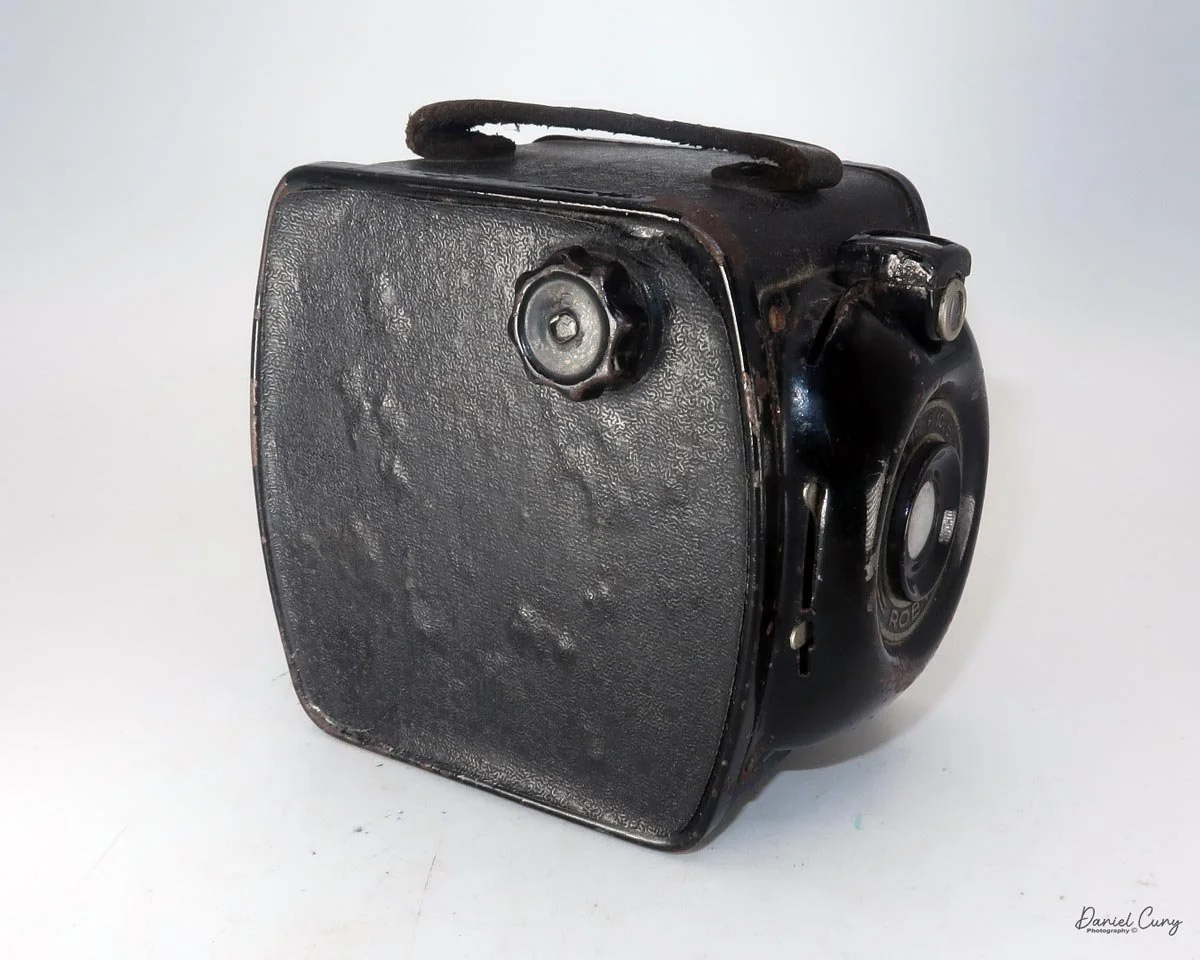
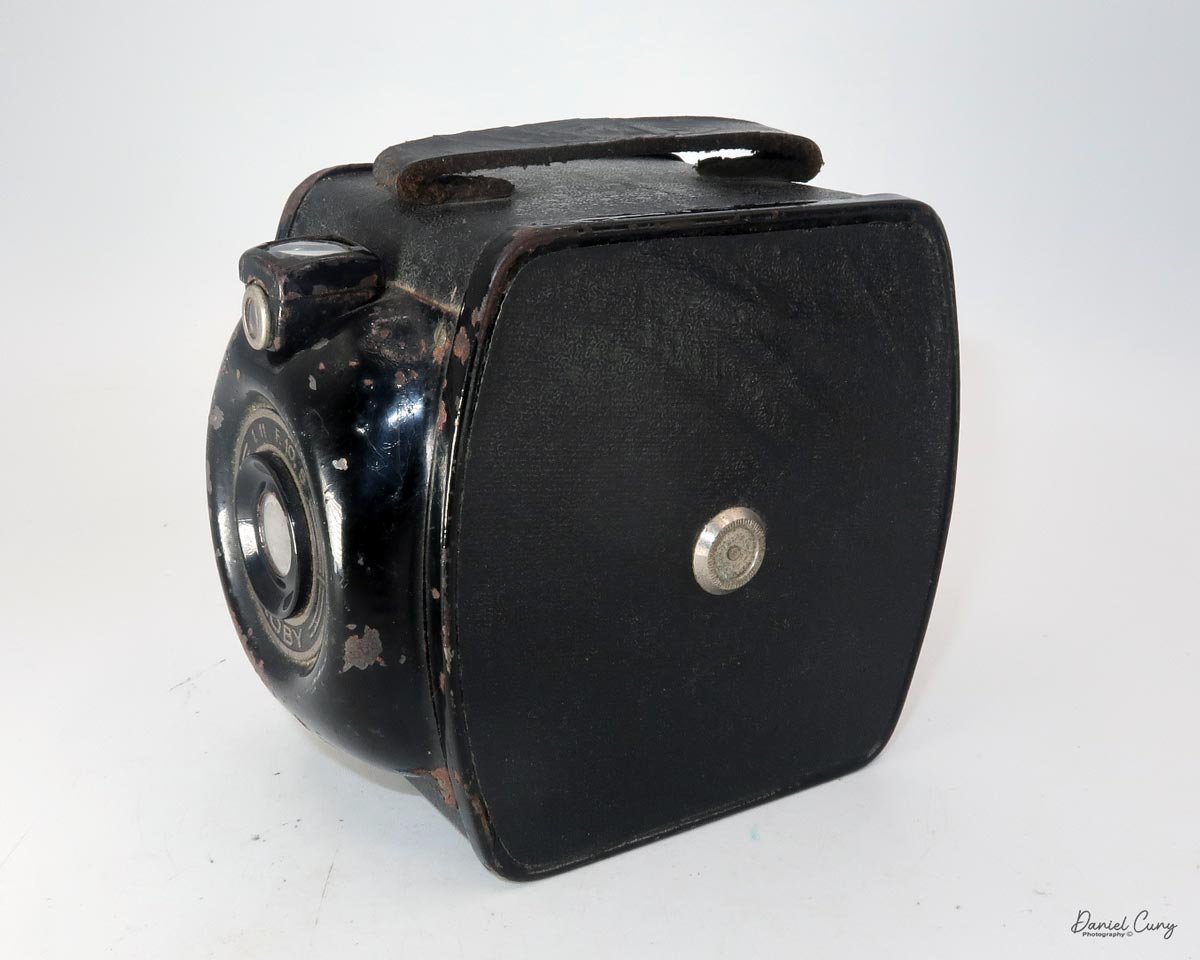
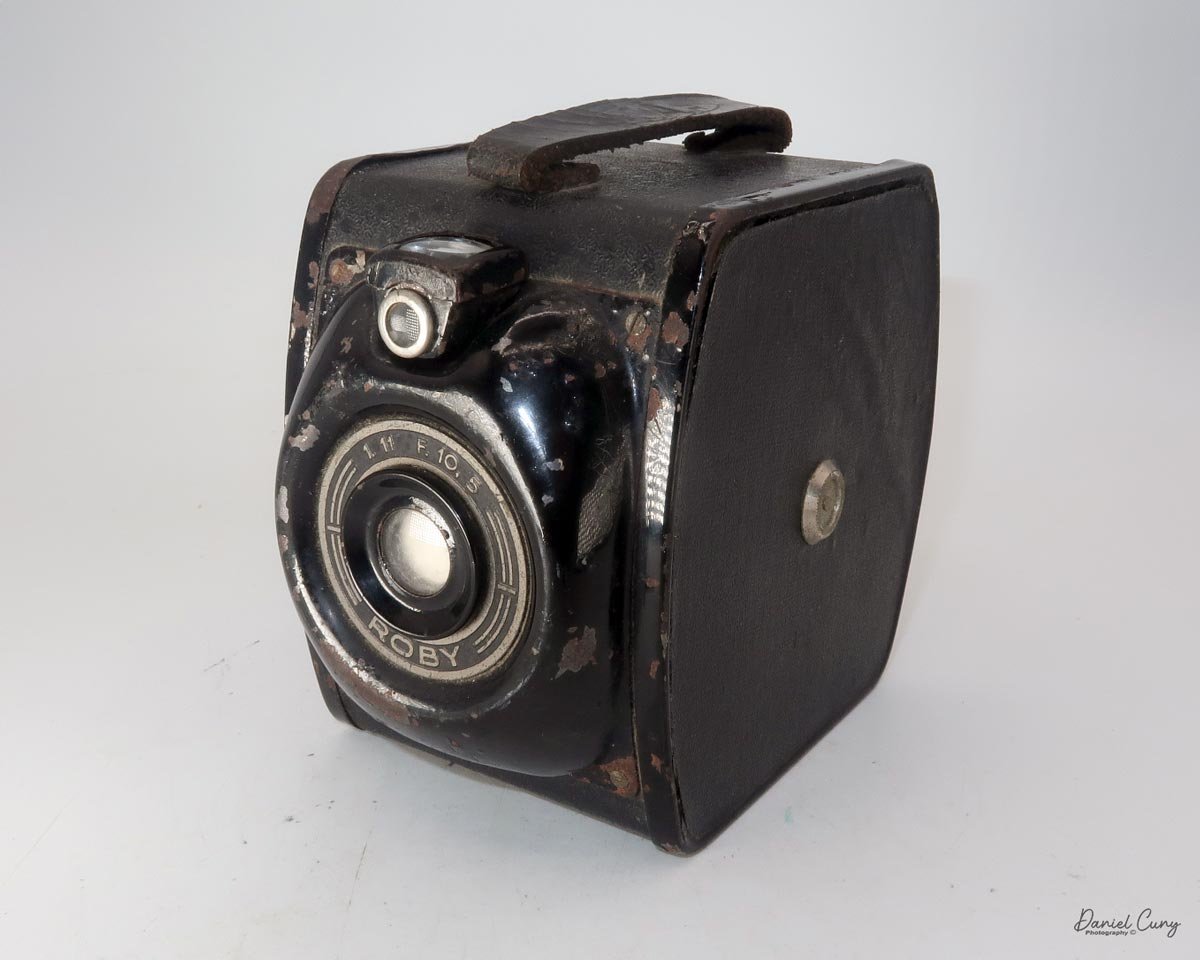
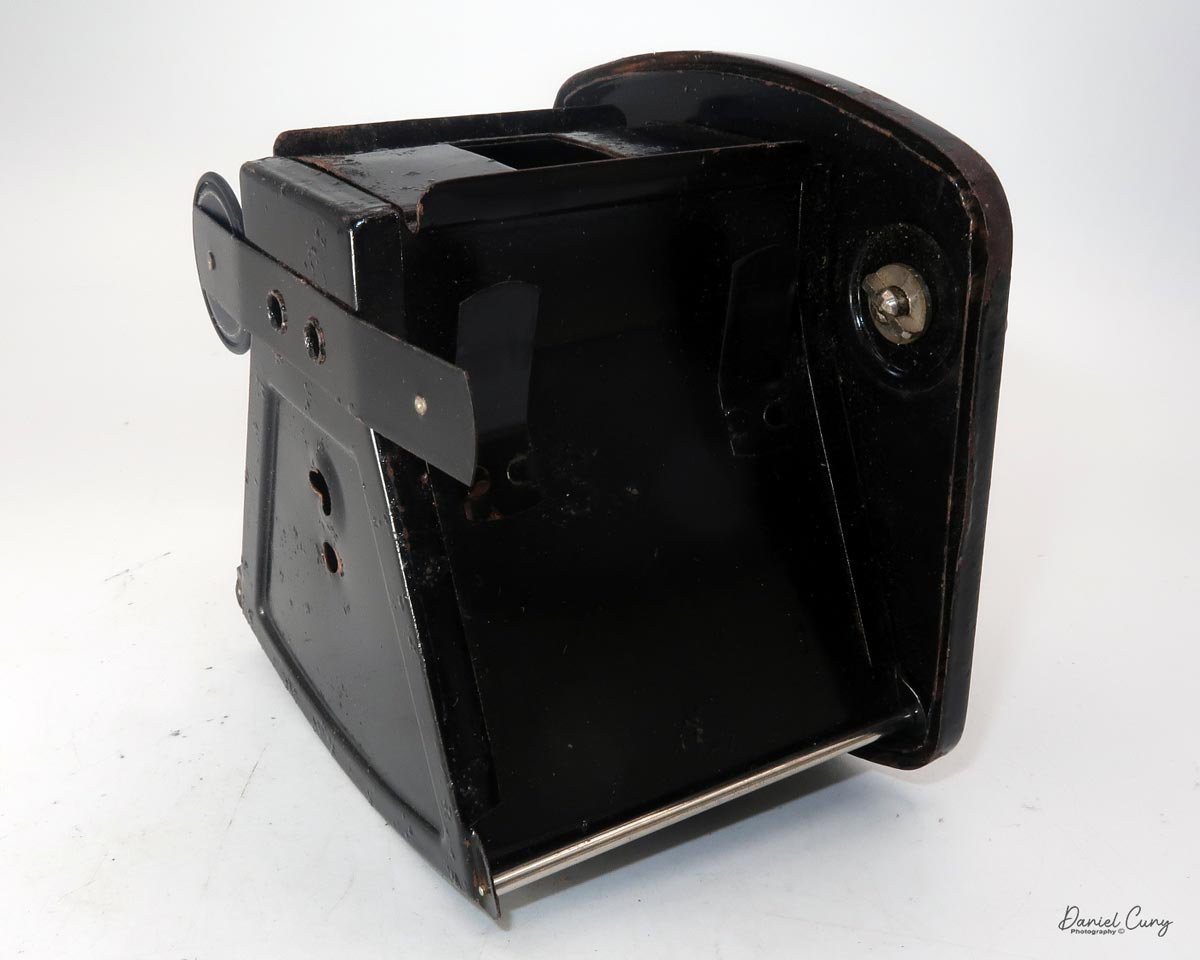
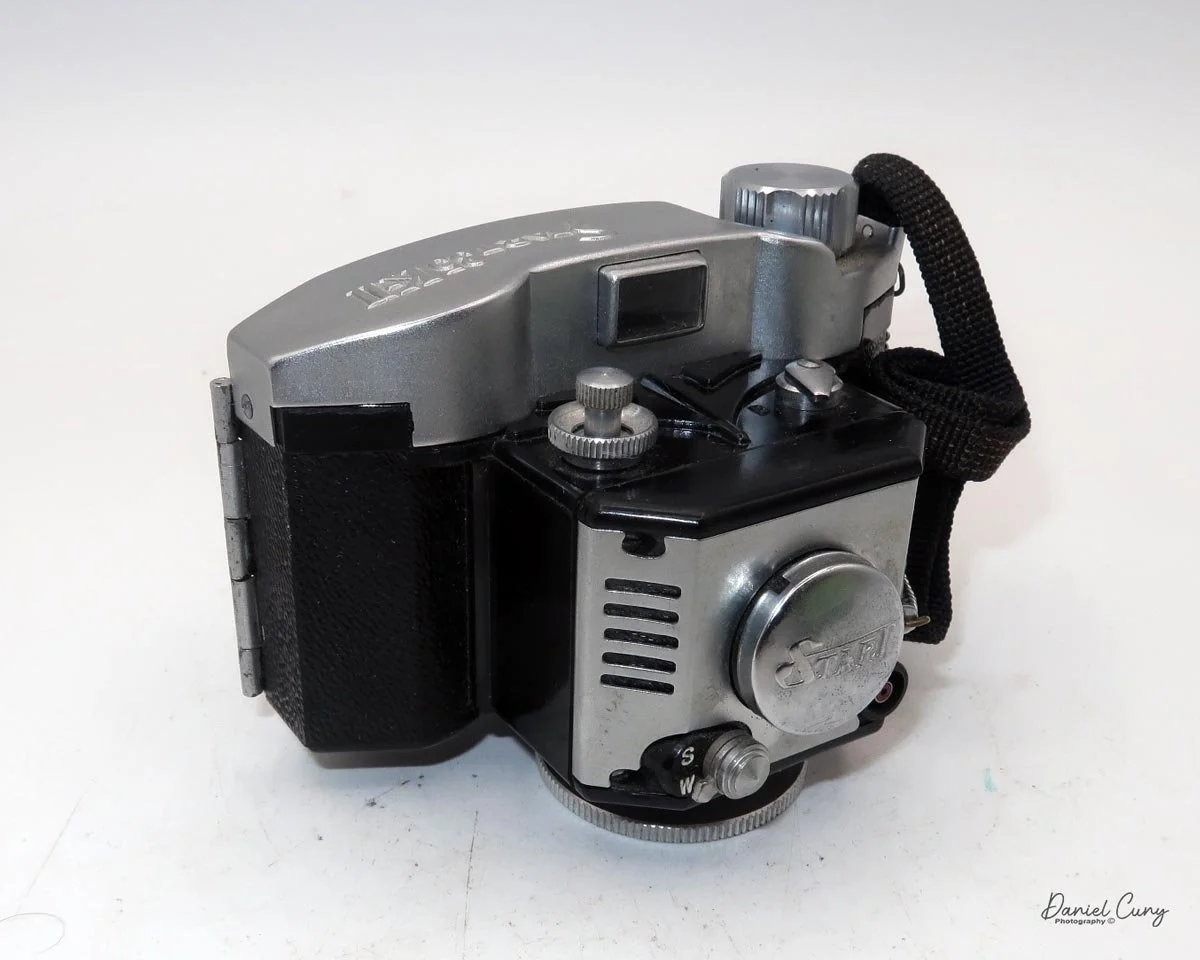
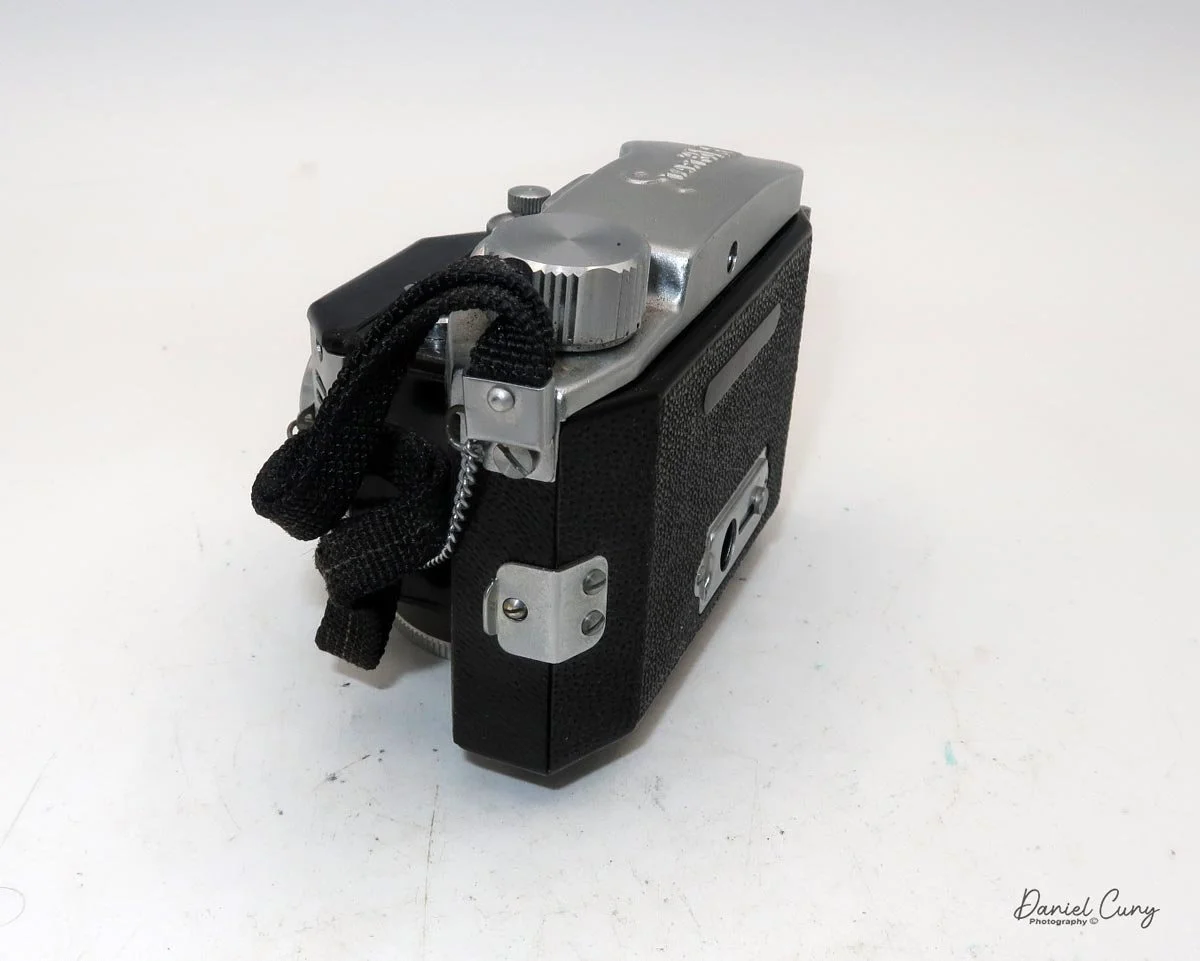
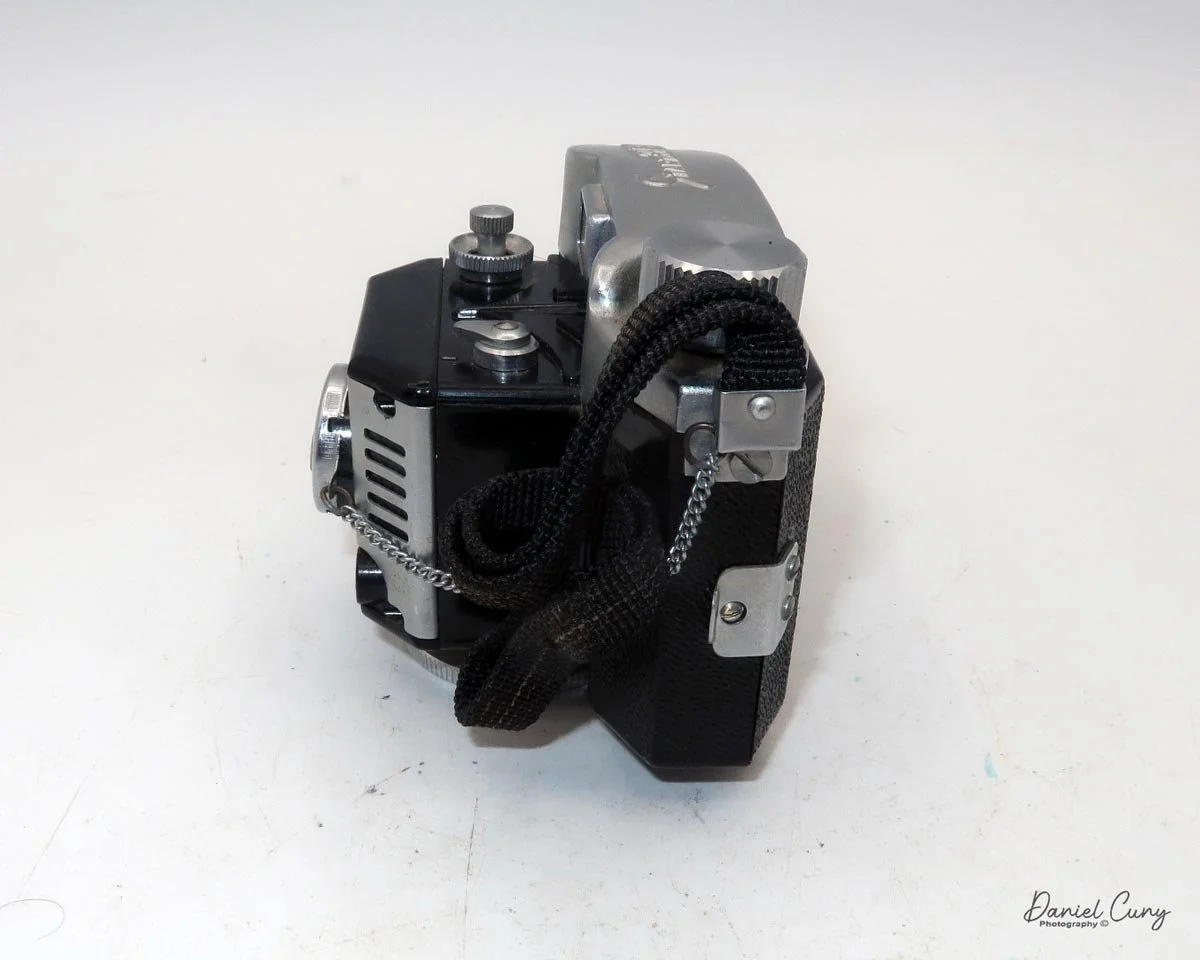
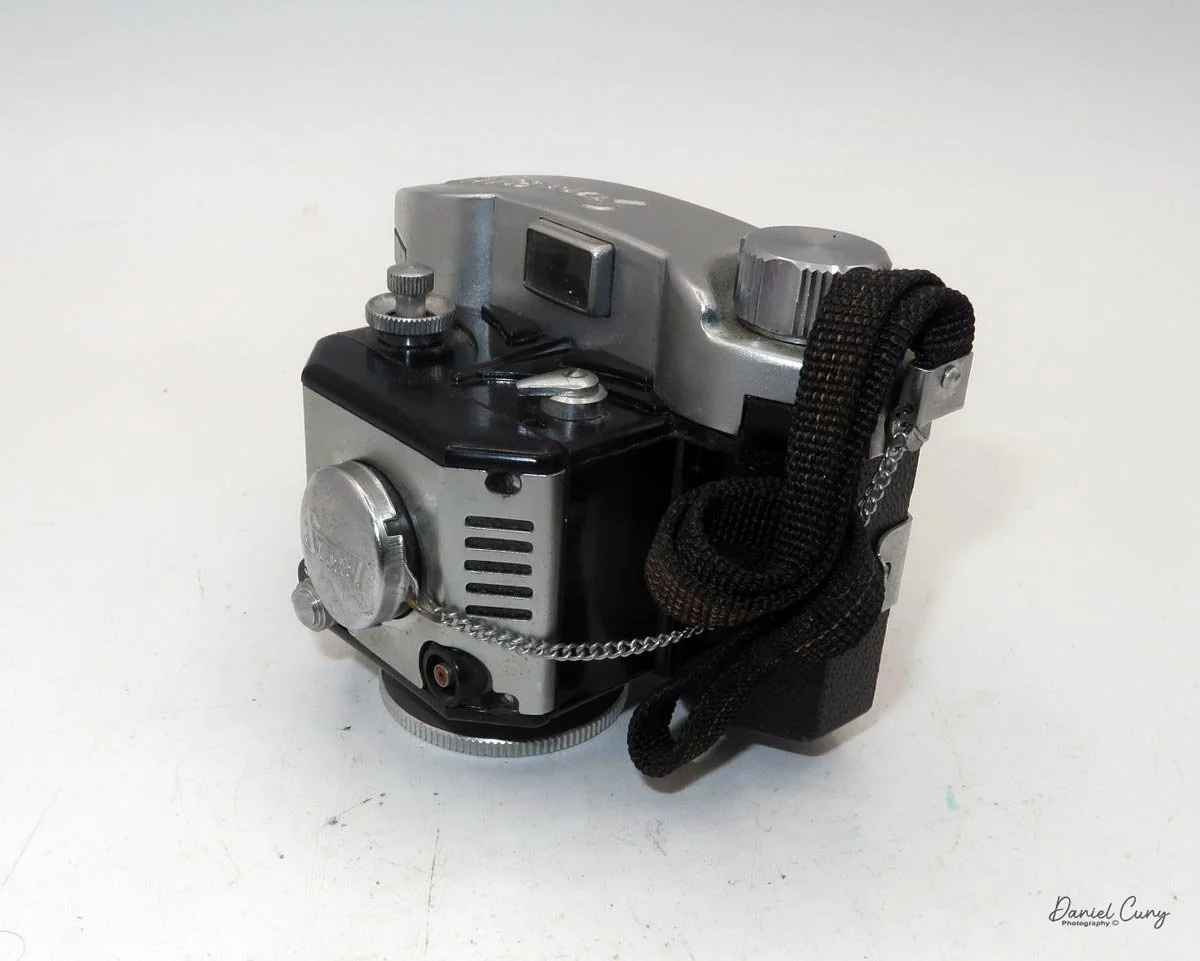
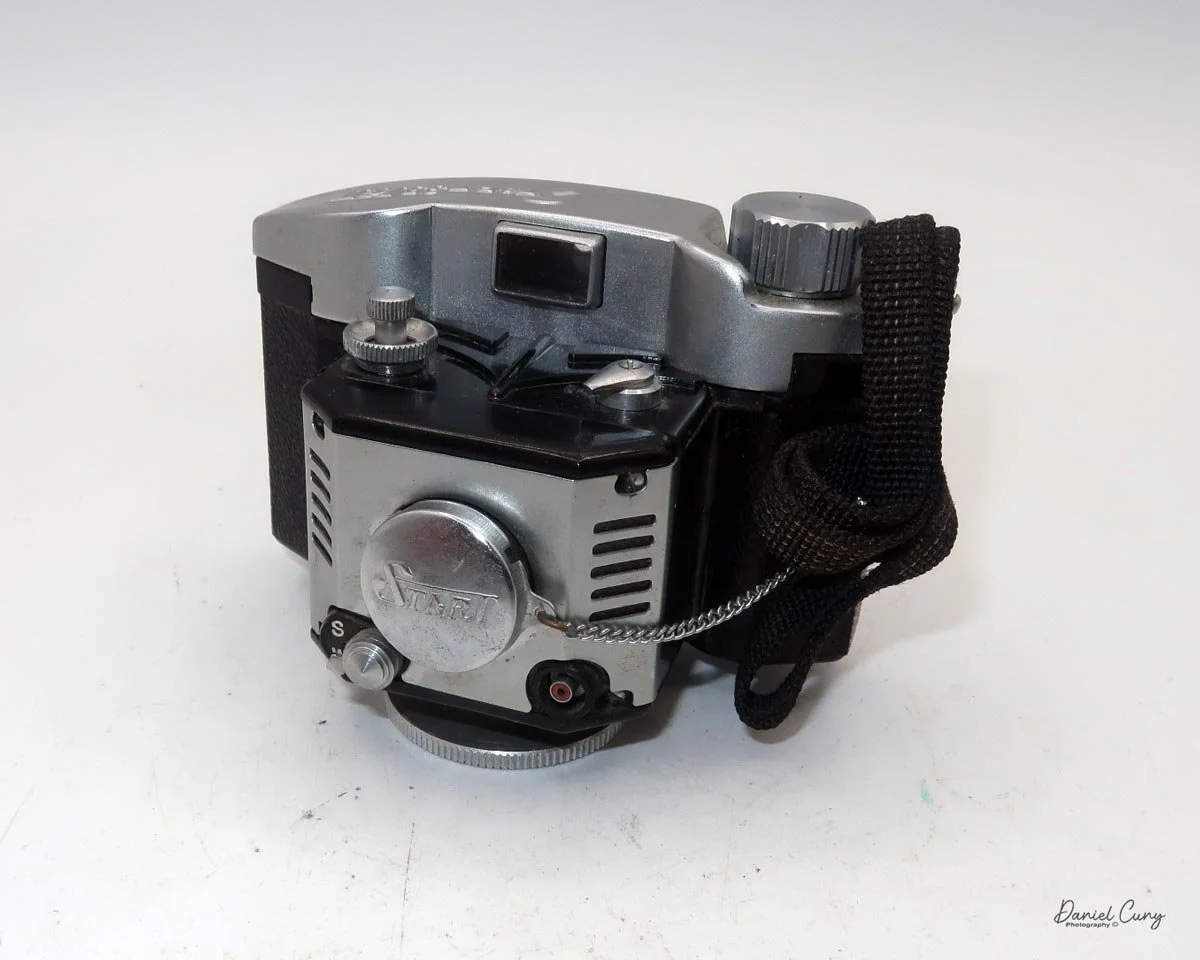
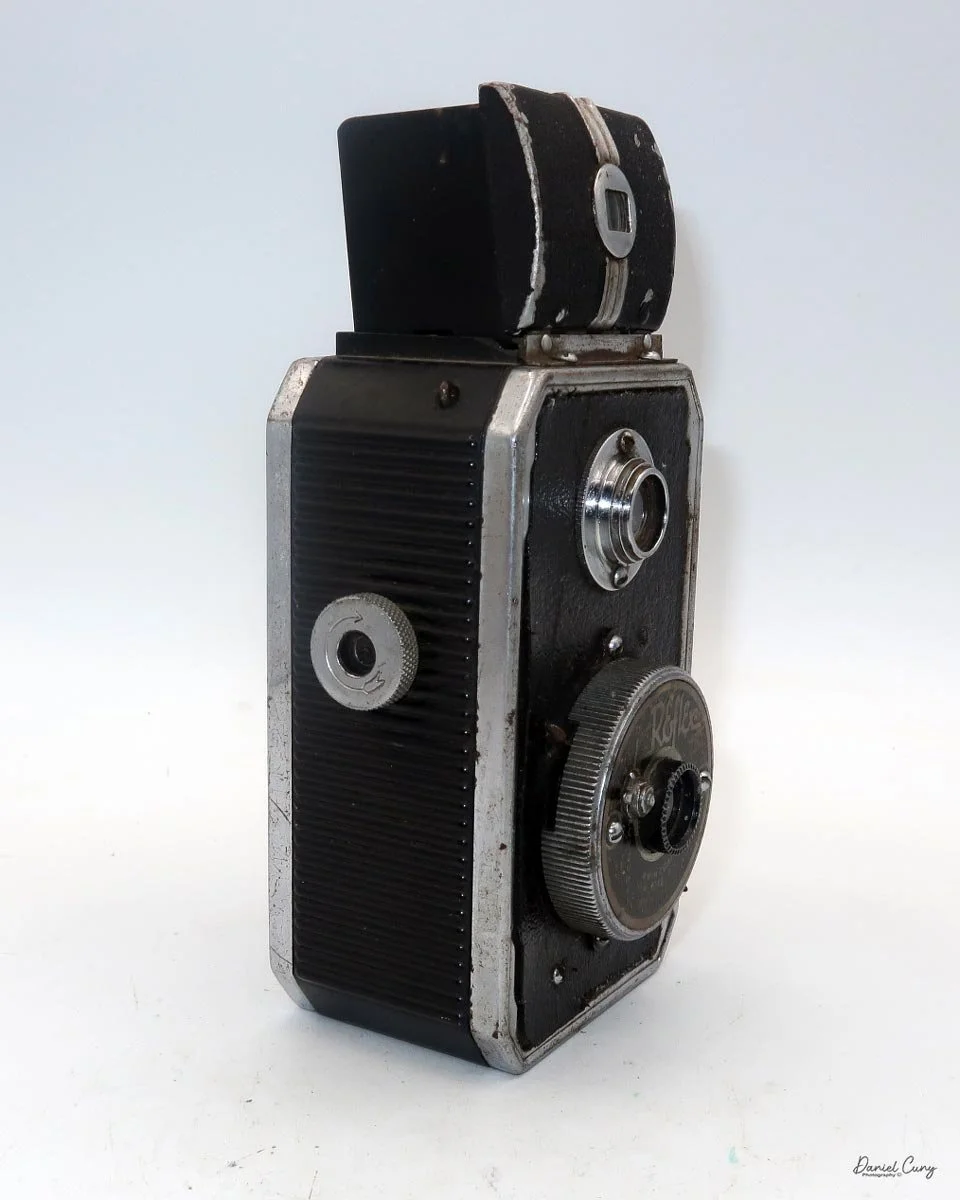
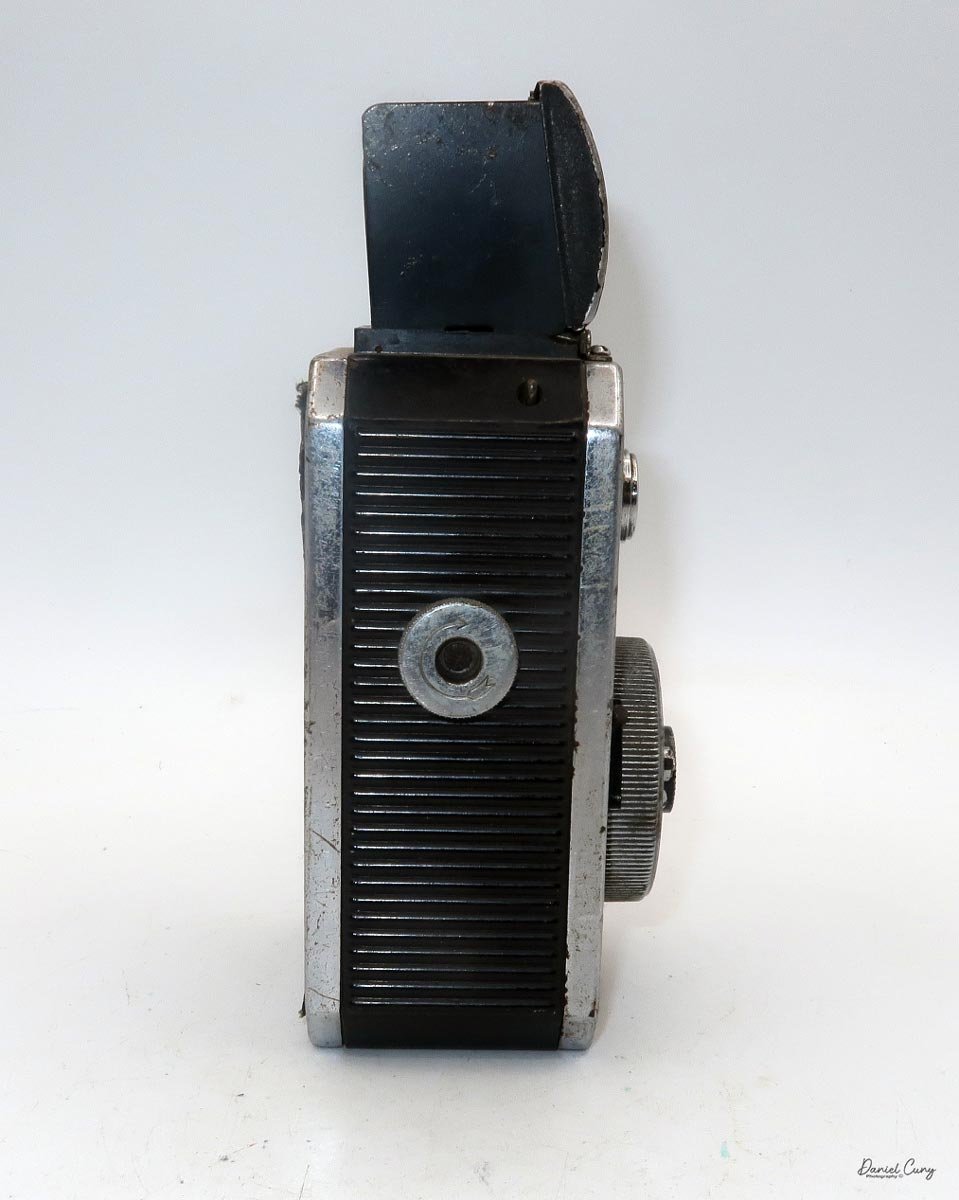
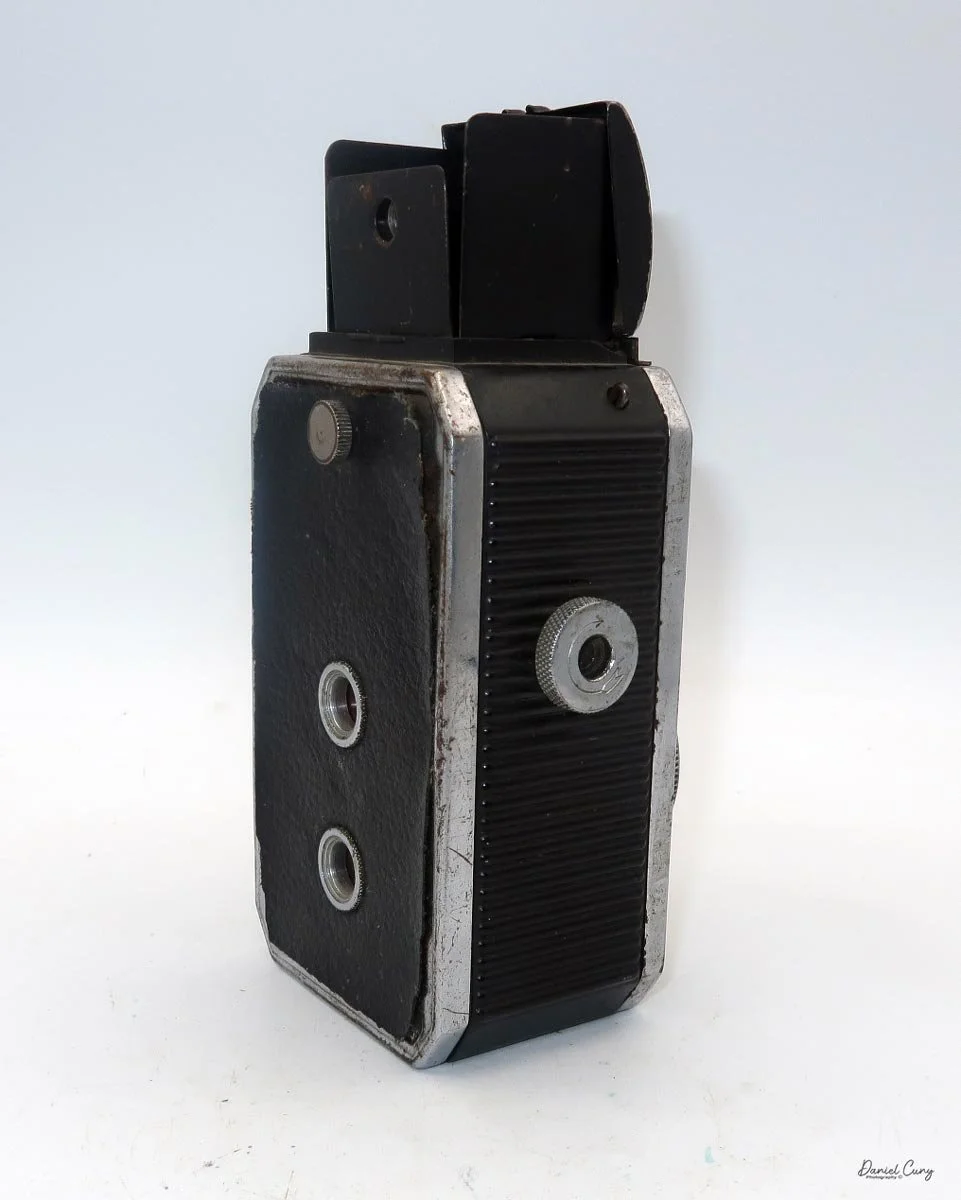
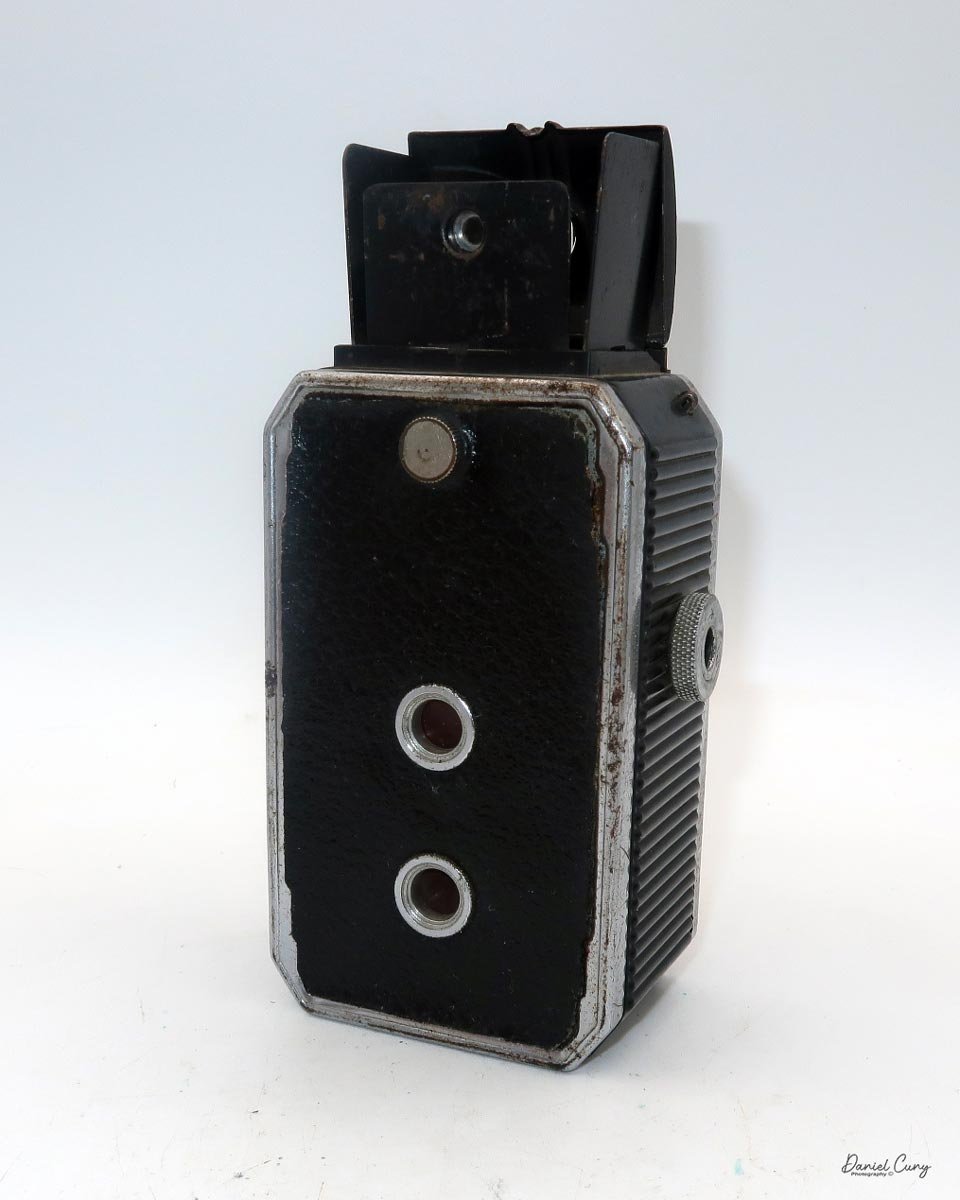
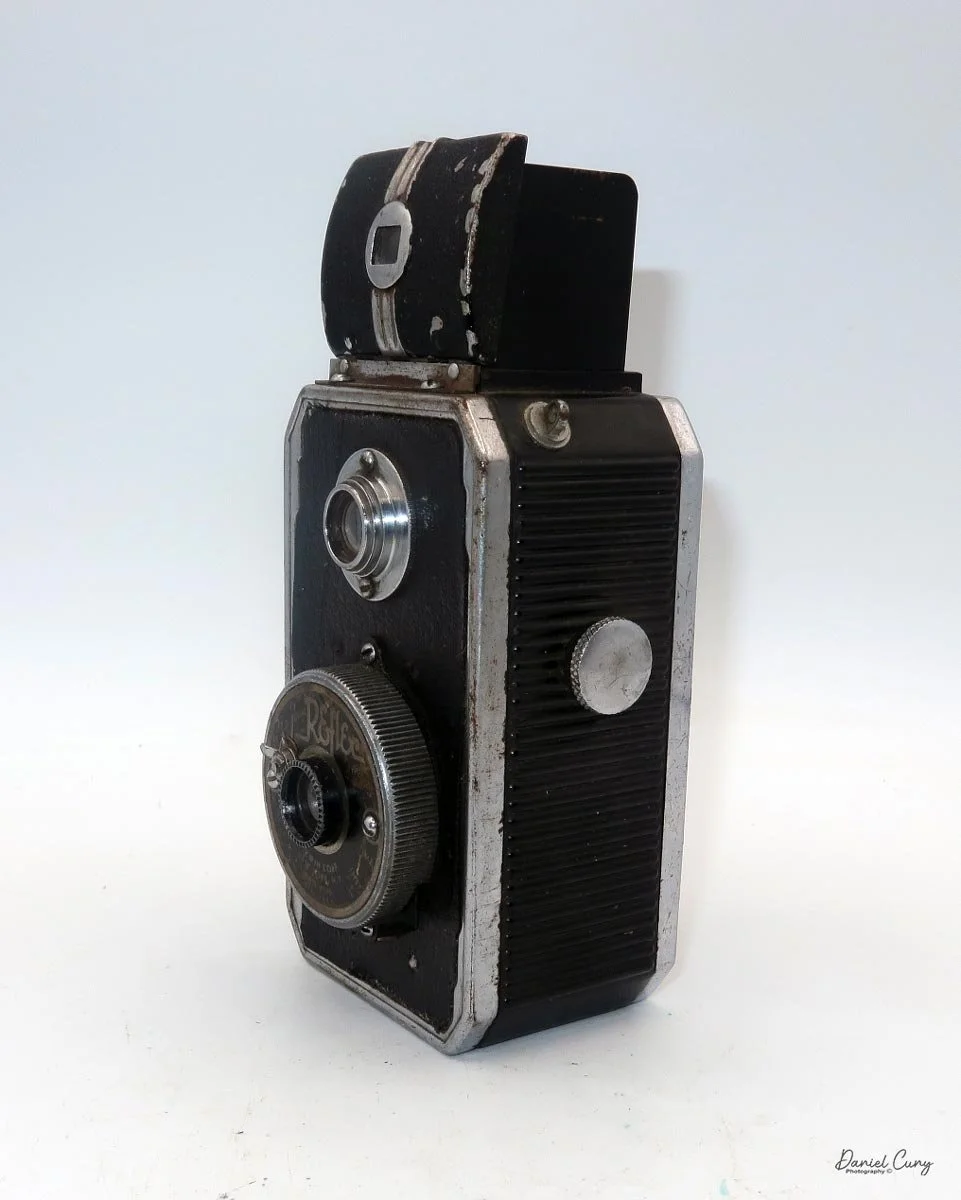
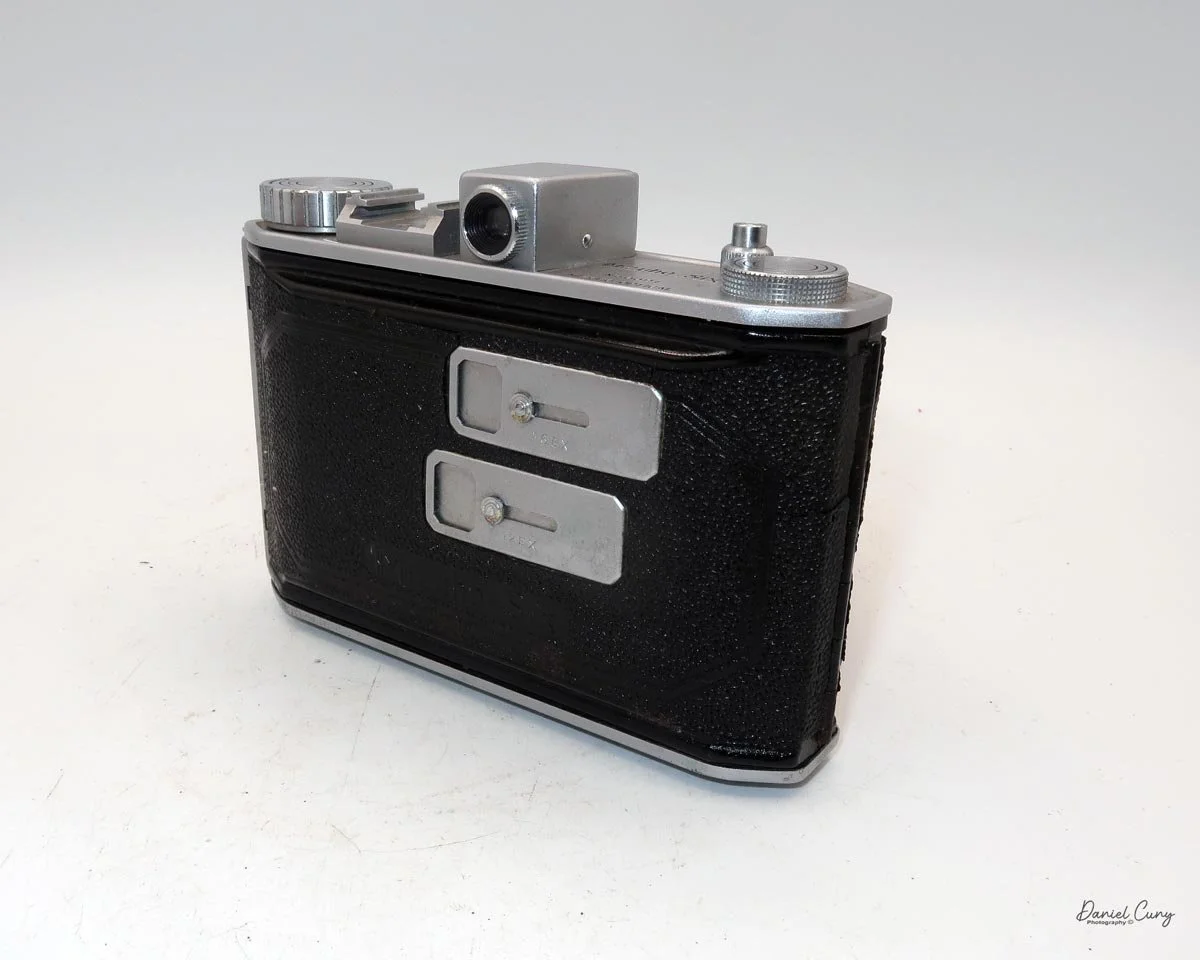
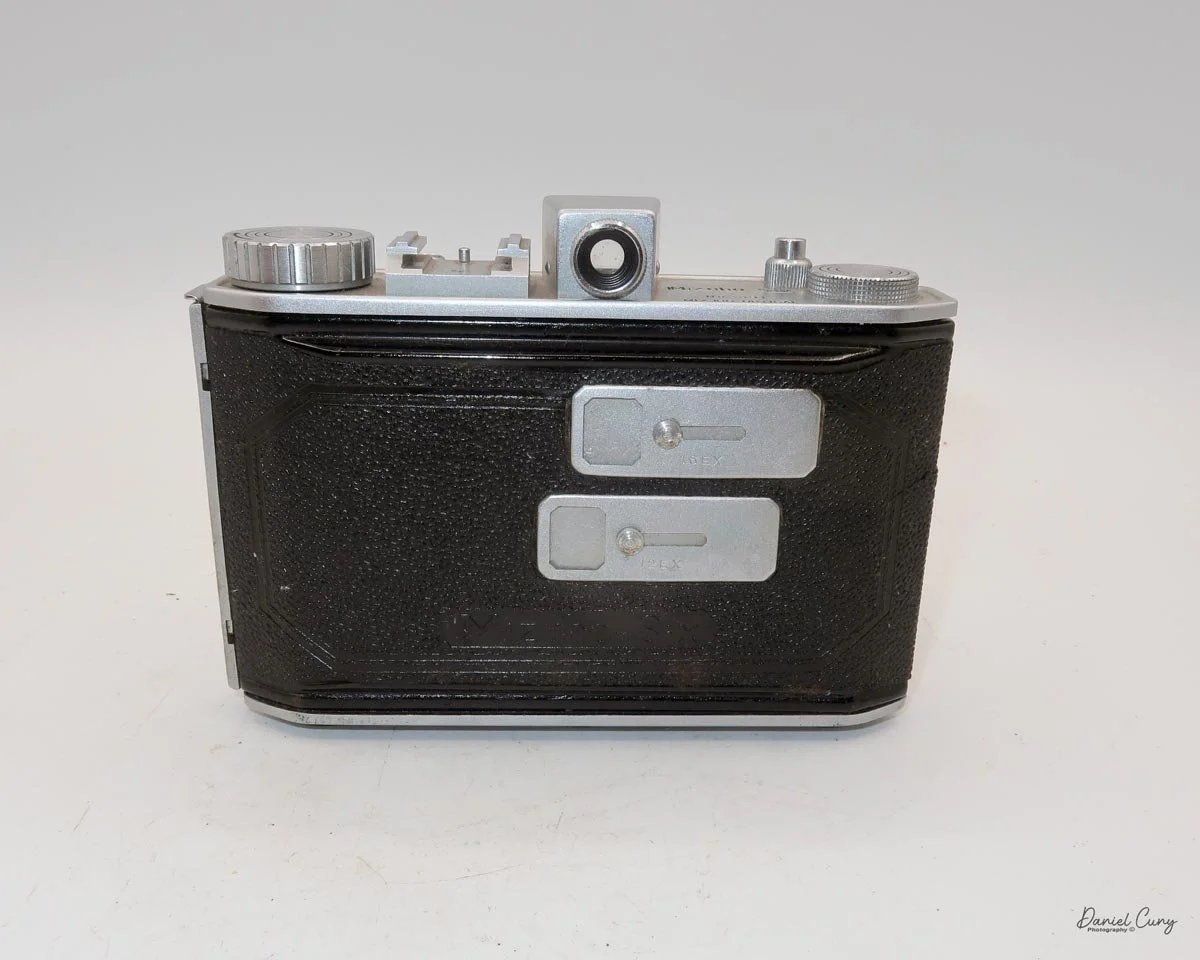
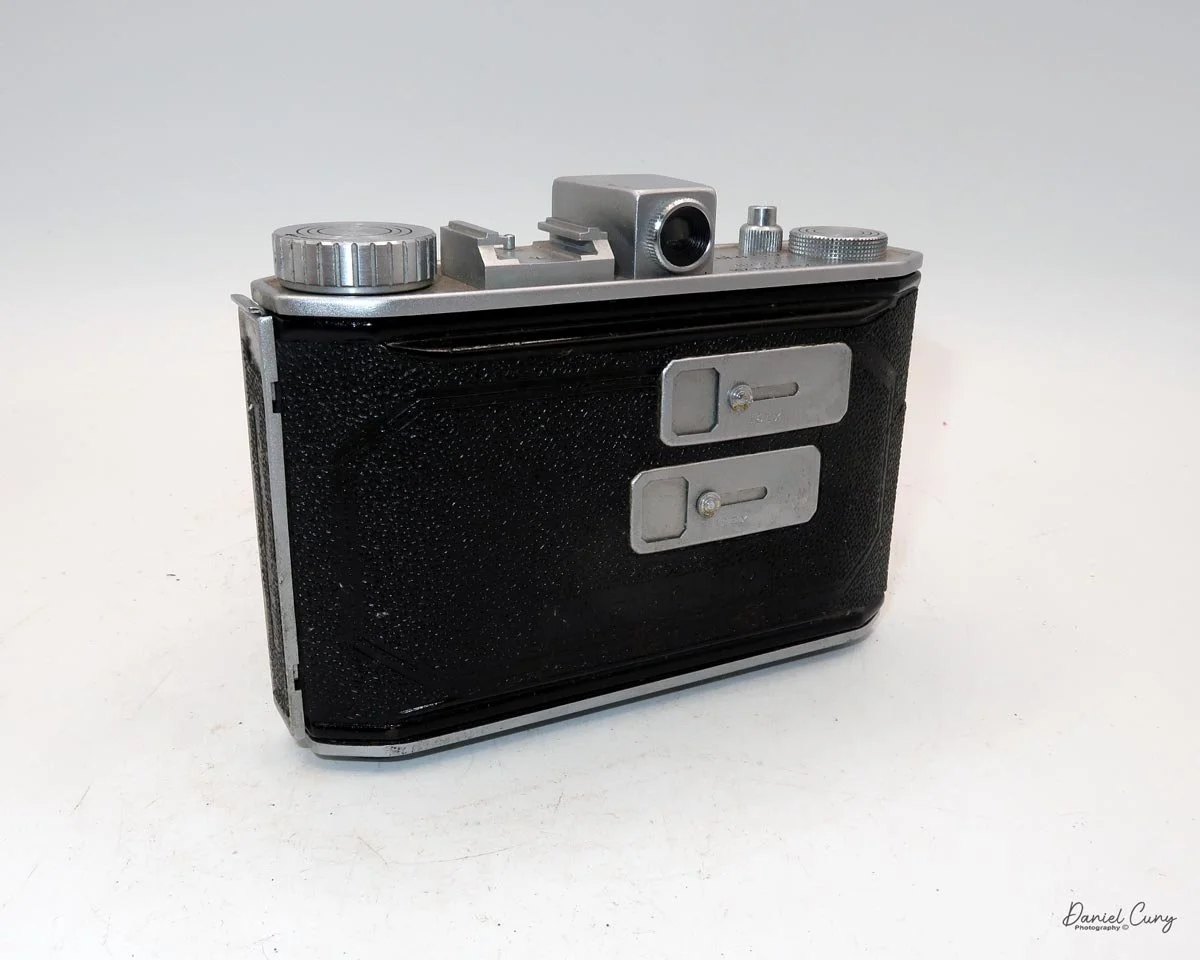
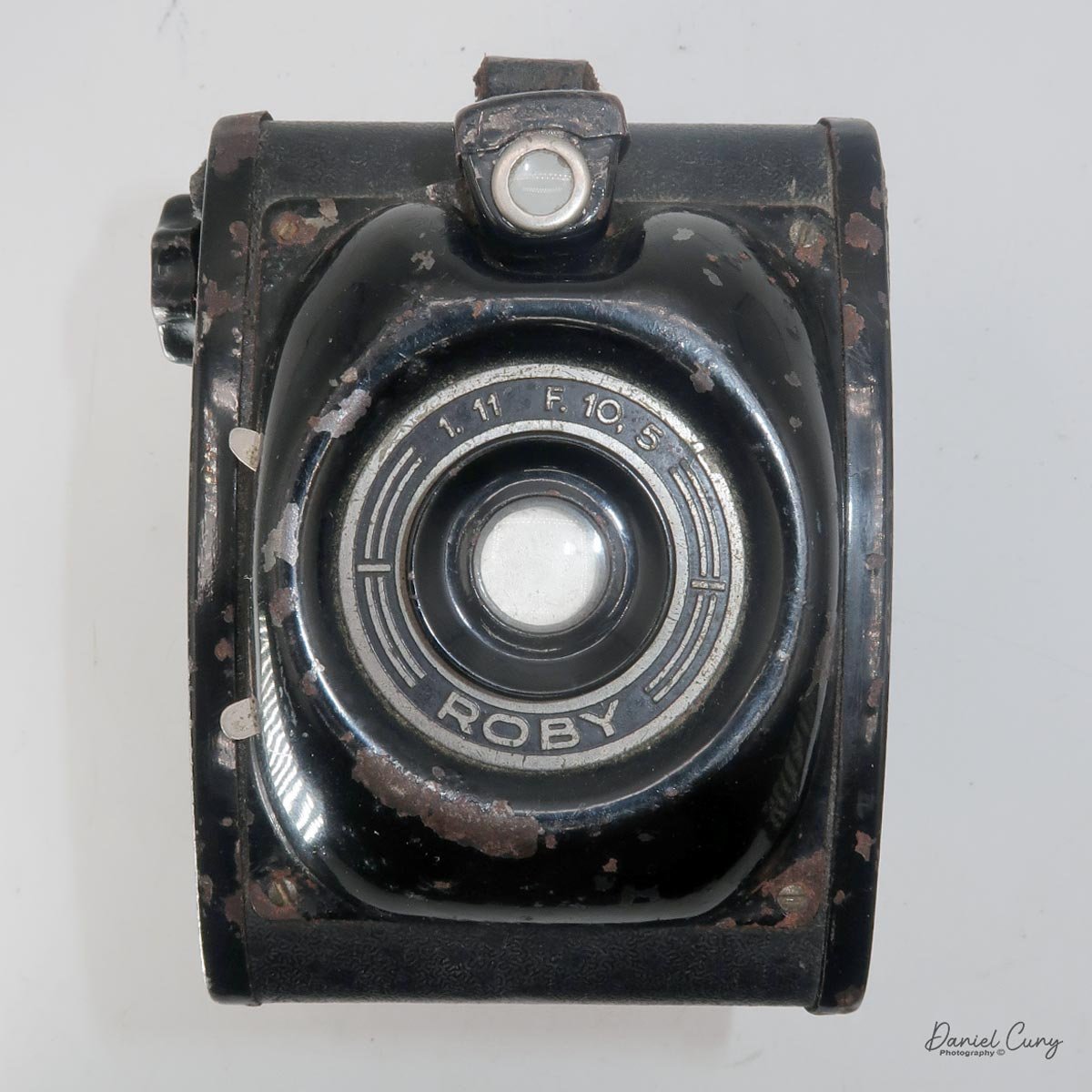
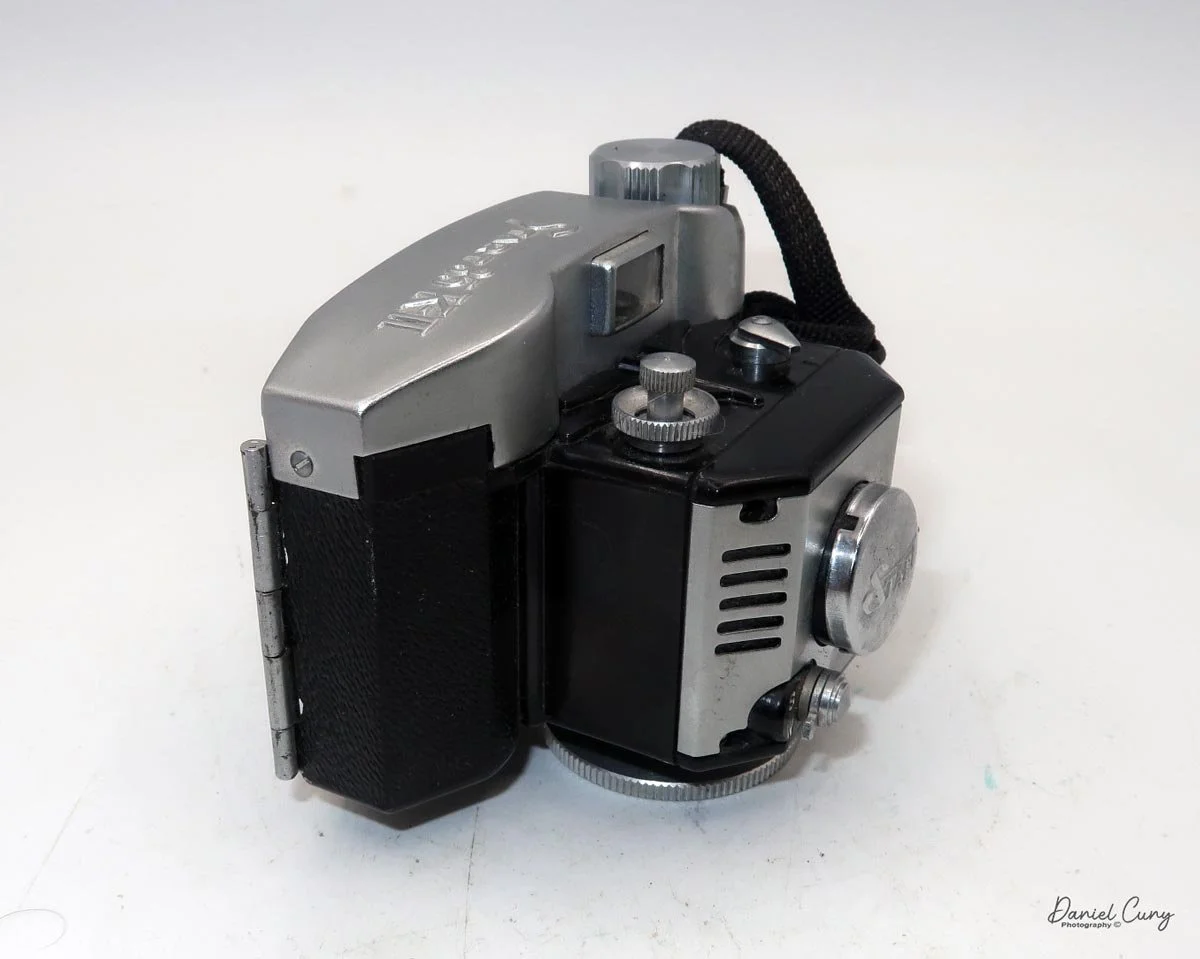
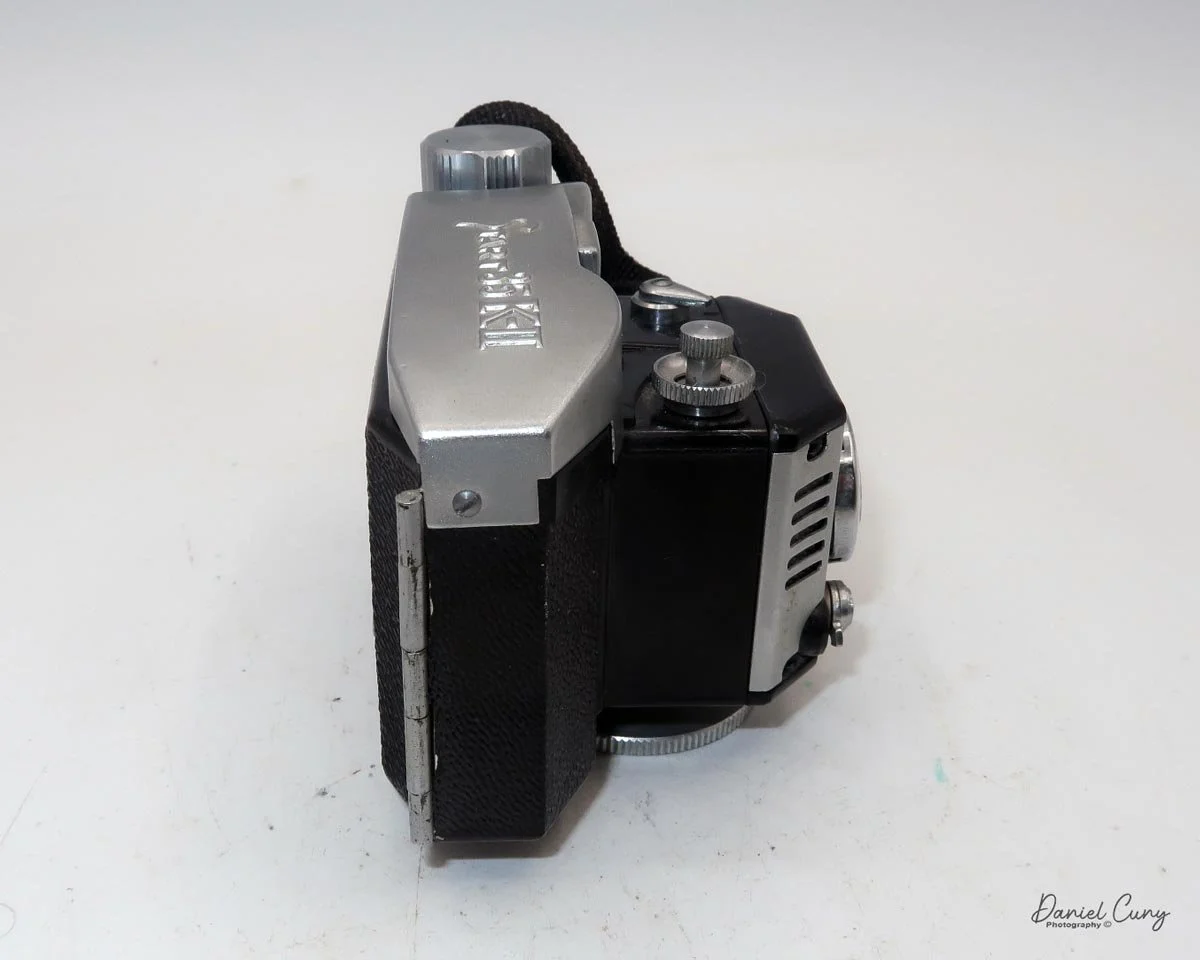
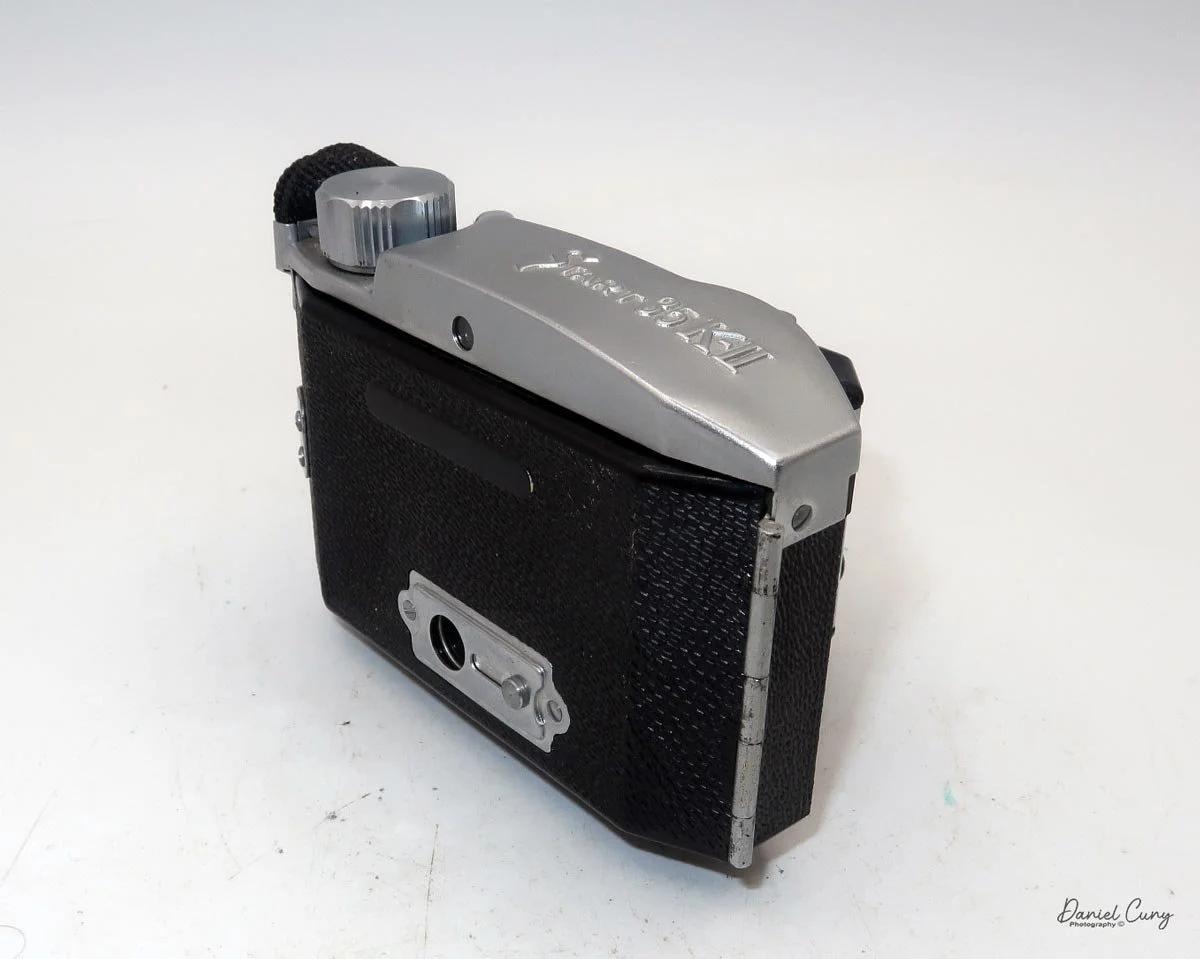
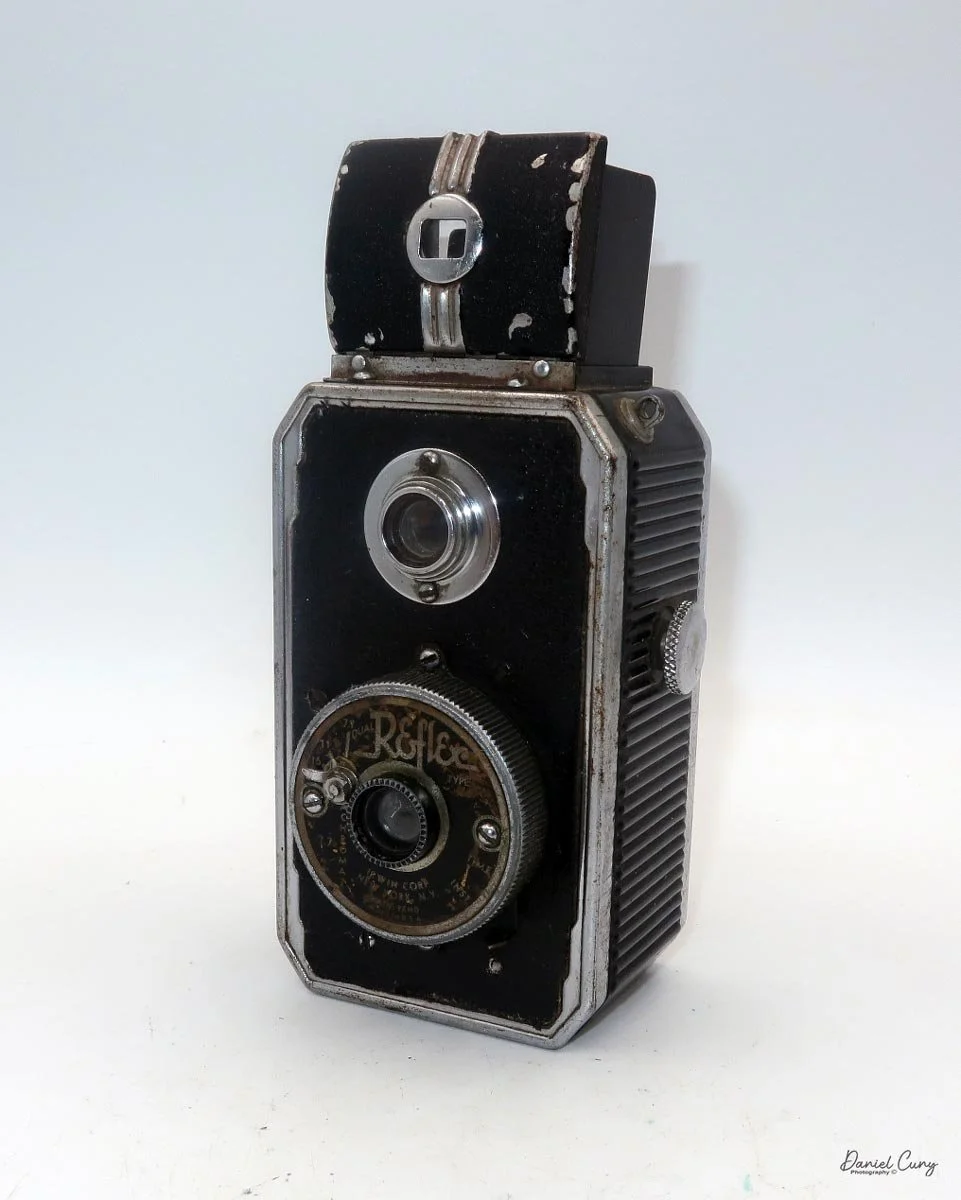
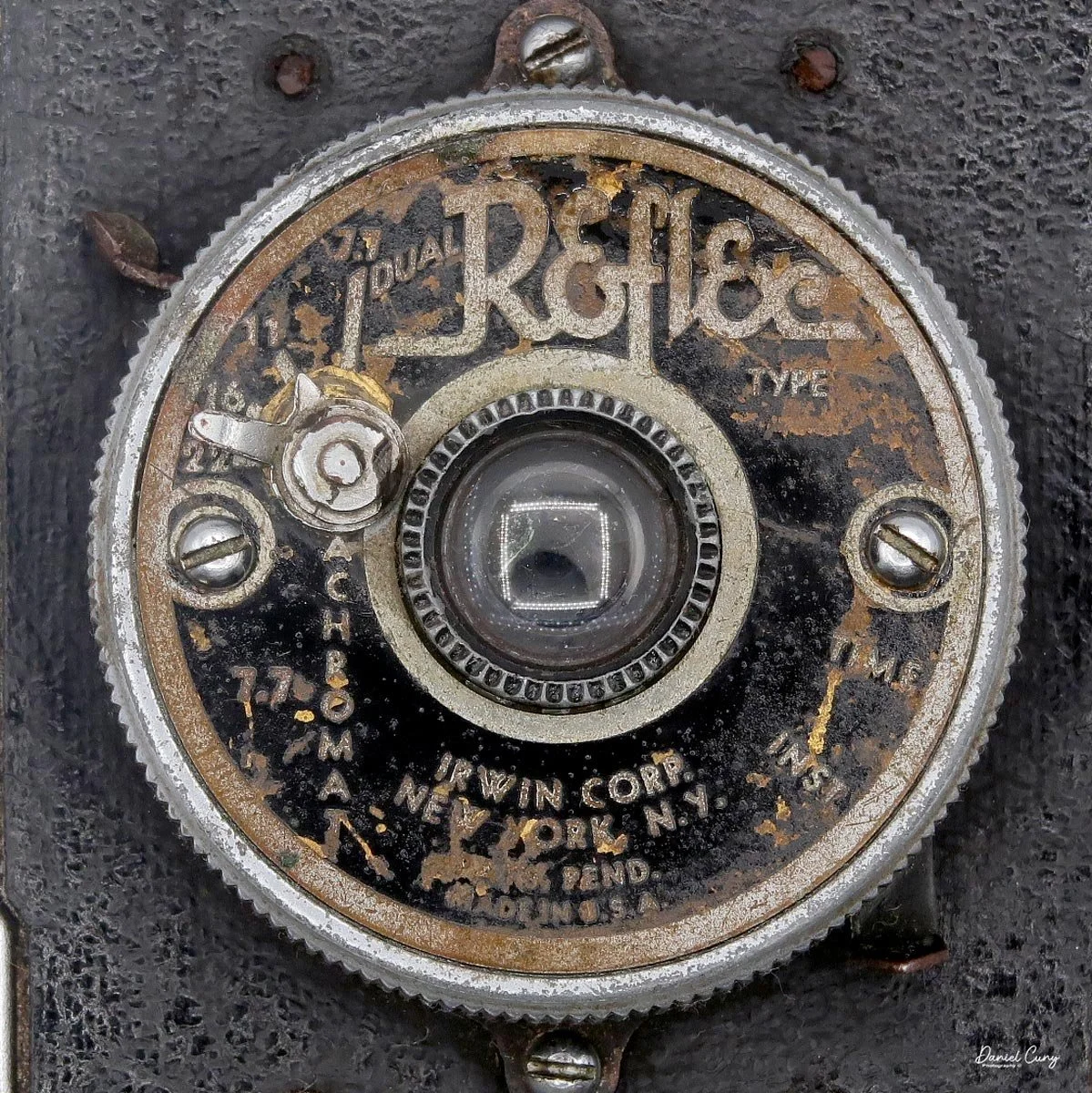
My Dual Reflex camera.

This week's camera is very low-tech and a follow-up to a series of cameras I discussed in a past article on the Lark and Kandor "Sardine Can" cameras two years ago. 

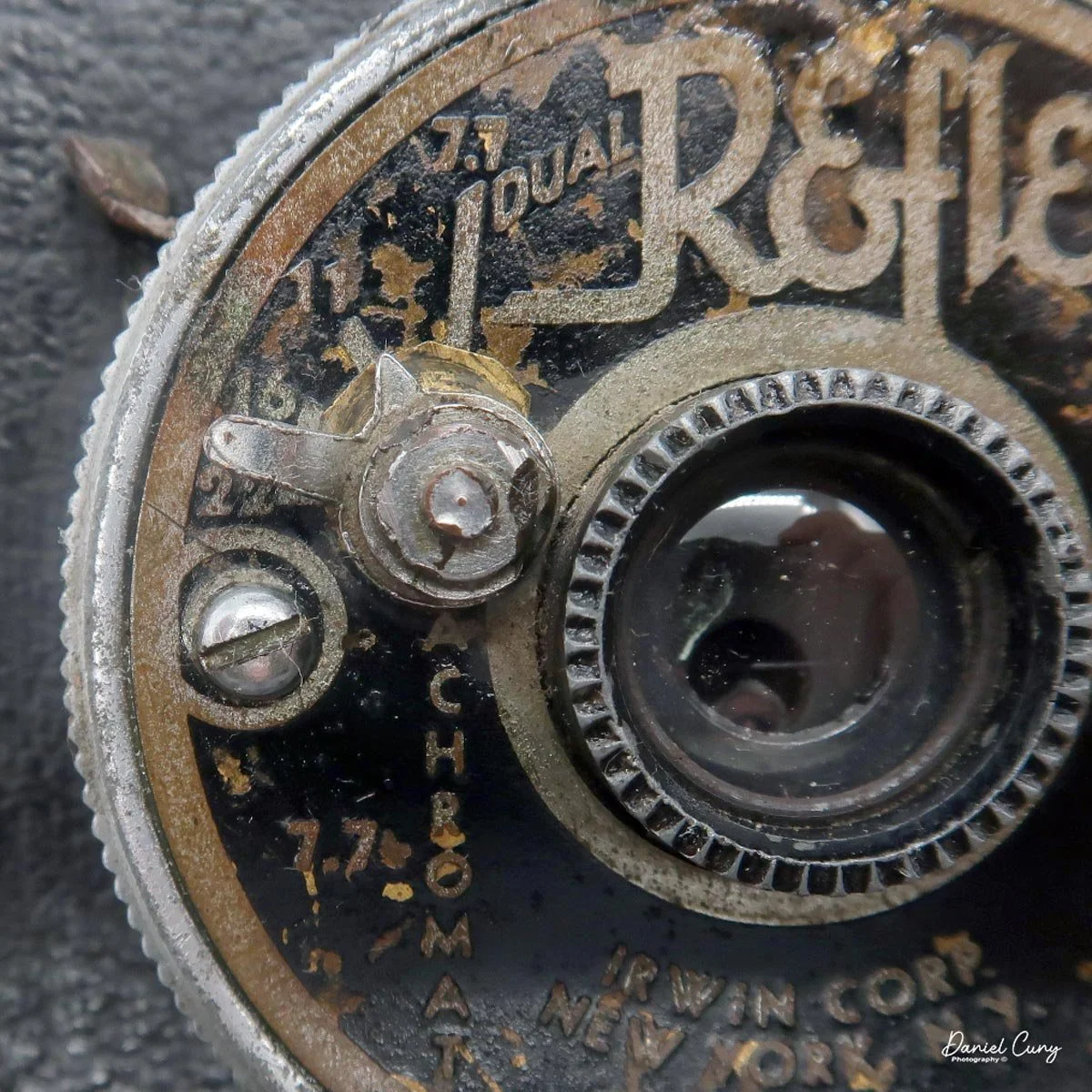
 I found this camera in a display, hidden behind other cameras, at a local camera store many months ago. I recognized the camera from a previous article, and it was a different style of camera from before. This was a "twin lens" style camera, but made by the same company, Irwin Corp of New York. 

 As I was discussing the camera with a store staff member, they said it was for "display only" and not for sale because it wasn't working. I told the salesperson that I had written an article on this camera style and wasn't worried about whether it worked, but just wanted it for my collection.

 I enquired further about the camera, the salesperson said they needed to ask the owner whether he would sell it. I encouraged the salesperson to inquire. Upon their return, they said the owner would indeed sell the camera and gave me a reasonable price to purchase it,  especially since the camera was in rough condition and I was told the shutter was not working. The shutter wasn't dead. It did open and close, but it was extremely sluggish.

 All of the leather was also on the camera, though it was coming up at the edges due to shrinkage and having been dried out for many years. The fact that the leather was still there was another good reason to purchase the camera, as I could recondition the leather and tack it back into place, giving the camera the care it deserved.

 As I paid for the Dual Reflex camera along with some discounted, recently discontinued film, I left the store with a new acquisition, knowing I'd fix it up and write an article about it at some point.

 Looking over the shelf to do this week's article, I saw the Dual Flex, and figured since I did an article on the Konica Pearl last week, which has an integrated rangefinder in a folding 645 format. Let's lean the other way this week and do a lower-end, Lomography-type camera from the early 1950s.

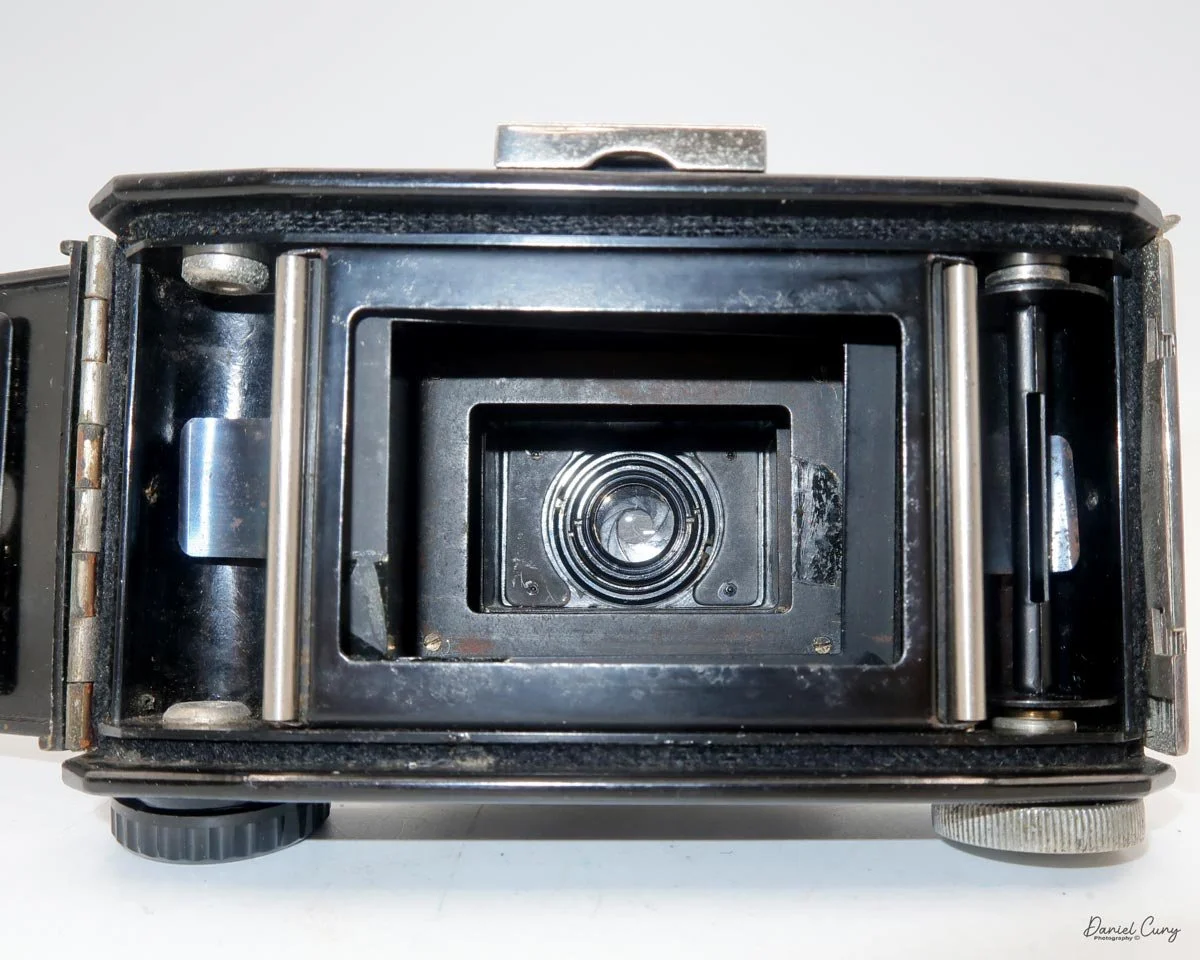
 One thing I needed to do before writing about the Dual Flex was to fix the shutter and clean the camera as best as I could. The repair was extremely simple, as the entire shutter assembly was held to the camera by two screws, one on top and one on the bottom. Then, to get to the shutter itself, two other screws on either side of the lens held the cover on. 

 Once the cover was off, the entire assembly consisted of a simple spring-loaded box-camera-style shutter that needed general cleaning and lubrication. There is also a lever that changes the aperture setting, which already moved smoothly, so I didn't do anything with that. 

 While the shutter was out, I cleaned the inside of the lens and reassembled it, making sure it was functioning as it should. With a "snappy" shutter in working condition, I screwed the cover back into place and mounted the shutter back onto the camera. Double-checking that the shutter seemed to be working after reassembly, I was now ready to write the article.

History:

 Irwin Corporation of New York occupies a curious and appealing corner of toy and camera history. Best remembered by collectors for its inexpensive metal cameras and low-cost toys, the company seems to have specialized in simple, playful, and affordable products. One surviving description notes that Irwin began by manufacturing 127 roll-film metal cameras resembling sardine tins, priced at just $2.98, which immediately places the firm in the world of budget photography novelties rather than serious camera manufacturing.

1948 advertising for Irwin Corp.

 That detail helps explain why Irwin still draws attention from vintage camera collectors today. These were not precision instruments meant to compete with the major camera brands. Instead, they were novelty cameras designed to be accessible, fun, and inexpensive enough to appeal to casual buyers. In that sense, Irwin's cameras belonged to the same broader culture as dime-store toys and impulse purchases: small objects that offered a quick thrill and a modest introduction to photography.

 Irwin also appears to have expanded its production to include toys, especially metal toys and, later, plastic items. Collector references suggest that the company produced cars, trucks, and other small playthings and continued to produce toys well into the 1950s and 1960s. By the mid-1950s, the company was said to have plants in Fitchburg and Leominster, Massachusetts, and Nashua, New Hampshire, indicating that it had expanded beyond a single New York address.

 The surviving record also suggests a company that adapted with the times. A 1964 dealer catalog reportedly included toy cars for Ken and Barbie, along with plastic GI Joe vehicles, which shows how Irwin followed the changing market for licensed and character-based toys. That flexibility likely helped the firm remain relevant in a crowded and fast-changing industry.

 Today, Irwin Corporation is remembered less as a major manufacturer than as a fascinating specialty producer whose history bridges toy collecting and camera collecting. Its sardine-tin cameras and inexpensive metal toys make it a small but memorable part of American mid-century design.

My Camera:

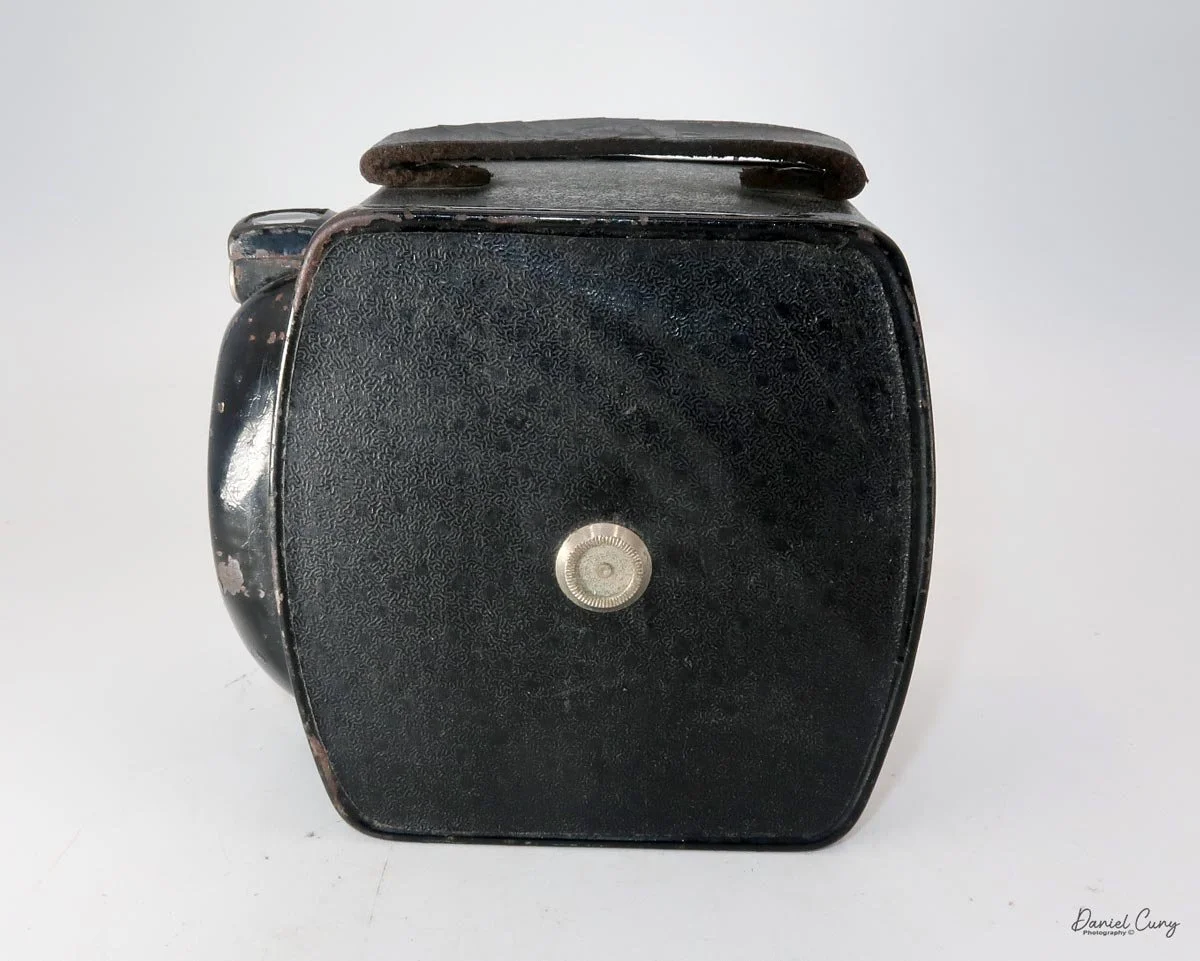
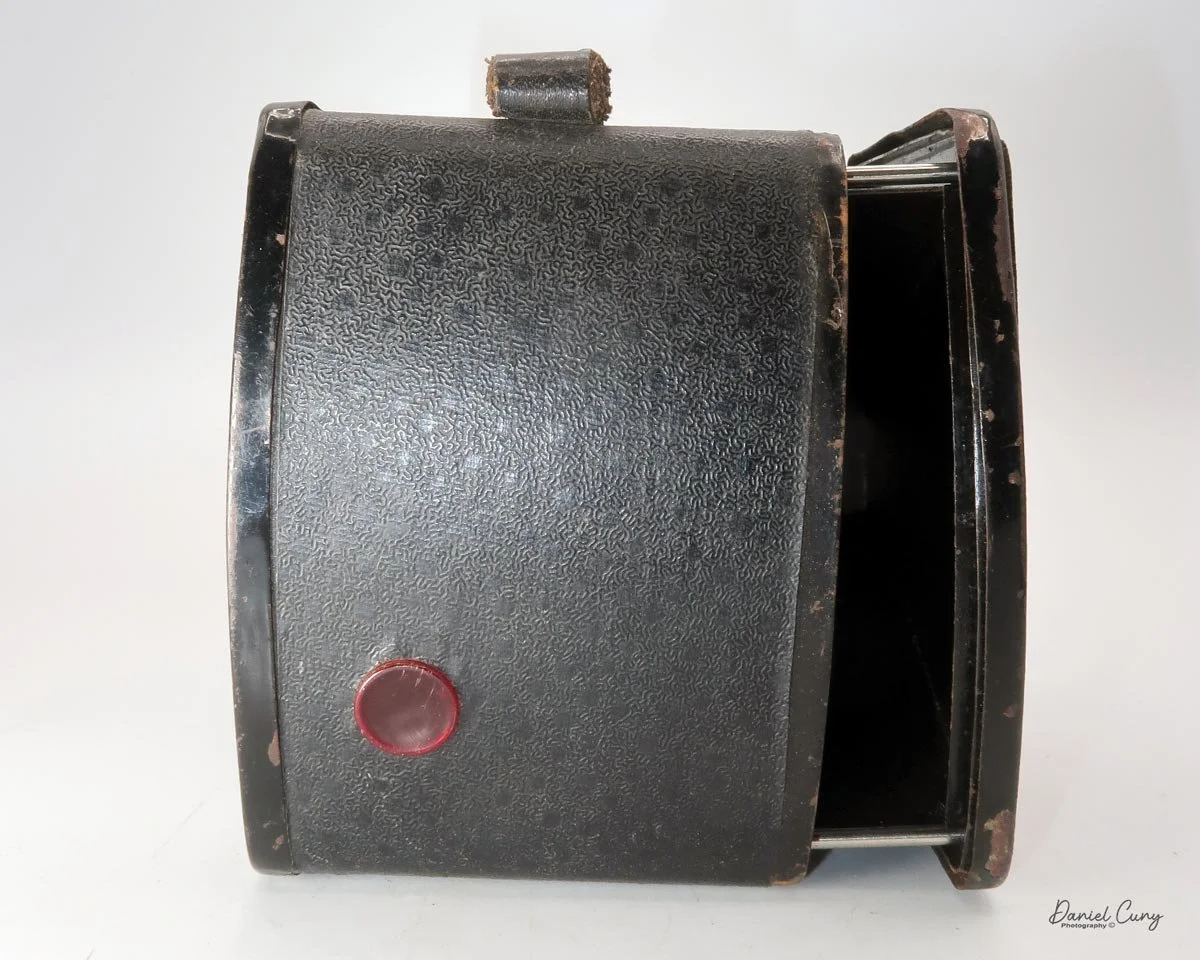
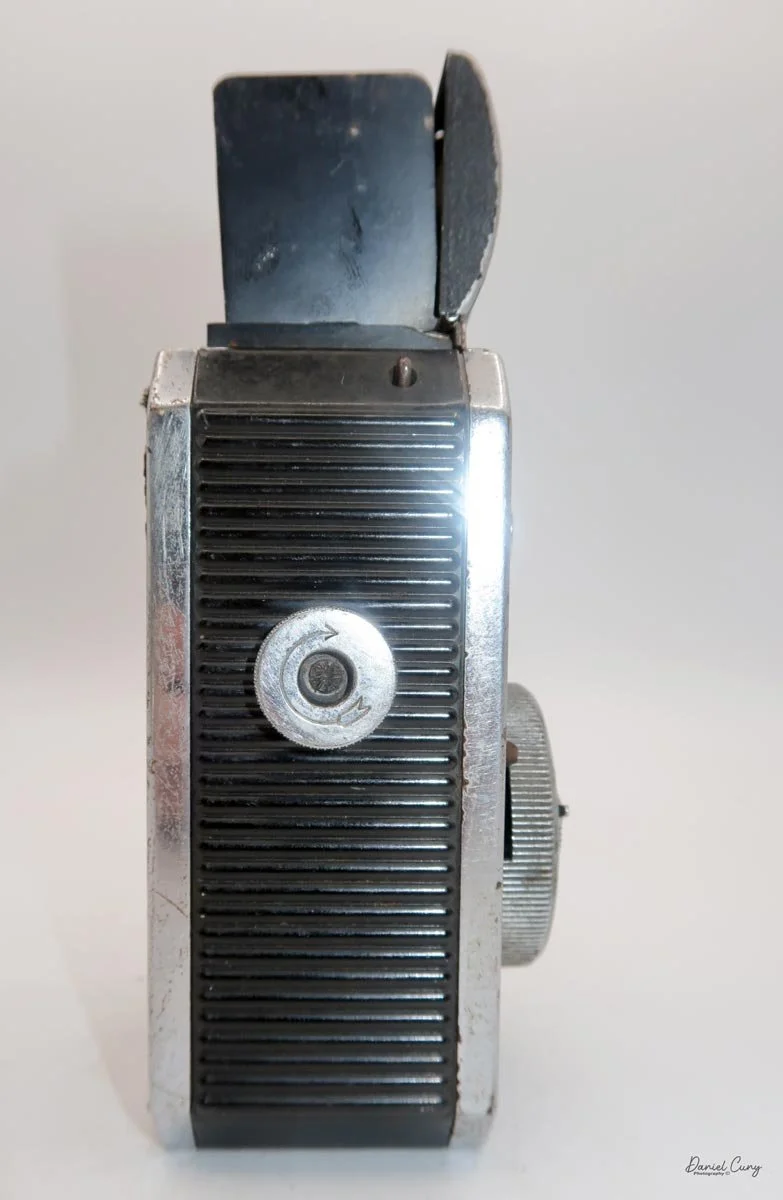
 My Dual Reflex camera is 3" wide by 3" deep and 5.25" tall when the viewfinder is closed, and 6.5" tall when the viewfinder is extended and opened for viewing. The camera weighs 14.8 ounces without a roll of 127 film loaded.

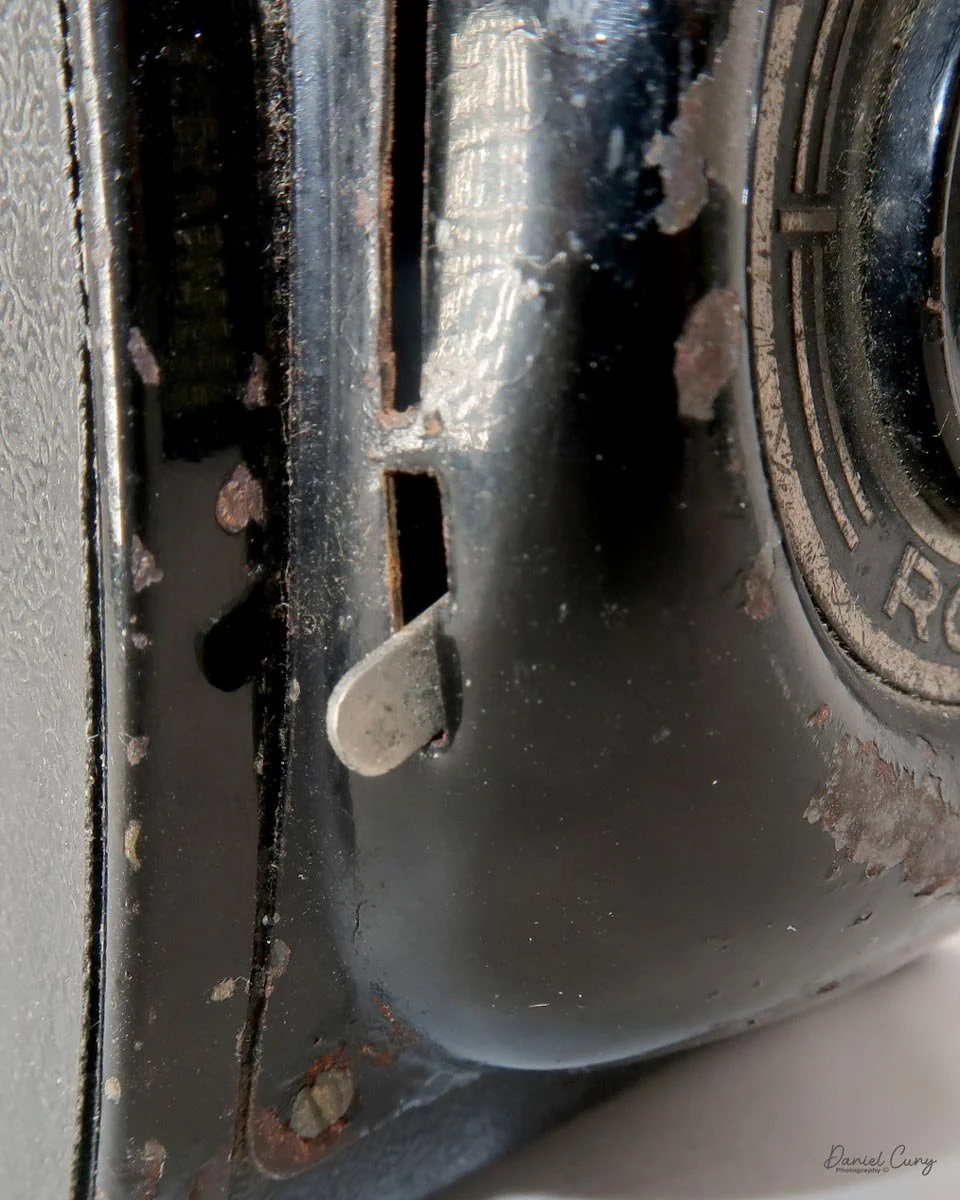
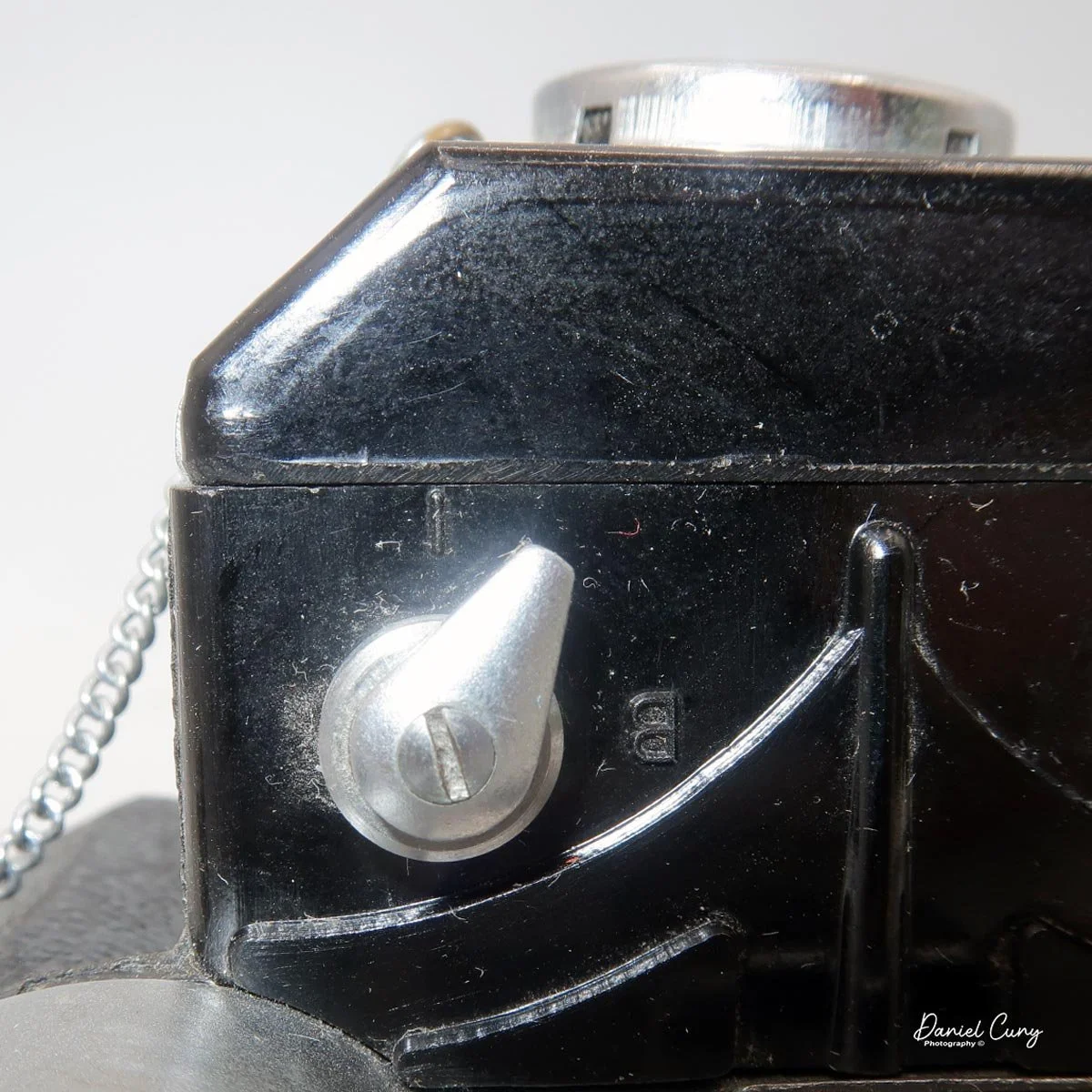
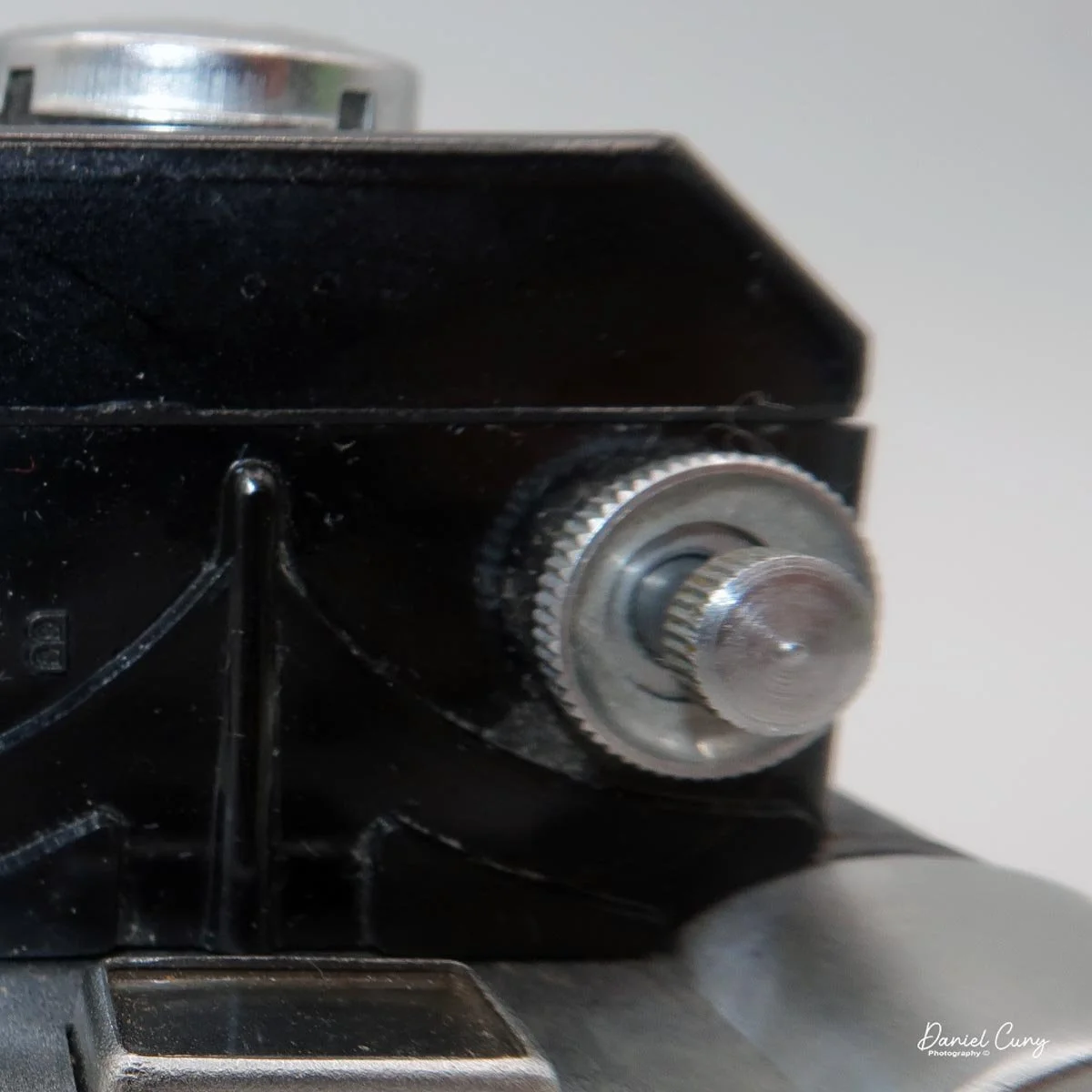
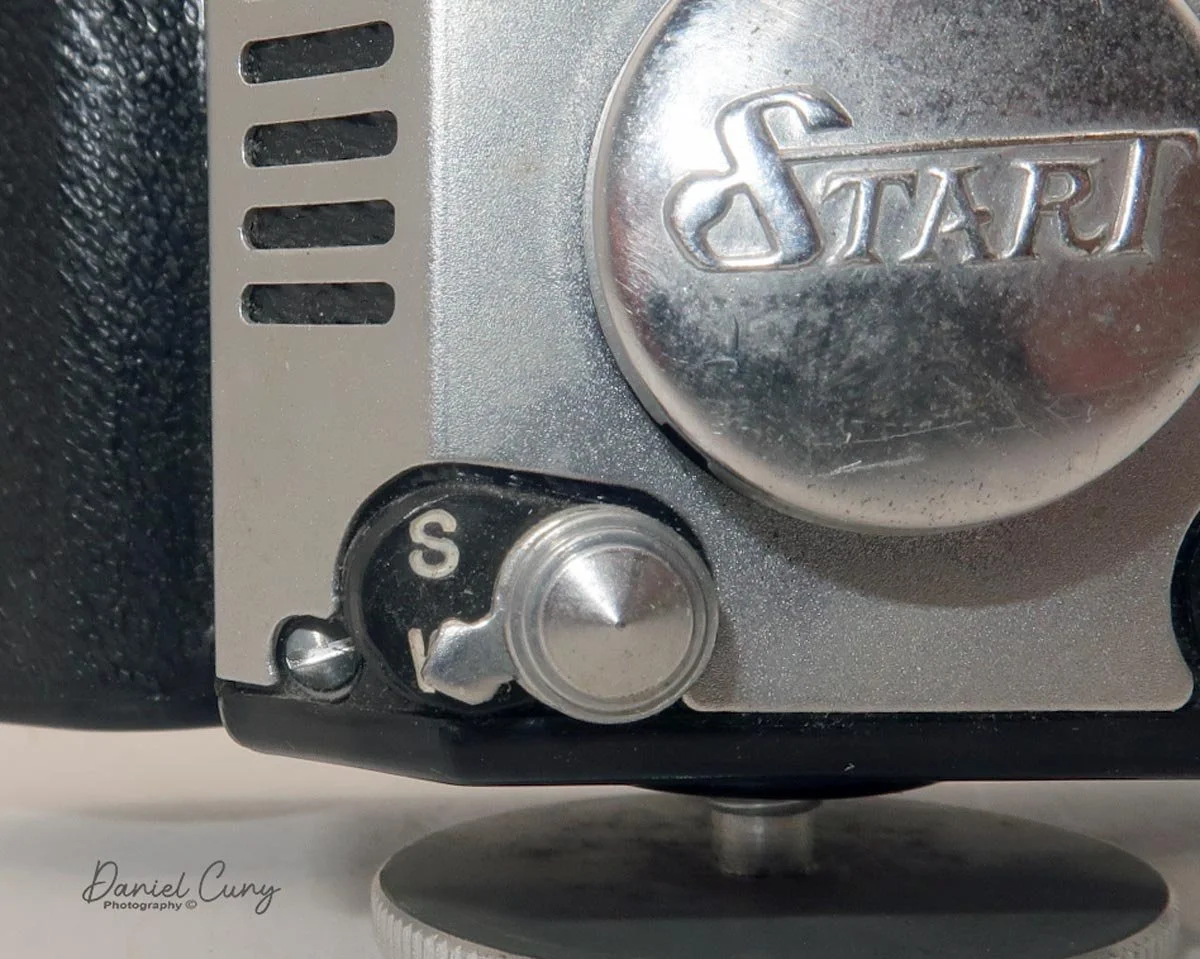
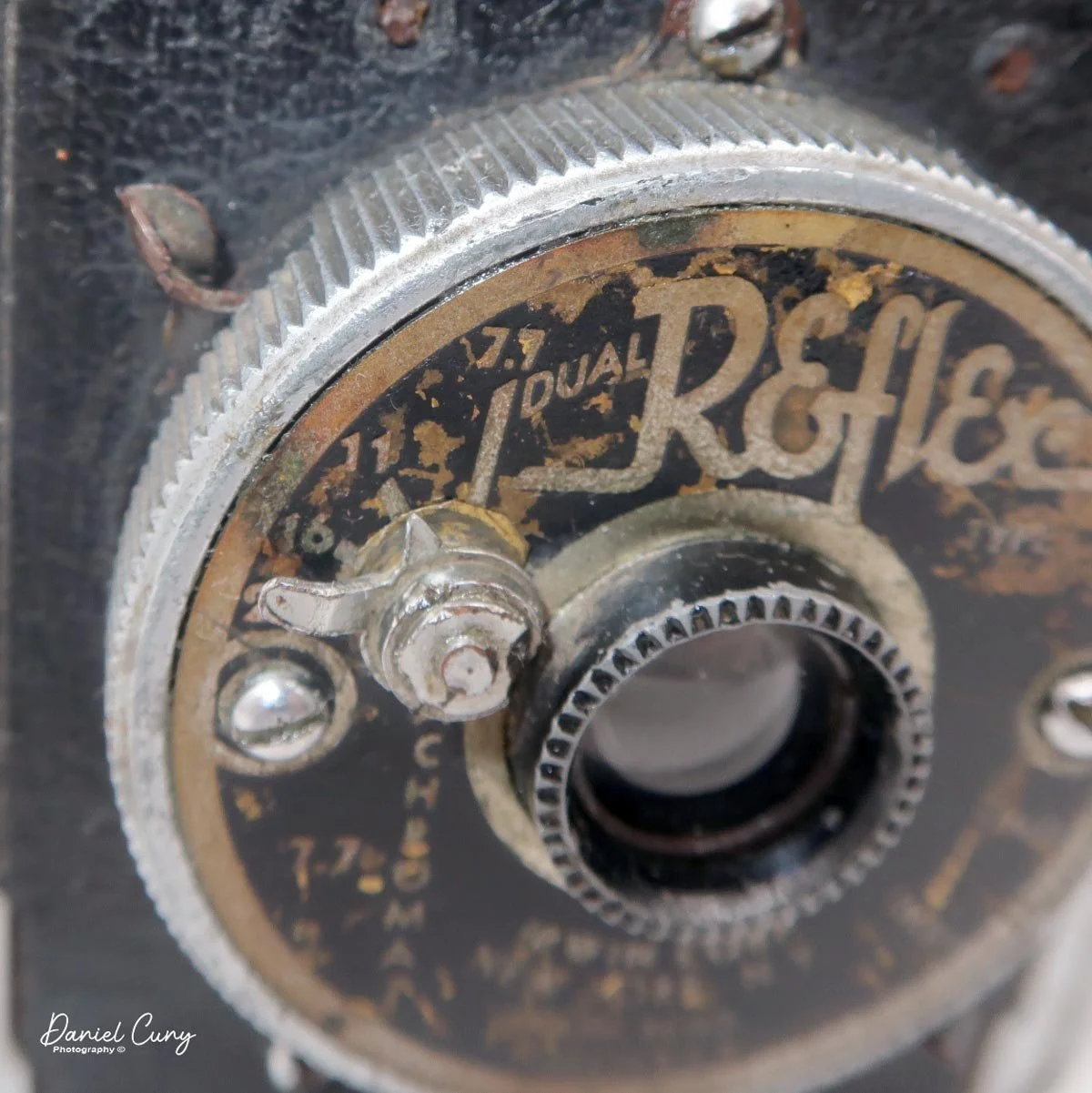
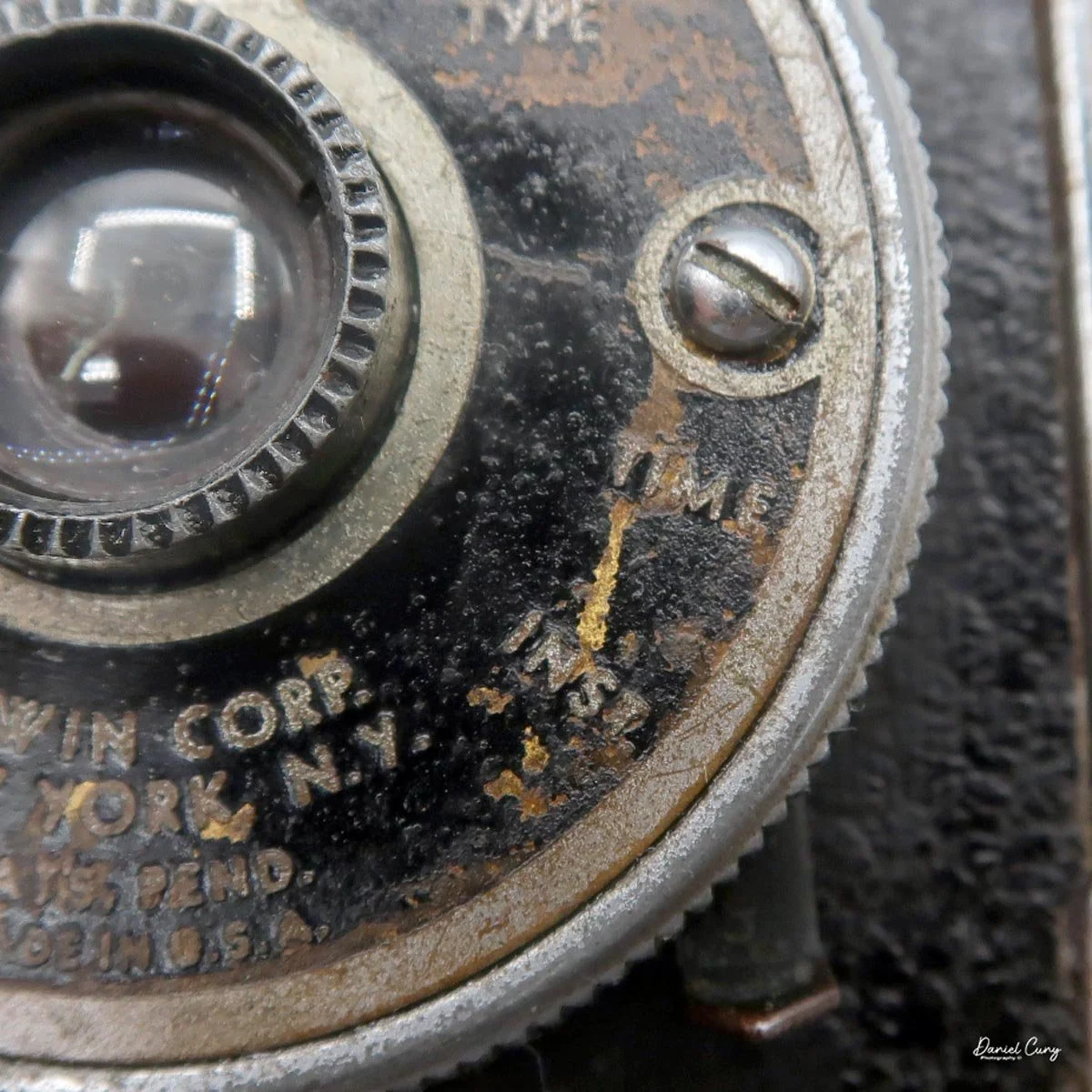
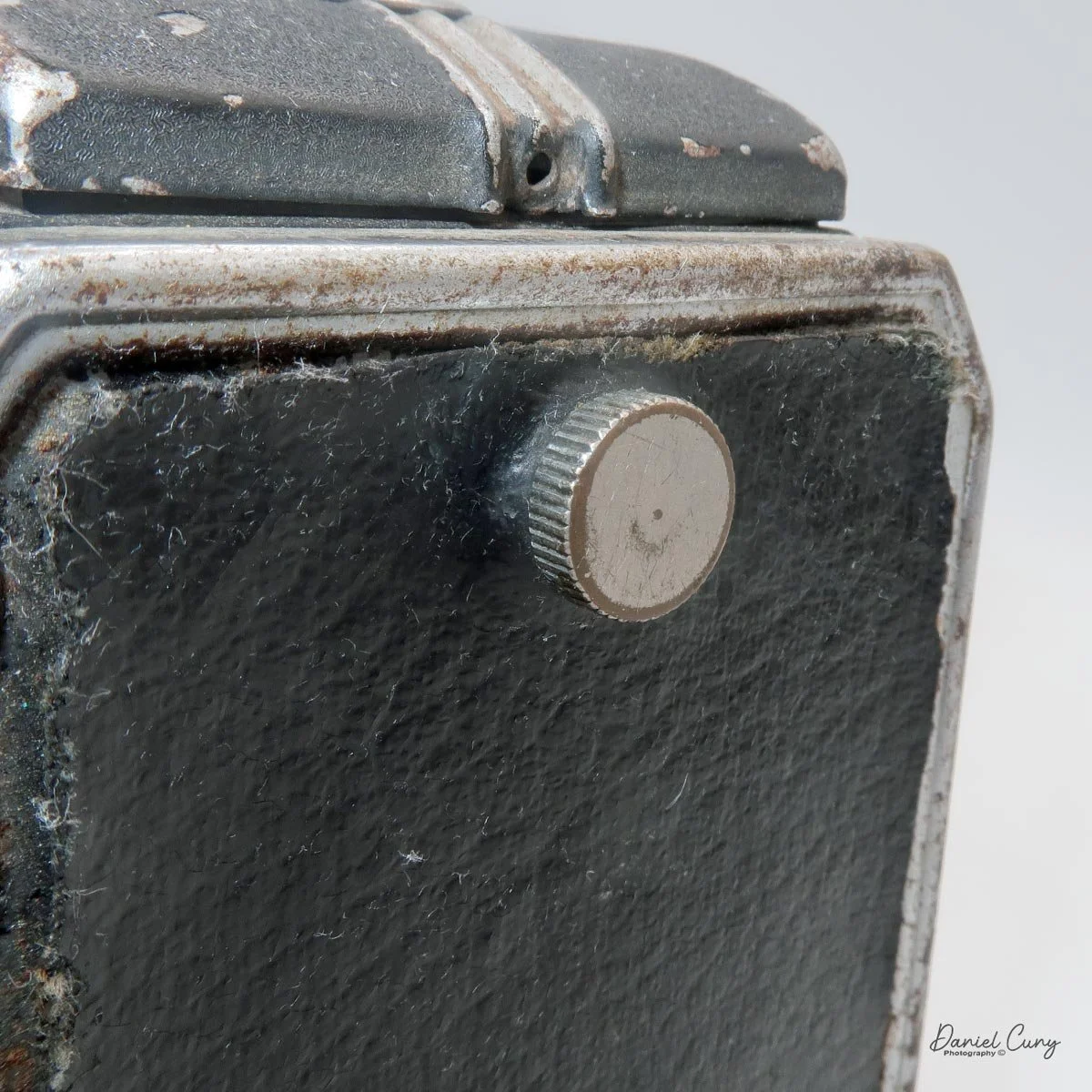
As previously mentioned, the camera has a very simple, spring-loaded shutter with only one speed, which I'm guessing is around 1/100. That may be too generous and could be even slower; that's my guess. The shutter control has only two options—either Instant for standard snapshots or Time for longer exposures. A switch on the side of the camera controls this. Since the shutter is so simple, the "time" setting blocks the shutter from moving into the "open" position until you release the lever; then the shutter closes.

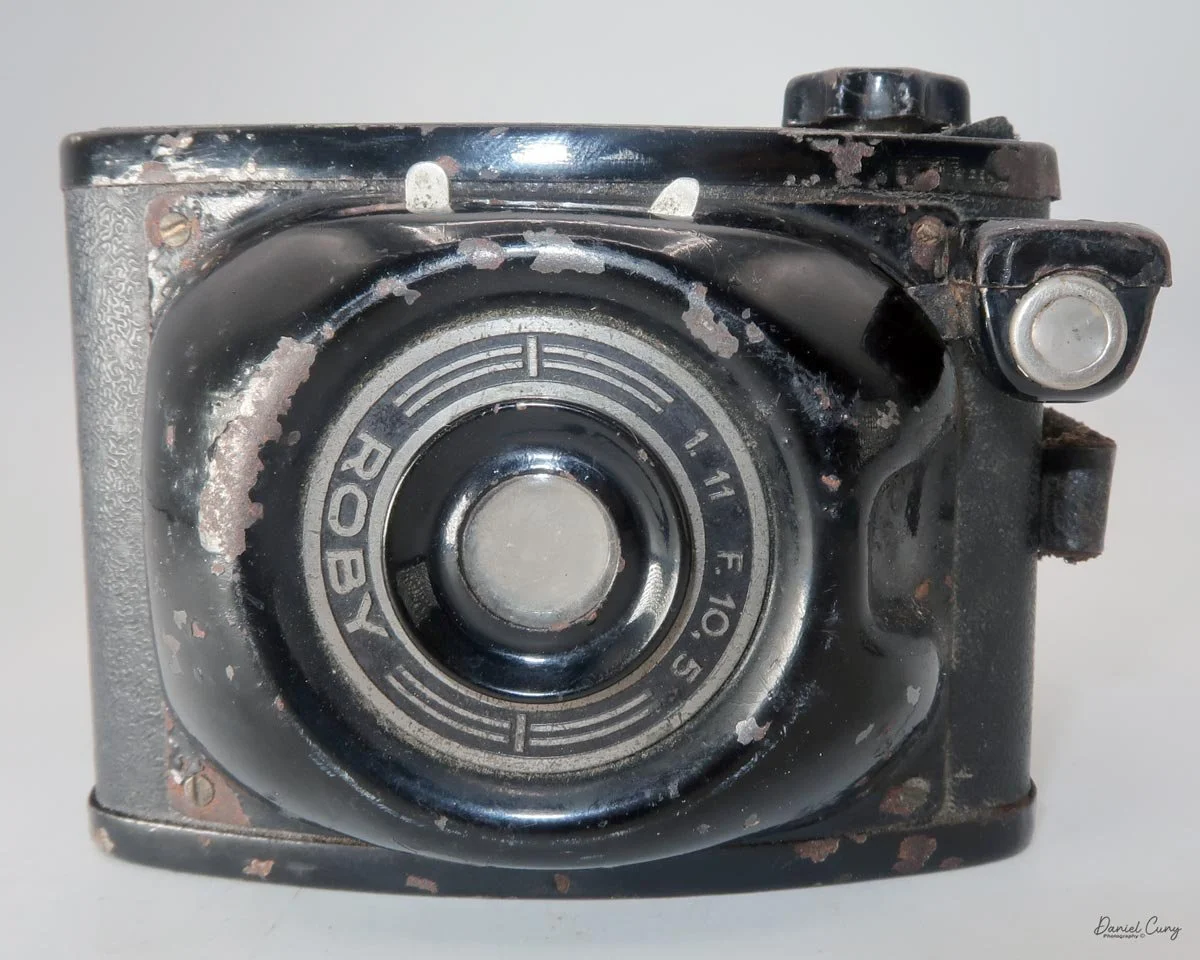
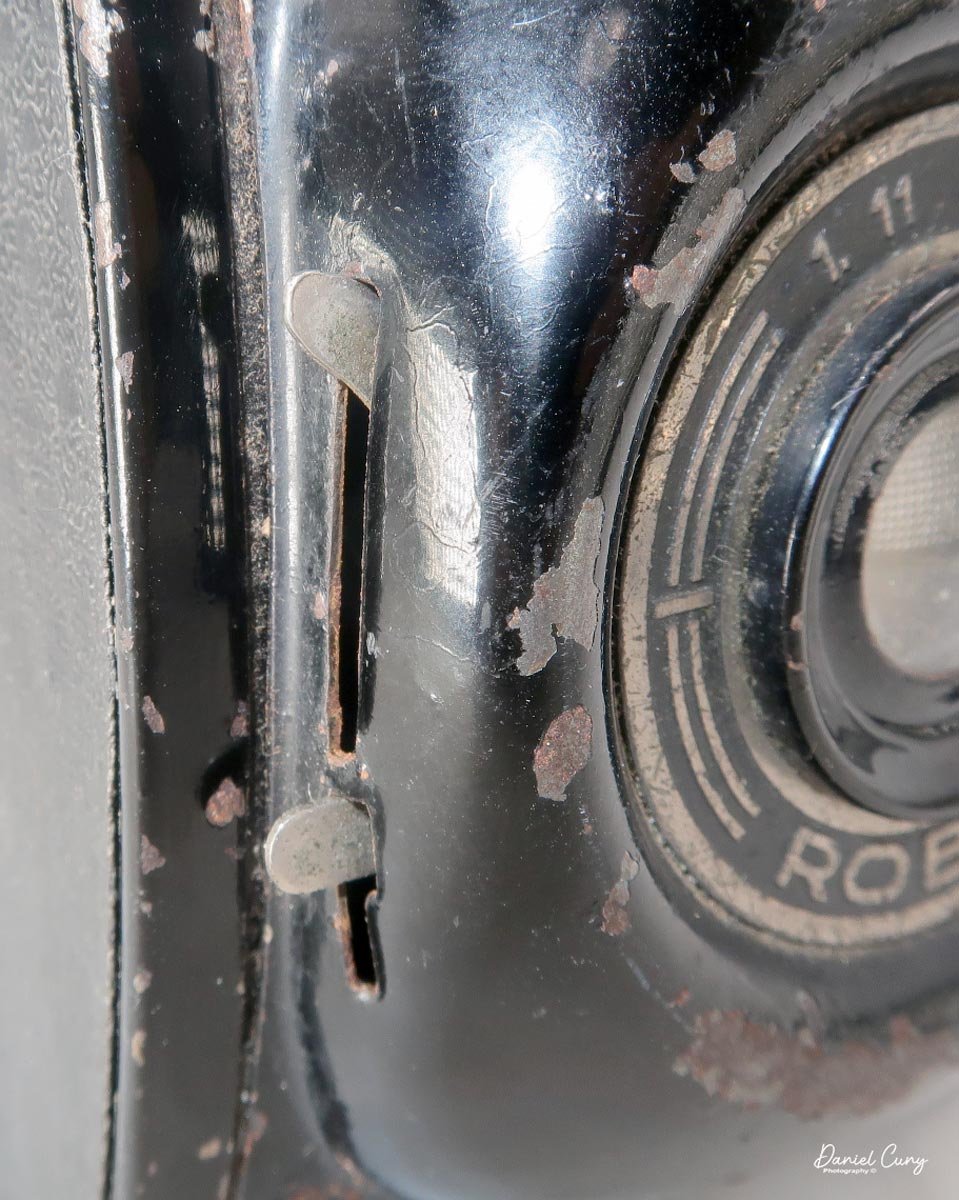
 The shutter release is located at the 11:00 position on the lens cover and is nothing more than a lever that activates the shutter's spring mechanism.

 As you look at the camera from the front, the aperture controls are just to the left of the lens. They are controlled by a lever that moves a group of openings on a metal sheet back and forth across the lens opening. The aperture settings are F/7.7 (maximum), F/11, F/16, and F/22. There is no focus control on the lens, as it's set to the standard 8 to 10 feet, and the camera's aperture controls the sharpness.

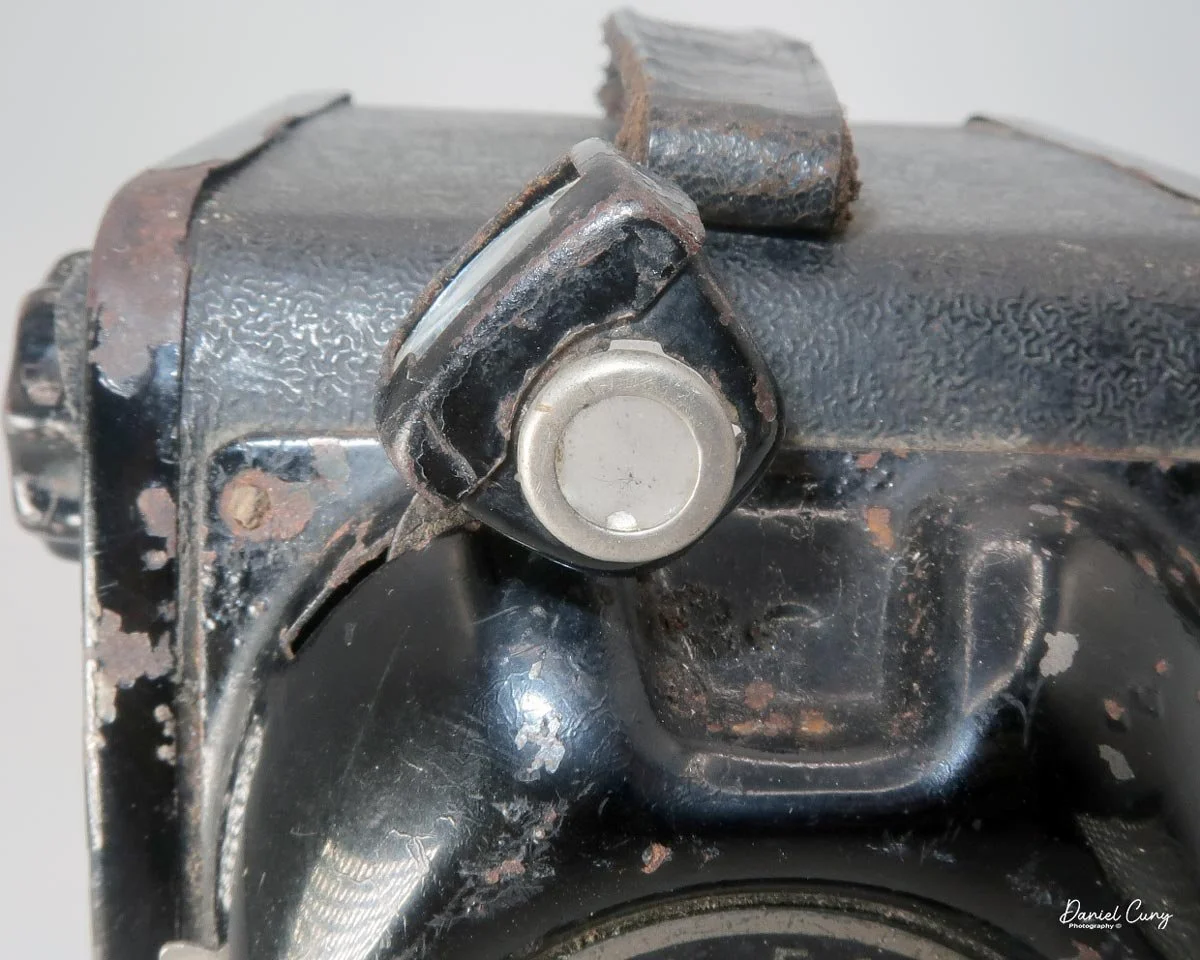
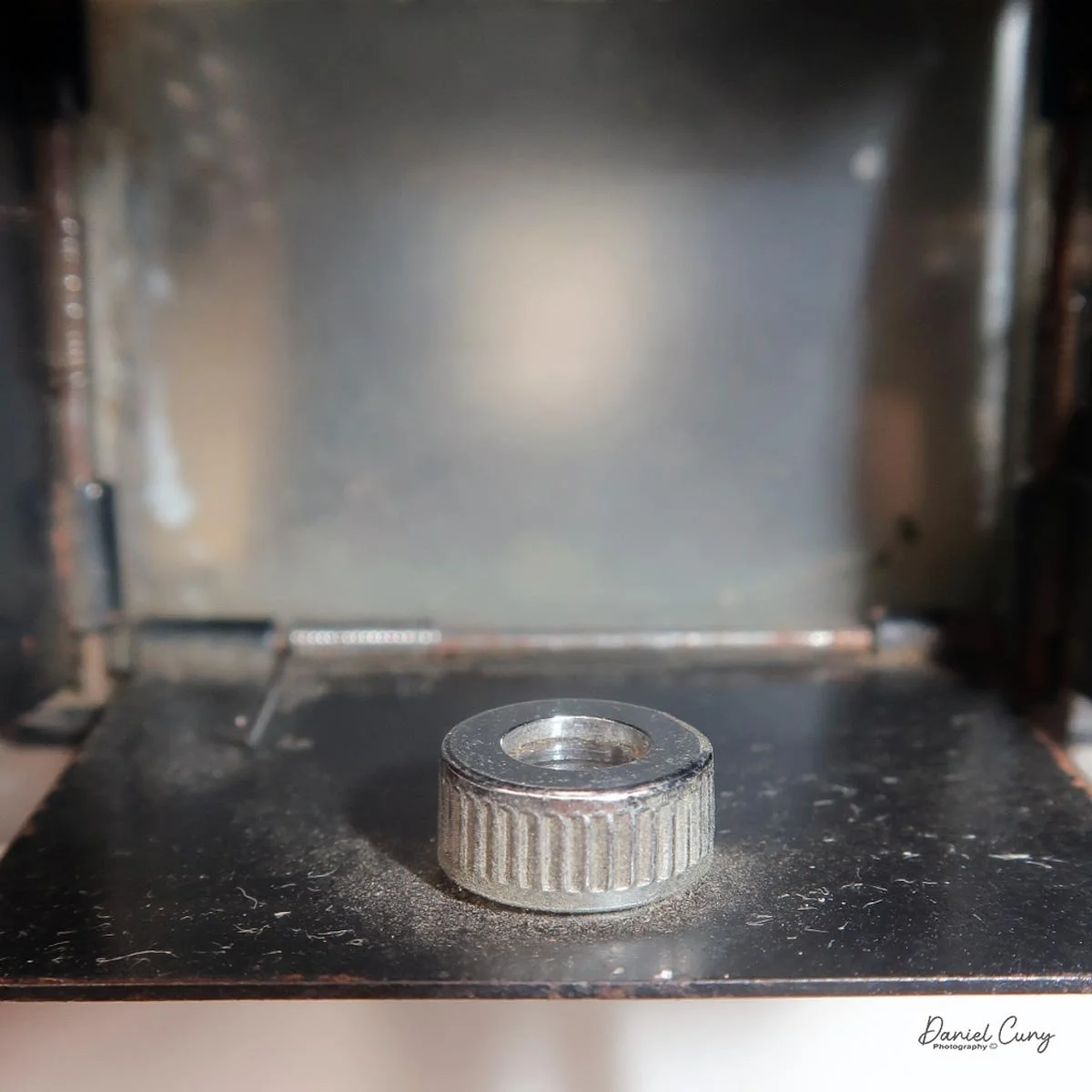
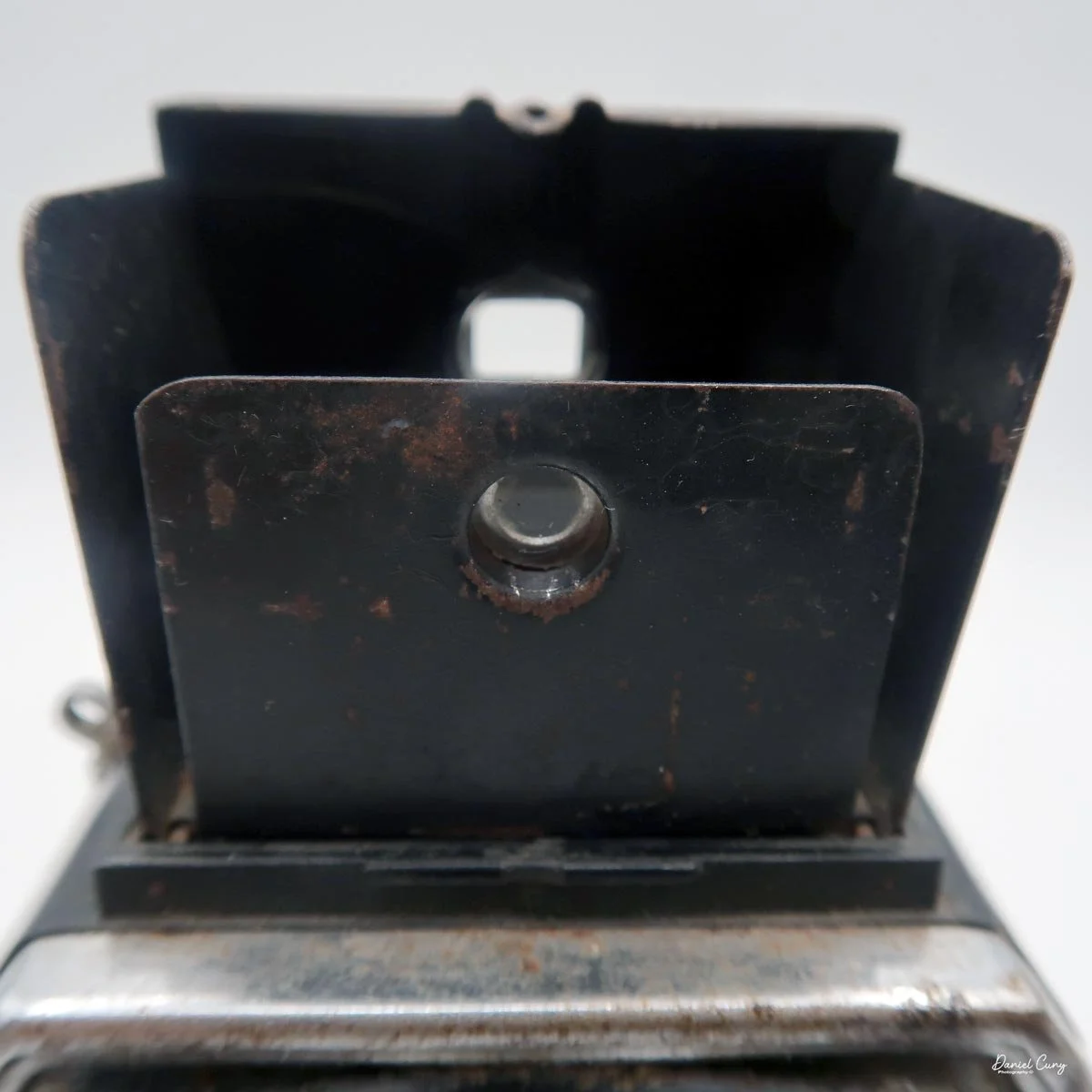
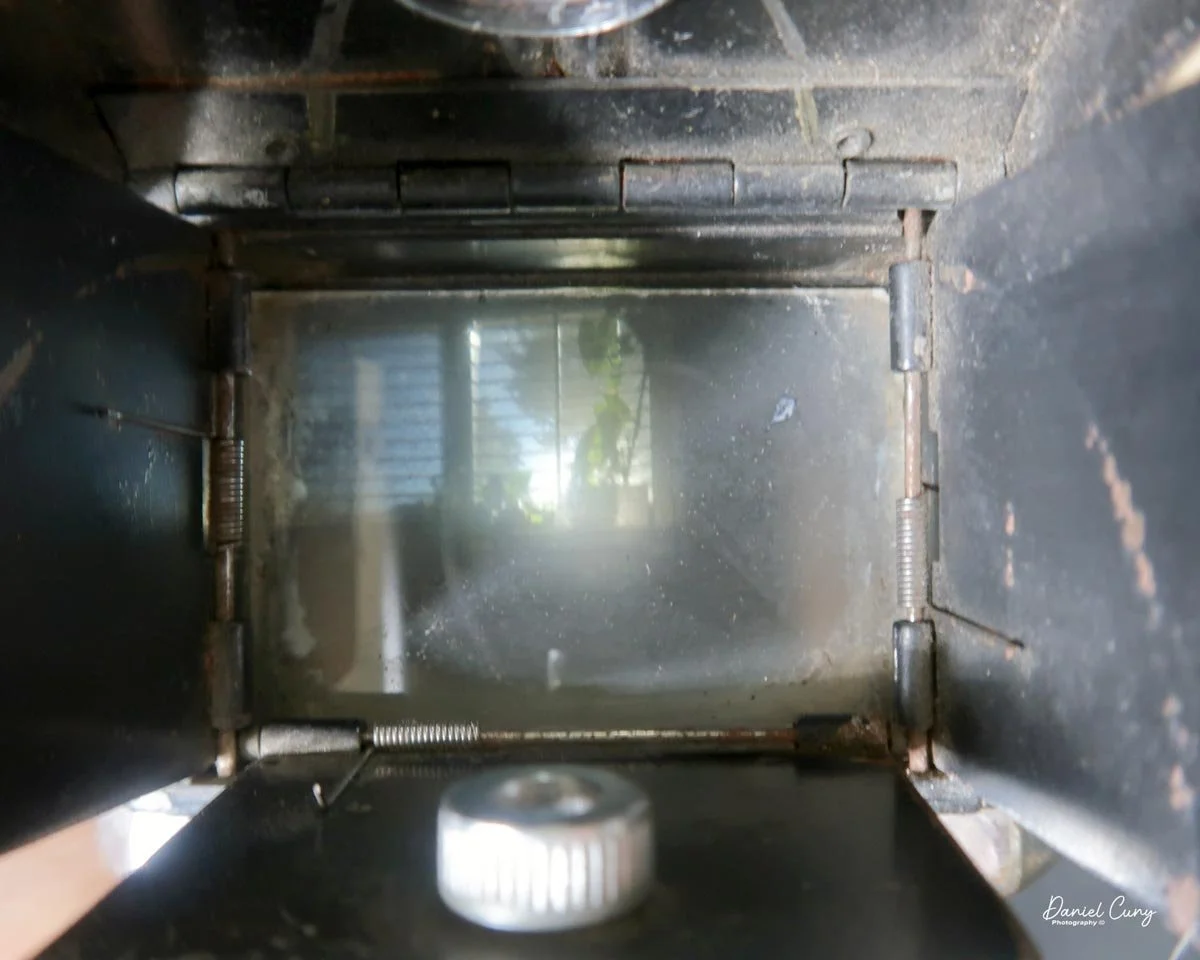
o pop up the viewfinder, lift the rear of the finder, and the viewfinder or light chimney pops open, exposing the ground glass. Since there is no focus control on this camera, the viewfinder is used only to compose the image.

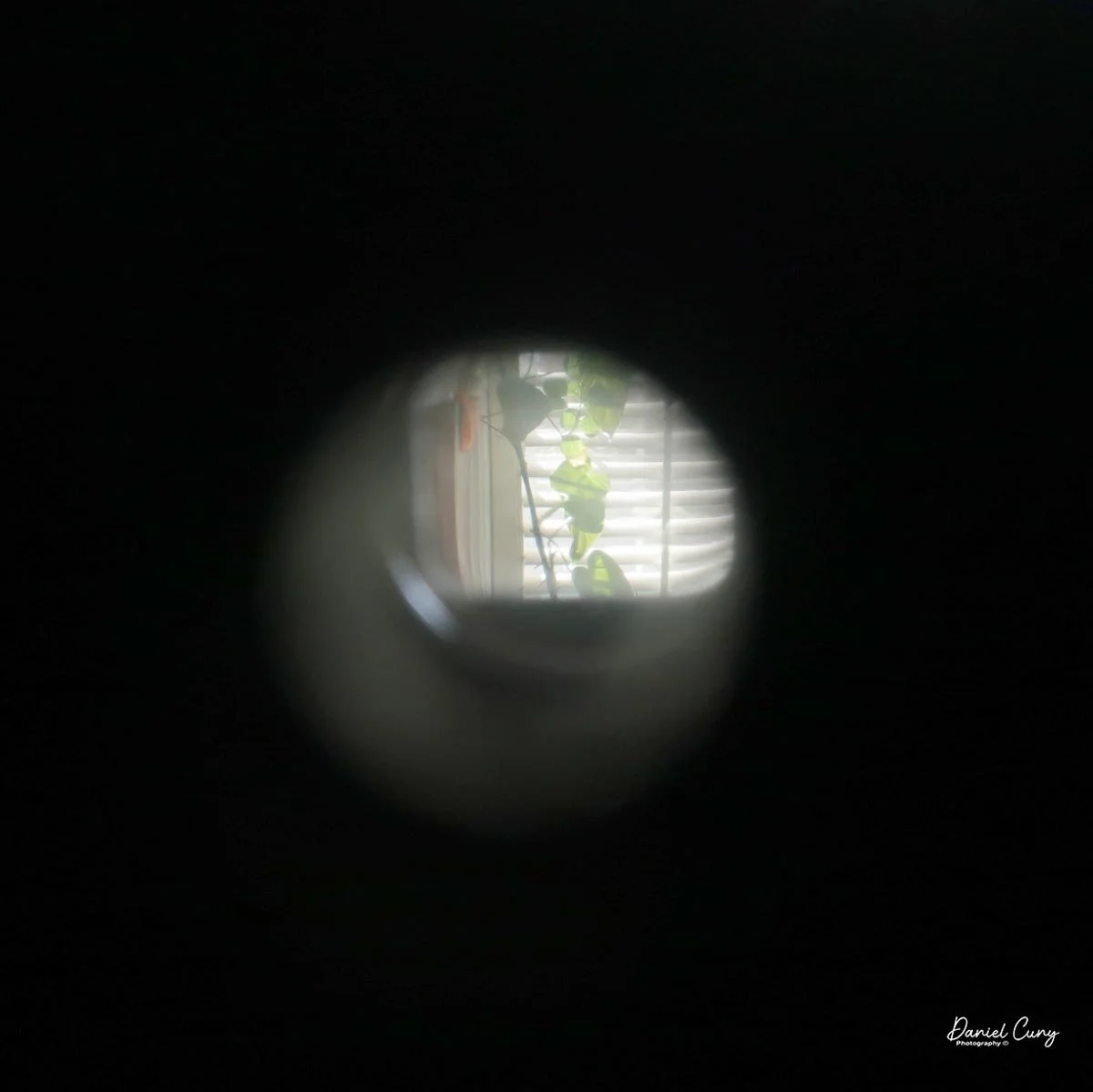
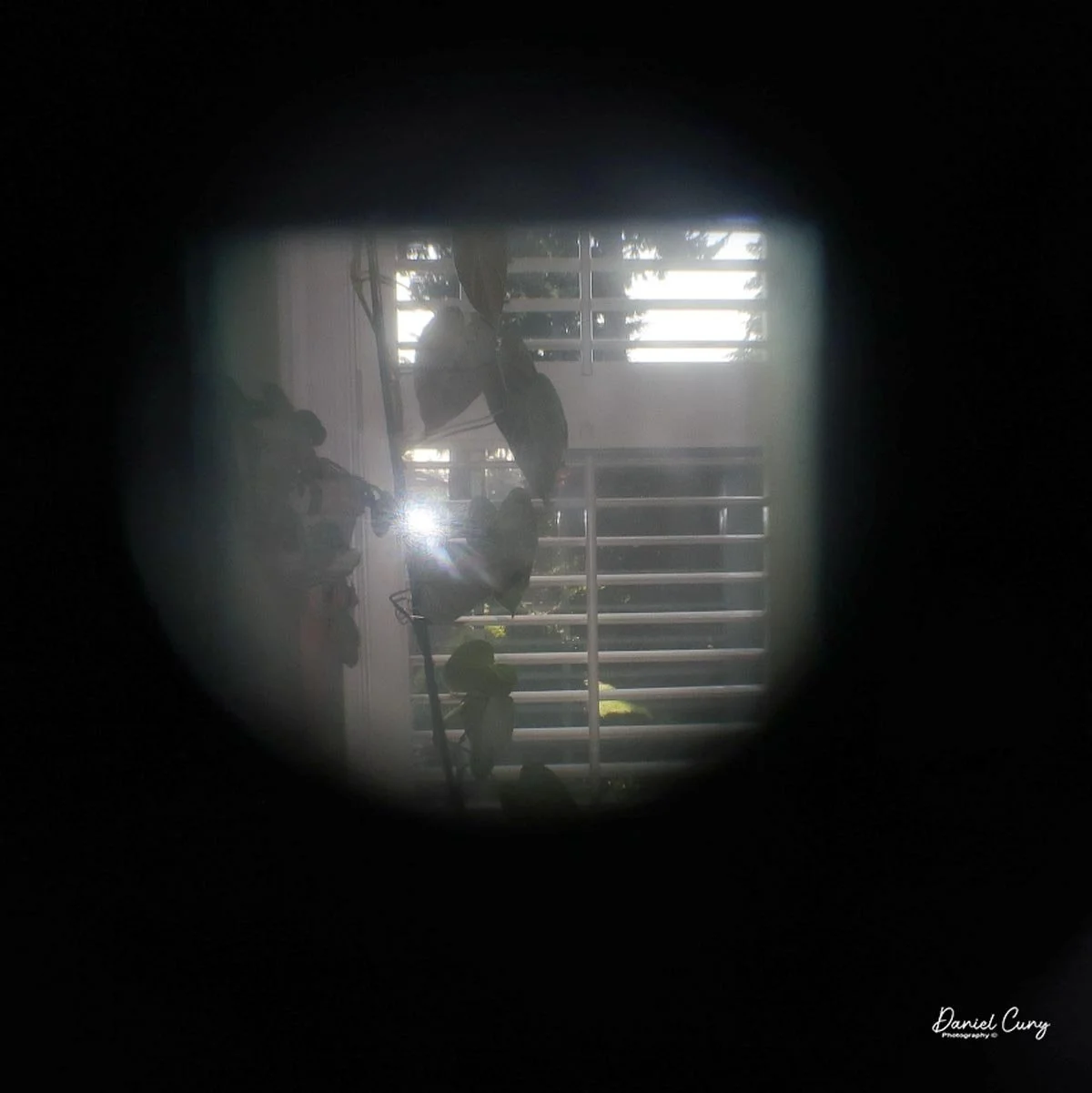
 An interesting option on the Dual Reflex camera is the ability to use a pseudo-eye-level finder for composing photos. On the back of the light chimney is an optical finder that, when viewed through, looks into another optical opening on the front of the chimney, allowing the photographer to use it as an eye-level finder rather than a waist-level one. For an inexpensive camera, this is a nice feature and actually works well.

To close the viewfinder, close the back compartment first since it has the optical glass, then the sides, and the front last. If you try to do it the conventional way and do the sides first, the front won't close because the glass is pressing up against the side wall, leaving the front no room to close.

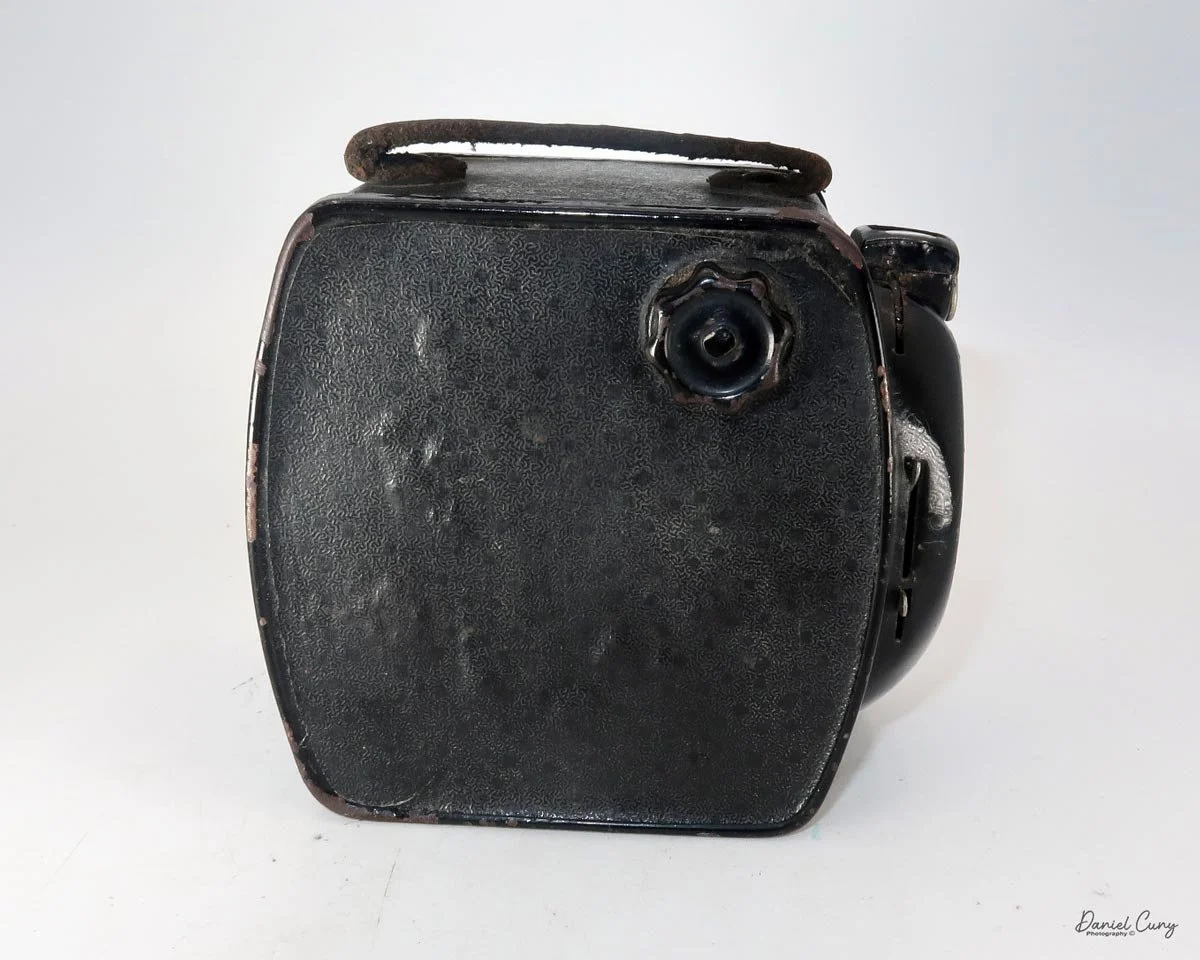
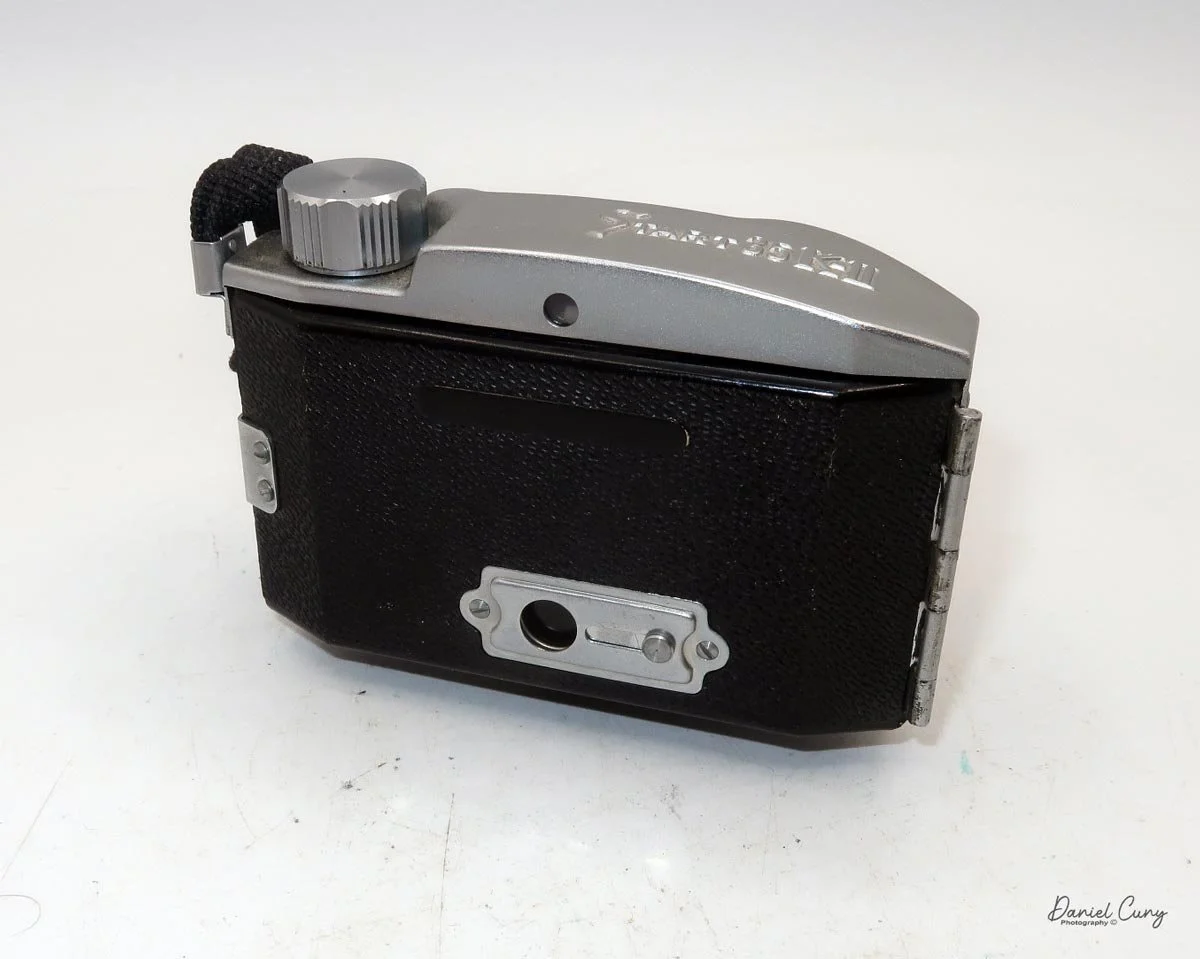
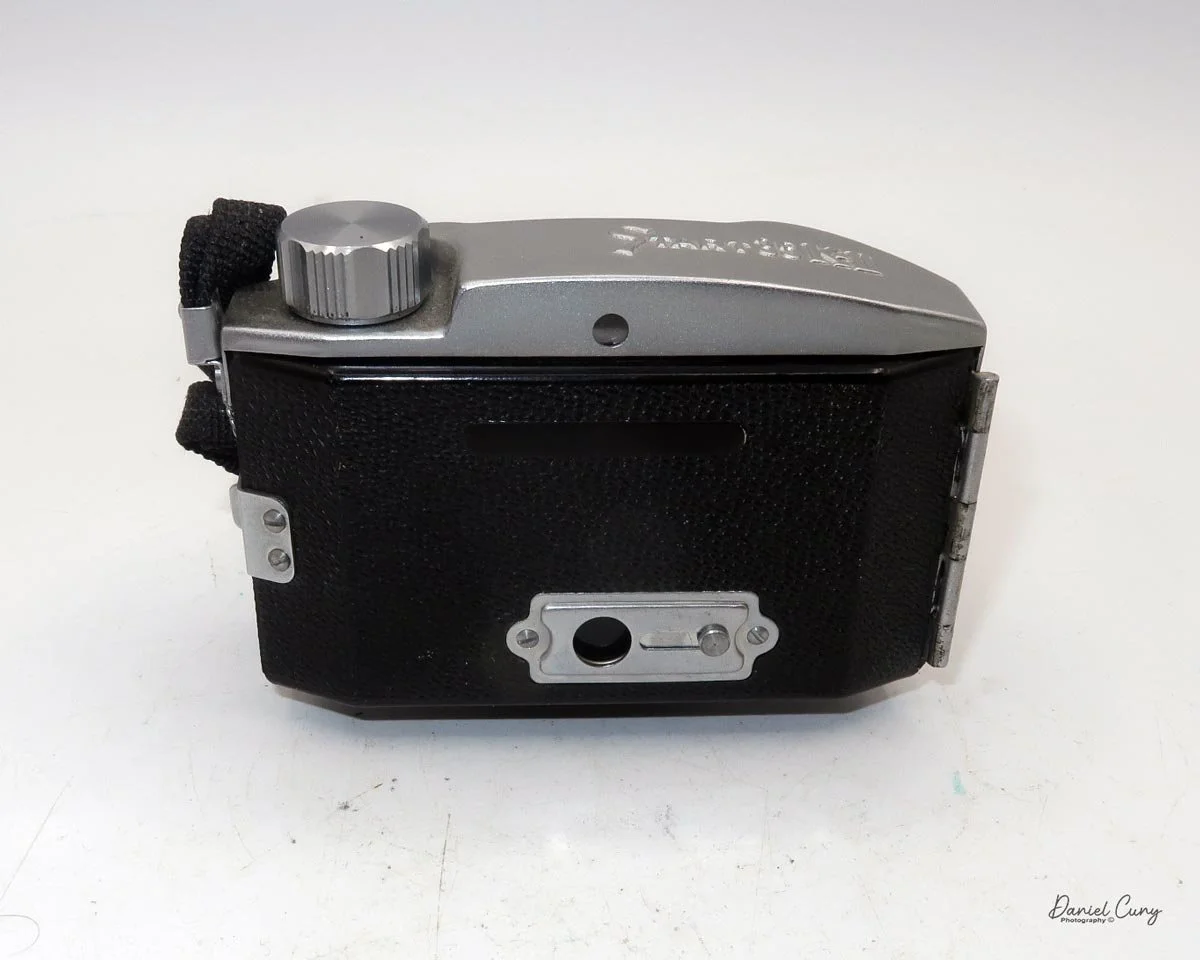
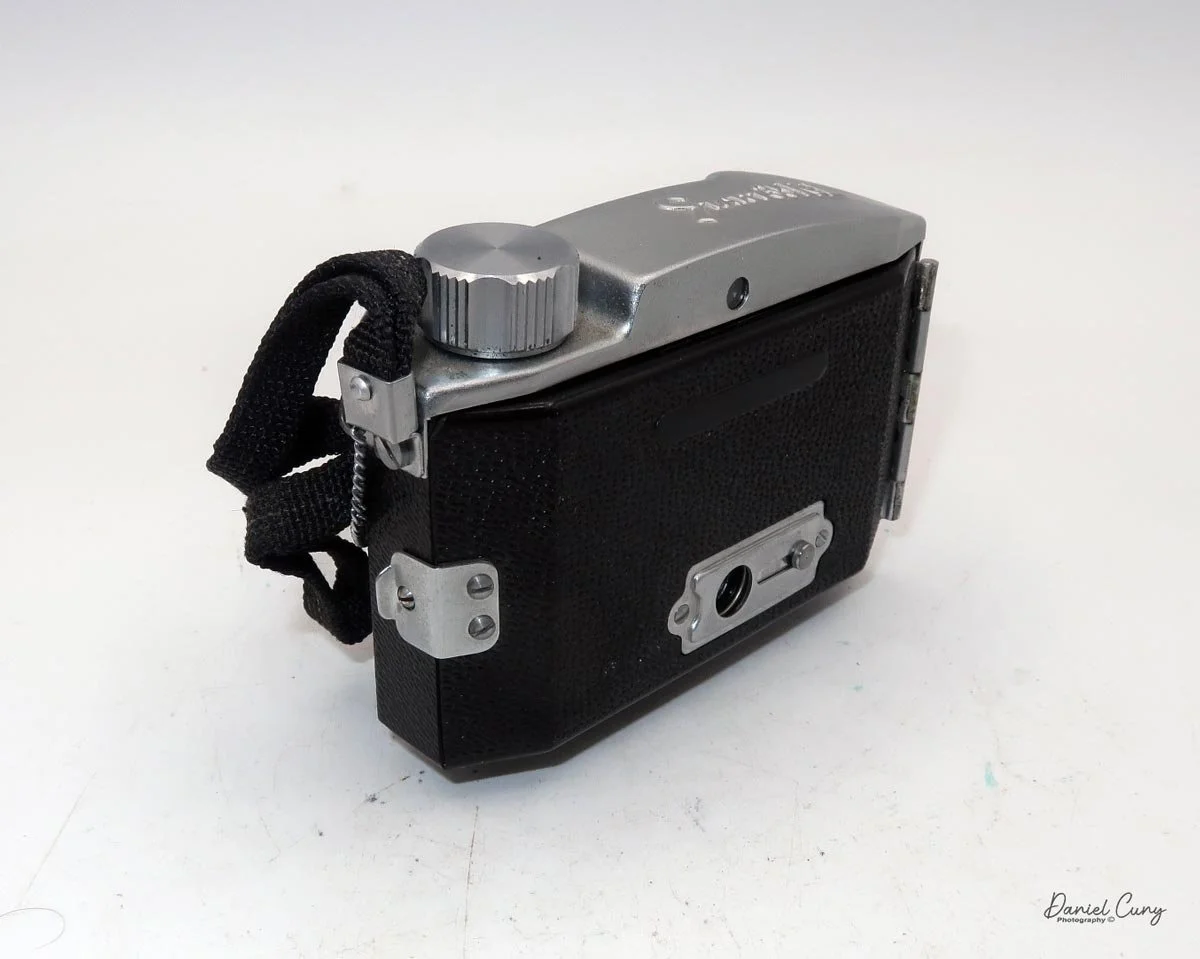
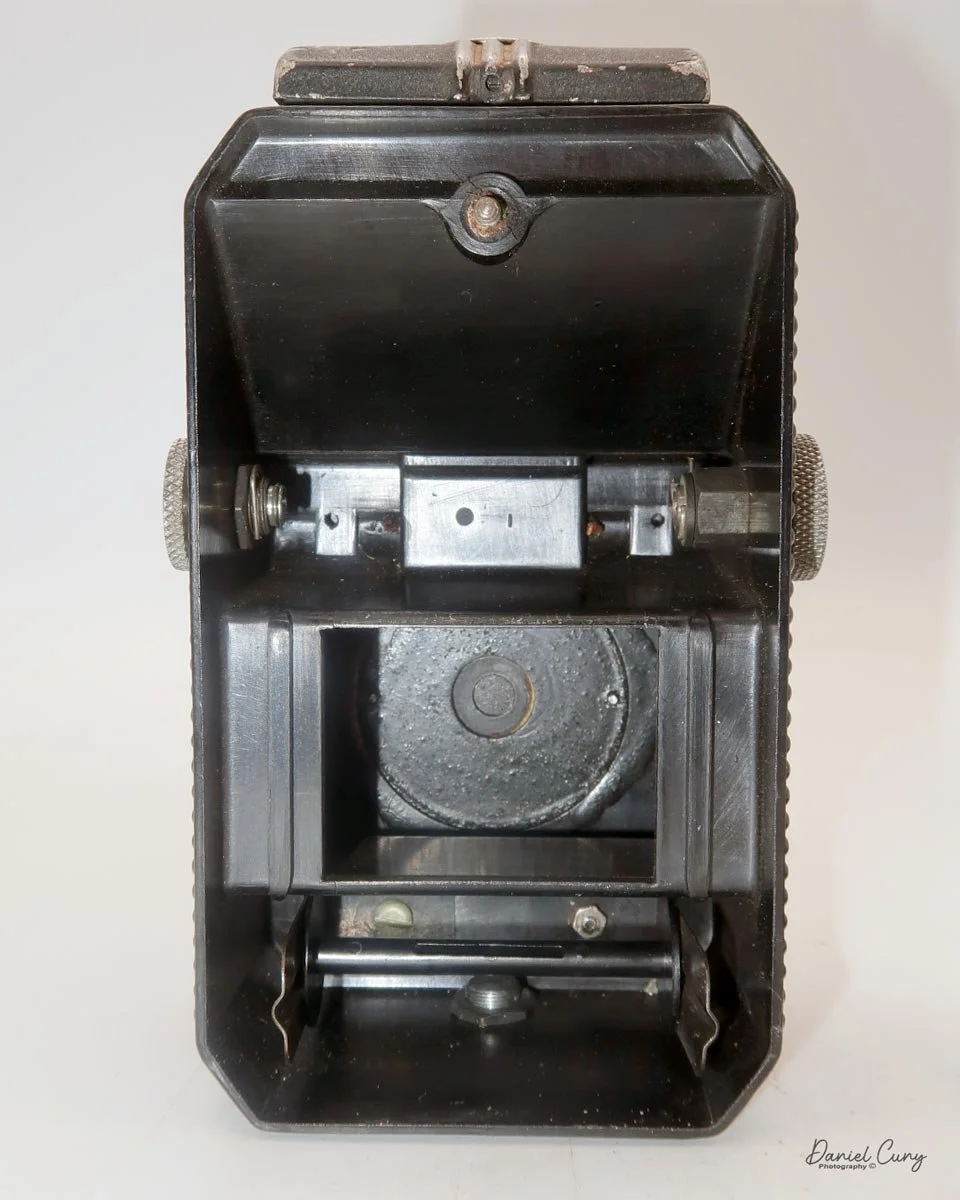
 To take the back off to load film into the camera. On the back, the top is a large knob that must be unscrewed to remove the back. Once removed, you'll load the 127-size film, similar to any other roll-film camera. Put the fresh, unexposed film in the bottom area and the take-up spool on the top, right-hand side of the camera, where the winding lever is located. Bring the leader to the take-up spool, thread it into the slot, and wind until you see "start" on the paper backing. Close the back of the camera and screw it on tightly. 

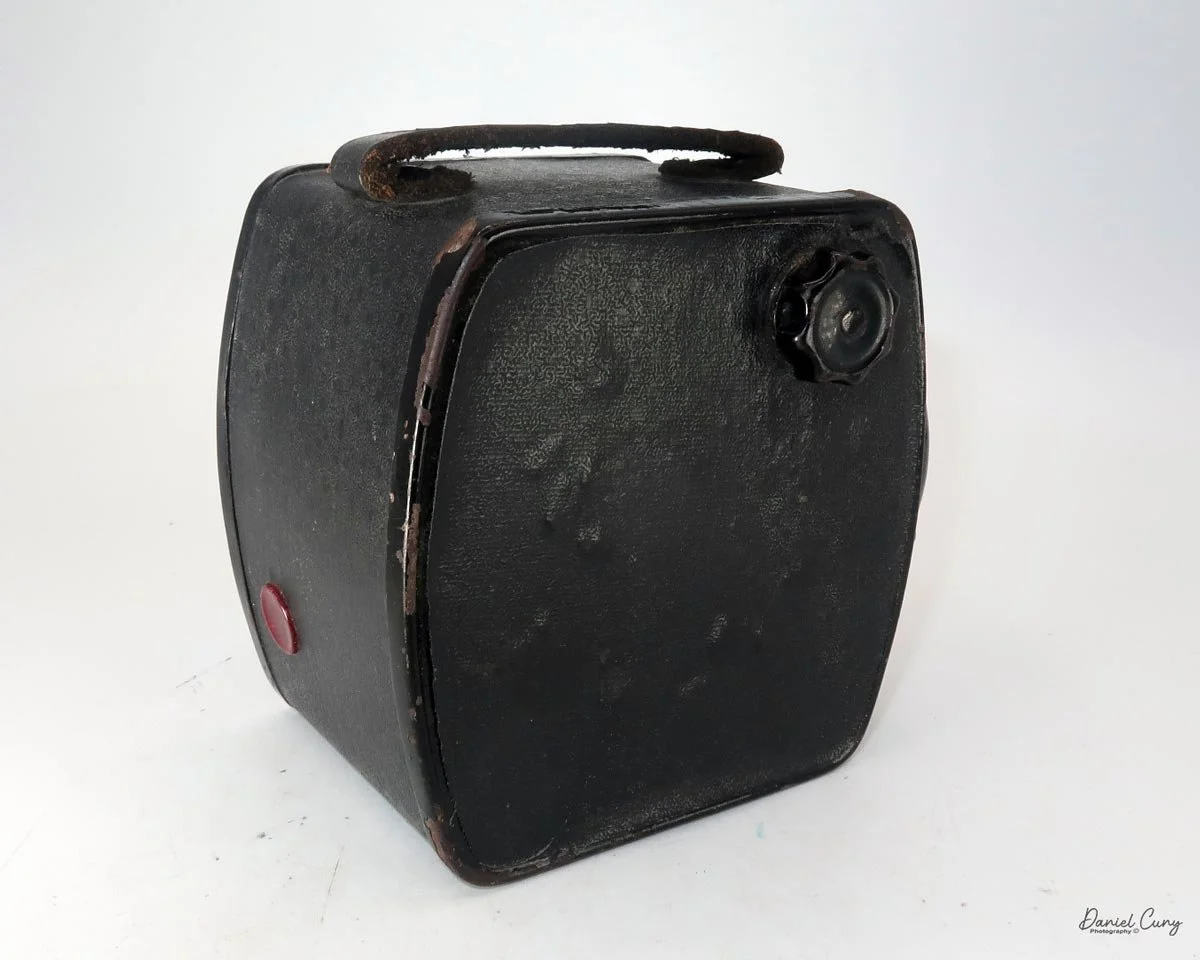
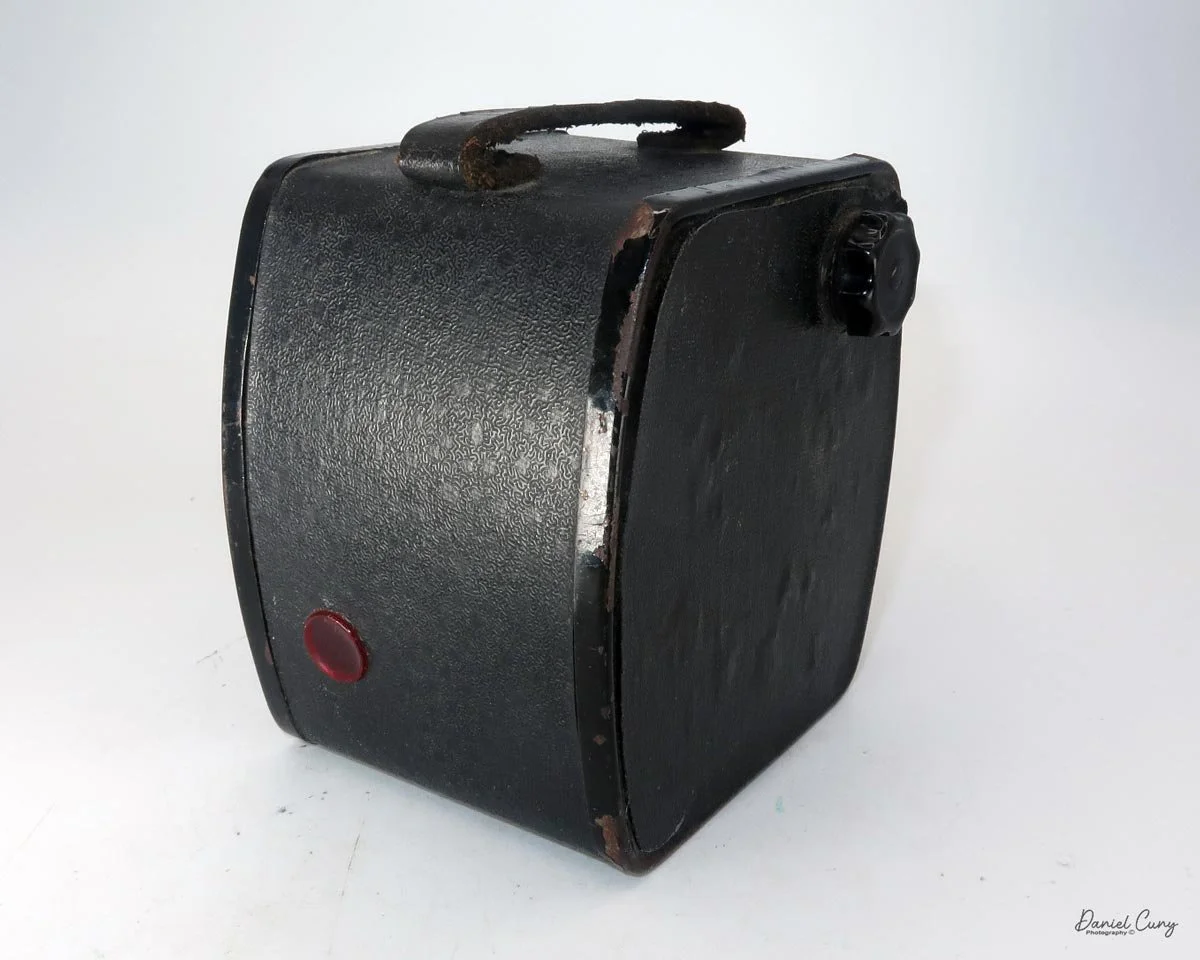
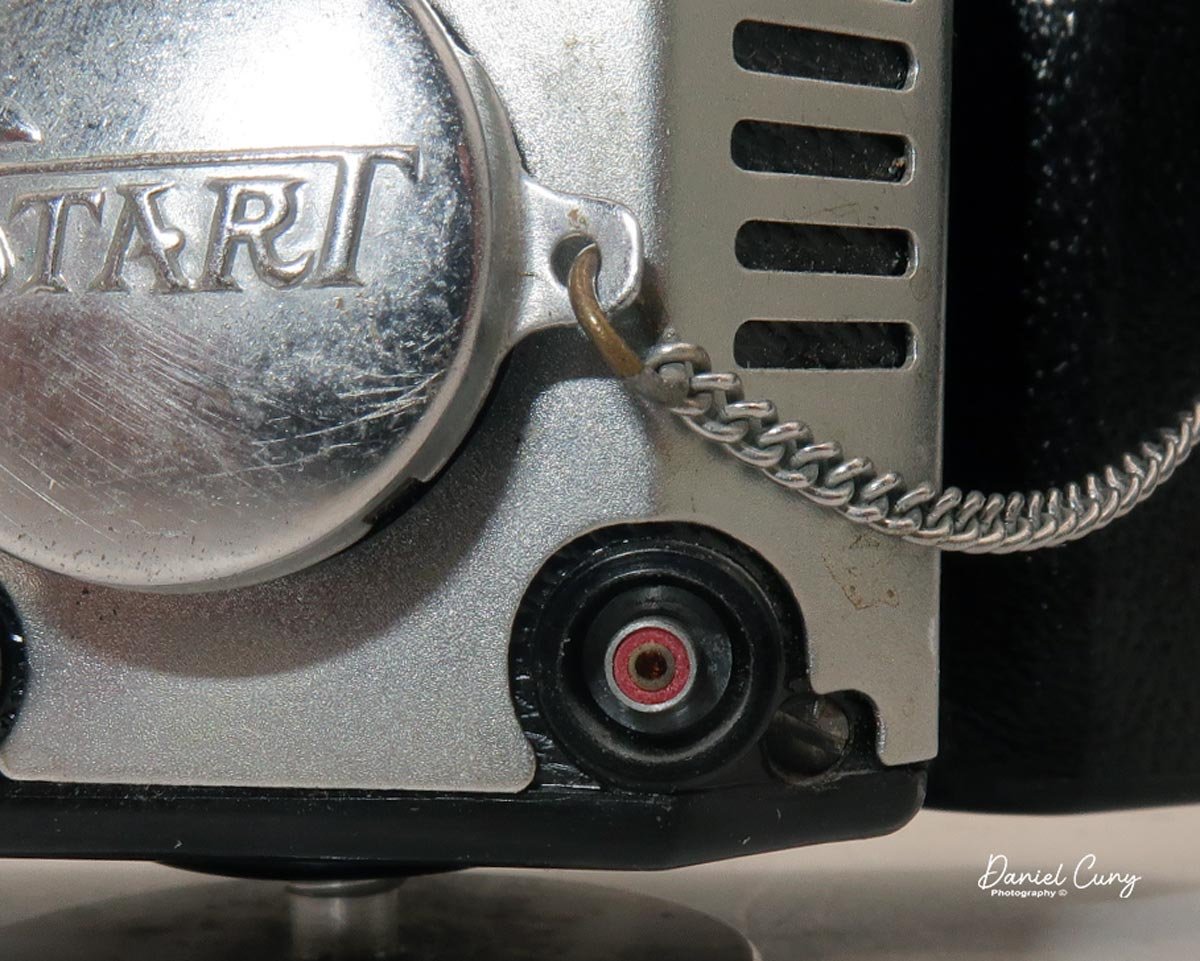
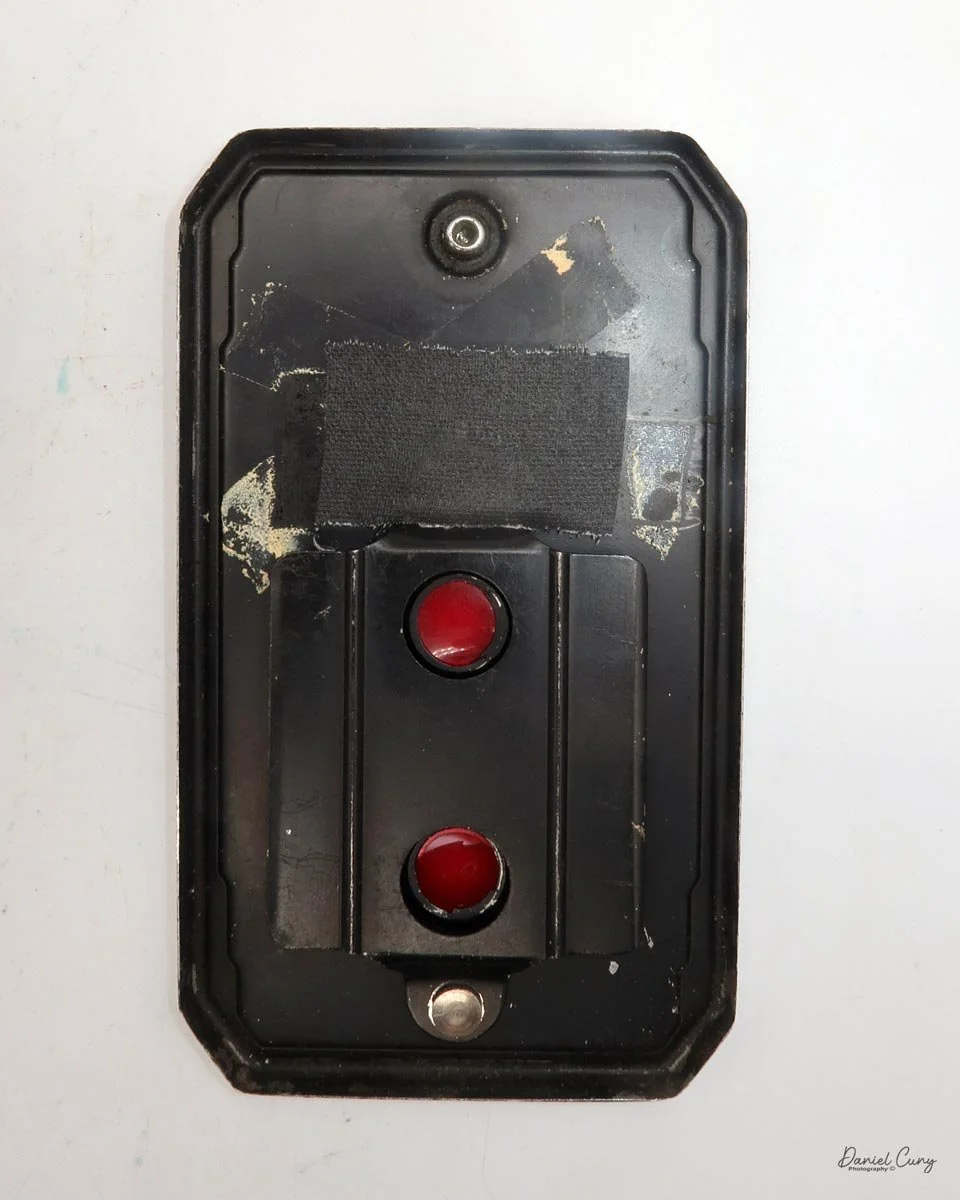
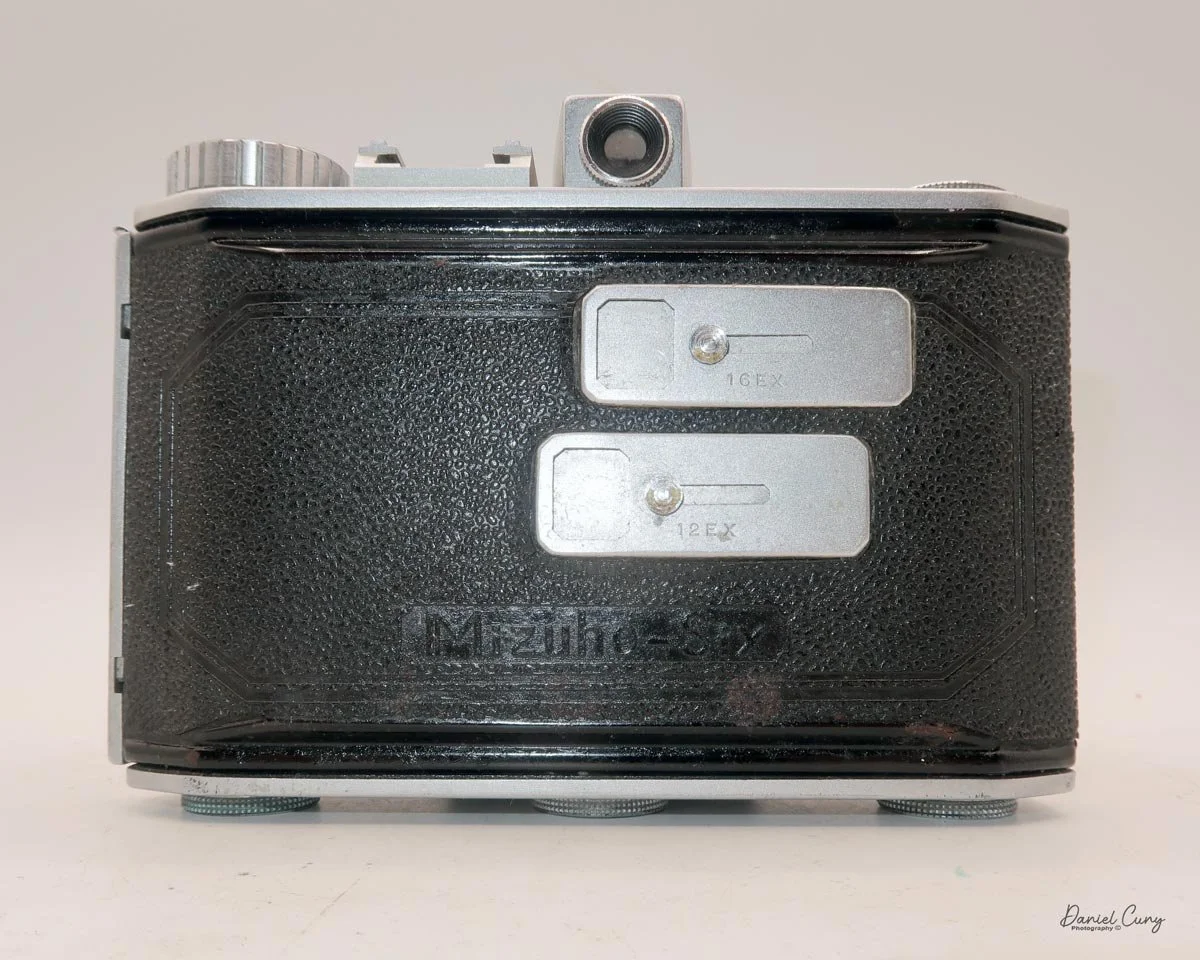
 Since this is a 3x4cm format frame and the camera has two red windows, you'll wind until you see the number 1 in the first window. Take your photo, then wind until you see the number 1 in the second window, and take your photo. Follow this process through the number 8, meaning you've taken 16 images on the roll of film. Take the film out and process it.

The only 127 film I currently have is a few rolls of Jessop black-and-white film I purchased at the Tokyo City Flea Market a few months ago. The expiration date on the film is 11/1999. I hope it's still usable. 

 Now that I have the shutter fixed, lenses cleaned, and film loaded in the camera. It's Time to walk the neighborhood, taking photos to see how the Dual Reflex will perform.

 My Results:

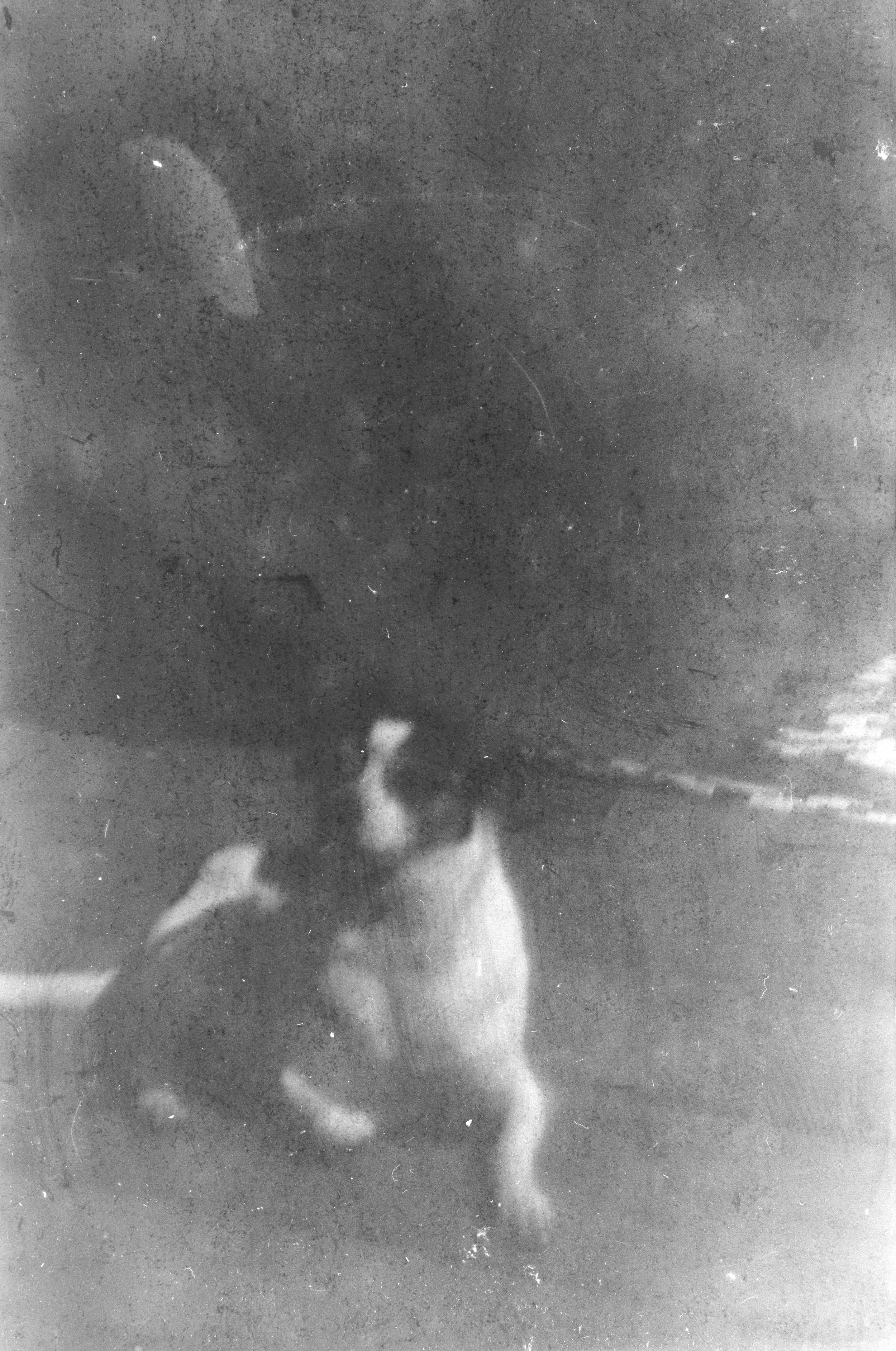
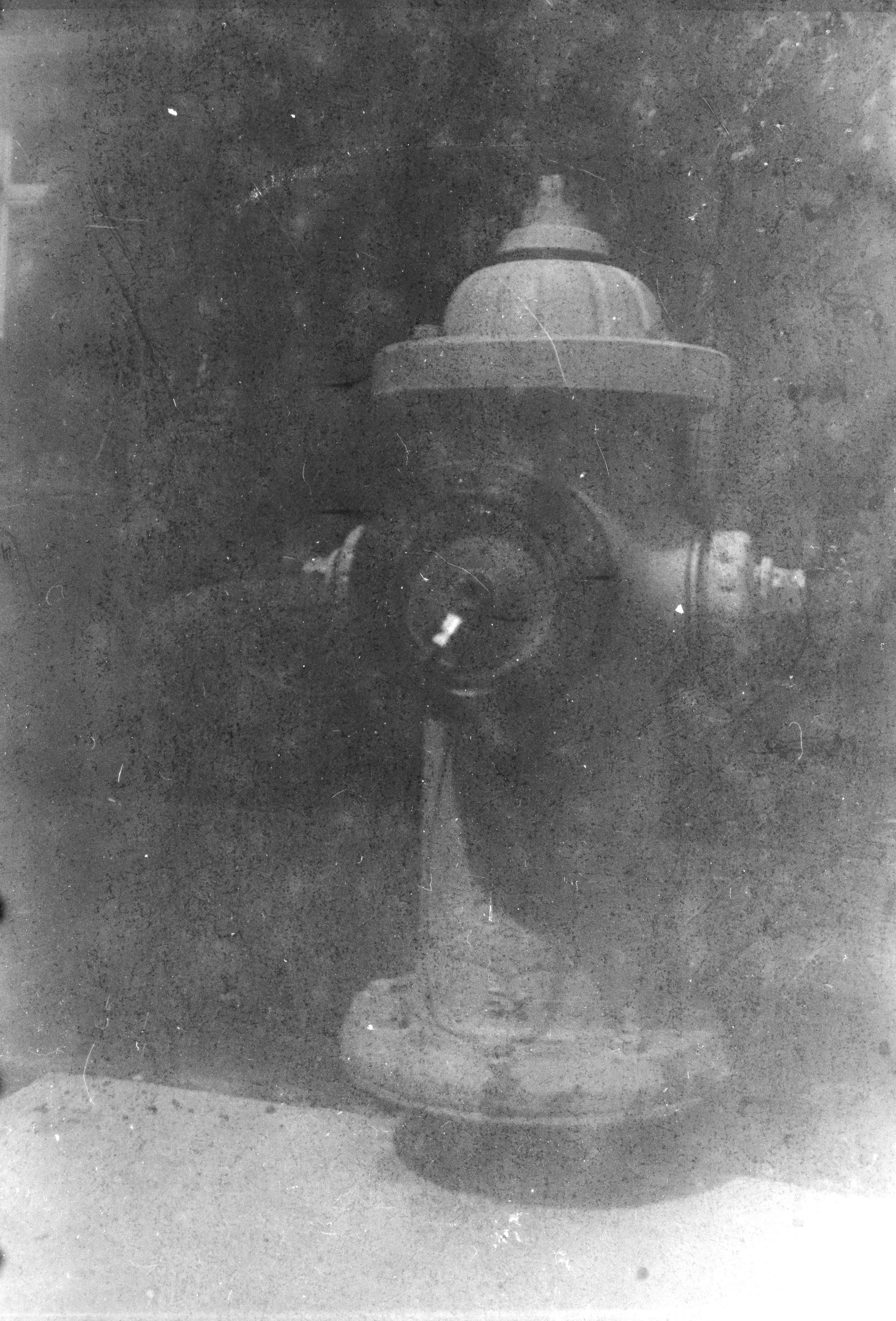
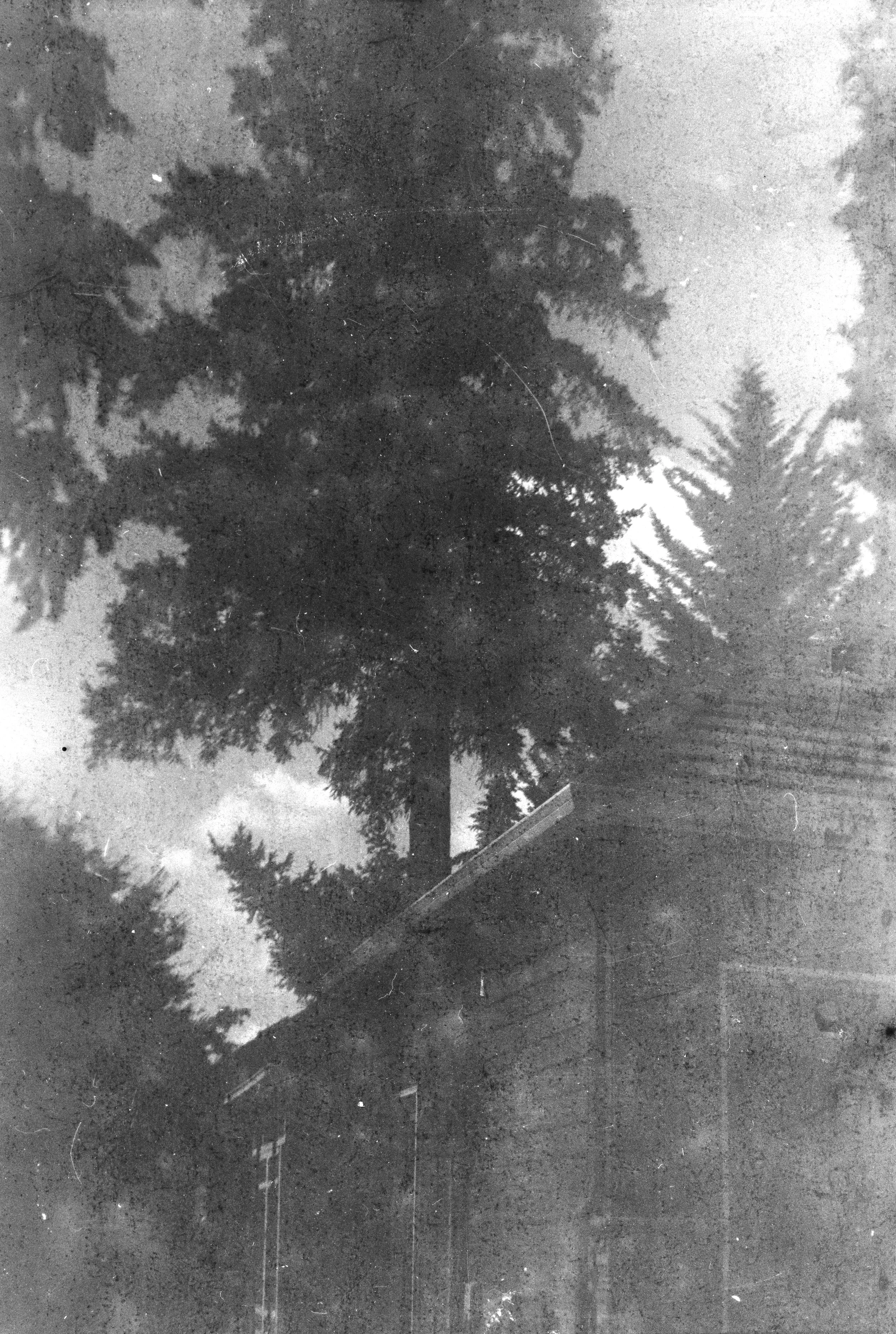
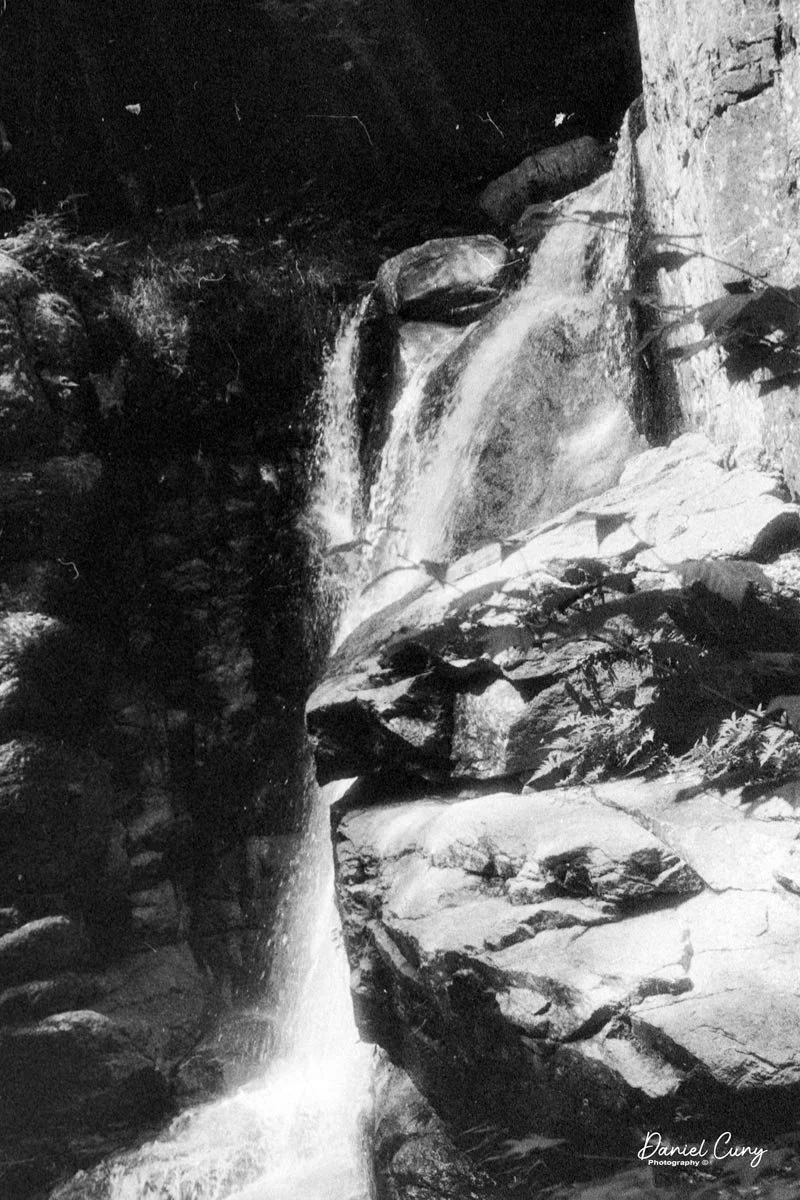
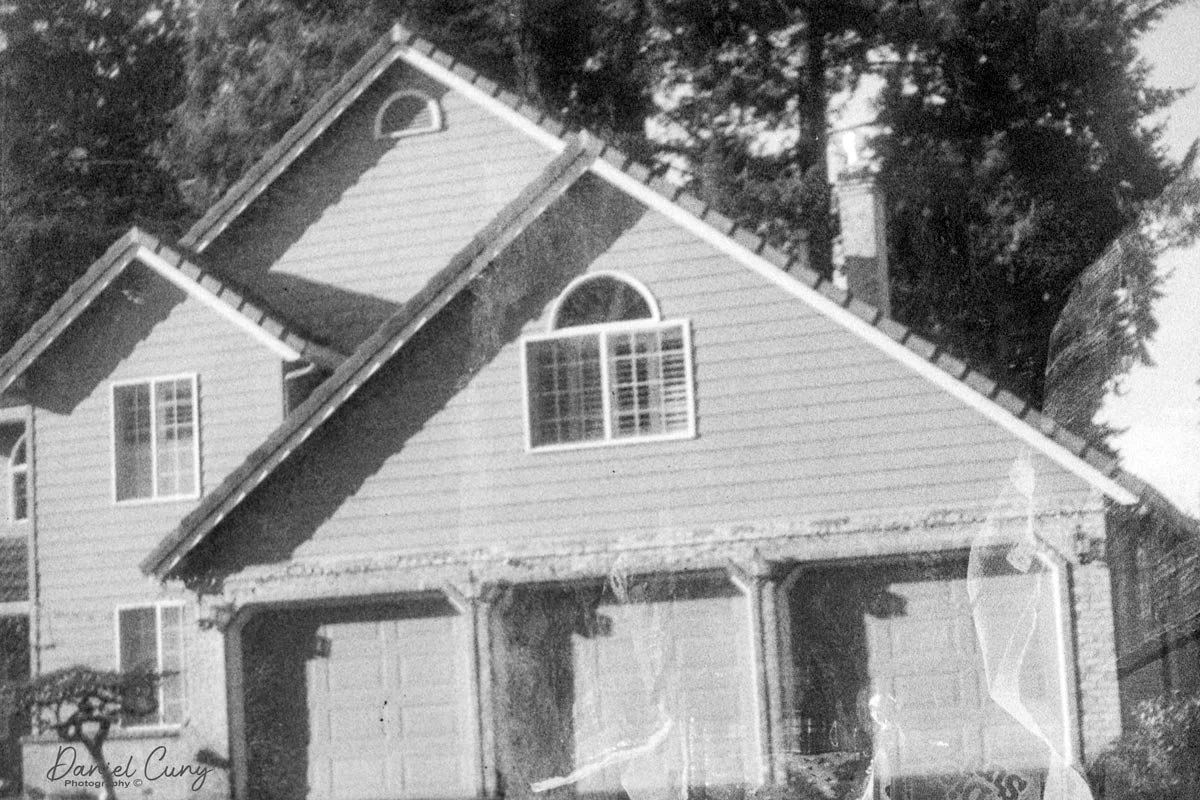
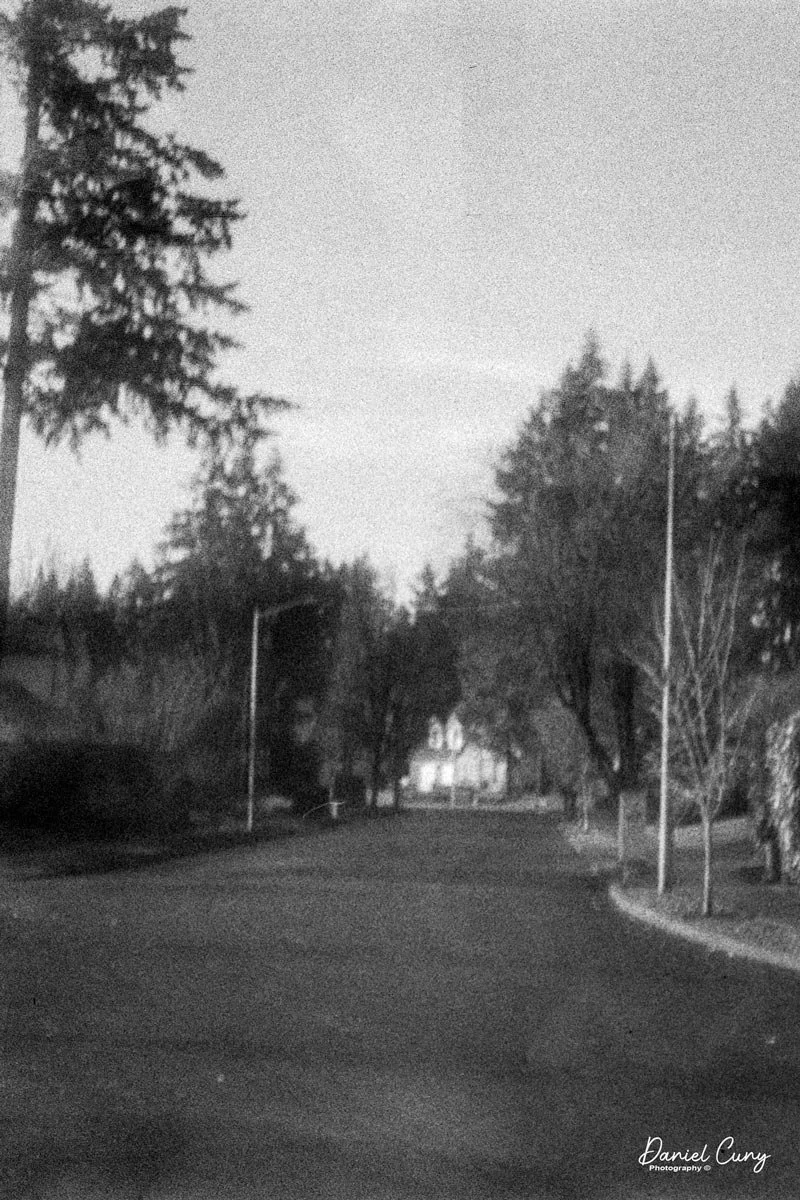
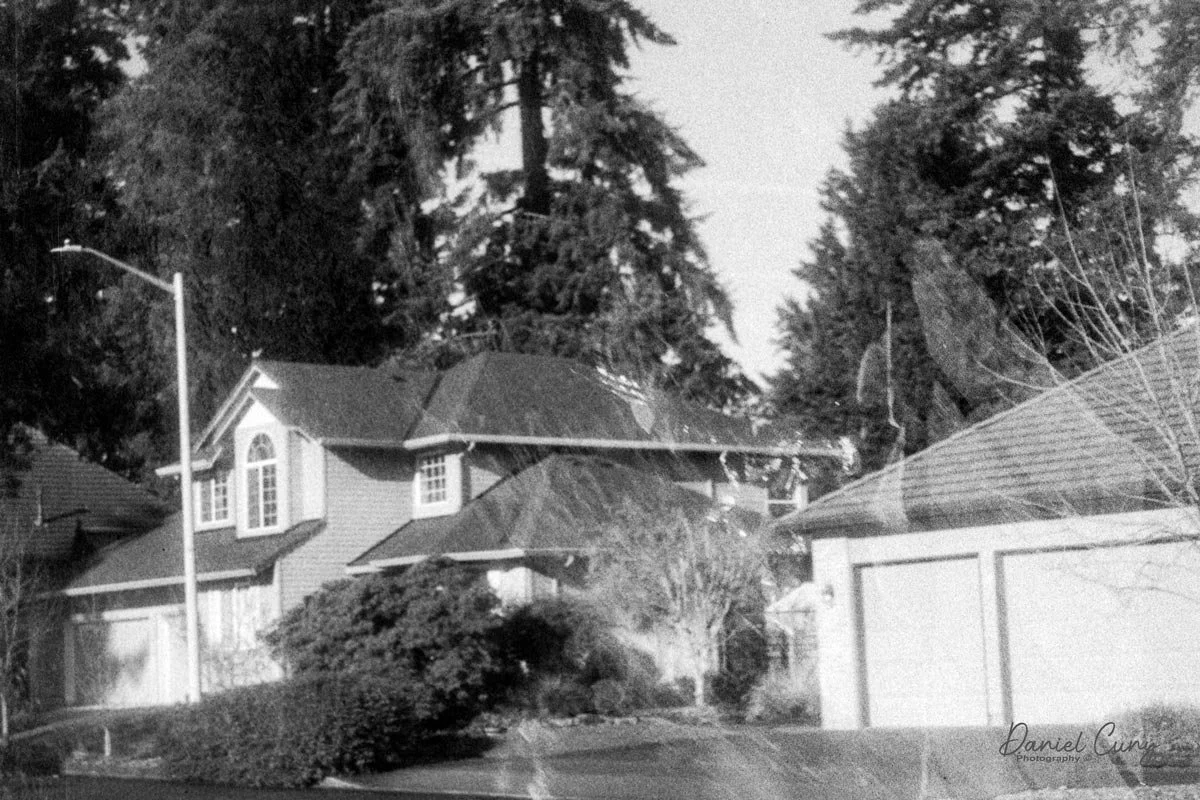
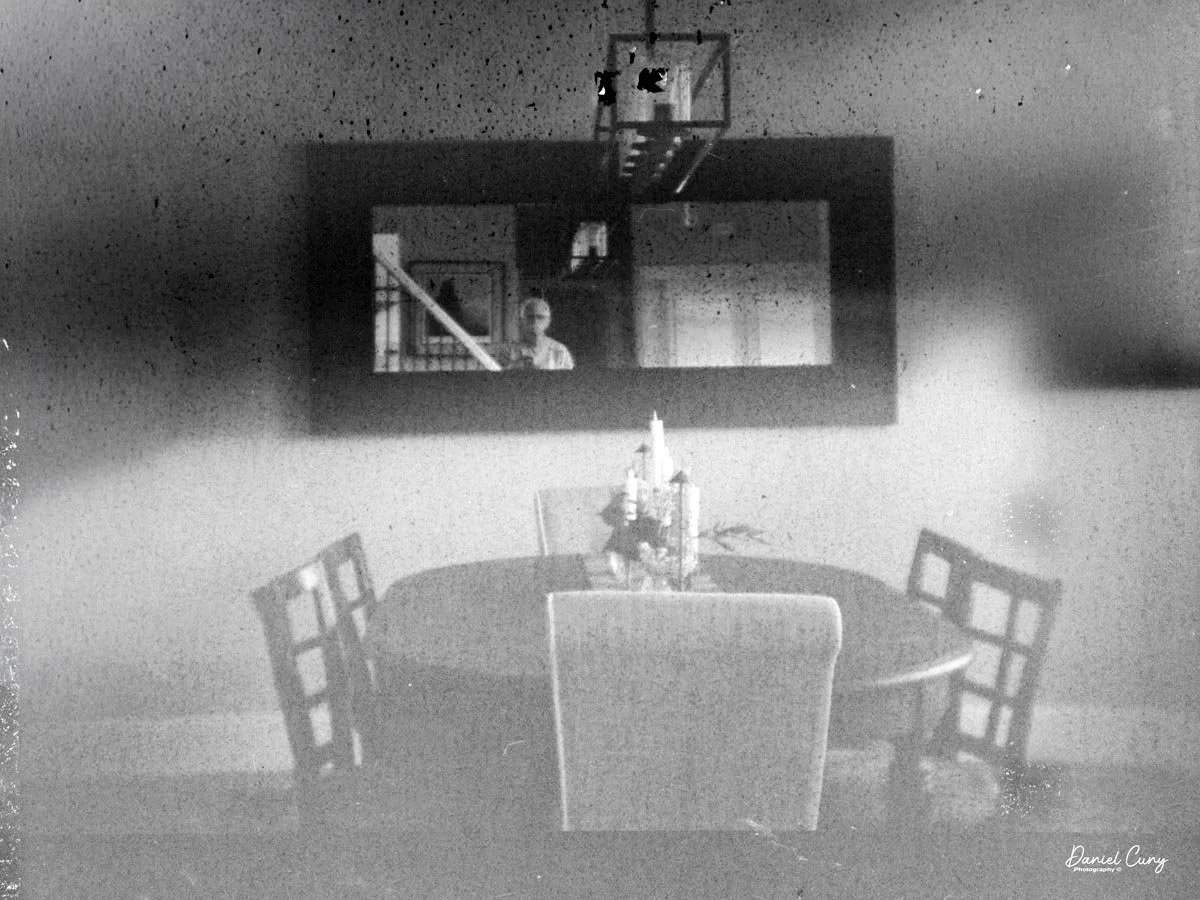
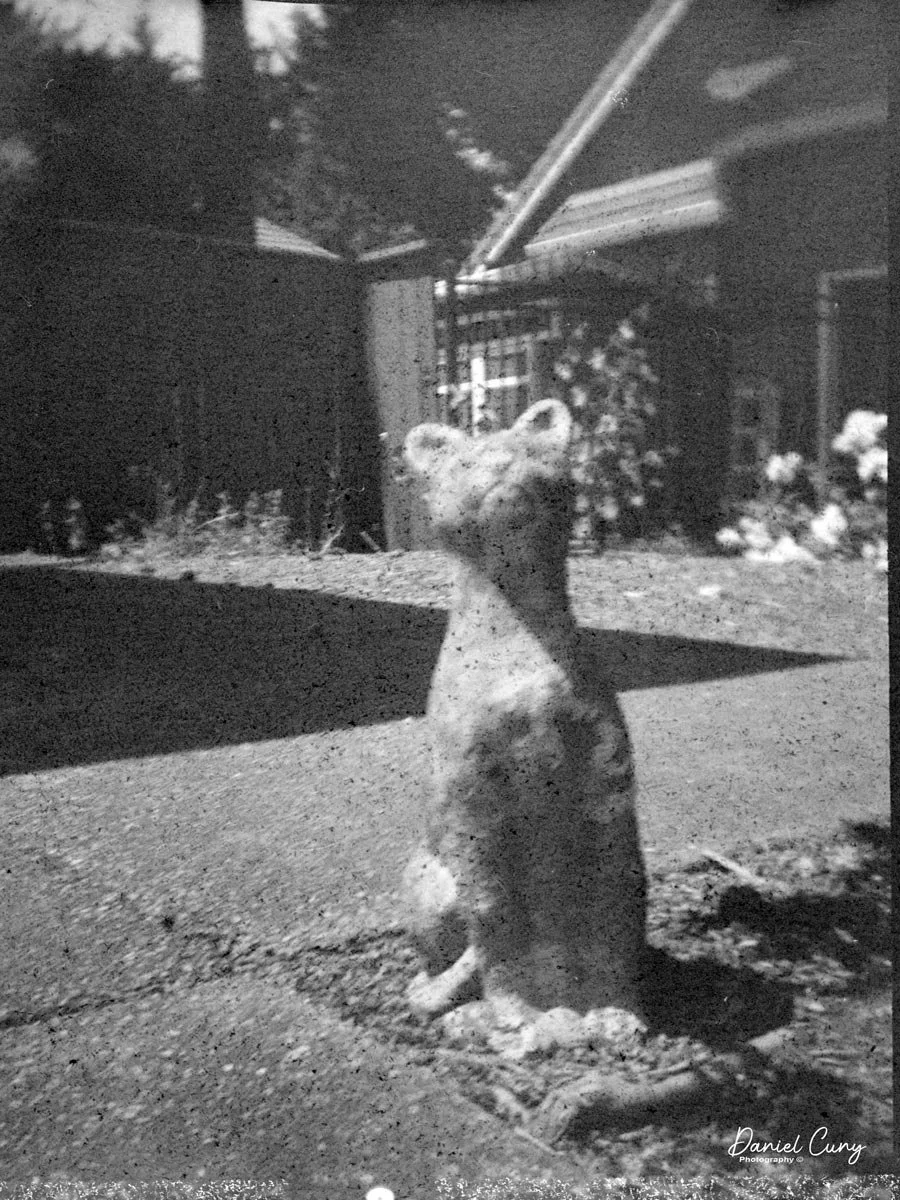
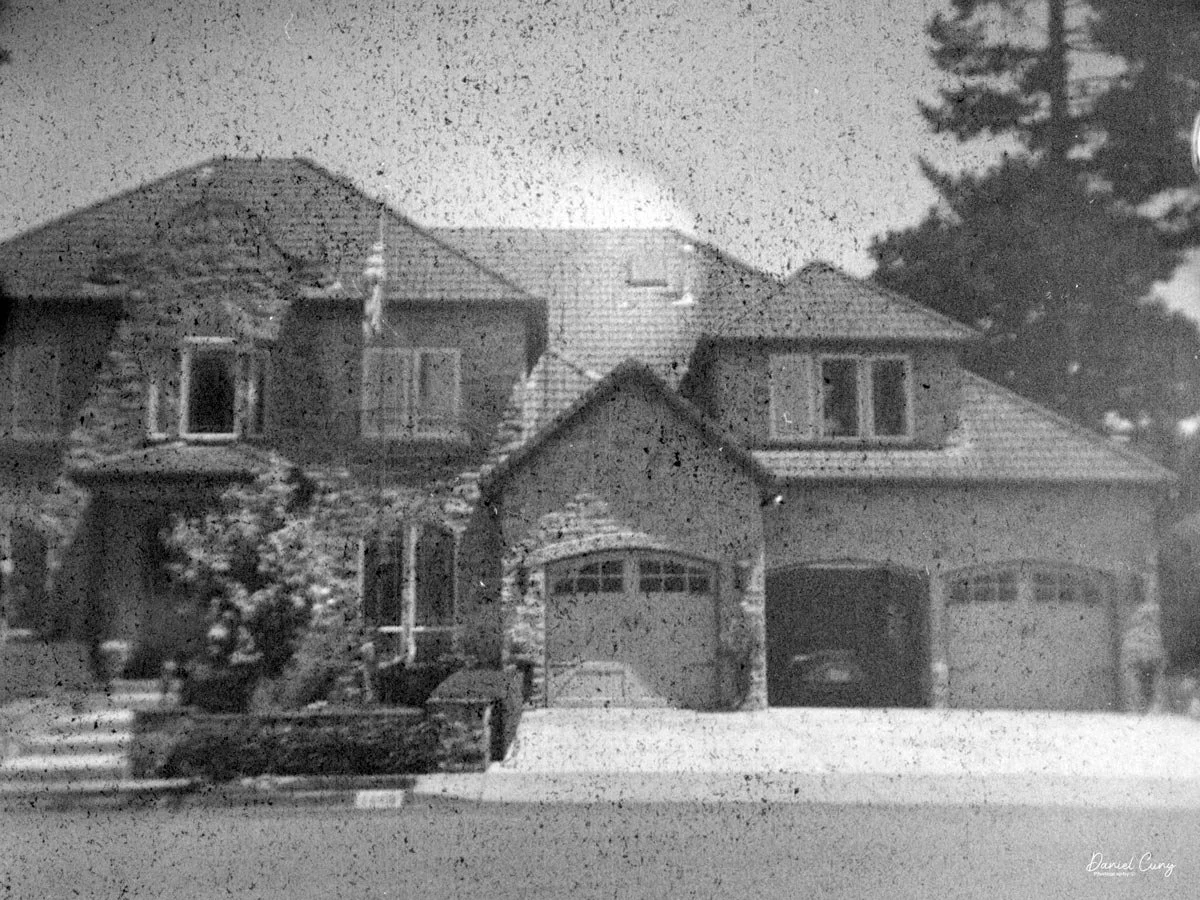
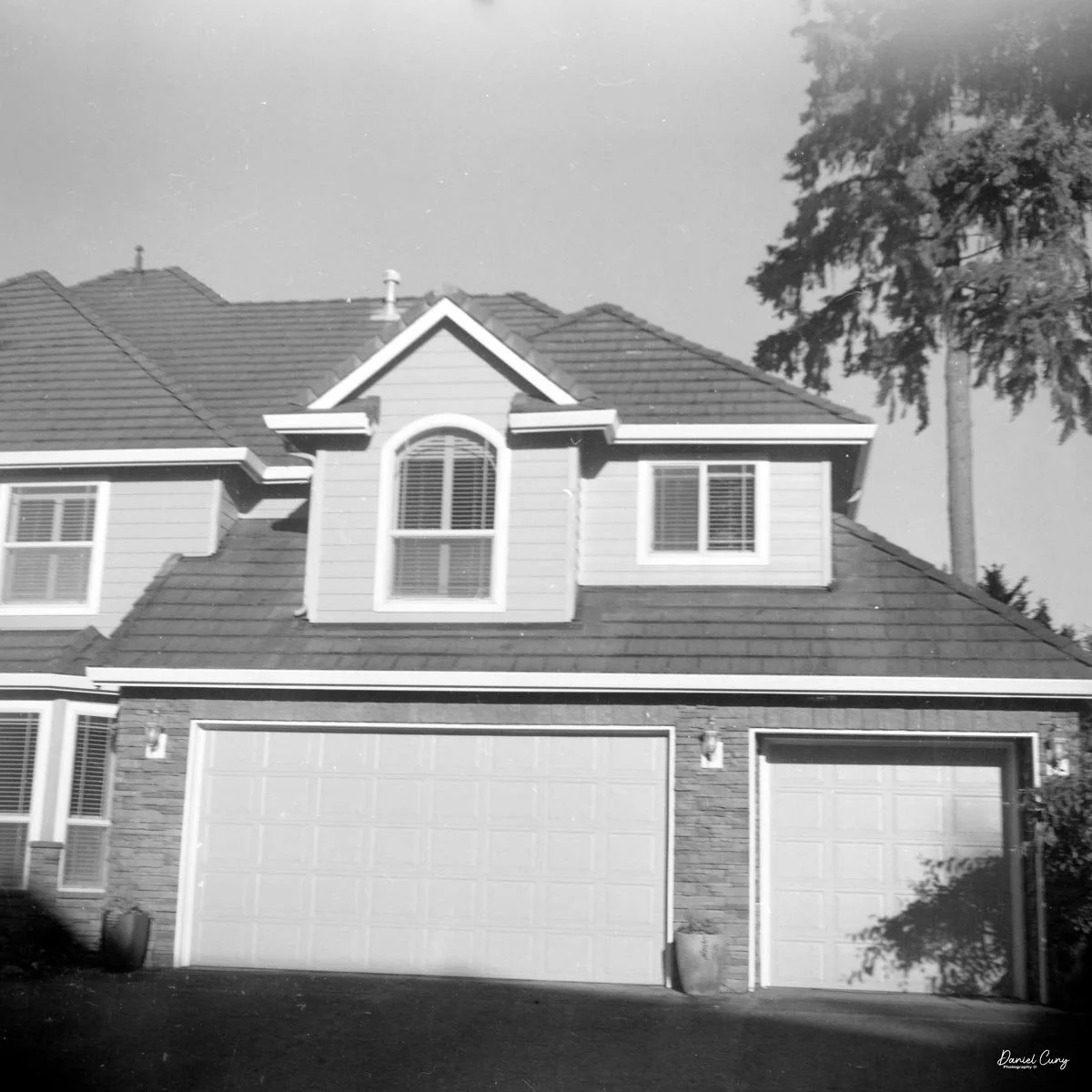
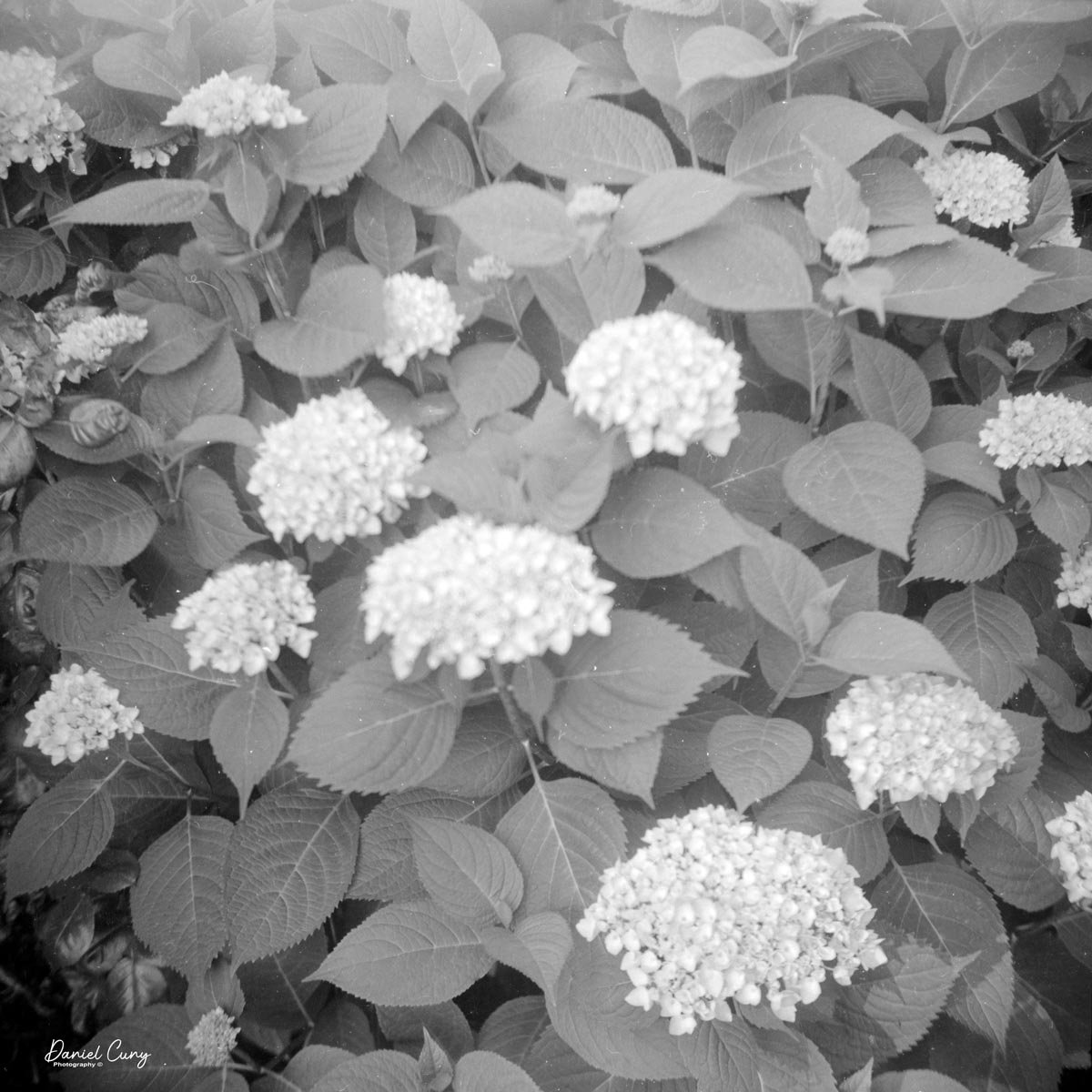
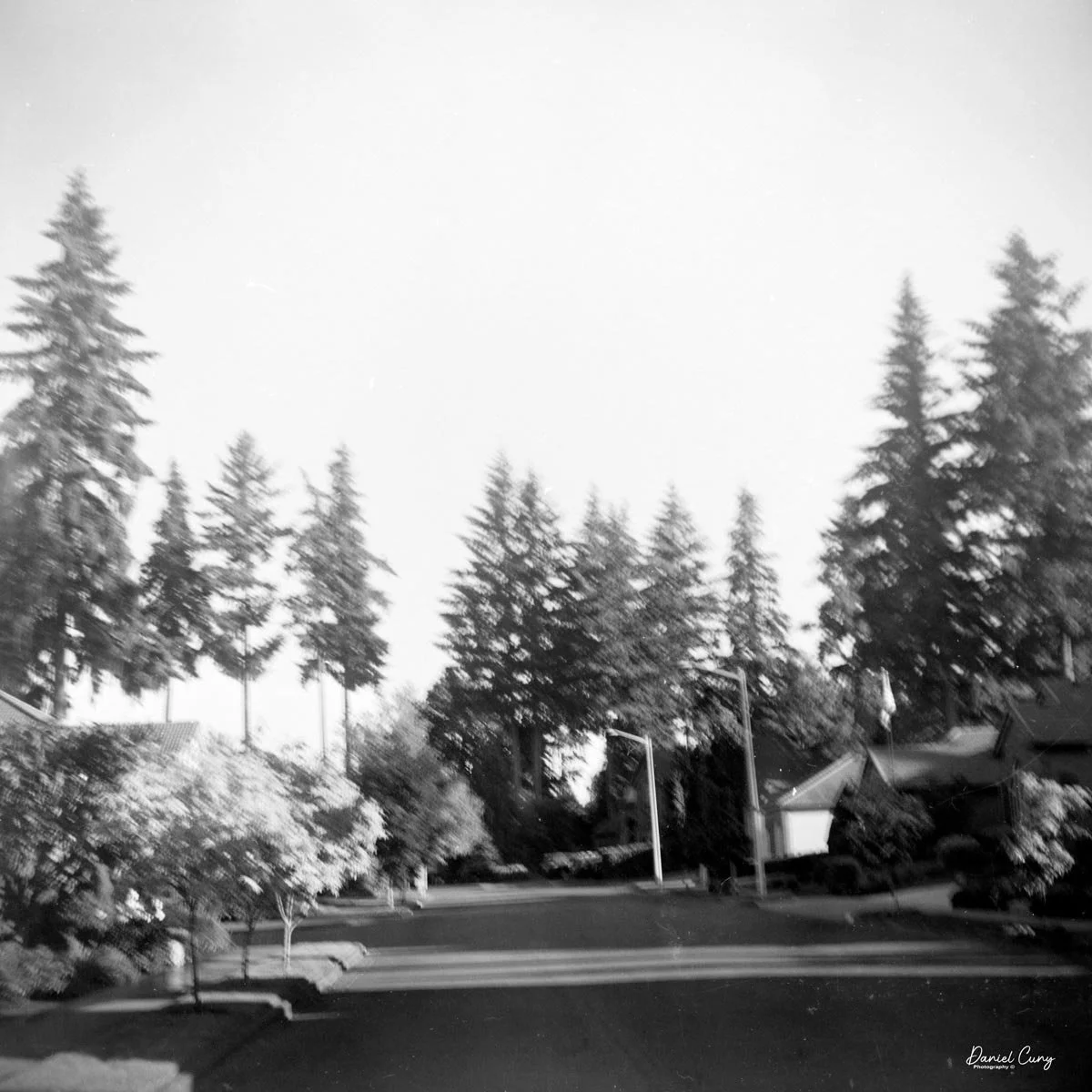
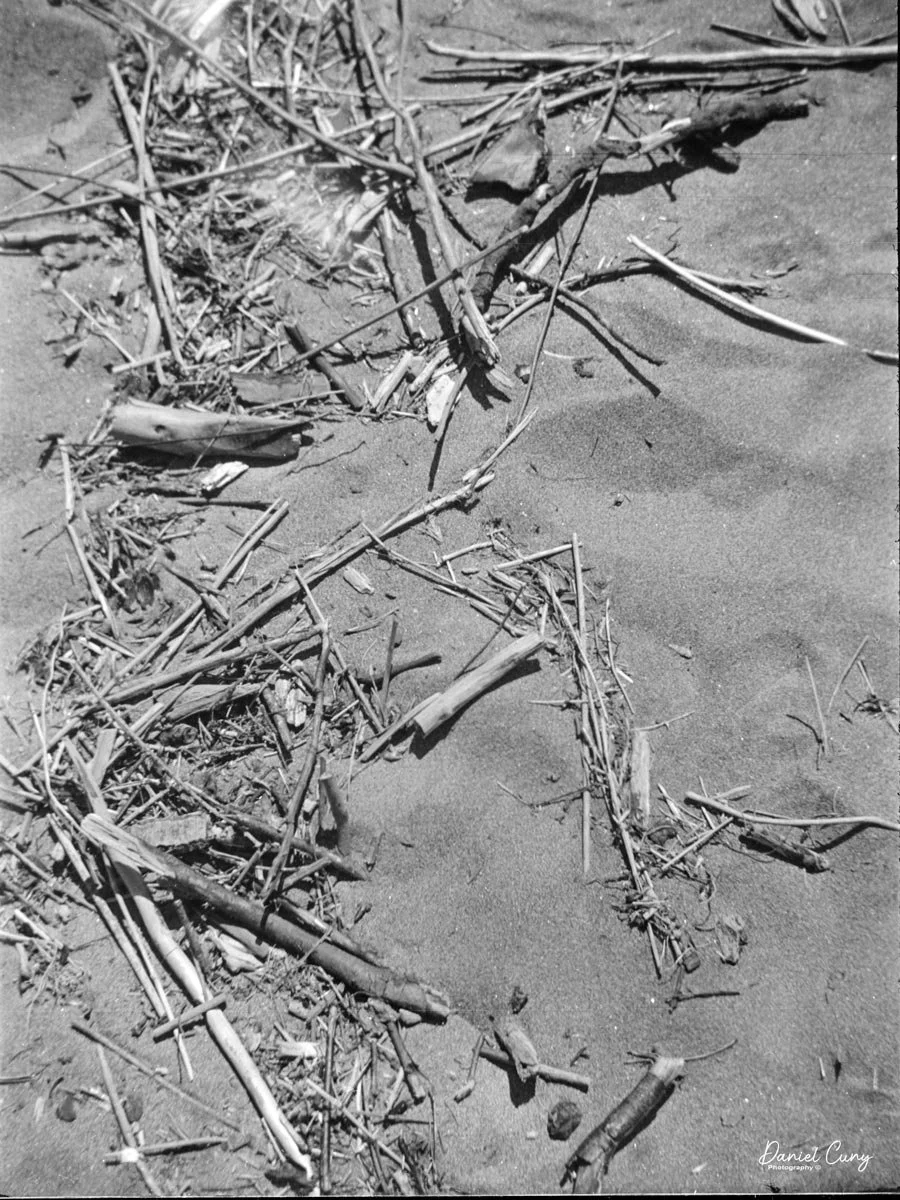
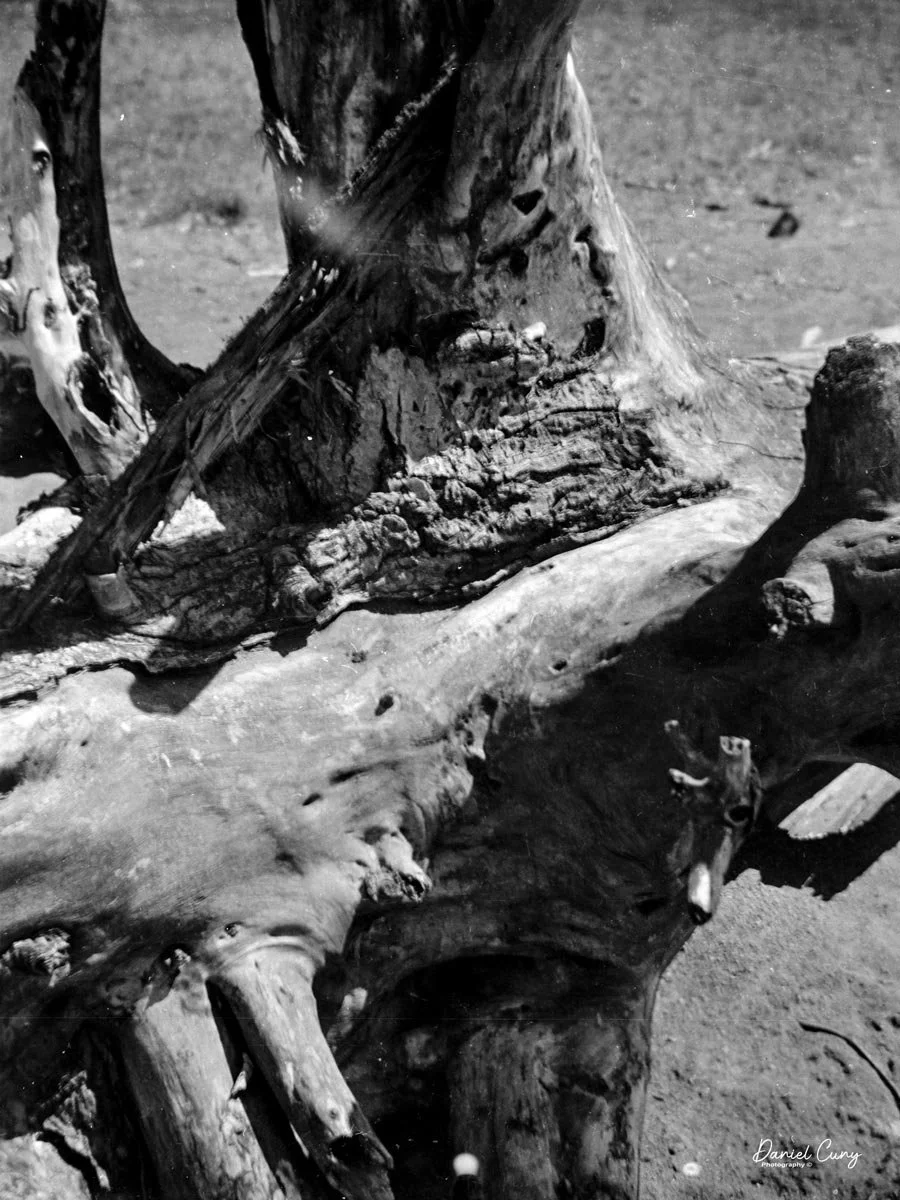
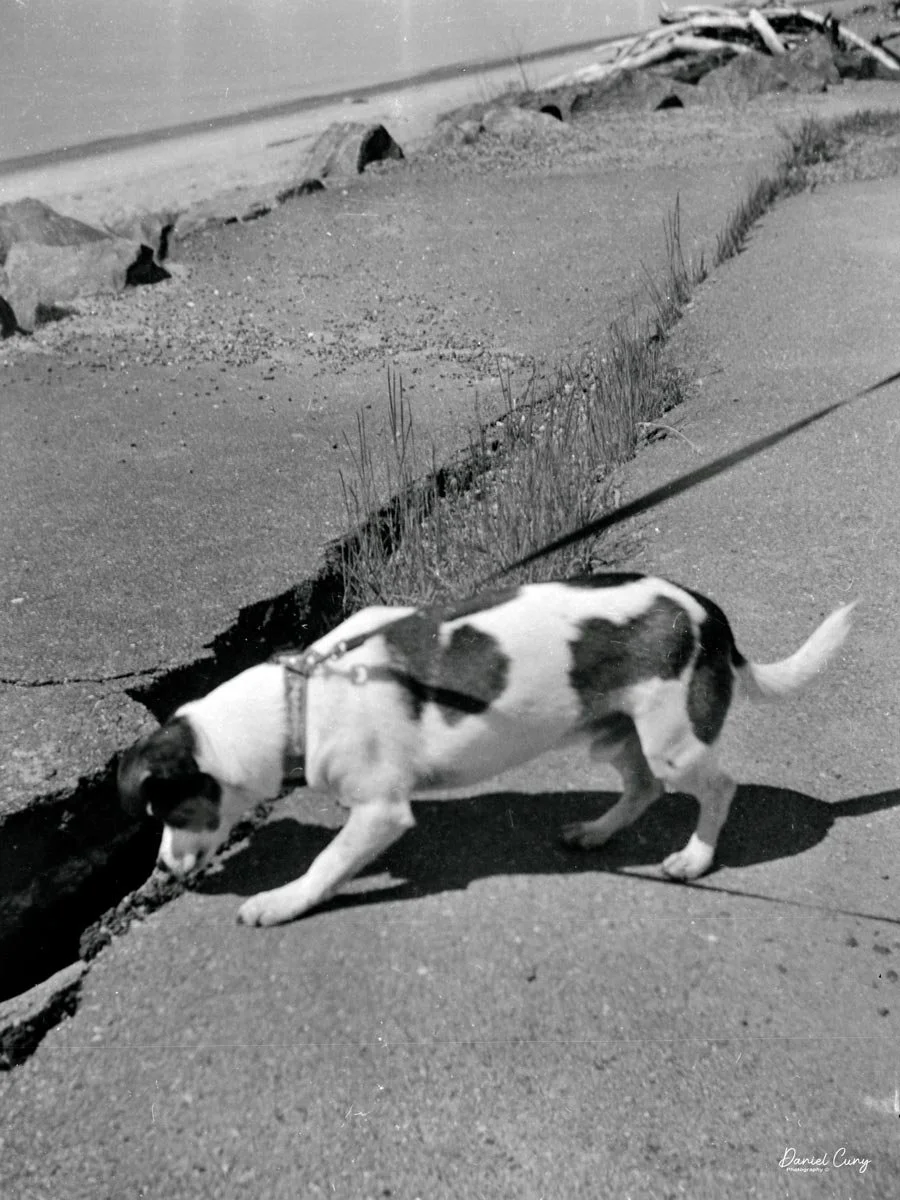
 As I walked through the neighborhood, I tried using both the eye-level and waist-level finders to see which I preferred. They both were easy to use, so here are the results from my walk.

Conclusion:

 Well, some of the images turned out better than expected, and others didn't turn out the way I expected. There is a lot of debris on the negatives, which I'm guessing is due to the film's age.

 The film is rated at 200 ISO, and with its age, I wasn't really sure about the exposure, so I tried to take a couple of shots of the same subject at different aperture settings. I'm not sure why it happened, but there is tremendous bleed-through from the paper backing onto the film, creating issues with the images.

 After I processed the film, I took a closer look at the red windows on the back of the camera, which I believe caused the bleed-through from the paper backing. Yes, one of the red windows appeared to be OK, but upon closer inspection, it was pushed in, letting white light in. I found the culprit behind the bleed-through issues with the film.

 The camera handled well, the viewfinder was somewhat bright, and I enjoyed using the eye-level finder for composing the photo. The image sharpness is what I expected, especially for a very low-cost camera made around 75 years ago. 

 Thank you for taking Time from your day to read about this Lo-Fi camera made in the early 1950s by a company that not only made metal toys but also a line of cameras, mainly known for the "Sardine Can" cameras.

 Here are my other Camera Reviews.

 Cuny's Camera and Photos is my online eBay store where you can find some of the previously reviewed cameras for sale, along with other cameras, lenses, and photo oddities I've accumulated over the past 50 years of collecting.

 Until next week, please be safe.
Mizuho Six camera

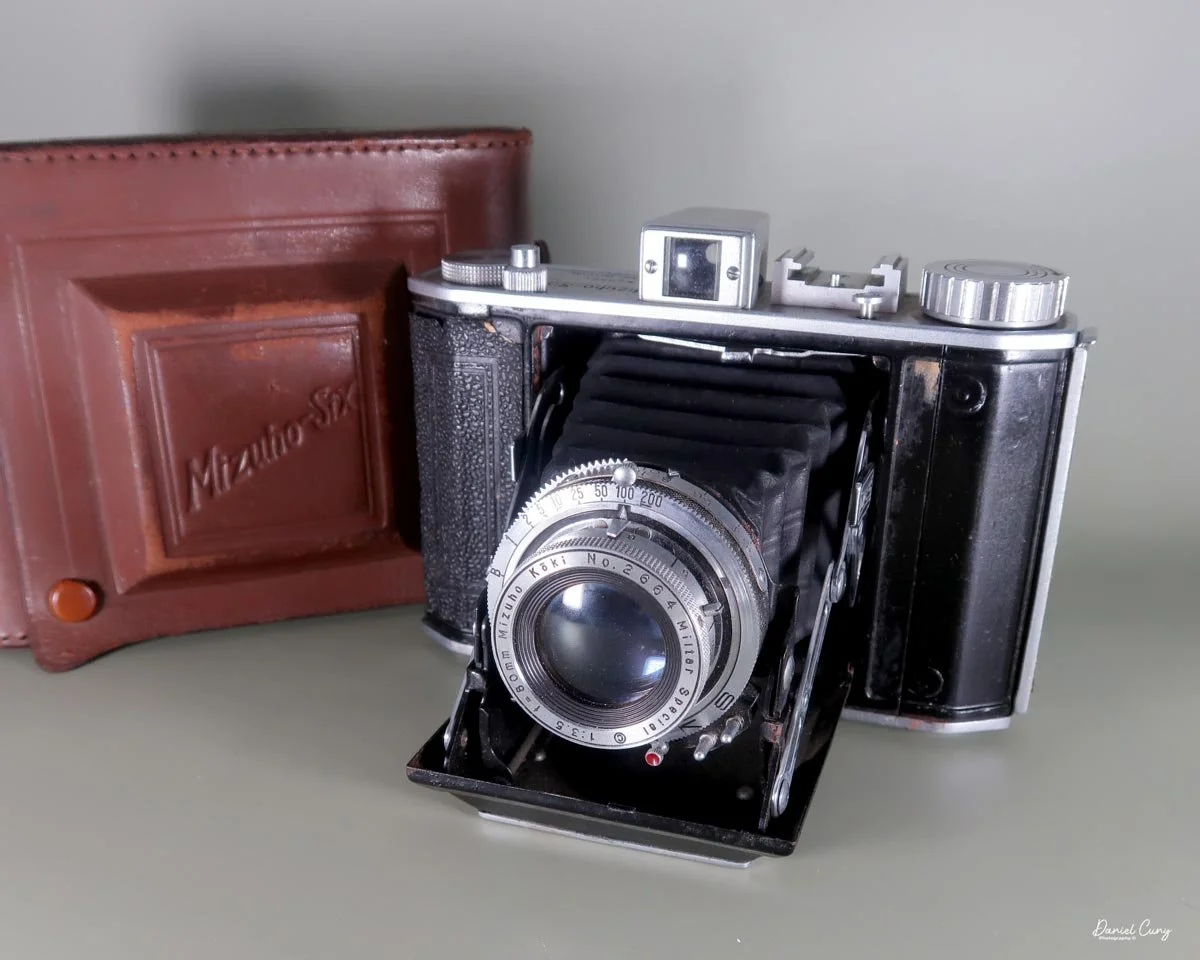
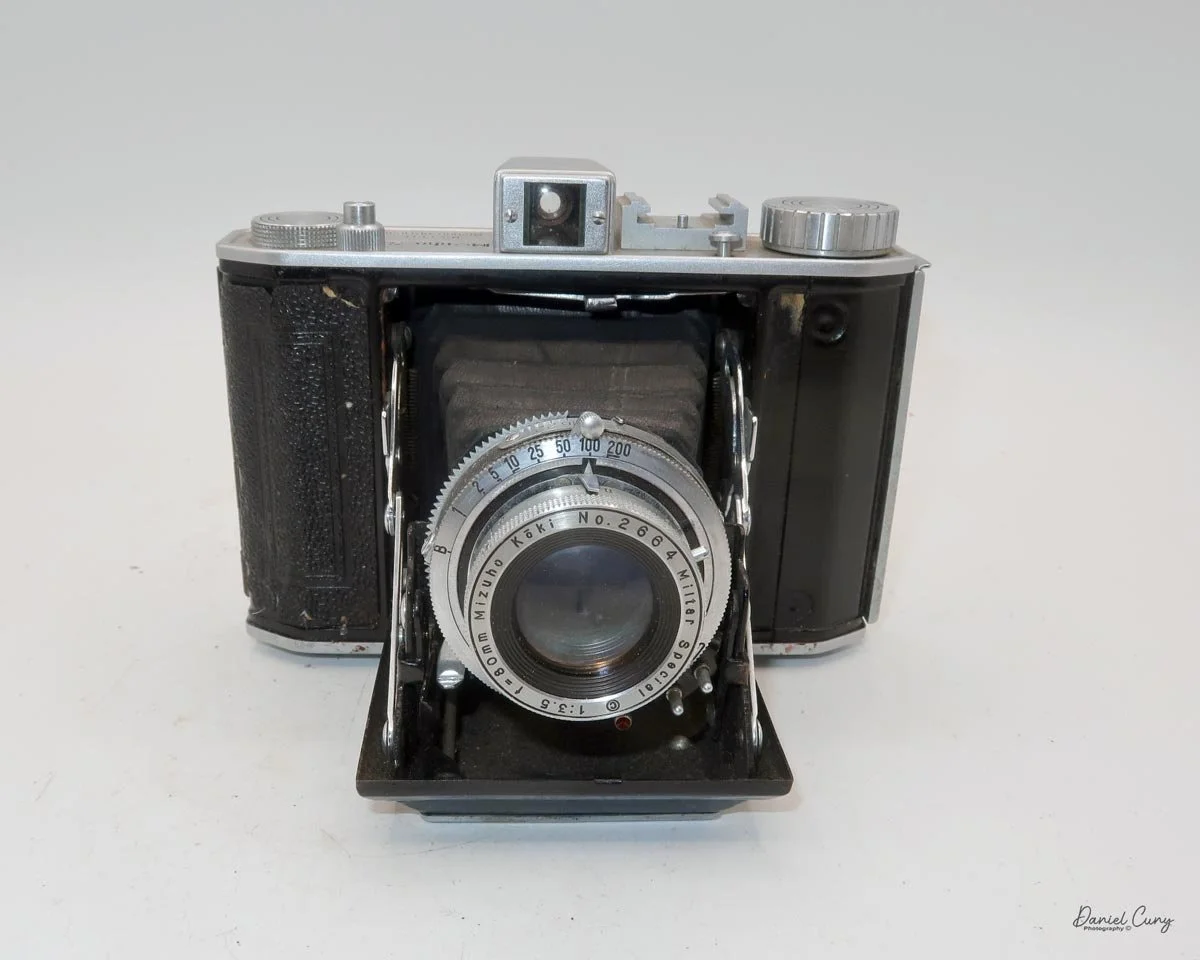
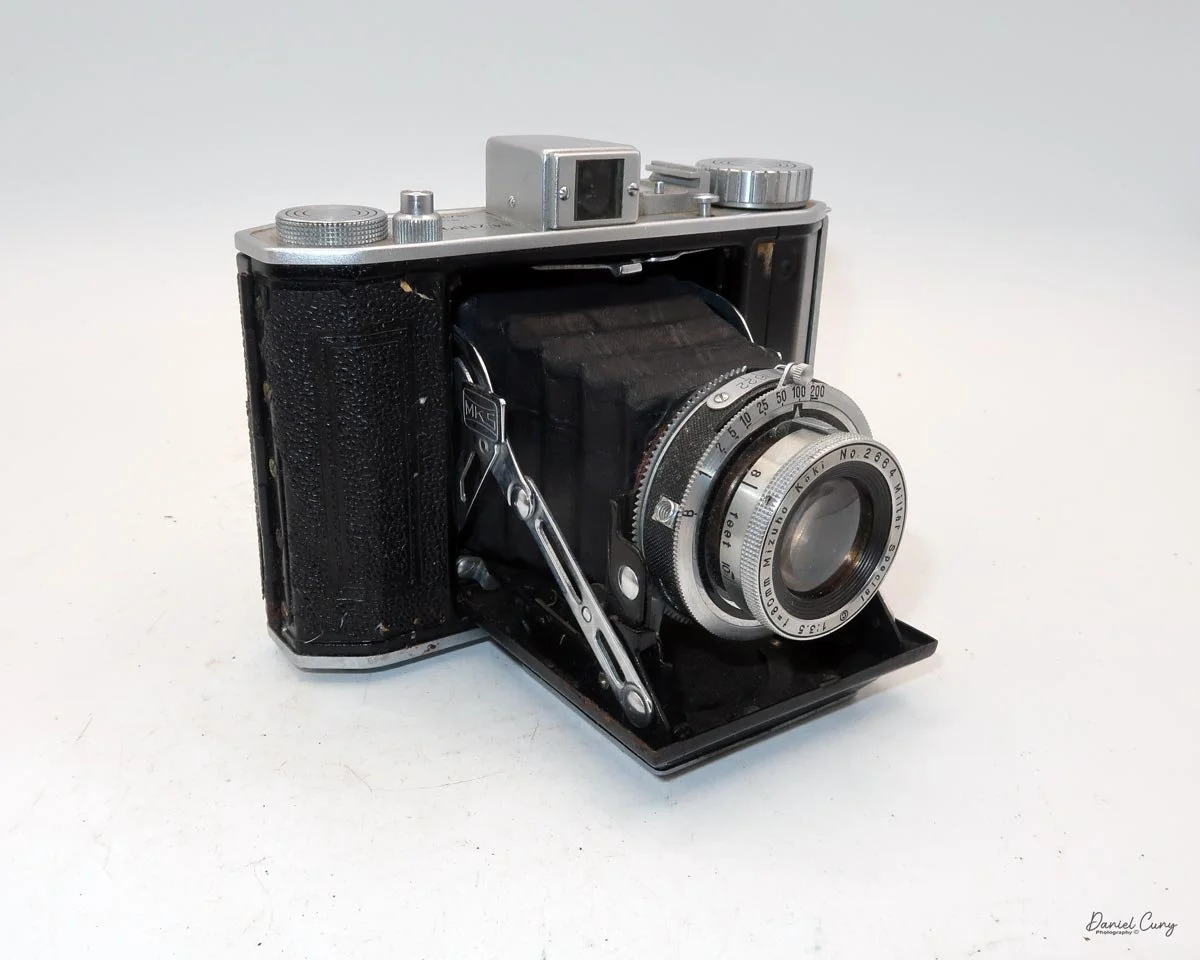
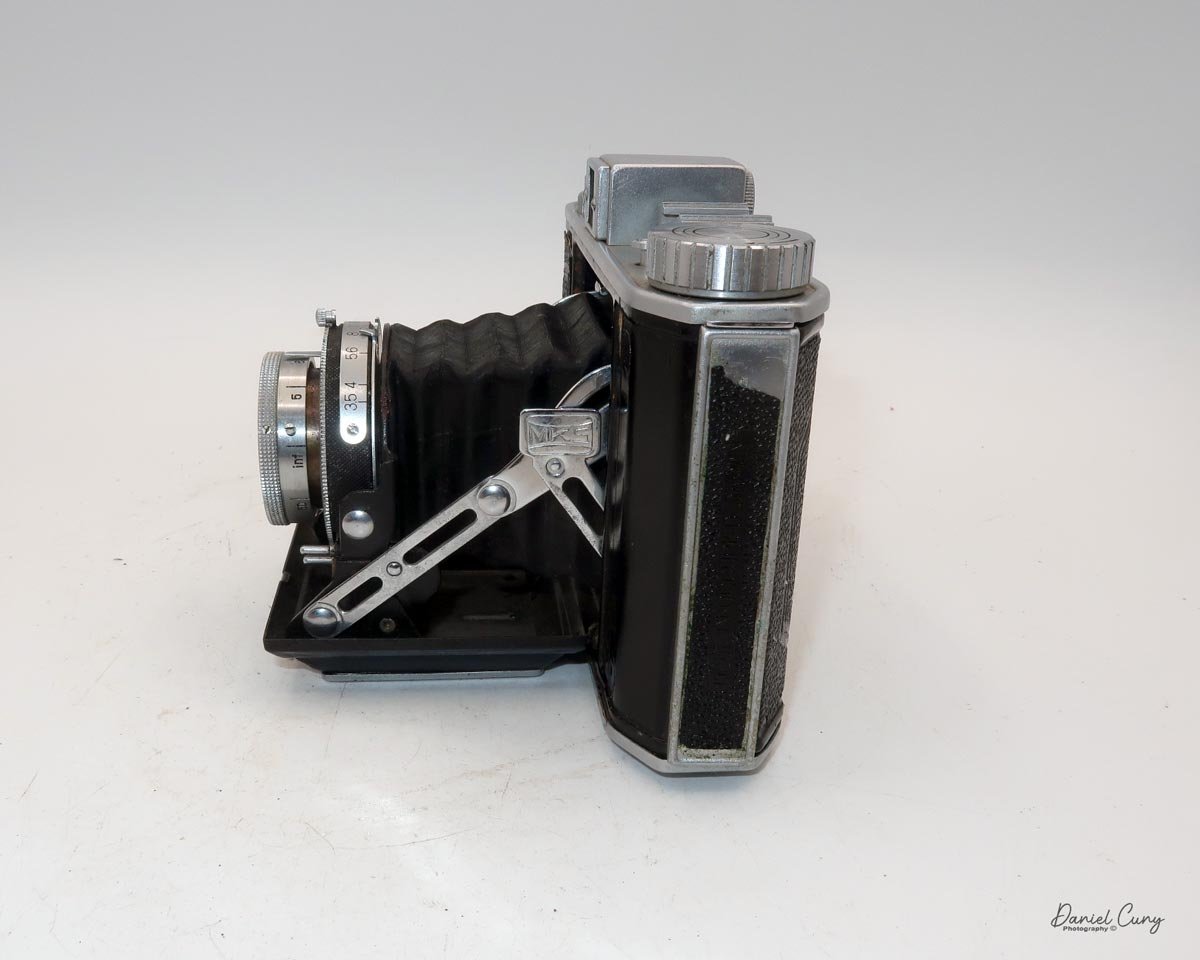
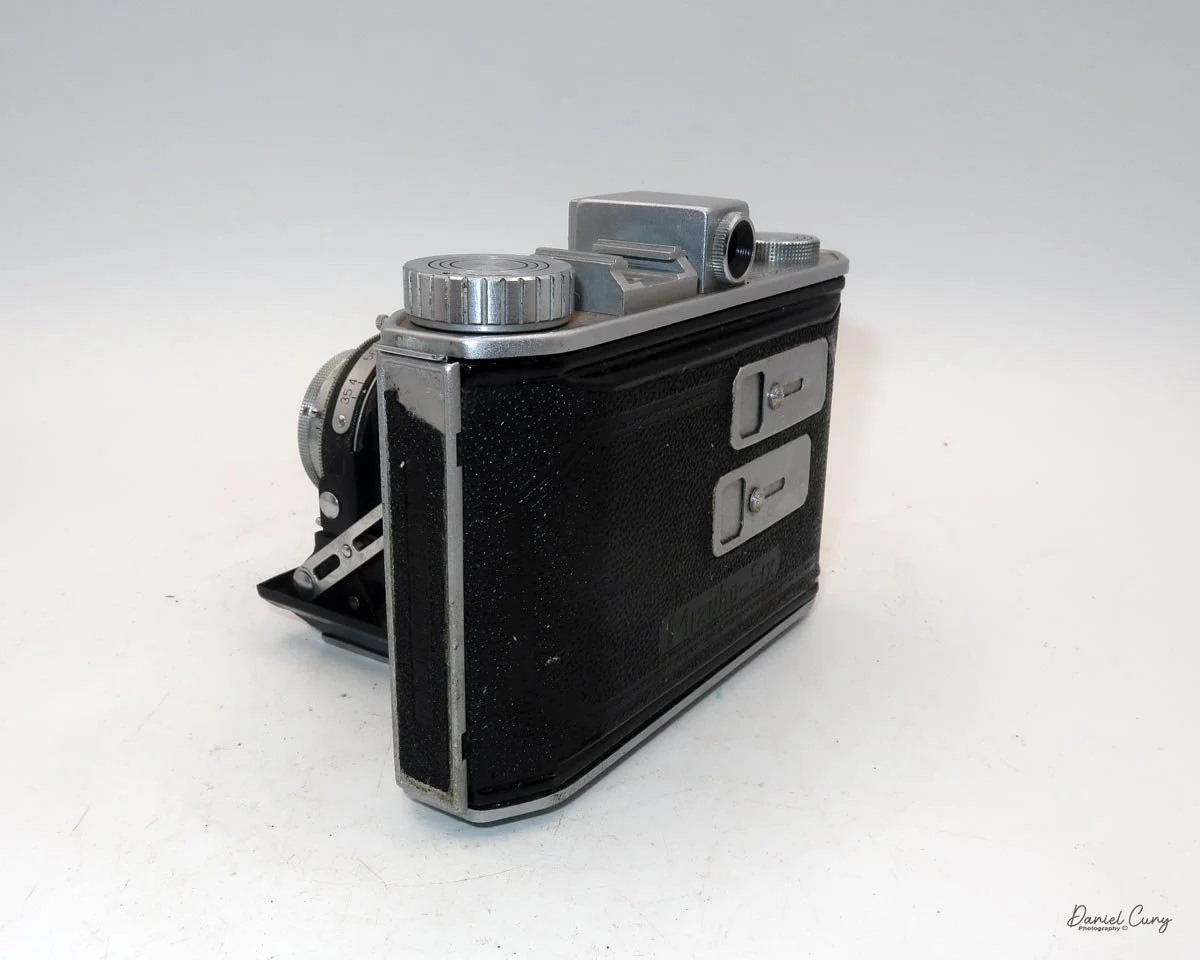
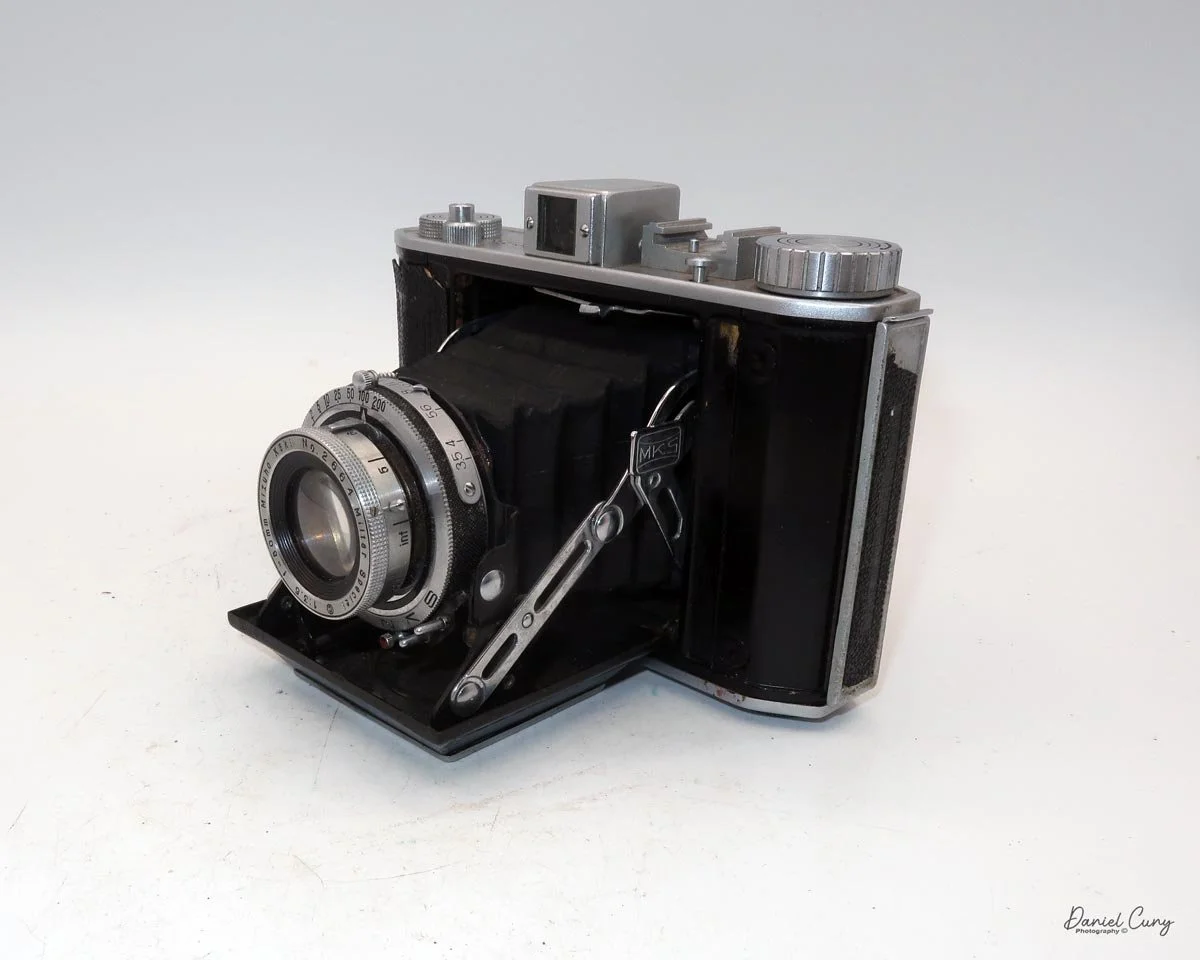
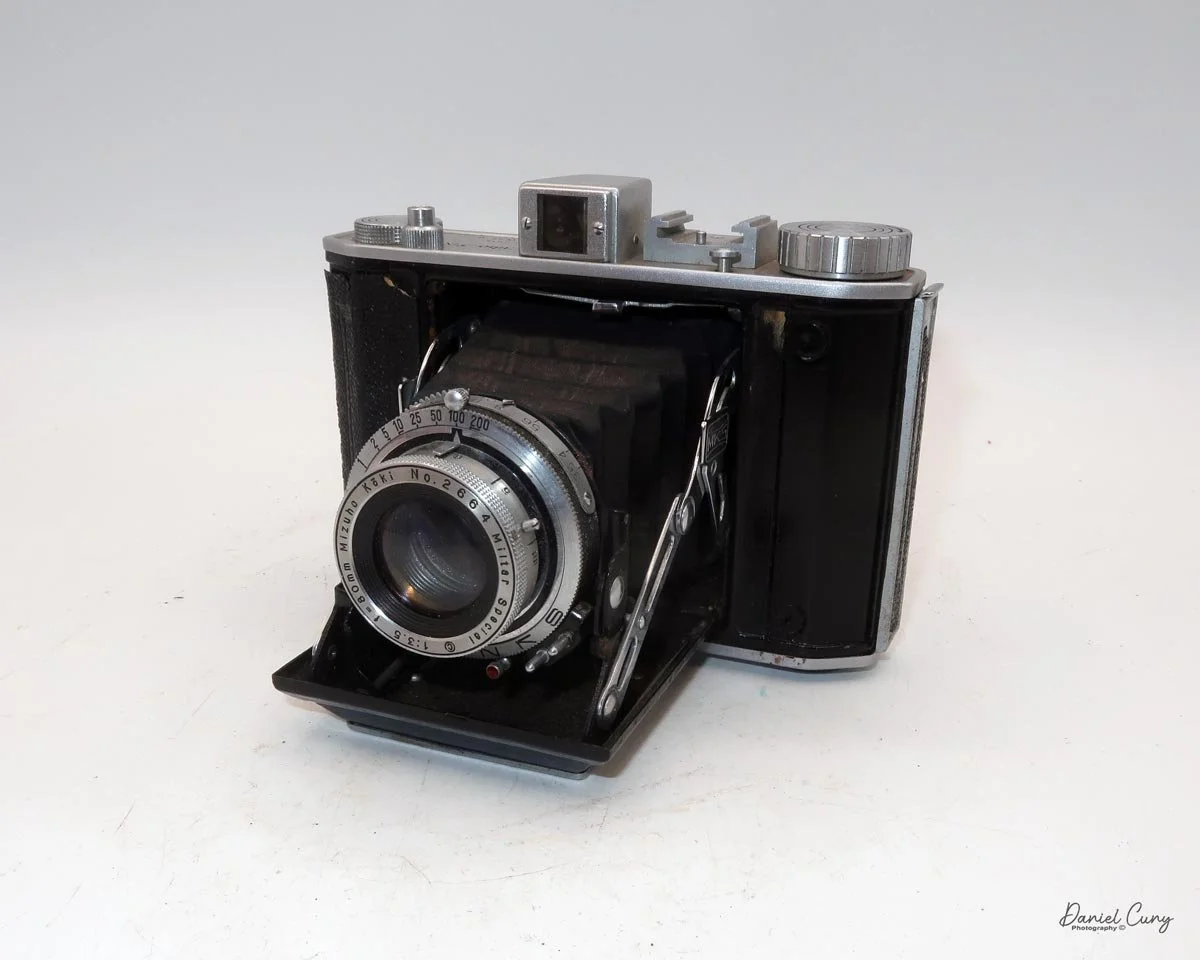
My Mizuho Six camera & case

During my trip to Tokyo a month or so ago, one of my primary goals was to find a little-known or unusual camera to write about for this camera-collecting blog.

 It was on my last day in Tokyo that I visited Used Camera Box for the second time. To say this camera store is filled to the rafters is beyond description. Most of the camera stores I visited in Tokyo were well laid out, with space between cameras. All the items with tags and prices are very visible. It's very similar to what you'd see in any city in the world, with cameras or other products displayed. 

 The Used Camera Box is unlike most camera stores you'll come across.  The shop is pretty small, but the amount of cameras they have is unbelievable.  Many of the showcases featuring the higher-priced, most desirable cameras are well displayed. 

 Then there are other areas of the store with showcases with cameras on top of cameras, on top of cameras. Stacked three high and so crammed next to each other, it's difficult to see what they have towards the back of the showcase. 

 There are the bins, many, many bin of cameras. All around the store's perimeter are tall showcases. In front of these tall showcases are plastic bins filled with more cameras. Many of the cameras in these bins are "bargain" items, which means they might have a part missing or not work. These bins are stacked three high, going around much of the store. Because of this, it's probably one of my favorite used camera stores. 

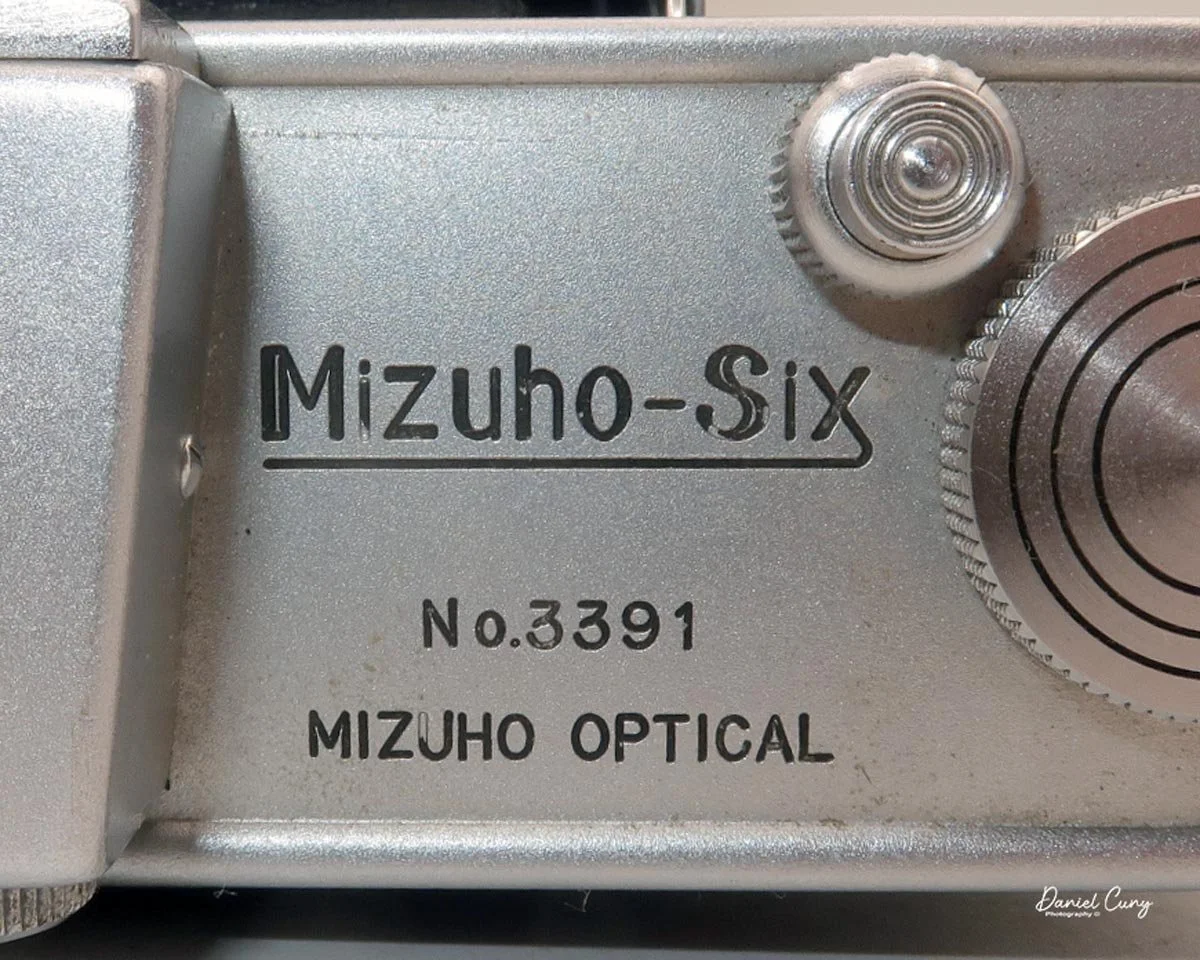
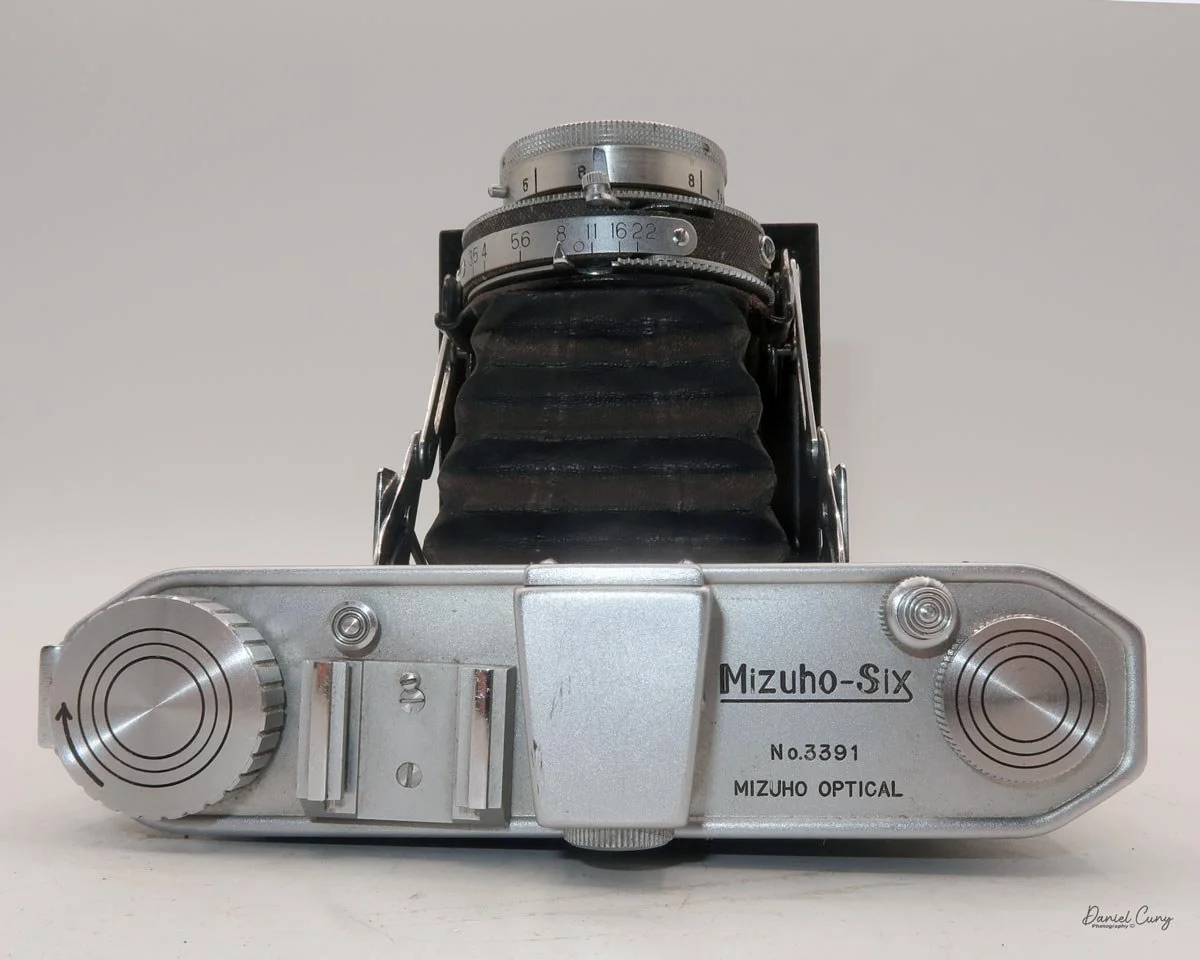
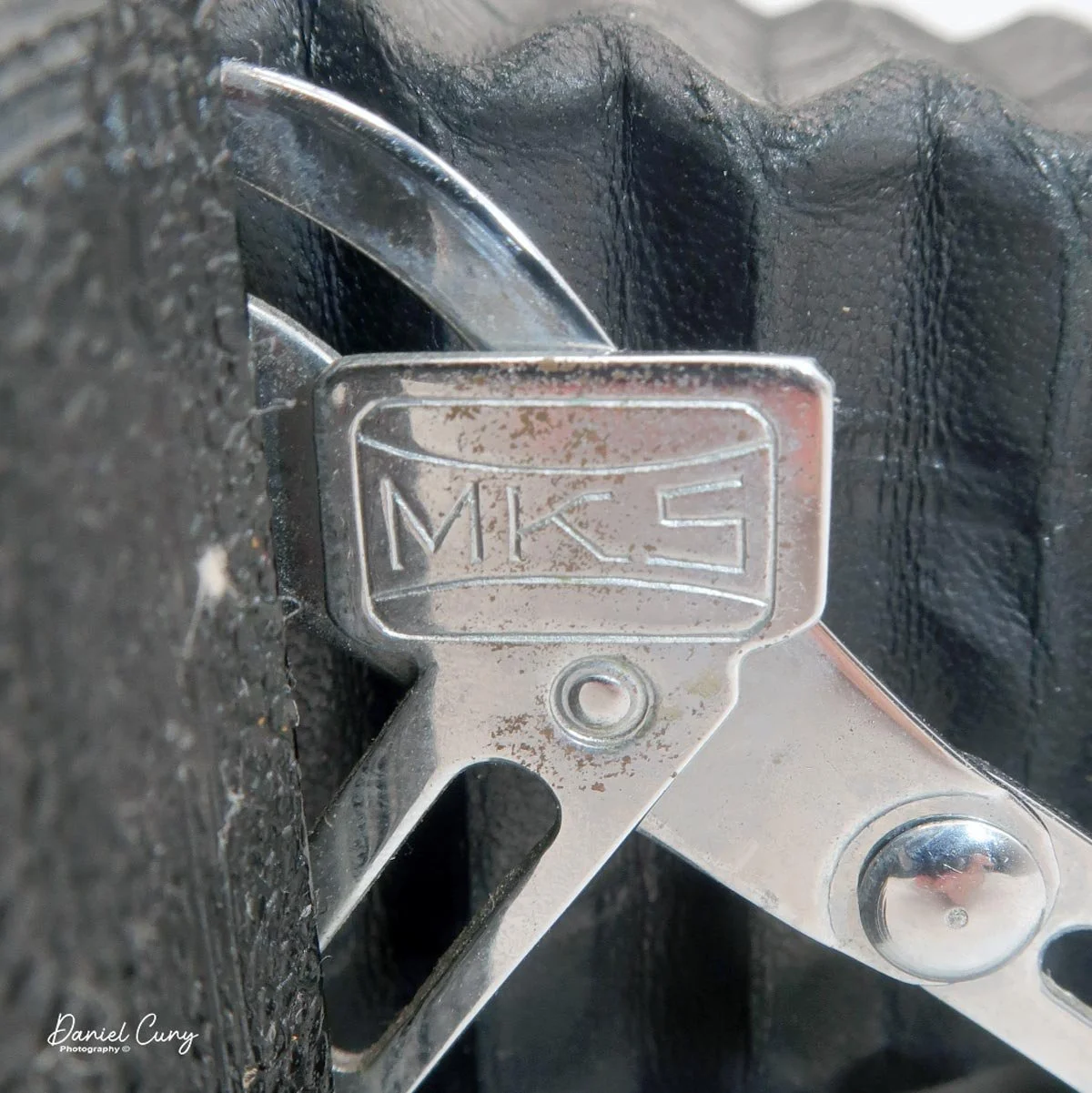
Name on top of the camera below the shutter release

 For me, the real pleasure of collecting is the hunt. The excitement of finding a real odd or unusual item at a bargain price. It's similar to going to a Flea Market, as there may be a real treasure in the next cabinet or stall. 

 I worked my way to one of my favorite showcases towards the back of the store. It's a showcase filled with many of the older cameras. It has a mix of higher-priced and lower-priced items. The patient salesperson let me pull items out and check them out. It was from this showcase that I found this week's camera, the Mizuho Six. The camera comes with a nice leather-fitted case, too. This, along with last week's Baron RI, was another camera I had never heard of until I researched it.

 Just like last week's blog about the Baron RI camera, this week's camera is another very similar style. It's a folding 120 camera made in the early 1950s, when Japan was rebuilding after World War II. 

 It was manufactured by another, smaller, and little-known company that later changed its name to Neoca. Here's some history on the brand.

History:

 The Mizuho Six began life in the early 1950s, when Mizuho Koki of Japan was producing folding medium-format cameras for a market that still valued compactness and simplicity. These early Mizuho-branded folders used 120 film and reflected the practical, postwar approach common among smaller Japanese camera makers.

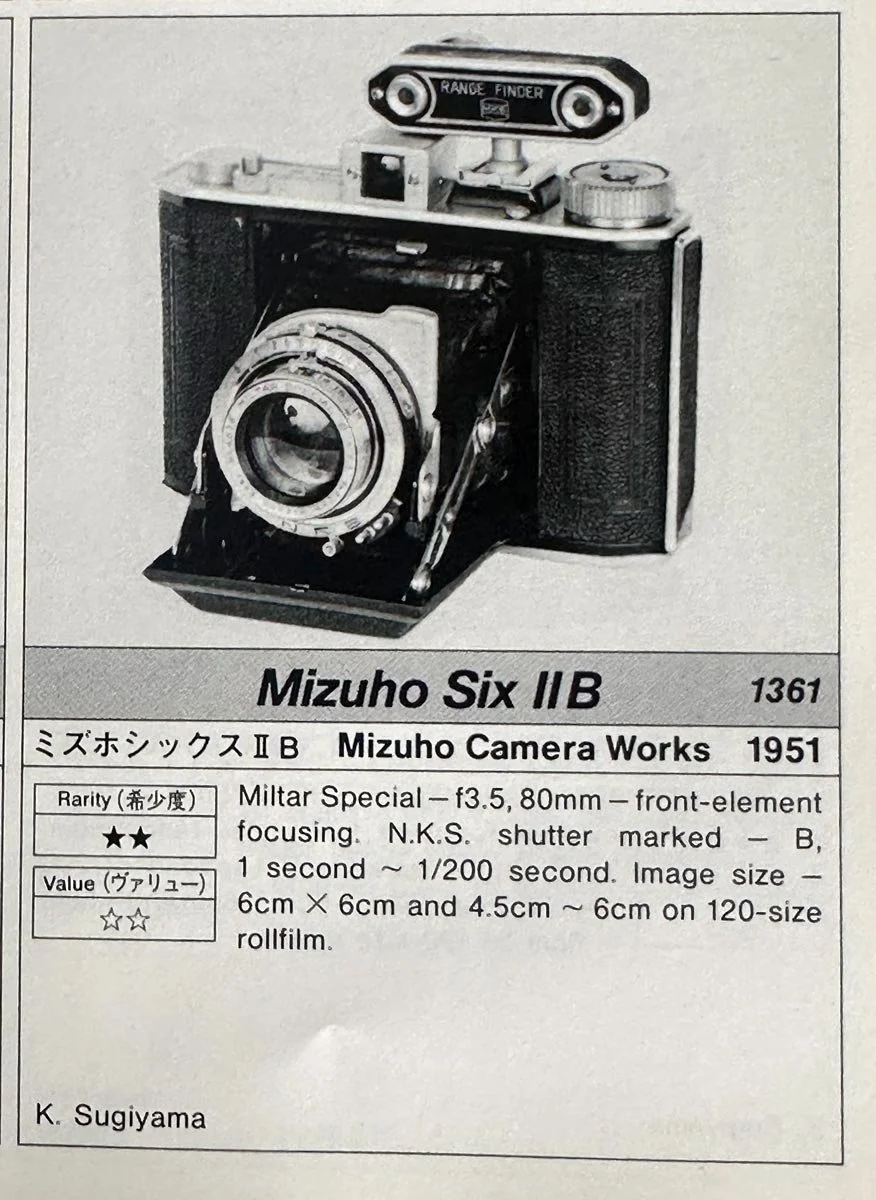
From my book on collecting Japanese Cameras

 In 1954, the company changed its name to Neoca, and the Mizuho Six line became part of that transition. The name change marked a shift from the earlier Mizuho identity toward a broader Neoca camera range. At the same time, the foldable medium-format design remained rooted in the company's first postwar products.

 The Mizuho Six itself went through a series of small but meaningful variations rather than a dramatic redesign. Known versions include the Mizuho Six I, II, III, IIB, IIIB, and V, as well as later Super models such as the Super, Super N, and Super T. These changes suggest the camera was gradually updated with different body details, finder arrangements, and lens or shutter combinations.

 The best-known early version, such as the Mizuho Six V a, was a folding camera that offered either 4.5x6 or 6x6 cm exposures and used an uncoupled rangefinder. That combination made it a flexible, straightforward tool for photographers who wanted medium-format image quality in a portable body.

 As Neoca moved into its own identity after 1954, the company shifted increasingly toward compact 35mm cameras. Still, the Mizuho Six remains important as a bridge between eras. It represents the company's early craftsmanship and the transitional period when Japanese manufacturers were moving from traditional folding cameras toward the more modern designs that would dominate later in the decade.

My Camera:

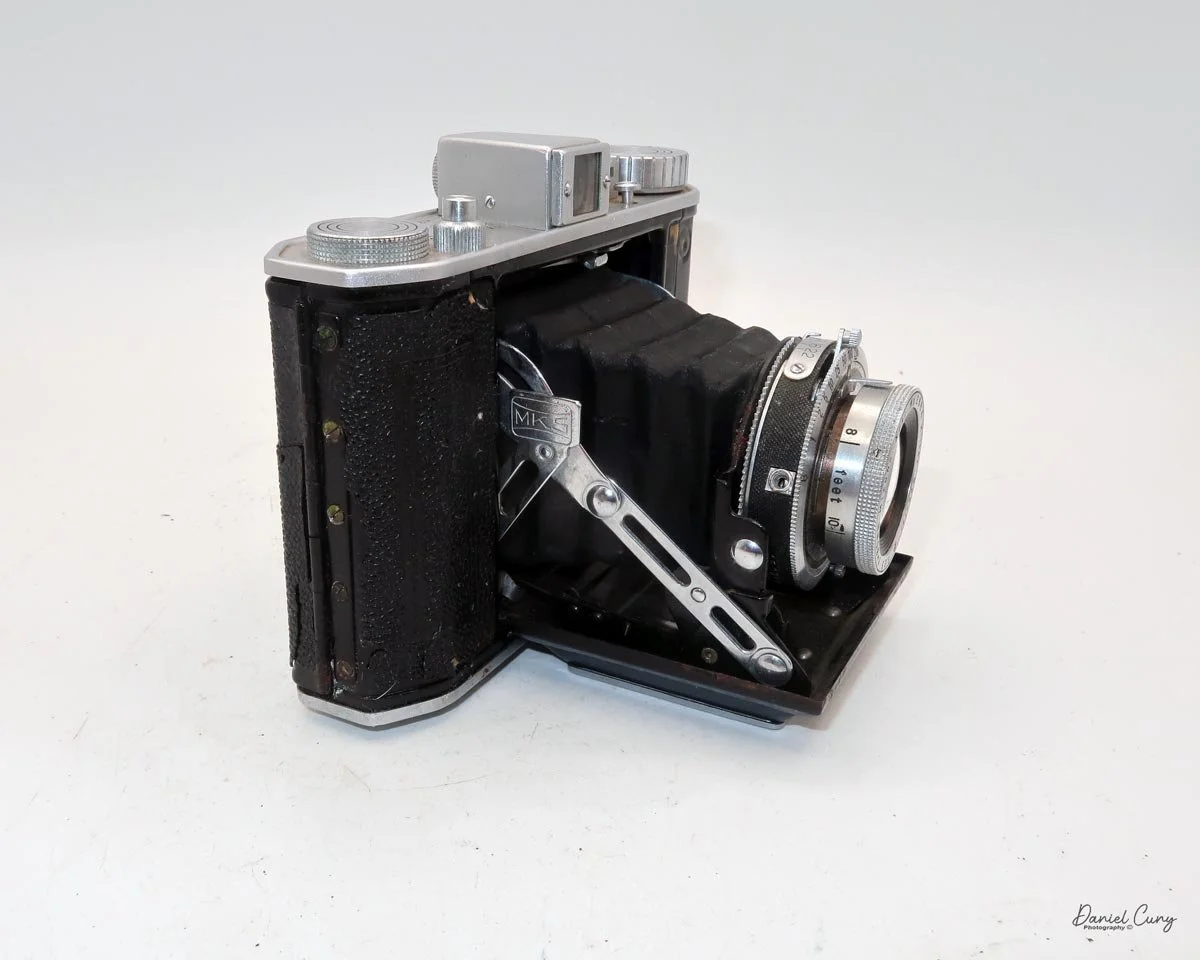
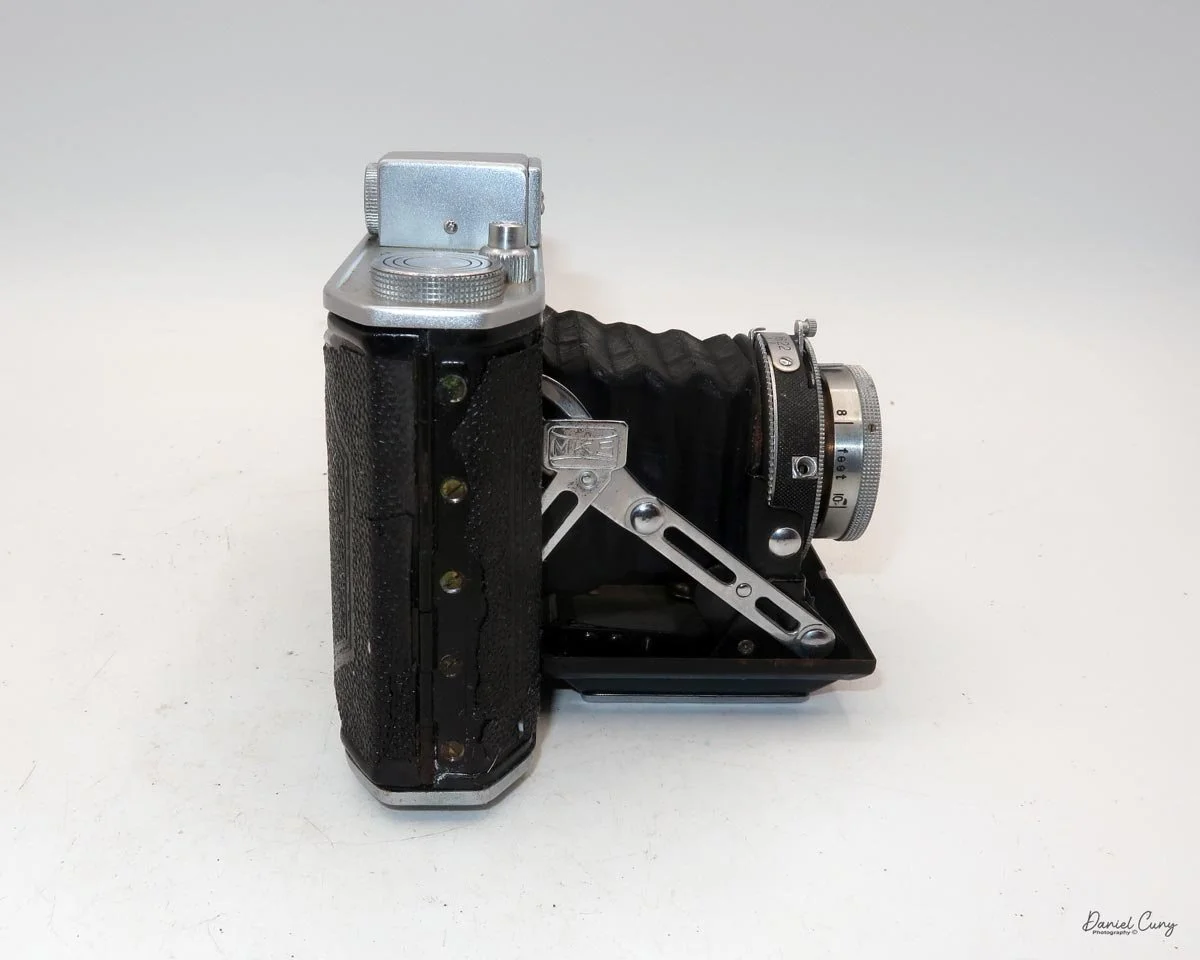
 Built in the early 1950s, my Mizuho Six camera is 5.5" wide, by 4" tall, by 2" deep with the lens closed, and 4" deep when the lens is extended into the taking position. The camera weighs 1 pound, 7 ounces without film loaded. The camera's serial number is 3391. The camera also has "Made in Occupied Japan" embossed on the side where the film door release is located.

To open the lens to take a photo, depress the small button on top of the camera located in front of the accessory shoe, and to the right of the film winding knob. Once depressed, the lens board opens, exposing the lens.

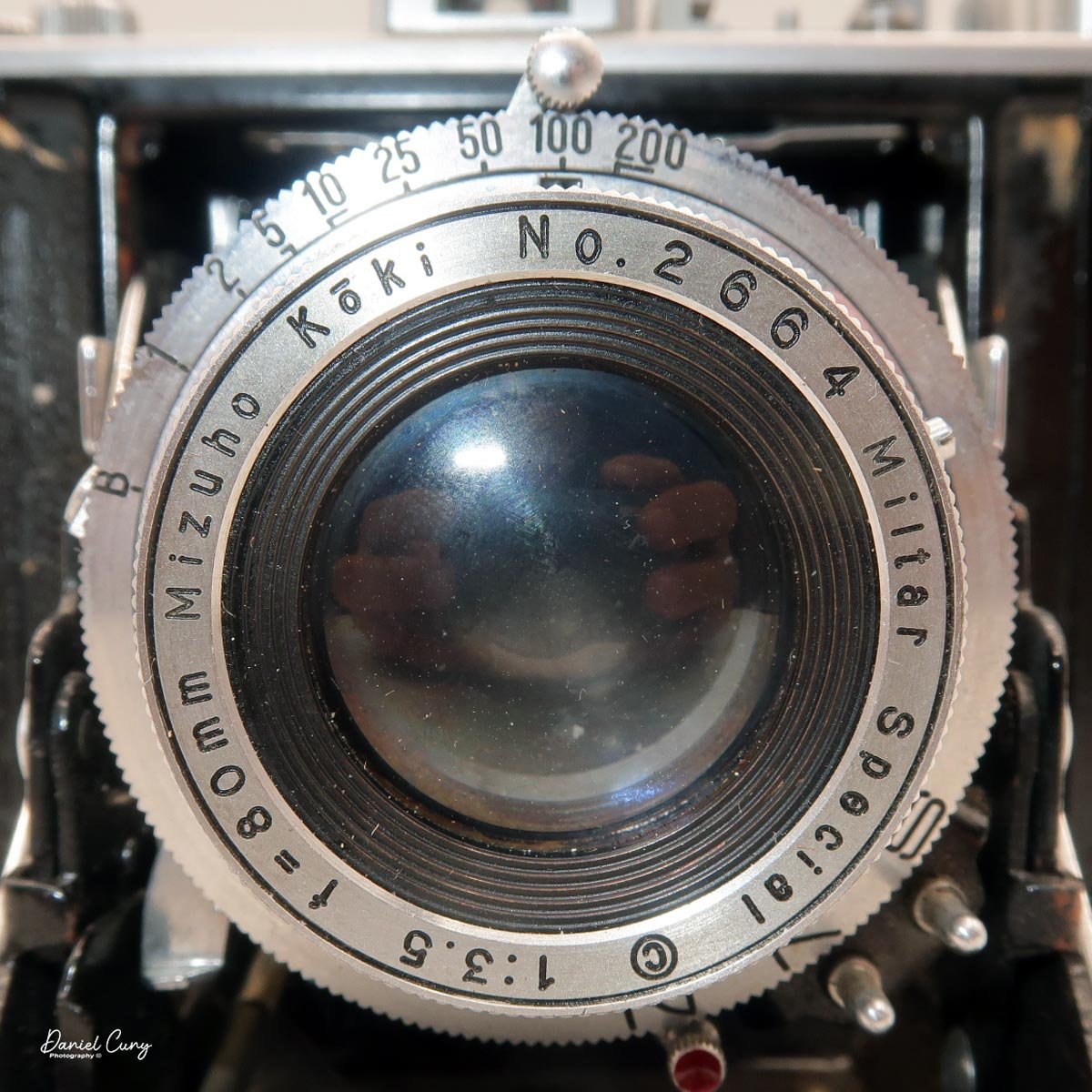
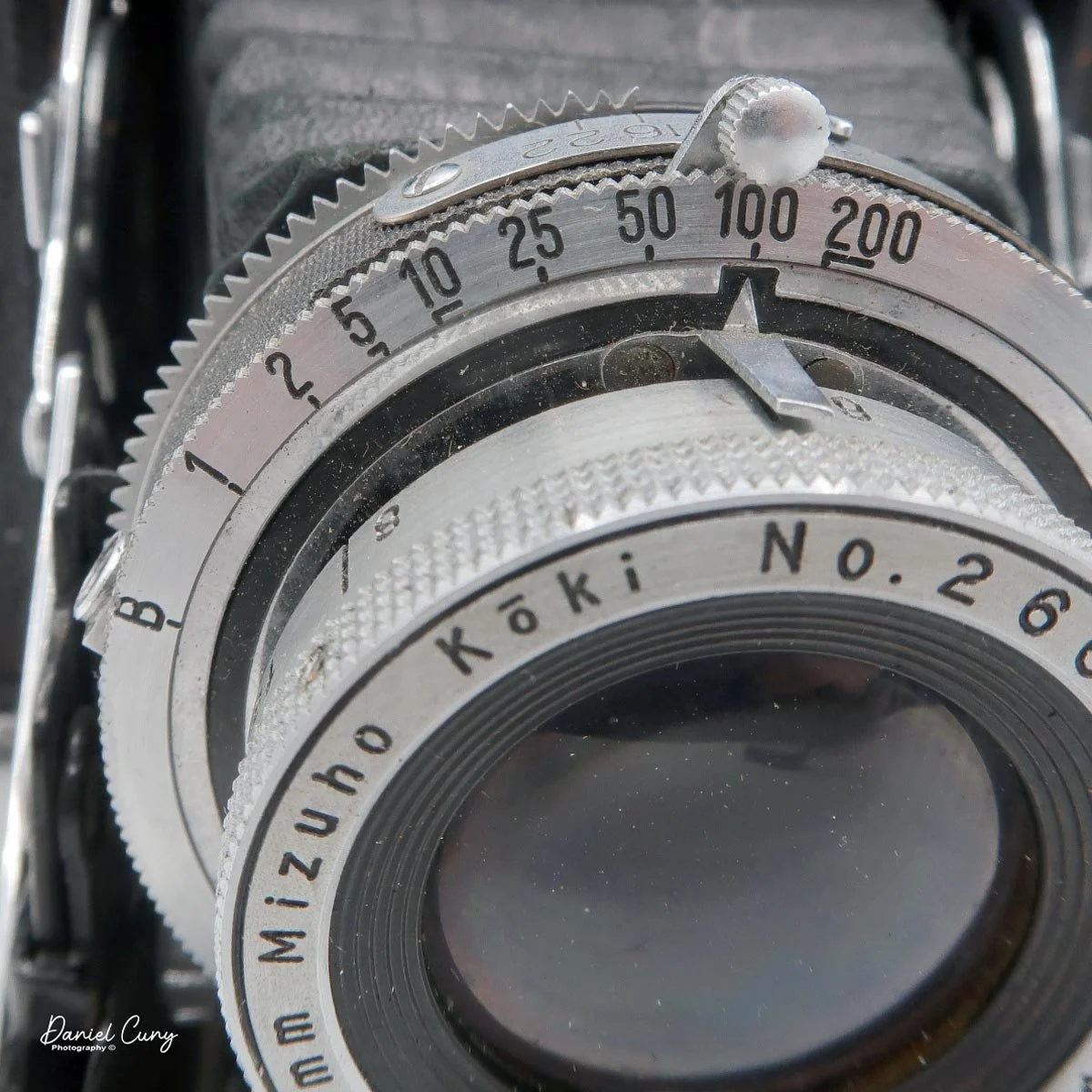
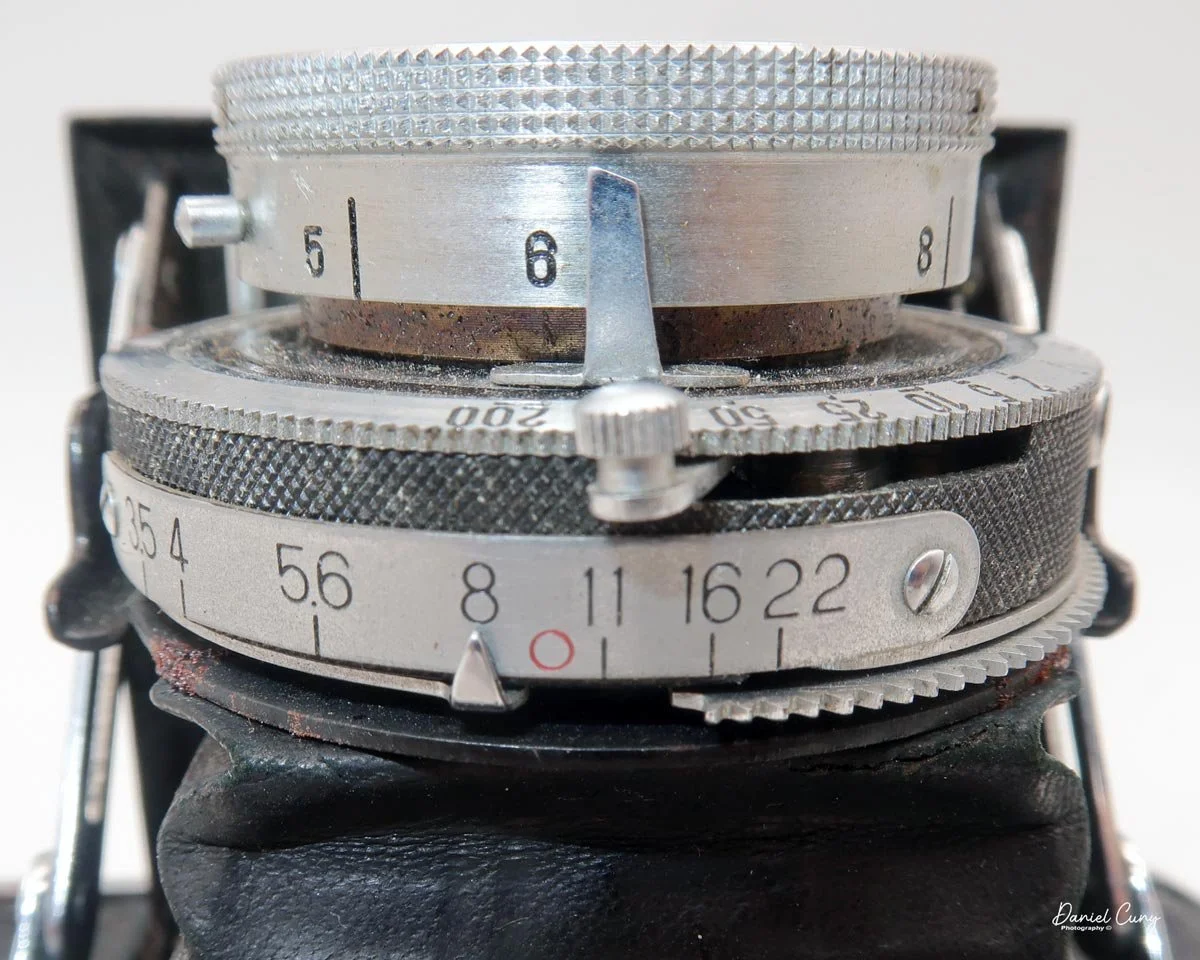
 The Mizuho Six has an 80mm Mizuho Kiko Miltar Special F/3.5 lens, serial # 2664, in an NKS shutter. The shutter speeds range from 1/200 to 1 sec, along with "B" for timed exposures. The shutter speed is set by turning the shutter speed dial around the lens to the desired speed. The shutter release is located on the top, right side of the camera, just in front of the "Mizuo-Six" name and serial number.

 The aperture is set similarly by sliding a knurled ring around the lens to the desired aperture, which ranges from F/3.5 to F/22.

It wasn't until I shot my first roll of film through the camera that I realized the shutter wasn't working properly, so I'll need to either get it fixed or sell the camera with the defect. The issue is when I cock the shutter, which is done with a small switch on the top of the lens, the shutter remains open until you depress the shutter release. It doesn't really "cock" the shutter as it should. 

 What I did notice was when I pulled the shutter cocking ever over to the farthest position, the shutter wouldn't open. It was when I released the lever after the cocking maneuver that the lens stayed open. If I pulled the lever all the way, held it, and then tripped the shutter release, the shutter would work as intended. This was awkward to use this way, but it's the method used to take the blog images.

 There is no rangefinder in this camera; it has only an optical viewfinder on top to frame your images. To focus on the subject, rotate the lens manually to the "guessed" distance to your subject before taking the photo.

 To close the camera for transport, depress the two enlarged tabs on the camera's struts inwards. The lens board will collapse, and you can close it back onto the camera body, which will lock it into position.

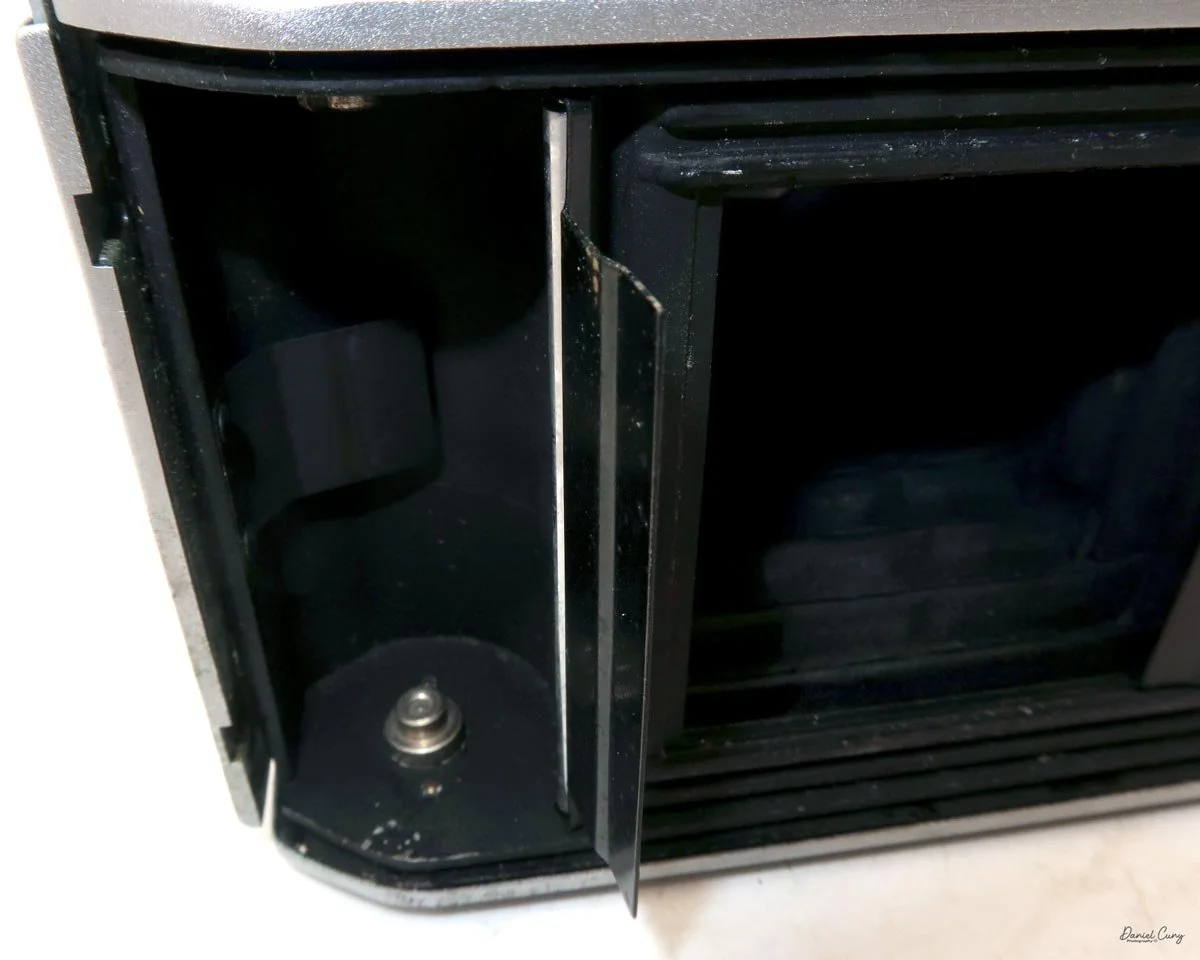
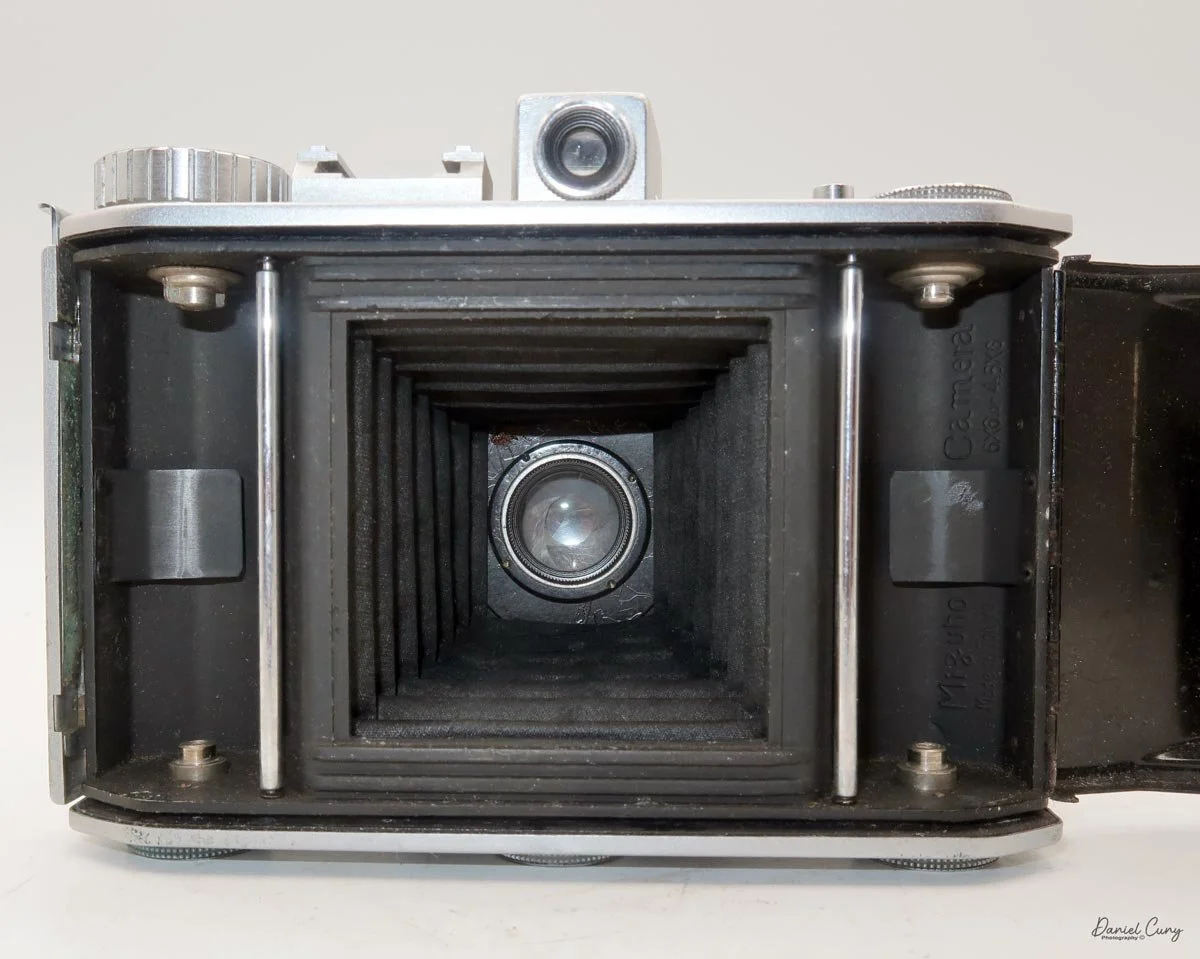
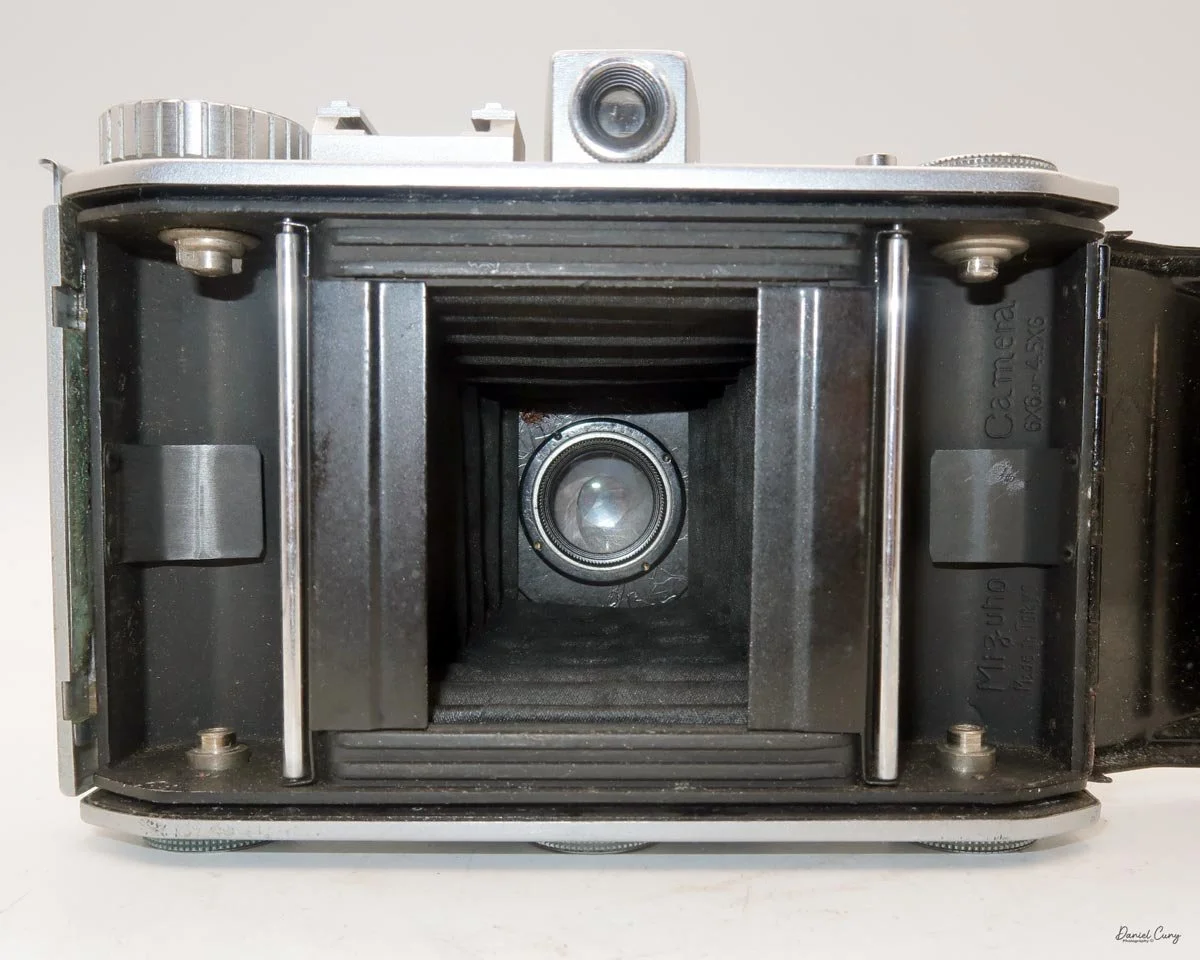
The one interesting feature of this camera is the ability to shoot either 6x6cm or 6x4.5cm. When you open the back of the camera to load film, there are two "wings" that can be pulled up from each side of the film chamber, covering a portion of the taking area and thus cropping the frame size from 6x6cm to 6x4.5cm.

 Once you make the change, you'll then use the appropriate red window on the back of the camera to count the frame numbers imprinted on the 120 rolls of film. It will also give the photographer four more images per roll, going from 12 images on a 6x6cm format to 16 on a 6x4.5 format camera. You'll need to shoot the entire roll in that format, as there's no way to change formats mid-roll.

You load the camera as you would any roll-film camera, with the take-up spool on the left side. Load the fresh roll on the right, and bring the film's leader to the take-up spool on the left,  making sure the leader is in the take-up spool. Then wind until you see the "start" arrows pointing outwards. Close the back of the camera and wind the film until you see the number 1 in the red window for the format you're using.

 Now that we have film loaded into the camera, let's take it out and see what results we get.

 My Results:

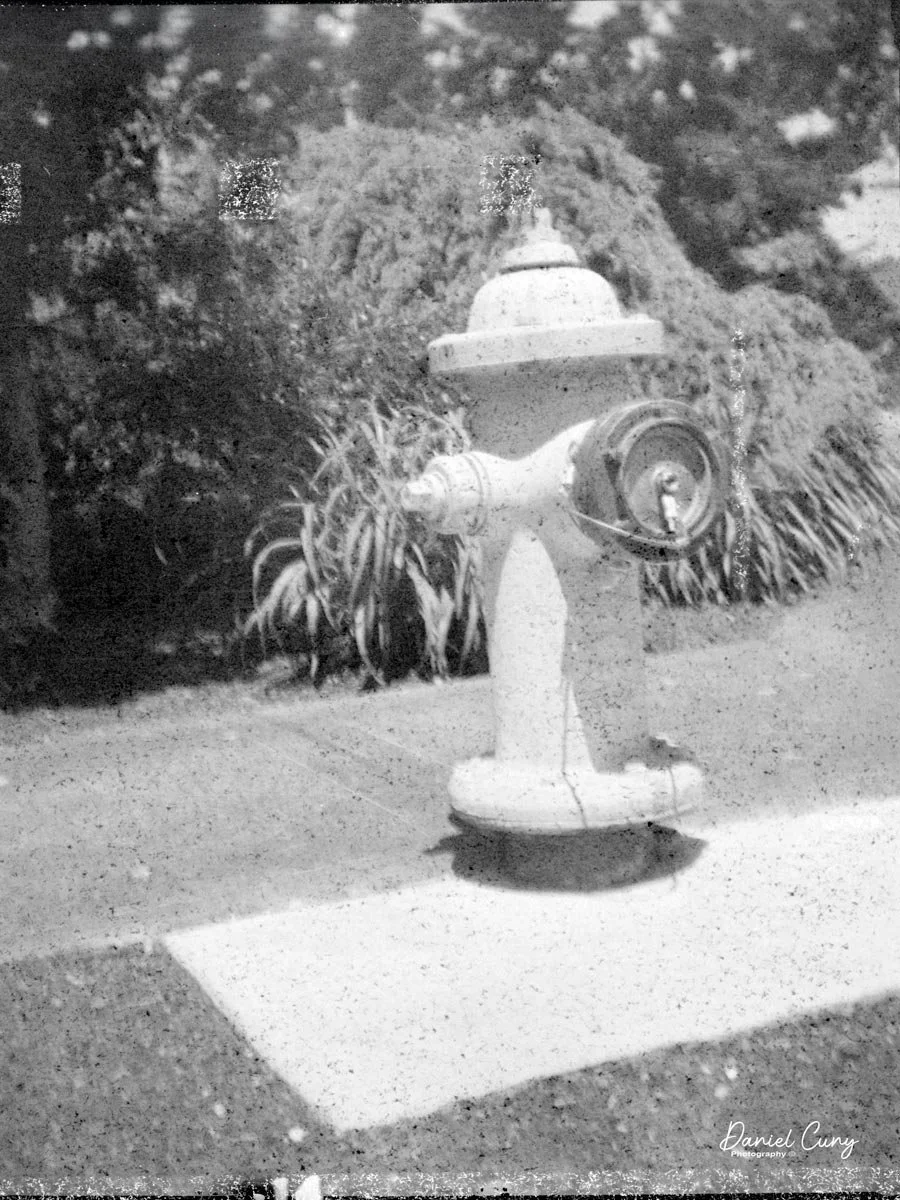
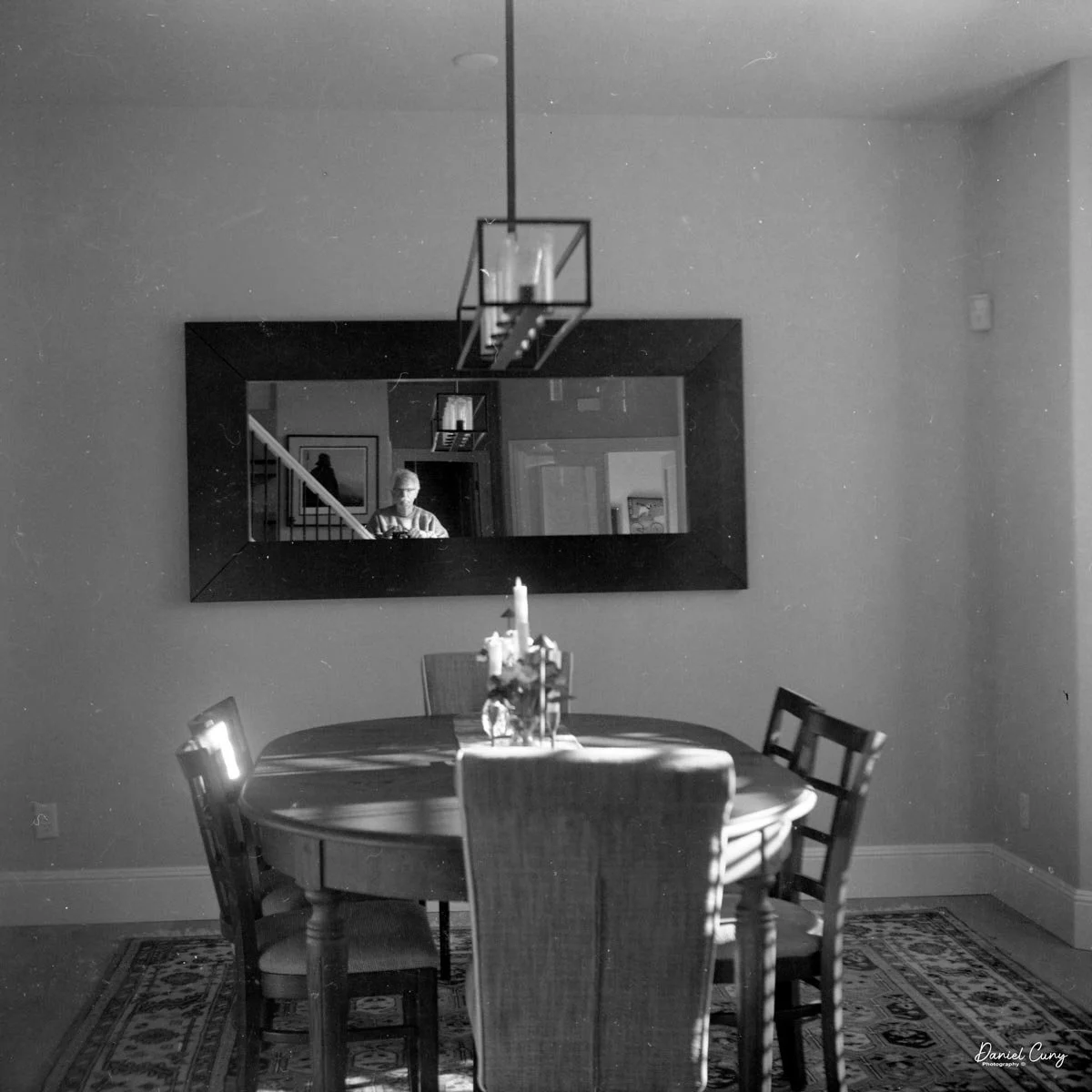
 Opening the Mizuho Six and cleaning both the front and rear elements of the lens before loading the camera. I had some T-Max 100 film that was just about out of date, so I loaded it into the camera. I chose the 6x6cm format so I could use a larger image size and assess the lens's sharpness.

 Here are the results from my walk around the neighborhood with the Mizuho Six camera

Conclusion:

 Well, I think the second roll of film turned out much better than the first roll, but I'm not overly impressed with the sharpness. This could be from a couple of different factors.

 While I cleaned the lens as best I could, it still seems to have some haze. The second factor is that the lens is slightly out of registration. I'm a fairly good guesser of distance, and the lens even at infinity seems a bit out of focus. I also think that some of the issues with the focus were caused by camera movement and what I needed to do to operate the shutter.

 The camera also has cosmetic issues. Some parts of the leatherette are missing and can be easily replaced. Given the shutter issues and the lenses' haze, this may not last long in my collection, and you'll probably see this in my online store soon.

 On the plus side, the camera can shoot in different formats, which is a nice feature, but I don't think it's going to overcome the camera's faults. It's a fun camera to shoot with, and I was happy to learn more about this camera.

 Thank you for taking some time from your busy day to learn a bit about this little-known camera from the beginning of the Japanese camera revolution.

 Here's a link to my other Camera Reviews.

 Cuny's Cameras and Photos is my online eBay store where you'll find some of the cameras I reviewed for sale, along with many other cameras, lenses, and photo items from my collection.

 Until next week, please be safe.
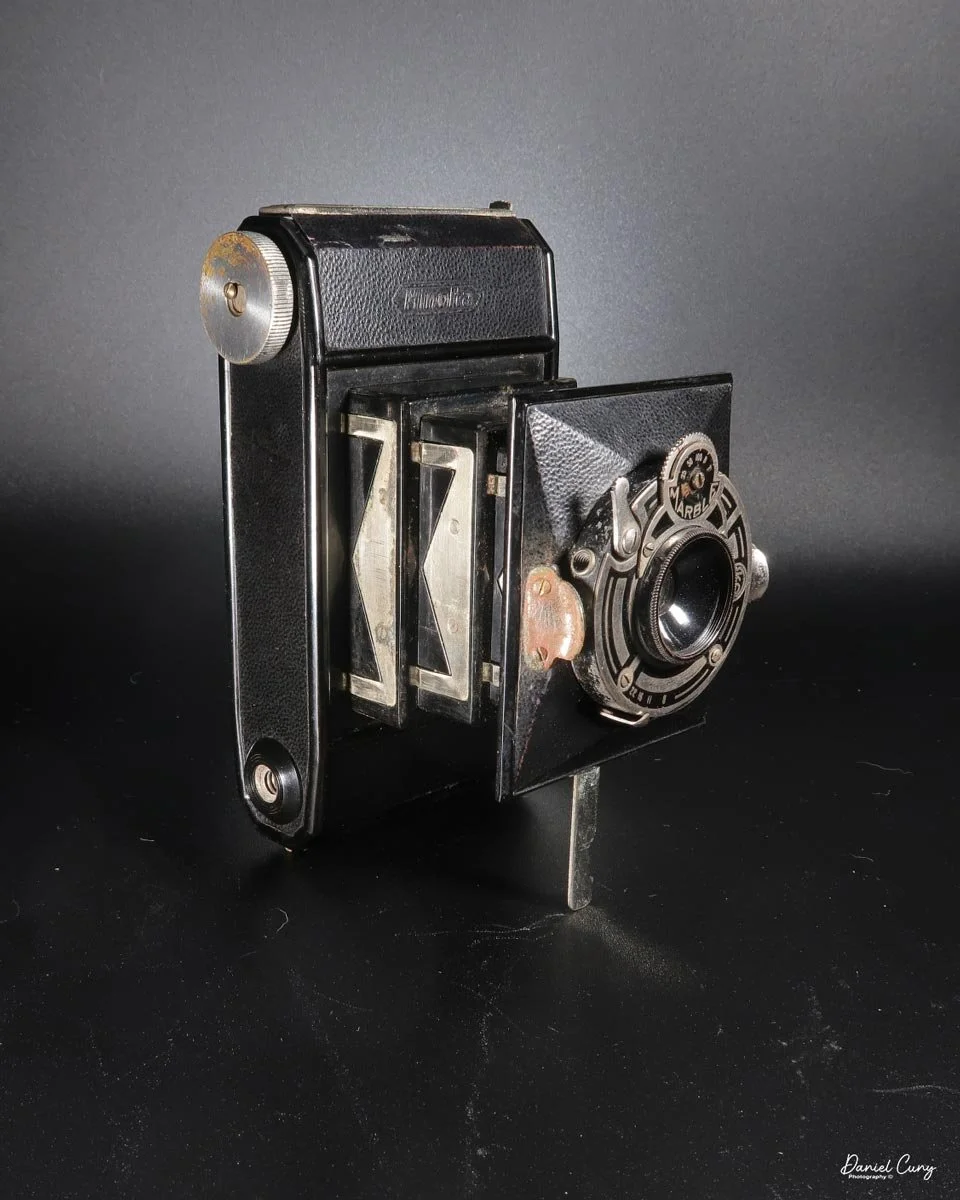
Minolta Vest camera

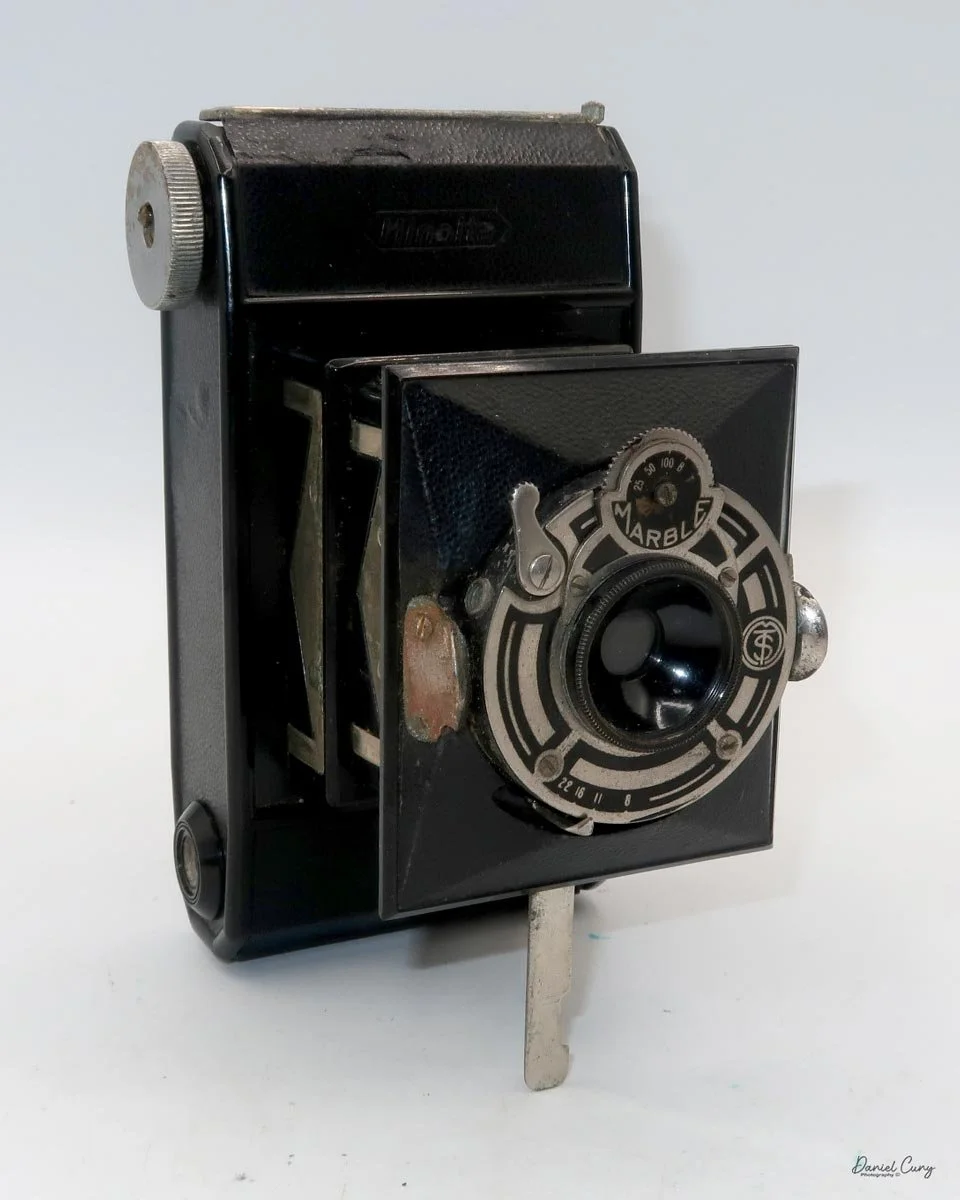
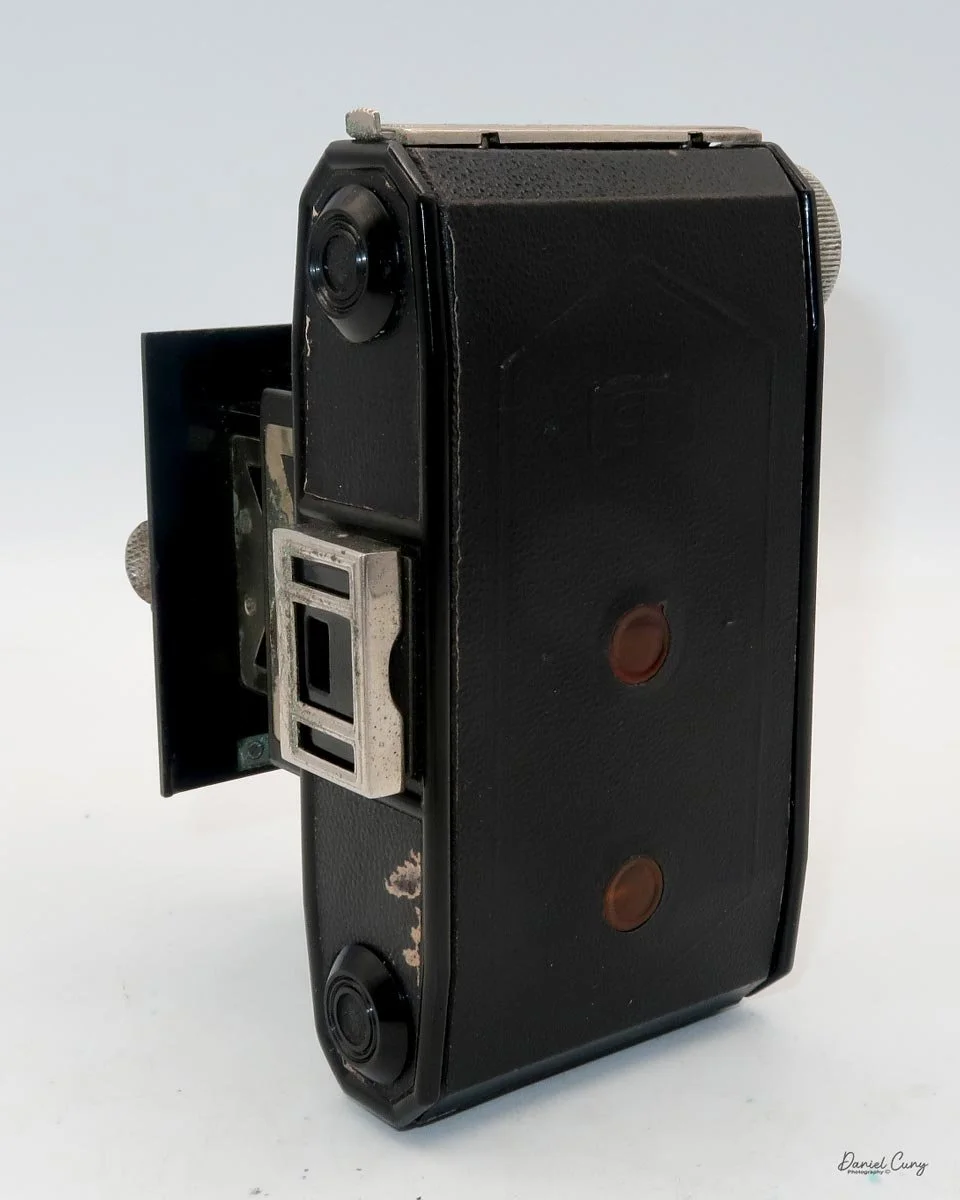
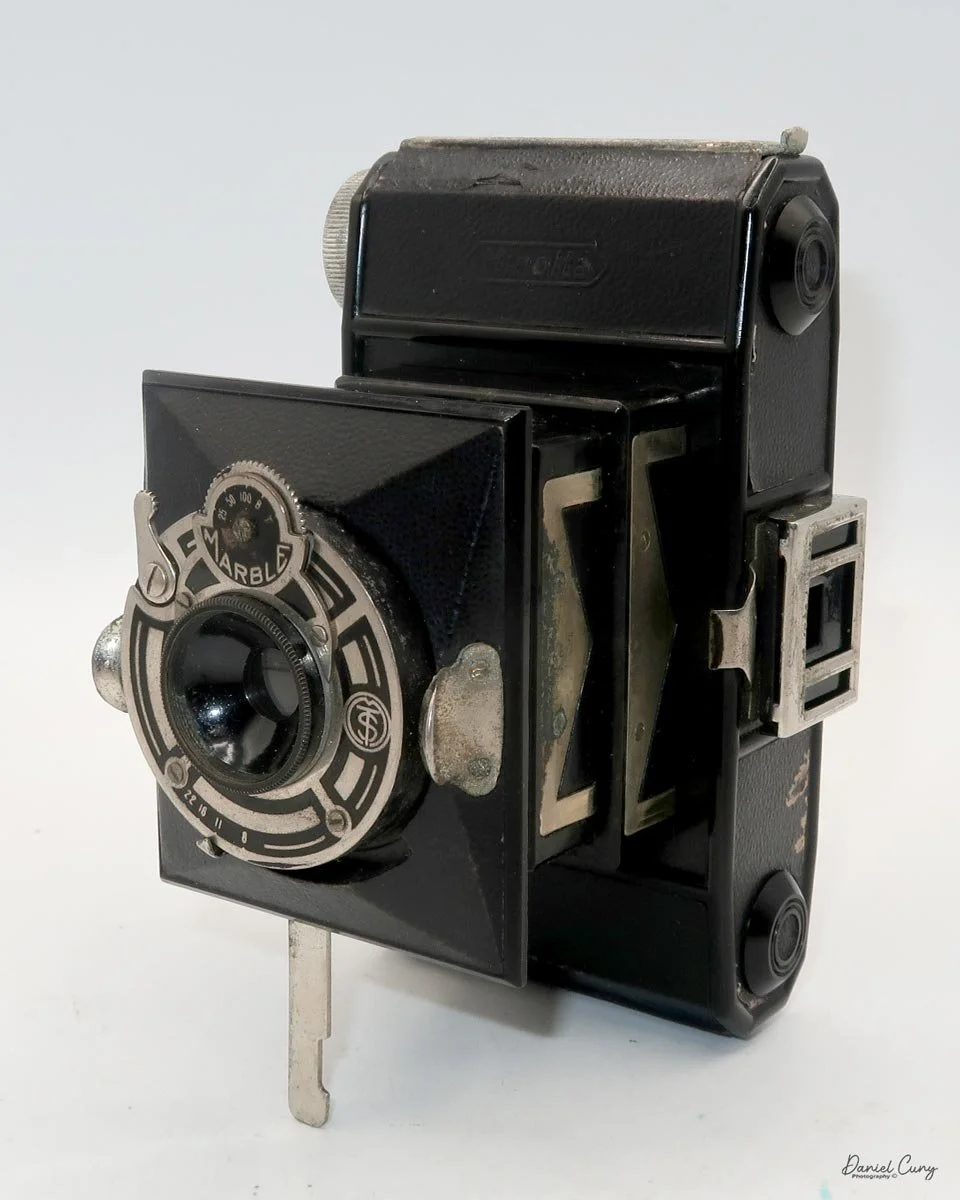
My Minolta Vest camera

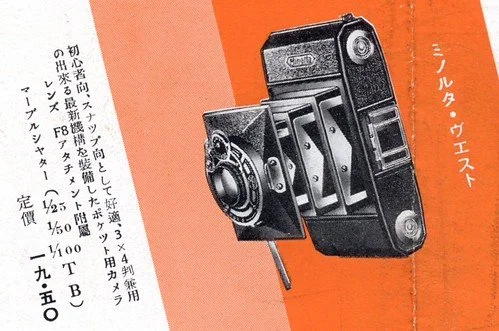
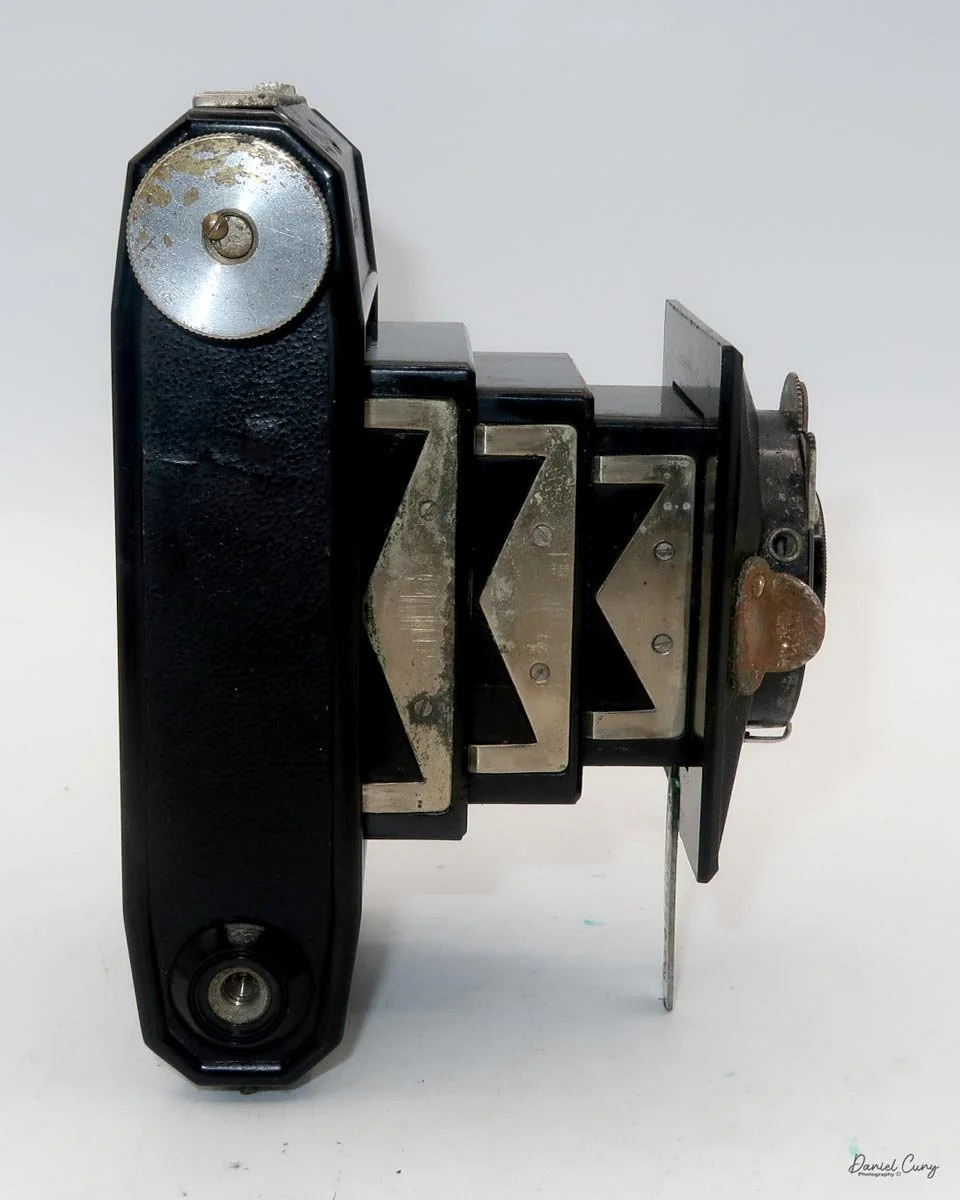
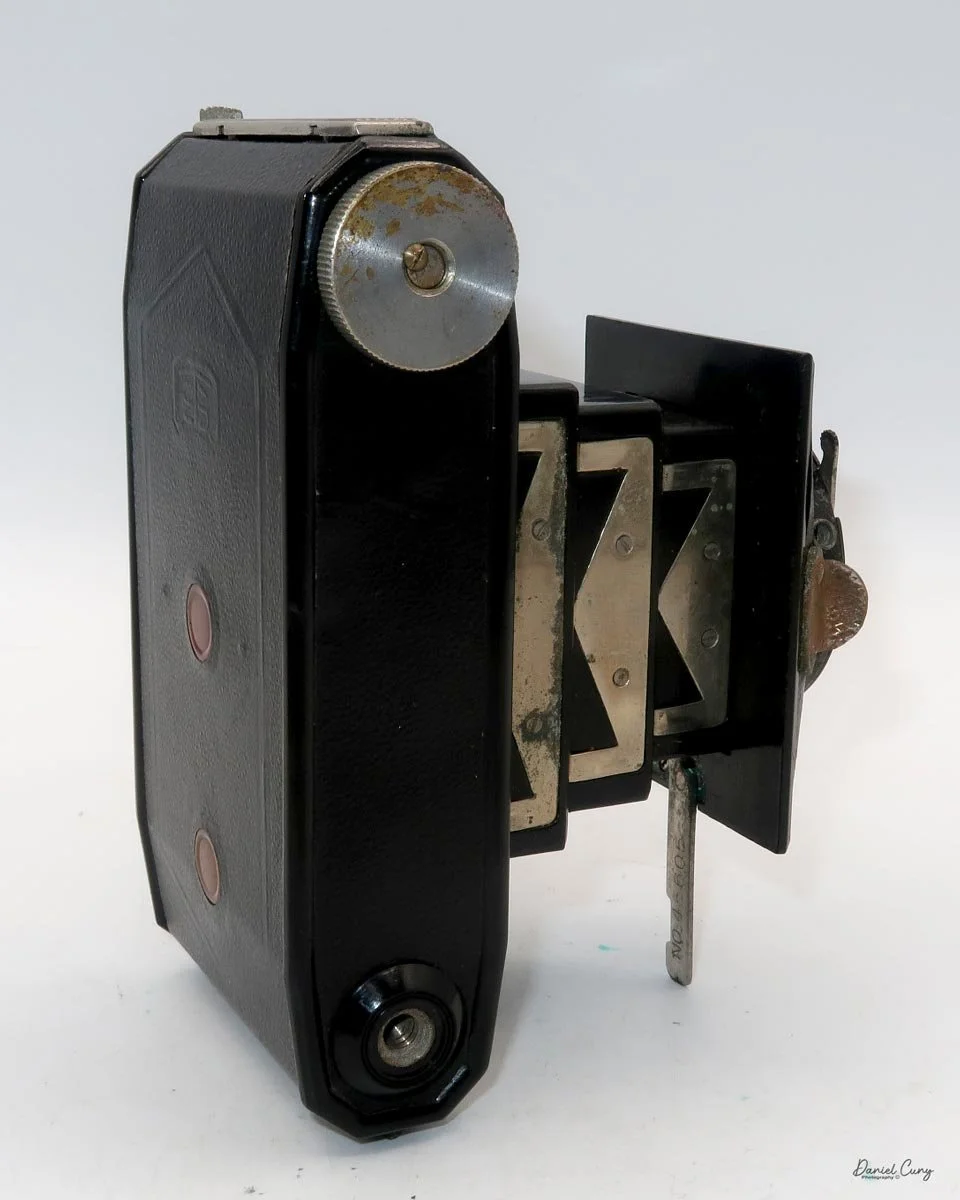
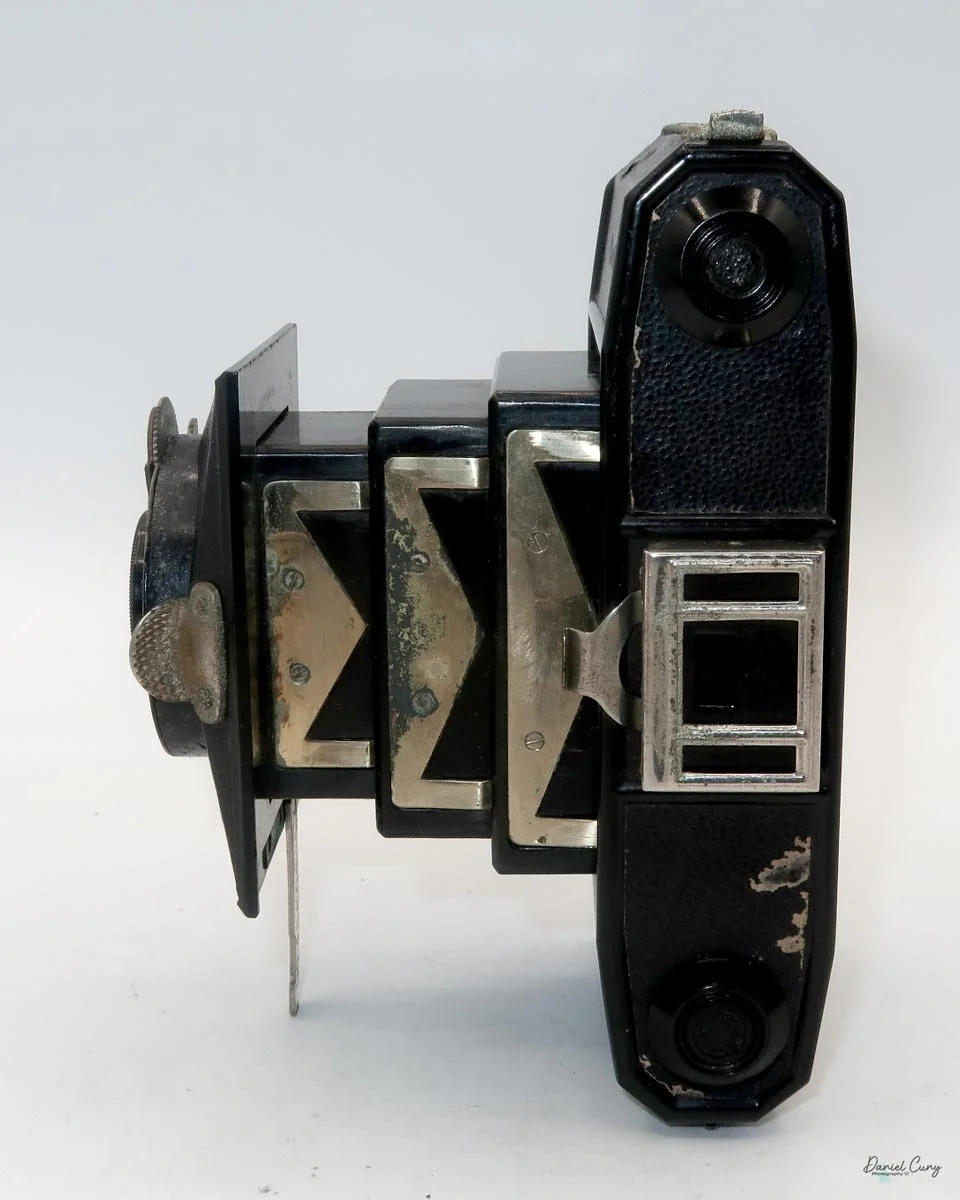
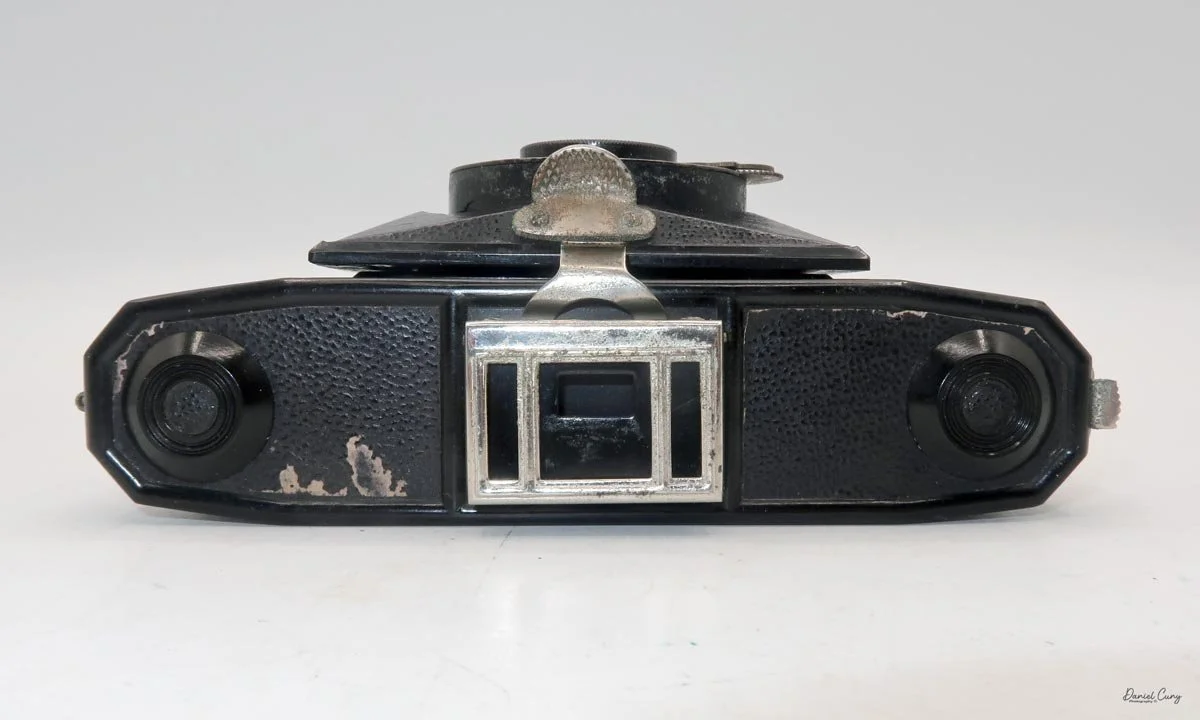
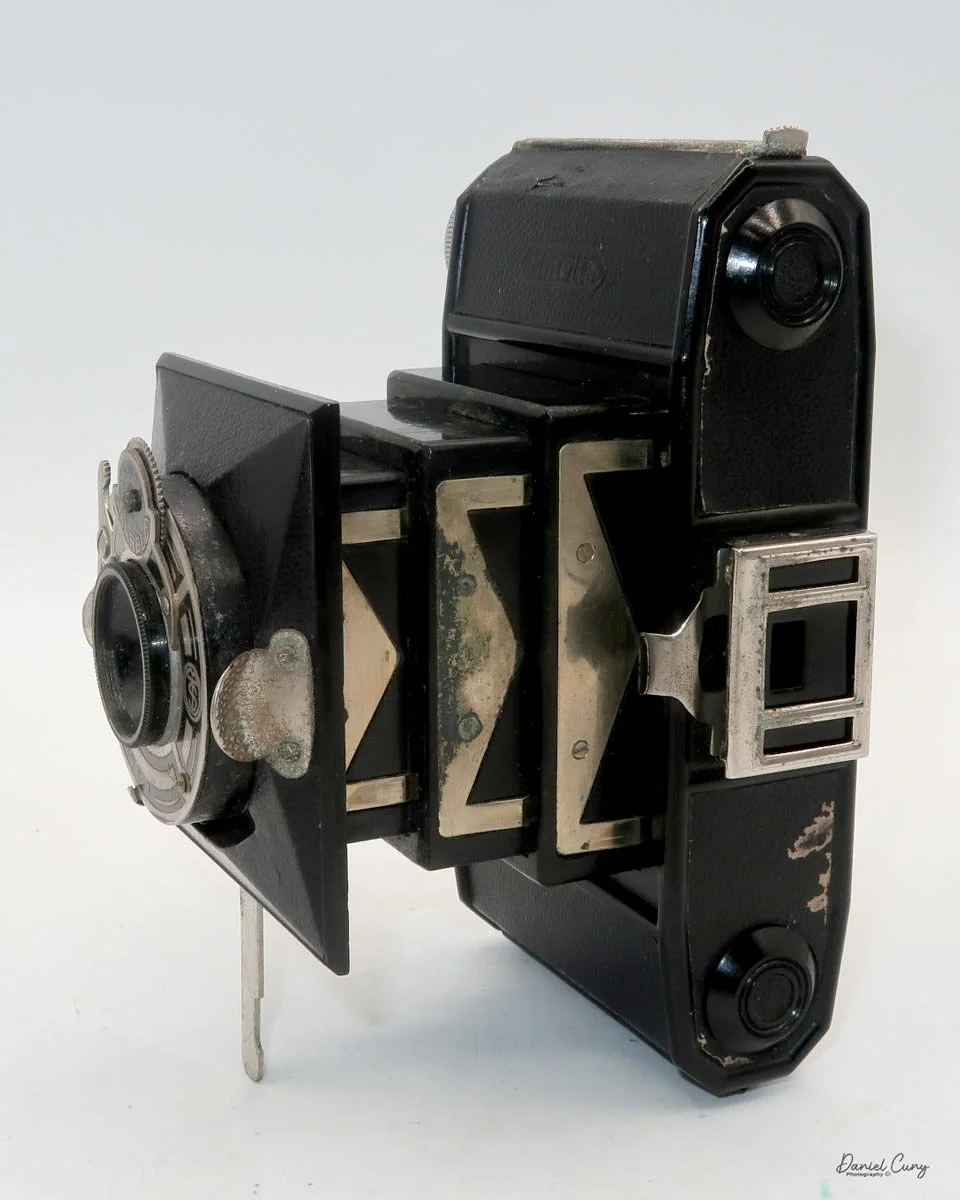
My interest in the Minolta Vest began a few months ago when I saw a post on Facebook. What I like most about the camera is its similarity to the Minolta Six. Both cameras use a three-tier, stacked metal bellows system that extends and collapses, unlike the standard cloth- or leather-covered cardboard bellows found on most cameras.

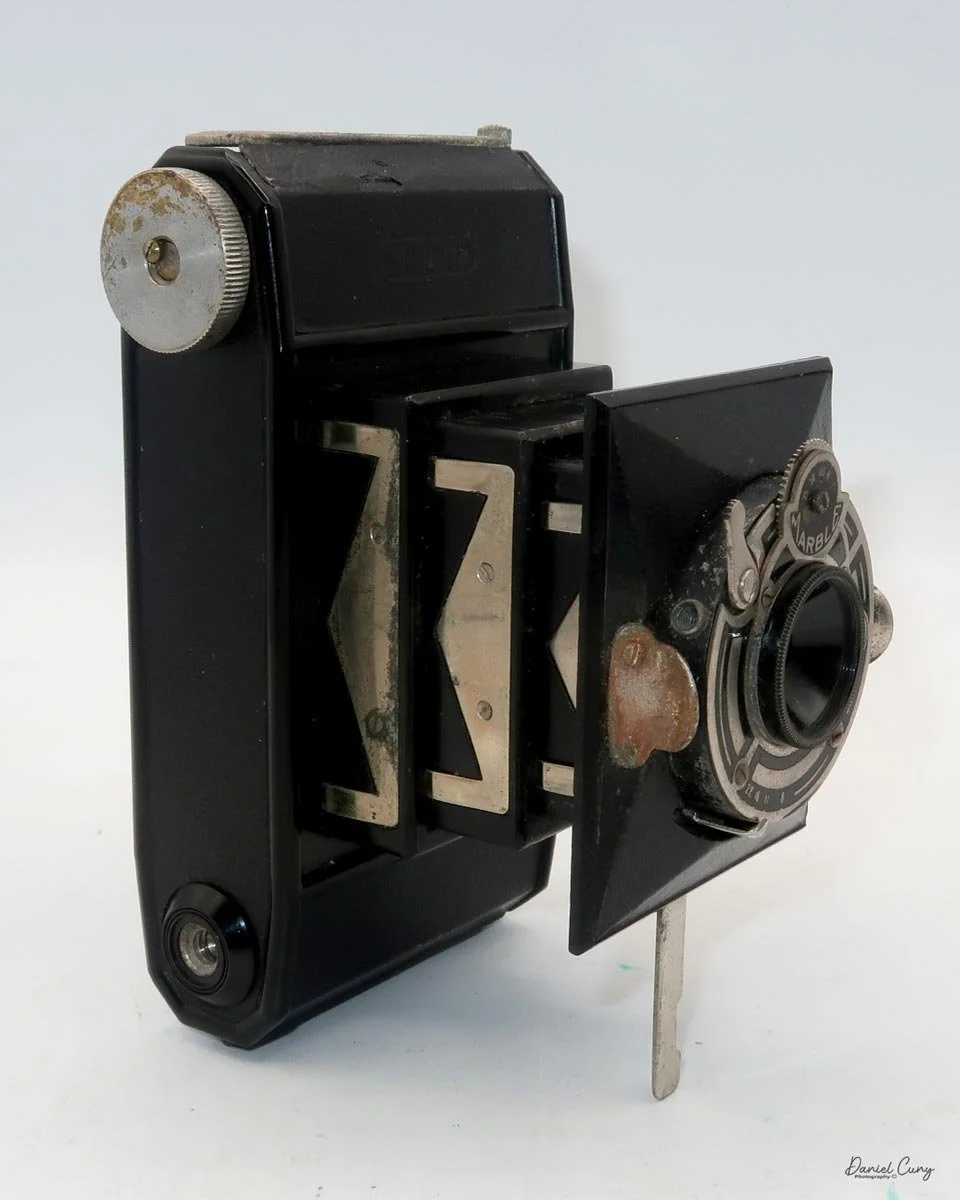
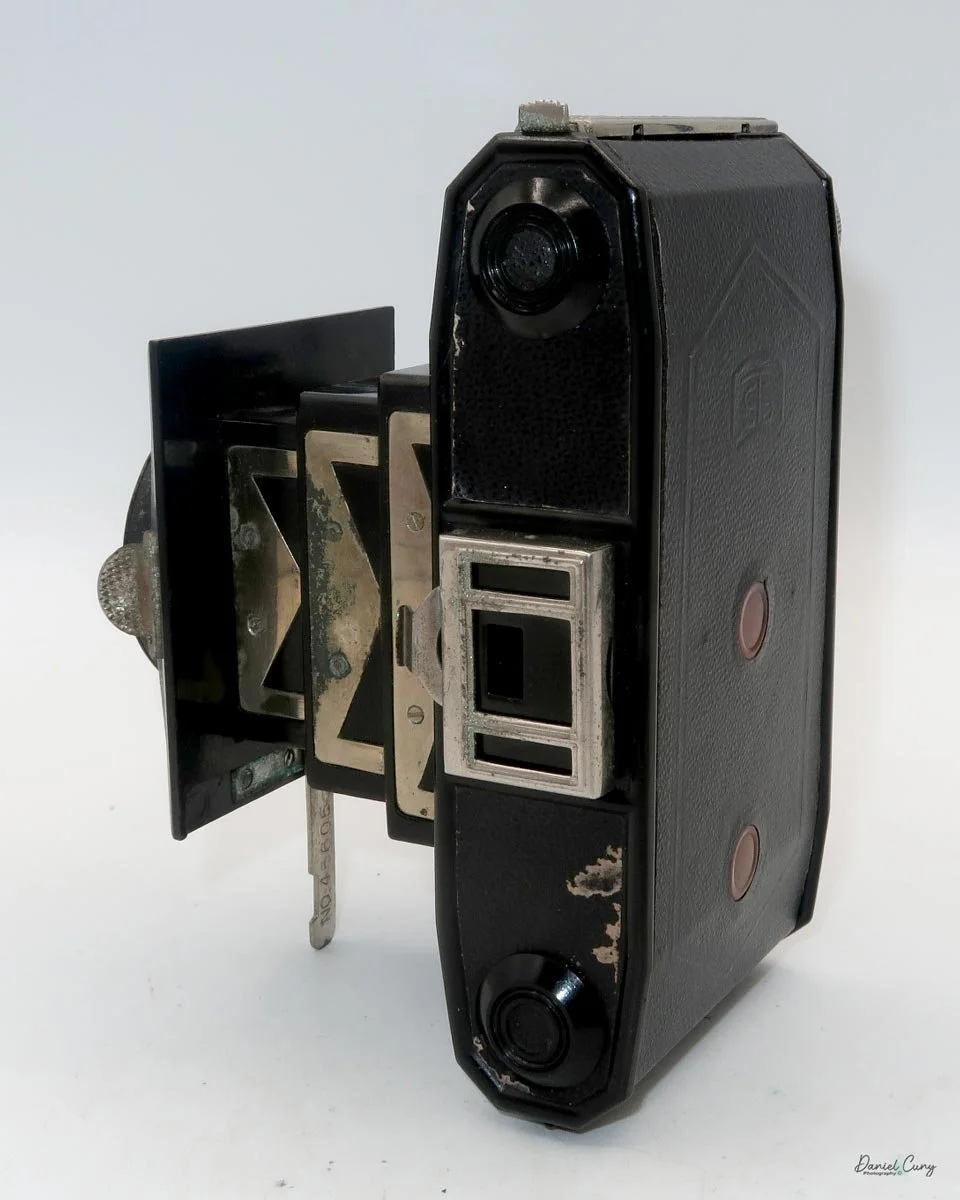
 When I first pulled out the lens on either the Minolta Six or the Minolta Vest, the metal stacking bellows reminded me of a Japanese pagoda. Both cameras have a beautiful chrome pattern set against stark black Bakelite, giving them a strong Art Deco appearance. It's the artistry and attention to detail that you don't see in cameras produced today.

 Knowing about this early Minolta camera with metal stacking bellows, I made a point of keeping an eye out for one during my trip to Tokyo a few weeks ago.

 Fate was on my side, and I found a Minolta Vest in decent condition at the Tokyo City flea market. As I walked past one of the many hundreds of stalls, I noticed one of the vendors had a few cameras on his table. When I picked up the camera, I saw the Minolta name embossed on the back. Then, as I pulled the lens away from the camera body and the metal stacked bellows appeared, I was filled with excitement and joy.

Minolta Vest rigid stacking bellows that resemble a Pagoda

 There are two metal grips on either side of the lens that you use to pull it away from the camera body. The stacked bellows were somewhat stiff, with a bit of corrosion on the chrome, but with a little coaxing, the lens fully extended. I played with the shutter system, and it fired, but inconsistently. Sometimes the shutter would fire when the release was pressed, and sometimes it wouldn't. That was a bit of a disappointment, but not a dealbreaker.

 The lens appeared to be fine, and the aperture moved smoothly as it opened and closed. The lens was a bit difficult to return to the closed position, as I expected due to bellows corrosion, but with a bit of effort, it did retract.

 There were a few other cameras I was interested in on his table, so I gathered the two or three items I wanted and asked for the price. After a bit of negotiating using my phone to translate, we agreed on a price. I put the items in my backpack and, with a grin on my face and knowing I'd be writing a blog post about the camera, wandered off to see what other treasures I could find at that terrific, bustling flea market.

Early History

 Minolta began as a small but ambitious Japanese camera business in 1928, founded by Kazuo Tashima under the name Nichi-Doku Shashinki Shōten. From the start, the company was shaped by a fascination with German optics and camera design, and its earliest products reflected that influence. In 1929, Minolta introduced its first camera, the Nifcalette, a folding roll-film model that showed the company's early dependence on imported components and foreign technical models. Even so, it marked the beginning of a distinctly Japanese camera maker that would soon develop its own identity.

 The company adopted the name Minolta in 1931, a move that signaled a more confident and modern direction. The name was meant to evoke mechanisms, instruments, optics, and lenses, and it captured the firm's growing ambition to become more than a reseller of products influenced by foreign markets. During the early 1930s, Minolta gradually moved from imitation toward originality, developing folding cameras that were practical, attractive, and increasingly self-reliant in design. By 1933, the company had introduced its first camera under the Minolta name, a moment that helped establish the brand as a serious presence in Japan's emerging camera industry.

Advertisment for Minolta Vest

 Before World War II, Minolta was still a relatively young company, but it was already building the foundations of its future reputation. Models such as the Minolta Vest in 1934 and the Minolta Flex in 1937 demonstrated the brand's expanding technical range. The Flex was especially notable as Japan's second twin-lens reflex camera, placing Minolta among the more innovative camera makers of the era. These prewar years were important not because Minolta dominated the market, but because they revealed a company learning quickly, adapting foreign ideas, and steadily refining its own manufacturing skills.

 World War II disrupted Japanese industry, and like many camera makers, Minolta faced a difficult transition as the country shifted toward wartime production. After the war, the company entered a new phase of growth. Japan's postwar recovery created strong demand for precision optical equipment, and Minolta was well-positioned to benefit. In the 1950s, the company moved into 35mm camera production, a crucial step that aligned it with the global photography market. Minolta's postwar cameras gained attention for their solid engineering and user-friendly design, helping the brand earn a stronger international reputation.

 Over time, Minolta became known for more than just reliable film cameras. It developed a reputation for innovation in metering, automation, and eventually autofocus, especially in the late twentieth century. But those later successes were rooted in the company's early decades: a period of experimentation, persistence, and gradual technical maturity. The story of Minolta before and after World War II is really the story of a company that began by studying the best ideas from abroad, then turned those lessons into a lasting photographic identity.

My Camera

 The camera was built between 1934 and just before World War II, with production ending in 1940.

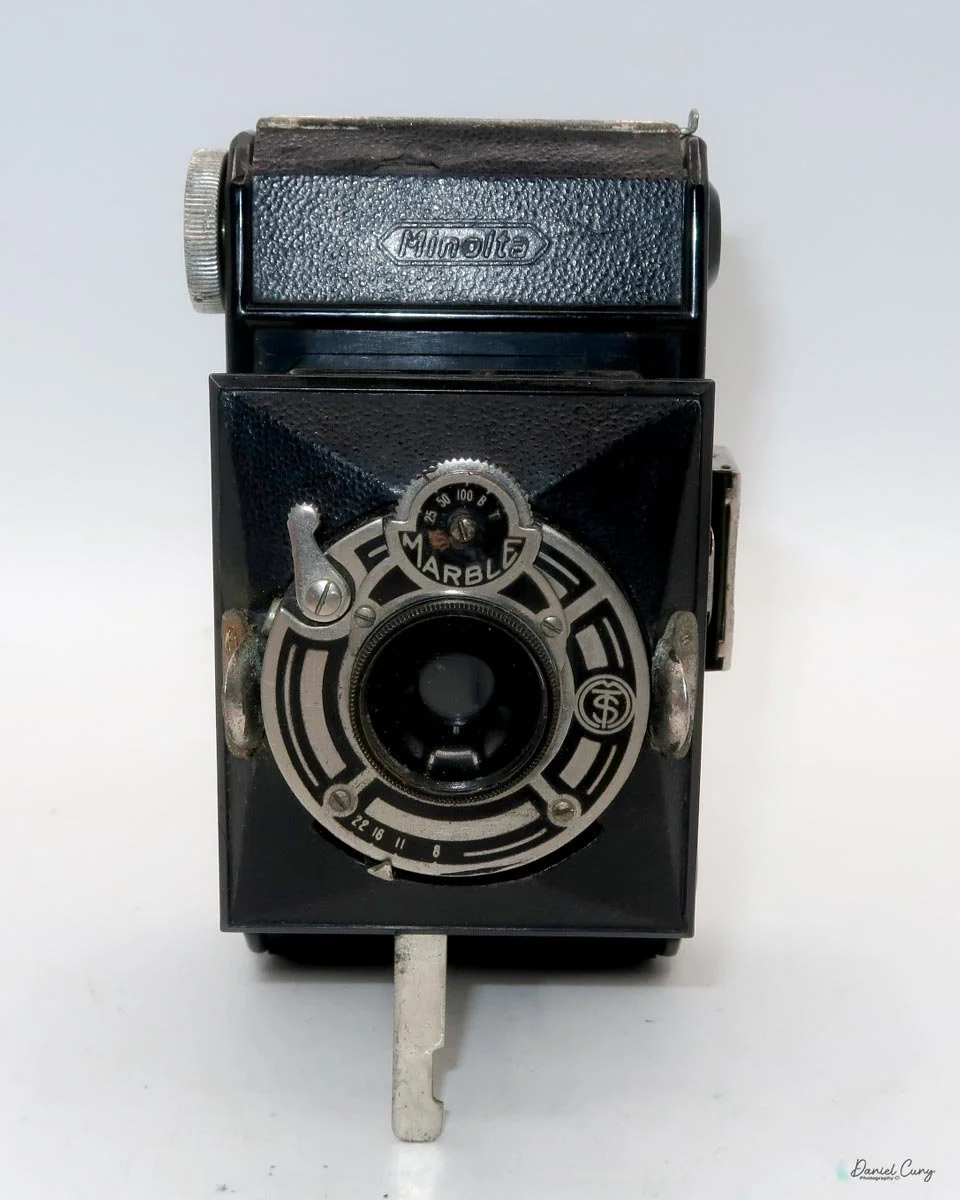
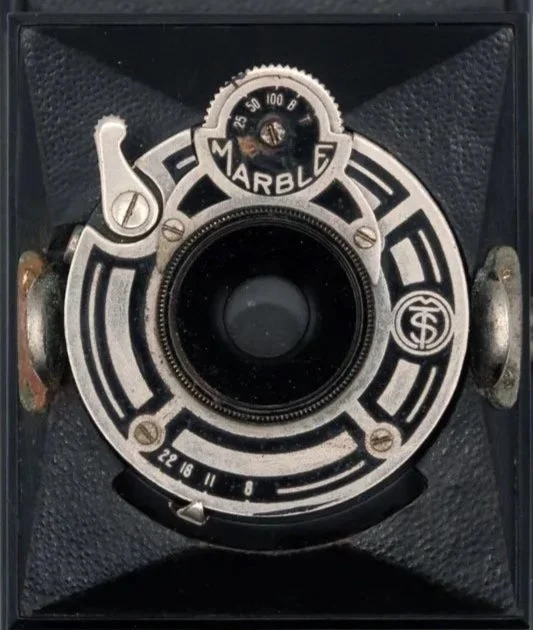
 The Minolta Vest is a fairly simple and basic camera. There aren't many frills, except for the beautiful three-tier stacking bellows system. The camera is one of the early examples made from Bakelite. It is also known as the Minolta Best or Minolta Marble, due to the prominent Everset Marble shutter on the camera's face.

It's also a compact camera, measuring 5.25 inches wide by 3 inches tall without the metal viewfinder extended, and 4 inches with it extended, by 2 inches deep with the lens retracted into the camera body, and 3.75 inches with the three-tier Bakelite bellows extended. 

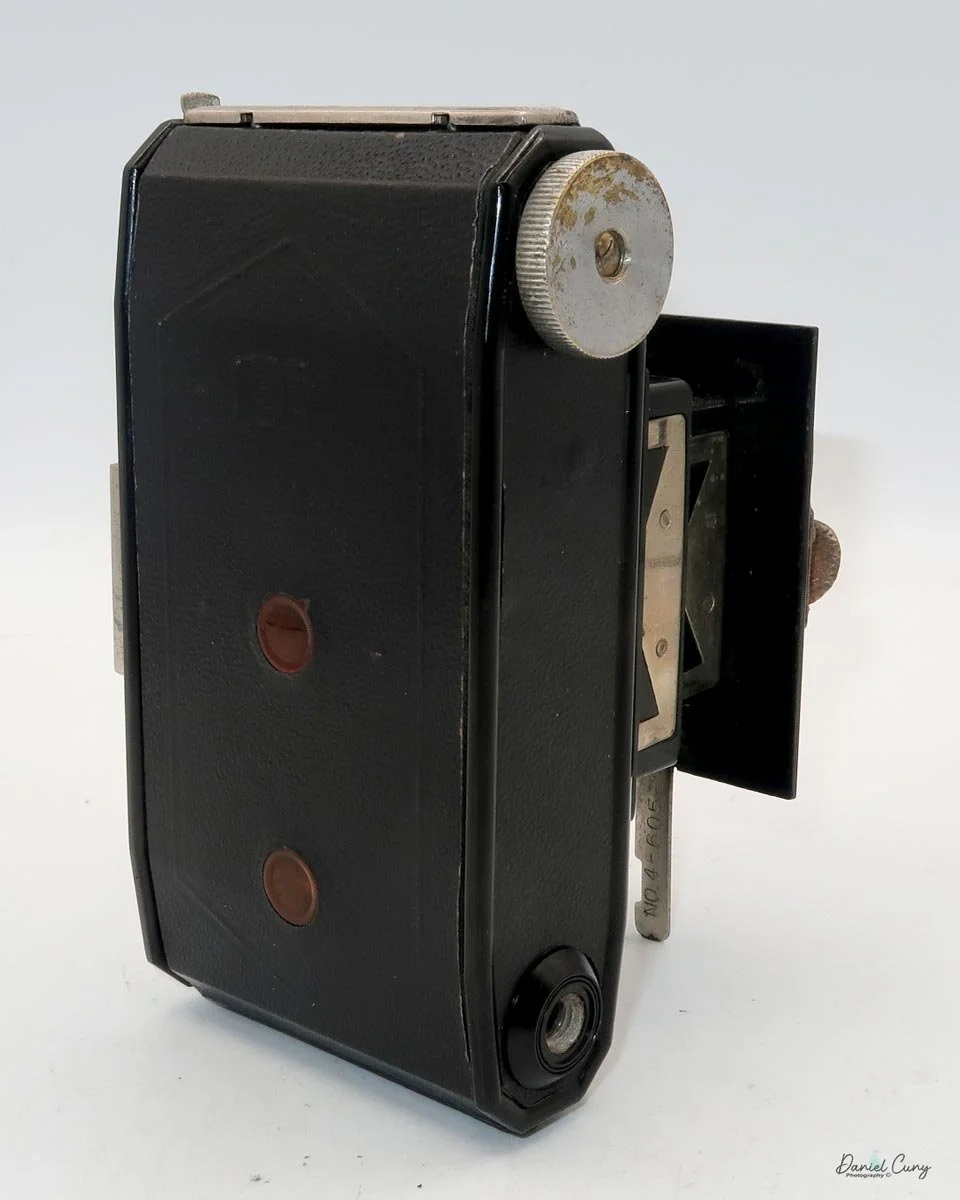
The Minolta Vest camera's serial number is stamped on the leg that extends, allowing the camera to stand vertically. My camera is serial number 45605.

 The Marble shutter has three shutter speeds: 1/100, 1/50, and 1/25, along with B and T. The shutter is set via a wheel on the top of the lens, and it's just to the right of the lens as you're holding it to take a photo. As mentioned previously, my camera's shutter doesn't fire consistently. It works best at 1/100 and fires pretty regularly at that speed. At 1/50 and 1/25, it takes two or three tries for the shutter to fire, so I'll need to keep that in mind when I take the camera out for a shoot.

Shutter release, shutter speeds, and aperture settings on the Minolta Vest camera

The nondescript lens, which I'm guessing is approximately 75mm, has a maximum aperture of f/8 and extends to f/22. The aperture is set via a sliding lever under the lens.

I believe my camera is one of the earlier examples because the shutter looks different from those on others I've seen. There is no "Patents Nippon" on the face, and the design has an earlier Art Deco appearance. 

 Like many earlier models, the lens is fixed focus, whereas I have seen other models with a focusable lens and a maximum aperture of f/4.5.

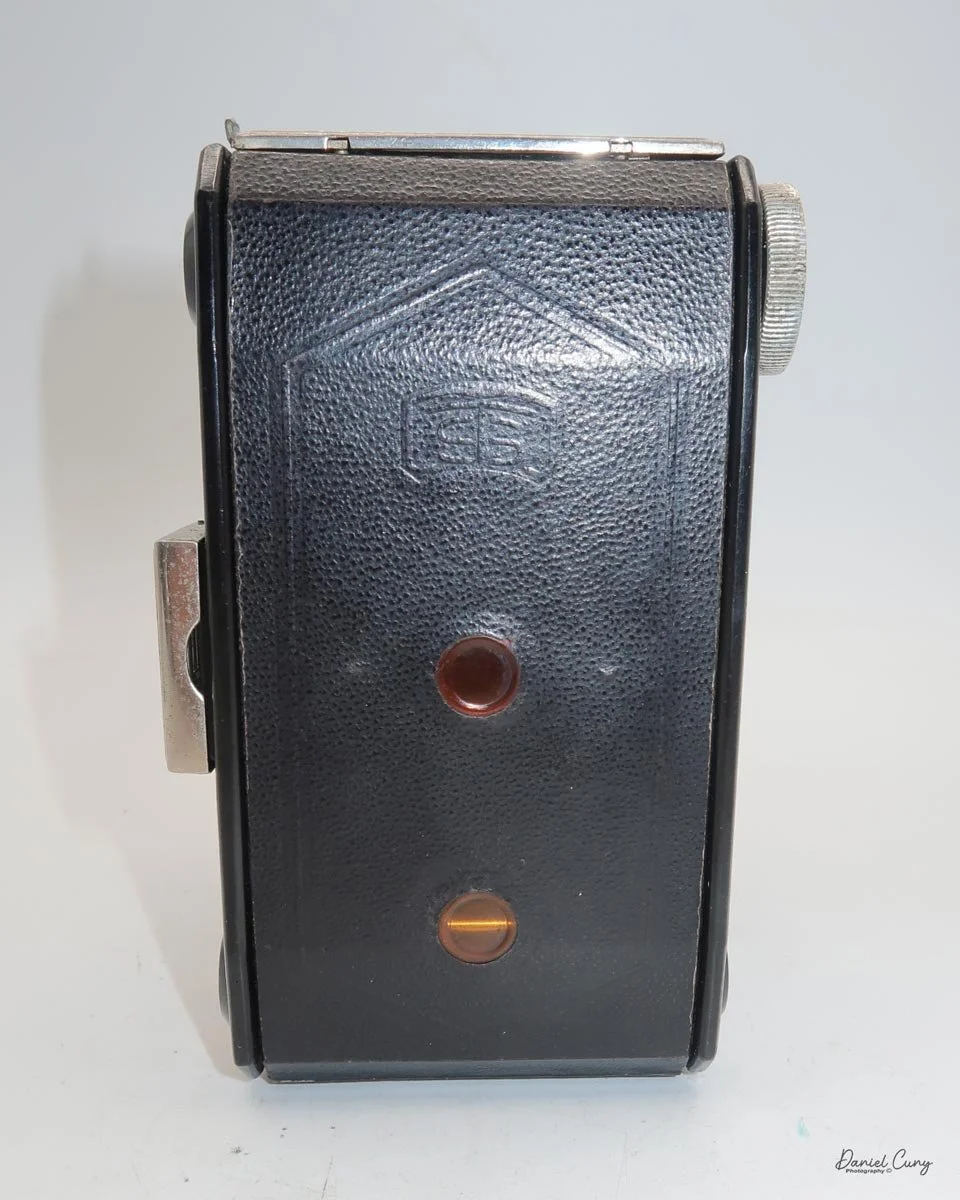
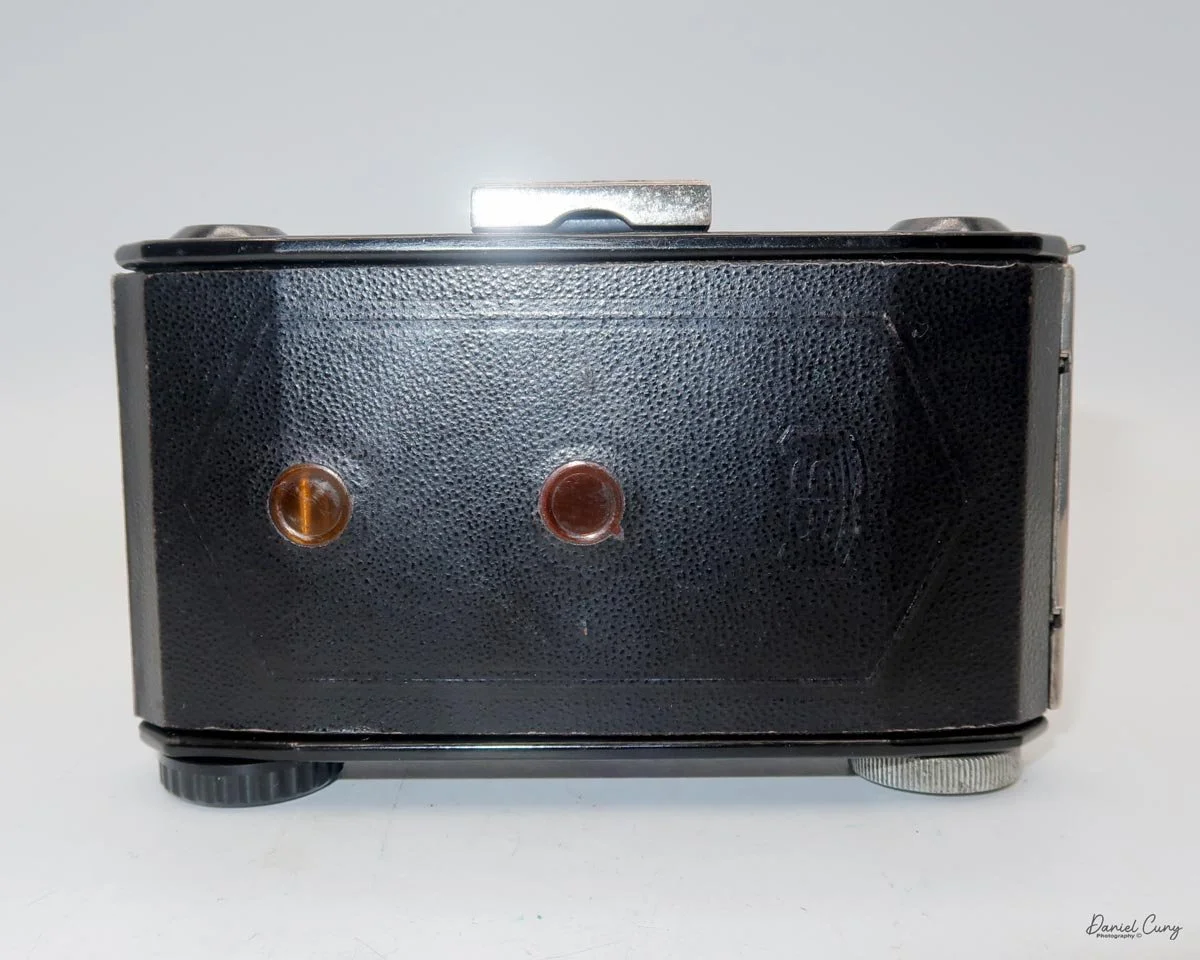
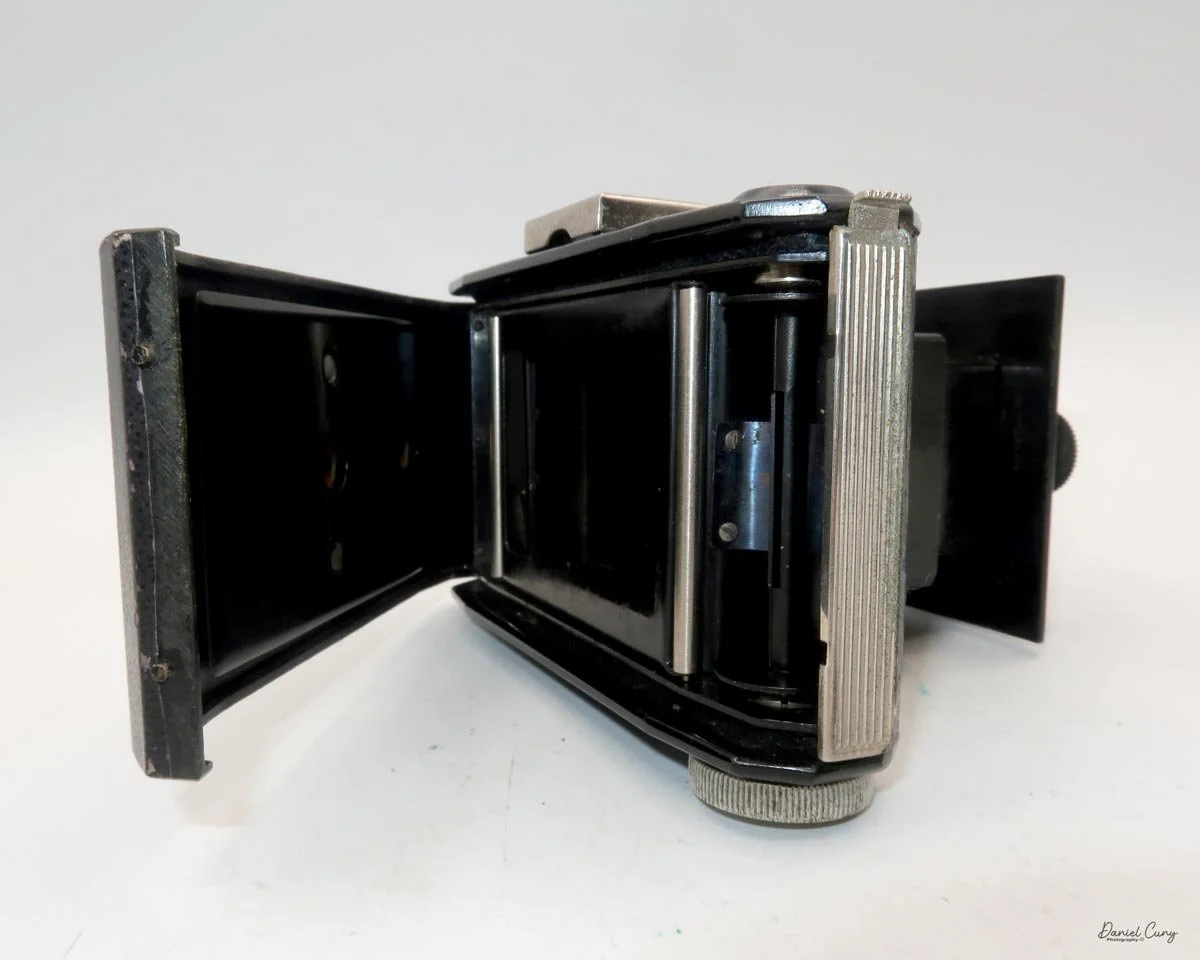
 Looking at the back of the camera, there are two red windows, which indicate to me that the film format is 3 x 4 cm. Opening the back of the camera, which is done by pulling up a small knob at the end, opens the rear door. When doing so, it shows that the camera's format is 6 x 4.5 cm, so there must have been an insert in the camera to change the format. My camera doesn't have the insert, so mine will always be 6 x 4.5 cm.

Once the back is open, you load the camera just like you would any roll-film camera by putting the empty spool on the take-up side, which has the film advance knob. Put the fresh, unexposed film on the other side, slip the film leader into the slot on the take-up reel, and wind the knob, making sure the film is transporting until you see the arrows pointing outward. Close the film back, and wind until you see the number one in the center red window.

 Now that the film is loaded in the camera and my wife and I are headed to the local farmer's market, it's time for me to take some photos and see how this camera performs.

Click on the image to view video


My Results

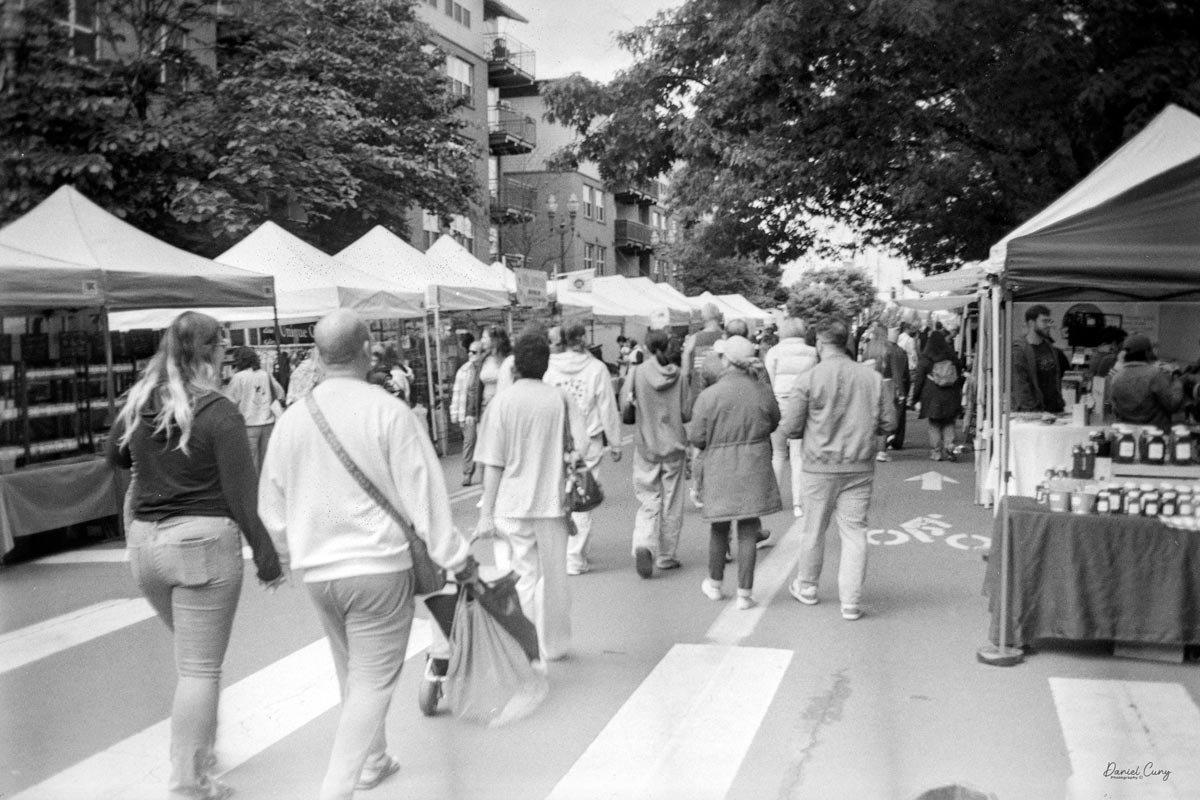
 Using a light meter and 100 ISO film in the camera, the recommended setting was 1/100 at f/7.1. I needed to fudge it a bit and shoot at 1/100 at f/8, and hope for the best.

 As previously mentioned, there is no focus on this camera, and I tried to be about 10 feet from the subjects when taking images.

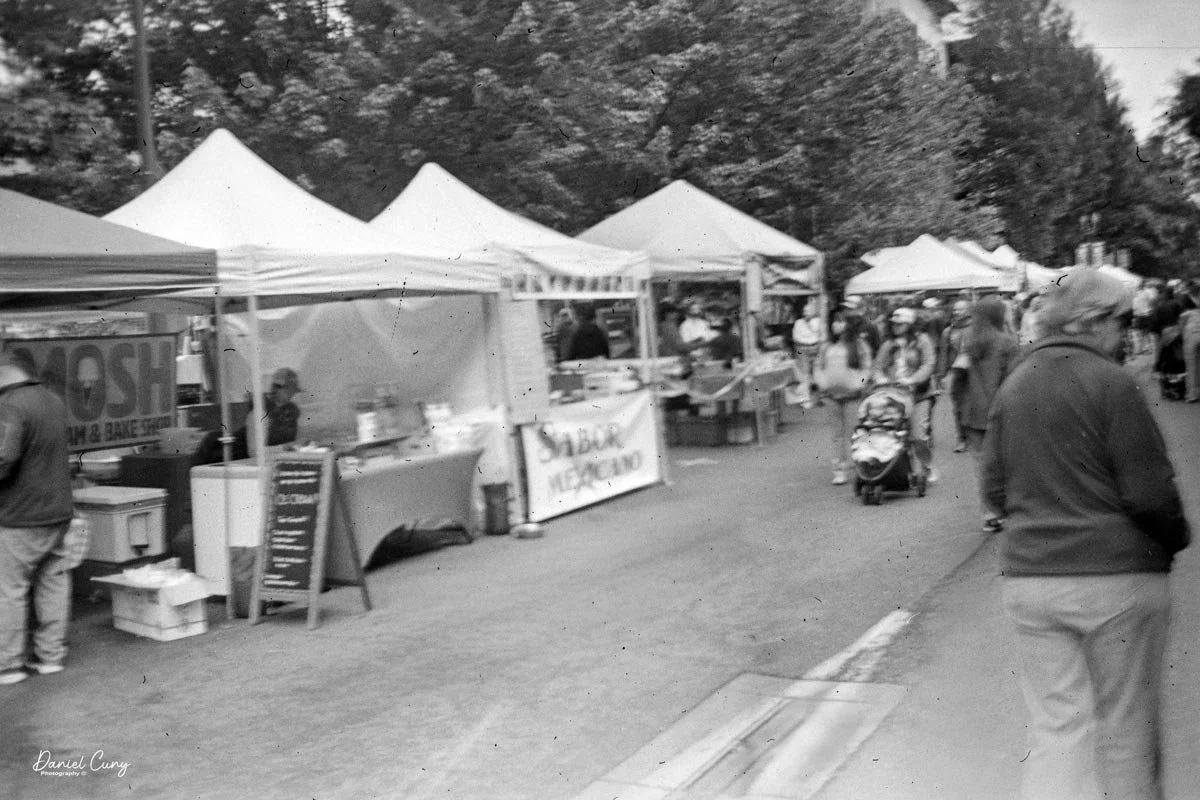
 Here are some of the results:

Conclusion

 As I scan the images from the farmers' market, some turned out better than others. I'm not sure what was going on, but some of the photos are sharper than others. I didn't pull out and push back the lens once I got to the farmers' market; I pulled the lens away from the camera body and adjusted the settings to the lighting conditions.

 There were a couple of times when I set the shutter to 1/50, but the focus was pretty inconsistent in many of the images. I was expecting slightly better results. Maybe there were a couple of times when there was some movement, especially since the shutter is a bit wonky and the images look unfocused.

Who knows what this camera has been through over the past 90 years, but all in all, it was fun to shoot with. The bellows look amazing, and I was complimented on the camera a few times as we walked through the farmers' market, so that was fun.

 Thank you for taking the time to learn a bit about this early example of a Bakelite camera from Japan, made in the early to late 1930s.

 I'd love to hear from you regarding this or some of my other camera reviews.

 Cuny's Camera and Photos is my online eBay store, where I sell some of the cameras reviewed, along with other camera and photo odds and ends.

 Until next week, please be safe.
Ebner camera

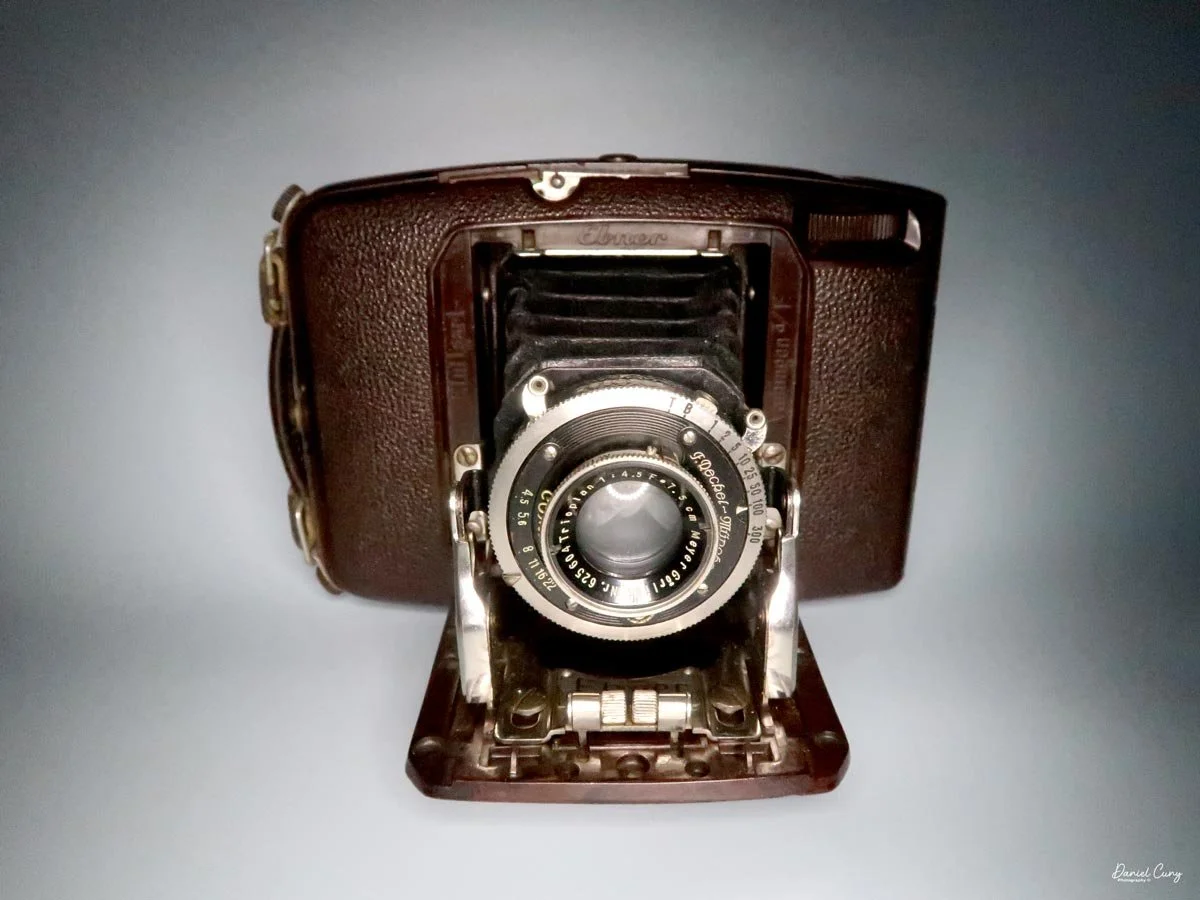
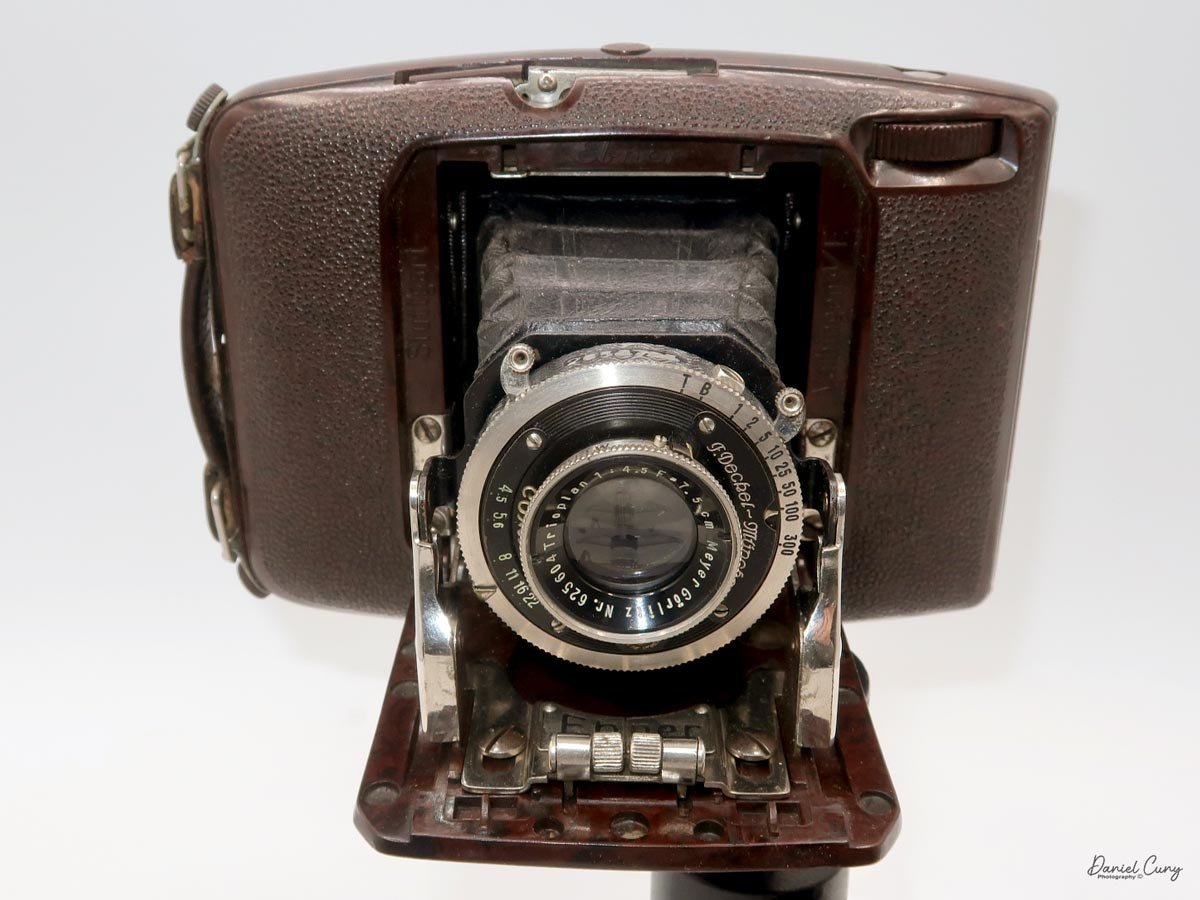
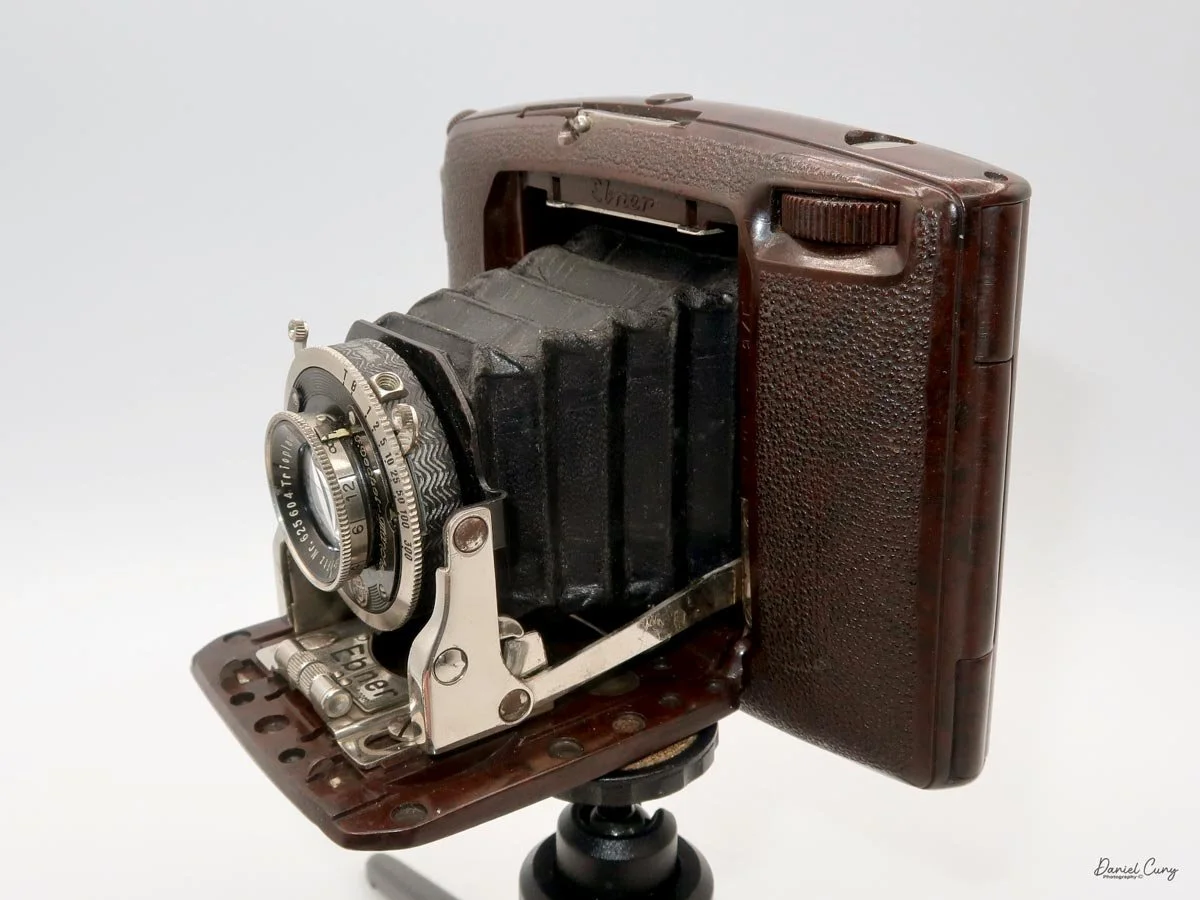
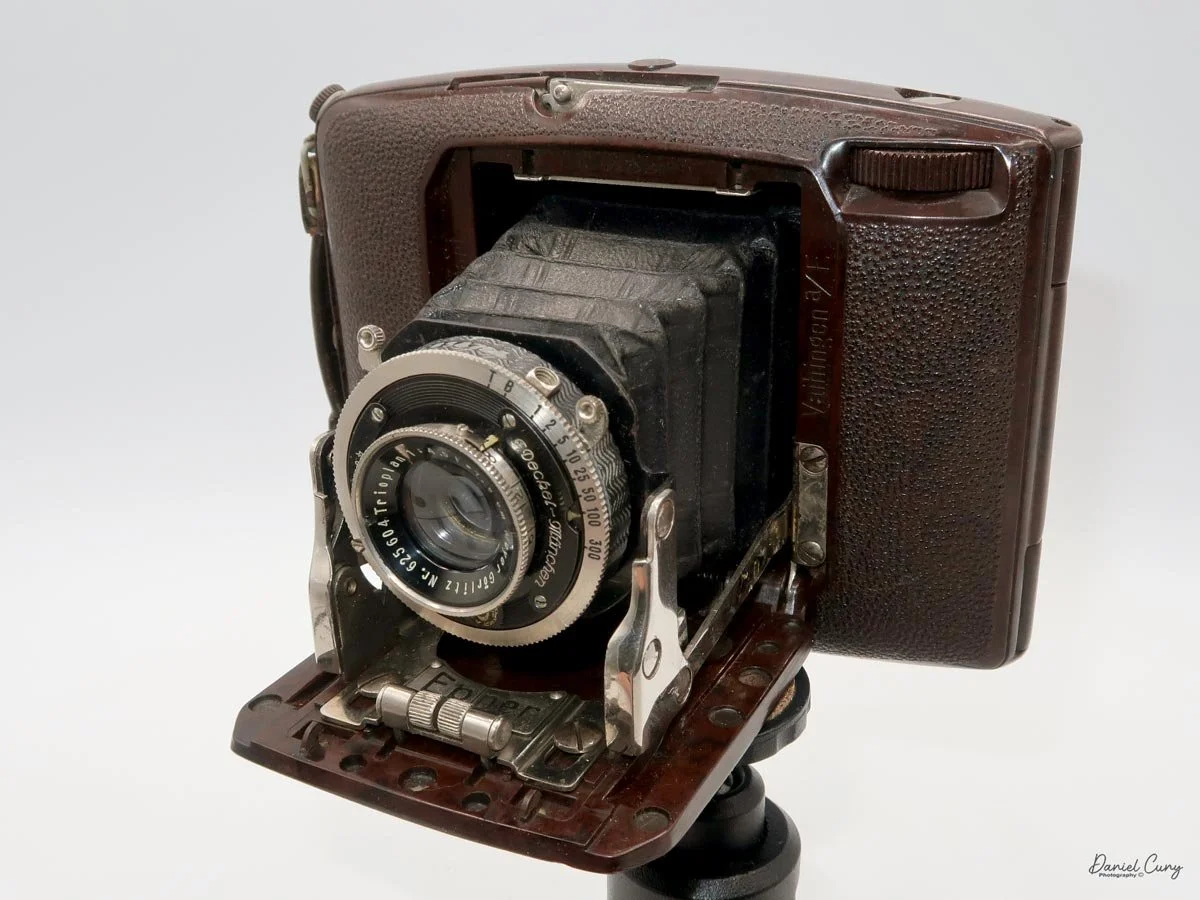
My Ebner 6x4.5cm camera

During my trip to Tokyo, Japan, a couple of weeks ago, I was in Kitamura's flagship store, looking at their "bargain" cameras, which in itself is a treasure trove of used cameras, when I spotted a brown Bakelite camera sitting on one of their shelves. The camera was a "folding" style camera. Still, I had never seen a camera like it, so immediately I wanted to see it, and with any luck, take it home with me, provided the price wasn't outrageous. I scanned the camera price and converted it from Yen to US dollars; it wasn't outrageous, so I wanted to see it and learn more.
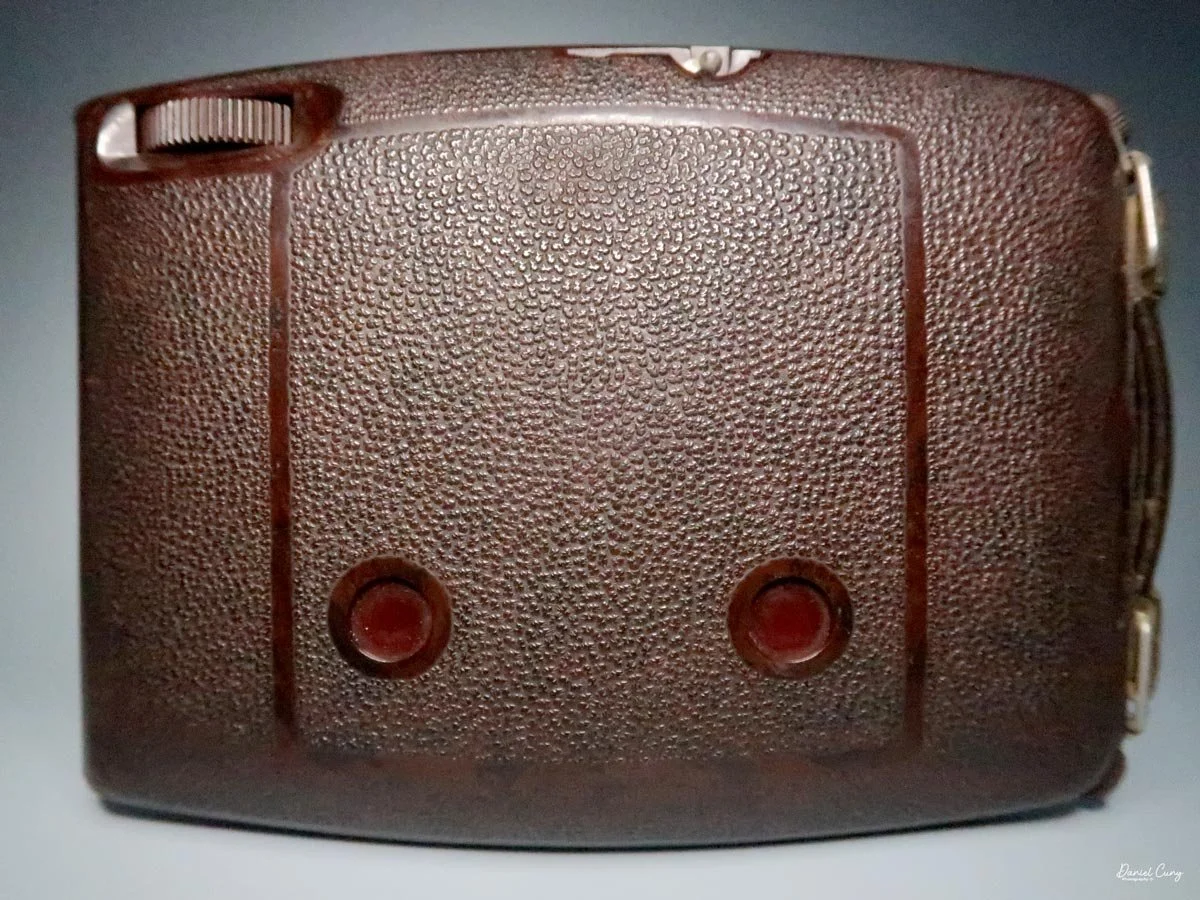
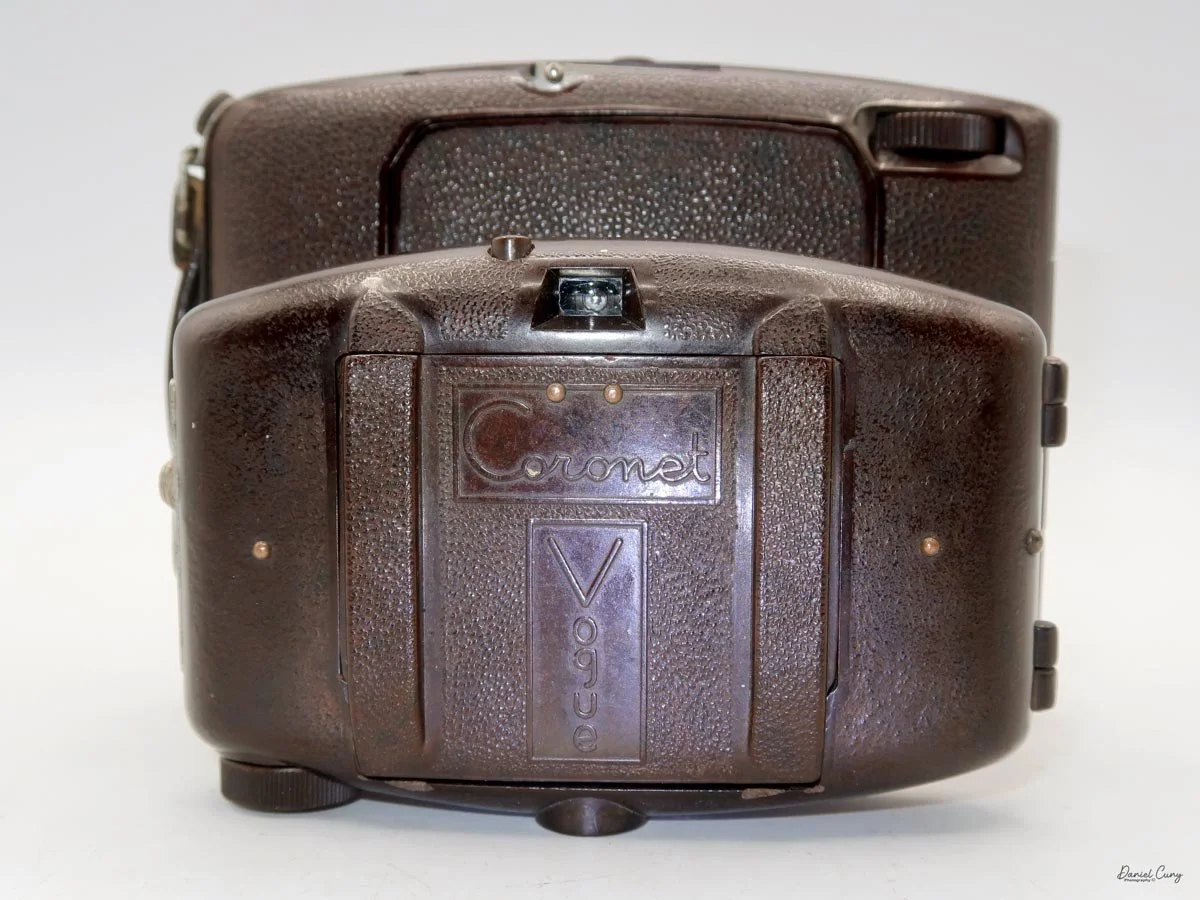
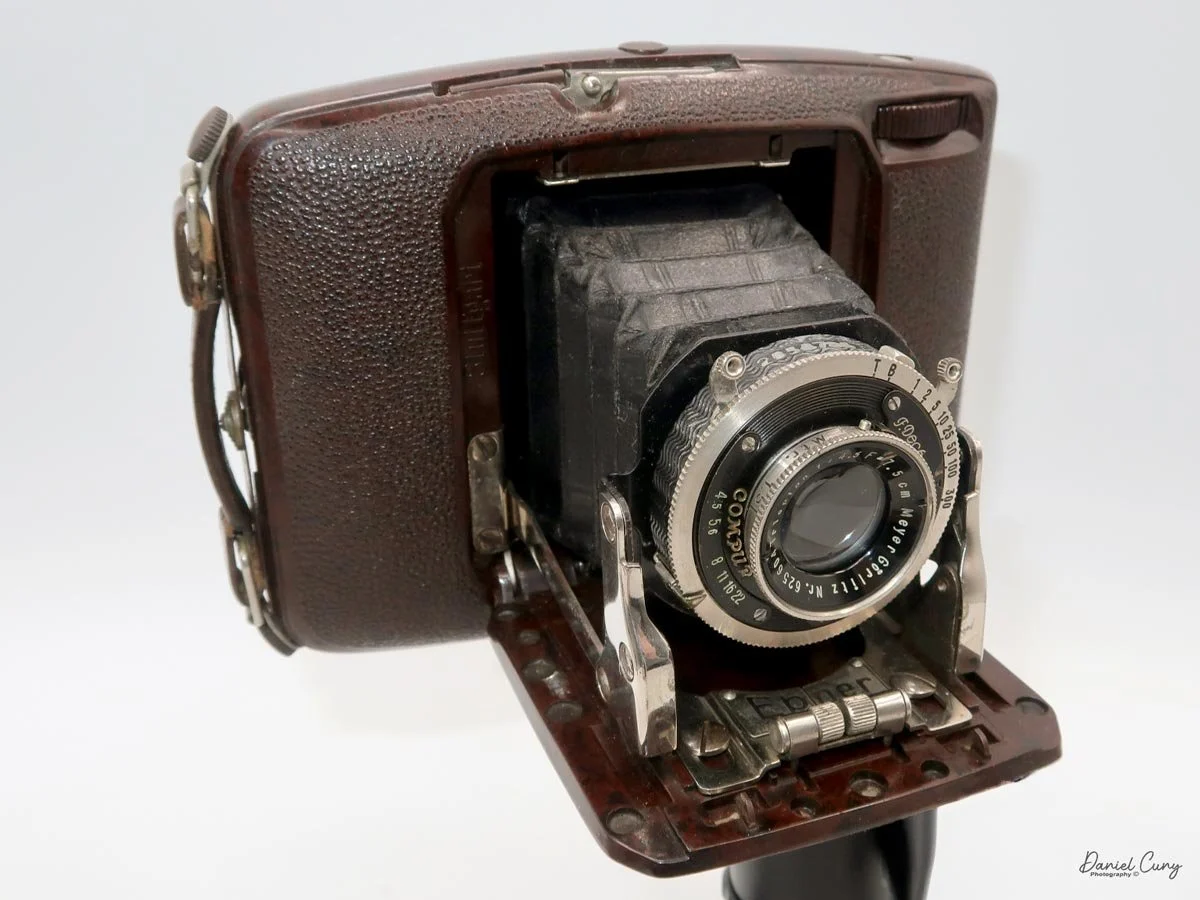
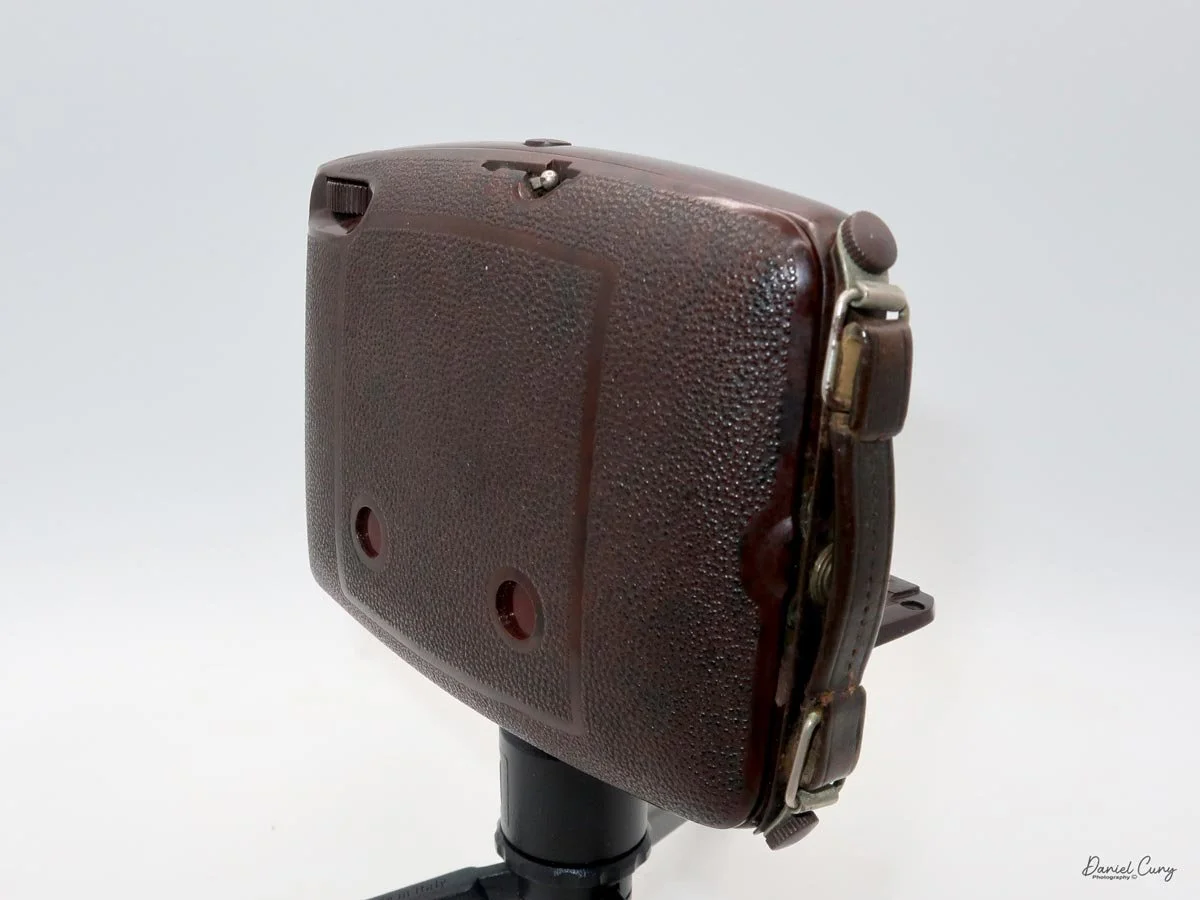
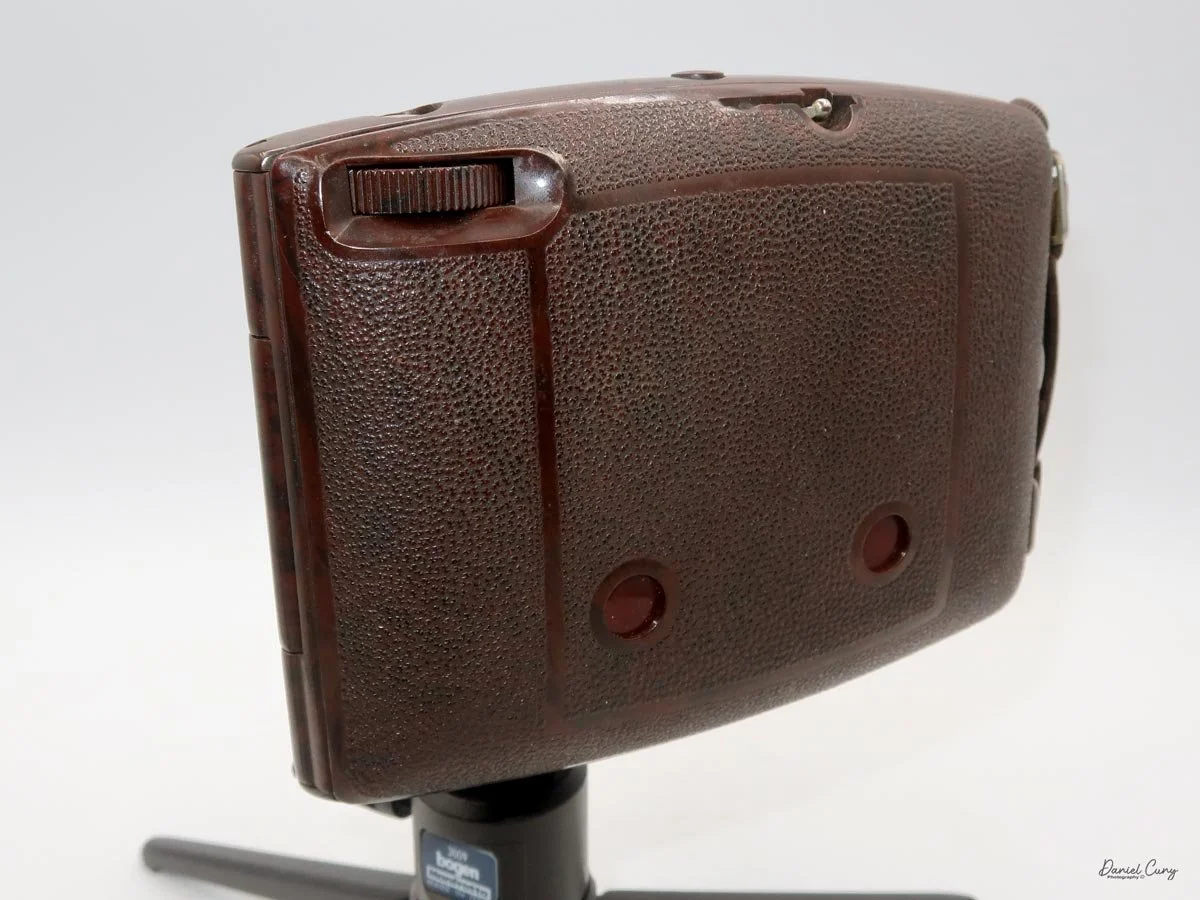
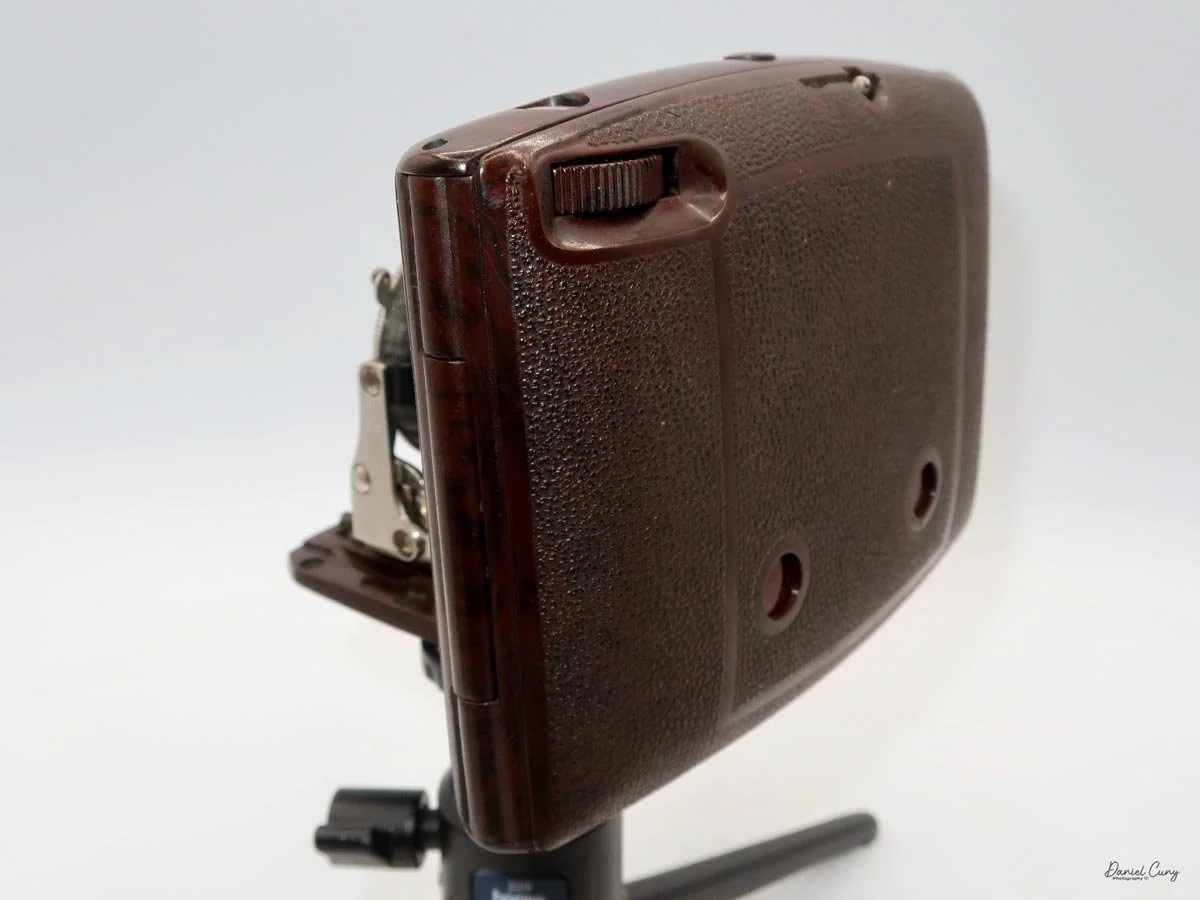
 The things that caught my eye at first was the beautiful, rich brown color, the wonderful pebbled texture of the body, and the very sleek design. To me, the camera just sang to me in its design. Since my eyes almost always go to anything "colored" when I look at cameras, it reminded me of the Coronet Vogue. Then, scanning the shelf below, they also found the Coronet Vogue. which I had seen in a few different flea markets in both Paris and London, but the asking price was always too high (in my opinion) for the camera, so I passed them up.
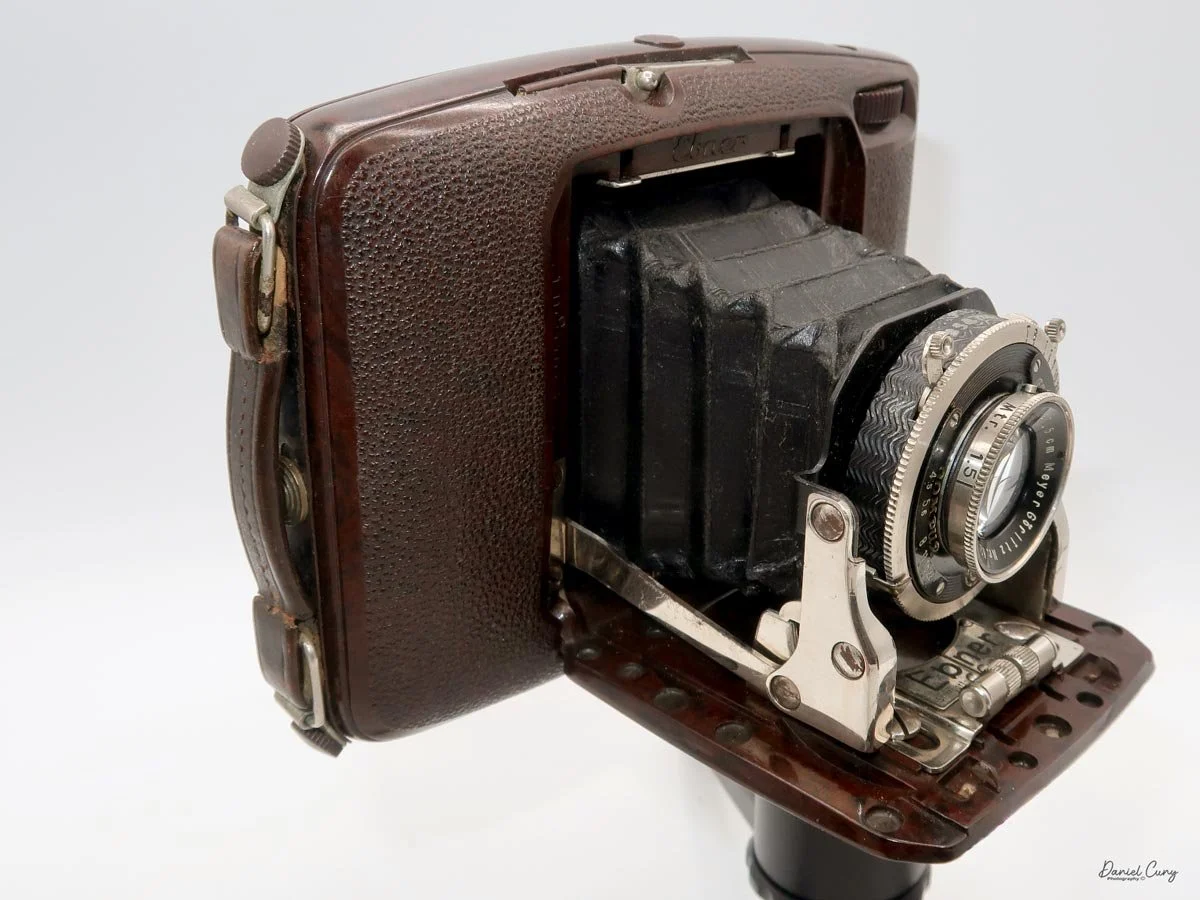
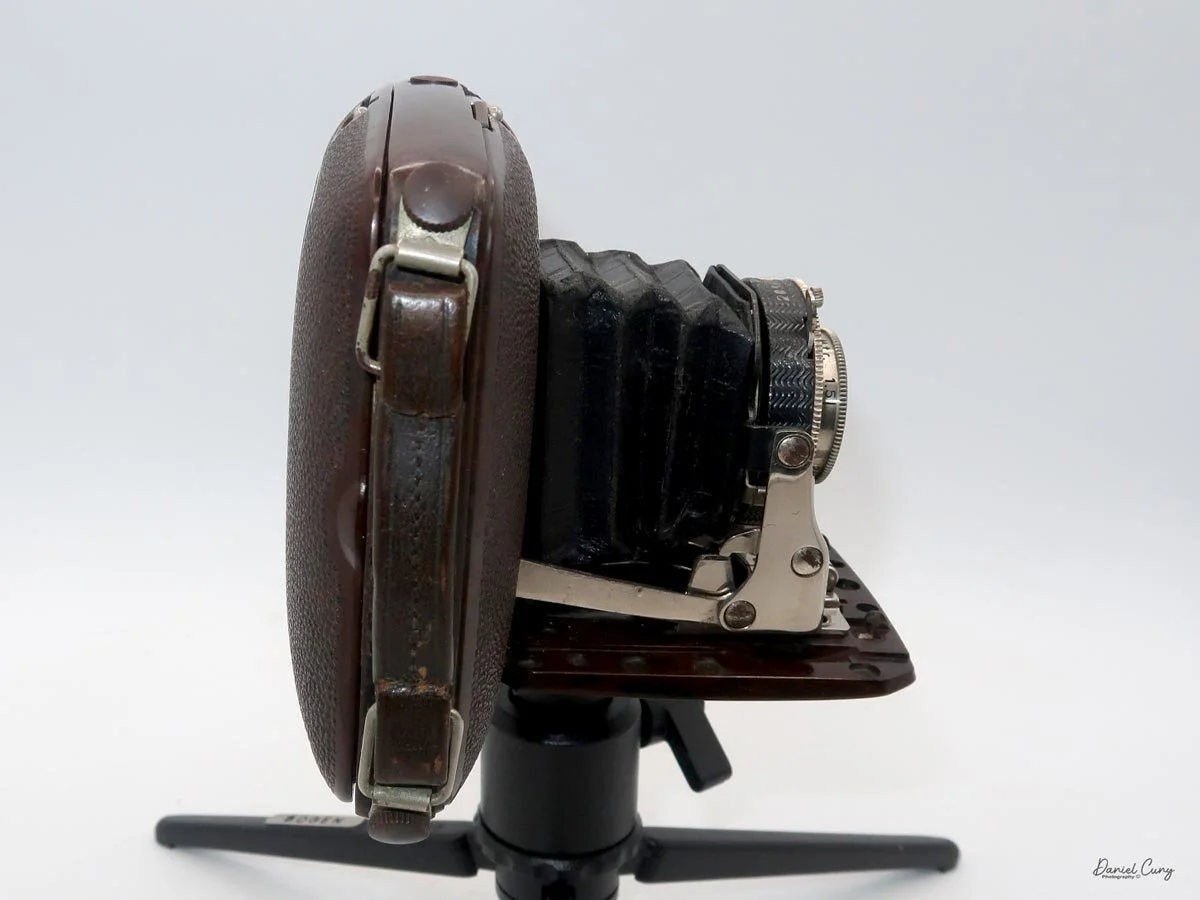
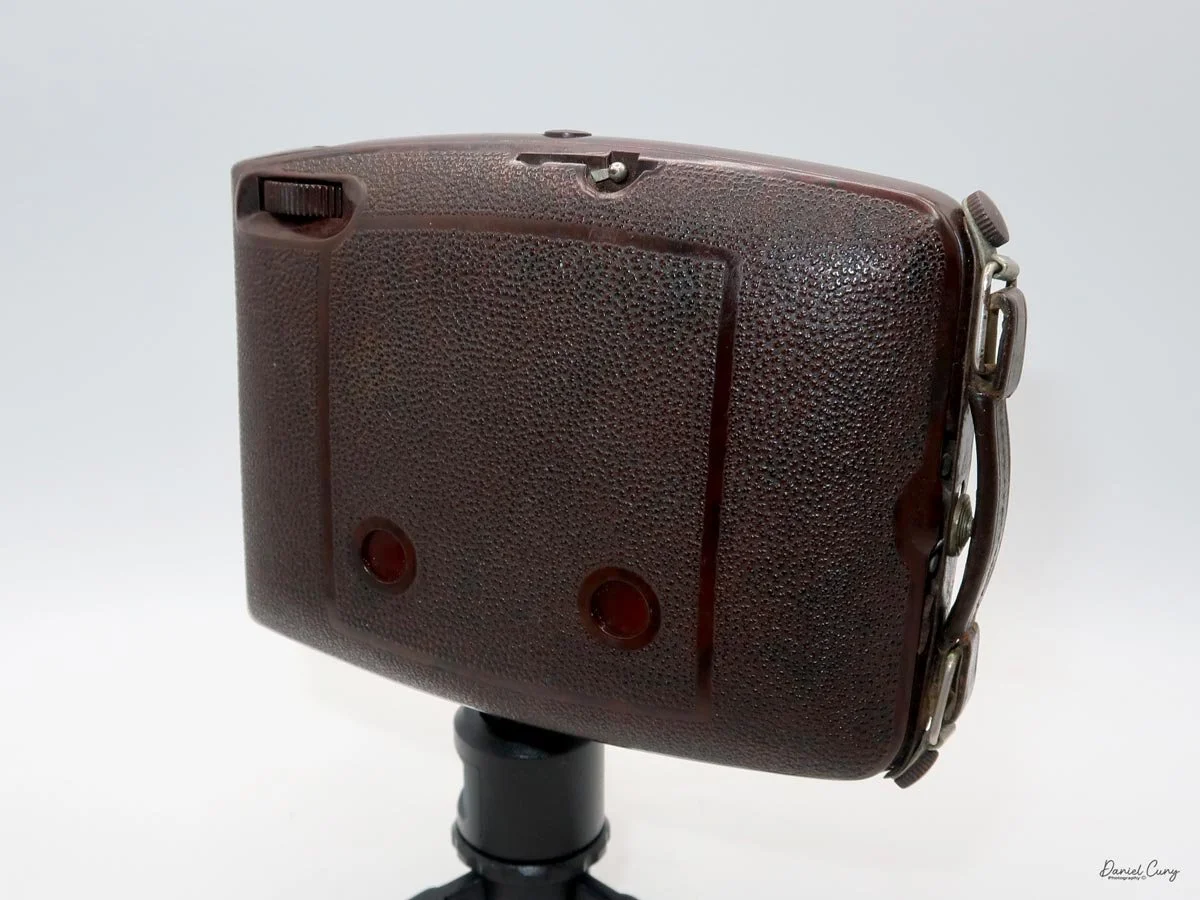
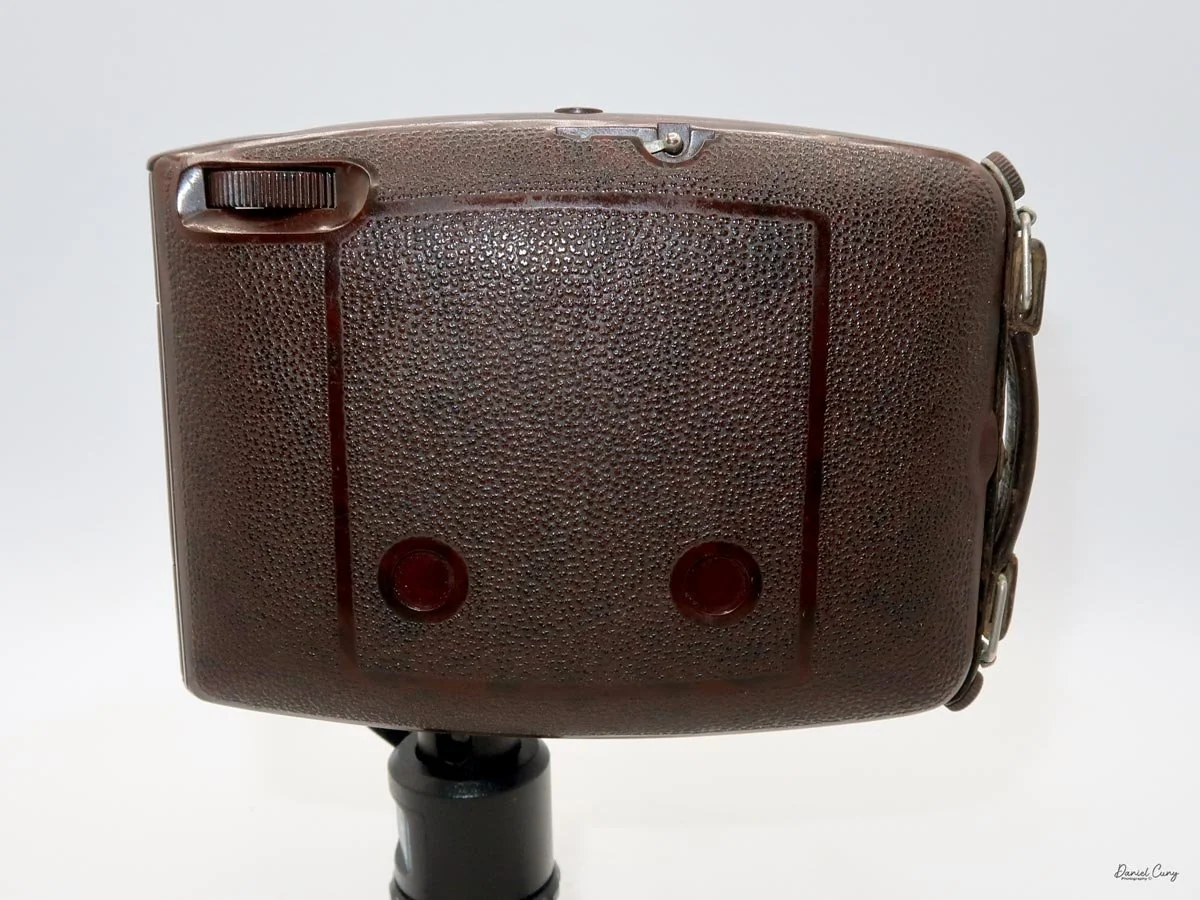
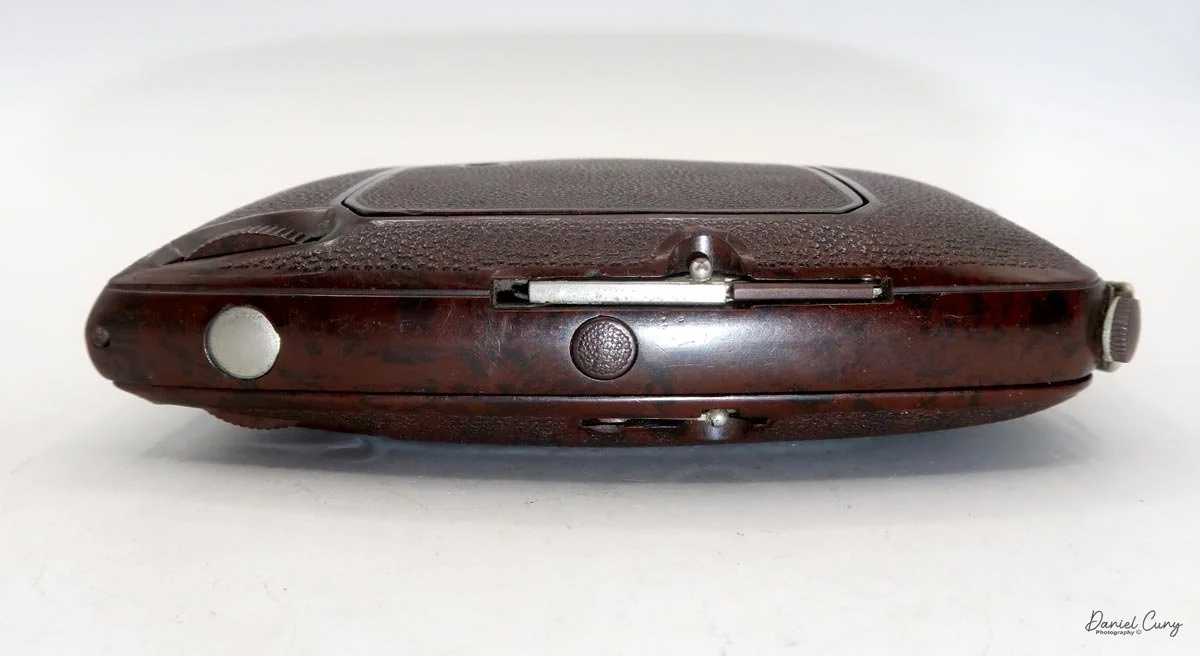
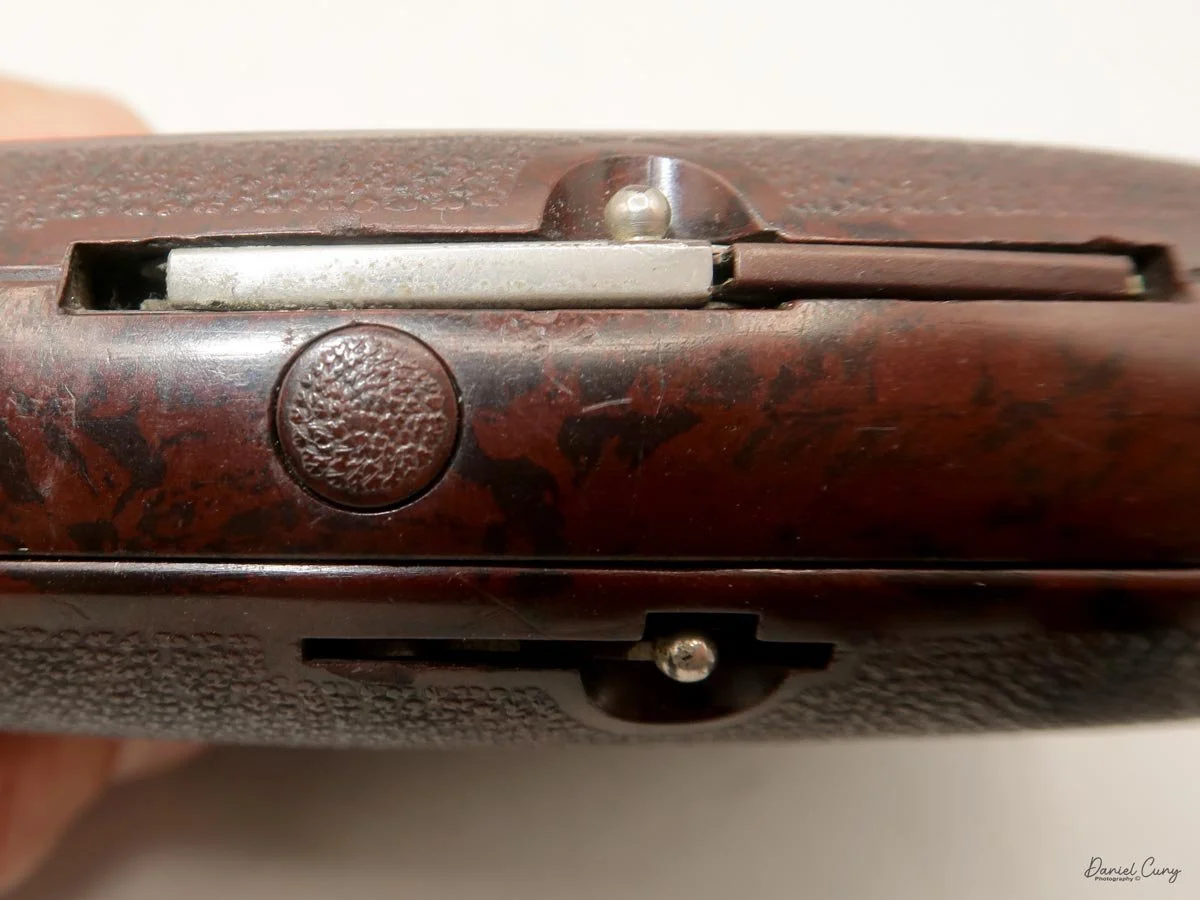
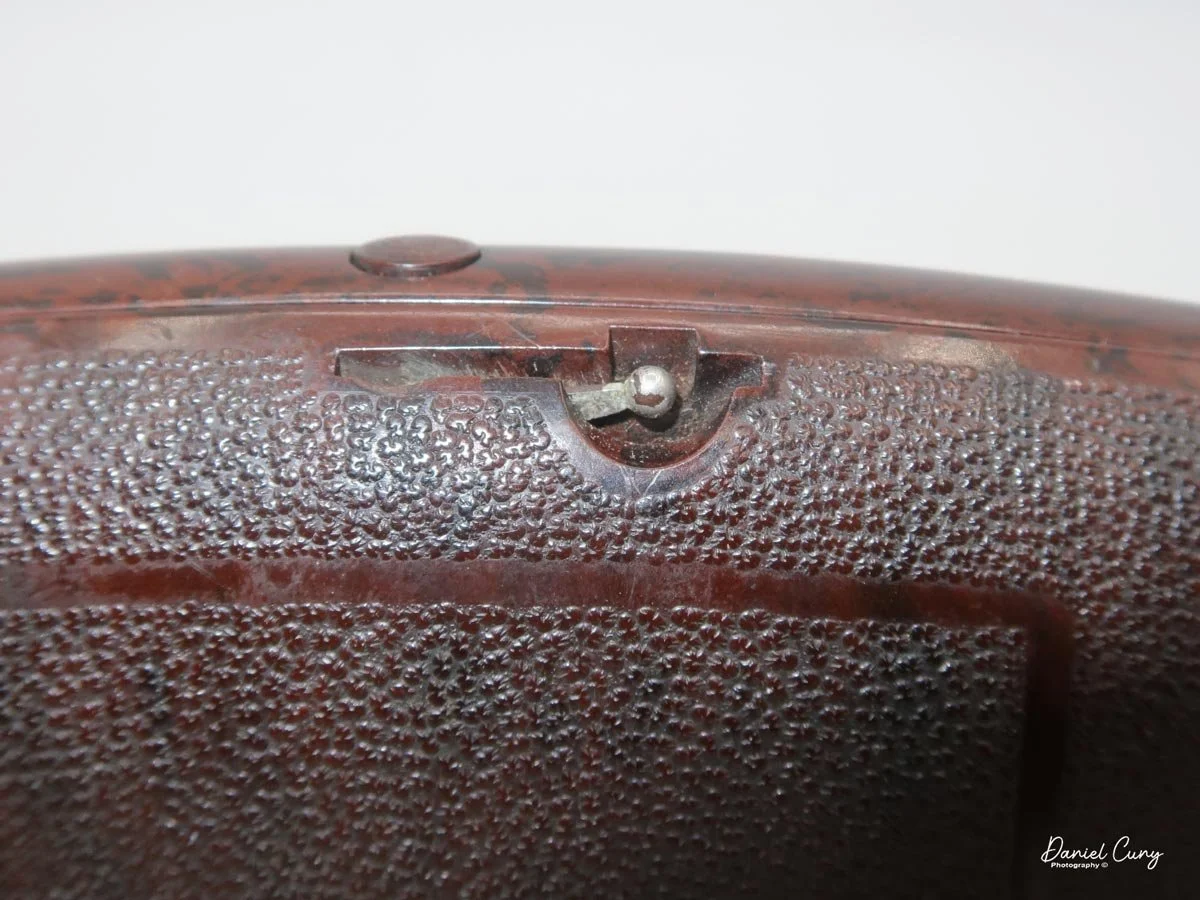
Back side with beautiful pebble finish on the Ebner camera

 At this point in my camera search, there were 3-4 cameras I wanted to look at, so I went up to one of the salespeople on the floor and showed them the items I was interested in. Very patiently, he pulled the 4 items from the shelves and placed them on a camera mat on one of the glass display cases in the shop.

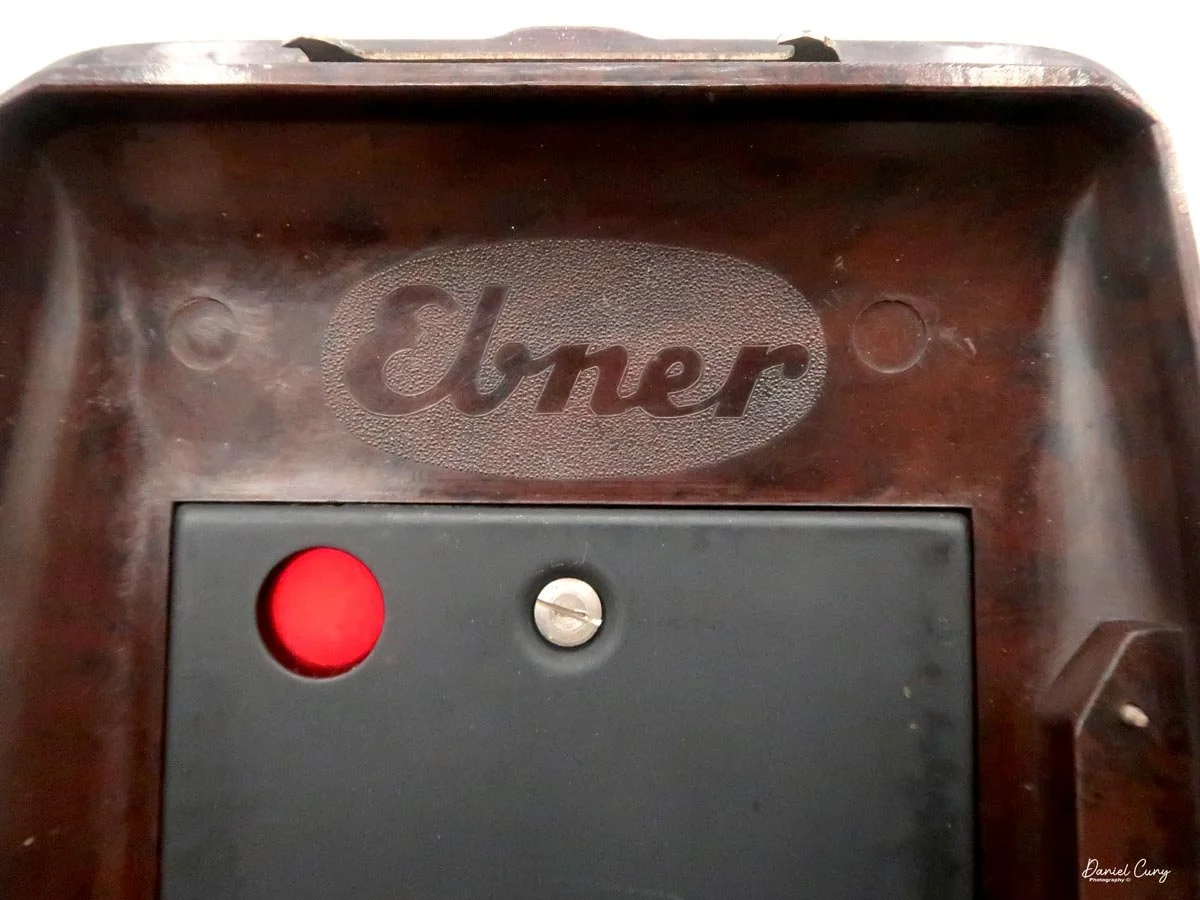
 Opening the Ebner camera first, I hadn't seen it before and don't recall it in McKeown's Camera Guide. I don't have the few hundred thousand cameras memorized. It wasn't until I opened the back of the camera and noticed the name "Ebner" that I realized the camera's brand. It still hadn't jogged my memory or sounded familiar.

Similarities of the Ebner and Coronet Vogue cameras.

 As I looked over the camera, the shutter worked, the aperture slid around the lens and changed size, and the lens was fairly clean. It didn't have mold, mildew, or fungus as I shone a penlight through the lens, and I didn't see pinholes in the bellows, so all in all, the camera was a "keeper" to me.

 The Coronet Vogue camera had some issues. It had a replacement black bellows rather than the original brown matching bellows, and the side struts of the camera didn't work properly. But the camera was inexpensive, and the shutter worked, so I believe at some point later this year I will write about it. To me, the similarity in the design and style of both the Ebner and Coronet Vogue cameras is striking.

 The similarities make sense to me, especially since Ebner stopped producing cameras in 1935. Still, other camera companies, like Pontiac and Gallus, produced very similar cameras with the same sleek design. I'm confident that since the Coronet Vogue was introduced in 1936, they recognized that this sleek, Bakelite camera design would benefit their sales, and they produced it.

History:

 Albert Ebner & Co. was a small but interesting German manufacturer that moved from audio and electrical products into cameras during the early 1930s. Albert Ebner, born in 1891 in Bad Cannstatt, had already founded earlier companies before his name became associated with the camera firm that collectors remember today.

Portrait of Albert Ebner

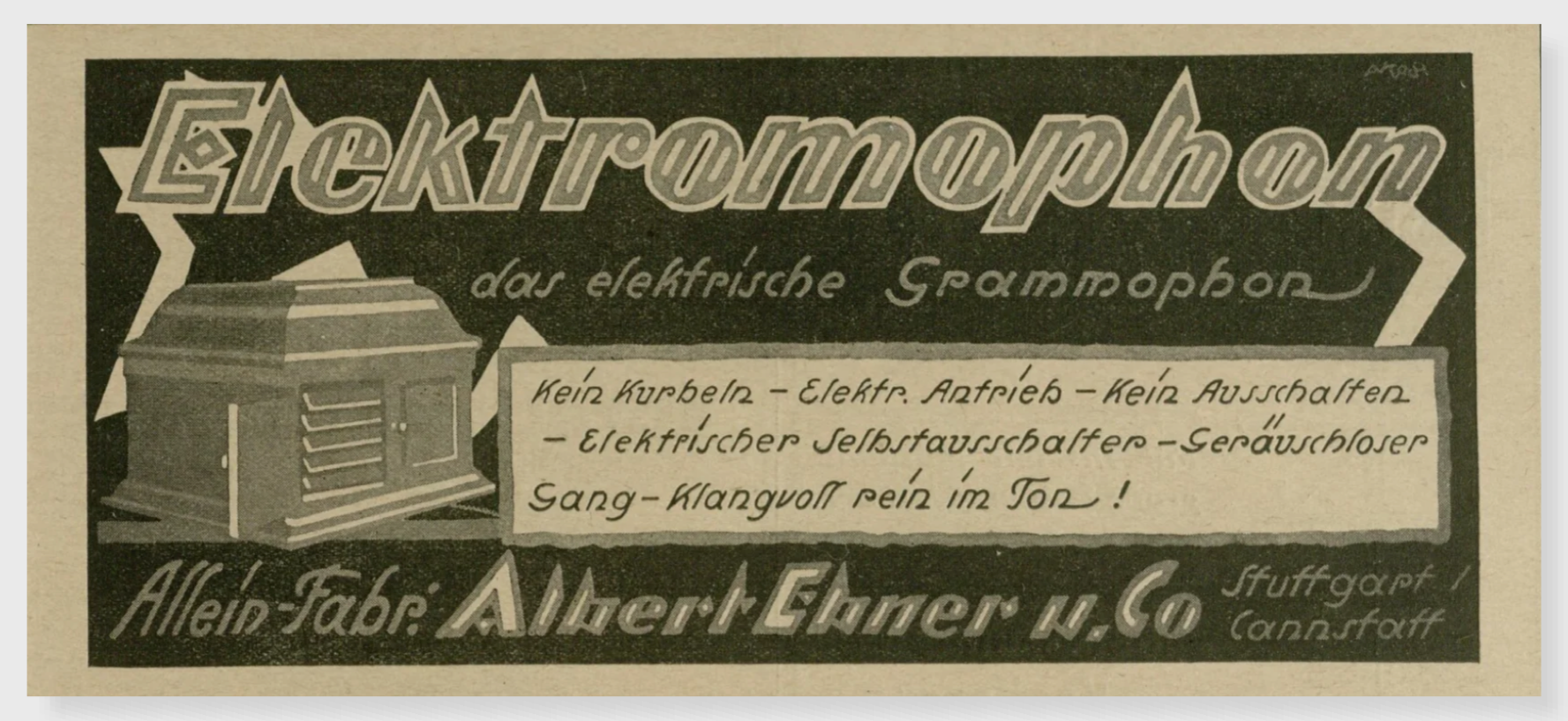
 The company's background was in turntable motors, gramophone parts, and related household electrical goods. After earlier business setbacks and reorganizations, Ebner returned to Bad Cannstatt and formed a new Albert Ebner & Co., often abbreviated AECO, which broadened into vacuum cleaners, fans, and other electrical products before experimenting with cameras.

 Ebner's camera output was very limited. The firm produced only two folding models: a 6x9 cm camera on 120 film and a smaller 4.5x6 cm model on Kodak 620 film, both made around 1933 to 1935. These cameras had no special model names beyond their image size, which makes them especially plain in naming but distinctive in construction.

 What set them apart was their design. Both cameras used a marbled brown Bakelite body, a material associated with the radio and record-player industries, and they paired that shell with a Compur leaf shutter and lenses from makers such as Meyer-Gorlitz. That gives the Ebner cameras a streamlined Art Deco look that feels more industrially designed than mass-market consumer.

German advertising.

 The larger 6x9 version used standard 120 film, while the 4.5x6 version used 620 film, an unusual choice for a German maker of the time. Collectors also note that the cameras were sold mostly in Germany and that production was brief, with the company apparently ending camera manufacture by 1935. Because so few were made, surviving examples are relatively scarce today.

 Ebner's camera venture did not last long. Still, it fits a broader pattern of early 20th-century firms adapting existing expertise in Bakelite and mechanical assembly to camera production. After the camera period ended, Albert Ebner's business life continued in audio through the later Perpetuum-Ebner merger. In contrast, the cameras remained a short-lived sideline that now attracts collectors and historians.

My Camera:

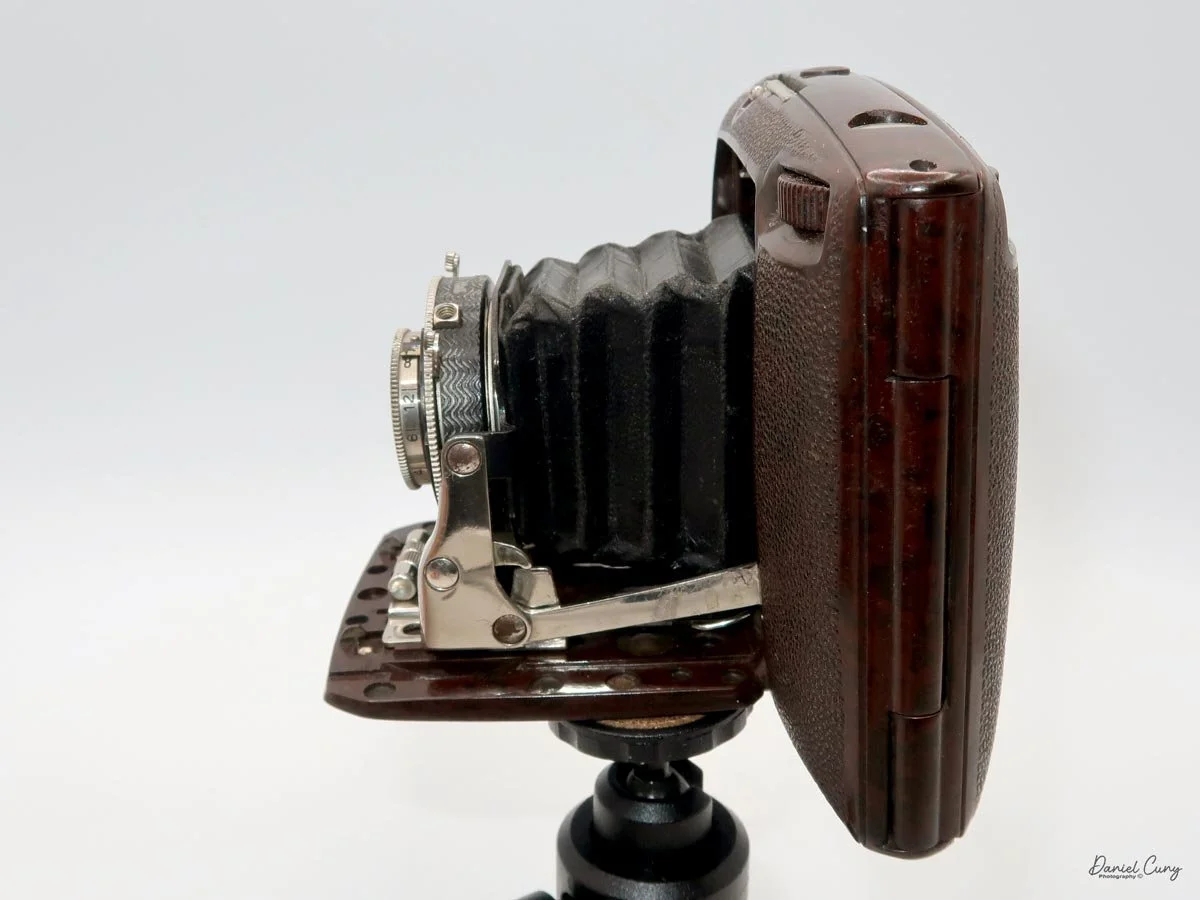
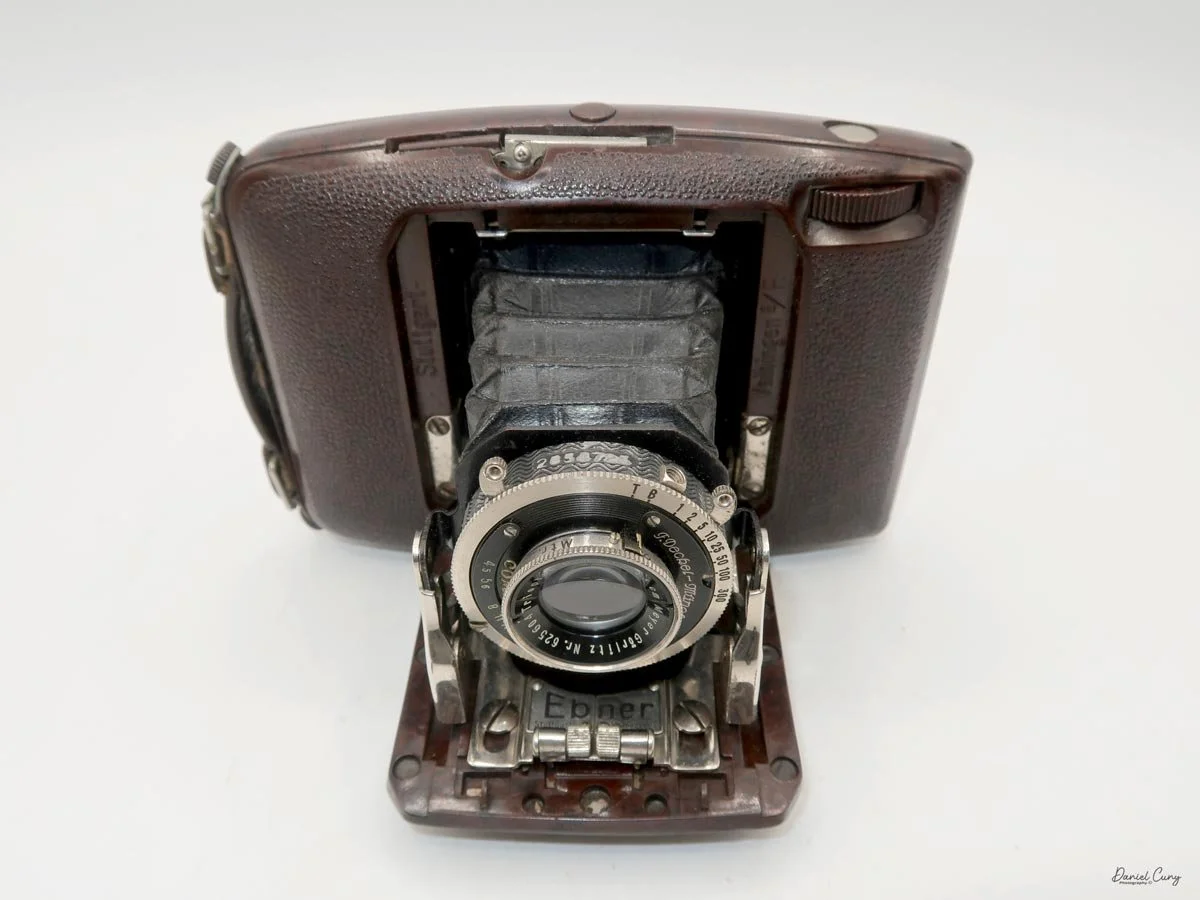
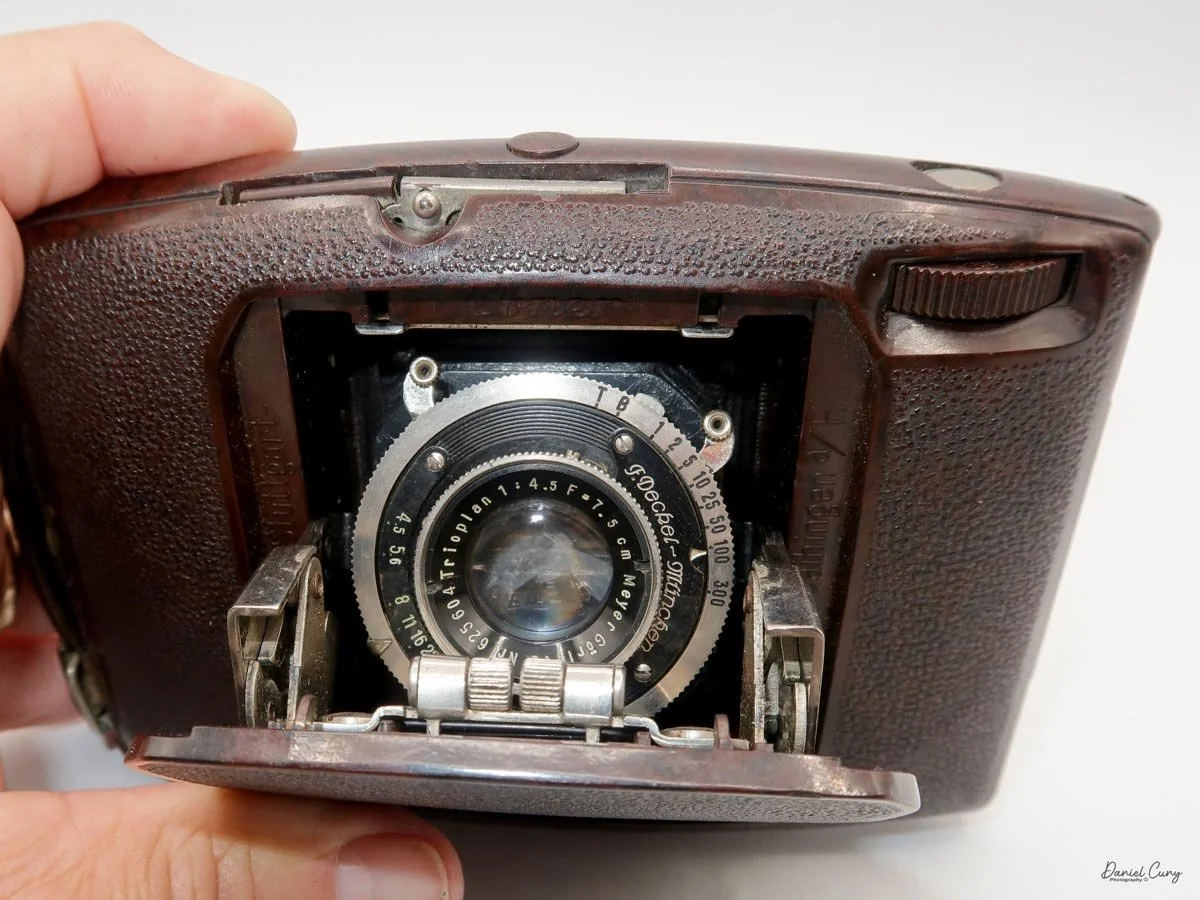
 My Ebner 6x4.5cm camera is 4.25" tall with the retractable viewfinder down, and 5" tall with the viewfinder in the upright, viewing position. It's also 5.5 wide and 1.25" deep with the lens retracted, and 4" with the lens extended and in the normal taking position. The camera weighs 1 pound 0.7 ounces without film loaded inside. 

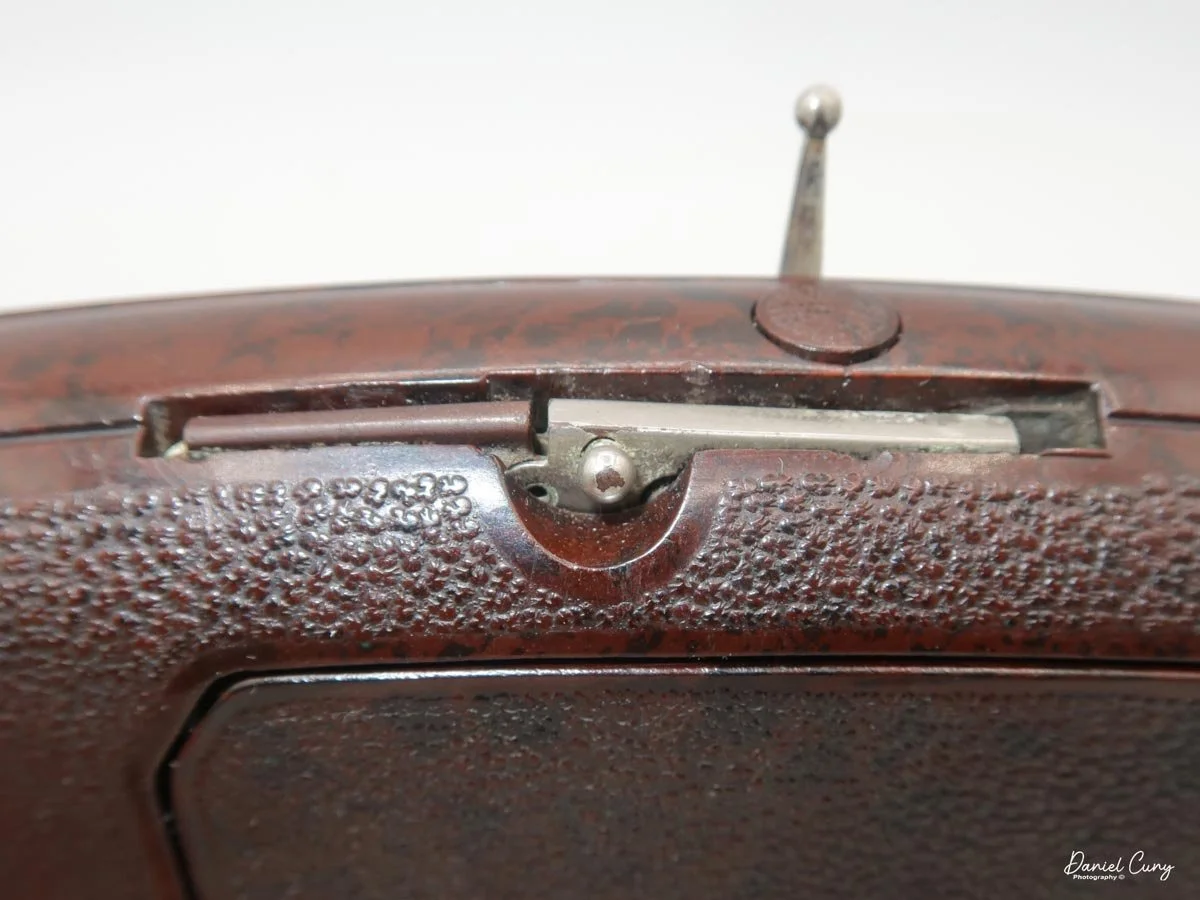
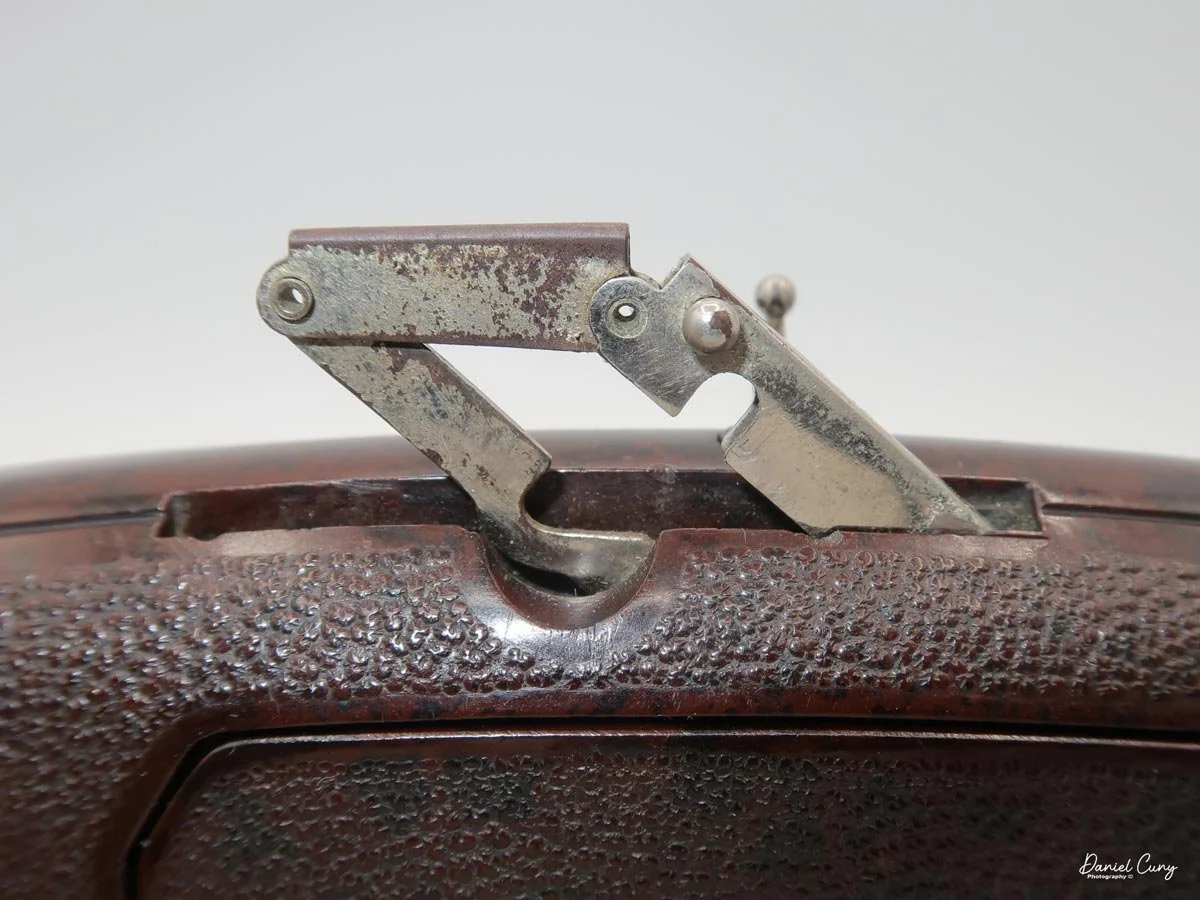
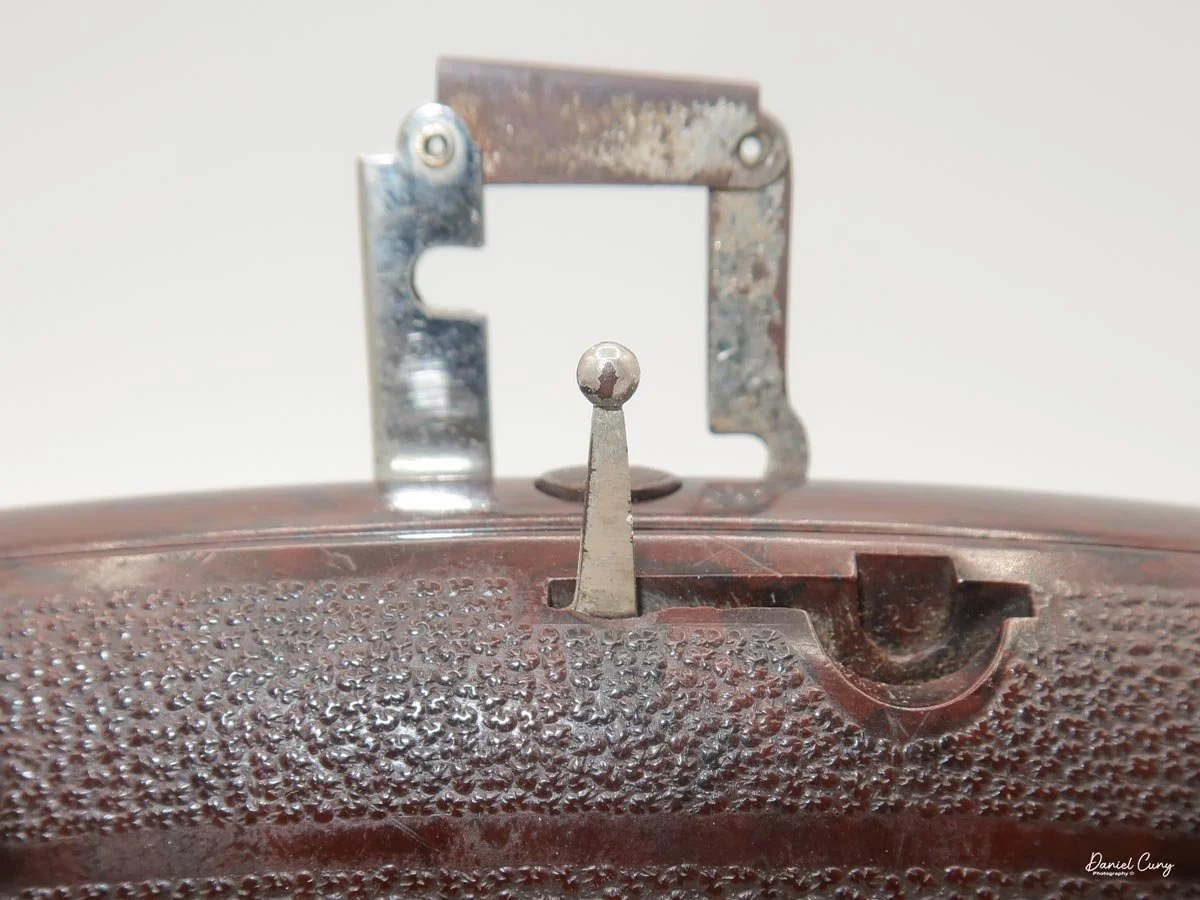
To open the Ebner camera, on the top of the camera is a button between the retractable front viewfinder, which pulls up from the camera body to produce a vertical rectangle. and a small pbar with a ball on the end used as the rear portion of the viewfinder. This bar is also retracted into the camera body. Once the button is pressed, the front door housing the lens, bellows, and shutter springs from the camera body.

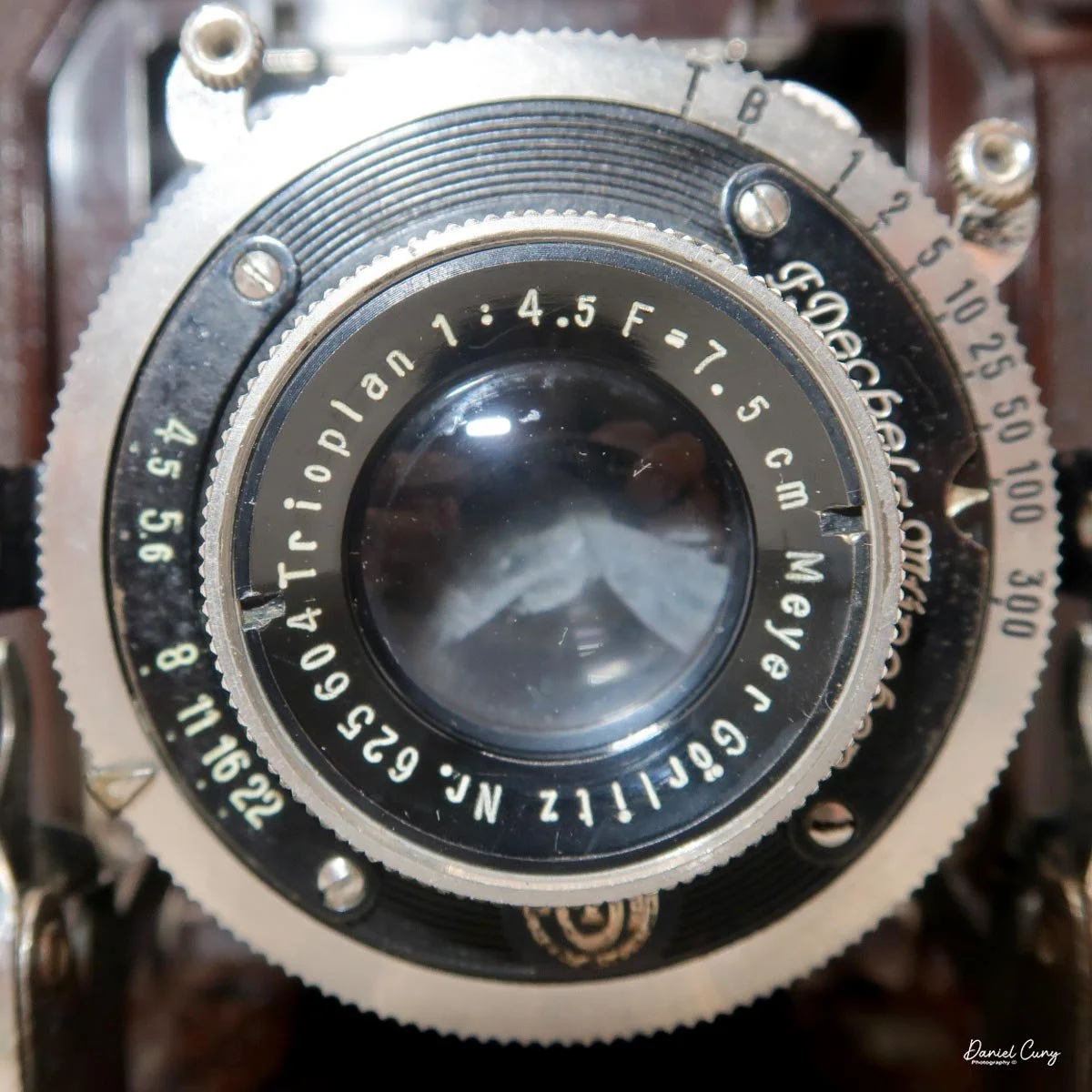
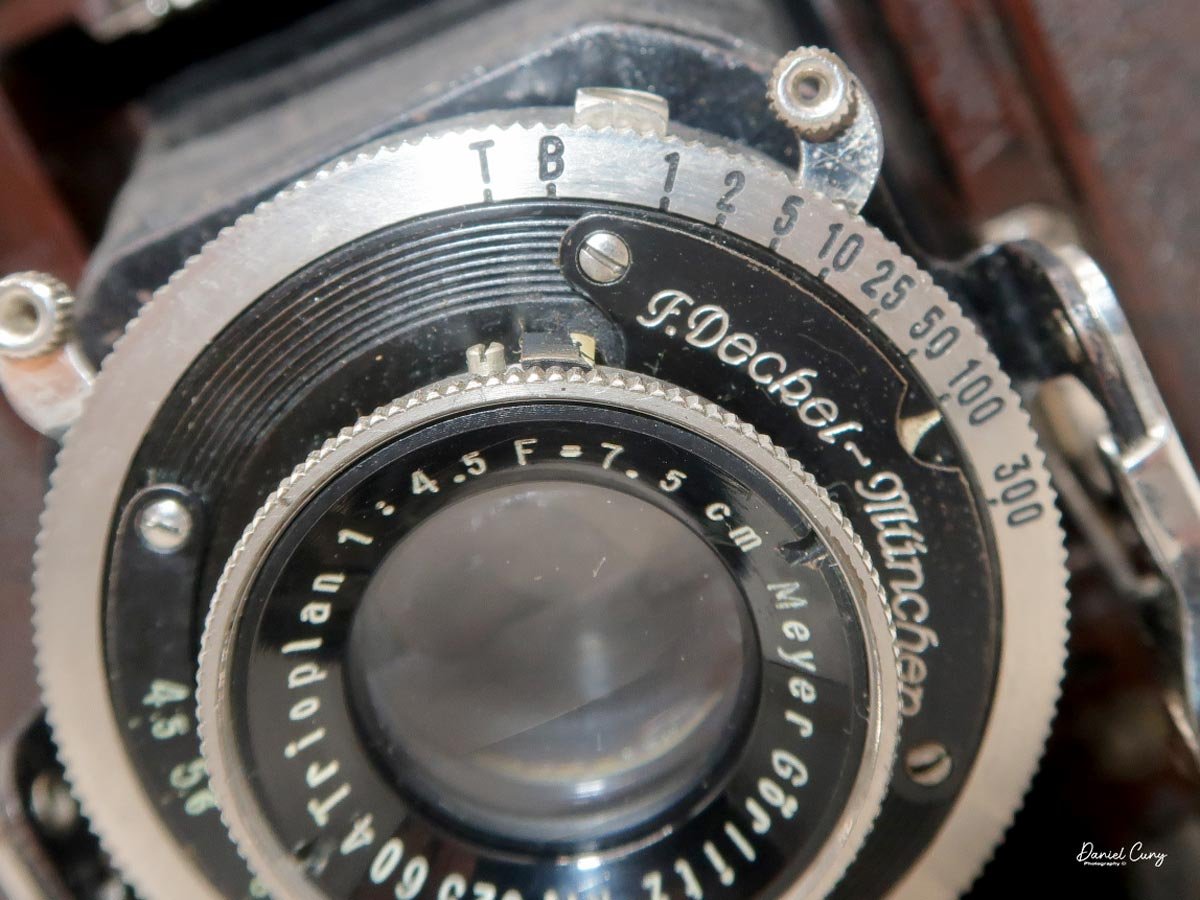
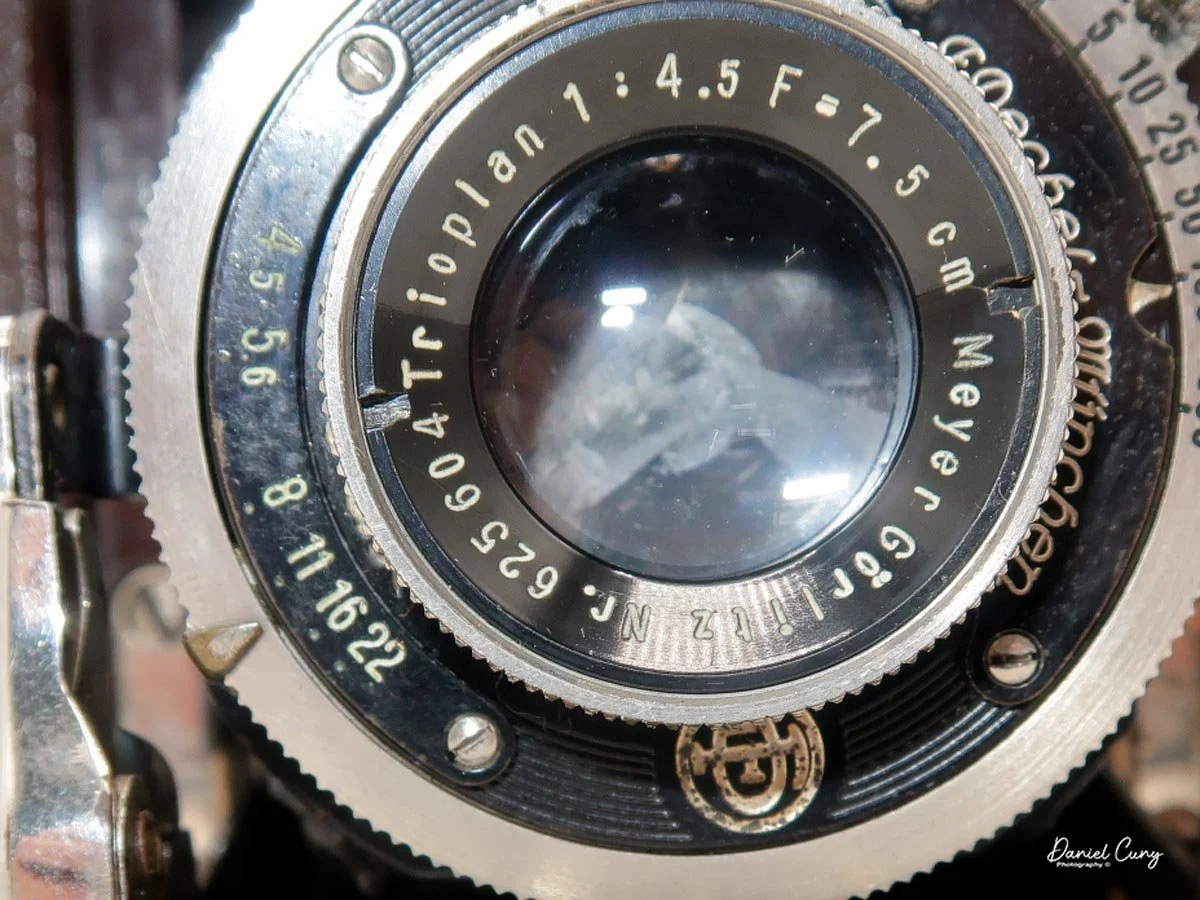
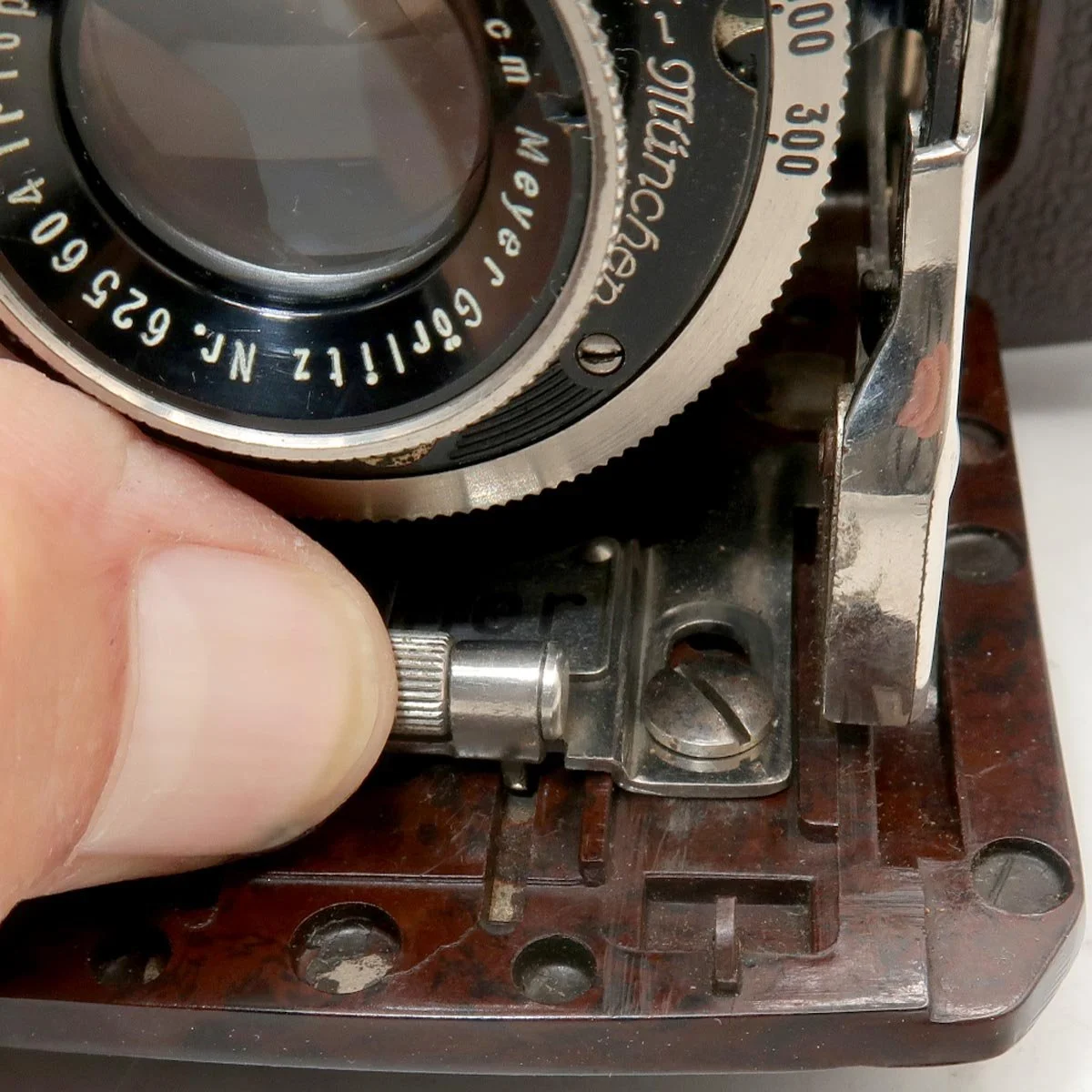
The Ebner I own has a Meyer-Goerlitz 7.5cm F/4.5 lens (SN 625604), with a Compur shutter, ranging from 1/300 to 1 second, plus "T" and "B". There were several different lens and shutter combinations for the camera. The aperture range is from F/4.5 to 22. 

 Setting the shutter speed is done by turning a ring on the outer portion of the lens, and the aperture is set by sliding a lever with a pointing end to the desired aperture setting under the lens. Also, the shutter is cocked by one lever at the top of the shutter and released by another lever on the side of the shutter. Focusing the lens is done by rotating the lens itself to the desired focus distance in meters, as seen on the top of the lens.

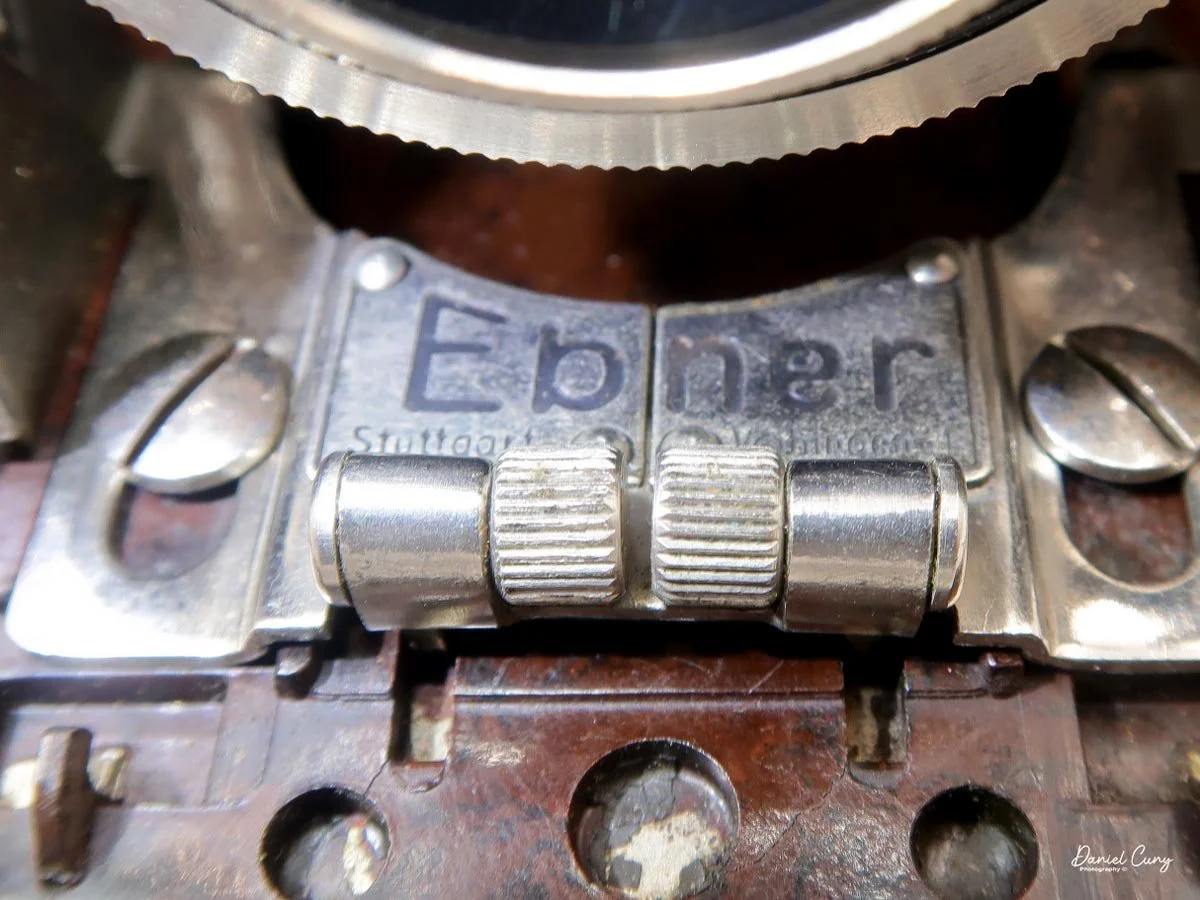
To close the camera for transport, there is a bar at the bottom of the lens bed, just in front of the "Ebner" plate. Press these bars towards the camera body; the lens board releases, allowing you to tilt the board back up and into the camera body. It will click when the lens board is locked into position.

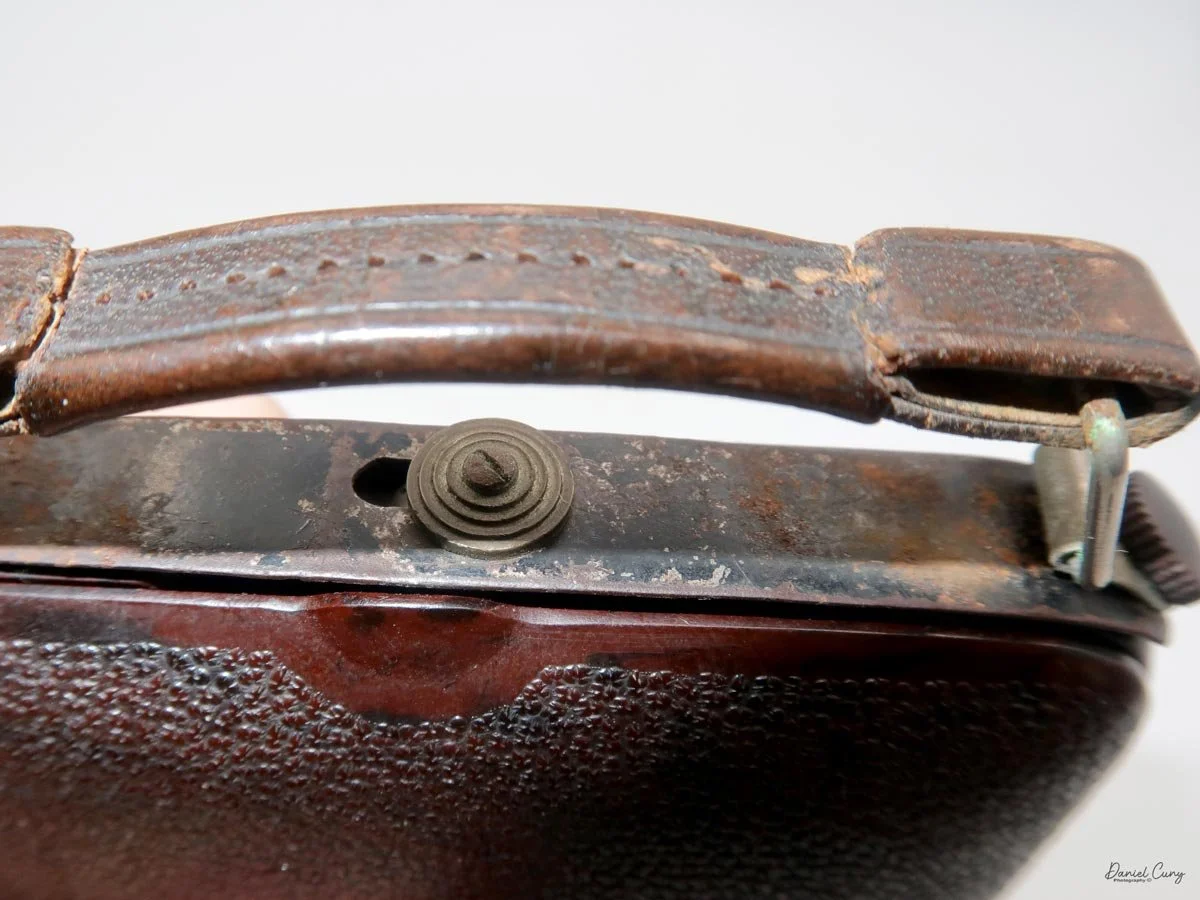
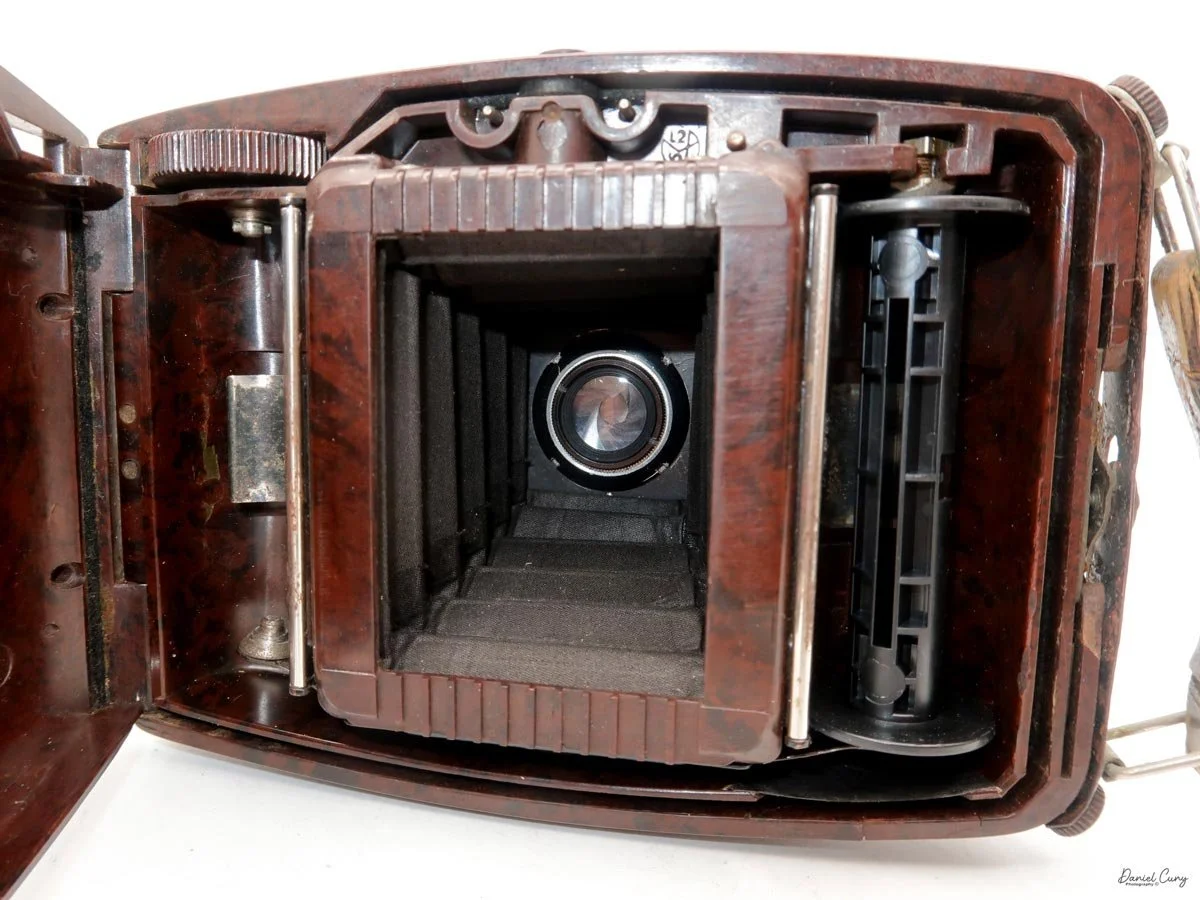
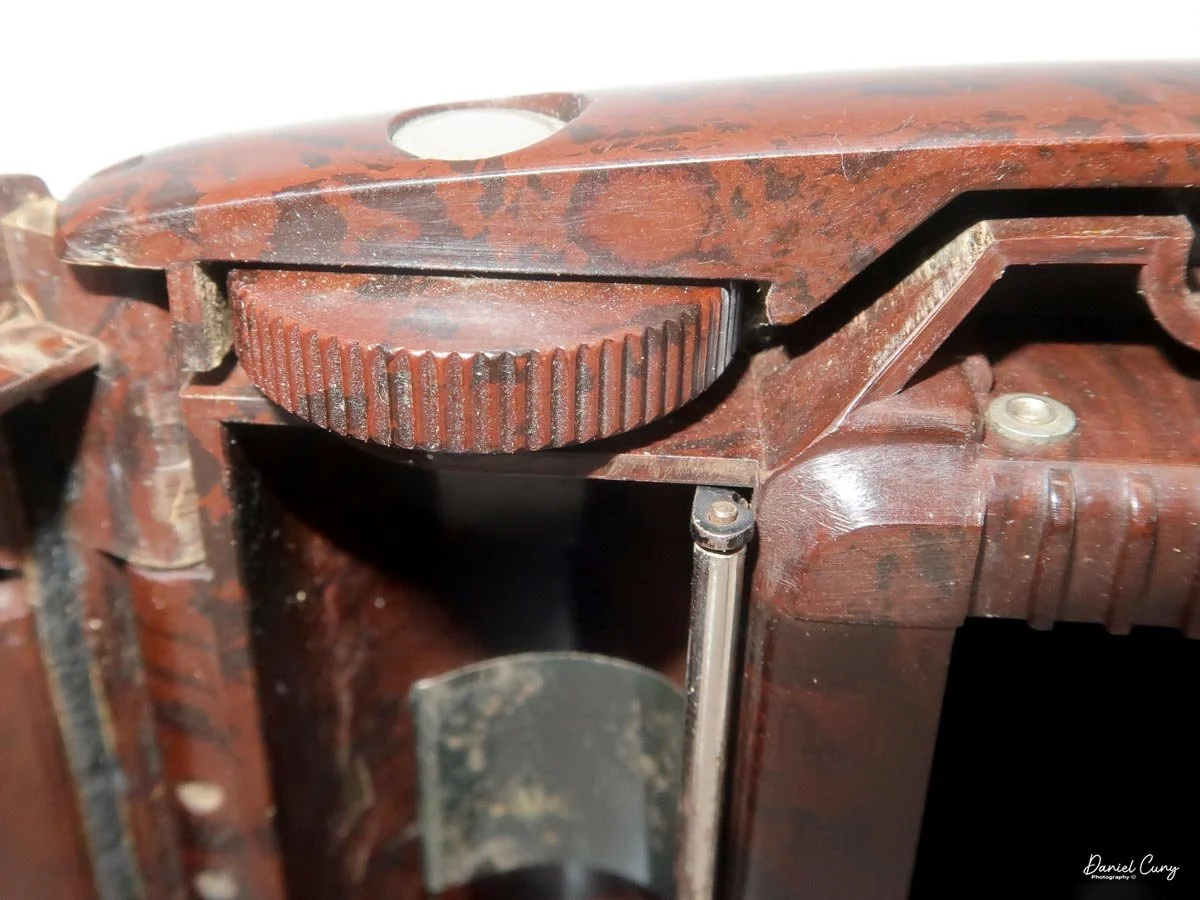
Opening the film back to load film is done by sliding the locking lever, which is located under the camera's strap. Once unlocked, you can slide the door open to reveal the camera's film chamber. Once opened, you'll see the vertical format 6x4.5 film area. The new film goes on the right side of the camera, and you'll transfer the empty spool from the right side to the left, where the film's winding wheel is located. My camera didn't have an empty spool, so I needed to supply the camera with one.

  Looking at the film holders' pins, the camera takes 620 film, but I accidentally loaded the camera's take-up chamber with 120 film, and it fit. Generally, when I try to put 120 in a 620 camera, the spools don't fit, or they don't turn because the pins are too small to grab the 120 spool. Let's see if I can load a roll of 120 film in the camera. Interestingly, this camera: the 120 film fits a bit snug, but the film advance engaged with the spool, and the film wound smoothly.

Since the camera is 6x4.5cm, with two red windows on the back, this symbolizes that you start with the number one in the first window, take your photo, and then wind the film until the number one shows up in the second window. You do this with the whole roll, which ends with the number eight showing in the second window, giving you sixteen images per roll of film.

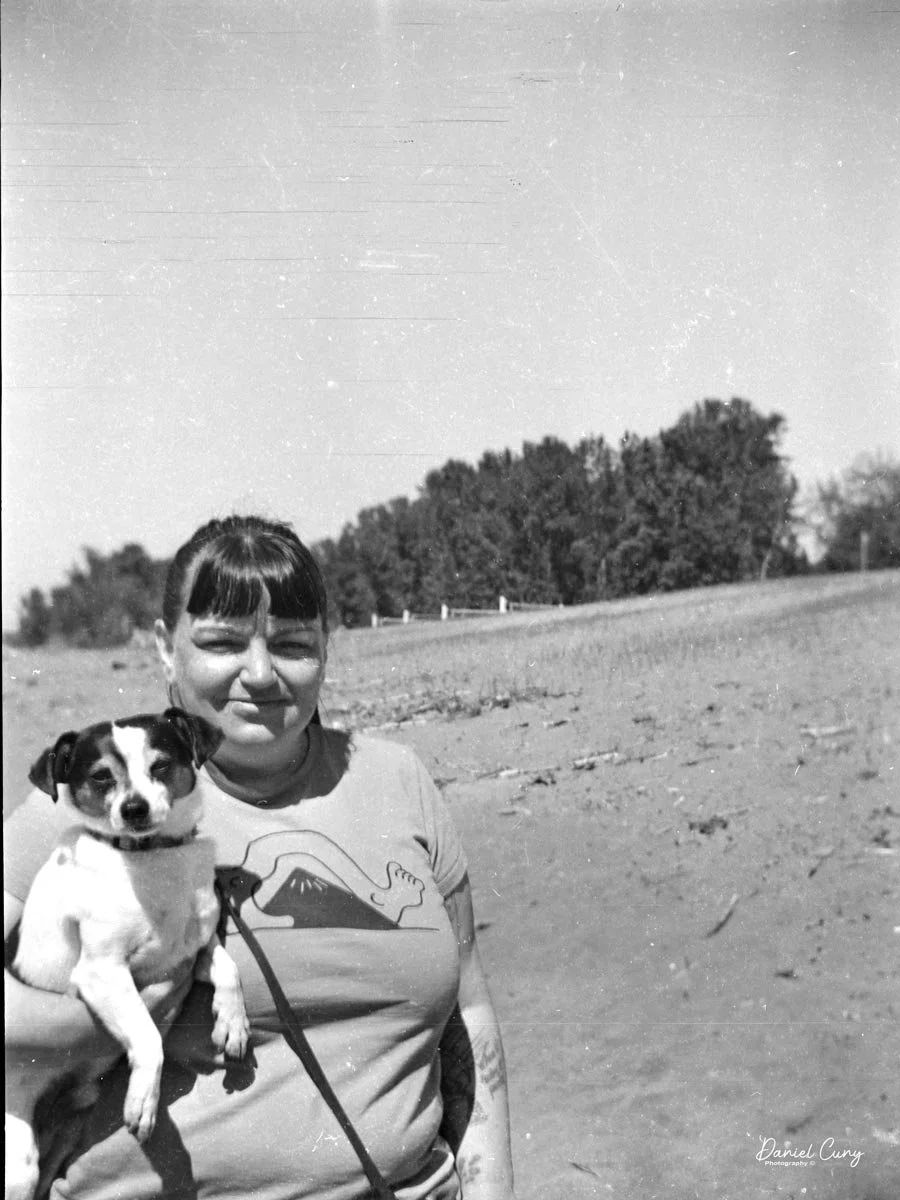
 Once the film was loaded in the camera and the "start" arrows were showing, I closed the back of the camera, and my daughter, her dog, Bean. I went for a walk along the Columbia River and took photos with the camera. The camera is very "pocketable" and travels extremely well.

 Let's see how the images turned out.


The Results:

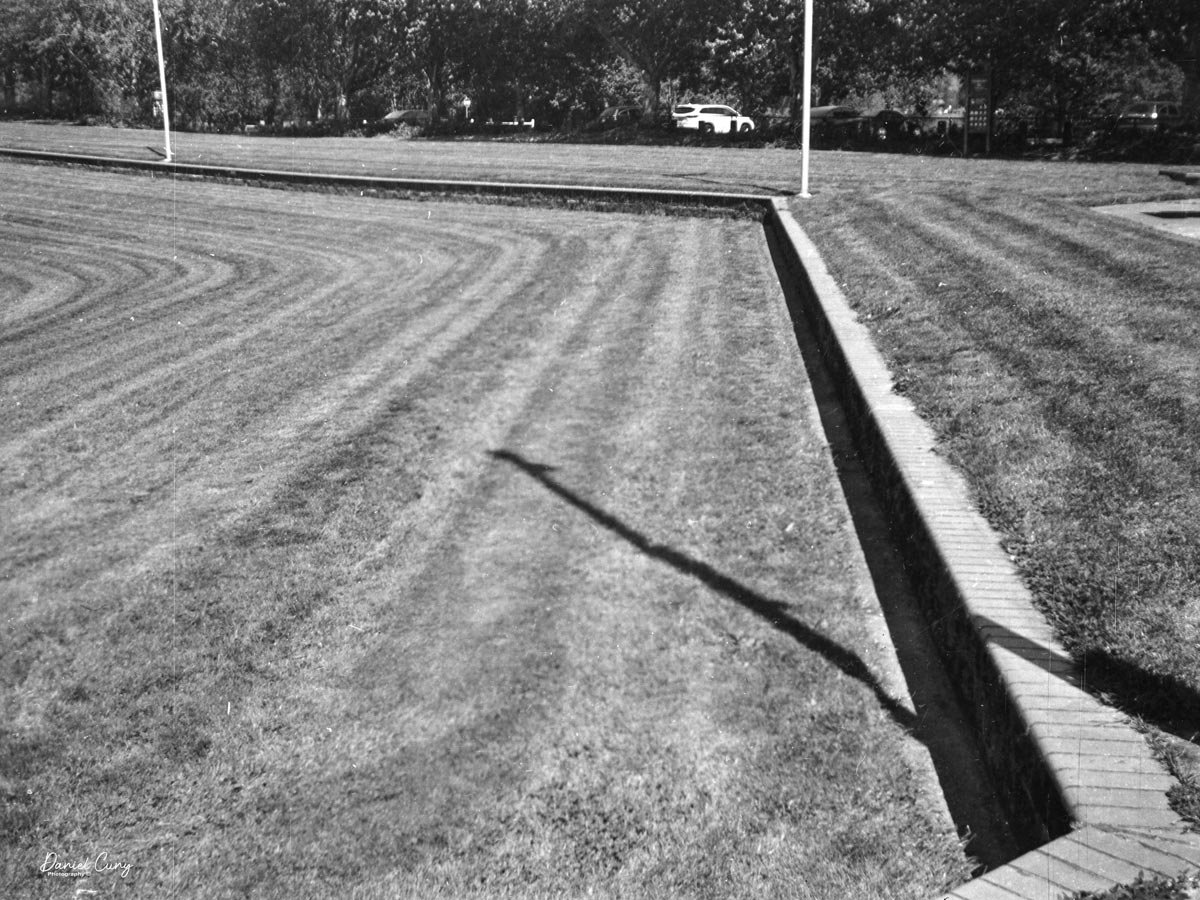
 The results aren't bad, but not the sharpest images either, especially compared to the Kolar Kola camera. I may have missed the focus distance, but most of the photos are sharp enough for an 8x10. Here are some of the images I took while walking the Columbia River with my daughter and Bean, her dog. 

Conclusion:

 There are several things I really like about the camera. Still, the thing I enjoyed most about this camera is its thinness when traveling. It's so thin compared to other medium-format cameras; for me, it makes it fun to use. Not being bulky or clumsy and being fairly lightweight make this camera a real pleasure to carry around.

 The brown pebble finish is also a bonus in my opinion, adding more to the camera than leather and chrome alone. It has a very appealing feel and firmness that make the camera fun to hold.

Designers in the 1930s were still in the Art Deco period. They had a real sense of classical design, which they implemented in their products. It makes me even more want to buy a 3D printer to experiment with designs and textures, which I feel are lacking in today's designs.  

 Thank you for taking the time to learn a bit about this very classic and rare camera made in Stuttgart, Germany, in the early to mid-1930s.

 I'd love to hear from you, so if you have a comment or one of your own, please share it with us here.

 Here are my other Camera Reviews.

 Cuny's Camera and Photos is my online eBay store where you might find one (or many) of the cameras I've reviewed, along with other camera and photo items I've picked up or hoarded over the many years in the business.

 Until next week, please be safe.