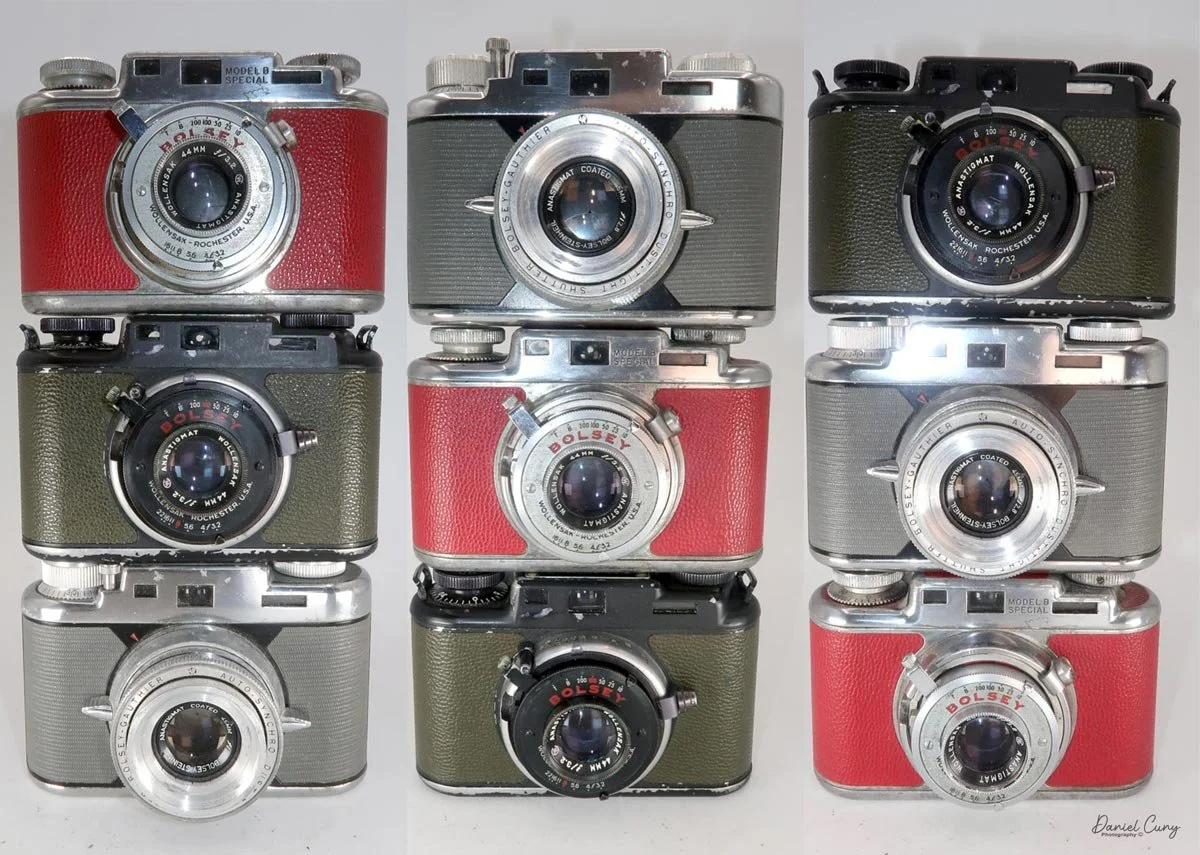
Composition of my Bolsey 35 B Special, PH-324A and B3 cameras
I've always been a fan of Bolsey cameras, as I've written about them in the past. Many of their models have a highly unusual appearance. Their 35mm cameras look somewhat bulbous from the top, with an odd three-sided removable back door. Yet, they seem to fit in the hand nicely thanks to their quirky form factor.
I've owned many Bolsey cameras over my collecting career, from the twin-lens Bolsey-Flex Trio and Bolsey 8 (both still and movie cameras) to the oddly shaped twin-lens 35mm Bolsey C model. But today I'm writing about their more common 35mm rangefinders—with the fun exception that they come in different colors.
One thing I've noticed is that the red logo Bolsey button on top of the camera is usually missing. I'd guess more than half the ones I've seen have lost this red button, likely popping off at some point in the camera's life. I've had some with and some without, so I generally look for and purchase them with the button intact, unless it's a truly "special" camera.
All three cameras I'm looking at today are based on the Bolsey B in terms of shape and most features. Due to my love for colored cameras, I couldn't resist putting this trio together—mainly for the fun of photographing them side-by-side and seeing what I could come up with for my lead photo.
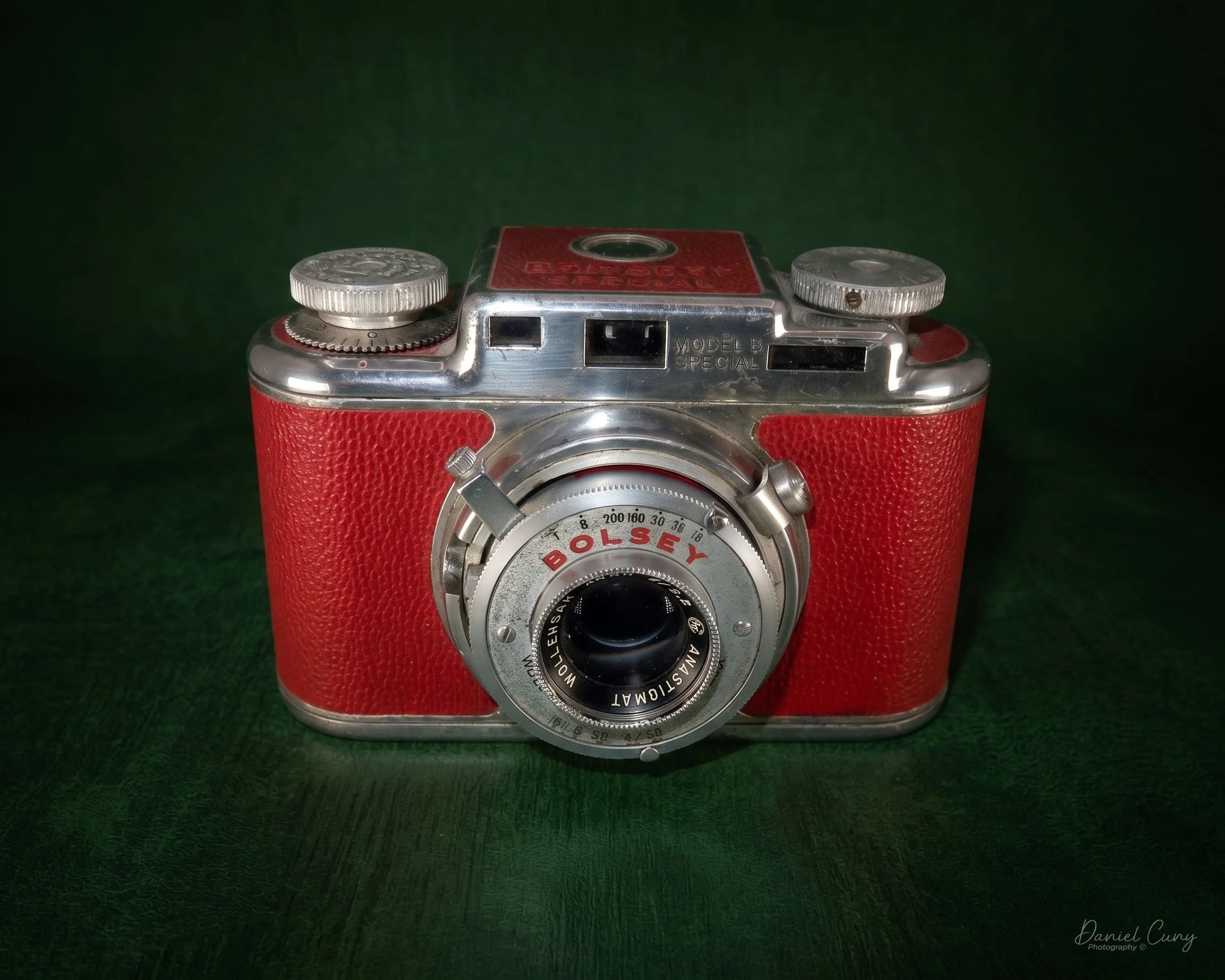
The Bolsey "Special" is the oldest in my collection, and I purchased it online off eBay many years ago. The thought of adding a red Bolsey to the shelf was a huge plus for me. When I received it and saw it was in great physical shape, I was thrilled. Finding out the shutter and transport actually worked was just the frosting on the cake.
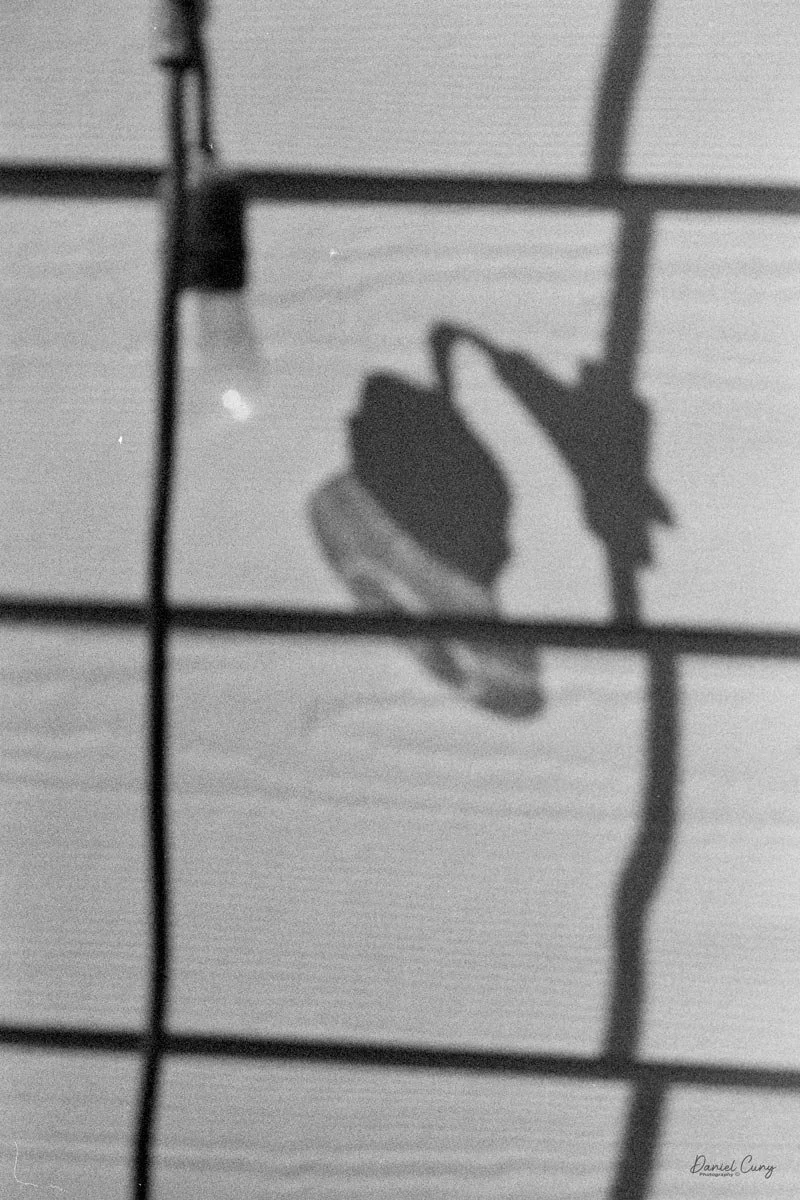
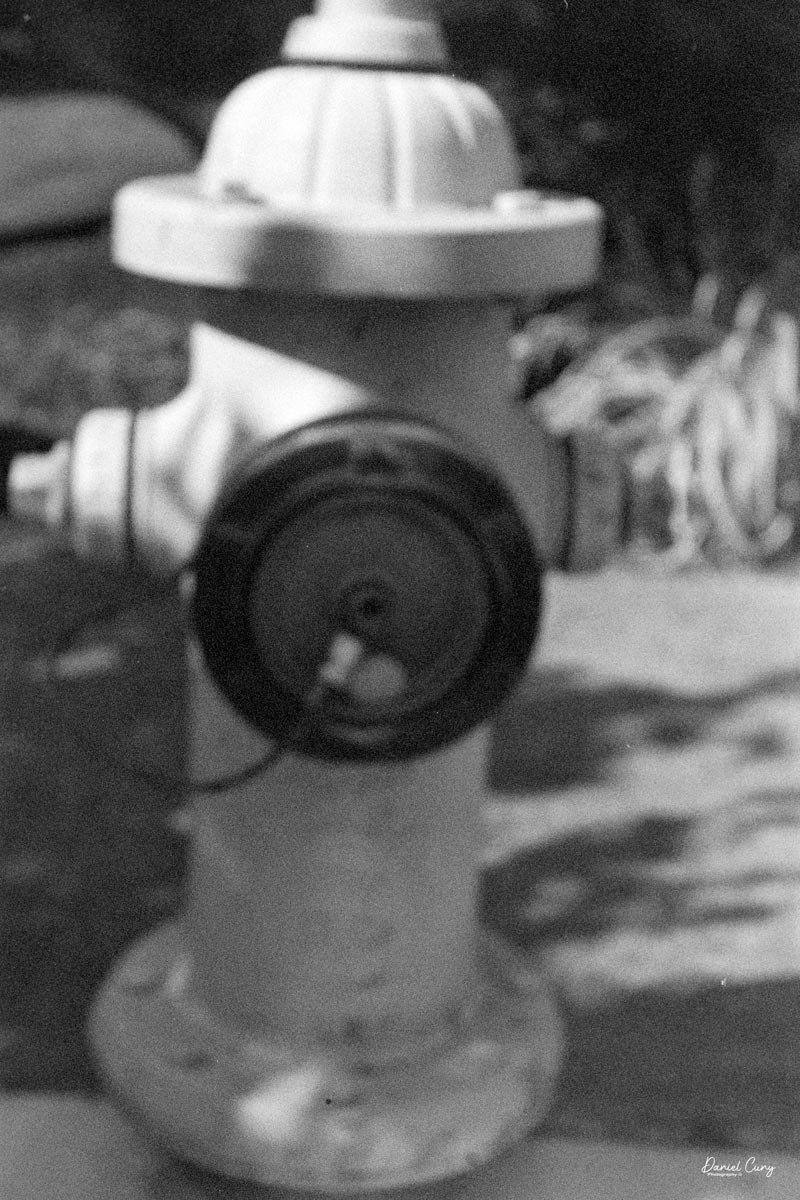
However, it wasn't until I finally pulled it off the shelf, loaded it up, processed the film, and saw the results that I realized there was a major flaw (see the images in the "Results" area). While the rangefinder worked as it should and the pressure plate was intact, the images were incredibly out of focus. I guess one of the lens elements is missing, or something is so out of whack that it ruins the focus. The back looks perfectly fine, so I'm at a loss.
After some research, I learned that some Bolsey "Special" cameras were made for microscopes and scientific purposes. Maybe this lens was specifically calibrated for extreme close-up work? But then again, the rangefinder worked perfectly for distance. It's a mystery.
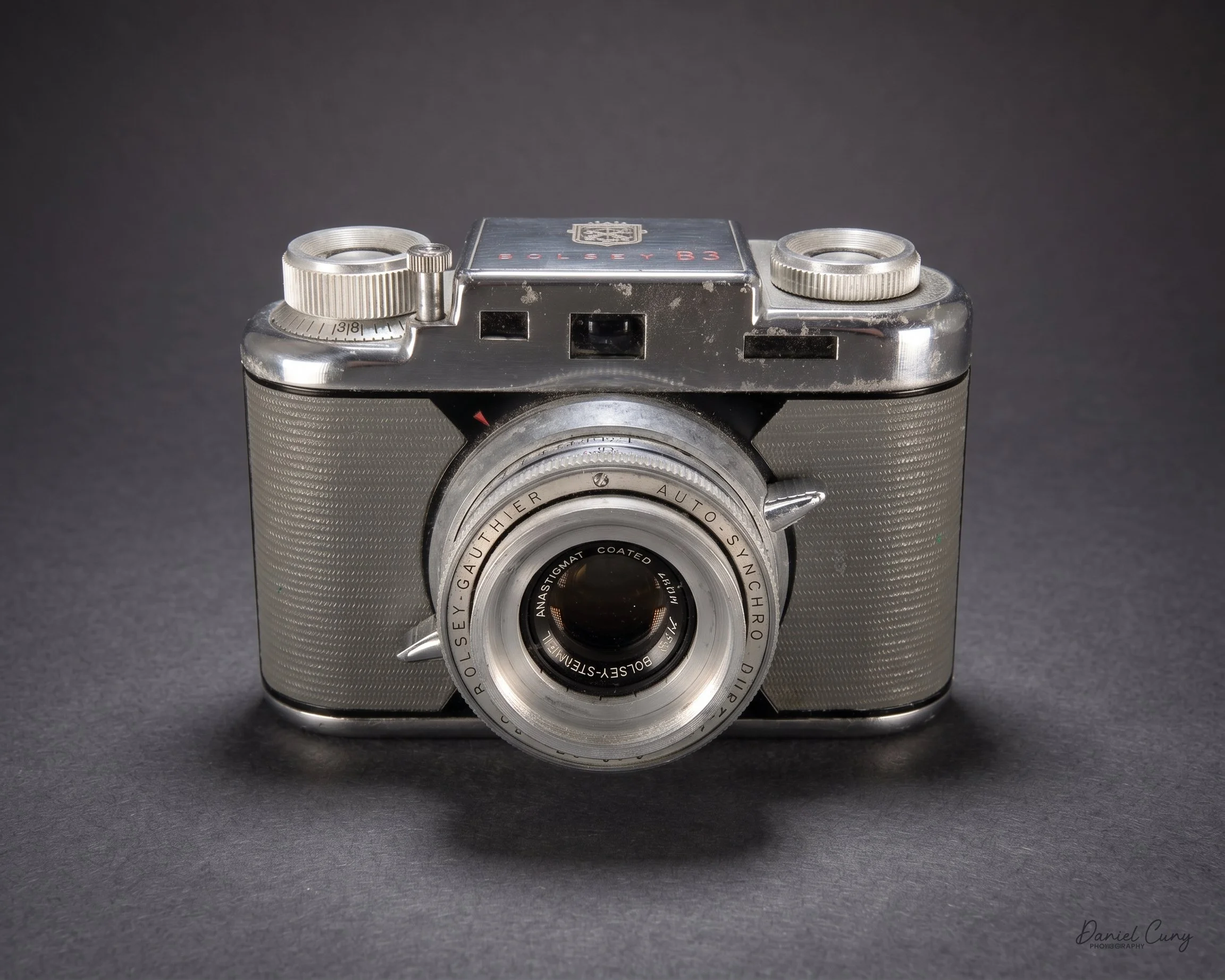
I bought the second camera, the Bolsey B3, at an antique store in a neighboring town about three years ago. I was walking through the basement section when I came across a booth with a few cameras, and there sat this grey B3. The chrome was tarnished, and the shutter was stuck open, but the top was clean, and it was grey—a color I hadn't seen on a Bolsey before. The price was only a few dollars, so even though the shutter wasn't working, I figured it would make a fantastic display piece alongside my other Bolseys.
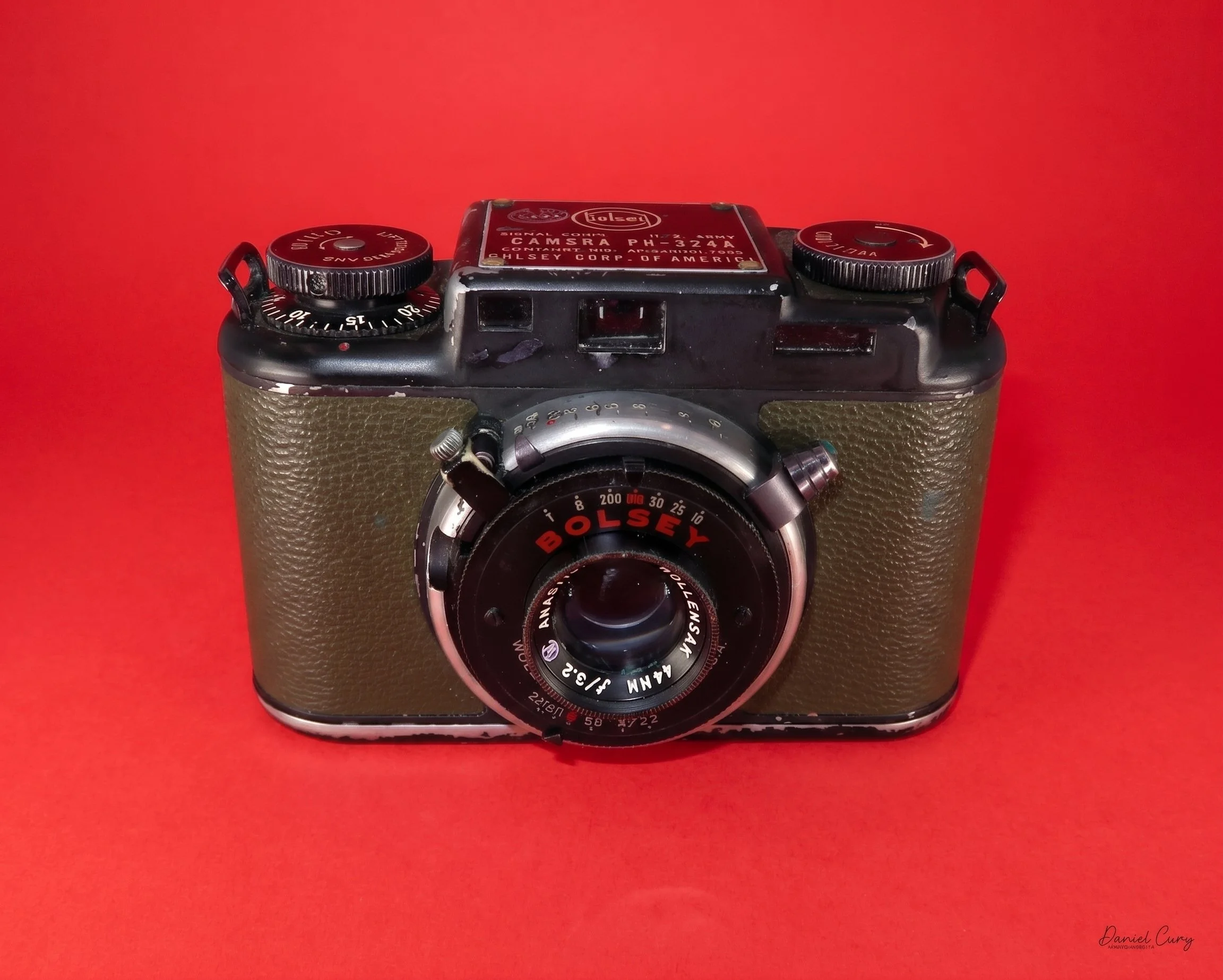
The newest Bolsey to join my collection is the PH-324A. This military camera was made for, and used by, the U.S. Signal Corps. This olive-drab camera features a stark black finish and a bold red "Bolsey" on the faceplate. It was part of a lot I bought at an auction house a few months ago.
While I always enjoy finding different colored versions of cameras, the stigma of a "military" model didn't initially excite me. That's possibly because the high prices they usually command typically turn me off—and keep them out of my budget! But the striking black finish on this one really won me over.
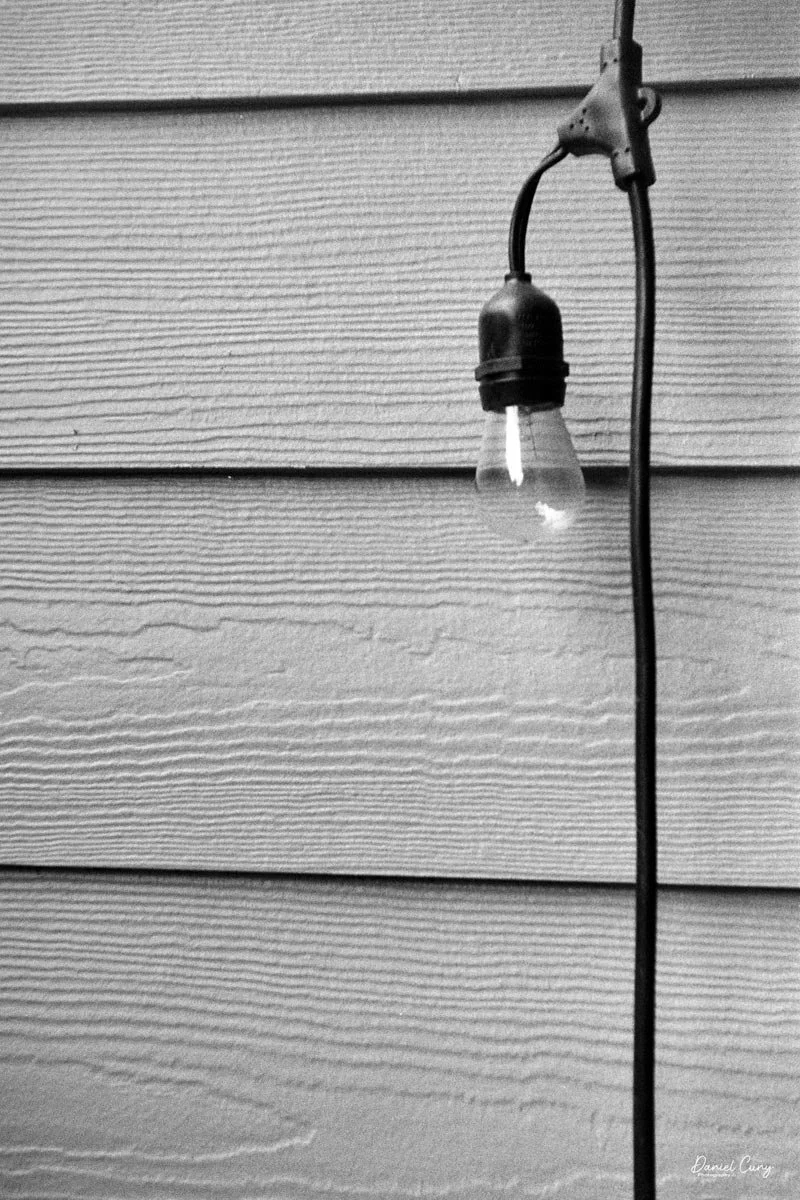
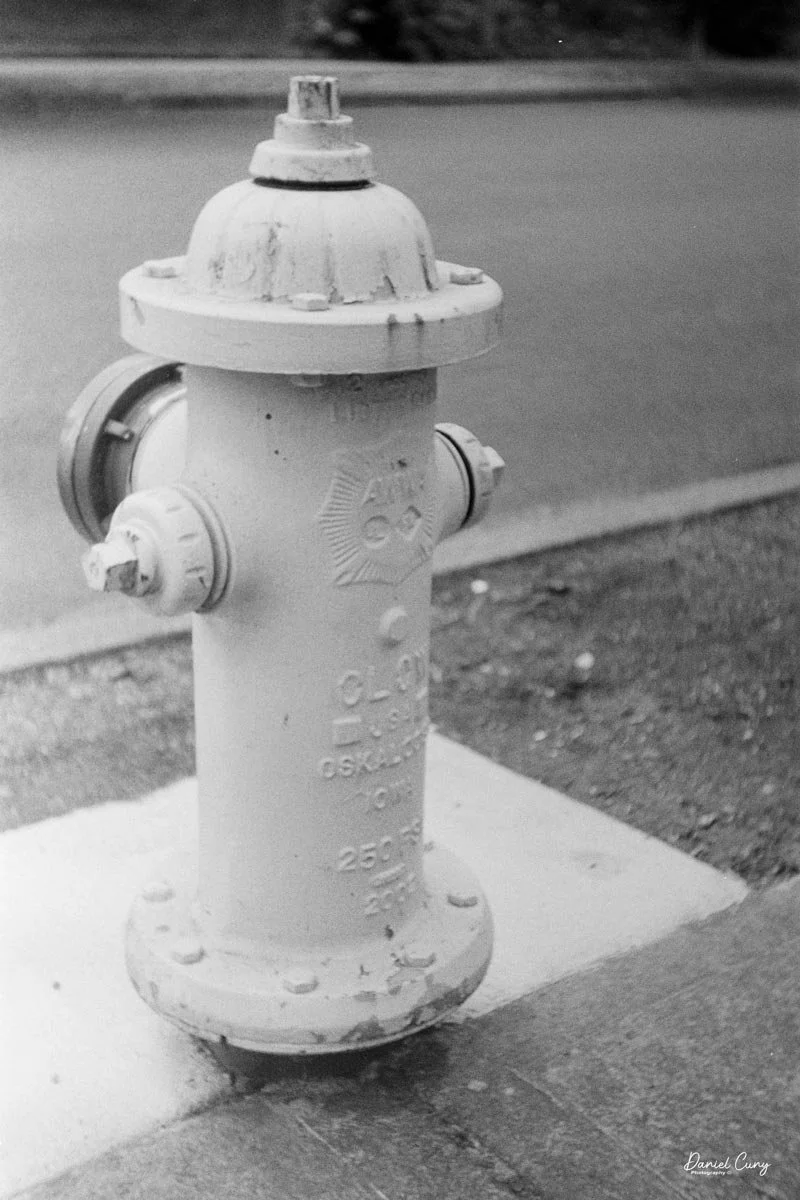
After processing the disappointing roll from the Bolsey Special, I loaded some film into the PH-324A and took it outside for a spin. Thankfully, this roll turned out much better, which you can see in the "Results" section below.
History:
The history of Bolsey cameras is inextricably linked to the brilliant and prolific mind of its founder, Jacques Bolsey. Born Yakob Bogopolsky in Kiev in 1895, he first made his mark on the photographic world in Switzerland during the 1920s. There, he designed the legendary Bolex 16mm motion picture camera, a revolutionary piece of equipment that helped democratize filmmaking for generations of operators. He also laid the mechanical groundwork for the Swiss Alpa-Reflex 35mm camera in the late 1930s before emigrating to the United States to escape the onset of World War II.
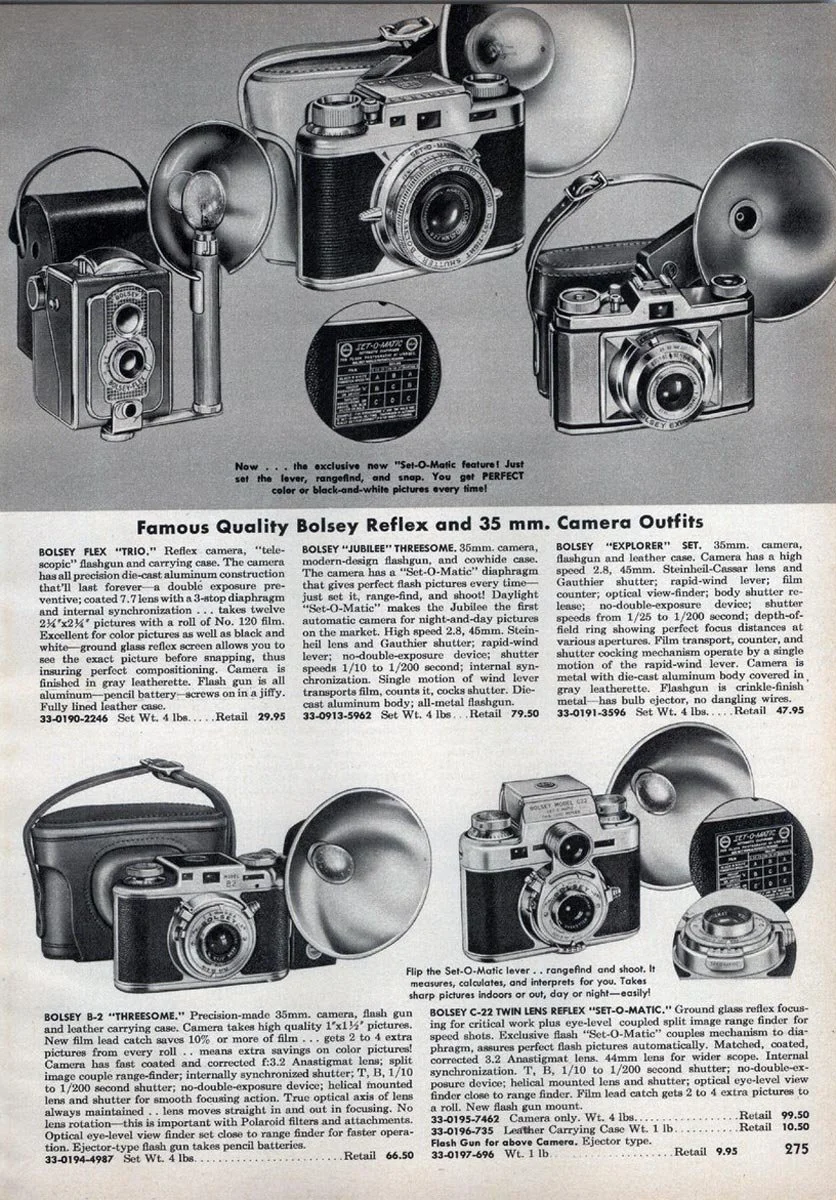
Bolsey Advertisment
During the war, Bolsey worked extensively with the U.S. government, designing durable, high-precision combat cameras for both aerial and ground photography. When peacetime arrived, he leveraged this military engineering experience to enter the booming consumer market. In 1947, he founded the Bolsey Corporation of America in New York and introduced his first major consumer camera, the Bolsey Model B.
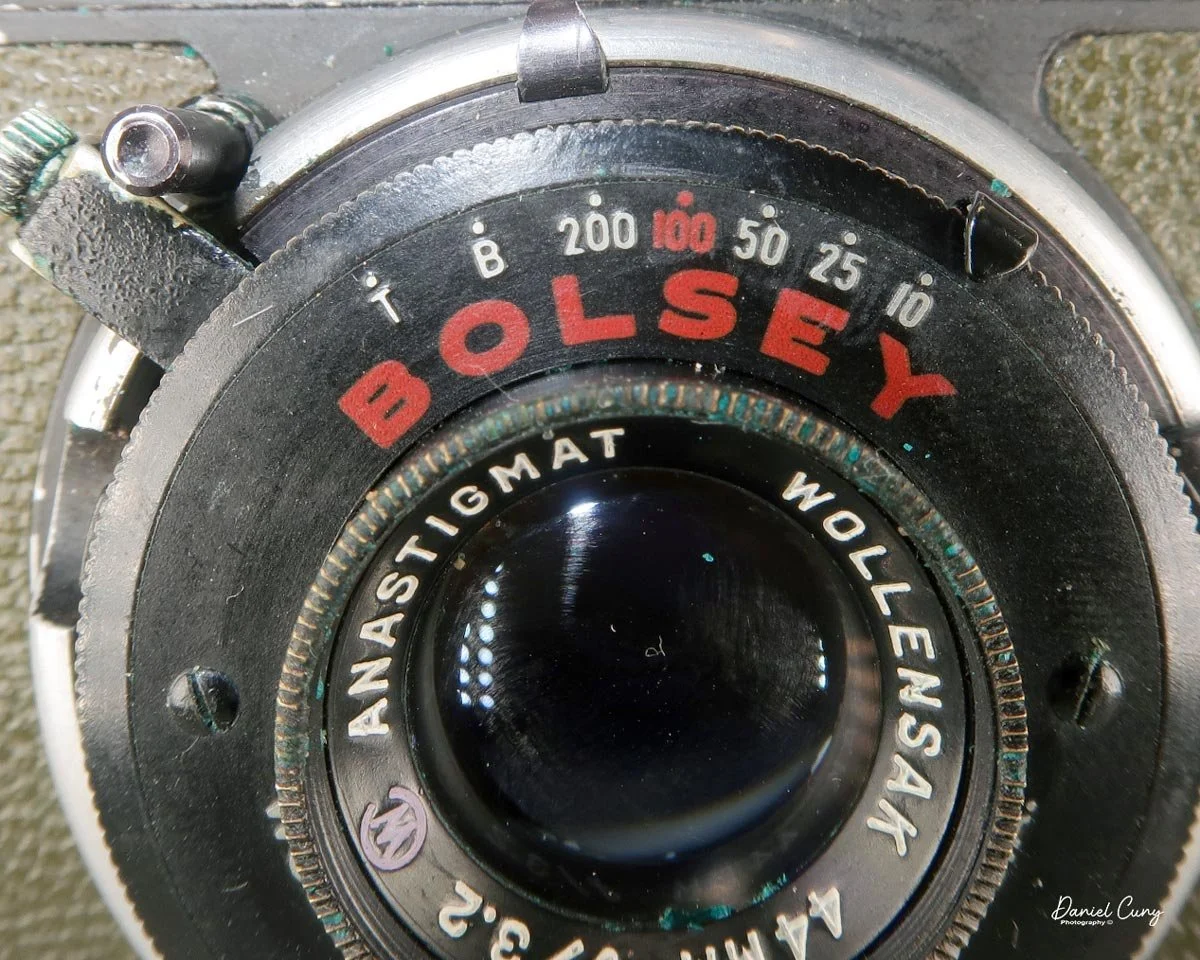
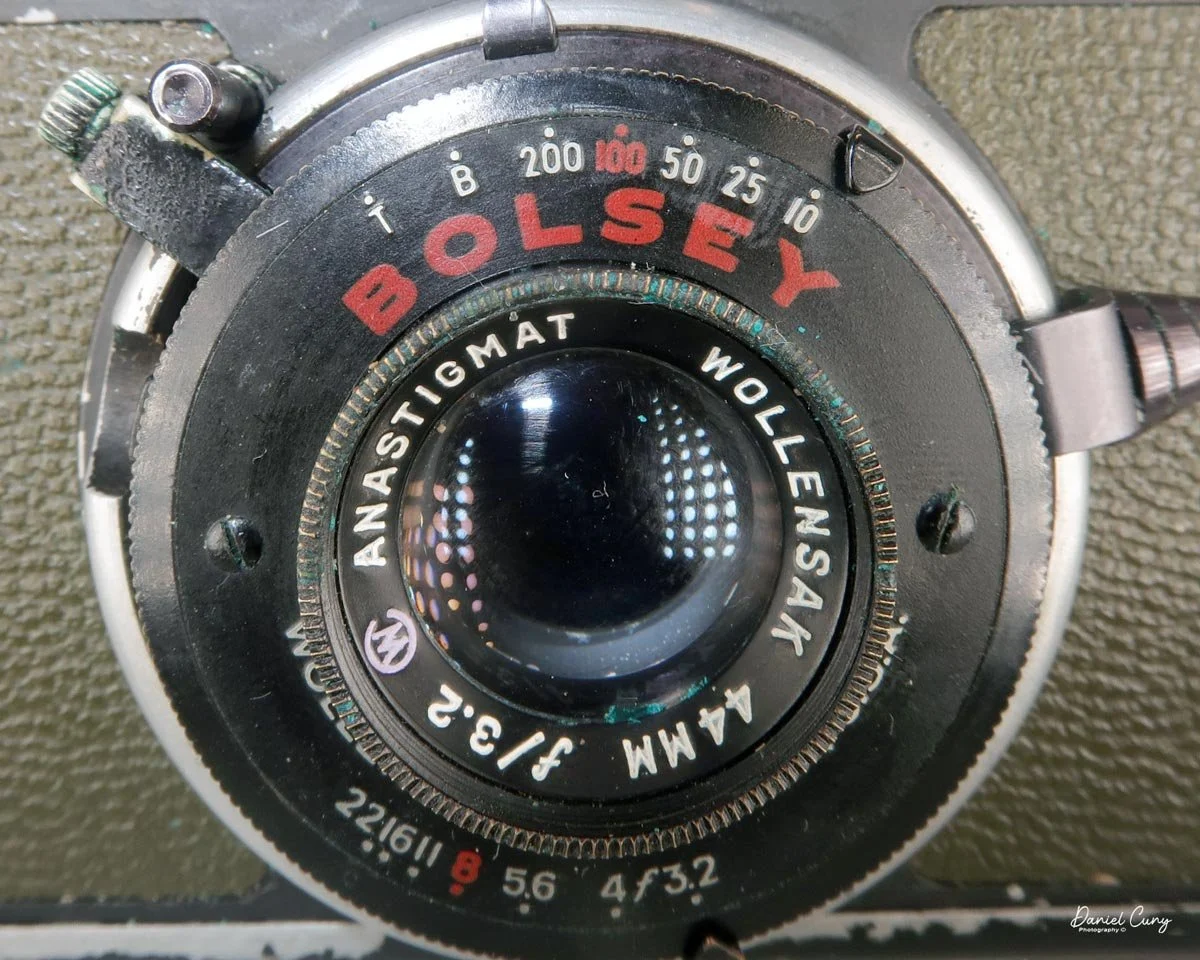
The Bolsey Model B was a compact 35mm rangefinder featuring a distinctively heavy, cast-aluminum body. It possessed a uniquely rugged feel—a direct byproduct of Bolsey's wartime designs. Equipped with a fixed Wollensak Anastigmat 44mm f/3.2 lens and a split-image rangefinder, the Model B was both mechanically capable and affordable for the post-war middle class.
The company quickly iterated on this early success. The subsequent Model B2 added double-exposure prevention, while the exceptionally quirky Model C, introduced around 1950, stands out as one of Bolsey's most eccentric designs. The Bolsey C was an unusual hybrid: it functioned as a standard 35mm rangefinder but also integrated a twin-lens reflex (TLR) viewfinder on the top of the body. This let photographers look down into a ground-glass screen to focus, offering an alternative to the traditional eye-level viewfinder.
Later models, like the Bolsey B22 and the Jubilee (introduced in 1953 and 1955, respectively), featured a proprietary "Set-O-Matic" system. This mechanical innovation coupled aperture control directly to the focus mechanism, removing the mathematical guesswork from early flash photography.
Despite their mechanical durability and innovative features, Bolsey cameras suffered from inconsistent quality control in their external finishes. The metal plating on many camera bodies tended to deteriorate or pit quickly. By 1956, facing intense competition from domestic manufacturers like Kodak, as well as highly sophisticated new imports from Japan and Germany, Bolsey ceased camera production and sold his business interests to the Wittnauer Watch Company.
Jacques Bolsey passed away in 1962. Today, his legacy survives not only in the revered Bolex cinema cameras but also in the quirky, durable Bolsey 35mm rangefinders that remain fascinating artifacts of mid-century photographic engineering.
My Camera:
For this section, I'll focus on the PH-324A. The red "Special" is very similar to the PH-324A, while the Bolsey B3 is different mechanically and has some aesthetic differences, too.
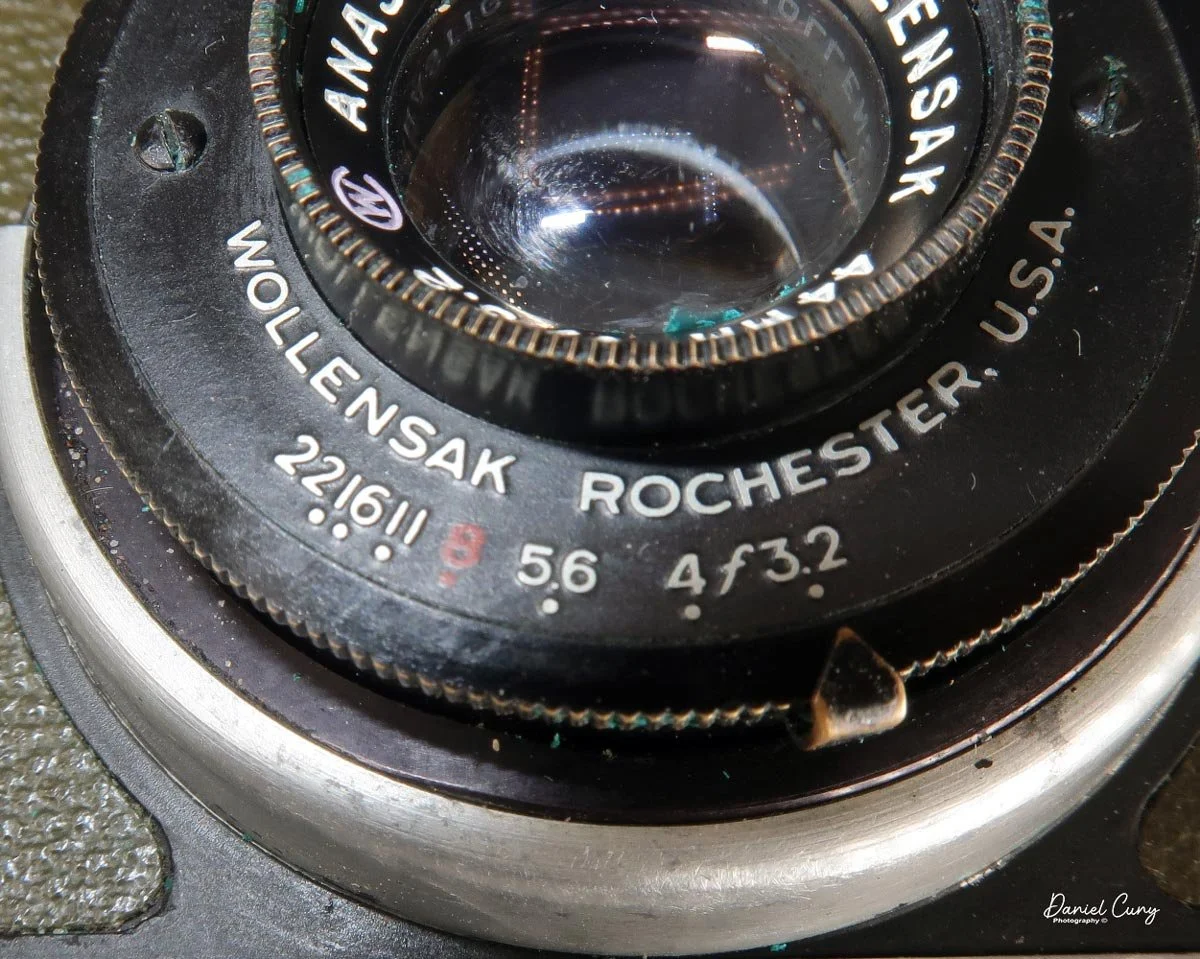
The Bolsey 35mm models are sturdy and compact, coming in at 4.25" across, 2.5" tall, and 2.5" deep, weighing 14.9 ounces without film. My camera has a Wollensak 44mm f/3.2 Anastigmat lens, and the serial number on my PH-324A is 95012.
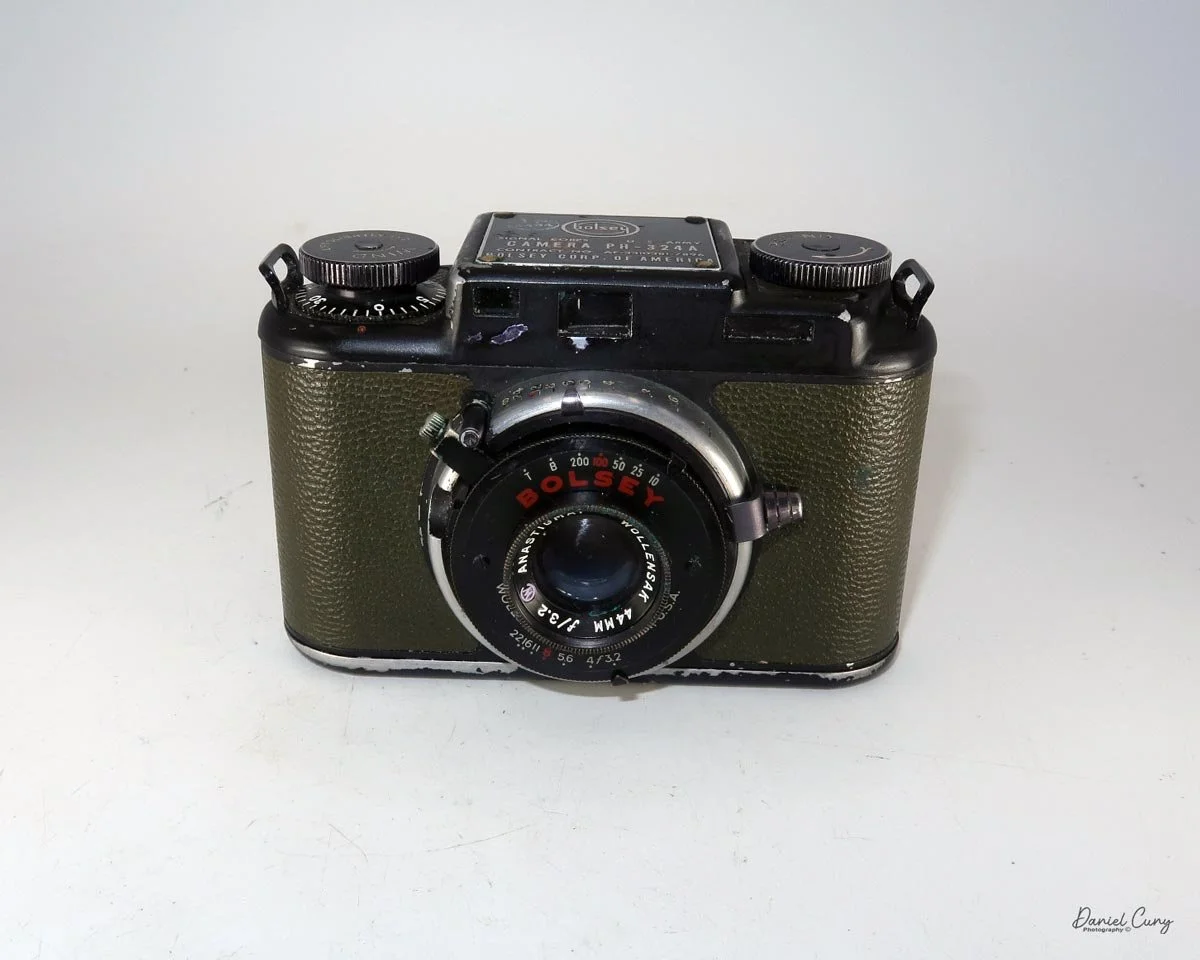
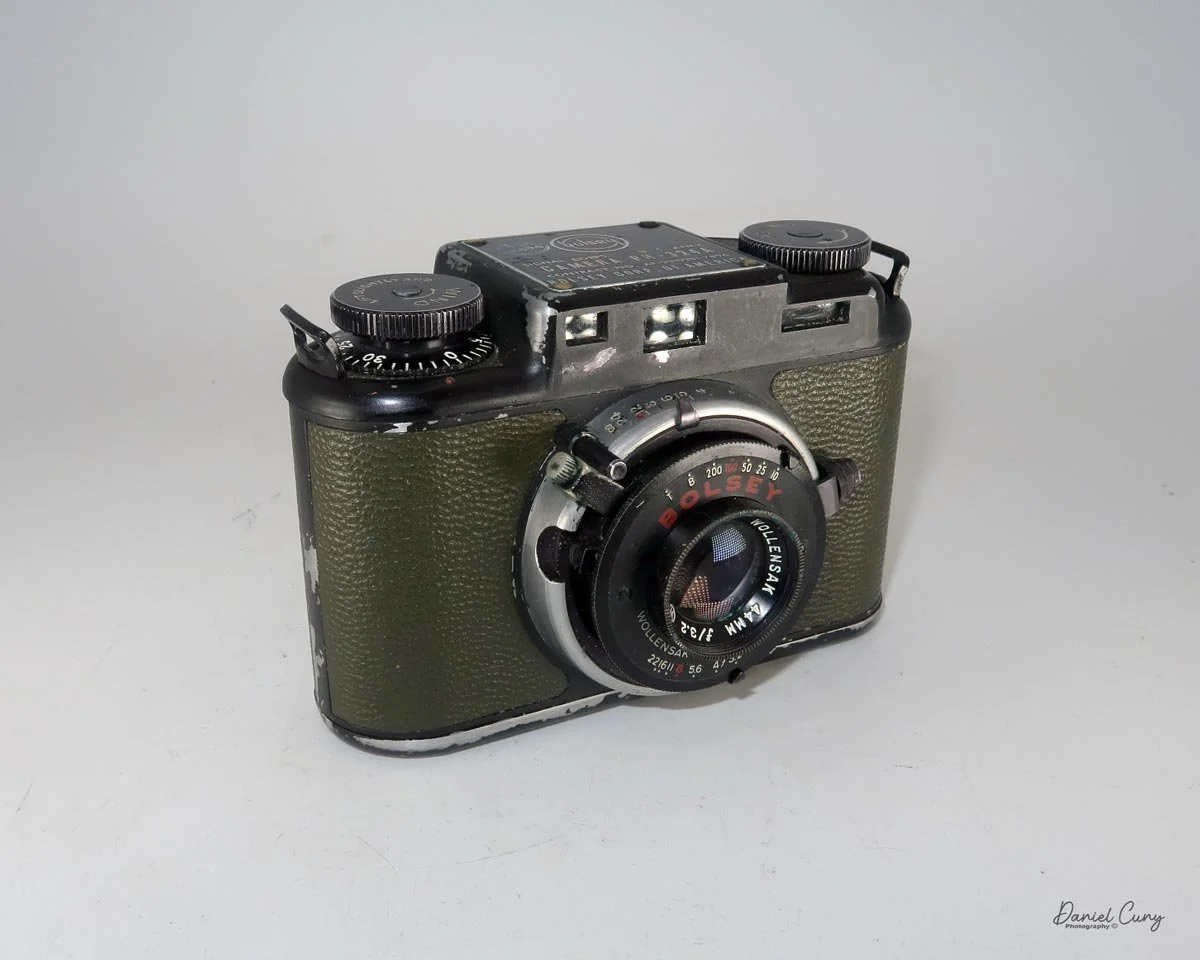
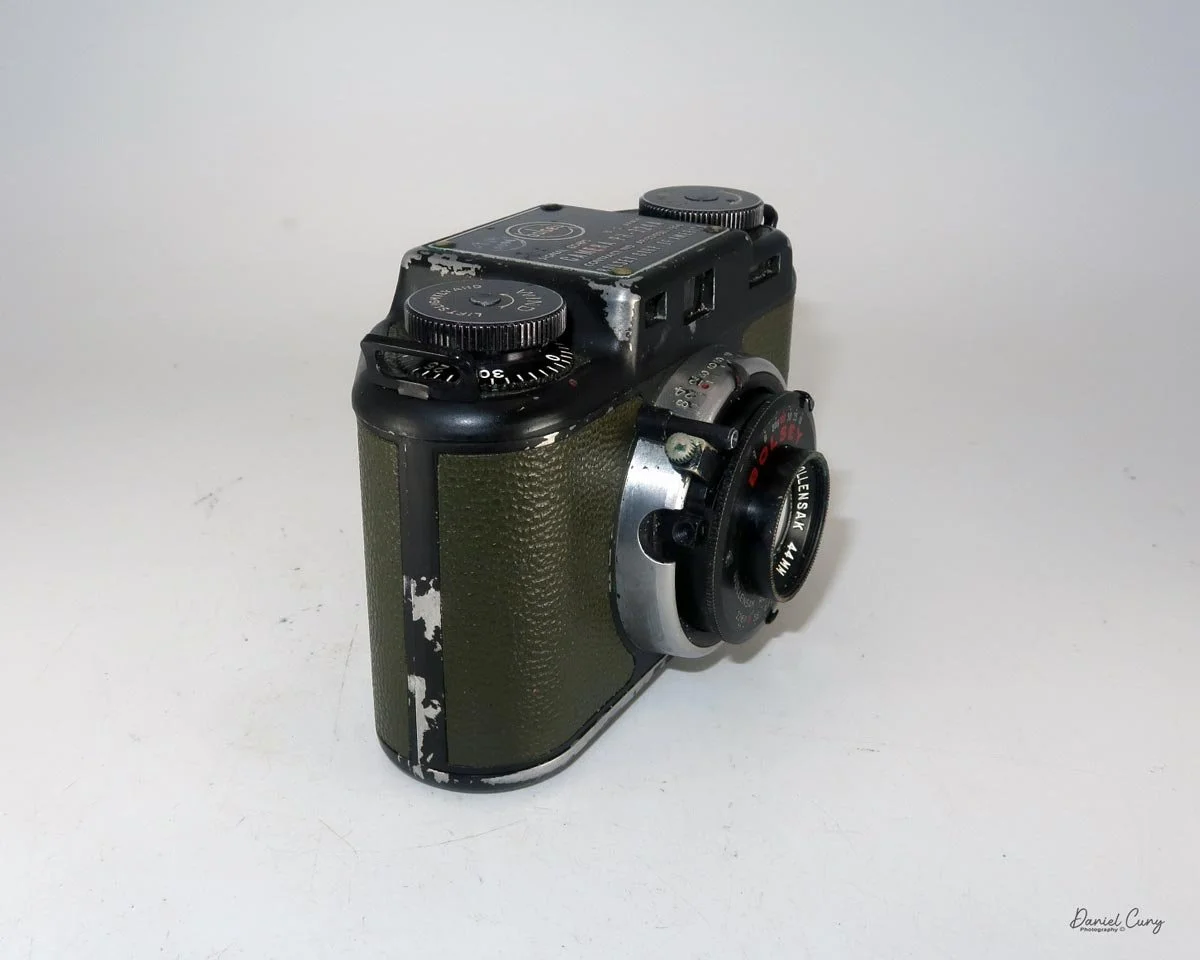
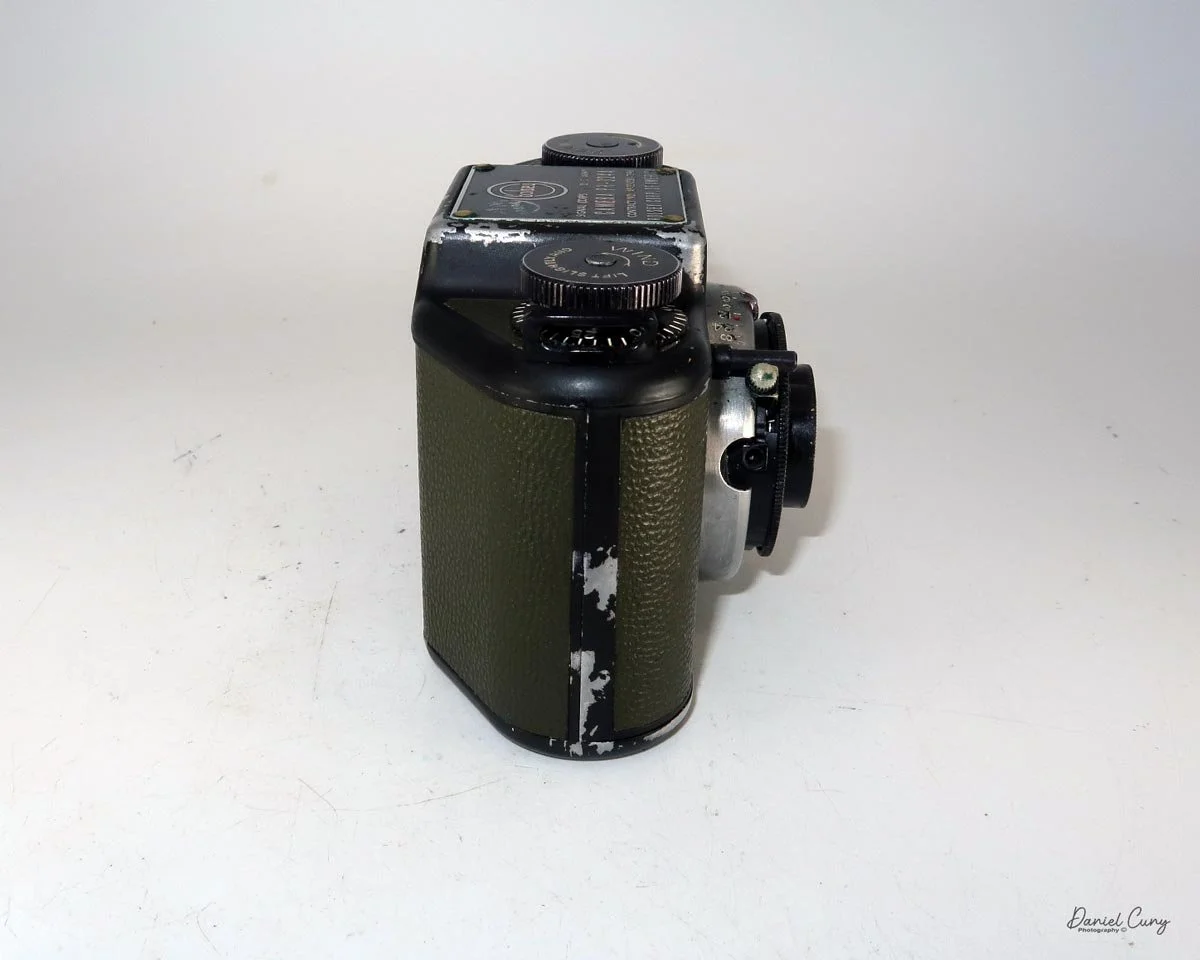
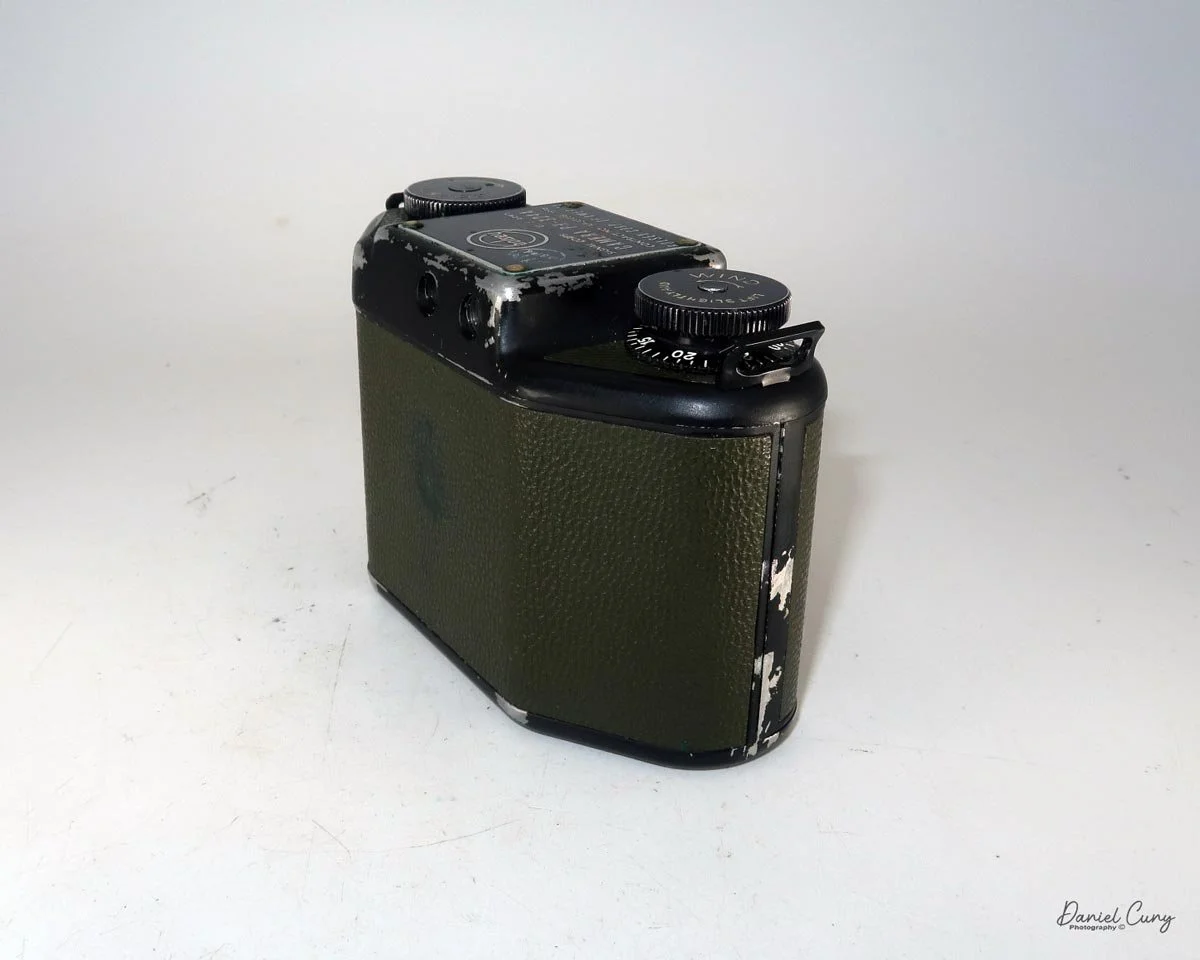
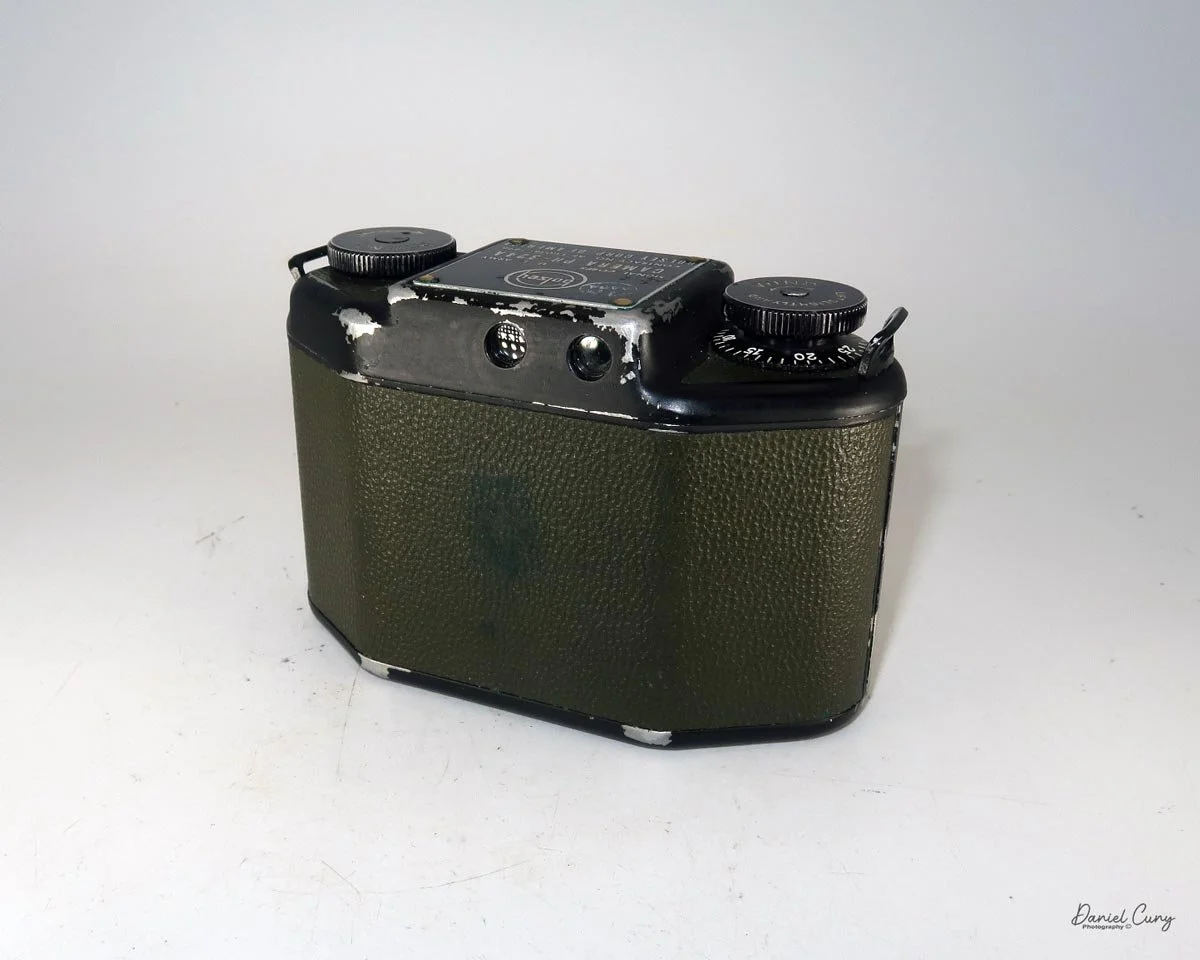
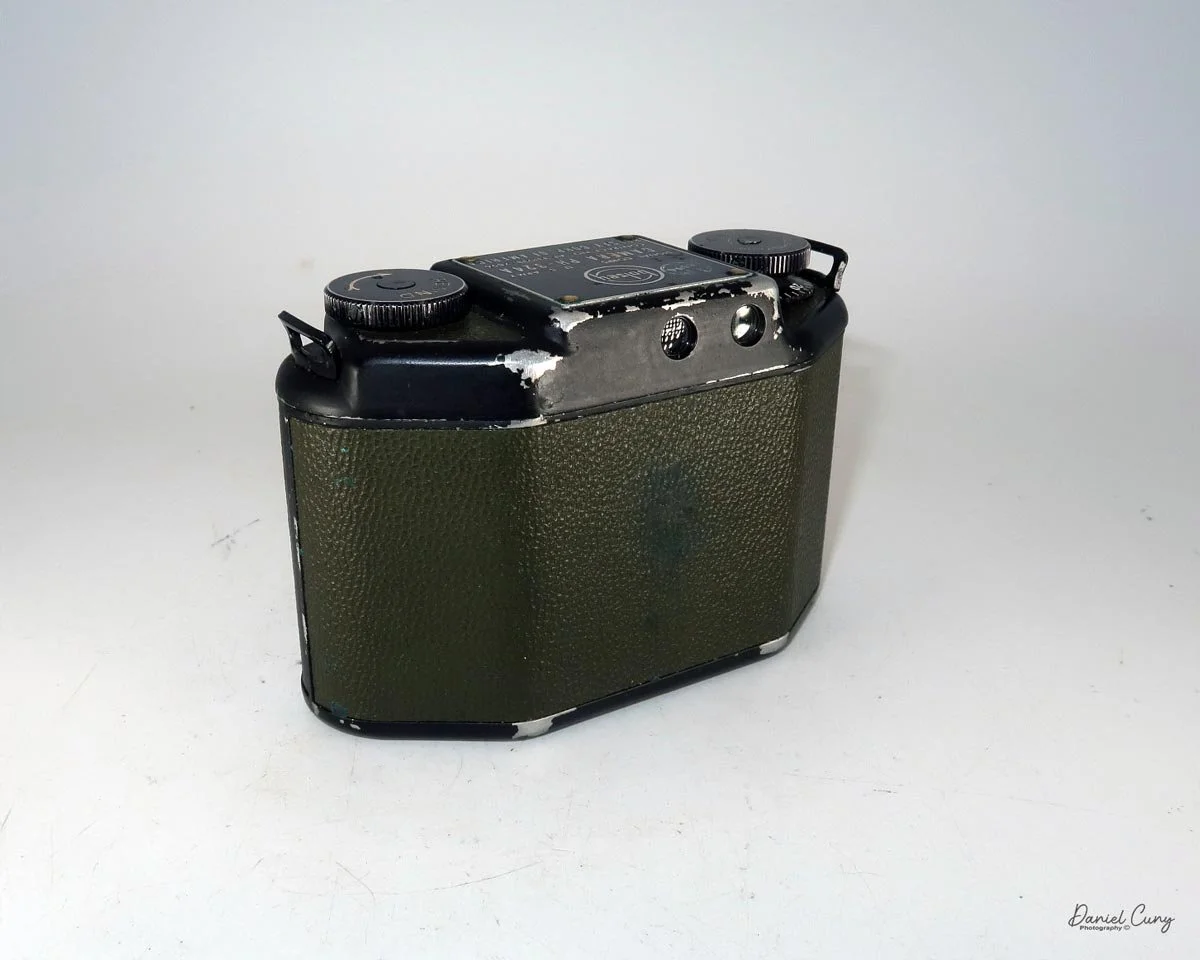
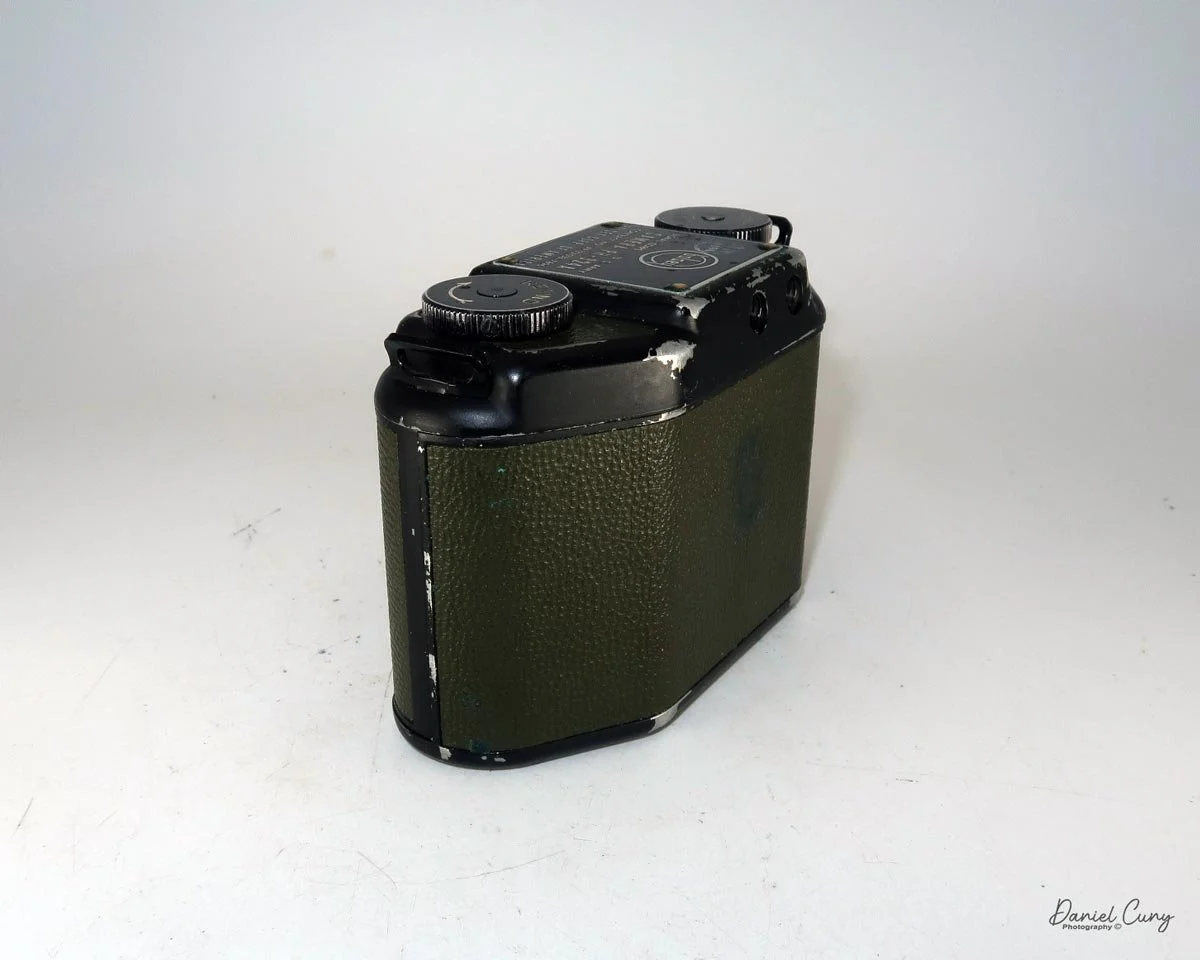
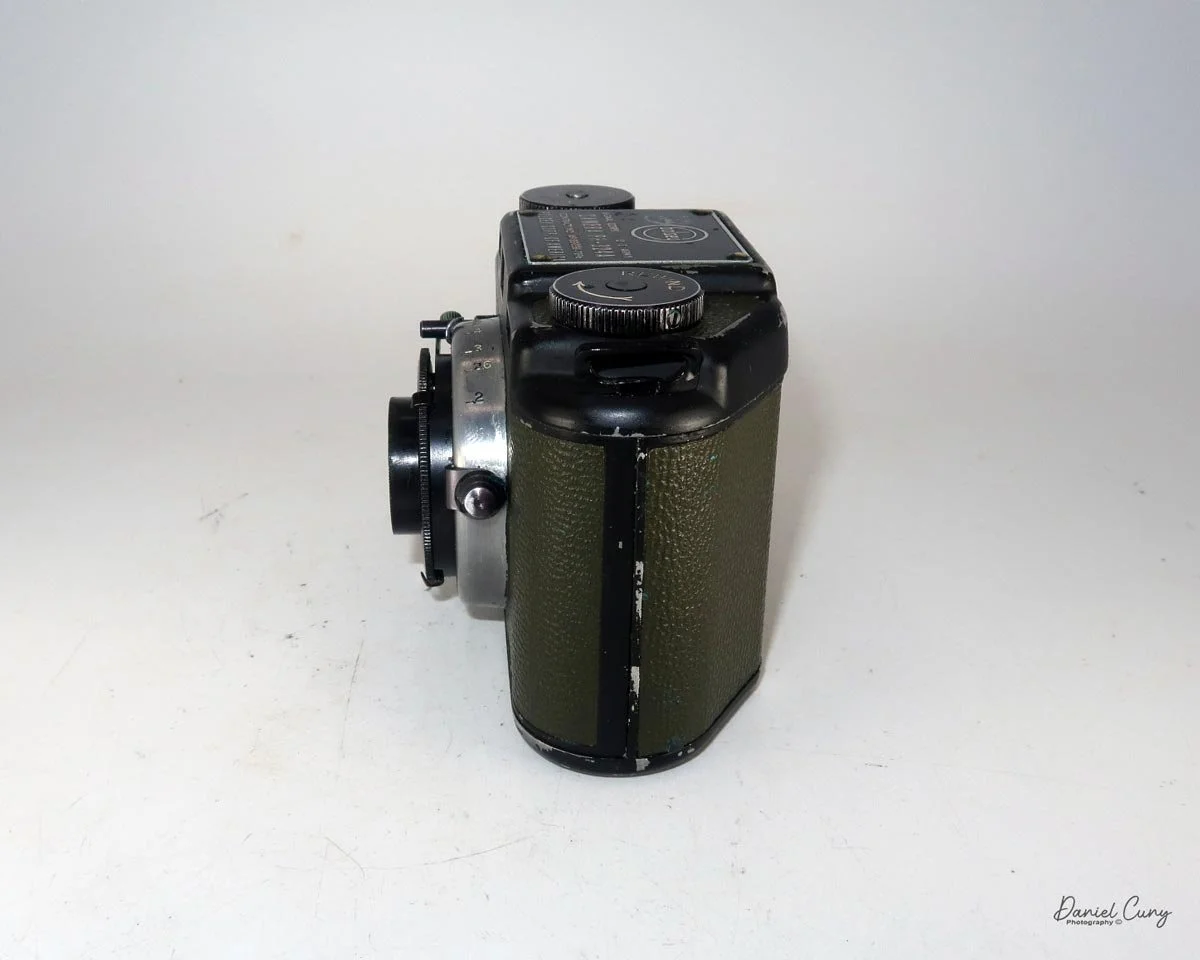
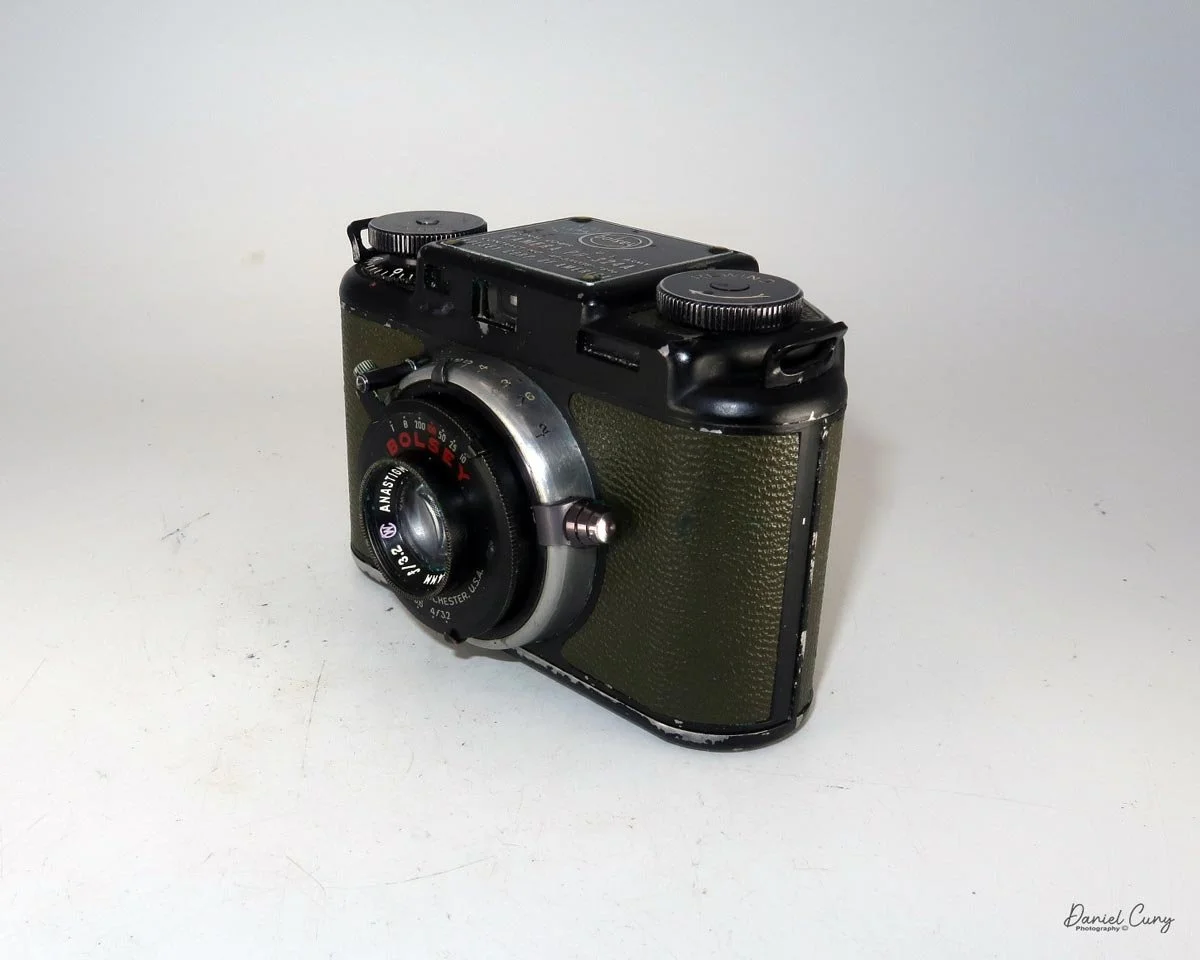
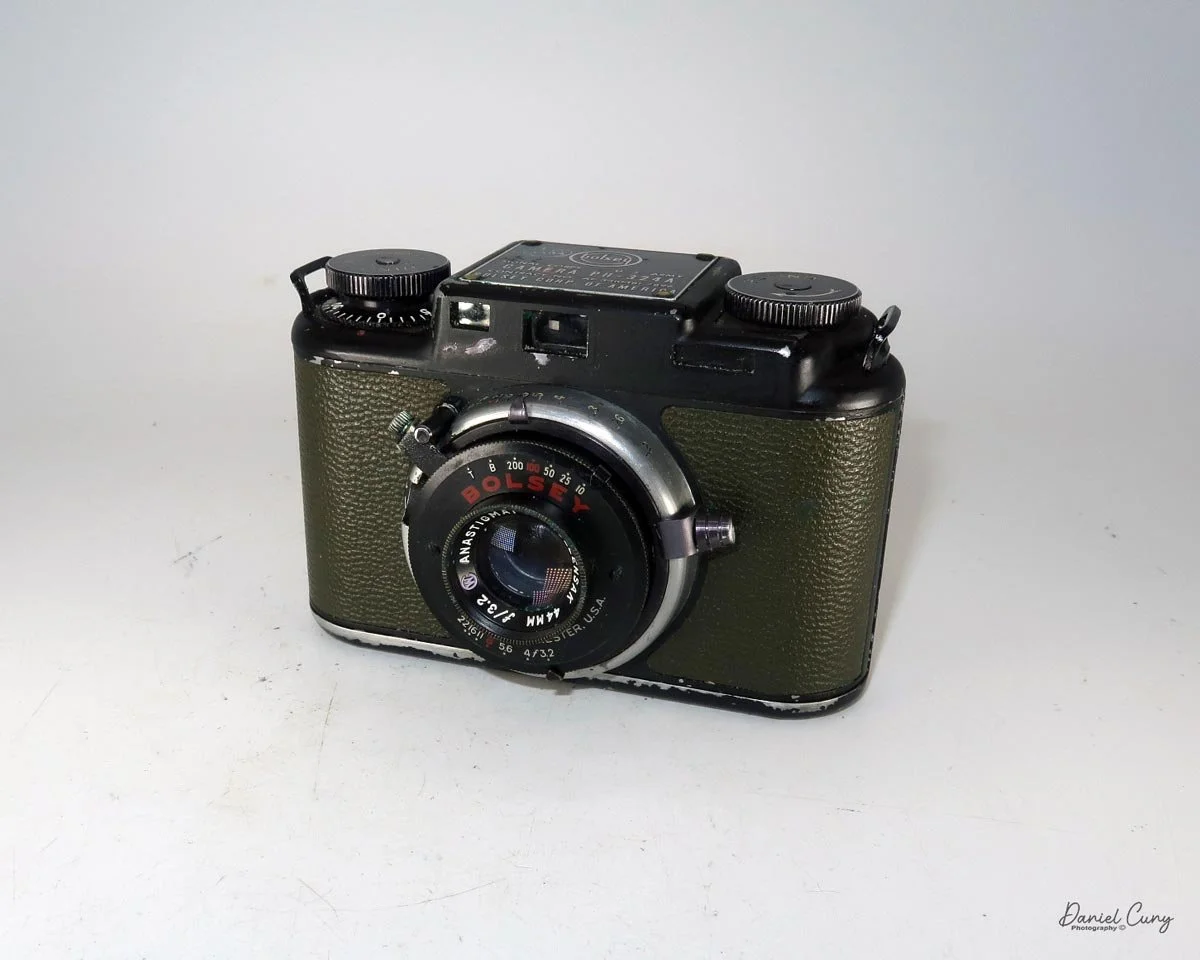
Looking along the top, you'll find just the rewind knob on the left. The middle of the PH-324A features the information plate with the Bolsey logo, reading: "Signal Corps. U.S. Army, Camera PH-324A," along with the contract name and "Bolsey Corp. of America." On the top right is the winding knob to advance the film. There's a helpful arrow indicating the turning direction, along with the instruction to "Lift slightly and Wind." Right below the winding lever is the frame counter.
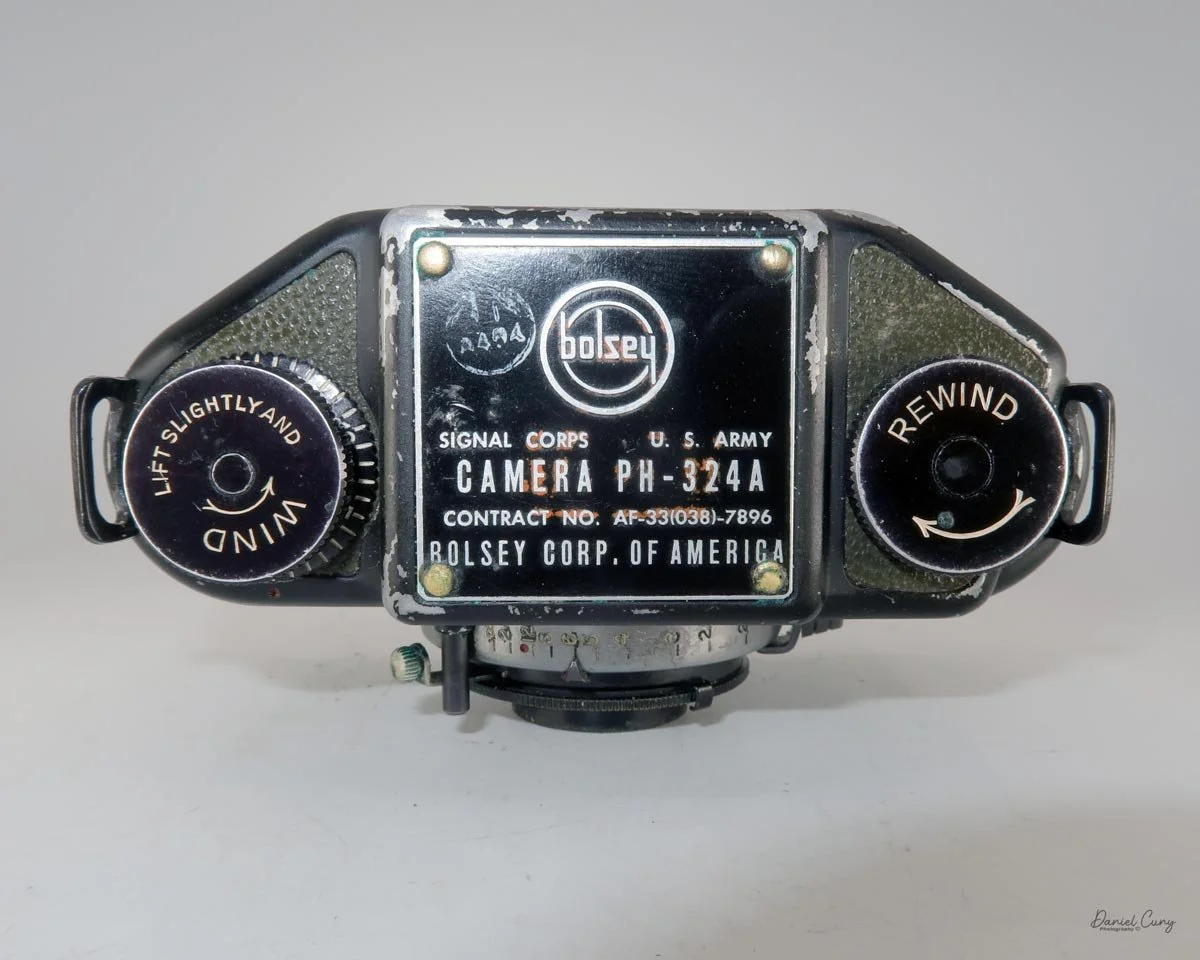
Top view of the Bolsey PH-324A camera
On the back of the camera are two holes for the viewfinder. The left is the standard finder used to frame your image, and the right is a split-image rangefinder used for focusing. For me, they are a little difficult to use, but I think that's because of the eye surgery I had over a year ago and simply getting more accustomed to using my left eye to focus.
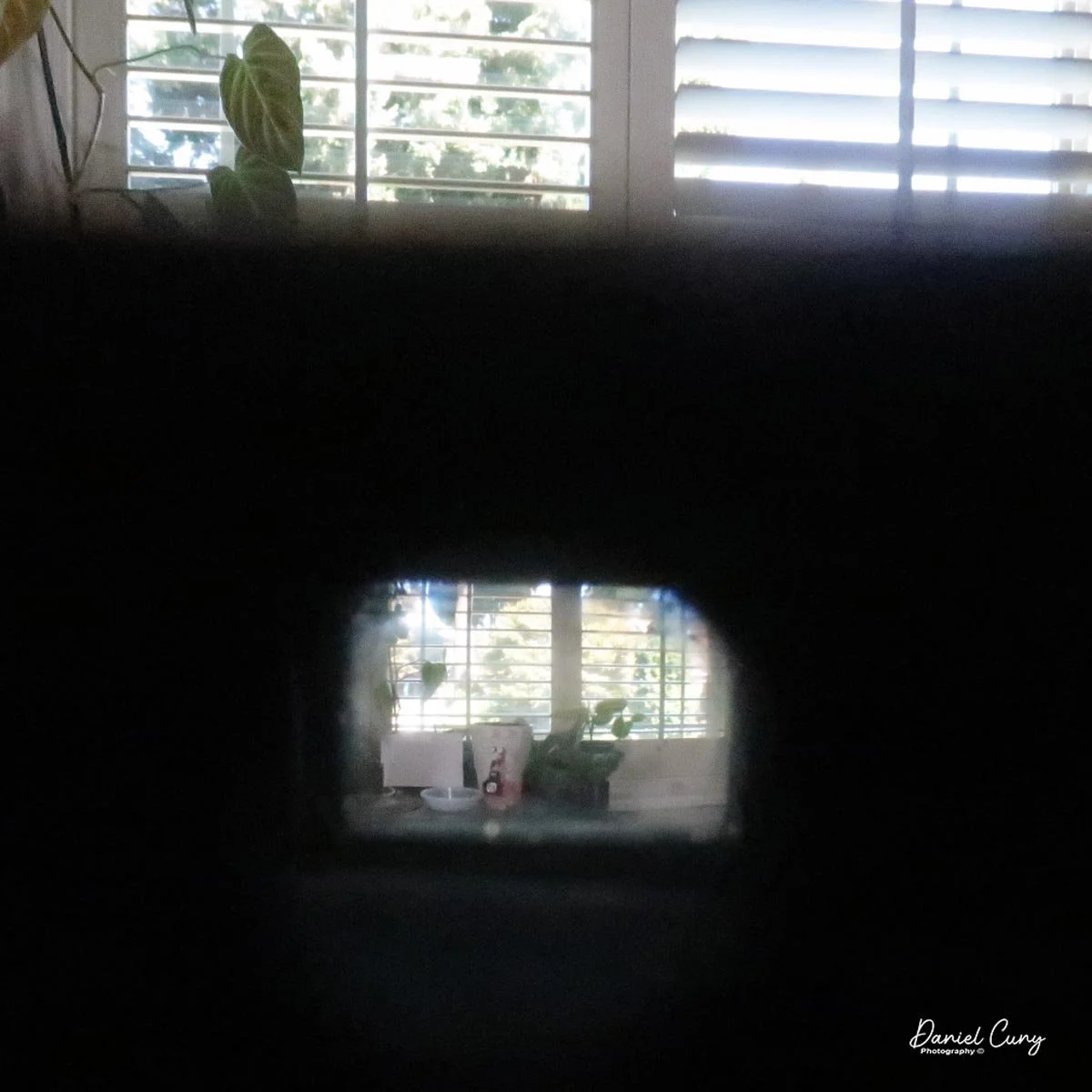
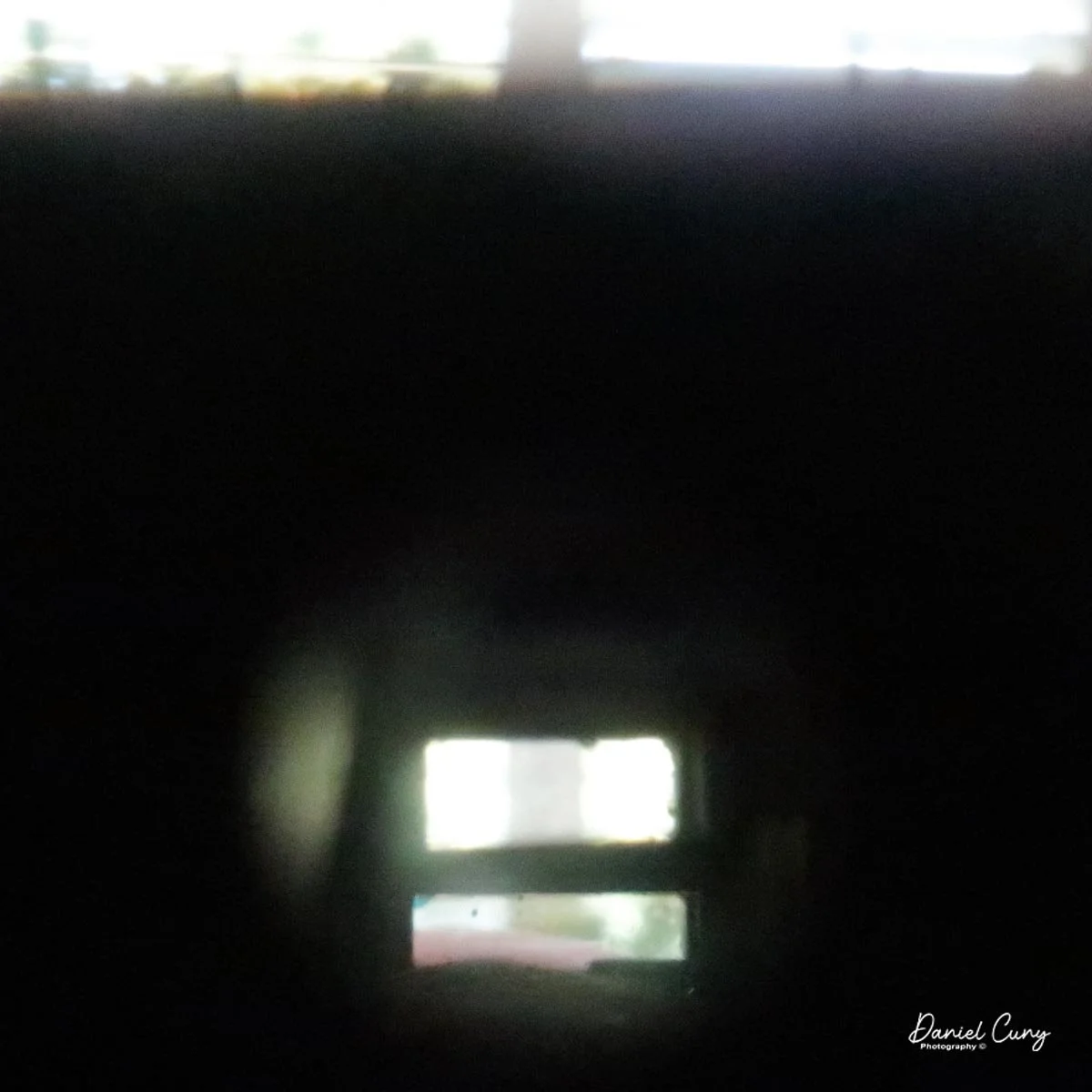
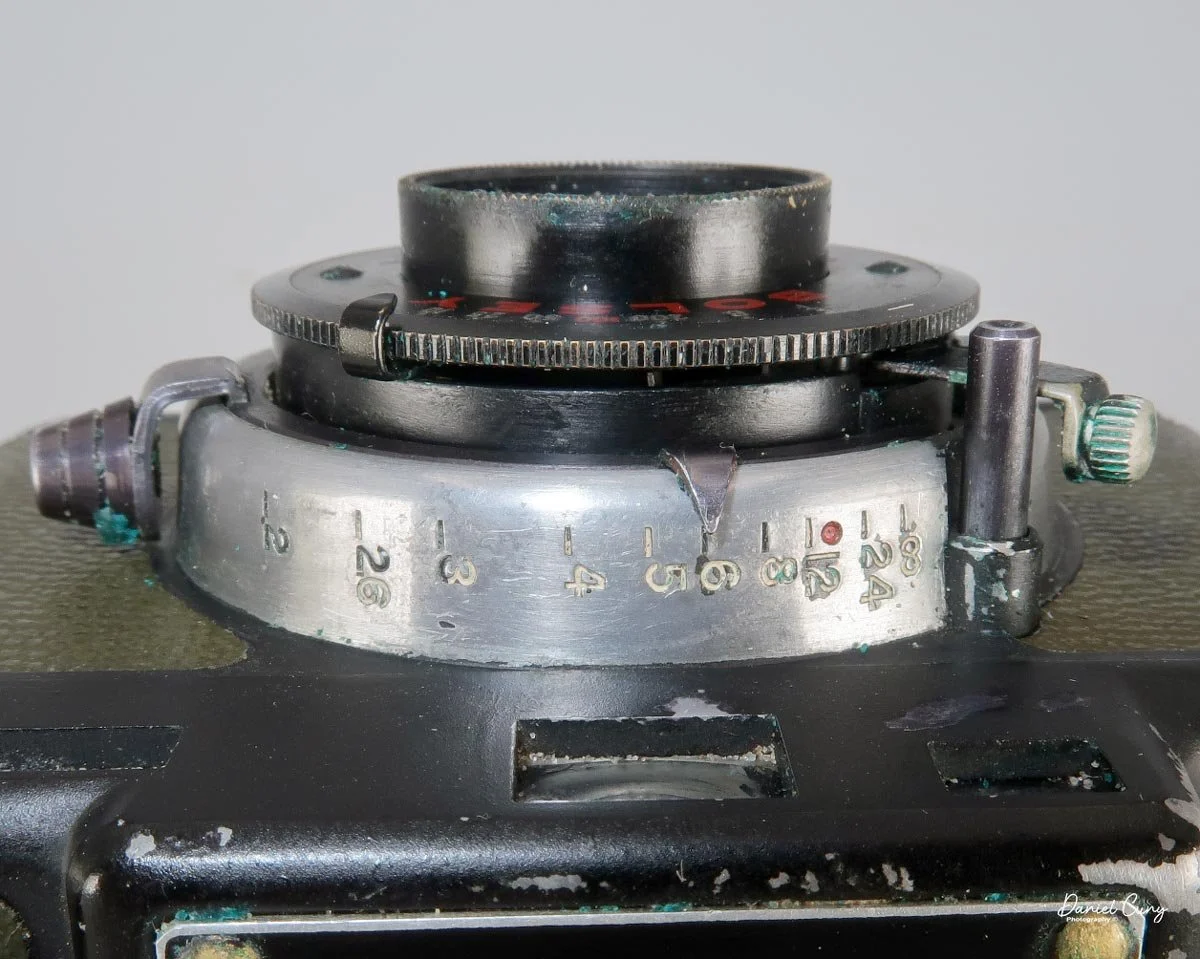
Moving to the front, the viewfinders are at the top. Down by the lens, you focus by sliding a large tab on the left side (as you hold the camera). On the PH-324A, there is a red dot and a slight indent just past the 12-foot mark. This is designed for hyperfocal focusing. Similar to how an Instamatic works, if you set the camera's focus to this point and use a small aperture in normal sunny conditions, your depth of field will keep everything from approximately 5 feet to infinity in sharp focus.
Above the lens are the shutter speeds, which range from 1/200 down to 1/10, along with "B" for Bulb and "T" for timed exposures. The 1/100 shutter speed is printed in red. You turn the outer knurled ring to select your desired speed.
Below the lens are the aperture settings, ranging from f/3.2 to f/22. Set these by sliding the small arrow to match your lighting conditions. The f/8 mark is also printed in red. When you set the camera to 1/100, f/8, and focus on the red dot (around 15 feet), the camera is extremely easy to operate because all the primary settings are color-coded in red.
The shutter release is located around the lens assembly in the ten o'clock position. Just press it down to fire the shutter.
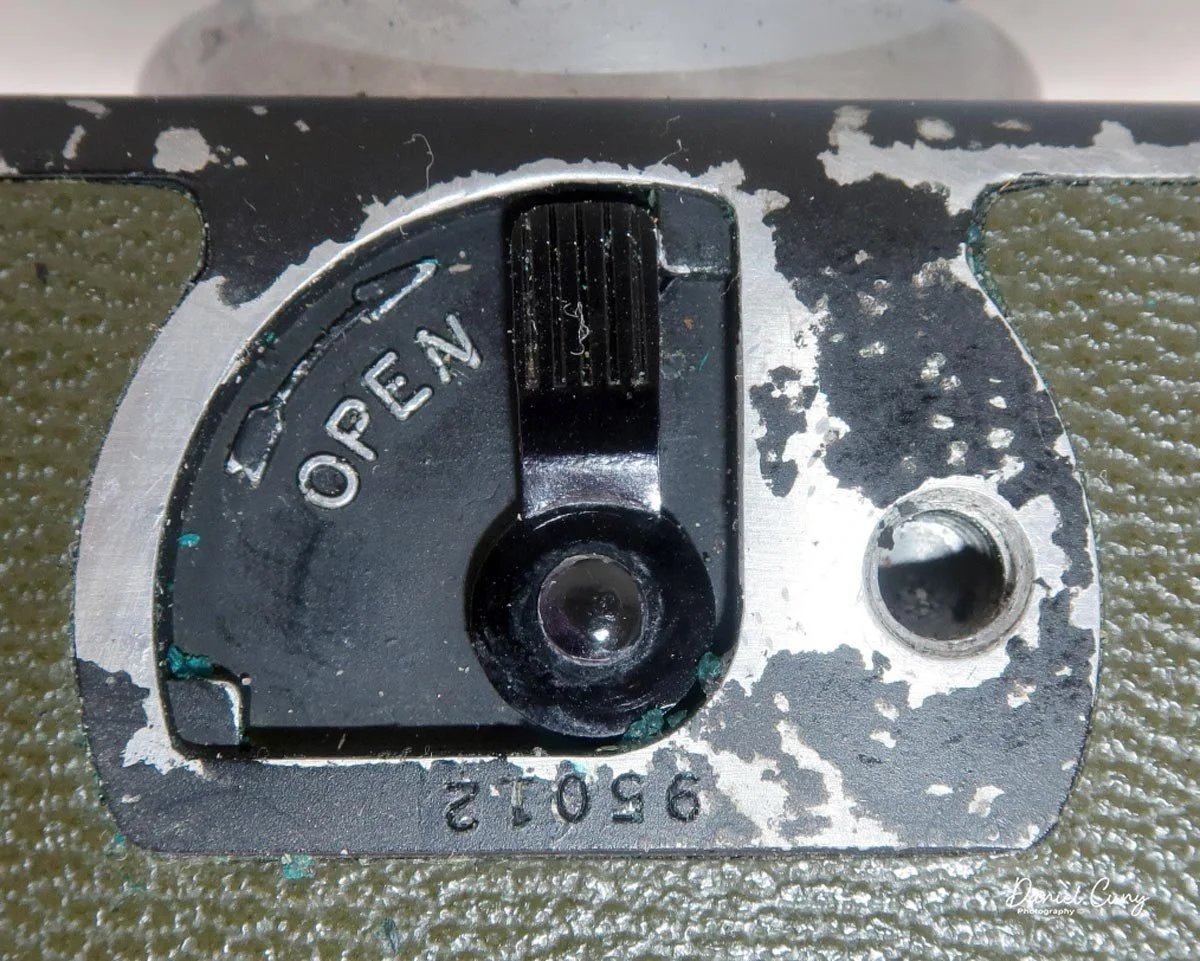
The bottom of the camera has the film door release. Flip the lever to "open," then slide the back off to expose the loading area. From there, you load it as you would any standard 35mm camera.
After taking a photo, you must follow the instructions engraved on the film advance knob. I didn't notice this when I first loaded the camera. The winding gears felt stuck, and I actually tore some of the sprockets right off the film. To advance the film properly, lift the winding knob slightly, then start turning.
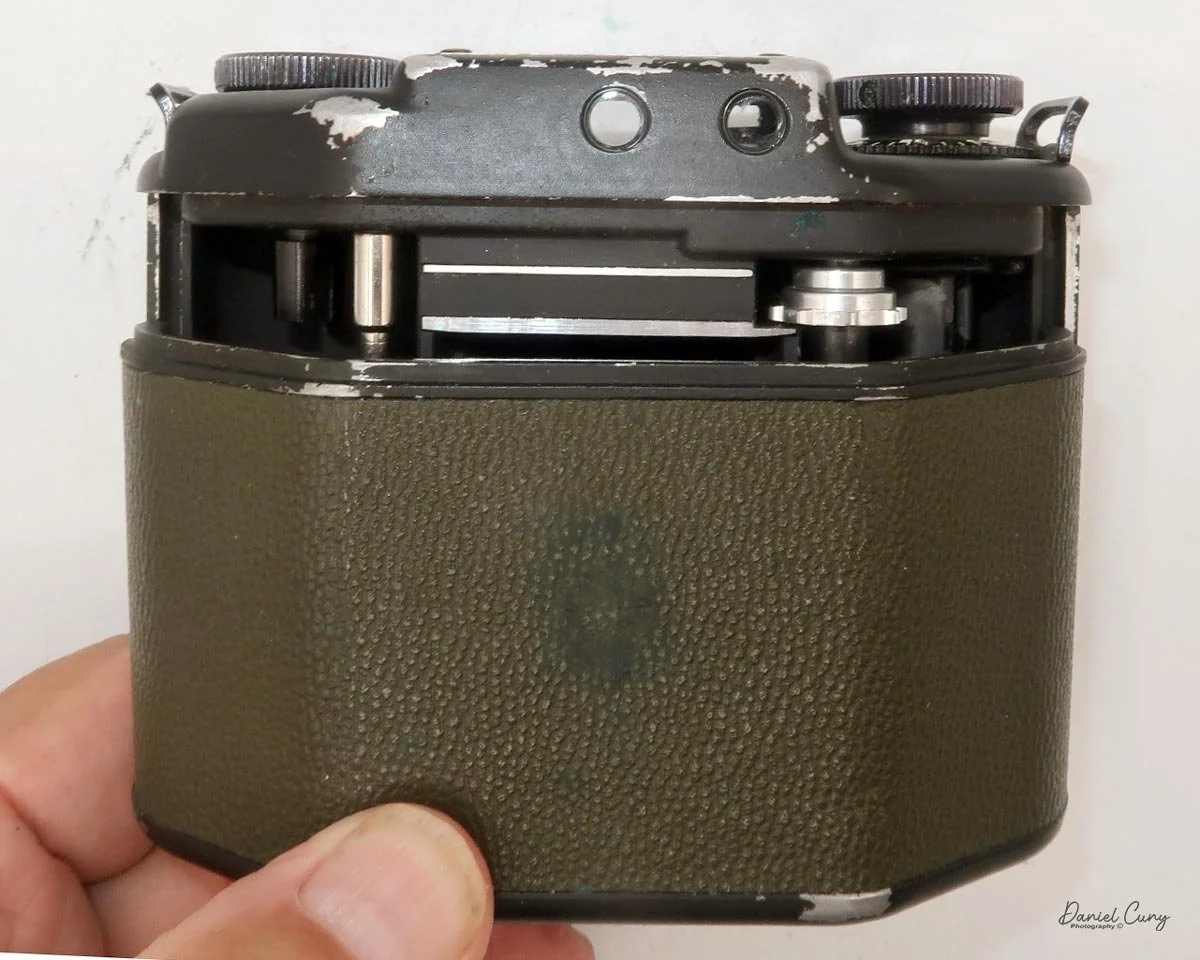
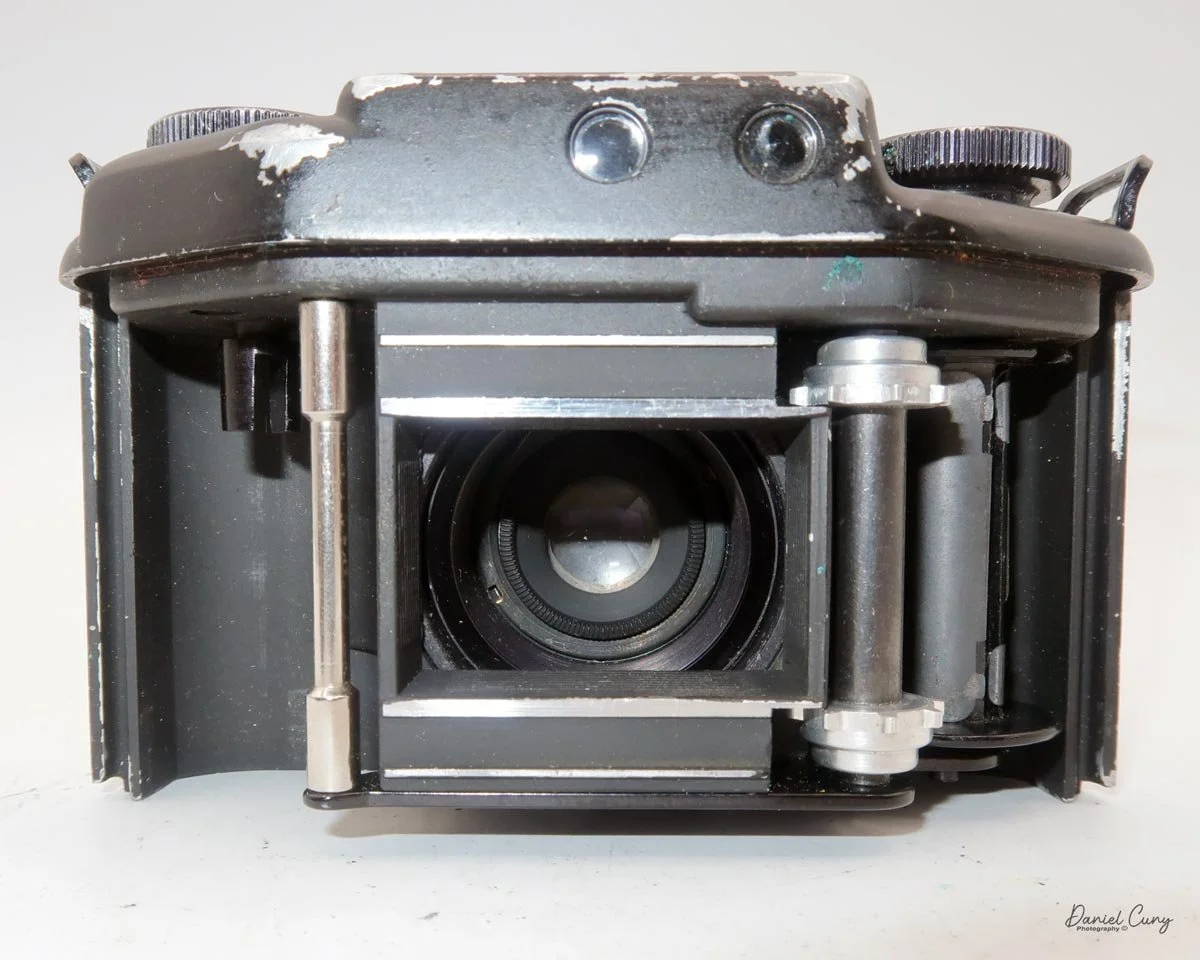
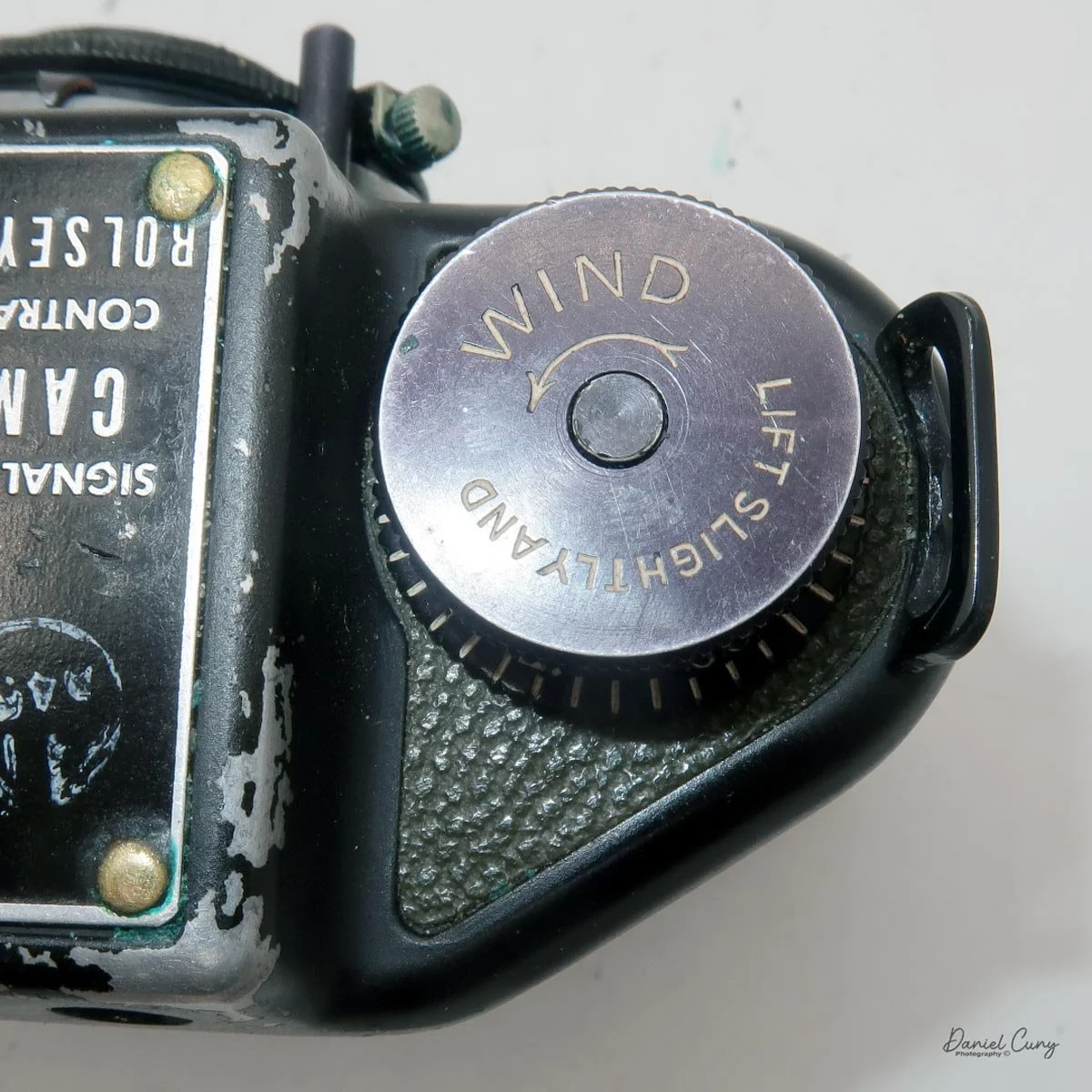
Lifting the knob releases the internal lock on the advance gear, allowing you to wind to the next frame. Without lifting it, you'll tear the sprocket holes just like I did before consulting the manual. When it's time to rewind the film into the cassette, there is no release button for the drive gears. You wind the rewind knob in the direction of the arrow, and the film pulls smoothly back into the cassette.
Results:
Loading up some expired Plus-X film from 1976 (which is still great film, by the way), I took a walk through my neighborhood and captured several of my usual test views.
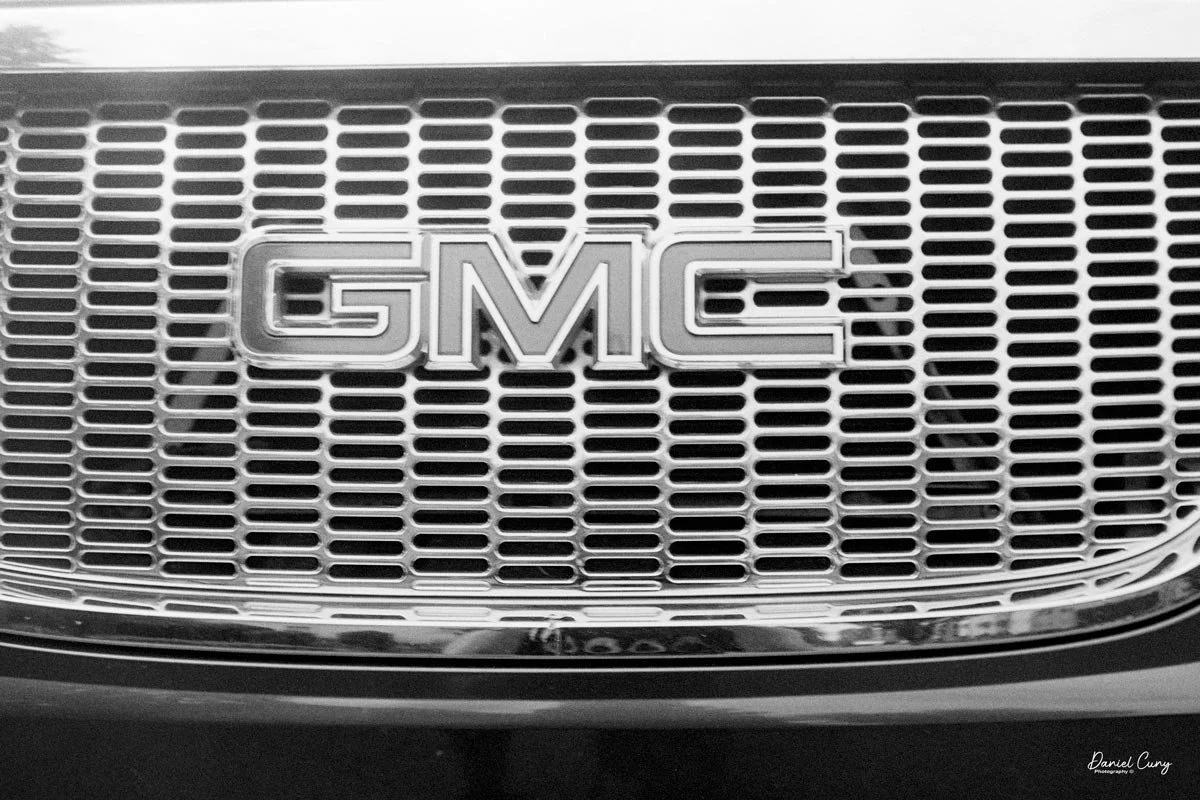
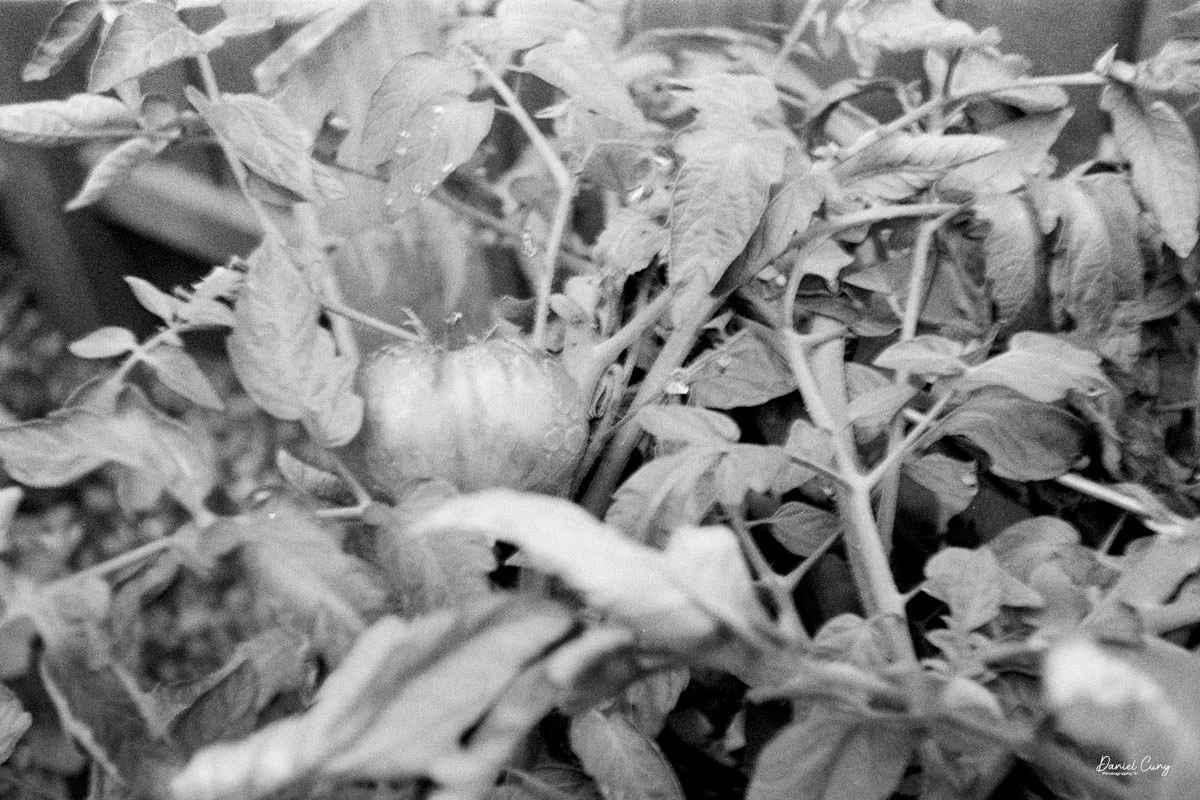
Here are a couple of the images taken with the red "Special." The final few—and much sharper—images are from the PH-324A, which did a considerably better job!
Conclusion:
The Bolseys are incredibly fun cameras to shoot with and remain some of my favorites in my collection. They are even more fun to use once you read the instructions and learn how to advance the film without tearing the sprocket holes!
The focus was surprisingly easy to nail, even for an old guy using his left eye. The viewfinder was clear, the shutter speeds seemed accurate, and the lens was sharp, producing some genuinely nice images despite the larger grain structure of the vintage Plus-X film.
Thank you for taking the time to read about some of the Bolsey cameras from my collection.
Overall, my experience with these cameras was very positive. While a slightly larger finder window would be nice, I do love shooting with a compact camera every once in a while. I've always felt that Bolsey cameras were well-built, quirky, and an absolute joy to use.
Are you interested in other vintage gear? Here are some of my other Camera Reviews.
Check out my Cuny's Camera Collection YouTube channel, where I am putting together video overviews of the cameras I write about. Be sure to subscribe and like the channel, too!
Cuny's Cameras and Photos is my online eBay store, where you will find some of the cameras I have reviewed, along with a wide range of other cameras, lenses, and items from my collection that I am thinning out.
Until next week, please be safe.