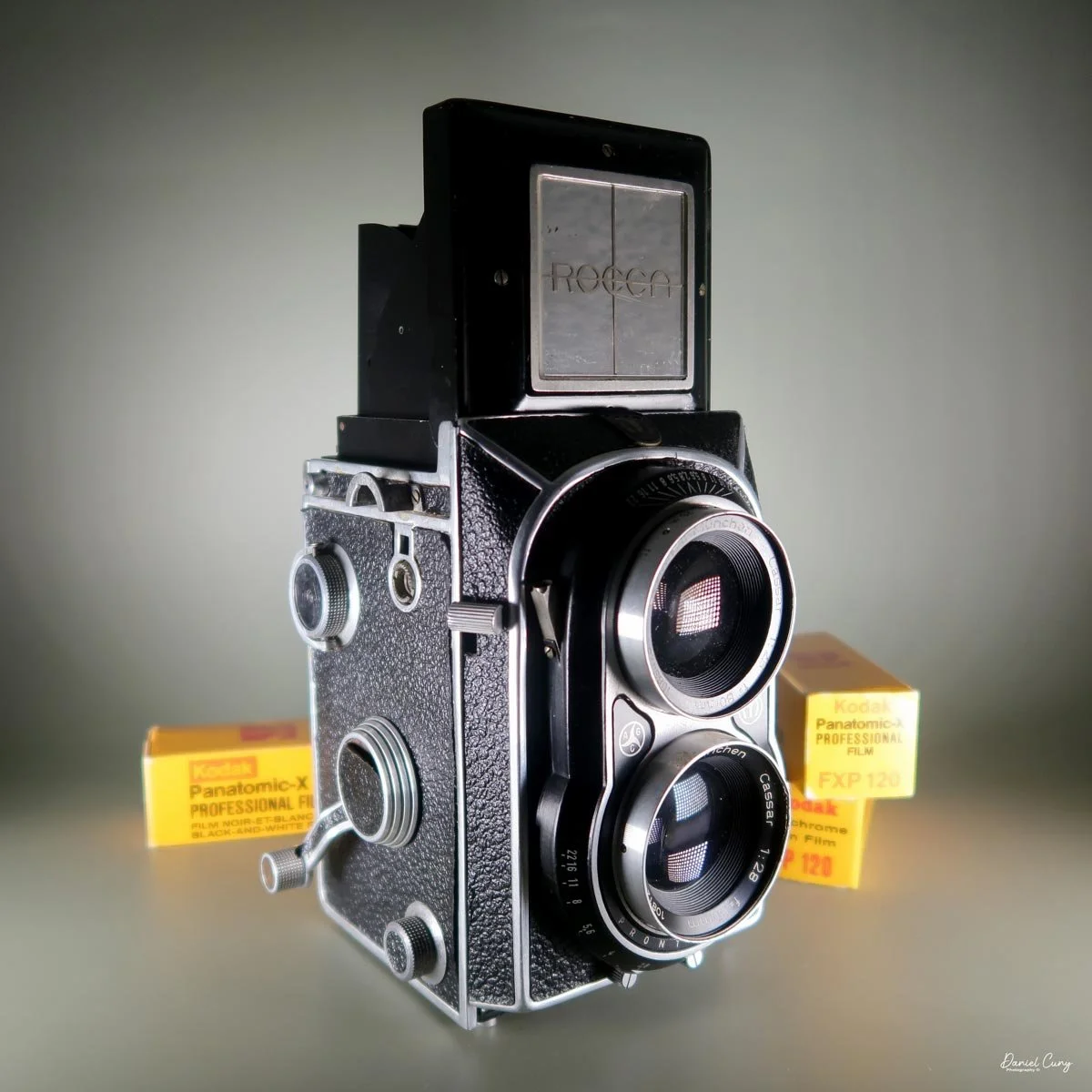
My Rocca Super Reflex camera, made by Montanus Kamerafabrik
I truly don't know what drew me to this camera, other than its look. The enlarged, angular area around the two lenses, along with the thin viewfinder area, gives the camera a different look from other twin-lens cameras.
We're so used to the "standard" twin-lens camera, with the nameplate over the top viewing lens, which also houses the light chimney that pops up, allowing the photographer to frame and focus on his subject.
Looking through McKeown's camera guide, I have seen photos of this and similar Montanus and Rocca cameras in the past, and I've always considered them classy, high-priced cameras.
While looking at a somewhat recent online auction, I came across the Rocca Super Reflex camera. It wasn't described by name, other than as a vintage camera. I was immediately drawn to it and figured I'd put in a modest bid. With my fingers crossed, I just so happened to win the camera.
Without doing much research before bidding, I let my somewhat modest knowledge of odd and irregular cameras do the bidding for me and hoped it was in good working order.
I guess what I'm saying is that the camera's look and my assumption that it was expensive overcame my pre-bidding research, but I liked the camera's look. I also know it's not as popular as the Rolleiflex, Yashica Mat, or other better-known twin-lens cameras.
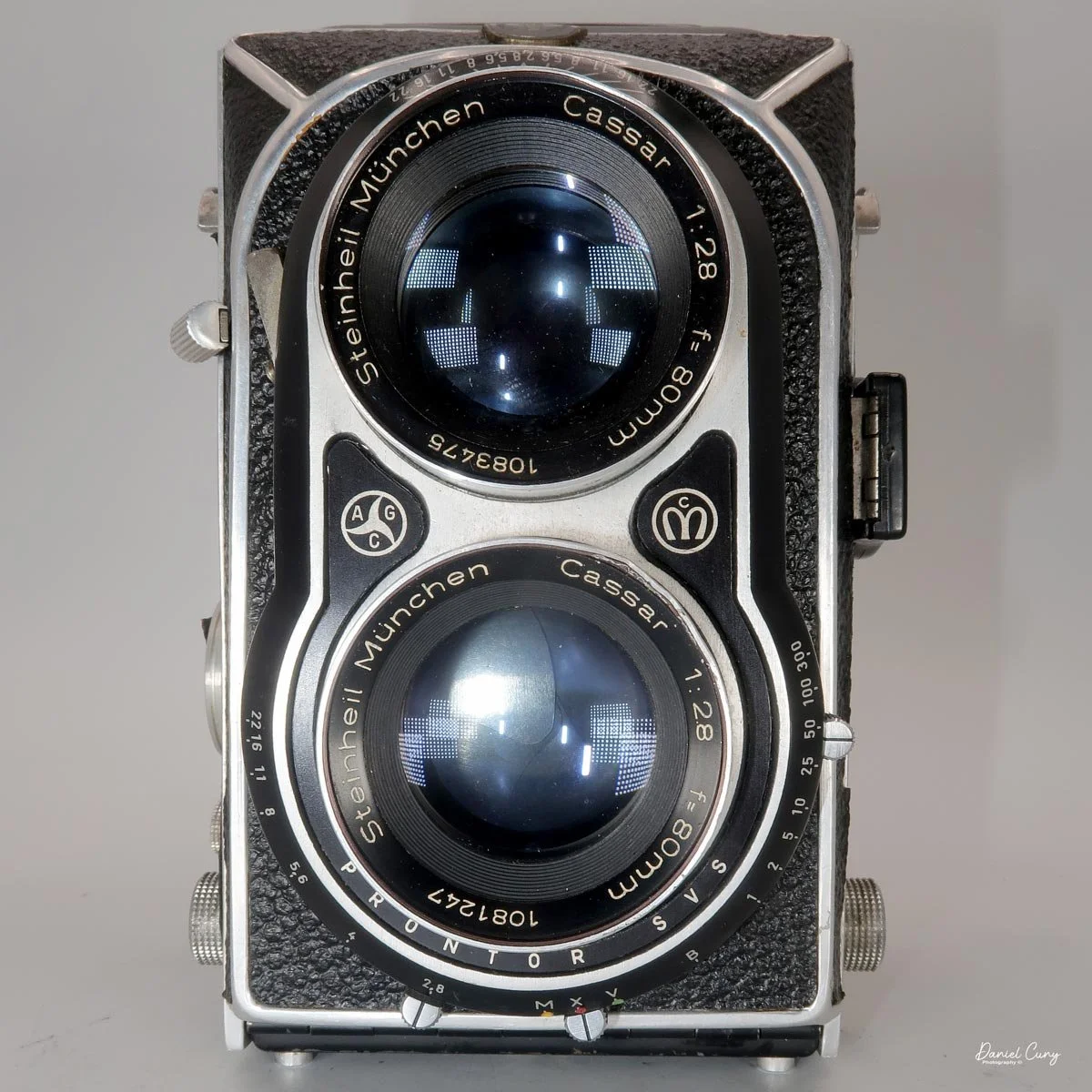
Front view of the Rocca Super Reflex camera
When I received the camera, I knew very little about how it worked. Like many cameras I'm unfamiliar with, I do my normal routine: twisting knobs, pressing buttons, cocking what may or may not be the shutter system, and opening and closing light chimneys or camera backs to get a general feel for the camera.
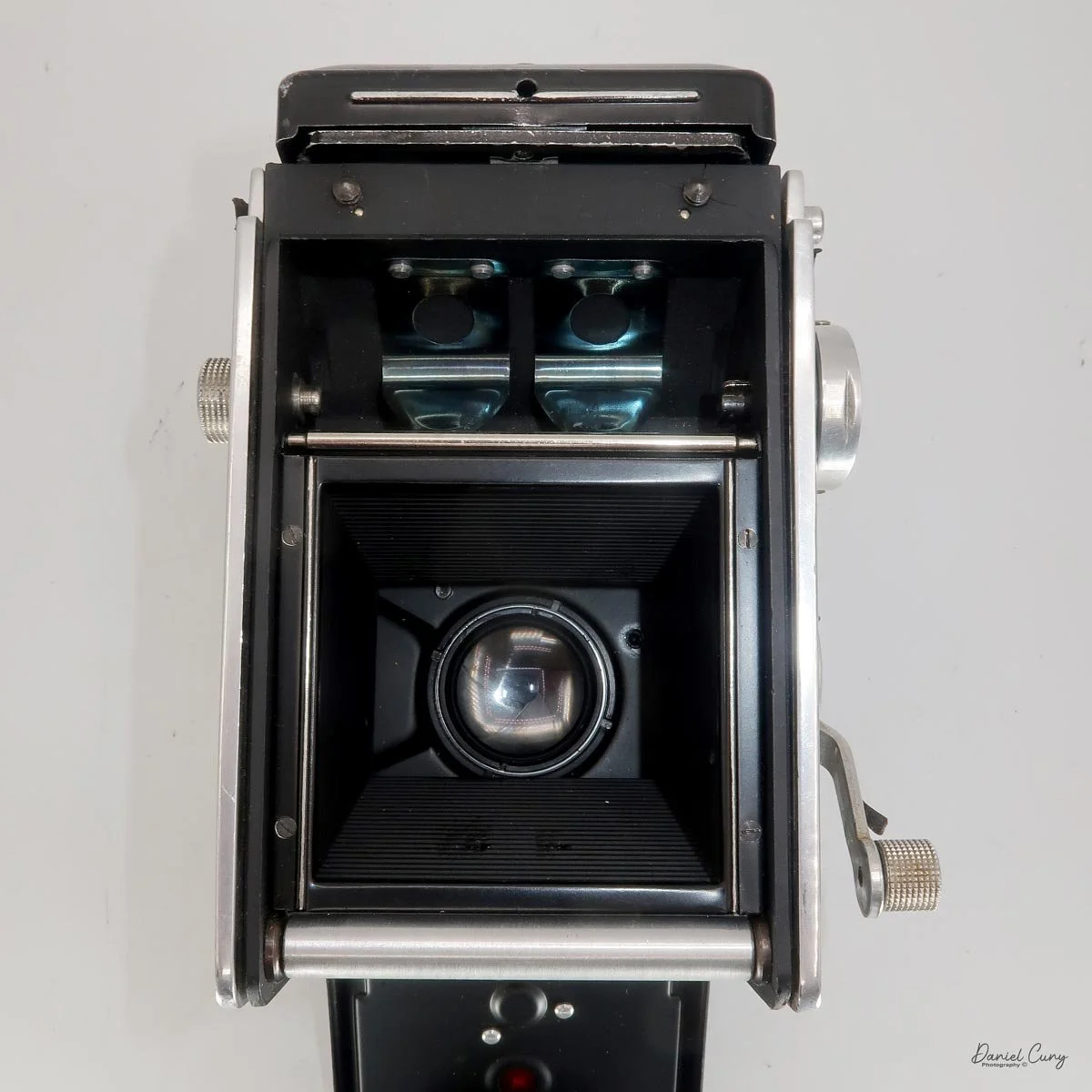
Opening up the back of the camera and looking at the loading area, everything seemed pretty normal. The one thing I did notice was a knob with a handle in the take-up spool area that let you wind the film to the start area before closing the back. I'd never seen that on a twin-lens camera before.
The camera felt good and pretty solid, so I figured I'd put a roll of film in and take a walk through the neighborhood. As I walked through the neighborhood taking photos, I realized I was shooting all the images on one frame, because the little knob I used to load the film into the camera wasn't turning as I expected as the film advanced. I felt like a real dope for not noticing this sooner.
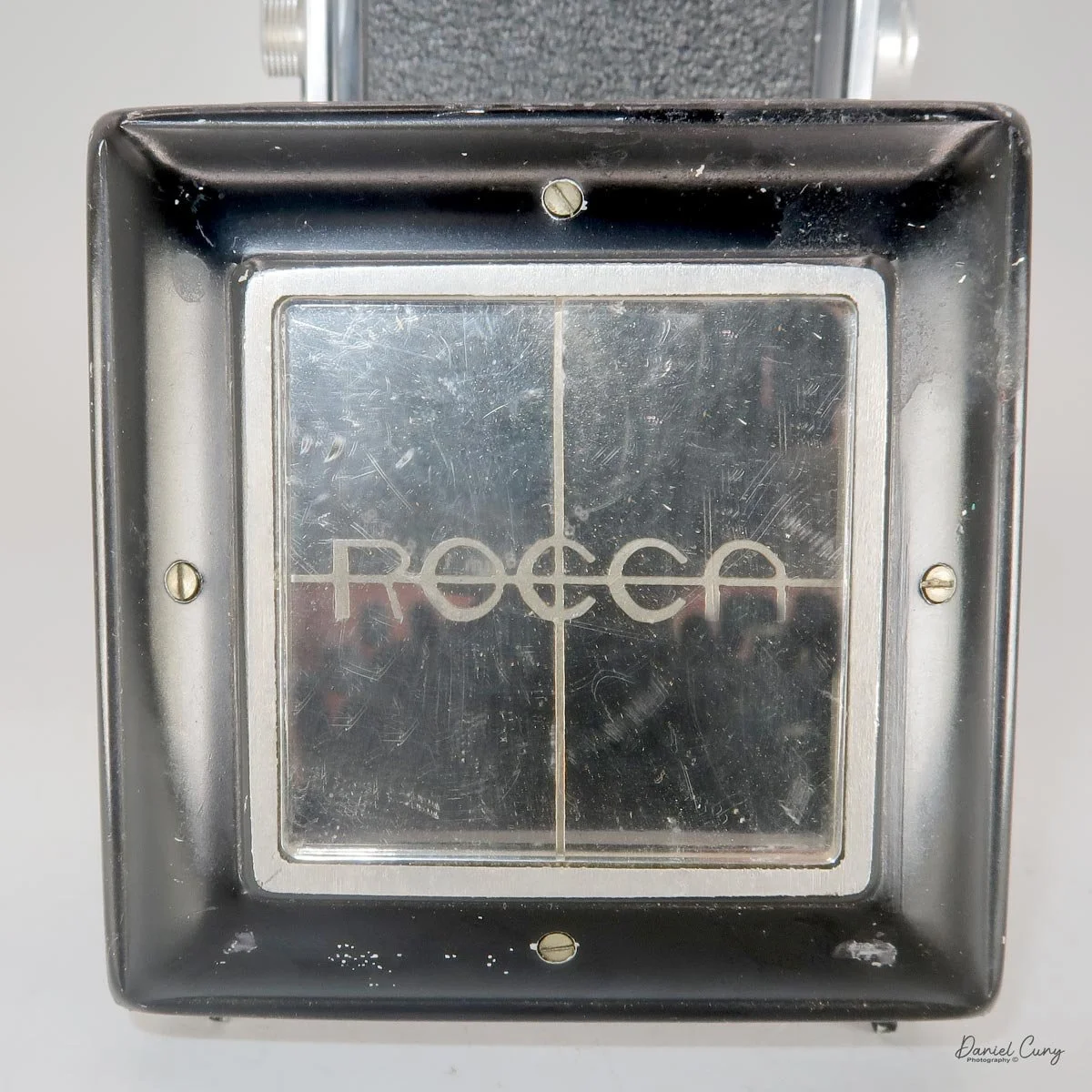
Rocca name on mirrored viewfinder
At this point, and not wanting to waste another roll of film, I figured I should probably read the manual. I did look on Mike Butkus's website for a manual. Unfortunately, the only manual he had was in German, and it's for a slightly different camera. Still, I'm pretty confident the loading is the same.
I took out my phone and, using Google Translate as I was looking at the manual on my computer, I figured out the proper way of loading the camera. It was a bit trickier than most cameras, and I'll go over the procedure below when I describe the camera's functions.
Once the film was loaded and I saw it moving in the camera, I realized it's a really fun camera to use. For one specific item, the focus mechanism is FANTASTIC.
The History of Montanus Cameras
Montanus is one of those camera names you don't hear much. A small German company that made cameras for only about ten years — and it came at the whole thing from an angle nobody else did: plastic.
Founded in the 1920s in Solingen, Germany, the company made horn products before moving into resins and plastics. In the early 1950s, Herbert Potthoff applied those plastics techniques to camera production as Montanus Kamerafabrik, Potthoff & Co. in Solingen-Ohligs.
Montanus molded the bodies themselves from plastic and bought in the lenses and shutters—Rodenstock, Enna, Staeble, and Steiner lenses; Gauthier and Prontor shutters. Most cameras then were metal, and metal was heavy. A molded plastic body was light and cheap to make.
Their best-known camera was the 1952 Plascaflex, a twin-lens reflex — plastic Rolleiflex, more or less. It was a 6x6 camera on 120 film, sold in a few versions, including one in the UK under the Amplion name.
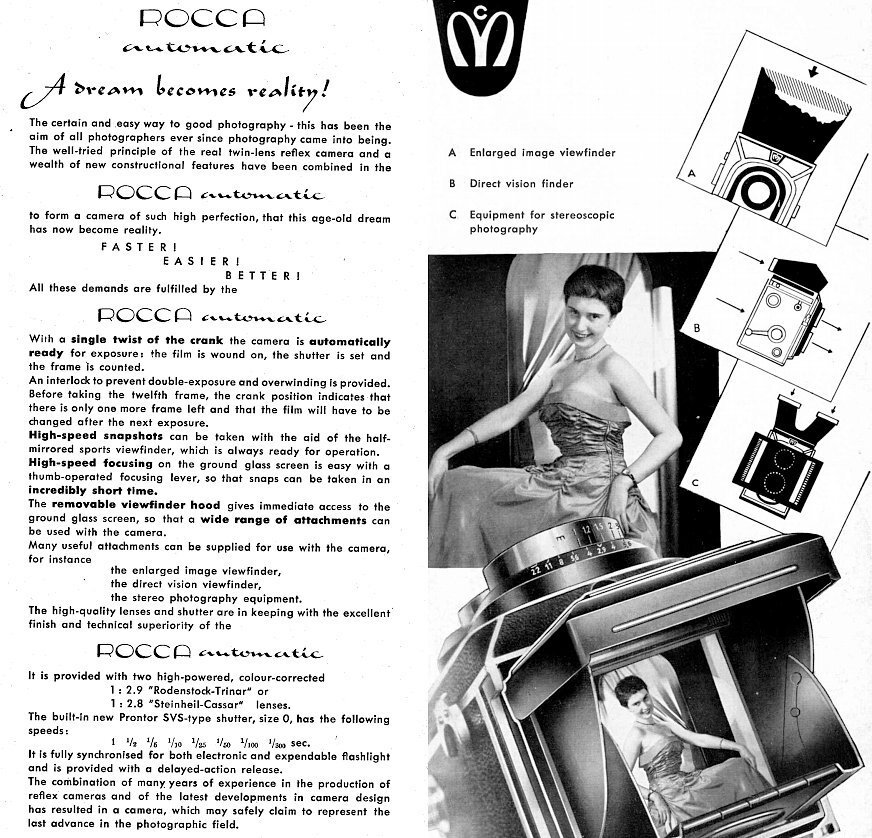
Advertisment for Rocca Automatic camera in 1954.
Montanus really tried to move up with the Rocca name. The Rocca Automatic came out in 1954, and the Rocca Super Reflex followed in 1955; both were proper, modern-looking twin-lens reflexes. They had a film-advance crank, automatic shutter cocking, a removable viewing hood, and fast f/2.8 lenses— the Rodenstock Trinar 80mm f/2.8 on the Super Reflex.
It was a poor man's Rolleiflex, and I mean that as a compliment. It didn't have the build quality of a Rolleiflex, and the taking lens was a triplet, not a Planar or a Xenotar, but it did a lot of the same tricks. In the USA it sold in 1956 for $100 — rebranded as the Edixa 6x6 by Wirgin — about a quarter of what a Rolleiflex cost, and still cheaper than a Rolleicord. It didn't sell very well, probably because nobody had heard of Montanus, and Rocca TLRs are rare to find today.
Later in the 1950s, the Rocca name moved to 35mm. The Rocca 35 came out in 1958, a neat little viewfinder camera with a fixed Enna 45mm f/2.8 lens and a Prontor shutter. Here's the part I like: some Rocca 35s look like they have a light meter on top, but what you're looking at is really just a Sunny 16 exposure calculator built into the top plate. A real meter — a Bewi Automat — could be fitted later as an upgrade. Still, in 1959 it added 40% to the camera's price, so you can see why they sold the basic version. The Rocca LK came with the meter fitted, the Rocca L without it, and the Familia and Rocca-matic followed in 1959.
They hired technicians from Dresden, over in East Germany. But it wasn't enough. By the early 1960s, the Japanese cameras were coming in fast, and a small company in Solingen couldn't keep up. Montanus stopped producing cameras around 1960. The company itself kept going until 1978, but the cameras were done.
That's what I like about Montanus. A small company with a clever idea, and for a few years it worked.
My Camera.
There are many unique and interesting things about this camera that I'd like to share. To start, my Rocca Super Reflex is 5.5" tall with the light chimney closed, 7.25" with it open, 4.25" wide including the winding lever, and 4.25" deep.
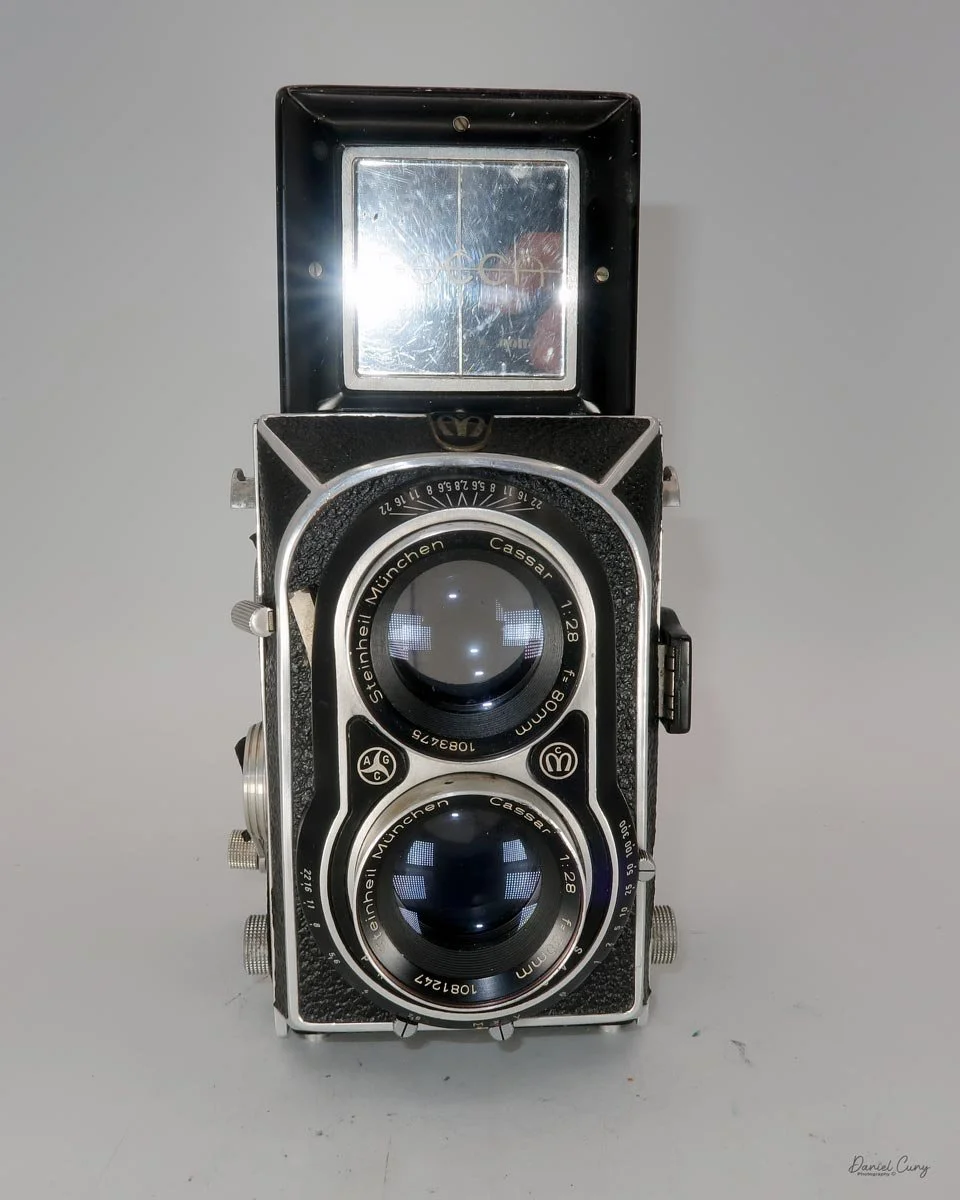
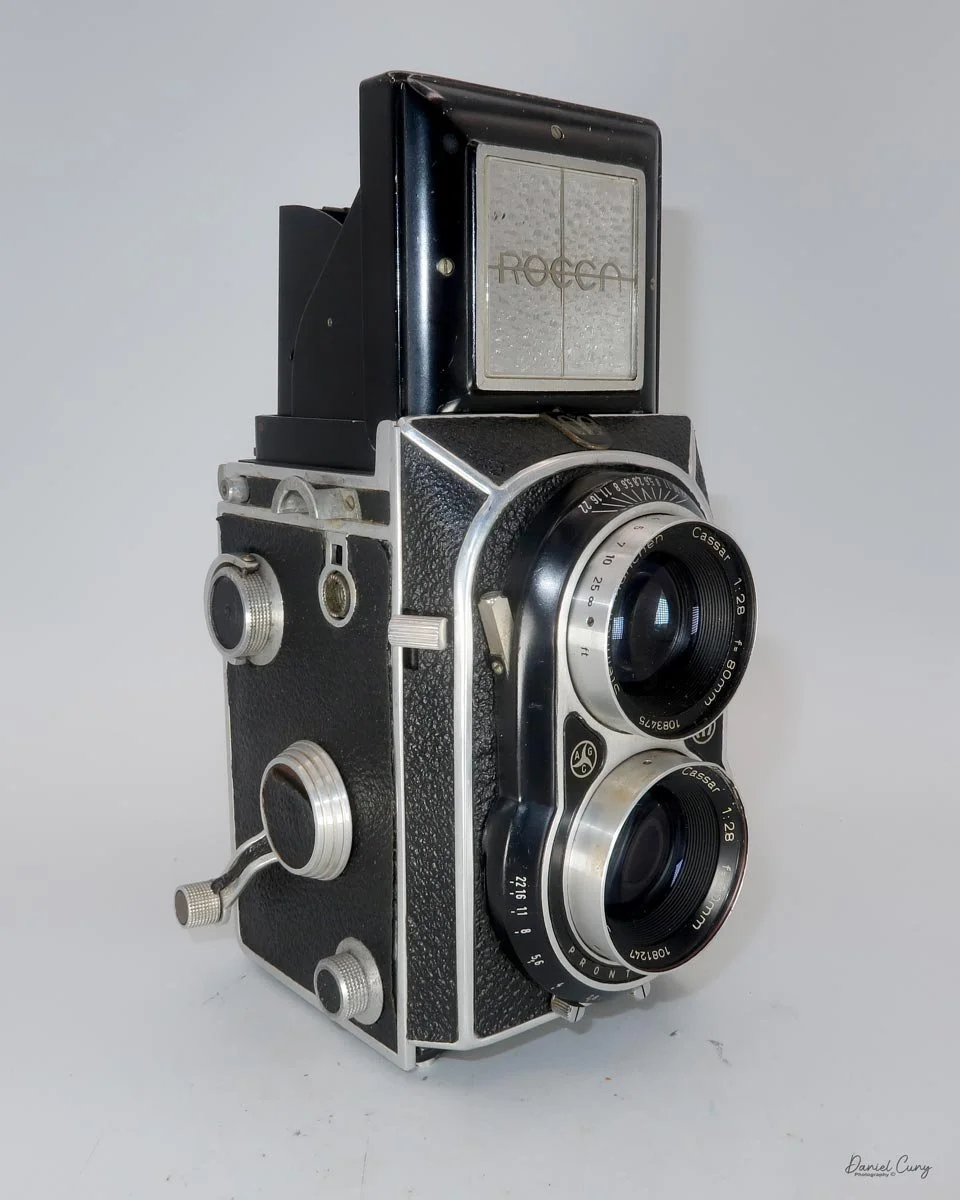
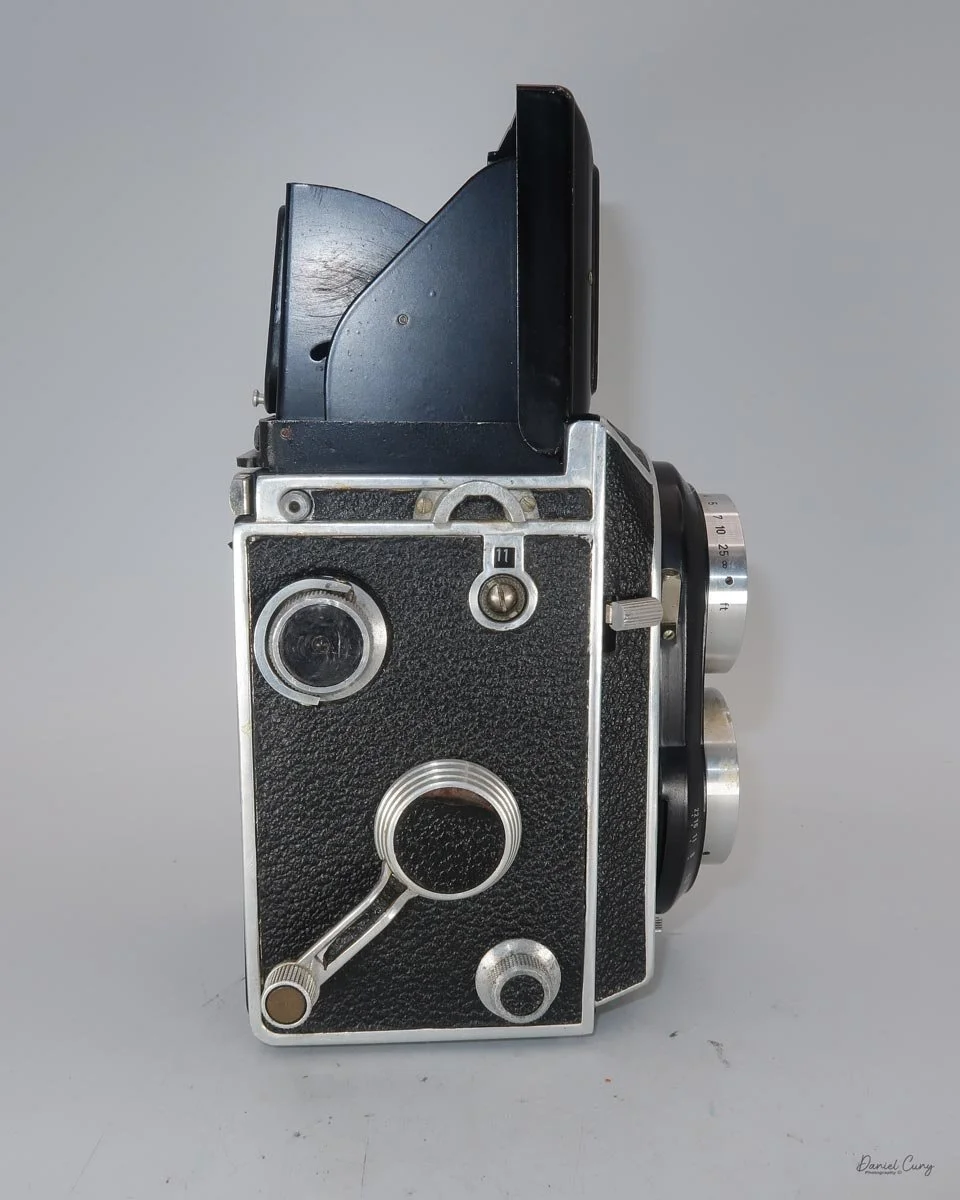
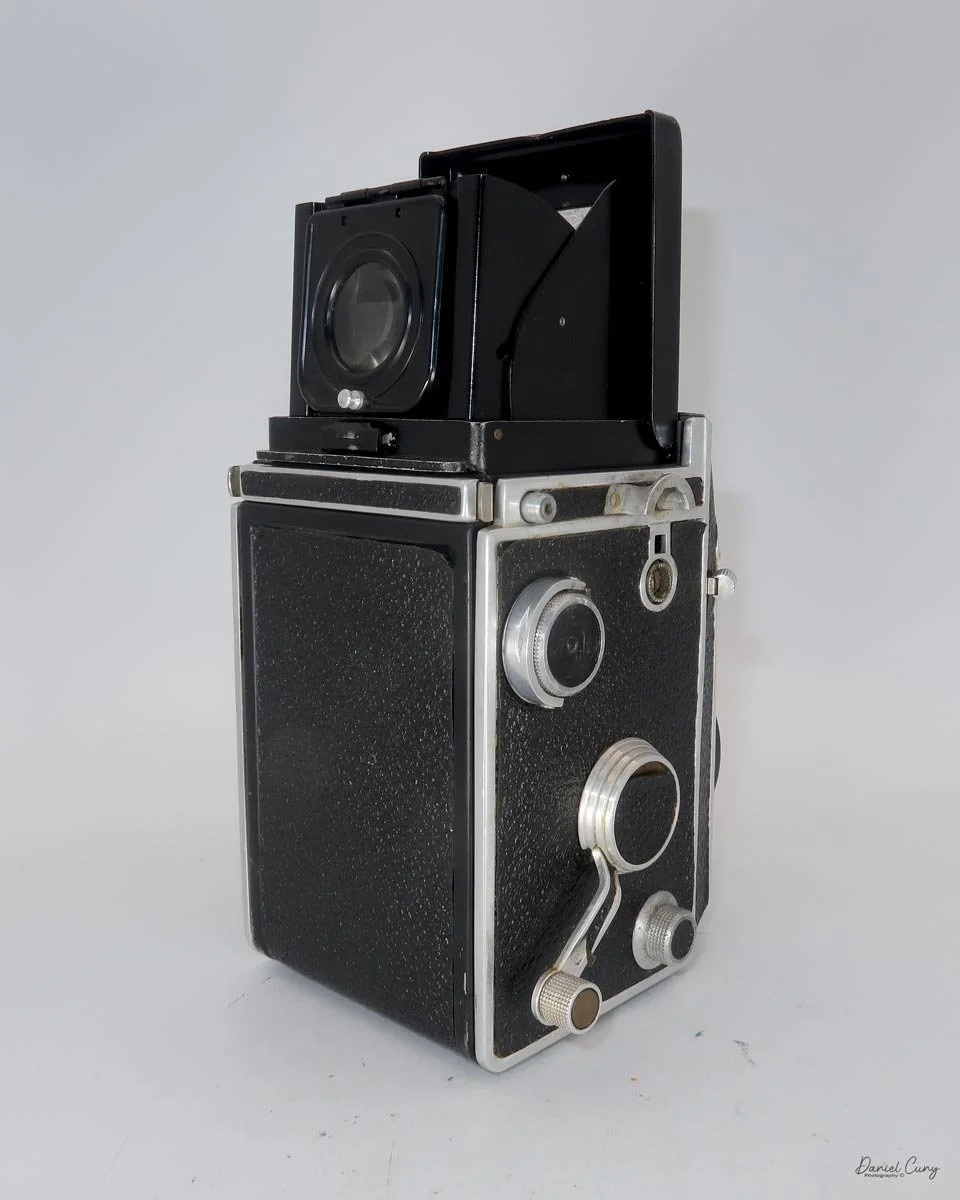
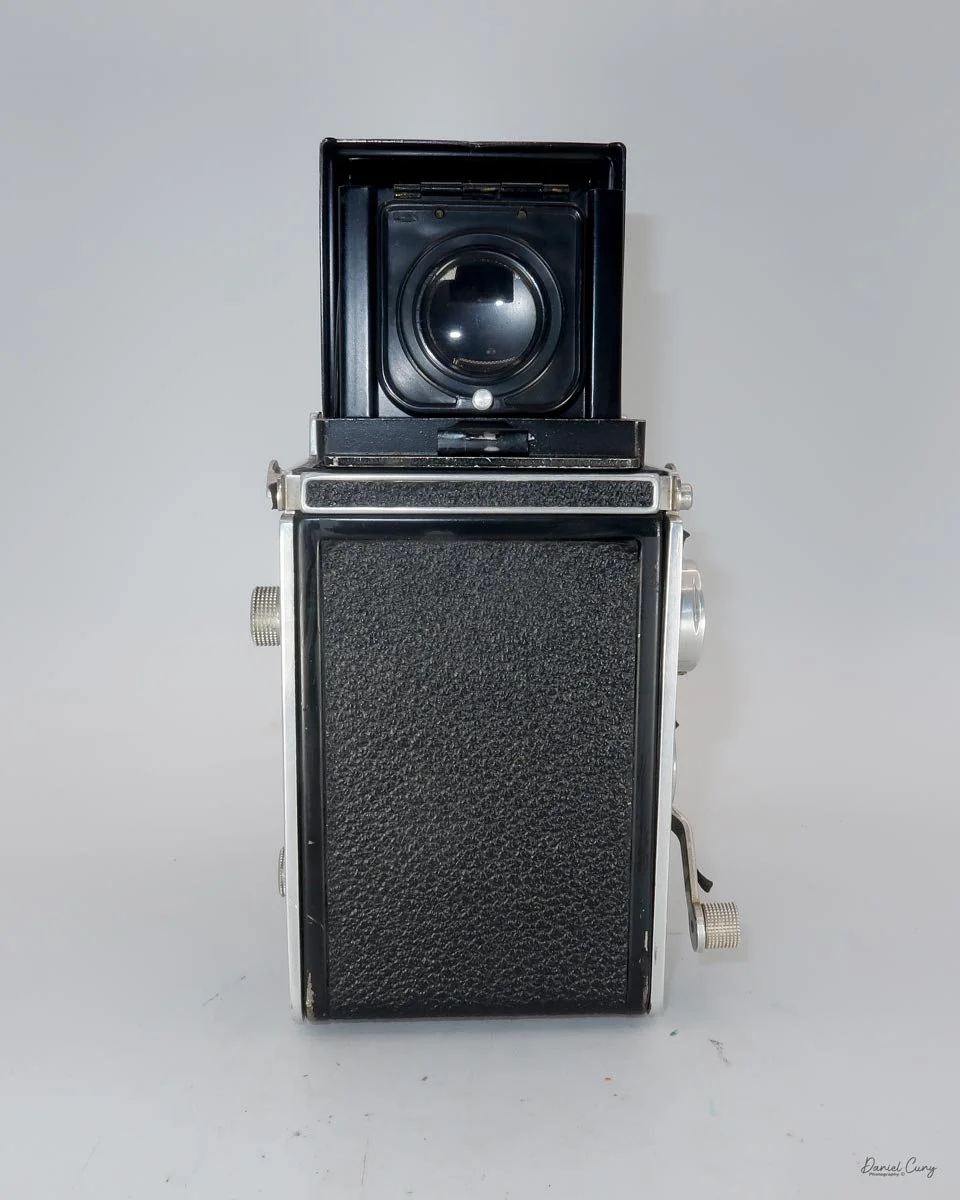
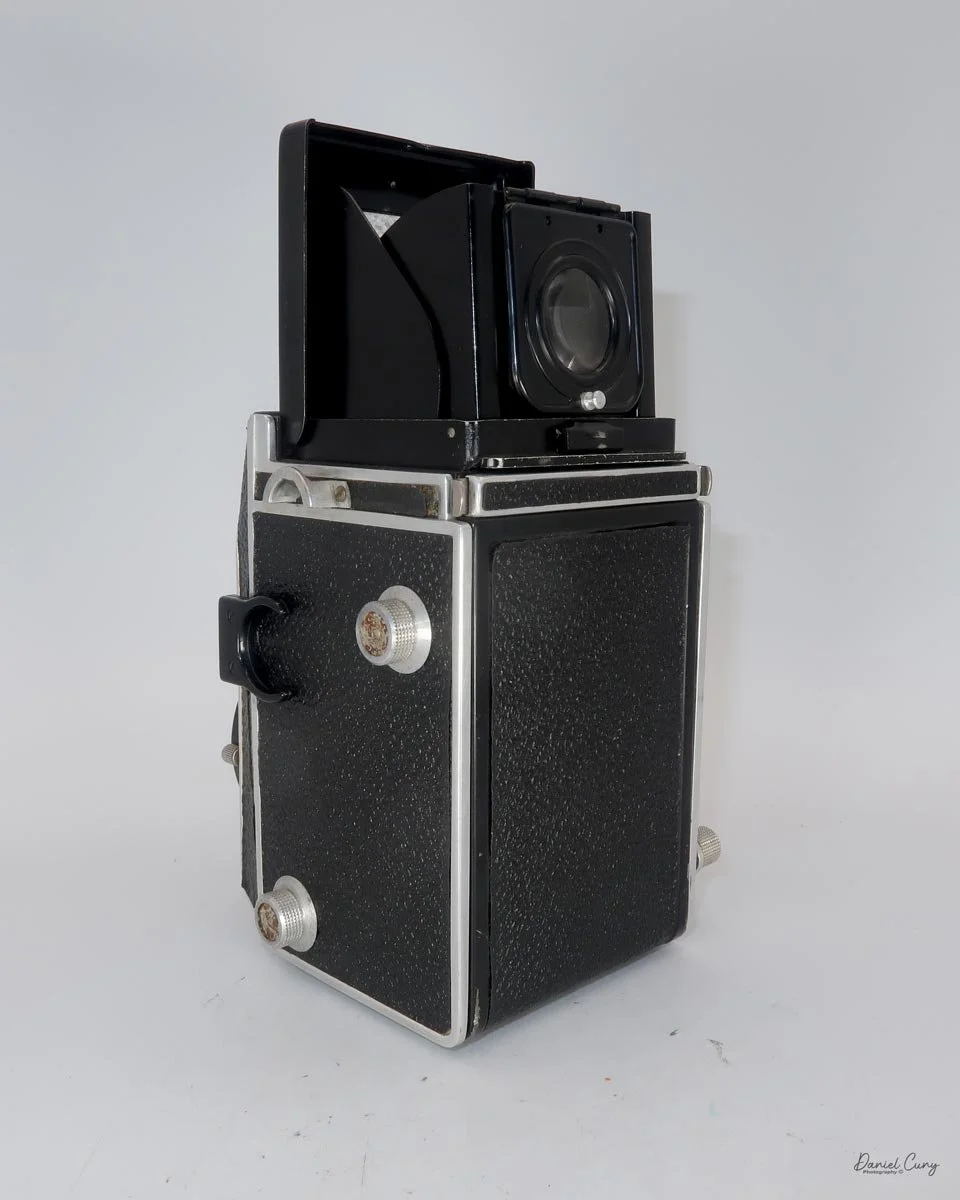
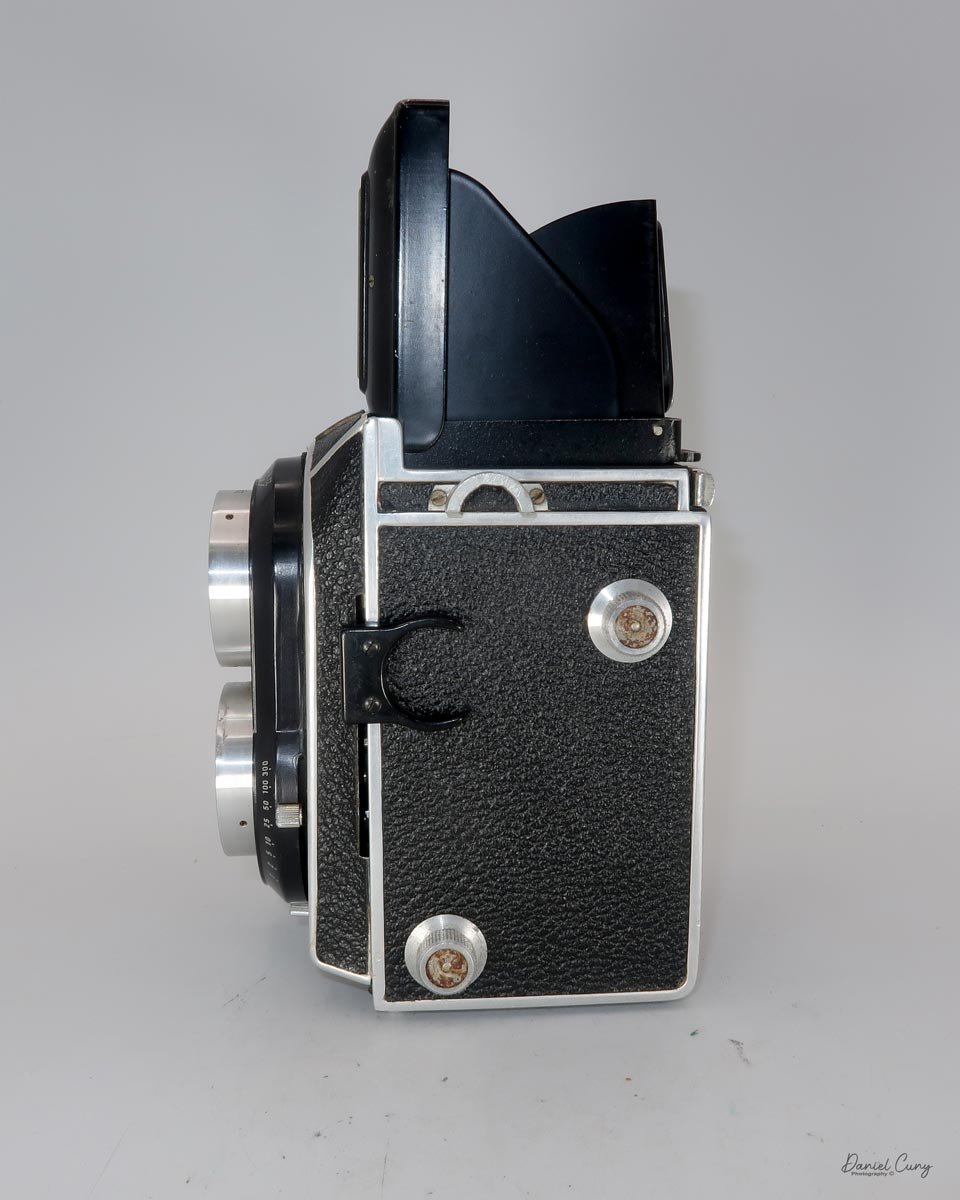
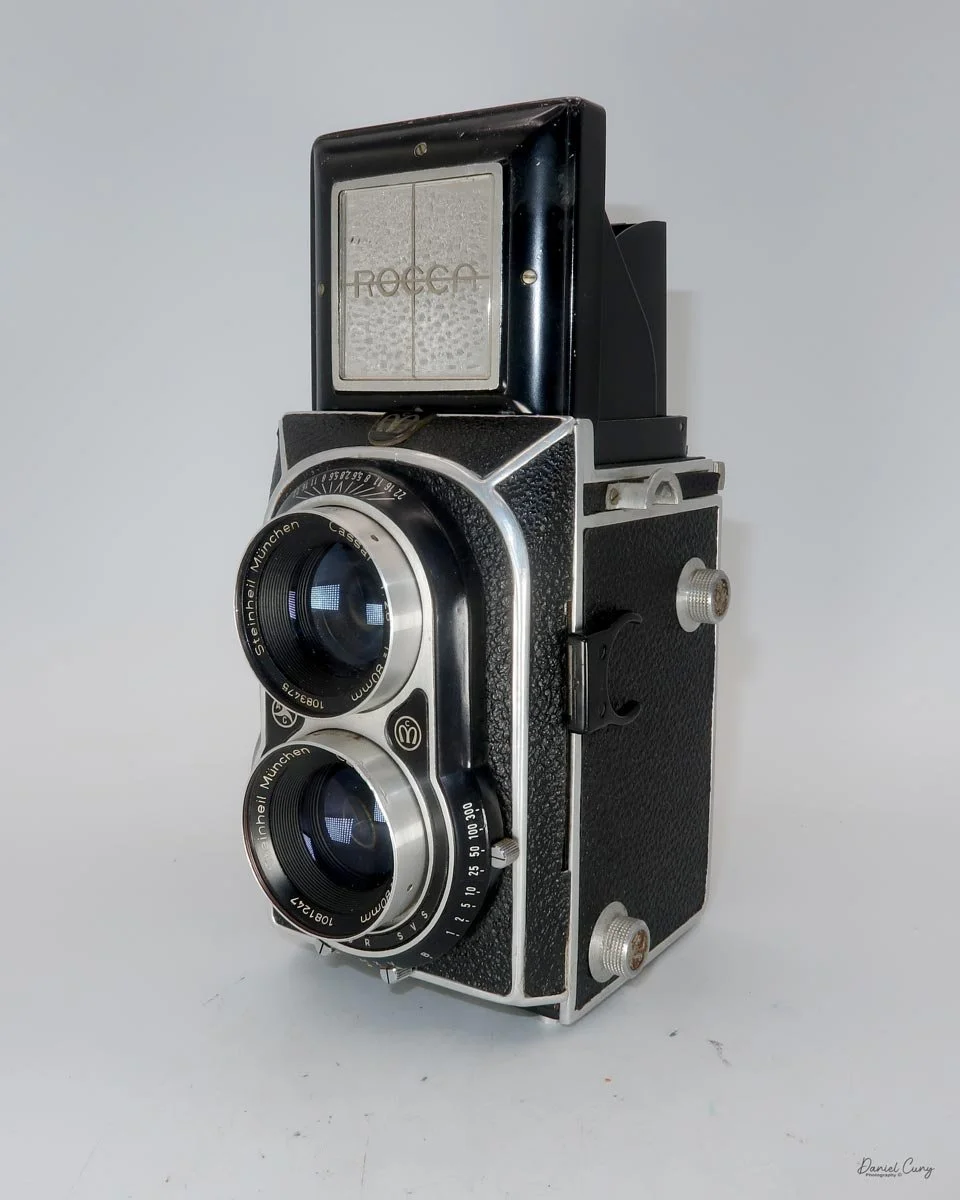
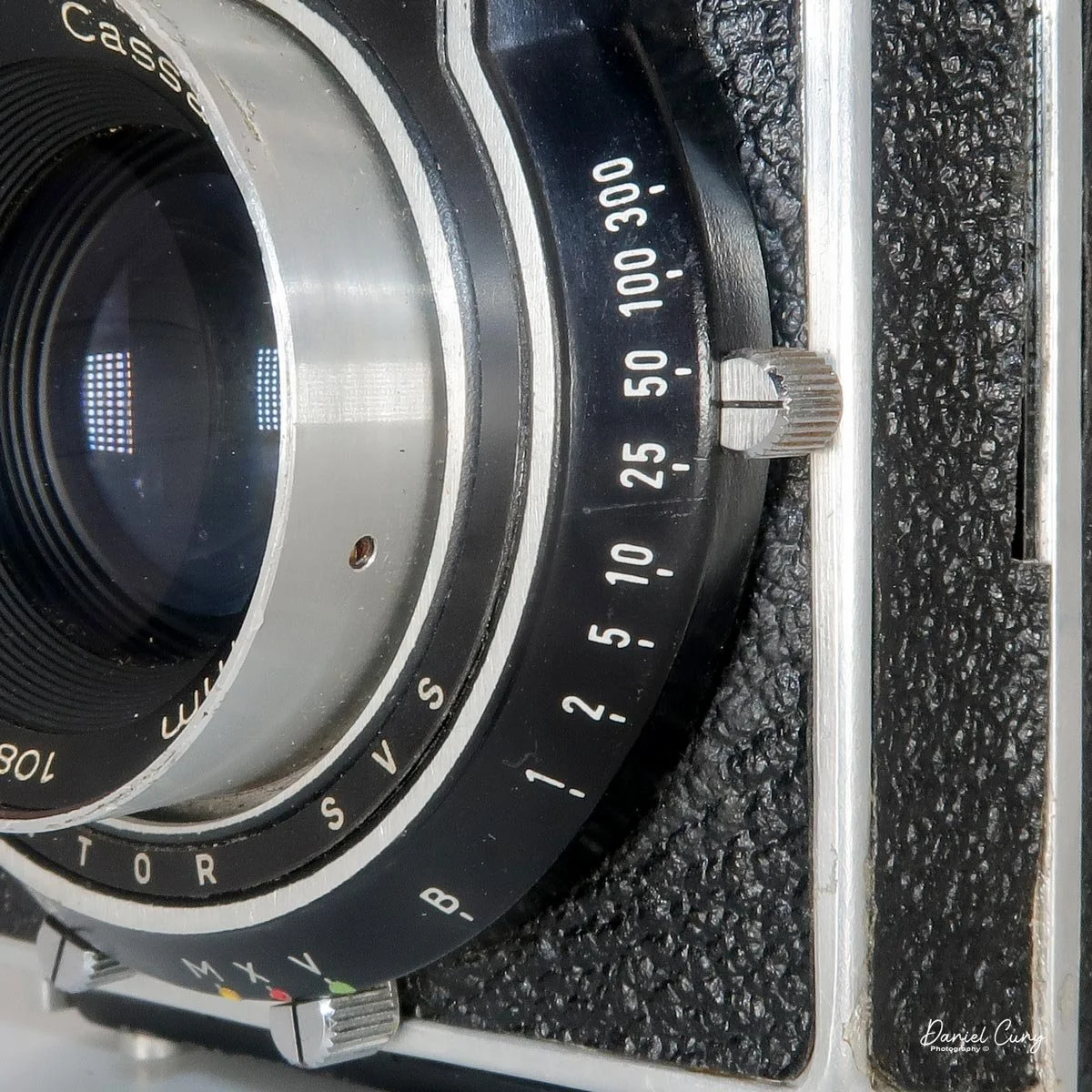
The camera weighs 2 pounds 3.6 ounces without film. My camera has a Steinheil Munchen Cassar 80mm f/2.8 lens for both the viewing and taking lenses, with a Prontor SVS shutter offering shutter speeds from 1/300 to 1 sec., including "B". The shutter speeds are set via a sliding lever under and on the left side of the taking lens.
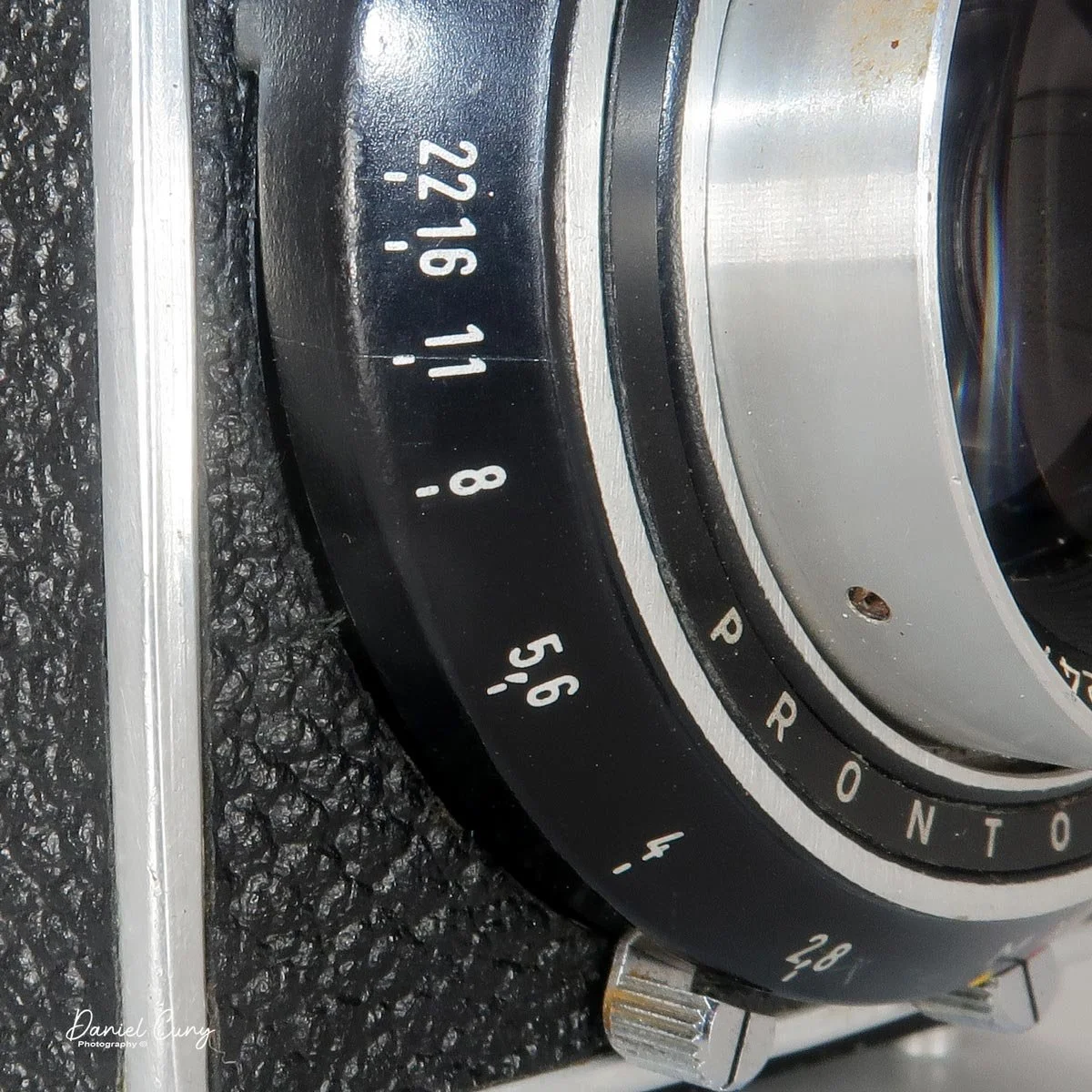
Aperture settings range from f/2.8 to f/22 and are set via a sliding lever under and to the right of the taking lens. Between the shutter speed and aperture-selecting levers are the flash sync and self-timer settings.
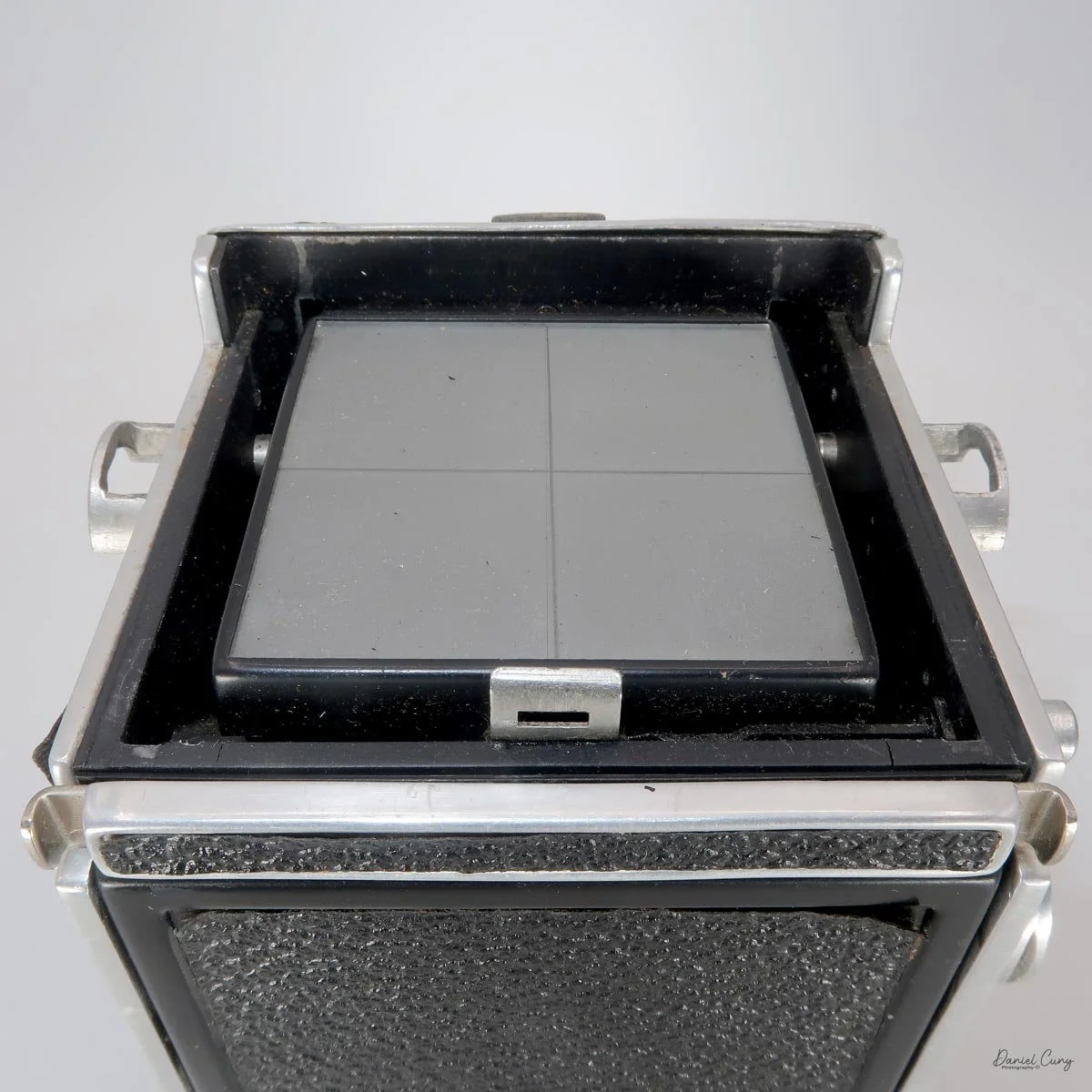
The light chimney is opened by pulling up the rear of the chimney, exposing a bright focus screen. The magnifying glass is flipped over the rear of the light chimney and over the focus screen. One unique feature of the Rocca Super Reflex is the "half" mirrored sports finder, which is viewed from the rear of the light chimney.
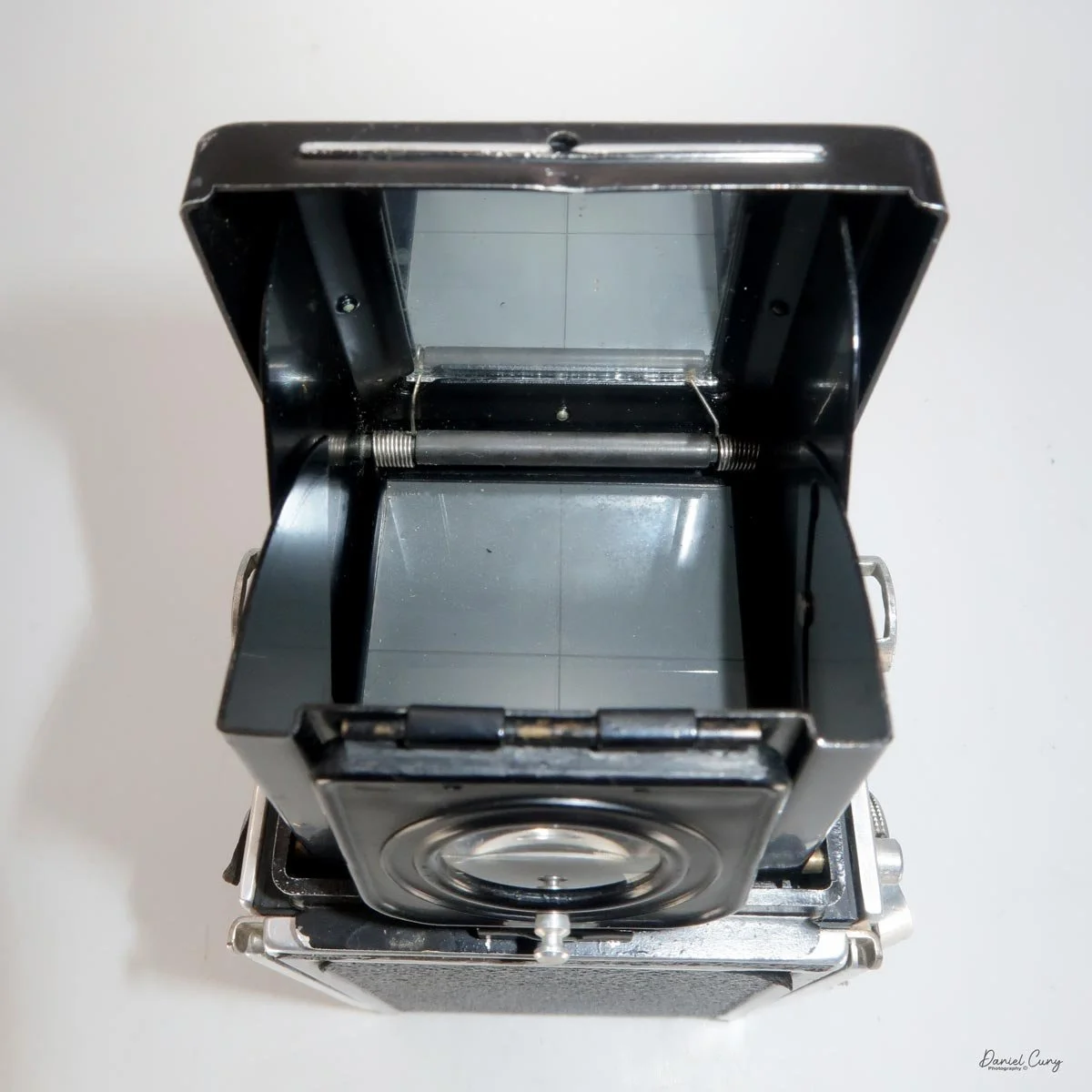
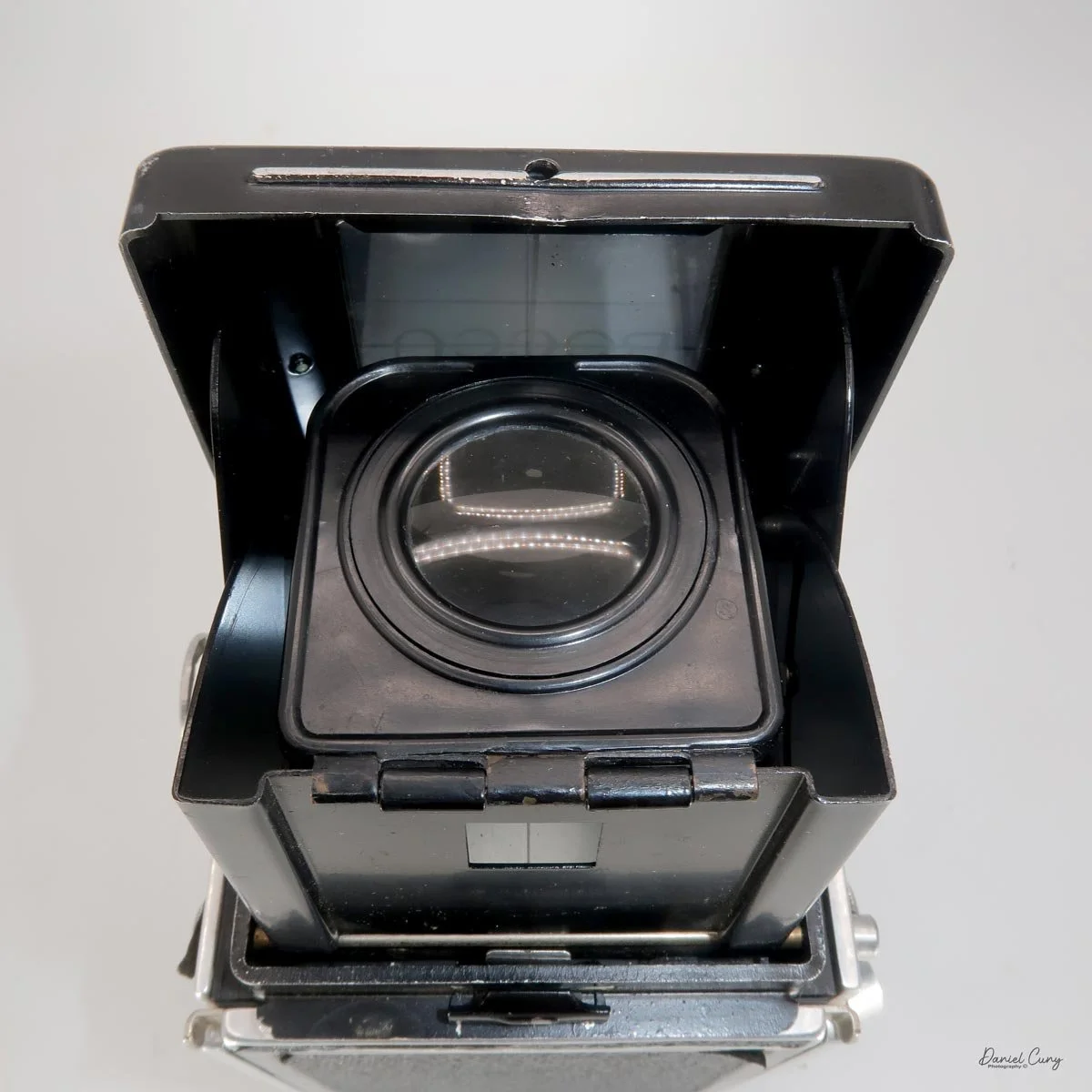
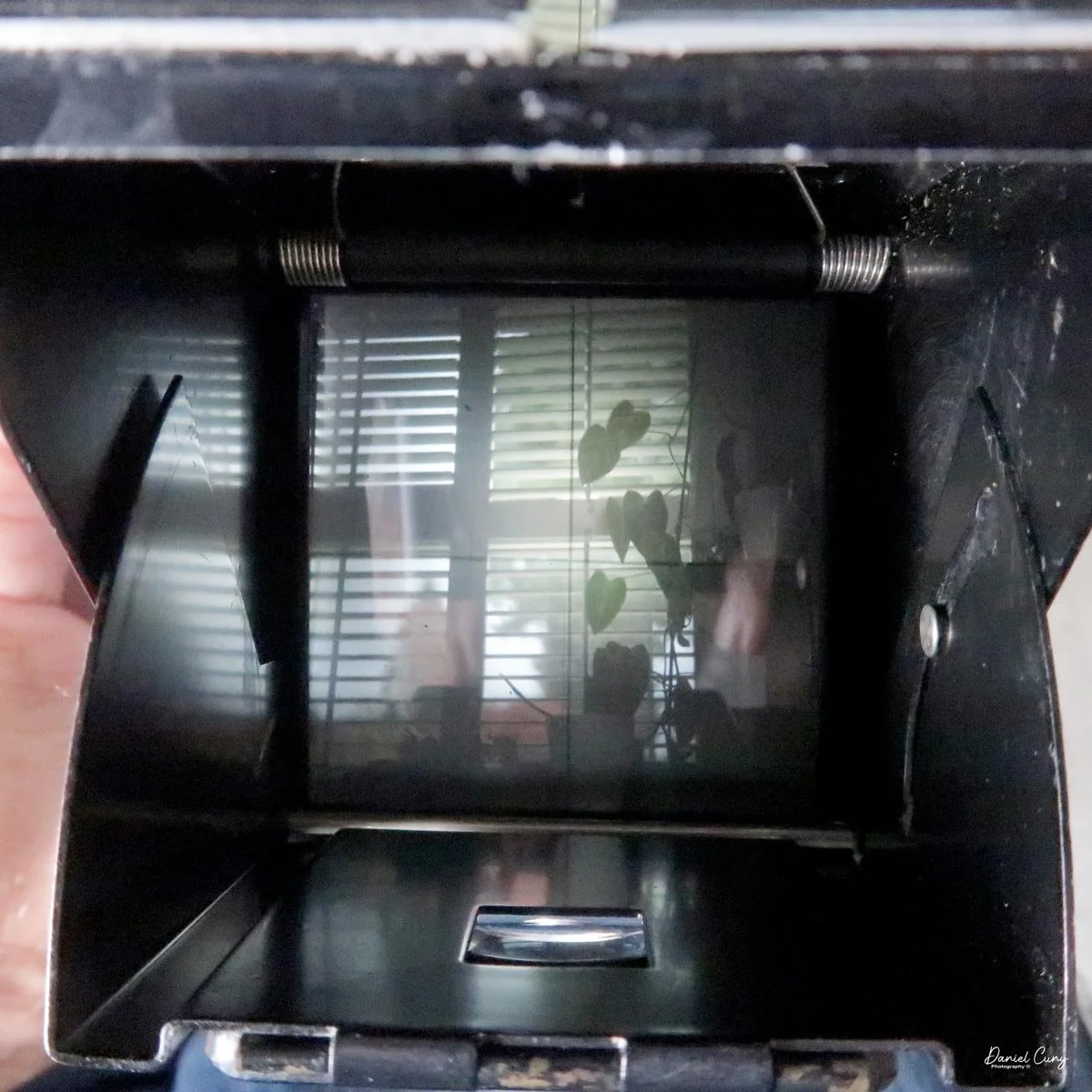
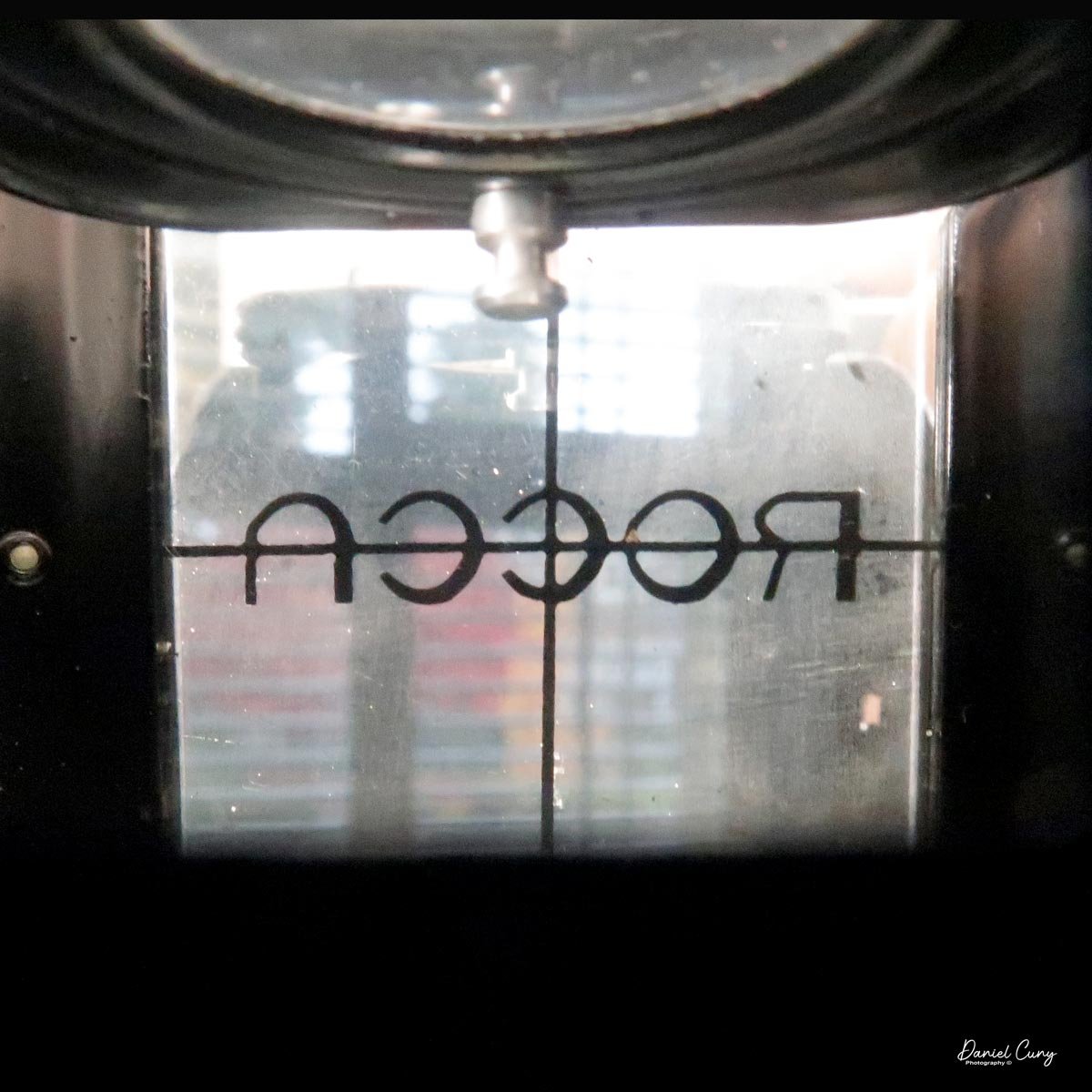
The light chimney can be removed via a button on the top, rear of the camera body on the right side. There were accessory finders for the camera: one with an enlarged viewing area and a stereo viewfinder. You can also use the camera without the light chimney or direct vision finder. The light chimney is easily attached to the camera.
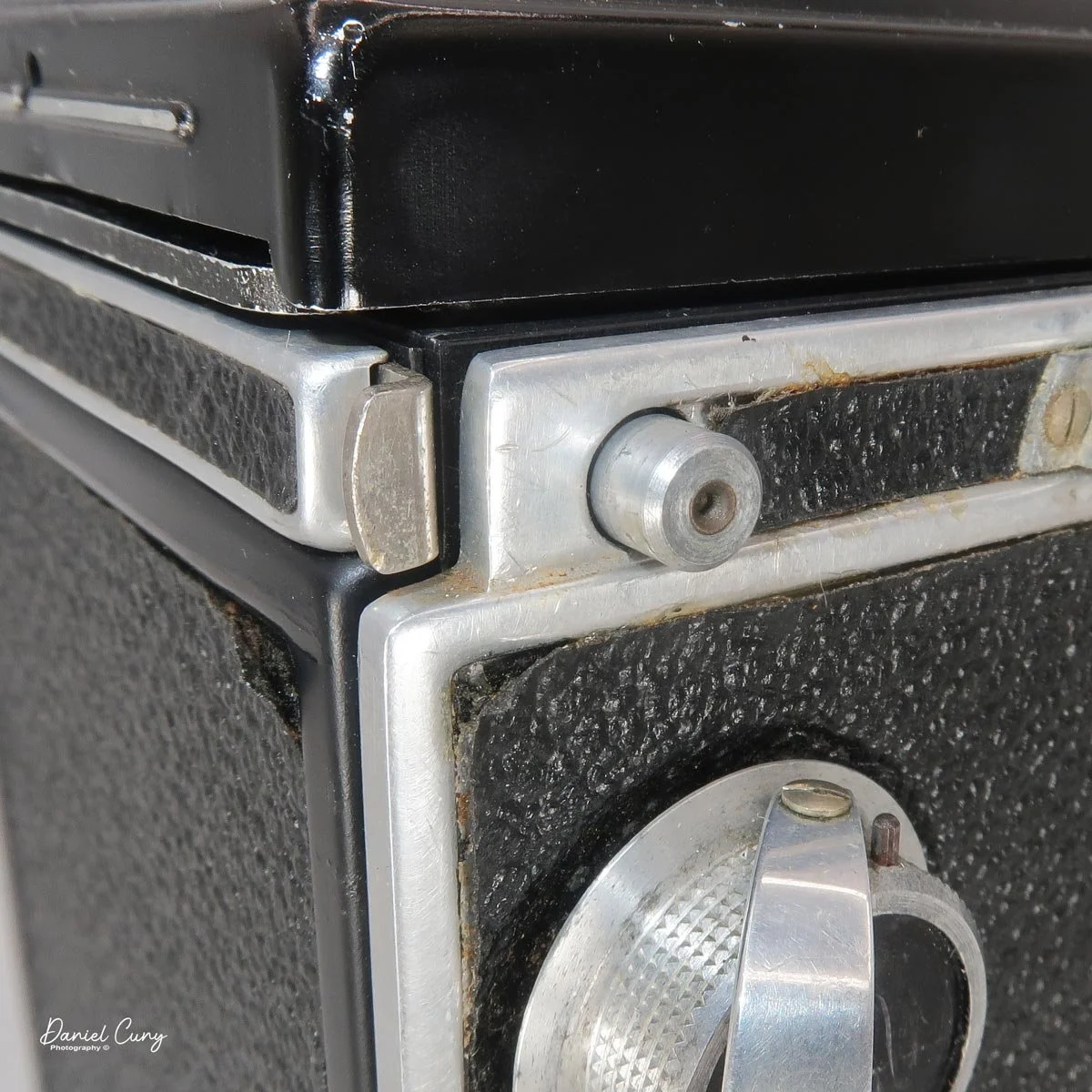
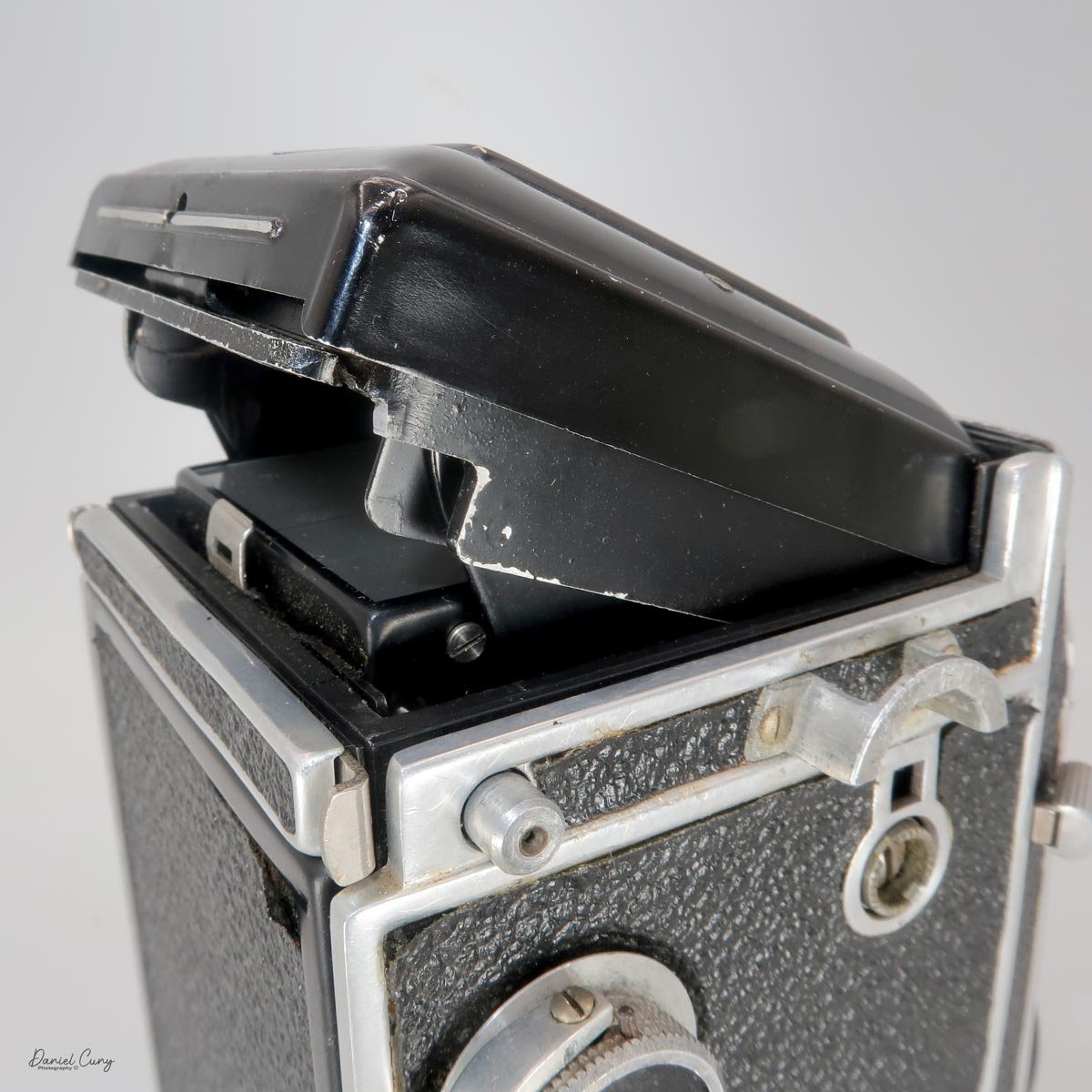
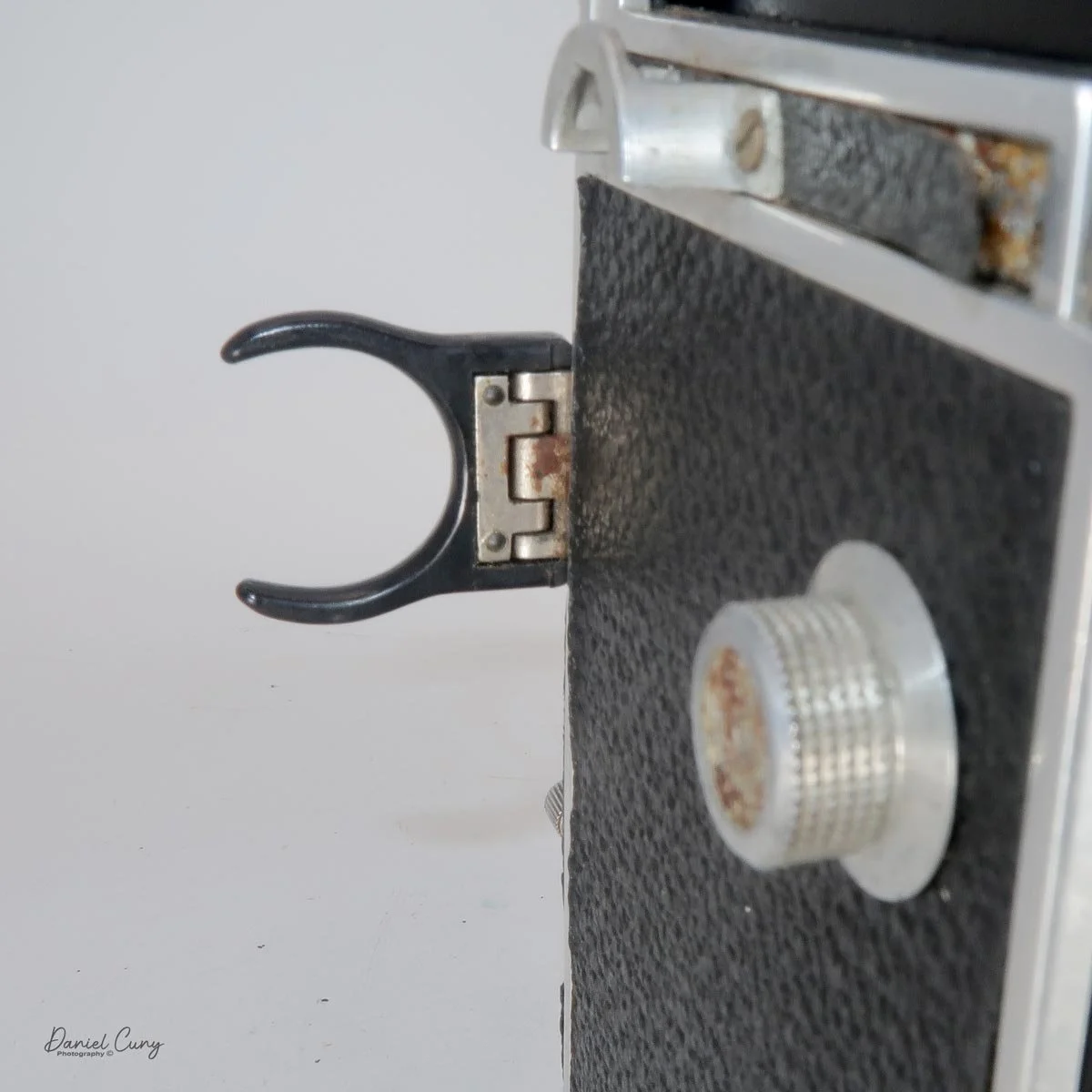
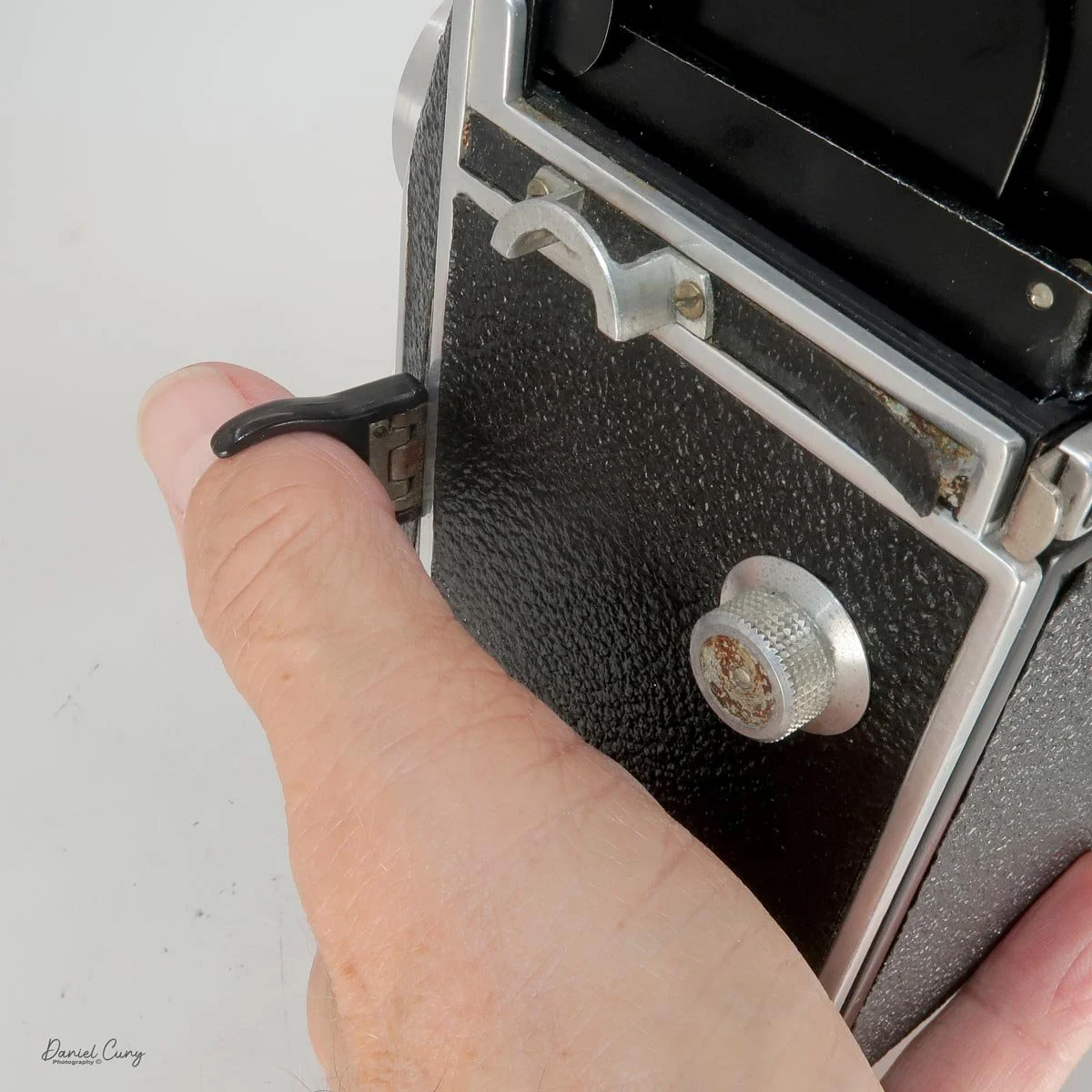
The most useful item, and one I'd love to see on all other twin-lens cameras, is their very unique "high speed" focus system, which is FANTASTIC to use. It consists of a vertical slider on the left side of the camera, which pulls out with a circular grip you put your thumb in while holding the camera. You then slide your thumb up or down to focus on your subject. It is incredibly fast and accurate. The more I used it, the more hooked I got.
Even resting the camera in your left hand, with your thumb in the focus guide and your right hand on the side, made focusing smooth and easy. The shutter release is on the right side, making focusing and taking photos very easy.
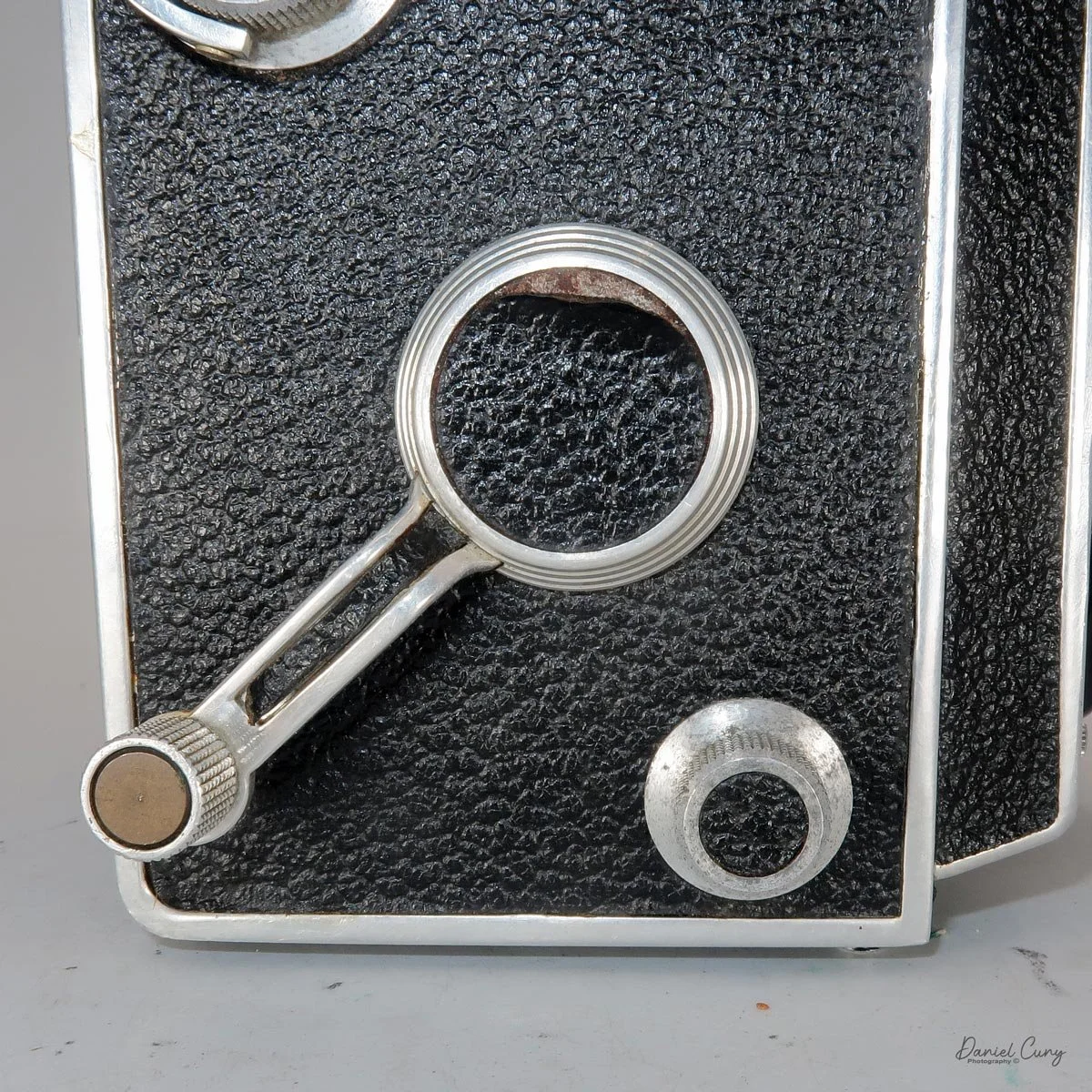
Also on the right side of the camera is another unique feature: the winding and cocking lever. You do it all with a single turn of the winding lever. No shutter to cock, no winding backward to cock the shutter; it's all in one motion. Advance your film and the camera is cocked and ready to shoot.
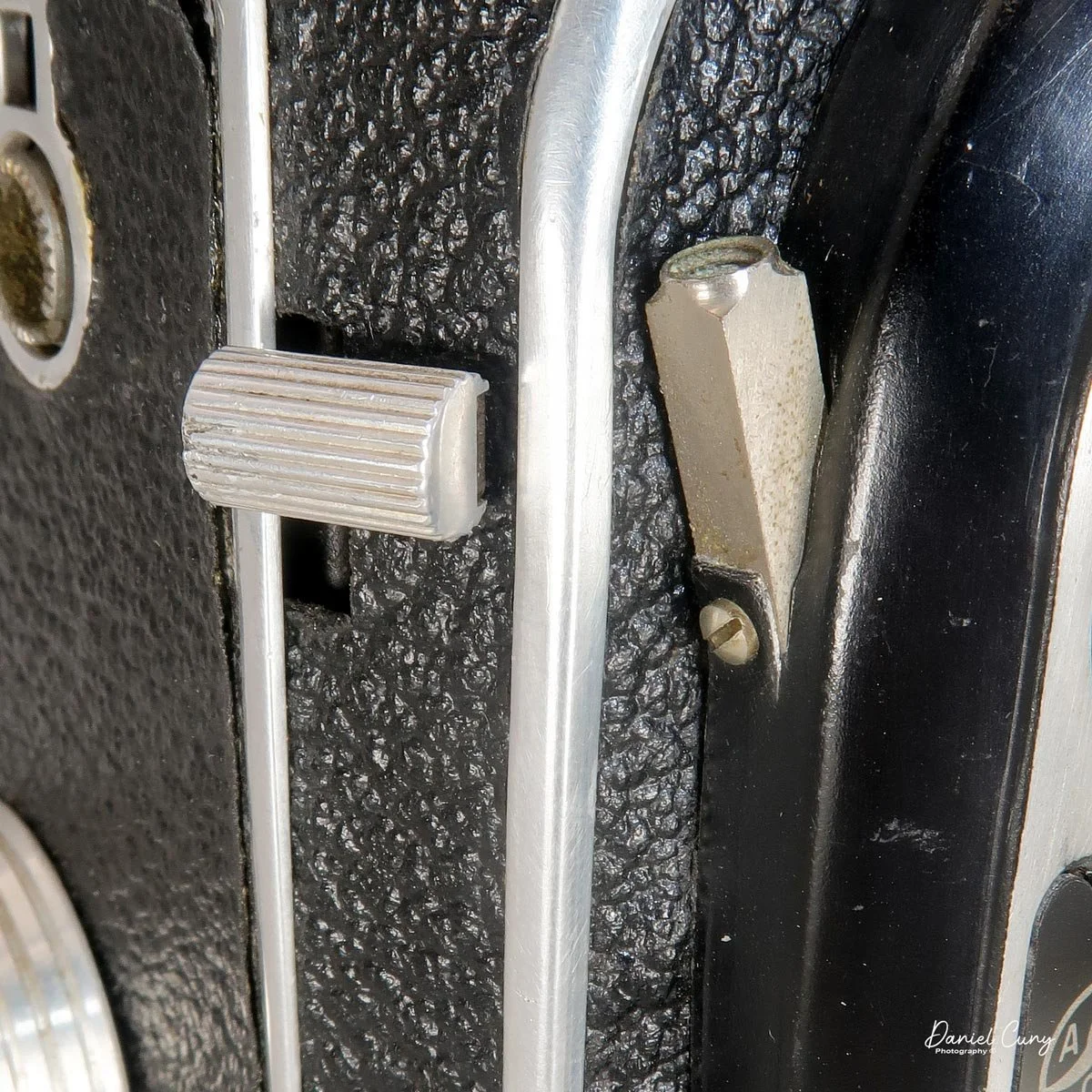
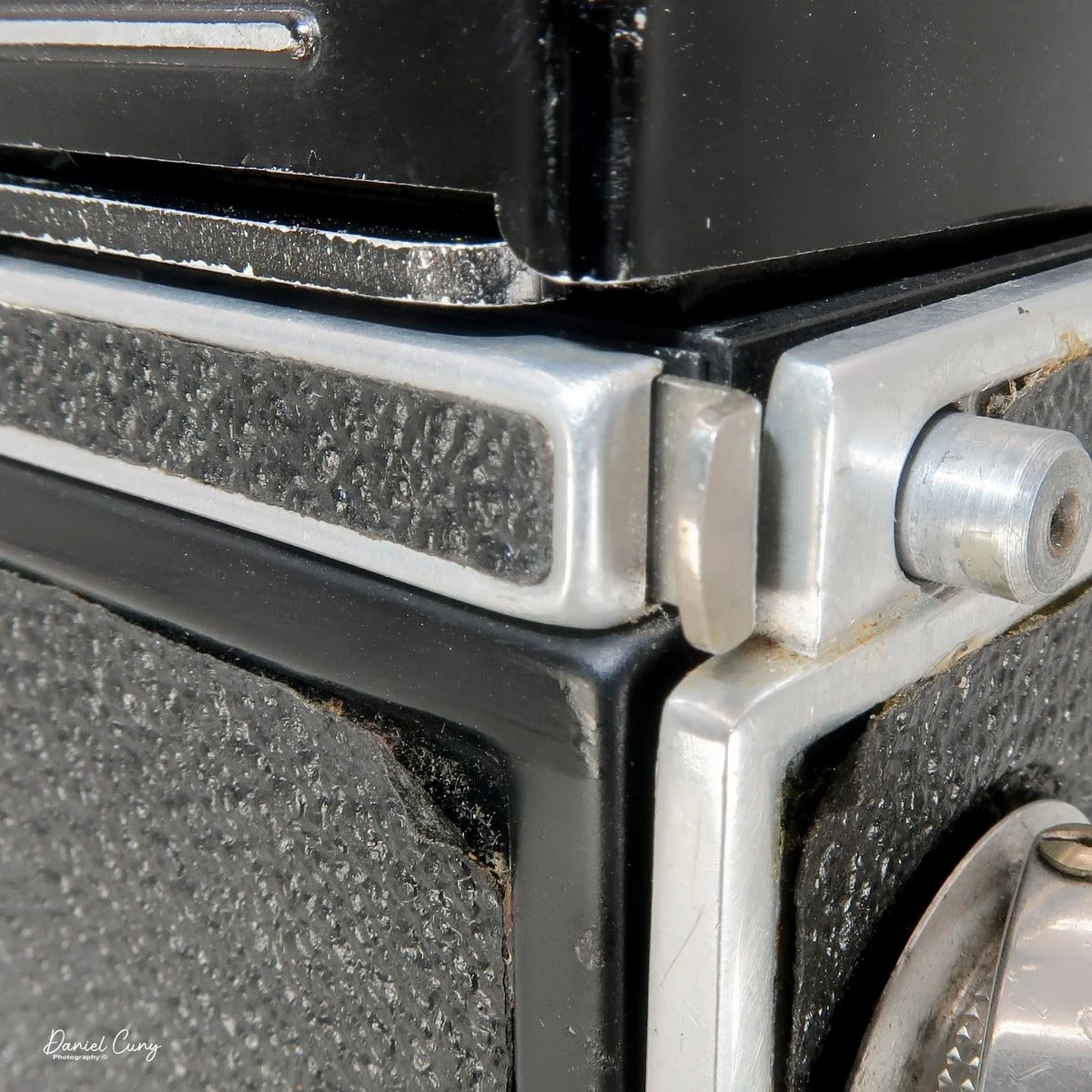
To open the back to load the camera with film, slide the top bar on either side of the hinged back, and the film door will pop open.
I didn't learn the proper way to load the camera until I wasted a roll of film, then went back and read the German version of the Rocca Automatic camera on Mike Butkus's website. There were a couple of steps I didn't realize the first time I loaded it that are extremely important. They're unlike those on any other twin-lens camera. Let me go over the process.
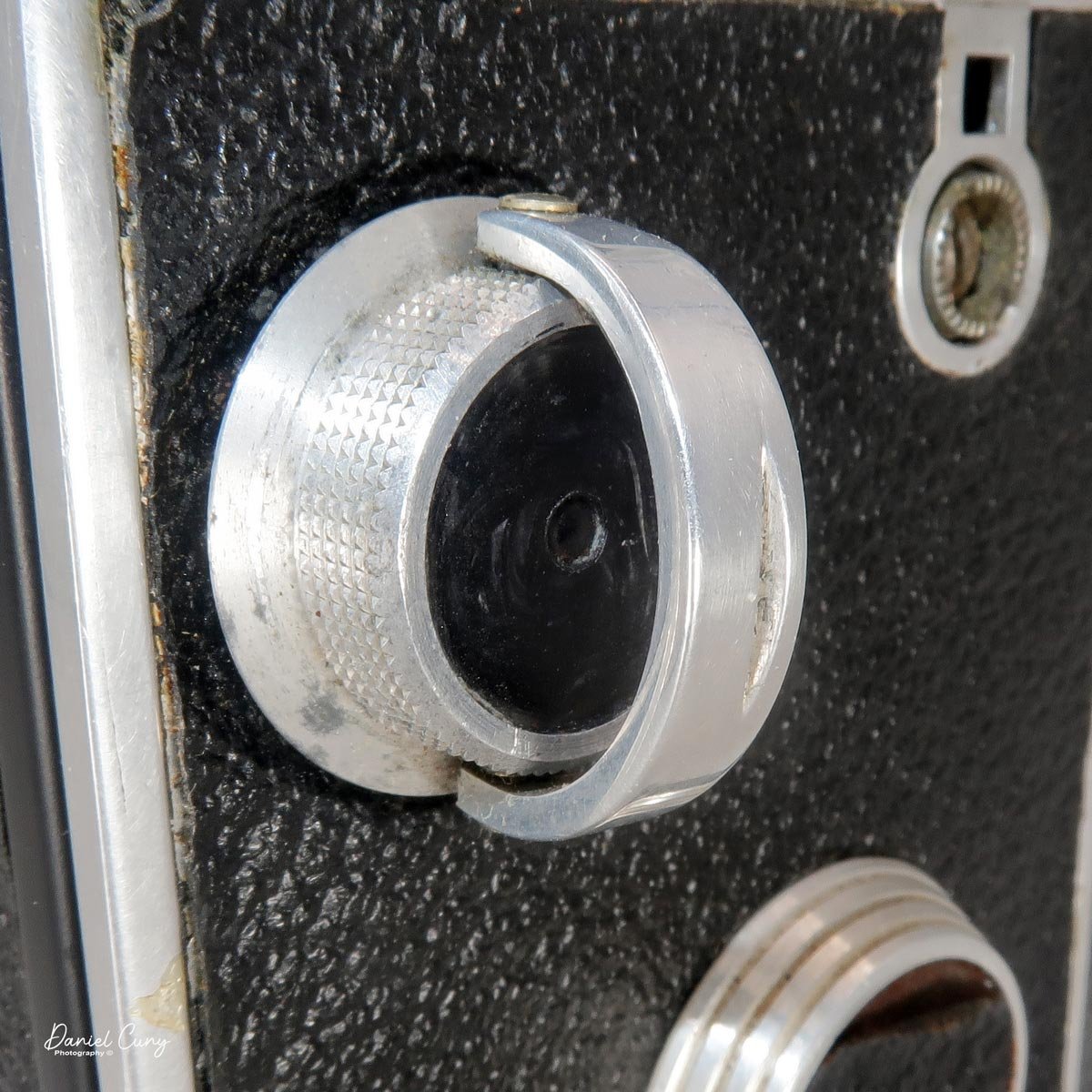
Open the back of the camera to expose the film chamber. On the rear of the camera, on the right side, is a winding knob with a lift-out handle. This will wind the film in the film chamber without having to wind the film advance. This lever has three positions. All the way in, then slightly out when you lift the handle away from the knob; pulling the knob out allows you to load film into the film chamber.
Put the take-up spool into the top area of the film chamber by lifting the knob out with the handle, then press the handle knob in to engage the take-up spool.
Place the fresh roll in the bottom portion.
Bring the leader to the take-up spool and thread it into the take-up spool slot.
Wind the handle until you see the "start" arrow on the film's paper backing.
Close the back of the camera, making sure the opening bar is slid to the left to lock the back.
On the bottom of the camera is a red window covered by a disk attached to the tripod socket.
Open the disk and wind the film until you see the number 1 in the red window.
VERY IMPORTANT: Press in the winding knob all the way into the camera body. Reset the frame counter to #1, which is in front of the film winding knob.
Take your first photo, and advance the film advance/cocking lever. At this point, you'll notice the film-winding knob turns as you cock the shutter, so you know the film is moving inside the camera.
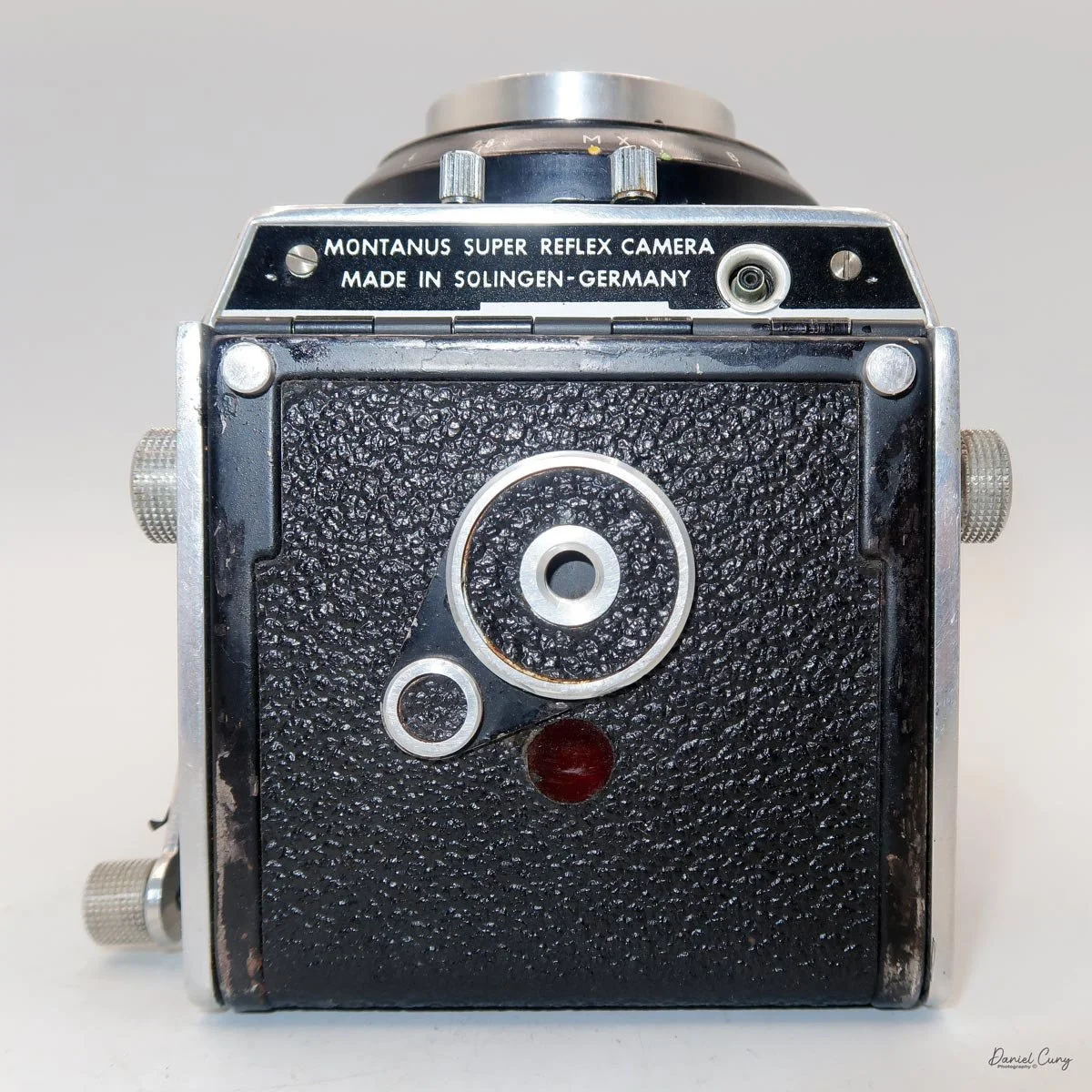
On my first roll of film in the Rocca Super Reflex camera, I didn't wind to the #1 on the bottom window, or press in the winding knob, so my film never engaged with the transport. I took all the images on one frame.
My Images:
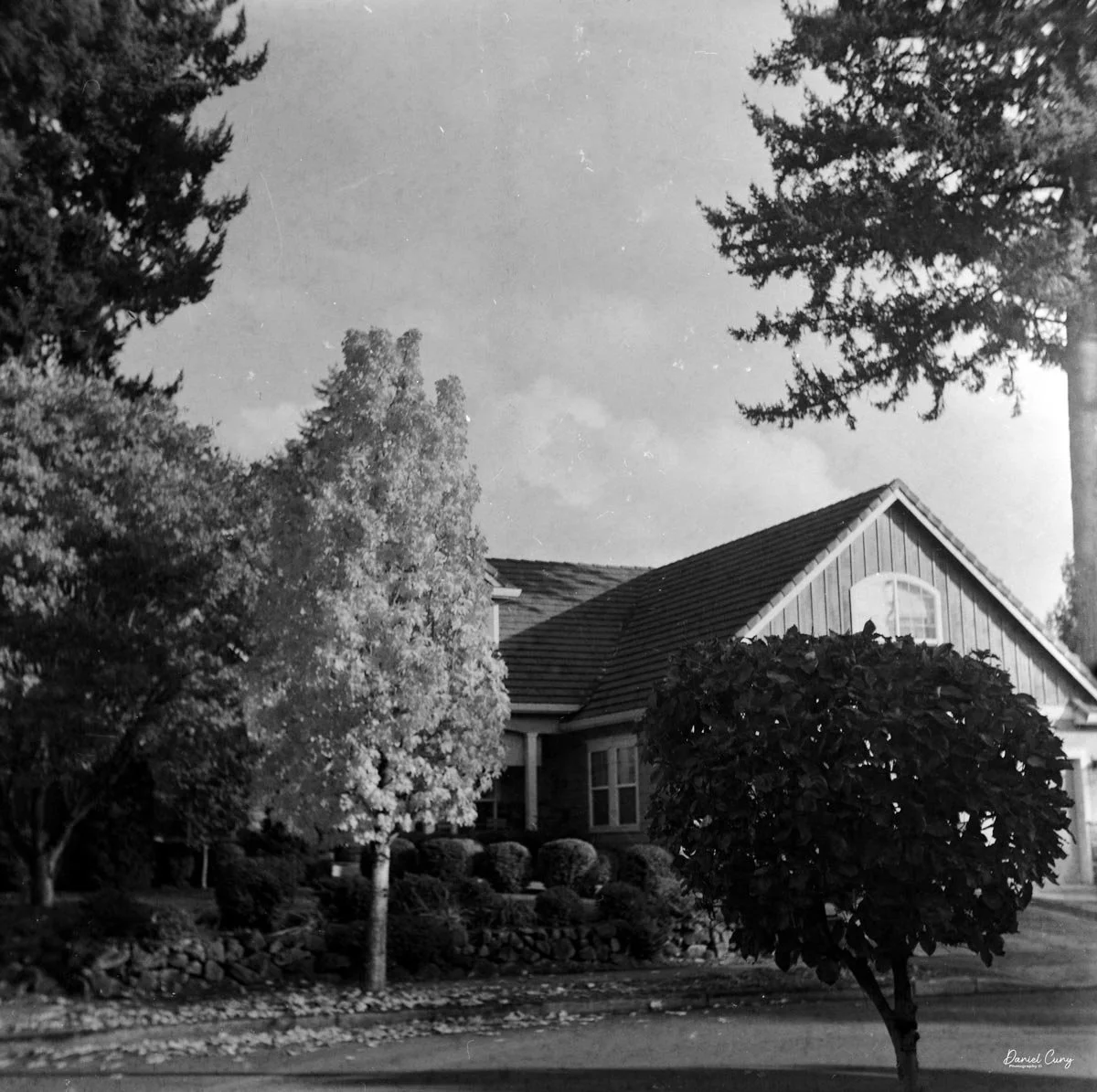
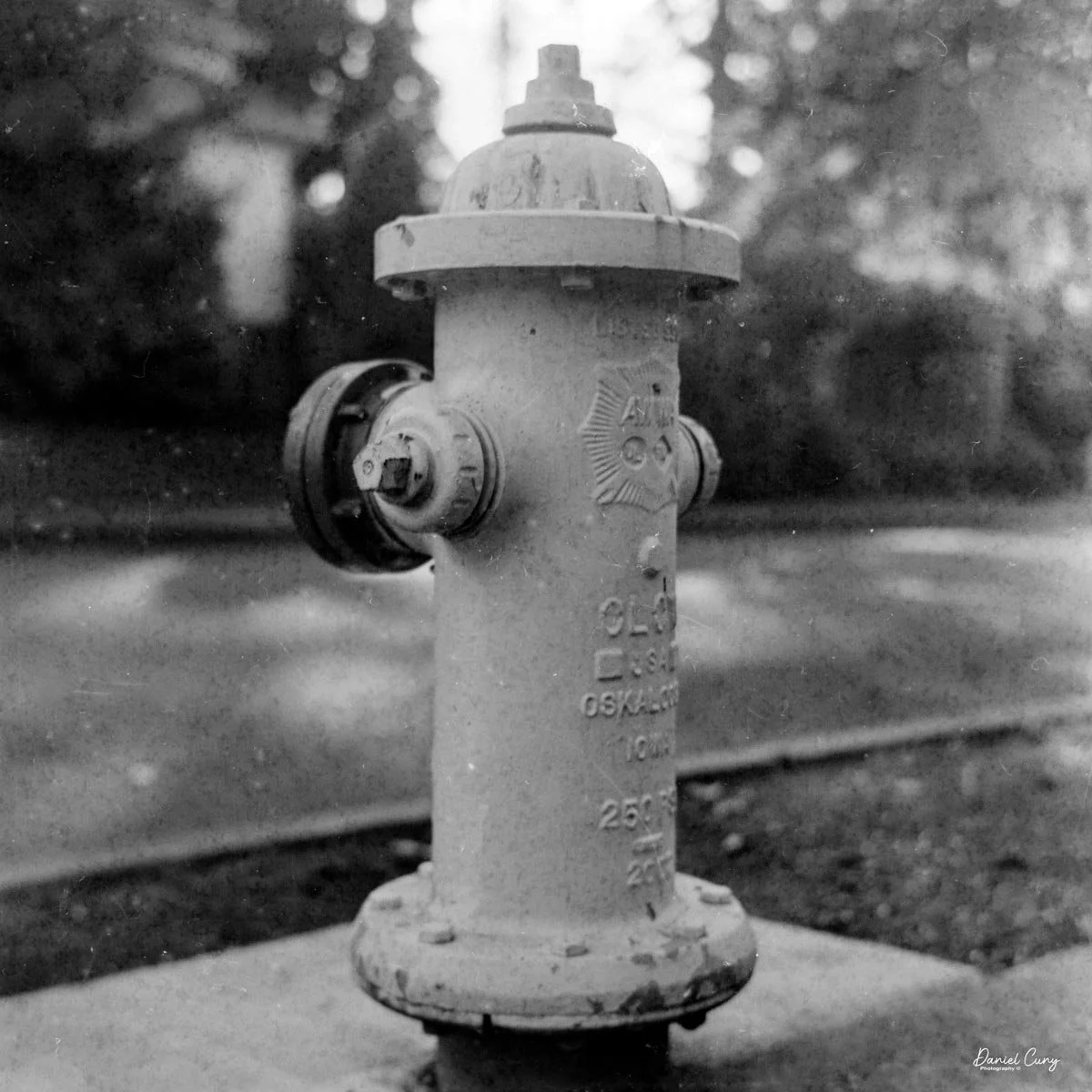
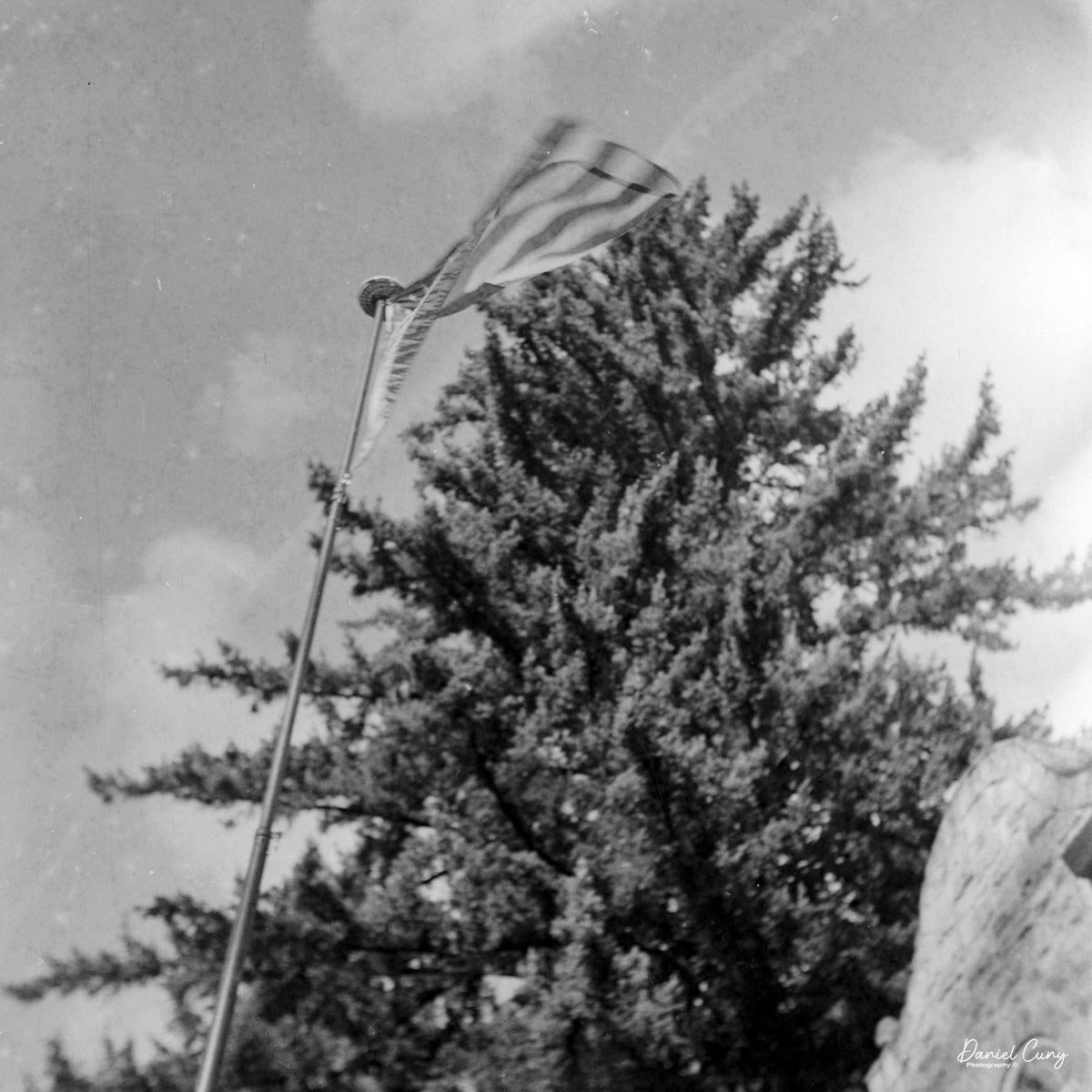
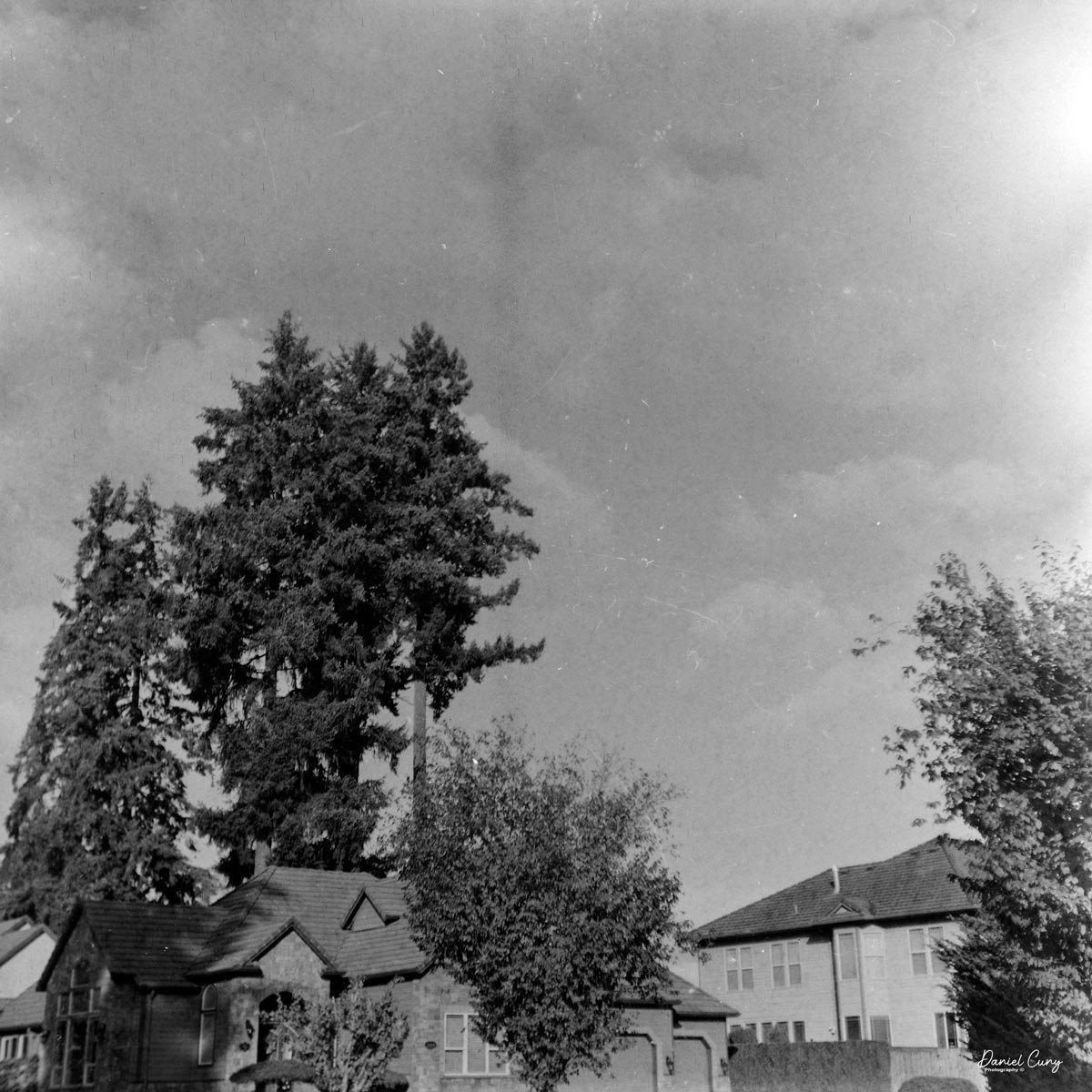
Now that I have the film loaded properly, let's take a walk through the neighborhood and see what this camera can do.
Here are some of the images from the walk through the neighborhood.
Conclusion:
Well, the camera did a good job. I REALLY liked how the camera focused with the thumb control. It was very fast and accurate, and the more I used it, the more I liked it.
The focus control on the camera is something I'd love to see on other cameras. Still, since there is autofocus now, and no one is making a medium-format film camera, especially a twin-lens version, I seriously doubt it'll be adopted into new cameras.
The camera loading was a bit peculiar, but the winding knob with the handle was great. Once I understood the three positions it offered, it was quick and easy. The winding knob with handle is a great way to load the camera.
In the long run, I really enjoyed shooting with it. This camera offered so many unique features, but given the competition when it was made in the 1950s, it's easy to see why other companies did much better and lasted longer.
I'm happy to have experienced this wonderful, unique camera and look forward to shooting with it in the future.
Thank you for taking the time to read about the Rocca Super Reflex camera that I recently added to my collection.
Are you interested in other vintage gear? Here are some of my other Camera Reviews.
Check out my Cuny's Camera Collection YouTube channel, where I am putting together video overviews of the cameras I write about. Be sure to subscribe and like the channel, too!
Cuny's Cameras and Photos is my online eBay store, where you will find some of the cameras I have reviewed, along with a wide range of other cameras, lenses, and items from my collection that I am thinning out.
Until next week, please be safe.