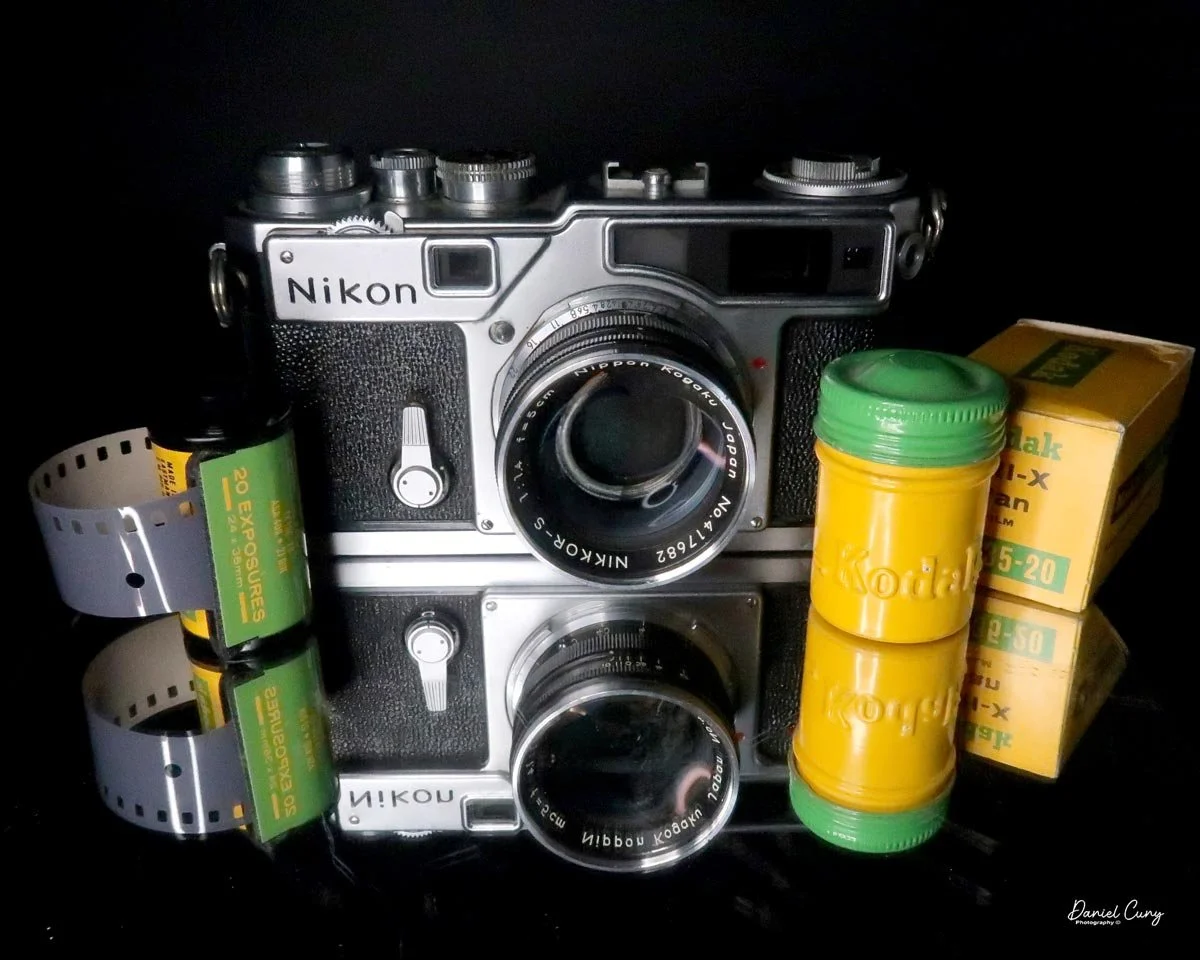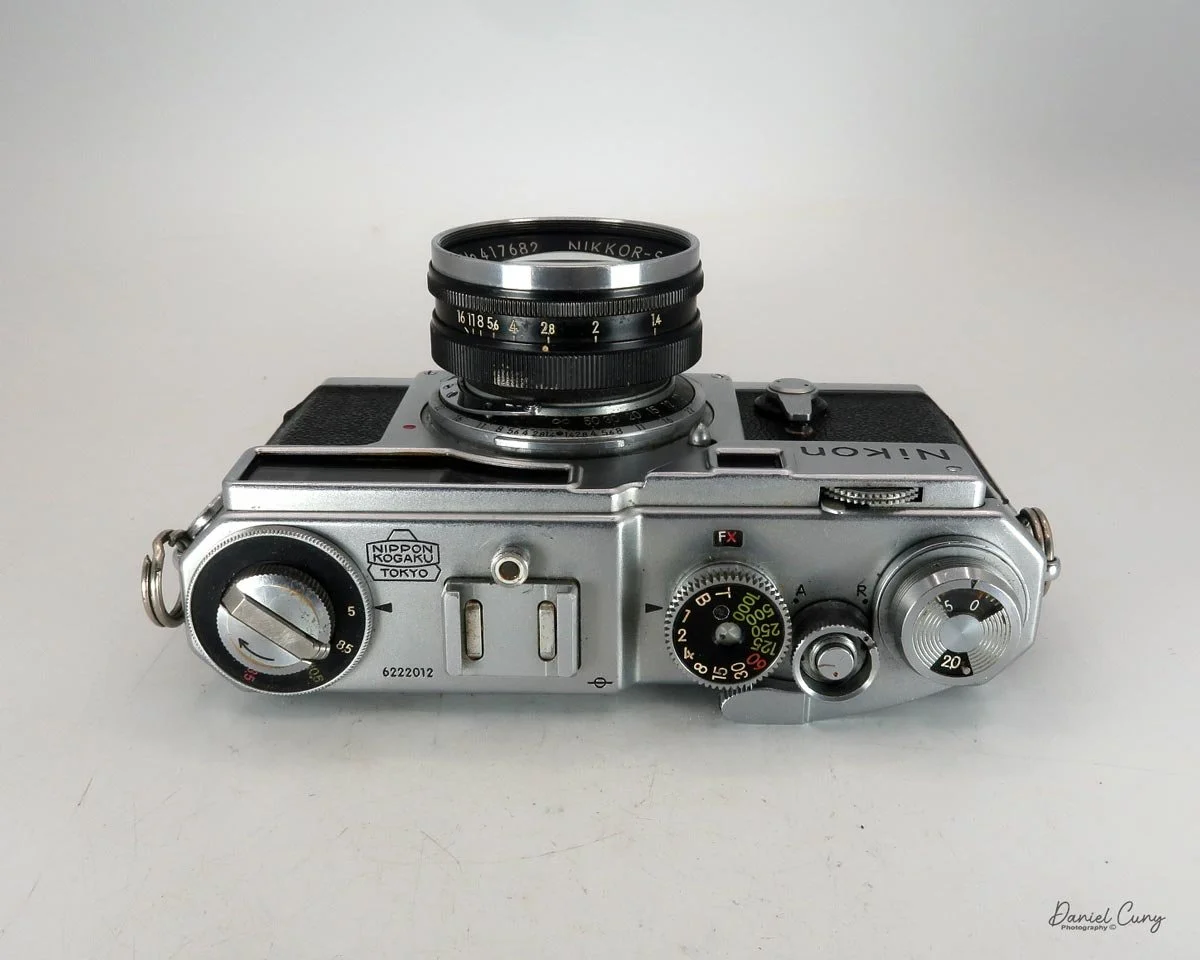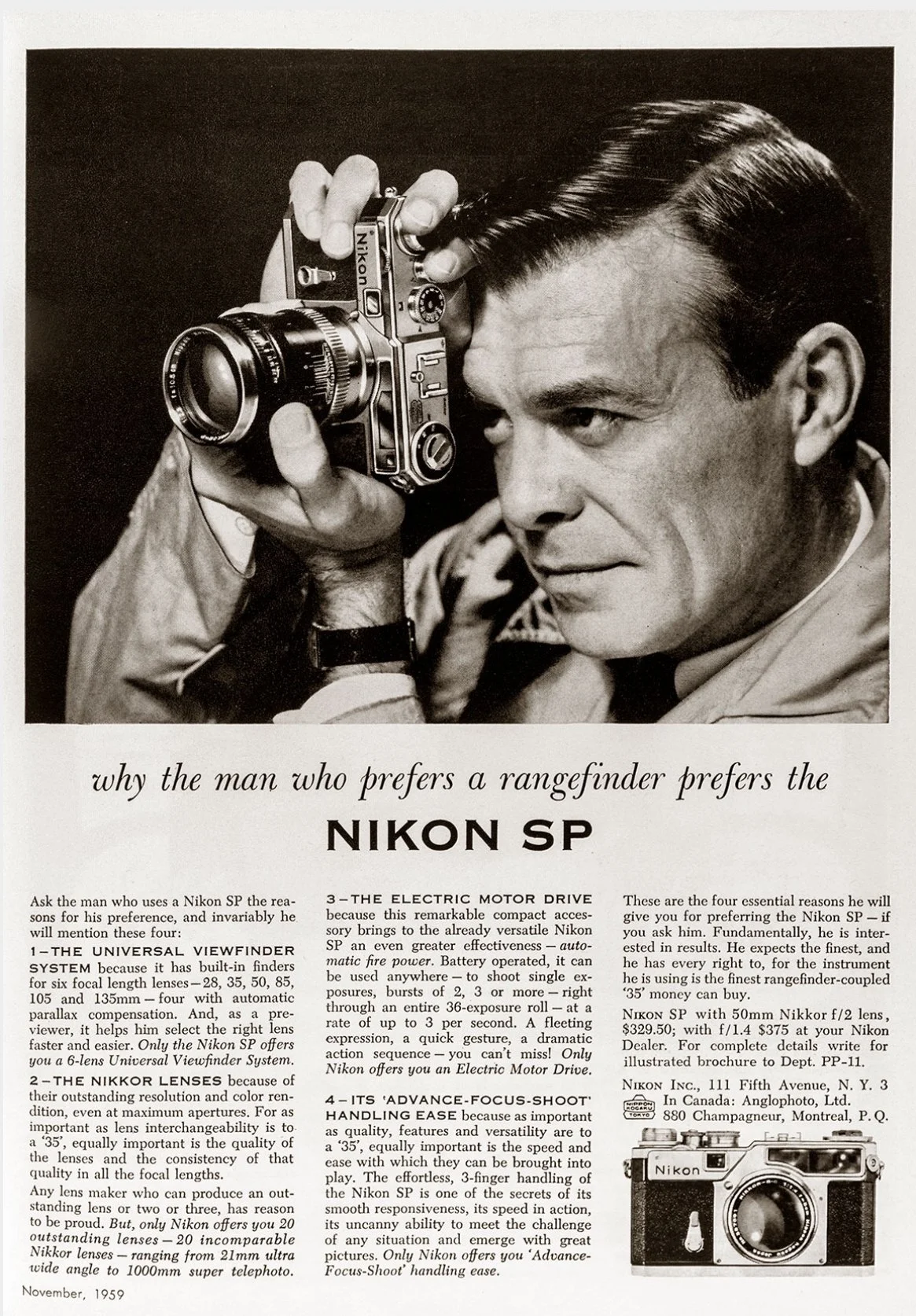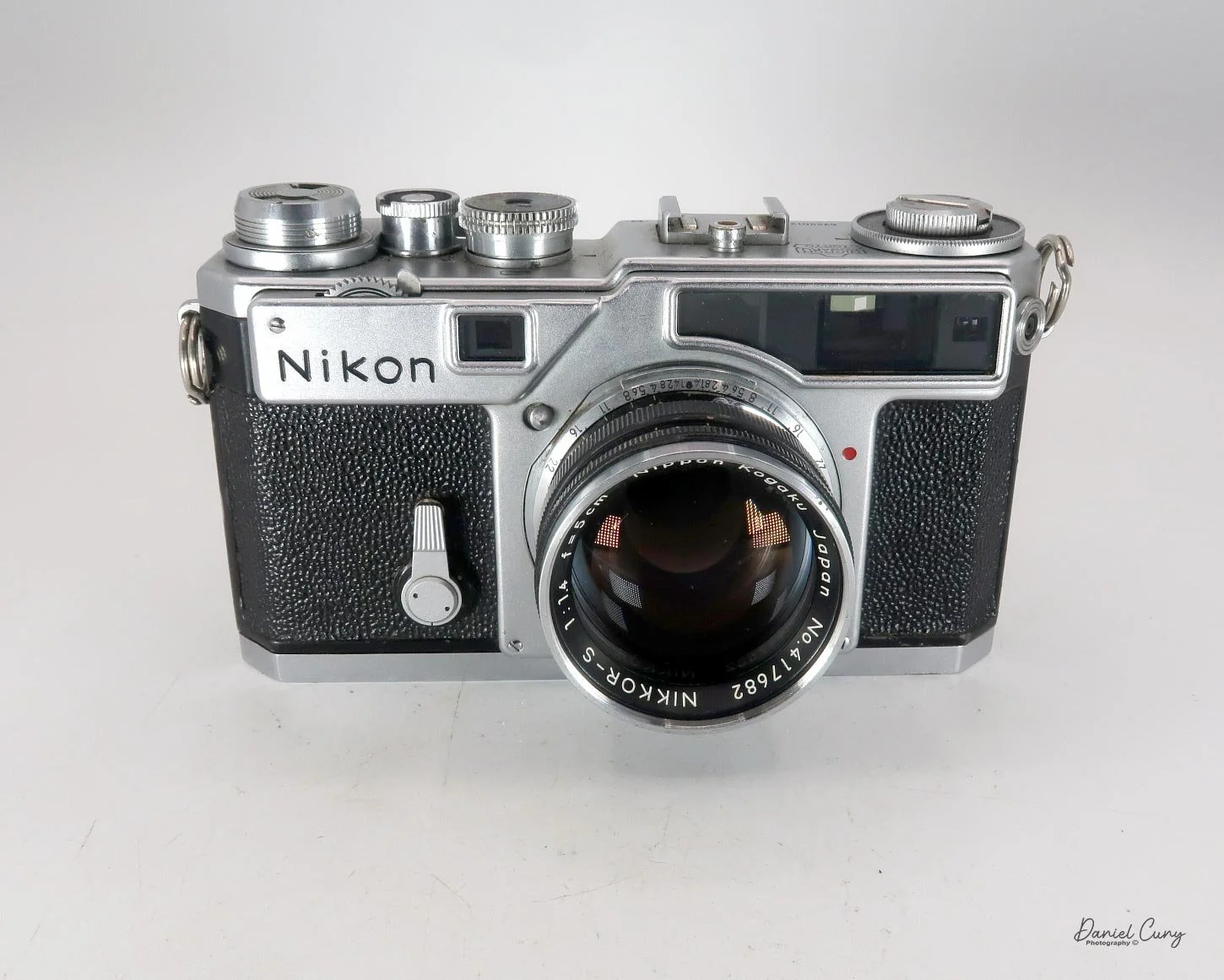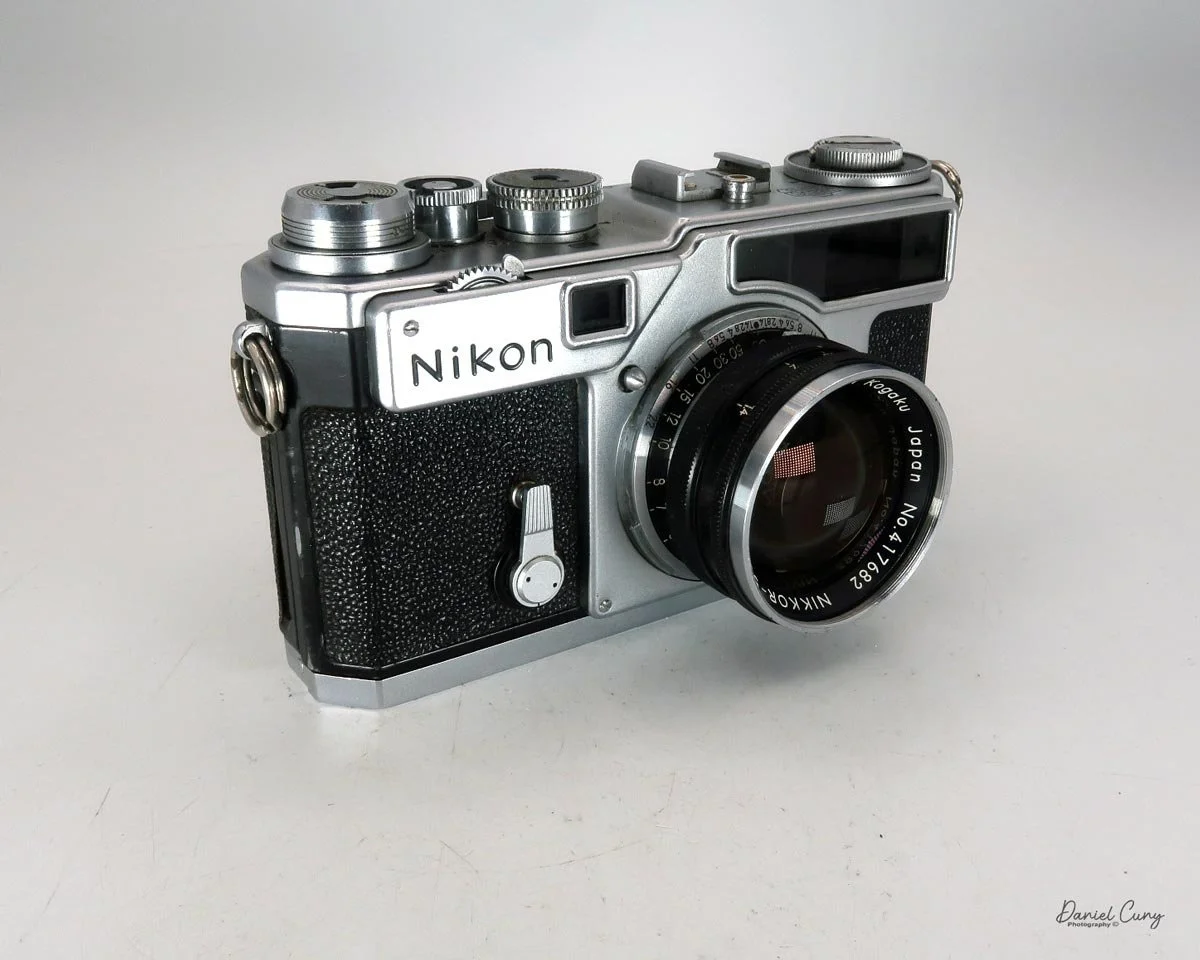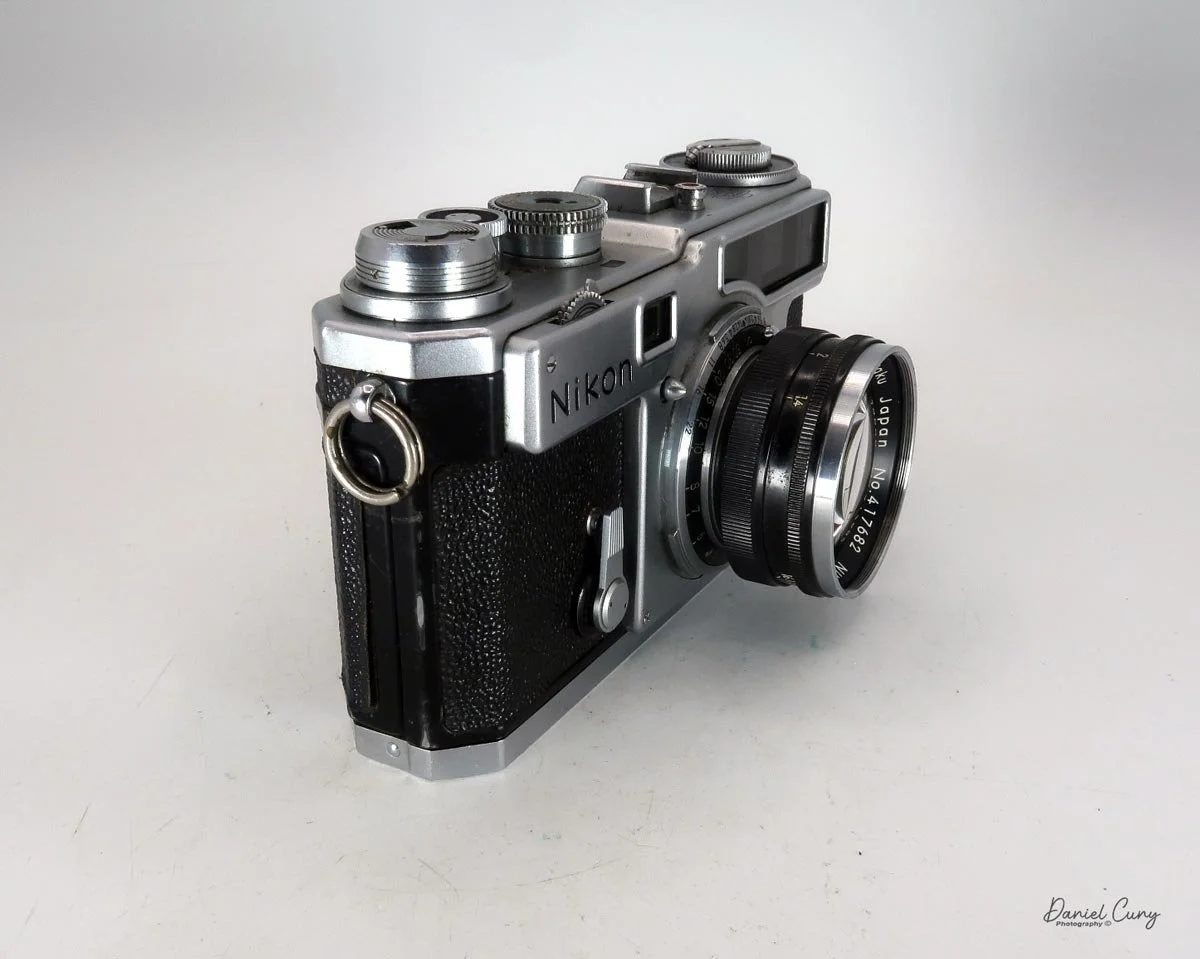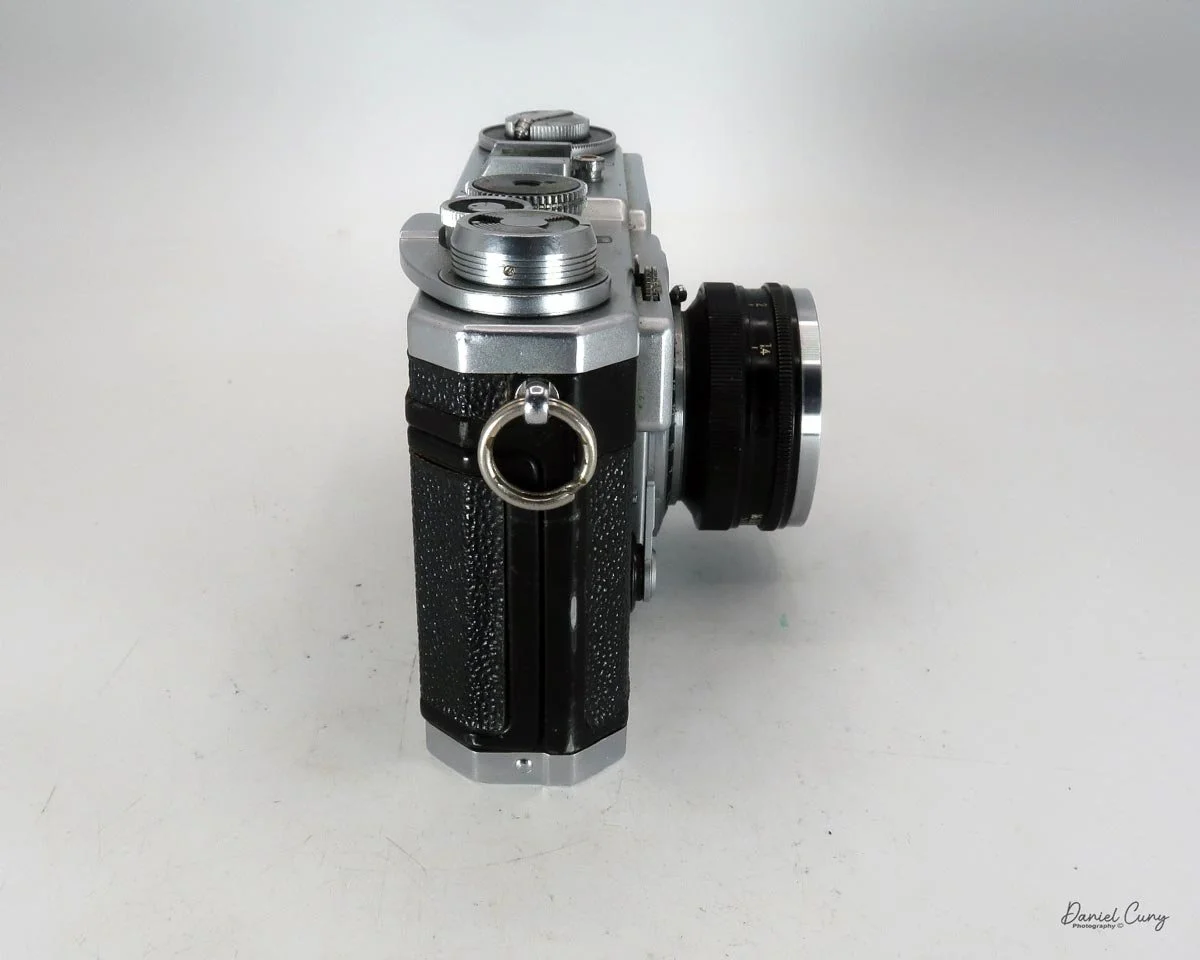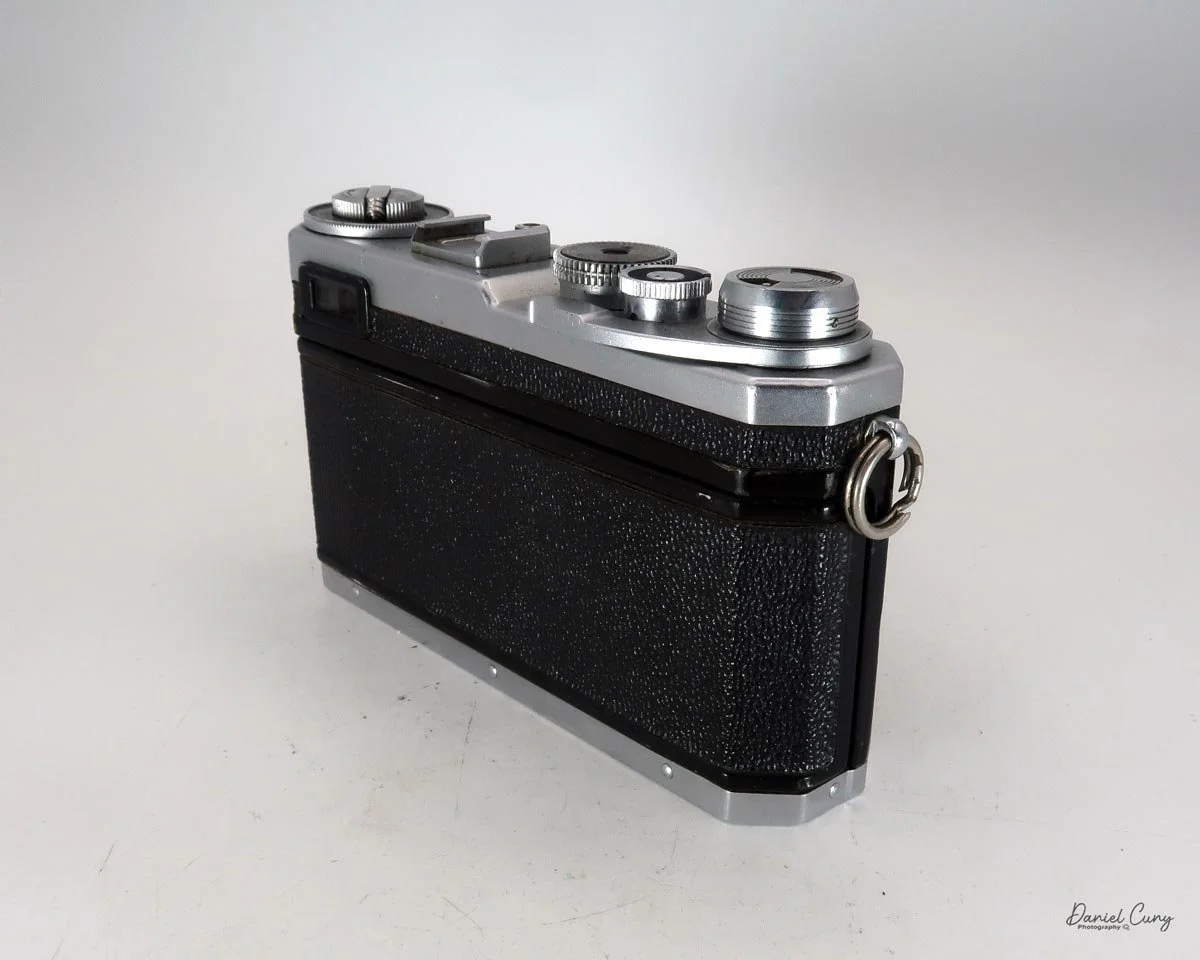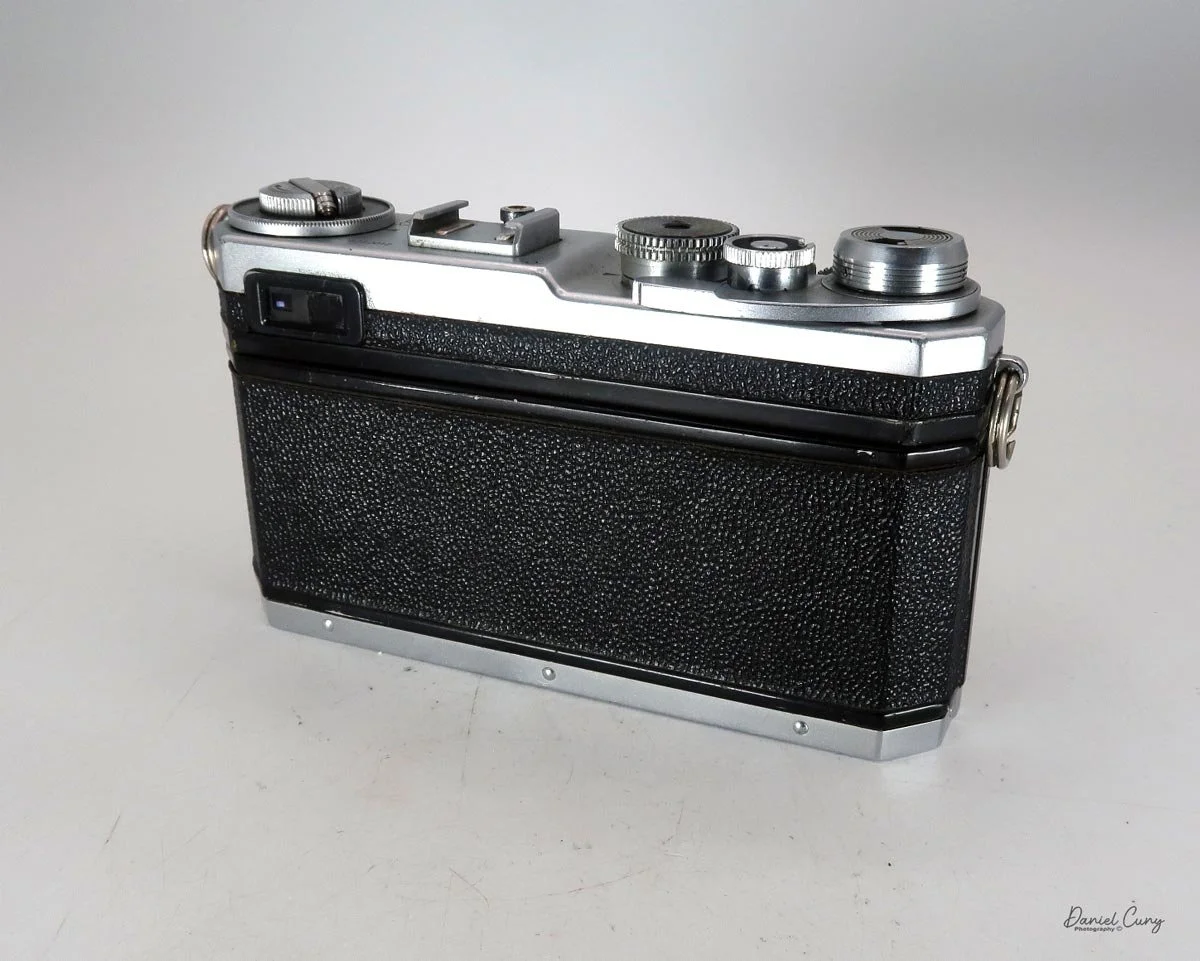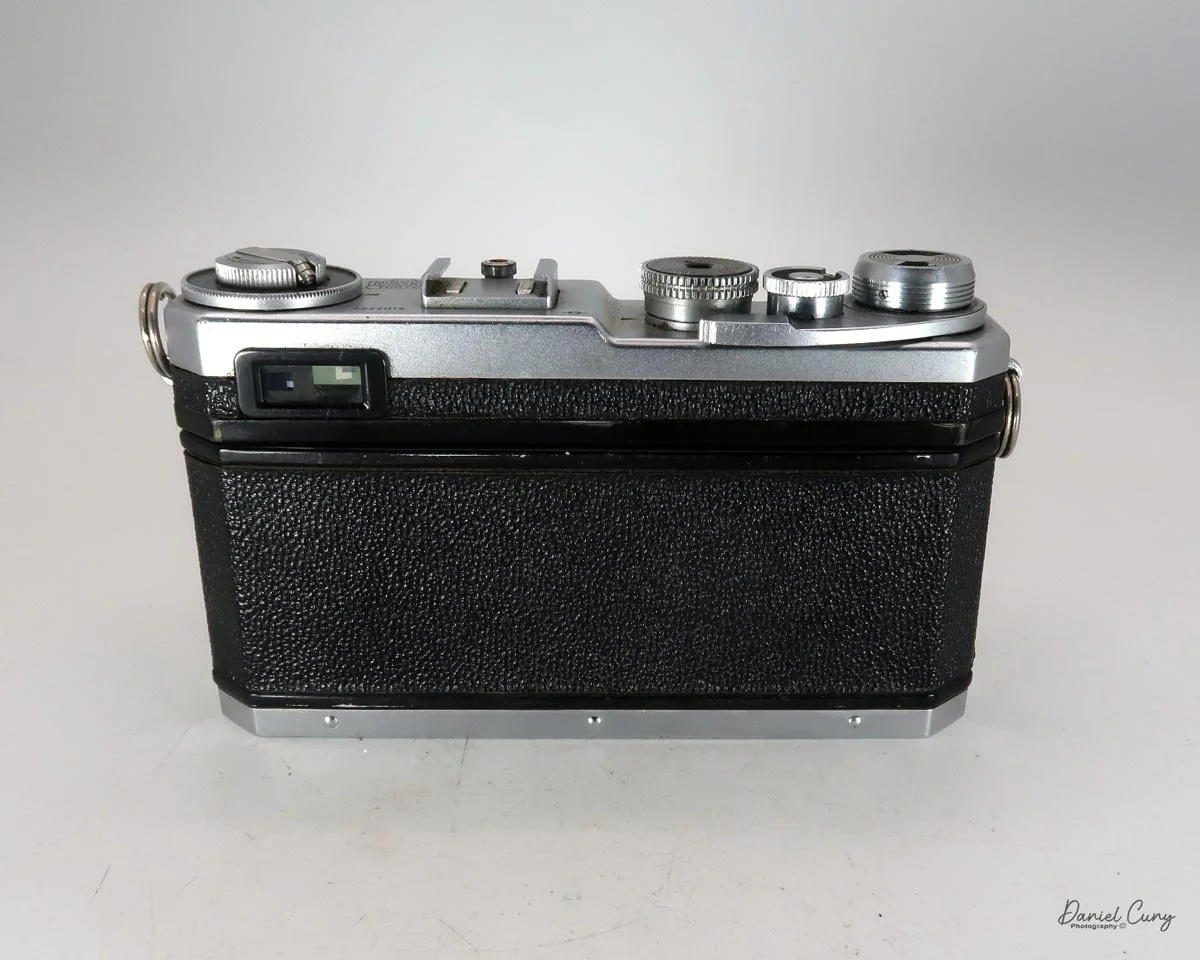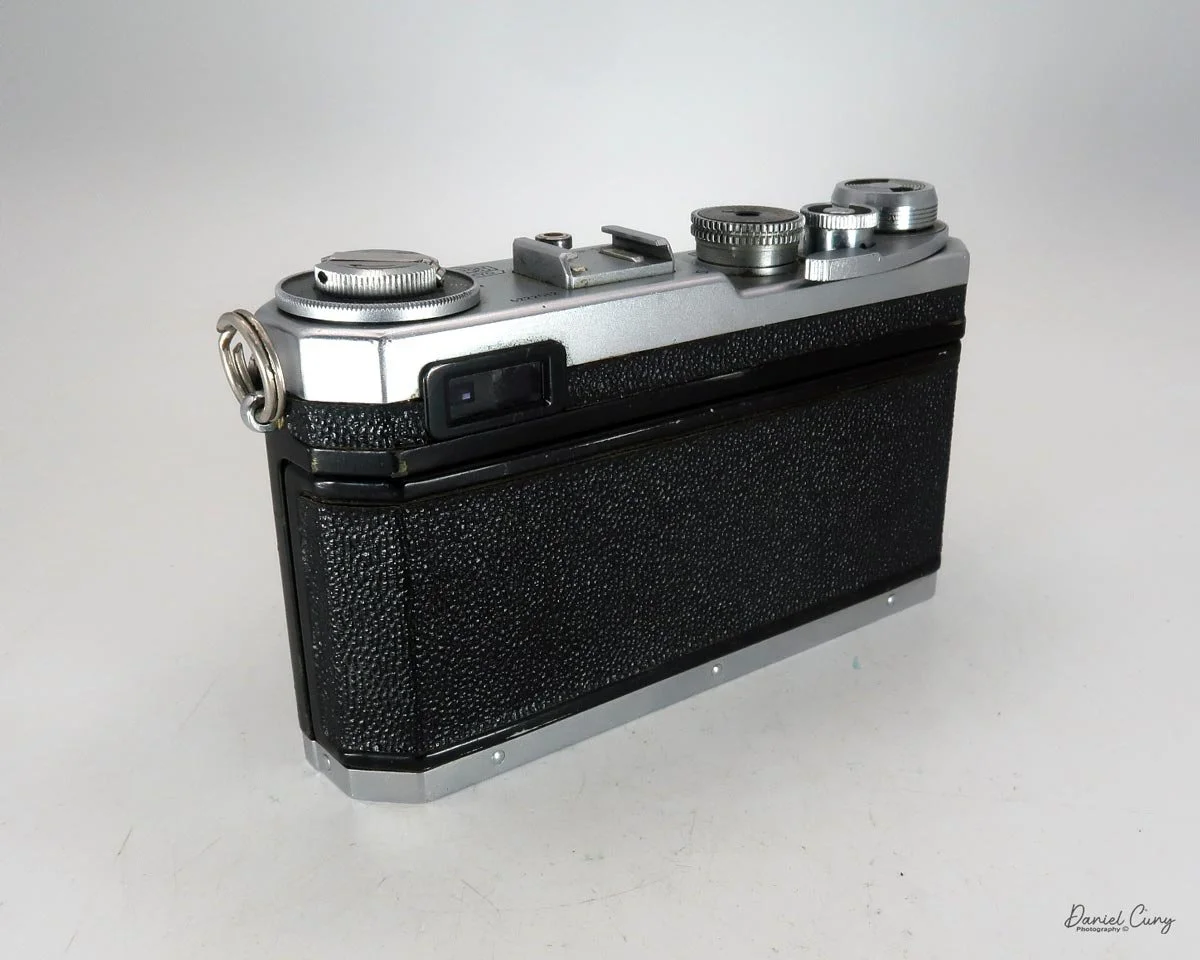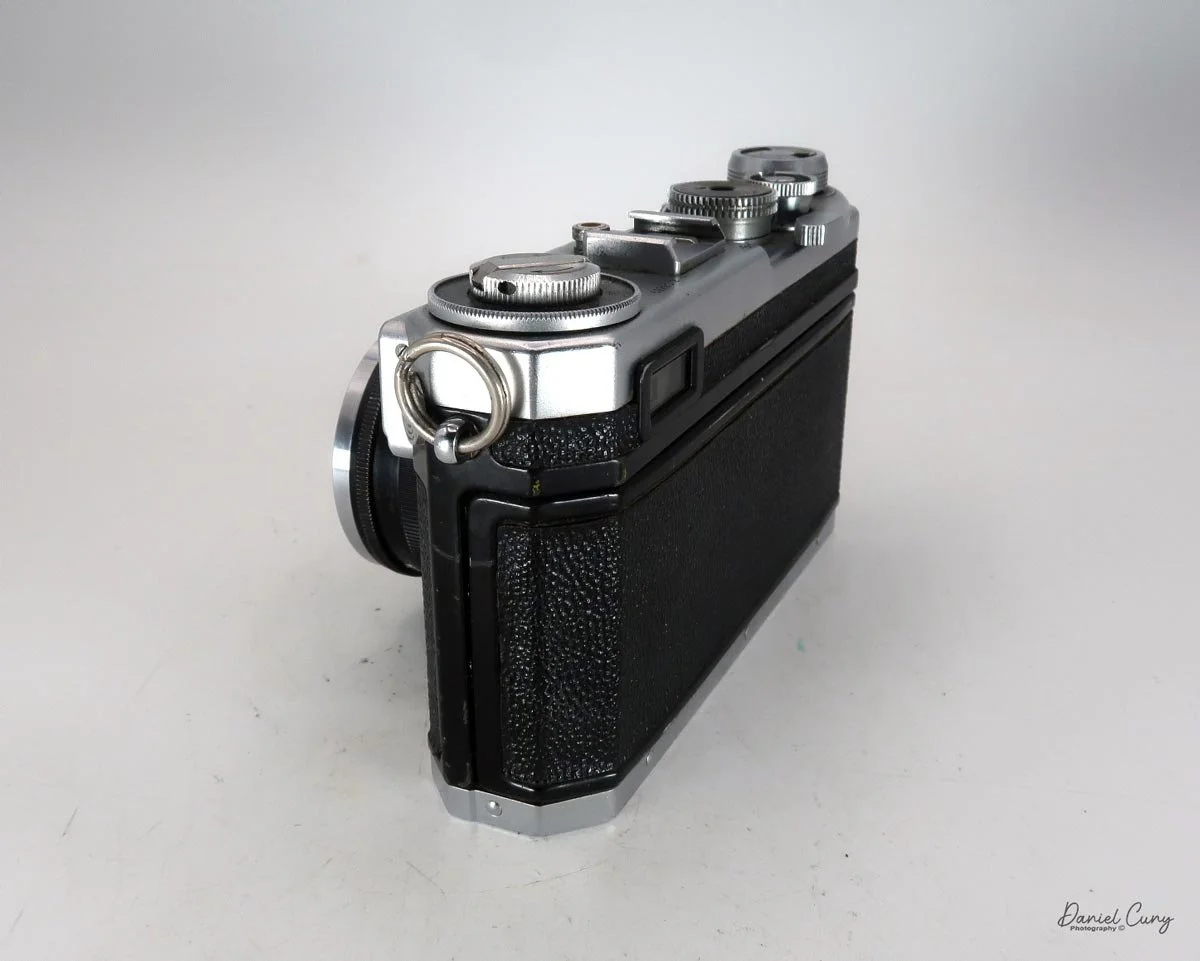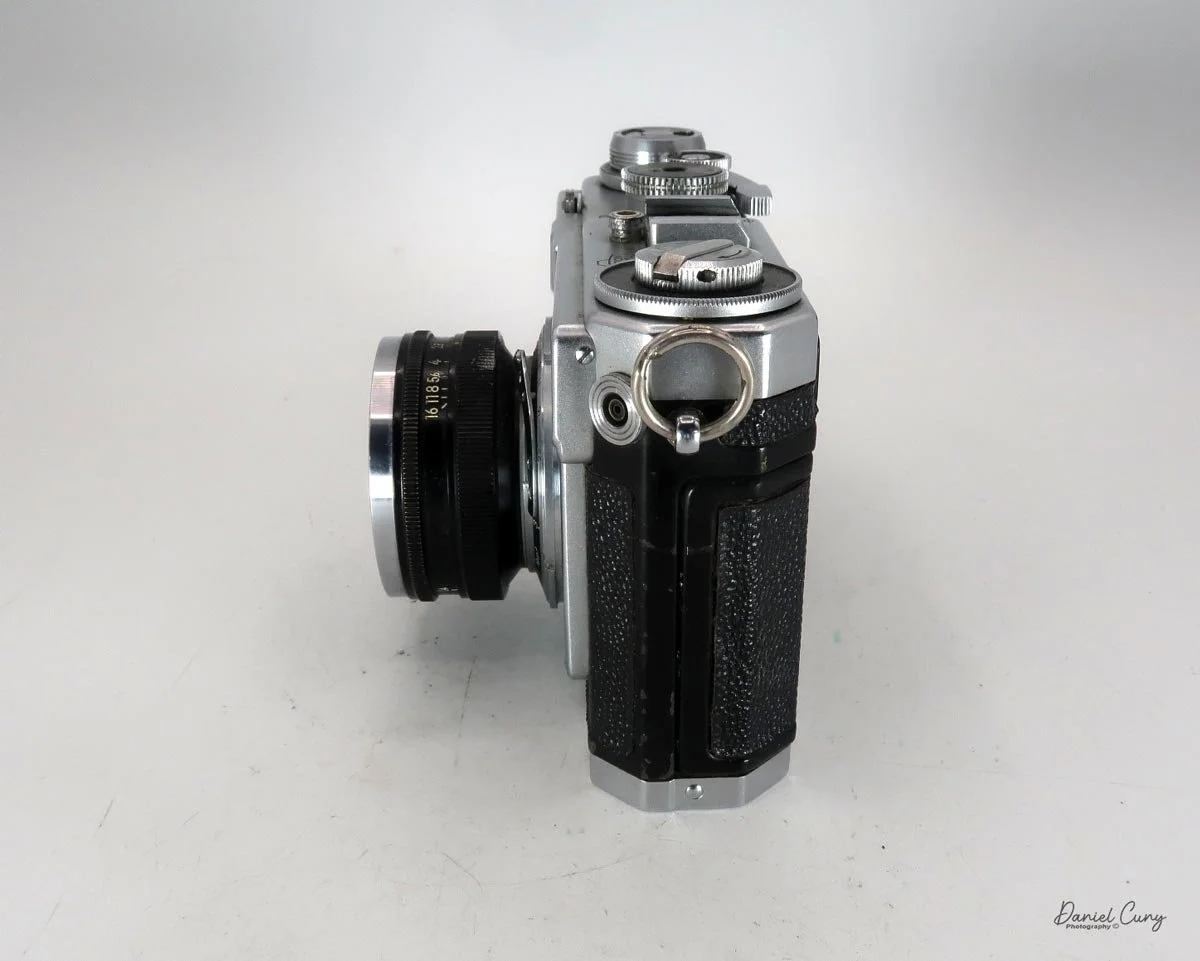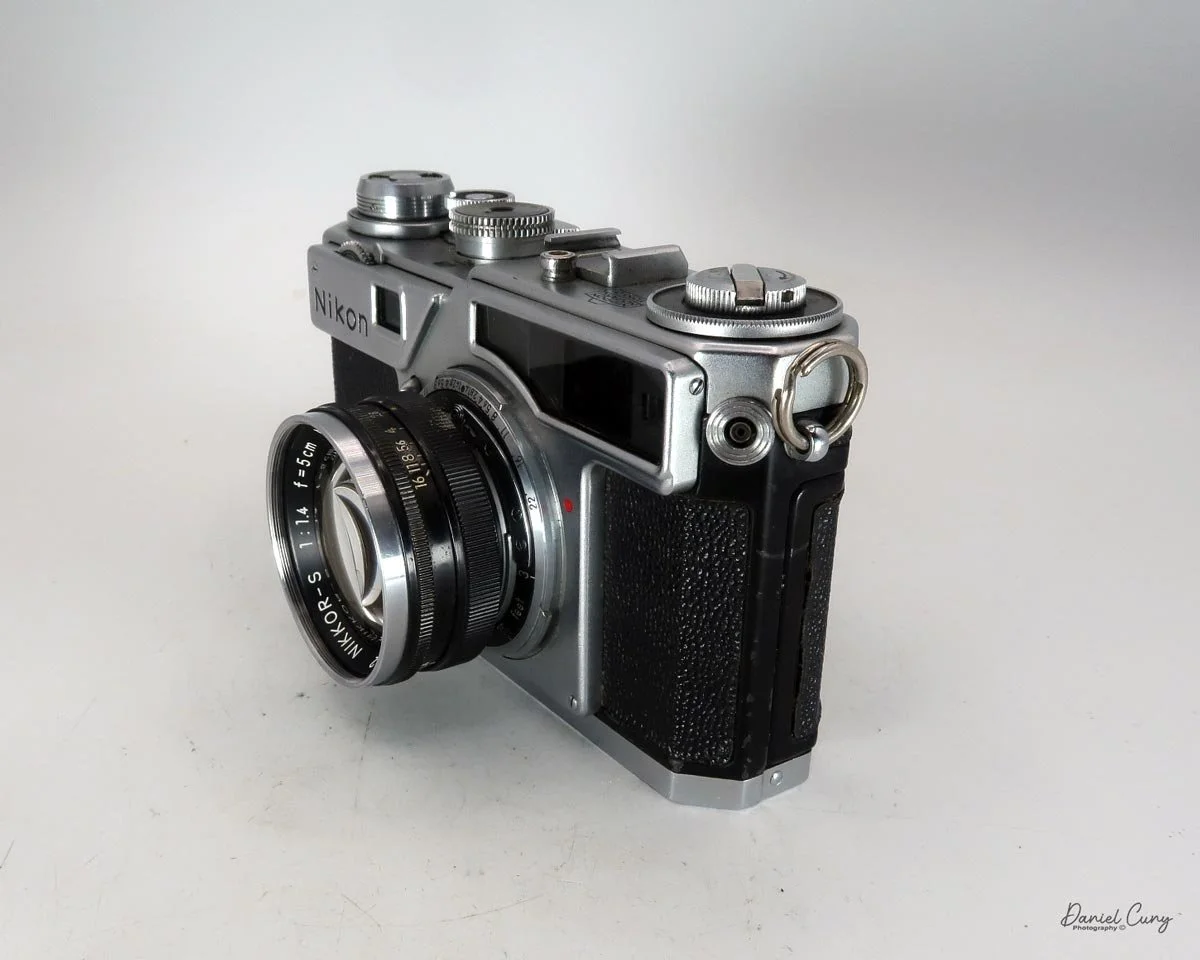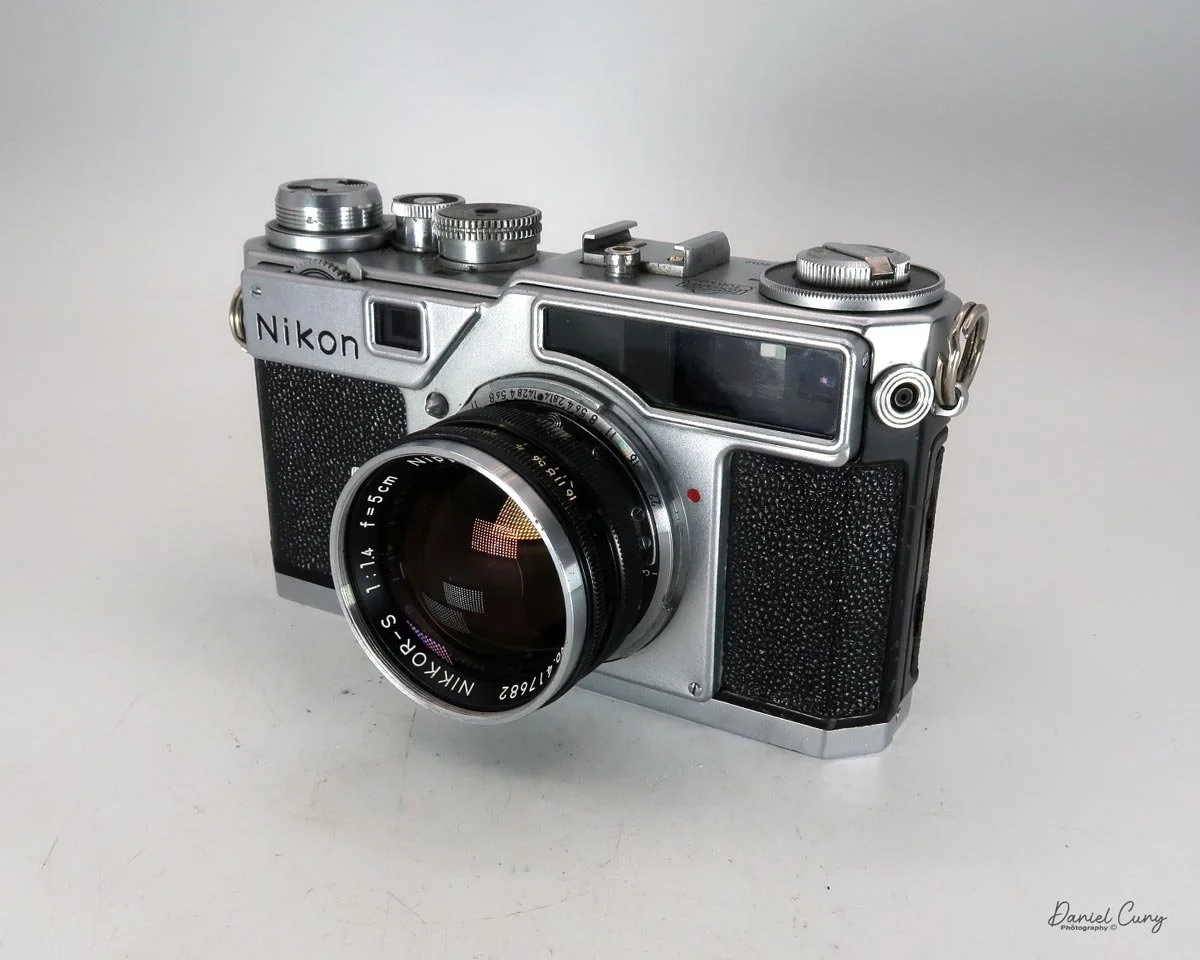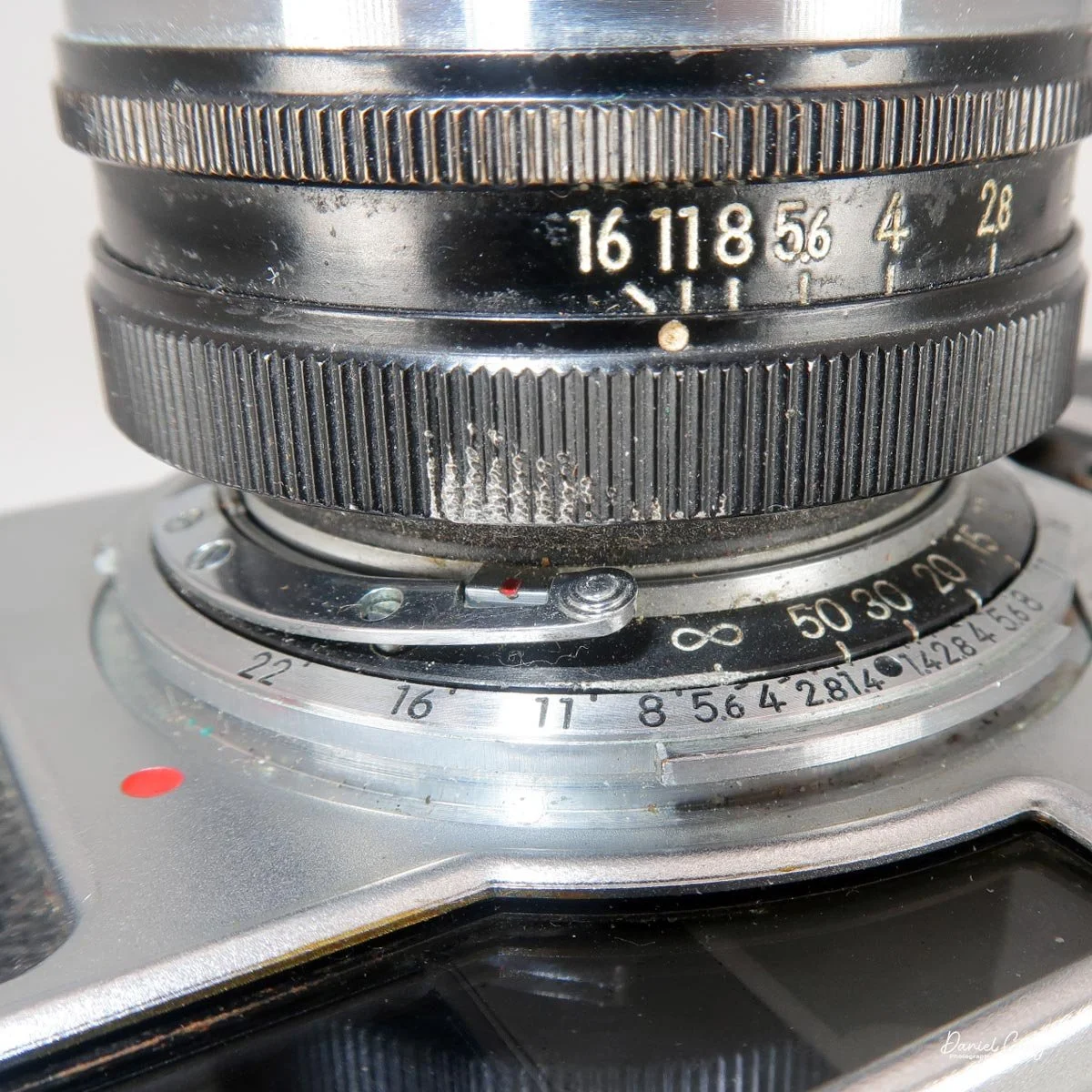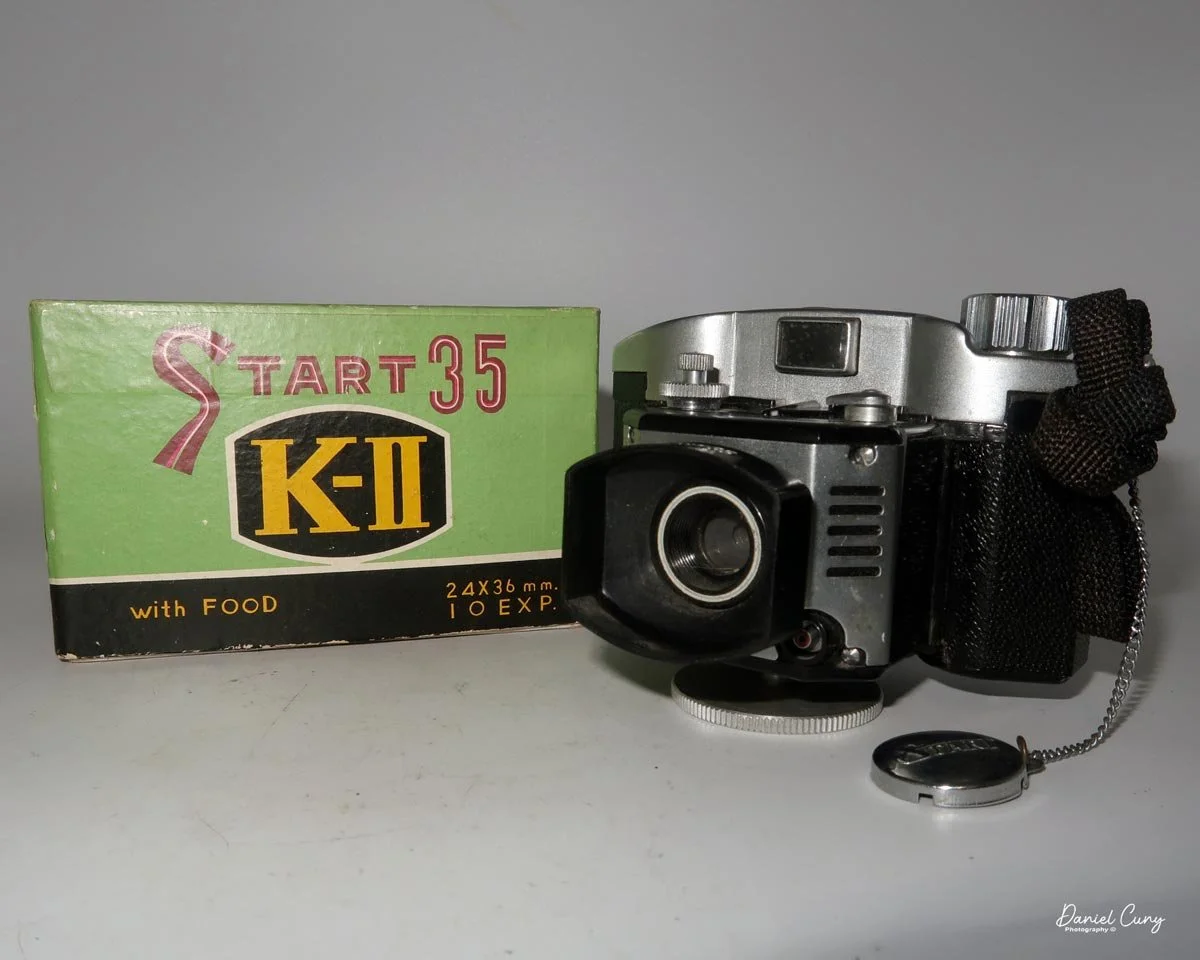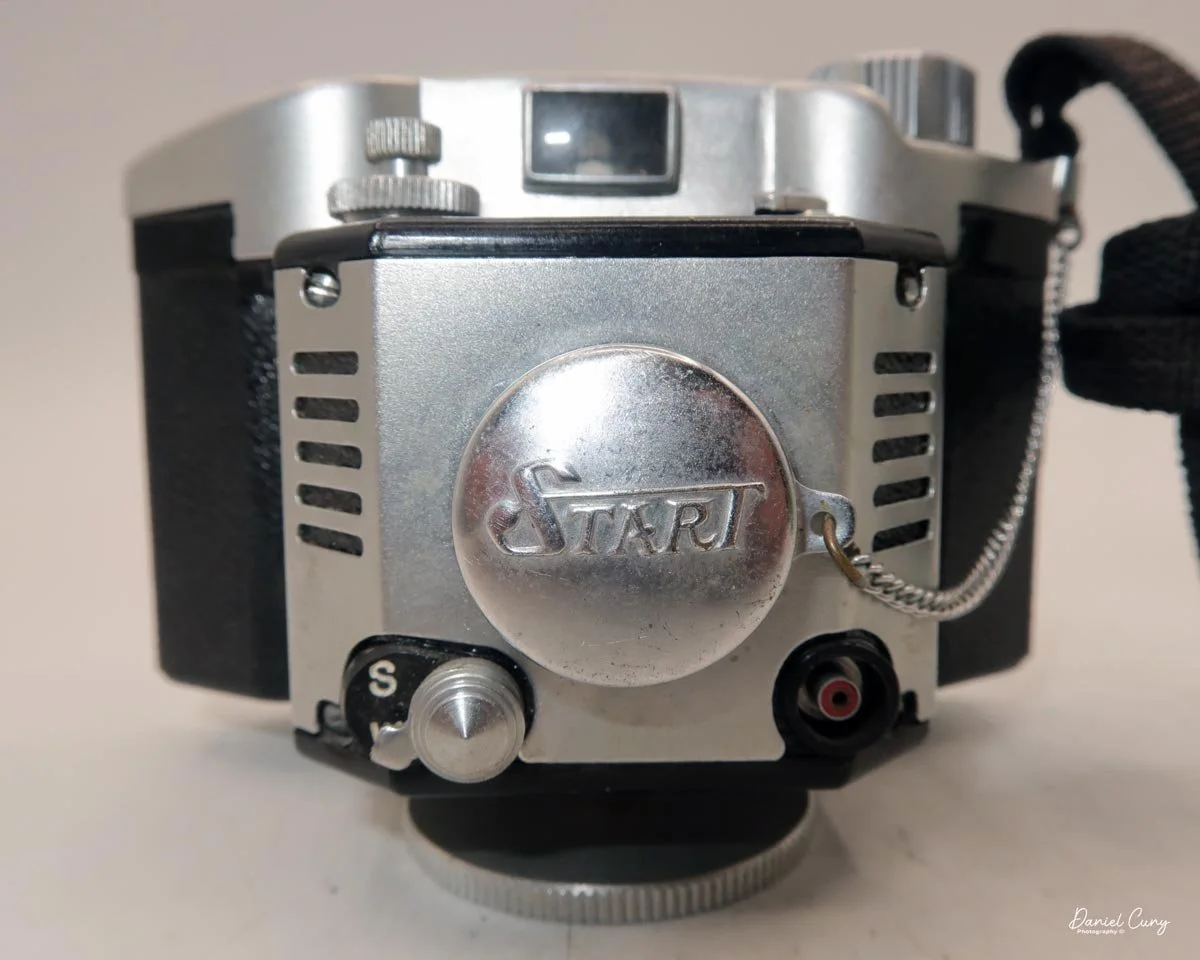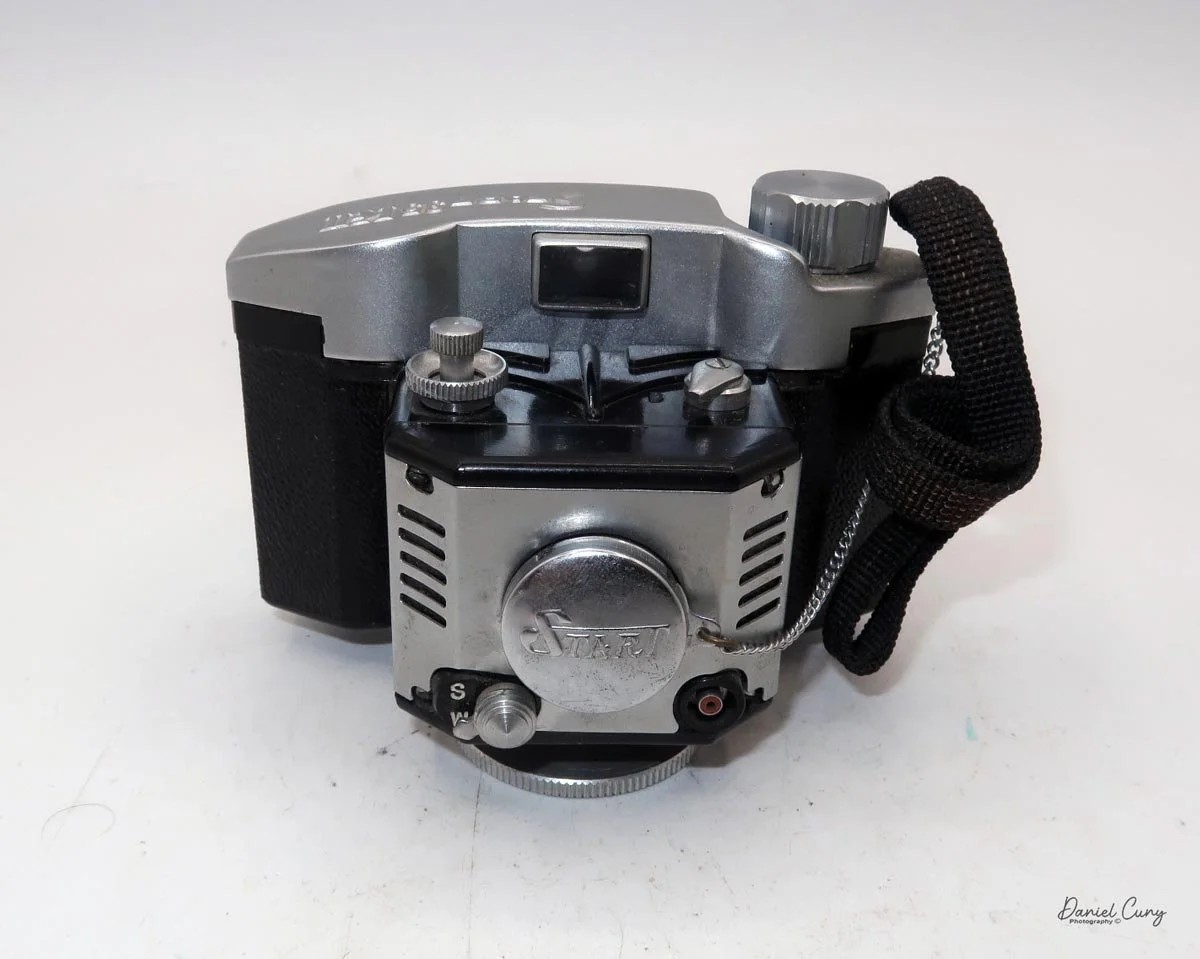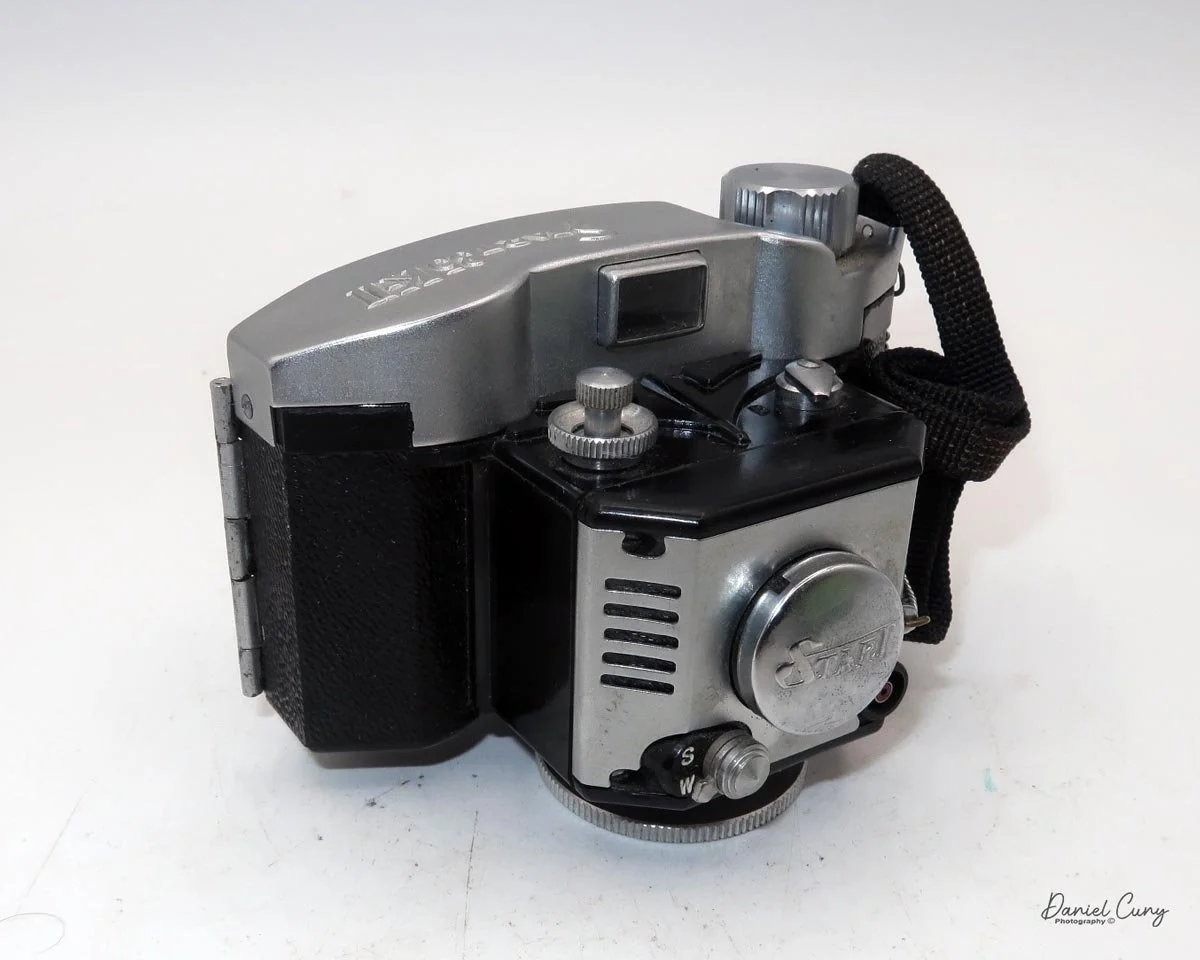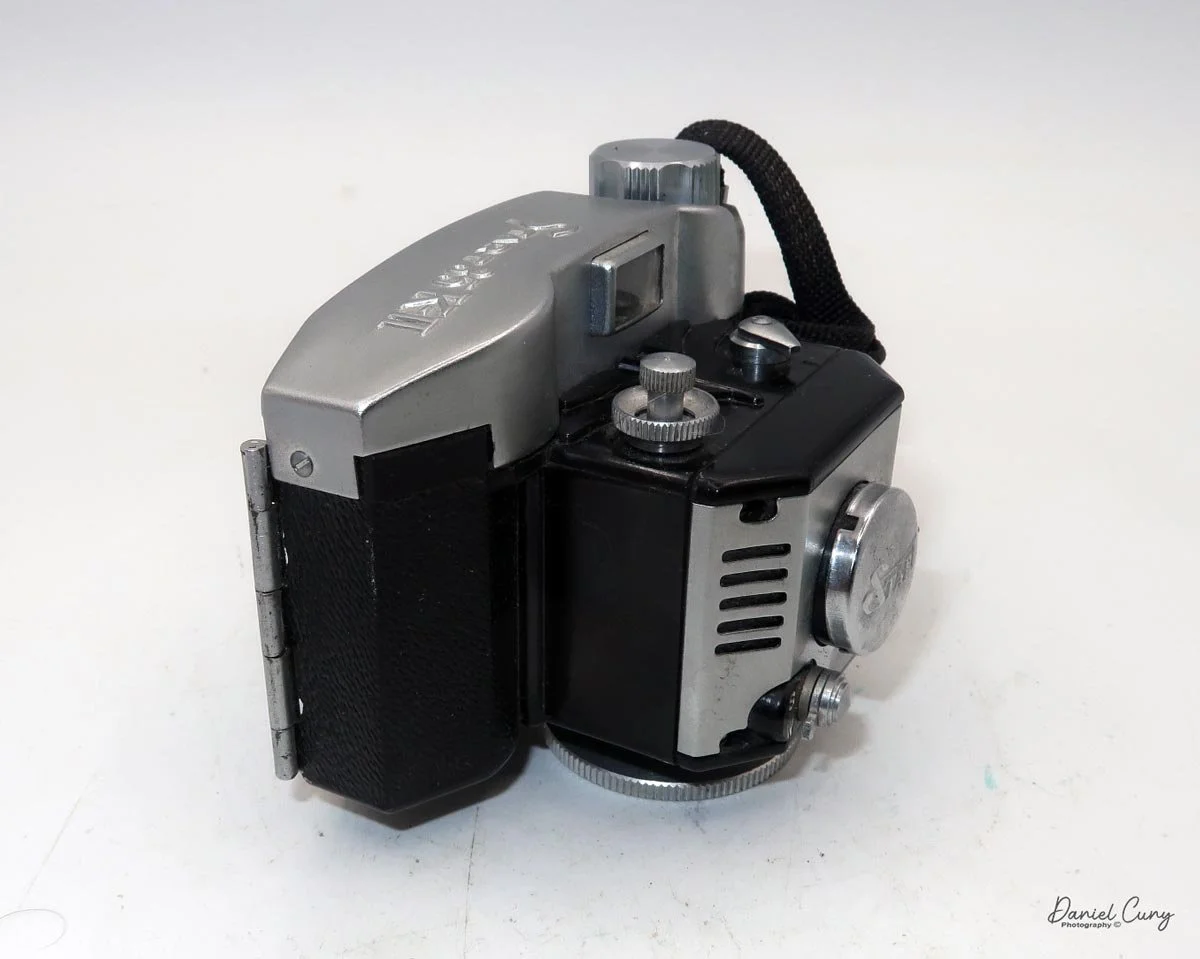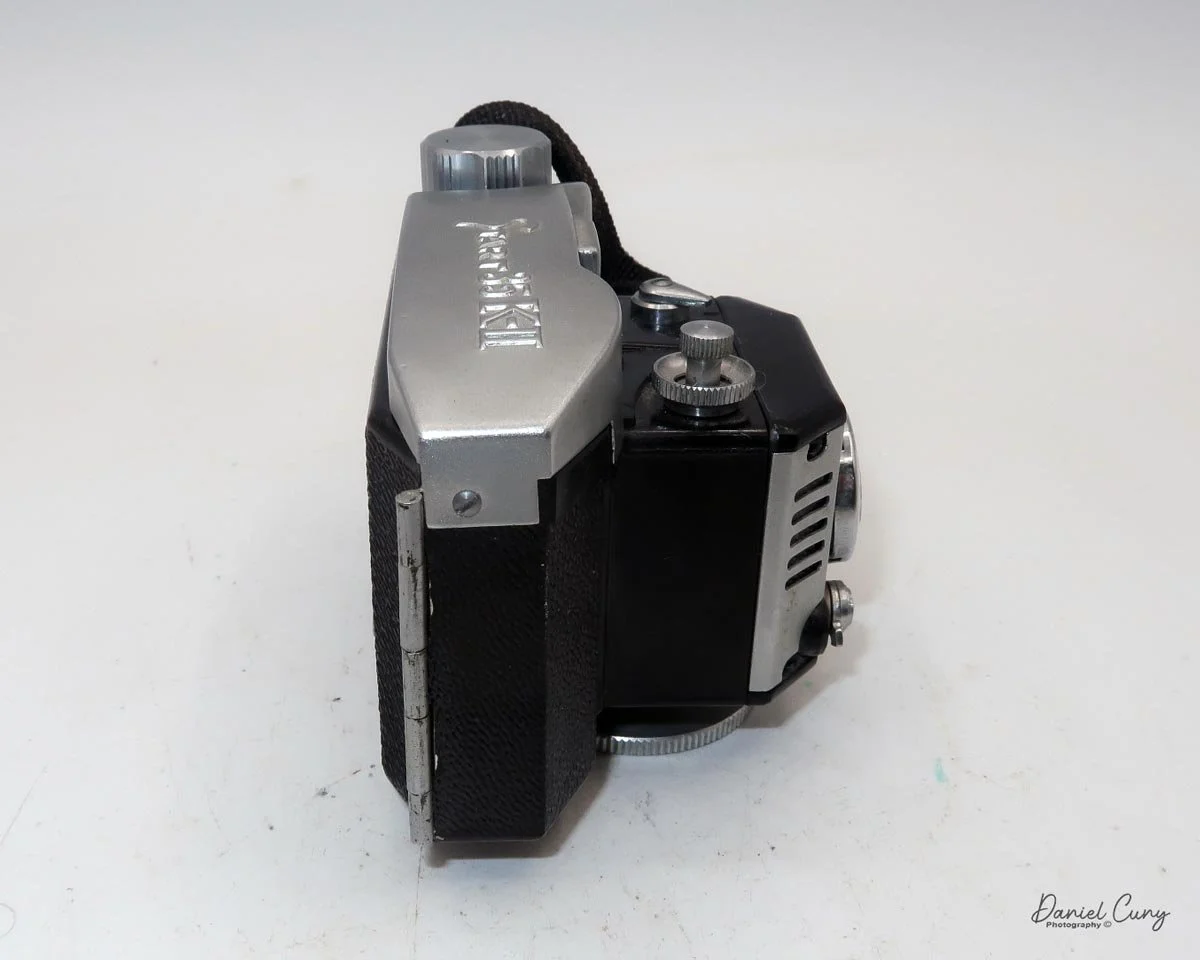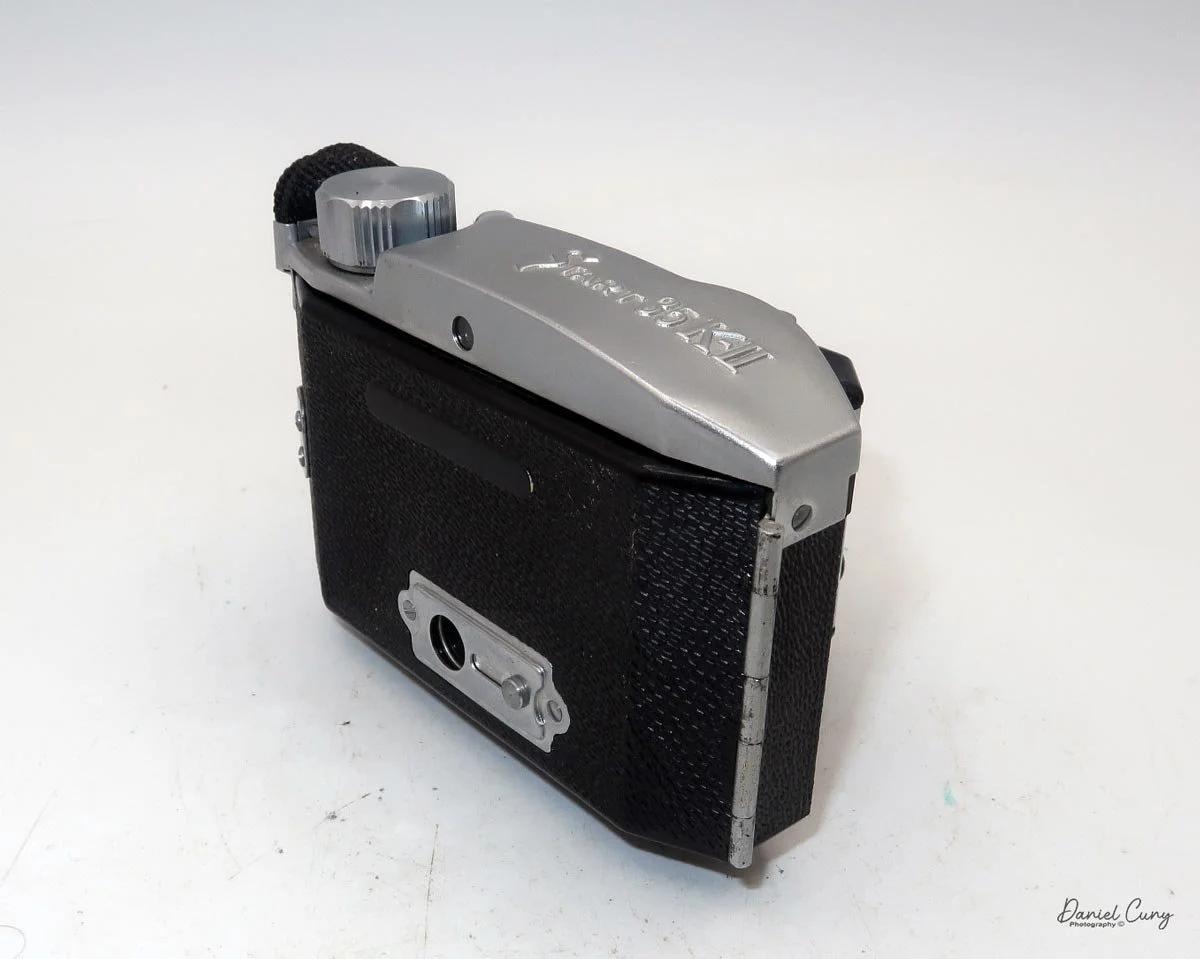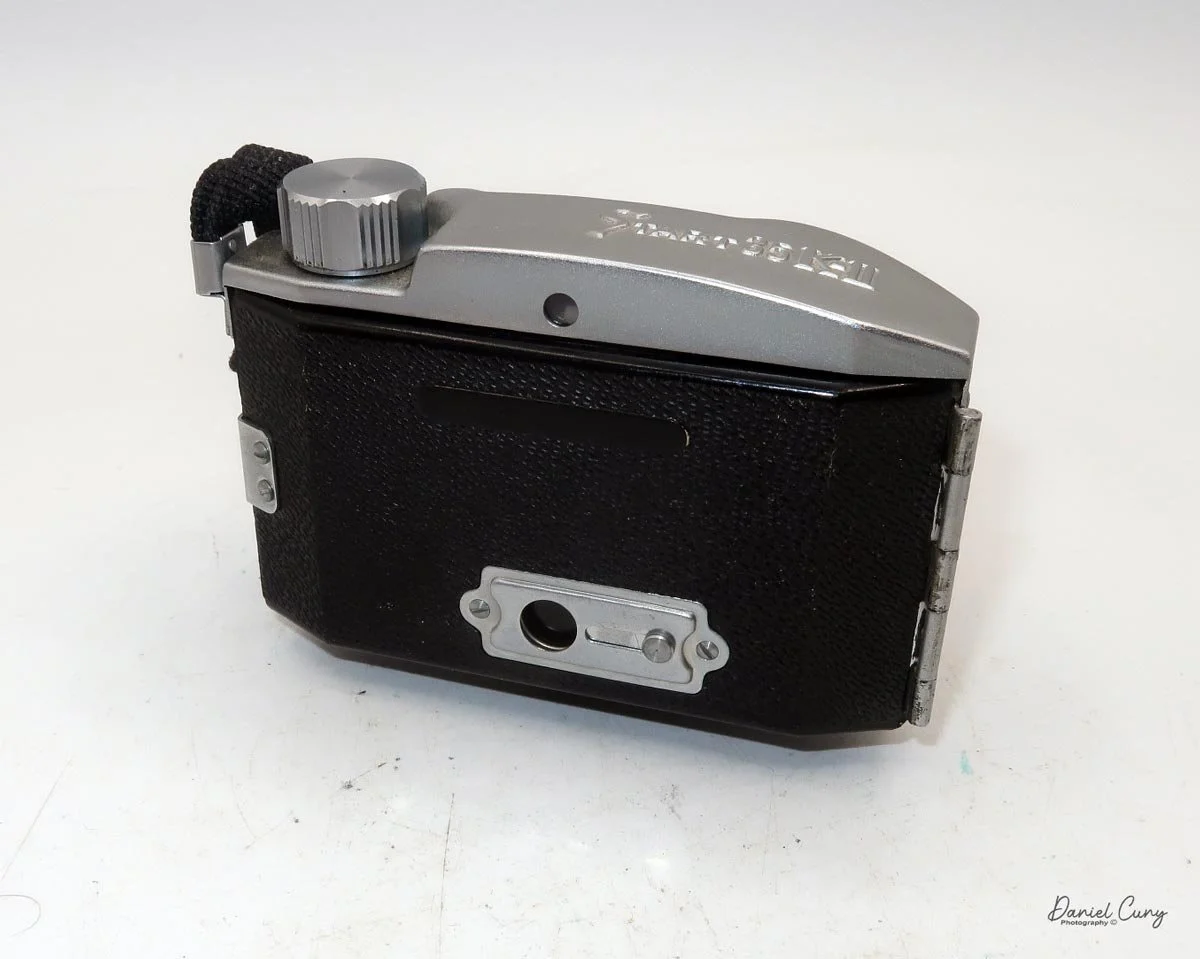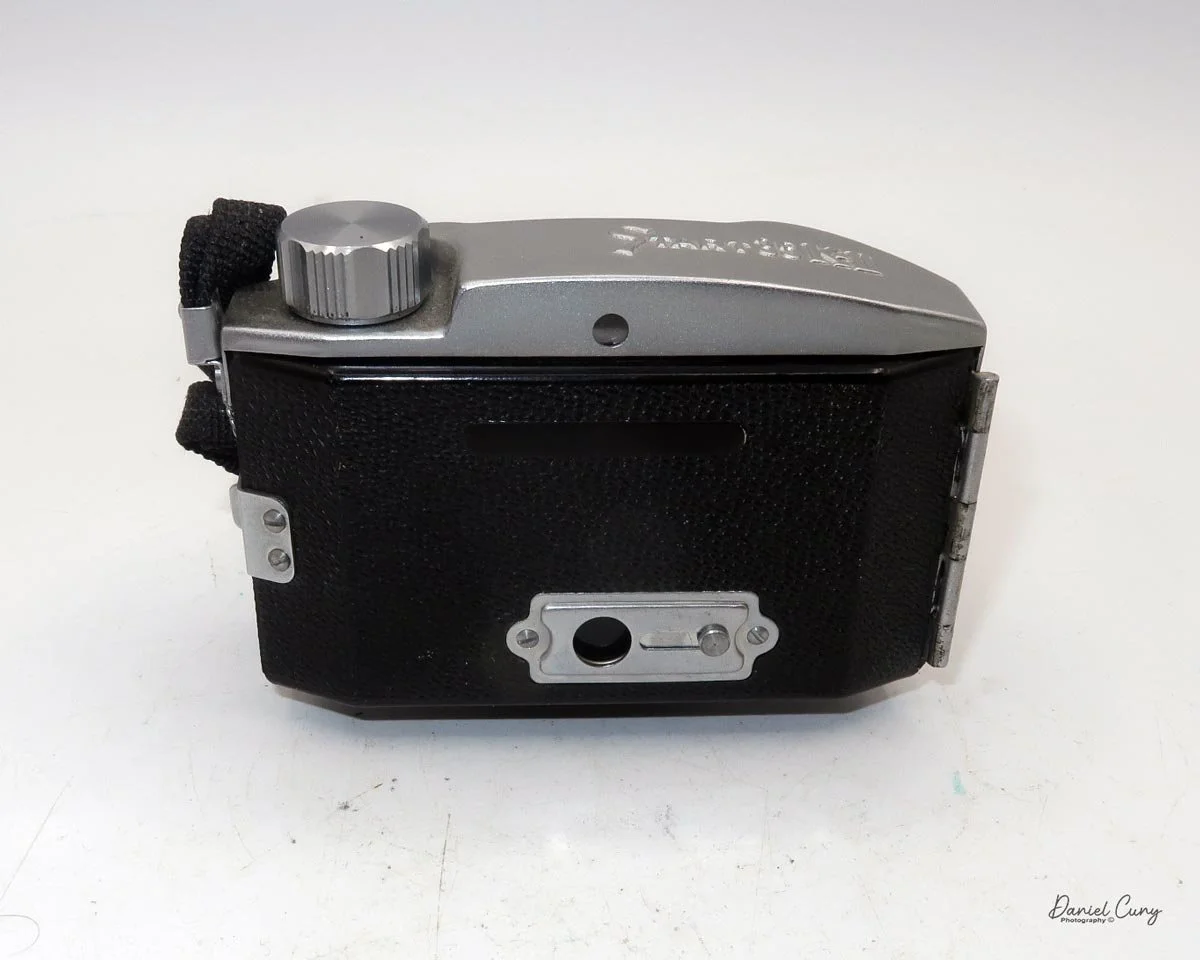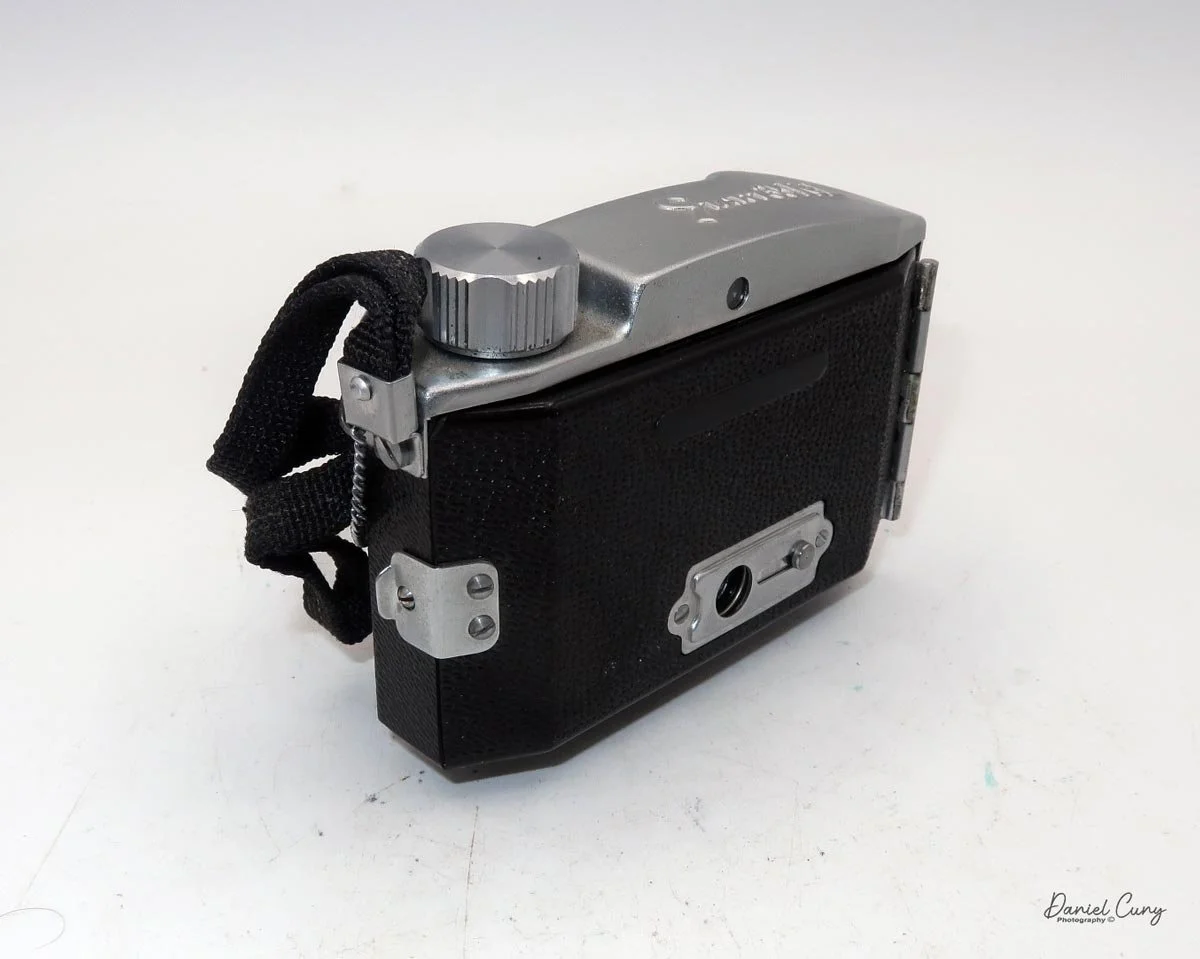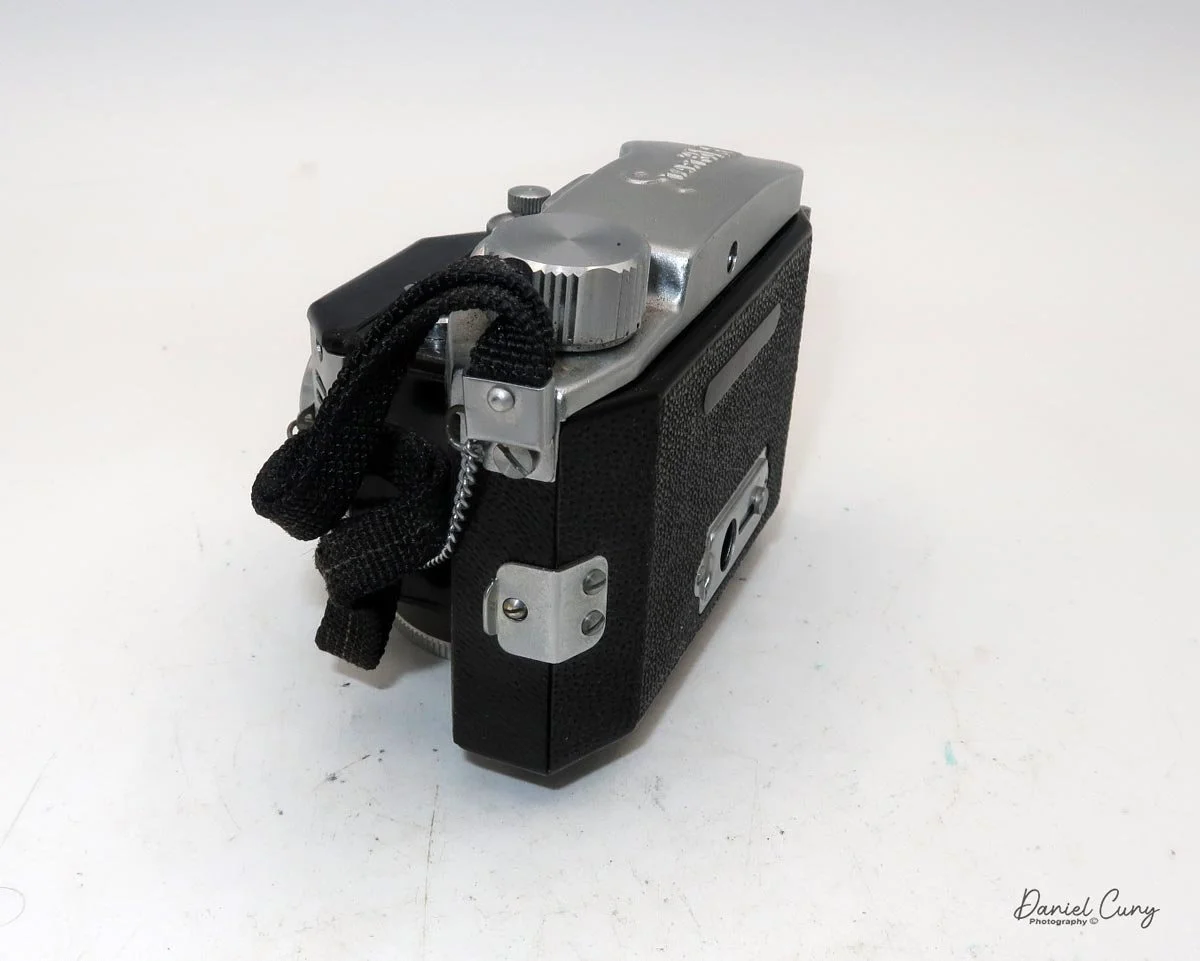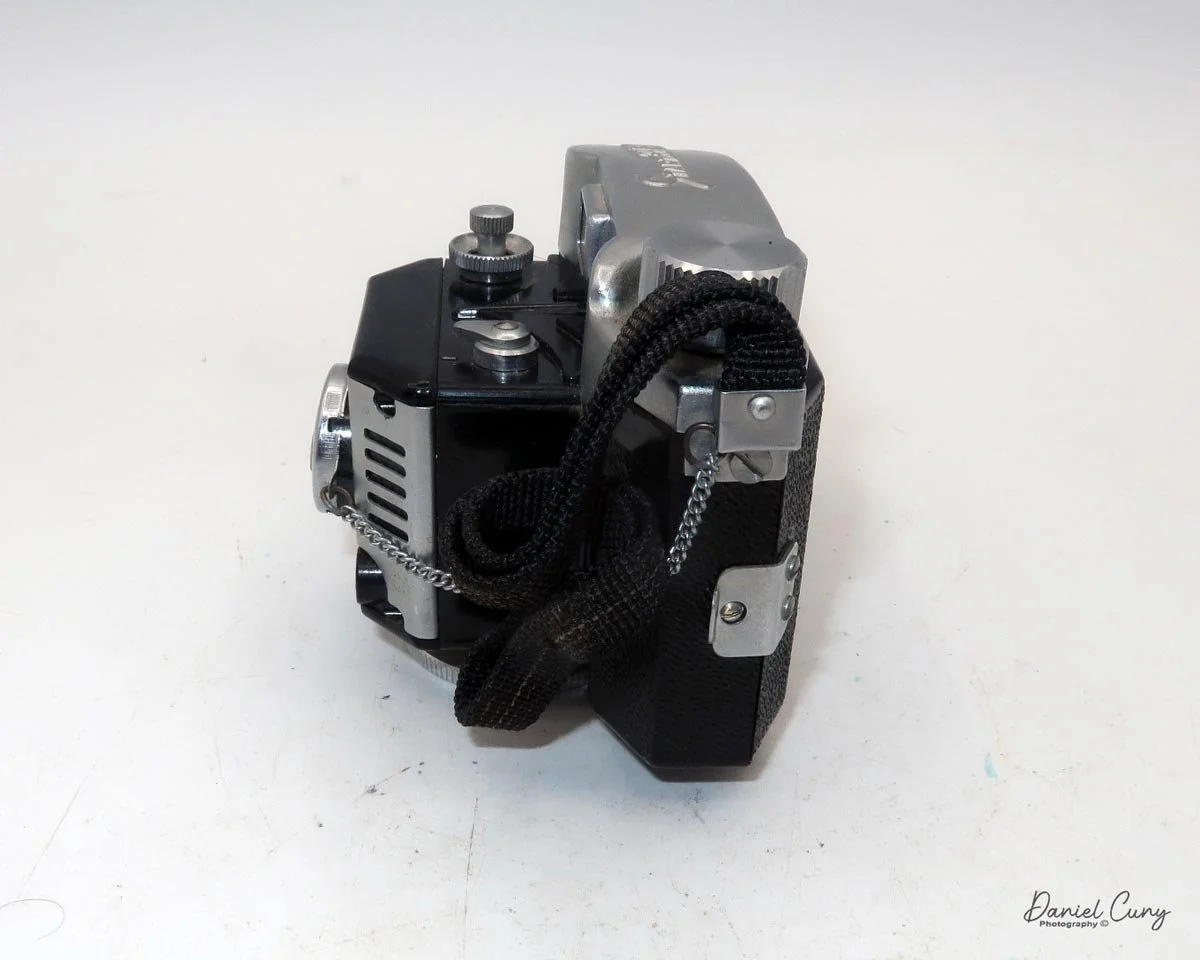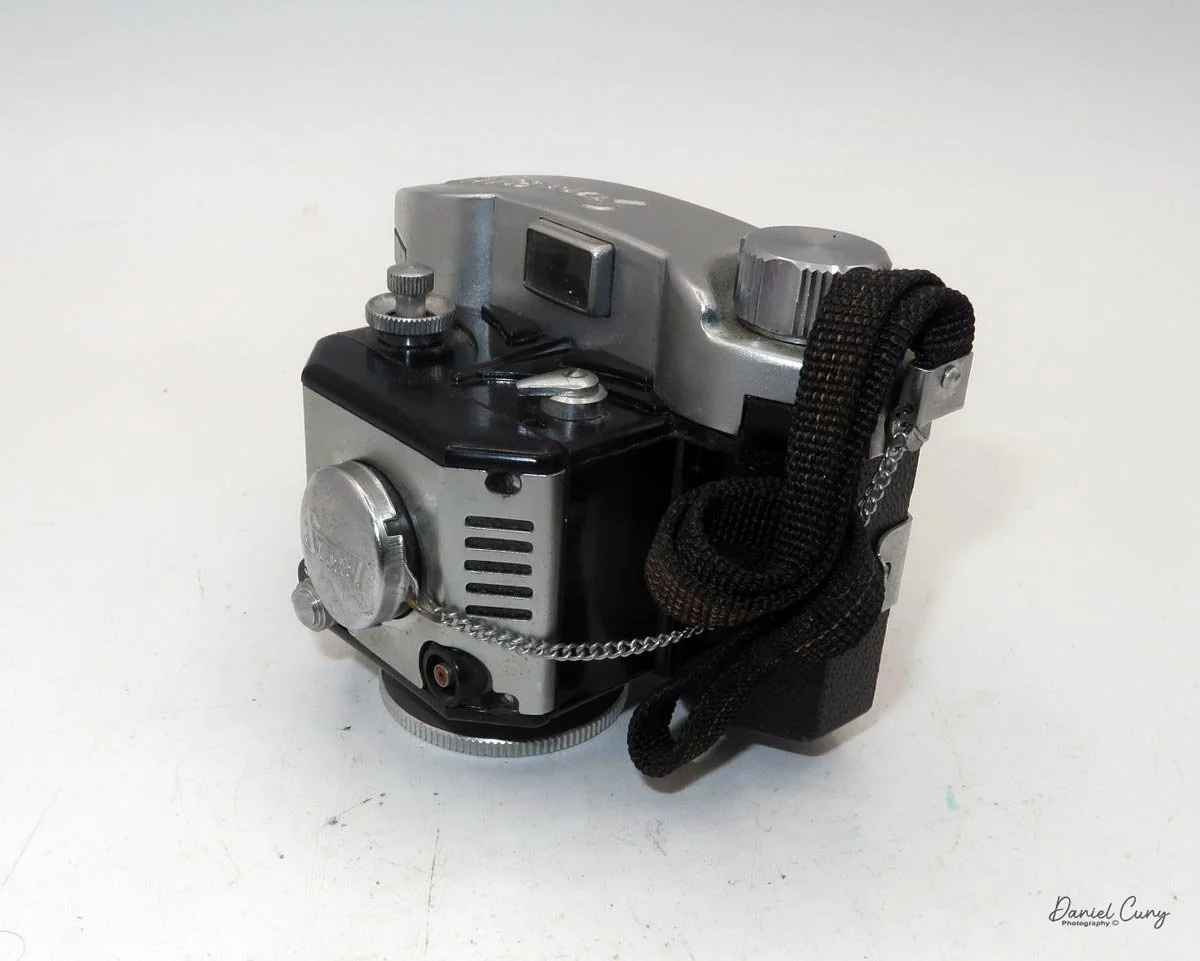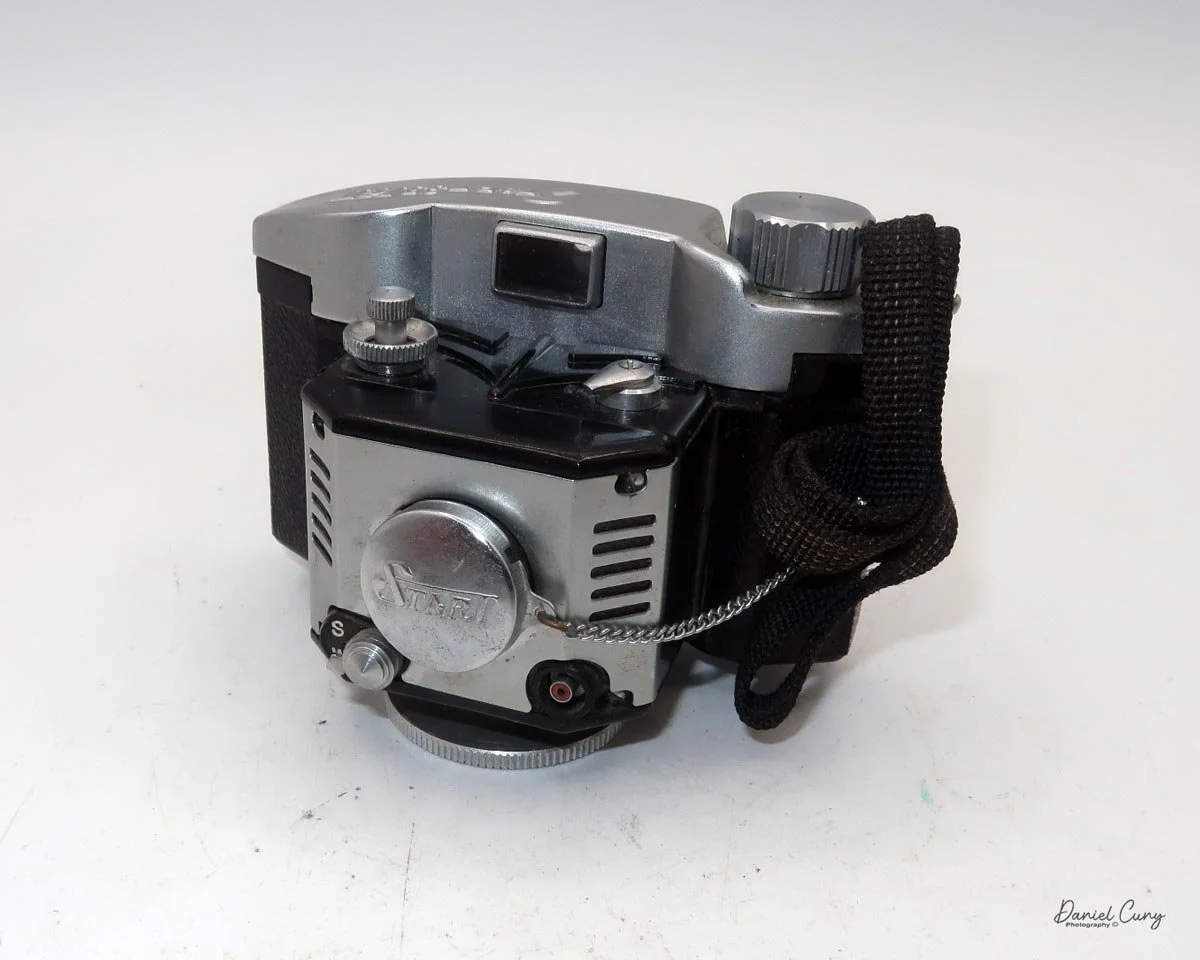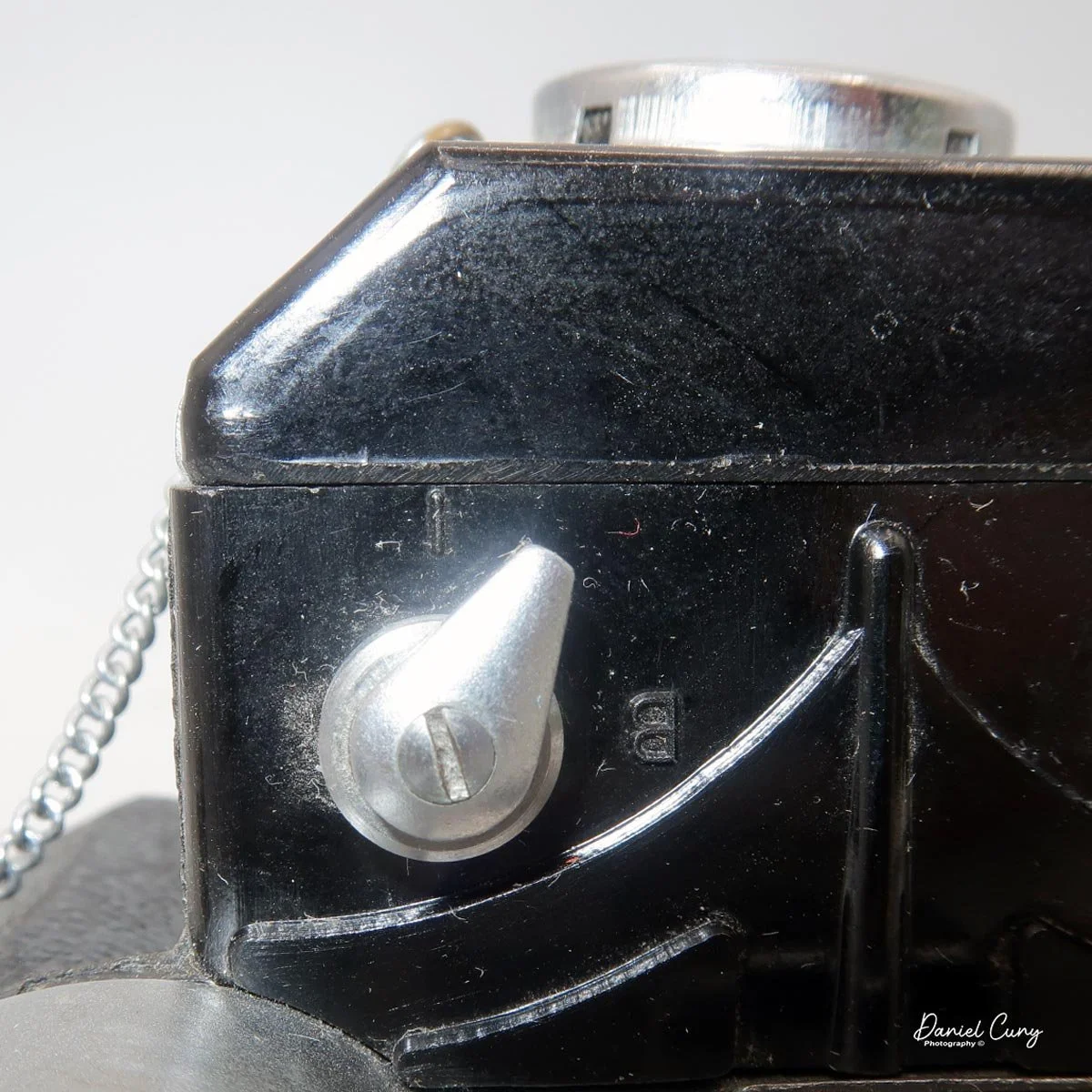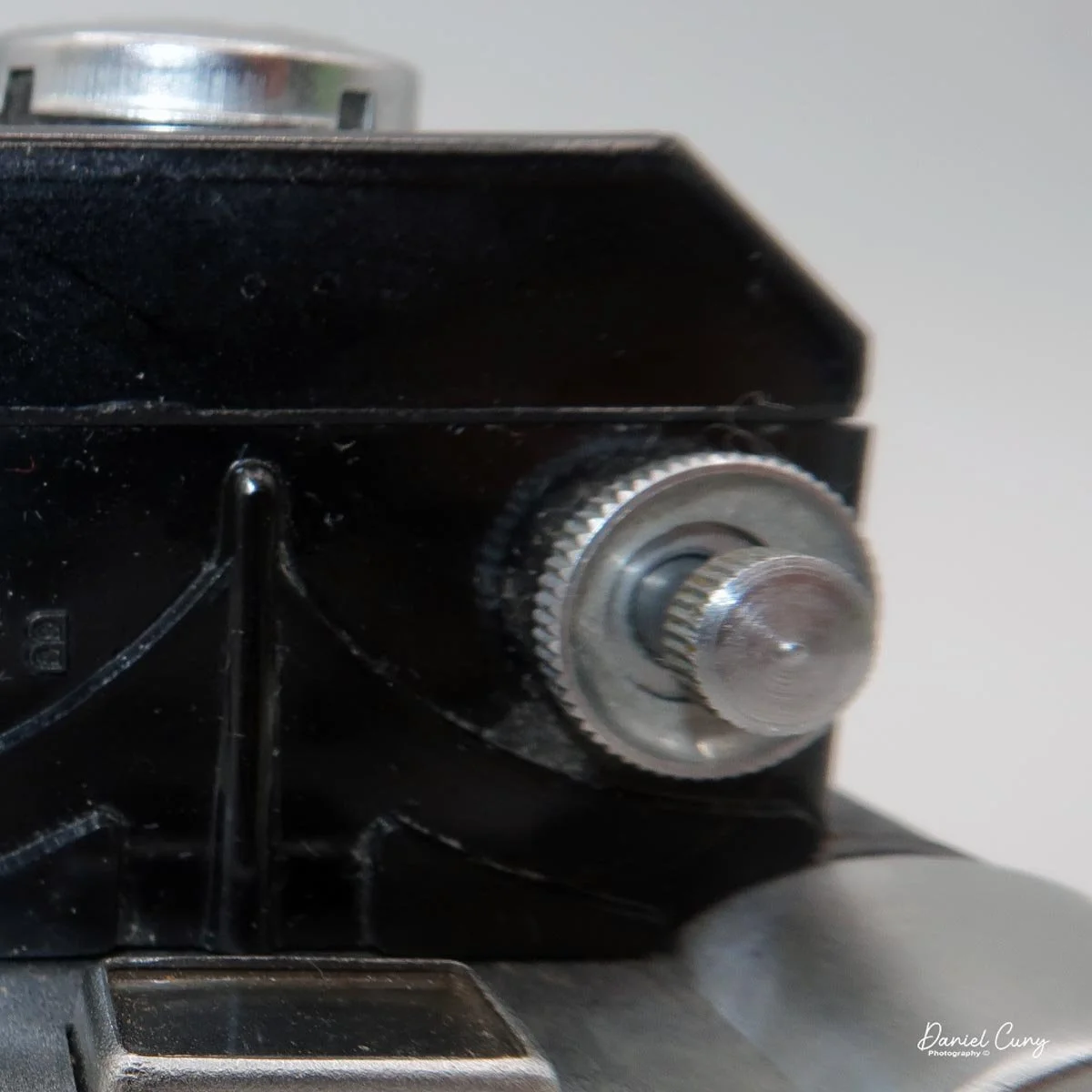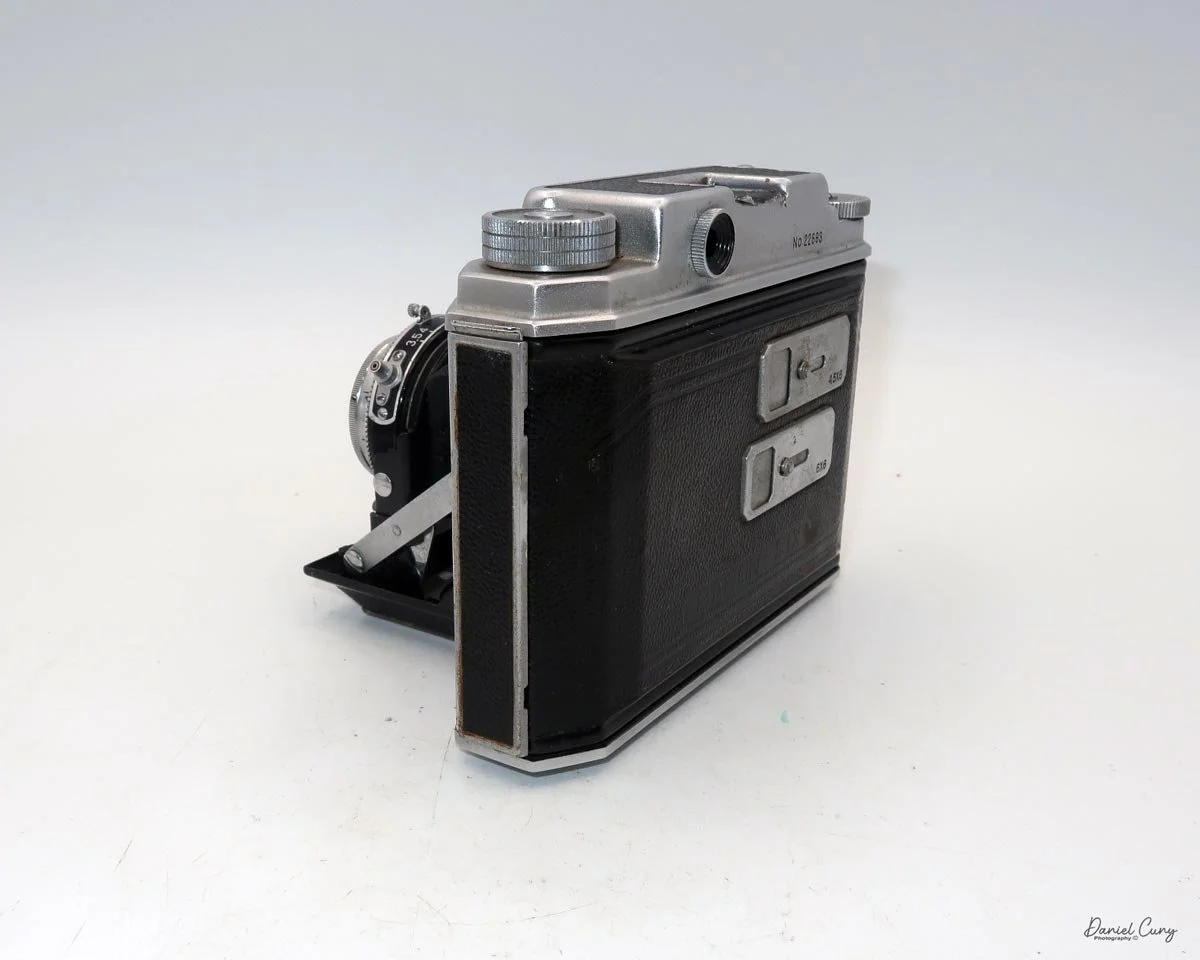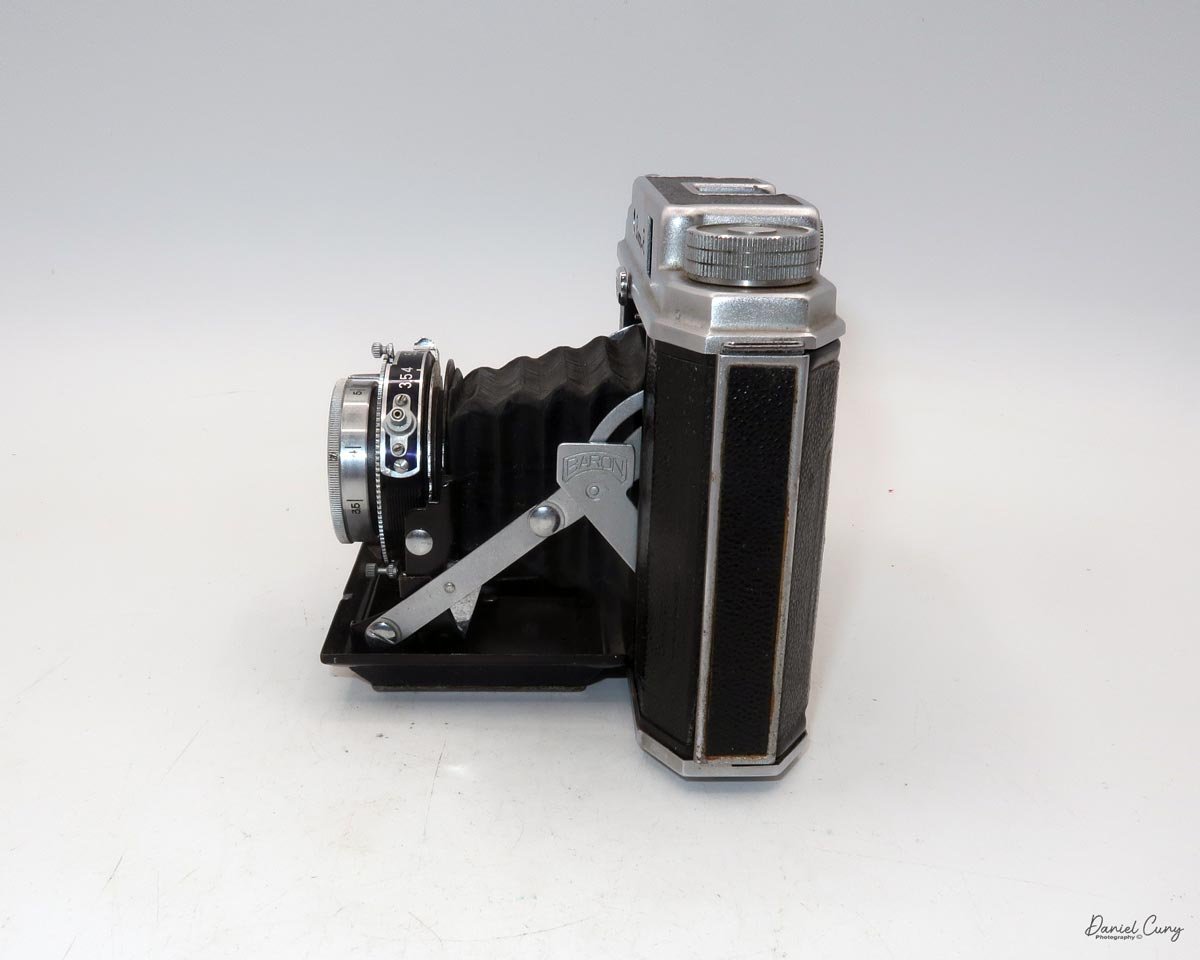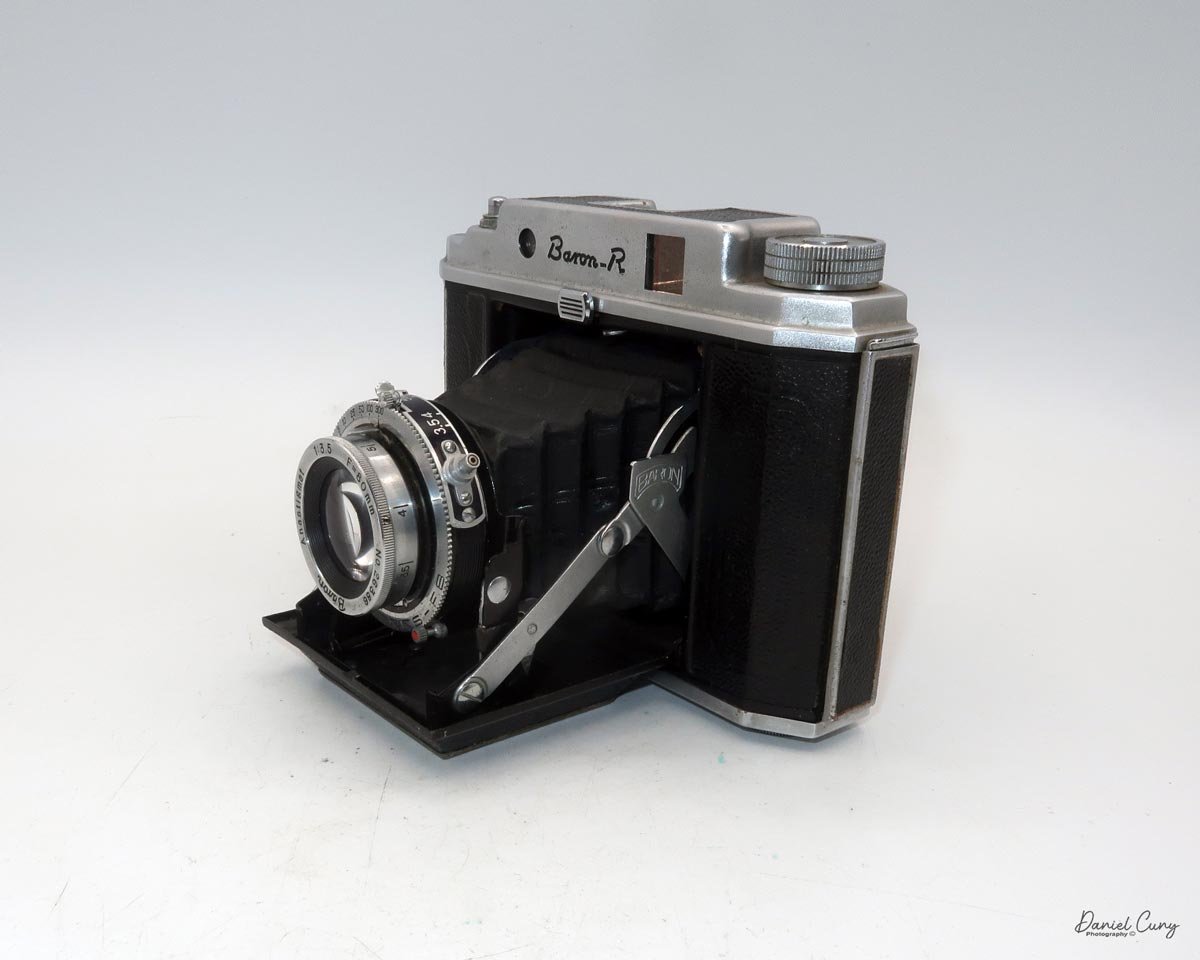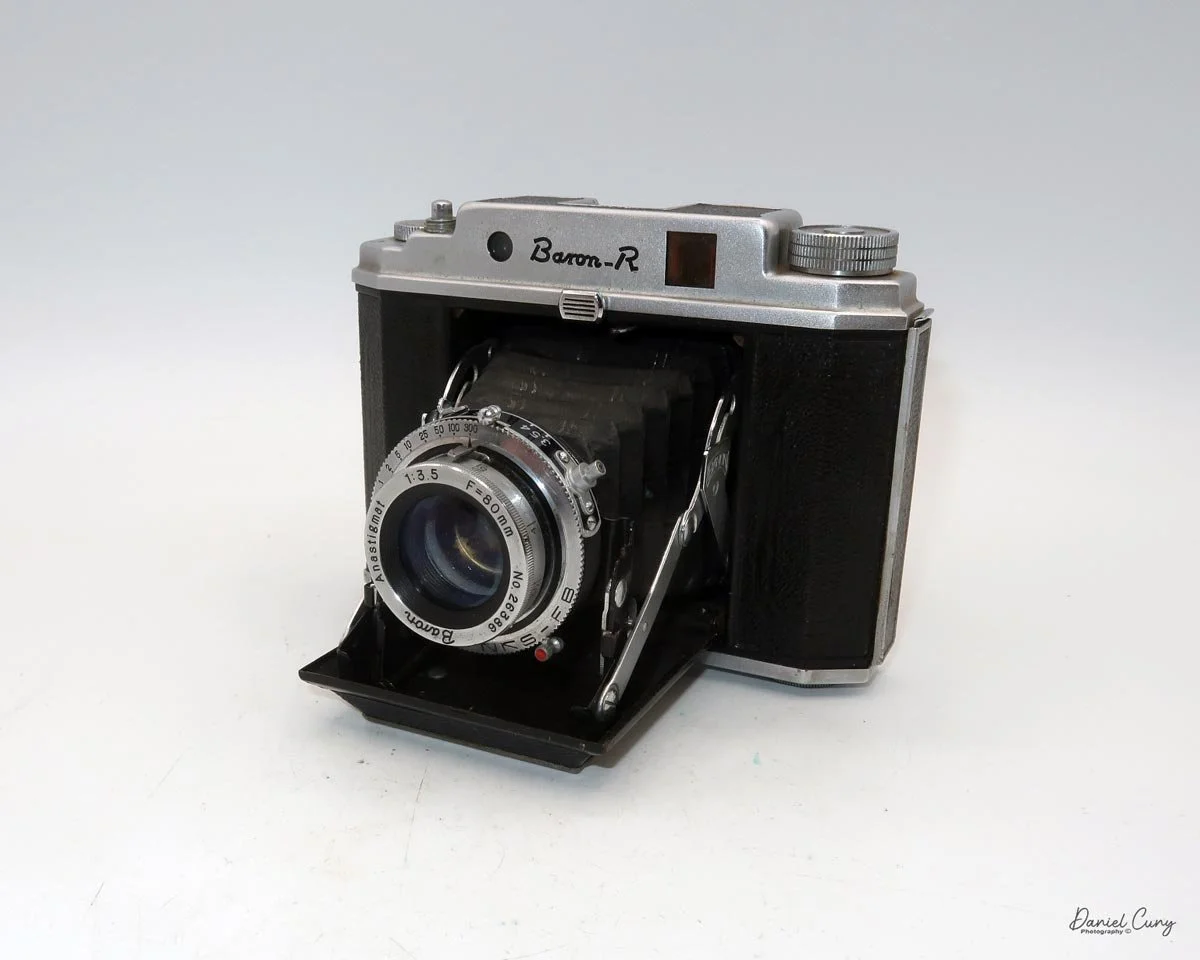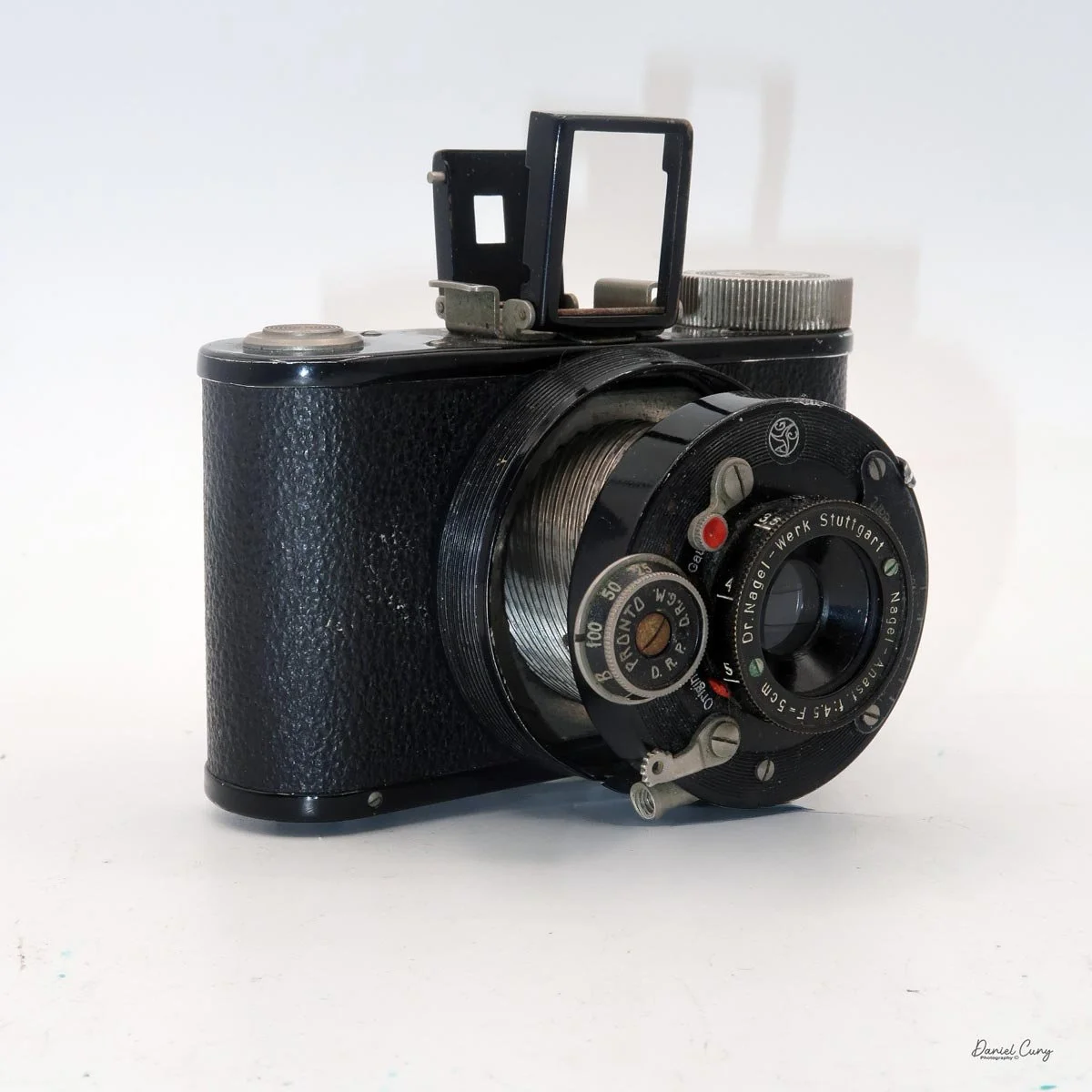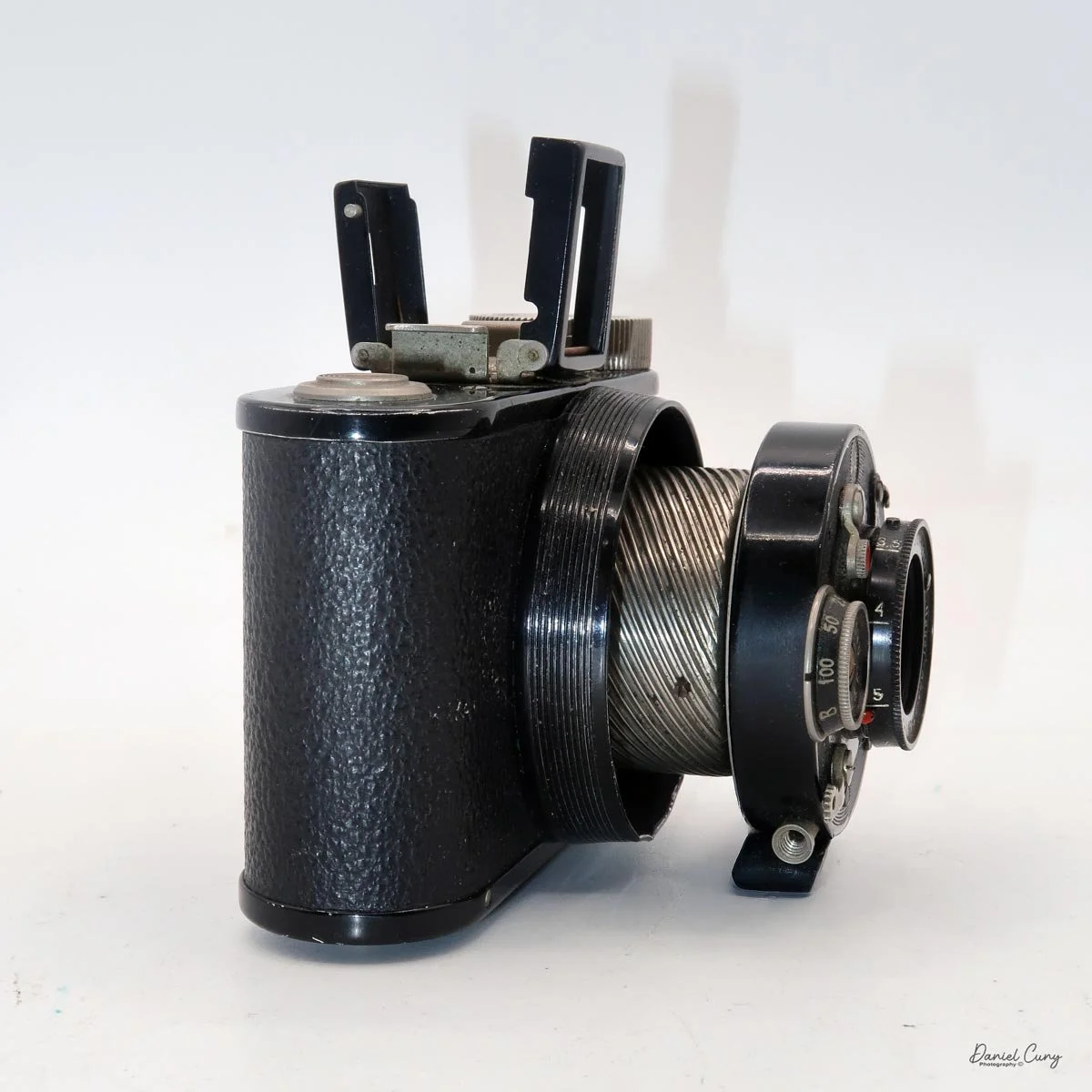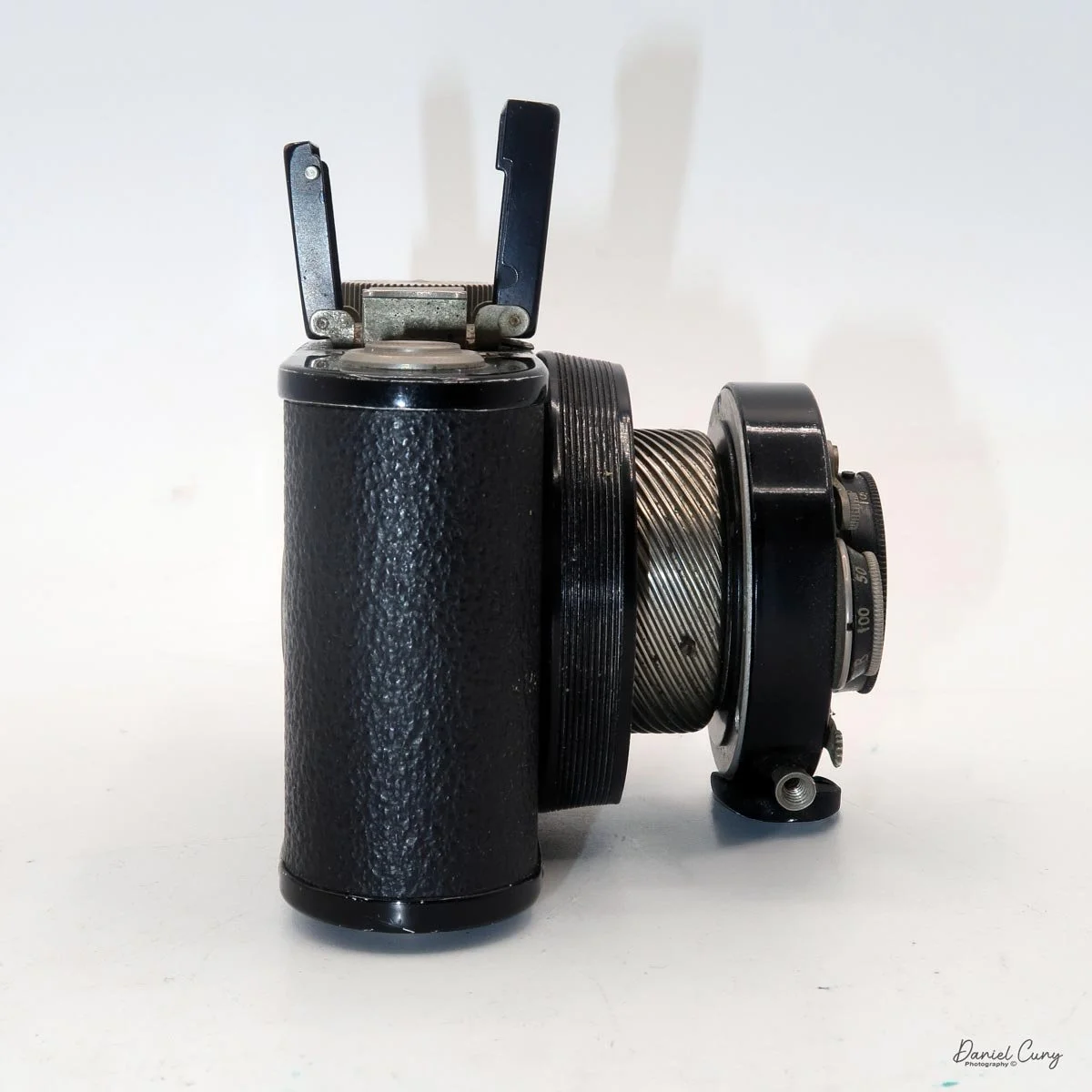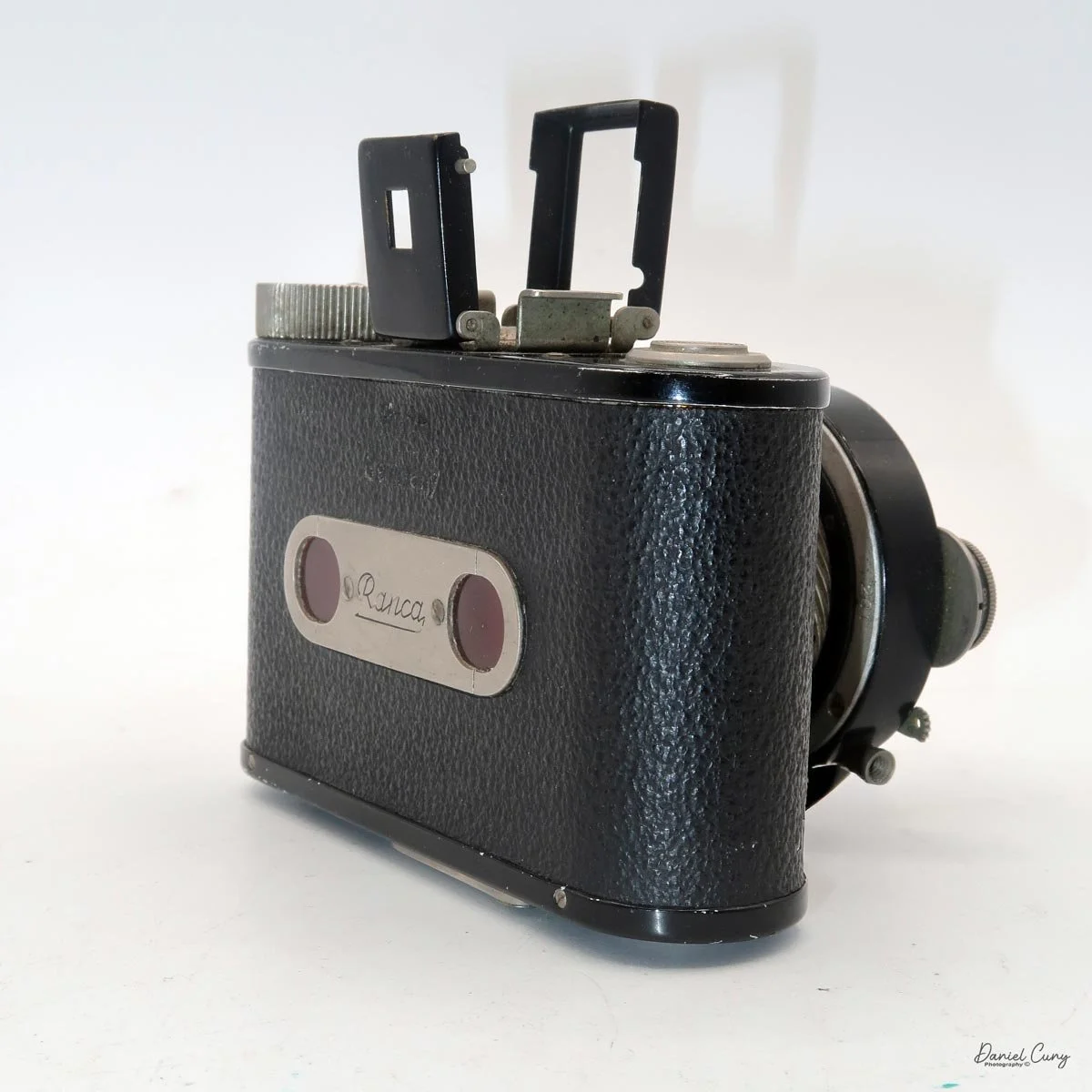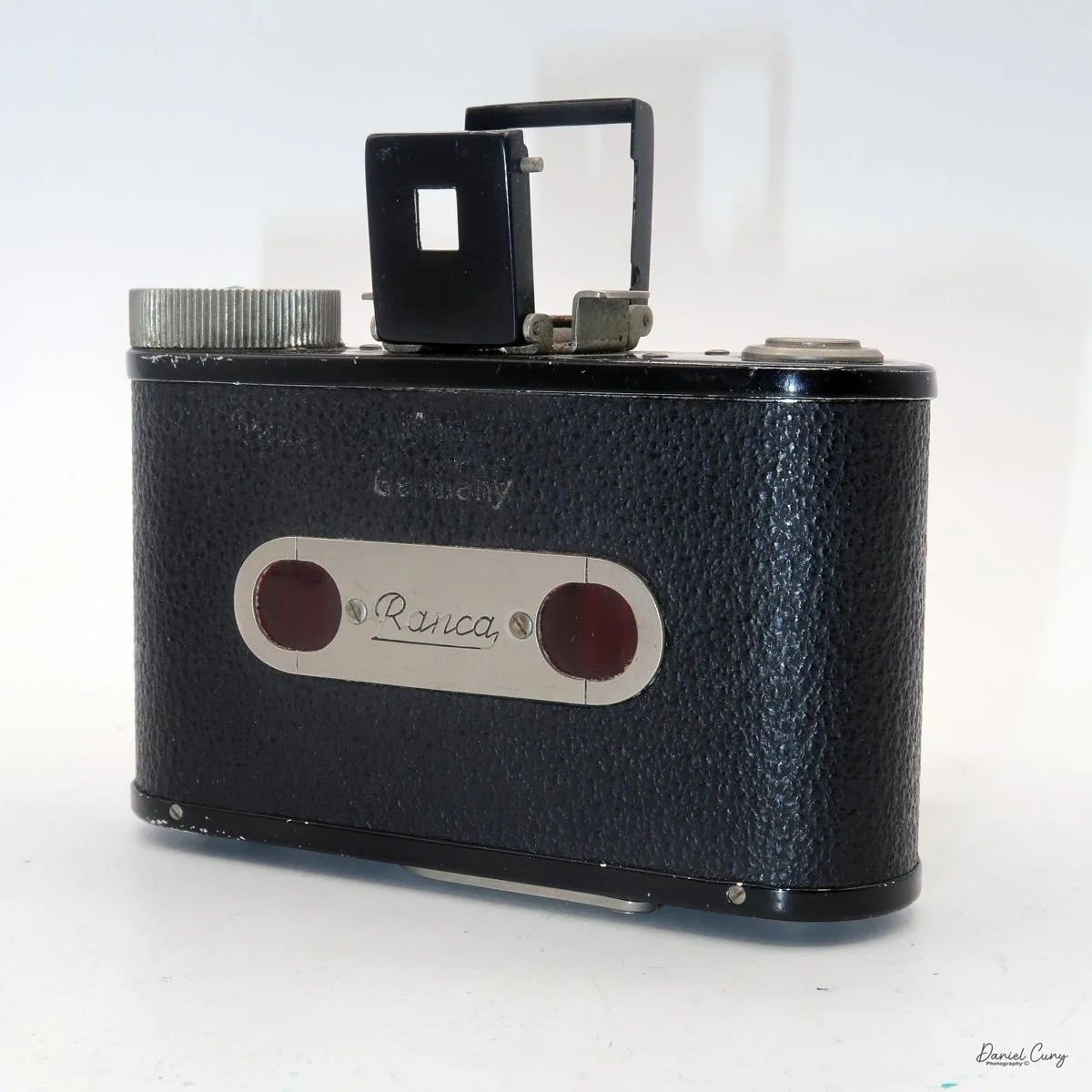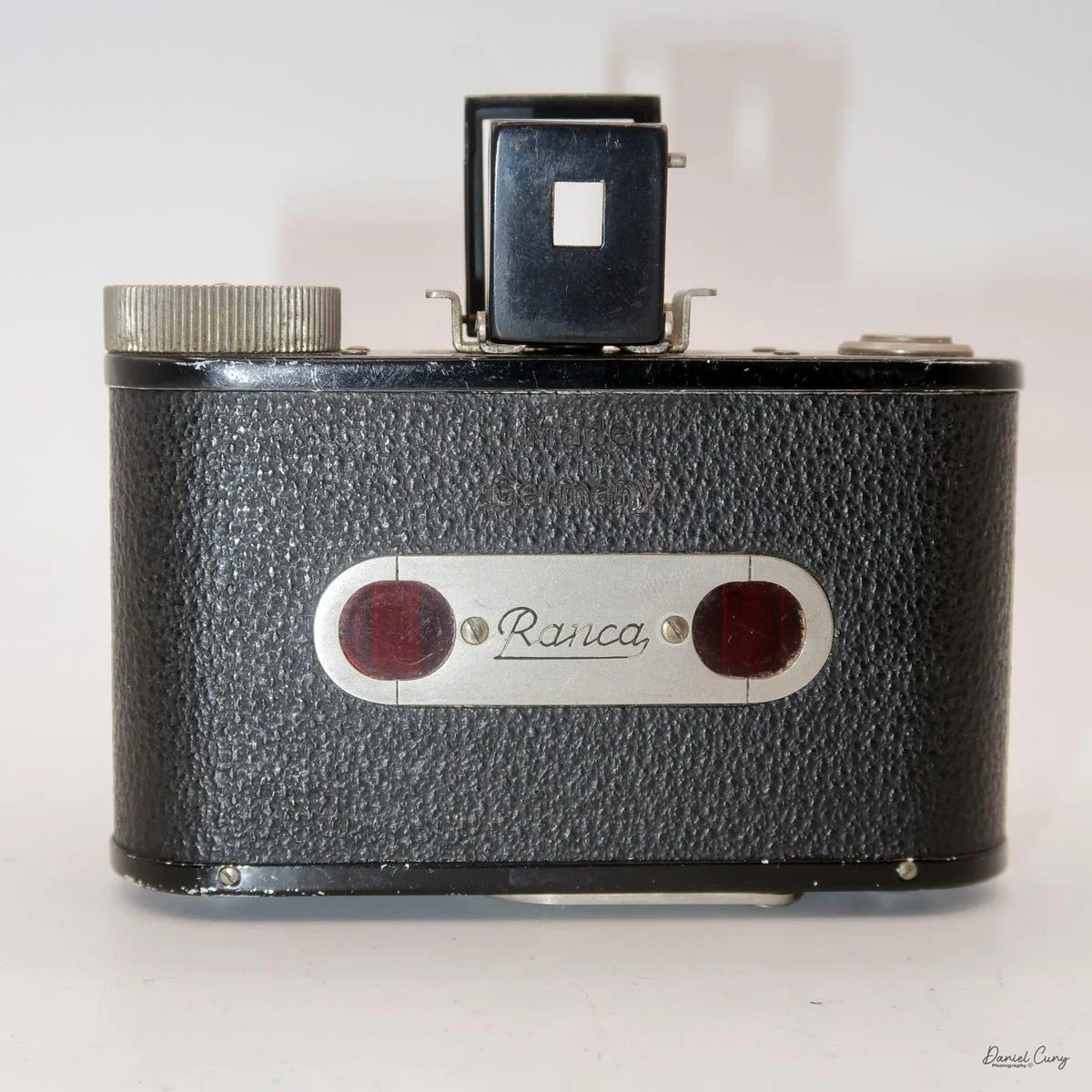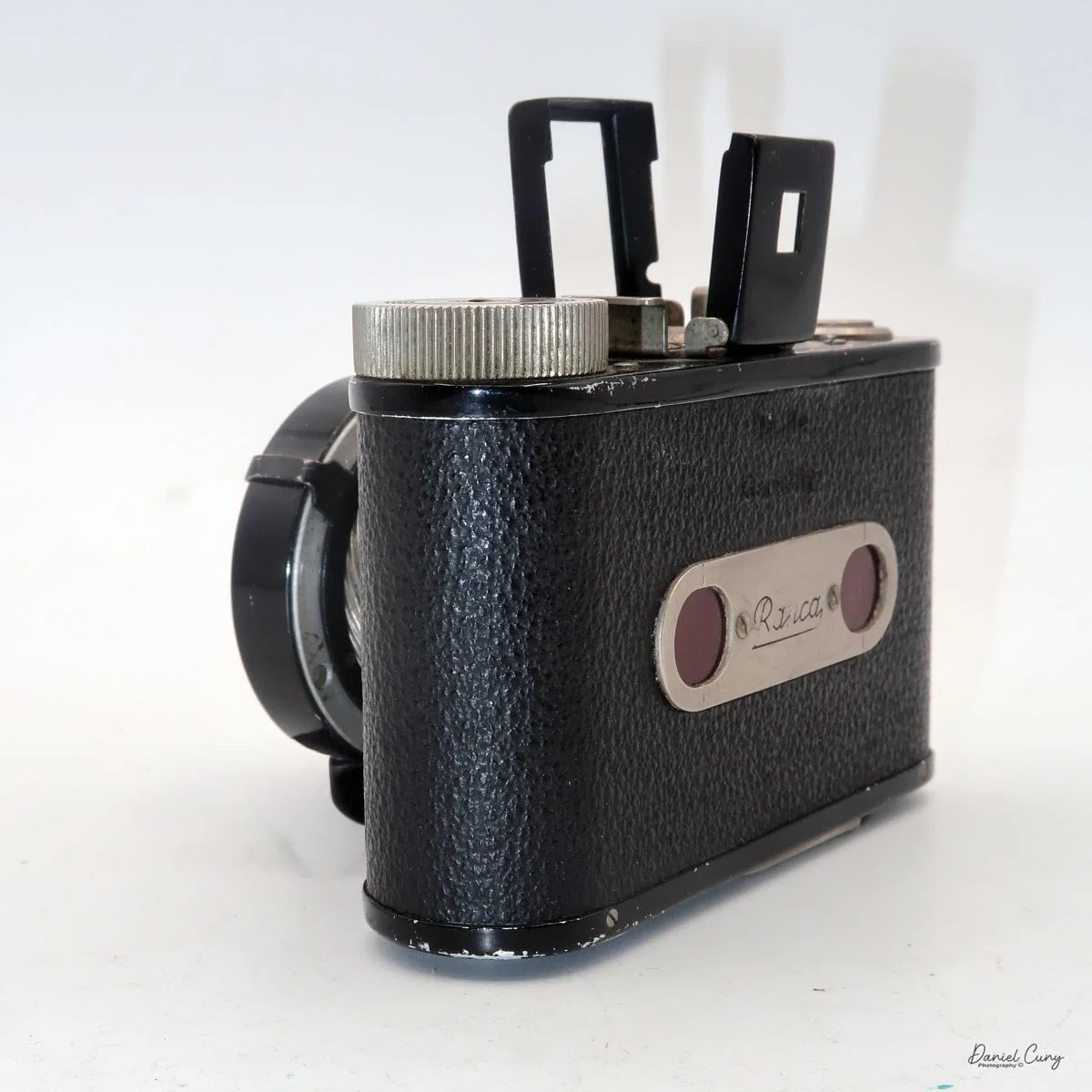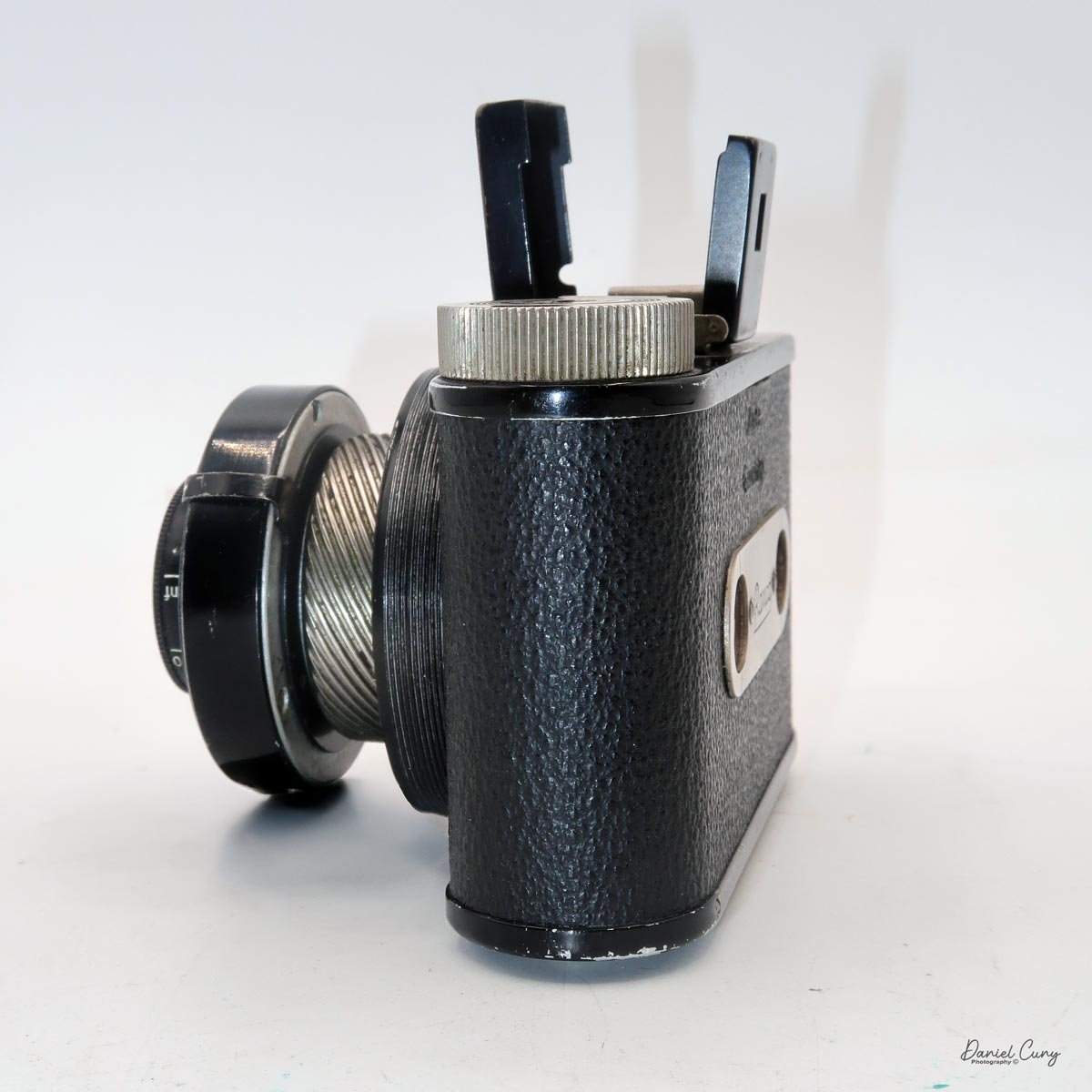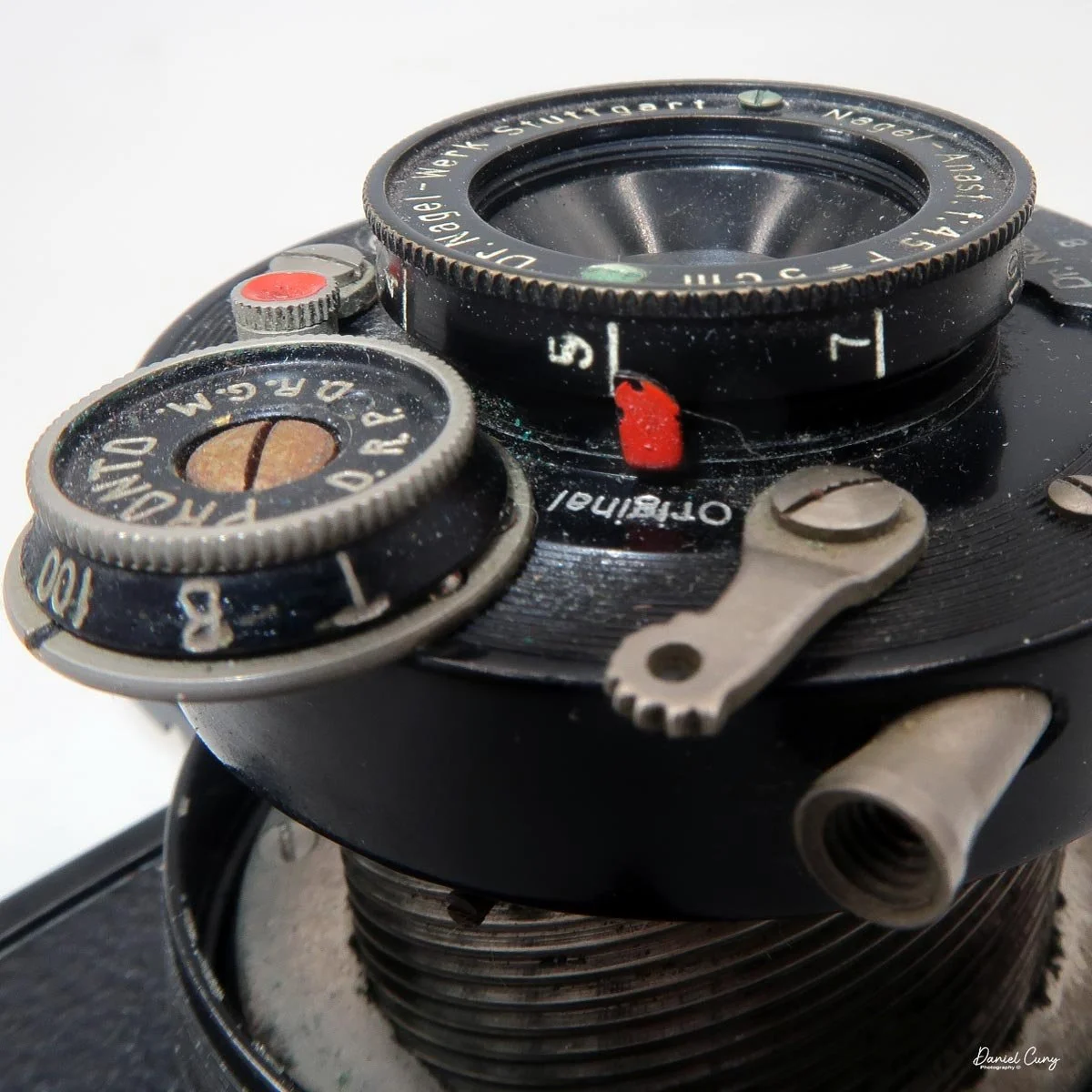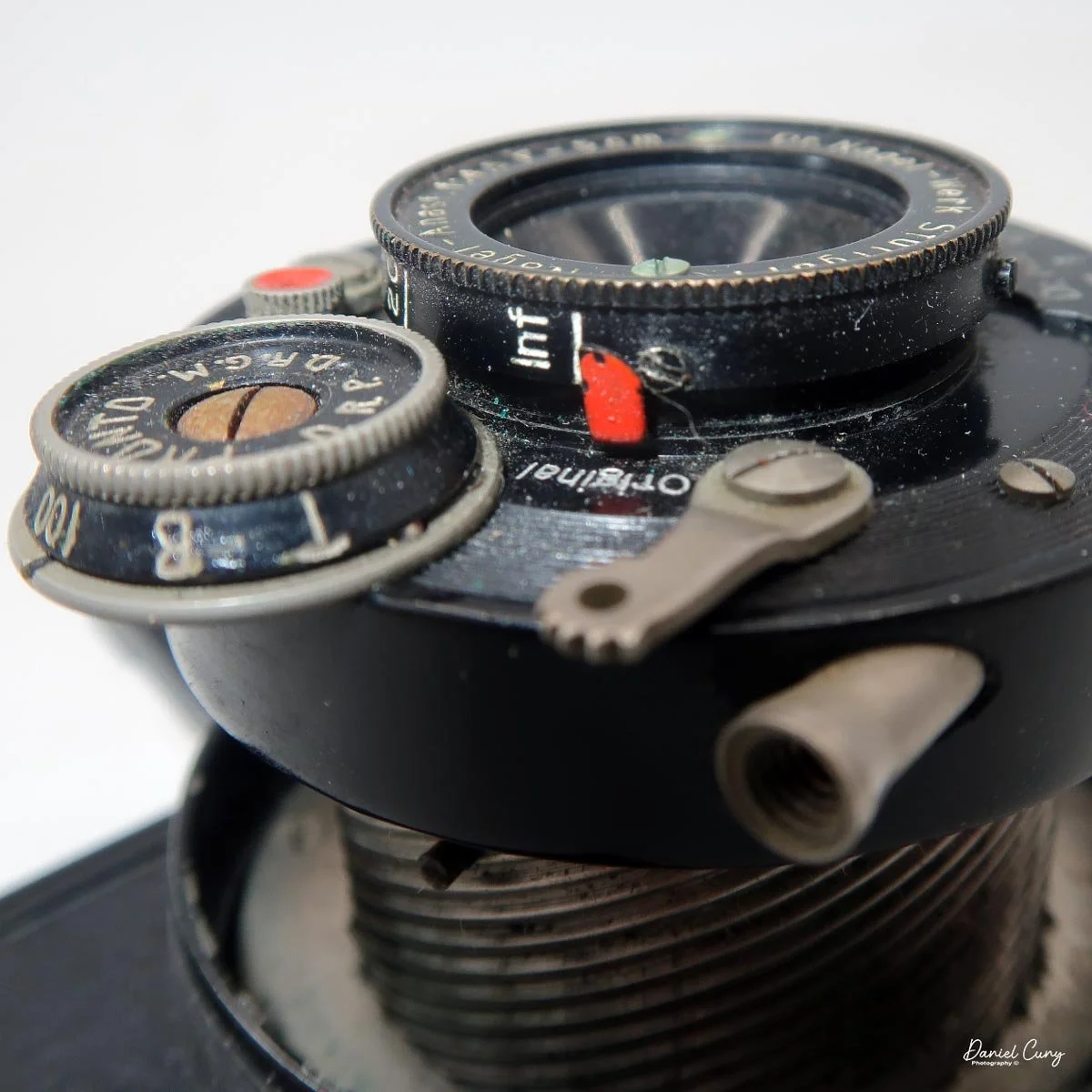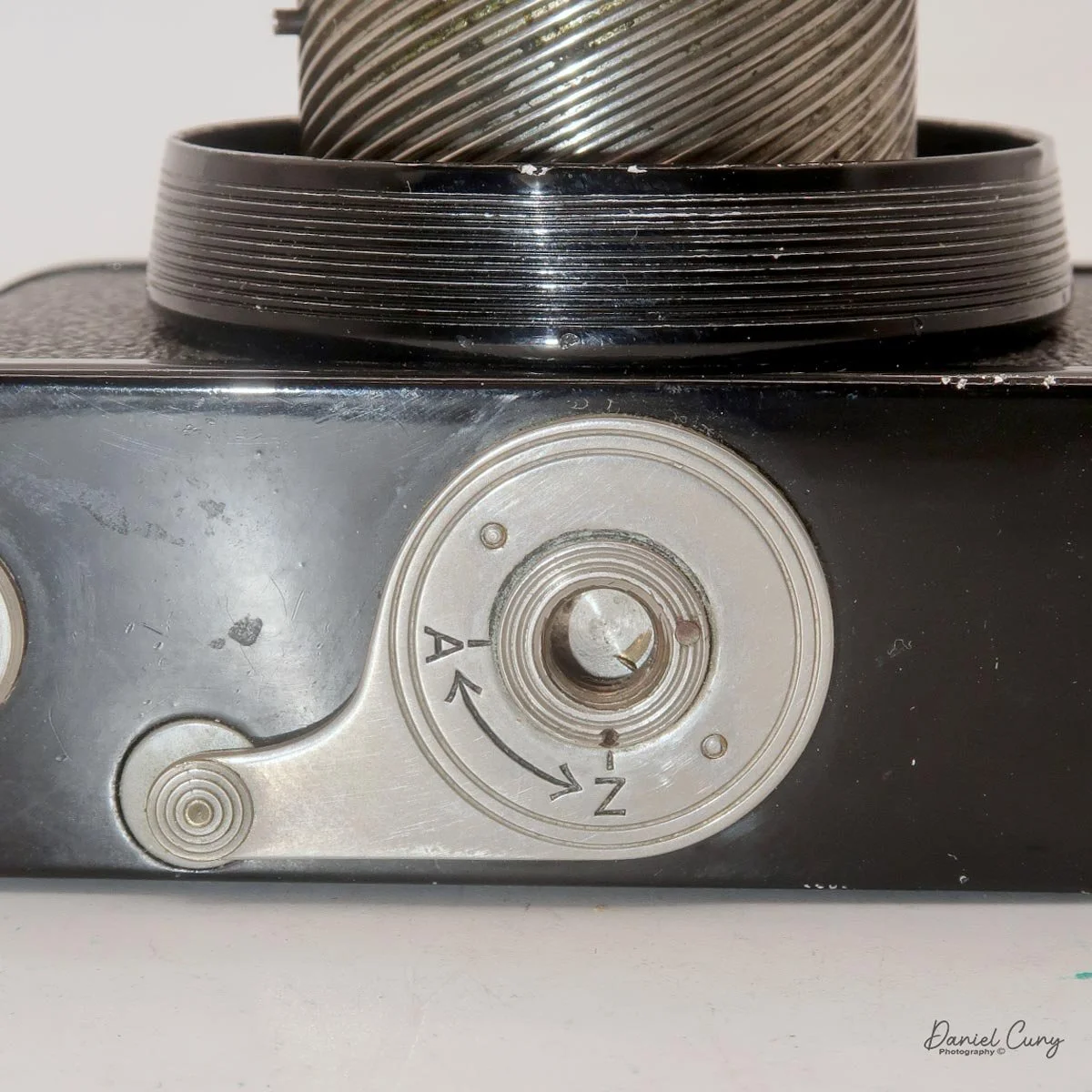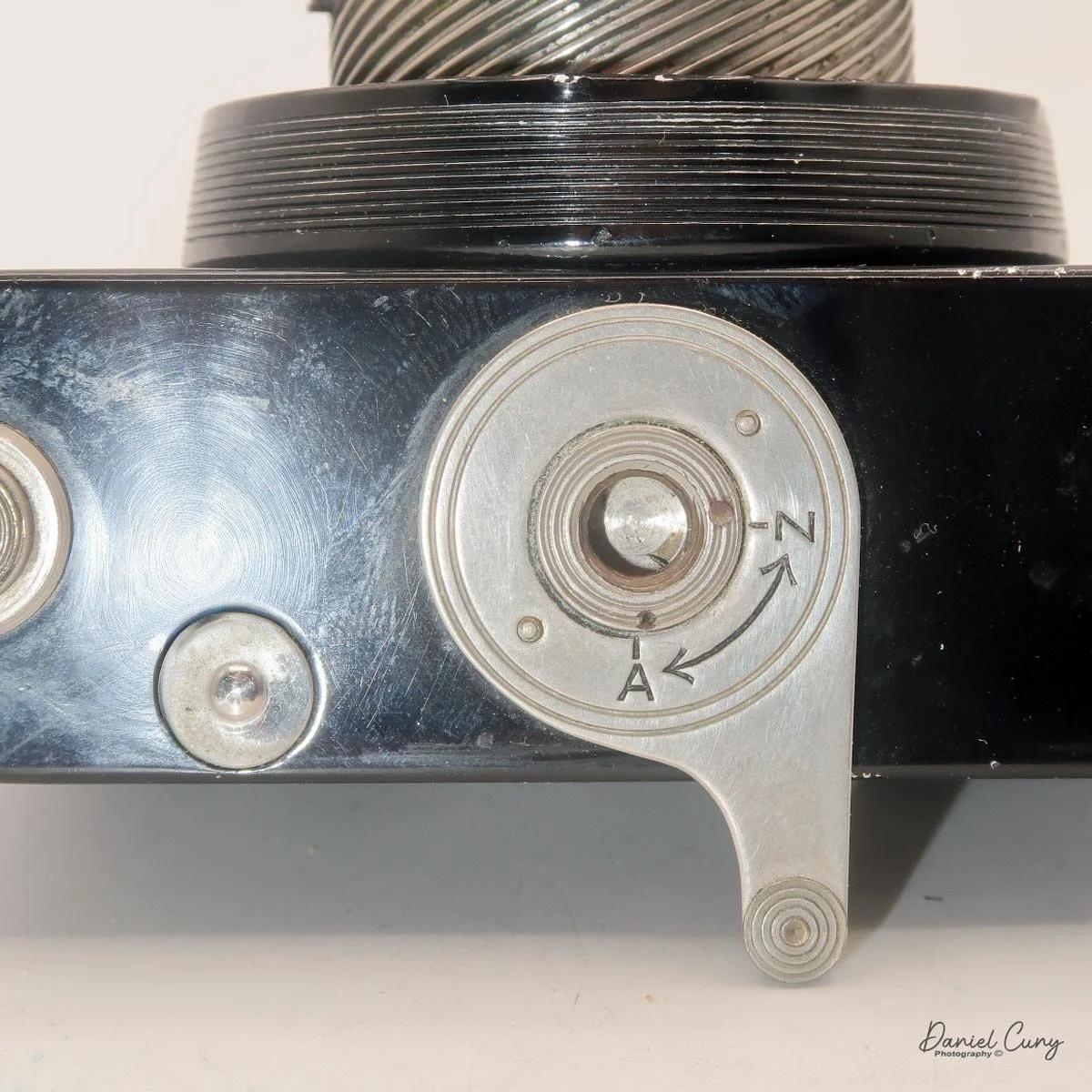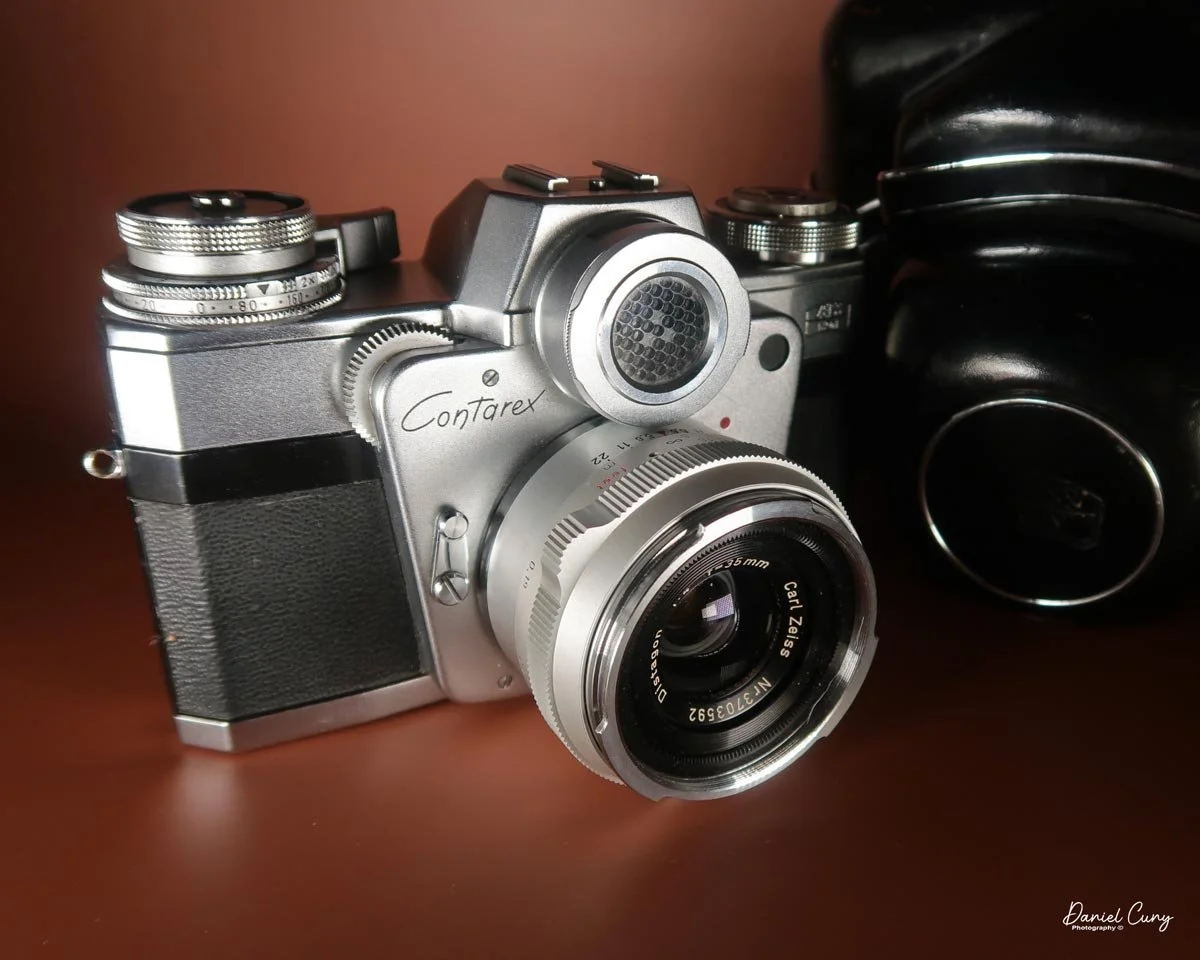
My Zeiss Ikon Contarex “Bullseye” camera
Ever since I started collecting cameras, way back in the late 1970s, maybe even the early 1980s, the Zeiss Ikon Contarex, "Bullseye" or "Cyclops" camera has been on my radar to hopefully someday have in my collection. These were the times when my wife and I were newly married, and money was always tight—living paycheck to paycheck.
I can remember seeing the Contarex camera in magazines and other collecting or historical publications. Always in the back of my mind, I thought this was one of the most beautiful cameras ever made. The bulging "eye" over the lens made the camera seem otherworldly, futuristic, and more like an art piece than a camera.
Seeing it many times in McKeown's Cameras price book, which I would devour constantly, soaking in the information on the different camera designs and companies from around the world that produced odd and unique cameras, it was the Contarex that always stood out as an icon for camera collectors.
Fast forward 35 years. It was sometime in the early to mid-2010s when I had the opportunity to purchase one of these wonders of a camera. With extra income to spend on expanding my collection and selling off some cameras, I pulled the trigger at a camera show in the San Francisco Bay Area, where we lived at the time, on a wonderful, working Contarex with the fitted case.
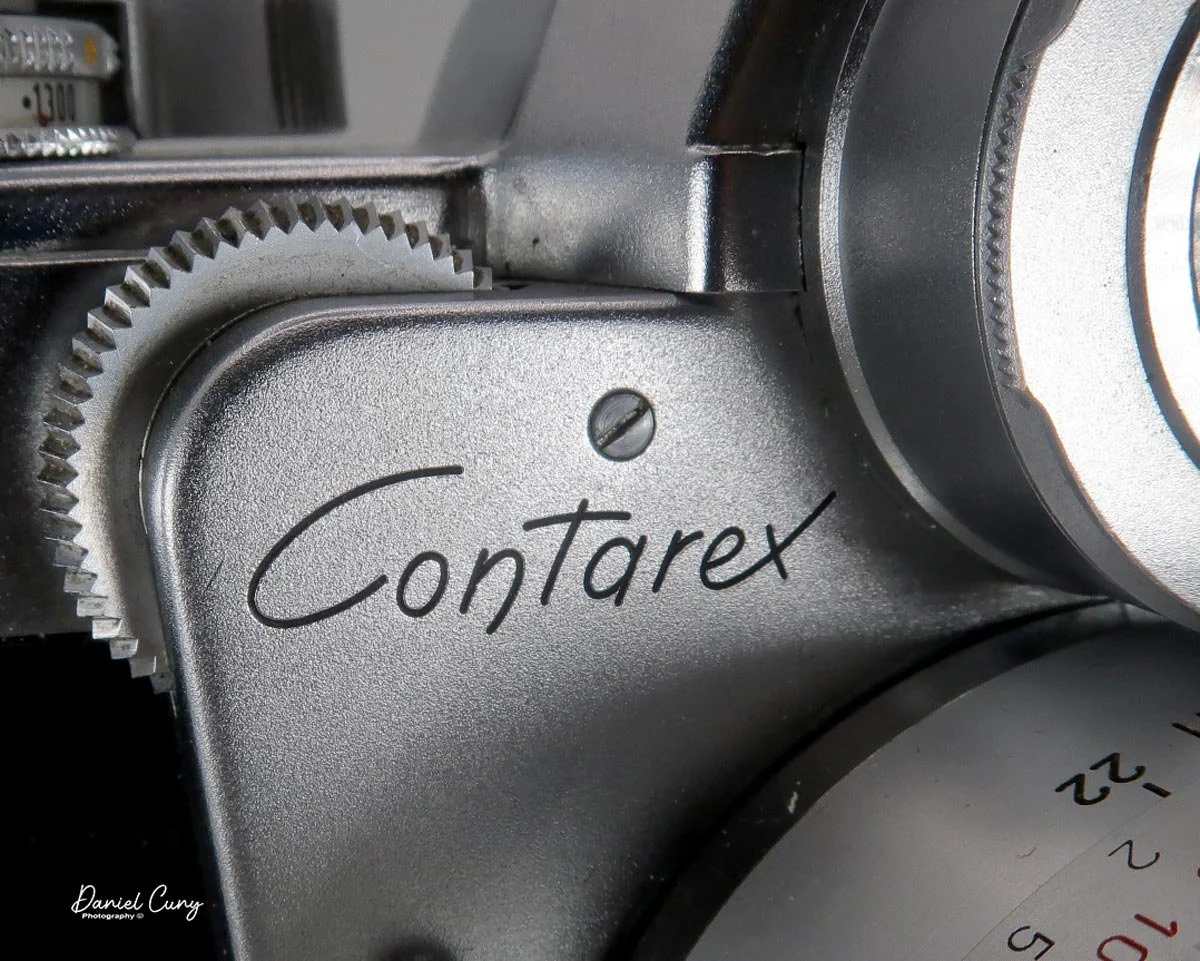
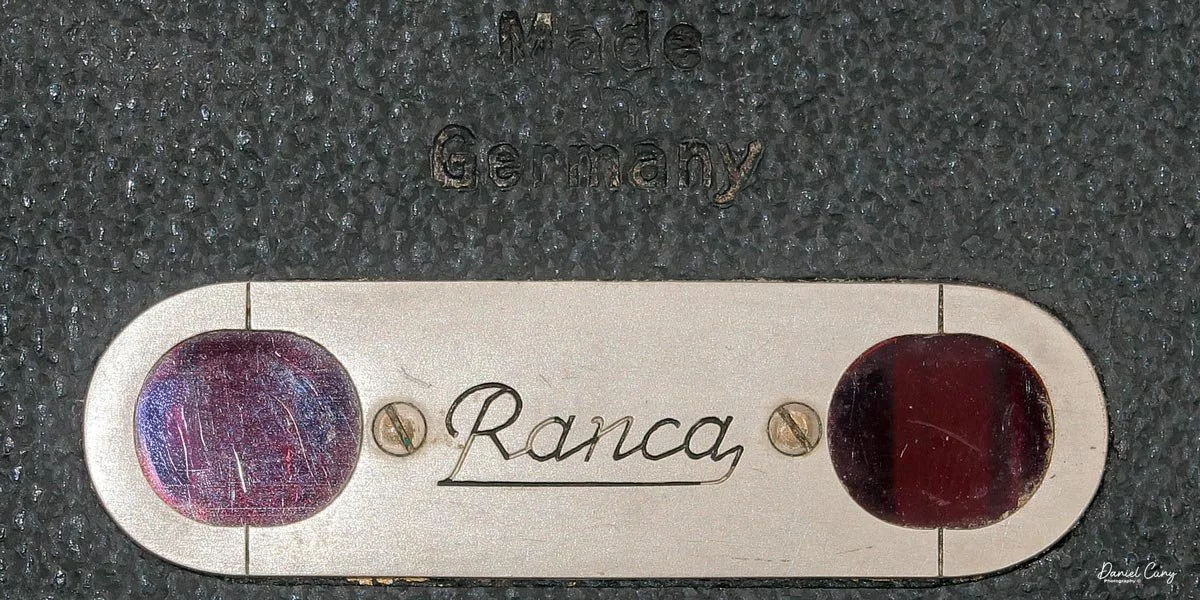
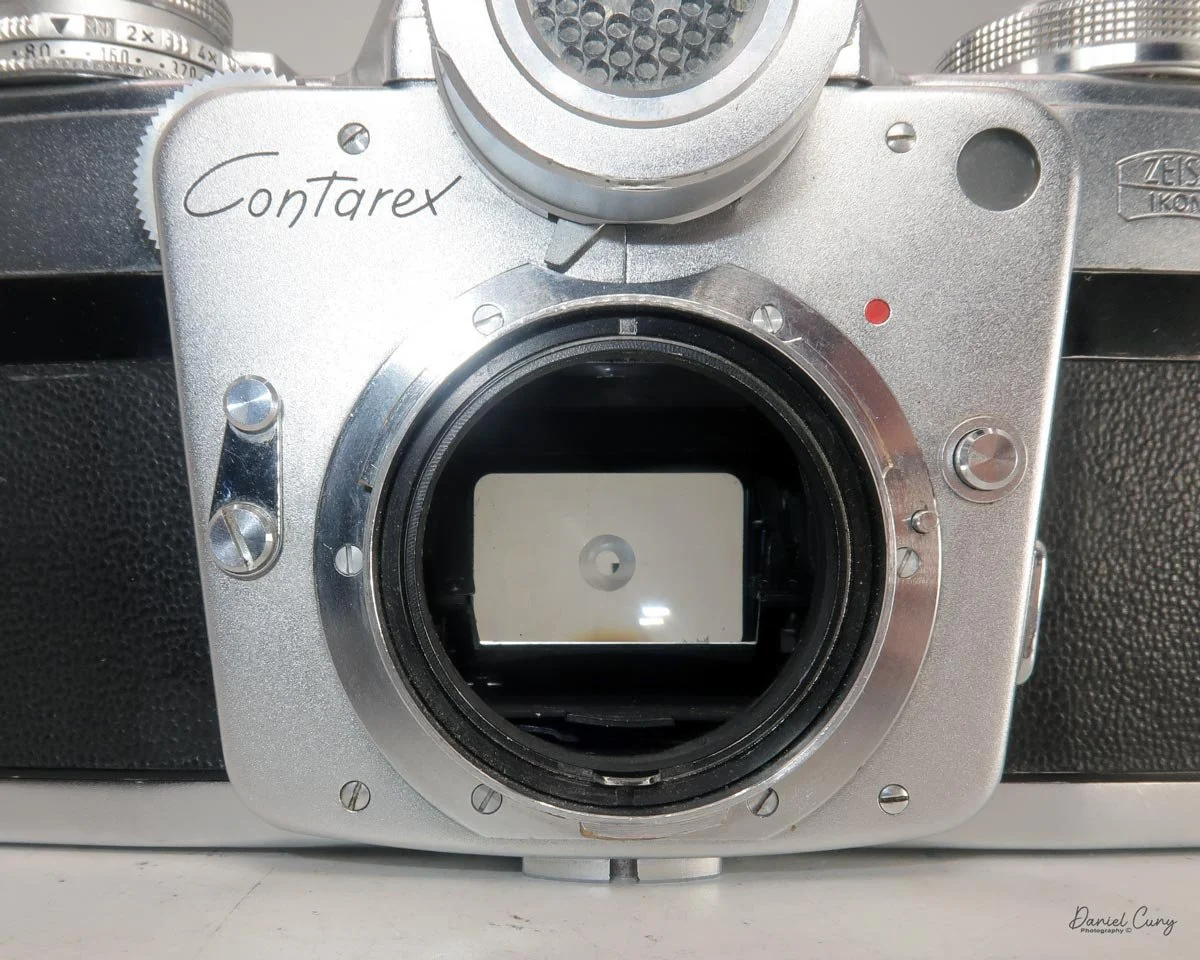
Contarex nameplate
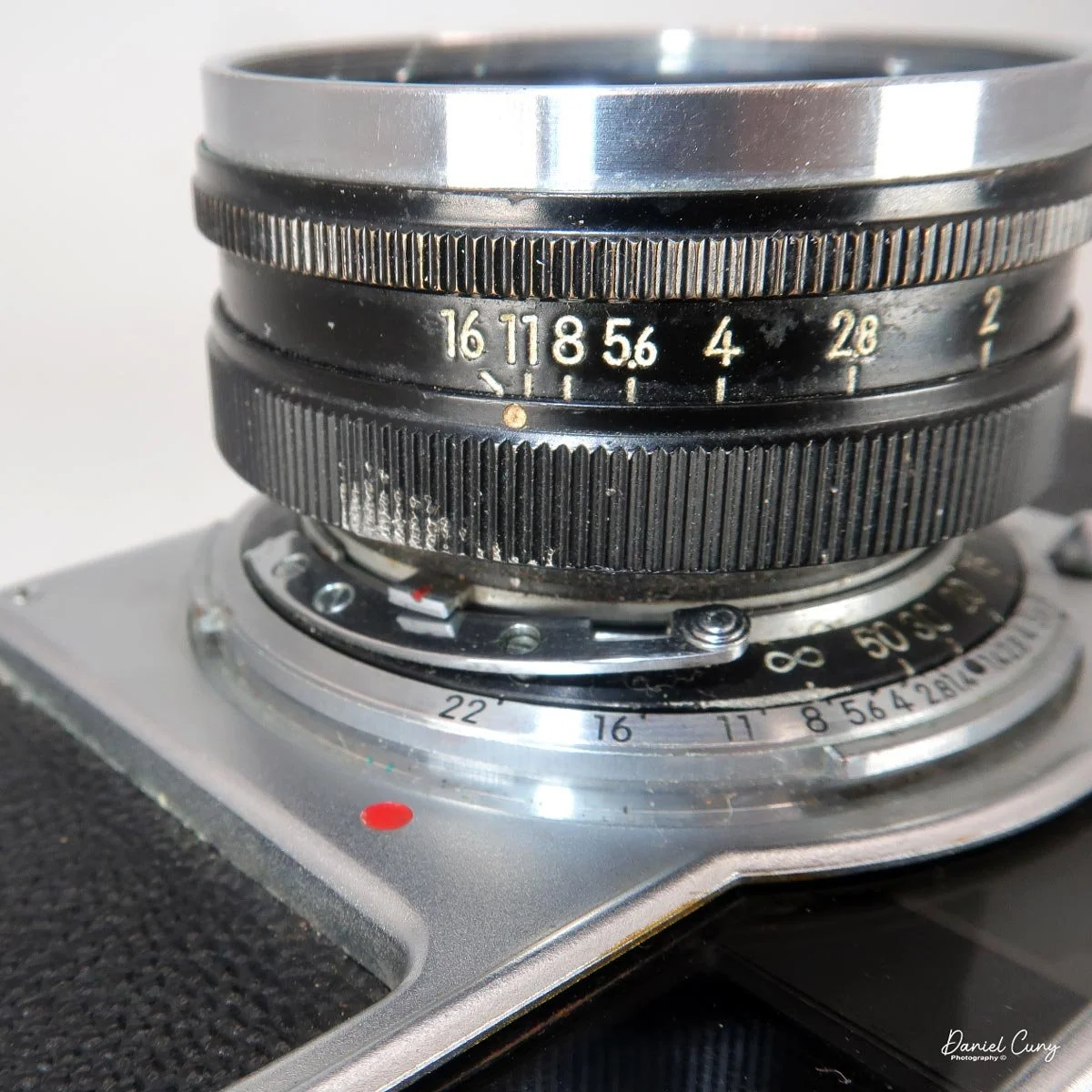
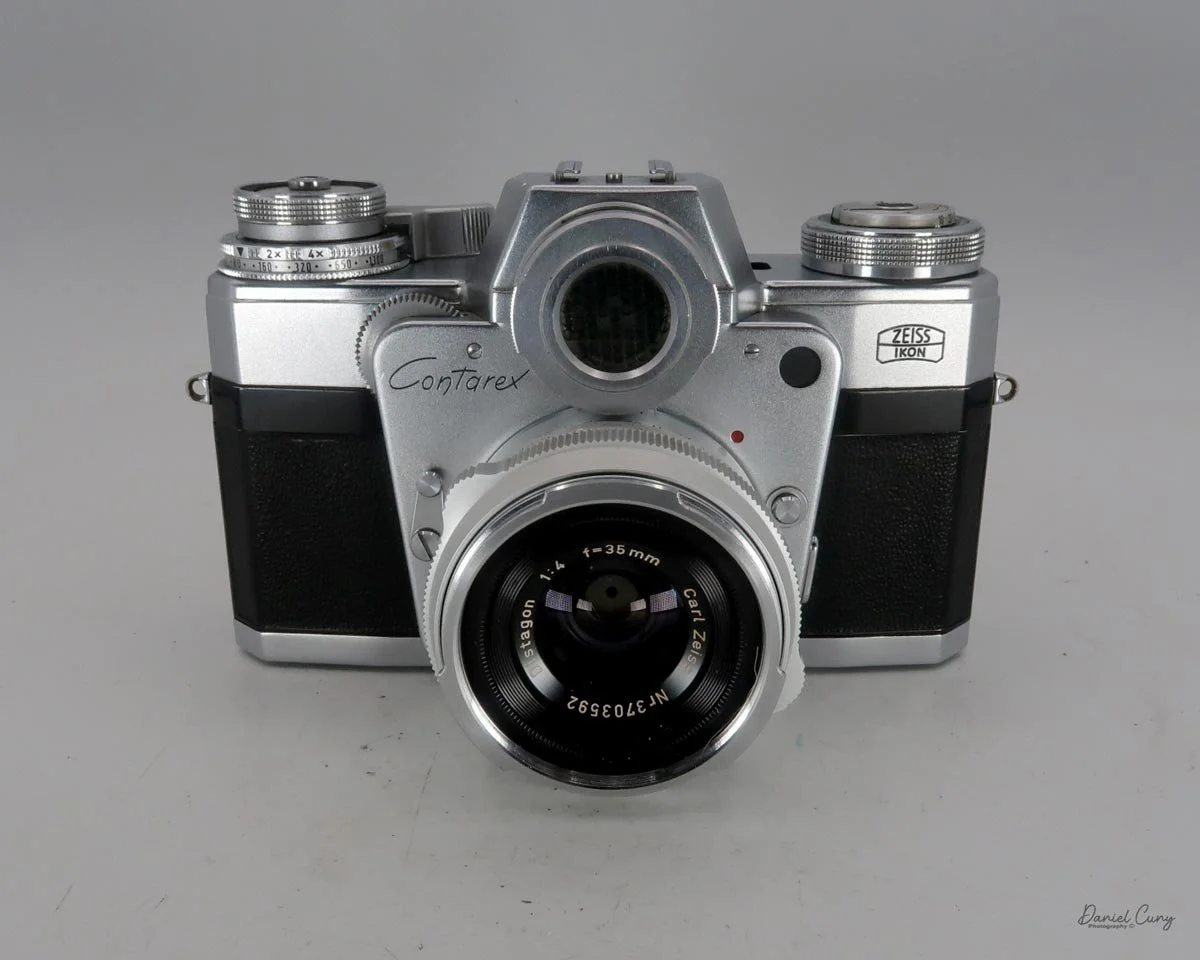
The camera came with the slightly wide Zeiss Distagon 35mm f/4 lens, which was fairly slow, but there are two items I liked about this lens. It's wide—not as wide as I'd like, but it also focuses closer than most lenses. The lens can focus down to 7.5 inches from the subject, almost making it a macro lens. Not quite, but much closer than the standard lens.
The Contarex also has a working meter, which is somewhat rare for a selenium meter system on a camera made in the late 1950s to early 1960s. I also enjoy a more "hefty" camera, since I was mainly raised using the older Nikon F system. Along with having larger hands, these cameras feel more comfortable to me.
I remember when the Olympus OM system camera hit the market in the 1970s. I'd wrap my hands around the smaller body and lenses, and it always made me feel like I was suffocating the camera as my hand enveloped them. Same with the Pentax ME system when they came out, so having a larger camera body and lens has always seemed right to me.
The Contarex camera is extremely solid, well-built, over-engineered, and somewhat weighty. The Contarex has some real heft to it. One thing I wasn't aware of was the camera's build quality, which I discuss below in the history section.
History of the Contarex Cameras
The Zeiss Ikon Contarex, introduced at Photokina in 1958 and hitting the market in 1960, stands as one of the most ambitious and notoriously over-engineered 35mm single-lens reflex (SLR) cameras ever manufactured. Conceived in 1954 under the internal designation "Contax IV," the Contarex was designed by Edgar Sauer as Zeiss Ikon's definitive professional 35mm SLR, intended to replace the Contax IIa and IIIa and, in the company's words, cater to "any photographic task whatsoever."
With rising Japanese powerhouses, the Contarex system was Zeiss Ikon's no-holds-barred flagship—a mechanical tour de force that commands immense respect (and sometimes frustration) in the vintage collecting community today.
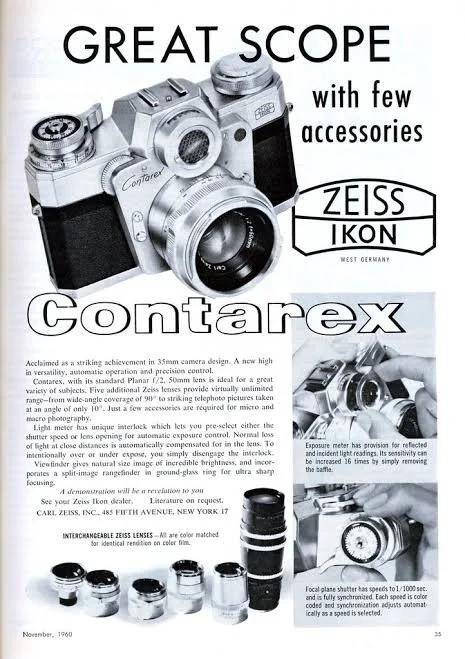
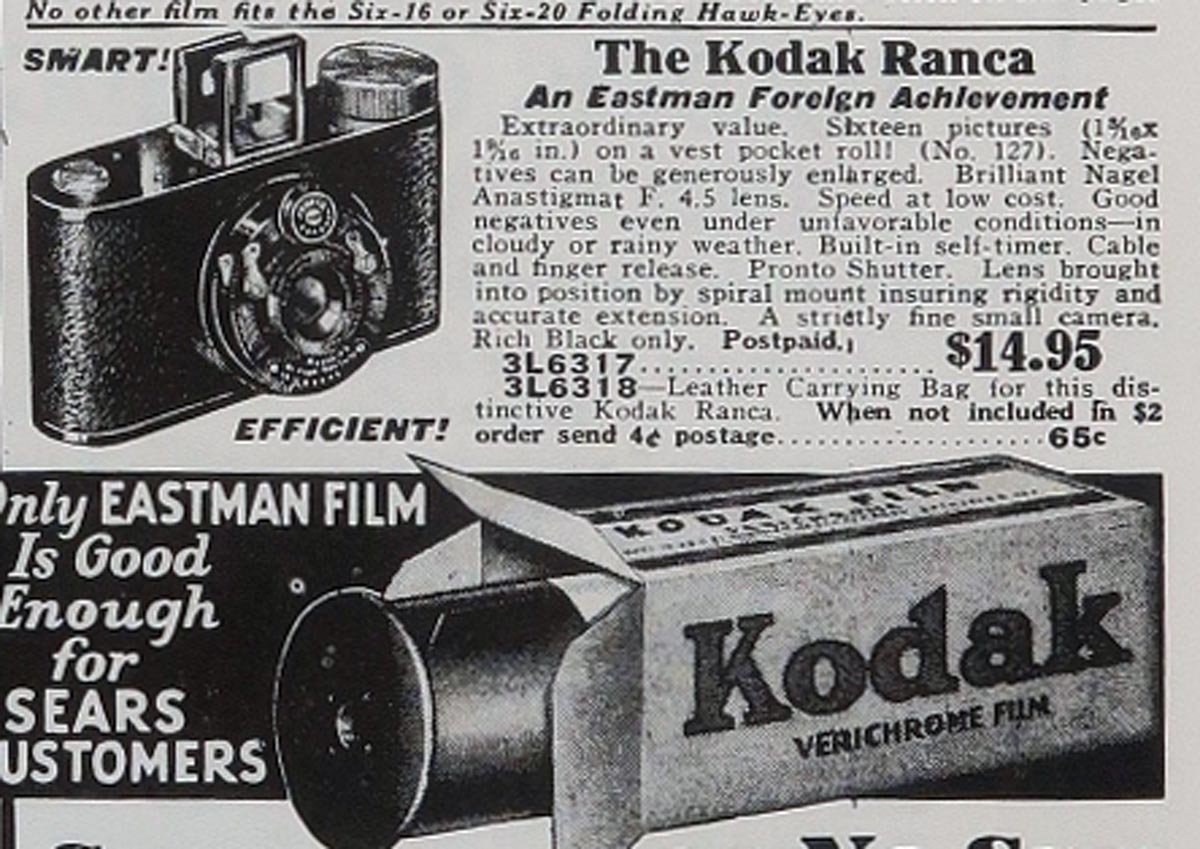
Zeiss Ikon Contarex camera advertisment
The first model in the lineup earned the nicknames "Bullseye" and "Cyclops" due to the prominent, circular selenium light meter window mounted directly in front of the pentaprism. This meter wasn't just cosmetic; it represented a massive mechanical achievement. The Contarex I was the first 35mm SLR to feature a focal-plane shutter with direct light meter coupling. The camera mechanically linked the shutter speed, aperture, and film speed settings via a highly complex system of internal cords and pulleys.
While the interchangeable Carl Zeiss lenses produced for the Contarex are still legendary for their sharpness, contrast, and uncompromising build quality, the camera bodies themselves are incredibly intricate. The original Bullseye contains nearly 1,100 individual parts, including roller bearings in the aperture mechanism. Interestingly, the lenses lack traditional aperture rings; instead, the aperture is controlled by a milled wheel on the camera body itself, which directly interfaces with the bayonet mount.
Because of their sheer mechanical complexity, they require highly specialized technicians for servicing—simply removing the top plate requires dismantling 43 separate components. A working selenium meter is often a strong indicator that a specific body hasn't been abused over the decades. For anyone running an online shop or writing historical reviews, finding a fully functional Contarex at a global market is a massive victory, offering rich material for a blog deep-dive or video overview.
Another notoriously delicate quirk is the rewind mechanism. Instead of a direct shaft, it uses a series of tiny gears, making it smooth but highly vulnerable to impact damage. Additionally, interchangeable magazine backs allowed mid-roll film swapping, cementing its status as a true professional system camera.
Despite its brilliance, the sheer cost ($499 in 1961), heavy weight, and complicated nature of the Contarex meant it never dominated the market quite like the simpler Japanese alternatives. Zeiss Ikon eventually produced several variations, including the Contarex Special, Professional, and the electronic Super, before ceasing production in the early 1970s. Today, these chrome behemoths remain a fascinating pinnacle of mid-century German engineering—heavy, beautiful, and incredibly rewarding to study and restore.
My Camera
My Zeiss Ikon Contarex camera is 4" tall by 6" wide by 4" deep with the Zeiss Distagon 35mm f/4 lens, and weighs in at 2 pounds, 8.8 ounces. My camera body serial number is T89707, and the lens serial number is 3703592. You can find the instruction manual for the Zeiss Contarex at Mike Butkus's website, www.CameraManuals.org.
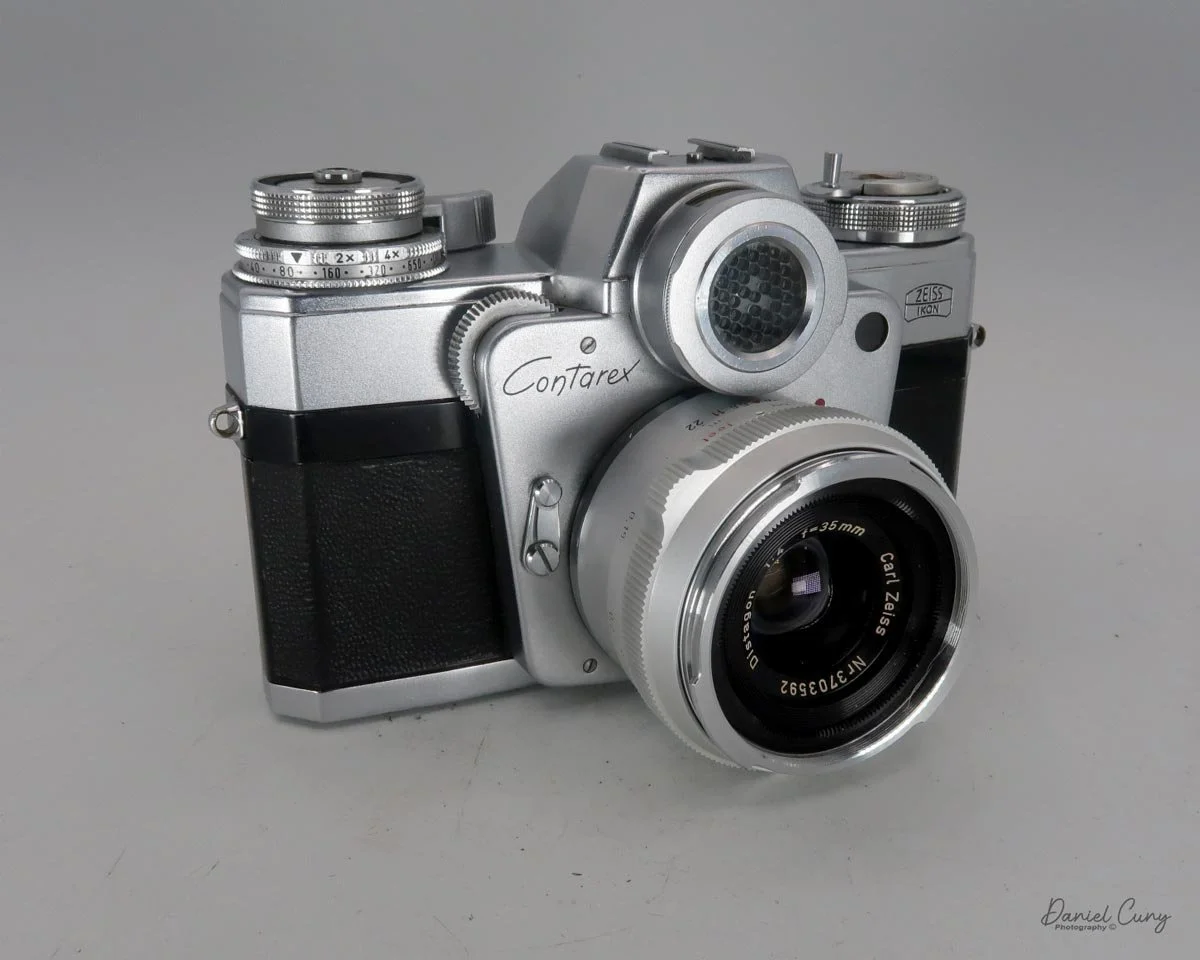
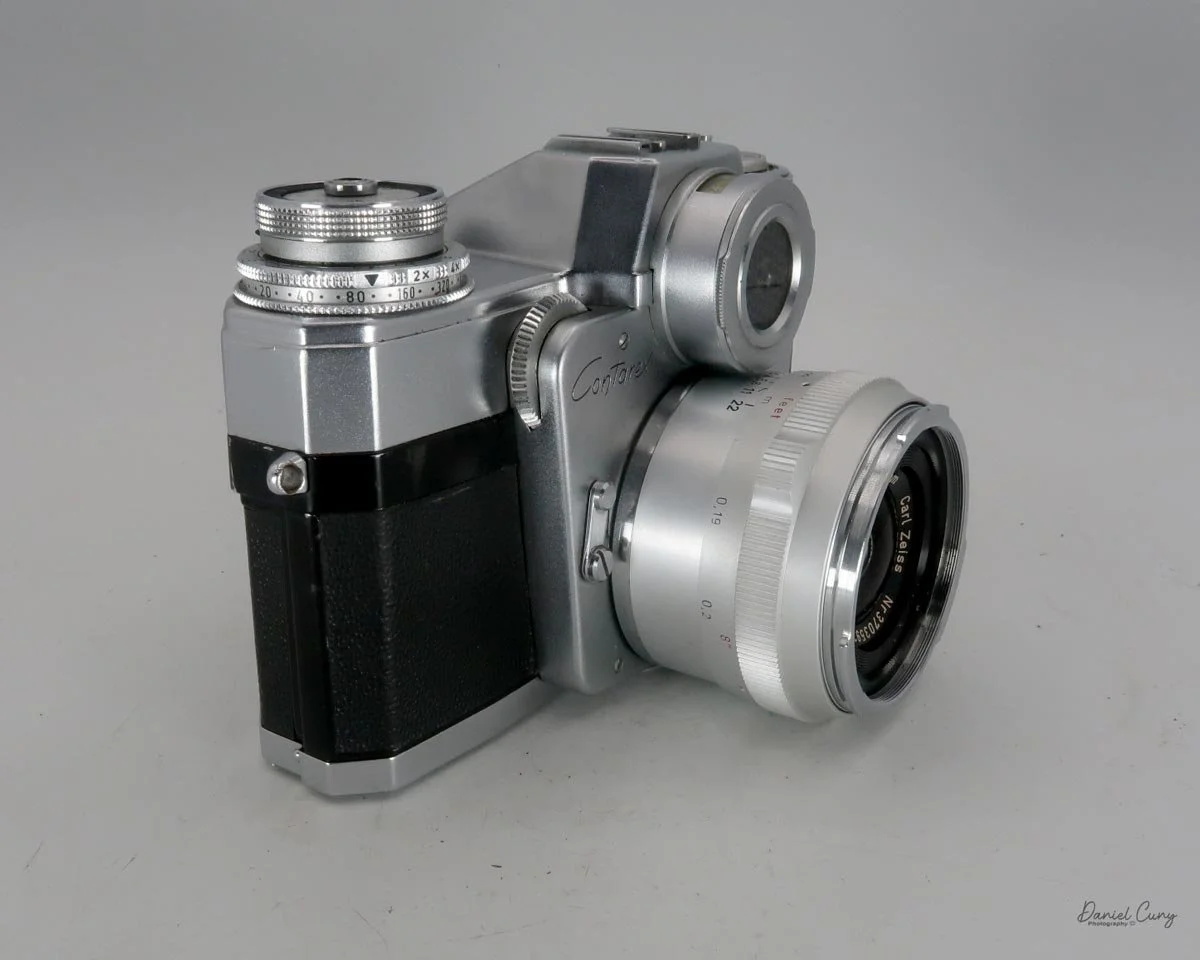
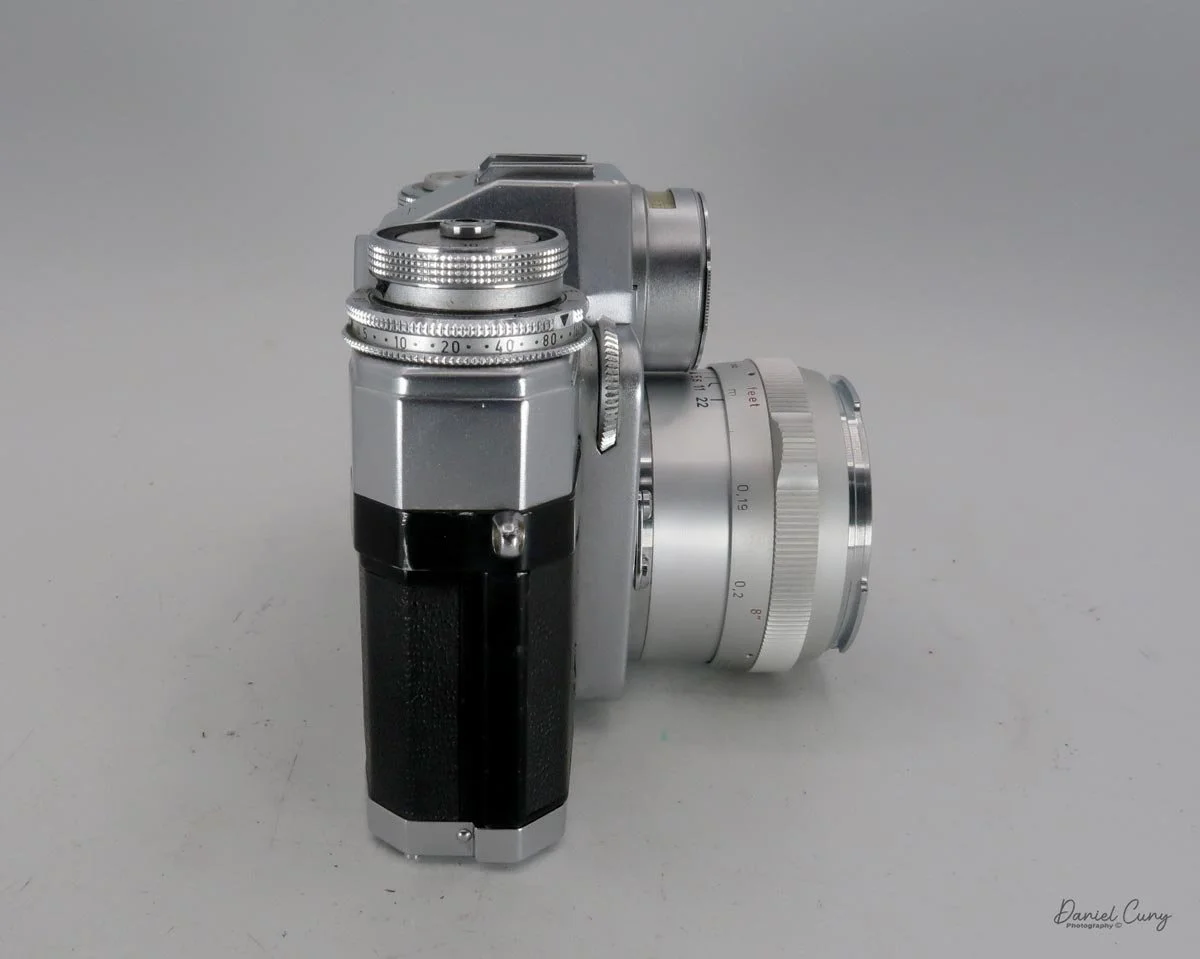
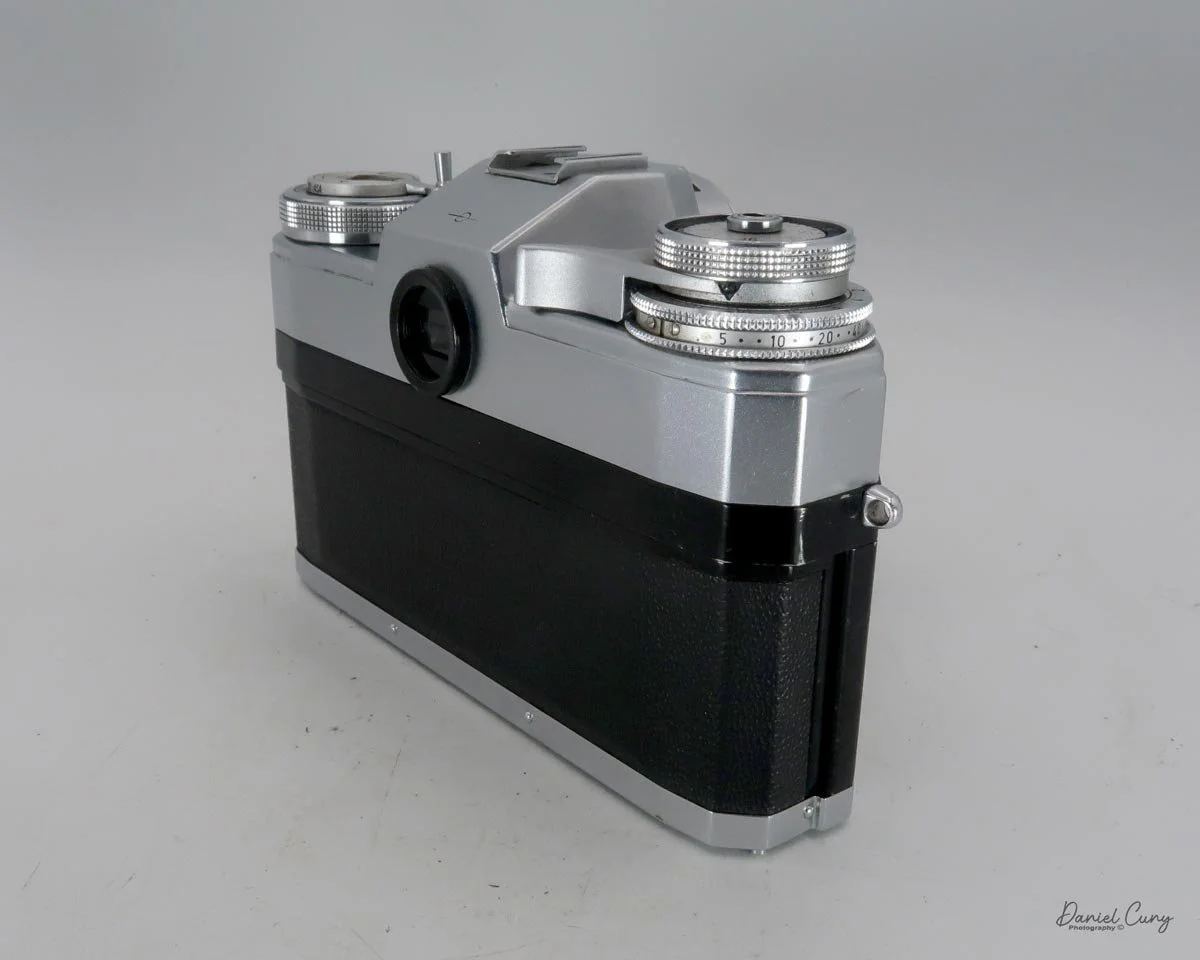
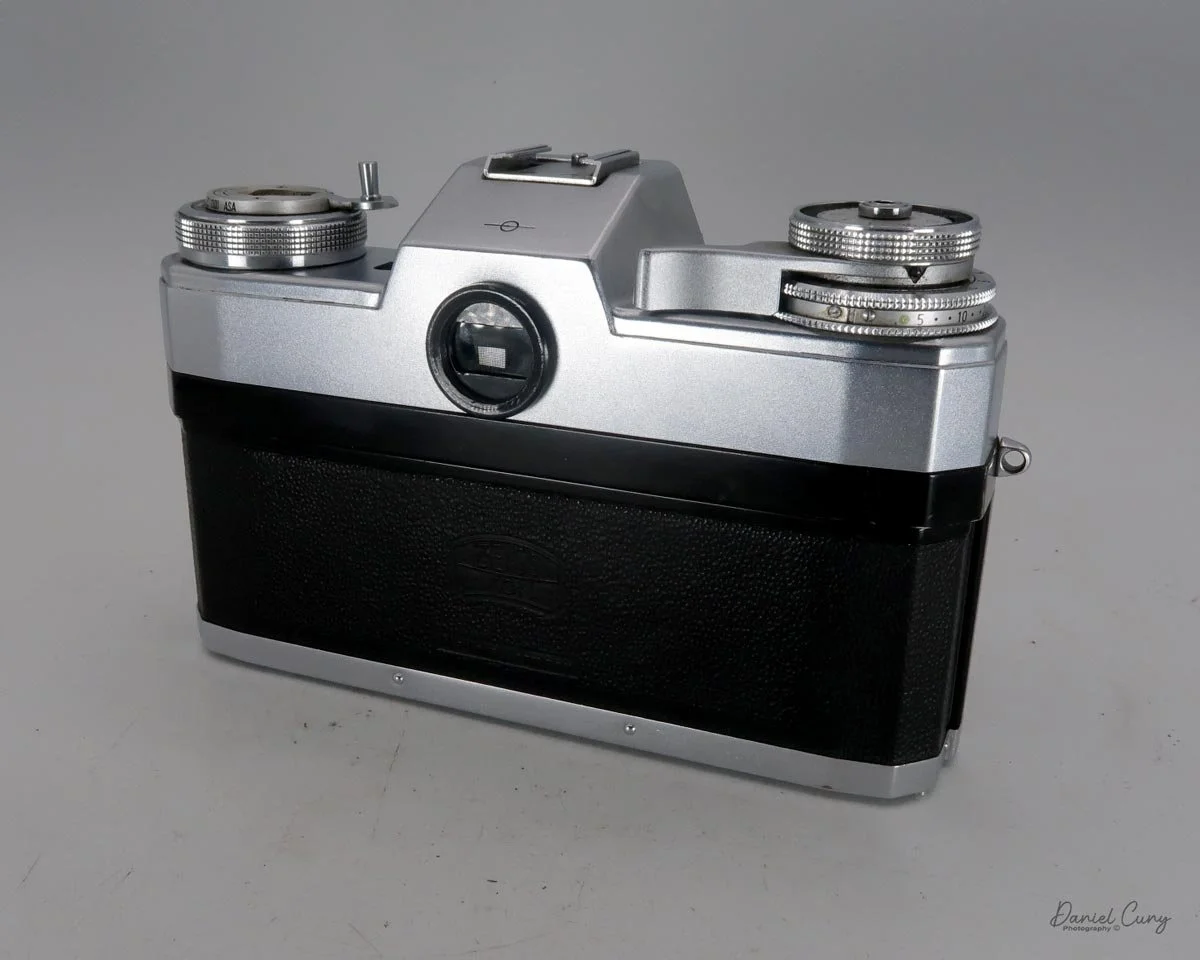
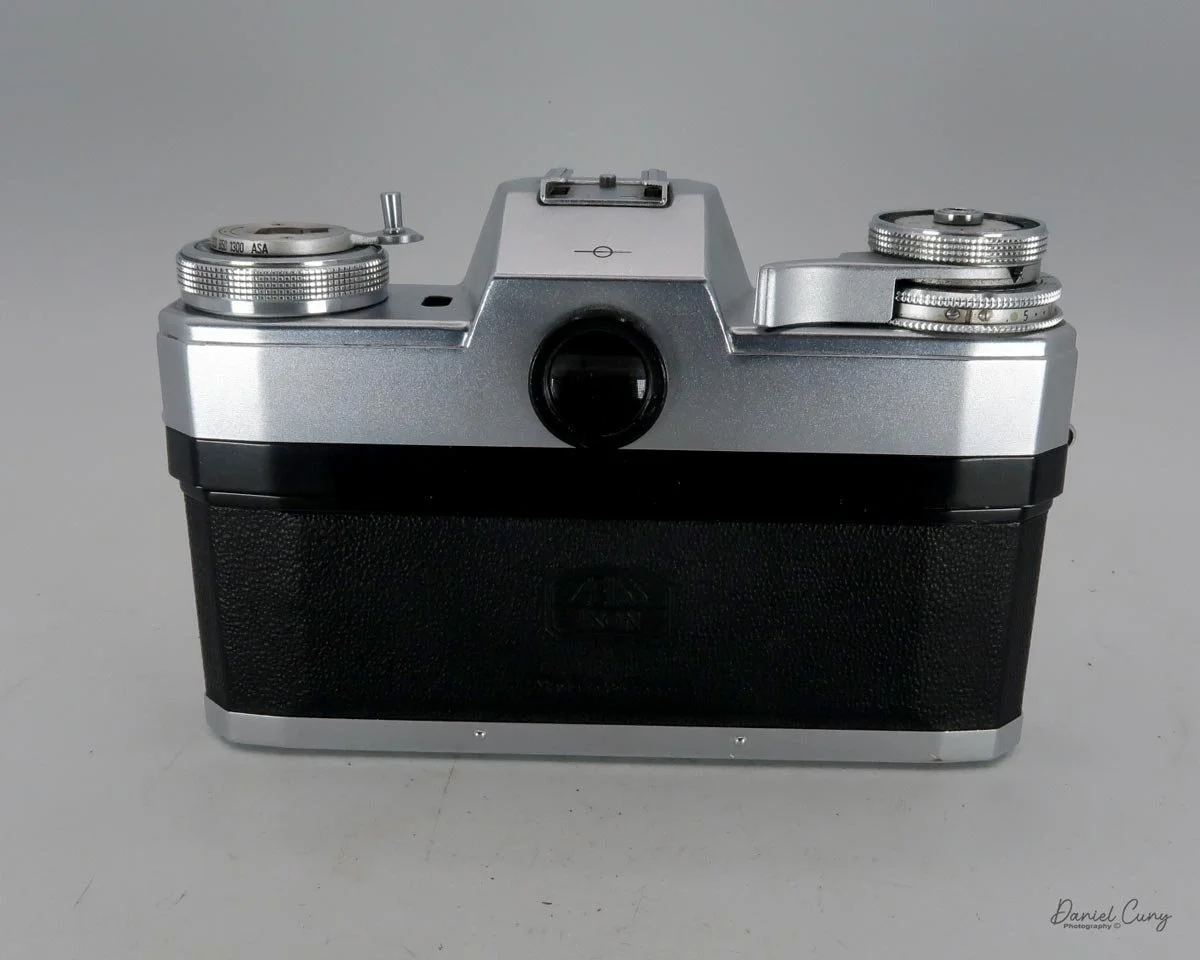
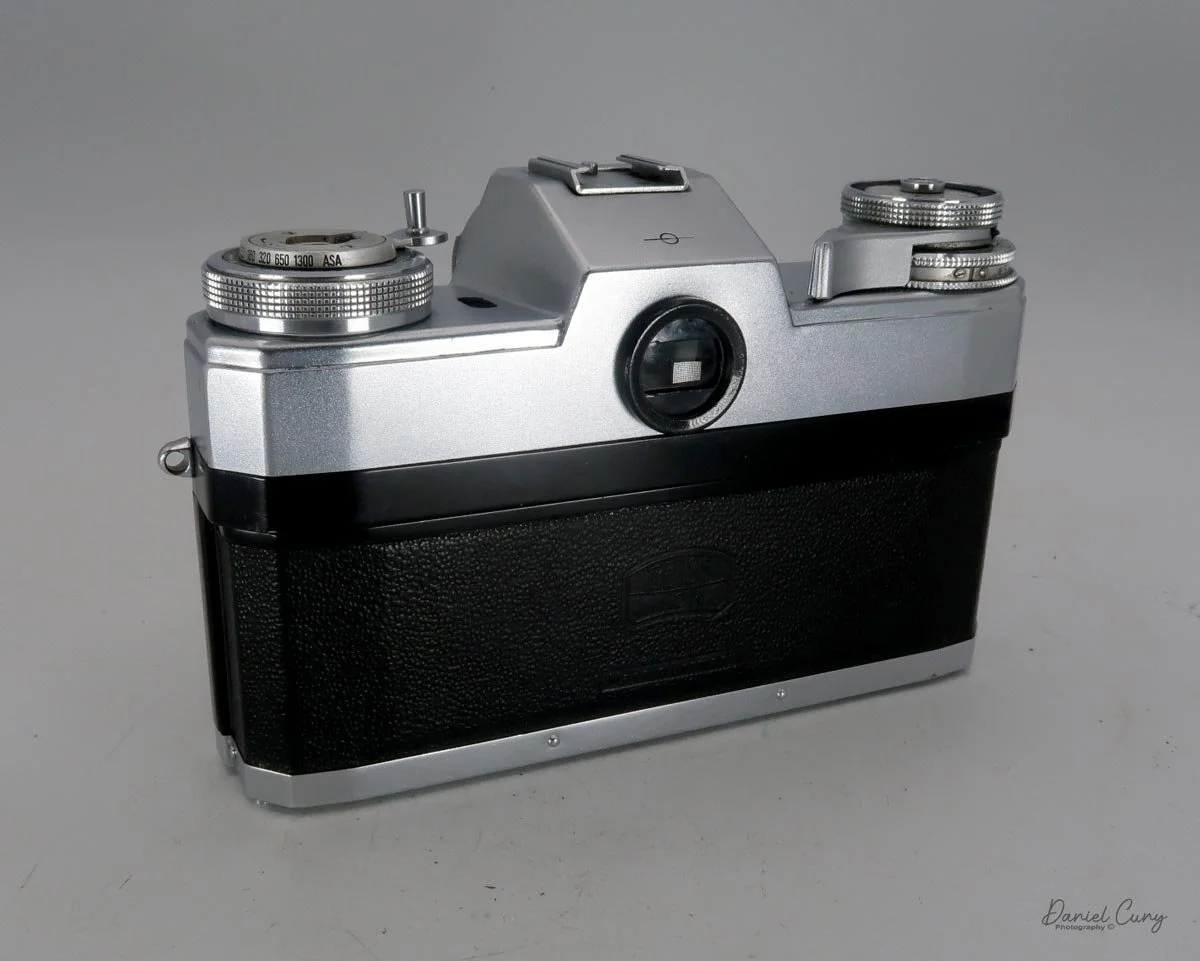
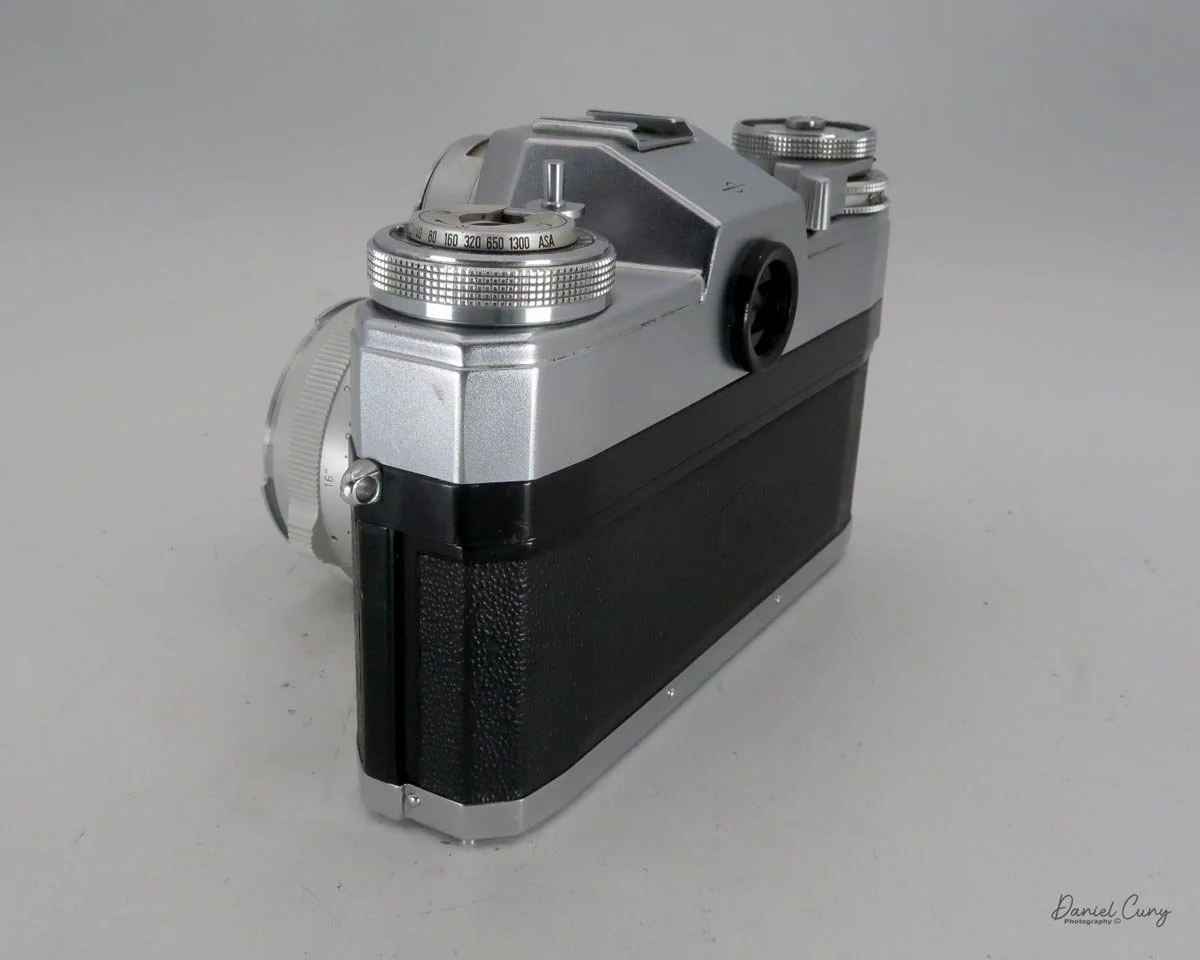
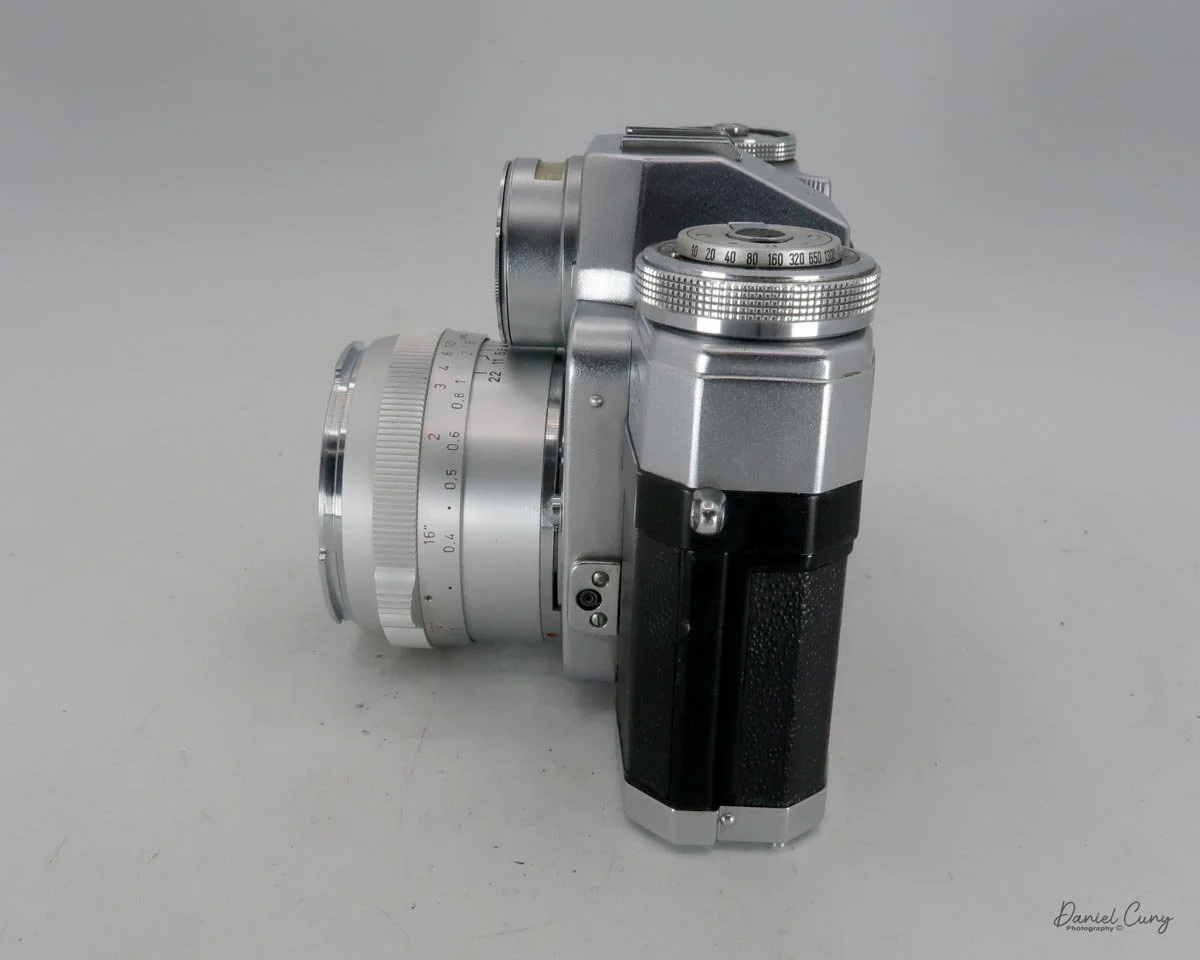
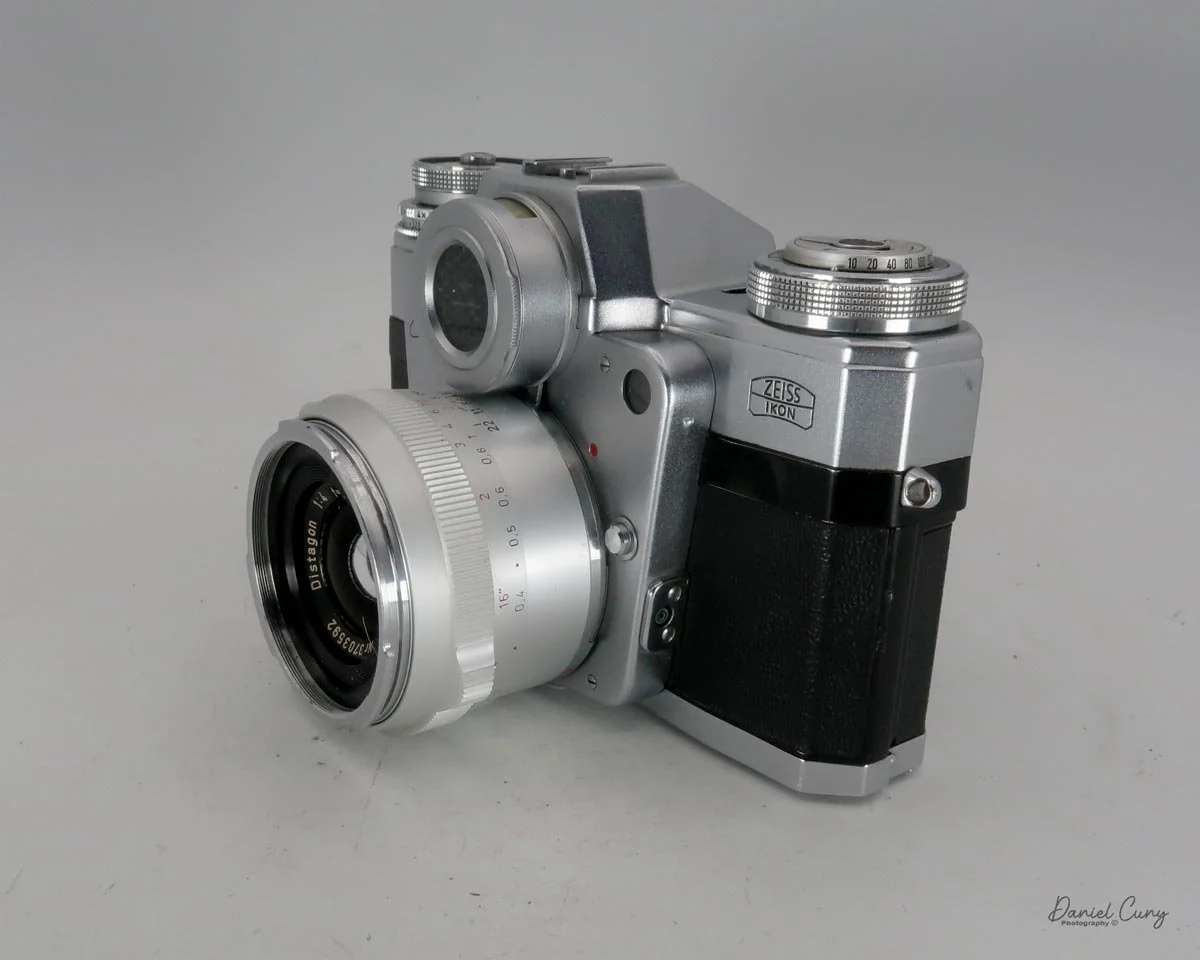
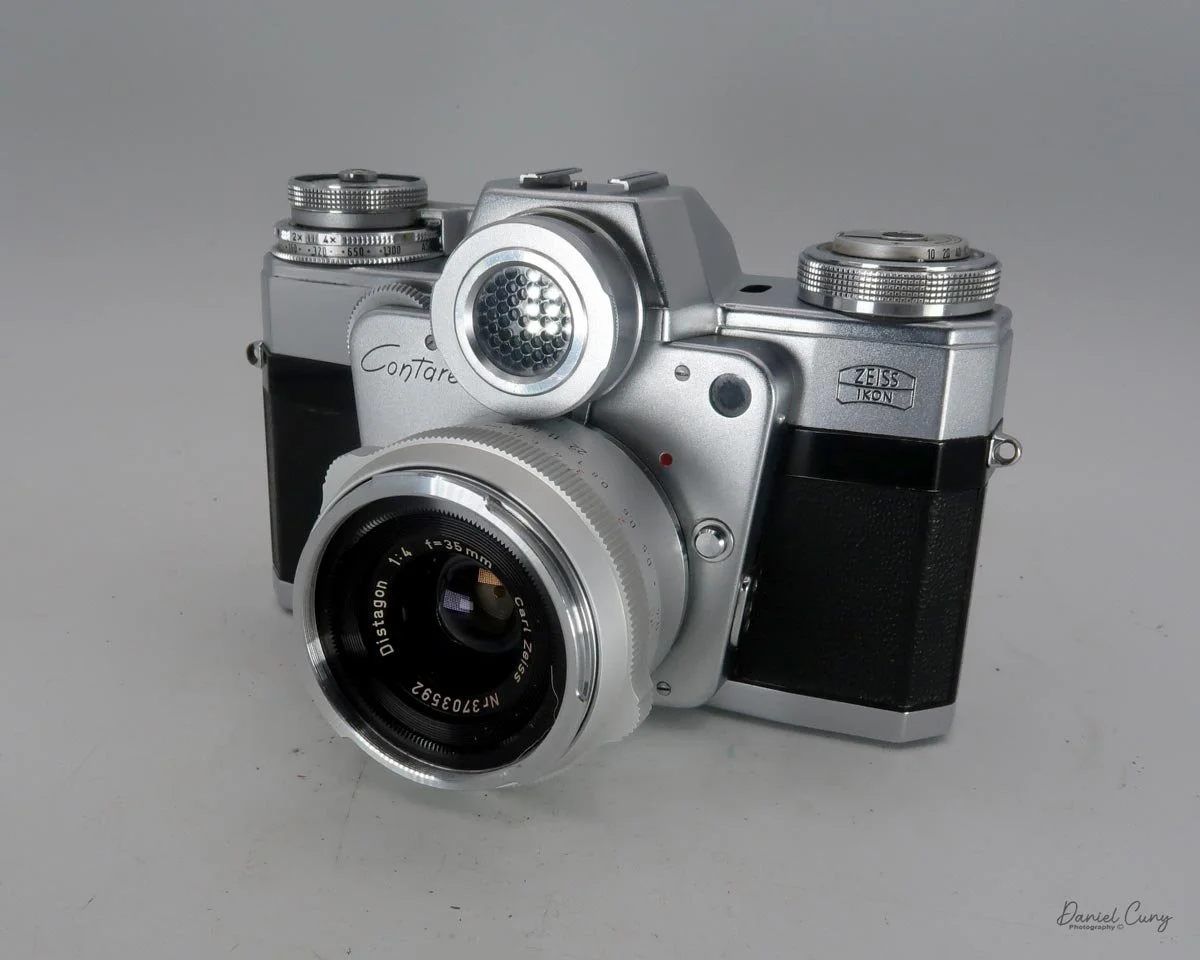
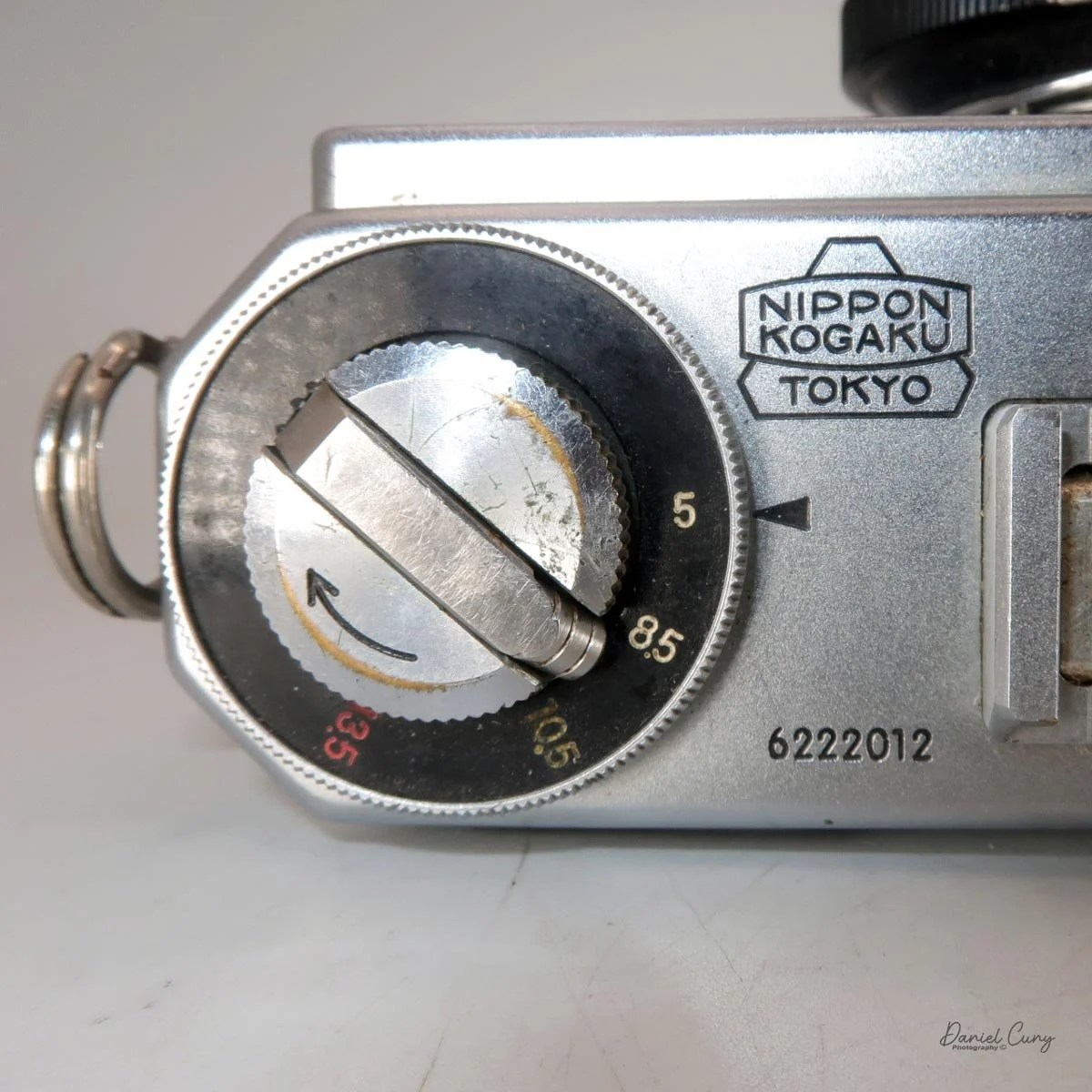
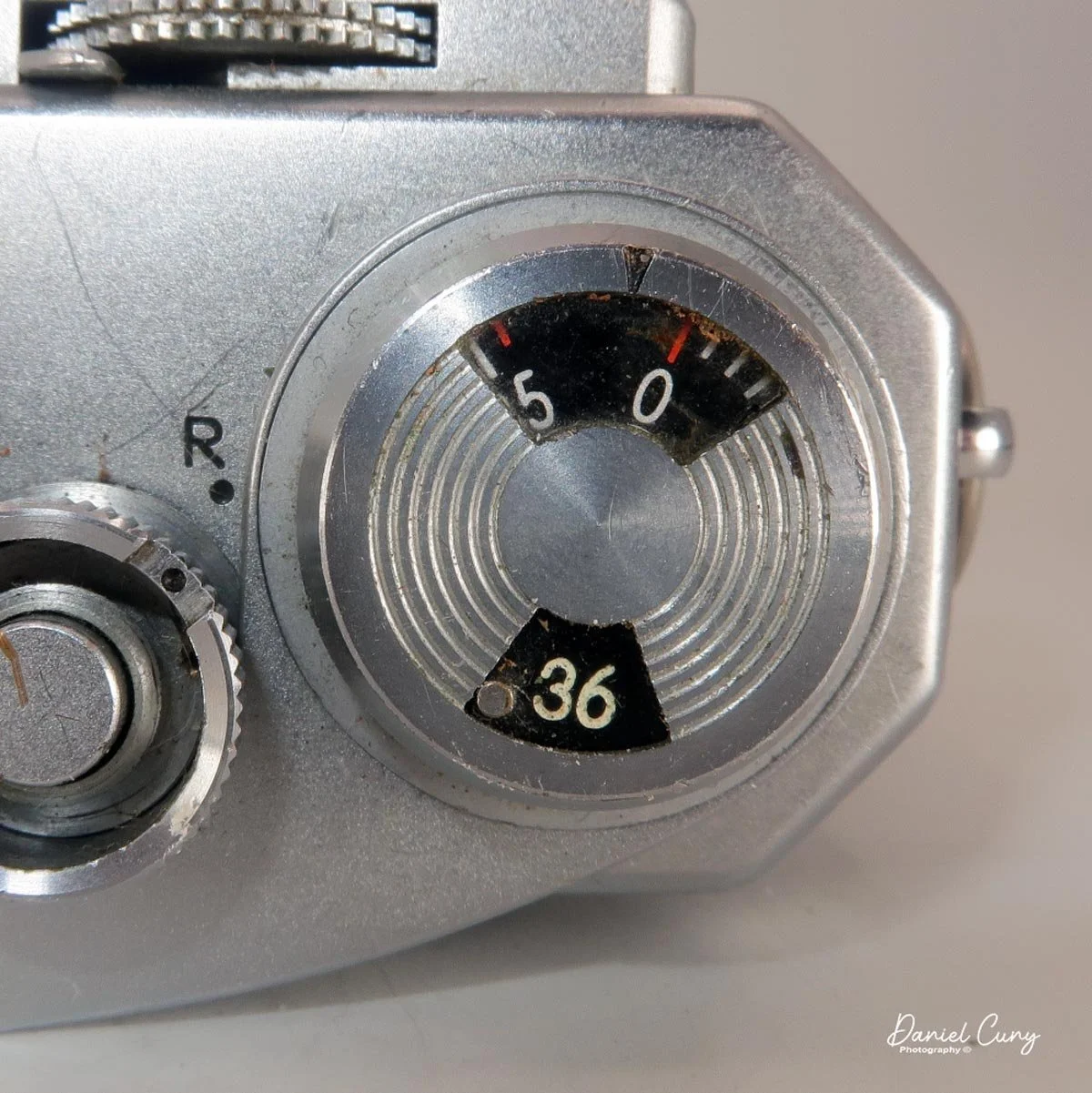
Looking at the top of the camera, going from left to right, is the camera's rewind knob with a flip-up lever, along with a directional arrow indicating which way to turn the wheel when it's time to rewind your film. There is also an indicator or reminder of what ASA (ISO) you have in the camera.
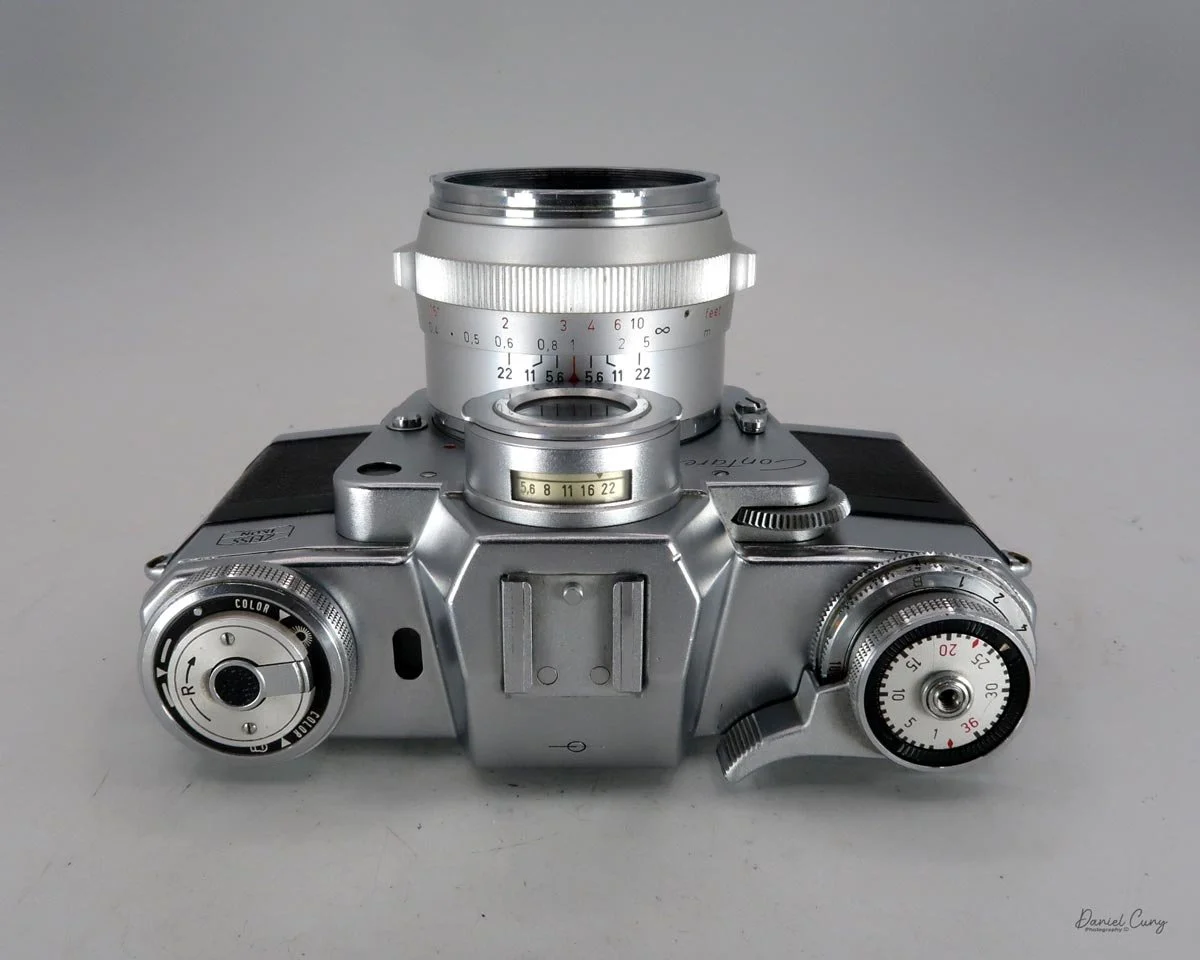
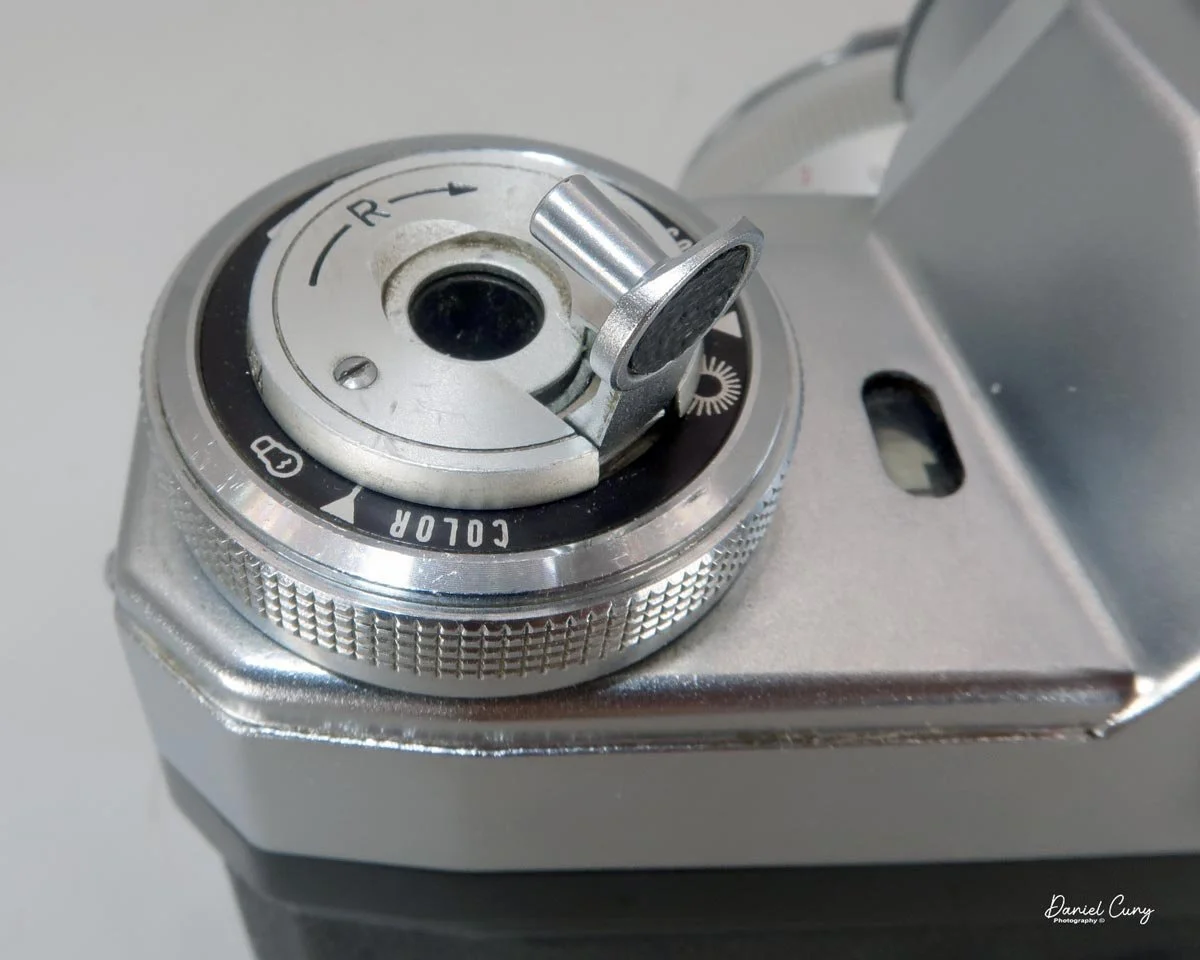
To the right of the rewind knob is an external light meter window. This is the same as you'll see in the viewfinder, only it's to be used if you're setting up from your waist and want to get the meter settings before you put the camera to your eye.
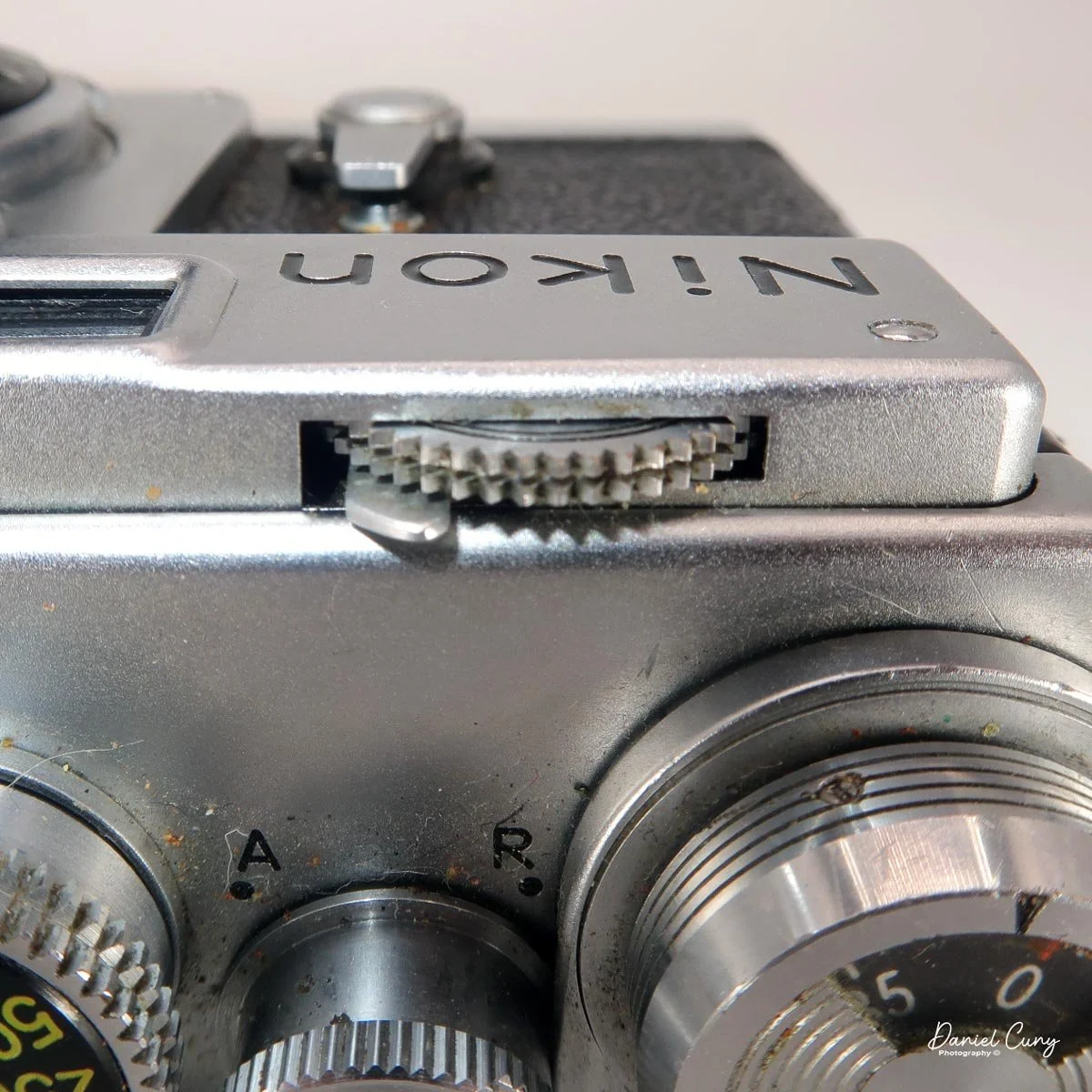
On the very top of the camera is the accessory shoe, used for a flash unit or for an accessory viewfinder which would be used for the widest 21mm lens available. Just in front of the accessory shoe is the "Bullseye" or "Cyclops" meter. Inside the meter are the aperture settings, which are controlled by a knurled ring just to the right of the meter and on the front of the camera body.
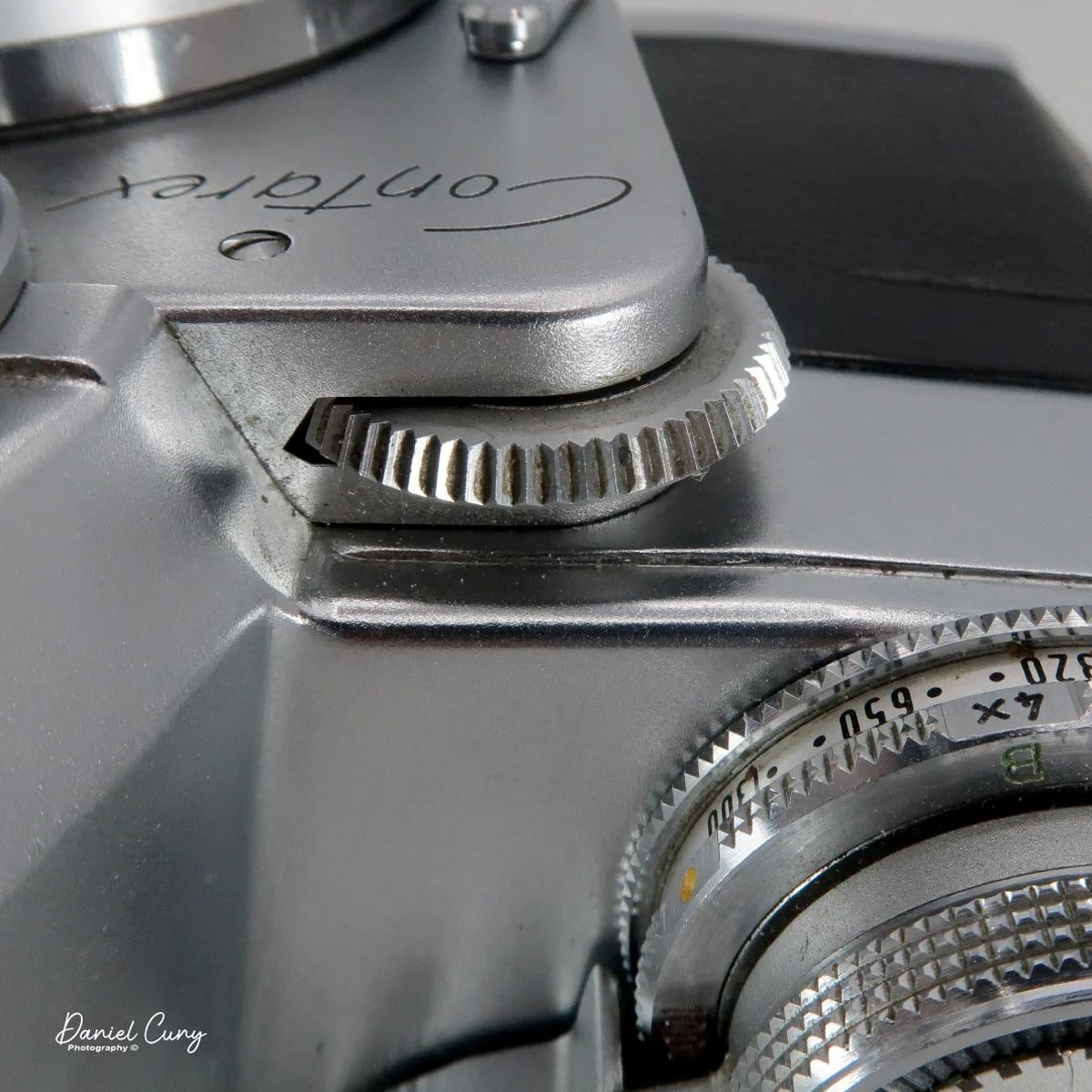
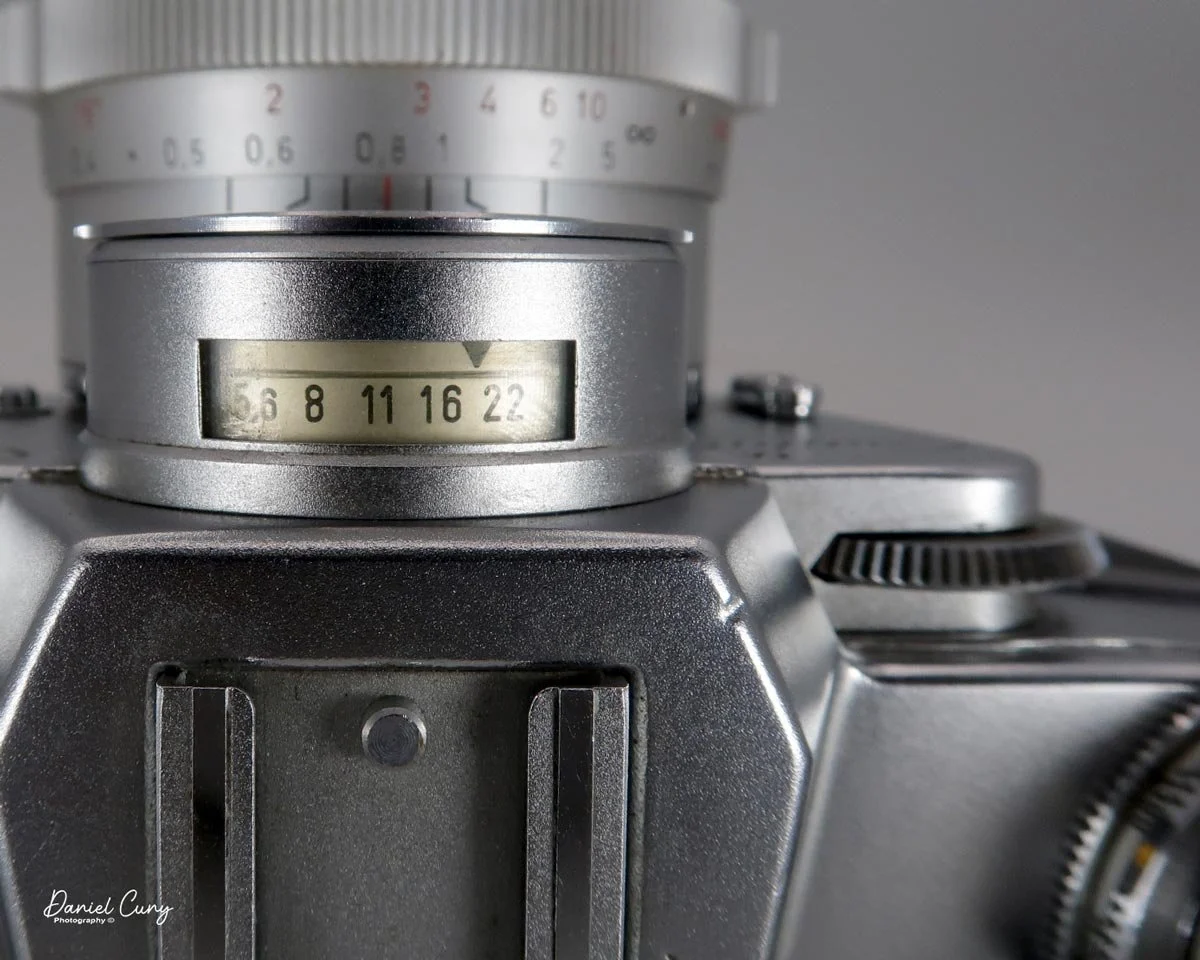
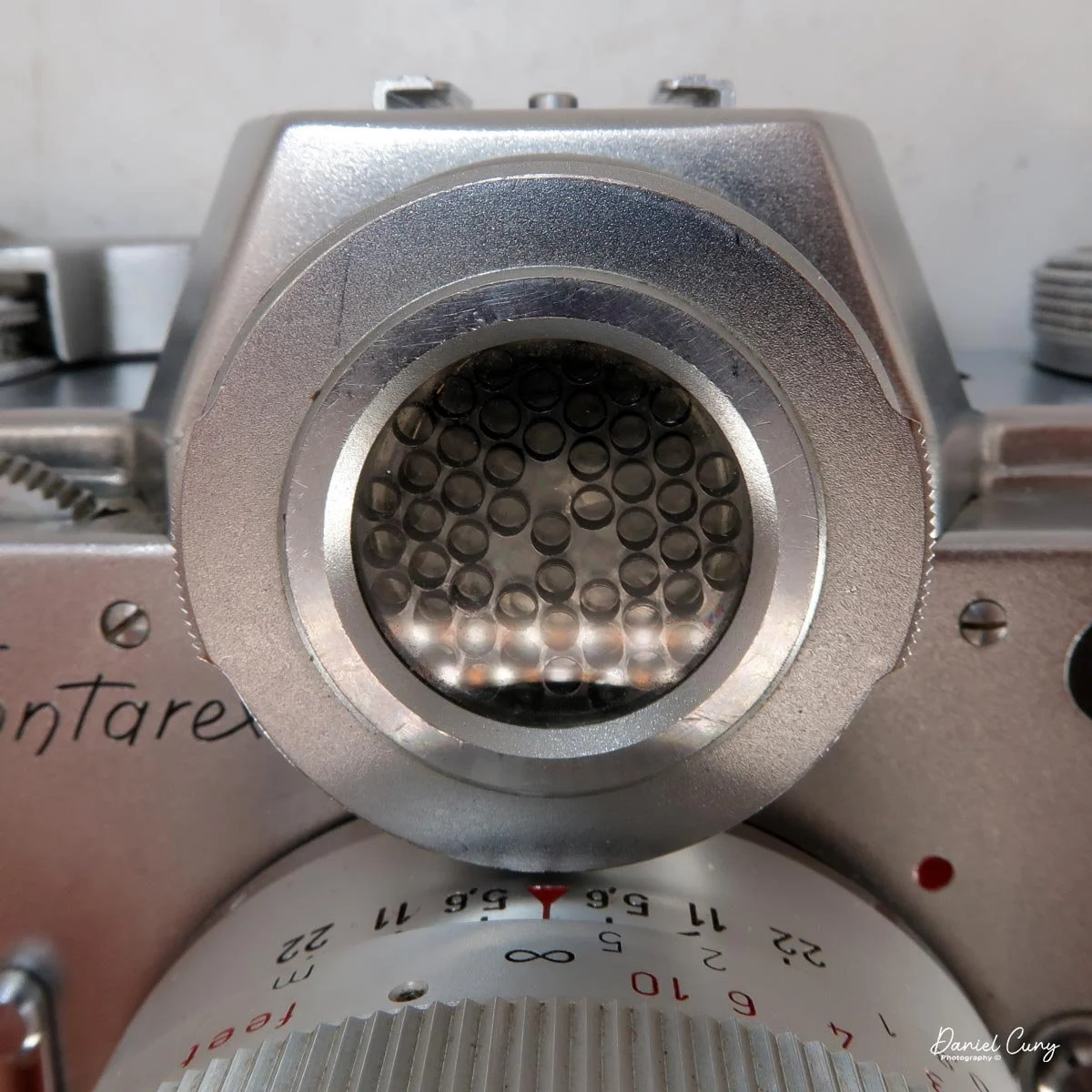
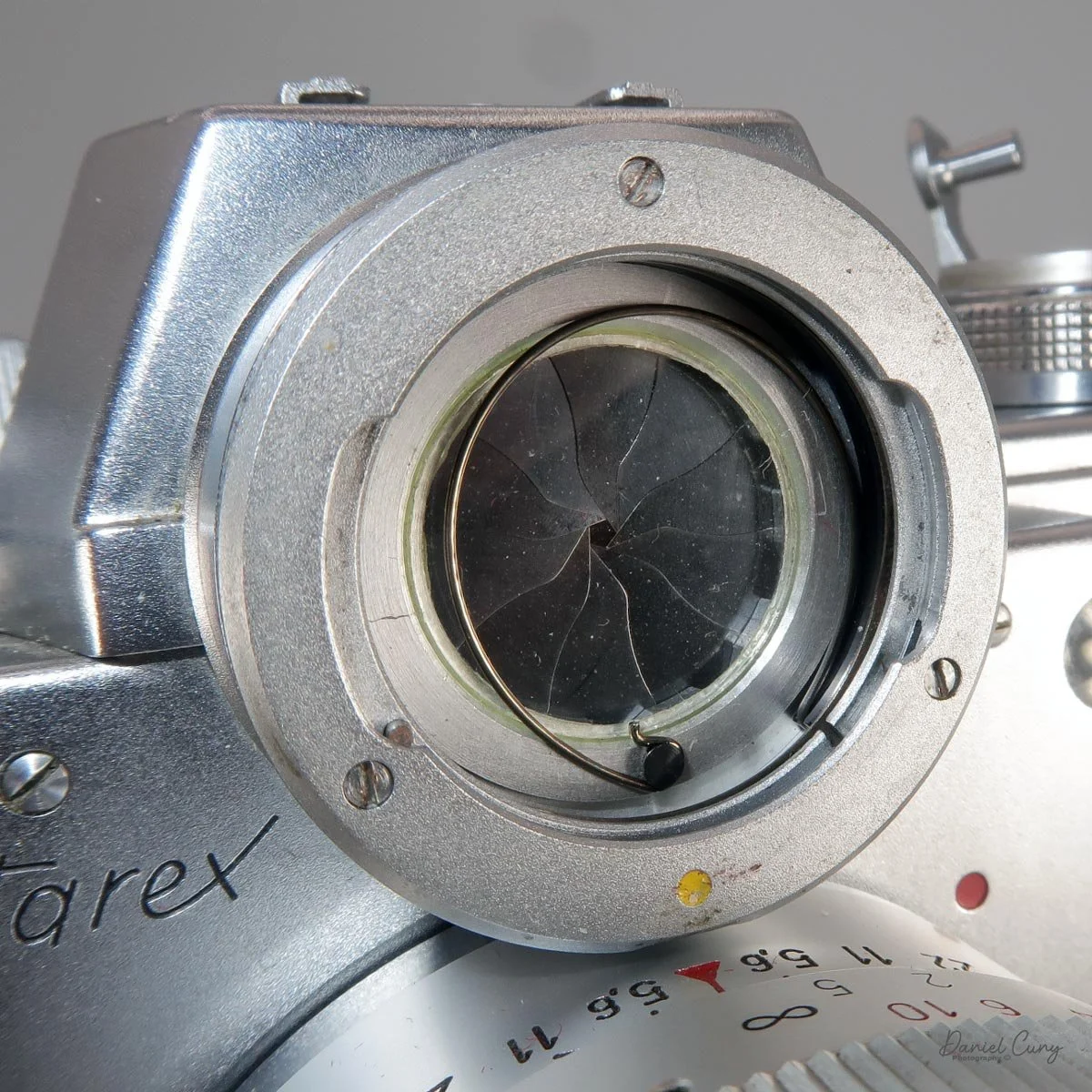
Turning this wheel sets the aperture setting, and it will also set the internal aperture needed to make the exposure. This will be transferred through the camera body, setting the proper aperture on the lens through its internal pulley system. You can remove the front of the meter housing, which has a honeycomb appearance, to expose the meter aperture, along with the pulley that activates it.
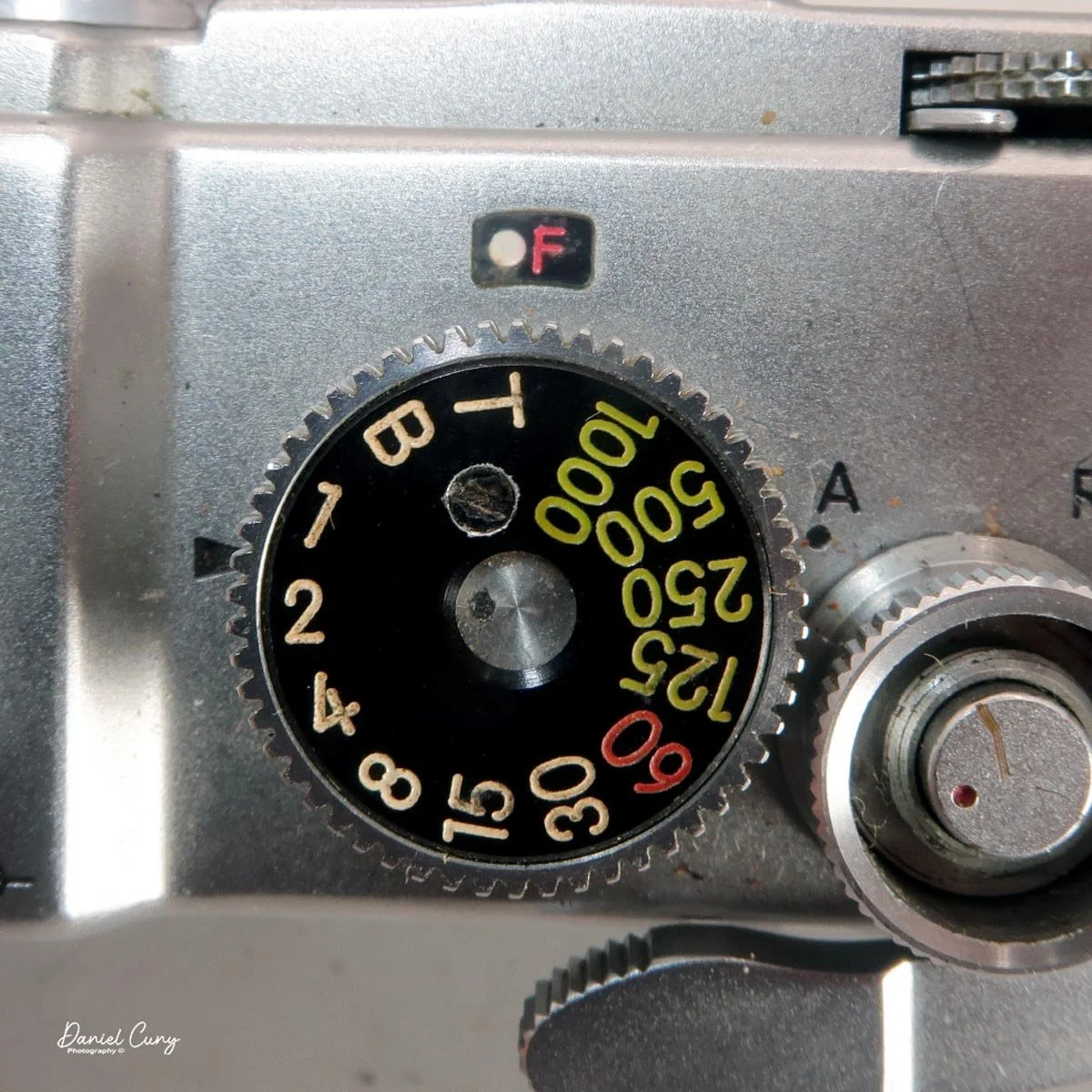
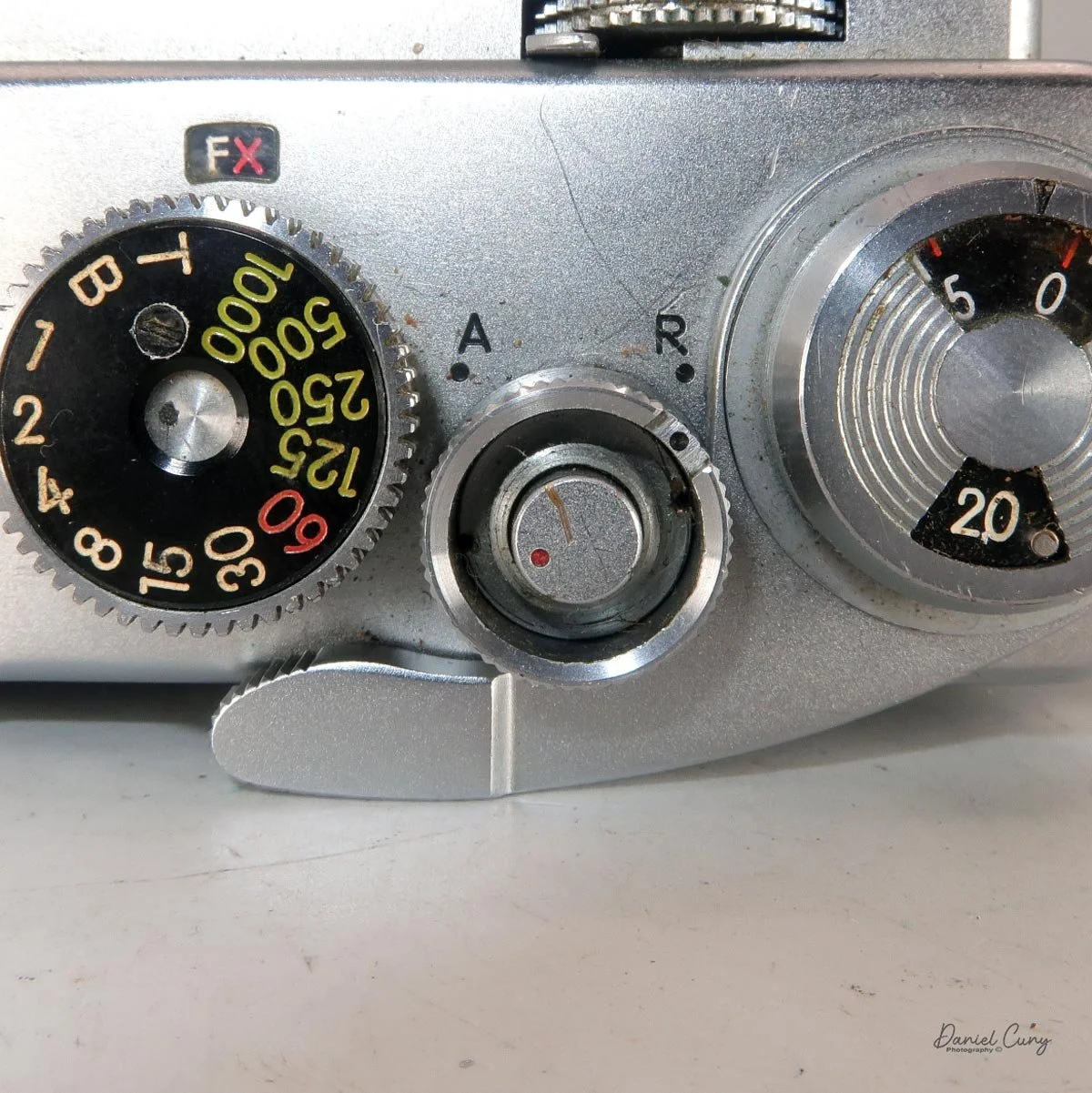
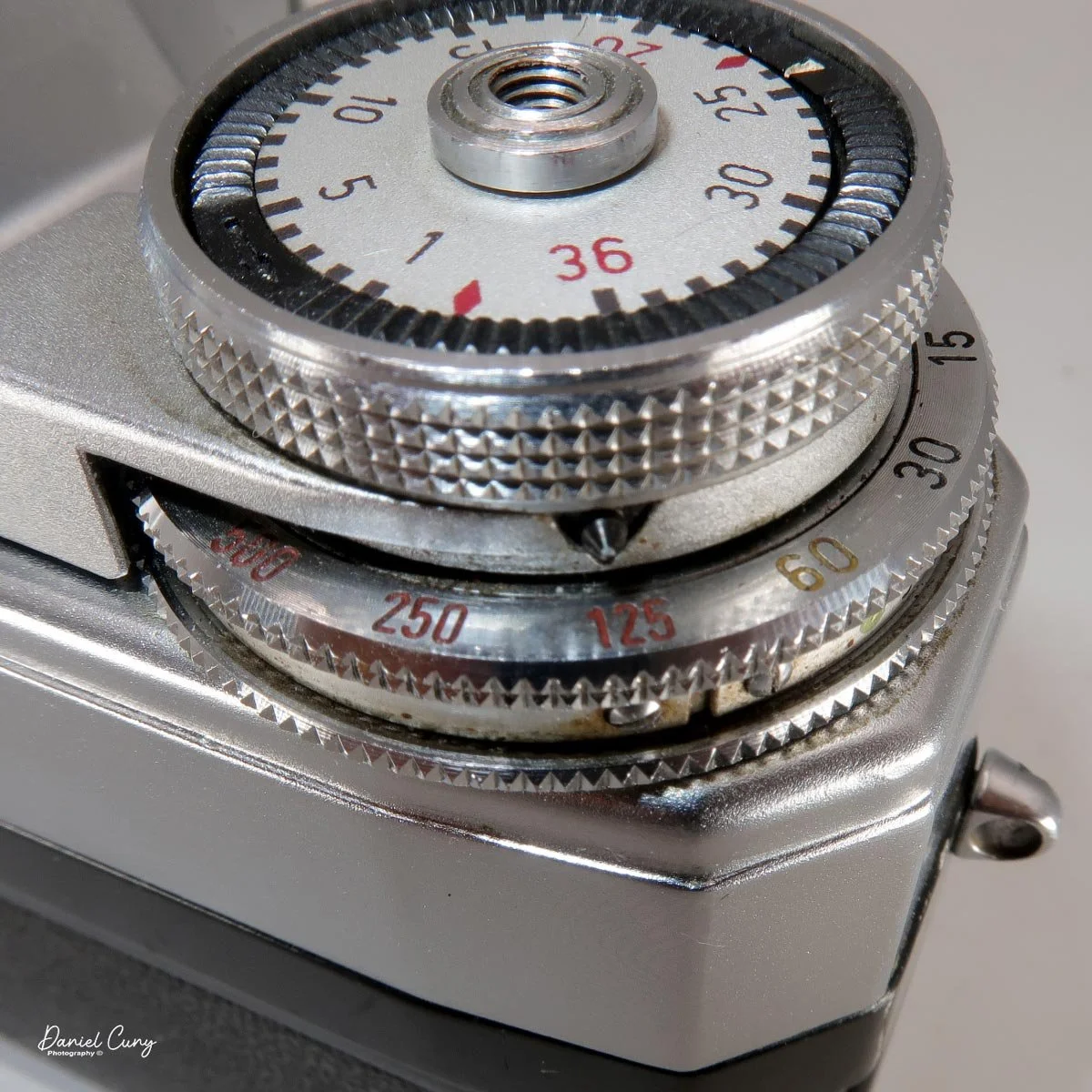
Just behind the aperture wheel on the front of the camera is the film winding lever, which sits on top of the shutter speed selector. Inside the winding lever is the camera's shutter release, which can accept a cable release for longer exposures. The shutter speed selector has a range of shutter speeds from 1/1000–1 sec, including "B" for timed exposures.
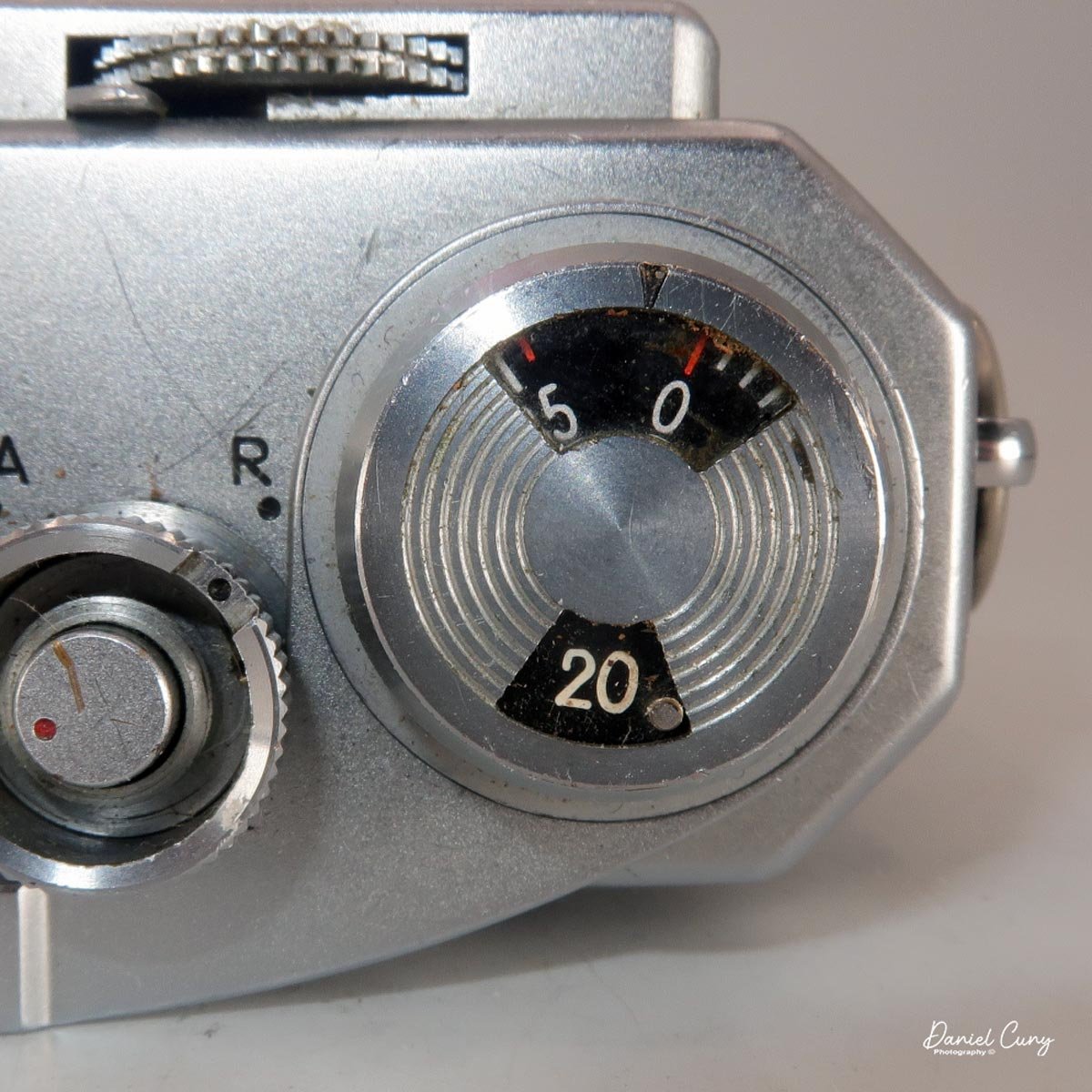
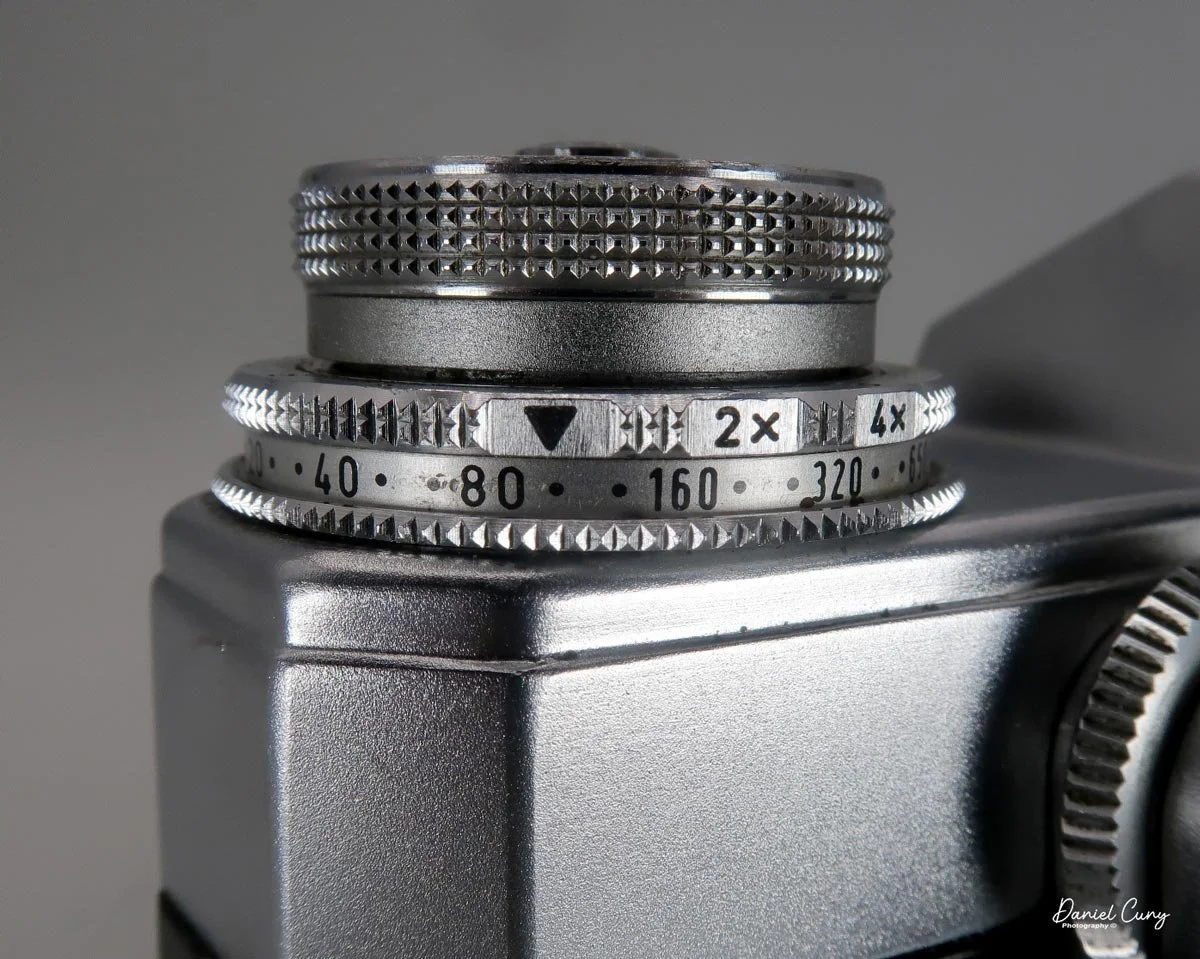
Just under the shutter speed selector is the ISO (ASA) settings. To set the ISO, lift on the shutter speed wheel and turn the dial to set the meter to the proper ISO. The ASA range is from 50–1300. There are also 2x and 4x settings if you want to overexpose in low-light situations purposely.
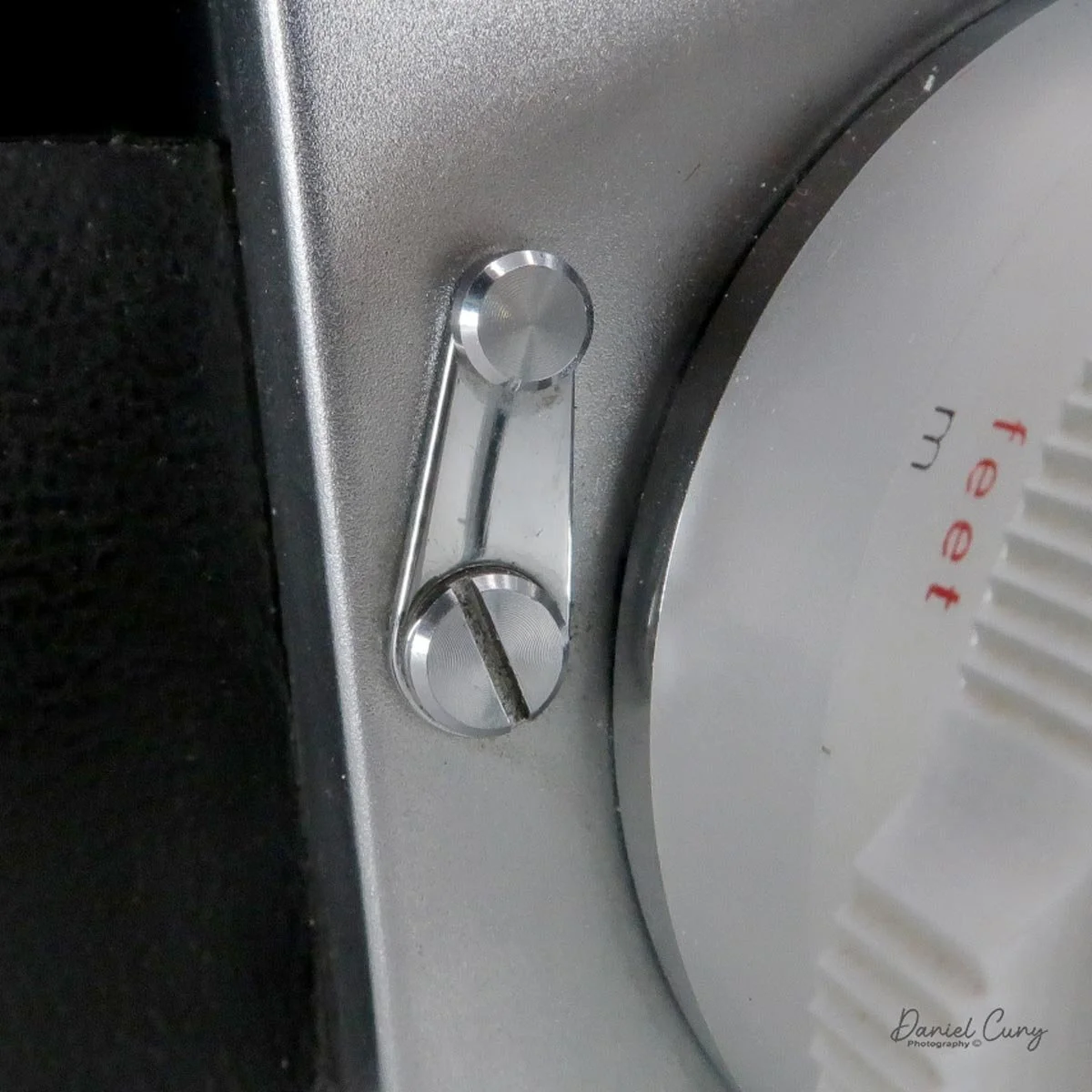
On the front of the camera, just under the aperture control wheel, is the camera's self-timer, which has a maximum delay of 12 seconds. It can be shorter, provided you don't pull the lever all the way to the maximum amount. On the other side of the lens, on top, is a light window for the internal meter.
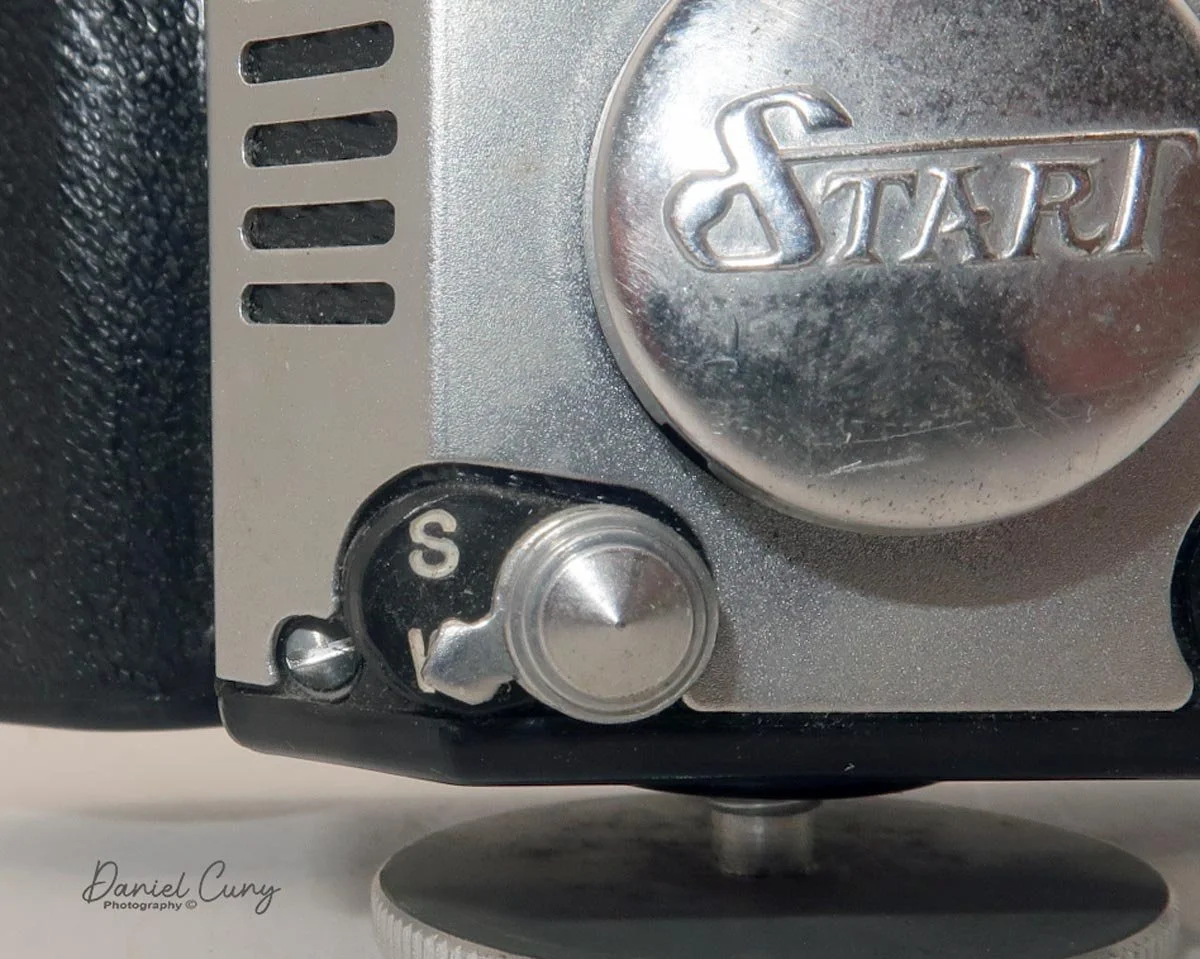
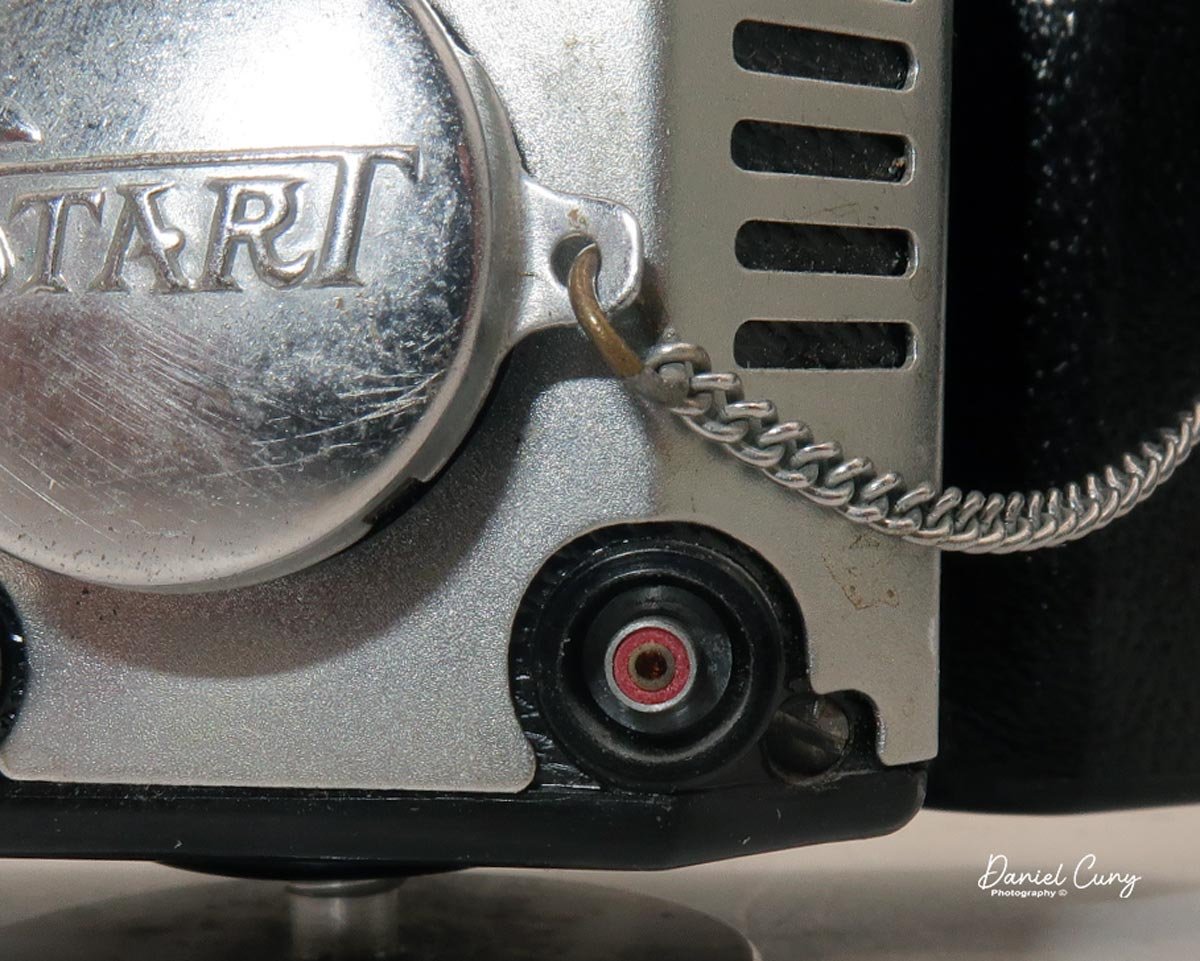
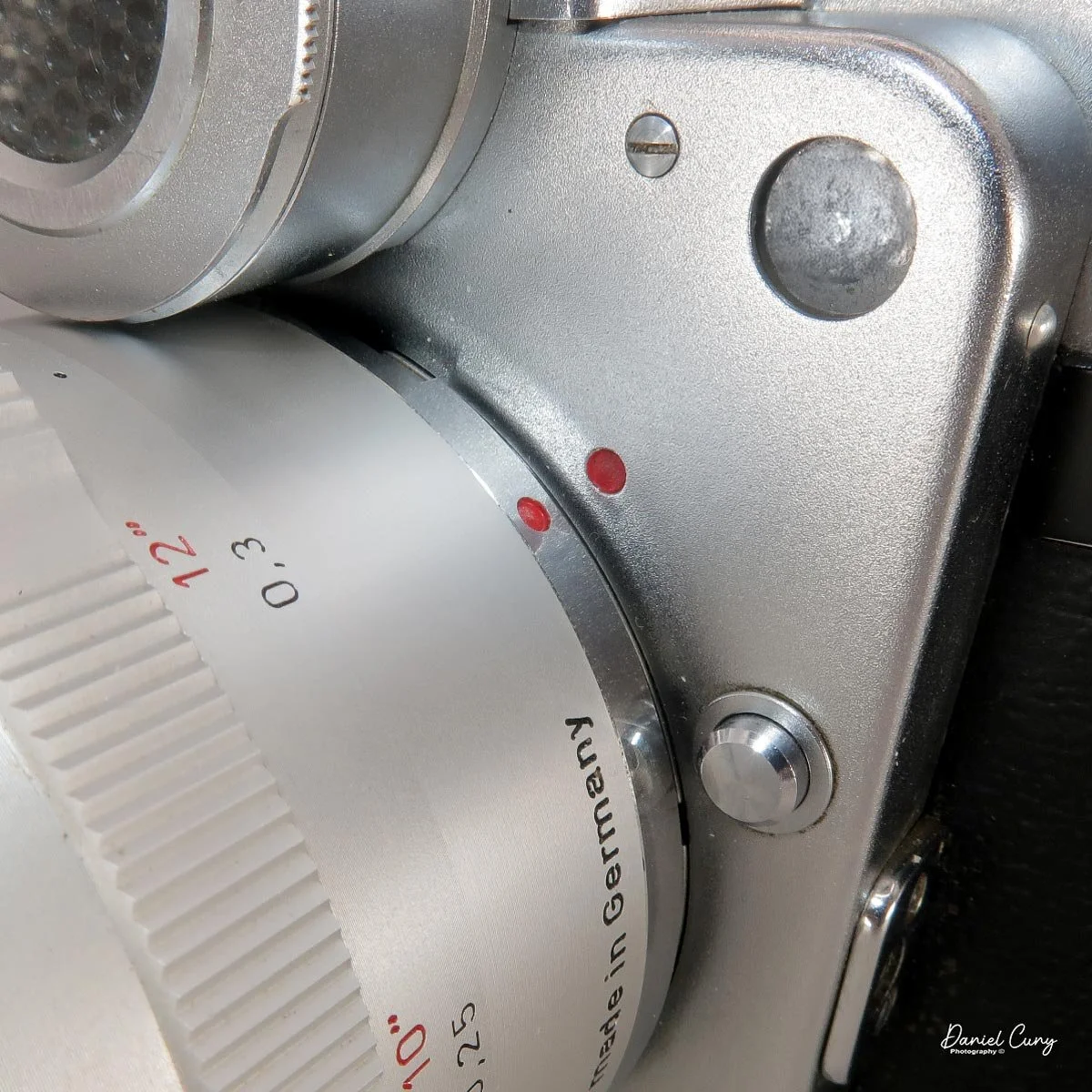
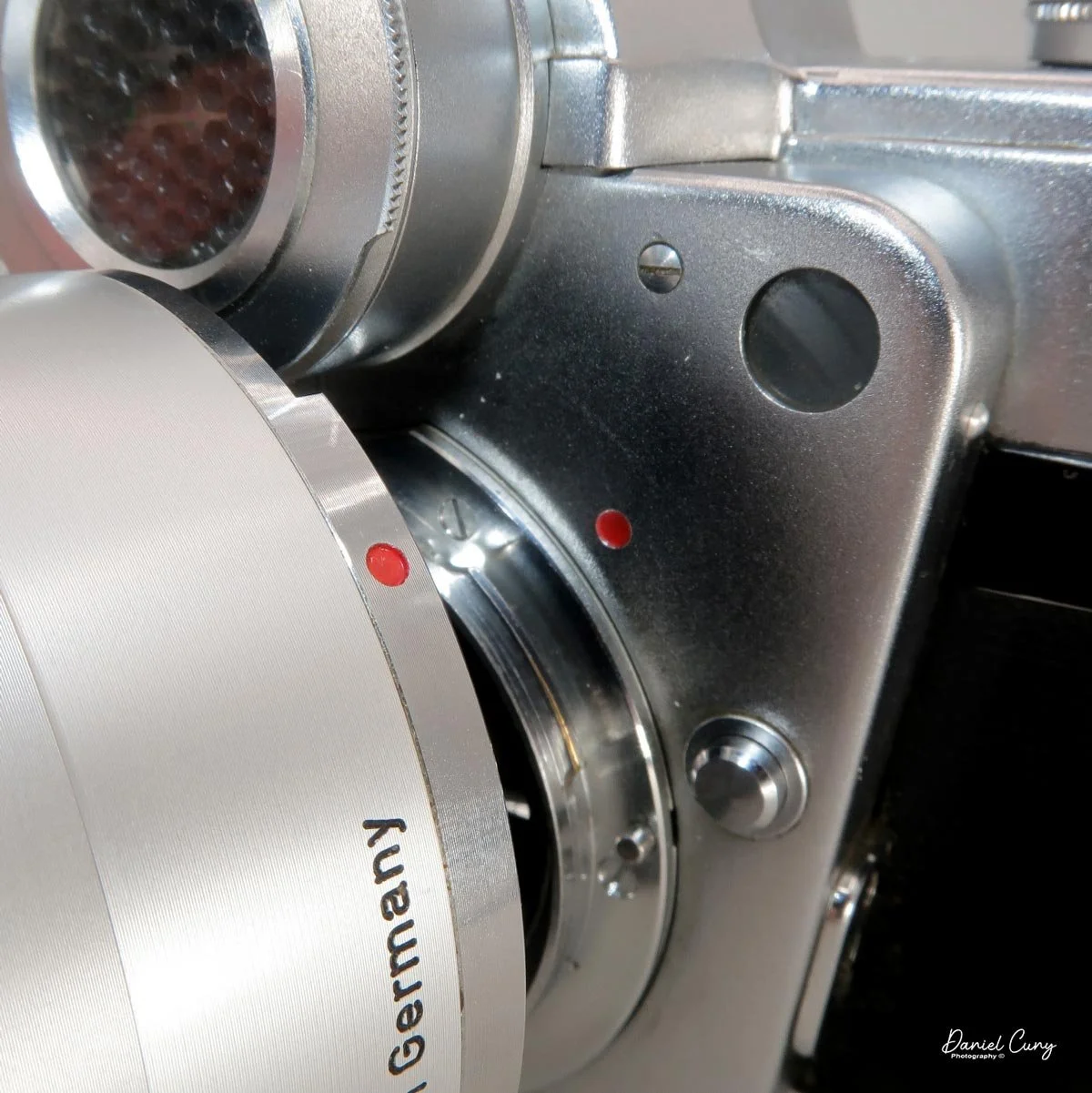
Under the light window is the button to remove the lenses. Press in and turn the lens counterclockwise to remove the lens. To mount the lens, match up the two red dots and turn clockwise until the lens clicks into place. On the side, next to the lens release button, is the flash sync terminal, which is where you'll connect the flash cable, since the camera doesn't have a hot shoe for the flash.
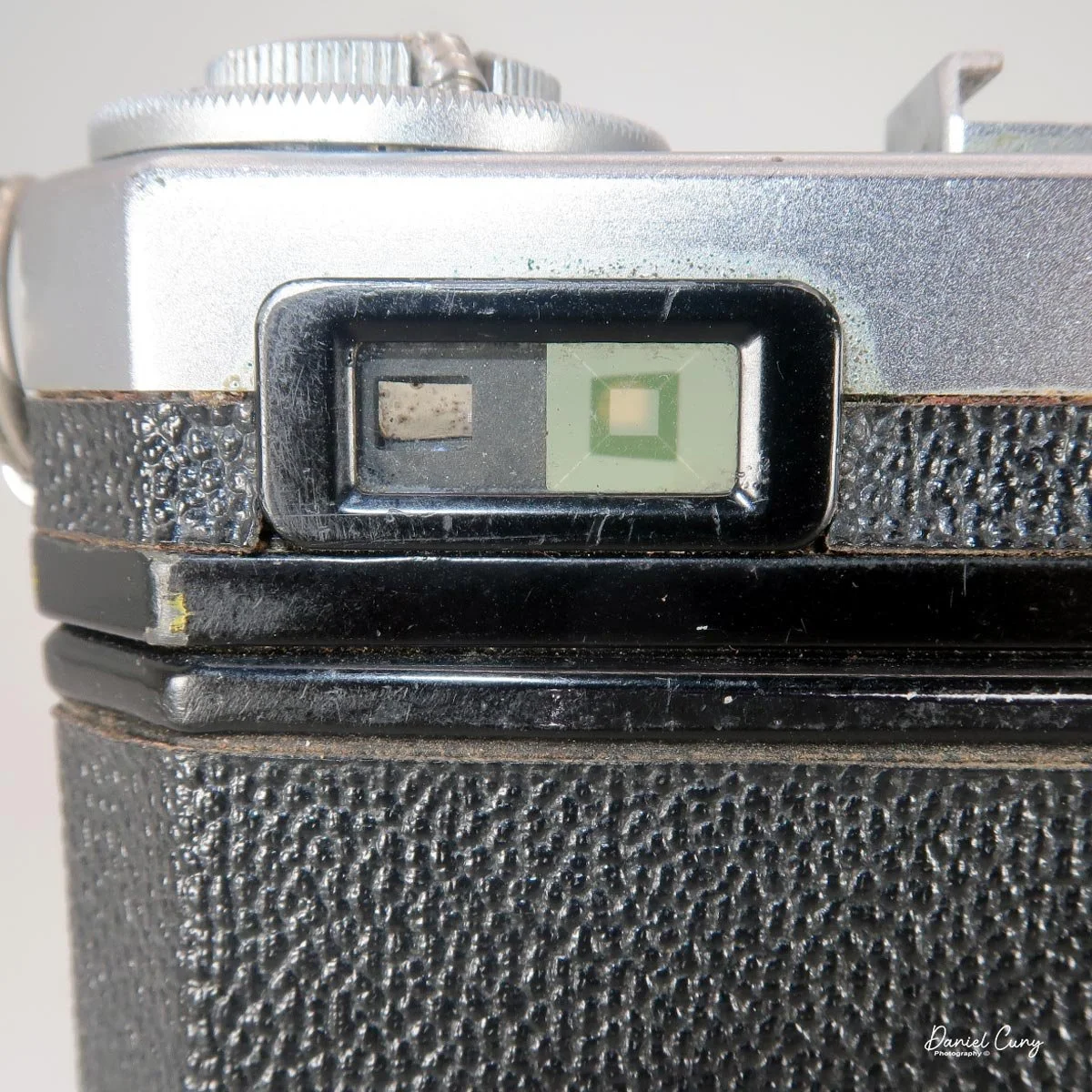
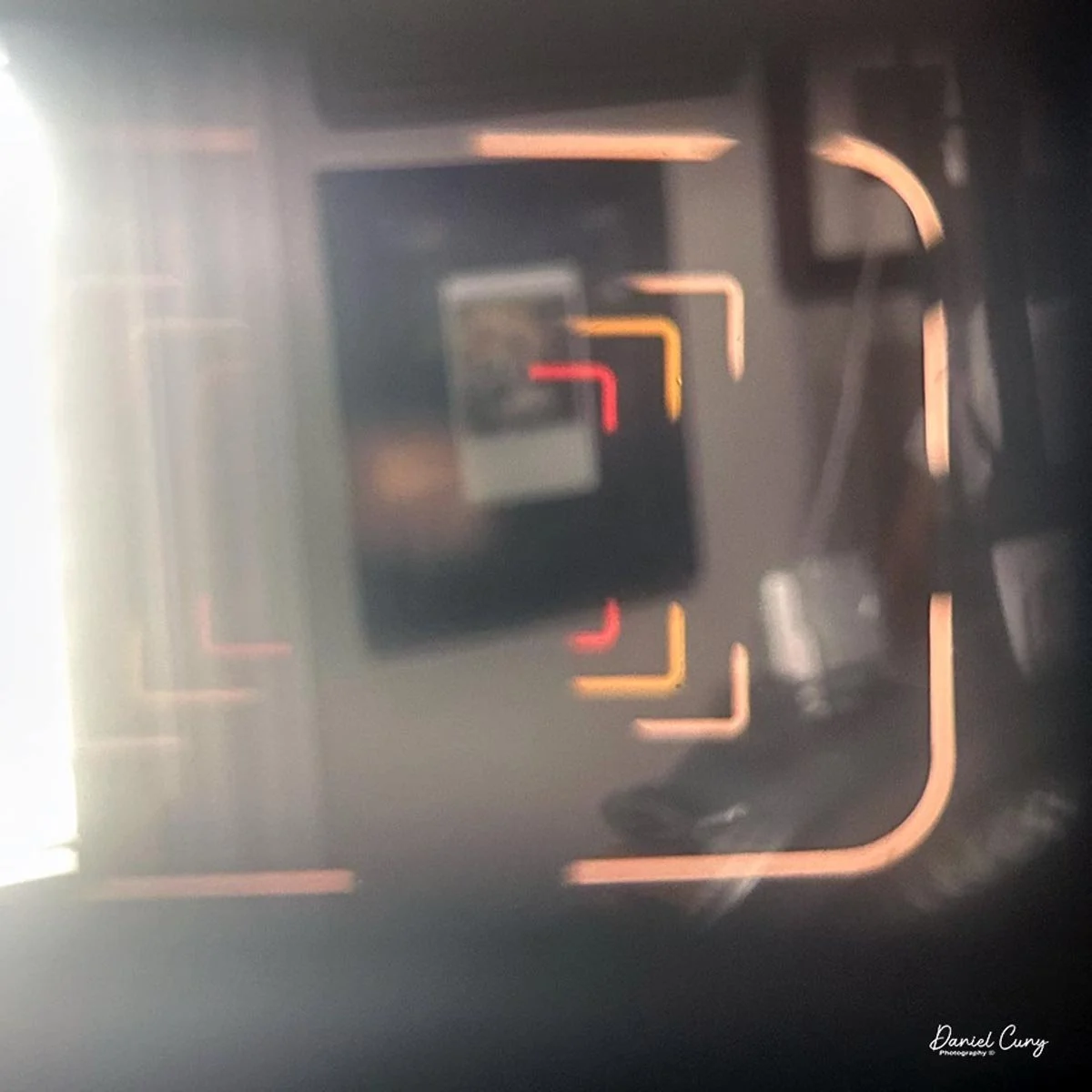
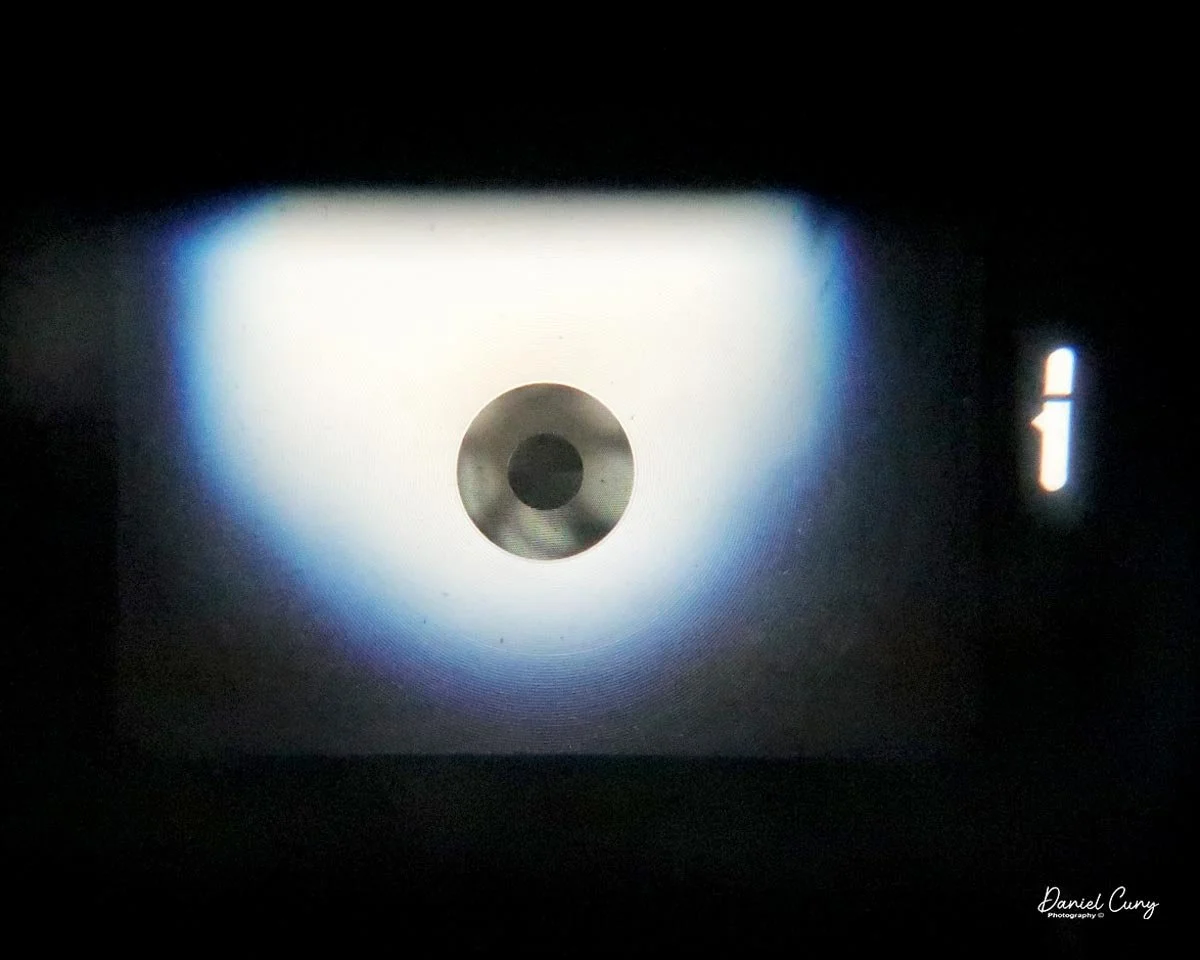
Looking through the camera's viewfinder on the rear of the camera, you'll see the three different focusing types incorporated into the focusing screen. On the outer portion is ground glass, in the very middle is the split image, and circling the split image is a microprism focusing area. Some people have difficulty with the split image, especially with slower lenses, where one of the halves blacks out and they cannot find the vertical or horizontal line to bring together. That's caused by the pupil of your eye not being centered in the focusing screen. If you move the camera up or down, you'll notice this changes from top to bottom, but once centered, the split image becomes whole, and you'll be able to focus more easily.
On the right side of the focus screen is the meter window. Inside the meter window is a line. The goal of proper metering is to get the line in the middle for a properly exposed image. When the line is above the cutout area on the left, you're overexposing, and when below, you're underexposing. The meter allows you to set either the shutter speed, then move the aperture wheel to line up the exposure, or you can set the aperture and move the shutter speed to get the meter needle in the center. It all depends on whether you want to stop action (shutter speed) or get more/less depth of field (aperture).
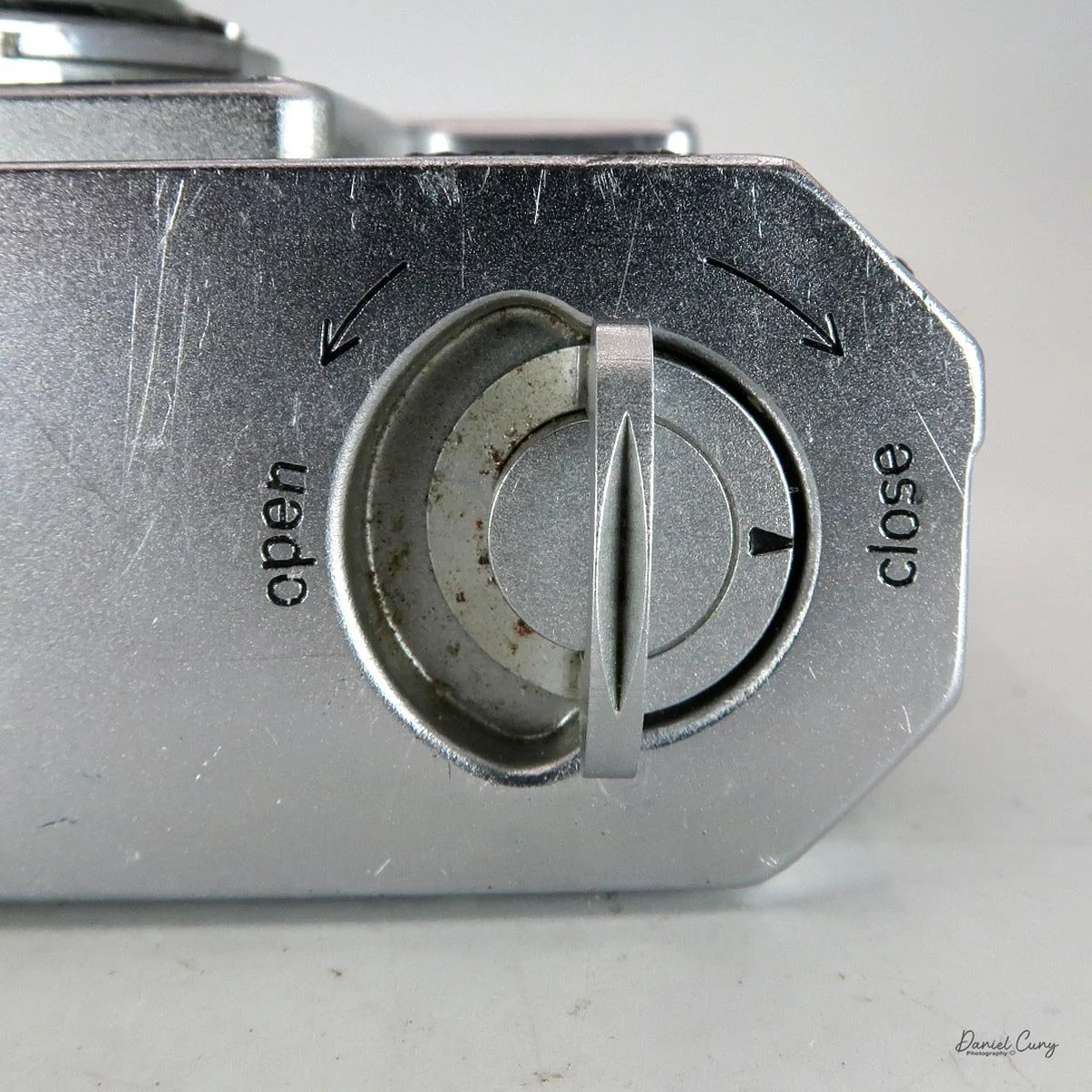
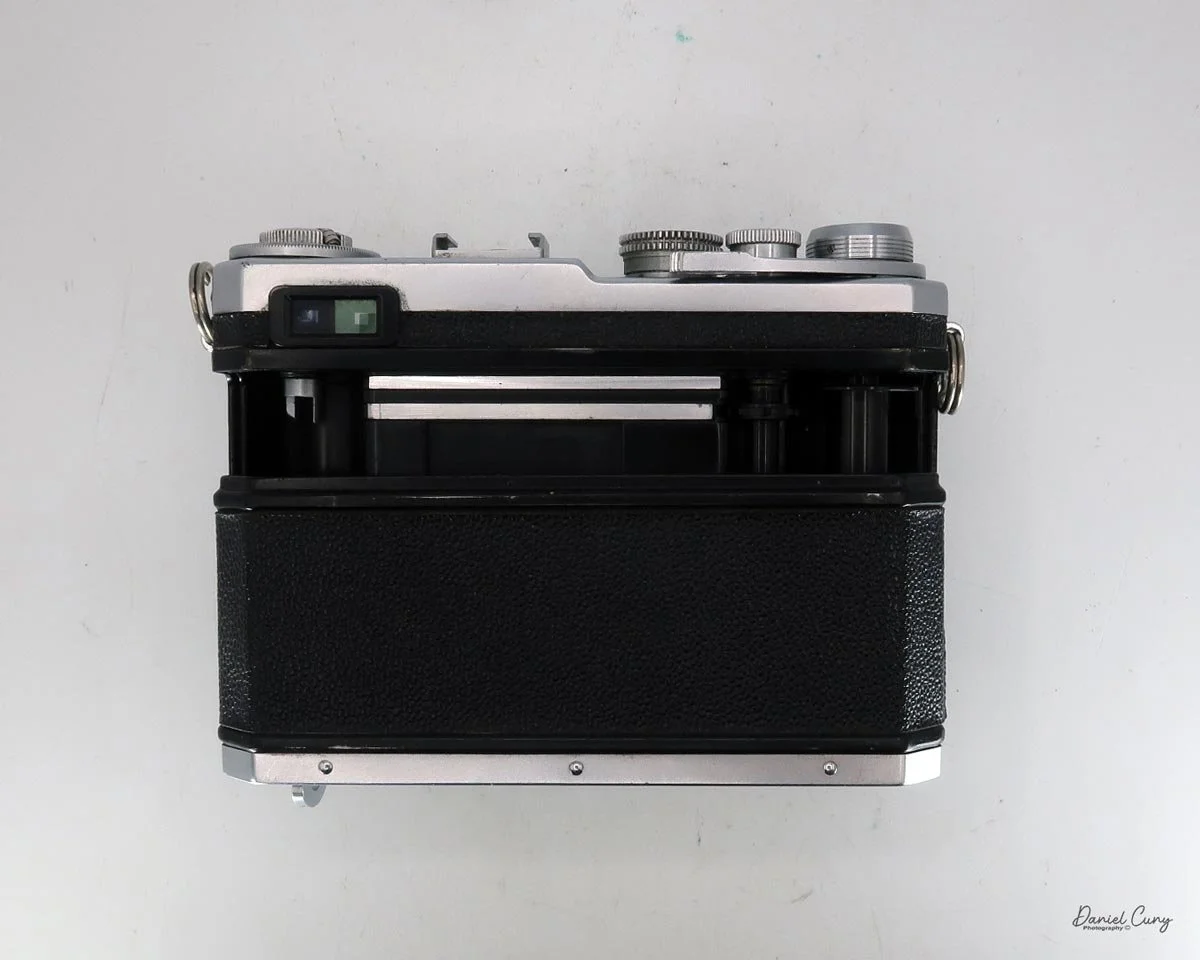
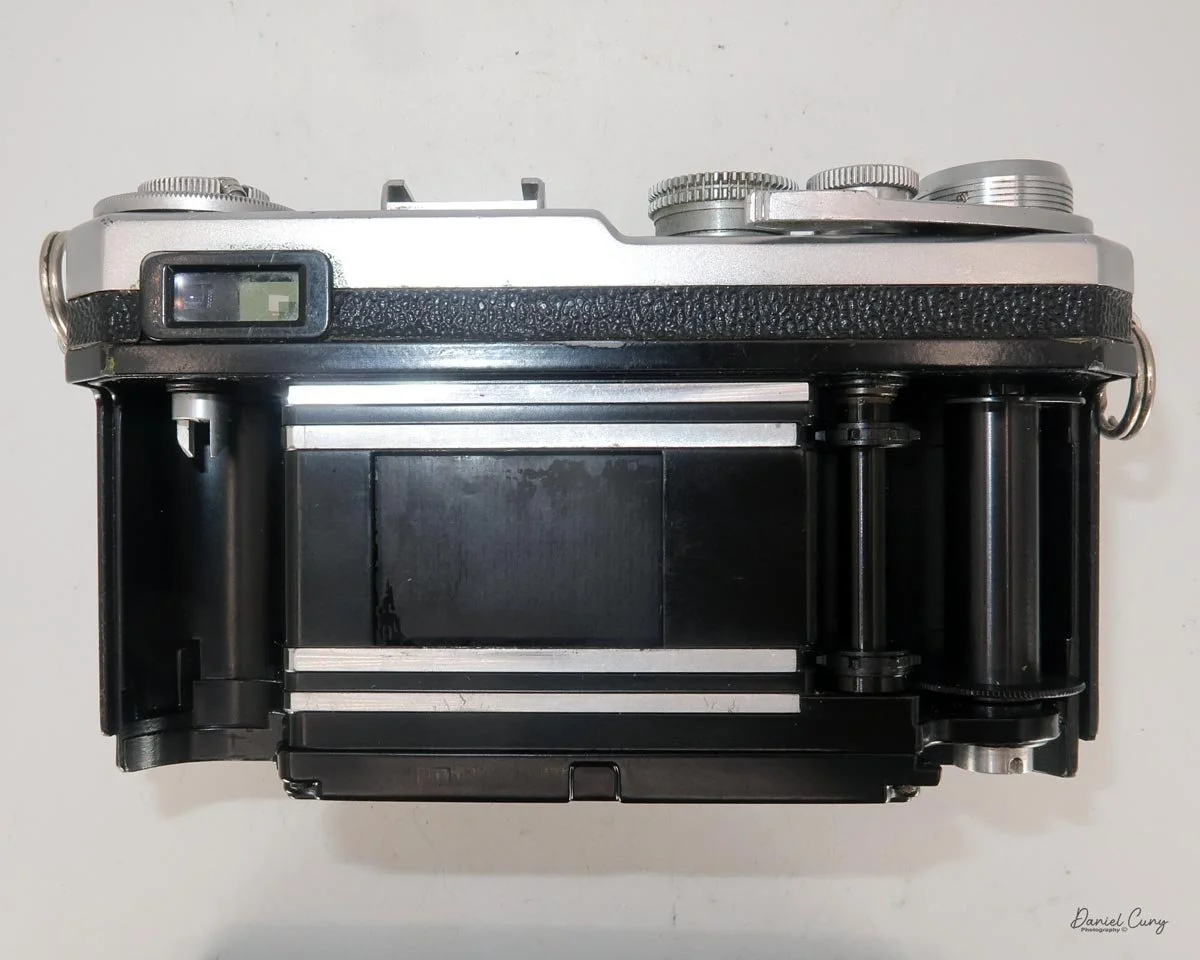
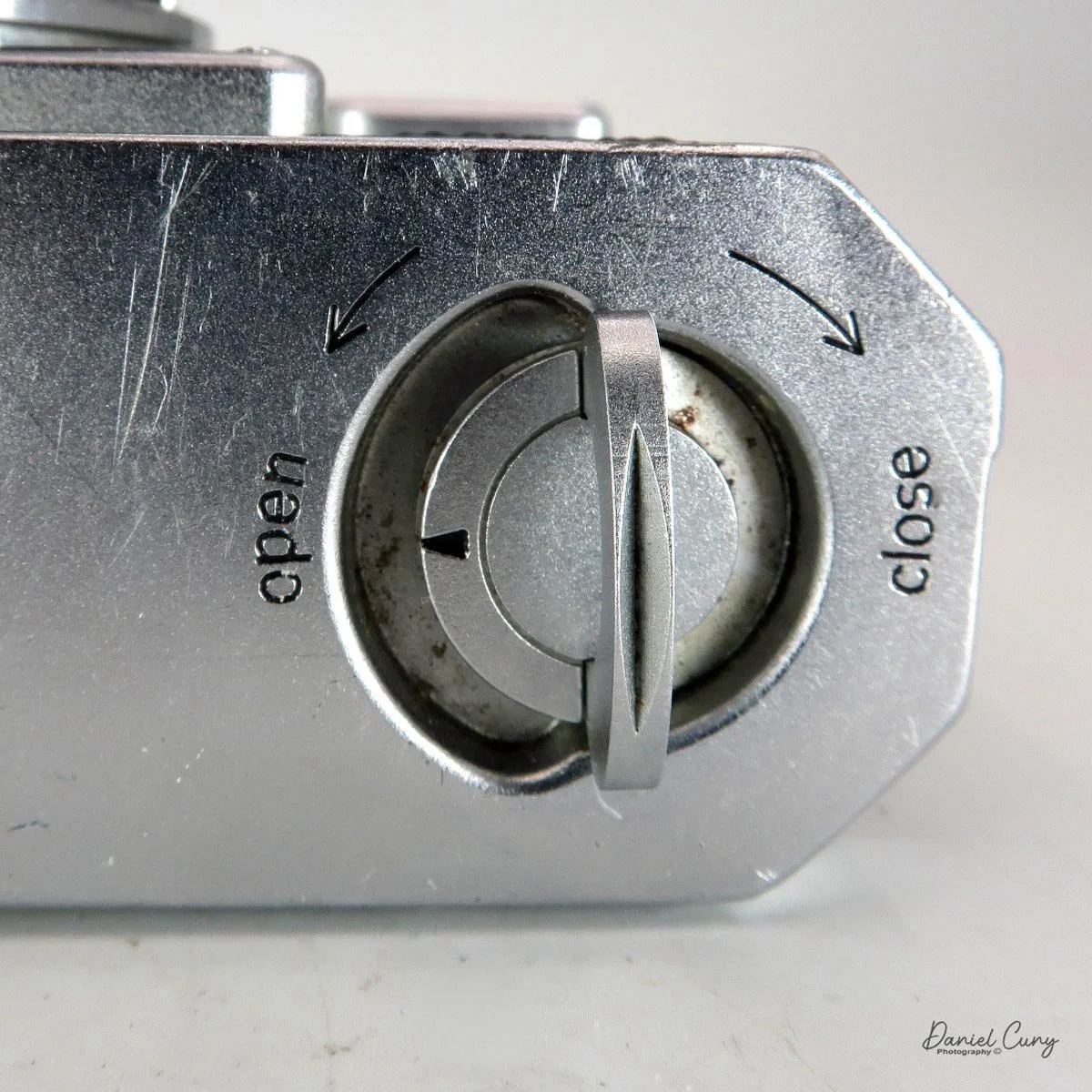
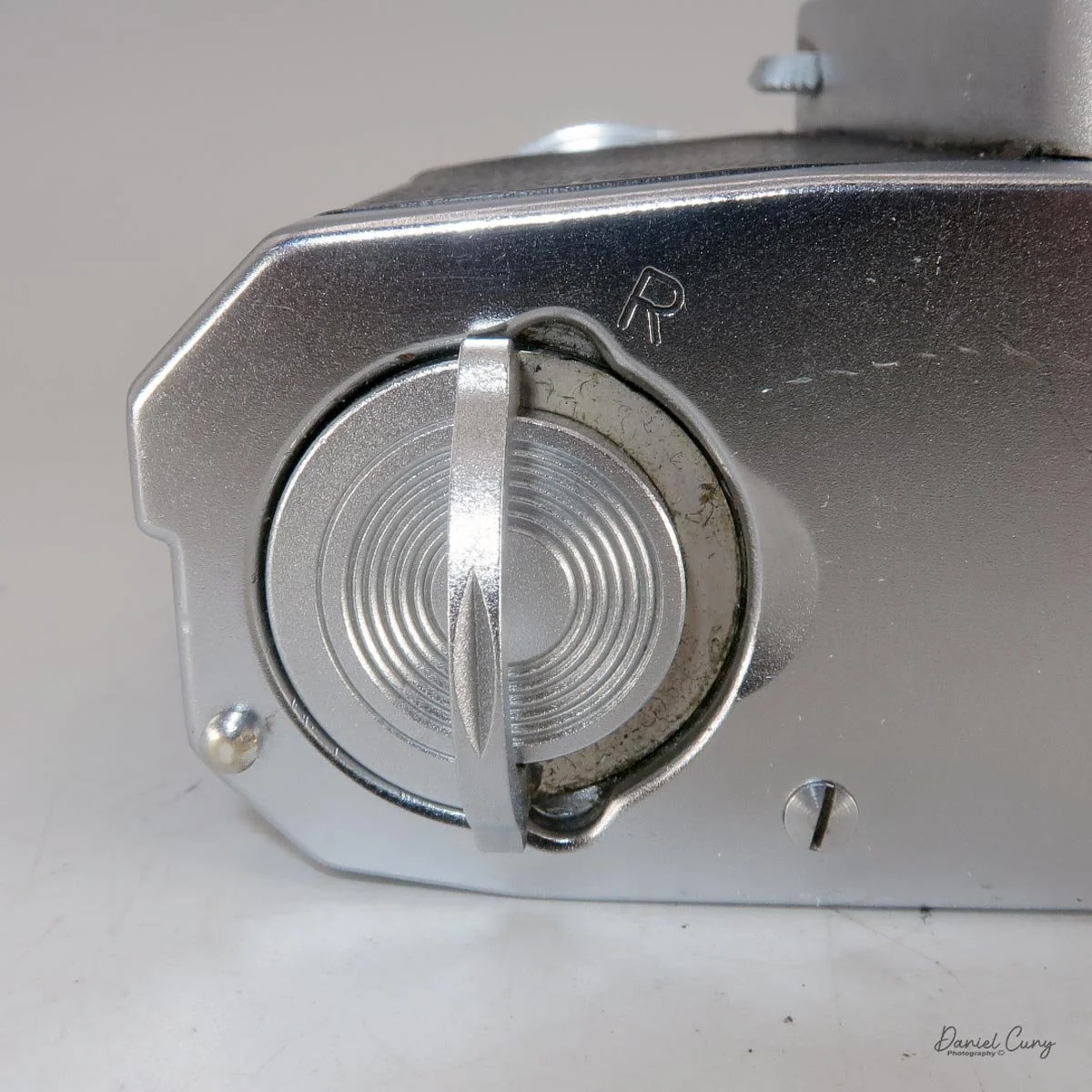
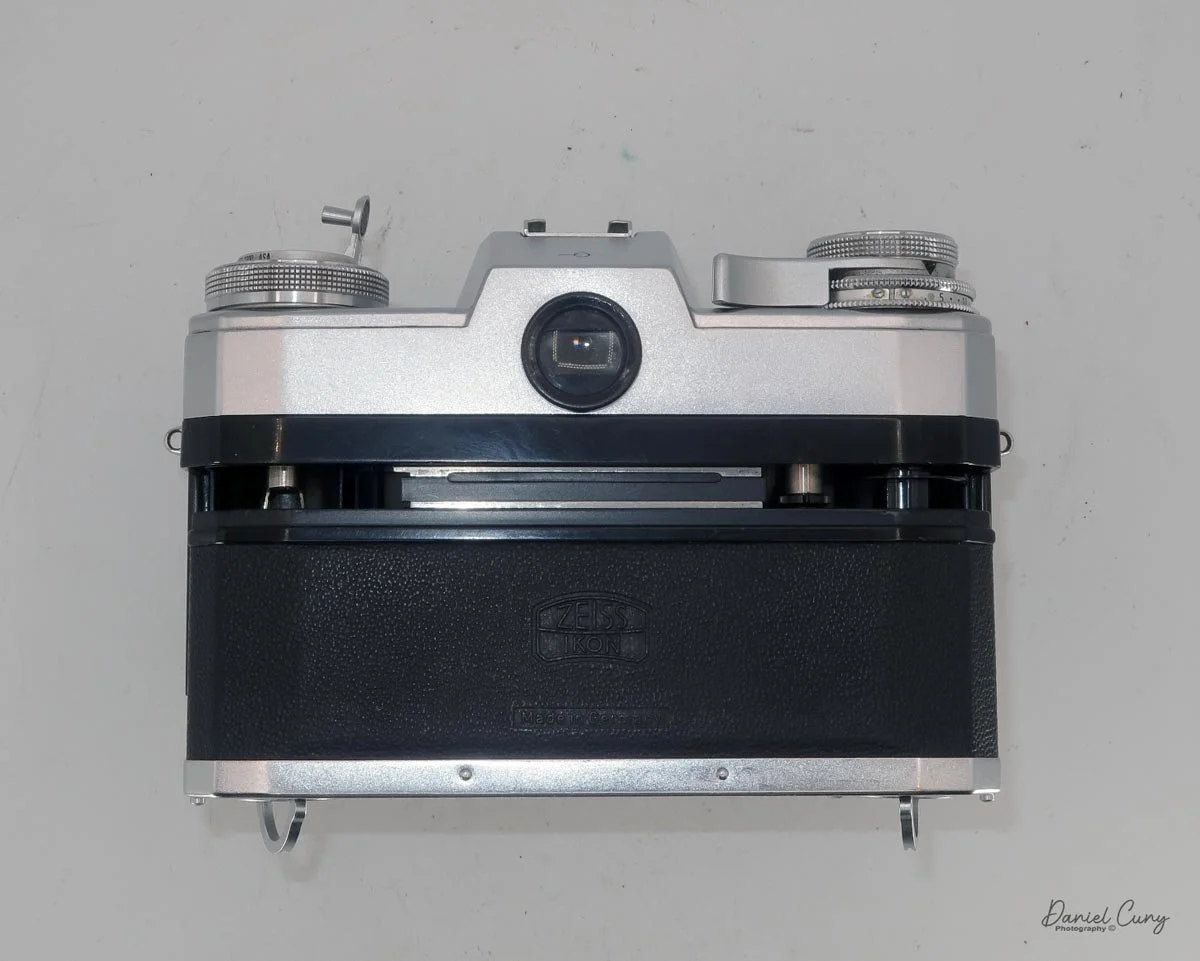
To open the camera to load film, there are two latches on the bottom of the camera that need to be turned, which allow you to slide the back off the camera and expose the film chamber. Once the back is removed, you'll load the 35mm film like you would any other 35mm camera. Once the film is loaded, put the film back into the grooves in the camera body, and slide the back up and into position on the back of the camera. Once it's on, lock the two latches and flip down the handles so the camera sits flush.
When you get to the end of the roll, and it's time to rewind the film back into the cassette, one of the latches on the bottom of the camera has an "R" for rewind. Lift the handle of this latch only, and turn the lever until the handle is pointing at the "R" (for rewind). Flip up the handle on the rewind knob and rewind the film back into the 35mm cassette. Once the film is rewound, turn both levers to the open position, take the back off the camera, and remove the film for processing.
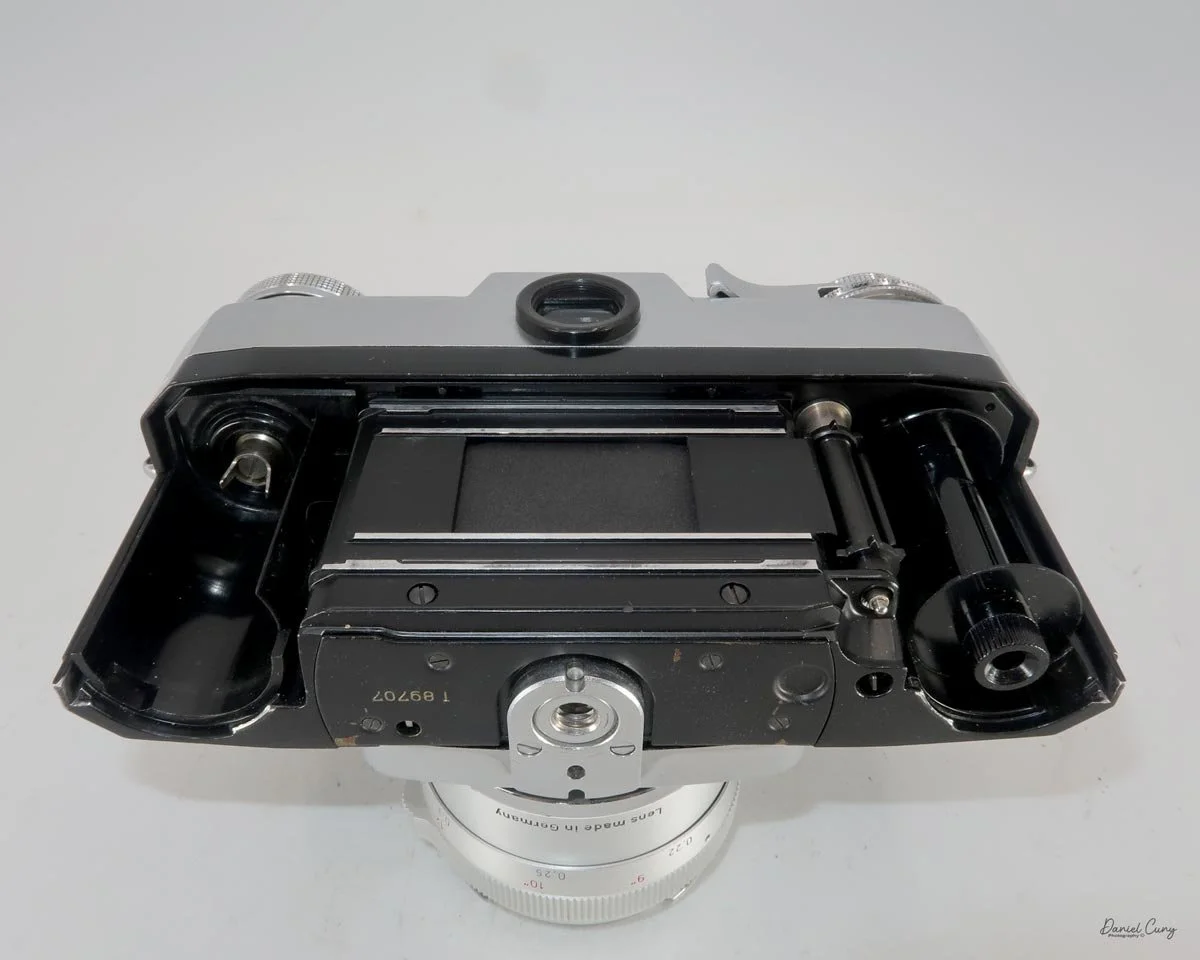
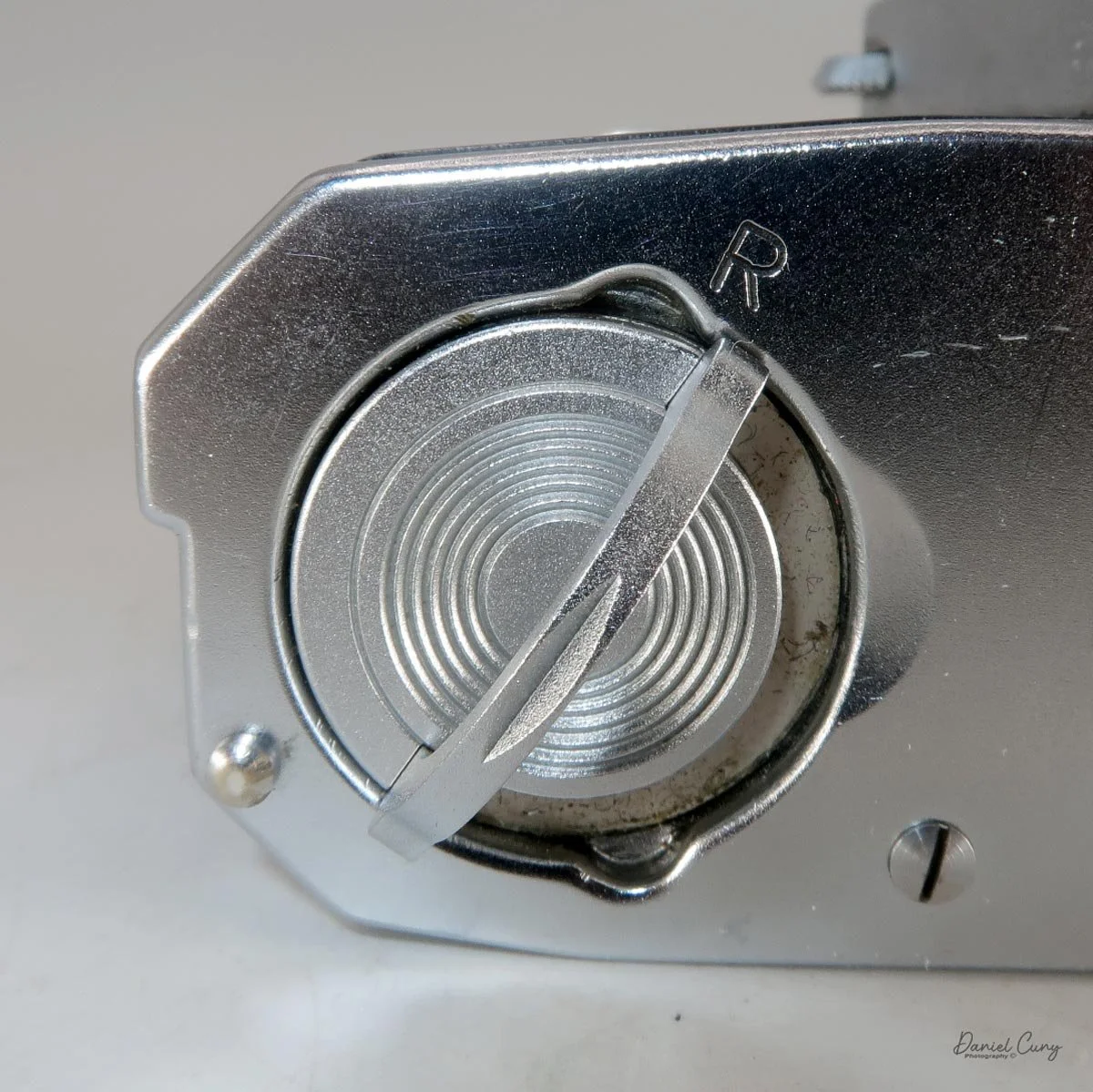
Now that we have film loaded into the camera, let's take it for a walk around the neighborhood and see how the camera performs.
My Results
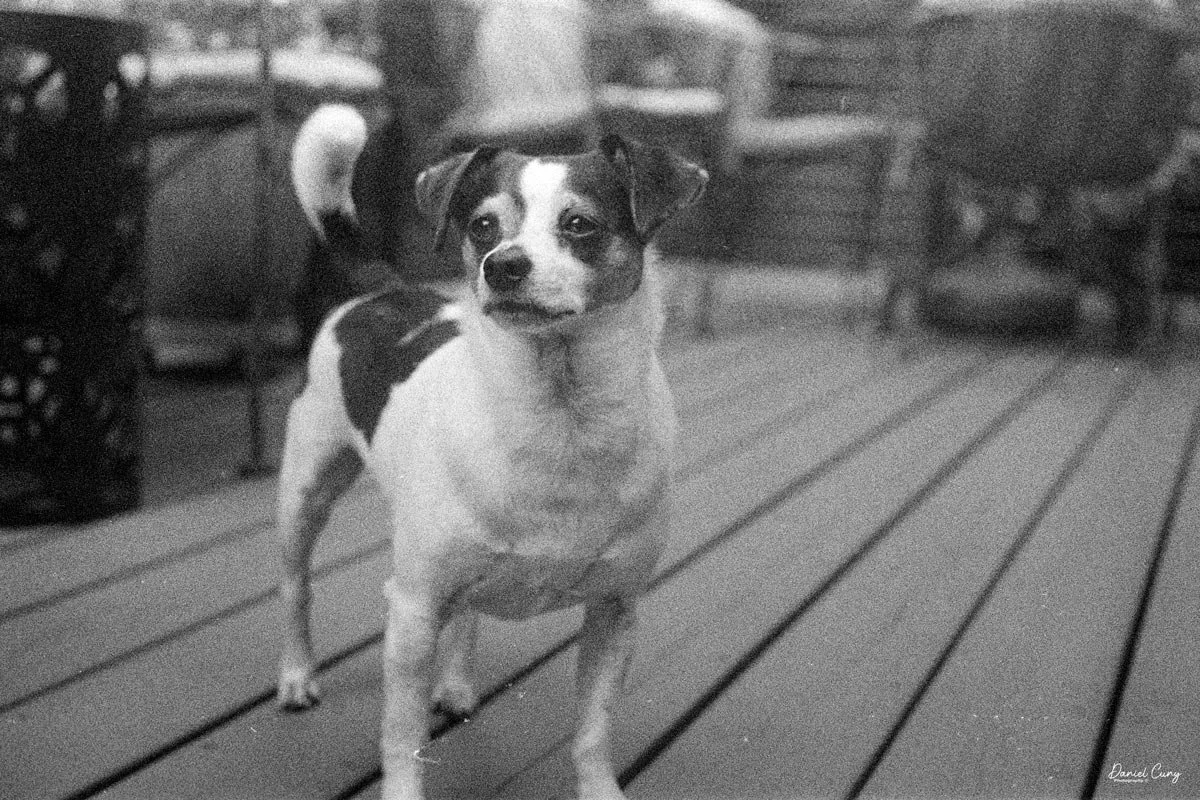
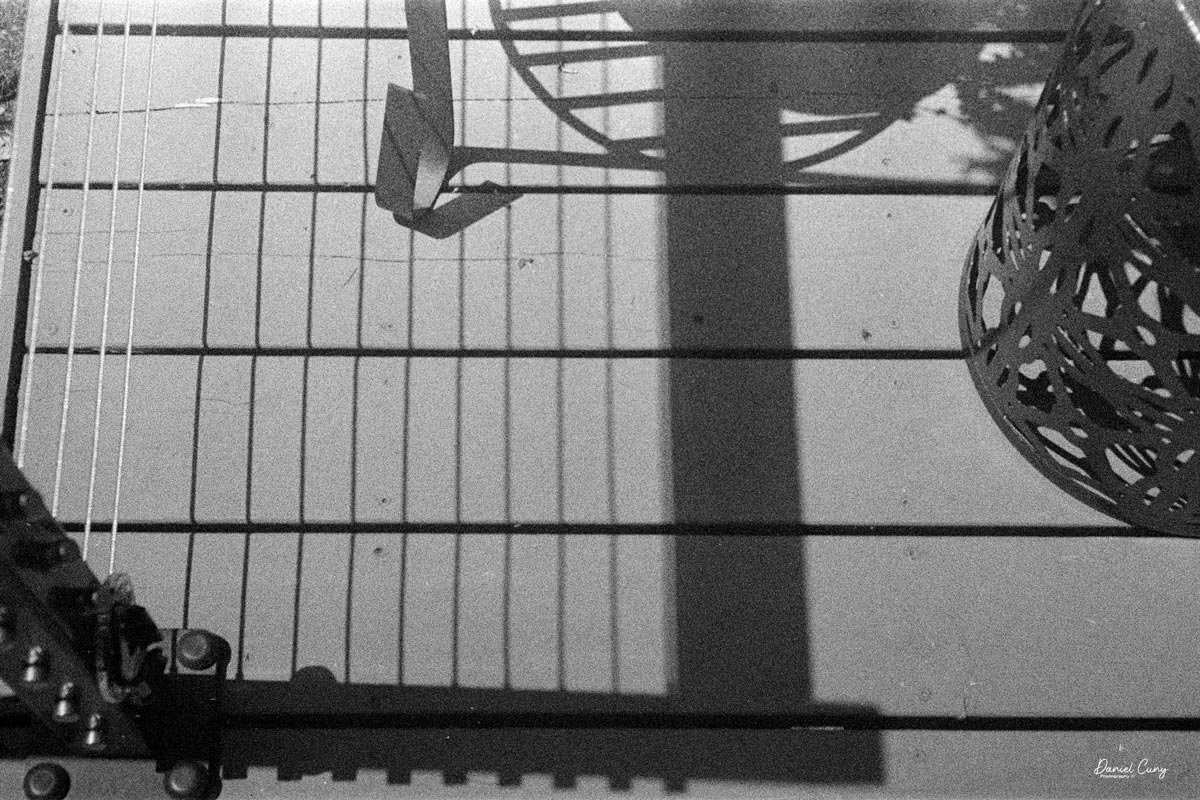
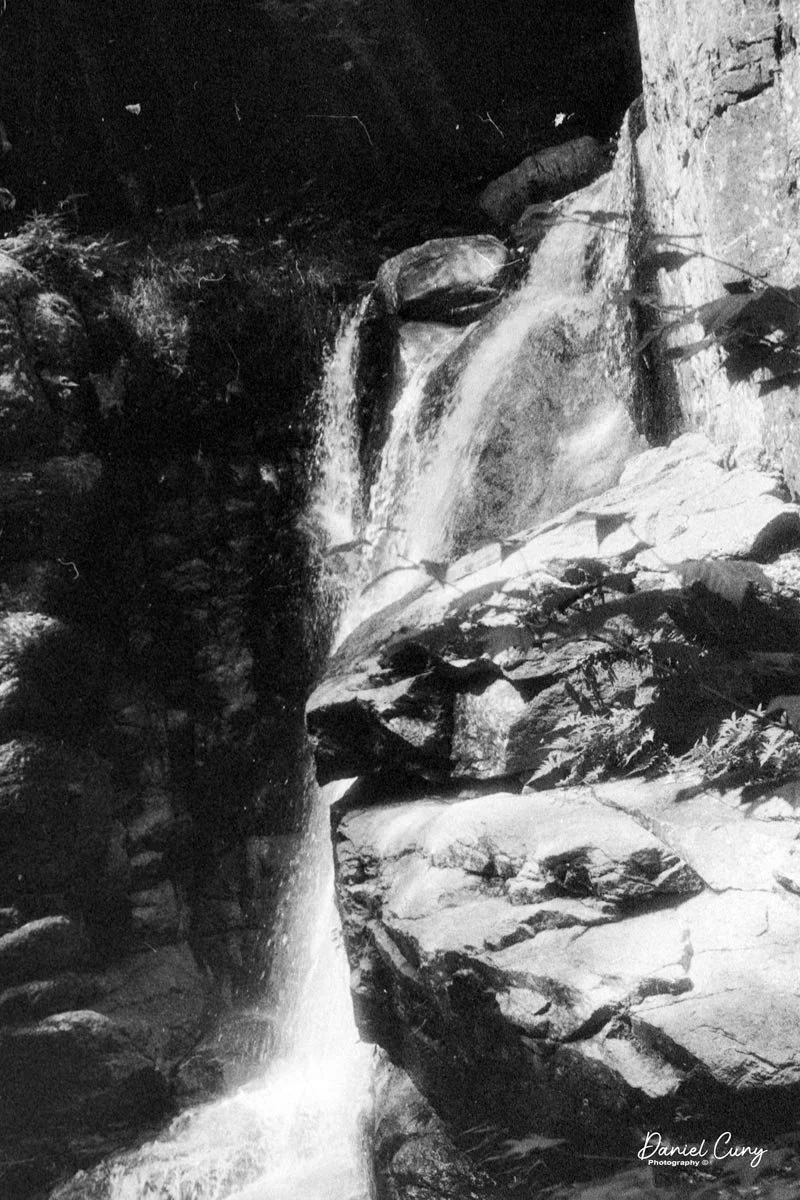
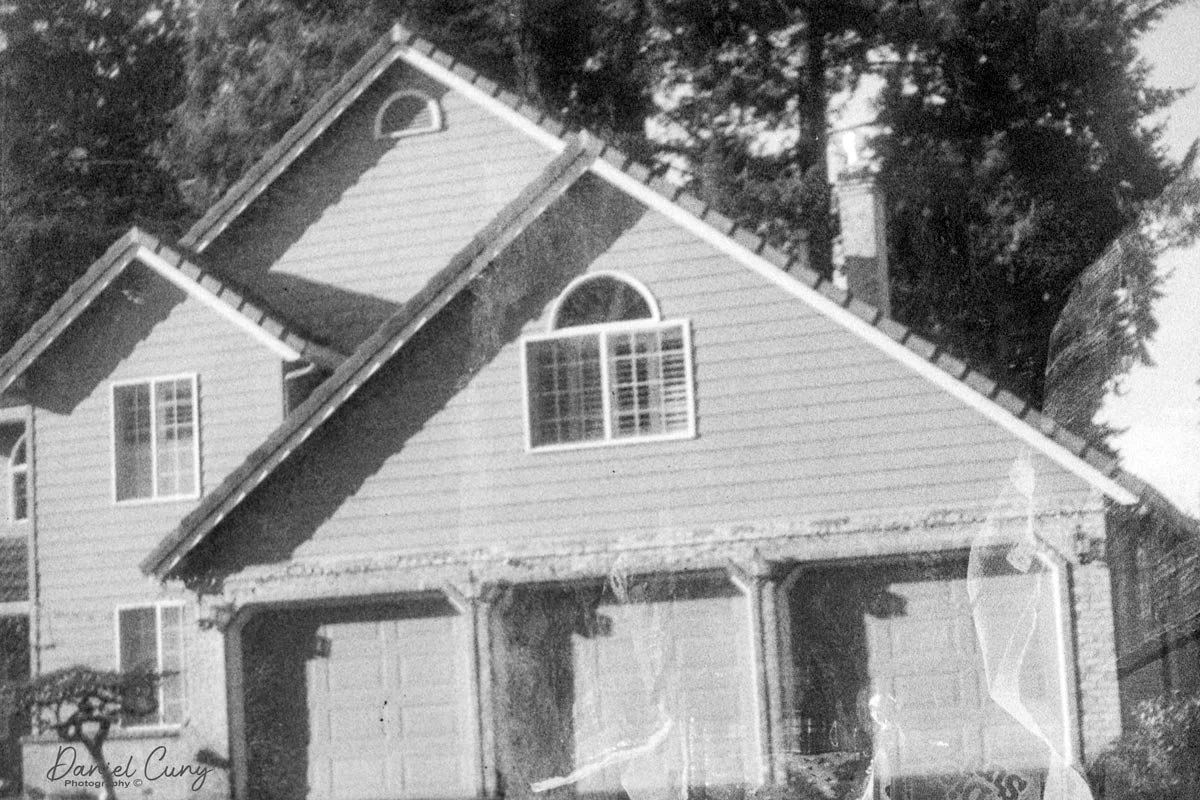
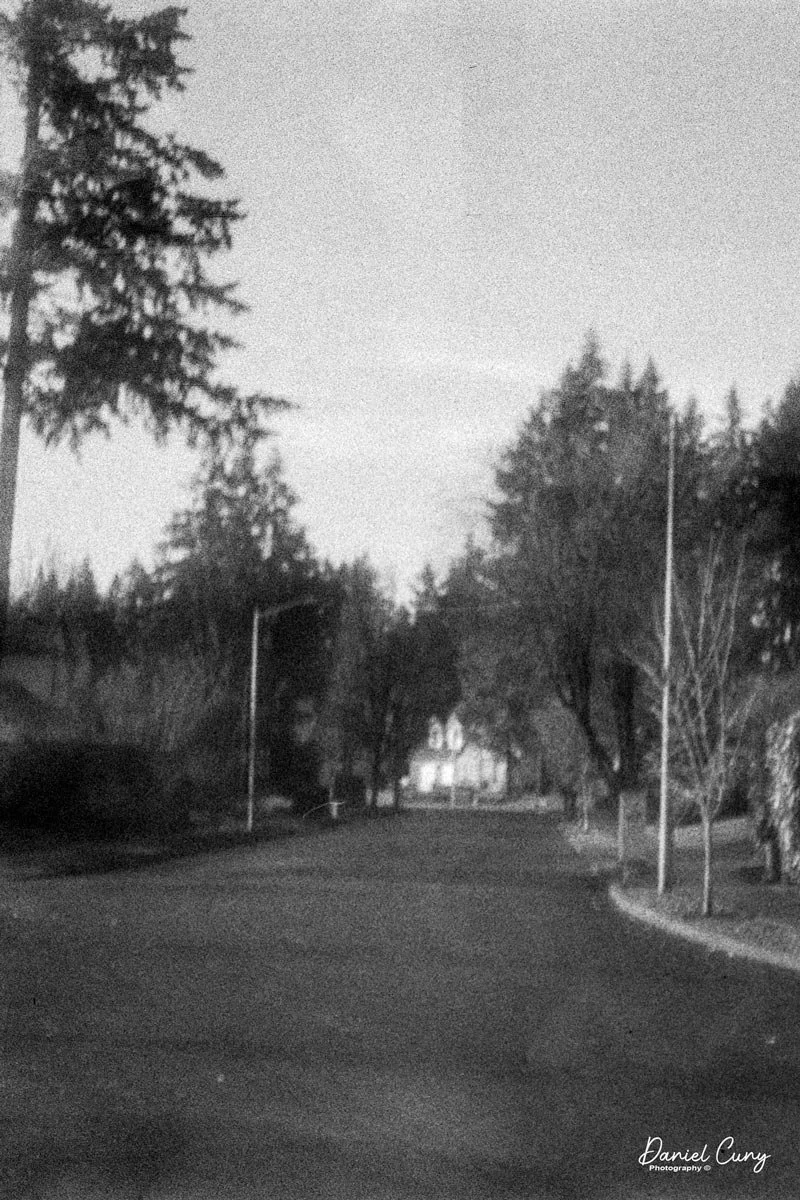
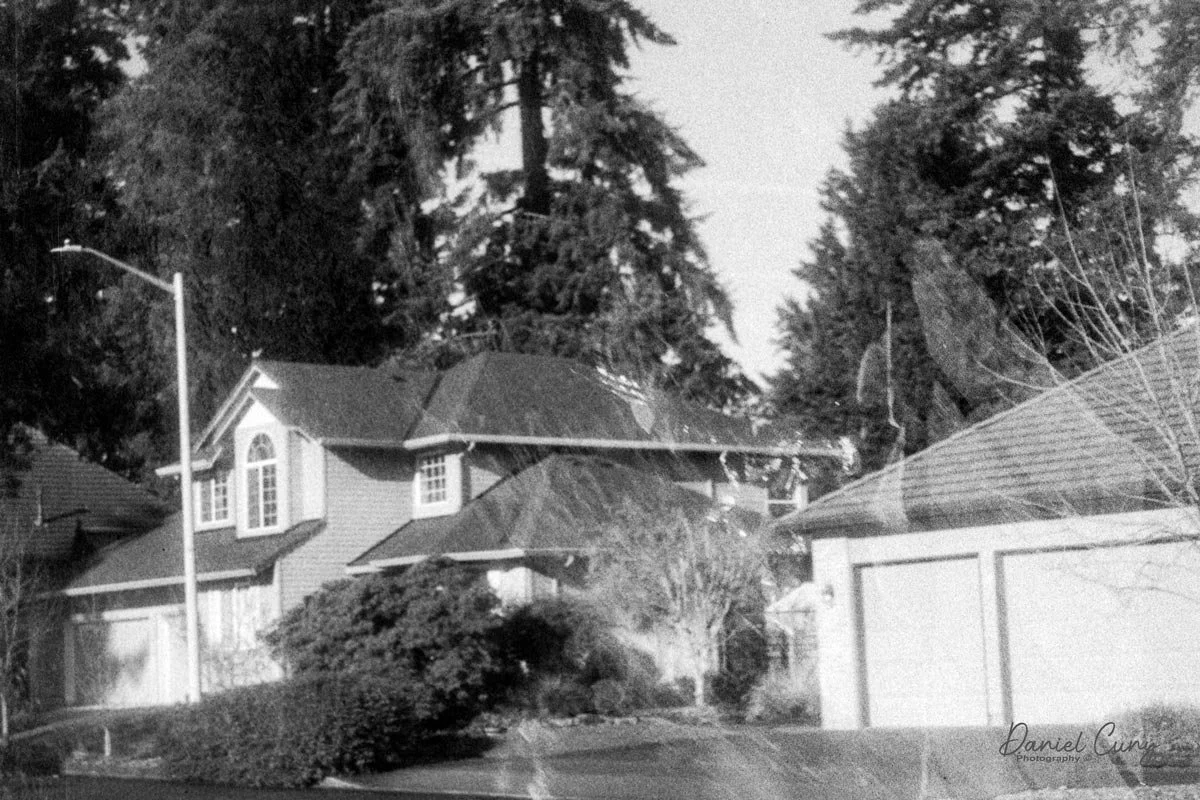
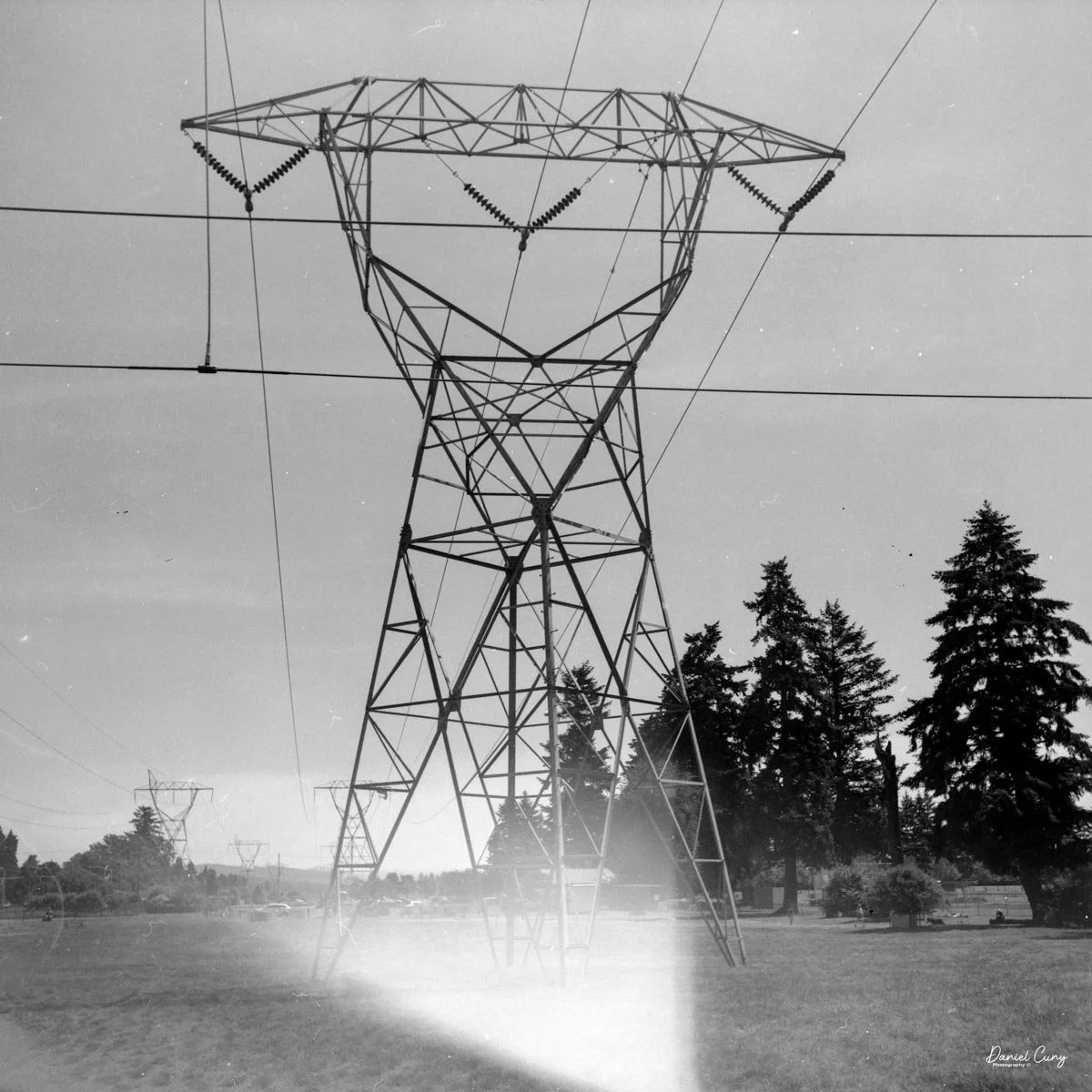
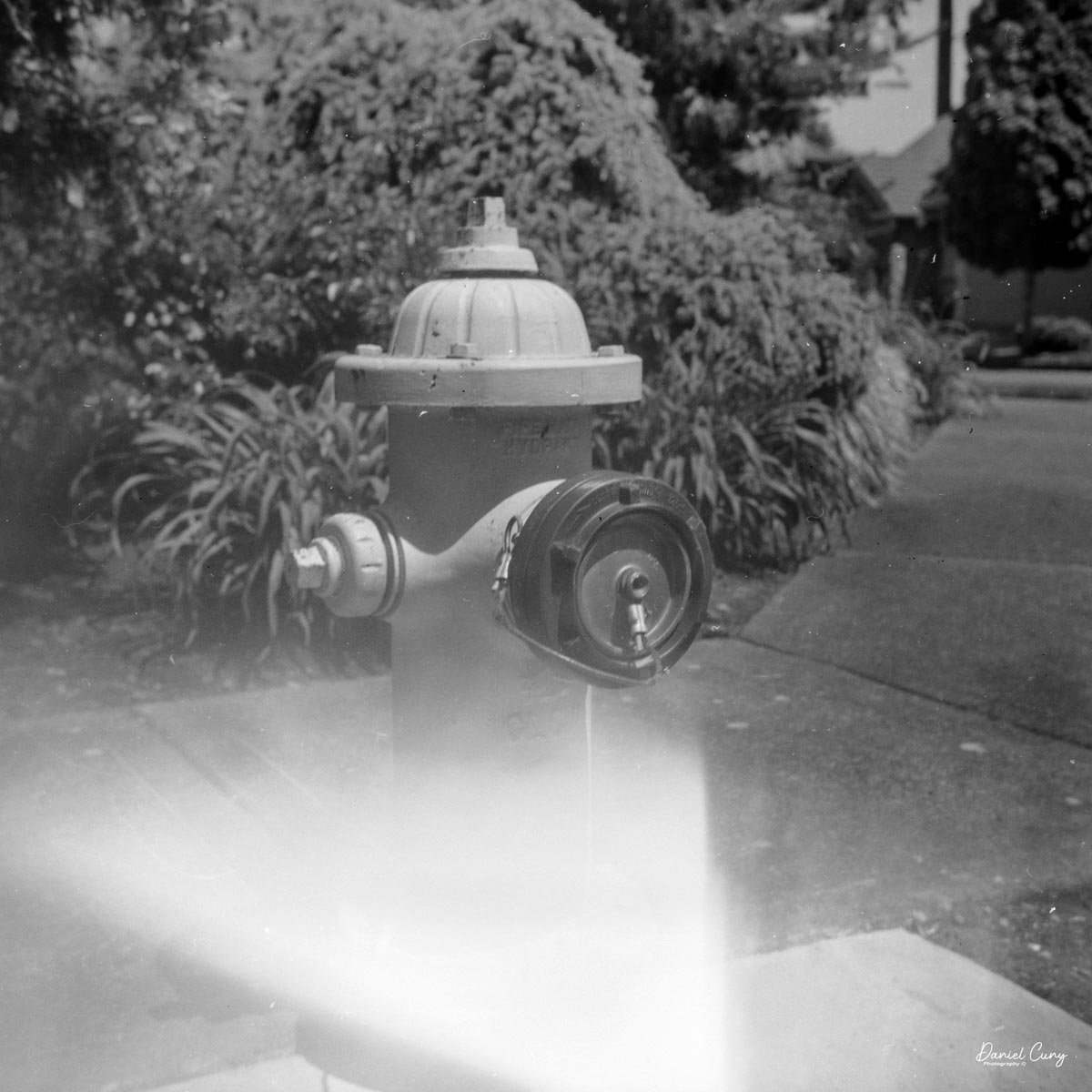
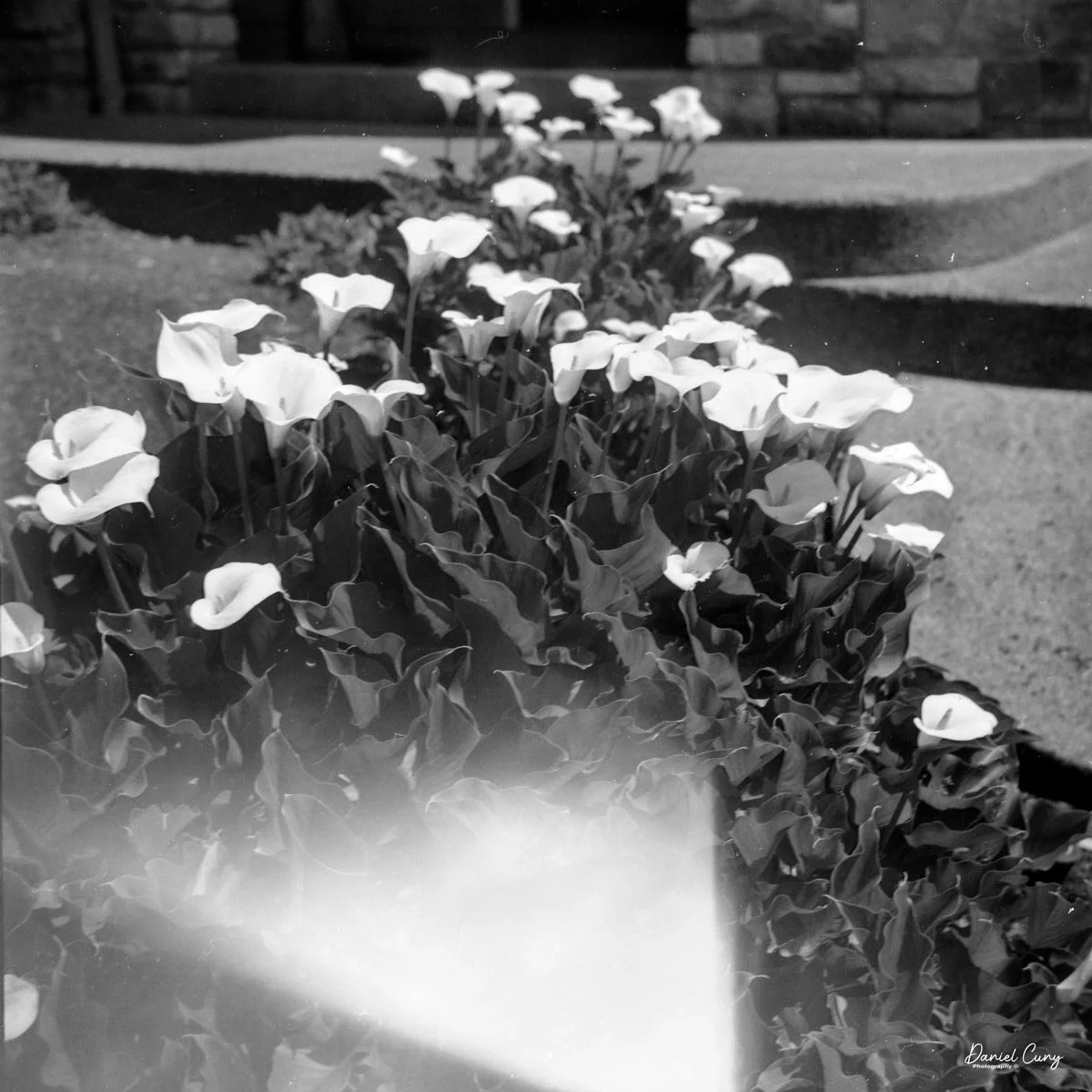
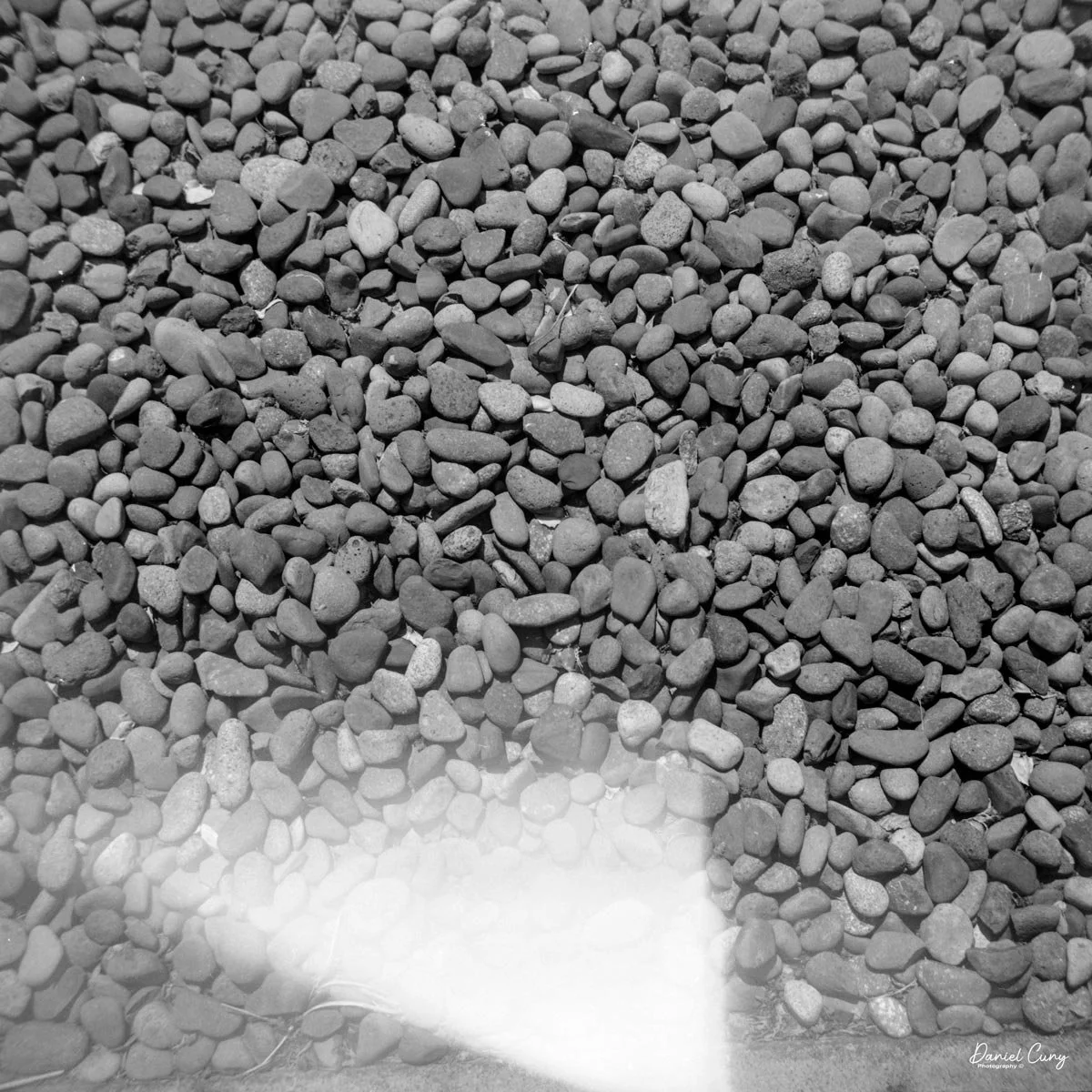
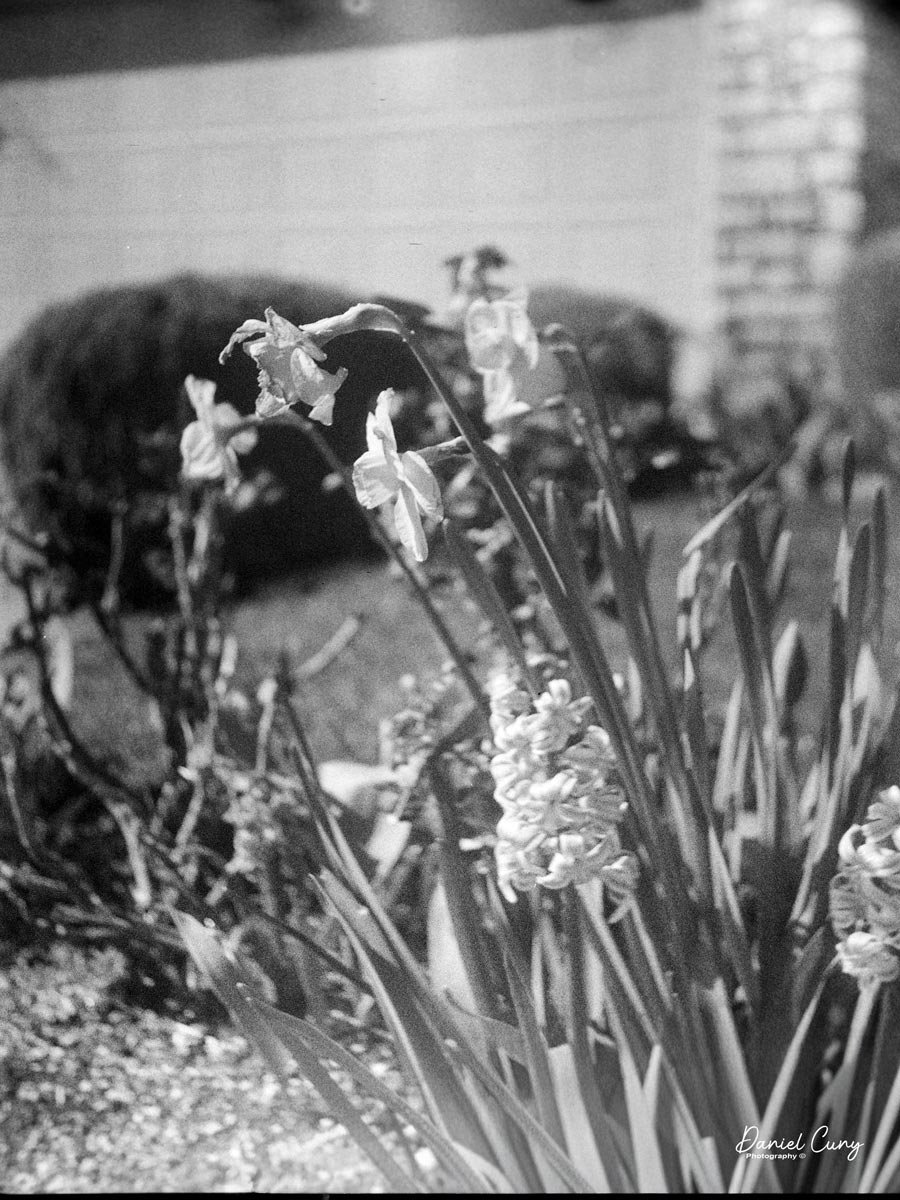
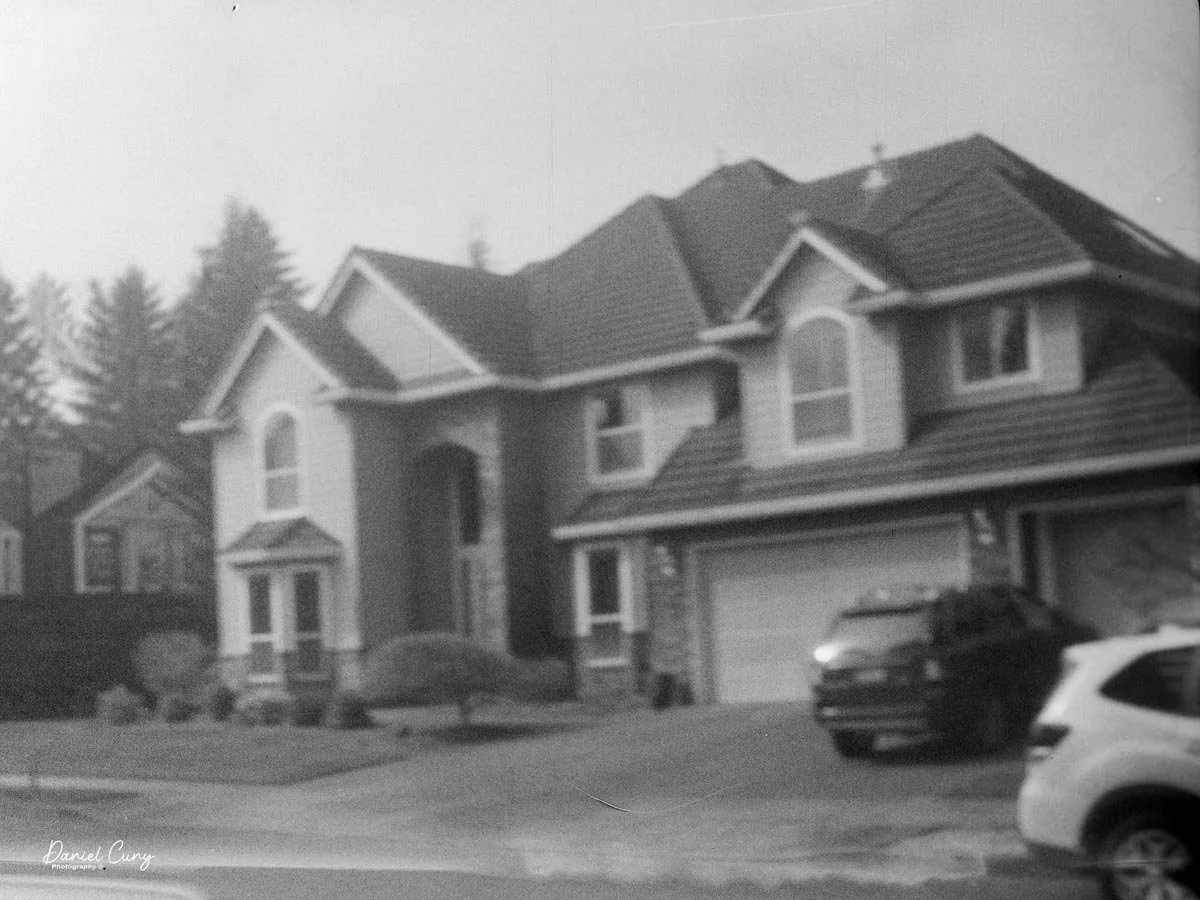
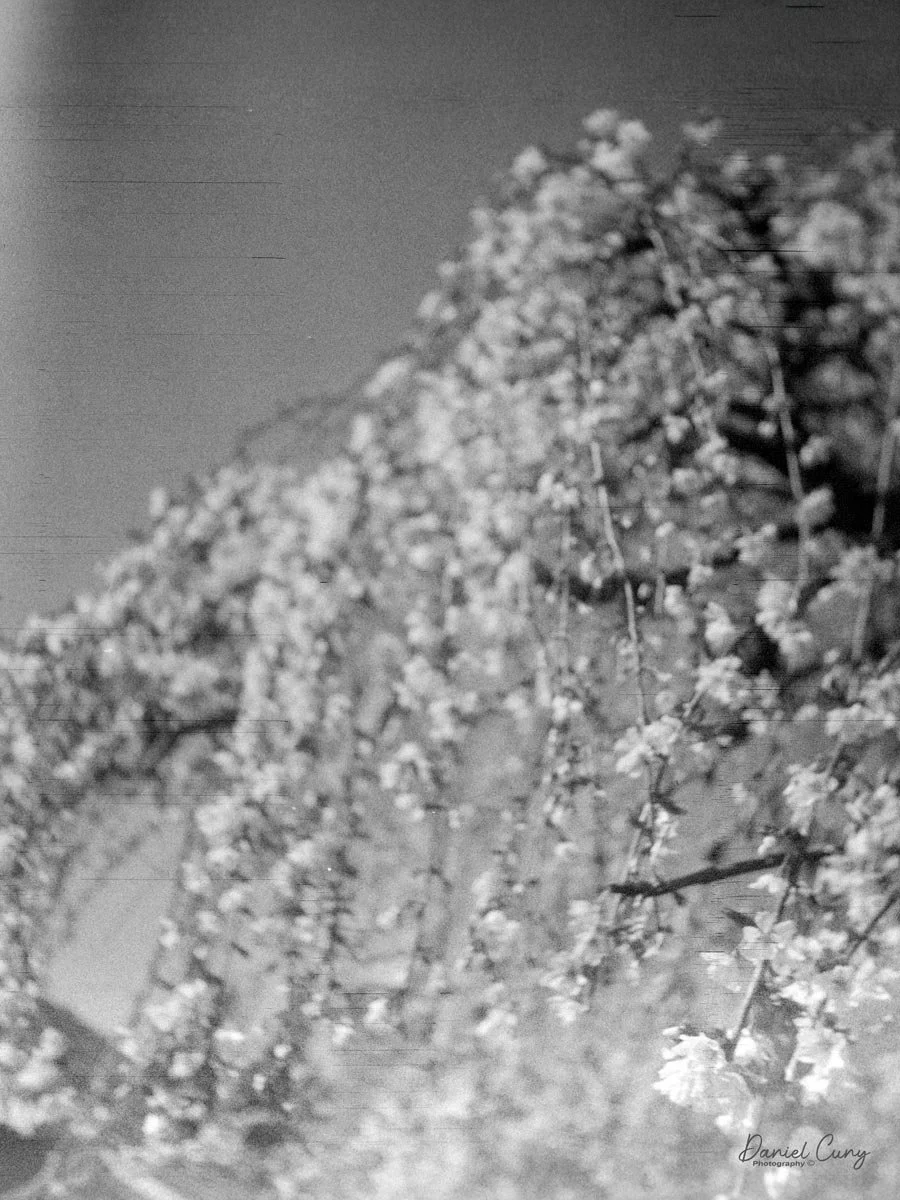
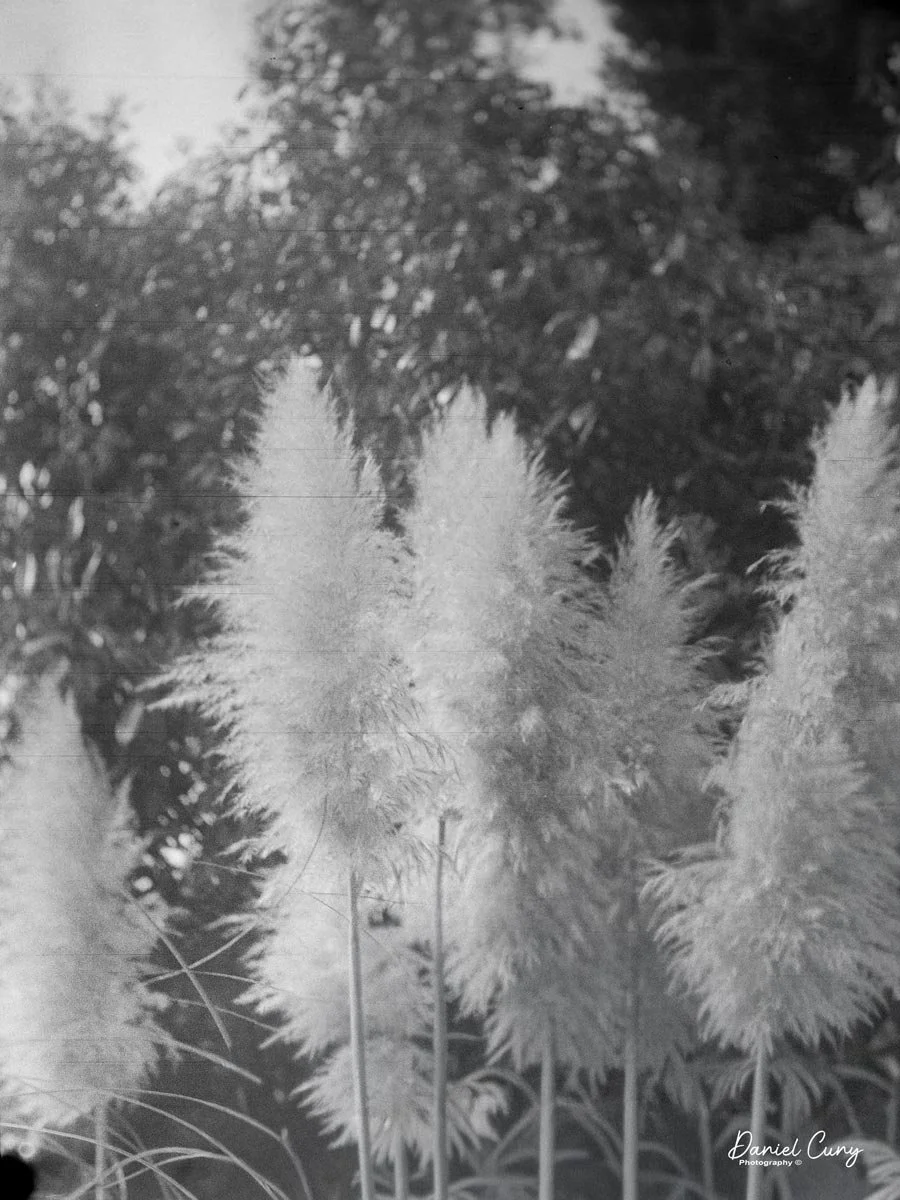
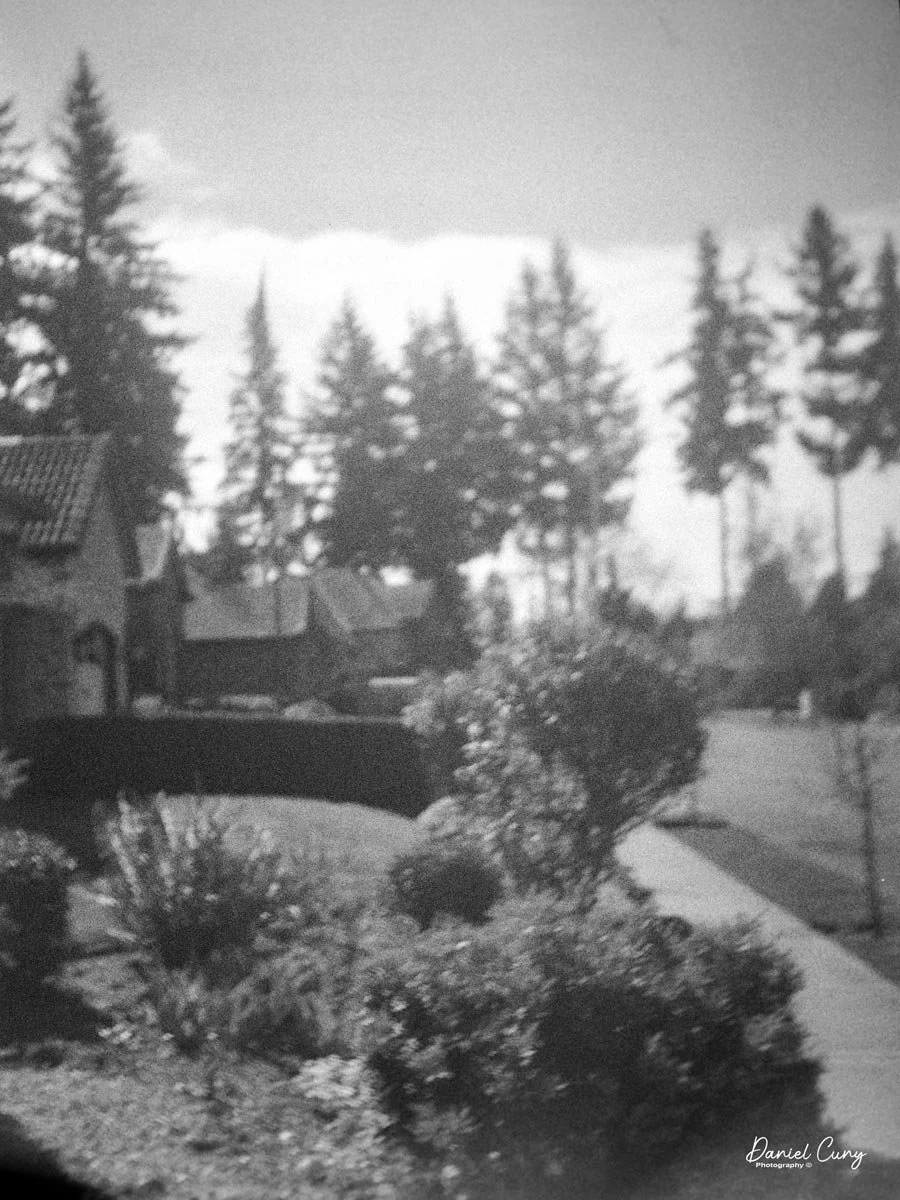
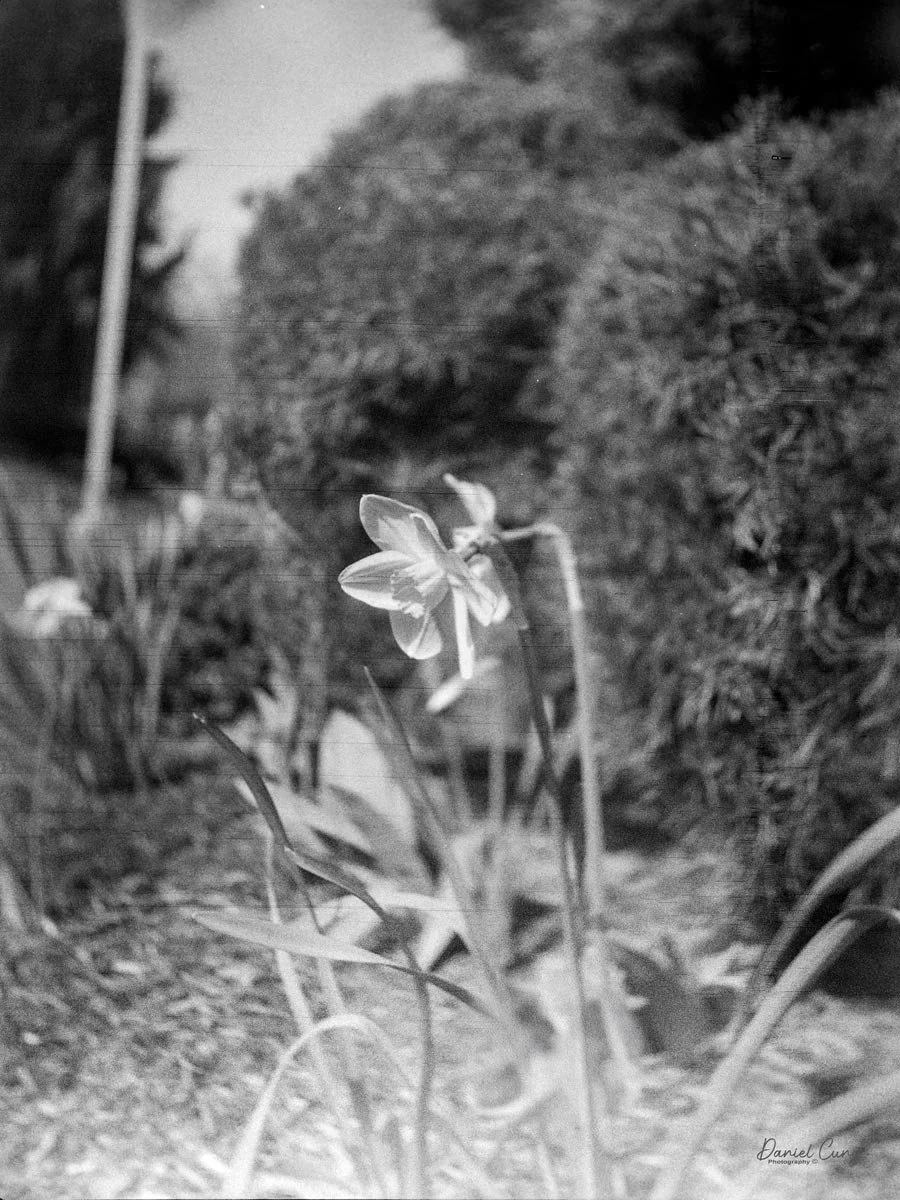
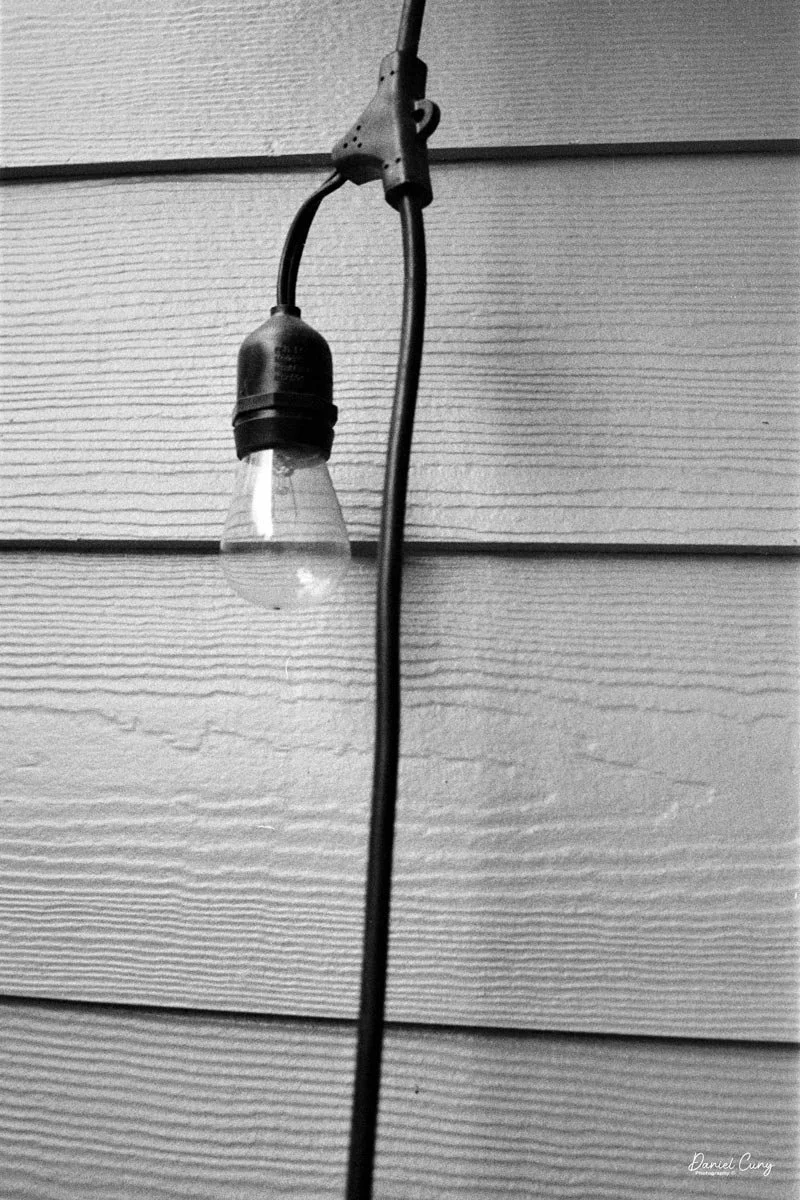
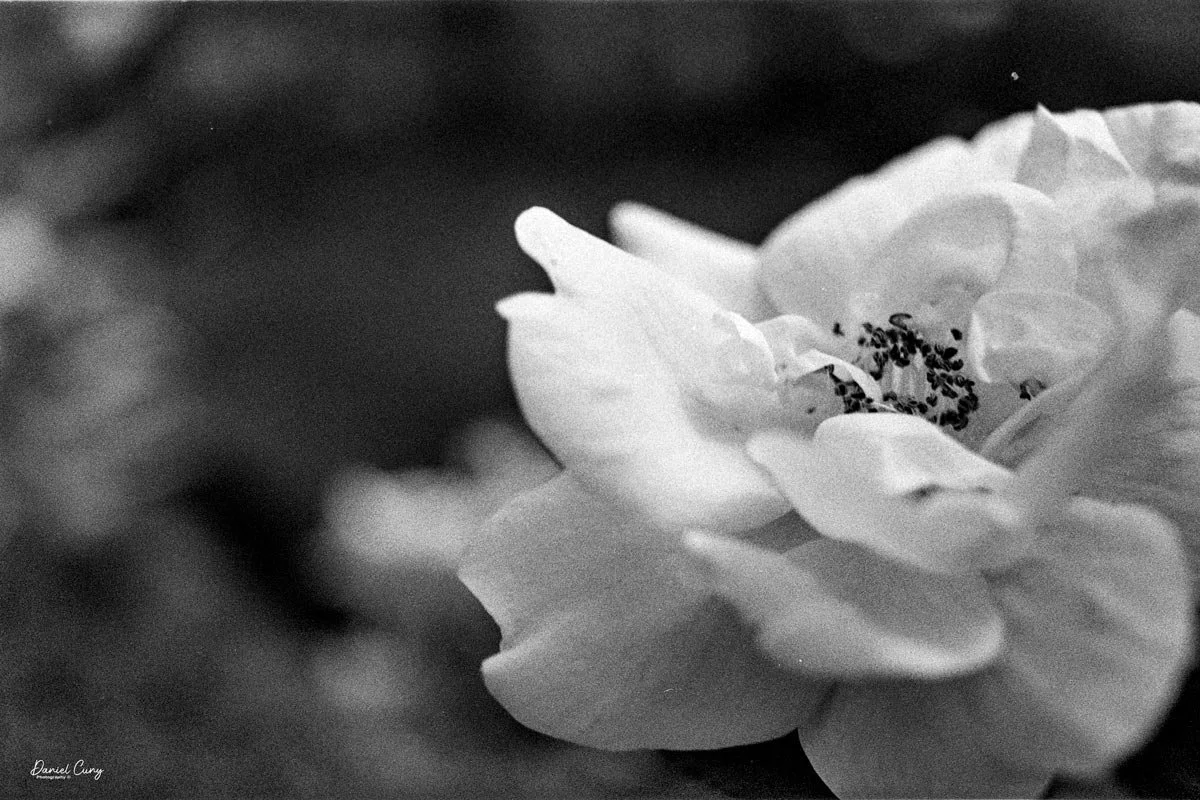
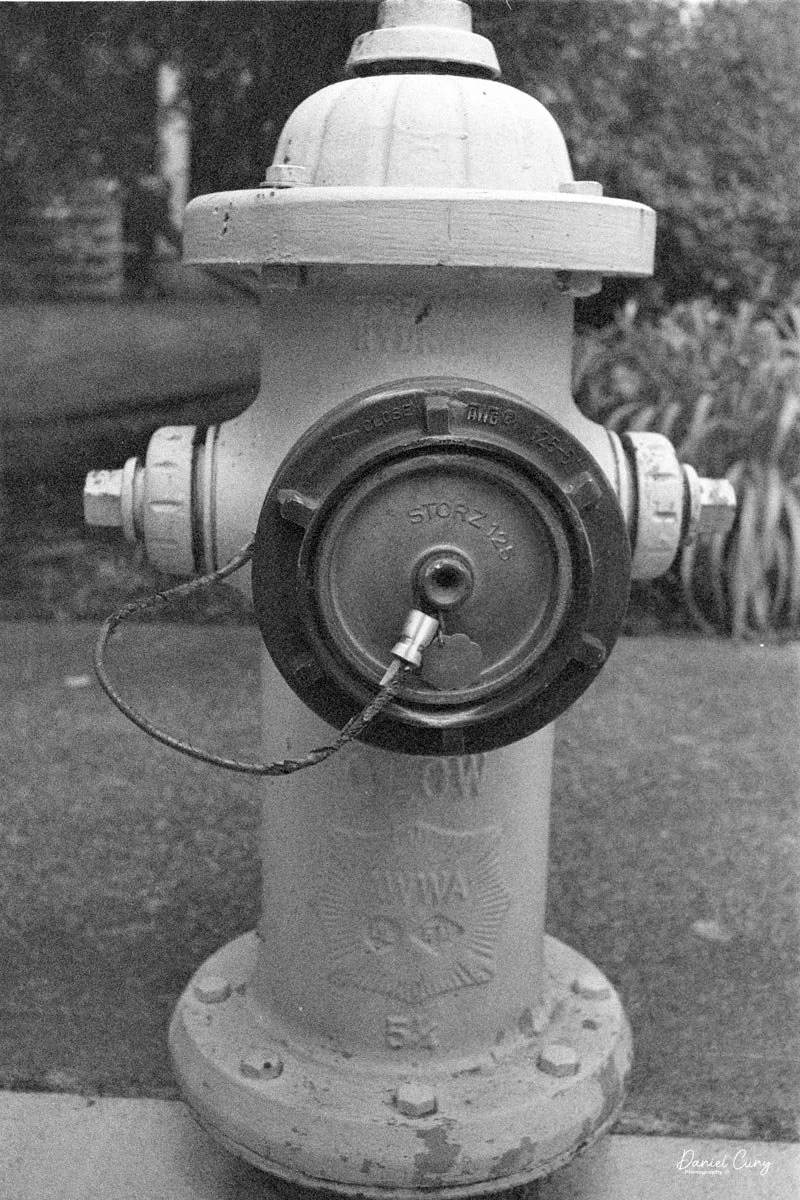
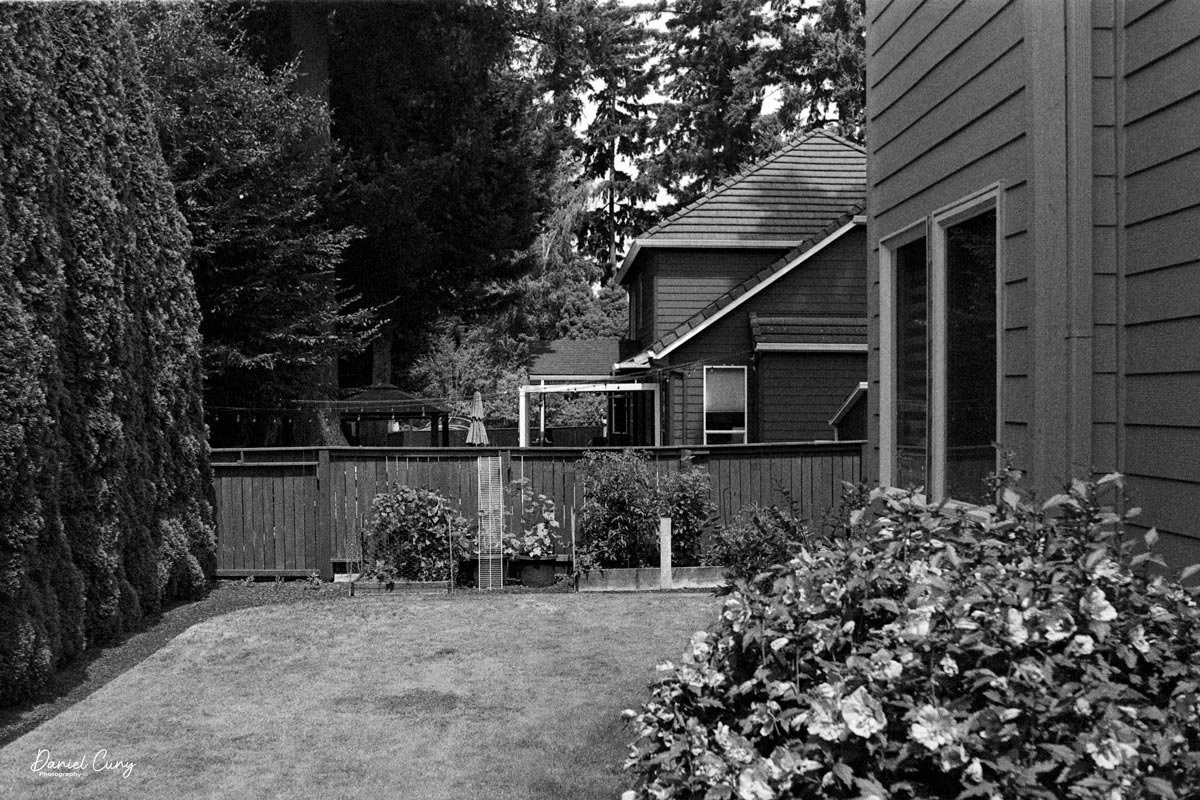
I didn't have any fresh film to shoot through the Zeiss Ikon Contarex camera, but I did—and still do—have some outdated film from 1976, Plus-X 135 film, which I took from the inventory I have from my online store.
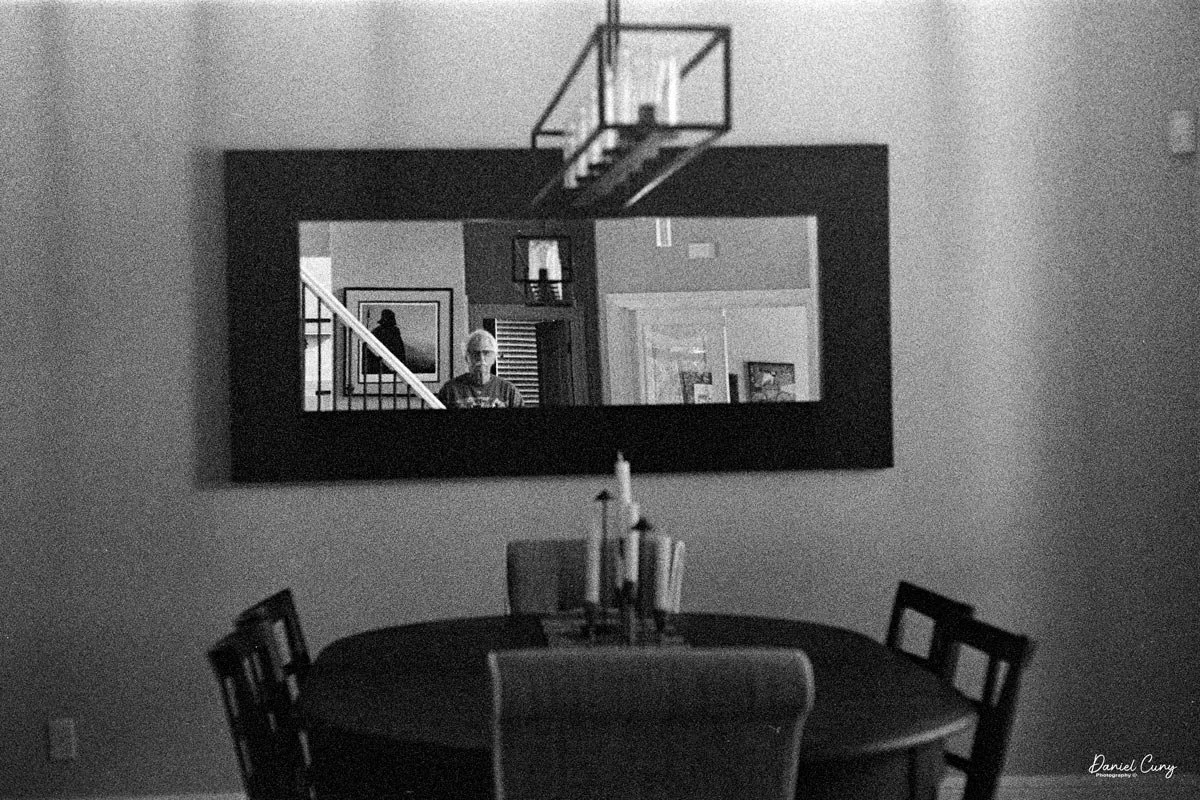
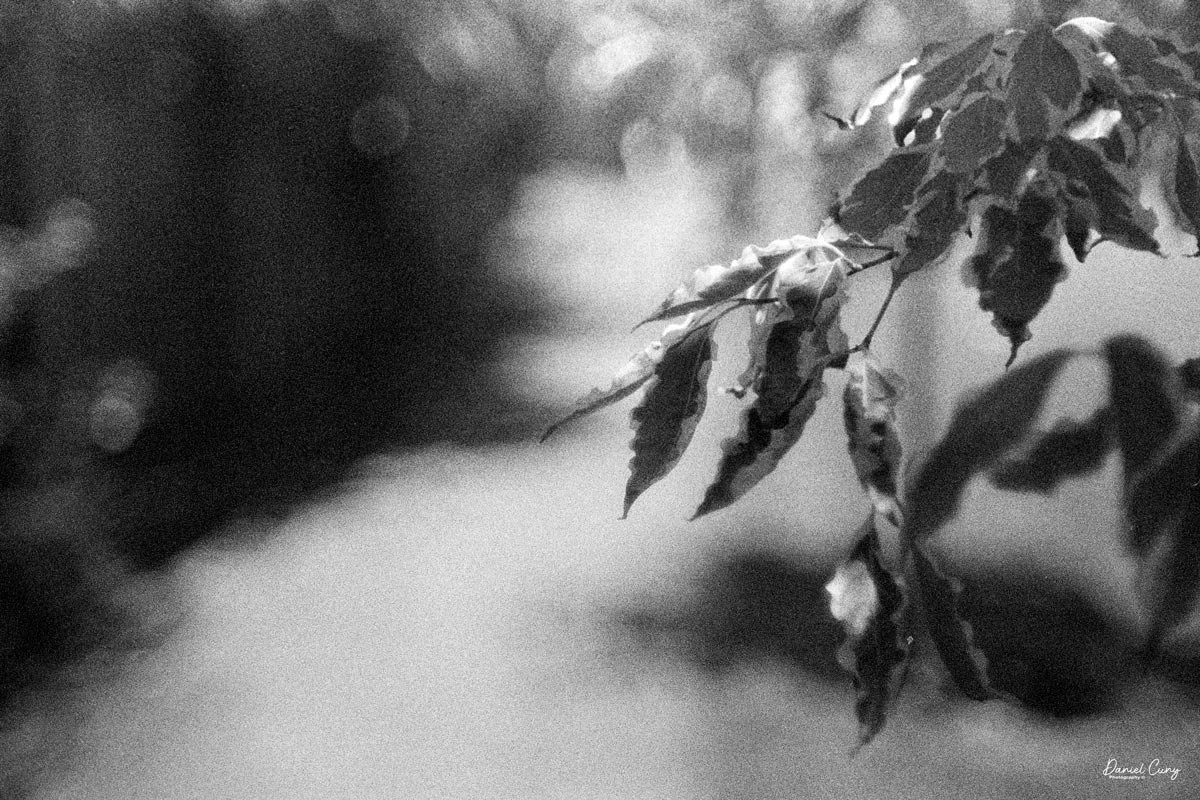
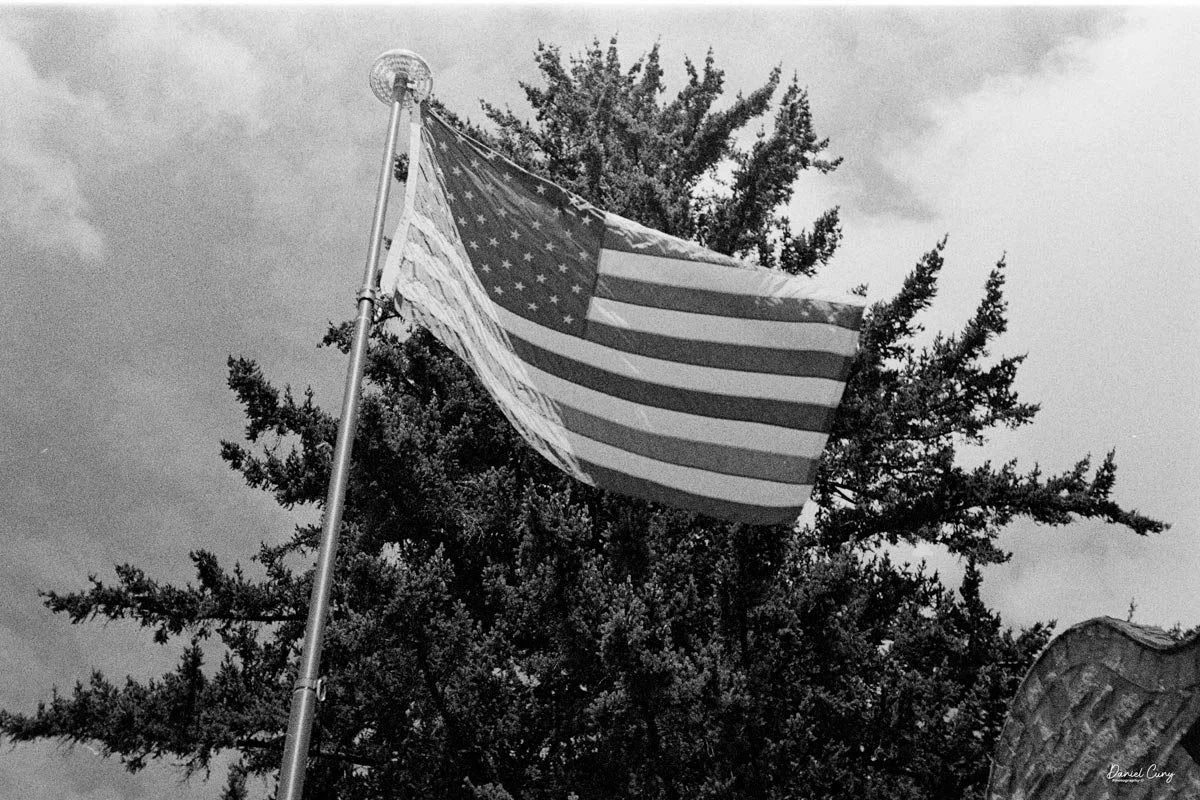
Shooting the film at approximately ISO 50 and processing the film in Rodinal at 1:25, here are the results I achieved with the camera.

Conclusion
The camera performed flawlessly. While this was the first time actually shooting with the Contarex camera, I was surprised at how close you could focus with the lens. All of the images were handheld, and the day was somewhat overcast so that the images would be a bit flat in the lighting, but overall, the camera and lens were fantastic.
The aperture wheel and light meter worked as they should, and the lens's sharpness is incredible. While the camera is big and heavy for many, it felt very comfortable in my hands.
I now understand why so many people enjoyed using this camera, as it is over-engineered and almost impossible to get serviced. While mine is working well, I'll definitely be taking the camera for many more walks shooting film with it.
Here are some of my other Camera Reviews.
Check out my Cuny's Camera Collection YouTube channel, where I am putting together video overviews of the cameras I write about. Be sure to subscribe and like the channel, too!
Cuny's Cameras and Photos is my online eBay store, where you will find some of the cameras I have reviewed, along with a wide range of other cameras, lenses, and items from my collection that I am thinning out.
Until next week, please be safe.