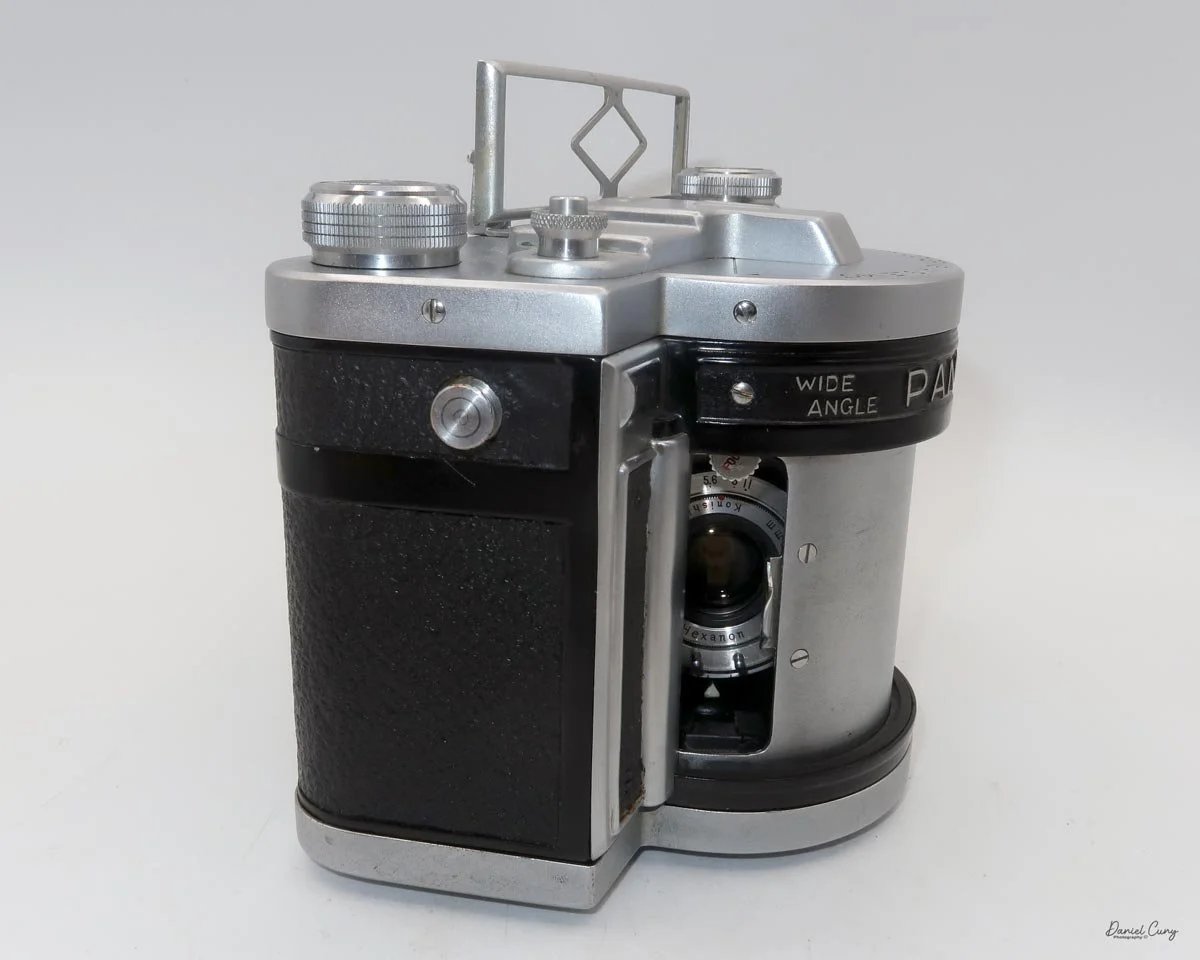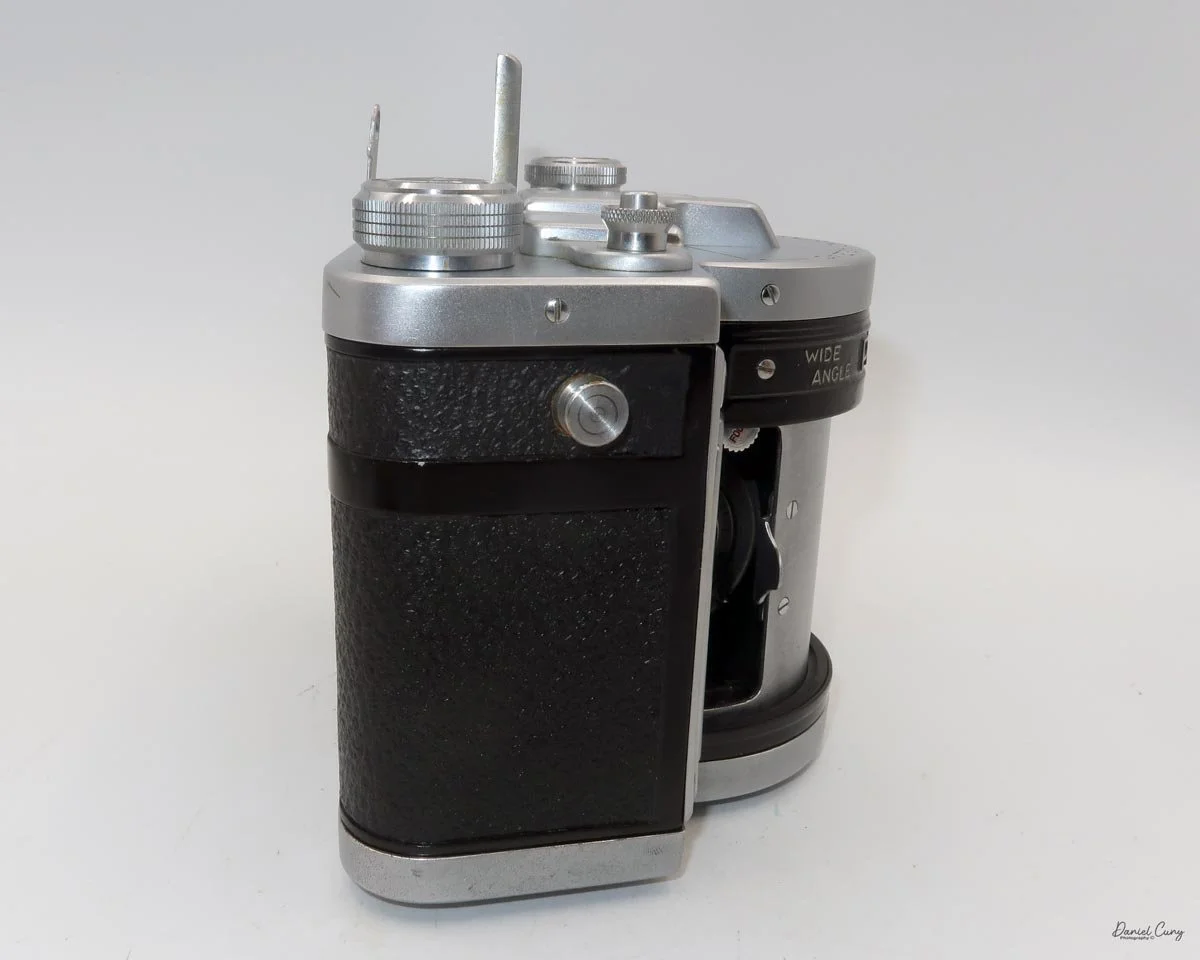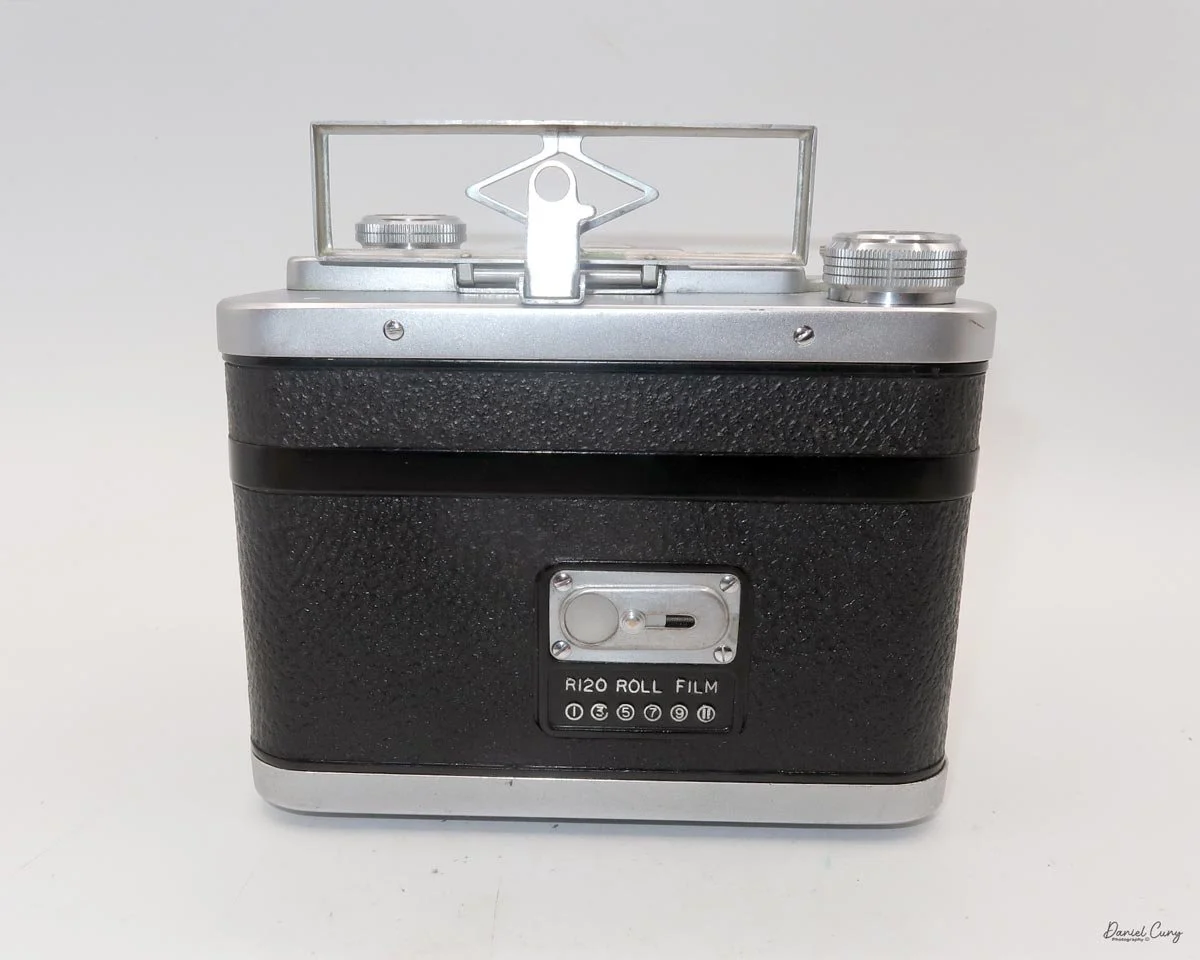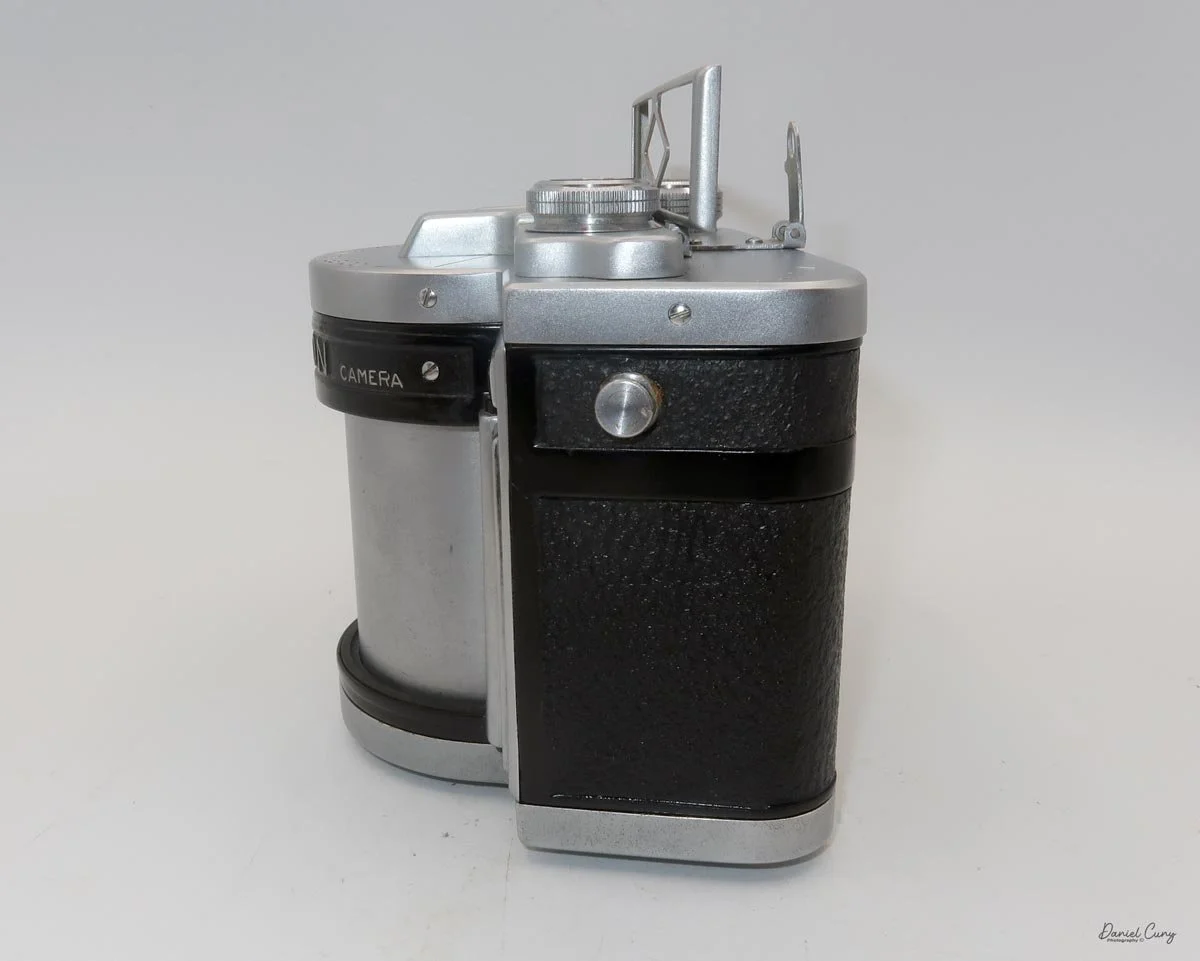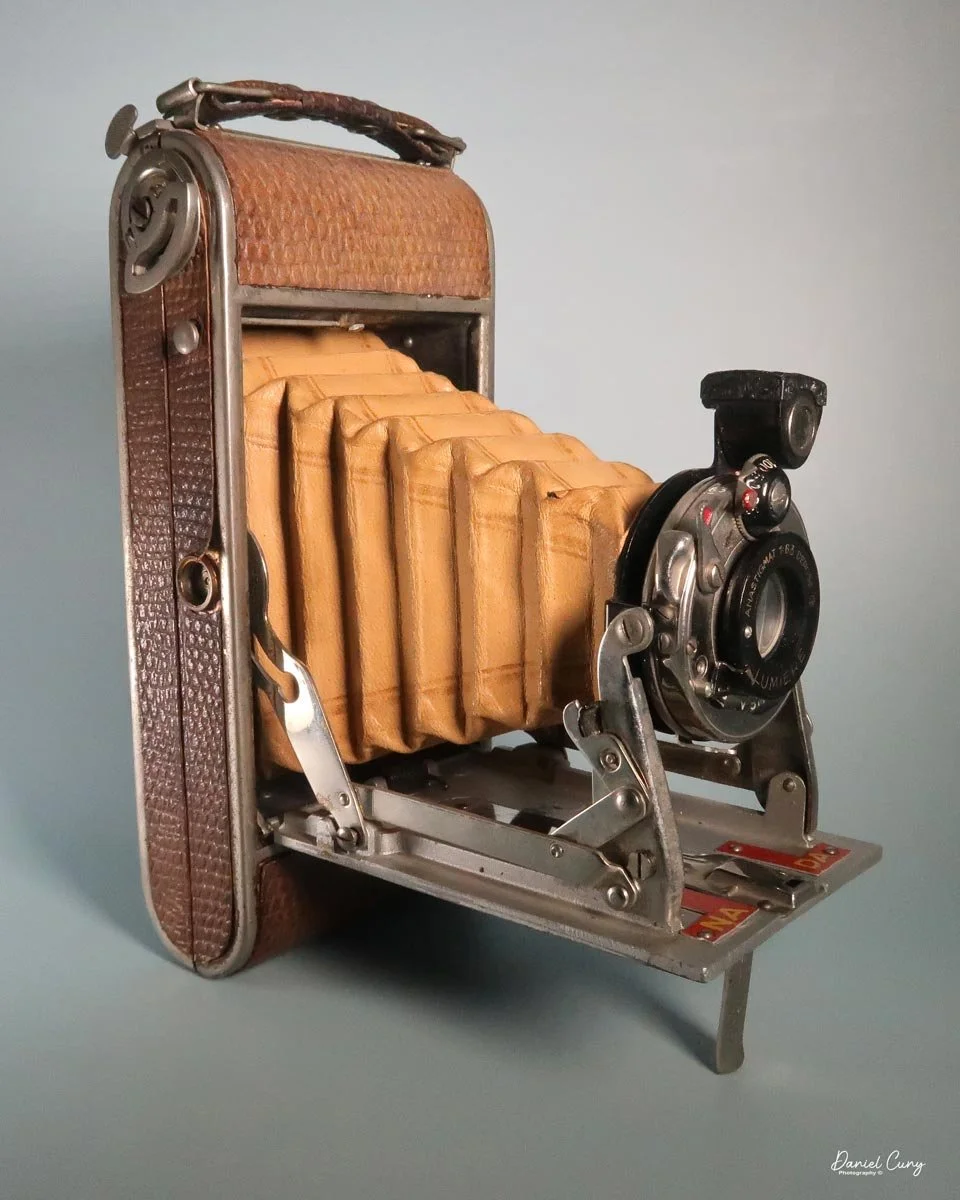
My Lumiere Nada Luxe camera
As I was looking through the cameras on some of the shelves I display them on, I saw tucked away in a corner a tan, reptile-covered top section of a folding camera I had put there a couple of years ago and completely forgotten about.
It was a camera I had purchased at the Vernaison market, one of the Paris flea markets, on our last trip there. I had full intentions of using and writing about it. Still, with my feeble mind and my attention deficit disorder kicking in, I'm sure some other camera caught my eye, and I wrote about it instead.
Funny how you remember silly things. I still remember seeing the camera in this one person's stall, who had assembled many other beautiful and interesting cameras. Given my love for colorful and unusual cameras, it wasn't out of the ordinary for me to find this wonderful, tan, reptile-covered camera in the back of one of his showcases.
I didn't want to call over the stall owner until I had looked at what else he had in the showcase, so after a few minutes of finding 3-4 other items I wanted to look at, I summoned him over and asked to look at a few pieces.
His English was a little better than my French, so we relied on simple sign language and pieced a few words together so I could ask about some of the objects he had on display. The gentleman had good taste, and he was extremely patient with my mispronouncing certain French words. He just smiled and nodded.
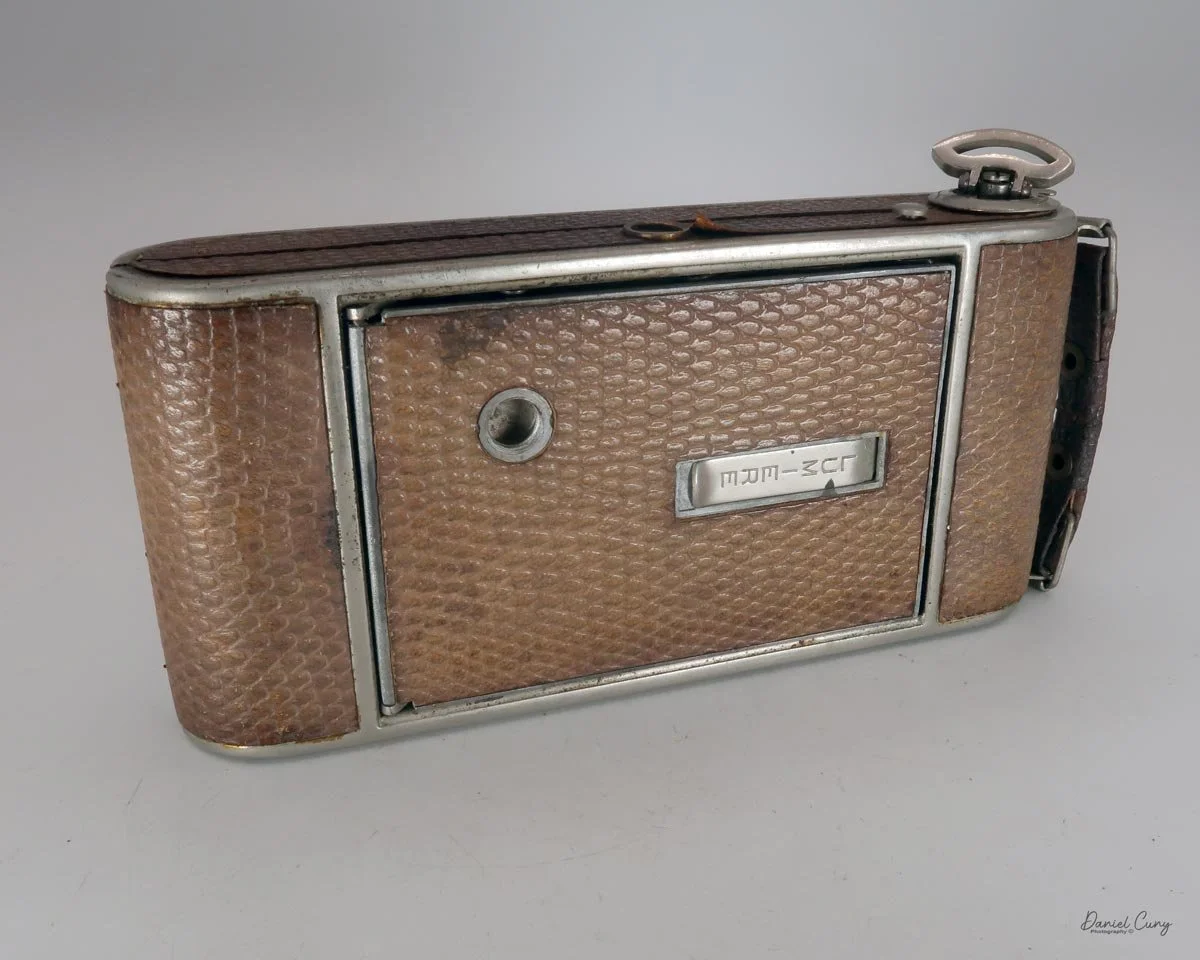
Reptile or snakeskin on the Lumiere Nada Luxe camera
But after many minutes of rudimentary signing, pointing, and using Google Translate to ask and answer questions, there were 2-3 items we agreed on a price for, and one of them was the reptile-covered Lumiere Nada Luxe camera, which was in good, clean, and working condition.
I really enjoy going to the Paris flea markets; well, I enjoy pretty much any flea market. To me, the fun of collecting is the treasure hunt. Whether you're at an estate sale, flea market, or antique store, you just never know what you're going to find. When all the cards line up, and you find the item you've been looking for—or just something that catches your eye in the moment—discuss the price with the seller and come away with a bargain, that's the fun of it.
Getting back to the Lumiere Nada Luxe camera I found on my shelf, it put a big smile on my face to think back to the Paris flea market. I pulled the camera from the shelf and opened it up, then clicked the shutter to make sure I could run some film through it.
It was cleaner than I remembered, and the shutter worked well. I also didn't see any light leaks in the bellows, so now was as good a time as any to put a roll of film into the camera, take a walk through the neighborhood, and see what this gorgeous camera, made in the 1930s, almost 100 years ago, could produce.
A Brief History of Lumière Cameras
The name Lumière means "light" in French, and no camera company ever lived up to its name quite like this one. Antoine Lumière founded the firm in 1860 in Besançon as a portrait painter turned photographer. When the Franco-Prussian War threatened France's eastern border in 1870, Antoine moved his family to Lyon and set up a workshop making glass photographic plates.
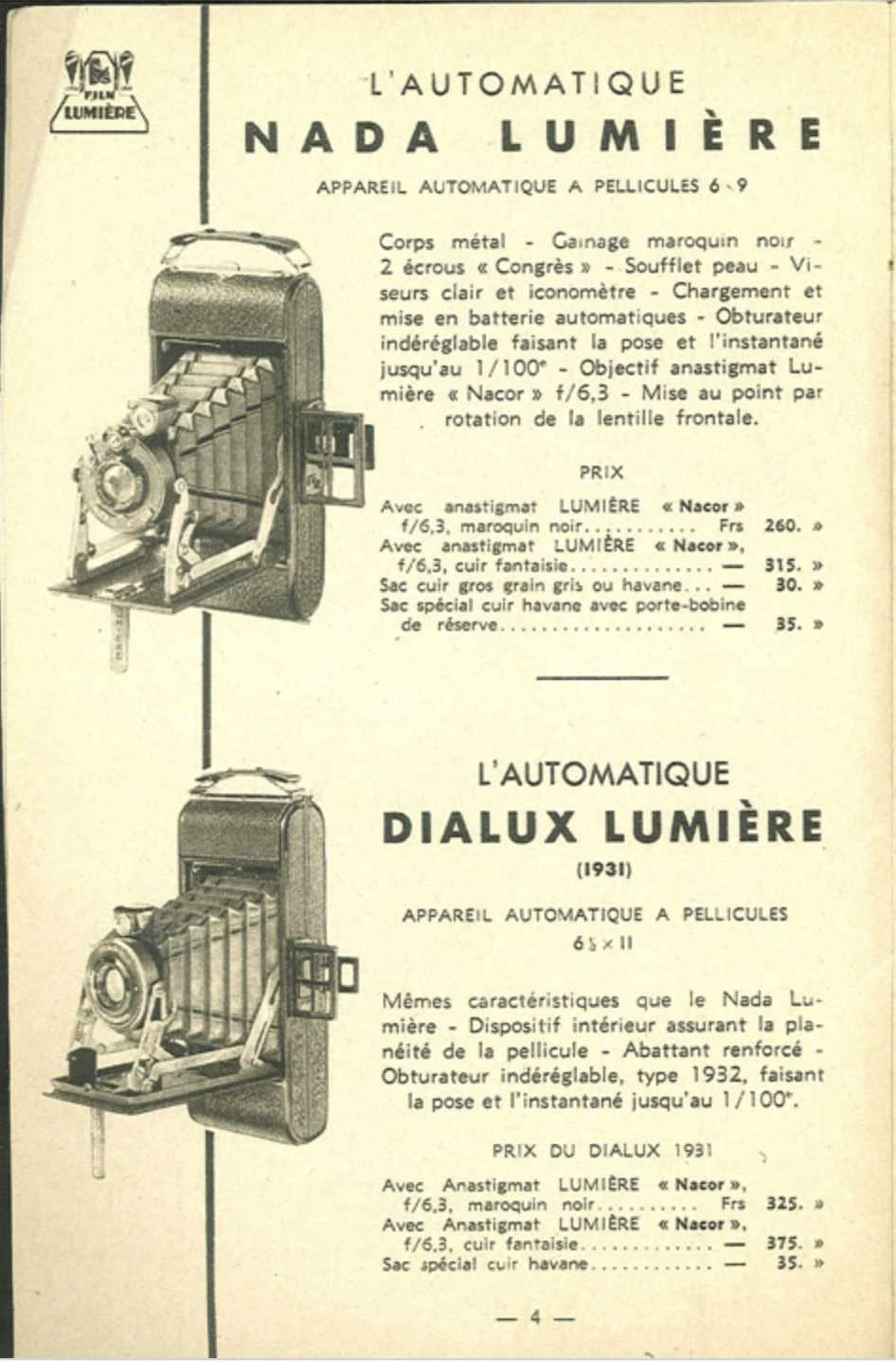
The firm's real success came from Antoine's sons, Auguste and Louis. Louis, still a teenager, improved the new dry plate emulsion and produced what the firm sold as "Étiquette Bleue," or Blue Label, plates in 1882. A large factory followed in 1883, and by the mid-1890s Lumière was running the biggest photographic factory in Europe. The sons formally took over the business in 1893.
Two years later, the brothers changed the world again. Working with their chief engineer Charles Moisson, they built the Cinématographe. This single machine could record, develop, and project moving pictures. Its first public screening, in Paris on December 28, 1895, is widely considered the birth of cinema. The brothers saw it as little more than a curiosity and moved on.
Their next breakthrough was color. Patented in 1903 and released in 1907, the Autochrome Lumière process coated a glass plate with microscopic potato starch grains dyed red, green, and blue, acting as a color filter over a black-and-white emulsion. It was the first practical color photography process, and it stayed the standard for color work for more than thirty years.
Cameras came later, almost as a side business. Lumière's first was an oddity: the Périphote of 1901, a panoramic camera with a rotating lens sweeping around a film-lined cylindrical drum. A serious camera line arrived in the 1920s, starting with the folding stereo Sterelux. The 1930s brought the cameras collectors know best: the Lumirex line of 6x9 folding cameras, the tiny, collapsible-viewfinder Eljy cameras, and the Scoutbox line of box cameras. The Second World War shut down the assembly lines.
Lumière kept making cameras after the war, but the company never regained its old scale. In 1961, the Swiss chemical firm Ciba absorbed it, and in 1982 the company became Ilford France. Cameras sold under the Lumière name around 1970 were not made by the company at all. For collectors, Lumière cameras are a charming corner of French camera making. Still, the firm's true legacy is bigger than any camera: it gave us the movies, and it gave us color.
My Camera:
This beautiful Lumiere Nada Luxe camera is not your ordinary self-erecting 6x9cm format folding camera; it has special, truly "luxe" features.
To open the camera, press the silver button just under the camera's film winding lever, and the camera pops open. Then pull the lens platform down, and the lens is erect in the camera.
The camera measures 7" long by 3-3/8" wide and 1-3/8" deep with the lens closed, and 5.25" deep with the lens open and the camera in the "taking" position. The camera weighs 1 pound, 4.4 ounces without film loaded.
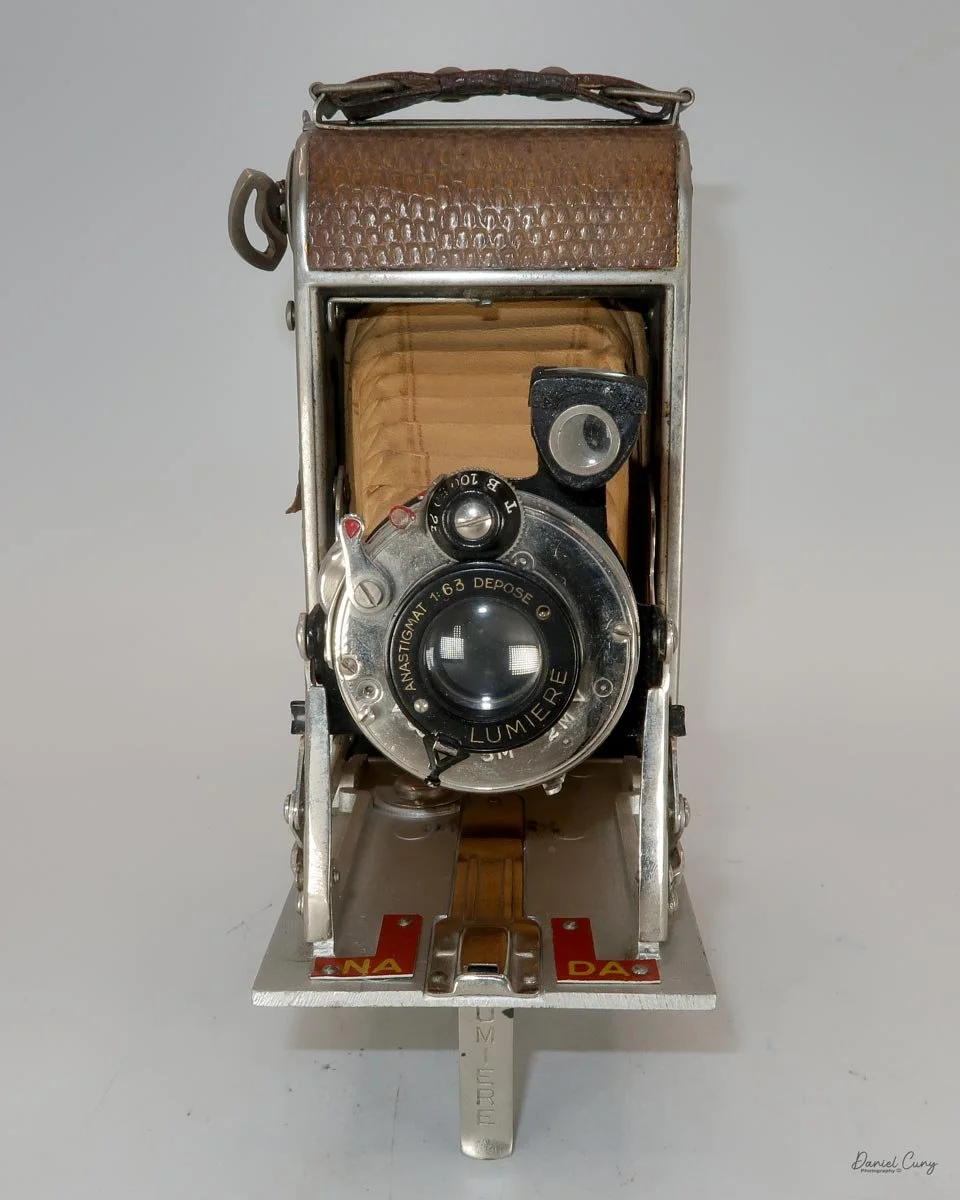
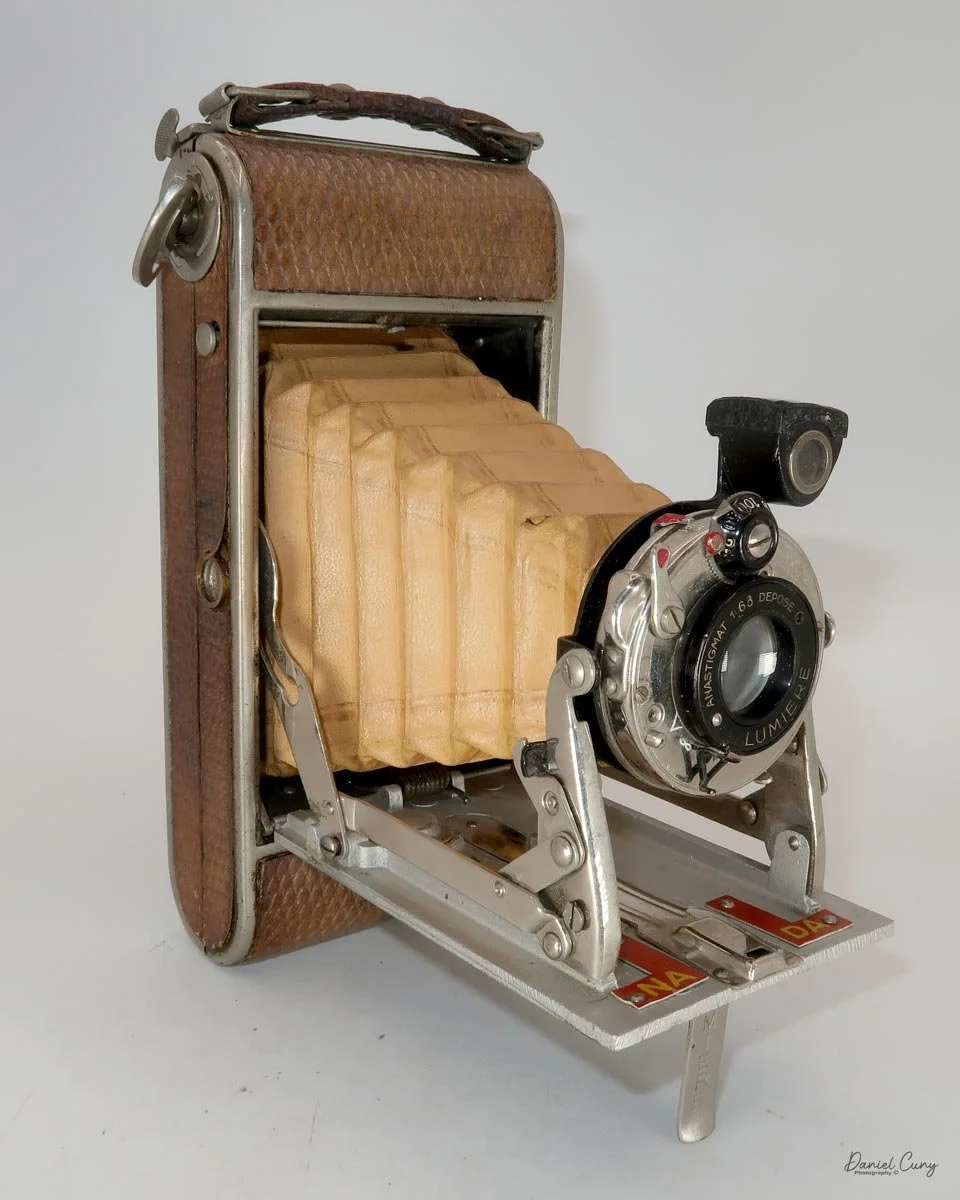
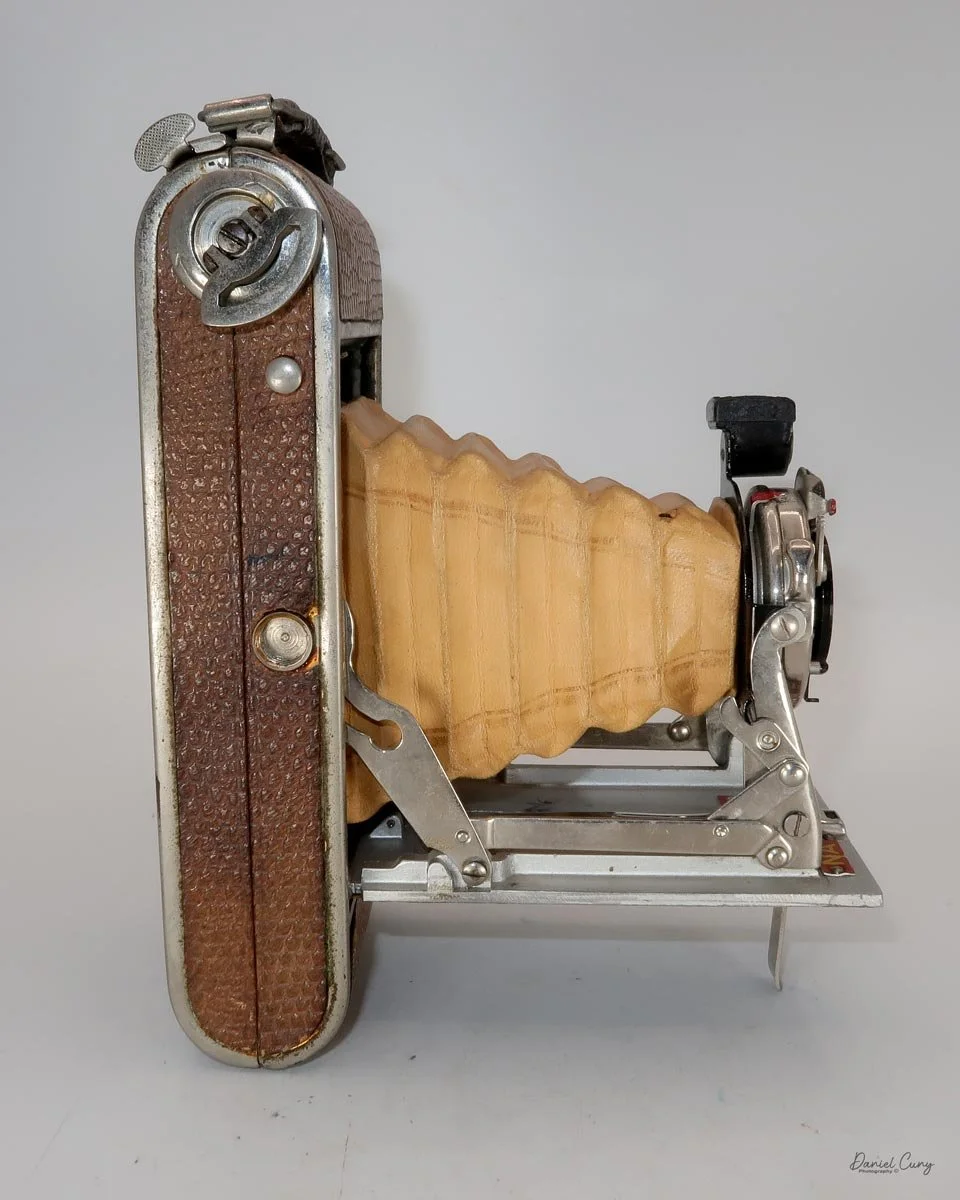
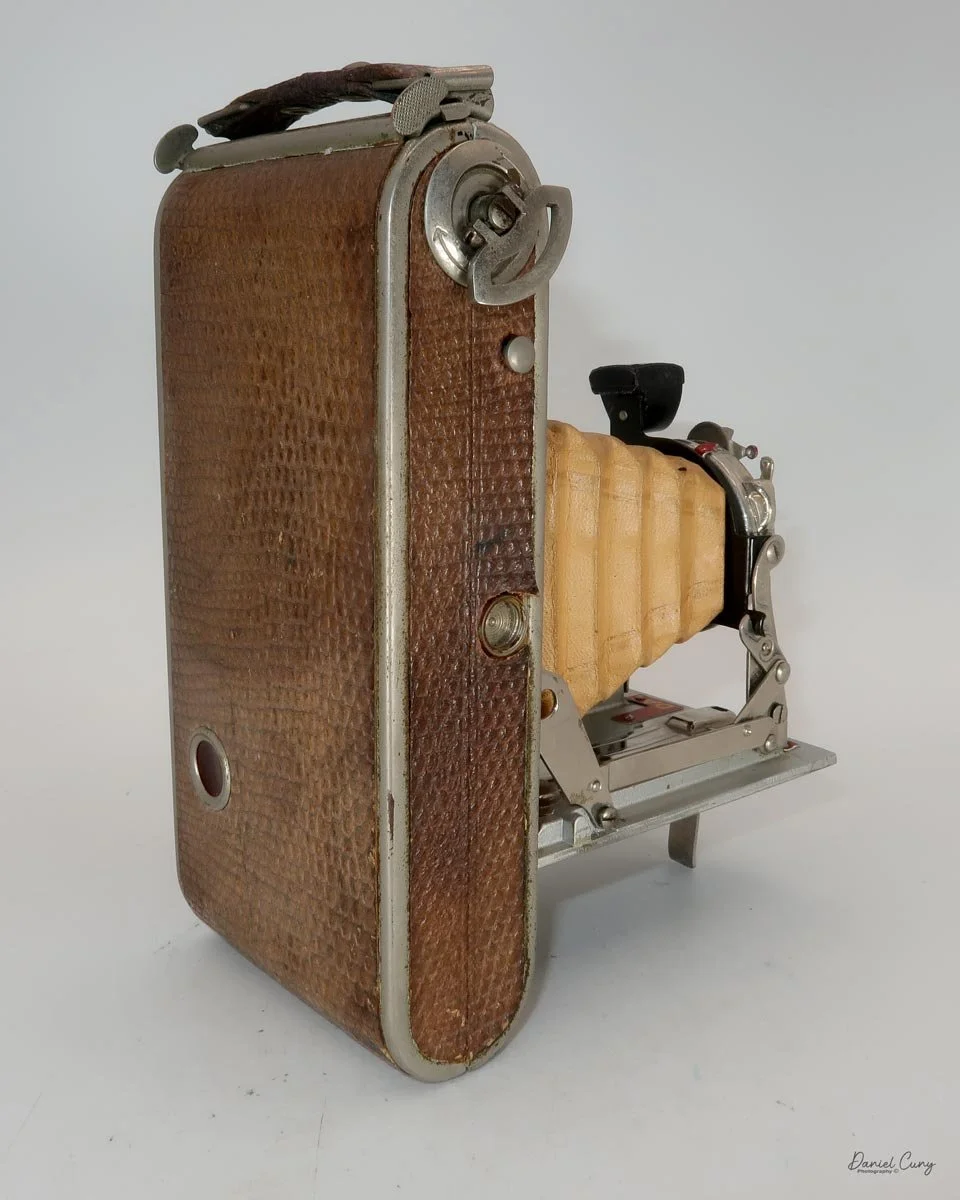
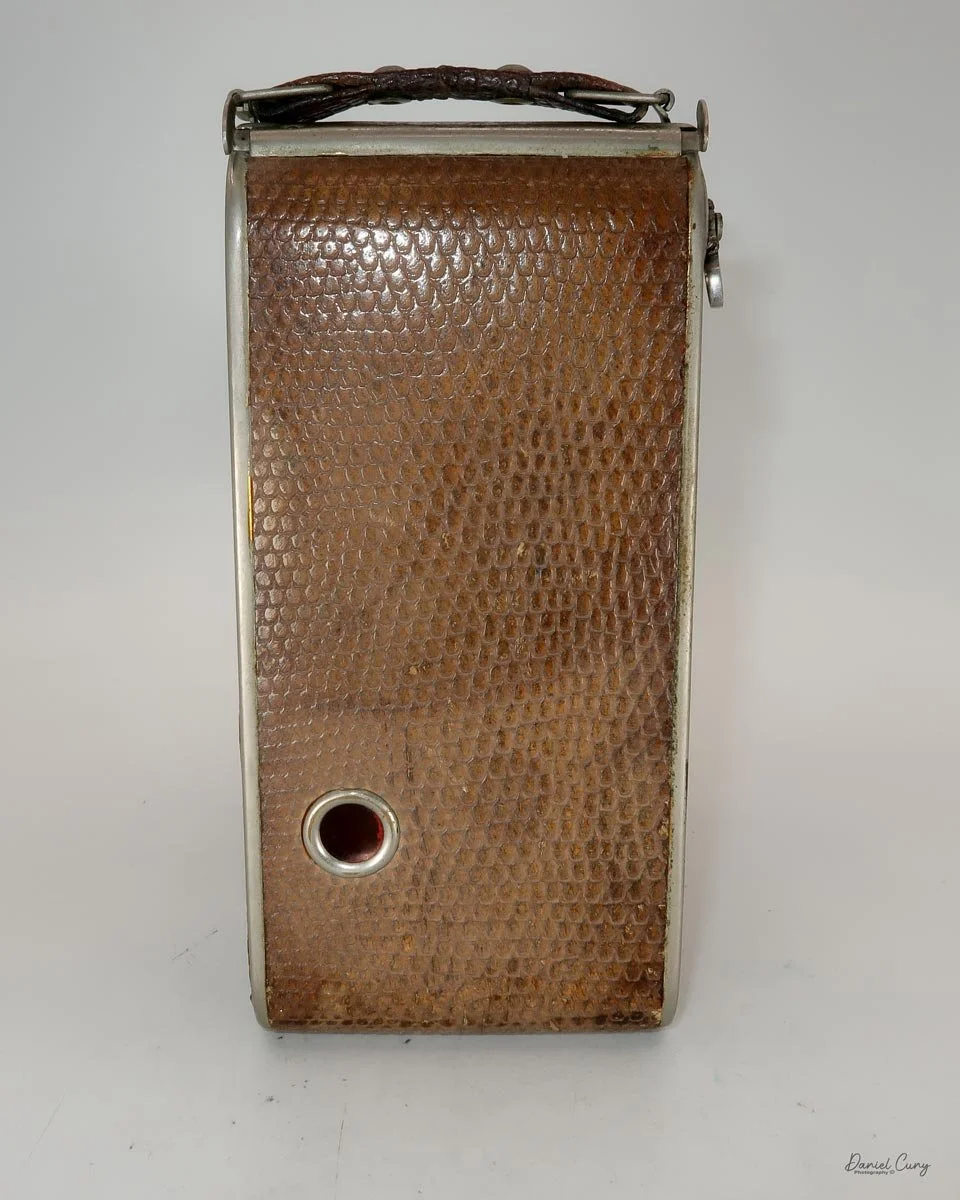
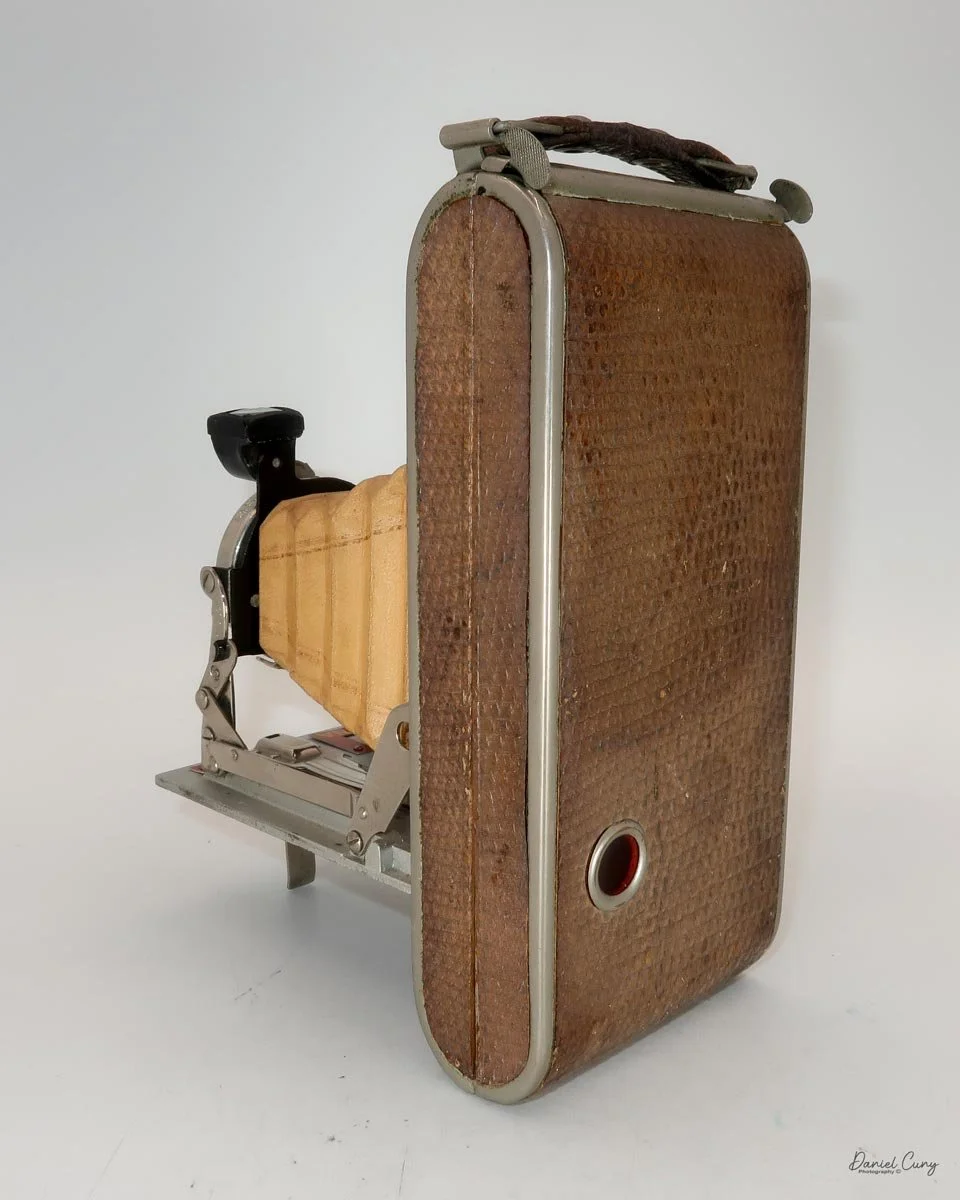
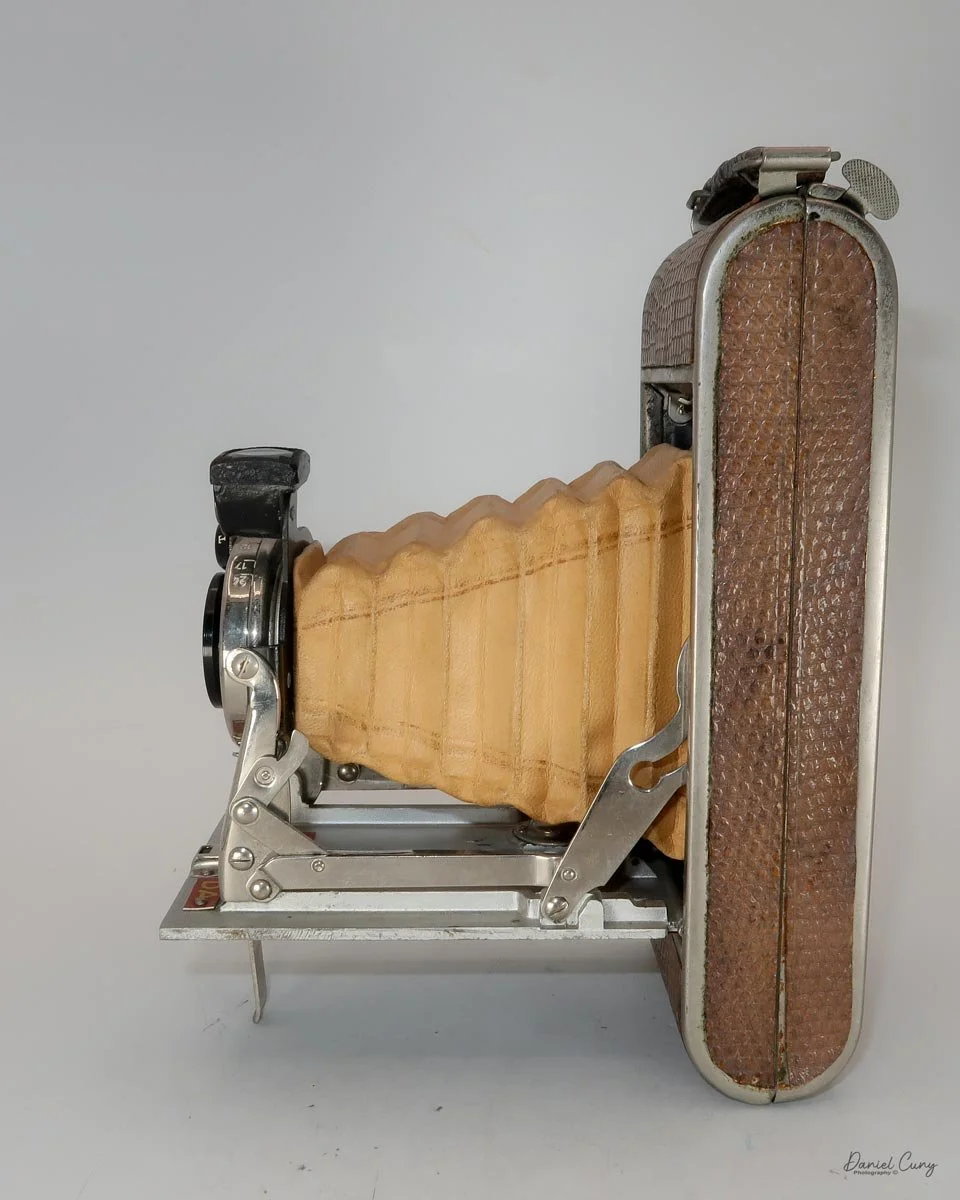
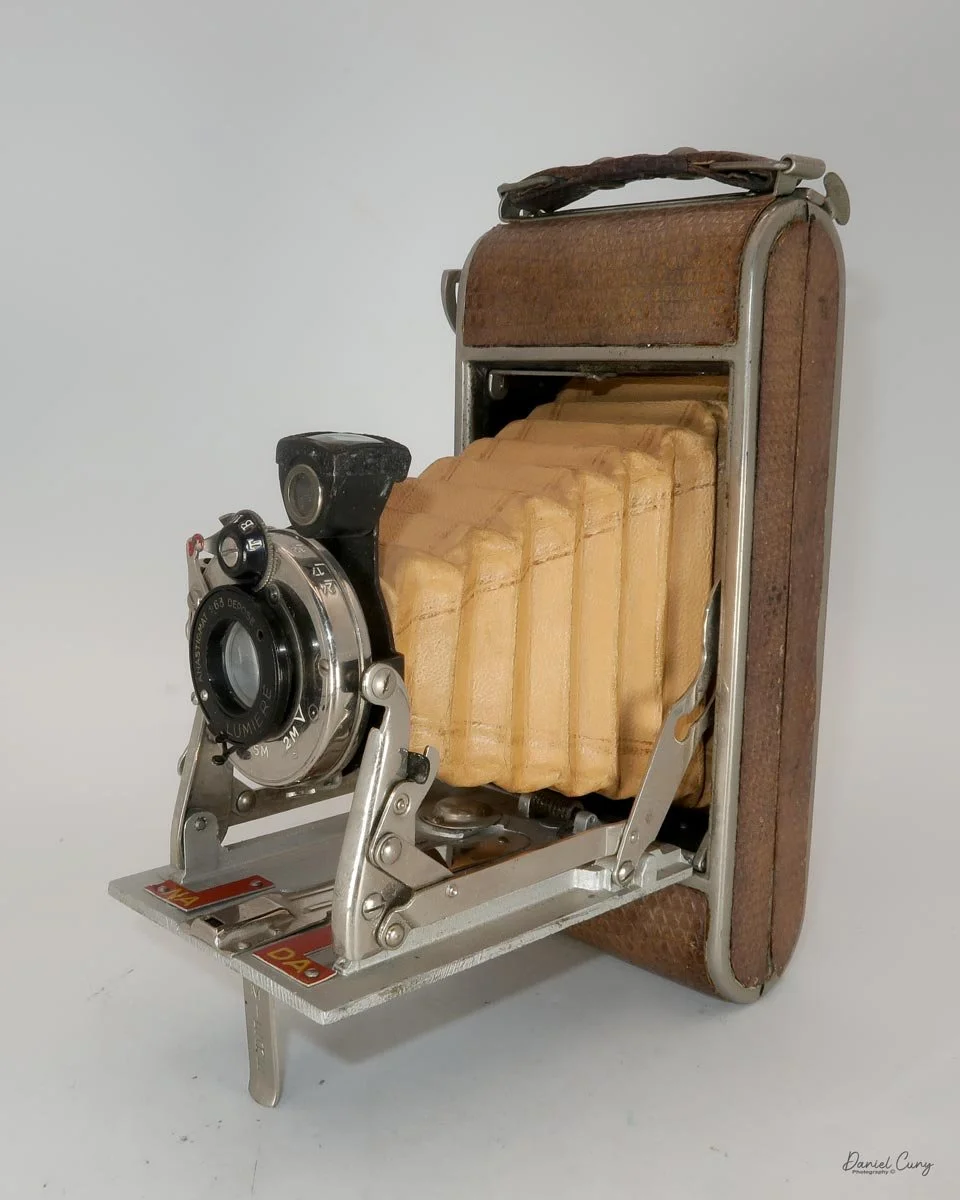
The Lumiere Nada Luxe camera is covered in what I guess is beautifully tanned snakeskin, with a wonderful subtle tan bellows which makes the chrome on the lens board shimmer. The camera has a Lumiere Depose Anastigmat f/6.3 lens.
Looking under the lens, there is a triangle that points to the focus points under the lens: 2 m for portraits, then 5m for groups, and finally infinity for scenic shots. Above the lens are the shutter speeds: 1/100, 1/50, and 1/25, along with "B" and "T" for timed exposures. Above the shutter speeds is a sliding bar you move to set the proper shutter speed.
The camera incorporates interesting aperture settings. I haven't come across these in my years of collecting cameras. The aperture settings are f/6.3, 8.5, 12, 17, and 24. You set these with another slider under the lens, with a red pointer indicating the selected aperture.
On the far right side of the camera, as you hold it, is the shutter release with a red dot. All the important features, like shutter speed, aperture, and the shutter release, have red accents, which give the camera another "deluxe" look.
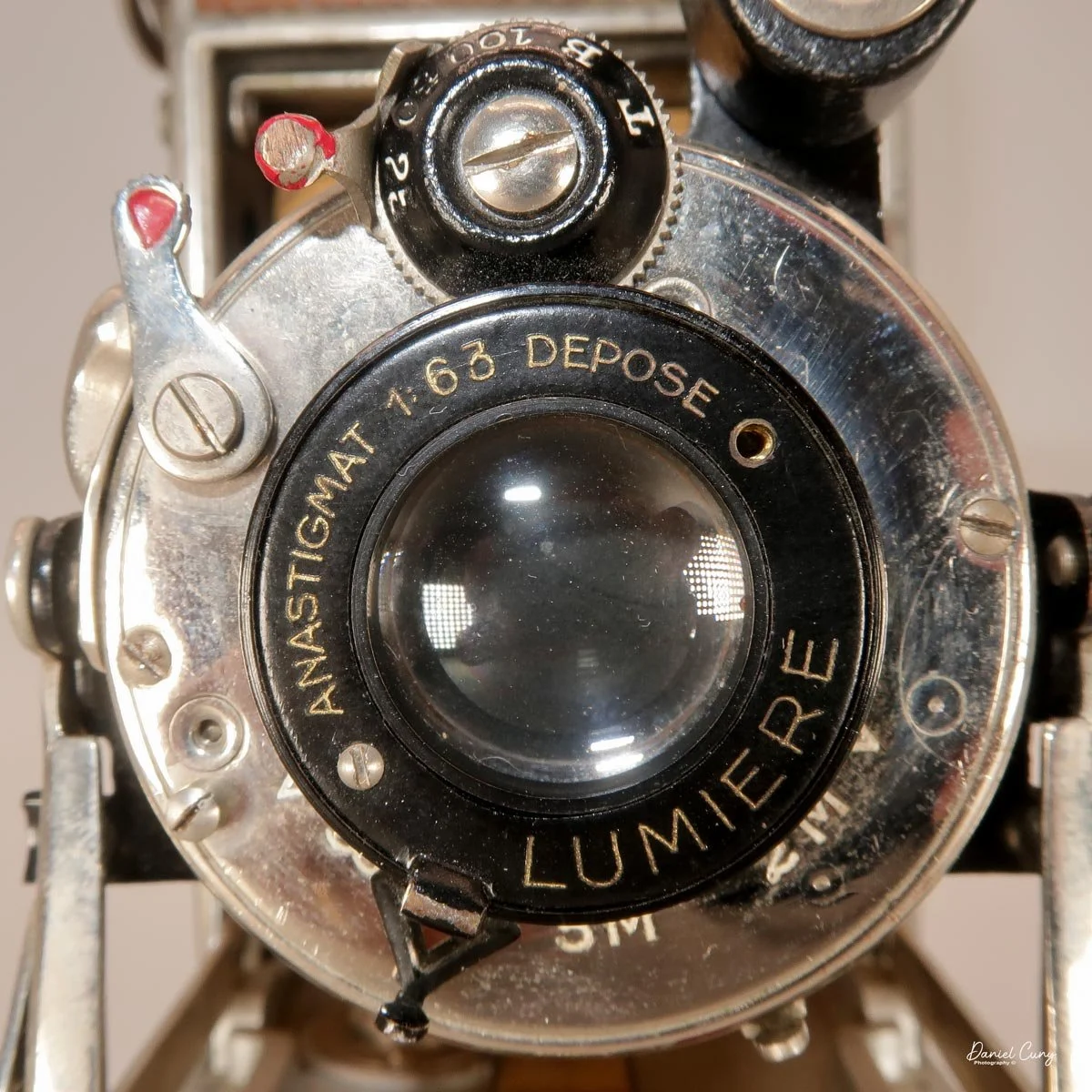
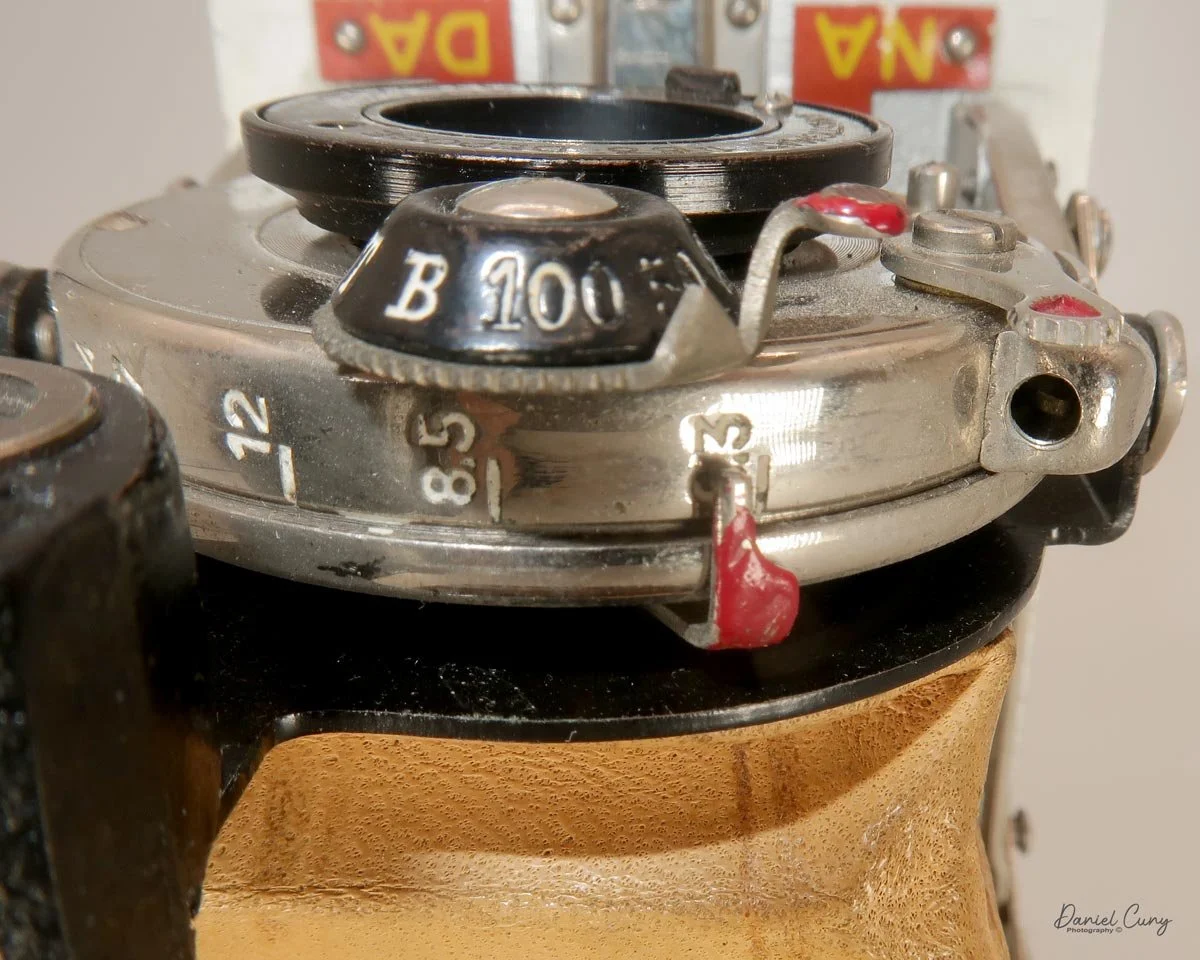
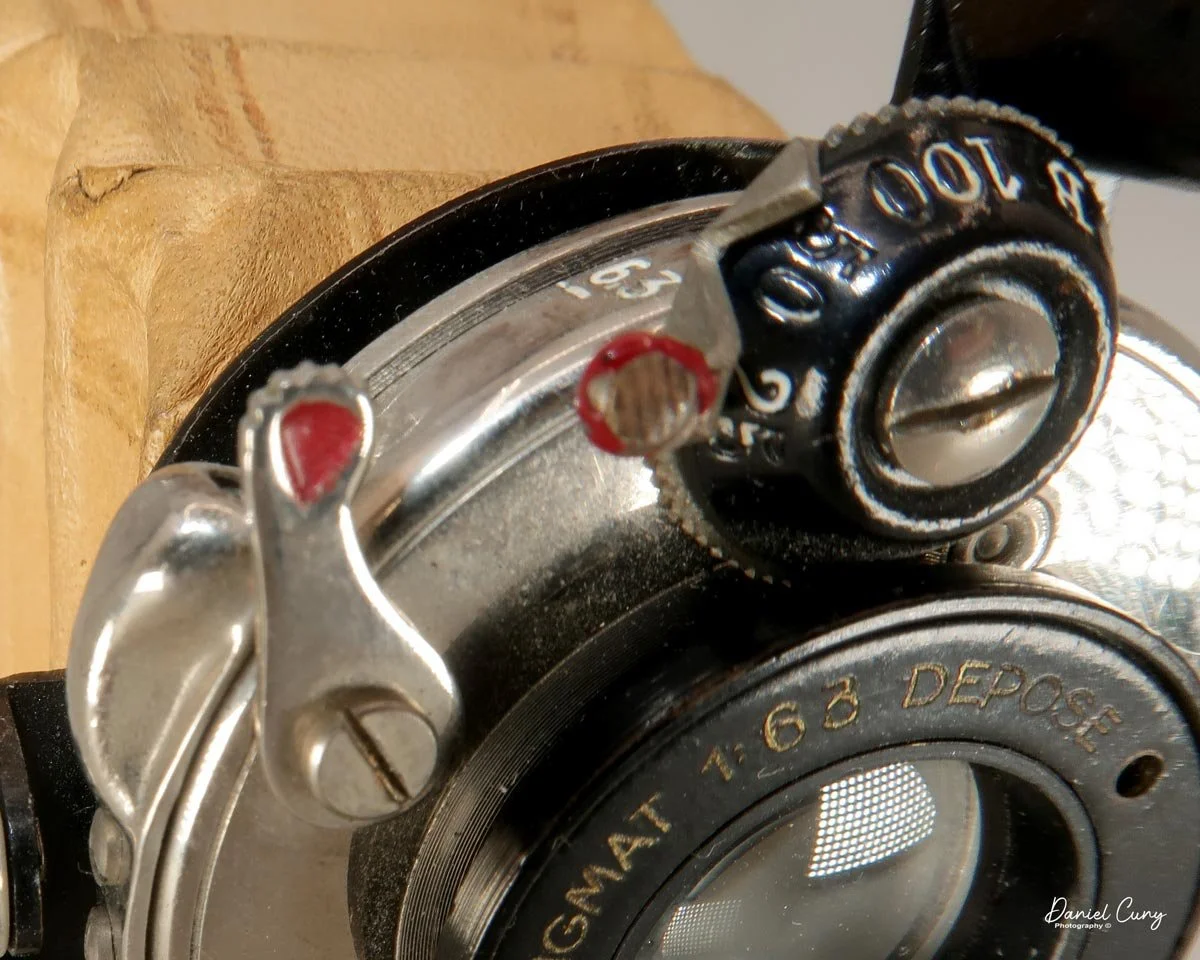
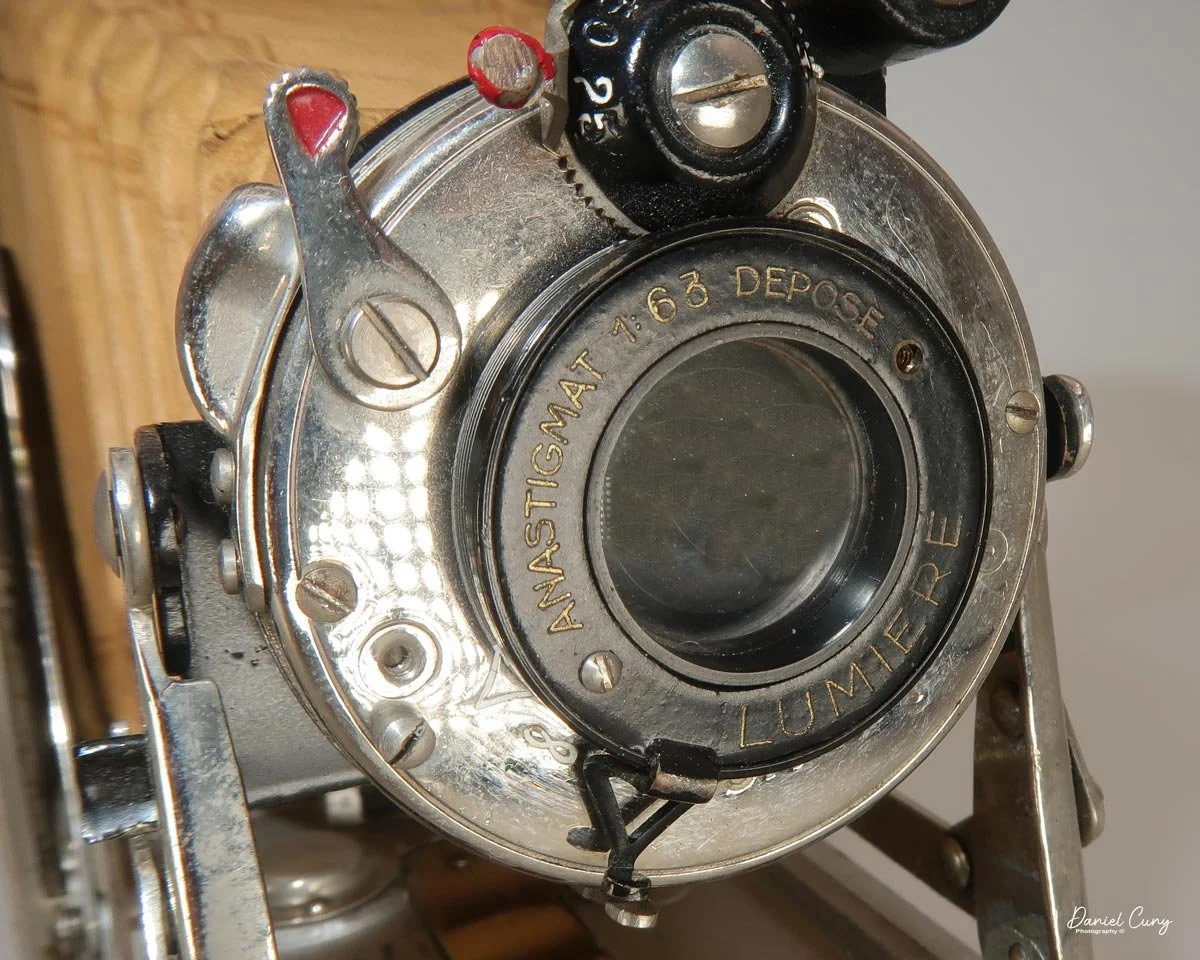
Just above the aperture settings is a black brilliant viewfinder, which turns for either vertical or horizontal photographs. Having the brilliant viewfinder, along with the black on the lens and shutter speed dial, adds real contrast against the shiny chrome lens board.
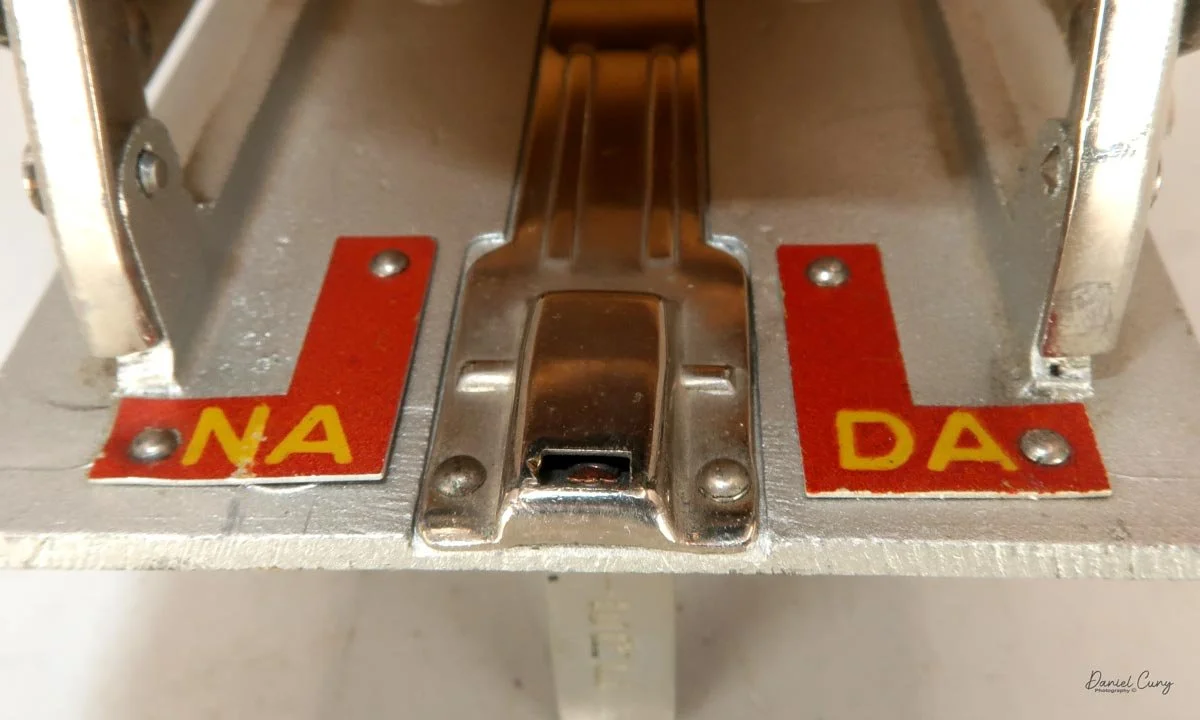
Just under the lens are two right-angled red metal pieces riveted to the lens platform, each bearing two letters of the camera's name on either side of the center lens rail: NA on the left and DA on the right (NADA). It's been written that the name is an ode to the early French photographer, Nadar, but I'm leery of this.
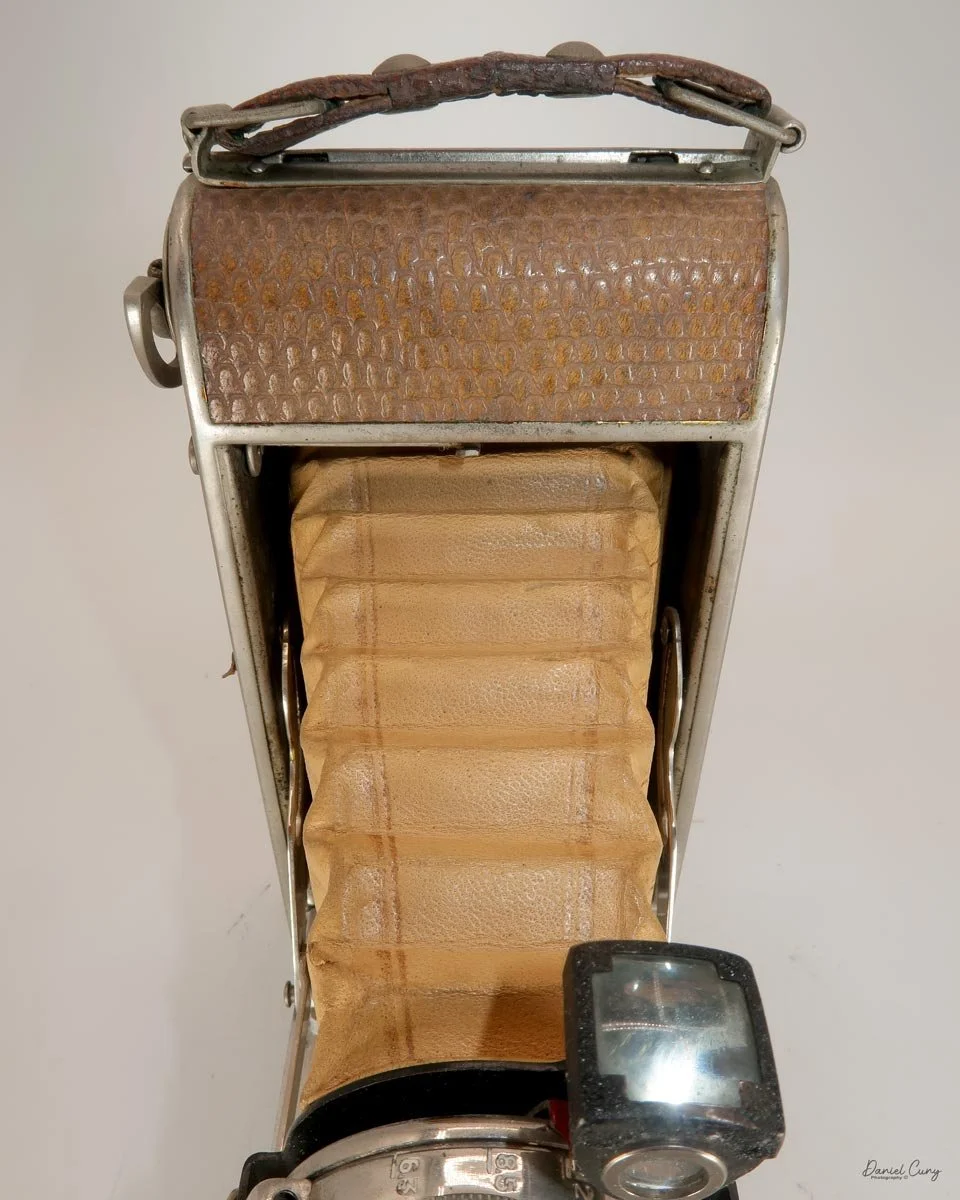
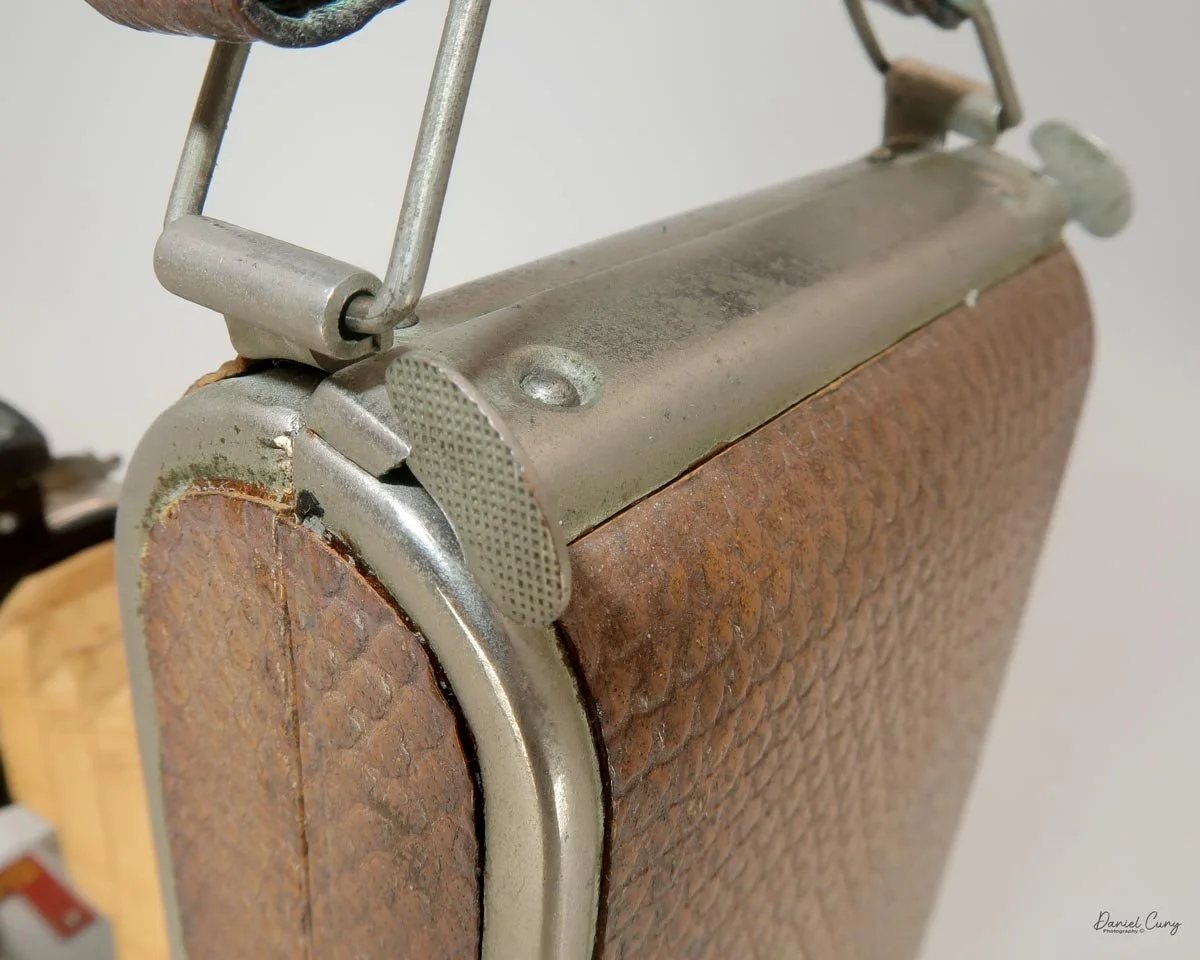
To open the back of the camera to load film, press together the two clips just behind the camera's handle; this lets you pull the back away from the camera body and off the camera, exposing the film chamber.
This next item is something I wish all folding cameras had. On both ends of the camera's film chamber, where you put the new roll of film, or just the take-up spool, is a lever which spreads the two prongs, or the one prong and winding crank, apart, allowing you to drop the new roll of film or the take-up spool into the proper chamber. Then press the lever back, and it holds the film spool in place. This was the easiest and most convenient method used for putting a roll of film into a camera. Something so simple, yet it works extremely well.
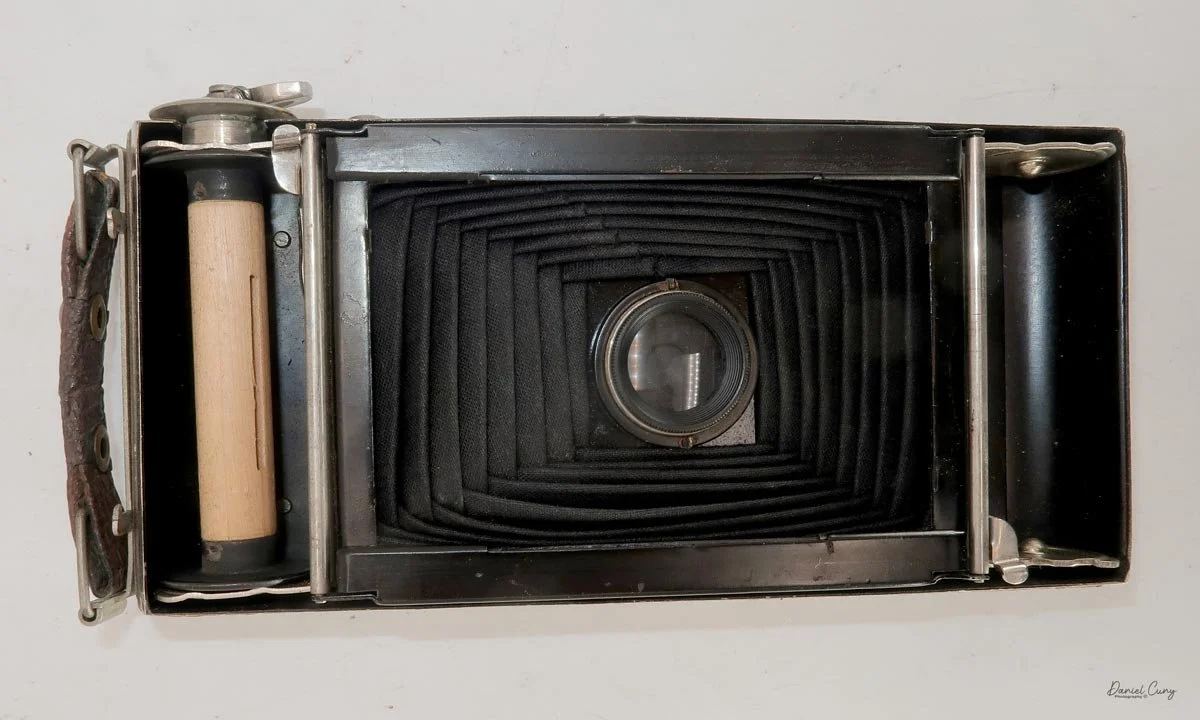
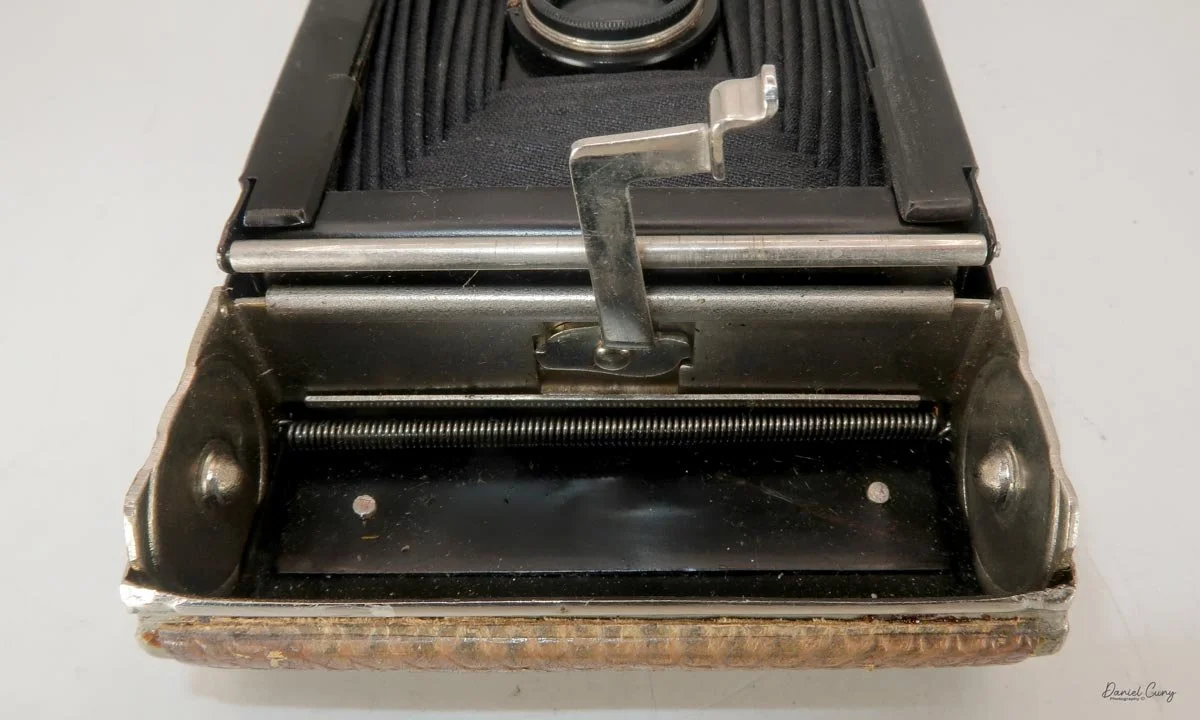
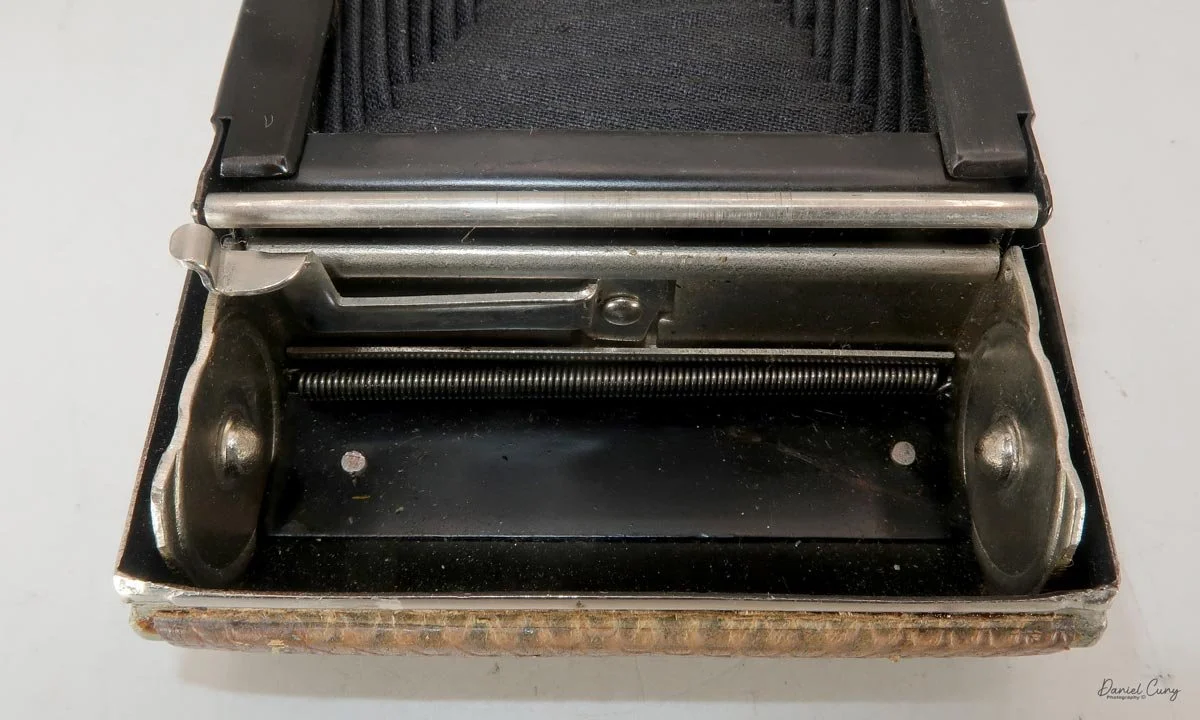
Once the film and take-up spool are in place, load the film as you would in any roll-film camera, then put the back onto the camera body and make sure it's latched. Wind the film to frame 1 as you look through the red window on the back of the camera. At this point, you're ready to take photos.
My Results:
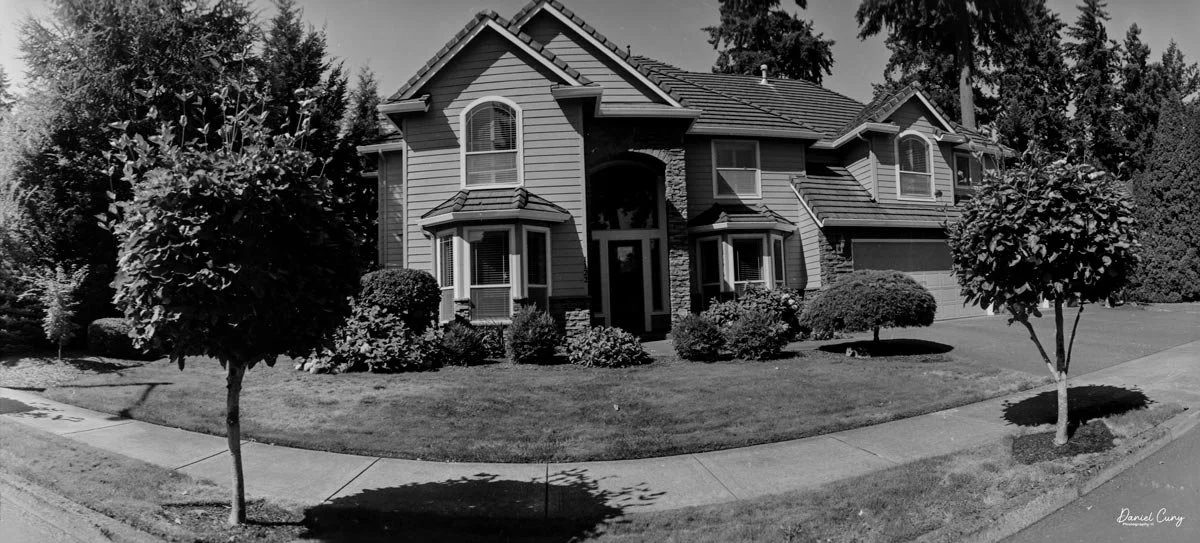
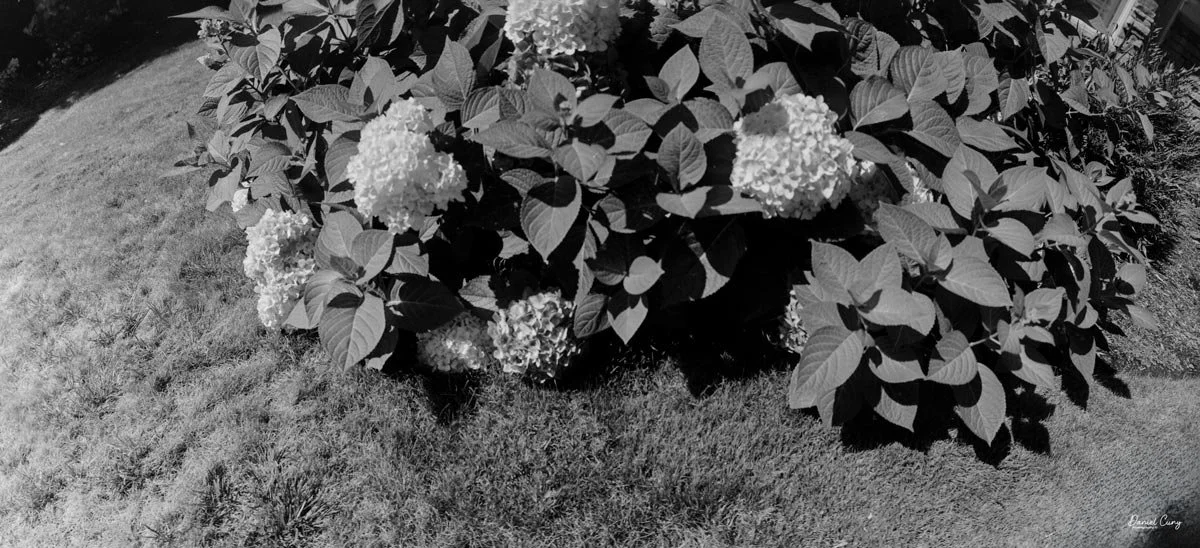
With a roll of film loaded, I took my usual stroll through the neighborhood, photographing interesting subjects to see how the camera would perform.
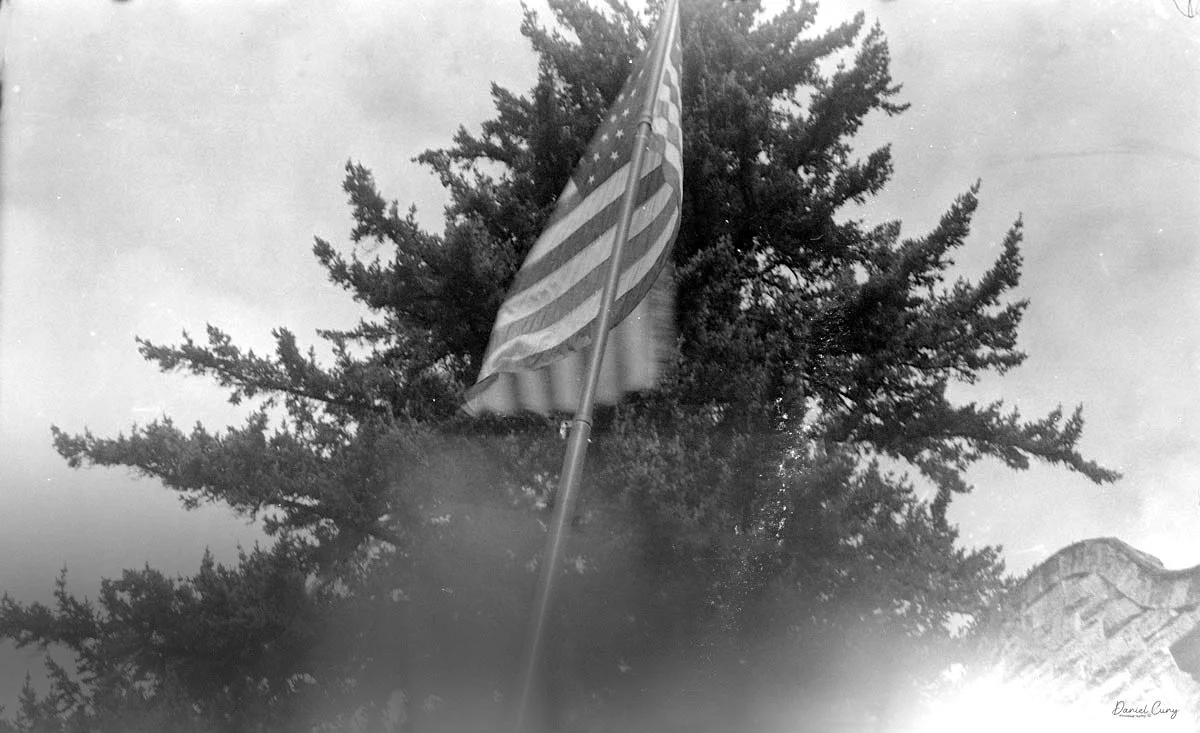
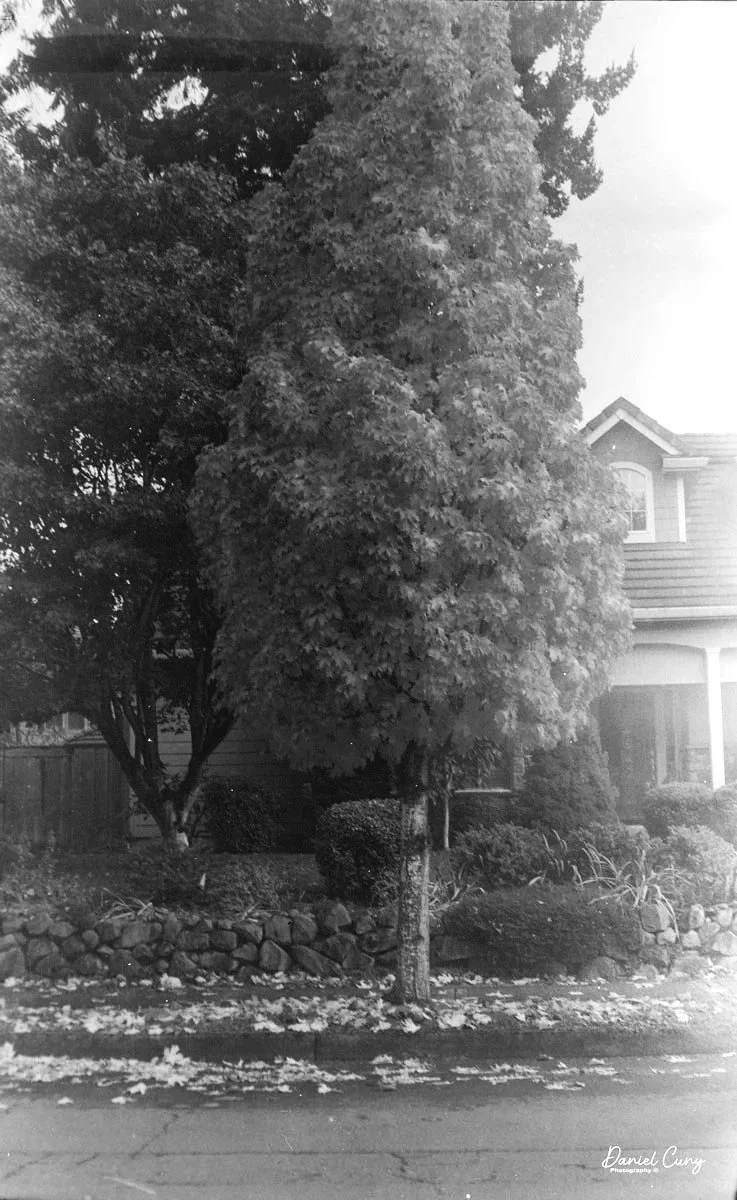
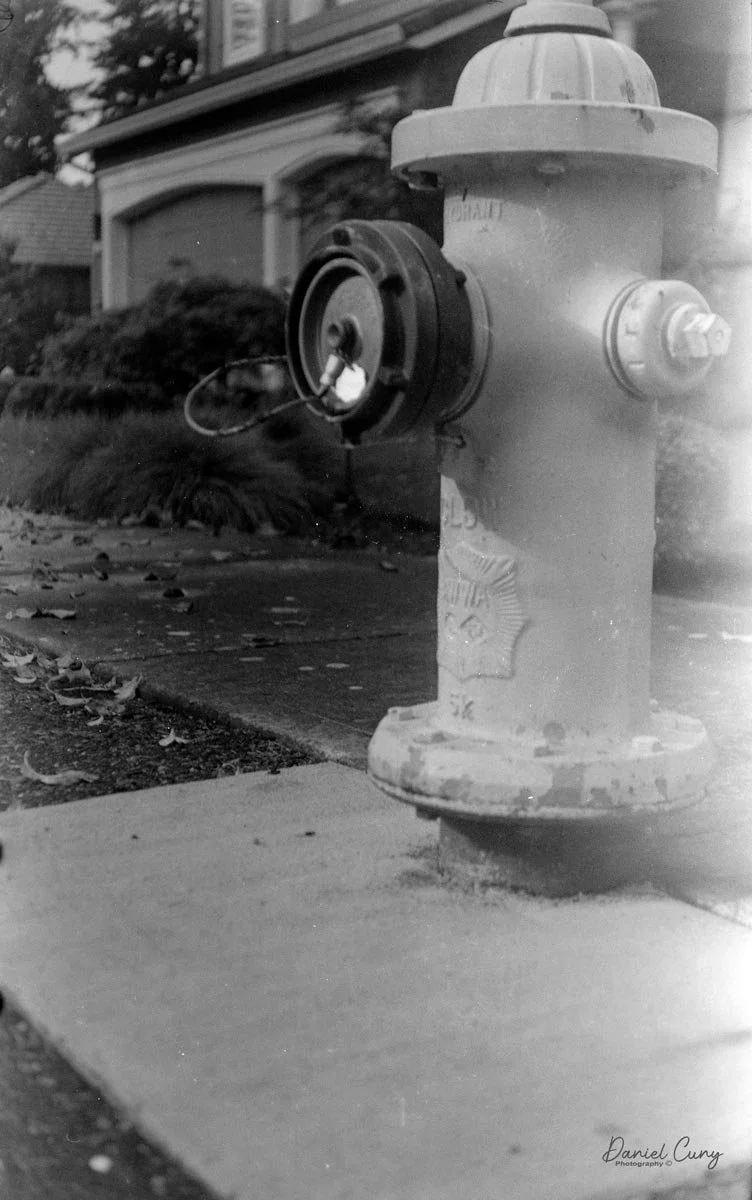
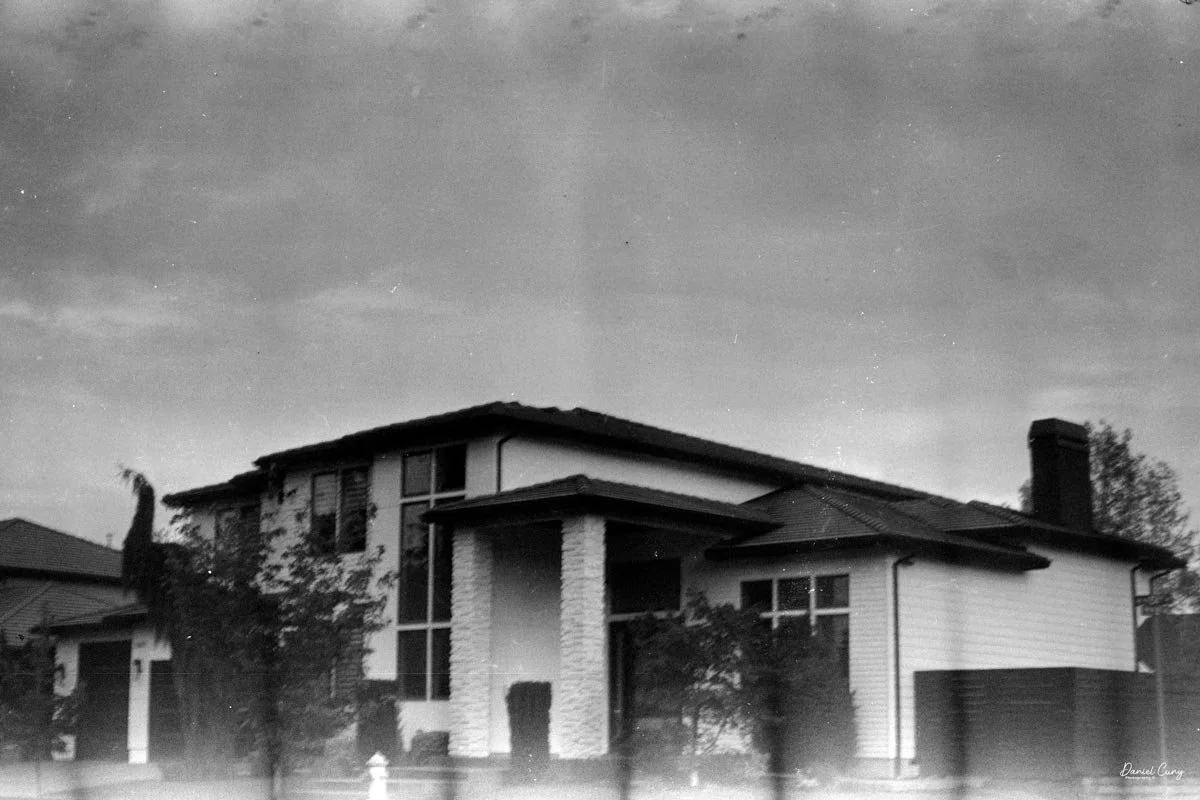
Here are the results I received with the Lumiere Nada Luxe camera.
Conclusion:
The images have a very "dreamy" look, which I enjoy. The focus was OK, not great, but that's to be expected, especially using a zone, guesstimate focus system.
I really liked the photo of the flag and fire hydrant, as they have an image quality that I enjoy, something similar to the old photos from this era by Stieglitz, Steichen, or others, with a very soft, dreamy appearance.
Thank you for taking the time to read about the Lumiere Nada Luxe camera I recently added to my collection.
Are you interested in other vintage gear? Here are some of my other Camera Reviews.
Check out my Cuny's Camera Collection YouTube channel, where I am putting together video overviews of the cameras I write about. Be sure to subscribe and like the channel, too!
Cuny's Cameras and Photos is my online eBay store, where you will find some of the cameras I have reviewed, along with a wide range of other cameras, lenses, and items from my collection that I am thinning out.
Until next week, please be safe.