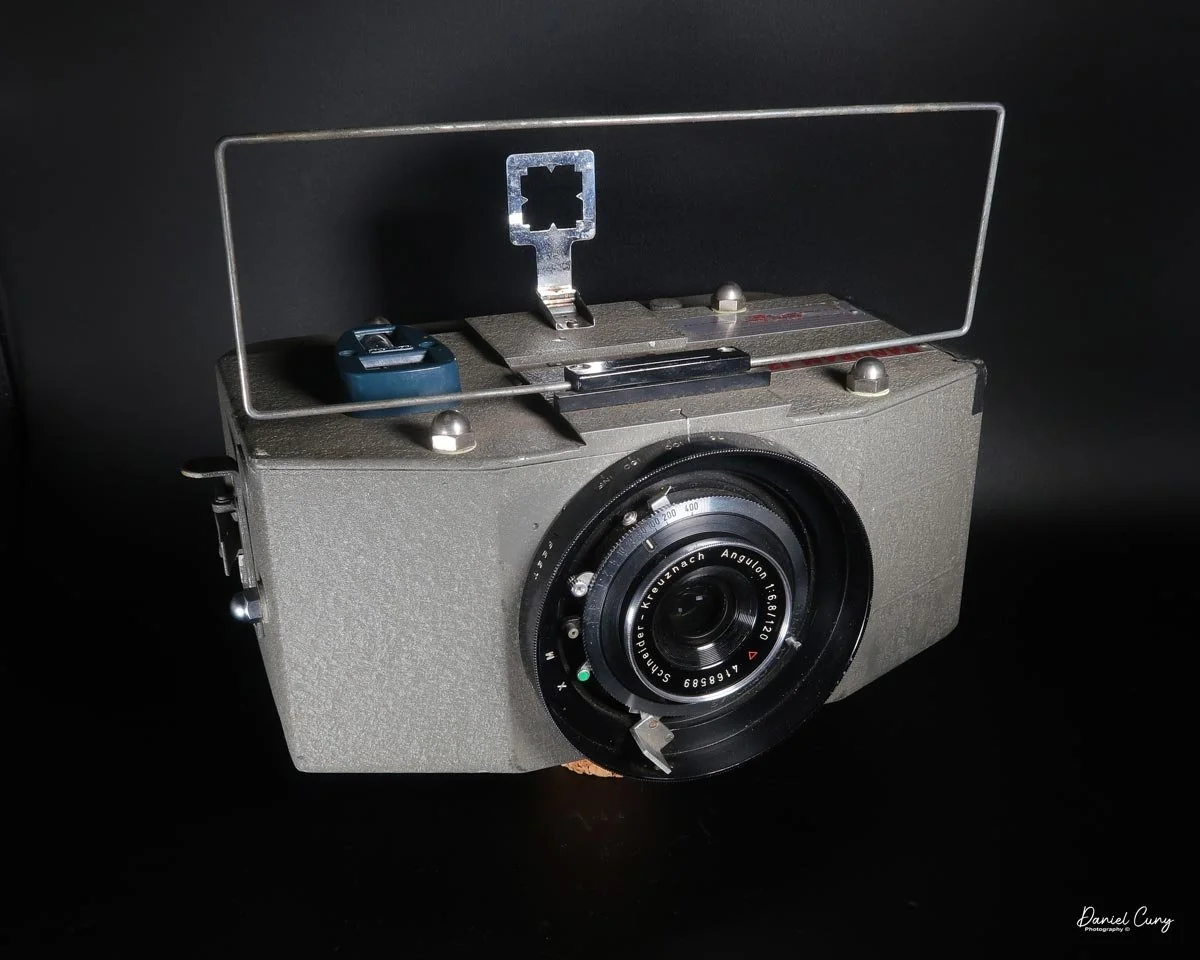
My Burke & James Panoram 120 camera
It wasn't until a couple of years ago that I came across this interesting panoramic camera from Burke & James of my hometown of Chicago, Ill. There are a few different versions, but they all stem from the original WWII military Torpedo camera.
I almost pulled the trigger a few times on a version of the camera, but the timing wasn't right. I've looked at a couple of the military versions, some complete and others not. One issue with the military camera is powering it. The military version is powered by a 24v power supply, which, since I'm not an electrical wiz, meant I'd need to find that source. Then the question is, what if the camera wasn't in "good working condition"? These were my stumbling blocks for the military version, so I kept on looking.
I did find another kit with a couple of backs, but the seller said the shutter release was very sticky and you had to press hard to trigger the shutter. A couple of things came to mind. If I need to press hard on the shutter release, that might move the camera and cause blur, and if you have to press hard, maybe it's not in good condition. On the other hand, maybe it just needed lubrication. Still, for the price they were asking for the kit, I figured I'd pass again and wait for something else to cross my path.
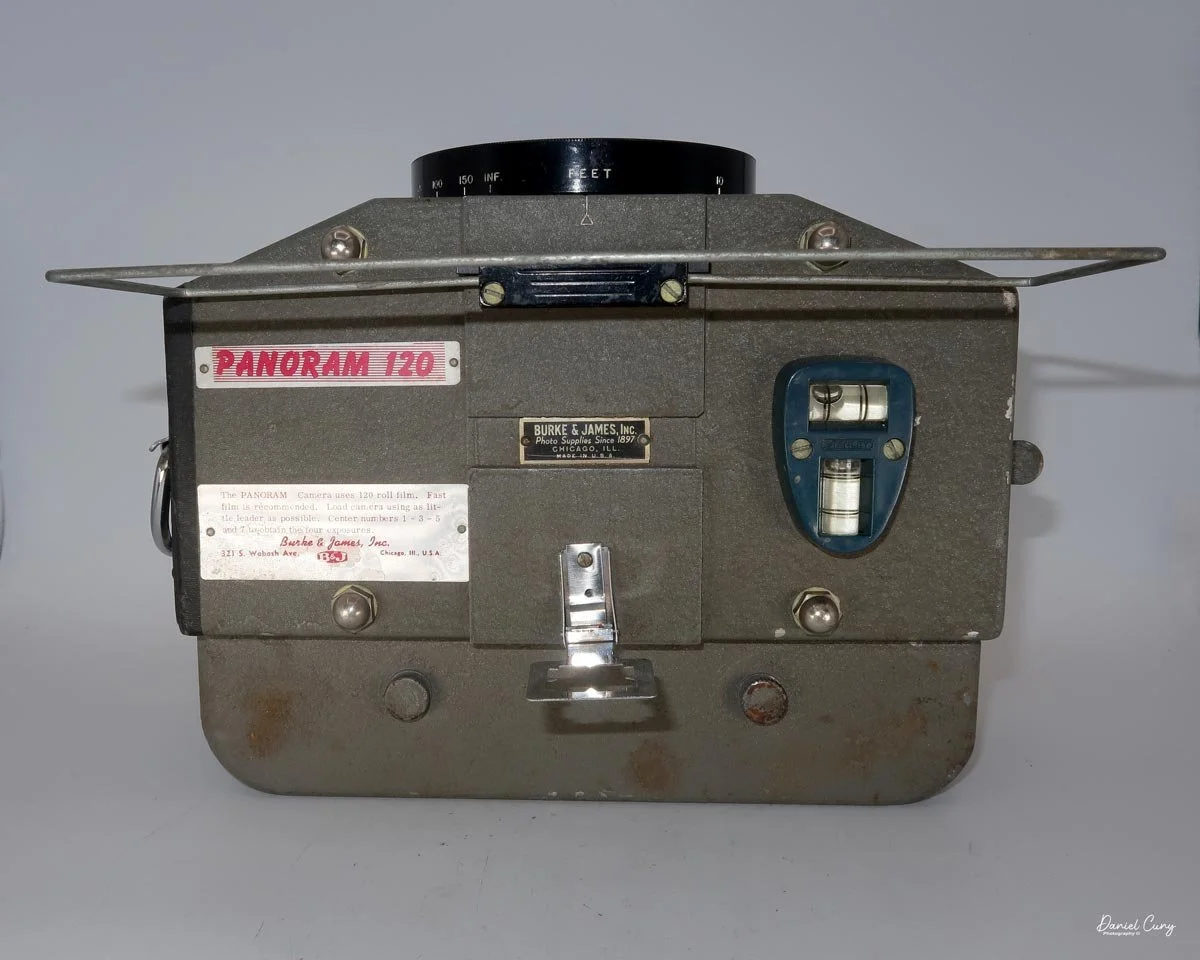
Top view of the Burke & James Panoram 120 camera
It wasn't until I went to a recent camera show in Seattle, WA, that a friend came up to me and said, "Wait till you see what I brought for you." He pulled out the Burke & James Panoram 120 camera from one of the boxes he brought in. The camera was in good condition, and it had the newer Schneider lens, a second film back, the ground-glass back, and an old Military non-film rear cover that fit onto the camera without a film back attached.
This was the right moment to pull the trigger. It was in great condition; the lens was nice, and the backs were better than I've seen elsewhere. So we made the deal, and I gathered all the parts and pieces, knowing I'd be leaving with a Burke & James Panoram 120 camera and accessories.
History:
Burke & James was a Chicago camera company, founded in 1897 by Henry Burke and David James. They made and imported cameras and lenses, selling them from their storefront and by mail order. Their line covered just about everything a working photographer needed: view cameras, portrait cameras, fingerprint cameras, movie cameras, graphic arts equipment, lenses, and darkroom sinks. Many of their products carried the house names Rexo, Watson, and Ingento.
During World War II, they made gear for the military, and that is where the Panoram camera comes in. The Navy needed a camera that could record a torpedo attack from an airplane, from the moment the torpedo left the plane to the moment it hit. The Russell Vought Company, a division of Solar Aircraft in San Diego, built the camera in 1943 and 1944. It was a motorized panoramic camera with a louver shutter that shot seven-inch-wide negatives, mounted on the wing of a Navy surveillance plane and operated from inside.
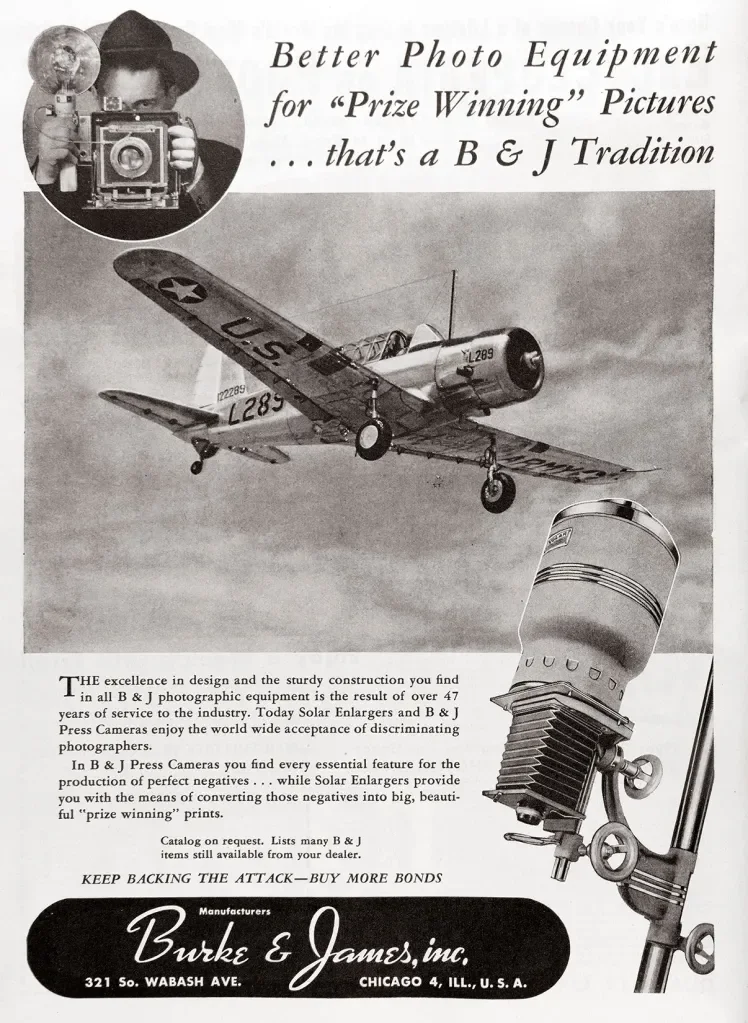
Advertisment for Burke & James products.
When the war ended, Burke & James bought up a lot of these surplus cameras. He converted them for civilian use and sold them under the name Panoram. The first, the Royal Panoram of around 1950, was a converted military camera that shot 6x18cm frames on 120 film with a frame finder. Then came the Panoram 120, made from about 1956 to 1971, which produced four 7 by 2 1/4-inch negatives per roll of 120. The Mark II added a focusing mount, and the Mark III came with a Goerz Dagor f/6.8 lens.
The Panoram is a different kind of panoramic camera from my Kodak Panoram 1. The Kodak is a swing-lens camera, with the lens sweeping across a curved film plane. The Burke & James is a fixed-lens camera, and the wide negative does the work—seven inches on the military camera, and a 6x18cm frame on the 120 models. The lenses varied with the camera: the military cameras carried lenses like the 5-inch f/4 Ross Wide Angle Xpres, and the Panoram 120 was sold with a Schneider Angulon 120mm f/6.8 in a Synchro-Compur shutter.
Burke & James continued into the 1960s, when Ilex Optical, the lens and shutter maker, bought the company, and later Burleigh Brooks Optics. The Burke & James name faded from the camera business after that. What I like about the Panoram is the story behind it: a camera built to watch torpedoes fall, turned into a civilian camera for wide landscapes and big group shots, all on a roll of 120 film.
My Camera:
My Burke & James Panoram 120 camera is big, bulky, and heavy, made of metal that makes it look military. It's not really refined or polished, like the consumer cameras you normally see from the late 1950s. It's 10.5" wide by 8" deep with the film back attached, and 4.5" tall without the metal framing window extended. When it is extended, the camera is 7.5" tall. It weighs 7 pounds, 5.7 ounces with the film back attached.
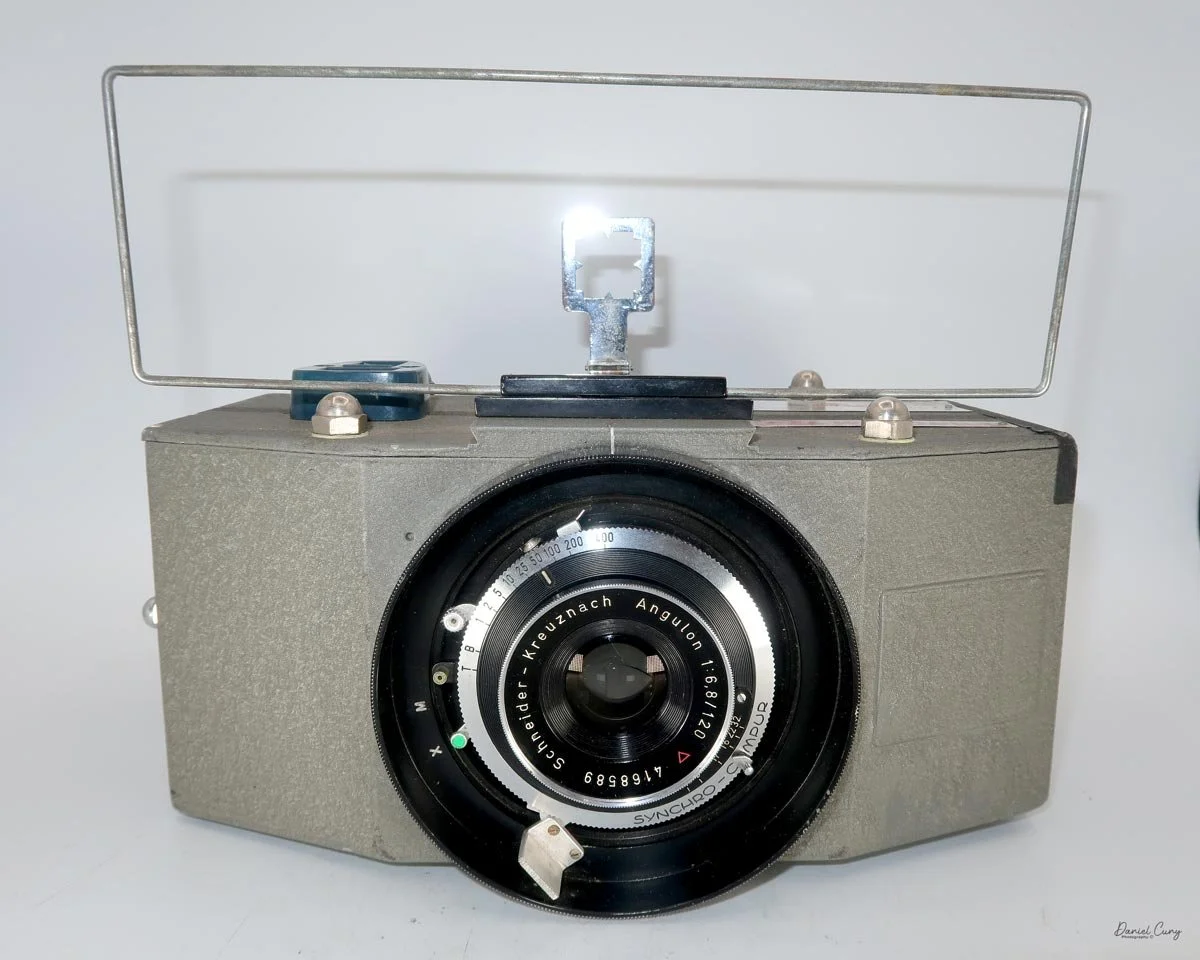
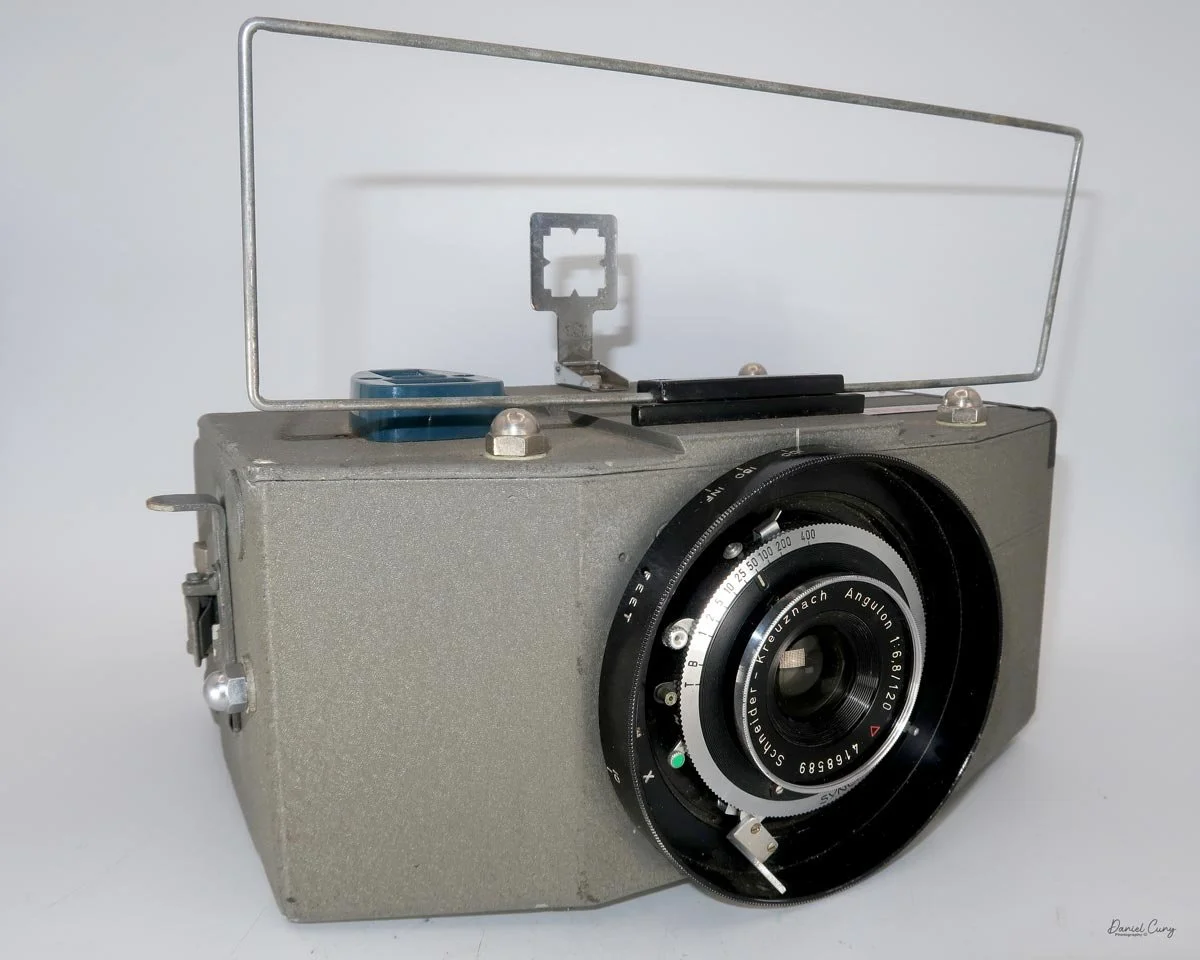
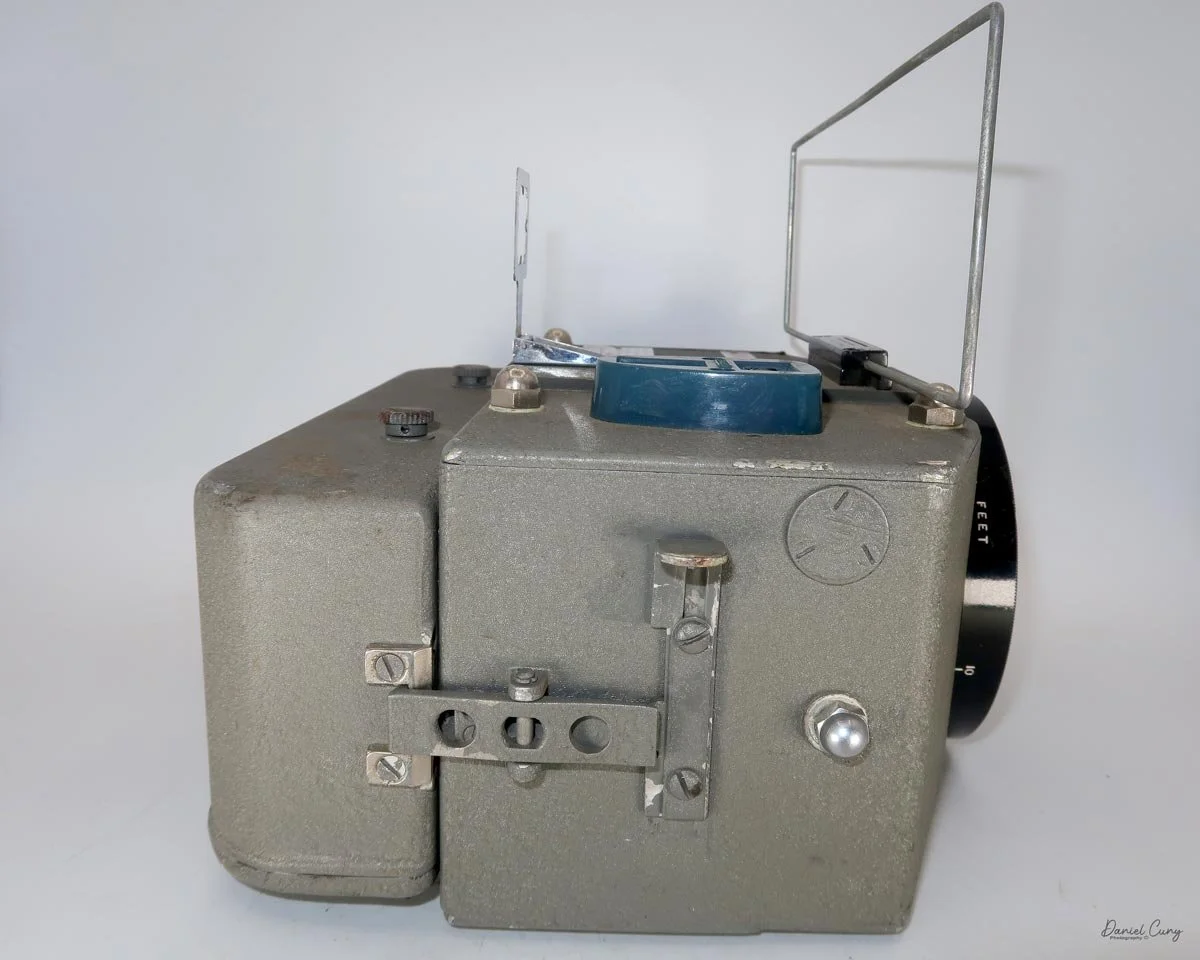
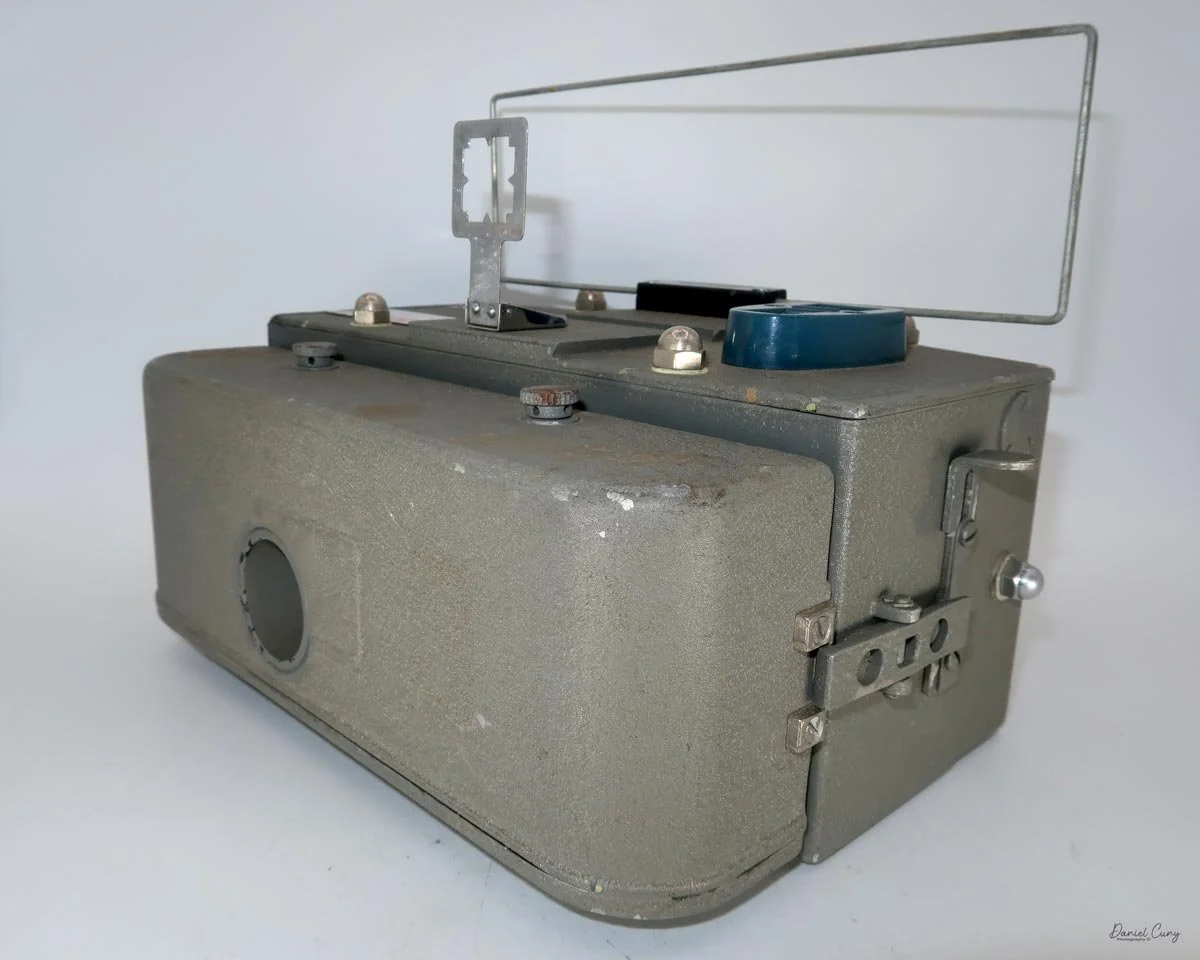
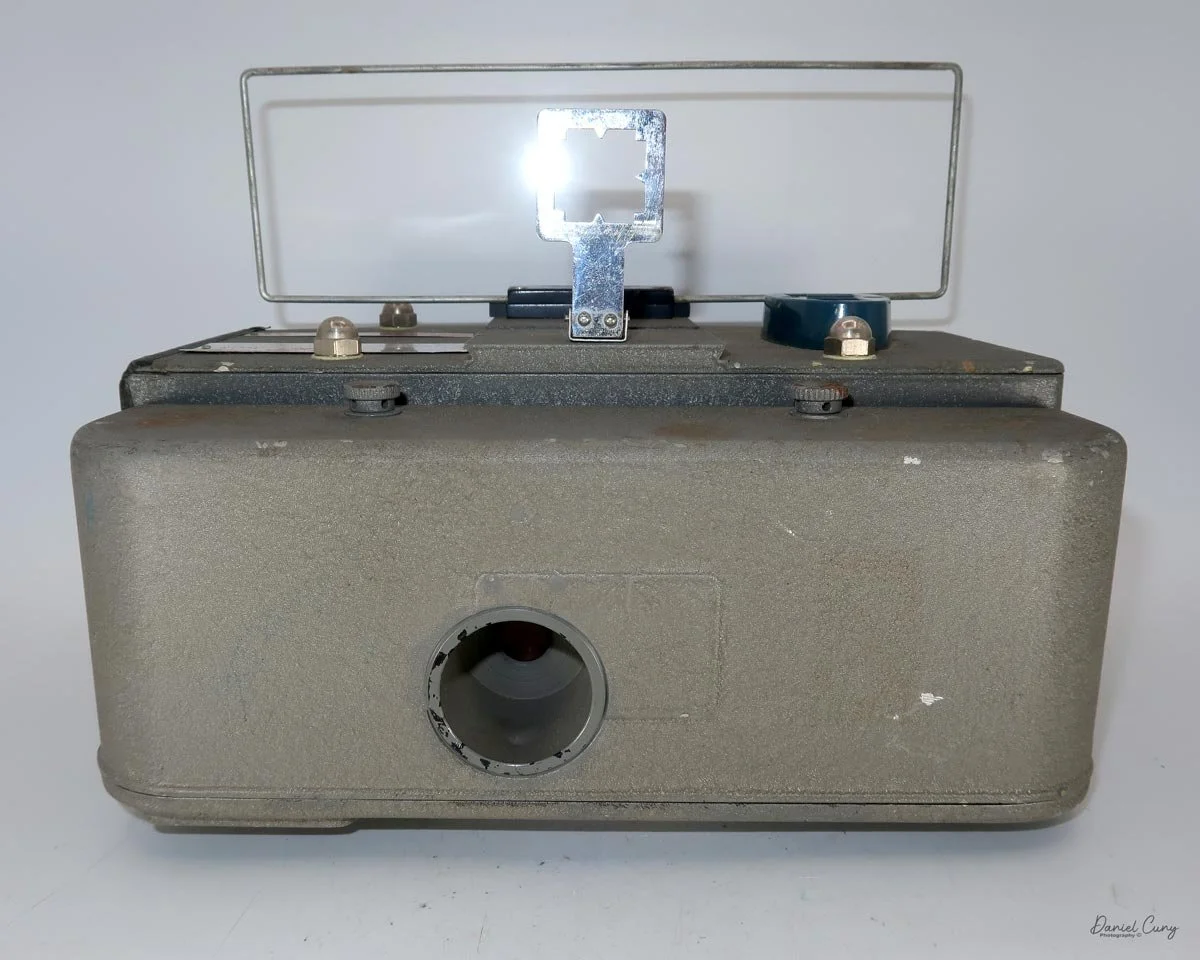
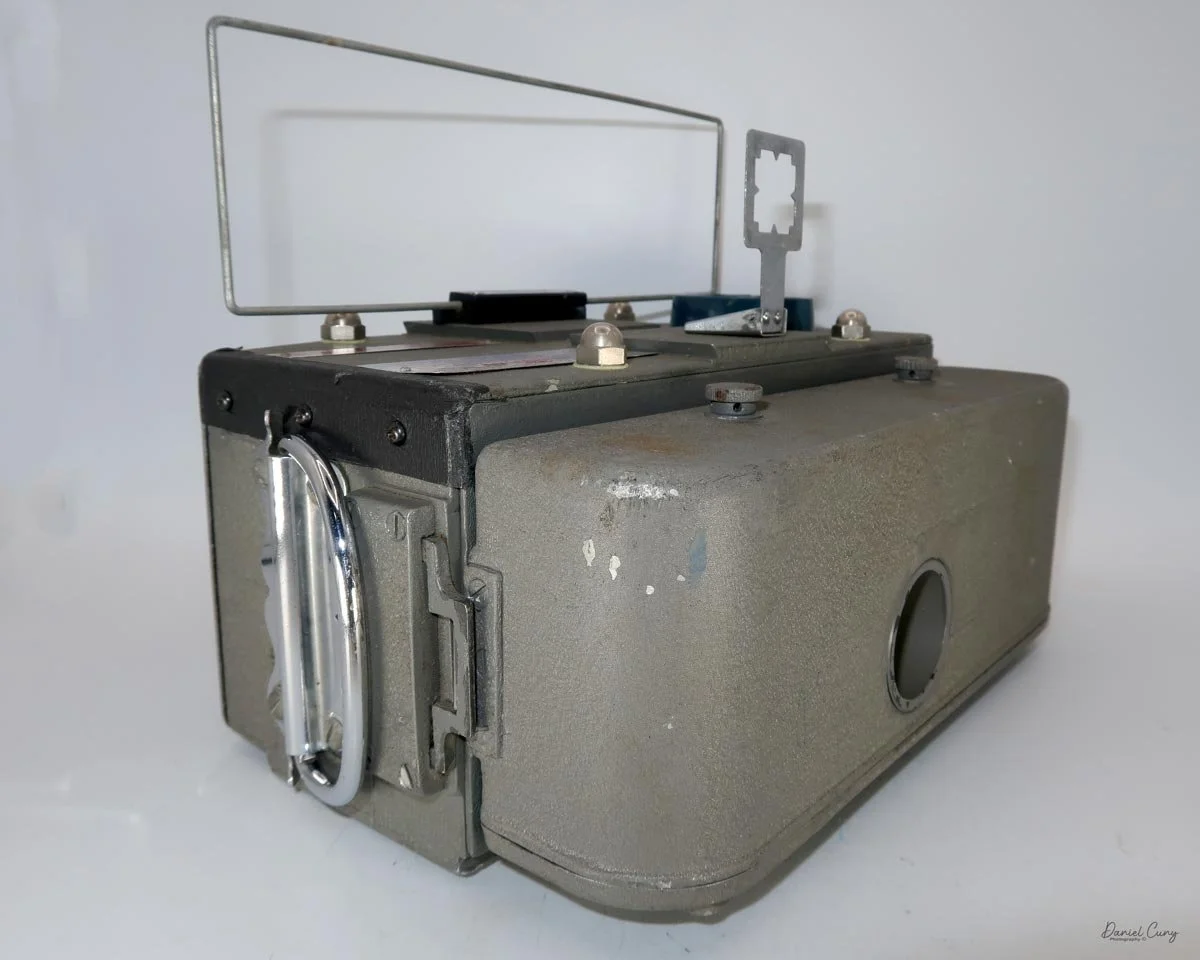
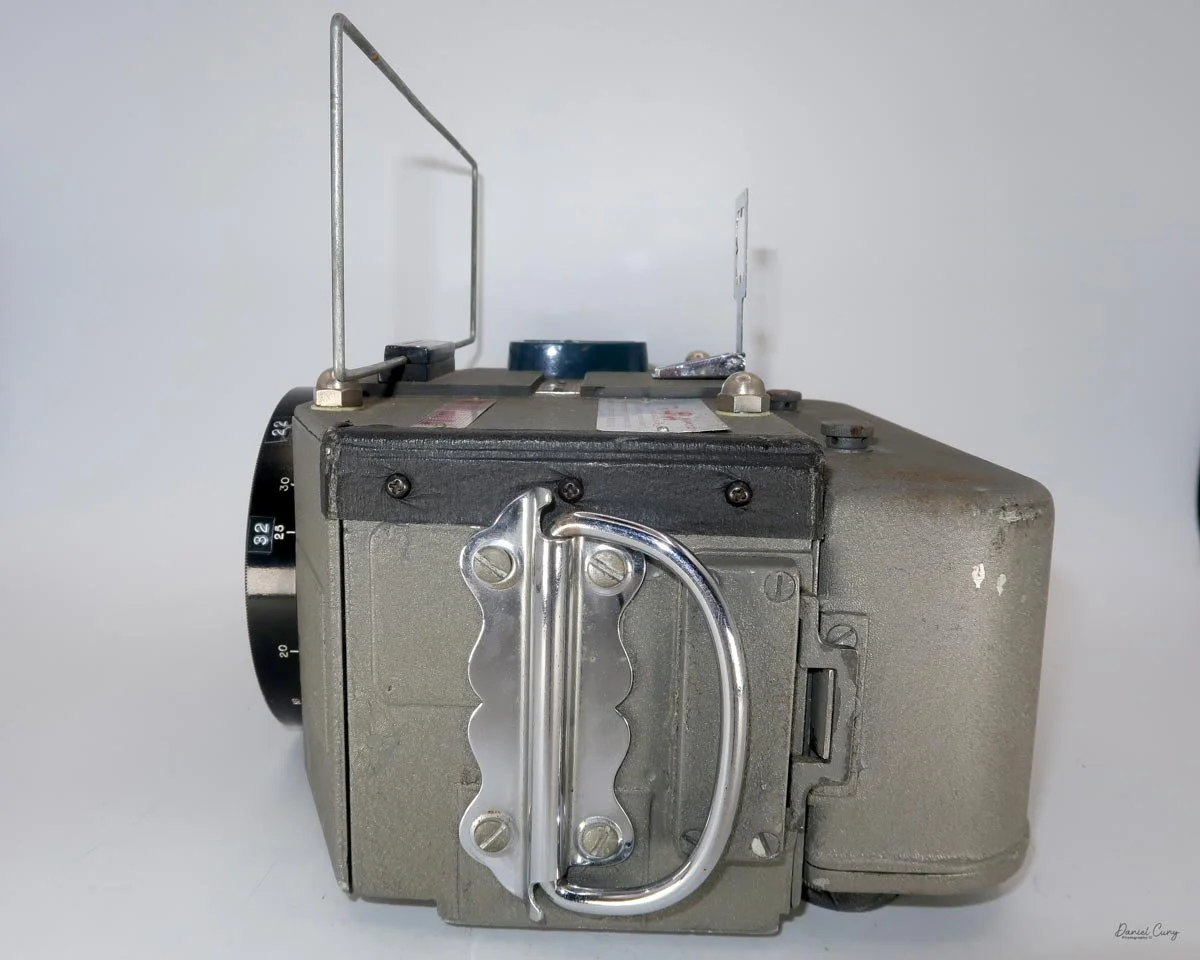
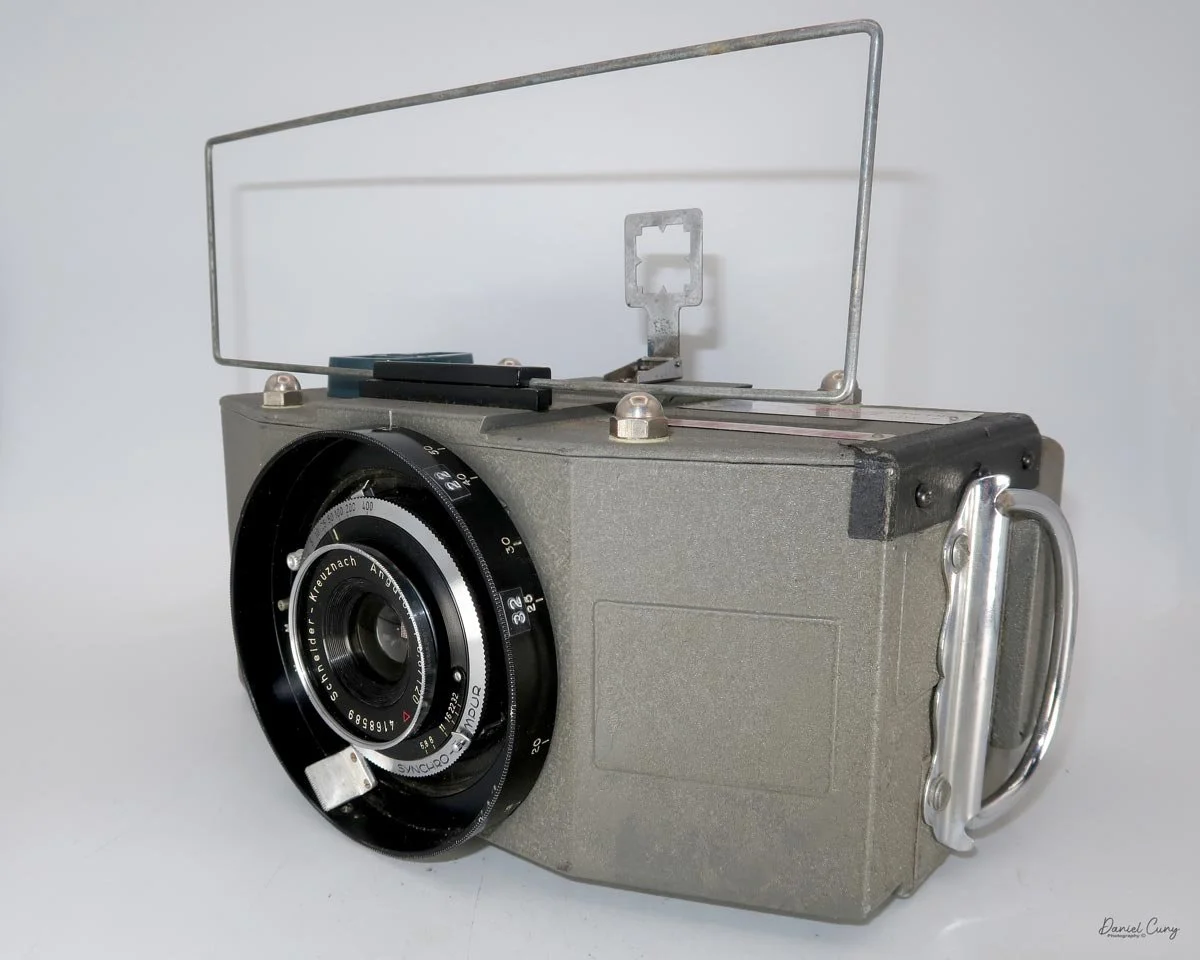
The camera is extremely basic. It even has bolts on top of the camera body and a side handle that look like they came from my dad's work cabinets. The camera has a Schneider Angulon 120mm f/6.8 lens in a Synchro-Compur shutter. Shutter speeds range from 1/400 to 1 second, along with "B" and "T". The shutter speeds are set on a dial on the top of the shutter. The aperture ranges from f/6.8 to 22 and is set via a slider on the bottom of the shutter.
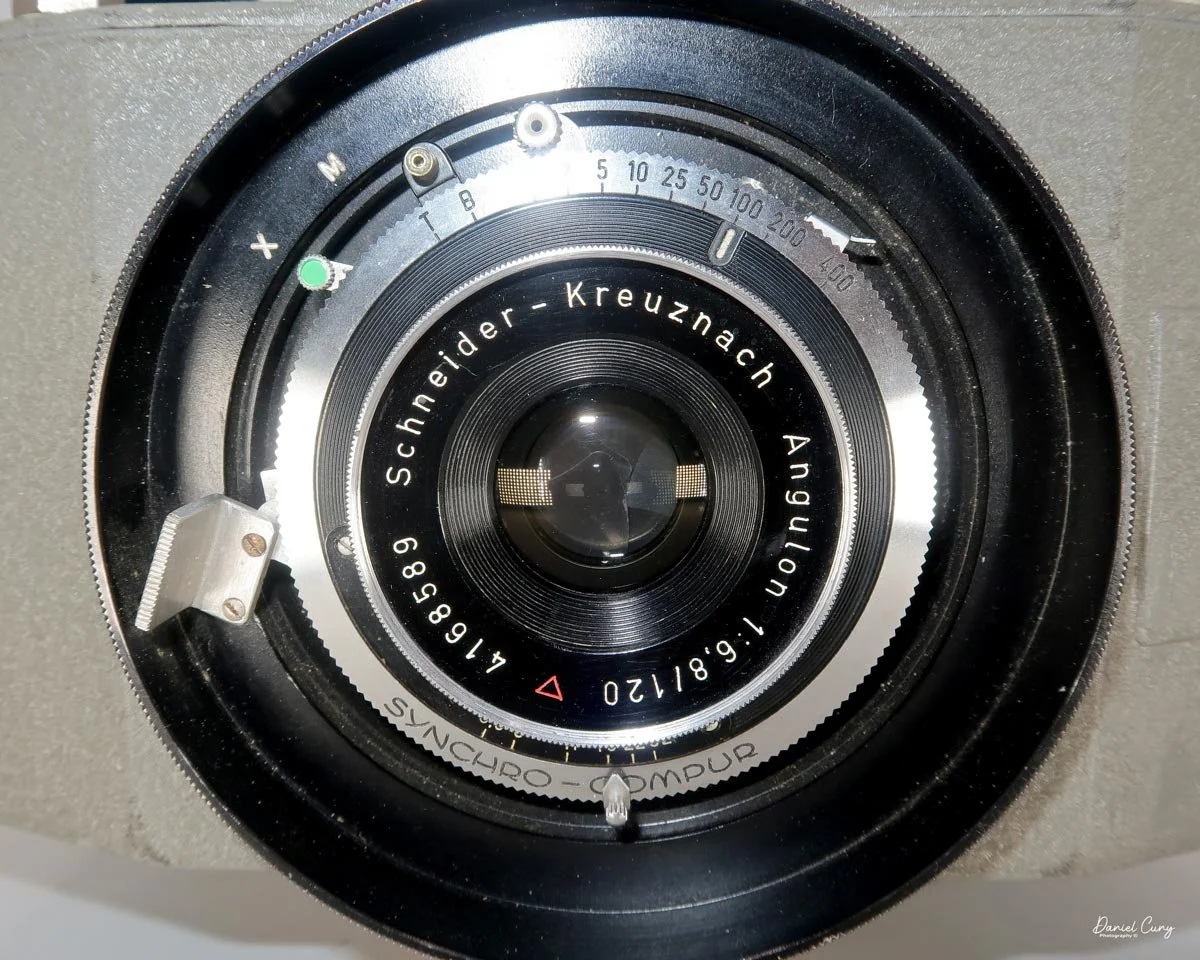
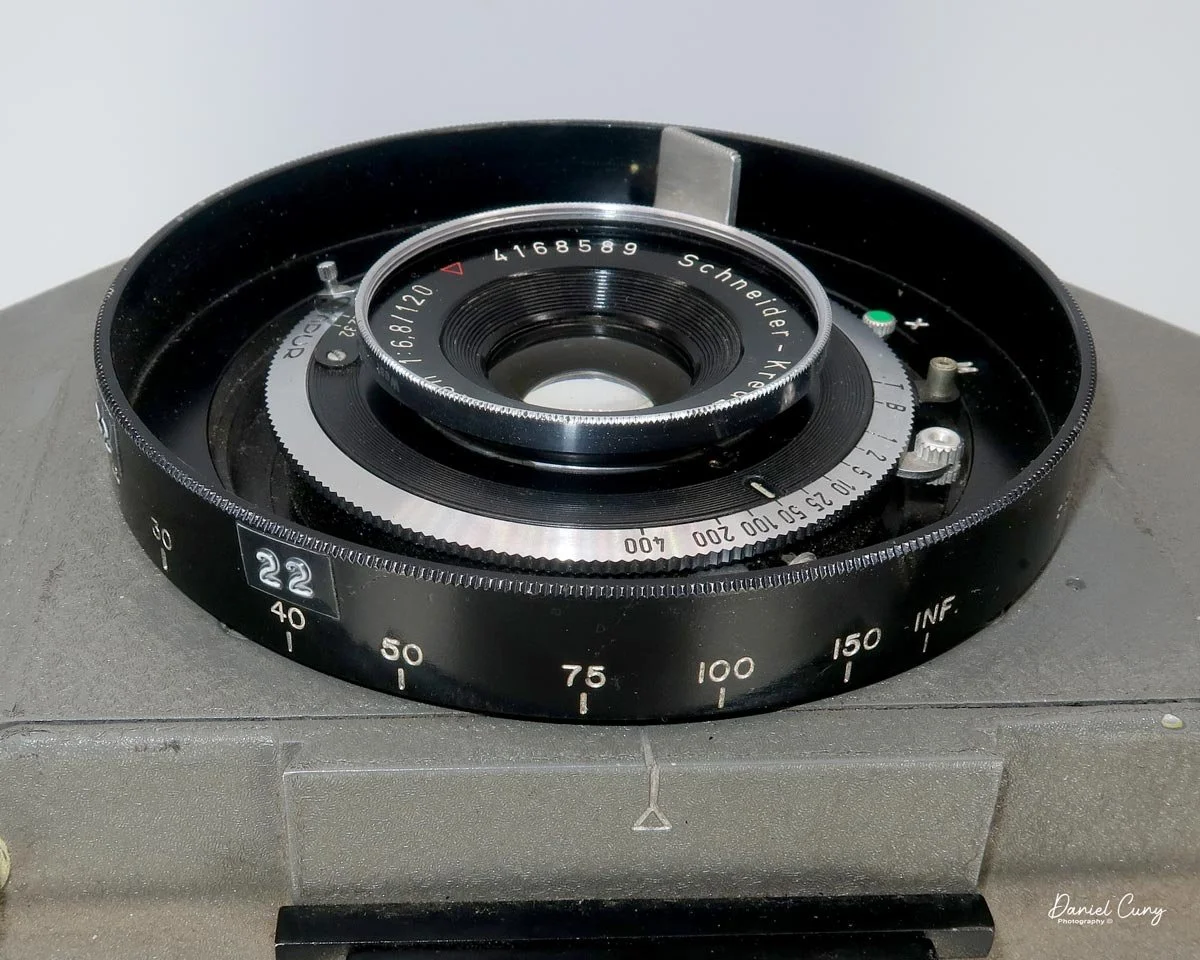
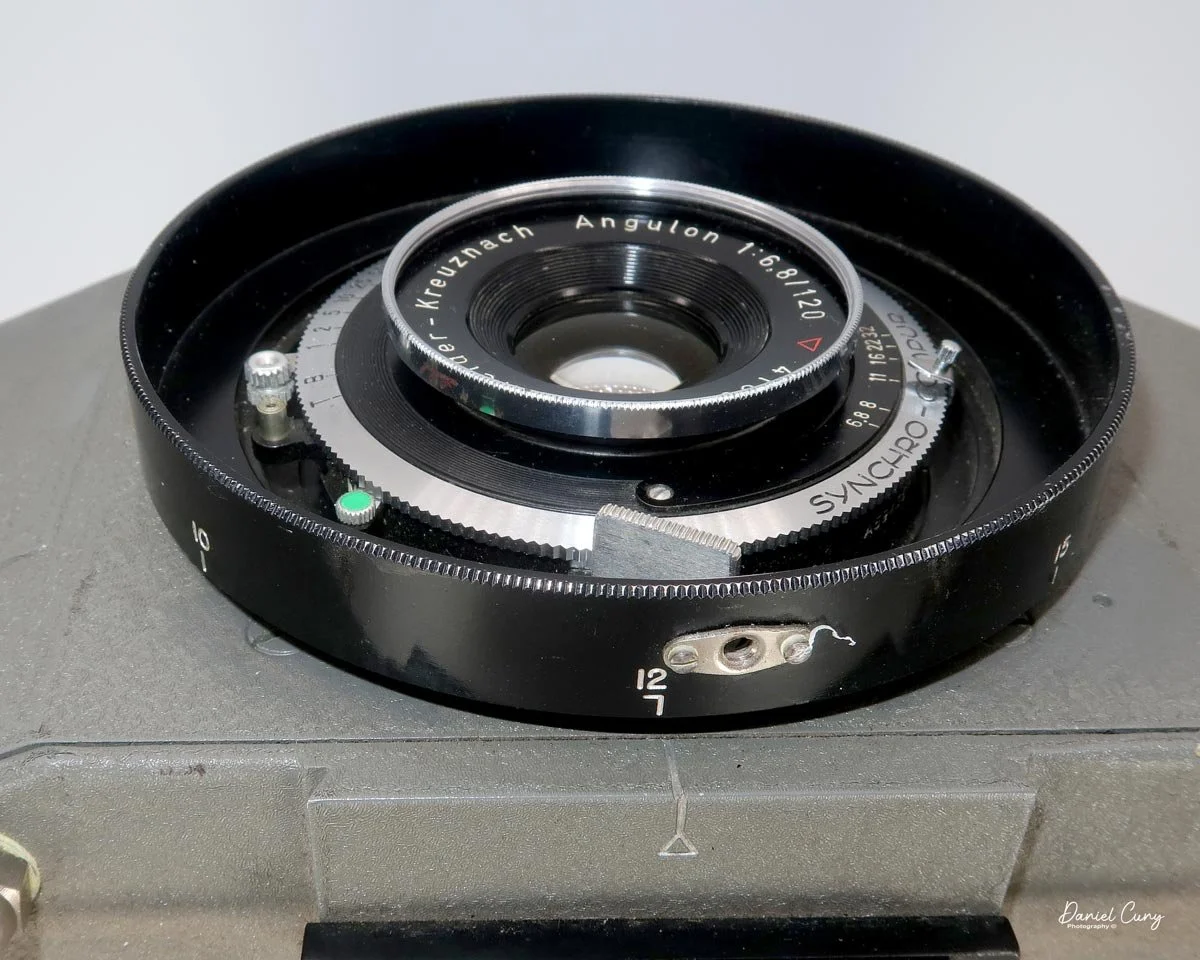
A socket for a cable release is on the camera's focus ring; it presses against a metal plate that trips the shutter when pressed. The metal plate is also knurled on the side if you want to manually release the shutter with your finger. The focus ring has distance settings from infinity to just under 10 feet, as stated on the collar. The focus collar is pretty large, so you have to turn it a lot to reach the desired focus distance.
Looking at the top of the camera, you'll see four shiny bolts, a blue Stanley bubble level which appears to have been put on later, and the wire pull-up frame and eye finder, like a sports finder on other cameras, for basic framing of the photo. Also on top are the Burke & James and "Panoram 120" name plates, along with the film-winding instruction plate, placed at various points on the camera.
On the left side of the camera is a chrome metal handle that makes it easier to carry when not using the camera. I found this somewhat comfortable to use, and it makes the camera easier to transport when it's not in a camera bag.
On the right side of the camera is a large latch that attaches and releases the backs from the camera body. Whether it's the blank cover, the ground glass back, or the 120 film back, this spring latch attaches and releases them from the camera body.
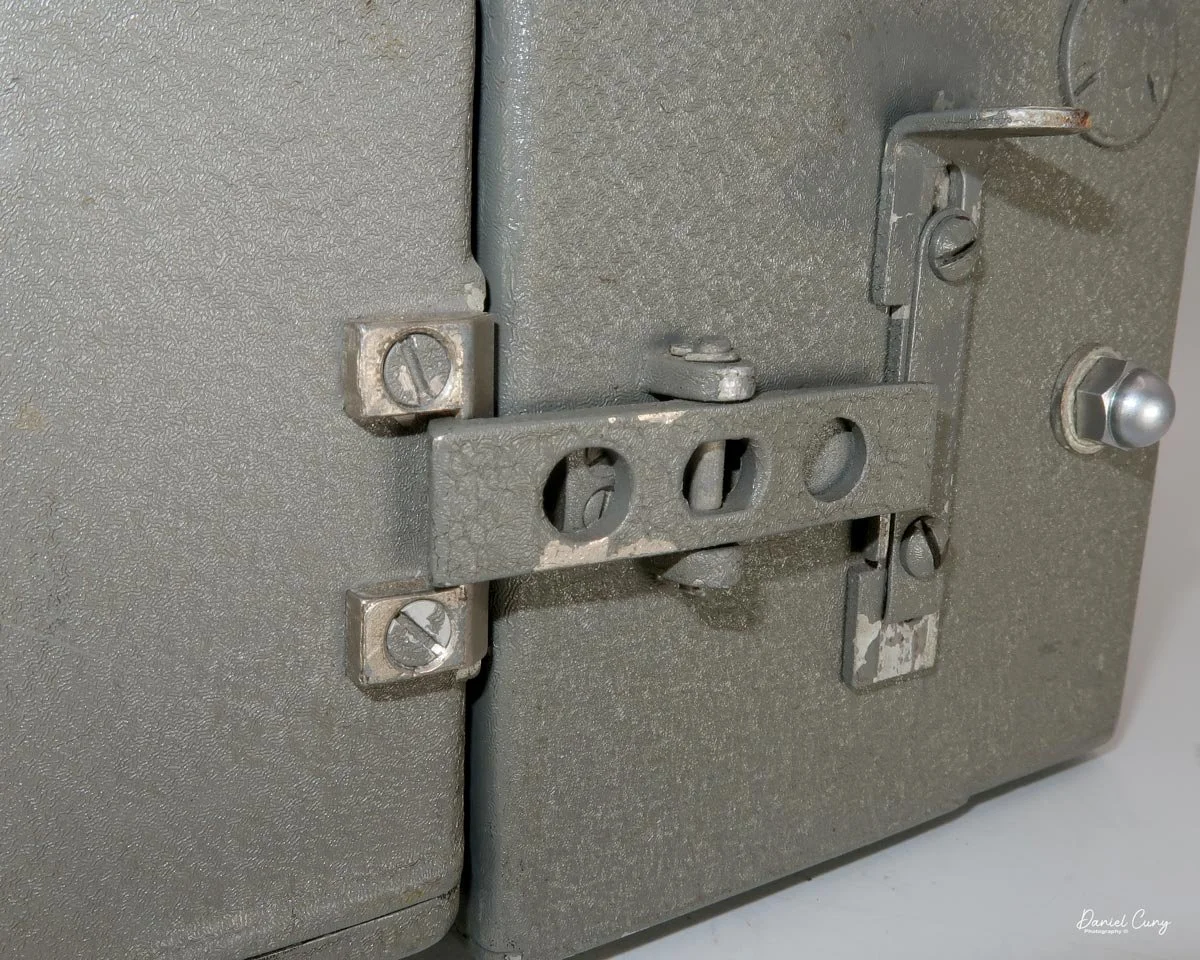
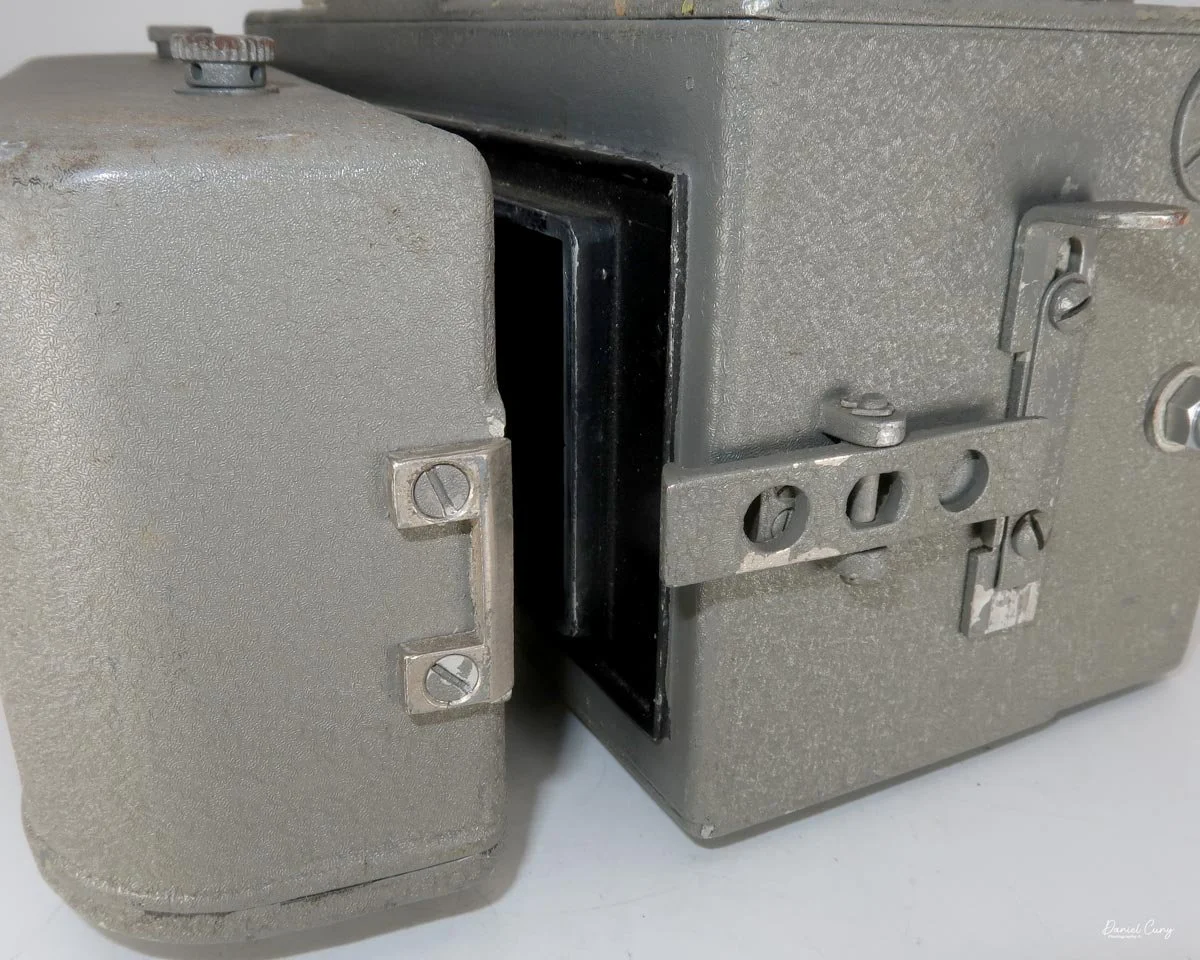
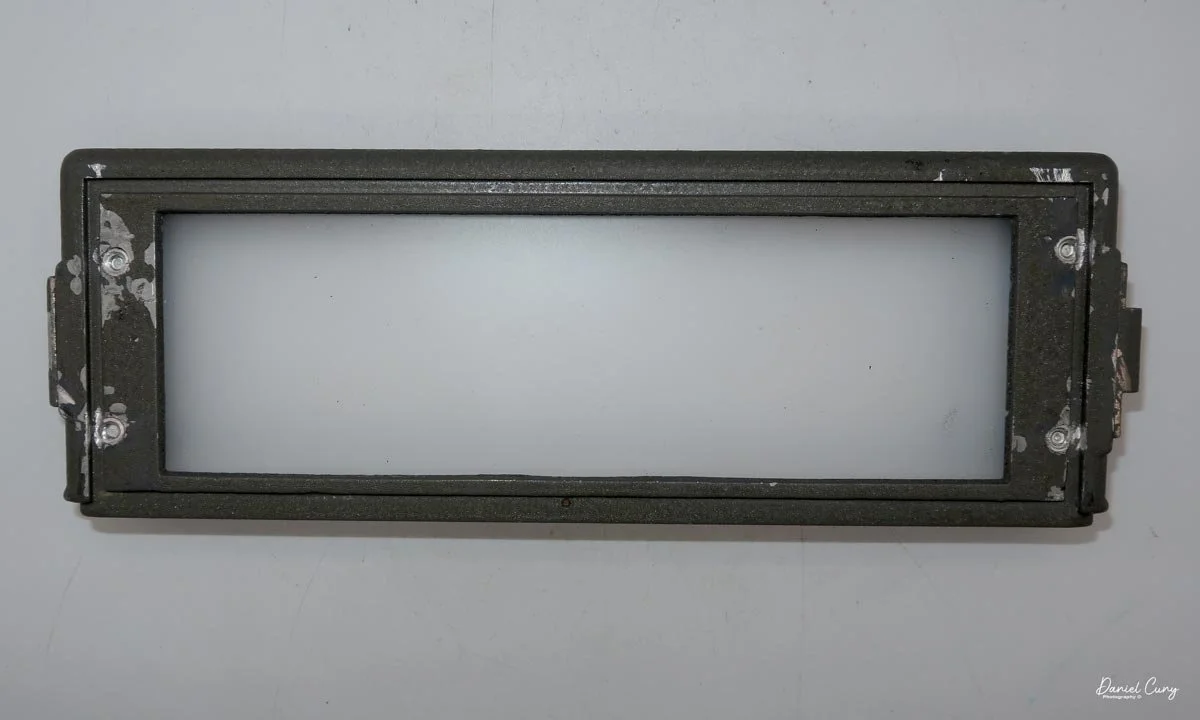
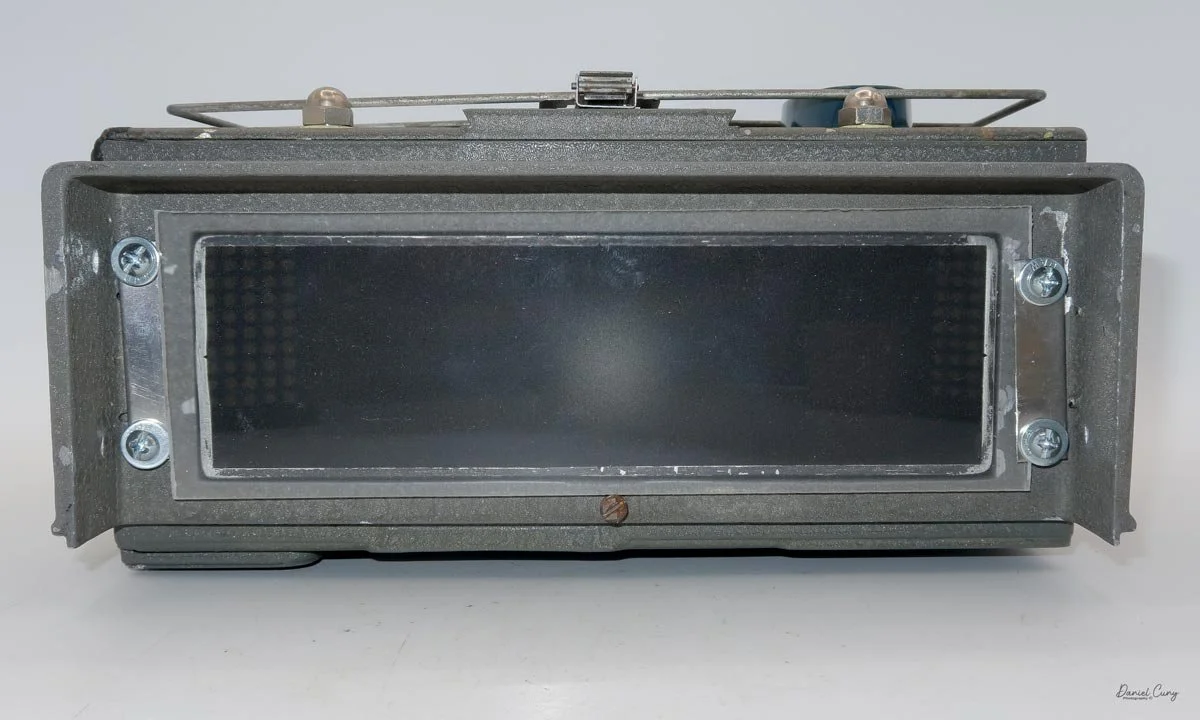
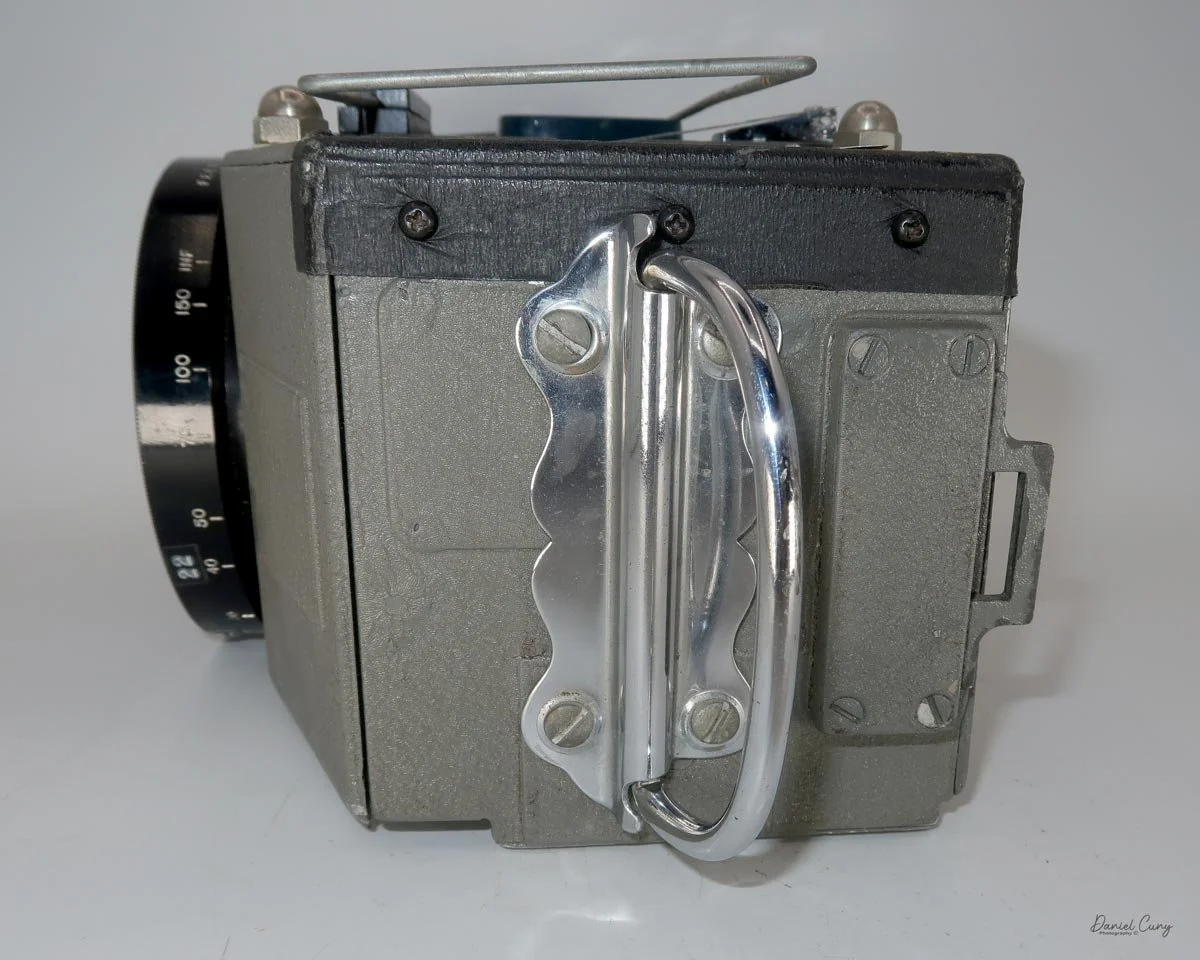
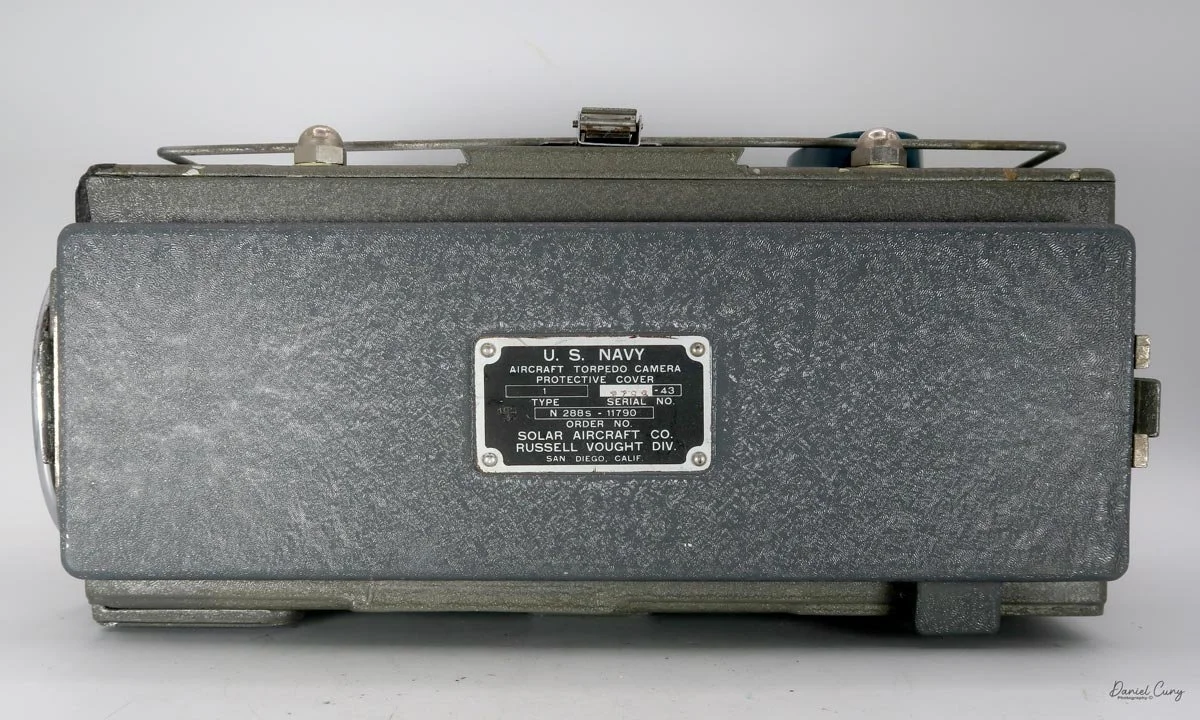
Once you remove the film back from the camera body, you'll need to unscrew two metal screws that hold the two pieces together to put film into the back. Once the screws are unscrewed, the inner film portion can be removed from the housing. You load the film back as you would any other 120 film back, with the key being that once you get the film leader threaded into the take-up spool, and you are confident the film is moving, put it back in the housing and screw in the two screws to hold it in place. I needed to put a black piece of tape on the winding knob to remind me of which way the knob should move to properly advance the film. This was a big help for me.
Once the film is back in the housing, it's important to put the back on the camera, since there's no dark slide to prevent the film from being exposed if you wind it before attaching it to the camera body. Once the film back is attached to the camera body, since the format of the camera is actually 6x18 cm, which is a tad bigger than the normal 6x17, you only get 4 exposures on a roll of 120 film.
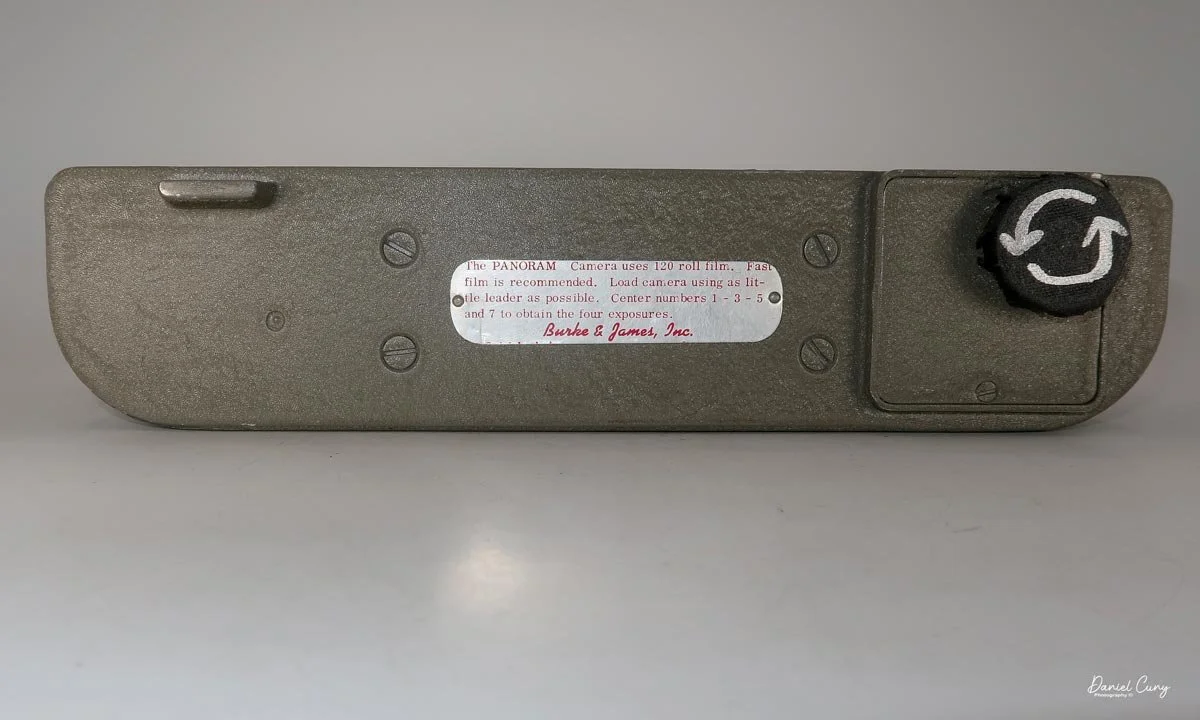
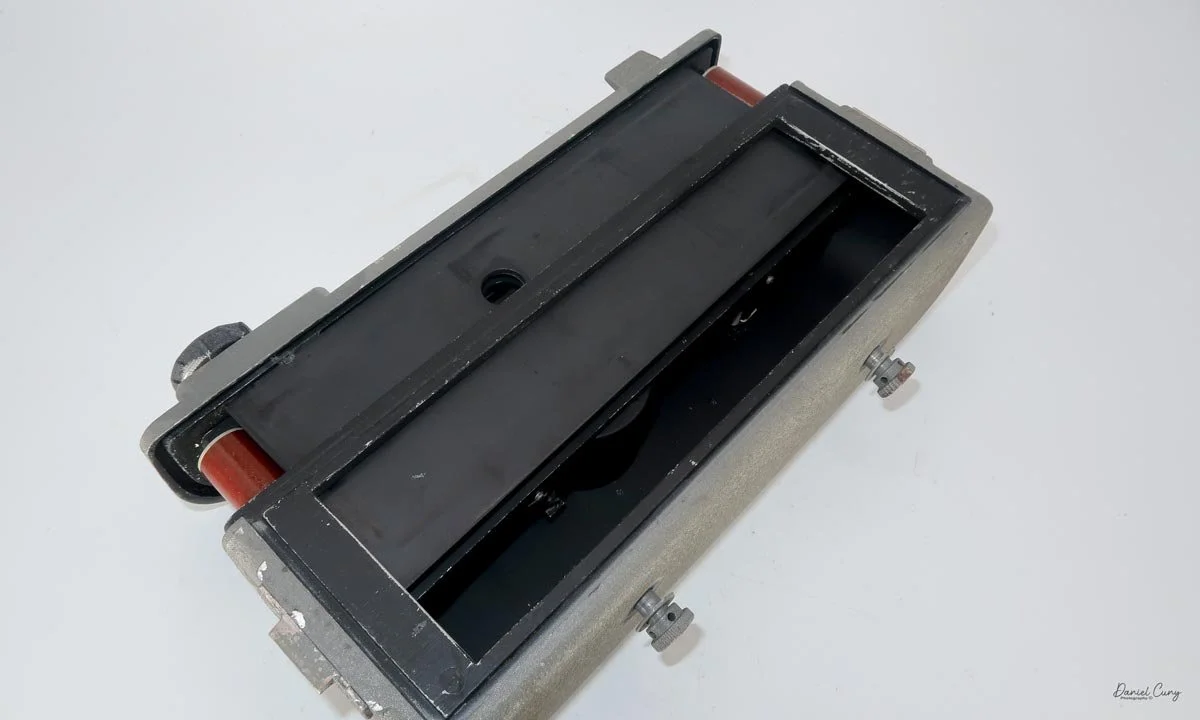
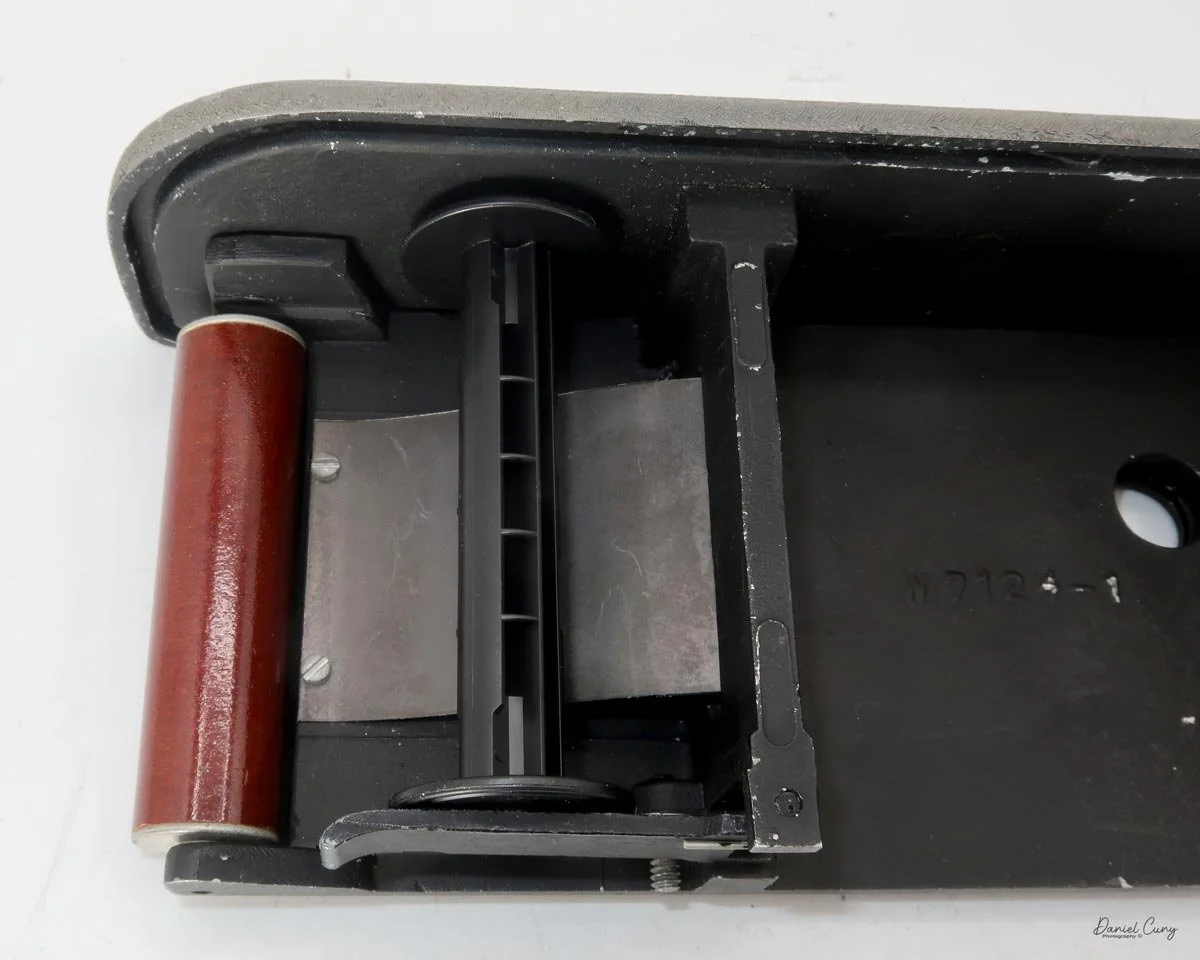
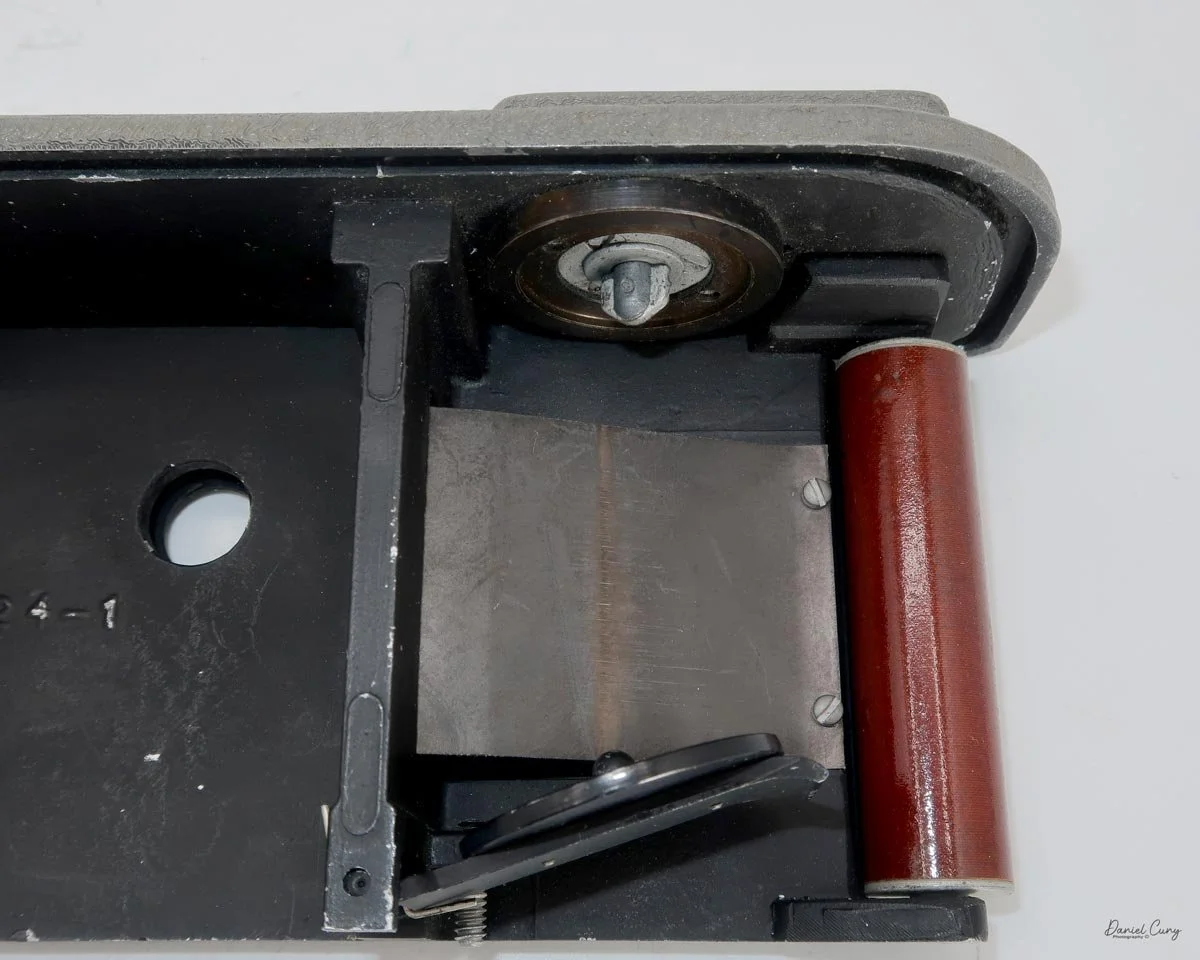
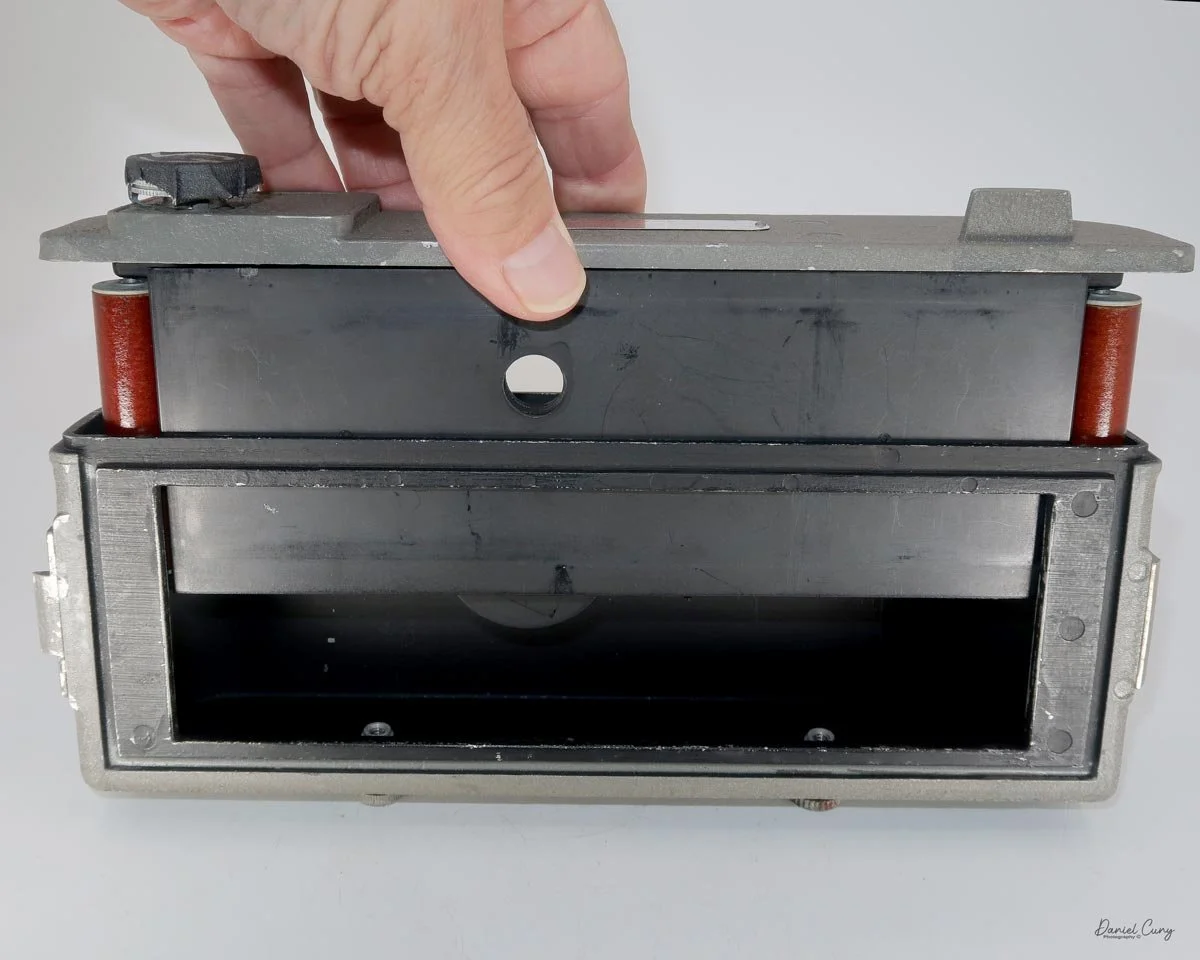
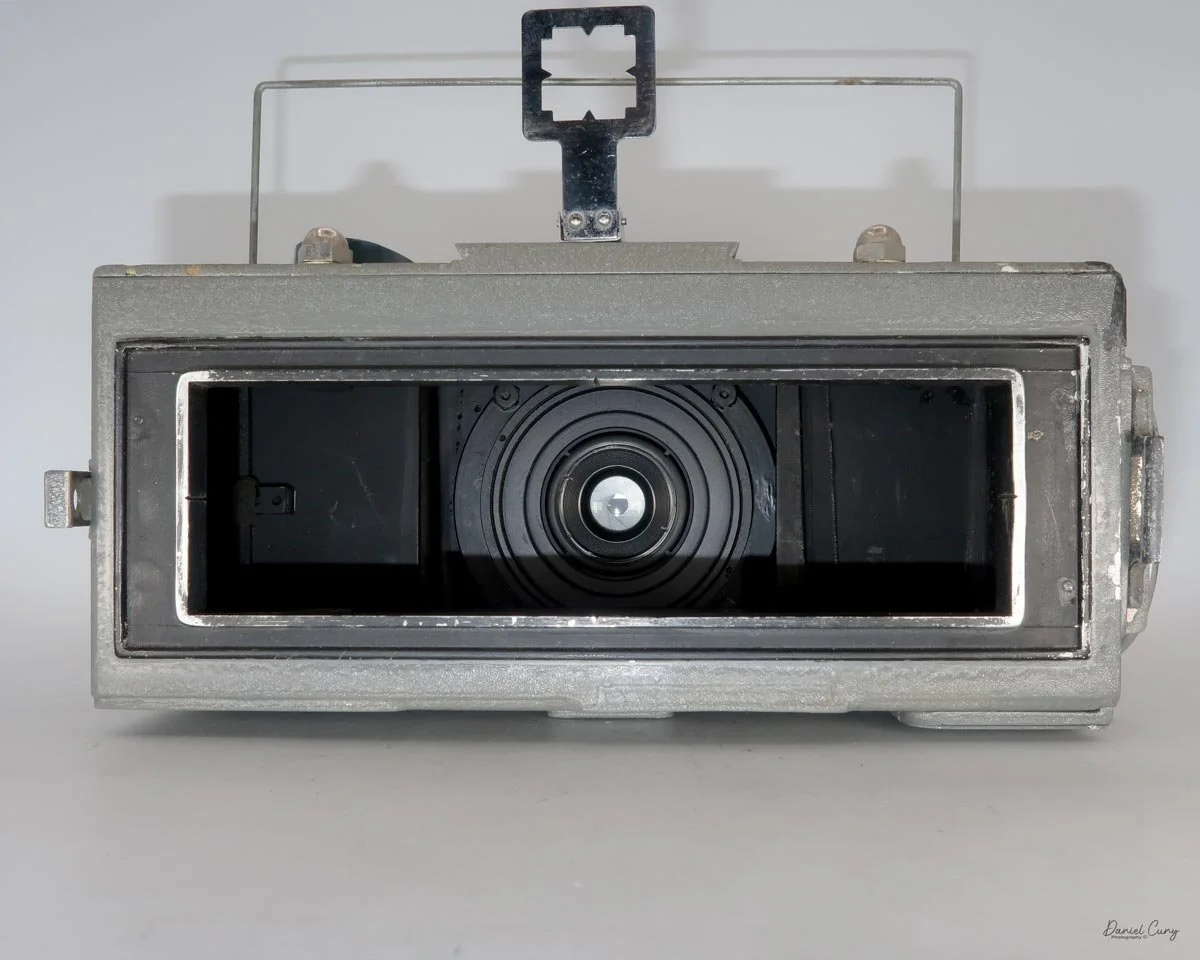
Luckily, on this version of the camera, red windows let you see the film numbers on the paper backing of the 120 film. Stop at numbers 1, 3, 5, and 7 when exposing the film to get four images per roll.
I didn't notice that on the military version of film backs until recently. Since the military versions are electronic, their film transport is motor-driven, so they don't need the red window on the back, which is essential for the consumer models.
Camera Overview Video
My Results:
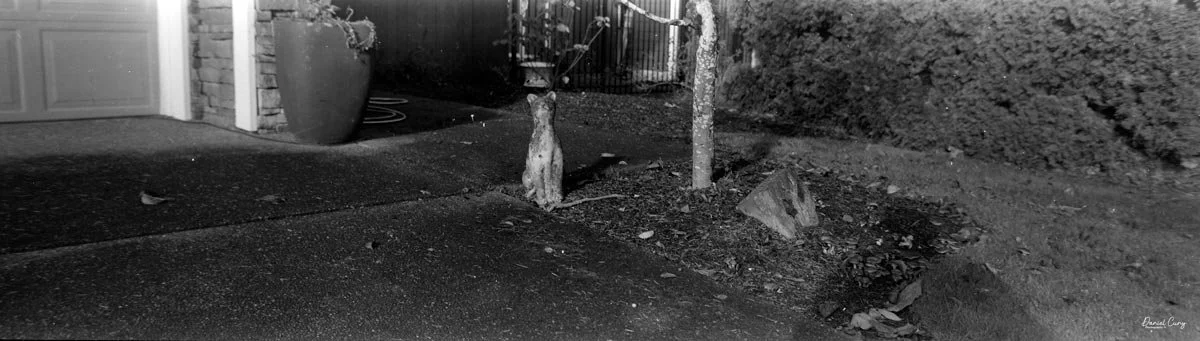
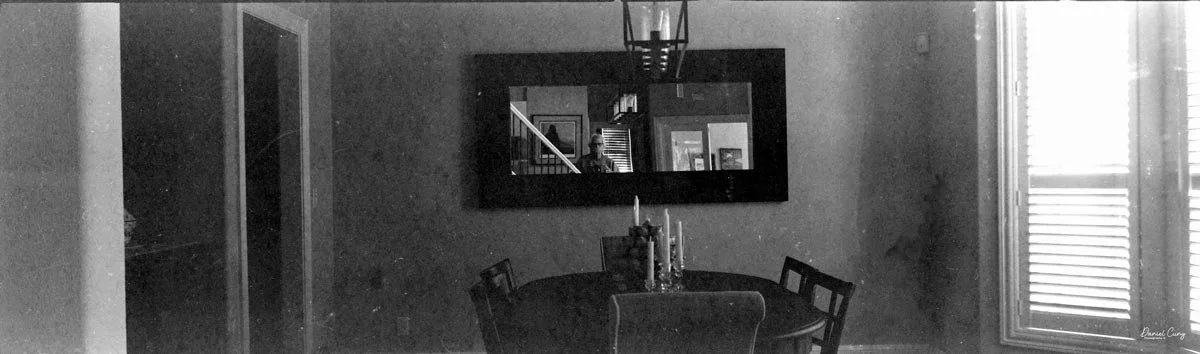
I did put some film in the camera. I walked through the neighborhood taking photos of many of the usual subjects I photograph when testing a camera.
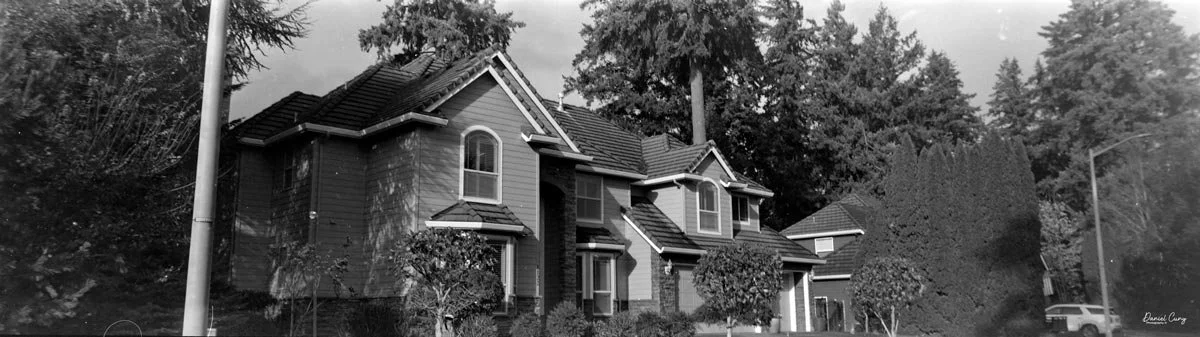
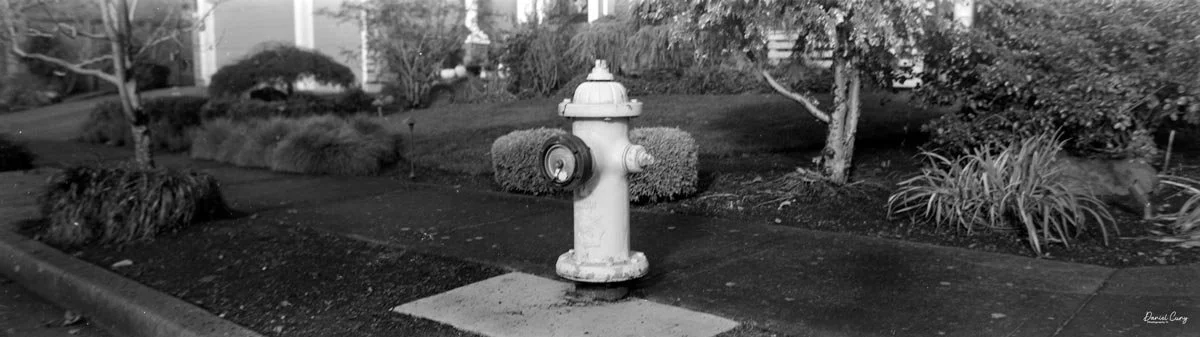
It's interesting to take photos of the same subjects and see how much more you get with this camera, which is twice as wide as the normal 6x9cm cameras.
Shooting handheld with the cable release and guessing the focus, the wide frame really changes those familiar subjects — there's just a lot more of the scene in the picture, and the 6x18 negative holds the detail.
Here are some of the results I got.
Conclusion:
What a fun camera to shoot. I used the cable release on all the images here, and it really made shooting the camera easier. These were all handheld with guessing the focus distance. I didn't use the sports finder, as that would mean lifting the camera to my eye to frame the subjects; instead, I used my "guesstimate" framing.
I also didn't use the ground glass, since I preferred snapshots to putting the camera on the tripod, attaching the ground glass for focus, then attaching the film back and taking the photo. But remember, you can only do that on the first photo, as there's no dark slide on the film back, so you can't remove it once you've wound to the first frame.
This camera is a keeper for me as I've always wanted a 120, 6x17cm camera and actually got one that's a tad wider. This definitely isn't as elegant as the Fujifilm or Linhof versions. Still, it cost less, and I like the image quality, since the lens is decent.
Thank you for taking the time to read about the Burke & James Panoram 120 camera that I recently added to my collection.
Are you interested in other vintage gear? Here are some of my other Camera Reviews.
Check out my Cuny's Camera Collection YouTube channel, where I am putting together video overviews of the cameras I write about. Be sure to subscribe and like the channel, too!
Cuny's Cameras and Photos is my online eBay store, where you will find some of the cameras I have reviewed, along with a wide range of other cameras, lenses, and items from my collection that I am thinning out.
Until next week, please be safe.