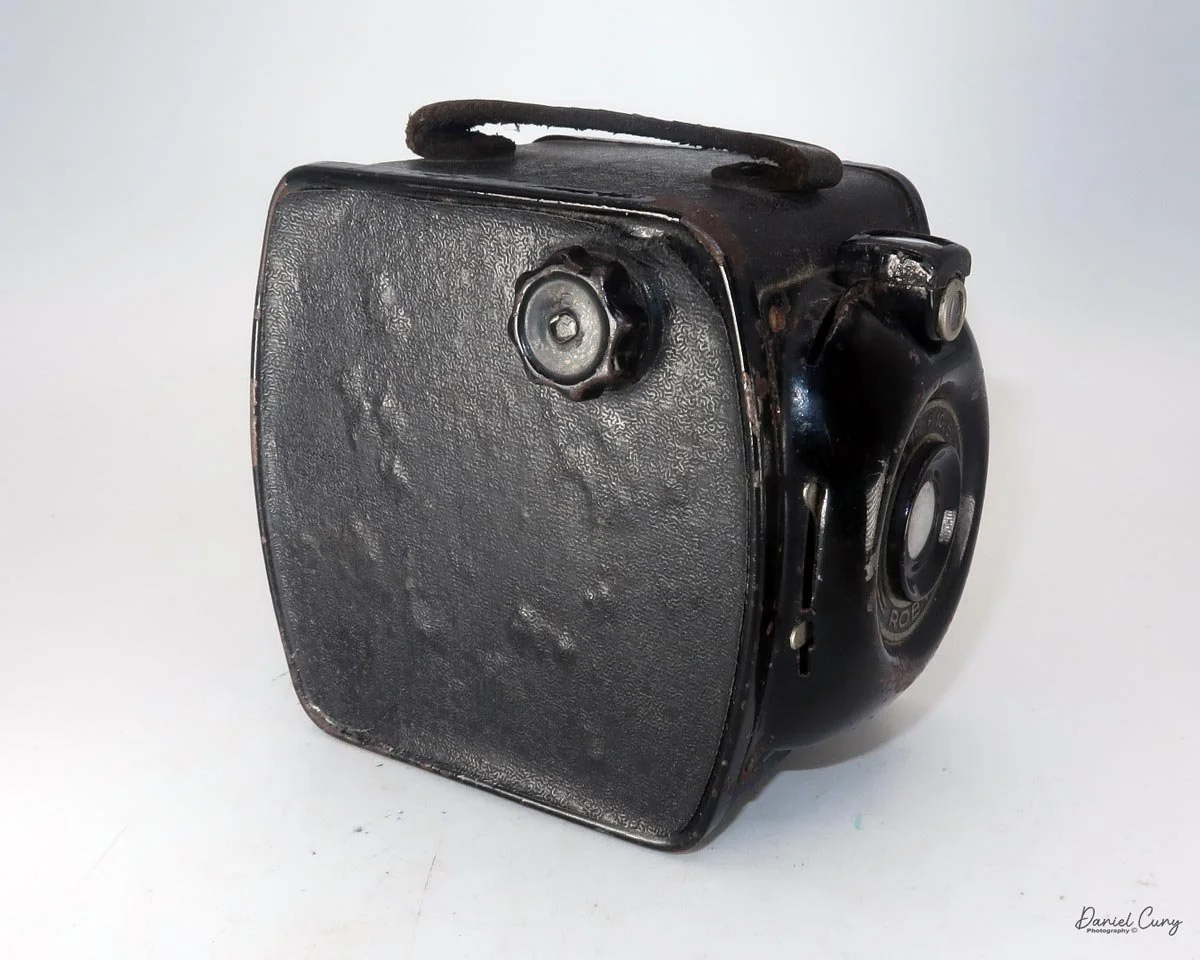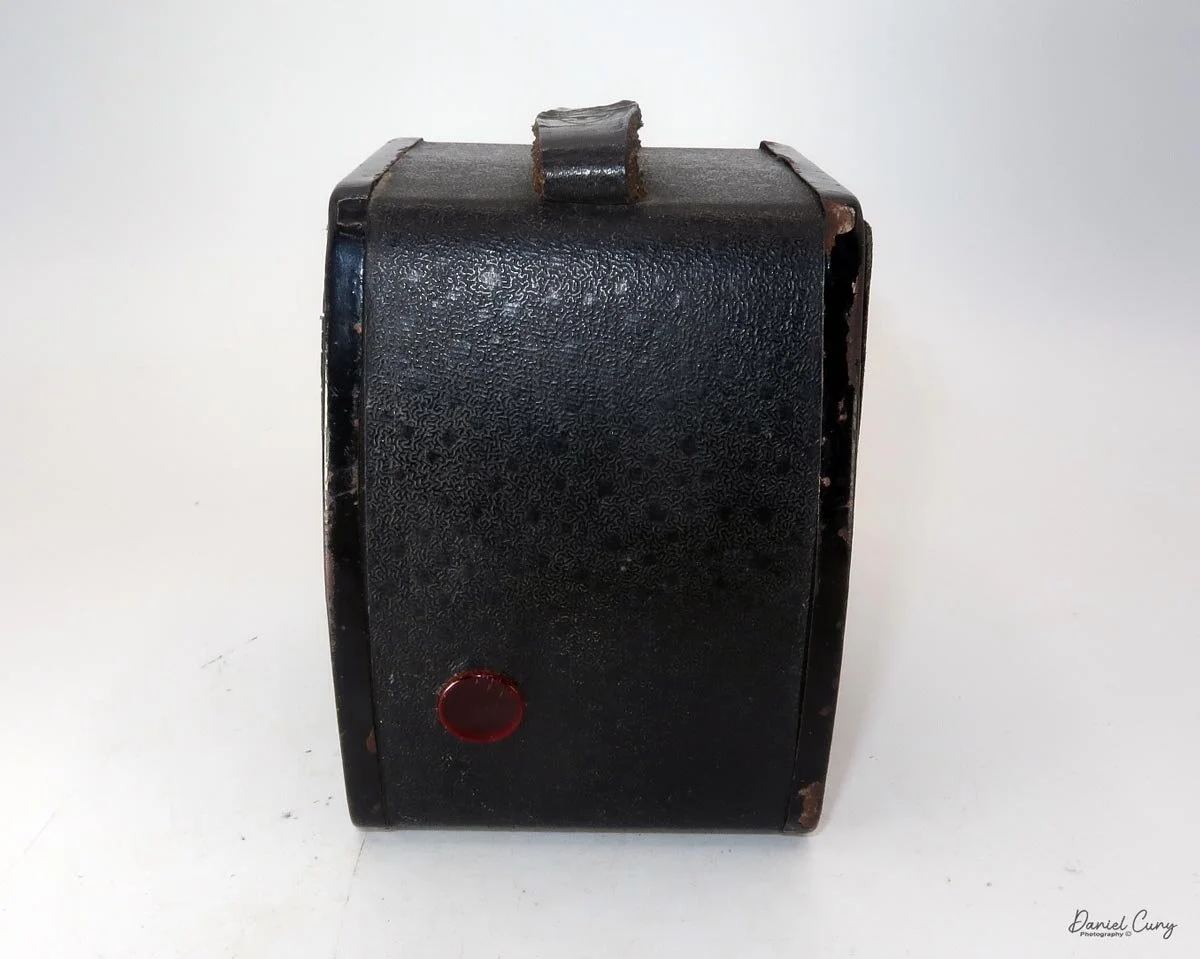
ICAF Roby Camera

My ICAF Roby camera

I bought the Roby camera a few weeks ago at an online auction, bundled with several other items. It caught my eye because it reminded me of the Ferrania small box camera I have on my shelf. Both cameras share a rounded front lens area and a sleek finish. I saw it as a good complement to the Ferrania, and based on the auction photos, I believed it was made by Ferrania when I placed my bid.

 The auction "lot" included a hodgepodge of gear—a large bag, old movie lights, a slide projector, and more—but I was only interested in the Roby. When I received the shipping bill from the auction house, I was floored by the price. I hadn't told them I only wanted that one item.

I called them immediately to let them know they could donate, keep, or toss the rest of the lot, as those items had no value to me (and probably not to many others, either). That brought the shipping down to a very reasonable price that I was happy to pay.
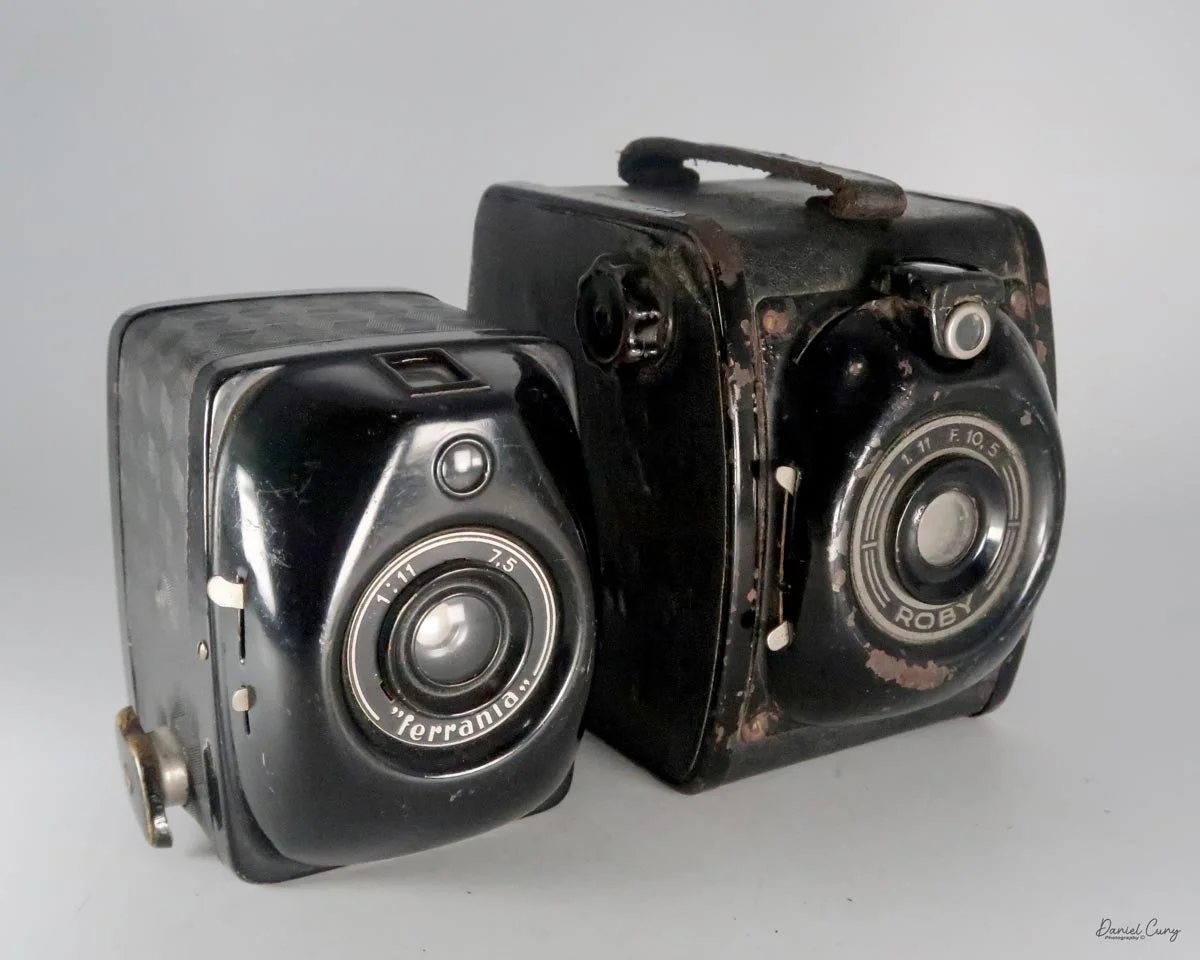
My Ferrania & Roby camera

 Once the camera arrived, I was surprised to find out it wasn't made by Ferrania at all. A different Italian company, ICAF (Industria Costruzione Apparecchi Fotografici), built it. ICAF later became Bencini, a popular manufacturer responsible for the Bencini Koroll (which I've previously written about). They also produced a camera I've been hunting for and am itching to review: the Bencini Comet III.

 The Roby is bigger than I anticipated, but on the bright side, it takes 120 film and shoots 6x9cm (2 1/4 x 3 1/4) format images. I originally assumed it would be closer in size to the Ferrania Filma, which is a more compact 127 format camera. I also thought I had already written about the Filma! Looking back, I haven't, so I'll review that one soon.

 This article won't be as long as some of my others for two reasons. First, the camera is extremely simple and has few settings. Second, my wife and I are currently on an extended road trip visiting relatives and friends. I won't have much downtime to write, so I apologize in advance if I miss a week or two of camera reviews.

History

The story of ICAF and Bencini cameras is a fascinating chapter in Italian photographic history, charting an evolution from simple box cameras to uniquely stylized, rigid-bodied metal shooters.

Antonio Bencini's photographic journey began during World War I. Trained as an aeronautical engineer, he was tasked with maintaining and repairing French-made aerial reconnaissance cameras for the Italian military. After the war, he jump-started Italy's domestic camera industry by founding FIAMMA in 1920 and later founded a second company, Filma. After selling both ventures to Ferrania, Bencini relocated to Milan and established ICAF (Industria Costruzione Apparecchi Fotografici) in 1937.

 ICAF's initial offerings were straightforward box cameras like the Roby and Gabry, named after Bencini's children. To comply with nationalist language policies, the company quickly changed the names to Robi and Gabri. Shortly before World War II, the company was renamed CMF. Camera production paused during the conflict as the factory pivoted to manufacturing aircraft and bicycle components.
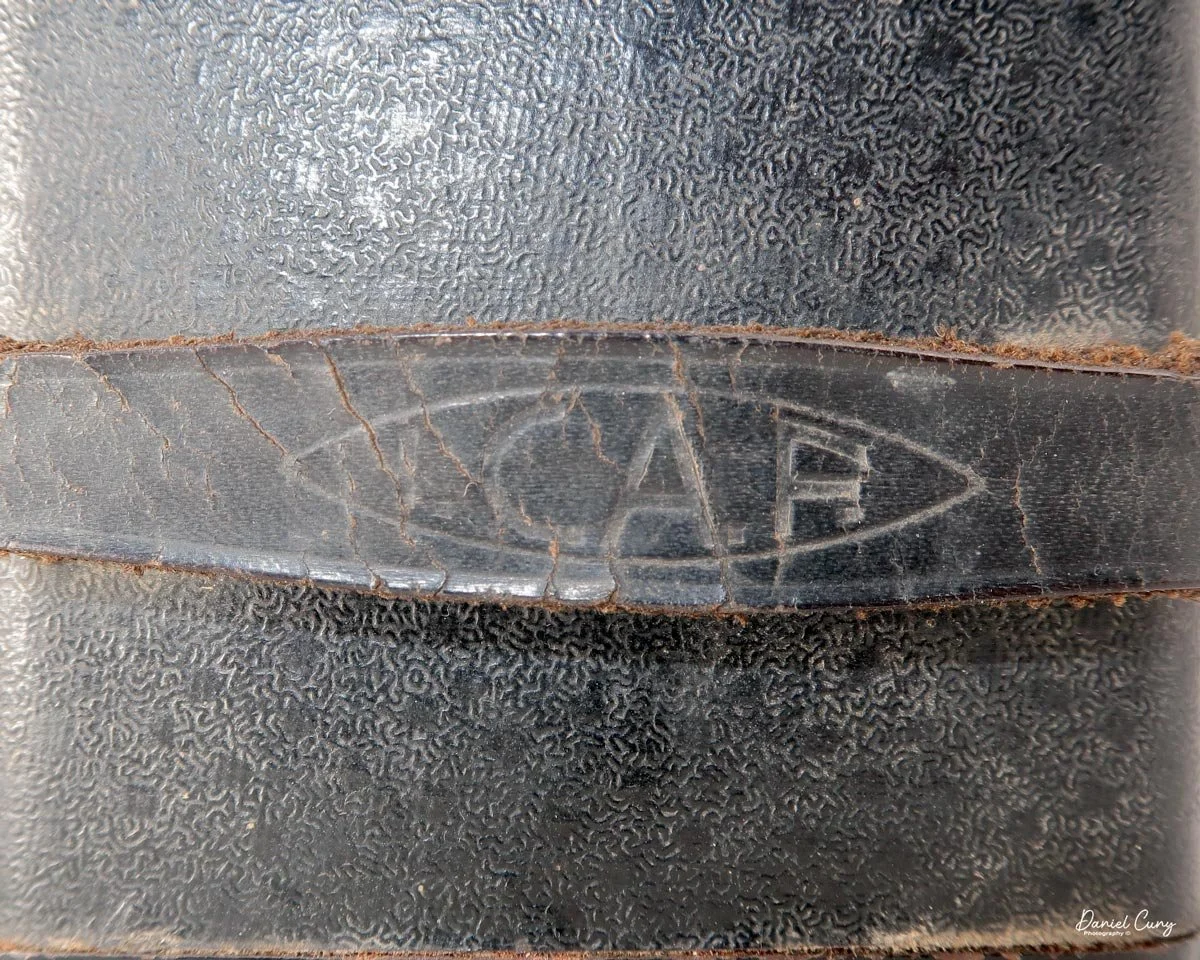
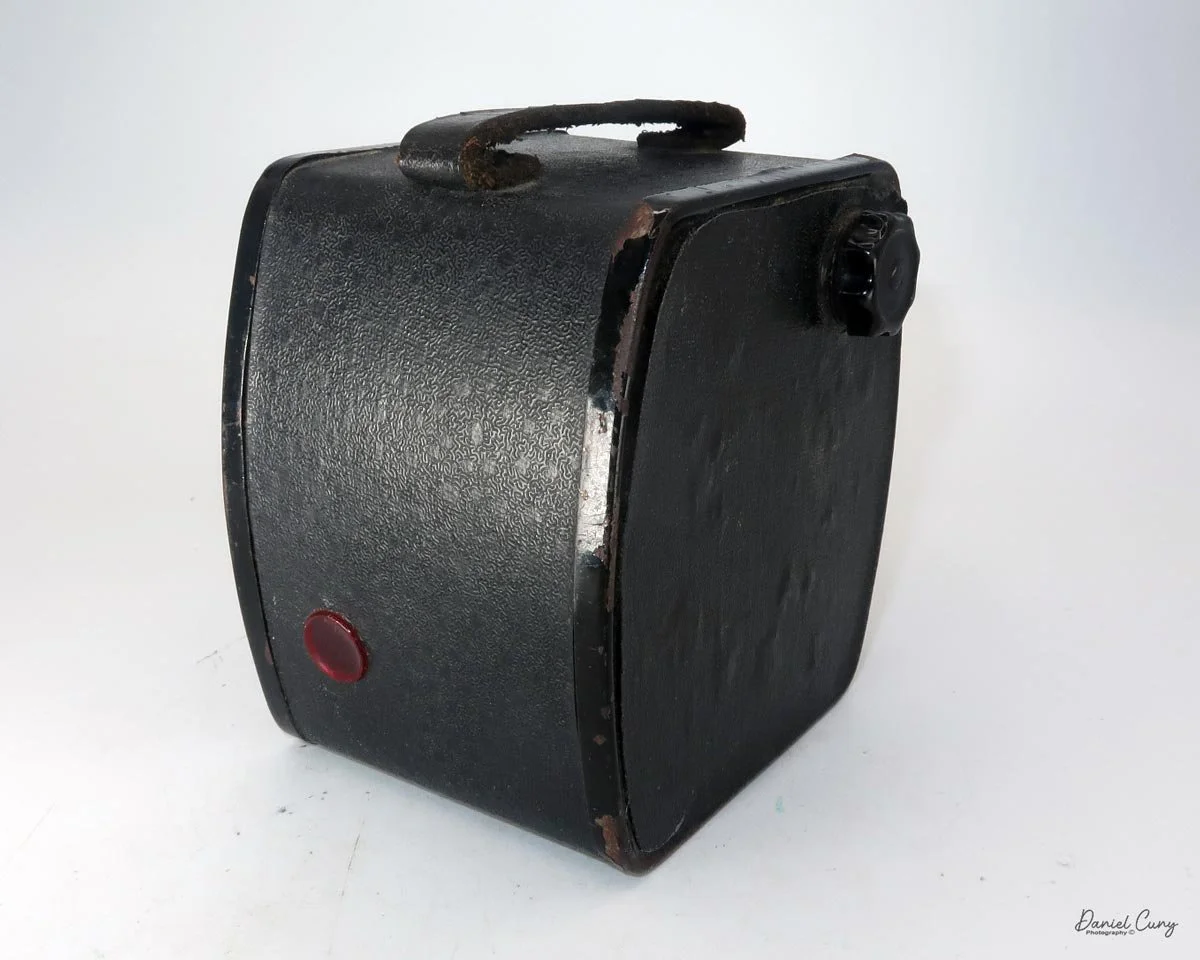
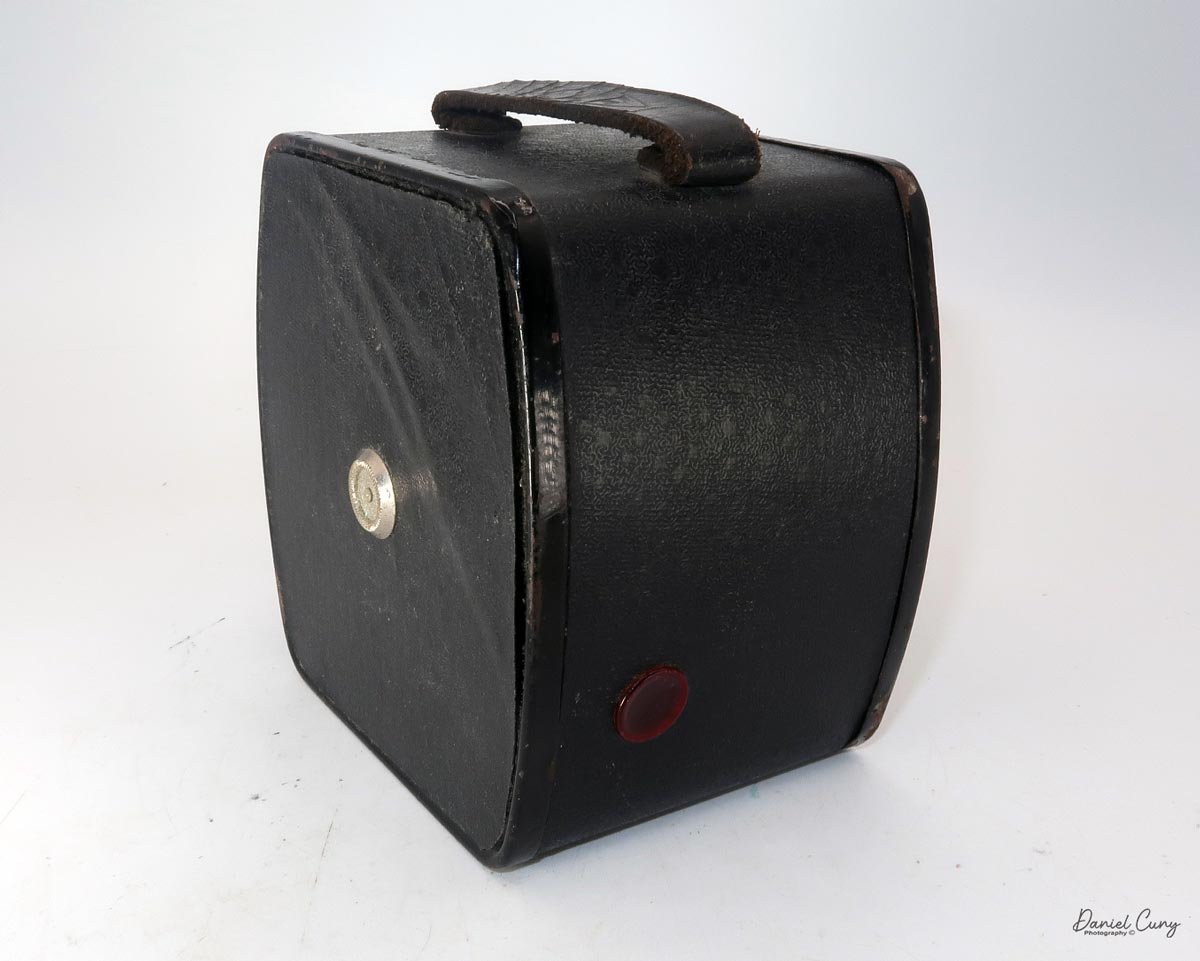
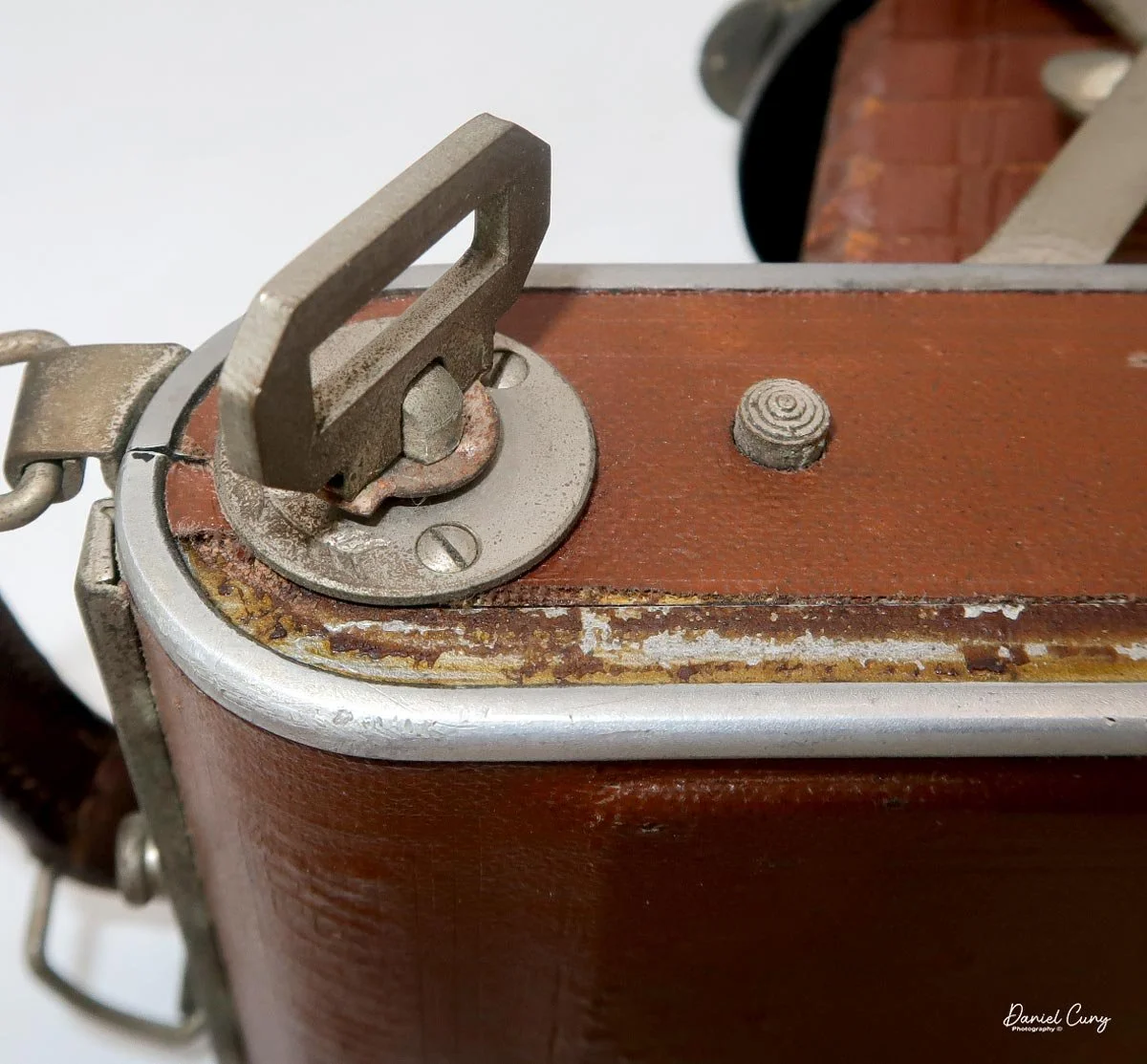
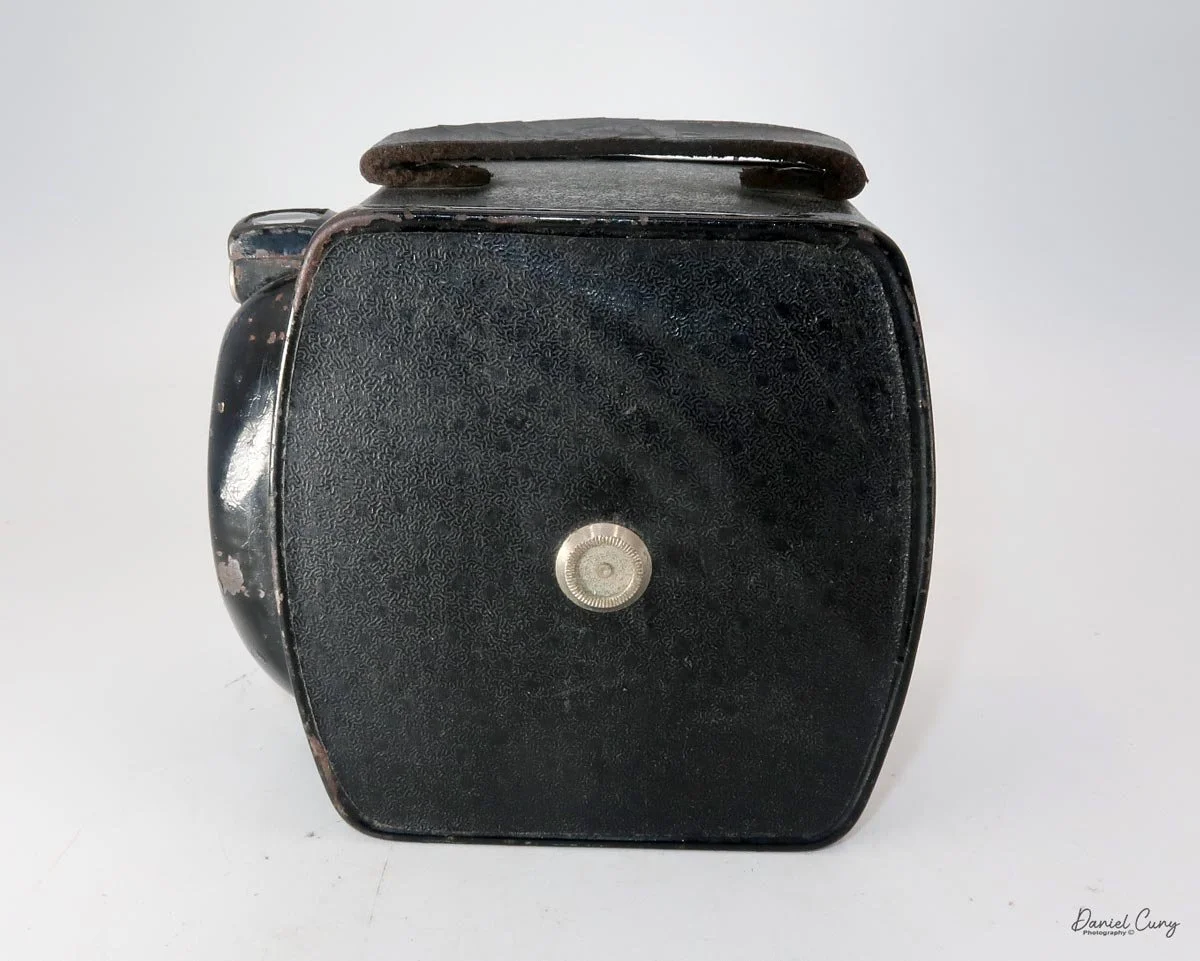
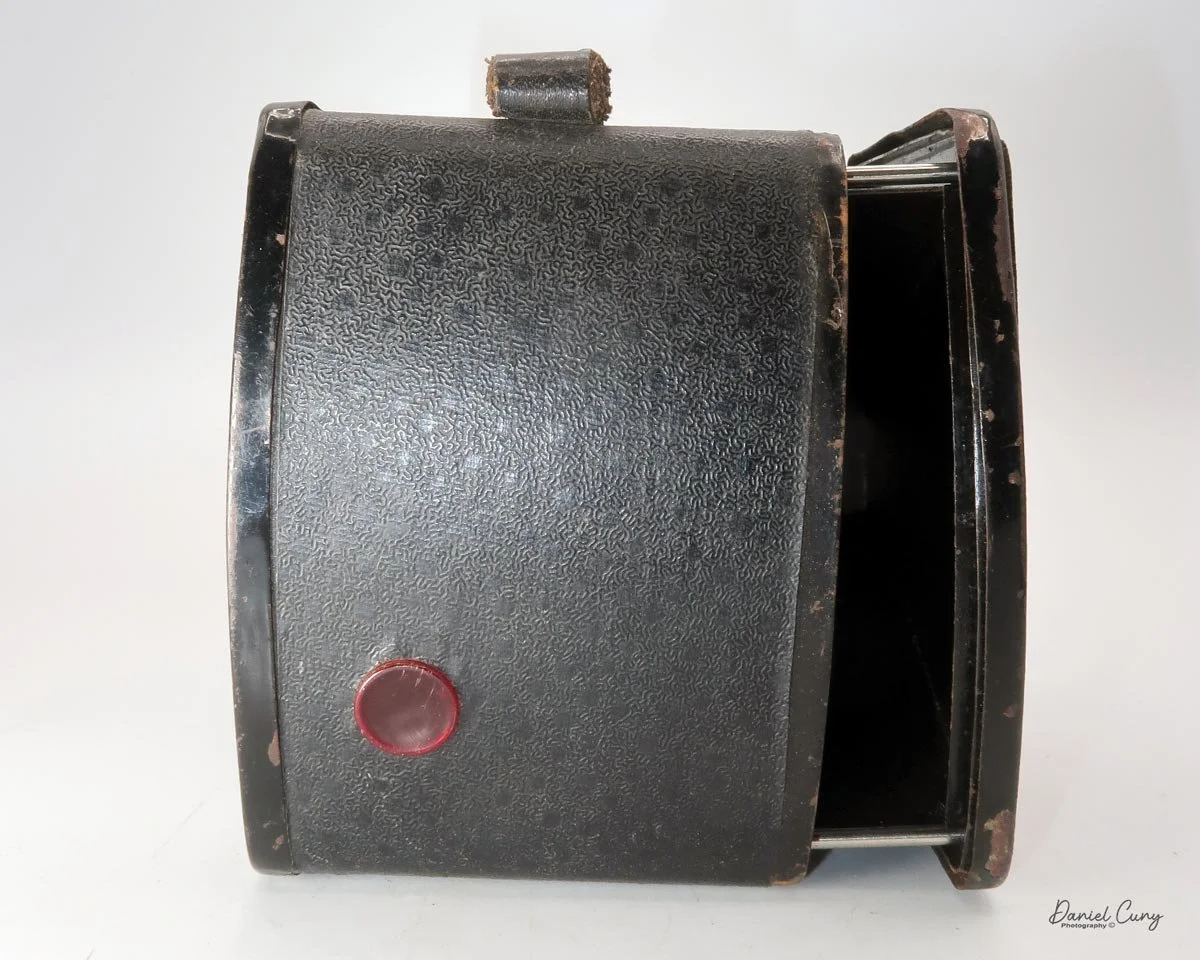
ICAF Strap

 Emerging in 1946 as CMF Bencini, the company began defining its signature aesthetic. Moving away from the era's fragile cloth bellows, Bencini transitioned to durable sliding-tube mechanisms and rigid die-cast aluminum bodies. This shift produced cameras that were rugged, affordable, and distinctly Italian.

 The real breakthrough came in 1948 with the introduction of the Comet series. Designed for 127 film, these cameras were massive commercial successes. By 1953, the company shortened its name to simply Bencini and released the Comet III. With its striking vertical orientation, oversized winding knob, and art-deco flourishes, the Comet III remains a highly recognizable example of mid-century industrial design. Alongside the Comet was the popular Koroll line, which utilized 120 film for larger formats. These models were known for their reliability and straightforward functionality, cementing Bencini's reputation among amateur photographers.

 During the 1960s, Bencini tried to adapt to consumer preferences by producing 126 cartridge cameras, many of which were rebranded and sold by the British drugstore Boots. In the 1970s, the company ventured into the 110 pocket format and released 35mm plastic cameras, still bearing the iconic Comet name.

 While Bencini ultimately struggled to compete with advanced Japanese SLRs and closed its doors in the 1980s, its legacy endures. Today, these early aluminum-cast cameras are appreciated as tangible, mechanical pieces of Italian photographic history.

My Camera

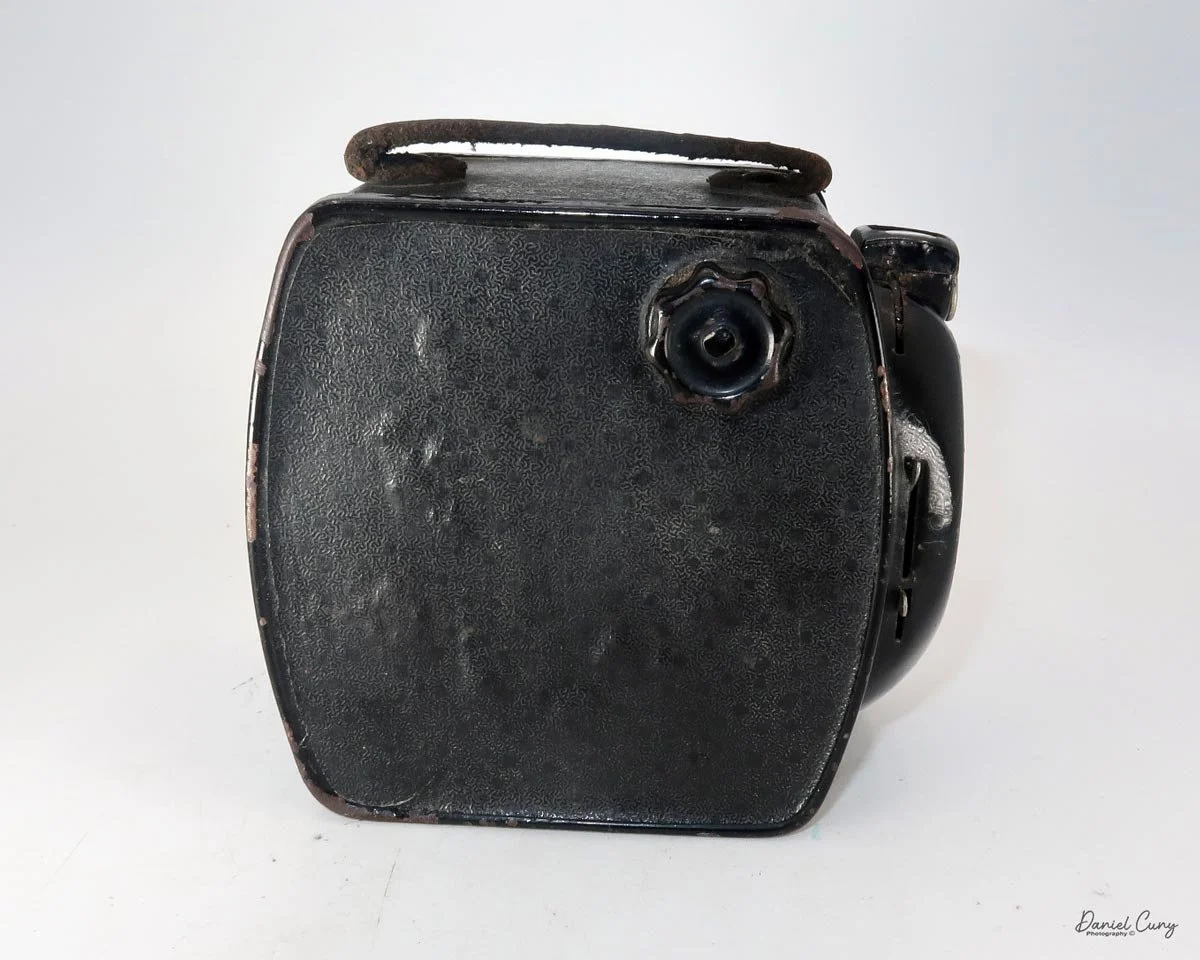
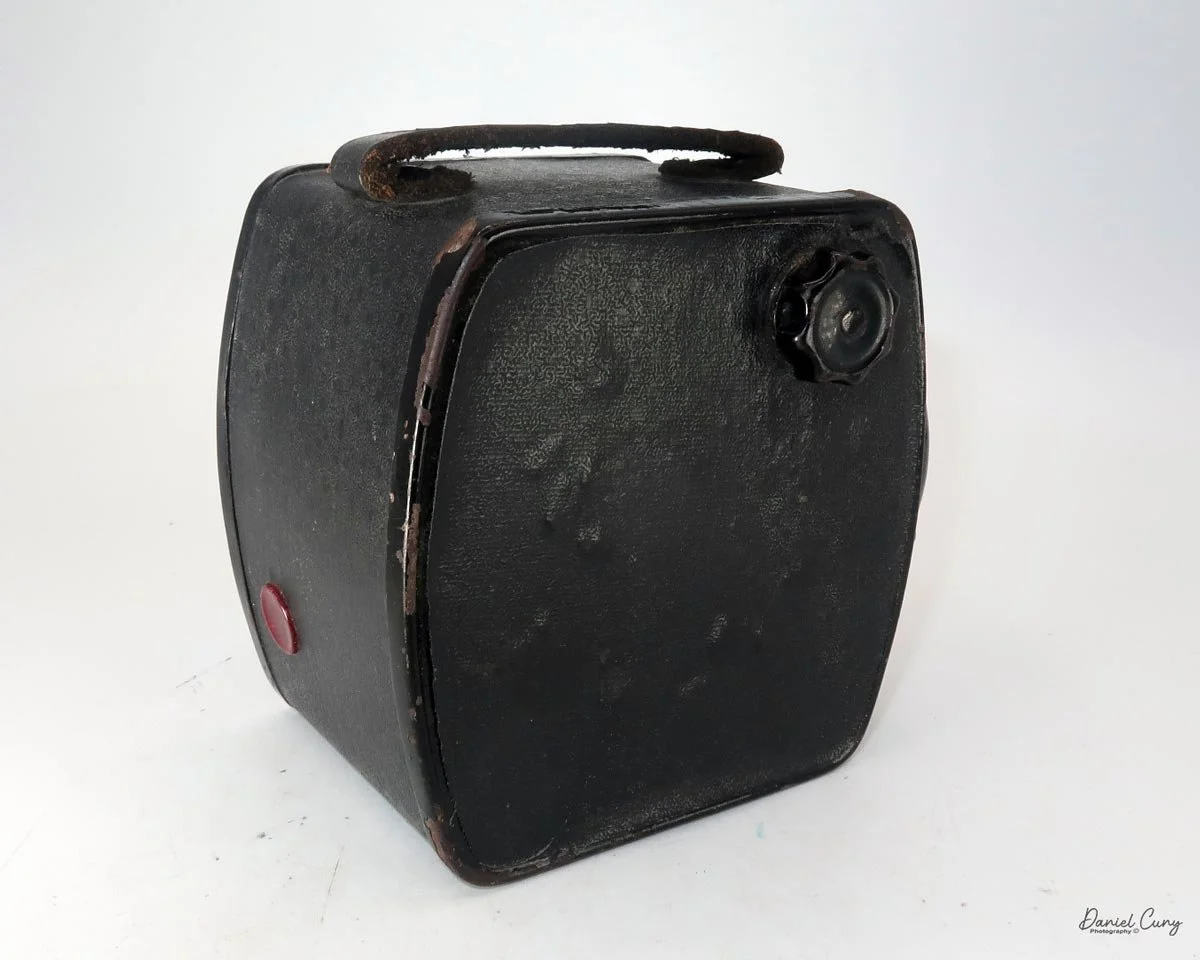
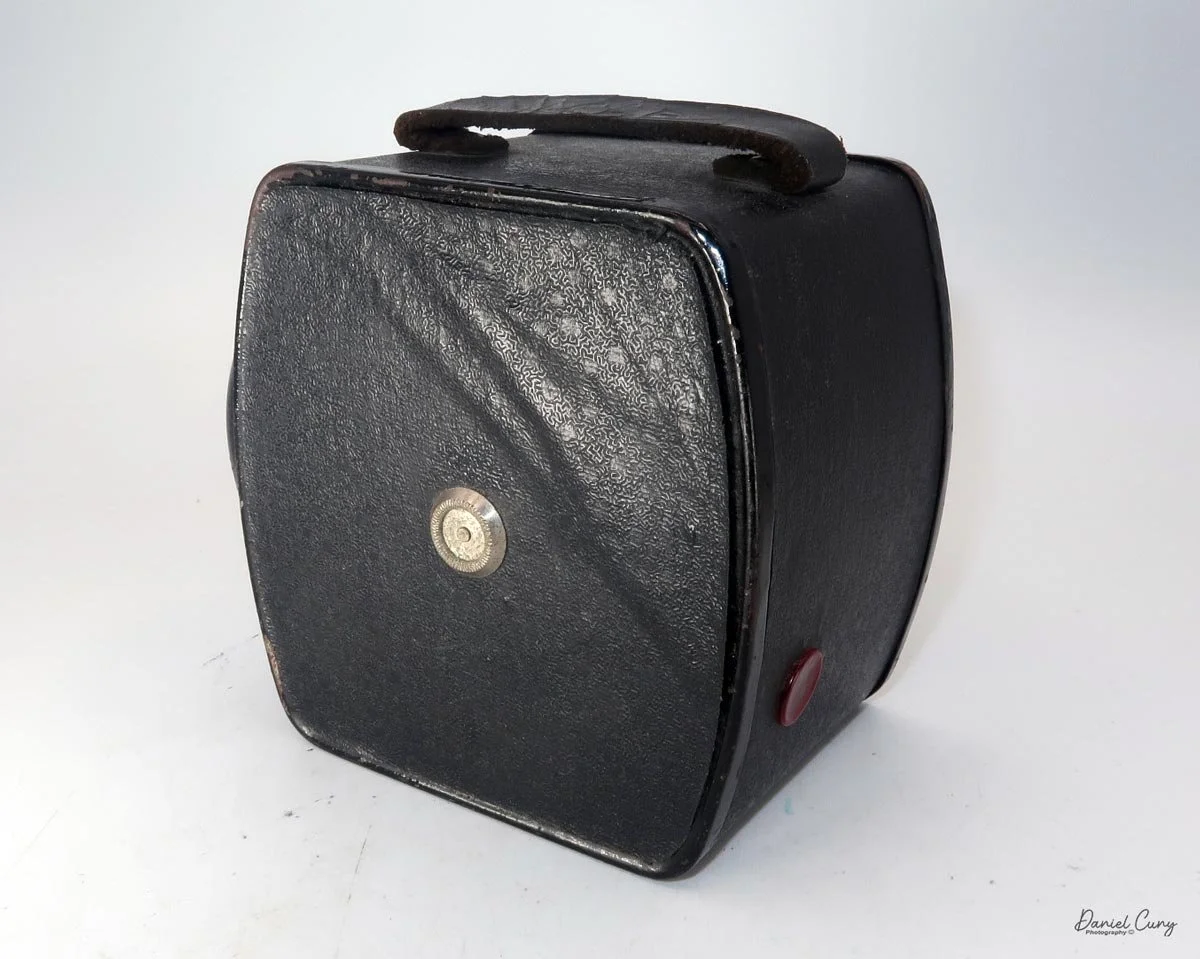
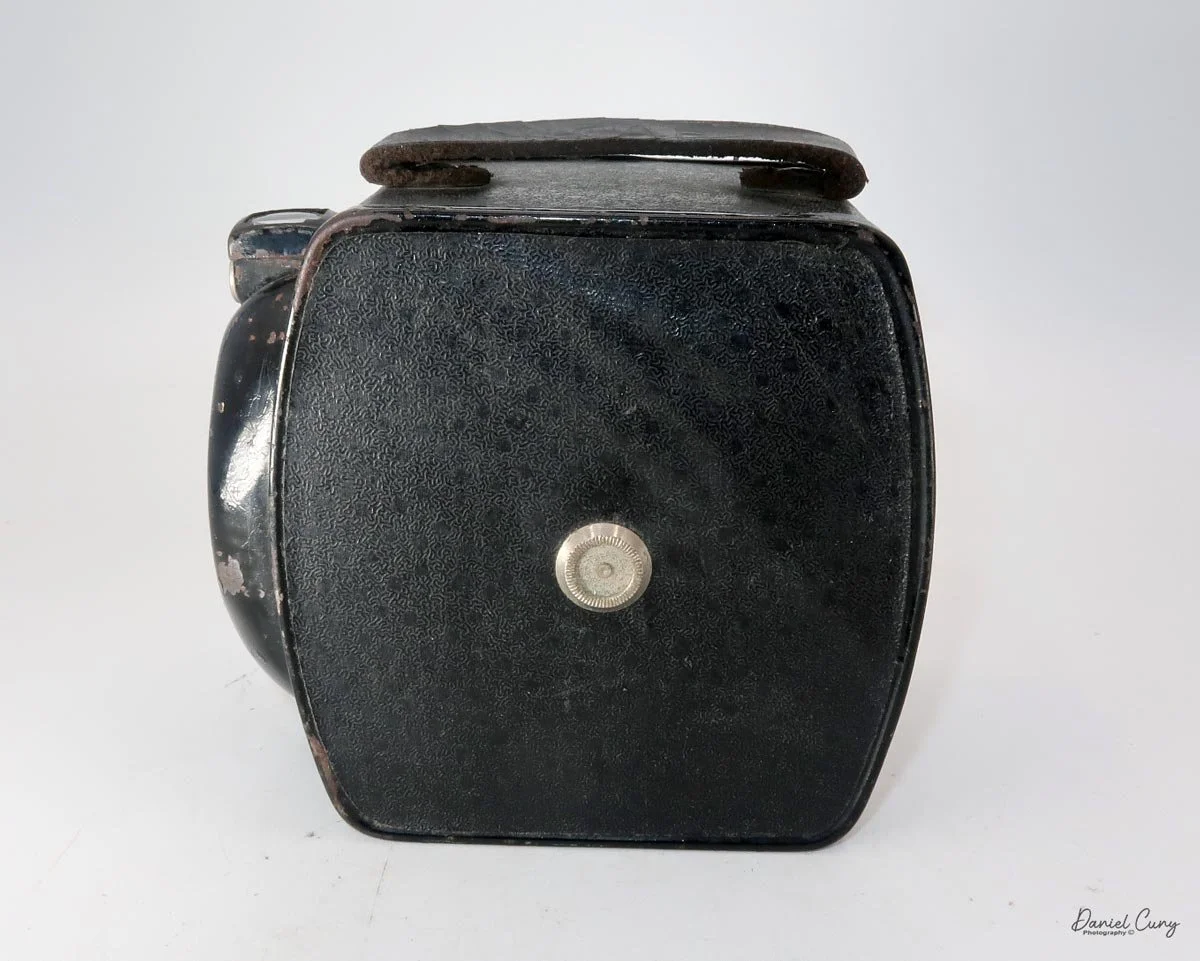
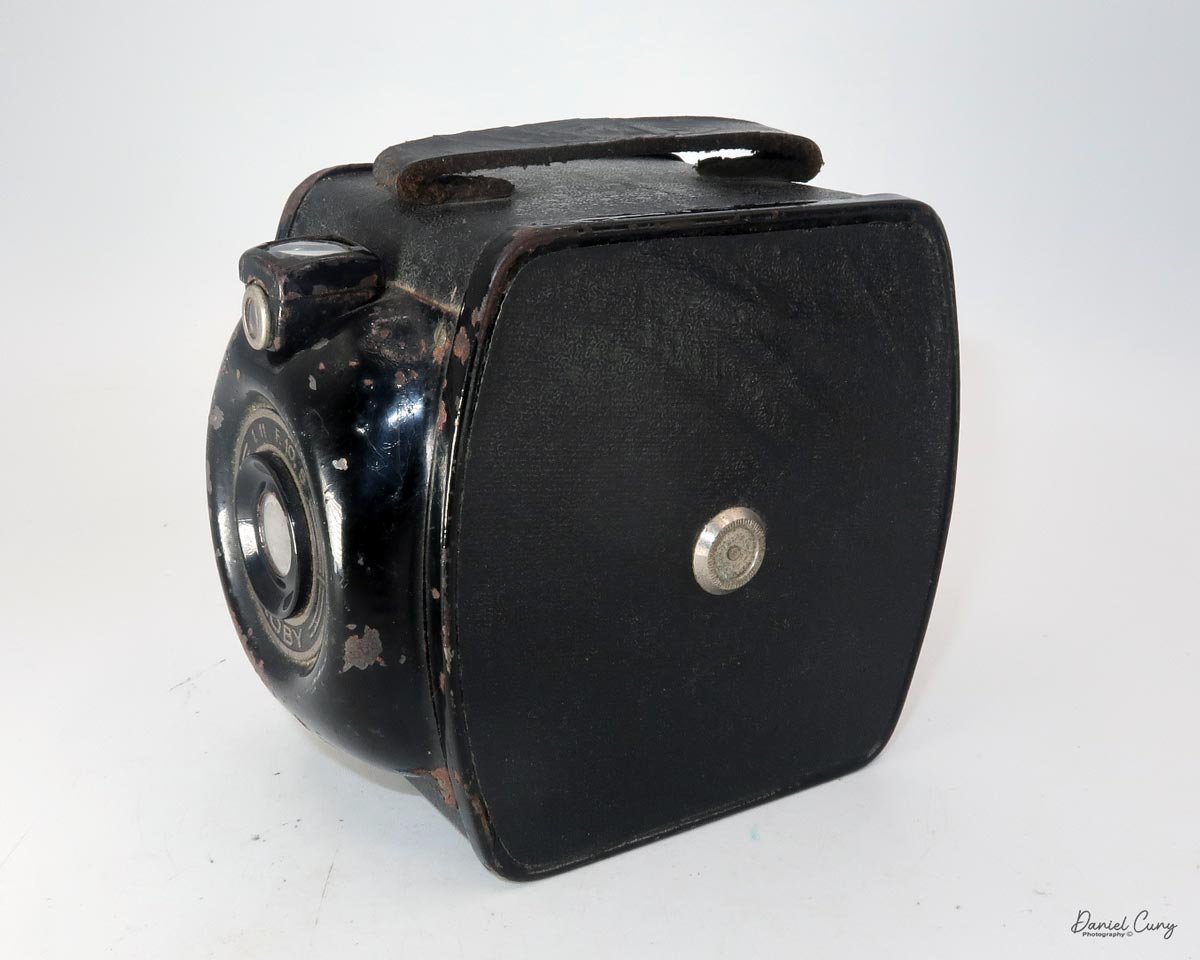
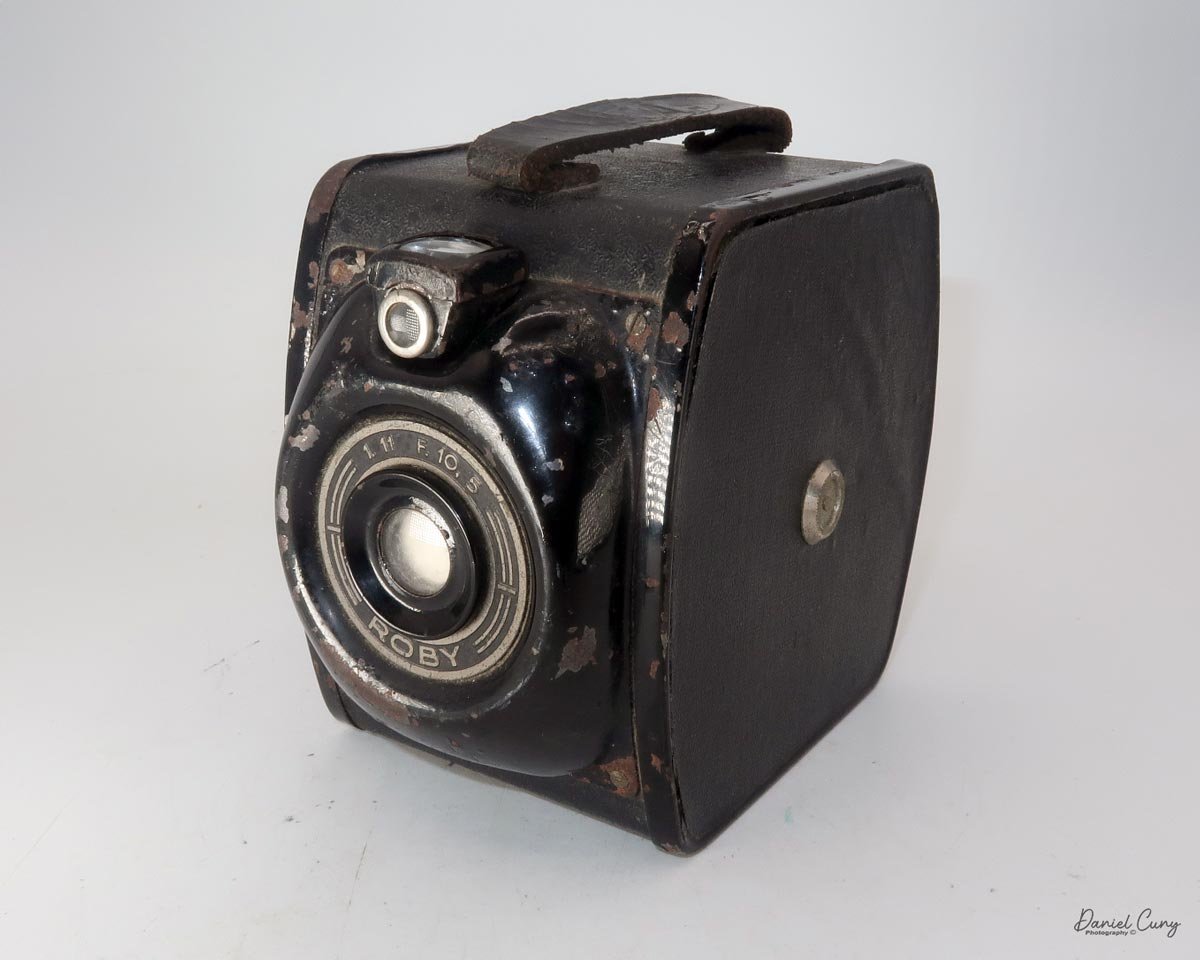
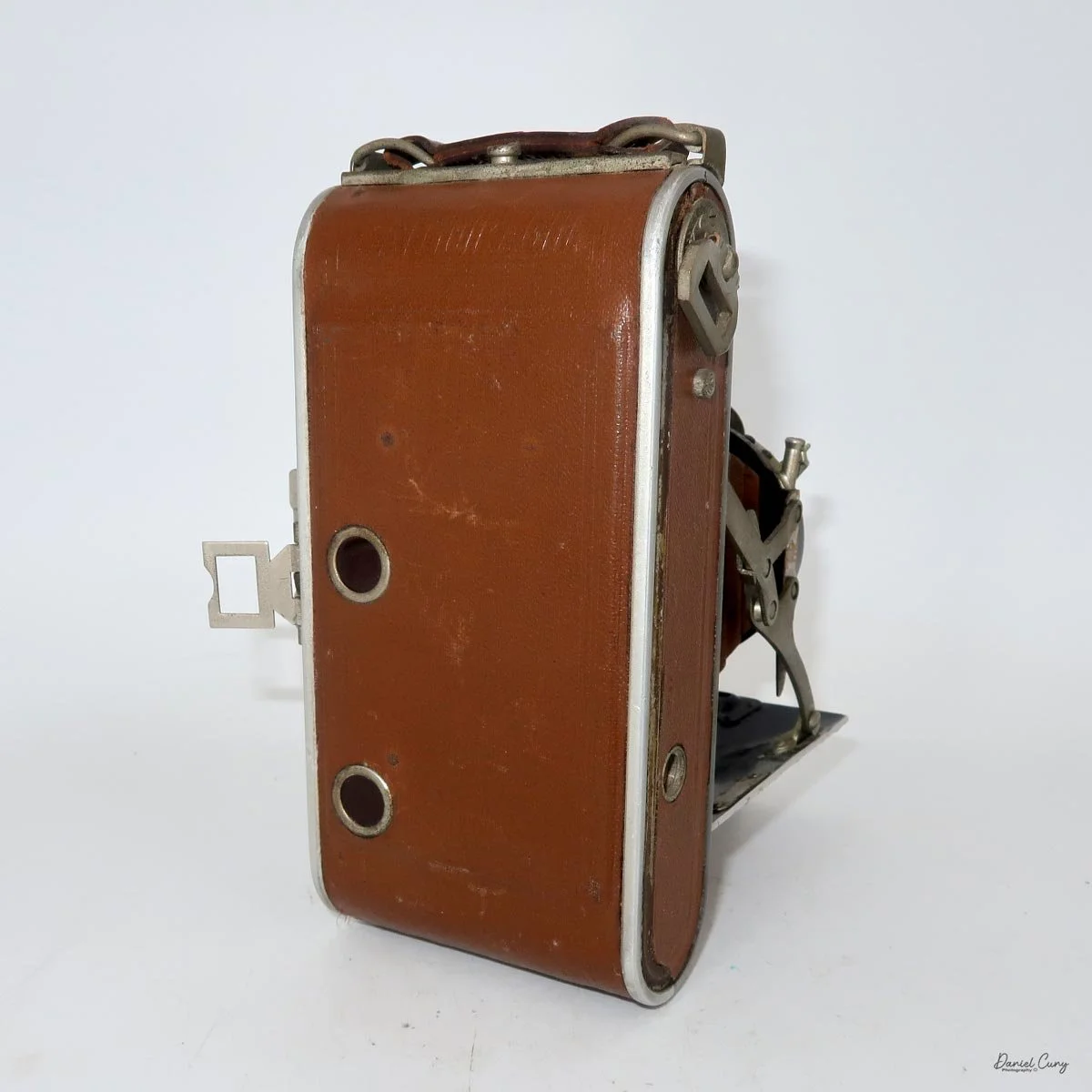
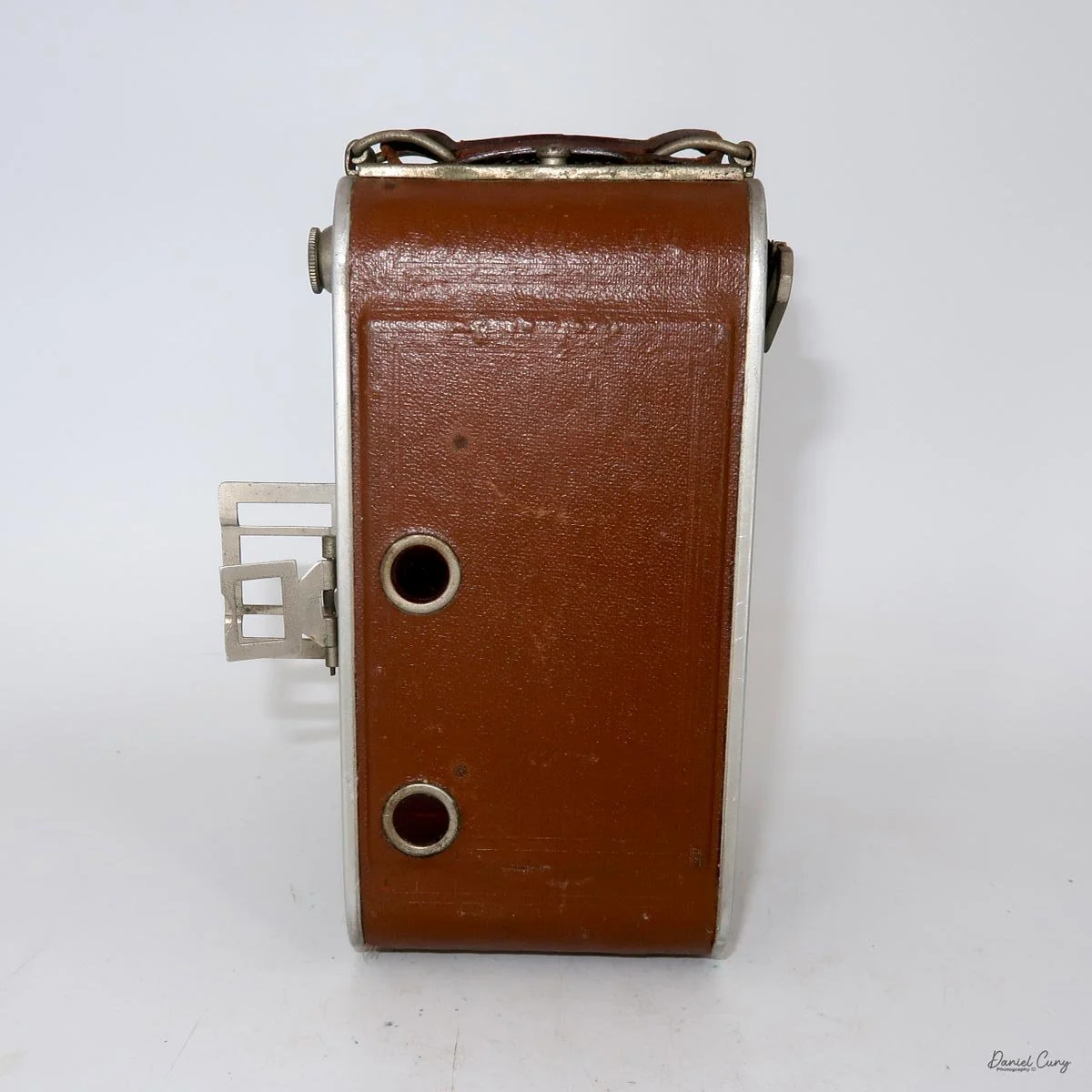
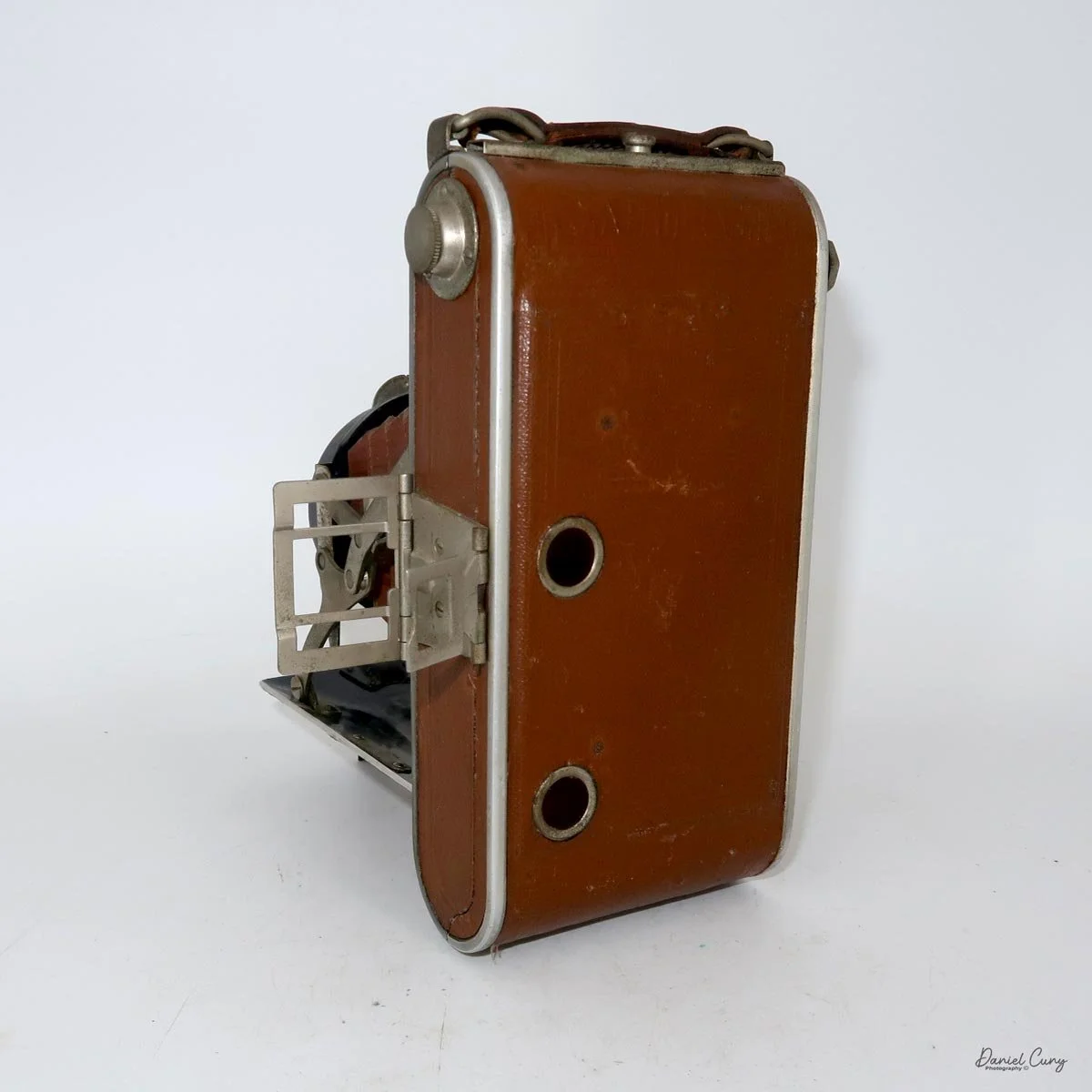
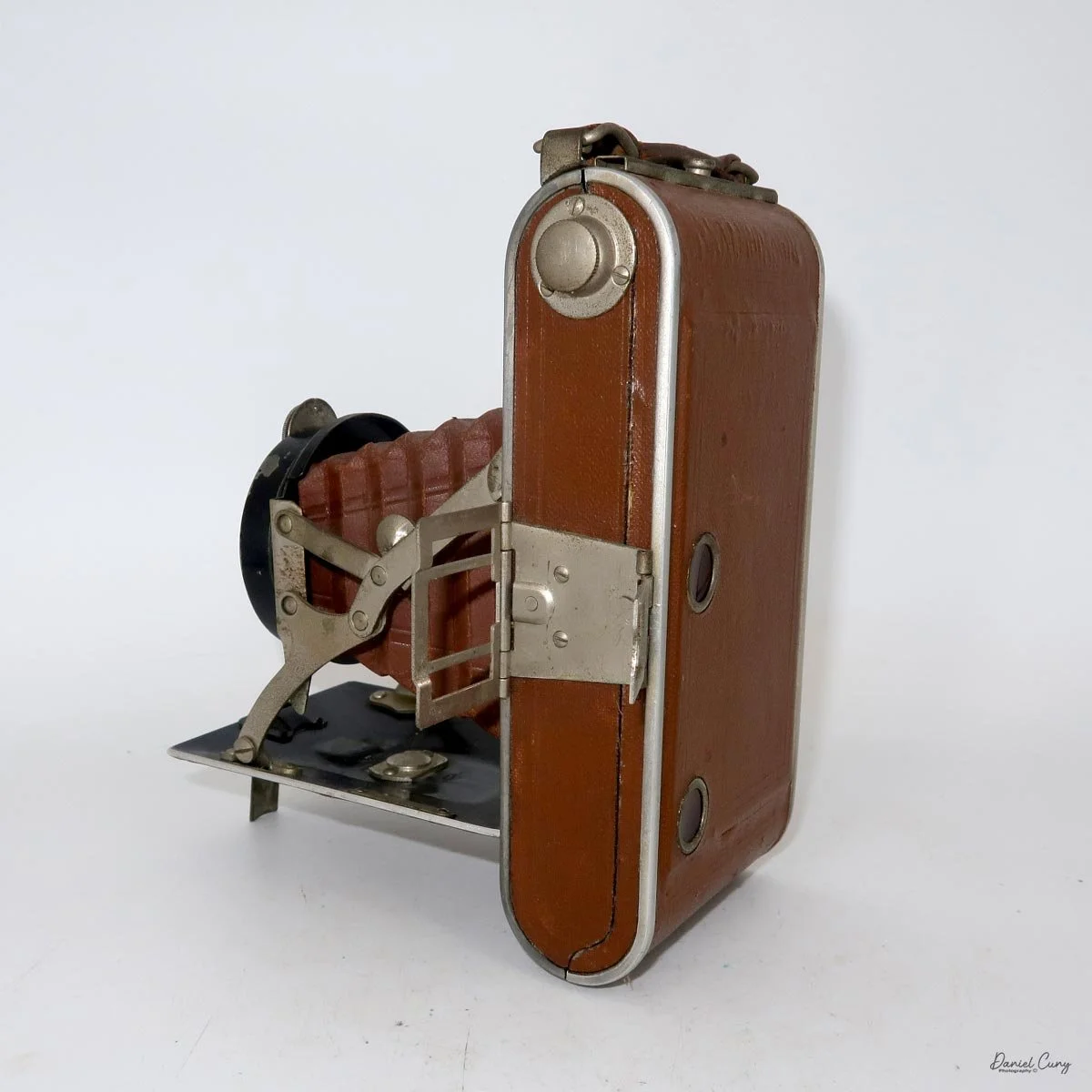
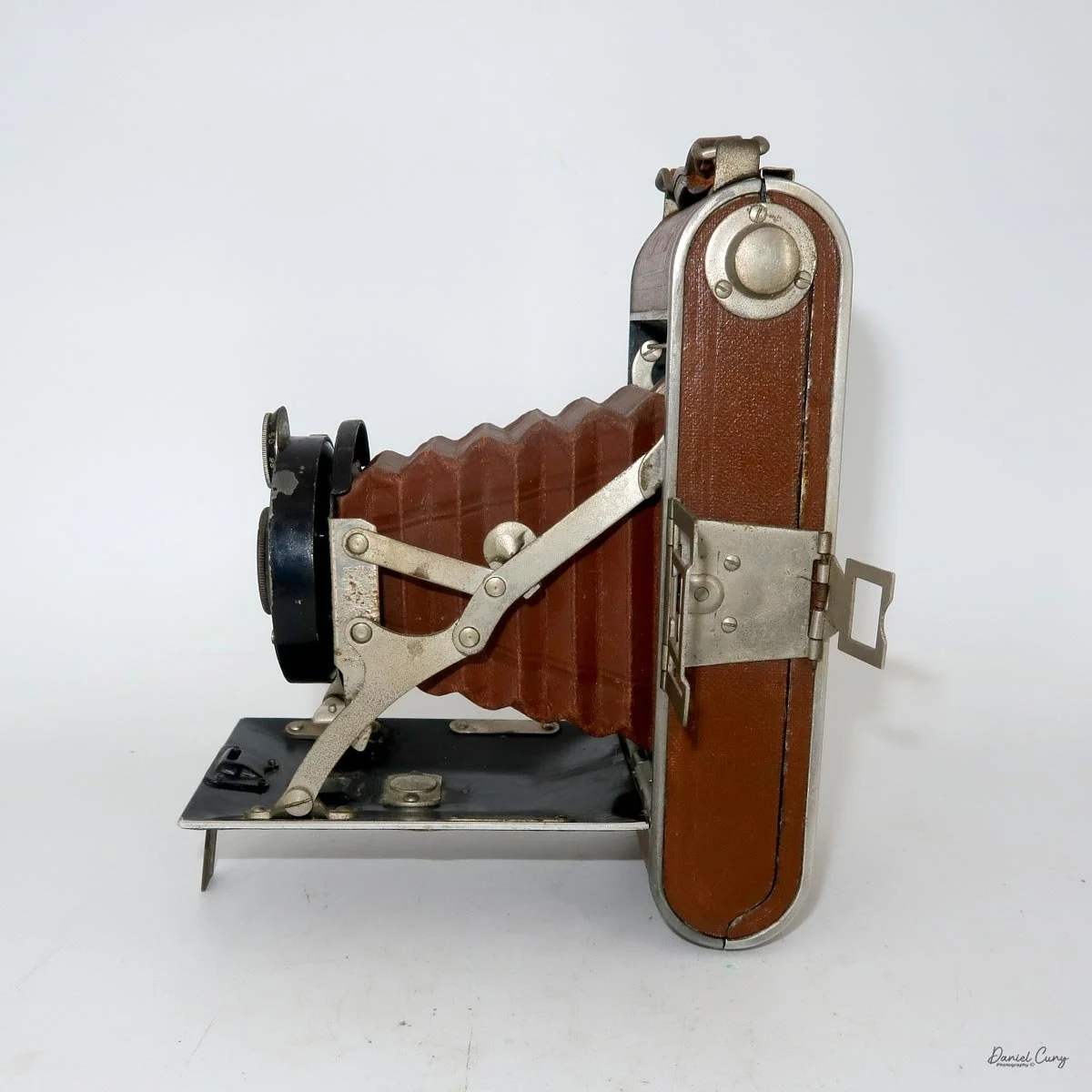
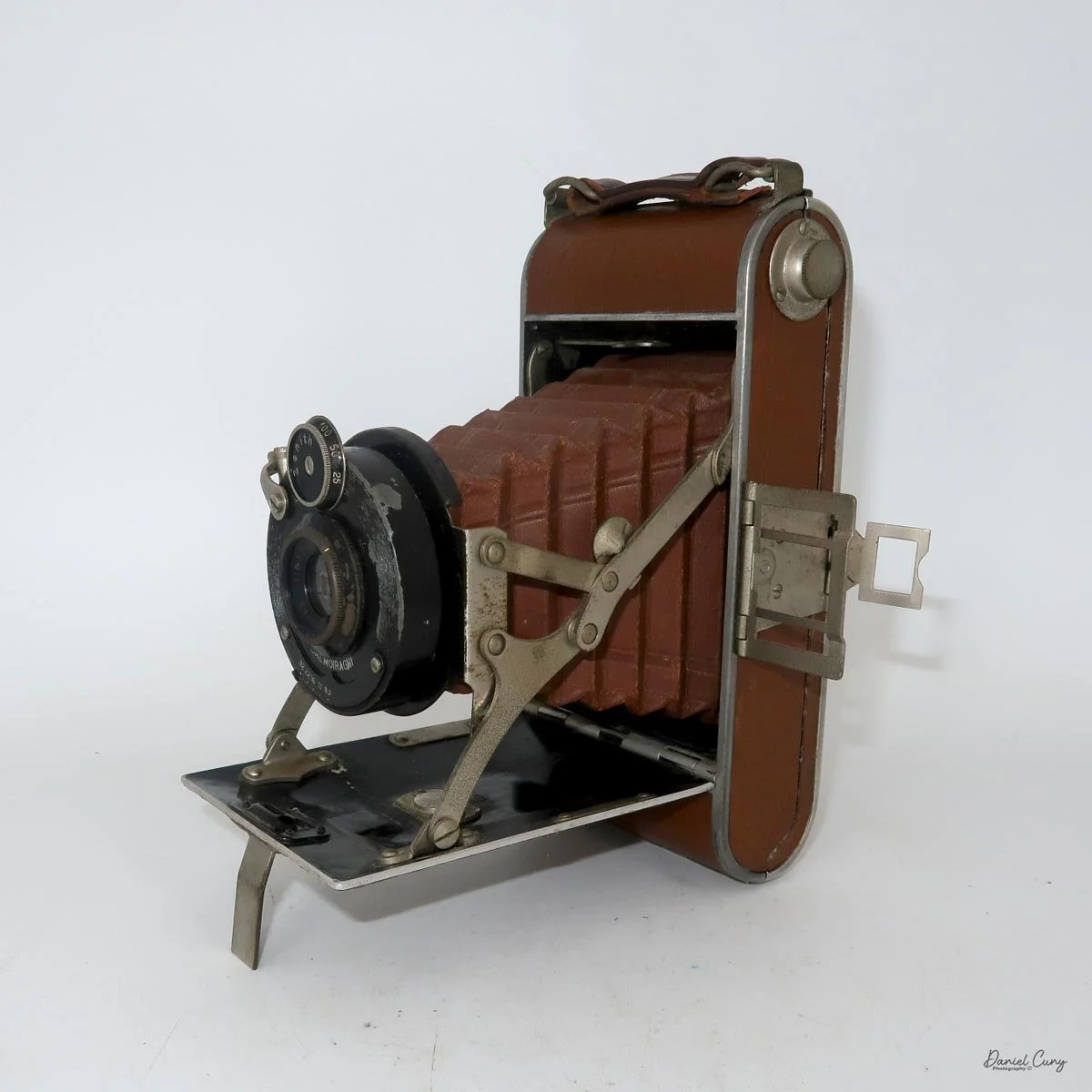
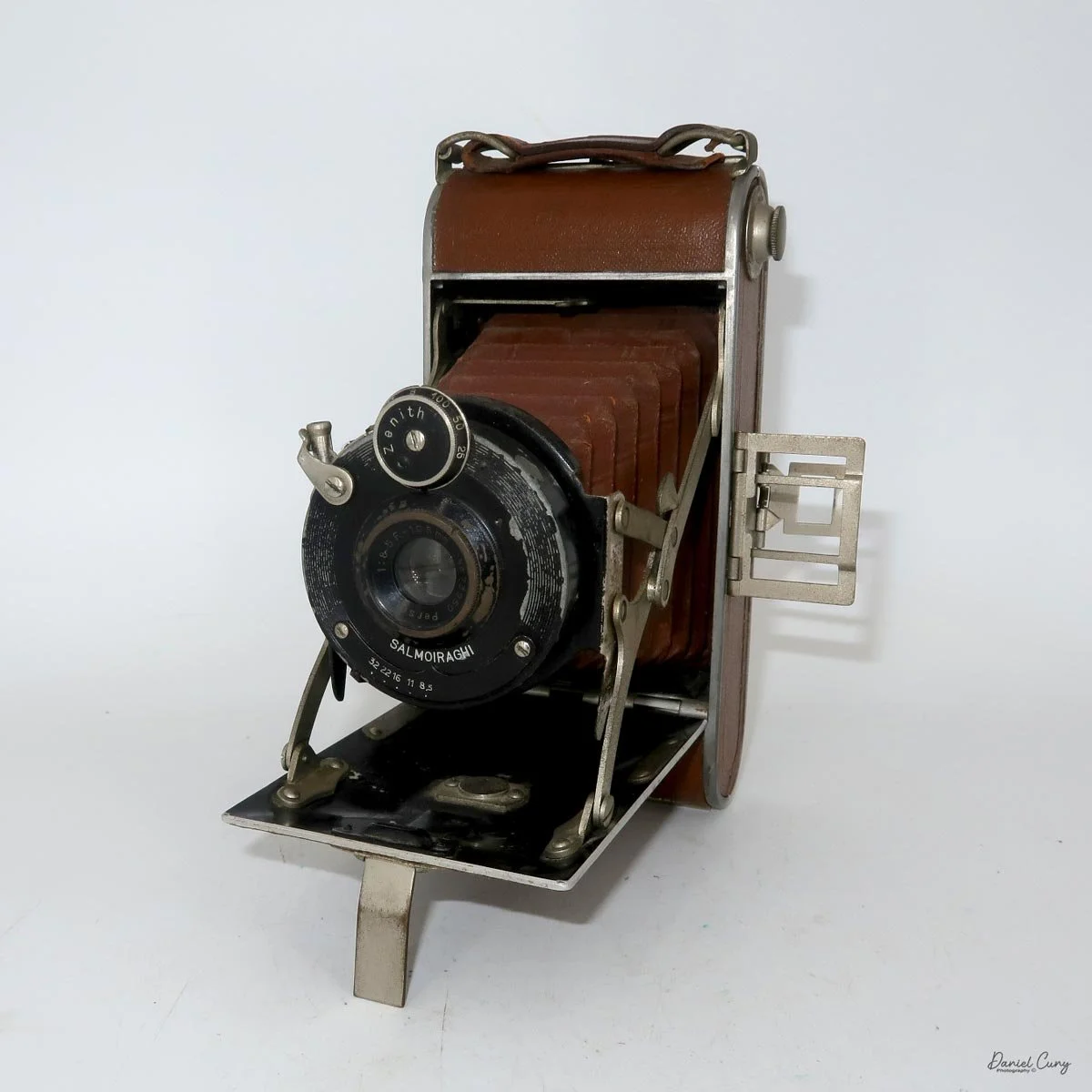
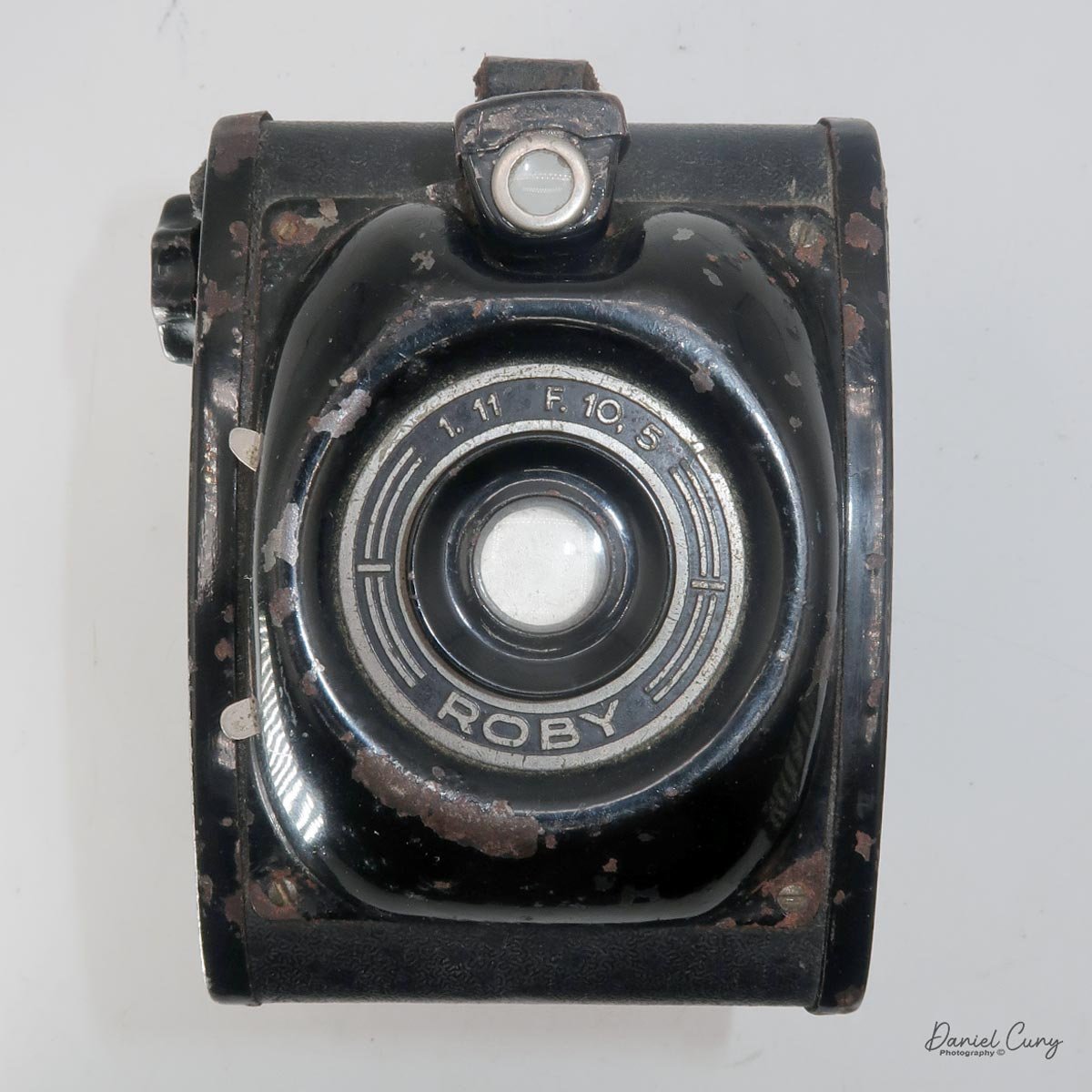
My ICAF Roby is approximately (I forgot to measure it before leaving!) 3 inches tall, 3.5 inches deep (due to the protruding lens area), and 2.5 inches wide, weighing about 10 ounces. The finish is a bit rough, with some chipped paint, as you can see in the photos, but it has a working shutter. The lens is a 105mm f/11, which is indicated directly around the glass.
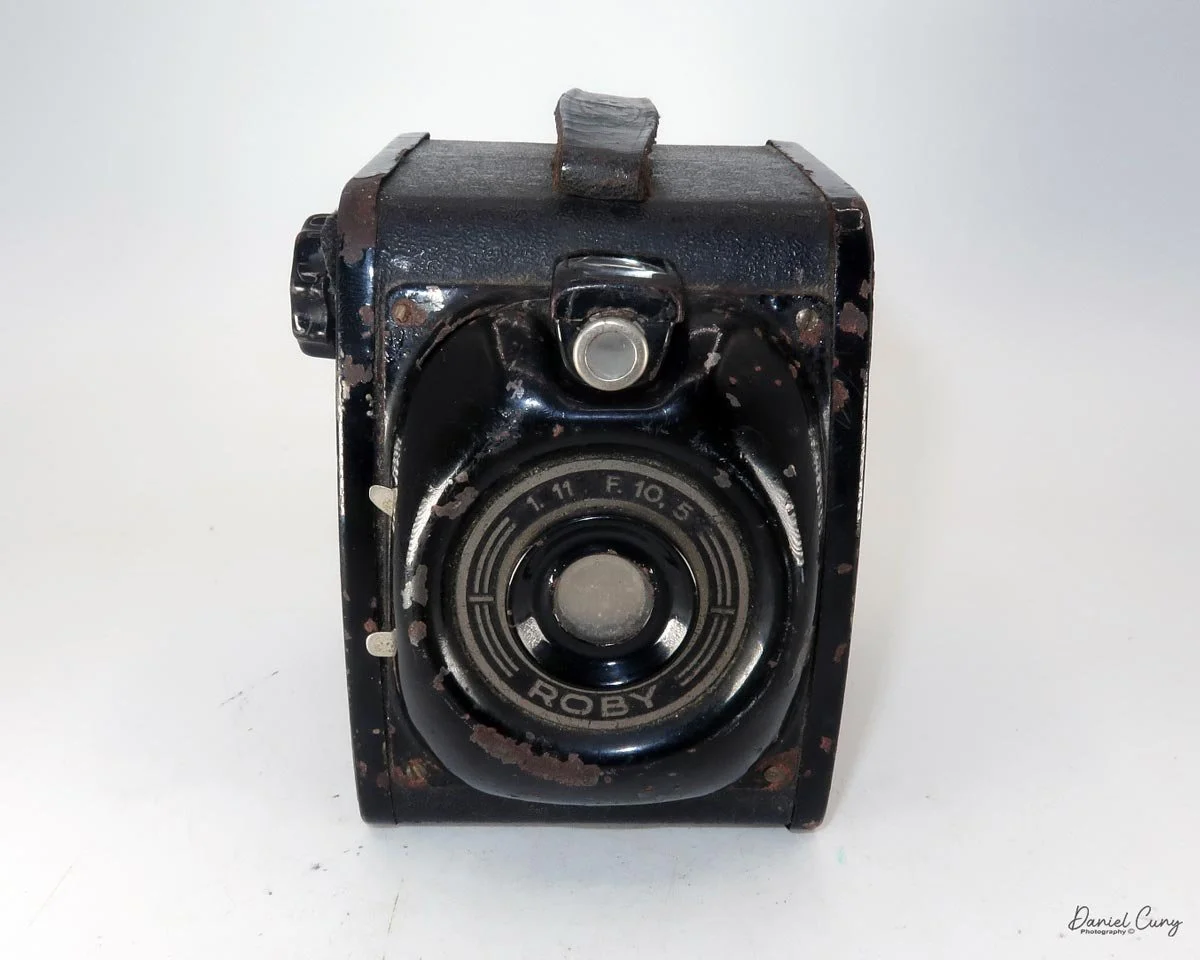
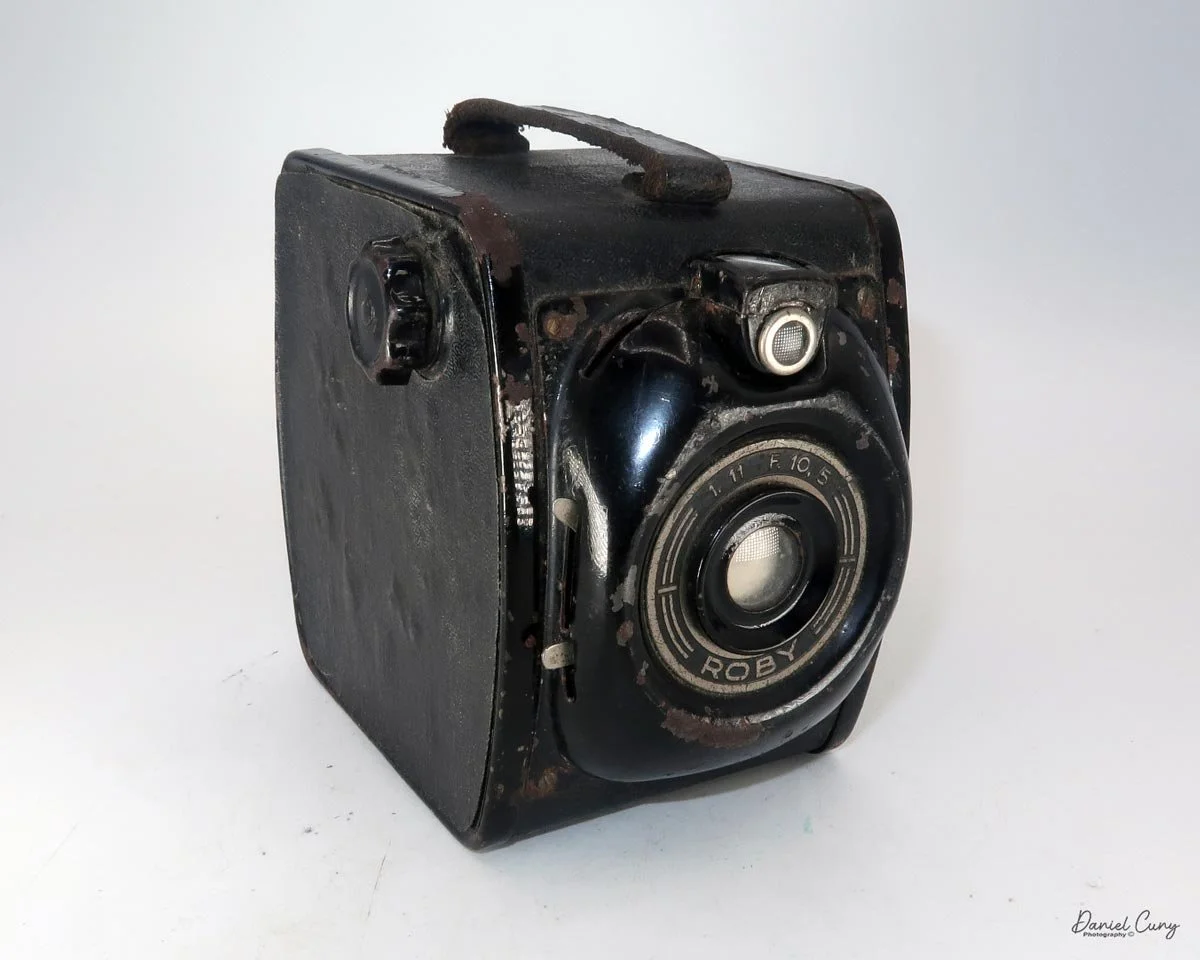
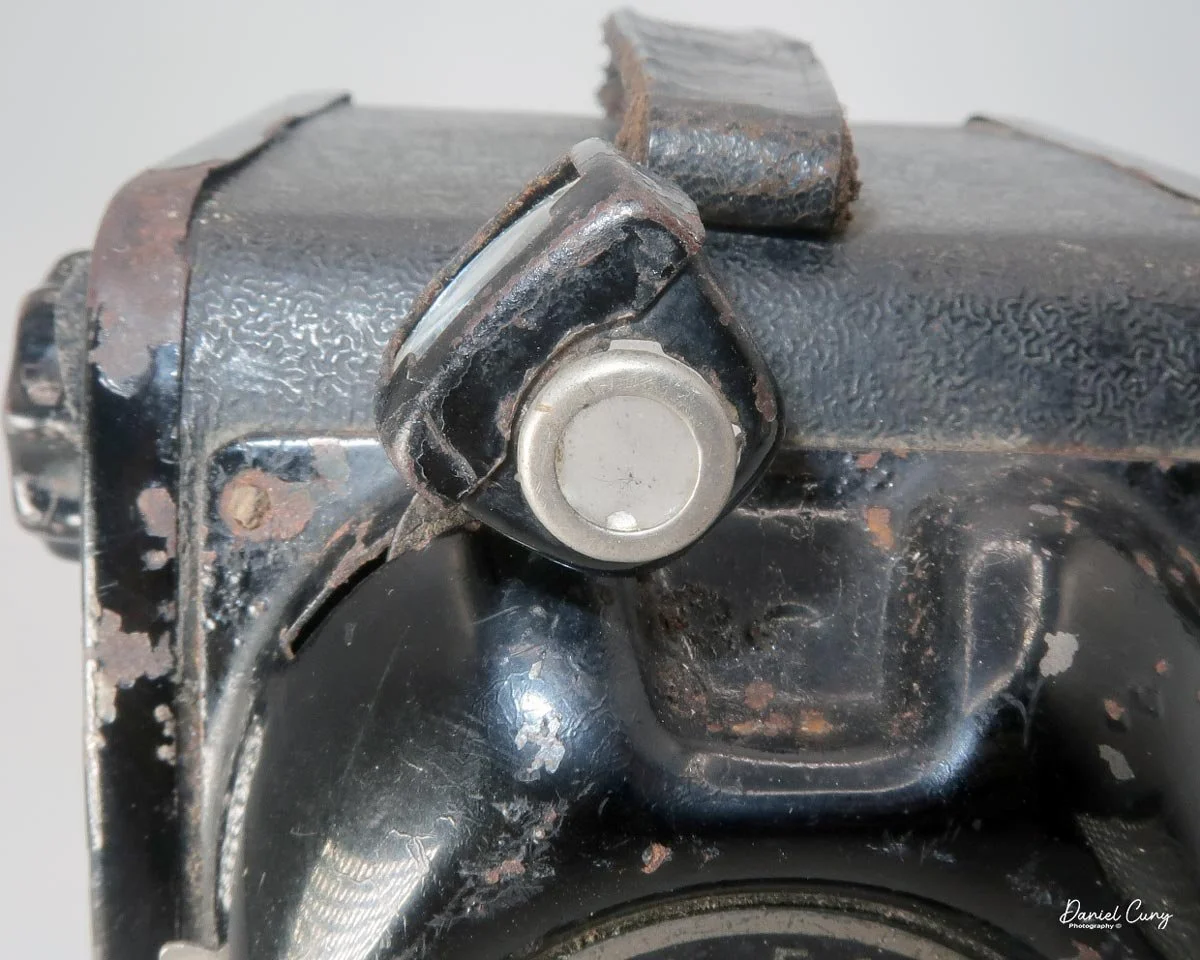
When I first inspected the camera, I wondered about the mechanism next to the viewfinder (positioned above the lens). I pushed it to one side, and the viewfinder flipped sideways, allowing you to frame horizontal images. The waist-level finder is surprisingly clean and bright, making subject framing a breeze.
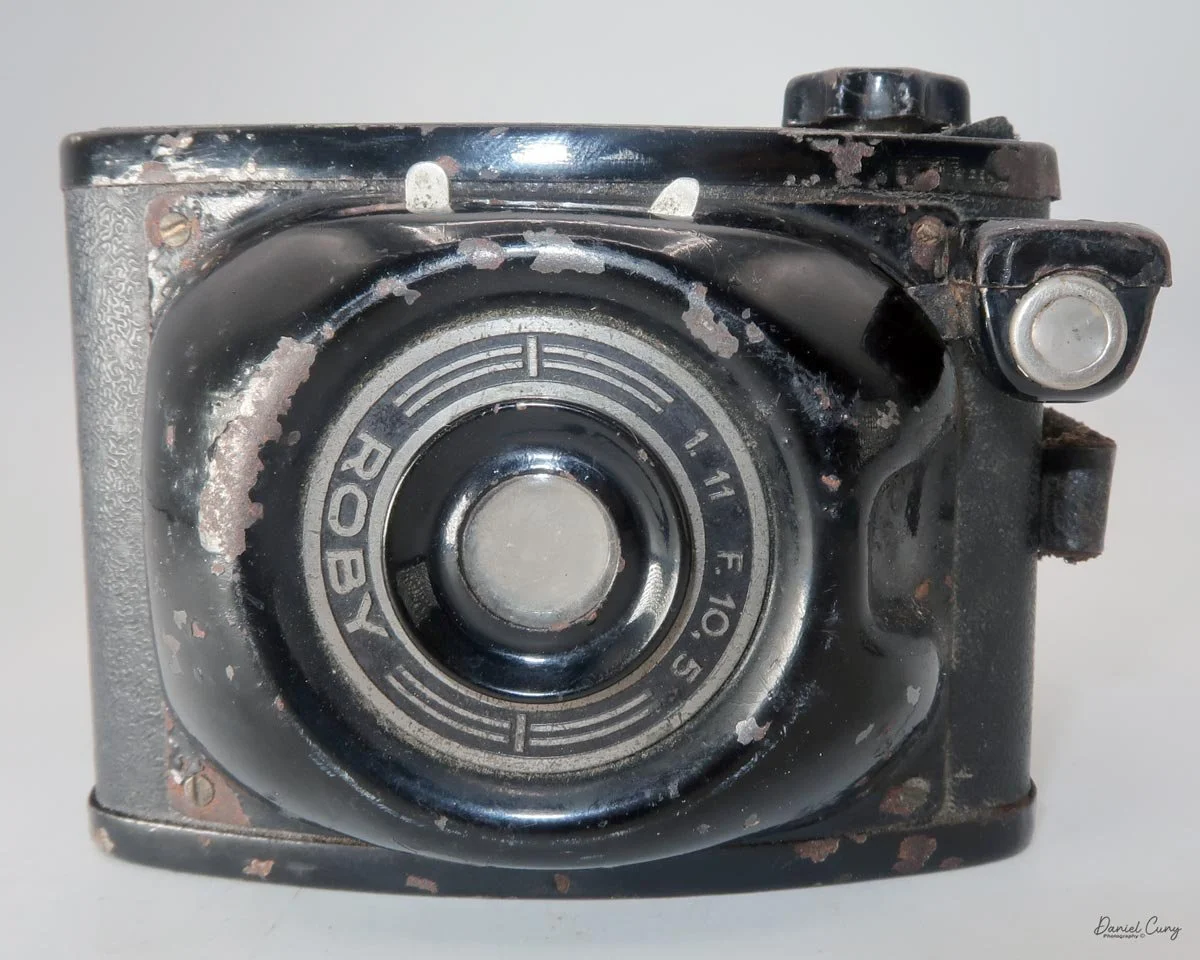
The shutter release is located on the left side of the lens at the seven o'clock position. Right beneath it is a switch for exposure modes: down for "instant" and up for timed exposures. According to my trusty shutter tester, the "instant" setting fires at approximately 1/100th of a second. There are no aperture controls, so the lens is fixed at f/11.
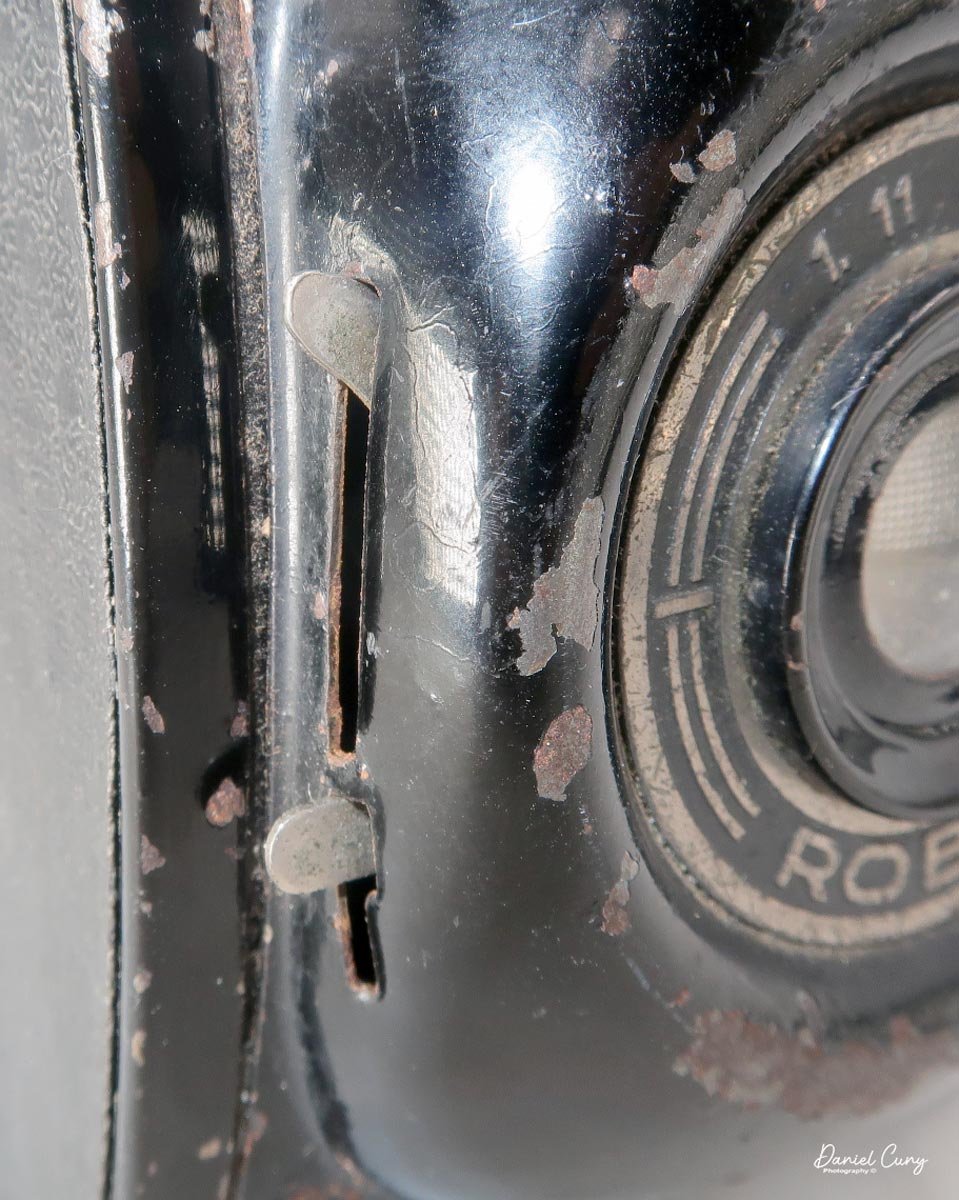
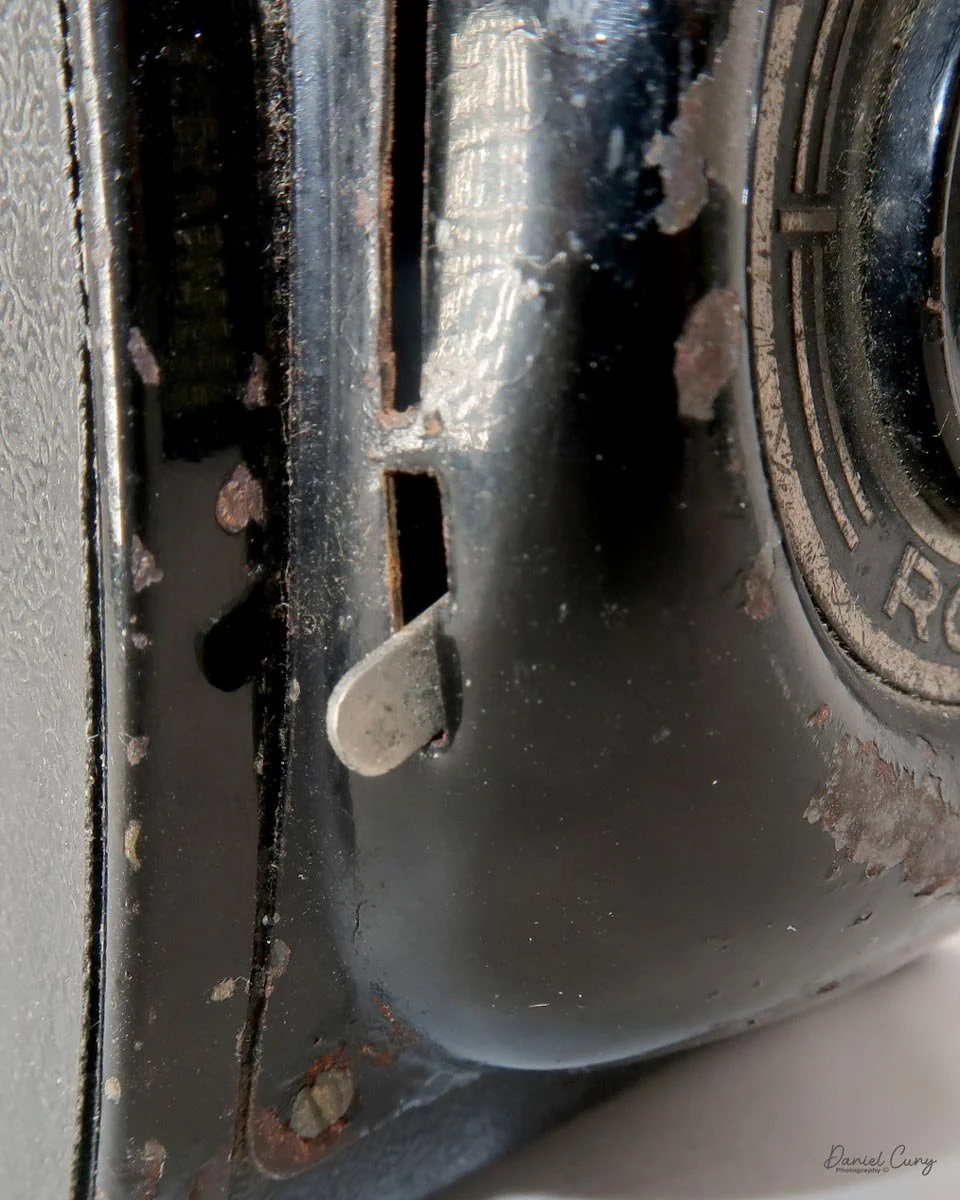
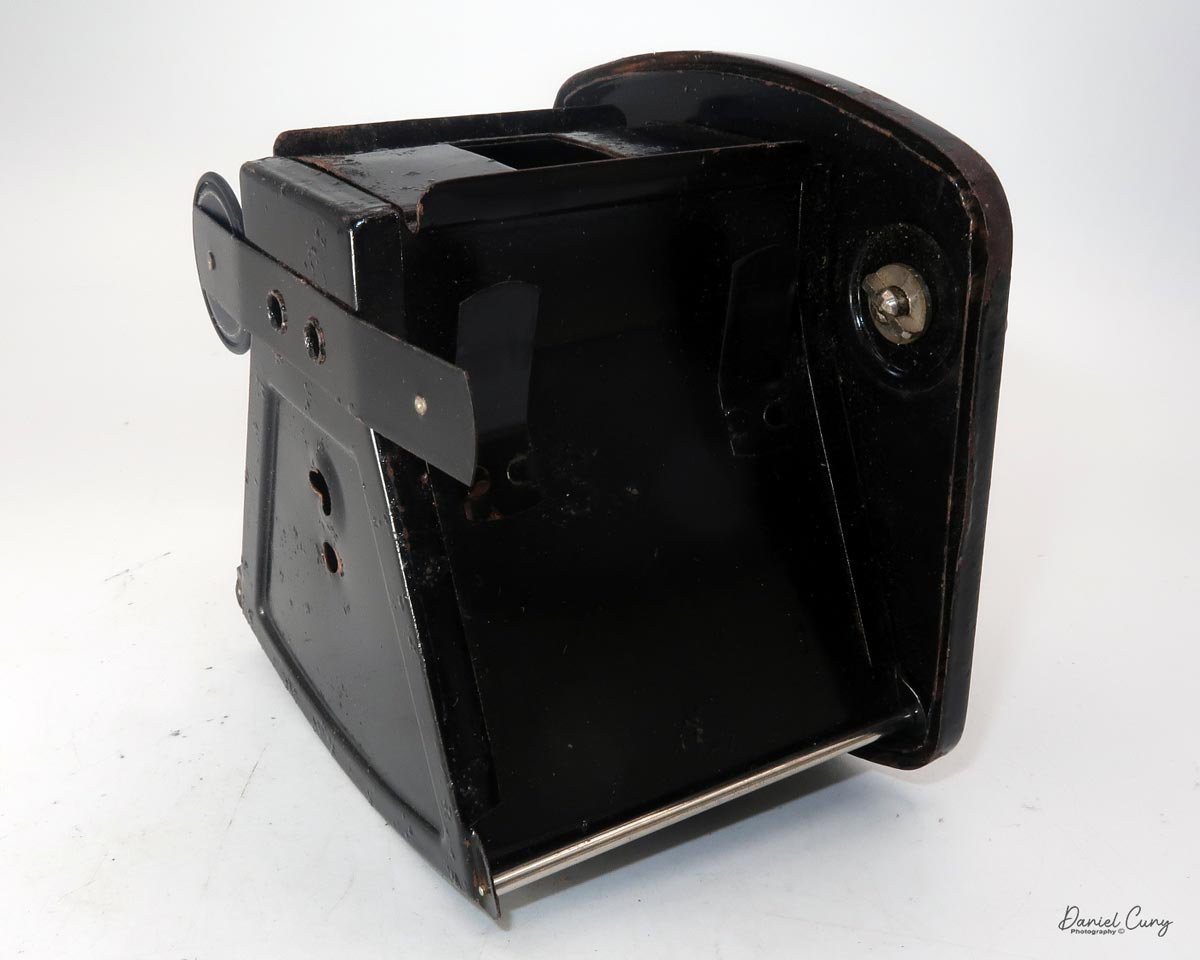
 A switch on the left side of the camera opens the body for loading. The entire side panel comes off, along with the film insert. Load the film as you would with any roll film camera, slide the insert back into the body, and lock the door to prevent accidental exposure. Wind the film to frame number one, and you're ready to shoot.
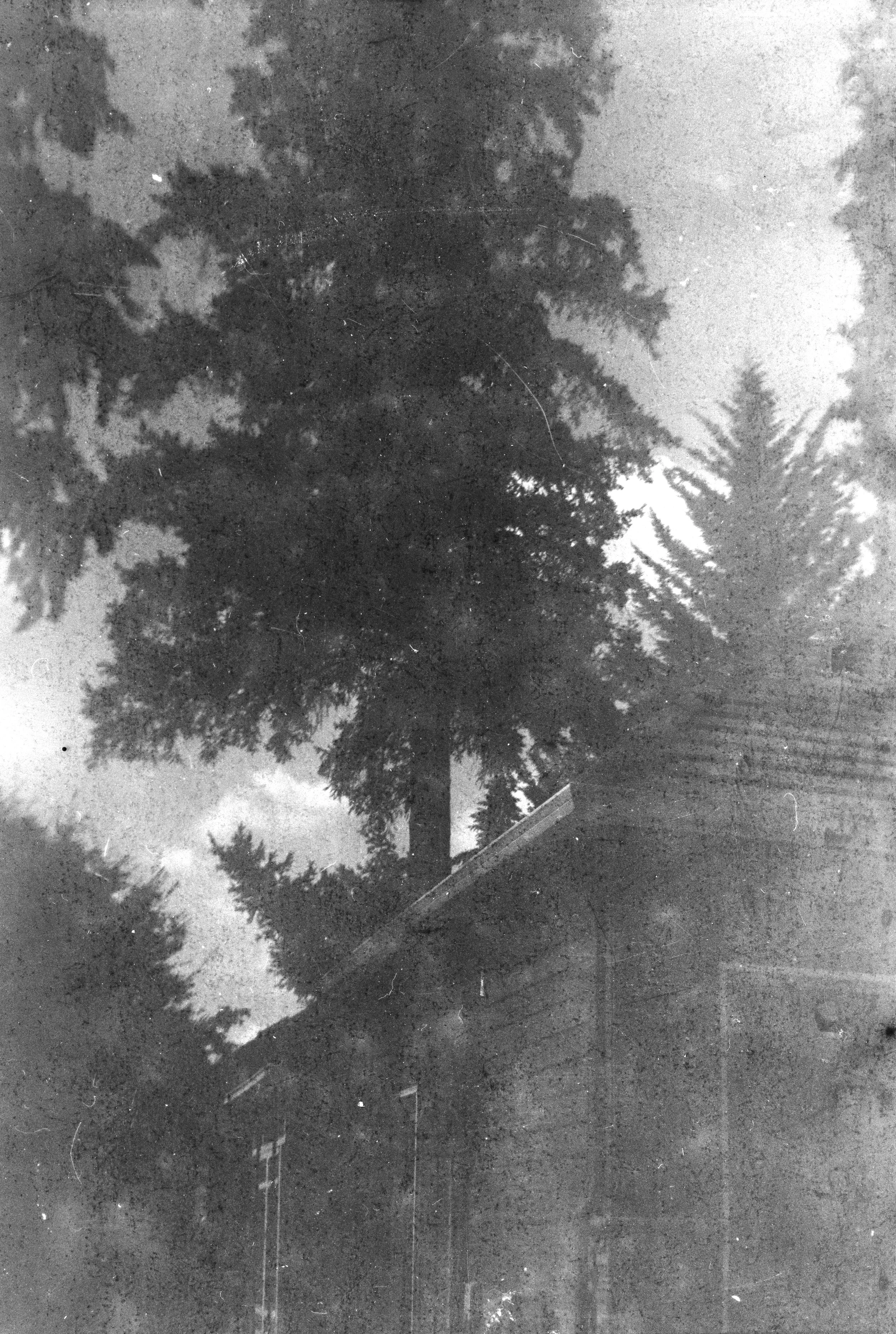
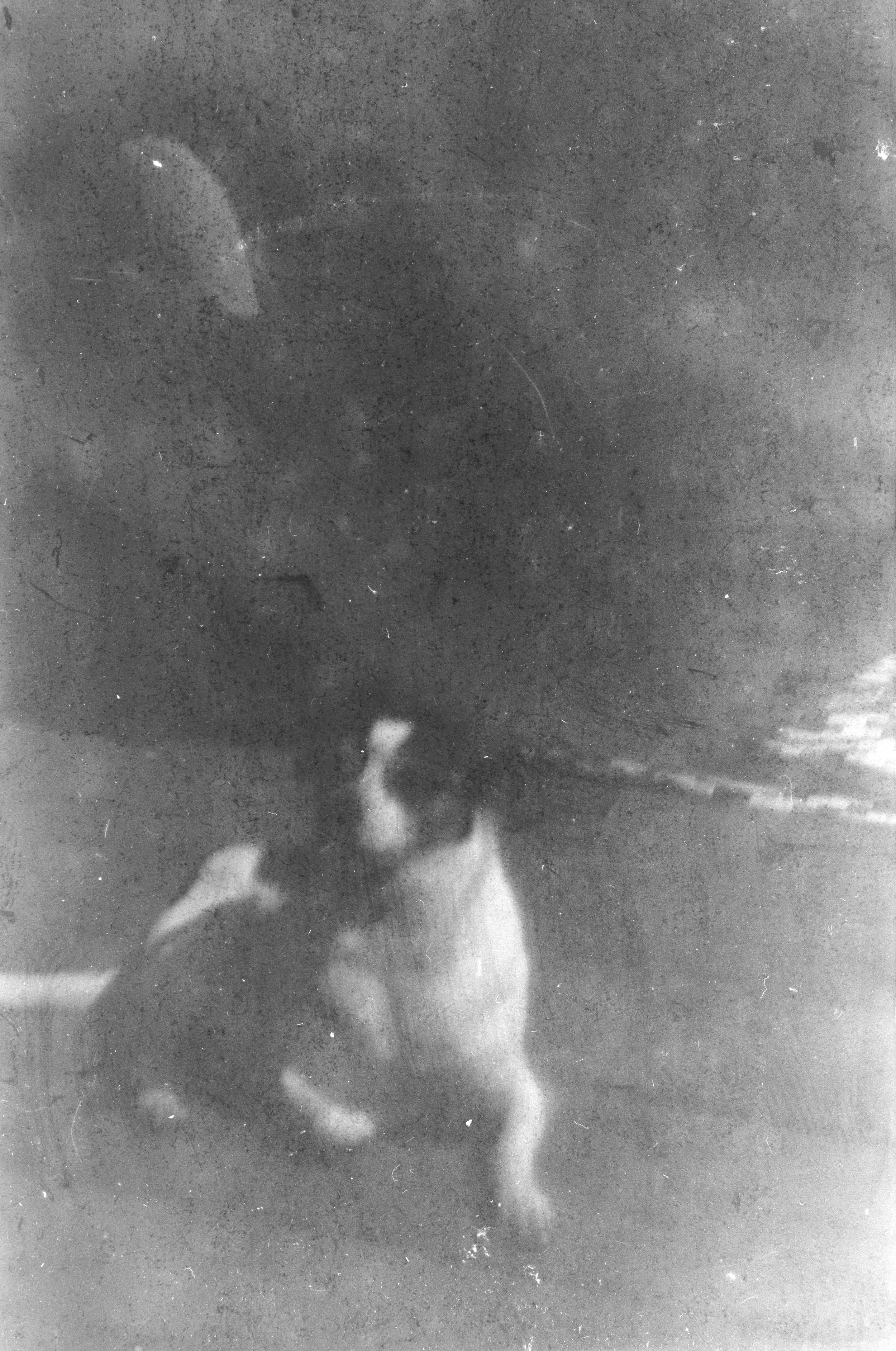
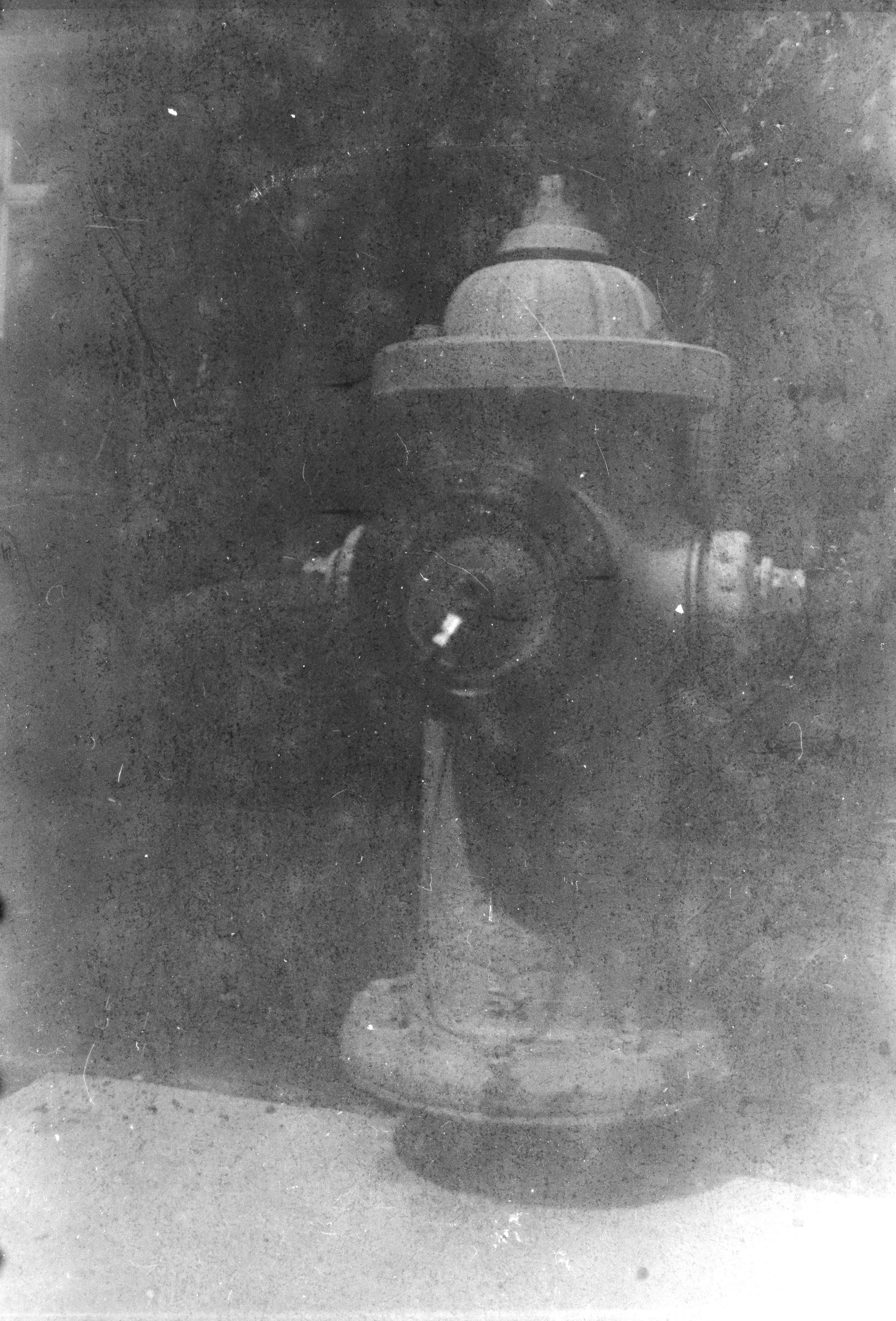
I had some old, expired Plus-X film in my drawer that I decided to try out. The lens was clean, and the film wound easily. It wasn't until I processed the negatives that I realized how underexposed the images were—likely due to the film's age. Nonetheless, the results have a particular contrast and softness that reminds me of early Edward Steichen photographs or the work of Anne Brigman. Take a look at the images below.

Results

Here are some of the results from the Roby using 50-year-old expired Plus-X film. The shots were massively underexposed, and I had to do quite a bit of work on them in post—especially since I didn't have time to shoot another roll before hitting the road.

 I'll shoot another roll when I get back and update this post with properly exposed images. My apologies for the initial results; I know the camera will perform much better with fresh film.
Conclusion:

This camera is a nice addition to the collection; it was fun to shoot with, and it fits right in next to my Ferrania box. I'm considering removing the front lens area to sand off some of the rust and repaint it for a refreshed look. It may not improve the camera's function, but it will look better on the shelf.

 Thank you for taking the time to read about the ICAF Roby from my collection.

Are you interested in other vintage gear? Here are some of my other Camera Reviews.

Check out my Cuny's Camera Collection YouTube channel, where I'm putting together video overviews of the cameras I write about. Be sure to like and subscribe!

Cuny's Cameras and Photos is my online eBay store, where you'll find some of the cameras I've reviewed, along with a wide range of other lenses and gear from my collection that I am thinning out.

Until next week, please be safe.
Salmoiraghi Luxus camera

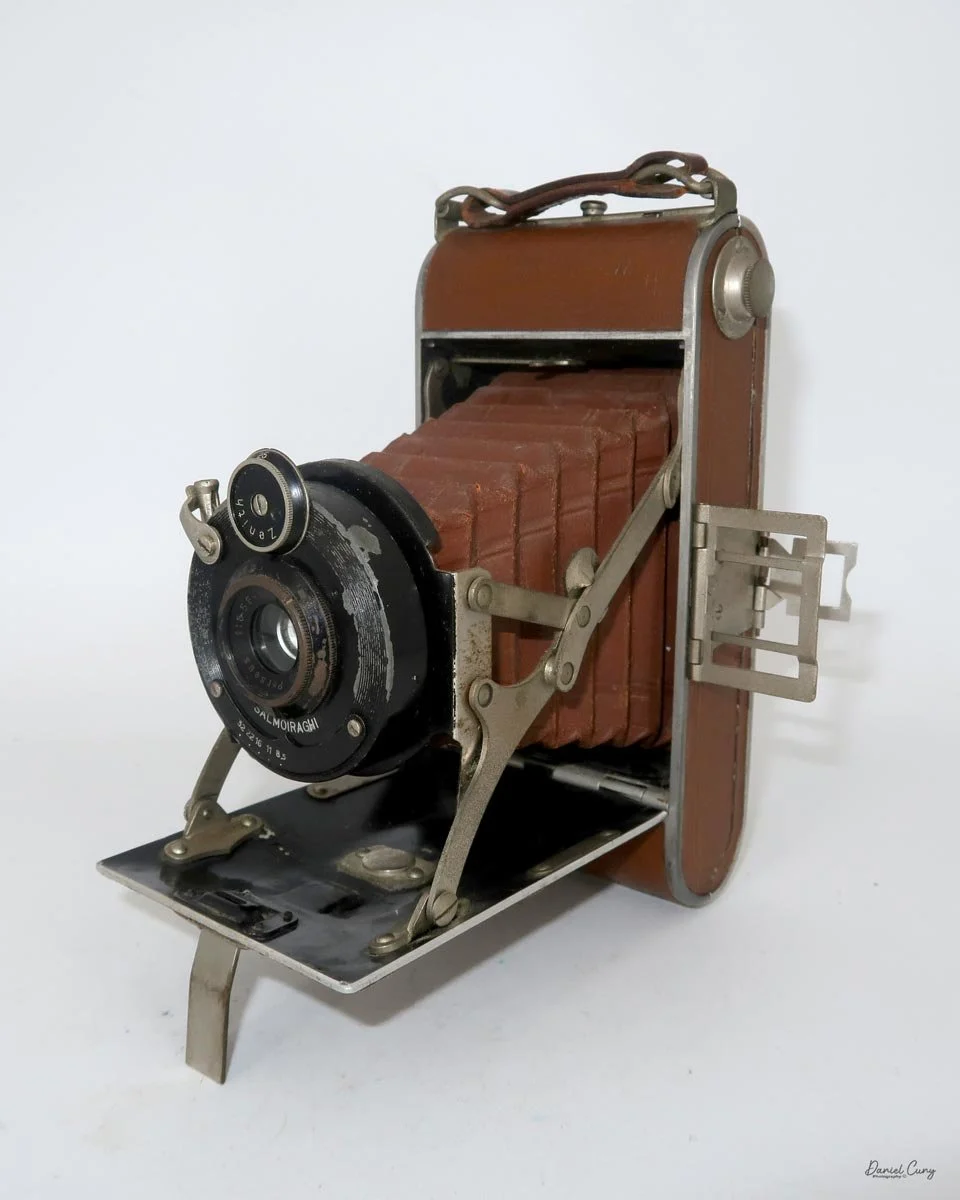
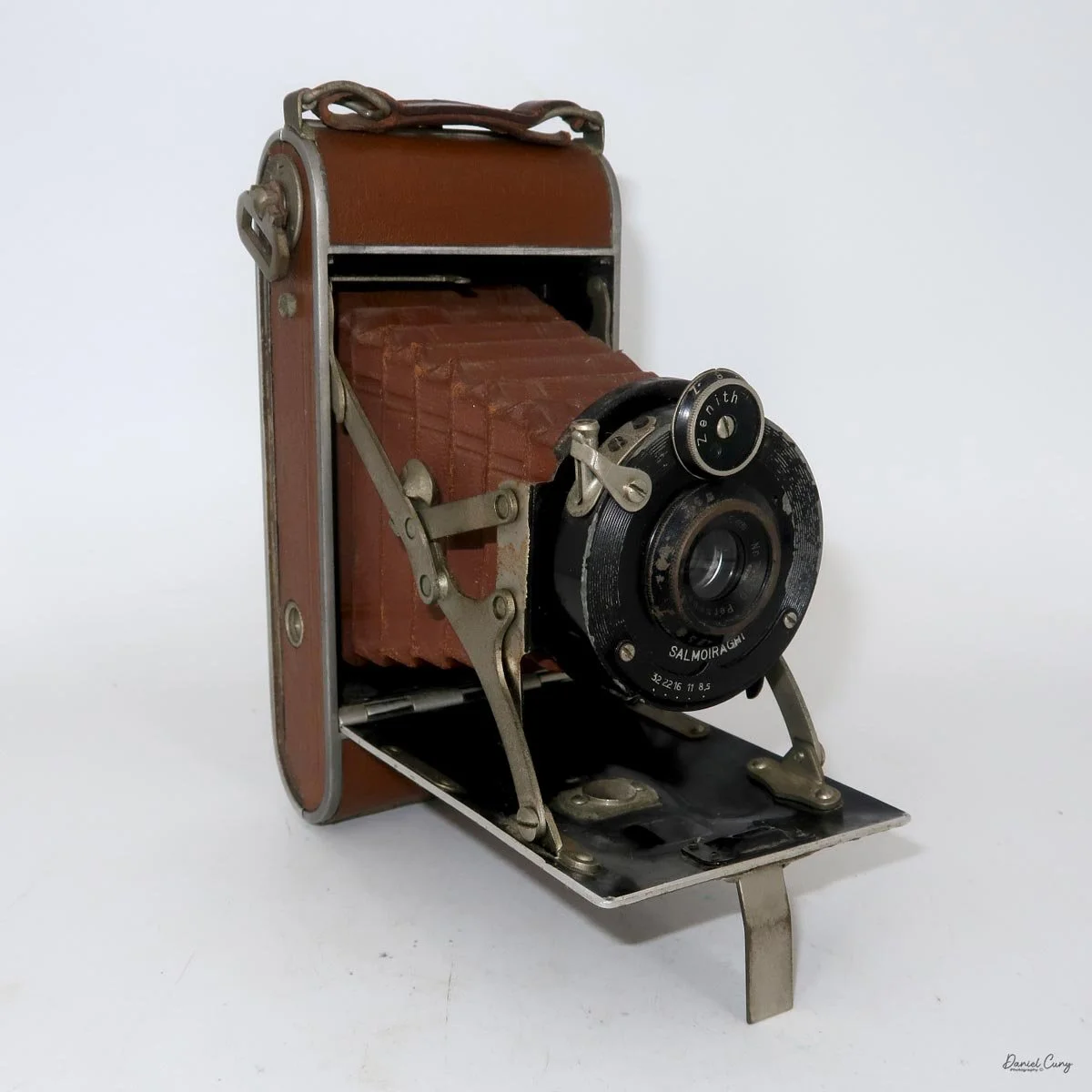
My Salmoiraghi Lexus camera

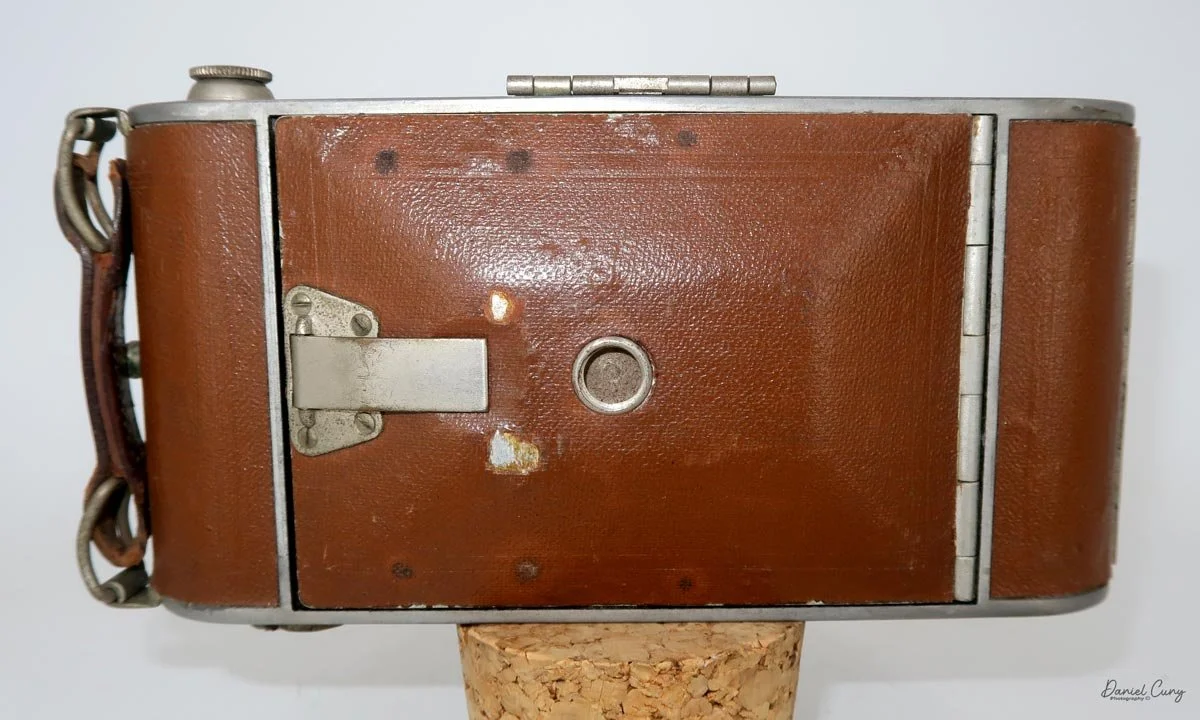
I truly don't remember purchasing this camera, so my best recollection is that it was part of a larger lot of cameras I purchased. What drew me to this particular camera, as with many others in my collection, wasn't the name or rarity of the camera, but the camera's color. The beautiful tan color, along with the colored bellows, are things that I'm drawn to.

 The Salmoiraghi Lexus has been on my shelf for a few years, and it wasn't until this past weekend that I noticed it again. It was tucked away behind some other cameras in my collection. 

 Next week I'm traveling to Japan to do some camera and flea market shopping, hoping to find some treasures to write about in some of my upcoming blogs. I guess that about a thousand others are looking for the camera treasures while there, and figure, what better way to spend my time in Tokyo than to photograph the town, attend a few flea markets, and visit a few camera shops.

 I was gathering items to take to a camera show in the suburbs of Seattle last week when I noticed it. I questioned whether I really wanted to take the camera, as I knew I would eventually want to write about it. I put the Salmoiraghi Lexes with many other items I was taking to the show, but in the back of my mind, my willingness to sell them was half-hearted.

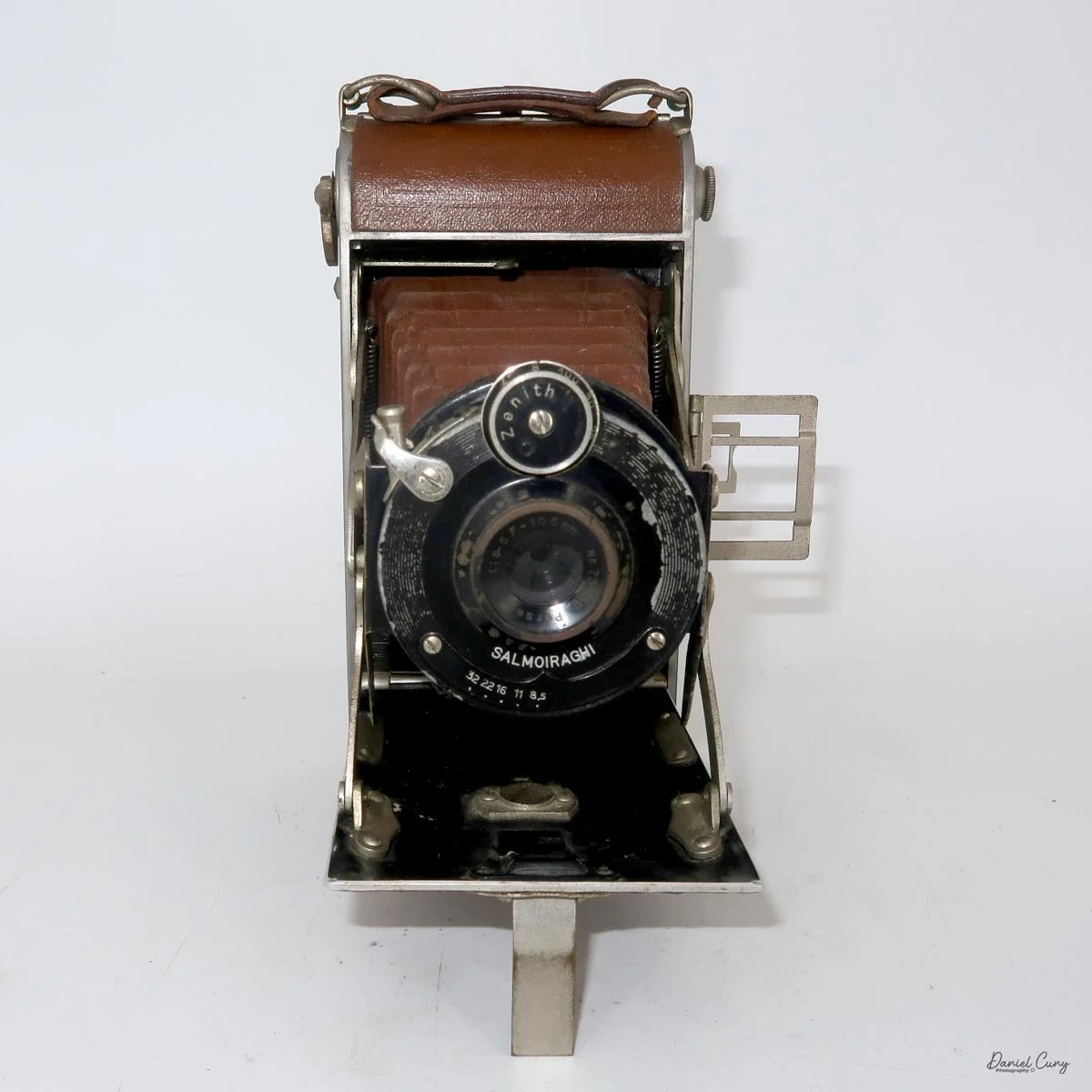
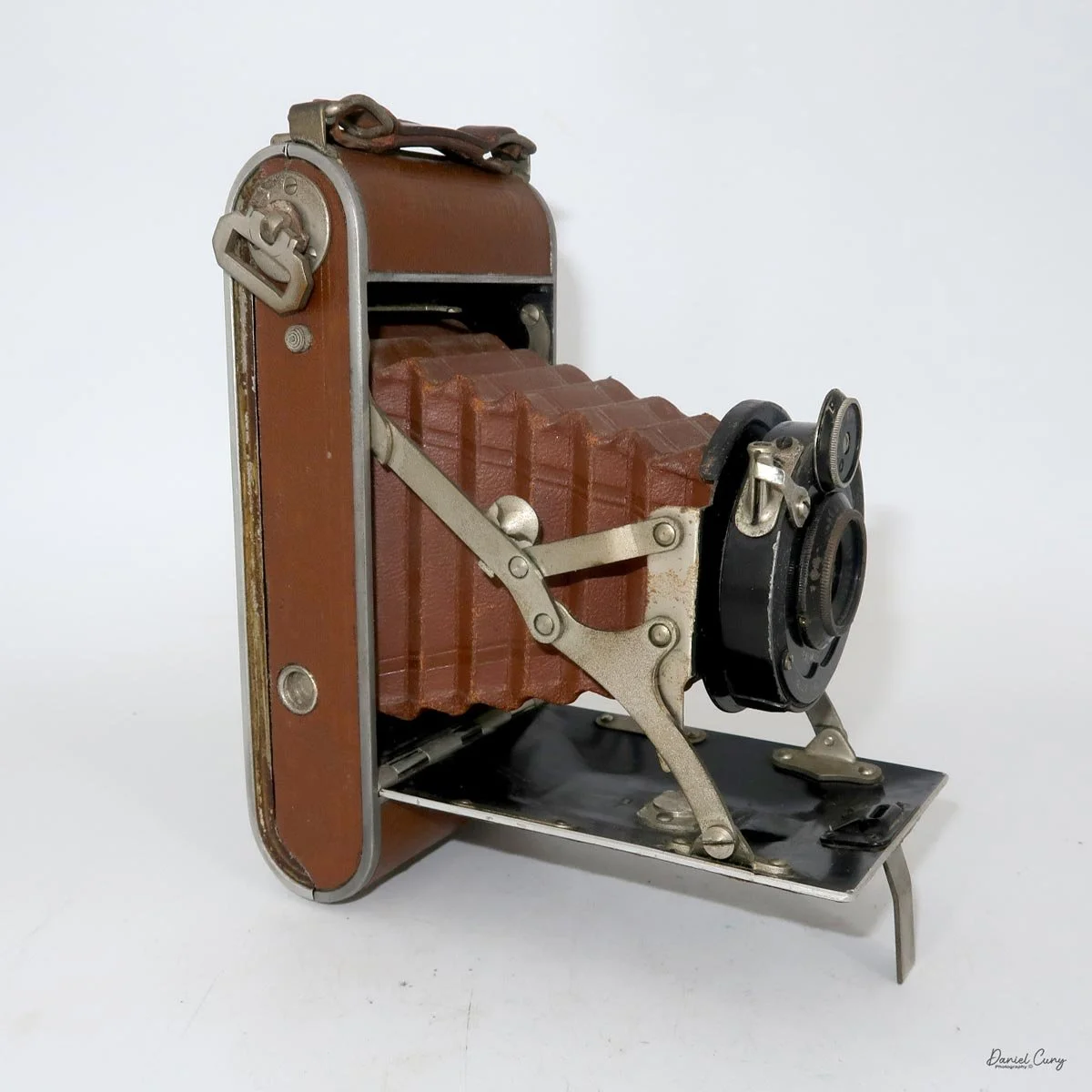
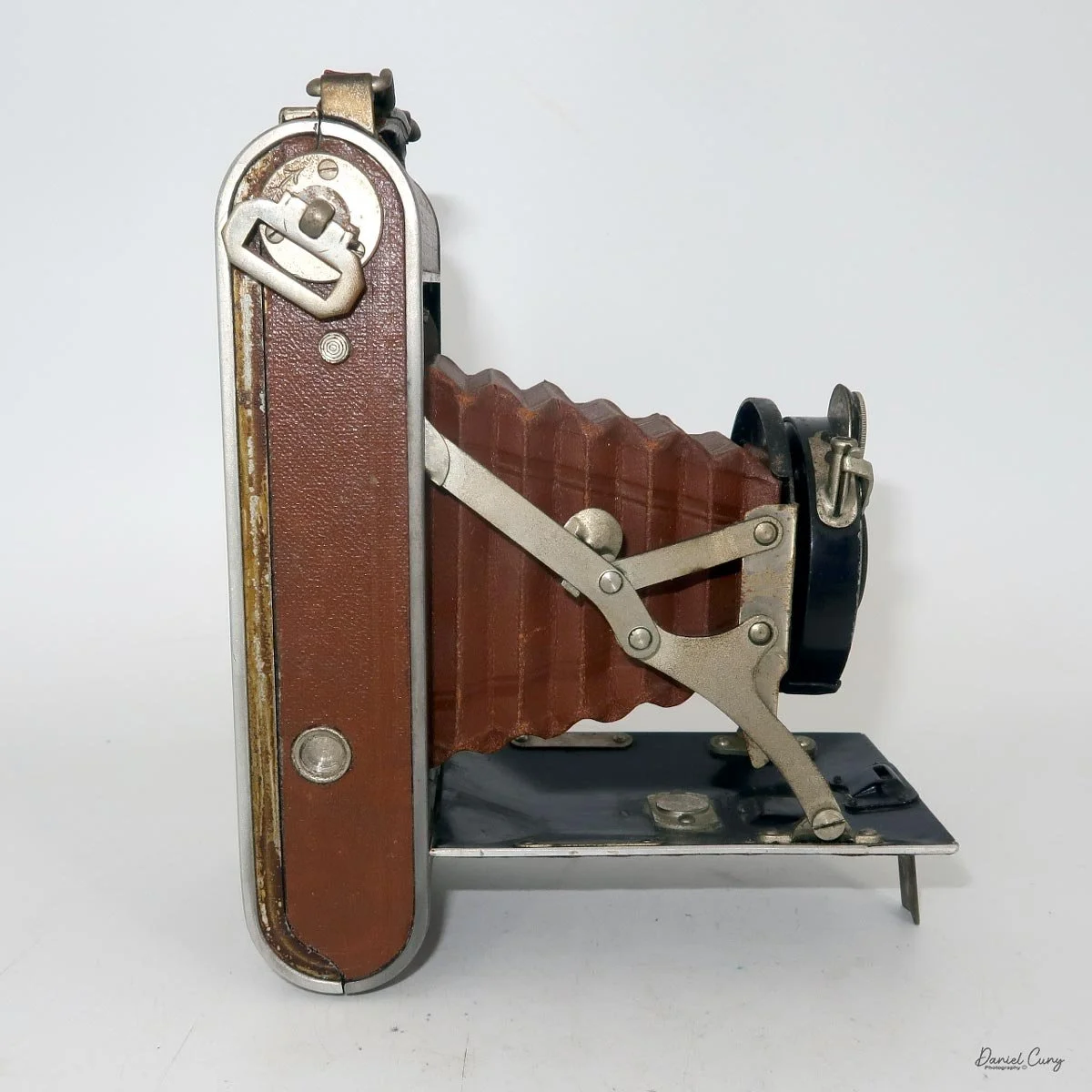
The other side of the Salmoiragi Lexus camera

 As I was pulling cameras out of the boxes to put on my tables for the camera show, the Salmoraghi Lexus was unfolded and put out for sale. Some people casually looked at it, but there was no real interest in the camera. There were a few people who liked the colored camera, but that was about it.

 In the back of my mind, I had already picked the camera I wanted to write about this week, but as I was putting away the cameras left over from the camera show, the Salmoiraghi Lexus just seemed like the camera to write about. 

 When I opened the camera, thinking about putting film in it so I could shoot with it for the blog, I checked the shutter to make sure it was working, but unfortunately, it's stuck open. So, at this point, I won't be able to photograph with it for the post. That's not Ideal, but what was gnawing at me was, What is a Salmoiraghi camera? I wasn't familiar with the brand at all, so I wanted to dig into the company and what this camera was all about.

 As I was doing my research for the camera, there was very little reference information, but I found MisterMondo Italian Camera, which had a great selection on 

History:

 Salmoiraghi cameras are a small and somewhat obscure chapter in Italian camera history, remembered mainly for a few postwar experimental and medium-format designs rather than for mass-market success. Collectors often discuss the name because the surviving models are uncommon, visually distinctive, and tied to the period when Italian manufacturers were trying to build a domestic camera industry after World War II.

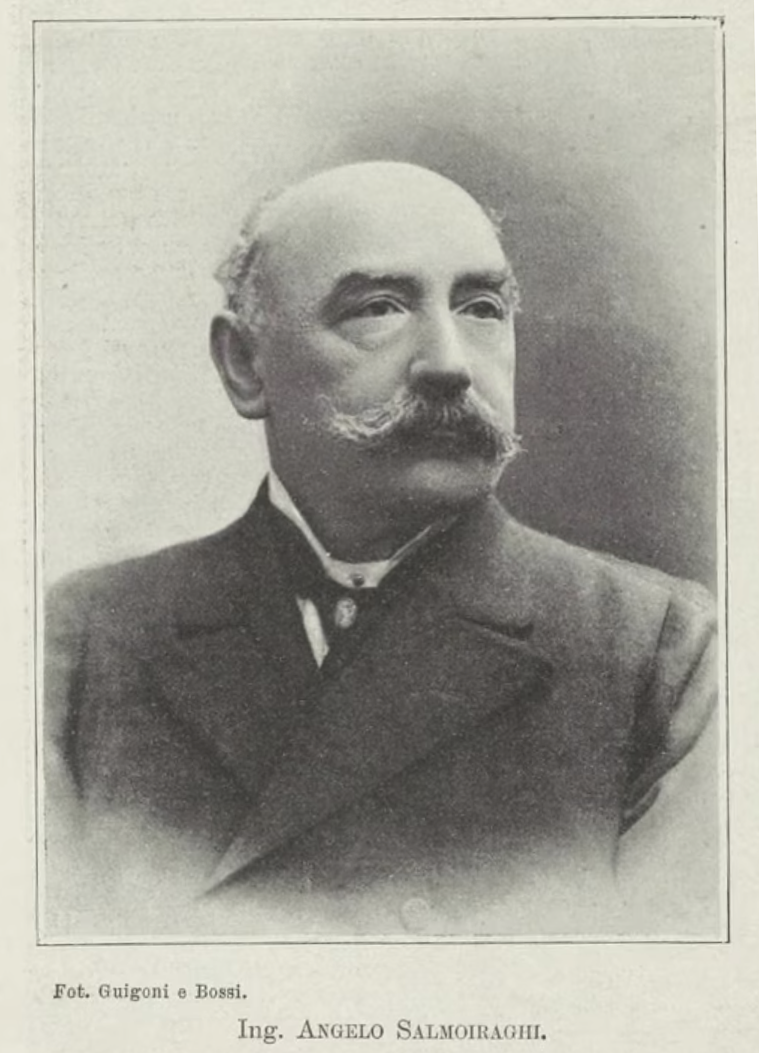
Angelo Salmoiraghi. (From website)

 Salmoiraghi SpA, better known as La Filotecnica, began in Milan in 1865 when Angelo Salmoiraghi founded the Scuola-Officina Filotecnica. The school-workshop blended training, research, and production, reflecting Salmoiraghi's aim to turn precise scientific instrument making into an industrial enterprise. Over time, the company became associated with high-quality optical and surveying equipment, while keeping close ties to technical education and innovation. That early mix of craftsmanship and science helped establish La Filotecnica as a notable name in Italian instrument manufacturing.

 The best-known Salmoiraghi-related camera from the collector world appears to be a medium-format model developed in Milan around 1946–47. Reports from collectors describe it as a "pseudo twin-lens reflex" camera, built with a Bakelite body and alloy fittings, placing it squarely in the immediate postwar era, when makers were using practical materials and inventive layouts to reduce cost and complexity. That design choice suggests a company experimenting with form as much as function, aiming to create a camera that looked modern and handled differently from the boxy standard models of the time.

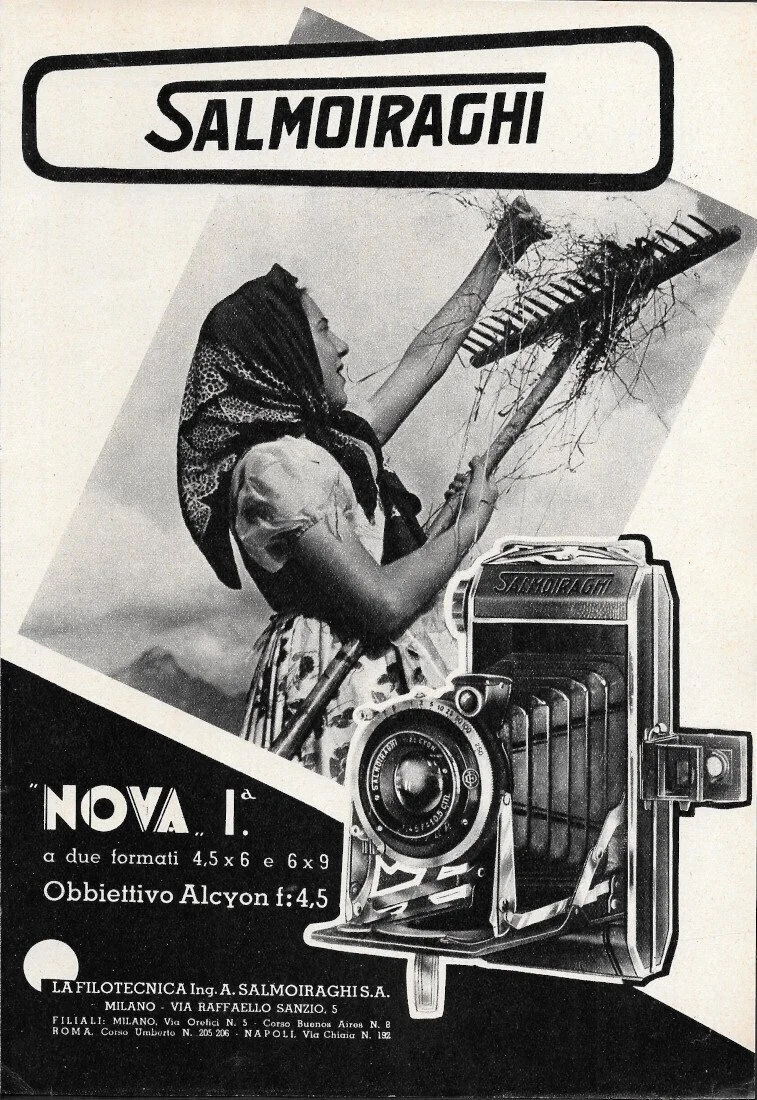
Italian advertisment for Salmoiraghi Nova I camera.

 What makes Salmoiraghi interesting is not a long production line but the rarity of the surviving evidence. Unlike the big Italian optical firms that became widely known through lenses, projectors, or industrial products, Salmoiraghi cameras seem to have been limited-run products that left only a thin paper trail. Much of what is known today comes from collector discussions rather than catalogs or formal company histories, which is why exact model details and production numbers remain hard to pin down.

 In that sense, Salmoiraghi cameras reflect a broader story in European camera manufacturing: many firms tried to enter the market in the 1940s and 1950s, but only a few scaled up successfully. Salmoiraghi's contribution appears to have been more inventive than influential, with its cameras now valued for their curiosity, design, and historical context. For photographers and collectors, they represent the optimism of a rebuilding Italian industry and the short-lived creativity of smaller makers trying to find a place beside better-known German and Japanese brands.

 Today, Salmoiraghi cameras are mostly encountered in collections, forum posts, and auction listings. Their scarcity means they are better known to specialists than to the general public, but that rarity is exactly what gives them historical appeal.

My Camera:

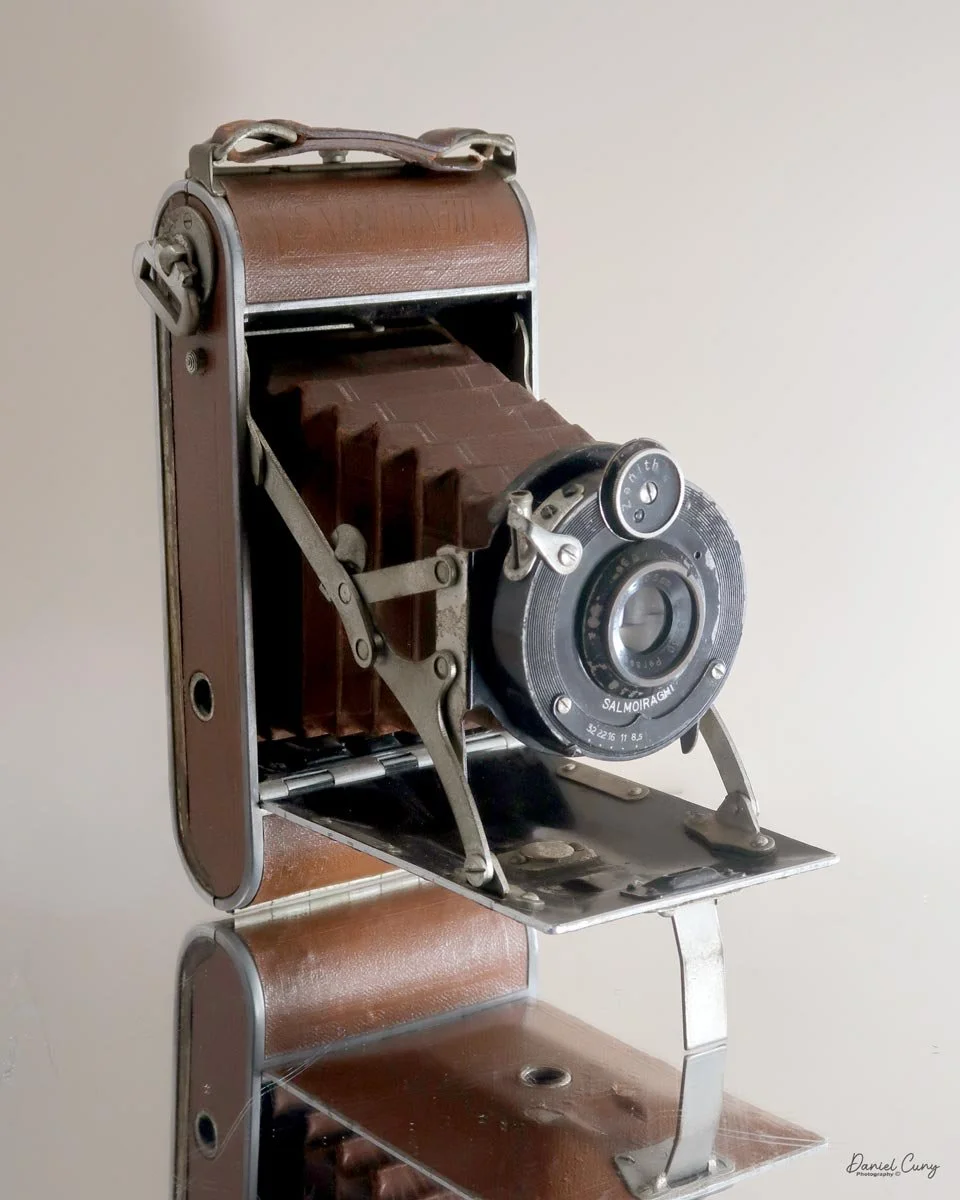
 My Salmoiraghi Lexus camera is very similar to many of the other 120 film, 6x9cm folding medium-format cameras from this era. The camera is 6" long by 3" tall and 1.5" deep when closed, and 5.25" deep with the lens extended. The camera weighs 1 pound, 0.1 ounces, unloaded.

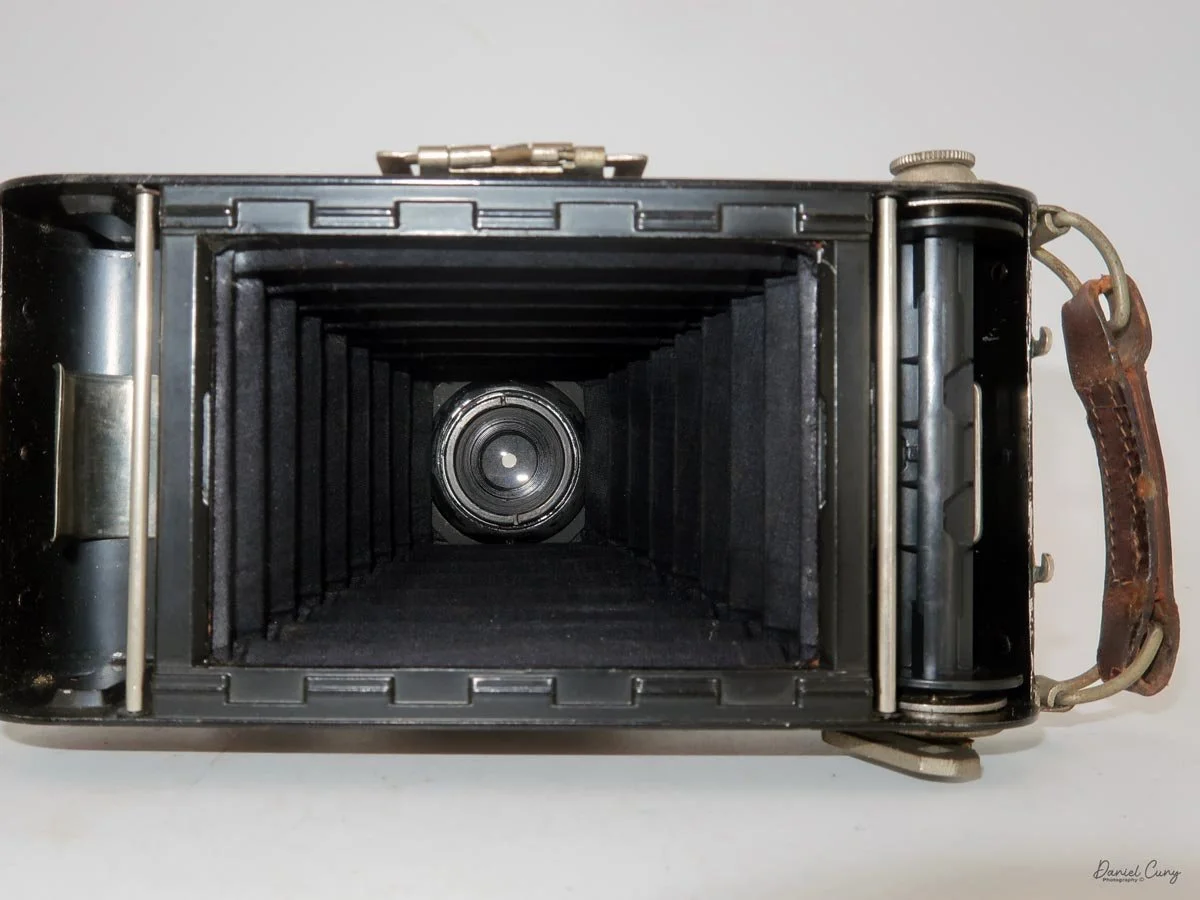
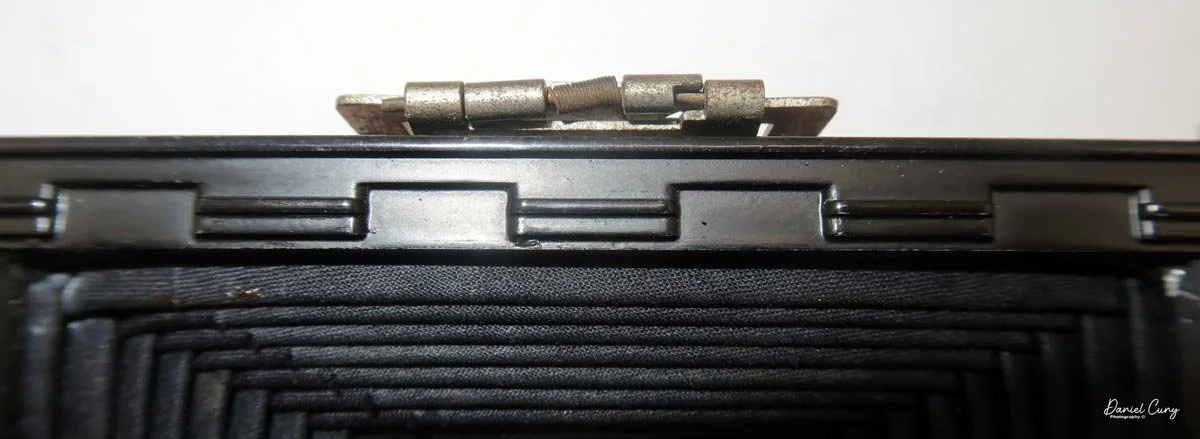
To open the front of the camera and extend the lens, on the side of the camera, close to the film winding knob, is a small button to press that opens the front, exposing the beautiful original brown bellows.

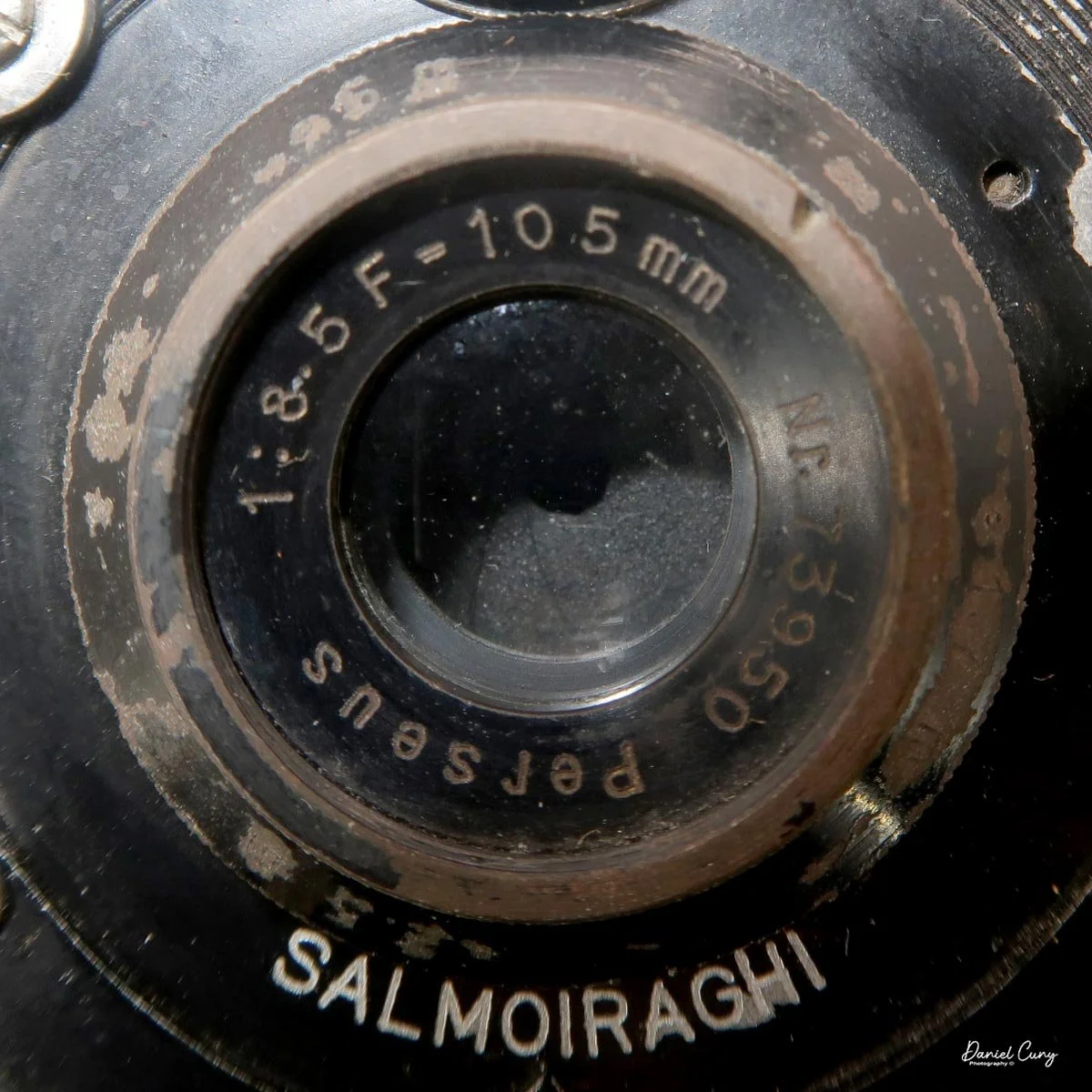
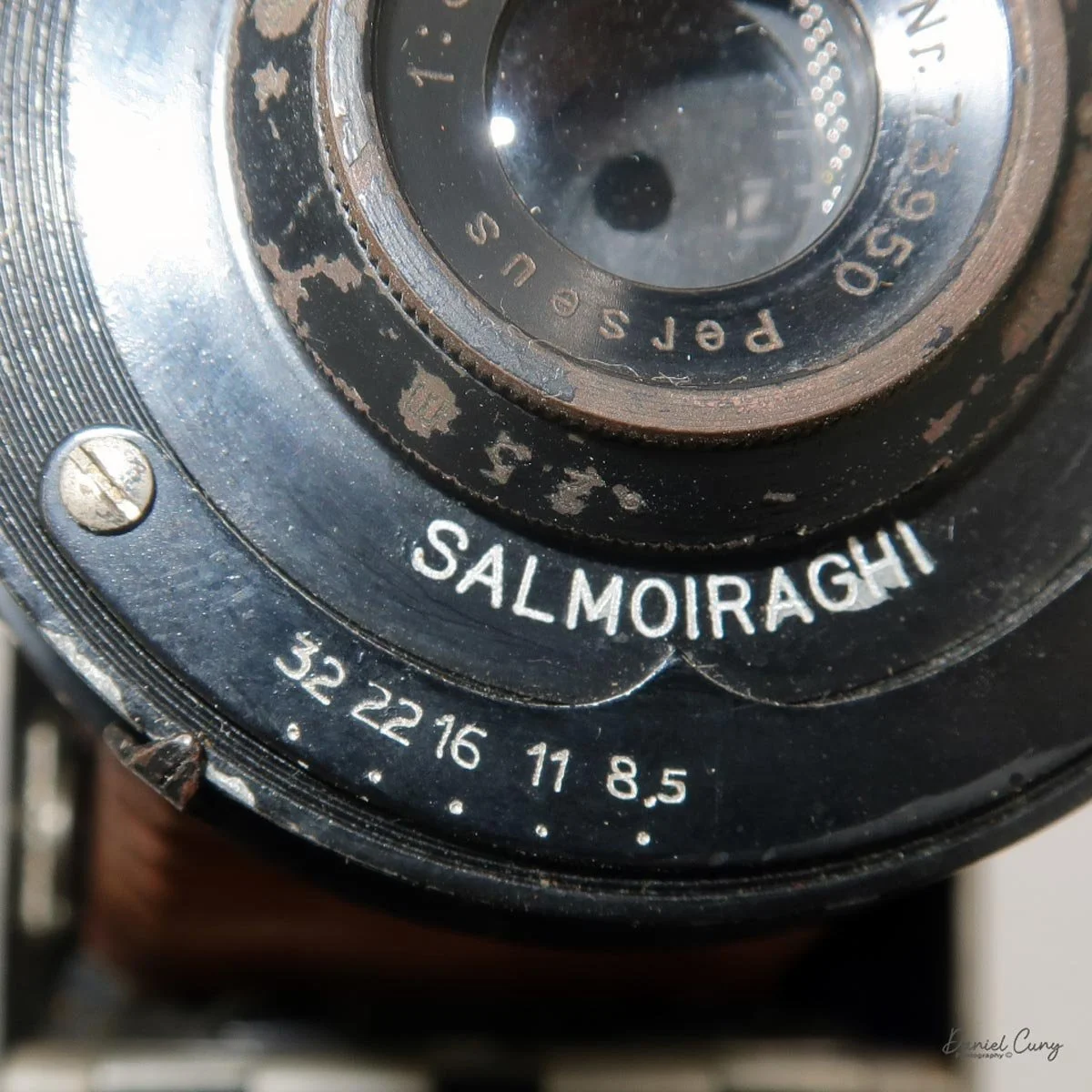
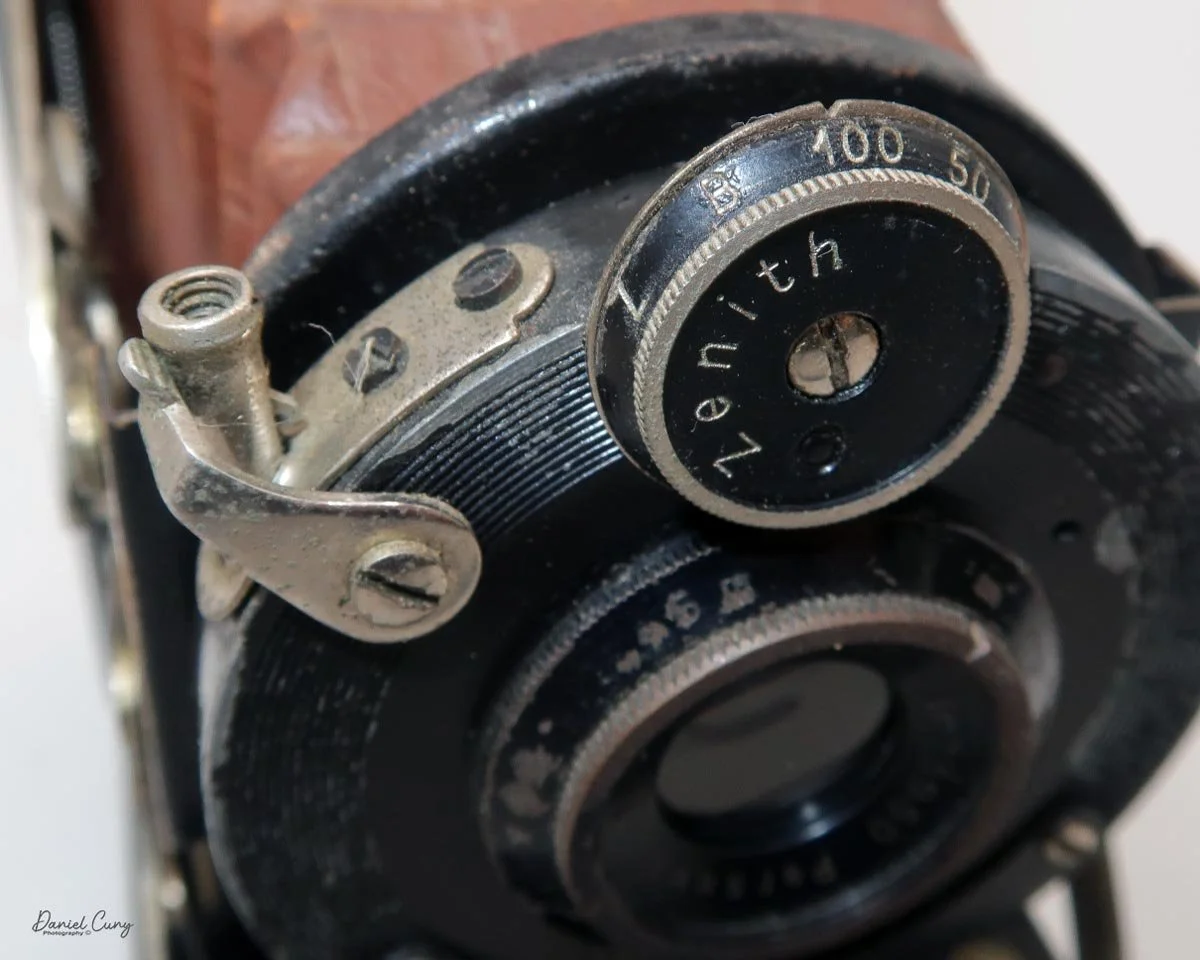
 Looking at the front of the camera, the Salmoiraghi Lexus has a Perseus 105mm F/8.5 lens with aperture settings from F/8.5 to F/32, which can be set by a small sliding bar under the lens. The camera also has a Zenith shutter with speeds of 1/25, 1/50, 1/100, along with "B" and "Z" for timed exposures. Just to the right of the shutter speed selector, as you're holding the camera, is the shutter release. The shutter release also has a cable release socket for timed exposures.

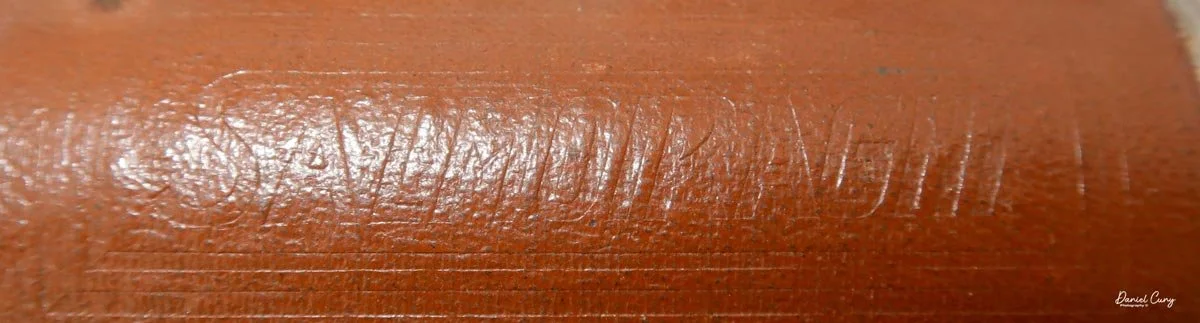
The name Salmoiraghi is also imprinted under the lens, embossed in the brown leather on the top front and rear.

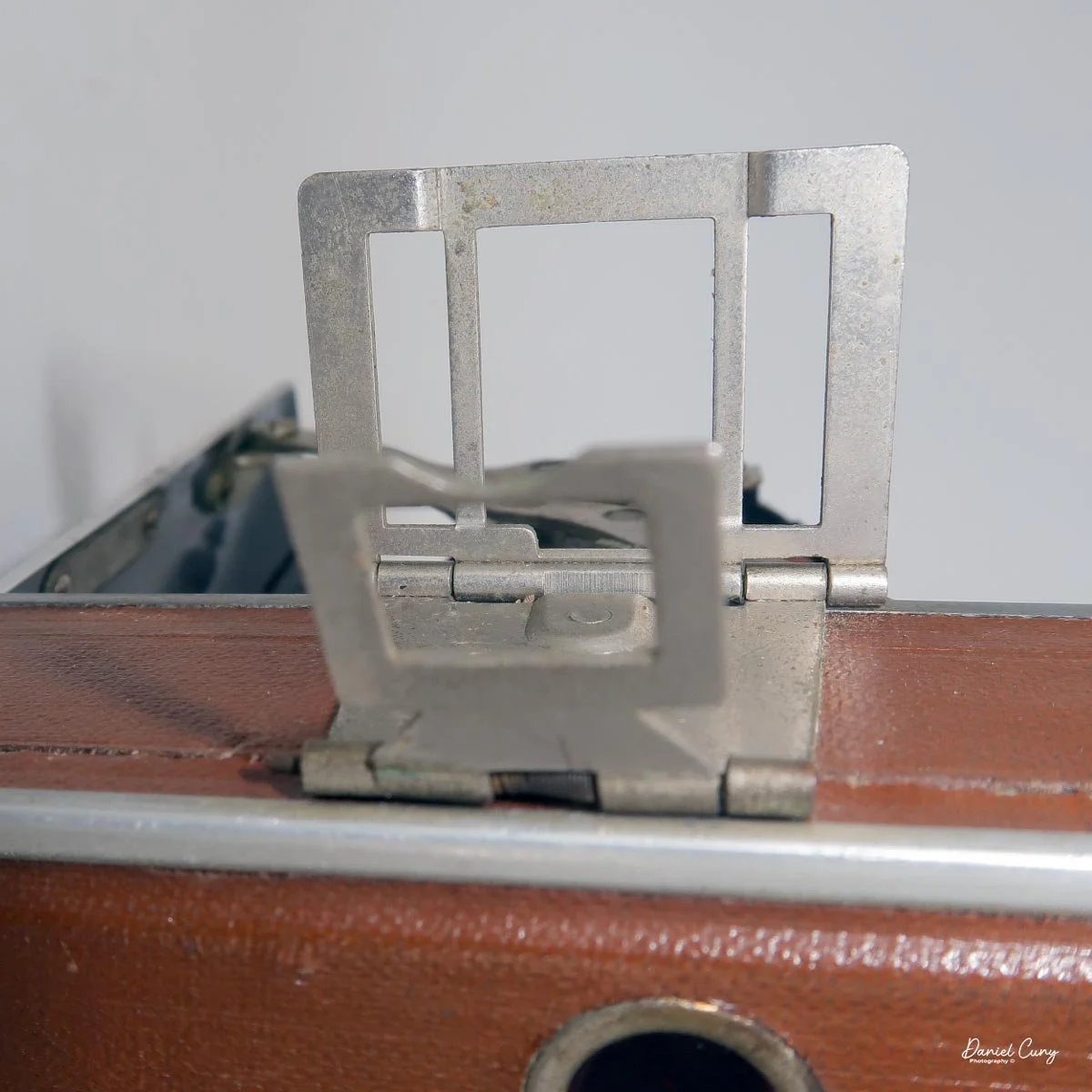
 There isn't a waist-level finder on the Salmoiraghi Lexus, only an eye-level finder which can be unfolded from the side of the camera. The sports style finder isn't very thick, and on my camera, which is common, the rear, or at times the front, doesn't stand up straight and seems to lean.

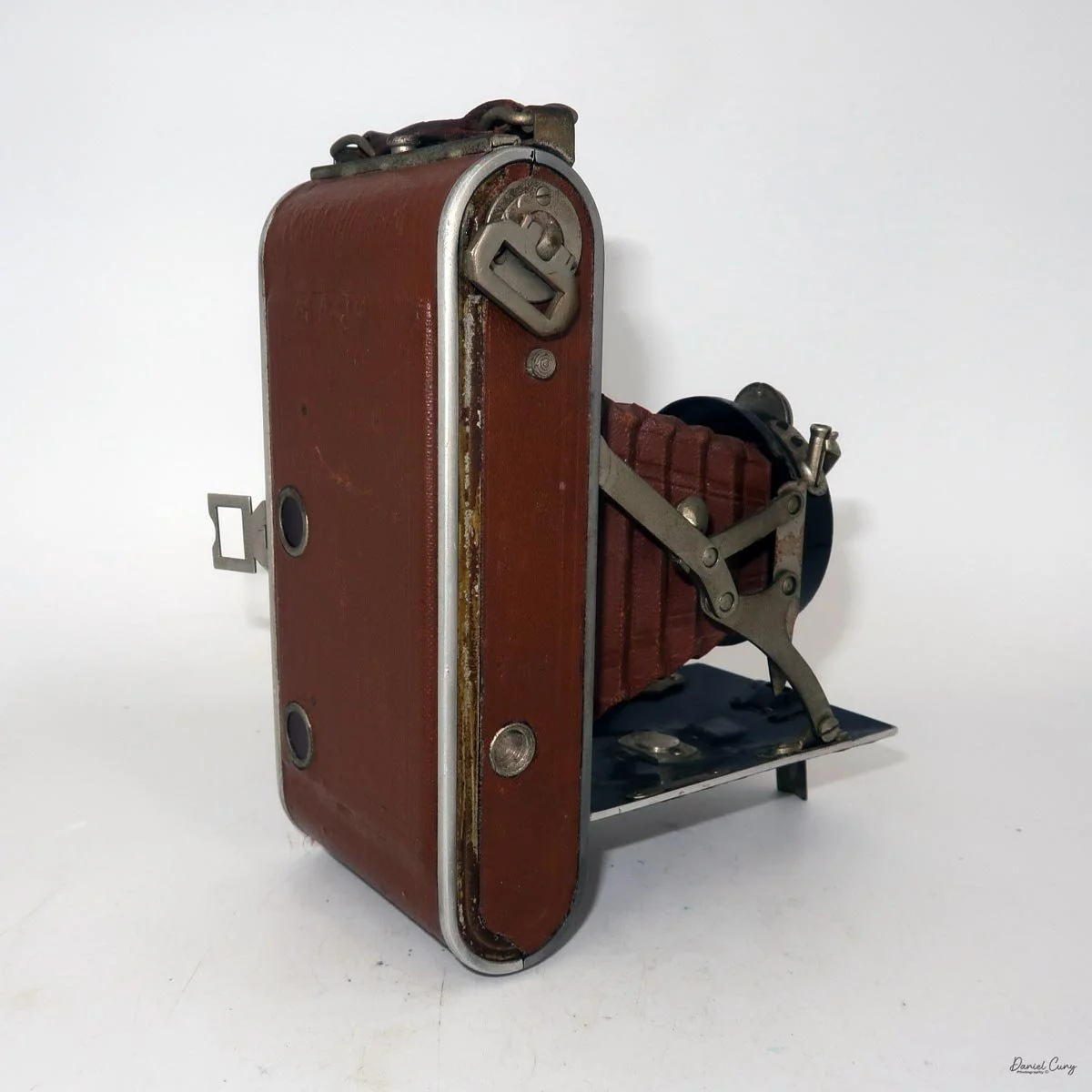
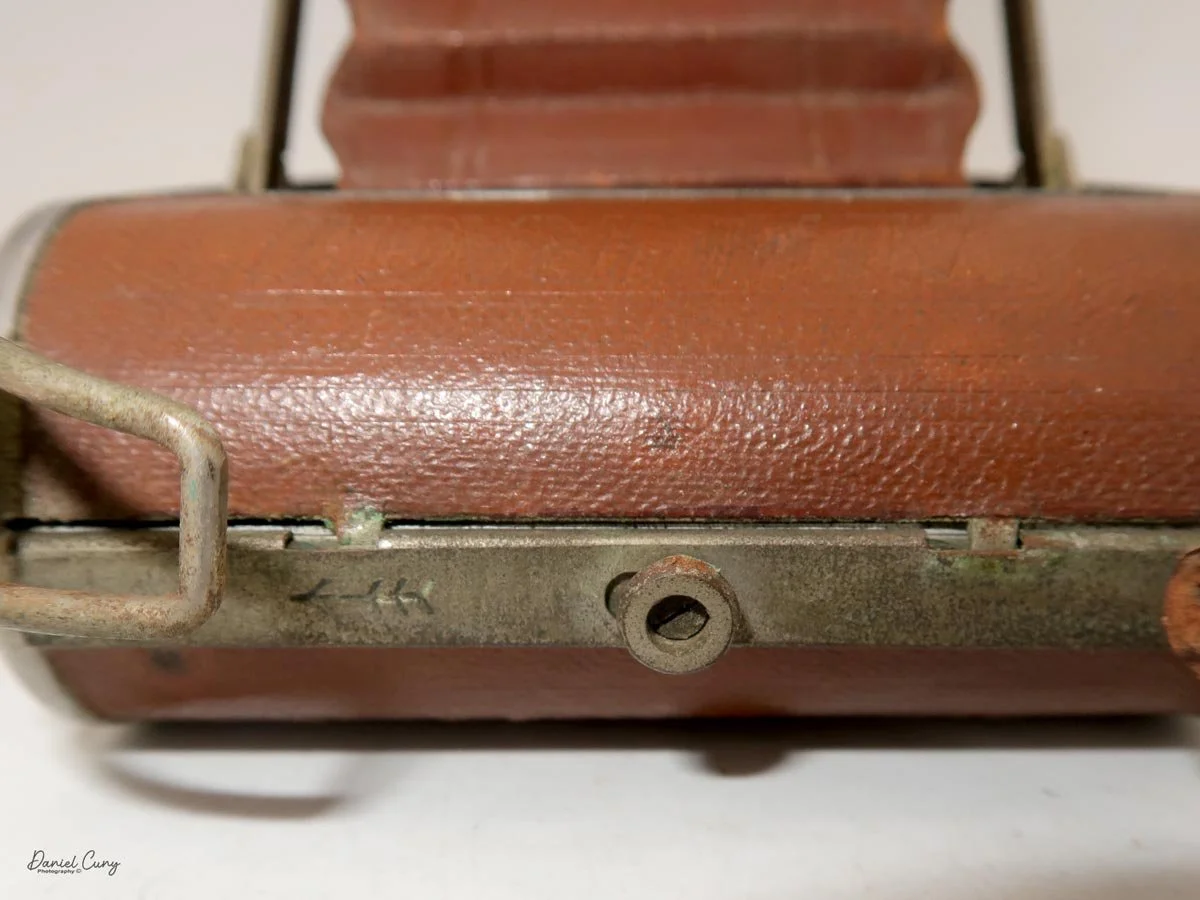
 To open the back of the camera to load film, under the strap is a lever you slide over to unlock the back. Swing the back open to reveal a very standard film-loading system. The winding lever doesn't pull out to load the empty spool, but on the other side is a silver button that pulls up to load the spool.

There's nothing on the other side to keep the new roll of film in place except a metal clip that wraps around the unexposed film and holds it in place.

 On the camera's back, two red windows generally indicate that the camera can handle multiple formats, as with the camera I wrote about last week, the Zeiss Ikon Super Ikonta 531/2. Generally, there would be an insert for the camera to do both 6x9cm and 6x4.5cm images on the 120 roll of film. 

 Looking at the pattern for the film guides on the back of the camera, there may have been an insert for the camera. There are indents evenly spaced across the back, which would indicate there may have been one, but my camera doesn't have one, and I can't find any online references to one.

Once the film is loaded in the camera, close the back of the camera, making sure it's latched, and wind the film to the first frame.

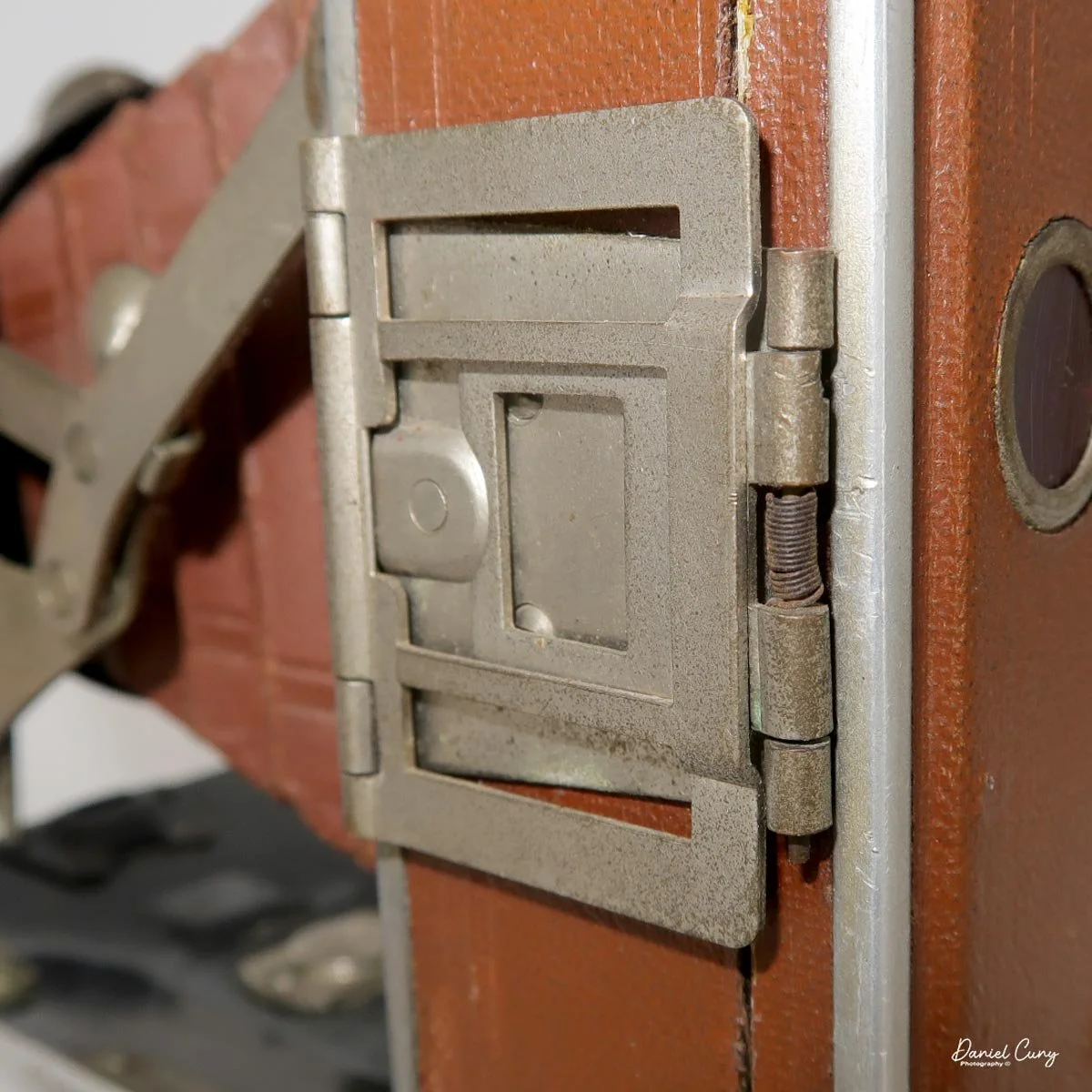
 To close the front of the camera, there are two locking stops on the camera's struts, on either side, that need to be pressed in. By doing so, the front of the camera can collapse the lens and bellows back into the camera body.

Front view of Salmoiraghi Lexus camera when closed.

Results:

Since the shutter on the Salmoiraghi Lexus camera is inoperable, I wasn’t able to shoot a roll of film through it.

I may try at some point to disassemble the shutter and get it back in working condition. If/when that happens, I’ll be sure to update the post with images.

Conclusion:

 While I knew little about this camera when I purchased it, and really bought it for its wonderful color and matching bellows, I'm elated that I didn't sell it at the NW Camera show last weekend because of its rarity.

 It's not really well-made and doesn't offer many features, but the scarcity of the camera made in Italy means this will be in my collection for the time being. I'm sure, as I get older and whittle down my collection, it'll pass to another collector, and I hope they understand its rarity in the world of camera collecting.

 If you have questions or comments, please feel free to reach out to me; I'm always interested in discussing what you have in your collection, as well as the cameras I've reviewed.

 Thank you for taking some time to learn more about this Italian camera. To me, what I enjoy about this camera is the wonderful brown leather covering and matching brown bellows.

 Here are my other Camera Reviews.

 Cuny's Cameras and Photos is my online eBay store where I sell some of the cameras I've reviewed, along with many other camera oddities I've stumbled upon in the past few years.

 Until next week, please be safe.