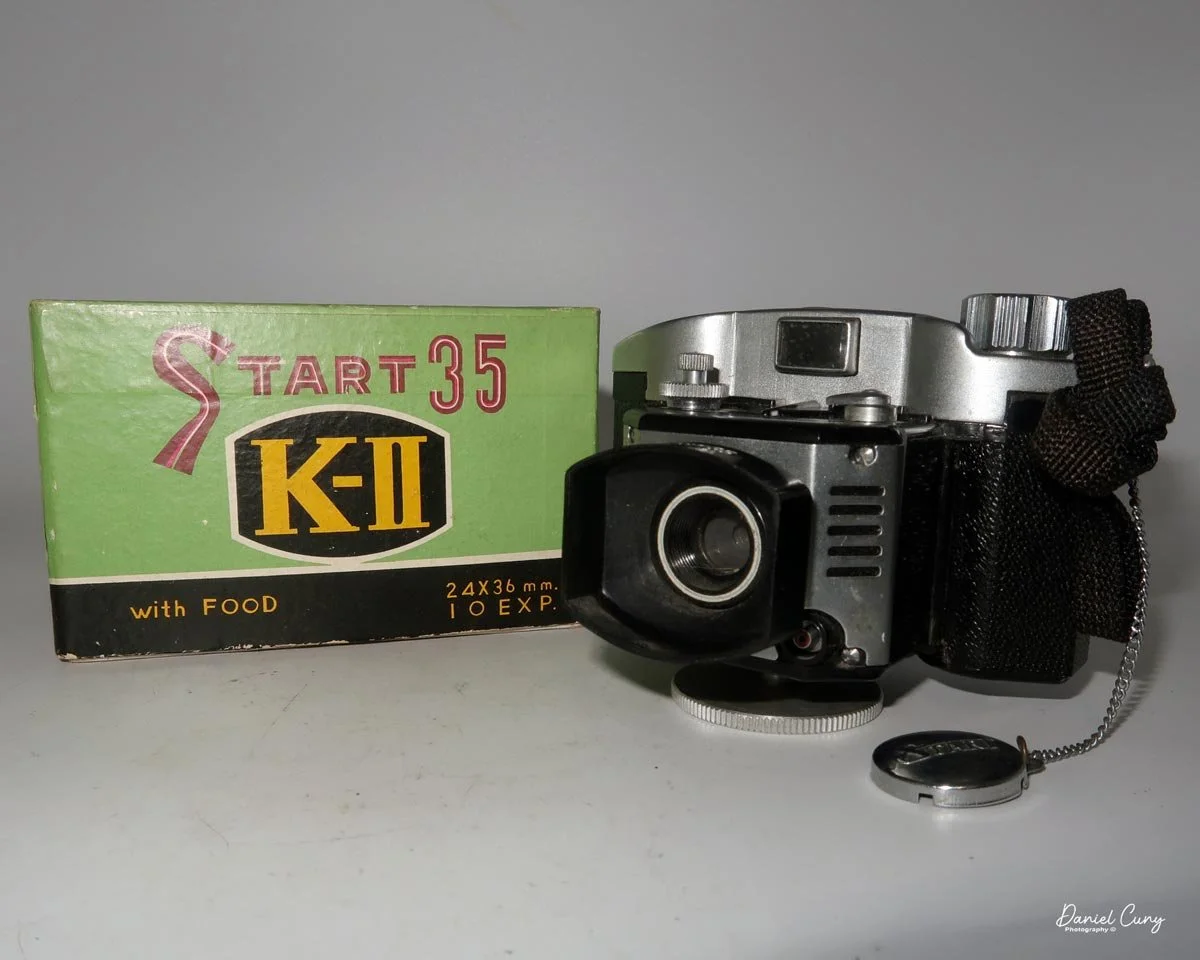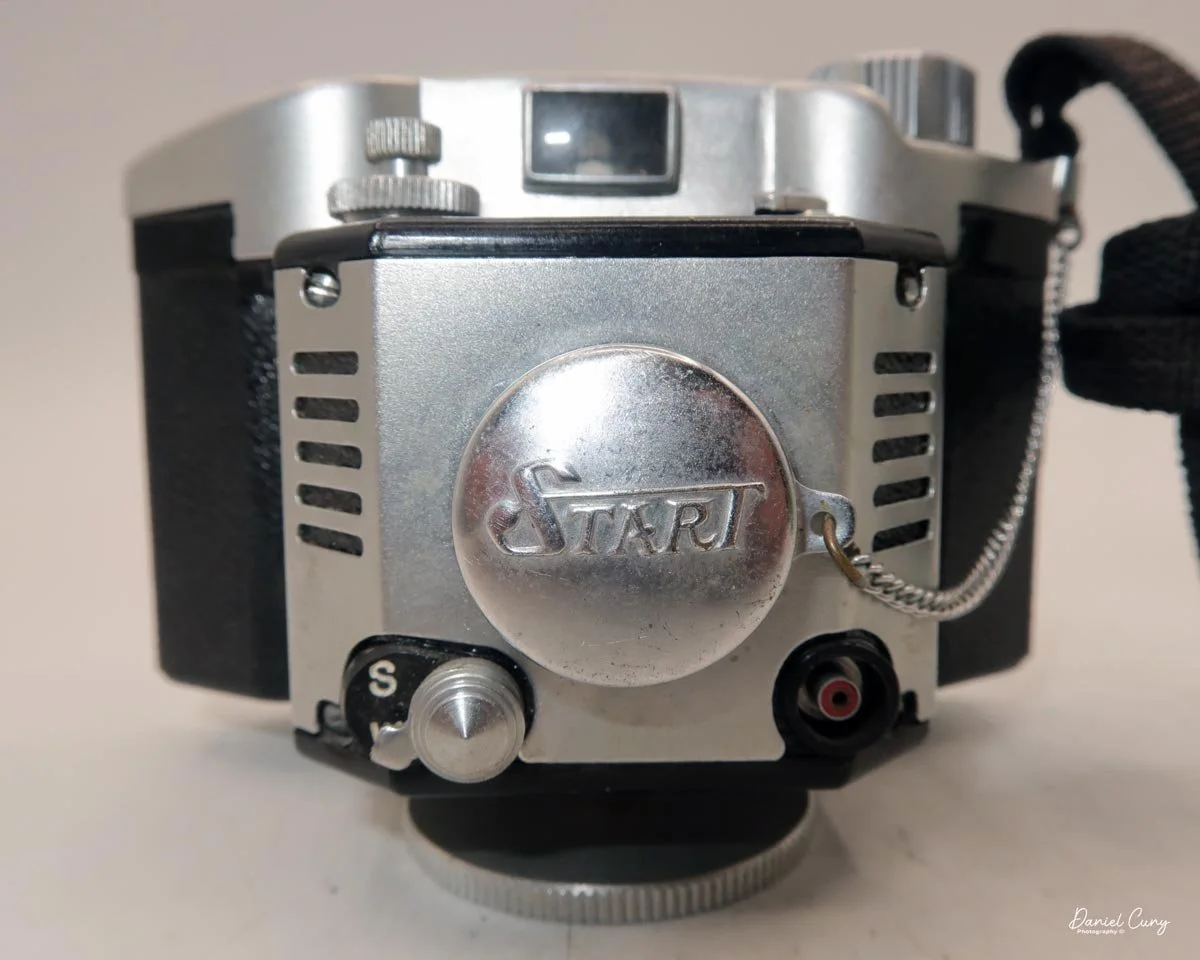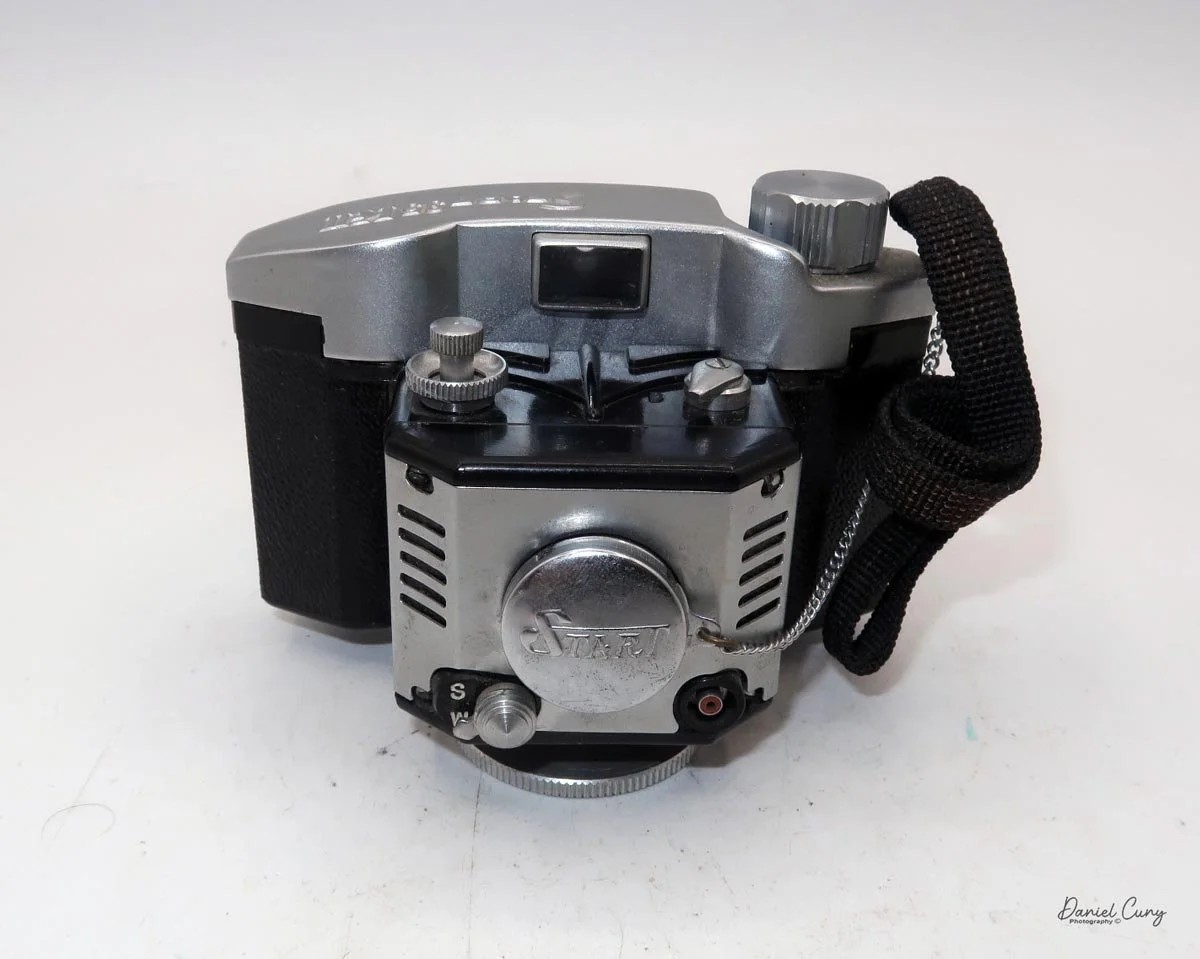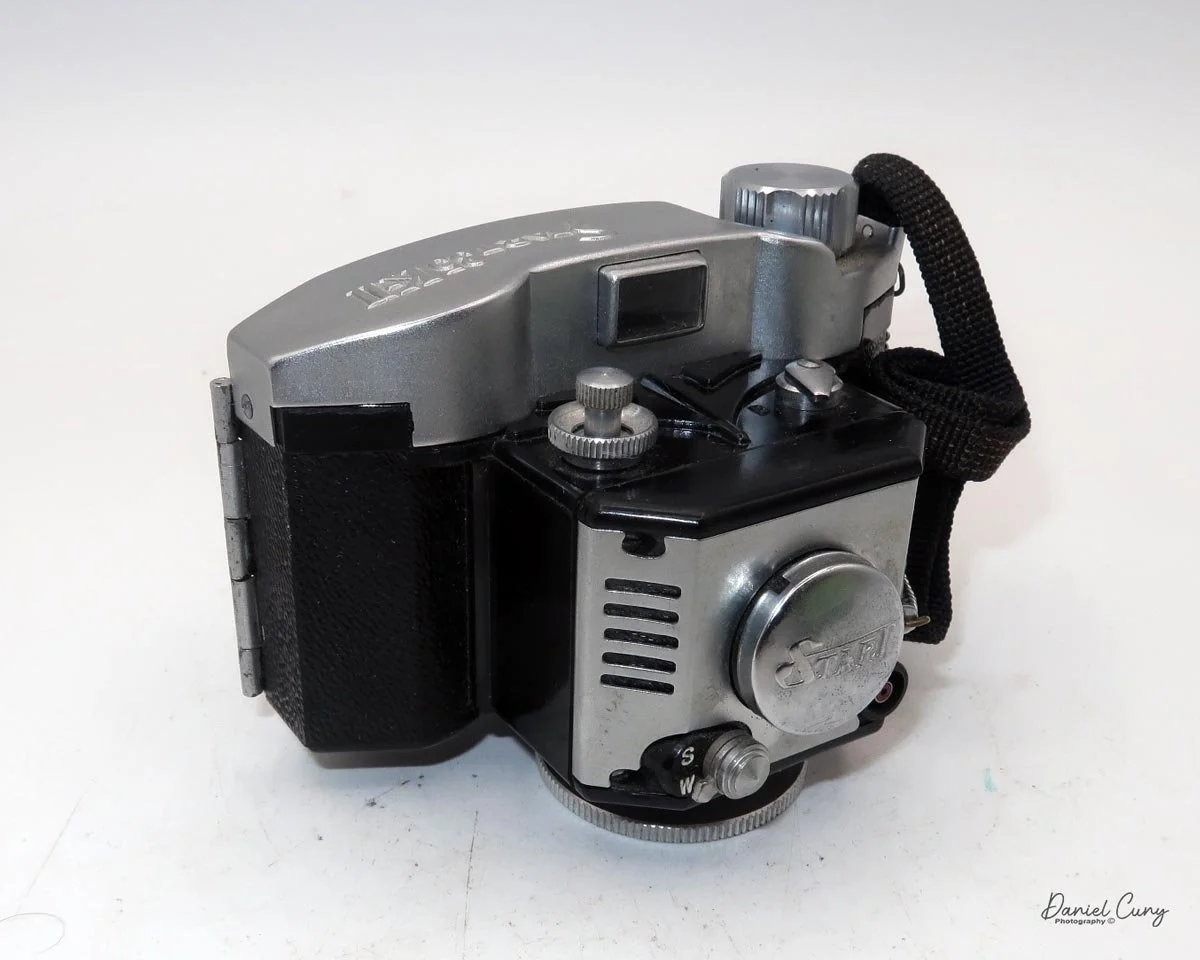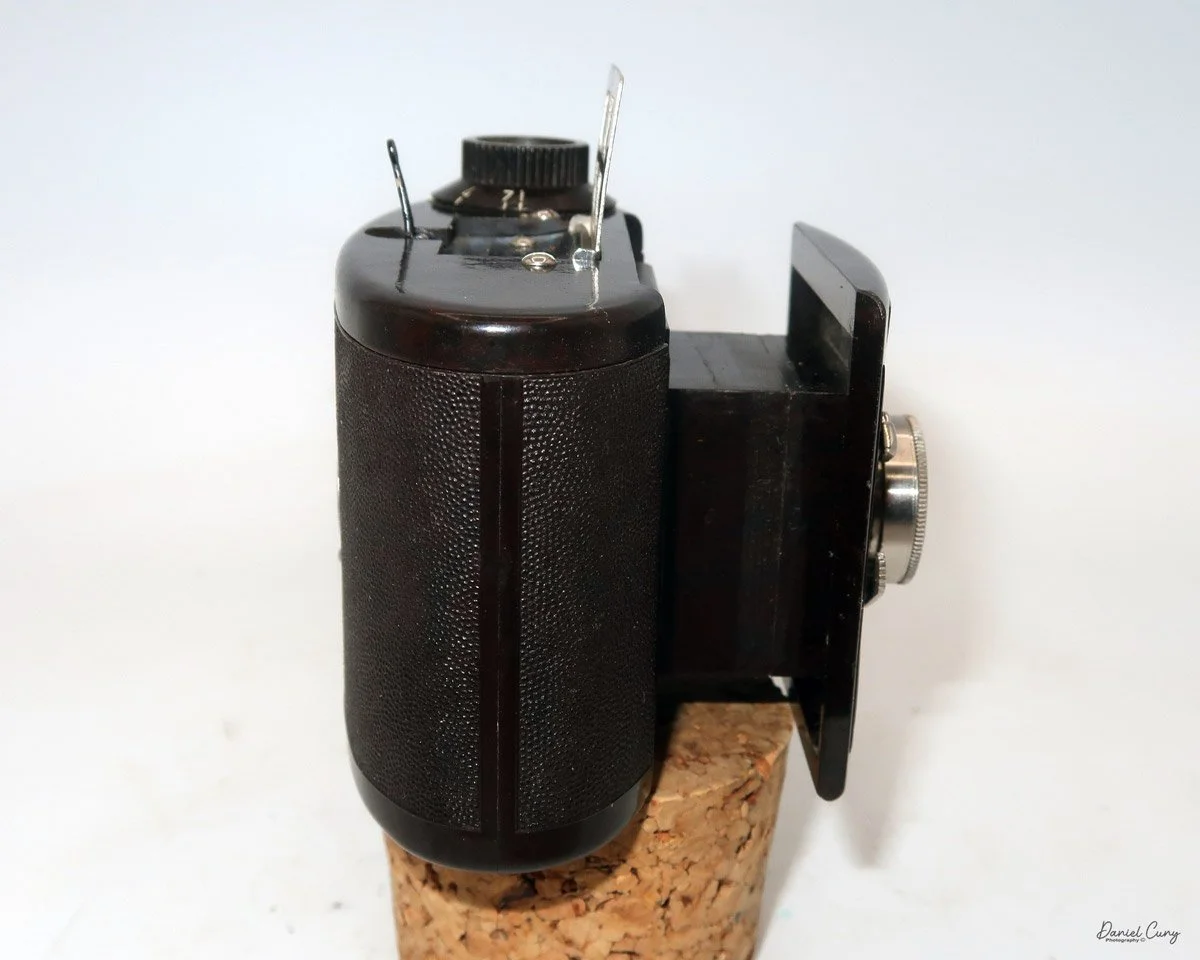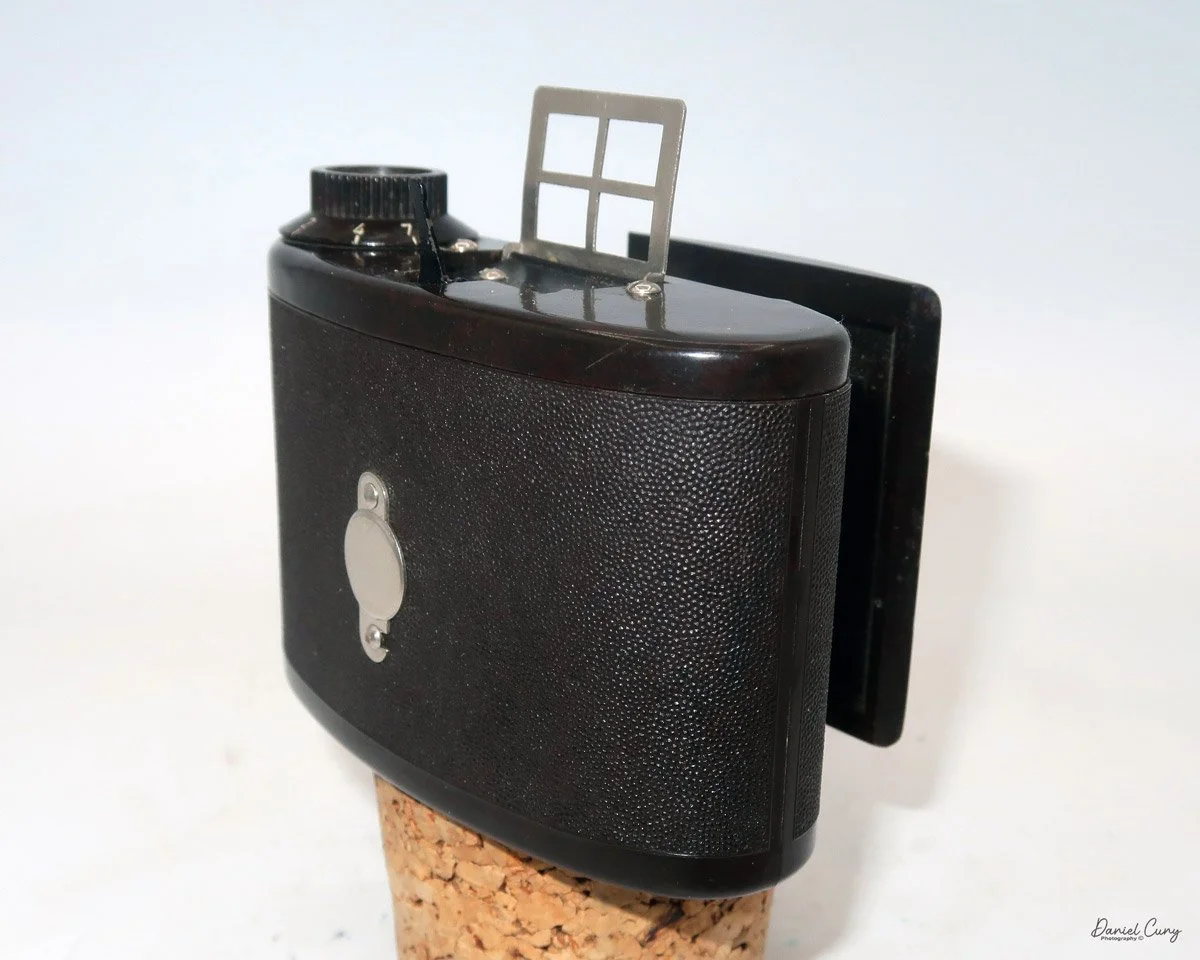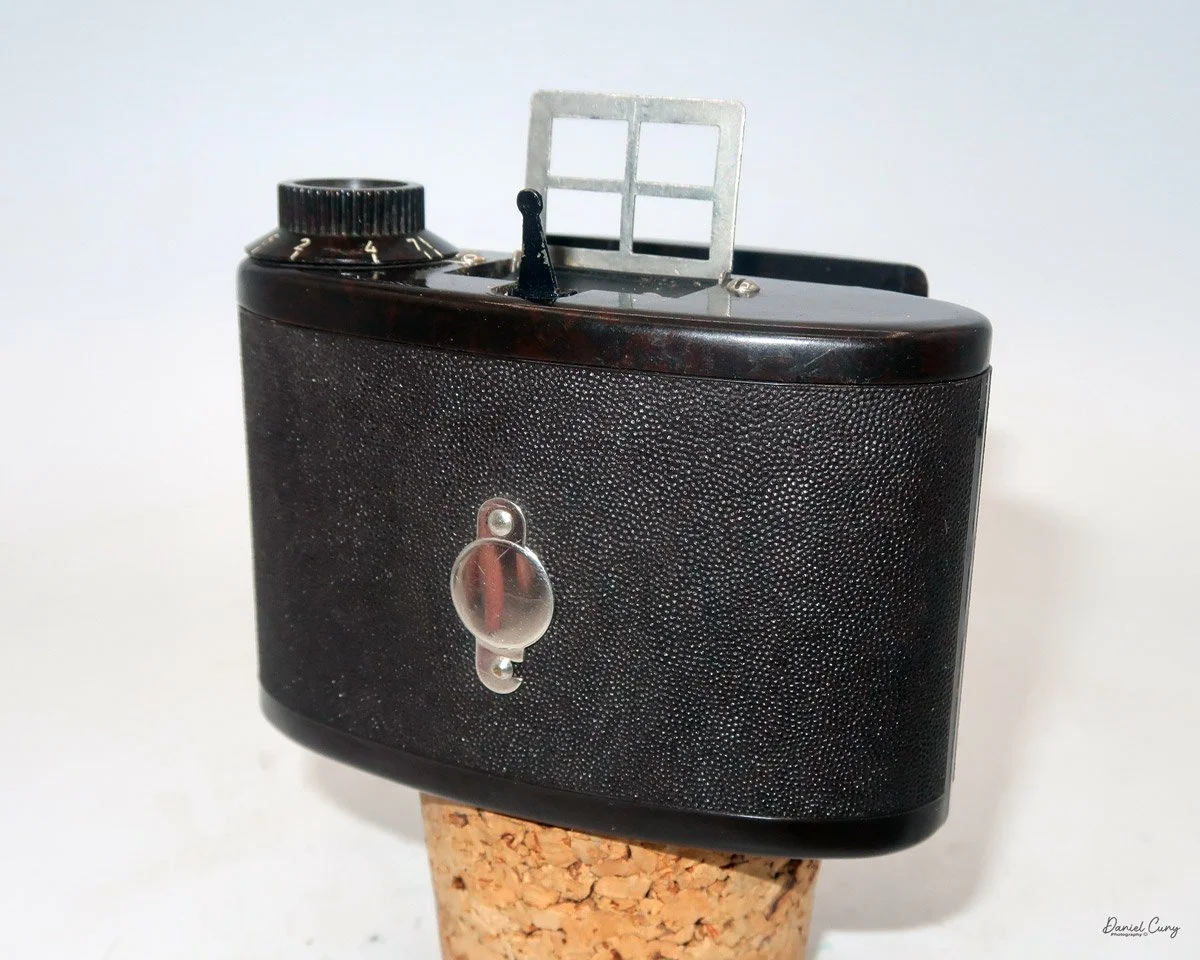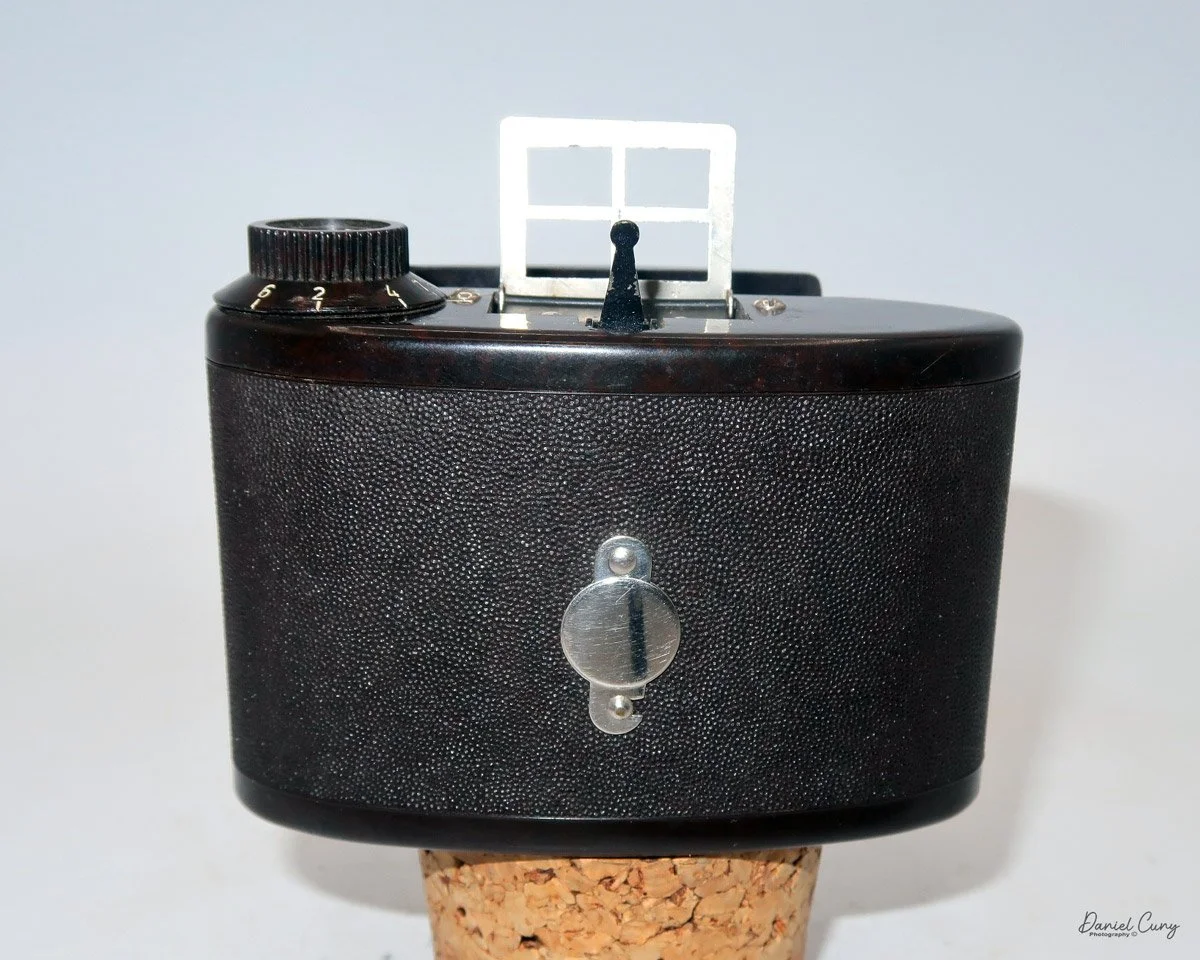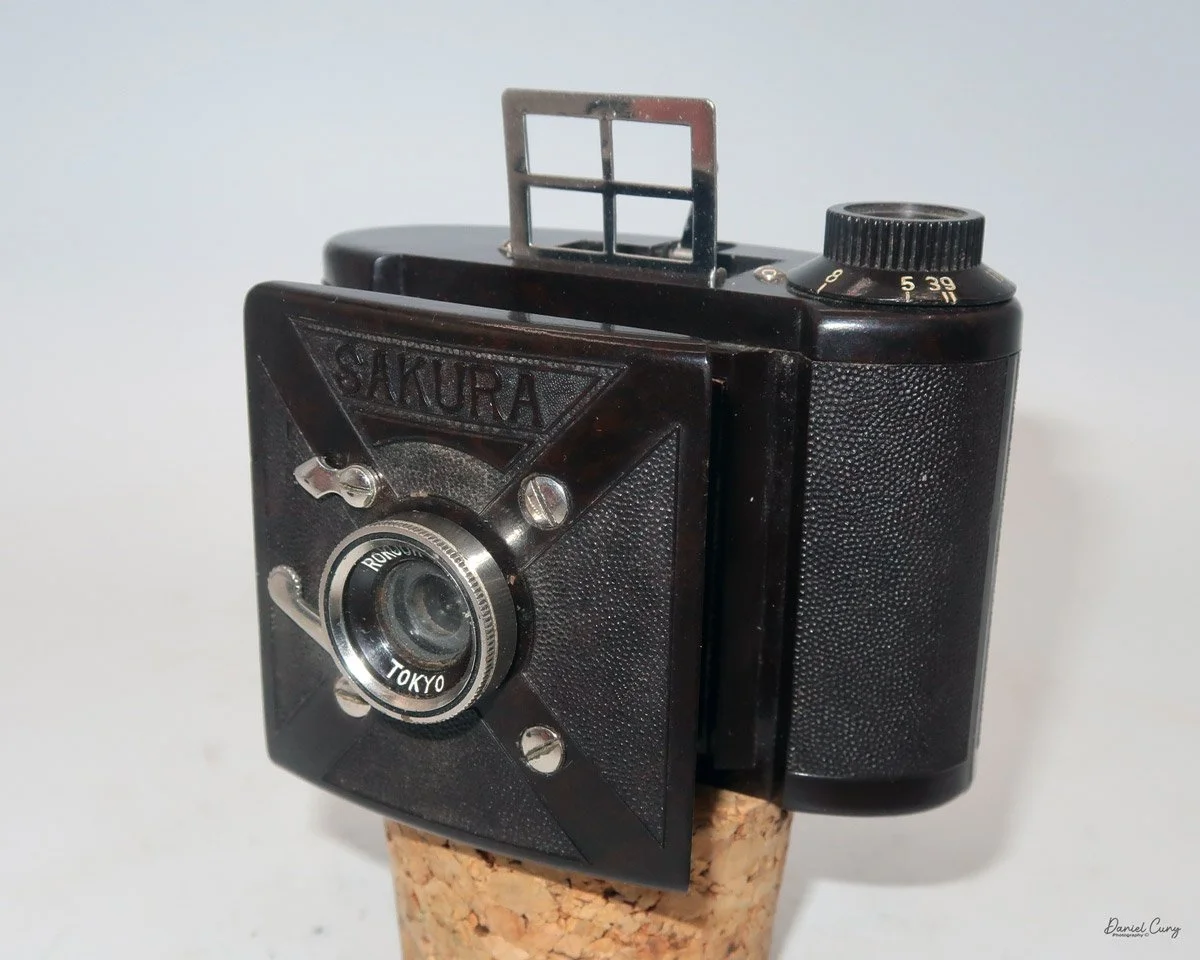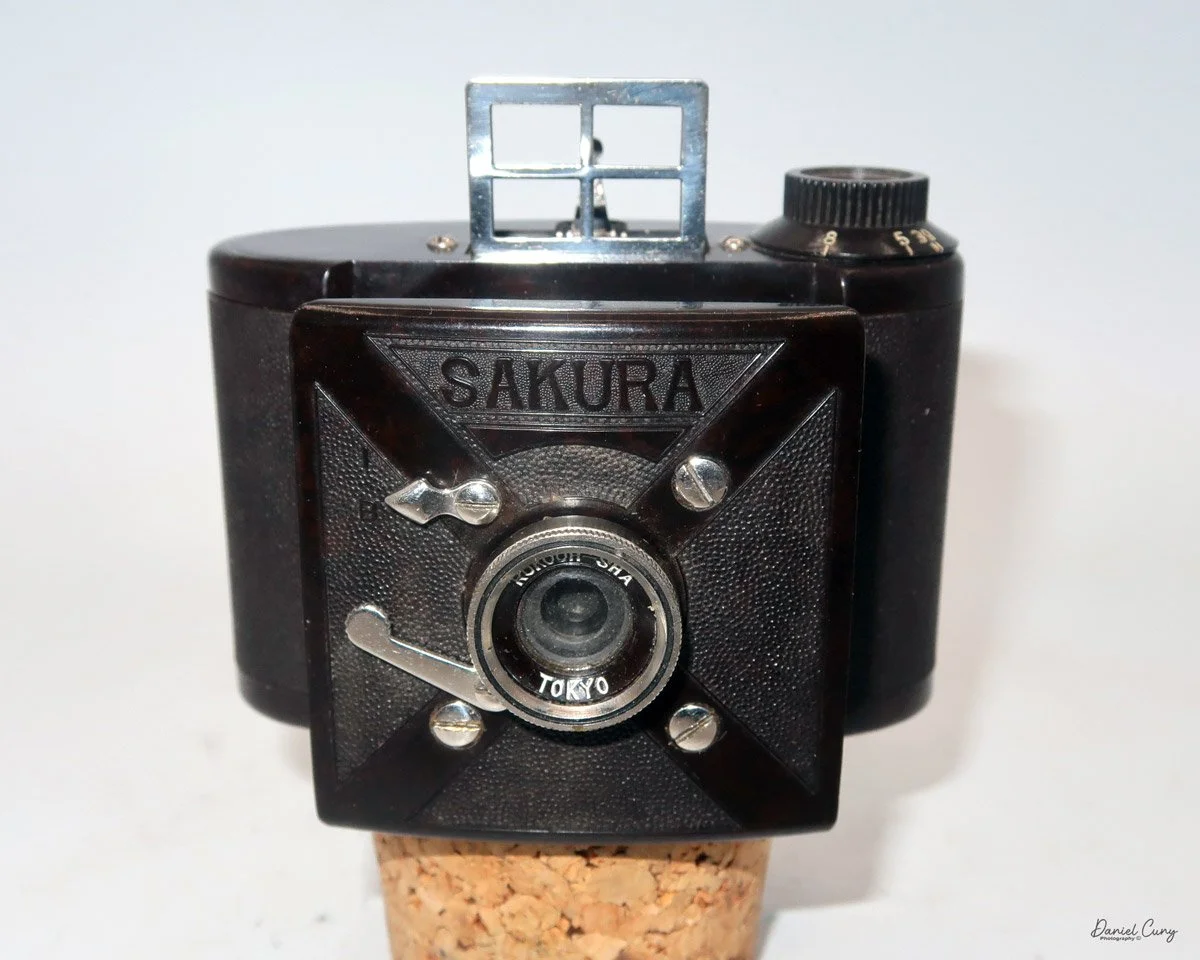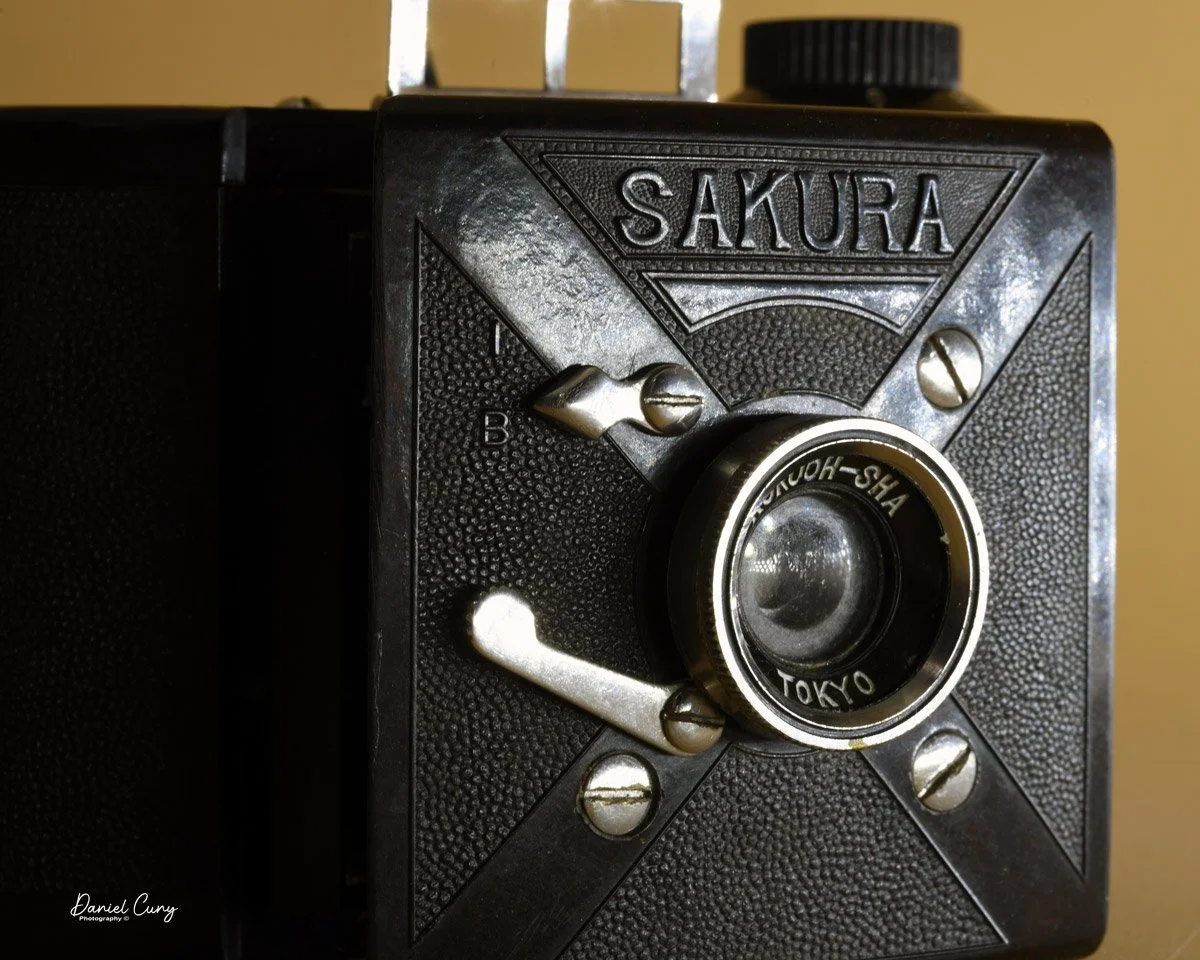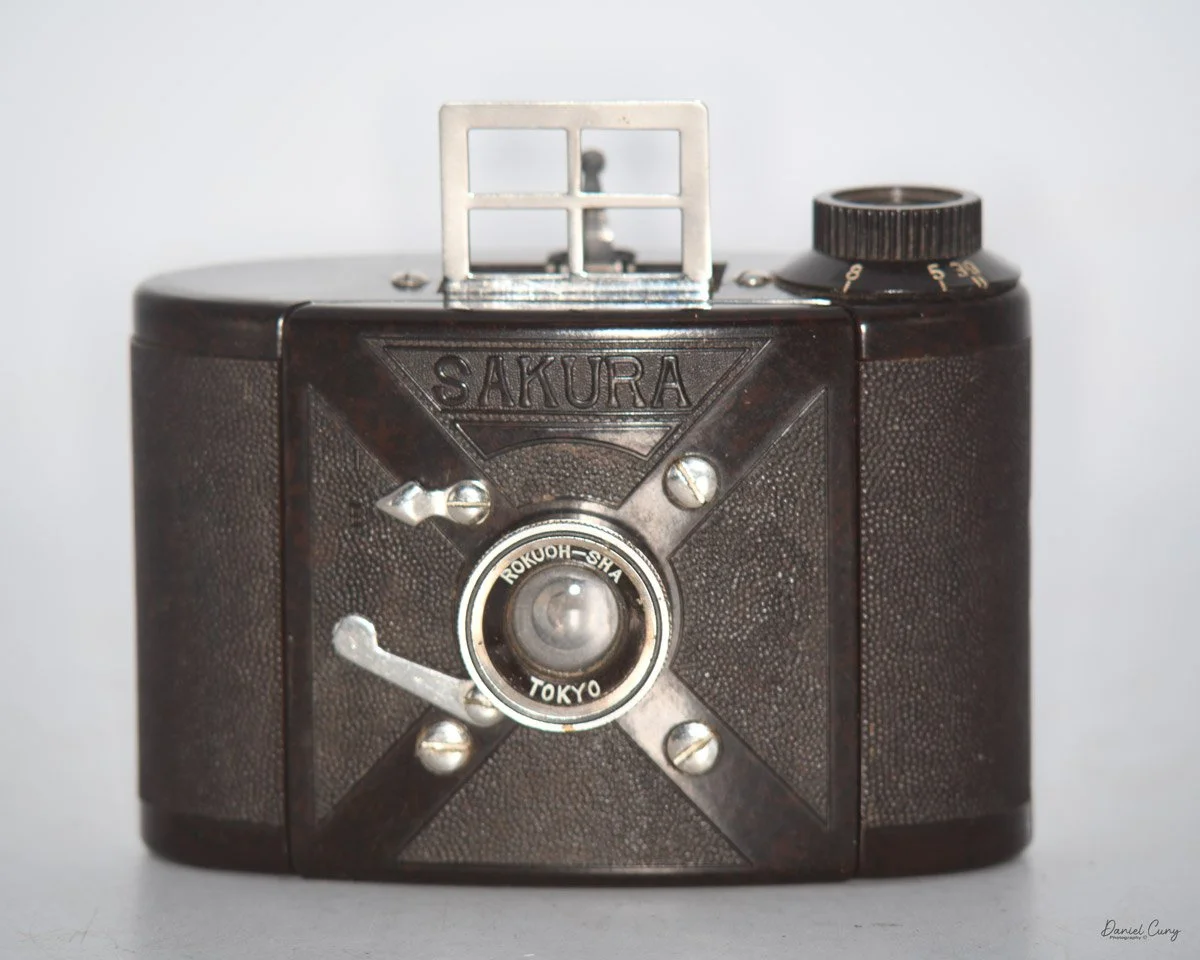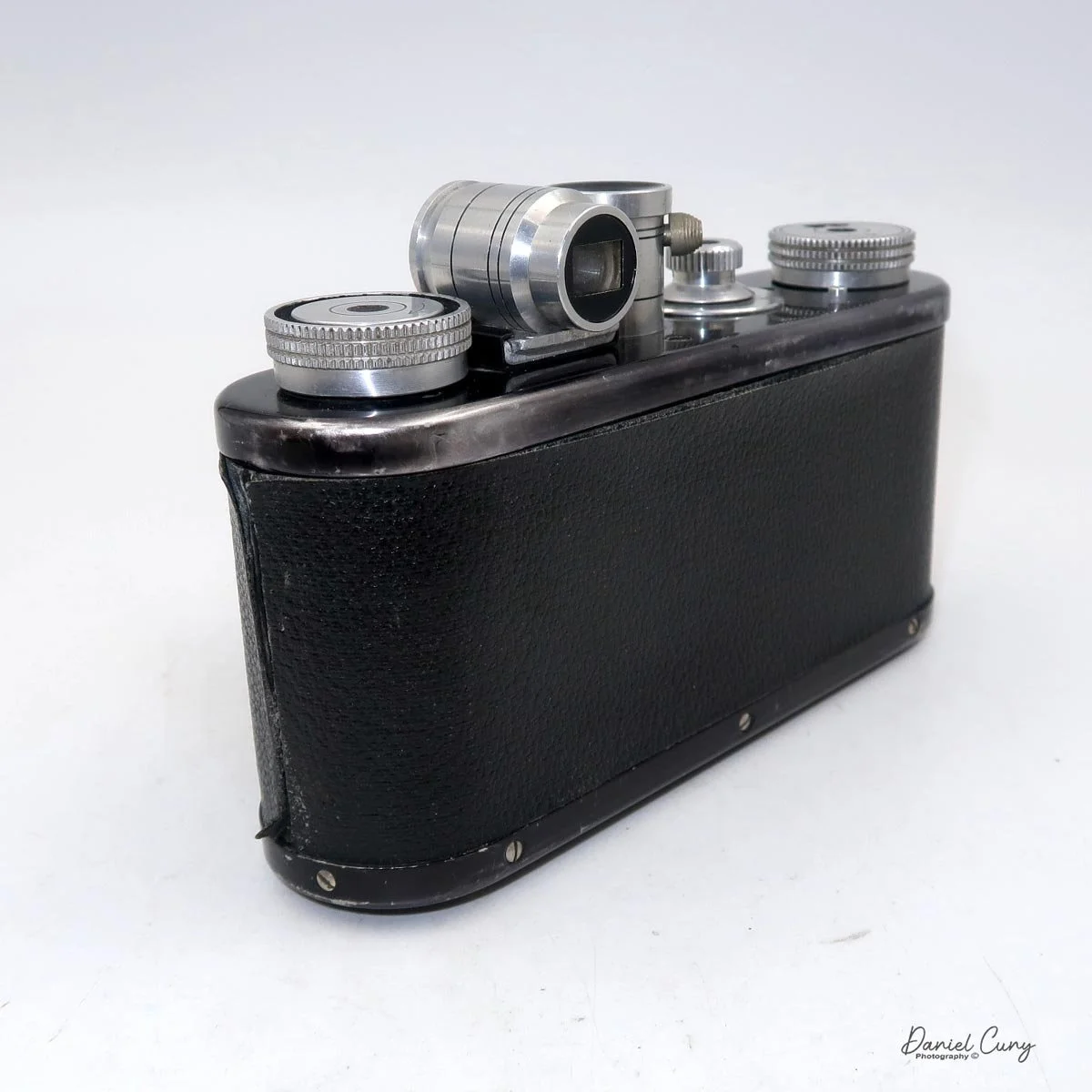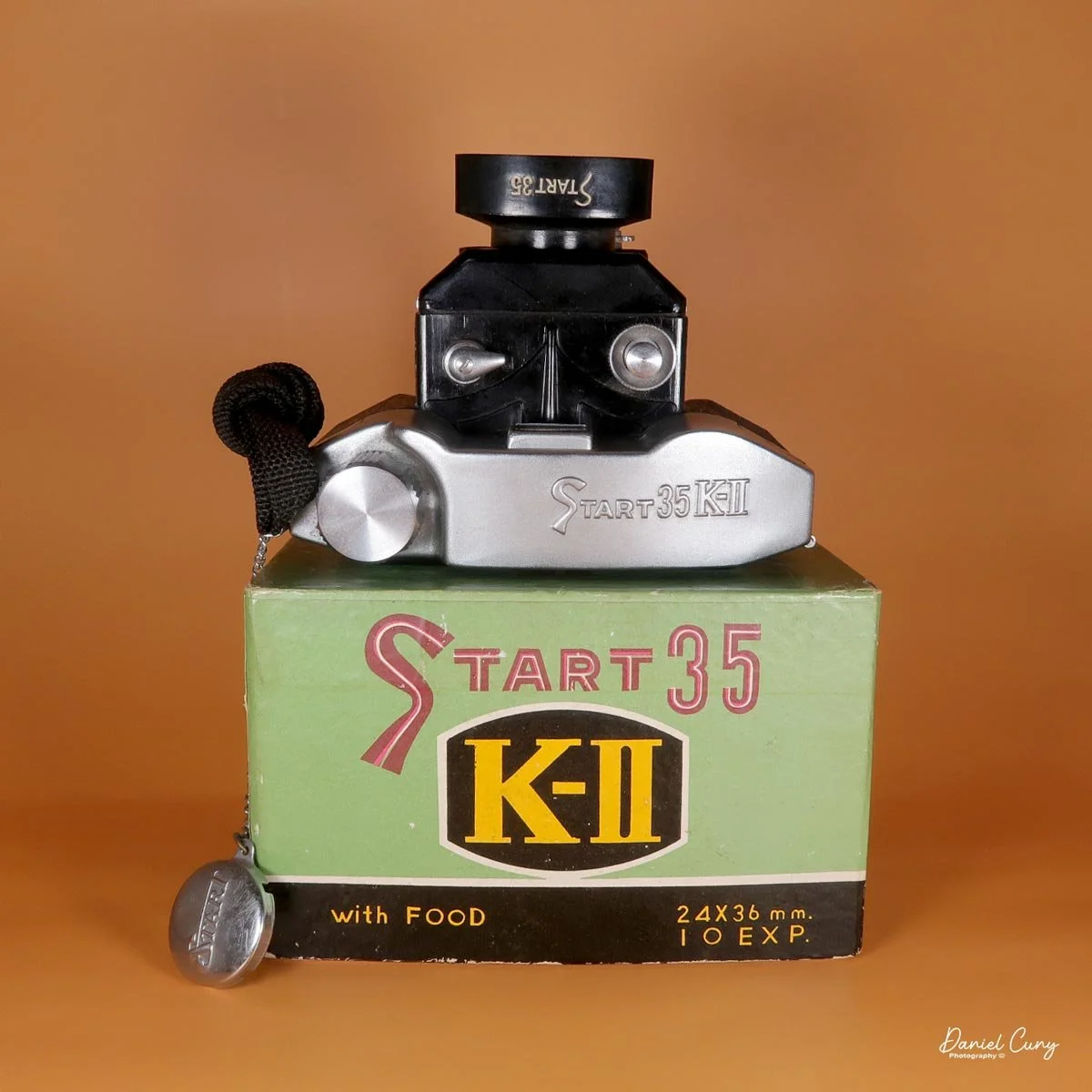
Coronet Cameo

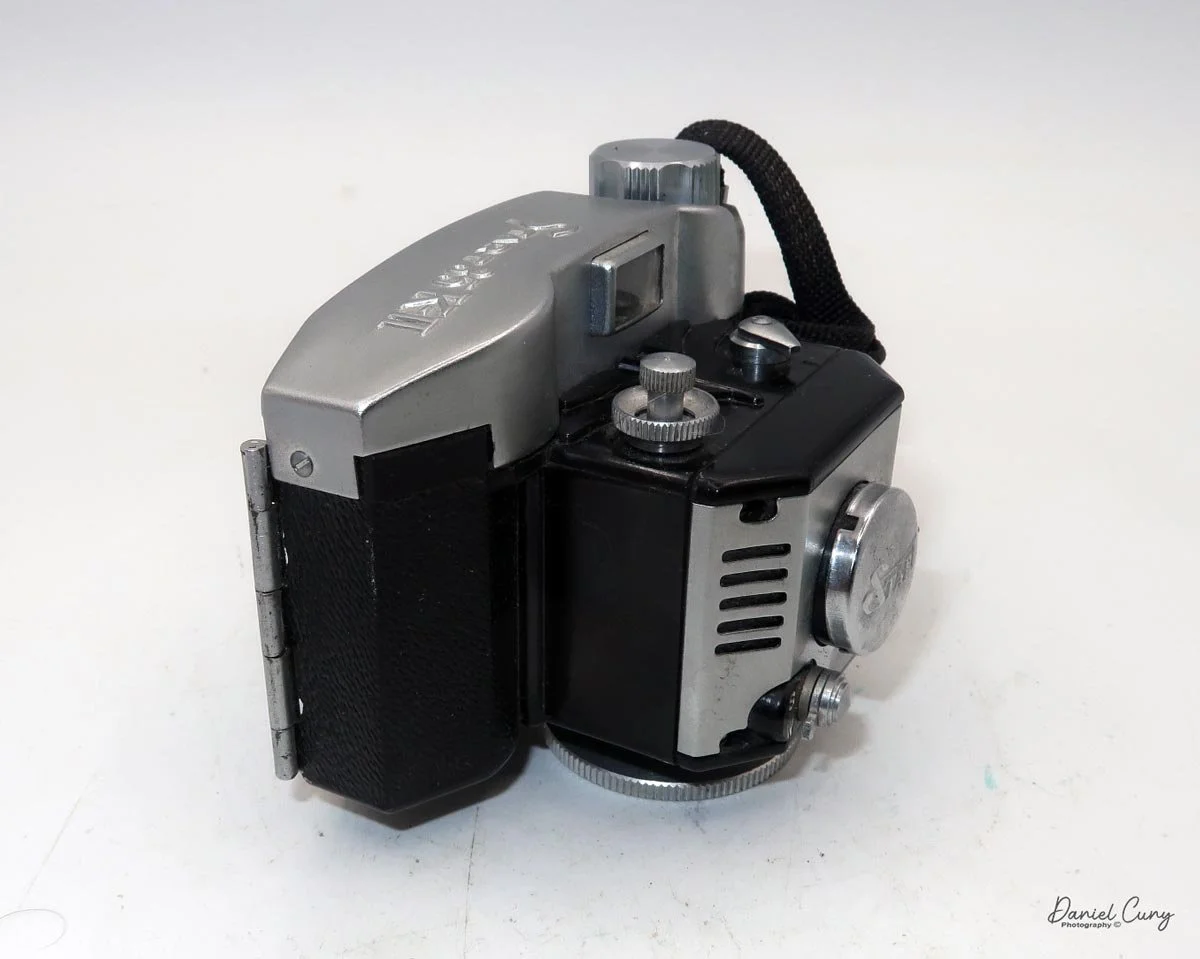
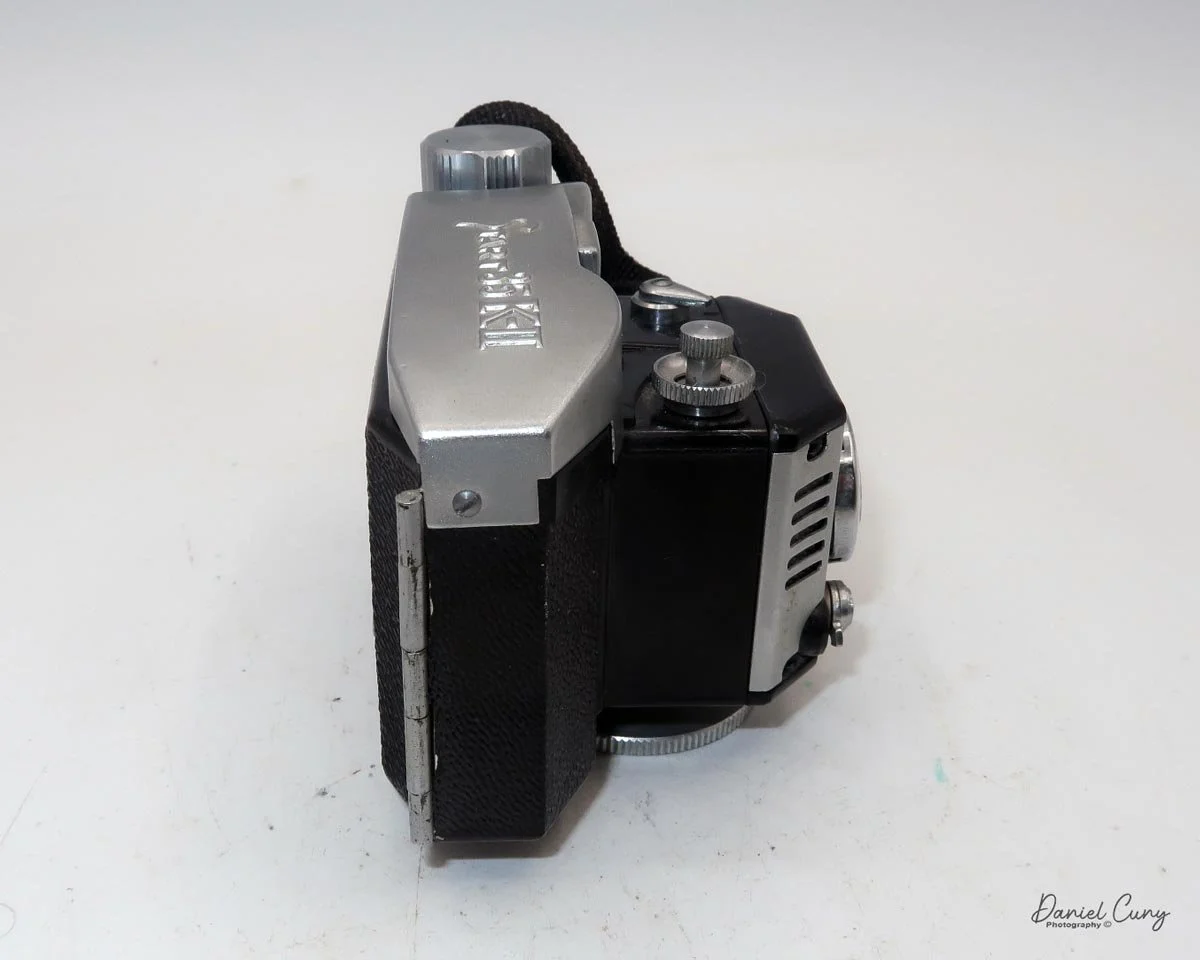
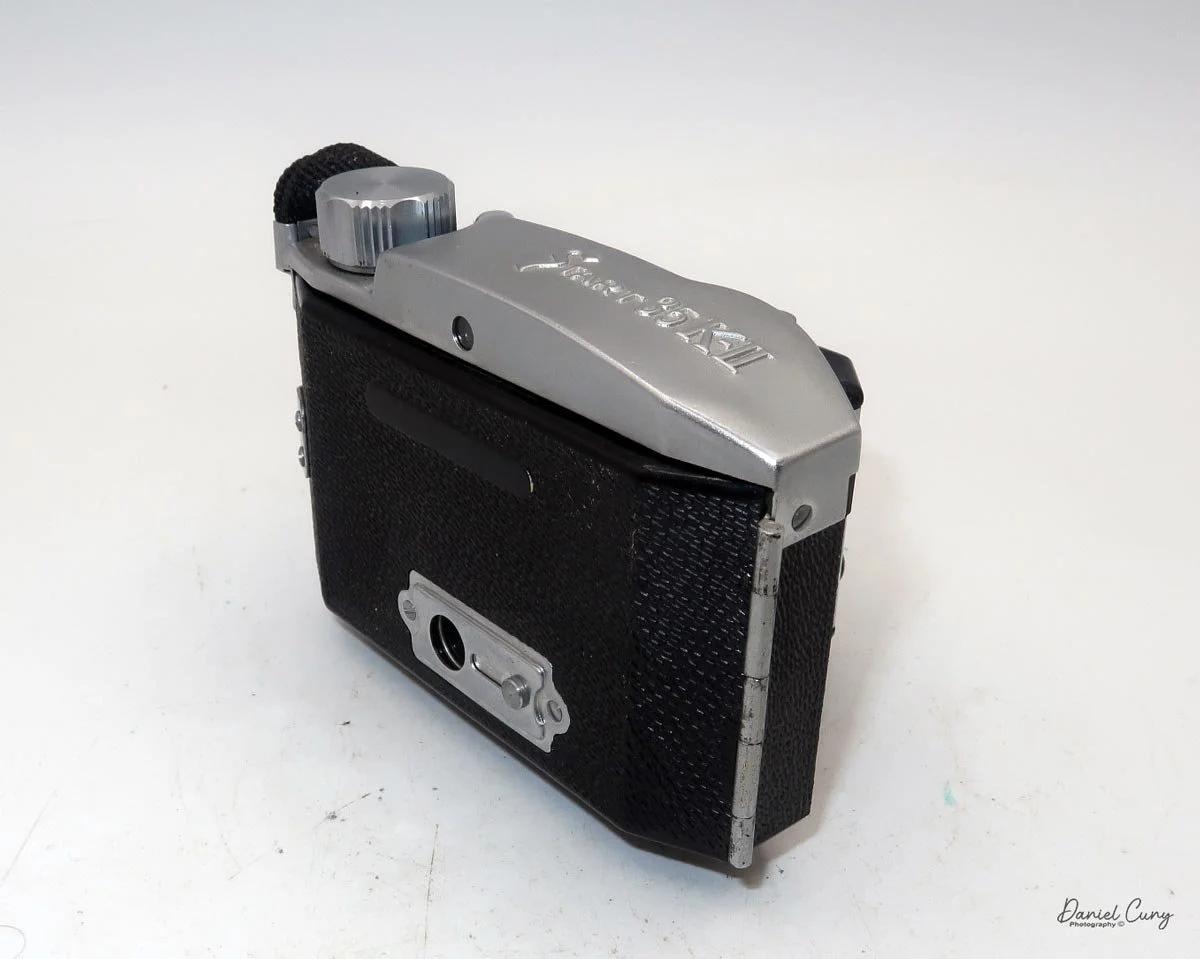
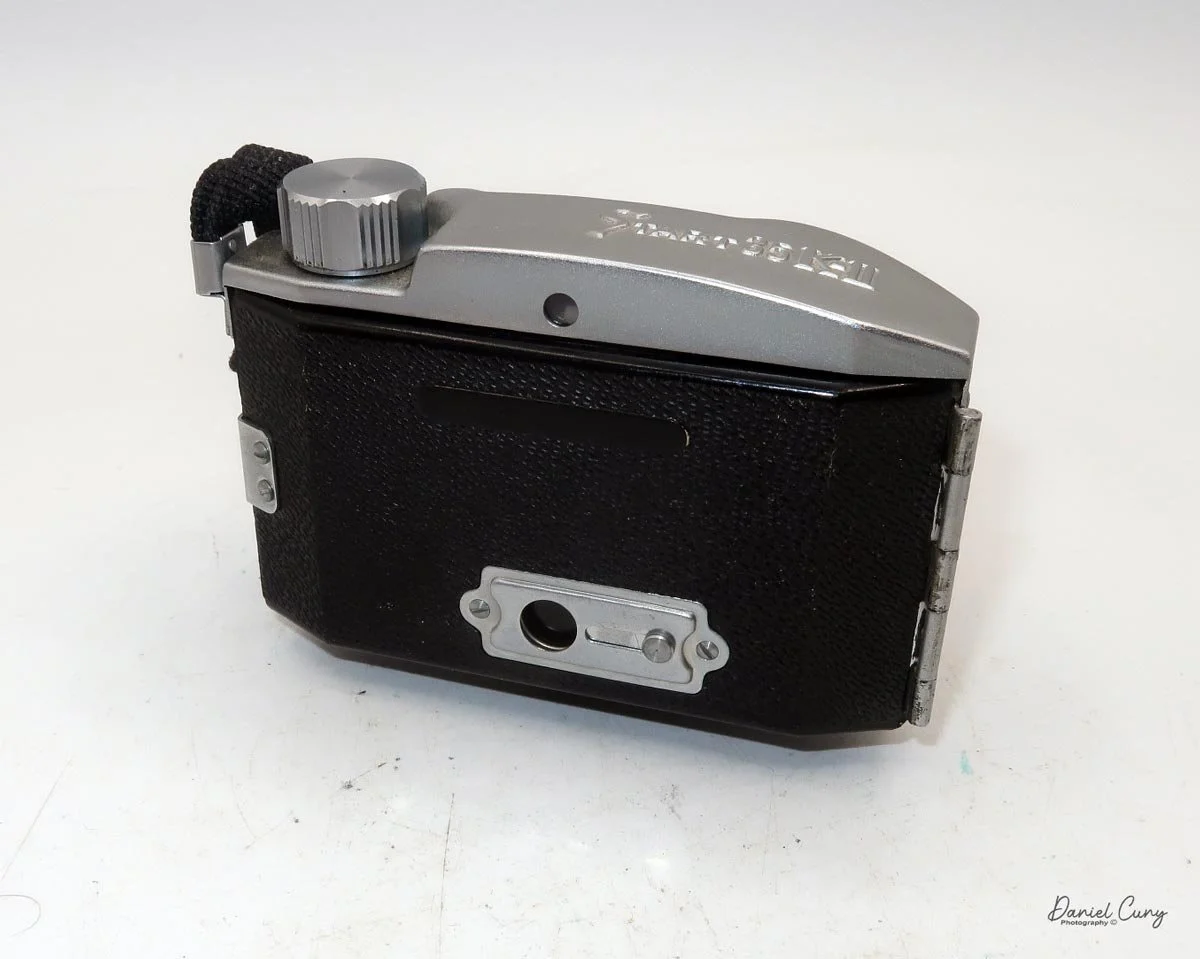
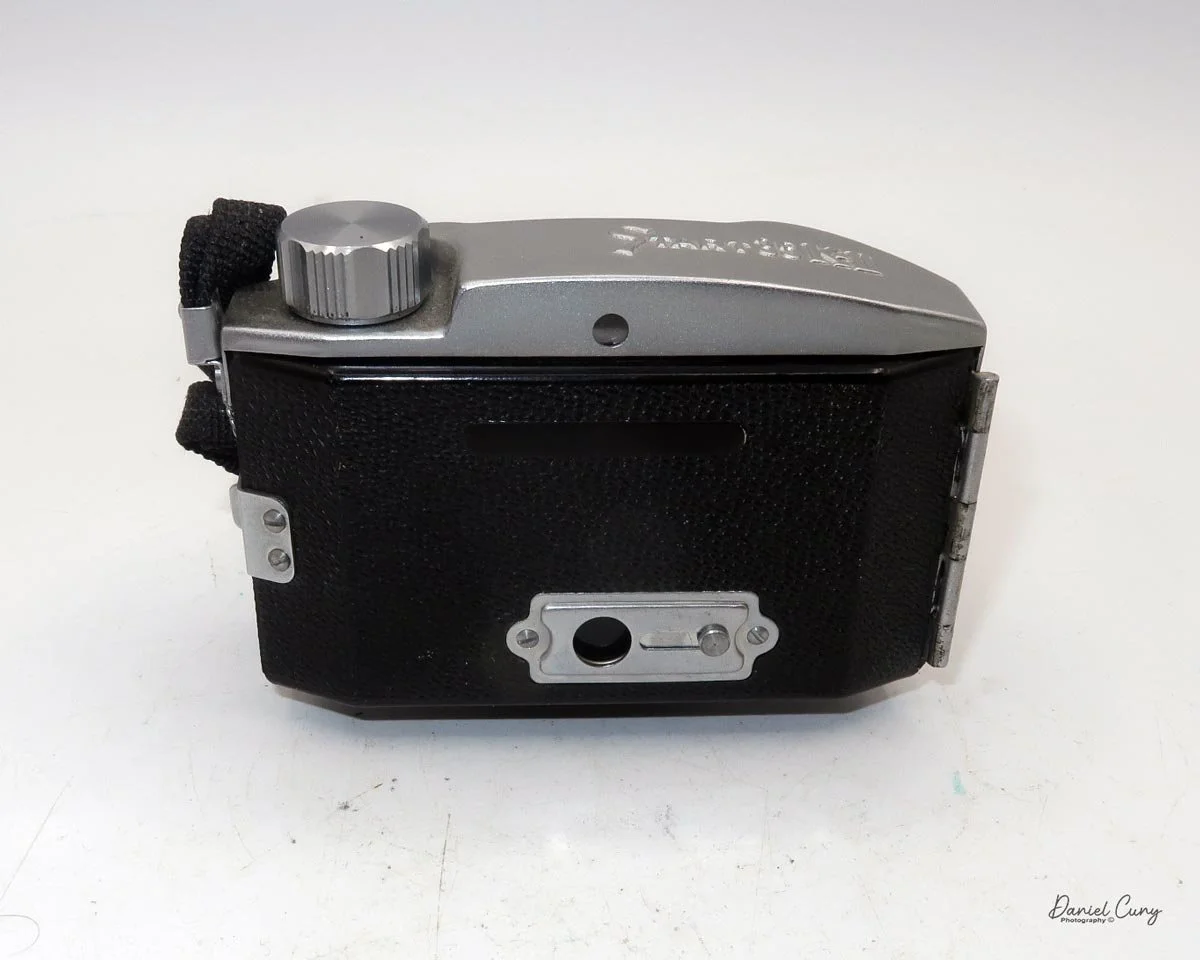
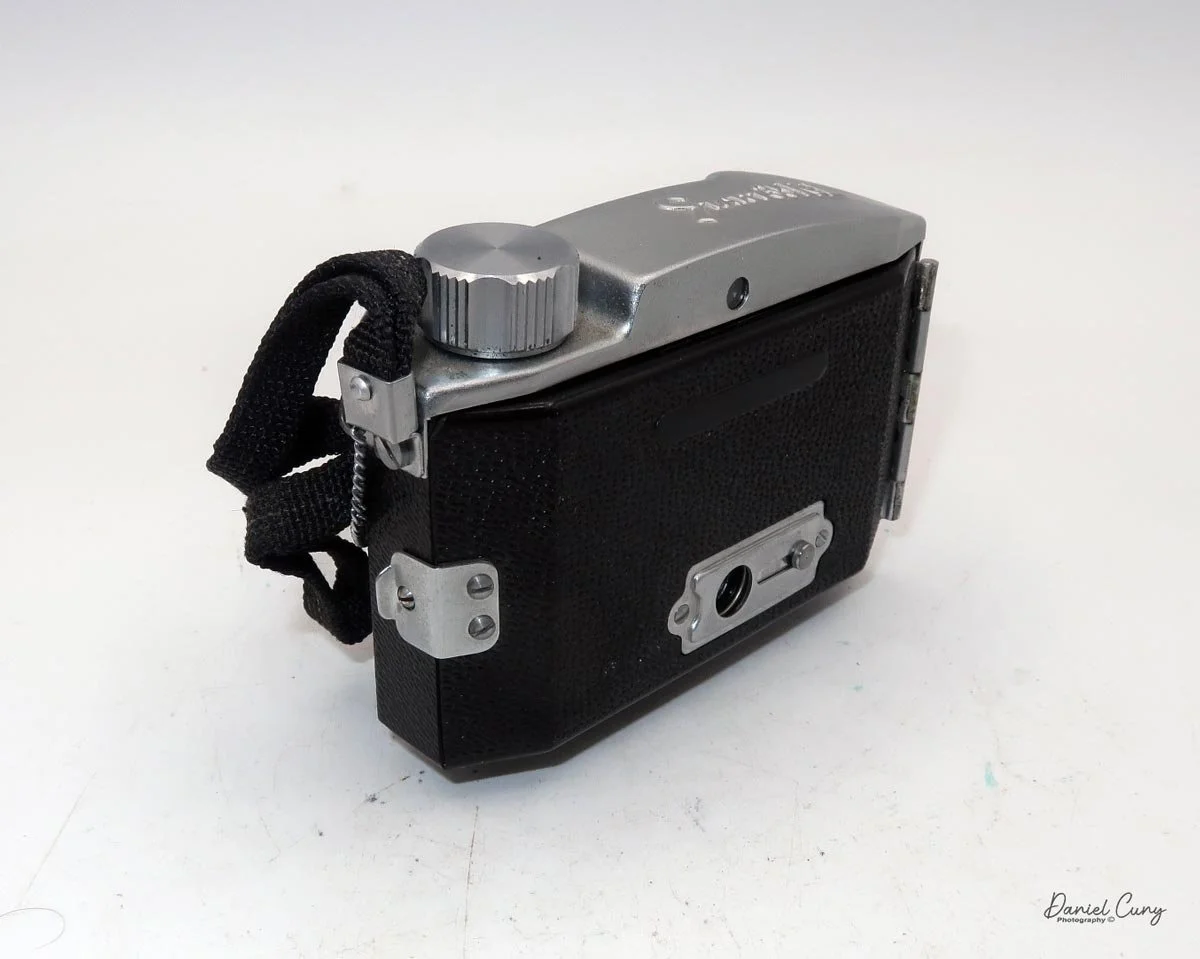
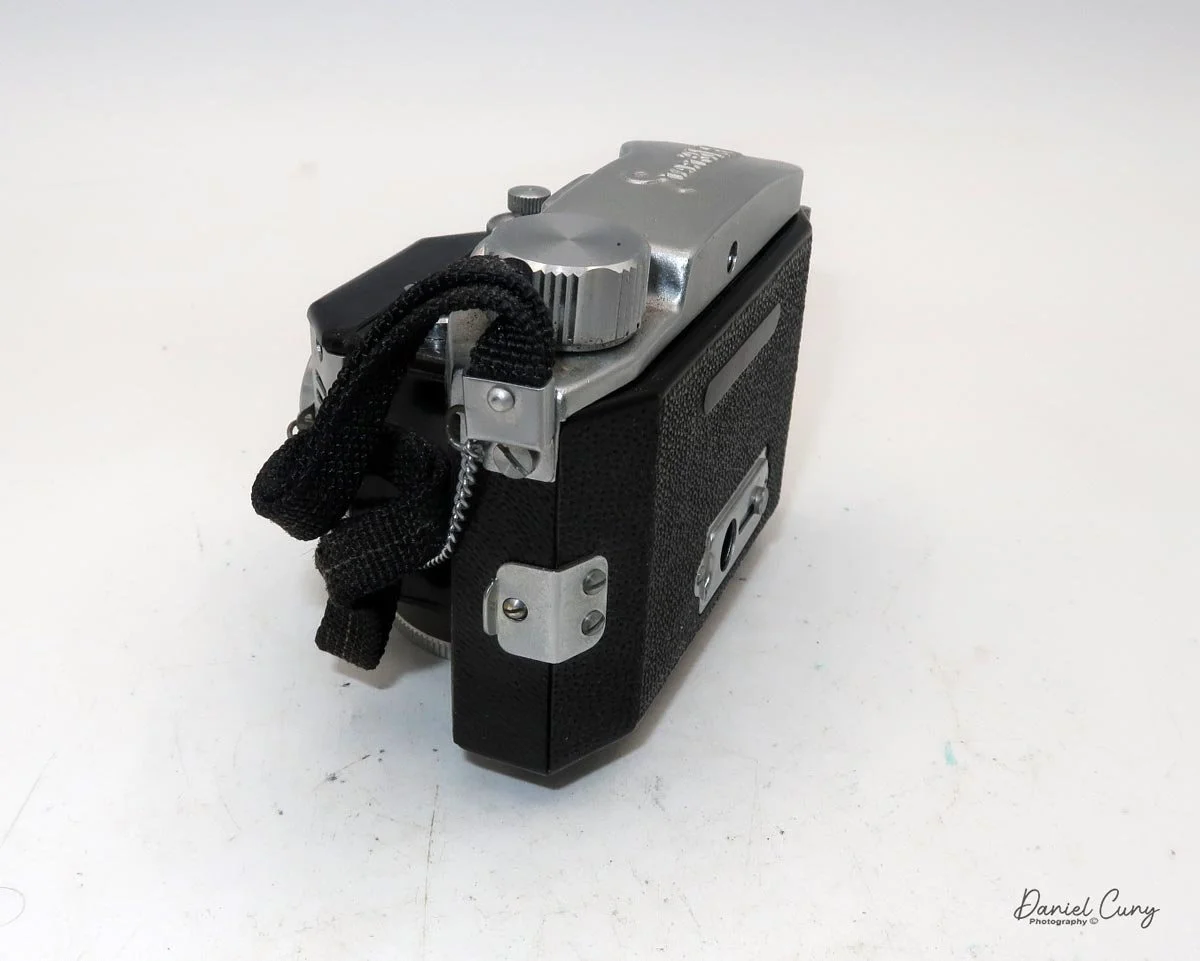
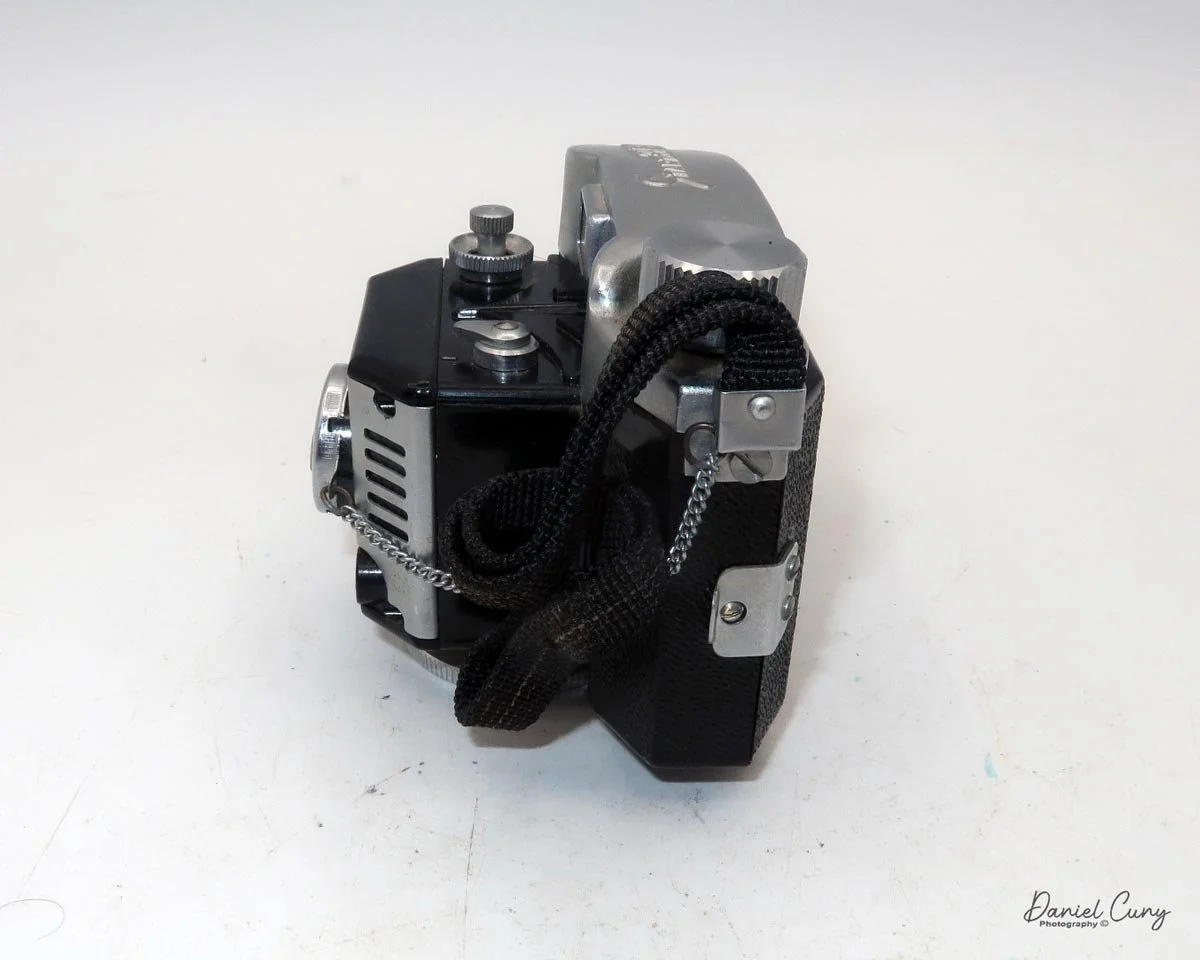
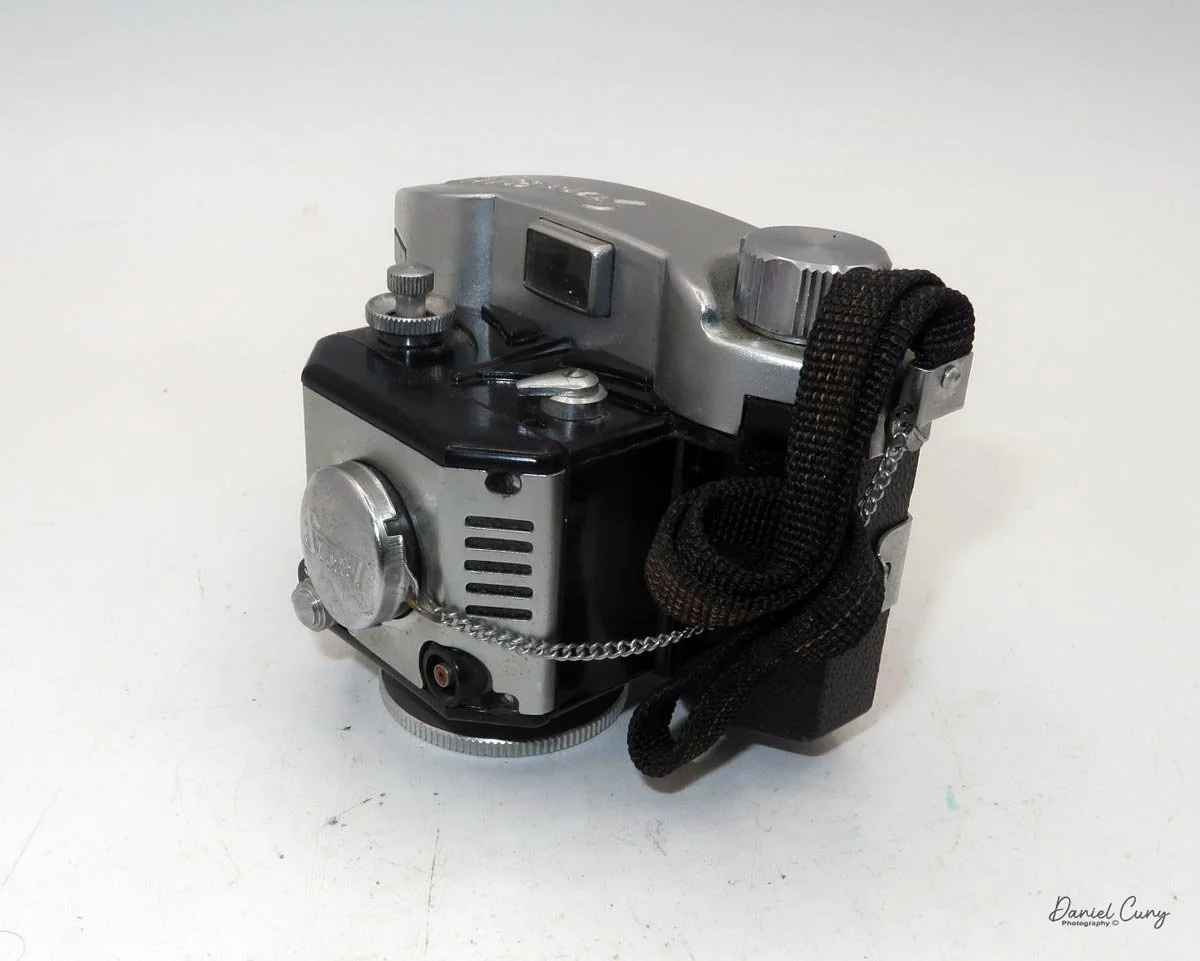
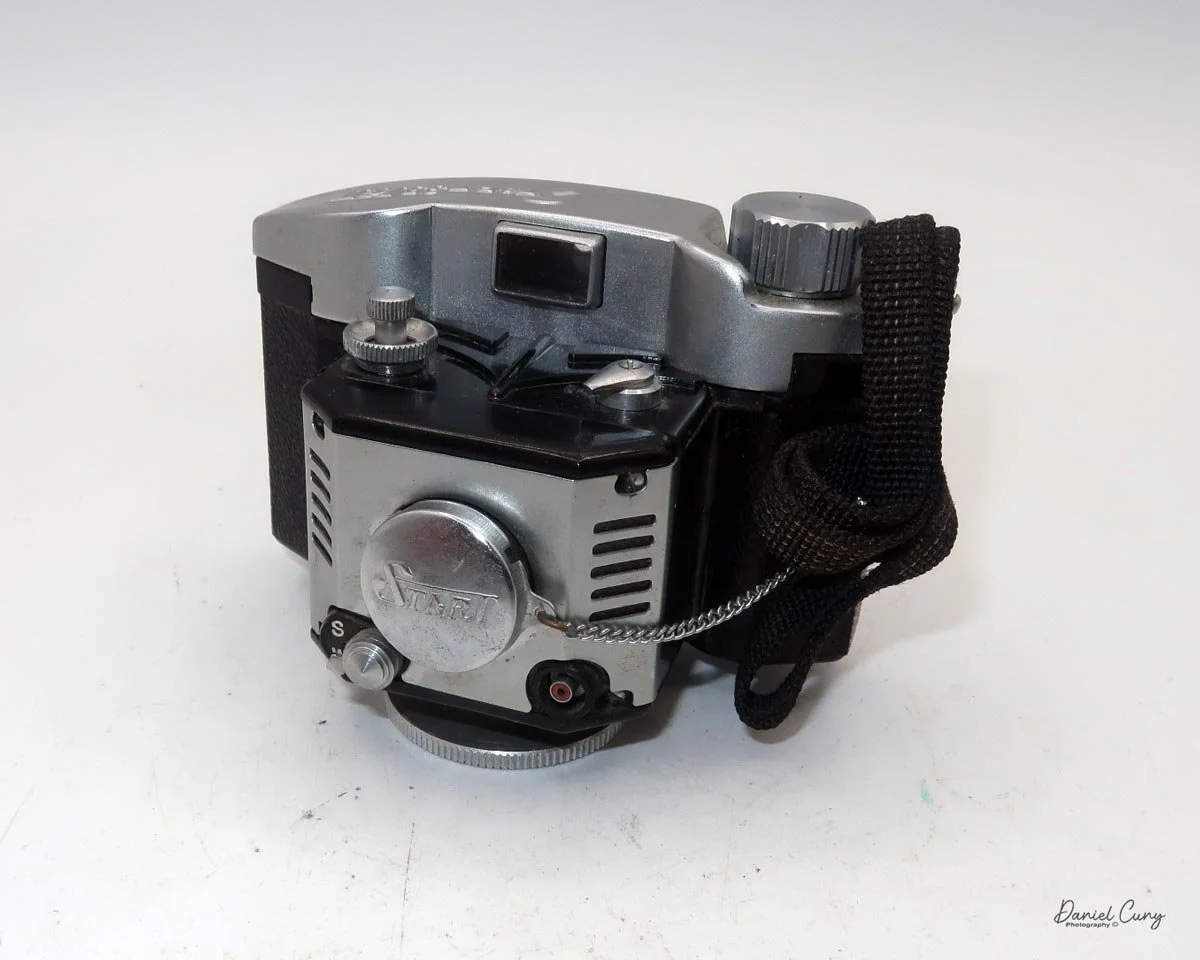
My Coronet Cameo camera

It wasn't until I had been collecting cameras that I developed an interest in miniature and subminiature cameras. One of my earliest recollections of liking small miniature cameras was when I became a sales representative for a well-known Swiss large-format camera company (Sinar) and traveled to Sacramento to visit a store that displayed many different miniature and subminiature cameras at the cash register.

 I fondly remember spending time looking at the display, thinking many of the cameras seemed so odd and unusual, which is something I'm always looking for in what I collect. When I asked the owner of the store if any of the cameras were for sale, and his reply was a swift and hardy "no", in my mind, it triggered a need to find out more about this whole new world of cameras I was aware of, but had no interest in collecting.

 While I don't have a large collection of miniature and subminiature cameras, the ones I do have have a special place in my collection because they are all very unique. I have the majority of the miniature and subminiature collection on my desk, which I'm at the majority of the time I'm in my office, or what I call my camera oasis. It's the one room in our house where I can do what I want, within reason. Another terrific part of the collection is that they don't take up much room, so I have many of them in a small area that reminds me of the display at the camera store I went to well over 30 years ago.

 I came across the Coronet Cameo camera on a trip to London about two to three years ago. For me, one of the main objectives of the trip was to visit Portobello Road to see some of the camera and photo stalls we had visited on a previous trip to London many years earlier. When my wife and I visited the outdoor market, I found that things had changed, and many of the vendors only showed up on weekends. This was a massive disappointment for me, especially since my wife and I were leaving on Saturday afternoon.

Coronet Cameo size comparison.

 The main person I was to meet was Juliano of Cameras London, who shows his cameras only on Saturday. Somehow, I convinced my wife that I would take the bus to Portobelo Road and back in time for us to go to the airport. 

 As I took the bus to Portobello Road that Saturday morning, I remember I needed to be mindful of the time and hurry. I arrived early as Juliano was still setting up. He had a fantastic display of cameras and some negatives. There were several cameras I wanted to purchase, one being an Ilford Advocate, which you can read about. He said he had a cleaner version and would ship it to me. 

I got together a small group of cameras, and just before I paid him, I saw the Coronet Cameo. It was in poor condition, but it was odd and unusual, so I threw it into the pile. We made a fair bundle price for the items, including the Advocate and Cameo camera. I paid him for the items, put the cameras in my backpack, and made my way back to the hotel. We had plenty of time to make it to the airport.

History:

 The Coronet Camera Company was a significant English camera manufacturer, founded in 1926 in Birmingham, England, by Frederick W. Pettifer. The company began at 48 Great Hampton Street, Aston, focusing on producing an inexpensive line of cameras for the mass market. Their early focus was on simple box and folding cameras.

Photo of old Coronet building depicted from Historic Camera website

 A key aspect of Coronet's operations was its utilization of local Birmingham businesses. They partnered with the British Optical Lens Co. for lenses and, notably, with Edwin Elliott, a local plastics manufacturer, who fabricated molded plastic cameras for them. This collaboration led to popular pre-war models, including the small and stylish Coronet Midget and the Coronet Vogue, which were often made from colored Bakelite. By 1933, the company had reportedly sold a remarkable 510,000 cameras.

 The company became Coronet Ltd. in 1946. After World War II, the company specialized in low-cost, molded-plastic cameras. Due to French import restrictions, Coronet formed a partnership with the French company Tiranty of Paris. This collaboration led to several Coronet models, such as the Rapide, being manufactured in France, sometimes using Boyer lenses, to bypass trade barriers. Coronet also produced accessories and its own brands of film, including Corochrome.

 The company continued to manufacture cameras from its Birmingham headquarters (later located at 308-310 Summer Lane) until it finally ceased operations in 1967. Over its four-decade history, Coronet played a vital role in making photography accessible to the public by providing thousands of simple, affordable cameras, many of which remain popular collector's items today.

My Camera:

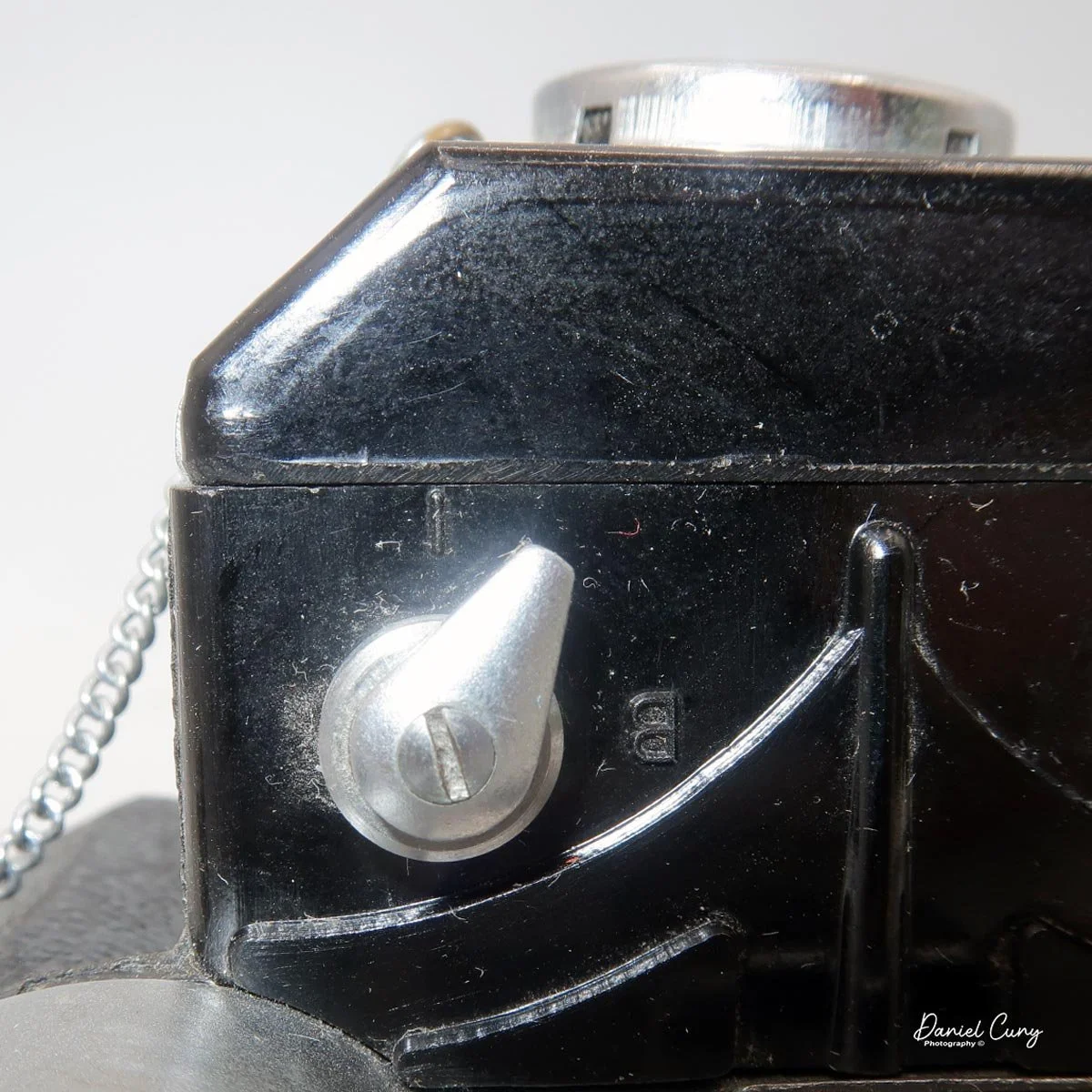
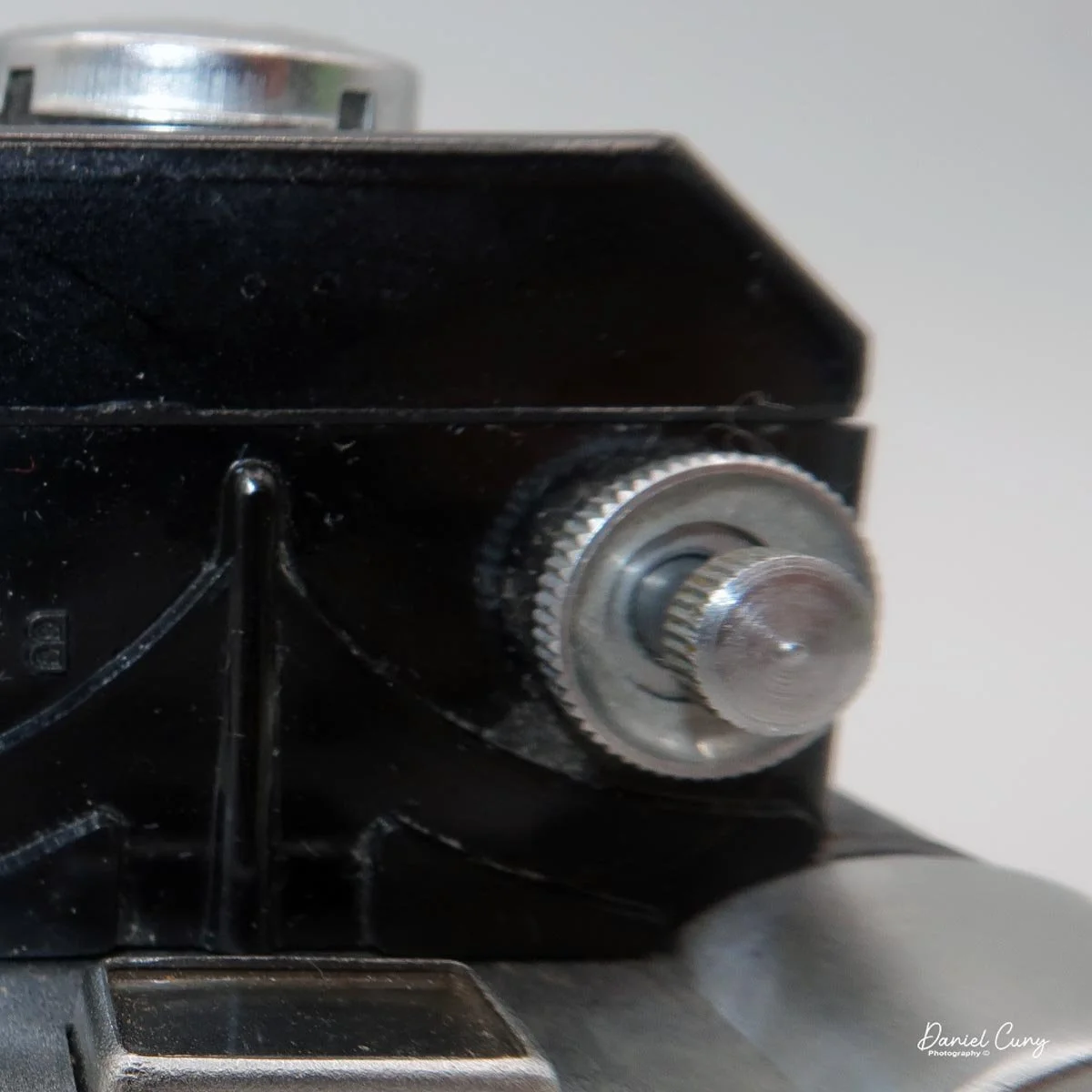
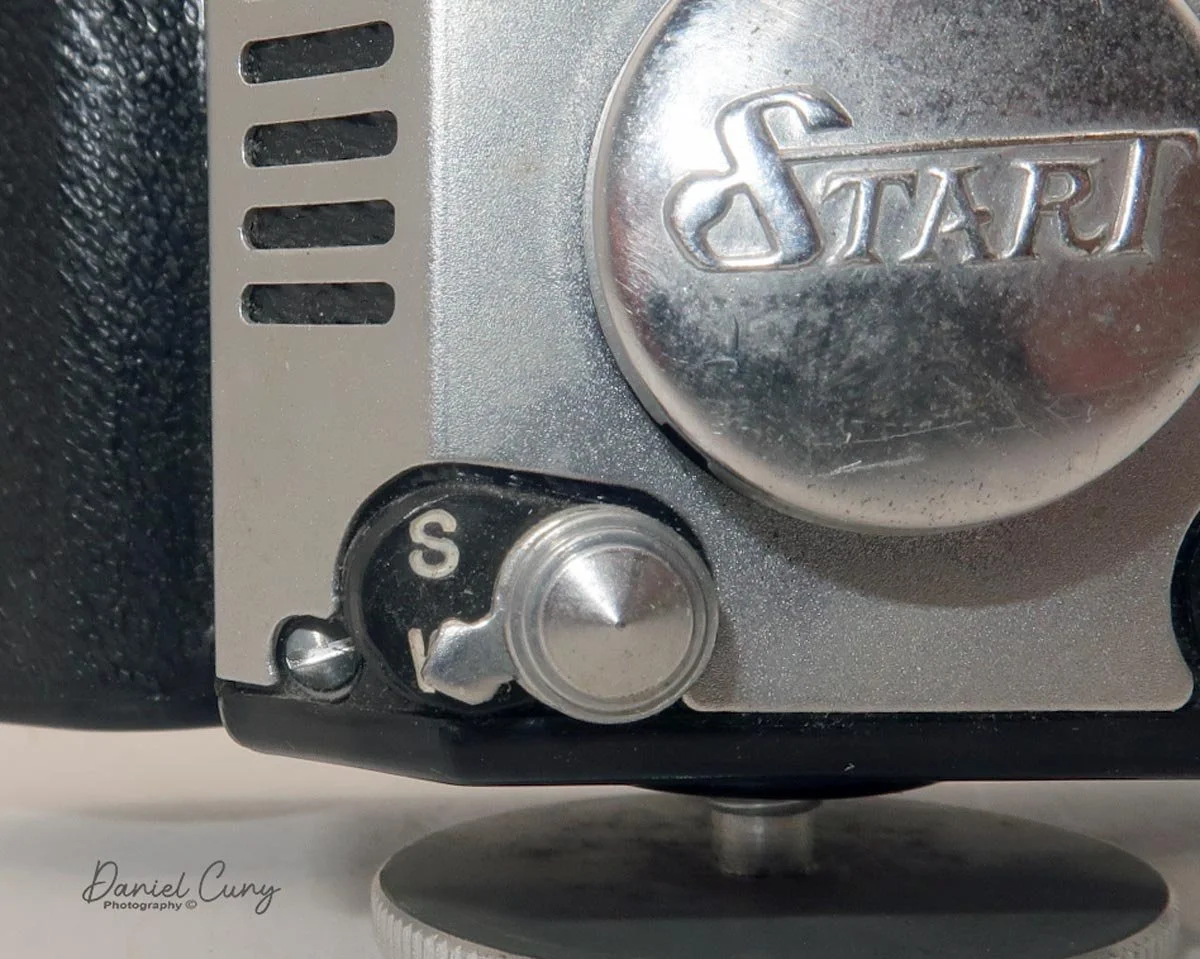
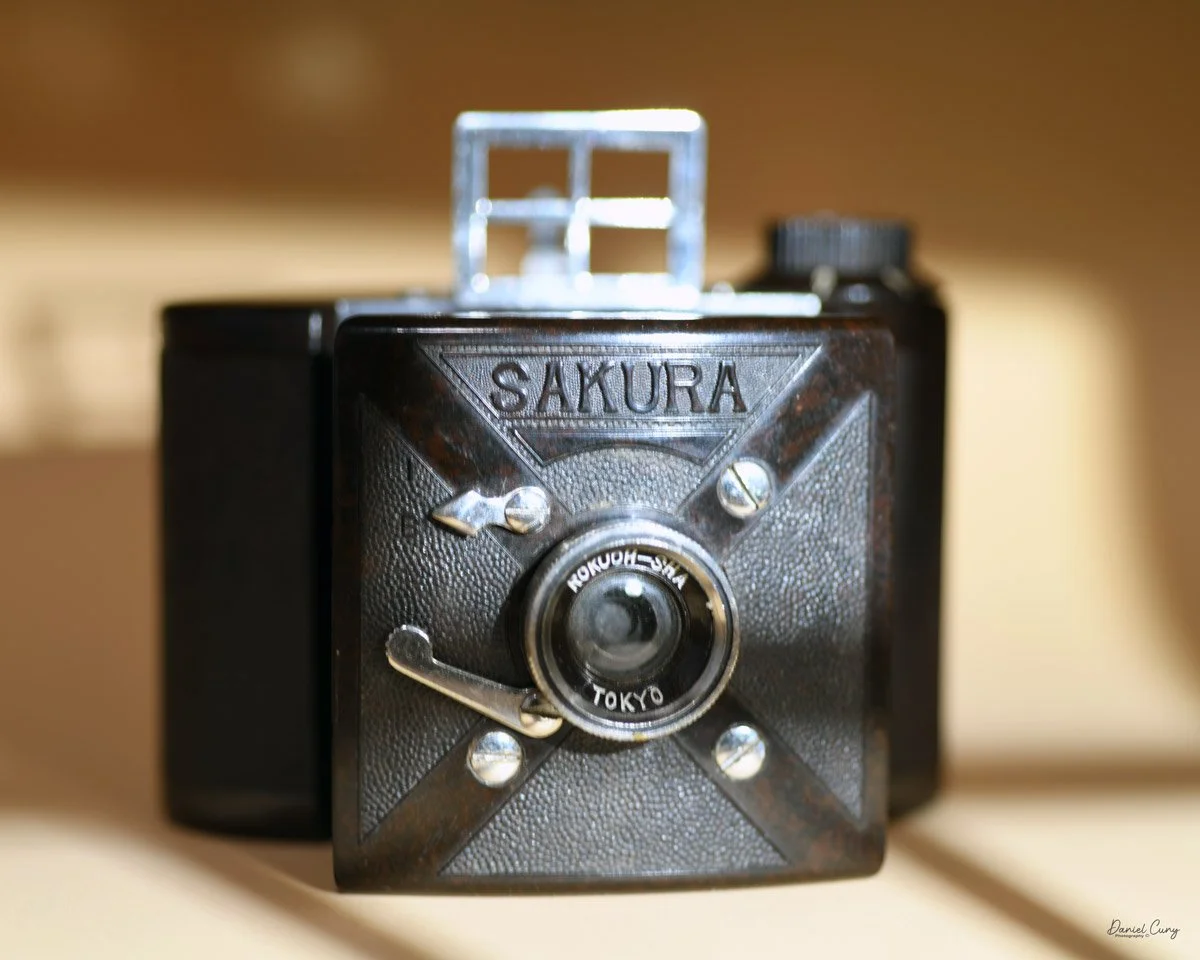
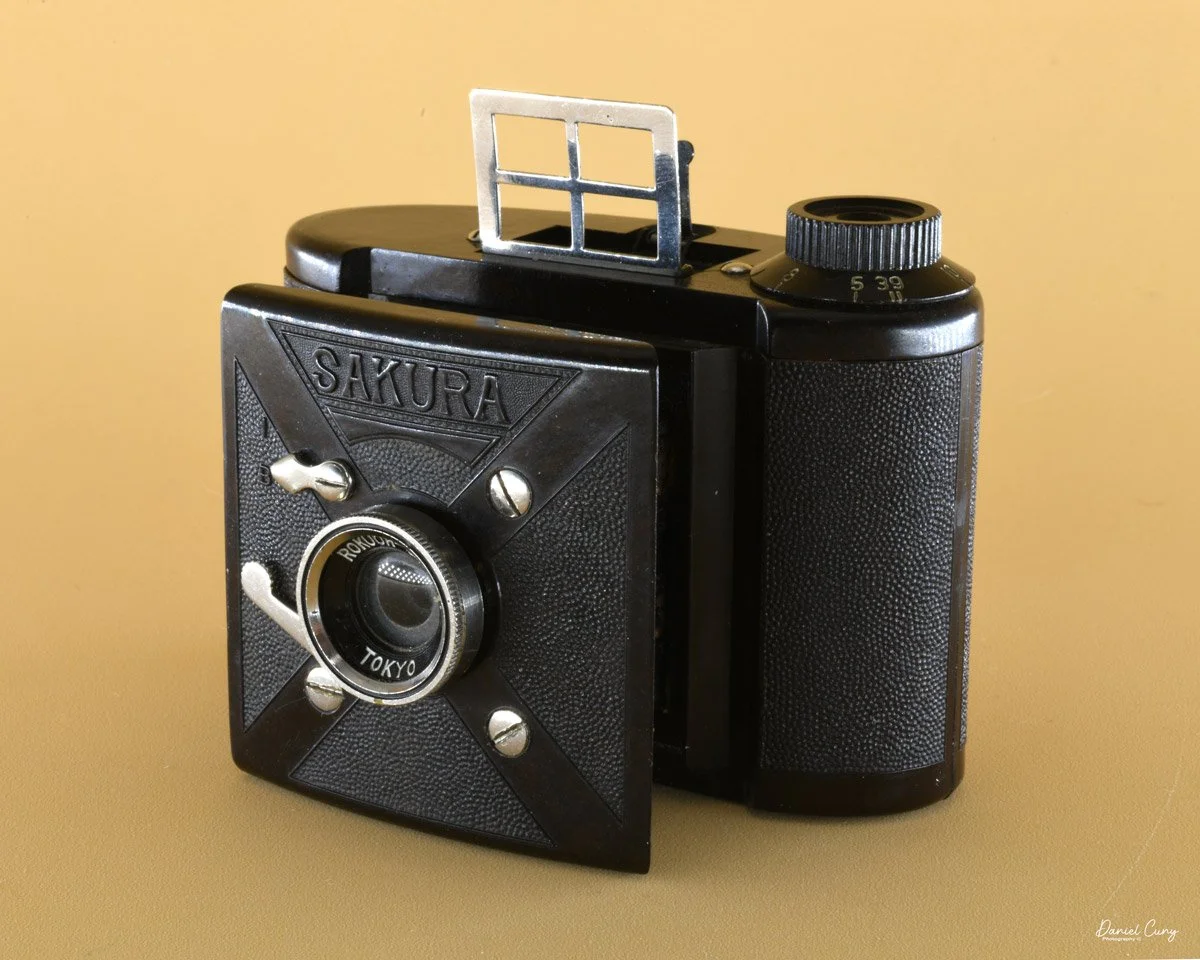
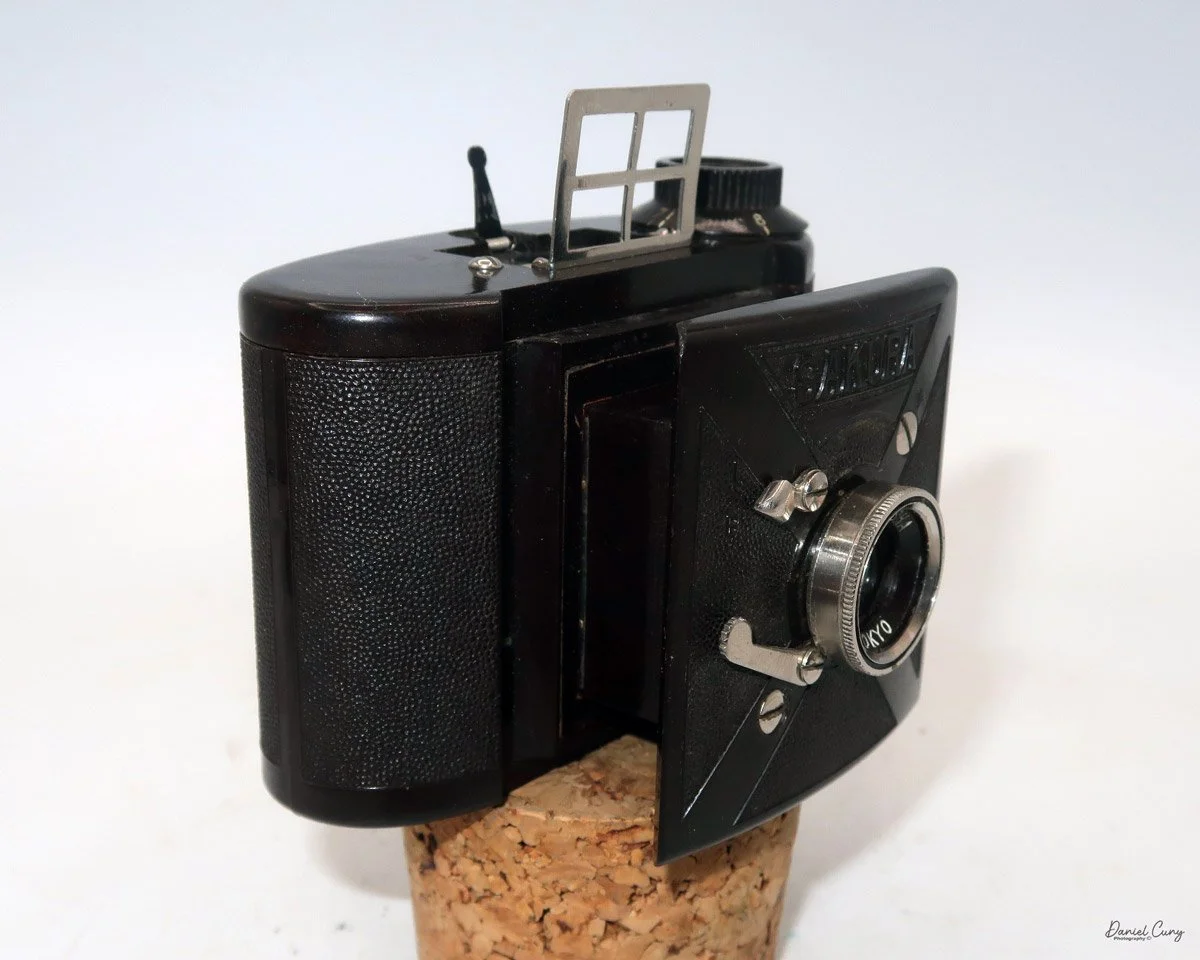
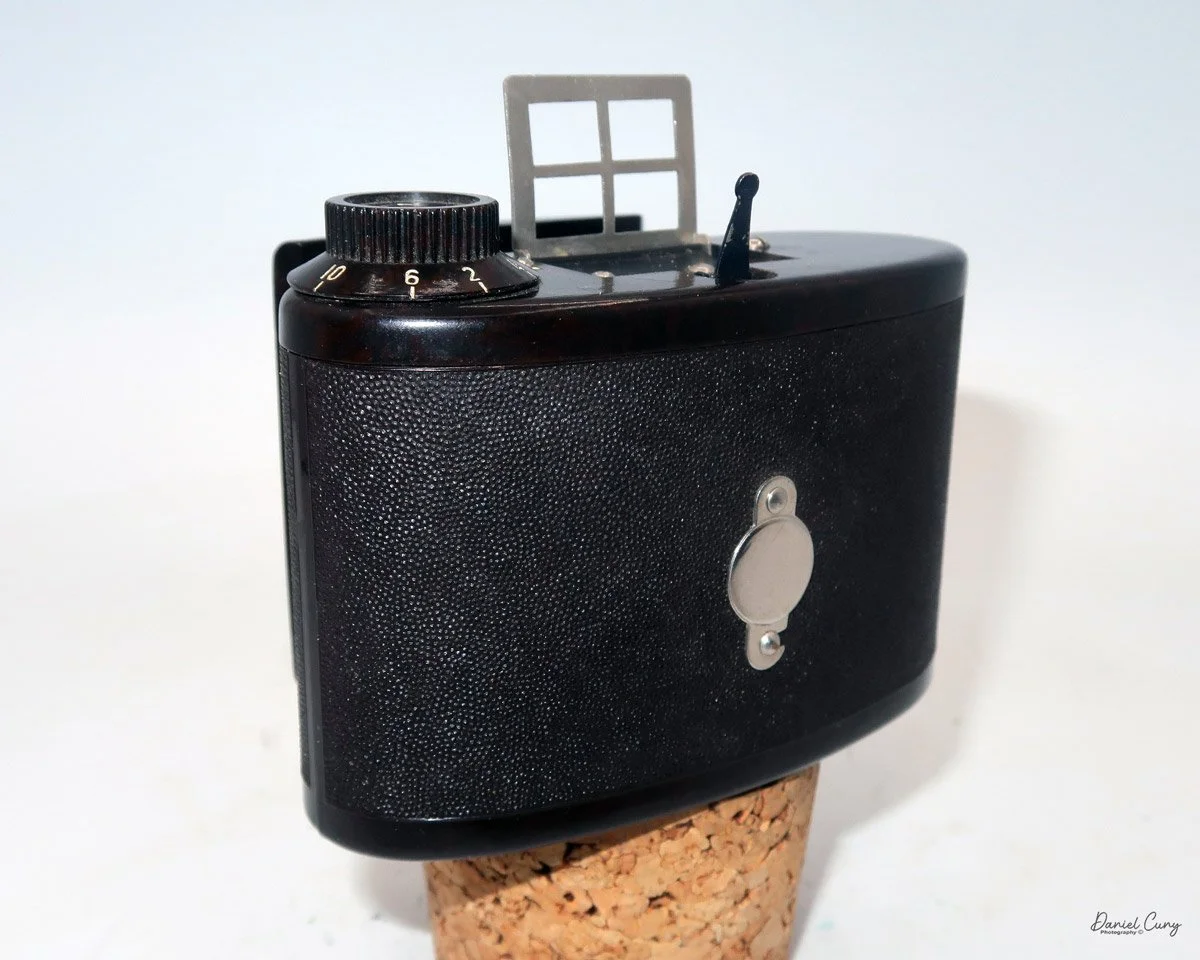
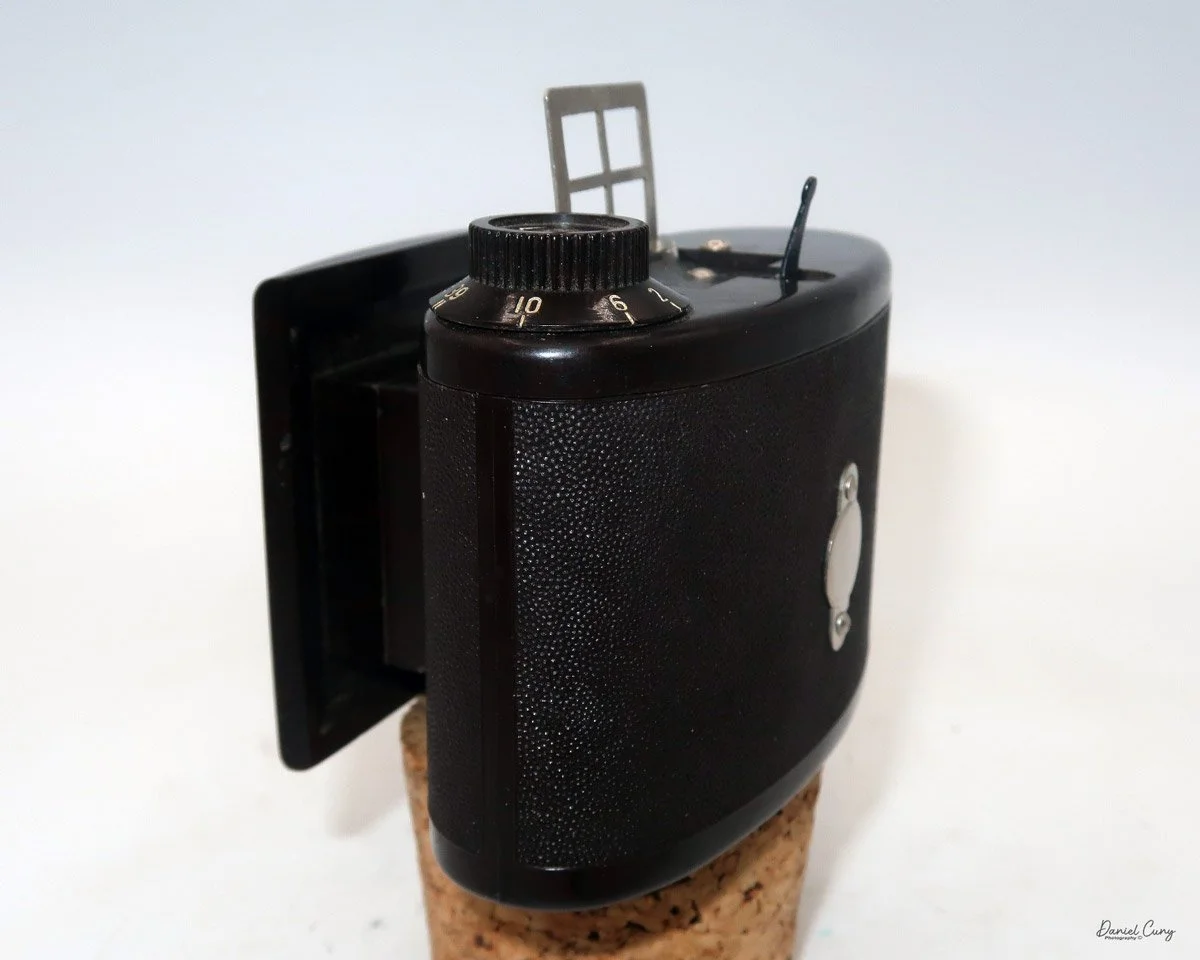
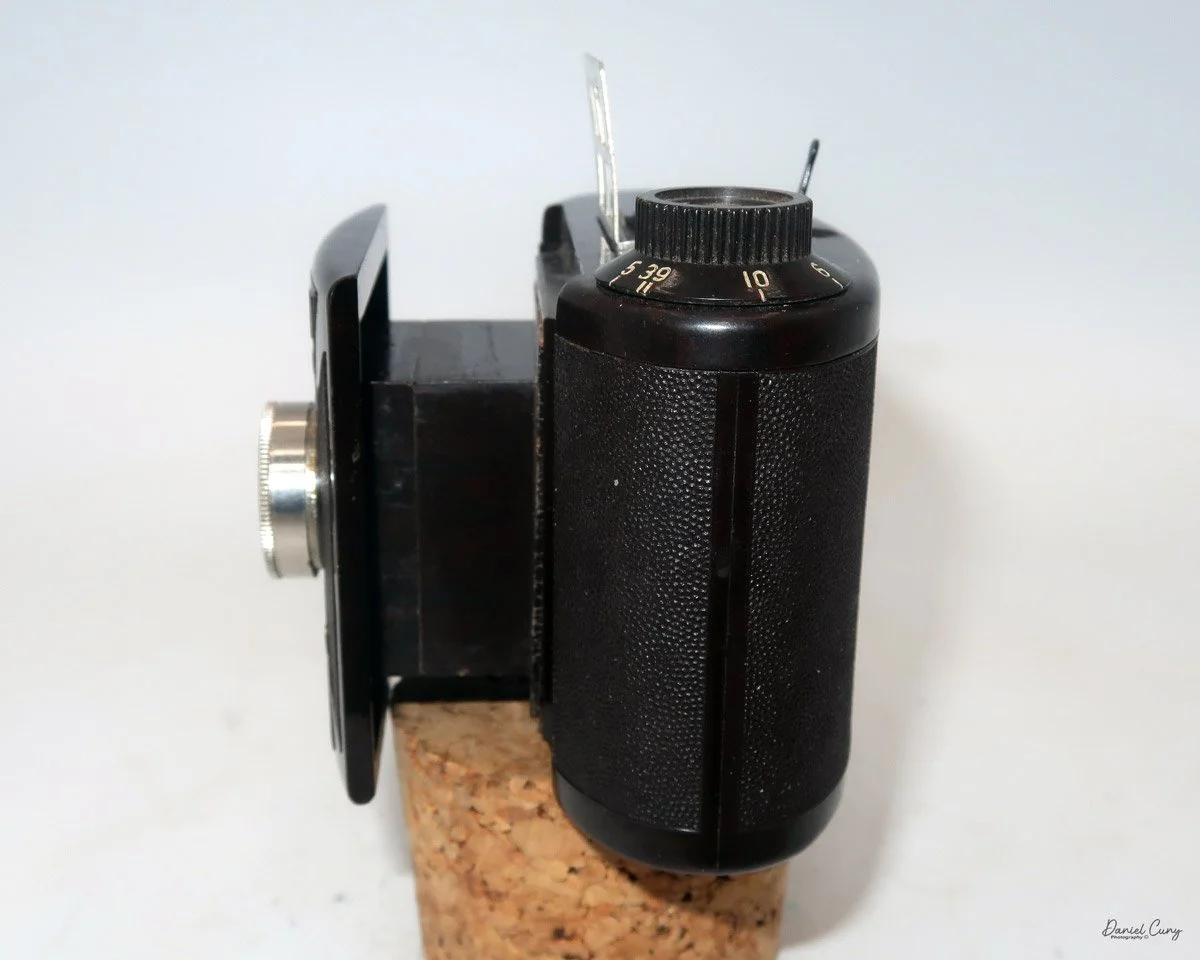
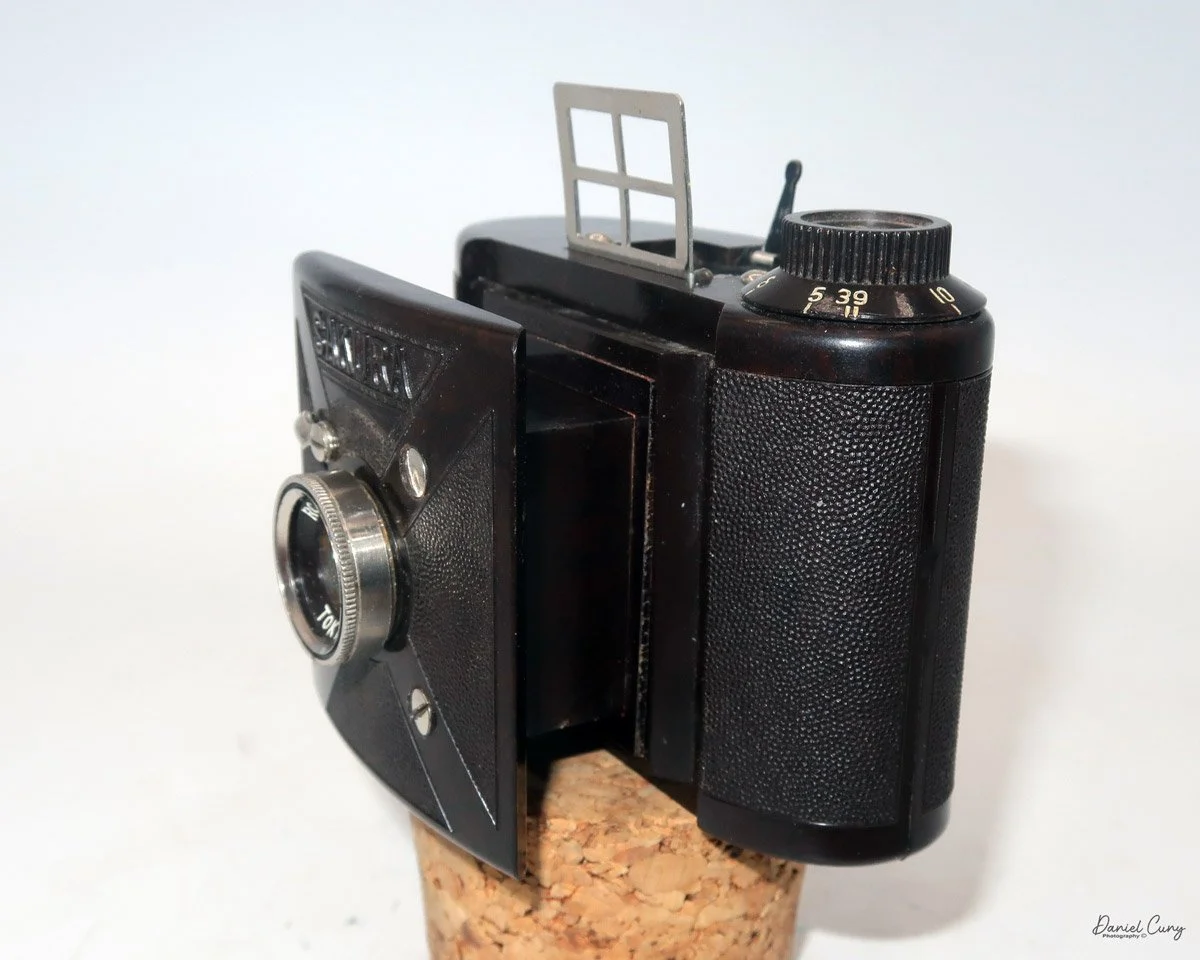
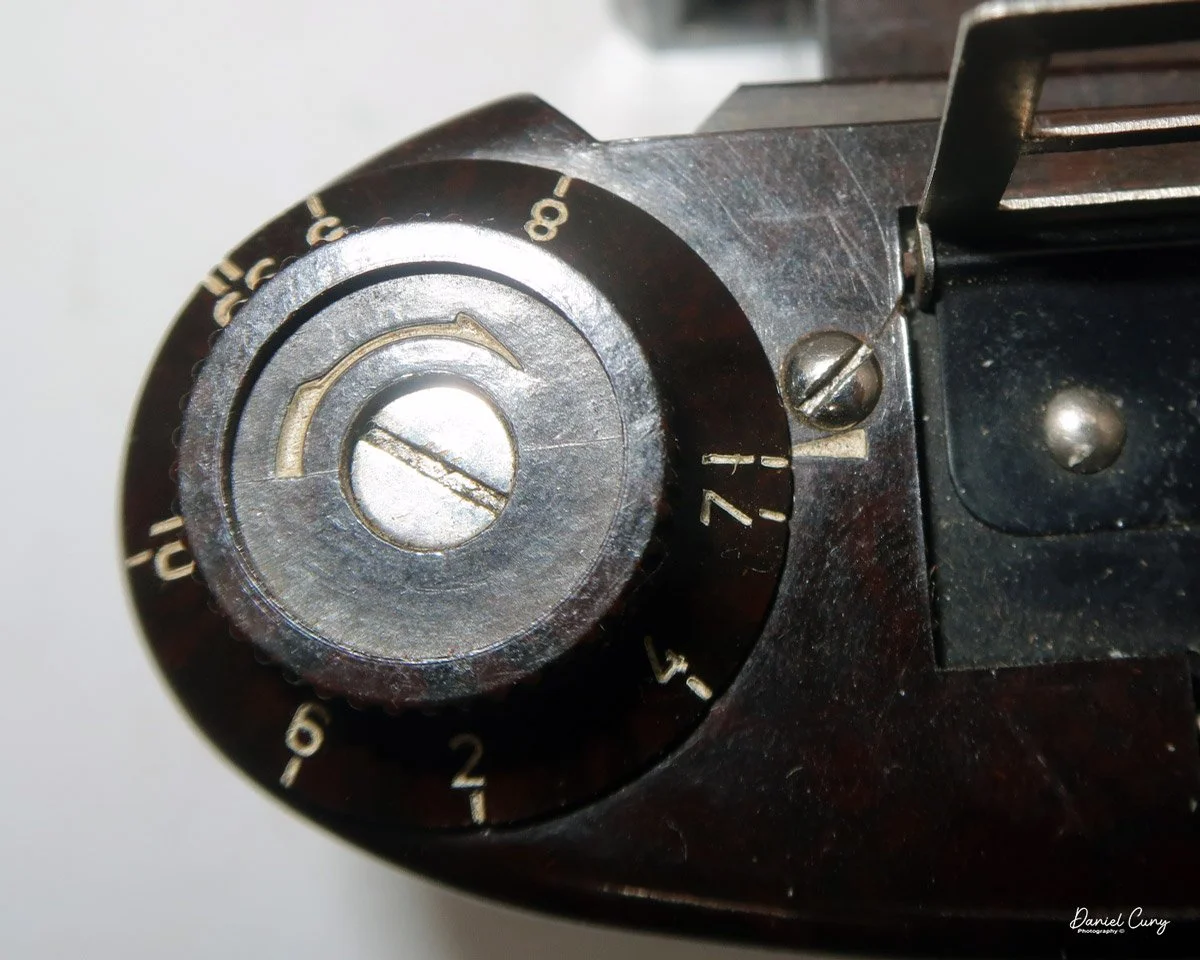
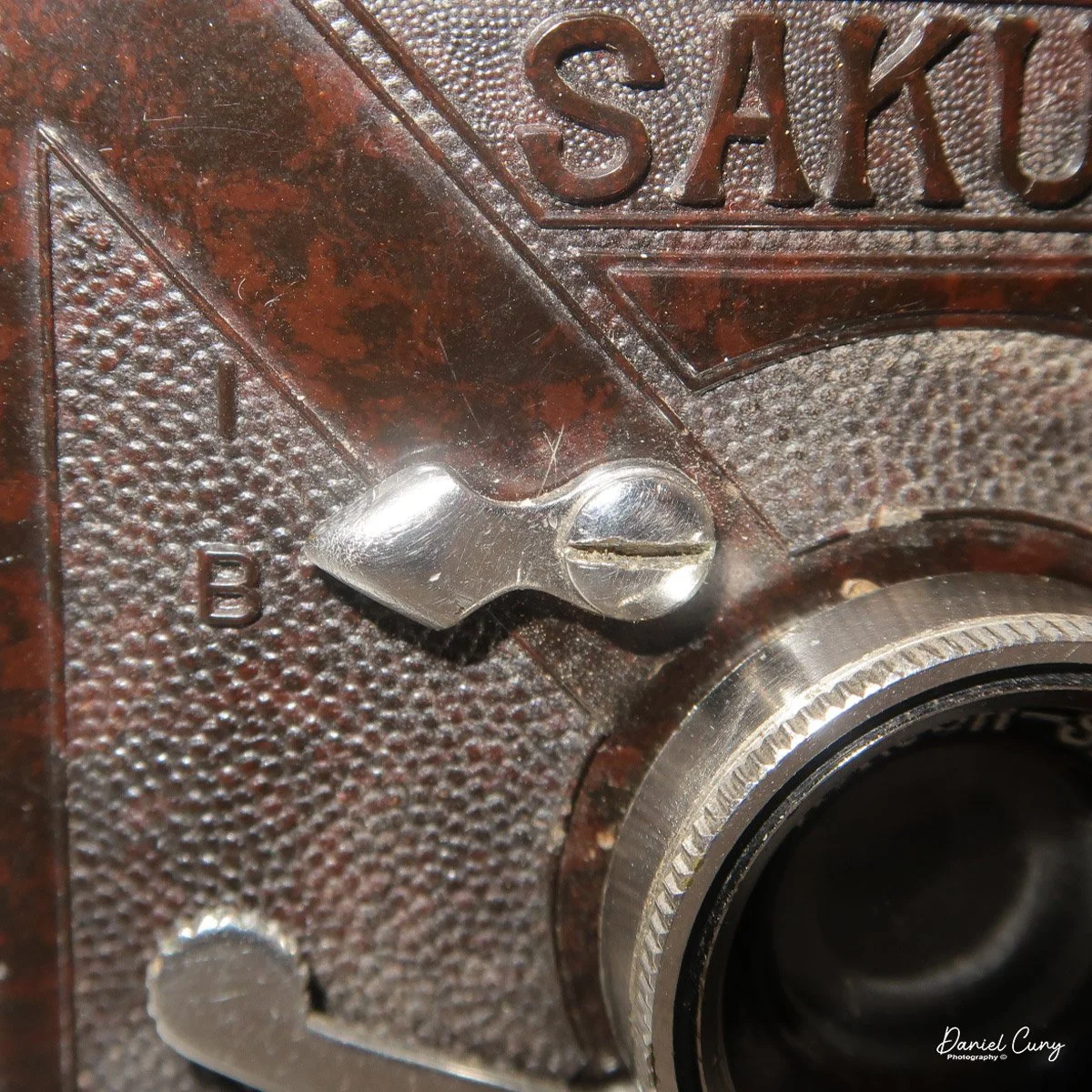
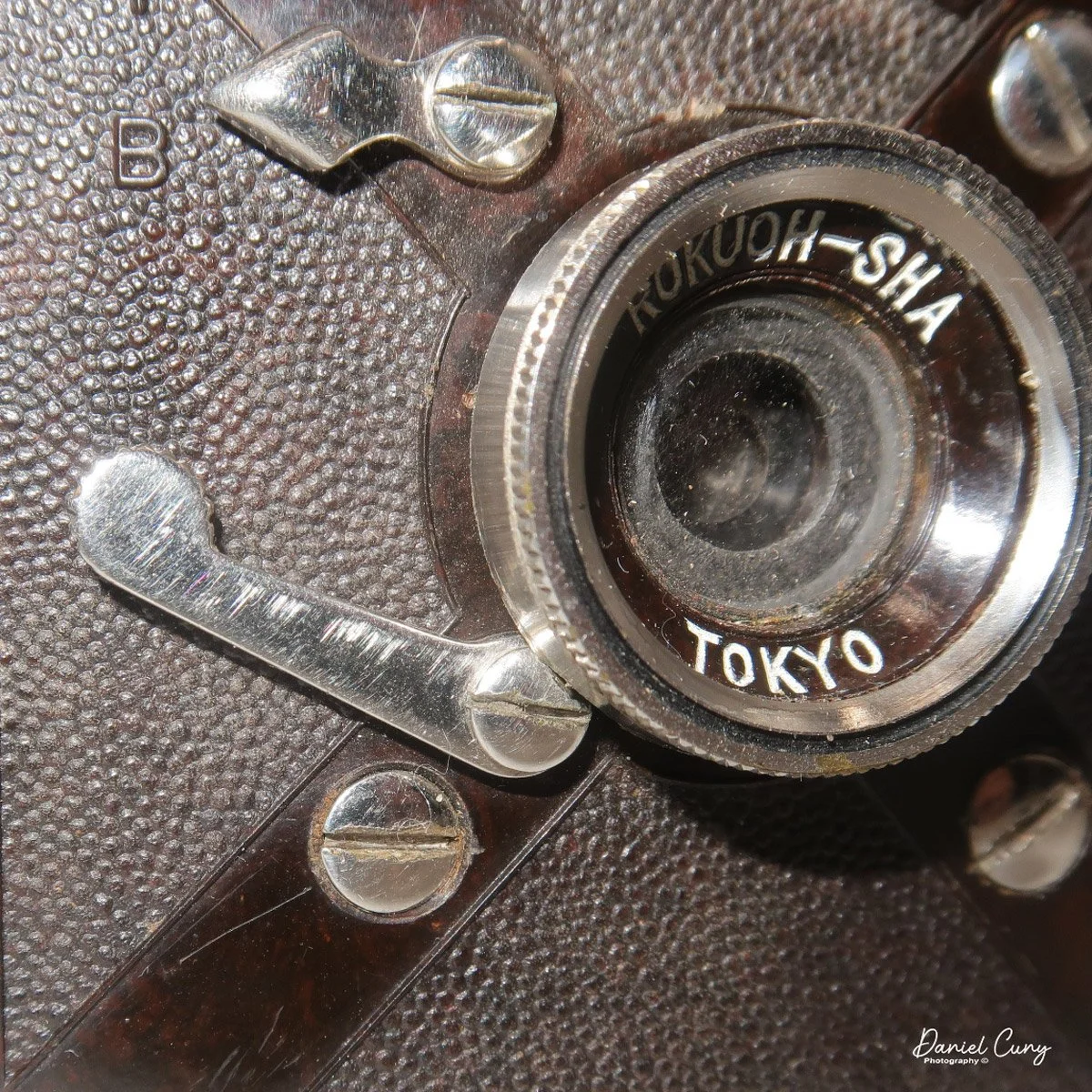
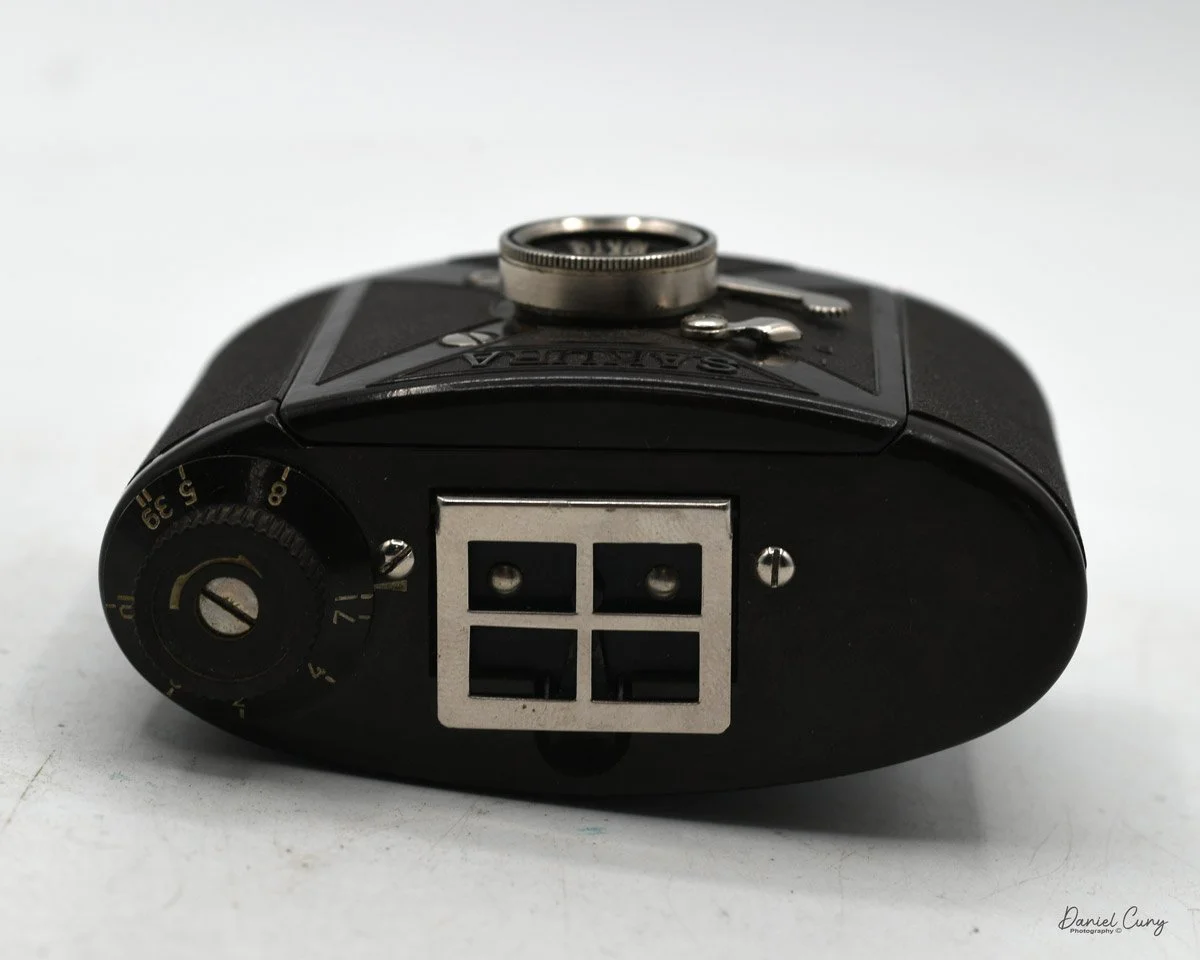
 This portion of the blog will be sparse, as there's not much to this camera. The Coronet Cameo camera is small and will almost fit into a 35mm film container. It's 2" wide by 1.5" deep and 2" tall with the front viewfinder extended and only 1.25" tall when it's retracted. The camera only weighs 1.6 ounces. The Cameo has a fixed 25mm F/11 Meniscus lens and a single shutter speed range of 1/25-1/50, with the shutter release on the right side of the camera body.

The camera is made from plastic and was manufactured between 1948 and 1952.  Coronet attempted to revive the success of the Pre-War Midget camera, which was highly successful for the company at the time.

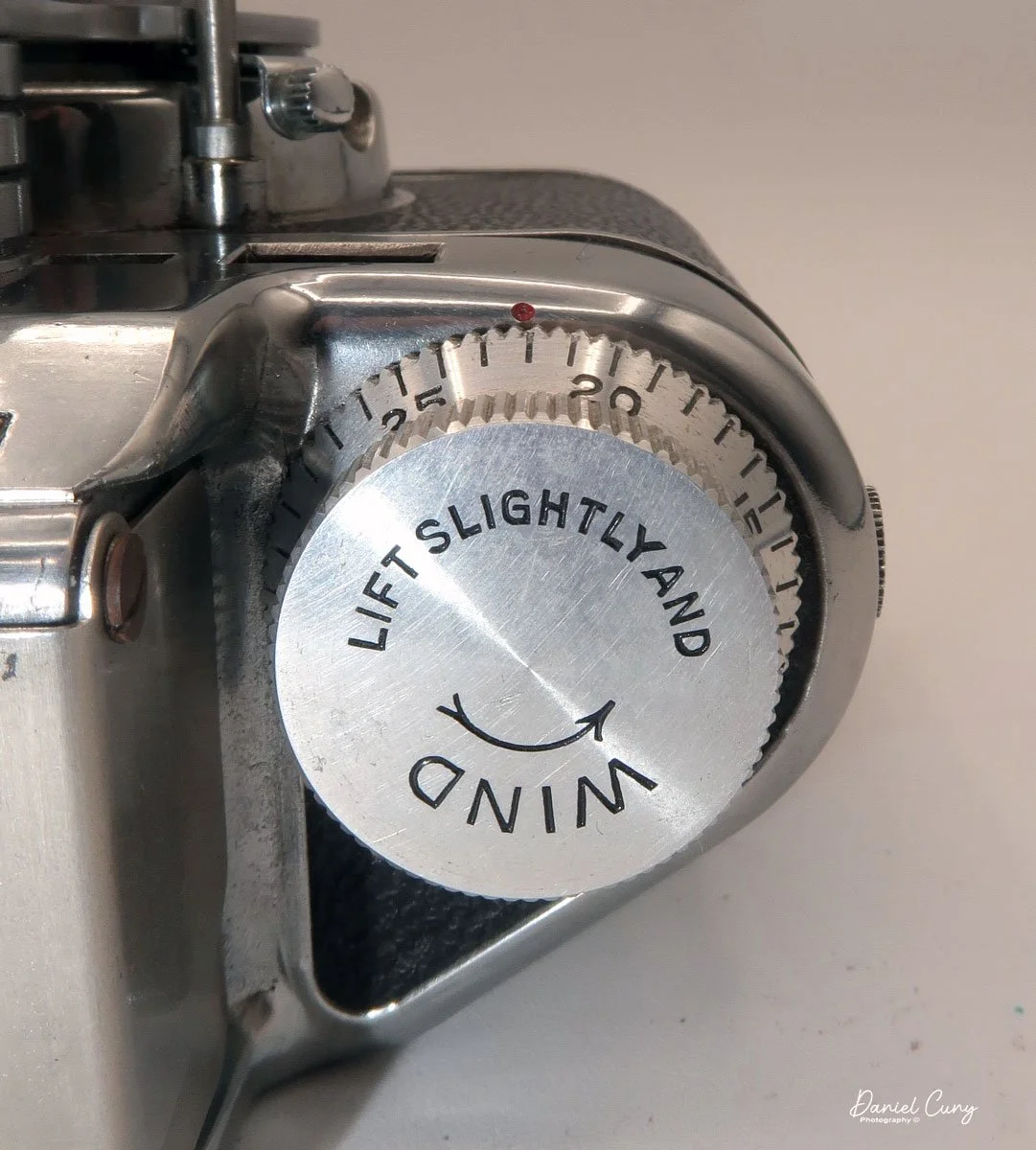
 The Coronet Cameo takes a roll of 16mm film and produces six 12mm x 18mm negative-sized images per roll. The camera loads and winds like any other roll film camera, with the unexposed film loaded on the left and the leader threaded into the take-up spool on the right via the film winding lever.

The back of the camera is held in place by two clips on the right side of the camera. To open the back, lift it from the two clips; it will open, exposing the film chamber. Unfortunately, my camera, like many Coronet Cameo models, is warped, and the back doesn't fit properly to the body.

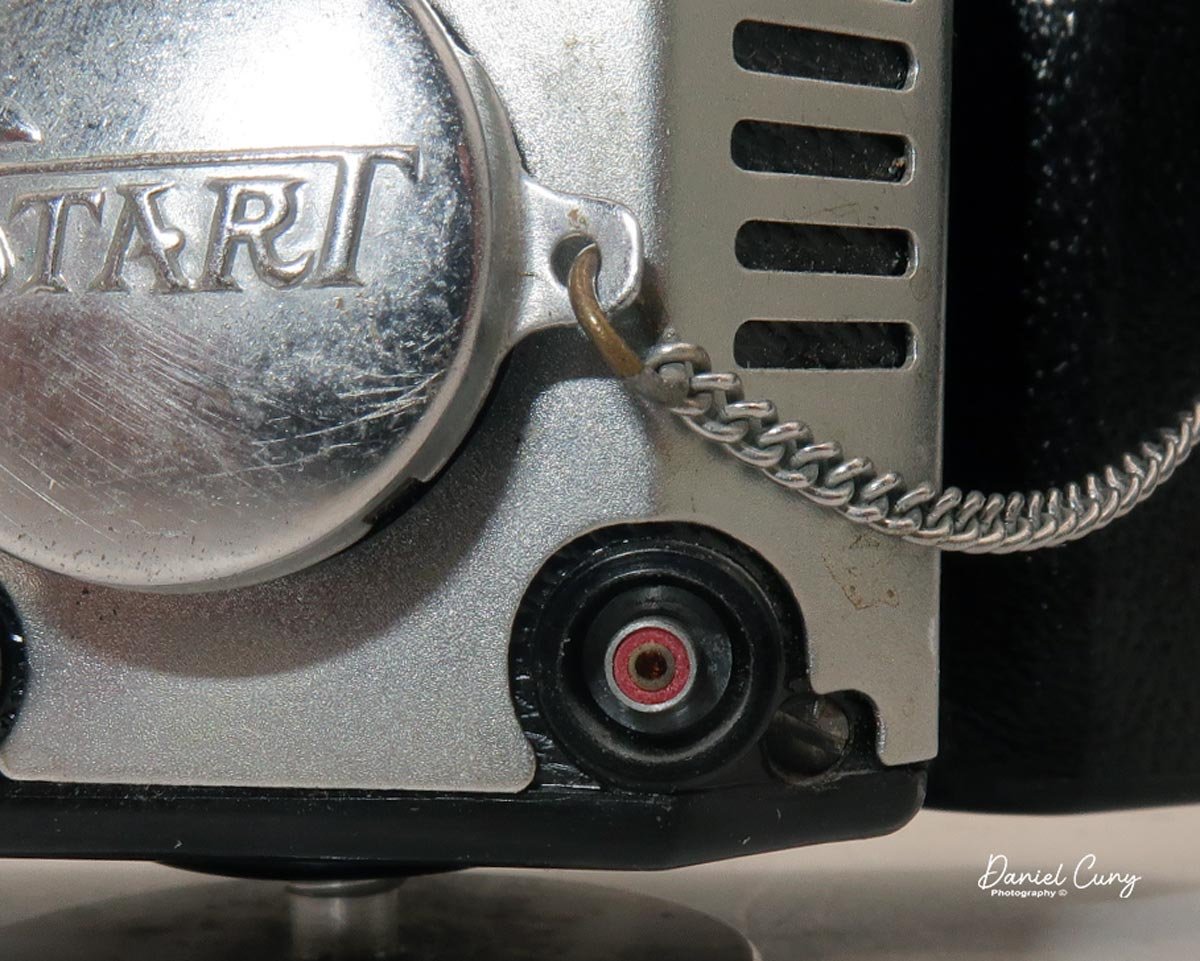
 A sliding front viewfinder can be pulled up, and when the rear viewfinder is lifted on the back of the camera, it exposes the red window displaying the frame number of the image you'll be taking on the roll of film.

My Results:

 Unfortunately, there is no longer film for this camera, and with the warped camera back, I wasn't able to take photos with it.


Conclusion:

 As I was taking photos of the Coronet Cameo, I had an empty 35mm film tube and tried to see if the camera would fit inside it, but it's just a tad too big.

 The Coronet Cameo camera is sitting right next to my Whittaker Micro 16 Pixie camera, which I considered writing about for this blog post. Still, I'll leave that camera for another day. I do enjoy all the miniature and subminiature cameras in my collection; it just took me a few years of collecting them to appreciate them for what they are.

 Thank you for taking the time out of your day to read about this small plastic camera from about 75 years ago. I'm sure many people owned and enjoyed them when they were made.

 If you're interested in reading about other cameras I've reviewed, here's a link to my other Camera Reviews.

 I also have a store on eBay, Cuny's Camera and Photos, where I sell items I've reviewed, as well as many other camera oddities.

 Until next week, please be safe.
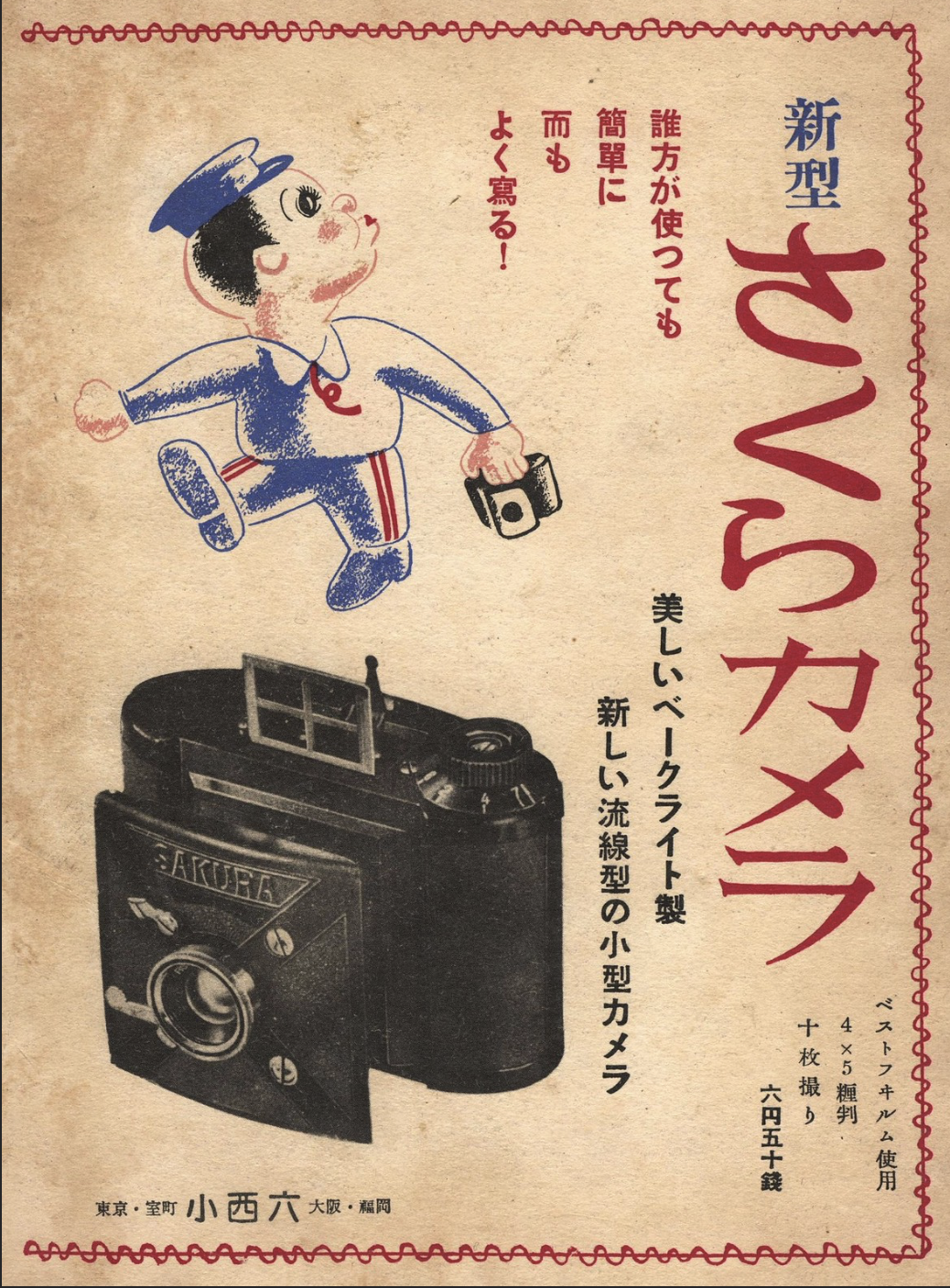
Bolsey Model C-Twin Lens Reflex

My Bolsey C camera

Very early in my camera collecting career, the Bolsey cameras have been a steady companion in my collection. I believe this goes back to when, in my 20s, I'd go to local Flea markets, which were usually held in older Drive-in theatres due to their expensive areas, and find Bolsey cameras. Usually, they were the B2 models and generally in fair to poor condition.

 Every once in a while, I'd find one in working condition, which was a rarity. The thing that drew me to these cameras was the odd shape they have. They are generally smaller than the standard 35mm camera. Still, they have an odd shape where the front of the camera is much broader than the rear. The corners of the cameras are rounded off, giving them a sleek and modern look for their time. I compare them to the shape of automobiles of the time, which generally had rounded curves and were comfortable to use.

 The Bolsey C was a camera that I've always had my eye on to add to my collection for many years. I can remember looking through the Bible of all camera collectors, McKeown's camera guide, and seeing the Model C and the other Model B and Jubilee models, with thoughts that someday I'll have one in my collection. That day was about 4 years ago when I purchased another "lot" of cameras with the Model C within that lot. To my surprise, the camera was almost mint and had a working shutter. Even the fitted case was in excellent condition. The camera appeared almost unused for 70-75 years since the camera was initially introduced in 1950.

History:

Bolsey Camera Company can be traced back to Yakov Bogopolsky, a trailblazing figure in the early 20th-century photographic industry, who played a pivotal role in the evolution of compact cameras. Born in 1895 in Ukraine, Bogopolsky left for Switzerland in 1913-14, where he studied medicine in Geneva. Due to the Russian Revolution and WWI outbreak, he could not return to Russia. While studying medicine, he worked as a portrait photographer to earn money. During his time in Switzerland, he changed his name to Jacques Bolskey. While in Switzerland, his passion for photography grew. He even invented a camera that photographed the beating heart of a dog, which was used in surgery.

 One of Bolskey's earliest successes was the Bolex line of cameras he designed while working for Paillard, a Swiss company. These cameras, primarily for motion pictures, became highly regarded for their precision and durability. While in Switzerland, he also worked as a designer at Swiss watchmaker Pignons S.A., which produced the first Alpa camera.

 After 22 years in Switzerland and being denied citizenship there, he eventually immigrated to the United States in 1939, changing his name to Jacques Bolsey. Bogopolsky's most significant contributions were realized through the Bolsey Camera Company, which he founded in the 1940s in New York. 

Bolsey's hallmark was producing user-friendly, affordable cameras that maintained quality. His most iconic designs were the Bolsey B series of cameras, which debuted in the mid-1940s. These cameras, such as the Bolsey B, B2, and Jubilee, were compact and housed in durable cast aluminum bodies. They featured a coupled rangefinder and a fixed-focus lens, making them accessible to amateur photographers. The Bolsey cameras were marketed as an ideal solution for everyday photography, emphasizing ease of use and portability.

 One of Bolsey's key innovations was incorporating a built-in flash synchronization system, a feature uncommon in consumer-grade cameras at the time. This innovation further solidified the company's reputation for blending functionality with convenience. The cameras became popular in the United States, particularly among families looking to capture moments during the post-war era.

 Despite its early success, the Bolsey Camera Company struggled to compete with emerging Japanese camera manufacturers in the 1950s and 1960s. Companies like Nikon and Canon began producing more advanced and competitively priced cameras, dominating the global market. Bolsey's commitment to simplicity and compact design became less appealing as photographers demanded more advanced features.

 By the mid-1960s, the Bolsey Camera Company ceased operations. While short-lived, Bolsey left a lasting impact on camera design, particularly democratizing photography. The company's cameras remain collectors' items today, valued for their unique blend of aesthetics, engineering, and historical significance. Jacques Bolsey's vision and ingenuity continue to be celebrated in the world of vintage photography.

My Camera:

My Bolsey Model C is two cameras in one. It's a twin-lens 35mm camera that incorporates both a waist-level finder and rangefinder into the same camera body. The camera is 3.75" tall with the chimney down and 4.75" tall in the up position, 4.25" wide by 2.5" deep, and weighs 1 lb 2.6oz. The camera is made from aluminum and has a gleaming finish. The camera has a Wollensak Anastigmat 44mm f3.2 lens in a Wollensak shutter. My Bolsey C also still has the red round Bolsey emblem intact on the viewing chimney. So many Bolsey cameras are missing this, as they are easily lost.

 The camera has a waist-level finder with ground glass at the top for focusing and is parallax corrected to 2', which is also the minimum focusing distance. According to the Instruction manual, the waist-level finder is "exactly as you will shoot it. "The waist-level lens is also the same as the taking lens.

 The camera also has a coupled rangefinder with split image capability built into it. It has the best of both worlds for focusing. Both the waist level and the rangefinder on my camera are bright and accurate. The separate viewfinder is offset on the right side of the camera for framing purposes. Also, on the back of the camera, there are two sockets on the left side made for the flash unit that snaps into them. A flash with a normal PC cord won't work on this camera.

To load the camera, the back is removed from the camera body by switching a lever on the bottom of the camera to the "open" position. The back slides off, exposing the standard 35mm camera film chamber. You slide in a 35mm film cartridge into the open area on the left, bringing the leader over the roller and the drive gear with the sprockets, and slide the leader into the take-up spool. IMPORTANT: wind the camera; you need to pull the winding lever up slightly before the camera will allow the camera to advance to the next frame. If you don't do this step, you'll tear the sprocket holes from the film because the drive gear is locked until you pull the winding lever up before winding. Put the back onto the camera and lock it. At this point, lift the winding lever and advance two times to get it to the first frame. On the back of the camera is a depth-of-field scale.

One other function of the winding lever is cocking the shutter. The Bolsey Model C uses a bar to prevent users from taking double exposures. The shutter release is a lever on the right side of the camera. Behind the shutter release is a bar with a red dot on the end. After you take a photo, the bar with the red dot springs forward, preventing the shutter release from returning to the normal "taking" position. After you take the photo, lift the winding knob, and advance to the next frame, the bar with the red dot is pulled back into the camera, allowing the shutter release to move back to the "taking" position and cocking the shutter. If you try to take a photo with the red dot showing, the shutter doesn't trip, and no exposure is made. Not all Bolsey cameras have the red dot bar to prevent double exposure. I have several other Bolsey cameras (B2 Special in red and a grey B3) that don't incorporate this feature.

The camera only has 5 shutter speeds, 1/200, 1/100, 1/50, 1/25, and 1/10, along with "B" and "T" for timed exposures. The 1/25 and 1/20 are in red, warning of slow speed to use a tripod or some way to keep the camera steady. The control of the shutter speed is a slider bar above the speed indicating which speed will be used. The aperture settings go from f3.2 to f22. These are controlled by a separate sliding bar under the lens with a pointer pointing at the set aperture.

Close up of shutter spped and aperture controls on Bolsey C camera

My results:

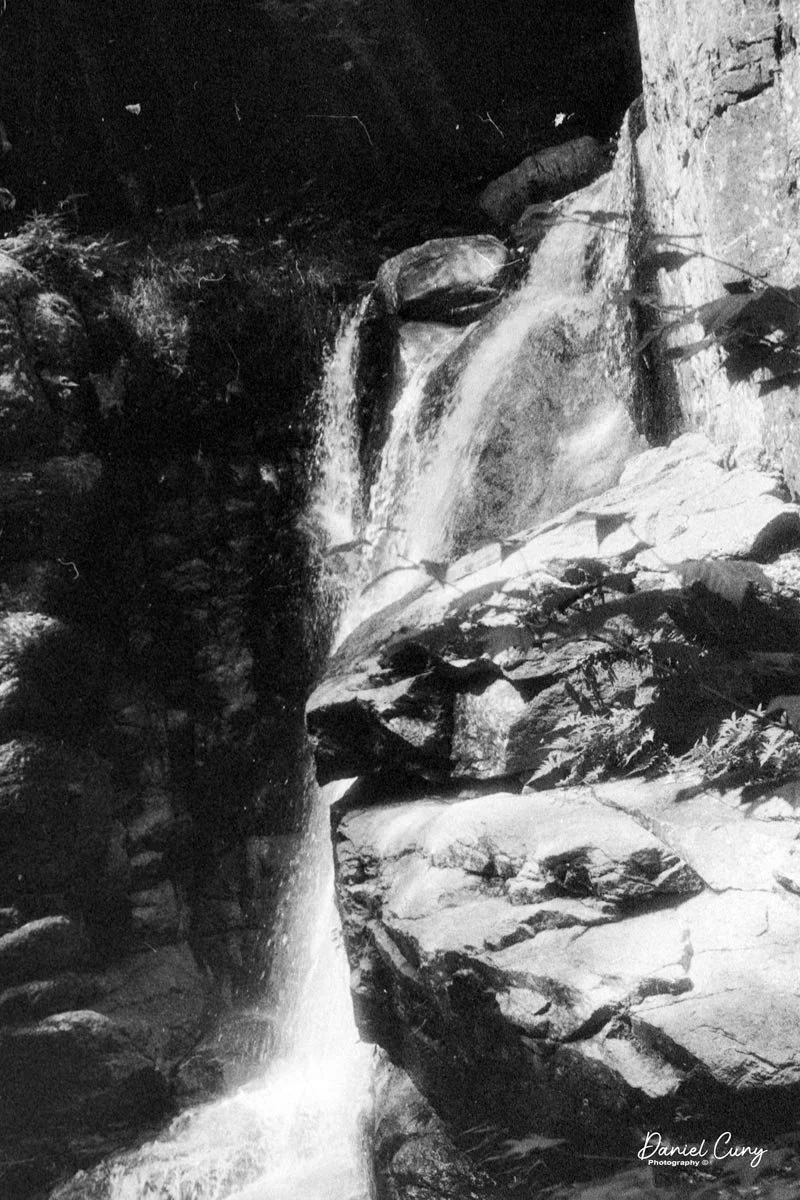
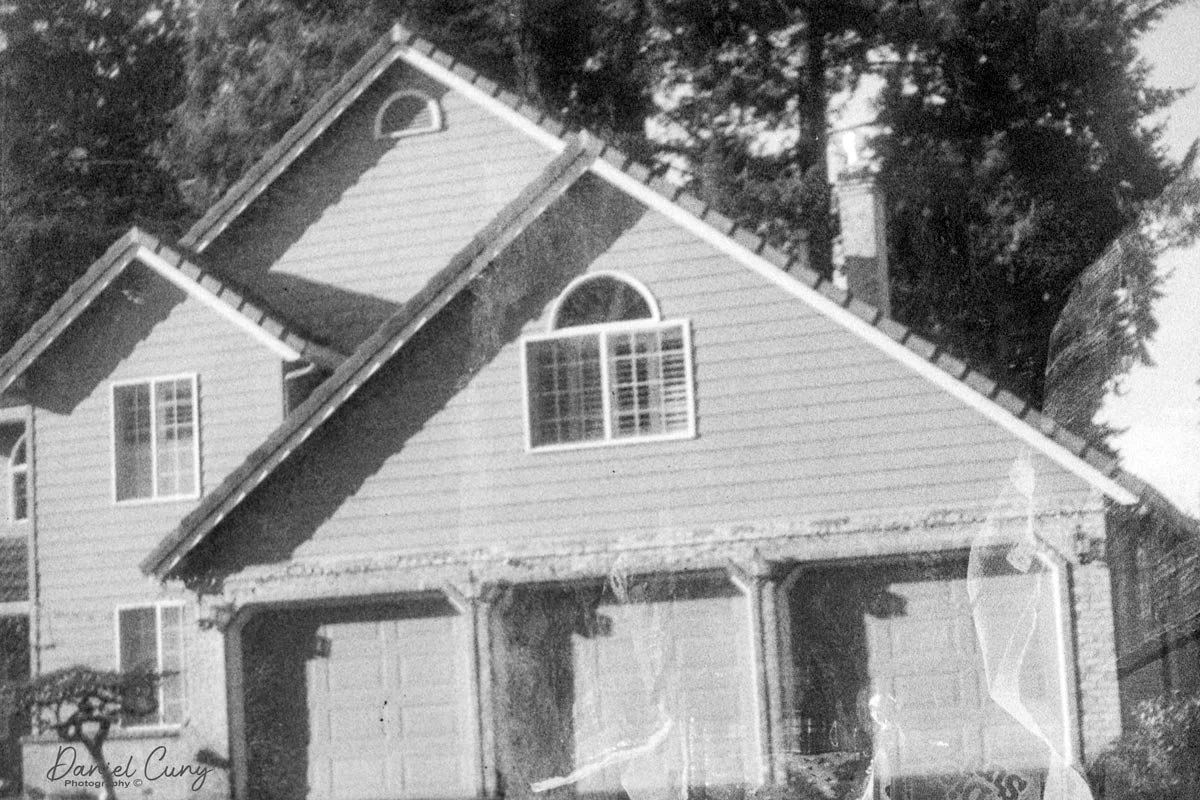
Where I live, it's usually overcast and raining, but I had a few hours where the sun almost poked its head out, so I loaded a roll of film into the camera and drove to two different places close to my home to take photos. The first was a local park with a playground, and the second was a home with a massive Christmas display. The display mainly consists of plastic figures on the front of the house. I figured I get a few good photos here. Here are the results of the photo journey.

Conclusion:

I need to admit, I wasn't sure how this camera would perform or if I would like to use this somewhat oddball camera. I have to admit, the camera worked great, and it was really fun to shoot with. I really enjoyed the waist-level finder and thought it was bright and accurate in its ability to focus sharply. I also tried the rangefinder, which performed just as well. On a scale of 1-10, I'd give this an 8, maybe even an 8.5, in its usability, a joy to use, and results.

 You can get good results using either the rangefinder or waist-level finder. It's the best of two worlds built into one camera. If you don't have one, you should add this to your collection. Try to find a good working example to take out and use. I don't think you'll be disappointed.

 Thank you for taking a few minutes to read about this fantastic camera.

 Until next week, please be safe.
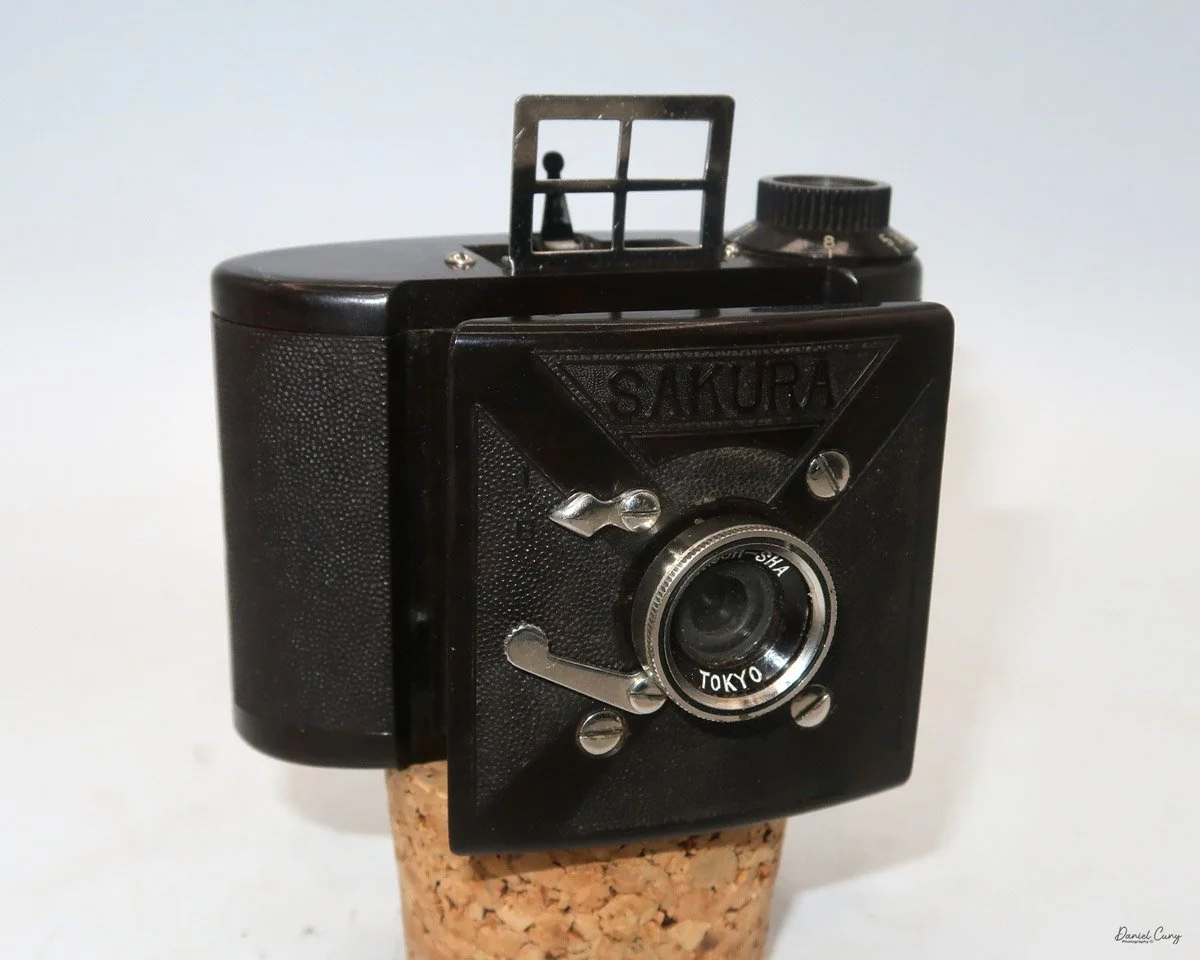
Corfield Periflex Camera

The Corfield Periflex is a relatively new camera to my collection. I've only had it for a few months, but I've desired to own one for many years. The opportunity arose to purchase one of the earlier models that was in good working condition and at a reasonable price for this camera in its condition, so I grabbed the opportunity and purchased it.

My Corfield Periflex Camera

 When the camera arrived, it was in good working condition and in the cosmetic condition described, so I was pleased with the purchase. I knew from purchasing the camera that my aim was to do a blog post on it, as the camera has many unique features that have not been seen in cameras before or since. 

 The Periflex is a 35mm camera with an appearance that resembles a Leica only because of the size and initial shape of the camera. Unlike the Leica cameras, the Periflex doesn't offer the photographer rangefinder focus, sprockets film advance, removable baseplate, or take-up spool, but it does offer the same lens thread mount and excellent optics in a small and compact camera made in the United Kingdom.

The Company:

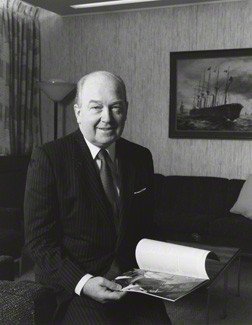
Sir Kenneth Corfield

Sir Kenneth Corfield (1924–2016) was a British engineer, entrepreneur, and photographer whose work significantly influenced the photographic industry in the UK, mainly through his company, Corfield Ltd. Known for his pioneering approach to camera design, Sir Kenneth's legacy is deeply intertwined with the Corfield Camera Company, which he founded in the mid-20th century. His innovative ideas, especially those focused on making quality, compact cameras, helped the brand gain a reputation in the photography community, although its operations ended in the 1970s.

 Kenneth Corfield was born in the UK in 1924 and trained as an engineer. He developed a passion for cameras and photography from an early age, and this interest led him to create camera equipment designed to fill the gaps he observed in the photographic tools available at the time. His mechanical expertise and curiosity about precision instruments motivated him to create Corfield Ltd., a company that produces cameras for professional and amateur photographers alike.

 Corfield founded his company in the post-war period when there was increasing demand for affordable, portable, high-quality photographic equipment. Starting in the 1940s, Corfield Ltd. initially operated as a small workshop but soon expanded to meet the needs of a growing photography market in the UK. Unlike the more prominent, established companies primarily located in Germany and Japan, Corfield's British roots gave his products a unique appeal in the domestic market. They also partnered with British Optical Lens Co. in Walsall, which designed and made the Lumar optics for Corfield.

Ad for the Corfield Camera

The company's first significant product was the Periflex, introduced in 1953. This camera became known for its innovative use of a periscope-type viewing system. This device made the Periflex one of the more unique 35mm cameras available at the time, as it allowed users to see the image through the lens without needing an expensive reflex mirror. The camera was compact, affordable, and relatively simple compared to other rangefinders, and it catered to a market that wanted quality at an accessible price.

The Periflex series became the backbone of Corfield Ltd.'s reputation. The first model, the Periflex I, was followed by several iterations, including the Periflex II, III, and Gold Star. Each version introduced new features and enhancements to meet photographers' increasing demands, such as improved shutter speeds, lens mounts, and more durable designs. 

The defining characteristic of the Periflex cameras was the periscope-like focusing mechanism. This mechanism, placed directly above the lens, allowed photographers to focus accurately without the bulk or complexity of a traditional single-lens reflex (SLR) system. This feature made the Periflex a unique hybrid of a rangefinder and SLR qualities, appealing to those who valued compact design but still wanted accurate focus control. Although some photographers found the system unorthodox, others appreciated the camera's compactness and precision, making it popular among professionals and amateurs.

Despite its successes, Corfield Ltd. faced stiff competition from German and Japanese camera manufacturers, producing high-quality cameras on a much larger scale. Companies like Leica, Nikon, and Canon dominated the market with advanced SLRs, and Corfield's unique designs needed to catch up with the rapid technological advancements. While the Periflex series had gained a loyal following, it required more sophistication and reliability than its competitors, ultimately limiting its market appeal.

In the 1970s, Corfield Ltd. ceased producing its cameras, and the Periflex series also ended production. Although the brand did not survive, the innovations introduced by Kenneth Corfield influenced camera design and highlighted the potential for high-quality British-made photographic equipment.

Kenneth Corfield's contributions to the photographic world extended beyond his camera company. Even after Corfield Ltd. ceased operations, he remained active in the photography industry. Later in his career, Corfield was involved with Gandolfi, a British large-format camera manufacturer, and his influence continued to be felt through his consulting and design work in the field.

Corfield's legacy is remembered by photography enthusiasts and collectors who admire his innovative approach to camera design. The Periflex cameras, in particular, are valued among collectors for their uniqueness and historical significance. Sir Kenneth's work reflects a time of British ingenuity in the photographic industry. It is a testament to a small, independent company's impact on a competitive global market.

Bev Parker has a wonderful website dedicated to The Corfield Company.

My Camera:

My Corfield Periflex camera isn't the first model, as the first 200 Periflex camera had a black top and bottom plate like mine. Still, they were covered in brownish pigskin on the body. I believe mine is the third version, as the engraving has been moved to the periscope but still has the black top and bottom plate, black leatherette covering, and chrome lens.

 My Periflex camera is 5.5" wide by 3.25" tall, including the periscope, and 3.25" deep from the back of the camera to the front of the lens focused to infinity. With the standard Lumar 50mm f3.5 lens, it weighs 1 lb 1.4 oz. The camera is made from aluminum, as opposed to brass, which was a more common construction material at the time. Aluminum was easy to work with for both the body and lenses and was less expensive.

This hybrid camera doesn't have a rangefinder to focus. Still, it has a very small mirror that drops down into the camera and points out through the lens, allowing the photographer to focus on the subject, which is very similar to a single-lens reflex camera. The periscope is achieved by the center tube over the lens, which has a small knob on the back that you pull down and look through the optics on the top to view your subject.

Periscope mirror when depredded in the film chamber

I was very skeptical at first, but it does work and focuses very crisply on the subject as it should. There are some things that could be improved in this system. First, you need to open the aperture to get the brightest image to focus on, so you don't do this quickly. Once the camera is focused, you stop the lens down to the desired aperture setting to get the proper exposure, move your eye to the mounted viewfinder on the top to frame your subject, and then take the photo. Once you do it a few times, it becomes manageable. But it would be best if you remembered to reset your aperture, which I didn't do on a few frames. That's just a matter of getting to know the camera and using it more often. I DID like looking through the lens in a small compact camera to focus on the subject.

 My Periflex has shutter speeds from 1/1000 to 1/30 sec exposure times along with "B" for timed exposures. Above the shutter speed indicator is a knob that needs to be turned to cock the shutter before making an exposure. Advancing the film DOES NOT cock the shutter. These are two separate operations and are not intertwined. You do, however, need to advance the film winding lever AND cock the shutter before the camera will fire. This makes it impossible to take a double exposure on this camera. At least, I am still looking for a way to do it. The shutter release button is on the front of the camera, similar to the Topcon cameras, so it's more of a squeezing motion than a pressing down motion. There is a removable collar around the shutter release to attach a Leica-style cable release for time exposures.

Top view of Corfield Periflex. from L-R, Rewind knob, Removable viewfinder, Periscope mirror, Shutter speed dial with Shutter cocking knob, Rewind button, Film advance knob

Another oddity about my camera is that I didn’t discover it until after I had shot all the photos for this post. I didn’t think there were aperture settings on the lens, but after I reread the instruction manual, there is a small black mark on the lens that goes along the depth of field scale which indicates what aperture you’re using. Looking at the Corfield Periflex instruction manual, they discuss apertures and depth of field, but there is where the aperture settings are. All my exposures were guesses of the size of the aperture needed. The focus on my lens is smooth, the aperture ring moves well, too, and the Lumar lens system has a Leica Thread mount, so the advantage is you can use any LTM lens with this camera.


Loading the film is very simple, and there is another camera oddity in the loading process on the camera. To open the back to load the film, you turn the chrome circle on the camera next to the tripod socket until the arrow points to the white dot. Once that is done, the camera's back will slide downward, exposing the film chamber. I first noticed that there was no drive gear to advance the film, and the take-up spool (drum) on the camera was much larger than the usual 35mm cameras on the market. The take-up spool is actually a drum that advances 180 degrees per wind of the film advance, so as the film is pulled and wrapped around the drum, the spacing of the film frames becomes more significant as you go from the first to the last frame.

Once the film is loaded, you slide the back into position on the camera and turn the chrome wheel on the bottom away from the white dot to lock the back onto the camera. When finished taking the roll of photos, rewind the film back into the film cassette. The drum/take-up spool release is a small chrome button between the shutter and film advance knobs. Press that button down, and you can rewind the film back into the cassette for processing.

My results:

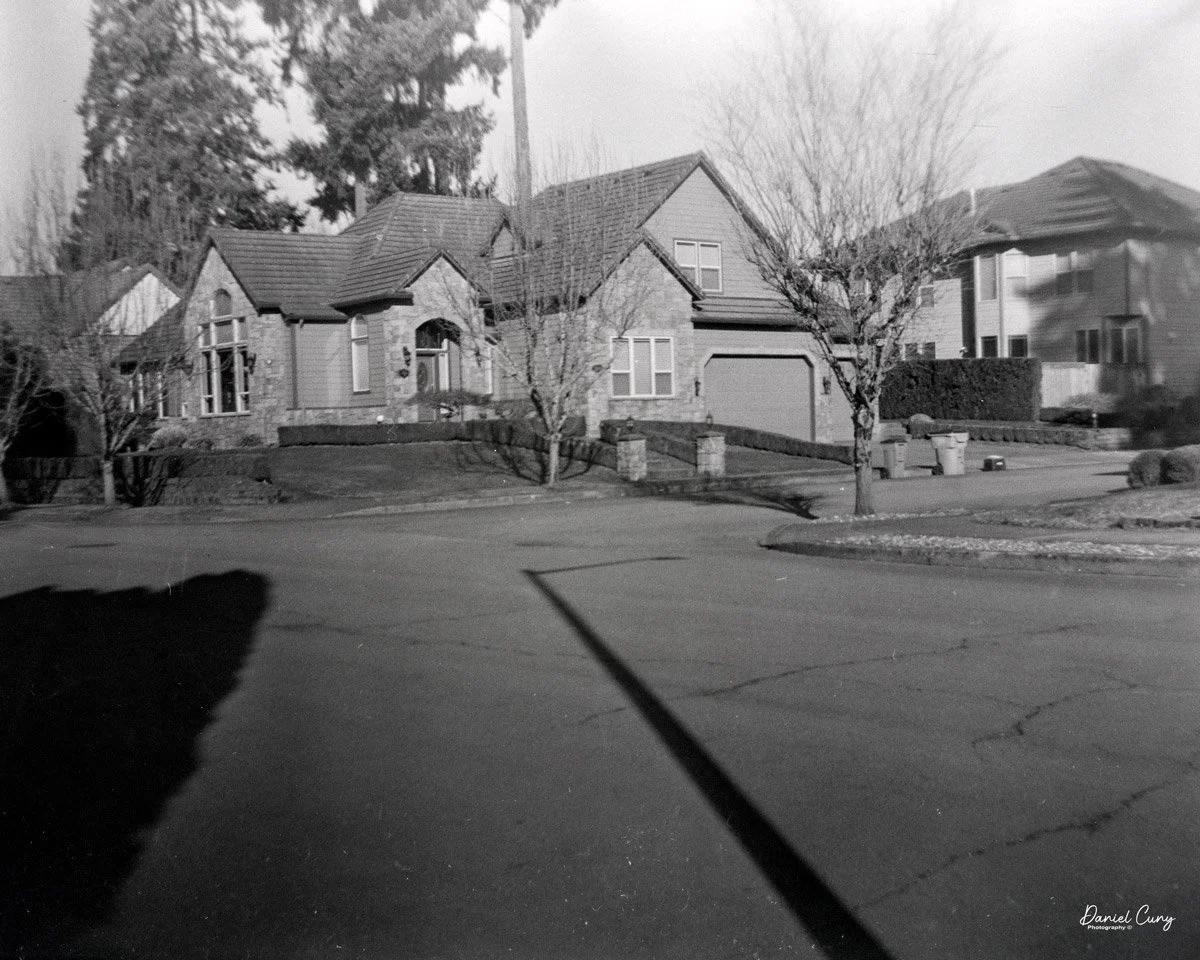
I took the camera for a walk in the neighborhood on a sunny afternoon to see what I could do with the camera. It took some time to think about the metering process on the subject. Opening the aperture, setting the shutter speed, pressing down the periscope to focus (which was fun and easy), resetting the aperture to a size opening I thought might be the correct aperture size, putting the viewfinder to my eye to compose the photo, then taking the photo. Certainly not like cameras today with autofocus, automatic light meter settings, etc. You slow down, take your time and compose the shot, which I enjoy doing.

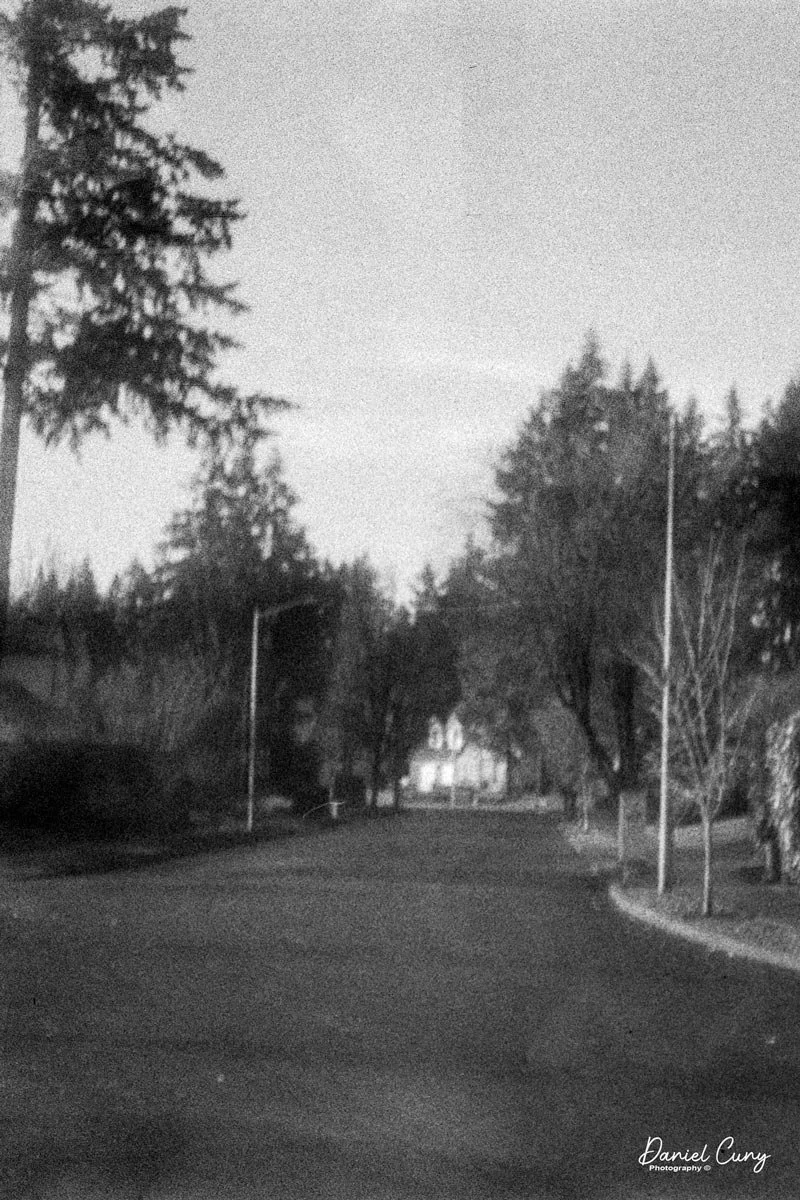
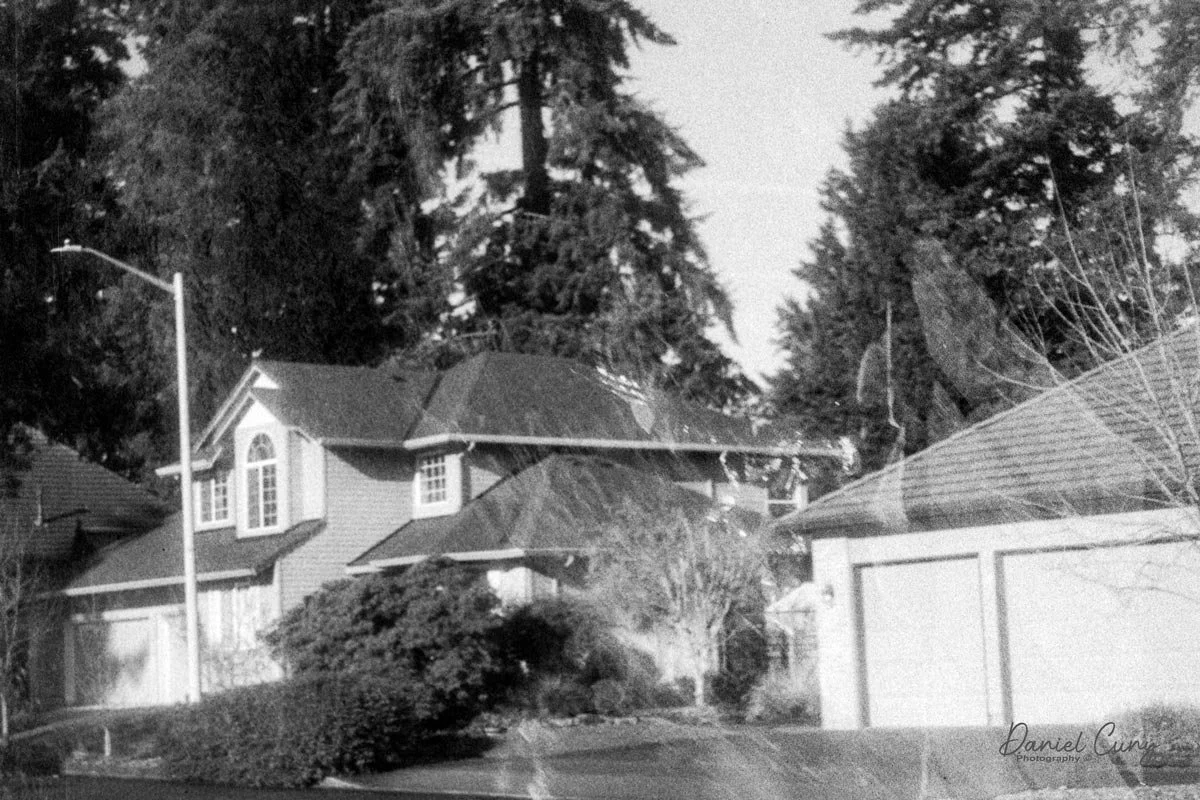
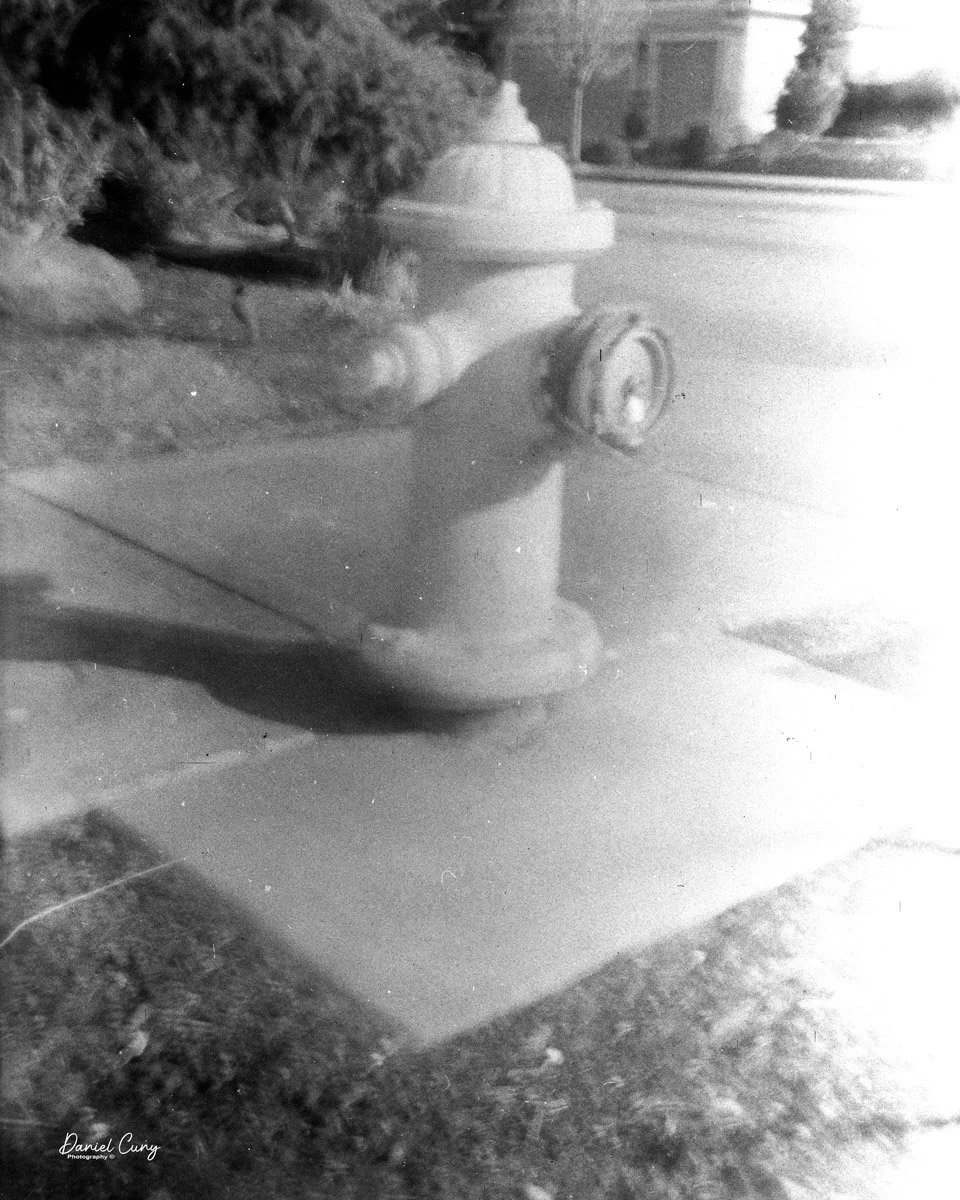
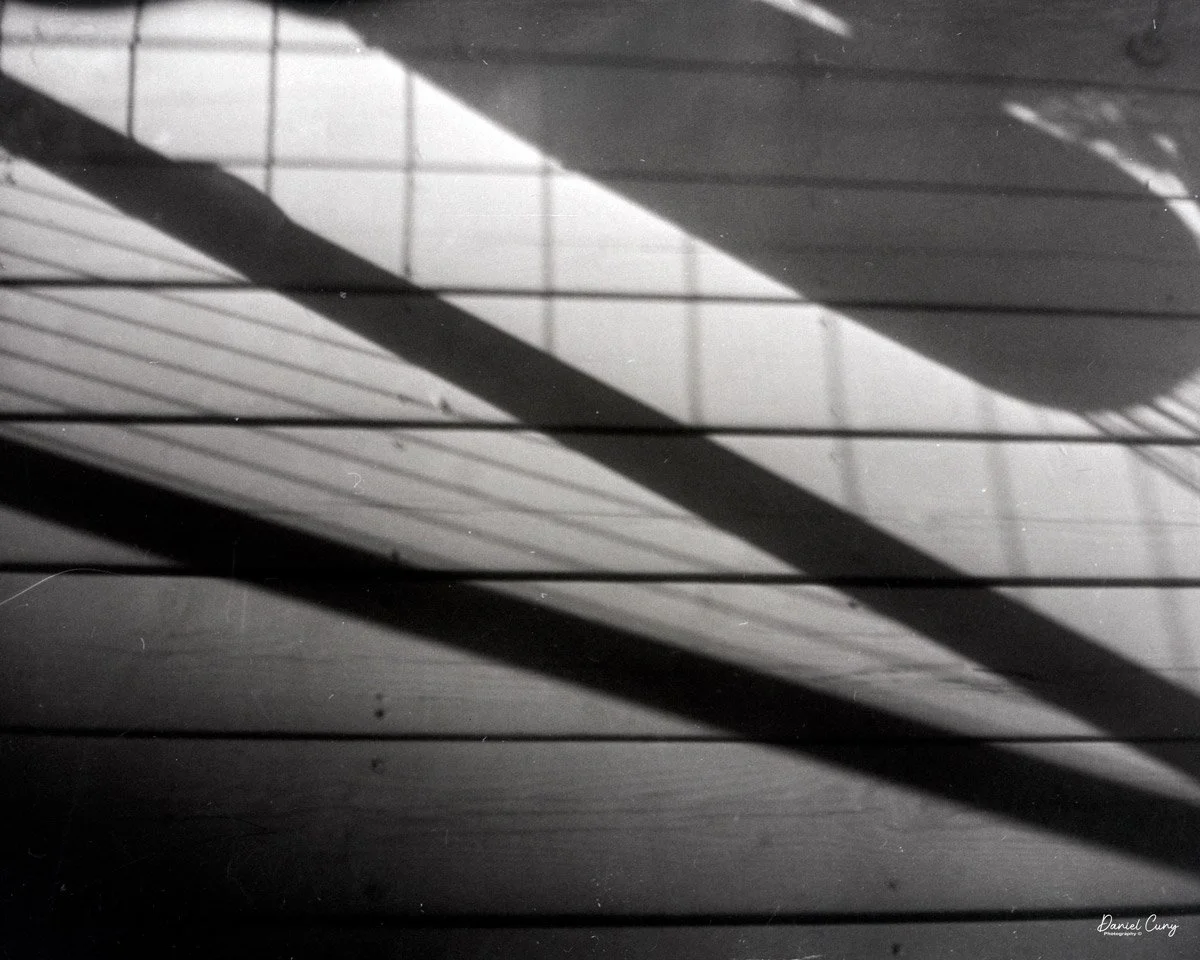
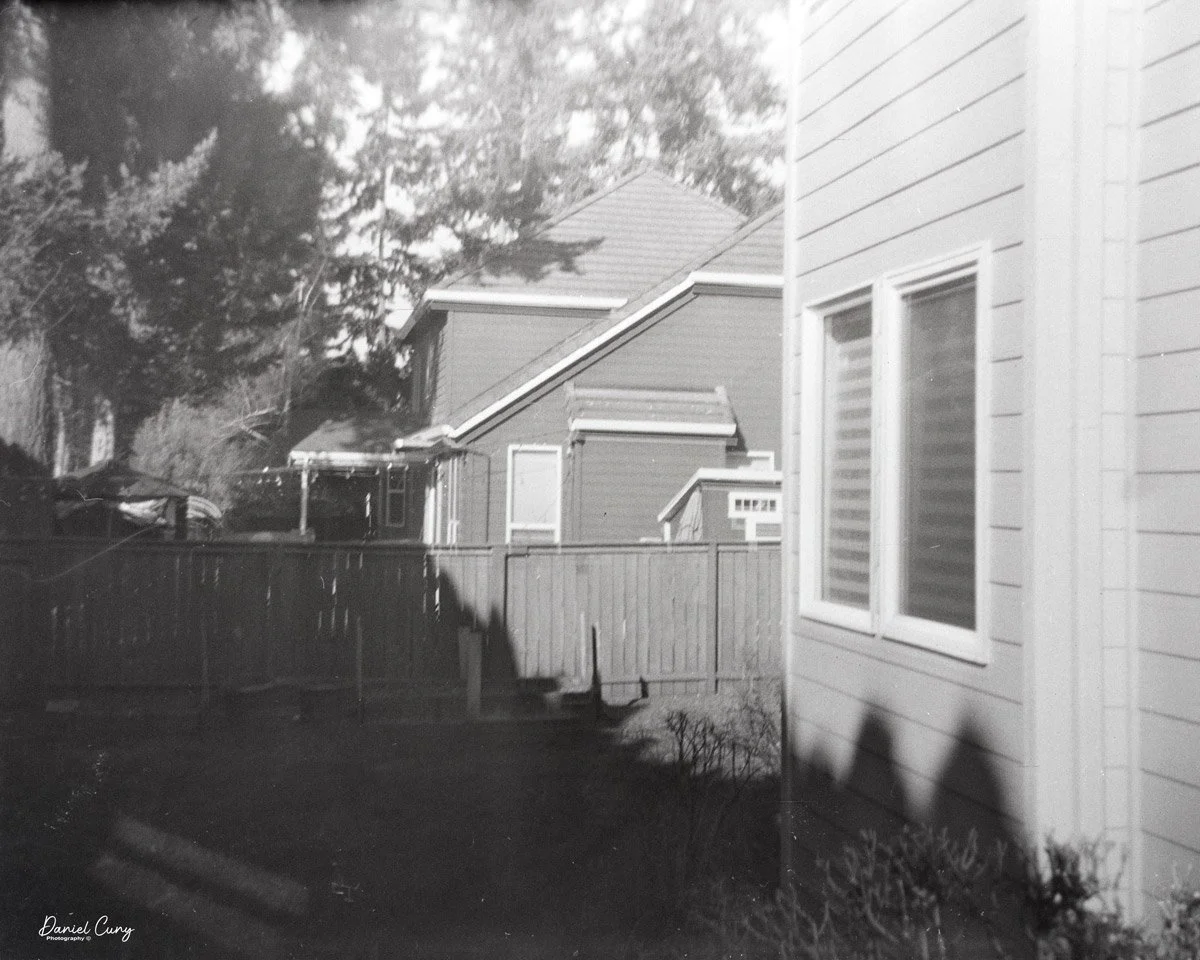
Here are a few of the images from the camera.

Conclusion:

I enjoyed shooting with the Corfield Periflex. It slows you down and makes you think about the process of creating an image rather than taking one. Not that the photos shown are any works of art, but I like the slower and more methodical process of taking the photo.

 The camera is small and compact, has the shutter speeds needed, and has good optical sharpness. After finding where the aperture settings are, it makes more sense on how to do the aperture settings. I only wish I knew that before using the camera for the first time.

 Thank you for taking a few minutes from your day to read my review of the Corfield Periflex, a gem of a camera. 

 Until next week, please be safe.