Lumiere LuxBox (Ver. 2)

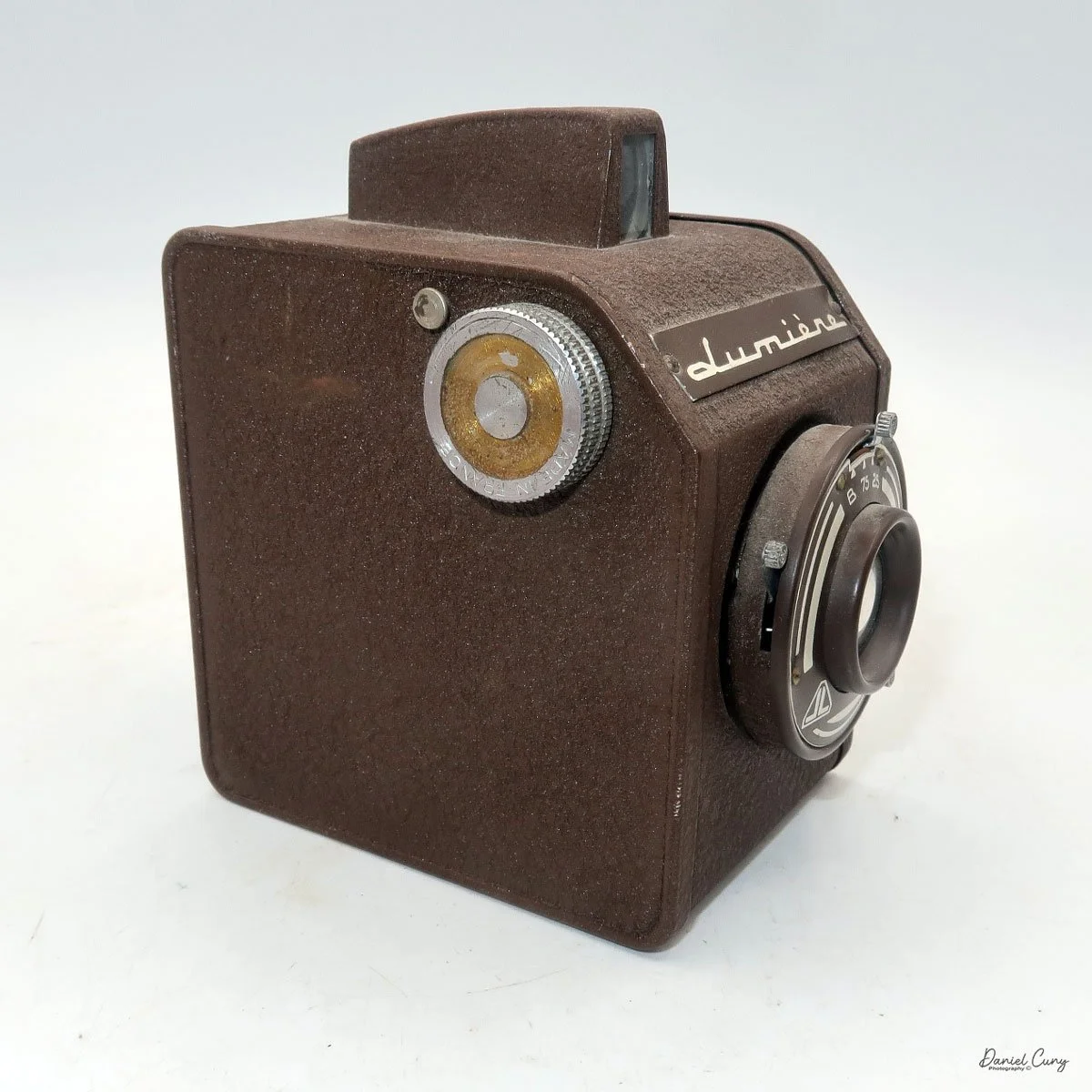
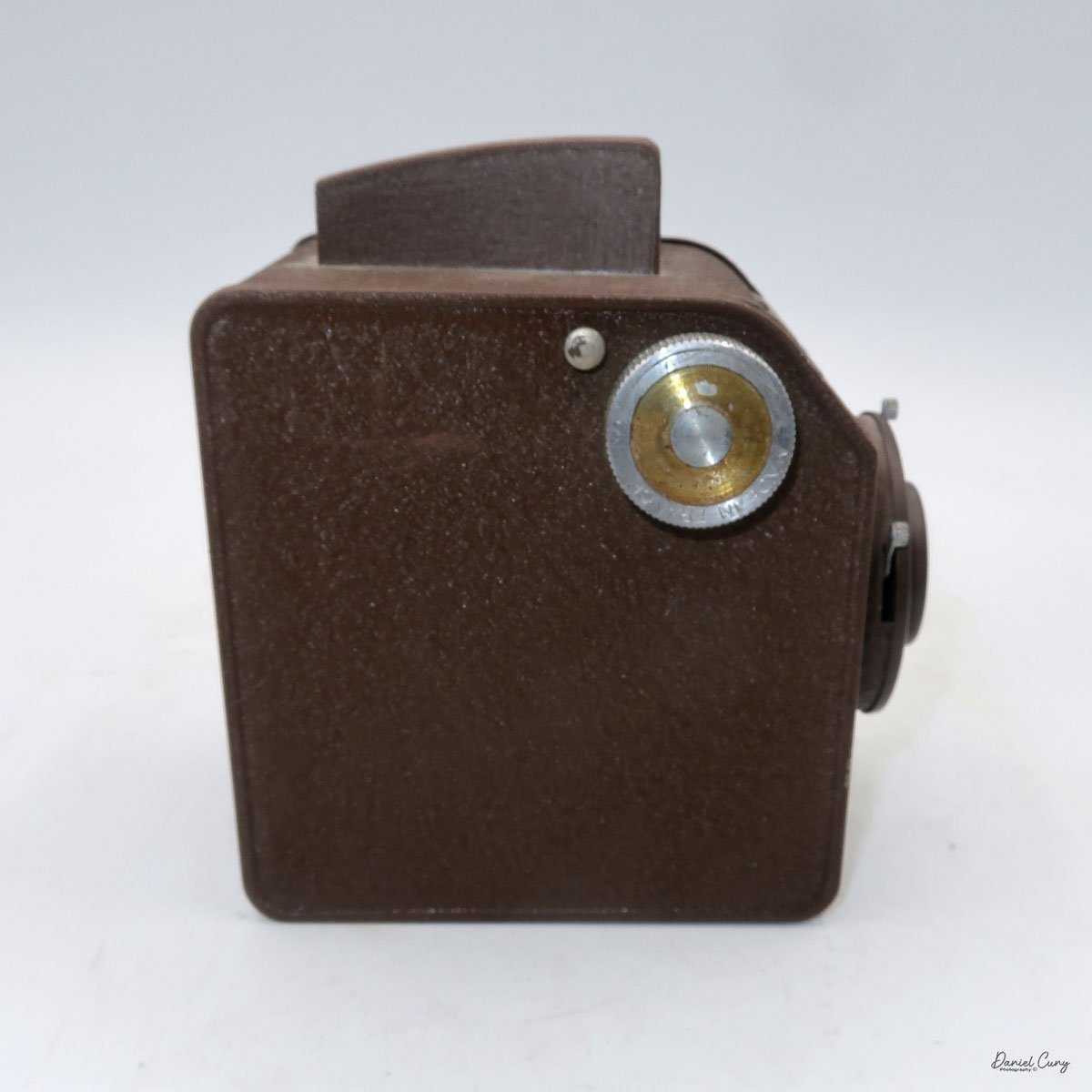
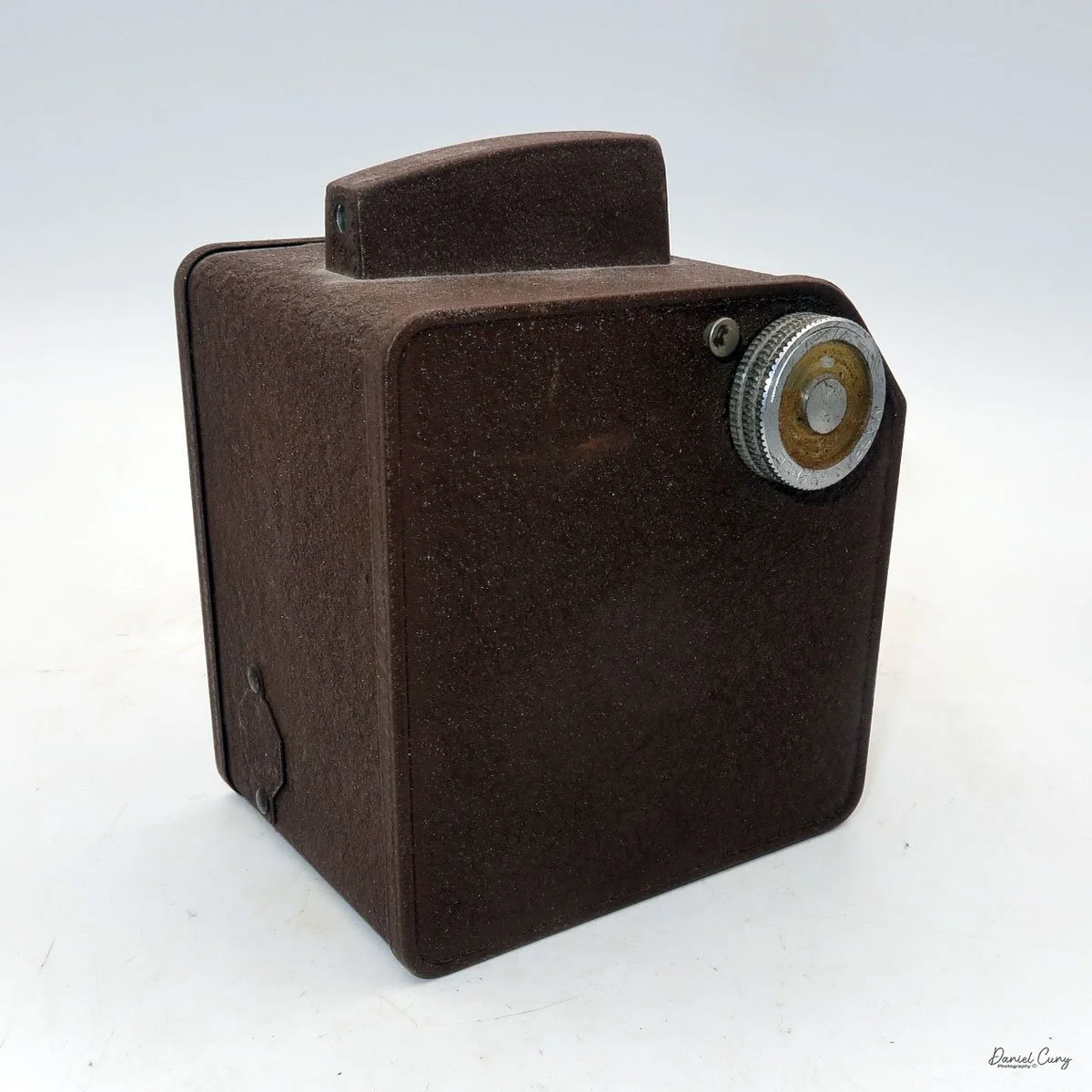
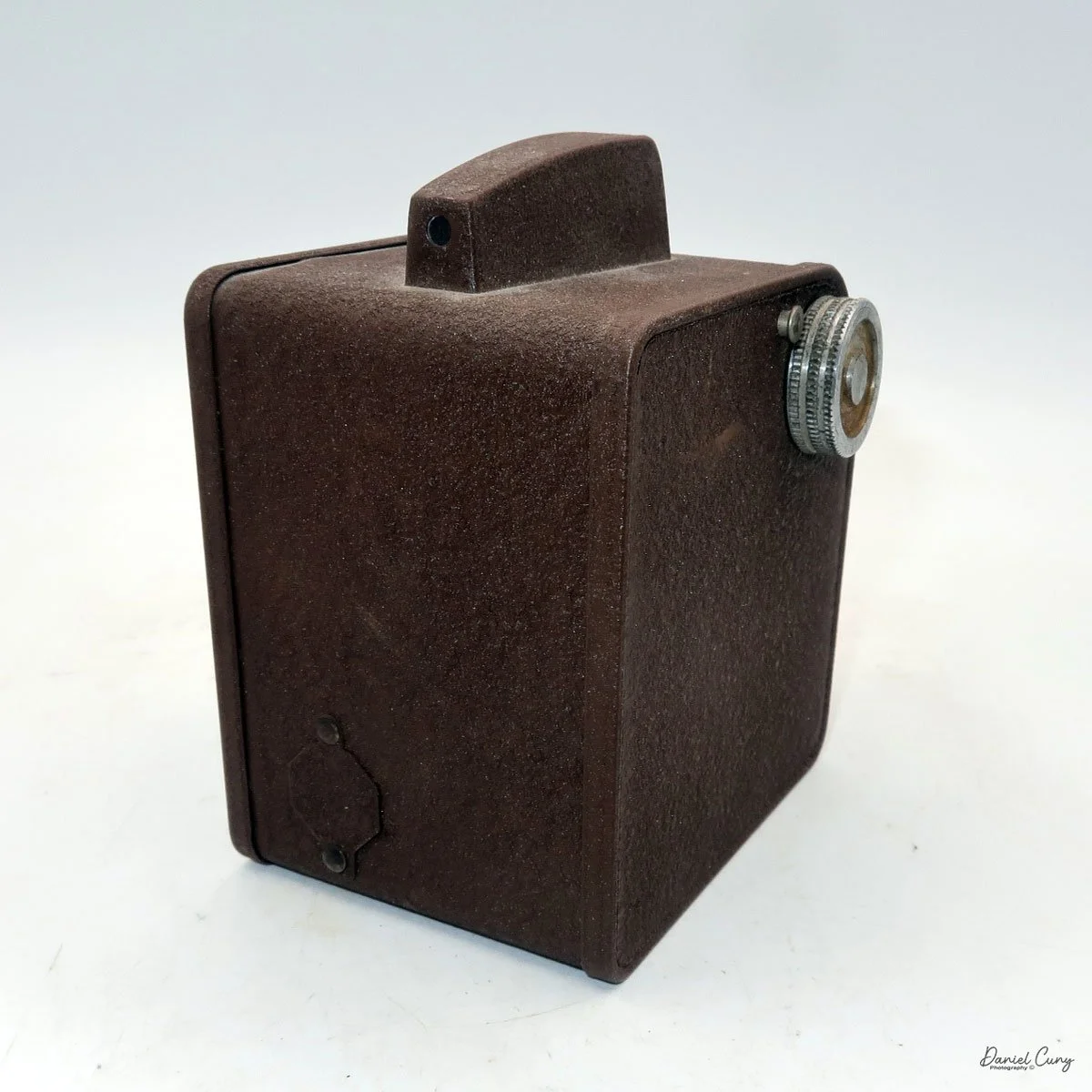
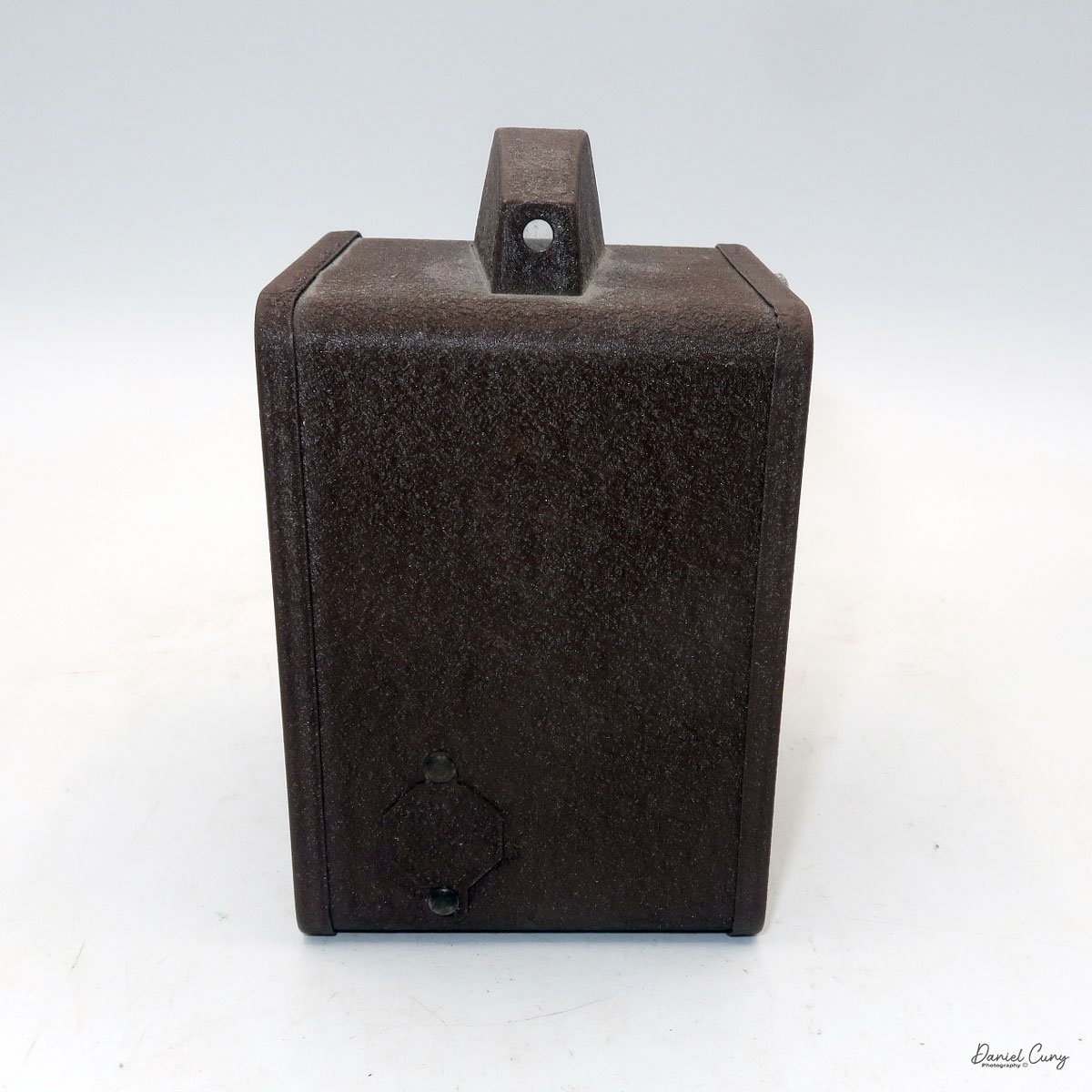
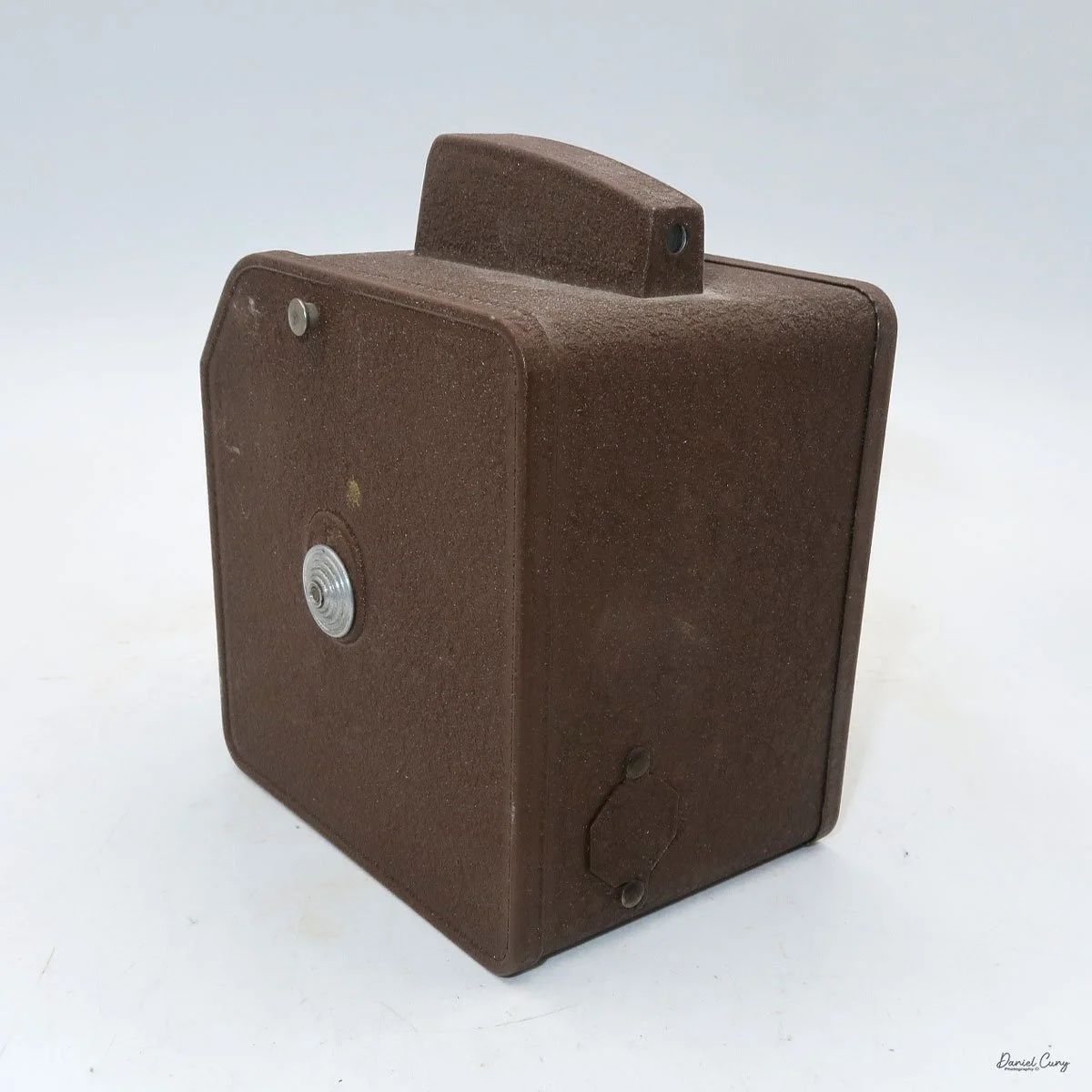
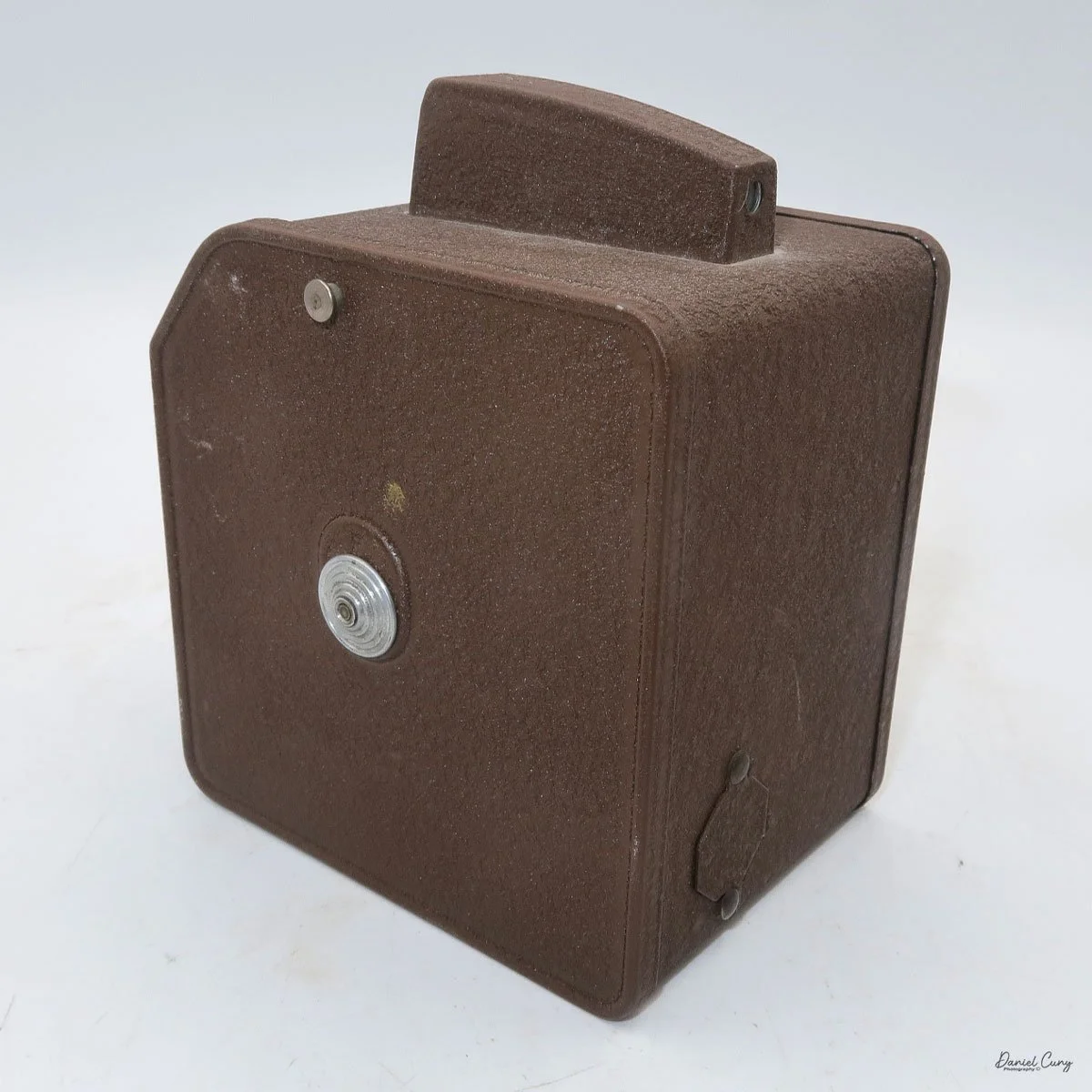
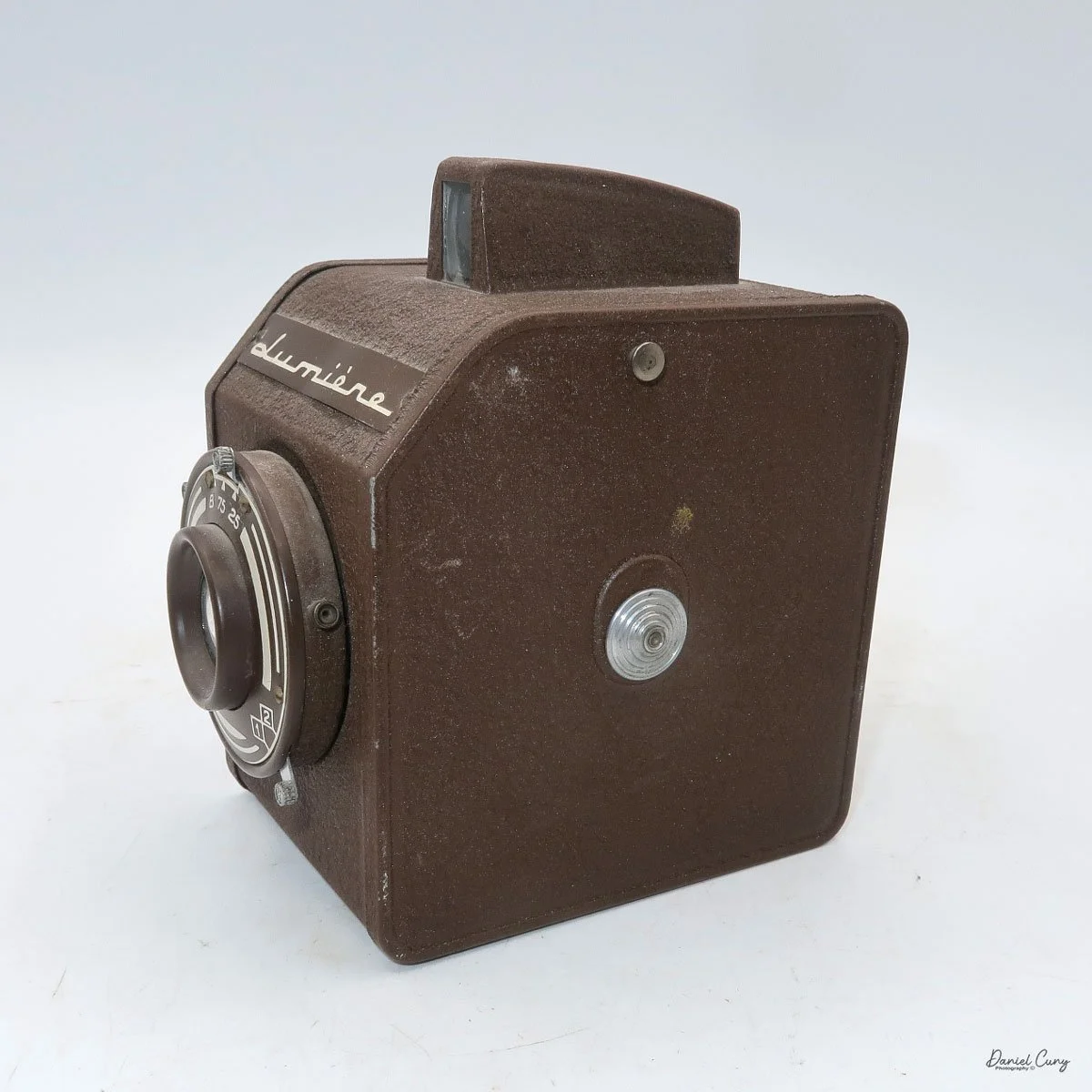
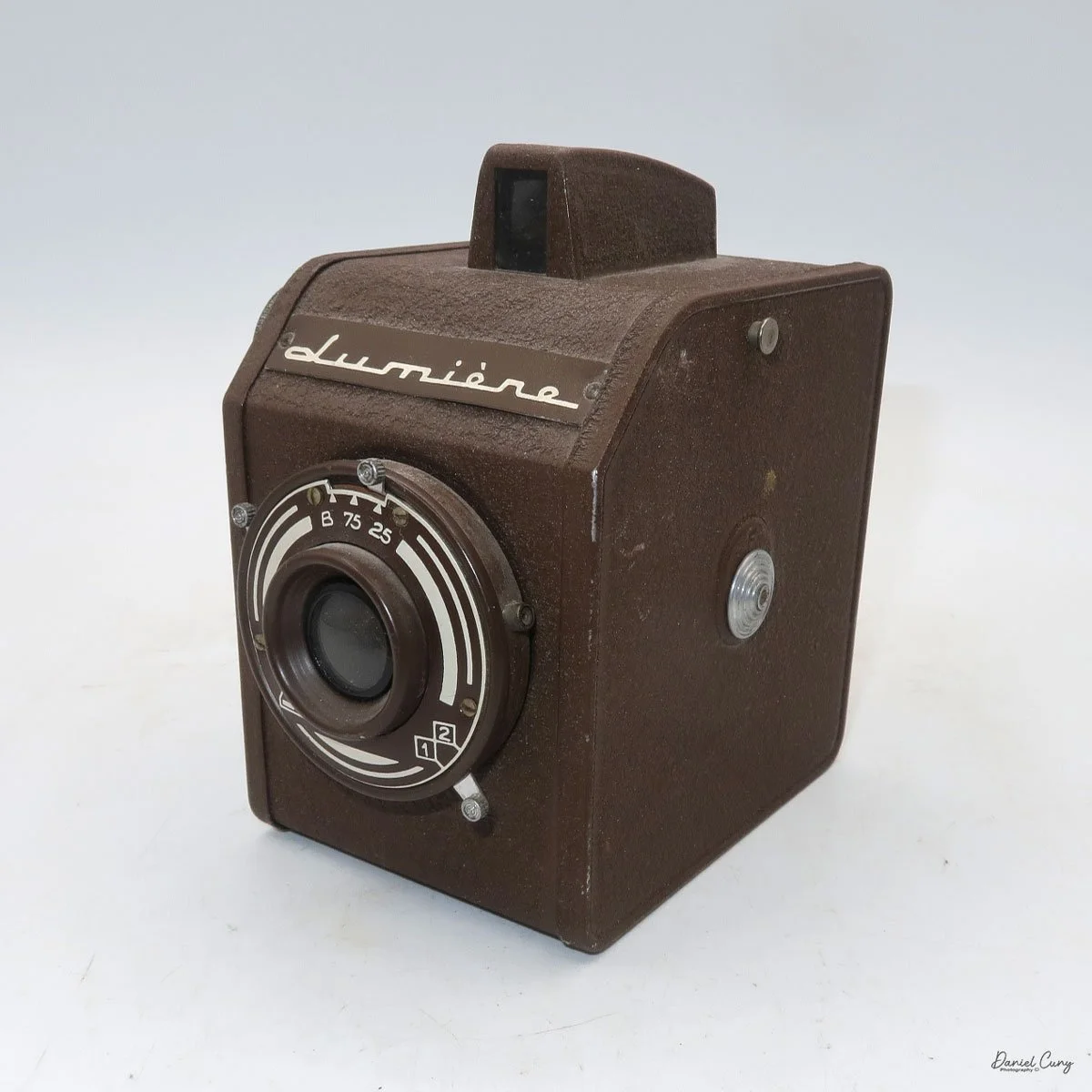
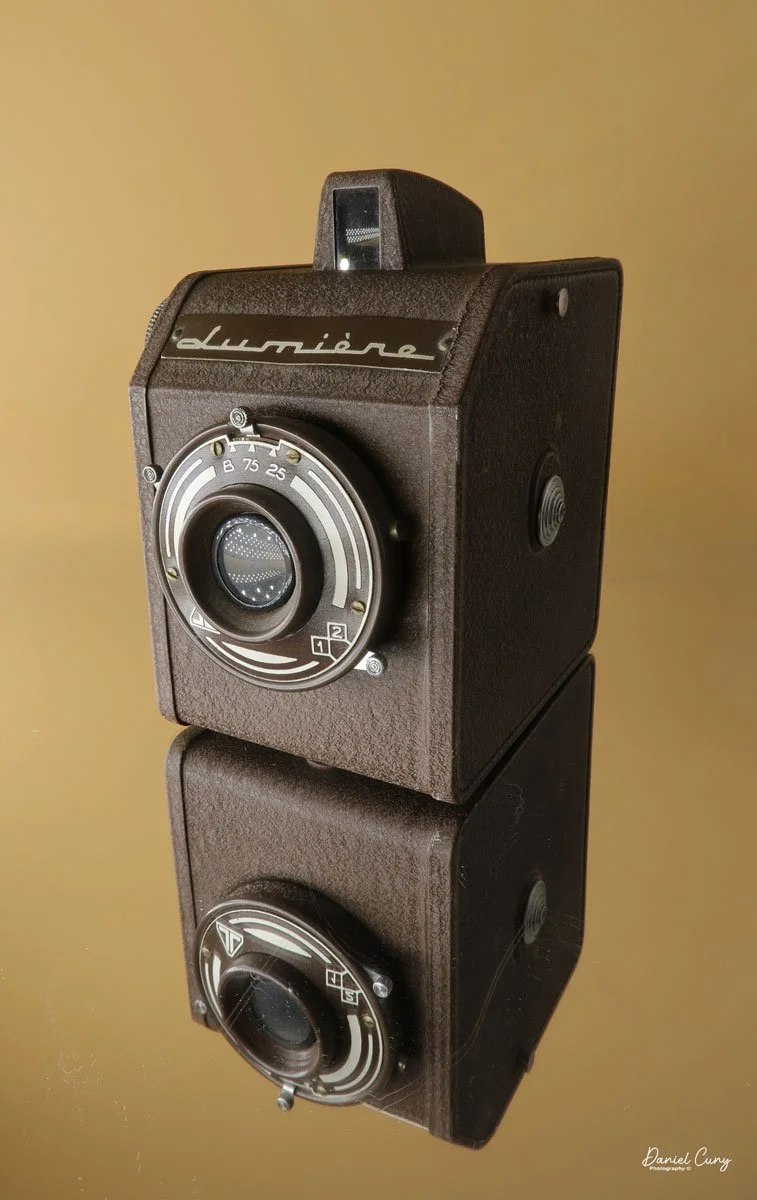
My Lumiere LuxBox camera.

I was drawn to the Lumiere LuxBox, a camera I bought at a Paris flea market 20 years ago. Among other simple cameras, its unique shape and brown color caught my eye.

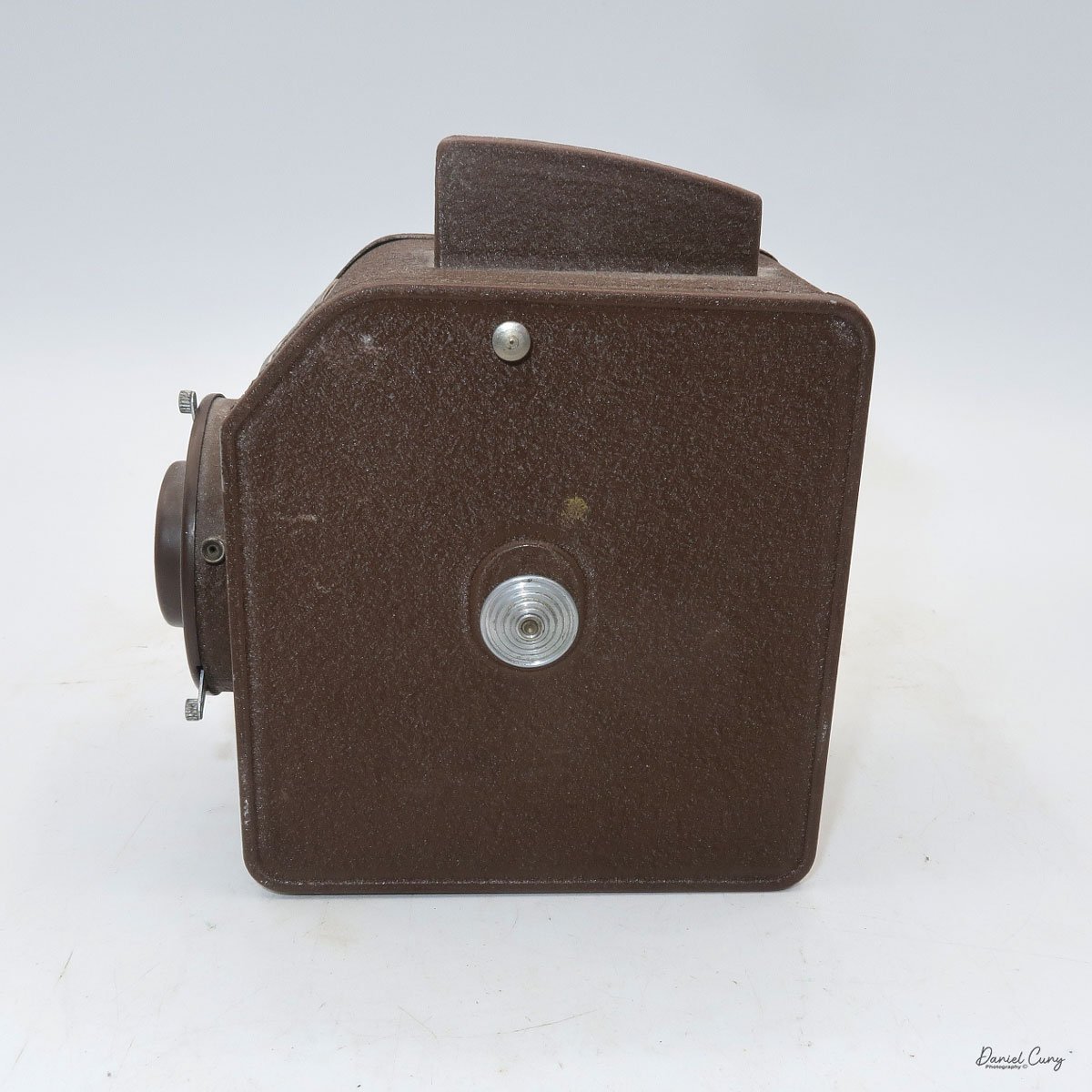
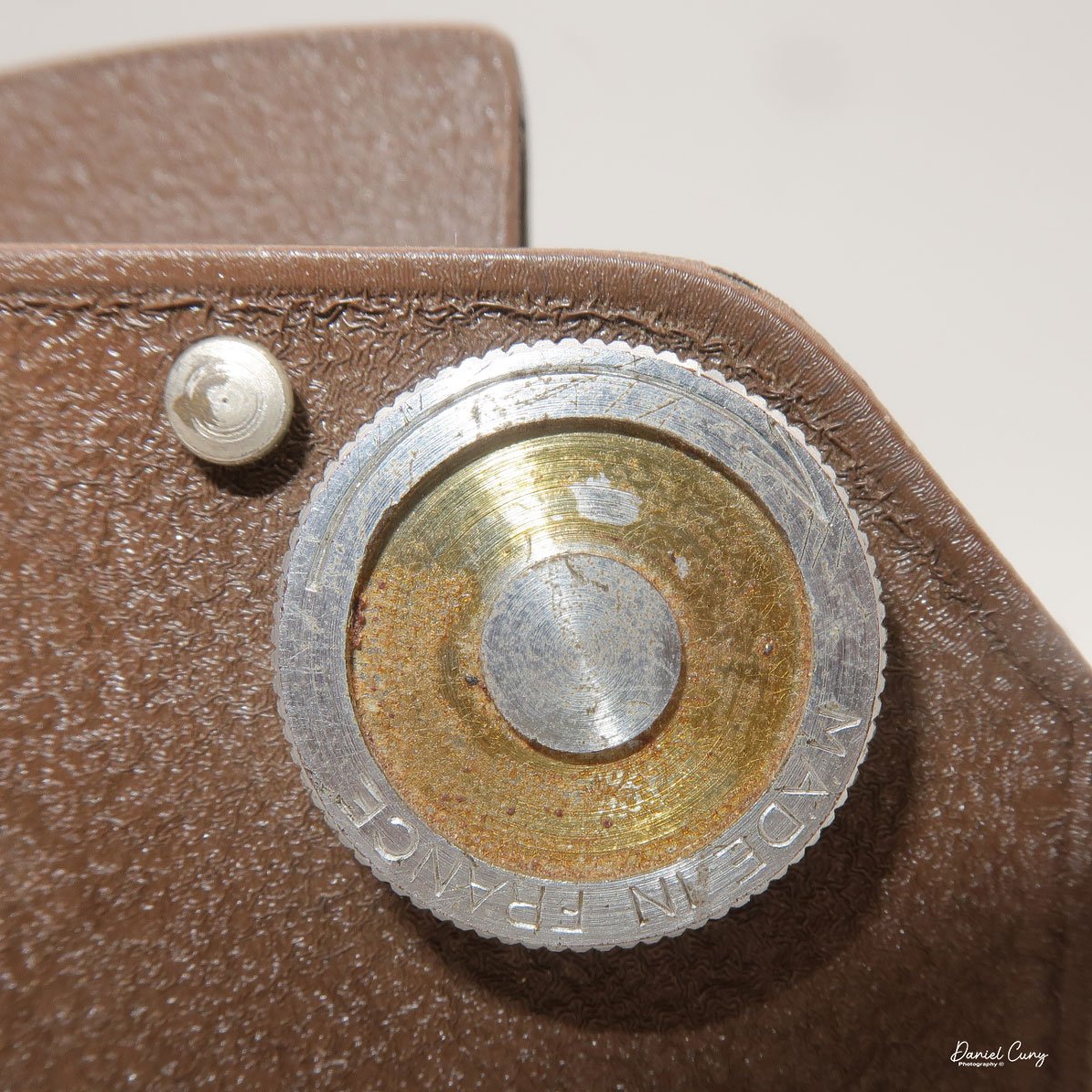
 When I picked up the camera, I saw it was in great shape. The two-speed shutter worked, there were two aperture settings on the lens, and the crinkle-finished metal body looked nice. I liked the lens pattern and the riveted nameplate on the front. The design reminded me of Ferrania Rondine cameras from Italy. You can unlock the film insert and remove it from the body from the side, unlike many other box cameras. The solid metal body was another thing I liked.

 After a short negotiation with the vendor, we agreed on a price. I paid, put the camera in my backpack, and moved on to the next tables at the market. Other than a group of fabulous glass negatives taken in the French countryside during the 1920s, the Lumiere LuxBox was the only camera purchased at the Paris flea market on this day.

 About 20 years later, and just a few weeks ago, I was searching for a camera to write about. The Lumiere LuxBox caught my attention again. I was somewhat familiar with the French Photographic Company, Lumiere, as I have previously written about another one of their wonderful miniature camera, the Super ELJY camera.

 Although I thought last week’s blog would be my final post of the year, its simplicity inspired me to shoot a roll of film and share a short article. So here I am, telling you about this relatively simple, ordinary, oddly shaped box camera from France, made in the early 1950s.

History:

 To give some background, Lumière was a pioneering French camera company founded by Charles-Antoine Lumière in Lyon in the late 19th century. The company became best known for the achievements of Auguste and Louis Lumière. Their innovations in motion-picture technology and color photography helped define early cinema and modern photographic materials.
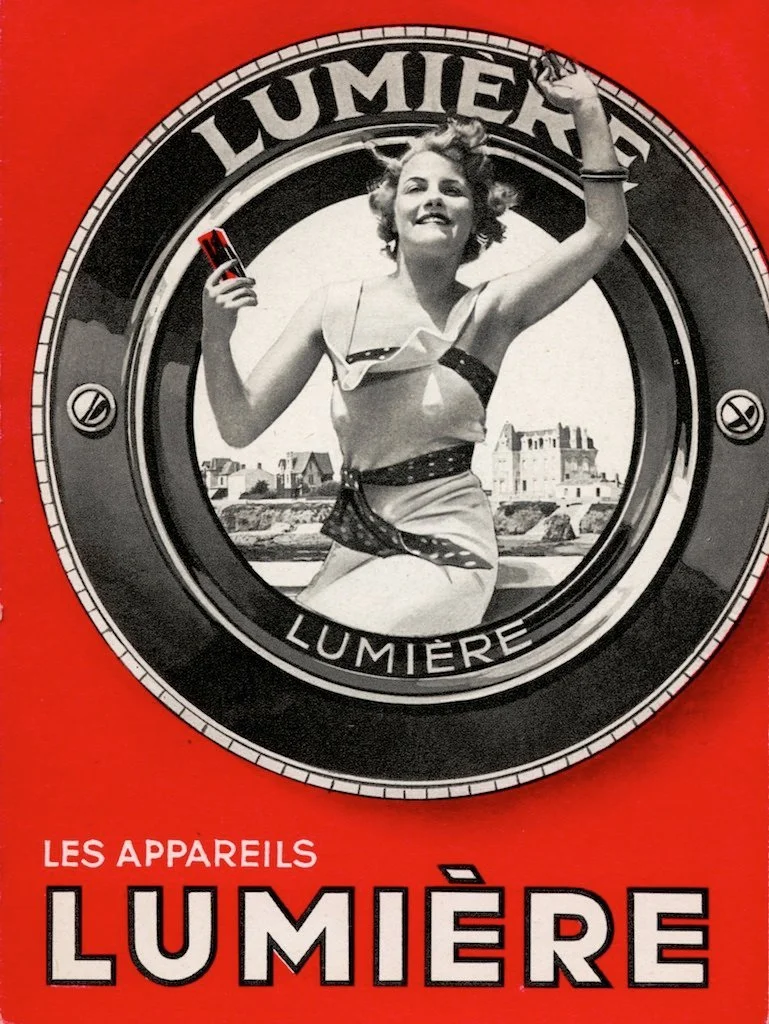
Lumiere Advertisment

 The Lumière enterprise began as a manufacturer of photographic plates. Louis Lumière invented a highly sensitive "blue label" dry plate at the age of 17. This plate enabled much shorter exposure times and quickly became a commercial success. The company soon built a large factory in Lyon's Monplaisir district and became one of Europe’s major suppliers of photographic materials by the mid‑1890s.

 After their father saw Edison’s Kinetoscope in Paris, Auguste and Louis developed the Cinématographe, a lightweight device that could record, print, and project movies. Patented in 1895, it used perforated film and a claw mechanism, making it more practical than other systems. This led to the first public film screenings, including “Workers Leaving the Lumière Factory.” Imagine how exciting that was for photography fans then.

 By the early 1900s, Lumière stopped making films and focused on photographic technology, especially color processes. In 1903, they patented Autochrome Lumière, a color plate process that used dyed potato-starch grains. It was introduced in 1907 and became the first major color system widely used through the 1930s. Learning about these innovations makes me appreciate their cameras even more.

 Lumière began manufacturing cameras in the late 1920s and produced various models until about 1961. The company was purchased by Swiss firm Ciba in 1961 and later became part of Ilford France. For collectors like me, the Lumière name still stands out in early photography and cinema. sures 4.5 inches tall (including the eye-level finder), 4.25 inches deep, and 3 inches wide (including the film advance knob). It weighs 14.2 ounces without film loaded. 

My Camera:

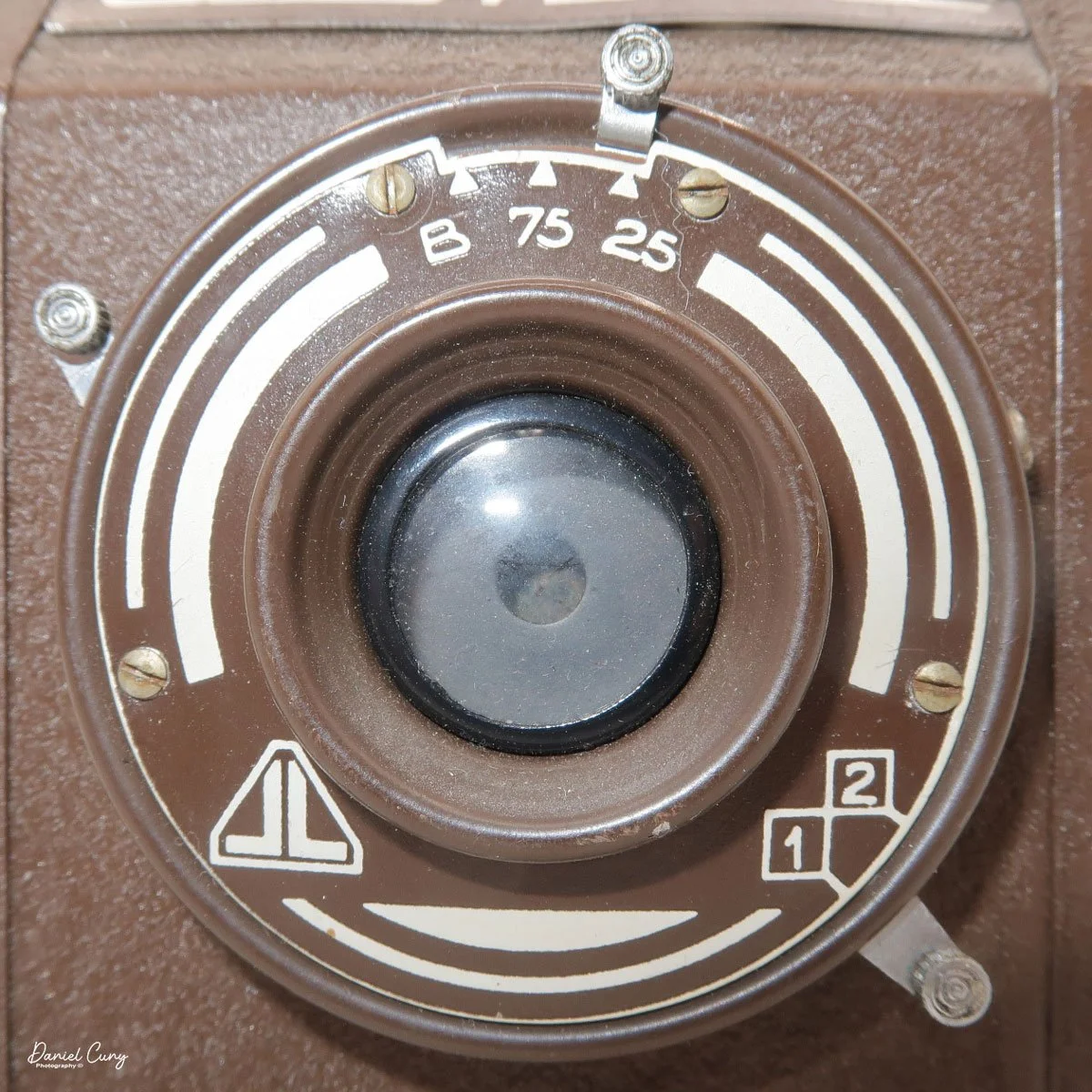
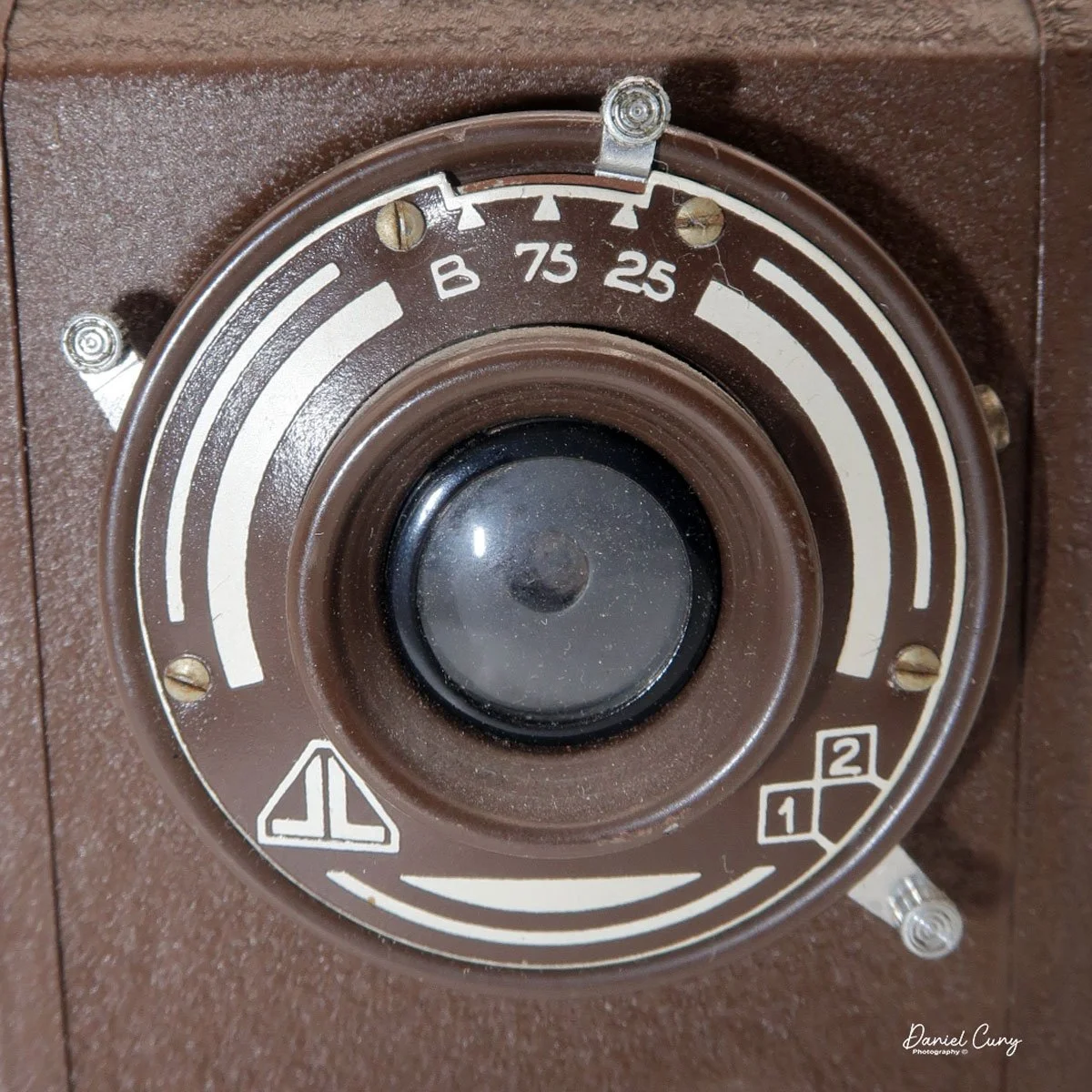
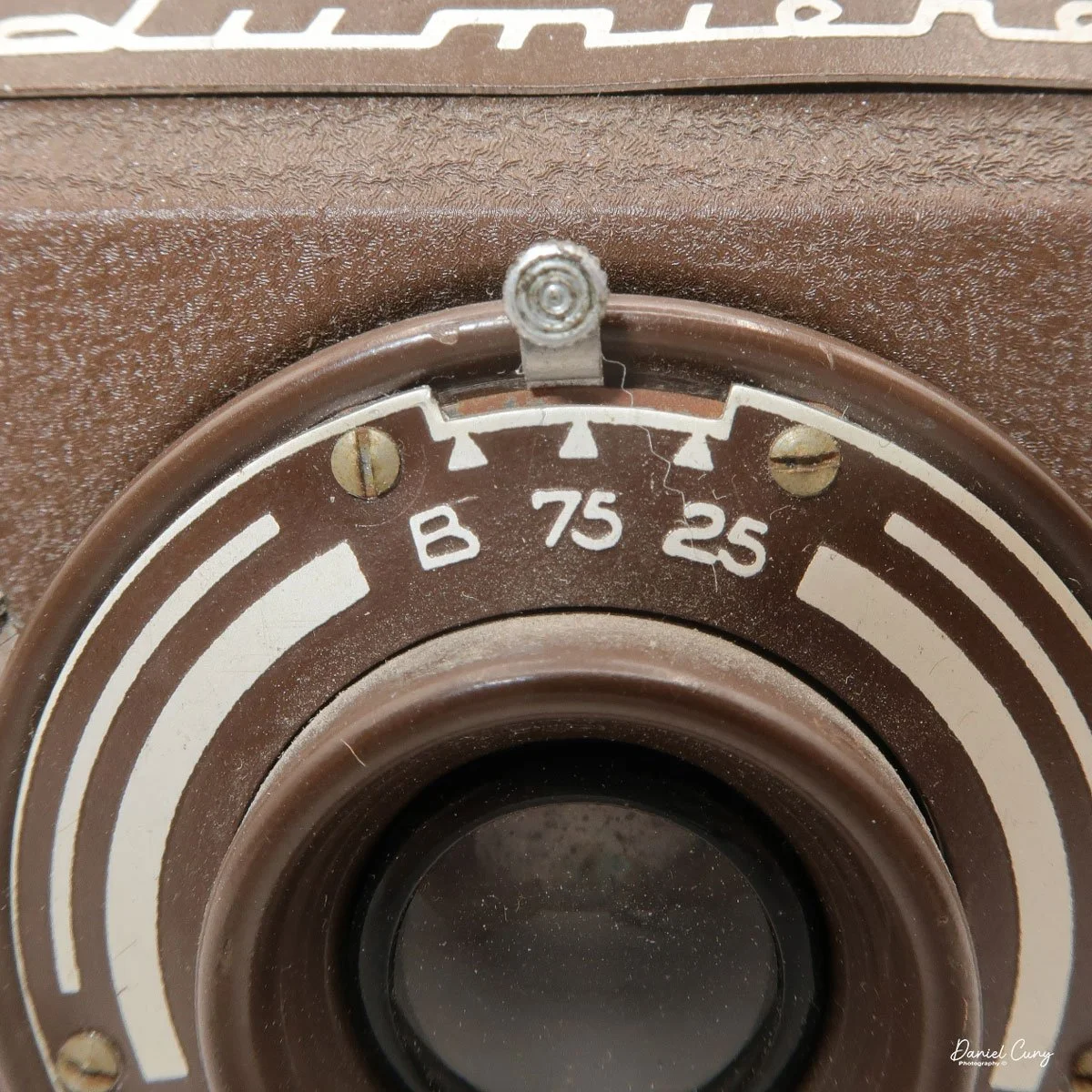
 The LuxBox was introduced in 1933 and discontinued in 1937. It’s a classic box-style camera that takes 6x9cm photos on 120 film. The camera has shutter speeds from 1/75 to 1/25, plus "T" and "B" settings. It also has a focusable lens and was considered the most advanced box camera of its time.

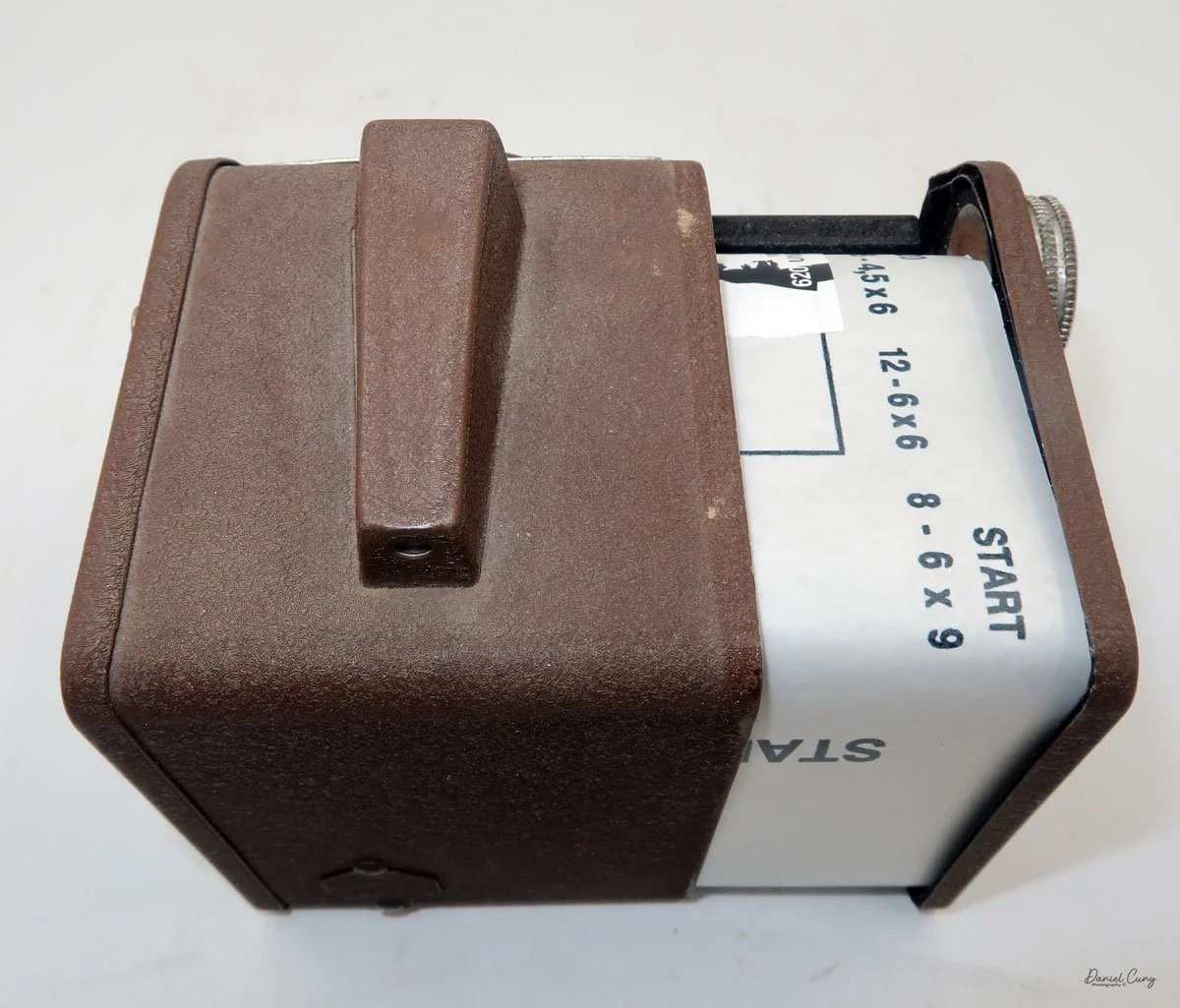
The LuxBox was reissued from 1952 to 1954, which is when mine was made. It’s an all-metal camera without a leather covering, with a frosted Havana-colored paint finish. There is a small vertical eye-level finder on top for composing your shot. This version takes 6x9cm negatives with 620 film, which is very similar to 120 film but uses a different spool size.
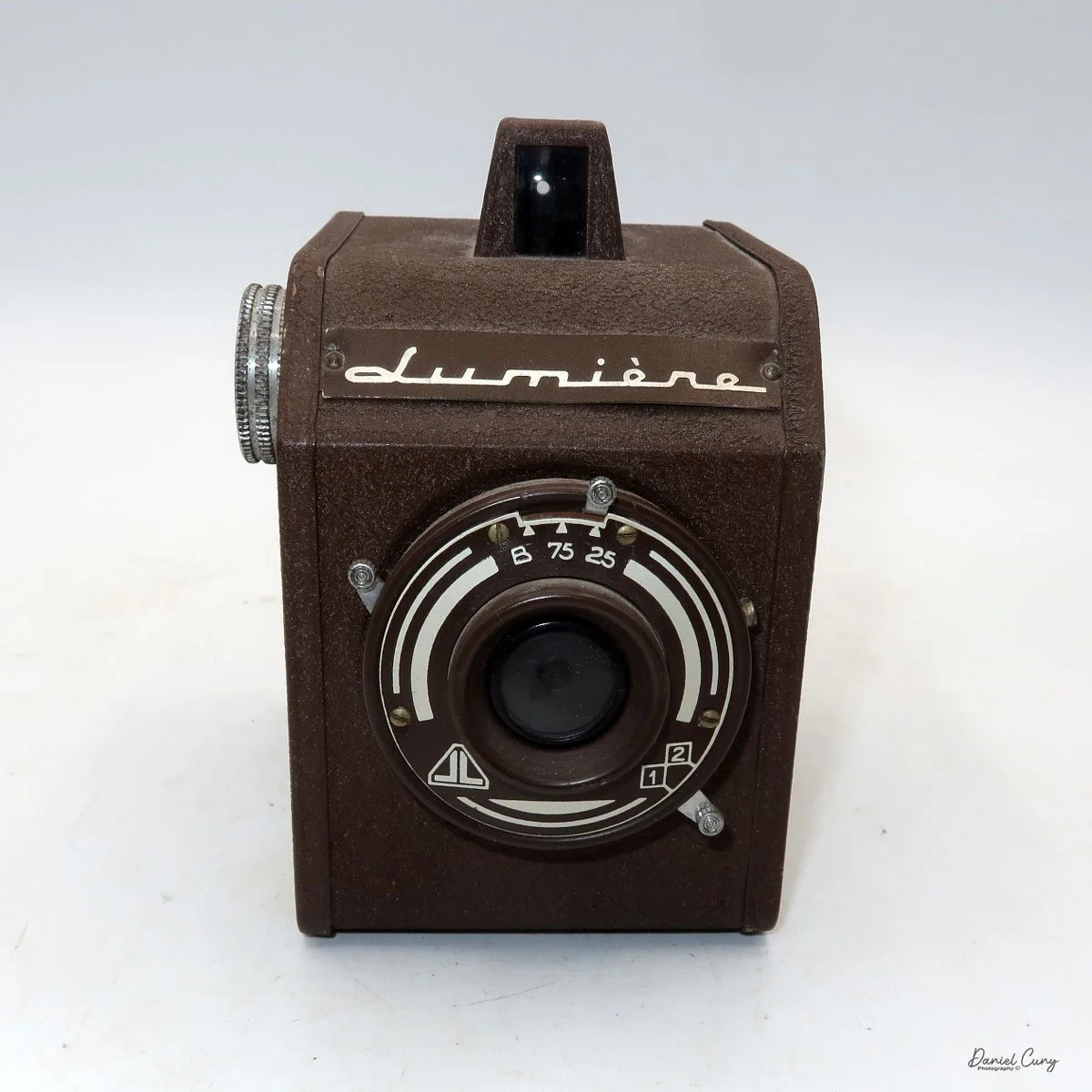
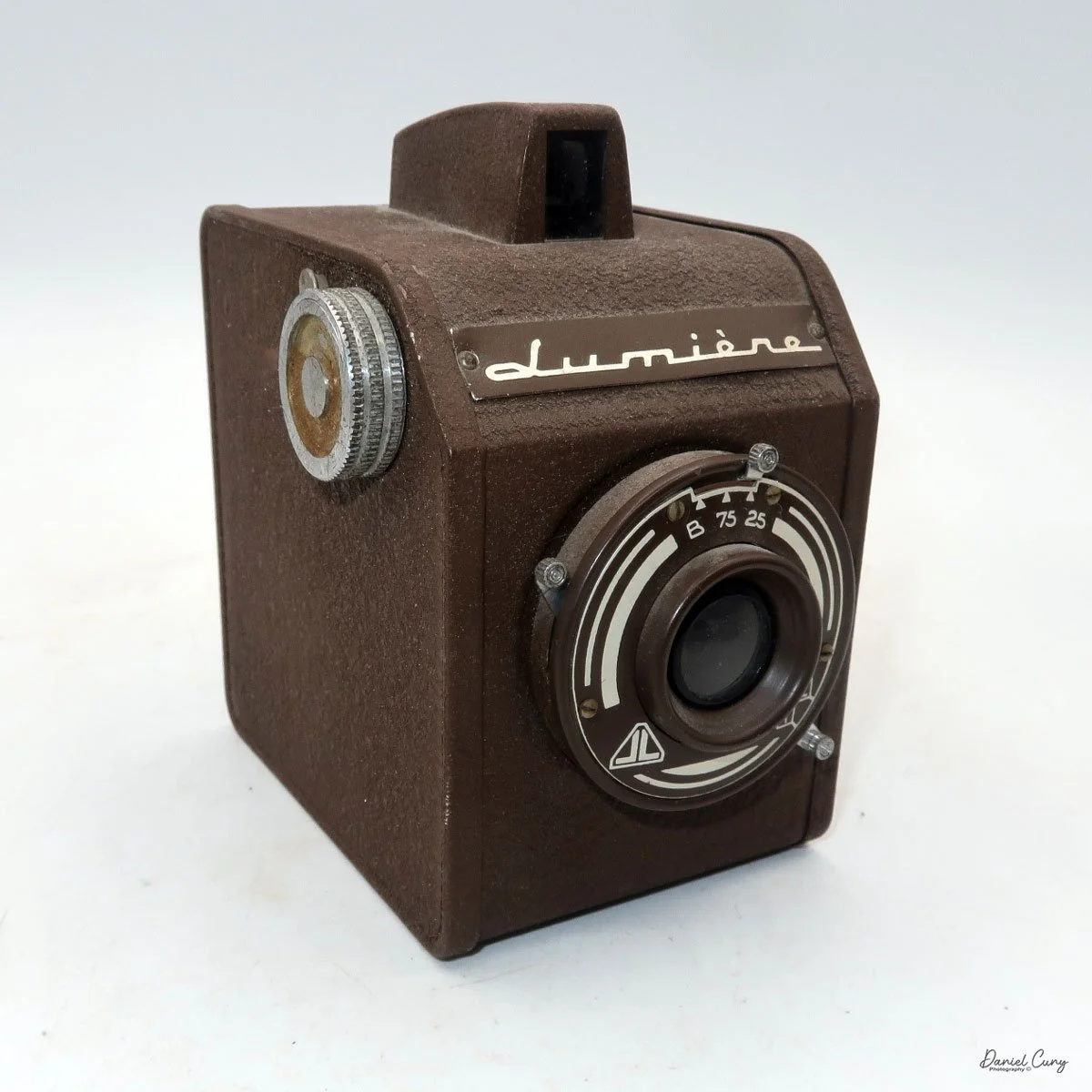
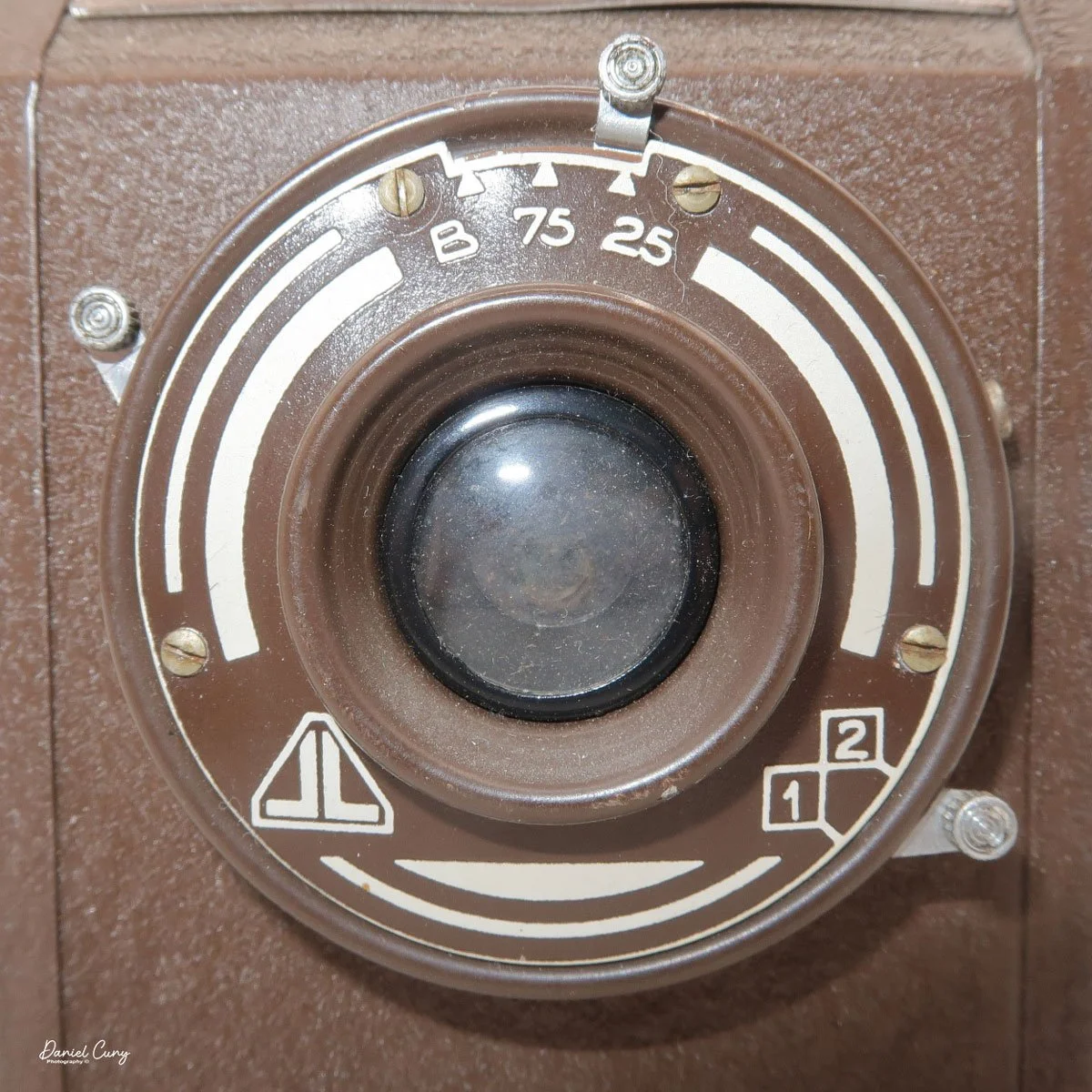
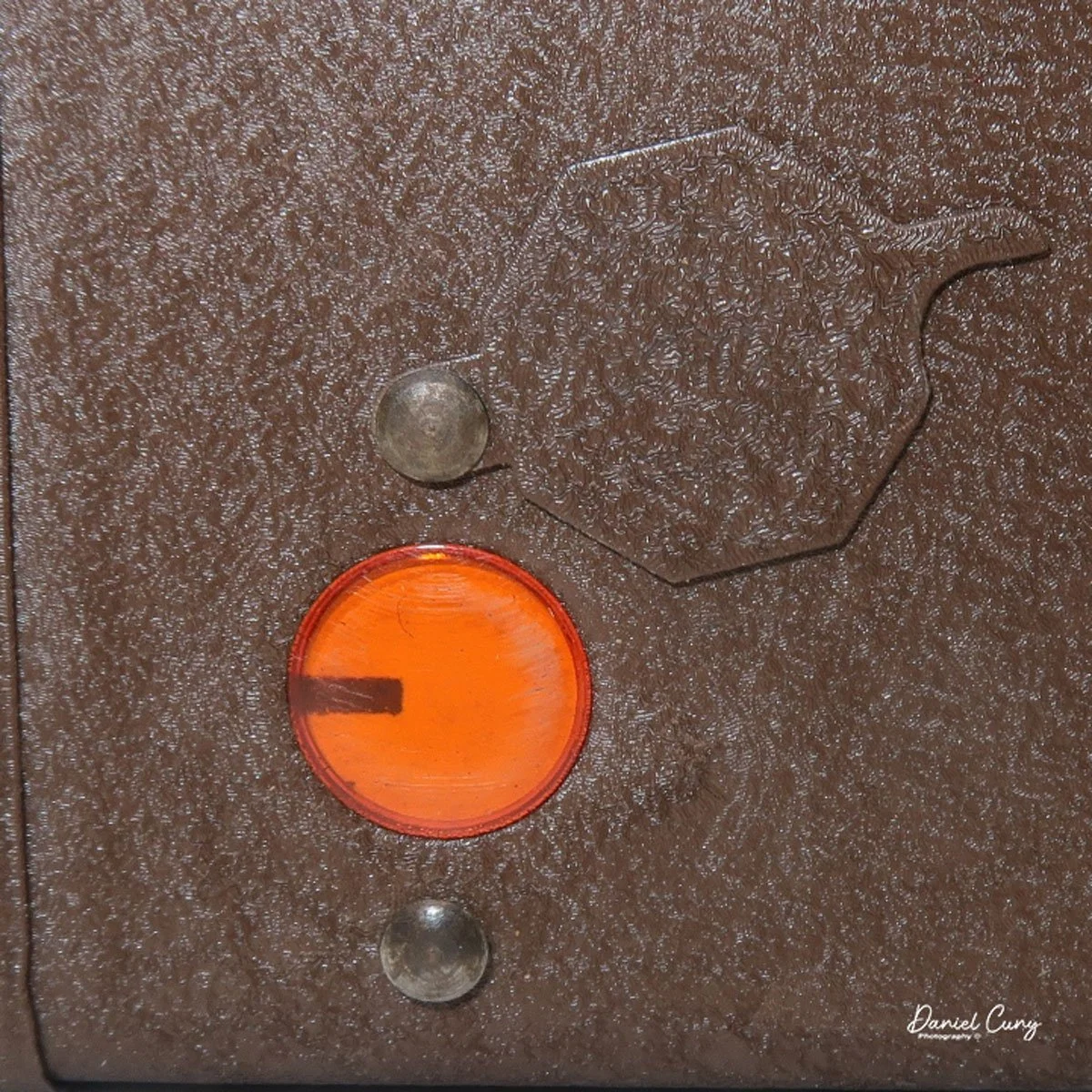
The camera has a simple lens and shutter unit. The shutter provides two speeds: 1/75 (fast) and 1/25 (slow), plus a "B" (bulb) setting for manual exposure holding. There are two fixed-aperture settings at the 4:00 position (when facing the lens): "2" (wider opening for brighter images) and "1" (smaller opening for greater depth of field and less light). A PC flash port at 2:00 allows flash connection. There’s no cable socket for time exposures, so you must hold the shutter release manually for long exposures. The bottom of the camera has a standard tripod socket for stability.
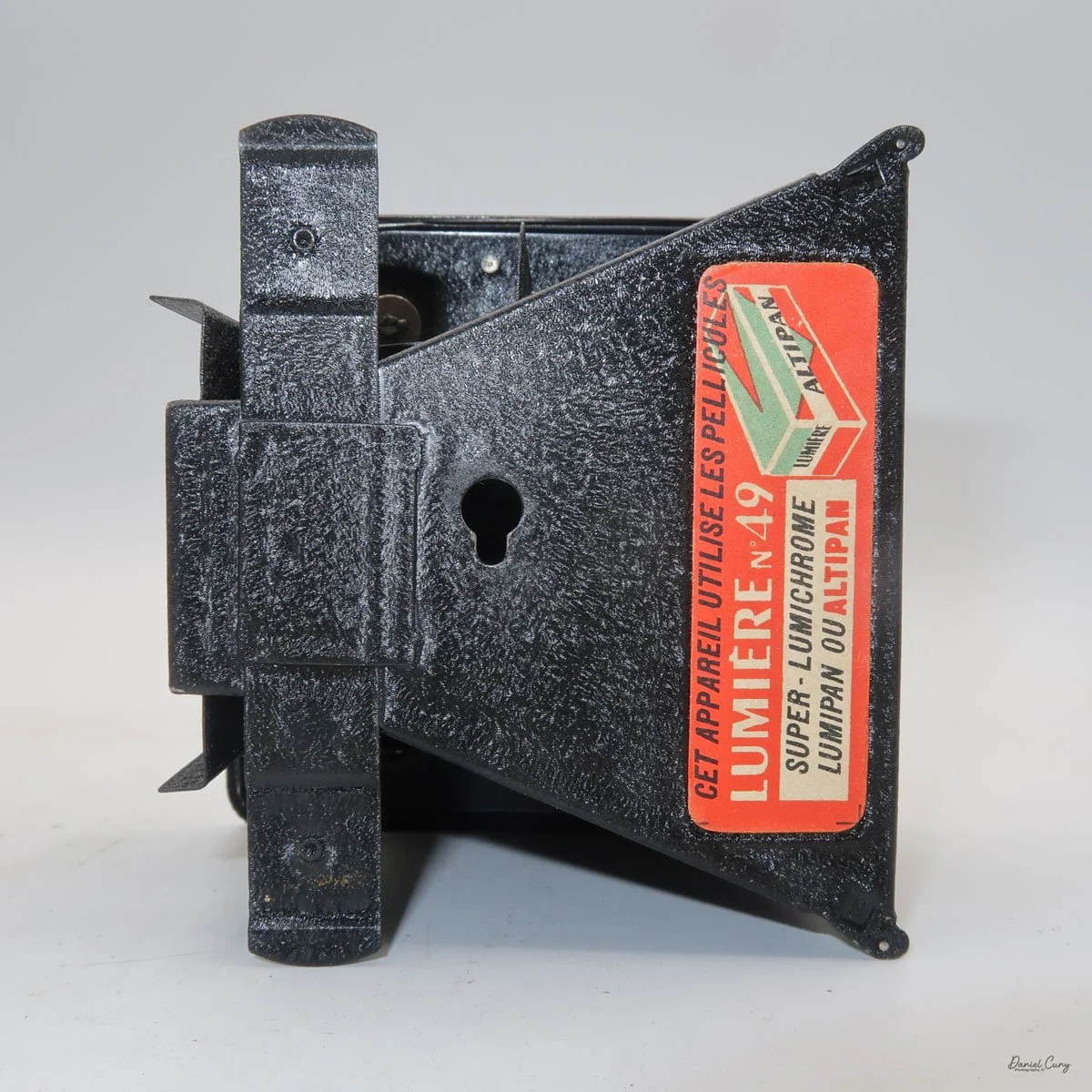
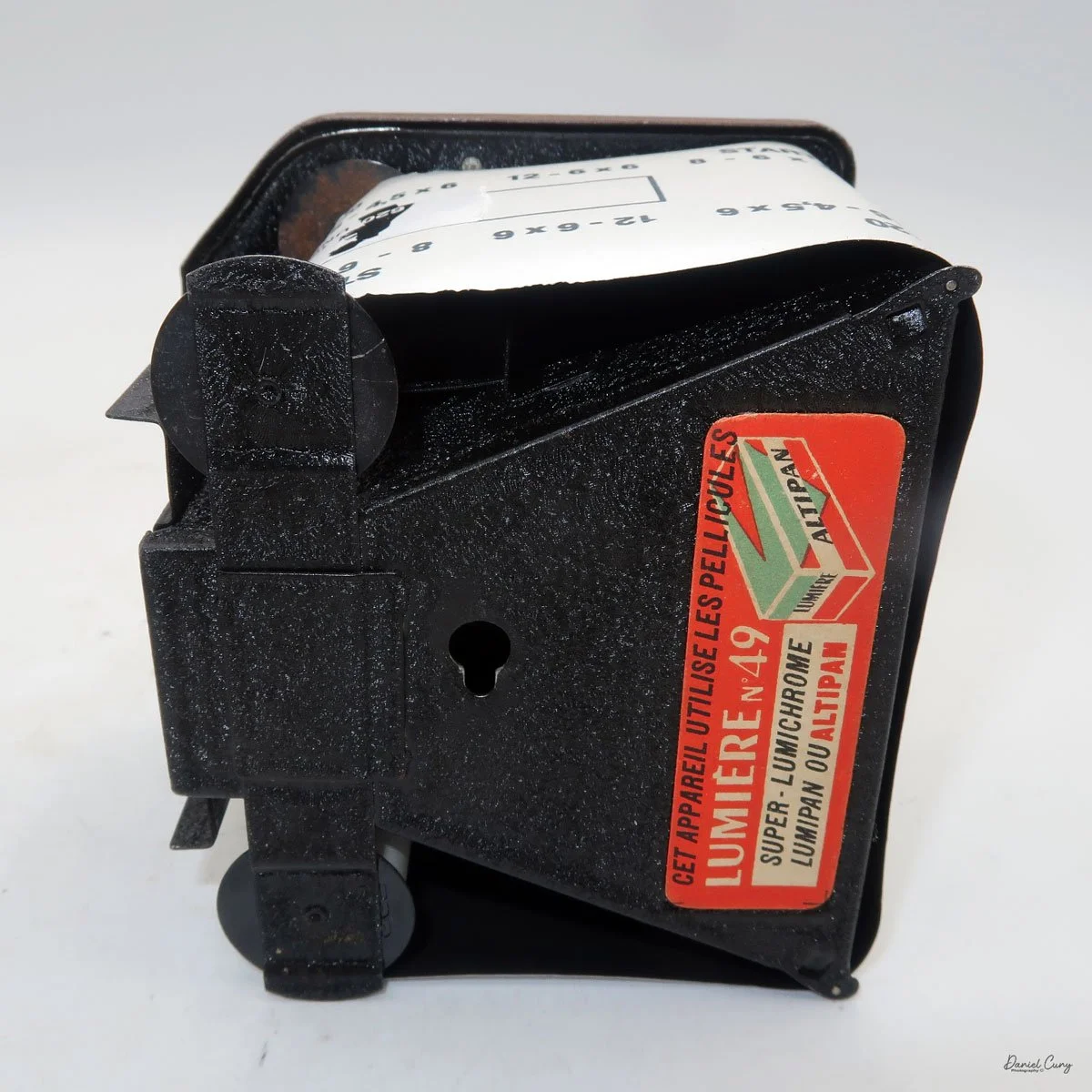
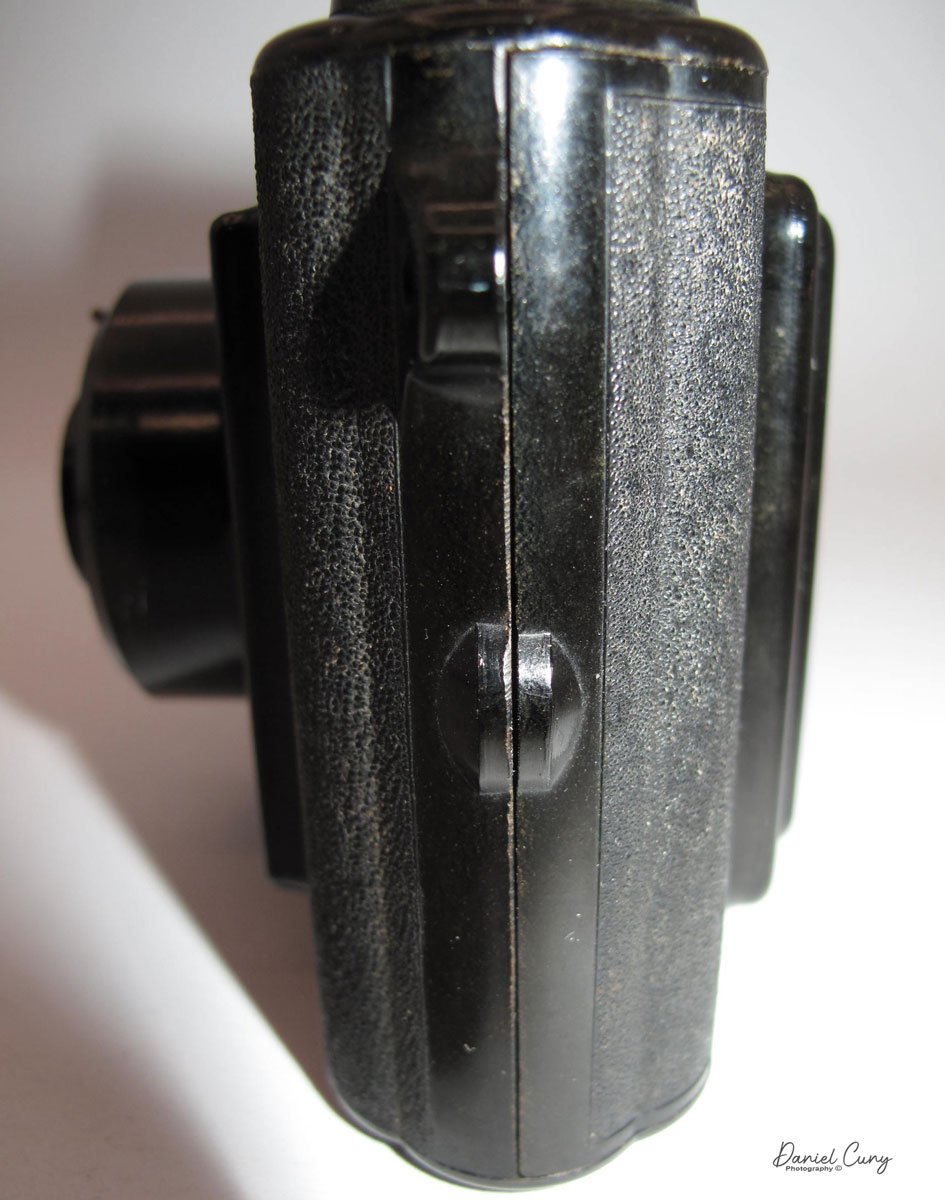
To load film, find the locking button on the left. Slide it up to unlock, then pull the right side away from the body. Load film as with other box cameras.

 Move the empty take-up spool from the bottom compartment to the top so it can collect the unspooled film. Place the new roll of film into the bottom compartment, ensuring the ends of the spool fit securely into the peg slots. Pull the leader paper over the guide wheels and insert it into the empty spool’s slot. Turn the winding knob until the word "start" appears on the backing paper. Slide the film chamber back into the camera body and lock it in place with the button. Then, open the red window cover on the camera's back and turn the winding knob until the number "1" appears, indicating that the first exposure is ready.
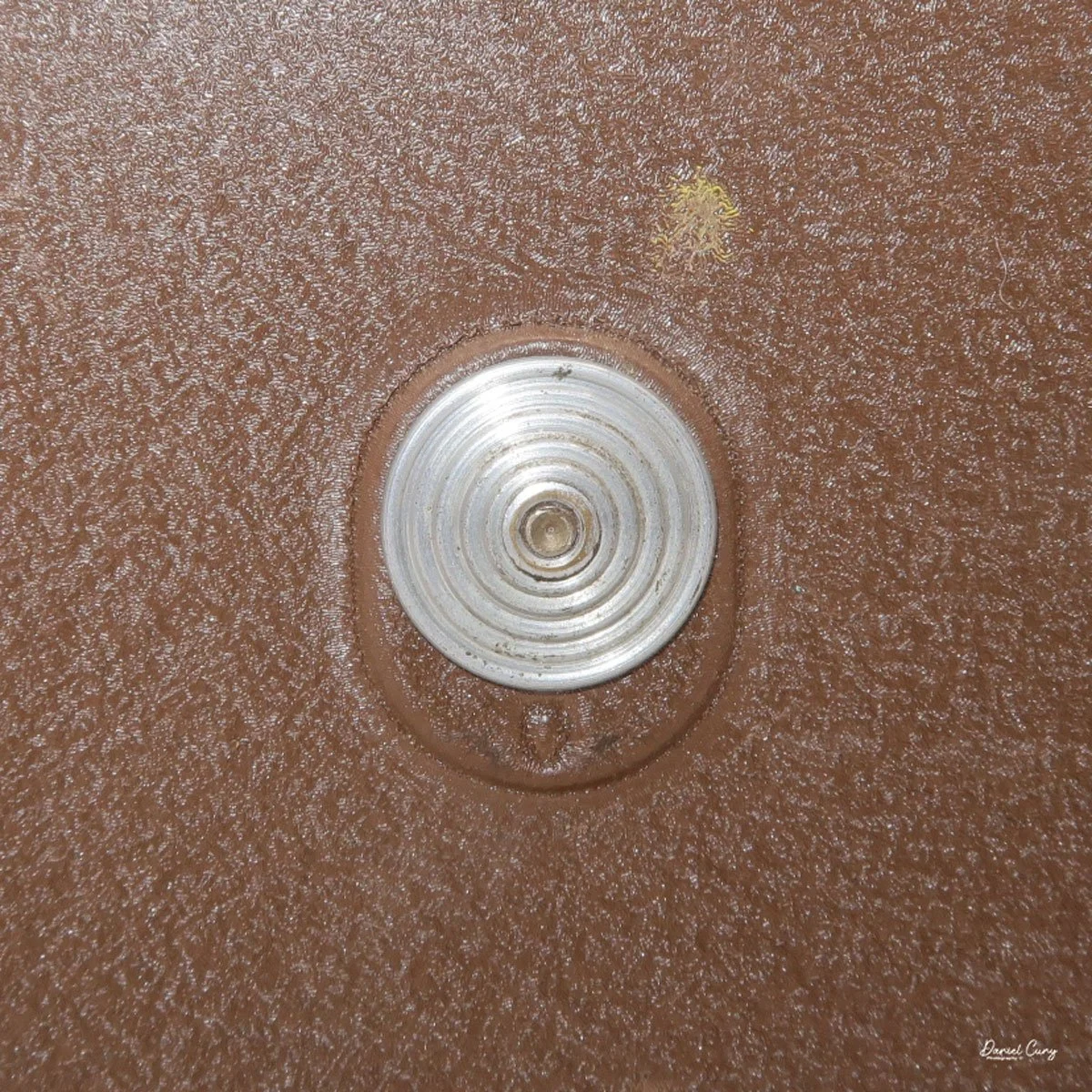
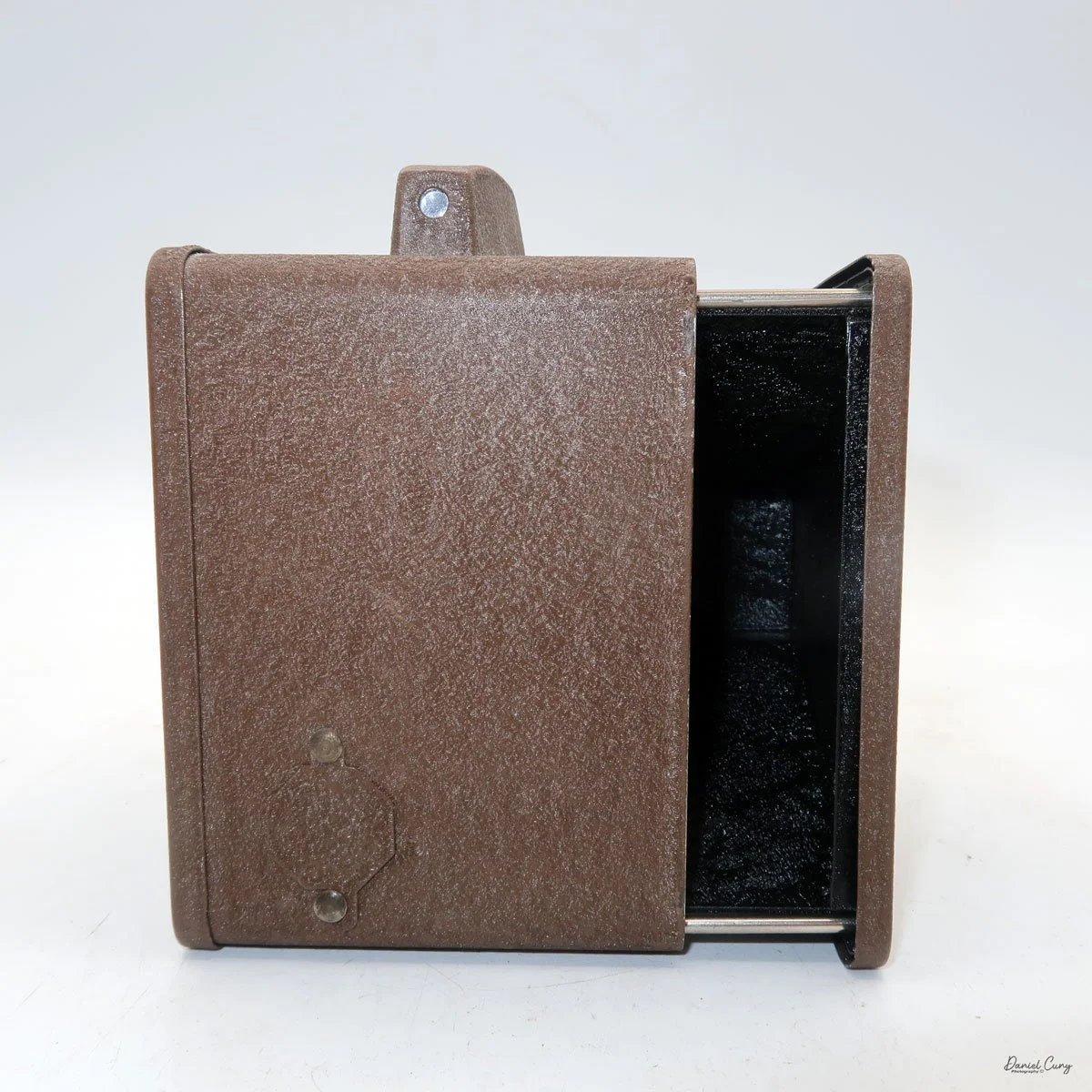
This camera has a few technical settings.

 Let’s load film and see what results we get.


My Results:

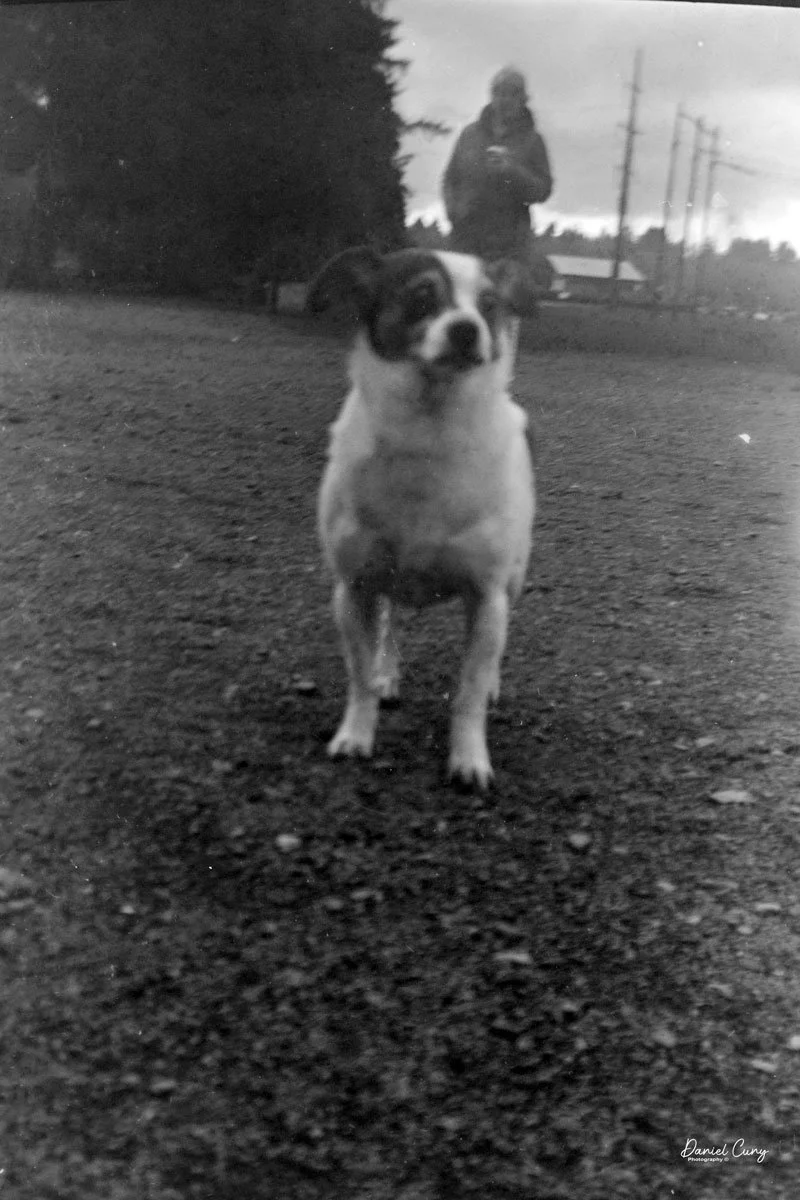
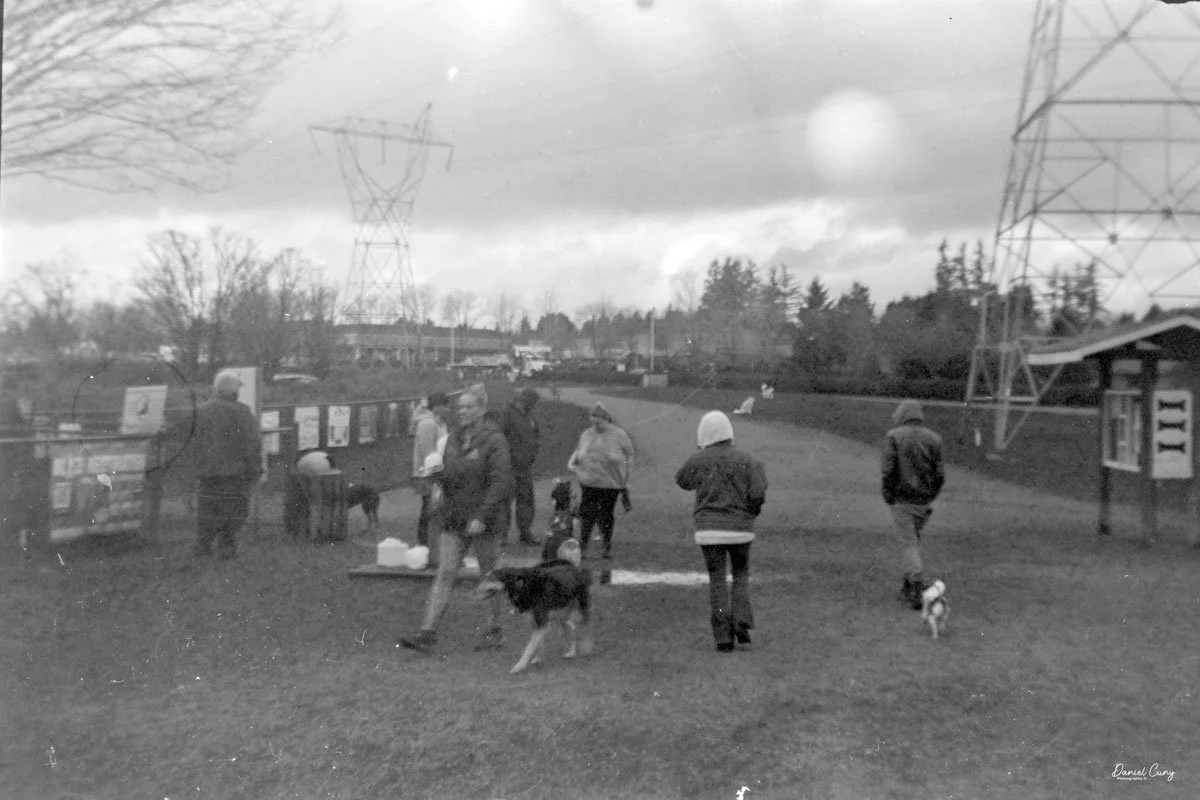
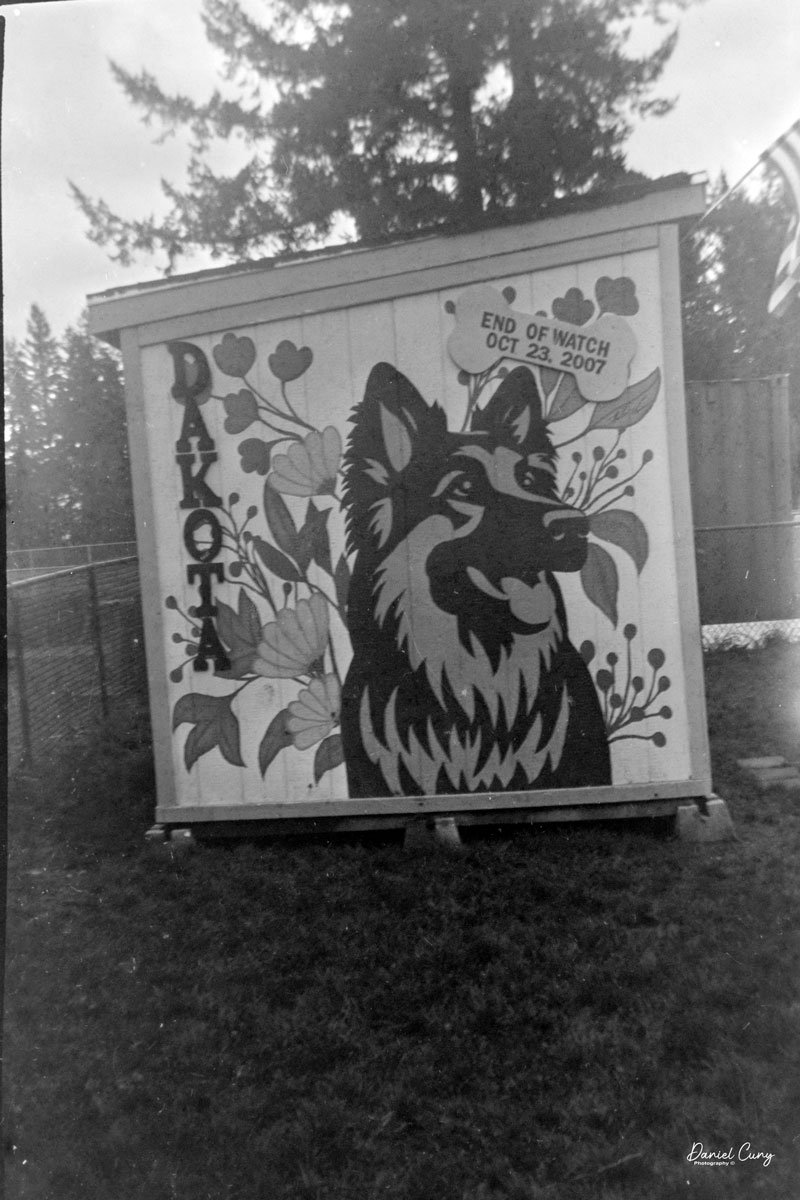
 I loaded the camera with a roll of 100 ISO 620 film I keep for cameras like this. I probably should have used 400 ISO film, since it was overcast, though the sun peeked through at times. We took our daughter’s dog to the local dog park for exercise and photos.

 Here are some of the results from our walk at the Dog Park:
Conclusion:

 The camera is fun to use thanks to its extra shutter controls. As someone who likes the 6x9 cm format, I enjoy capturing a larger area in each photo.

 The main downside for me was the tiny viewfinder window. A standard waist-level finder would have made the camera easier to use and more like the original 1930s model.

 I think this model was brought back in the early 1950s to cut costs but still offer decent image quality. Although I may not use it again, testing it for this article let me revisit why it stood out to me in Paris, and now it has a place on the shelf among my other colored cameras.

 Feel free to check out my other camera reviews.

 If you’re interested in any of the cameras I’ve reviewed, you might find them in my eBay store, Cuny’s Cameras and Photos. I have lots of odd and unusual photo items for sale.

 Thanks for taking a few minutes to read about this mid-century French camera made after WWII.

 Until my next review, take care.
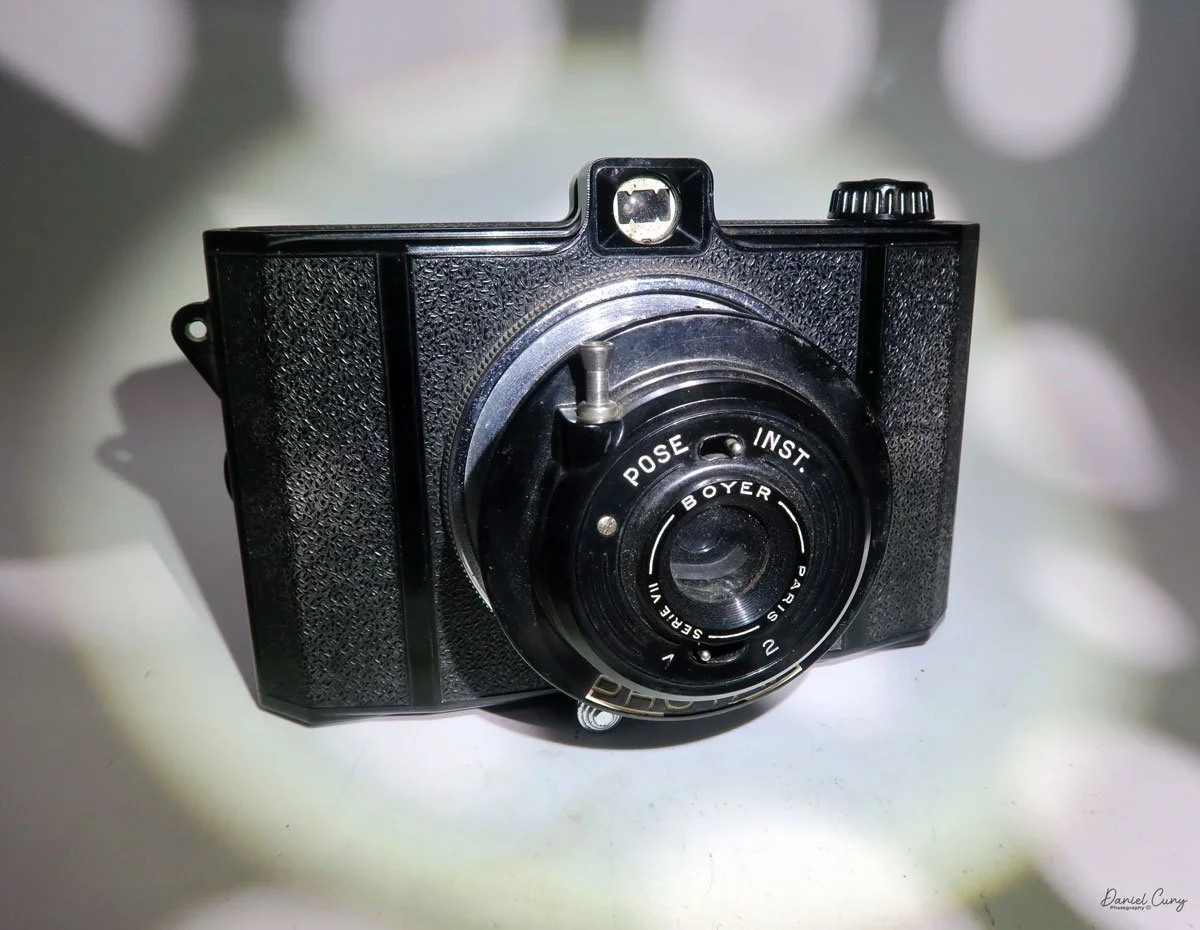
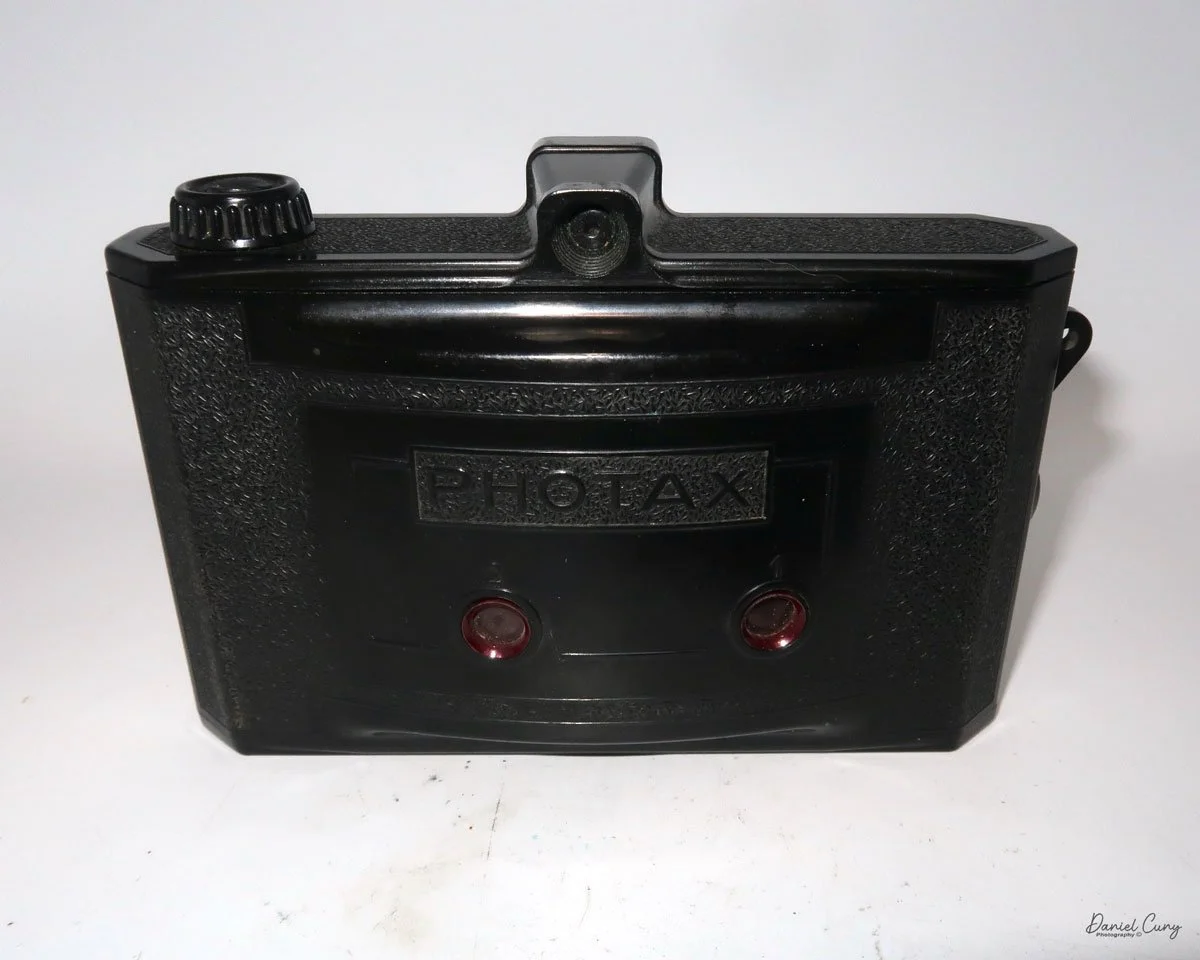
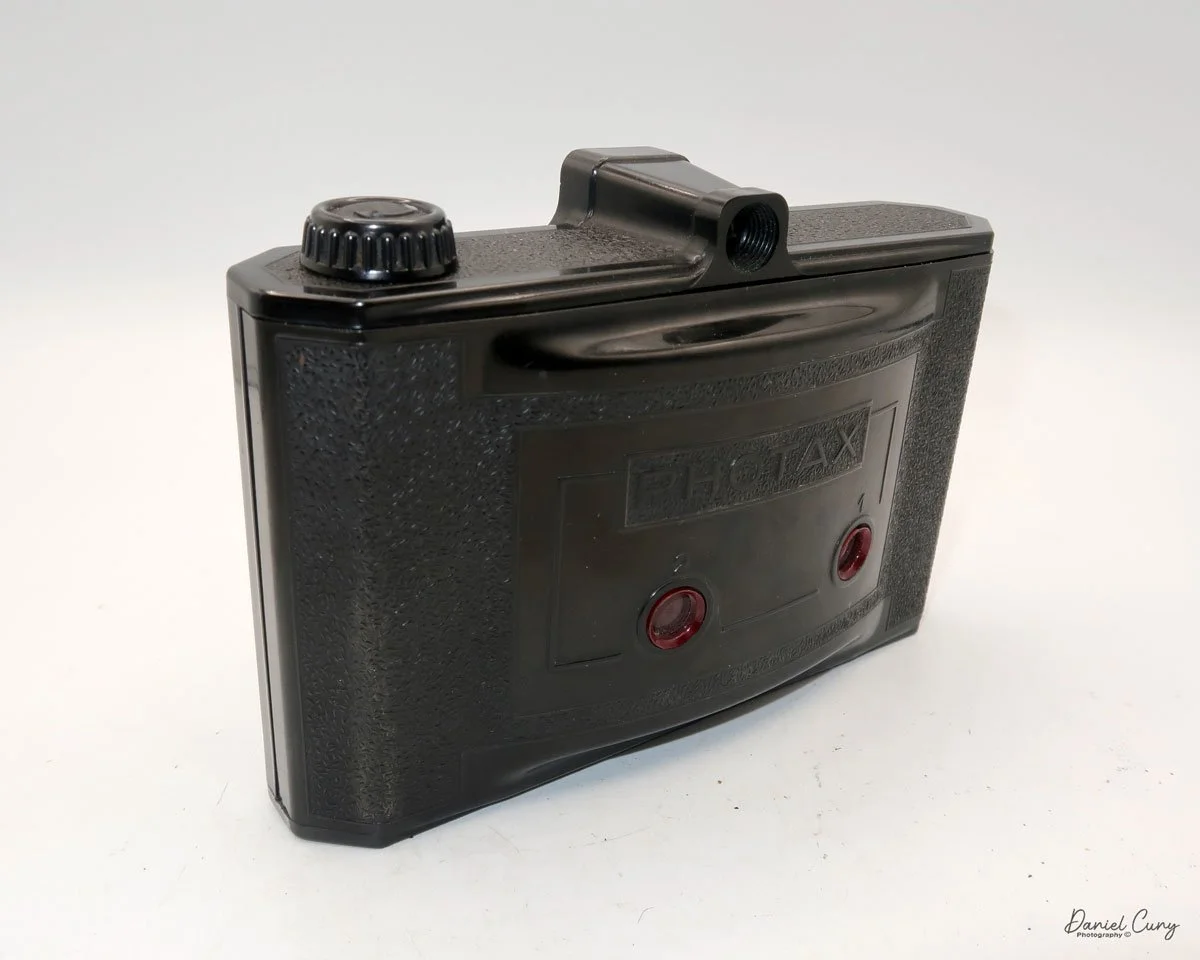
Photax 1 camera

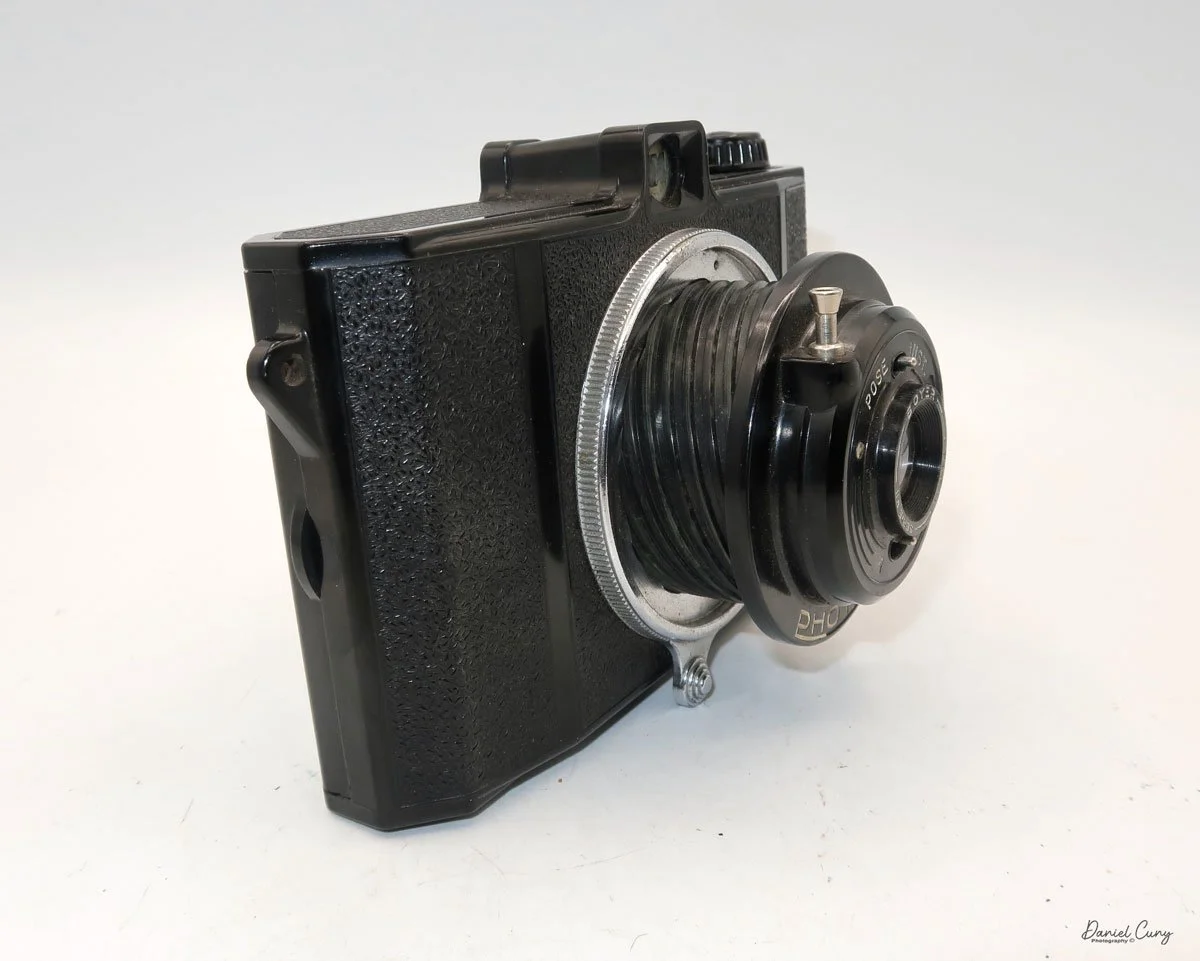
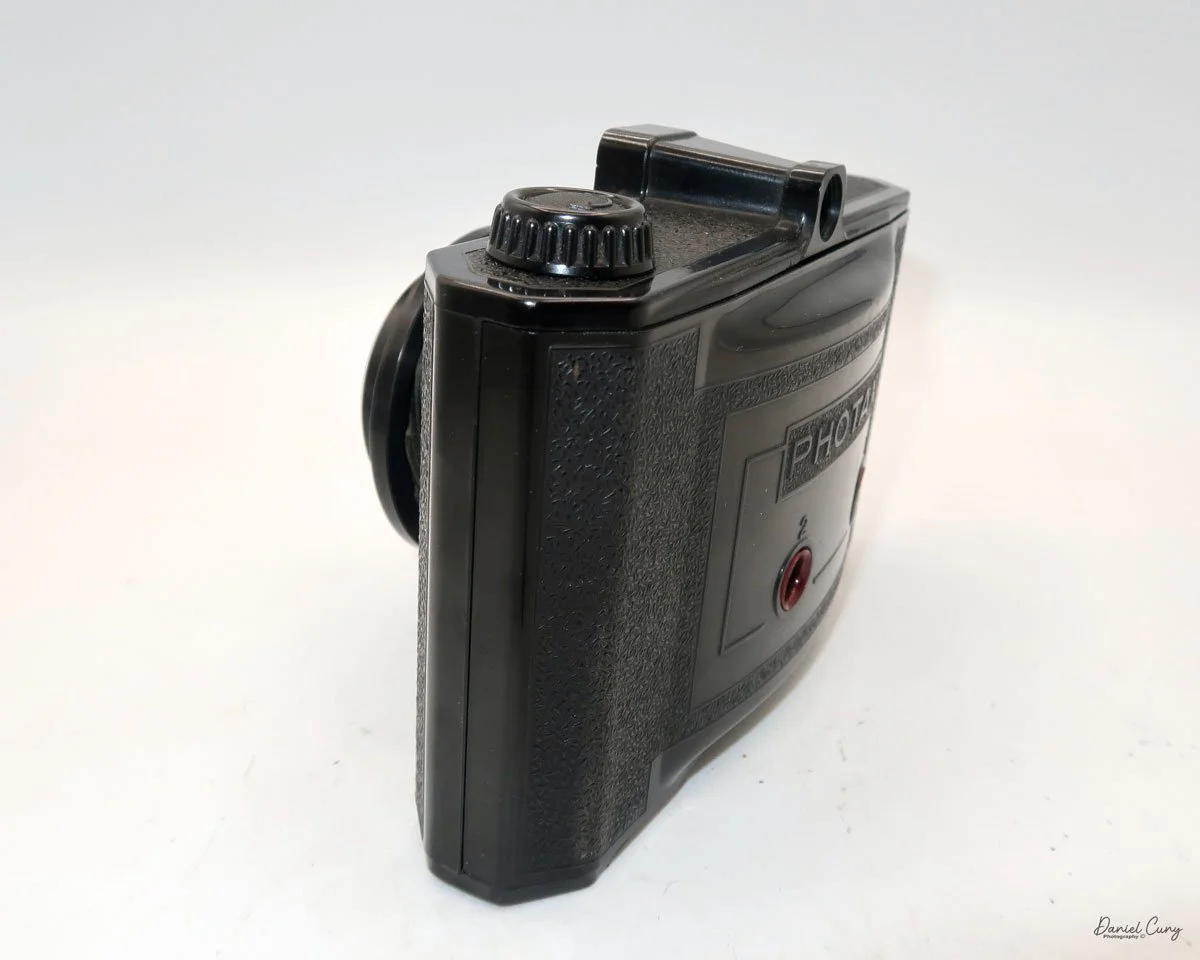
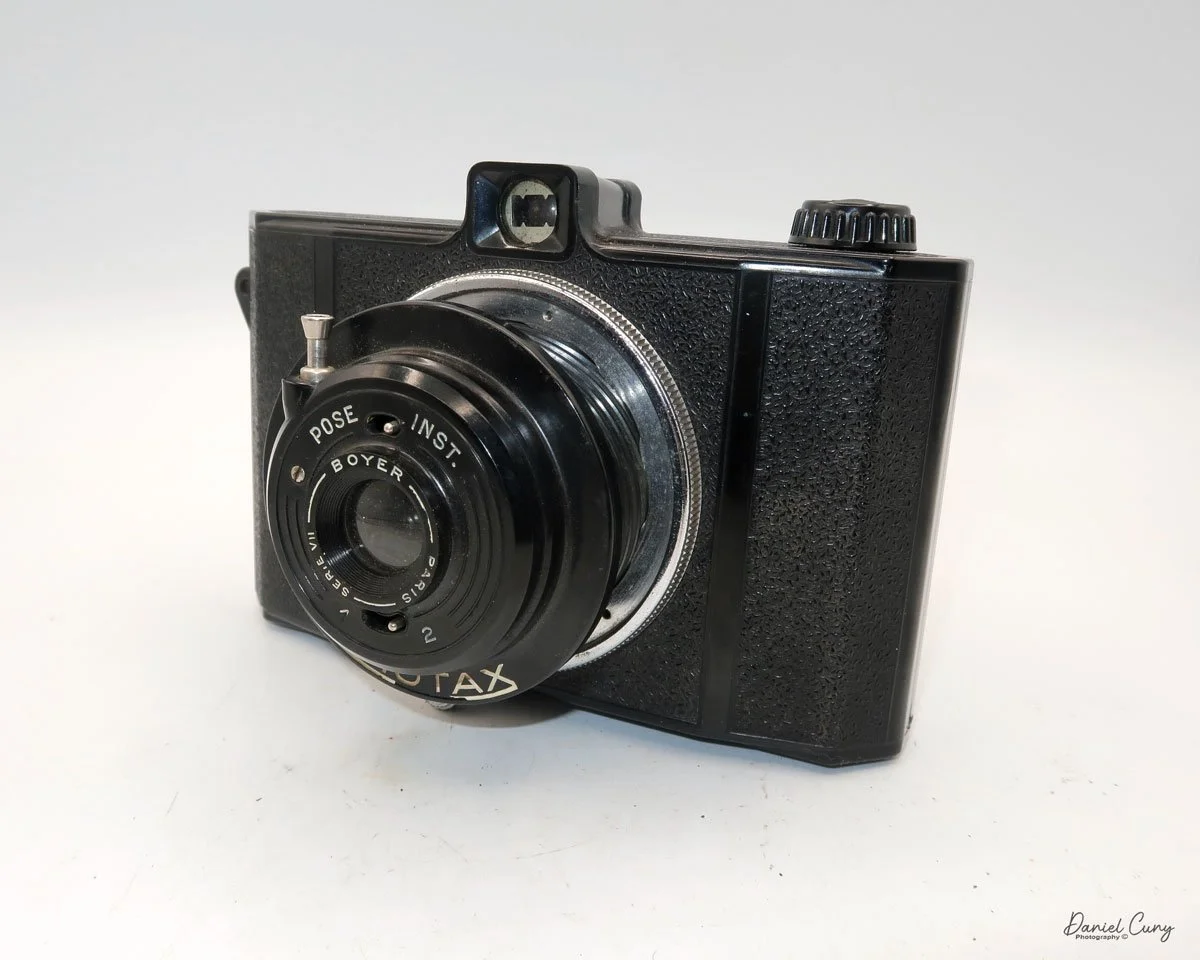
My Photax camera

This summer, as my wife and I visited Barcelona on a day when my wife was working, I decided to go to the local flea market to look for photo items to add to my collection. Attending local flea markets is something I look forward to, especially when we visit new cities and countries. My main objective was to find a camera built in Spain, which I accomplished by purchasing the Captain camera, which I reviewed earlier this year.

 Strolling the stalls at the flea market, I came across a very large Bakelite camera, which intrigued me. It was a Photax 1 camera made by MIOM in France. What I liked about the camera was its large size, and that came with the original fitted case. As I pulled out the camera to examine it, I noticed a very familiar twist-out style lens, and the shutter was working, which gave me confidence in my purchase. Talking to the person at Stoll about pricing for the camera, I offered a reasonably low price, which they rejected. However, they came back with a counteroffer, which I needed to consider for a while.

 As I spent more time examining different stalls and cameras. Still, my mind kept returning to the Photax 1 camera, which is the large camera with the untwisting lens. Before I left the flea market, I went back to the stall and renegotiated the price with the camera owner, coming to an agreeable price and purchasing the camera.

 This camera was one that I wanted to write about. It's an unusual-shaped camera made of Bakelite and is quite large. When I opened the back of the camera, I noticed that it was a 6 x 9 cm format, which intrigued me. Many of the cameras made by 

MIOM we're a smaller format, generally 6 x 4.5 cm.

 Let me tell you a little bit about the company.

History:

 MIOM (Manufacture d'Instruments d'Optique et de Mécanique) was a French company known for producing optical and mechanical instruments in the mid-20th century, particularly cameras. The firm operated mainly from the post-World War II era into the 1960s, a time when France was striving to rebuild its industrial base and compete in the rapidly evolving consumer goods market.

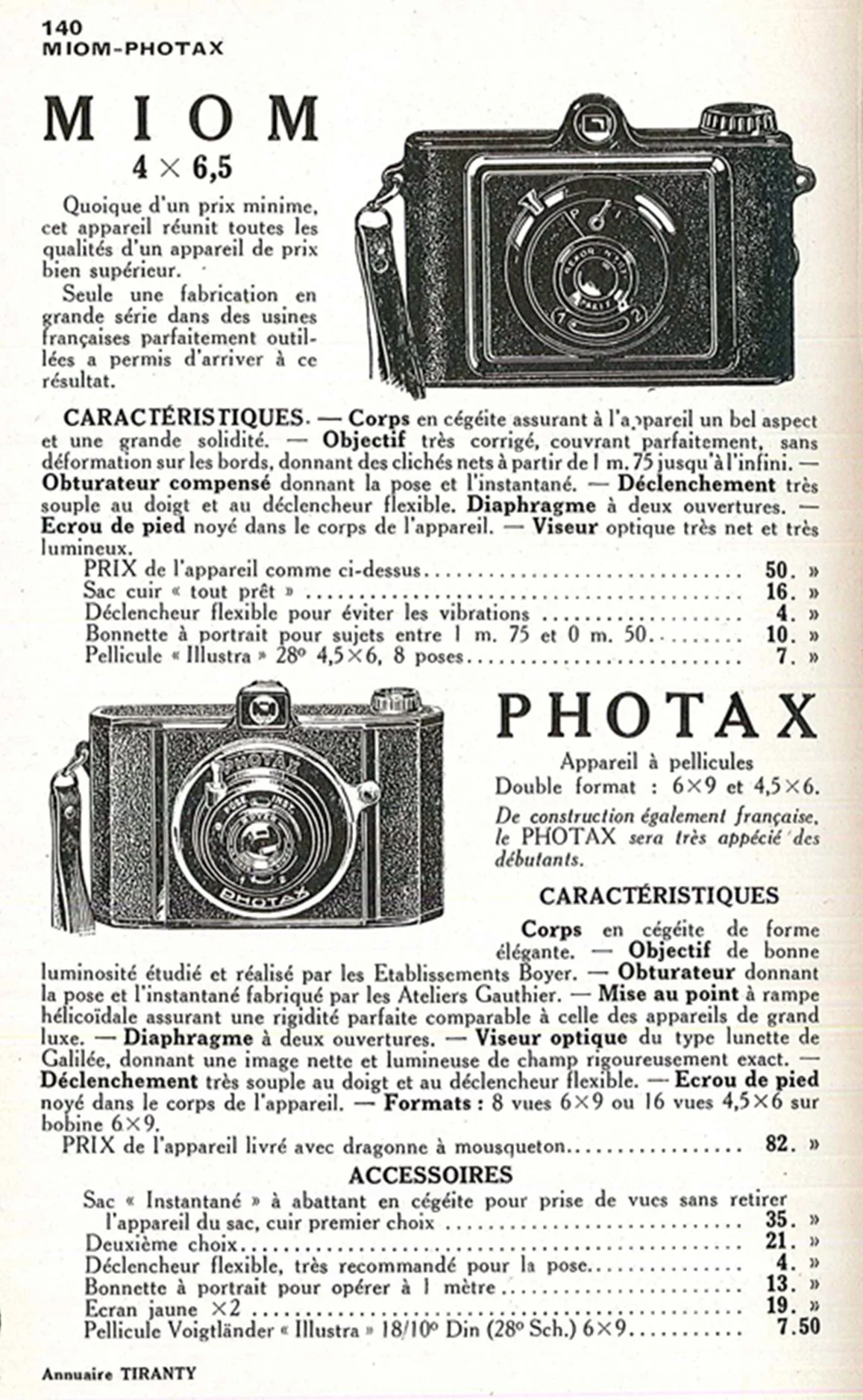
French Photax ad

 MIOM's roots were in precision engineering, and the company initially focused on optical devices before expanding into the field of photographic equipment. Its location in France allowed it to tap into a tradition of fine optical craftsmanship, drawing on expertise that had developed in Paris and other industrial centers since the 19th century.

 In the camera field, MIOM was best known for manufacturing compact and affordable models aimed at the amateur photography market. Among their most recognizable products was the MIOM Photax series—a line of simple, durable cameras using roll film. The Photax models often featured Bakelite bodies, a lightweight and inexpensive molded plastic popular in mid-century camera production. These cameras were designed for ease of use, appealing to the growing middle class and to families seeking to document their lives without investing in complex photographic gear.

 The Photax range evolved over the years, with various iterations accommodating different film formats, primarily 6×9 cm images on 120 roll film, and later 4.5×6 cm formats. Some models incorporated basic focusing and exposure controls, while others remained strictly fixed-focus, point-and-shoot devices. Though not technically advanced compared to contemporary offerings from Germany or Japan, MIOM's cameras were reliable, affordable, and accessible, helping to democratize photography in France.

 MIOM also ventured into specialized cameras, including stereo models, reflecting the brief postwar enthusiasm for 3D photography. Their designs maintained the company's hallmark of straightforward construction and modest pricing.

By the late 1960s, increasing competition from Japanese manufacturers, whose products offered superior optics and more advanced features at competitive prices, had eroded MIOM's market position. The brand gradually faded, and production ceased as the company either closed or shifted away from photographic equipment.

 Today, MIOM's cameras—especially the early Bakelite Photax models—are collected for their retro aesthetic and as examples of France's postwar consumer design. While they may never have rivaled the technical prowess of major brands, MIOM's work remains an essential chapter in the history of accessible, everyday photography.

 Below is a timeline outlining the evolution of MIOM's Photax camera series.

 1937 – Photax I- MIOM launches its photographic division with several models, including the original Photax (also branded as Camera 77, Loisirs), all of which use 120 film for 6×9 cm images. The Photax I is recognizable by its centrally positioned shutter button and Guillotine shutter, which offers two speeds. 

1938 – Photax II (and Blindé variant)- Introduced in 1938, the Photax II adopts the Boyer Serie VIII meniscus lens and maintains the simple two-speed shutter design. A "blindé" version appears—with a protective Bakelite lens cover that also shields the shutter release. 

1947 – Photax III- Following World War II, MIOM debuts the Photax III, featuring a threaded shutter release and leveraging the same Boyer Serie VIII lens. It introduces additional shutter settings (1/25 sec, 1/100 sec, and T) and continues to use the 620 film format. 

1951 – Photax IV (and IV F)- The Photax IV arrives with a Boyer Rexar meniscus lens and identical shutter options as the III, with enhanced flash synchronization. The IV F variant includes flash sync capabilities via a RIM shutter. 

1955 – Photax V- A stylish redesign marks the launch of Photax V in 1955. It features a modernized Bakelite aesthetic, bi-format capability (6×9 and 6×6 cm), and upgrades to an Angénieux Heanar Type V lens with full flash sync via RIM shutter 

1960–1962 – Photax VI -The final model in the Photax lineage, produced between 1960 and 1962, transitions from Bakelite to molded plastic, featuring a sleek, streamlined design. It's a square-format 6×6 medium-format camera that utilizes an Angénieux Heanar Type VI lens and RIM shutter with flash synchronization.


My Camera:

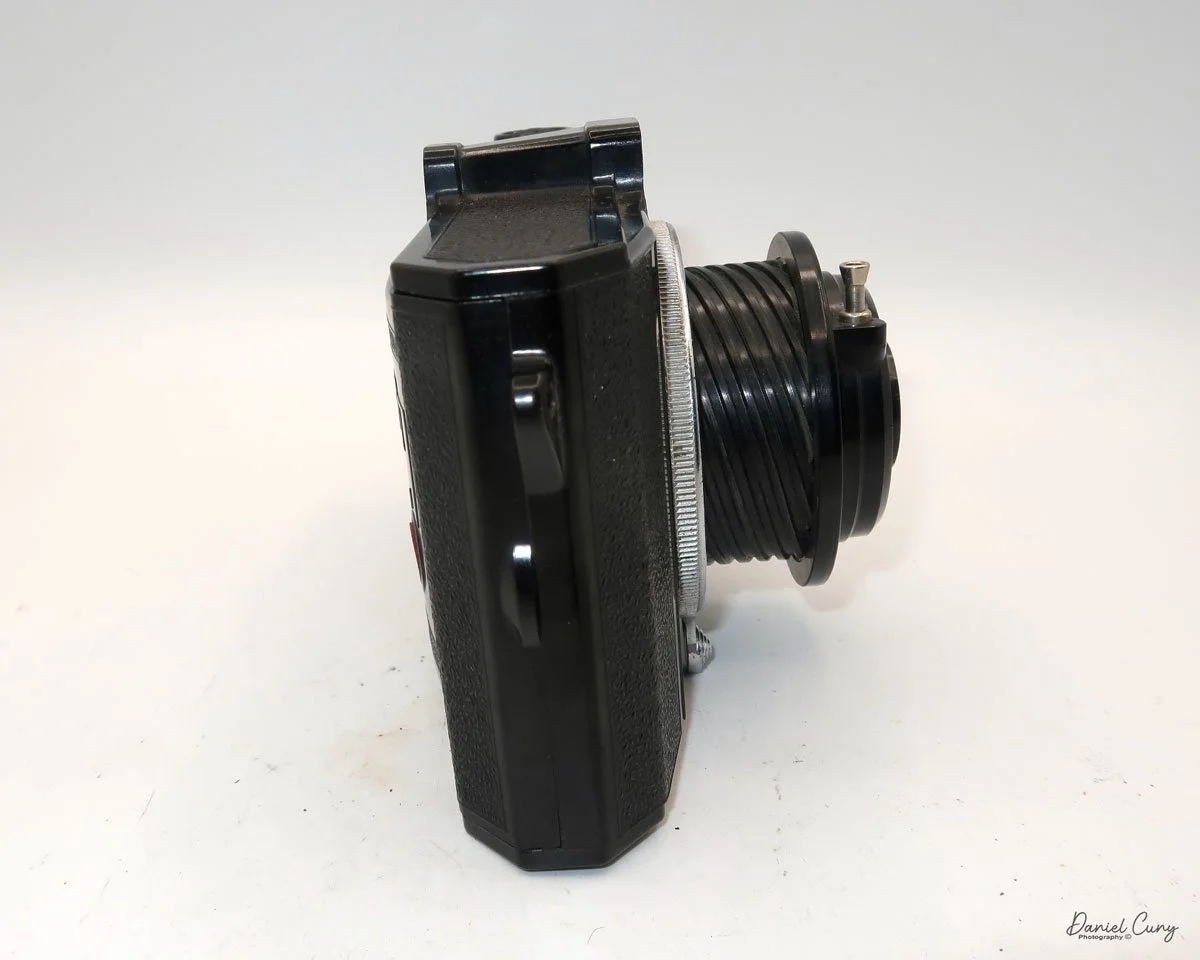
 My camera is 6 1/2 inches wide by 4 1/2 inches tall by 4 inches deep when the lens is unscrewed. In its closed position, the lens is 3 1/4 inches long. Without the case, my camera weighs 1 pound, 2.7 ounces.  The lens on the camera is a Boyer, Series VII lens.

The Photax 1 was produced for approximately one to two years, from 1939 to 1940. The Photax 1 camera uses 120 film, a departure from MIOM's earlier cameras, which used 127 film. As I mentioned earlier, this is a 6 x 9 cm format camera. The Photax 1 was sold with a film mask that allowed the photographer to shoot in the 6 x 4.5 cm format. Unfortunately, when I purchased this camera, the mask was missing, so my camera is only compatible with the 6 x 9 format.

 To extend the lines, there is a chrome ring around the lens with a knob at its top. Twist the ring clockwise, and the lens, which is on a helical screw, unscrews and moves into the taking position. The camera's controls are fundamental. There are only two shutter settings. One is "INST", which is for normal snapshots, and "POSE", which is for time exposures. These are changed by a little switch between the two settings. To control the aperture. There is a similar switch beneath the lens. One setting is the larger aperture, which is number one, and the second setting is for a smaller aperture.
There is no lock on the back of the camera to secure the back to the front of the camera body. To open the camera, on the right side, is a little foam plate that you pull away from the camera body, and the back of the camera comes off. To load the camera, follow a process similar to loading a 120 format or 120 film-style camera. The first thing you would do is to take the take-up spool from the right side of the camera and place it on the left side, under the film, and under the film advance knob. Place a fresh roll of film on the right-hand side and bring the leader over the shutter area. Insert the leader into the slot of the take-up spool and begin winding, ensuring the film advances smoothly. You turn the advance knob until you see "start" on the film's paper backing. At this point, put the back on the camera by just pressing it onto the camera‘s body.

At this point, wind the film advance knob until you see the number 1 in the first window, which is designated for the 6x9cm format. For the 6 x 4.5 format, you would wind until you see the number one in the number one window. After you take the picture, wind until you see the number one in the number two window. You repeat the steps through number eight, which would be the end of the roll of film. For 6 x 9 cm format images, you get eight images per roll. For 6 x 4.5 cm format, you get 16 pictures per roll of film. 

Fitted case for Photax 1 camera. Note the large plastic front cover.

 IMPORTANT: Be sure to turn the chrome ring so that your lenses are in the taking position before you start taking photographs. Failure to do this will result in your pictures being incredibly out of focus. On other MIOM cameras, if the lens is in the transport position, the shutter will not work. Unfortunately, with this camera, the shutter works when the lens is in the retracted or transporting position.

 The viewfinder on top of the camera is tiny, making it difficult to view your subject when framing your photograph. To take your photograph, the shutter release is located in the upper right-hand corner of the lens. Press the shutter button to take your picture. My camera has a cable release socket, and on the bottom of the camera, there is a tripod socket as well.

My Results:

 I cleaned the lens on the camera, loaded a fresh roll of 120 film, and took a walk around the neighborhood to see how this camera would perform.

 For 100% transparency. I broke my arm two days before I took these photographs. It was challenging to hold the camera while taking the photos, so some of the blur or out-of-focus images may have been caused by camera movement.

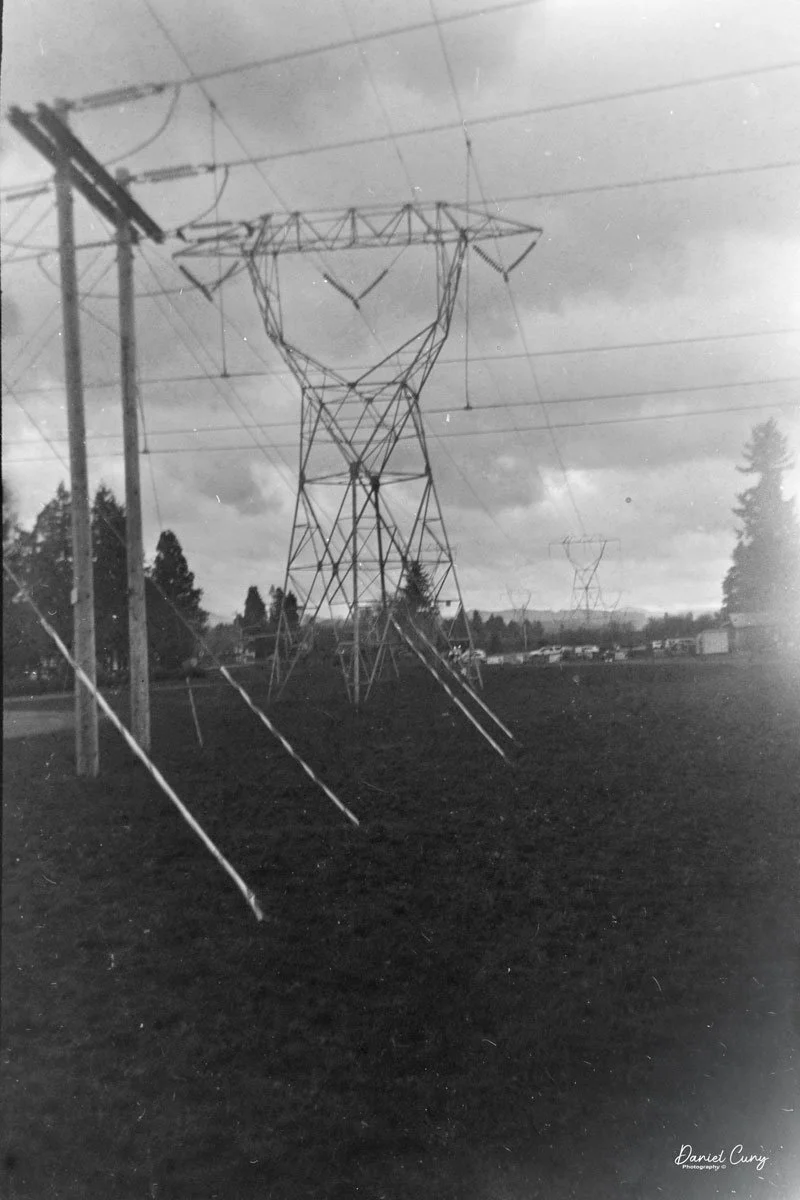
 Here are the results.

Conclusion:

 The images produced by the camera were disappointing. I'm not sure if the blur in the

photo was caused by my lack of holding the camera still. According to the information on the back of the camera, the minimum focus distance is approximately 1 m. Many of the photographs I took, I tried to be more than 1 m away from the subject.

 Due to the sunny situation, having only one shutter speed to work with, and using the smallest aperture, the photographs are unimpressive. At this point, I'm not sure I'll use this camera again due to the quality of the images, which I found disappointing, especially considering it's a 6x9 format camera.

 Thank you for taking the time to read about this interesting Camera from France, built in the late 1930s. 

 If you're interested in seeing other camera reviews, click the link.

 I also have a store on eBay where I sell some of the cameras reviewed, along with a host of other photo items, Cuny's Camera & Photo.

 Until next time, please be safe.

Early M.I.O.M. Camera

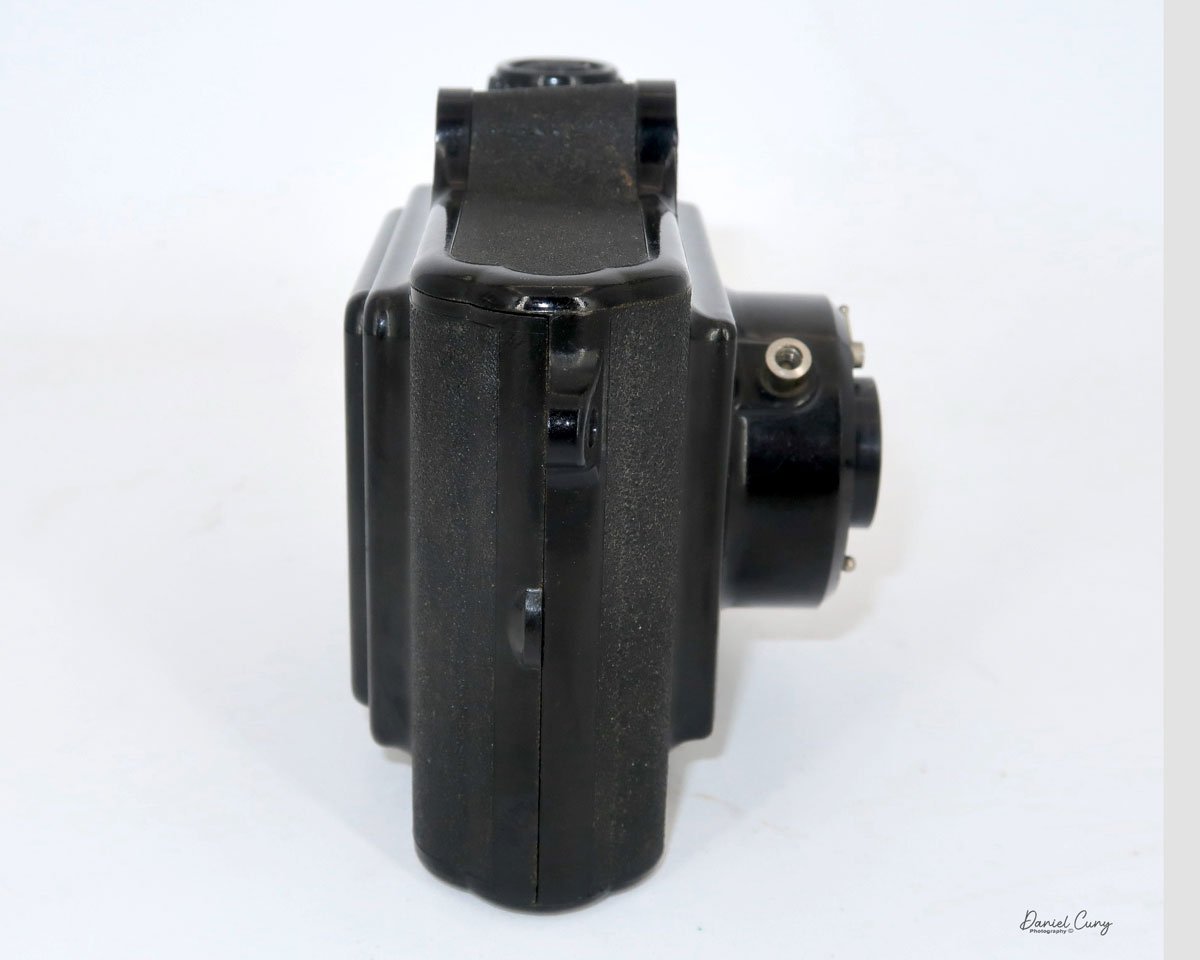
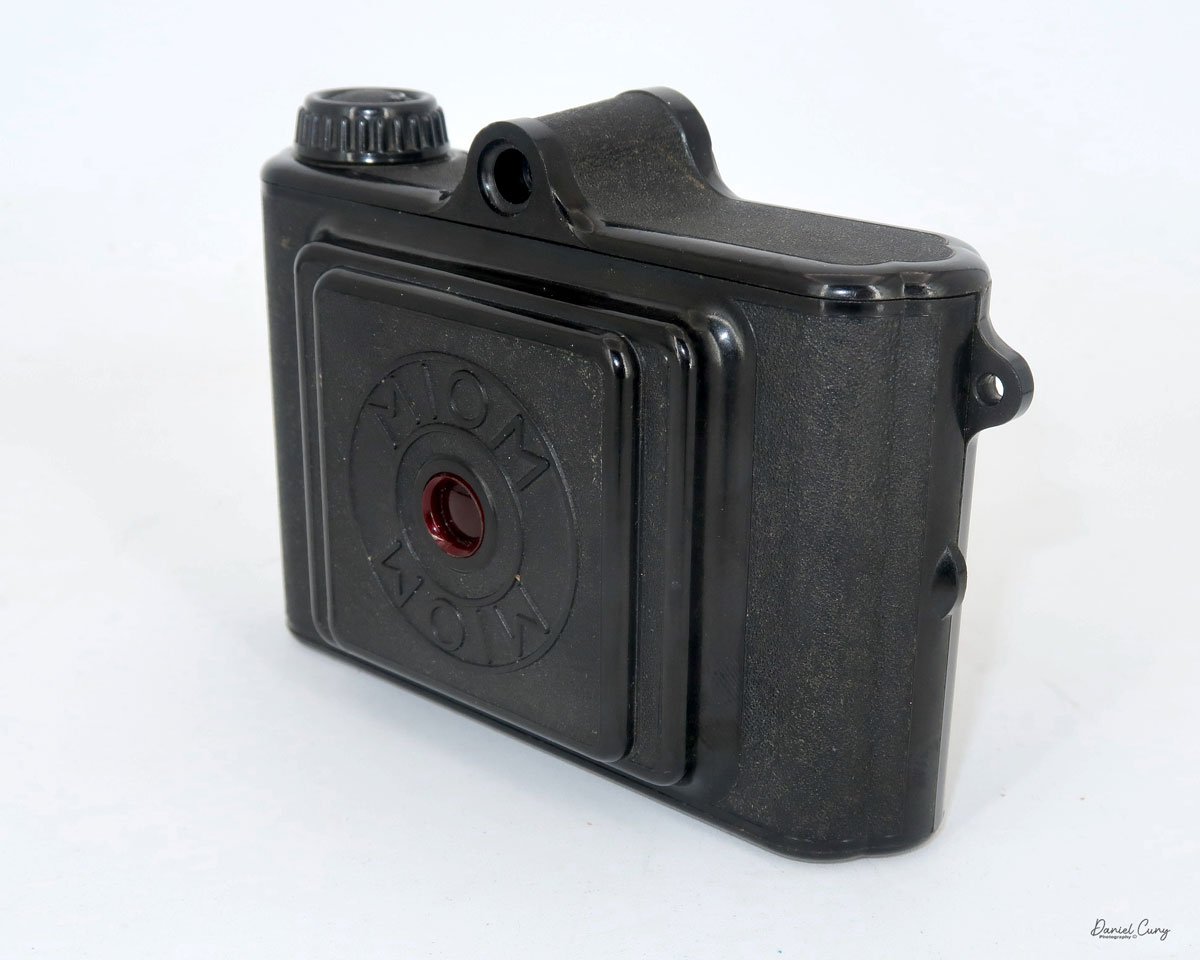
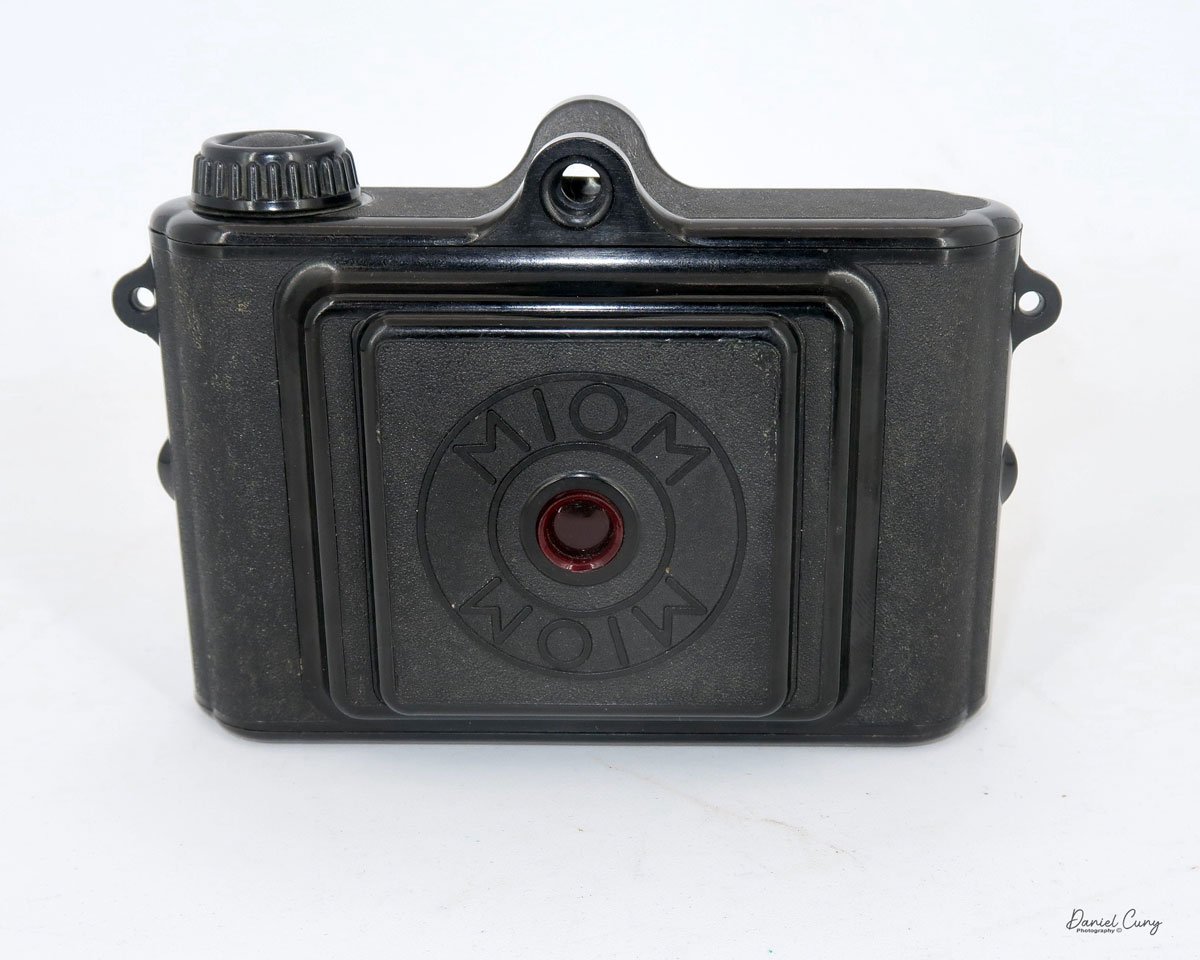
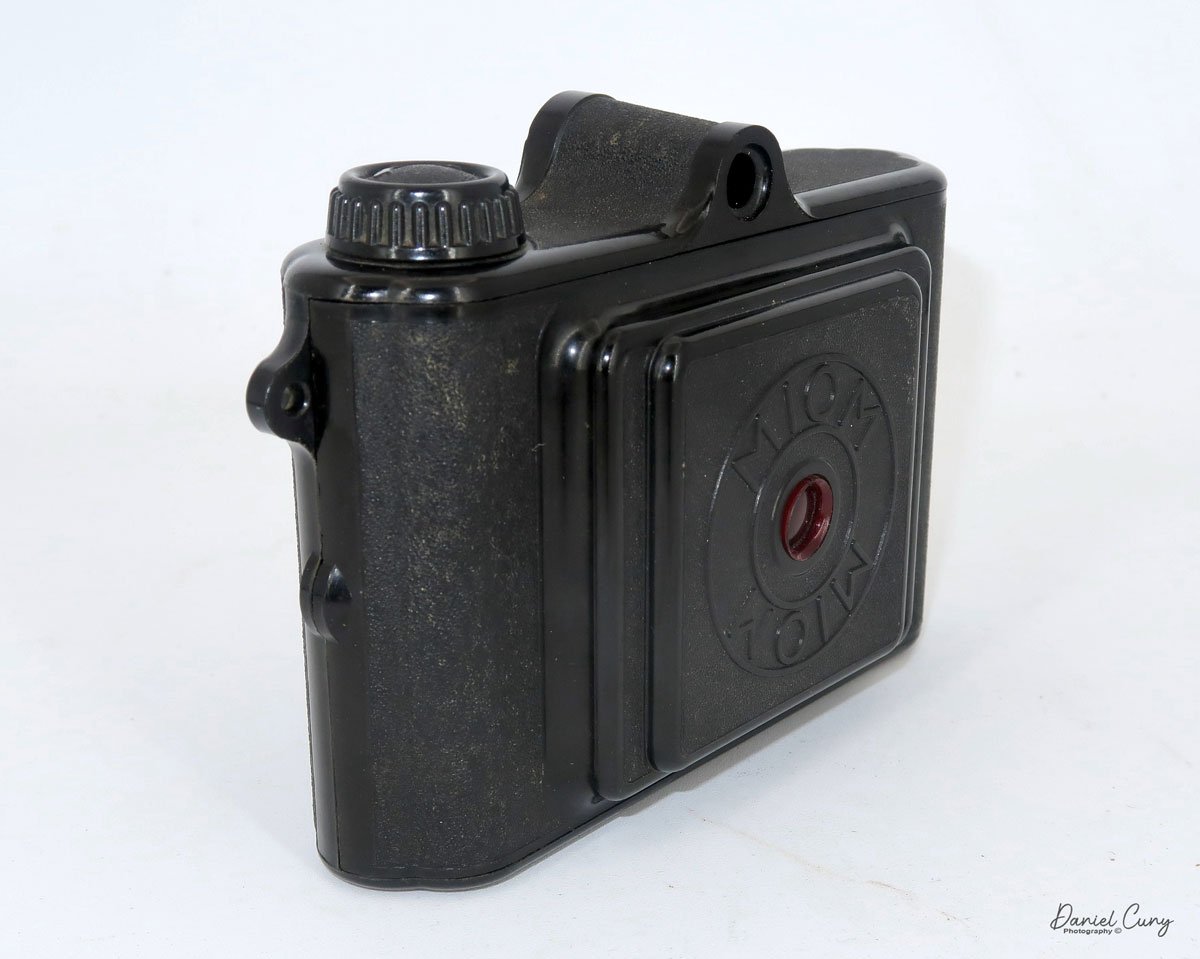
My early MIOM camera

This blog is a journey into the world of a camera I stumbled upon during our European escapade last year. Whenever we venture to a new destination, I make it a point to unearth the local flea markets, a treasure trove of unique cameras and photo items that are often elusive in the US. The thrill of discovering these items, especially being on the West Coast, where European finds are a rarity, is an experience in itself. 

 One of my favorite flea markets was just outside Prague, and my wife and I went to it. It was in an industrial area, and we took the train to get to it, but it wasn't so much the cameras and photo items found as the atmosphere of the place that made it memorable. I did find some great cameras there, too, that are harder to find on the West Coast of the US.

 While in Brussels, my wife and I went to a flea market in a square or small park in town. There were about 40-50 vendors there. Most of the items were in boxes with many other items, so you needed to rummage through a lot of items to find what you were looking for. I didn't have much time to look as my wife was under the weather, and it would start to rain later in the morning. I picked up a few Rollei parts for a reasonable and fair price along with this MIOM compact bakelite camera, for which I paid 1-2 euros.

The Company:

Let's delve into the intriguing history of MIOM, a brand that has left an indelible mark on the world of photography. The journey of MIOM begins in 1887 with architect Félicien César and engineer Fabius Henrion, who founded the local lighting distribution company: 'Fabius Henrion et Cie,' with a capital of 100,000 francs in the Nancy and Lorraine region. Despite facing numerous challenges, the company's legacy was preserved when it was acquired by the CGE, Compagnie Générale d'Électricité (General Electric Company), in 1898.

 MIOM, an acronym for Manufacture d'Isolants et Objets Moulés, (Manufacture of Insulators and Molded Objects) was a subsidiary of the Compagnie Générale d'Électricité (General Electric Company) which started in 1929. As the MIOM name suggests, It was created to produce electrical components for the company. 

 As photography grew during this time, MIOM created a photographic department in 1937 that molded simple cameras in "Cégéite," which was similar to what we now call bakelite. The name derived from the name of the parent company: the Compagnie Générale d'Électricité.

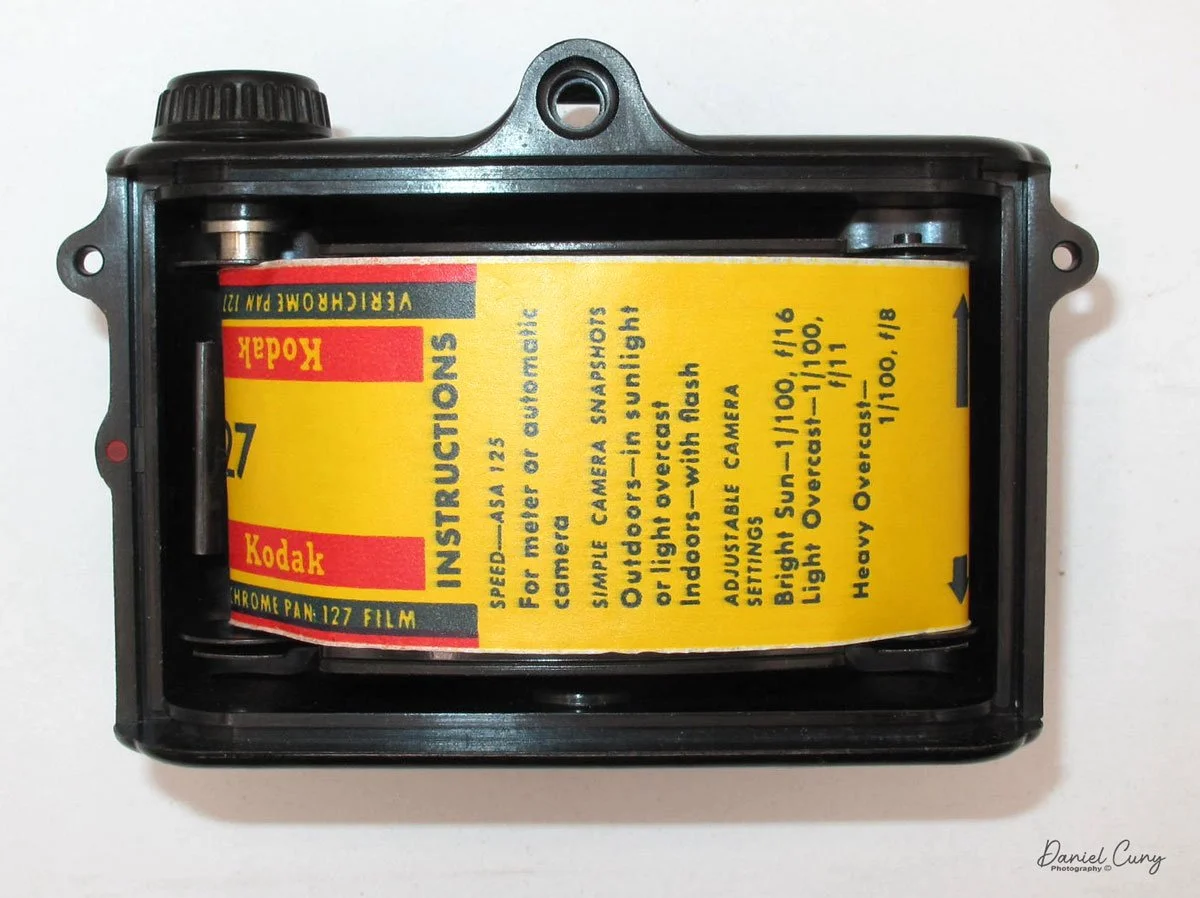
MIOM's early cameras were very similar to the model I have. They were very flat in appearance and used 127 film to produce 6x4.5cm negatives. Some of the other early models were the Rex and Lec Junior. I believe the model I have is only known as the MIOM, which is printed on the back. There is no camera name produced on the camera like the REX or other cameras of that time.

MIOM Ad in the 1930s

Then, in 1938, the cameras took on a different appearance, resembling the Czechoslovakian Pyonyr cameras, designed by Fritz Kaftanski, who had recently moved to France to get away from the war problems taken on within that region during the late 1930s. It's suspected that Fritz Kaftanski was involved in the design of the newer Photax camera.

 The Photax cameras had a larger negative area, used 620-size film, and produced 6x9cm negatives. The Photax design had a lens that rotated out from the body on a helical and included a very simple shutter that only worked when the lens was in the extended position.

This new system was beneficial to amateur photographers at the time. It prevented the camera from accidentally taking a photo if the lens was retracted. The new Photax camera also included lenses from Boyer, a French optical company that produced wonderful optics.

 Photax cameras were the best-selling cameras in France for 20 years and produced cameras well into the 1960s, with the Photax VI released in 1966. However, like many European camera manufacturers of the era, MIOM faced significant challenges in the 1960s with the rise of Japanese brands such as Nikon, Canon, and Minolta.  

 Today, MIOM's legacy lives on in the vintage camera market, where its models are sought after for their distinctive design and the quality of their optical systems. The story of MIOM reminds us of a golden age in photography when craftsmanship and innovation defined the industry.

My Camera:

This description should be straightforward and short, as this camera is simple without many bells or whistles. However, its simplicity and unique design make it a valuable addition to any vintage camera collection.

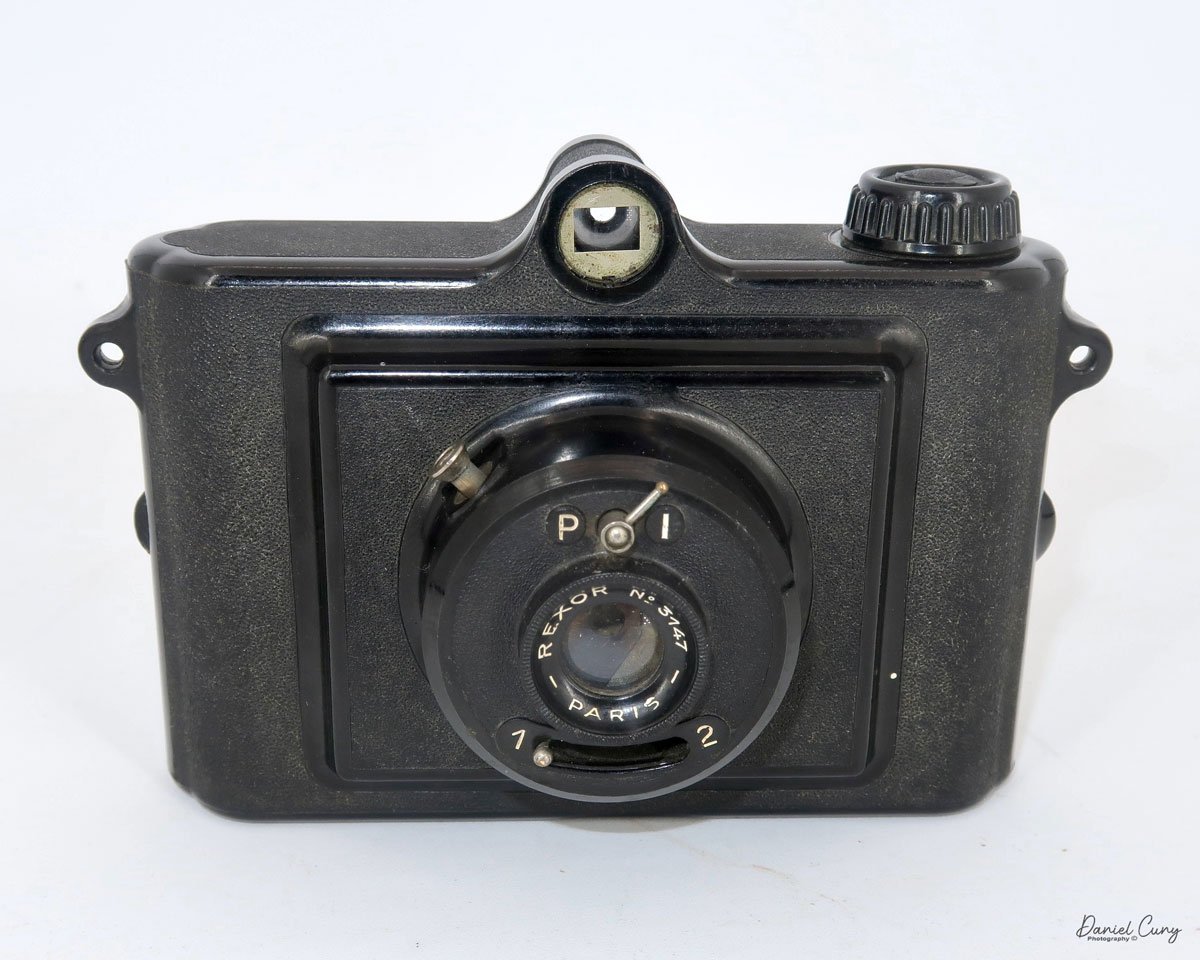
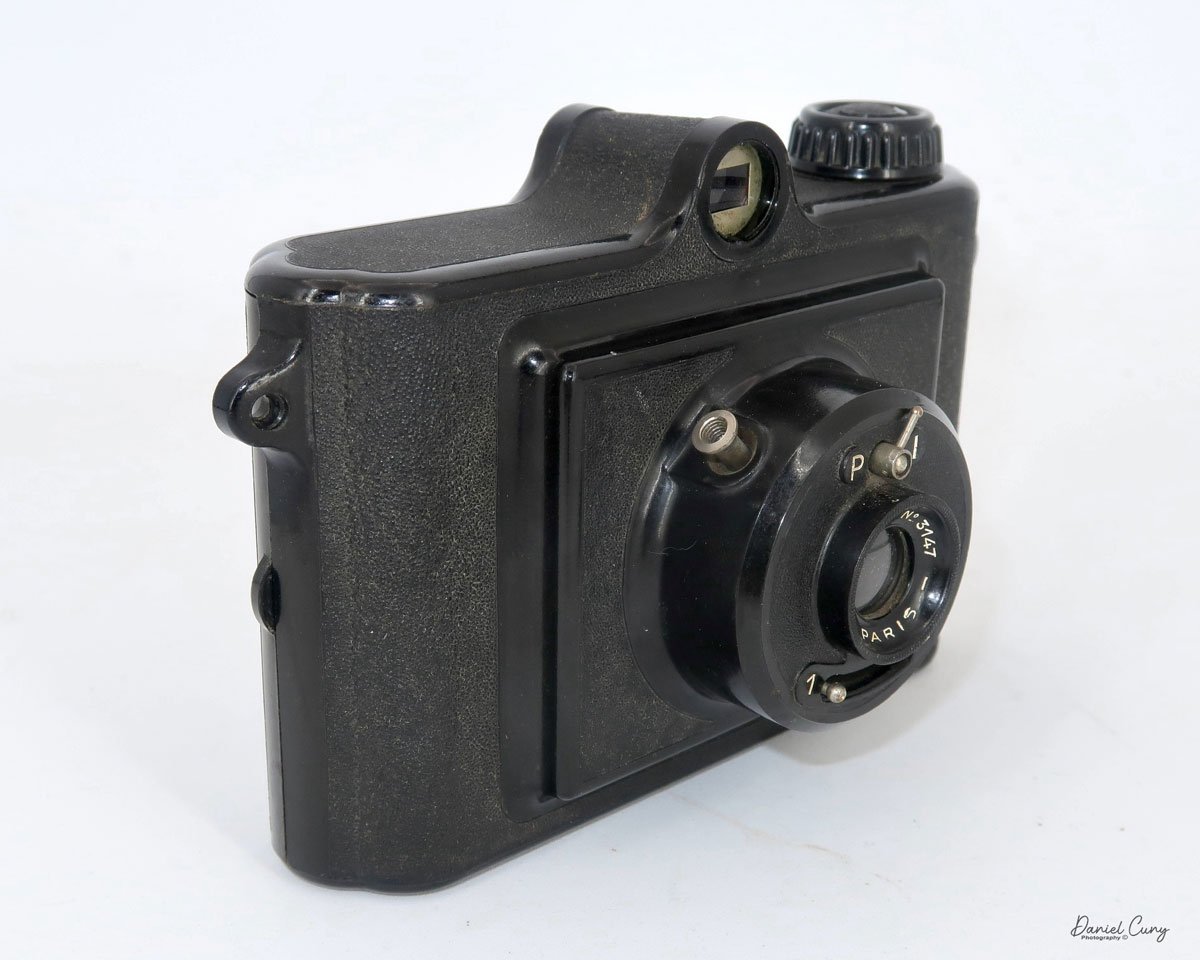
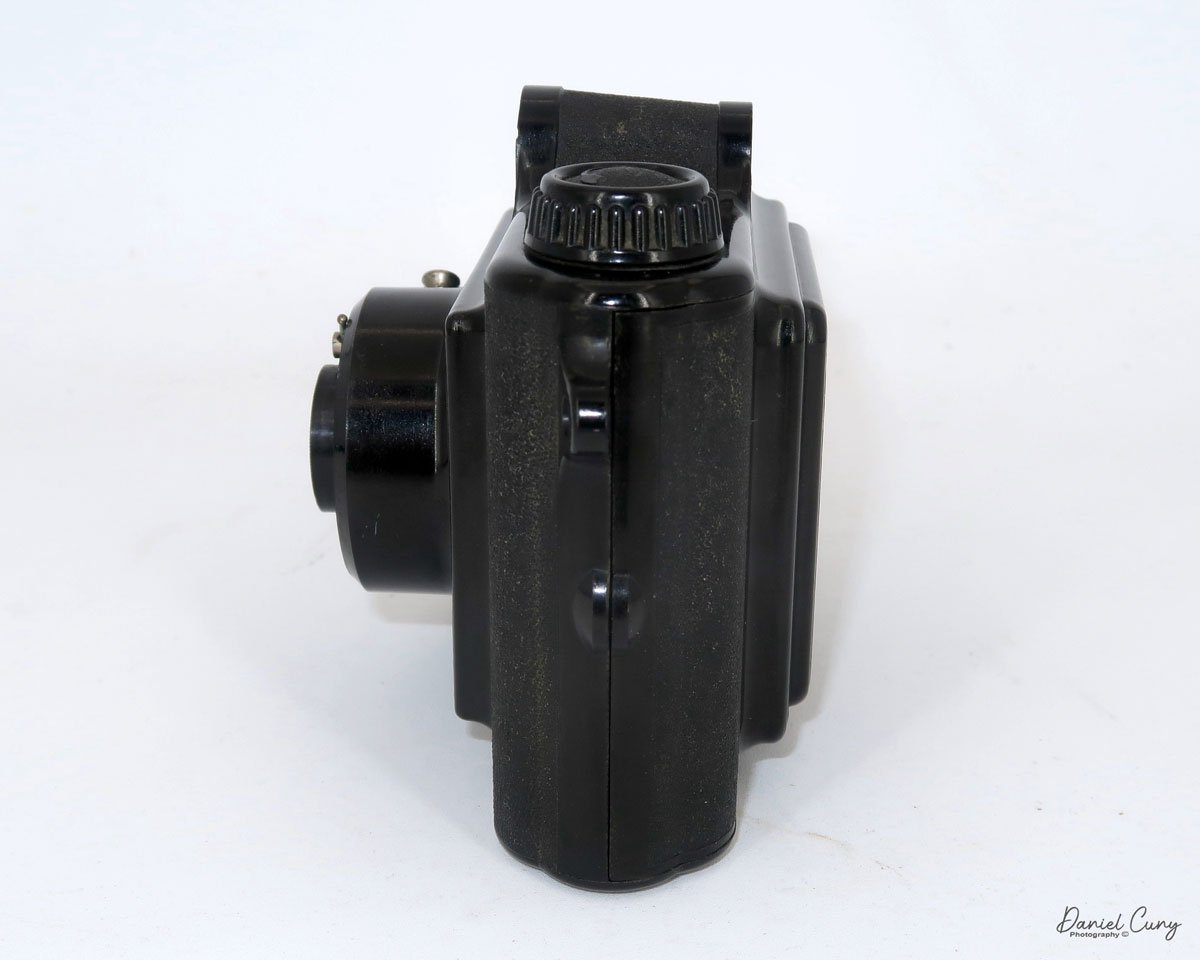
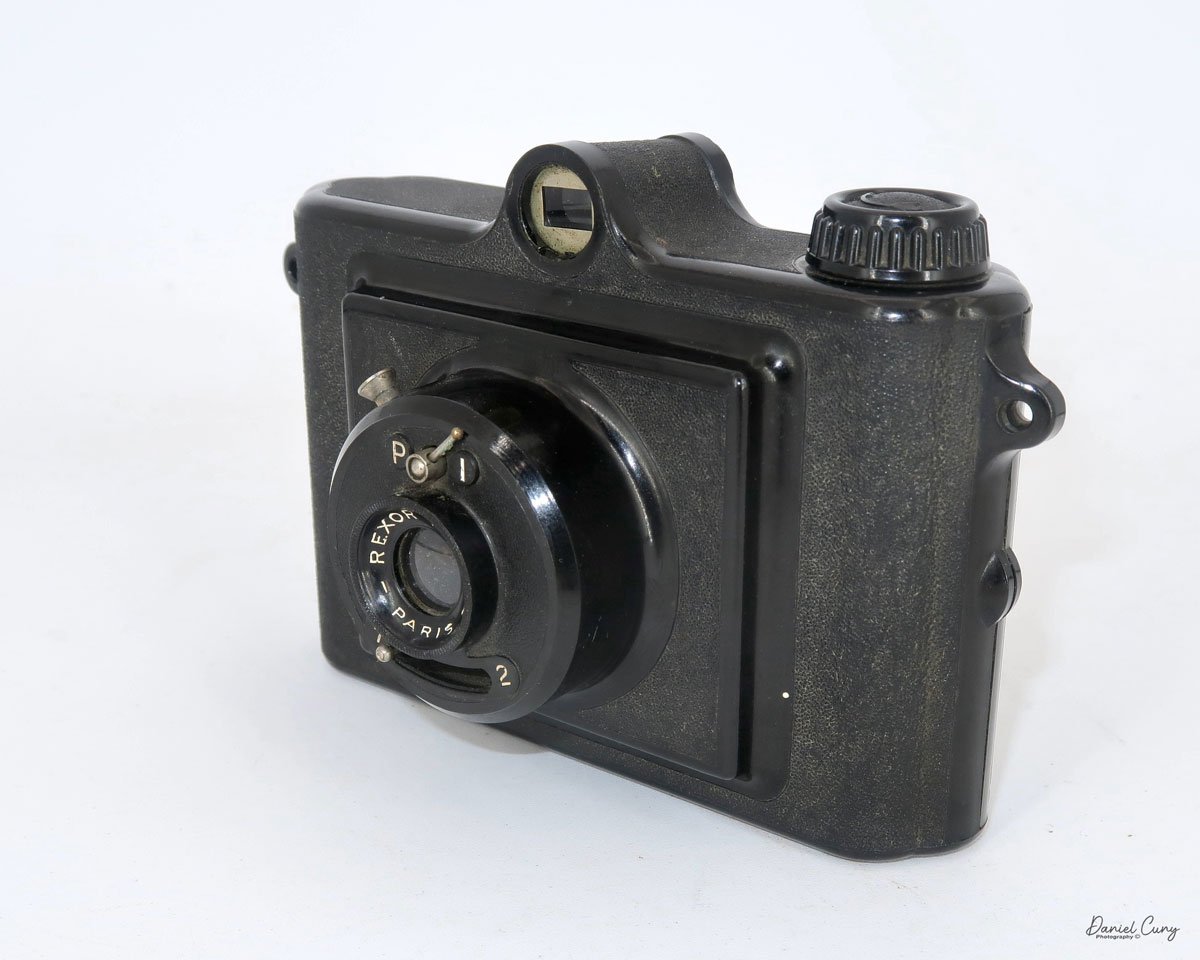
 My MIOM camera is 3.5" tall, including the viewfinder, by 5.5" wide, including the strap lugs, and 3" deep, weighing 9.4oz. It is very lightweight and compact. On the front of the camera, there are two shutter options. These settings are on the top and bottom of the 60mm Rexor lens, serial number 3147, on the camera. The camera has a crinkle finish within the acrylic, which makes the gripping easy and somewhat drop proof.

Above the lens are your shutter settings: "I" for instant, which has a shutter speed of approximately 1/50 sec., or "P" (B) for timed photos. Below the lens are two options for aperture settings. Looking online at other information on the Photax camera, the settings are 1 (Grand Diaphragme) for f16 or 2 (Petite Diaphragme) for f22. The words in the paratheses are written inside the camera's back door.

There is no latch or lock to hold the back onto the camera to load the MIOM camera with film. The back is held onto the camera's body with friction, and the back fits snuggly onto the camera's body. On either side of the camera are a couple of protrusions. I put my fingernail in between these nubs and pull, and the back will pull away from the body. You must do this on both sides so as not to crack the plastic and render the camera useless.

Once you get the back off the camera, I notice there are two red dots on the protruding nubs, which indicate which side fits together. The camera winds to the left, so you put the empty spool from the previous 127 rolls from the right side to the left and put the fresh roll of 127 films into the right side. Break the tape on the roll and bring the leader to the empty spool. Thread the leader into the spool slots and wind the film a few turns to ensure the film is lining up on the spool or until you see the arrows on the paper backing pointing outwards. Once you reach this point, it's time to put the back onto the camera. Once the back is on the camera, wind the film until you see the number 1 in the red window. Now you're ready to take the first photo.

 Once you take the photo and wind to the next frame, you'll get eight exposures on each roll of 127 film. Now that all the frames are taken, it's time to take the back off the camera and process your film.

My Results:

For total transparency, I had three rolls of older VP 127 film in my drawer. One roll's expiration date was June 1971. That roll went through the camera fine, but when I rolled the film onto the developing reel, something went array, and the film didn't process correctly. I loaded one of the other two rolls I had left, dated Sep.1968. This roll got jammed within the camera, so I'm unsure if I didn't load it properly or, due to the age of the film, it broke, but the film was very crinkled when I went to process it, and none of the images came out.

 It was an operator malfunction, and I didn't load it properly. Five rolls of film are arriving today from one of my favorite camera stores, Glazer’s Camera, in Seattle, WA, so I'd like to take the film, process it, and scan the images today.

I received the film, loaded the camera, walked through the neighborhood, and took images. Luckily, this roll turned out, and you can see the results below.

My Conclusion.

I'm writing this portion of my conclusion before I have images from the camera, so at this point. In contrast, the camera is compact, and an earlier version of the MIOM cameras made, the film issues have made the experience somewhat frustrating. Once I get the images, I'll complete my conclusion and give you an honest assessment of the camera.

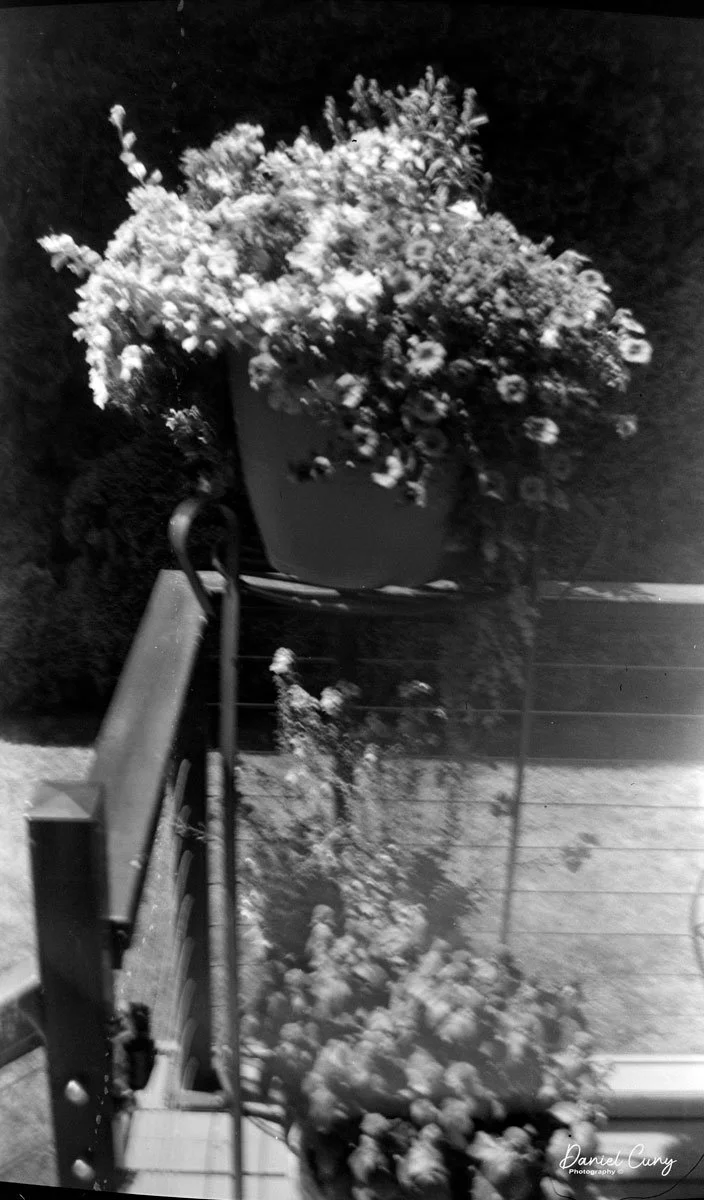
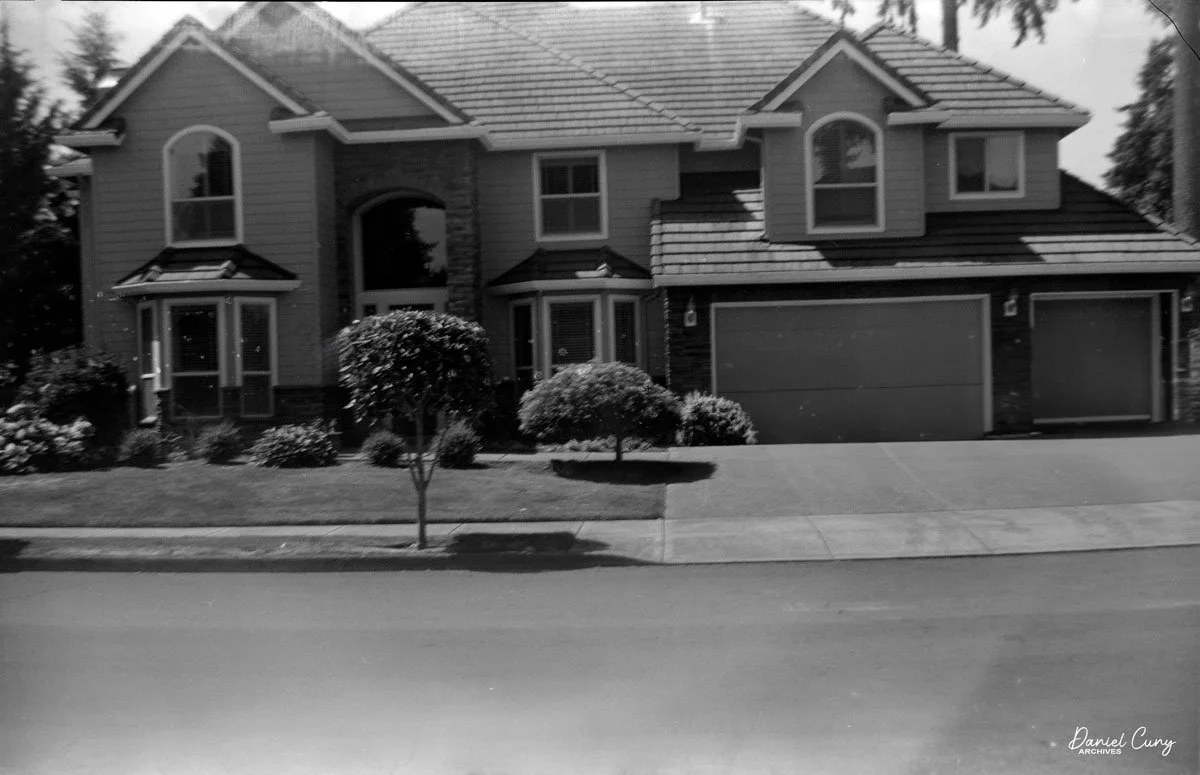
The images confirmed my suspicions. The camera was made to put cameras in the masses hands and for them to go and take photos of friends, family, and memorable moments. This camera did a decent job for a camera almost 90 years old. The plastics are rugged and on my camera, I’m missing the rear viewfinder glass so it was a bit more difficult to fame the images, but overall a decent camera.

 Thank you for taking a few minutes from your day to read about this early version of the MIOM cameras.

 Until next week, please be safe.