Coronet Cameo

My Coronet Cameo camera

It wasn't until I had been collecting cameras that I developed an interest in miniature and subminiature cameras. One of my earliest recollections of liking small miniature cameras was when I became a sales representative for a well-known Swiss large-format camera company (Sinar) and traveled to Sacramento to visit a store that displayed many different miniature and subminiature cameras at the cash register.

 I fondly remember spending time looking at the display, thinking many of the cameras seemed so odd and unusual, which is something I'm always looking for in what I collect. When I asked the owner of the store if any of the cameras were for sale, and his reply was a swift and hardy "no", in my mind, it triggered a need to find out more about this whole new world of cameras I was aware of, but had no interest in collecting.

 While I don't have a large collection of miniature and subminiature cameras, the ones I do have have a special place in my collection because they are all very unique. I have the majority of the miniature and subminiature collection on my desk, which I'm at the majority of the time I'm in my office, or what I call my camera oasis. It's the one room in our house where I can do what I want, within reason. Another terrific part of the collection is that they don't take up much room, so I have many of them in a small area that reminds me of the display at the camera store I went to well over 30 years ago.

 I came across the Coronet Cameo camera on a trip to London about two to three years ago. For me, one of the main objectives of the trip was to visit Portobello Road to see some of the camera and photo stalls we had visited on a previous trip to London many years earlier. When my wife and I visited the outdoor market, I found that things had changed, and many of the vendors only showed up on weekends. This was a massive disappointment for me, especially since my wife and I were leaving on Saturday afternoon.

Coronet Cameo size comparison.

 The main person I was to meet was Juliano of Cameras London, who shows his cameras only on Saturday. Somehow, I convinced my wife that I would take the bus to Portobelo Road and back in time for us to go to the airport. 

 As I took the bus to Portobello Road that Saturday morning, I remember I needed to be mindful of the time and hurry. I arrived early as Juliano was still setting up. He had a fantastic display of cameras and some negatives. There were several cameras I wanted to purchase, one being an Ilford Advocate, which you can read about. He said he had a cleaner version and would ship it to me. 

I got together a small group of cameras, and just before I paid him, I saw the Coronet Cameo. It was in poor condition, but it was odd and unusual, so I threw it into the pile. We made a fair bundle price for the items, including the Advocate and Cameo camera. I paid him for the items, put the cameras in my backpack, and made my way back to the hotel. We had plenty of time to make it to the airport.

History:

 The Coronet Camera Company was a significant English camera manufacturer, founded in 1926 in Birmingham, England, by Frederick W. Pettifer. The company began at 48 Great Hampton Street, Aston, focusing on producing an inexpensive line of cameras for the mass market. Their early focus was on simple box and folding cameras.

Photo of old Coronet building depicted from Historic Camera website

 A key aspect of Coronet's operations was its utilization of local Birmingham businesses. They partnered with the British Optical Lens Co. for lenses and, notably, with Edwin Elliott, a local plastics manufacturer, who fabricated molded plastic cameras for them. This collaboration led to popular pre-war models, including the small and stylish Coronet Midget and the Coronet Vogue, which were often made from colored Bakelite. By 1933, the company had reportedly sold a remarkable 510,000 cameras.

 The company became Coronet Ltd. in 1946. After World War II, the company specialized in low-cost, molded-plastic cameras. Due to French import restrictions, Coronet formed a partnership with the French company Tiranty of Paris. This collaboration led to several Coronet models, such as the Rapide, being manufactured in France, sometimes using Boyer lenses, to bypass trade barriers. Coronet also produced accessories and its own brands of film, including Corochrome.

 The company continued to manufacture cameras from its Birmingham headquarters (later located at 308-310 Summer Lane) until it finally ceased operations in 1967. Over its four-decade history, Coronet played a vital role in making photography accessible to the public by providing thousands of simple, affordable cameras, many of which remain popular collector's items today.

My Camera:

 This portion of the blog will be sparse, as there's not much to this camera. The Coronet Cameo camera is small and will almost fit into a 35mm film container. It's 2" wide by 1.5" deep and 2" tall with the front viewfinder extended and only 1.25" tall when it's retracted. The camera only weighs 1.6 ounces. The Cameo has a fixed 25mm F/11 Meniscus lens and a single shutter speed range of 1/25-1/50, with the shutter release on the right side of the camera body.

The camera is made from plastic and was manufactured between 1948 and 1952.  Coronet attempted to revive the success of the Pre-War Midget camera, which was highly successful for the company at the time.

 The Coronet Cameo takes a roll of 16mm film and produces six 12mm x 18mm negative-sized images per roll. The camera loads and winds like any other roll film camera, with the unexposed film loaded on the left and the leader threaded into the take-up spool on the right via the film winding lever.

The back of the camera is held in place by two clips on the right side of the camera. To open the back, lift it from the two clips; it will open, exposing the film chamber. Unfortunately, my camera, like many Coronet Cameo models, is warped, and the back doesn't fit properly to the body.

 A sliding front viewfinder can be pulled up, and when the rear viewfinder is lifted on the back of the camera, it exposes the red window displaying the frame number of the image you'll be taking on the roll of film.

My Results:

 Unfortunately, there is no longer film for this camera, and with the warped camera back, I wasn't able to take photos with it.


Conclusion:

 As I was taking photos of the Coronet Cameo, I had an empty 35mm film tube and tried to see if the camera would fit inside it, but it's just a tad too big.

 The Coronet Cameo camera is sitting right next to my Whittaker Micro 16 Pixie camera, which I considered writing about for this blog post. Still, I'll leave that camera for another day. I do enjoy all the miniature and subminiature cameras in my collection; it just took me a few years of collecting them to appreciate them for what they are.

 Thank you for taking the time out of your day to read about this small plastic camera from about 75 years ago. I'm sure many people owned and enjoyed them when they were made.

 If you're interested in reading about other cameras I've reviewed, here's a link to my other Camera Reviews.

 I also have a store on eBay, Cuny's Camera and Photos, where I sell items I've reviewed, as well as many other camera oddities.

 Until next week, please be safe.
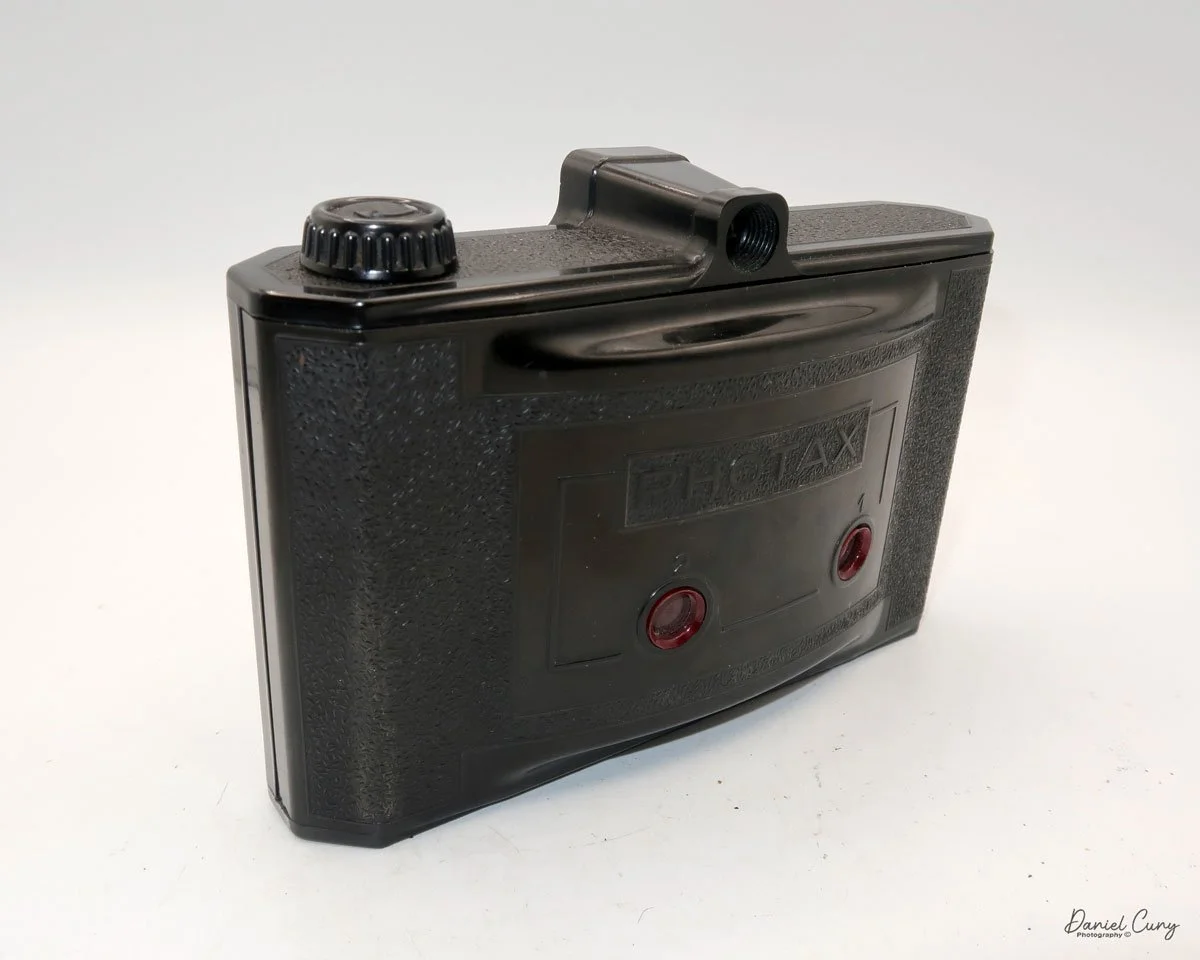
Photax 1 camera

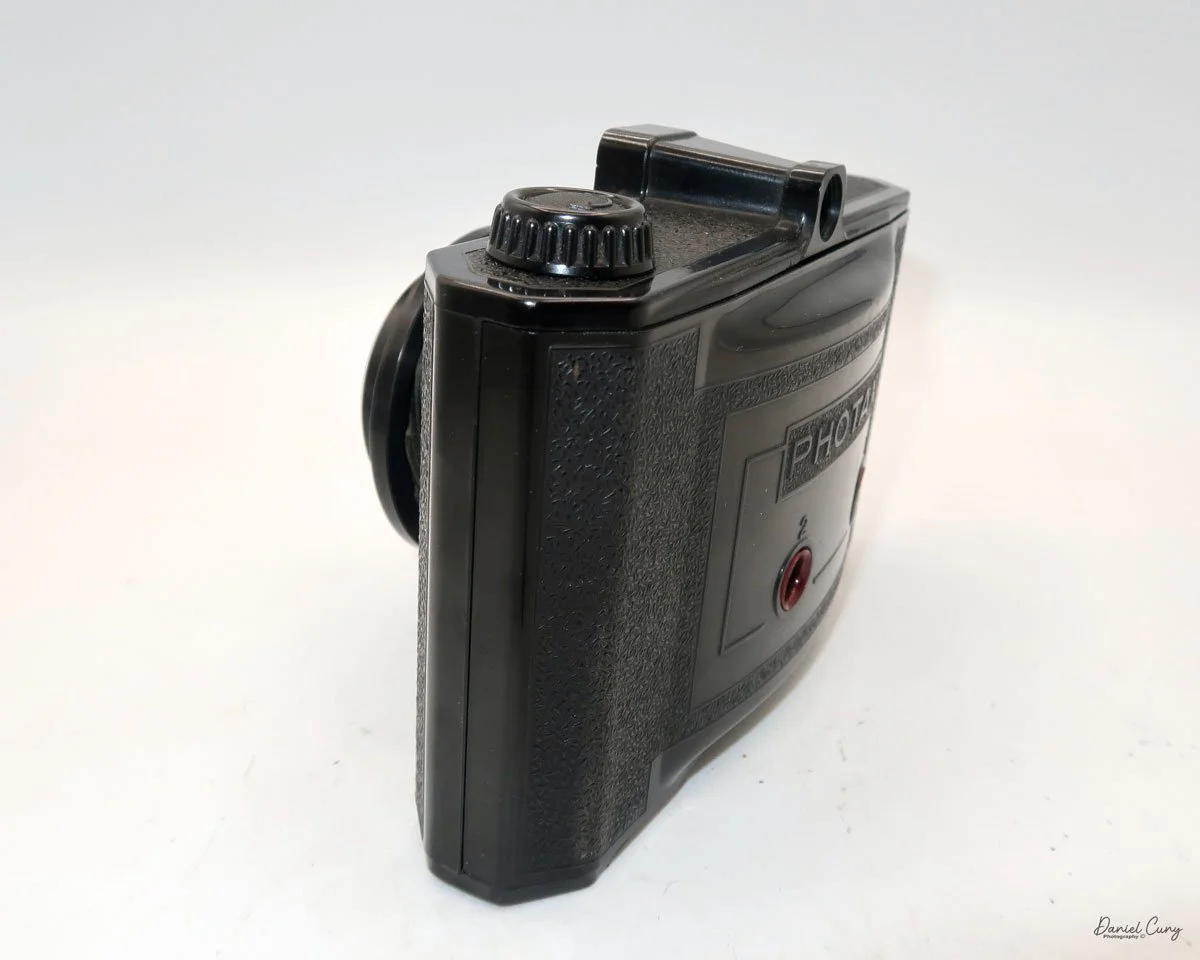
My Photax camera

This summer, as my wife and I visited Barcelona on a day when my wife was working, I decided to go to the local flea market to look for photo items to add to my collection. Attending local flea markets is something I look forward to, especially when we visit new cities and countries. My main objective was to find a camera built in Spain, which I accomplished by purchasing the Captain camera, which I reviewed earlier this year.

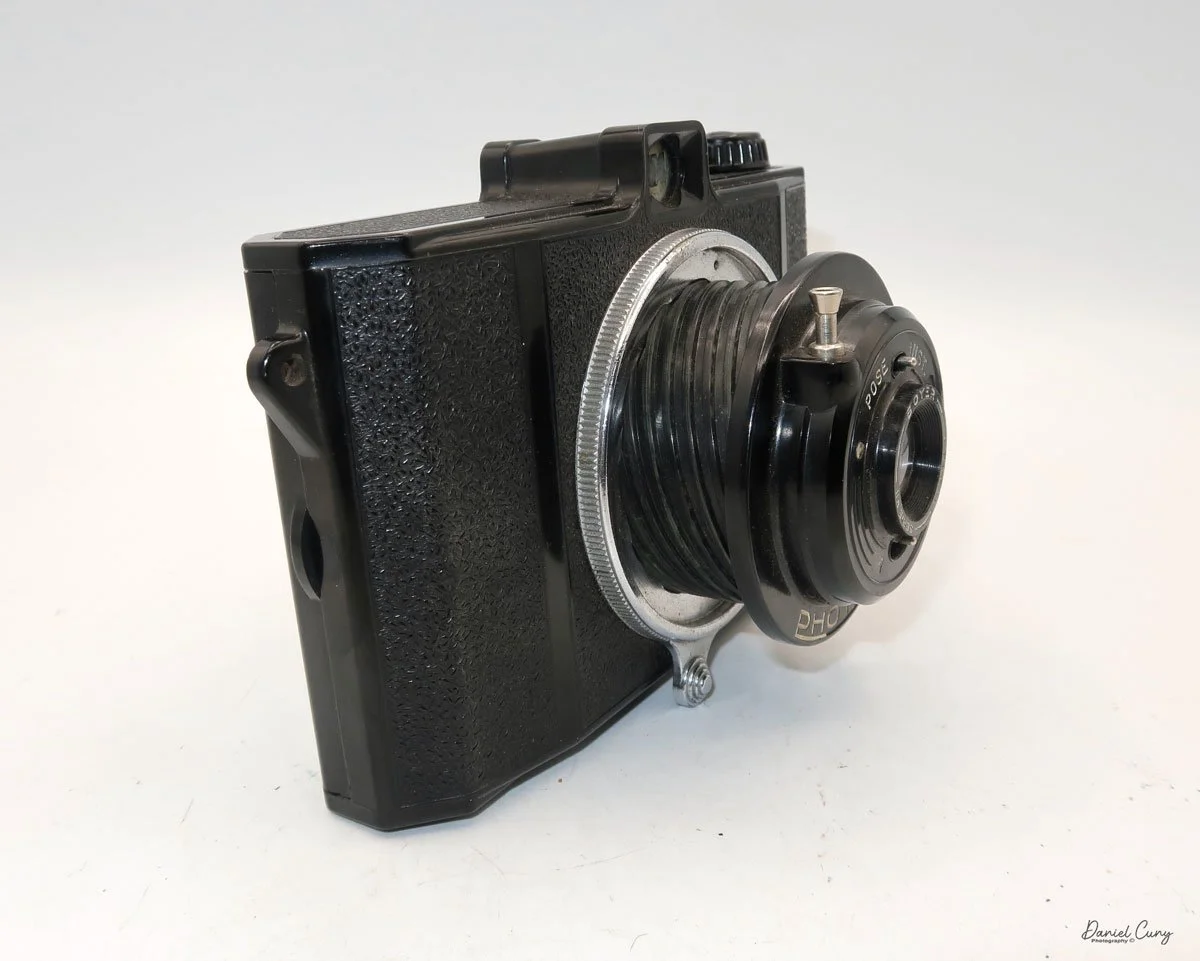
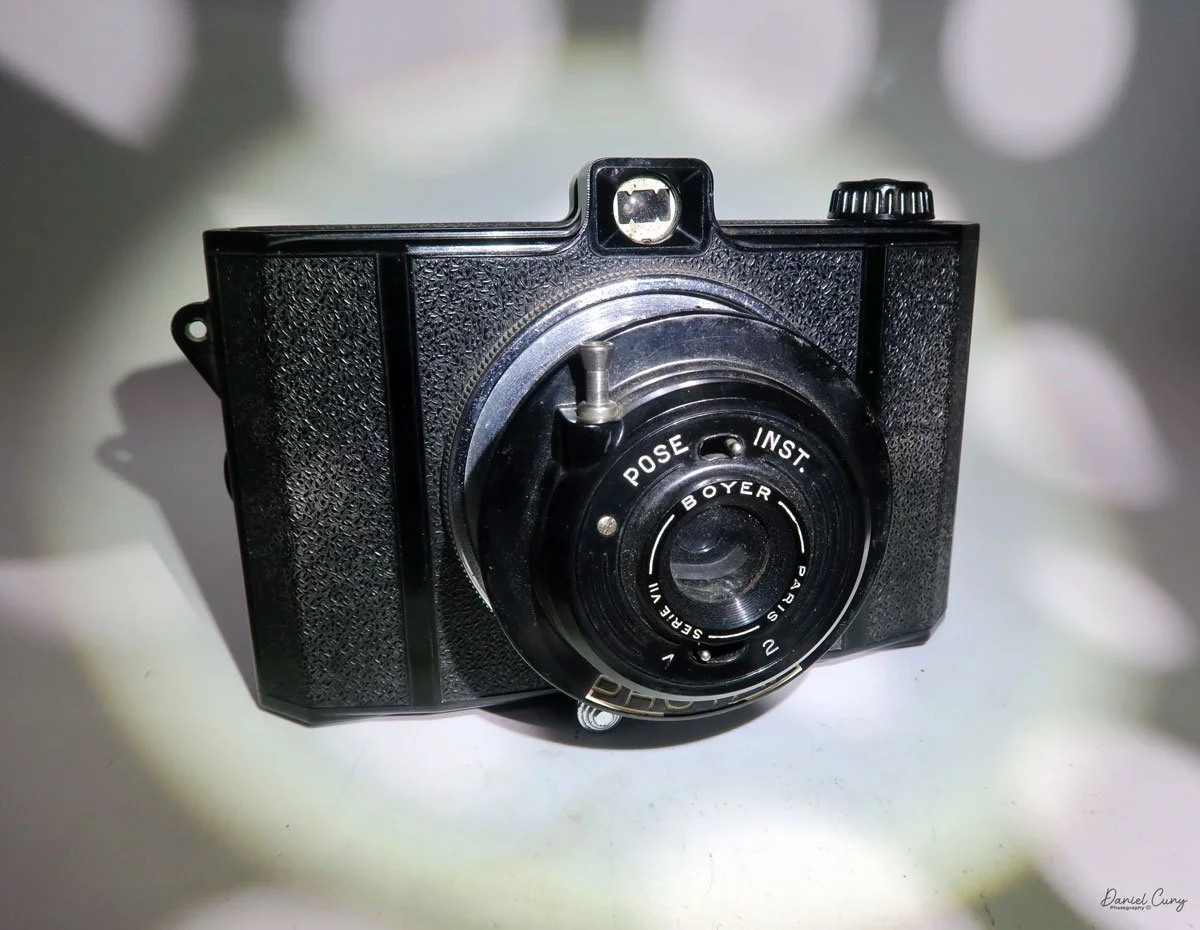
 Strolling the stalls at the flea market, I came across a very large Bakelite camera, which intrigued me. It was a Photax 1 camera made by MIOM in France. What I liked about the camera was its large size, and that came with the original fitted case. As I pulled out the camera to examine it, I noticed a very familiar twist-out style lens, and the shutter was working, which gave me confidence in my purchase. Talking to the person at Stoll about pricing for the camera, I offered a reasonably low price, which they rejected. However, they came back with a counteroffer, which I needed to consider for a while.

 As I spent more time examining different stalls and cameras. Still, my mind kept returning to the Photax 1 camera, which is the large camera with the untwisting lens. Before I left the flea market, I went back to the stall and renegotiated the price with the camera owner, coming to an agreeable price and purchasing the camera.

 This camera was one that I wanted to write about. It's an unusual-shaped camera made of Bakelite and is quite large. When I opened the back of the camera, I noticed that it was a 6 x 9 cm format, which intrigued me. Many of the cameras made by 

MIOM we're a smaller format, generally 6 x 4.5 cm.

 Let me tell you a little bit about the company.

History:

 MIOM (Manufacture d'Instruments d'Optique et de Mécanique) was a French company known for producing optical and mechanical instruments in the mid-20th century, particularly cameras. The firm operated mainly from the post-World War II era into the 1960s, a time when France was striving to rebuild its industrial base and compete in the rapidly evolving consumer goods market.

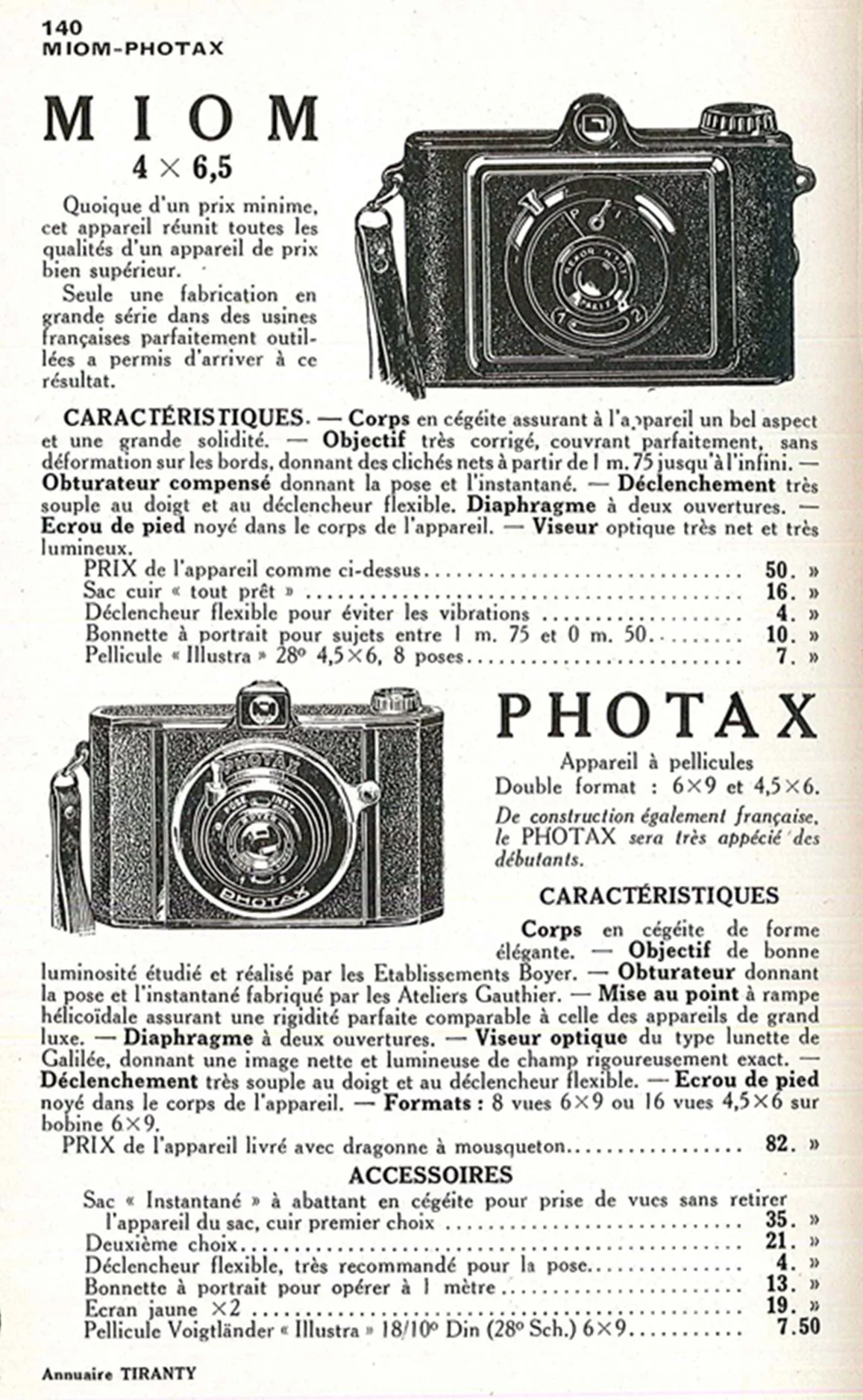
French Photax ad

 MIOM's roots were in precision engineering, and the company initially focused on optical devices before expanding into the field of photographic equipment. Its location in France allowed it to tap into a tradition of fine optical craftsmanship, drawing on expertise that had developed in Paris and other industrial centers since the 19th century.

 In the camera field, MIOM was best known for manufacturing compact and affordable models aimed at the amateur photography market. Among their most recognizable products was the MIOM Photax series—a line of simple, durable cameras using roll film. The Photax models often featured Bakelite bodies, a lightweight and inexpensive molded plastic popular in mid-century camera production. These cameras were designed for ease of use, appealing to the growing middle class and to families seeking to document their lives without investing in complex photographic gear.

 The Photax range evolved over the years, with various iterations accommodating different film formats, primarily 6×9 cm images on 120 roll film, and later 4.5×6 cm formats. Some models incorporated basic focusing and exposure controls, while others remained strictly fixed-focus, point-and-shoot devices. Though not technically advanced compared to contemporary offerings from Germany or Japan, MIOM's cameras were reliable, affordable, and accessible, helping to democratize photography in France.

 MIOM also ventured into specialized cameras, including stereo models, reflecting the brief postwar enthusiasm for 3D photography. Their designs maintained the company's hallmark of straightforward construction and modest pricing.

By the late 1960s, increasing competition from Japanese manufacturers, whose products offered superior optics and more advanced features at competitive prices, had eroded MIOM's market position. The brand gradually faded, and production ceased as the company either closed or shifted away from photographic equipment.

 Today, MIOM's cameras—especially the early Bakelite Photax models—are collected for their retro aesthetic and as examples of France's postwar consumer design. While they may never have rivaled the technical prowess of major brands, MIOM's work remains an essential chapter in the history of accessible, everyday photography.

 Below is a timeline outlining the evolution of MIOM's Photax camera series.

 1937 – Photax I- MIOM launches its photographic division with several models, including the original Photax (also branded as Camera 77, Loisirs), all of which use 120 film for 6×9 cm images. The Photax I is recognizable by its centrally positioned shutter button and Guillotine shutter, which offers two speeds. 

1938 – Photax II (and Blindé variant)- Introduced in 1938, the Photax II adopts the Boyer Serie VIII meniscus lens and maintains the simple two-speed shutter design. A "blindé" version appears—with a protective Bakelite lens cover that also shields the shutter release. 

1947 – Photax III- Following World War II, MIOM debuts the Photax III, featuring a threaded shutter release and leveraging the same Boyer Serie VIII lens. It introduces additional shutter settings (1/25 sec, 1/100 sec, and T) and continues to use the 620 film format. 

1951 – Photax IV (and IV F)- The Photax IV arrives with a Boyer Rexar meniscus lens and identical shutter options as the III, with enhanced flash synchronization. The IV F variant includes flash sync capabilities via a RIM shutter. 

1955 – Photax V- A stylish redesign marks the launch of Photax V in 1955. It features a modernized Bakelite aesthetic, bi-format capability (6×9 and 6×6 cm), and upgrades to an Angénieux Heanar Type V lens with full flash sync via RIM shutter 

1960–1962 – Photax VI -The final model in the Photax lineage, produced between 1960 and 1962, transitions from Bakelite to molded plastic, featuring a sleek, streamlined design. It's a square-format 6×6 medium-format camera that utilizes an Angénieux Heanar Type VI lens and RIM shutter with flash synchronization.


My Camera:

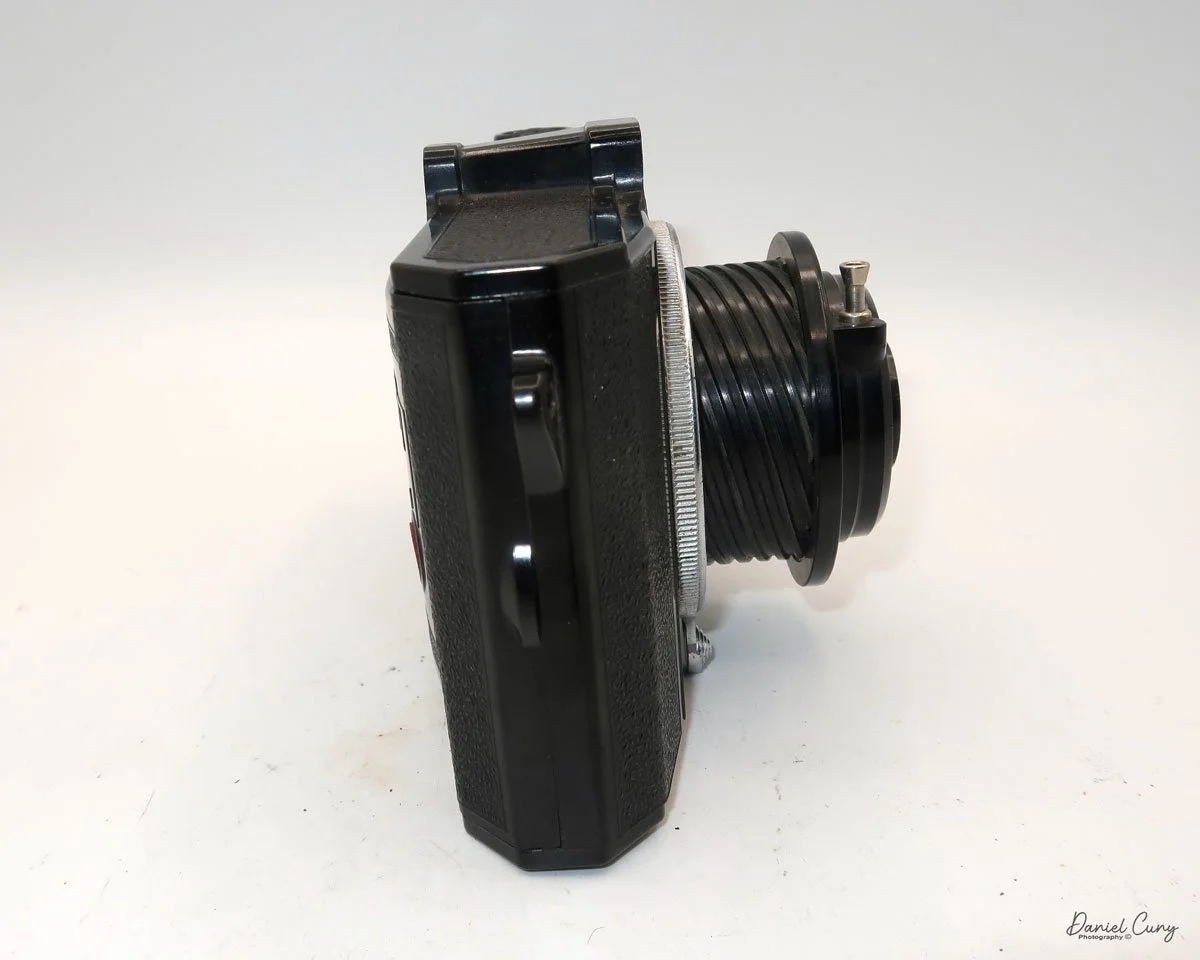
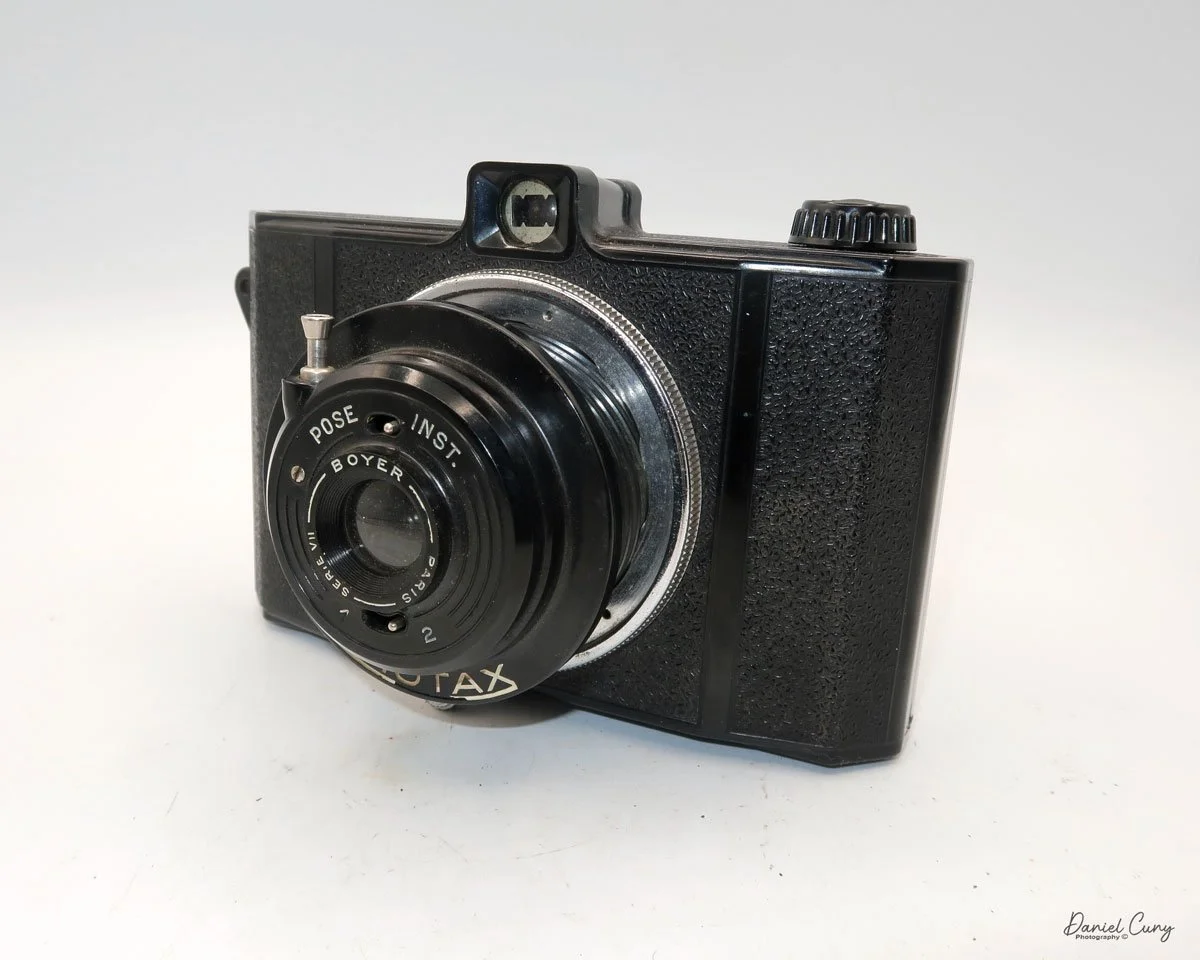
 My camera is 6 1/2 inches wide by 4 1/2 inches tall by 4 inches deep when the lens is unscrewed. In its closed position, the lens is 3 1/4 inches long. Without the case, my camera weighs 1 pound, 2.7 ounces.  The lens on the camera is a Boyer, Series VII lens.

The Photax 1 was produced for approximately one to two years, from 1939 to 1940. The Photax 1 camera uses 120 film, a departure from MIOM's earlier cameras, which used 127 film. As I mentioned earlier, this is a 6 x 9 cm format camera. The Photax 1 was sold with a film mask that allowed the photographer to shoot in the 6 x 4.5 cm format. Unfortunately, when I purchased this camera, the mask was missing, so my camera is only compatible with the 6 x 9 format.

 To extend the lines, there is a chrome ring around the lens with a knob at its top. Twist the ring clockwise, and the lens, which is on a helical screw, unscrews and moves into the taking position. The camera's controls are fundamental. There are only two shutter settings. One is "INST", which is for normal snapshots, and "POSE", which is for time exposures. These are changed by a little switch between the two settings. To control the aperture. There is a similar switch beneath the lens. One setting is the larger aperture, which is number one, and the second setting is for a smaller aperture.

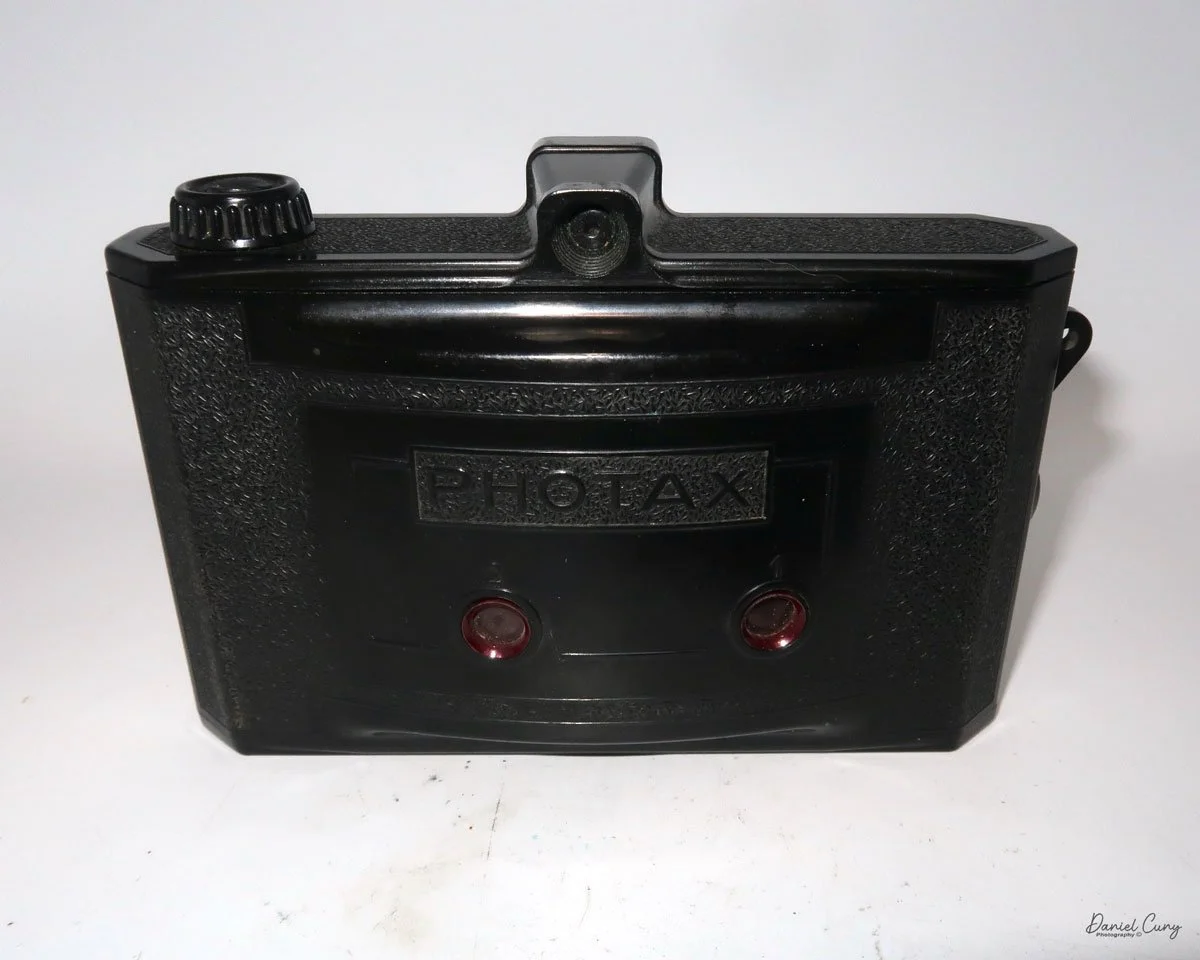
There is no lock on the back of the camera to secure the back to the front of the camera body. To open the camera, on the right side, is a little foam plate that you pull away from the camera body, and the back of the camera comes off. To load the camera, follow a process similar to loading a 120 format or 120 film-style camera. The first thing you would do is to take the take-up spool from the right side of the camera and place it on the left side, under the film, and under the film advance knob. Place a fresh roll of film on the right-hand side and bring the leader over the shutter area. Insert the leader into the slot of the take-up spool and begin winding, ensuring the film advances smoothly. You turn the advance knob until you see "start" on the film's paper backing. At this point, put the back on the camera by just pressing it onto the camera‘s body.

At this point, wind the film advance knob until you see the number 1 in the first window, which is designated for the 6x9cm format. For the 6 x 4.5 format, you would wind until you see the number one in the number one window. After you take the picture, wind until you see the number one in the number two window. You repeat the steps through number eight, which would be the end of the roll of film. For 6 x 9 cm format images, you get eight images per roll. For 6 x 4.5 cm format, you get 16 pictures per roll of film. 

Fitted case for Photax 1 camera. Note the large plastic front cover.

 IMPORTANT: Be sure to turn the chrome ring so that your lenses are in the taking position before you start taking photographs. Failure to do this will result in your pictures being incredibly out of focus. On other MIOM cameras, if the lens is in the transport position, the shutter will not work. Unfortunately, with this camera, the shutter works when the lens is in the retracted or transporting position.

 The viewfinder on top of the camera is tiny, making it difficult to view your subject when framing your photograph. To take your photograph, the shutter release is located in the upper right-hand corner of the lens. Press the shutter button to take your picture. My camera has a cable release socket, and on the bottom of the camera, there is a tripod socket as well.

My Results:

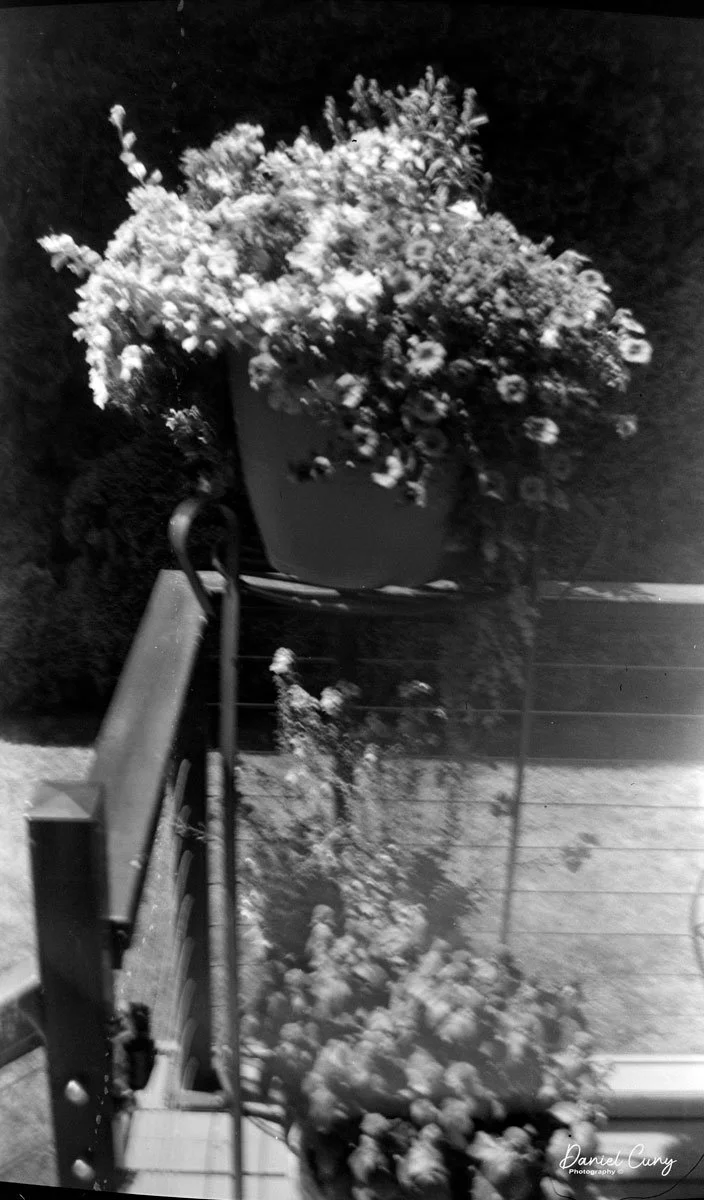
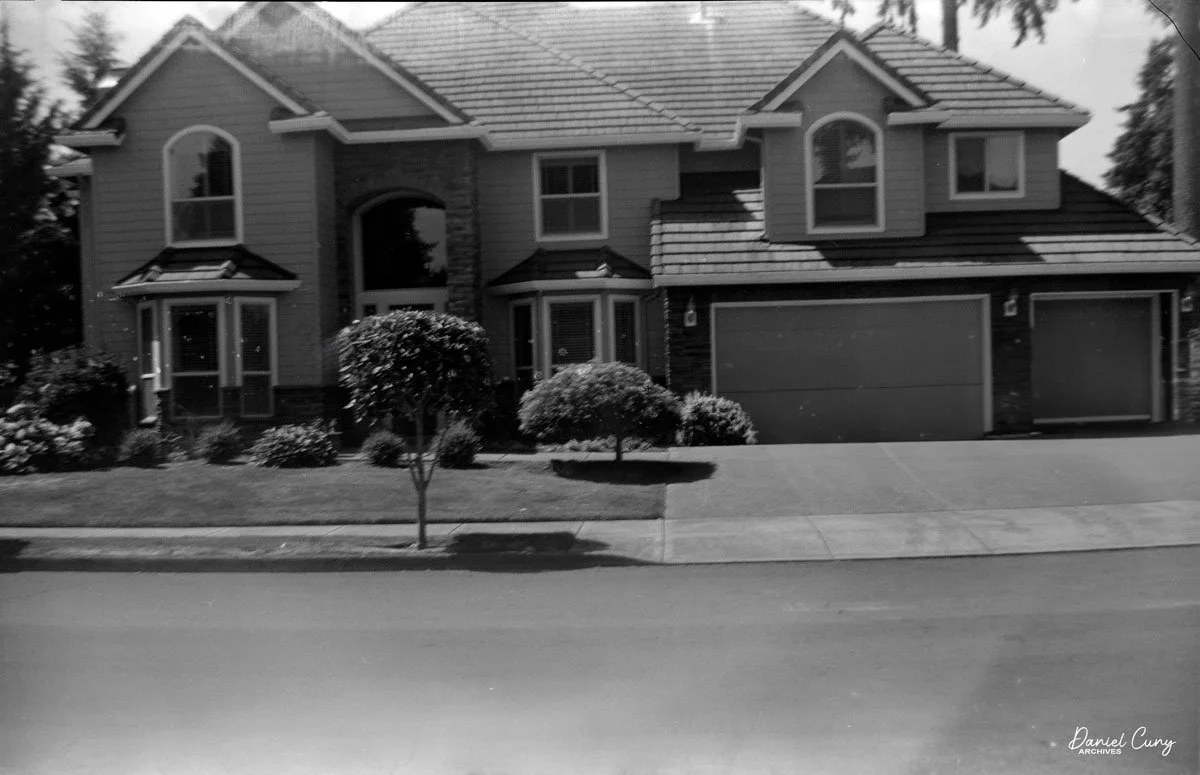
 I cleaned the lens on the camera, loaded a fresh roll of 120 film, and took a walk around the neighborhood to see how this camera would perform.

 For 100% transparency. I broke my arm two days before I took these photographs. It was challenging to hold the camera while taking the photos, so some of the blur or out-of-focus images may have been caused by camera movement.

 Here are the results.

Conclusion:

 The images produced by the camera were disappointing. I'm not sure if the blur in the

photo was caused by my lack of holding the camera still. According to the information on the back of the camera, the minimum focus distance is approximately 1 m. Many of the photographs I took, I tried to be more than 1 m away from the subject.

 Due to the sunny situation, having only one shutter speed to work with, and using the smallest aperture, the photographs are unimpressive. At this point, I'm not sure I'll use this camera again due to the quality of the images, which I found disappointing, especially considering it's a 6x9 format camera.

 Thank you for taking the time to read about this interesting Camera from France, built in the late 1930s. 

 If you're interested in seeing other camera reviews, click the link.

 I also have a store on eBay where I sell some of the cameras reviewed, along with a host of other photo items, Cuny's Camera & Photo.

 Until next time, please be safe.