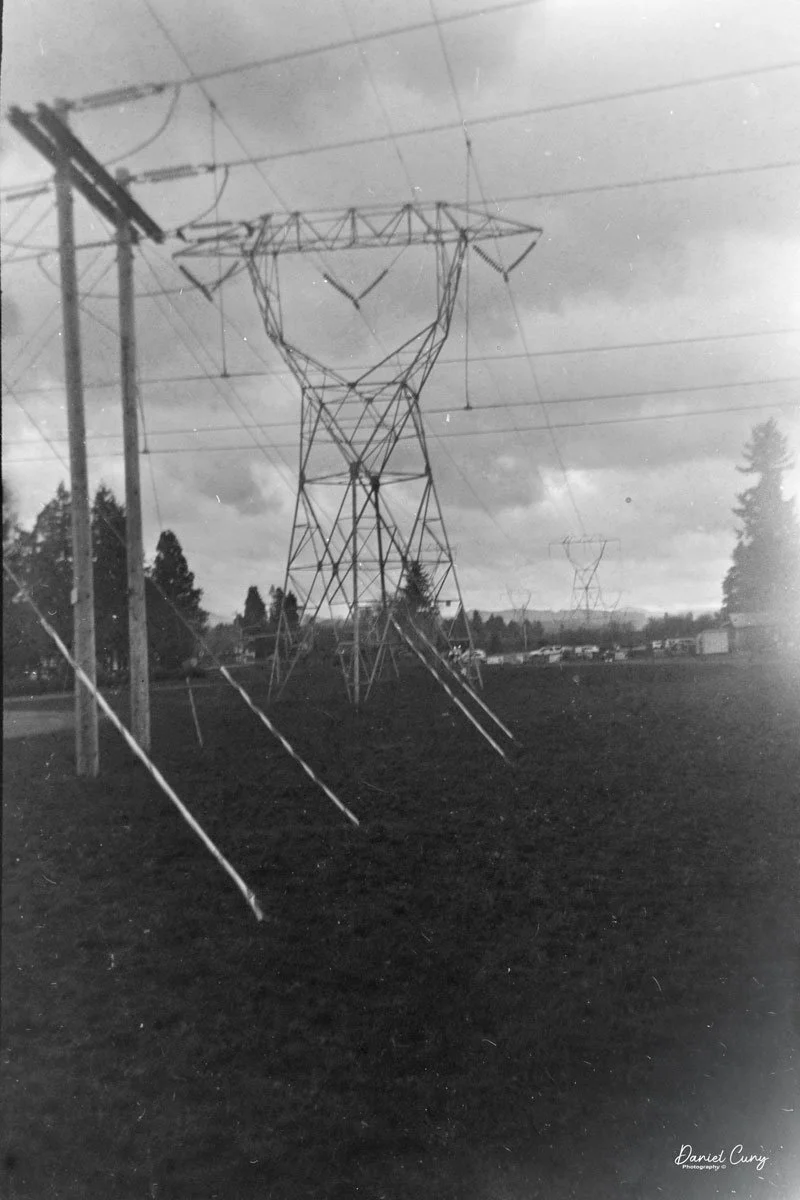
Lumiere LuxBox (Ver. 2)

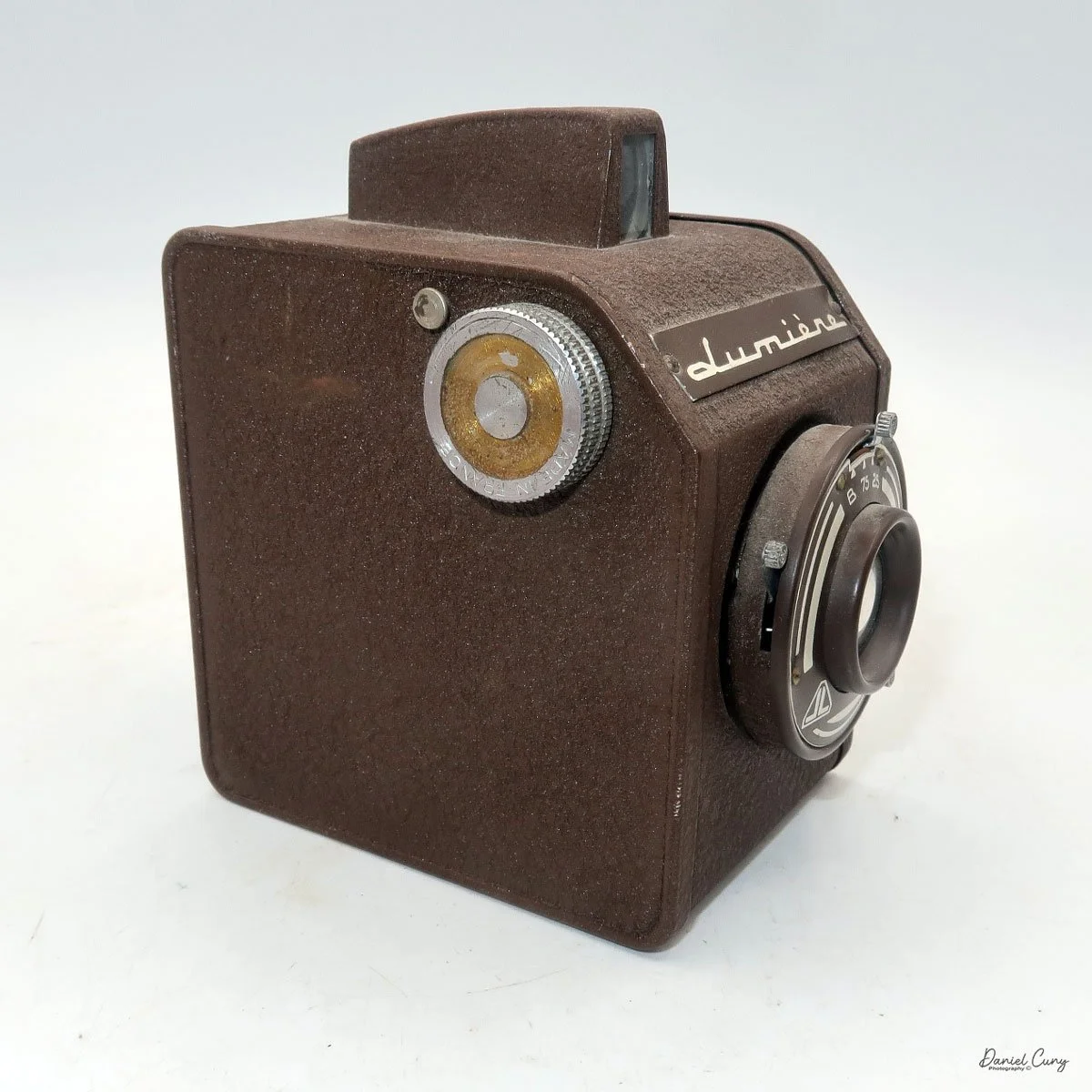
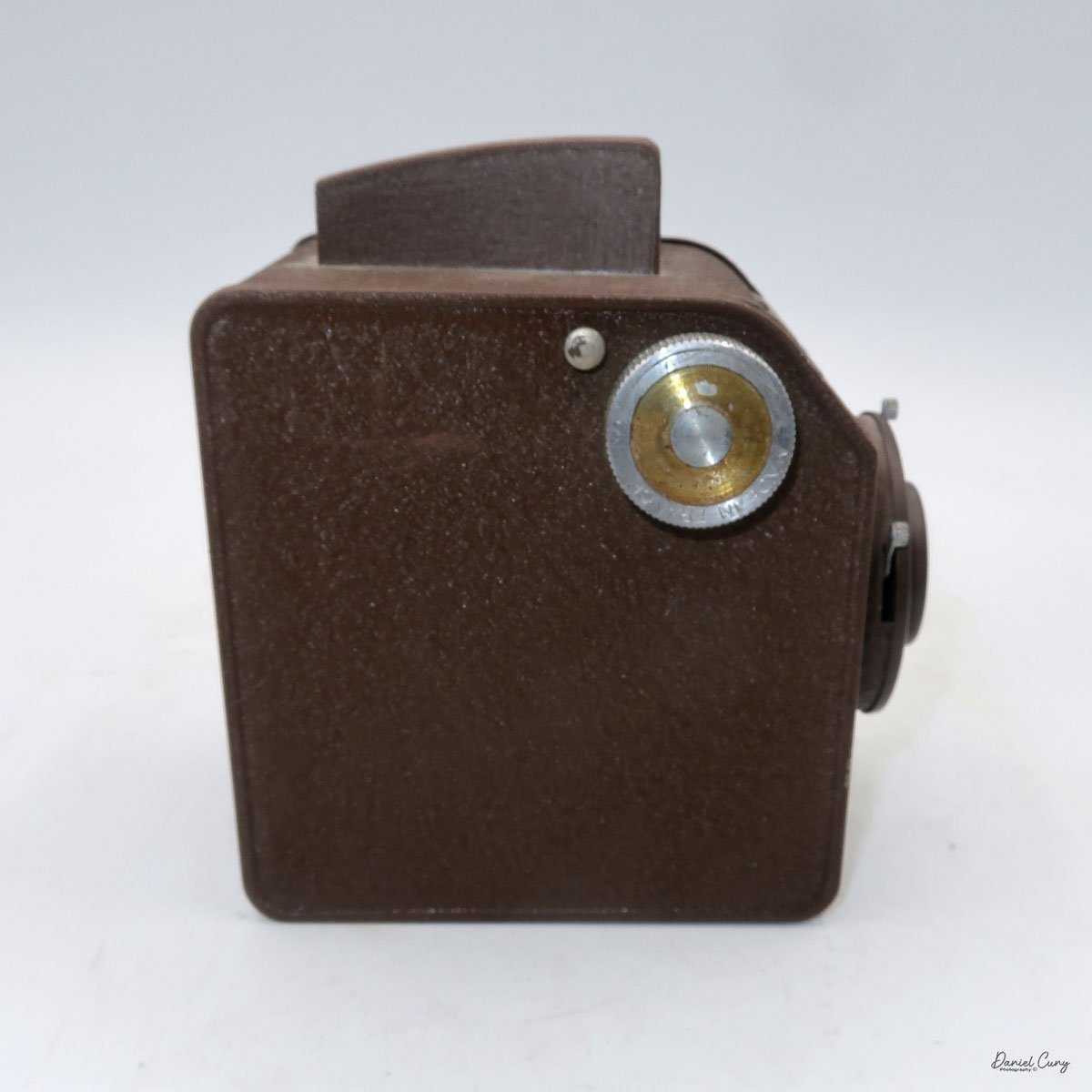
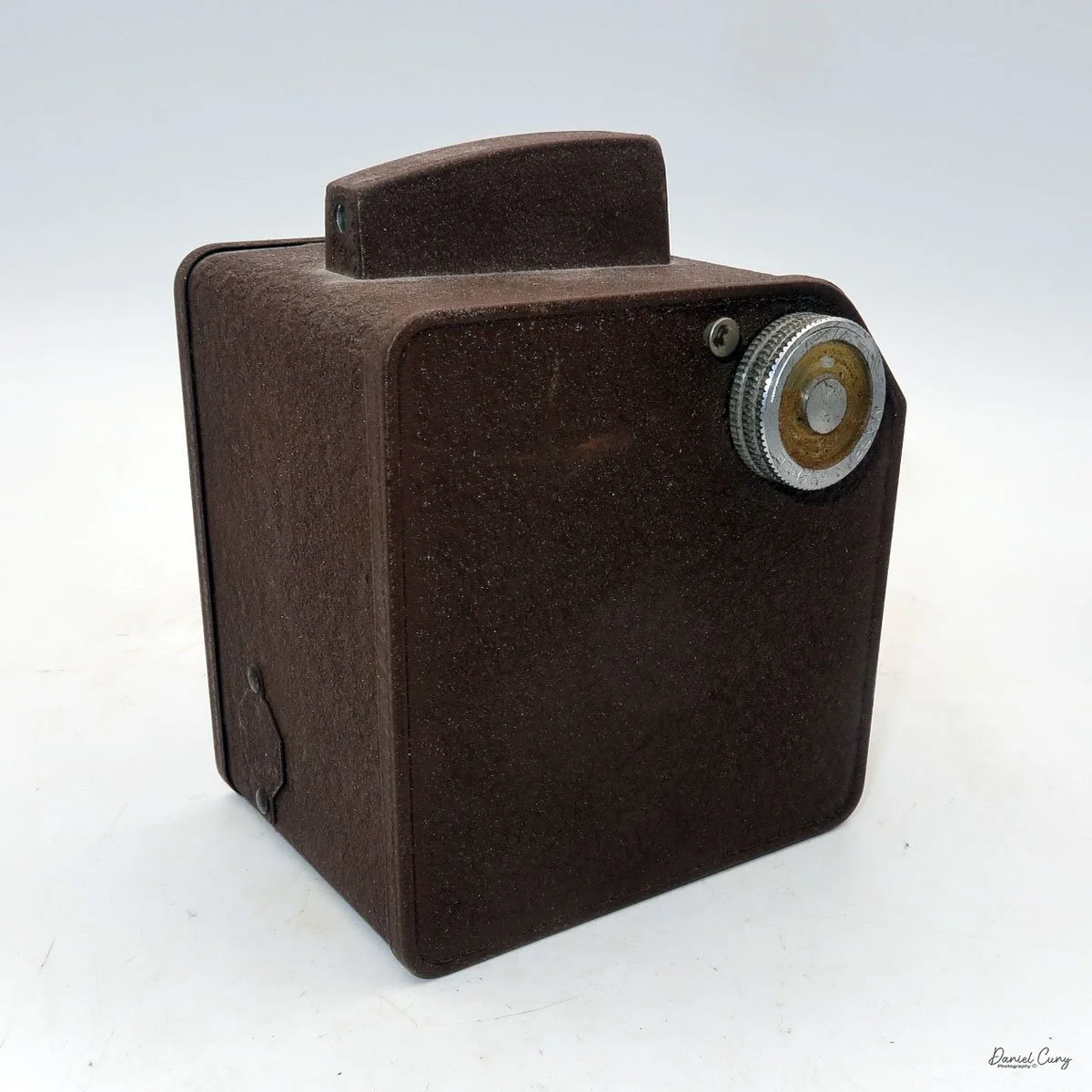
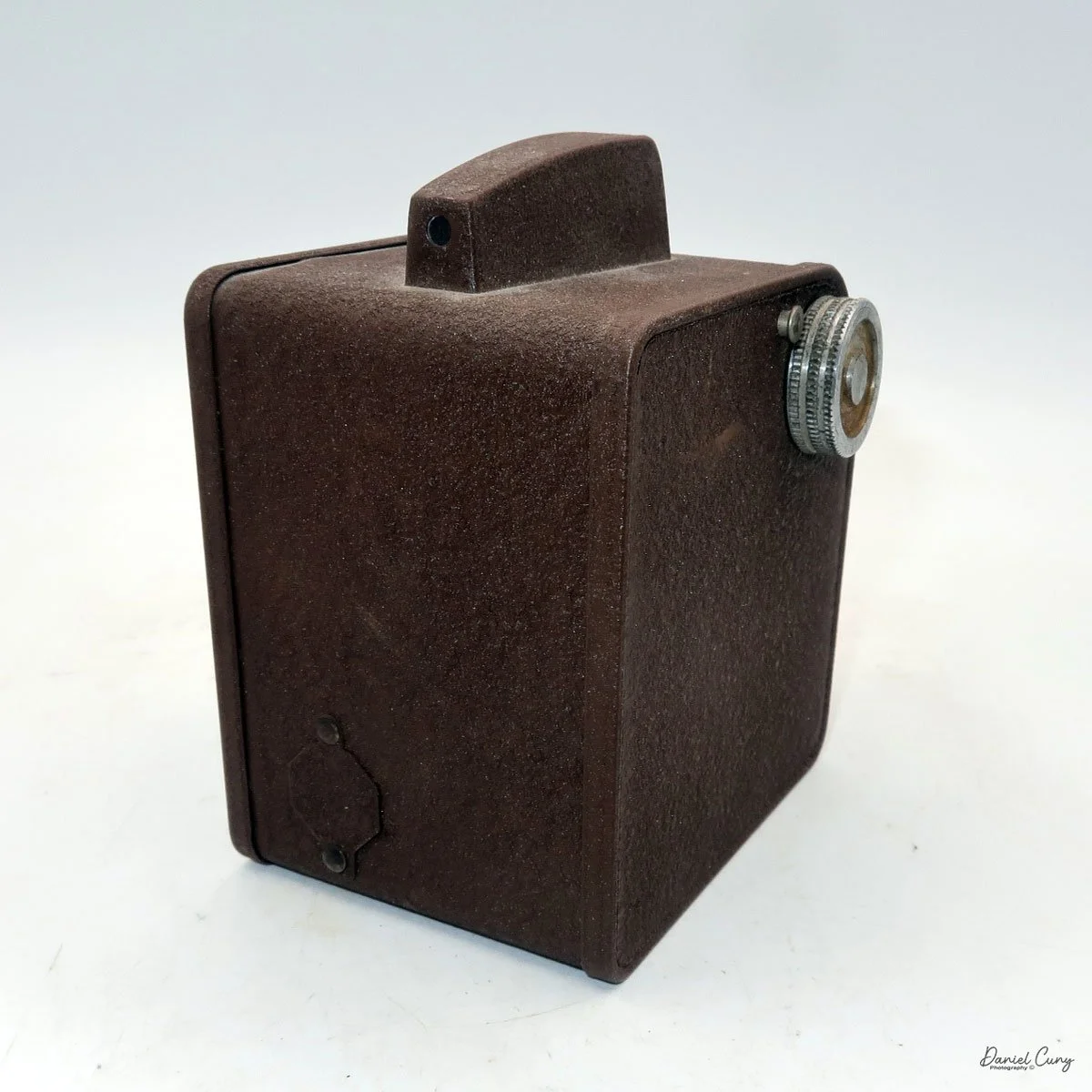
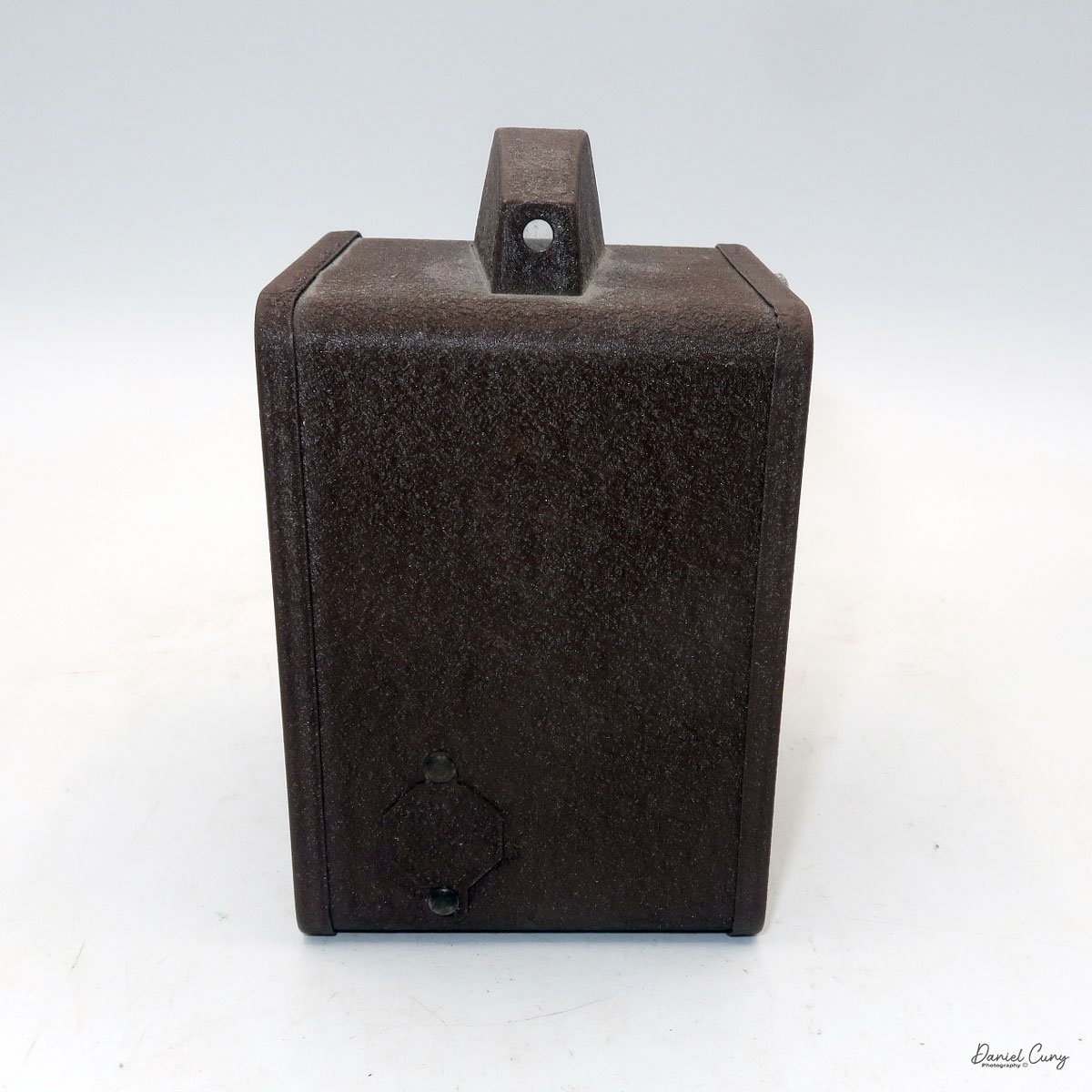
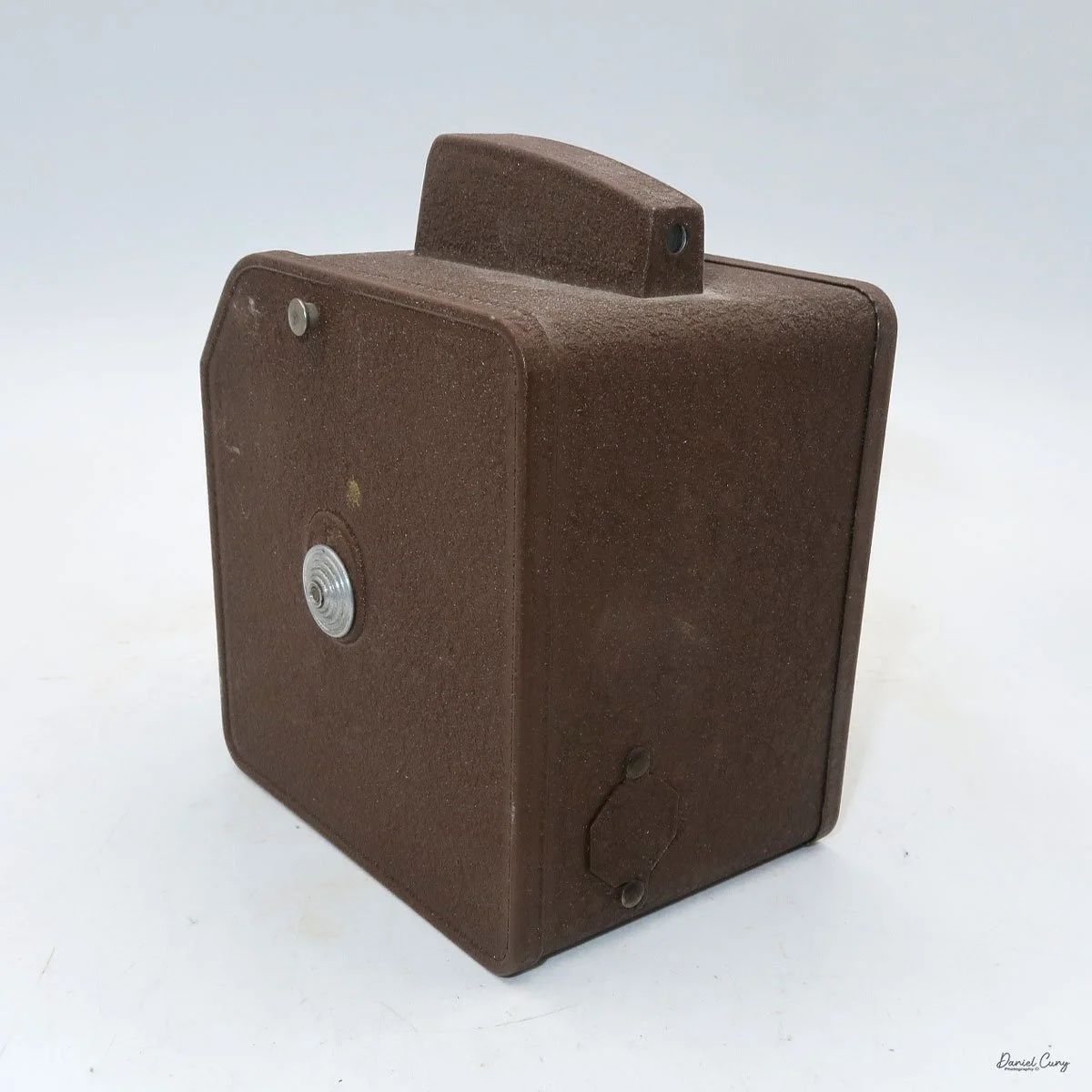
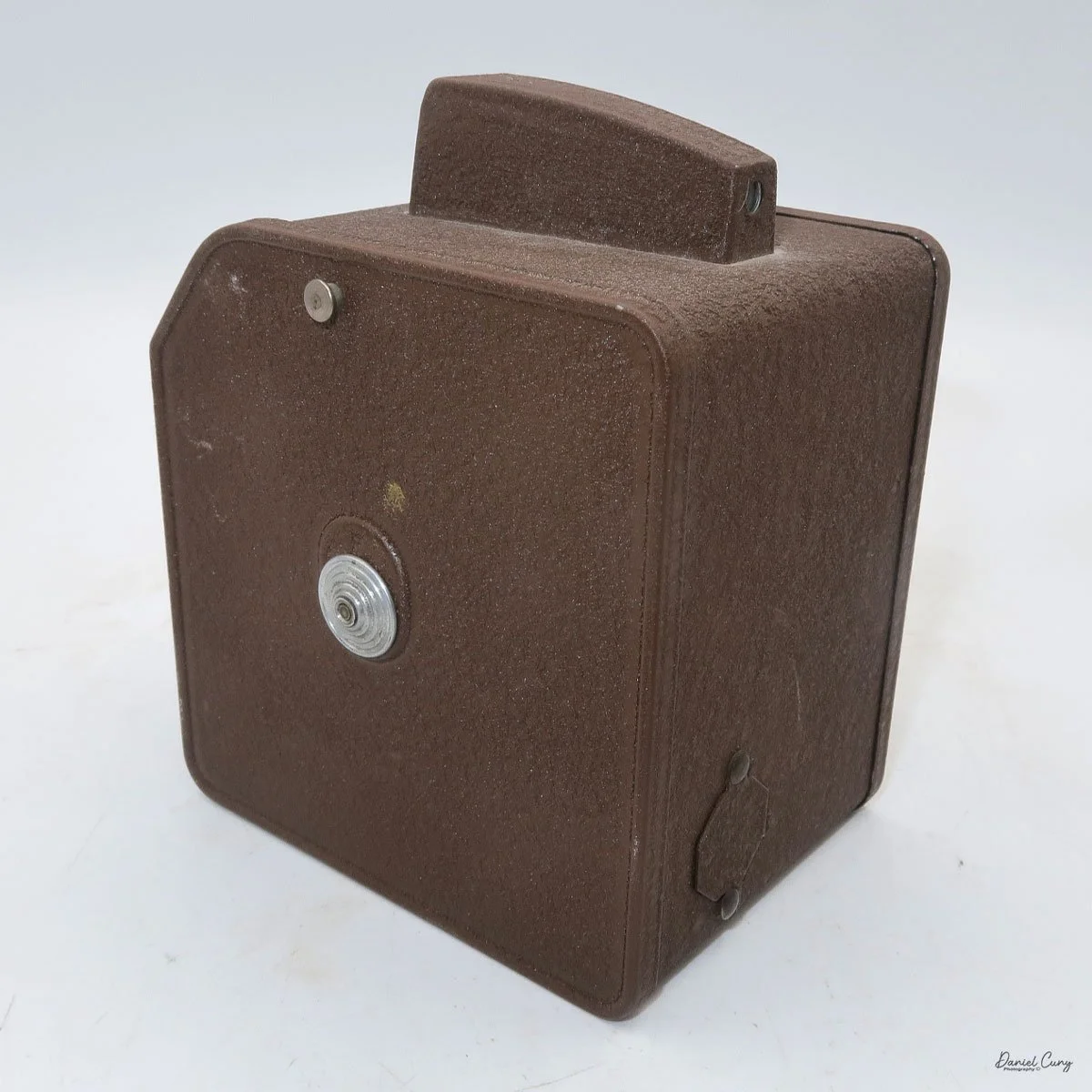
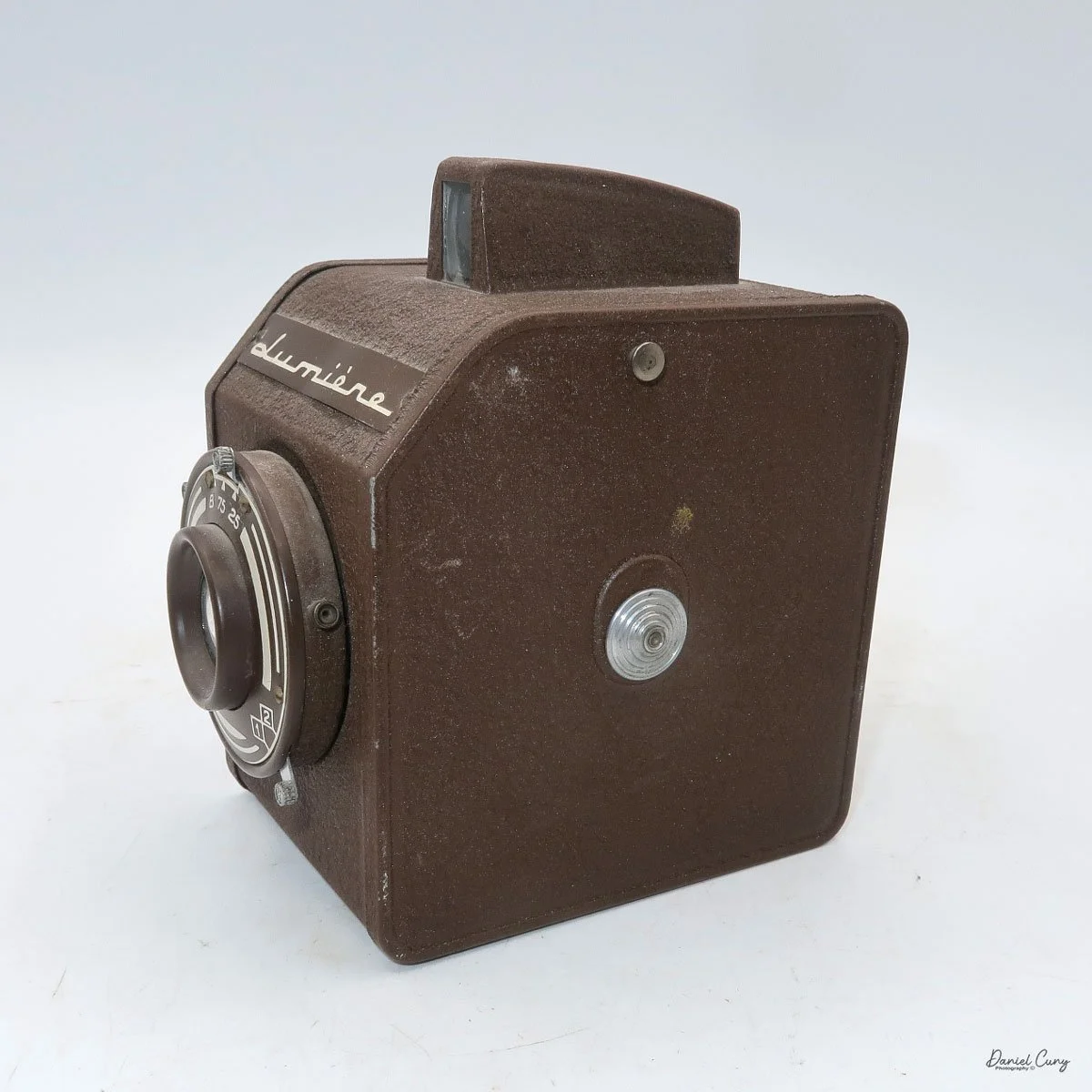
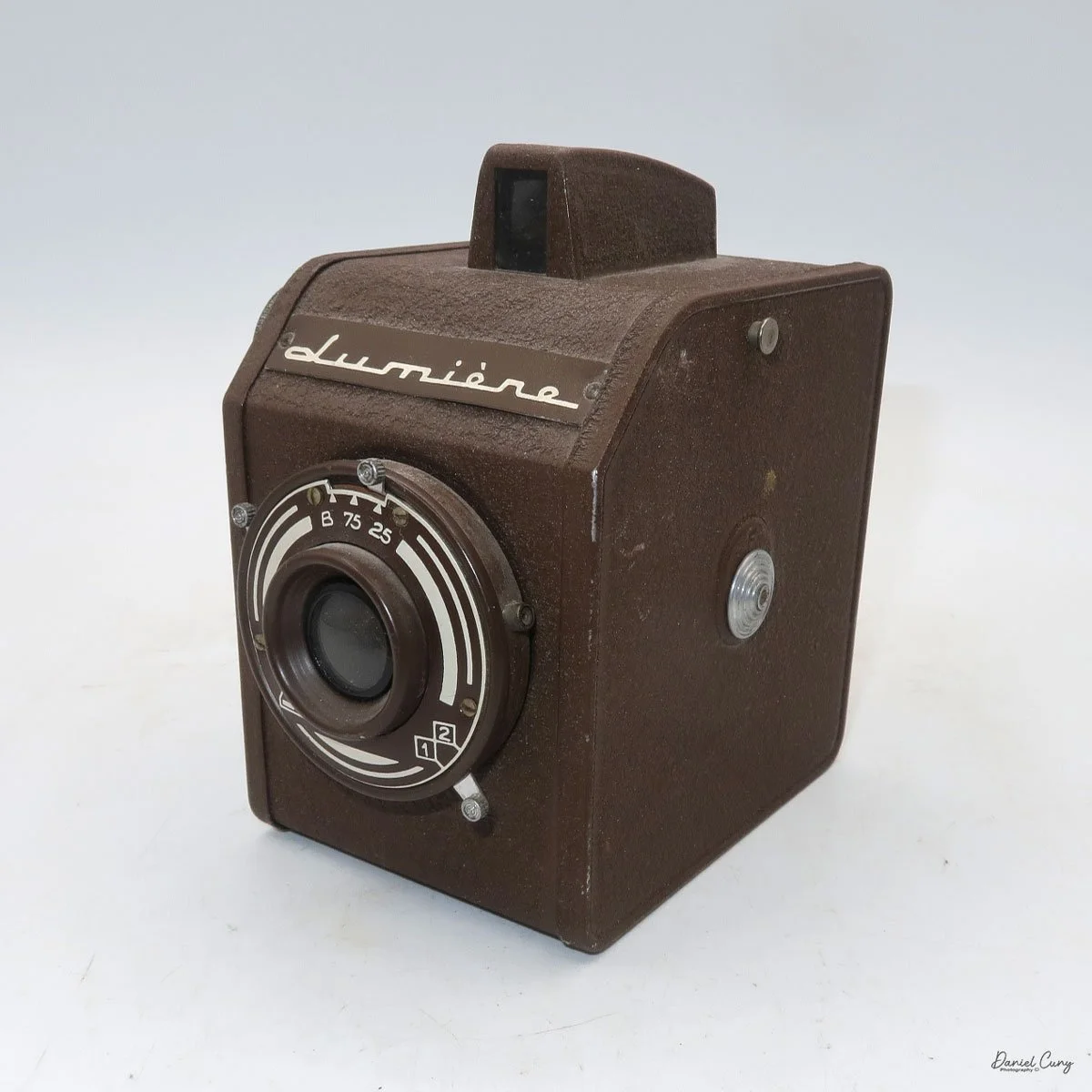
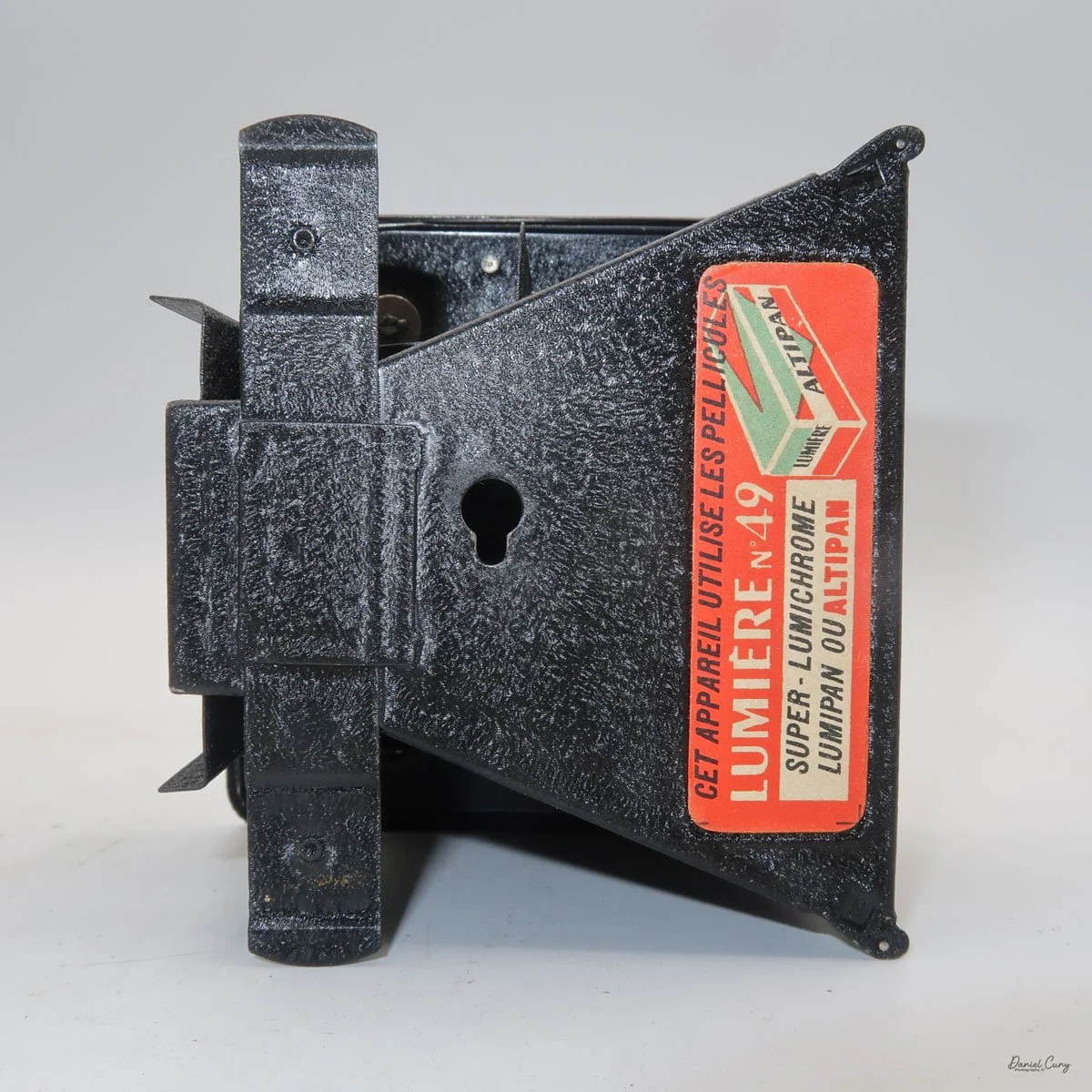
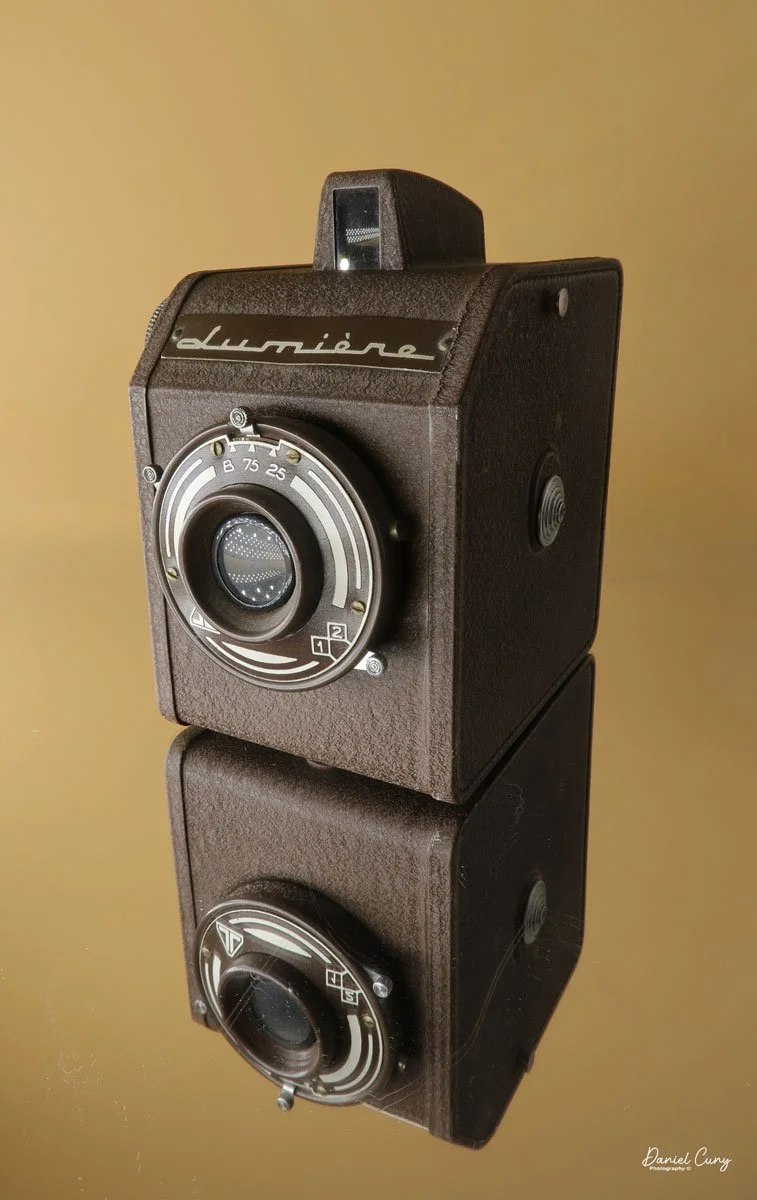
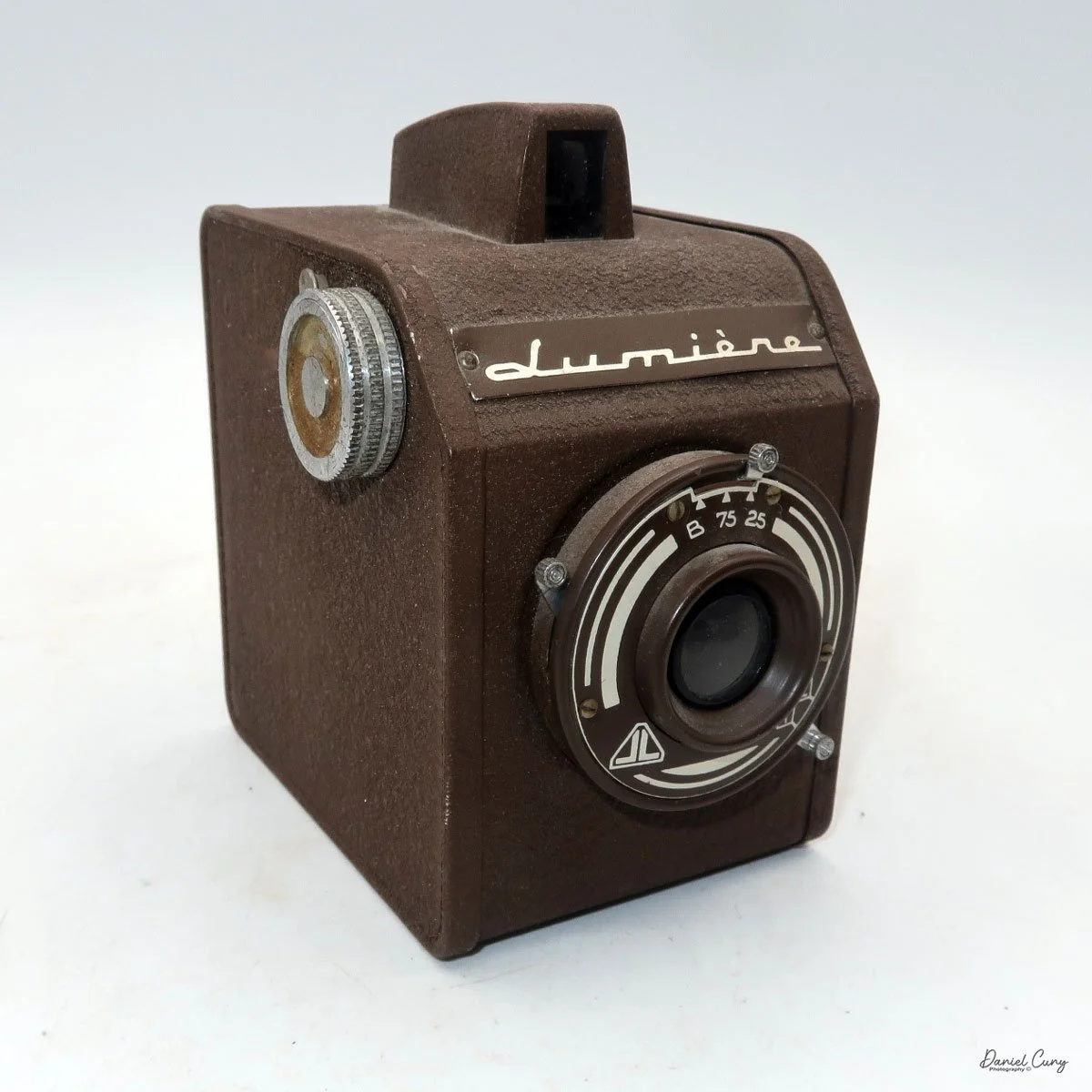
My Lumiere LuxBox camera.

I was drawn to the Lumiere LuxBox, a camera I bought at a Paris flea market 20 years ago. Among other simple cameras, its unique shape and brown color caught my eye.

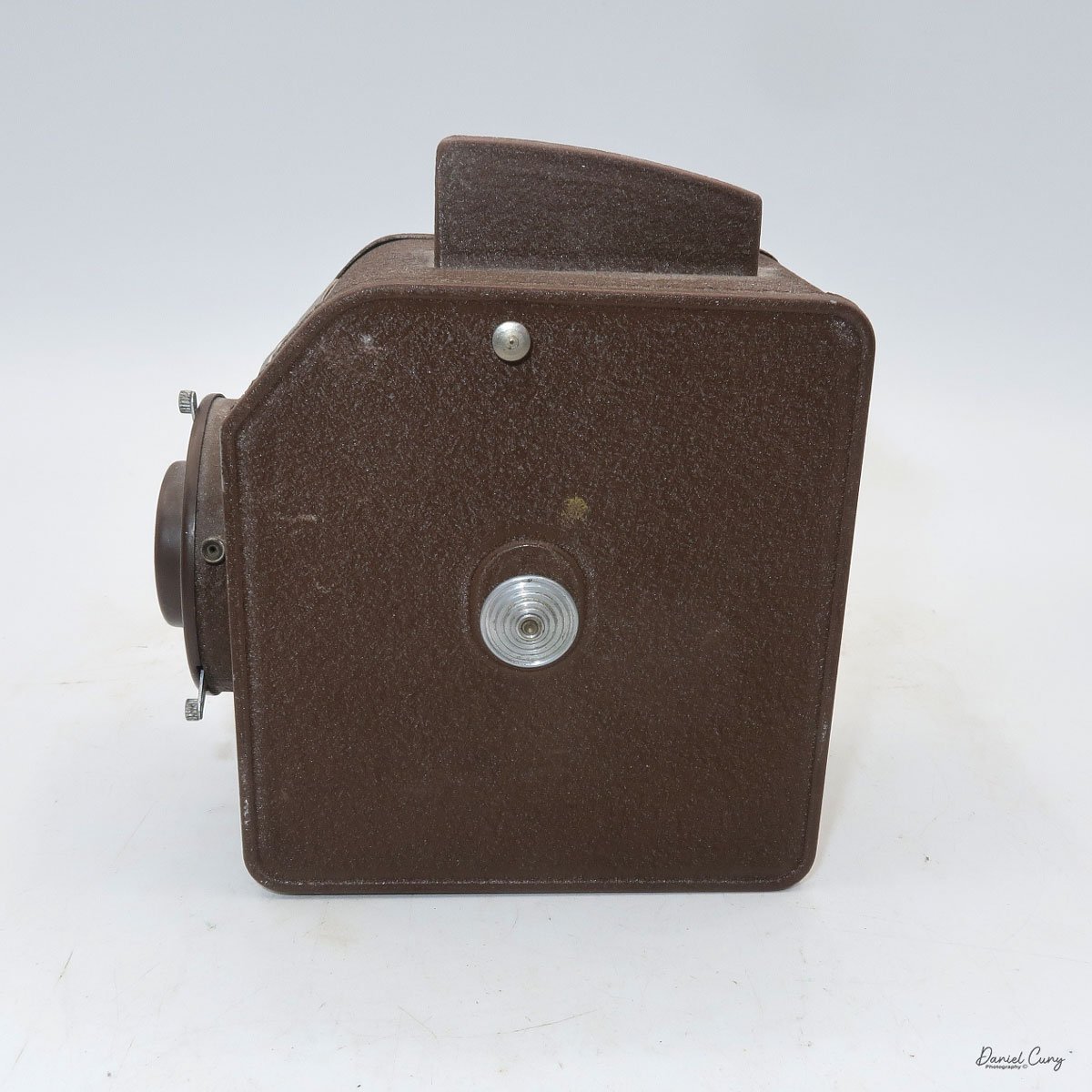
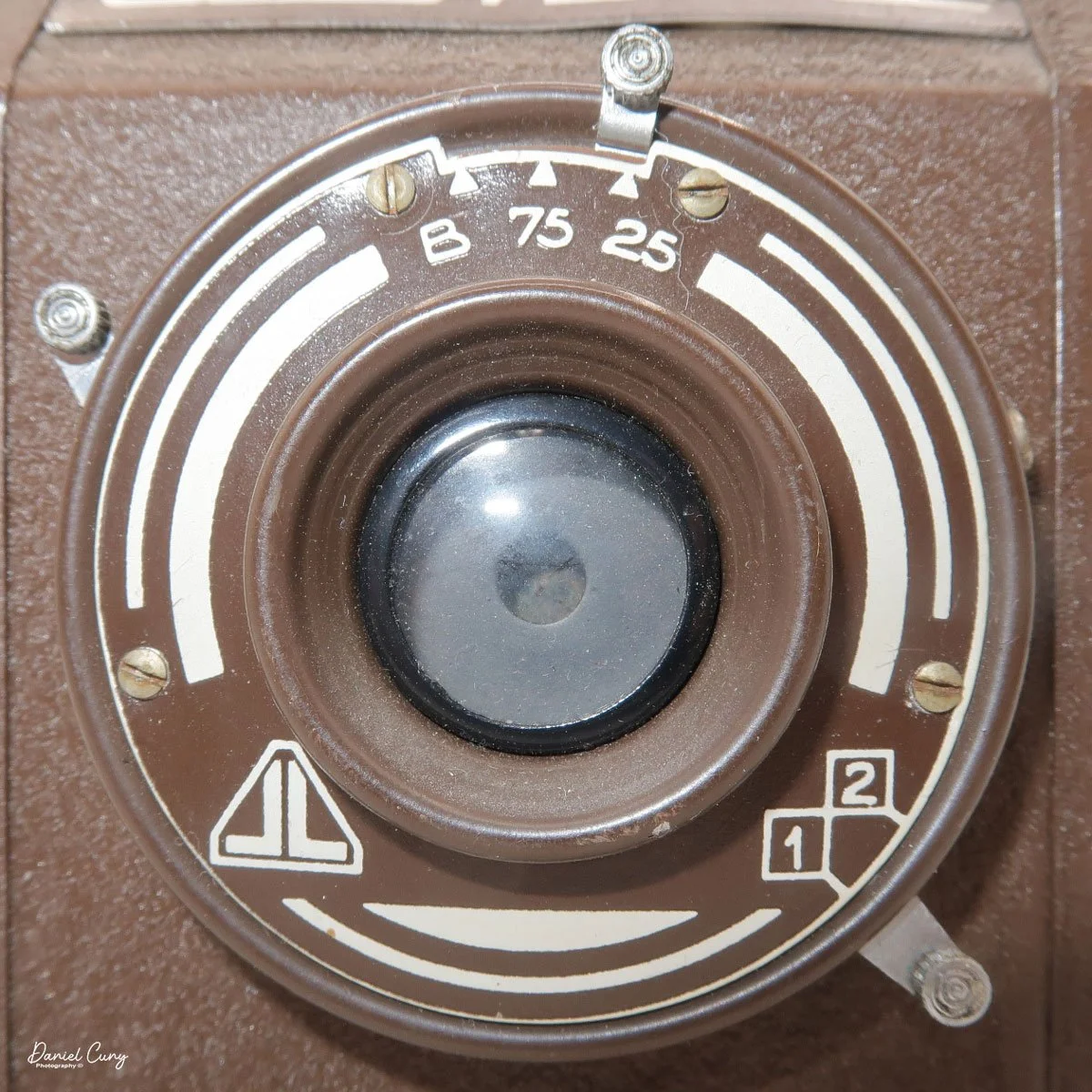
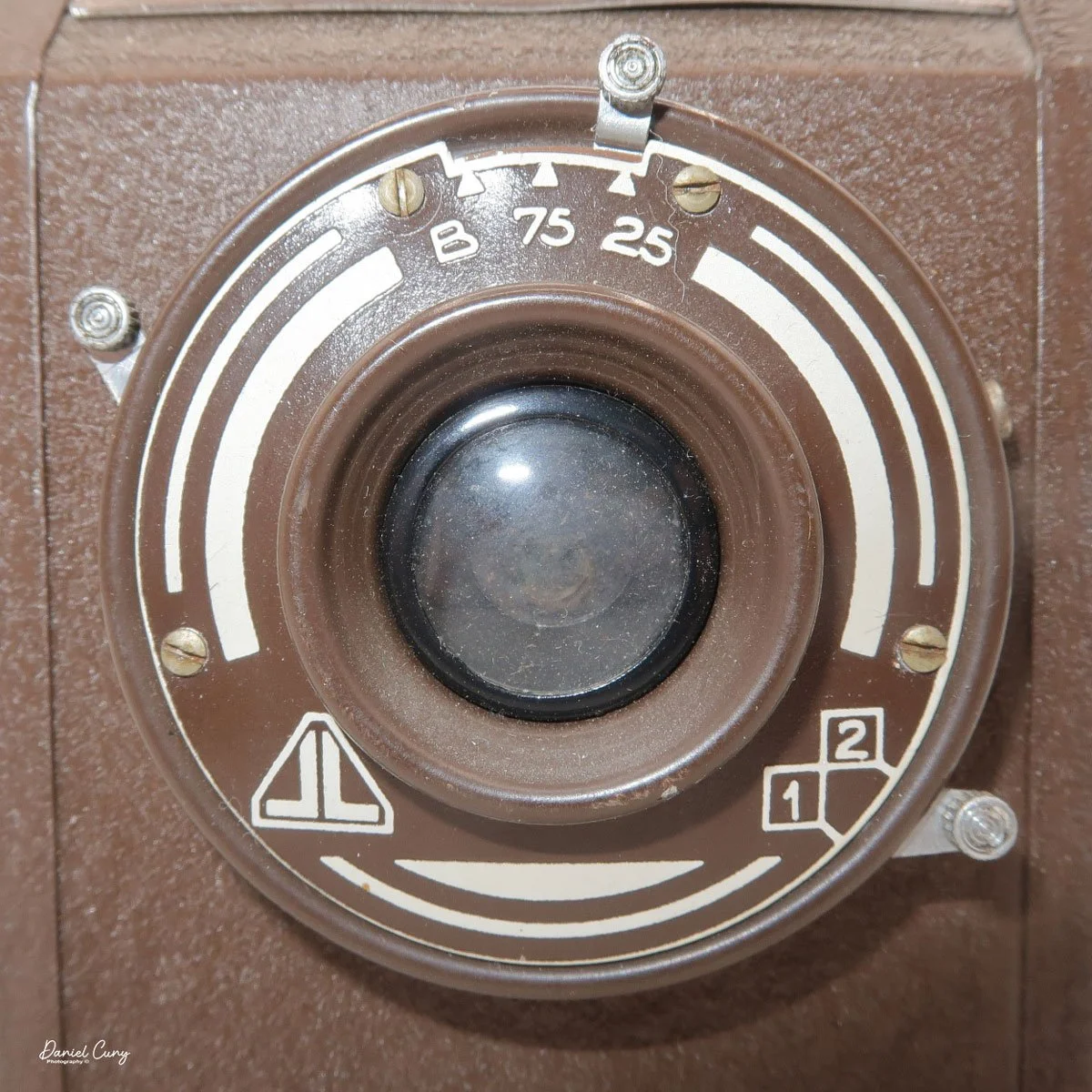
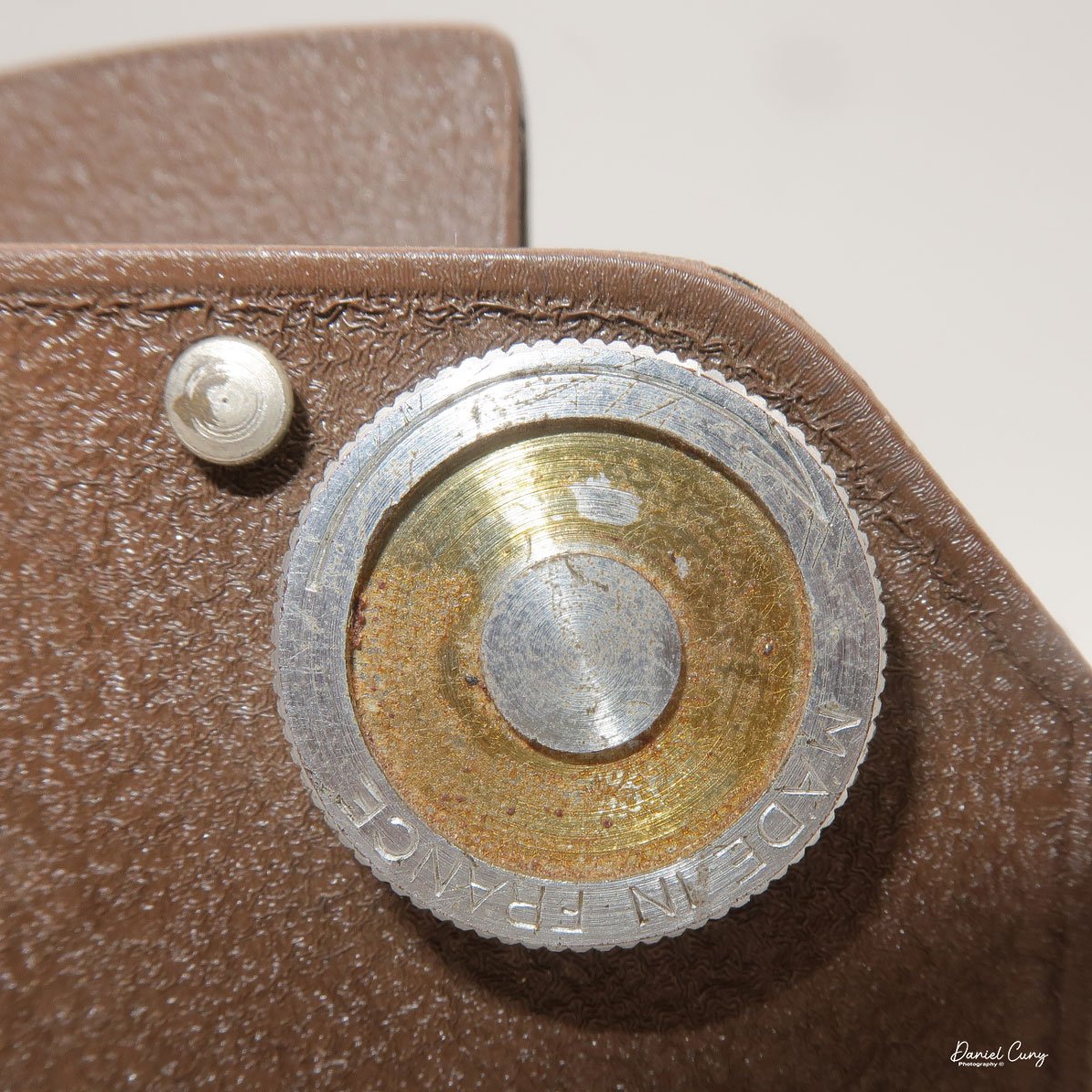
 When I picked up the camera, I saw it was in great shape. The two-speed shutter worked, there were two aperture settings on the lens, and the crinkle-finished metal body looked nice. I liked the lens pattern and the riveted nameplate on the front. The design reminded me of Ferrania Rondine cameras from Italy. You can unlock the film insert and remove it from the body from the side, unlike many other box cameras. The solid metal body was another thing I liked.

 After a short negotiation with the vendor, we agreed on a price. I paid, put the camera in my backpack, and moved on to the next tables at the market. Other than a group of fabulous glass negatives taken in the French countryside during the 1920s, the Lumiere LuxBox was the only camera purchased at the Paris flea market on this day.

 About 20 years later, and just a few weeks ago, I was searching for a camera to write about. The Lumiere LuxBox caught my attention again. I was somewhat familiar with the French Photographic Company, Lumiere, as I have previously written about another one of their wonderful miniature camera, the Super ELJY camera.

 Although I thought last week’s blog would be my final post of the year, its simplicity inspired me to shoot a roll of film and share a short article. So here I am, telling you about this relatively simple, ordinary, oddly shaped box camera from France, made in the early 1950s.

History:

 To give some background, Lumière was a pioneering French camera company founded by Charles-Antoine Lumière in Lyon in the late 19th century. The company became best known for the achievements of Auguste and Louis Lumière. Their innovations in motion-picture technology and color photography helped define early cinema and modern photographic materials.
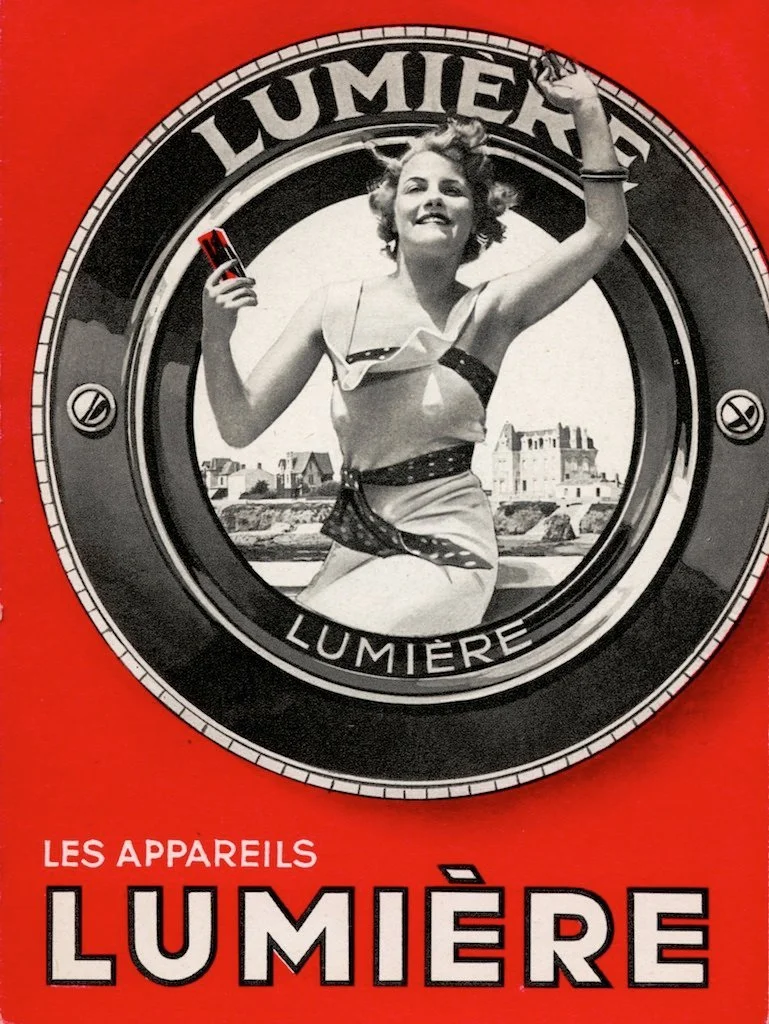
Lumiere Advertisment

 The Lumière enterprise began as a manufacturer of photographic plates. Louis Lumière invented a highly sensitive "blue label" dry plate at the age of 17. This plate enabled much shorter exposure times and quickly became a commercial success. The company soon built a large factory in Lyon's Monplaisir district and became one of Europe’s major suppliers of photographic materials by the mid‑1890s.

 After their father saw Edison’s Kinetoscope in Paris, Auguste and Louis developed the Cinématographe, a lightweight device that could record, print, and project movies. Patented in 1895, it used perforated film and a claw mechanism, making it more practical than other systems. This led to the first public film screenings, including “Workers Leaving the Lumière Factory.” Imagine how exciting that was for photography fans then.

 By the early 1900s, Lumière stopped making films and focused on photographic technology, especially color processes. In 1903, they patented Autochrome Lumière, a color plate process that used dyed potato-starch grains. It was introduced in 1907 and became the first major color system widely used through the 1930s. Learning about these innovations makes me appreciate their cameras even more.

 Lumière began manufacturing cameras in the late 1920s and produced various models until about 1961. The company was purchased by Swiss firm Ciba in 1961 and later became part of Ilford France. For collectors like me, the Lumière name still stands out in early photography and cinema. sures 4.5 inches tall (including the eye-level finder), 4.25 inches deep, and 3 inches wide (including the film advance knob). It weighs 14.2 ounces without film loaded. 

My Camera:

 The LuxBox was introduced in 1933 and discontinued in 1937. It’s a classic box-style camera that takes 6x9cm photos on 120 film. The camera has shutter speeds from 1/75 to 1/25, plus "T" and "B" settings. It also has a focusable lens and was considered the most advanced box camera of its time.

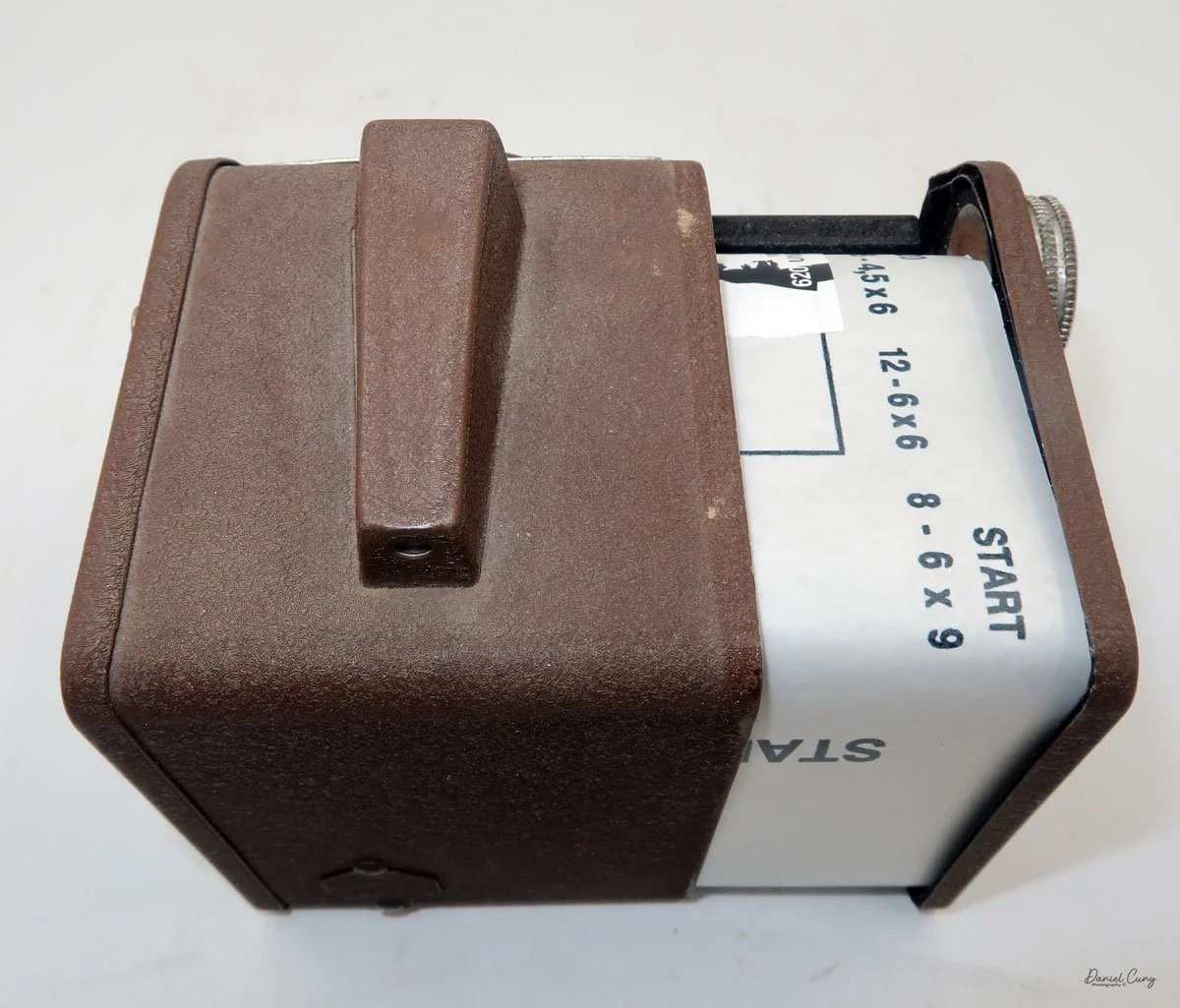
The LuxBox was reissued from 1952 to 1954, which is when mine was made. It’s an all-metal camera without a leather covering, with a frosted Havana-colored paint finish. There is a small vertical eye-level finder on top for composing your shot. This version takes 6x9cm negatives with 620 film, which is very similar to 120 film but uses a different spool size.
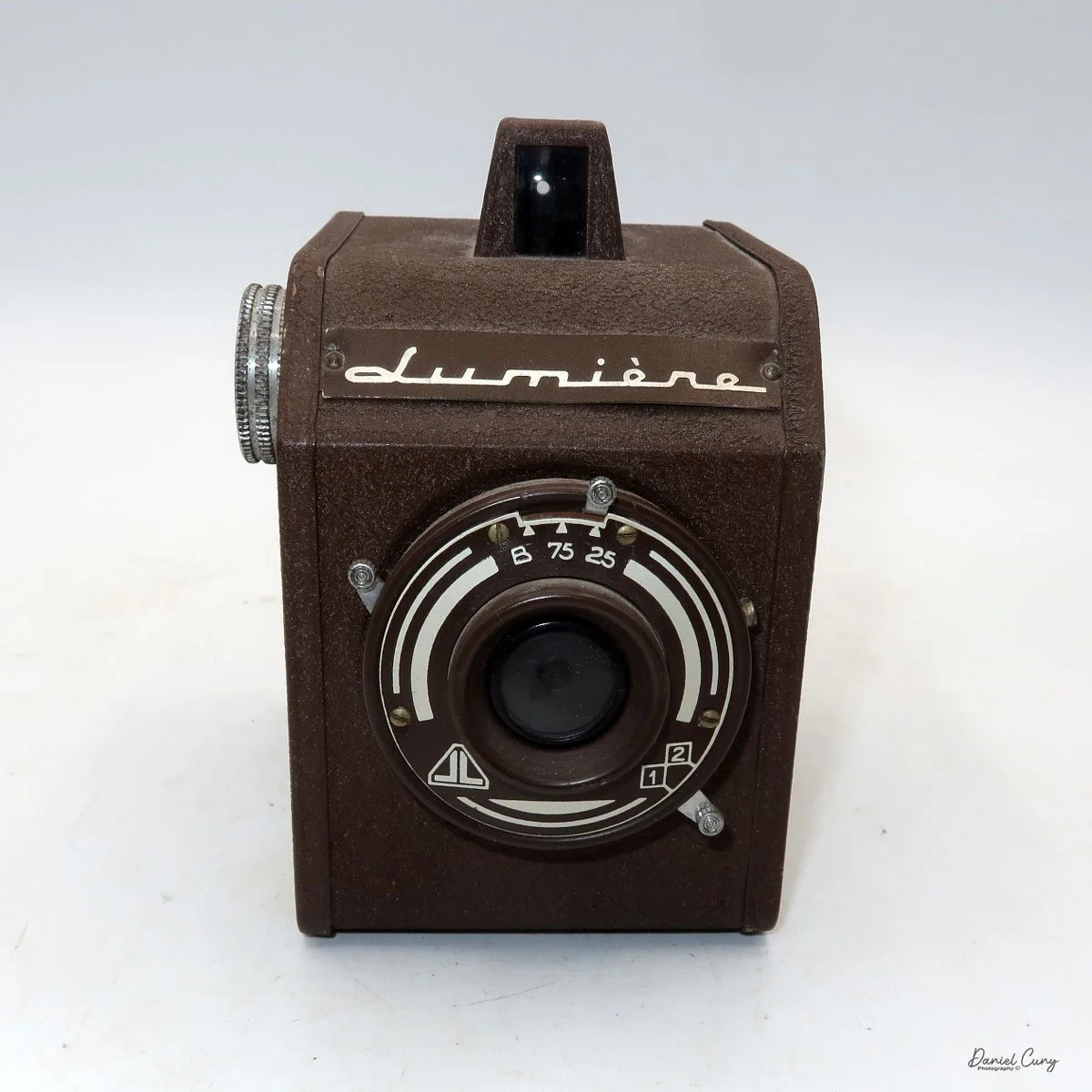
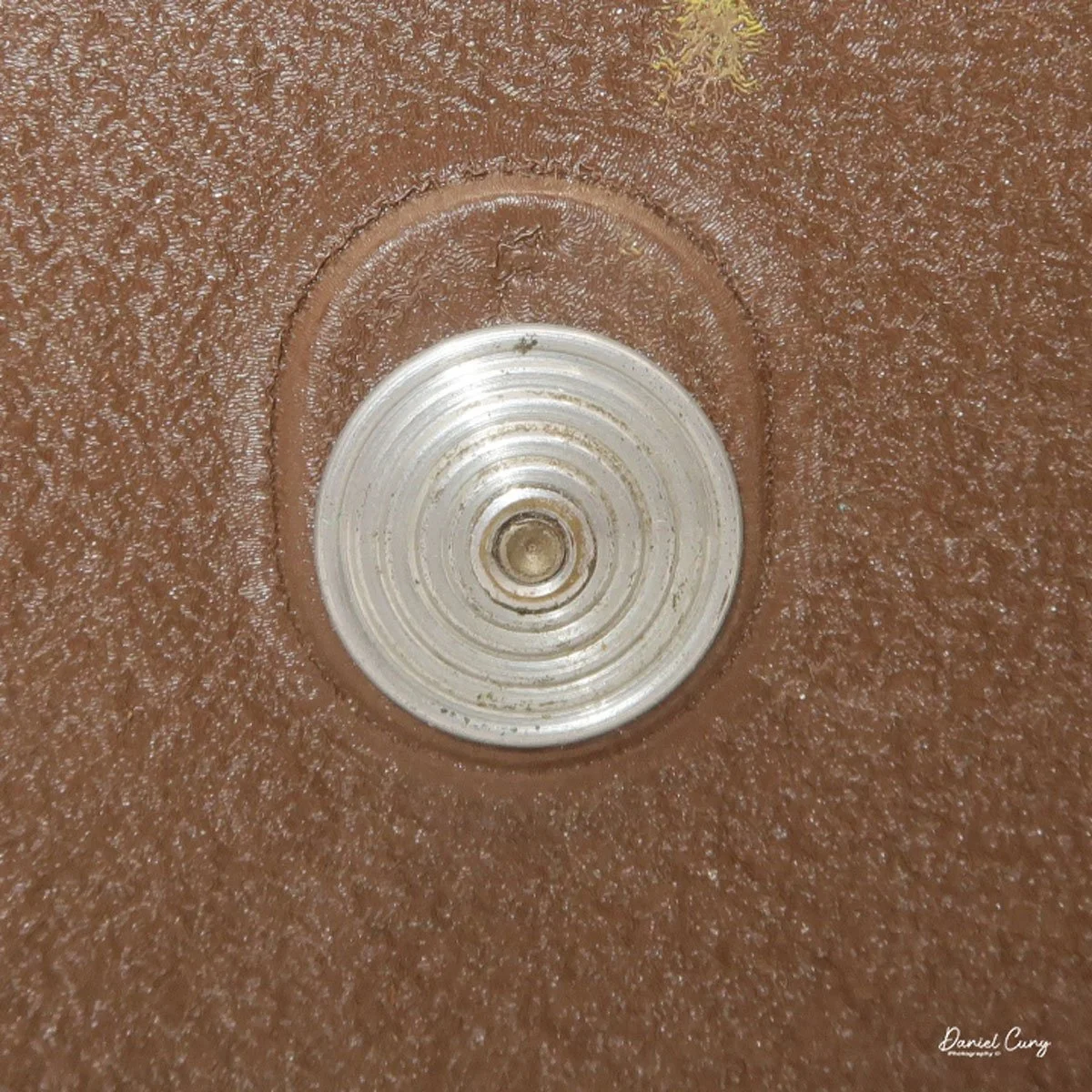
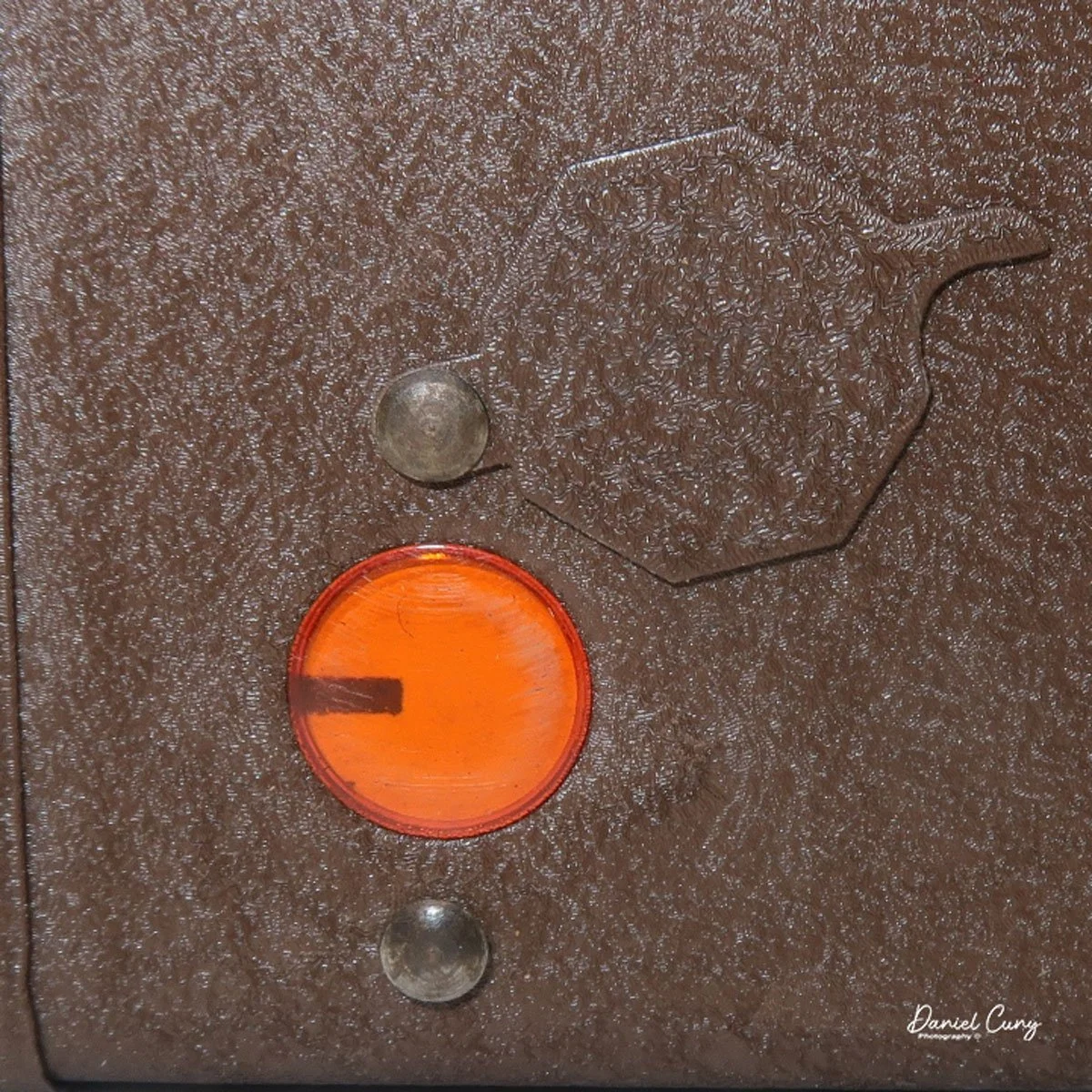
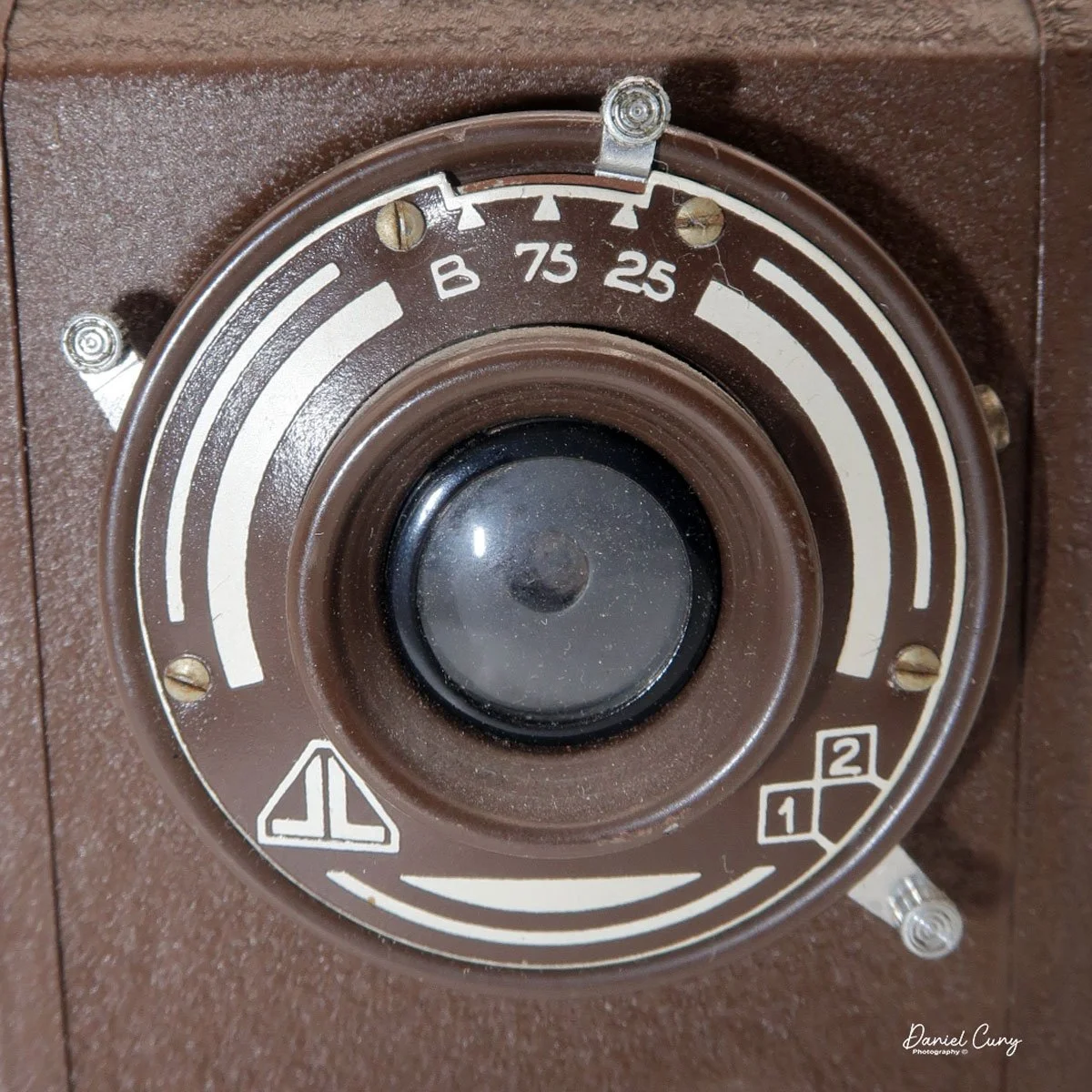
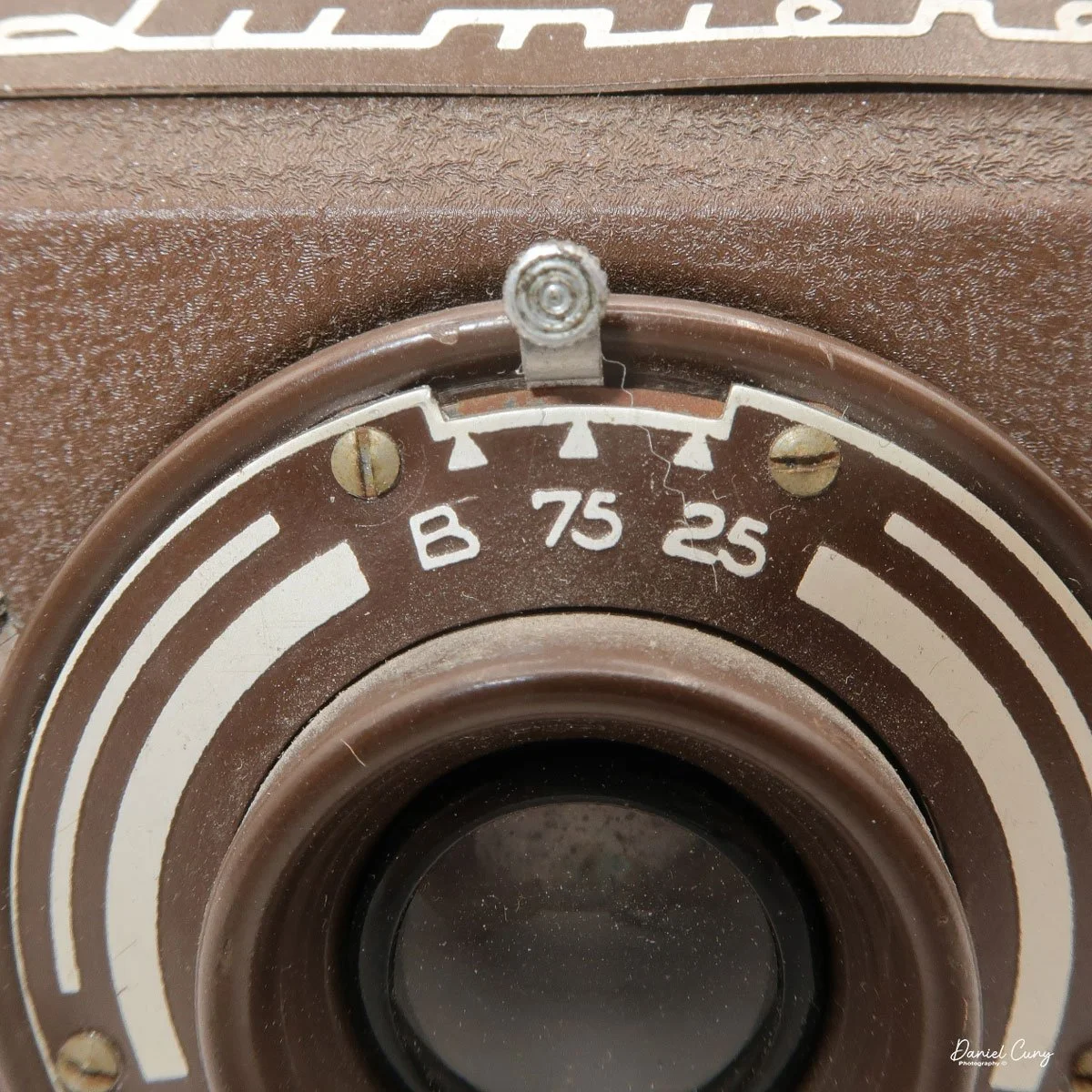
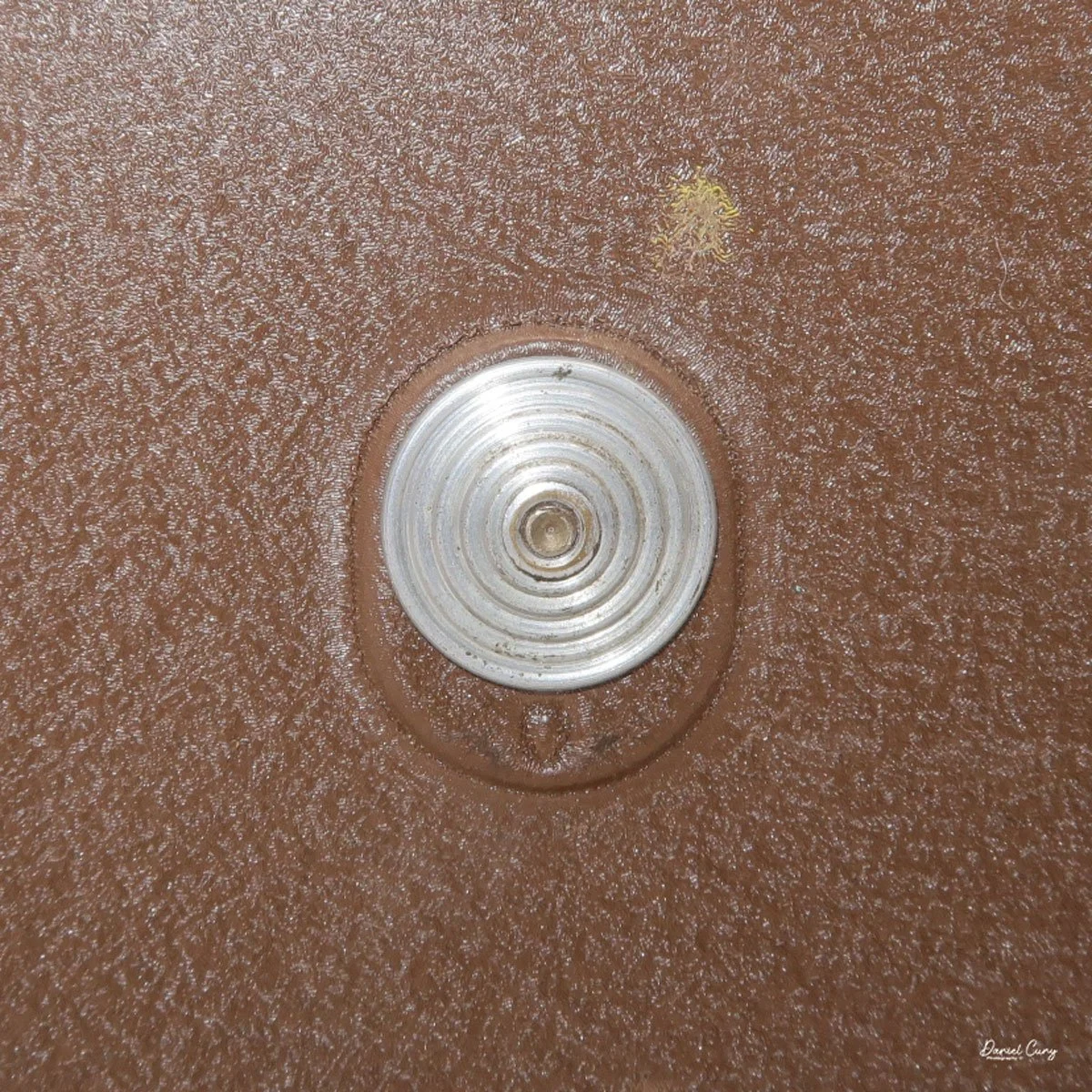
The camera has a simple lens and shutter unit. The shutter provides two speeds: 1/75 (fast) and 1/25 (slow), plus a "B" (bulb) setting for manual exposure holding. There are two fixed-aperture settings at the 4:00 position (when facing the lens): "2" (wider opening for brighter images) and "1" (smaller opening for greater depth of field and less light). A PC flash port at 2:00 allows flash connection. There’s no cable socket for time exposures, so you must hold the shutter release manually for long exposures. The bottom of the camera has a standard tripod socket for stability.
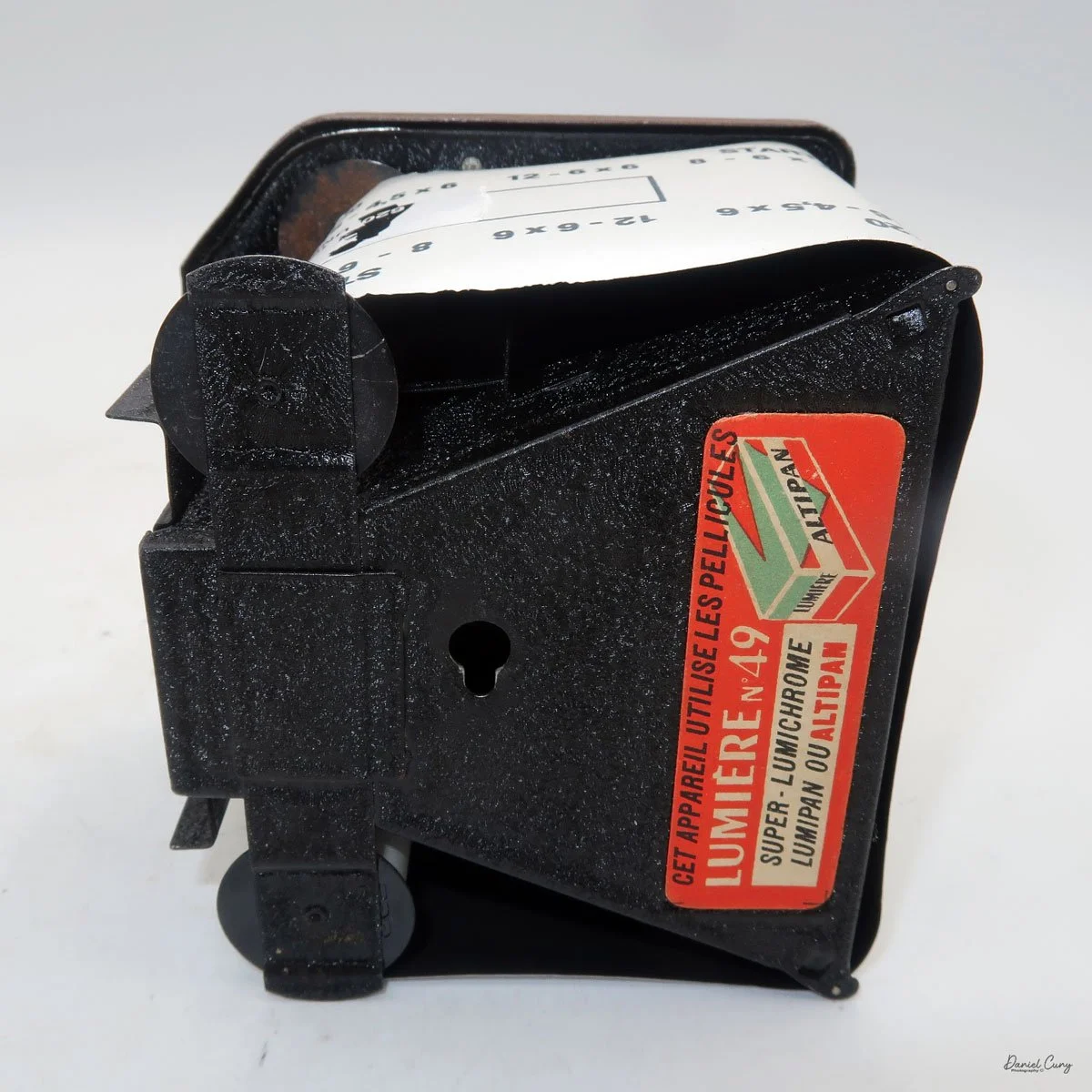
To load film, find the locking button on the left. Slide it up to unlock, then pull the right side away from the body. Load film as with other box cameras.

 Move the empty take-up spool from the bottom compartment to the top so it can collect the unspooled film. Place the new roll of film into the bottom compartment, ensuring the ends of the spool fit securely into the peg slots. Pull the leader paper over the guide wheels and insert it into the empty spool’s slot. Turn the winding knob until the word "start" appears on the backing paper. Slide the film chamber back into the camera body and lock it in place with the button. Then, open the red window cover on the camera's back and turn the winding knob until the number "1" appears, indicating that the first exposure is ready.
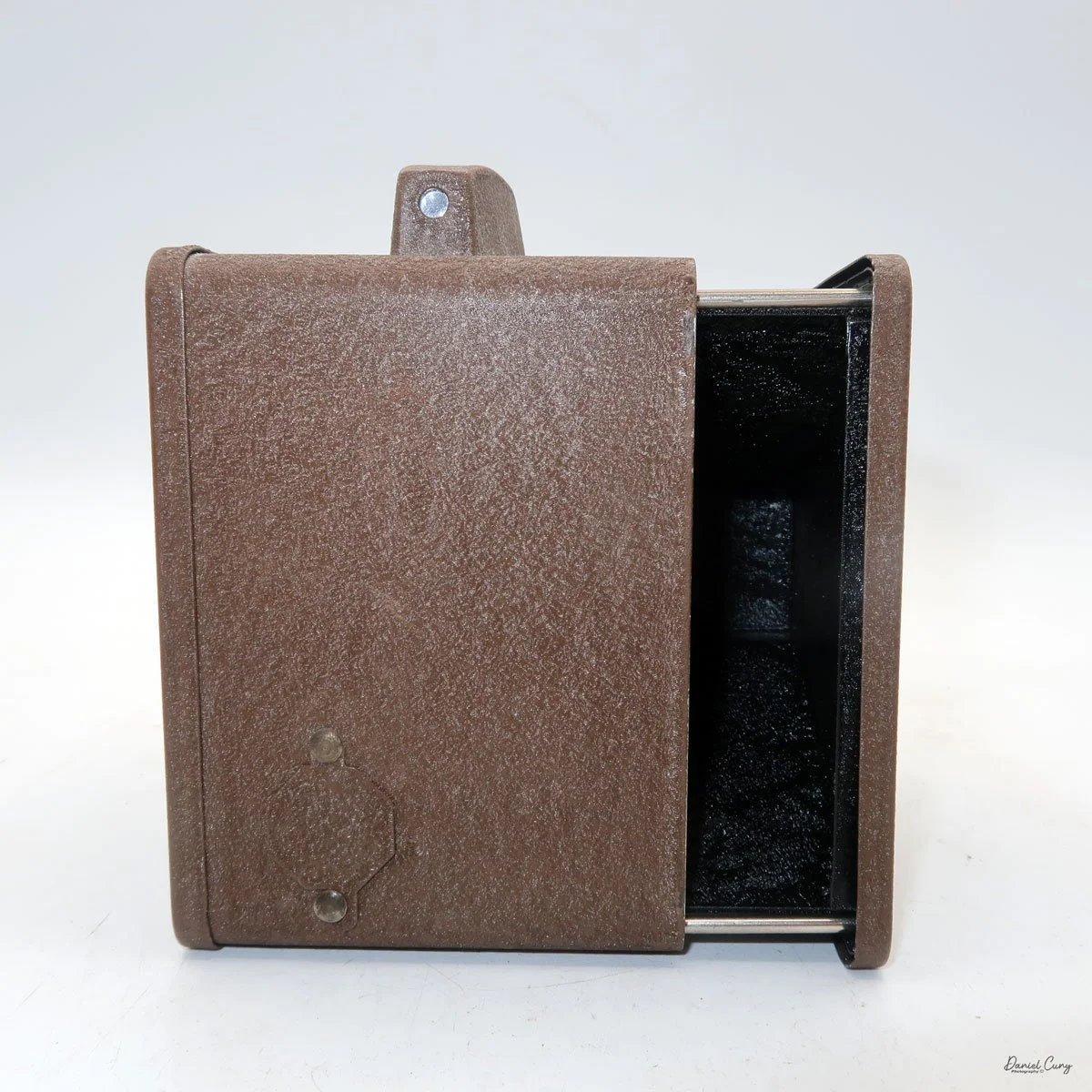
This camera has a few technical settings.

 Let’s load film and see what results we get.


My Results:

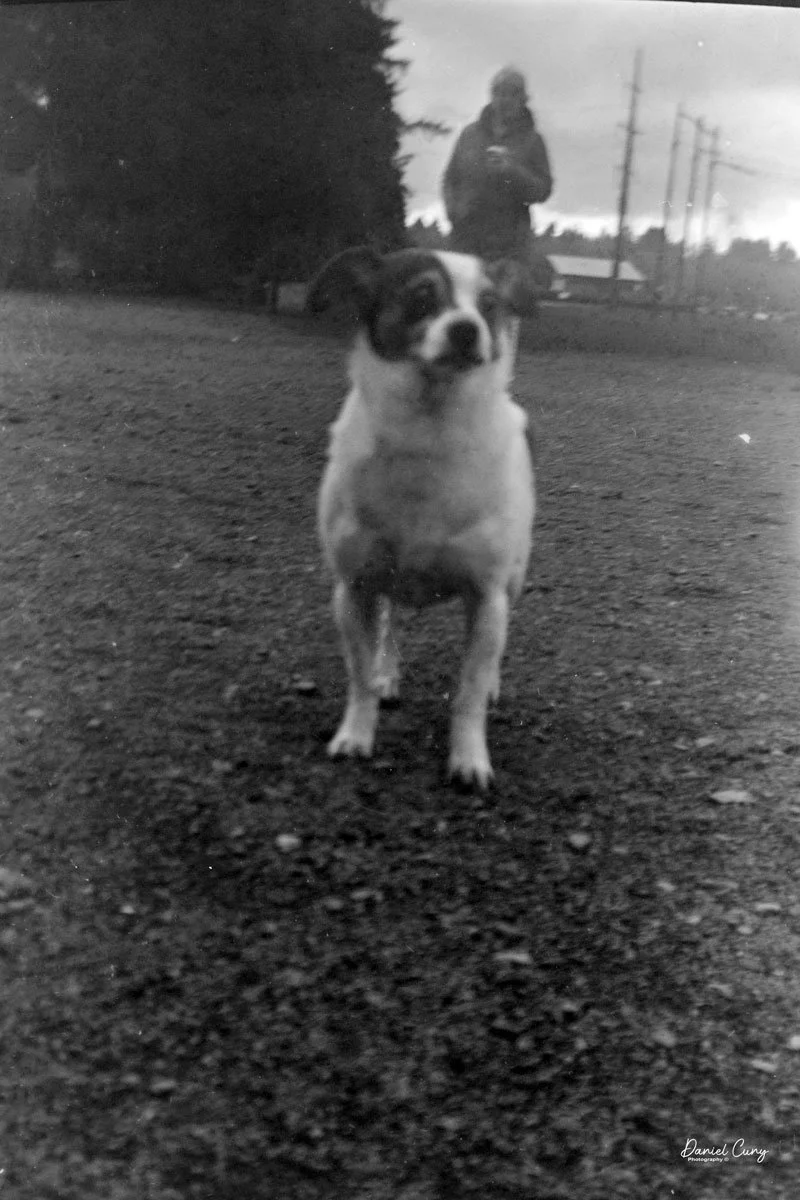
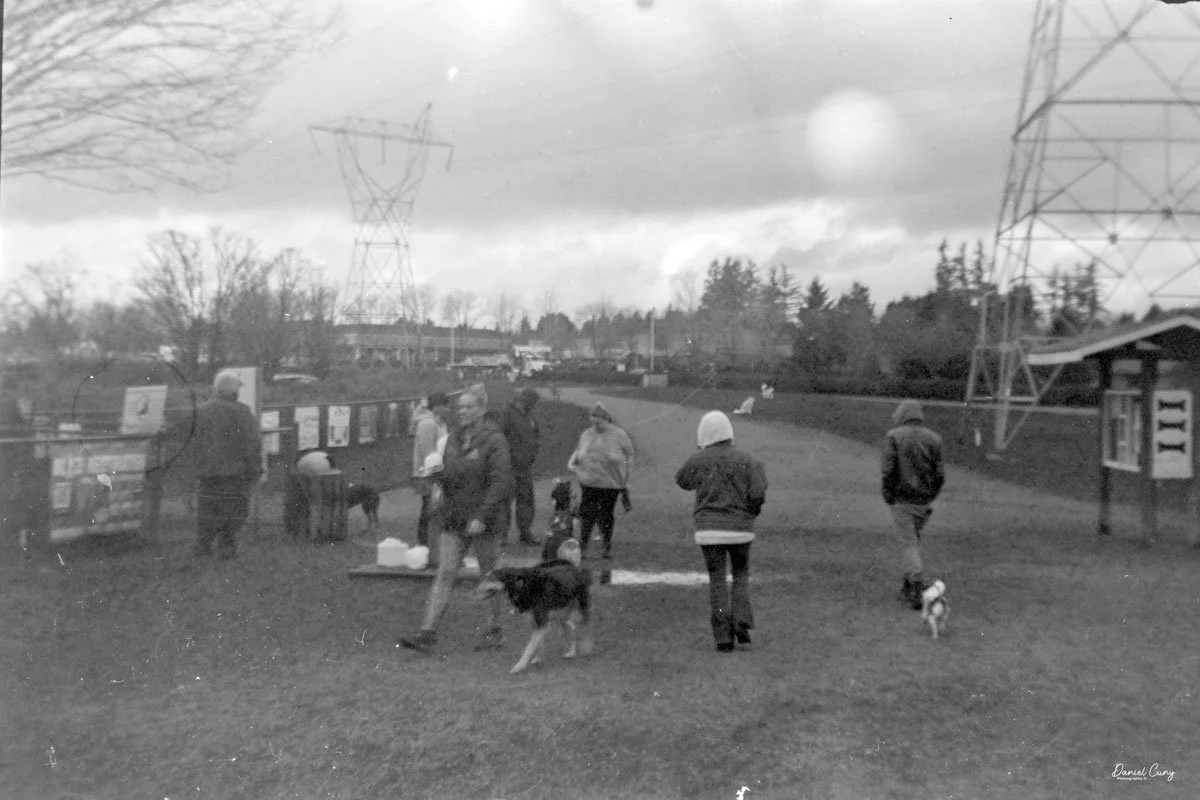
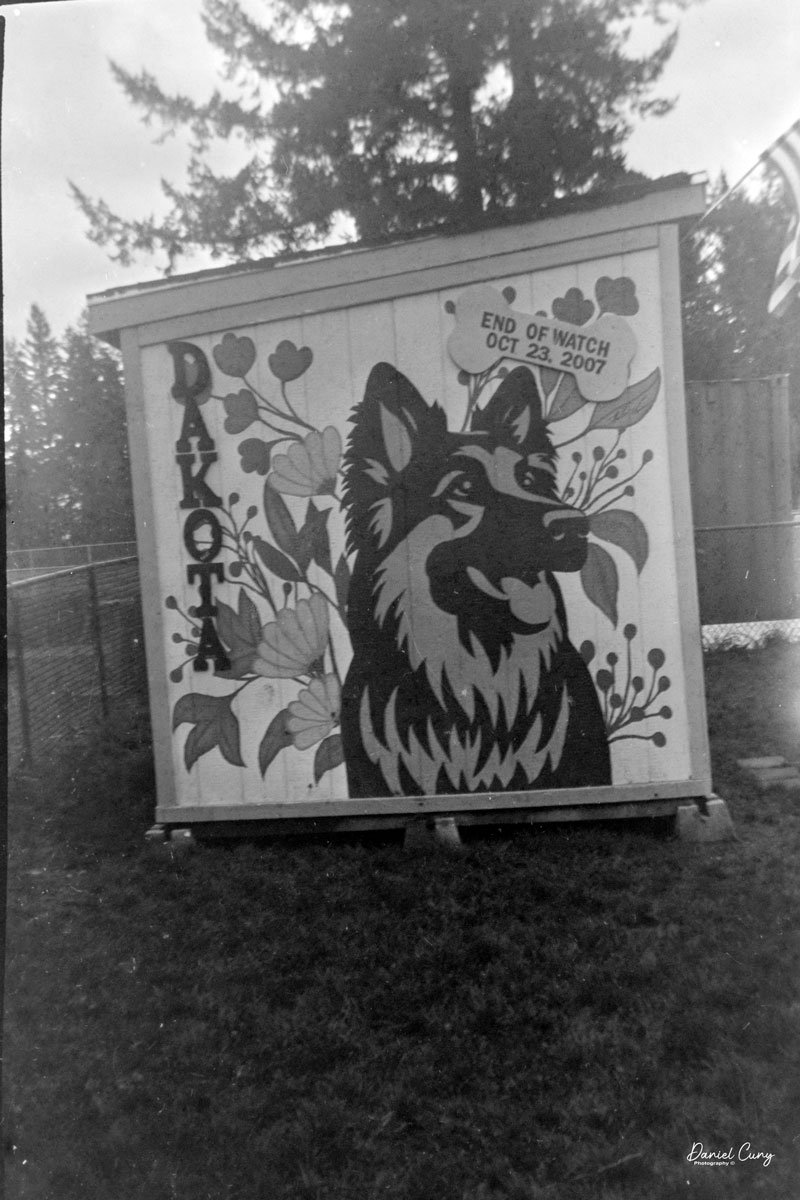
 I loaded the camera with a roll of 100 ISO 620 film I keep for cameras like this. I probably should have used 400 ISO film, since it was overcast, though the sun peeked through at times. We took our daughter’s dog to the local dog park for exercise and photos.

 Here are some of the results from our walk at the Dog Park:
Conclusion:

 The camera is fun to use thanks to its extra shutter controls. As someone who likes the 6x9 cm format, I enjoy capturing a larger area in each photo.

 The main downside for me was the tiny viewfinder window. A standard waist-level finder would have made the camera easier to use and more like the original 1930s model.

 I think this model was brought back in the early 1950s to cut costs but still offer decent image quality. Although I may not use it again, testing it for this article let me revisit why it stood out to me in Paris, and now it has a place on the shelf among my other colored cameras.

 Feel free to check out my other camera reviews.

 If you’re interested in any of the cameras I’ve reviewed, you might find them in my eBay store, Cuny’s Cameras and Photos. I have lots of odd and unusual photo items for sale.

 Thanks for taking a few minutes to read about this mid-century French camera made after WWII.

 Until my next review, take care.

Whitehouse Beacon Cameras

My Whitehouse Beacon cameras

When I was starting to collect cameras, I would collect anything —from straightforward box cameras and point-and-shoot cameras to fundamental bakelite cameras. As you begin to refine your interest in collecting a particular item, the focus becomes a bit more narrow, and the items that you see so often, like Kodak Brownies and bakelite holiday cameras, become less and less interesting. 

 I'm sure that's true with collecting anything. You're always on the hunt for odd, unusual, rare, or exotic items, whether it's cameras, firearms, cars, or sports memorabilia. Once I got over the initial phase of buying "any camera", I started collecting cameras with color to them. Kodak Rainbow box and folding camera, some of the bakelite Imperial camera, Boy and Girl Scout cameras, or even a box camera with odd and unusual faces on them, like the Bear Photo camera, or the Century of Progress cameras. To this day, it's difficult for me not to pick up and look at any colored camera, and I will most likely purchase one if the price is right.

 The Beacon camera was one of the cameras that started in my initial phase of collecting and continued into the next phase of collecting cameras with color. To this day, I can remember walking through a local flea market and seeing a familiar shape of the Beacon camera, but this one was in a different color. I had only owned the black version before, but this one was greenish-turquoise. When the seller quoted a few dollars, I snatched it up right away. The Beacon camera came in traditional black, as well as white, red, and green.

My three Beacons

 I purchased the red Beacon camera well over 35 years ago, when there was no internet, and the only places you could see items like this were at camera shows, camera collecting books, which usually weren't in color, or people selling things at garage sales or flea markets. I remember thumbing through the McKeown's Camera guide, which I had back then. It was considerably smaller, but it did mention whether cameras came in different color versions.

 When eBay launched in the late 1990s, I was an early adopter and joined in 1997. At that time, there were no product photos; only descriptions. It was more of a message board of people buying and selling items. My first number was 1034, this was even before you had a name on eBay. eBay changed the way people collect so many items. The market became flooded with items that were difficult to get before eBay, and their prices dropped. So many antique stores and other retailers were affected by them until they started selling on the marketplace, and it has now become such a vast entity.

 I can even remember starting a similar auction site aimed at the photo marketplace in the early 2000s, and I was going to call it Photo Flea Market, where people could buy and sell cameras, lenses, vintage gear, and even images like prints, Daguerreotypes, Ambrotypes, etc. Try to keep it more focused on one particular industry, but like many ideas, it went by the wayside.

Camera History:

Patent Drawing for Beacon camera

 The Beacon camera was manufactured by Whitehouse Products Inc. of Brooklyn, NY, starting in the late 1940s. My friend, podcaster, and excellent camera blogger Mike Eckman has a tremendous post on the History of Whitehouse Products where he deep dives into a famous woman named Vira Boarman Whitehouse, (Mrs. Norman De R. Whitehouse) who was mainly know as a suffragette leader in the 1920 that had a leather company who employed many women, and who also championed company's to go from a 48 hour work week to a 40 hour week. It's truly a fantastic read.

 Whitehouse Products produced the Beacon line of cameras, along with another simple camera in the 1960s, the Beacon Reflex camera, Automatic 705, and the Autoflash WH 127-A, which Ansco also sold. My favorite Whitehouse camera was the 1970s novelty Charlie Tuna Camera, which I also have in my collection.

 The one thing I can be sure of is that William L Lawson was the designer and inventor of the Beacon camera. I conducted a patent search and identified the initial design of the camera, produced in 1948. It's for the original Beacon camera, which also included two shutter speed settings. The two speeds were either "I" for instant or "B" for bulb, or timed exposures. The later Beacon II model removed the ability to set the shutter speed, as shown on my camera. The original Beacon and later Beacon II models took 16 images on 127-size film, producing a 3x4cm negative. 

 Later in the 1950s, Whitehouse produced the Beacon Two-twenty Five. A larger version of the Beacon and Beacon II, which took 12, 6x6cm images on 620 film. This is the camera I used to produce the images included in the post.

My Camera:

 My Beacon Two-Twenty Five is 4" tall by 5.5" wide by 3.5" deep with the lens extended, and 2.25" deep with the lens compressed into the camera body. It weighs 13.7 ounces. The camera has a 70mm Doublet lens with an aperture of F/8, which would be my best guess, possibly a bit faster. To say this camera has no bells or whistles is an understatement, and there are only a few things you need to do to take a photo.

To load the film, on the right side of the camera is the latch to open the back door. Slide the button down to open the back, and swing the door open to reveal where to load the film. This camera takes 620 film, but there is nothing to help load or unload the film roll from the film chamber. Since I had some 620 film, I needed to force the roll of film into place before I tore the tape off and slid the paper backing across the film plane to put the leader into the take-up spool. It wasn't very easy, but I got it done.

Once the film is on the take-up spool, I wound it until I saw the "start" arrows, then closed the back of the camera. I wound the take-up knob until I saw the number 1 in the viewfinder. The camera is now ready to take the first photo.

 Before taking the photos, you'll need to pull the lens area out of the camera body using the two grips on either side of the lens. Once the lens is pulled out, it snaps or locks into place with two wide silver bars located behind the grip. If you don't pull the lens out, your photos won't be blurry. To take the picture, the chrome shutter release is located on the top of the lens chamber. My guess is the shutter speed is around 1/60 of a second.

Once the photos have been taken, press in the two chrome bars that lock the lens into place at the rear of the camera body, and the lens chamber will slide back into the camera body.

 If you'll be using the Beacon flash attachment, attach the flash once the lens is extended. First, the flash takes two penlight batteries, which fit into the back of the flash attachment. On the back, under the reflector, is a small clip that needs to be pulled back to expose the battery compartment. Close the battery cover, slide the front of the flash unit under the lens chamber, then slide the flash over the top of the camera until it's in place, then screw it into the camera body using the small screw on the back of the flash.

The flash units take either size 5, 11, or 22 flashbulbs. Here's a link to Mike Butkus manual for the Beacon camera and the Beacon flash.

 The camera is fundamental to its functions, but let's take a look at the images it produces.


My results:

 I loaded up a roll of 620 film I keep for camera testing, and took a walk through the neighborhood. Since the day was cloudy, I had to wait for the sun to come out so I'd get better results.

 Here are a few of the images I took.

Conclusion:

 The Beacon did a better job than I anticipated, especially given its simple camera. No focus, shutter, or aperture settings. It's truly a "point and shoot" style camera, specifically designed for family snapshots. The edges are soft, as expected, but overall not too bad.

 I doubt I'll be taking the camera on an important vacation, but my curiosity got the better of me. I wanted to see how it would perform, and it wasn't horrible.

 Thank you for taking time from your day to read about this snapshot camera from the late 1940s, for the original Beacon, to the 1950s, for the Beacon Two-Twenty Five, which I used for the post.

 Here's a link to my other Camera Reviews.

 If you are looking for an odd or unusual photo item, be sure to stop by Cuny's Camera and Photo, my eBay store.

 Until next week, please be safe.