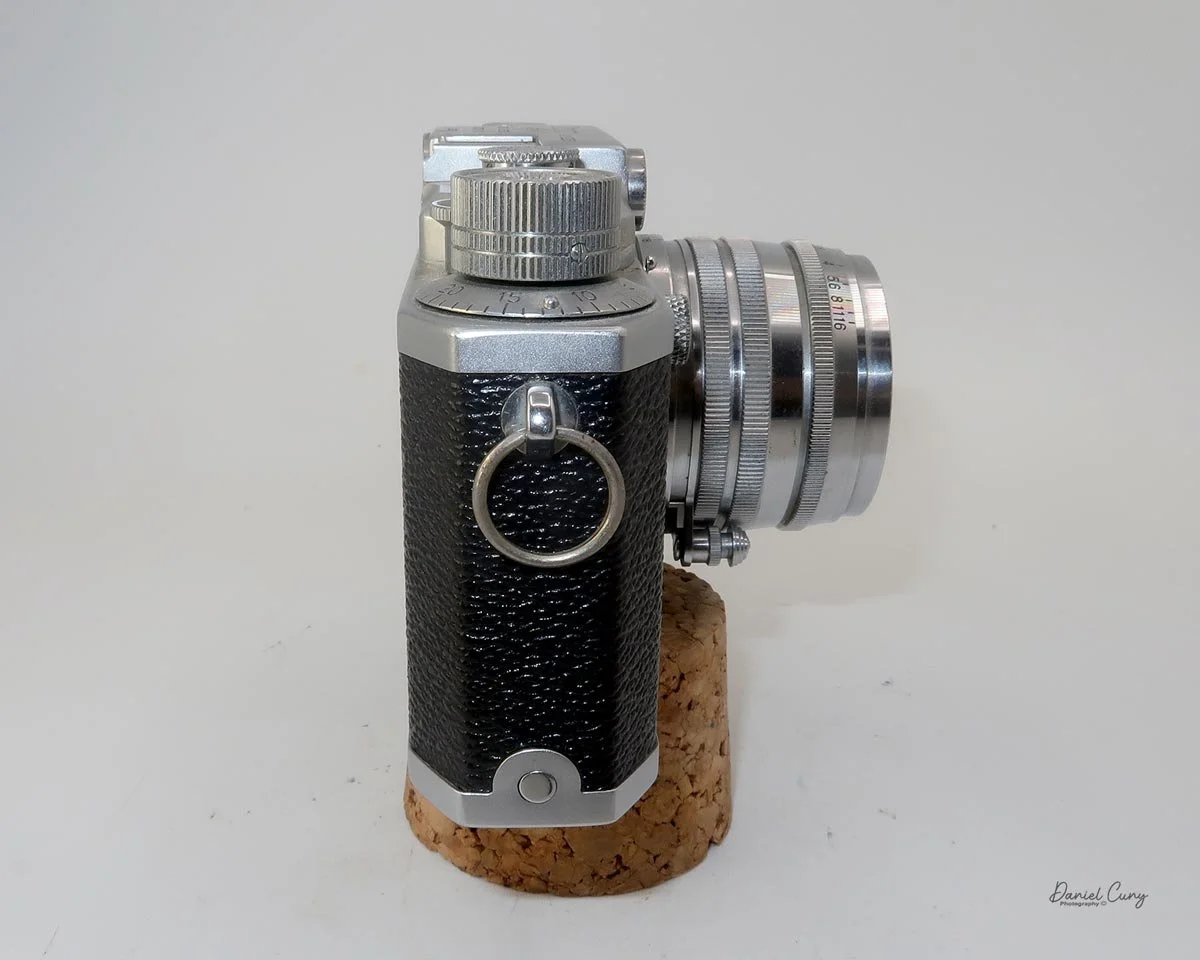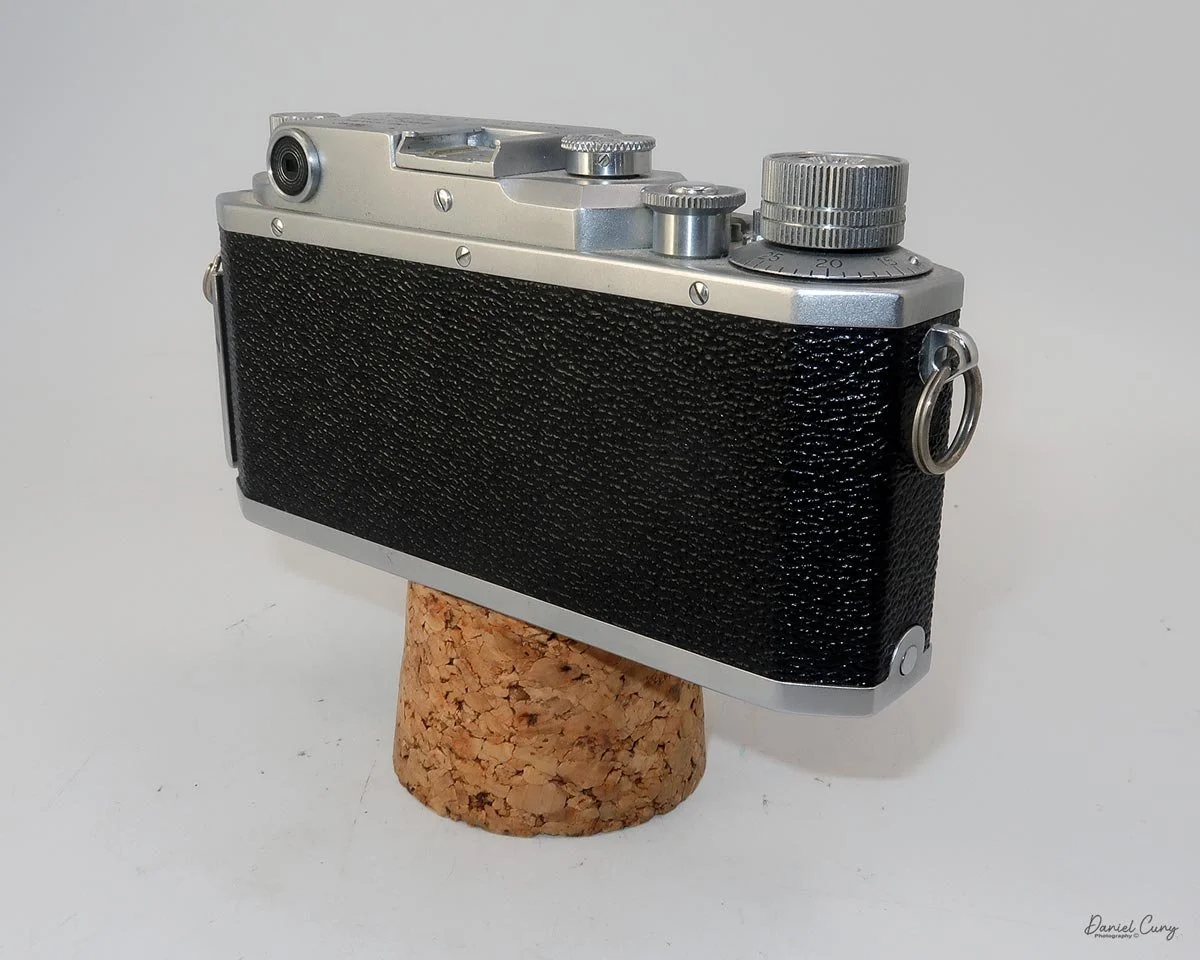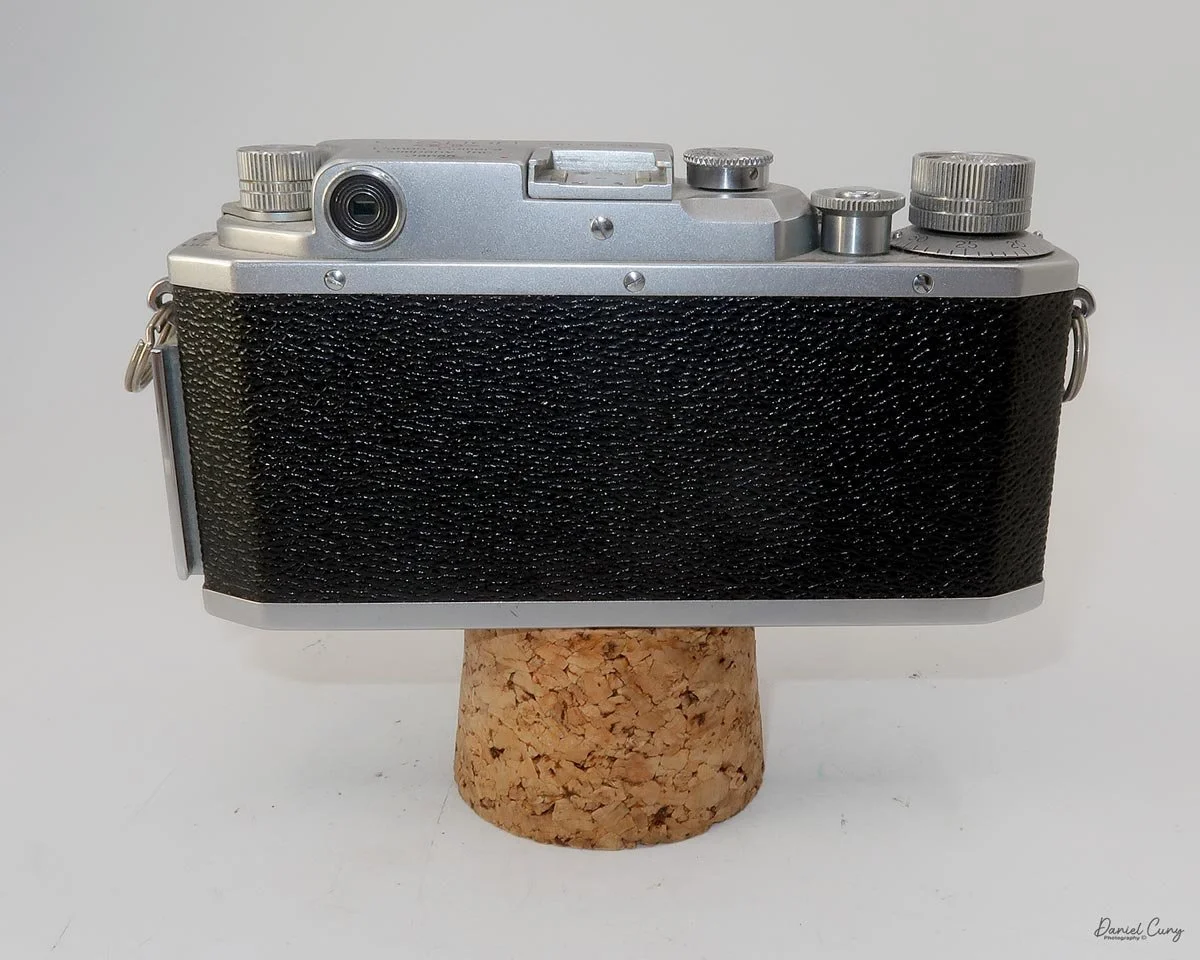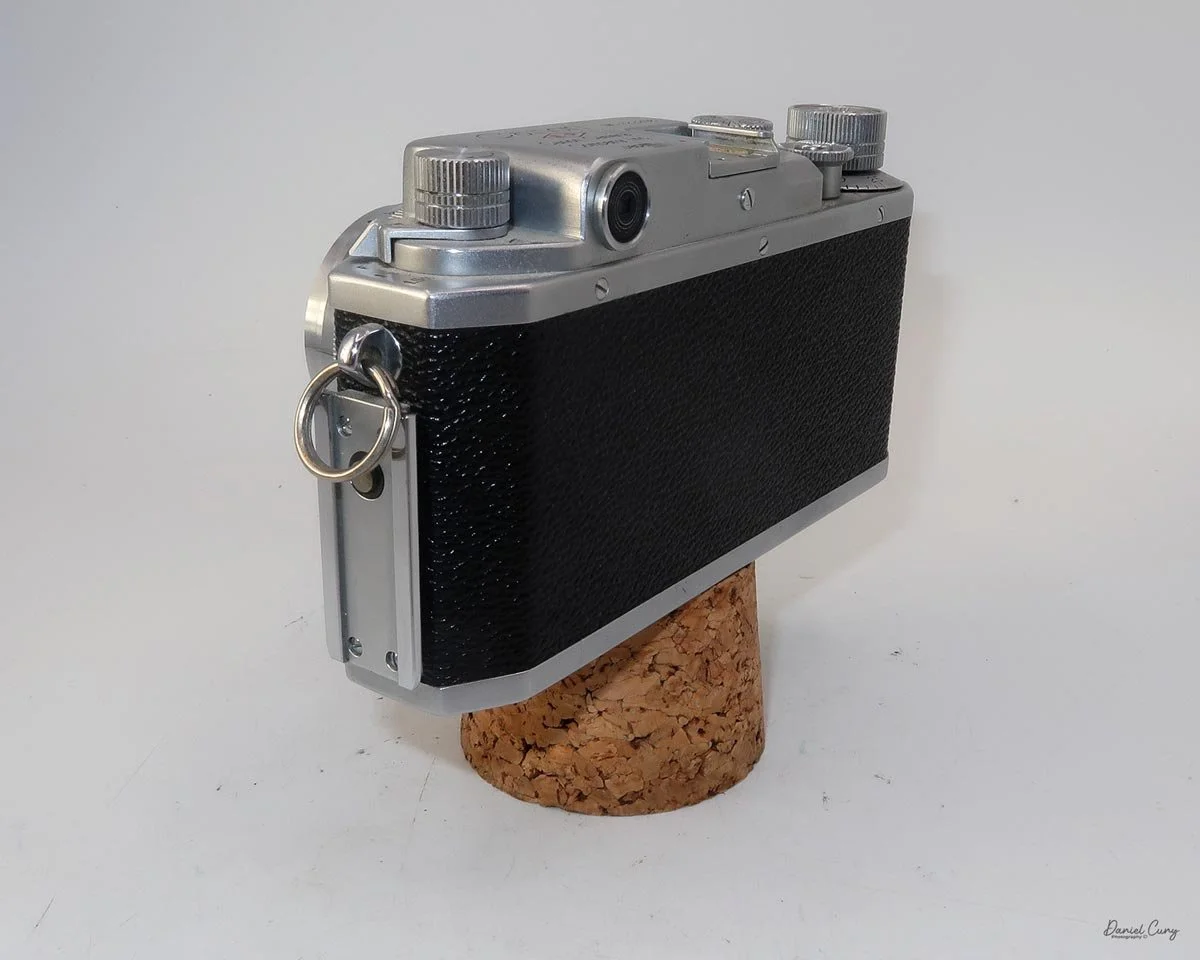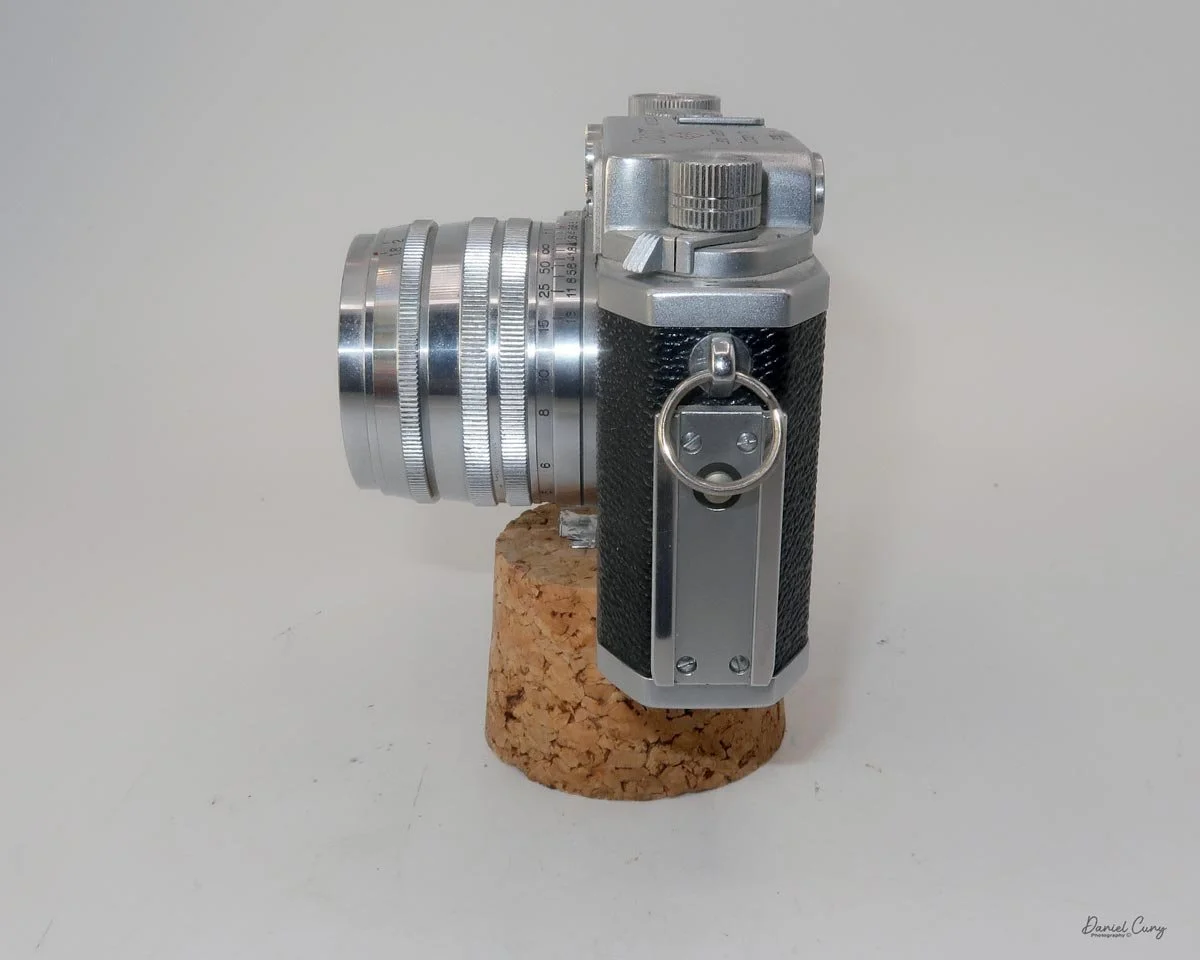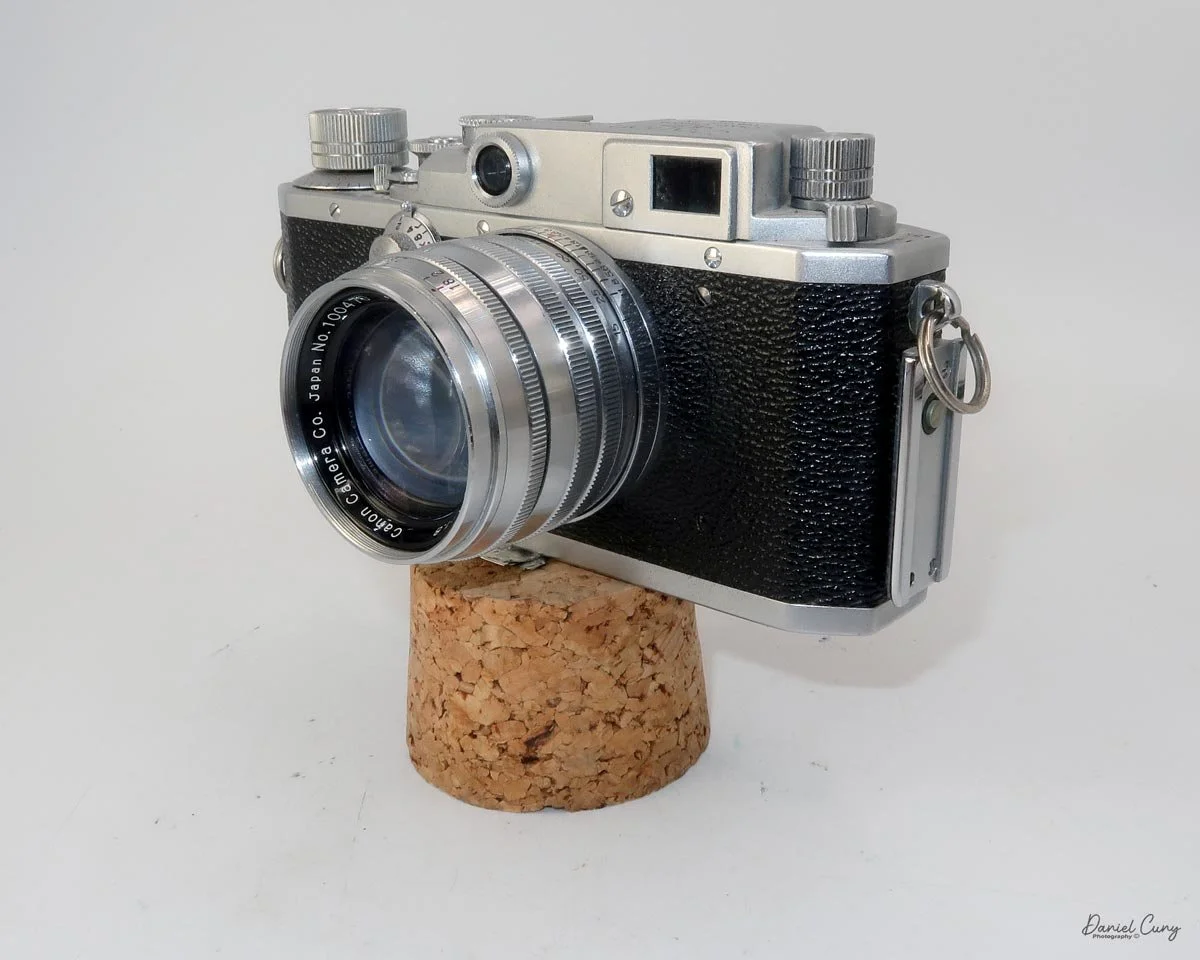
Canon IV Sb camera

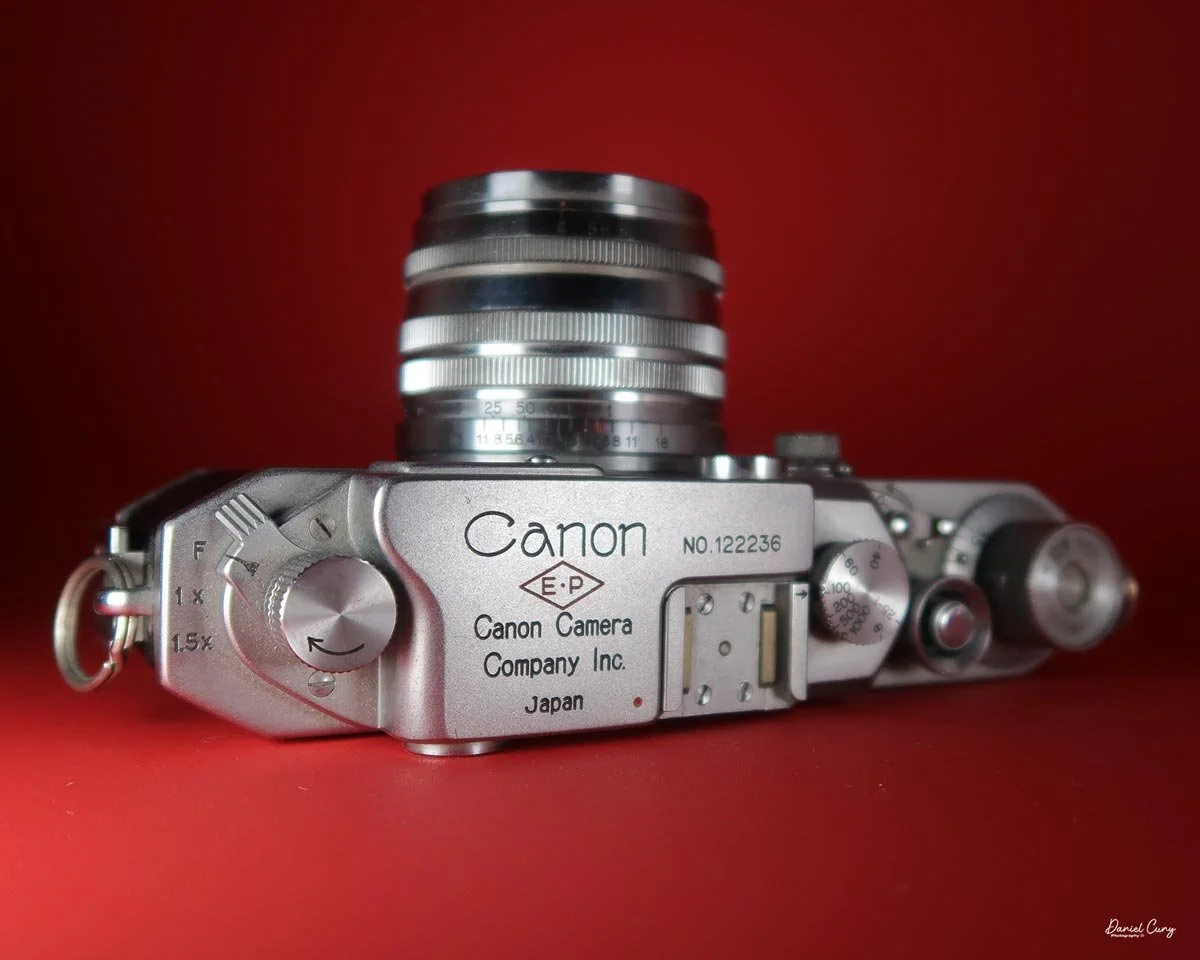
My Canon IV Sb camera

Being a lifelong Nikon shooter, along with working in the retail photo industry for nearly 20 years during the 1970s, I became very tired of Canon's dominance and marketing strategy around the Canon AE-1, which was the "hottest" camera around when it was released in 1976.

The Canon AE-1 was under restricted distribution, meaning demand far outstripped supply, and the camera was extremely sought after. There were people waiting months to get the camera. I say this because, as someone who was hounded almost daily for the camera, I started to dislike the brand.

Don't get me wrong, their cameras are decent, and even when they dominated the digital world with the 5D, 5D Mark II, and other cameras, it still irked me that they sold so many units. I was tired of them—especially as a member of the gold-and-black team (Nikon).

In Canon's early years, they made some extremely well-made and sought-after cameras, the Canon IV Sb being one of them. Companies like Nikon, Nicca, Minolta, and Leotax made some of the better rangefinder cameras coming from Japan during this timeframe. They competed well with the more sought-after German companies of Leica, Zeiss, and Voigtländer.
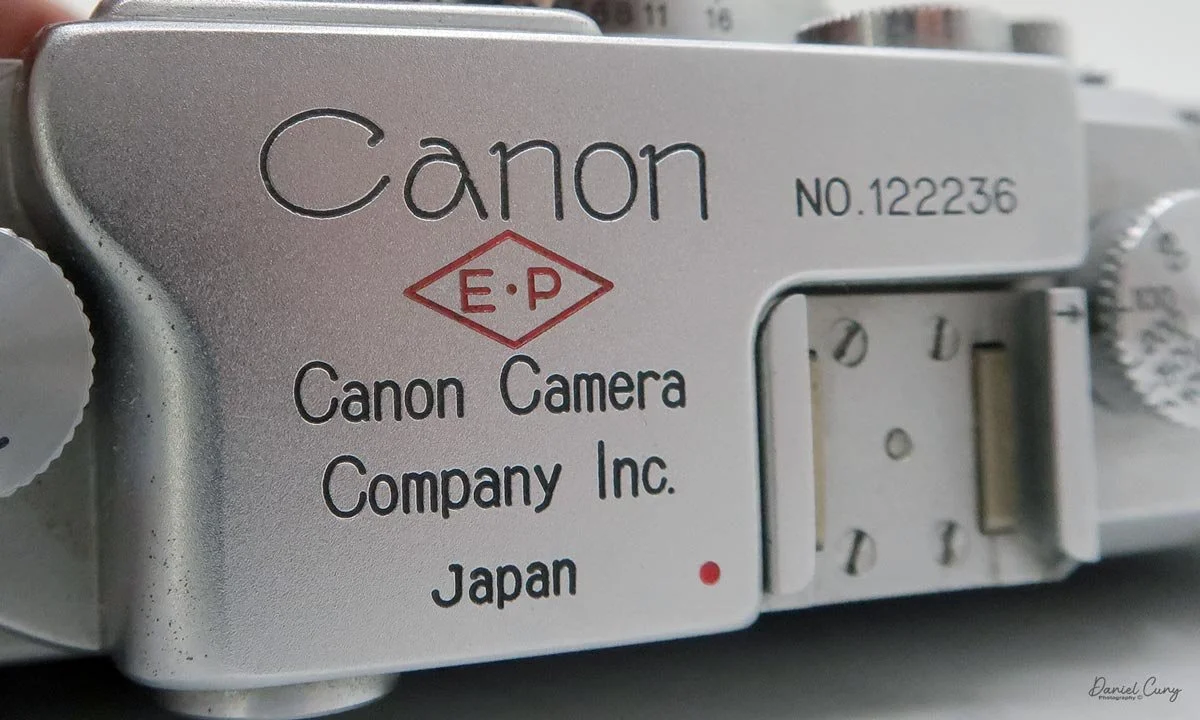
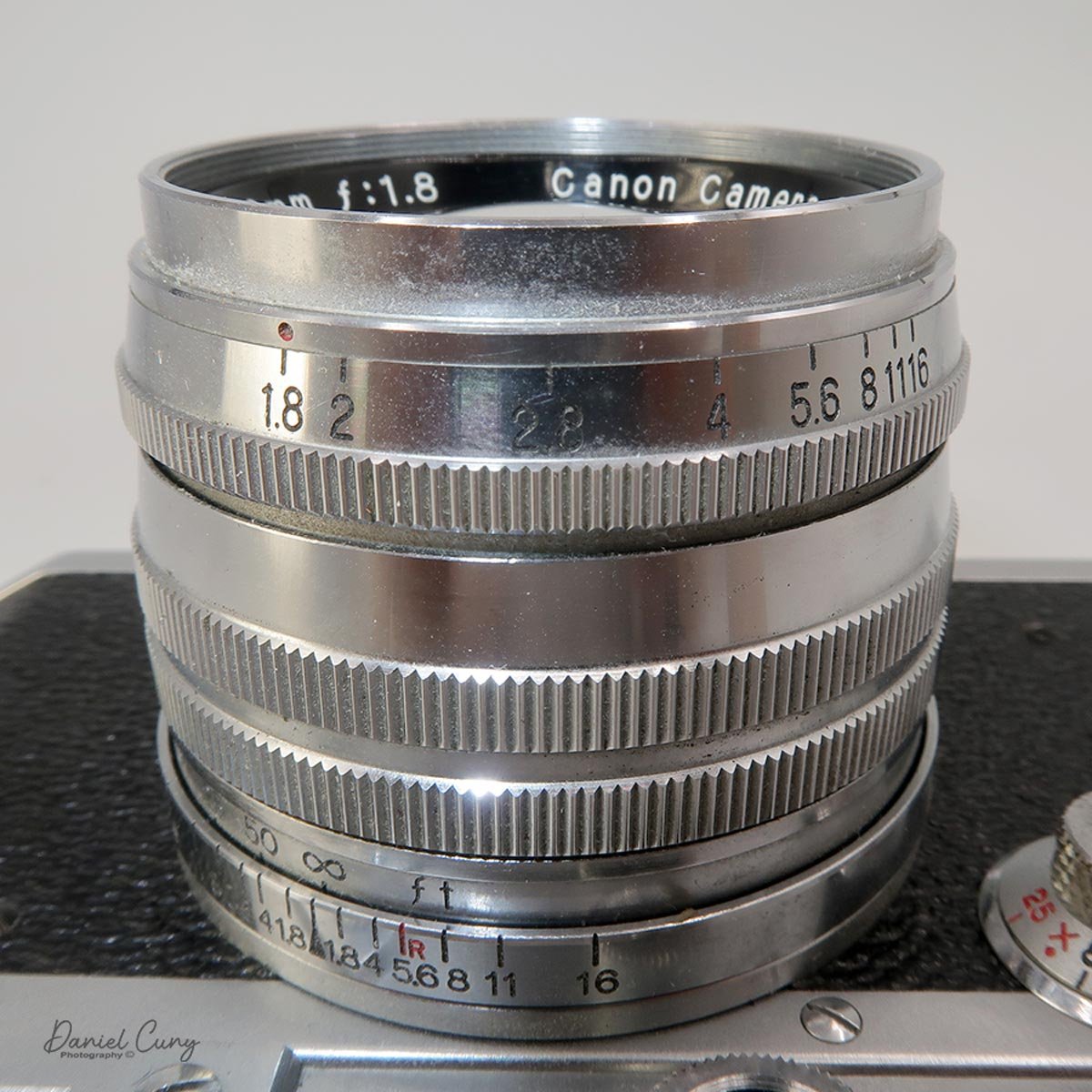
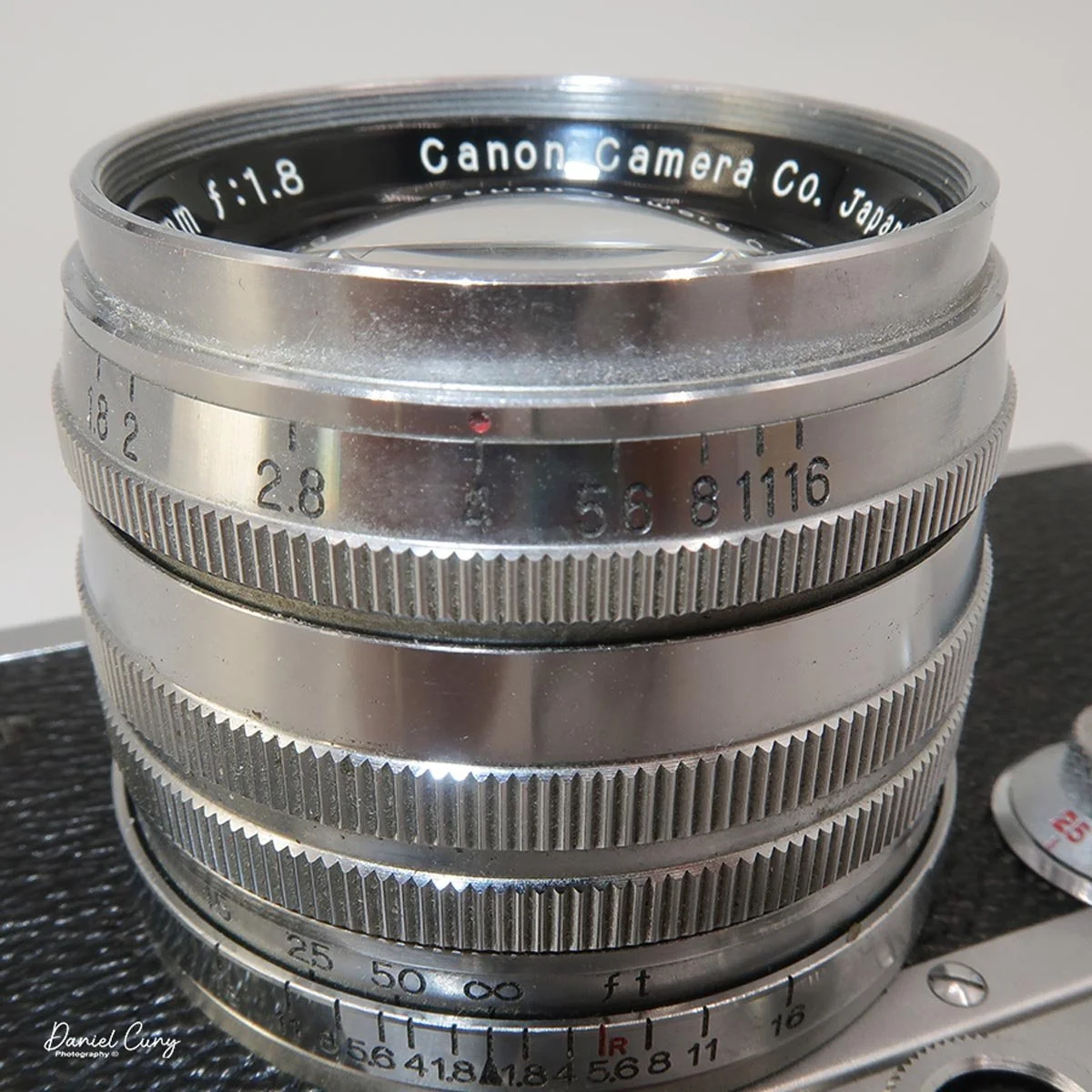
I enjoy the early font on the Canon name.

I say this because I've owned Canon rangefinder cameras in the past. Still, because of my past biases, I rarely look for them unless one comes up at a very good price or is included in a group lot I've purchased.

It's interesting that while Canon rangefinders have produced some amazing products—especially the extremely fast Canon 50mm f/0.95 lens—their cameras are generally priced less than their Nikon counterparts, which produced more "professional" products during the 1950s–1990s.

Fast forward to this week's blog on cameras in my collection: the Canon IV Sb, included in the camera lot I purchased in Las Vegas about a month ago. The camera is in very good condition, except for a repaired blemish on the second shutter curtain. The lens is bright and clear; the rangefinder is clean, bright, and seems accurate; the chrome shows no tarnish; and all shutter speeds sound accurate, even the slower ones.

It's been quite some time since I ran film through one, so I figured now was a good time to put a roll of expired Plus-X 20-exposure film from my gaggle of film in, walk through the neighborhood, and take some photos.

History:

Canon started in 1933 in a small room in Tokyo's Roppongi district, where four men—Goro Yoshida, Saburo Uchida, Takeshi Mitarai, and Takeo Maeda—founded the Precision Optical Instruments Laboratory. Their goal was simple and ambitious: build a Japanese camera that could stand up to Germany's best. At the time, all the fine cameras came from Europe.
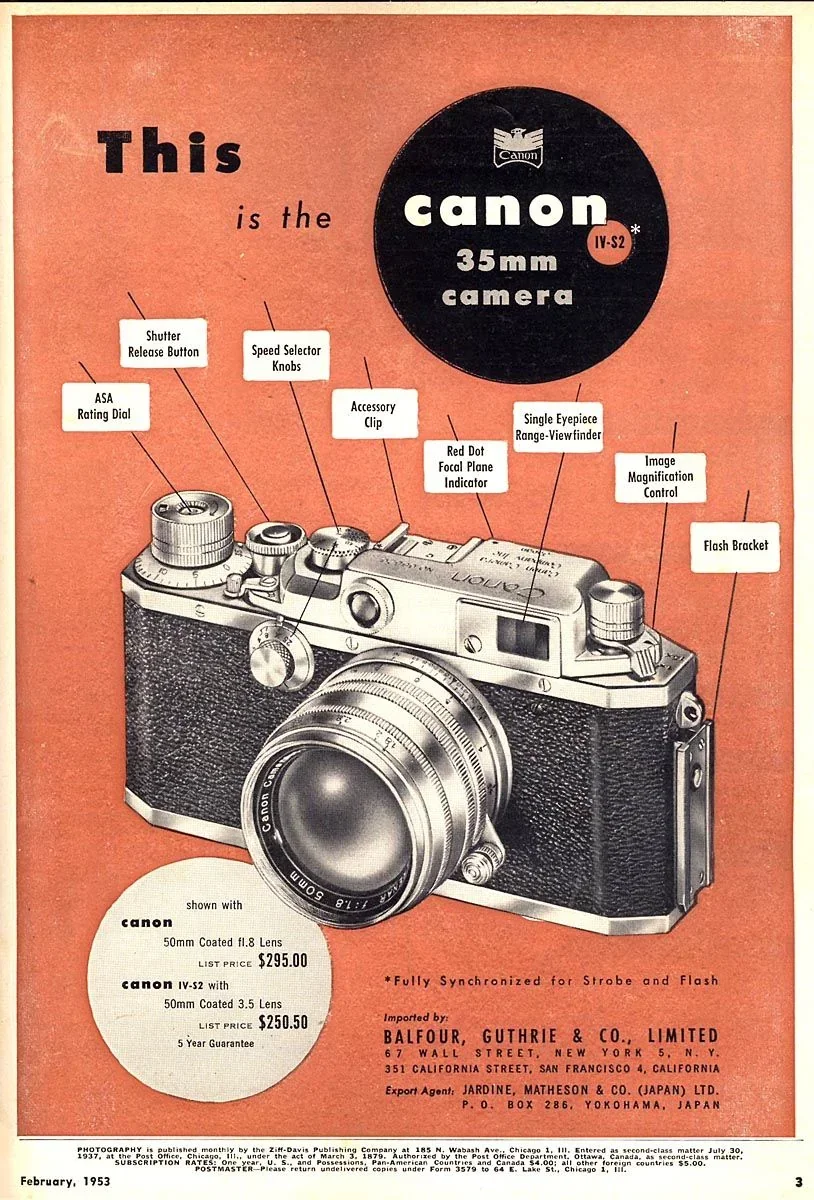
Canon IV Sb advertisment.

Their first effort, built in 1934, was the Kwanon, named after the Buddhist goddess of mercy. It was Japan's first 35mm focal-plane-shutter camera and only a prototype—it never went on sale. Yoshida had studied a Leica II to figure out how it all worked. In 1936, the company released its first commercial camera, the Hansa Canon, which became known by the name we'd all come to know. Since the little company couldn't make its own lenses yet, the earliest Canons shipped with Nikkor lenses from Nippon Kogaku—yes, Nikon. The two companies that would become lifelong rivals started as customer and supplier.

The company became Canon Camera Co. in 1947, and just Canon Inc. in 1969. Through the 1950s, it built fine rangefinders, but the future was the SLR. Canon's first one, the Canonflex, arrived in 1959. Then, in 1961, the Canonet arrived: a fixed-lens rangefinder that became one of the best-selling cameras of its day—a real people's camera.

The 1970s were Canon's big decade. The F-1 of 1971 was its first true professional system camera, and the new FD lens mount gave it its own mount. But the camera that changed everything was the AE-1 in 1976—the first 35mm SLR with a microprocessor inside. It was cheap, easy to use, and sold in the millions, putting real SLRs into the hands of ordinary shooters.

In 1987, Canon made its boldest move: the EOS system and the all-electronic EF mount. The old FD lenses wouldn't fit, which angered plenty of loyalists. Still, the clean-slate design let Canon leap ahead in autofocus. It was the right bet. Canon rode the autofocus era into the digital age with the EOS D30 in 2000, then broke new ground in 2005 with the EOS 5D, the first affordable full-frame digital camera.

Today, Canon's EF mount has given way to the RF mirrorless mount, introduced with the EOS R in 2018. From a four-person workshop in Roppongi to a photography giant, Canon got there by doing what its founders set out to do: build cameras for everyone, not just professionals.

The Camera:

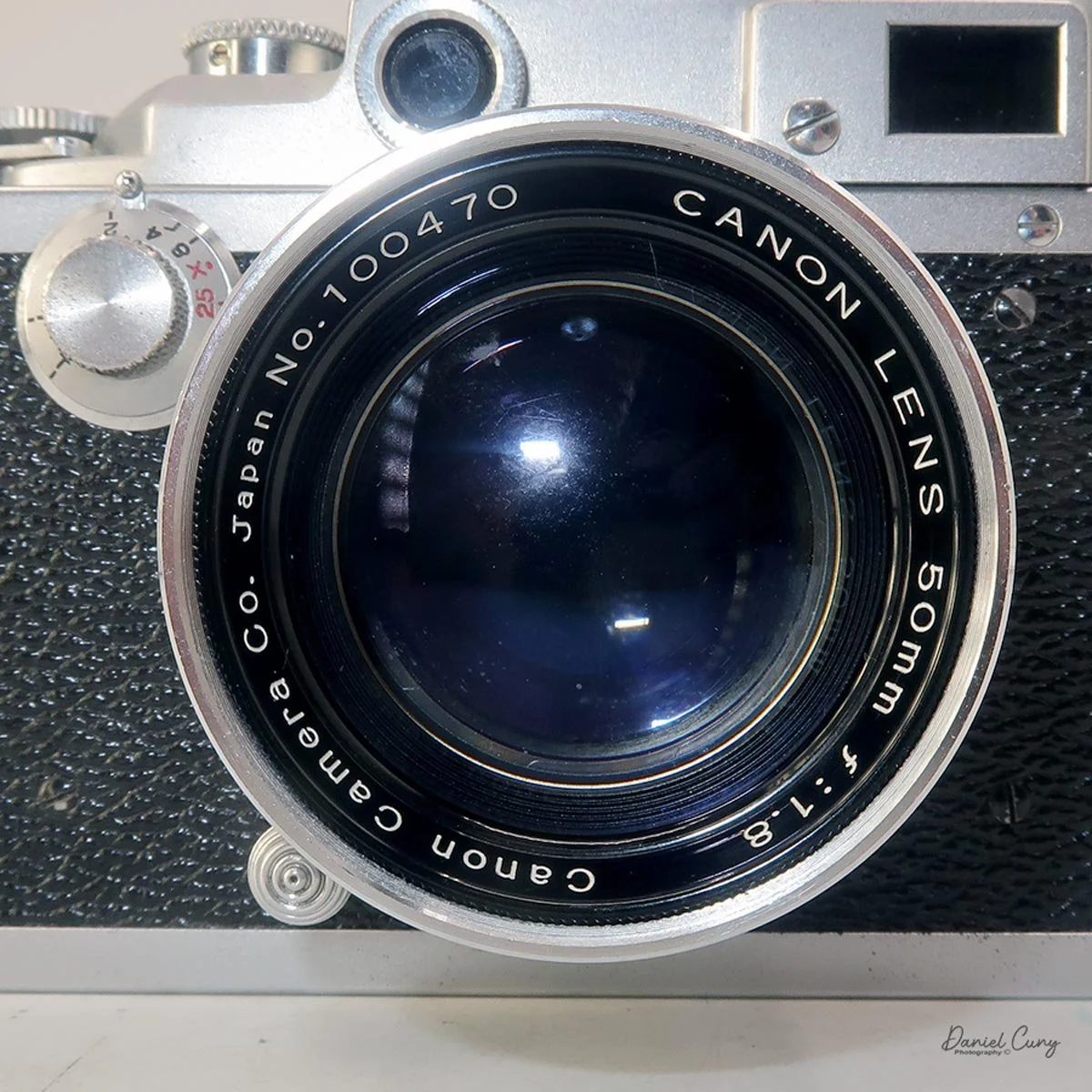
My Canon IV Sb came with a Canon 50mm f/1.8 lens and is similar in size to some Leicas, like the IIIB and others from the same era. The camera measures 5.5 inches wide by 3.75 inches tall and 2.75 inches deep, and weighs 1 pound, 11.7 ounces. The serial number on my body is 122236, and the lens is 100470.
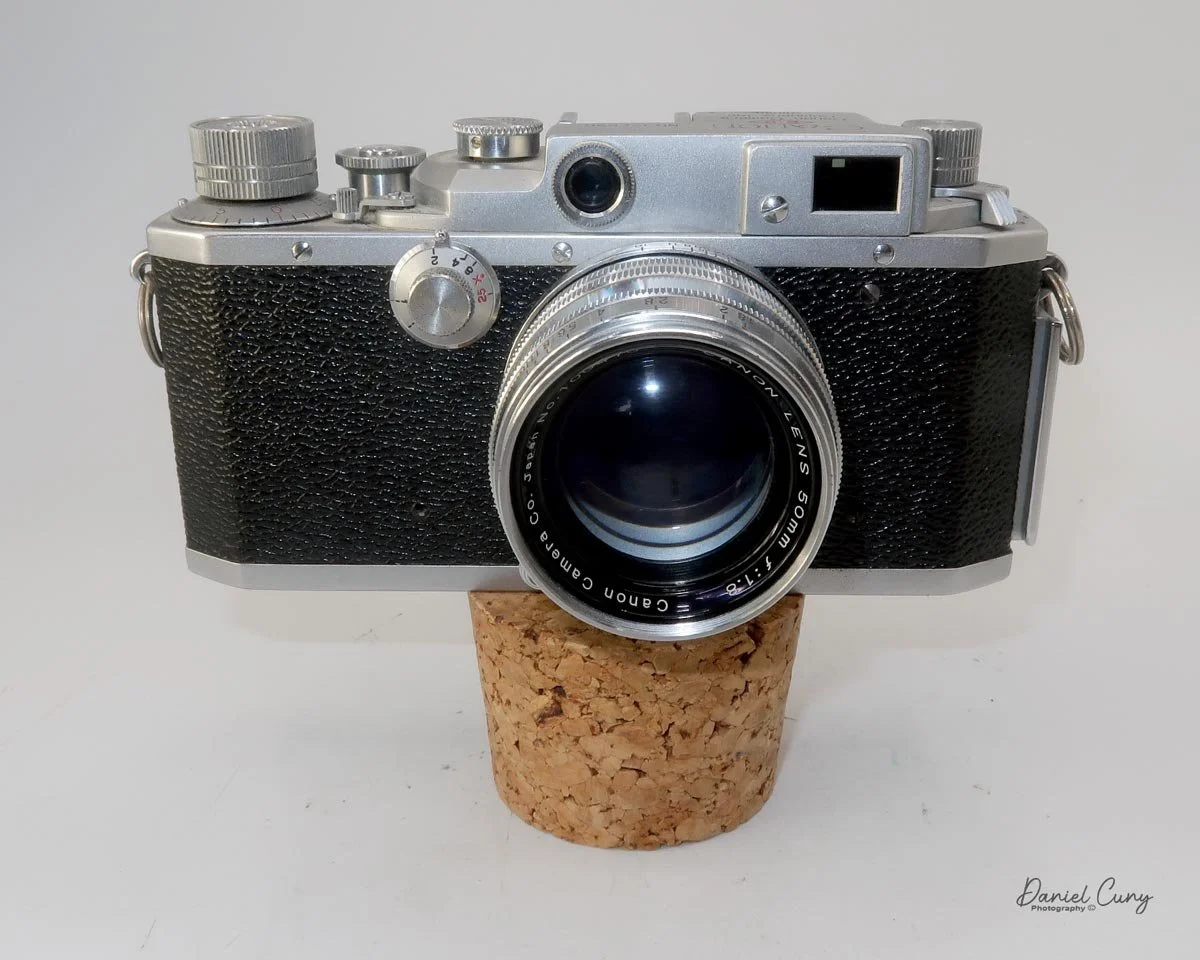
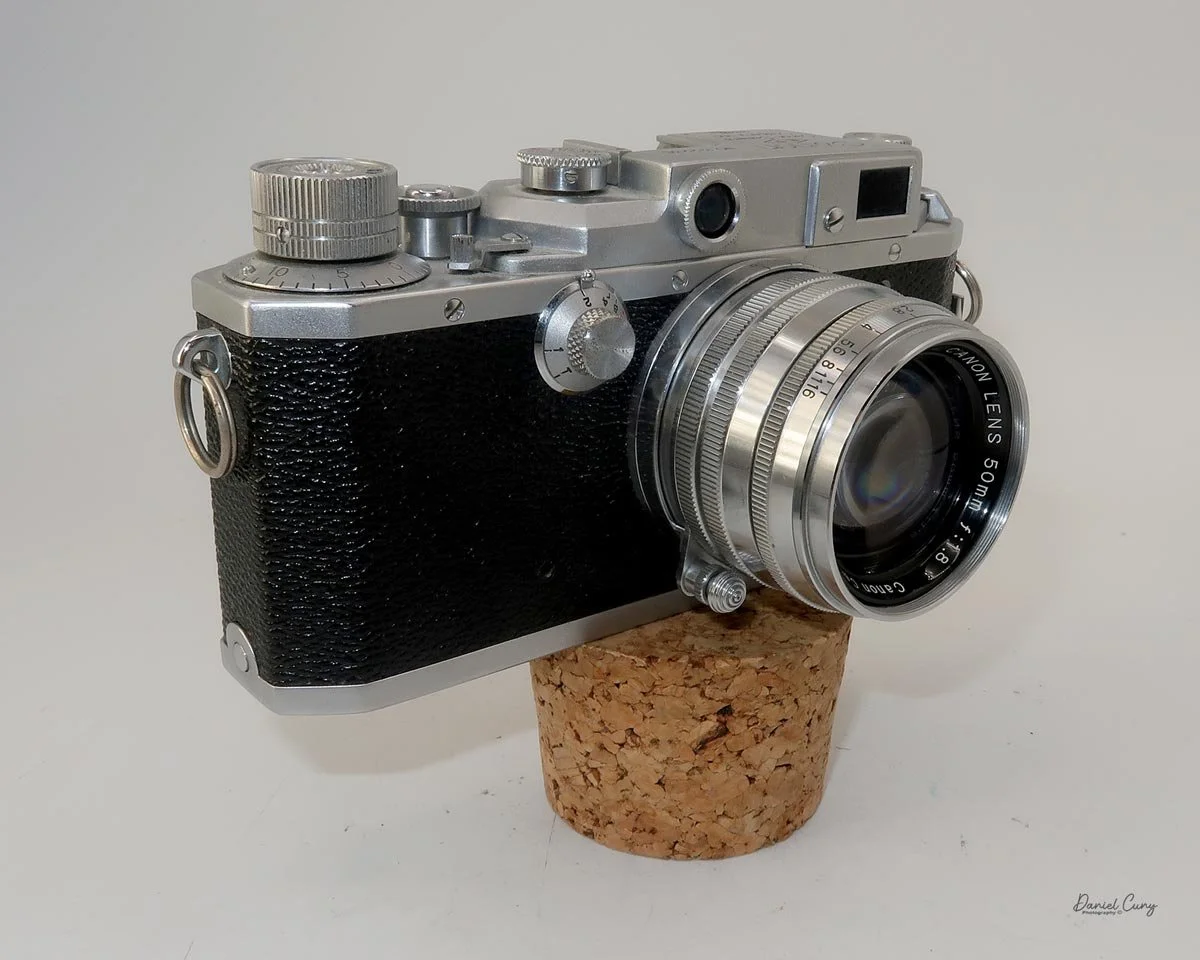
My camera is marked "E.P." in red, surrounded by a red diamond on the top plate. This doesn't necessarily make the camera more or less valuable than others. Still, it marks the camera as most likely purchased at a U.S. military base, identifying the camera and lens as duty-free or tax-free when imported into the U.S.

The Canon IV Sb was introduced in December 1952 and was available until the upgraded IV Sb2 was marketed in March 1954. The camera has an M39/LTM lens mount and offered either a Serenar or Canon f/1.8 or f/1.5 lens as a standard option.

The 50mm lens I have features the aperture ring on the outer knurled ring, with settings from f/1.8 to f/16. It has a locking lever, like other LTM lenses, that locks when focused at infinity, with a minimum focusing distance of 3.5 feet.
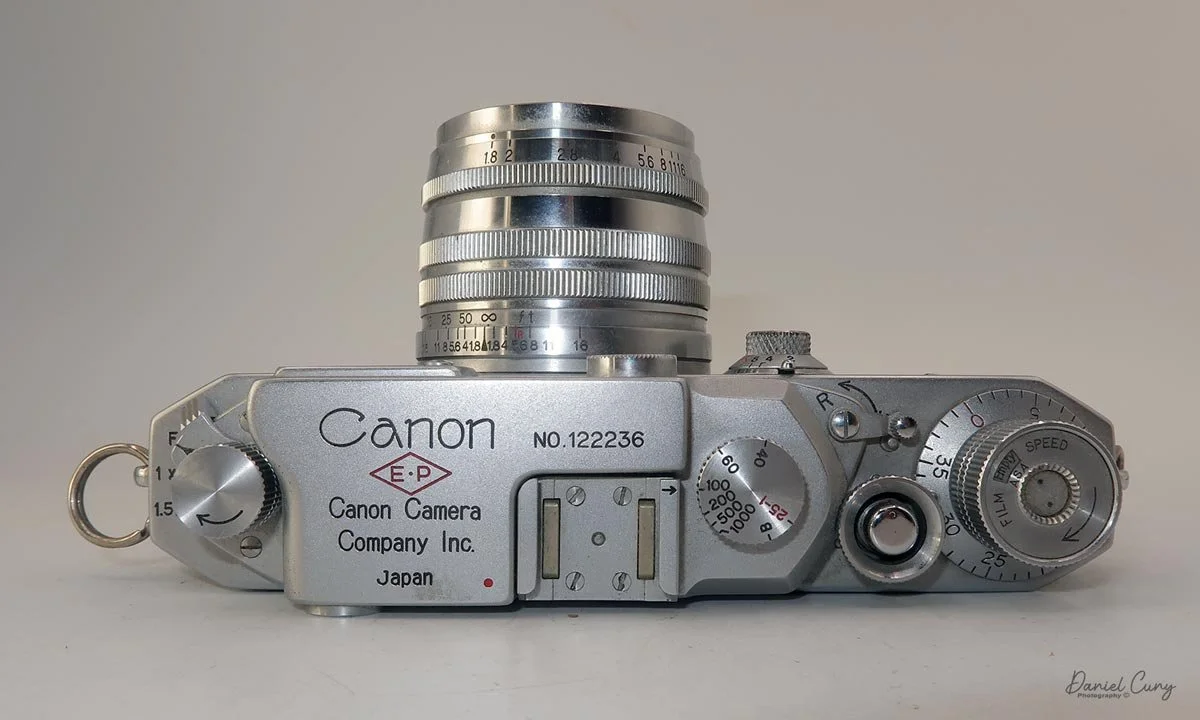
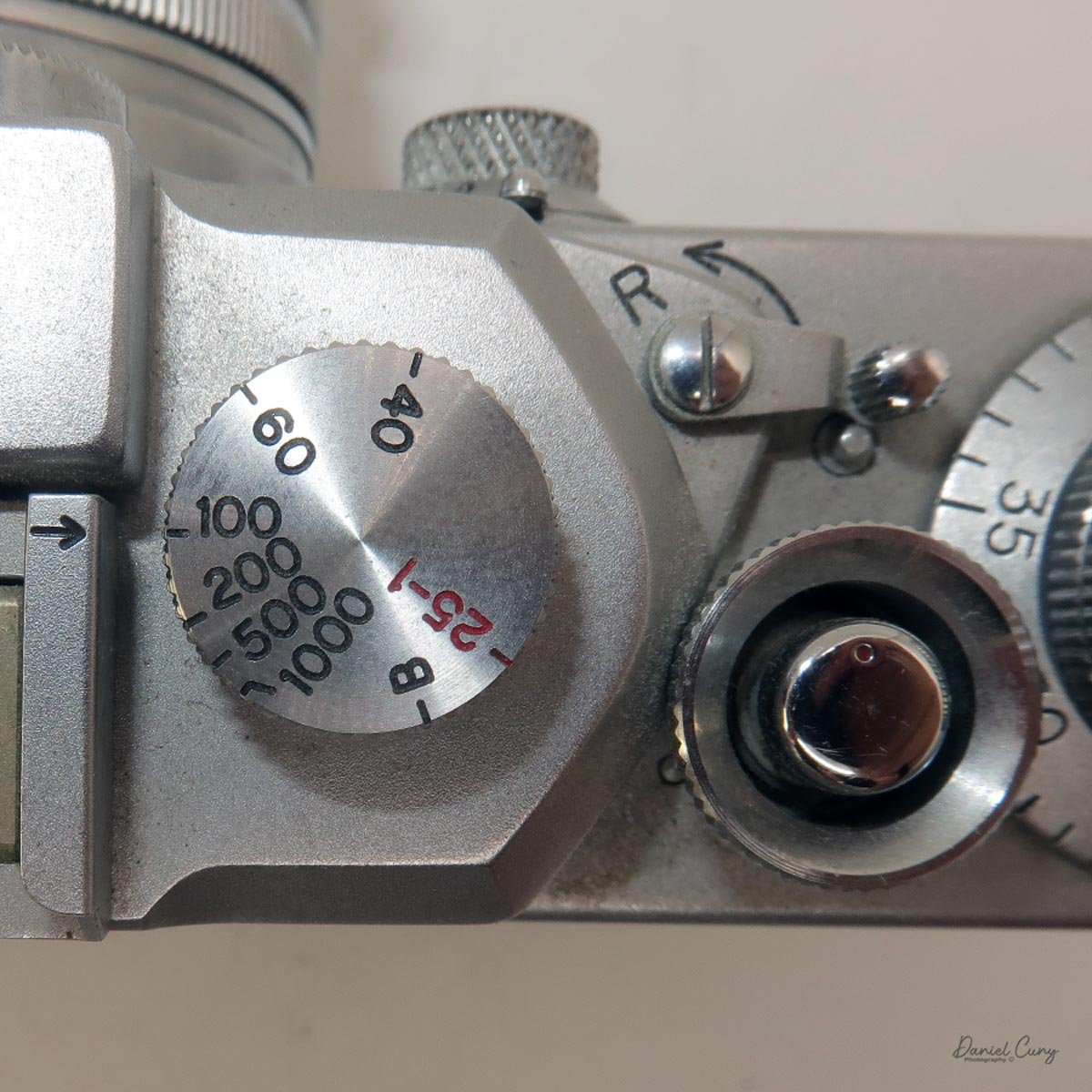
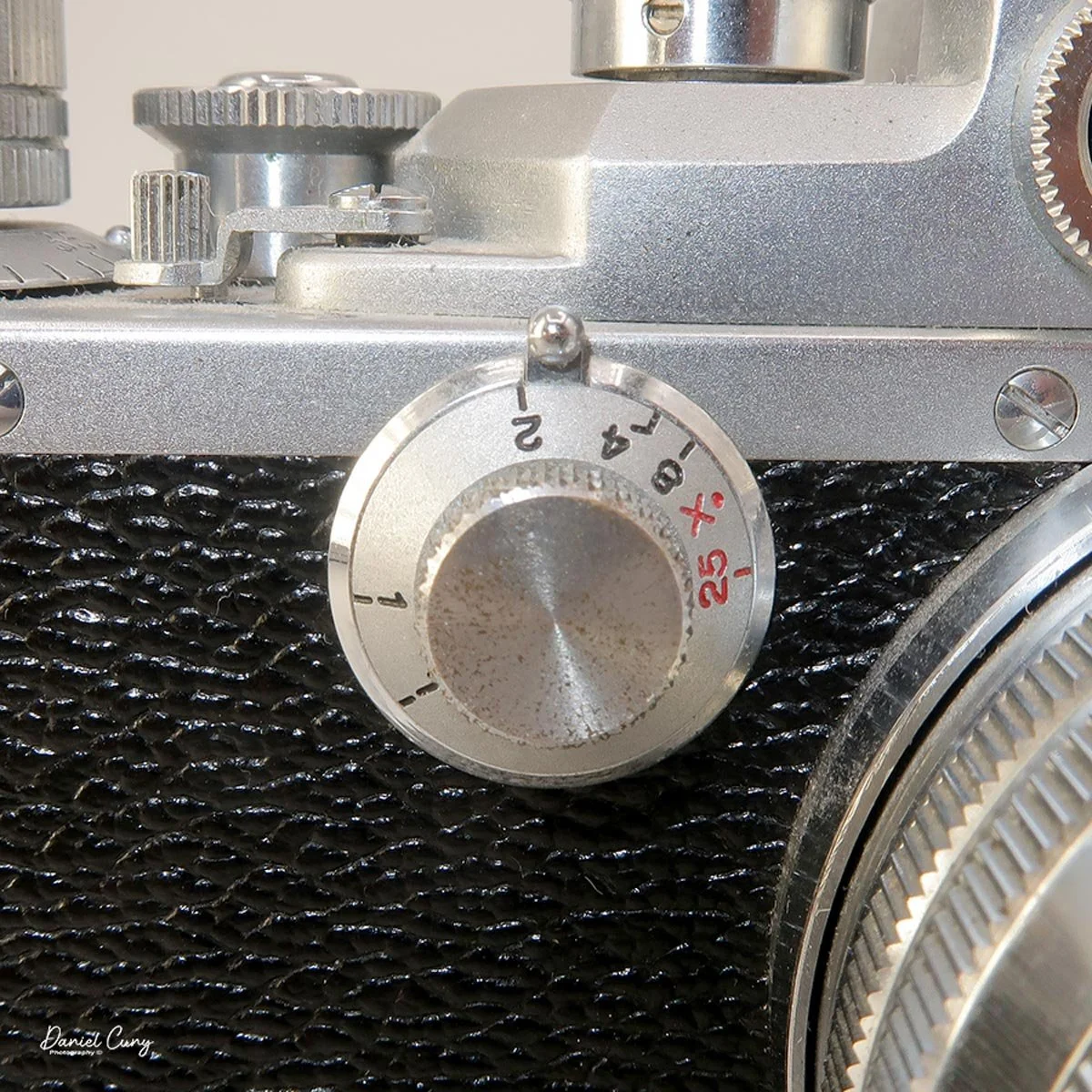
The camera has a vertical-traveling cloth shutter, with speeds from 1/1000 to 1/25 on the top shutter speed dial, and from 1/25 to 1 second (plus "B" for time exposures) on the secondary shutter speed dial on the front face of the camera. One distinguishing feature of the Canon IV Sb is the ability to lock the front secondary shutter speed dial with a small tab on top.

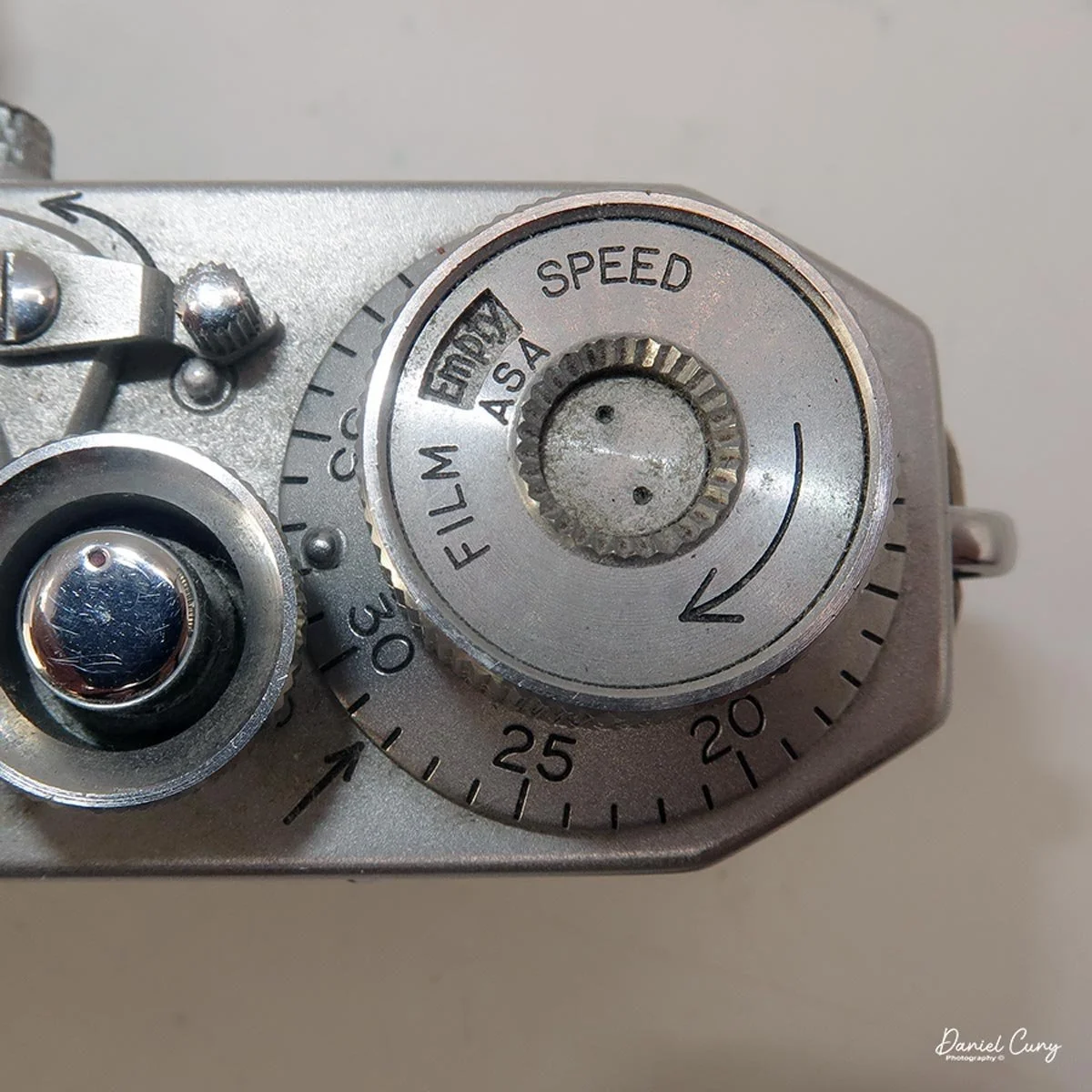
Like other cameras from this period, the film advance is a round knob that rotates clockwise to cock the shutter and advance the film to the next frame. Inside the film winding knob is a reminder dial to set the film speed (there is no meter in the camera, so this is just a personal reminder). The frame counter is on the bottom of the film advance knob and must be set manually when you load a roll of film into the camera.

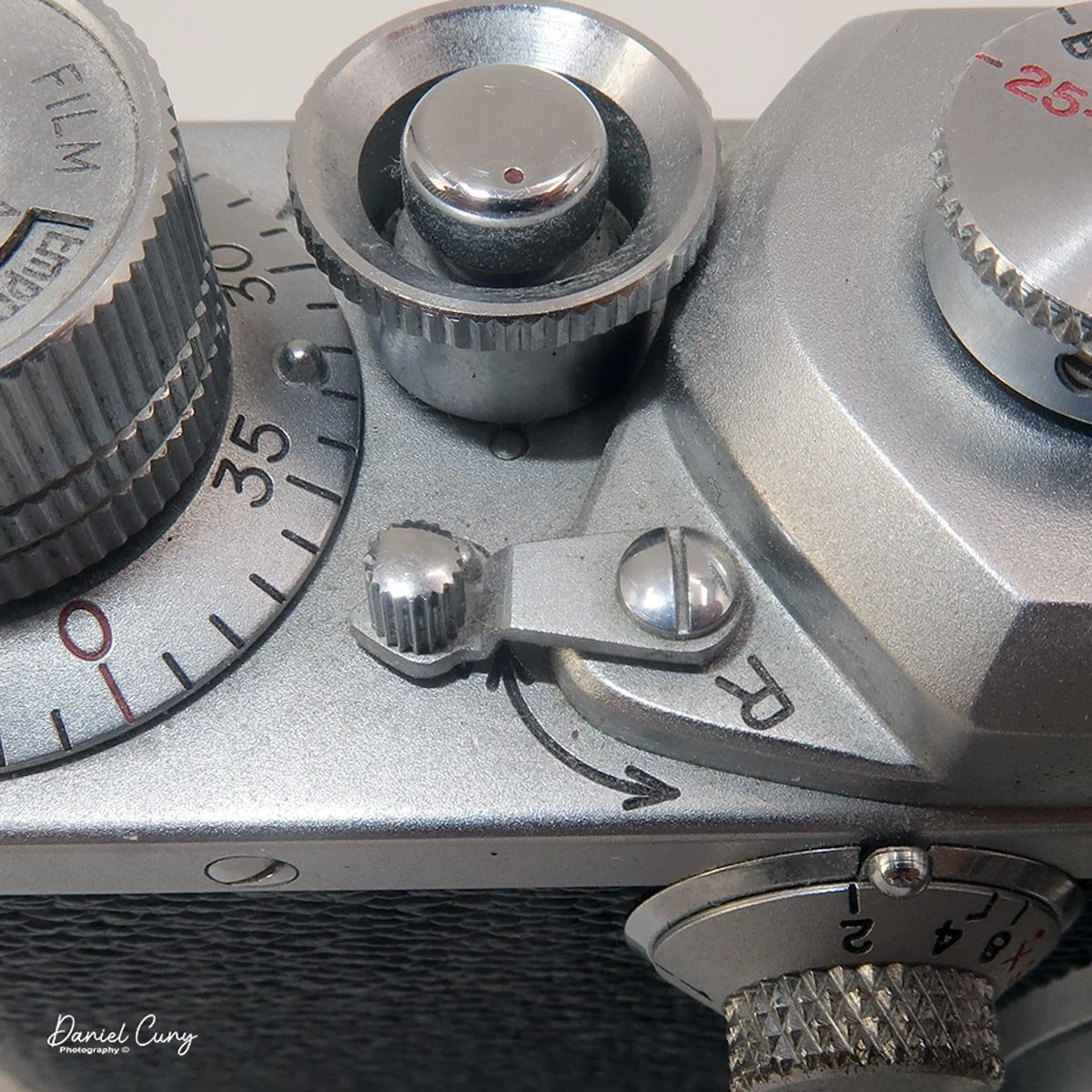
The shutter release is on top of the camera, just left of the film advance knob. Above the shutter release is the film rewind lever, which is lowered for normal film operation and flipped up to the "R" position to rewind the roll into the cassette when it's finished.

The Canon IV Sb also has an accessory shoe on top for auxiliary viewfinders. On the far left side of the camera is the film rewind knob, which can be pulled up to make the rewind process easier when you've exhausted the full roll of film.
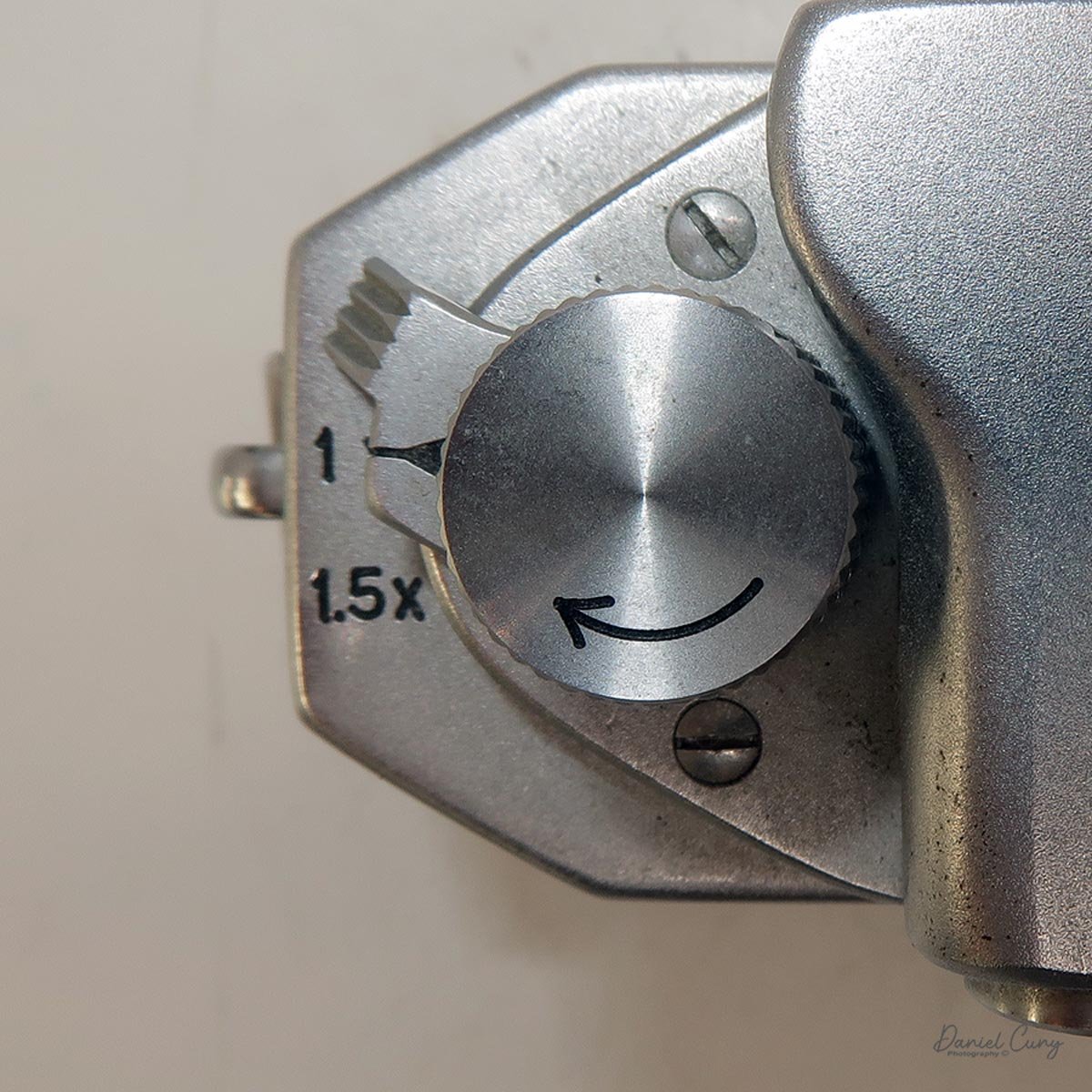
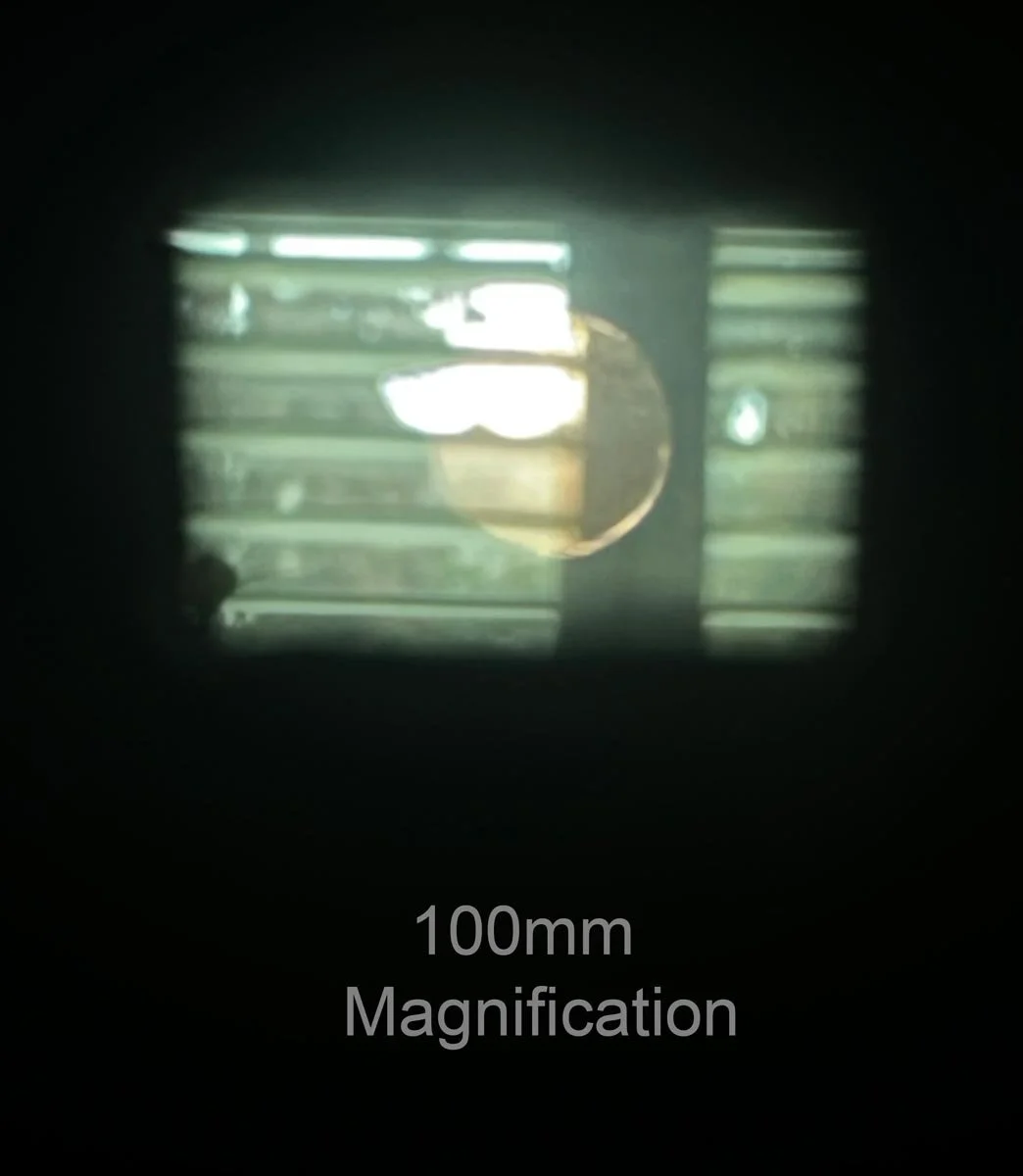
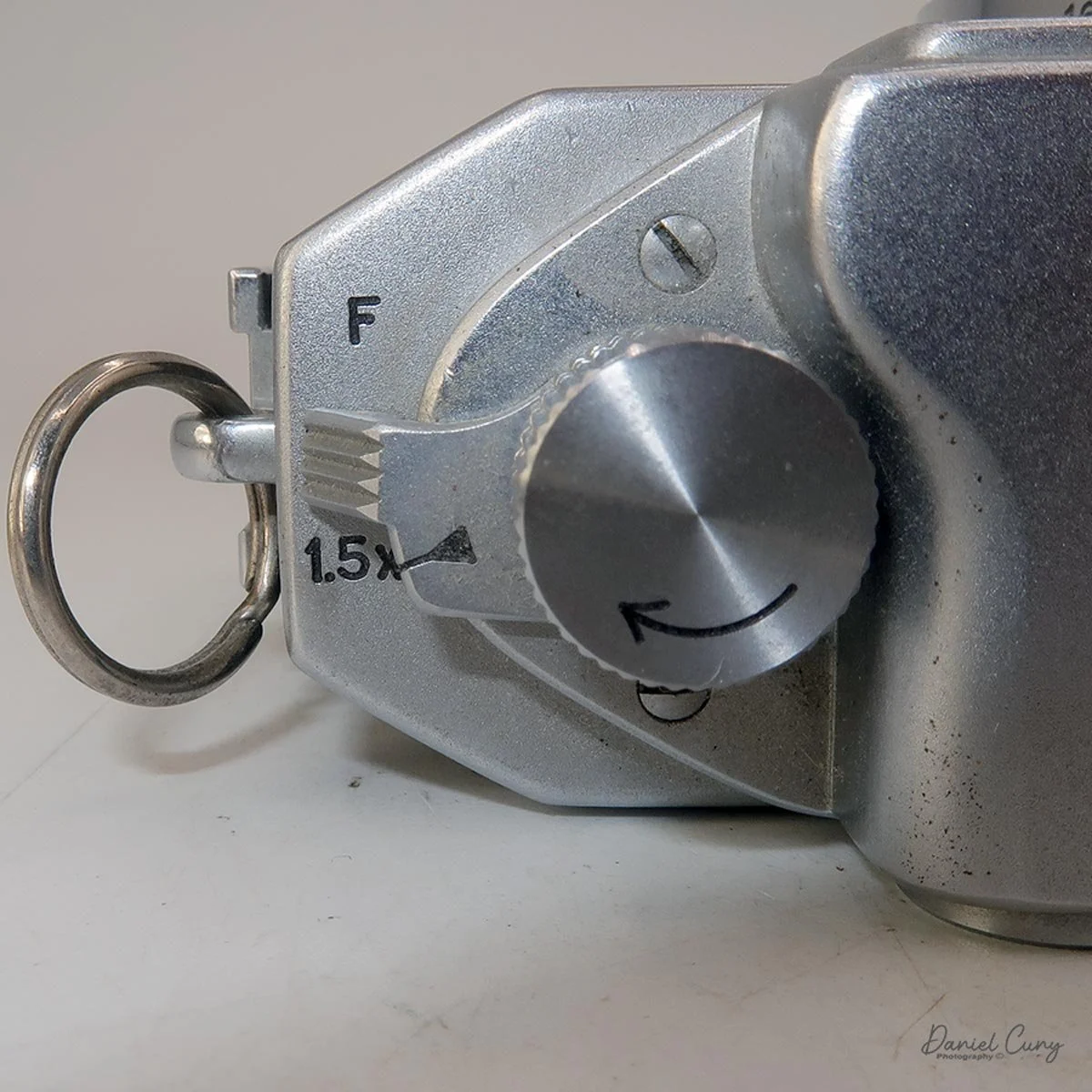
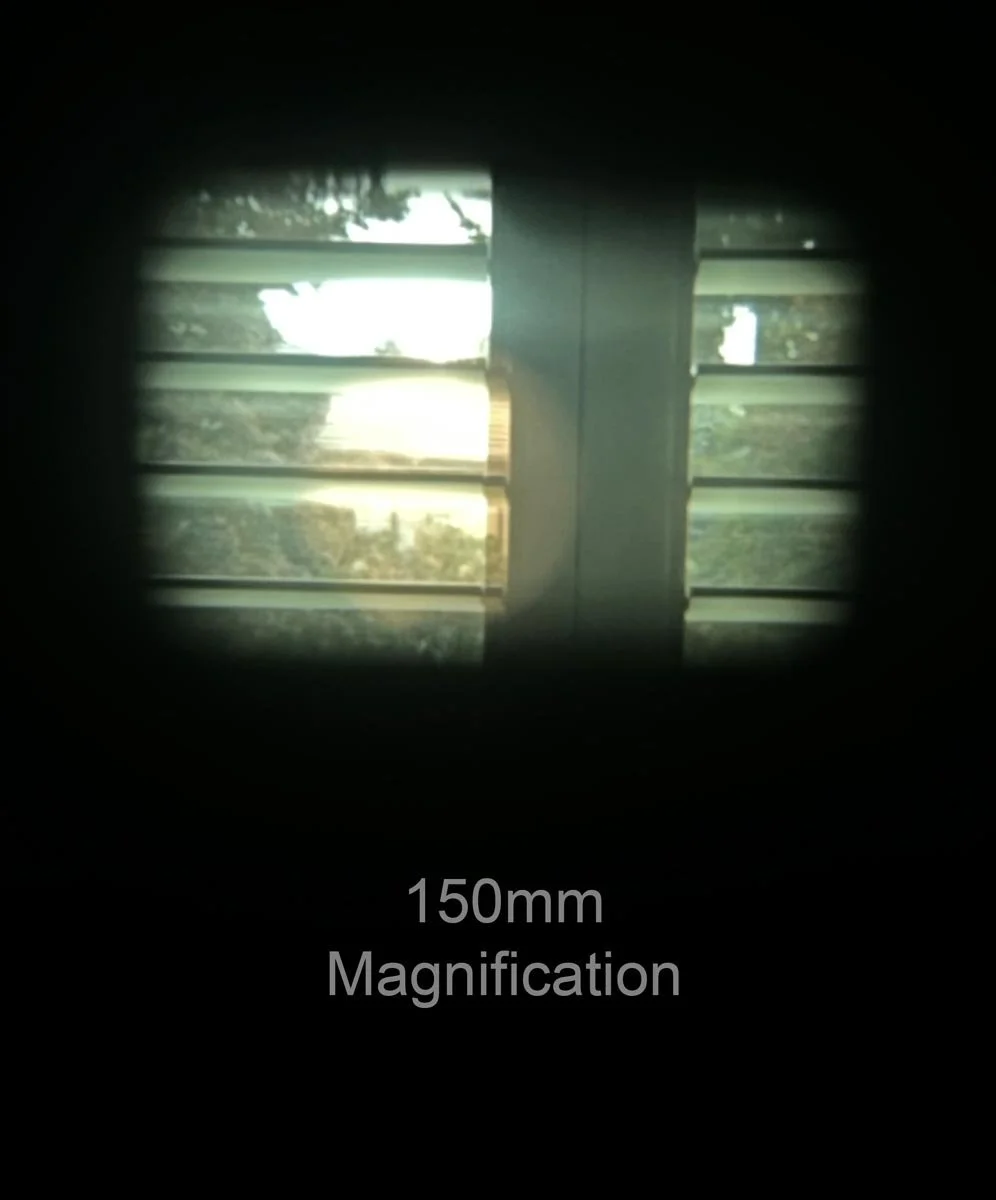
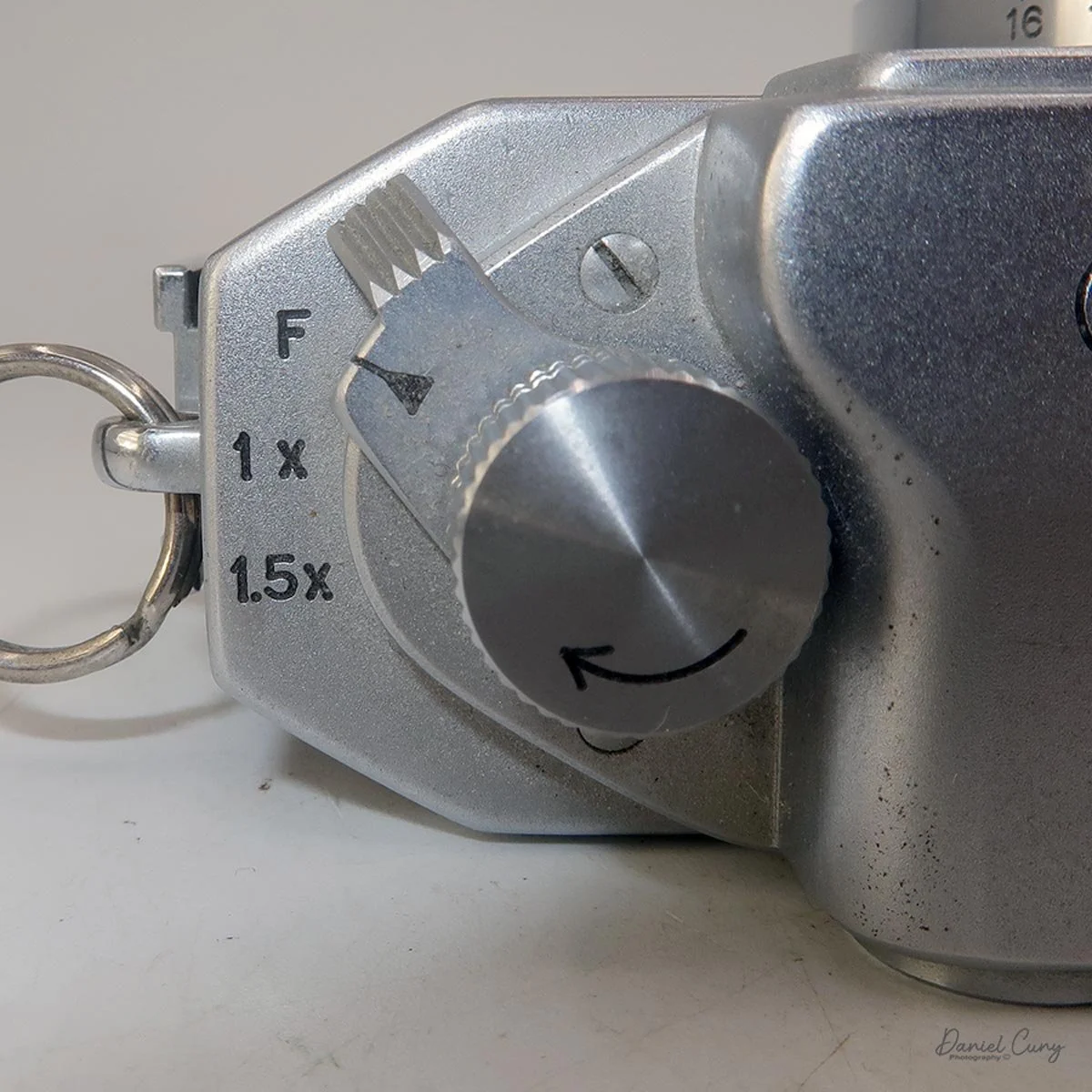
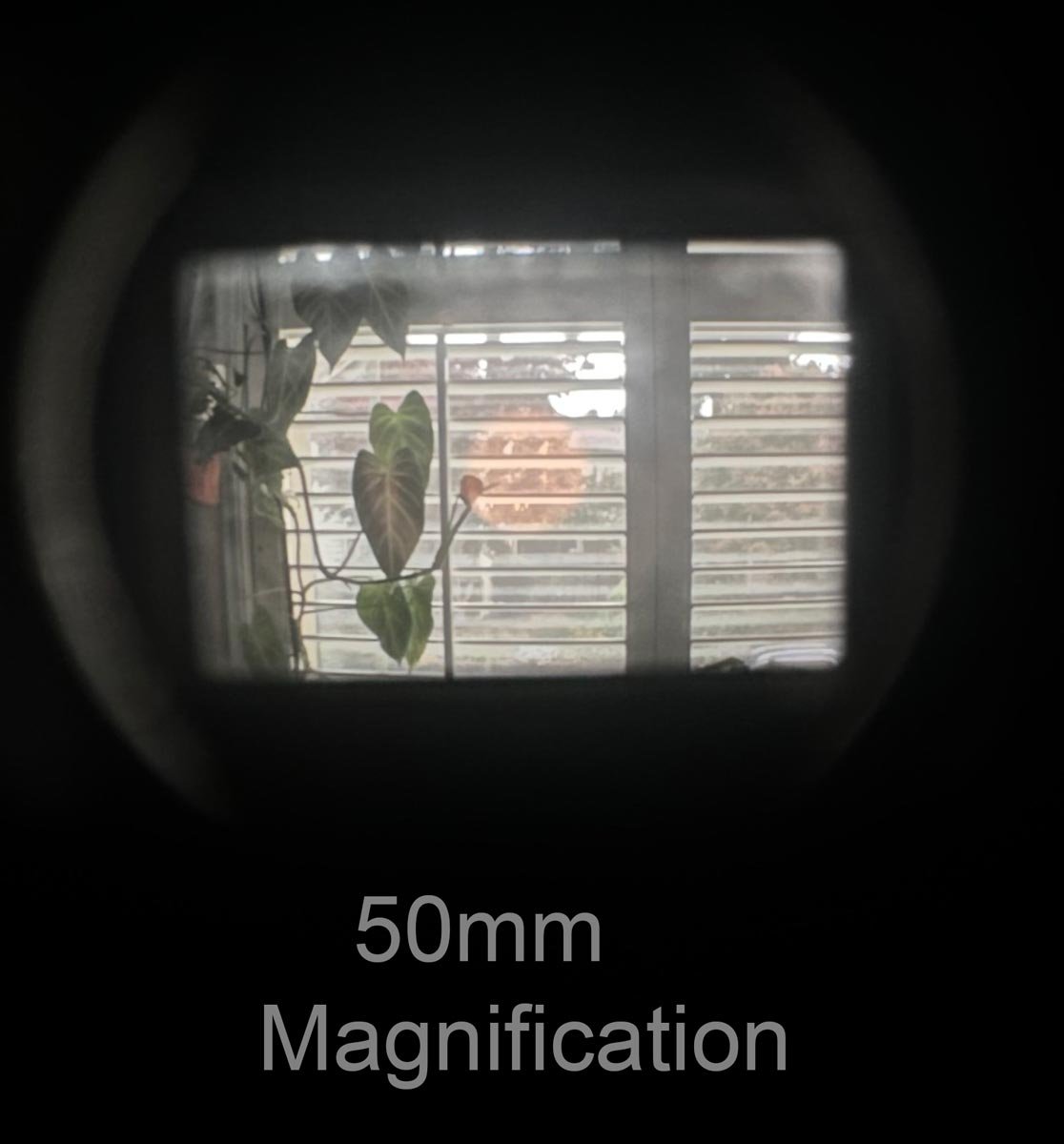
Just below the rewind knob is the viewfinder selector lever with F, 1x, and 1.5x settings, allowing you to magnify the viewfinder for use with 50mm, 100mm, or 150mm lenses. By choosing different magnifications, it slides a magnifying lens into the finder to replicate the crop for your chosen focal length. It's a great feature, and I really enjoyed it.
The camera body has no standard flash sync port, as the Canon IV Sb uses a proprietary flash connection system for bulb or electronic flash. The downside is that all contacts are made through a sliding bar on the camera's left side. Without the Canon Flash Unit Model Y and its accessories, traditional flash isn't readily available.
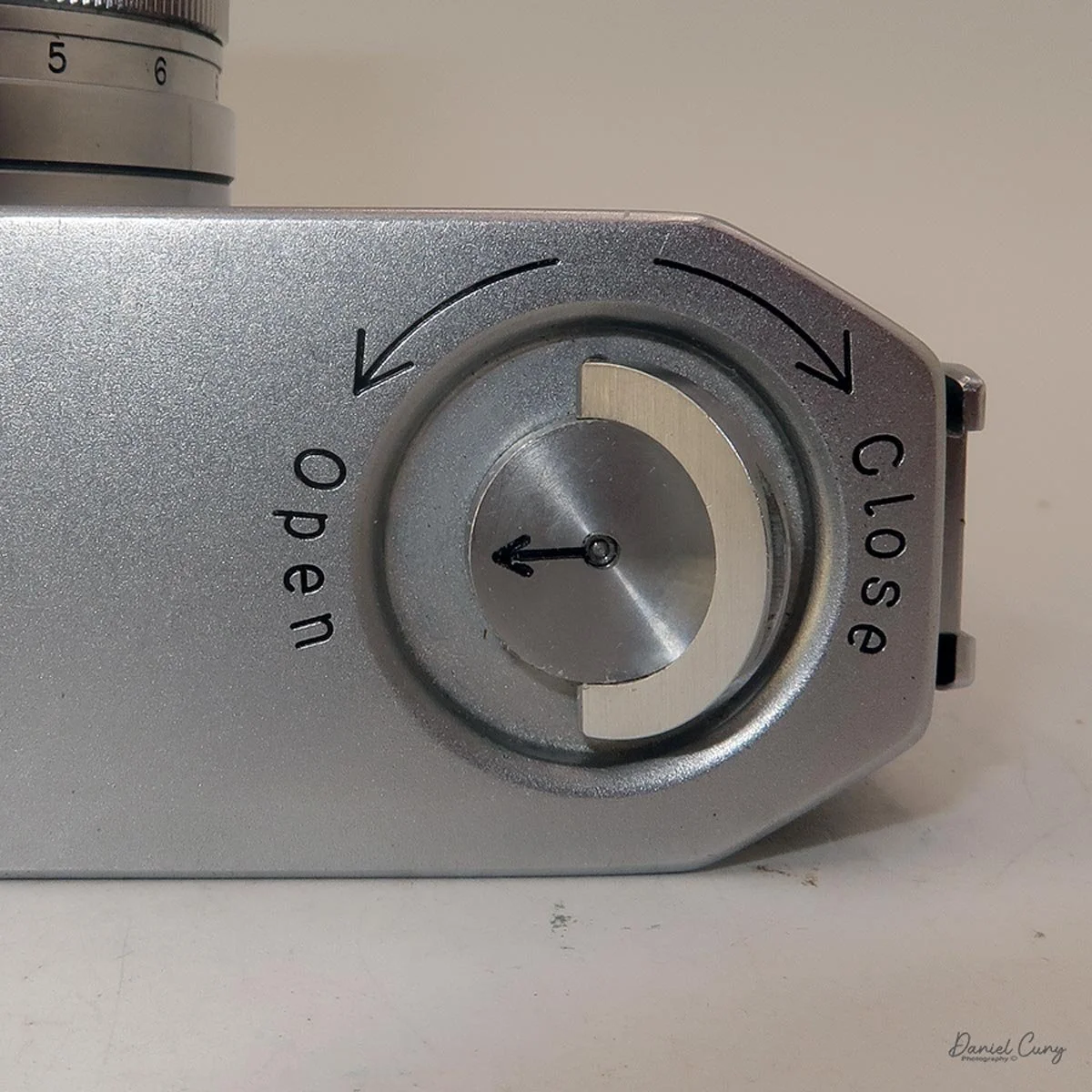
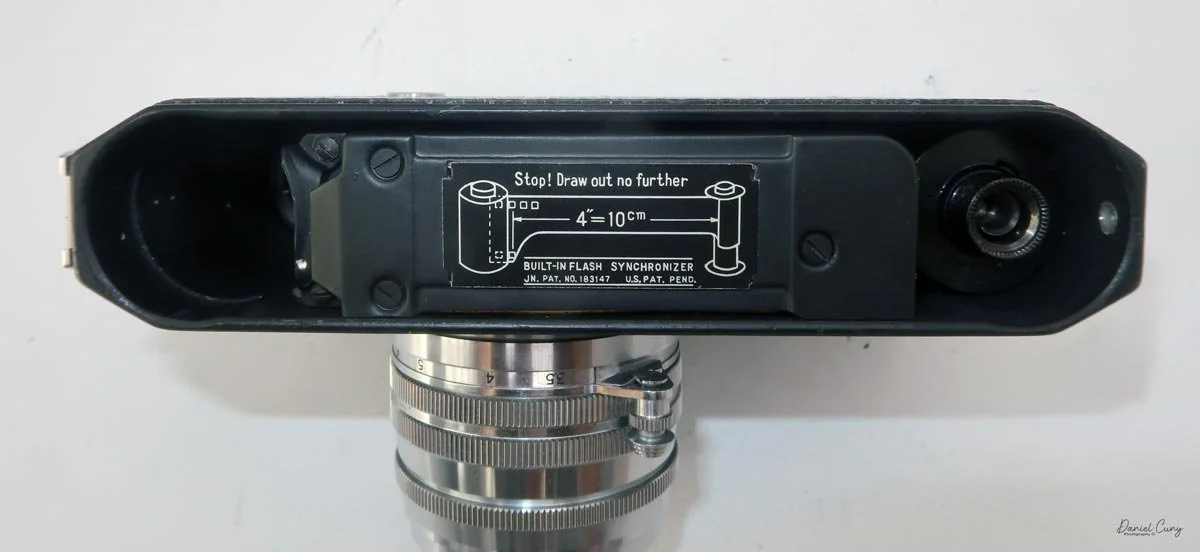
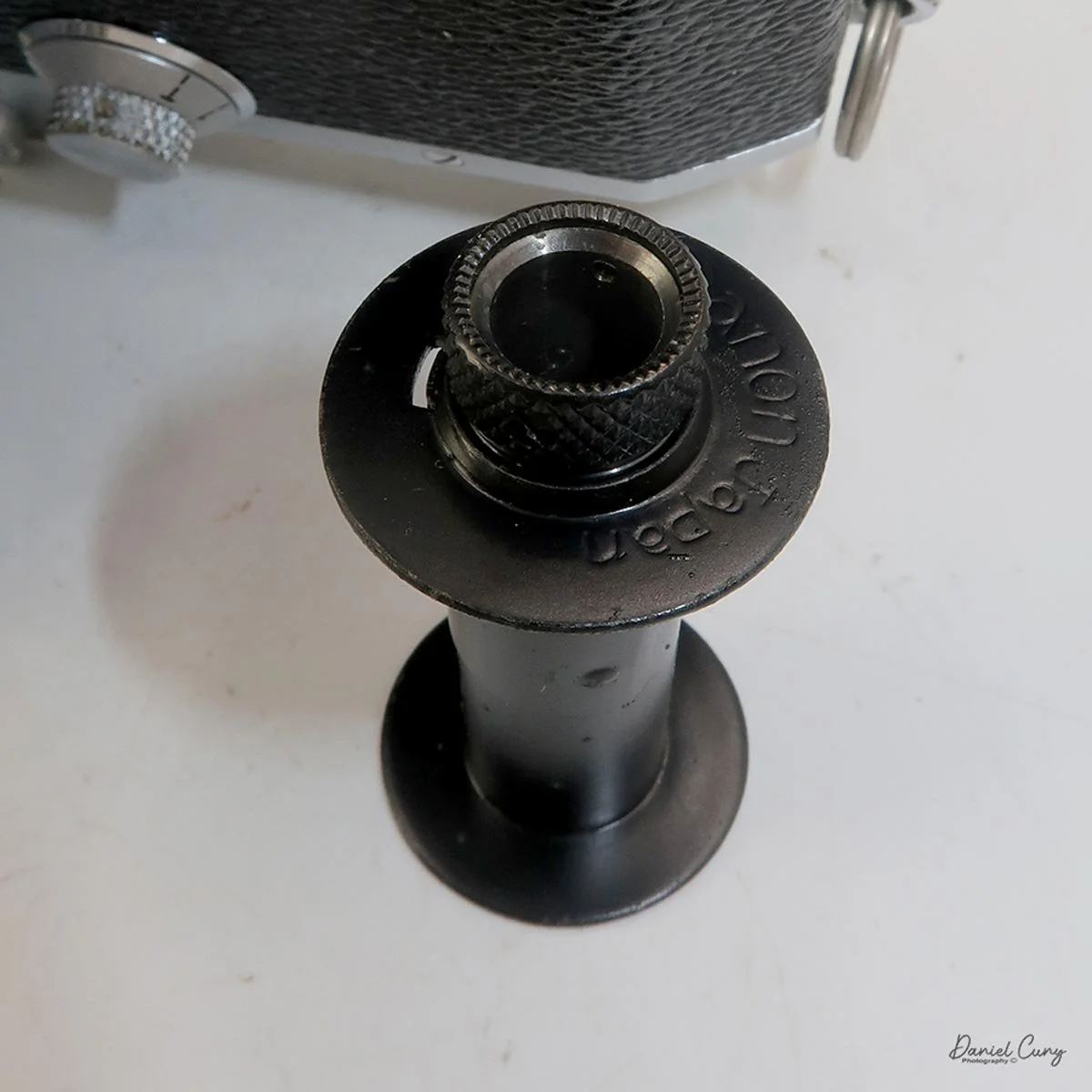
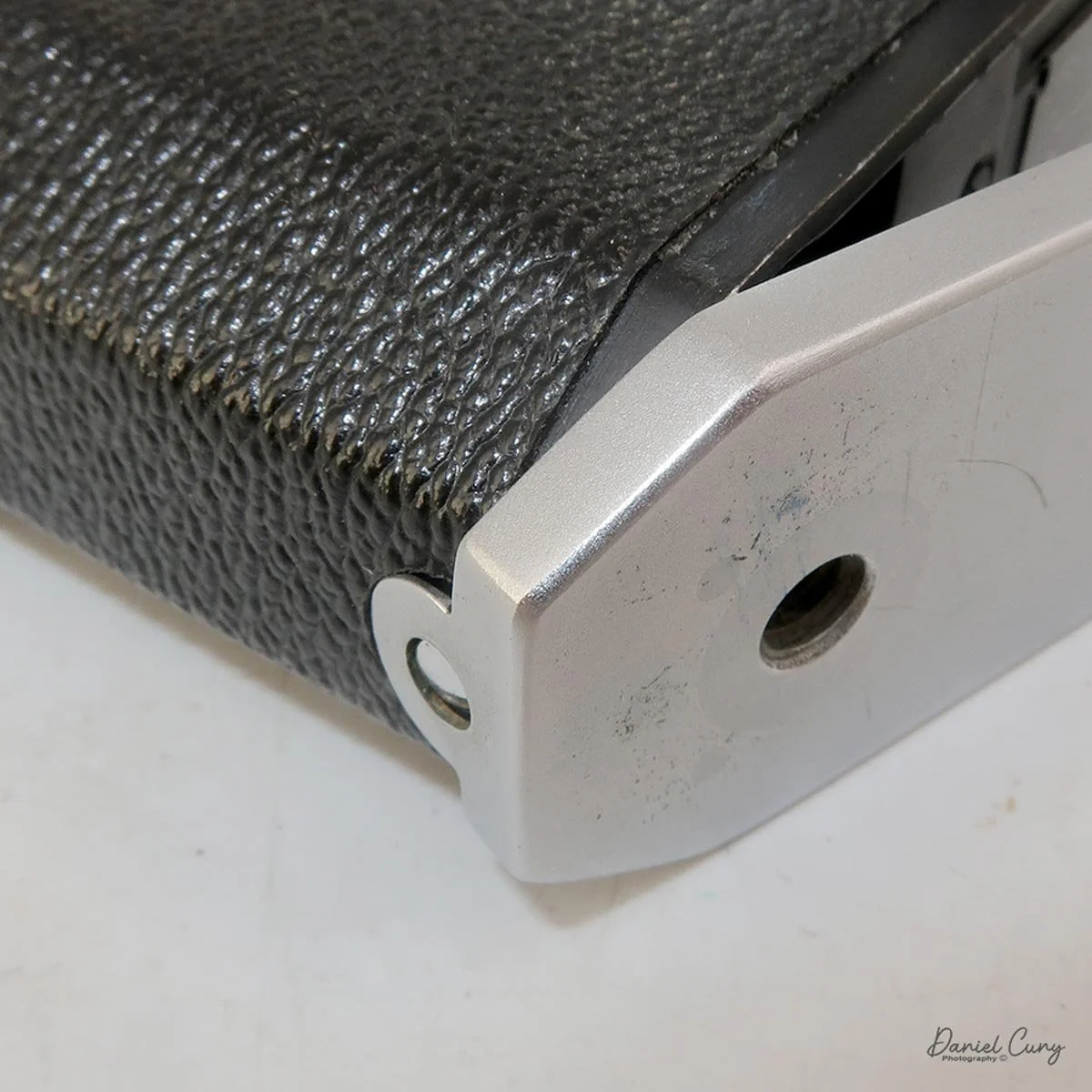
To load film into the camera—similar to other rangefinders of this era—unlatch the lock on the bottom plate and pull it off, exposing the film chamber and take-up spool. Pull out the take-up spool, thread the lead from a fresh roll of film into it, and slide both the spool and the film canister into the camera body. Take up the slack of the film with the film rewind lever and advance the film to the first frame. Reset the frame counter to one and start taking photos.

My Results:

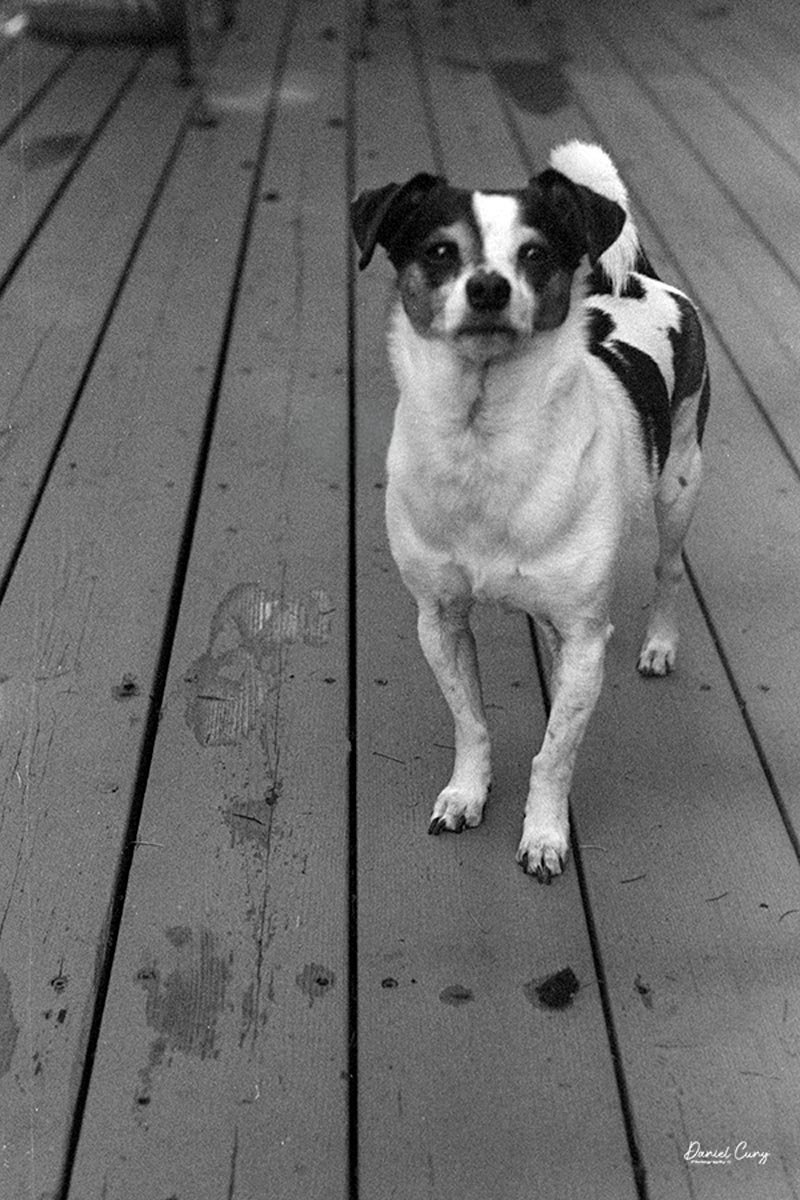
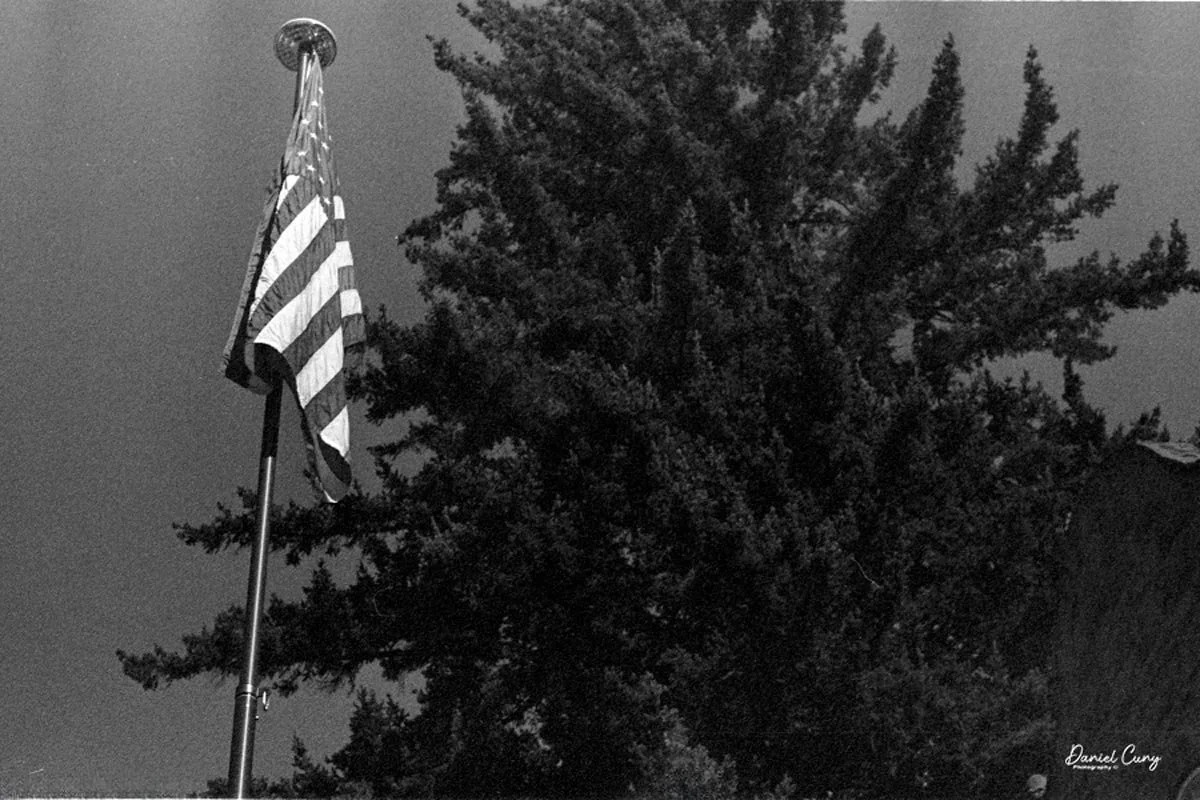
I loaded the camera with an expired roll of Plus-X that expired in June 1976. I like shooting this film because it has only 20 exposures, so I don't waste extra film when shooting for the blog.
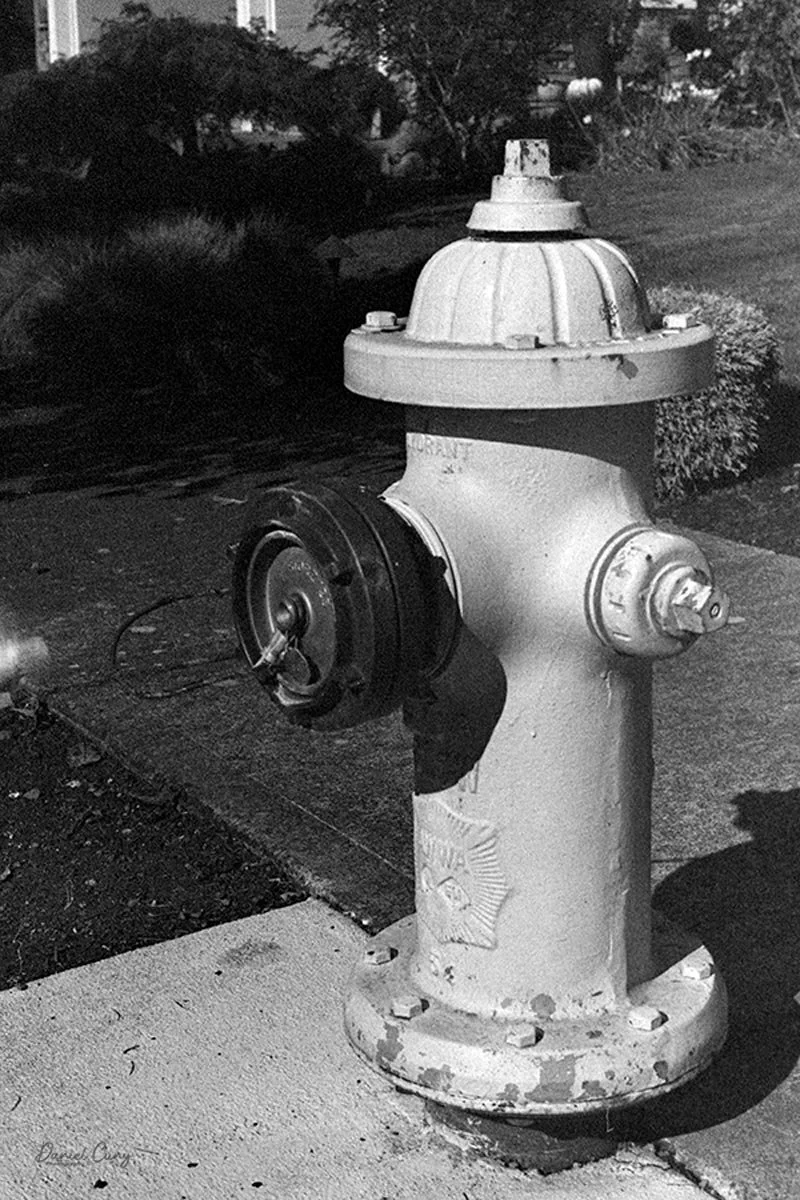
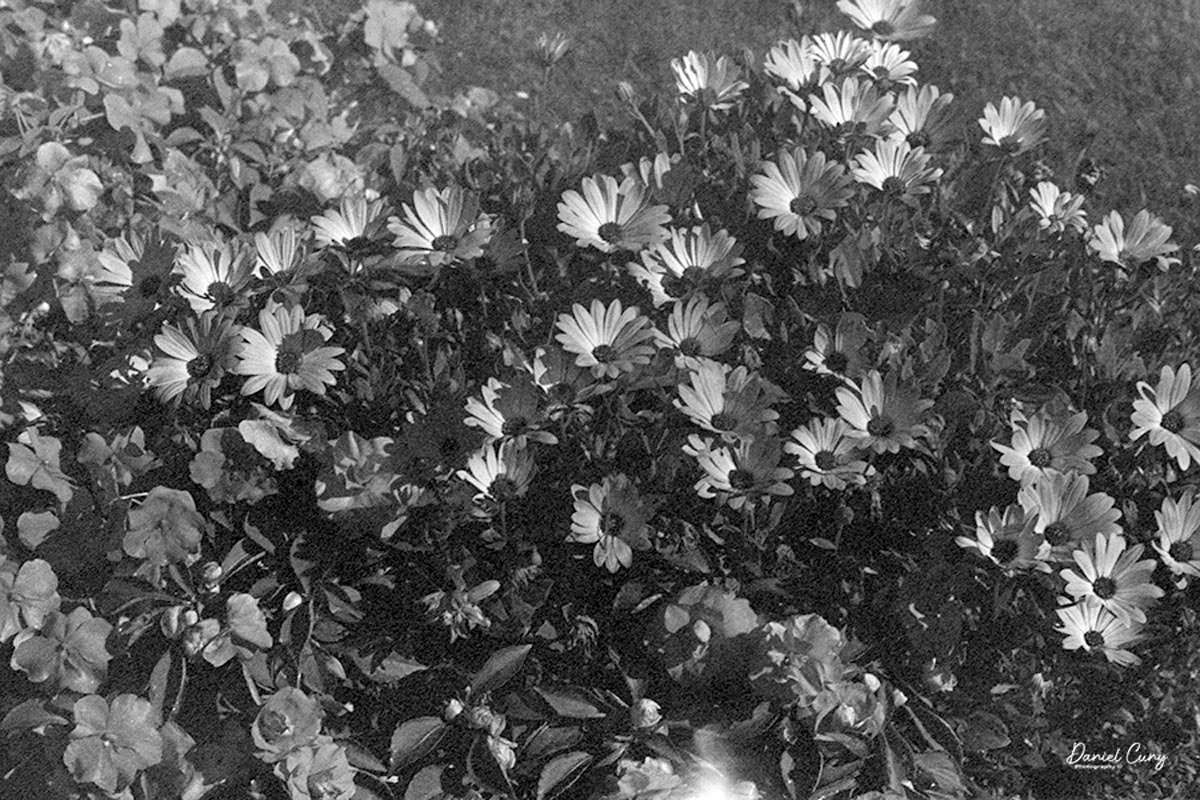
Conclusion:

The camera did a wonderful job and was fun to use. I really enjoyed the bright rangefinder focusing, and the ability to magnify the image through the viewfinder for the 100mm and 150mm lenses makes this a wonderful user camera. It would have been great if they'd also included a wider viewfinder window for wide-angle lenses, but that may be asking too much, especially for a camera made over 70 years ago.

For this period, I still prefer Nikon rangefinder cameras and completely understand why professionals chose them alongside Leica. While the Canon IV Sb is easy to use, its flash system is unusual for the time and forces photographers to use its proprietary ecosystem.

Are you interested in other cameras? Check out some of my other Camera Reviews.

Also, check out my Cuny's Camera Collection YouTube channel, where I'm putting together video overviews of the cameras I write about. Be sure to subscribe and like the channel!

You can also visit Cuny's Cameras and Photos, my online eBay store, where you'll find some of the cameras I've reviewed, along with a wide range of other cameras, lenses, and photography items from my collection that I'm thinning out.

Until next week, please be safe.
Photax 1 camera

My Photax camera

This summer, as my wife and I visited Barcelona on a day when my wife was working, I decided to go to the local flea market to look for photo items to add to my collection. Attending local flea markets is something I look forward to, especially when we visit new cities and countries. My main objective was to find a camera built in Spain, which I accomplished by purchasing the Captain camera, which I reviewed earlier this year.

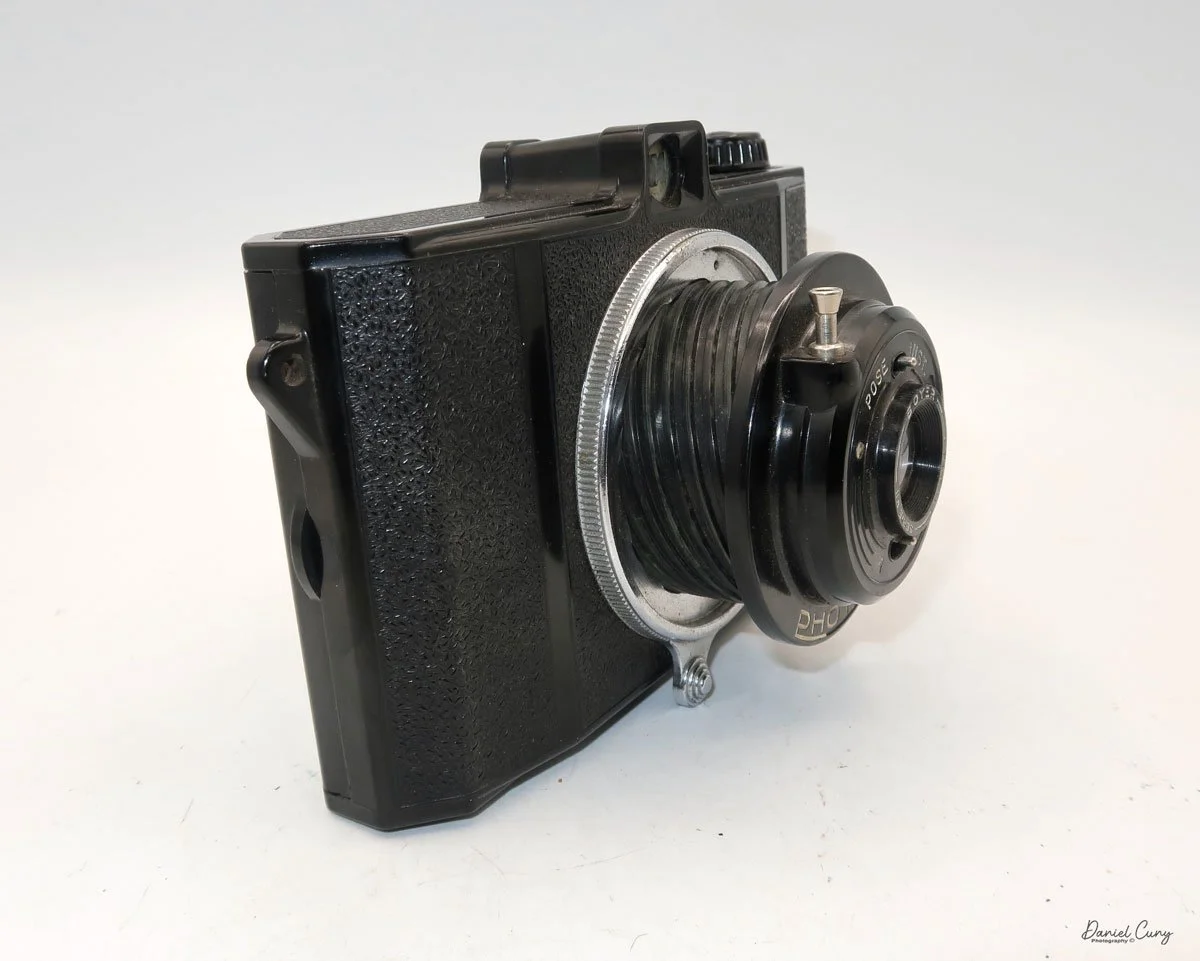
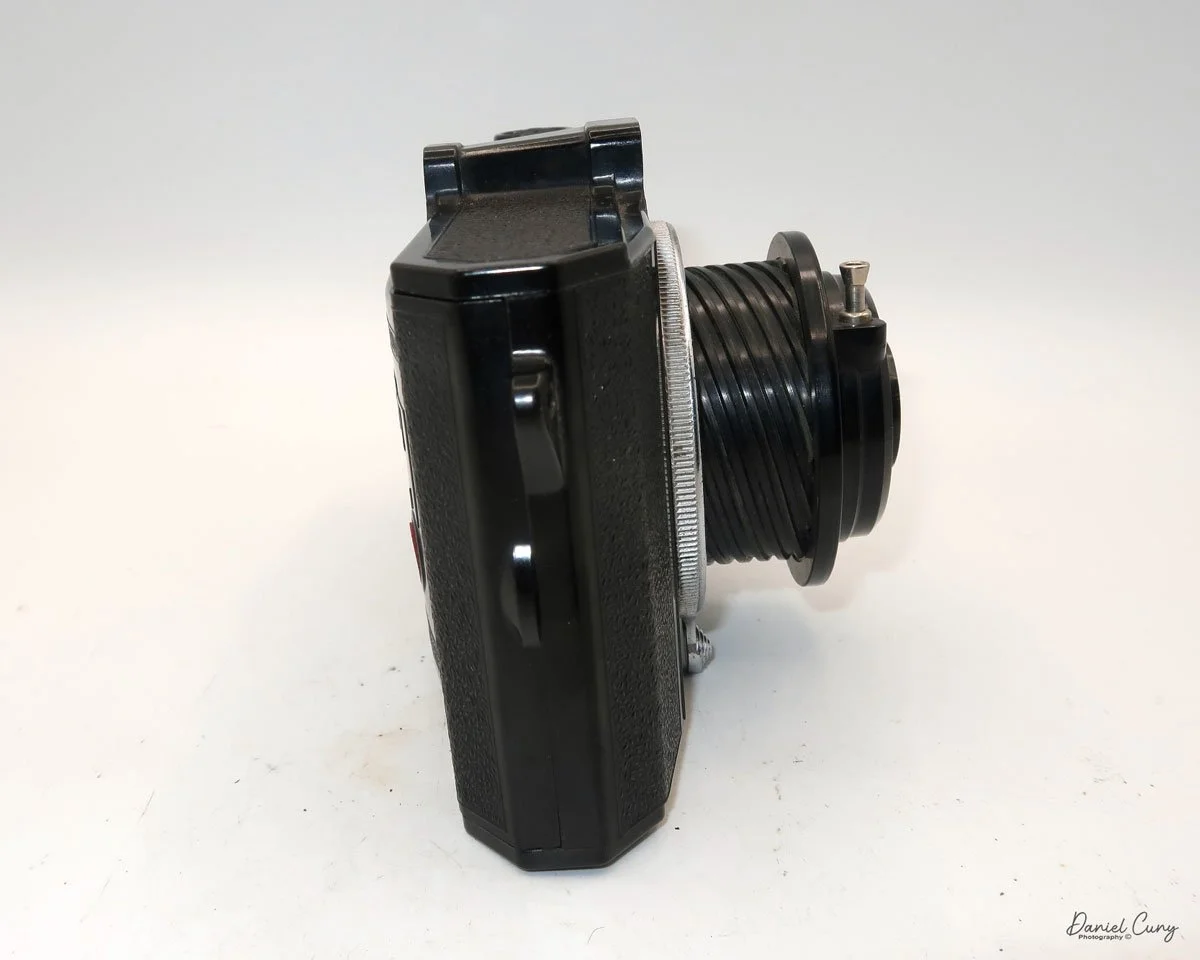
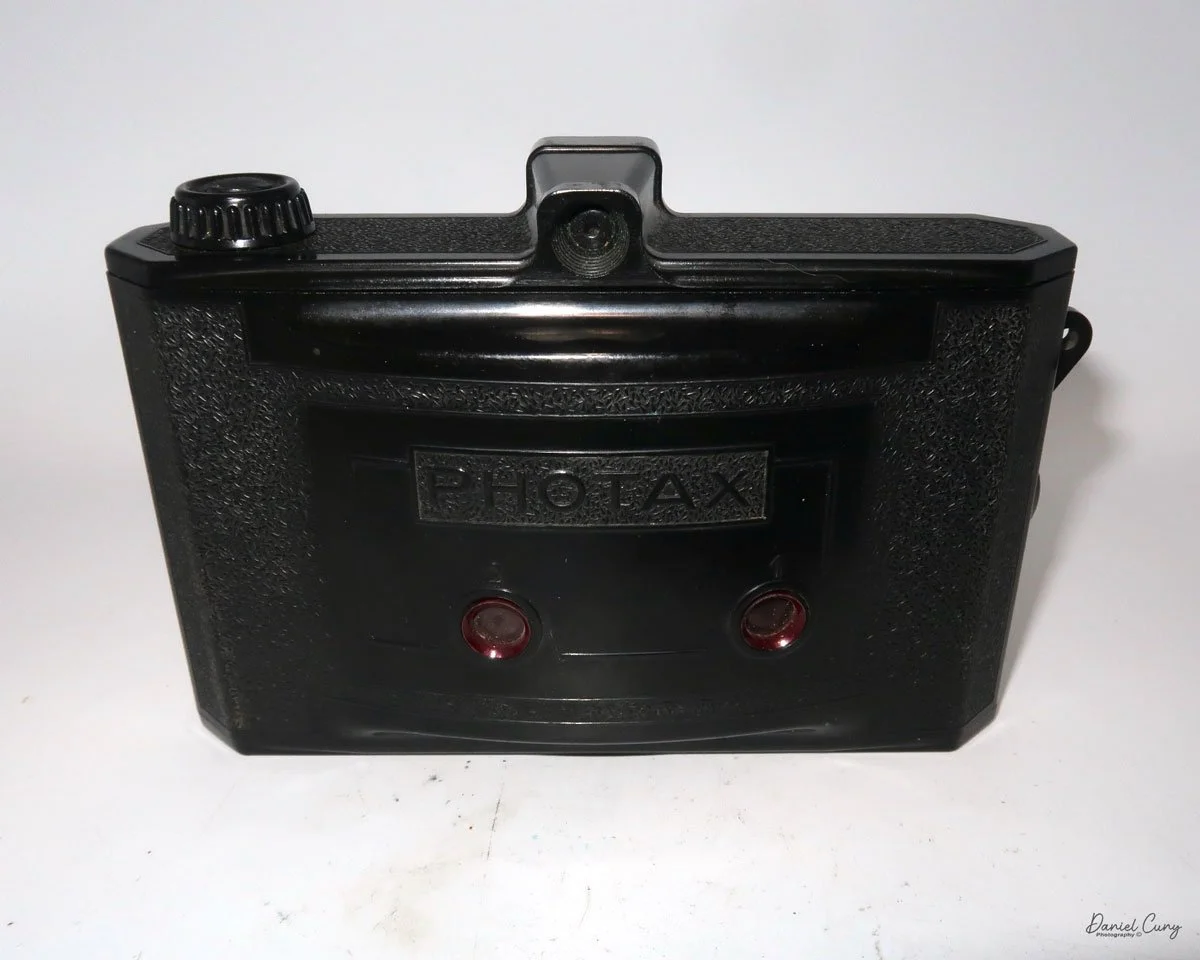
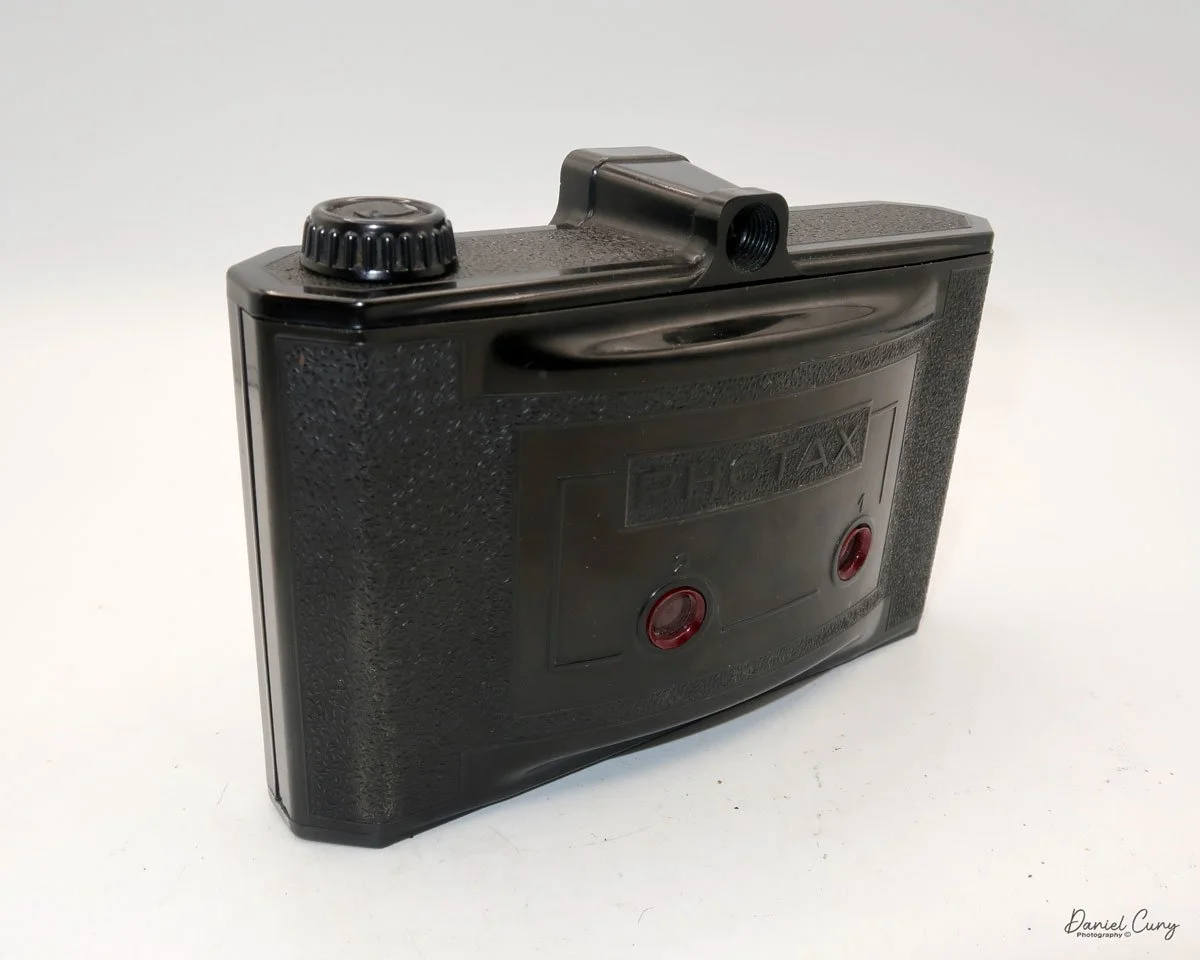
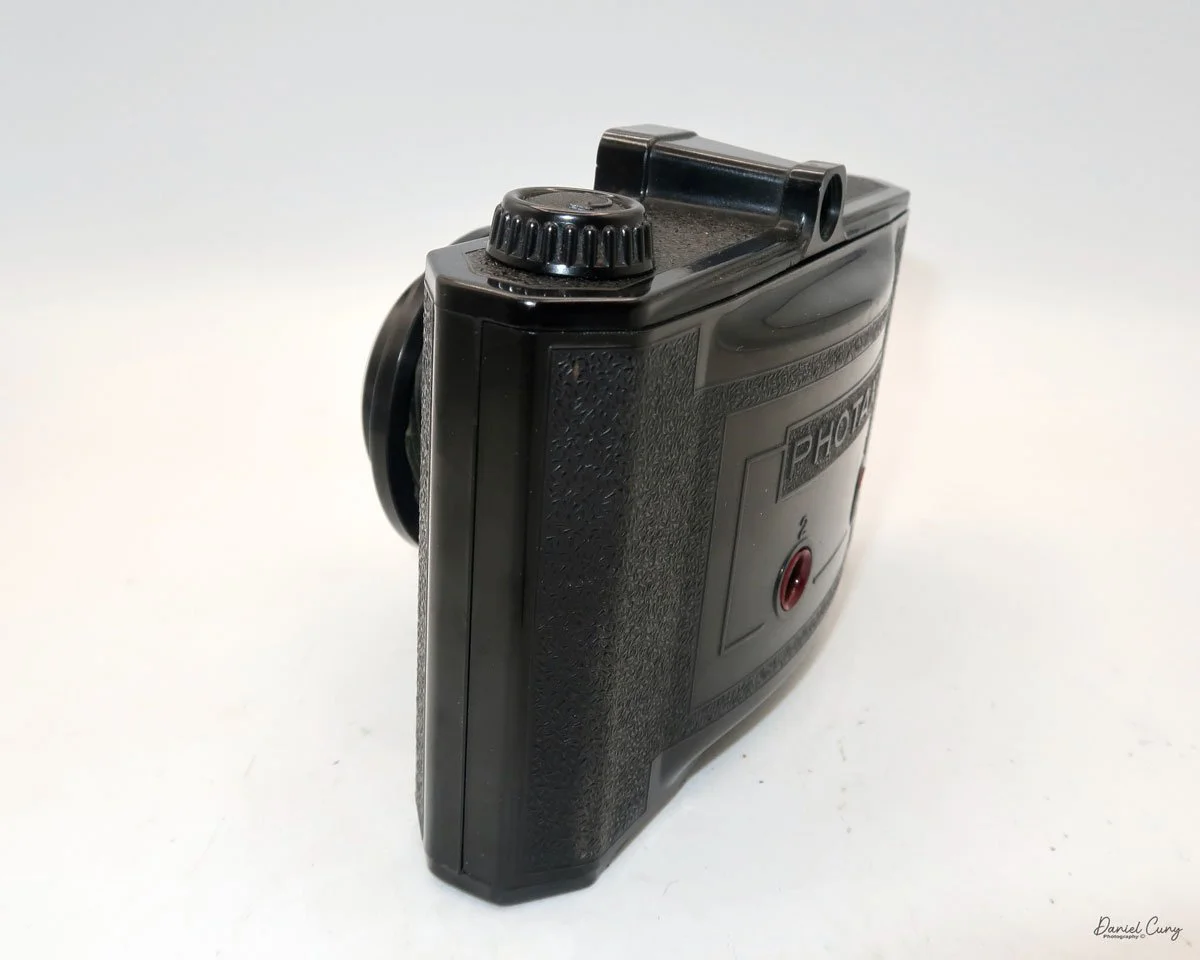
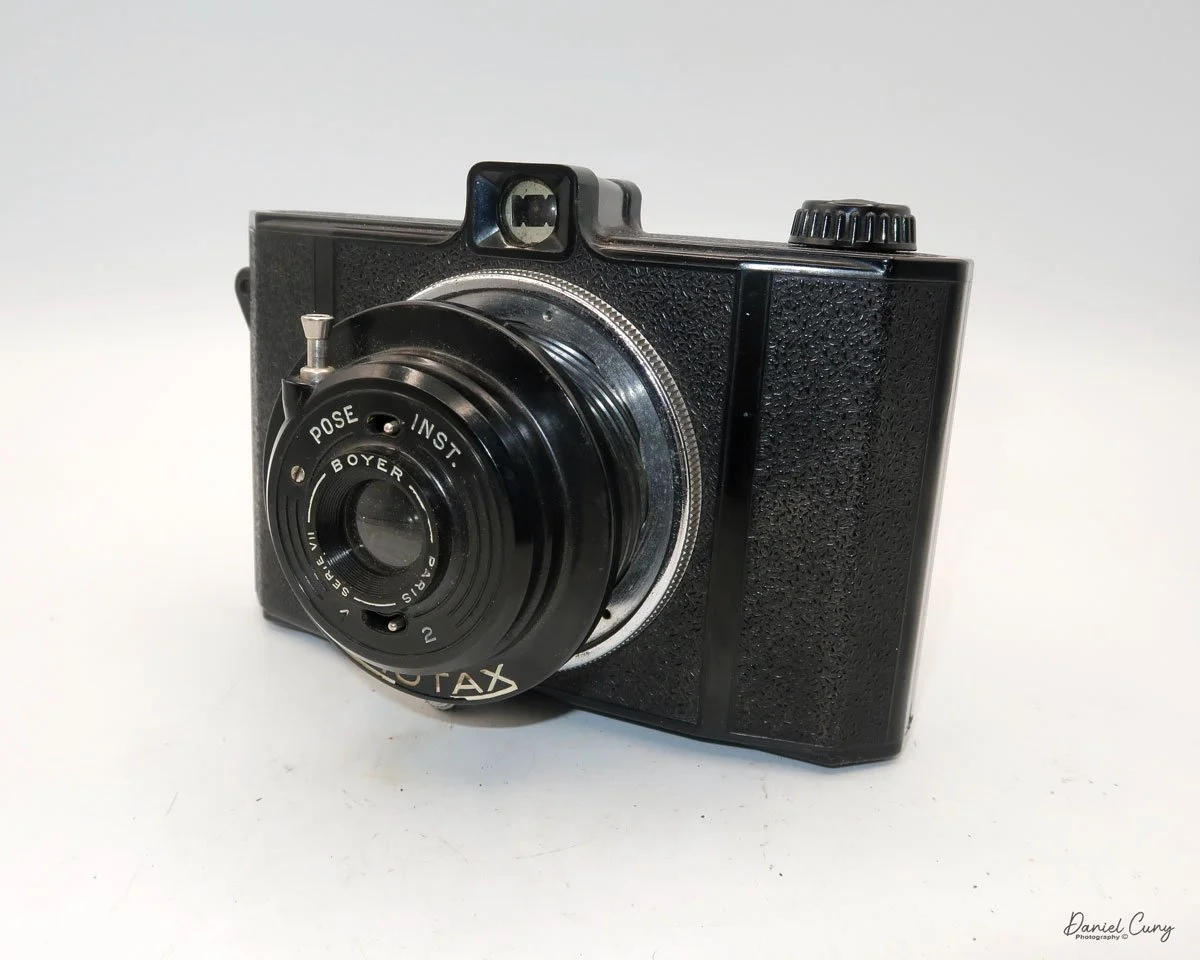
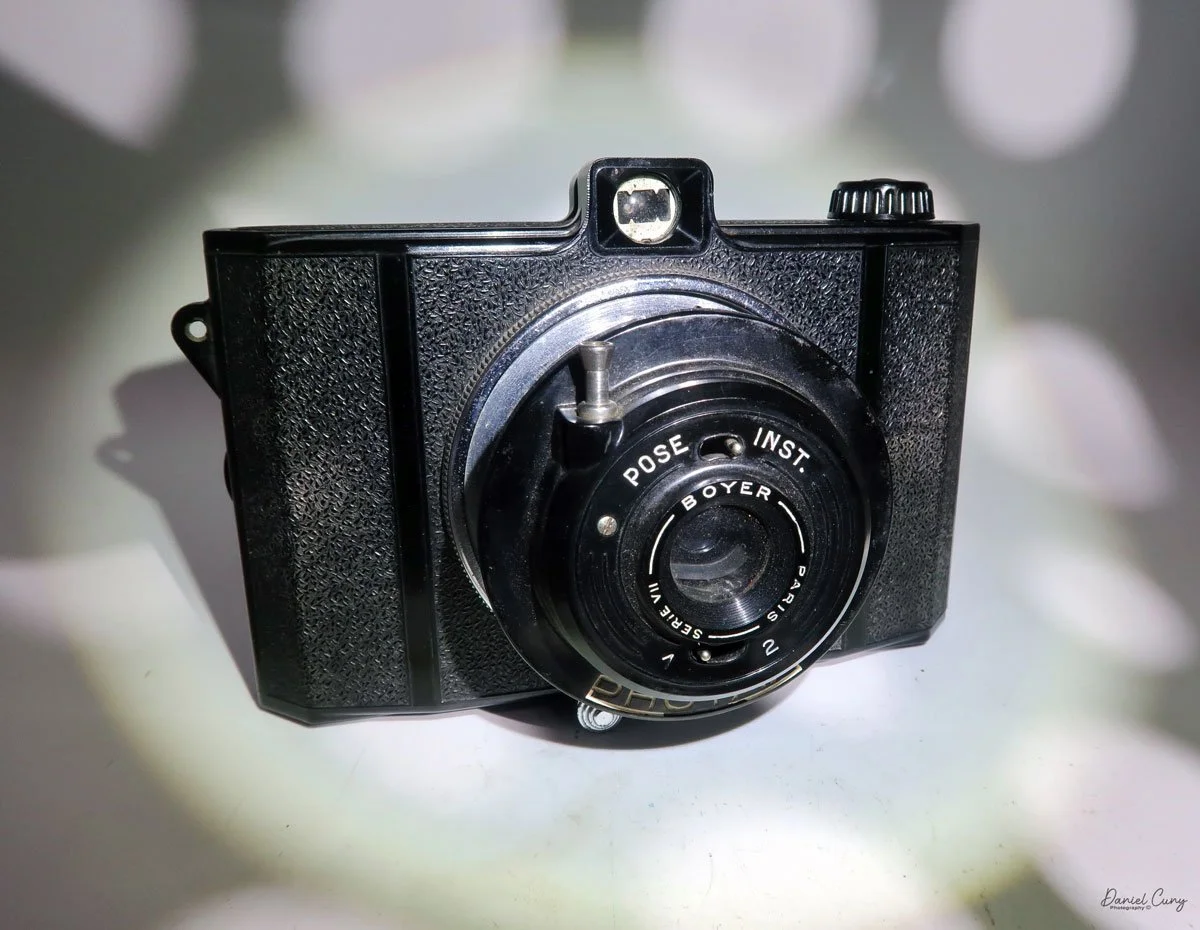
 Strolling the stalls at the flea market, I came across a very large Bakelite camera, which intrigued me. It was a Photax 1 camera made by MIOM in France. What I liked about the camera was its large size, and that came with the original fitted case. As I pulled out the camera to examine it, I noticed a very familiar twist-out style lens, and the shutter was working, which gave me confidence in my purchase. Talking to the person at Stoll about pricing for the camera, I offered a reasonably low price, which they rejected. However, they came back with a counteroffer, which I needed to consider for a while.

 As I spent more time examining different stalls and cameras. Still, my mind kept returning to the Photax 1 camera, which is the large camera with the untwisting lens. Before I left the flea market, I went back to the stall and renegotiated the price with the camera owner, coming to an agreeable price and purchasing the camera.

 This camera was one that I wanted to write about. It's an unusual-shaped camera made of Bakelite and is quite large. When I opened the back of the camera, I noticed that it was a 6 x 9 cm format, which intrigued me. Many of the cameras made by 

MIOM we're a smaller format, generally 6 x 4.5 cm.

 Let me tell you a little bit about the company.

History:

 MIOM (Manufacture d'Instruments d'Optique et de Mécanique) was a French company known for producing optical and mechanical instruments in the mid-20th century, particularly cameras. The firm operated mainly from the post-World War II era into the 1960s, a time when France was striving to rebuild its industrial base and compete in the rapidly evolving consumer goods market.

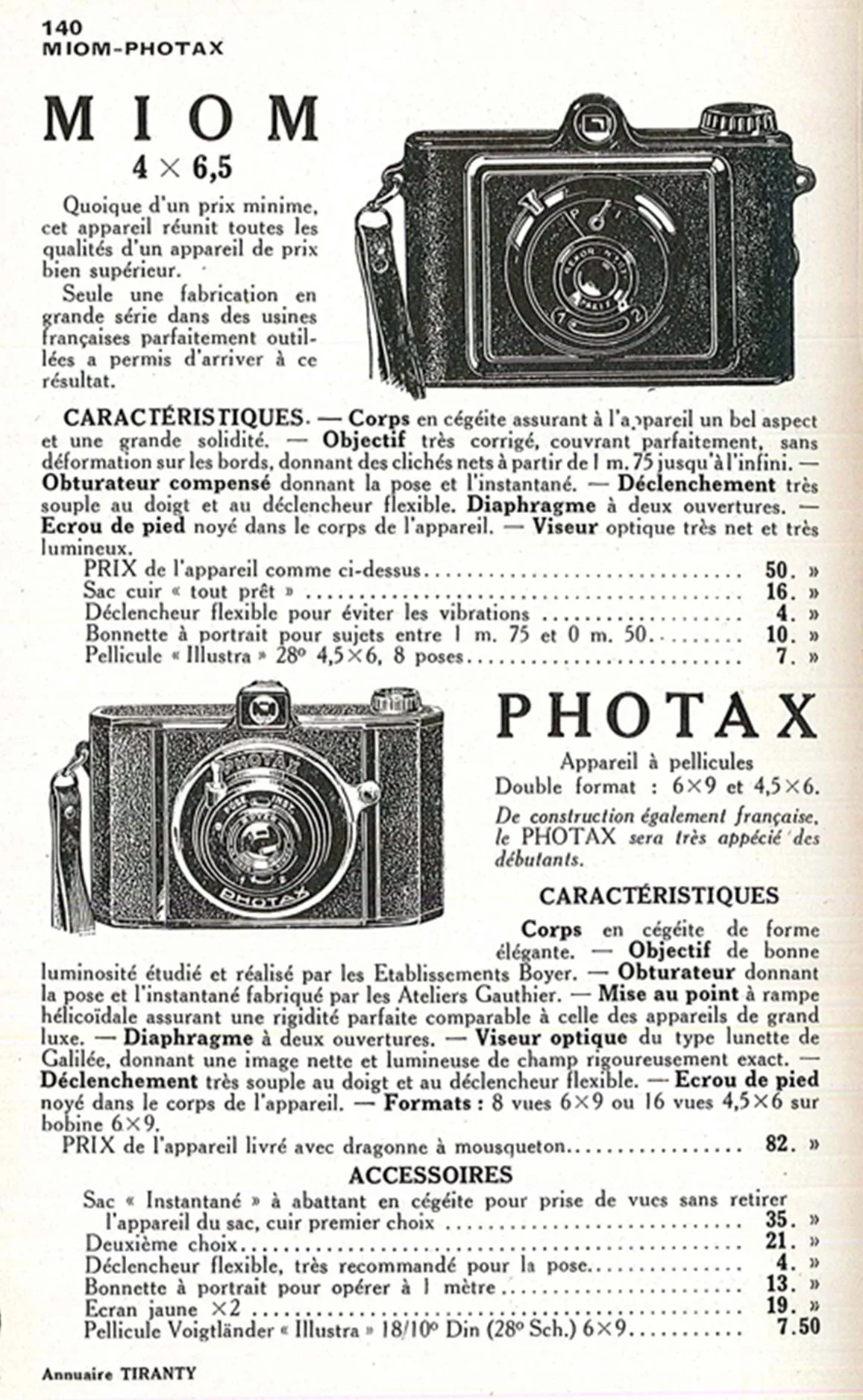
French Photax ad

 MIOM's roots were in precision engineering, and the company initially focused on optical devices before expanding into the field of photographic equipment. Its location in France allowed it to tap into a tradition of fine optical craftsmanship, drawing on expertise that had developed in Paris and other industrial centers since the 19th century.

 In the camera field, MIOM was best known for manufacturing compact and affordable models aimed at the amateur photography market. Among their most recognizable products was the MIOM Photax series—a line of simple, durable cameras using roll film. The Photax models often featured Bakelite bodies, a lightweight and inexpensive molded plastic popular in mid-century camera production. These cameras were designed for ease of use, appealing to the growing middle class and to families seeking to document their lives without investing in complex photographic gear.

 The Photax range evolved over the years, with various iterations accommodating different film formats, primarily 6×9 cm images on 120 roll film, and later 4.5×6 cm formats. Some models incorporated basic focusing and exposure controls, while others remained strictly fixed-focus, point-and-shoot devices. Though not technically advanced compared to contemporary offerings from Germany or Japan, MIOM's cameras were reliable, affordable, and accessible, helping to democratize photography in France.

 MIOM also ventured into specialized cameras, including stereo models, reflecting the brief postwar enthusiasm for 3D photography. Their designs maintained the company's hallmark of straightforward construction and modest pricing.

By the late 1960s, increasing competition from Japanese manufacturers, whose products offered superior optics and more advanced features at competitive prices, had eroded MIOM's market position. The brand gradually faded, and production ceased as the company either closed or shifted away from photographic equipment.

 Today, MIOM's cameras—especially the early Bakelite Photax models—are collected for their retro aesthetic and as examples of France's postwar consumer design. While they may never have rivaled the technical prowess of major brands, MIOM's work remains an essential chapter in the history of accessible, everyday photography.

 Below is a timeline outlining the evolution of MIOM's Photax camera series.

 1937 – Photax I- MIOM launches its photographic division with several models, including the original Photax (also branded as Camera 77, Loisirs), all of which use 120 film for 6×9 cm images. The Photax I is recognizable by its centrally positioned shutter button and Guillotine shutter, which offers two speeds. 

1938 – Photax II (and Blindé variant)- Introduced in 1938, the Photax II adopts the Boyer Serie VIII meniscus lens and maintains the simple two-speed shutter design. A "blindé" version appears—with a protective Bakelite lens cover that also shields the shutter release. 

1947 – Photax III- Following World War II, MIOM debuts the Photax III, featuring a threaded shutter release and leveraging the same Boyer Serie VIII lens. It introduces additional shutter settings (1/25 sec, 1/100 sec, and T) and continues to use the 620 film format. 

1951 – Photax IV (and IV F)- The Photax IV arrives with a Boyer Rexar meniscus lens and identical shutter options as the III, with enhanced flash synchronization. The IV F variant includes flash sync capabilities via a RIM shutter. 

1955 – Photax V- A stylish redesign marks the launch of Photax V in 1955. It features a modernized Bakelite aesthetic, bi-format capability (6×9 and 6×6 cm), and upgrades to an Angénieux Heanar Type V lens with full flash sync via RIM shutter 

1960–1962 – Photax VI -The final model in the Photax lineage, produced between 1960 and 1962, transitions from Bakelite to molded plastic, featuring a sleek, streamlined design. It's a square-format 6×6 medium-format camera that utilizes an Angénieux Heanar Type VI lens and RIM shutter with flash synchronization.


My Camera:

 My camera is 6 1/2 inches wide by 4 1/2 inches tall by 4 inches deep when the lens is unscrewed. In its closed position, the lens is 3 1/4 inches long. Without the case, my camera weighs 1 pound, 2.7 ounces.  The lens on the camera is a Boyer, Series VII lens.

The Photax 1 was produced for approximately one to two years, from 1939 to 1940. The Photax 1 camera uses 120 film, a departure from MIOM's earlier cameras, which used 127 film. As I mentioned earlier, this is a 6 x 9 cm format camera. The Photax 1 was sold with a film mask that allowed the photographer to shoot in the 6 x 4.5 cm format. Unfortunately, when I purchased this camera, the mask was missing, so my camera is only compatible with the 6 x 9 format.

 To extend the lines, there is a chrome ring around the lens with a knob at its top. Twist the ring clockwise, and the lens, which is on a helical screw, unscrews and moves into the taking position. The camera's controls are fundamental. There are only two shutter settings. One is "INST", which is for normal snapshots, and "POSE", which is for time exposures. These are changed by a little switch between the two settings. To control the aperture. There is a similar switch beneath the lens. One setting is the larger aperture, which is number one, and the second setting is for a smaller aperture.

There is no lock on the back of the camera to secure the back to the front of the camera body. To open the camera, on the right side, is a little foam plate that you pull away from the camera body, and the back of the camera comes off. To load the camera, follow a process similar to loading a 120 format or 120 film-style camera. The first thing you would do is to take the take-up spool from the right side of the camera and place it on the left side, under the film, and under the film advance knob. Place a fresh roll of film on the right-hand side and bring the leader over the shutter area. Insert the leader into the slot of the take-up spool and begin winding, ensuring the film advances smoothly. You turn the advance knob until you see "start" on the film's paper backing. At this point, put the back on the camera by just pressing it onto the camera‘s body.

At this point, wind the film advance knob until you see the number 1 in the first window, which is designated for the 6x9cm format. For the 6 x 4.5 format, you would wind until you see the number one in the number one window. After you take the picture, wind until you see the number one in the number two window. You repeat the steps through number eight, which would be the end of the roll of film. For 6 x 9 cm format images, you get eight images per roll. For 6 x 4.5 cm format, you get 16 pictures per roll of film. 

Fitted case for Photax 1 camera. Note the large plastic front cover.

 IMPORTANT: Be sure to turn the chrome ring so that your lenses are in the taking position before you start taking photographs. Failure to do this will result in your pictures being incredibly out of focus. On other MIOM cameras, if the lens is in the transport position, the shutter will not work. Unfortunately, with this camera, the shutter works when the lens is in the retracted or transporting position.

 The viewfinder on top of the camera is tiny, making it difficult to view your subject when framing your photograph. To take your photograph, the shutter release is located in the upper right-hand corner of the lens. Press the shutter button to take your picture. My camera has a cable release socket, and on the bottom of the camera, there is a tripod socket as well.

My Results:

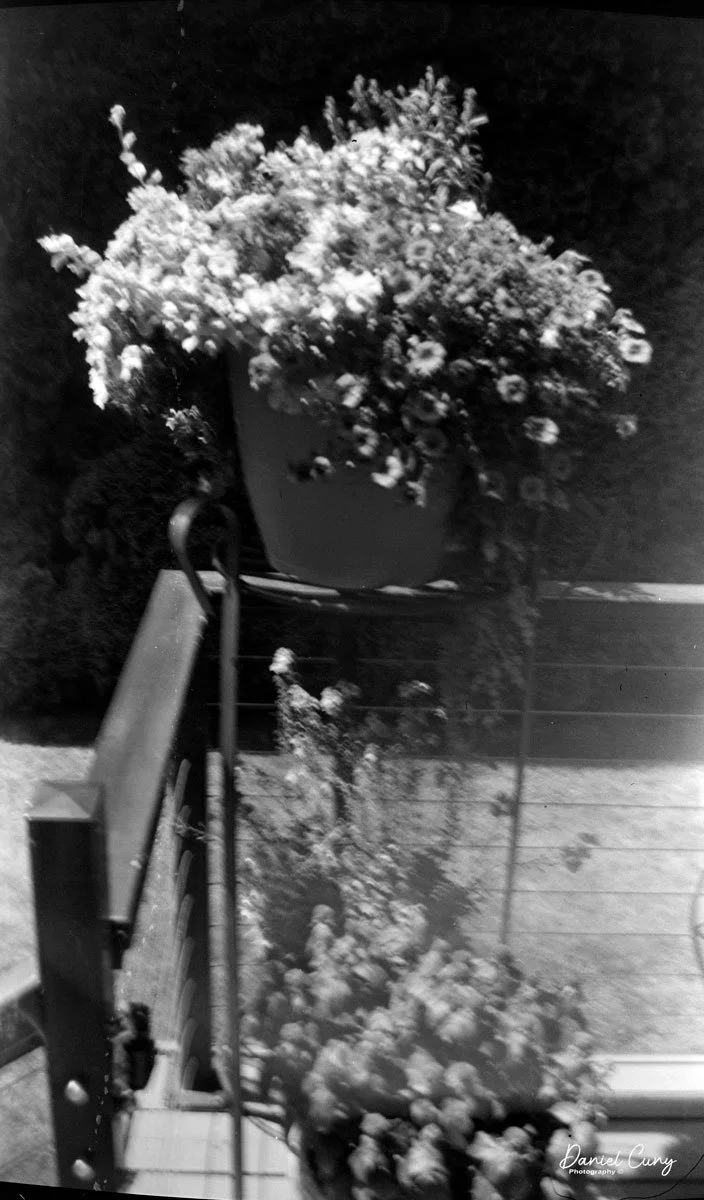
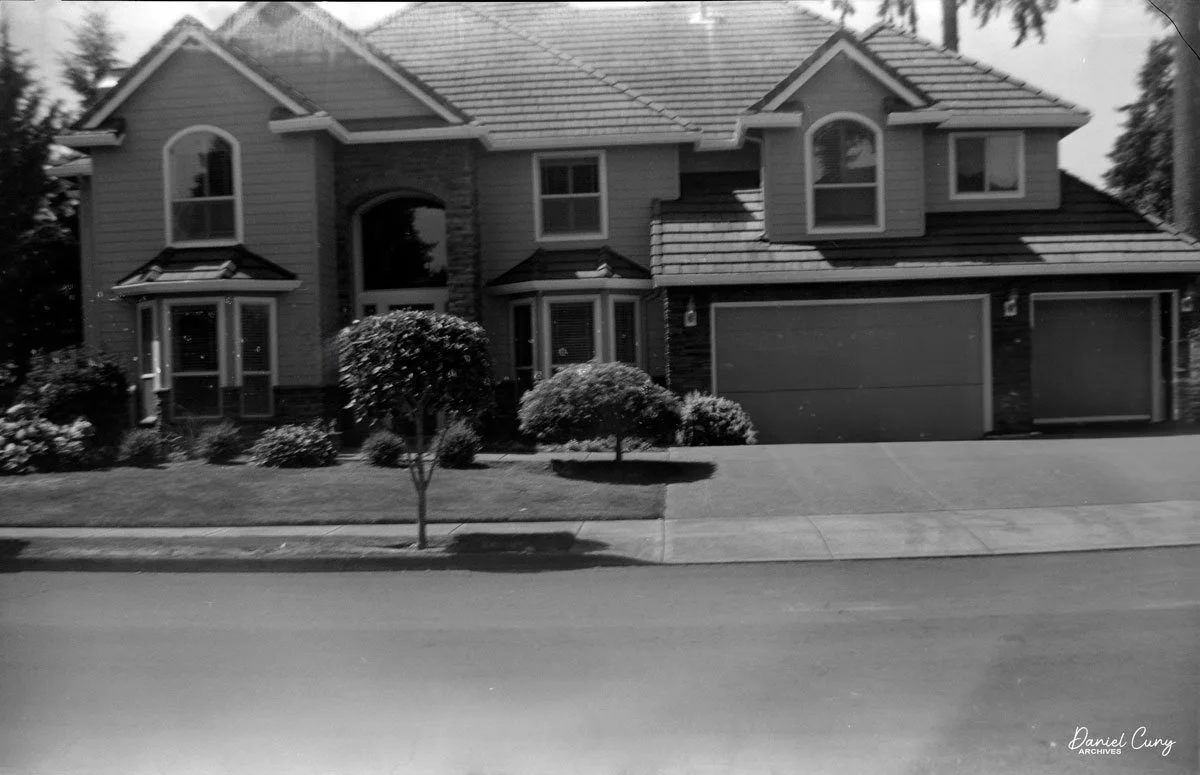
 I cleaned the lens on the camera, loaded a fresh roll of 120 film, and took a walk around the neighborhood to see how this camera would perform.

 For 100% transparency. I broke my arm two days before I took these photographs. It was challenging to hold the camera while taking the photos, so some of the blur or out-of-focus images may have been caused by camera movement.

 Here are the results.

Conclusion:

 The images produced by the camera were disappointing. I'm not sure if the blur in the

photo was caused by my lack of holding the camera still. According to the information on the back of the camera, the minimum focus distance is approximately 1 m. Many of the photographs I took, I tried to be more than 1 m away from the subject.

 Due to the sunny situation, having only one shutter speed to work with, and using the smallest aperture, the photographs are unimpressive. At this point, I'm not sure I'll use this camera again due to the quality of the images, which I found disappointing, especially considering it's a 6x9 format camera.

 Thank you for taking the time to read about this interesting Camera from France, built in the late 1930s. 

 If you're interested in seeing other camera reviews, click the link.

 I also have a store on eBay where I sell some of the cameras reviewed, along with a host of other photo items, Cuny's Camera & Photo.

 Until next time, please be safe.