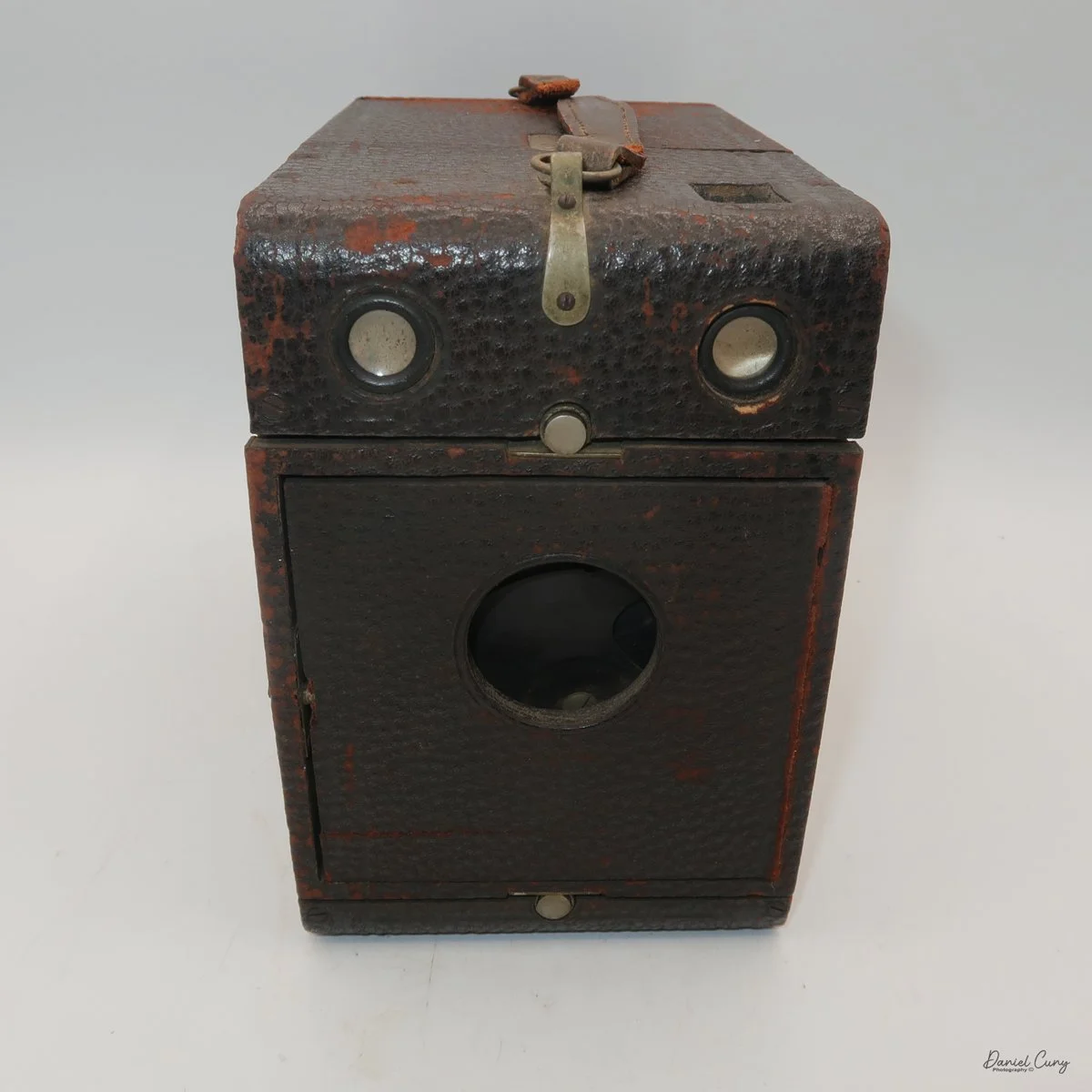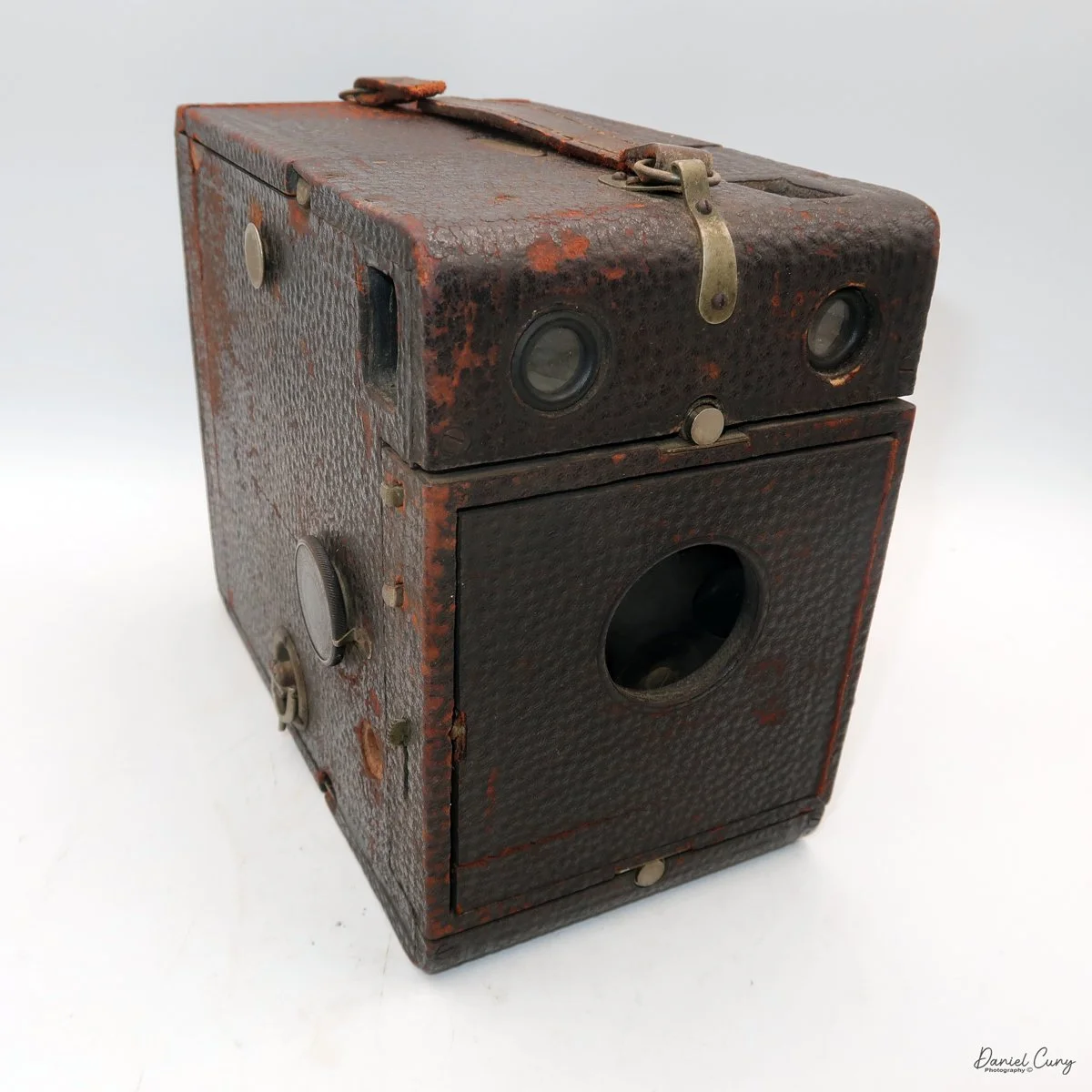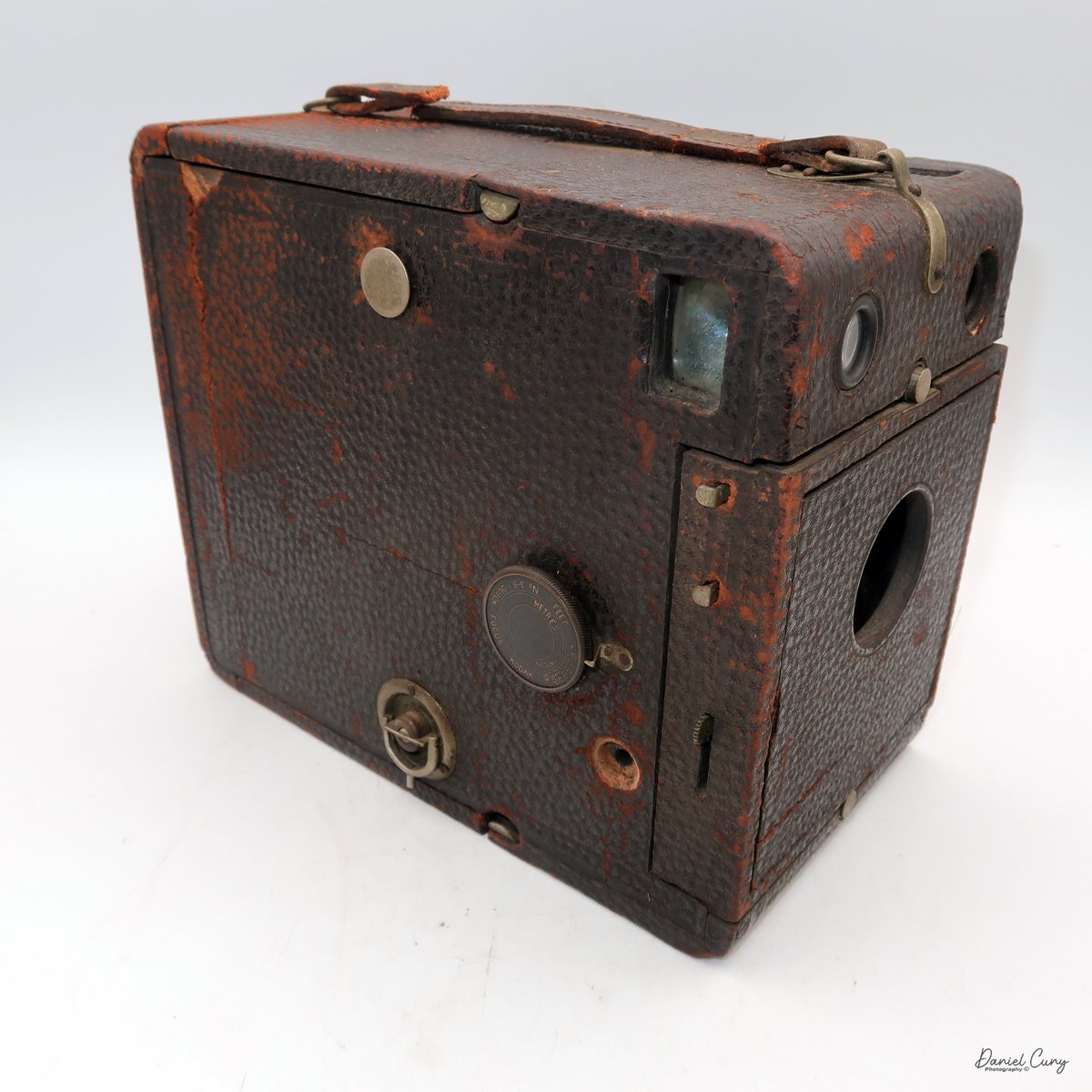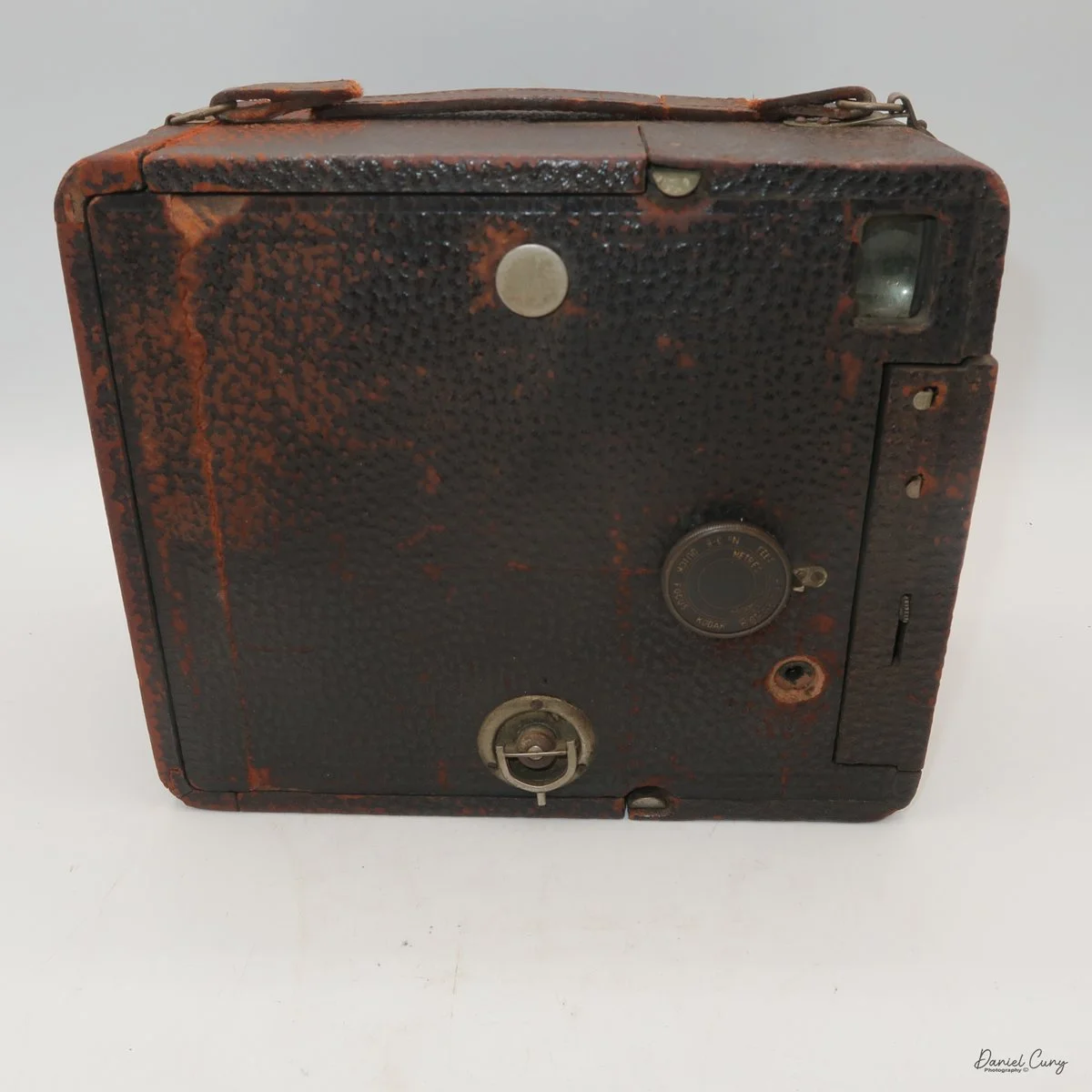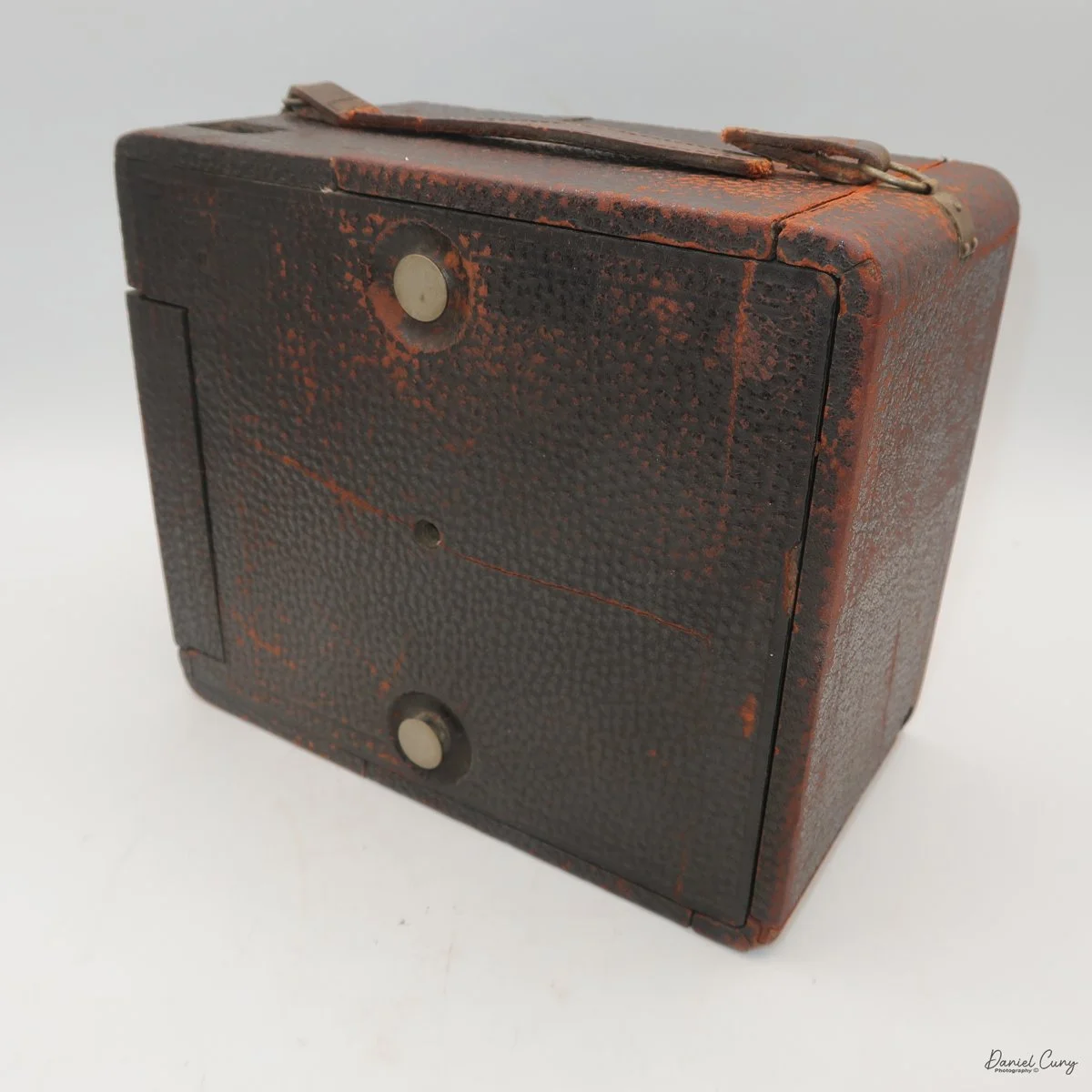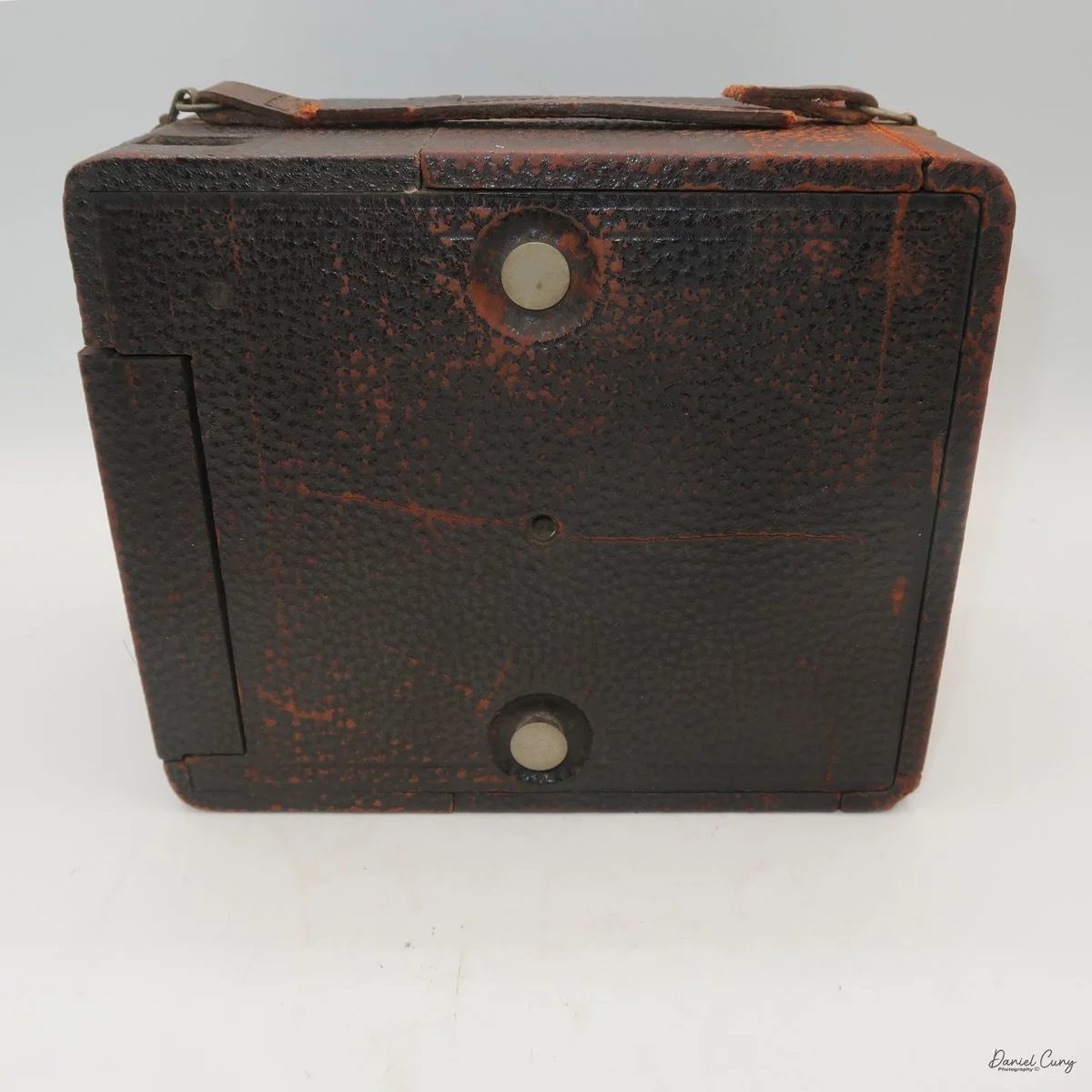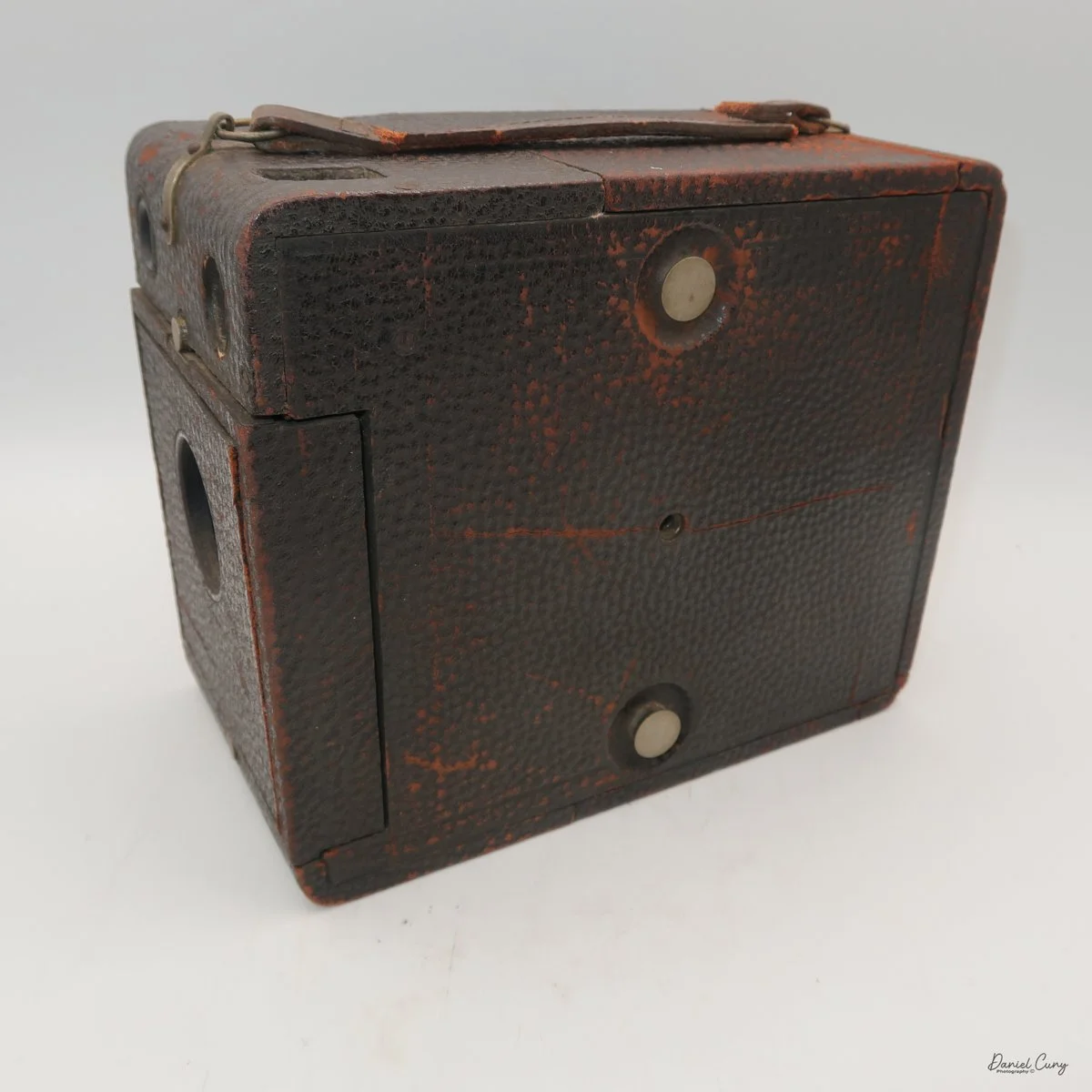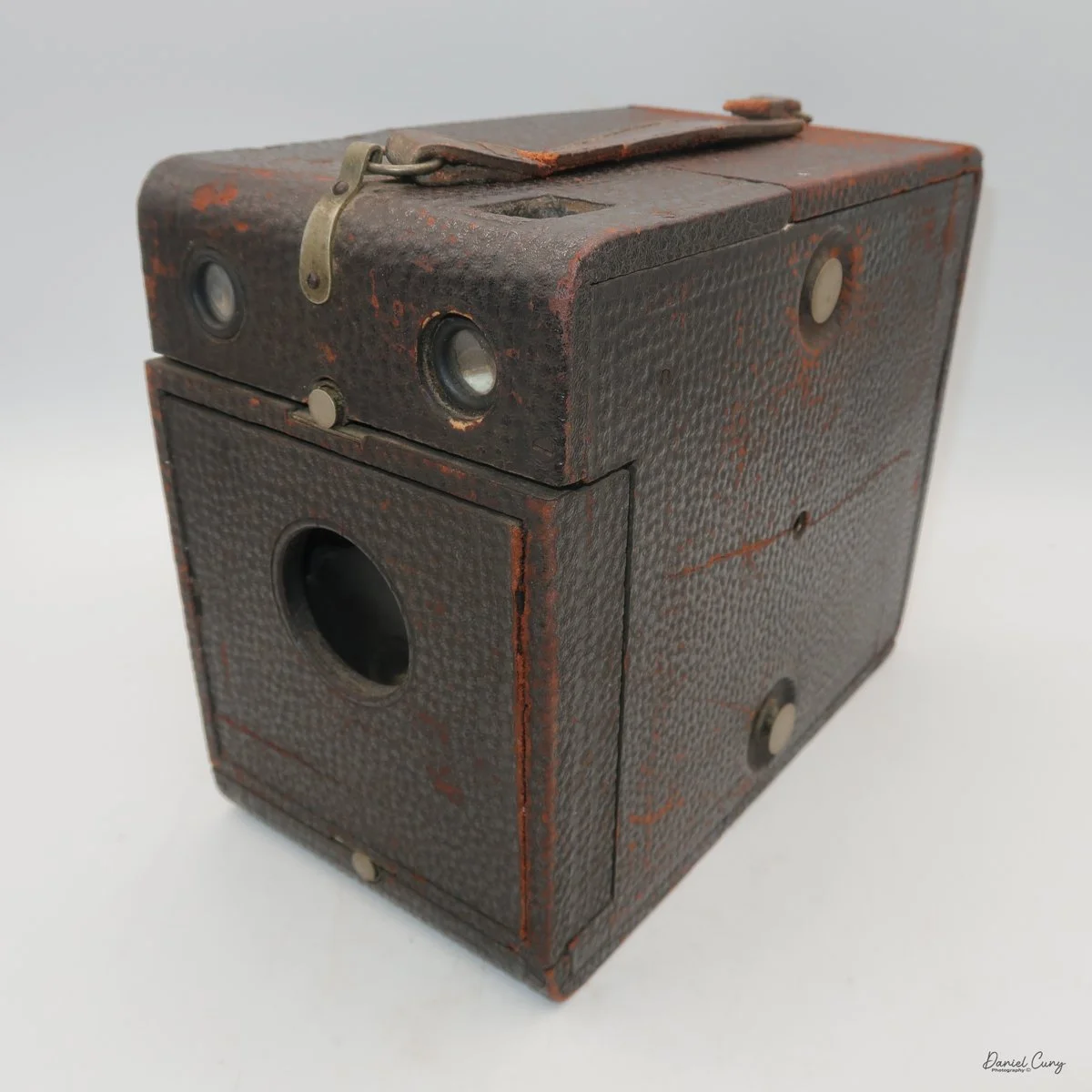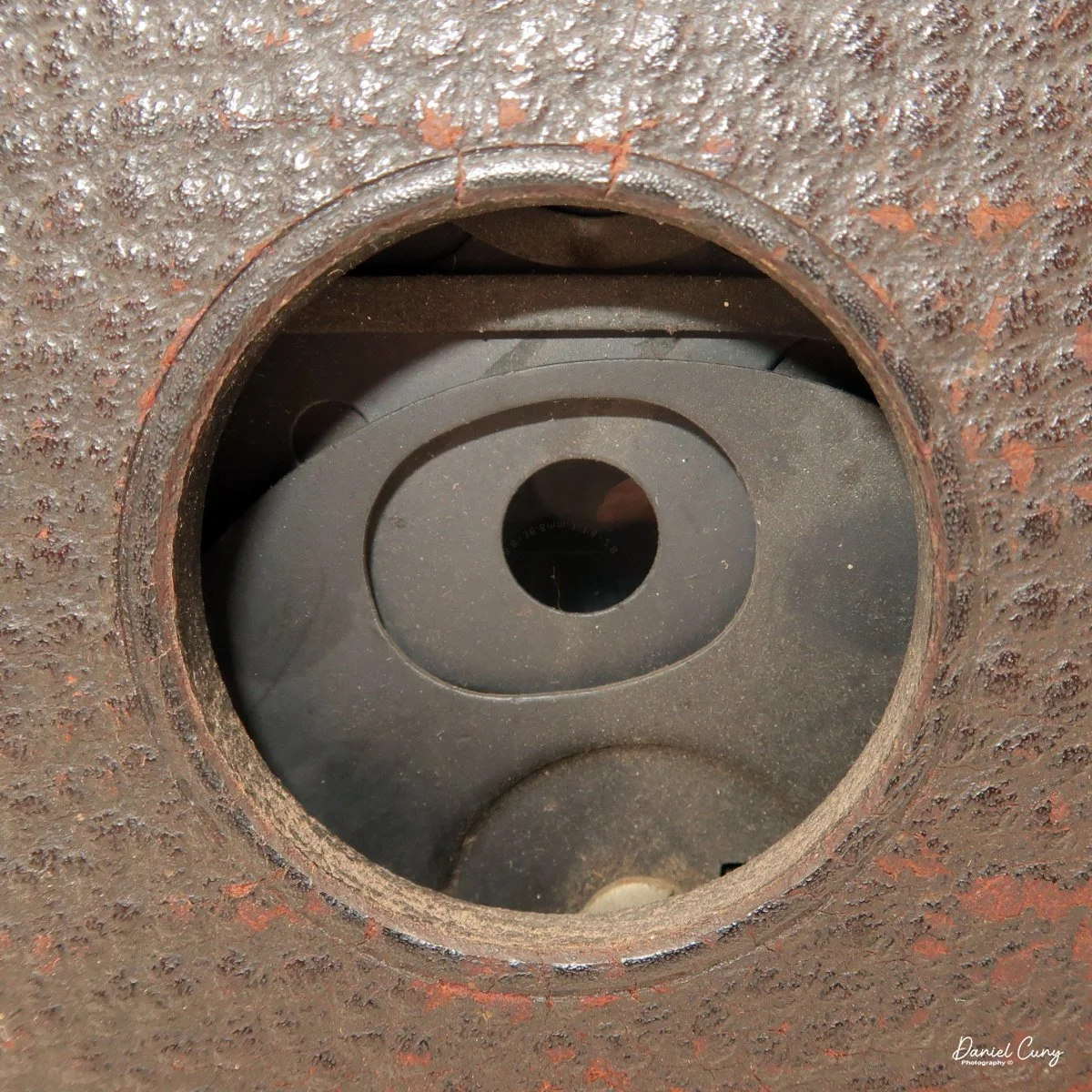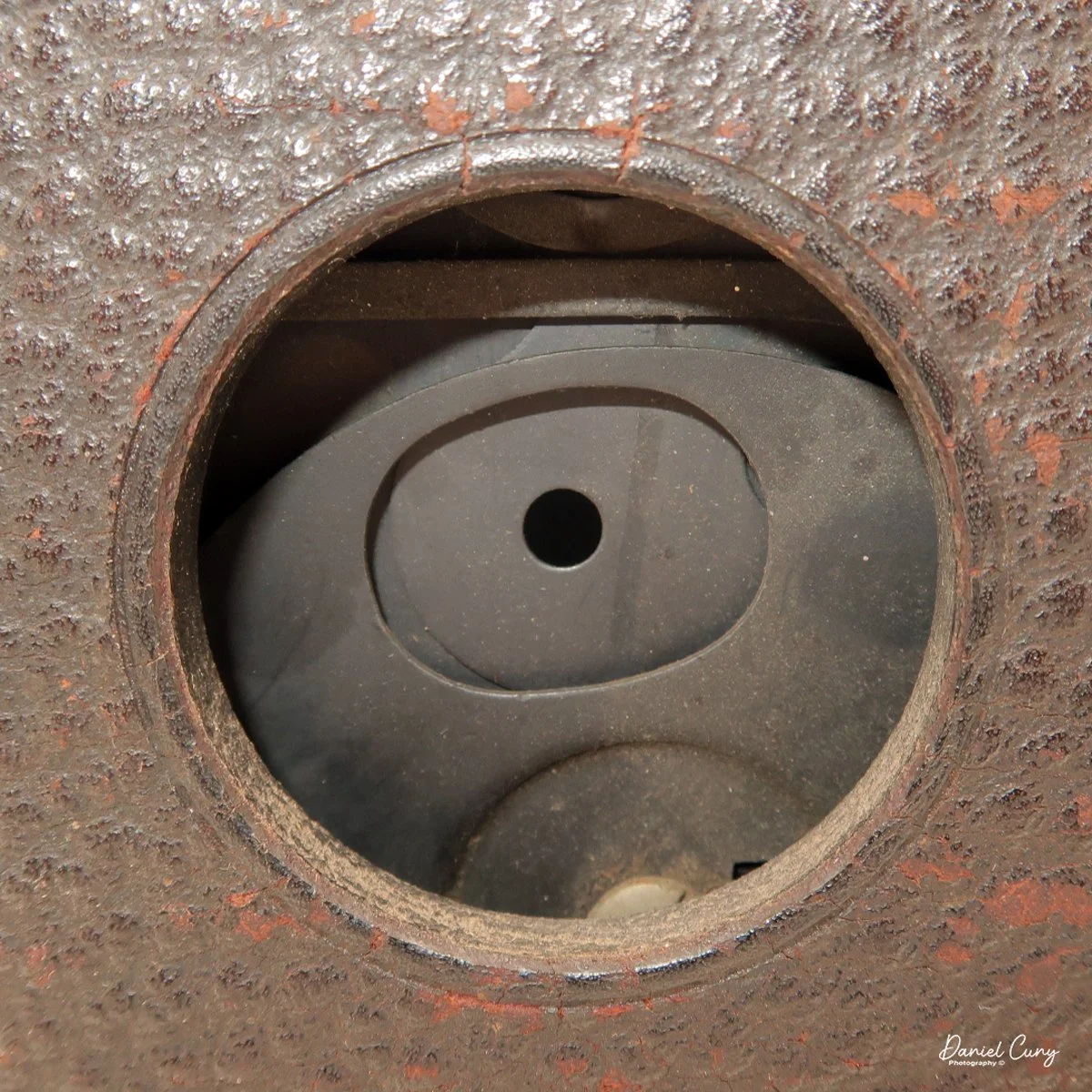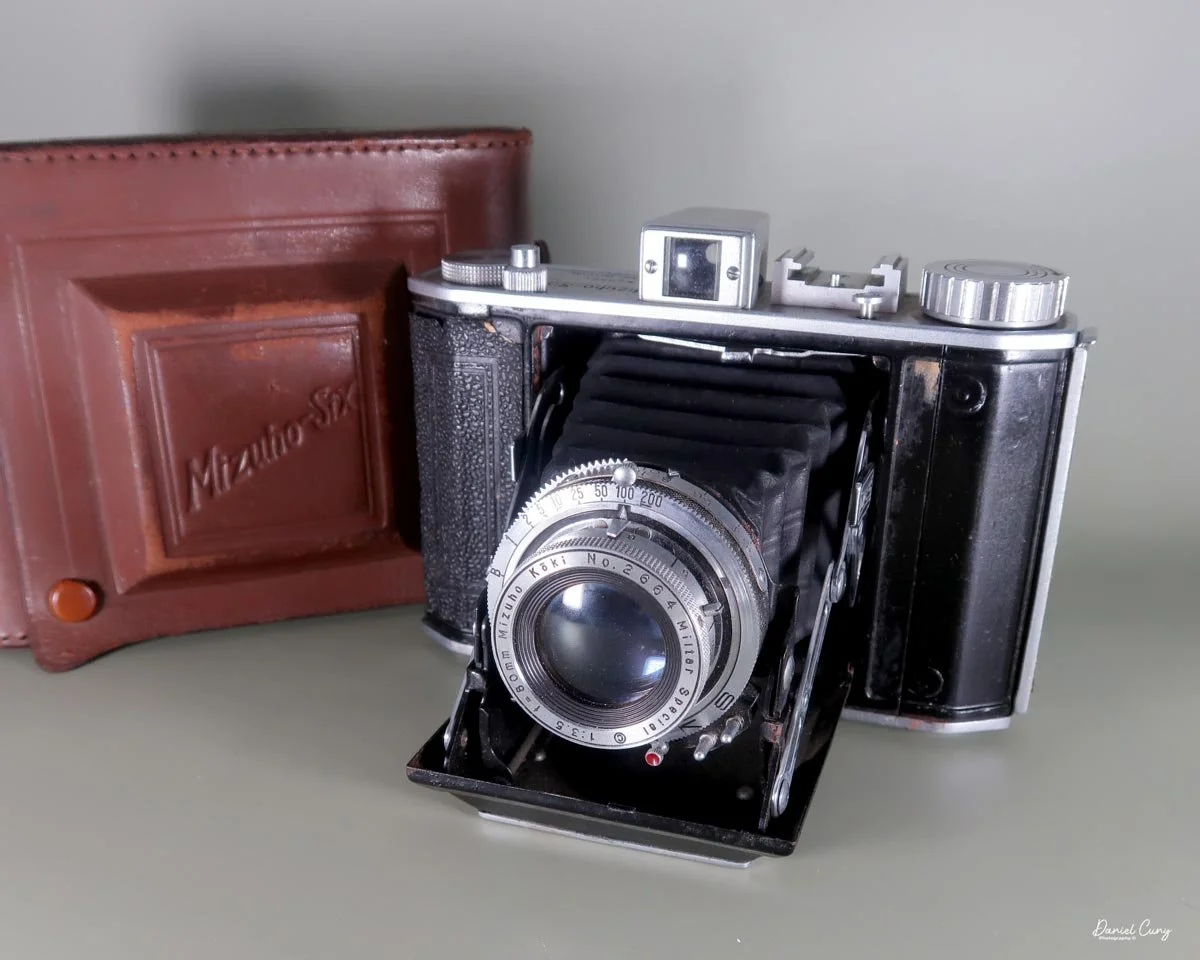
Ebner camera

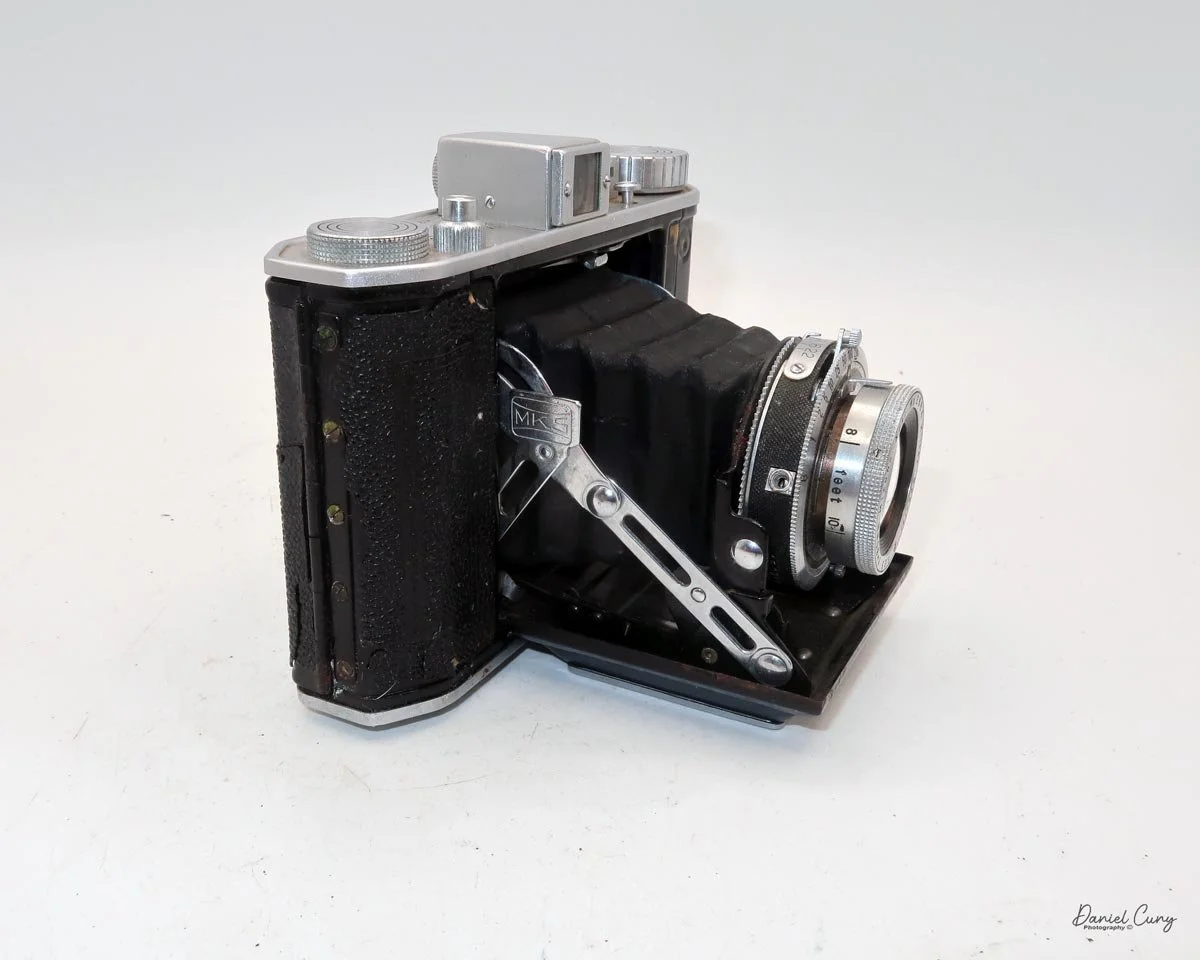
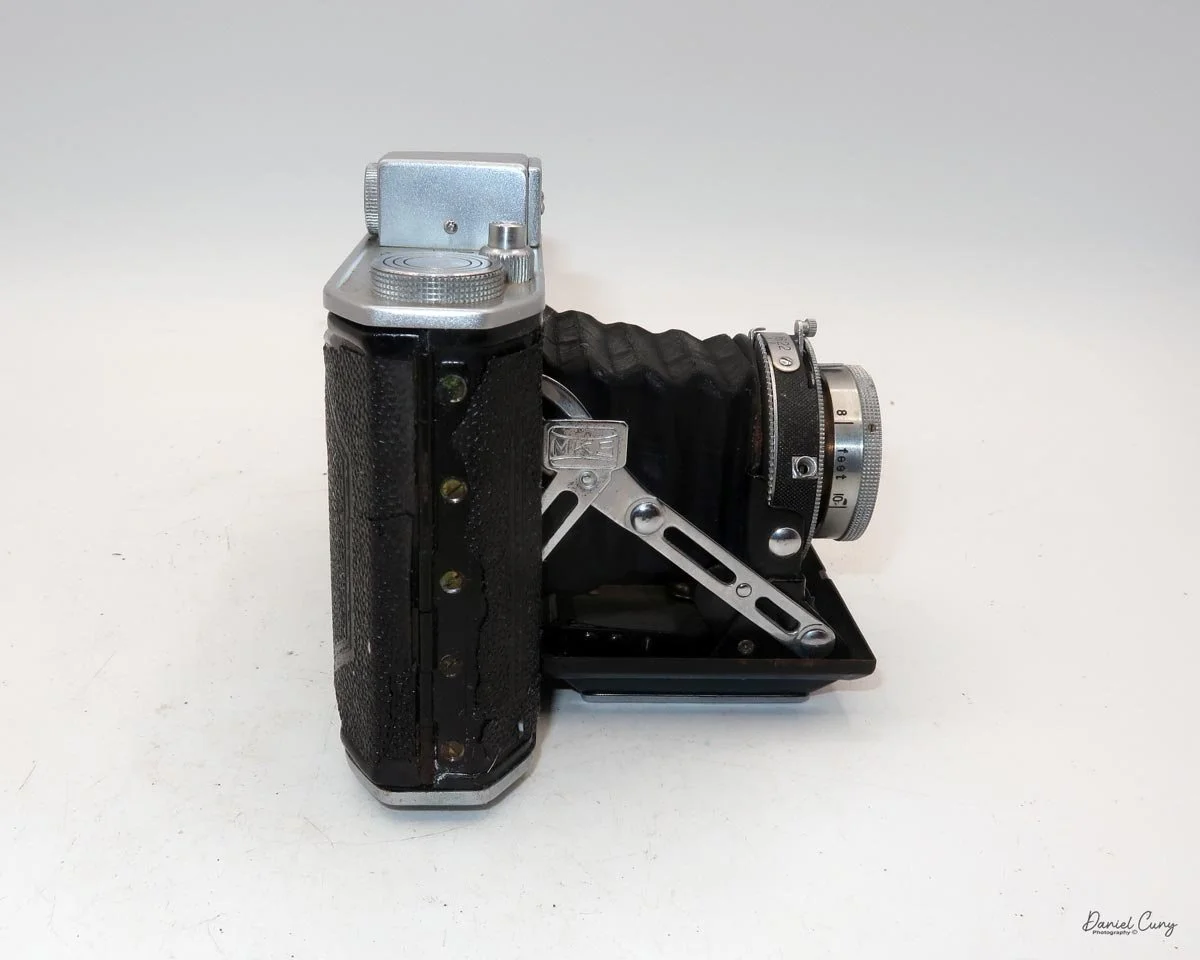
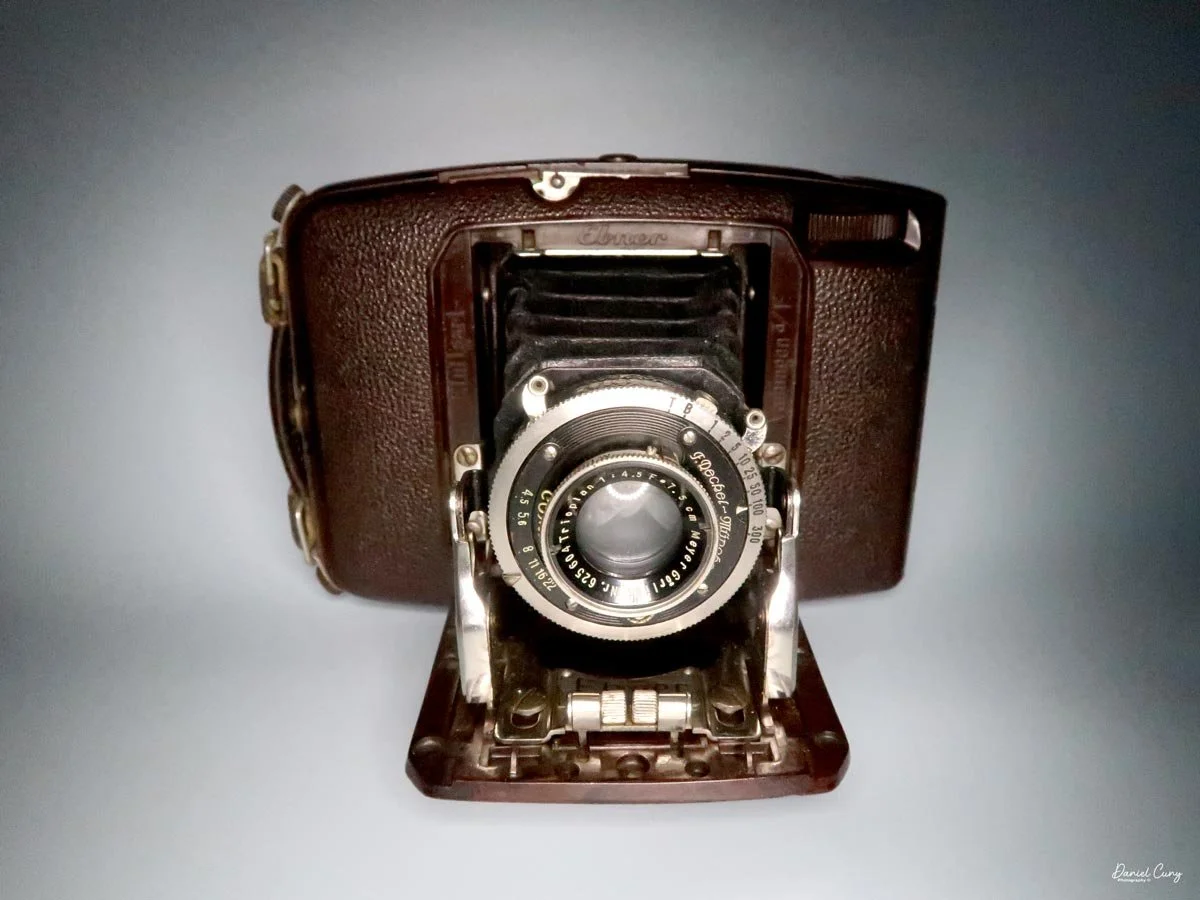
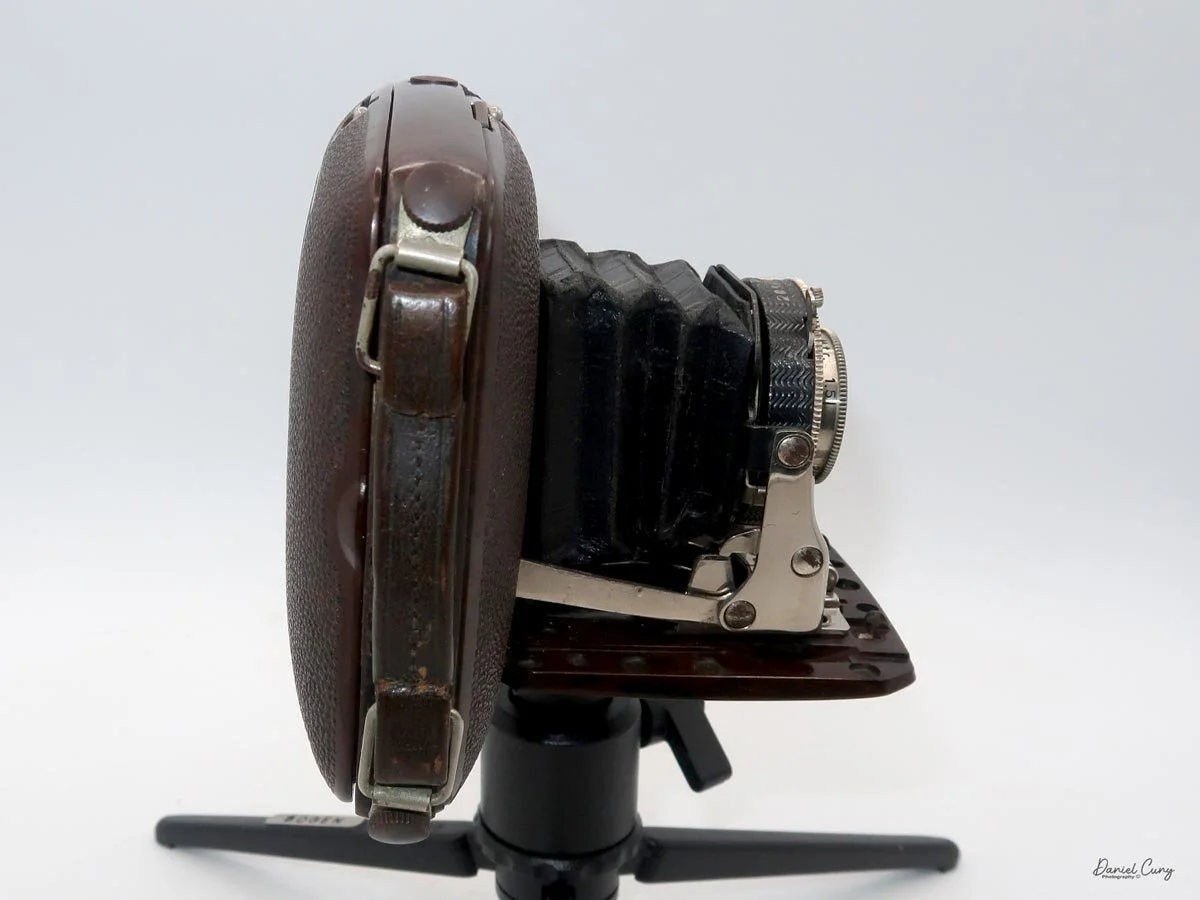
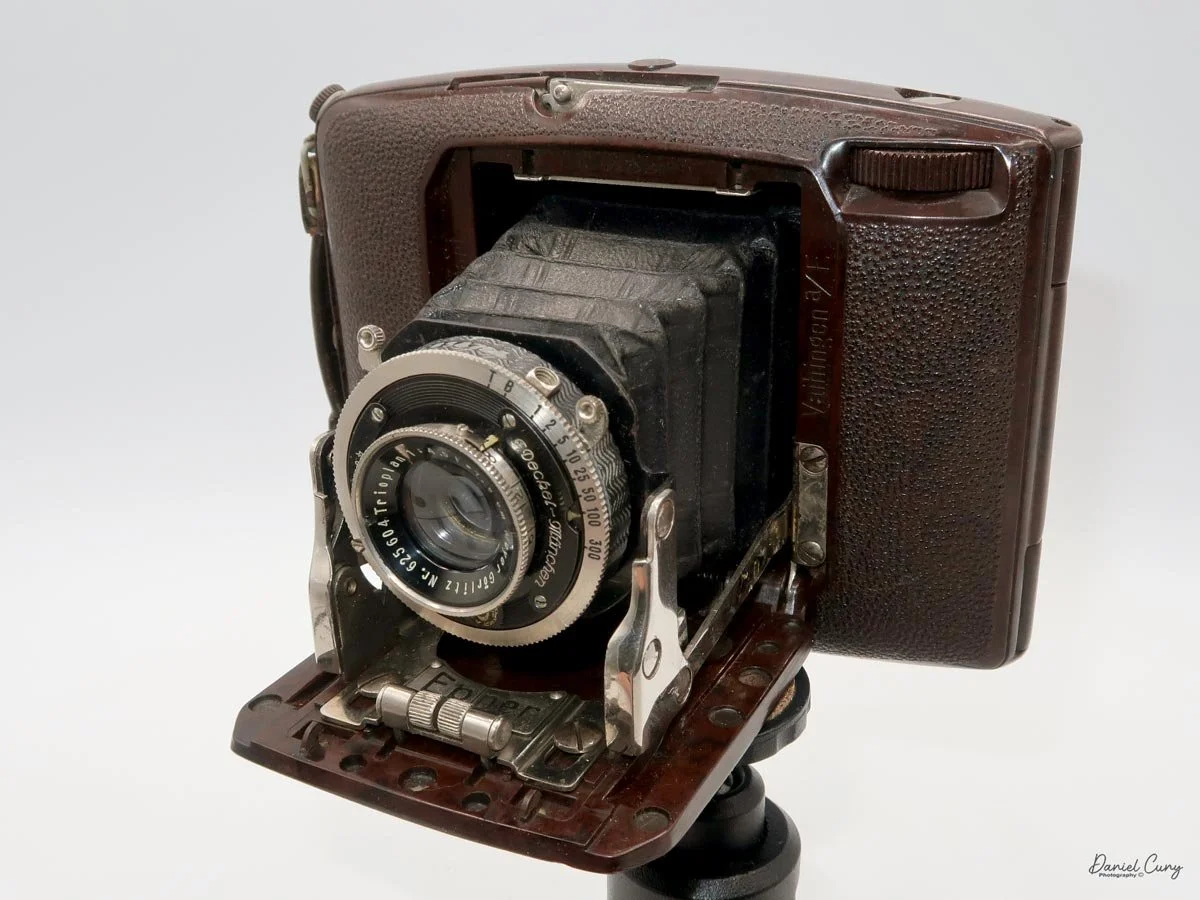
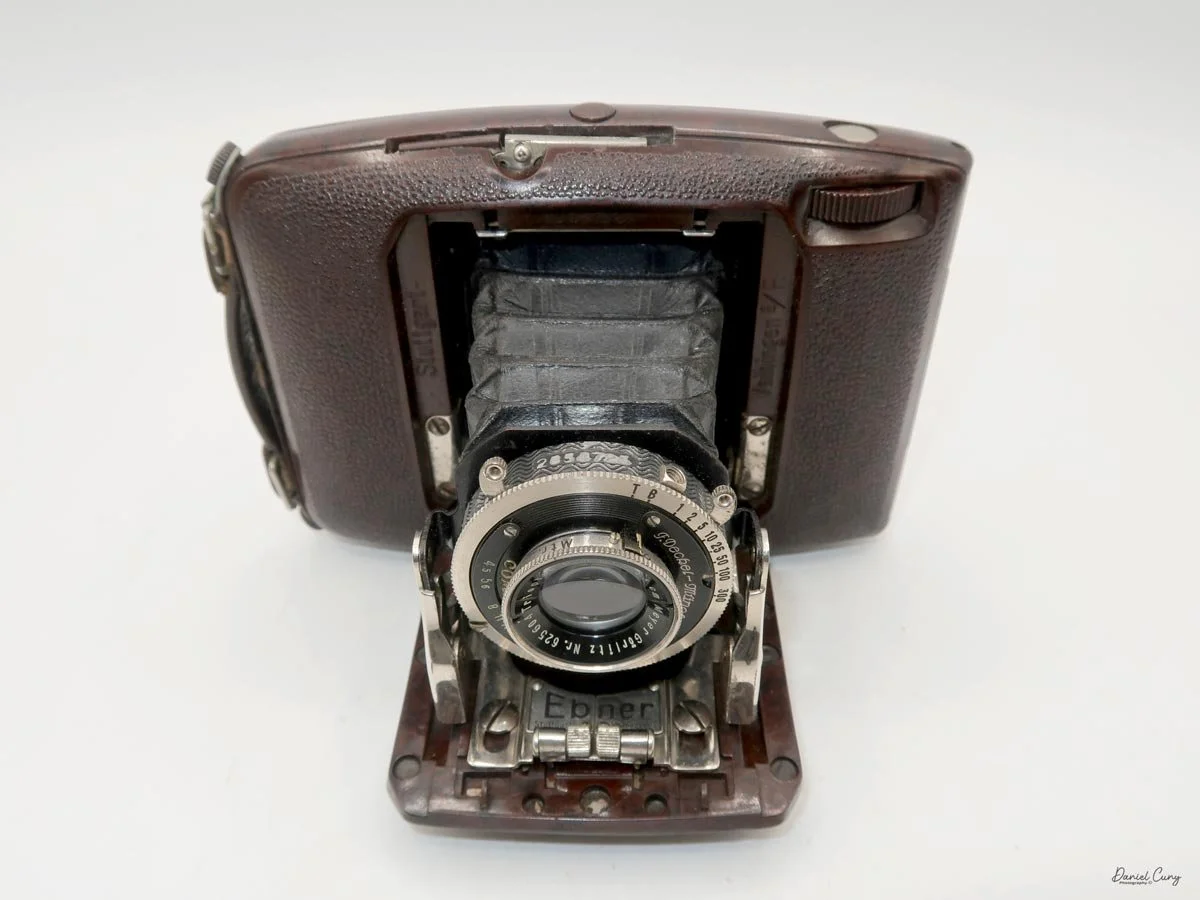
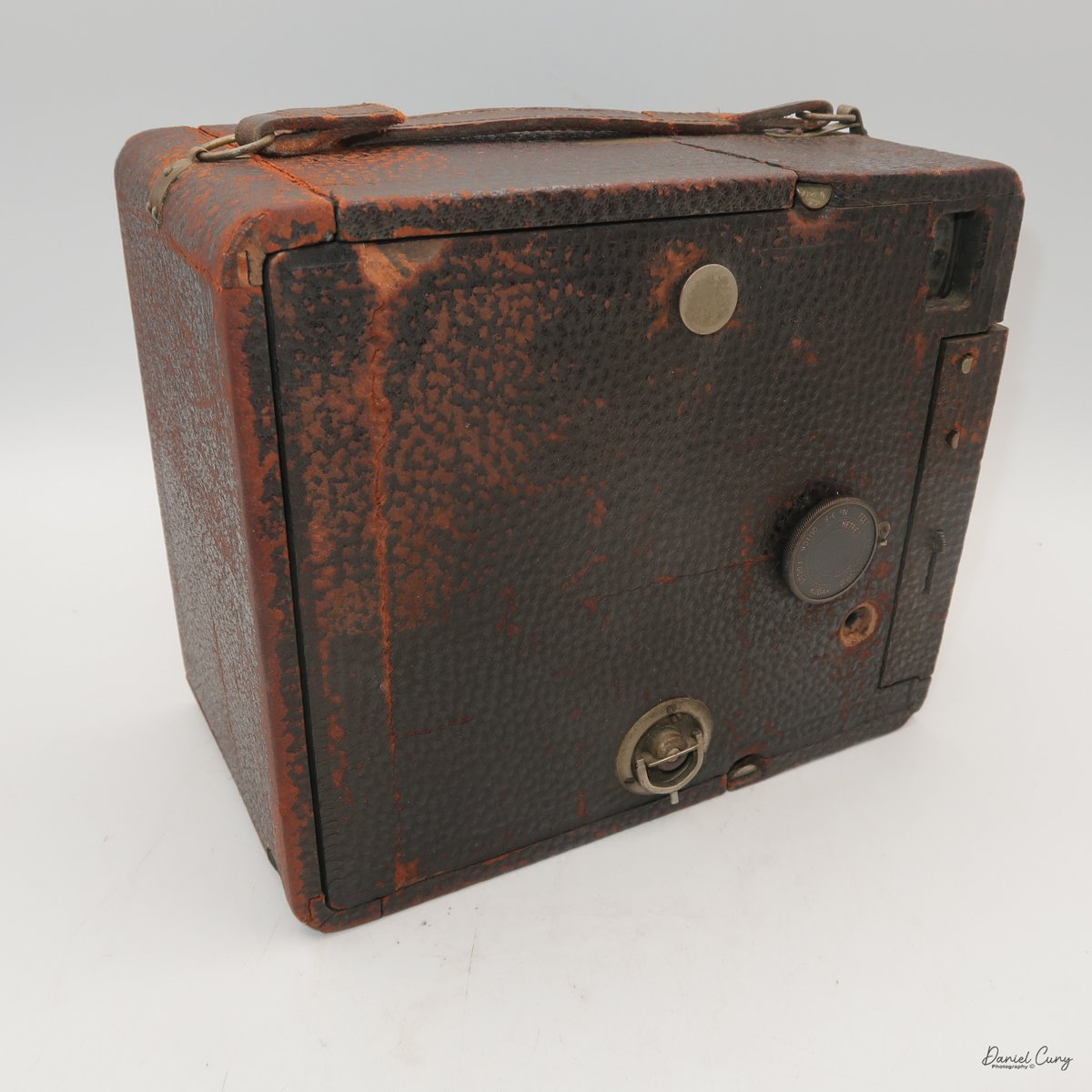
My Ebner 6x4.5cm camera

During my trip to Tokyo, Japan, a couple of weeks ago, I was in Kitamura's flagship store, looking at their "bargain" cameras, which in itself is a treasure trove of used cameras, when I spotted a brown Bakelite camera sitting on one of their shelves. The camera was a "folding" style camera. Still, I had never seen a camera like it, so immediately I wanted to see it, and with any luck, take it home with me, provided the price wasn't outrageous. I scanned the camera price and converted it from Yen to US dollars; it wasn't outrageous, so I wanted to see it and learn more.

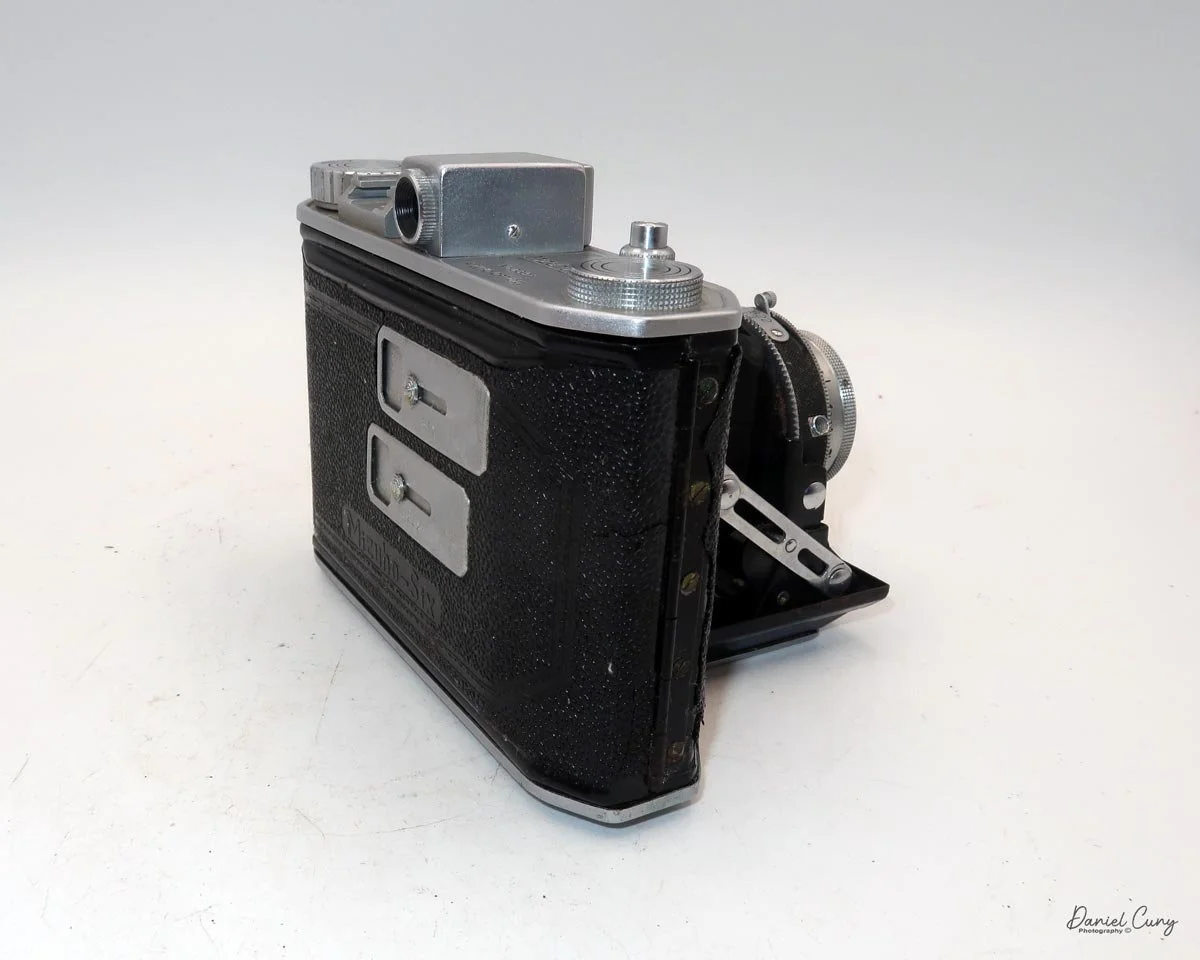
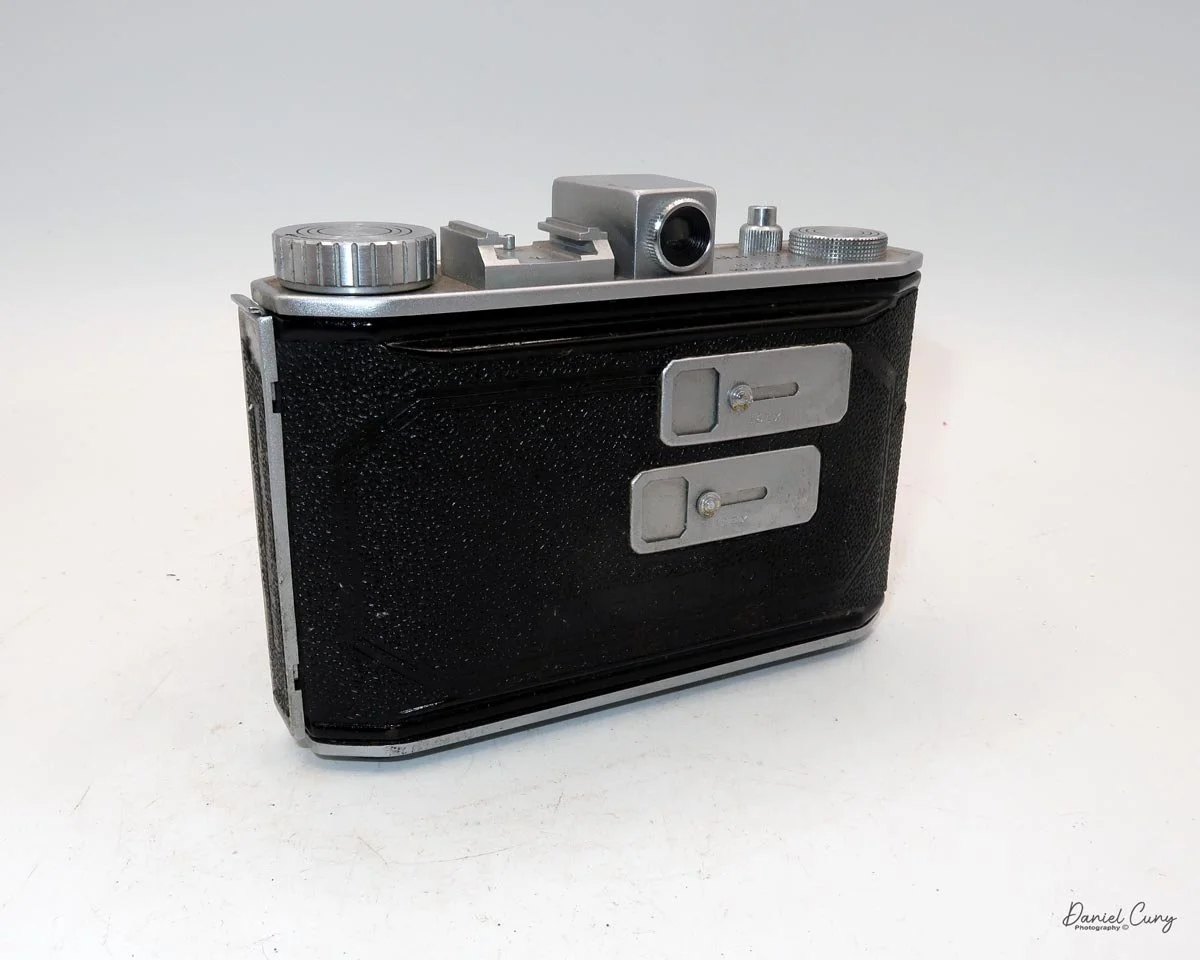
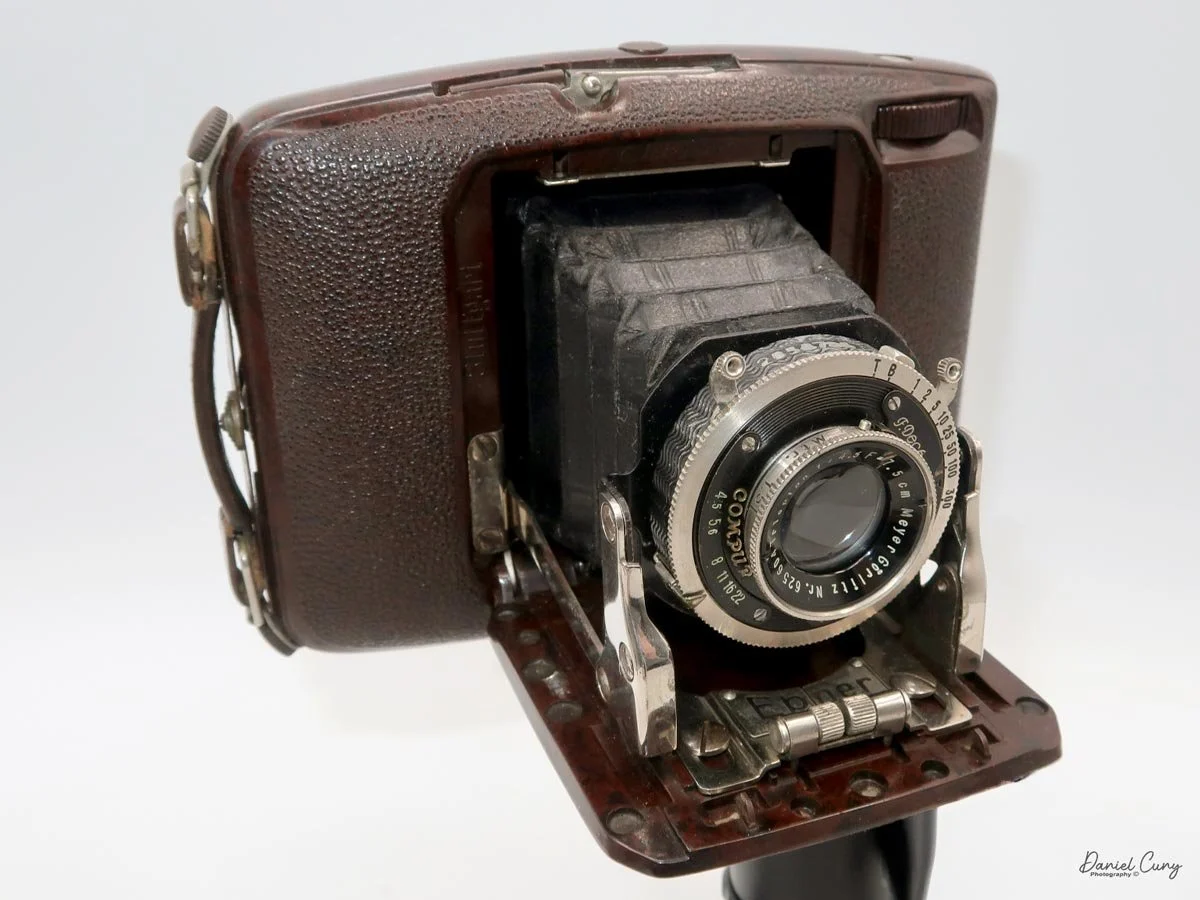
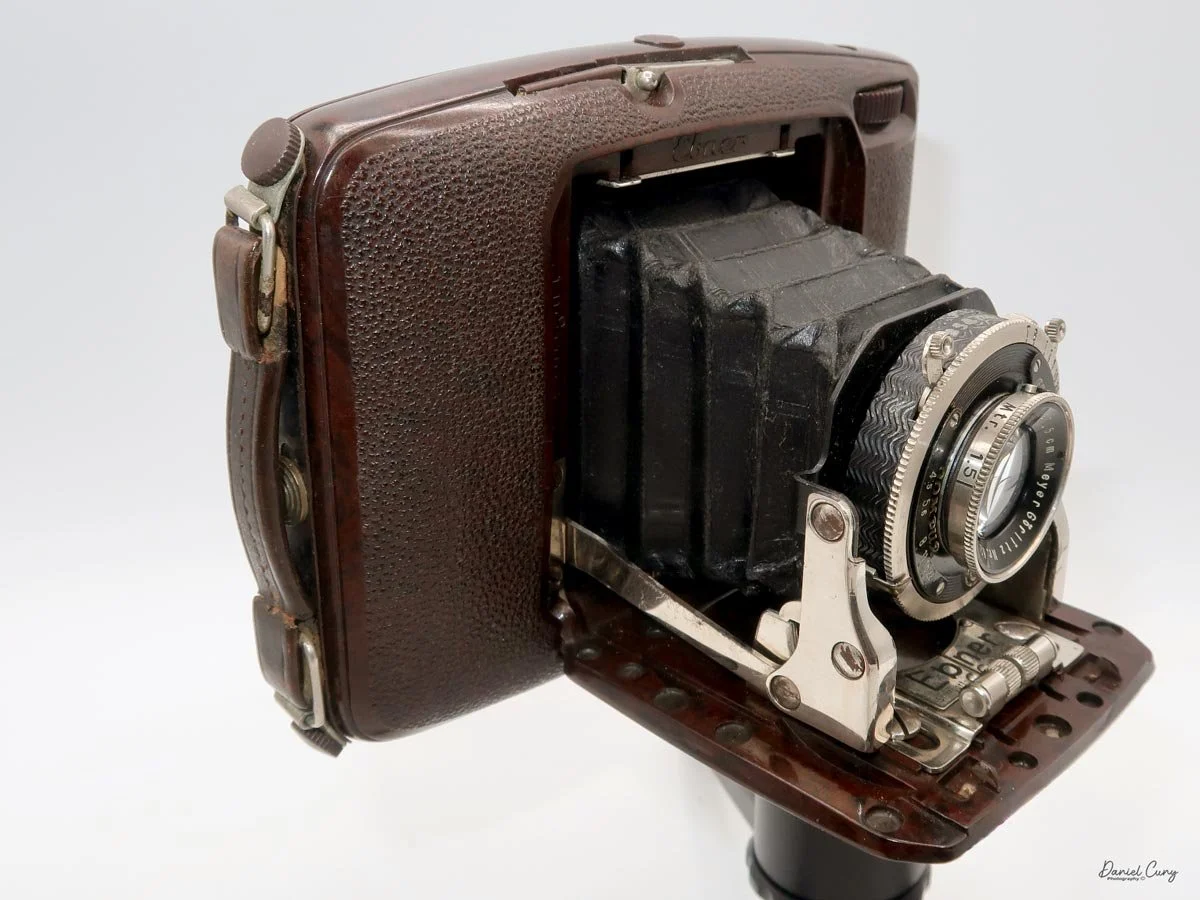
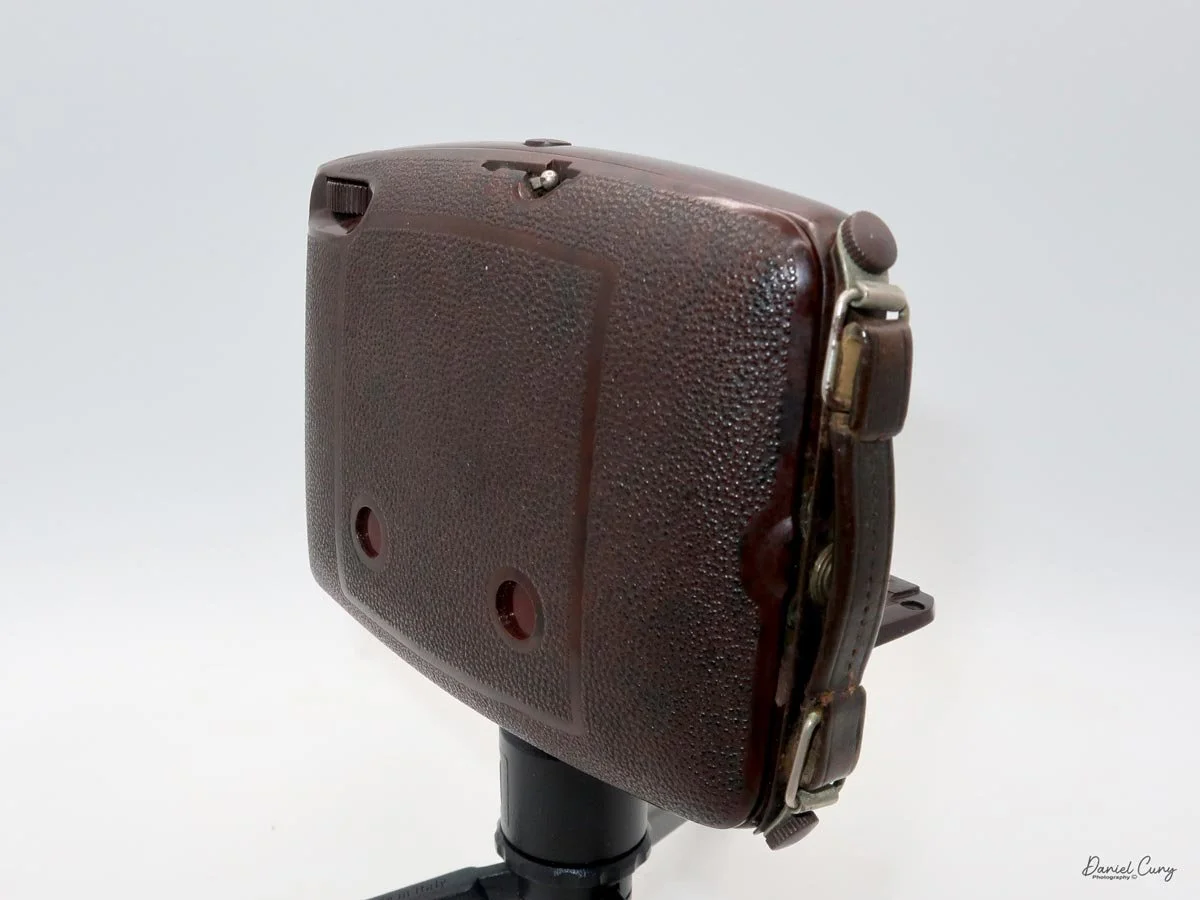
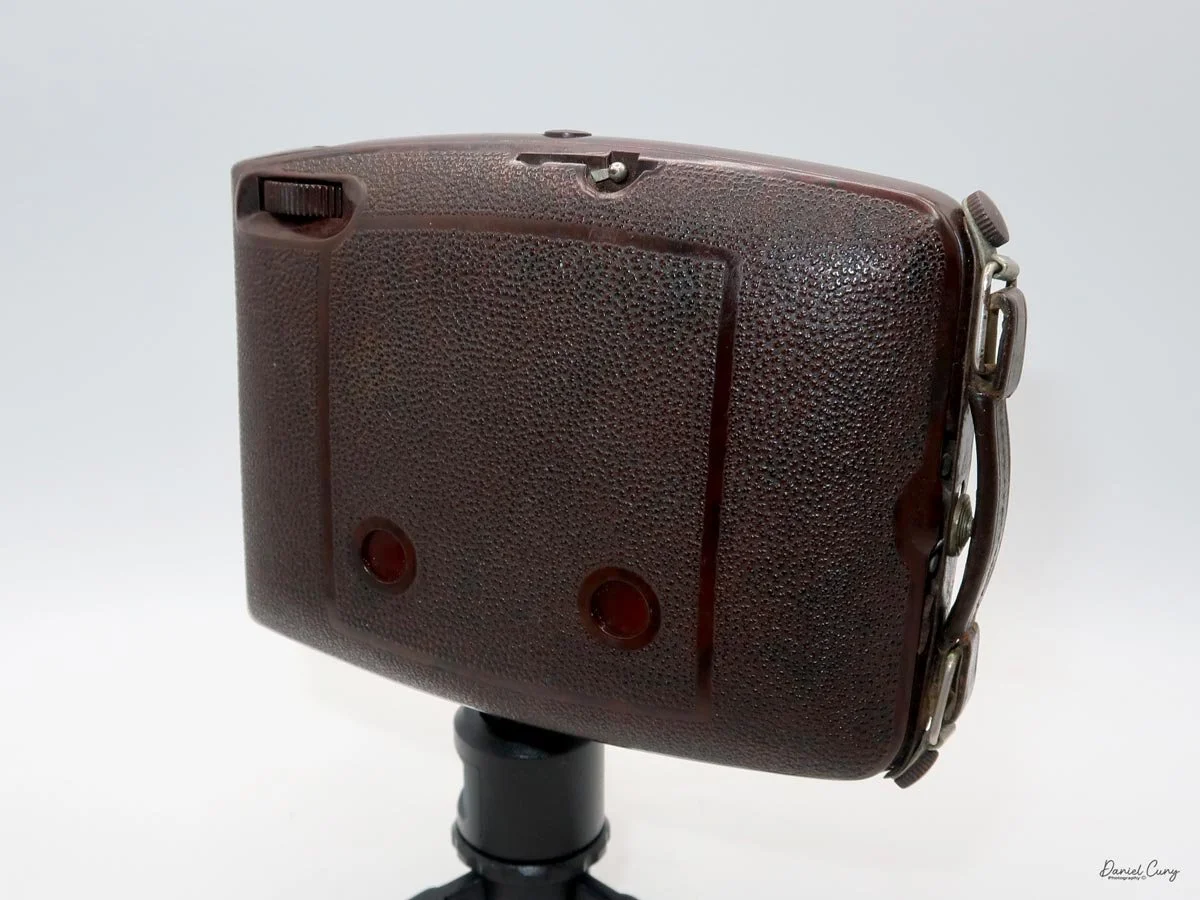
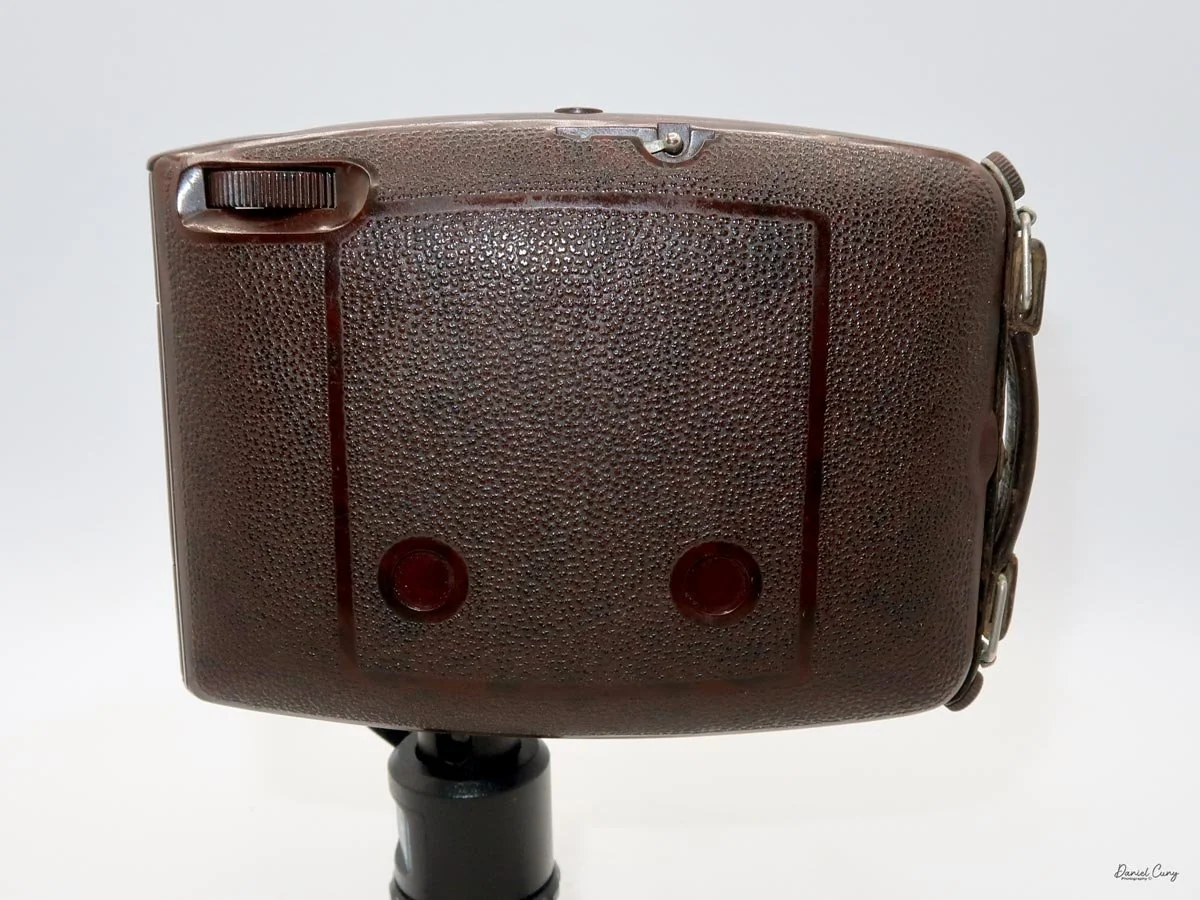
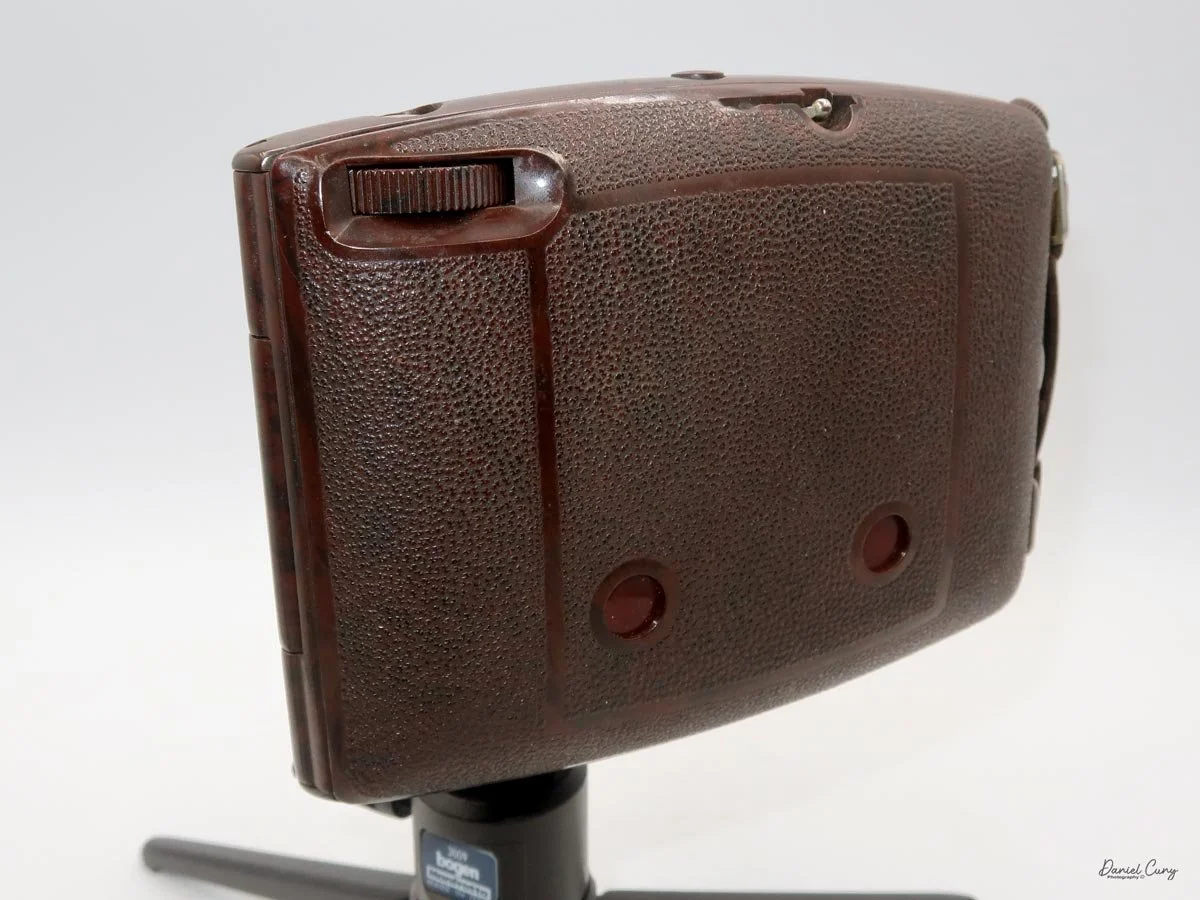
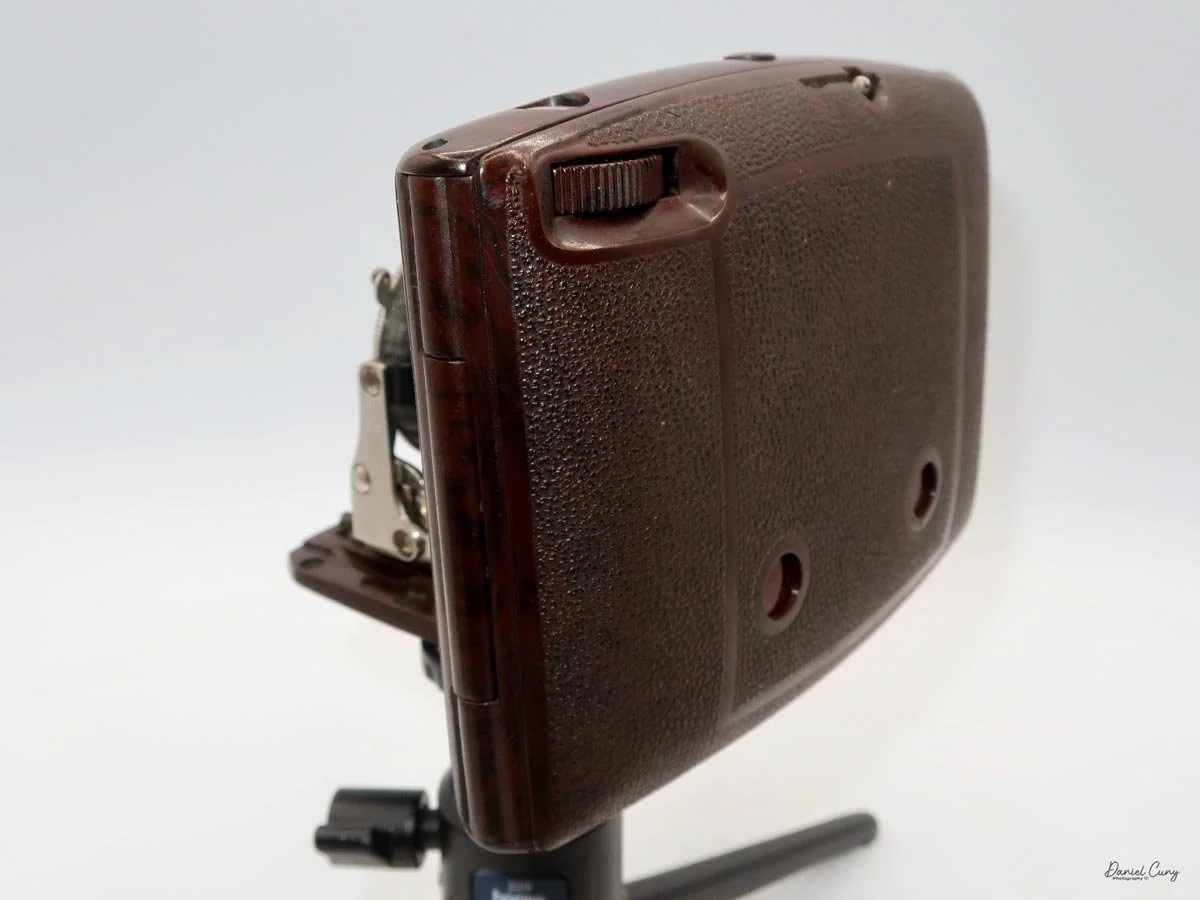
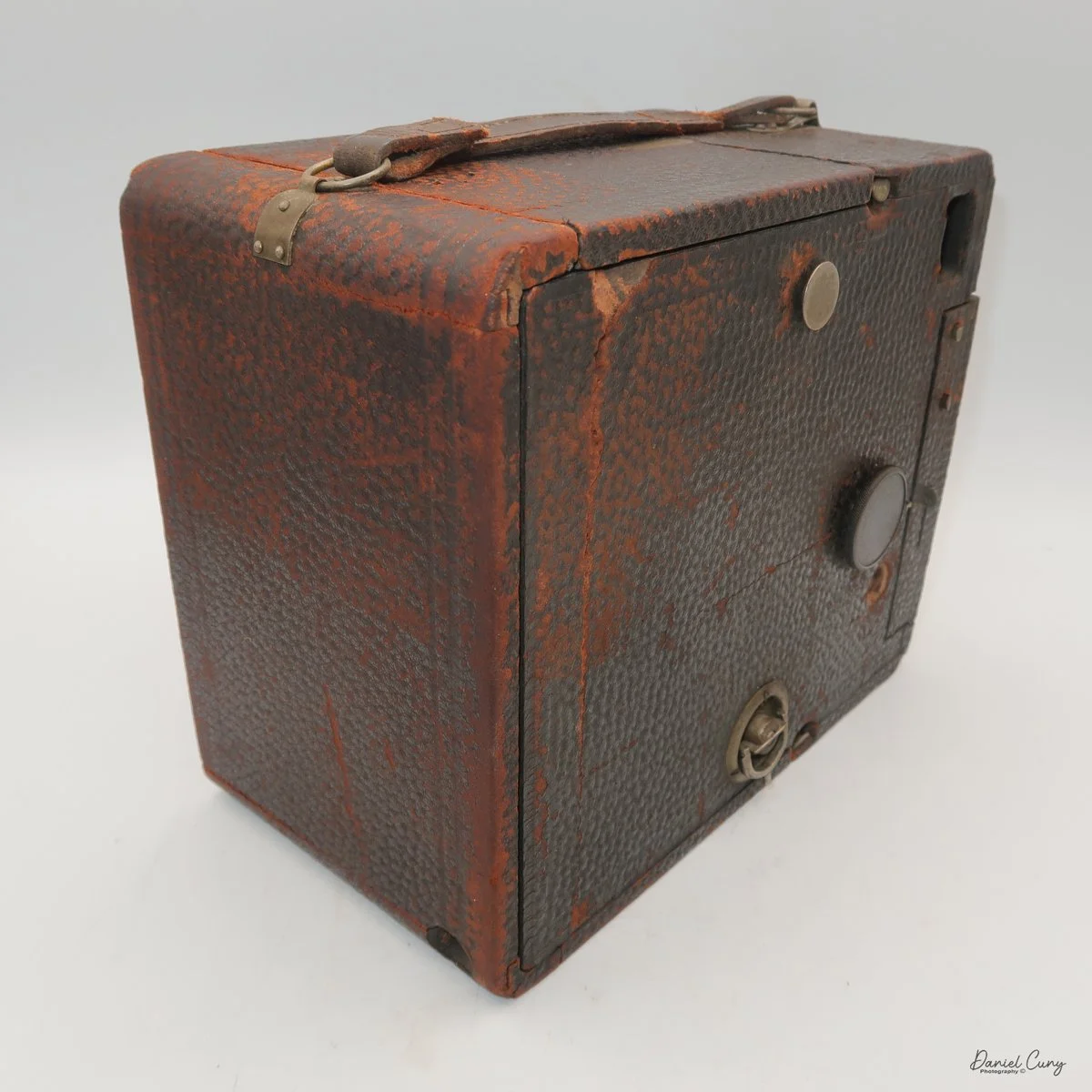
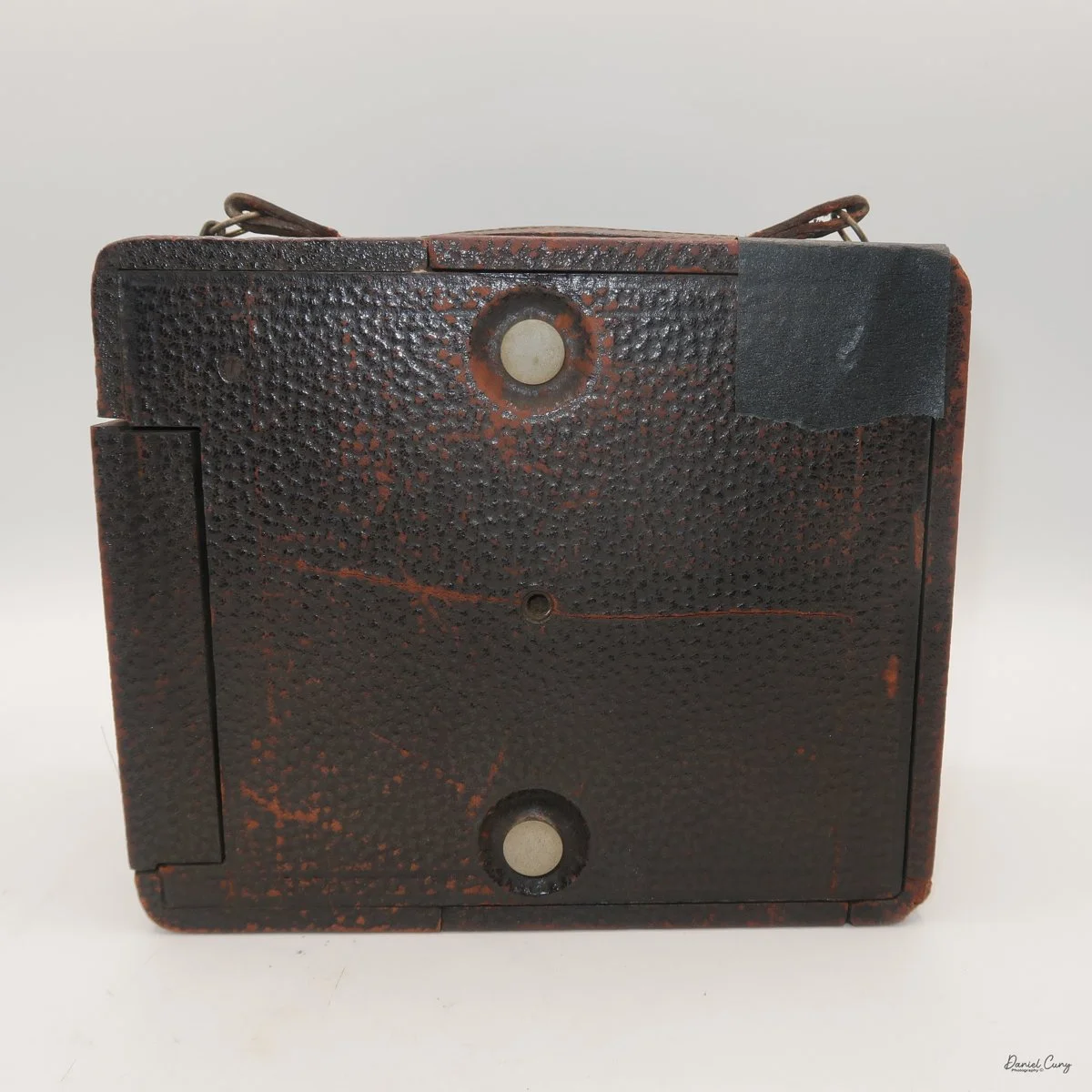
 The things that caught my eye at first was the beautiful, rich brown color, the wonderful pebbled texture of the body, and the very sleek design. To me, the camera just sang to me in its design. Since my eyes almost always go to anything "colored" when I look at cameras, it reminded me of the Coronet Vogue. Then, scanning the shelf below, they also found the Coronet Vogue. which I had seen in a few different flea markets in both Paris and London, but the asking price was always too high (in my opinion) for the camera, so I passed them up.

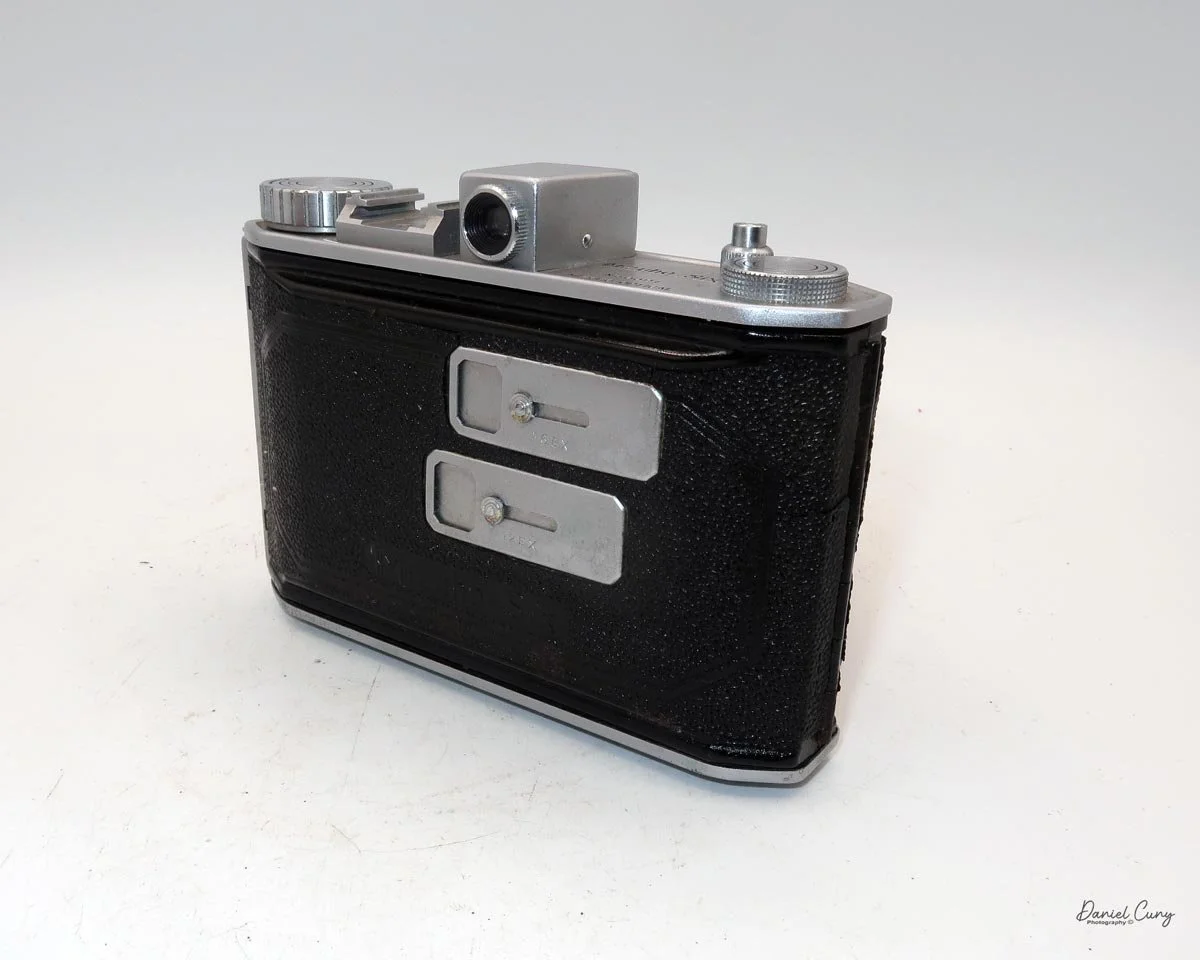
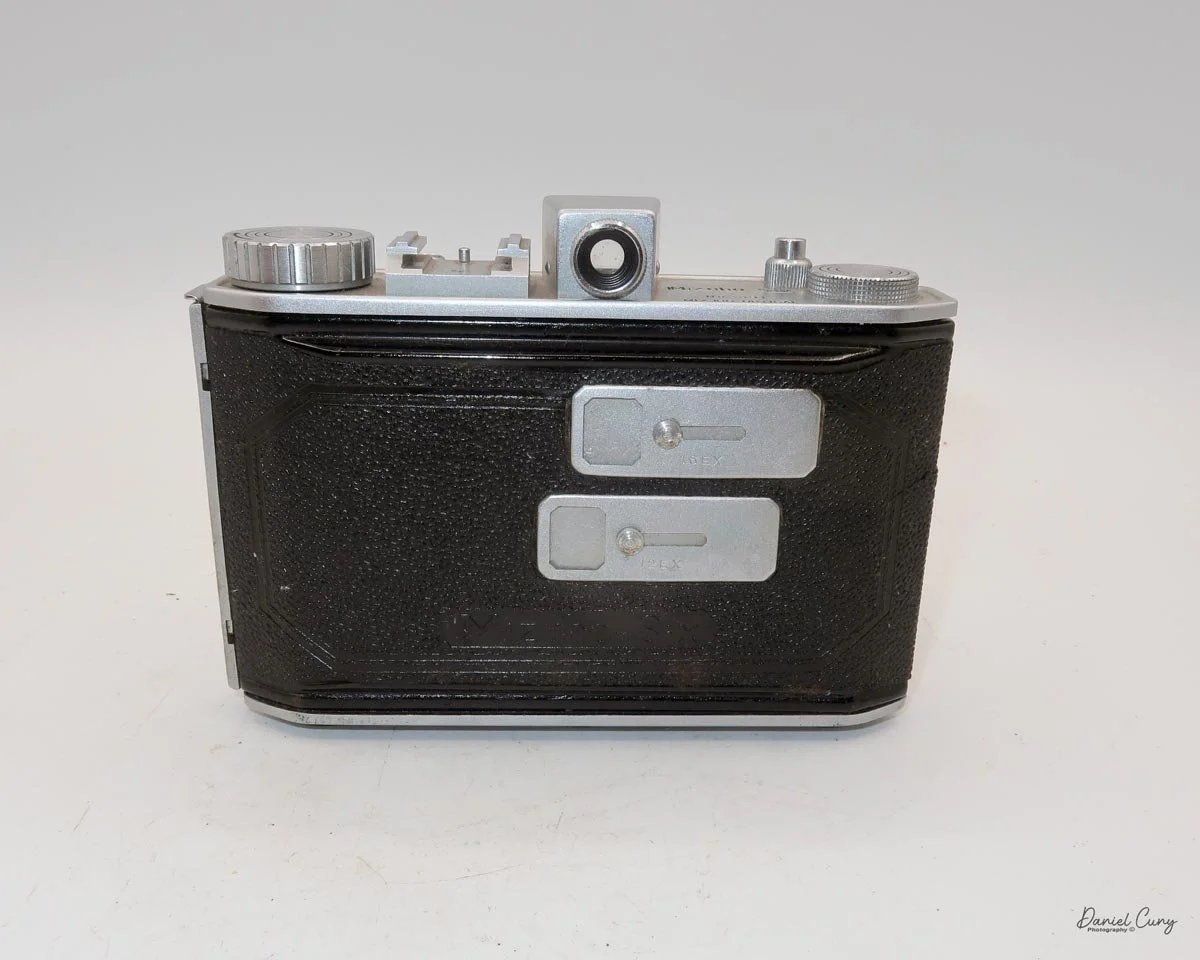
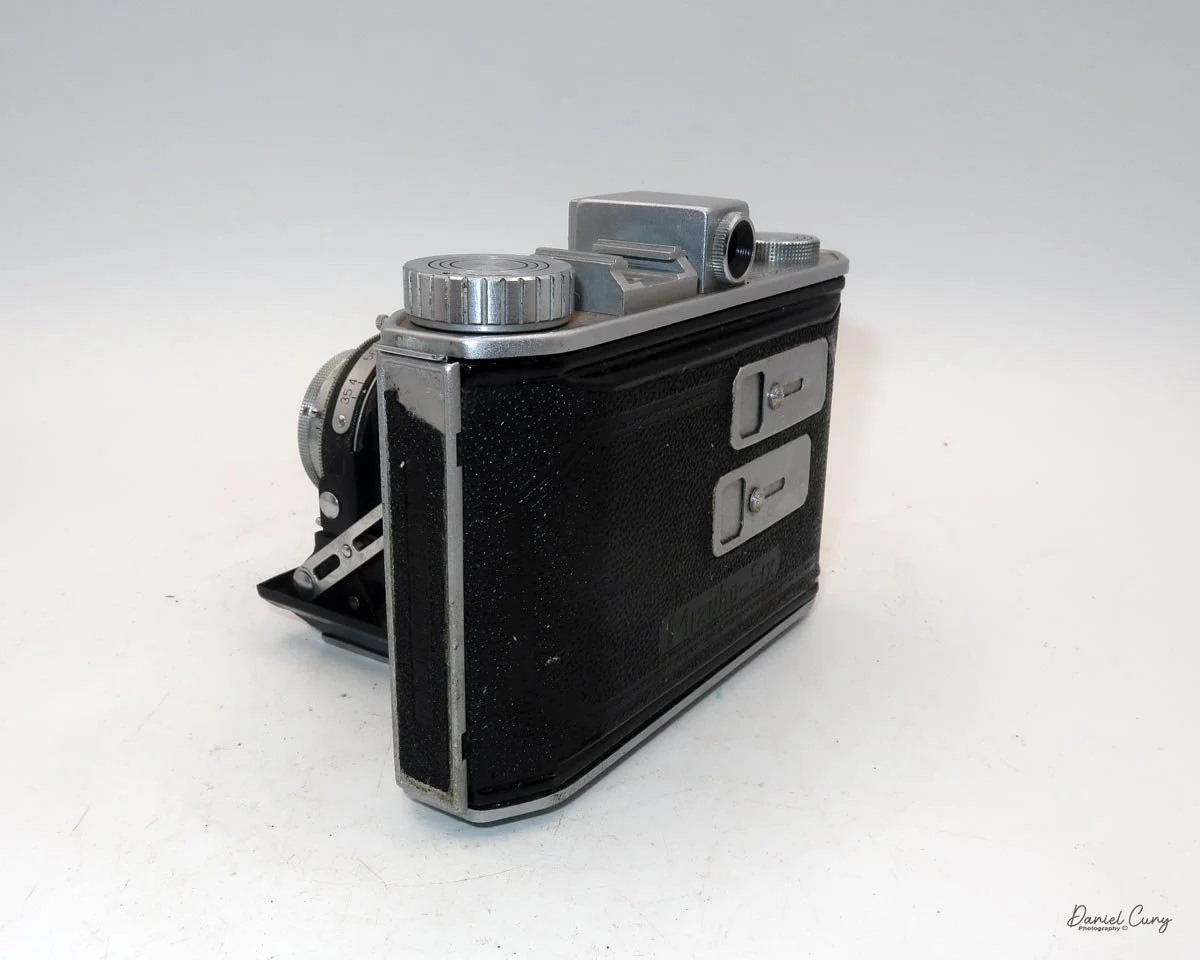
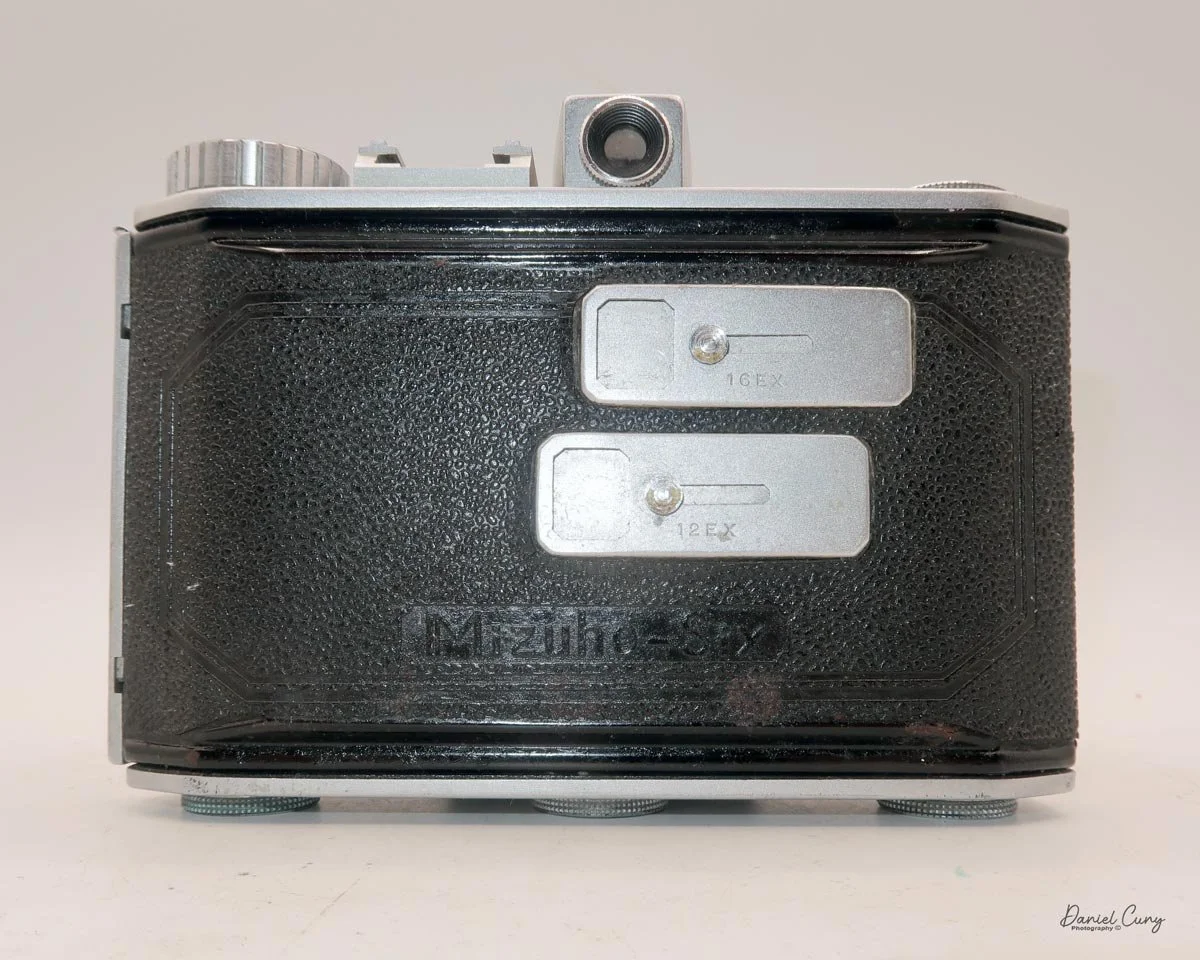
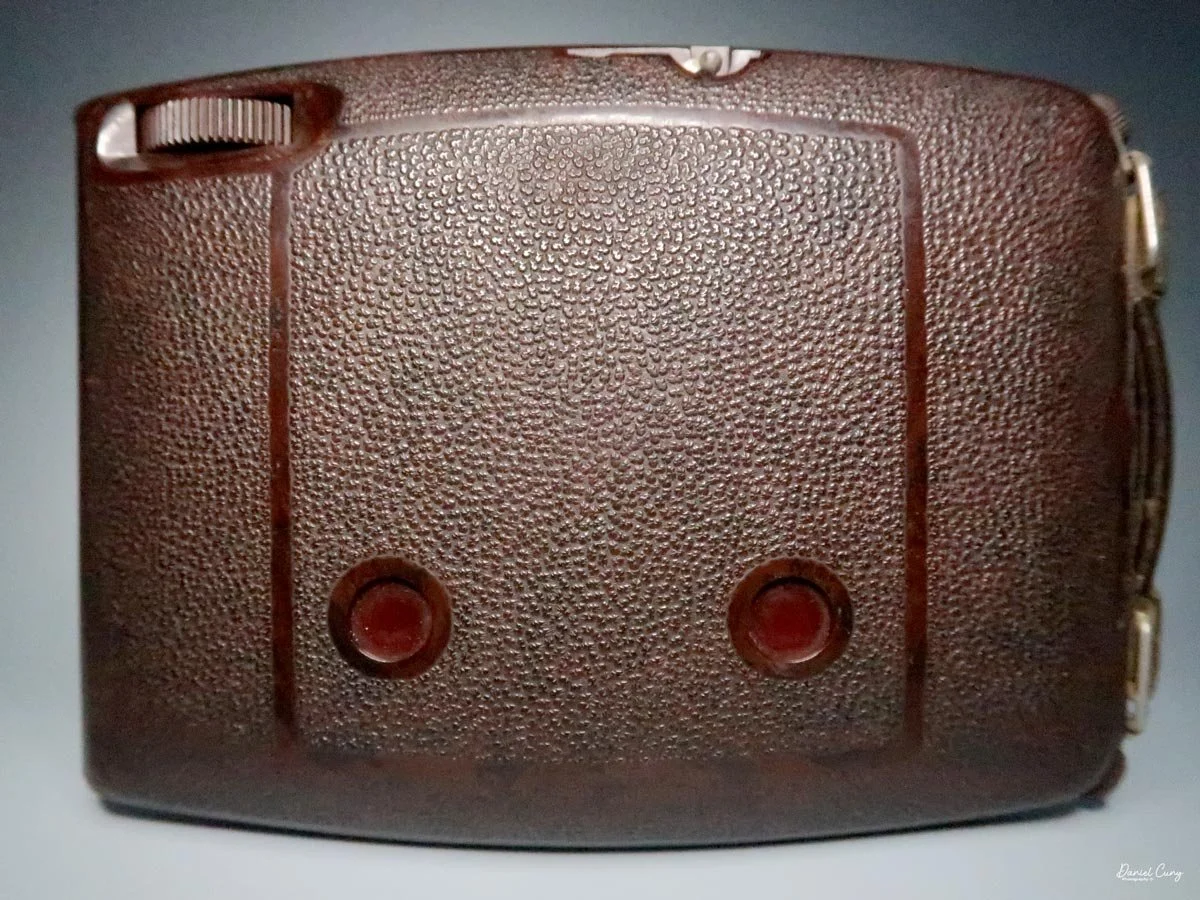
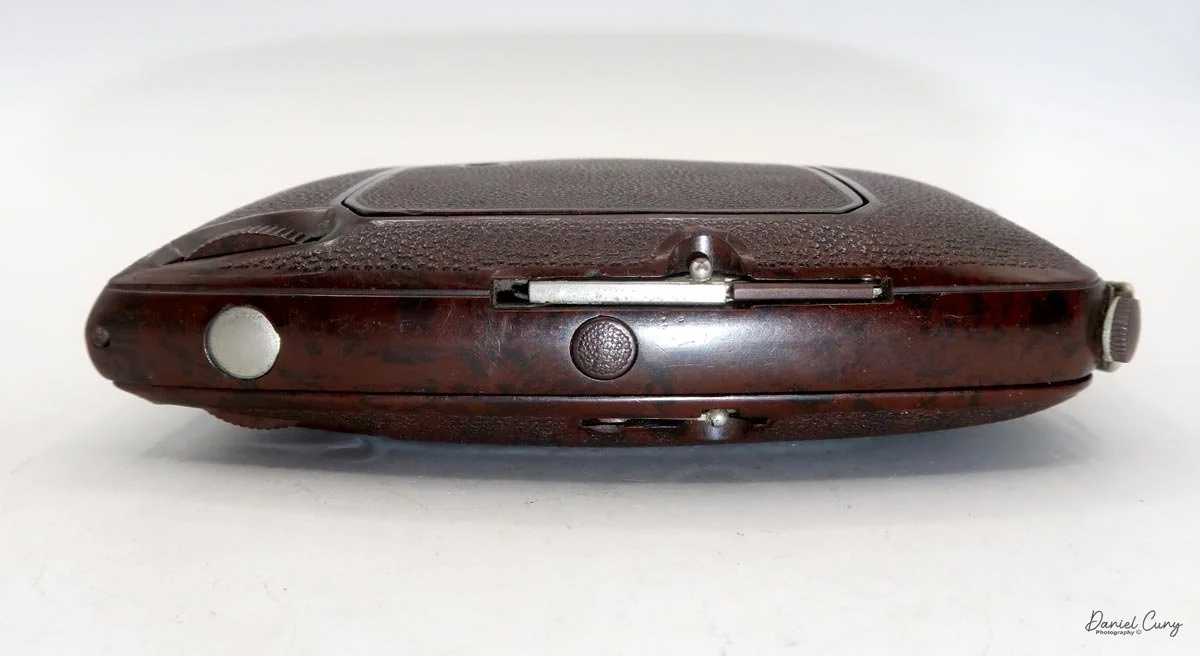
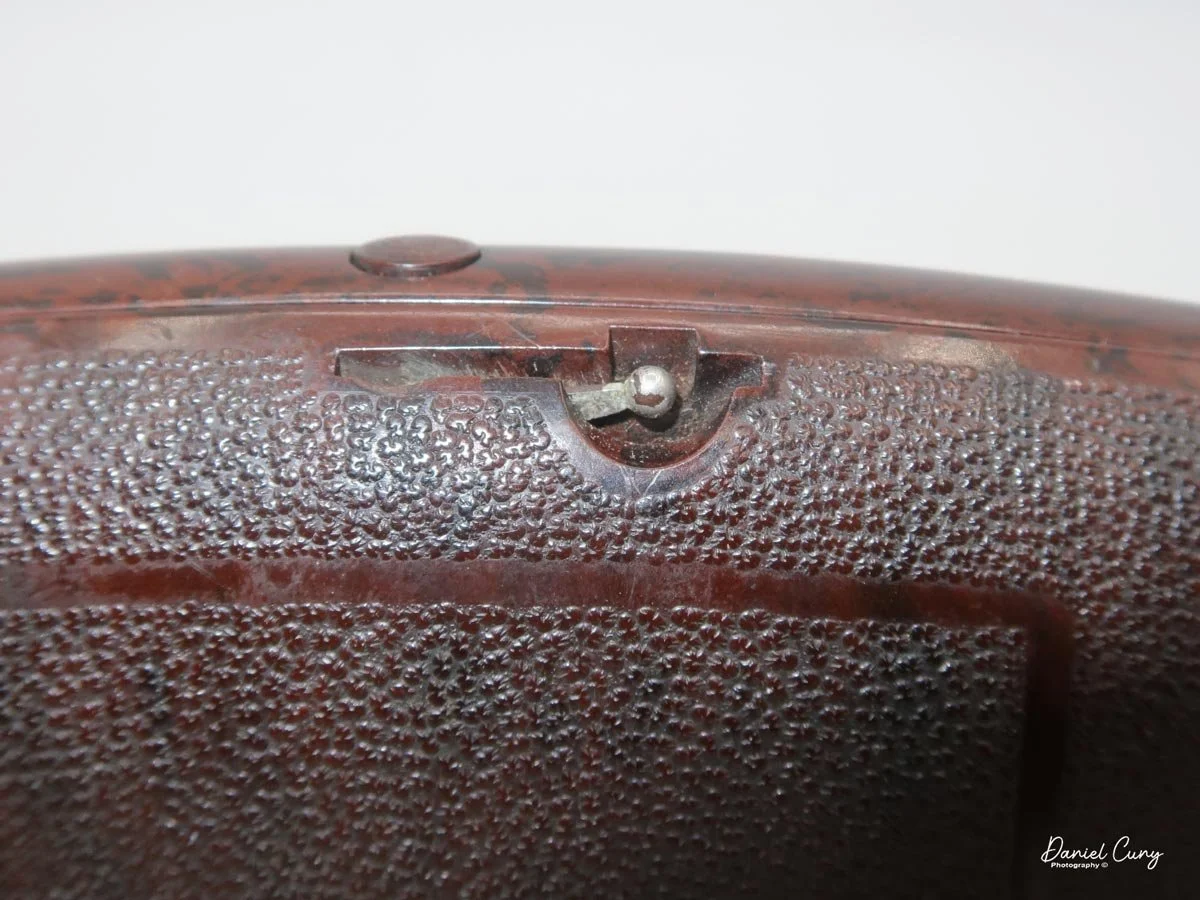
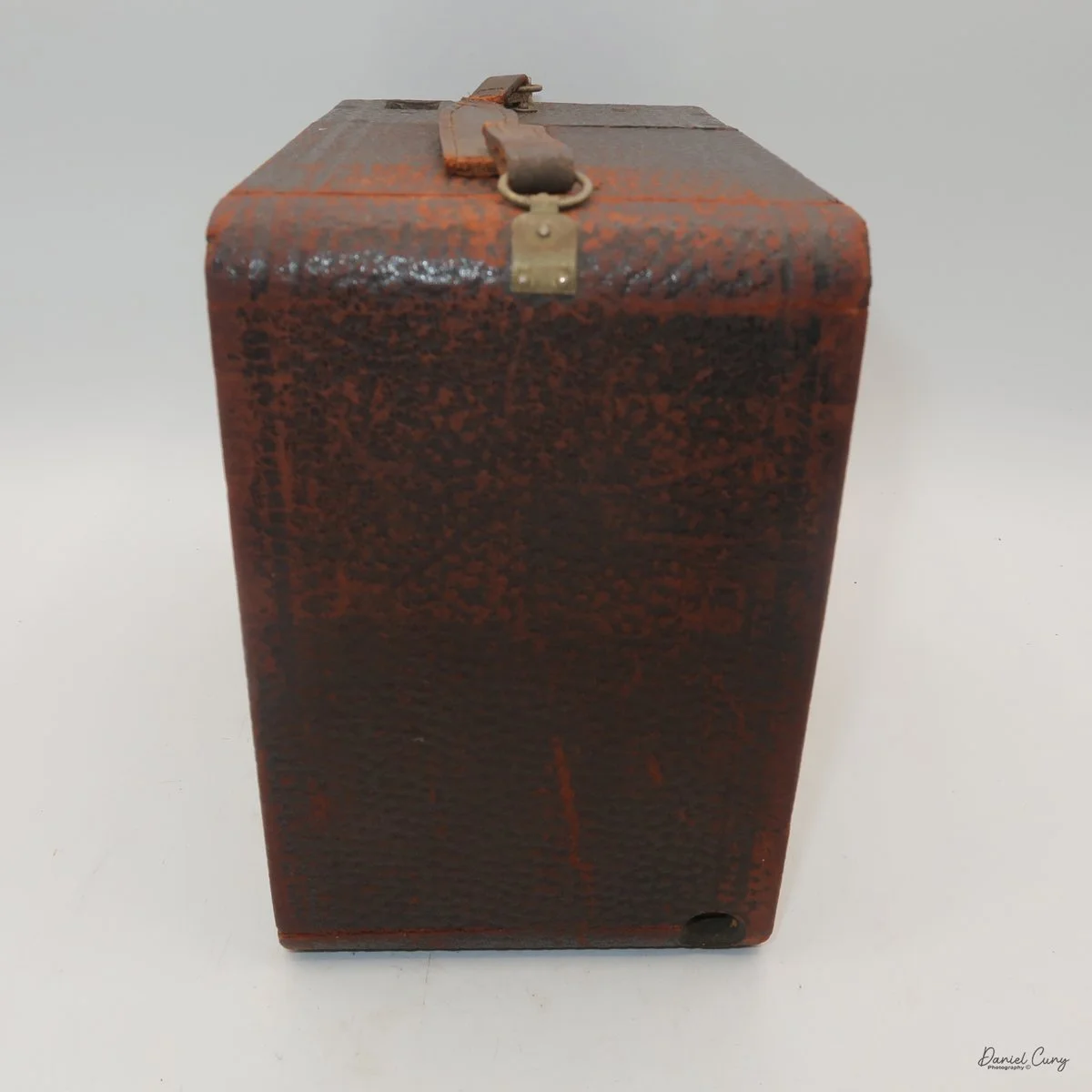
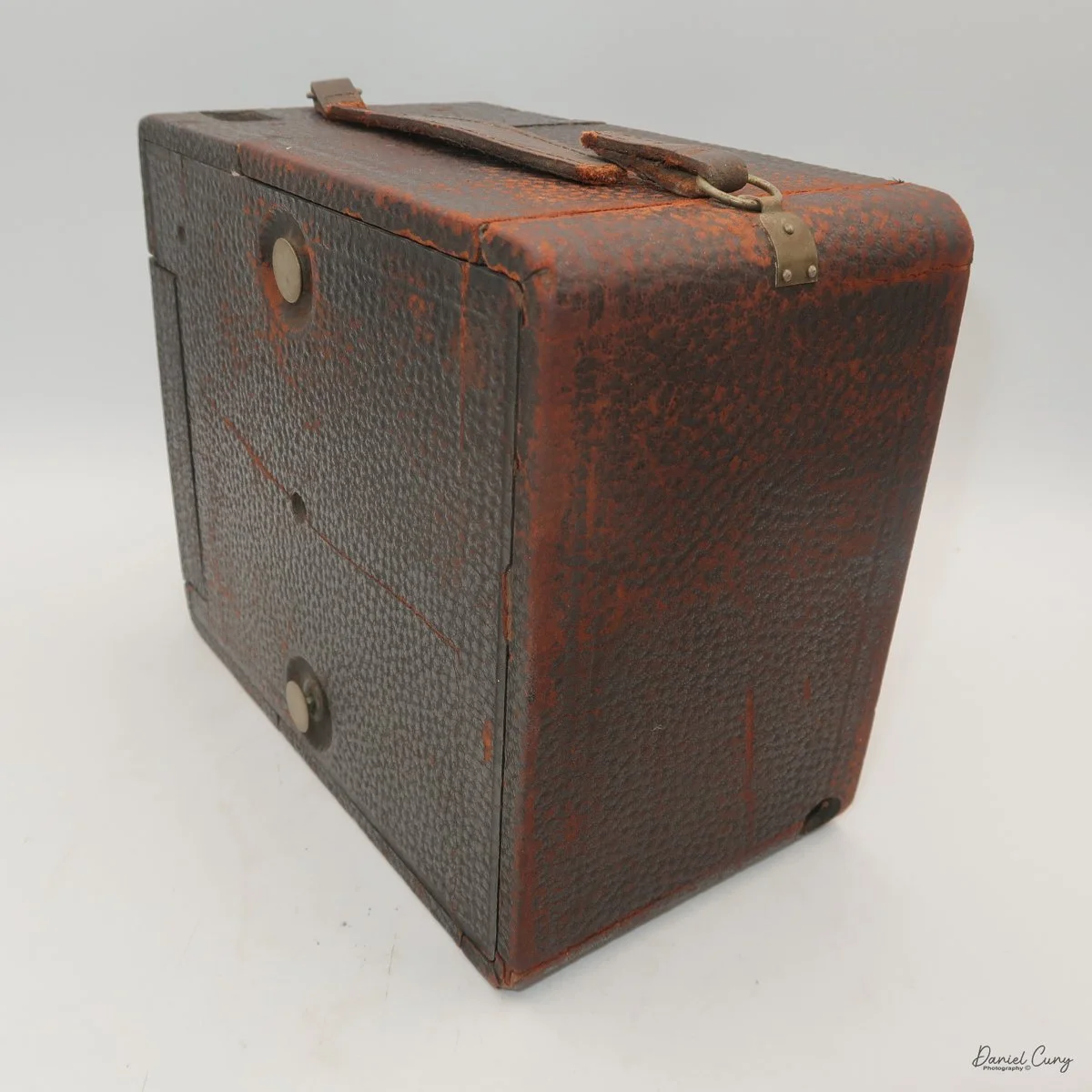
Back side with beautiful pebble finish on the Ebner camera

 At this point in my camera search, there were 3-4 cameras I wanted to look at, so I went up to one of the salespeople on the floor and showed them the items I was interested in. Very patiently, he pulled the 4 items from the shelves and placed them on a camera mat on one of the glass display cases in the shop.

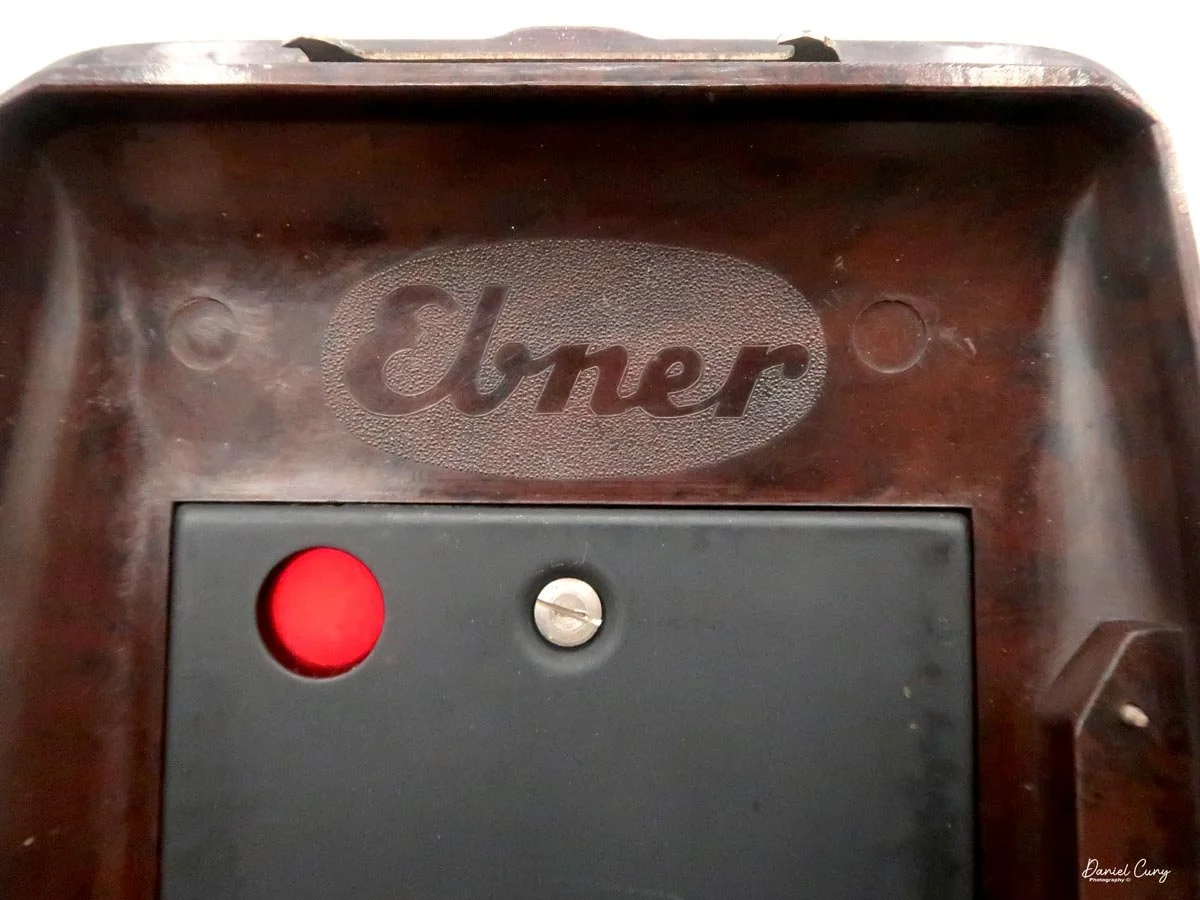
 Opening the Ebner camera first, I hadn't seen it before and don't recall it in McKeown's Camera Guide. I don't have the few hundred thousand cameras memorized. It wasn't until I opened the back of the camera and noticed the name "Ebner" that I realized the camera's brand. It still hadn't jogged my memory or sounded familiar.

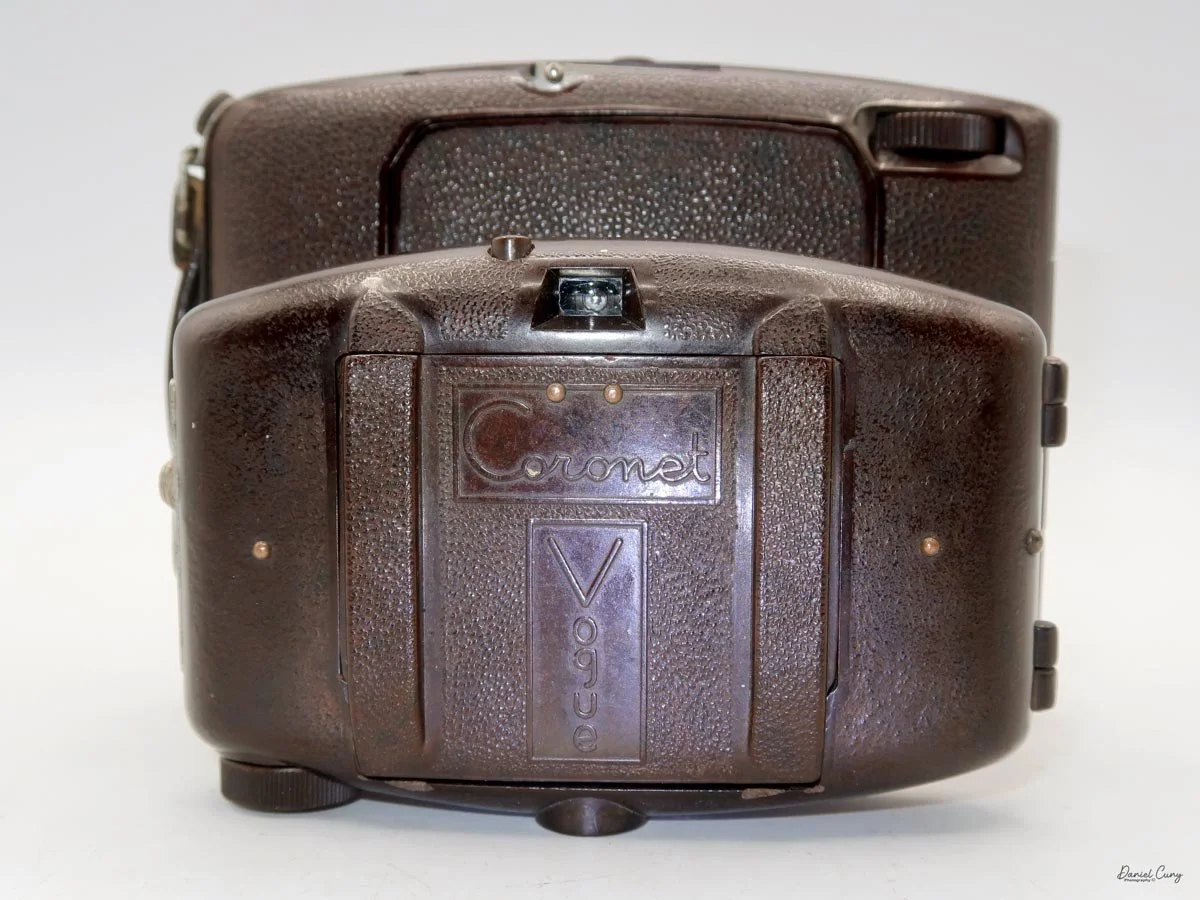
Similarities of the Ebner and Coronet Vogue cameras.

 As I looked over the camera, the shutter worked, the aperture slid around the lens and changed size, and the lens was fairly clean. It didn't have mold, mildew, or fungus as I shone a penlight through the lens, and I didn't see pinholes in the bellows, so all in all, the camera was a "keeper" to me.

 The Coronet Vogue camera had some issues. It had a replacement black bellows rather than the original brown matching bellows, and the side struts of the camera didn't work properly. But the camera was inexpensive, and the shutter worked, so I believe at some point later this year I will write about it. To me, the similarity in the design and style of both the Ebner and Coronet Vogue cameras is striking.

 The similarities make sense to me, especially since Ebner stopped producing cameras in 1935. Still, other camera companies, like Pontiac and Gallus, produced very similar cameras with the same sleek design. I'm confident that since the Coronet Vogue was introduced in 1936, they recognized that this sleek, Bakelite camera design would benefit their sales, and they produced it.

History:

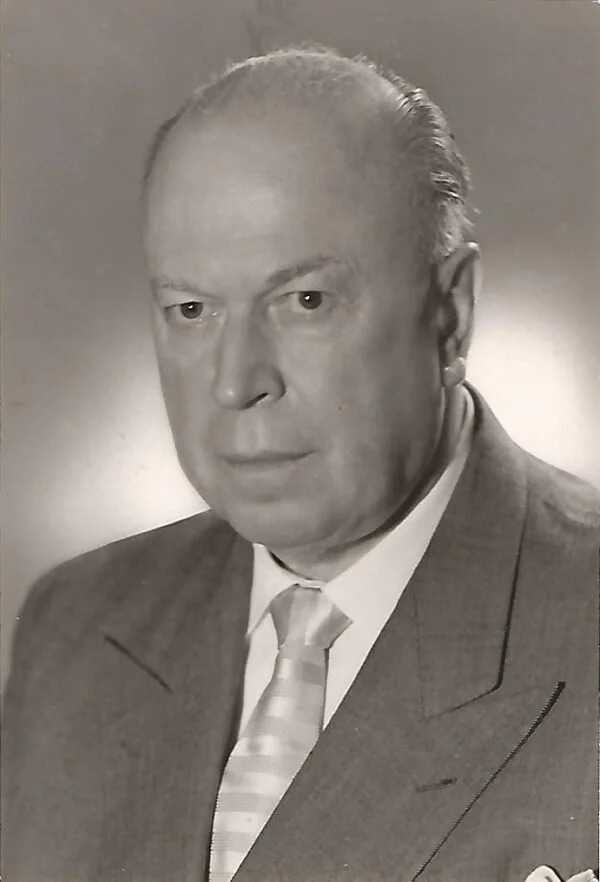
 Albert Ebner & Co. was a small but interesting German manufacturer that moved from audio and electrical products into cameras during the early 1930s. Albert Ebner, born in 1891 in Bad Cannstatt, had already founded earlier companies before his name became associated with the camera firm that collectors remember today.

Portrait of Albert Ebner

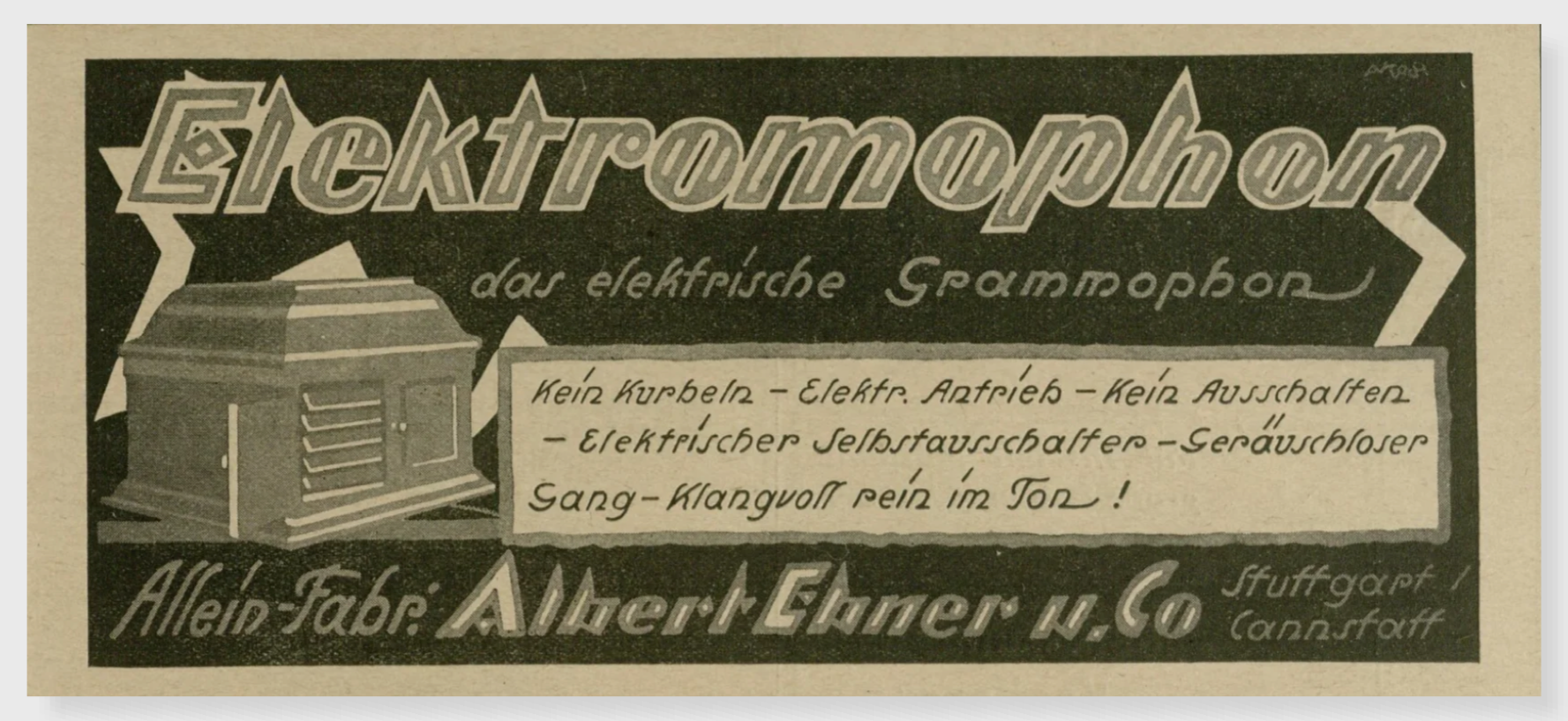
 The company's background was in turntable motors, gramophone parts, and related household electrical goods. After earlier business setbacks and reorganizations, Ebner returned to Bad Cannstatt and formed a new Albert Ebner & Co., often abbreviated AECO, which broadened into vacuum cleaners, fans, and other electrical products before experimenting with cameras.

 Ebner's camera output was very limited. The firm produced only two folding models: a 6x9 cm camera on 120 film and a smaller 4.5x6 cm model on Kodak 620 film, both made around 1933 to 1935. These cameras had no special model names beyond their image size, which makes them especially plain in naming but distinctive in construction.

 What set them apart was their design. Both cameras used a marbled brown Bakelite body, a material associated with the radio and record-player industries, and they paired that shell with a Compur leaf shutter and lenses from makers such as Meyer-Gorlitz. That gives the Ebner cameras a streamlined Art Deco look that feels more industrially designed than mass-market consumer.

German advertising.

 The larger 6x9 version used standard 120 film, while the 4.5x6 version used 620 film, an unusual choice for a German maker of the time. Collectors also note that the cameras were sold mostly in Germany and that production was brief, with the company apparently ending camera manufacture by 1935. Because so few were made, surviving examples are relatively scarce today.

 Ebner's camera venture did not last long. Still, it fits a broader pattern of early 20th-century firms adapting existing expertise in Bakelite and mechanical assembly to camera production. After the camera period ended, Albert Ebner's business life continued in audio through the later Perpetuum-Ebner merger. In contrast, the cameras remained a short-lived sideline that now attracts collectors and historians.

My Camera:

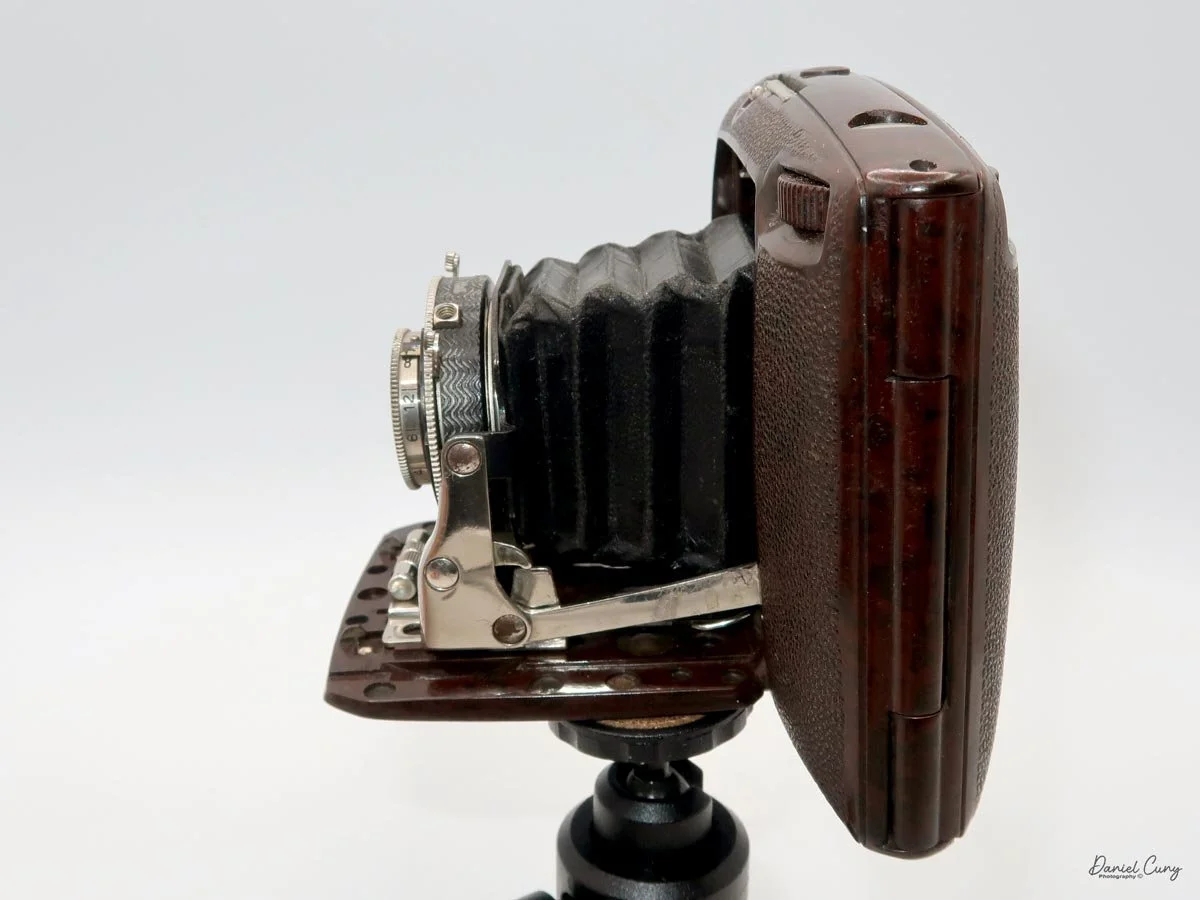
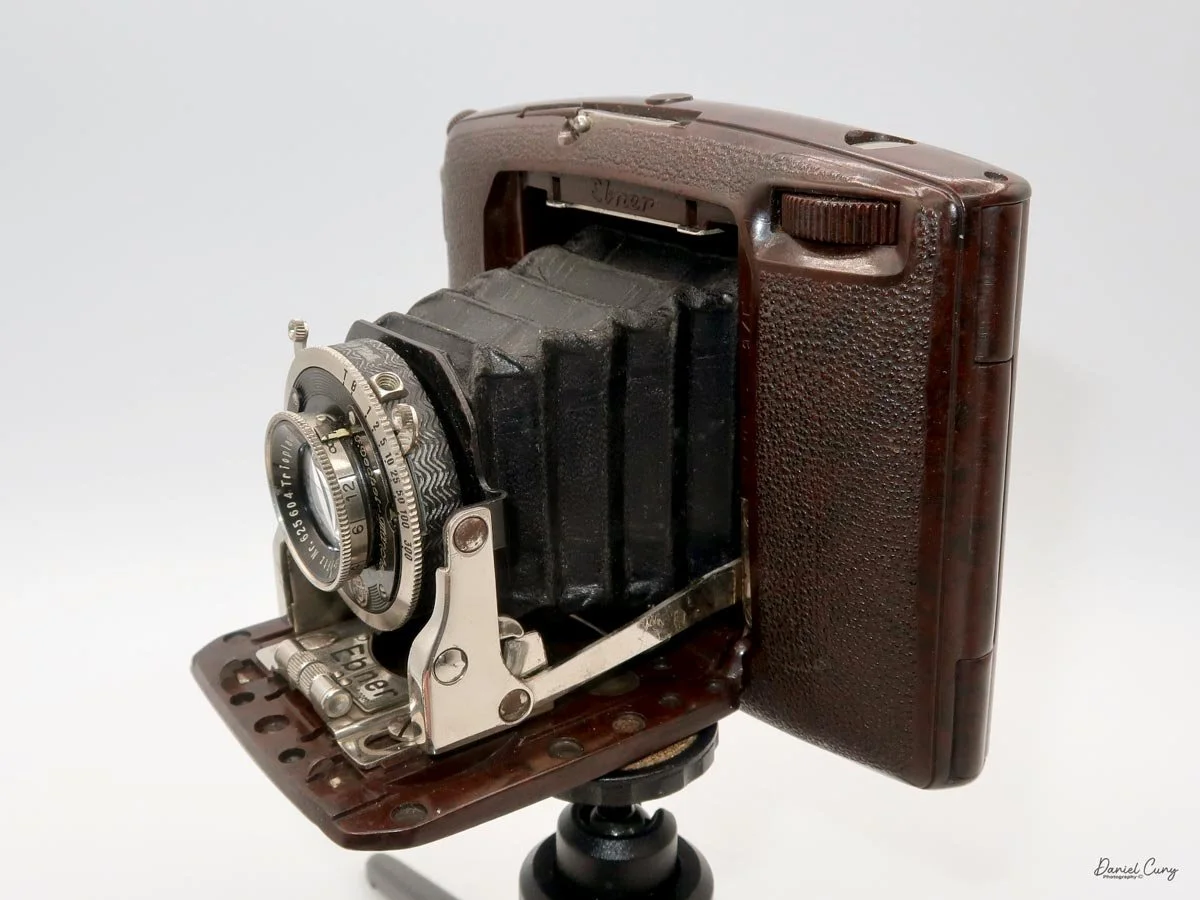
 My Ebner 6x4.5cm camera is 4.25" tall with the retractable viewfinder down, and 5" tall with the viewfinder in the upright, viewing position. It's also 5.5 wide and 1.25" deep with the lens retracted, and 4" with the lens extended and in the normal taking position. The camera weighs 1 pound 0.7 ounces without film loaded inside. 

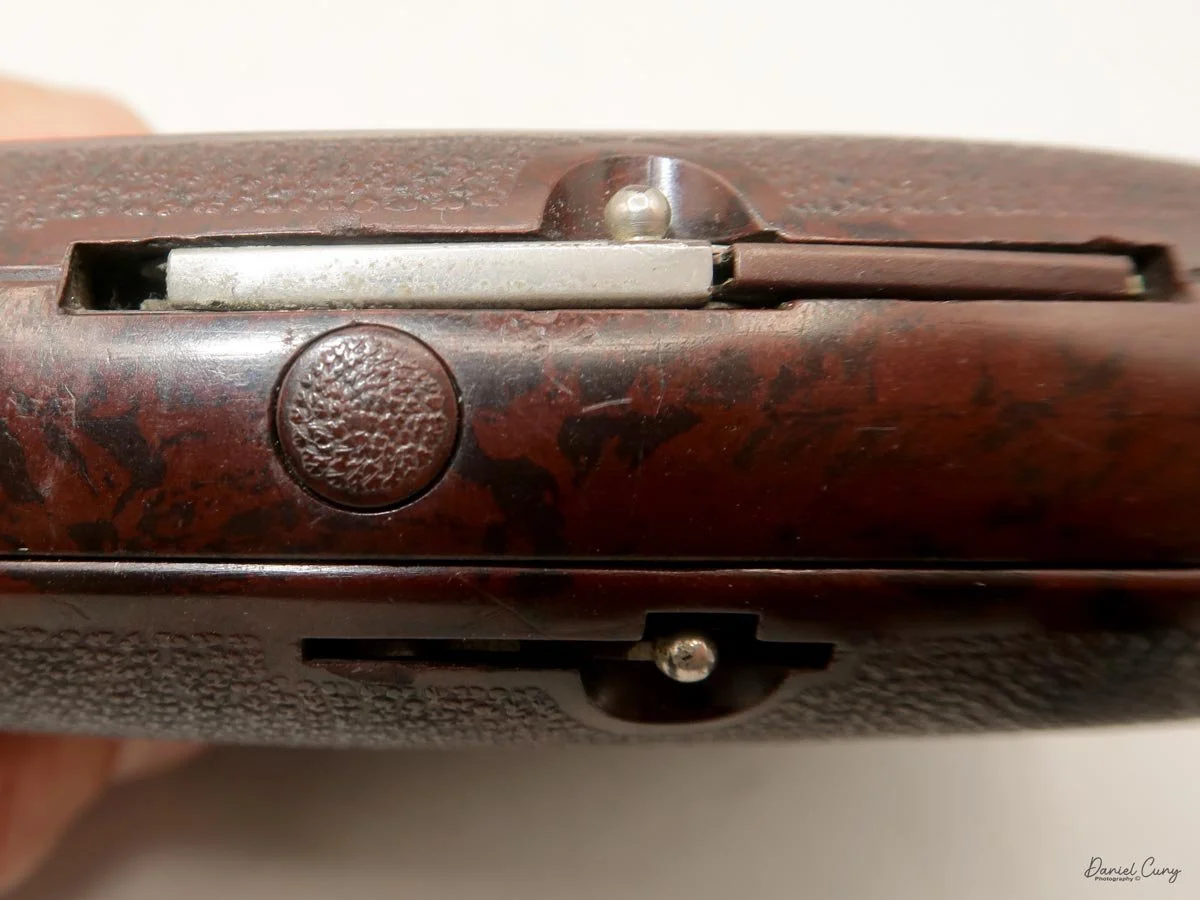
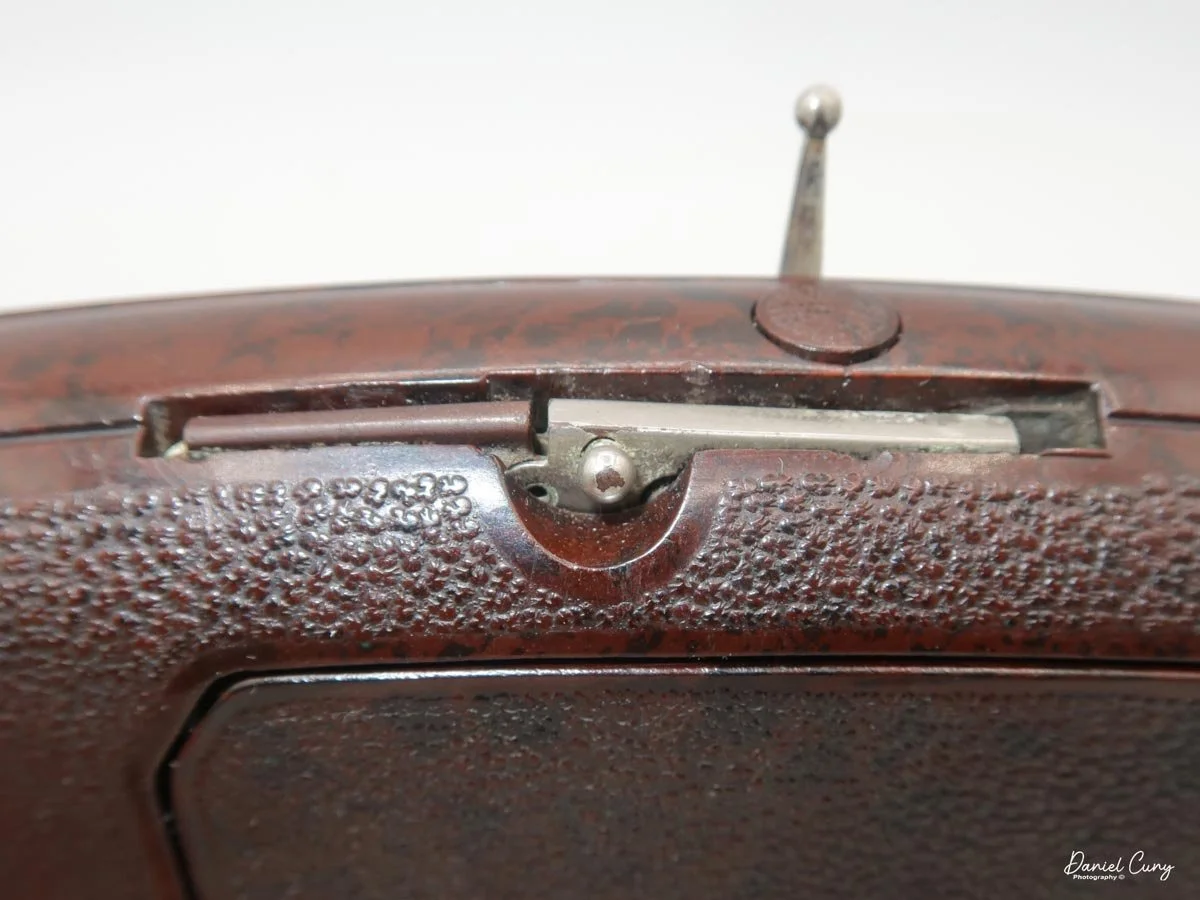
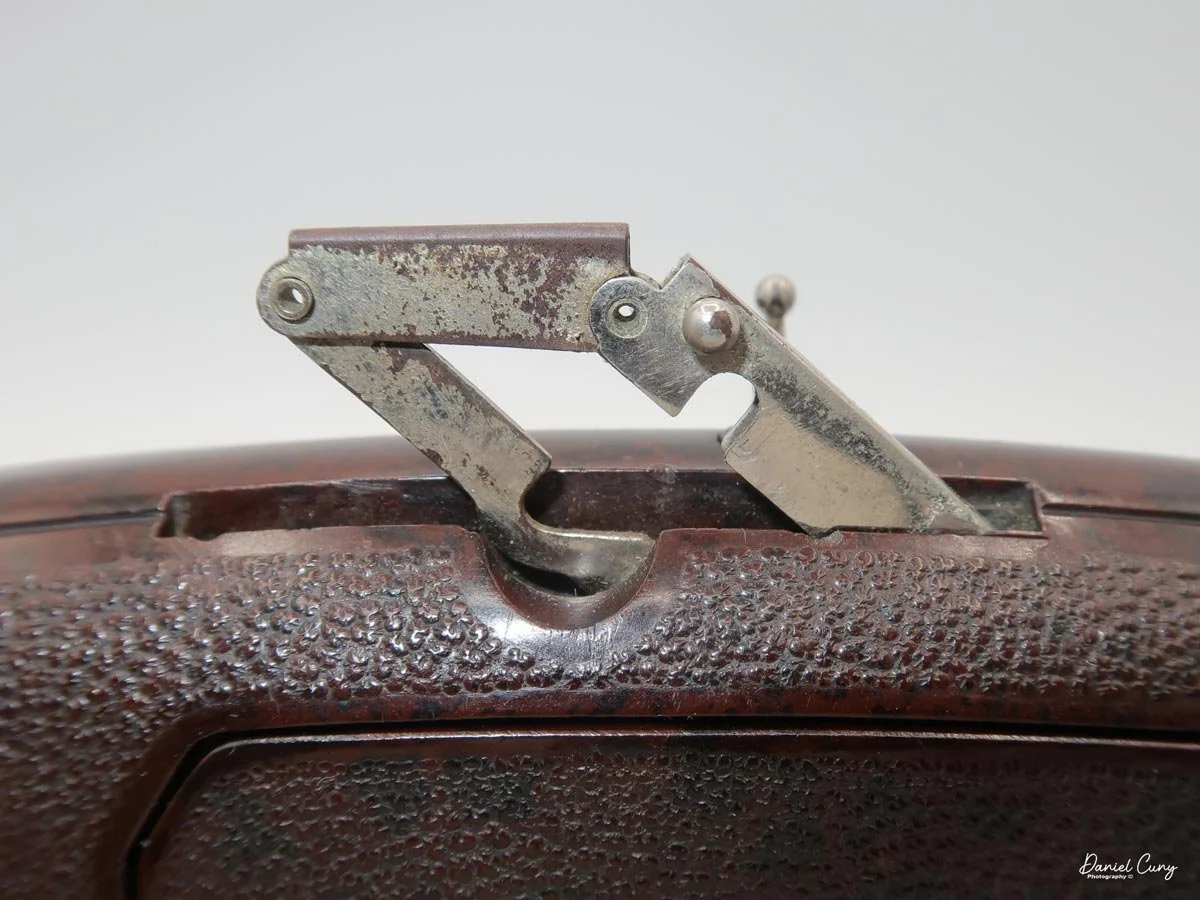
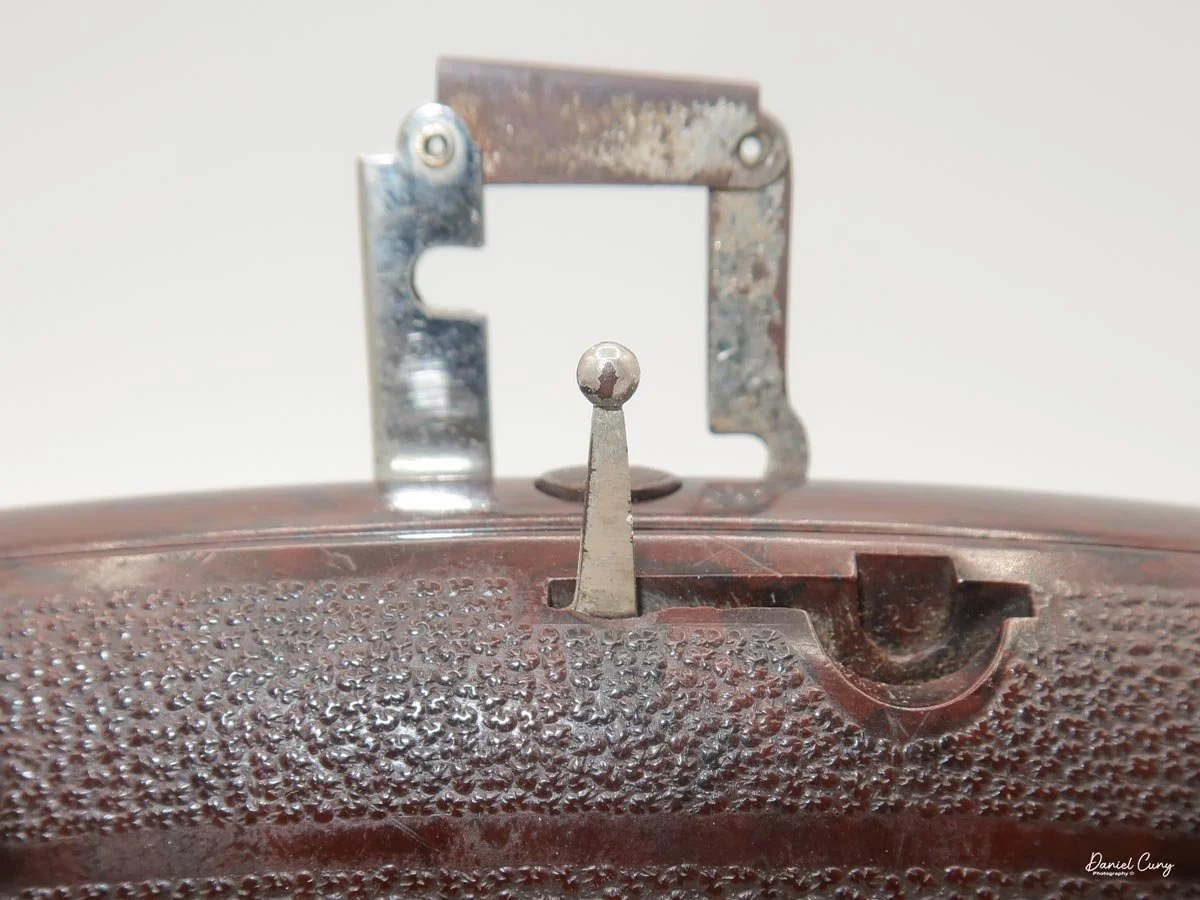
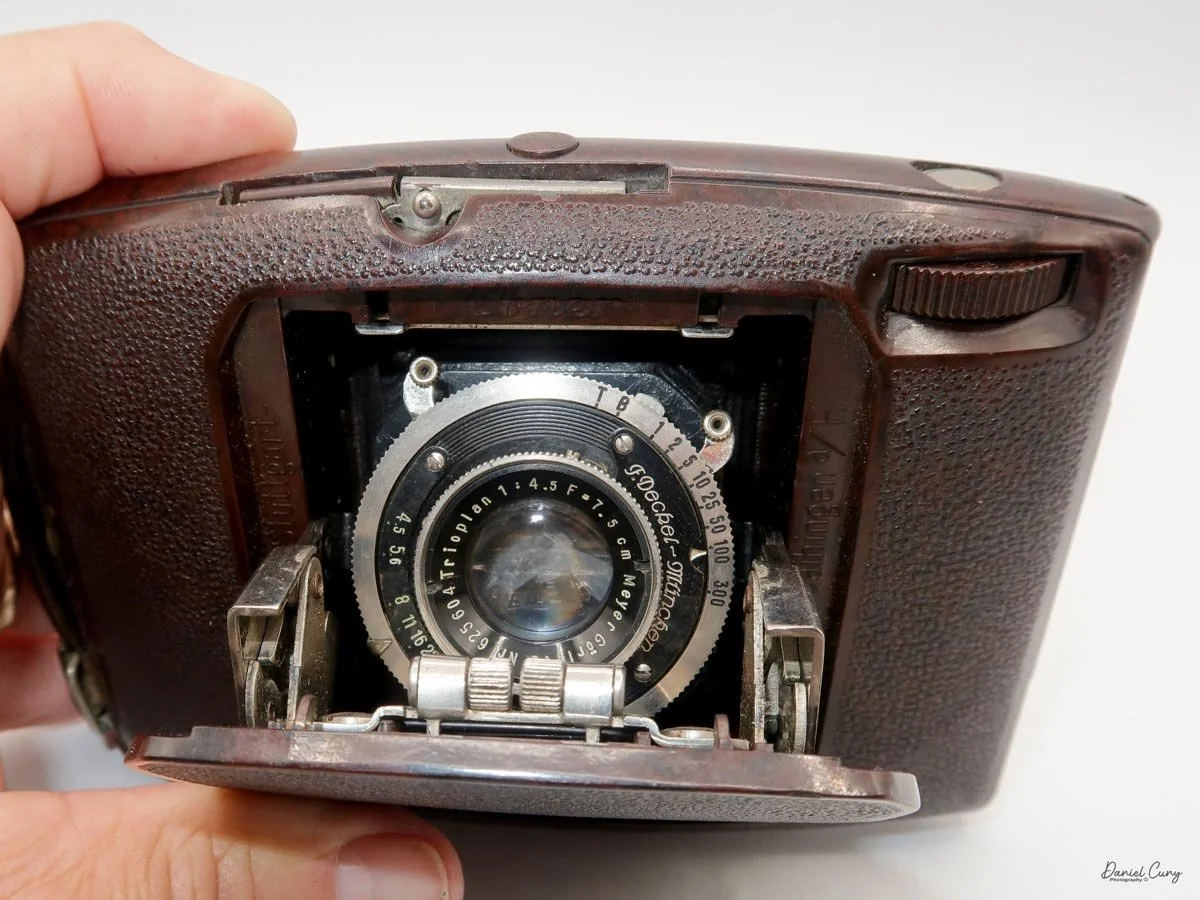
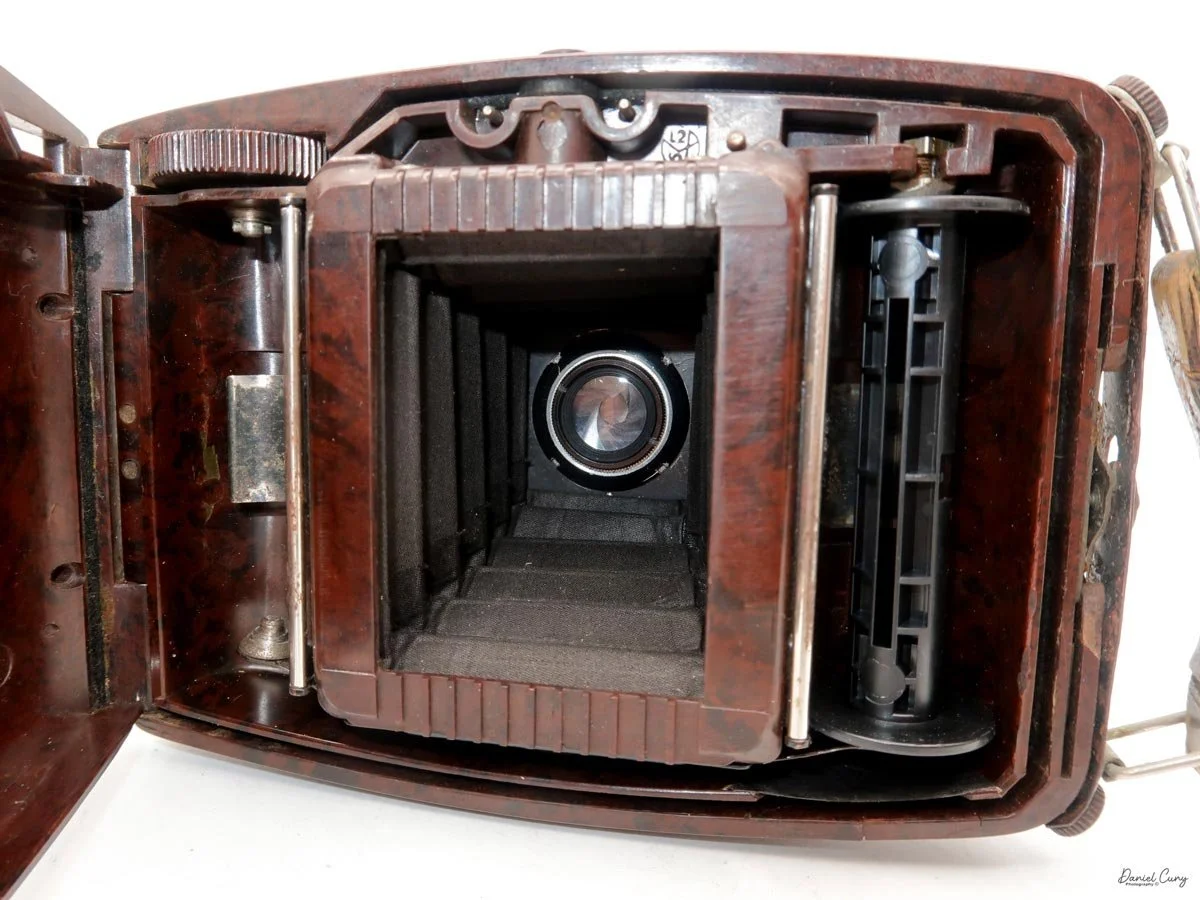
To open the Ebner camera, on the top of the camera is a button between the retractable front viewfinder, which pulls up from the camera body to produce a vertical rectangle. and a small pbar with a ball on the end used as the rear portion of the viewfinder. This bar is also retracted into the camera body. Once the button is pressed, the front door housing the lens, bellows, and shutter springs from the camera body.

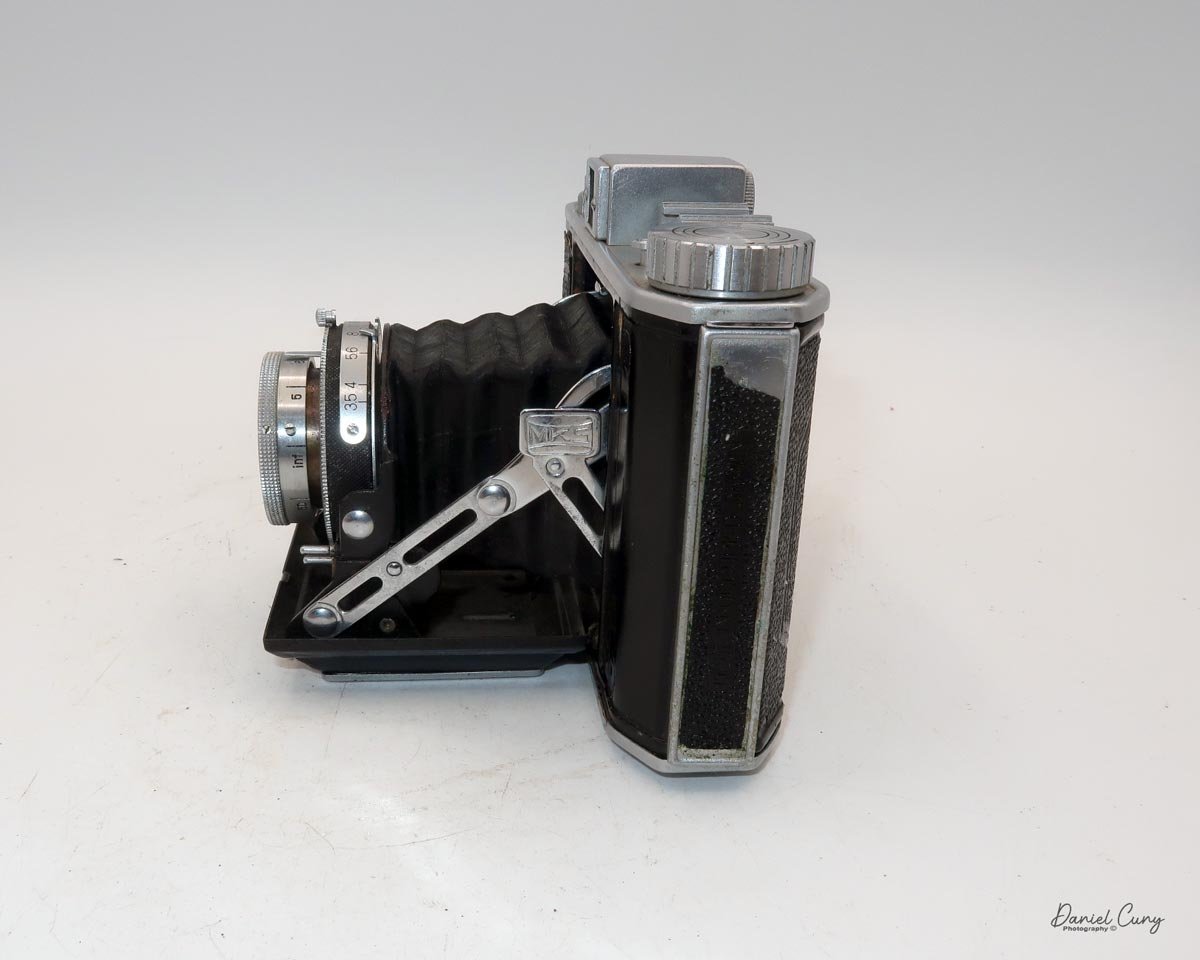
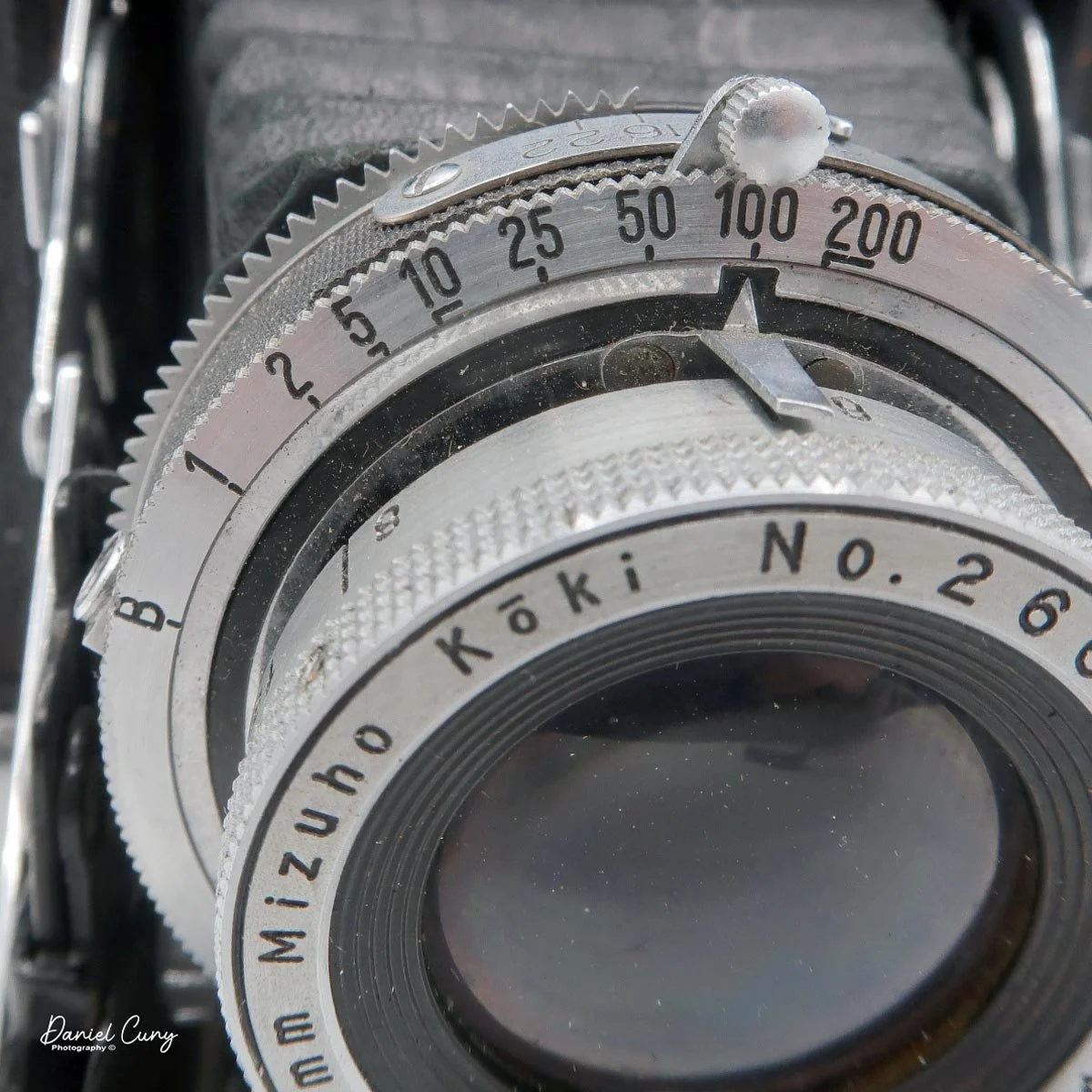
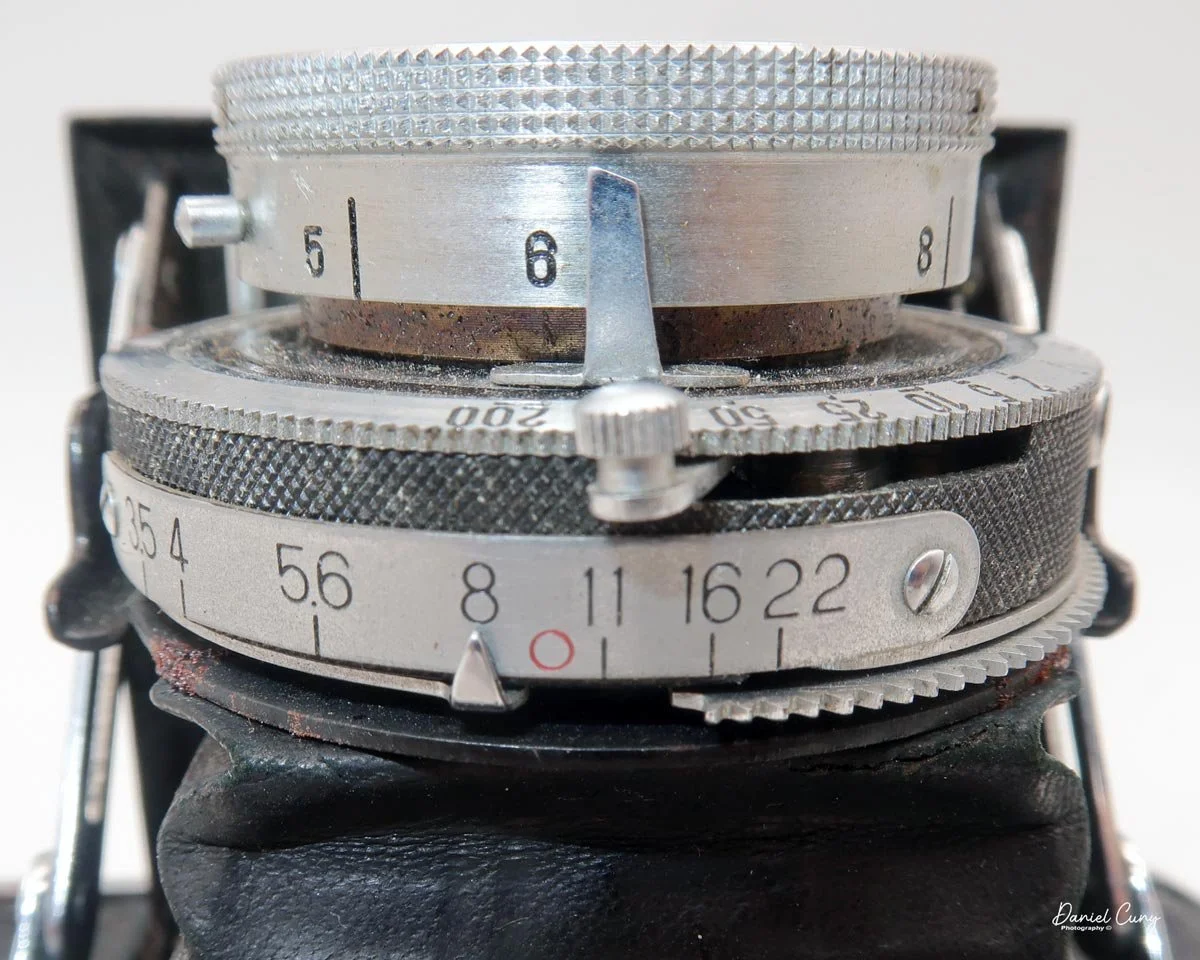
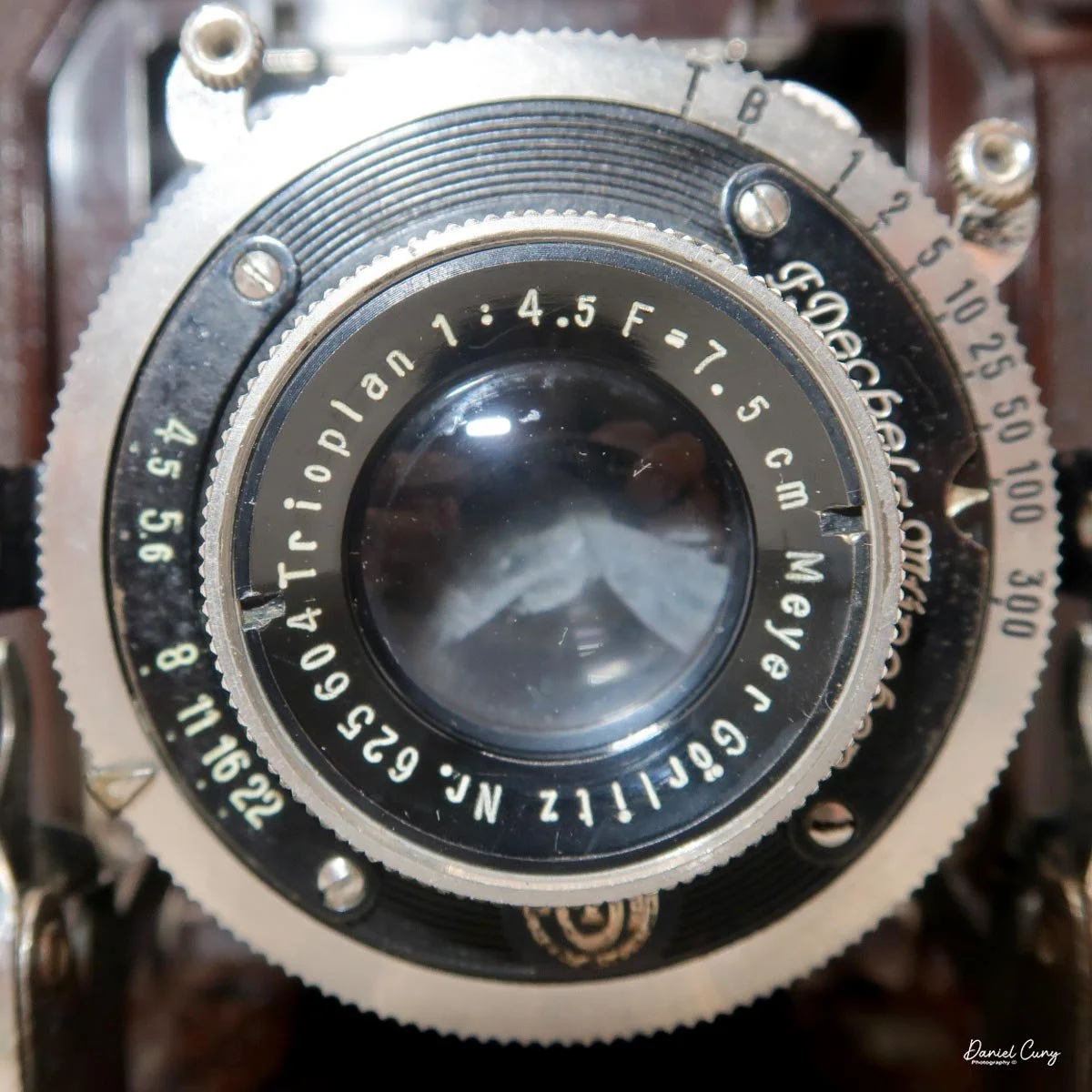
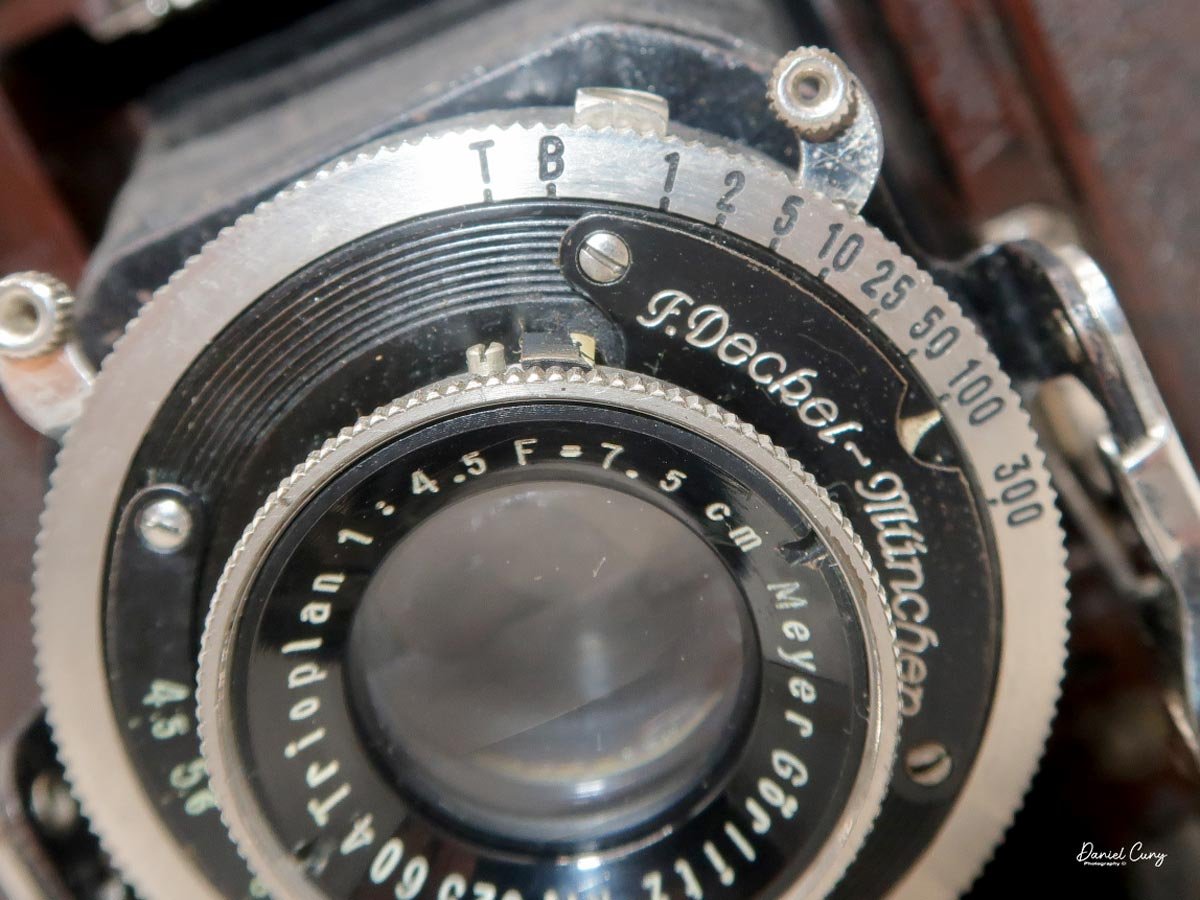
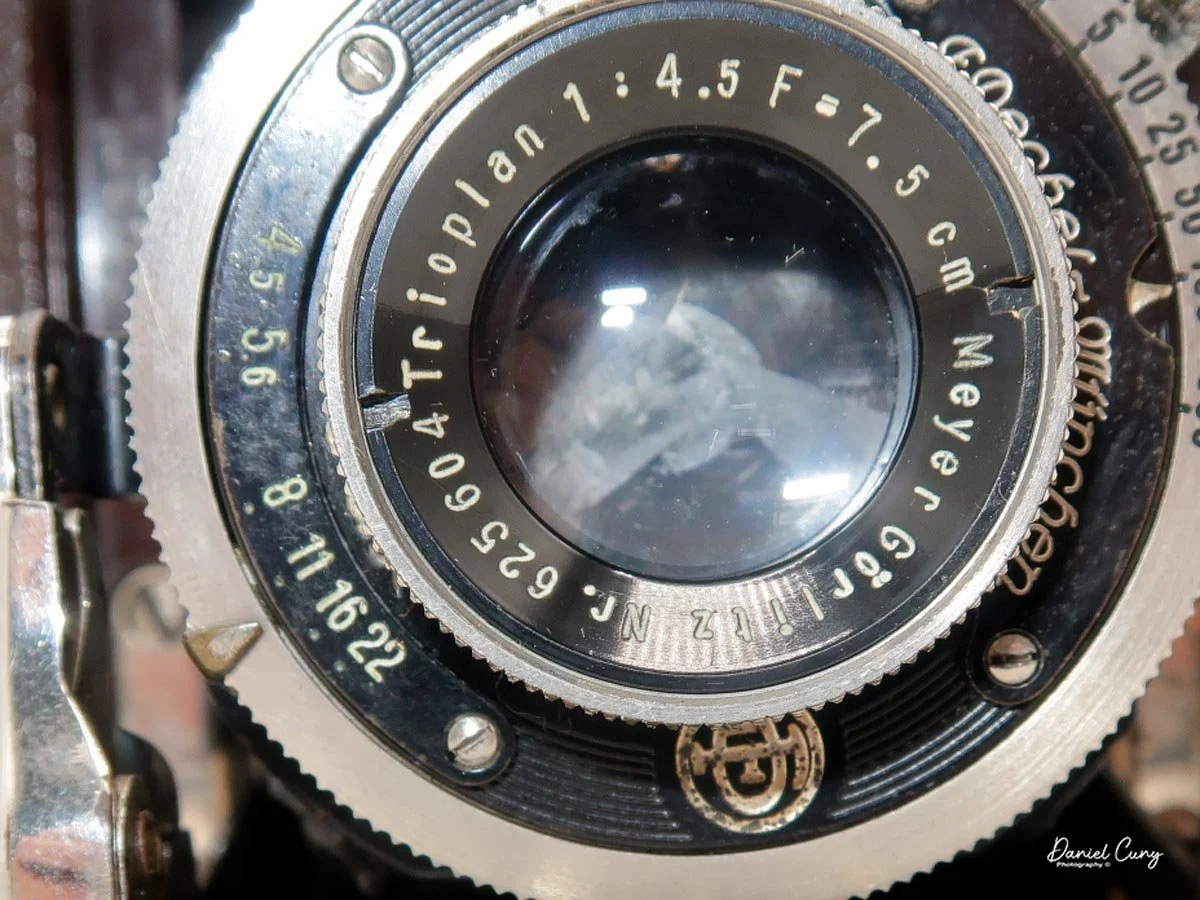
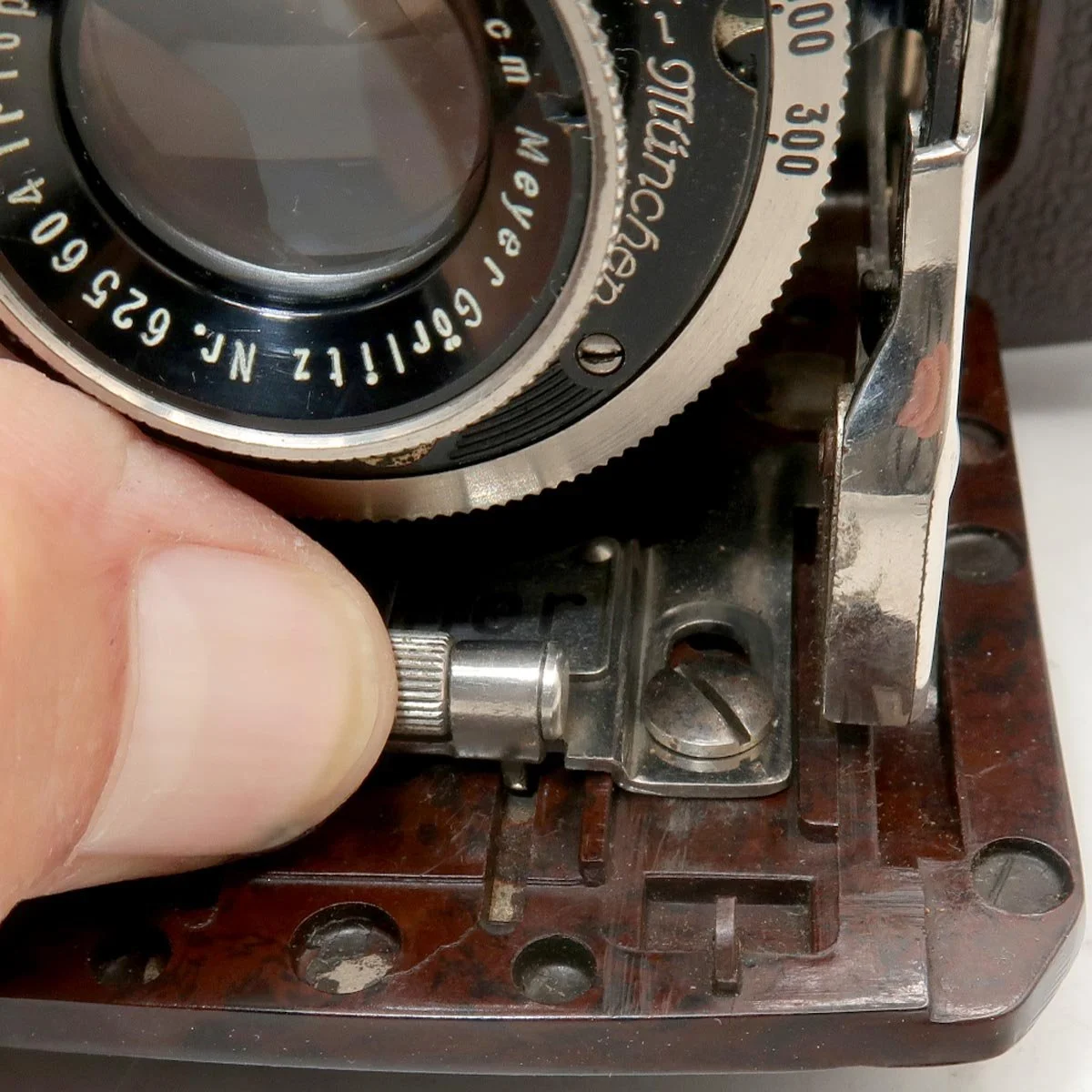
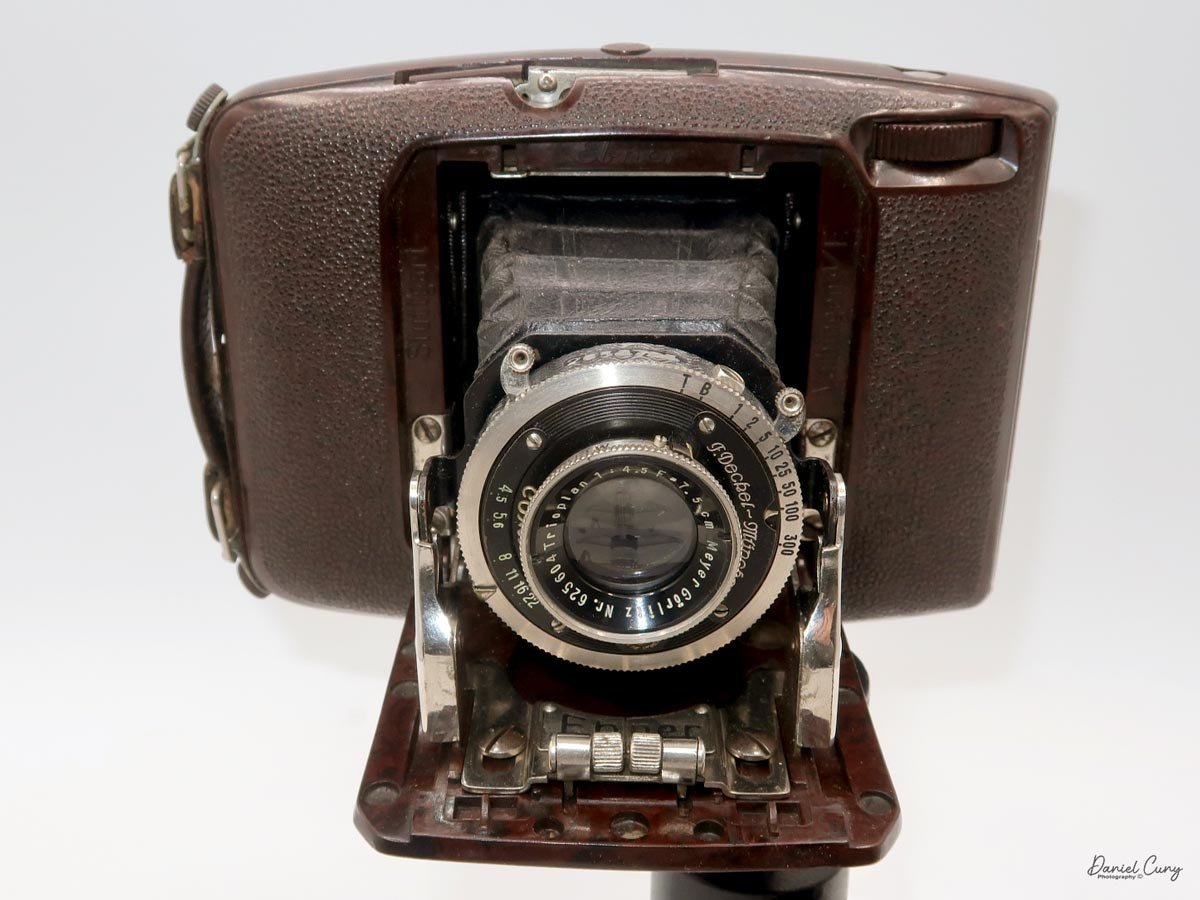
The Ebner I own has a Meyer-Goerlitz 7.5cm F/4.5 lens (SN 625604), with a Compur shutter, ranging from 1/300 to 1 second, plus "T" and "B". There were several different lens and shutter combinations for the camera. The aperture range is from F/4.5 to 22. 

 Setting the shutter speed is done by turning a ring on the outer portion of the lens, and the aperture is set by sliding a lever with a pointing end to the desired aperture setting under the lens. Also, the shutter is cocked by one lever at the top of the shutter and released by another lever on the side of the shutter. Focusing the lens is done by rotating the lens itself to the desired focus distance in meters, as seen on the top of the lens.

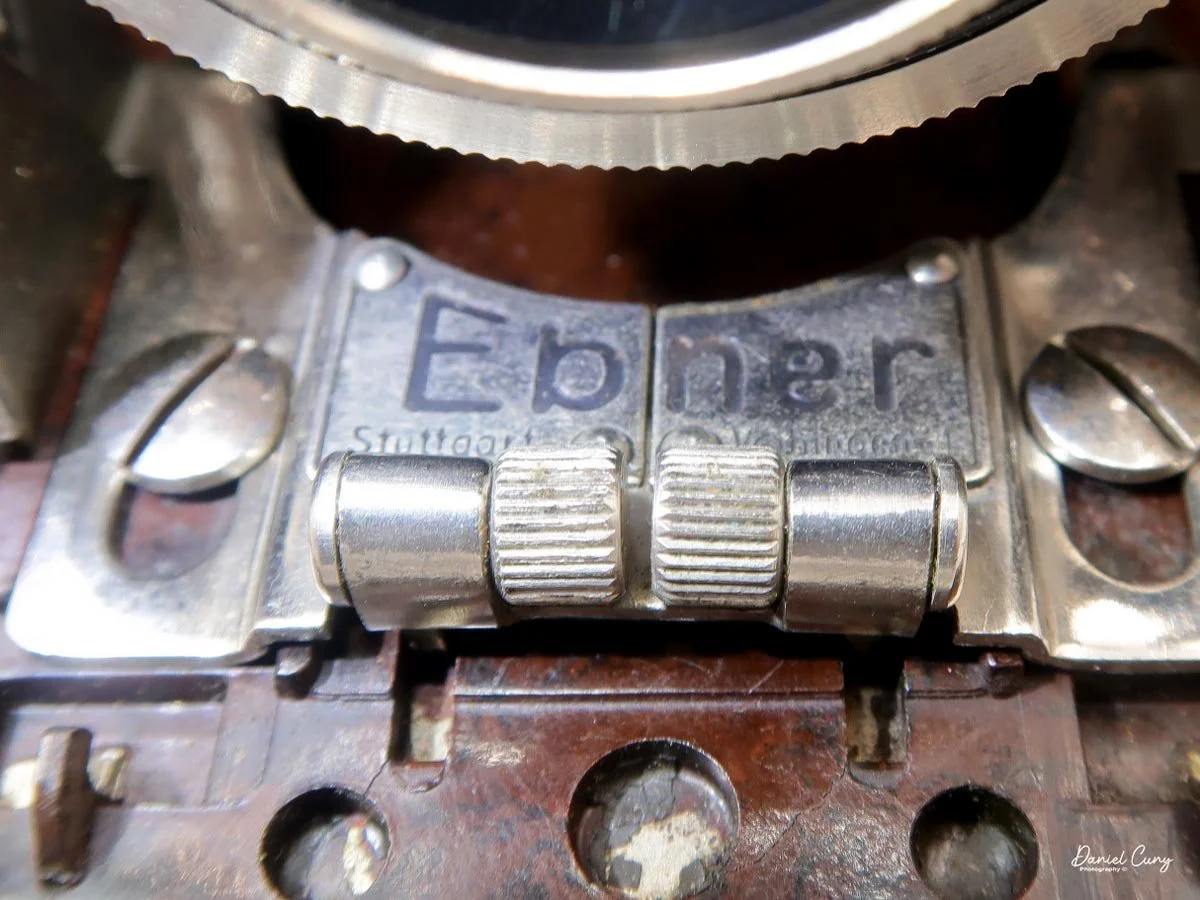
To close the camera for transport, there is a bar at the bottom of the lens bed, just in front of the "Ebner" plate. Press these bars towards the camera body; the lens board releases, allowing you to tilt the board back up and into the camera body. It will click when the lens board is locked into position.

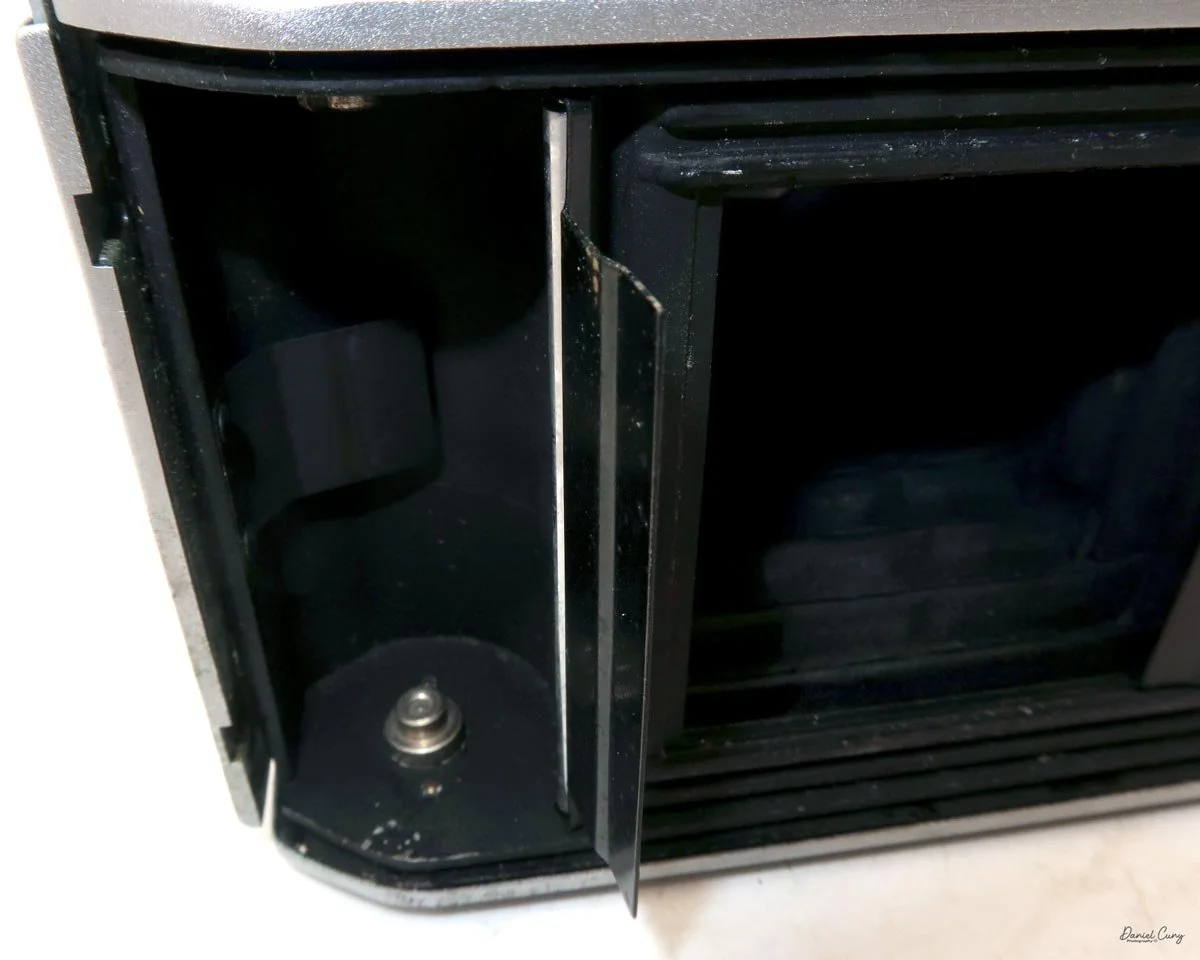
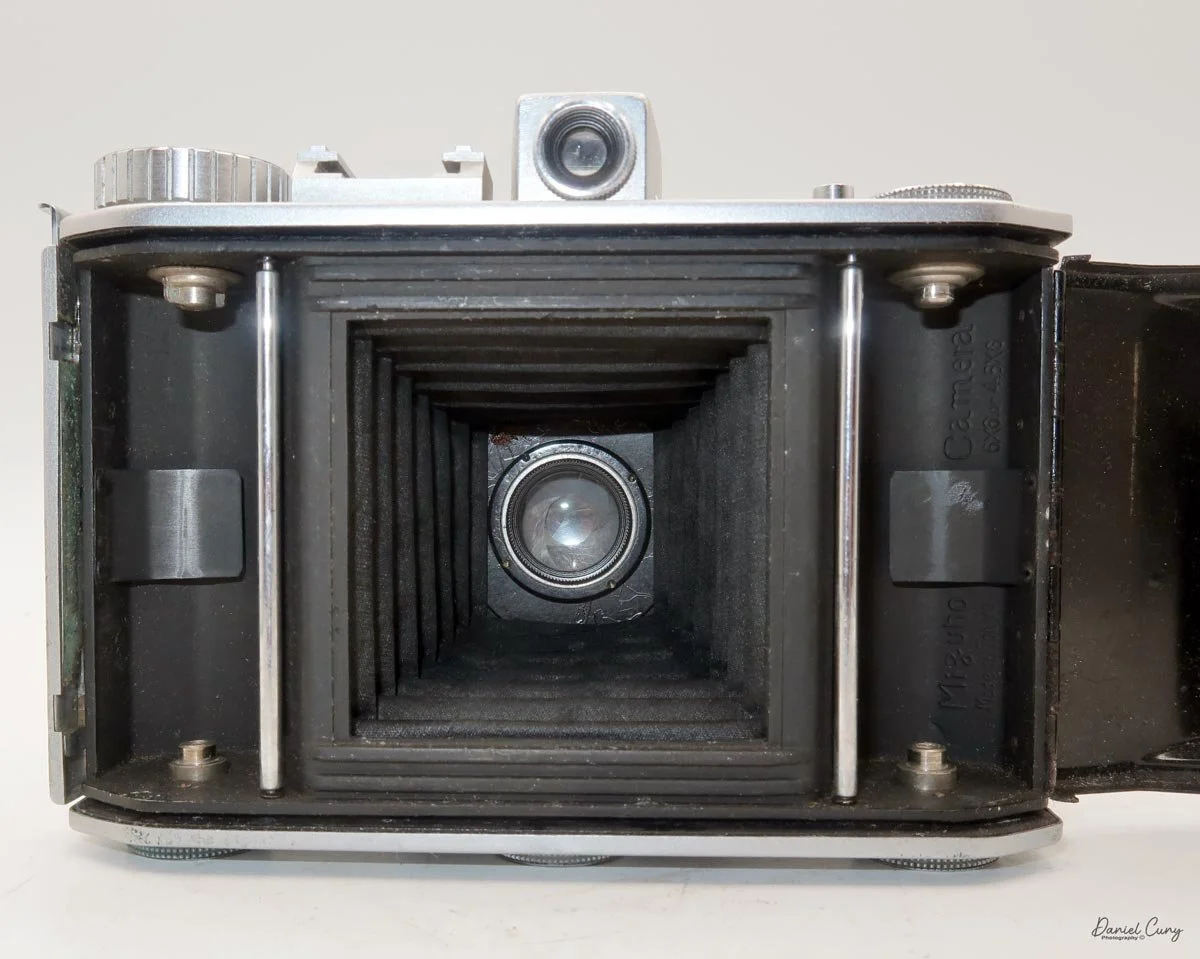
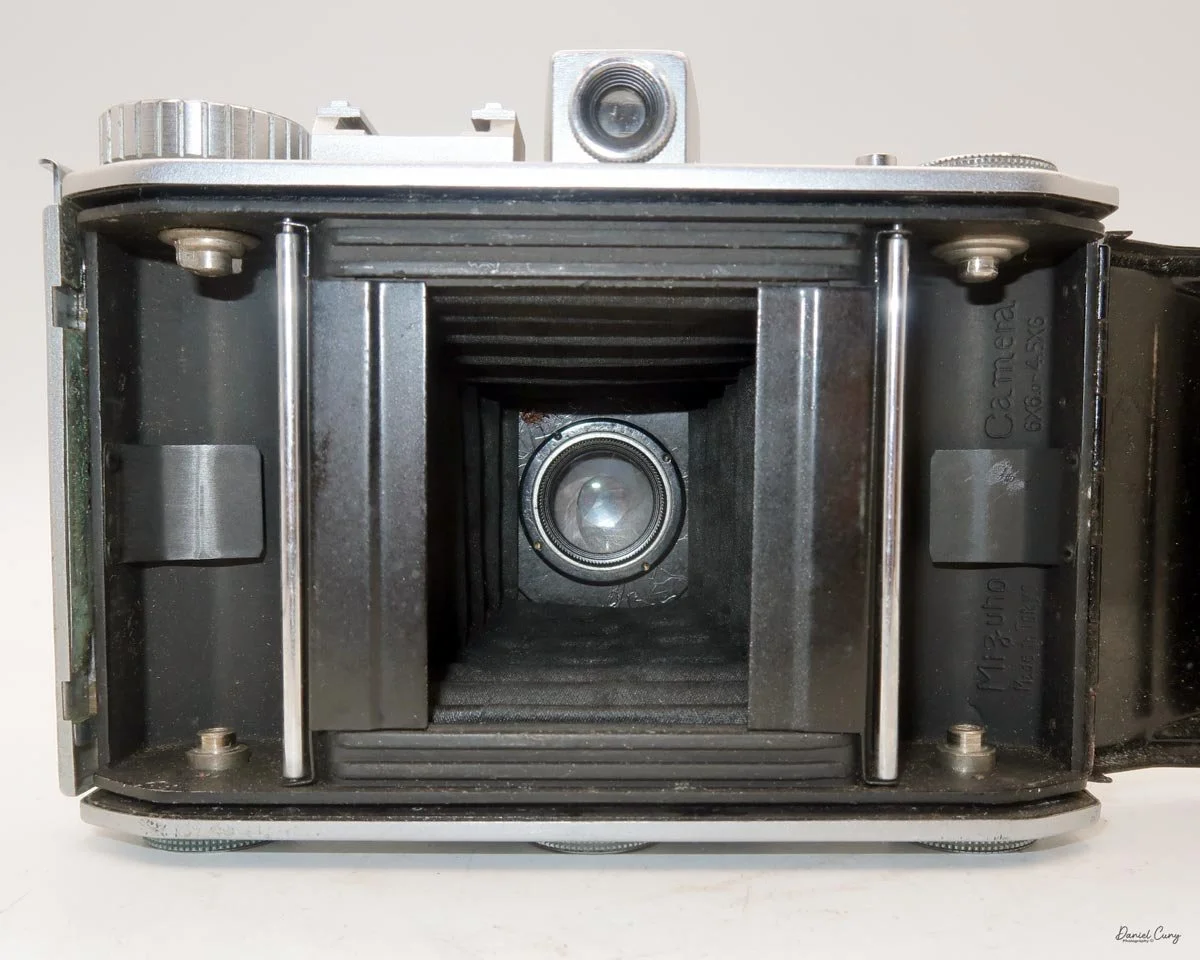
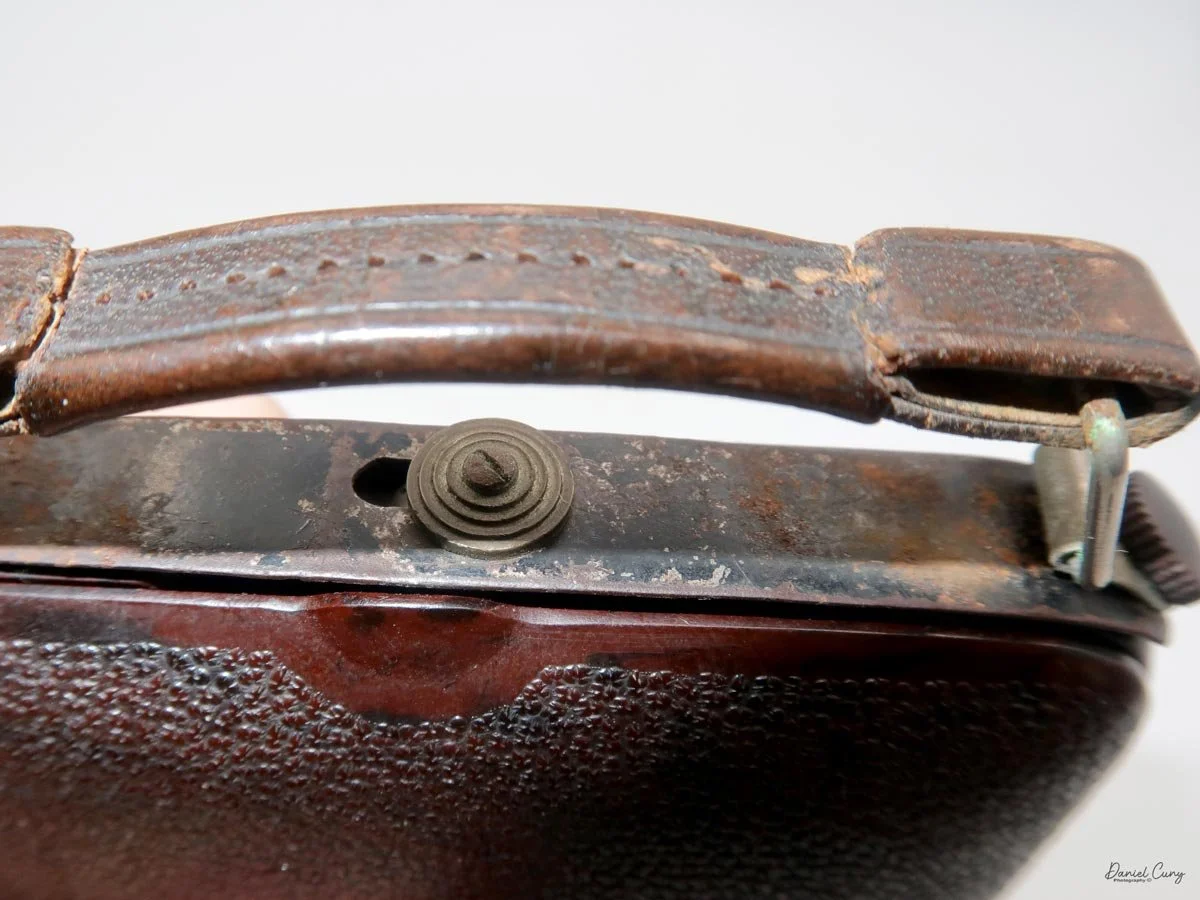
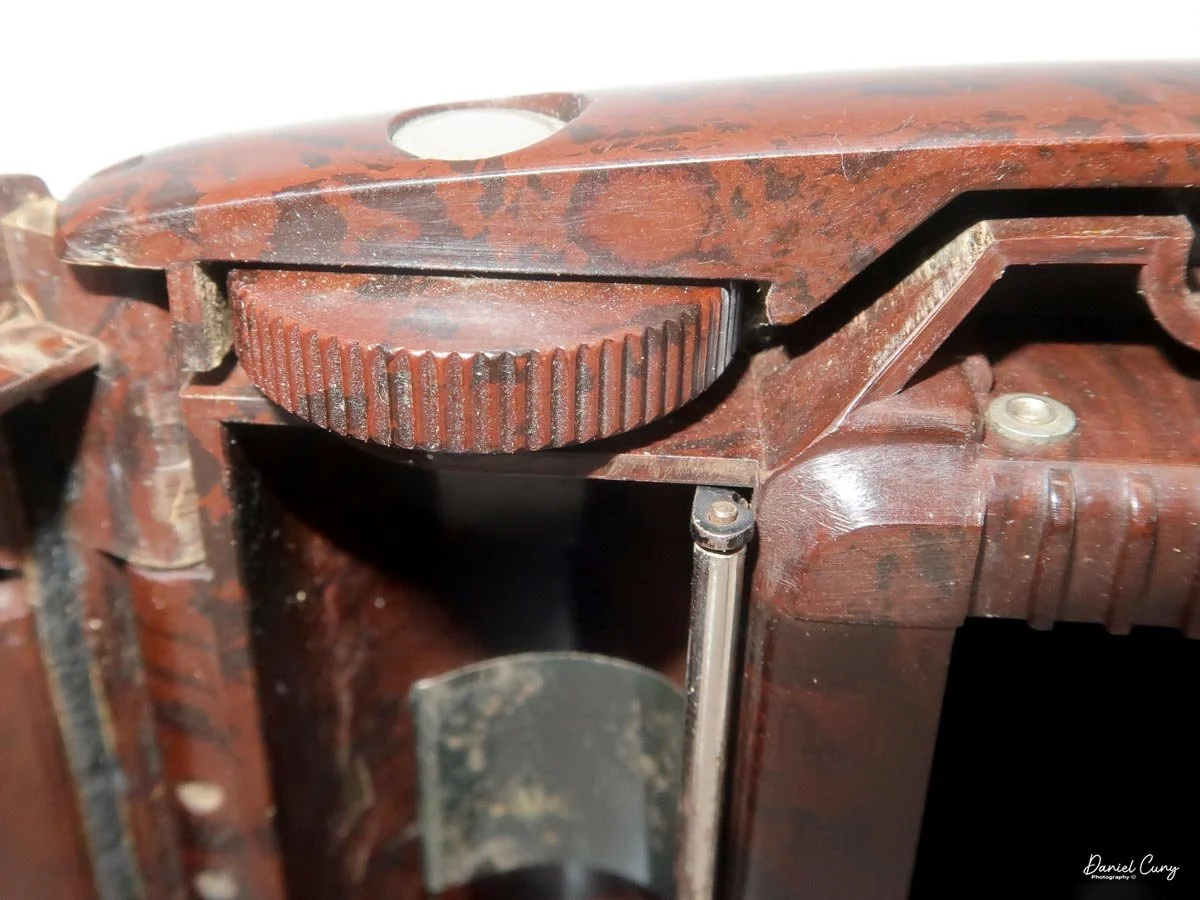
Opening the film back to load film is done by sliding the locking lever, which is located under the camera's strap. Once unlocked, you can slide the door open to reveal the camera's film chamber. Once opened, you'll see the vertical format 6x4.5 film area. The new film goes on the right side of the camera, and you'll transfer the empty spool from the right side to the left, where the film's winding wheel is located. My camera didn't have an empty spool, so I needed to supply the camera with one.

  Looking at the film holders' pins, the camera takes 620 film, but I accidentally loaded the camera's take-up chamber with 120 film, and it fit. Generally, when I try to put 120 in a 620 camera, the spools don't fit, or they don't turn because the pins are too small to grab the 120 spool. Let's see if I can load a roll of 120 film in the camera. Interestingly, this camera: the 120 film fits a bit snug, but the film advance engaged with the spool, and the film wound smoothly.

Since the camera is 6x4.5cm, with two red windows on the back, this symbolizes that you start with the number one in the first window, take your photo, and then wind the film until the number one shows up in the second window. You do this with the whole roll, which ends with the number eight showing in the second window, giving you sixteen images per roll of film.

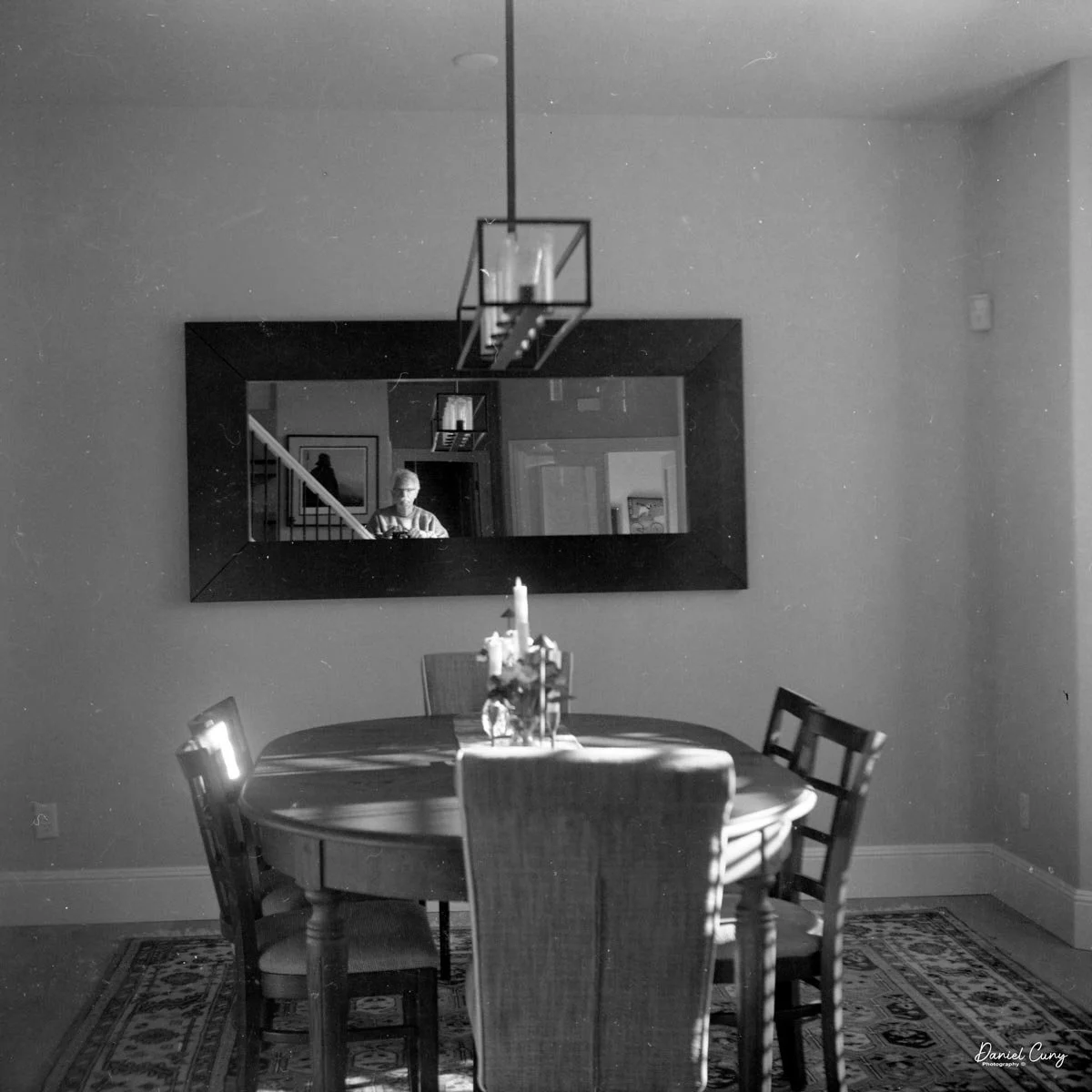
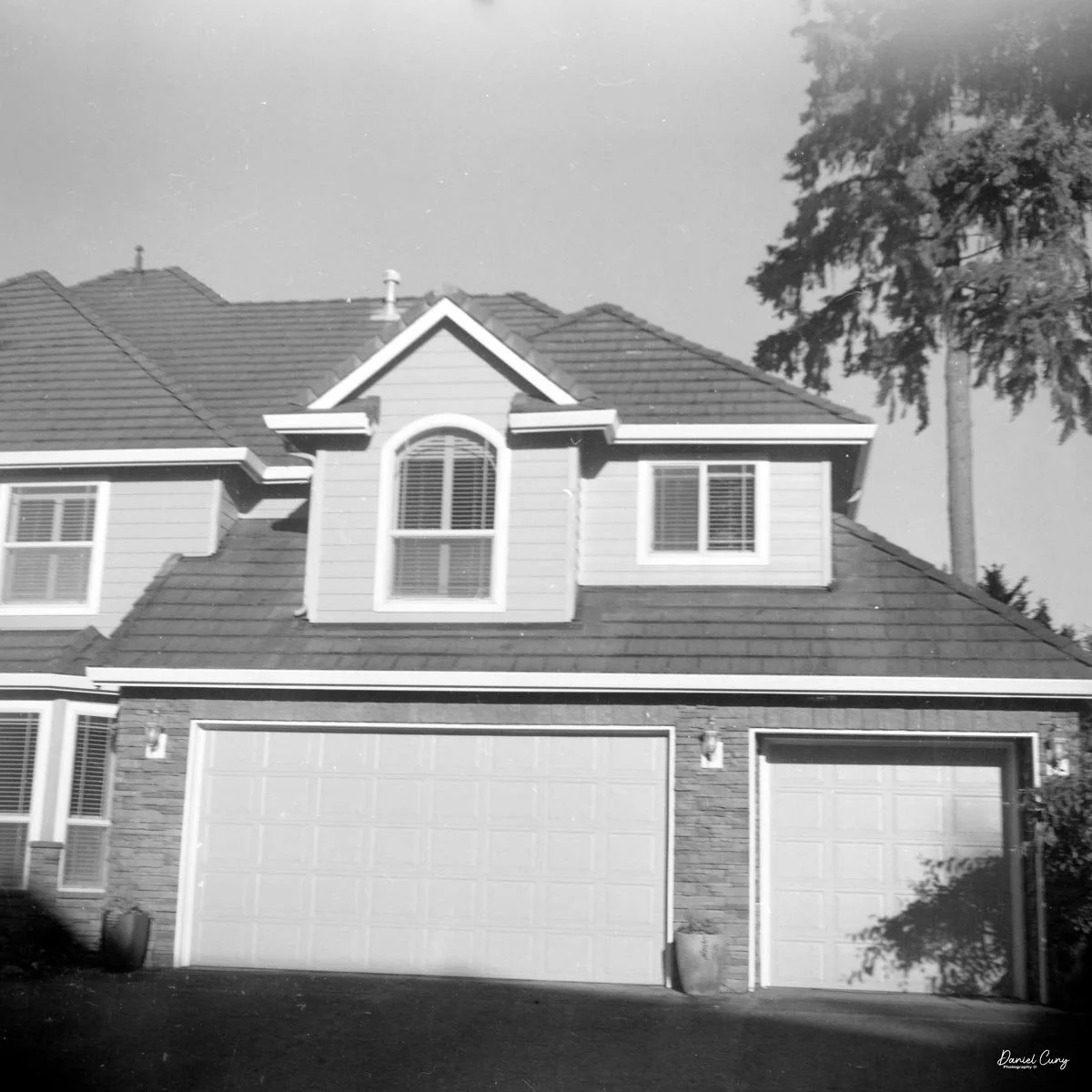
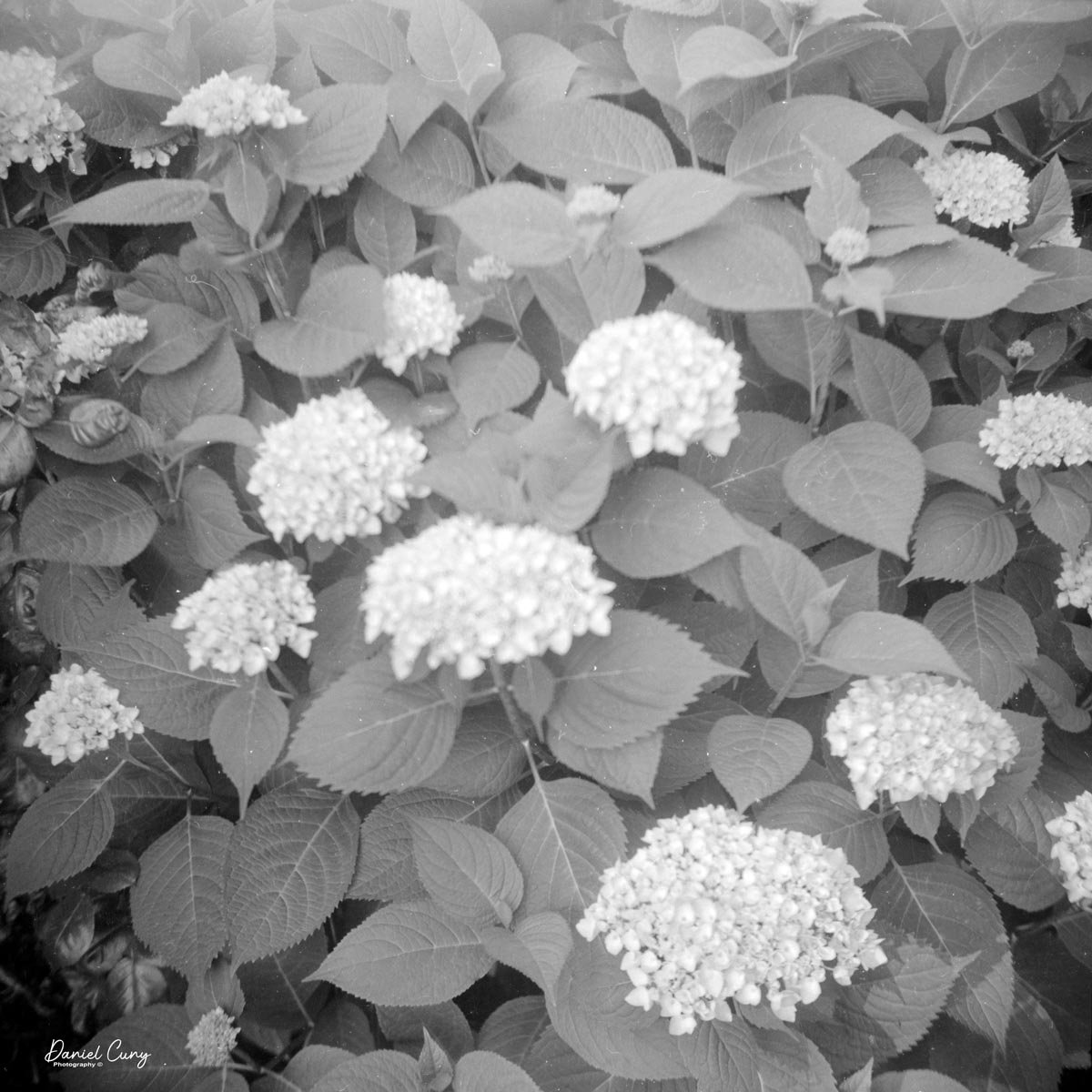
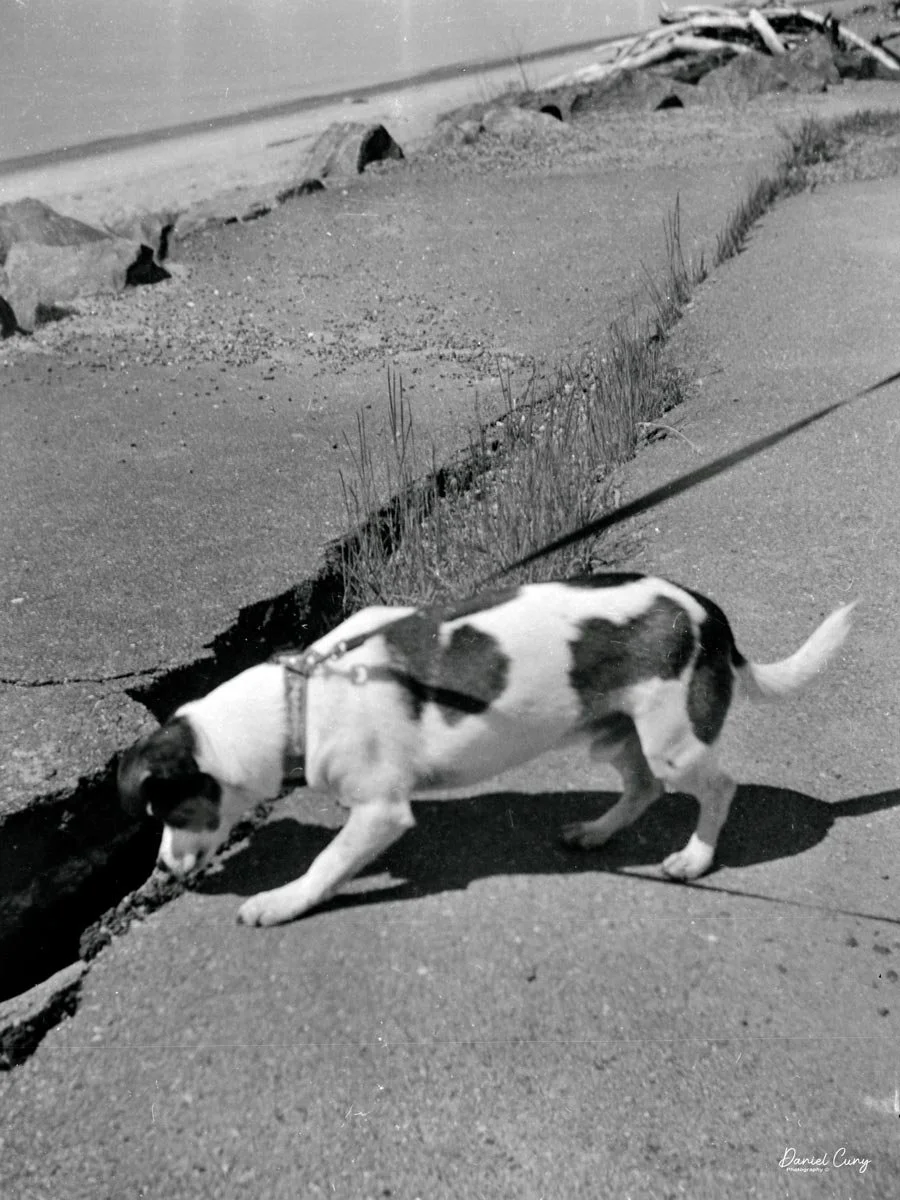
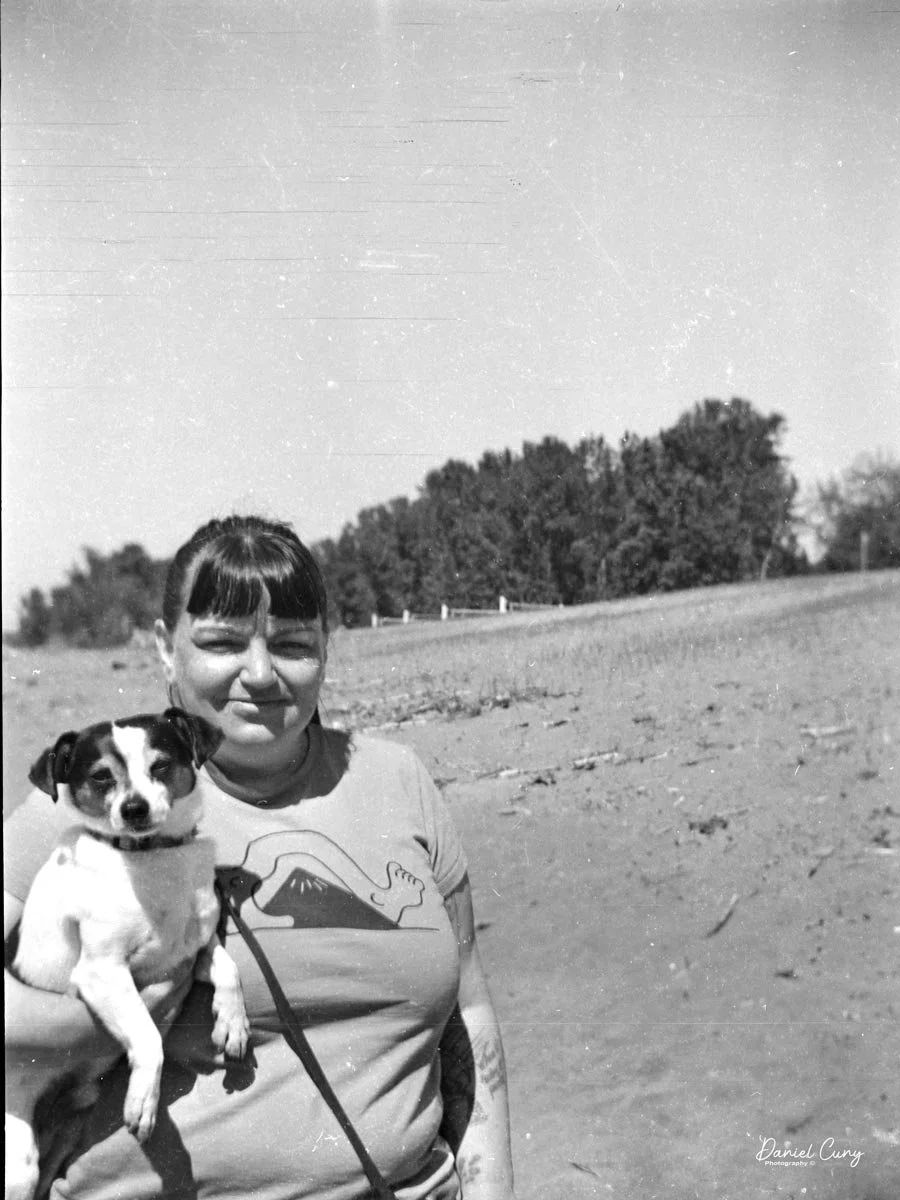
 Once the film was loaded in the camera and the "start" arrows were showing, I closed the back of the camera, and my daughter, her dog, Bean. I went for a walk along the Columbia River and took photos with the camera. The camera is very "pocketable" and travels extremely well.

 Let's see how the images turned out.


The Results:

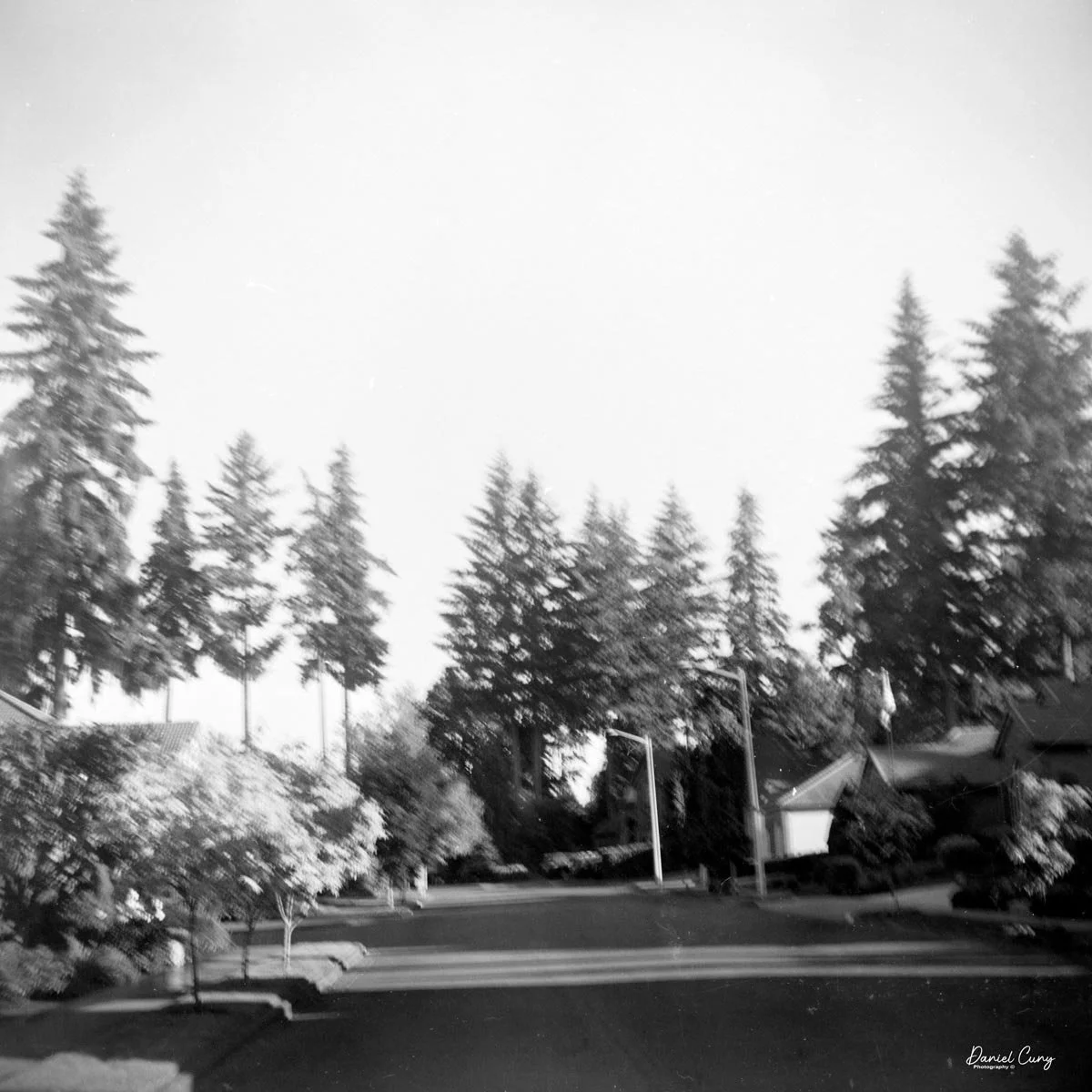
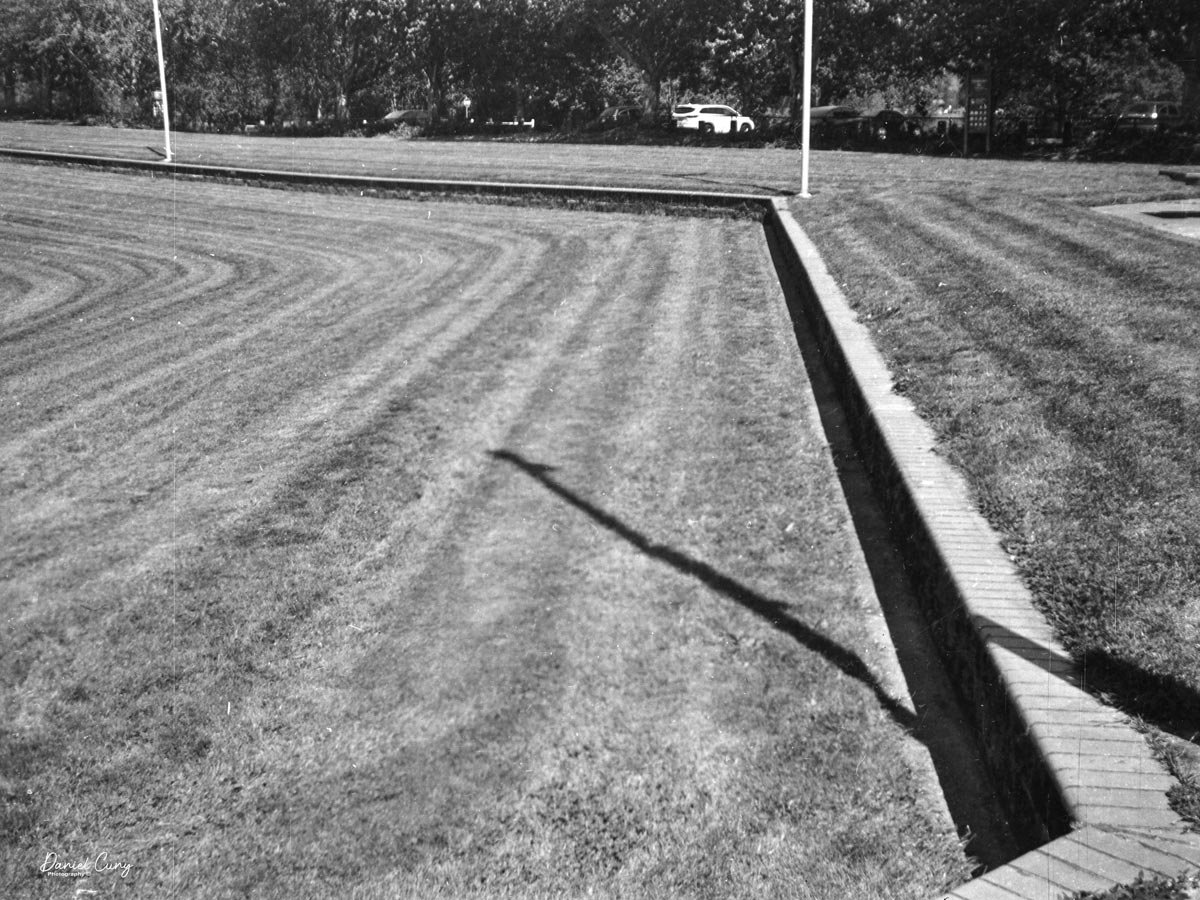
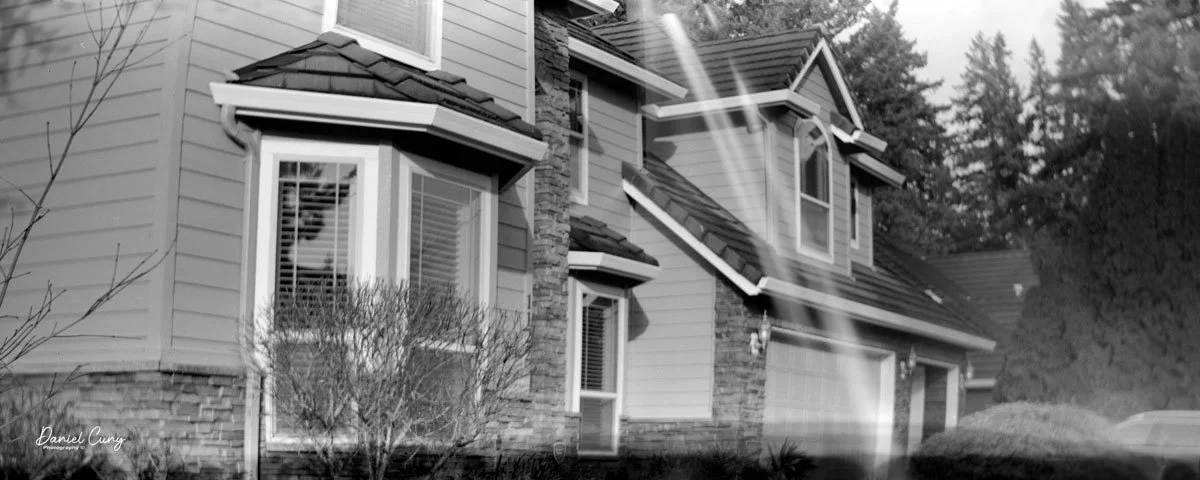
 The results aren't bad, but not the sharpest images either, especially compared to the Kolar Kola camera. I may have missed the focus distance, but most of the photos are sharp enough for an 8x10. Here are some of the images I took while walking the Columbia River with my daughter and Bean, her dog. 

Conclusion:

 There are several things I really like about the camera. Still, the thing I enjoyed most about this camera is its thinness when traveling. It's so thin compared to other medium-format cameras; for me, it makes it fun to use. Not being bulky or clumsy and being fairly lightweight make this camera a real pleasure to carry around.

 The brown pebble finish is also a bonus in my opinion, adding more to the camera than leather and chrome alone. It has a very appealing feel and firmness that make the camera fun to hold.

Designers in the 1930s were still in the Art Deco period. They had a real sense of classical design, which they implemented in their products. It makes me even more want to buy a 3D printer to experiment with designs and textures, which I feel are lacking in today's designs.  

 Thank you for taking the time to learn a bit about this very classic and rare camera made in Stuttgart, Germany, in the early to mid-1930s.

 I'd love to hear from you, so if you have a comment or one of your own, please share it with us here.

 Here are my other Camera Reviews.

 Cuny's Camera and Photos is my online eBay store where you might find one (or many) of the cameras I've reviewed, along with other camera and photo items I've picked up or hoarded over the many years in the business.

 Until next week, please be safe.
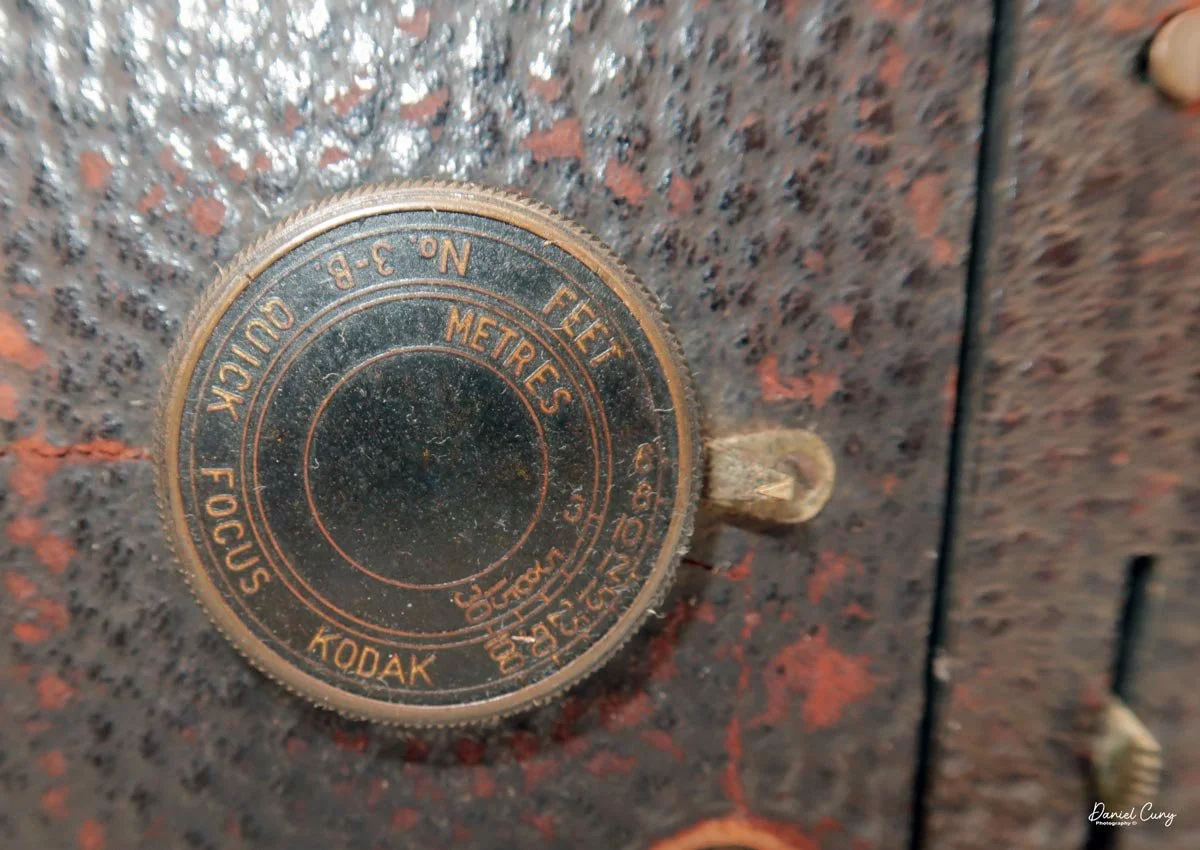
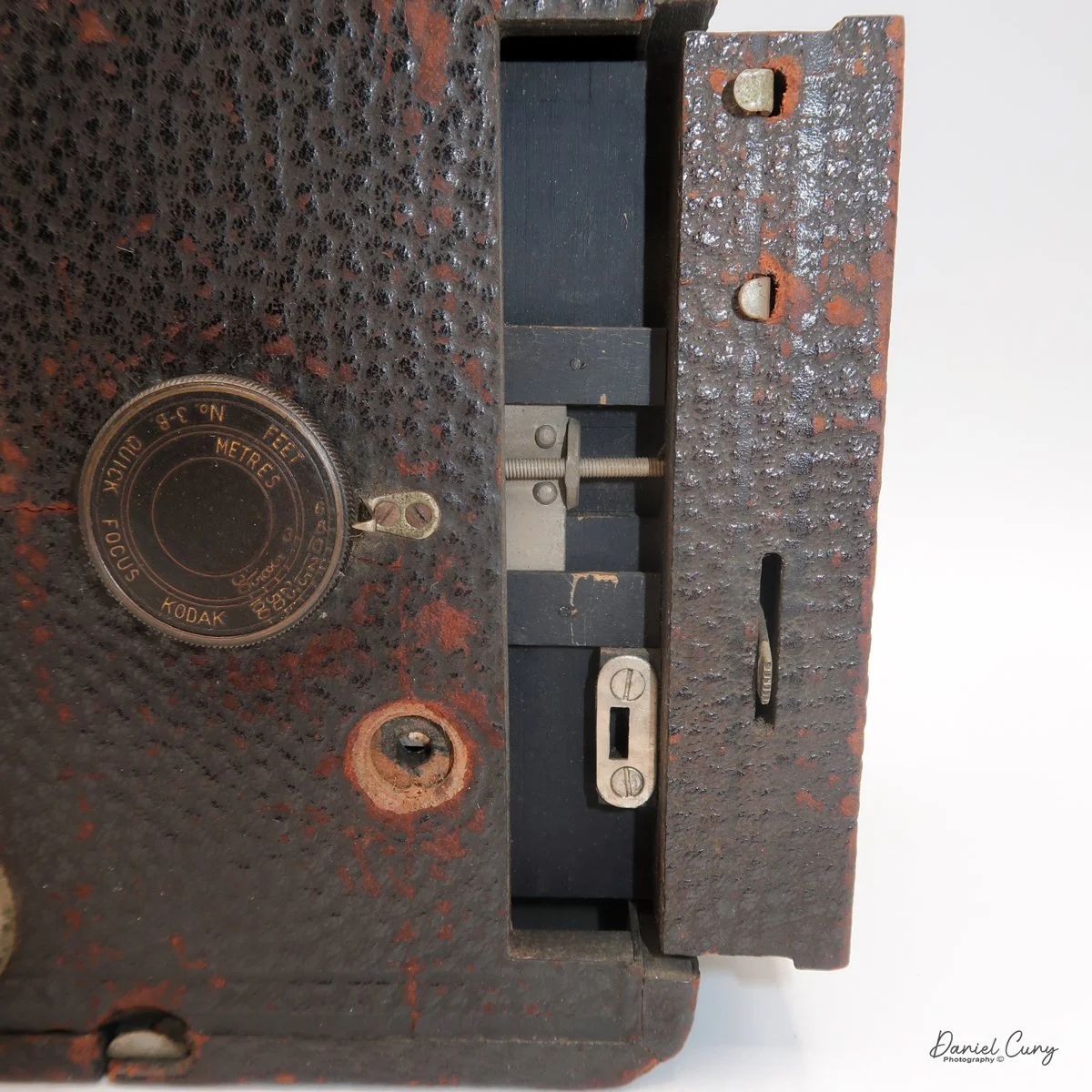
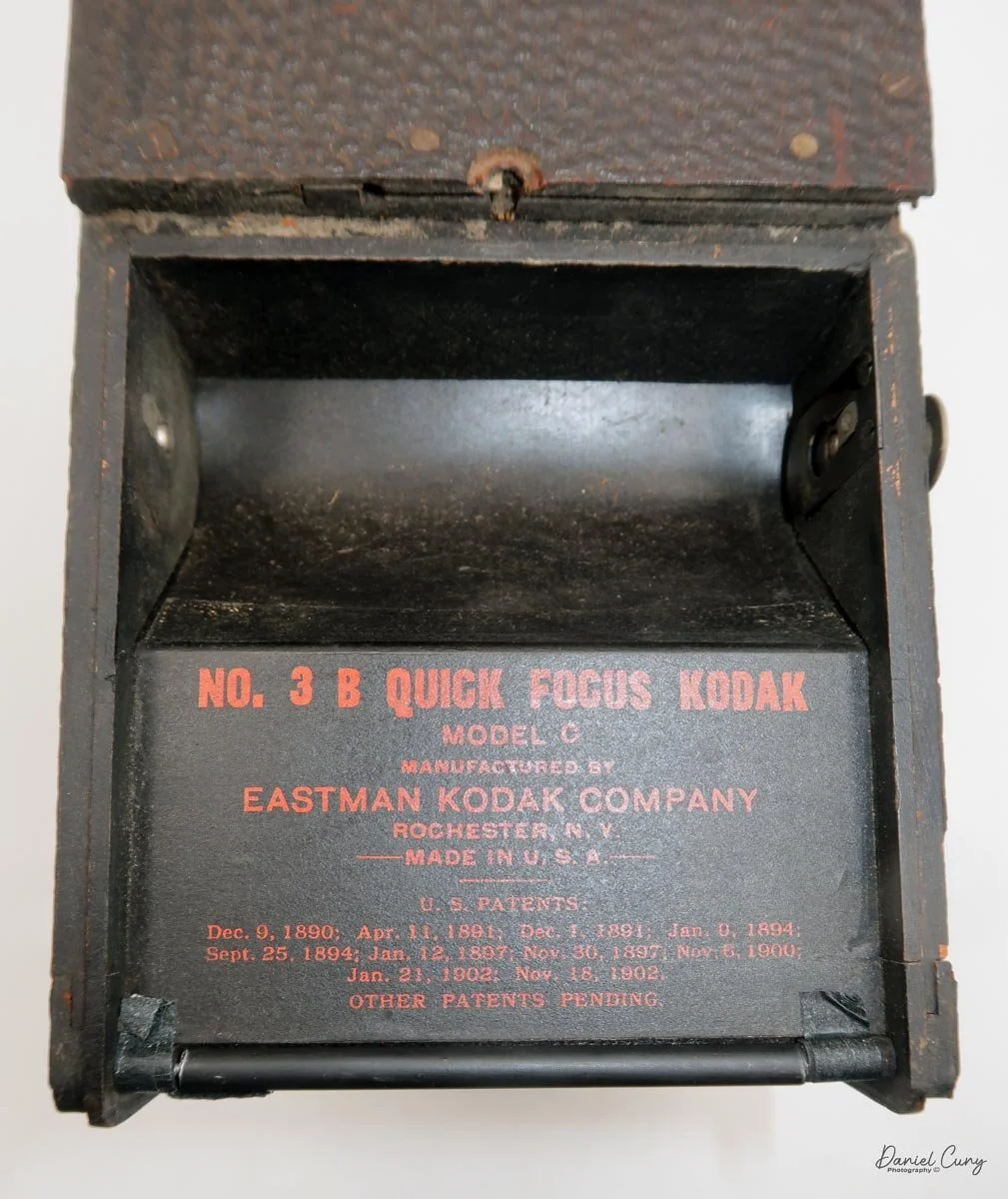
No. 3B Quick Focus Kodak

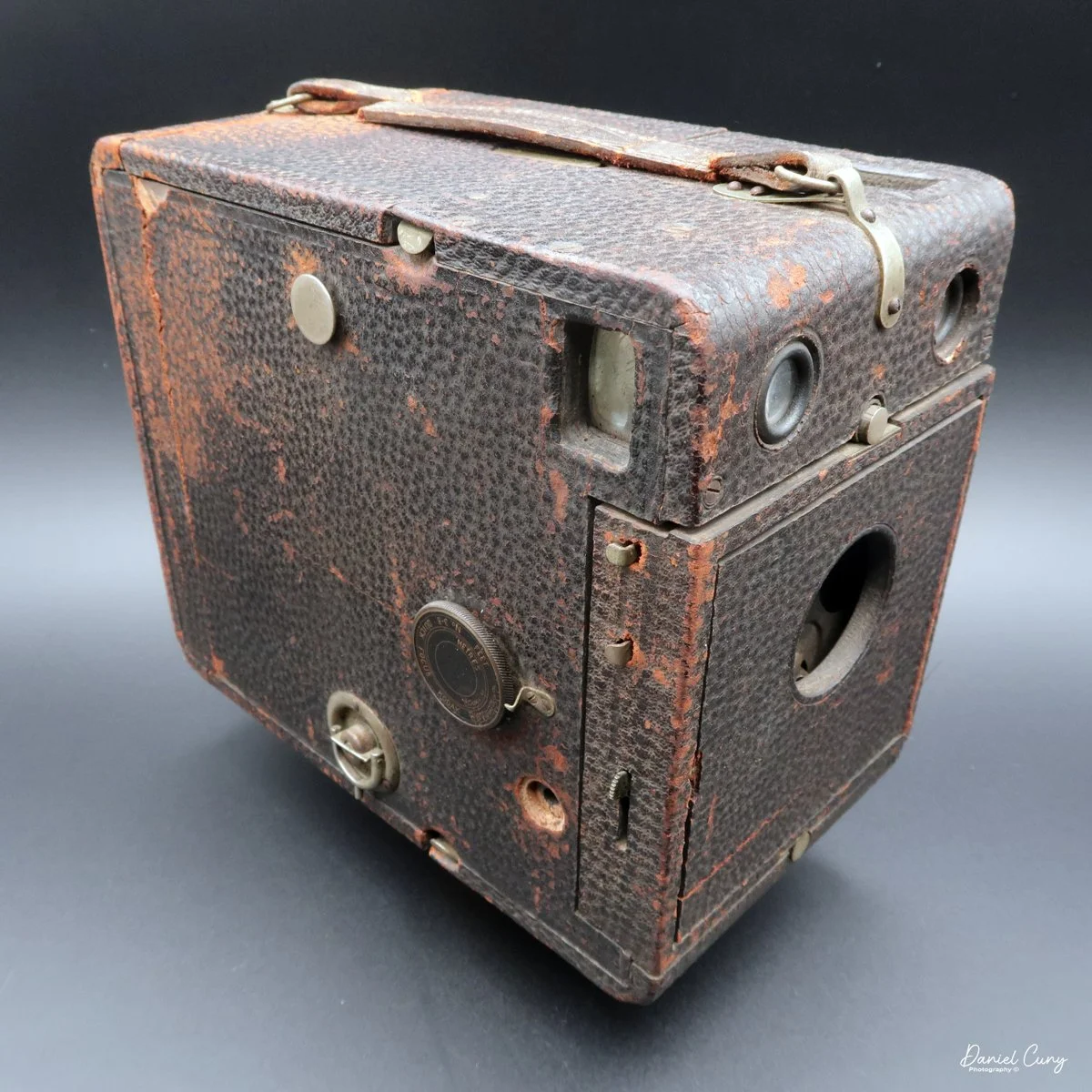
My No. 3B Quick Focus Kodak camera

As I've mentioned in several of my posts, I've always been drawn to the odd, unusual, colored, or panoramic cameras, so when I had the opportunity to purchase a No. 3B Quick Focus Kodak many years ago, I jumped at the chance. 

 I found this camera while visiting an antique store during a business trip to Philadelphia. During my sales calls, if I had some spare time between appointments, I'd seek out antique malls and stores close to where I was and spend some time looking to see if there was anything interesting. On this particular day, as I was upstairs in the shop's attic, which was musty and smelled of stale air, I found the No. 3B Quick Focus Kodak.

 Not knowing much about the camera beyond seeing it in McKeown's Camera Price Guide, it appeared to be in decent condition. I started turning dials and pressing buttons to get a sense of the camera's condition. 

 It appeared to be pretty solid, but there were a few flaws, but when I looked at the price tag, which was only $25.00, I figured I give it a shot, so I brought it downstairs to talk to the shop owner, and asked if they'd offer a slight discount on the camera, and I offered them $20.00, which they took. The shop owner said the camera's been up in the attic for many years and was happy to give it a new home where it would be appreciated.

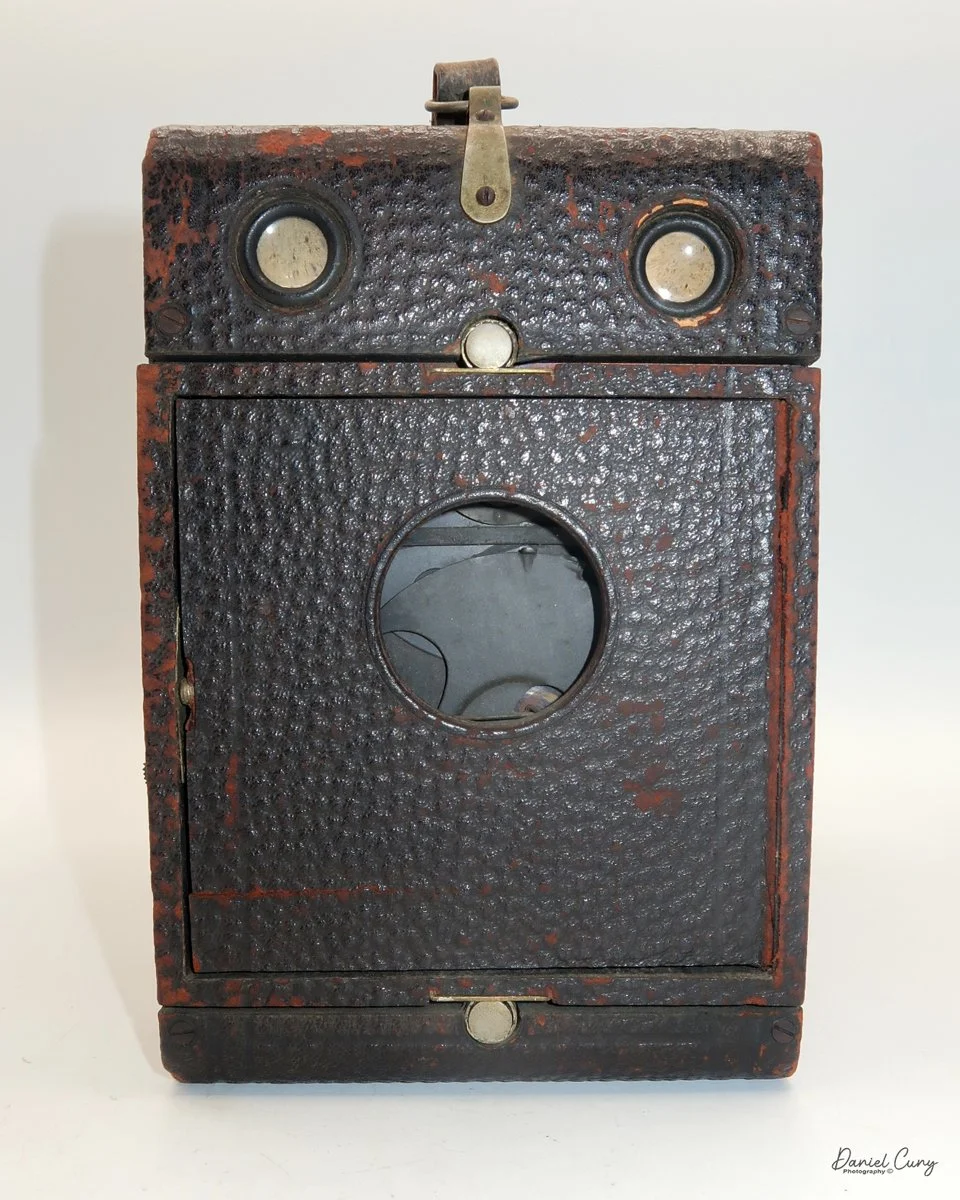
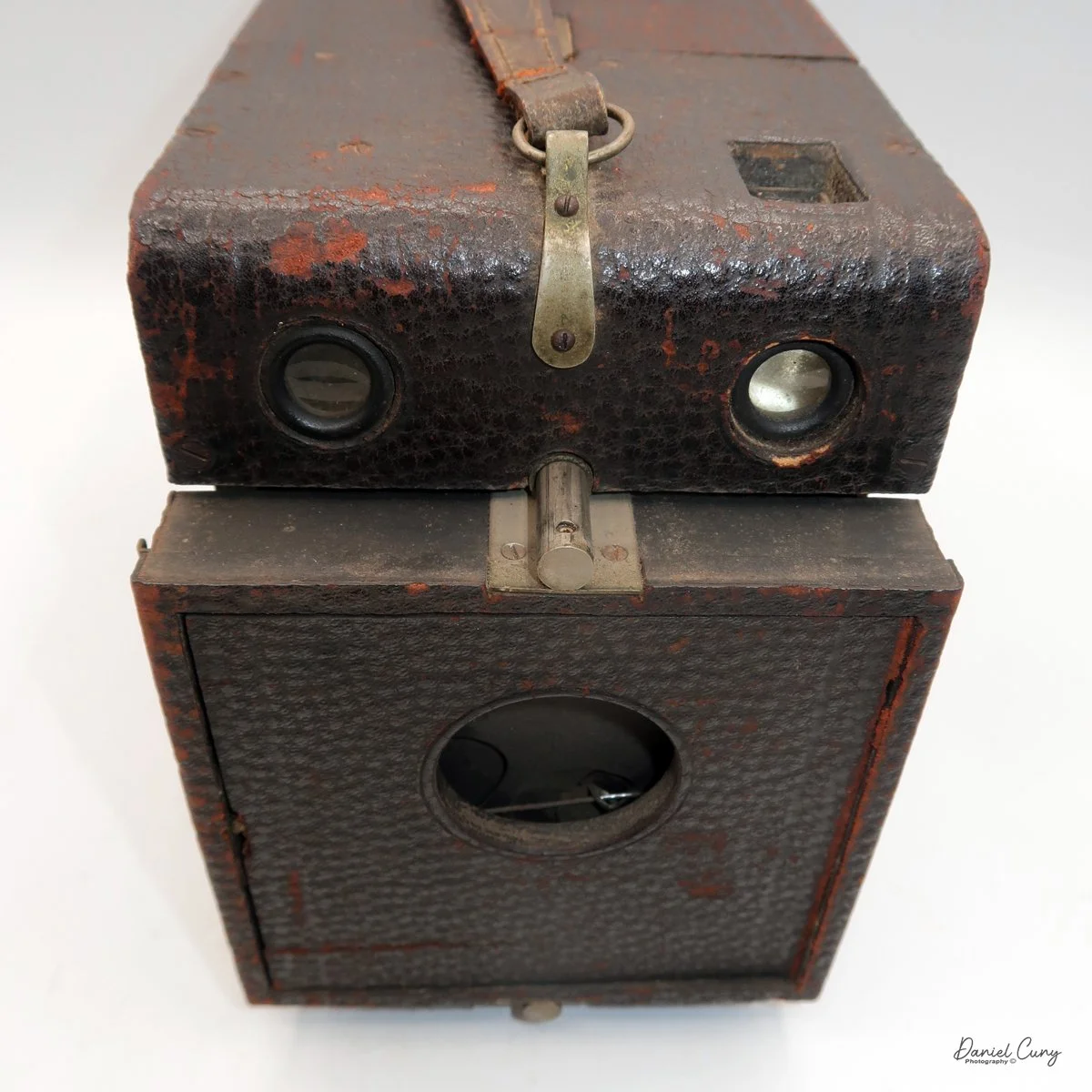
Front view of No. 3B Quick Focus Kodak

 Now that I had the camera in hand, I was setting the camera in the car seat next to me, getting ready to go to my next appointment, the thought of how was I going to get the camera home, since all I had was a carry on bag, and my case for my computer, and other office related gear which I brought with me during sales calls.

 Luckily for me, this wasn't the first time I've run into this issue. There have been time during my travels, that I've had to cram so many items, mainly cameras or lenses in my suitcase, I'd be afraid that I'd struggle lifting the suitcase over my head due to the weight of it, but I've always managed to move items around in my suitcase, fitting even larger items, like the No. 3B Quick Focus camera in there and safely transporting them home safely tucked securely in my carry-on bag.

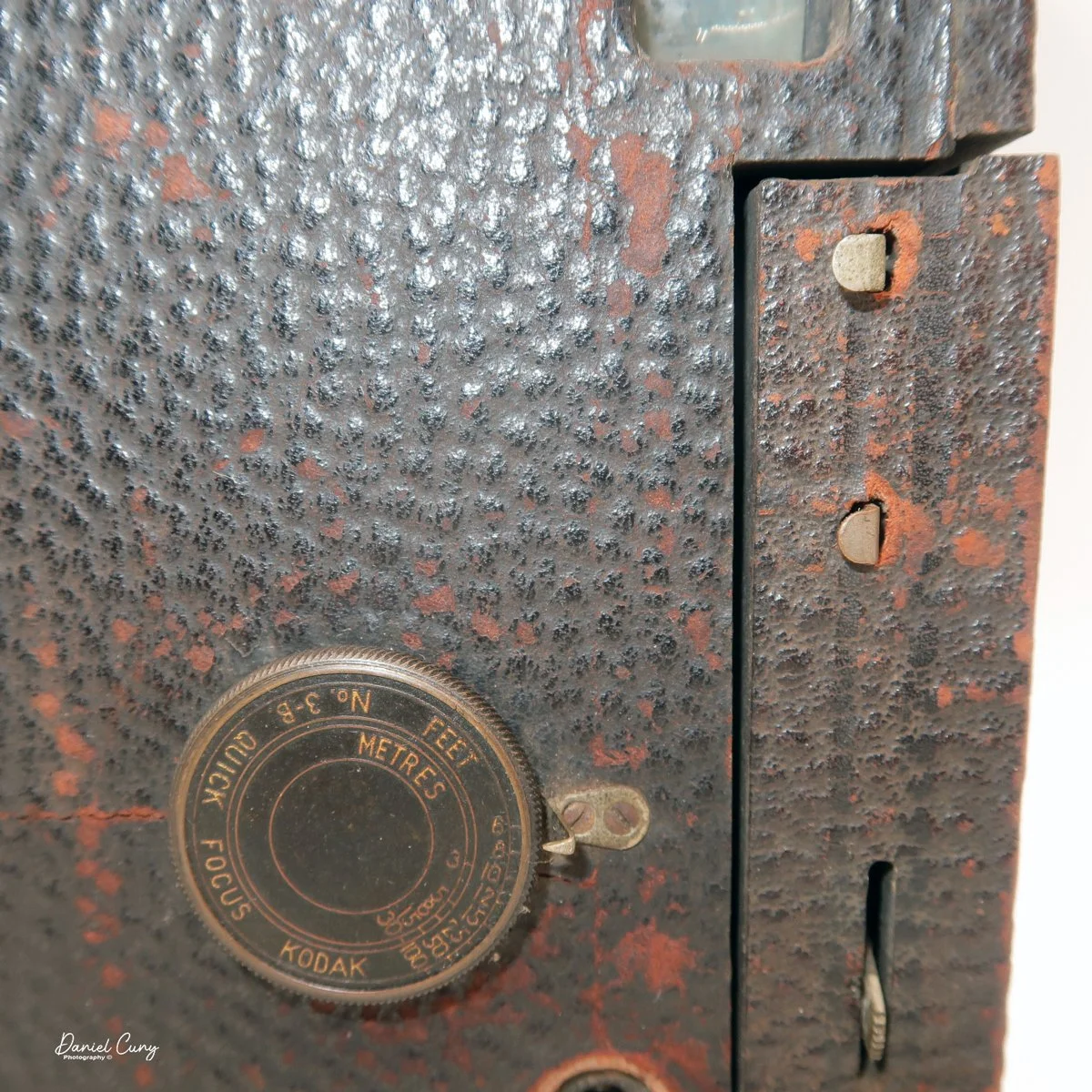
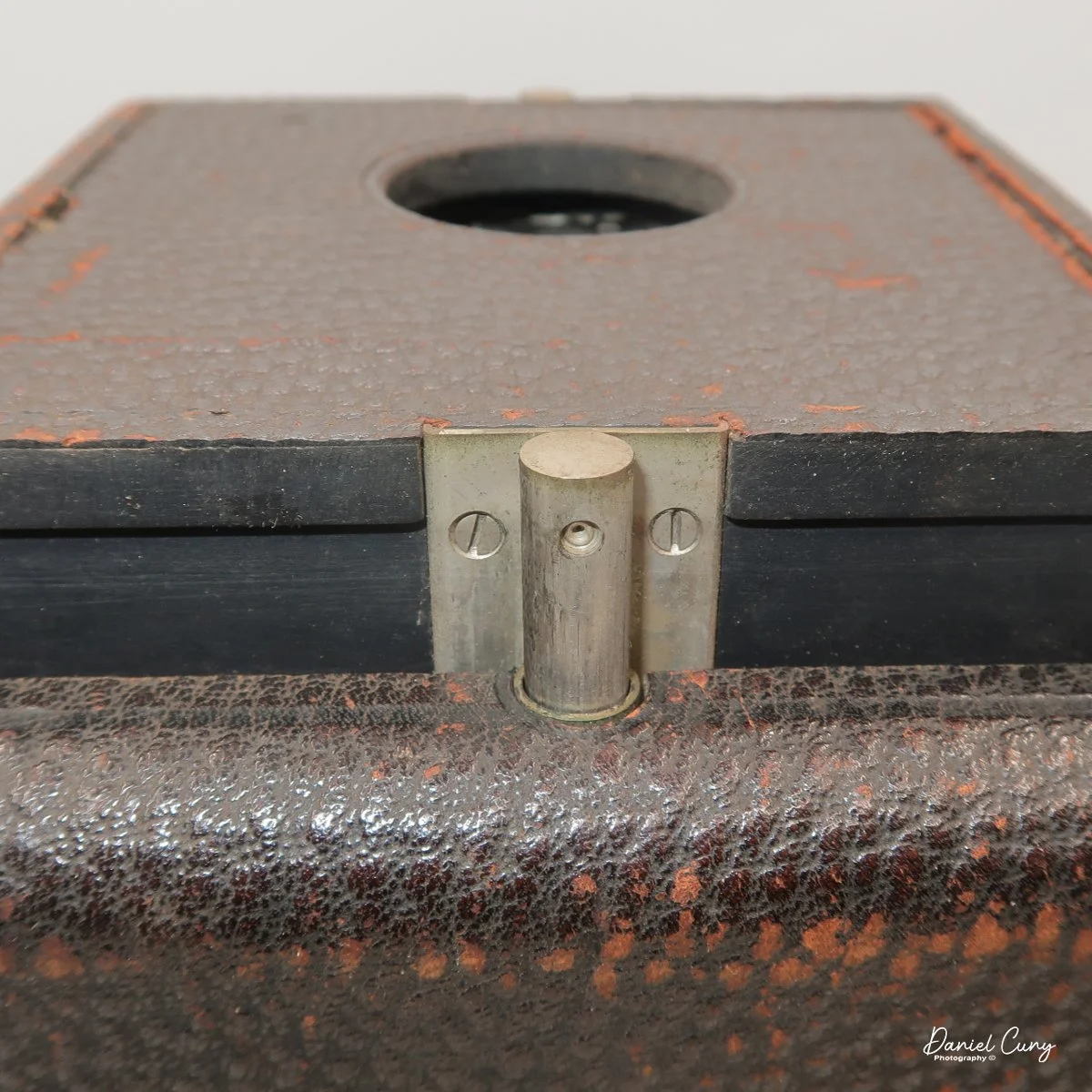
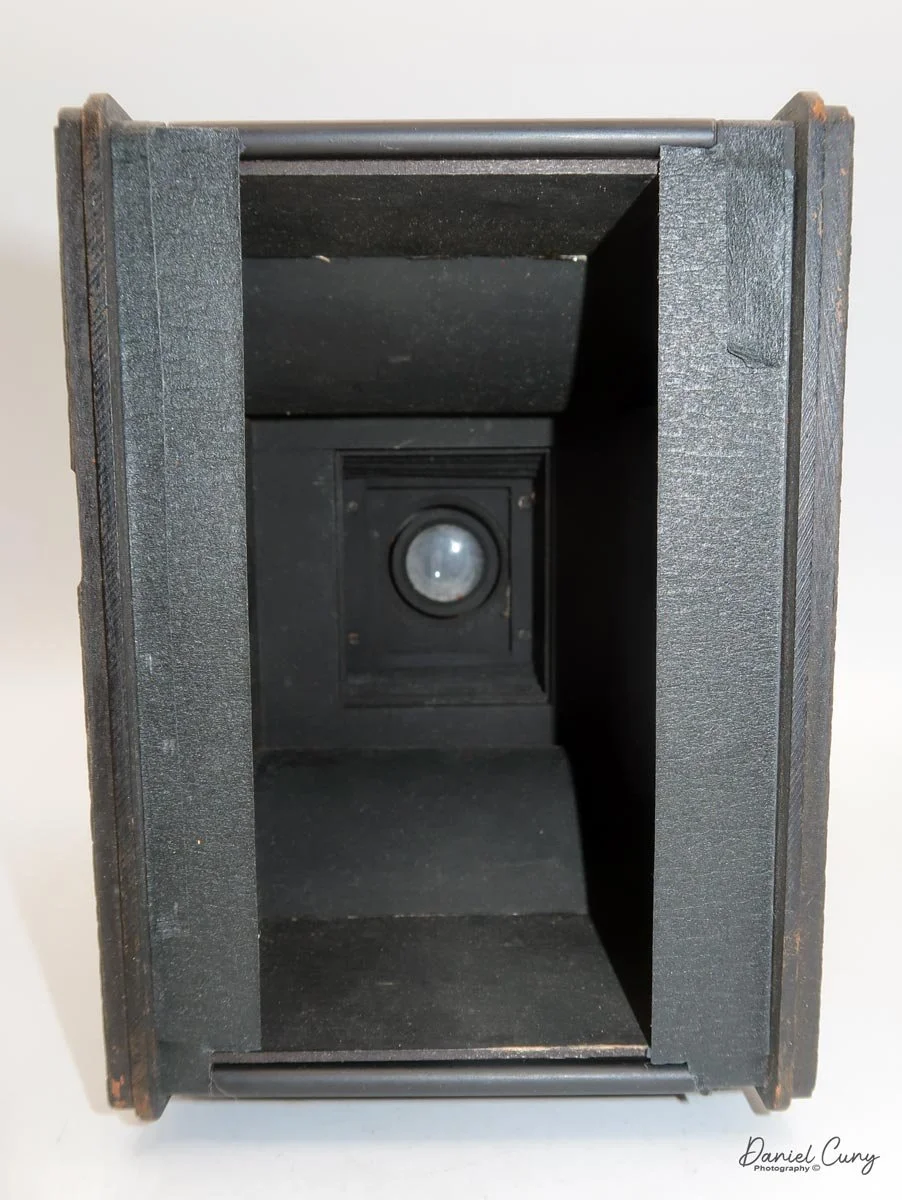
 While the camera looks very ordinary on the outside, resembling many other box-style cameras, the one thing that sets it apart is its ability, as the name suggests, to focus quickly on the subject. This system is still just a guestimate process as there is no ground glass or focus screen in the camera. Still, rather than setting a wheel in the later versions or sliding a bar to an approximate distance from you to the subject, press a button. The camera springs the lens to an approximate distance from the film plane, replicating the distance required to produce a sharp image on the film.

 I've owned the No. 3B Quick Focus camera for more than 20 years, and it wasn't until I was going through some boxes of cameras I have that I came across the camera. Looking at the camera, it's in relatively good condition for a camera made between 1905 and 1911, with only a few modifications. The main difference was that earlier versions had a sliding lever to adjust the focus distance, whereas later versions used a circular wheel.


 Early Kodak History:

 The period between 1880 and 1910 was a time of rapid innovation in industrial history, transforming photography from a complex process into a popular hobby, which makes owning a camera from this era especially meaningful for history buffs and enthusiasts.

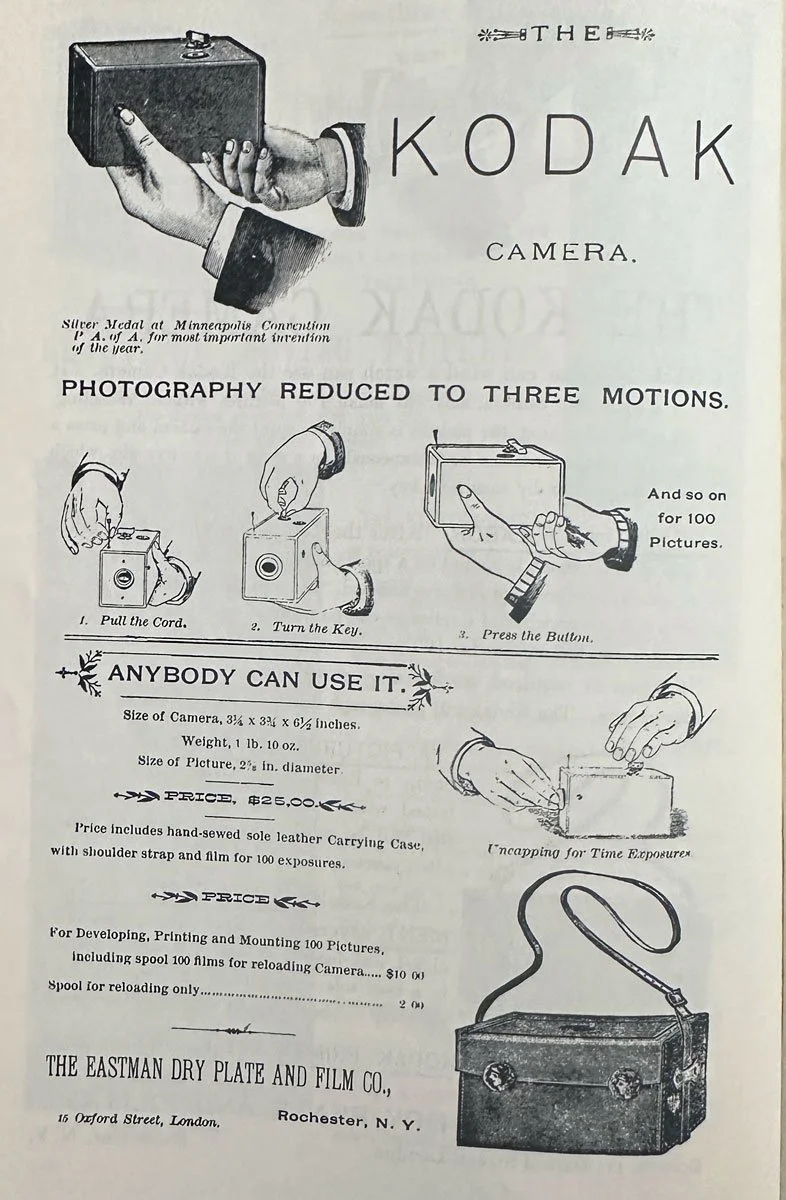
Early Kodak Advertisment

 Before 1880, photographers had to use "wet plates," which required coating glass with chemicals and developing them immediately before the emulsion dried. In 1880, George Eastman began manufacturing dry plates in Rochester, New York. These could be stored and sold, effectively decoupling the act of taking a photo from the chemistry of preparing it. In 1884, he transitioned from glass to paper film rolls, a pivot that laid the technical foundation for the modern snapshot.

 In 1888, the first Kodak Camera was released. It was a simple box pre-loaded with enough film for 100 exposures. When the roll was finished, the owner sent the entire camera back to the factory. Kodak would develop the film, print the photos, and return the camera reloaded with new film. This "System of Photography" changed the medium's identity from a technical craft to a consumer hobby.

 By 1889, Eastman Kodak introduced transparent nitrocellulose film, which was flexible and clear. This wasn't just a win for photographers; it was the catalyst for the motion picture industry, as it provided Thomas Edison with the material needed to create the first movies.

In 1900, the Brownie camera was launched. Selling for just $1 (with 15-cent film rolls), it was marketed specifically to children. It solidified Kodak's "Razor and Blade" business model: sell the hardware at cost to create a permanent market for the consumables (film and chemicals).

 By the end of the first decade of the 20th century, Kodak had streamlined its corporate structure and expanded into Europe. The company pioneered the "Folding Pocket Kodak" during this time, making cameras small enough to travel anywhere. By 1910, Eastman Kodak wasn't just a company; it was a monopoly of the "snapshot," having successfully democratized the visual record of human life.
My Camera:

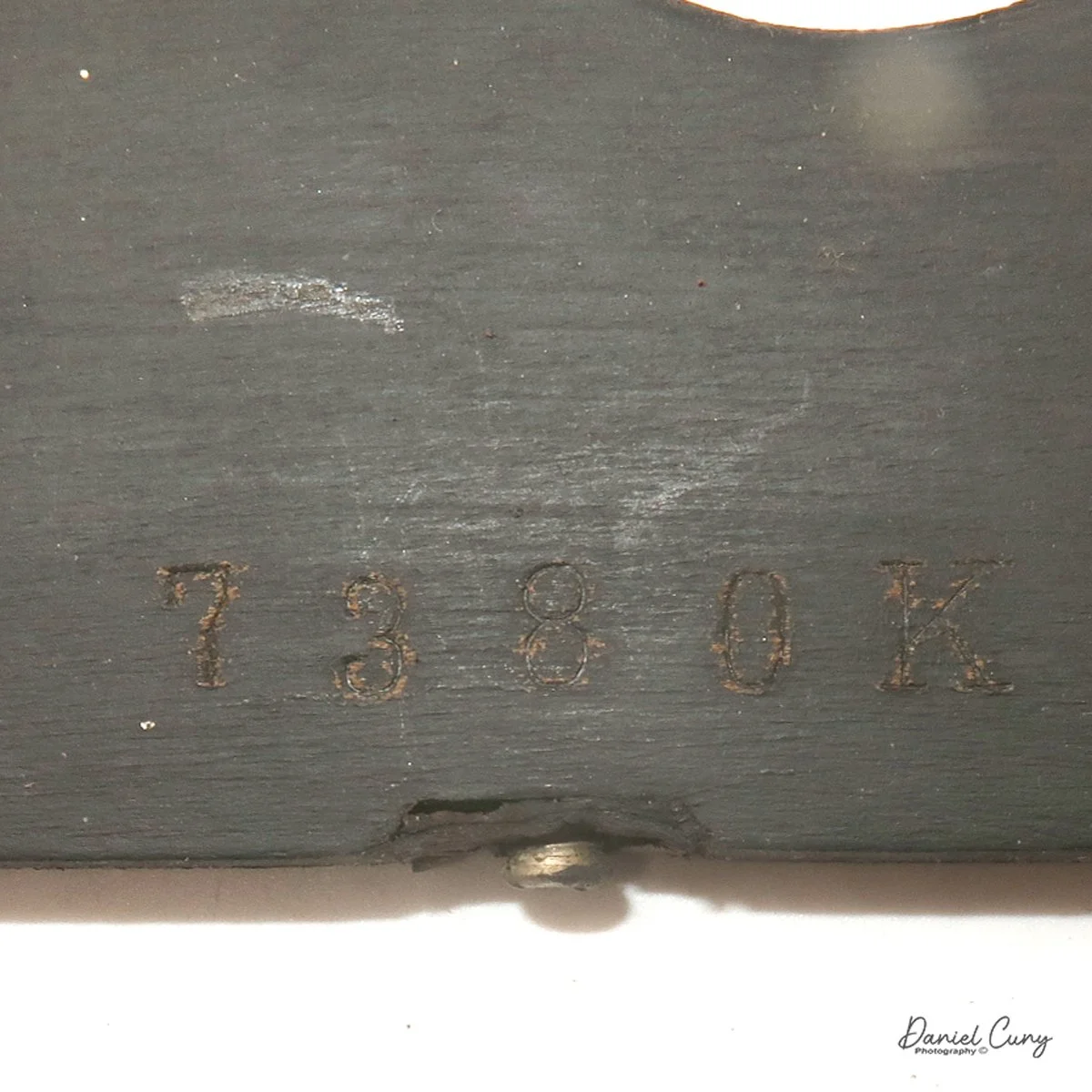
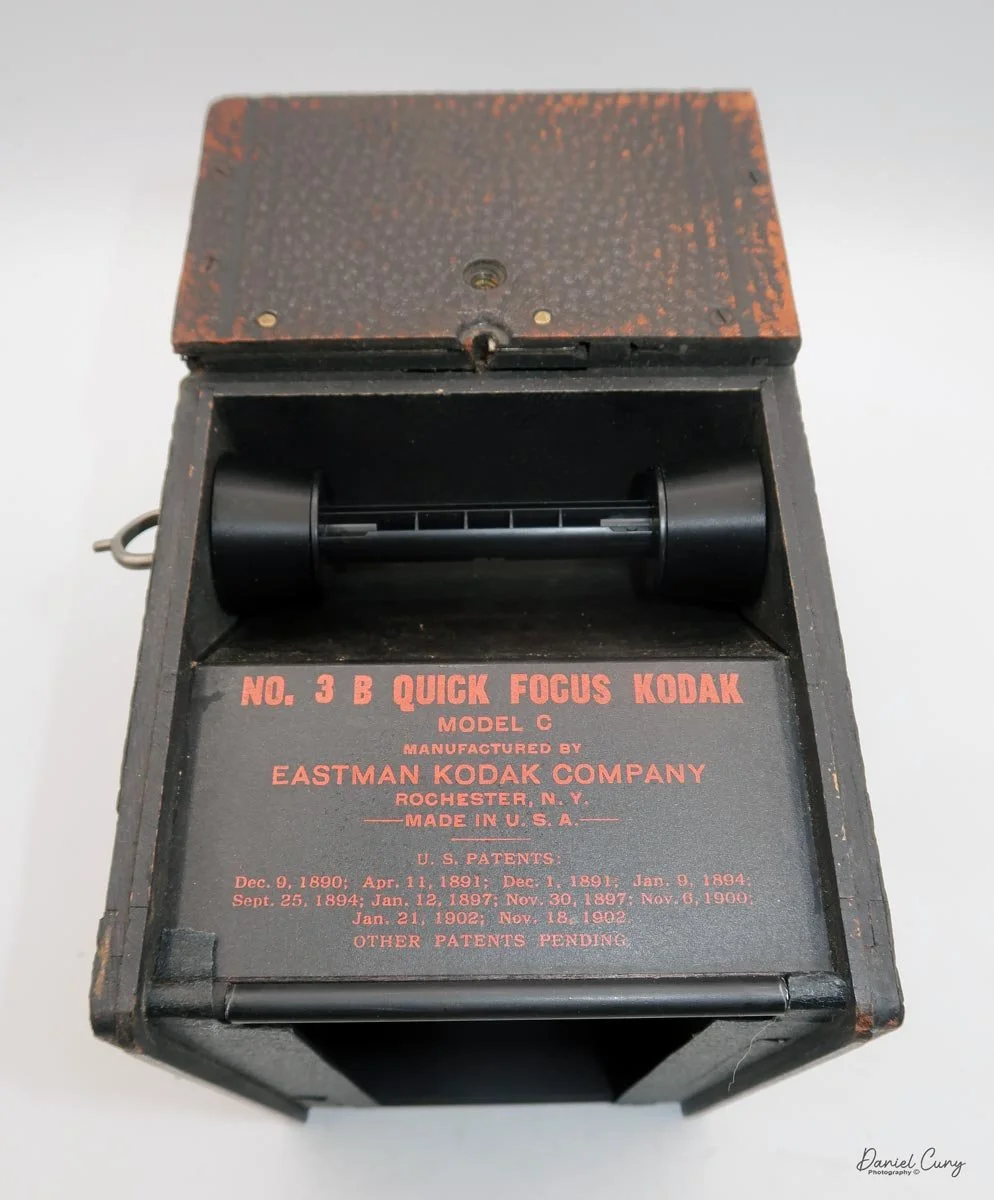
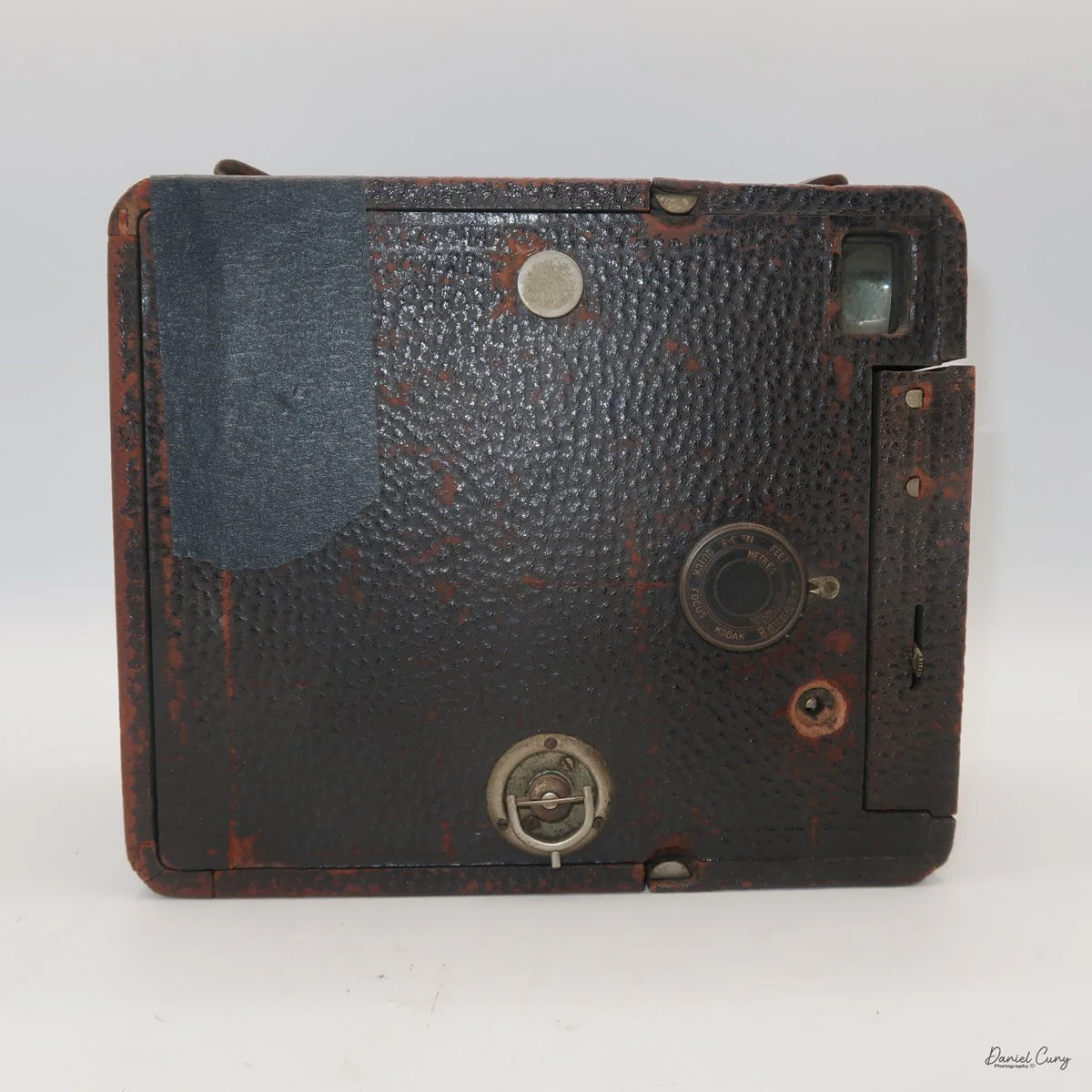
 My No. 3B Quick Focus camera is 7" tall by 8.25 " long with the lens retracted, and 4.75" wide, and weighs 2 pounds, 13.4 ounces. The serial number of my camera is 7380K, which you can find on the inside of the plate covering the shutter on the front of the camera. Thank you to Pacific Rim, which has a No. 3B Quick Focus Kodak manual.

The camera has two viewfinders: one on the top for vertical images, and, when turned on its side, one for horizontal images. The camera's shutter release is on the right side; it's a "one motion" release, meaning you slide it down, and the shutter opens and closes. Then slide the shutter release up, and it repeats the open/close motion.

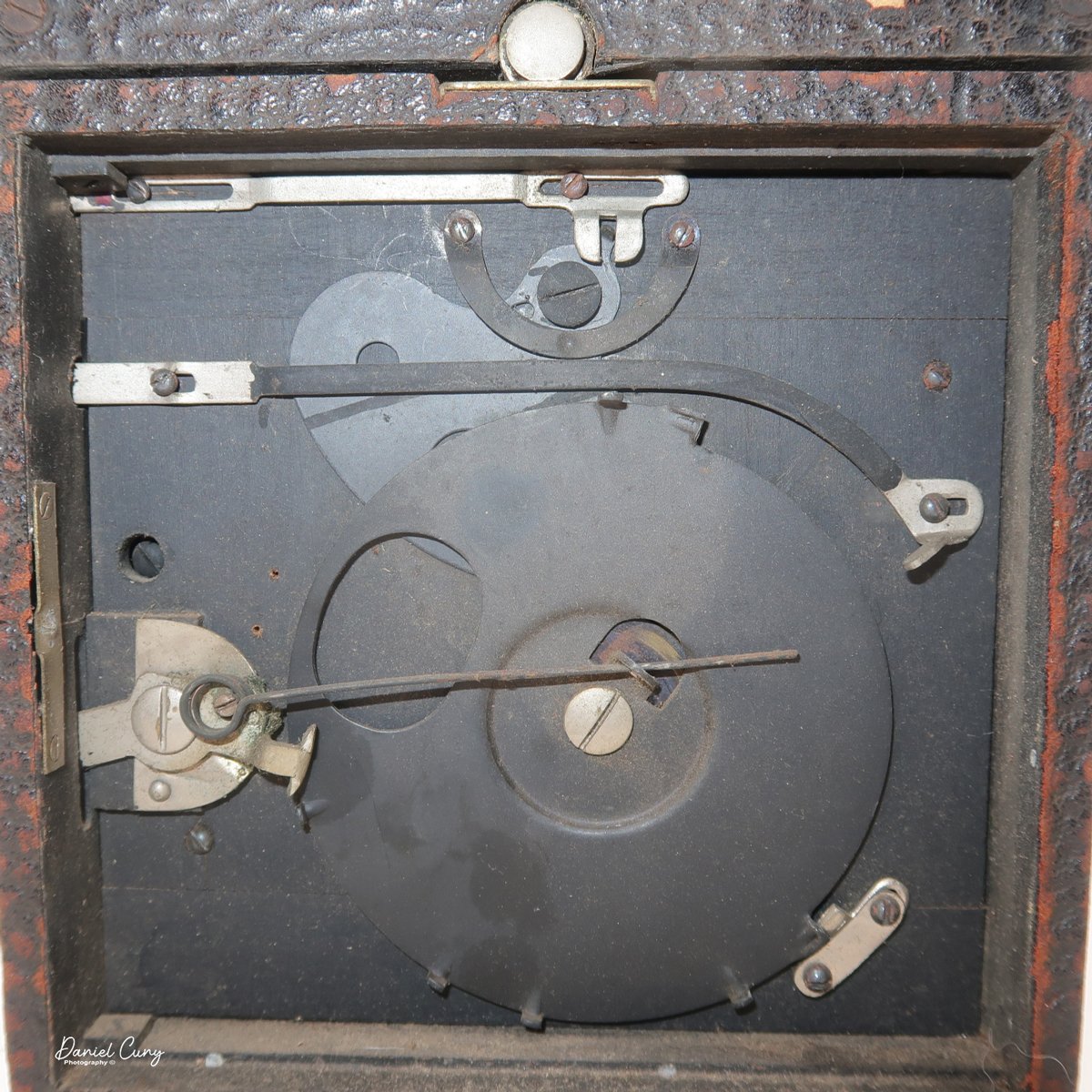
 Also on the right side of the camera is the aperture setting, which is controlled by pulling out a lever to three different positions to set the aperture. Below the aperture settings is another lever you use to set the shutter speed to instant when the lever is in, or to time exposure when you pull it out. In time exposure, you'll need to flip the shutter release up or down to open the shutter, then back to close it.
The strap on my camera is broken, and on the right side of the camera is the wheel to set the distance, as you guessed, but unfortunately, the button to focus the camera is missing. I put in a temporary item, similar to a large thumb tack, to activate the "quick focus" mechanism.

 Mechanically, the camera focuses quickly when you set the wheel to the proper distance, and the lens springs to the focused position very quickly. At this point, since the camera appeared to be in good working order, I figured it was time to put some film in and write a blog post about it. 

It's at this point that I decide to write about a certain camera, only to run into snags that make the process of making images and writing about the camera longer than anticipated. In my younger days, I didn't have the same patience as I do now, as I learned from many similar stories of starting a project: due to unforeseen issues, the process is longer than anticipated.

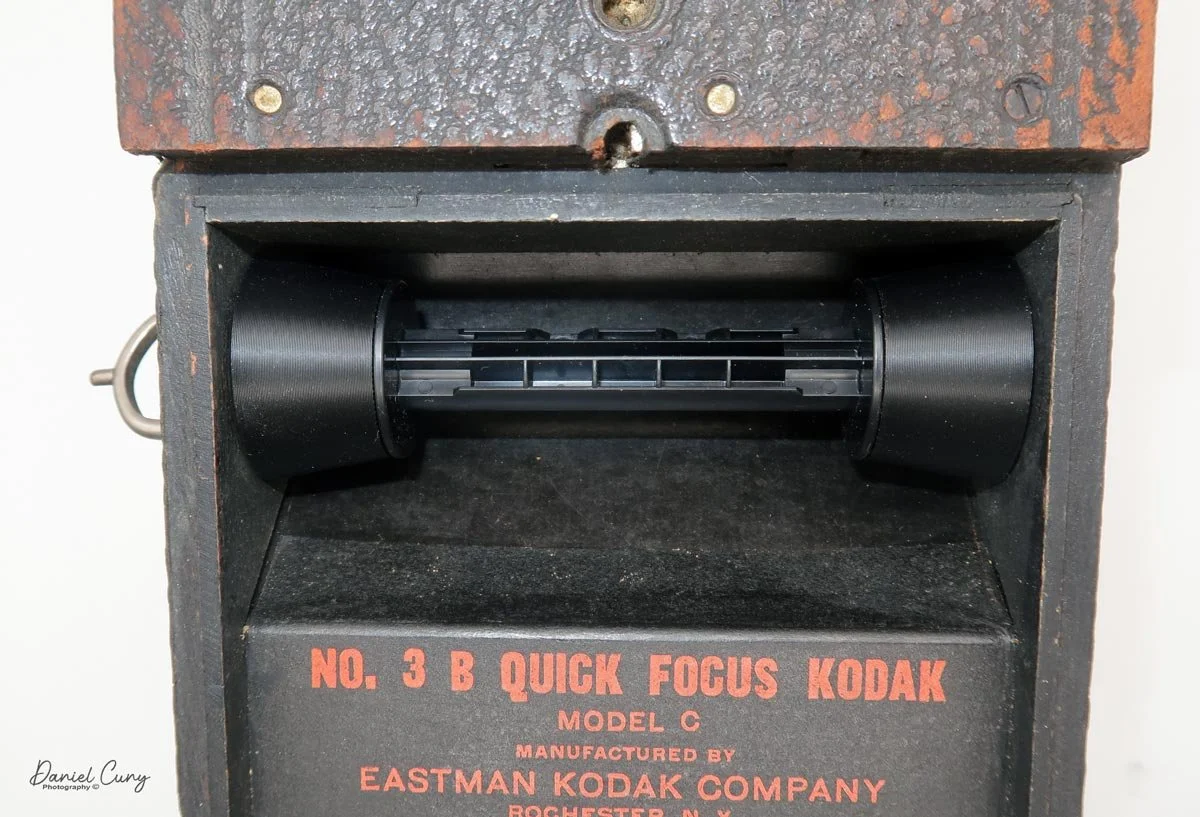
 When I took the back off the camera to inspect the film chamber, I noticed the negative size on this camera is enormous. The camera produces a 3 1/4" x 5 1/2" negative, also called "Postcard size," on a roll of daylight-loaded 125 film. On each 125-size film roll, the camera produced 10 images.

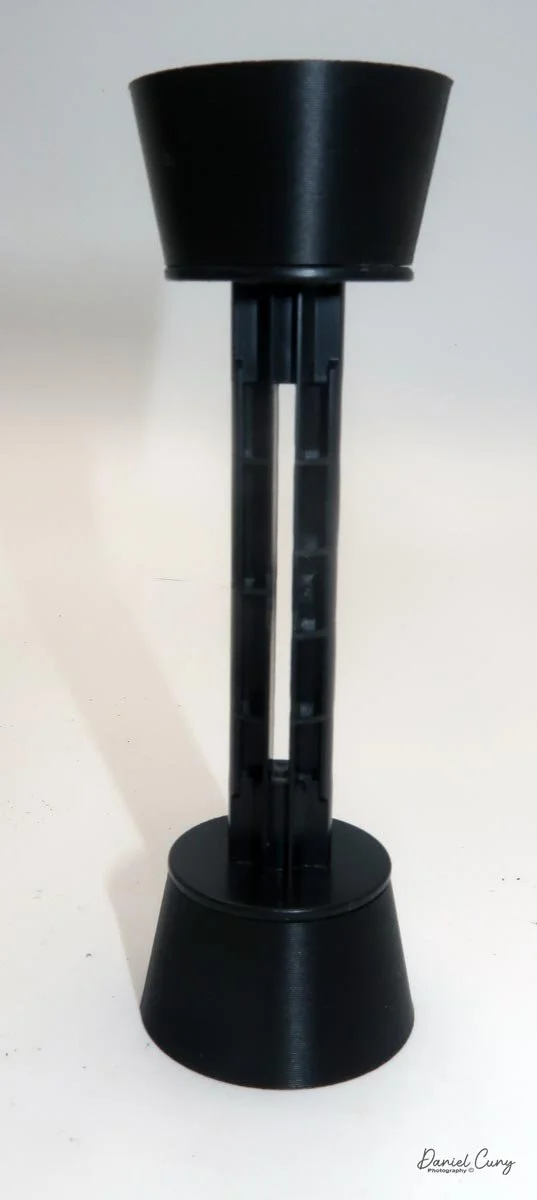
 Since 125 film is no longer available, I needed to adapt the camera to use a more modern roll film. Online, I found someone who makes adapters for new film to fit into older-style cameras, so I reached out to him, and for a nominal fee, he made me four adapters to fit 120-size film into 125-size cameras. At this point, I will likely purchase a 3D printer so I can do these things myself, but as mentioned earlier, that will pose a whole new set of issues that I'll need to address.

The No. 3B Quick Focus camera has a three-piece hinged back that comes off the camera by pressing in a small button on the top and bottom of the camera, which releases the locking mechanism and allows the camera's back to come off for loading and unloading of film. Due to the age of the camera, one of the hinges is in decent condition, but the other was rather worn, and on one of the times taking the back off, it tore off, and the back was in two pieces, which now needed to be repaired if I wanted to shoot with it.

 I purchased some thick, black book-binding tape, a cloth tape that will allow the back to move slightly while staying intact with the other pieces. The tape was applied on the inside and is very flat and non-reflective. With the back fixed, the film adapters made, I needed to mask off the area of the film opening to accommodate 120-size film, so I needed to mask it off to approximately 2.25" across.

 At the local hobby shop, I found some black, matte construction paper. I cut the construction paper to the desired length and width, and taped it to the back of the film chamber to mask the excess area needed for the 120 film.

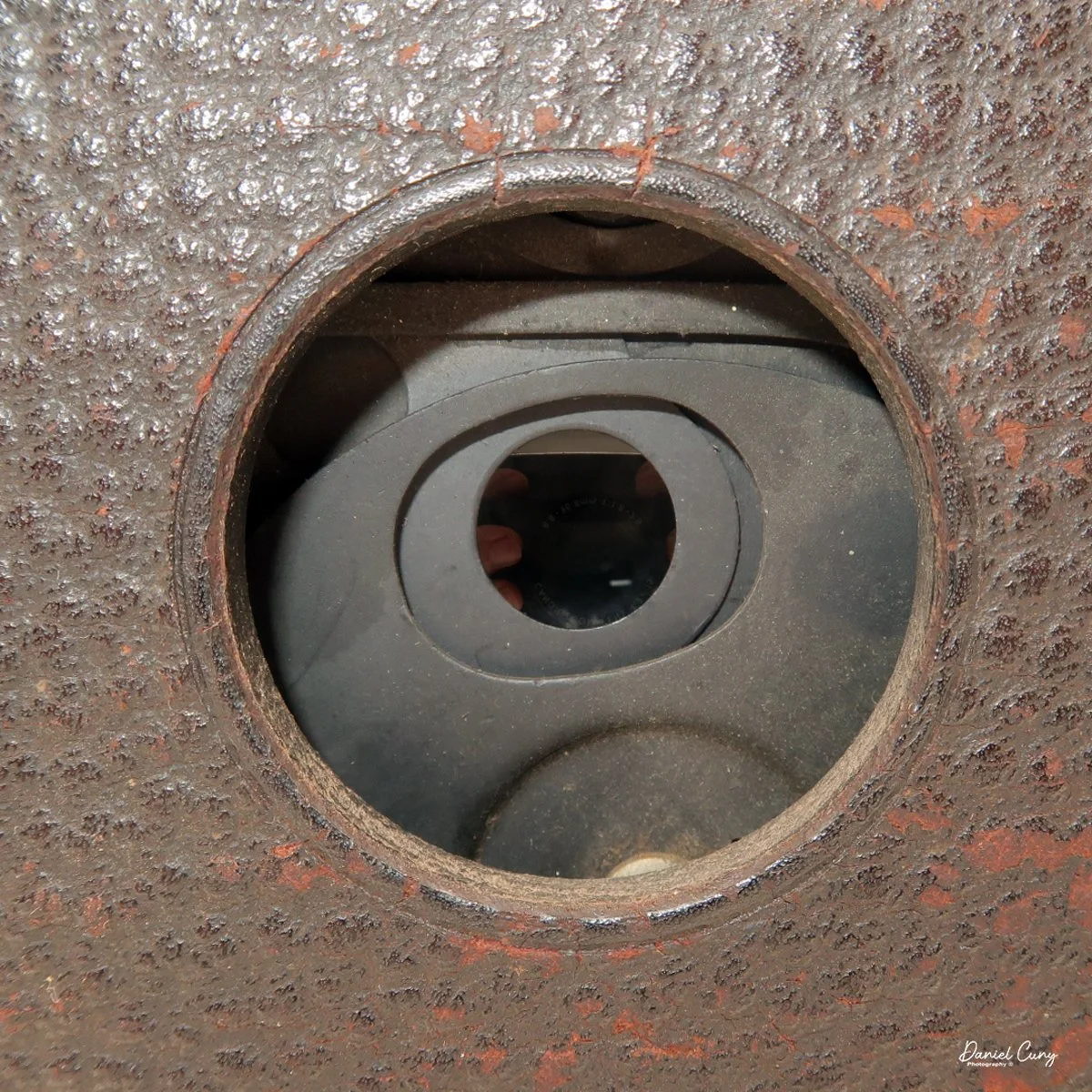
After sitting in a box for more than 20 years, the camera's optics needed a good cleaning, so with Q-tips, lens cleaners, and lens tissues in hand, I gave the viewfinders and lenses a good cleaning, which they desperately needed.

 One other thing I needed to figure out was that, since the camera originally used 125-size film, there is a red window on the back so you can tell which frame number you're on. The red window won't work for the adapted 120 film, so I needed to see how much film would be wound per each turn of the advance knob. 

 I put a piece of paper on the spool and turned it one-half turn, which covered the spool. Then I measured that length and determined that it was approximately  1", so to cover the 5 1/4", I'd turn 3 full turns to get approximately 6" of film across the film area. The one thing I didn't know was how much paper backing there was on each roll before reaching the film itself. This I just guessed at and hoped I'd get 5 images per roll since each negative would be 2.25" x 5.25".

 With the camera's back off, I loaded film into the camera, then put the film back on. To guard against any light leaking into the camera through the taped hinge, I put some black painters' tape on the outside as well. Now it was time to go outside and see what the camera could do.

My Results:

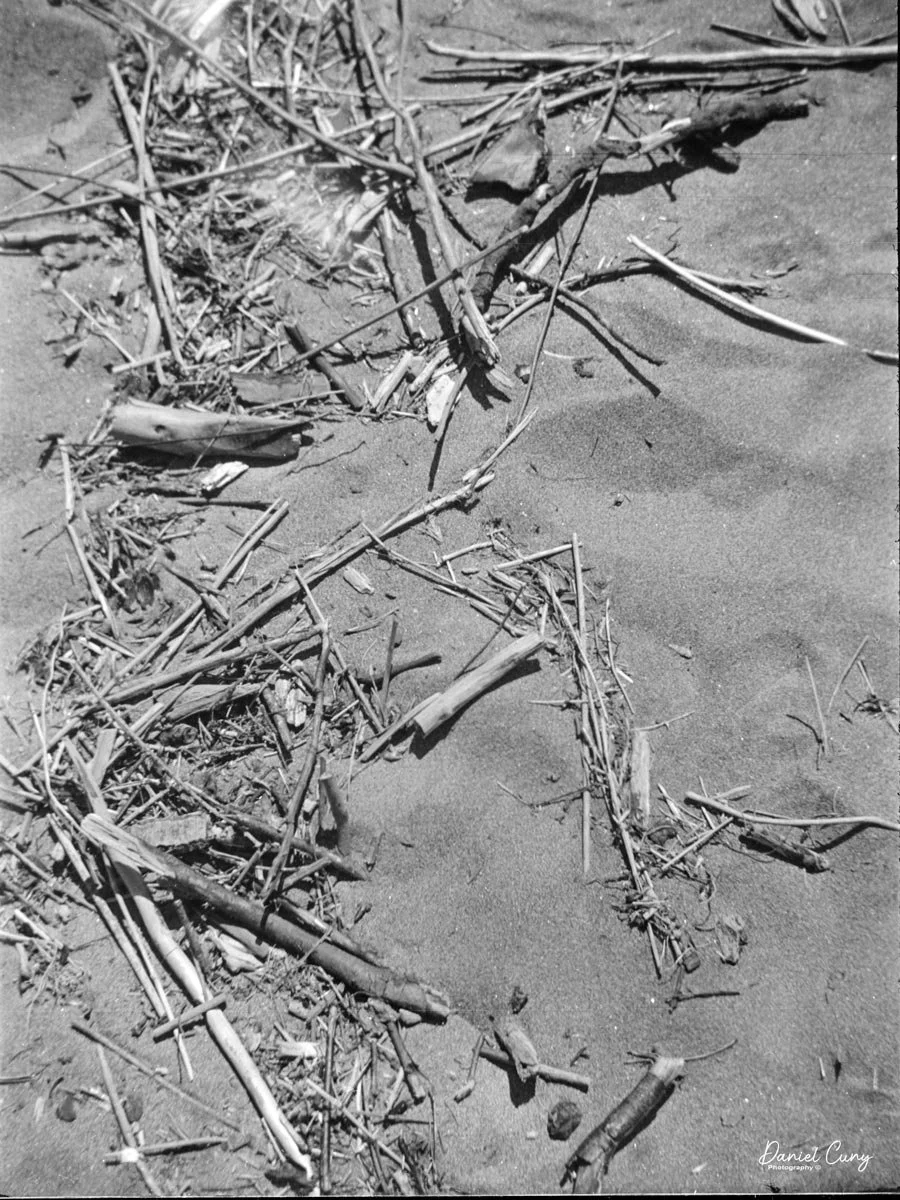
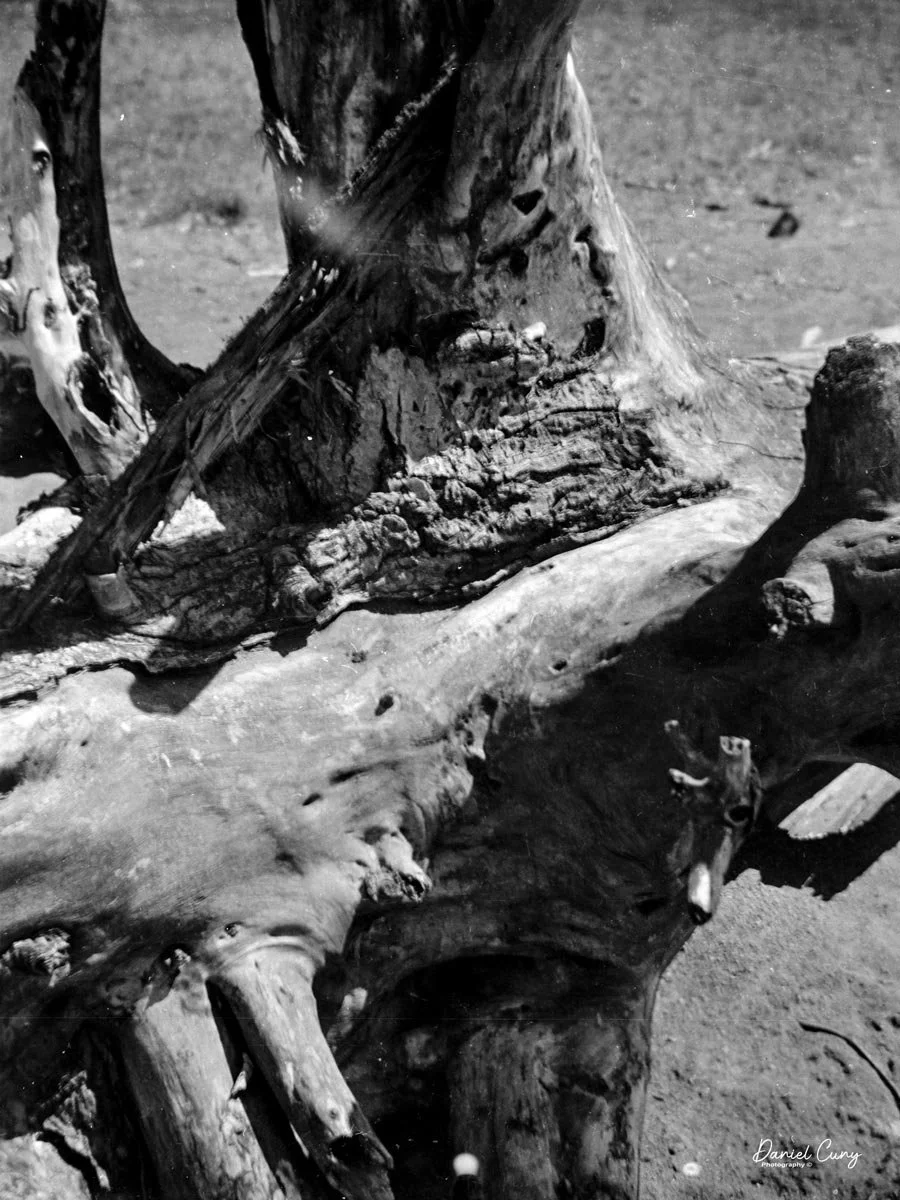
 With film loaded in the camera and guessing at the film's approximate starting point, I walked through the neighborhood, estimated the distance to the subject, set the focus wheel of the No. 3B Quick Focus to that distance, and pressed the focus button. The lens sprang to the distance needed, and I took the photos.

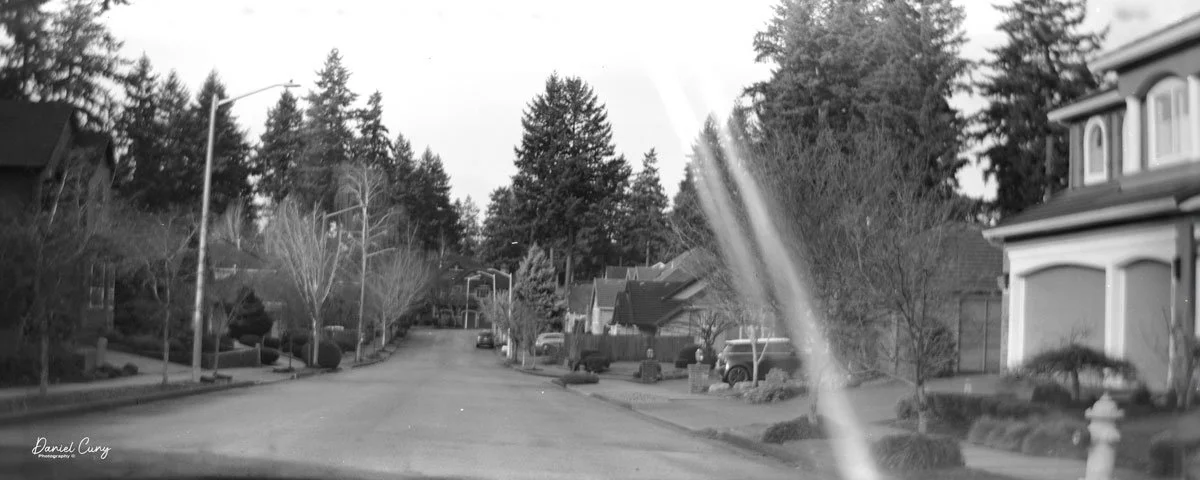
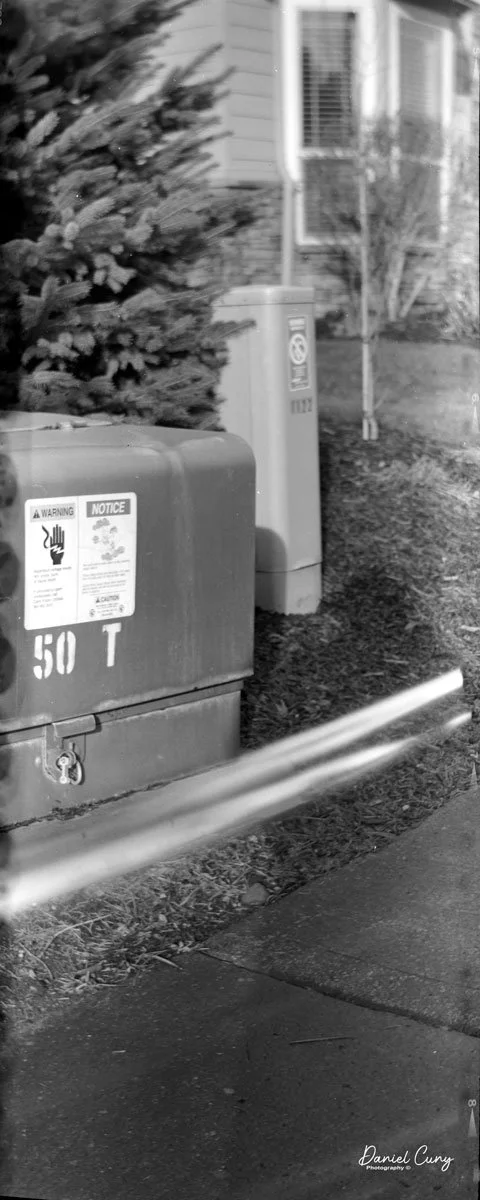
 Here are the images I took during my walk through the neighborhood, knowing I'd only have 4-5 images to shoot.

Conclusion:

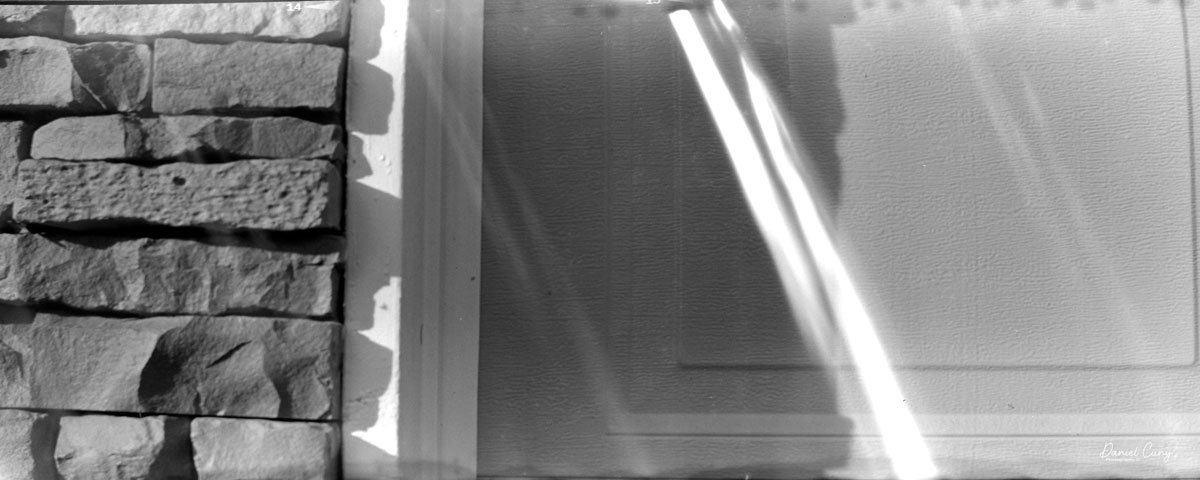
 Well, after all that work, I still had light leaks. They are all in the same direction and at the same place, so I didn't plug up any areas with a pinhole that caused the light leak.

 Taking the back off the camera and going into a dark room, I shone a light into certain areas around the shutter and the quick focus area. The only spot I saw a light leak was in the top area by the locking mechanism, which the cover itself should have covered.

 I'll need to do a bit more poking around to see what I can find, but overall, the images were good, aside from the light leak. I needed to take a few more close-up shots to check focus, but from what I can see, it turned out well, and it's a fun camera to shoot with.

 Overall, a fun and very good learning experience working with a 115-year-old camera.

 Thank you for taking the time to read about this camera and the issues I had to resolve to get it back to a usable state for shooting.

 Here's a link to my other Camera Reviews.

 Cuny's Cameras and Photo is my eBay online shop, where I sell cameras I've reviewed, along with other camera and photo oddities I've accumulated over my 50-plus years.

 Until next week, please be safe.