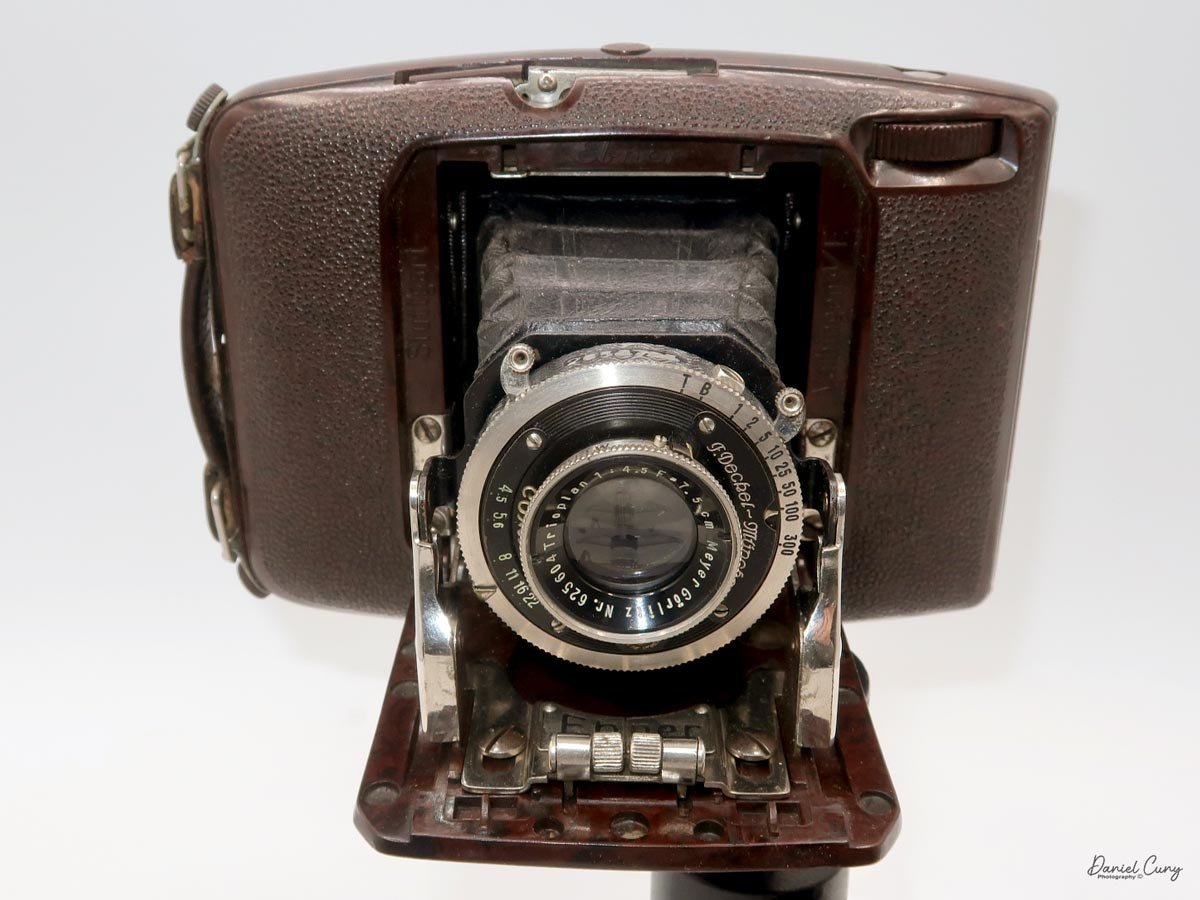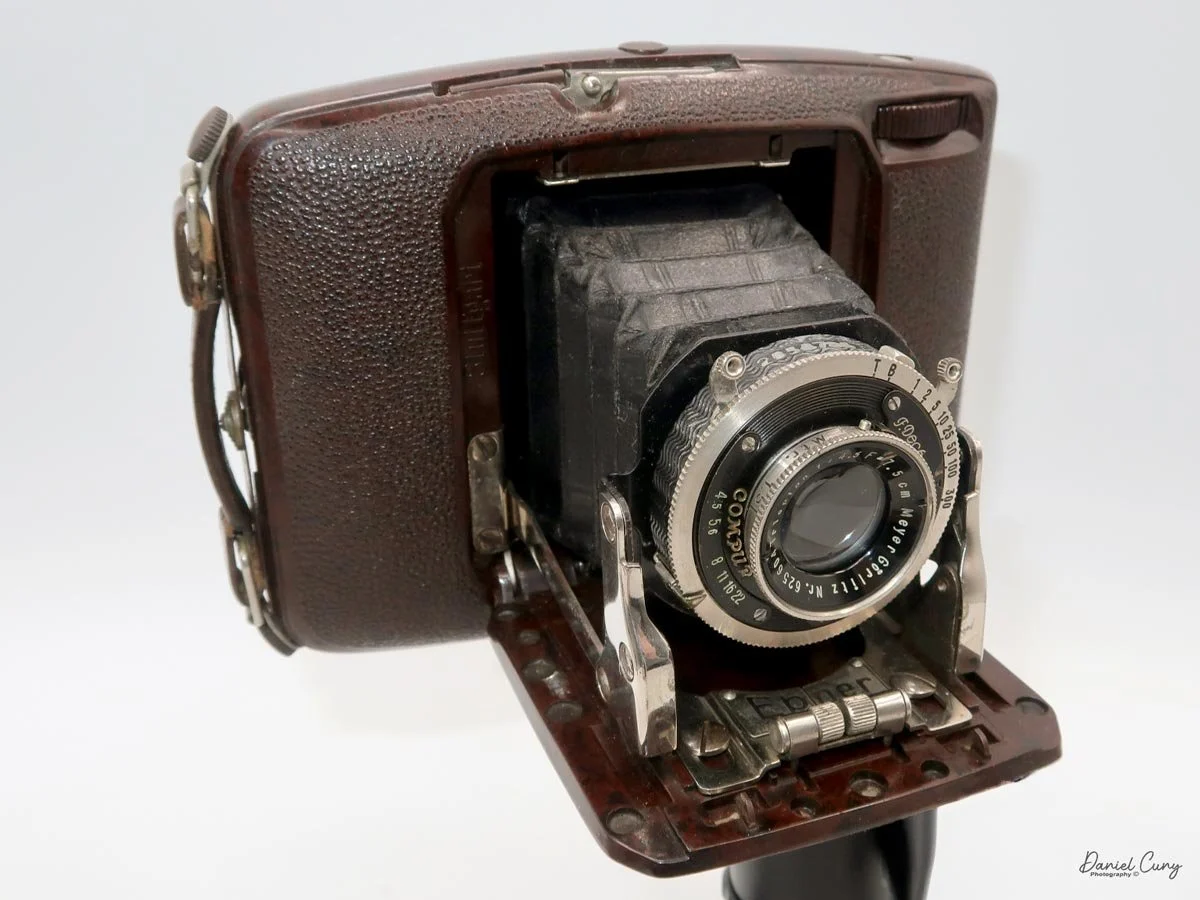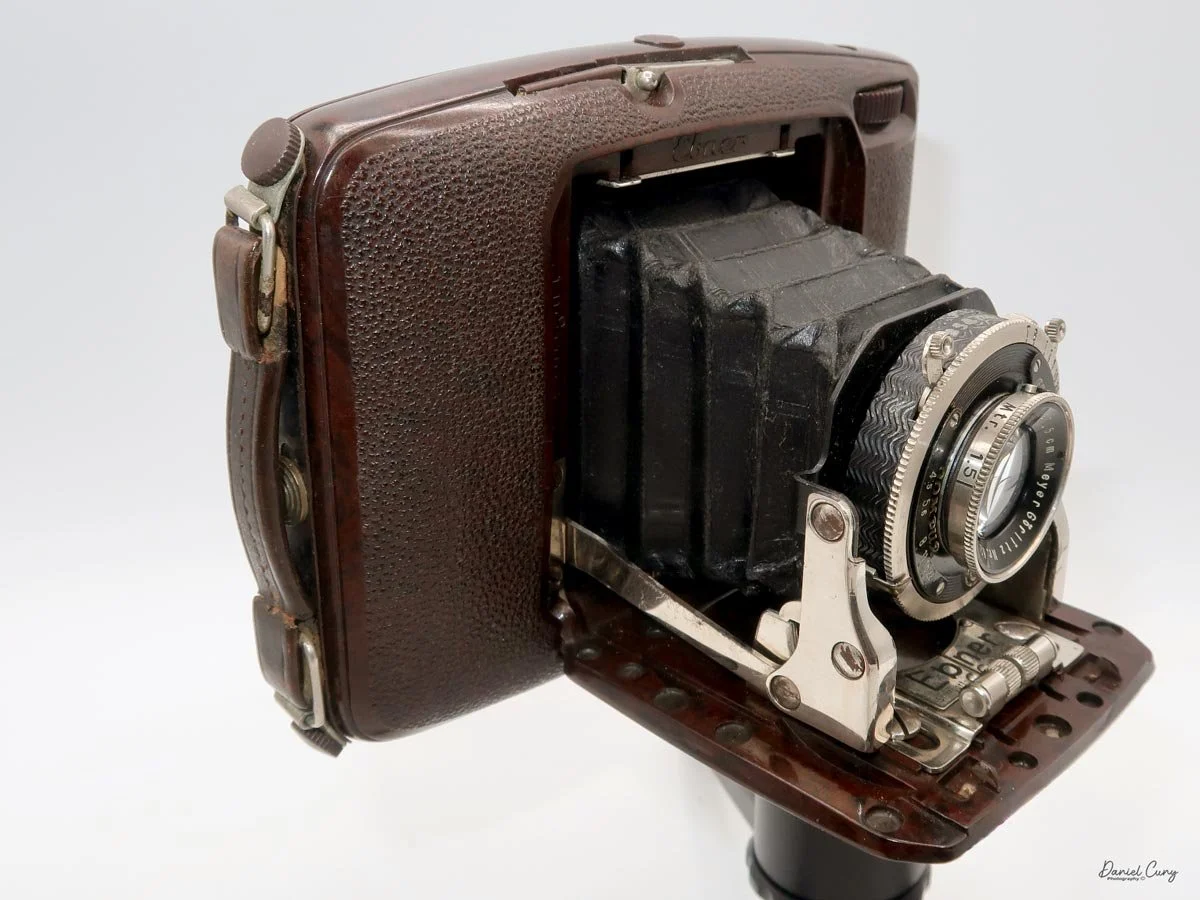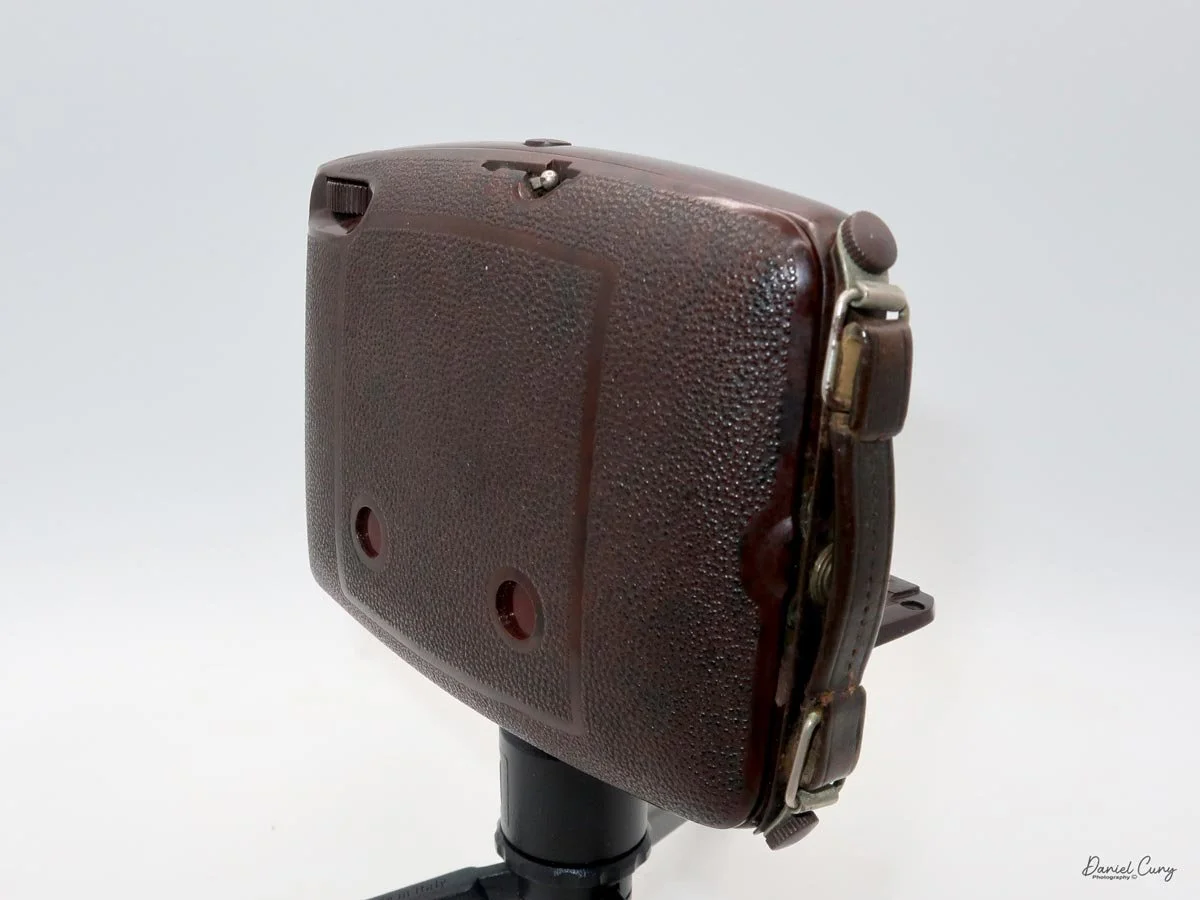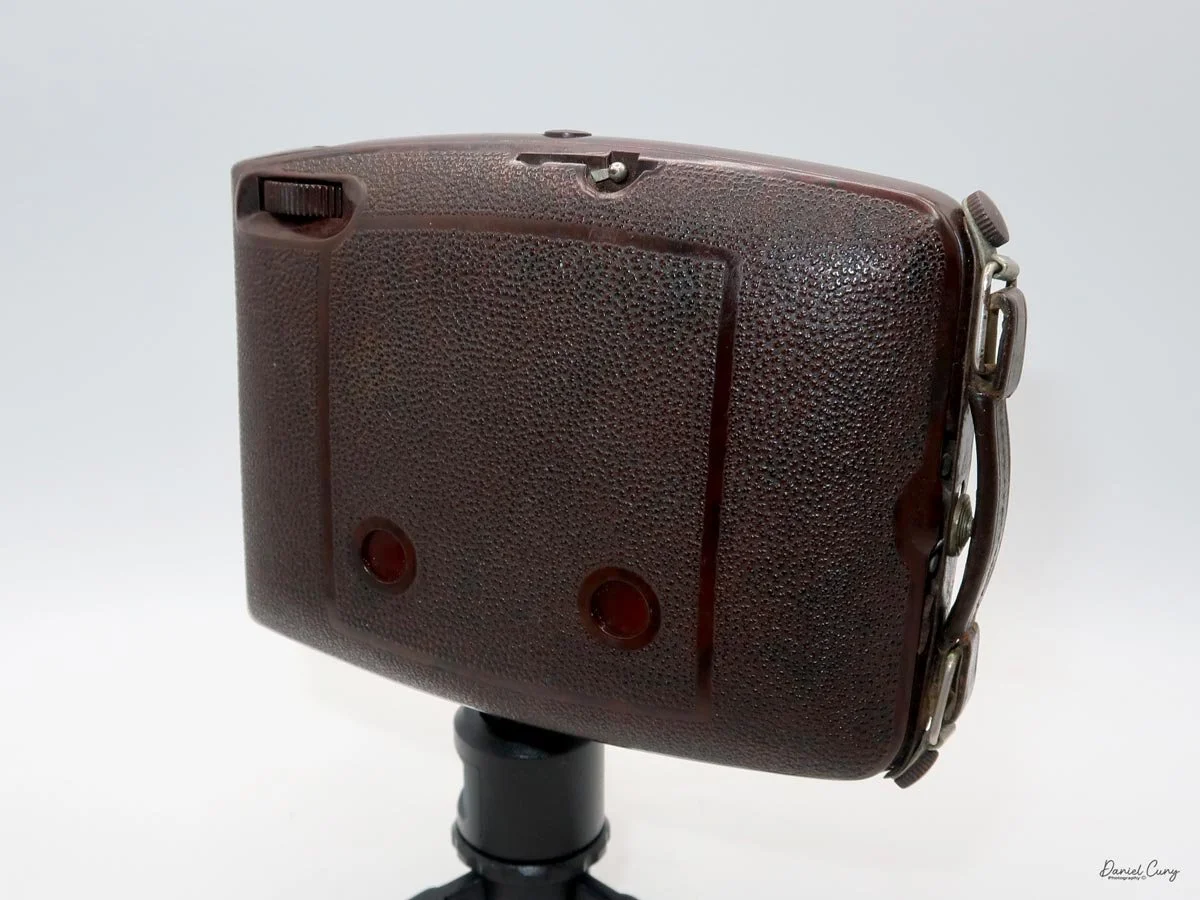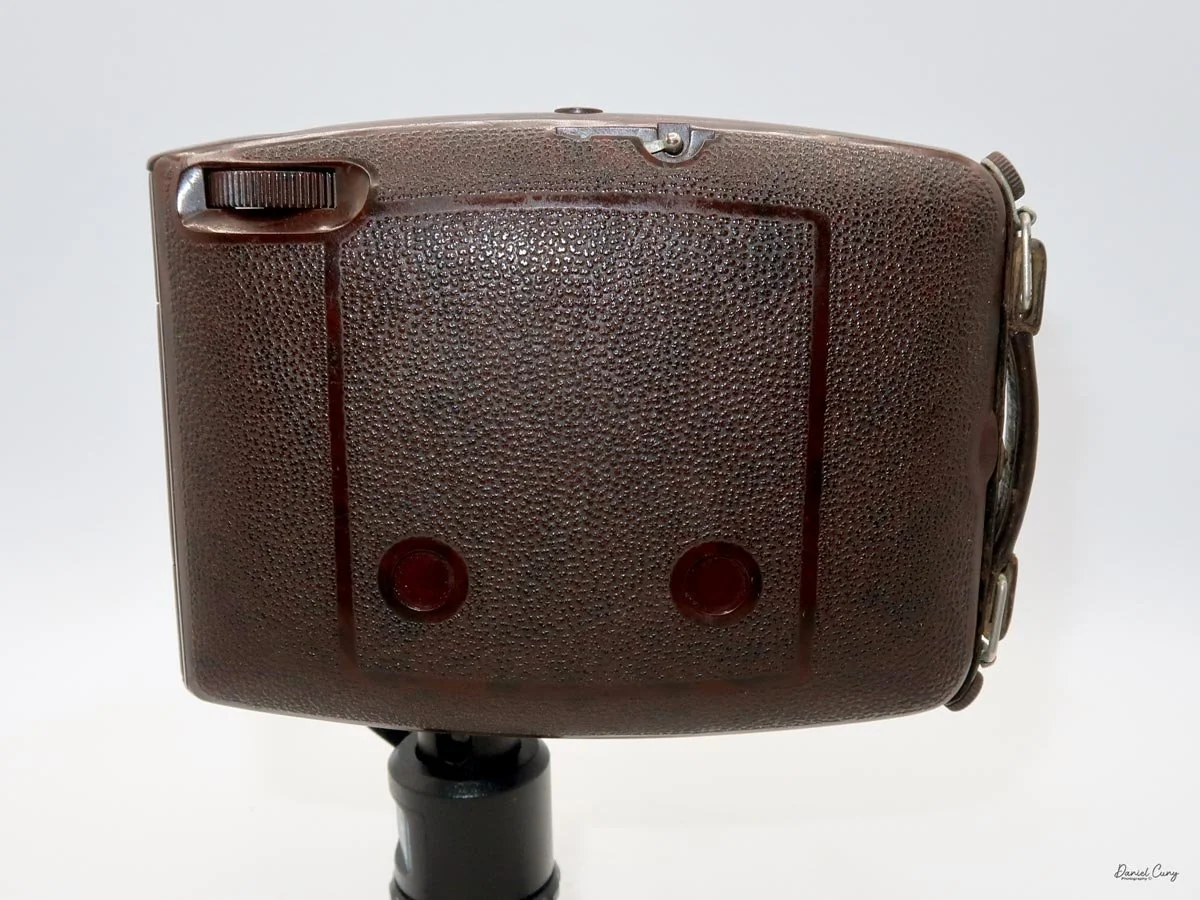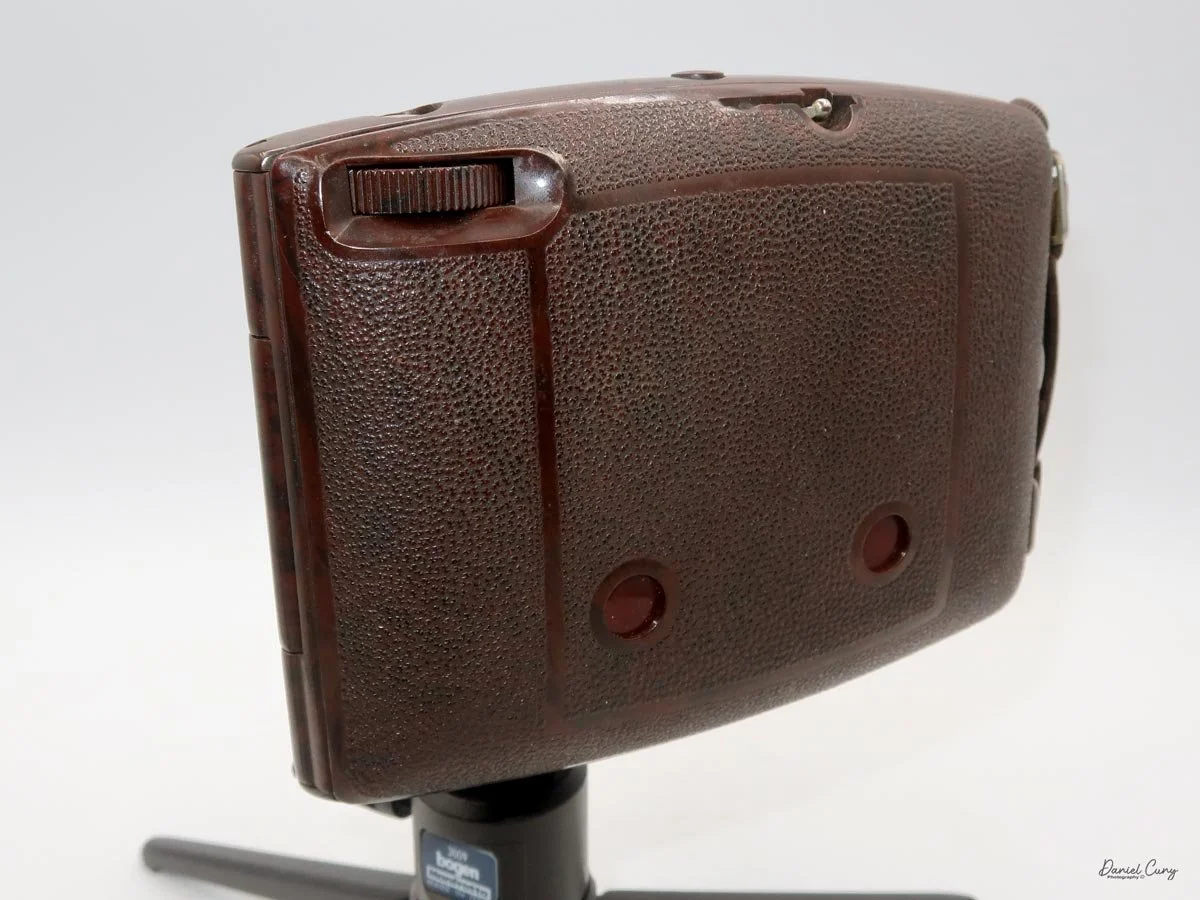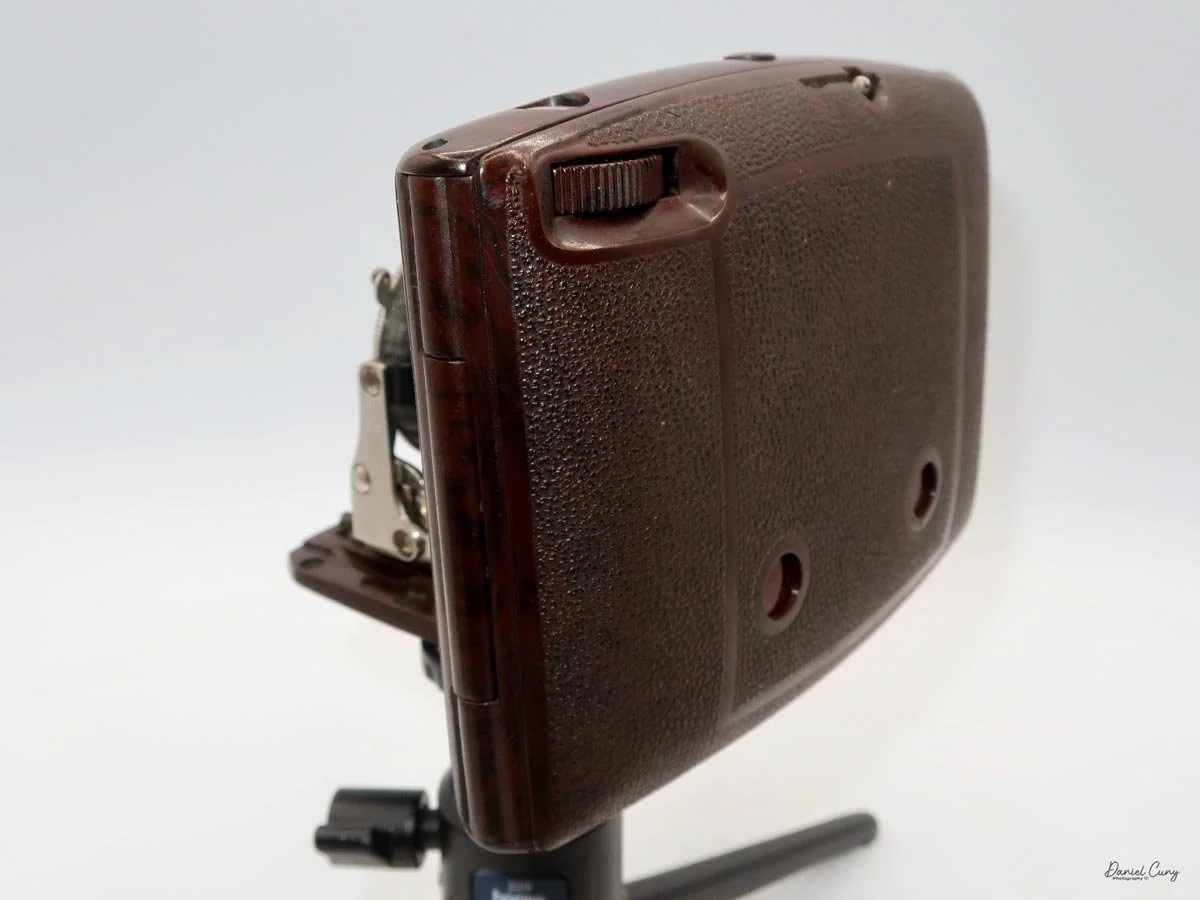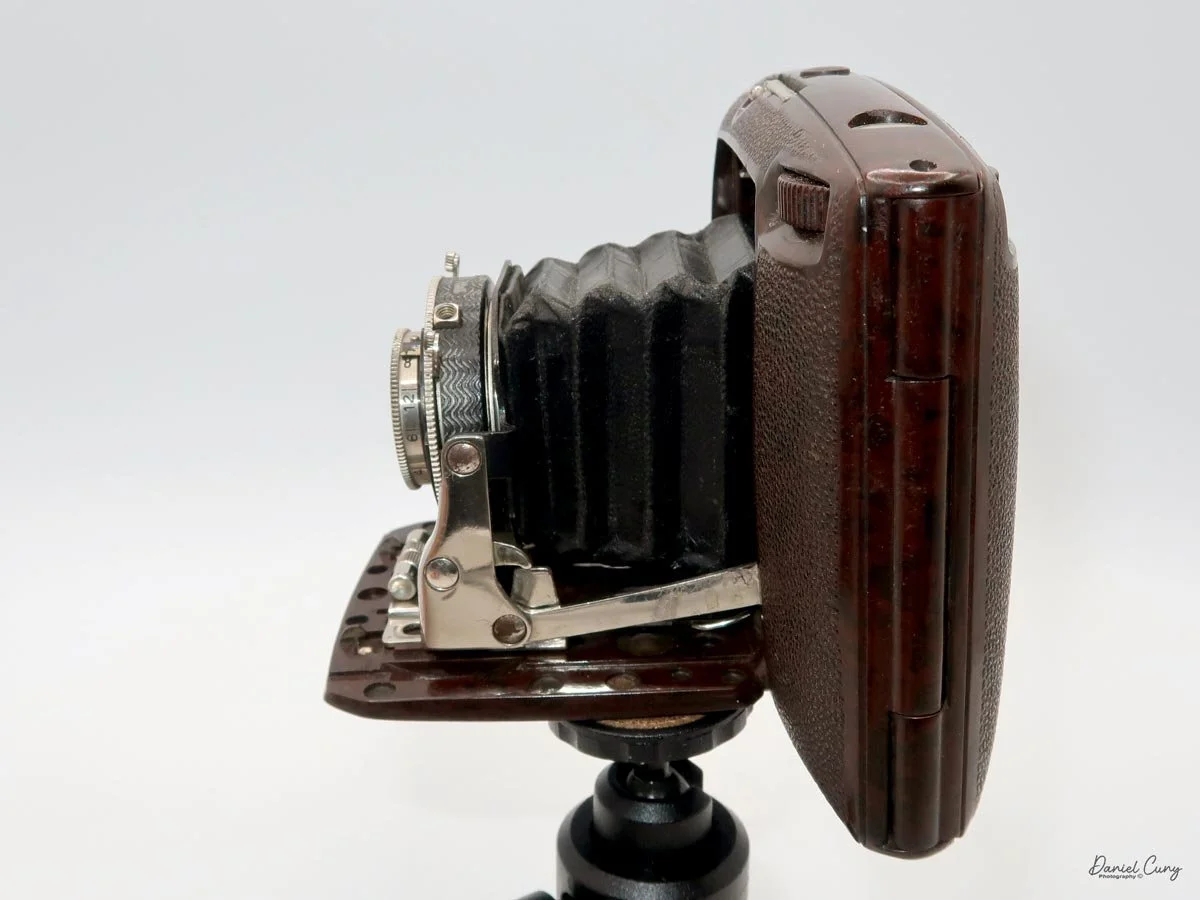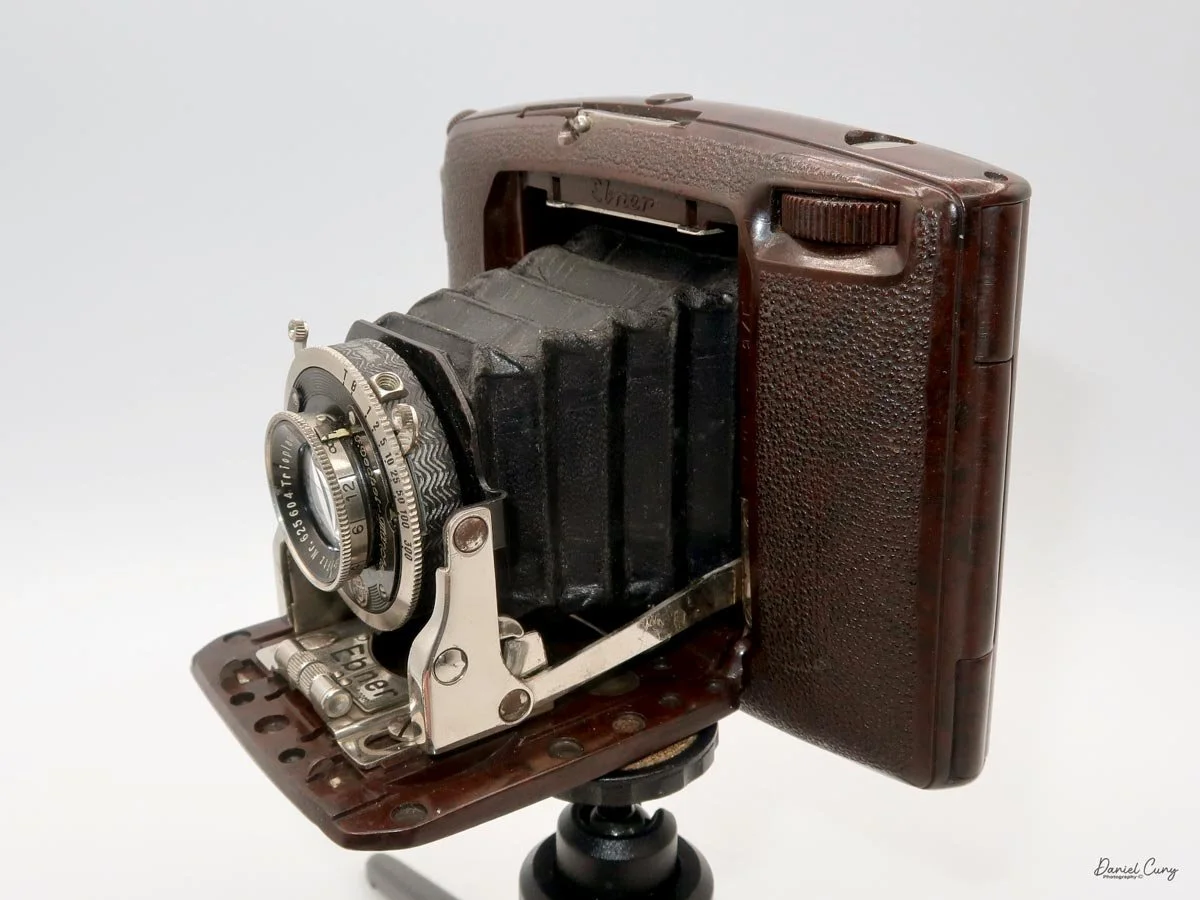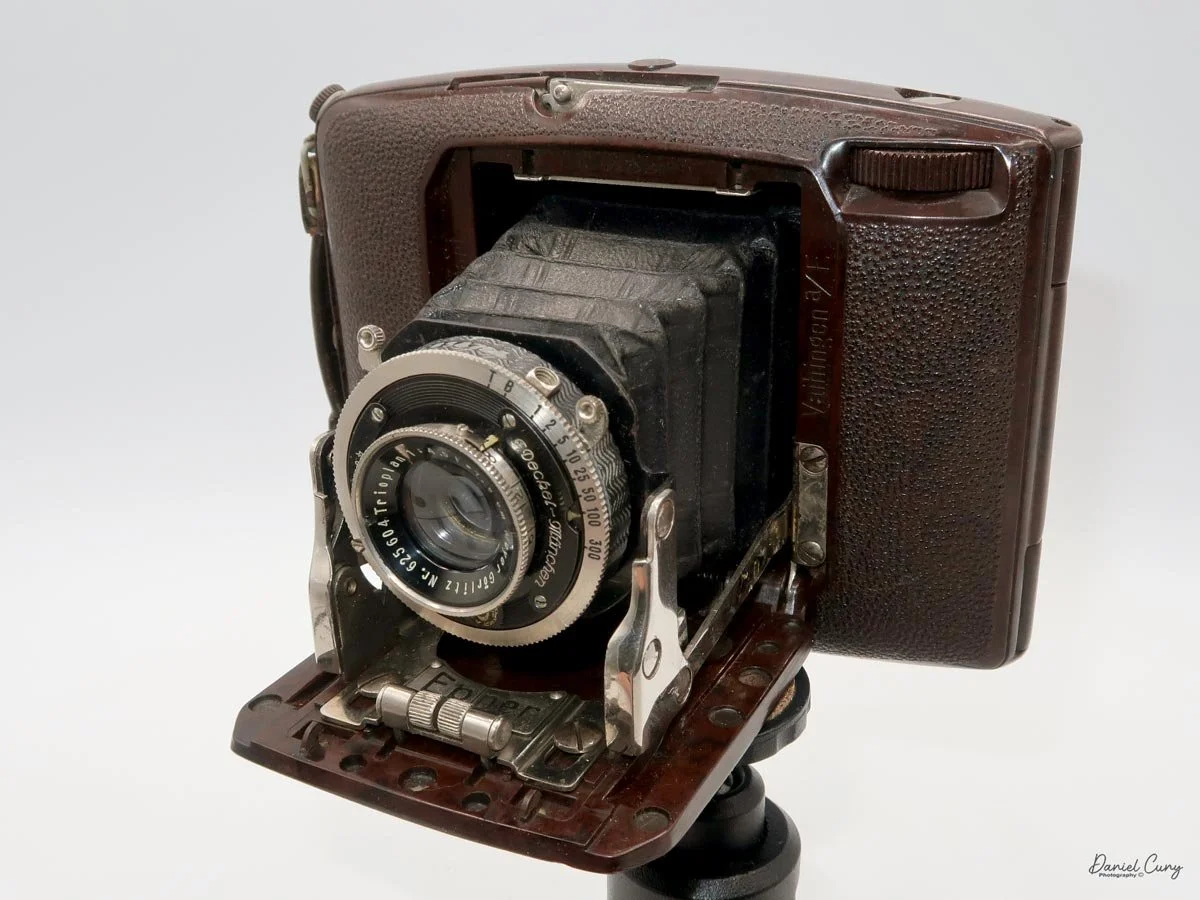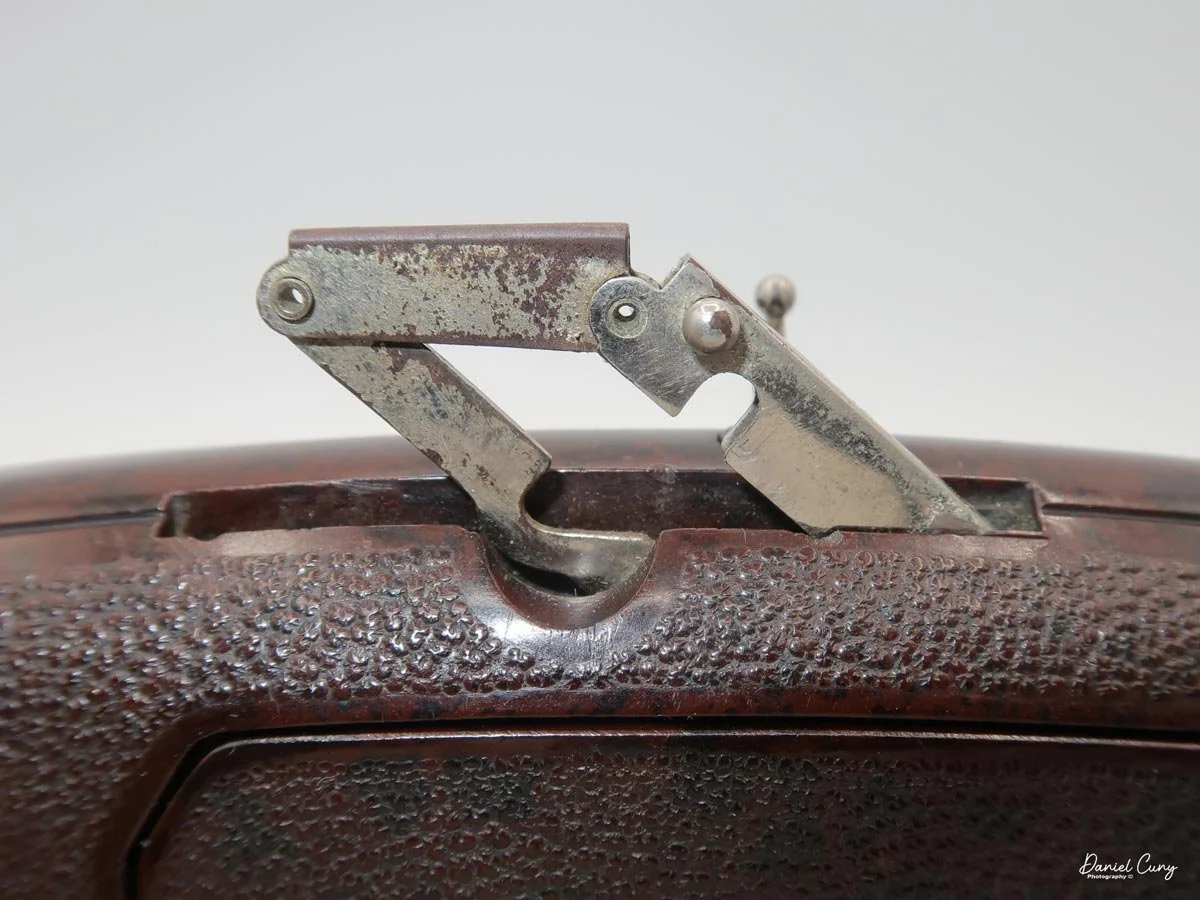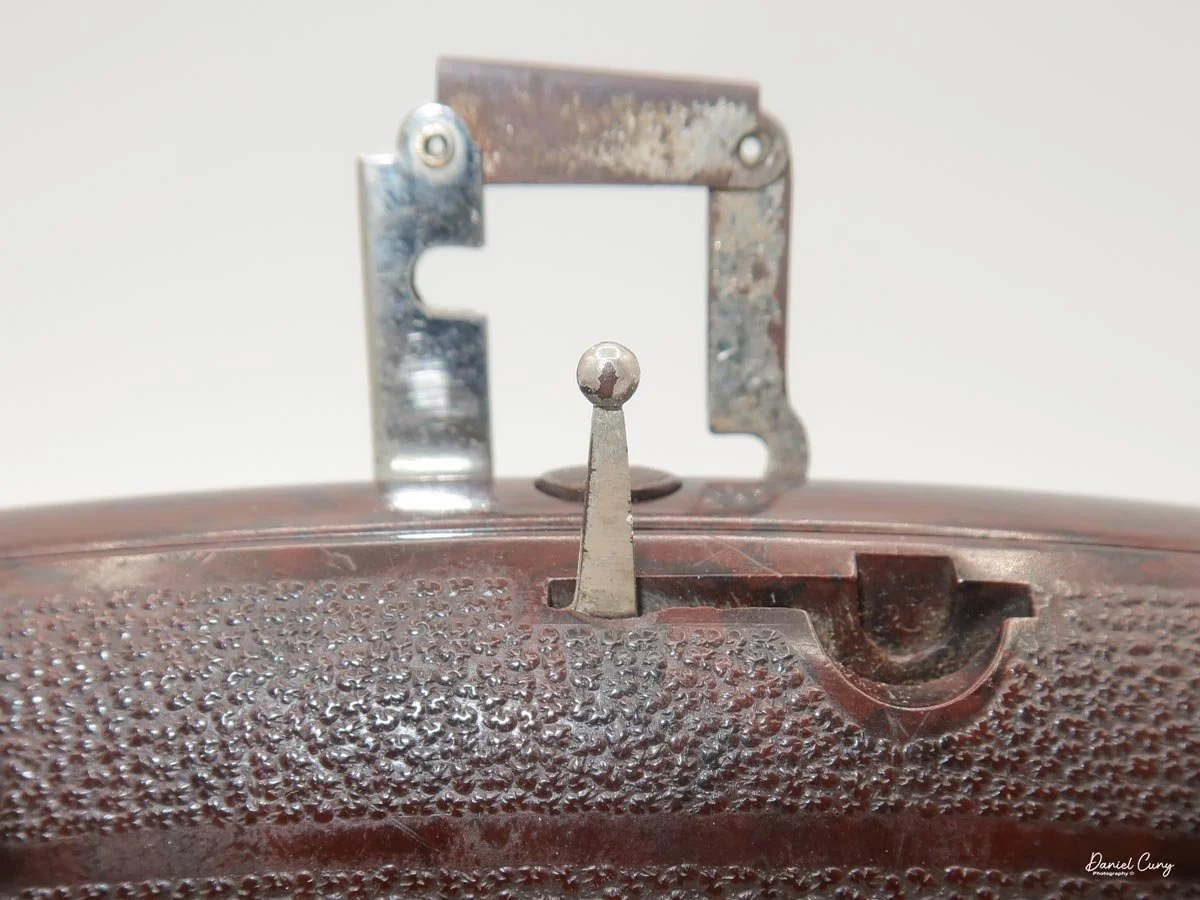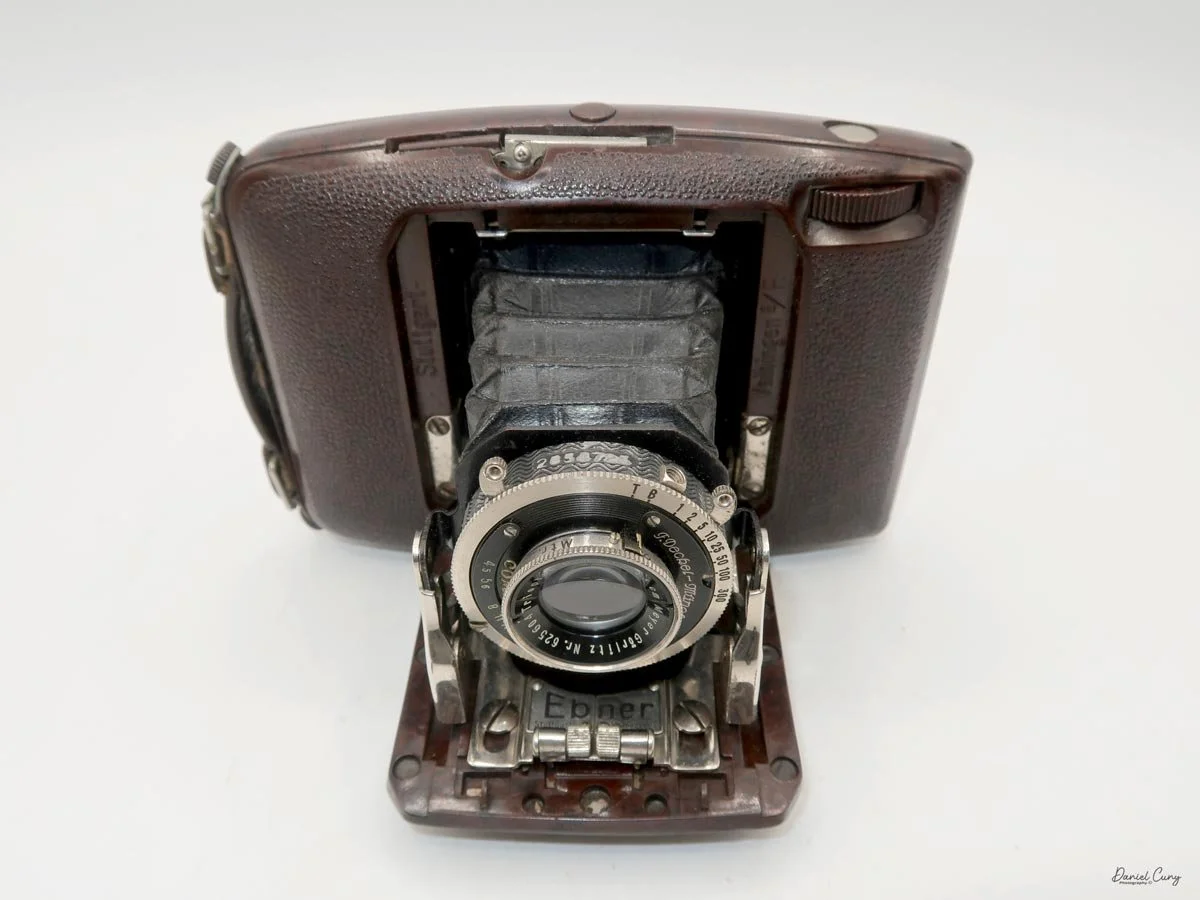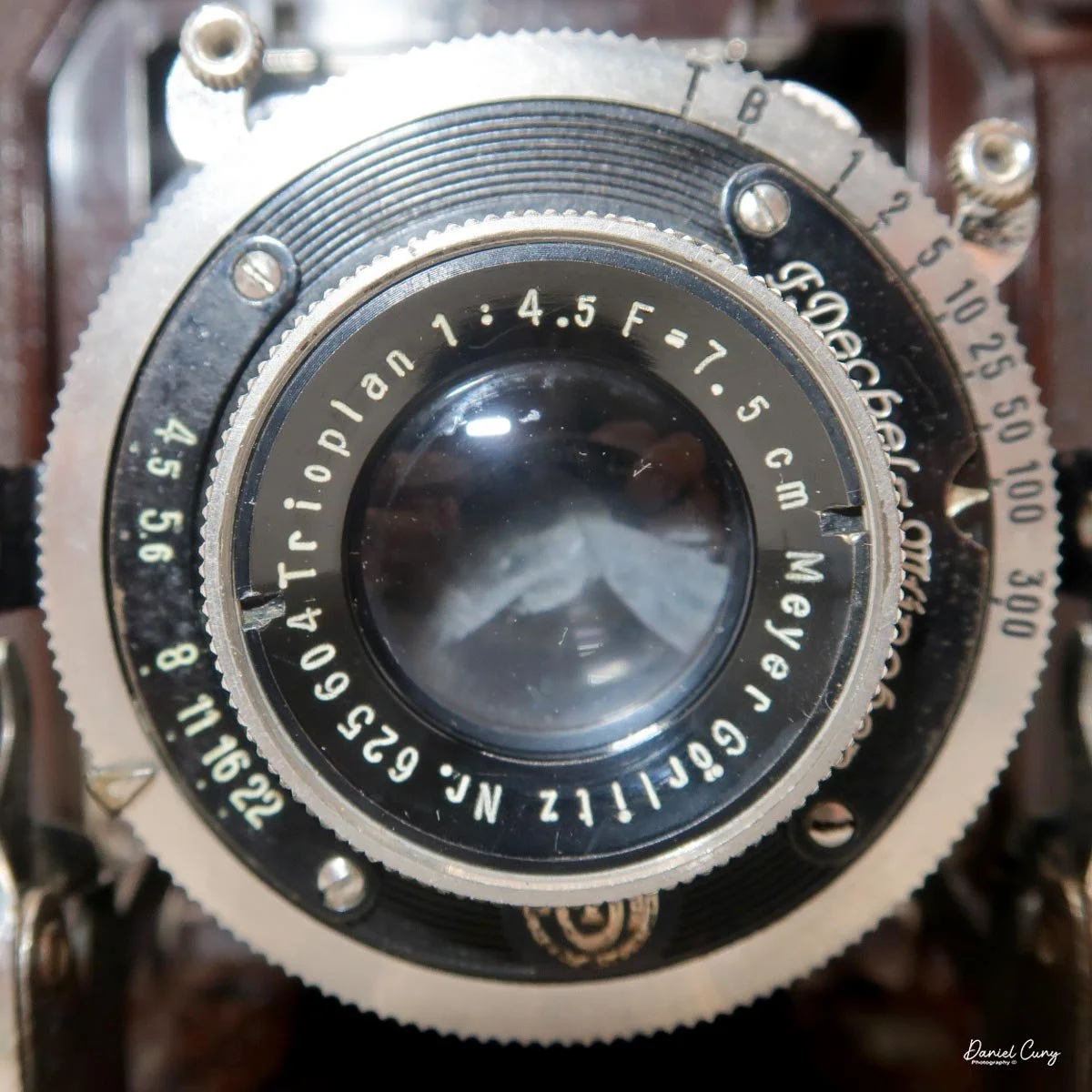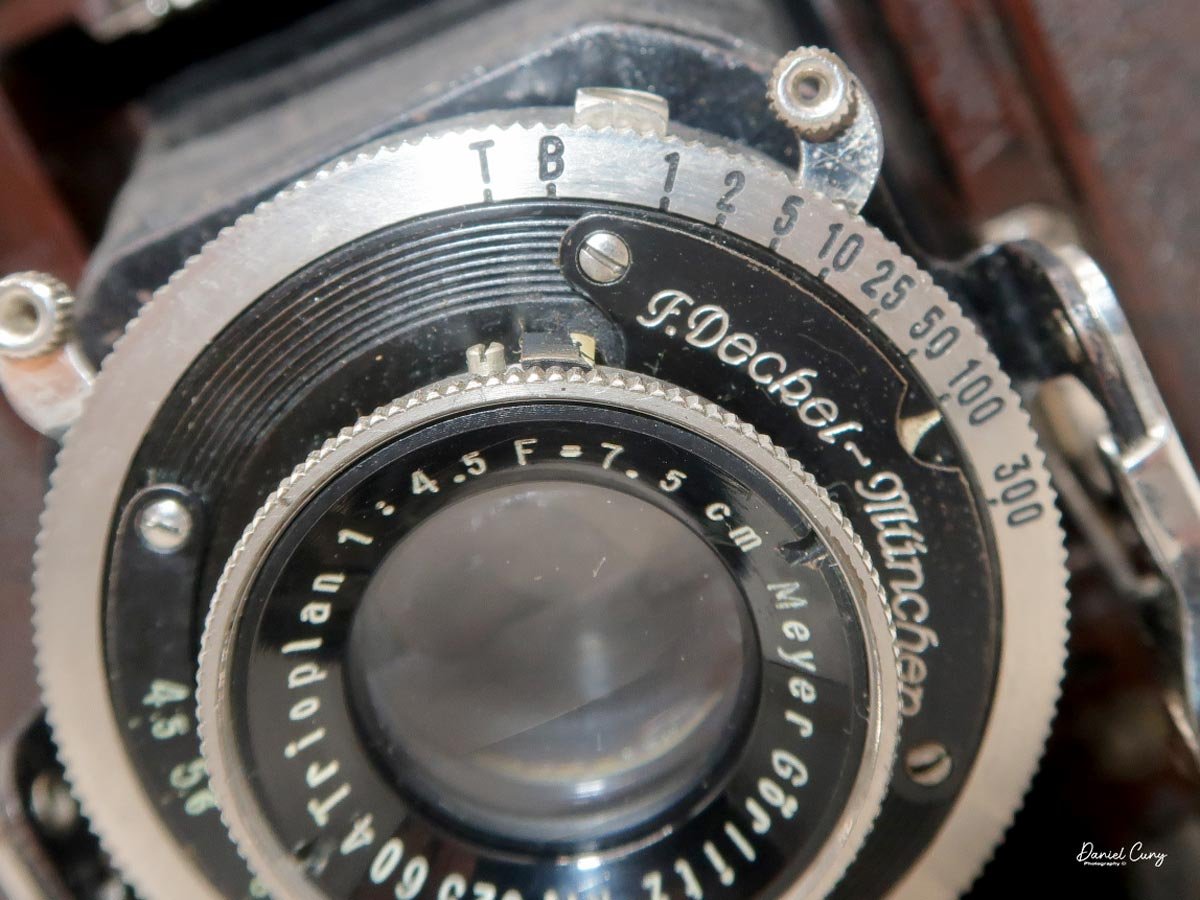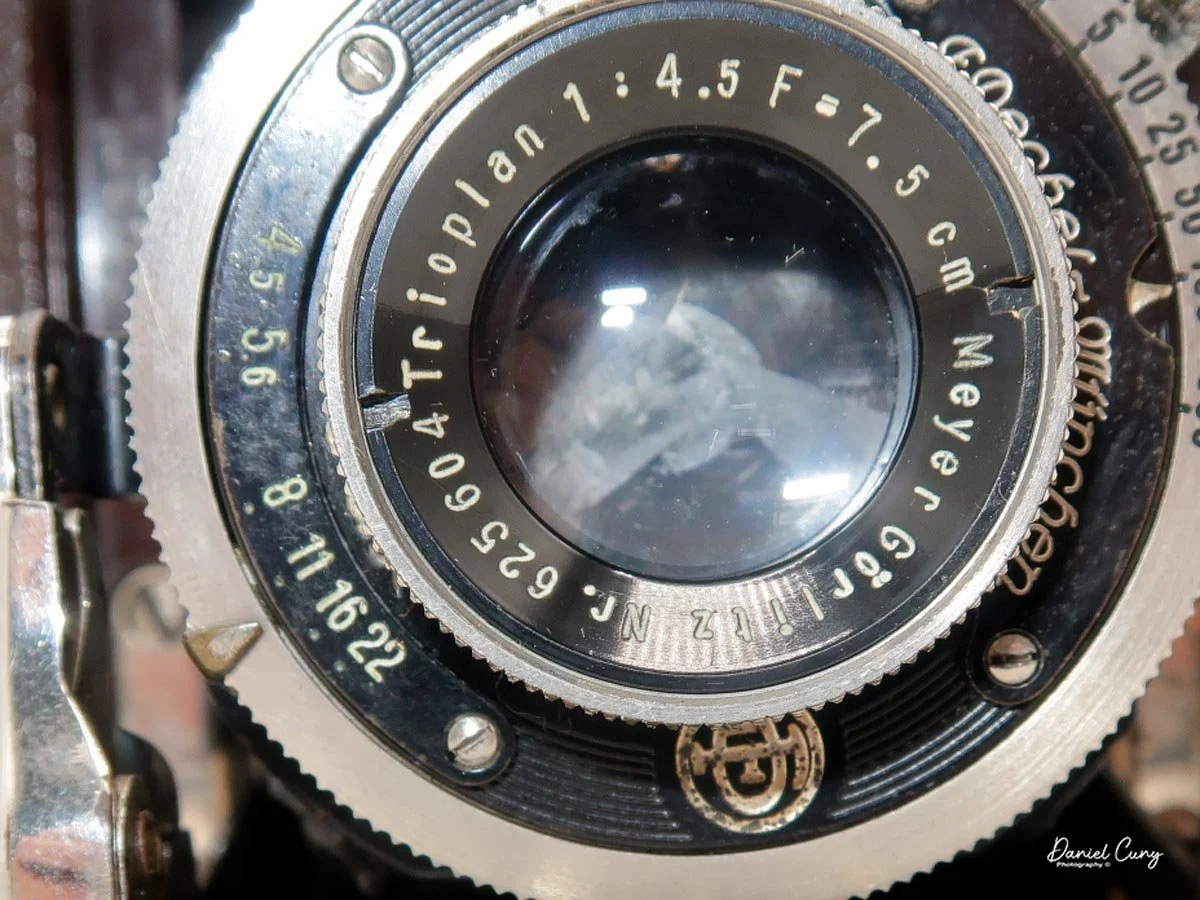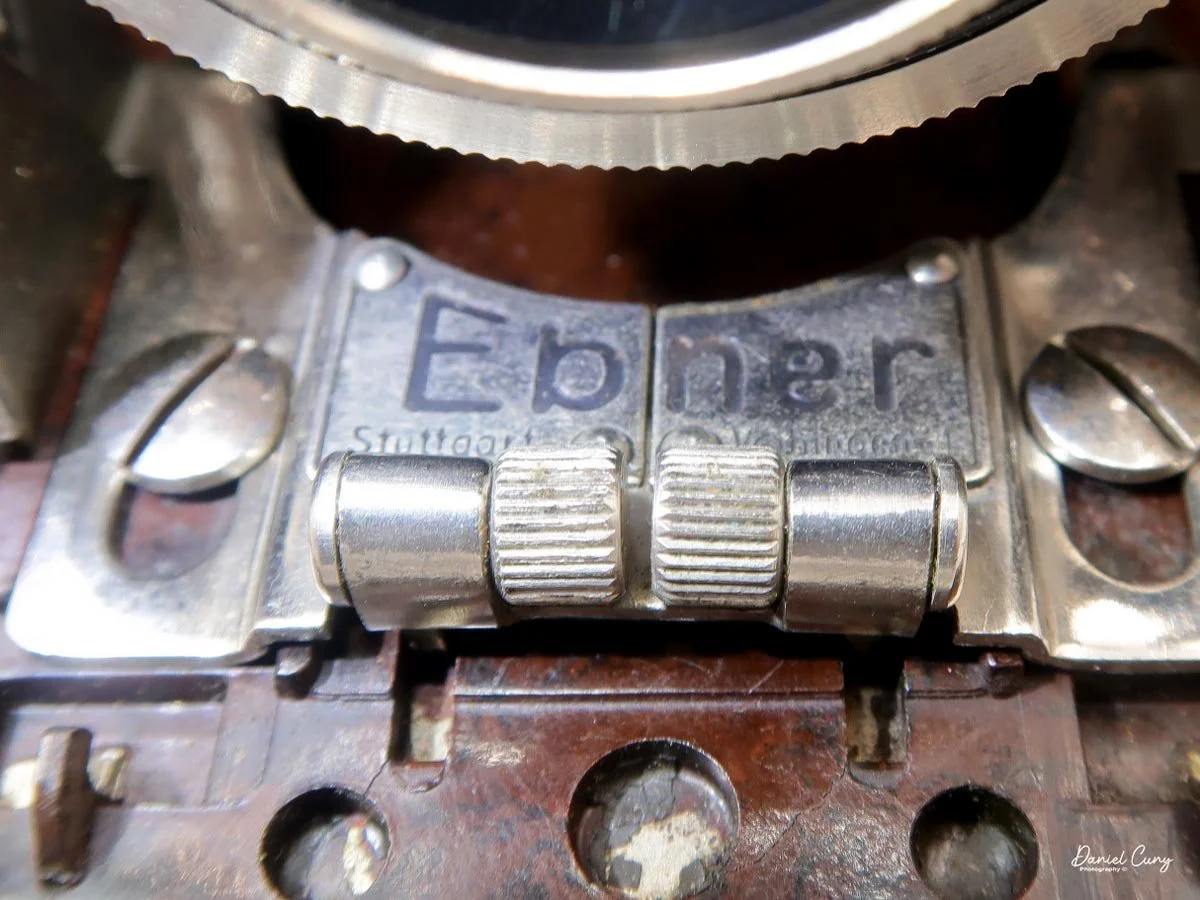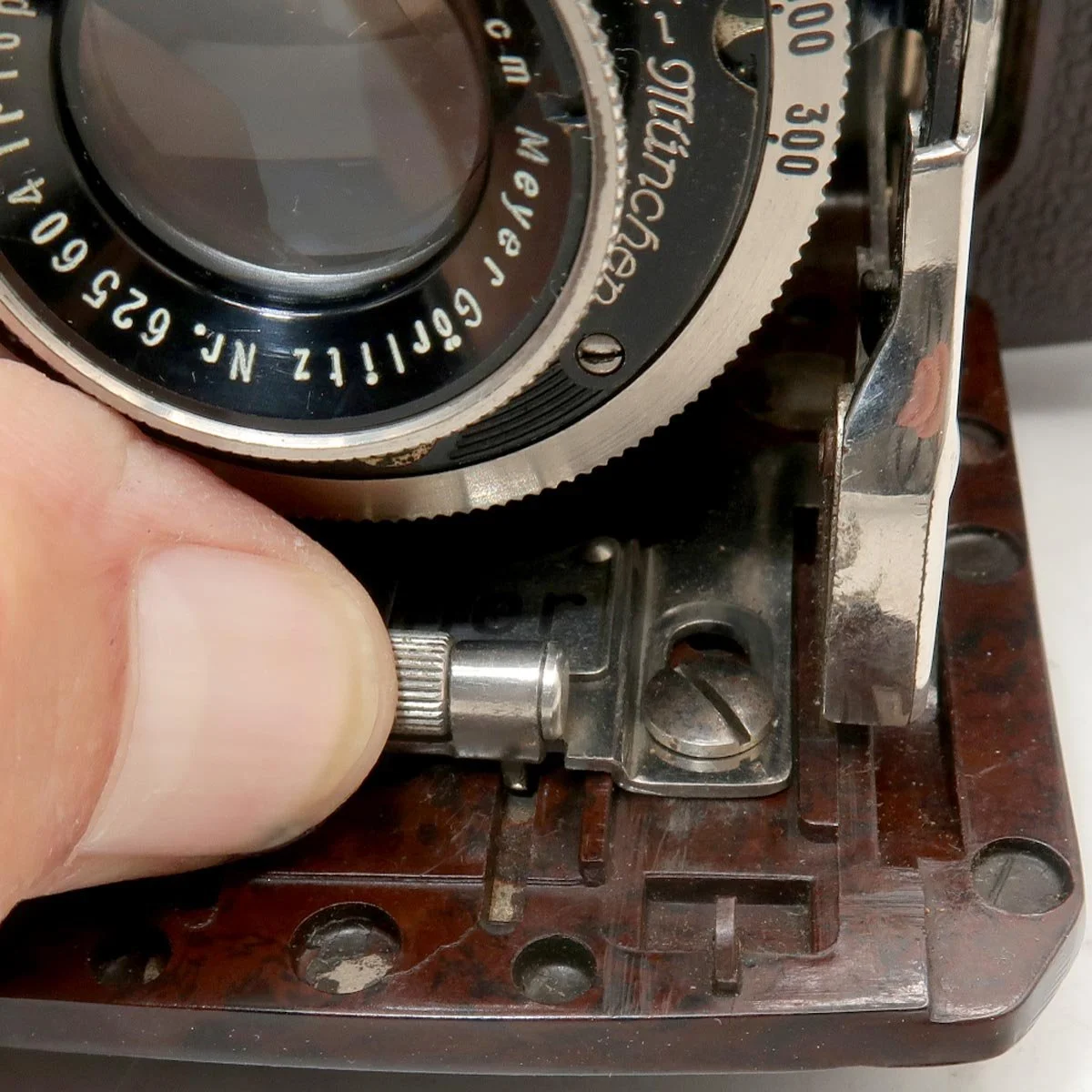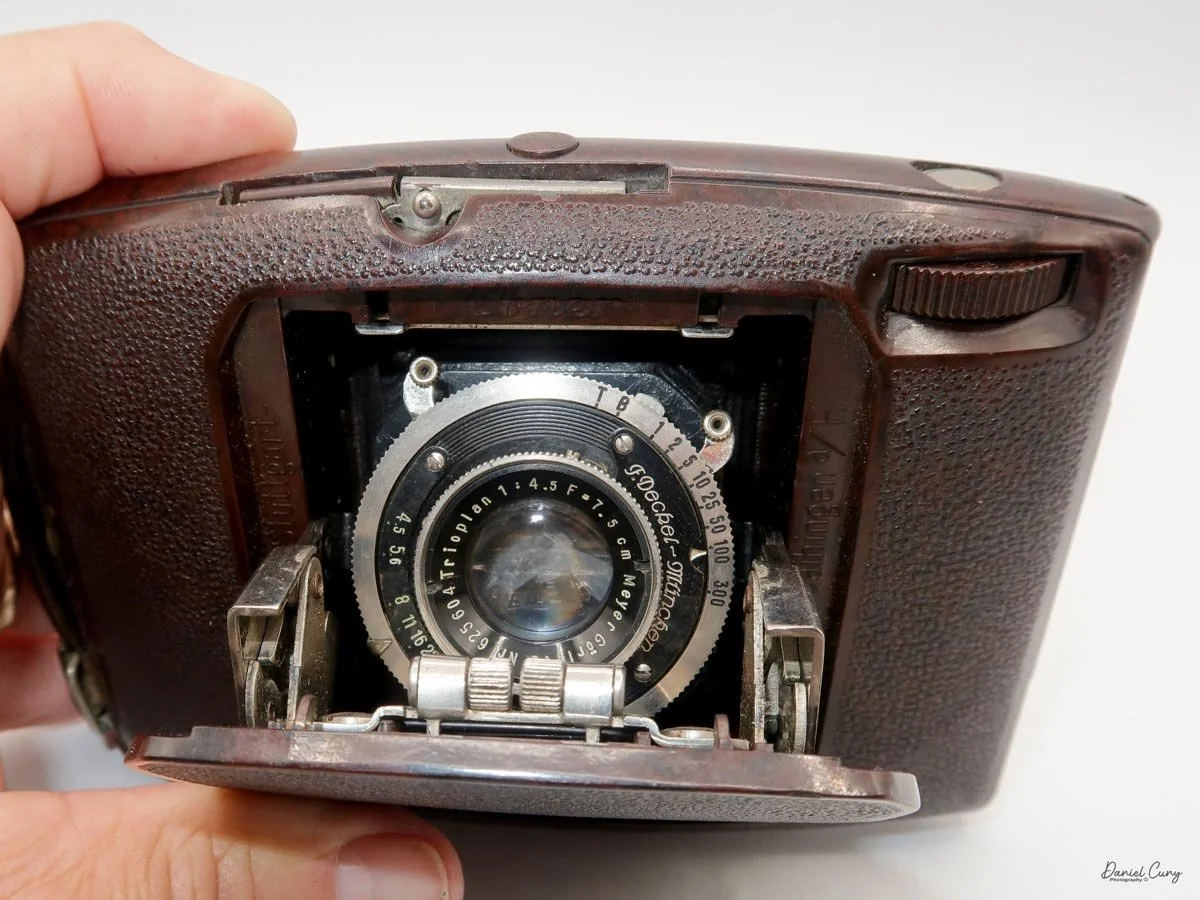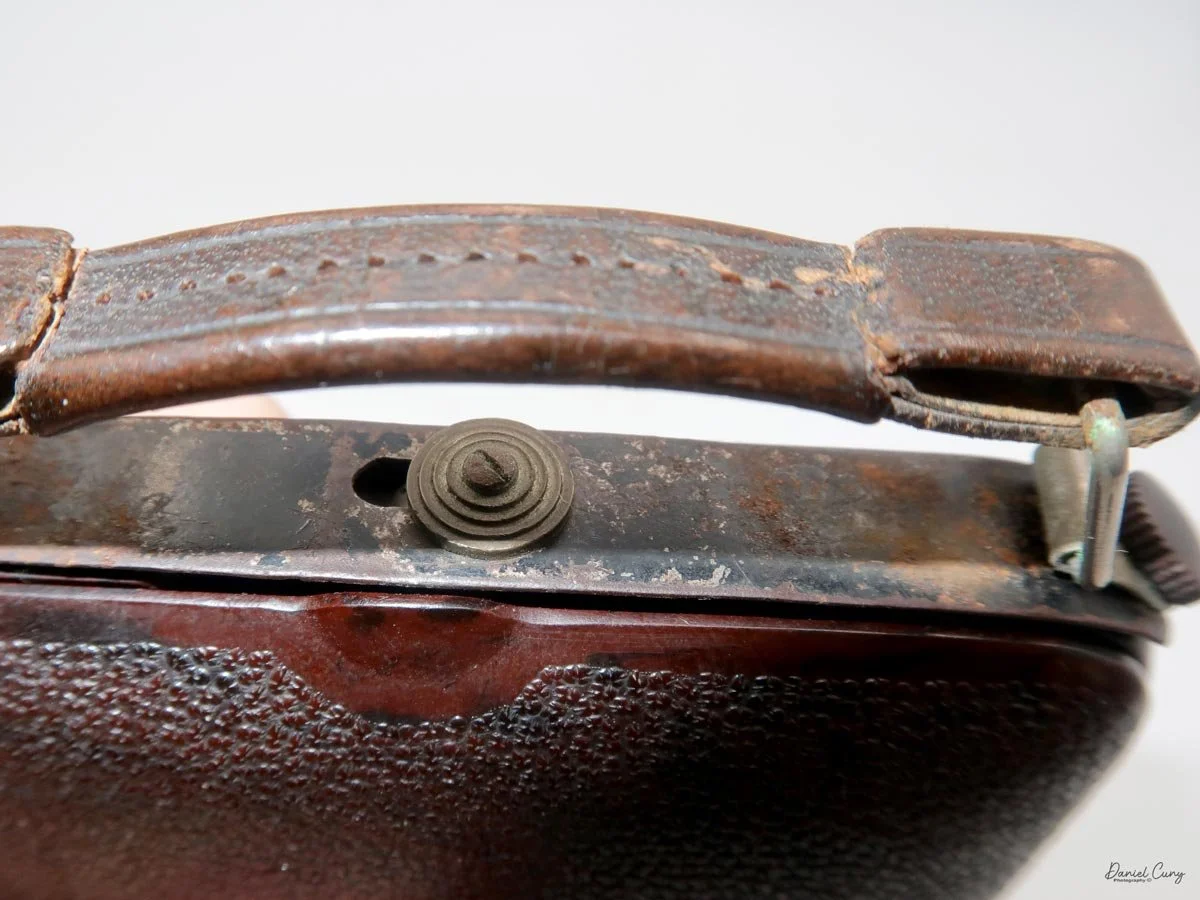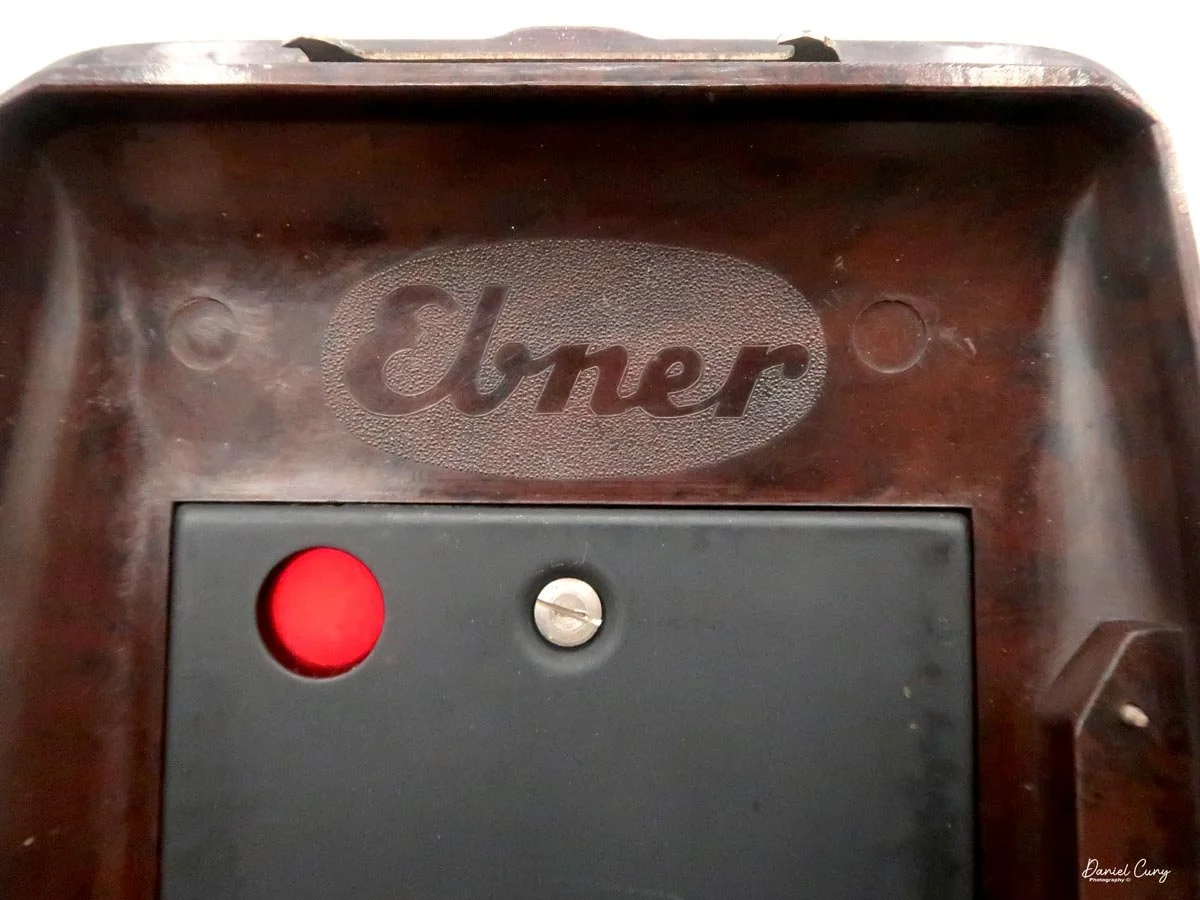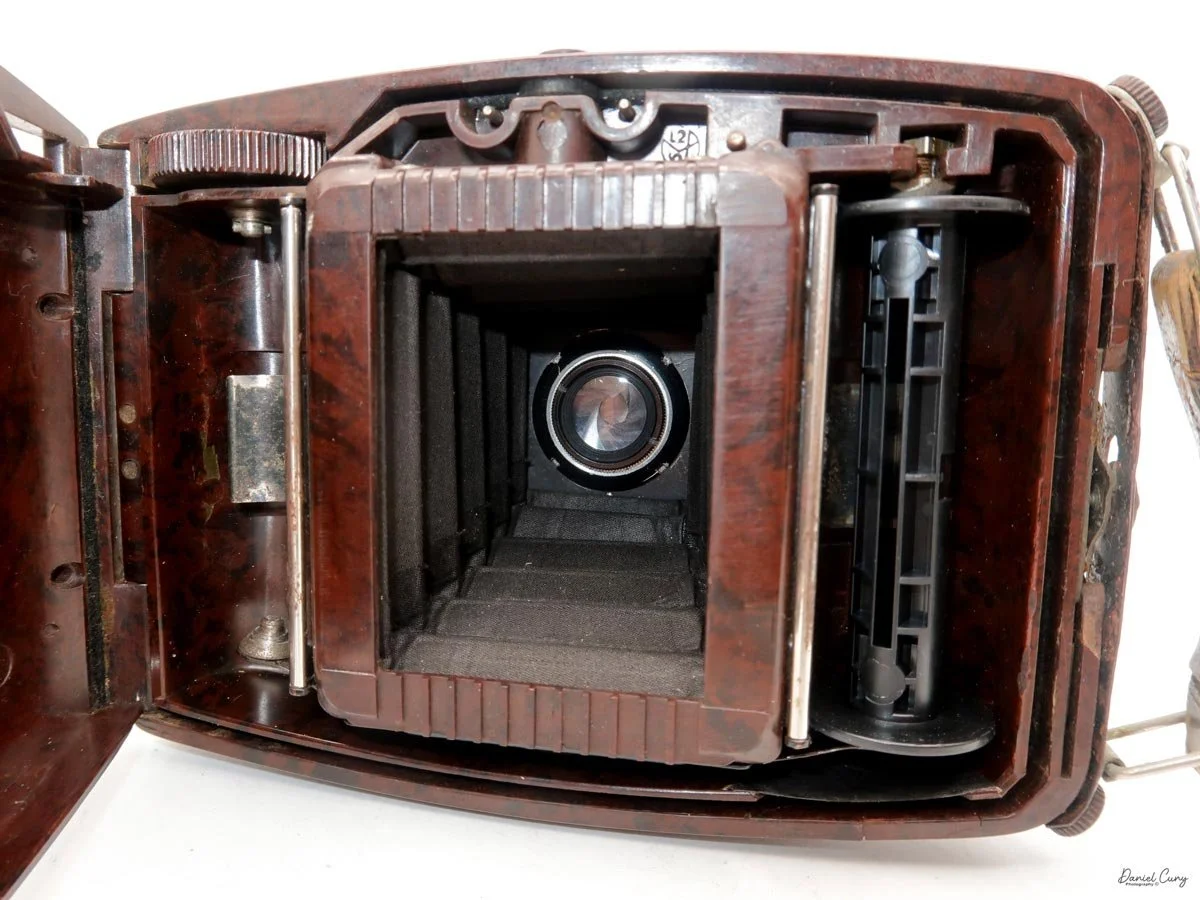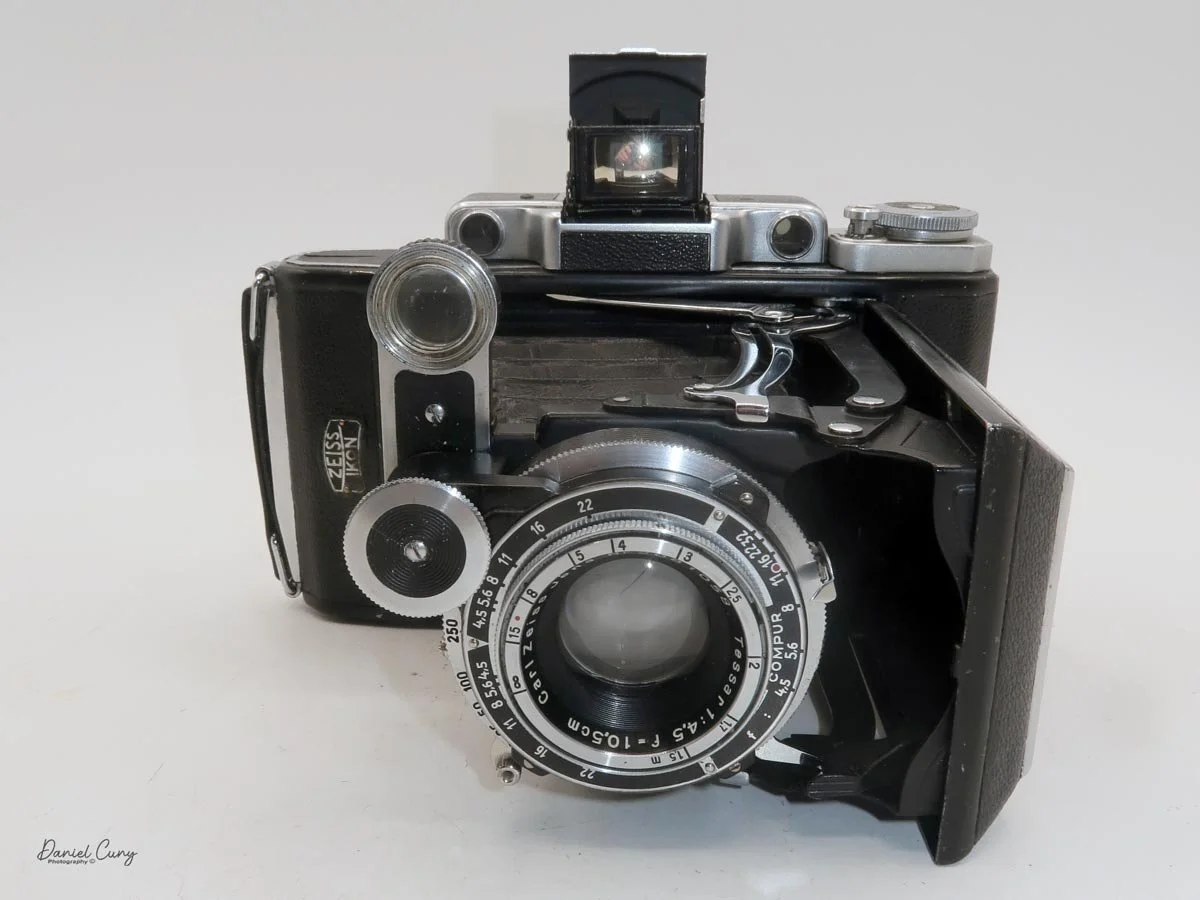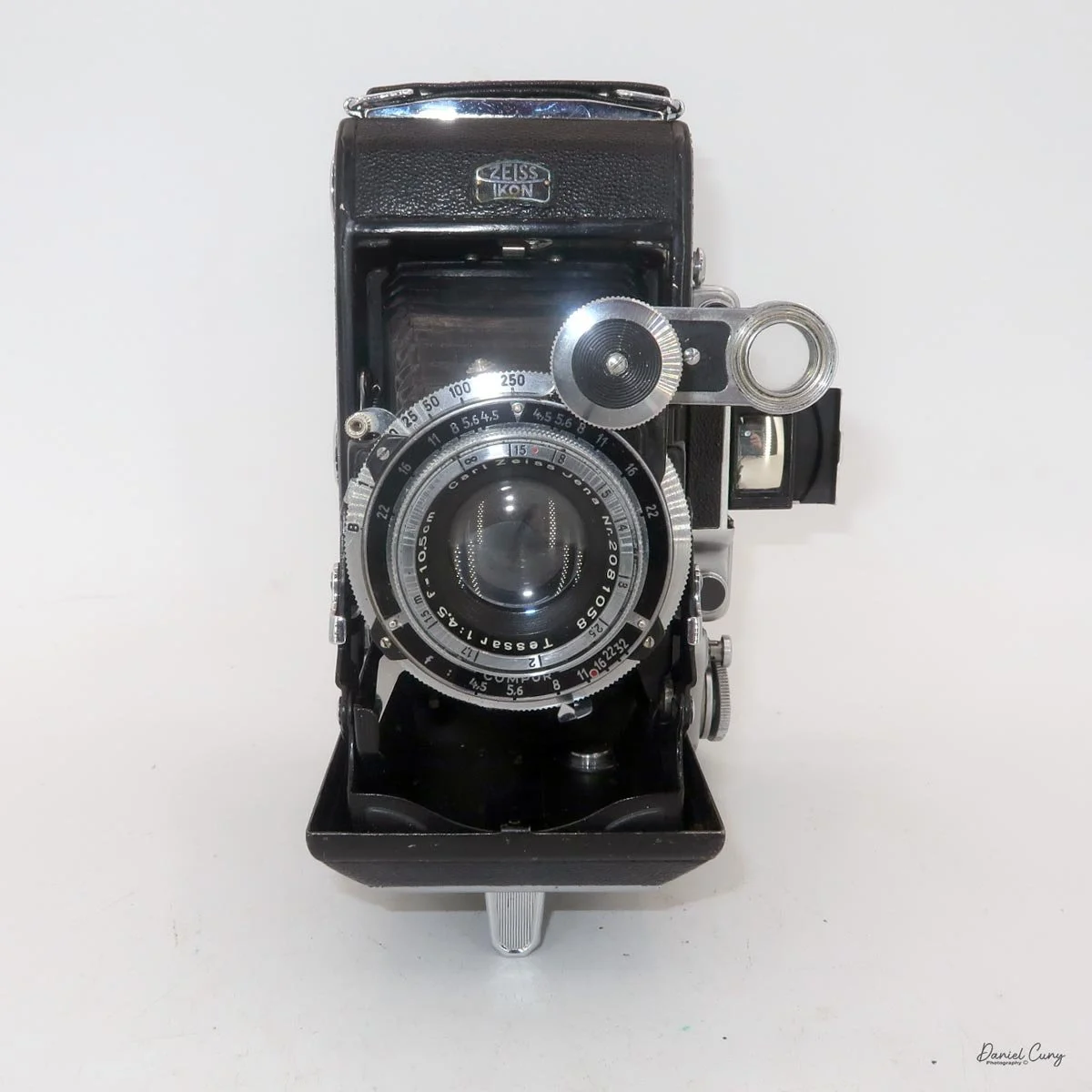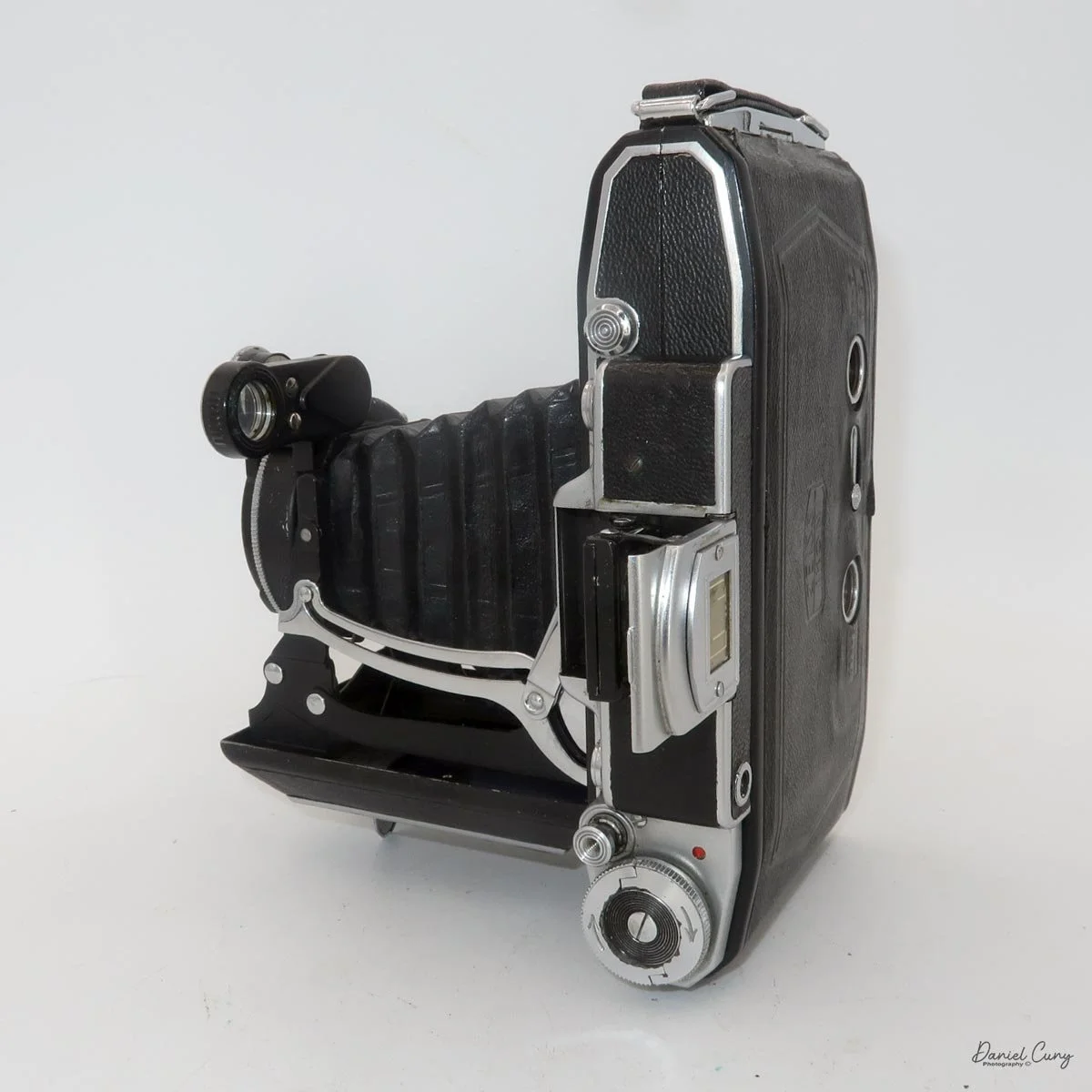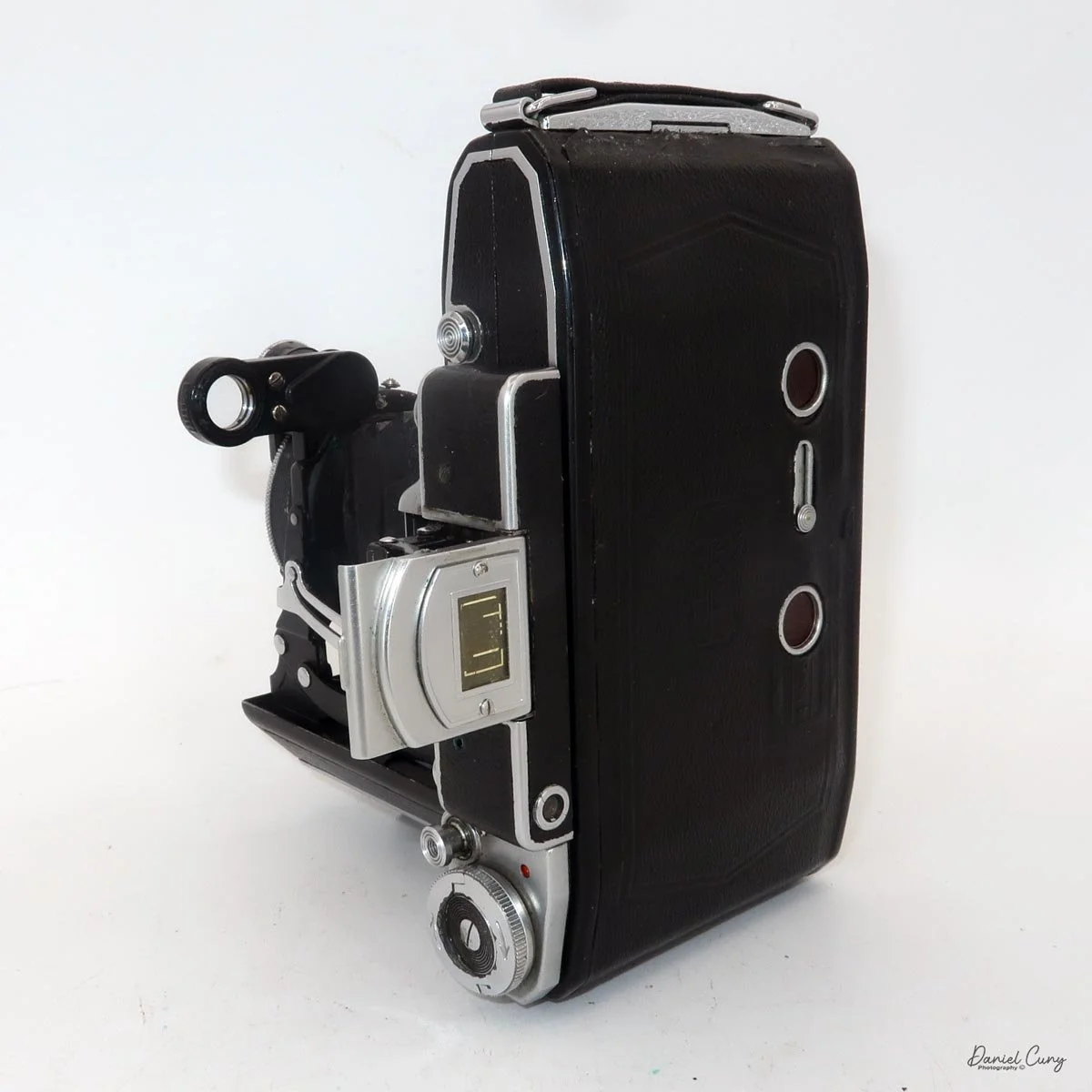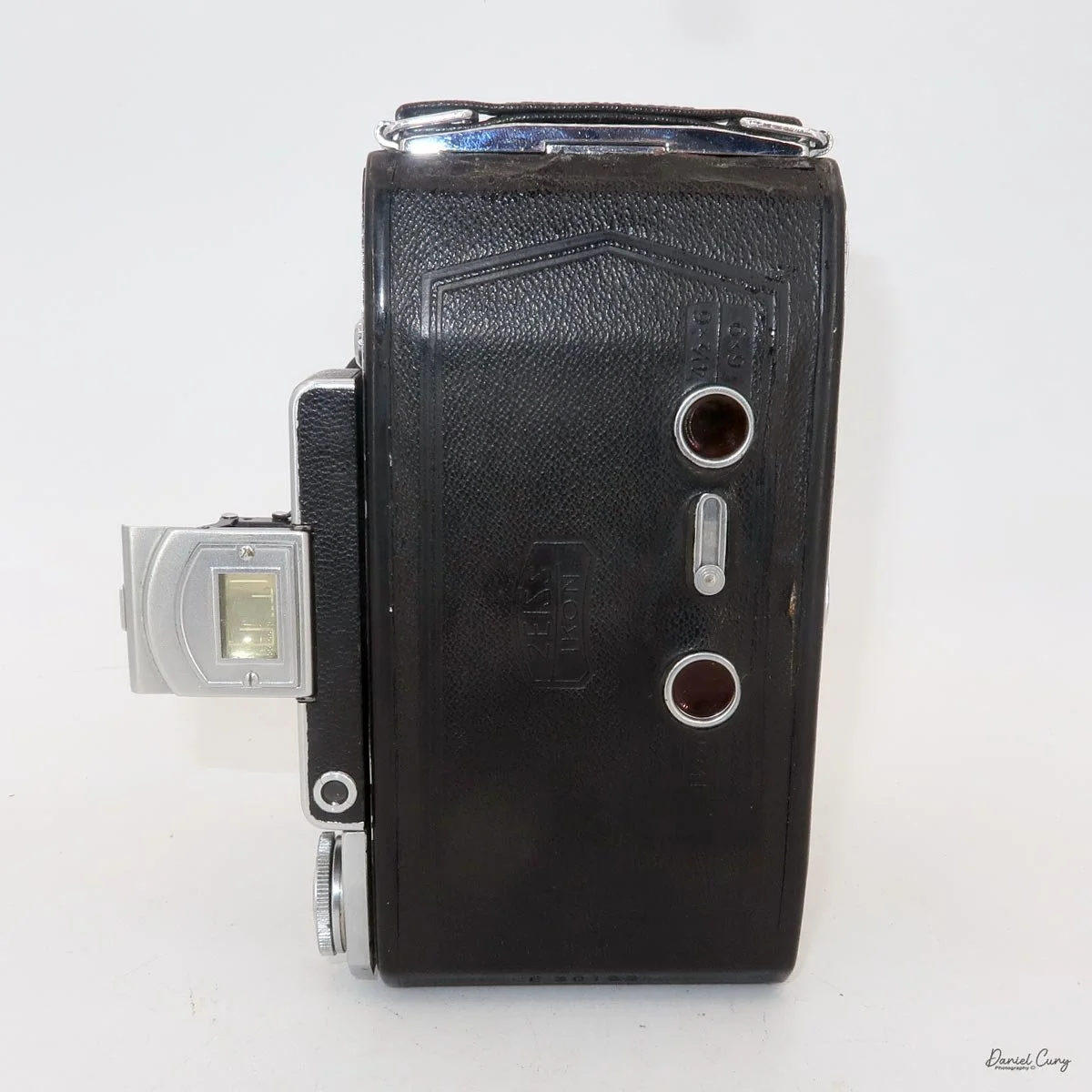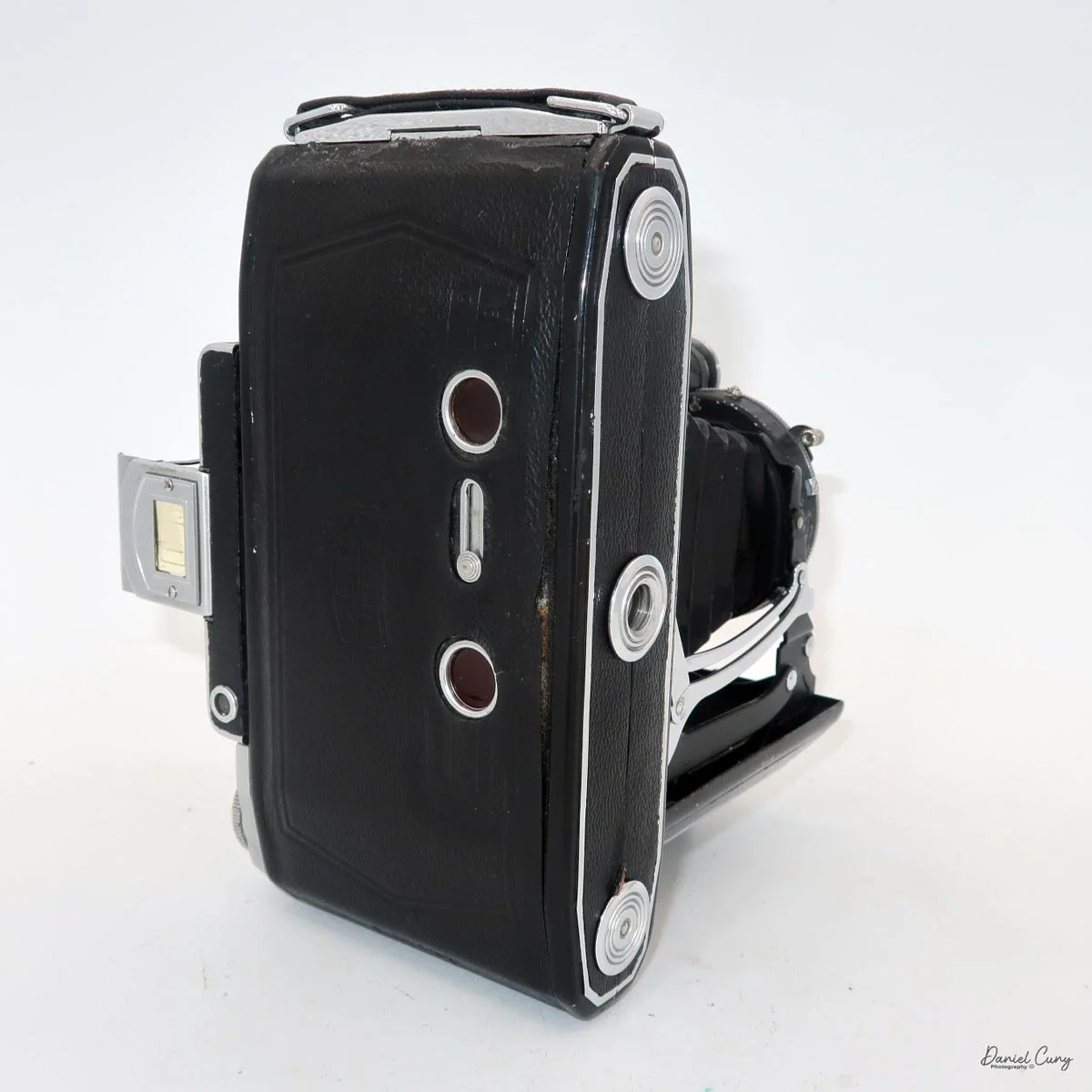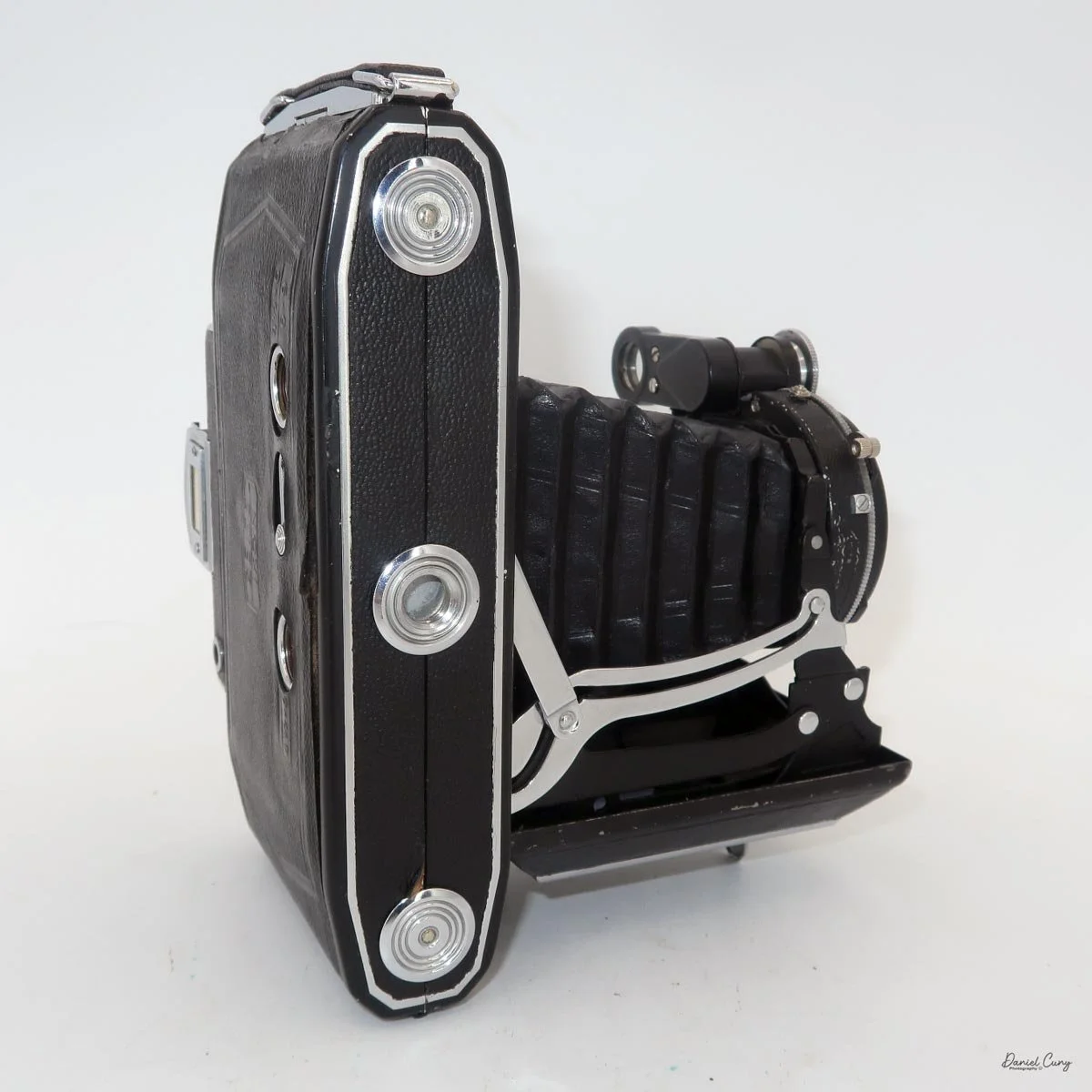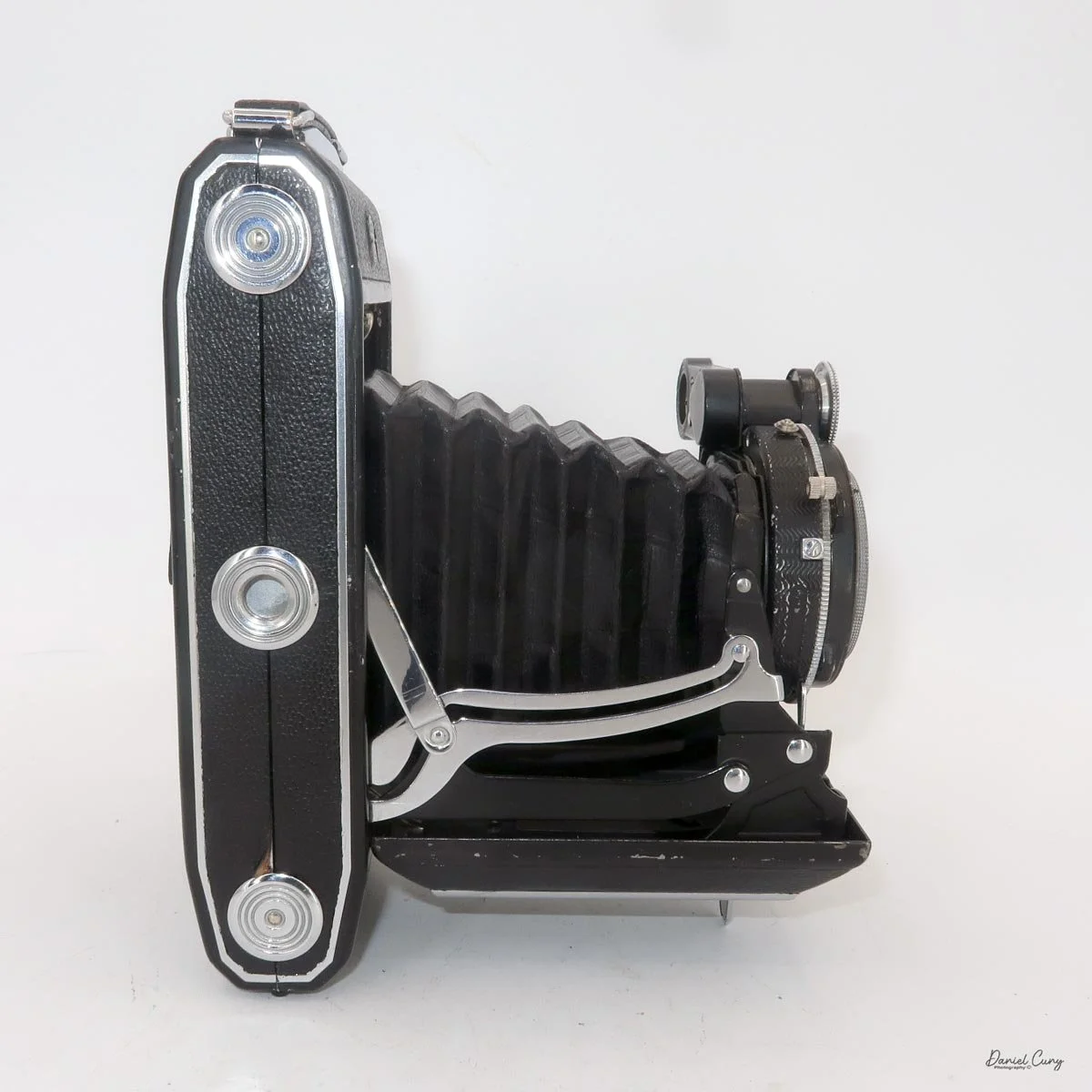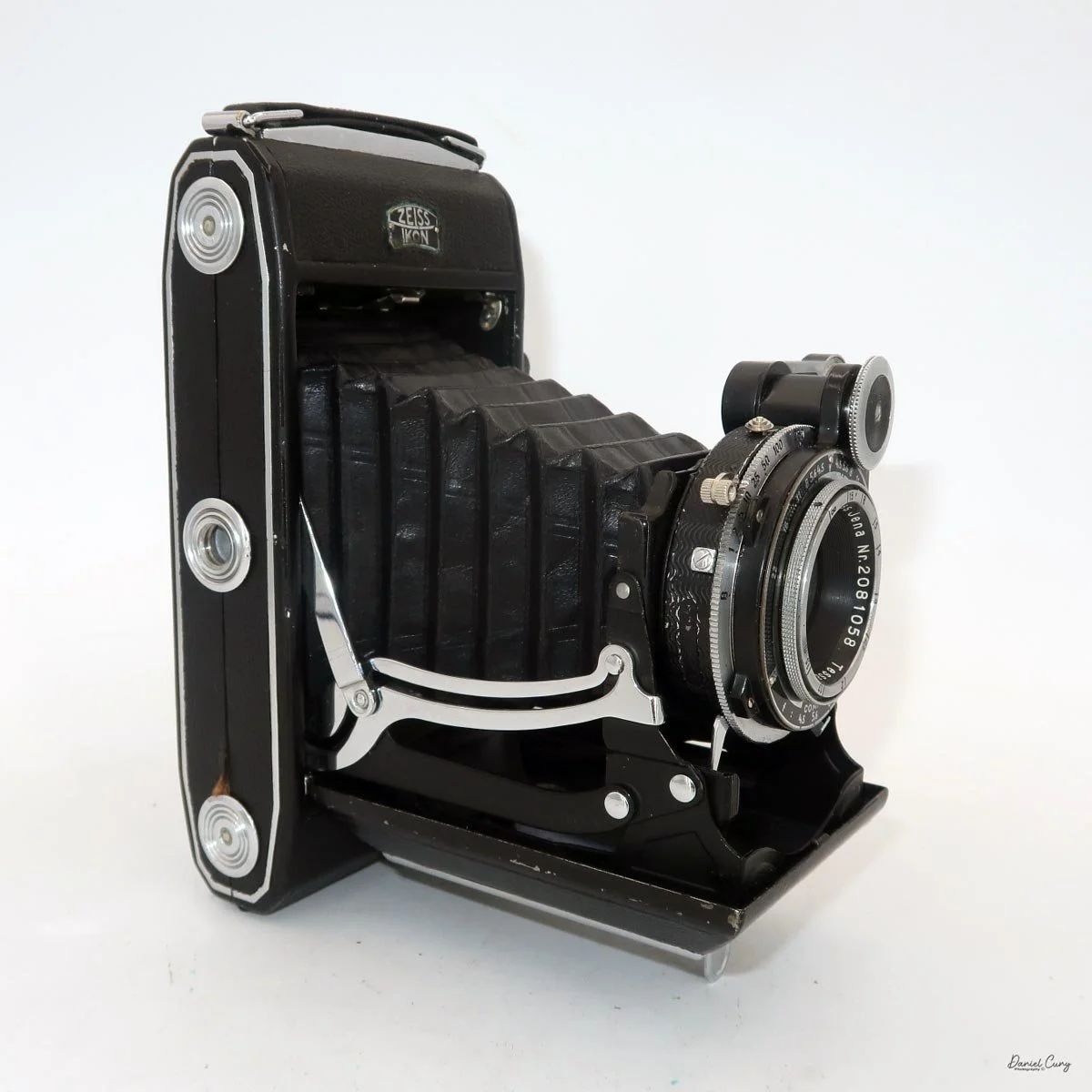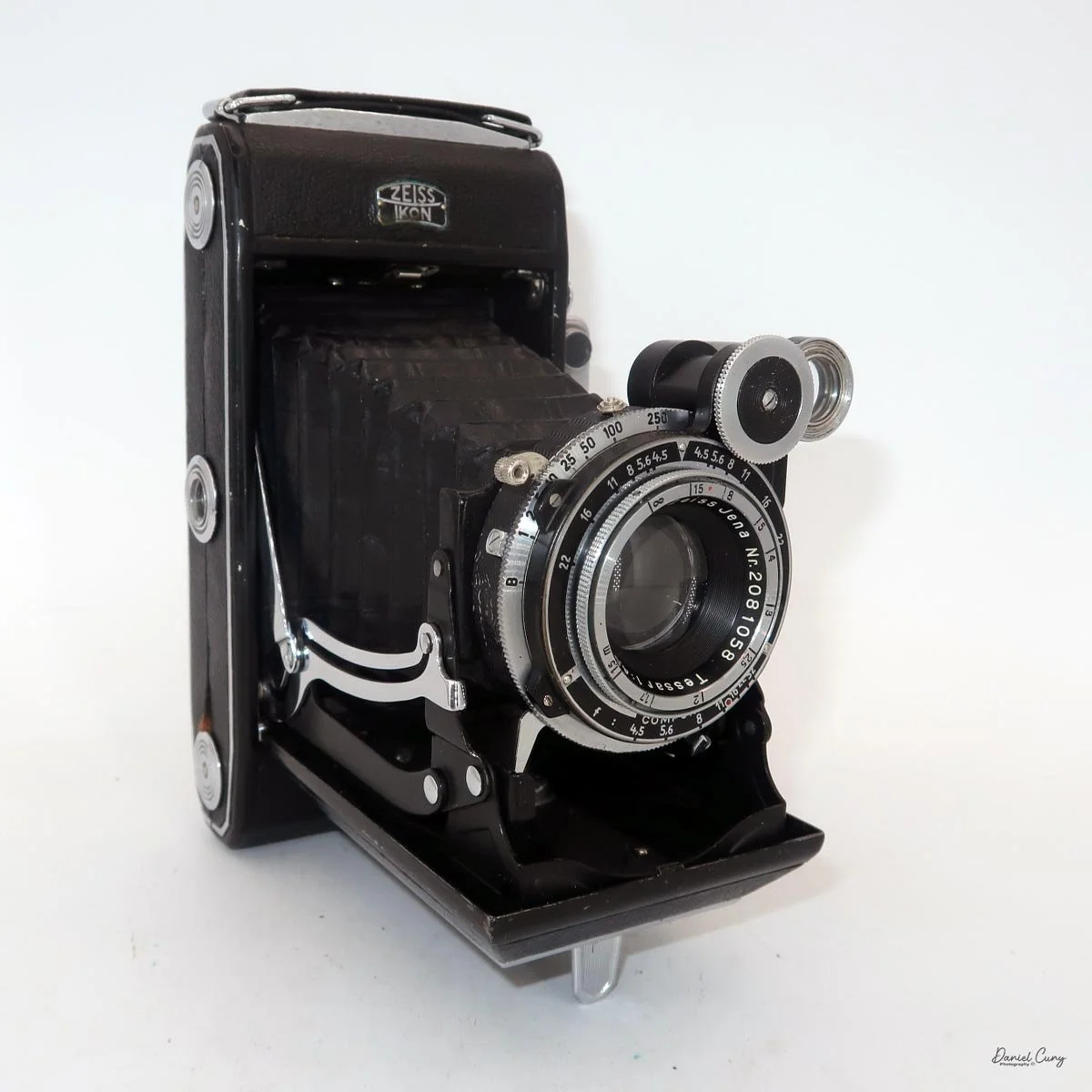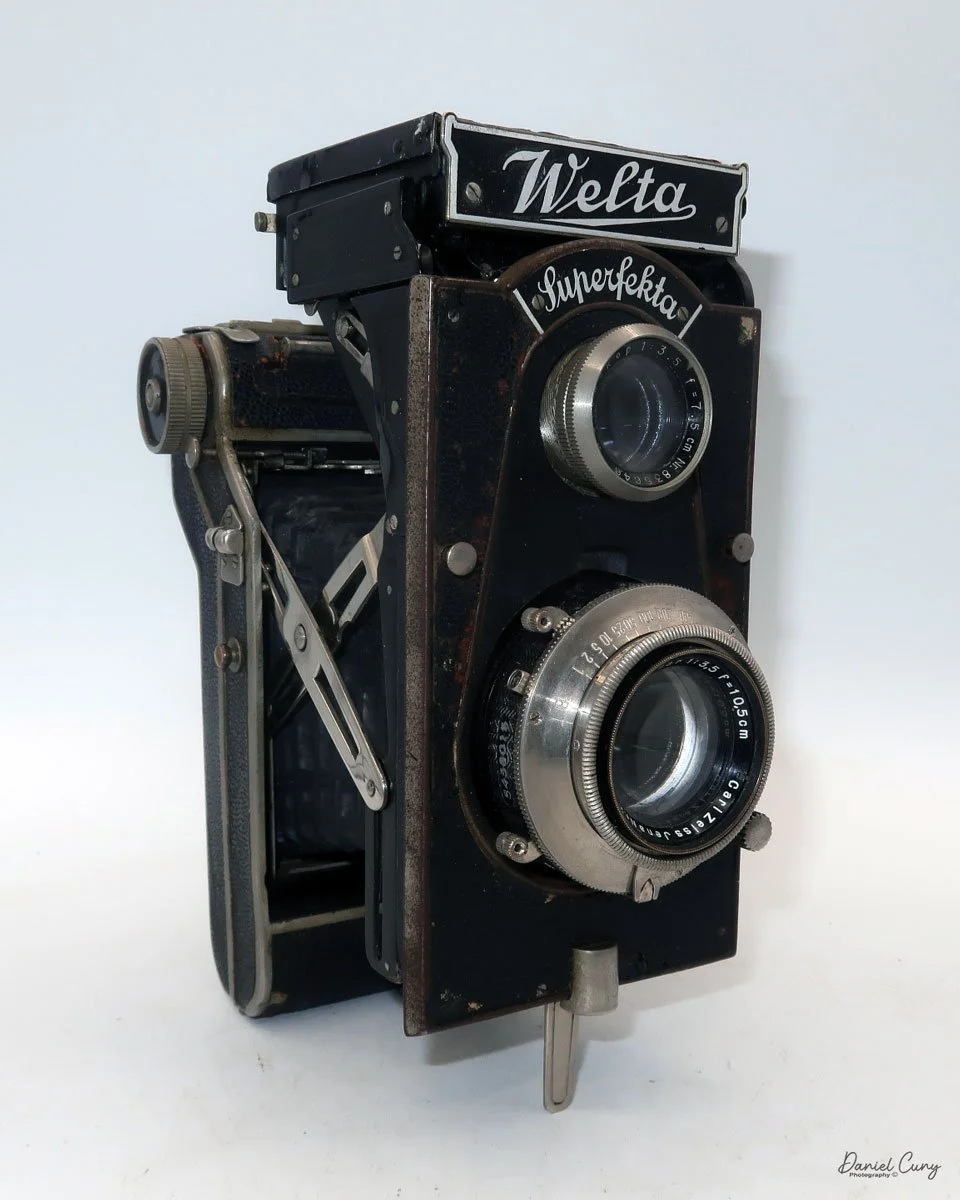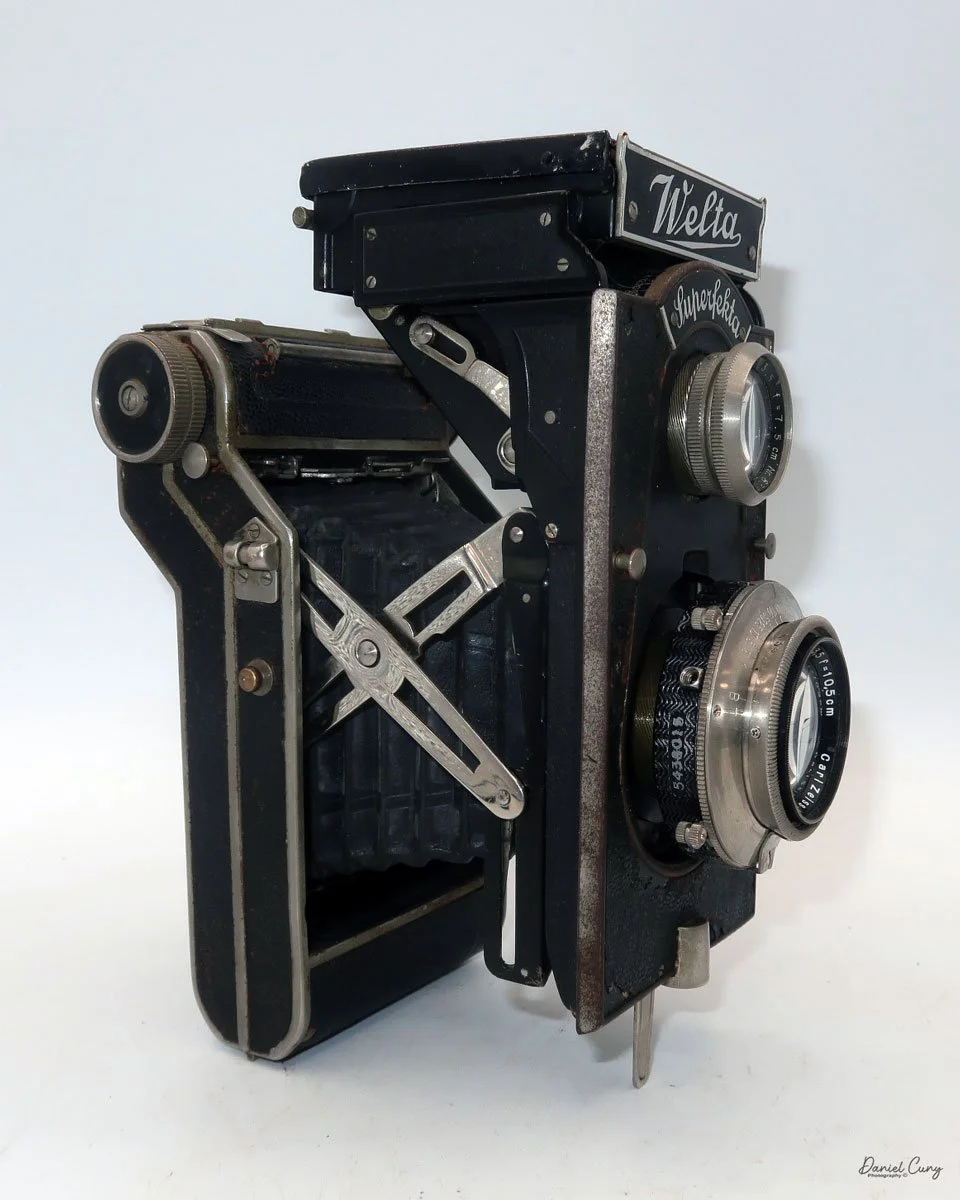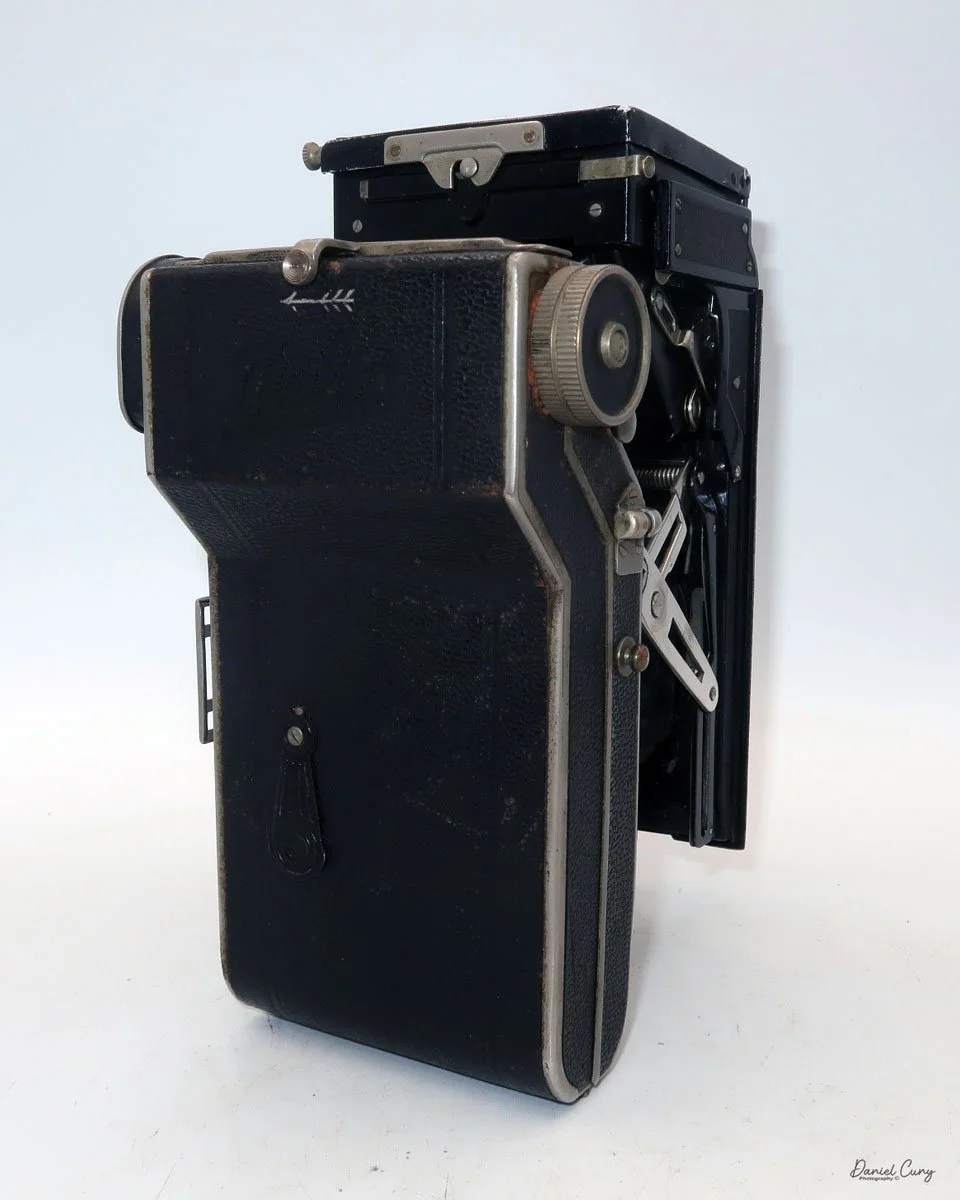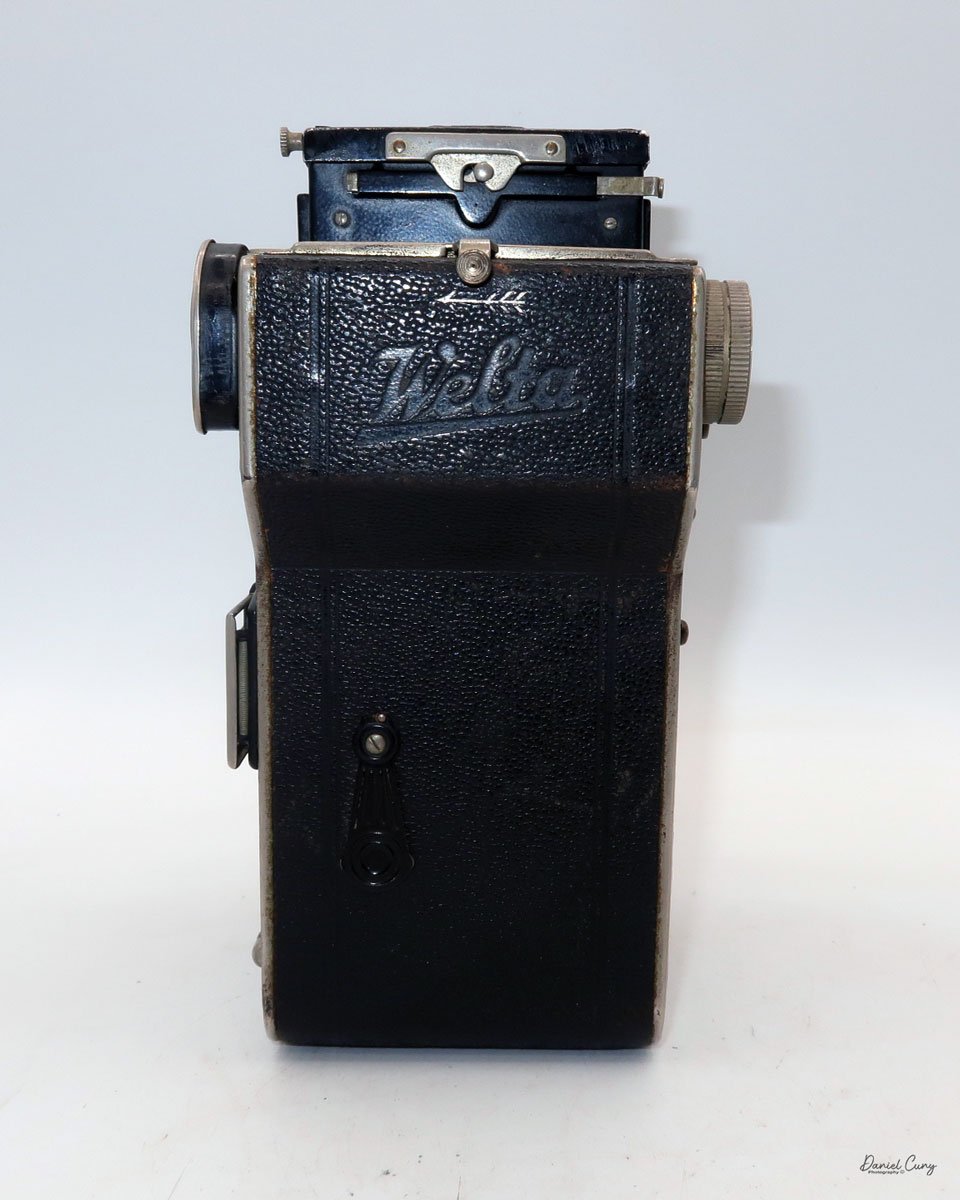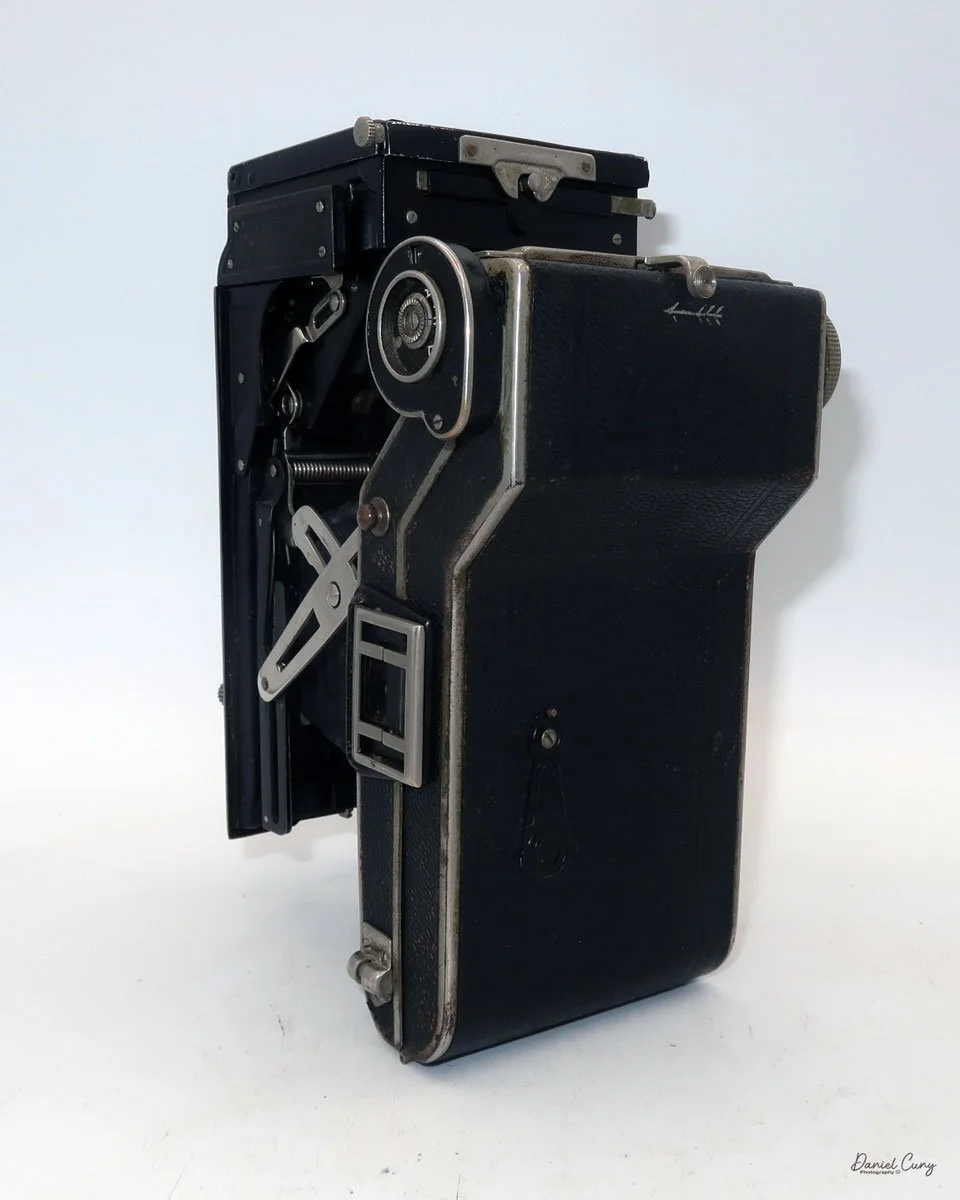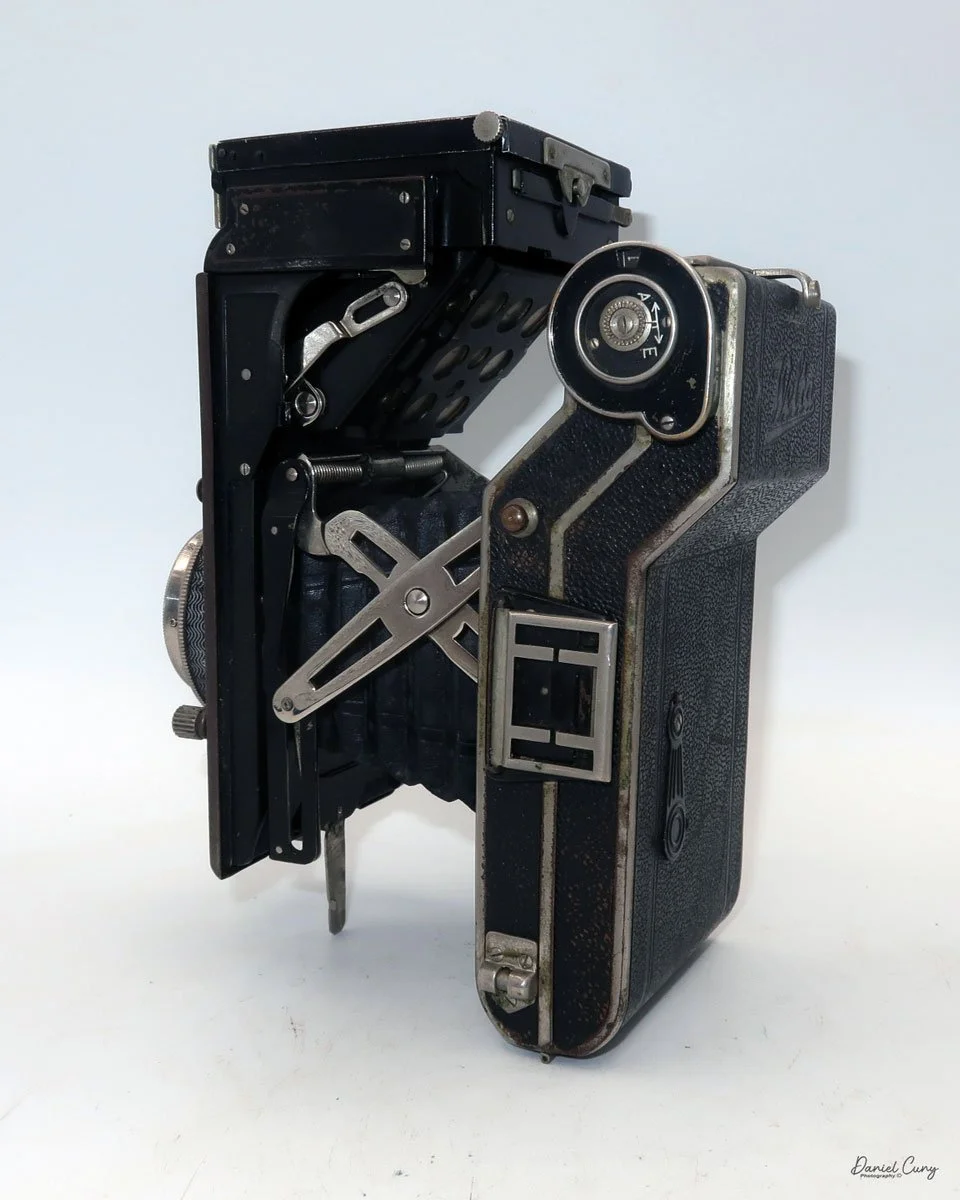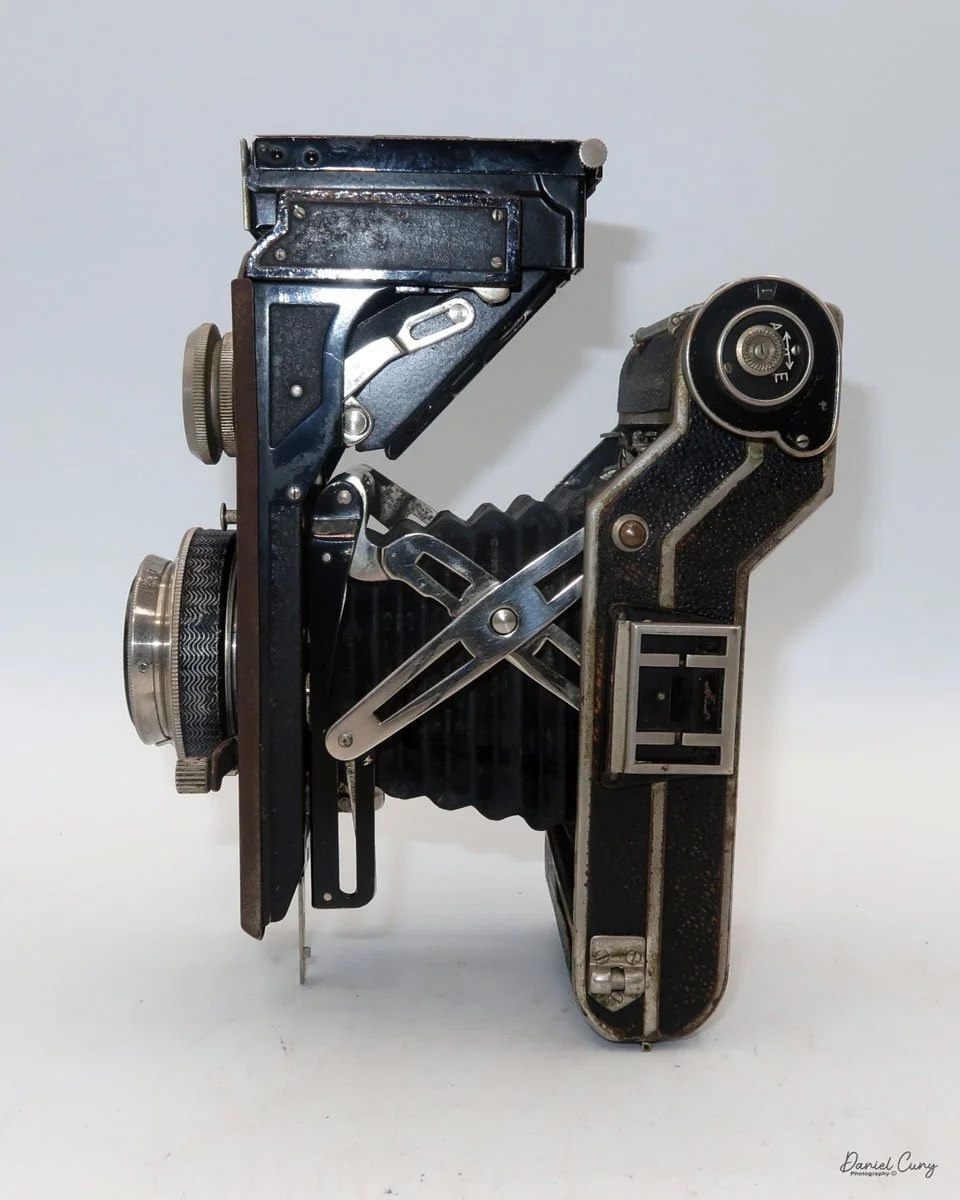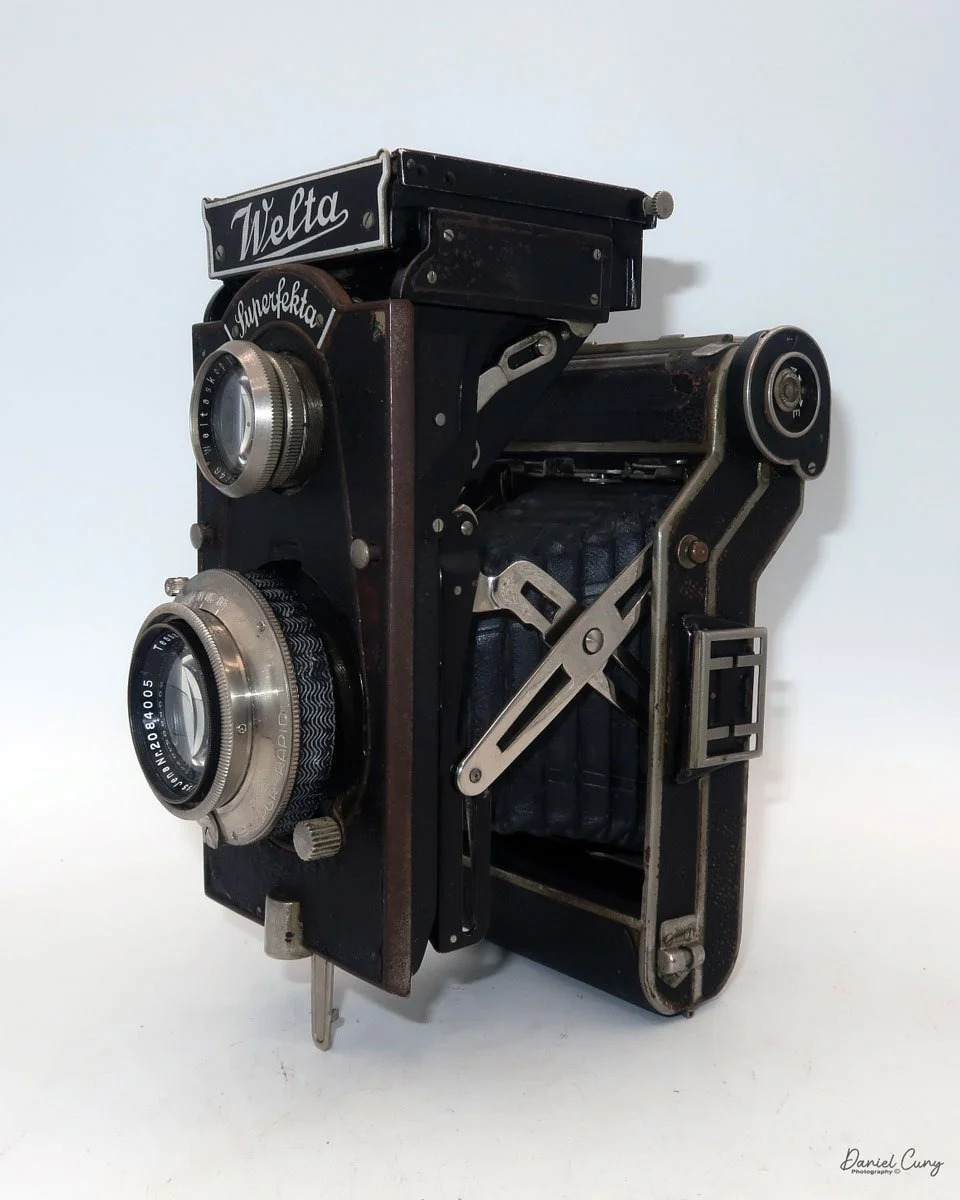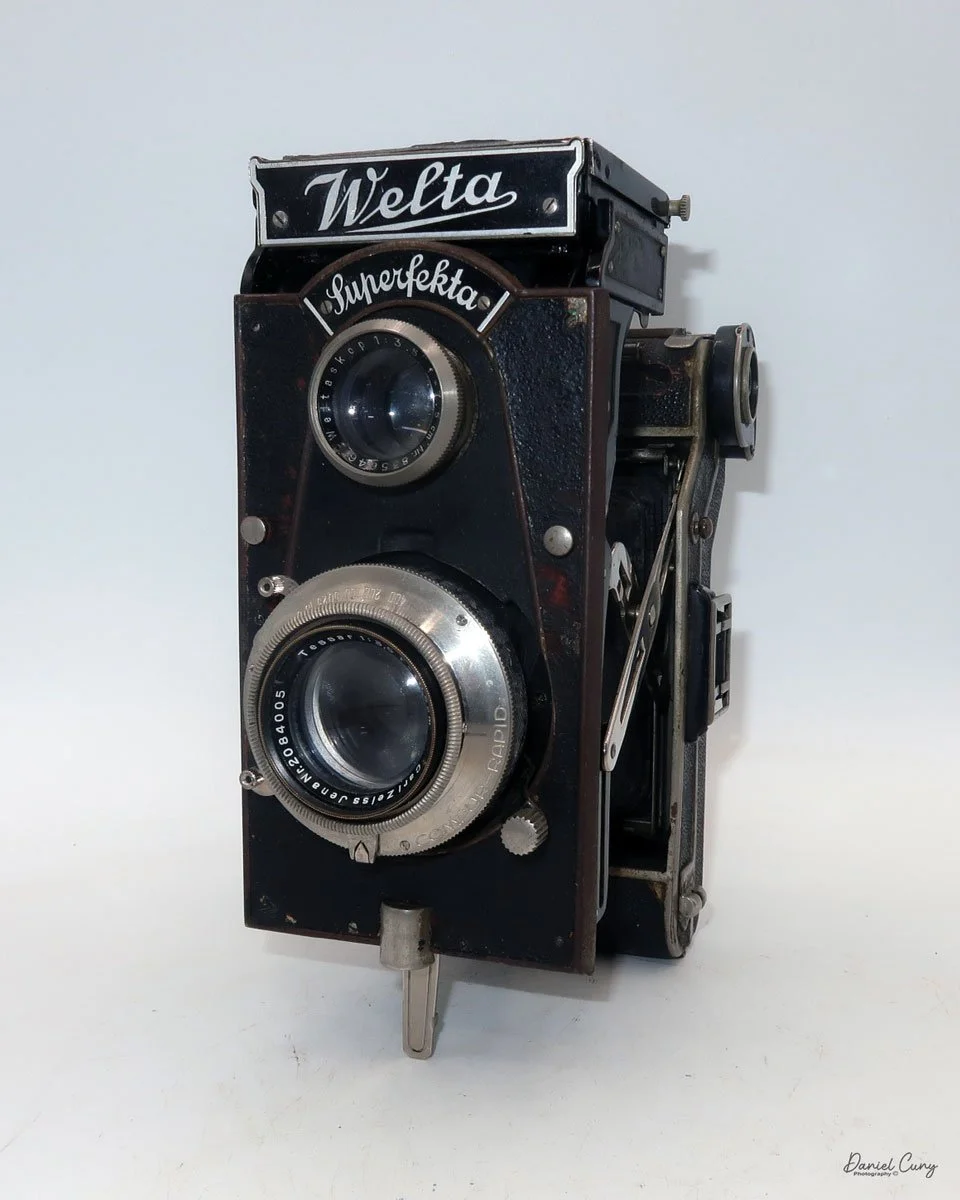
Welta Superfekta

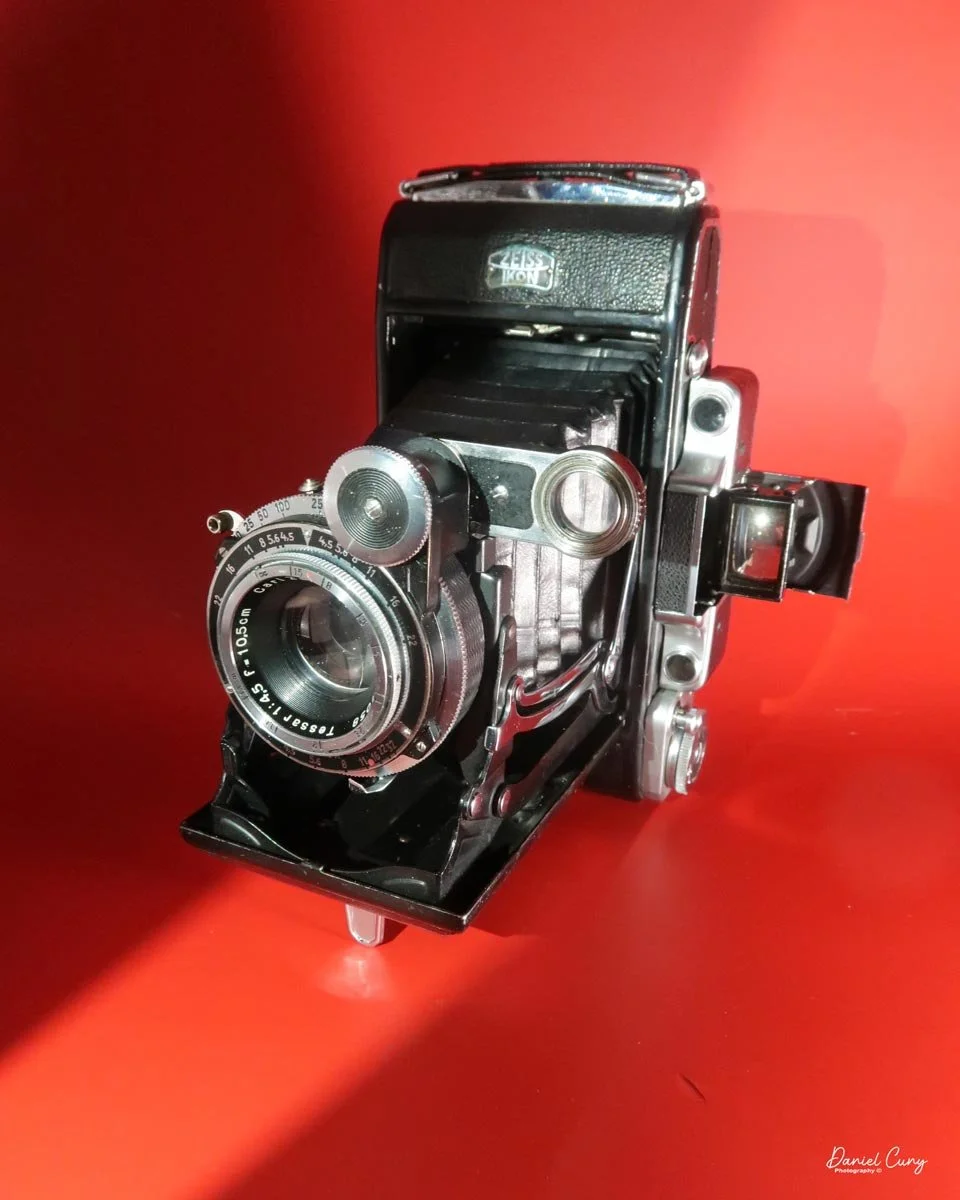
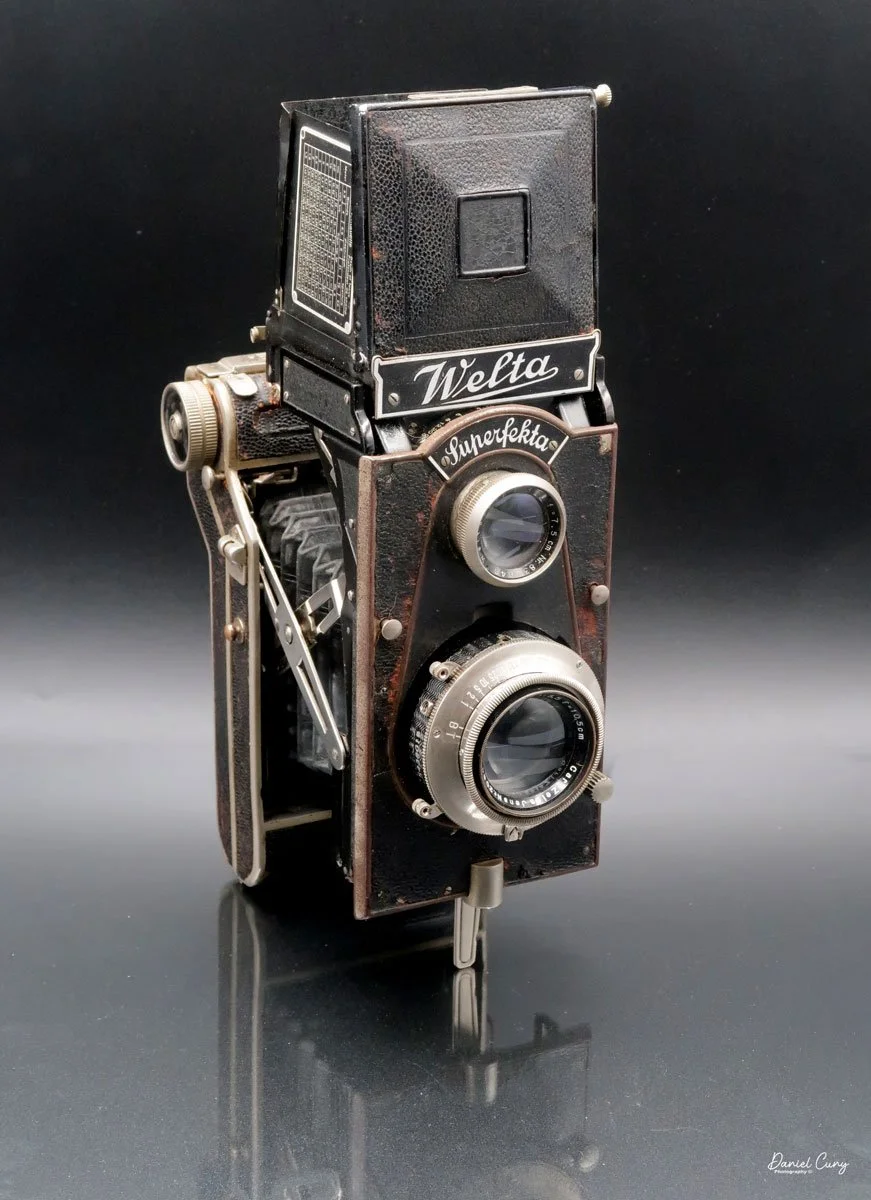
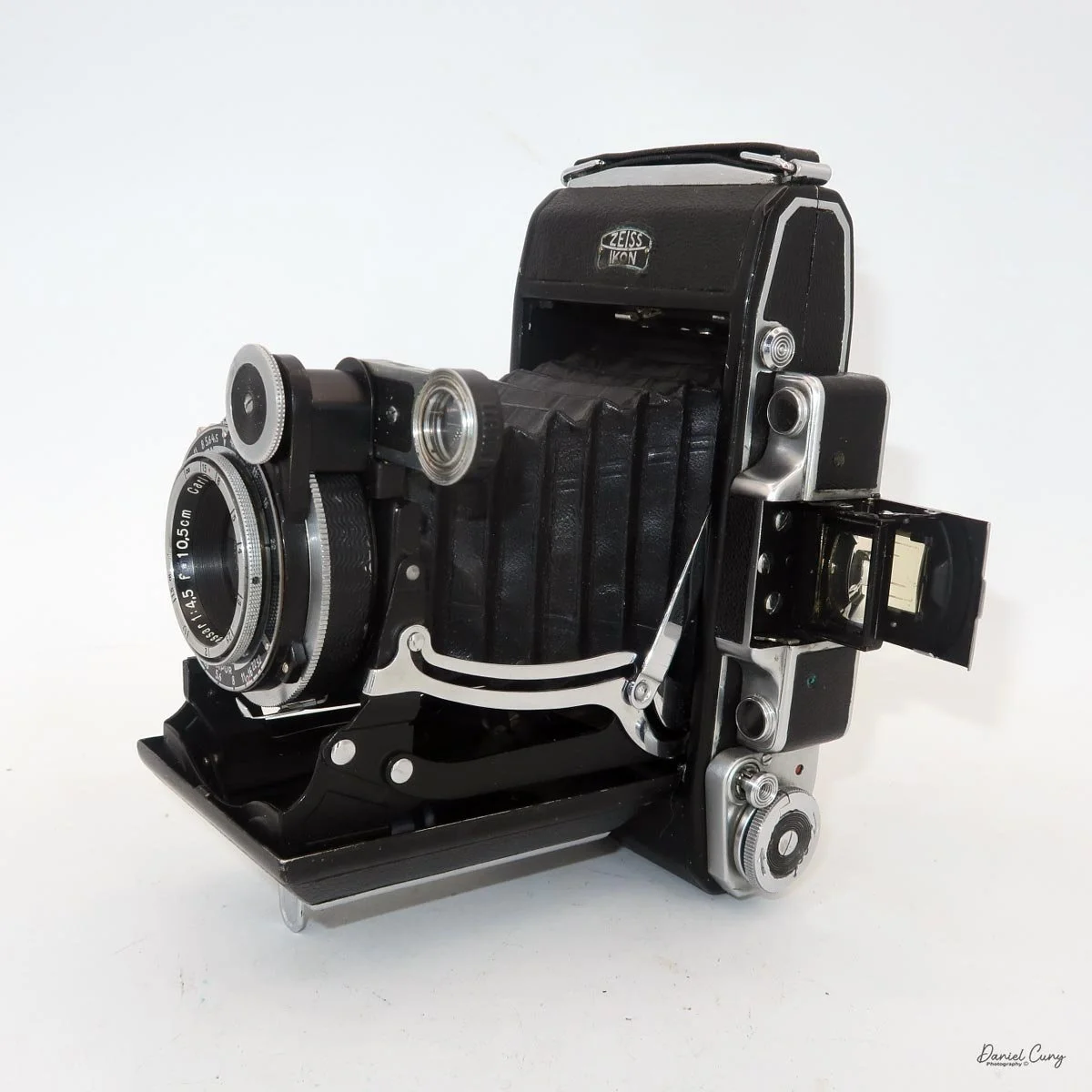
My Welta Superfekta camera

Not being wealthy, my collecting has always been focused on cameras well within our family's financial means. Up until my final ten years of working and before retirement, the cameras I purchased were items you could find at local flea markets and estate sales, or occasionally I made a trade for an item while selling at a camera show where I had a table.

 Being drawn to obscure and unusual cameras and having devoured McKeown's Camera Guide for many years, the Welta Superfekta is one camera I've always dreamed of adding to my collection. Due to its price and relative scarcity in the U.S., it's always been out of reach for me until this past few years.

 It wasn't until I looked at an online camera auction that I found the Welta Superfekta at a price that was not only reasonable but also inexpensive. Online, the camera looked in good to decent condition, but they said the shutter was erratic. To me, those words mean I'll need to send the camera in for a shutter repair, which isn't too uncommon for a camera reaching 100 years old. 

 I purchased the Welta Superfekta online, and when the camera arrived, as suspected, its shutter was extremely sluggish and needed to be CLA'd. I reached out to the person I usually send cameras for servicing, and he confirmed he could service the shutter but wasn't sure about other areas of the camera, as he wasn't too familiar with it.

The excitement of adding the Welta Superfekta to my collection was wonderful, especially since it's a 6x9 cm-format camera that takes 120 film. Still, the more exciting part of the camera is that it's very similar to the Cornu Ontoflex, which has a rotating back, allowing the photographer to shoot both vertically and horizontally without turning the camera sideways. Just rotate the back from vertical to horizontal and flip the image orientation, as with the Mamiya RB67.

 The one thing I noticed when I turned my camera from vertical to horizontal is that the back doesn't turn all the way, which makes me curious about its history. This flaw, while concerning, adds character and a story to the camera, resonating with collectors who appreciate Imperfections.  

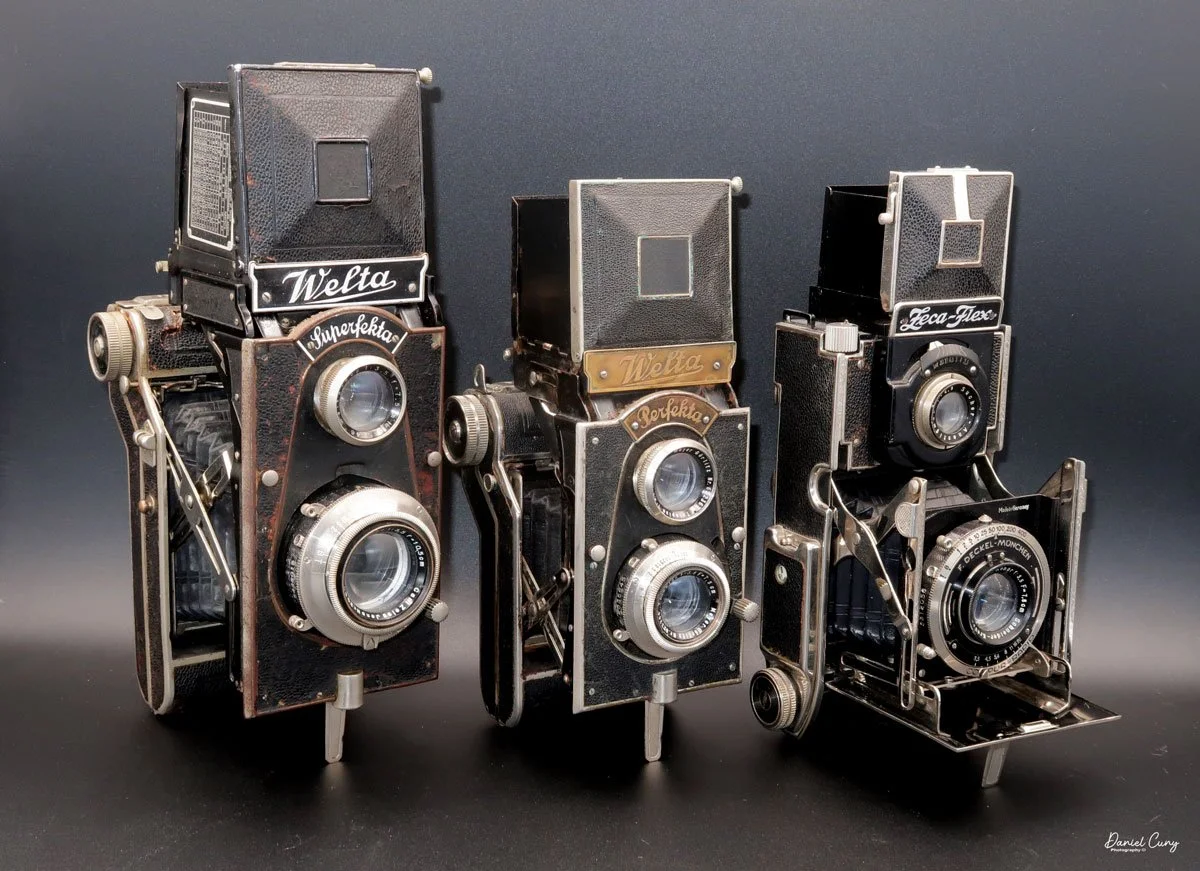
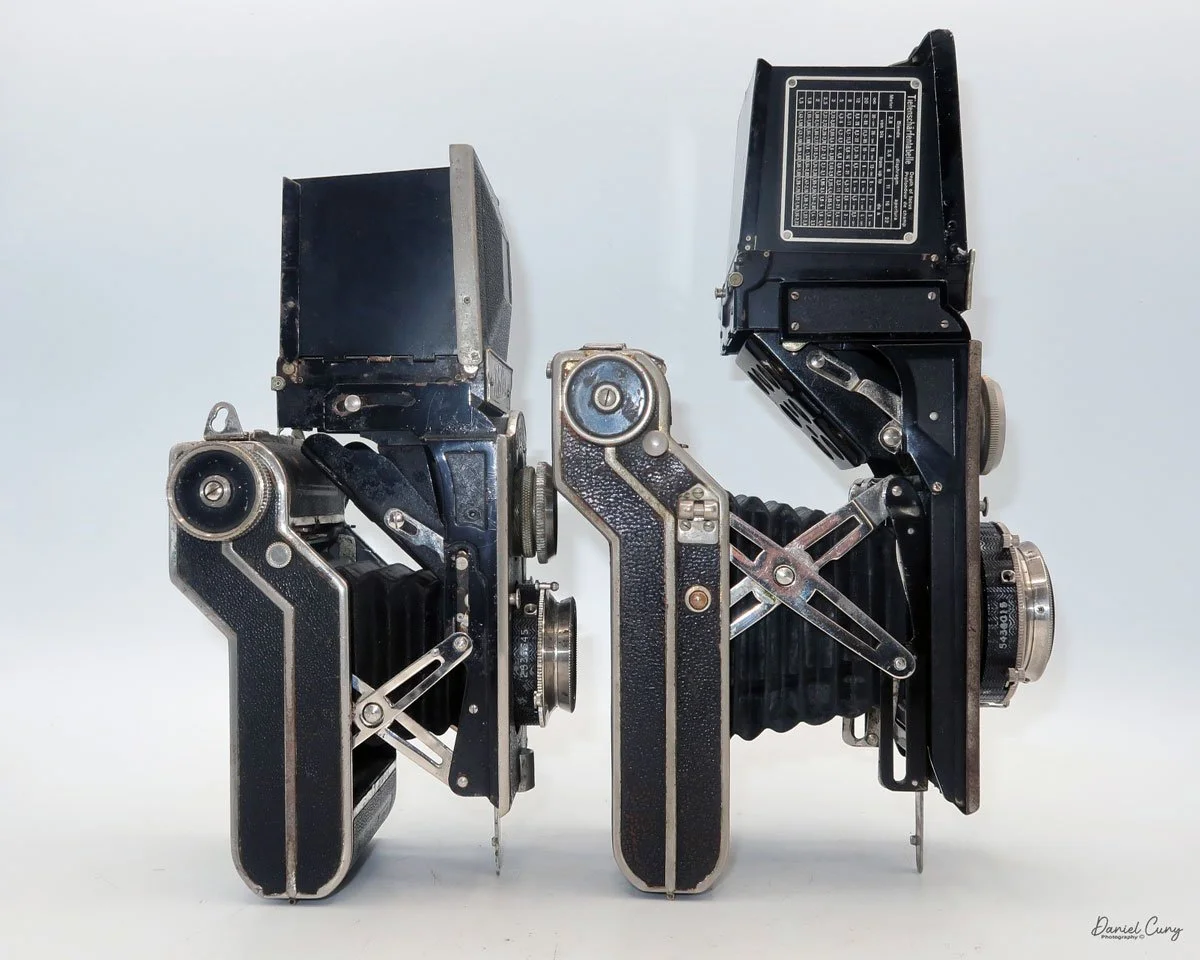
Another reason for my excitement to add the Welta Superfekta to my collection is that it would be the third folding Twin Lens camera in my collection. I had already purchased and written about both the Welta Perfekta and the Zeh Zeca-Flex cameras, making this the “Trifecta” of this camera style.

Welta Superfekta, Perfekta and Zeh Zeca-Flex camera.

Welta before World War II:

 The history of Welta Kamerawerke leading up to World War II is a testament to the rapid innovation and high-precision craftsmanship that defined the German photographic industry in the early 20th century. Founded in 1914 by Walter Waurich and Theodor Weber in Freital, near Dresden, the company began as "Waurich & Weber" before adopting the "Welta" brand name that would eventually become synonymous with high-end folding cameras.

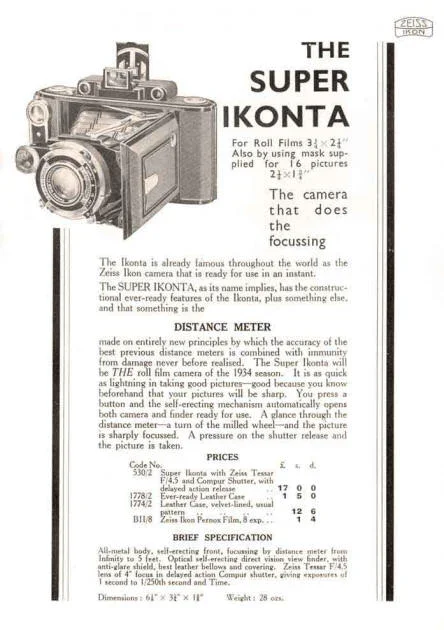
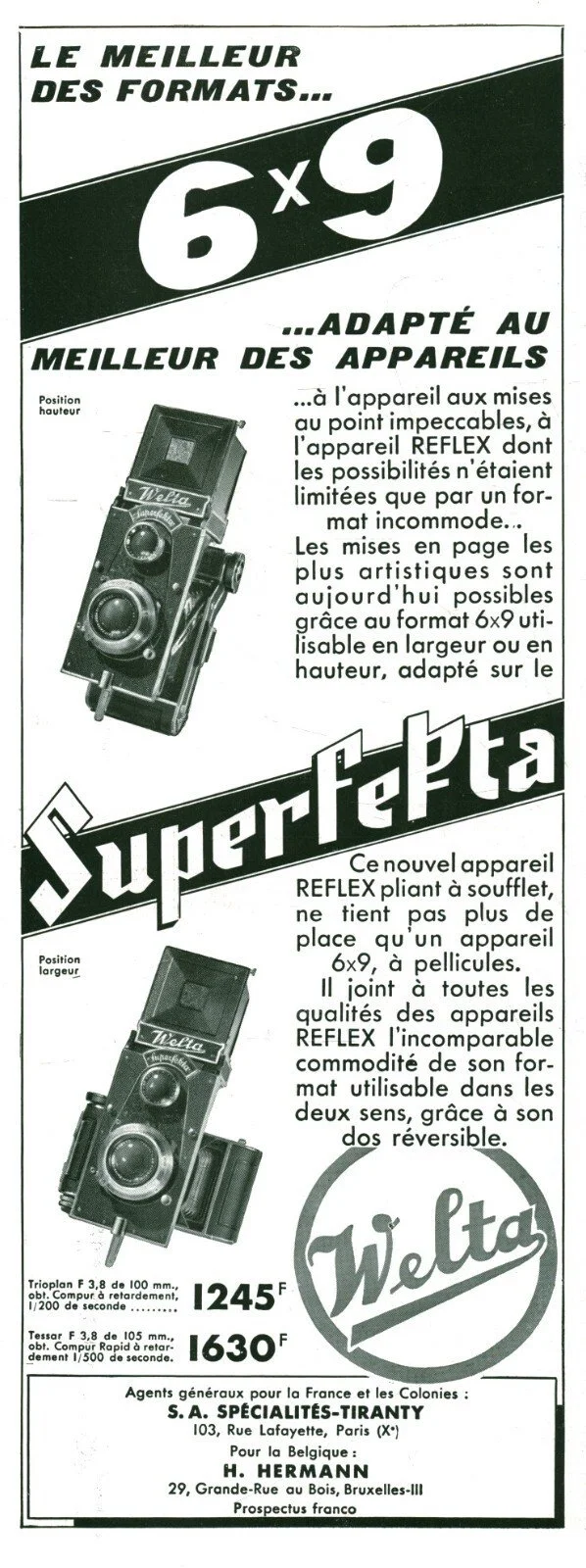
French ad for the Welta Perfekta and Superfekta cameras

 In its first decade, Welta focused on the transition from heavy glass-plate cameras to the more versatile roll-film formats. By the 1920s, Freital and the surrounding Dresden area had become the global epicenter of camera manufacturing, and Welta held its own against giants like Zeiss Ikon. Their early success was built on the folding camera—a design that allowed a high-quality lens and shutter to collapse into a slim, leather-covered metal body.

 The 1930s marked Welta's "Golden Era." During this decade, the company moved beyond standard designs to create some of the most mechanically complex cameras ever made. While competitors were focusing on the emerging 35mm trend, Welta mastered the 120 roll-film market with innovative models like:


  • The Weltur: A rangefinder folding camera known for its incredible build quality and integrated viewfinders.

  • The Perfekta and Superfekta: These folding Twin Lens Reflex (TLR) cameras were engineering marvels, offering the ground-glass focusing of a studio camera in a portable, collapsing frame.

  • The Welti: A foray into the 35mm market that proved Welta could compete with the Leica in terms of precision and optics, often featuring high-end Carl Zeiss Jena or Schneider lenses.

 Welta's pre-war philosophy was to offer a variety of price points without sacrificing mechanical integrity. You could find a simple Welta Trio for the casual hobbyist, or a Superfekta with a rotating back for the professional who demanded perfection. This versatility allowed Welta to export heavily to the UK and the United States, where their cameras were often rebranded for local retailers.

 By the late 1930s, Welta was a premier name in photography. However, as Germany shifted toward a war economy, production began to pivot away from consumer optics. After the war, Freital was part of the Soviet occupation zone (later East Germany), and Welta was eventually absorbed into the state-owned VEB Pentacon, marking the end of its era as an independent, family-founded innovator.

My Camera:

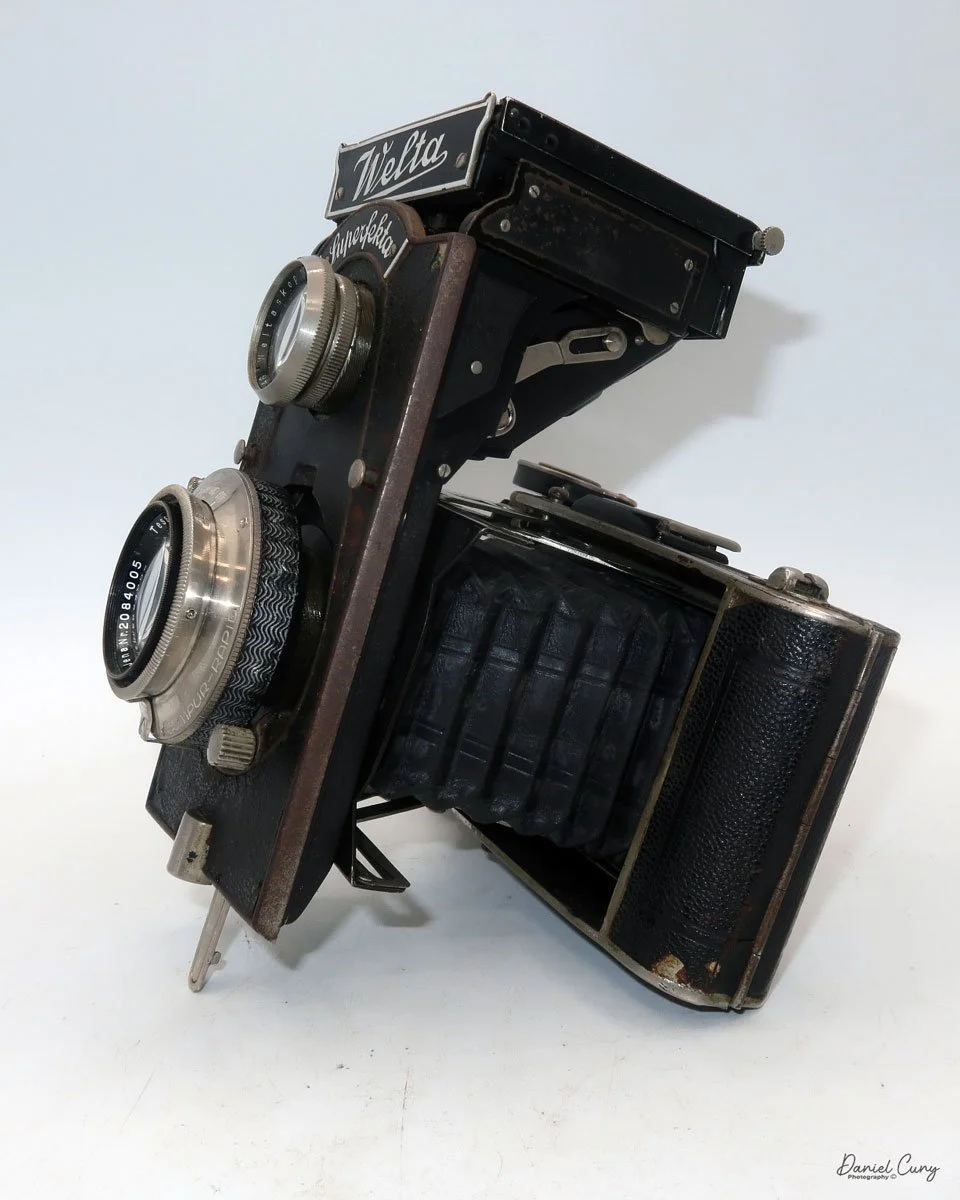
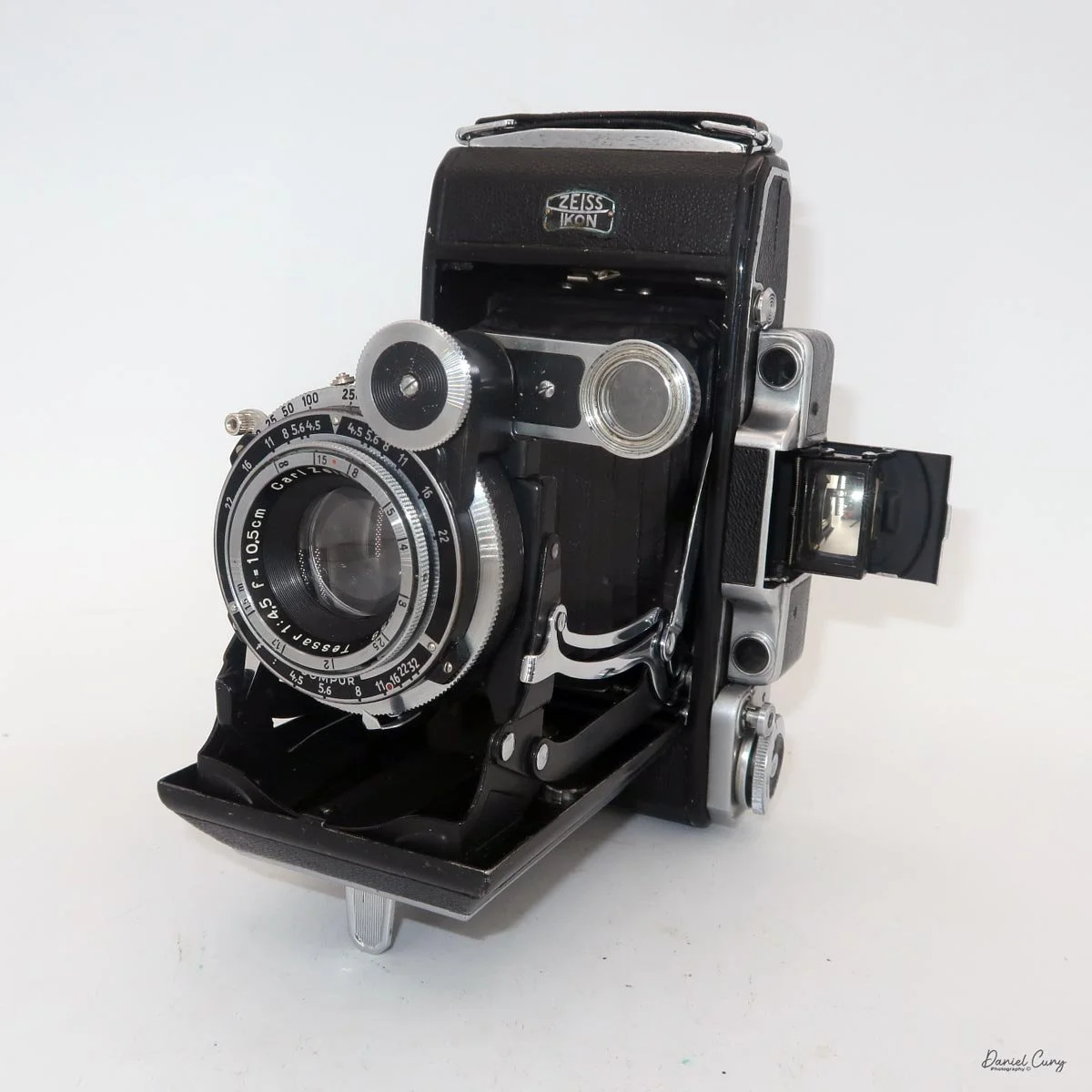
 My Welta Superfekta camera is 7.5" tall without the light chimney opened, and 10" with it opened, by 4" wide, and 3.5" deep with the body retracted, and 6.25" deep when the body of the camera is extended. The camera weighs 3 pounds, 0.2 ounces without film, so it has some heft.

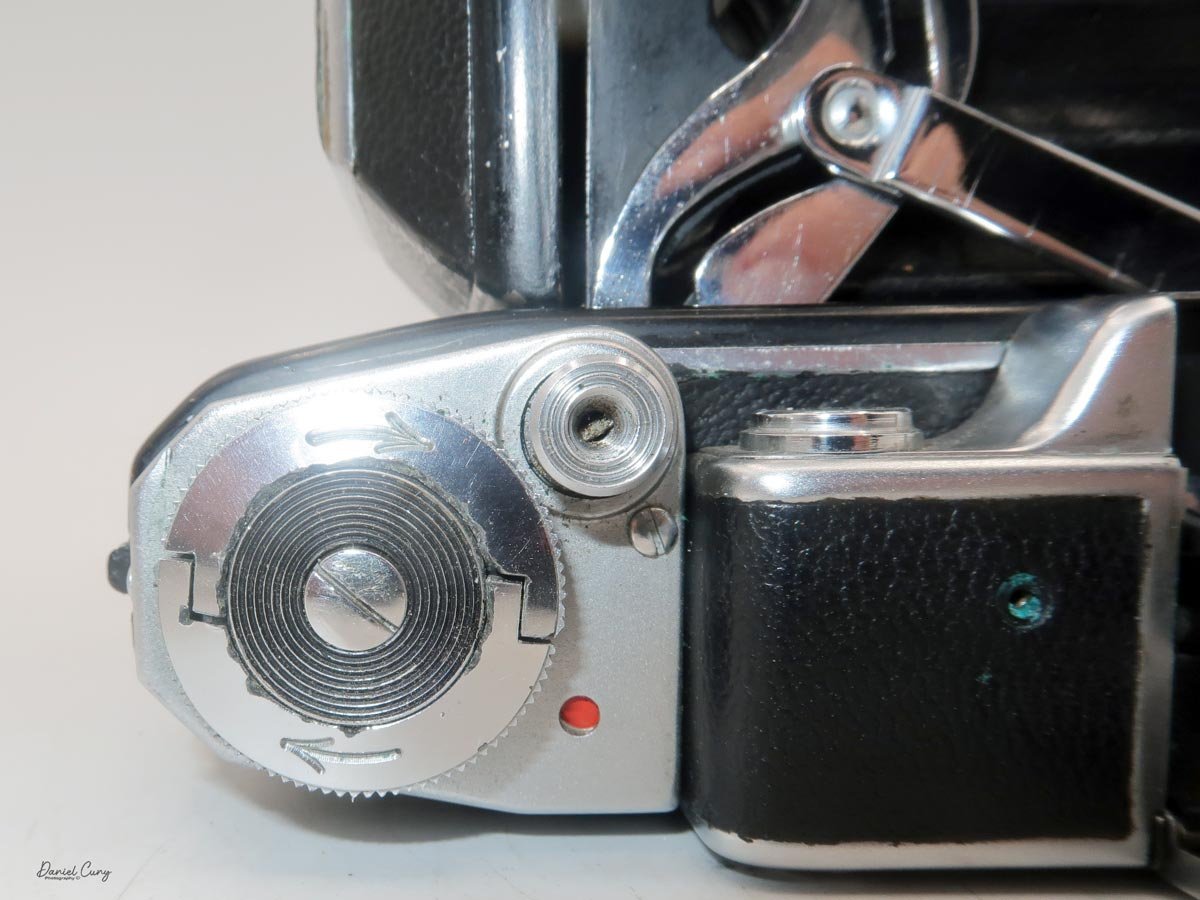
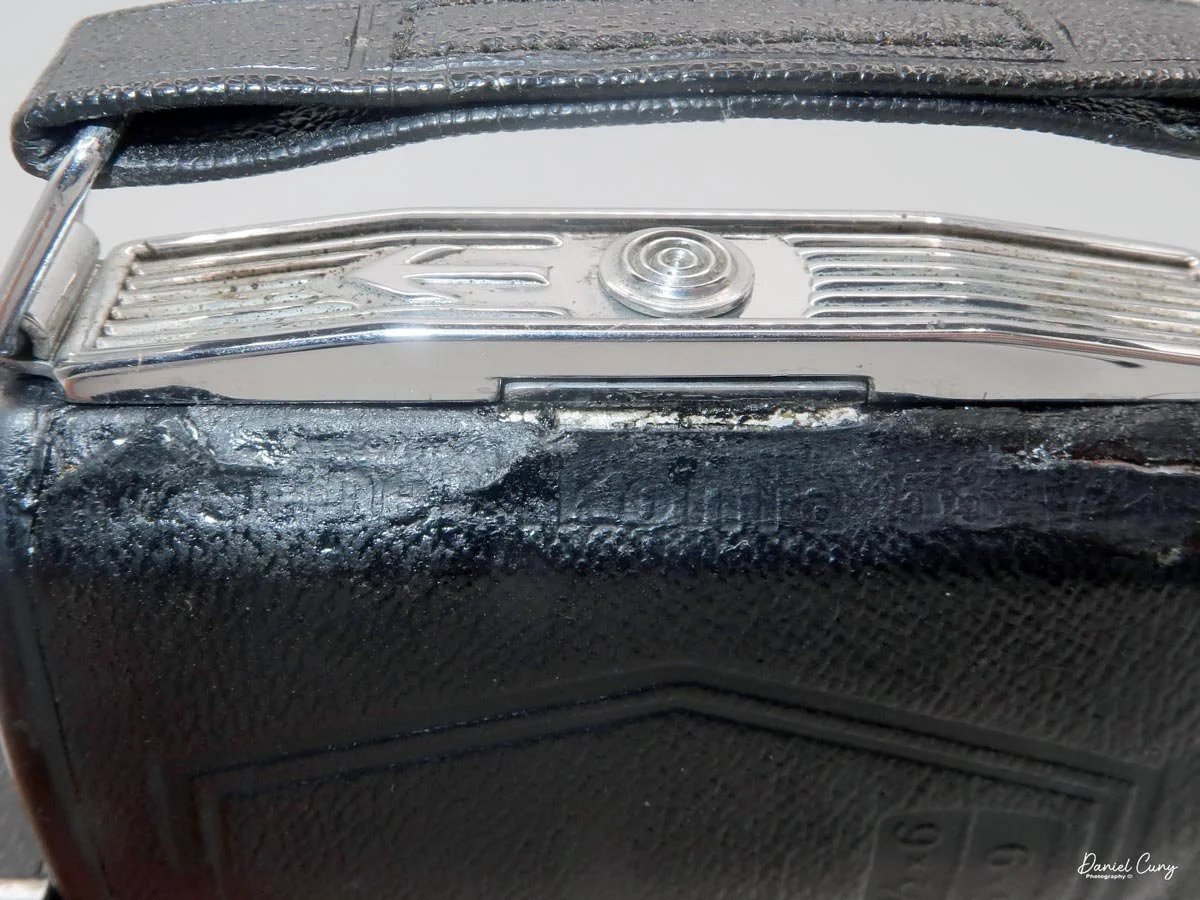
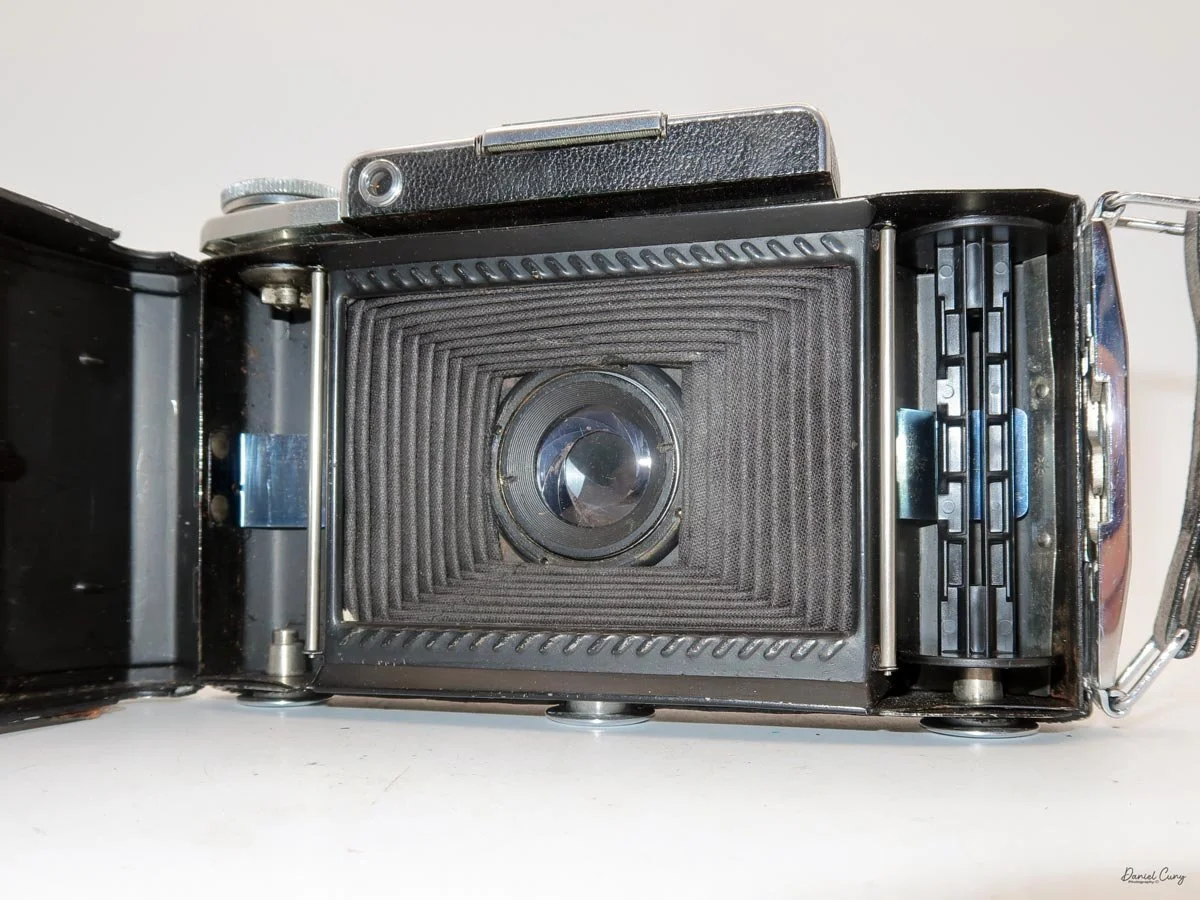
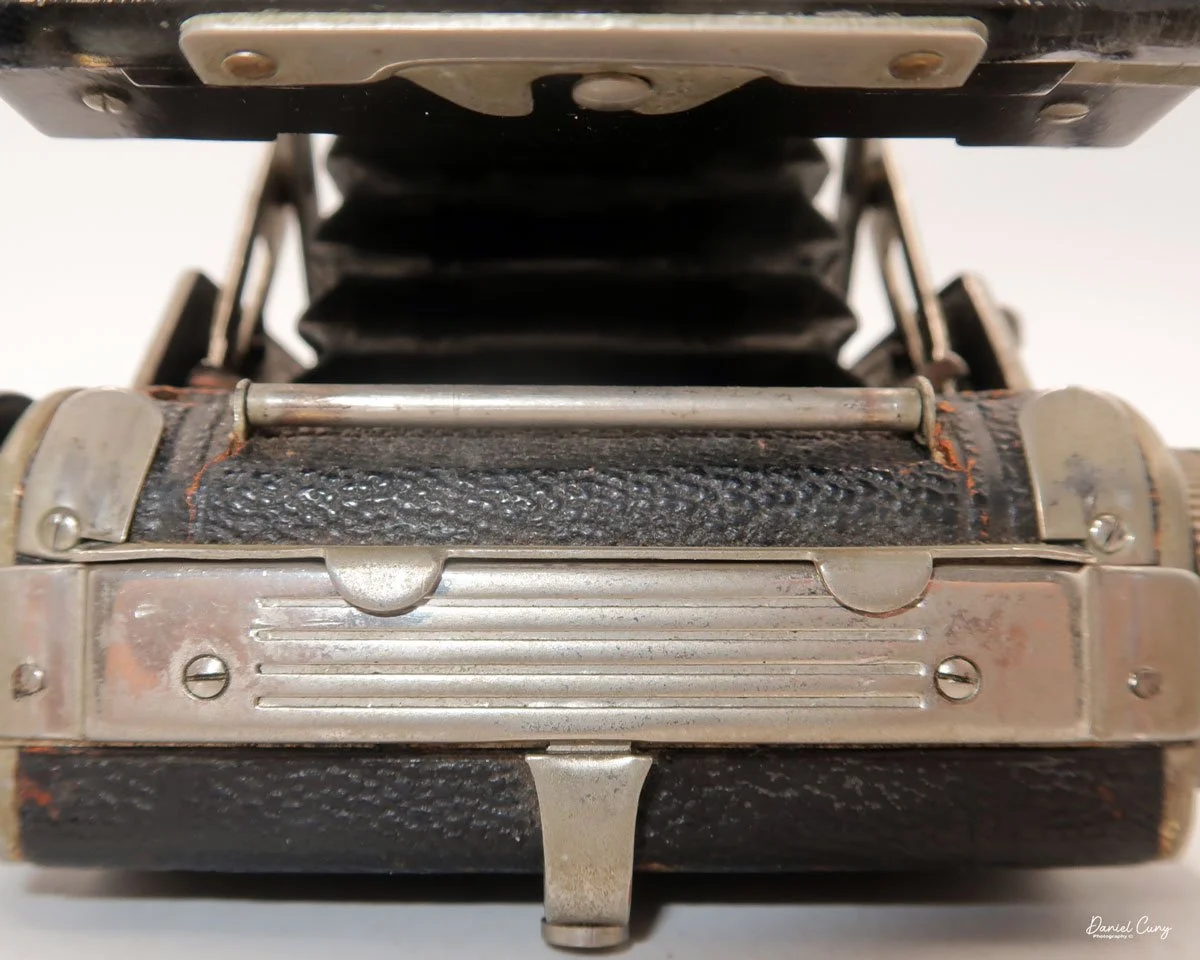
To extend the camera body away from the film chamber, press the silver button on the right side of the camera body, located just below the film winding lever. Pressing the button quickly extends the camera lens area, and you'll be able to see the bellows. By doing so, you'll see how the camera gets its name, a folding twin-lens camera. When I extended the camera's front from the rear, I noticed the bellows were in excellent light-tight condition.

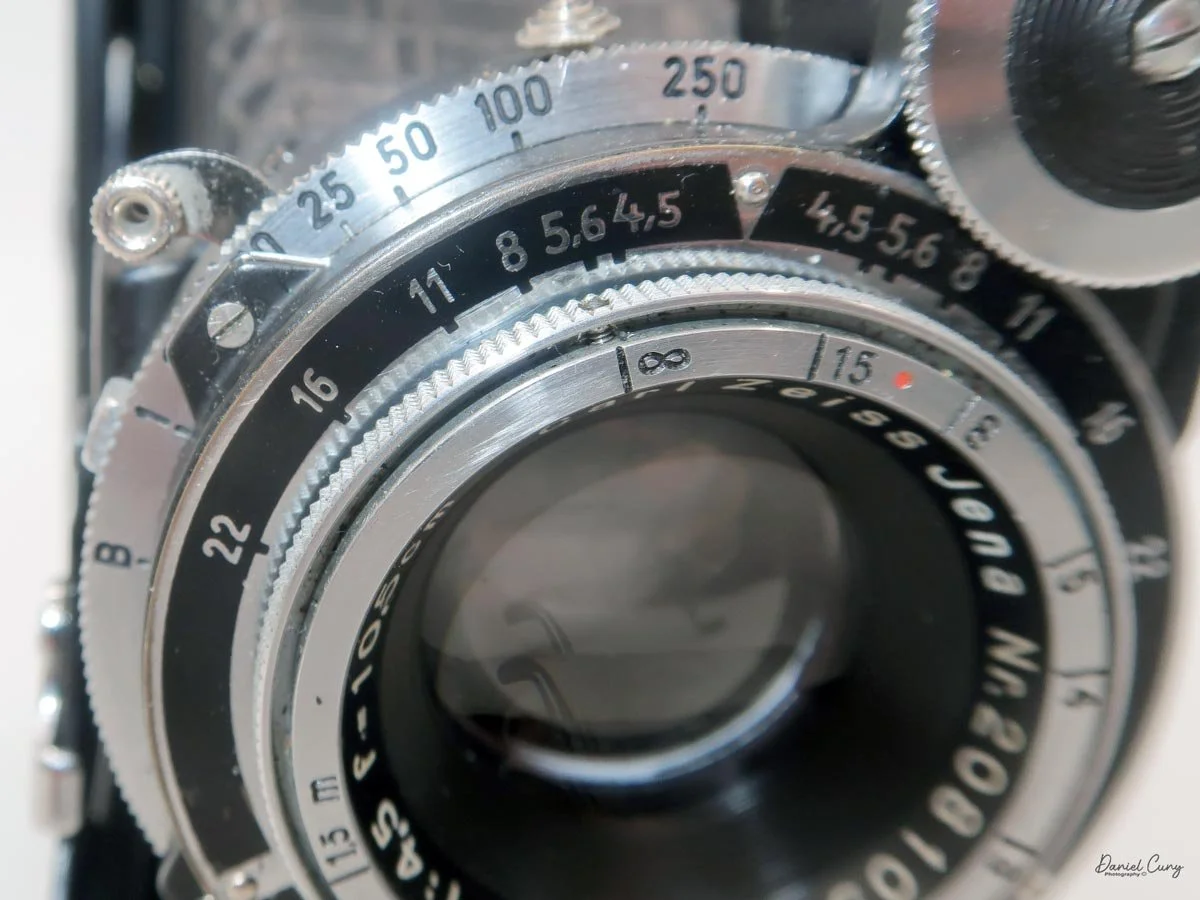
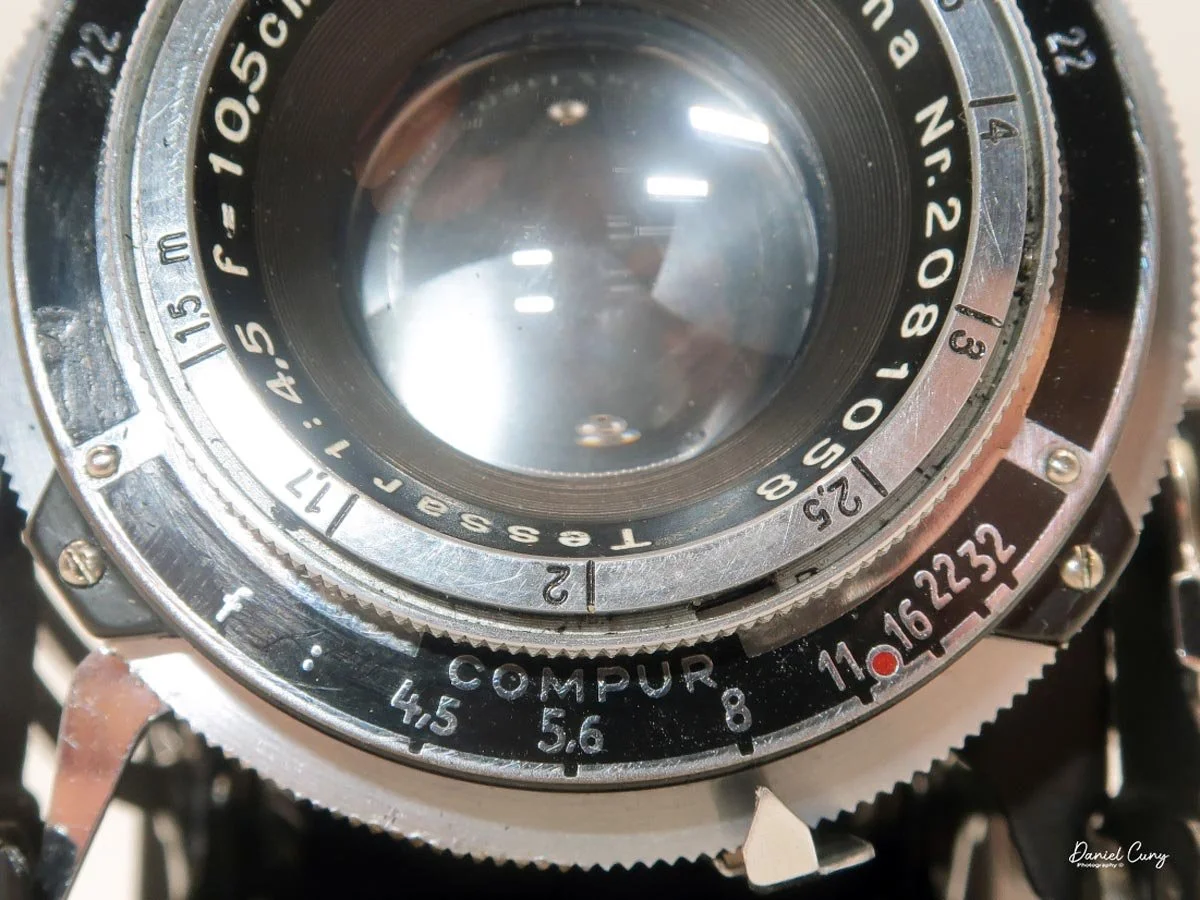
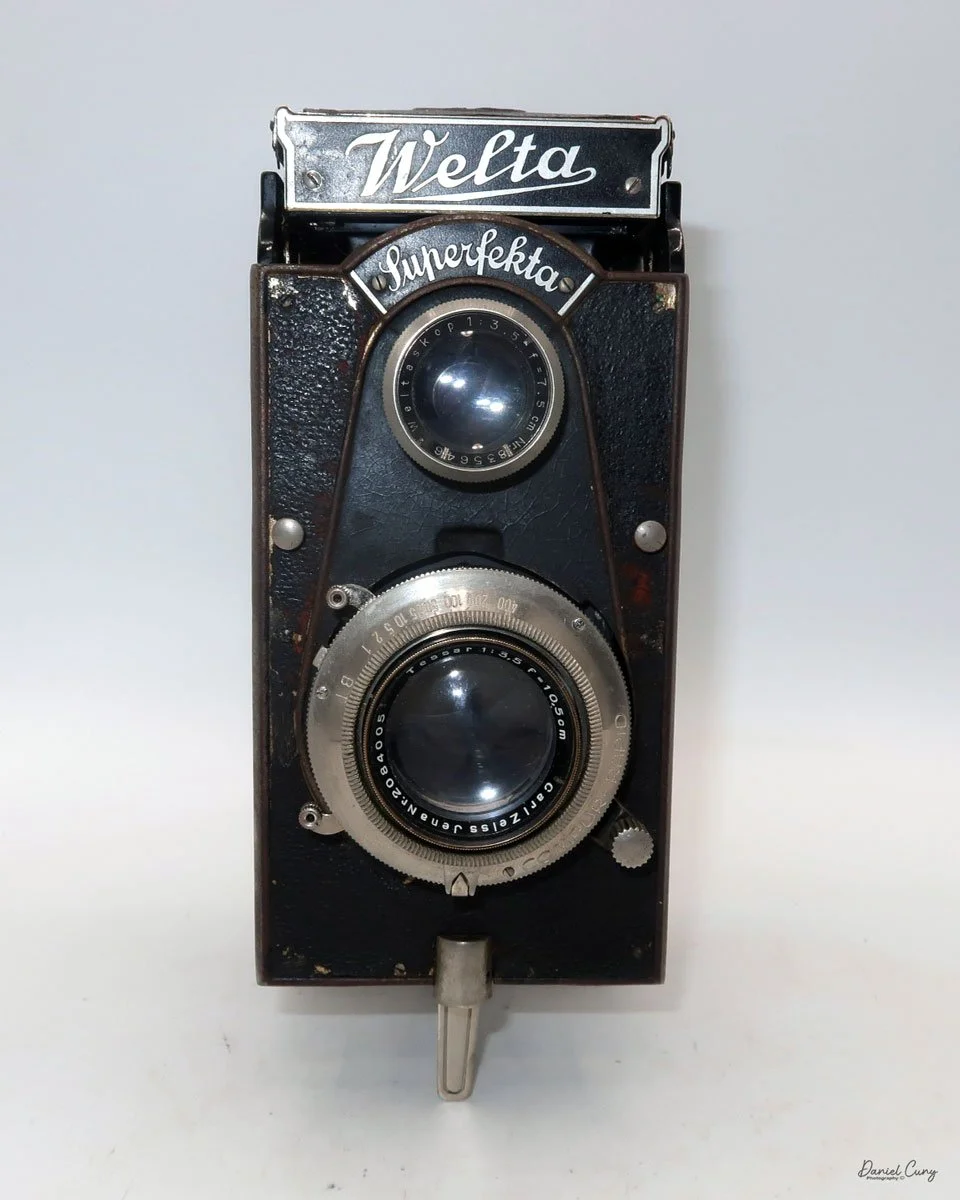
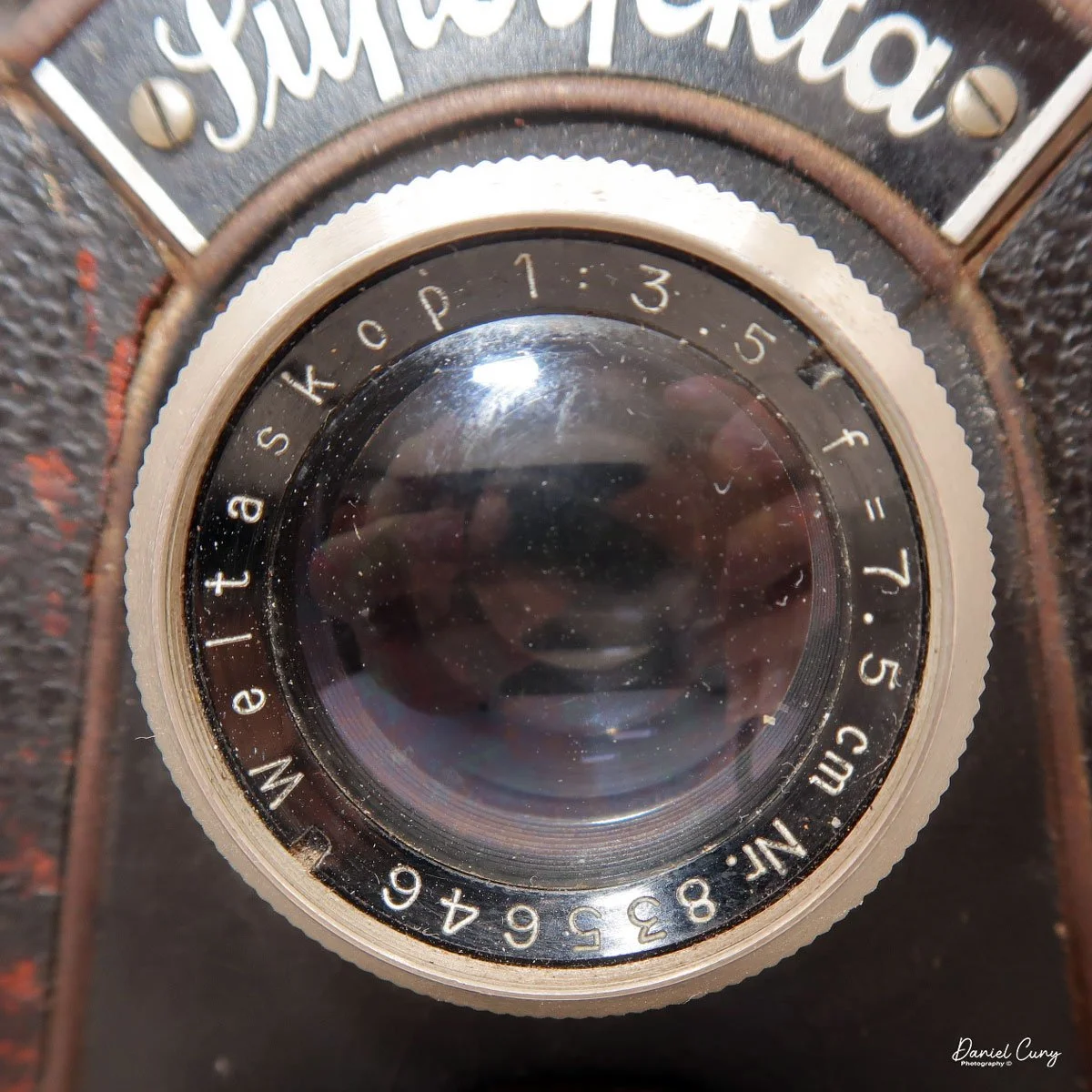
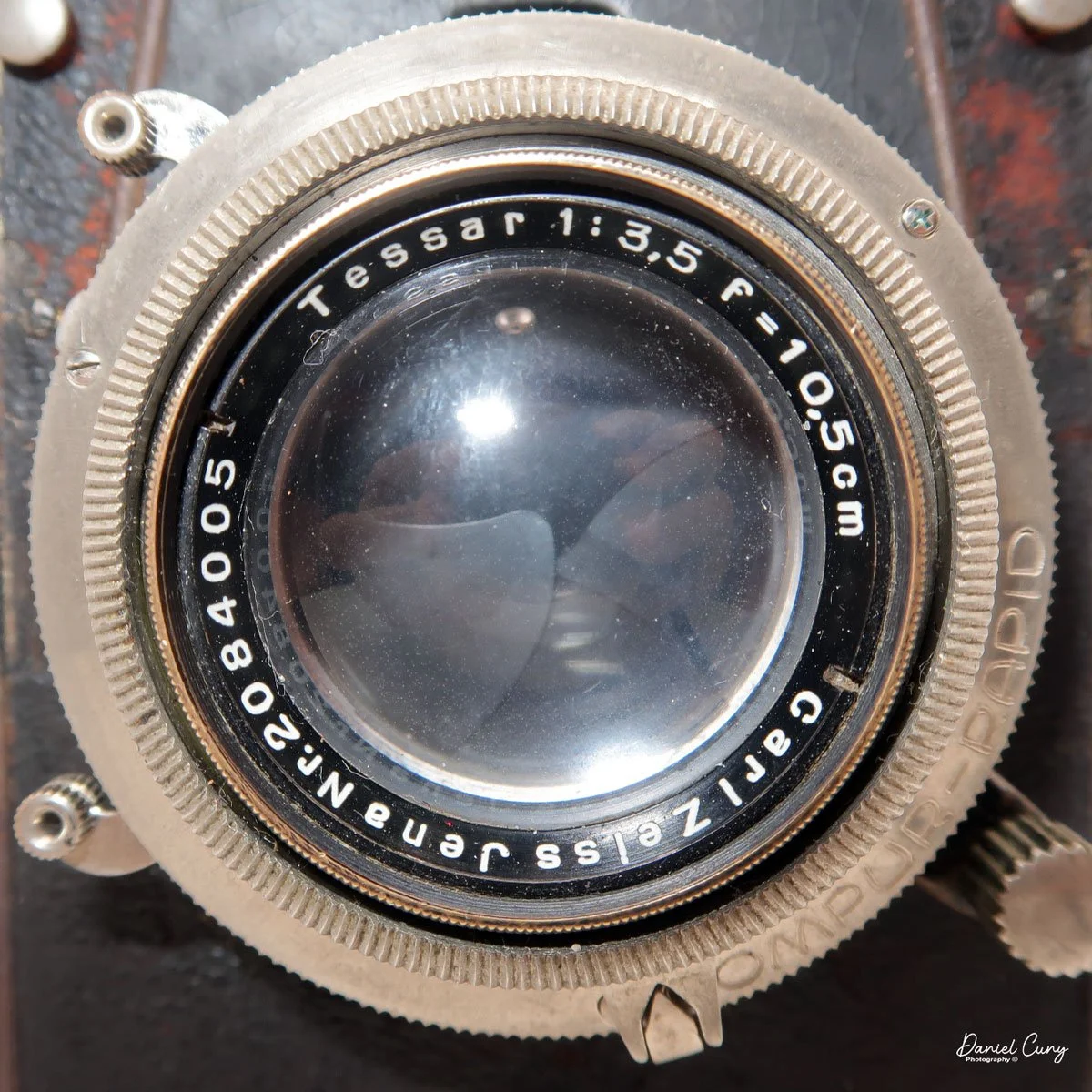
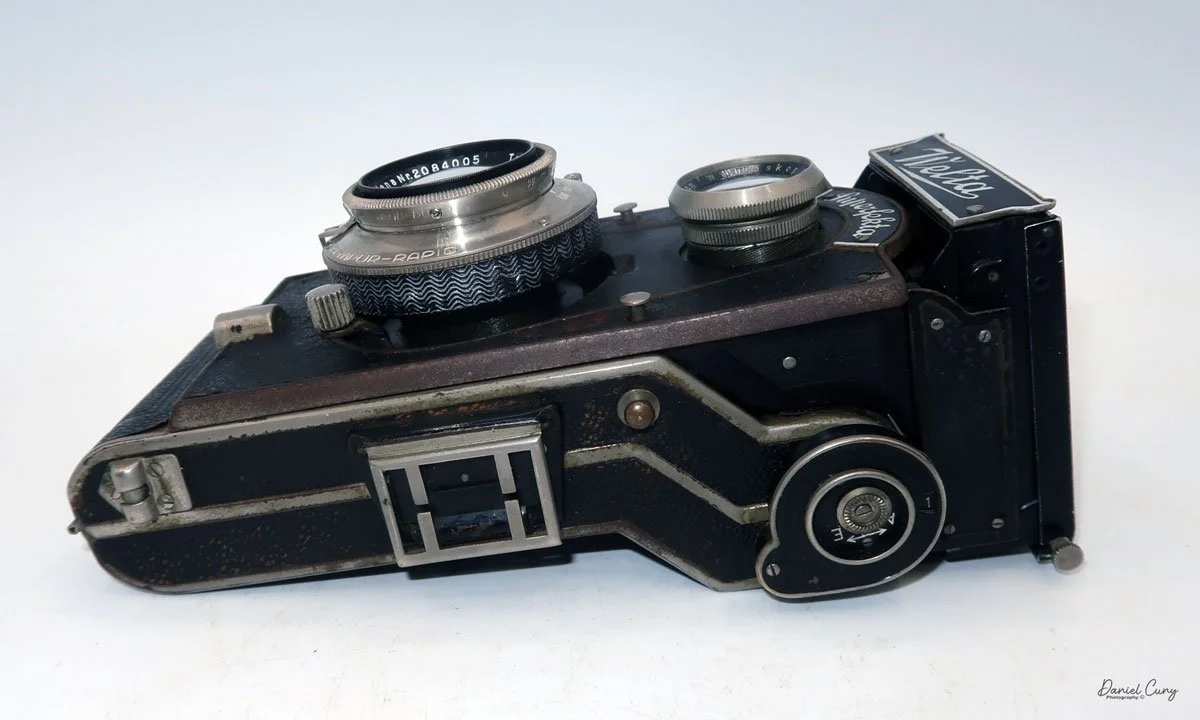
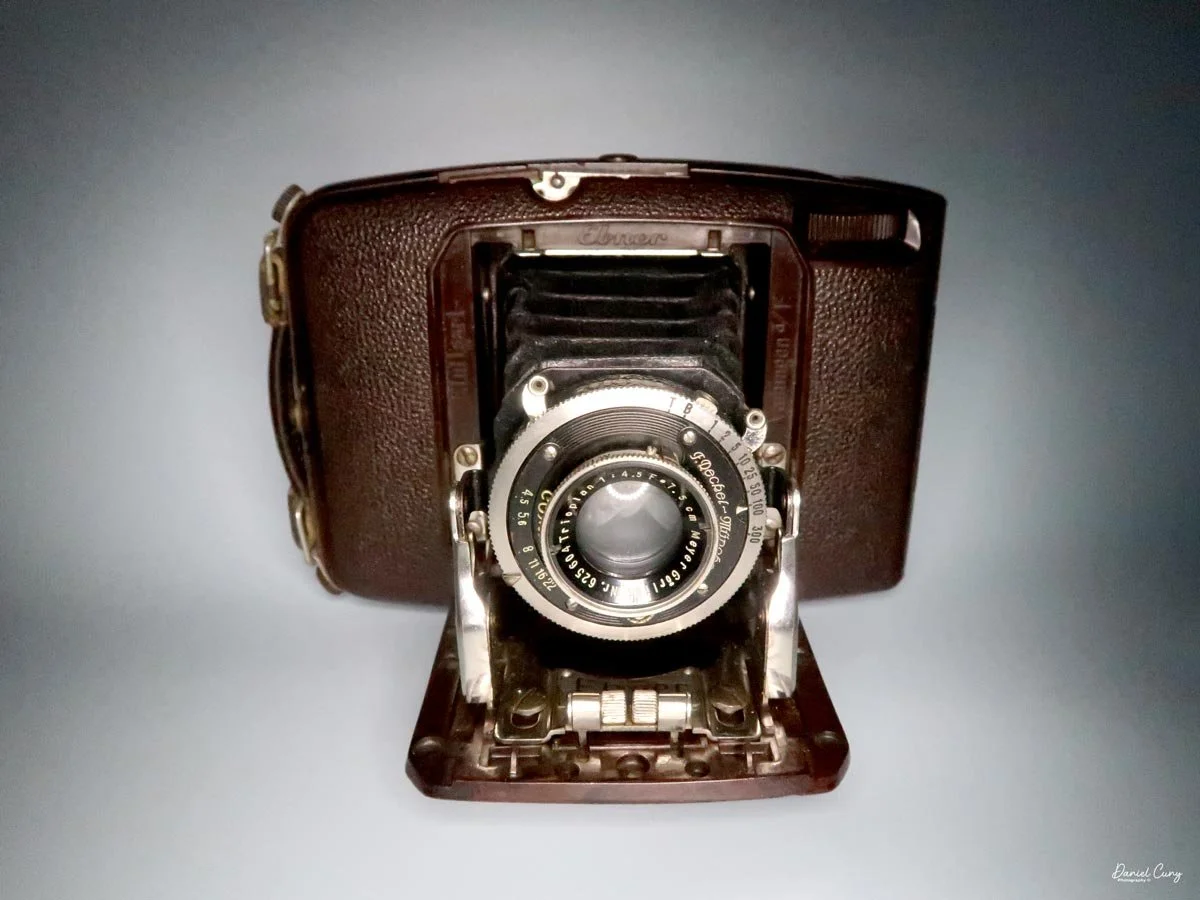
 My camera has a 7.5cm f/3.5 Weltaskop viewing lens, along with a Carl Zeiss Jena 10.5 F/3.5 Tessar taking lens, so the viewing lens is wider than the taking lens, and the taking lens is in a Compur-Rapid shutter with shutter speeds from 1/400 to 1 sec. along with "B", and "T". The focus lever is located on the left side of the lens when you're holding the camera, and it slides up and down to focus on your subject. 

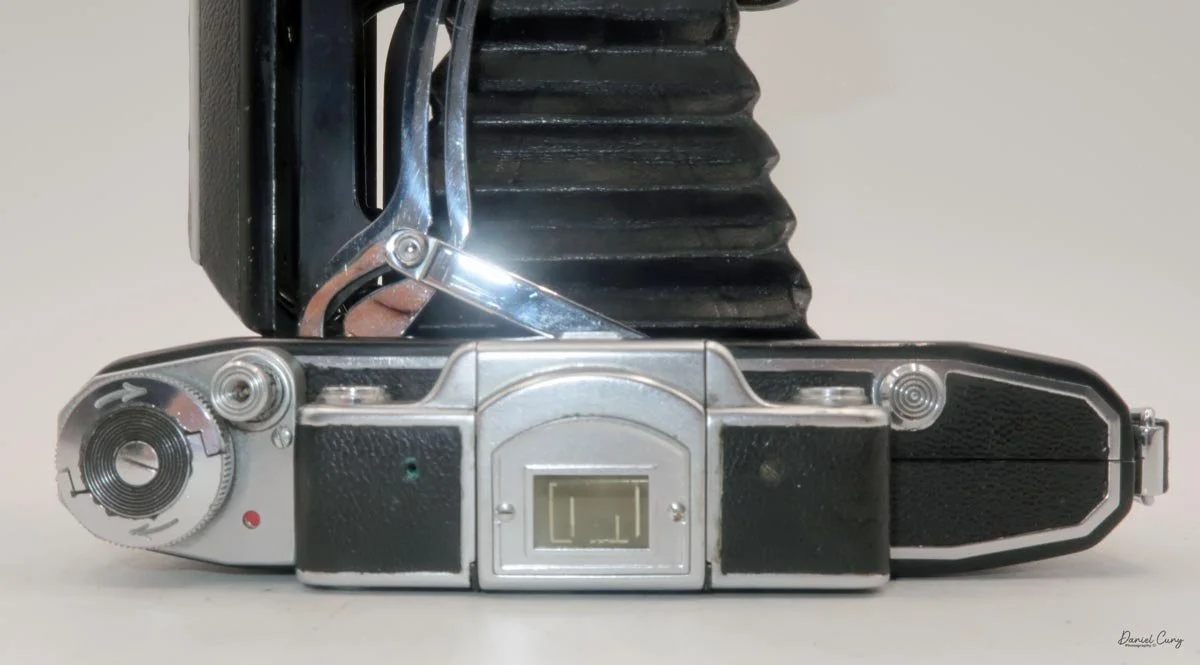
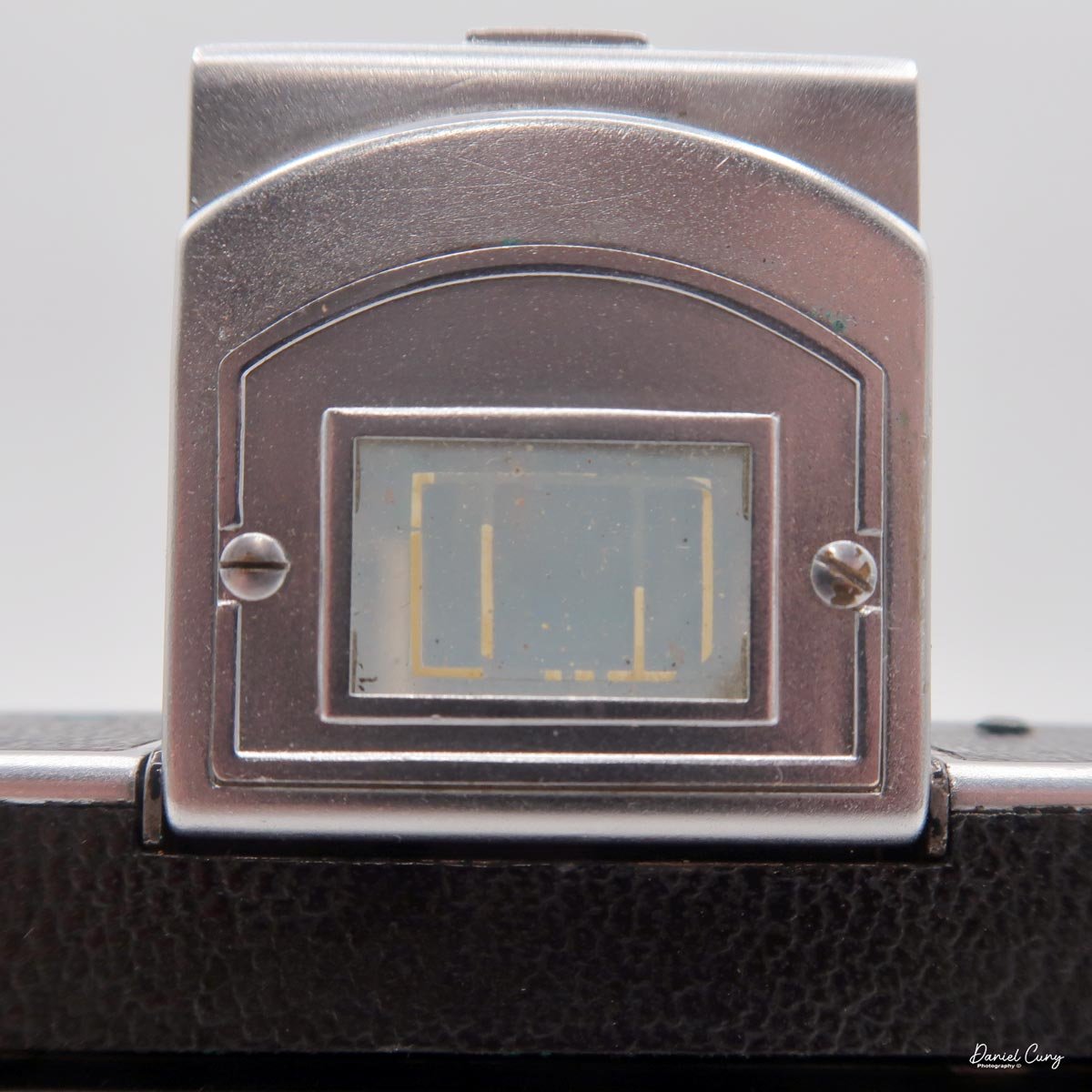
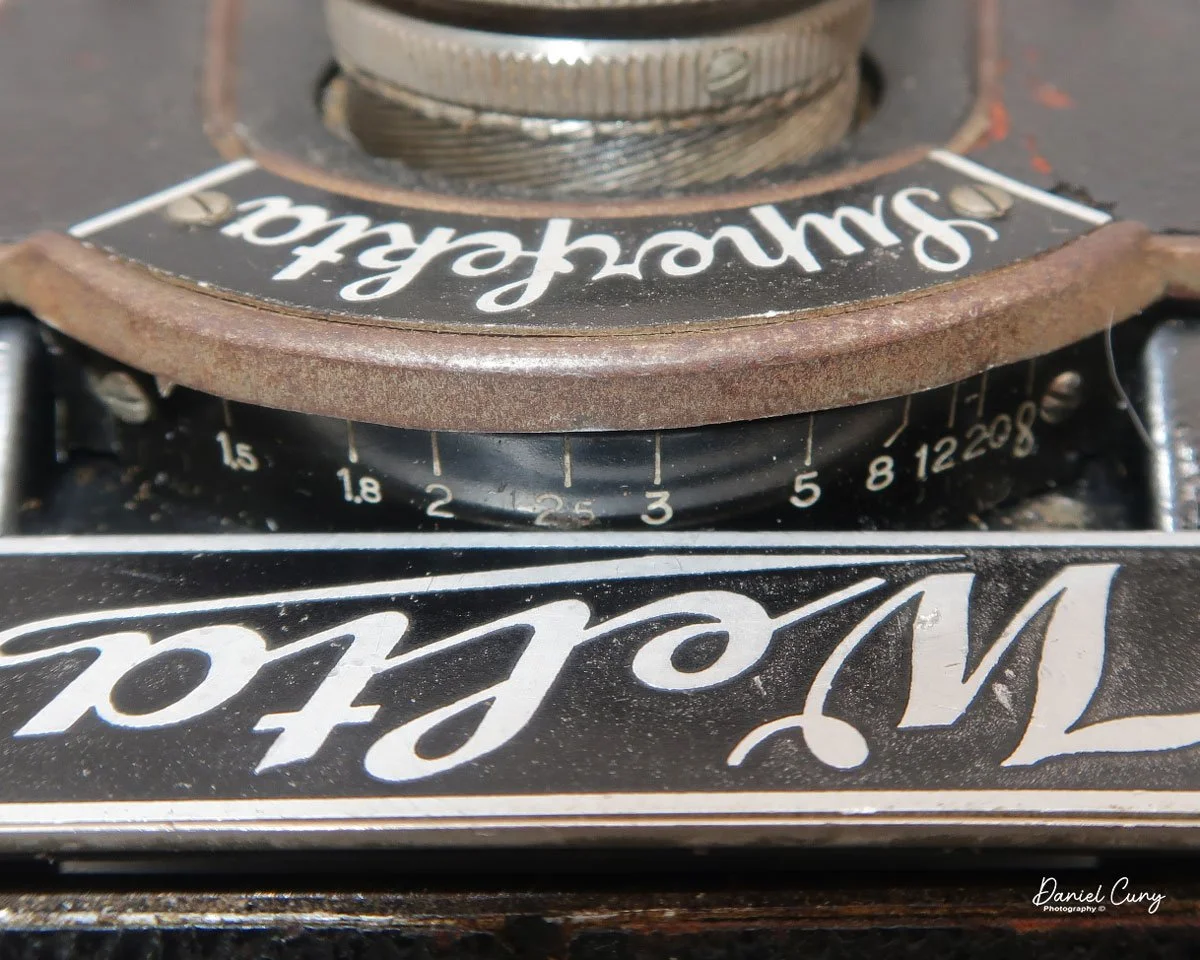
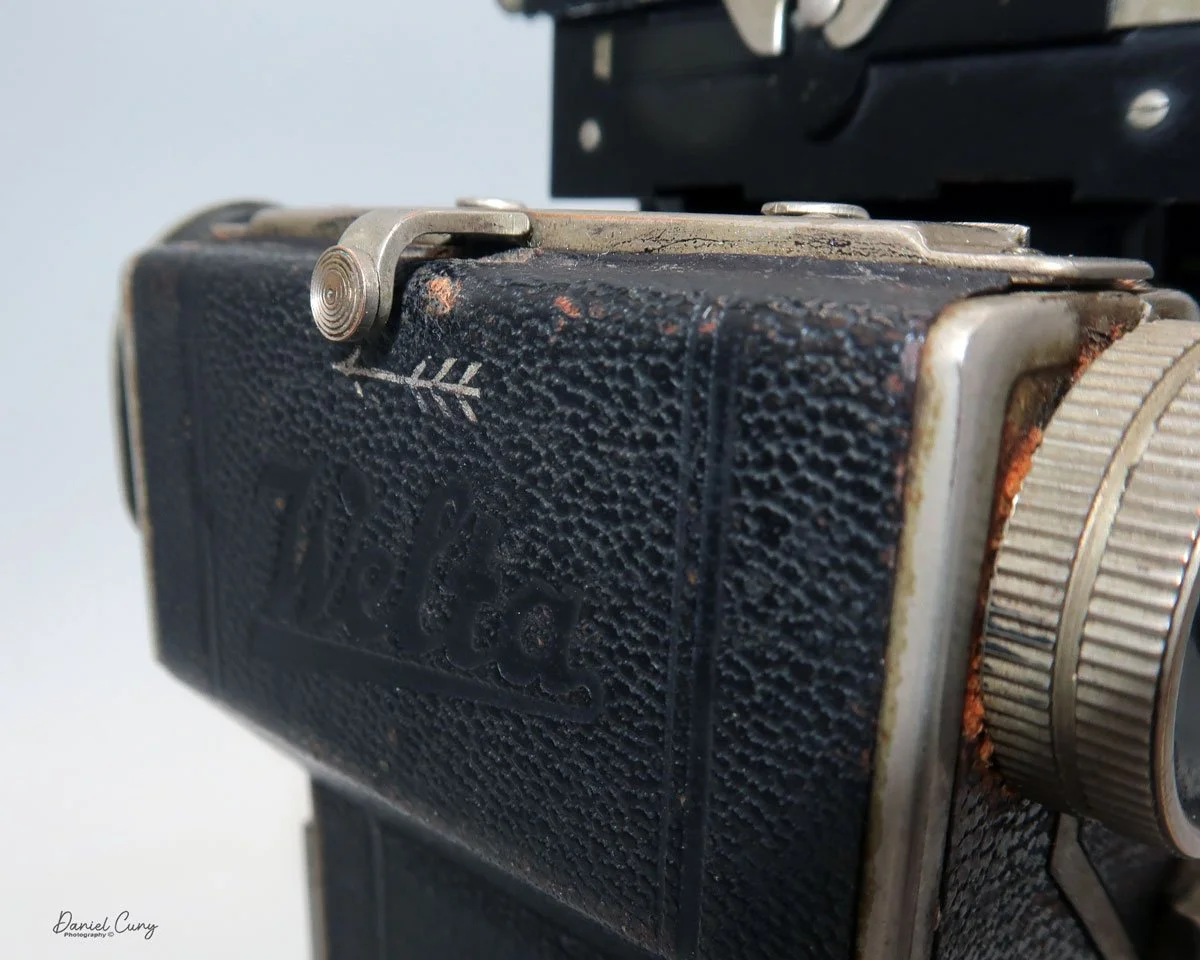
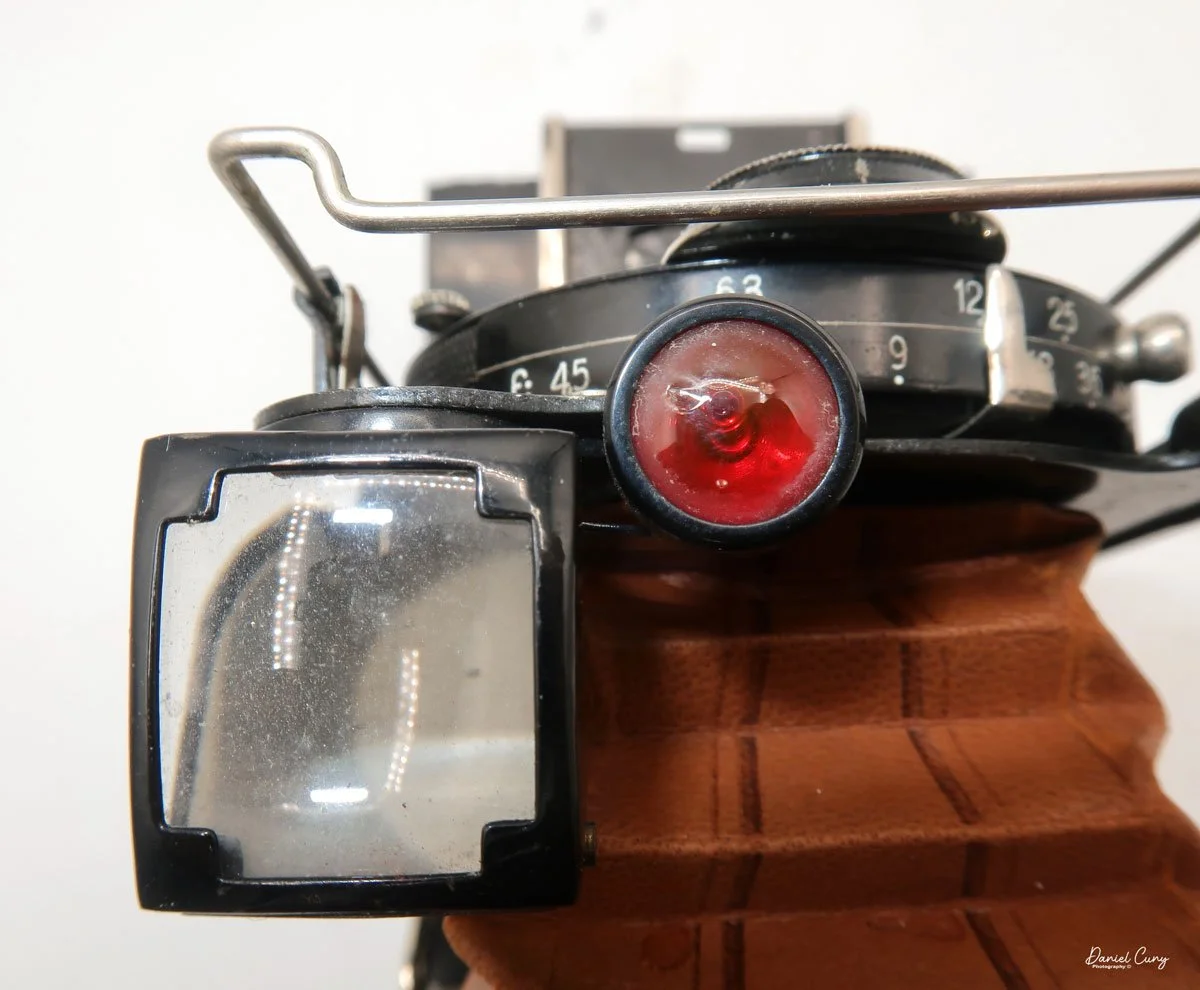
There is also a focus scale along the top of the camera, between the Welta sign on the film body and the Superfekta sign on the lens area. As you slide the focus lever up and down, you'll see a triangle move from side to side, indicating the distance to the subject on the focus scale, which is in meters.

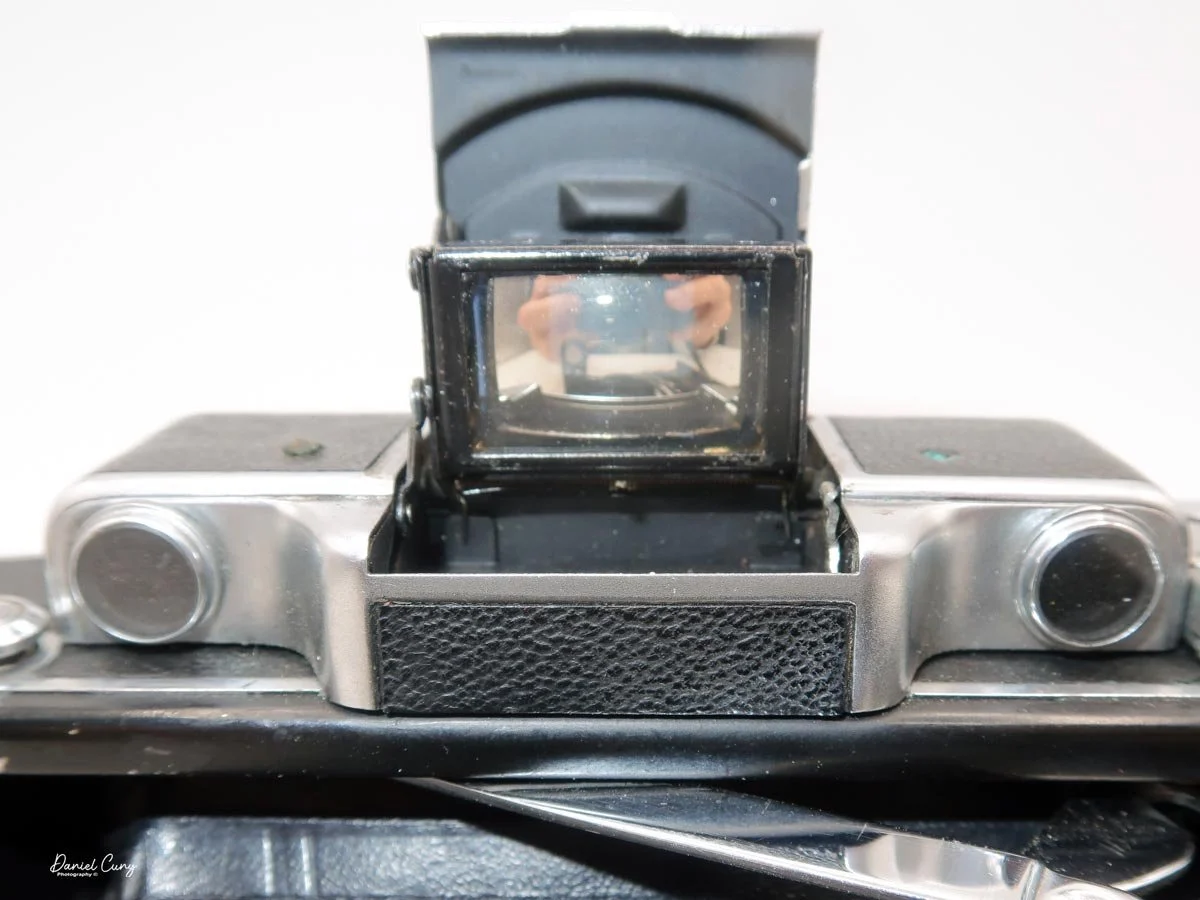
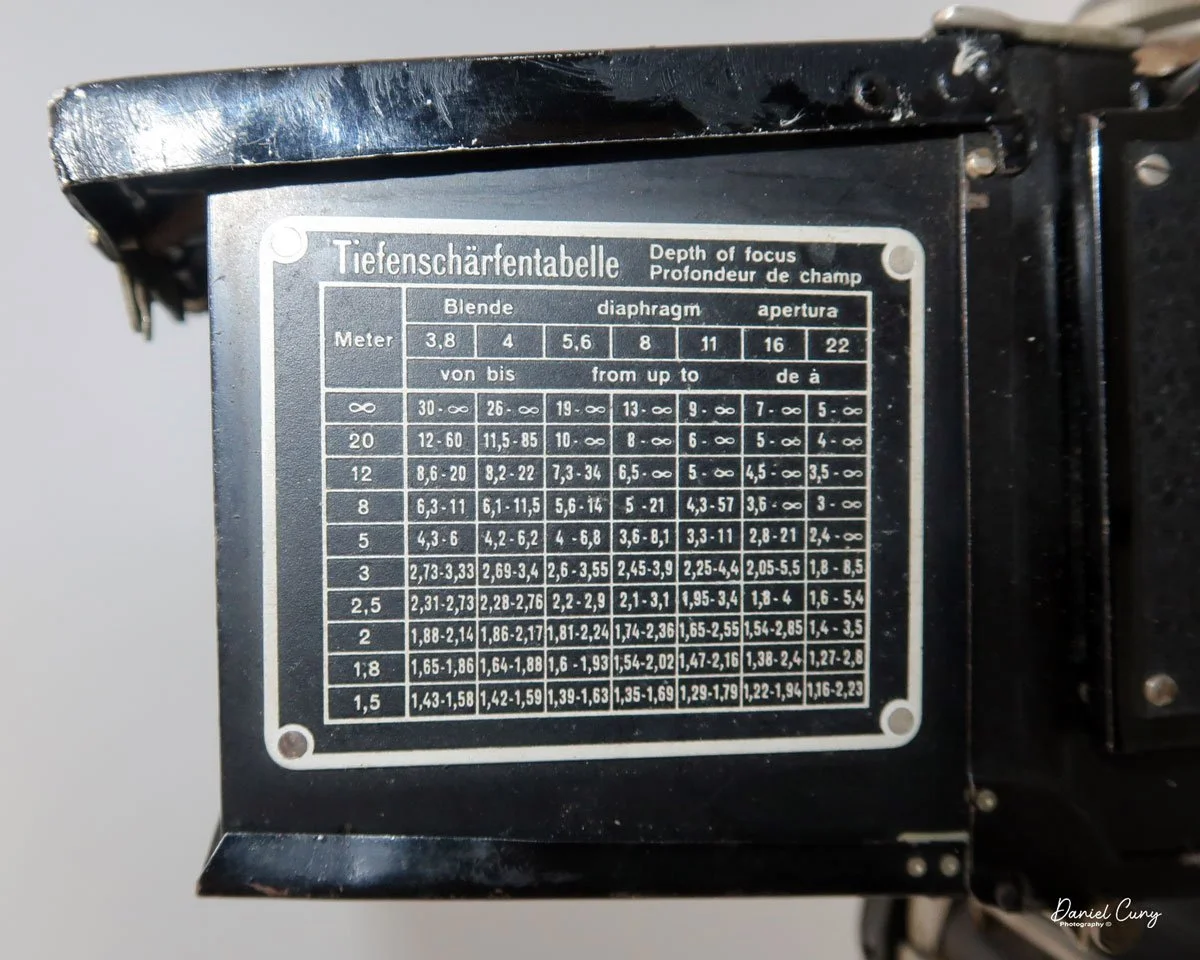
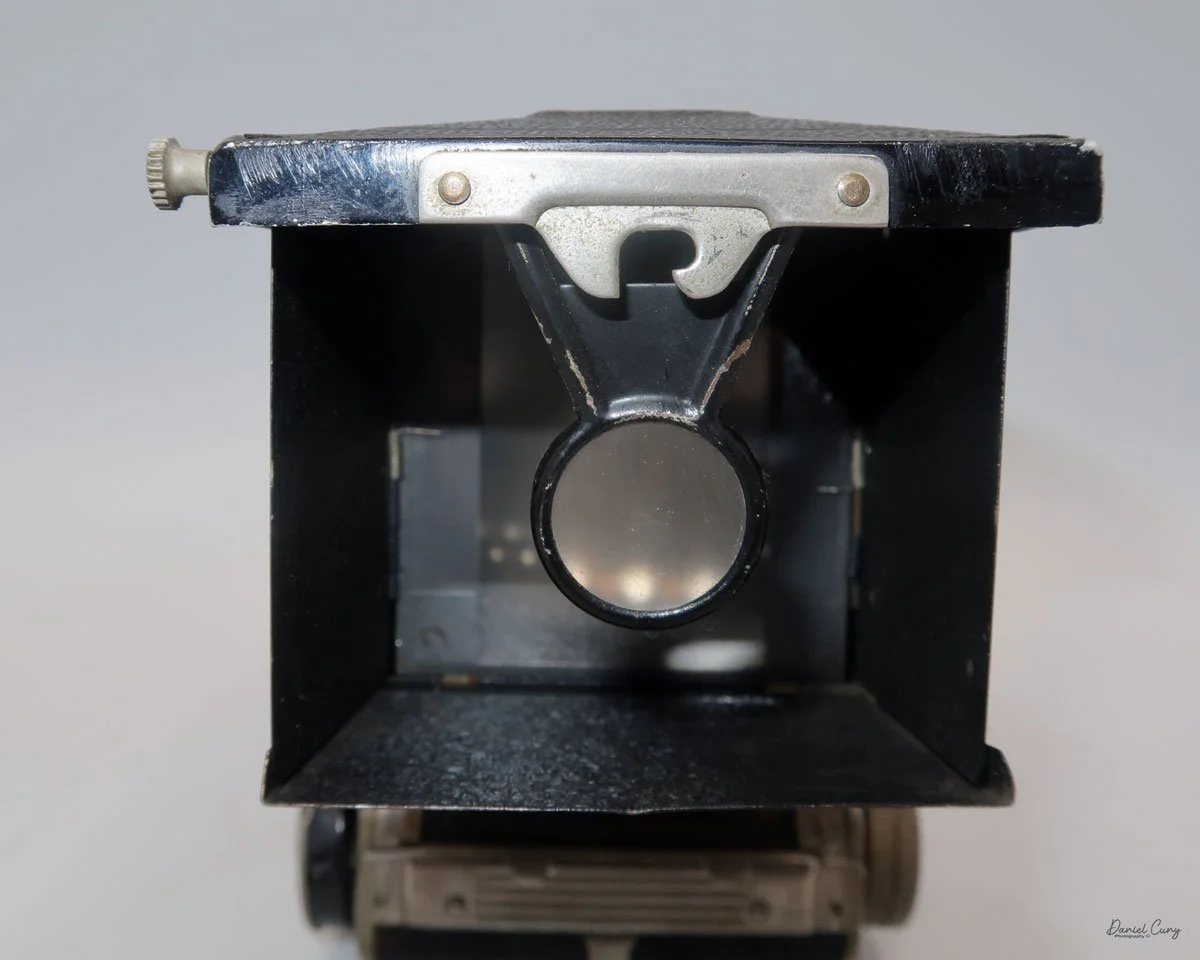
 Along the back of the camera, by the viewfinder, there is a button to press to open the light chimney. The light chimney popped up, and along one side is a depth-of-field scale for the camera, and on the front is the magnifying lens, which flips as it should. 

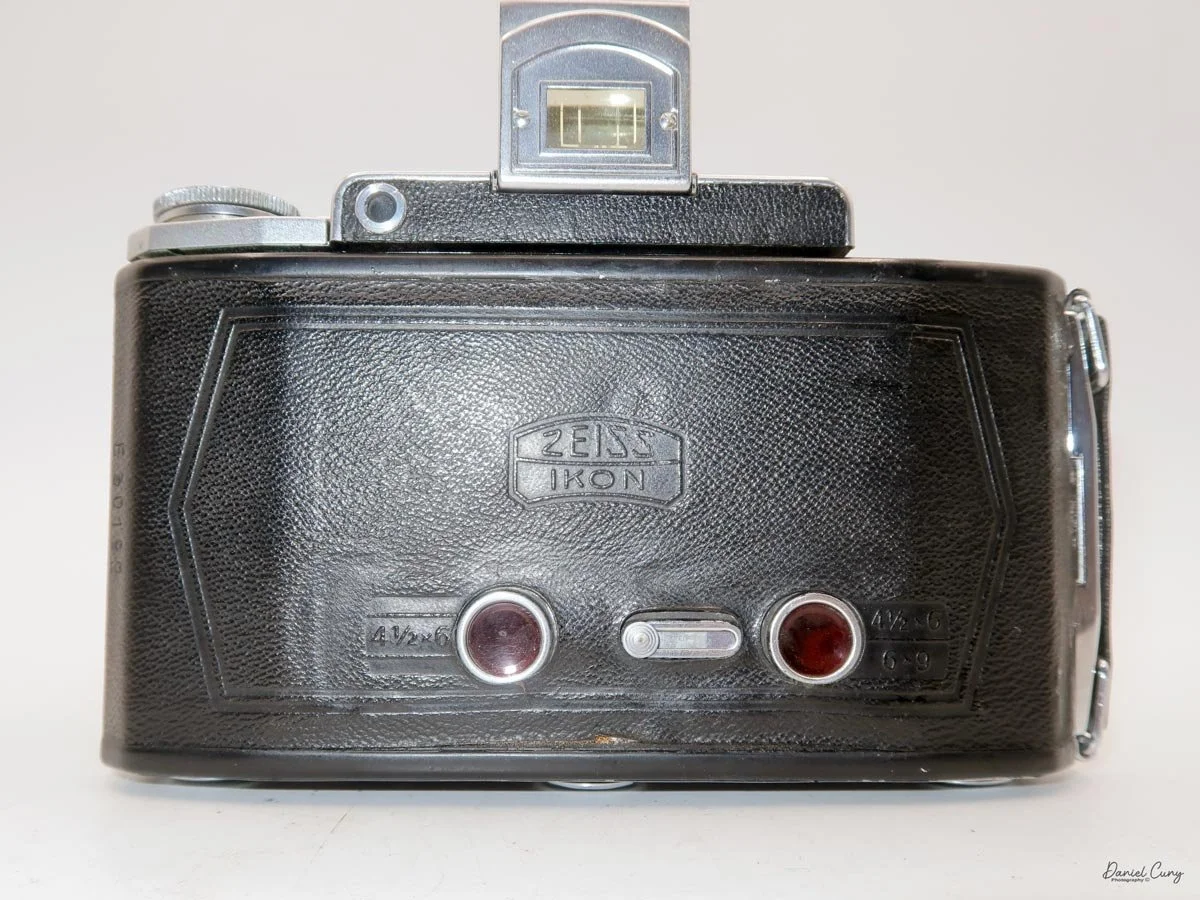
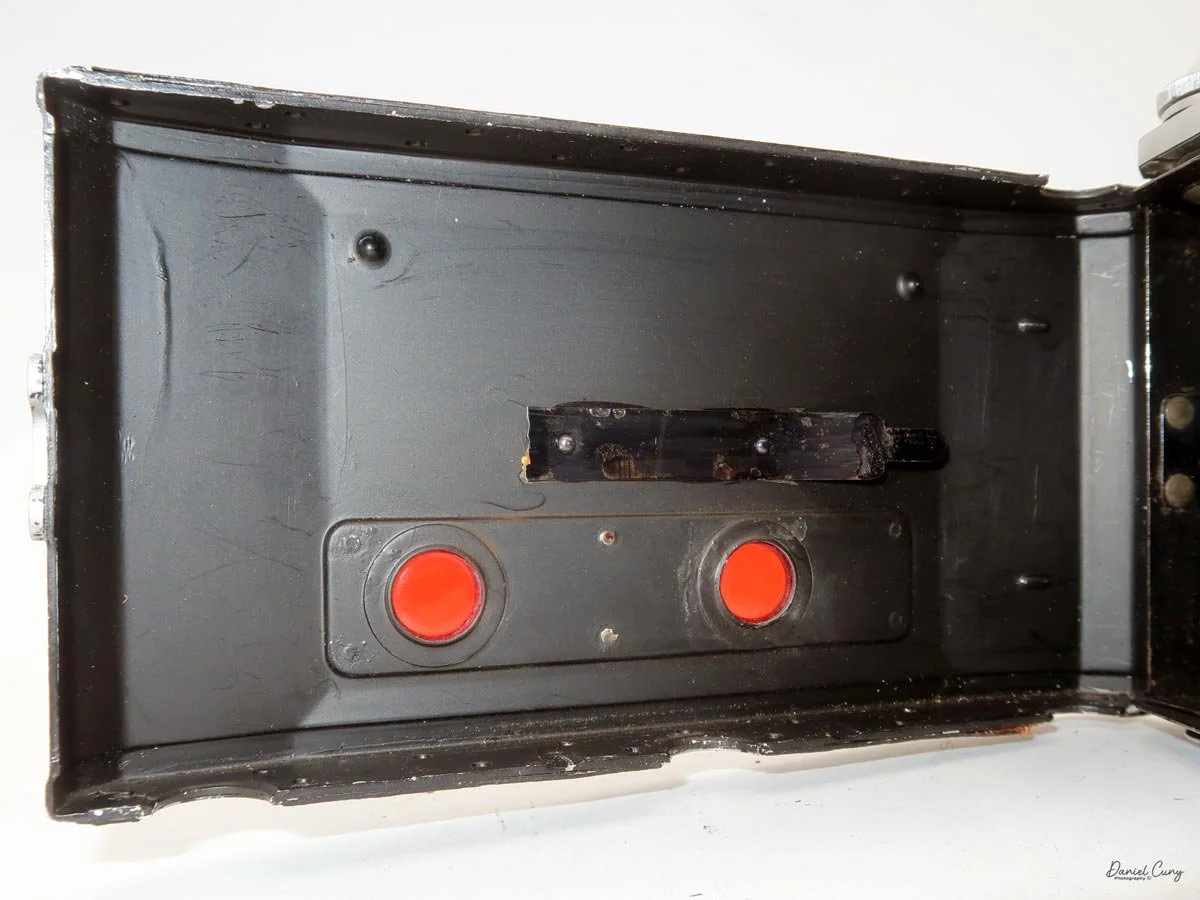
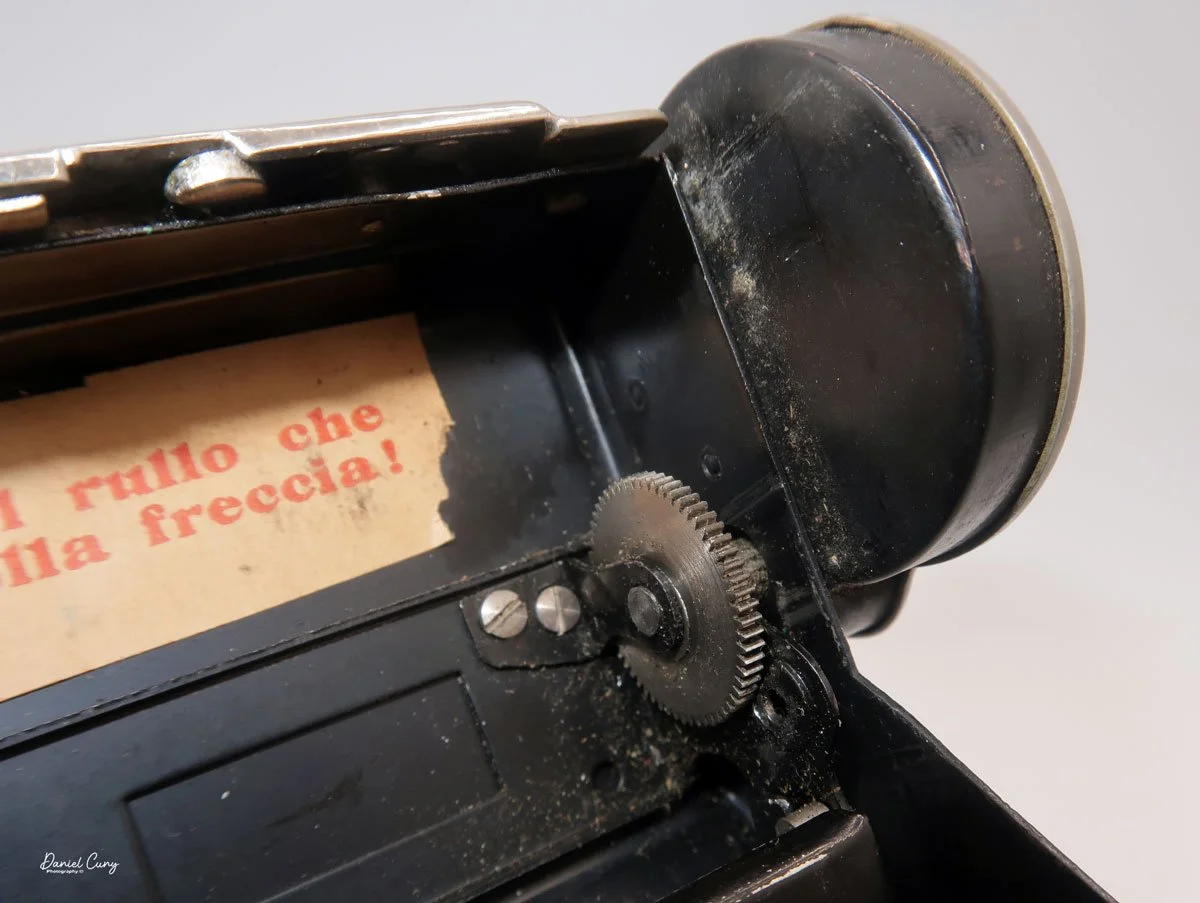
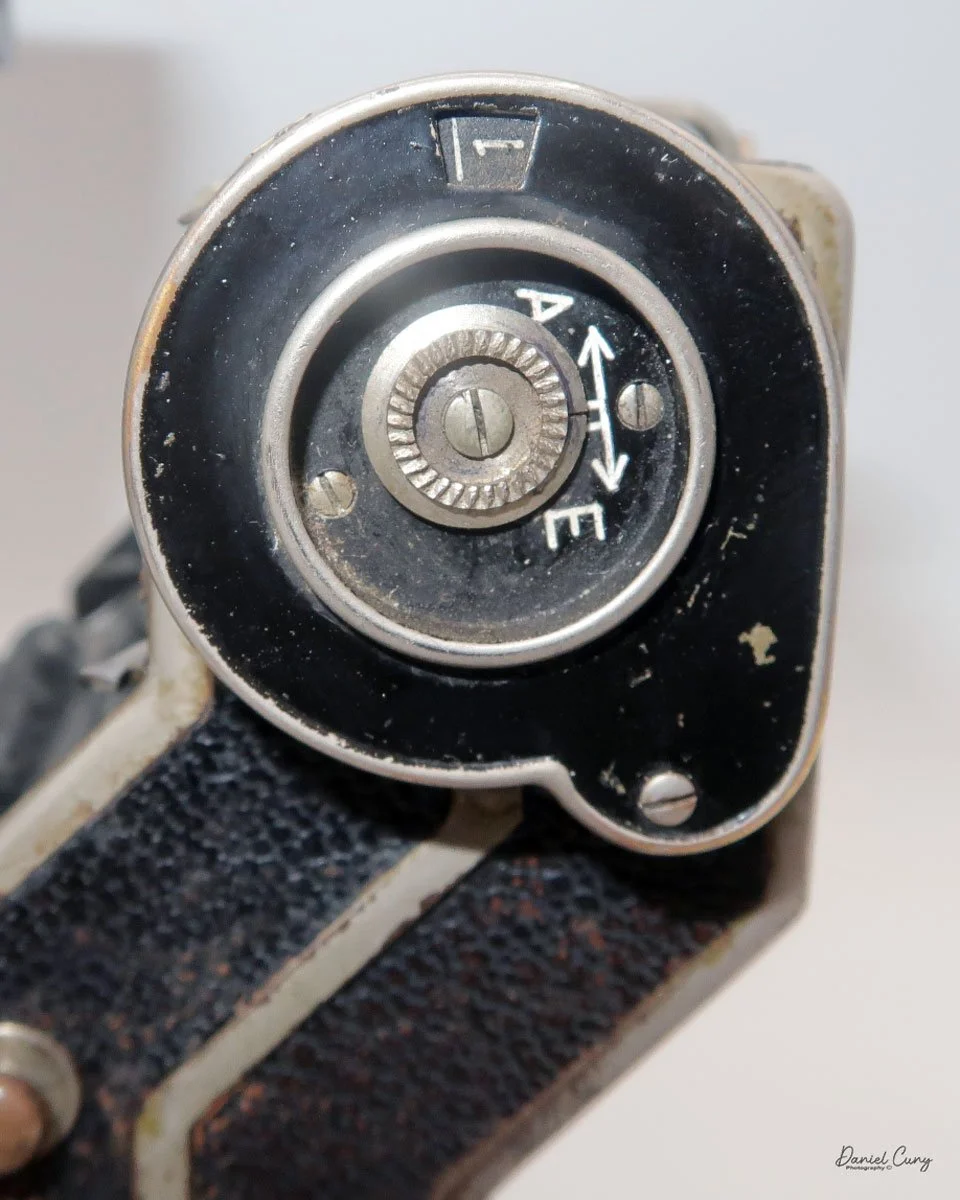
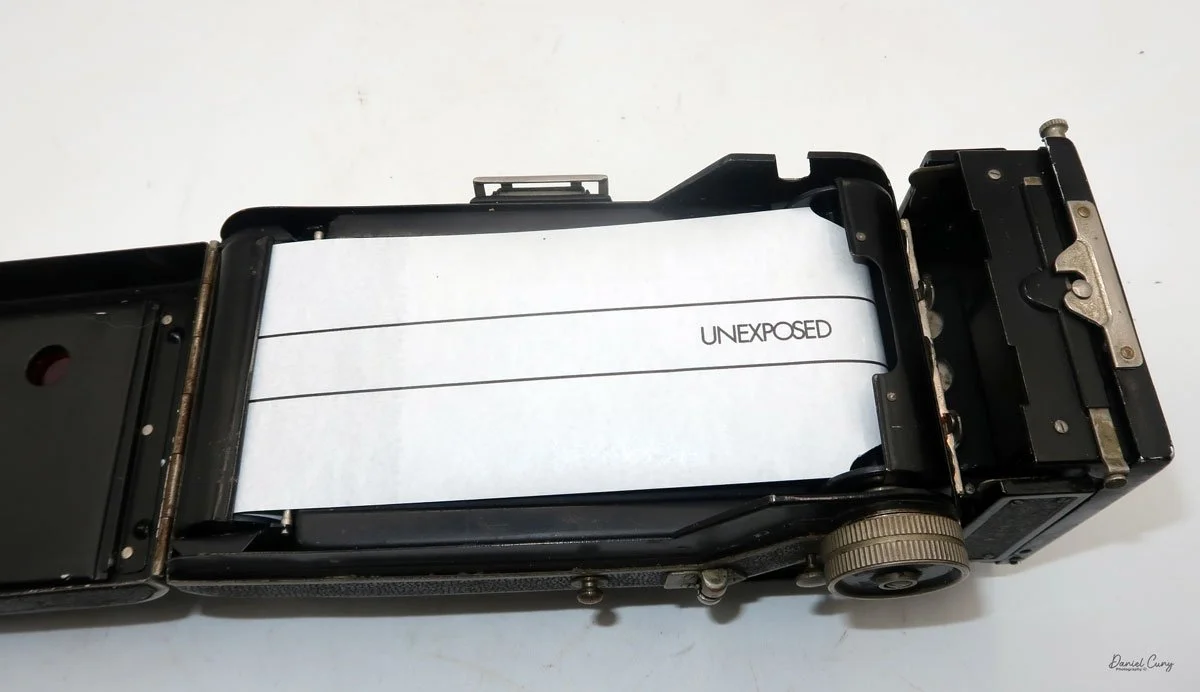
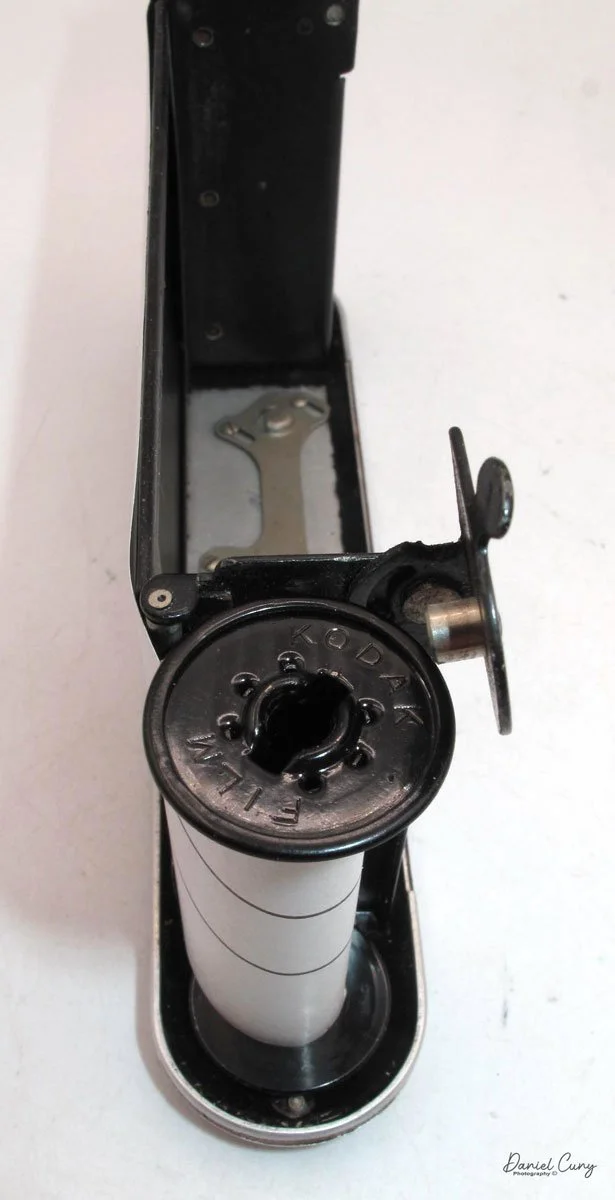
On the back of the film body is another sliding lever that you move to the left, in the direction of the arrow, and the back will open. Opening the back of the camera, I noticed that the film advance roller, which activates the frame counter, is missing, so the frame counter isn't operational on this camera. Luckily, there is a red window on the back door so you can see the numbers being transported as you roll the film from one image to the next. 

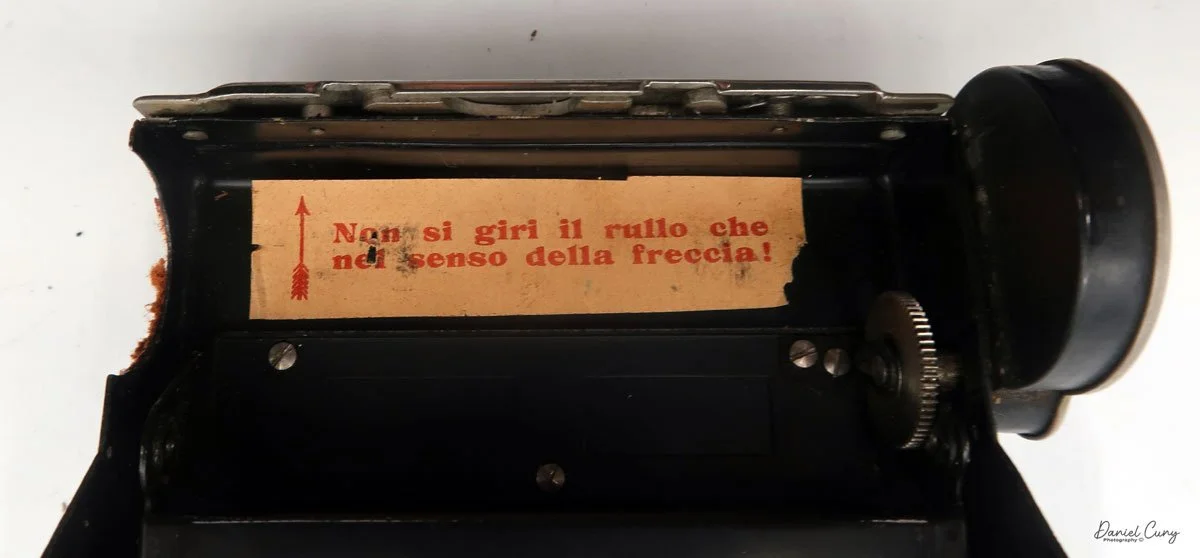
 I also noticed a paper sign glued to the inside of the back door at the top, which read, "non si girare il rullo che nel senso della freccia" (translation from Italian to English: "do not turn the roller in the direction of the arrow").  This message on the inside tells me the camera is originally from Italy. I guess the camera was made for the Italian market, but the reseller may have added that; I'm not certain. Still, it's interesting that a German camera was sold in Italy and found its way to the USA.

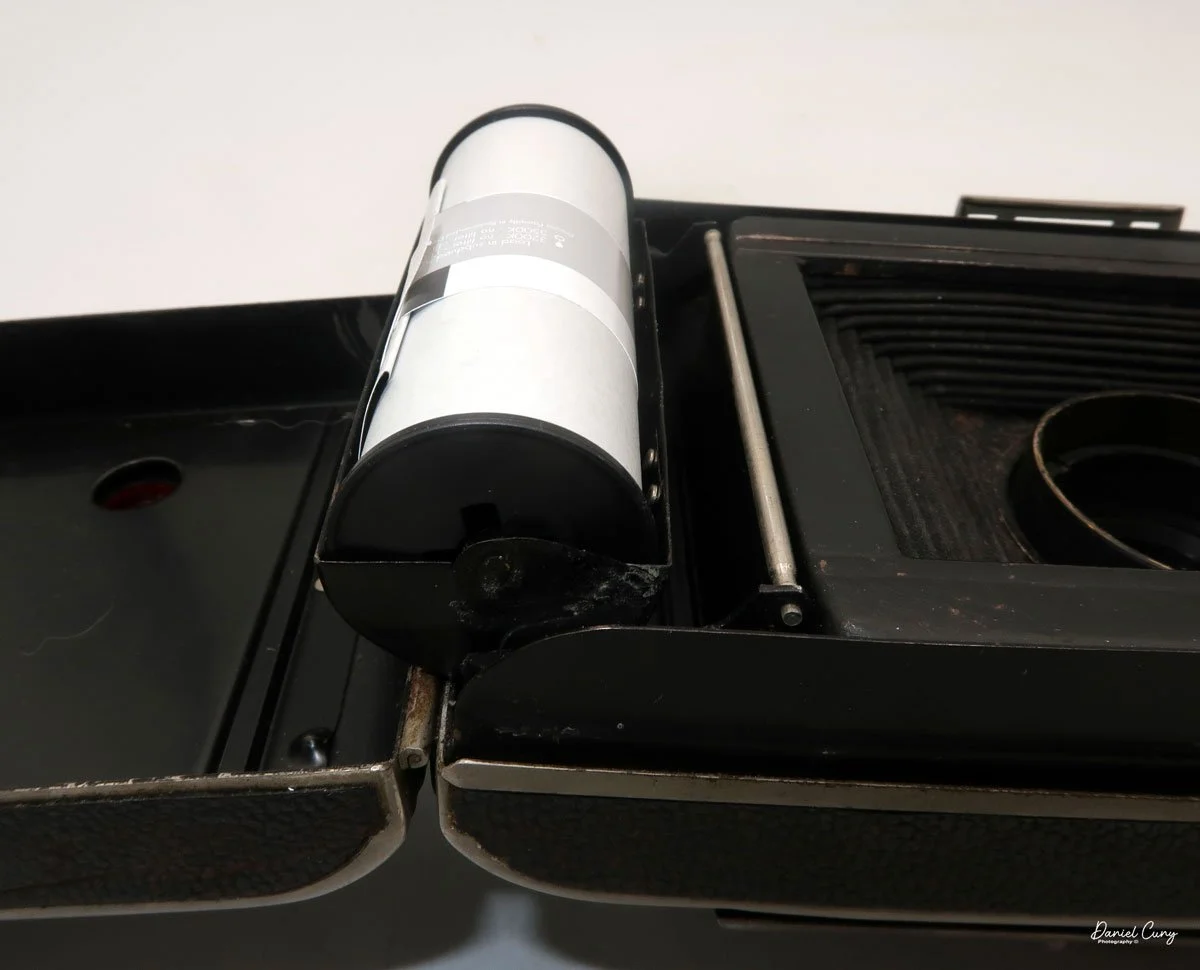
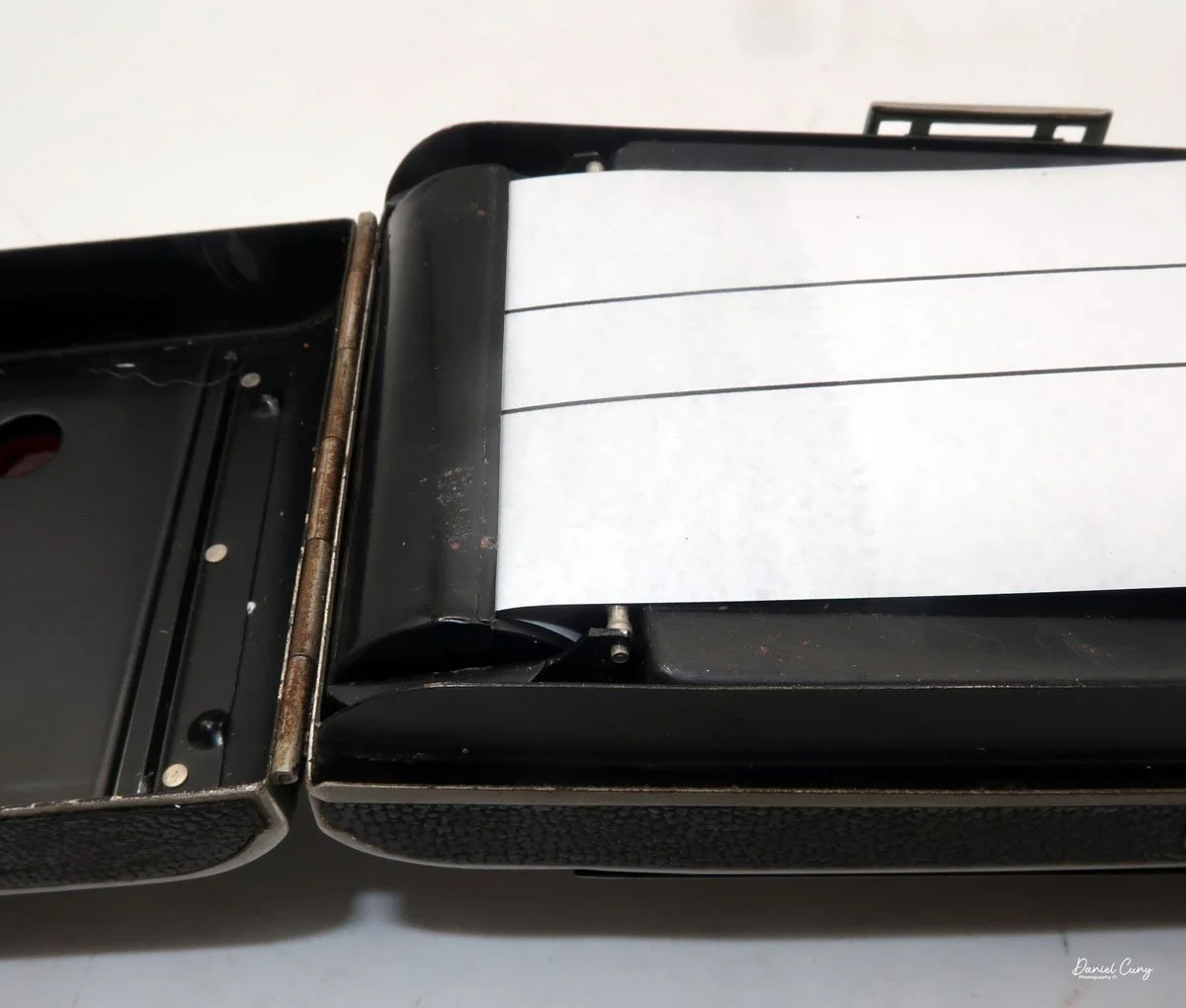
To load the camera with film, the chamber where you put in a fresh roll of film pulls up to make it easier to put in the film, which is a nice feature in the camera. Otherwise, the camera loads just like many roll film cameras, but it would have been nice to have a frame counter that advances from the roller on the back to indicate the frame numbers. I'll just have to do it the "old-fashioned" way and look through the red window to get to the next frame when I shoot.

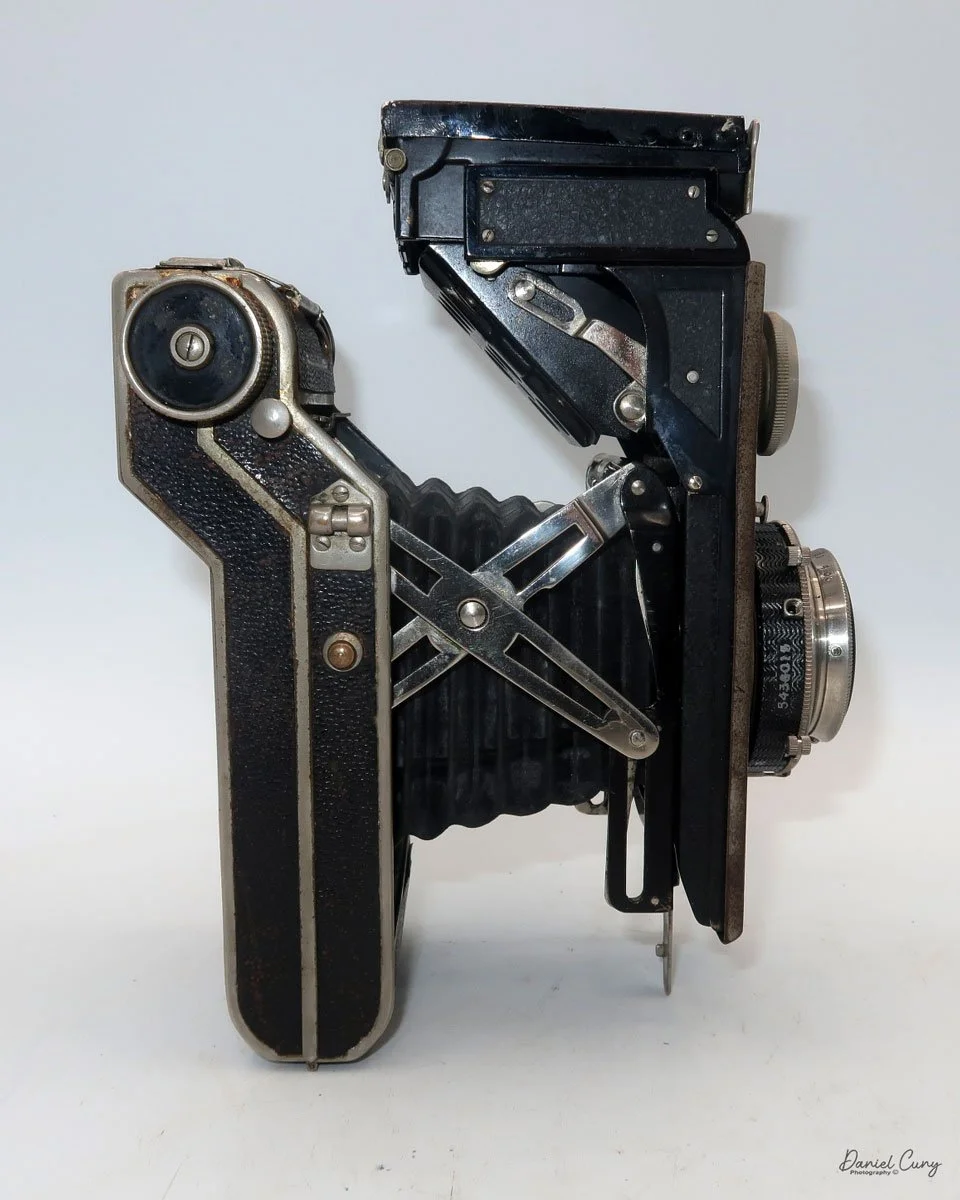
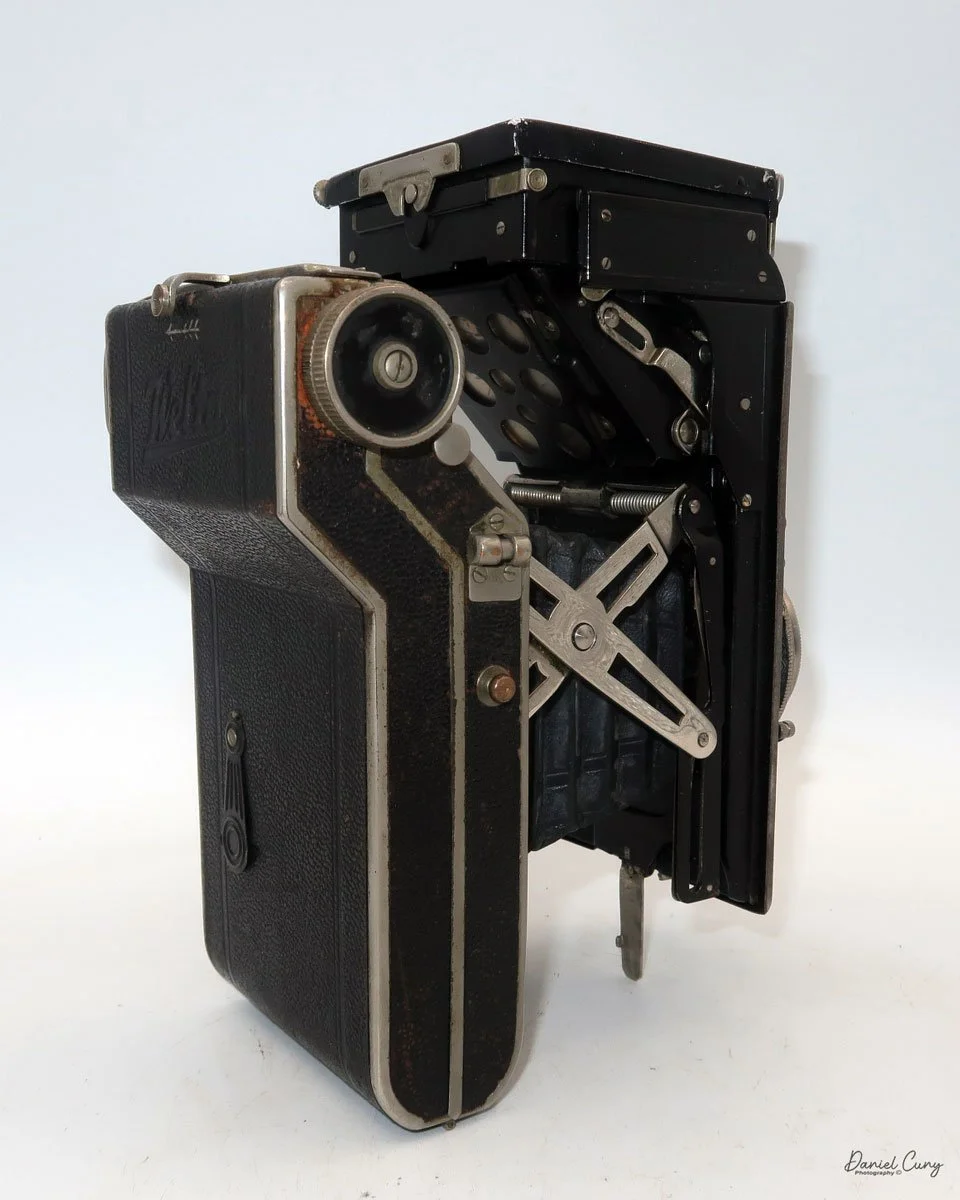
To collapse the camera lens area into the camera body, you'll need to press in two silver buttons on the front of the camera, placed between the viewing and taking lens, and press the lens area into the film body, which is extended by a couple of scissor struts on each side of the camera. Be sure to retract the camera stand leg, under the front lens area, just behind the tripod socket, before closing the camera. If you don't do this, the camera will not close. I know because I've tried a few times by accident.

 When you close the camera, another interesting thing is that there's a roller at the tip of the film area on the outside. When you close the lens into the film body, the viewfinder rolls along the roller, sliding it forward and covering the focus scale. Given that the camera is almost 100 years old, it's still interesting how it opens and closes mechanically. 

If you don't want to rotate the film chamber when shooting, there is a flip-up sports-type finder on the side of the camera you can use if that's easier for taking horizontal images. It just gives the photographer another option when using the camera.


My Results:

 I don't have a case that fits my Welta Superfekta camera. The camera doesn't have the standard loops you can snap into a carrying strap, so when I went out shooting a few times, I just put it in a pouch-style case to carry it and took it out when I was ready to shoot.

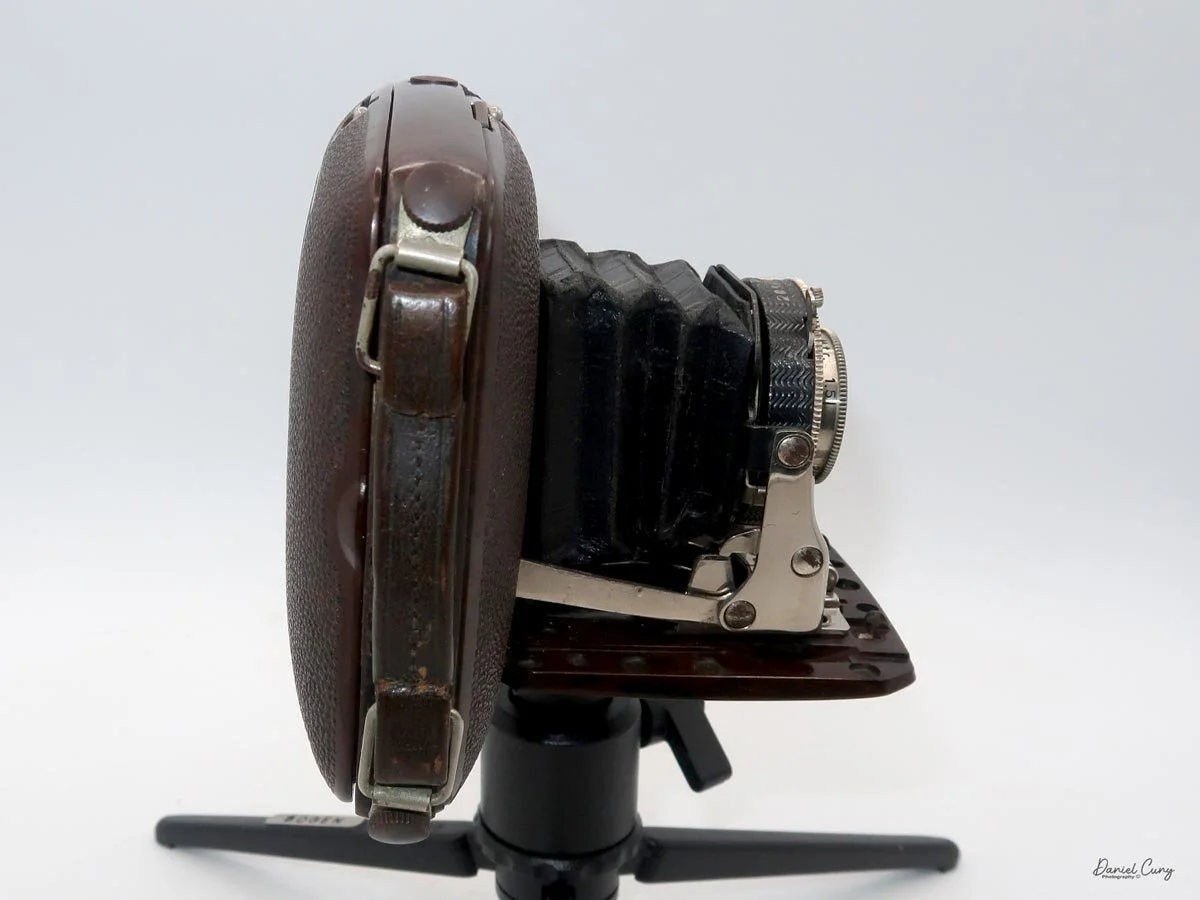
 Looking at the side of the camera, there are a couple of studs and other areas where a strap might fit, but without a manual or a nomenclature for the items on the camera, I'm unsure what they are used for.

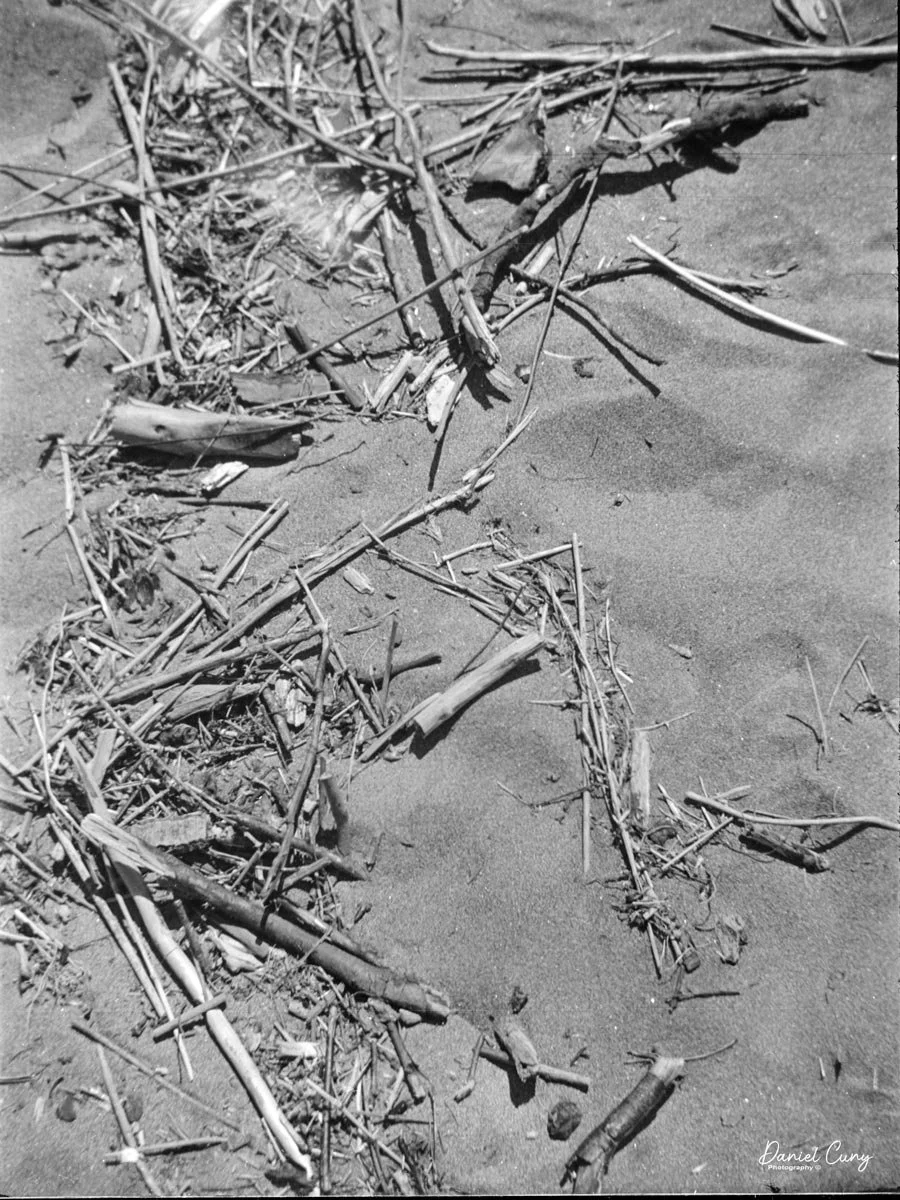
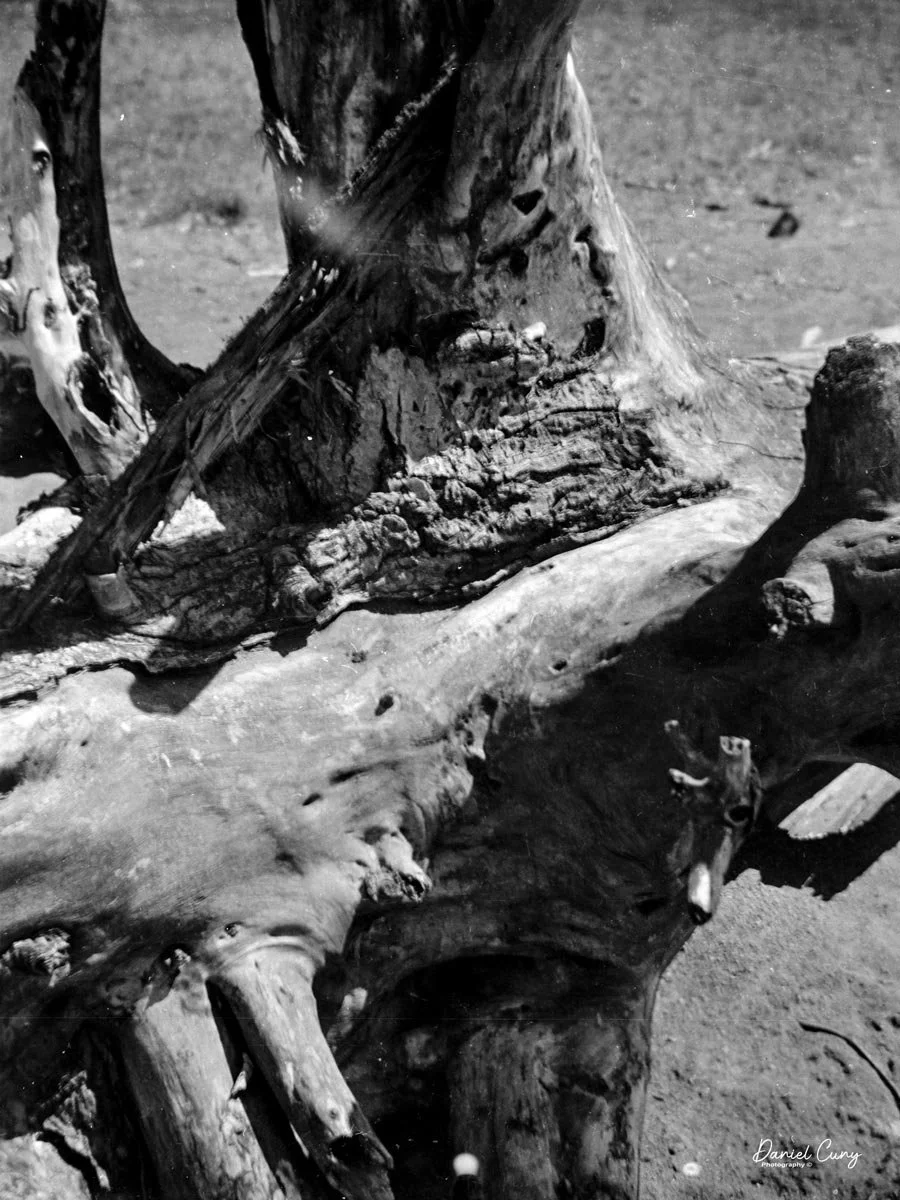
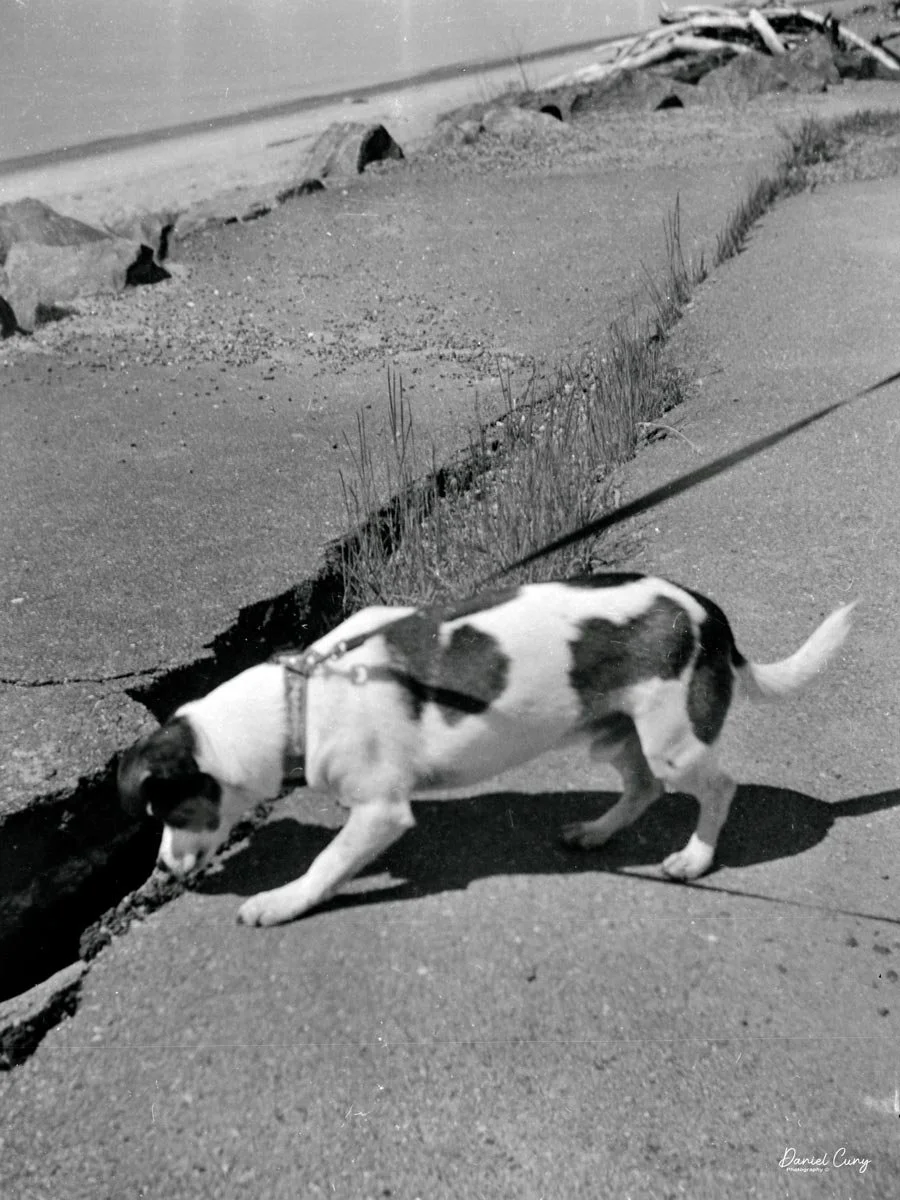
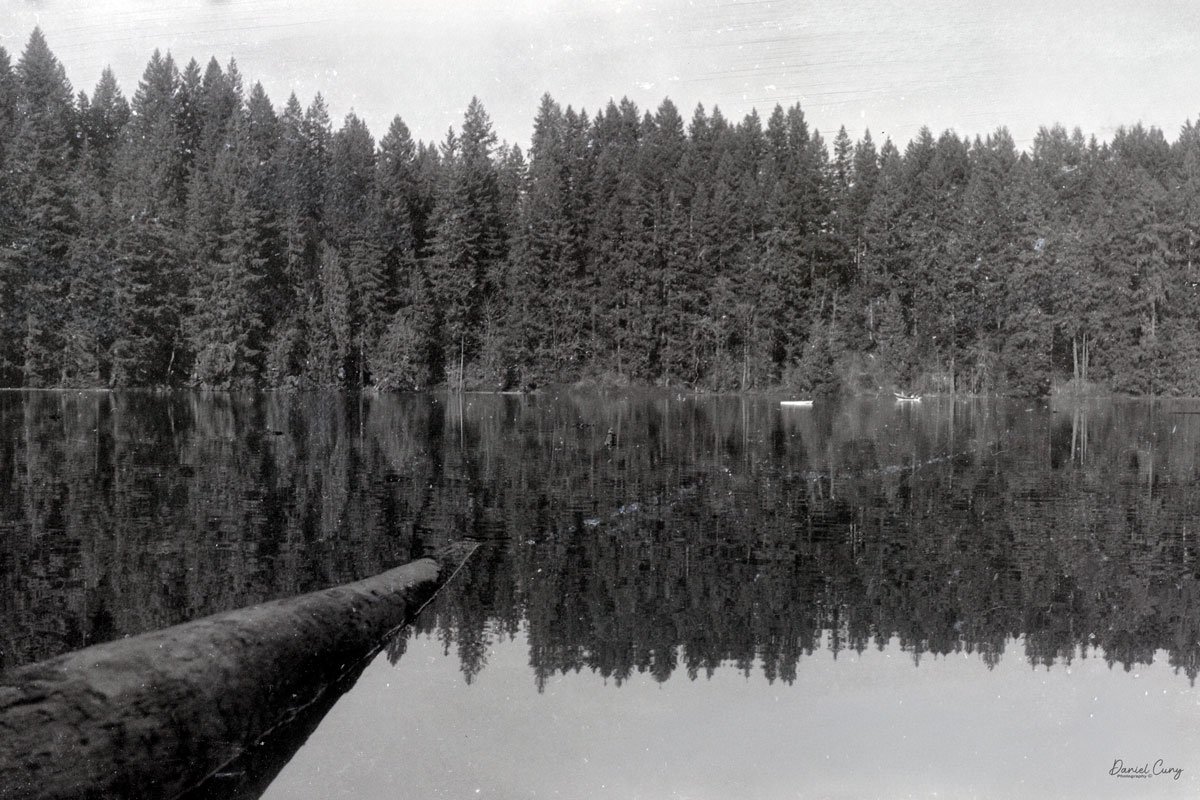
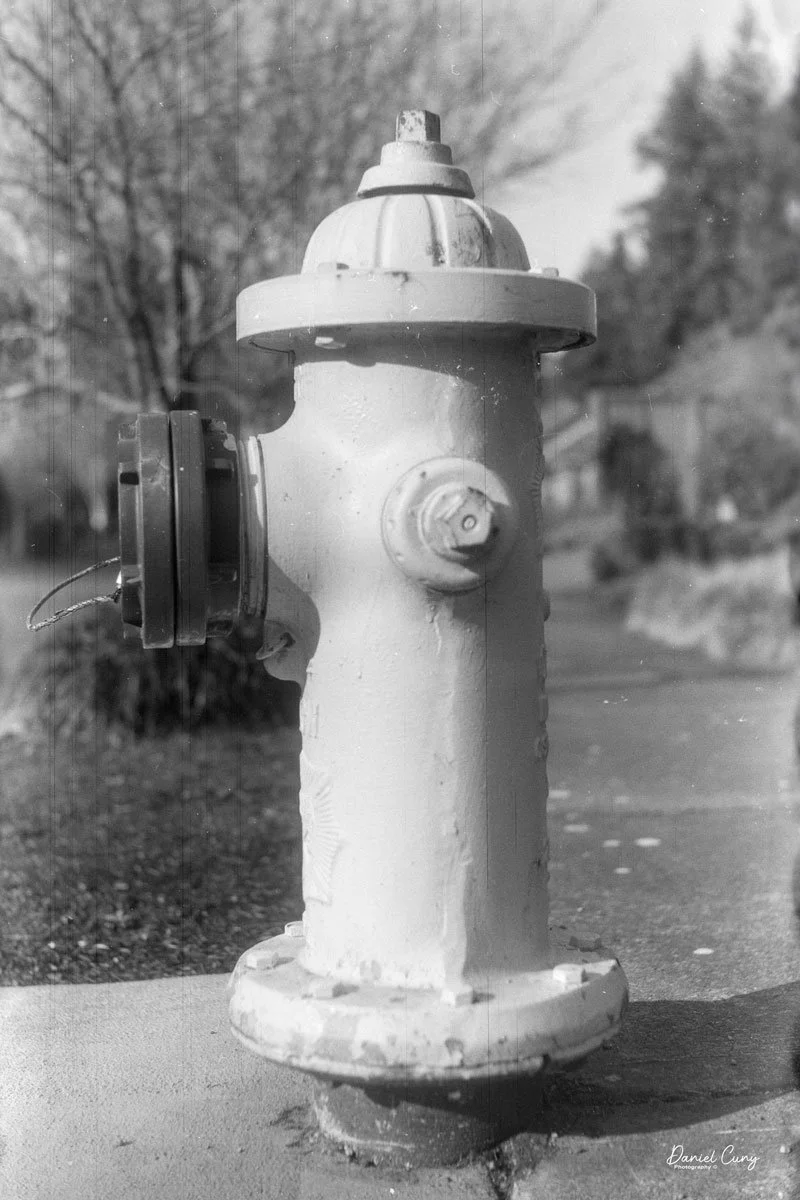
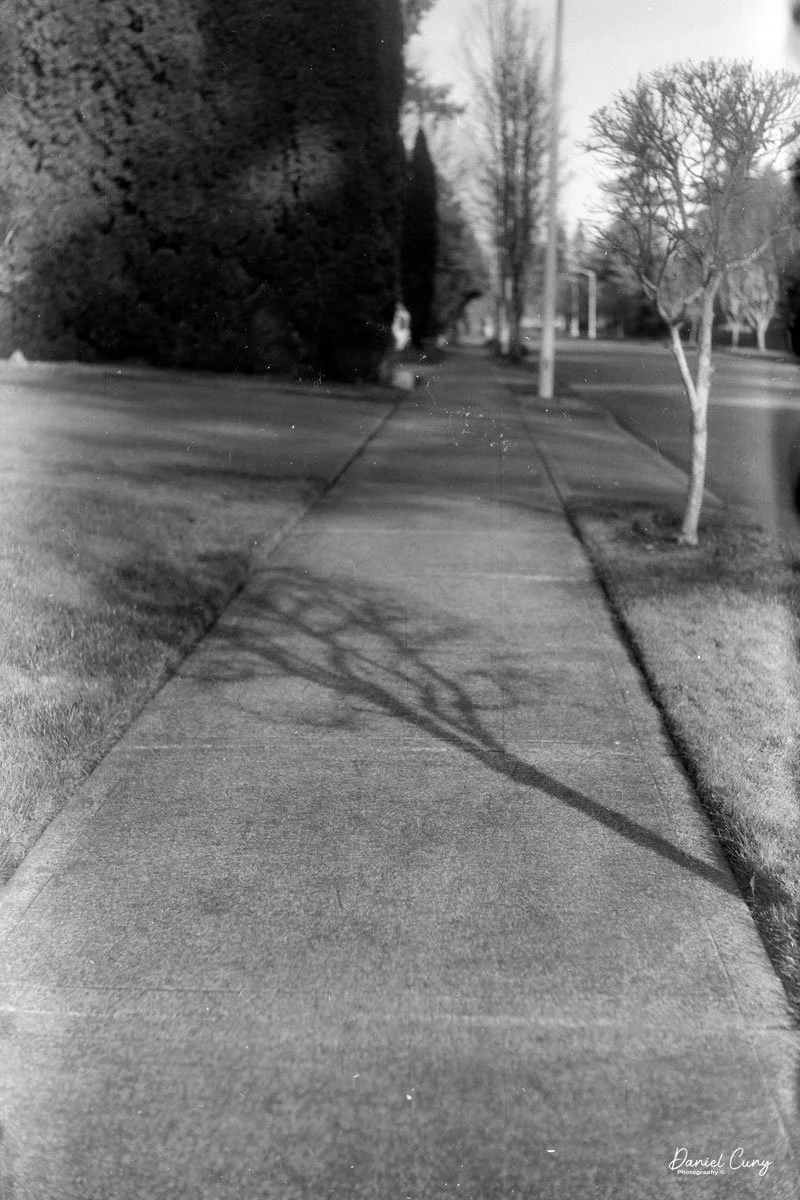
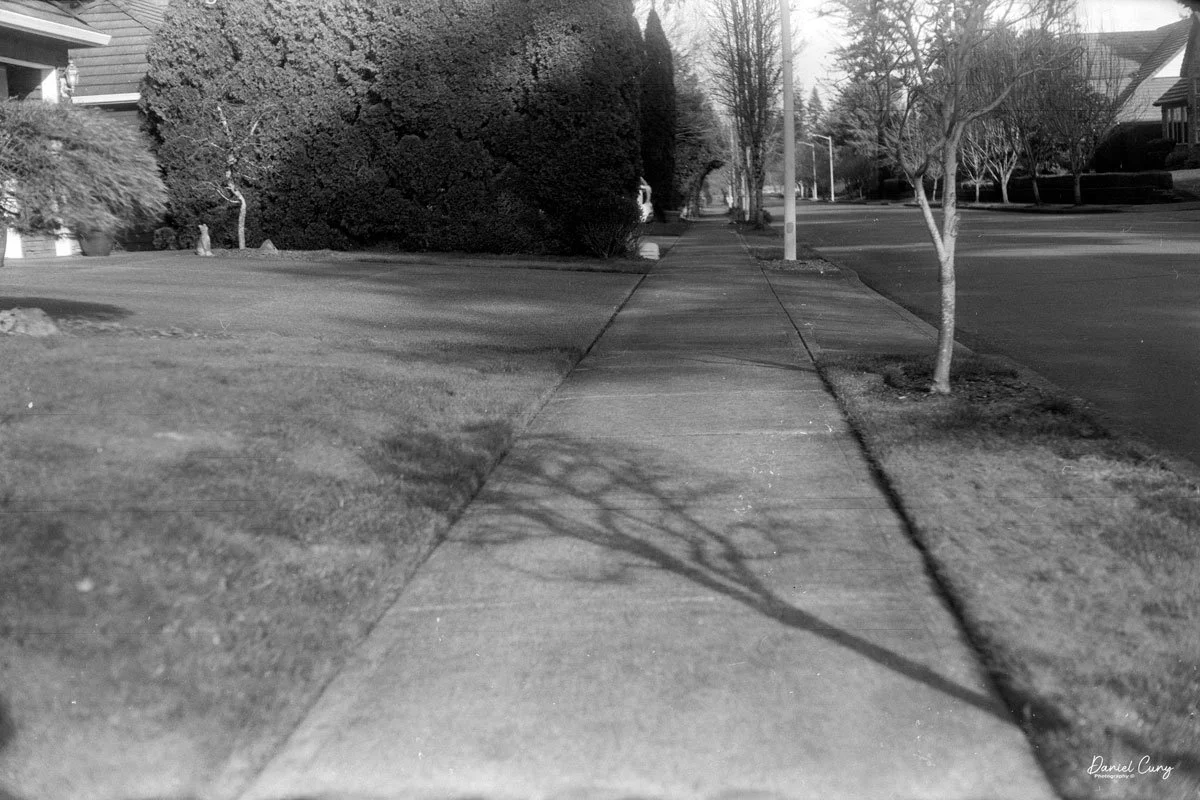
 I took the Welta Superfekta out a couple of times to shoot with: once to a local lake and another time while walking around the neighborhood to get closer-up images.

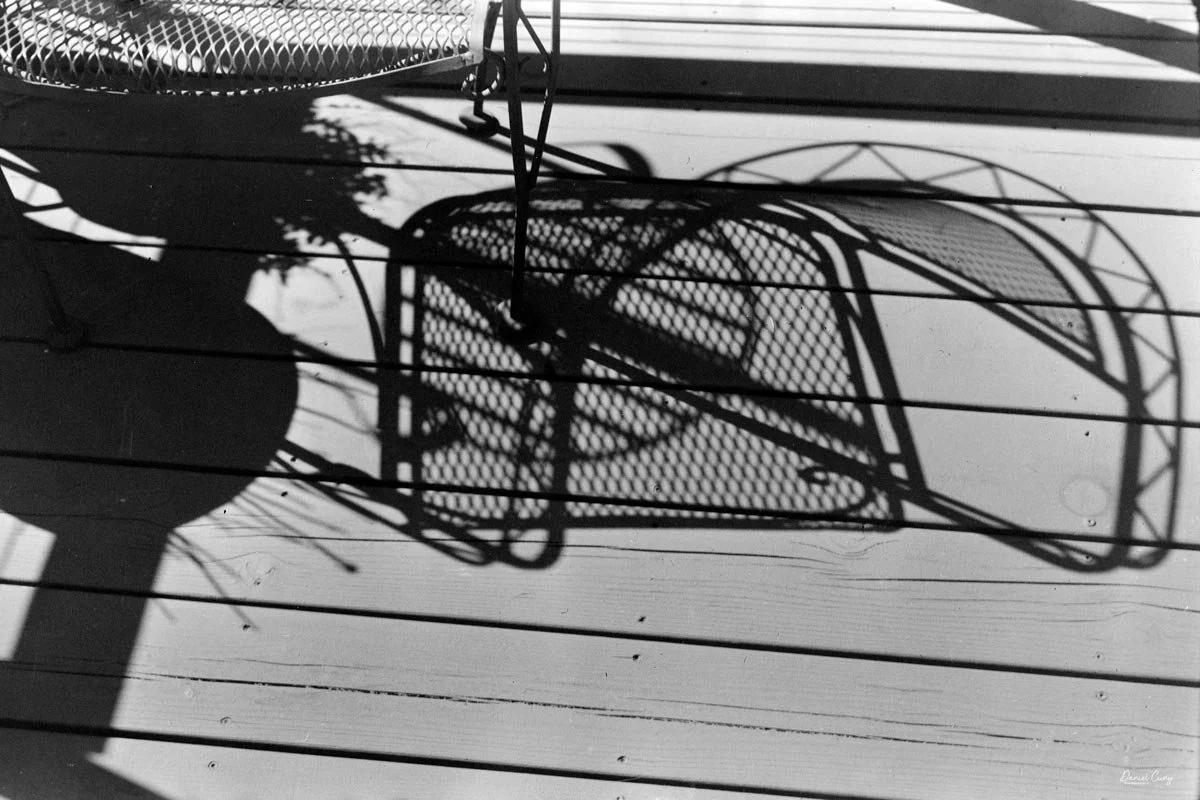
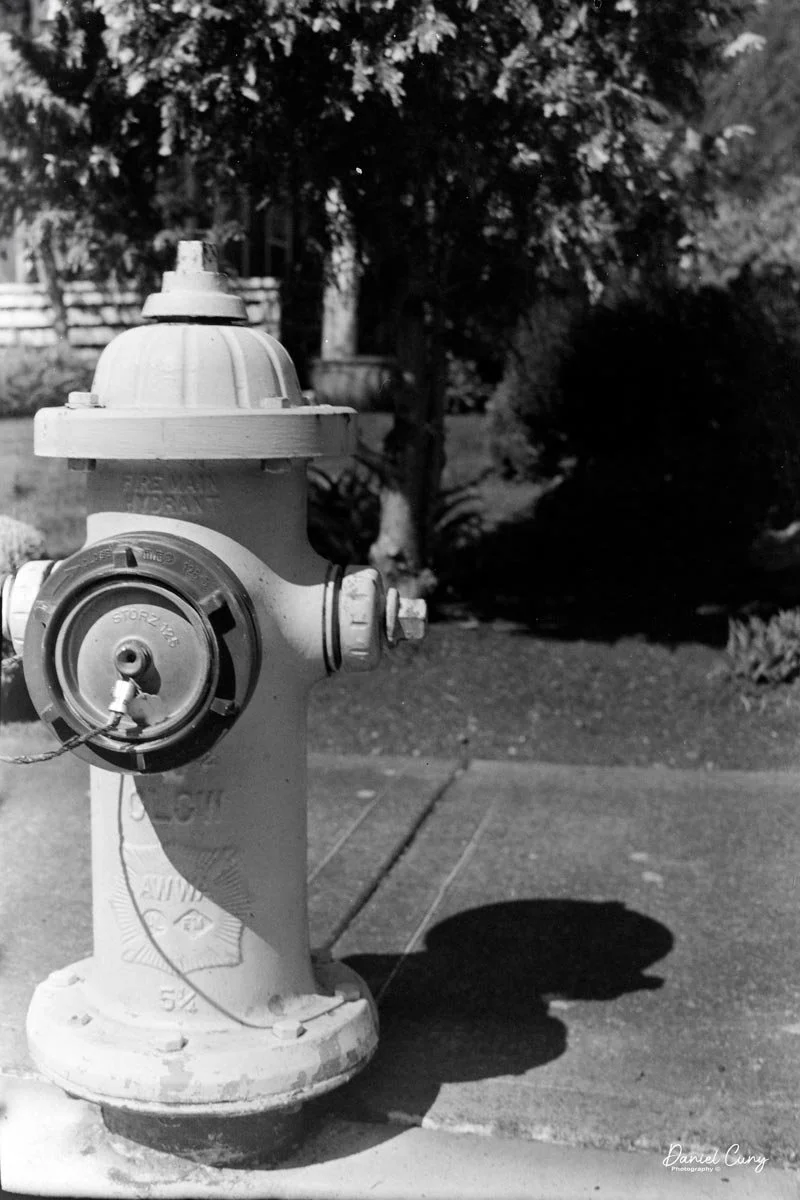
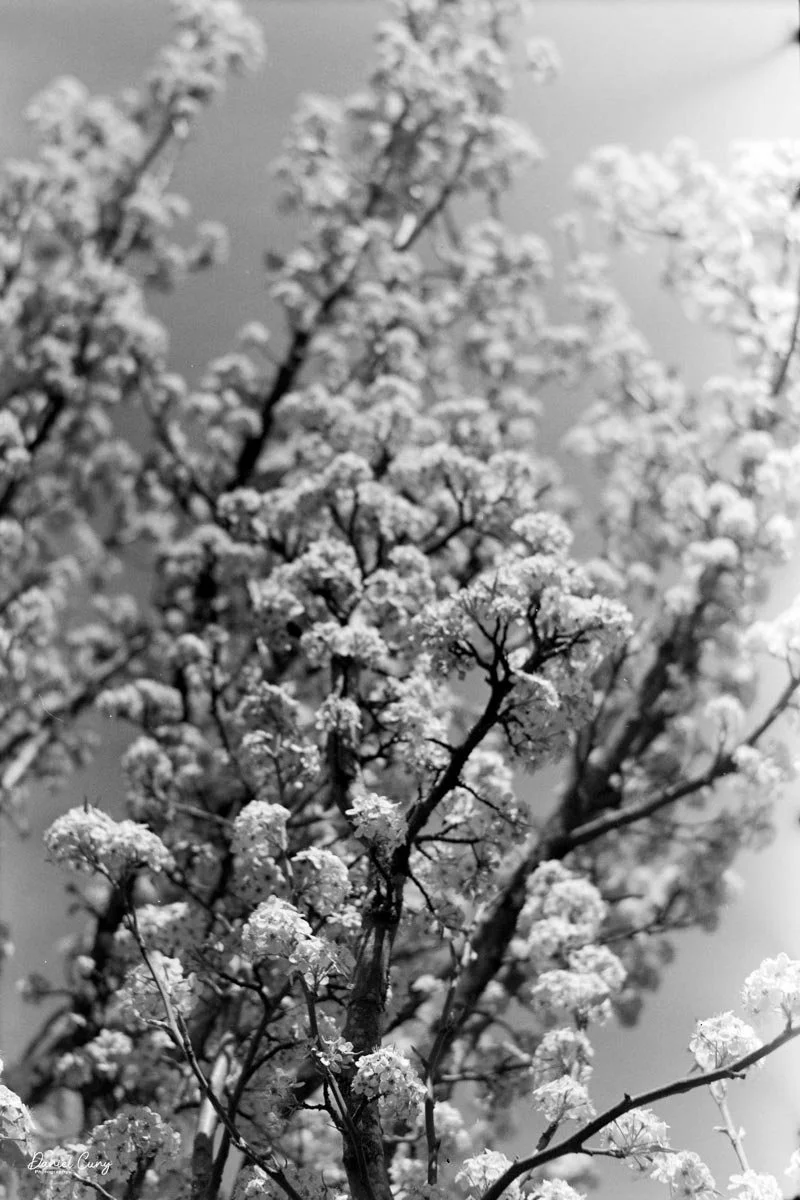
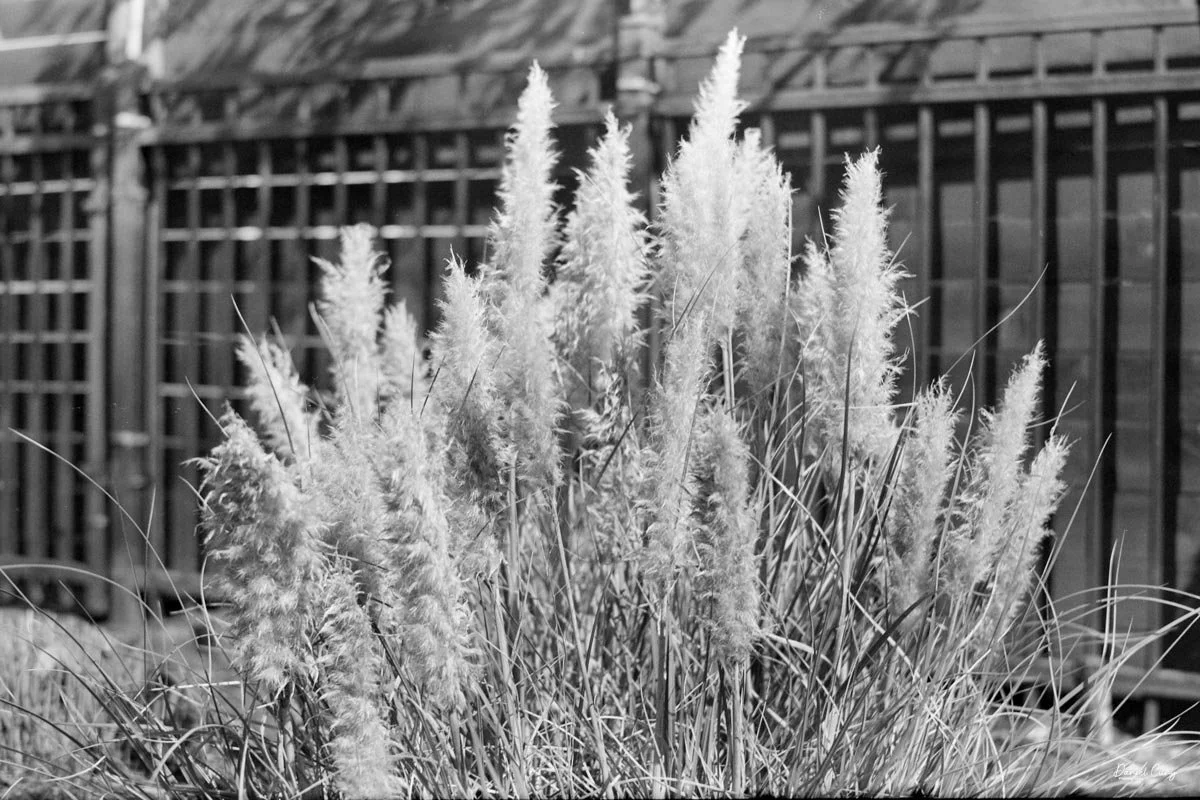
 Here are the results from my two times using the camera.

Conclusion:

 The camera's results underwhelmed me, as one of two things is happening. First, I didn't think the images would be as sharp as I had imagined; that may be because something happened to the camera, like a drop or impact, which is also why the camera doesn't flip all the way horizontally when shooting. 

 My weakening eyesight may also cause it, but because of eye surgery I had last year on my right and dominant eye, I'm becoming more and more dependent on using my left eye for focusing, which is difficult for me at times. Personally, I feel it's more the first issue: something tweaked the camera body, and the lens doesn't align properly, which is why I wanted to shoot the second, more close-up images walking through the neighborhood.

 Nonetheless, it's somewhat awkward to hold without a neck strap to keep it steady. Still, I absolutely love the camera's ability to rotate the film back for both vertical and horizontal photography. It's a wonderful camera to have in my collection, and for the price paid, even with the servicing, it's still a bargain.

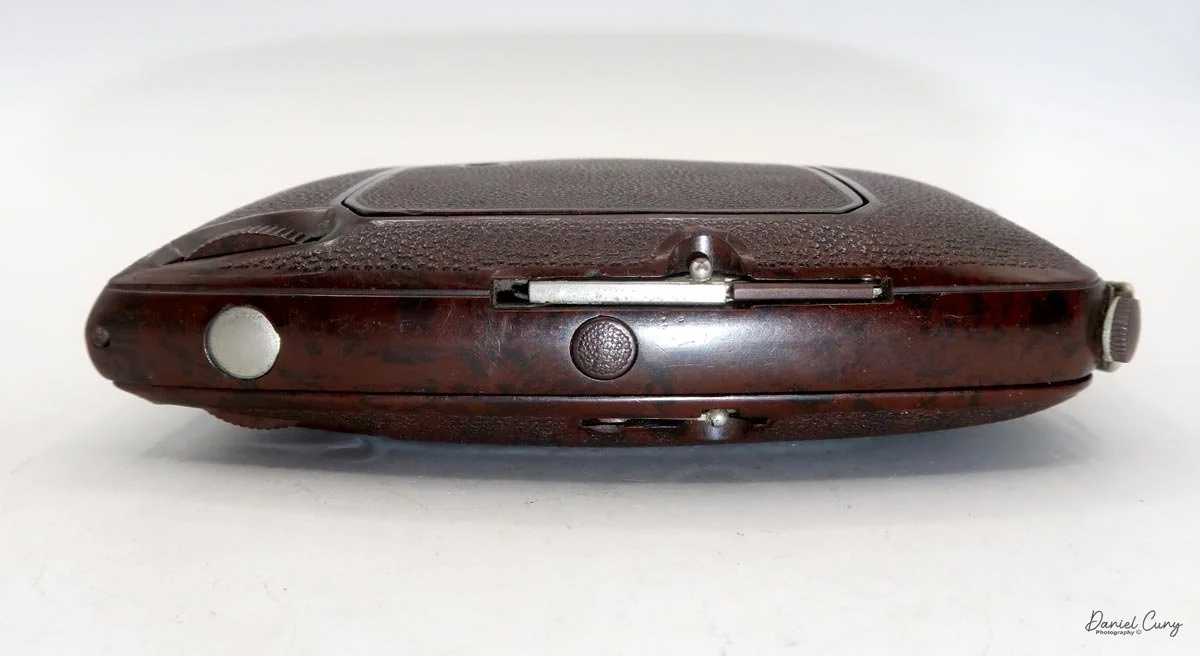
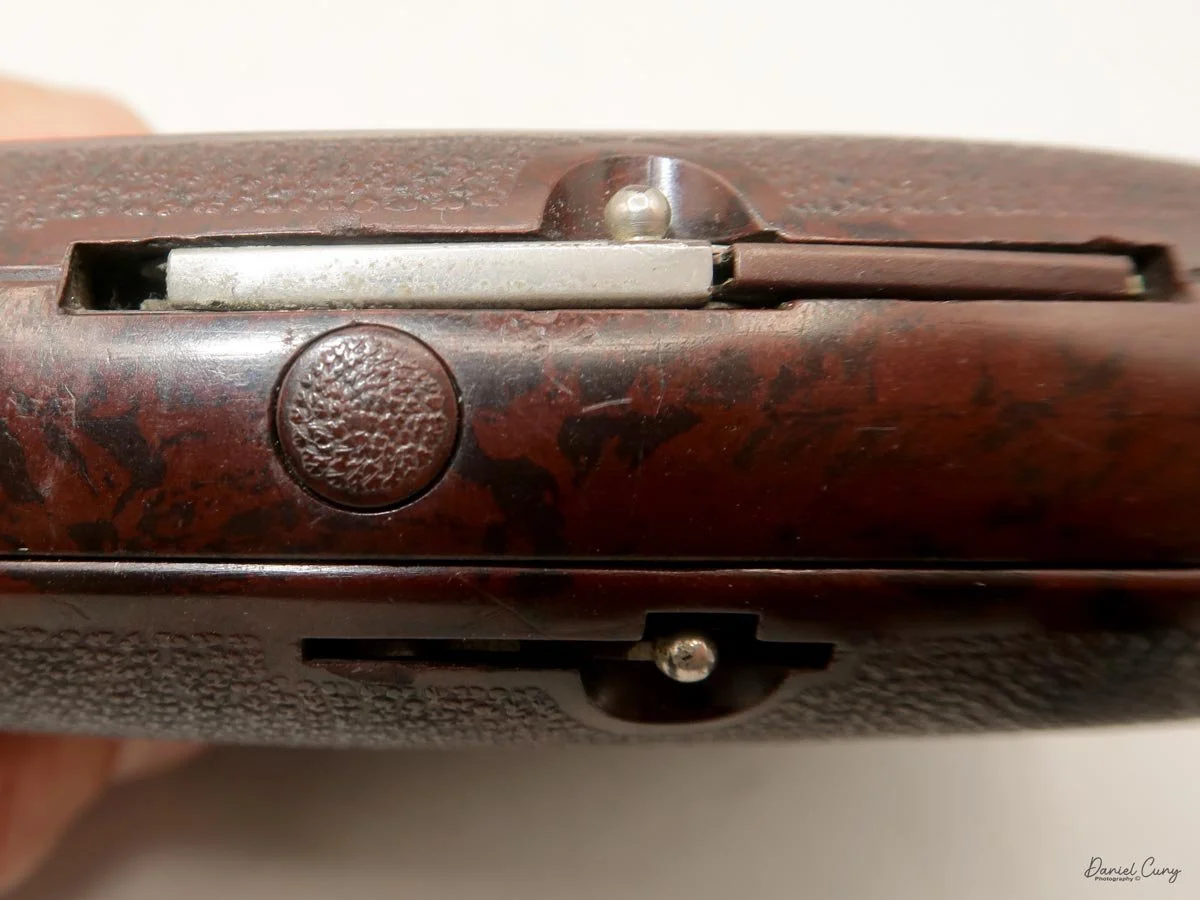
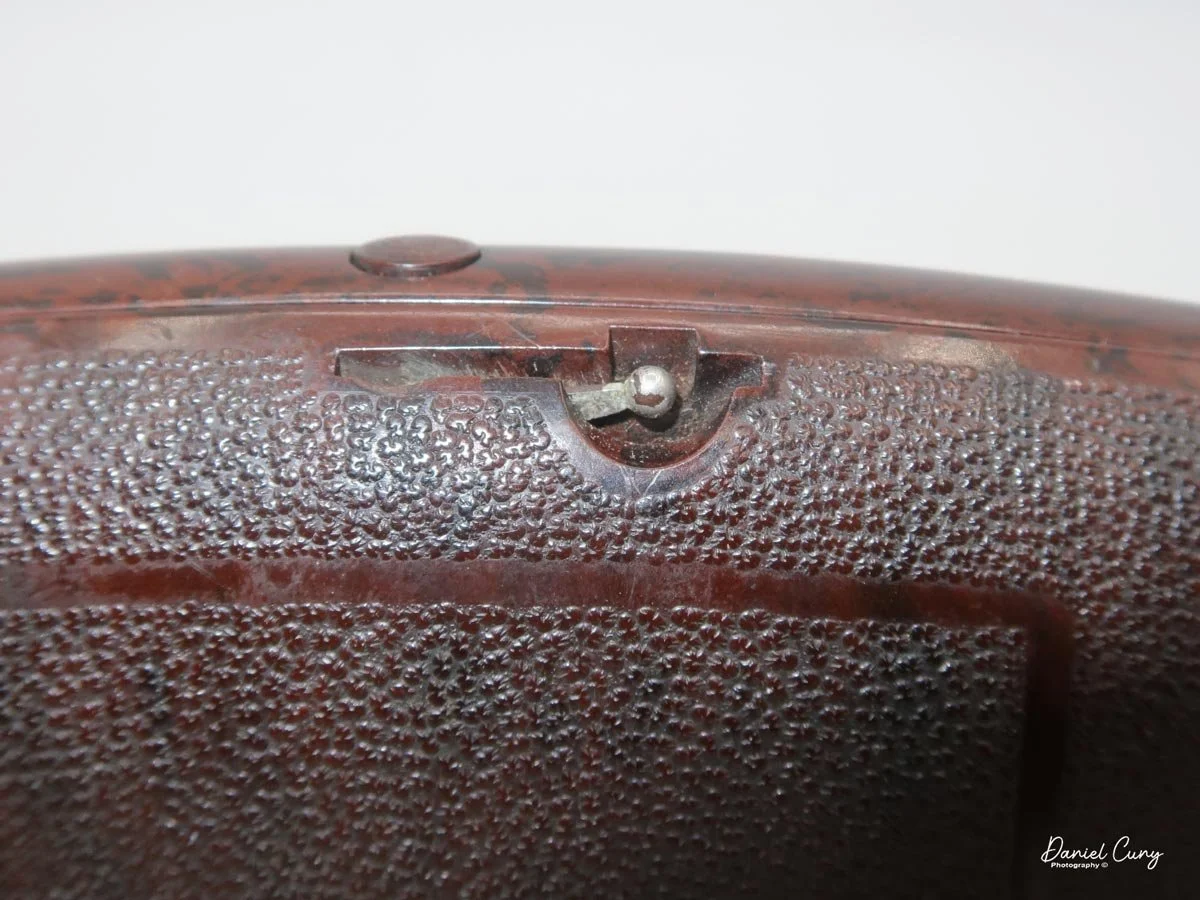
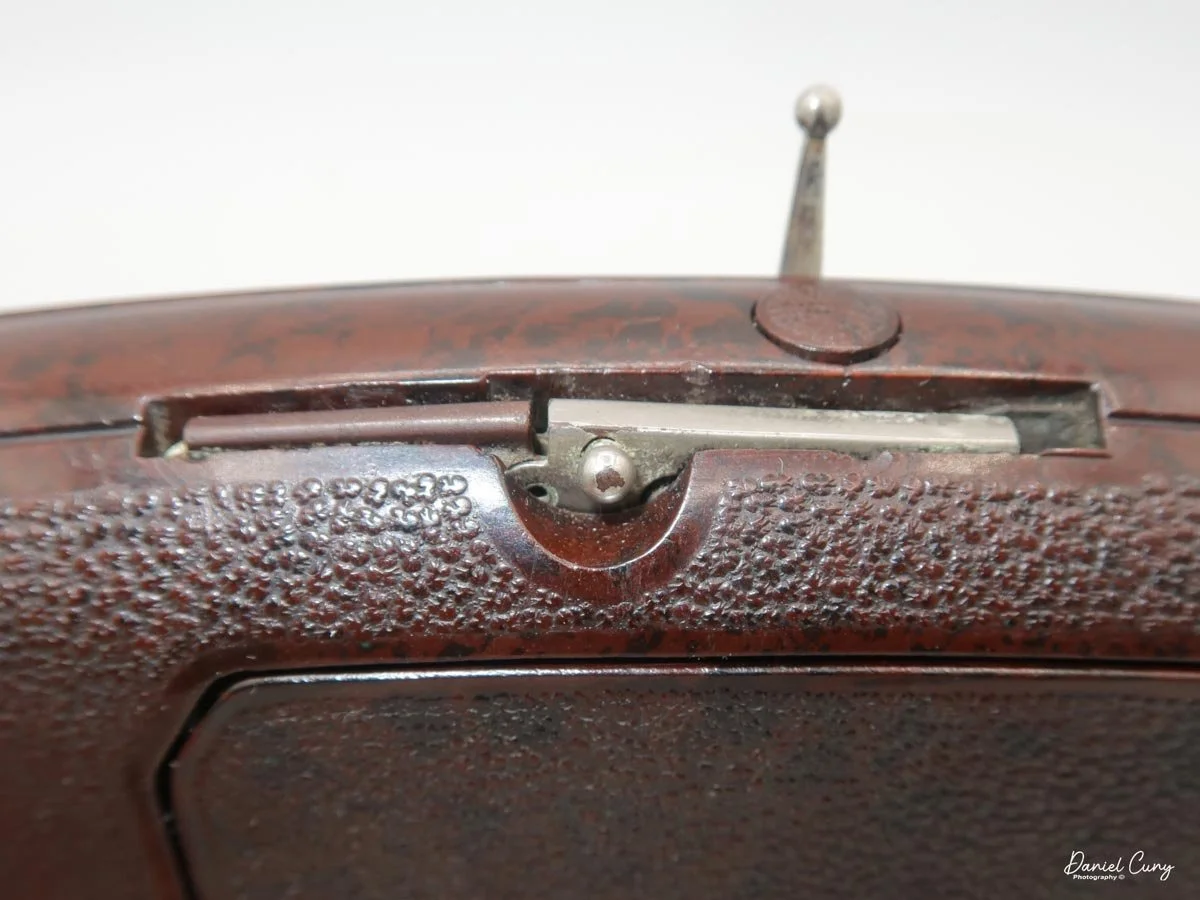
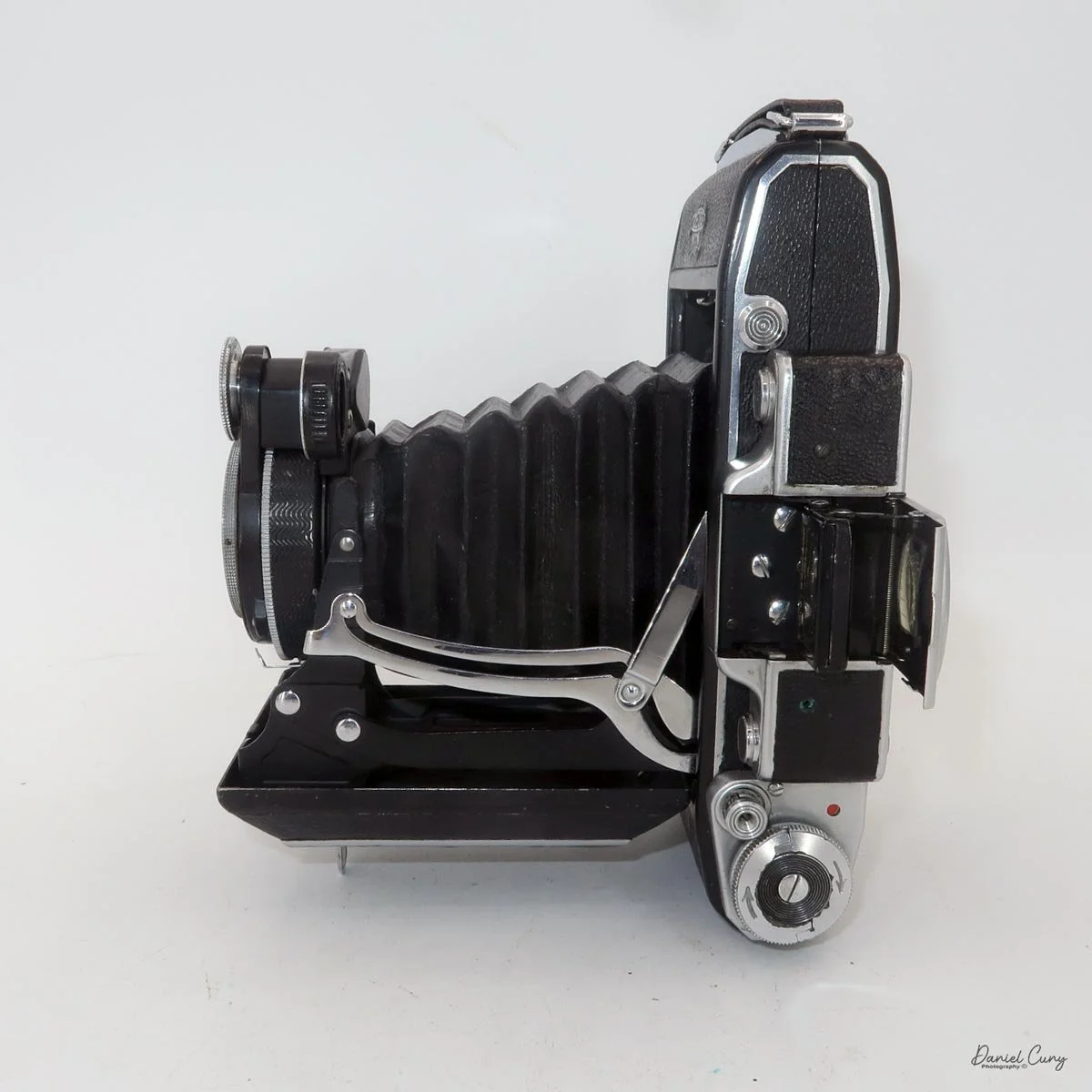
Welta Perfekta and Superfakta side views

 Thank you for taking the time to learn about this wonderful photographic marvel from almost 100 years ago.

 Here's a link to my other Camera Reviews.

 Cuny's Cameras and Photo is my online eBay store, which sells some of the cameras reviewed, along with many camera and photo accessories.

 Until next week, please be safe.
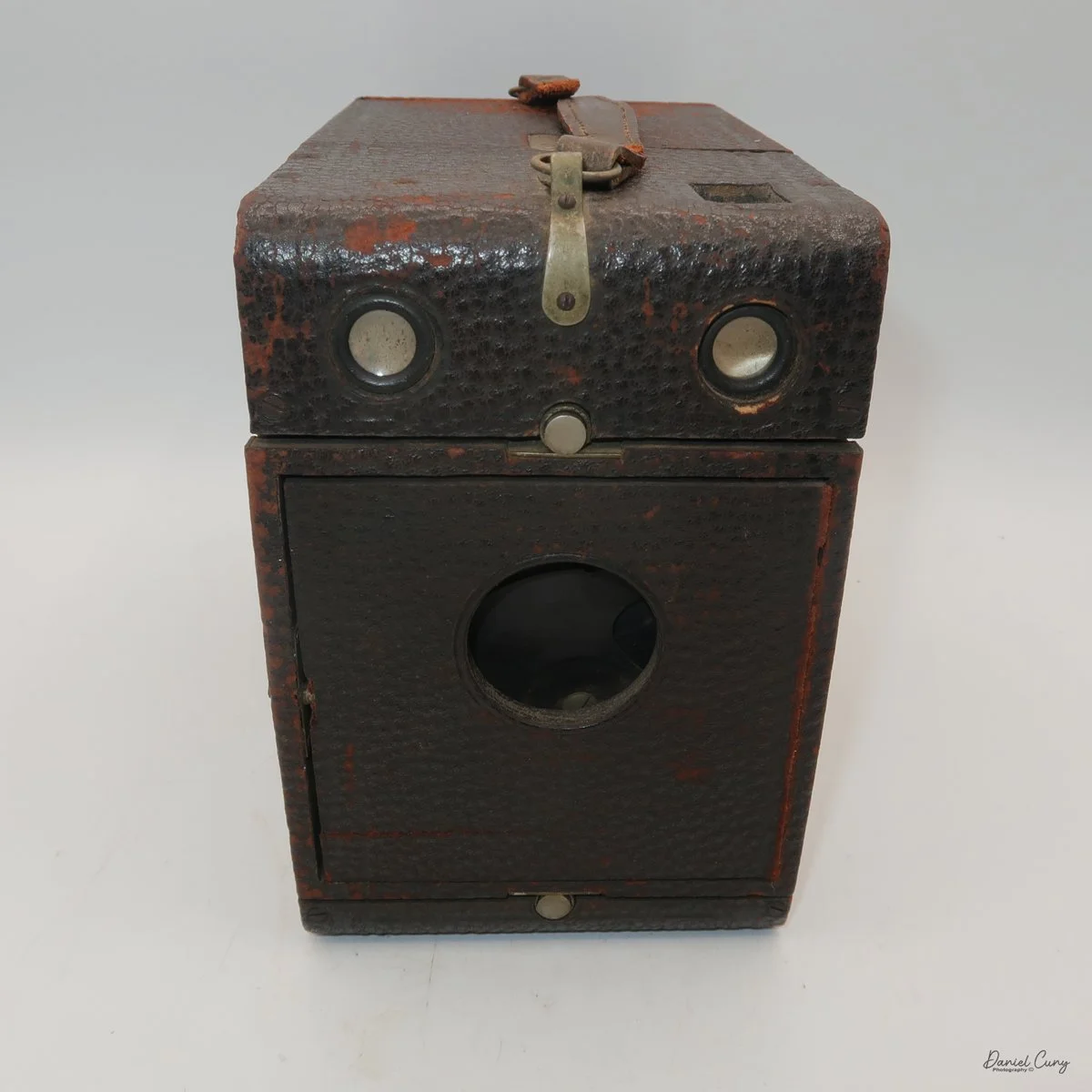
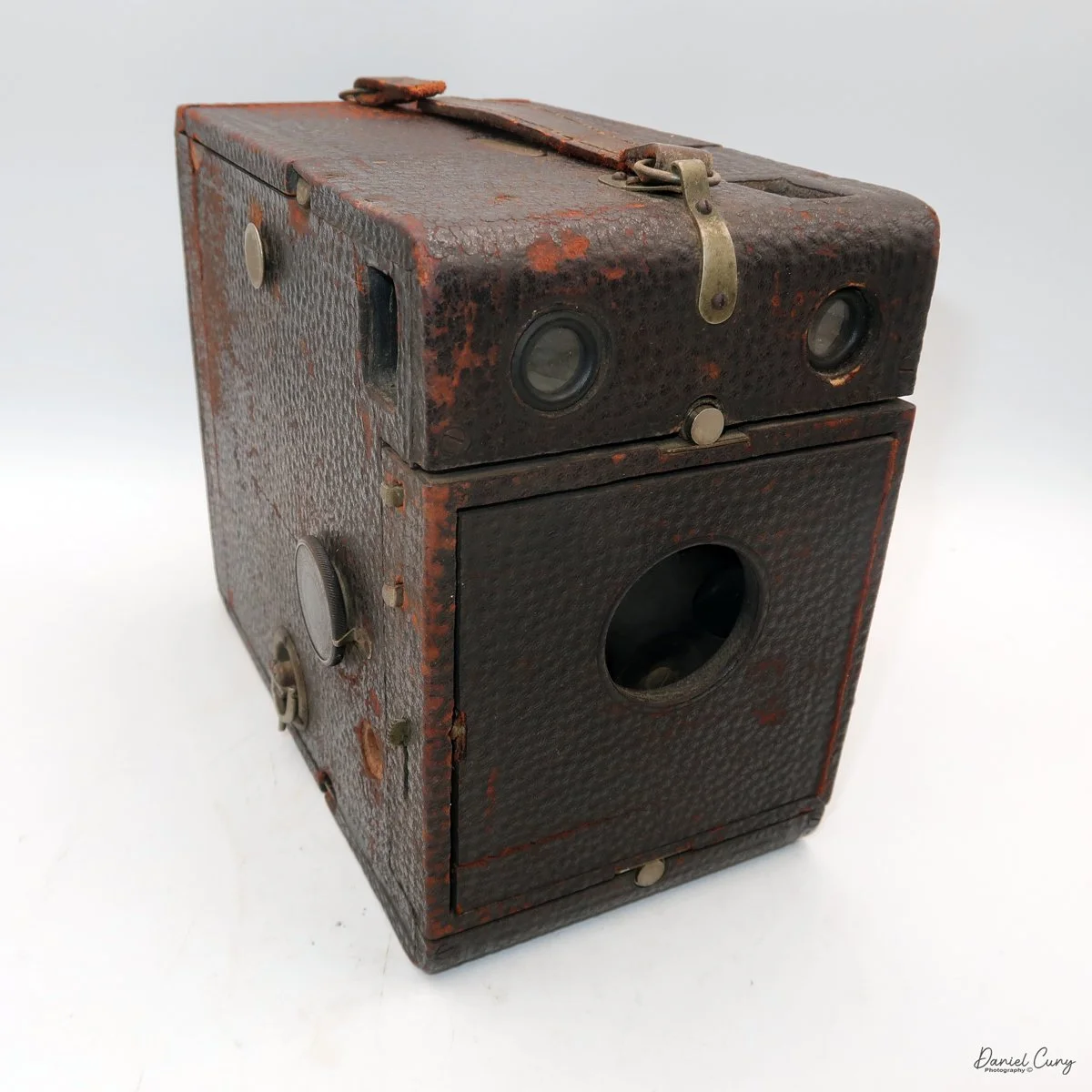
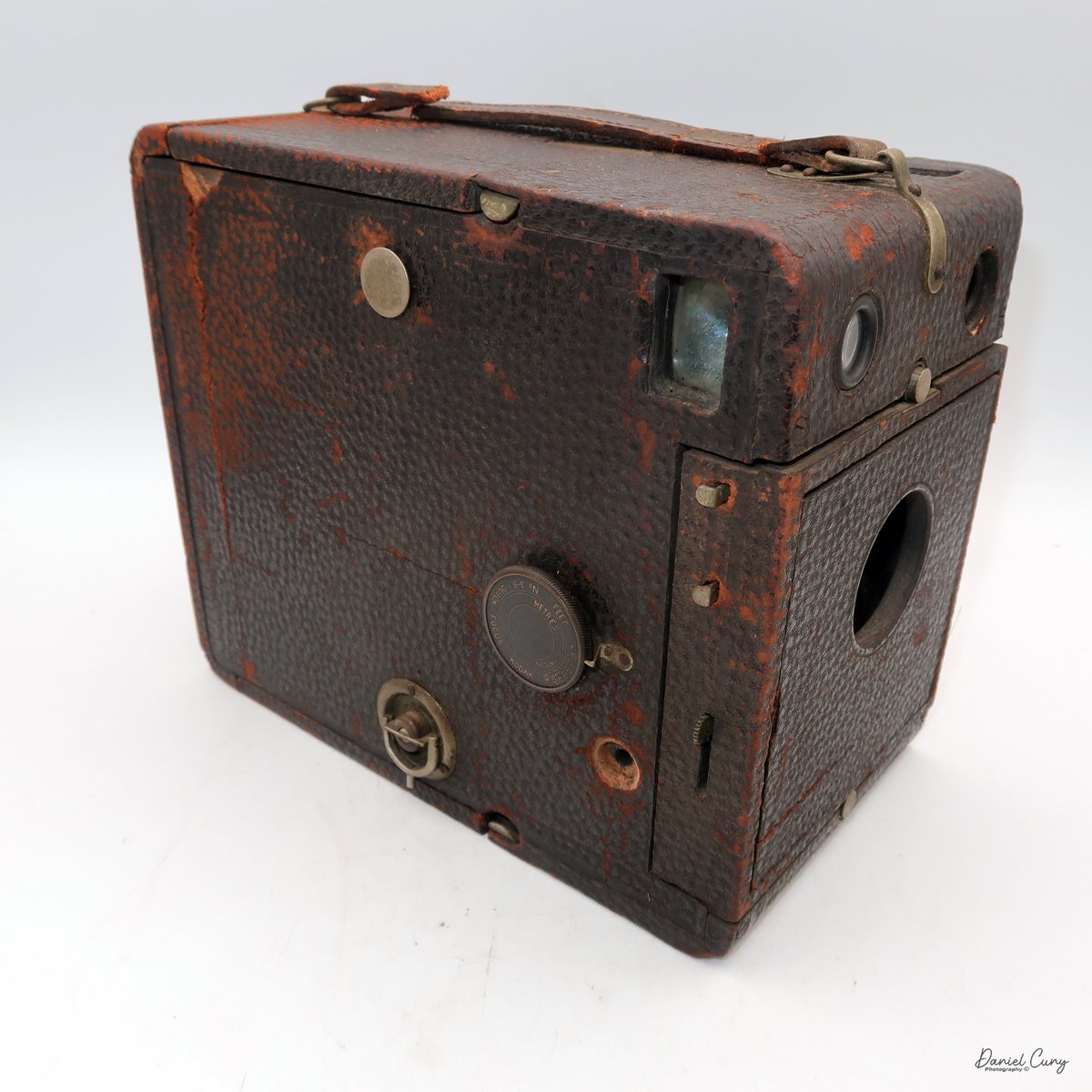
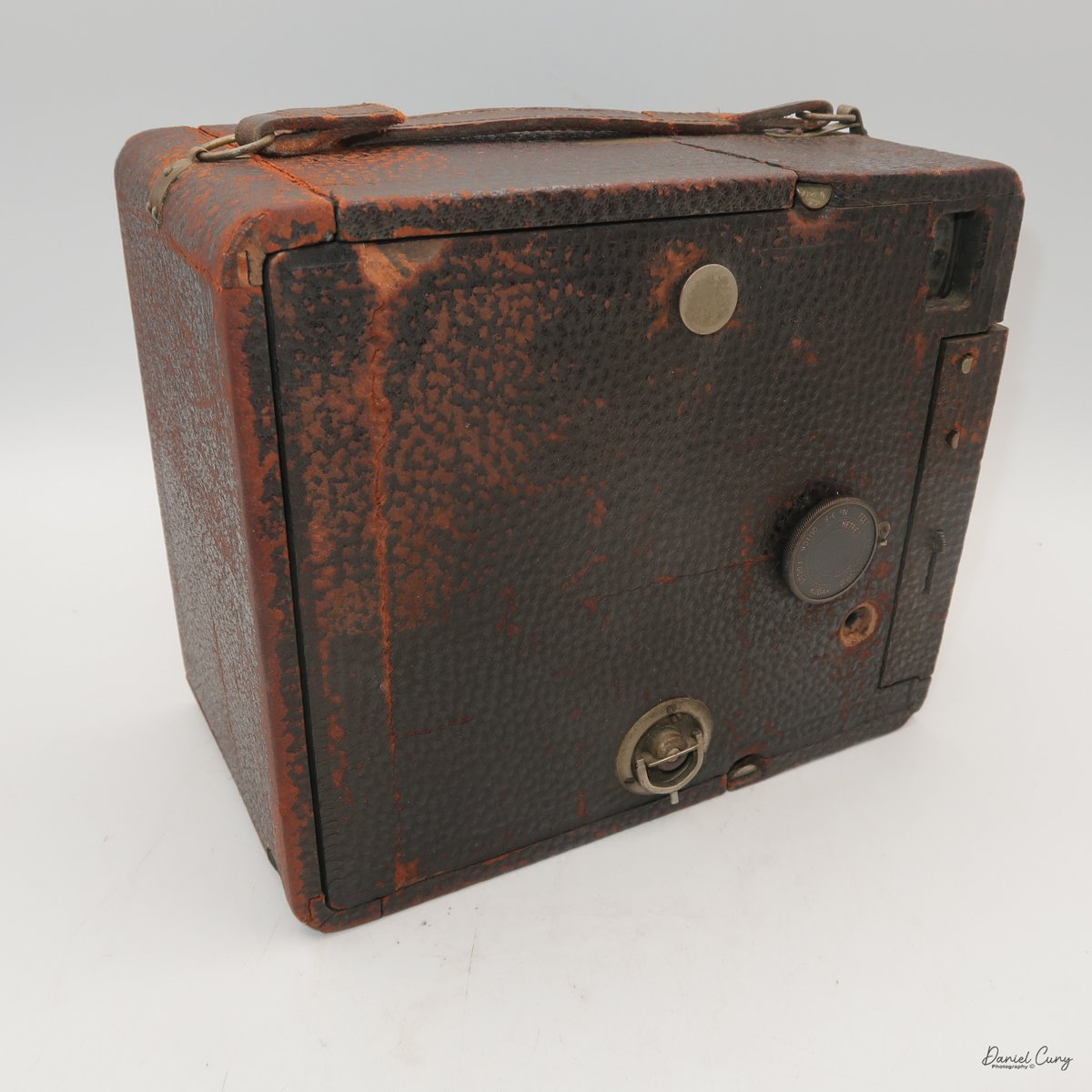
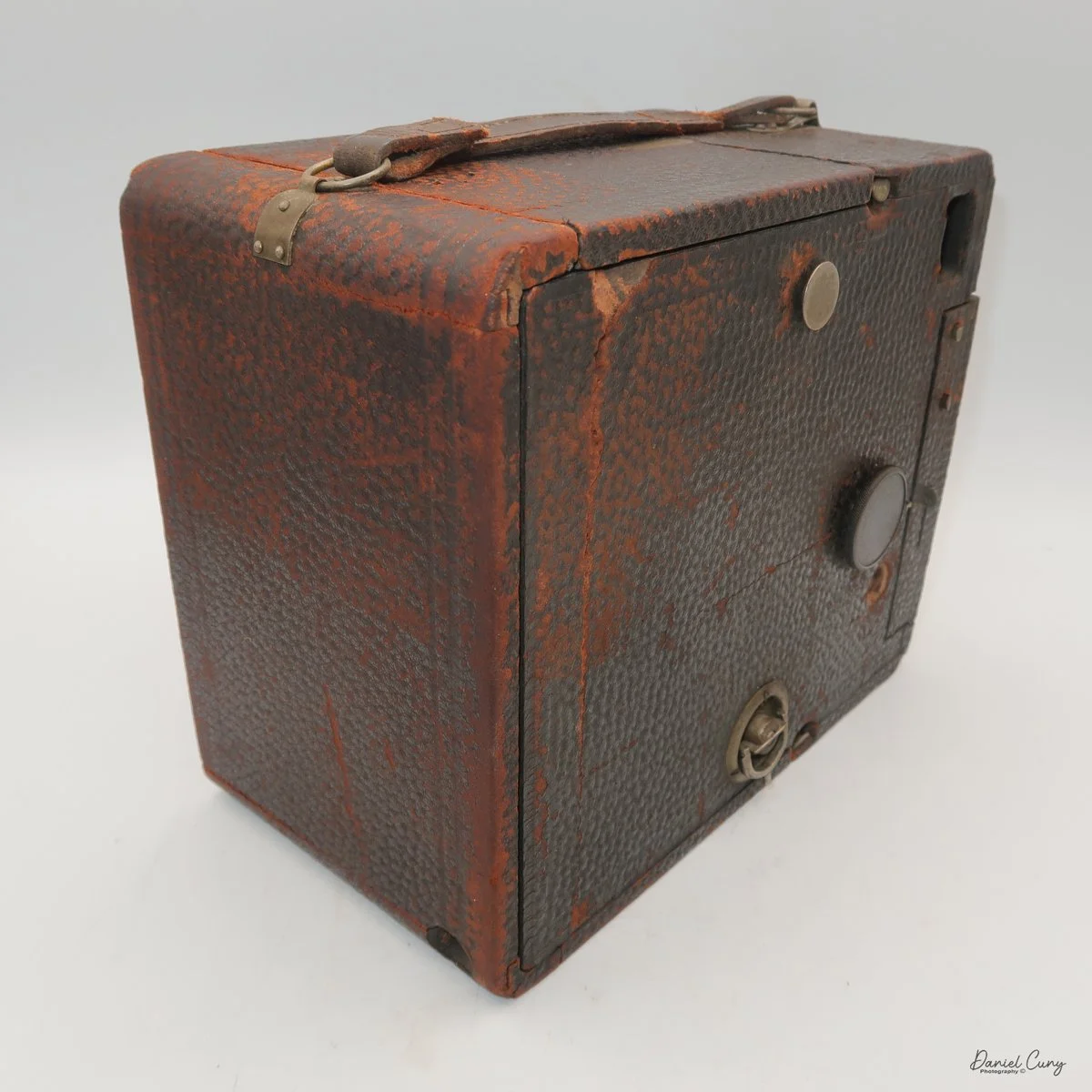
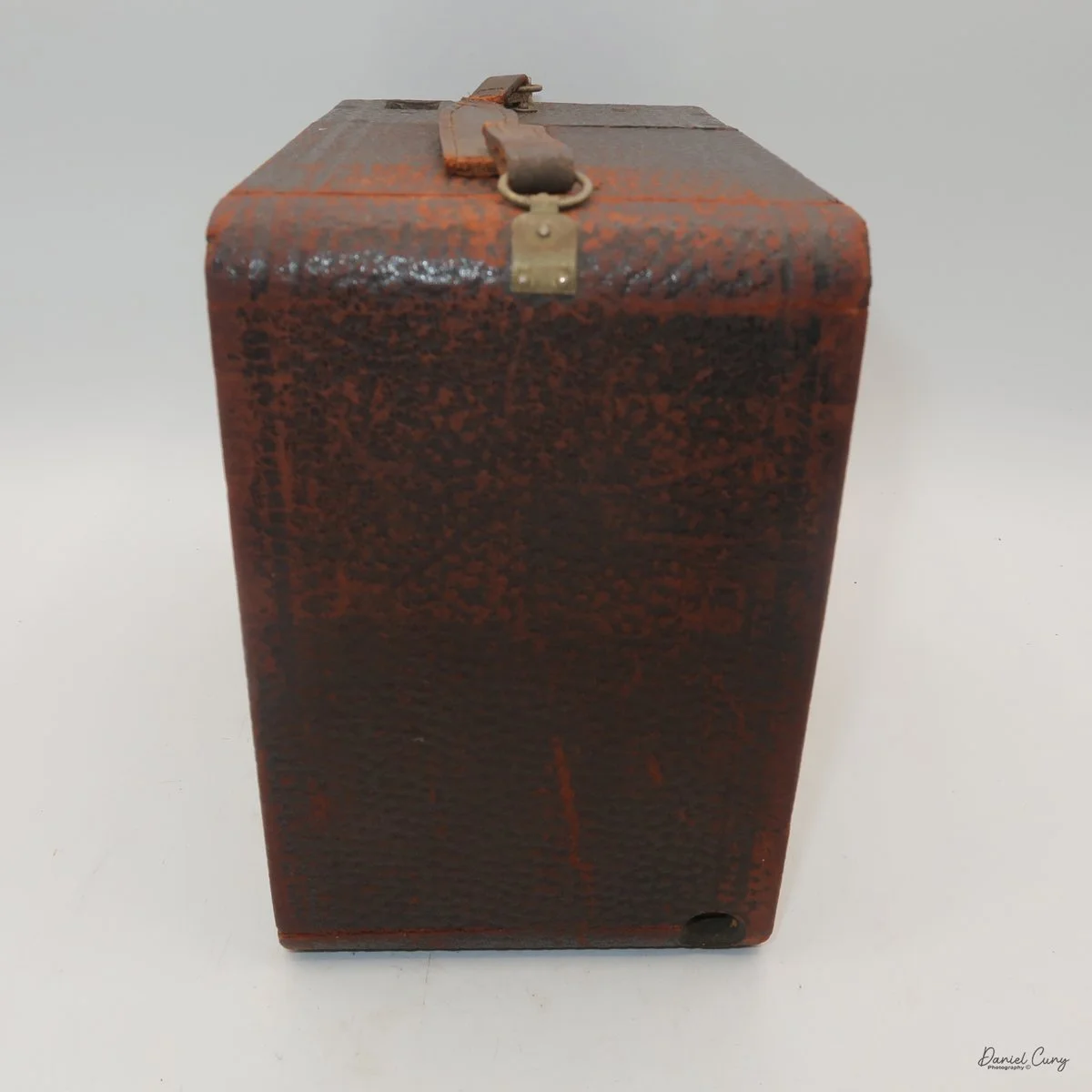
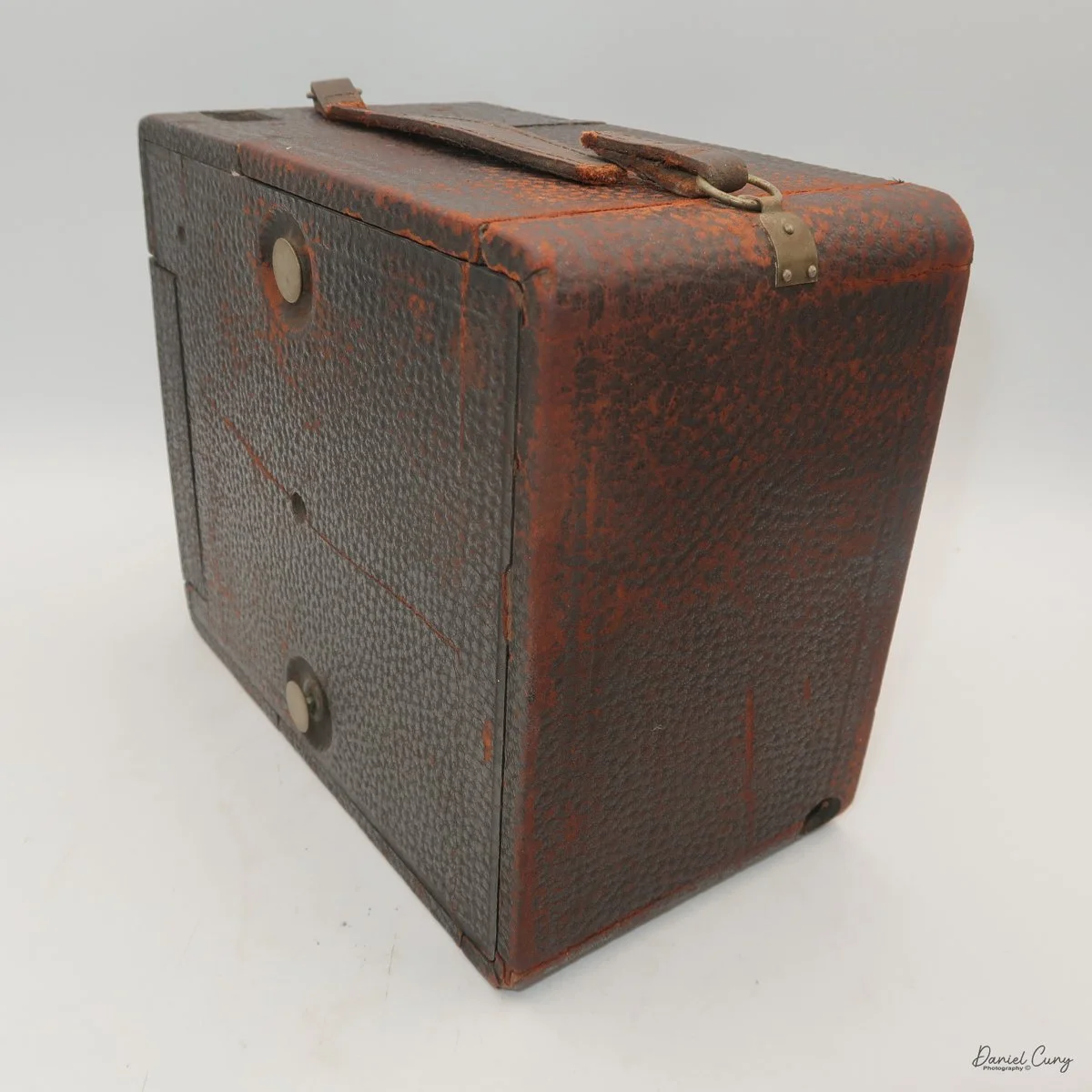
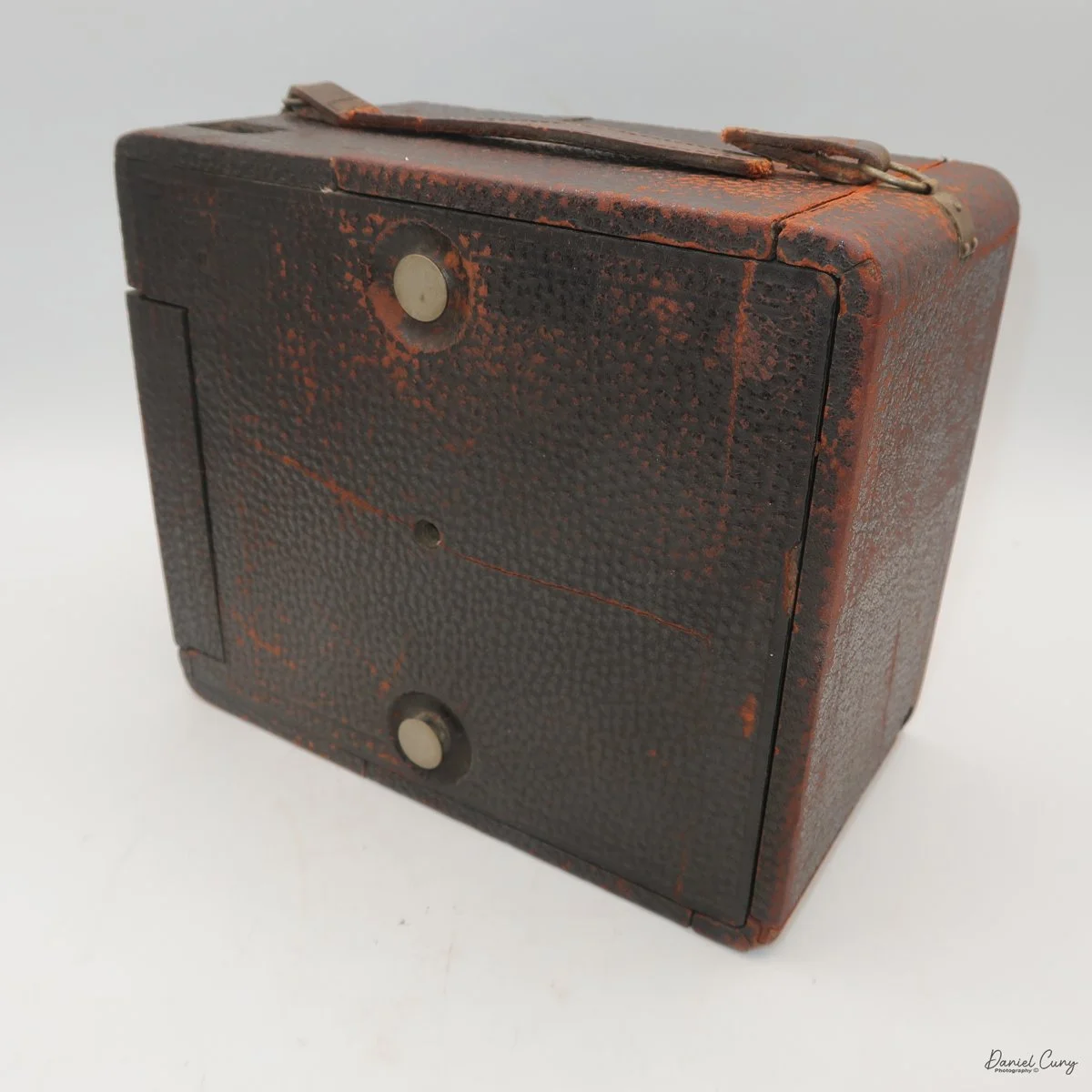
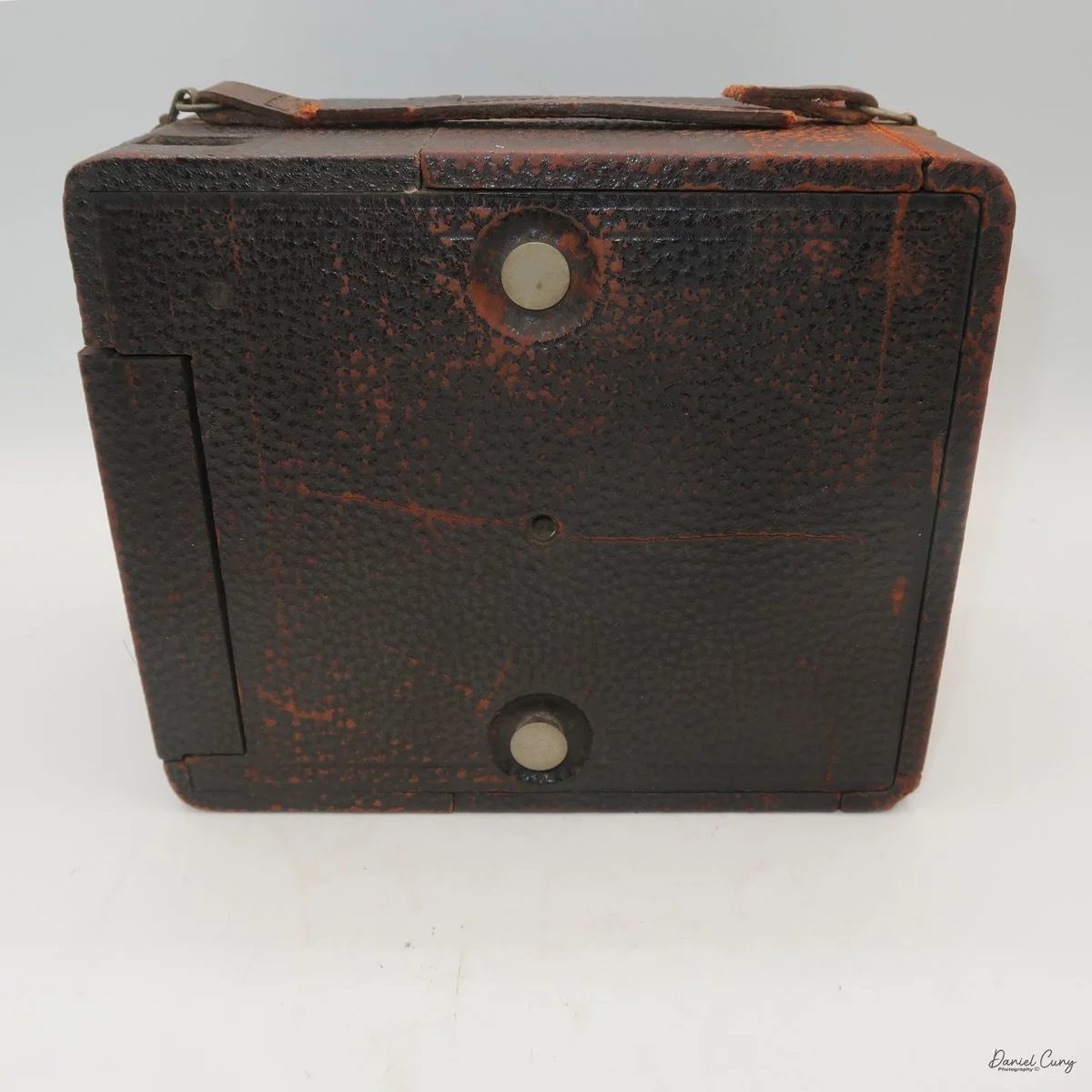
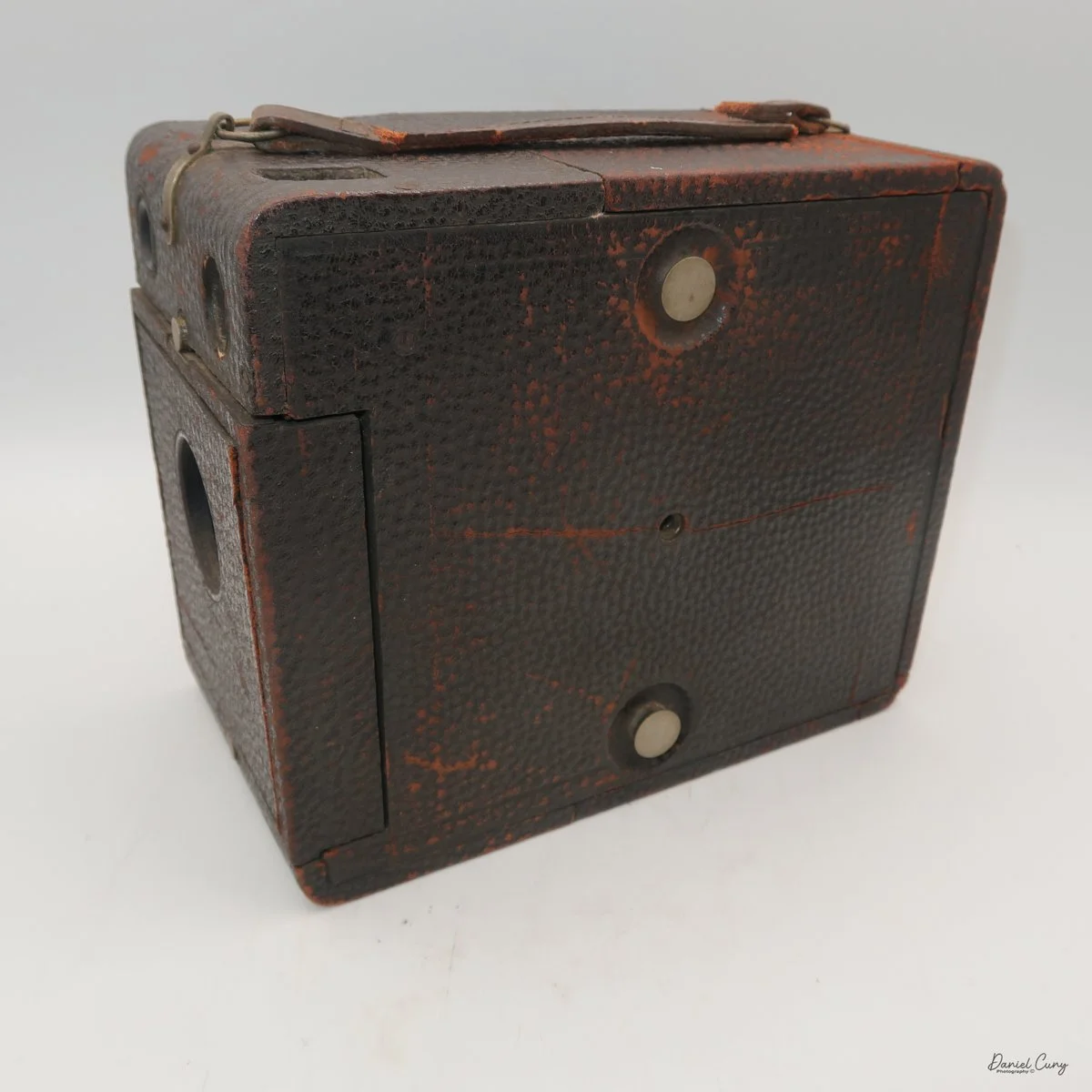
No. 3B Quick Focus Kodak

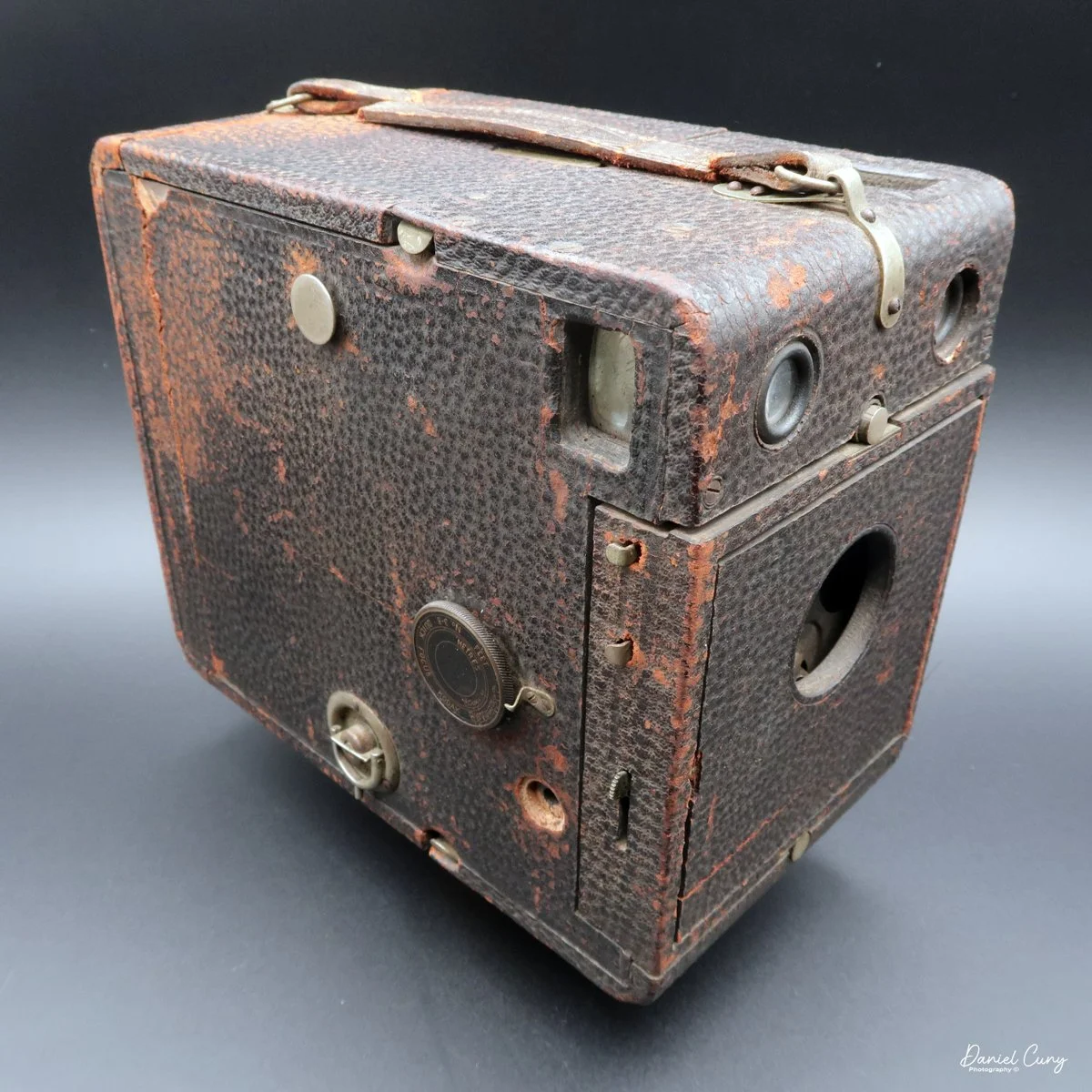
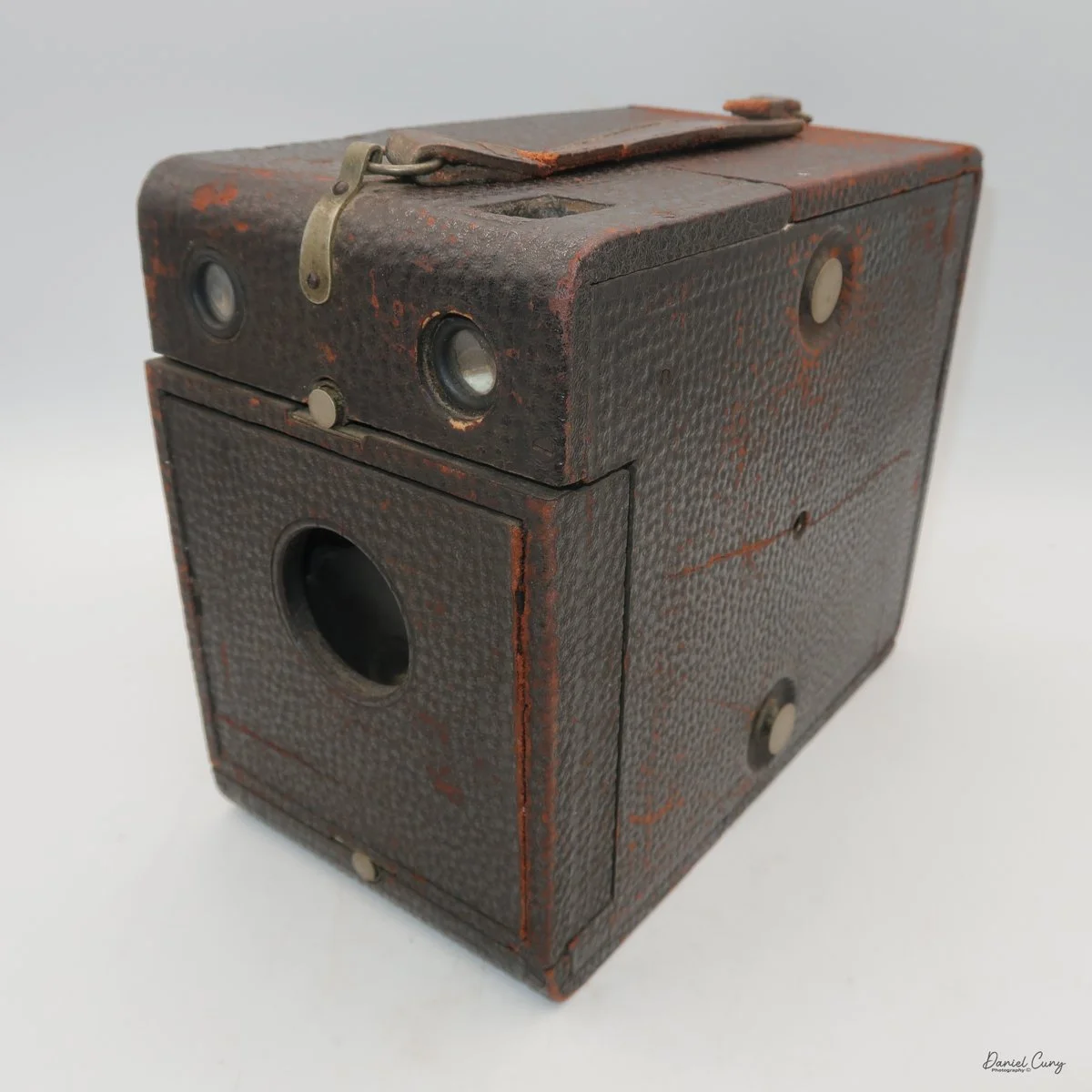
My No. 3B Quick Focus Kodak camera

As I've mentioned in several of my posts, I've always been drawn to the odd, unusual, colored, or panoramic cameras, so when I had the opportunity to purchase a No. 3B Quick Focus Kodak many years ago, I jumped at the chance. 

 I found this camera while visiting an antique store during a business trip to Philadelphia. During my sales calls, if I had some spare time between appointments, I'd seek out antique malls and stores close to where I was and spend some time looking to see if there was anything interesting. On this particular day, as I was upstairs in the shop's attic, which was musty and smelled of stale air, I found the No. 3B Quick Focus Kodak.

 Not knowing much about the camera beyond seeing it in McKeown's Camera Price Guide, it appeared to be in decent condition. I started turning dials and pressing buttons to get a sense of the camera's condition. 

 It appeared to be pretty solid, but there were a few flaws, but when I looked at the price tag, which was only $25.00, I figured I give it a shot, so I brought it downstairs to talk to the shop owner, and asked if they'd offer a slight discount on the camera, and I offered them $20.00, which they took. The shop owner said the camera's been up in the attic for many years and was happy to give it a new home where it would be appreciated.

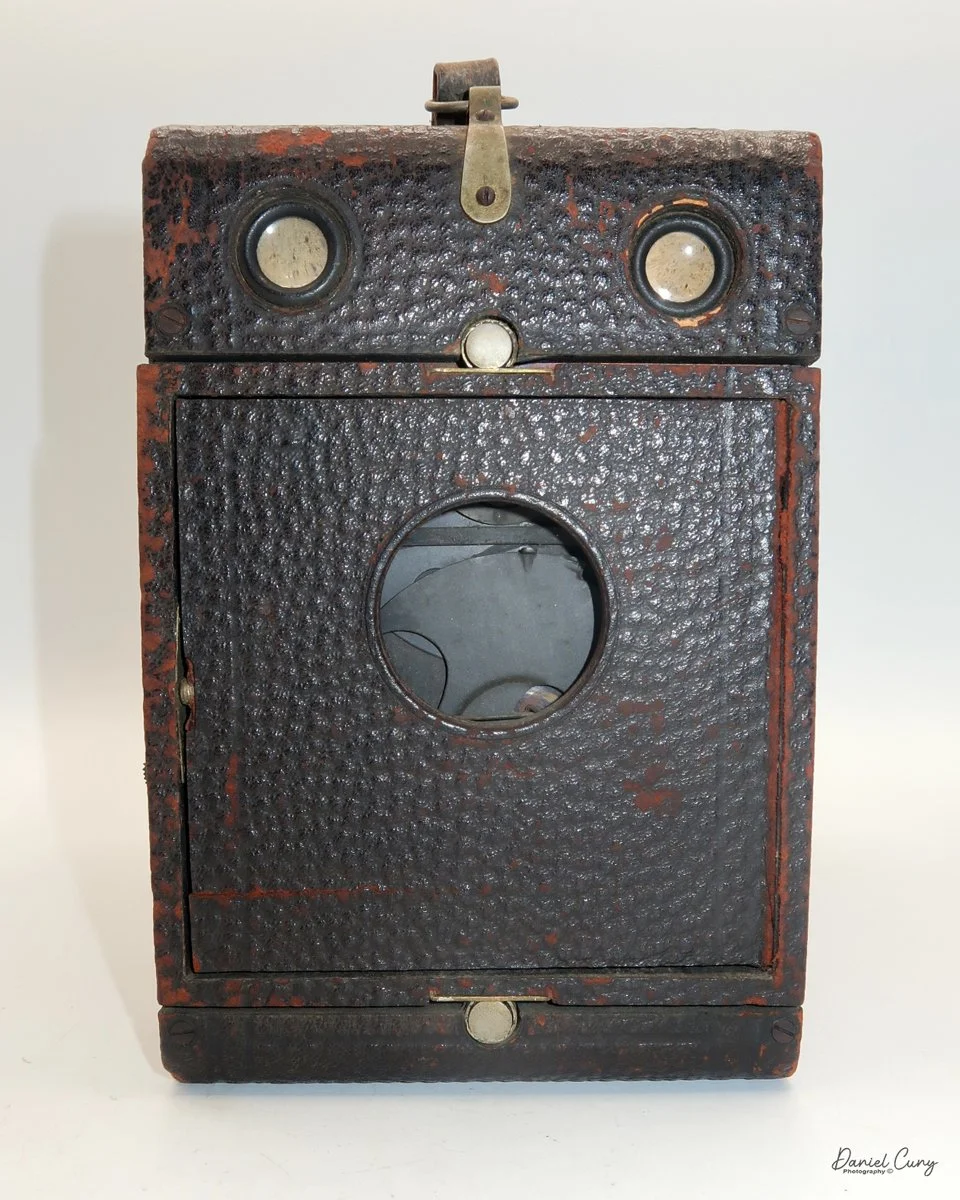
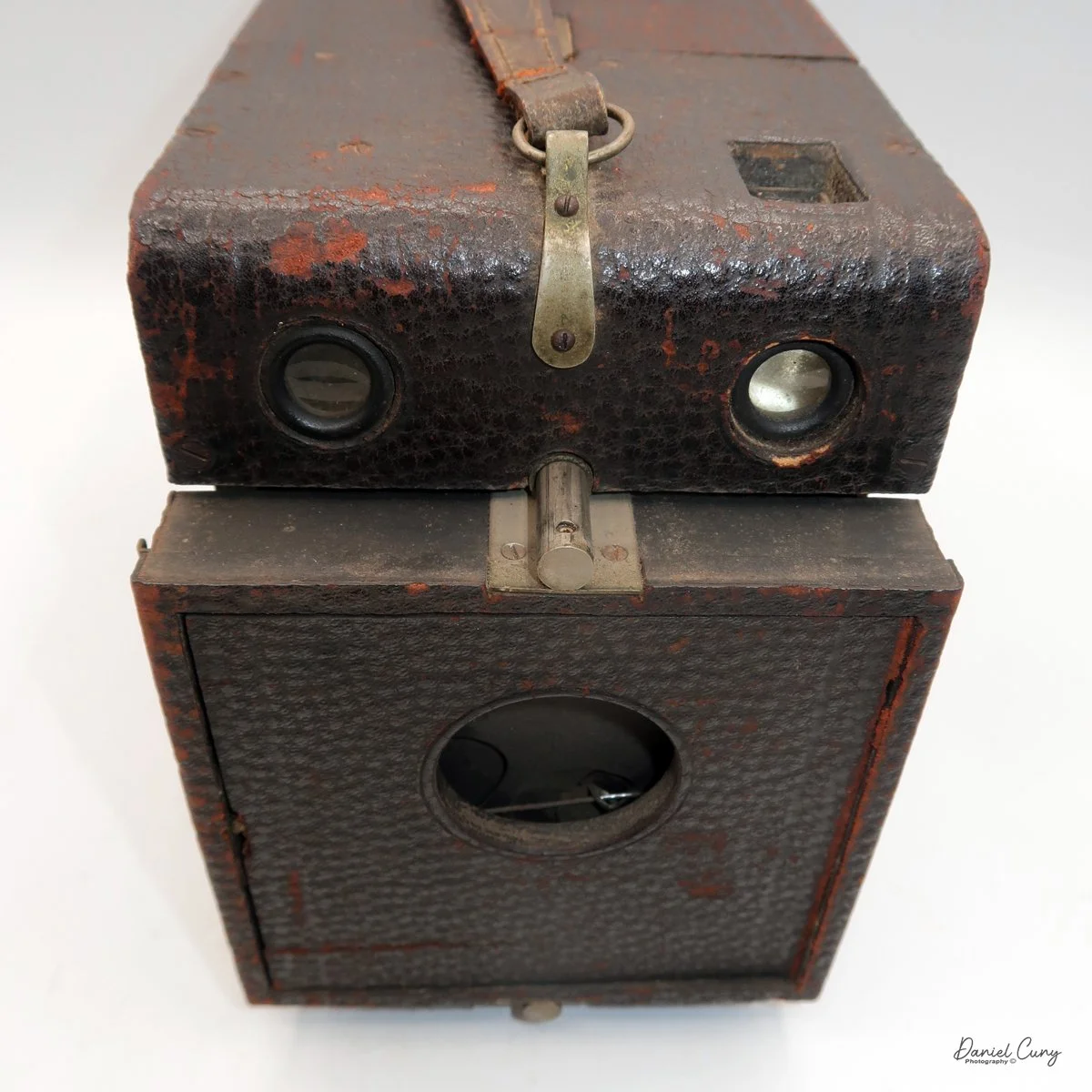
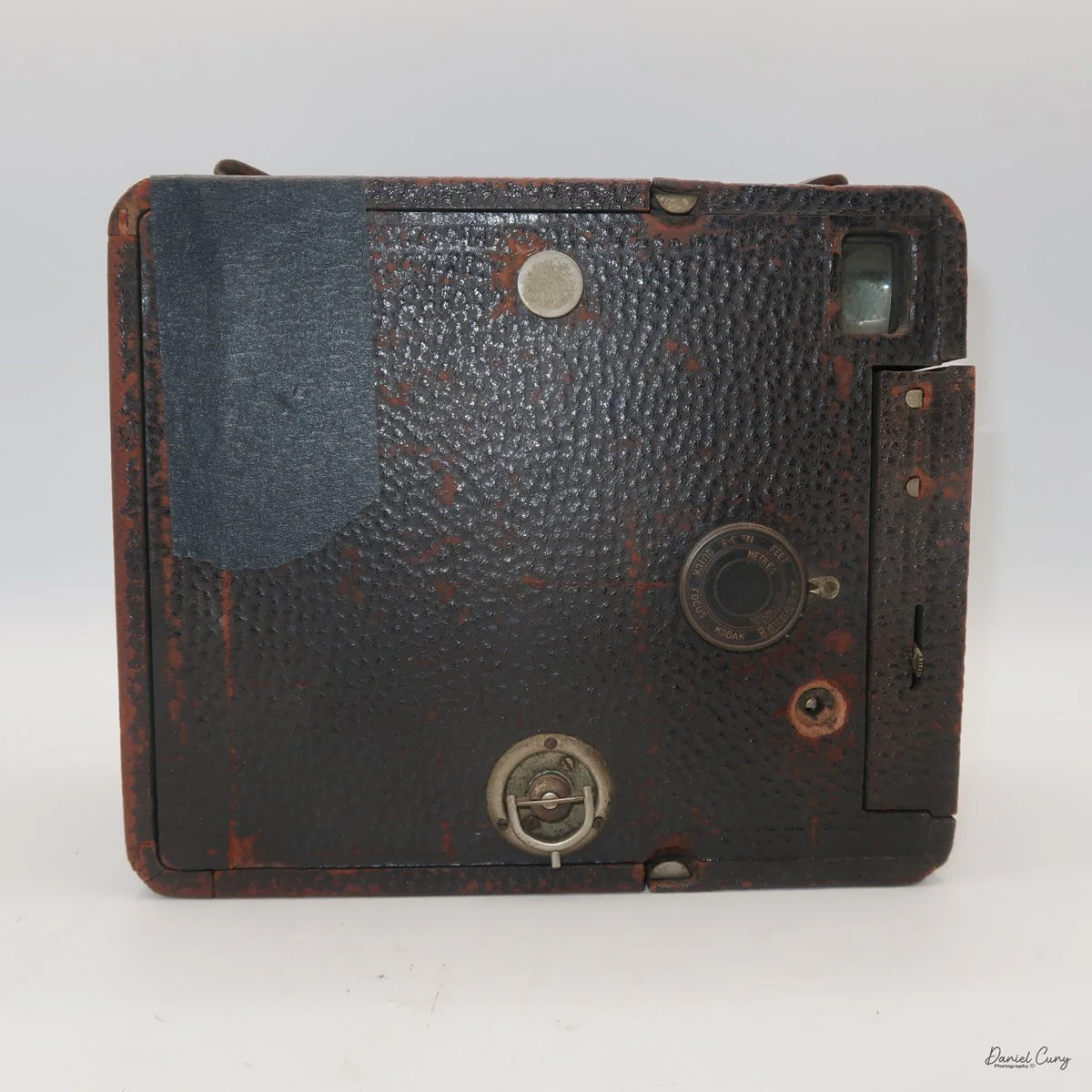
Front view of No. 3B Quick Focus Kodak

 Now that I had the camera in hand, I was setting the camera in the car seat next to me, getting ready to go to my next appointment, the thought of how was I going to get the camera home, since all I had was a carry on bag, and my case for my computer, and other office related gear which I brought with me during sales calls.

 Luckily for me, this wasn't the first time I've run into this issue. There have been time during my travels, that I've had to cram so many items, mainly cameras or lenses in my suitcase, I'd be afraid that I'd struggle lifting the suitcase over my head due to the weight of it, but I've always managed to move items around in my suitcase, fitting even larger items, like the No. 3B Quick Focus camera in there and safely transporting them home safely tucked securely in my carry-on bag.

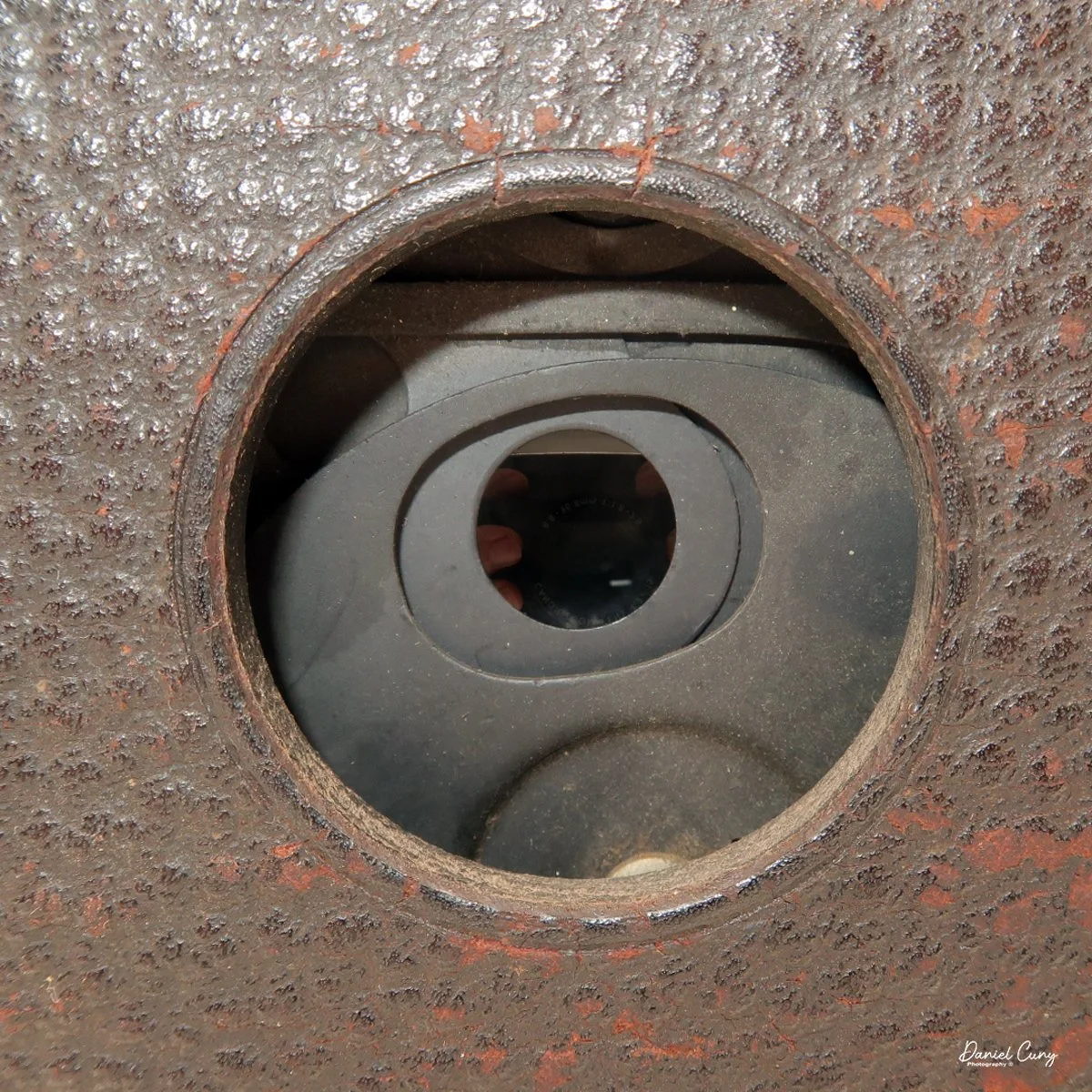
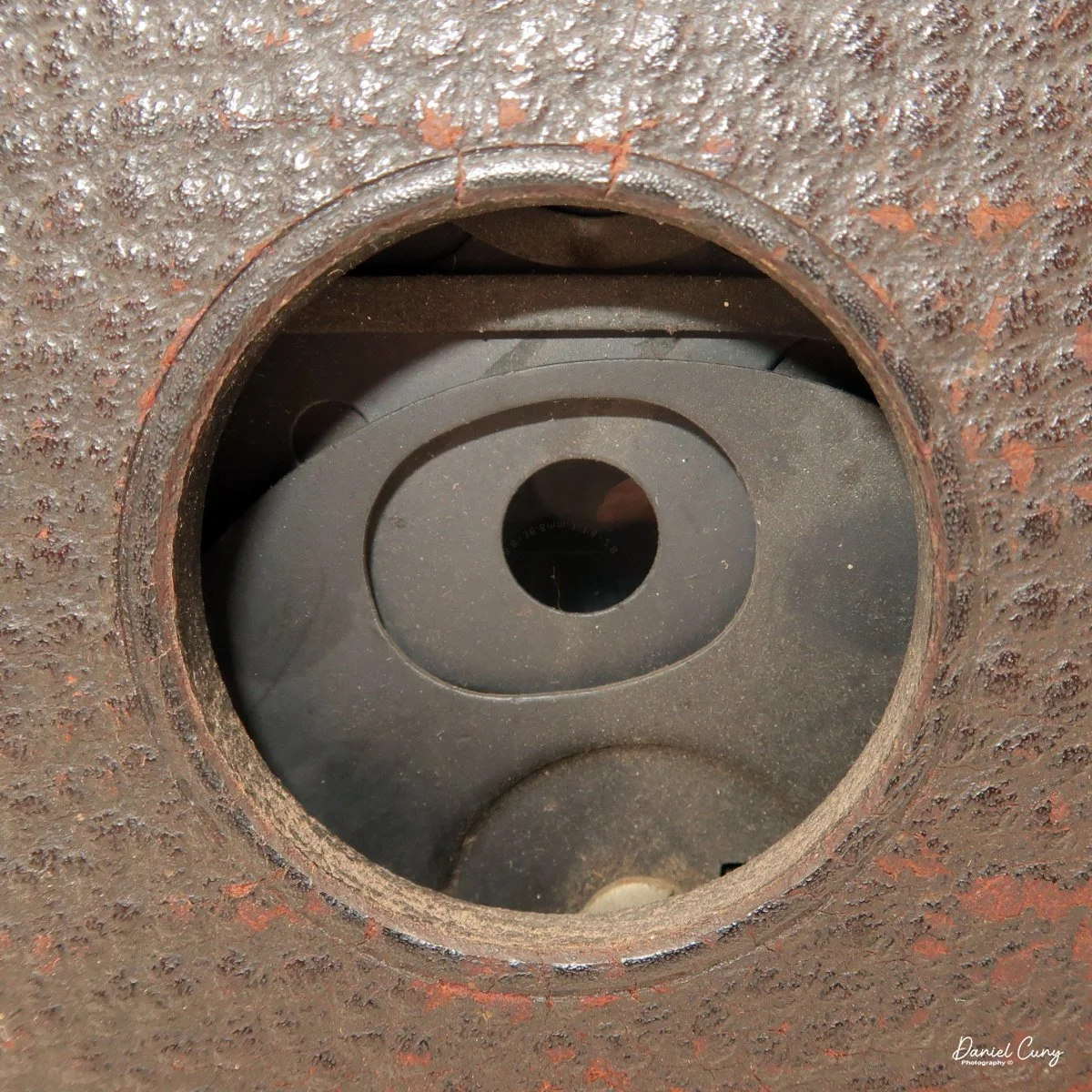
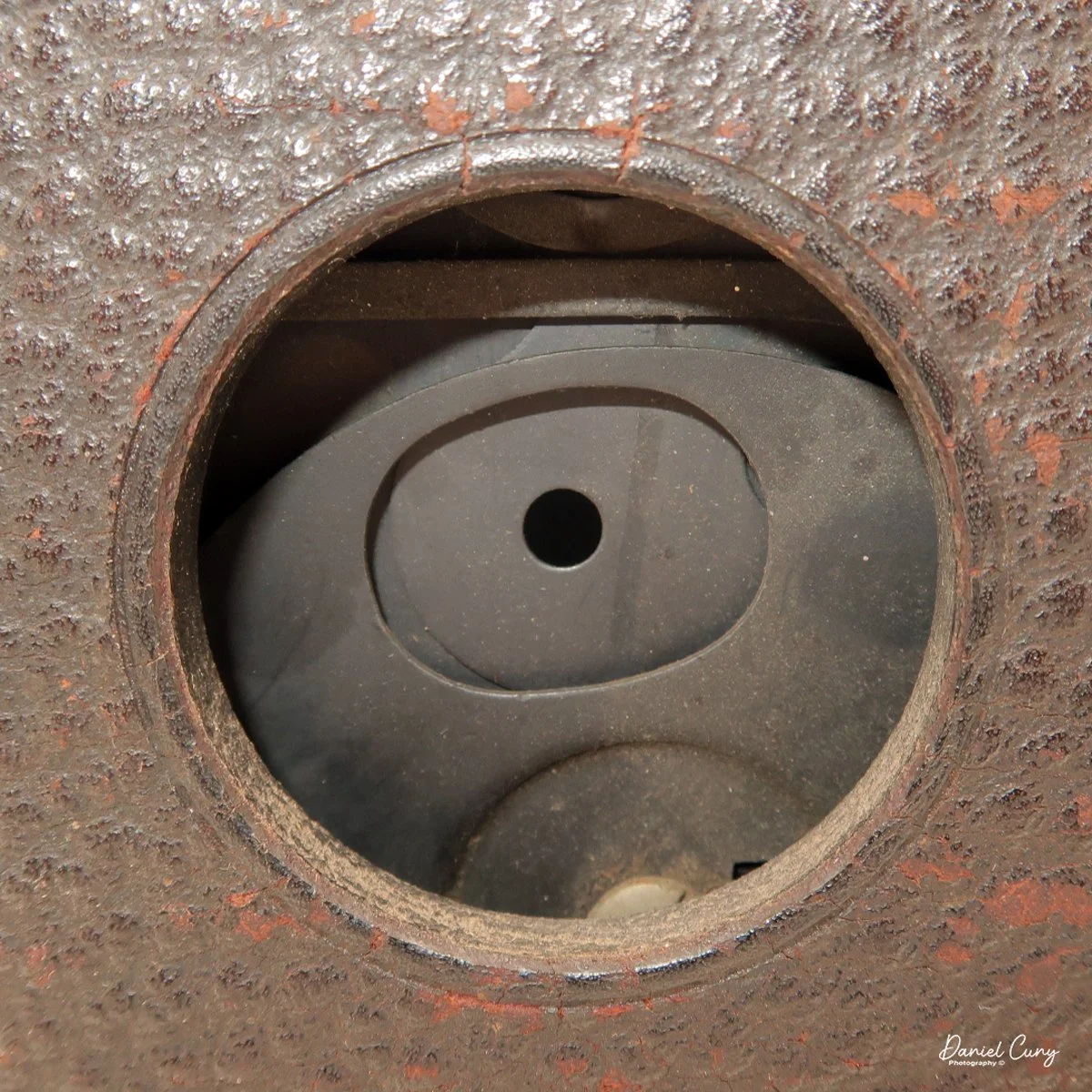
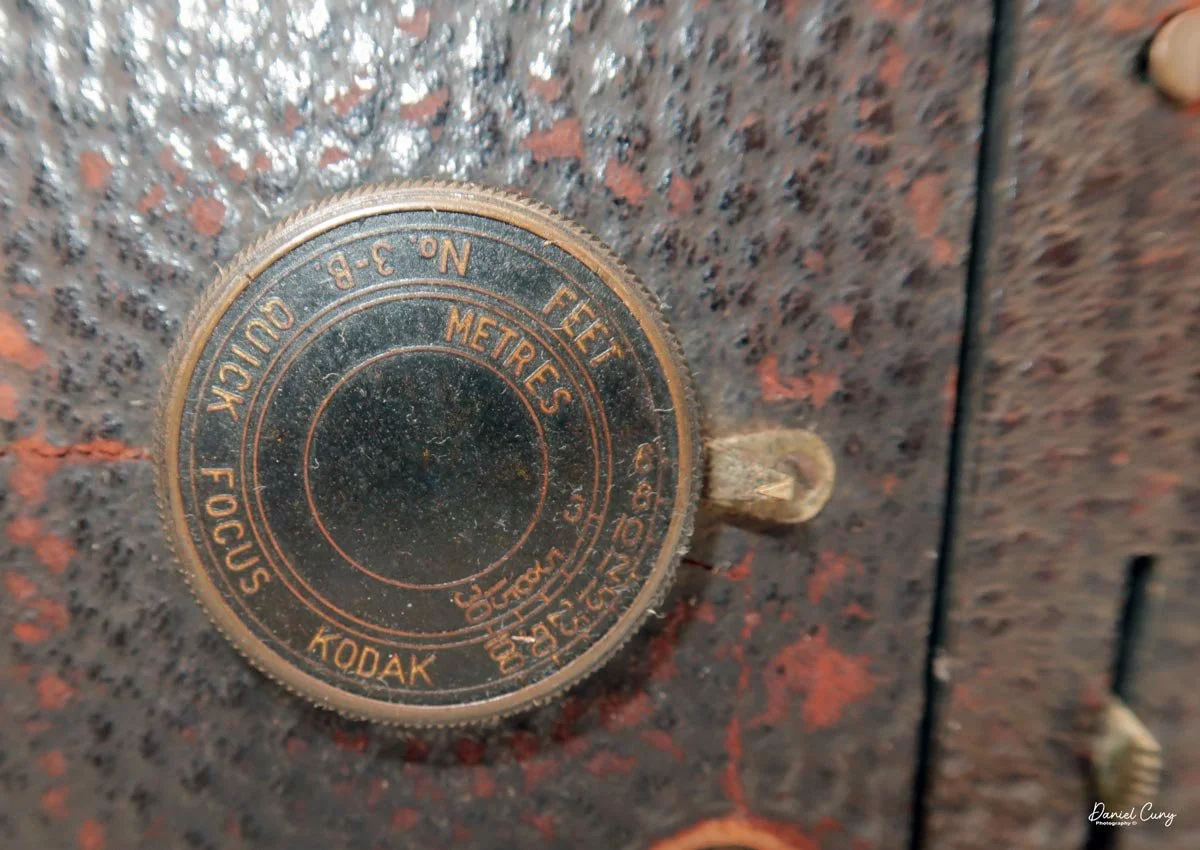
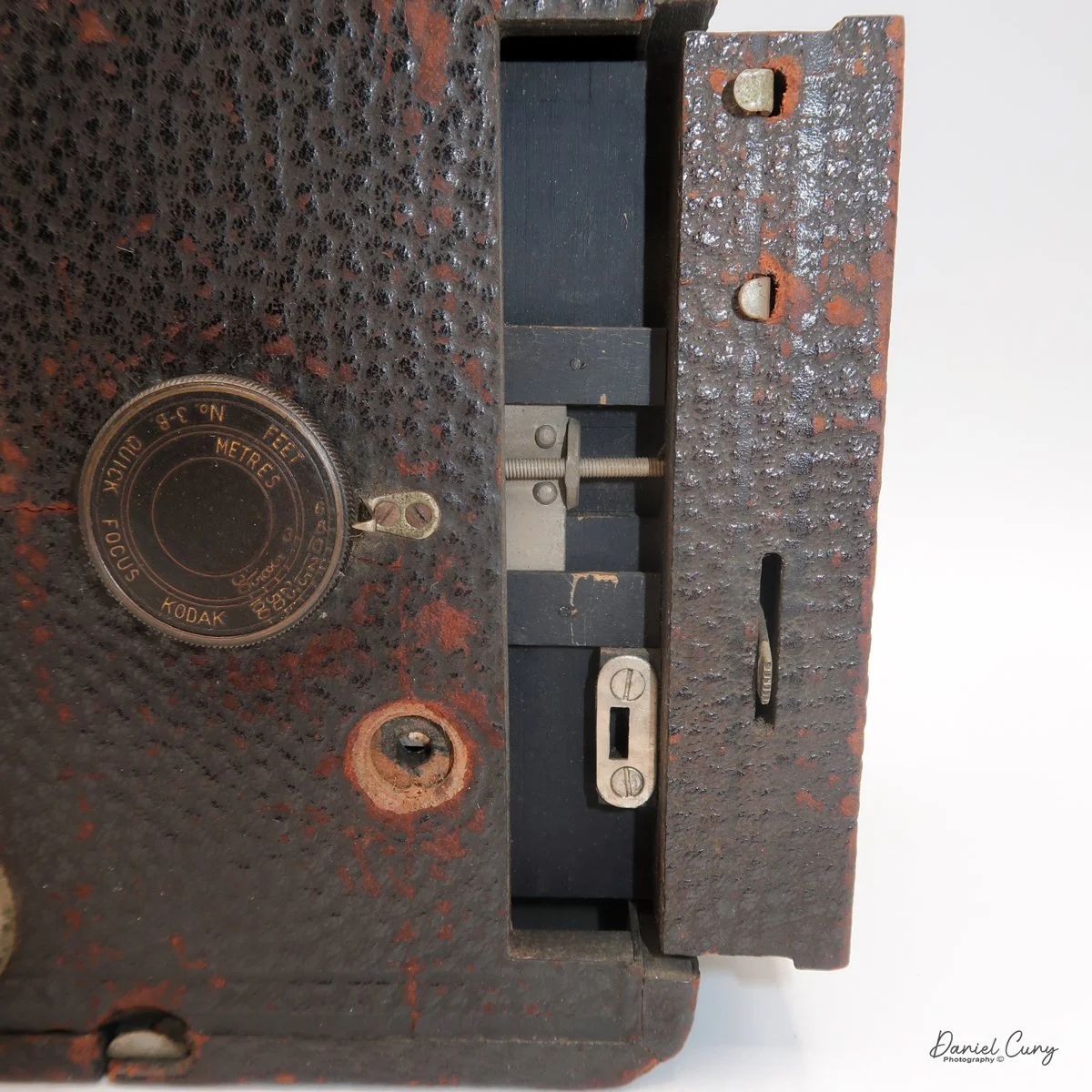
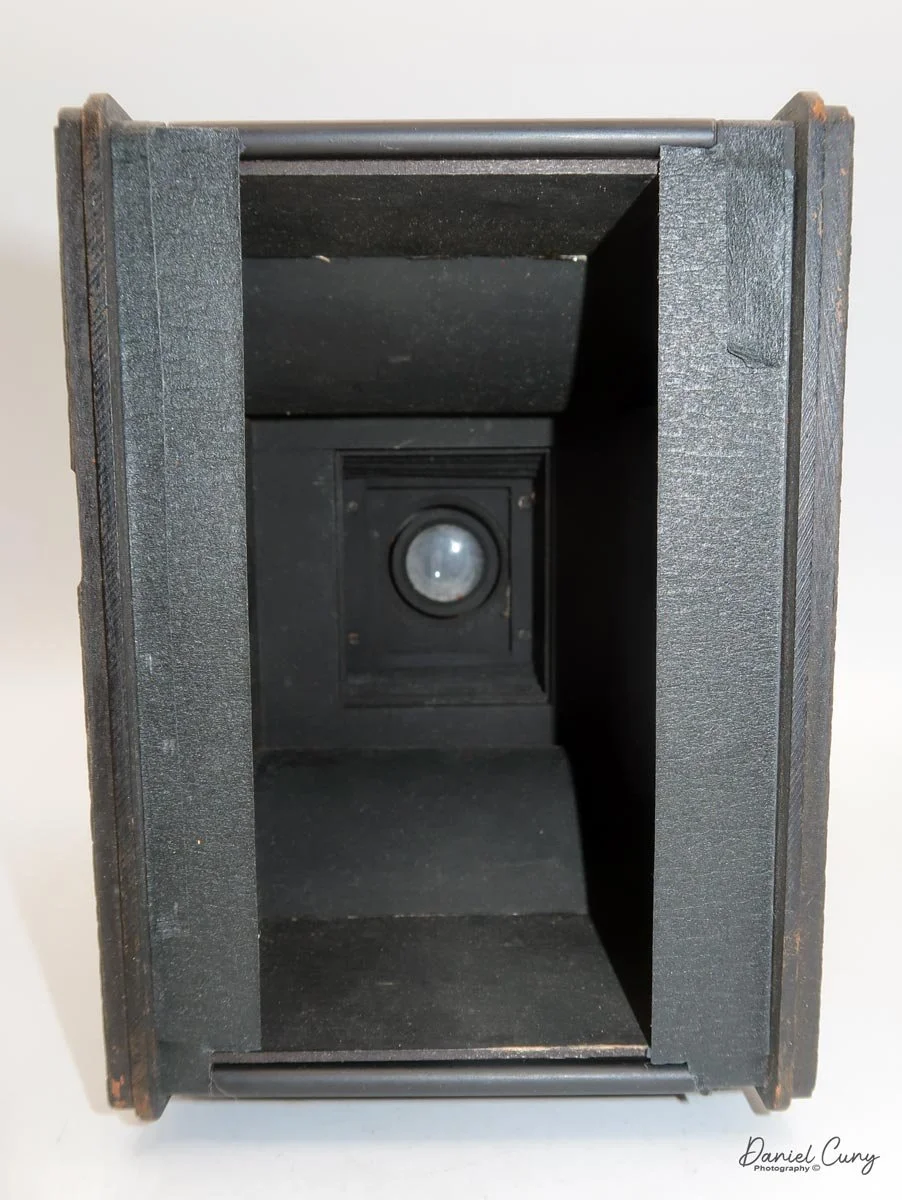
 While the camera looks very ordinary on the outside, resembling many other box-style cameras, the one thing that sets it apart is its ability, as the name suggests, to focus quickly on the subject. This system is still just a guestimate process as there is no ground glass or focus screen in the camera. Still, rather than setting a wheel in the later versions or sliding a bar to an approximate distance from you to the subject, press a button. The camera springs the lens to an approximate distance from the film plane, replicating the distance required to produce a sharp image on the film.

 I've owned the No. 3B Quick Focus camera for more than 20 years, and it wasn't until I was going through some boxes of cameras I have that I came across the camera. Looking at the camera, it's in relatively good condition for a camera made between 1905 and 1911, with only a few modifications. The main difference was that earlier versions had a sliding lever to adjust the focus distance, whereas later versions used a circular wheel.


 Early Kodak History:

 The period between 1880 and 1910 was a time of rapid innovation in industrial history, transforming photography from a complex process into a popular hobby, which makes owning a camera from this era especially meaningful for history buffs and enthusiasts.

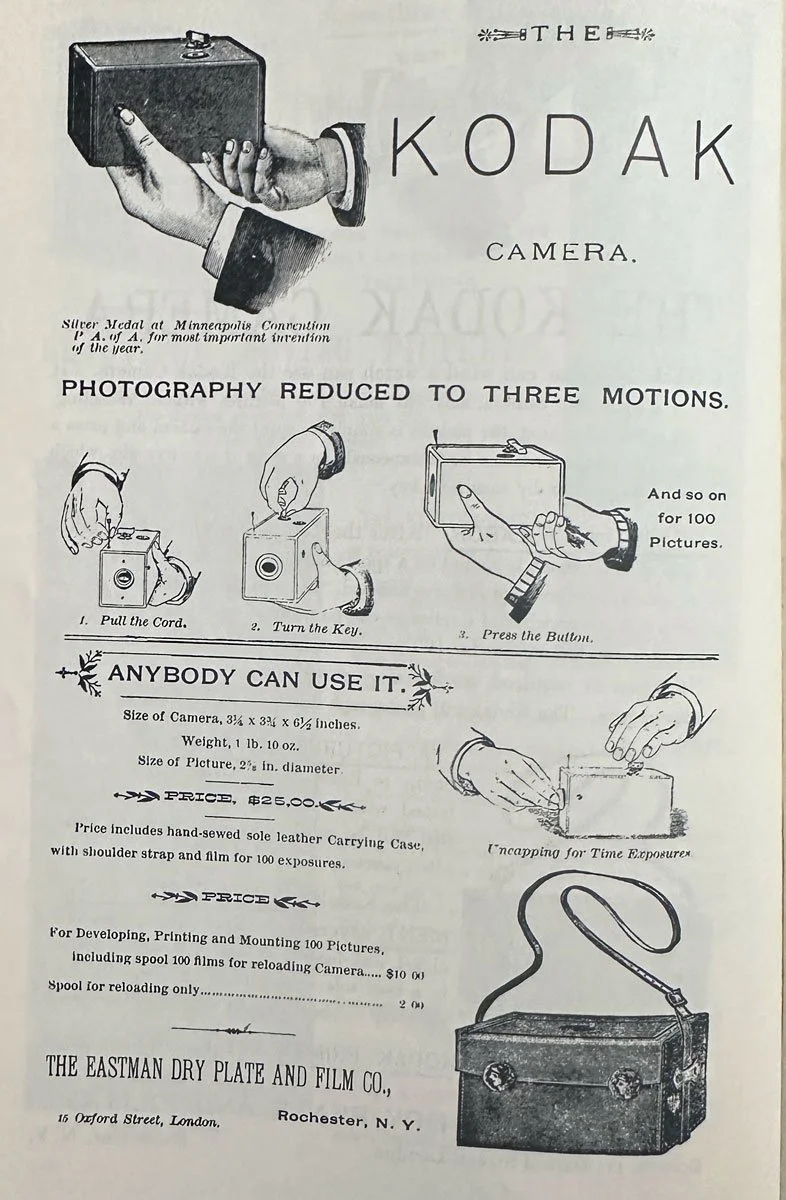
Early Kodak Advertisment

 Before 1880, photographers had to use "wet plates," which required coating glass with chemicals and developing them immediately before the emulsion dried. In 1880, George Eastman began manufacturing dry plates in Rochester, New York. These could be stored and sold, effectively decoupling the act of taking a photo from the chemistry of preparing it. In 1884, he transitioned from glass to paper film rolls, a pivot that laid the technical foundation for the modern snapshot.

 In 1888, the first Kodak Camera was released. It was a simple box pre-loaded with enough film for 100 exposures. When the roll was finished, the owner sent the entire camera back to the factory. Kodak would develop the film, print the photos, and return the camera reloaded with new film. This "System of Photography" changed the medium's identity from a technical craft to a consumer hobby.

 By 1889, Eastman Kodak introduced transparent nitrocellulose film, which was flexible and clear. This wasn't just a win for photographers; it was the catalyst for the motion picture industry, as it provided Thomas Edison with the material needed to create the first movies.

In 1900, the Brownie camera was launched. Selling for just $1 (with 15-cent film rolls), it was marketed specifically to children. It solidified Kodak's "Razor and Blade" business model: sell the hardware at cost to create a permanent market for the consumables (film and chemicals).

 By the end of the first decade of the 20th century, Kodak had streamlined its corporate structure and expanded into Europe. The company pioneered the "Folding Pocket Kodak" during this time, making cameras small enough to travel anywhere. By 1910, Eastman Kodak wasn't just a company; it was a monopoly of the "snapshot," having successfully democratized the visual record of human life.

My Camera:

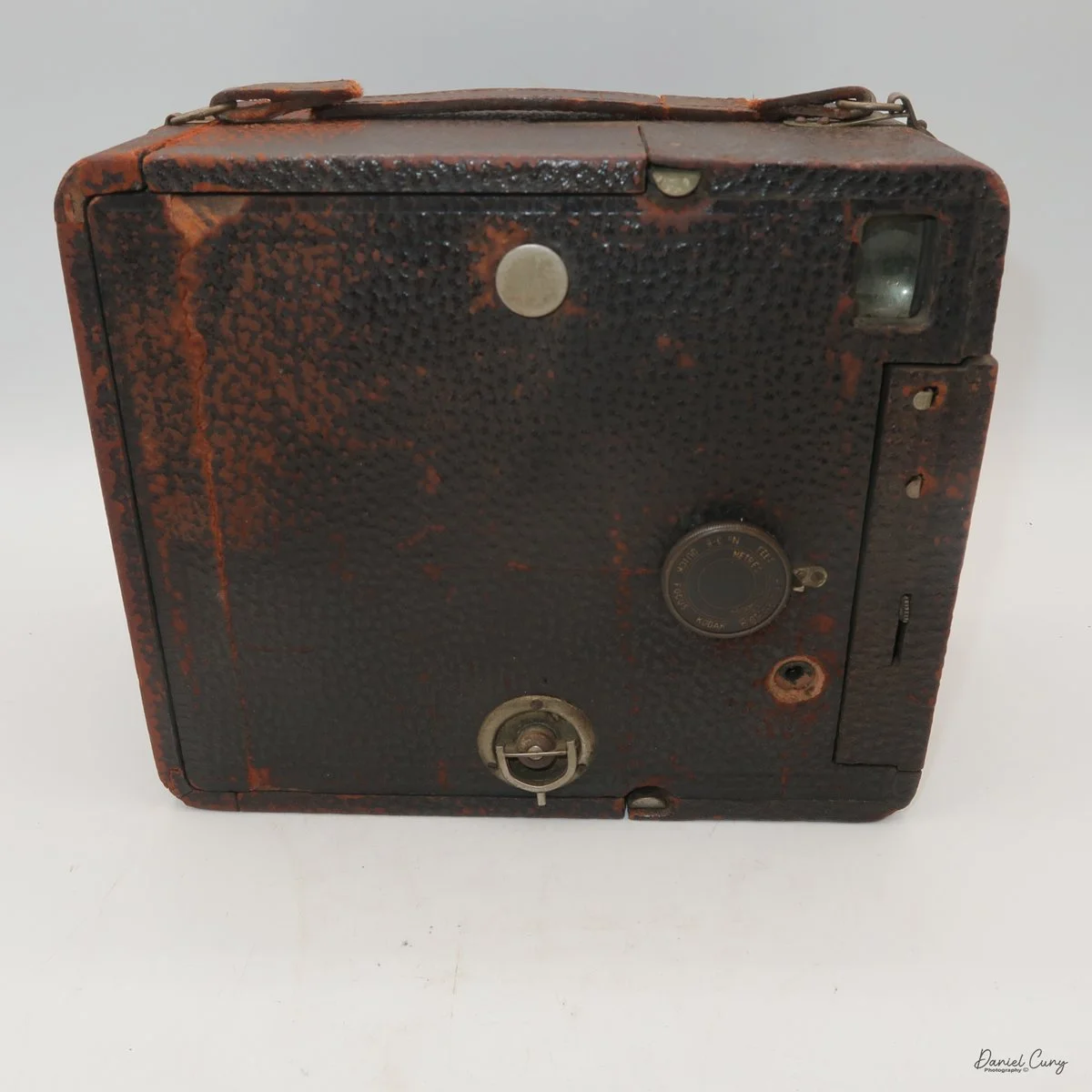
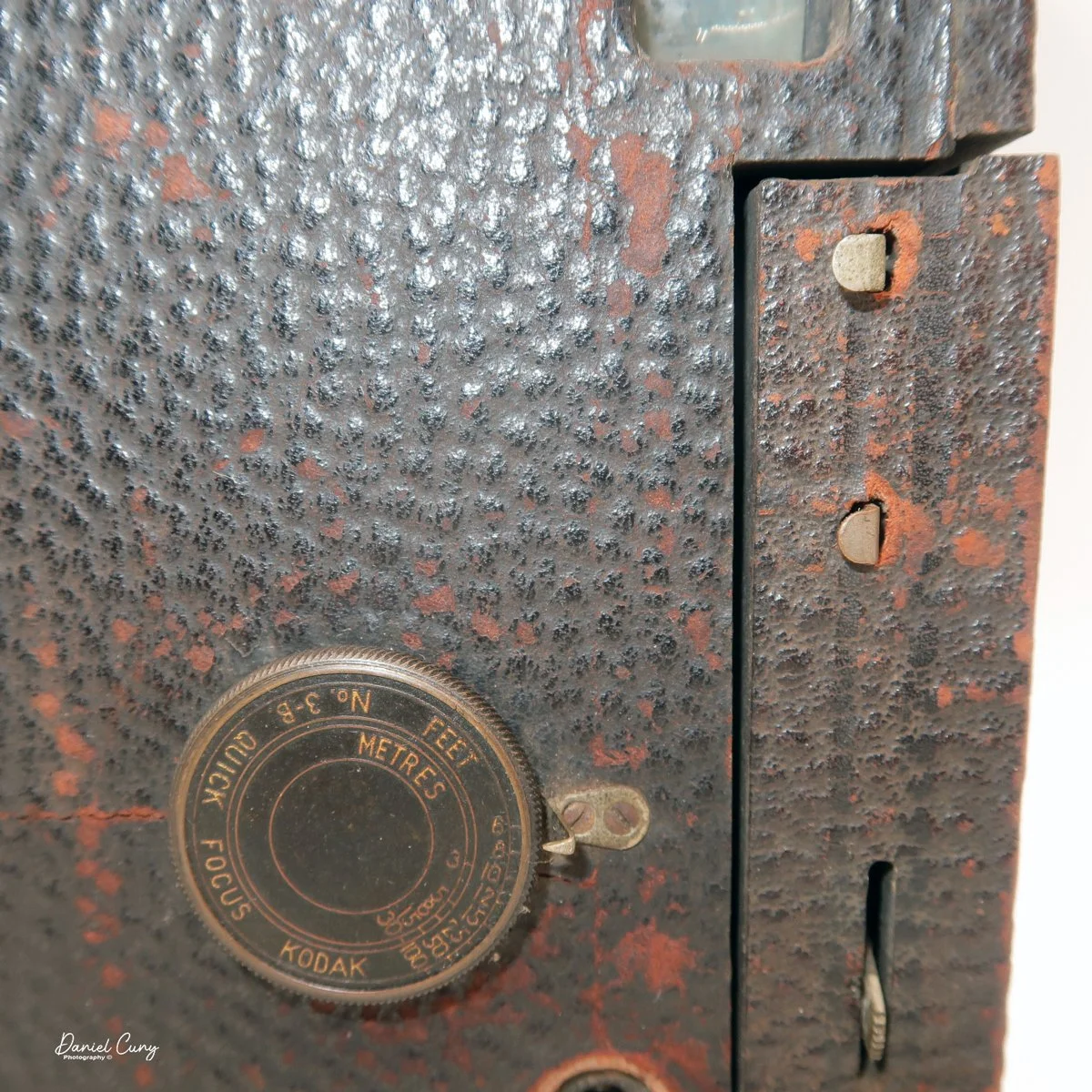
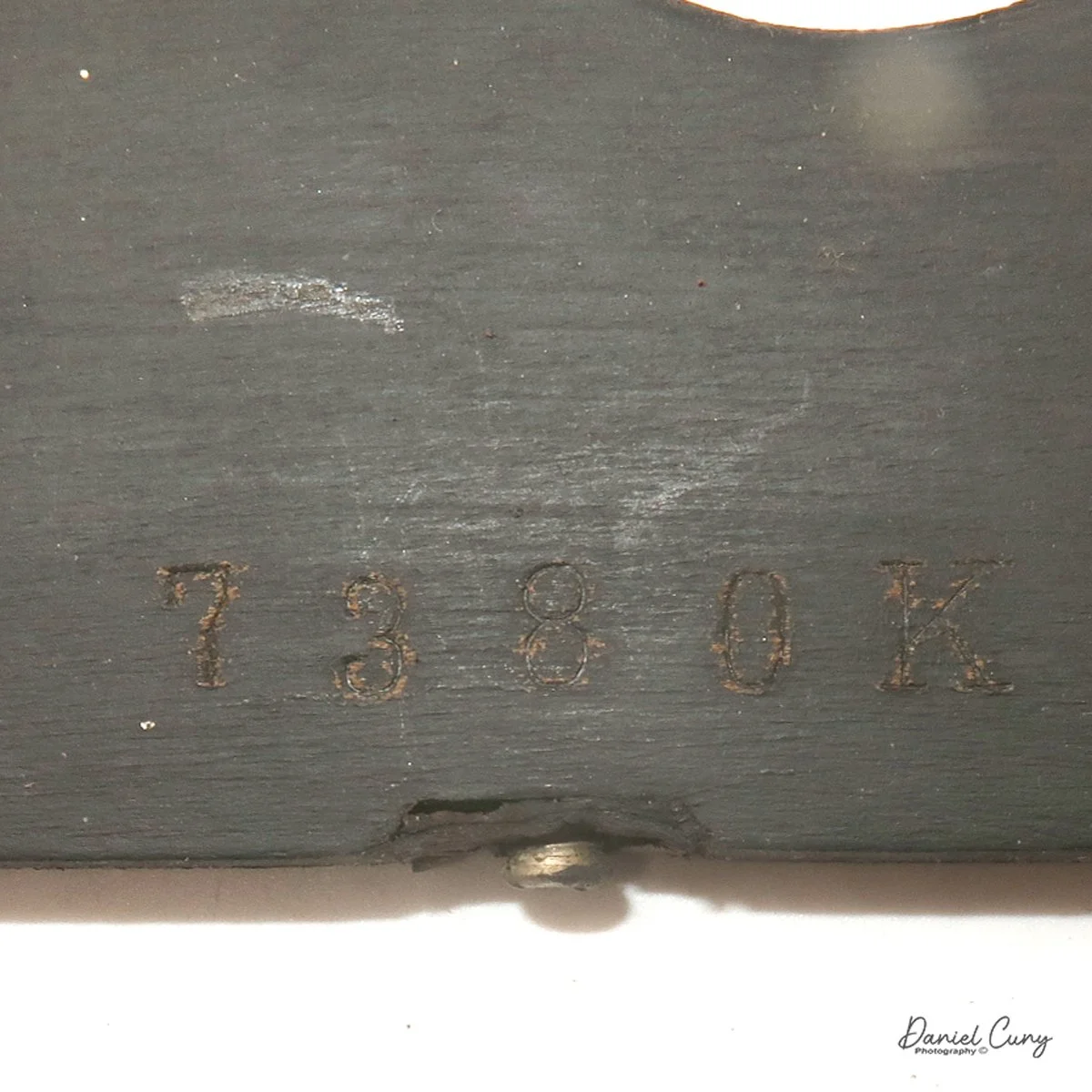
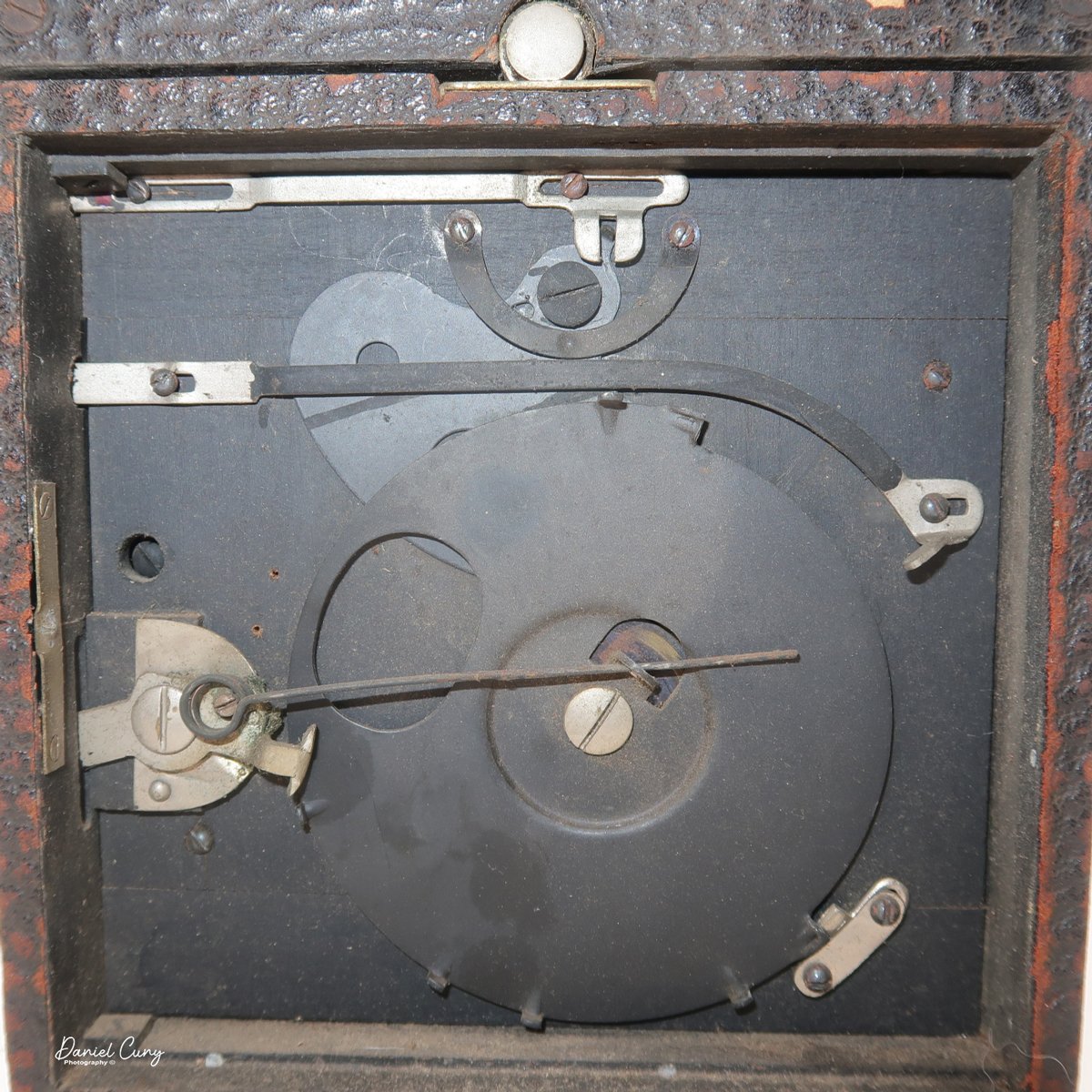
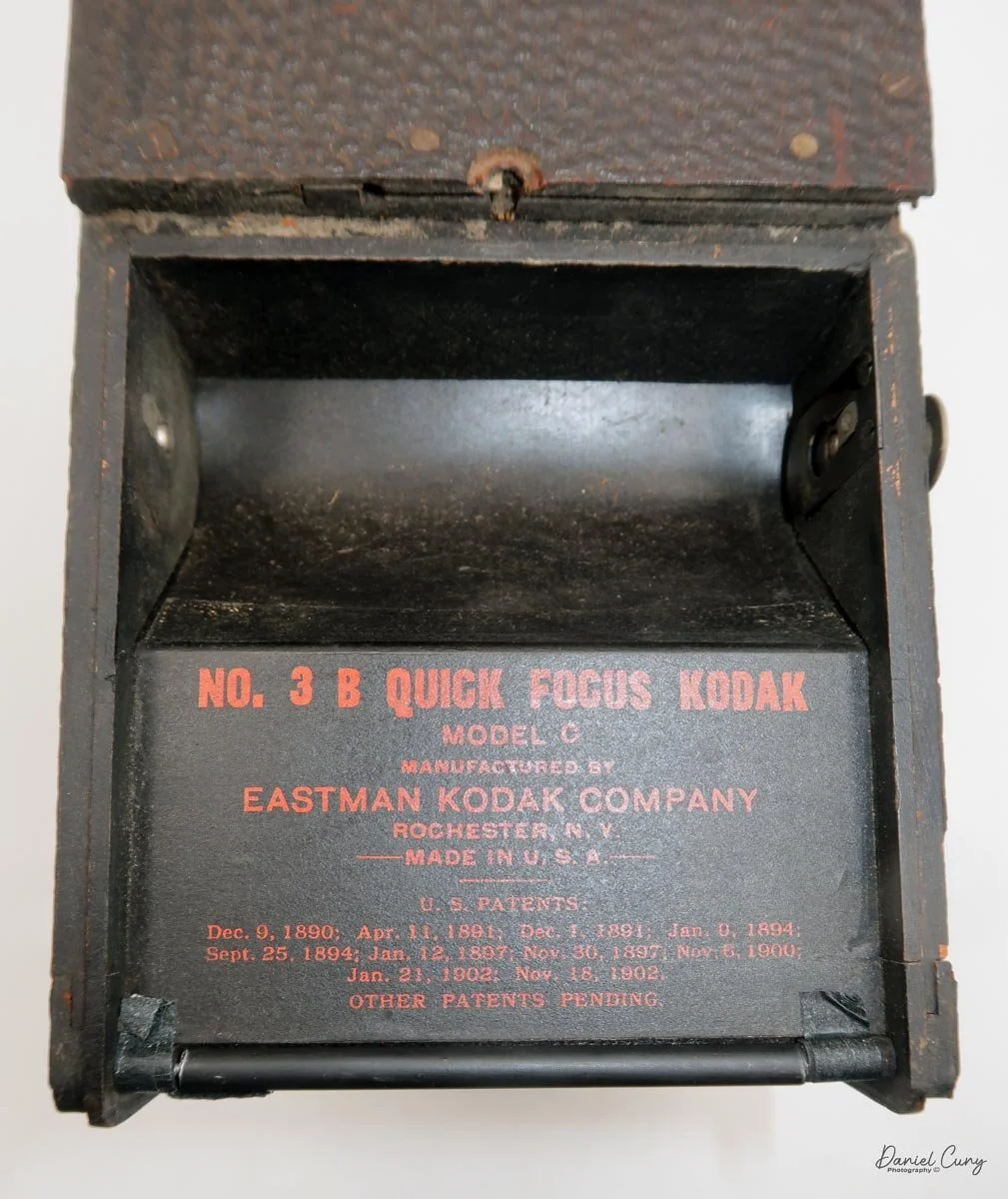
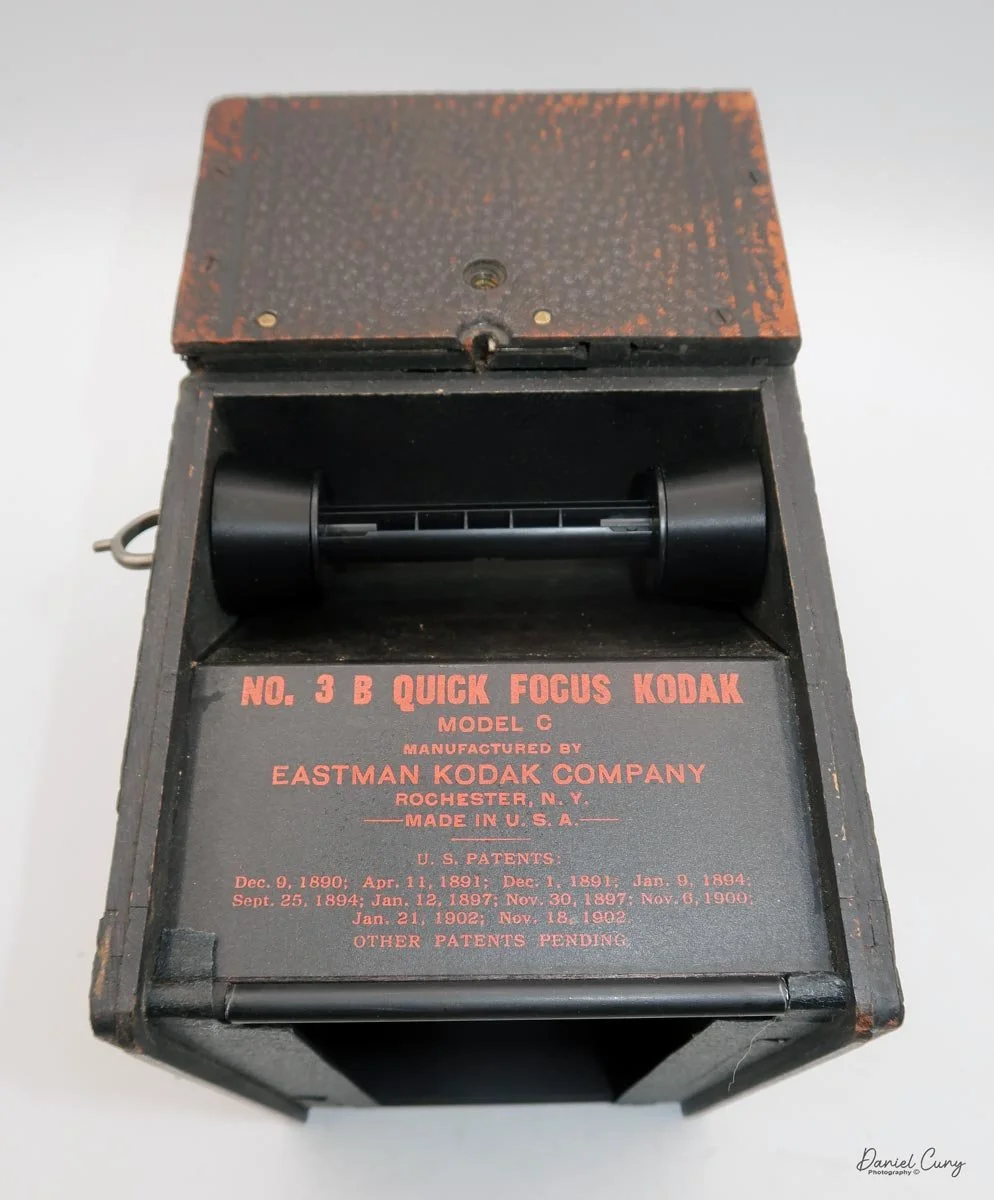
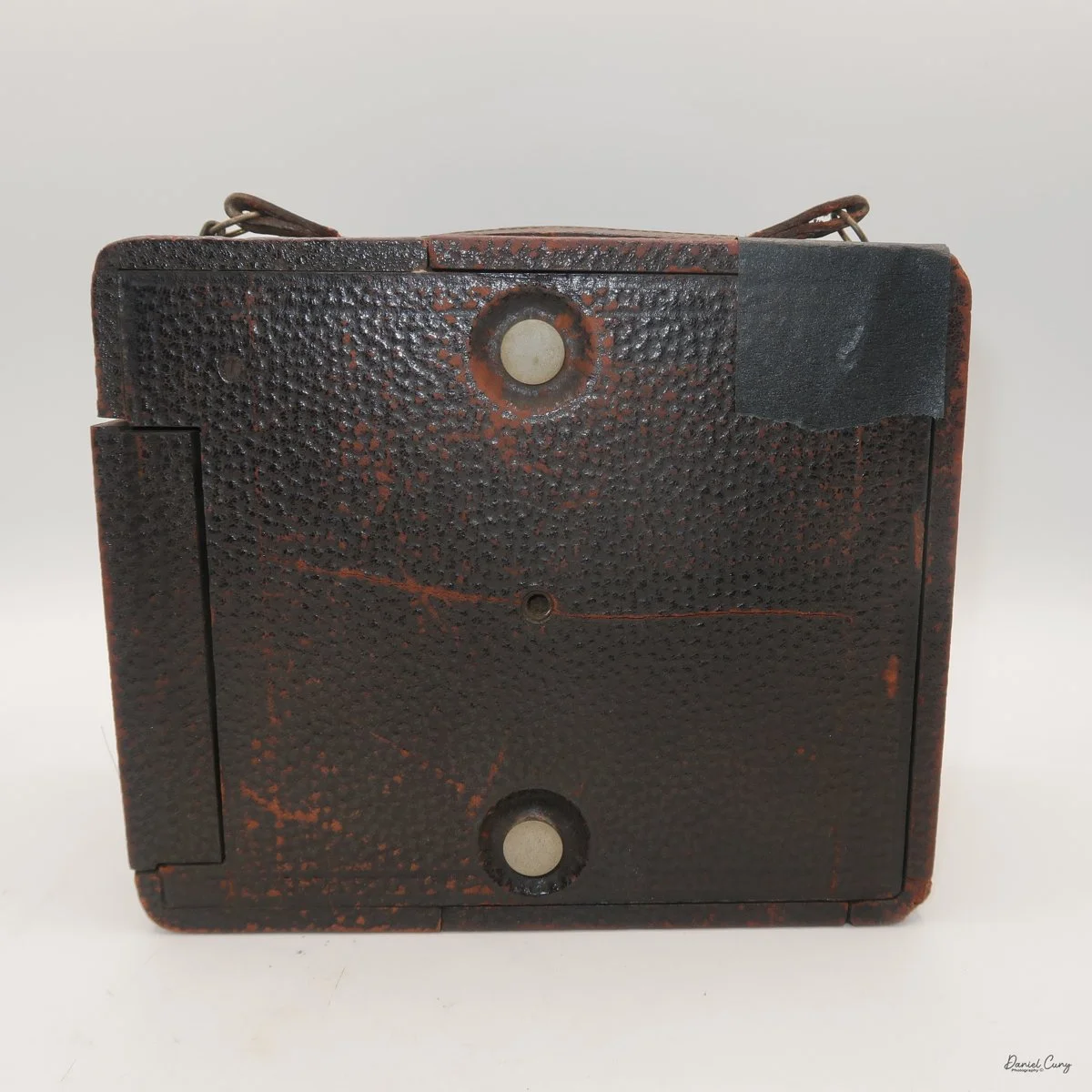
 My No. 3B Quick Focus camera is 7" tall by 8.25 " long with the lens retracted, and 4.75" wide, and weighs 2 pounds, 13.4 ounces. The serial number of my camera is 7380K, which you can find on the inside of the plate covering the shutter on the front of the camera. Thank you to Pacific Rim, which has a No. 3B Quick Focus Kodak manual.

The camera has two viewfinders: one on the top for vertical images, and, when turned on its side, one for horizontal images. The camera's shutter release is on the right side; it's a "one motion" release, meaning you slide it down, and the shutter opens and closes. Then slide the shutter release up, and it repeats the open/close motion.

 Also on the right side of the camera is the aperture setting, which is controlled by pulling out a lever to three different positions to set the aperture. Below the aperture settings is another lever you use to set the shutter speed to instant when the lever is in, or to time exposure when you pull it out. In time exposure, you'll need to flip the shutter release up or down to open the shutter, then back to close it.

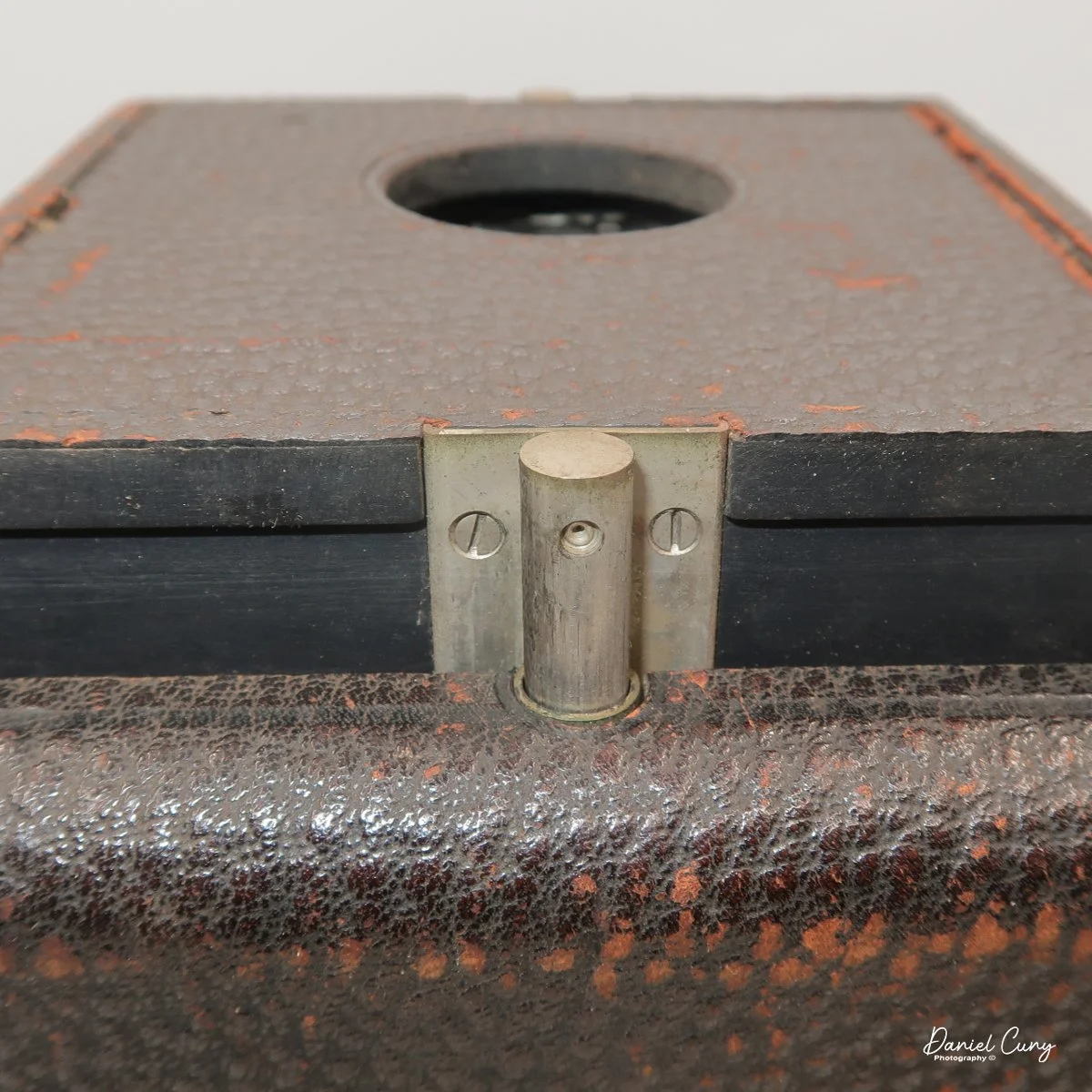
The strap on my camera is broken, and on the right side of the camera is the wheel to set the distance, as you guessed, but unfortunately, the button to focus the camera is missing. I put in a temporary item, similar to a large thumb tack, to activate the "quick focus" mechanism.

 Mechanically, the camera focuses quickly when you set the wheel to the proper distance, and the lens springs to the focused position very quickly. At this point, since the camera appeared to be in good working order, I figured it was time to put some film in and write a blog post about it. 

It's at this point that I decide to write about a certain camera, only to run into snags that make the process of making images and writing about the camera longer than anticipated. In my younger days, I didn't have the same patience as I do now, as I learned from many similar stories of starting a project: due to unforeseen issues, the process is longer than anticipated.

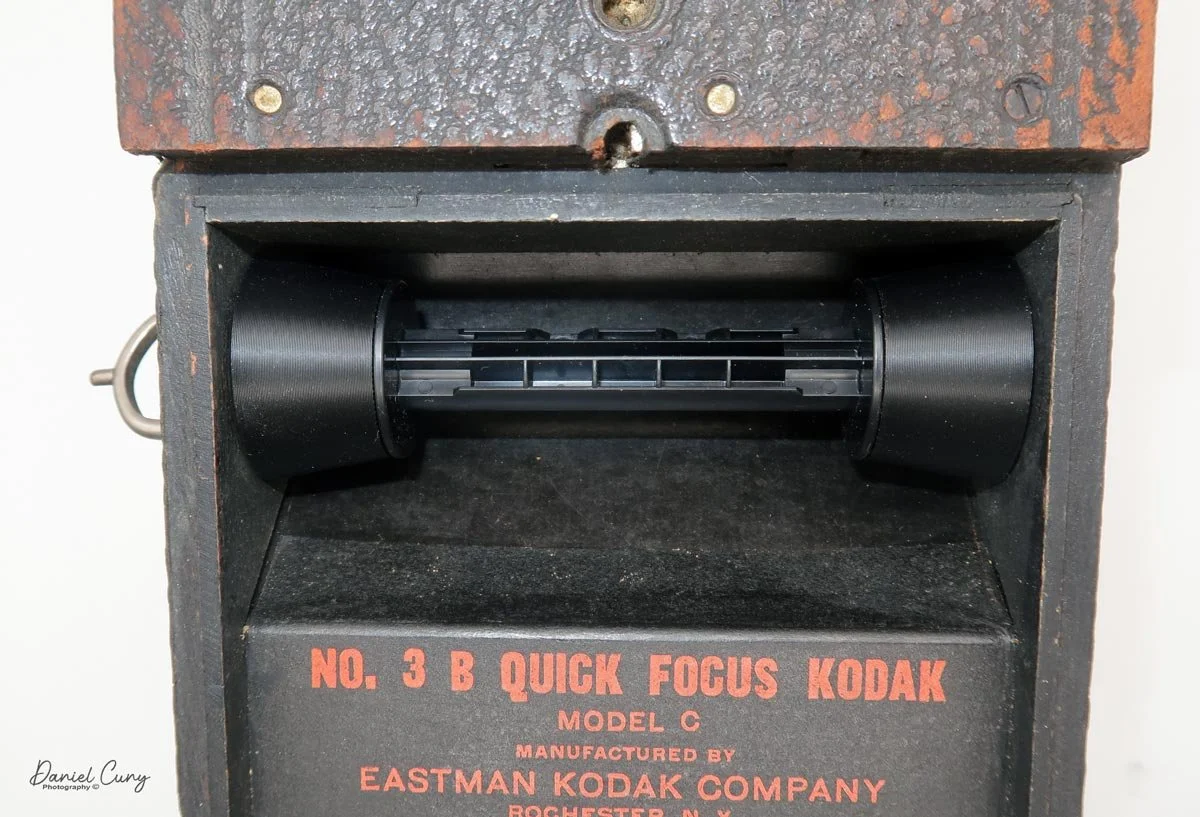
 When I took the back off the camera to inspect the film chamber, I noticed the negative size on this camera is enormous. The camera produces a 3 1/4" x 5 1/2" negative, also called "Postcard size," on a roll of daylight-loaded 125 film. On each 125-size film roll, the camera produced 10 images.

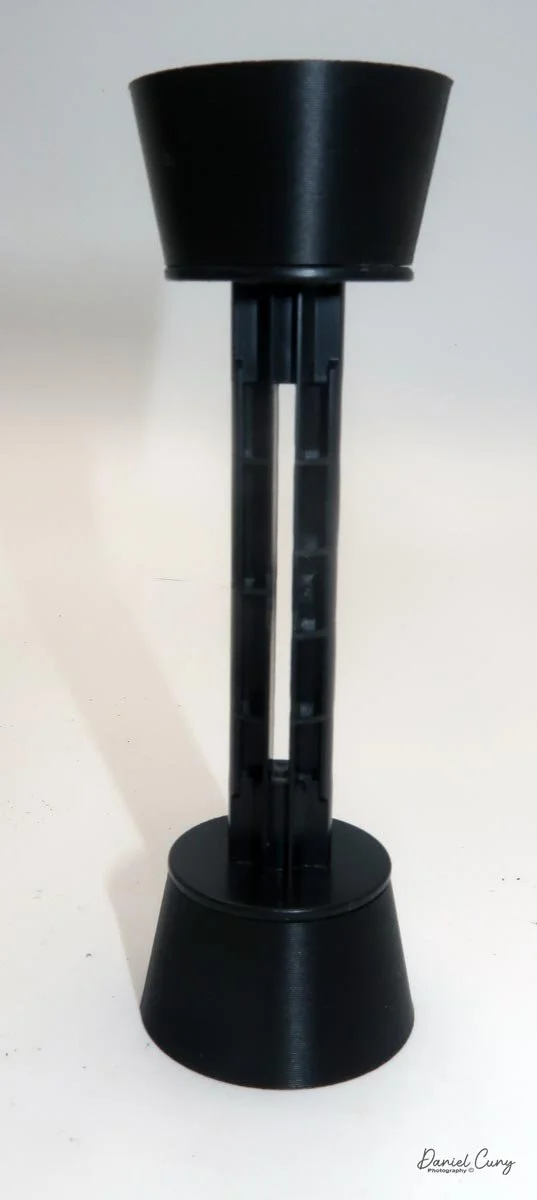
 Since 125 film is no longer available, I needed to adapt the camera to use a more modern roll film. Online, I found someone who makes adapters for new film to fit into older-style cameras, so I reached out to him, and for a nominal fee, he made me four adapters to fit 120-size film into 125-size cameras. At this point, I will likely purchase a 3D printer so I can do these things myself, but as mentioned earlier, that will pose a whole new set of issues that I'll need to address.

The No. 3B Quick Focus camera has a three-piece hinged back that comes off the camera by pressing in a small button on the top and bottom of the camera, which releases the locking mechanism and allows the camera's back to come off for loading and unloading of film. Due to the age of the camera, one of the hinges is in decent condition, but the other was rather worn, and on one of the times taking the back off, it tore off, and the back was in two pieces, which now needed to be repaired if I wanted to shoot with it.

 I purchased some thick, black book-binding tape, a cloth tape that will allow the back to move slightly while staying intact with the other pieces. The tape was applied on the inside and is very flat and non-reflective. With the back fixed, the film adapters made, I needed to mask off the area of the film opening to accommodate 120-size film, so I needed to mask it off to approximately 2.25" across.

 At the local hobby shop, I found some black, matte construction paper. I cut the construction paper to the desired length and width, and taped it to the back of the film chamber to mask the excess area needed for the 120 film.

After sitting in a box for more than 20 years, the camera's optics needed a good cleaning, so with Q-tips, lens cleaners, and lens tissues in hand, I gave the viewfinders and lenses a good cleaning, which they desperately needed.

 One other thing I needed to figure out was that, since the camera originally used 125-size film, there is a red window on the back so you can tell which frame number you're on. The red window won't work for the adapted 120 film, so I needed to see how much film would be wound per each turn of the advance knob. 

 I put a piece of paper on the spool and turned it one-half turn, which covered the spool. Then I measured that length and determined that it was approximately  1", so to cover the 5 1/4", I'd turn 3 full turns to get approximately 6" of film across the film area. The one thing I didn't know was how much paper backing there was on each roll before reaching the film itself. This I just guessed at and hoped I'd get 5 images per roll since each negative would be 2.25" x 5.25".

 With the camera's back off, I loaded film into the camera, then put the film back on. To guard against any light leaking into the camera through the taped hinge, I put some black painters' tape on the outside as well. Now it was time to go outside and see what the camera could do.

My Results:

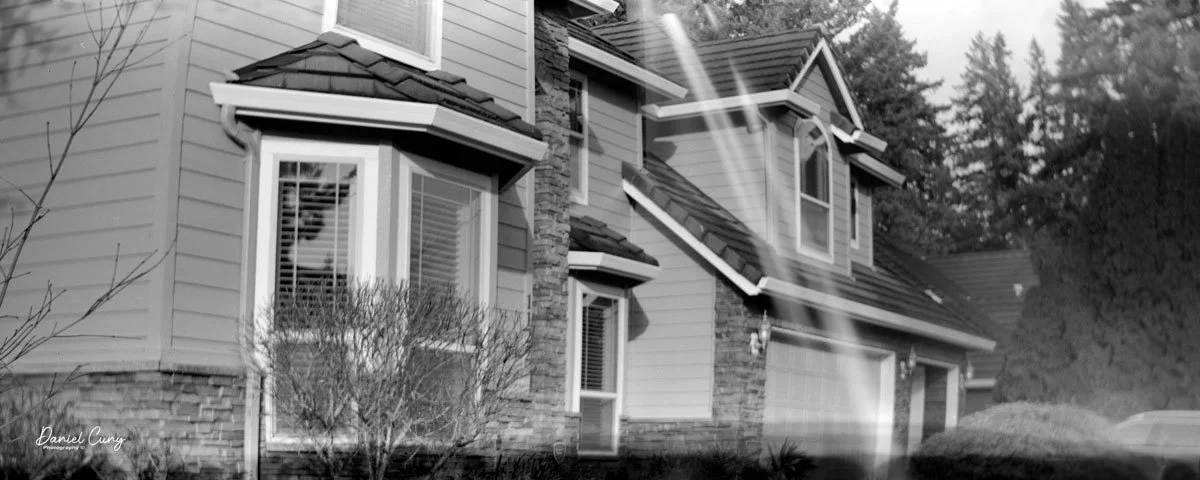
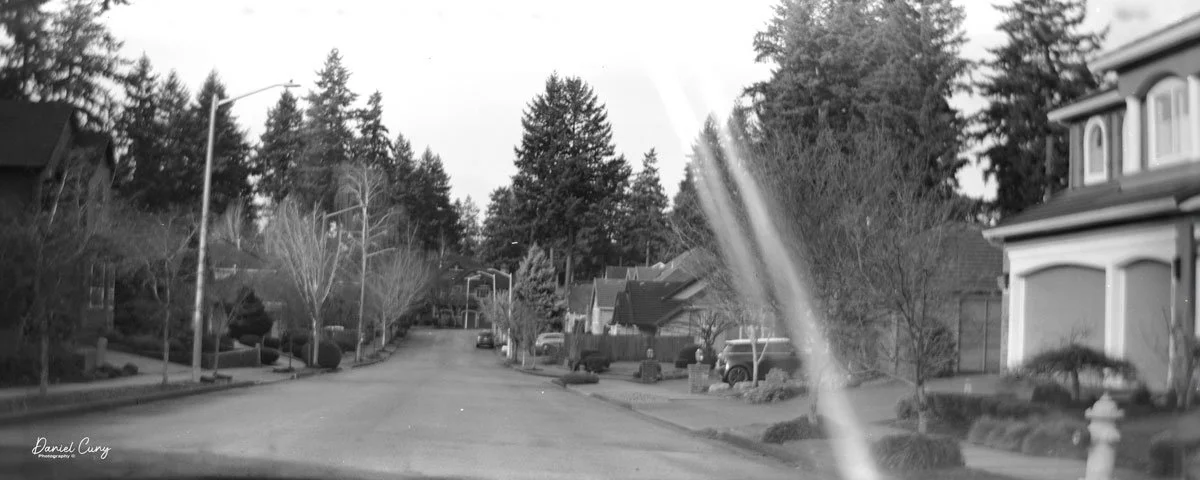
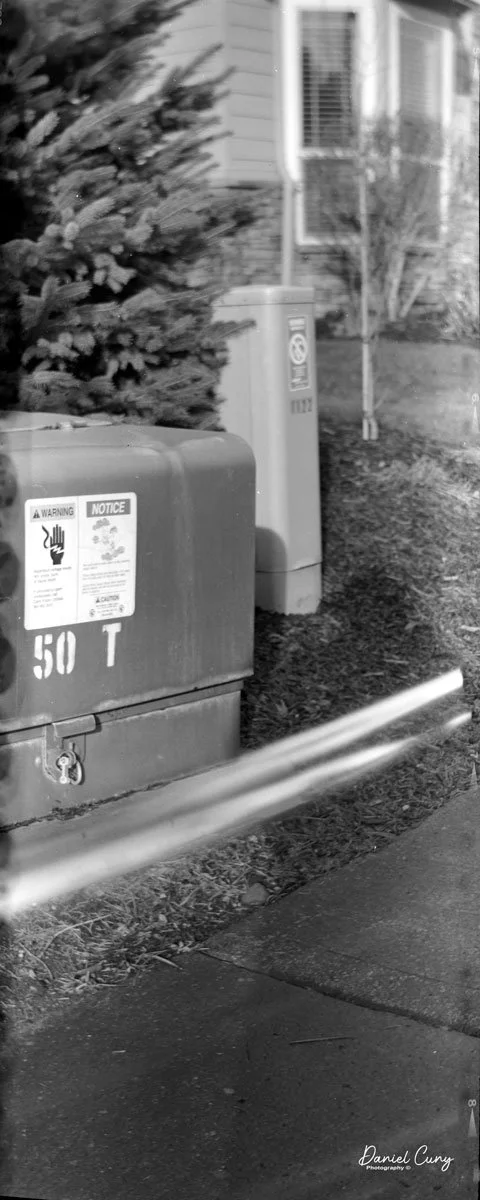
 With film loaded in the camera and guessing at the film's approximate starting point, I walked through the neighborhood, estimated the distance to the subject, set the focus wheel of the No. 3B Quick Focus to that distance, and pressed the focus button. The lens sprang to the distance needed, and I took the photos.

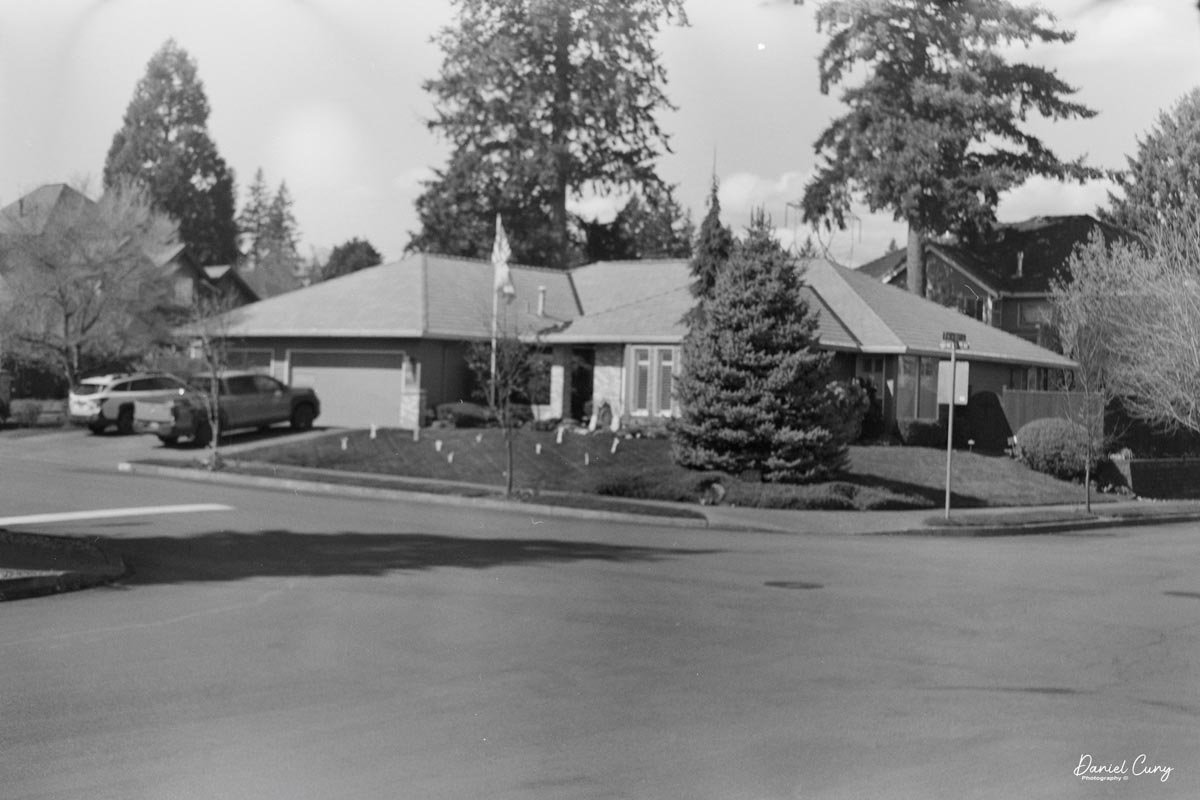
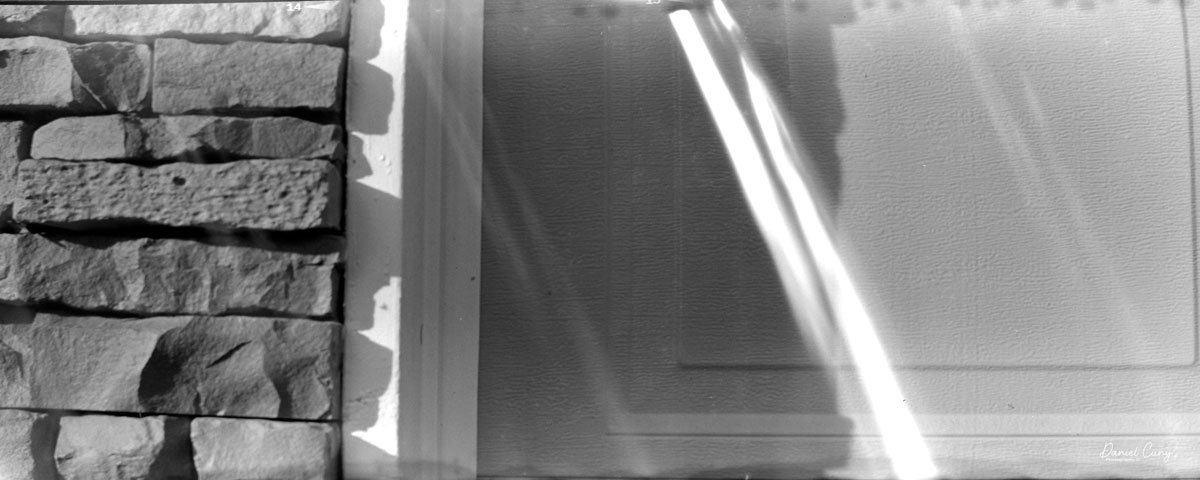
 Here are the images I took during my walk through the neighborhood, knowing I'd only have 4-5 images to shoot.

Conclusion:

 Well, after all that work, I still had light leaks. They are all in the same direction and at the same place, so I didn't plug up any areas with a pinhole that caused the light leak.

 Taking the back off the camera and going into a dark room, I shone a light into certain areas around the shutter and the quick focus area. The only spot I saw a light leak was in the top area by the locking mechanism, which the cover itself should have covered.

 I'll need to do a bit more poking around to see what I can find, but overall, the images were good, aside from the light leak. I needed to take a few more close-up shots to check focus, but from what I can see, it turned out well, and it's a fun camera to shoot with.

 Overall, a fun and very good learning experience working with a 115-year-old camera.

 Thank you for taking the time to read about this camera and the issues I had to resolve to get it back to a usable state for shooting.

 Here's a link to my other Camera Reviews.

 Cuny's Cameras and Photo is my eBay online shop, where I sell cameras I've reviewed, along with other camera and photo oddities I've accumulated over my 50-plus years.

 Until next week, please be safe.
Contessa Nettel Cocarette I DeLuxe

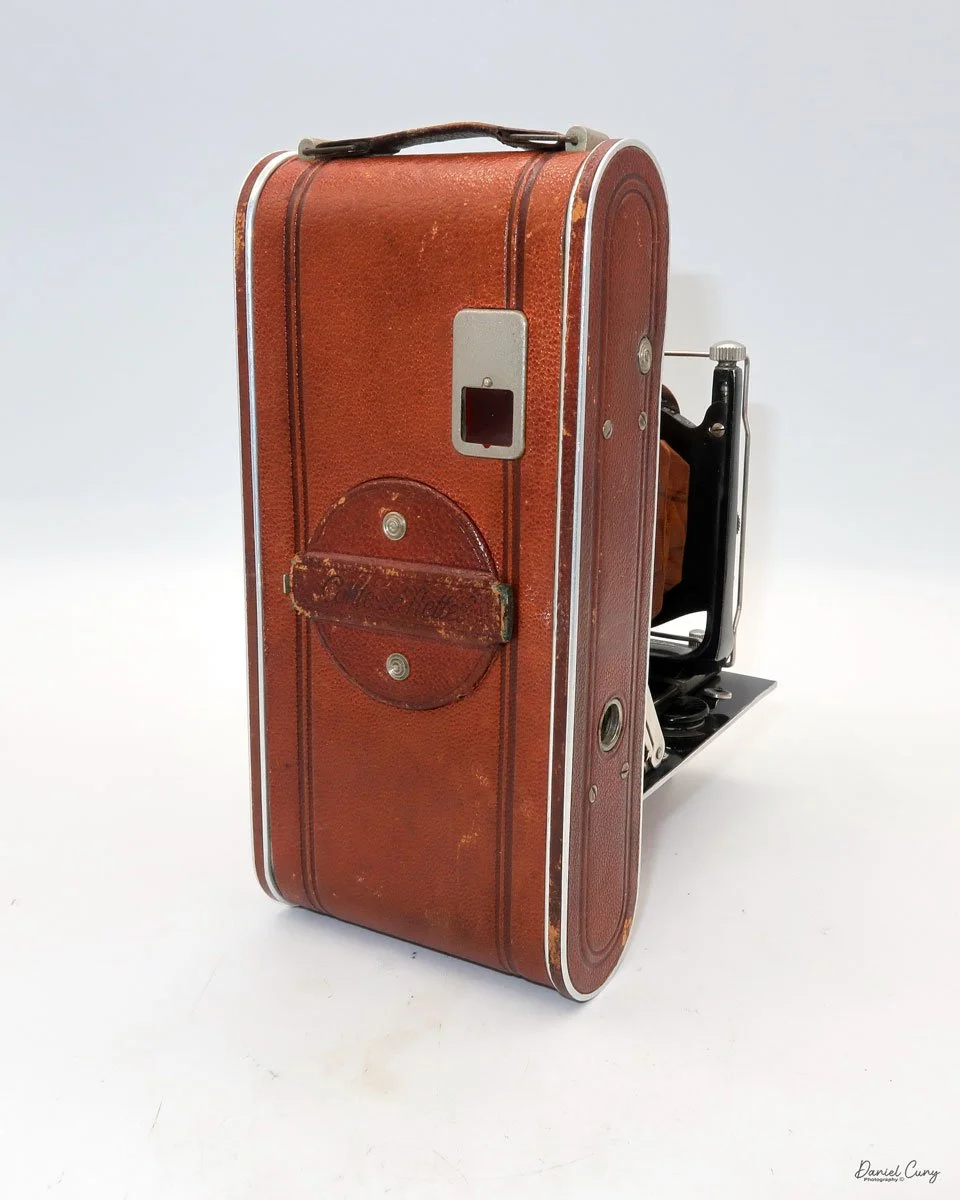
My Contessa Nettel Cocarette I DeLuxe camera

As I've mentioned in other posts, colored cameras are some of my favorite cameras to collect. That's a good thing when the camera is a different color than the standard drab black camera and a beautiful, rich brown-toned camera. When the camera is a rich brown-toned camera and is a rarer version, that makes the camera even more special to me. When the camera is a rich brown tone, a rarer version of the black model of the same camera AND, the camera is in good working condition and has a clean lens, then to me, it's, as we say in the U.S. and to use a baseball term  "a real home run."
 The Contessa Nettel Cocarette I Luxus camera was purchased from a seller in Florida five or six years ago. I purchased this camera along with a few other wonderful cameras, like the Zeiss Super Nettel, a Zeiss Tenax II, a Zeiss Nettax, and a few others, which were real gems in my collection for a long time until I sold them, which at times I look back and regret. That's all part of the collecting world.

 The camera appeared to be in great working condition. The bellows seemed to be light-tight, the aperture moved smoothly, and the camera came with an upgraded Carl Zeiss Jena Tessar lens and a Compur shutter, which, upon inspection, were in excellent condition. Also, the exterior leather was without tears and with minor scuffs, and the Cocarette I handle on the camera was still intact.

 When I received the camera, I wanted to find out more about the camera, so as I usually do, I saw if there was a manual or catalog on the camera. My go-to website for camera manuals is www.butkus.org , which has an extensive collection of manuals. They did have the Zeiss Cocarette manual,

According to the manual, Contessa Nettel made three different Cocarette models, each with four cameras of various sizes.

 The three  Cocarette models are:

Special: Called I/0, II/0, III/0, and IV/O, covered in black leatherette and with hinged metal front.

Standard: Described as Cocarette I, II, III, IV, With real black leather coverings, leather bellows, and hinged "Stirrup" front.

DeLuxe: Styled respectively "de Luxe" I, "de Luxe" II, "de Luxe" III, and "de Luxe" IV. This type is covered in the finest brown Morocco leather and has bellows of the same. ​ All the edges are bound in German silver.
 The different negative sizes of the models described above are as follows:

l/0, I and "de Luxe" I . Film 3 1/4 x 2 1/4 inches

II/0, II and "de Luxe" II . Film 4 1/4 x 2 1/2 inches

III/0, III and 'ode Luxe" III . Film 4 1/4 x 3 1/4 inches

IV/O, IV, and "de Luxe" IV. Film  5 1/2 x 3 1/4 inches

History

Contessa-Nettel AG was a prominent German camera manufacturer based in Stuttgart. It was formed in 1919 by merging two influential companies: Contessa Camerawerke Drexler & Nagel and Nettel Camerawerk. This merger combined the innovative strengths of both firms—Contessa Camerawerke, founded by Dr. August Nagel, and Nettel Camerawerk, known for its advanced strut folding cameras and focal plane shutters. Dr. Nagel, who began his camera design business 1908 as Drexler & Nagel, quickly rebranded it as Contessa Camerawerke before acquiring Nettel in 1919 and establishing Contessa-Nettel AG.

Ad showing the different negative sizes.

 Contessa-Nettel became renowned for its diverse and technically advanced range of cameras. The company offered approximately forty different models, including many variations of the Cocarette, a folding camera that became one of its most famous products during the 1920s. Other notable models included the Deckrullo-Nettel series, which featured self-capping focal plane shutters—a significant innovation. The company also specialized in stereo cameras and produced various compact and portable designs, such as the Piccolette and the Stereax.

 The Deckrullo-Nettel cameras, initially developed by Nettel, continued to be produced under the Contessa-Nettel name after the merger. These cameras were admired for their engineering, particularly their strut folding mechanisms and reliable shutters. Contessa-Nettel's products were recognized for their build quality and design excellence, reflecting Dr. Nagel's eye for detail.

 In 1926, Contessa-Nettel became part of Zeiss Ikon, a new conglomerate formed by merging several major German camera manufacturers, including ICA, Ernemann, and Goerz, alongside Contessa-Nettel. This consolidation aimed to strengthen the German photographic industry and create a powerhouse capable of competing internationally. After the merger, many Contessa-Nettel designs and models continued under the Zeiss Ikon brand, and the Stuttgart factory became a critical Zeiss Ikon site.

 Although Contessa-Nettel, as an independent brand, ceased to exist after 1926, its influence persisted. Feeling out of place at Zeiss Ikon, Dr. August Nagel left to establish the Nagel-Werke factory, which Kodak later acquired. Nagel's subsequent innovations, such as the Kodak Retina and the first pre-loaded 35mm film cassette, trace their lineage to the design philosophy he honed at Contessa-Nettel. The Contessa-Nettel name also lived on in Zeiss Ikon's product lines, most notably in the Zeiss-Ikon Contessa cameras of the postwar era.

 Contessa-Nettel's history is marked by technical innovation, quality craftsmanship, and a legacy that shaped the evolution of camera technology in the 20th century.

My Camera:

My Contessa Nettel Cocarette I Deluxe camera is 6 5/8" long by 3.5" wide, 1.5" deep when closed, and 5.5" deep when opened, with the lens extended from the body. It weighs 1 Lb. 6 oz. My camera's serial number is 422872. It also has a Carl Zeiss Jena Tessar 10.5cm f4.5 lens, serial #588166.

 To open the camera, there is a button on the side of the camera, which is similar to another folding camera, which you press, and the front door opens, exposing the front of the camera. Just below the shutter is the company name, Contessa Nettel, and on either side of the name are two knobs which you grab and pull the front standard of the camera out from the camera body until they stop. You're now ready to take a photo if you have film loaded into the camera

Pulling the front standard from the camera body lets you see the controls on the camera much better. Looking down at the camera, you have a bright waist-level viewfinder with indents on each corner representing a vertical or horizontal format for framing your photo. Currently, the camera is in the vertical position or, in modern terms, in portrait mode. The viewfinder can also tilt to the side if you plan on using the camera in the horizontal position to photograph in landscape mode. Right next to the viewfinder is a red bubble level to ensure the camera is level for straight photos and does not have crooked horizon lines.

On the camera's bed, just to the right of the shutter, is a focus lever, which allows the photographer to get closer to their subject and take clear photos. The focus lever can go from 2 meters to infinity, with a few different distances in between.

 When you look at the front of the camera and focus on what is on the Compur shutter, on the right side is the shutter release lever, and on the left side is a dial with Z, D, and M. These are used for different shutter functions. Z opens the shutter when you release the shutter lever and closes when you pull the shutter release again. D opens the shutter when you pull down on the shutter release and closes when you release it, and M is for the more normal use of the shutter speeds built into the shutter. The shutter speed ranges from 1 second to 1/250. All the shutter speeds on the camera seem reasonable, even the 1 sec, which is fantastic for a 100-year-old camera.

A small lever is on the bottom of the shutter. Sliding the lever from one side to the other changes the aperture setting, which you can see on top of the shutter. The camera's operations are very easy to see while holding it. You can view the shutter speed, the aperture settings, the focus distance, the viewfinder, and the bubble level, all while composing the photo in the vertical or portrait position.

 On the right side, as you're holding the camera, is a chrome knob on top of the lens standard. This slightly raises the camera lens, which will correct for vertical distortion. It doesn't do much, but it gives you a little movement in several of the better-quality folding cameras from this era.

For horizontal photos, you can swing a wire finder around the lens. On the back of the camera, a small eye finder slides out to create an action or sports finder from the two pieces. Using the camera in this position is a bit more clumsy due to where the shutter release is positioned.

Eyepiece on back up, and wire frame in place for action photo.

Fortunately, the Cocarette I cameras can use the popular 120-size film. The film chamber slides out from the camera body to load the film. On the left side of the body is a lever that you slide to unlock the film chamber from the body. Once the film chamber is unlocked, it can slide up to reveal the take-up spool and the film area. To put the film in the film area, there are holders that you flip up to get the take-up spool and the film into the respective areas.

 When loading the film, slide the paper packing under the thin channel to keep it flat across the opening. Another oddity of this camera is a large cut-away on the top of one of the corners of the exposure areas. I don't understand why this is there, as it did produce the cutout on the negative. If you know why that is there, I'd love to know. It may have had something to do with the older films of that time.

Once the film is loaded into the film back of the camera, slide it back into the camera and lock the back onto the camera body to prevent it from getting exposed to light. A small square red window with a cover is on the back of the camera. Winding the film with the take-up spool will take you to the number 1 photo, and now you're ready to make your first photo.


My Results:

I loaded the camera with a roll of Rollei RX100 film and walked through the neighborhood with my trust Sekonic L-308 meter. The day was somewhat overcast, so the contrast in the images wasn't the best. I also used the focus control on the camera. Since the day was cloudy, the settings on many of the photos were a shutter speed of 1/100 and aperture settings of f/4.5, which means there's not a lot of play when it comes to depth of field, and the photos show that.

 Here are the results I got from the Contessa Nettel Cocarette I Deluxe.

Conclusion:

The camera is straightforward to use, which I’m used to because I often use folding cameras. The controls were straightforward to define and comfortable to hold for composition purposes. However, the results I received weren't the best when I used the focus control on the camera. It's very possible my distances were off, and having to use a shallow depth of field didn't help.

 It wasn't bad, but my expectations were too high. Getting a 6x9 format negative with a Zeiss lens, I was hoping for better results. That shows I'll need to take this camera out and try again.

 Thank you for taking the time to read about this beautiful and very functional camera. It certainly looks terrific in my collection, and I enjoy having it.

 Click on the link if you're interested in reading some of the other camera reviews

 If you are interested in some of the cameras and other camera oddities I have for sale, I have a store on eBay called Cuny's Camera.

 Until next week, please be safe.