Ebner camera

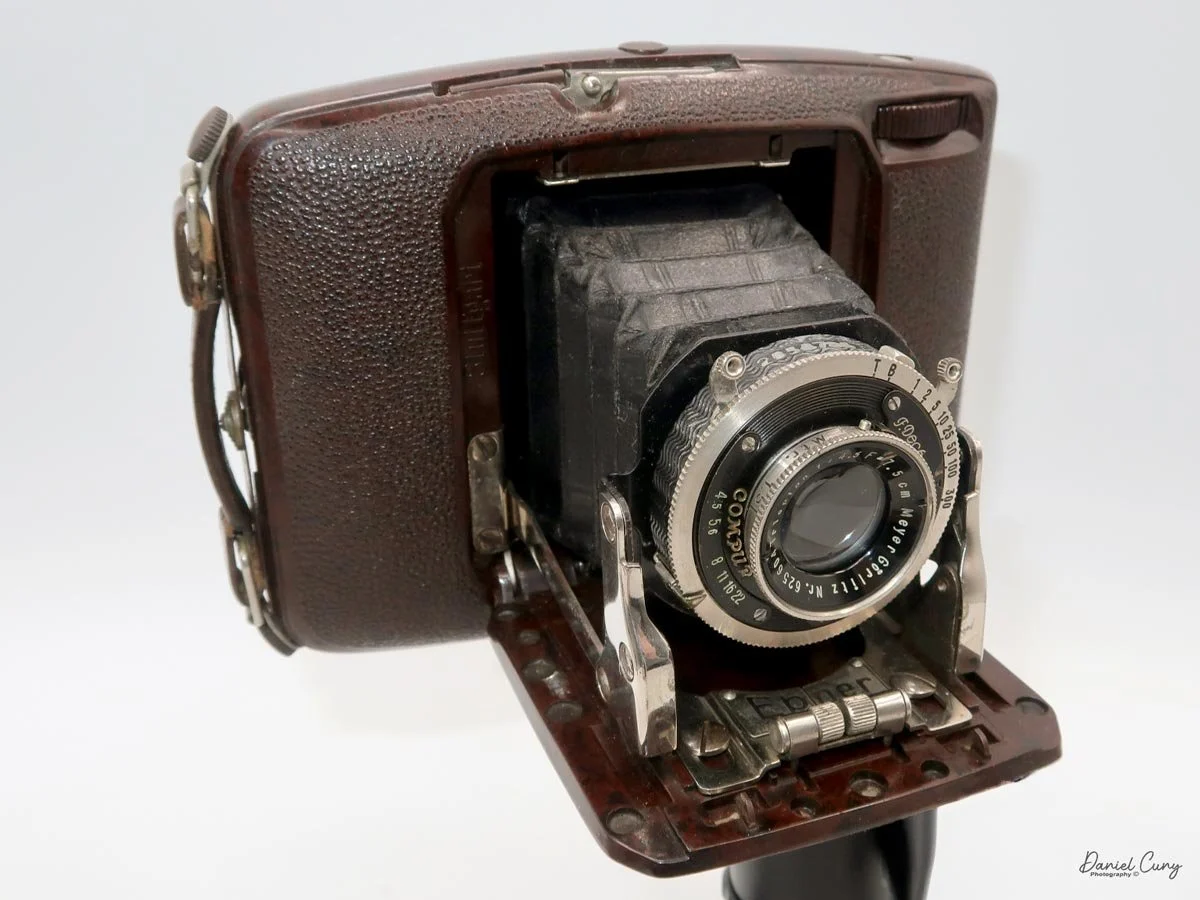
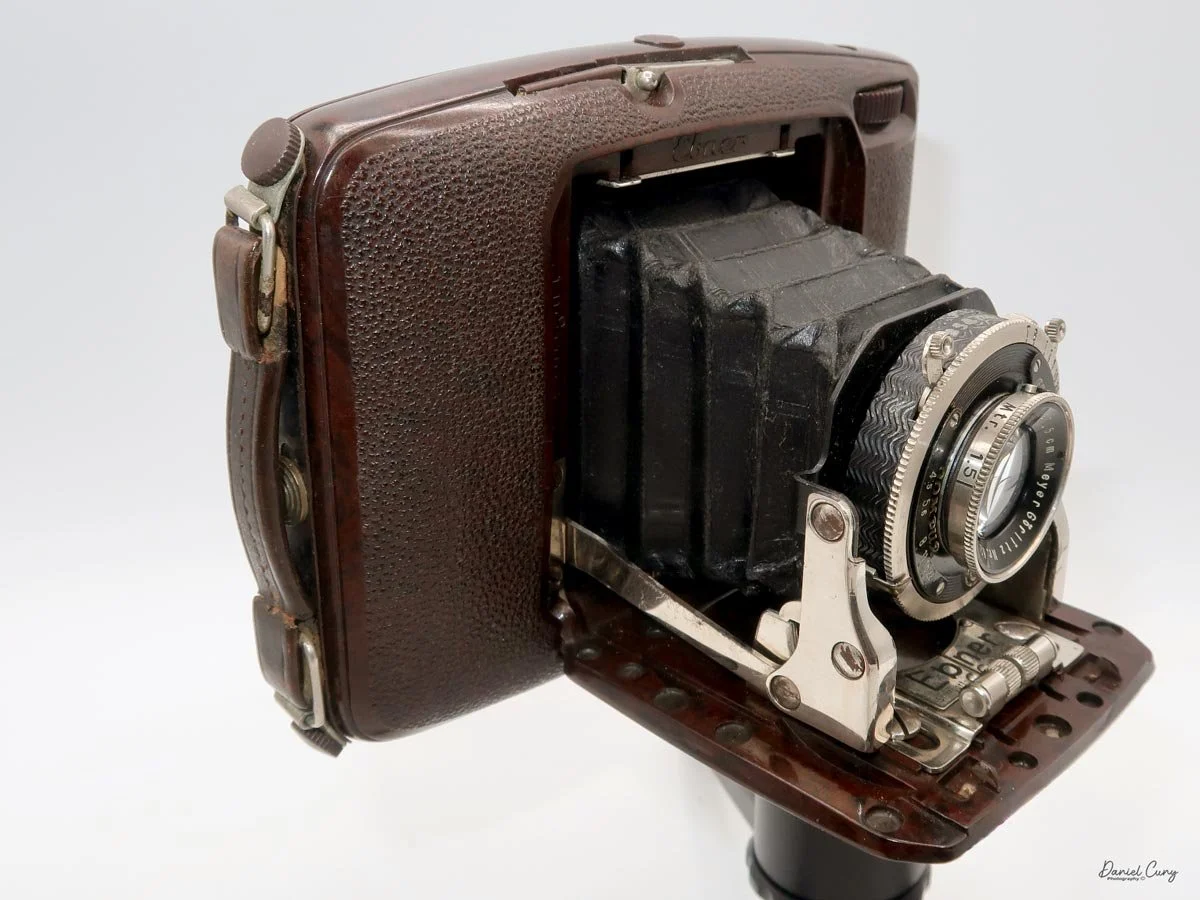
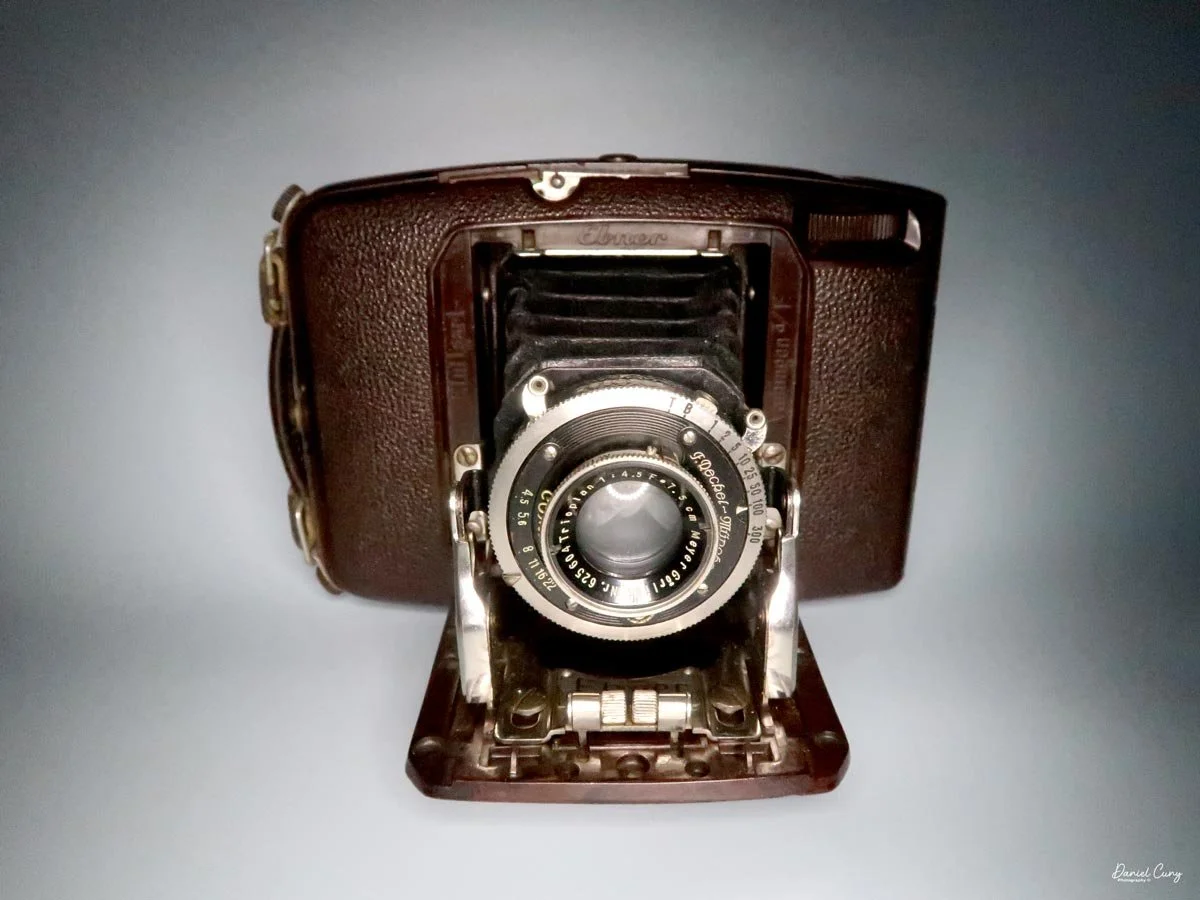
My Ebner 6x4.5cm camera

During my trip to Tokyo, Japan, a couple of weeks ago, I was in Kitamura's flagship store, looking at their "bargain" cameras, which in itself is a treasure trove of used cameras, when I spotted a brown Bakelite camera sitting on one of their shelves. The camera was a "folding" style camera. Still, I had never seen a camera like it, so immediately I wanted to see it, and with any luck, take it home with me, provided the price wasn't outrageous. I scanned the camera price and converted it from Yen to US dollars; it wasn't outrageous, so I wanted to see it and learn more.

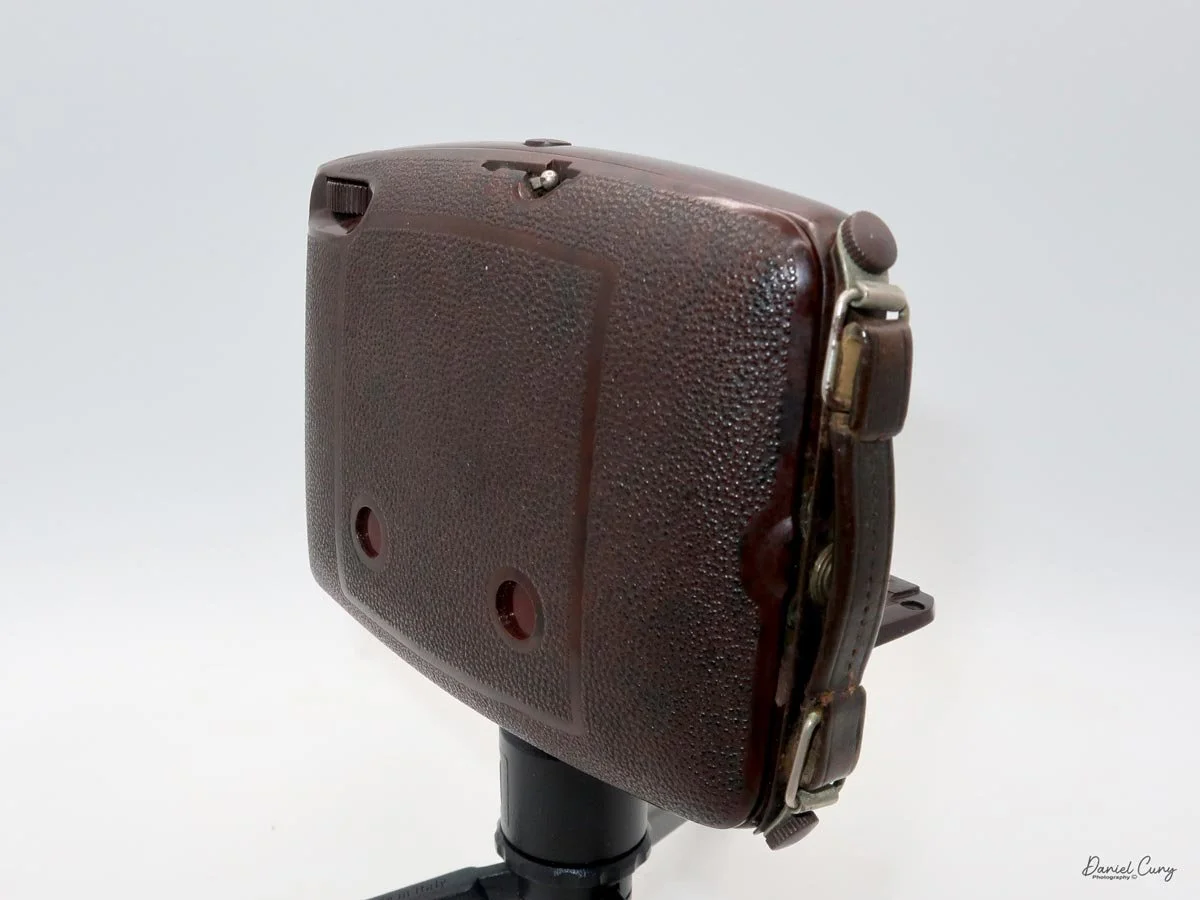
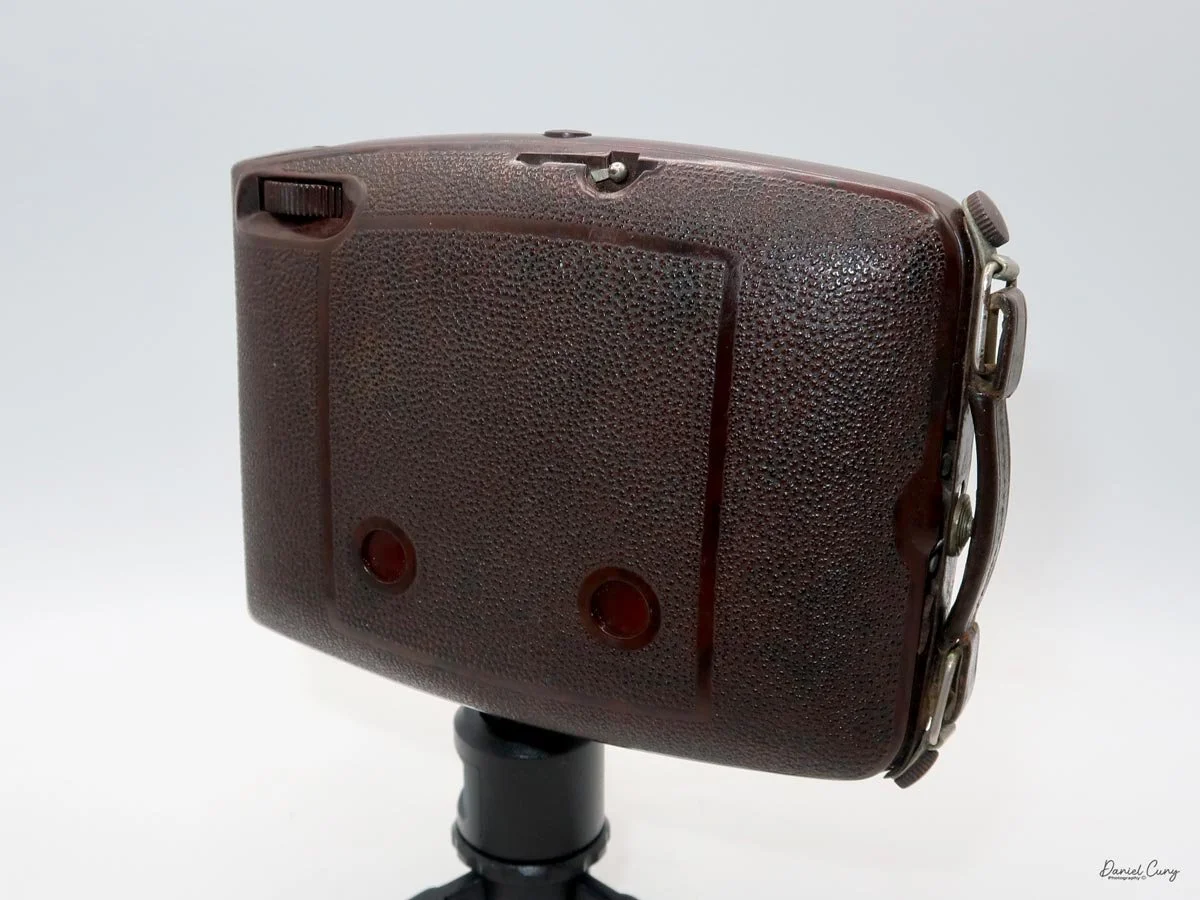
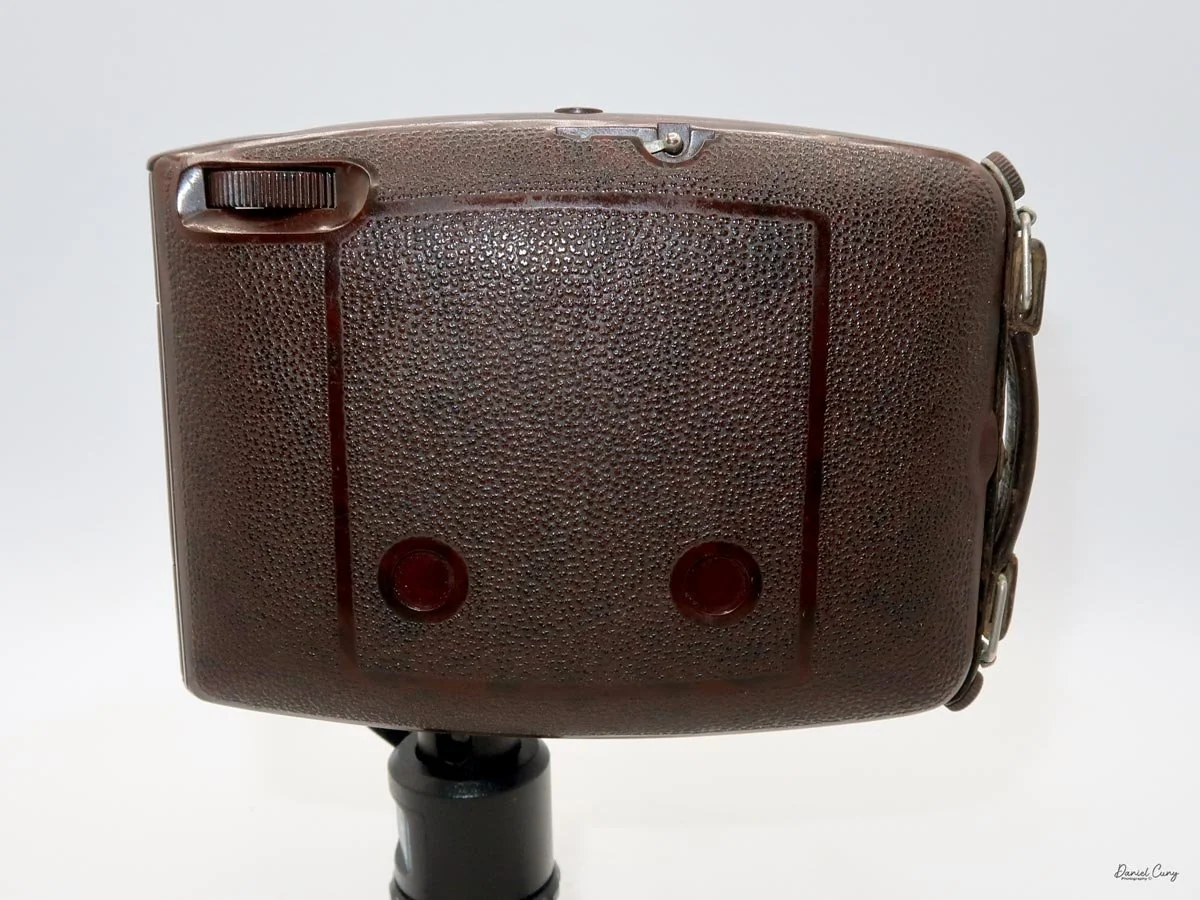
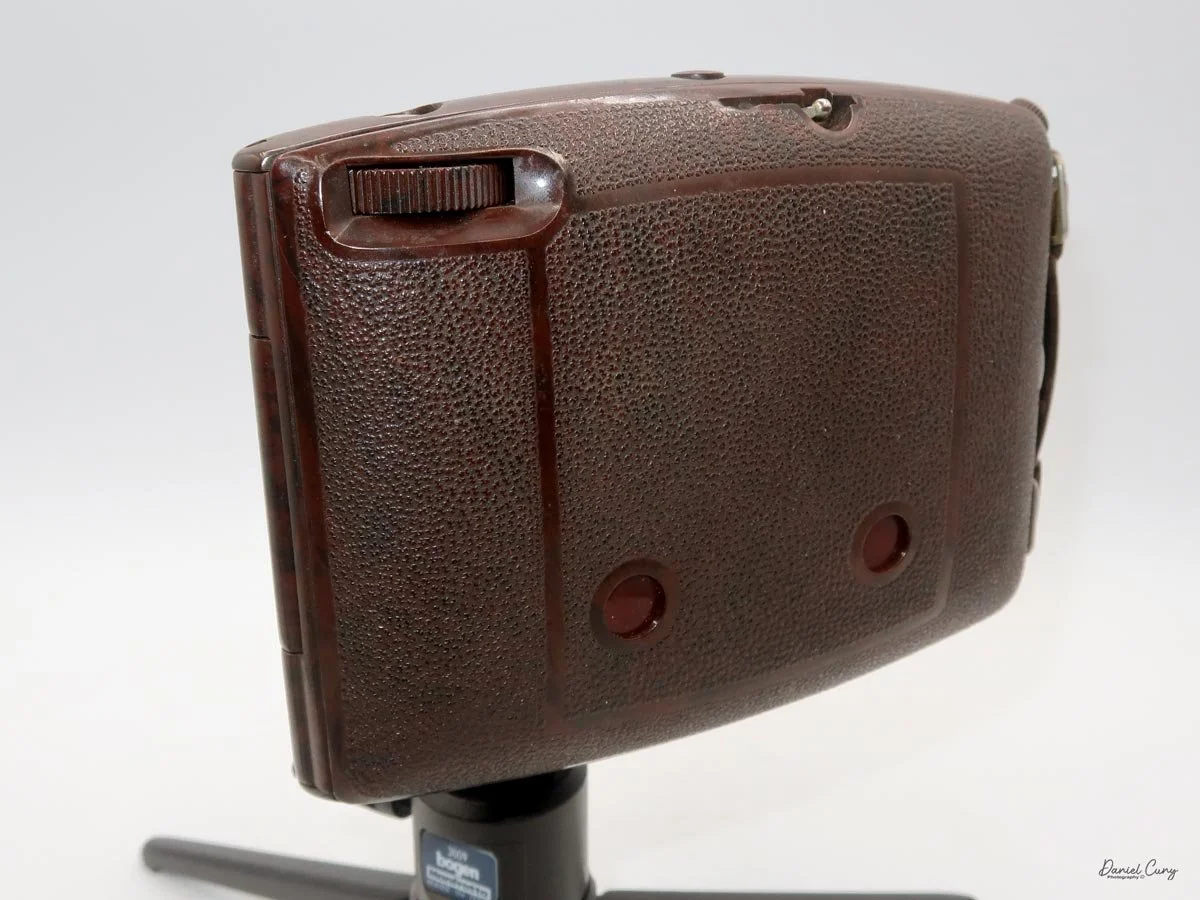
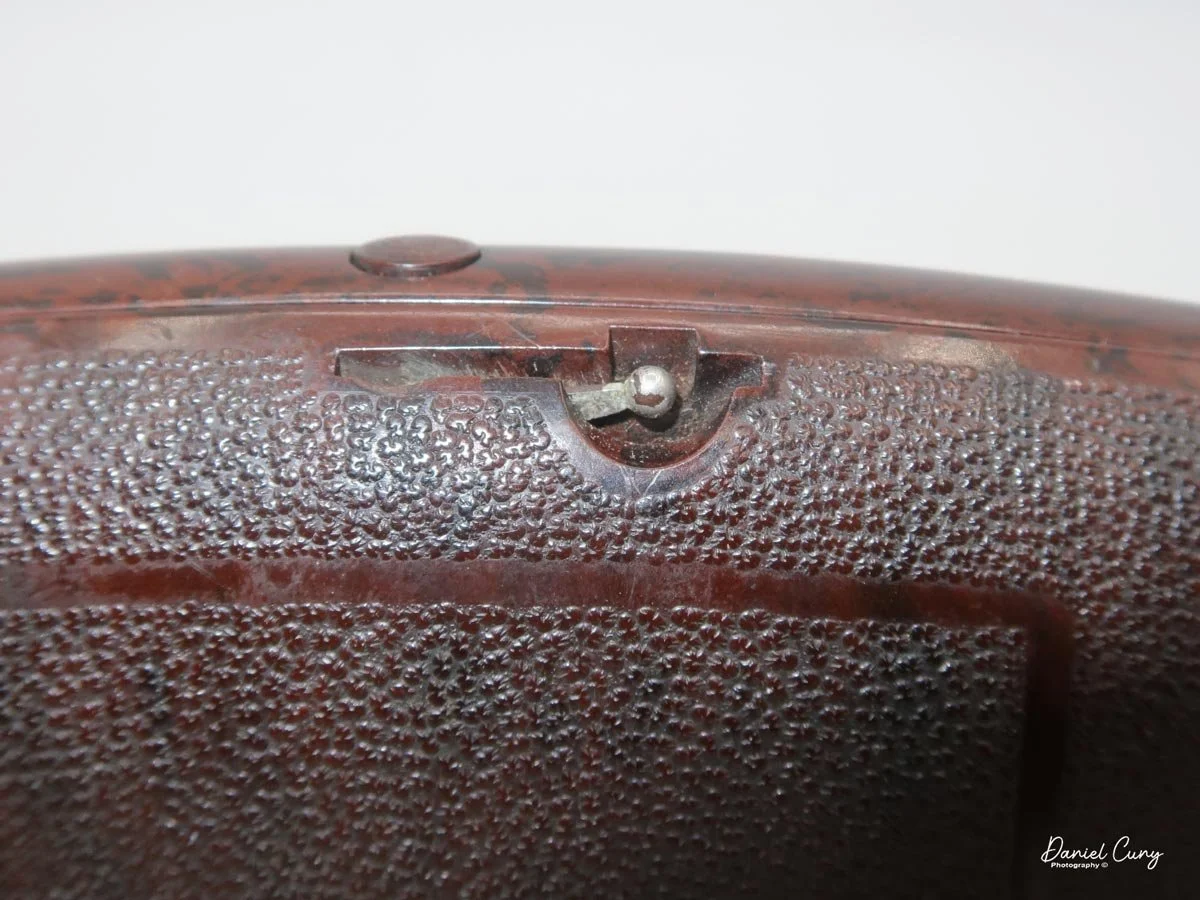
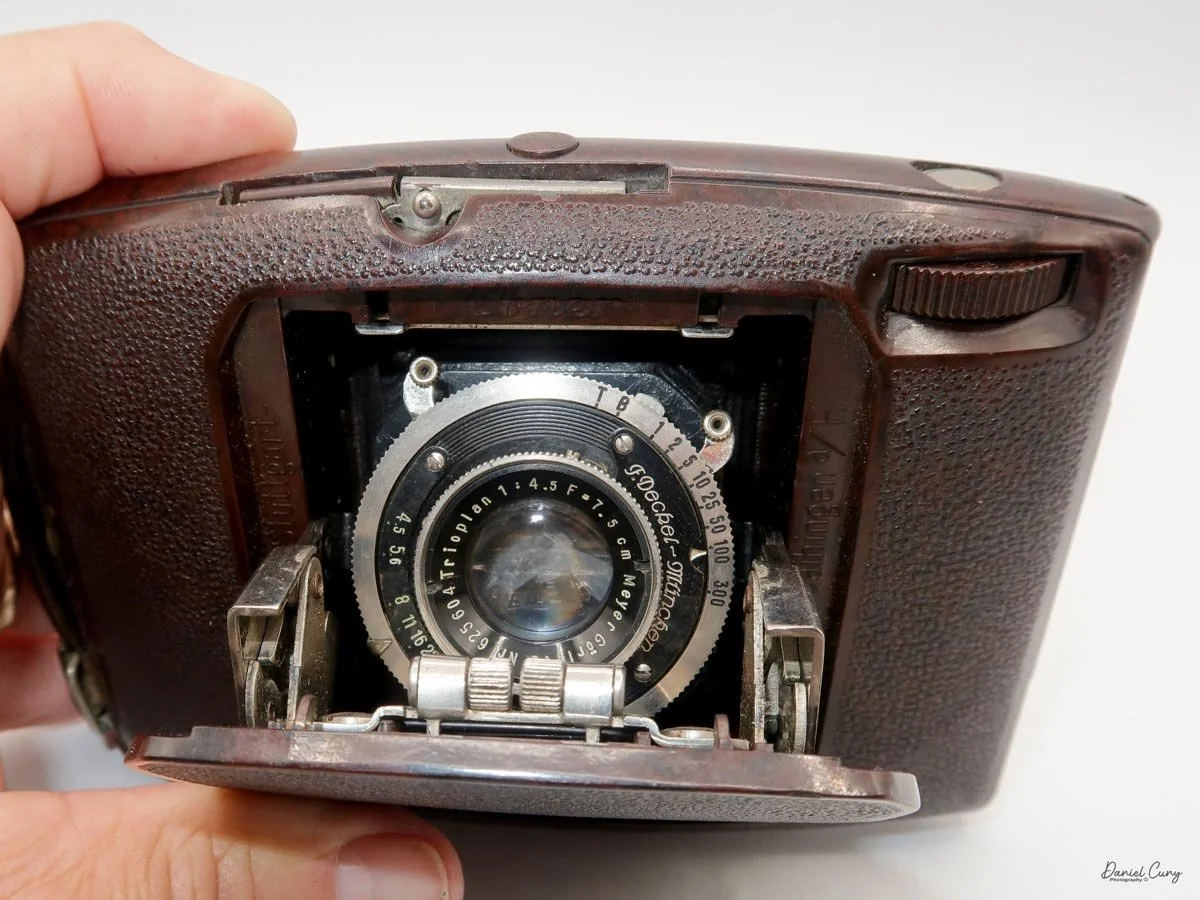
 The things that caught my eye at first was the beautiful, rich brown color, the wonderful pebbled texture of the body, and the very sleek design. To me, the camera just sang to me in its design. Since my eyes almost always go to anything "colored" when I look at cameras, it reminded me of the Coronet Vogue. Then, scanning the shelf below, they also found the Coronet Vogue. which I had seen in a few different flea markets in both Paris and London, but the asking price was always too high (in my opinion) for the camera, so I passed them up.
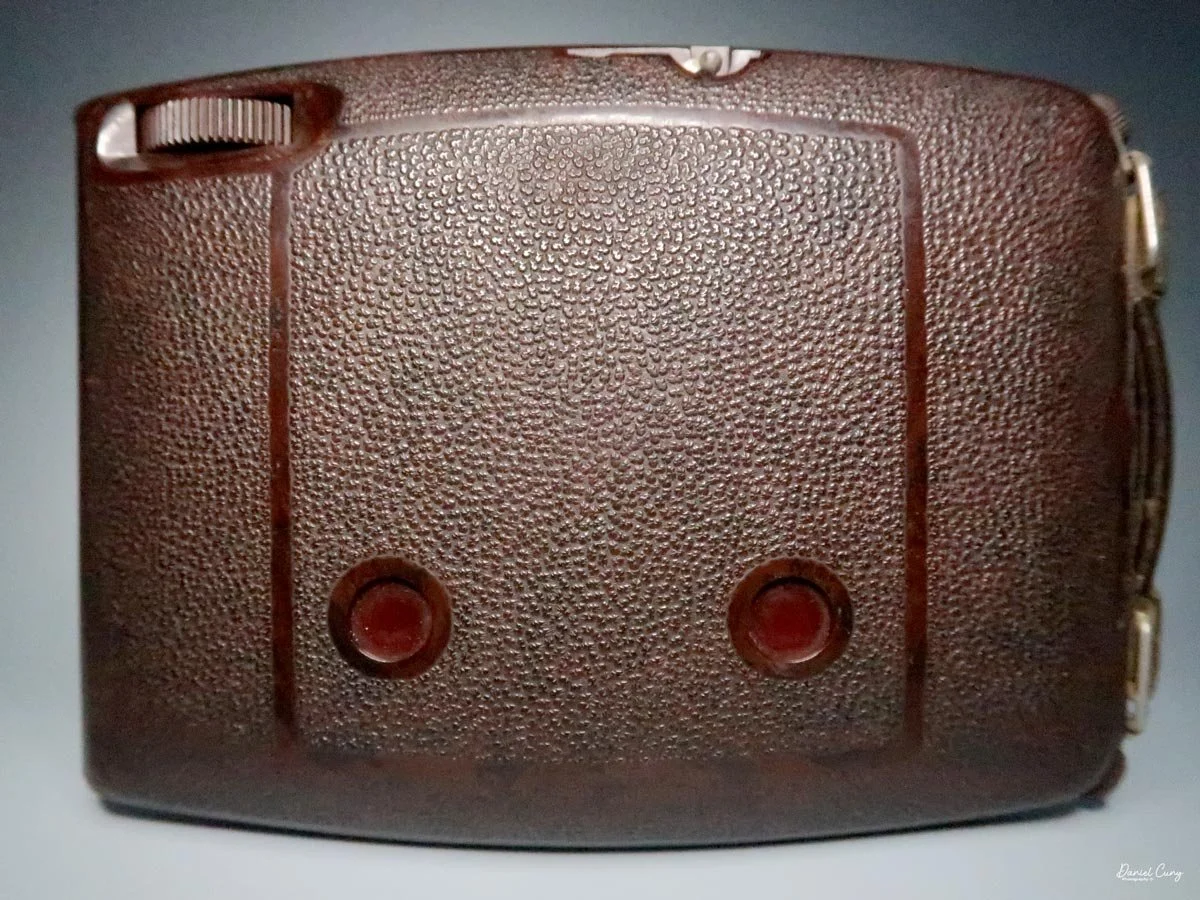
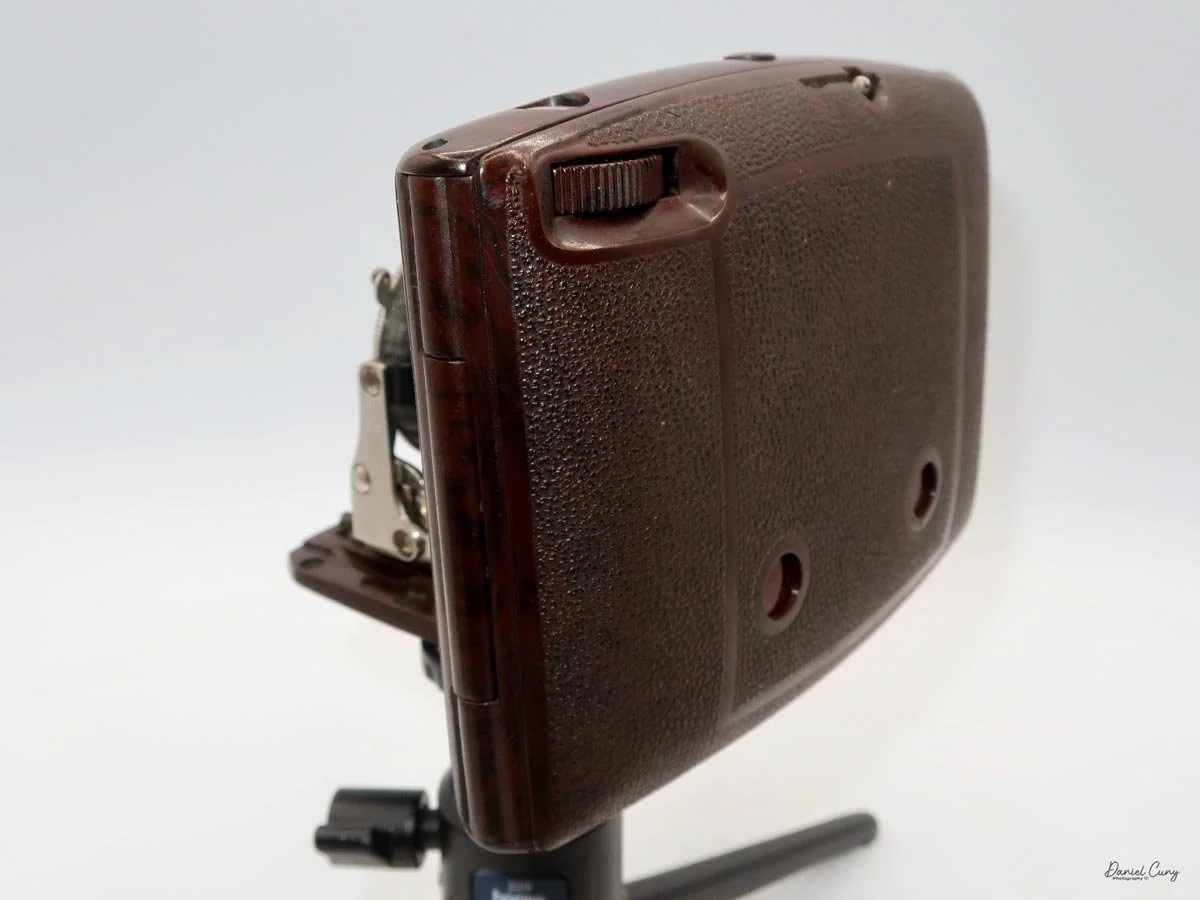
Back side with beautiful pebble finish on the Ebner camera

 At this point in my camera search, there were 3-4 cameras I wanted to look at, so I went up to one of the salespeople on the floor and showed them the items I was interested in. Very patiently, he pulled the 4 items from the shelves and placed them on a camera mat on one of the glass display cases in the shop.

 Opening the Ebner camera first, I hadn't seen it before and don't recall it in McKeown's Camera Guide. I don't have the few hundred thousand cameras memorized. It wasn't until I opened the back of the camera and noticed the name "Ebner" that I realized the camera's brand. It still hadn't jogged my memory or sounded familiar.
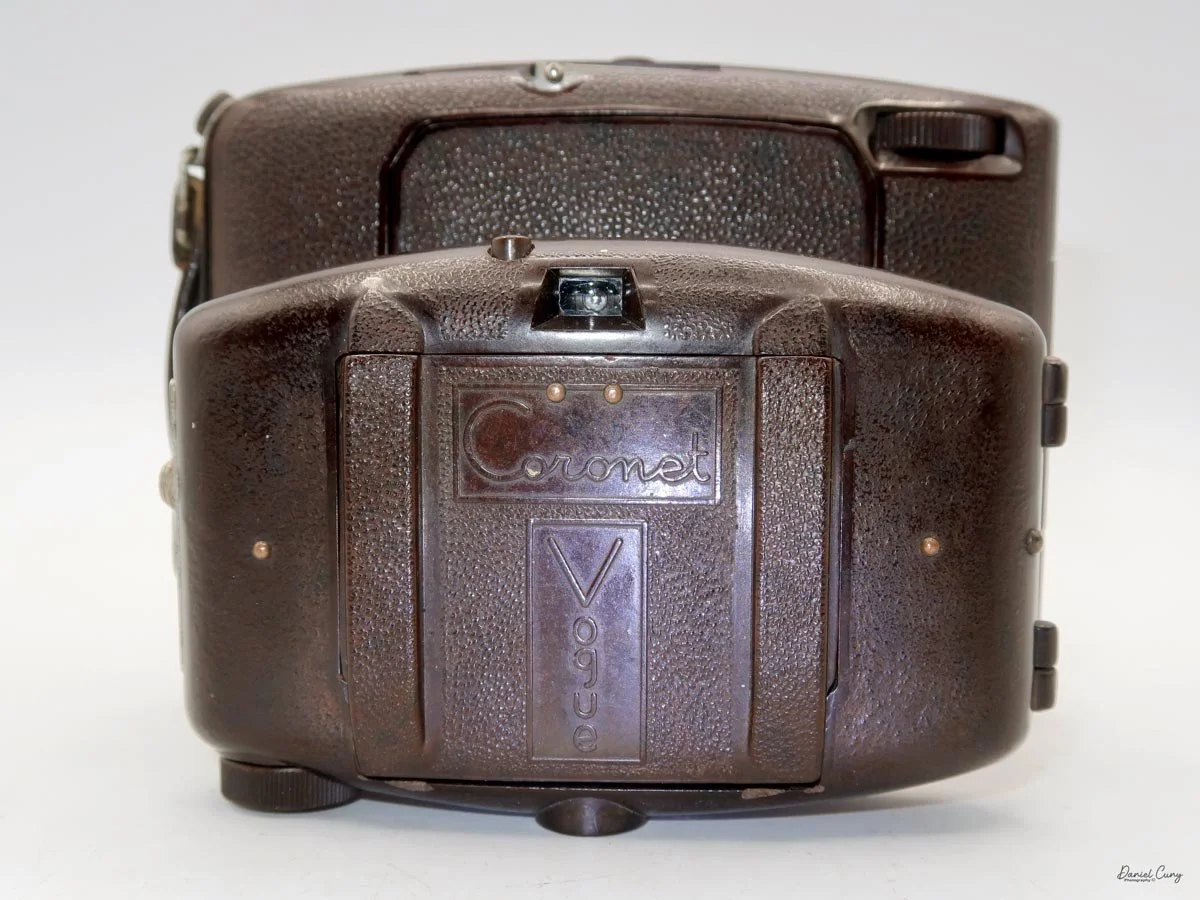
Similarities of the Ebner and Coronet Vogue cameras.

 As I looked over the camera, the shutter worked, the aperture slid around the lens and changed size, and the lens was fairly clean. It didn't have mold, mildew, or fungus as I shone a penlight through the lens, and I didn't see pinholes in the bellows, so all in all, the camera was a "keeper" to me.

 The Coronet Vogue camera had some issues. It had a replacement black bellows rather than the original brown matching bellows, and the side struts of the camera didn't work properly. But the camera was inexpensive, and the shutter worked, so I believe at some point later this year I will write about it. To me, the similarity in the design and style of both the Ebner and Coronet Vogue cameras is striking.

 The similarities make sense to me, especially since Ebner stopped producing cameras in 1935. Still, other camera companies, like Pontiac and Gallus, produced very similar cameras with the same sleek design. I'm confident that since the Coronet Vogue was introduced in 1936, they recognized that this sleek, Bakelite camera design would benefit their sales, and they produced it.

History:

 Albert Ebner & Co. was a small but interesting German manufacturer that moved from audio and electrical products into cameras during the early 1930s. Albert Ebner, born in 1891 in Bad Cannstatt, had already founded earlier companies before his name became associated with the camera firm that collectors remember today.
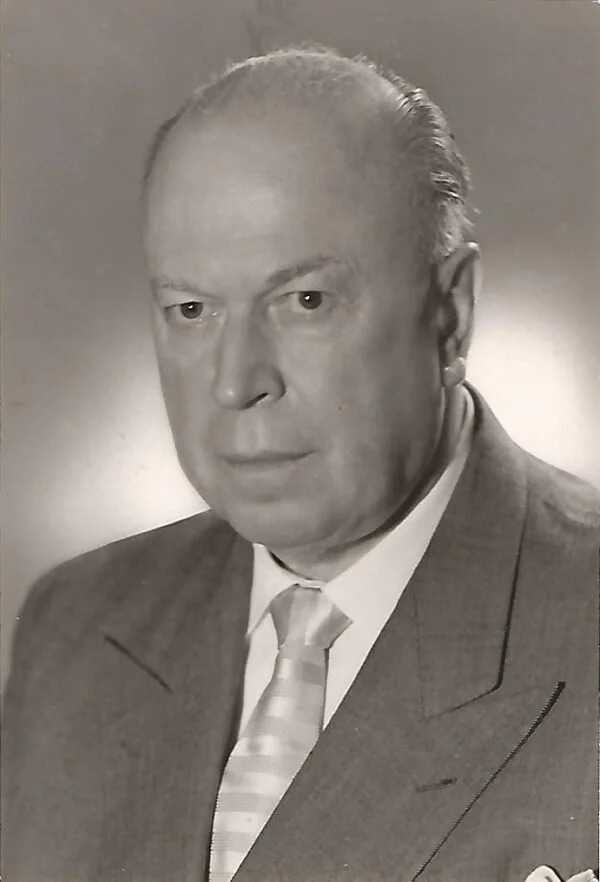
Portrait of Albert Ebner

 The company's background was in turntable motors, gramophone parts, and related household electrical goods. After earlier business setbacks and reorganizations, Ebner returned to Bad Cannstatt and formed a new Albert Ebner & Co., often abbreviated AECO, which broadened into vacuum cleaners, fans, and other electrical products before experimenting with cameras.

 Ebner's camera output was very limited. The firm produced only two folding models: a 6x9 cm camera on 120 film and a smaller 4.5x6 cm model on Kodak 620 film, both made around 1933 to 1935. These cameras had no special model names beyond their image size, which makes them especially plain in naming but distinctive in construction.

 What set them apart was their design. Both cameras used a marbled brown Bakelite body, a material associated with the radio and record-player industries, and they paired that shell with a Compur leaf shutter and lenses from makers such as Meyer-Gorlitz. That gives the Ebner cameras a streamlined Art Deco look that feels more industrially designed than mass-market consumer.
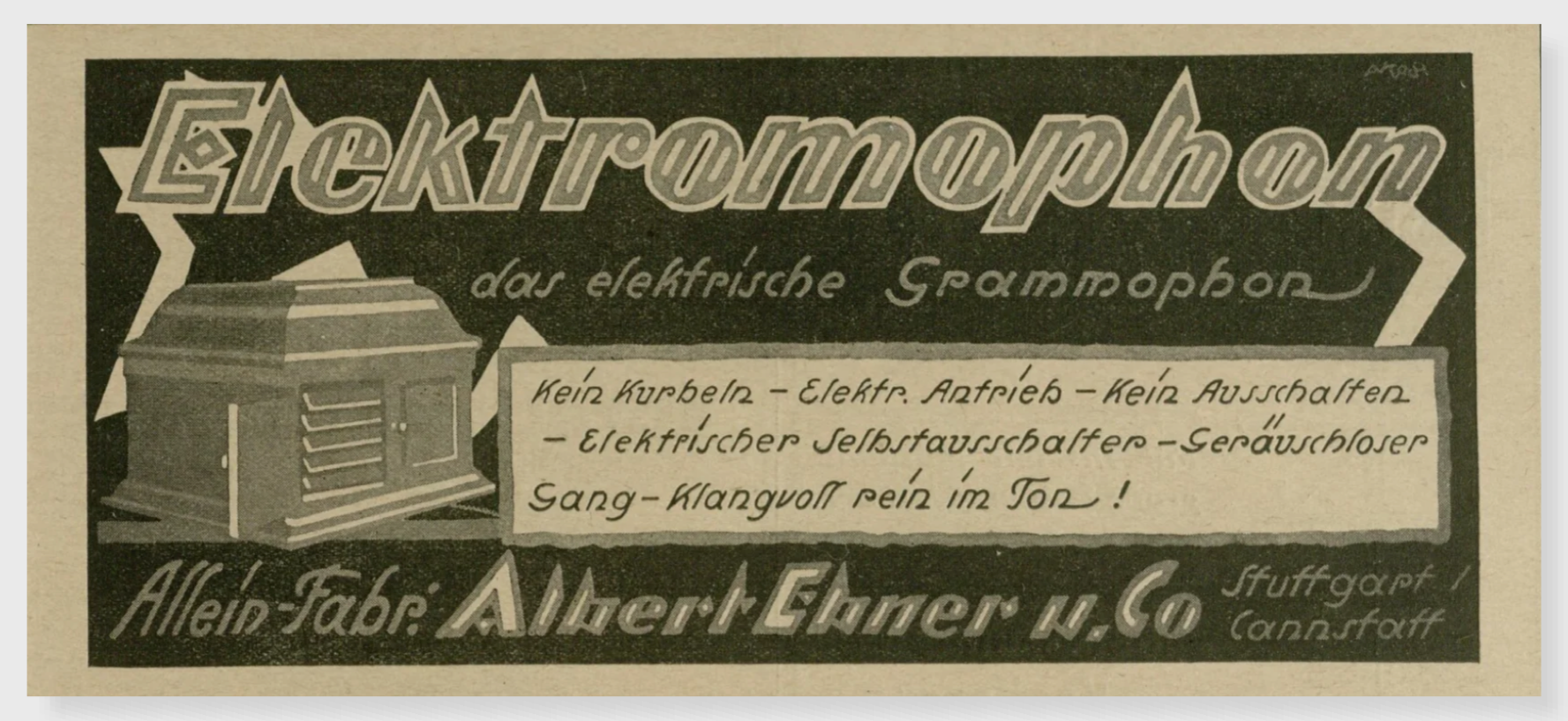
German advertising.

 The larger 6x9 version used standard 120 film, while the 4.5x6 version used 620 film, an unusual choice for a German maker of the time. Collectors also note that the cameras were sold mostly in Germany and that production was brief, with the company apparently ending camera manufacture by 1935. Because so few were made, surviving examples are relatively scarce today.

 Ebner's camera venture did not last long. Still, it fits a broader pattern of early 20th-century firms adapting existing expertise in Bakelite and mechanical assembly to camera production. After the camera period ended, Albert Ebner's business life continued in audio through the later Perpetuum-Ebner merger. In contrast, the cameras remained a short-lived sideline that now attracts collectors and historians.

My Camera:

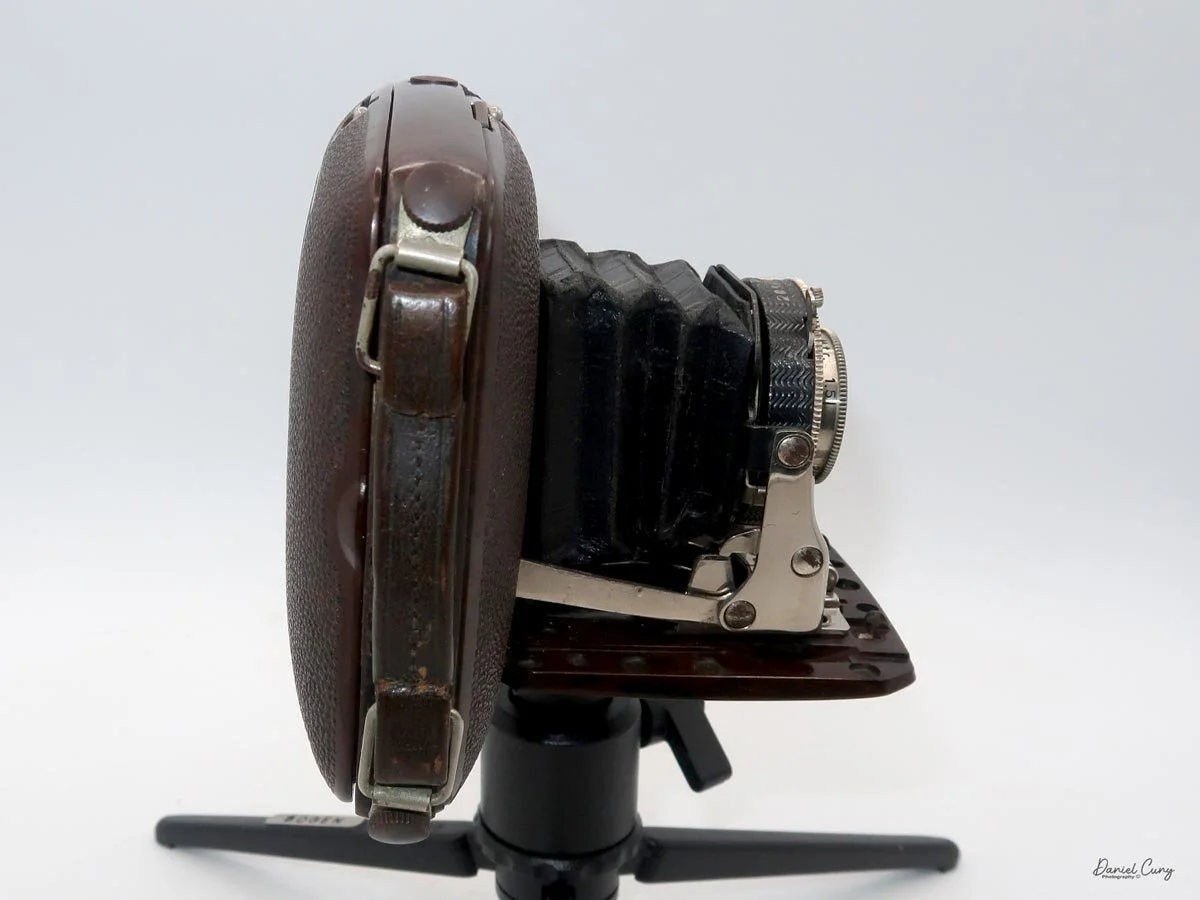
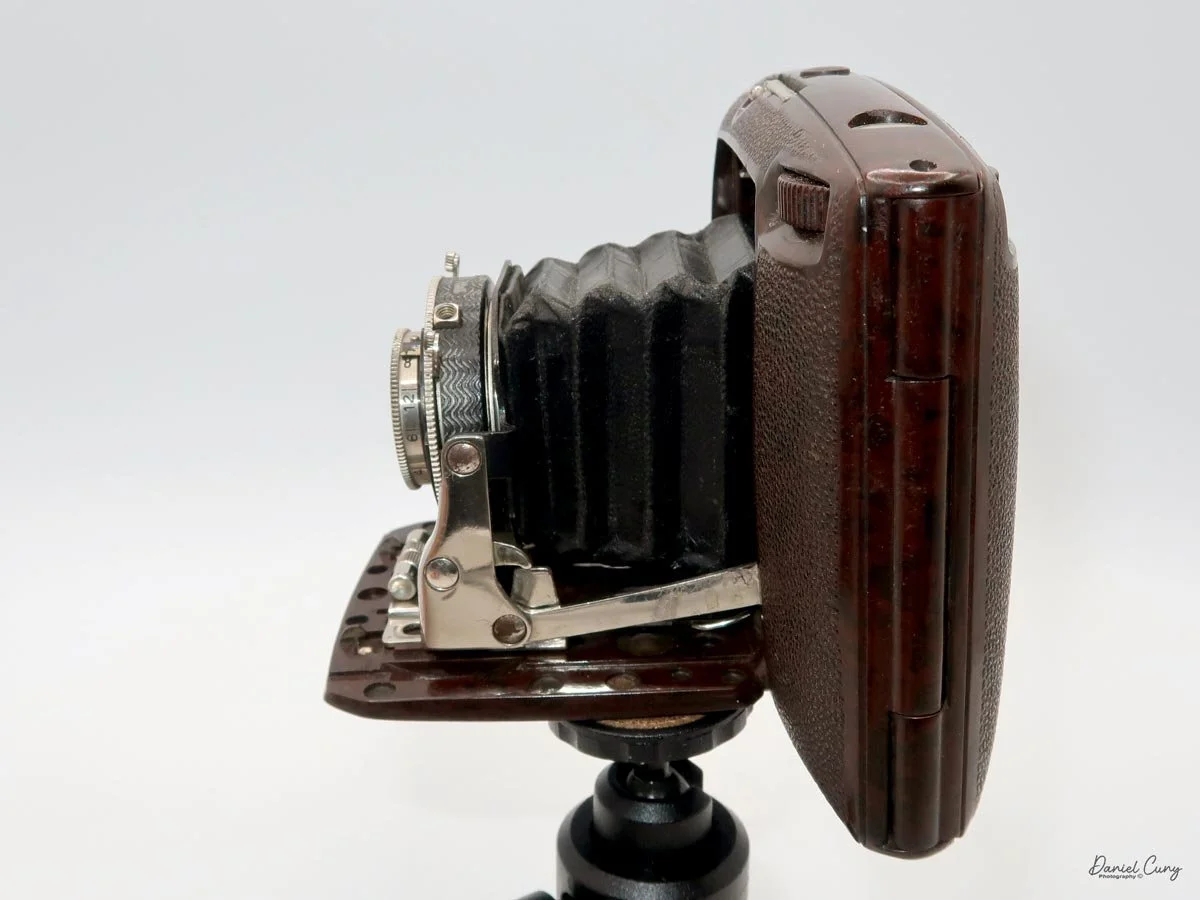
 My Ebner 6x4.5cm camera is 4.25" tall with the retractable viewfinder down, and 5" tall with the viewfinder in the upright, viewing position. It's also 5.5 wide and 1.25" deep with the lens retracted, and 4" with the lens extended and in the normal taking position. The camera weighs 1 pound 0.7 ounces without film loaded inside. 
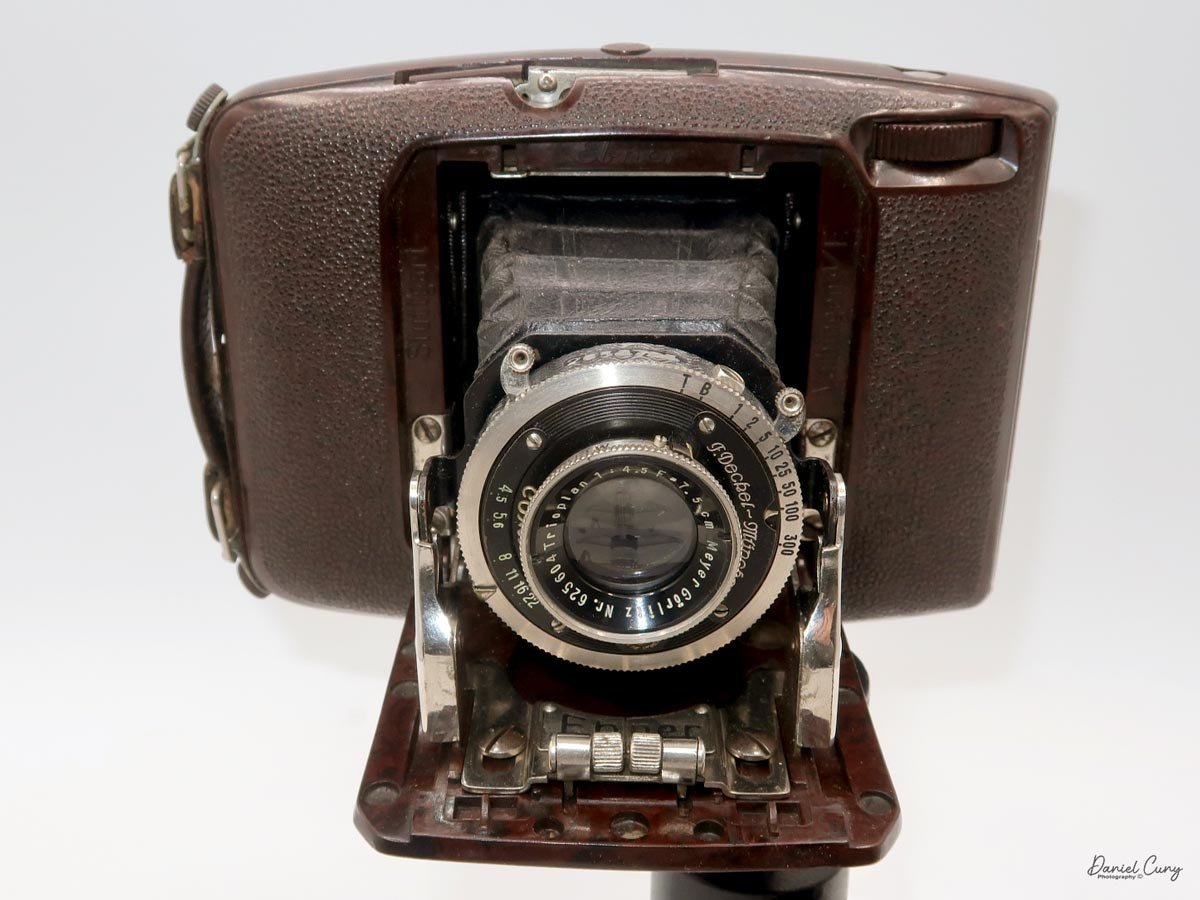
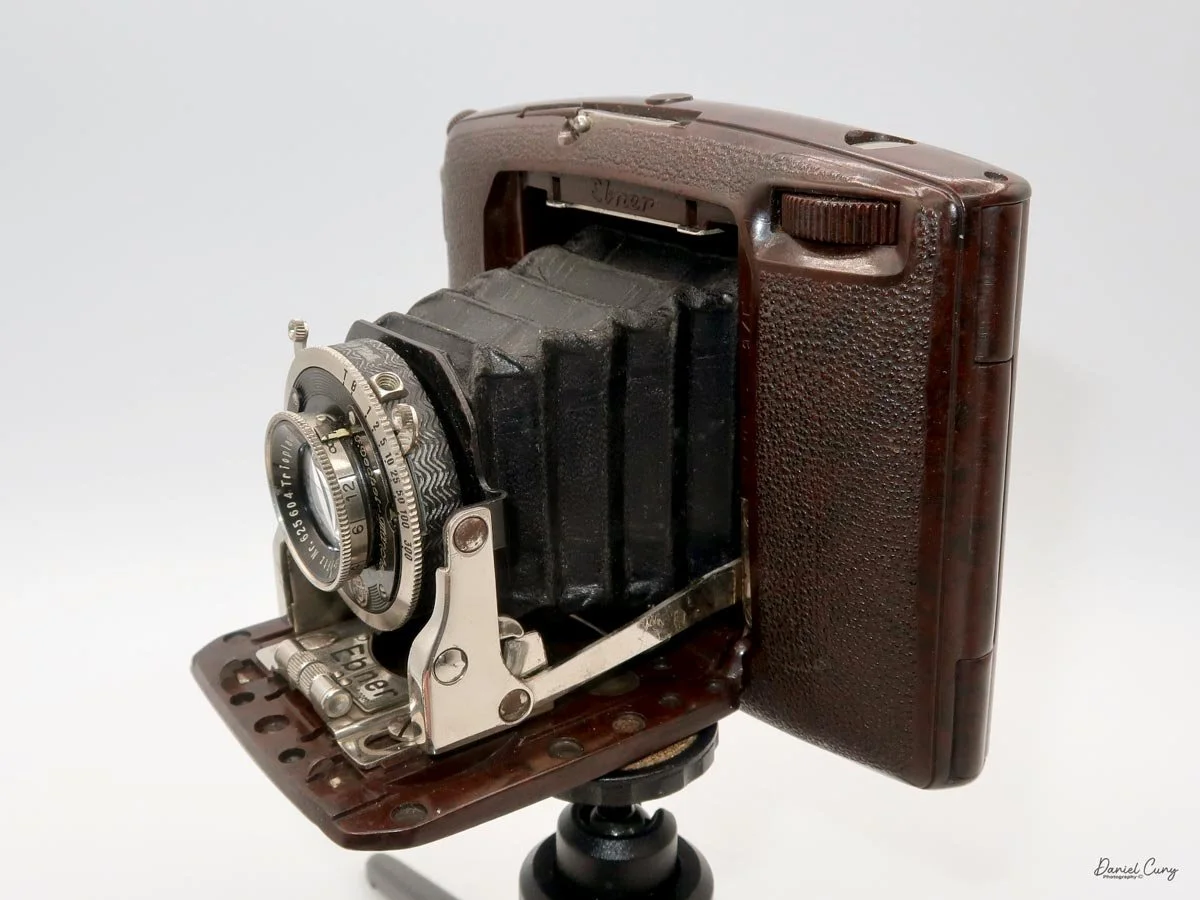
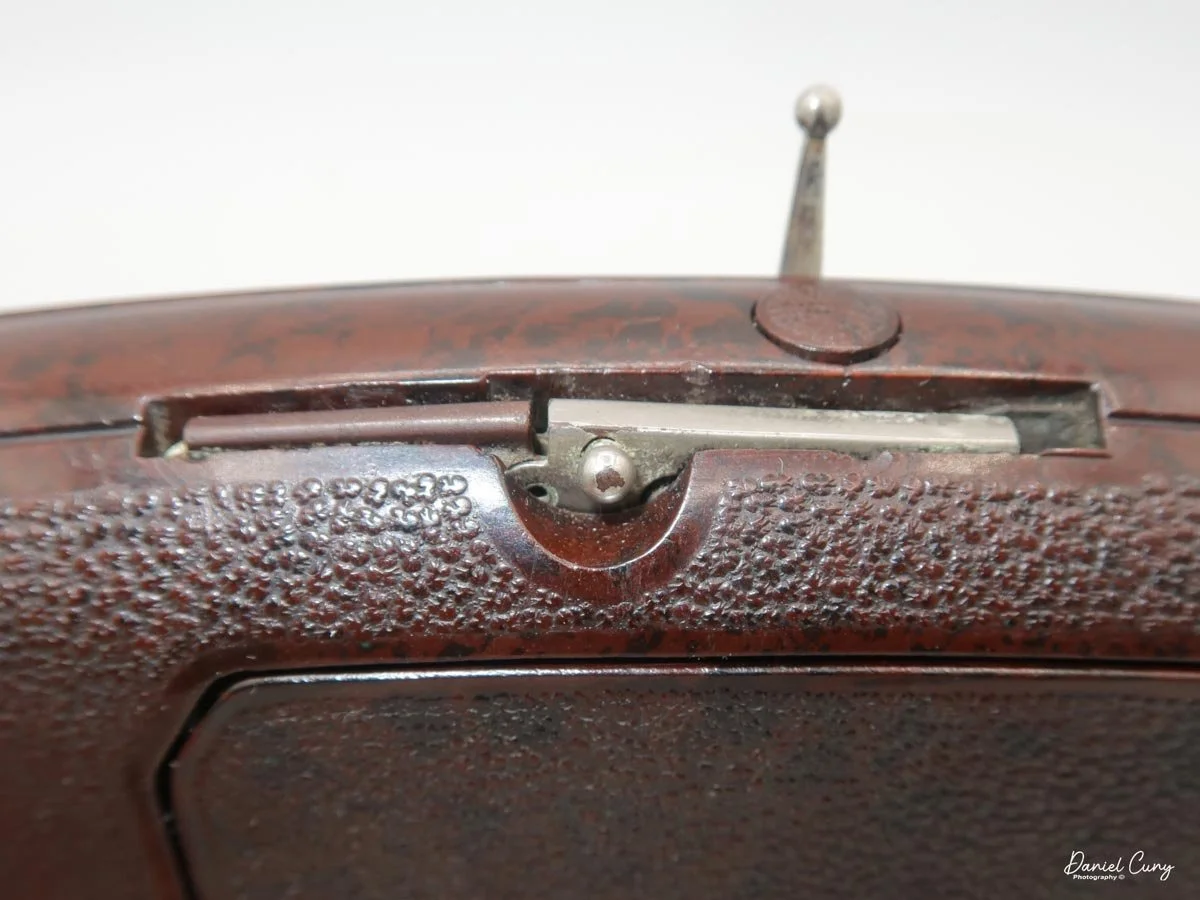
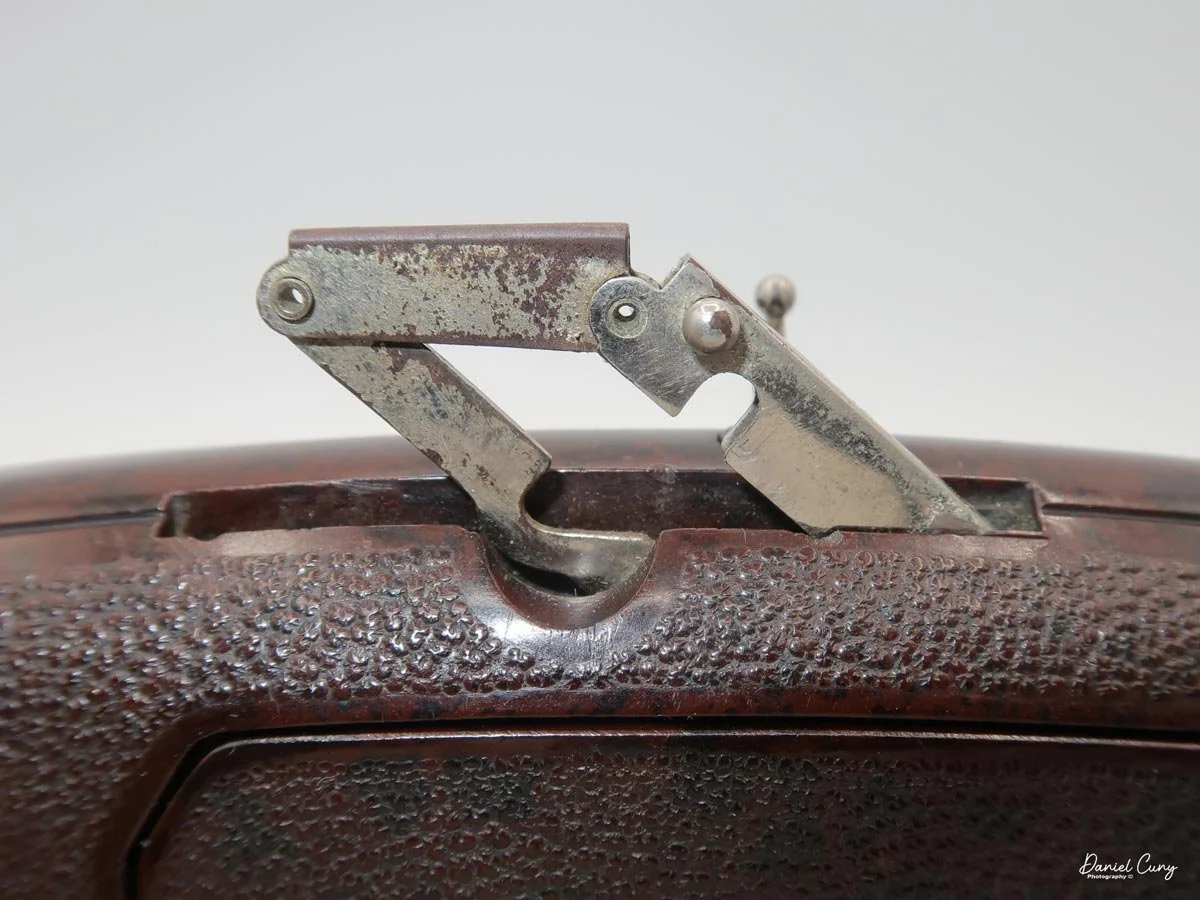
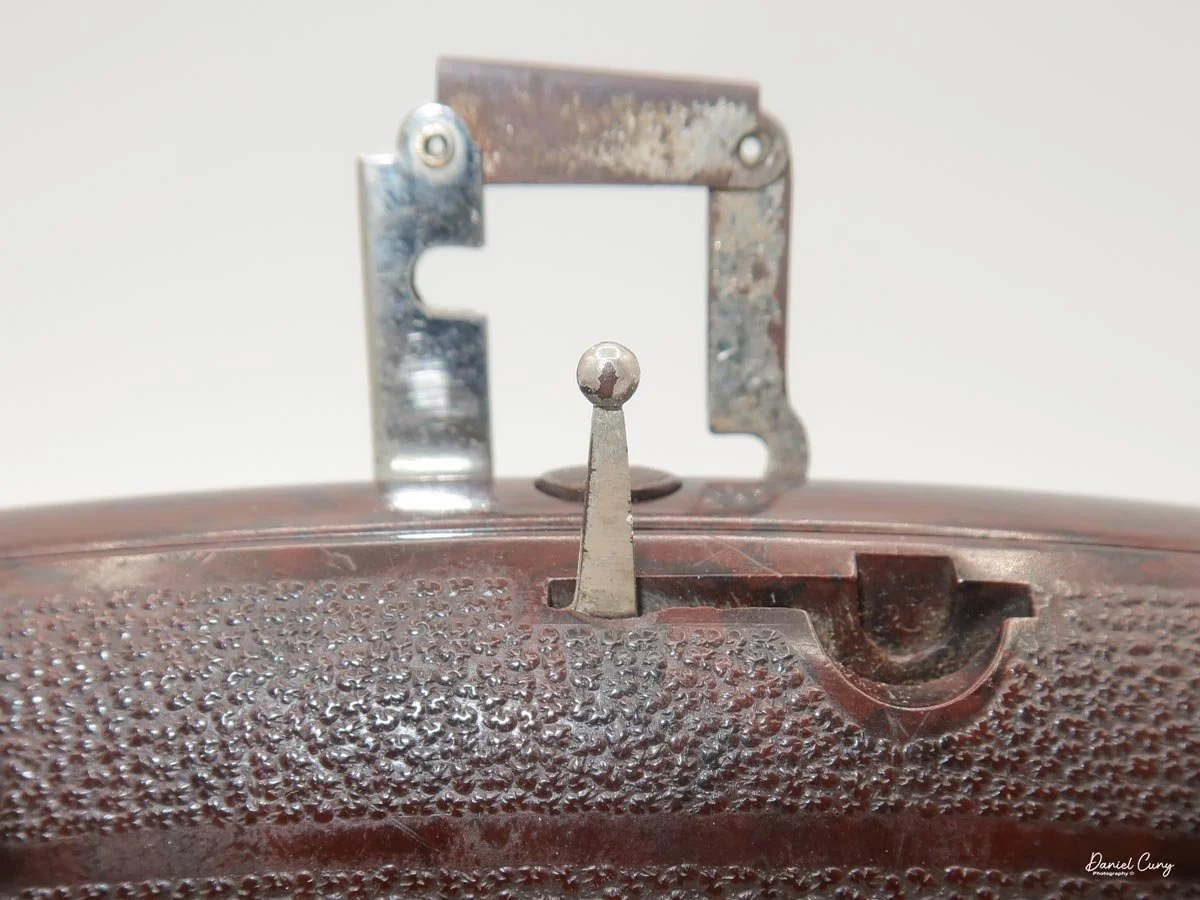
To open the Ebner camera, on the top of the camera is a button between the retractable front viewfinder, which pulls up from the camera body to produce a vertical rectangle. and a small pbar with a ball on the end used as the rear portion of the viewfinder. This bar is also retracted into the camera body. Once the button is pressed, the front door housing the lens, bellows, and shutter springs from the camera body.
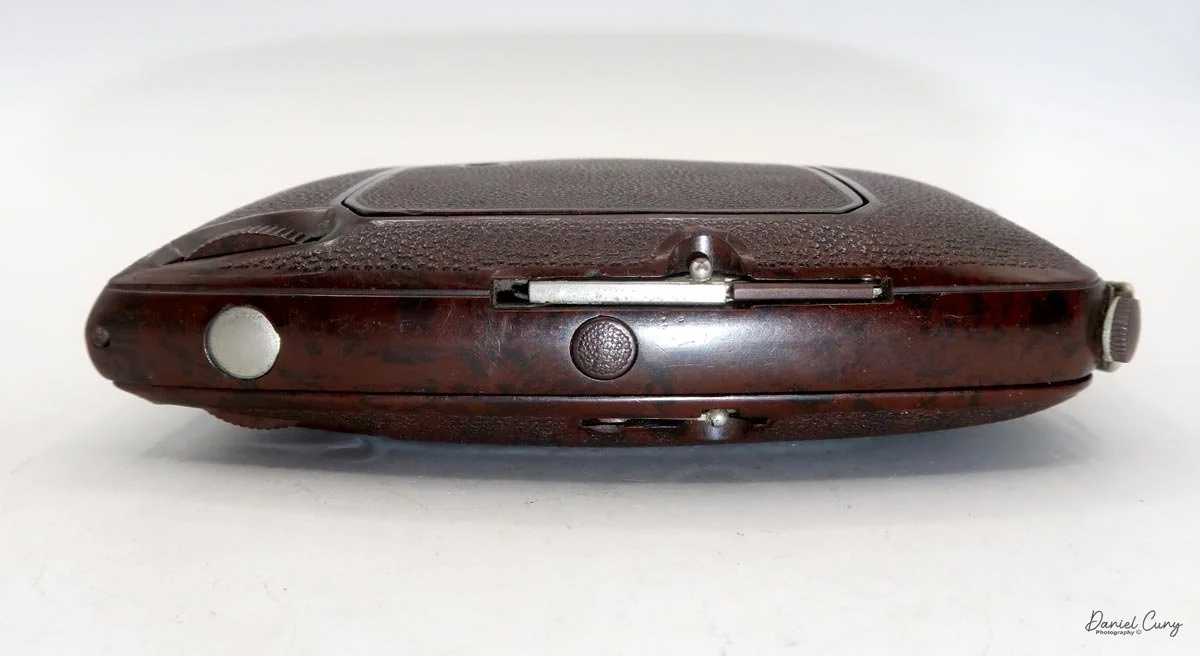
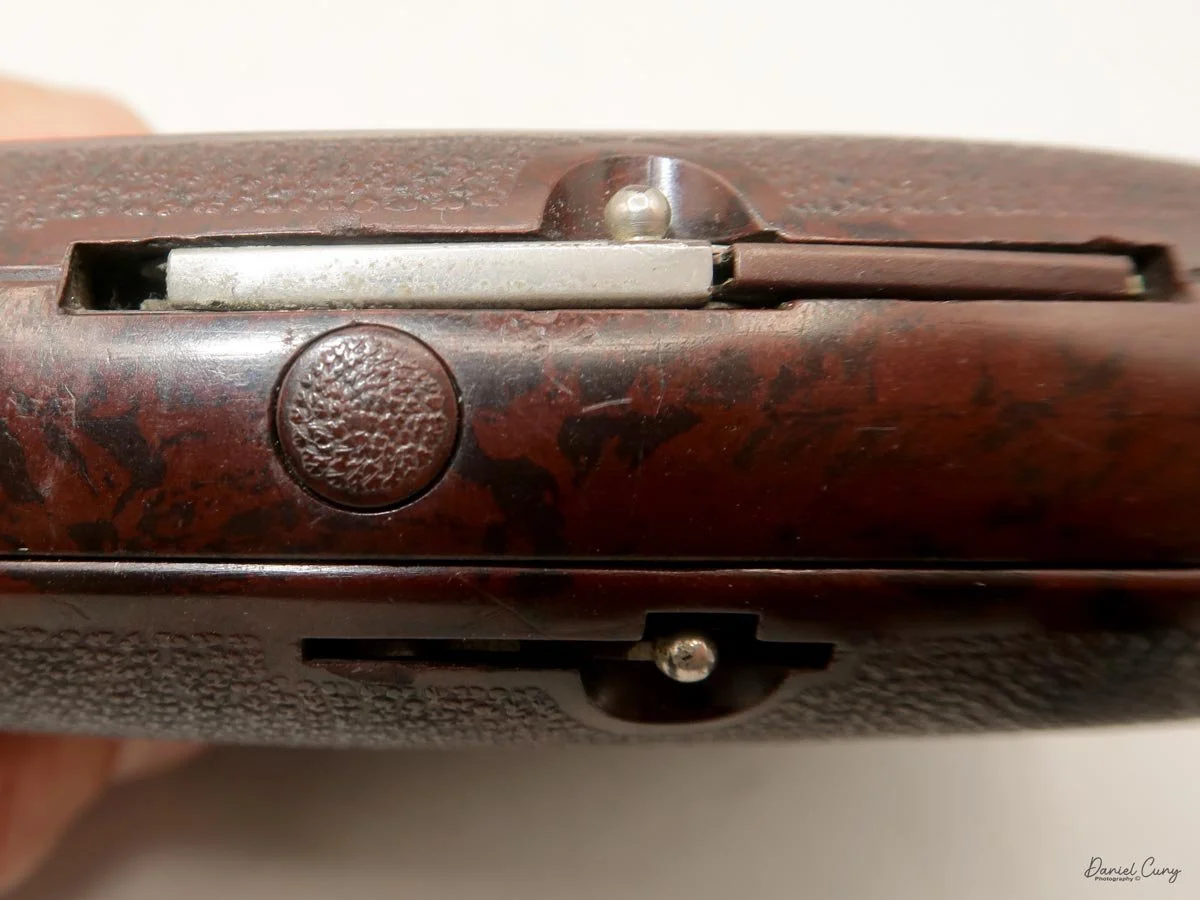
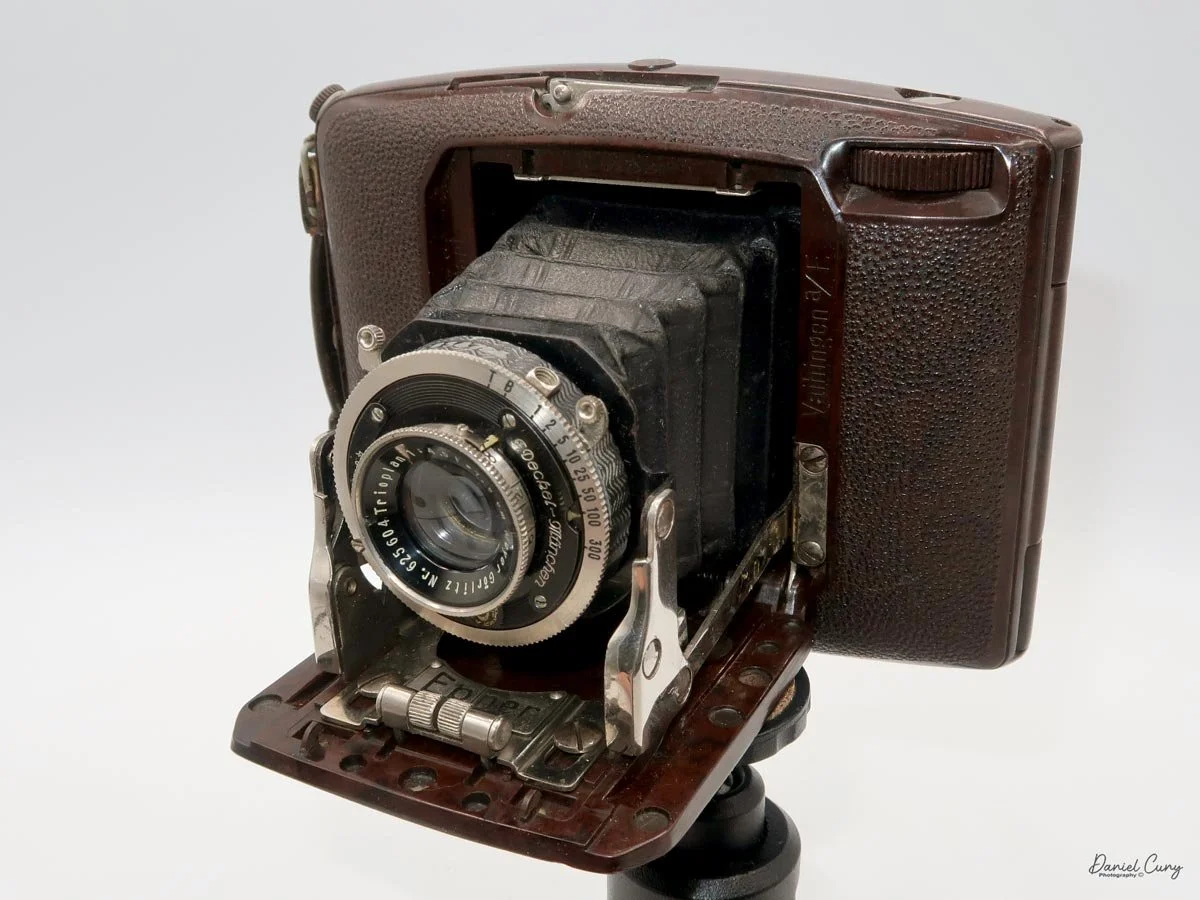
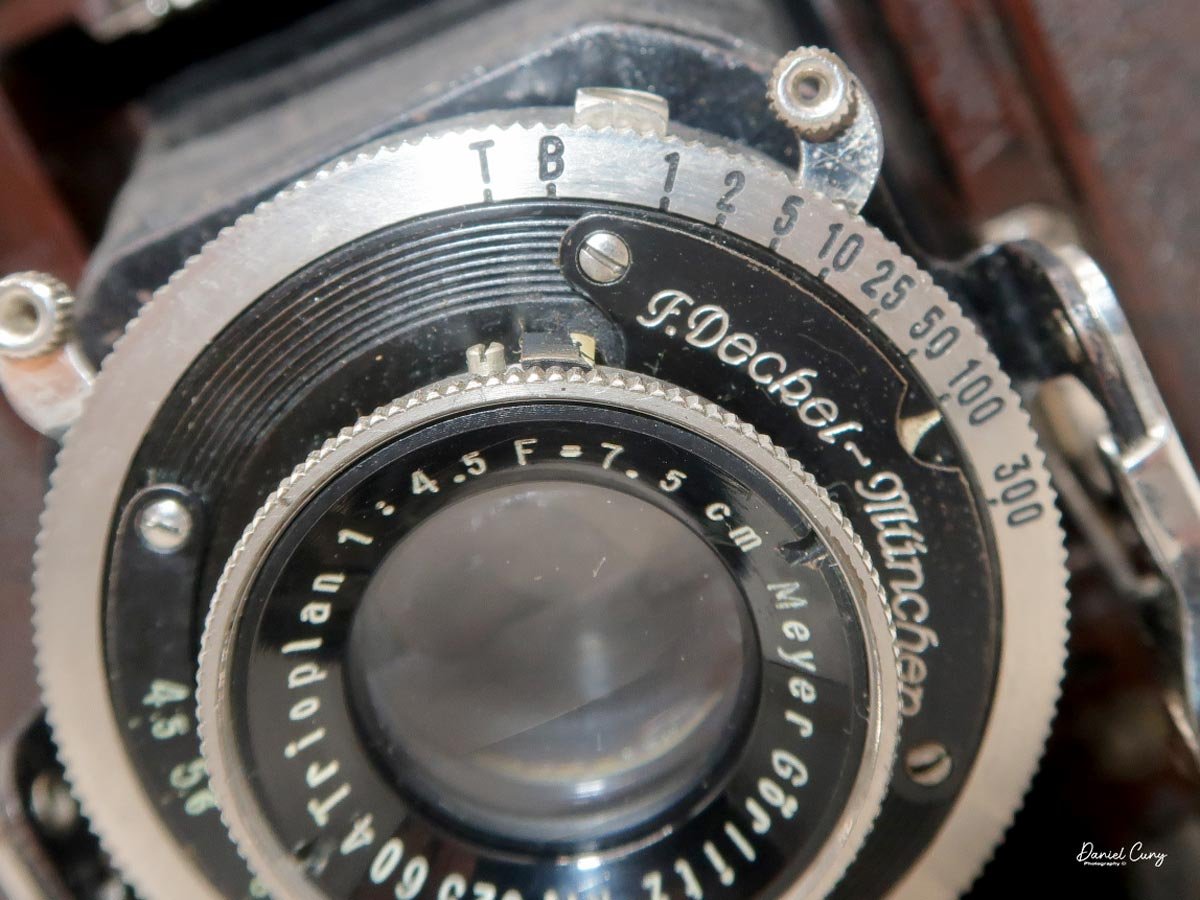
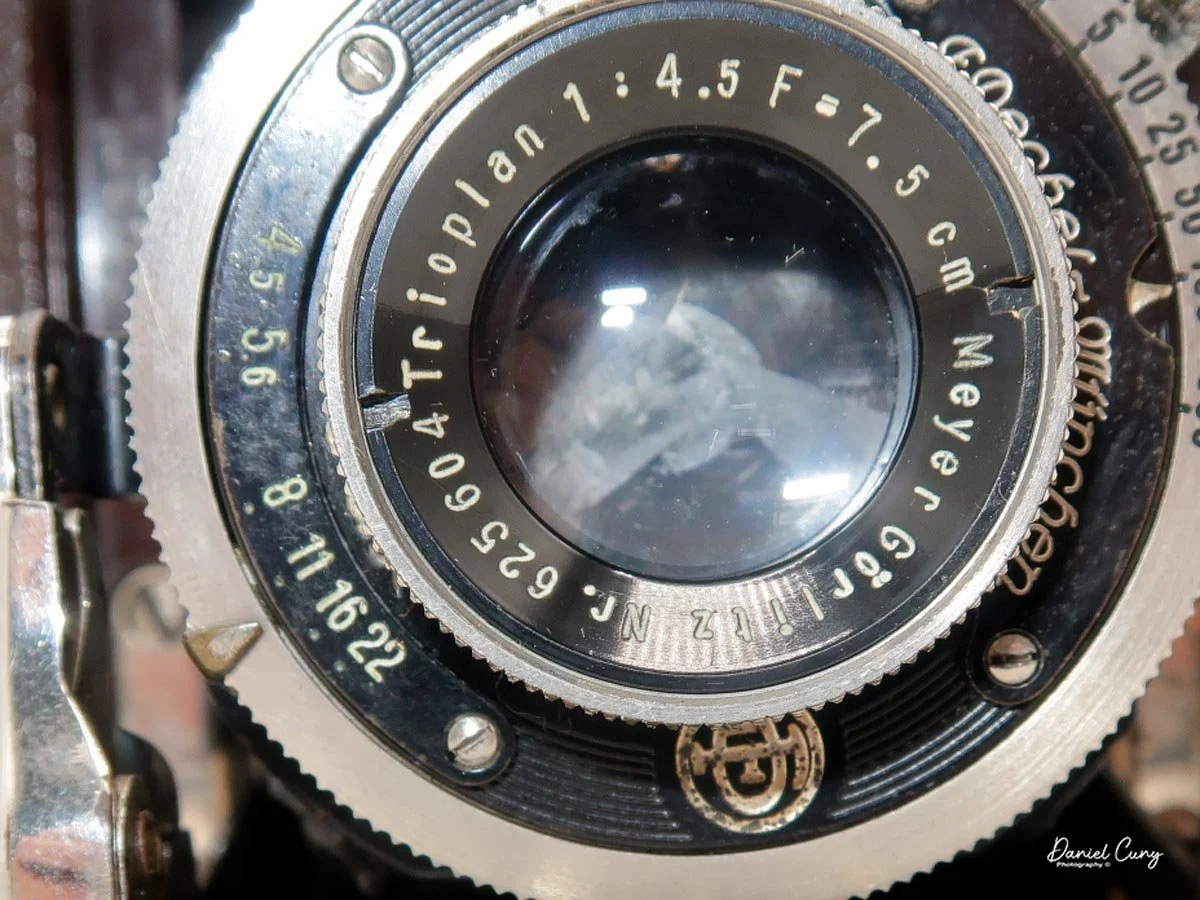
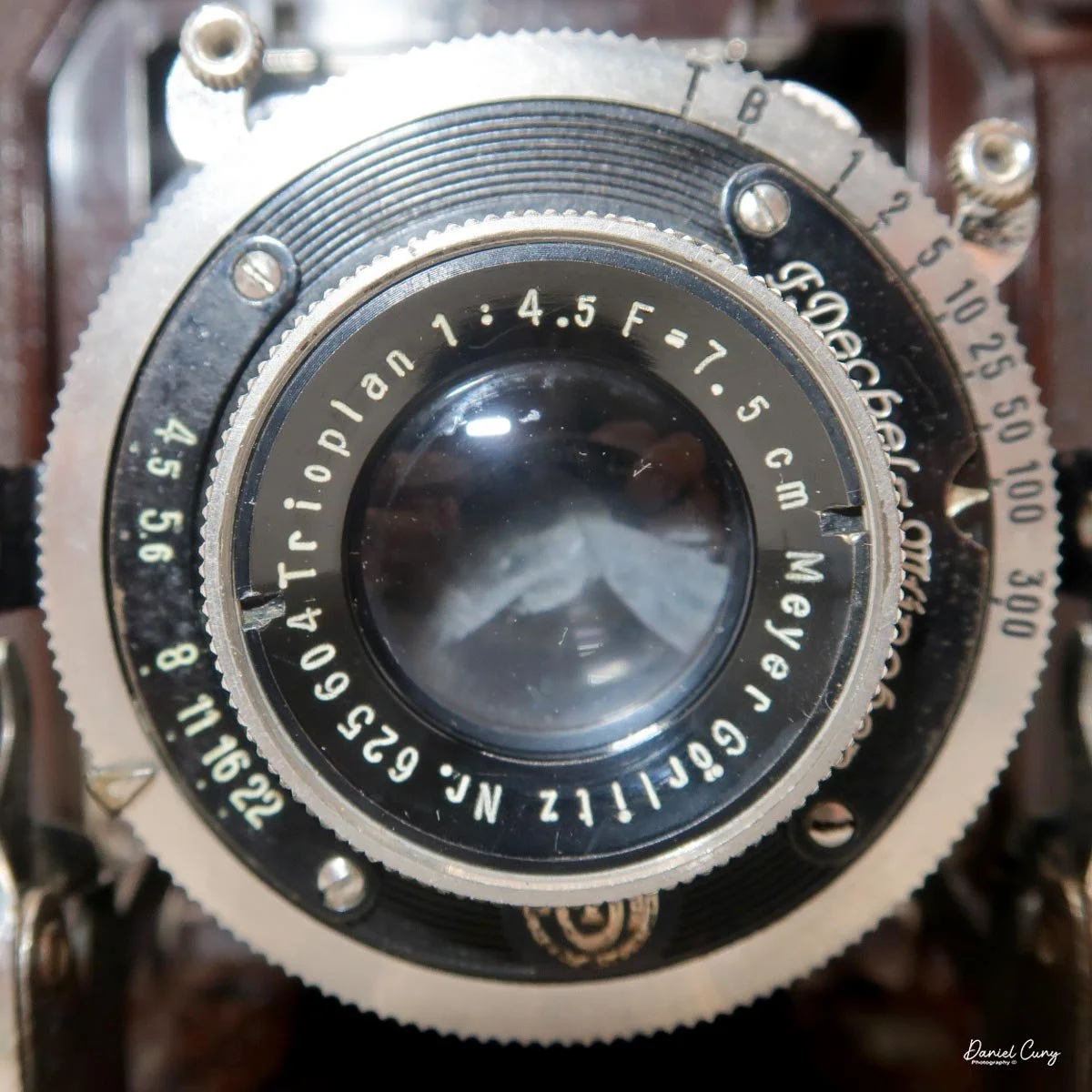
The Ebner I own has a Meyer-Goerlitz 7.5cm F/4.5 lens (SN 625604), with a Compur shutter, ranging from 1/300 to 1 second, plus "T" and "B". There were several different lens and shutter combinations for the camera. The aperture range is from F/4.5 to 22. 

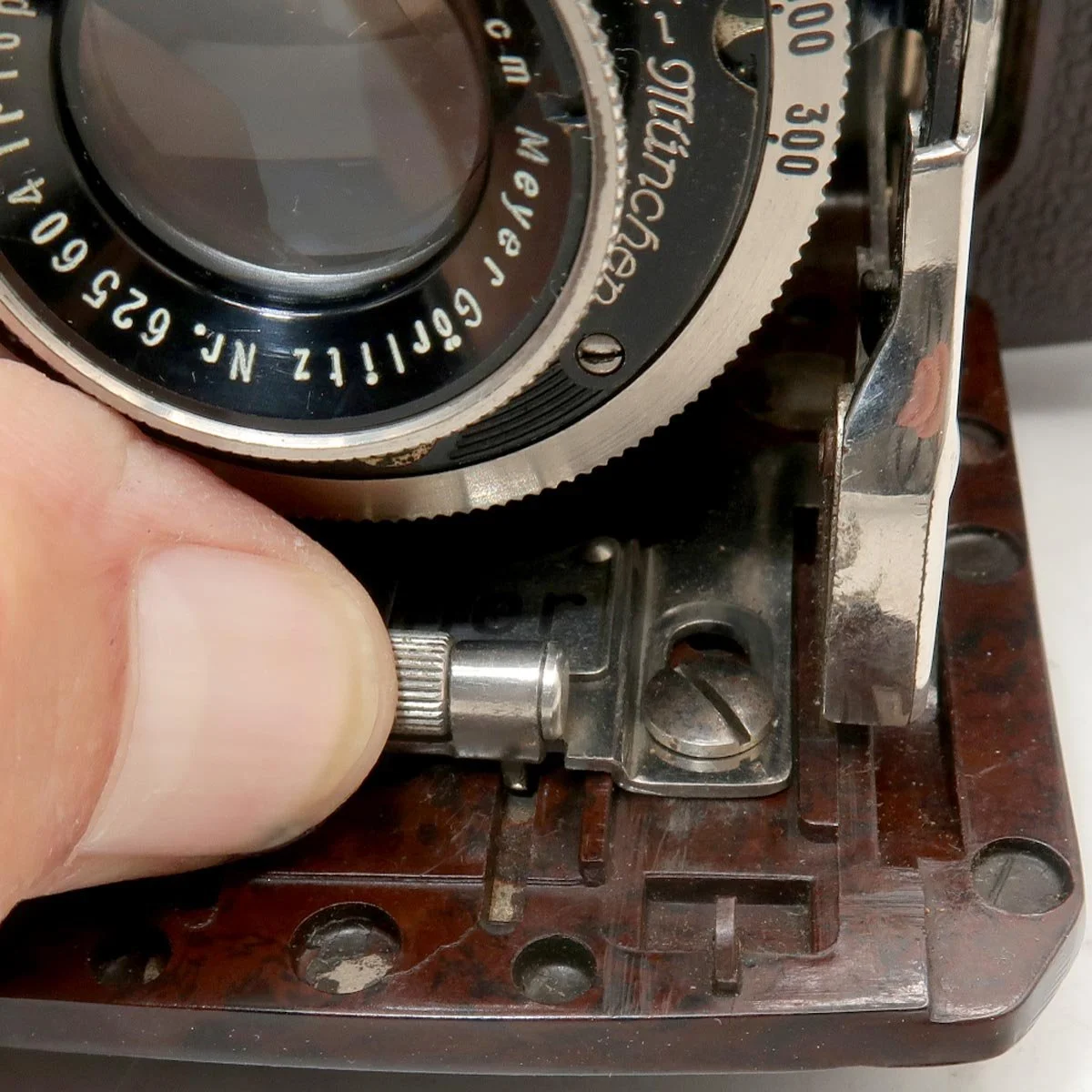
 Setting the shutter speed is done by turning a ring on the outer portion of the lens, and the aperture is set by sliding a lever with a pointing end to the desired aperture setting under the lens. Also, the shutter is cocked by one lever at the top of the shutter and released by another lever on the side of the shutter. Focusing the lens is done by rotating the lens itself to the desired focus distance in meters, as seen on the top of the lens.
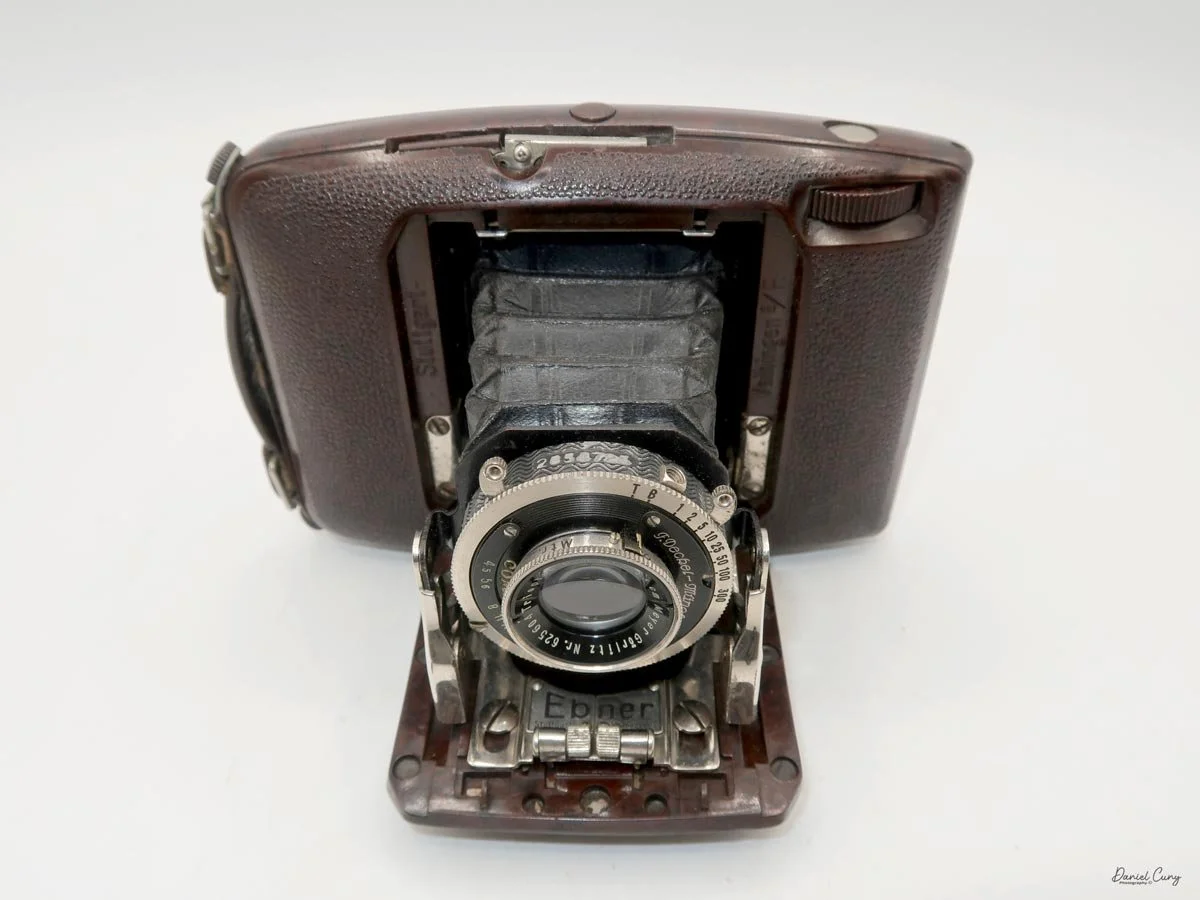
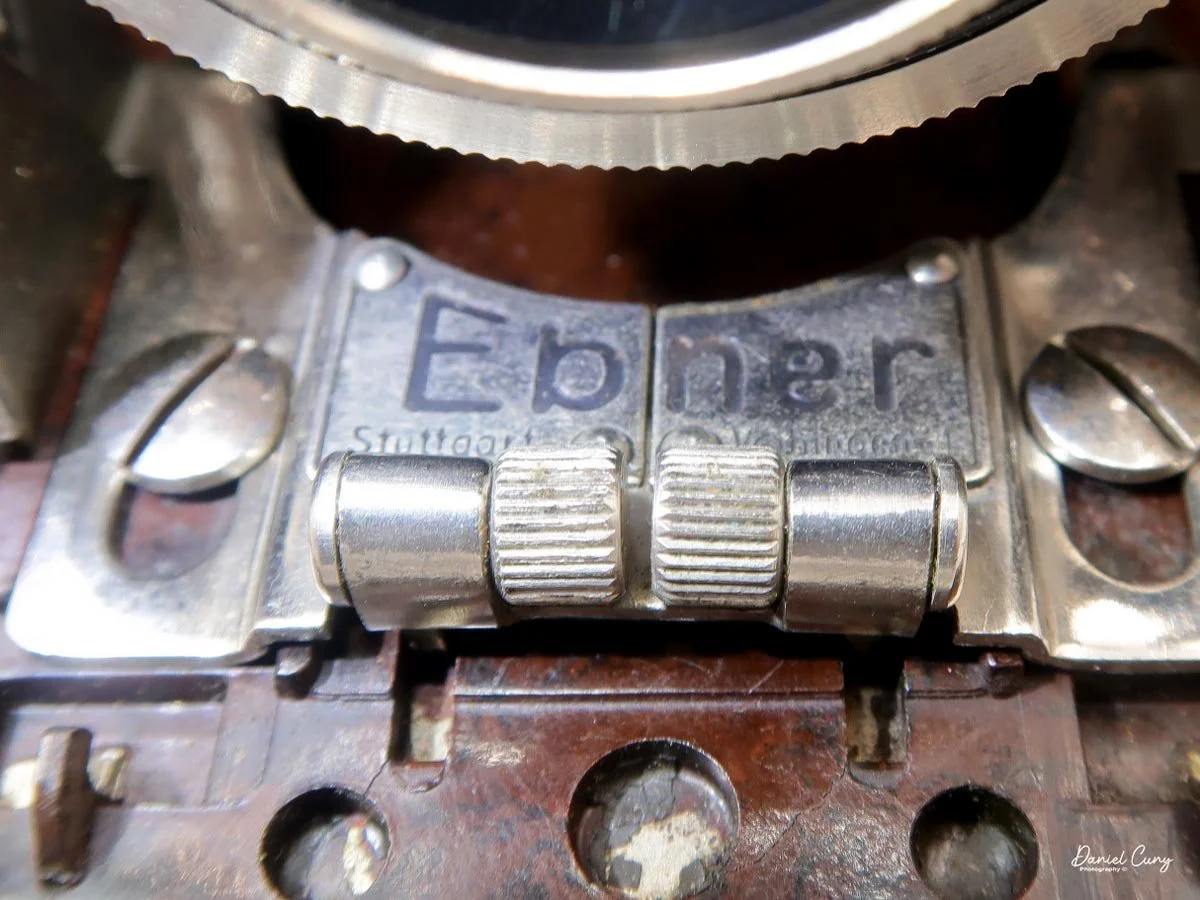
To close the camera for transport, there is a bar at the bottom of the lens bed, just in front of the "Ebner" plate. Press these bars towards the camera body; the lens board releases, allowing you to tilt the board back up and into the camera body. It will click when the lens board is locked into position.
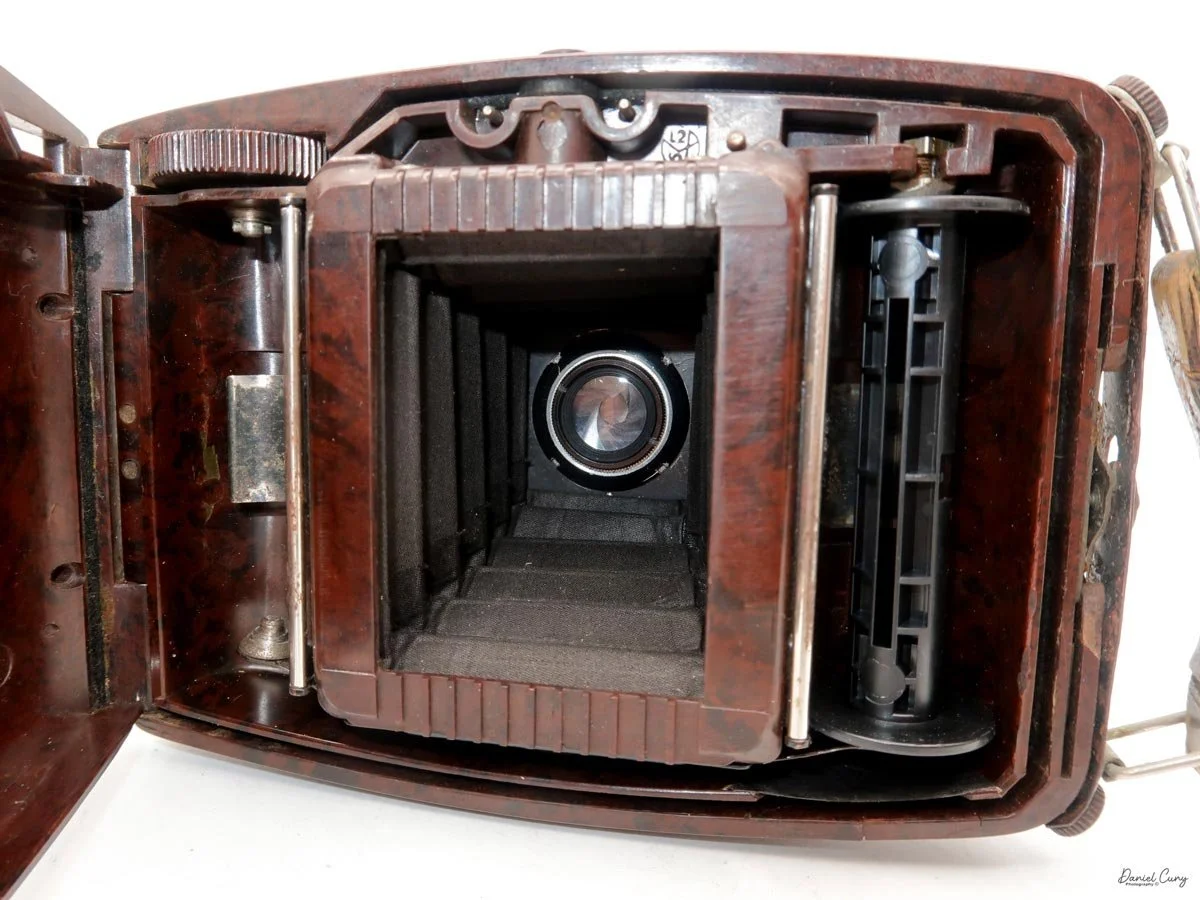
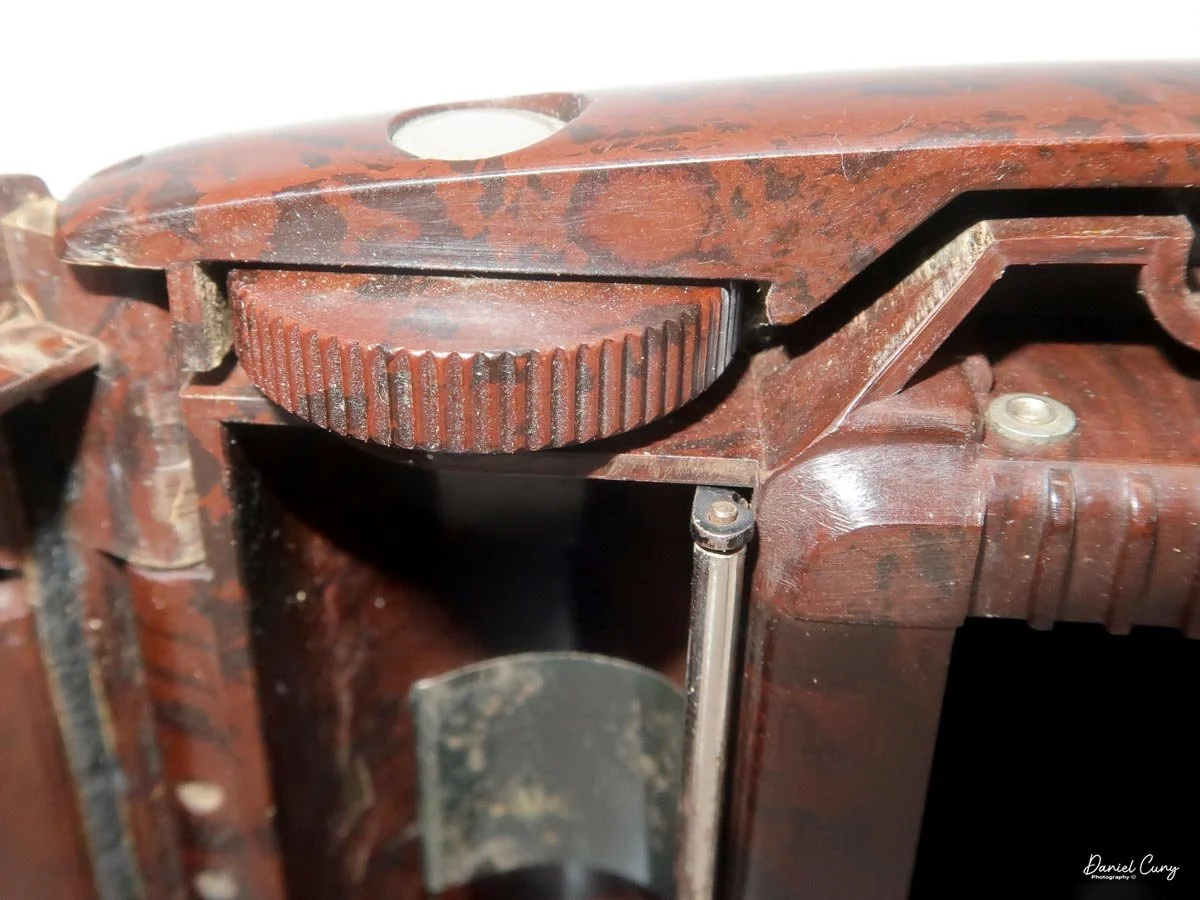
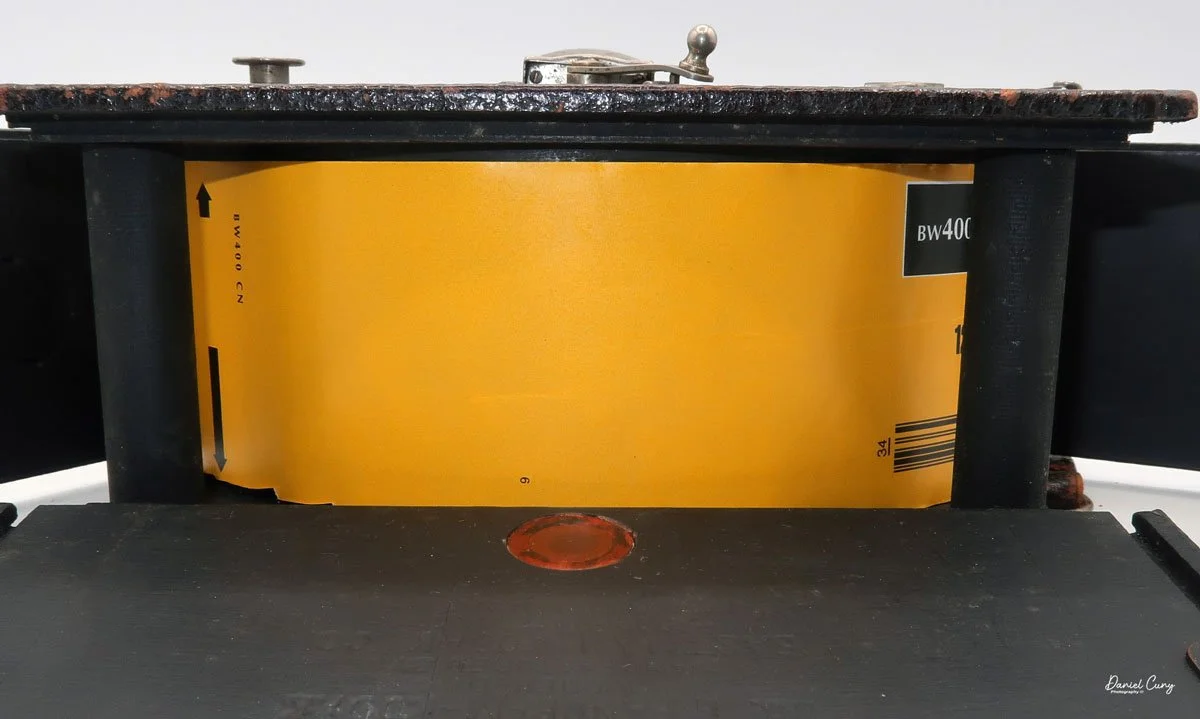
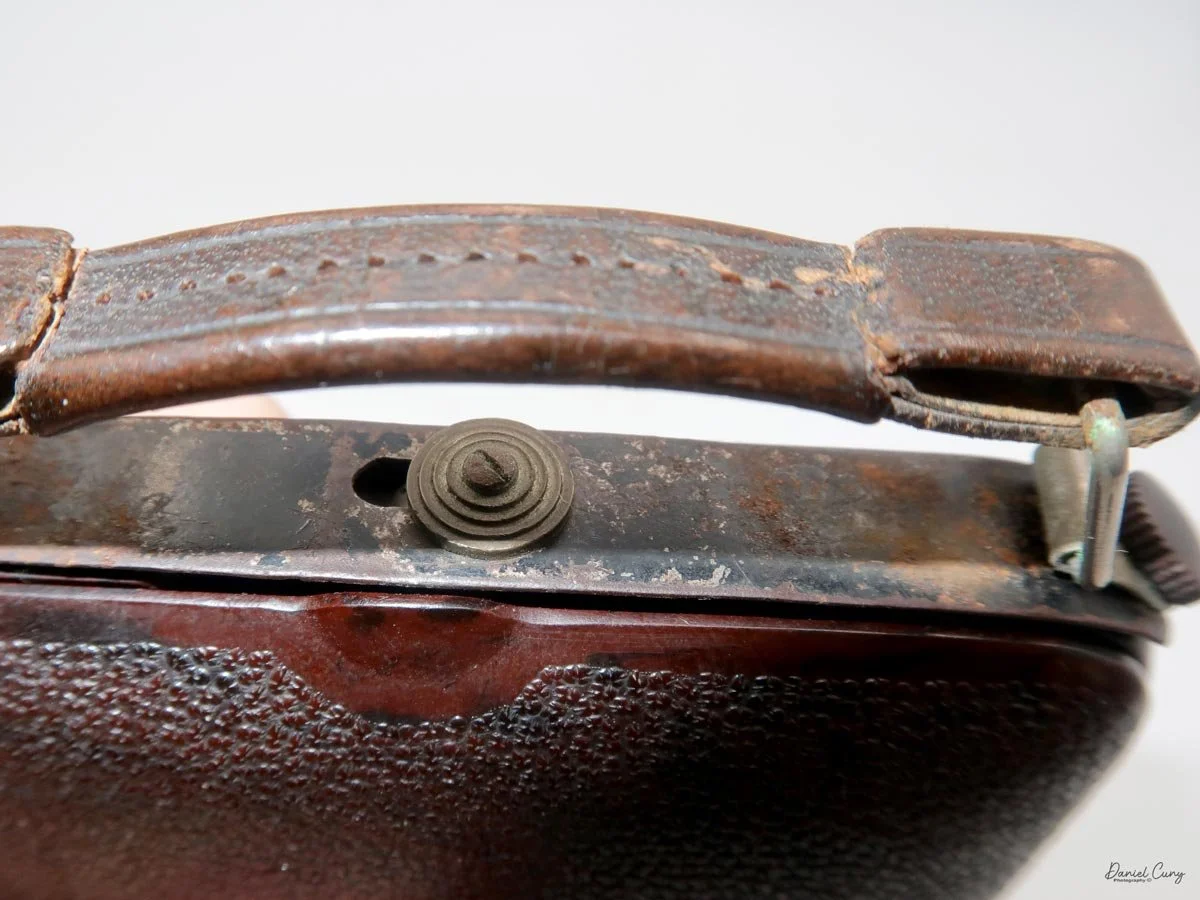
Opening the film back to load film is done by sliding the locking lever, which is located under the camera's strap. Once unlocked, you can slide the door open to reveal the camera's film chamber. Once opened, you'll see the vertical format 6x4.5 film area. The new film goes on the right side of the camera, and you'll transfer the empty spool from the right side to the left, where the film's winding wheel is located. My camera didn't have an empty spool, so I needed to supply the camera with one.

  Looking at the film holders' pins, the camera takes 620 film, but I accidentally loaded the camera's take-up chamber with 120 film, and it fit. Generally, when I try to put 120 in a 620 camera, the spools don't fit, or they don't turn because the pins are too small to grab the 120 spool. Let's see if I can load a roll of 120 film in the camera. Interestingly, this camera: the 120 film fits a bit snug, but the film advance engaged with the spool, and the film wound smoothly.
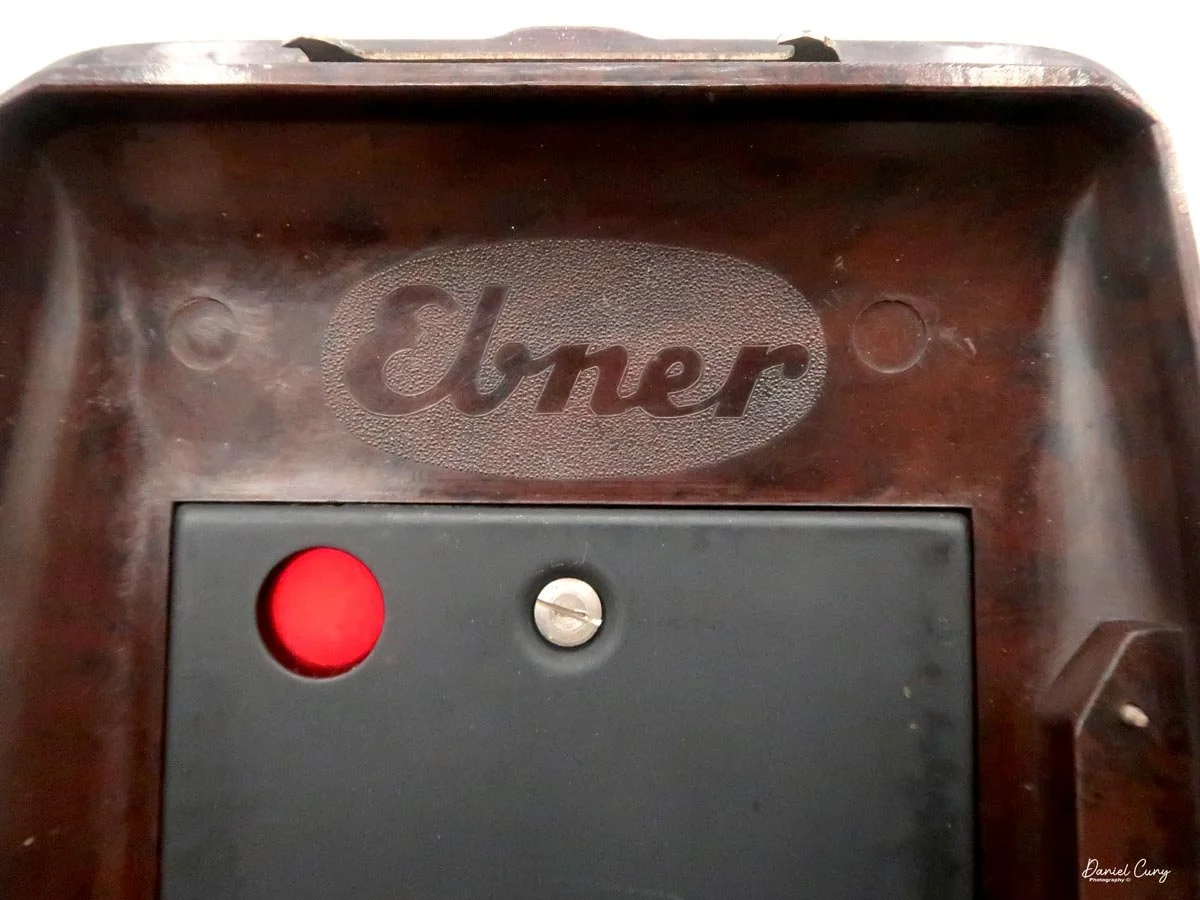
Since the camera is 6x4.5cm, with two red windows on the back, this symbolizes that you start with the number one in the first window, take your photo, and then wind the film until the number one shows up in the second window. You do this with the whole roll, which ends with the number eight showing in the second window, giving you sixteen images per roll of film.

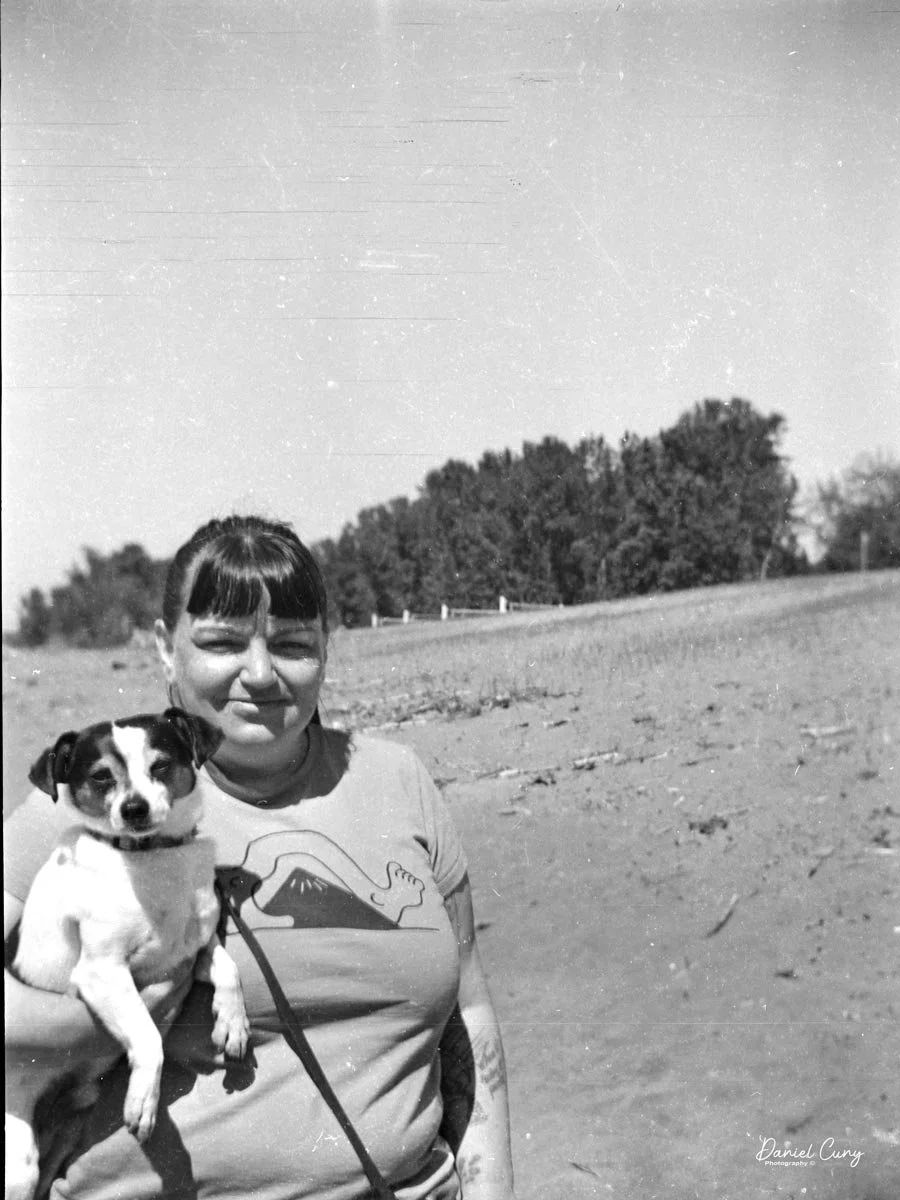
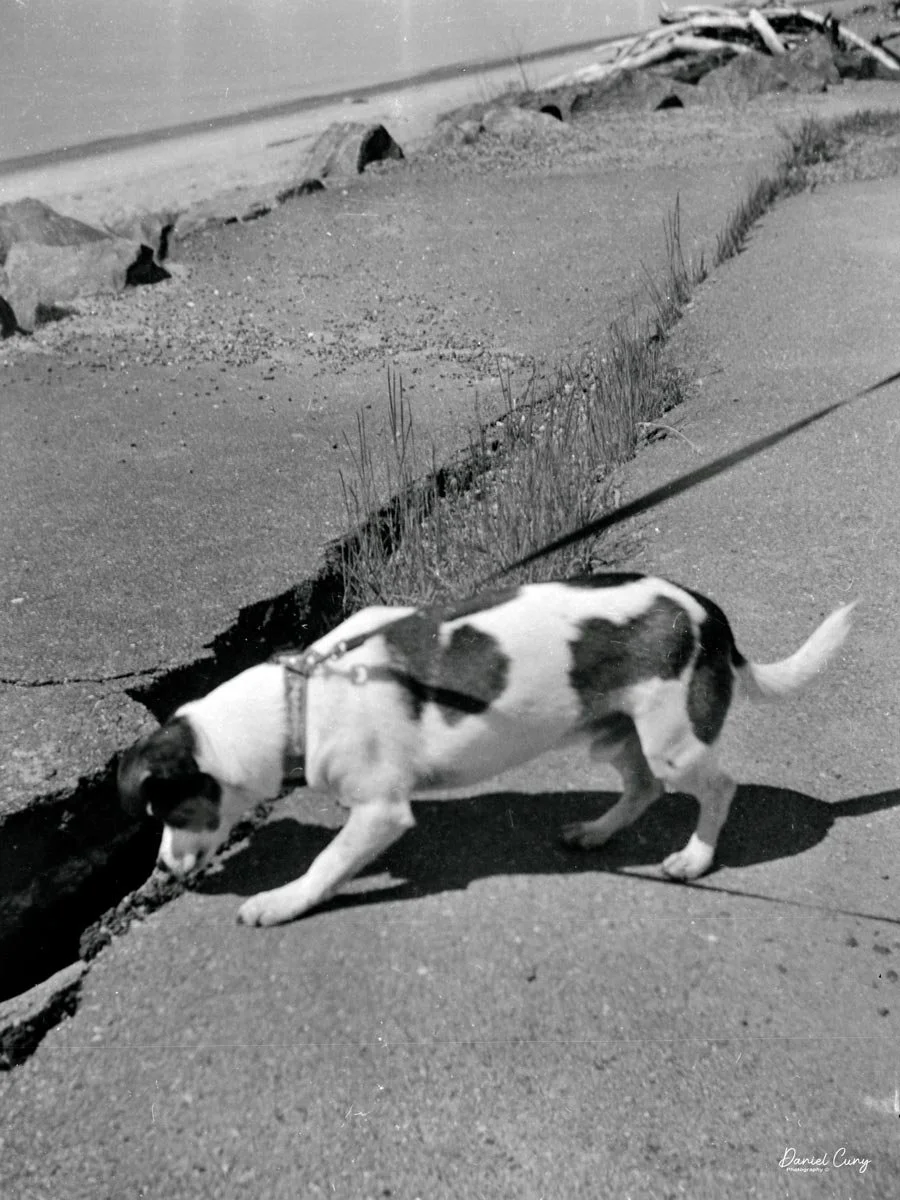
 Once the film was loaded in the camera and the "start" arrows were showing, I closed the back of the camera, and my daughter, her dog, Bean. I went for a walk along the Columbia River and took photos with the camera. The camera is very "pocketable" and travels extremely well.

 Let's see how the images turned out.
 

The Results:

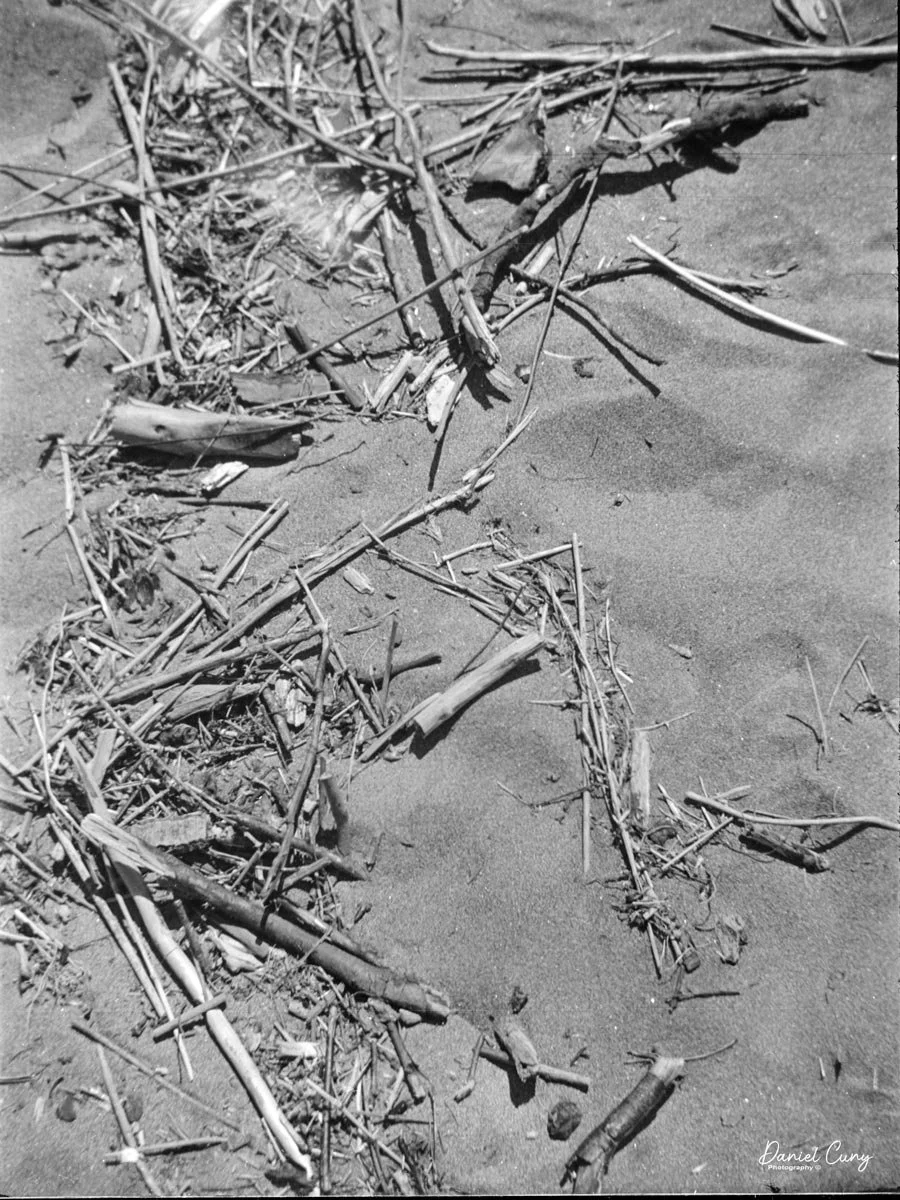
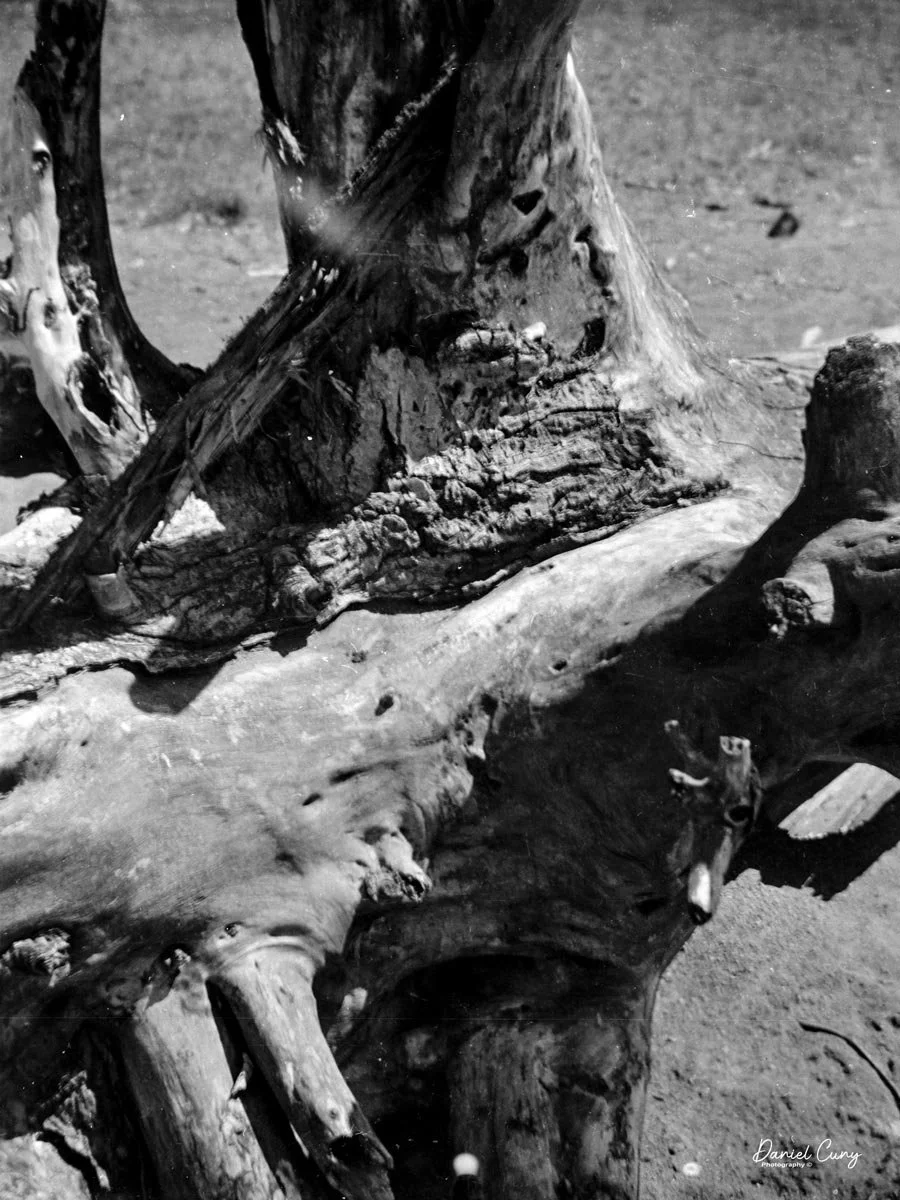
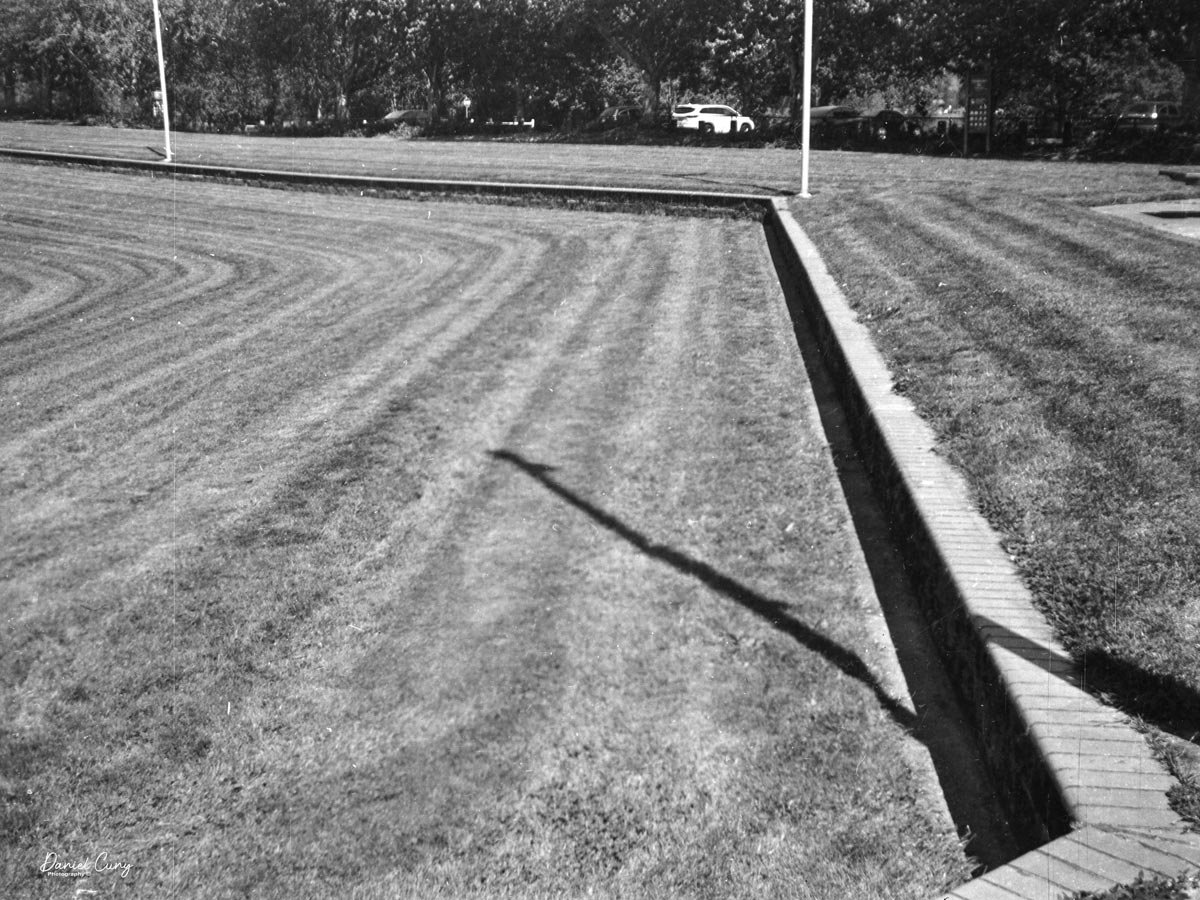
 The results aren't bad, but not the sharpest images either, especially compared to the Kolar Kola camera. I may have missed the focus distance, but most of the photos are sharp enough for an 8x10. Here are some of the images I took while walking the Columbia River with my daughter and Bean, her dog. 
Conclusion:

 There are several things I really like about the camera. Still, the thing I enjoyed most about this camera is its thinness when traveling. It's so thin compared to other medium-format cameras; for me, it makes it fun to use. Not being bulky or clumsy and being fairly lightweight make this camera a real pleasure to carry around.

 The brown pebble finish is also a bonus in my opinion, adding more to the camera than leather and chrome alone. It has a very appealing feel and firmness that make the camera fun to hold.

Designers in the 1930s were still in the Art Deco period. They had a real sense of classical design, which they implemented in their products. It makes me even more want to buy a 3D printer to experiment with designs and textures, which I feel are lacking in today's designs.  

 Thank you for taking the time to learn a bit about this very classic and rare camera made in Stuttgart, Germany, in the early to mid-1930s.

 I'd love to hear from you, so if you have a comment or one of your own, please share it with us here.

 Here are my other Camera Reviews.

 Cuny's Camera and Photos is my online eBay store where you might find one (or many) of the cameras I've reviewed, along with other camera and photo items I've picked up or hoarded over the many years in the business.

 Until next week, please be safe.
Kodak Panoram 1-Model D

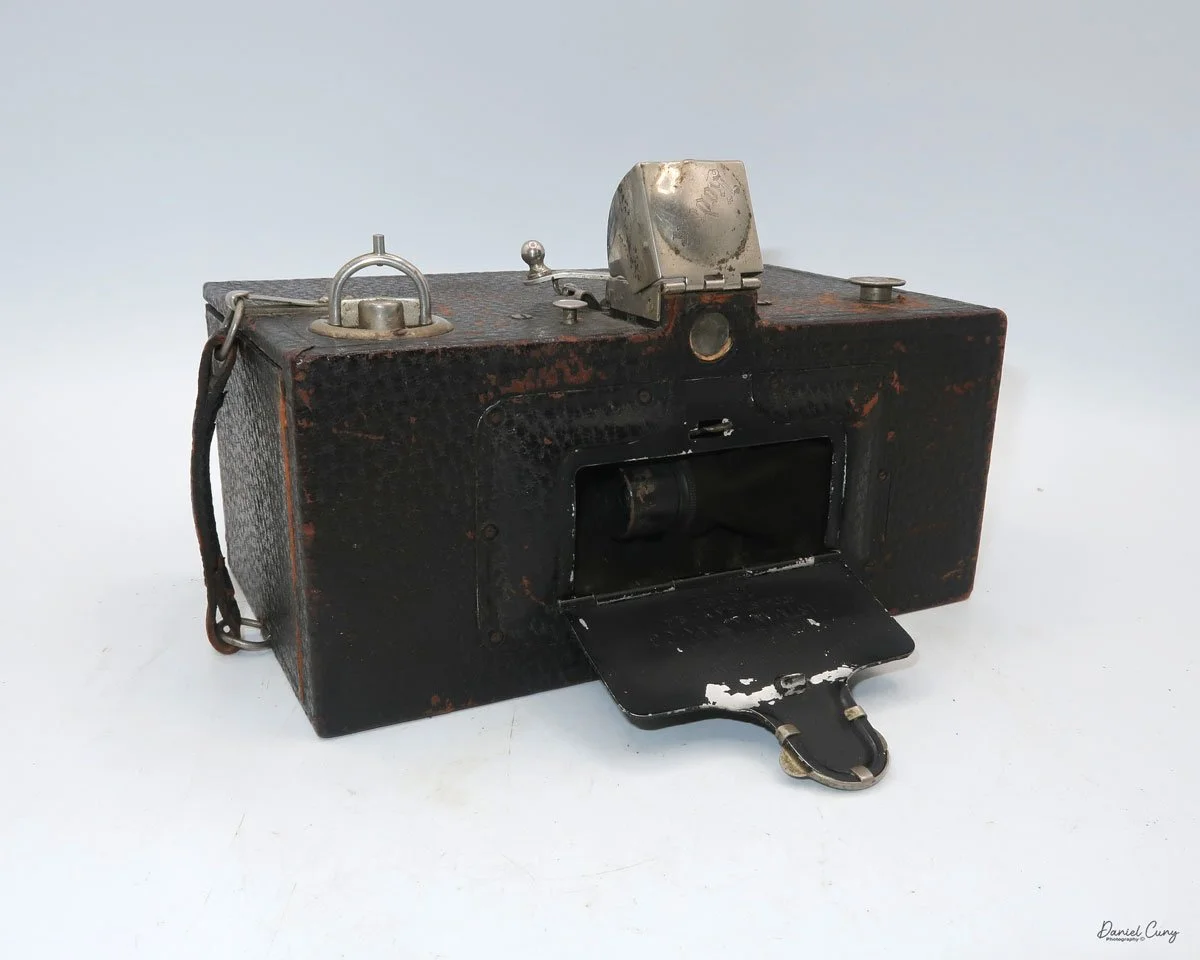
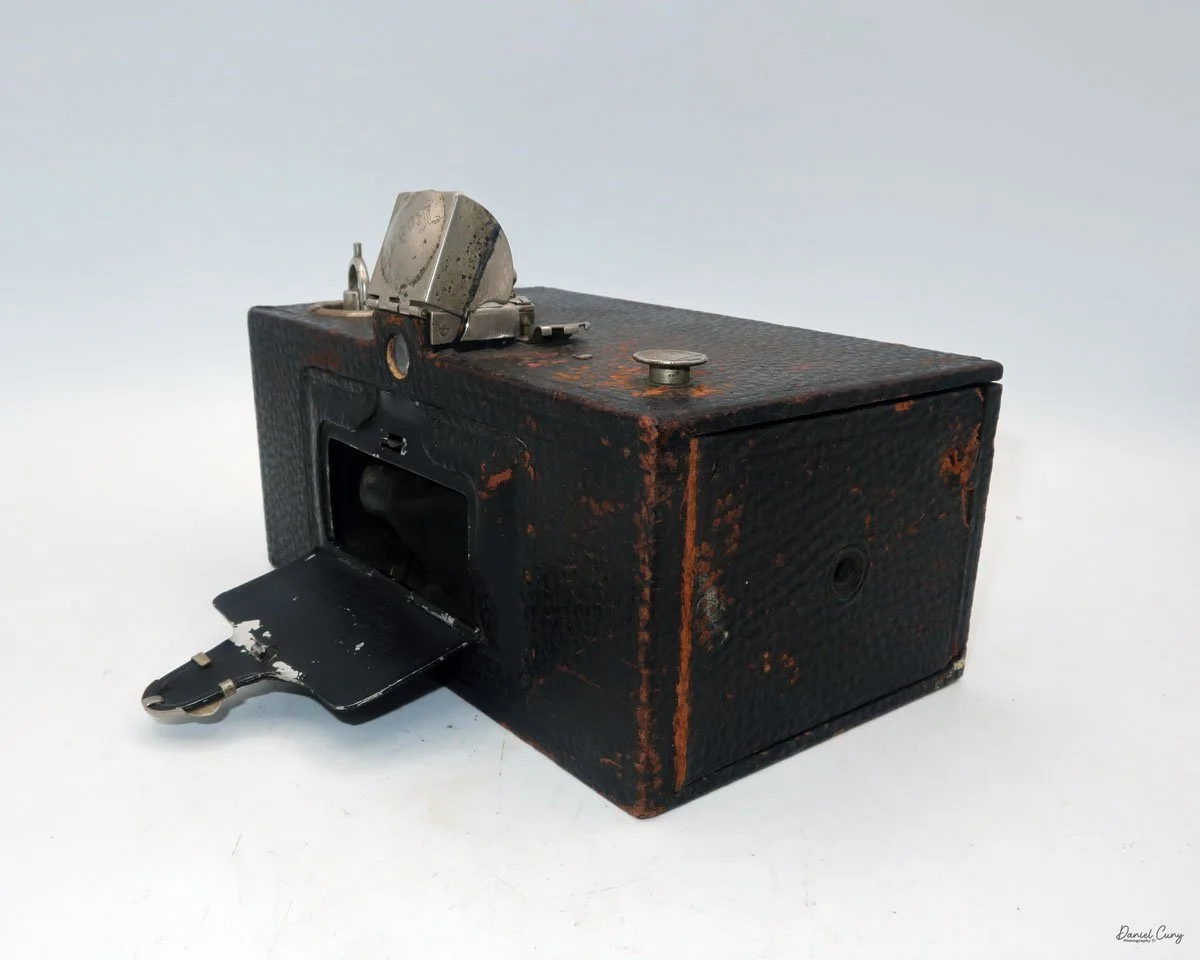
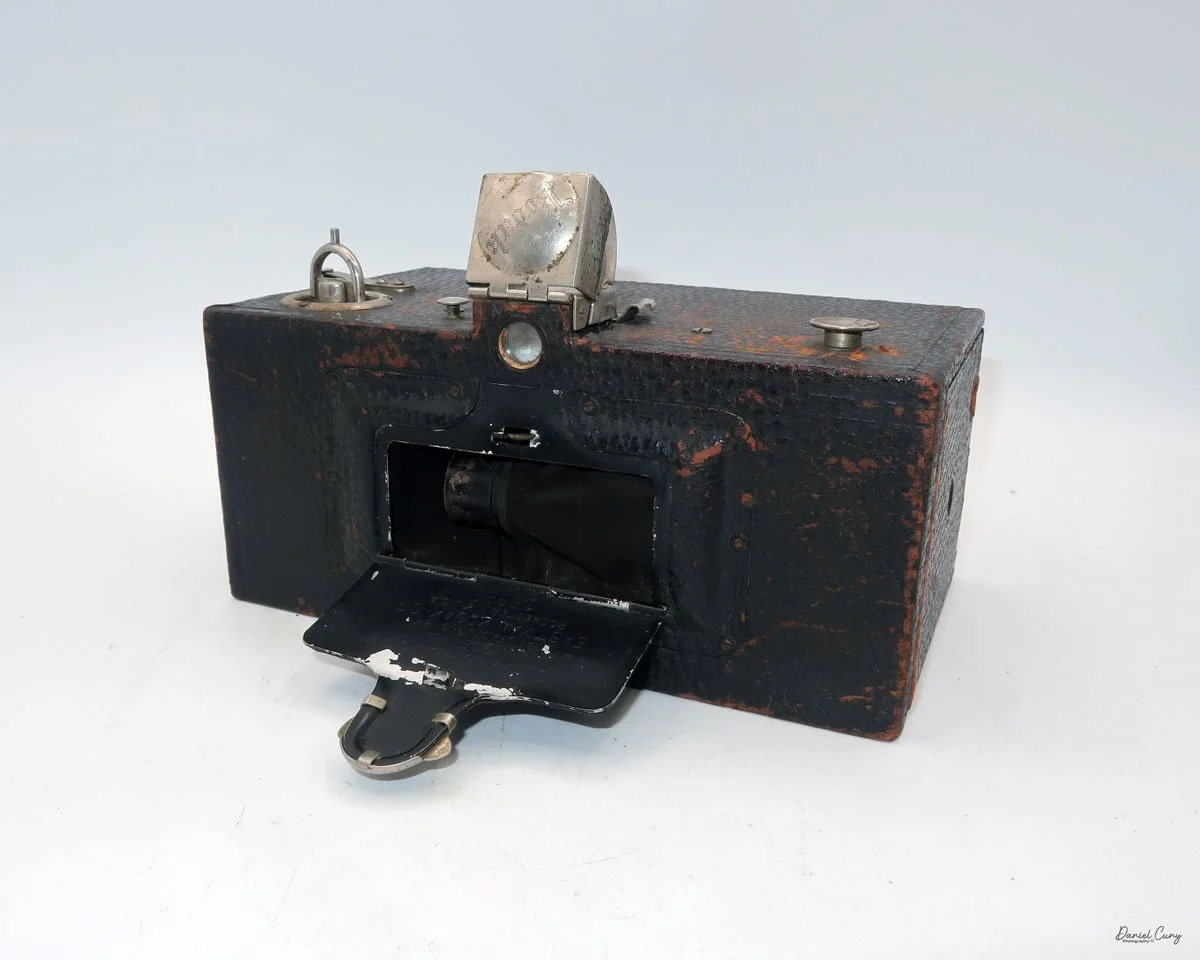
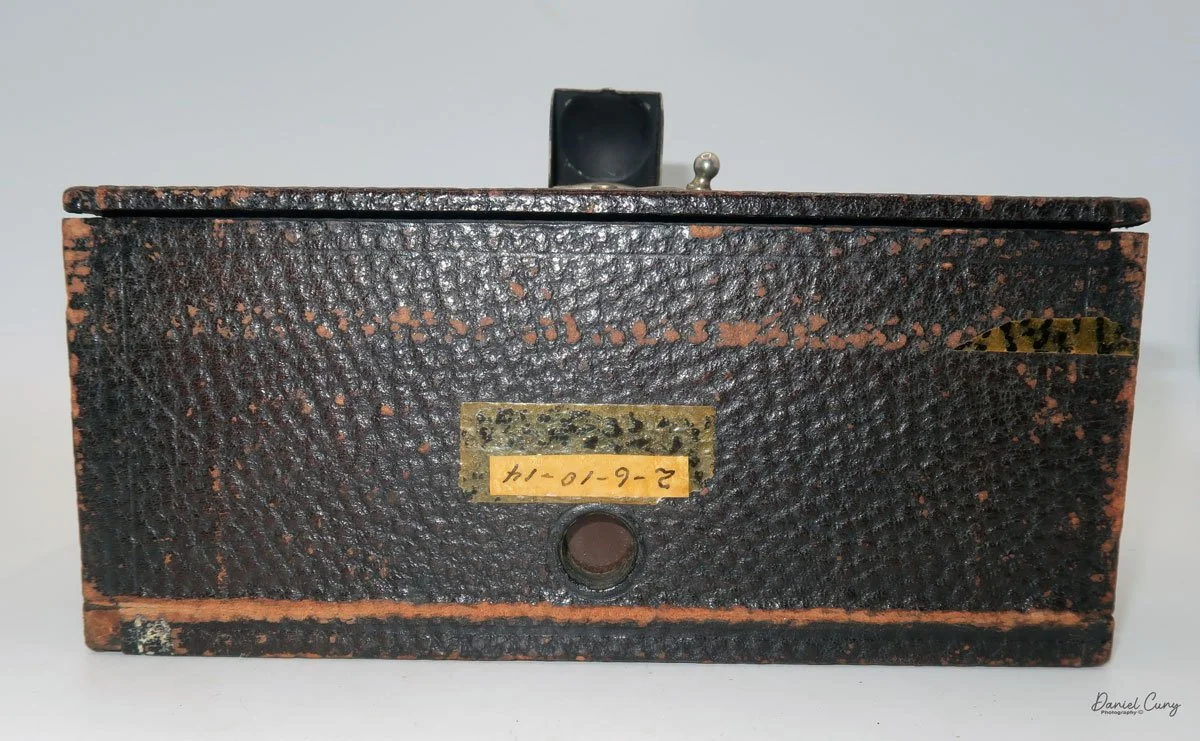
My Kodak Panoram 1, Model D camera

Panoramic cameras and images have always fascinated me. The thought of seeing such a wide area in a photo seems so natural to me. Whenever I look at subjects, the human eye always sees a wide field of view, and narrowing it down to a smaller angle just seems peculiar to me. Even when I look through telephoto lenses, I want to see a wider angle, just closer. Unfortunately, that’s not how lenses work, so the ability to get a wider view is wonderful.

 The Kodak Panoram 1 is one of the first panoramic cameras I've owned. The first panoramic camera I bought was a Russian Horizont, a 35mm model that came with an accessory handle, viewfinder, and case. Unfortunately, this model of camera, due to the lack of workmanship, has a tendency for image "banding" as the lens doesn't rotate smoothly when making the exposure, so when the lens hesitates, it creates a change in exposure, creating a vertical exposure difference, which is darker due to the extra exposure time.

 I only had that camera for a short time, but it was a wonderful one to learn from, and from that experience I found the Kodak Panoram 1. One of the main reasons I knew about Kodak's early panoramic cameras was a set of negatives of two of my friends, which I purchased around 35 years ago. They were a set of 40 nitrate panoramic negatives, measuring 2 1/4" x 7", from a family who visited San Francisco and the surrounding area in 1906. There were photos of the rubble from the 1906 earthquake, along with other images of the family traveling up the delta to Sacramento and into the forest areas. If you're interested, here is a link to pictures from the aftermath of the 1906 San Francisco Earthquake.

 While researching the negative size and cameras built around 1900, I came across the Kodak Panoram 1 and the Multiscope Baby Al-Vista. I believe the Baby Al-Vista's negatives are just a bit smaller. At this point, due to my love of panoramic images, I really wanted to find a good Kodak Panoram 1 camera not only to have in my collection, but also to shoot with.

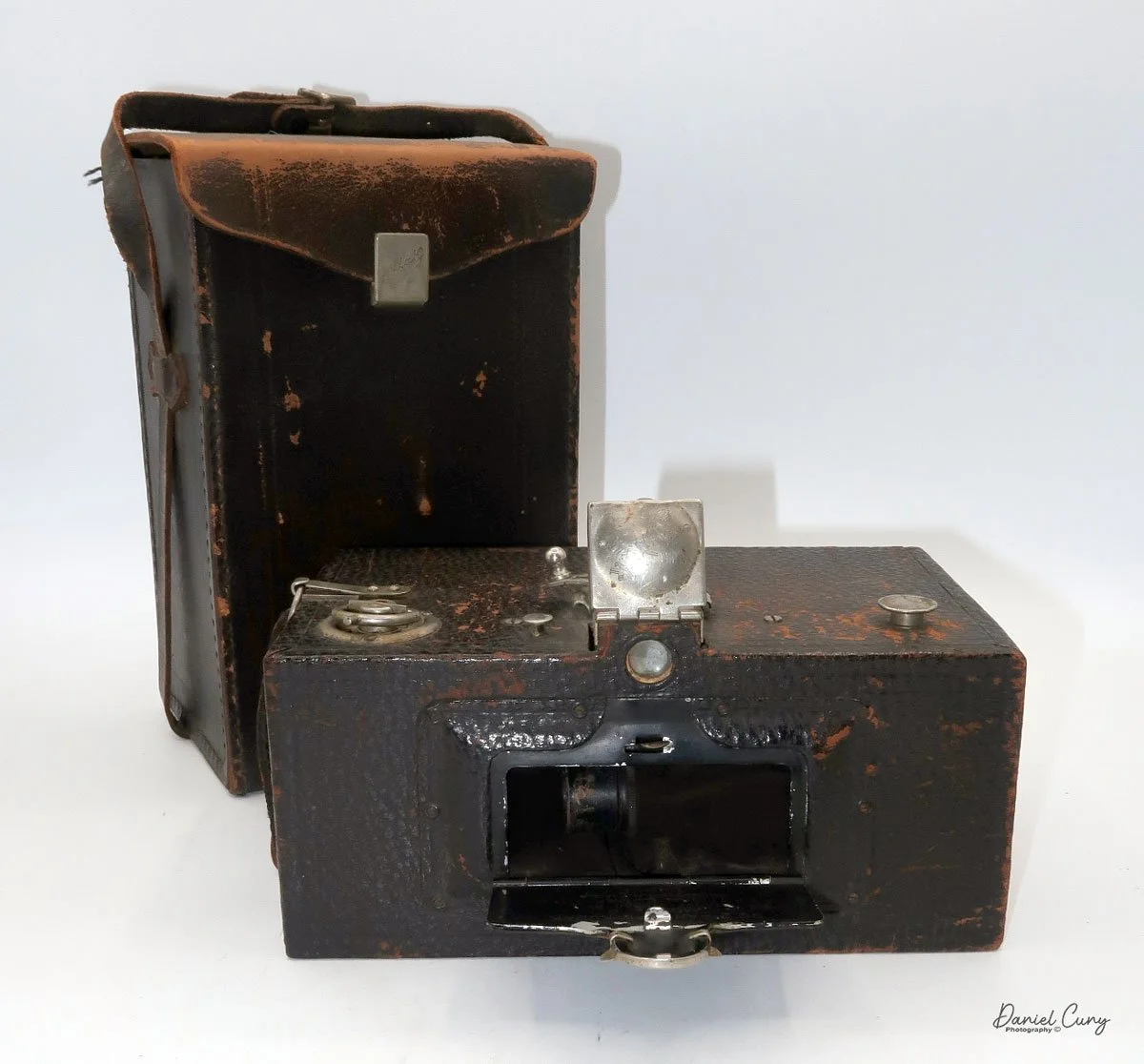
My Kodak Panoram 1, Model D with Case.

 The Kodak Panoram 1 camera used 105 film when it was manufactured, which is the same width as 120 film; the spools are just a bit different, as the flange is wider on 105 spools. Knowing that I could shoot 120 film in the Kodak Panoram 1 camera made it considerably more desirable. 

 Kodak also made larger Panoram cameras, the 3A and 4, which used larger film. The 3A produced 3 1/4" x 10 3/8" negatives on size 122 film; the 4 made 3 1/2" x 12" negatives on size 103 film. Since the necessary larger film is unavailable, choosing a usable Panoram was easy: I purchased the Panoram 1.

 The Kodak Panoram 1 comes in two distinct versions. There's the original Panoram 1, where the entire back of the camera comes off the body, revealing the curved arc of the film plane. The back of the camera is held to the camera body by two clips. 

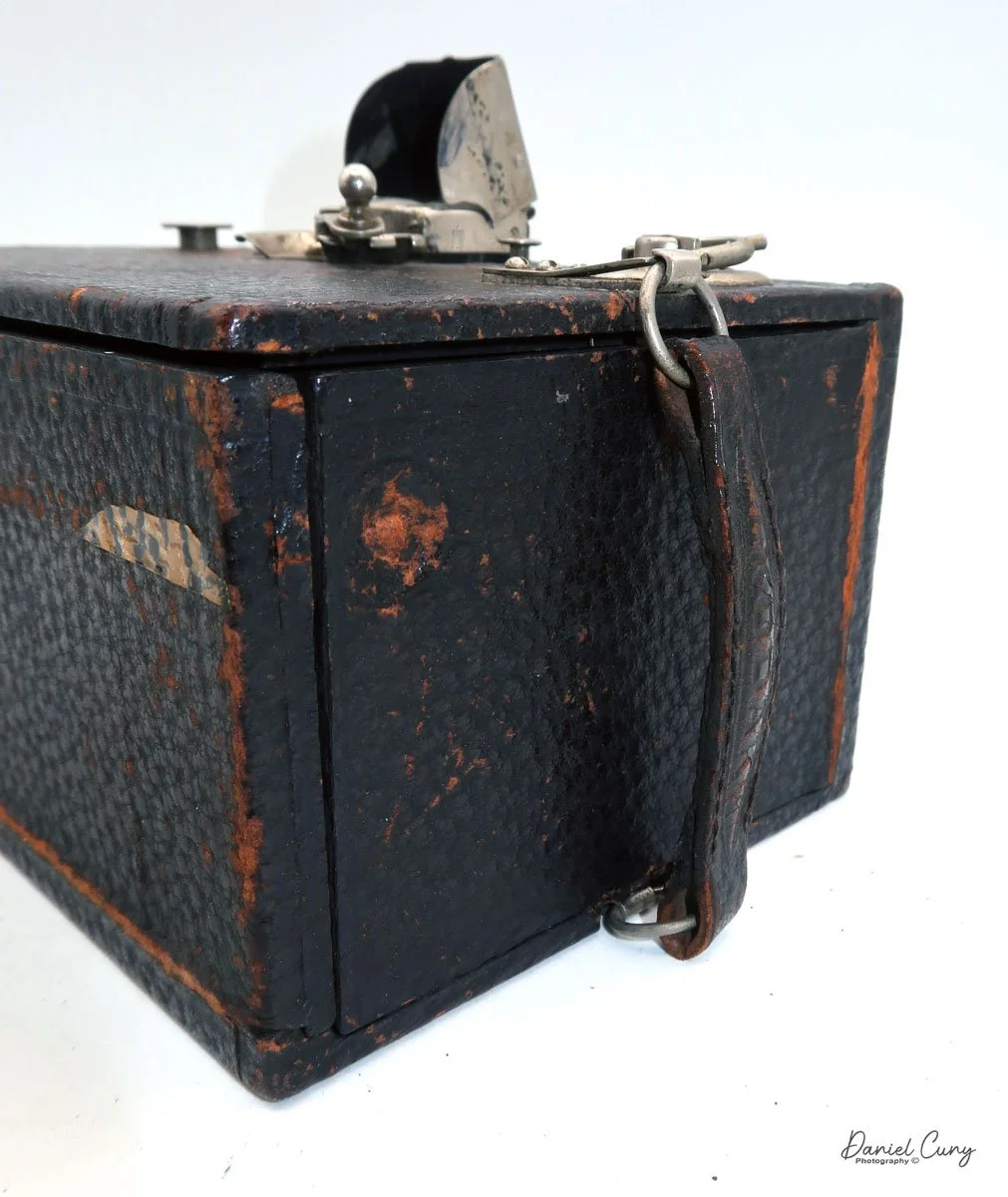
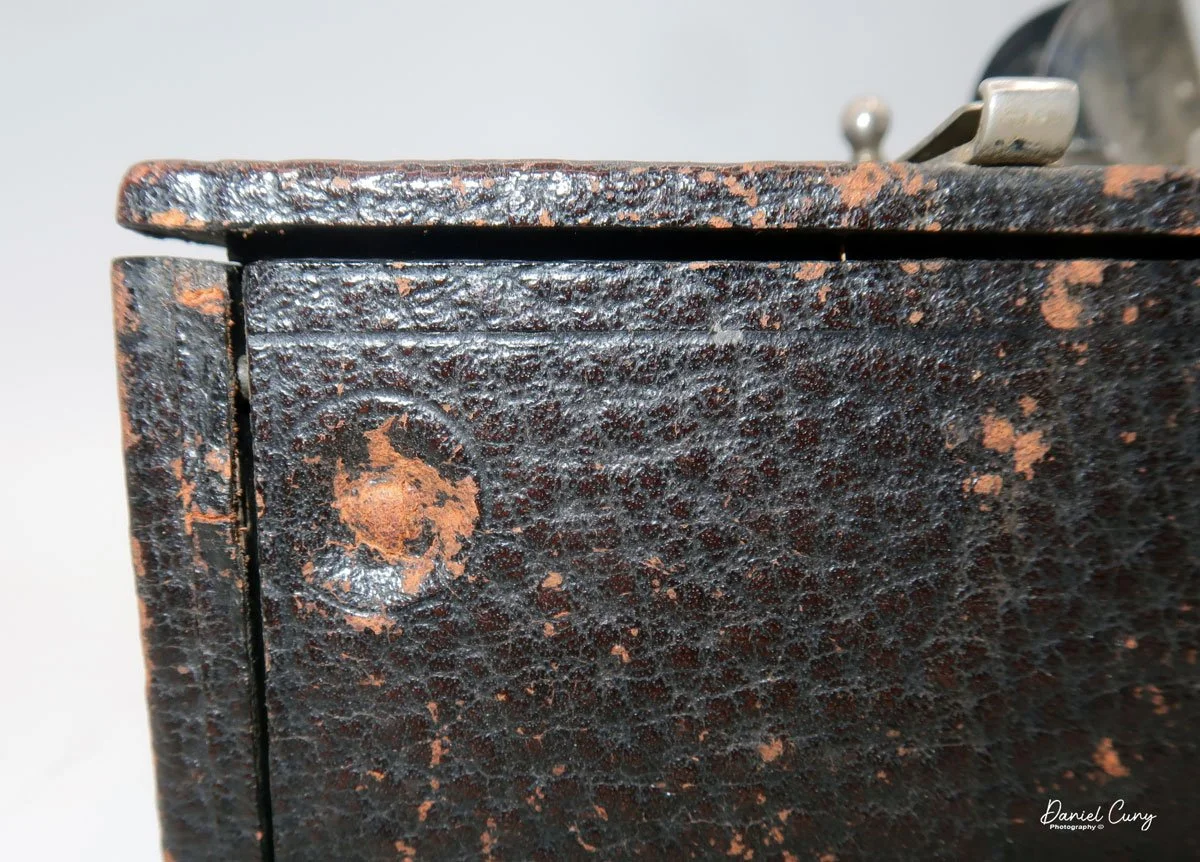
 The second version of Kodak Panoram 1, the Model D, which I've had in my collection for 30-plus years, is slightly different. The back of the camera doesn't detach from the body, but, like some horizontal-folding cameras, there are buttons on either side you press to release it and fold it down. Then the camera's sides swing out to allow you to load and unload film.

 I have owned and restored several of both models, as the lens-swinging mechanism is the same, and the leather or suede bellows are similar. The main reason for the change in style was to reduce the camera's size. I prefer the original with the removable back, but both deliver fantastic images.

History of Kodak Panoram:

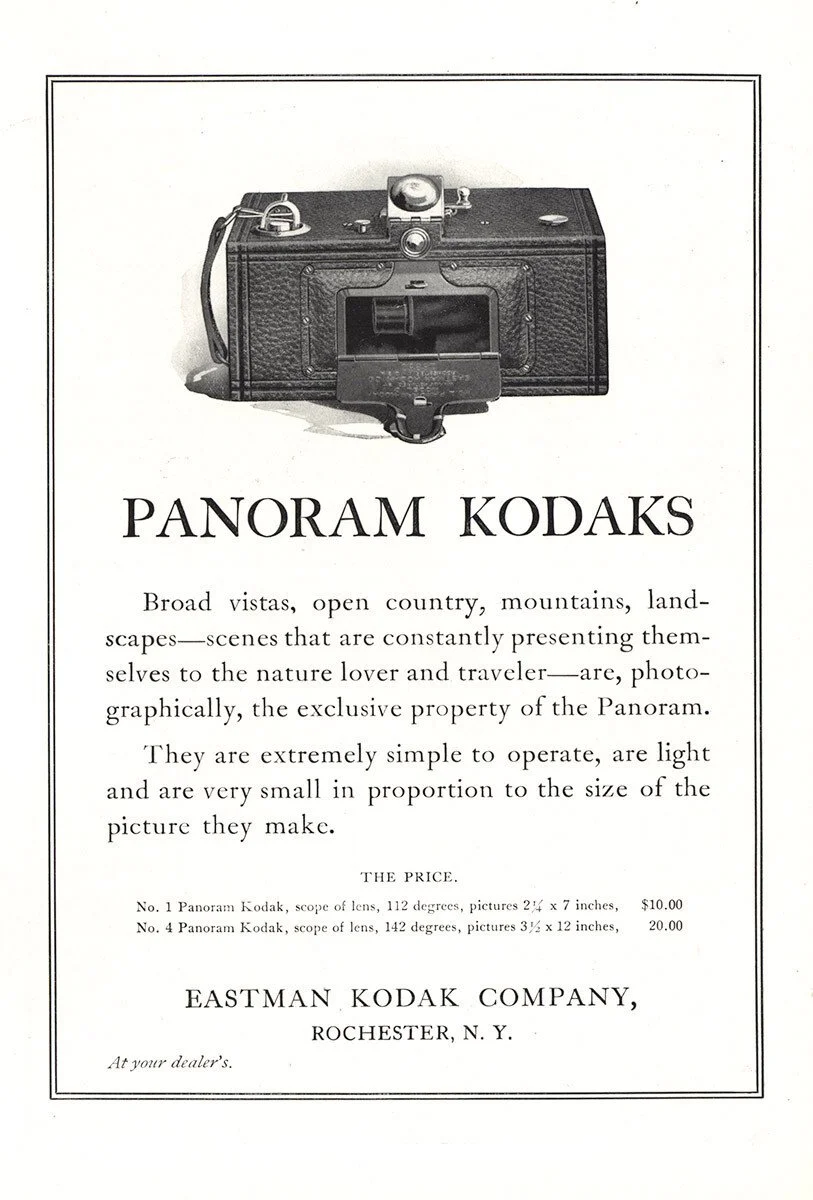
 Introduced by Eastman Kodak at the turn of the 20th century, the Kodak Panoram series democratized wide-angle photography, bringing it out of the domain of professional specialists and into the amateur market. Debuting in 1899 with the No. 4 and in 1900 with the smaller, popular No. 1, these "shoe-box"- shaped cameras remained in production until 1928.

Advertisment for the Kodak Panoram cameras

 The Panoram’s defining feature was its ingenious swing-lens mechanism. Unlike standard cameras with fixed lenses, the Panoram featured a lens mounted on a pivoting turret. When the shutter was triggered, the lens swung in an arc—typically between 112 and 142 degrees—sweeping light across a curved plane of film (the area of film bent to match the arc) at the back of the camera. This design minimized horizon distortion while capturing vast landscapes or large-group portraits in a single exposure. A swing-lens mechanism means the camera’s lens actually moves or "swings" during the exposure, rather than remaining stationary as in most cameras, to create a wide panoramic image.

 Aimed primarily at outdoor and travel use, Panoram cameras were used to document landscapes, expeditions, and colonial scenes, including polar exploration and industrial development in Southeast Asia. Their relatively simple wooden-and-leather construction, fixed focus, and minimal controls reflected Kodak’s broader strategy of making specialized photography accessible to non‑experts. At the same time, the nearly three‑decade production run indicates sustained popularity among enthusiasts of wide‑angle views.

 Three primary models defined the line: the No. 1 (using 105 film), the No. 4 (using 103 film for massive 12-inch negatives), and the short-lived No. 3A (introduced in 1926). While eventually displaced by newer formats and the 35mm revolution, the Panoram remains a cult classic today, prized by collectors and photographers for the unique, sweeping perspective that only a mechanical swing-lens can provide.

My Camera:

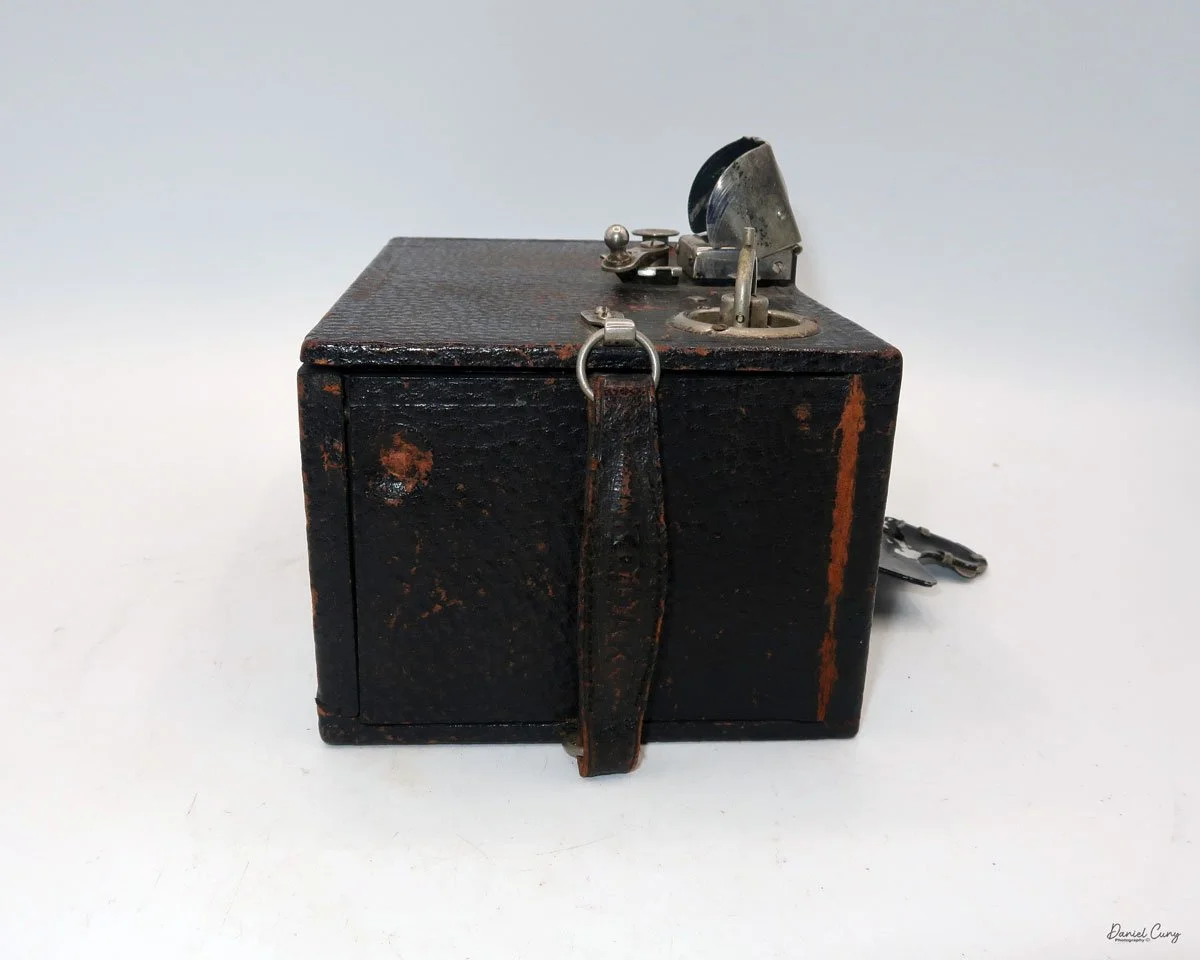
 My Kodak Panoram 1, Model D camera is 7.5" wide with the strap, by 4.5" deep by 4" tall, including the optical viewfinder, and weighs 1 pound 9.5 ounces without film loaded in the camera.

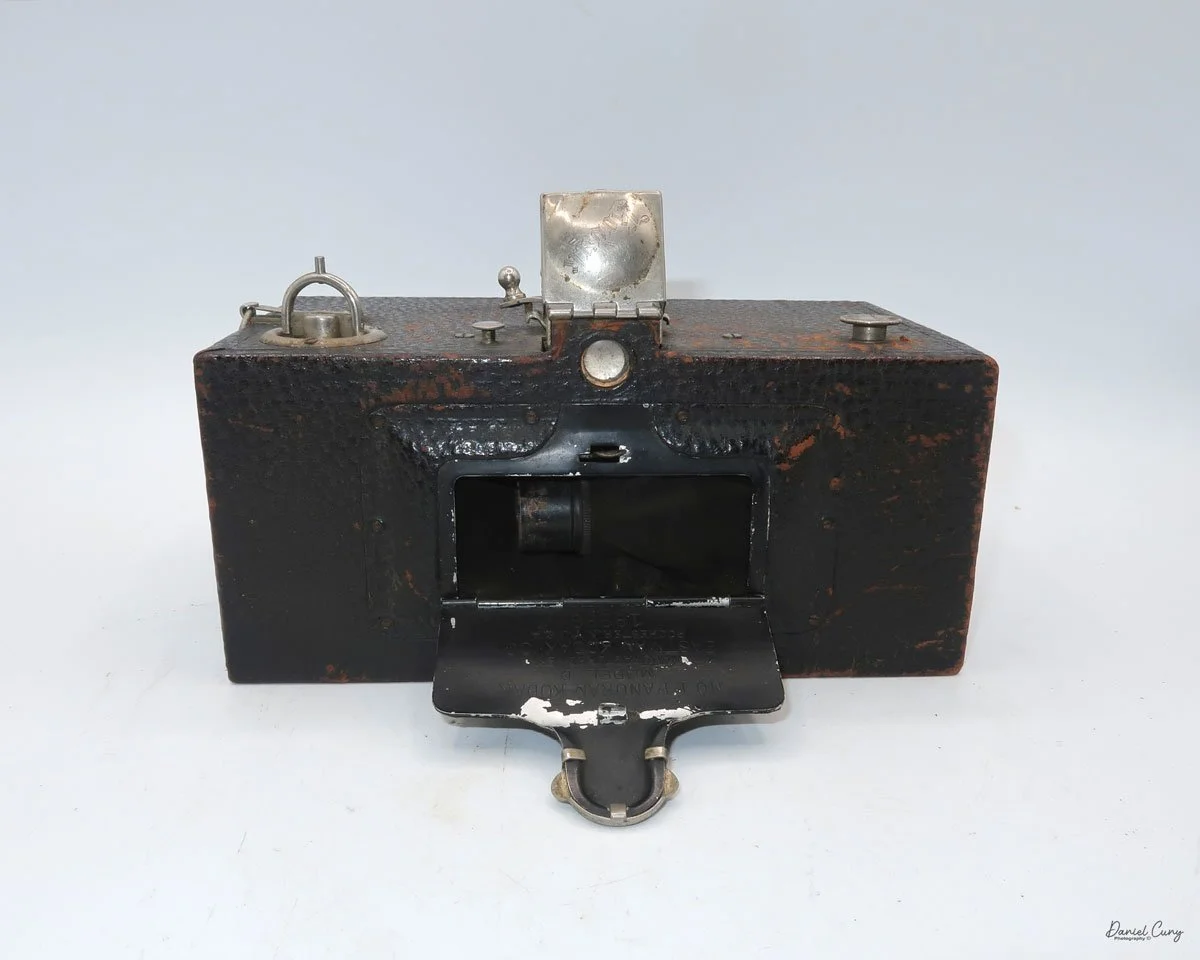
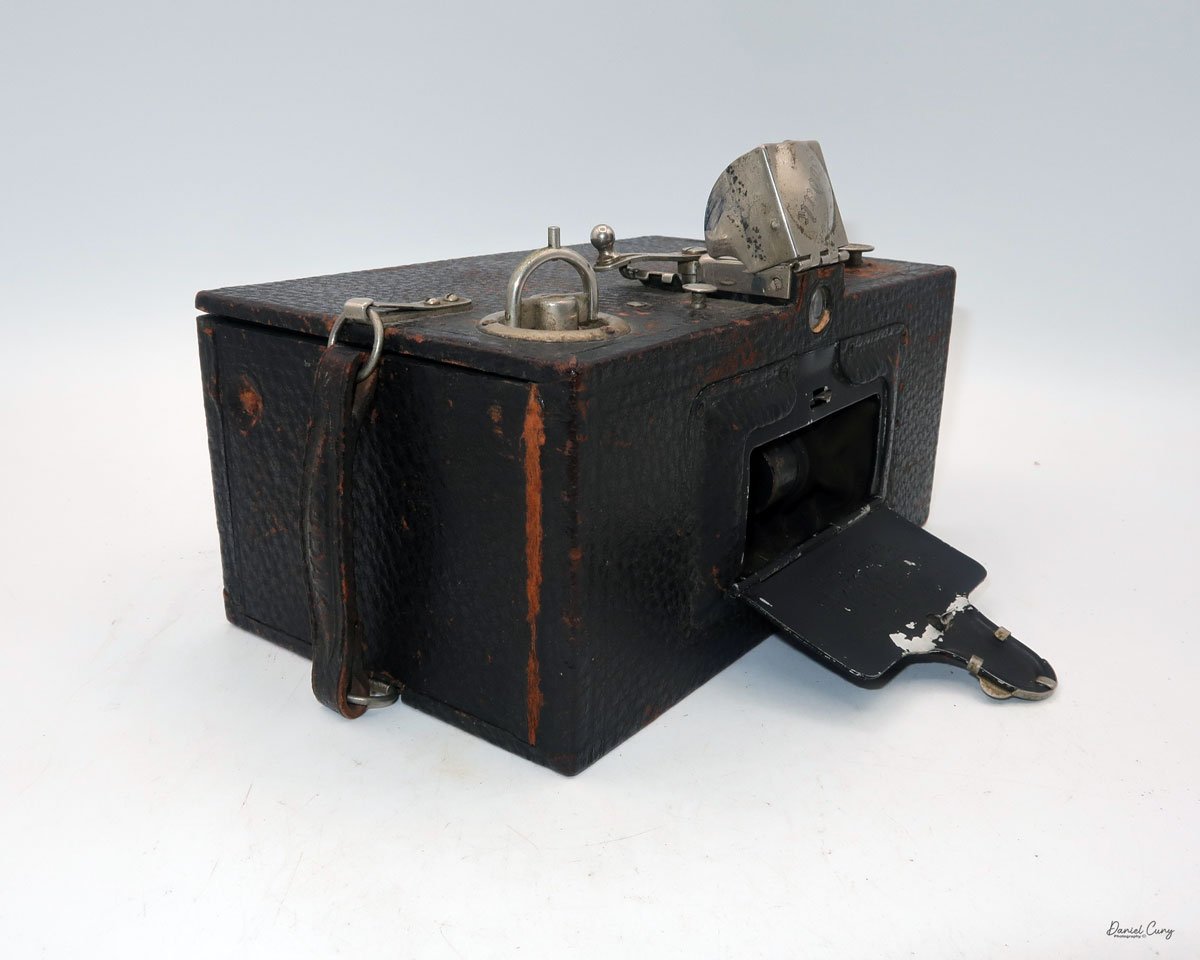
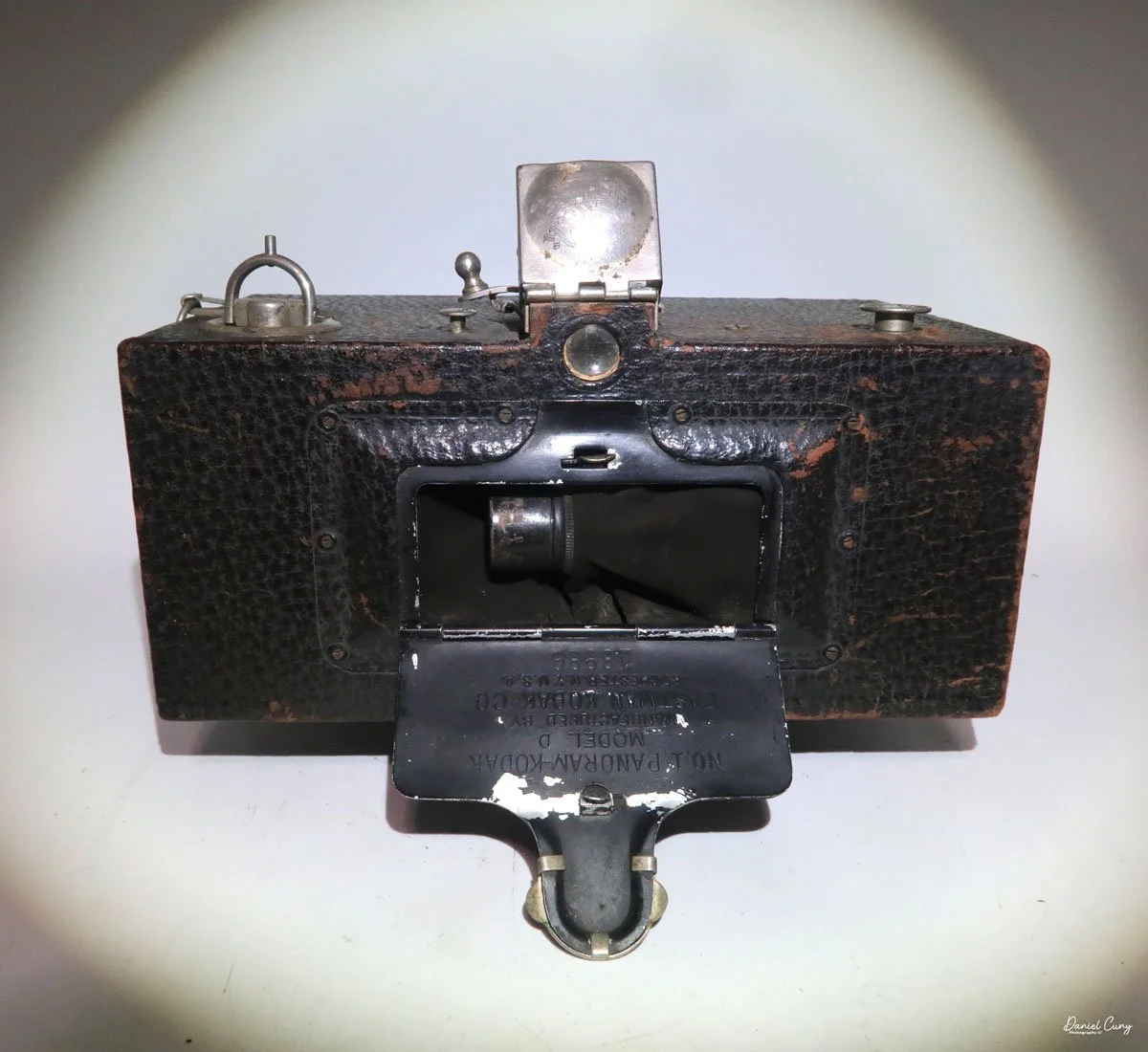
 To open the lens, pull down the front lens cover to reveal the swing lens to one side or the other. If it were pointing straight ahead, the lens cover wouldn't close. On the inside of the lens cover is the camera name, No. 1 Panoram, Kodak, Model D. On the bottom is the camera's serial number. My camera's serial number is 18986.

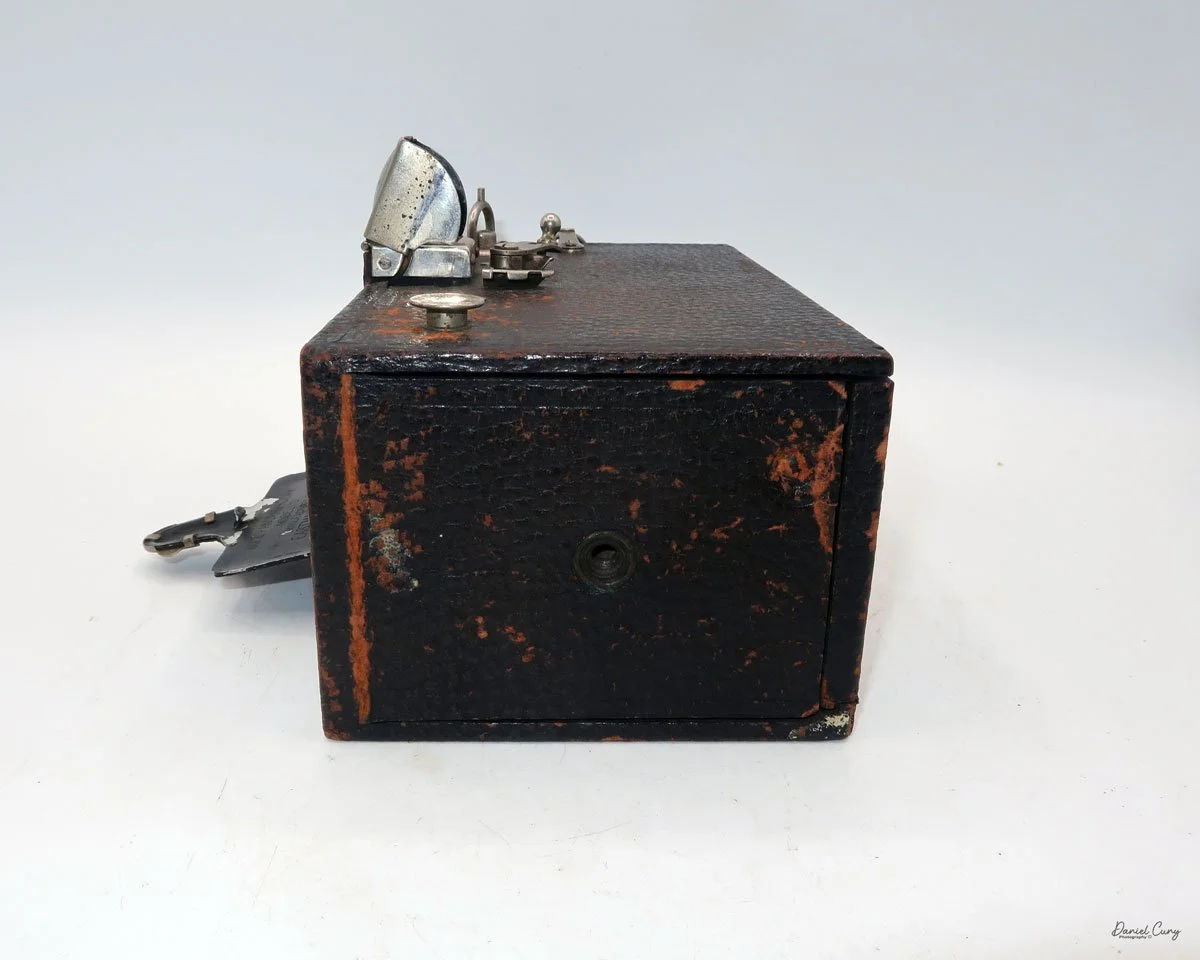
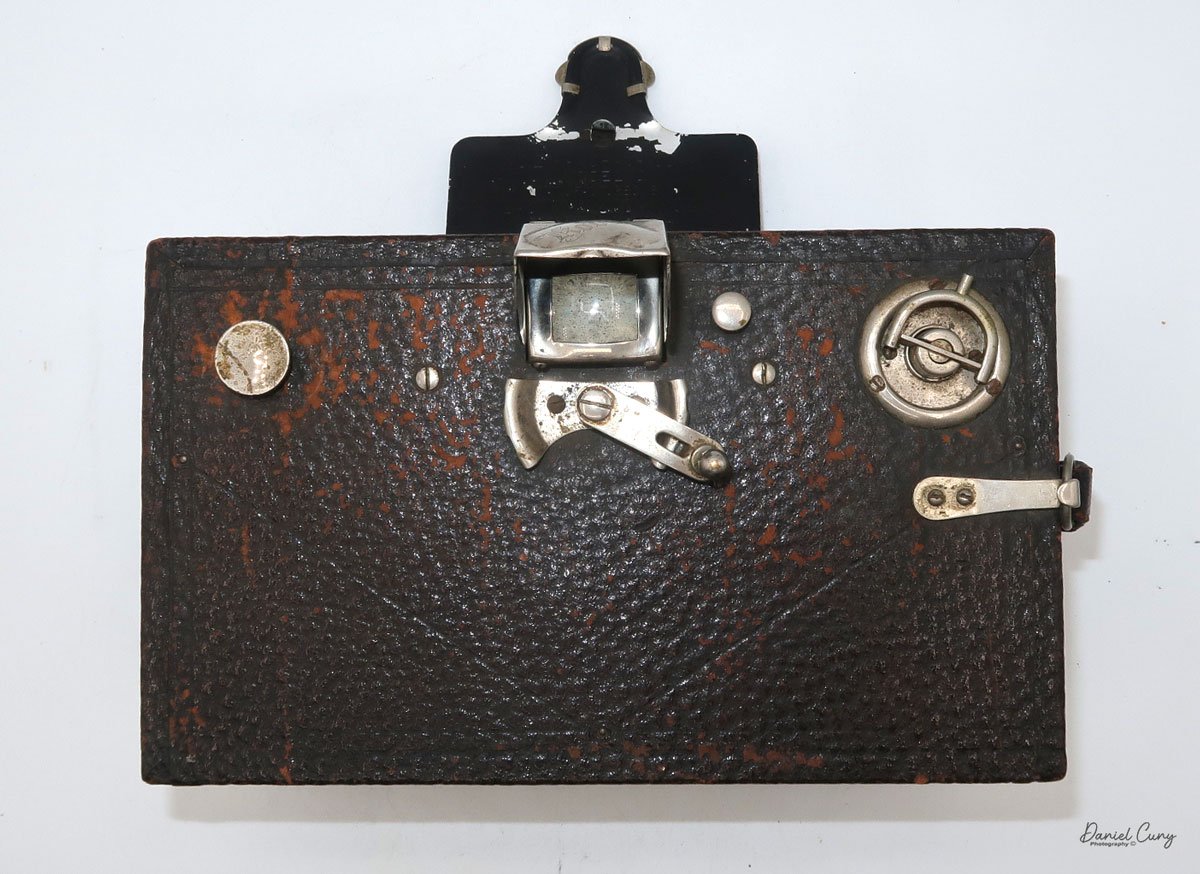
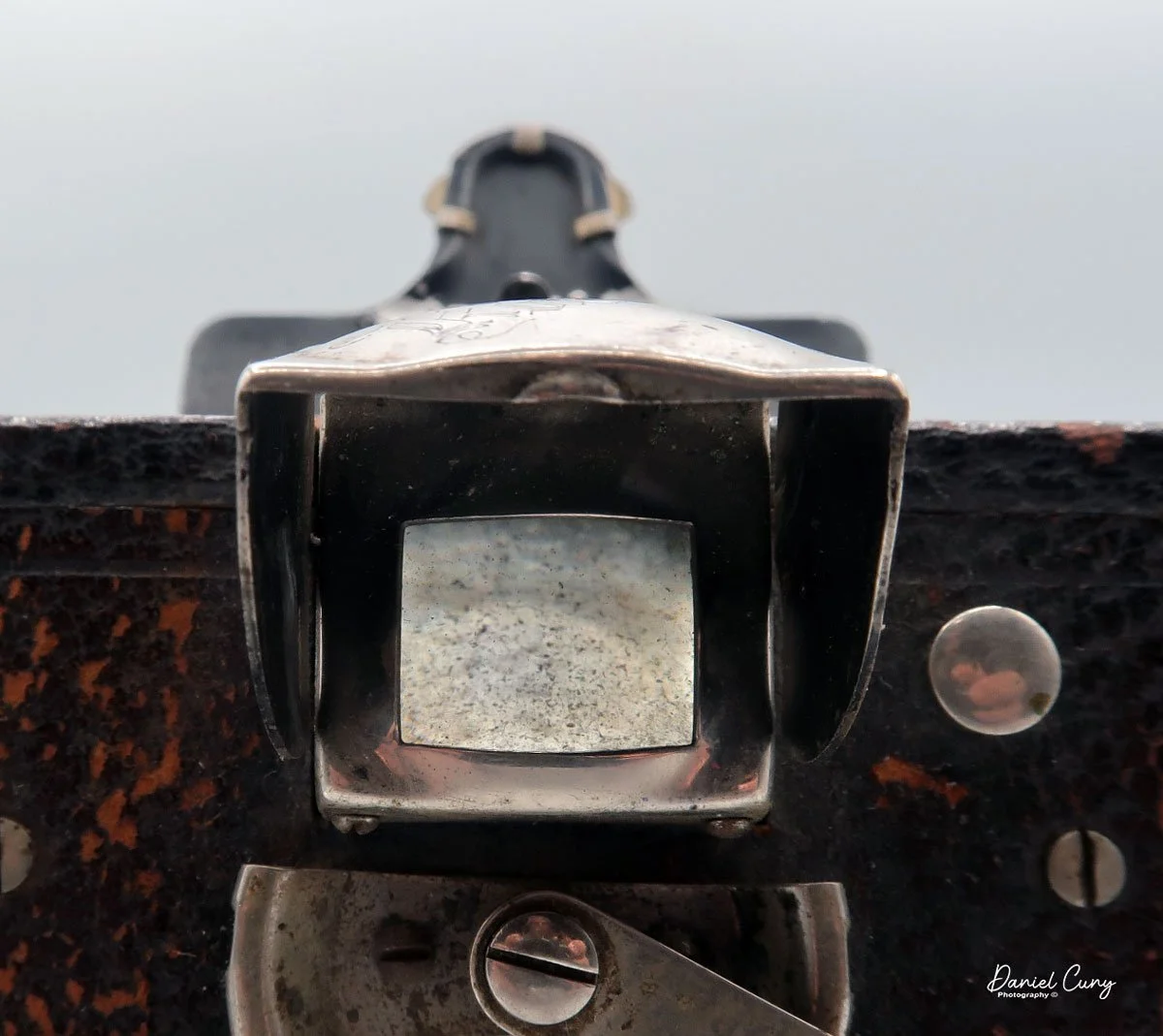
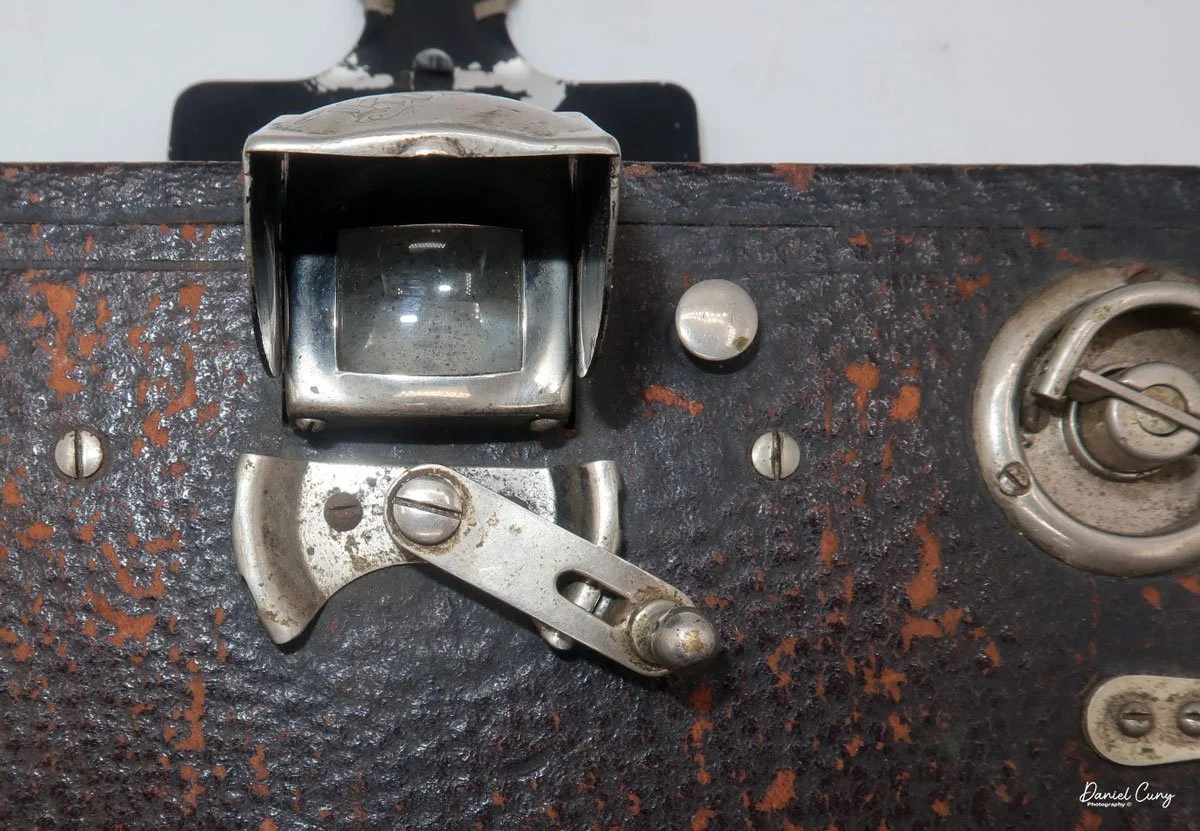
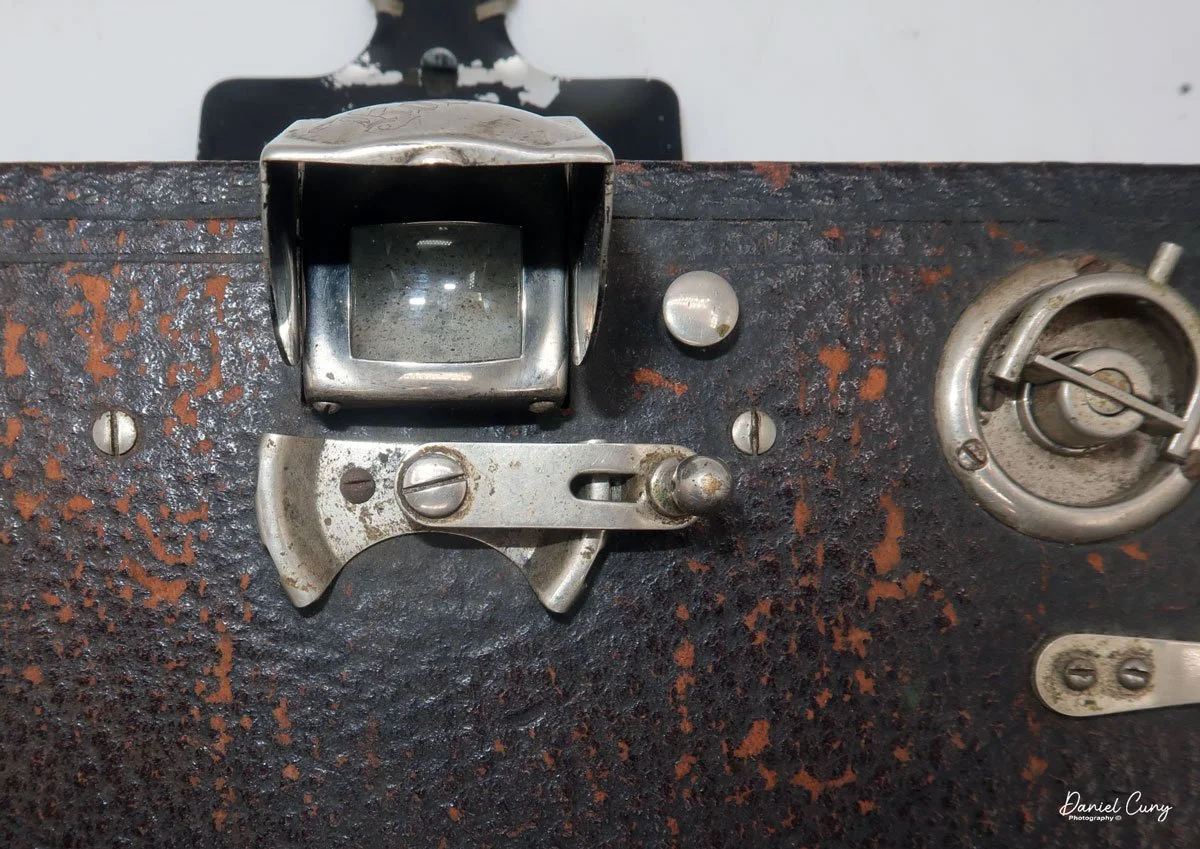
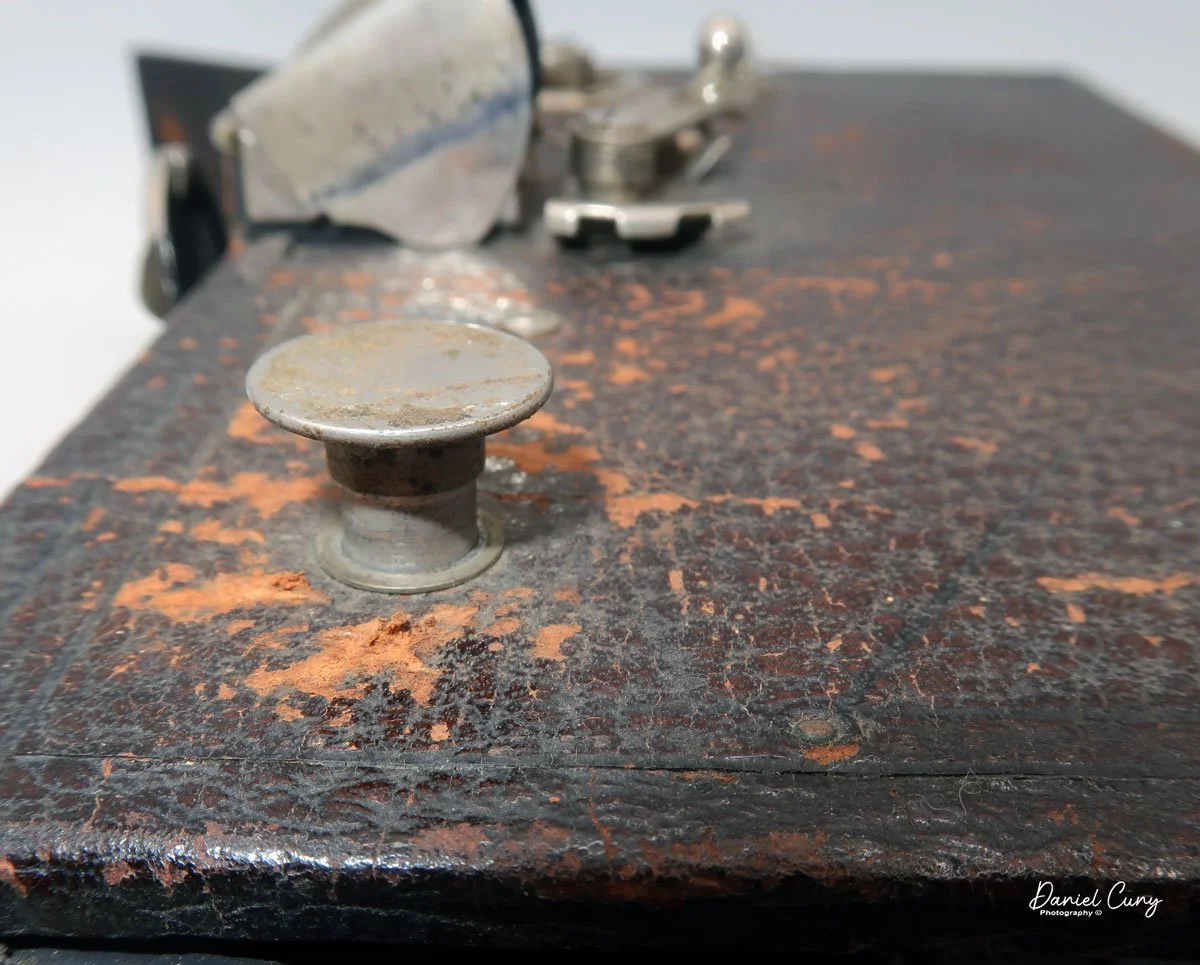
The camera is simple with minimal controls. On top is the etched nickel Kodak waist-level finder, which you lift to reveal the viewfinder. Behind the finder is the shutter speed selector. There are two notches: the one near the center is for a slower shutter speed, and pulling the selector to the end increases spring tension, making the lens swing faster at that speed.

 To set the speed, slide the bar opposite the lens direction. If the lens faces right, slide the bar left to set the next photo's shutter speed. Lock the chosen slow or fast speed with the clip under the selector bar. The shutter release is just right of the optical waist-level finder. Press the shutter button to release the lens and watch it swing to expose the film. Two lines form a "V" at the top, indicating the camera's approximate field of view.

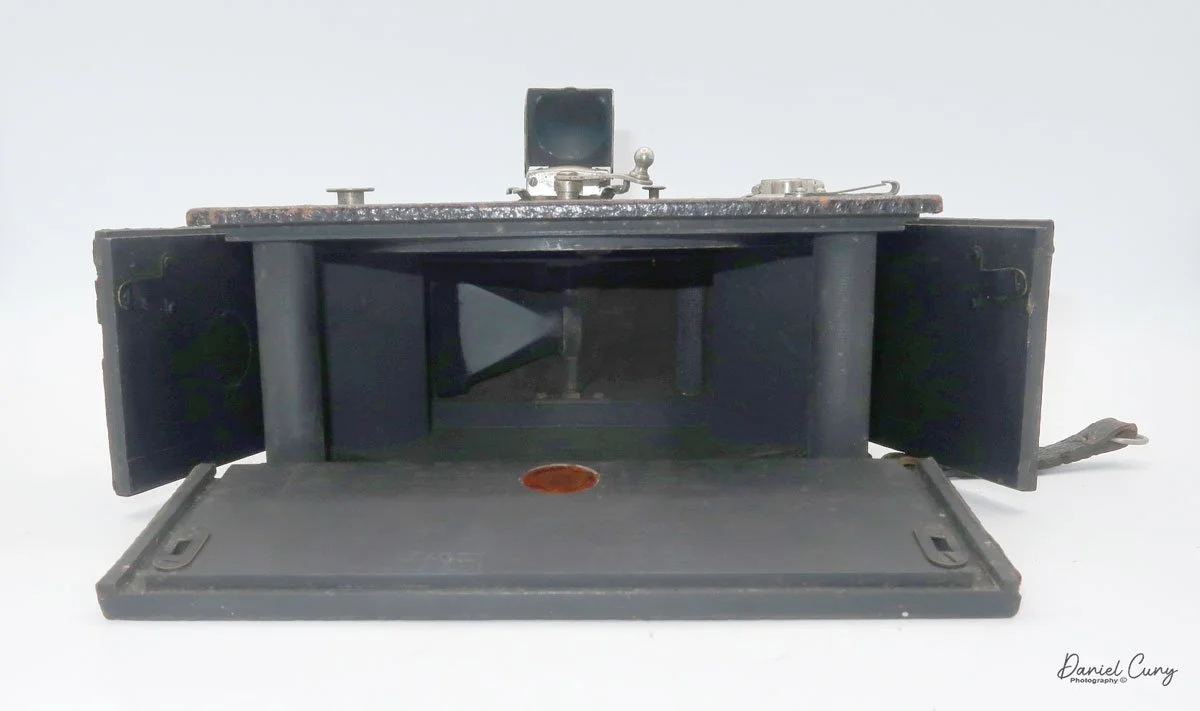
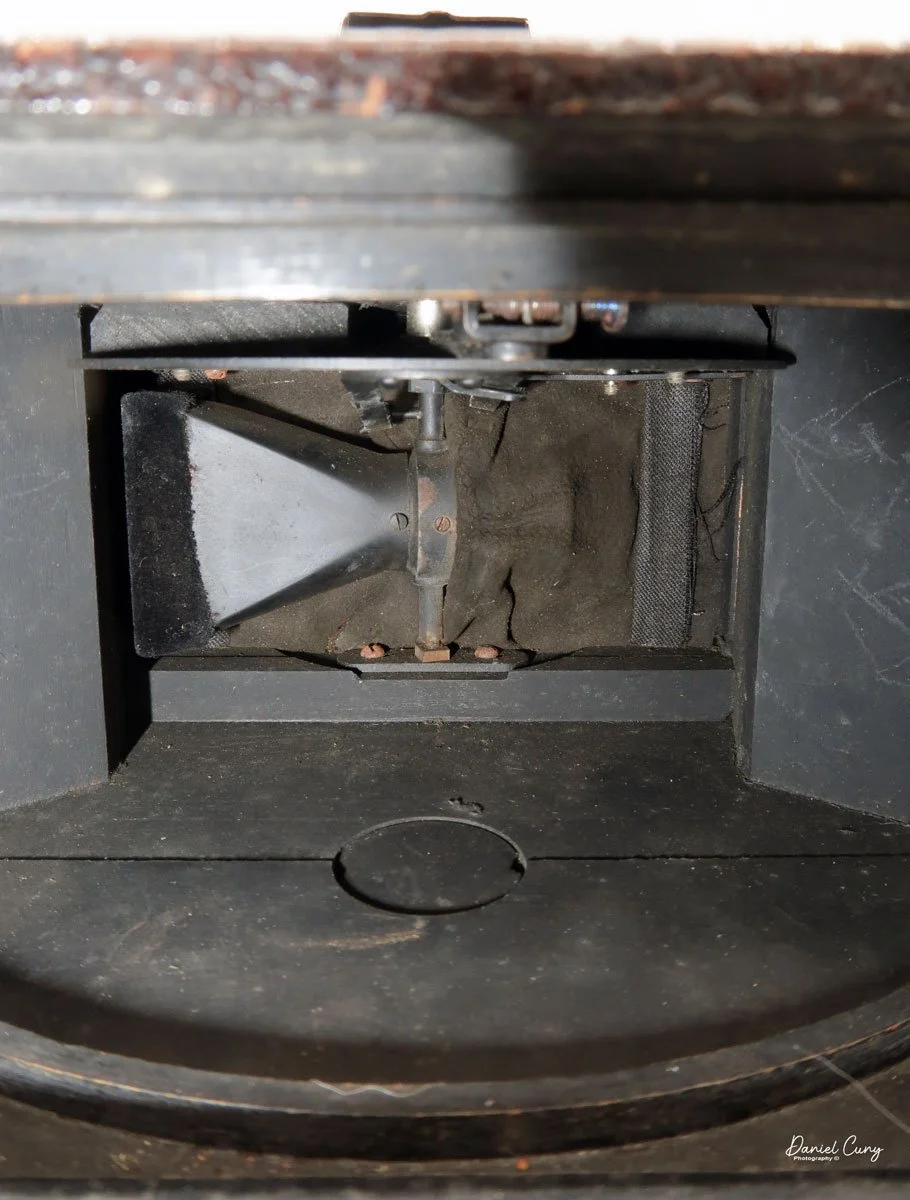
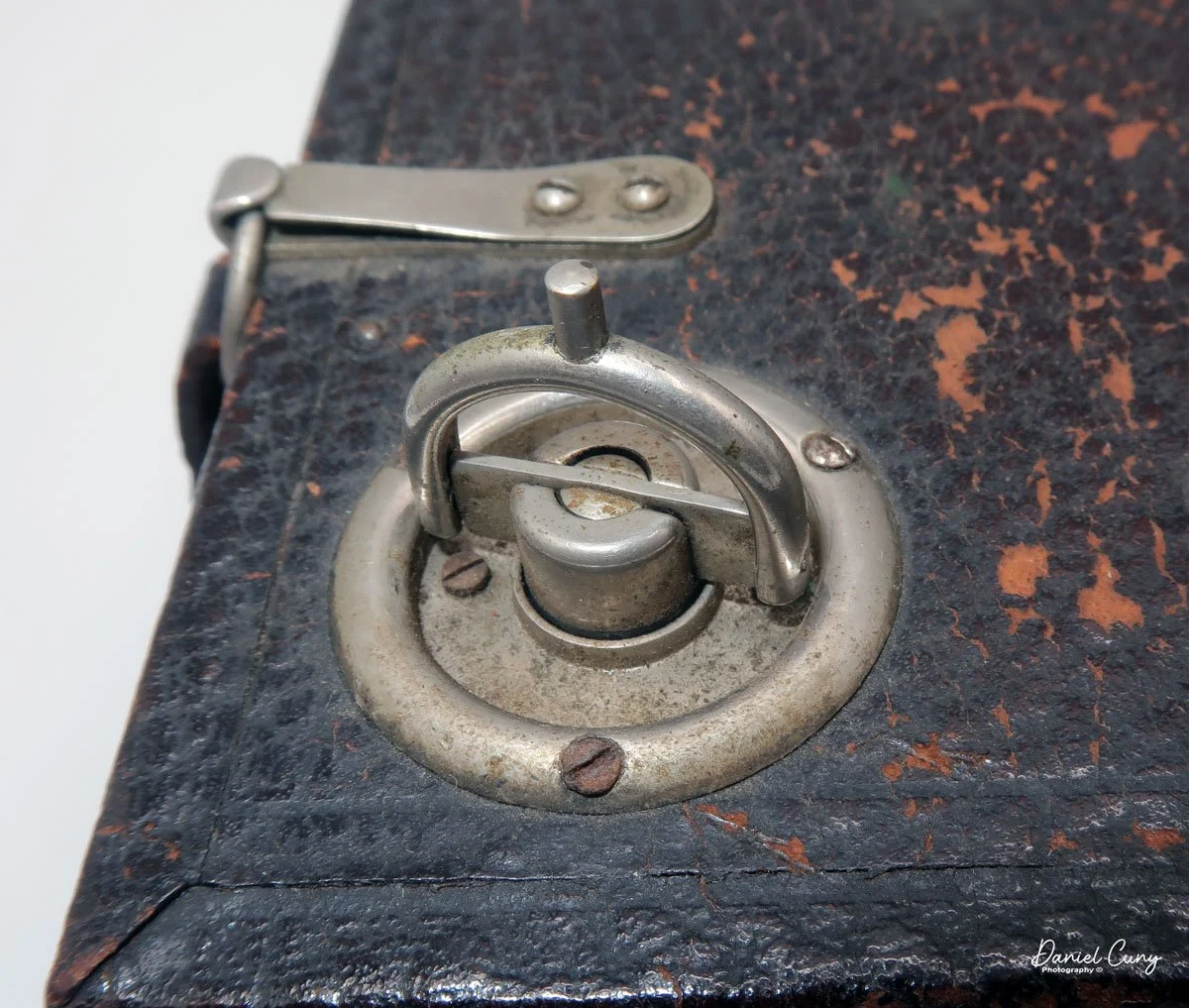
As mentioned previously, to open the back to load the film, unclip the strap on the right side of the camera, then press in the two buttons on the sides of the camera, which will release the camera's back, and it will swing down, and the sides of the camera will also swing open, revealing the film chamber. There you'll see the curved film plane the film travels over, and the very impressive cone on the back of the lens guiding the light onto the film as the lens swings from one side to the other.

To load film into the camera can be a bit tricky because the newer plastic film reels—that is, the circular pieces at each end of a roll that hold the film—can at times be thicker than what was used originally back in the early 1900s, when Kodak would use metal for the reel ends and wood for the film cores, meaning the spools—the cylinder around which the film is wound—would be a bit thinner. When I went to load film for the blog post, I tried a brand I'd never used before. The spool was just a bit too thick and wouldn't fit into the camera easily, and once I did get it in, it was so stiff that the film wouldn't transport across the shutter easily.

 I loaded a new roll by placing the empty spool on the right, then lifting the winding lever and button to fit it. Then I placed the new roll on the left, brought the paper backing over the film plane, and threaded the leader into the empty spool slot. I wound the film until the start arrows appeared, pressed in the camera sides, and swung the back up to lock it.

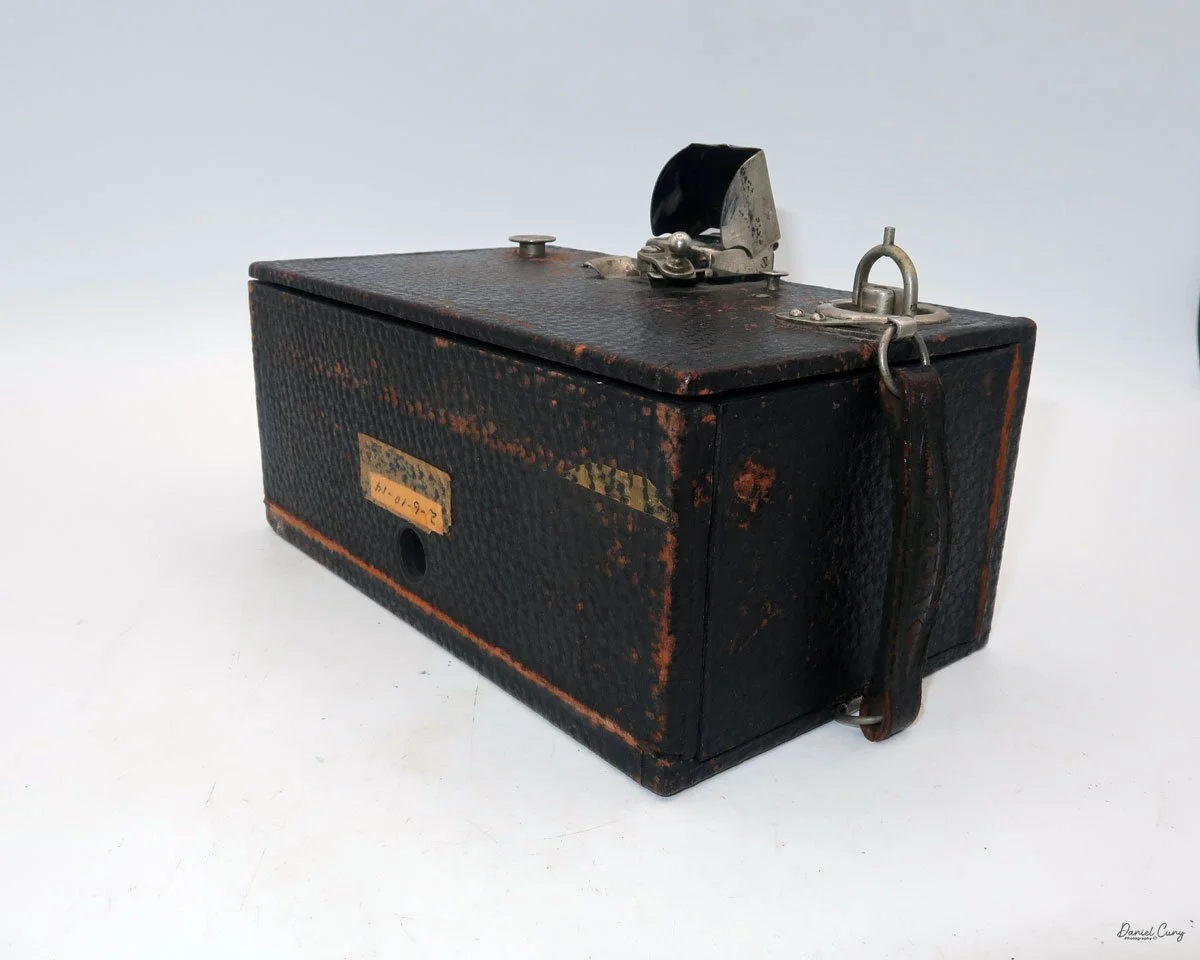
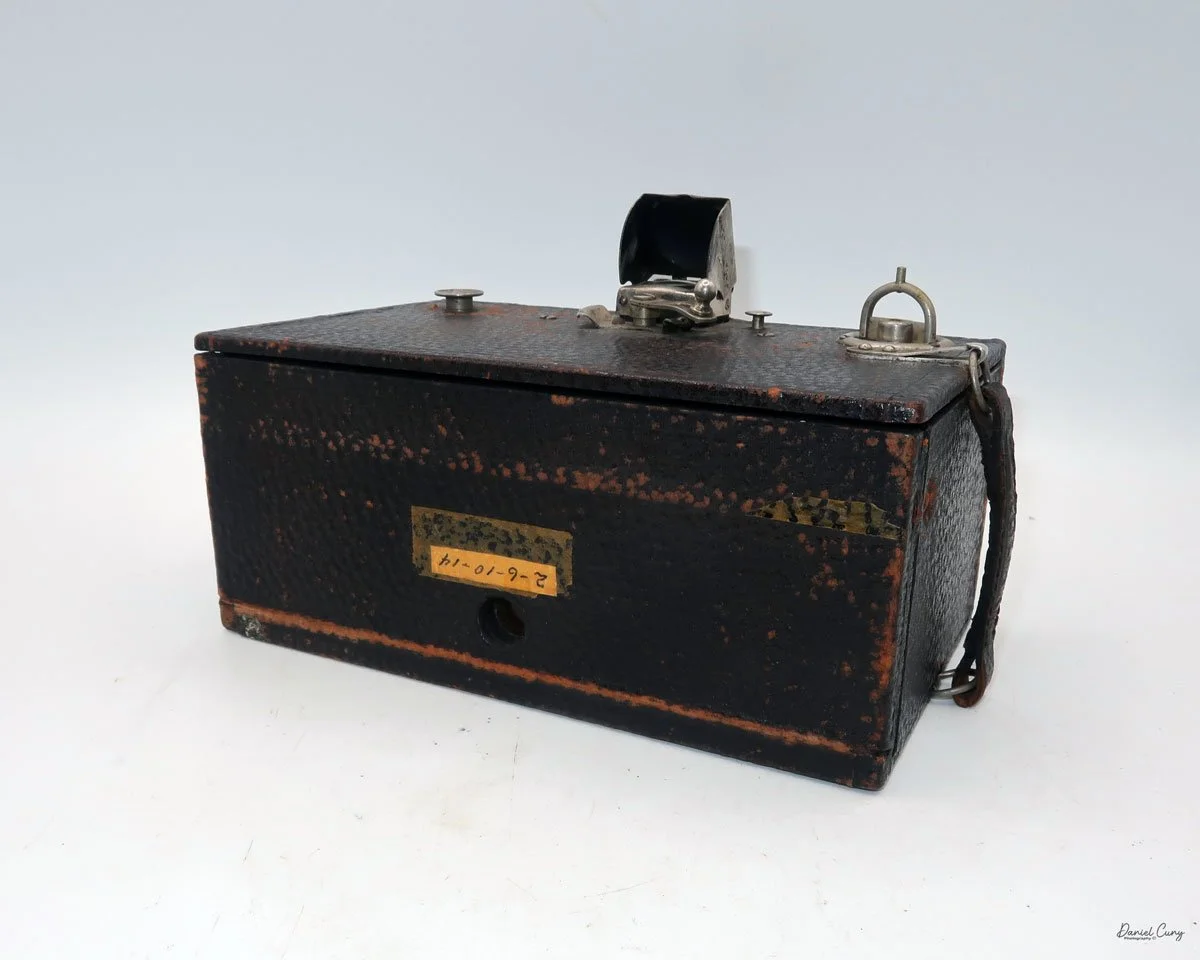
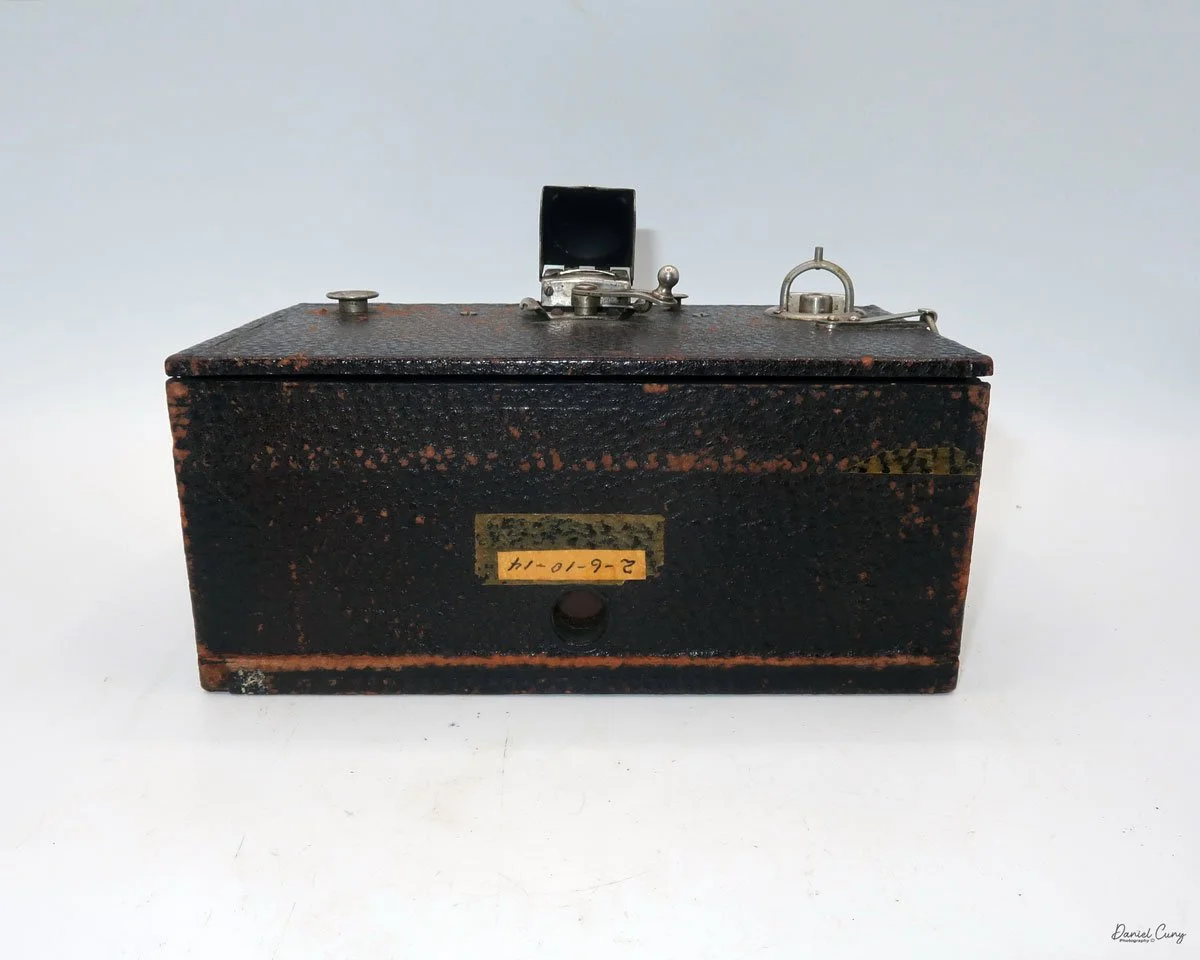
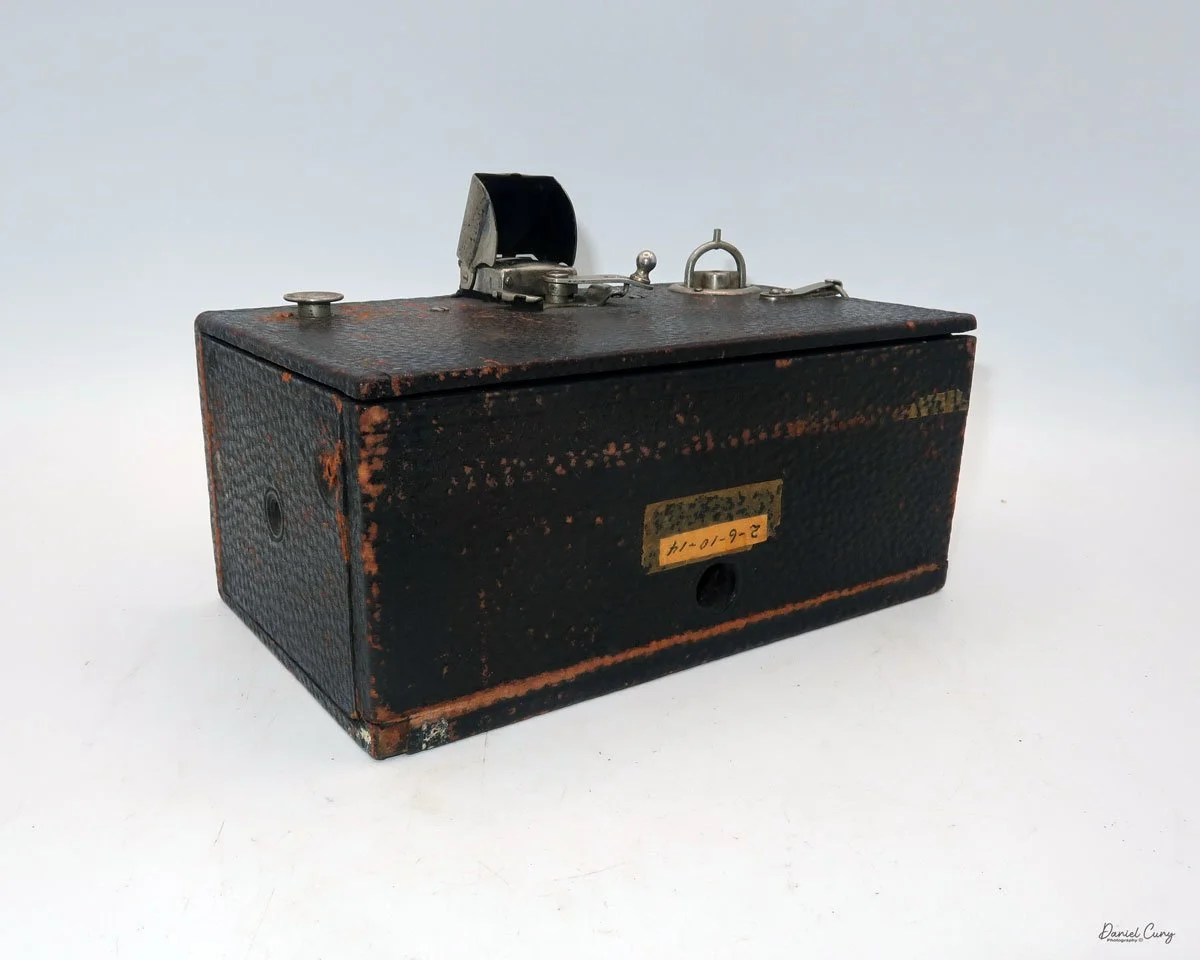
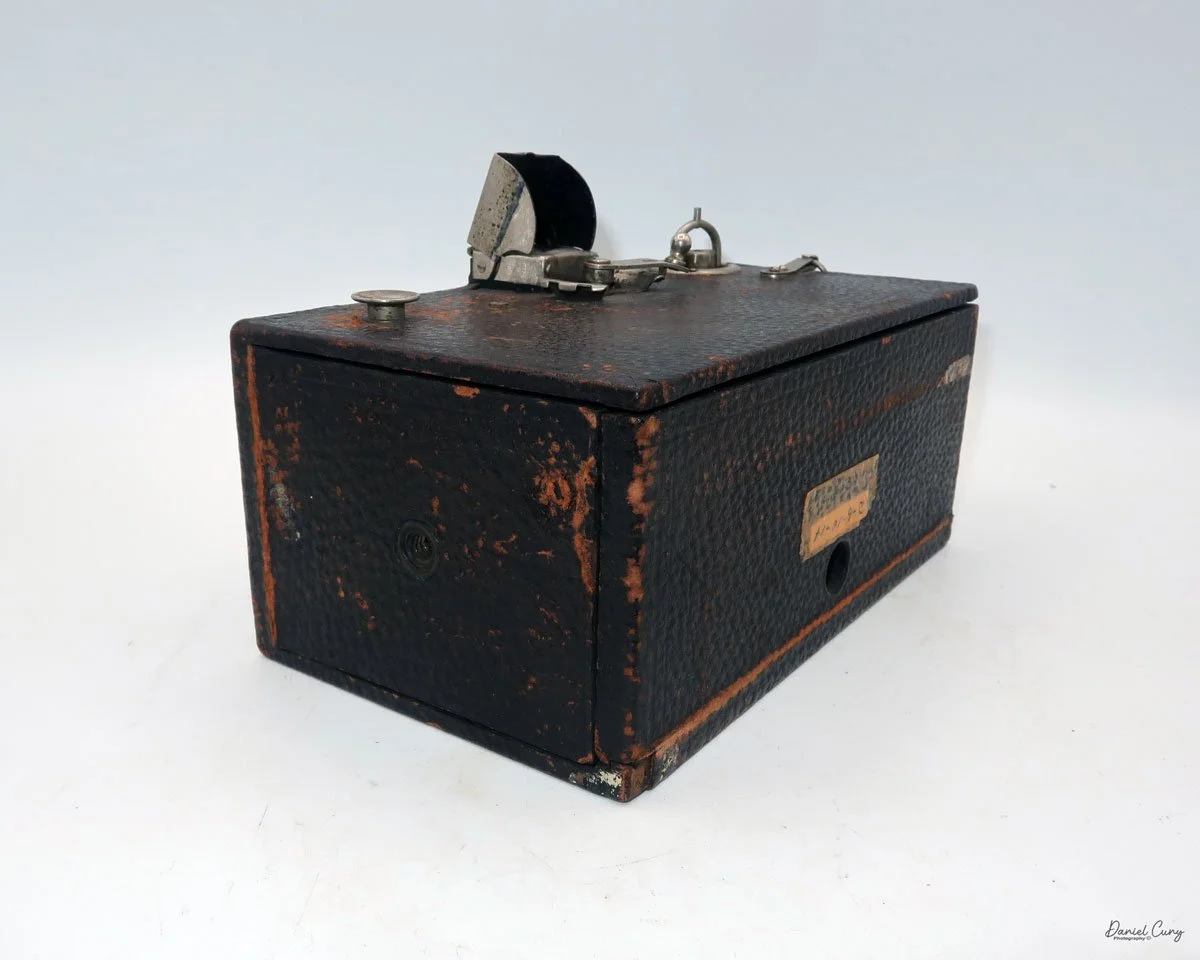
Since 120 film isn't designed for panoramic cameras, the numbers 2, 6, 10, and 14 appear on the back of my camera. These indicate the frame numbers to stop at for each of the four photos on 120 film. I wound the film to 2 and was ready to take my first shot.


My Results:

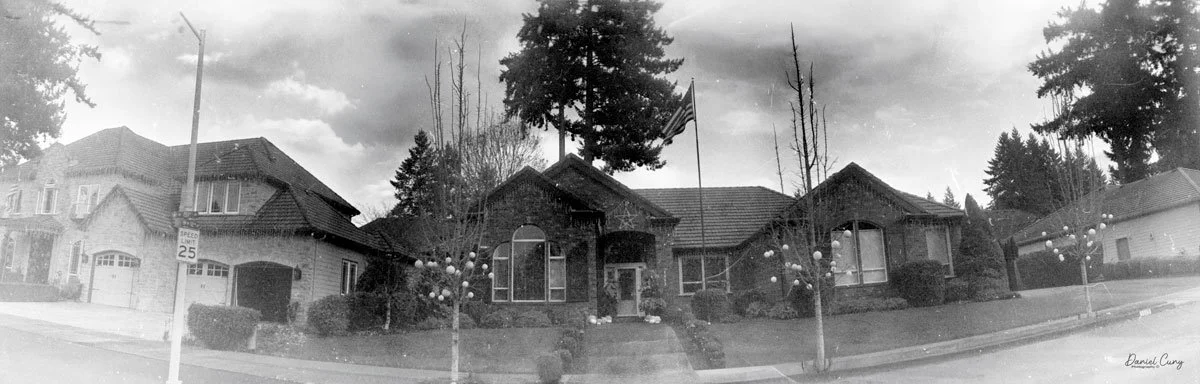
 The film I loaded into the camera was an older roll of Kodak BW400CN film I purchased at a local camera show a few months ago. One thing about the film is that it needs to be processed in C-41 chemicals, which is a standard color film developing process. For the article, I wasn't sure I'd have enough time to get the film processed. Looking online, people mentioned the film can be processed in B&W (black-and-white) chemicals, so that's what I did. 

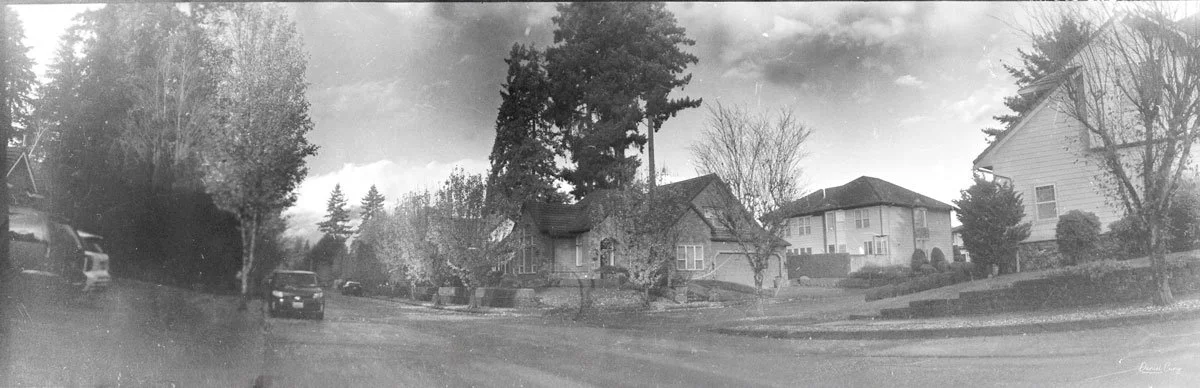
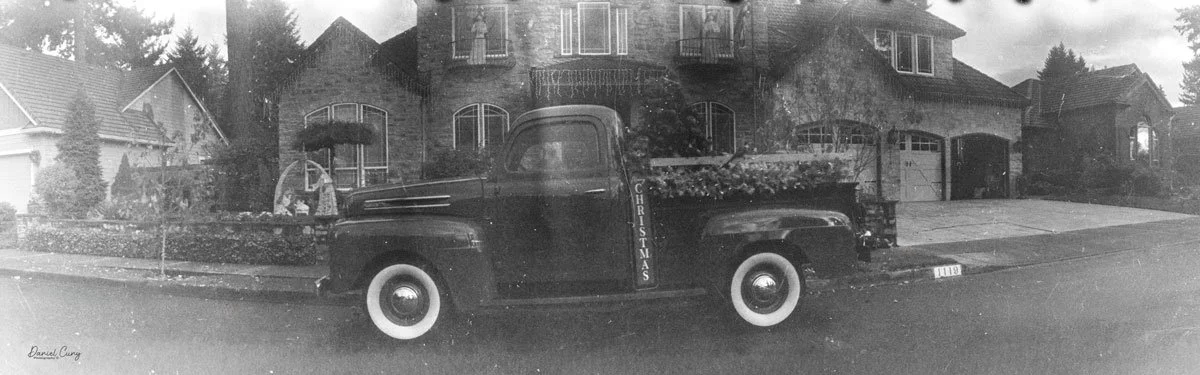
 There was a break in the rain on Sunday, so I loaded the film into the camera because the Kentmere I had didn't fit because the spool was too thick. I took the photo and went back to the house to develop the negatives. Maybe I didn't process the film long enough, since the images were extremely thin. I had to do some magic in Photoshop to get the images I have, so my apologies for the poor examples.

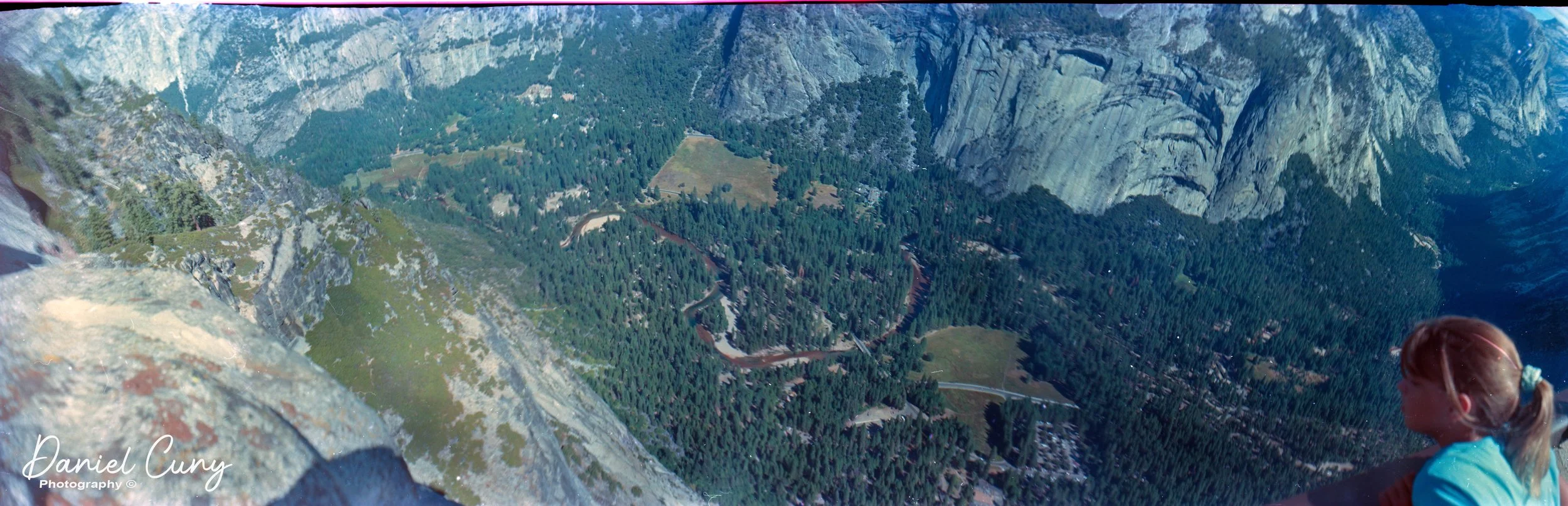
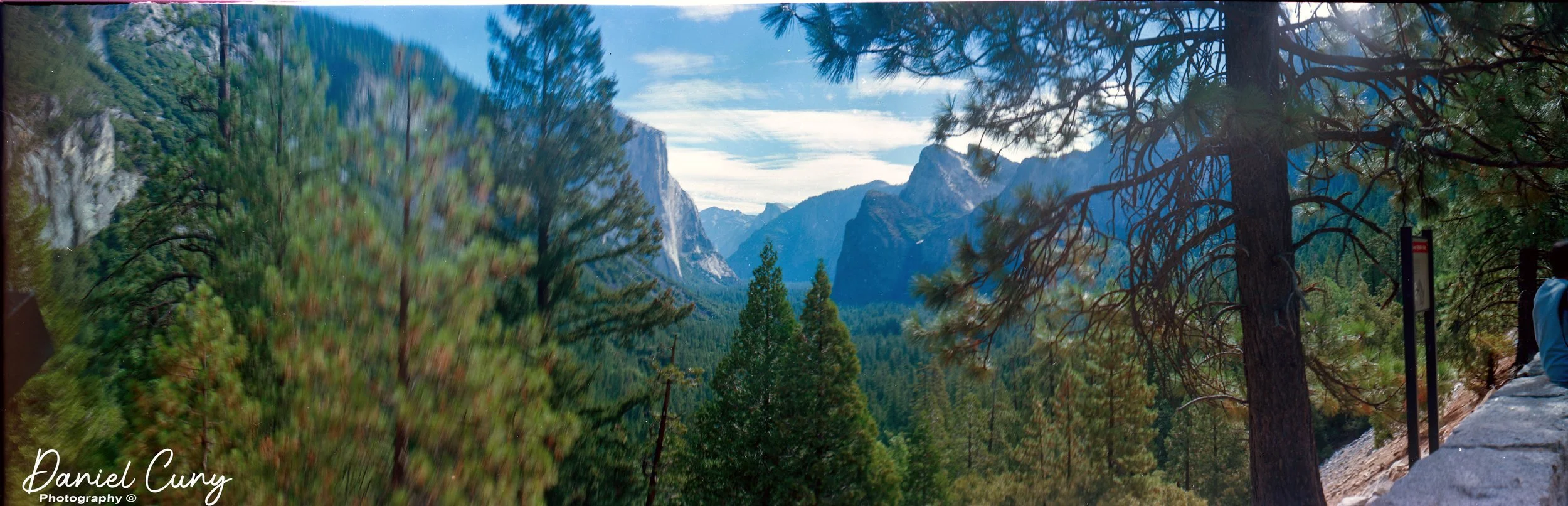
 However, I used the camera when I went to Yosemite a few years ago, and the images turned out great, so I'm adding a couple of color images from Yosemite to this blog to show how well the camera performs.

Conclusion:

 I've always been a huge fan of both the Multiscope Al-Vista and the Kodak Panoram camera. It's interesting that I've only owned the Panoram 1 camera and never the 3a or 4 Panoram, but I do have some of the larger Al-Vista cameras.

 The Panoram 1 is a fun camera to use, and the results are surprisingly good. I should have a camera with a smooth shutter. The cameras are compact, use 120 film, and, unfortunately, are becoming increasingly expensive as people learn about them and how much fun they are to use.

 Fortunately, I've had mine for many years, and I also have the camera case, which is a plus. It's just a real gem in my camera, and truthfully, I'm surprised I haven't written about it sooner than I have.

 Thank you for taking a few minutes from your day to read about his wonderful panoramic camera from over 100 years ago.

 Here's a link to my previous Camera Reviews.

 I also have an eBay shop, Cuny's Camera and Photo, where I sell cameras I've reviewed, along with other photo oddities. If you're interested in anything from my store, reach out to me, and I'll offer a discount. Just mention my blog.

 Until next week, please be safe.