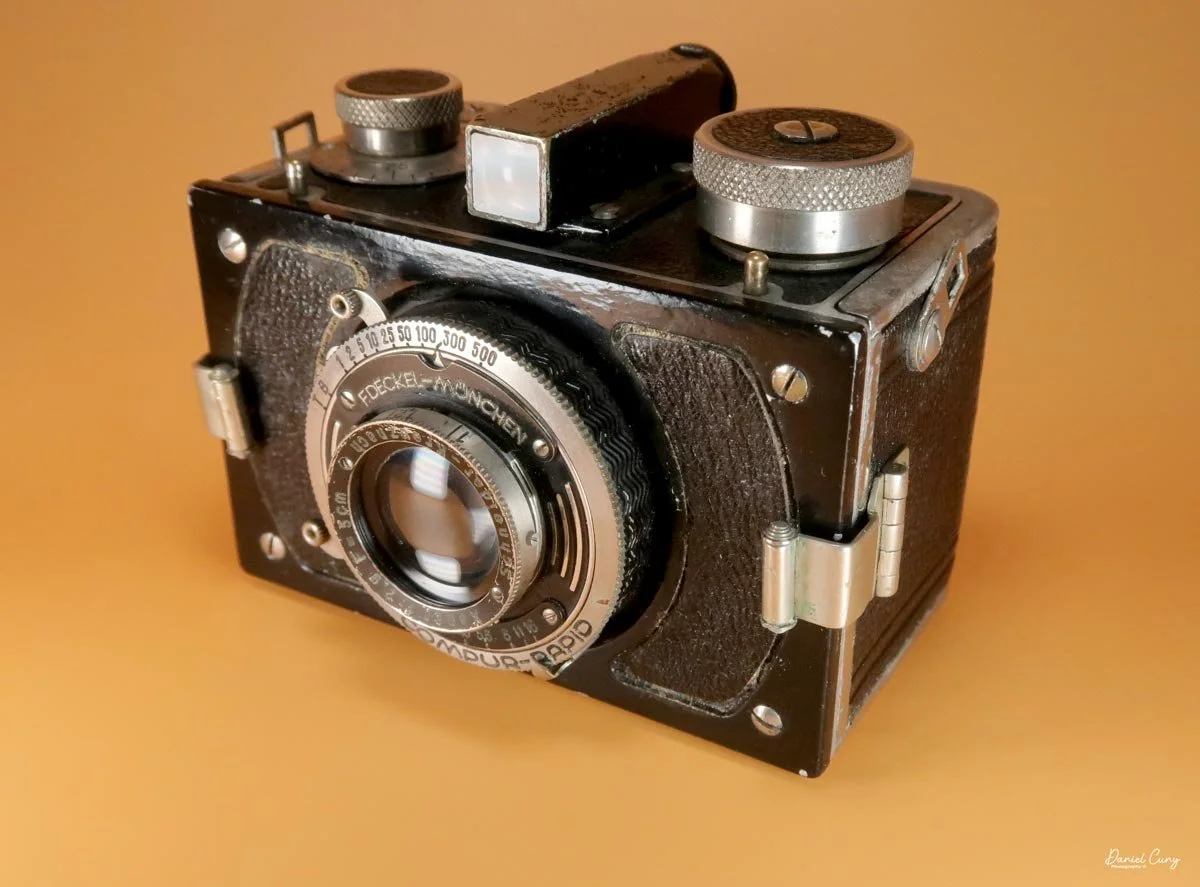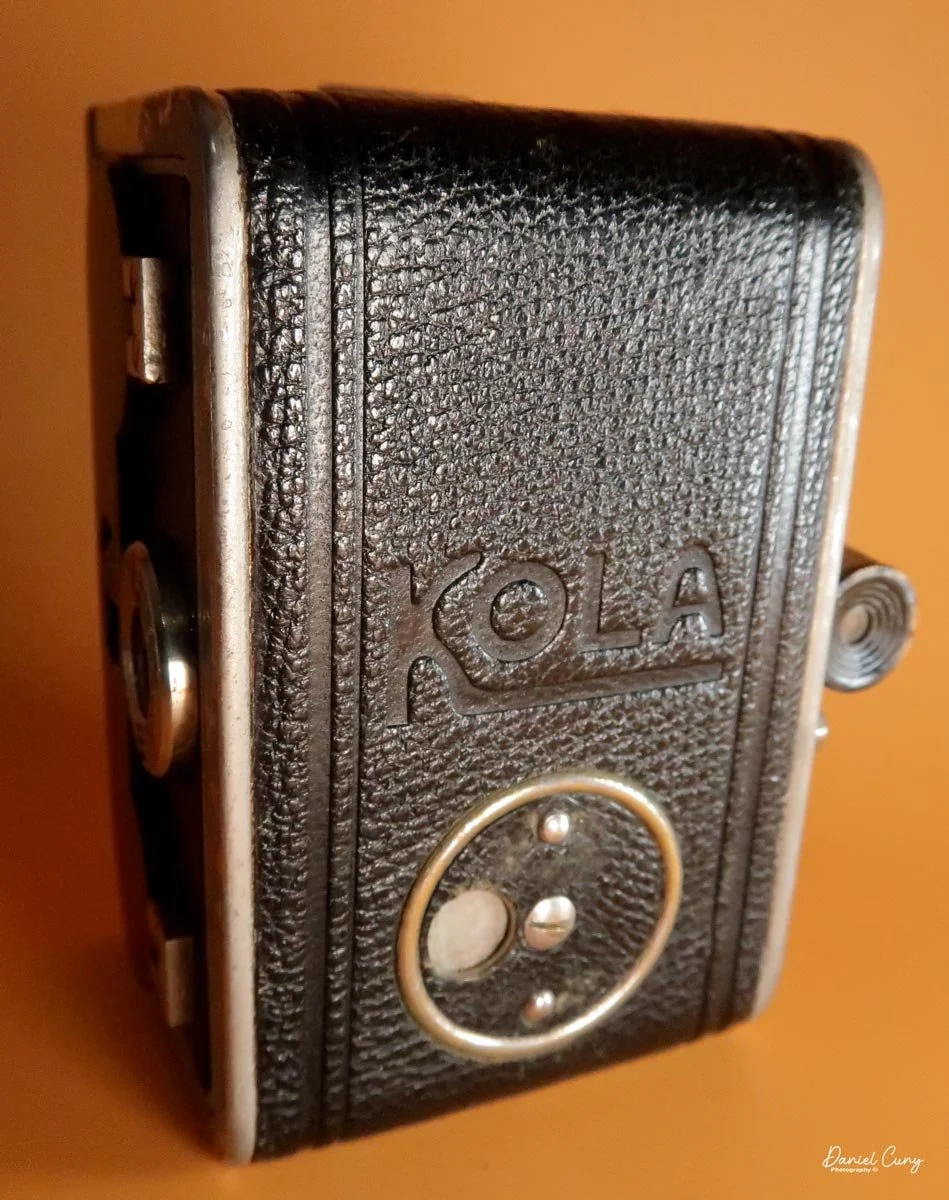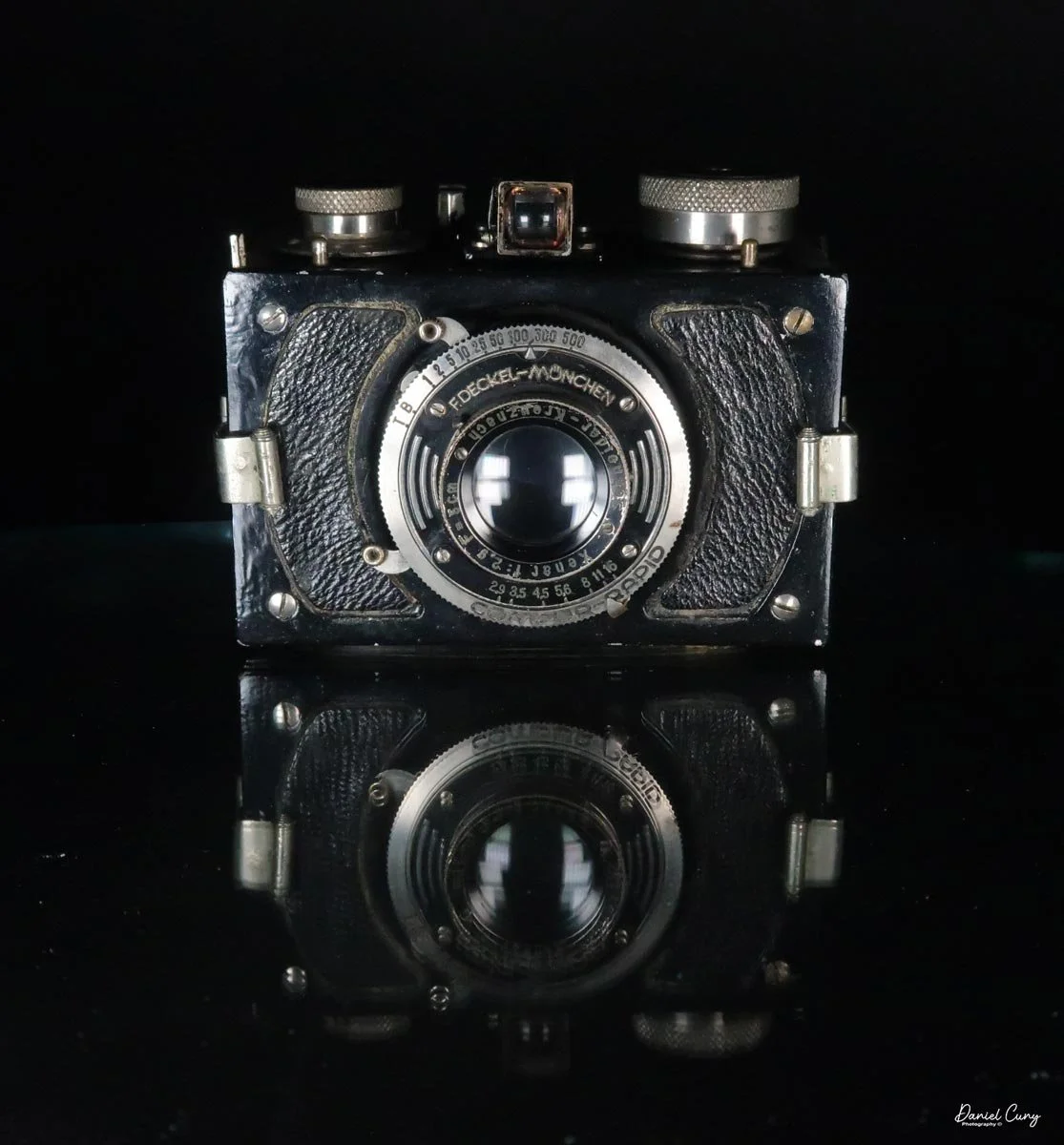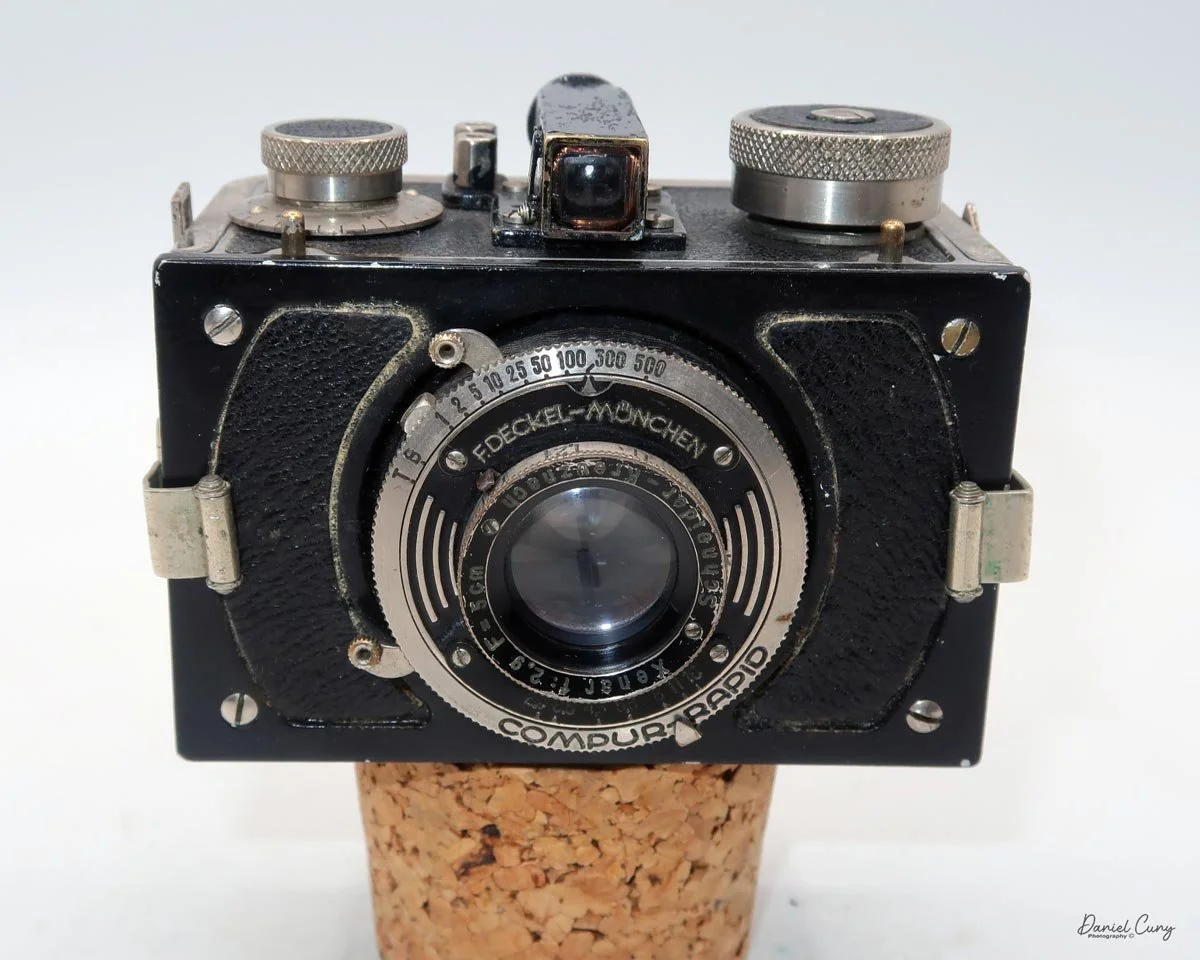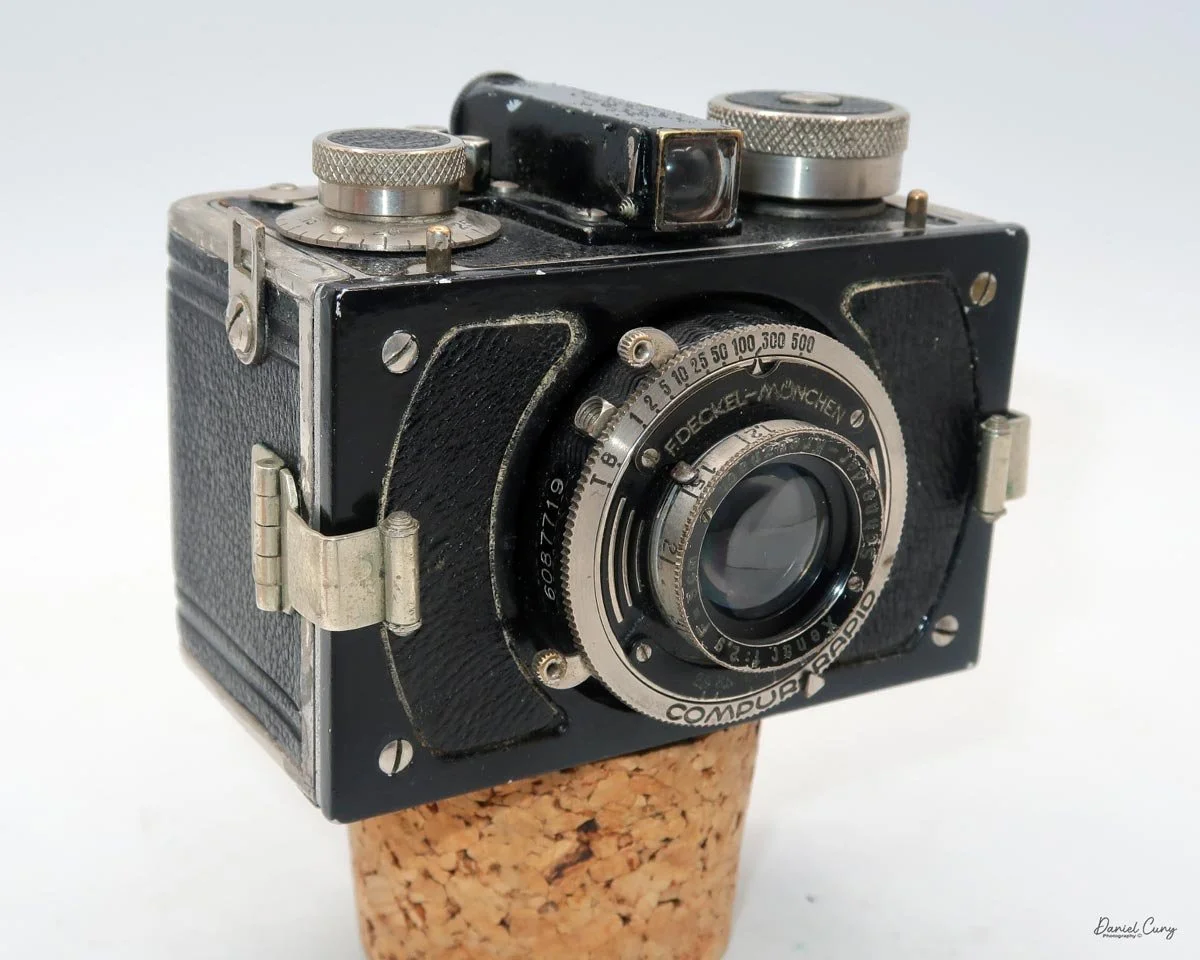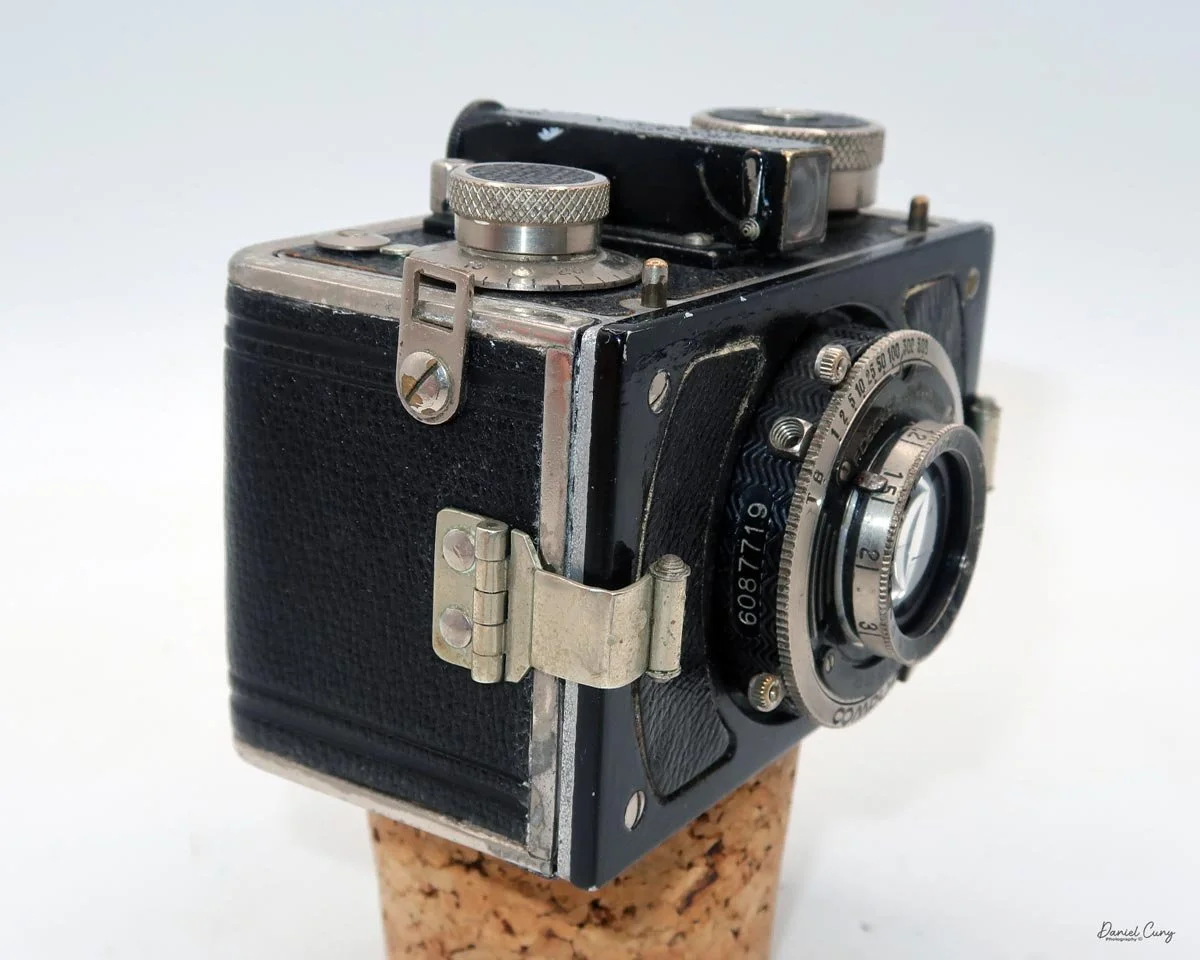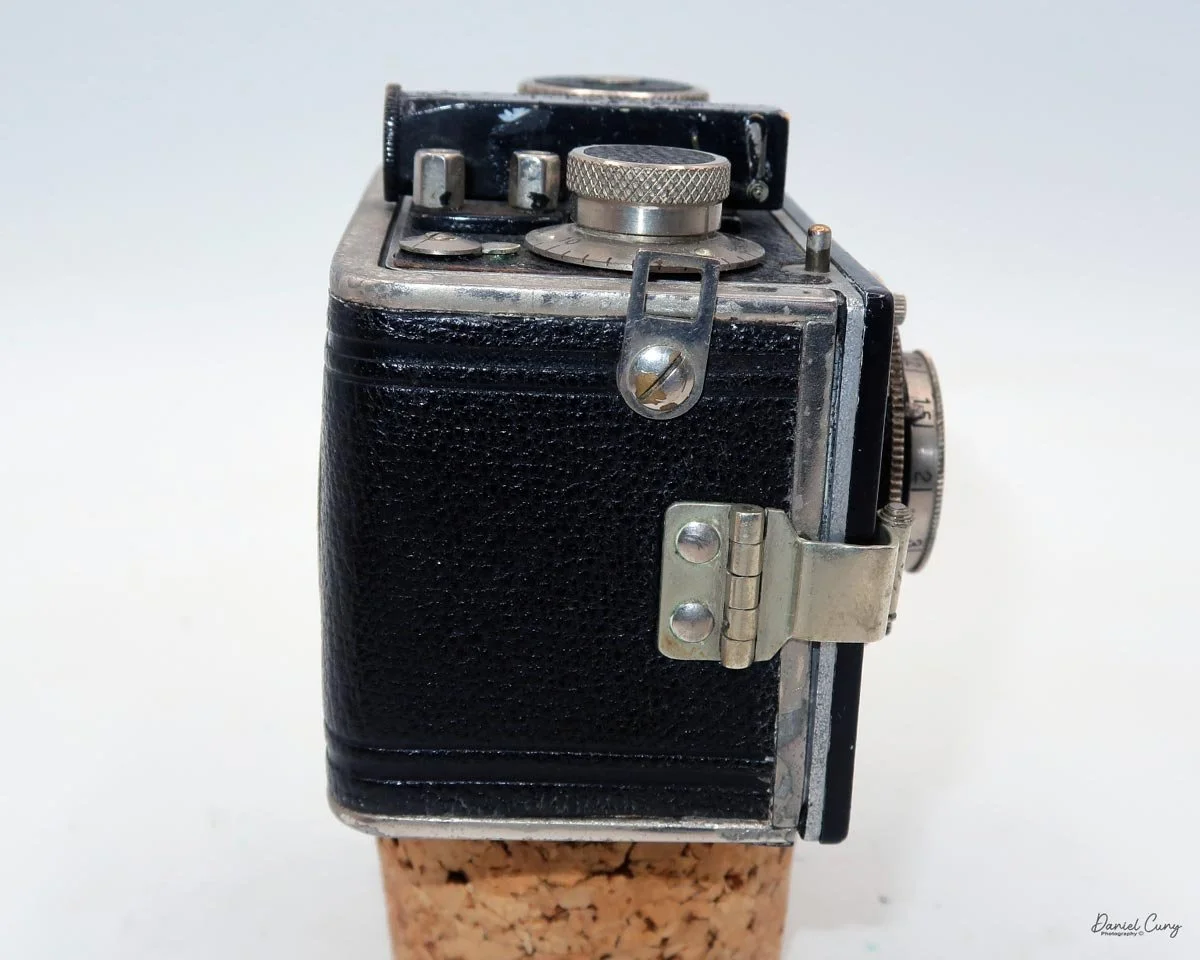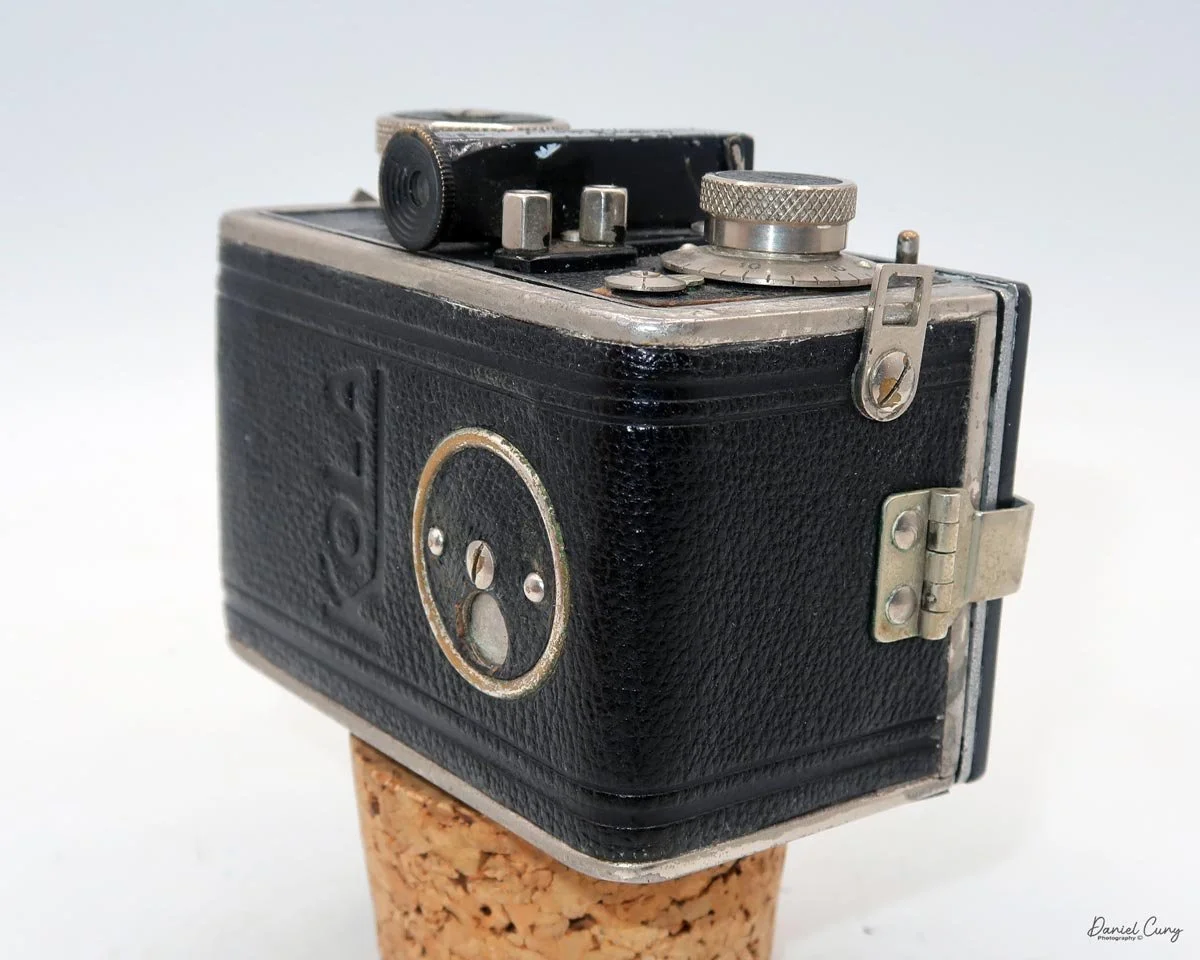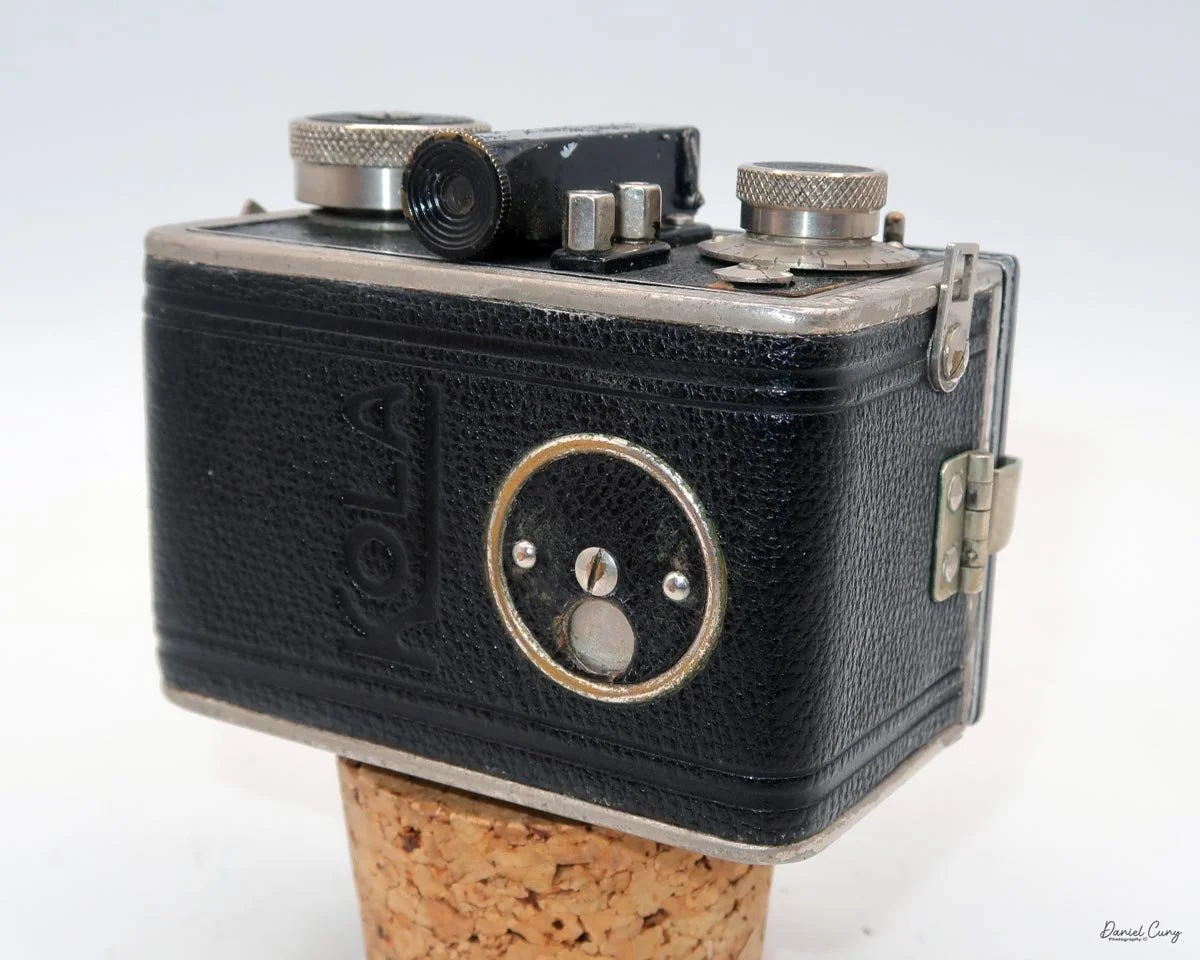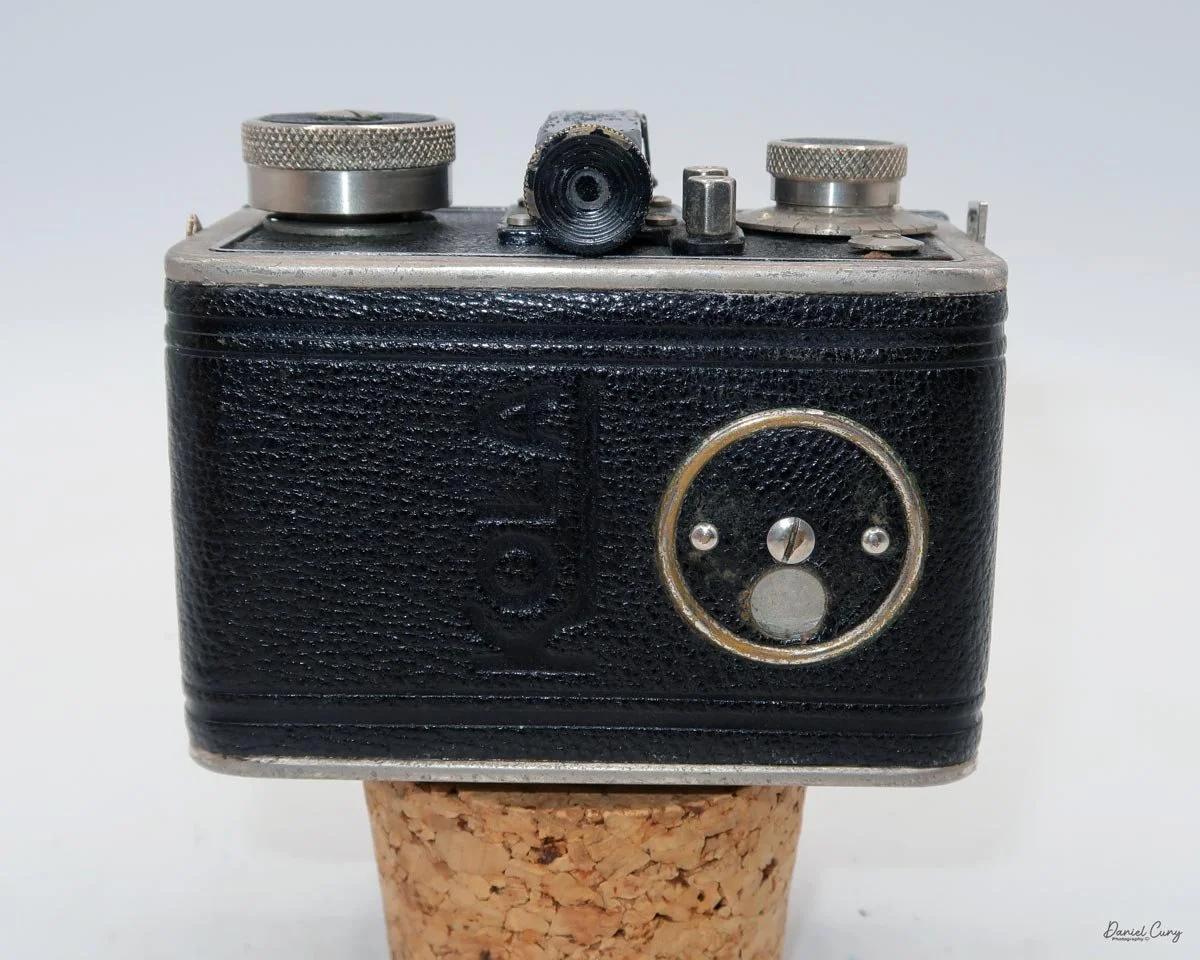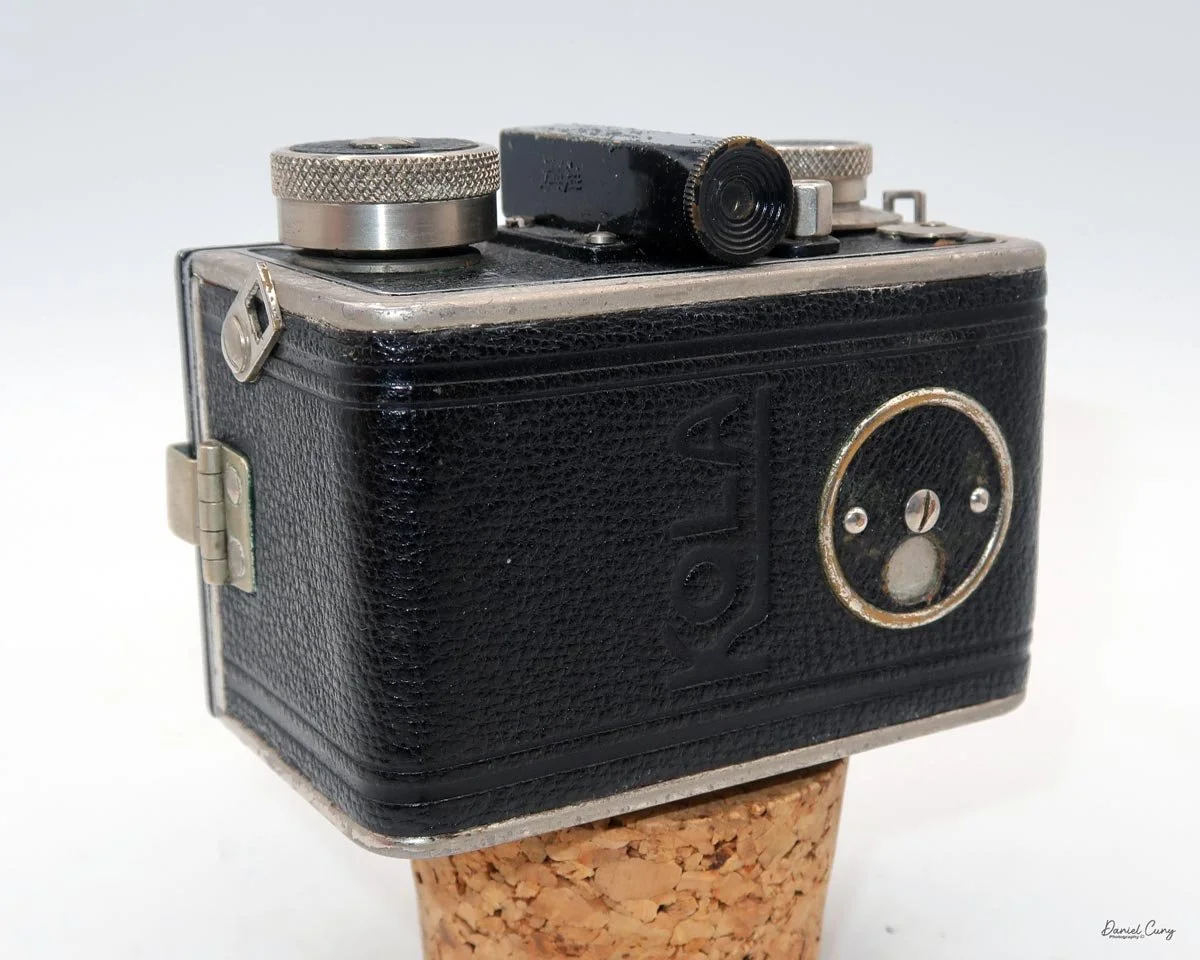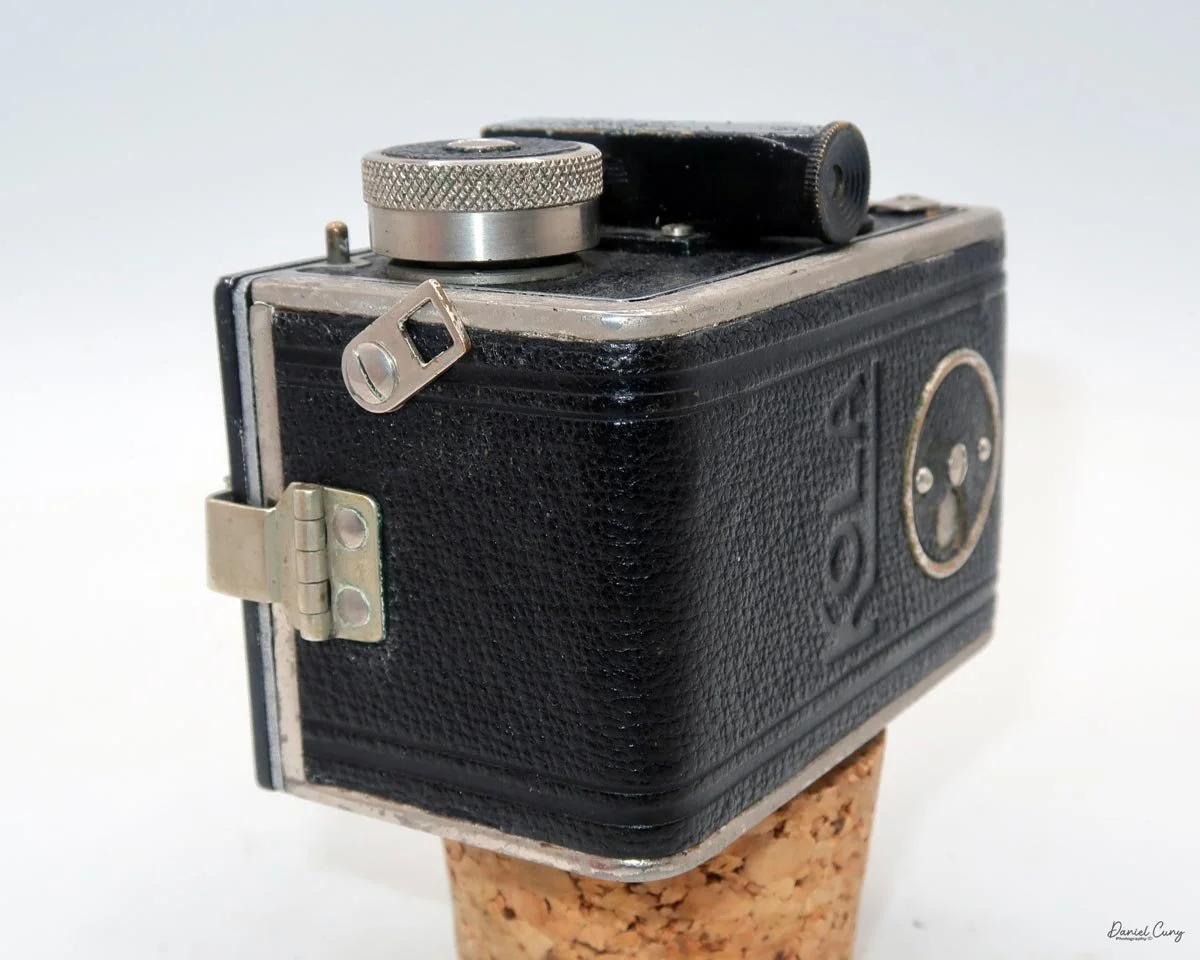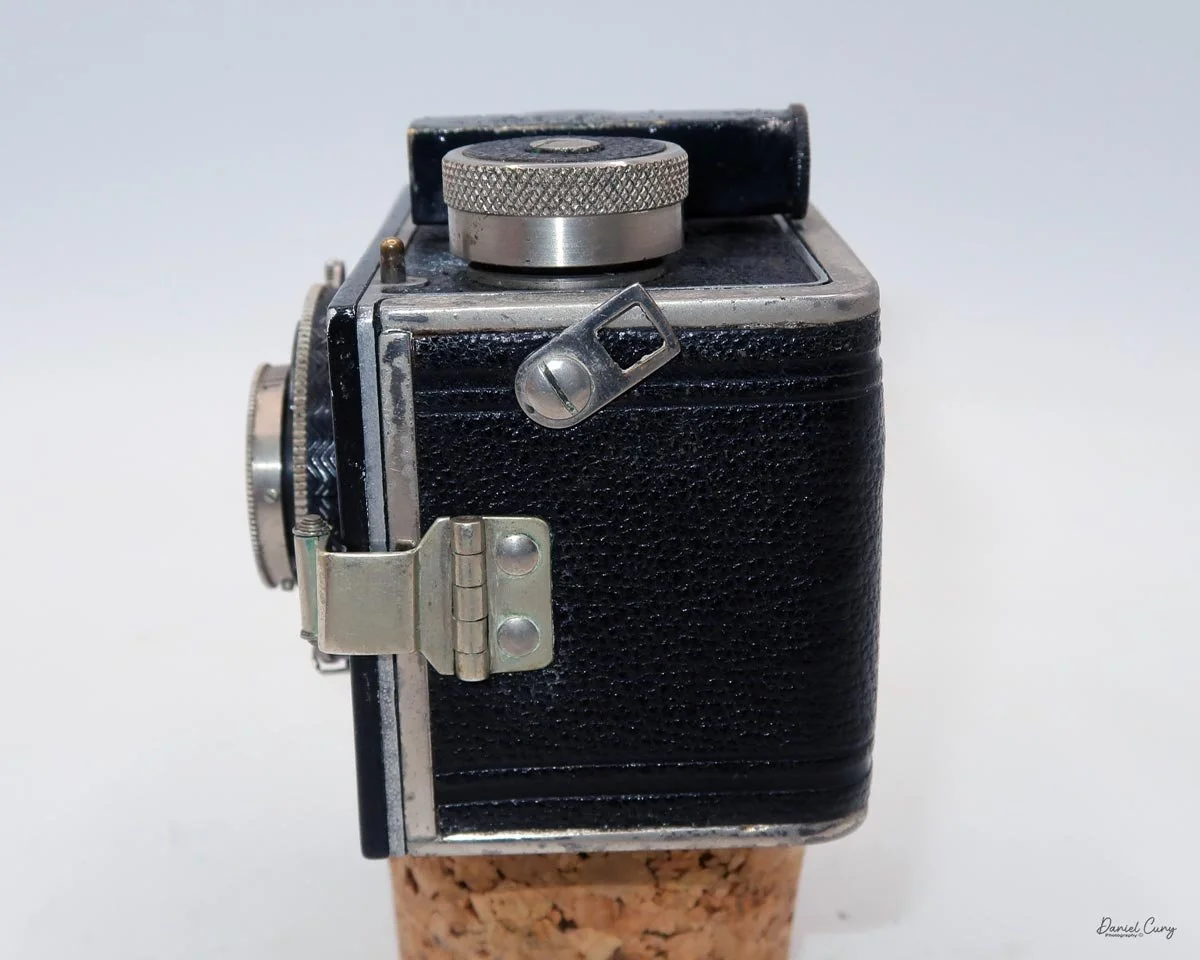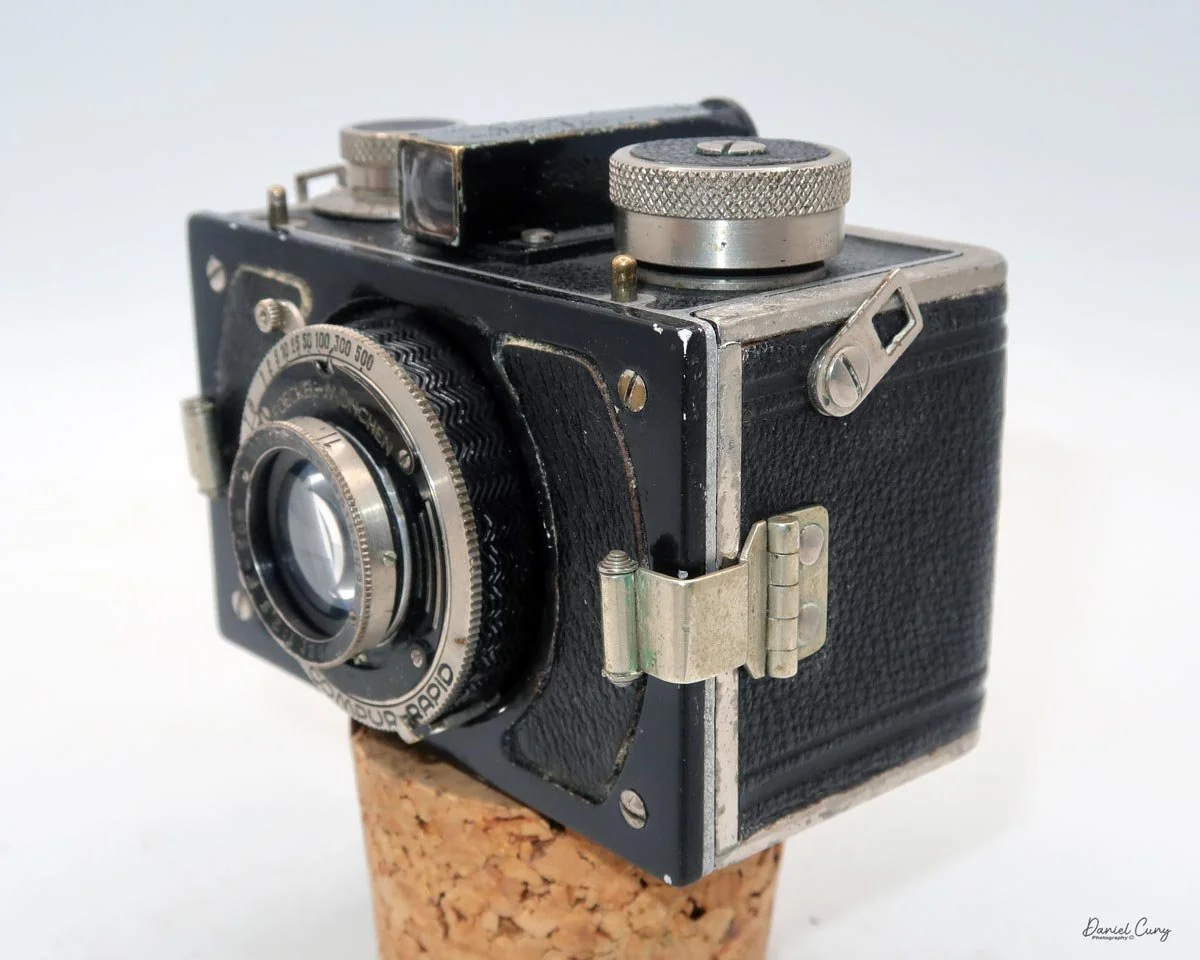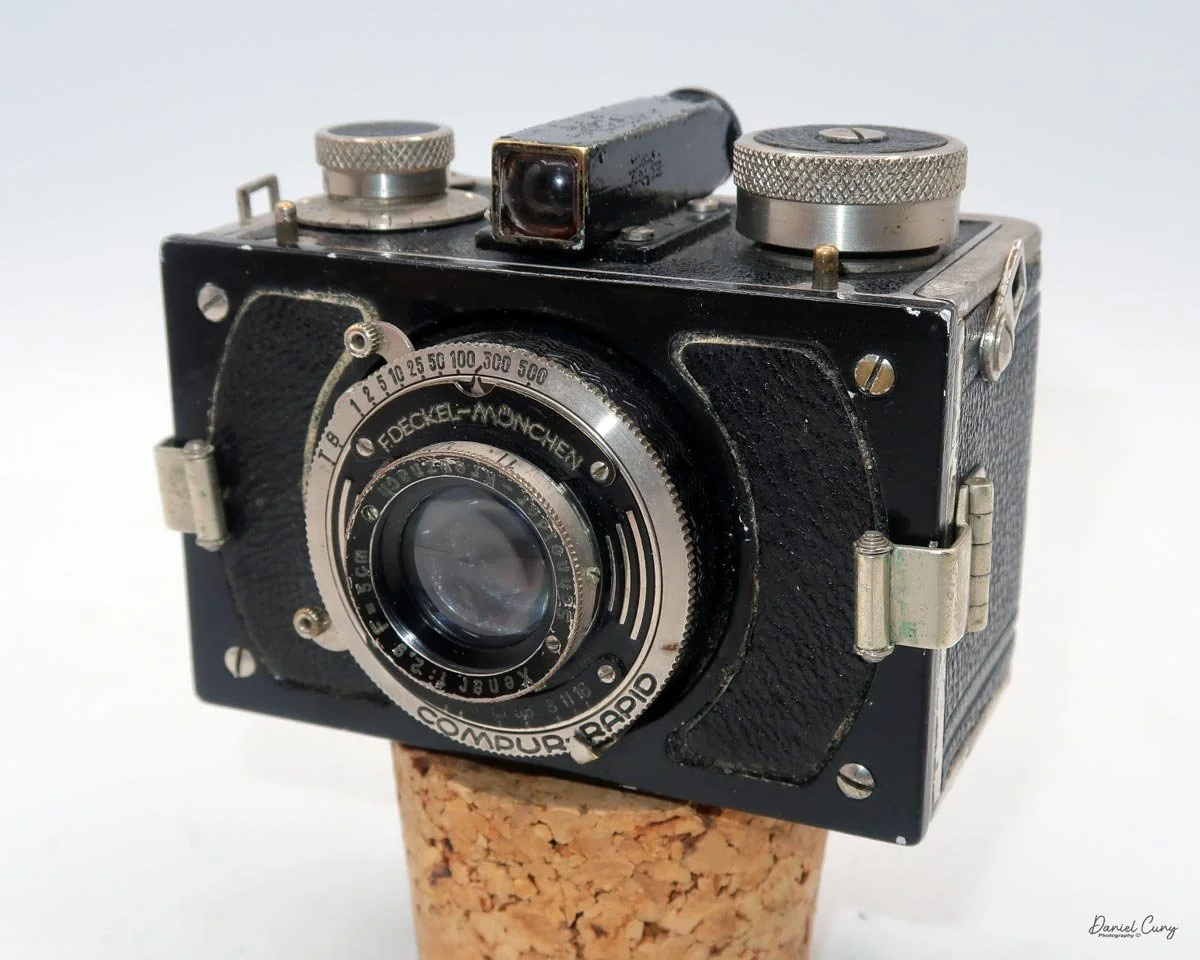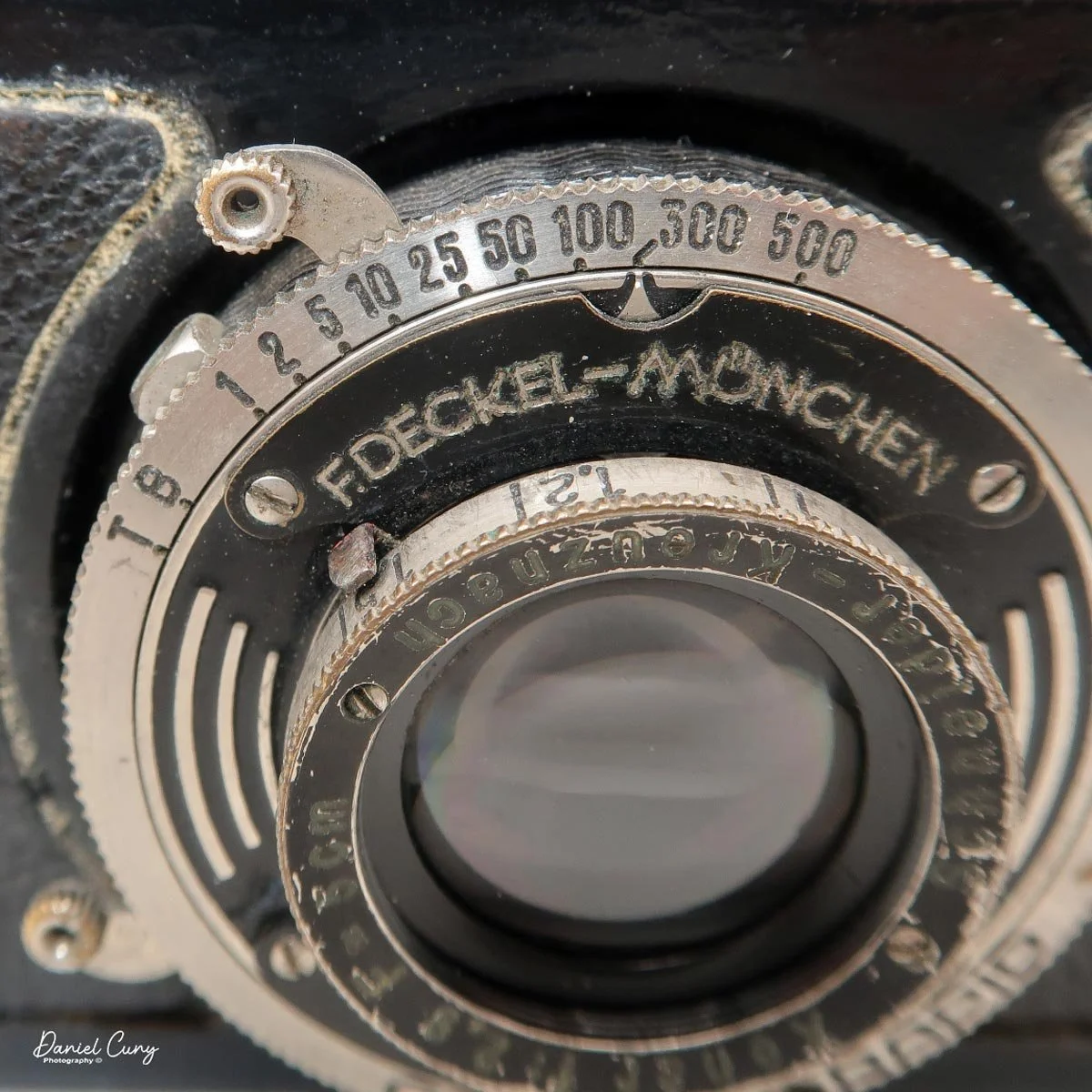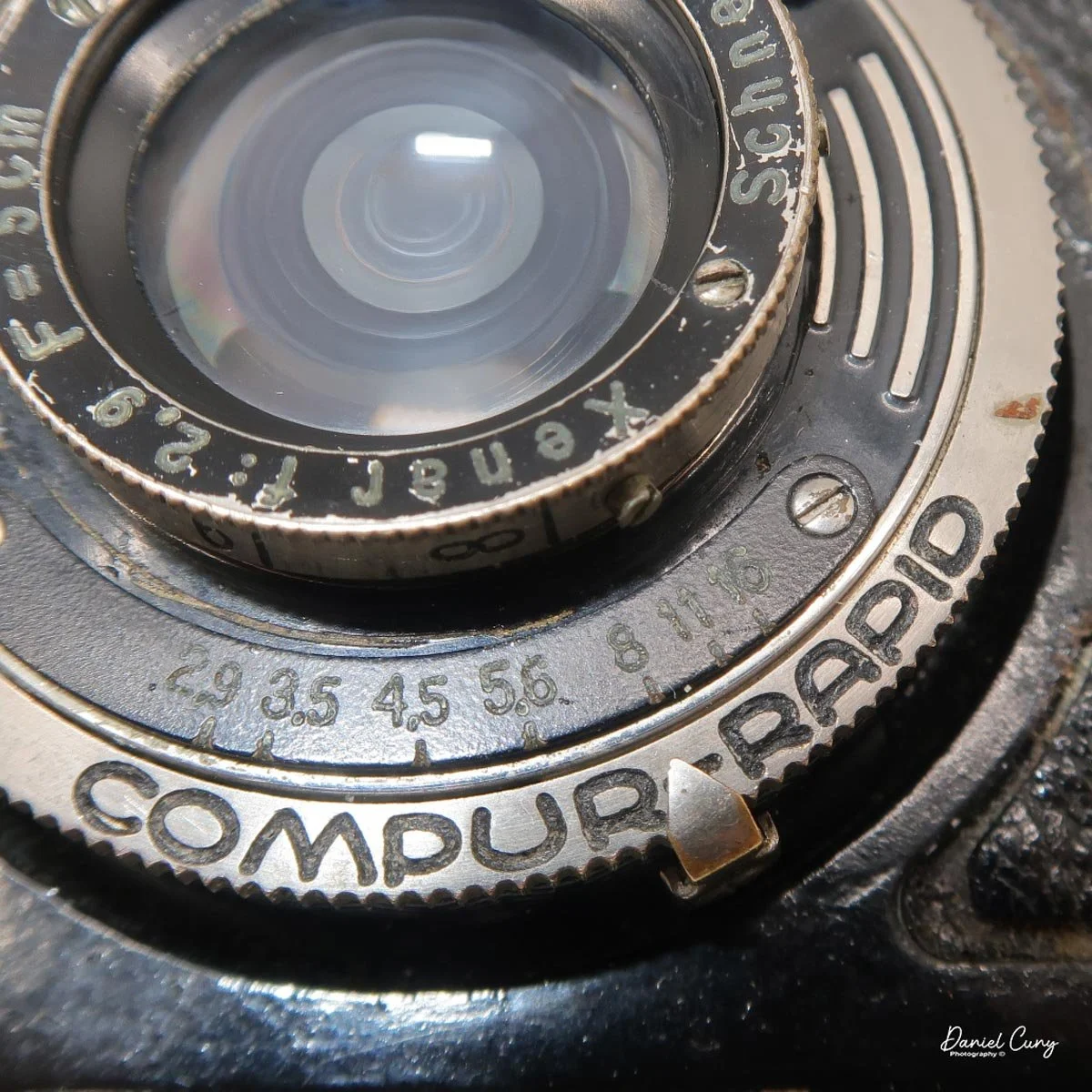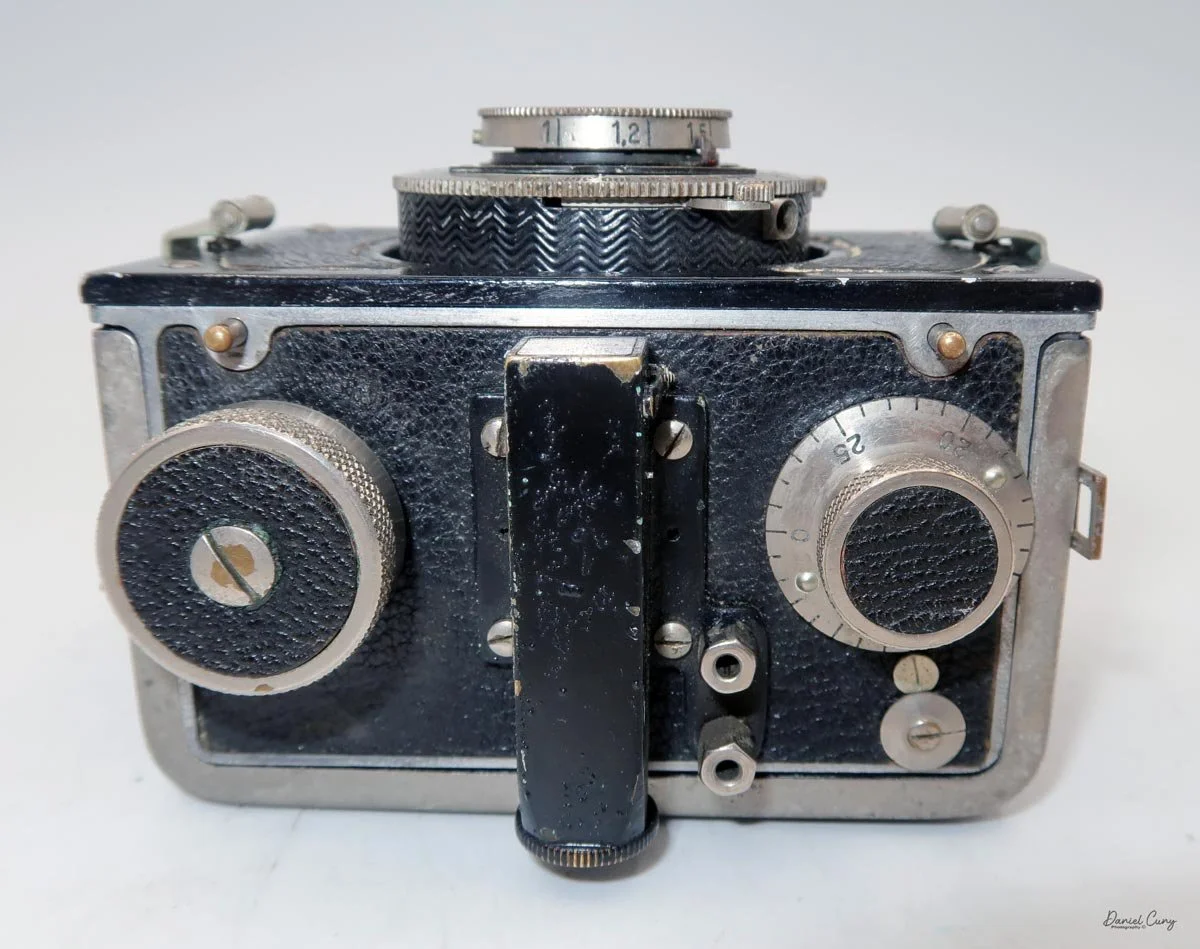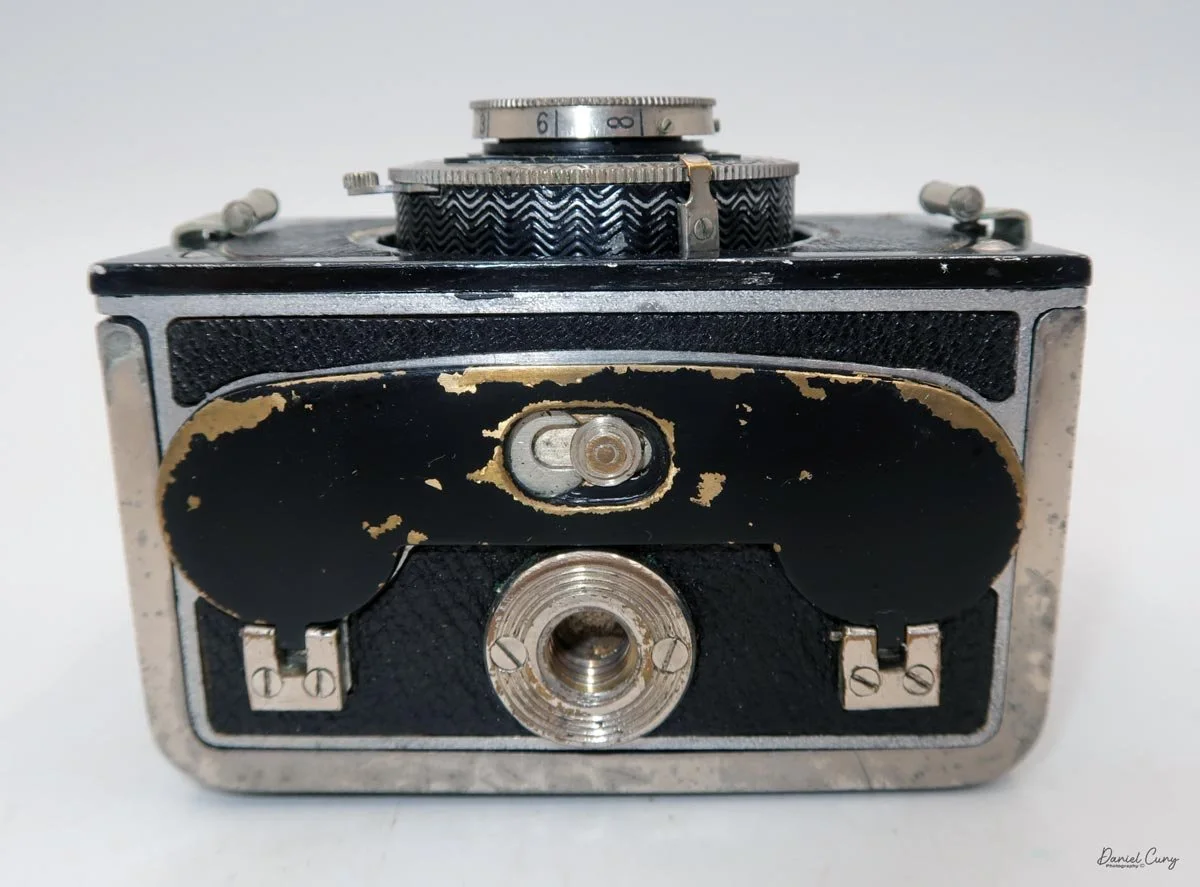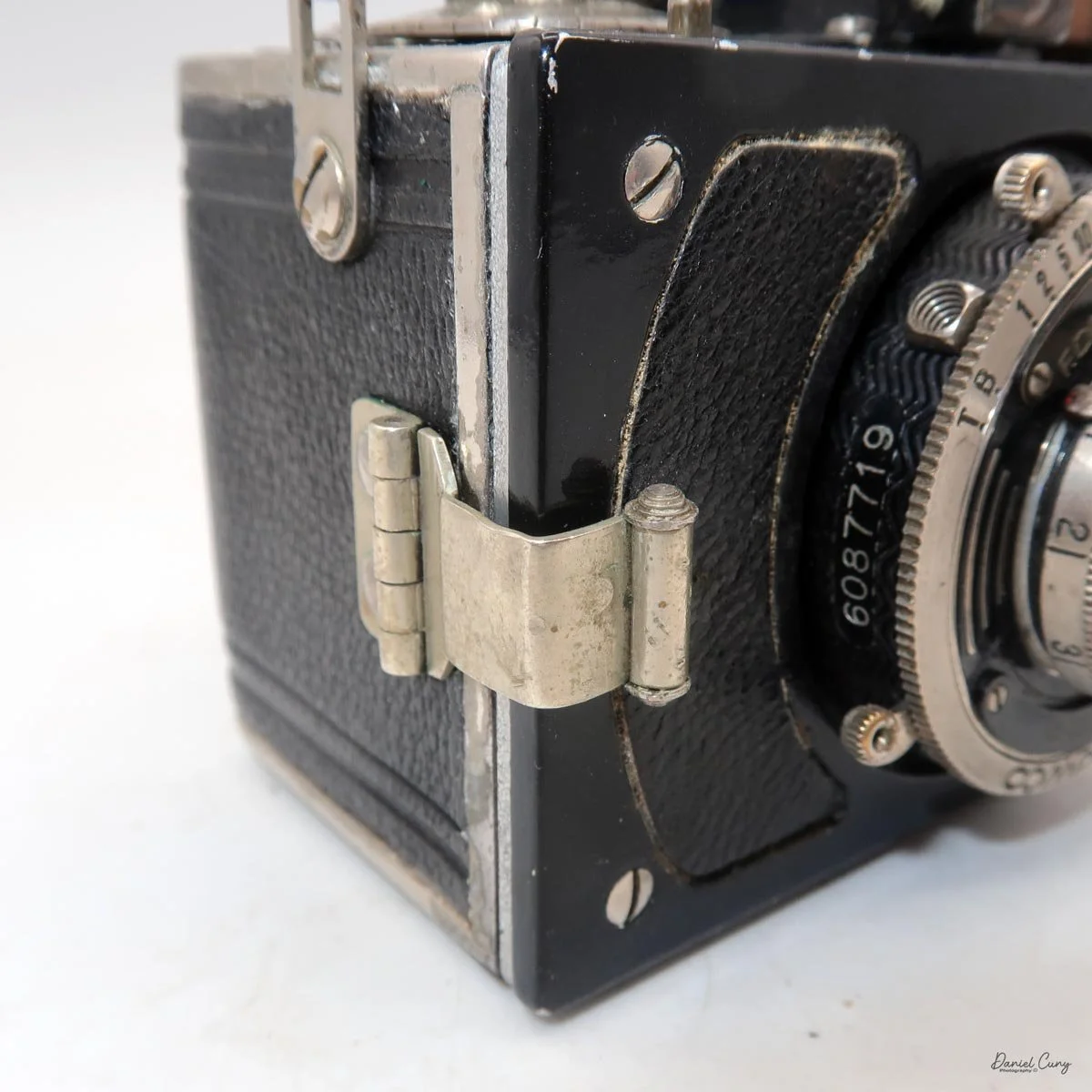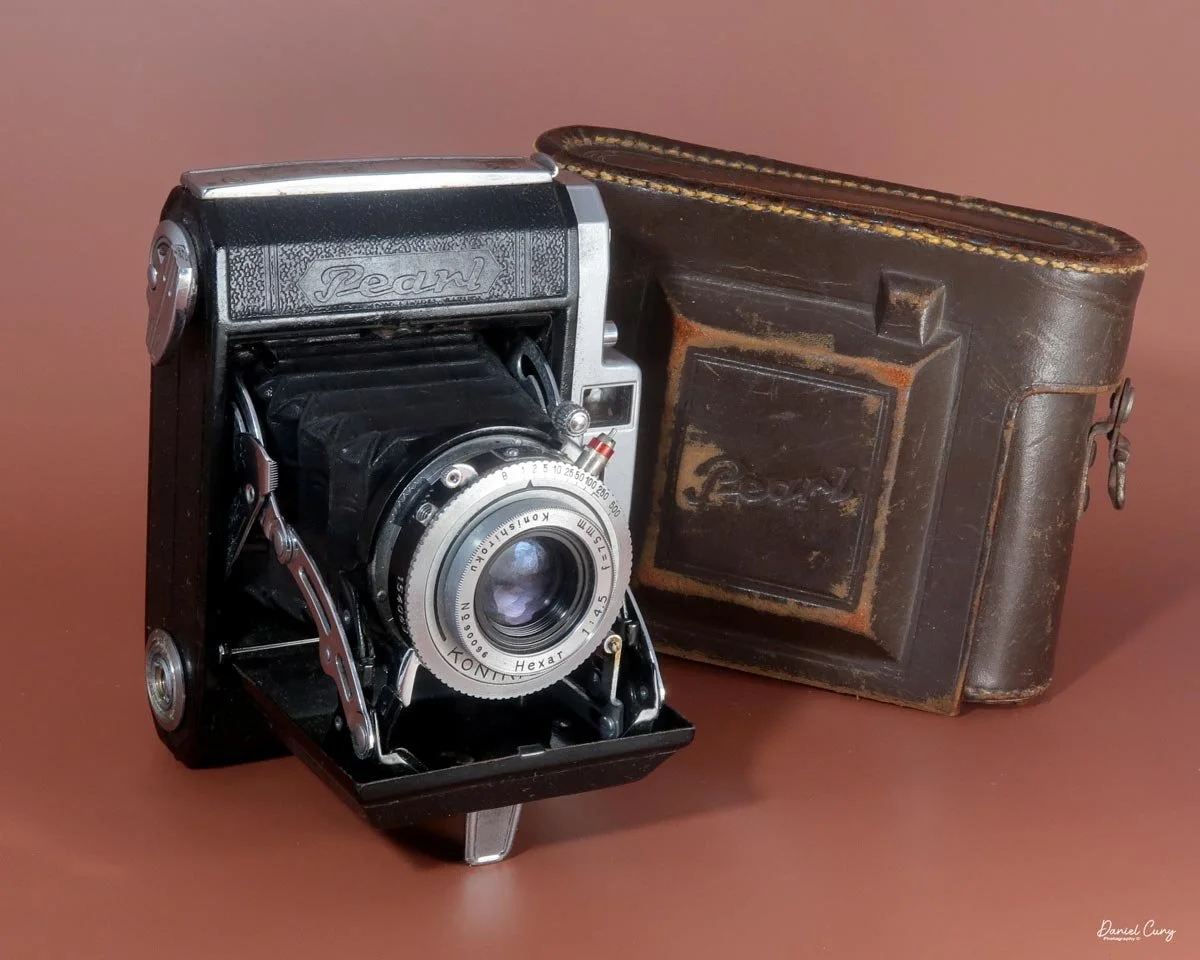
My Konica Pearl II camera & case
I purchased the Konica Pearl II on my first visit to Kitamura Camera, when I hired Bellamy Hunt of Japan Camera Hunter to show me many used camera stores in Tokyo.
It was our last stop on the half-day tour when we visited this massive, seven-story flagship store, which is one of more than 45 Kitamura Camera locations in Tokyo. It's on the fourth floor where they show their "high-end" items such as rare Leica cameras and lenses, Nikon rangefinders, Hasselblads, Rolleis, Mamiyas, and quite a few camera oddities. It's the floor that if you have an extra $10,000, $20,000, or even $100,000 burning a hole in your pocket to purchase rare photo items, they most likely have it.
Unfortunately, I didn't win the lottery before coming to Japan, so I needed to be much more frugal in my camera purchases. Because of this, I much prefer the third floor of Kitamura's flagship store. It's where they have their "bargain" items. Personally, it has the items I'm much more accustomed to purchasing.
The Konica Pearl II was a camera I didn't really notice until the second time I passed by a particular showcase. It was tucked in a back corner, not really visible except for the film winding knob, which I thought looked odd and different from many of the winding levers on this style of camera. It has more of a winding-key appearance rather than the standard round knob you see on most 120-style folding cameras.
We asked one of the salespeople to get the camera out of the showcase for me to get a better look at, and he didn't even see the camera at first, tucked back in a corner of the showcase. But after guiding him to the correct camera I wanted to see, he took it off the shelf and put it on a mat in a lower showcase for me to look over.
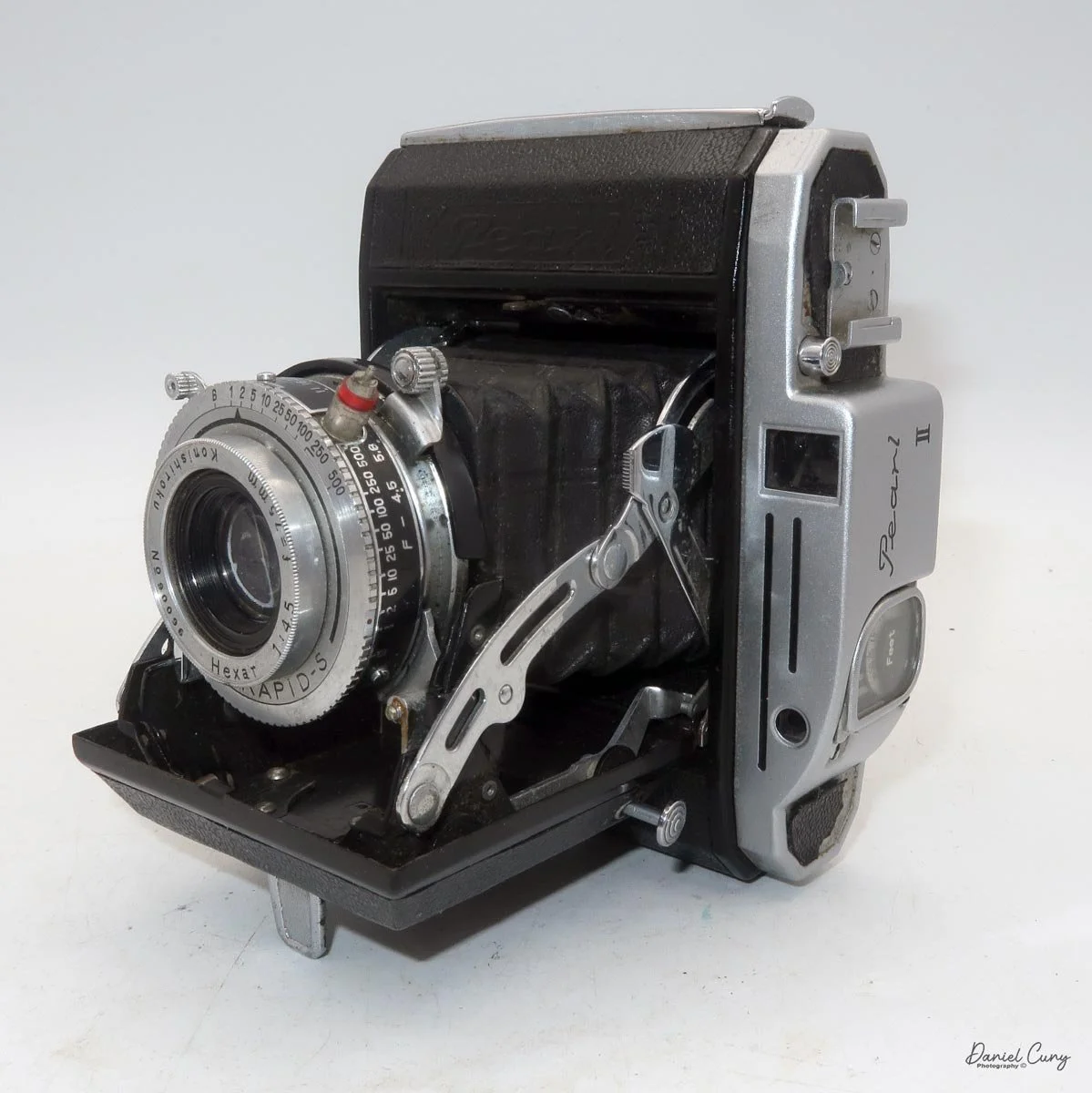
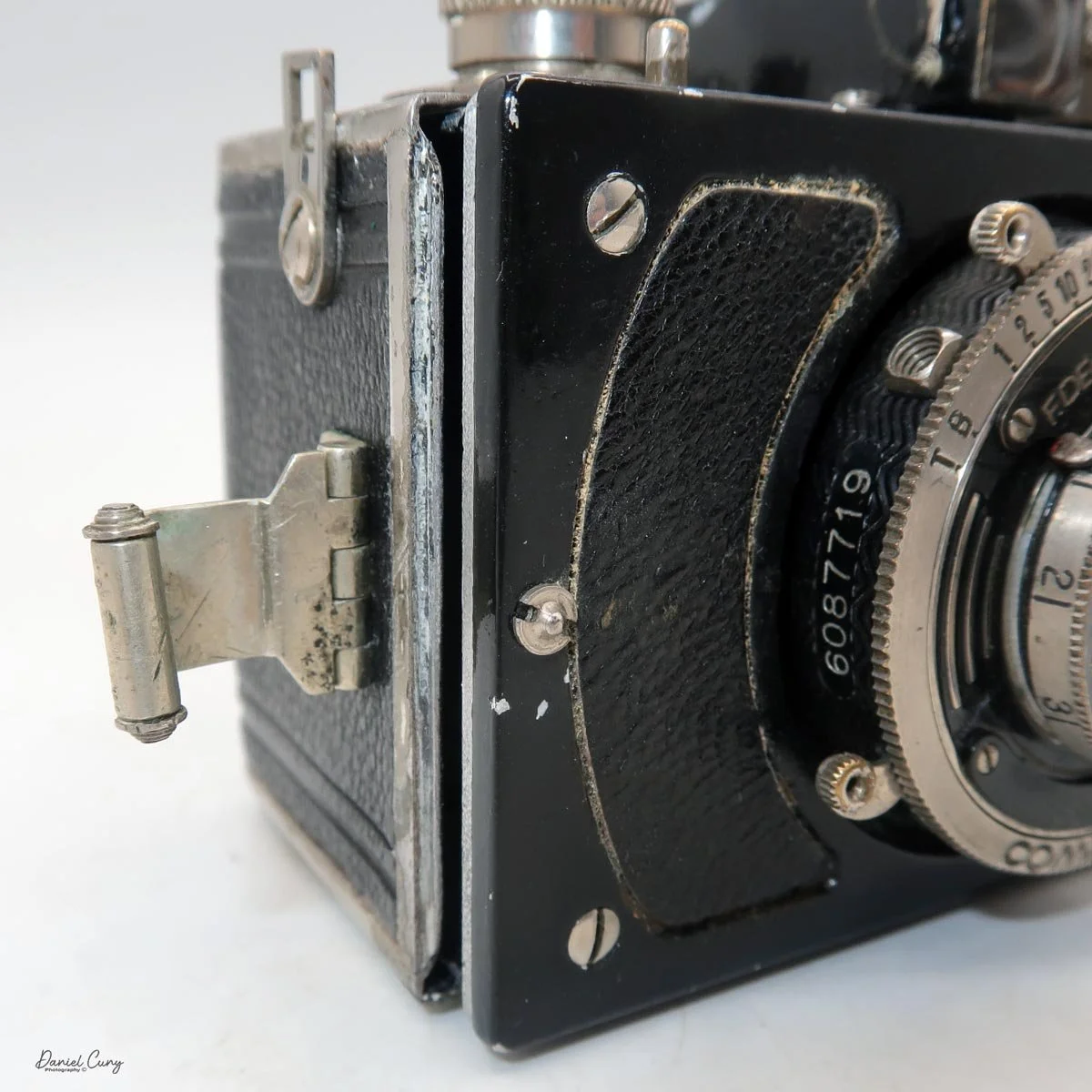
Different angle of the Konica Pearl II camera. Notice the shutter release on the lens door.
To my surprise, the camera seemed to be in wonderful condition. The price for the camera seemed low, so I started to look over it with the thought in the back of my mind that there must be an issue. The shutter worked, the aperture moved smoothly. The camera opened and closed with ease, and the fitted leather case was also in good condition.
Putting the camera up to my eye to look through the viewfinder, I found the issue. The back eyepiece was absent from the camera. Because of that, there were a couple of issues. First, when you looked through the viewfinder, the image was blurry, and you couldn't really see or frame it well.
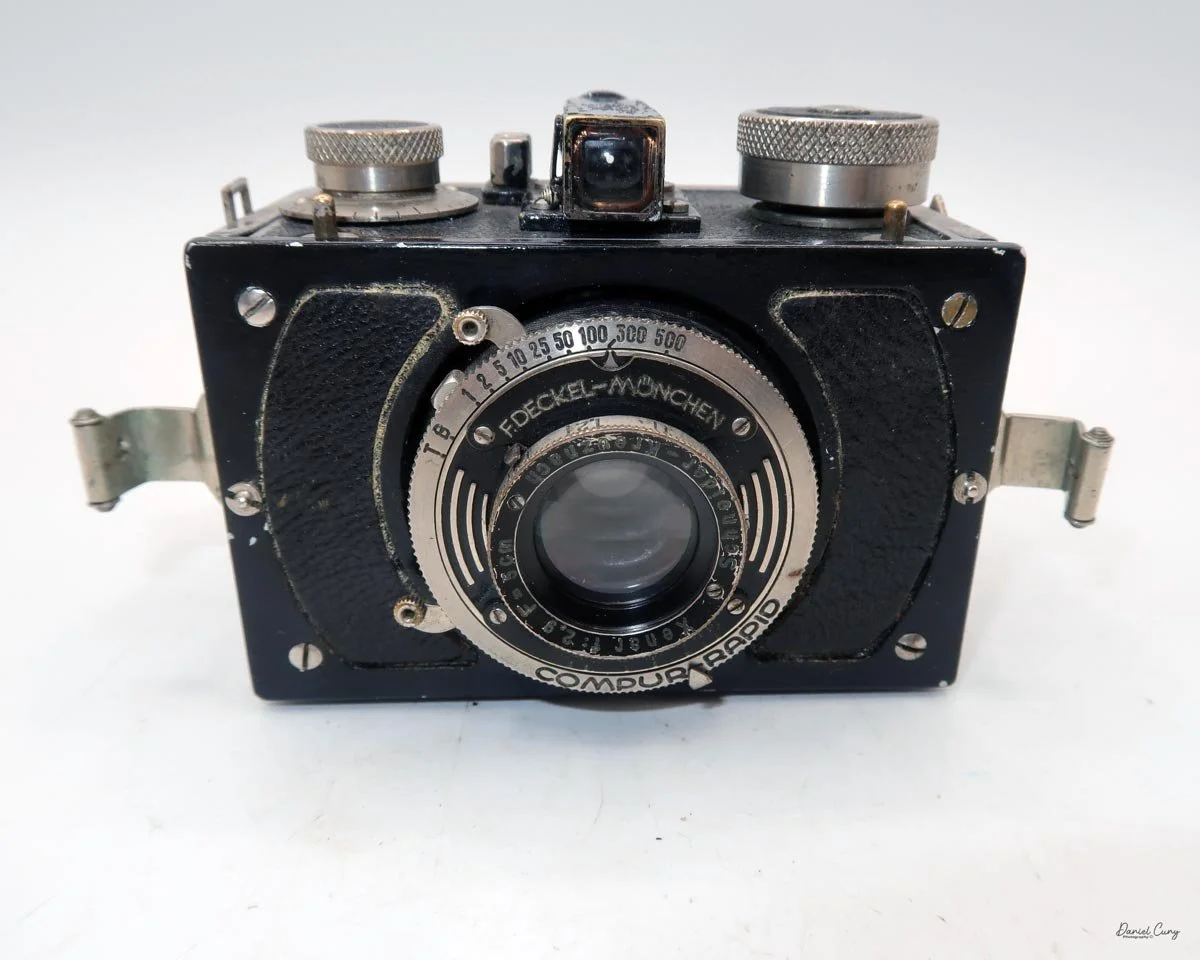
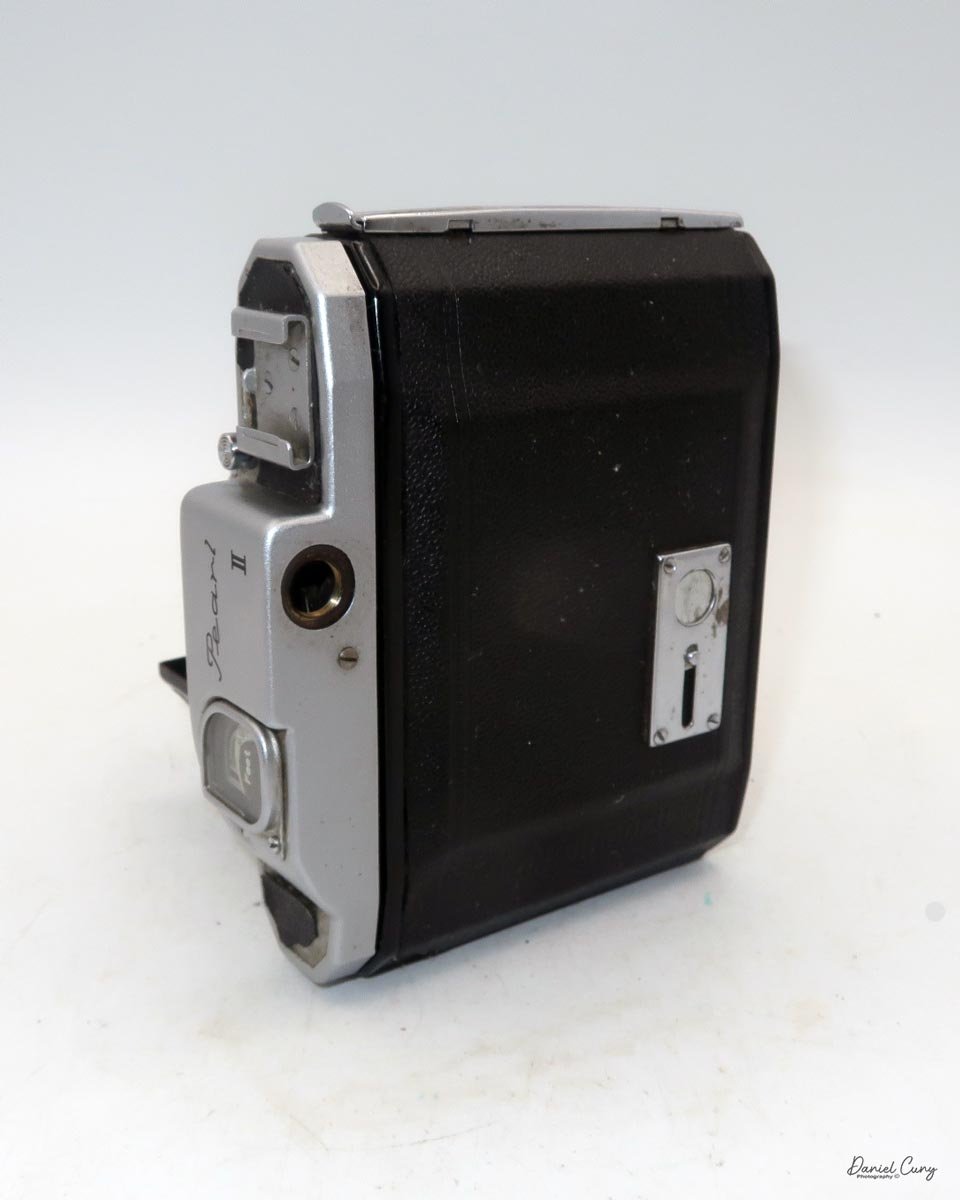
The second issue was something I didn't realize until the salesperson mentioned it. You couldn't see the yellow center area on the rangefinder. Initially, when I first picked up the camera, I didn't notice the two windows on the front, which would indicate a rangefinder-style camera, but on second look, there were two windows, which makes perfect sense.
For the price of the camera, they offered to acquire a very compact medium-format camera with a functioning shutter, smooth focus, a light-tight bellows, and a fitted case. I figured I couldn't go wrong. All I needed (hopefully) was to find a "parts" camera to source the viewfinder glass from, and make this wonderful early 1950s camera whole again.
During my time in Tokyo, I did spend time looking for a "parts" camera, but it wasn't until just a few weeks ago that I came across one for a reasonable price that I could harvest the viewfinder glass, and try to make this camera whole again. Unfortunately, it hasn't arrived yet. I'm eager to write this post, so once the glass arrives, I'll update it with the camera's progress (or lack thereof) with the new glass.
History:
Konica's early history begins in 1873, when Rokusaburō Sugiura started selling photographic materials in Tokyo, at a time when Japan was still importing nearly all such supplies from the West. That founding date makes the company older than Eastman Kodak, and it places Konica at the very start of Japan's photo industry.
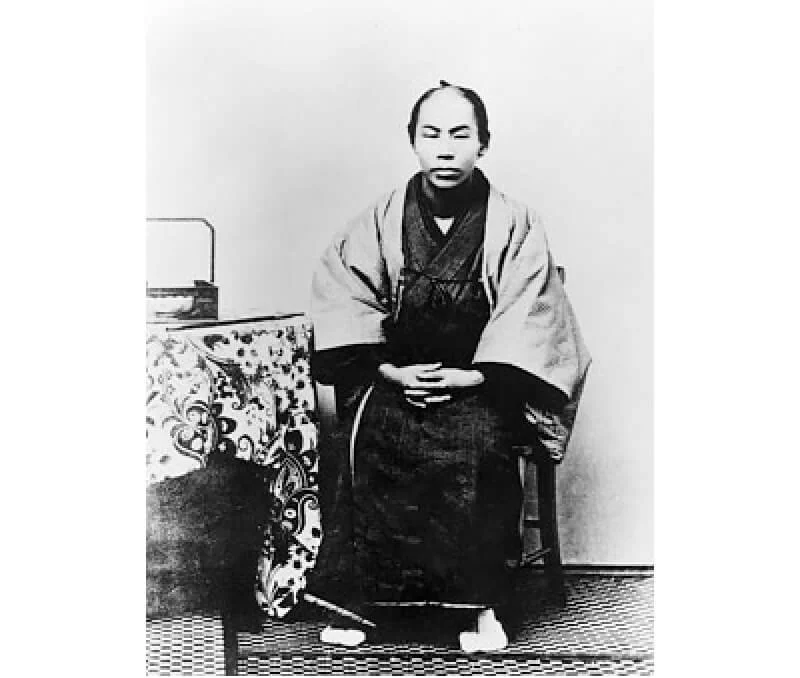
Early photo of Rokusaburō Sugiura. Credit Konicaminolta website.
Sugiura first operated through the family business in Tokyo's Nihonbashi area, where demand for photographic goods was growing fast enough to justify a separate line of business. By 1878, he had founded Konishi Honten, and in the 1880s, the firm moved beyond retailing imported goods to producing its own photographic materials in Japan. This shift mattered because it helped move Japanese photography from dependence on foreign products toward domestic production.
In 1902, Konishi began producing its own photographic plates and printing paper, and soon after, in 1903, it introduced the Cherry portable camera, widely described as Japan's first branded camera. That product established the company as a pioneer rather than just an importer. Over the next decades, Konishi built a reputation as one of Japan's leading camera and materials companies.
During the 1910s and 1920s, the company continued to expand its manufacturing base and deepen its role in Japan's optical and photographic sectors. Its name evolved through several forms, including Konishi Honten and Konishiroku, reflecting both family succession and corporate growth. By the interwar period, the firm was part of a broader Japanese camera industry that was still small by global standards but increasingly capable of making its own products.
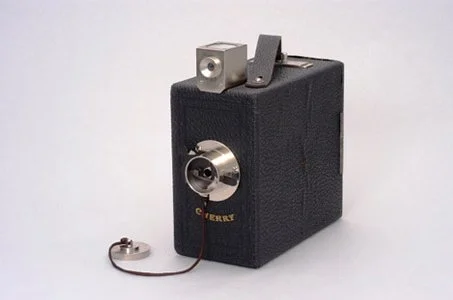
Popular Cherry camera: Credit Konicaminolta history page
In the 1930s, Konishiroku pursued further camera development, including prewar prototype work that pointed toward later 35mm designs. Like much of Japan's industrial base, its development was increasingly shaped by the era's tensions, and the coming war would disrupt civilian camera production. Still, by the eve of World War II, Konica's predecessor had already established the core identity that would define the brand: a Japanese photographic pioneer rooted in import substitution, careful manufacturing, and gradual technological independence.
In the 1950s, Konishiroku cemented its medium-format legacy with the exceptional Pearl series of folding cameras. Shooting 6x4.5cm frames on 120 film, these compact powerhouses combined portability with remarkable optical precision. The decade introduced the Pearl II (1951), the Pearl III (1955), and the pinnacle of the lineup: the Pearl IV (1958). These beautifully engineered models proved that medium format didn't have to be bulky, providing a professional-grade folding tool that easily slipped into a coat pocket.
My Camera:
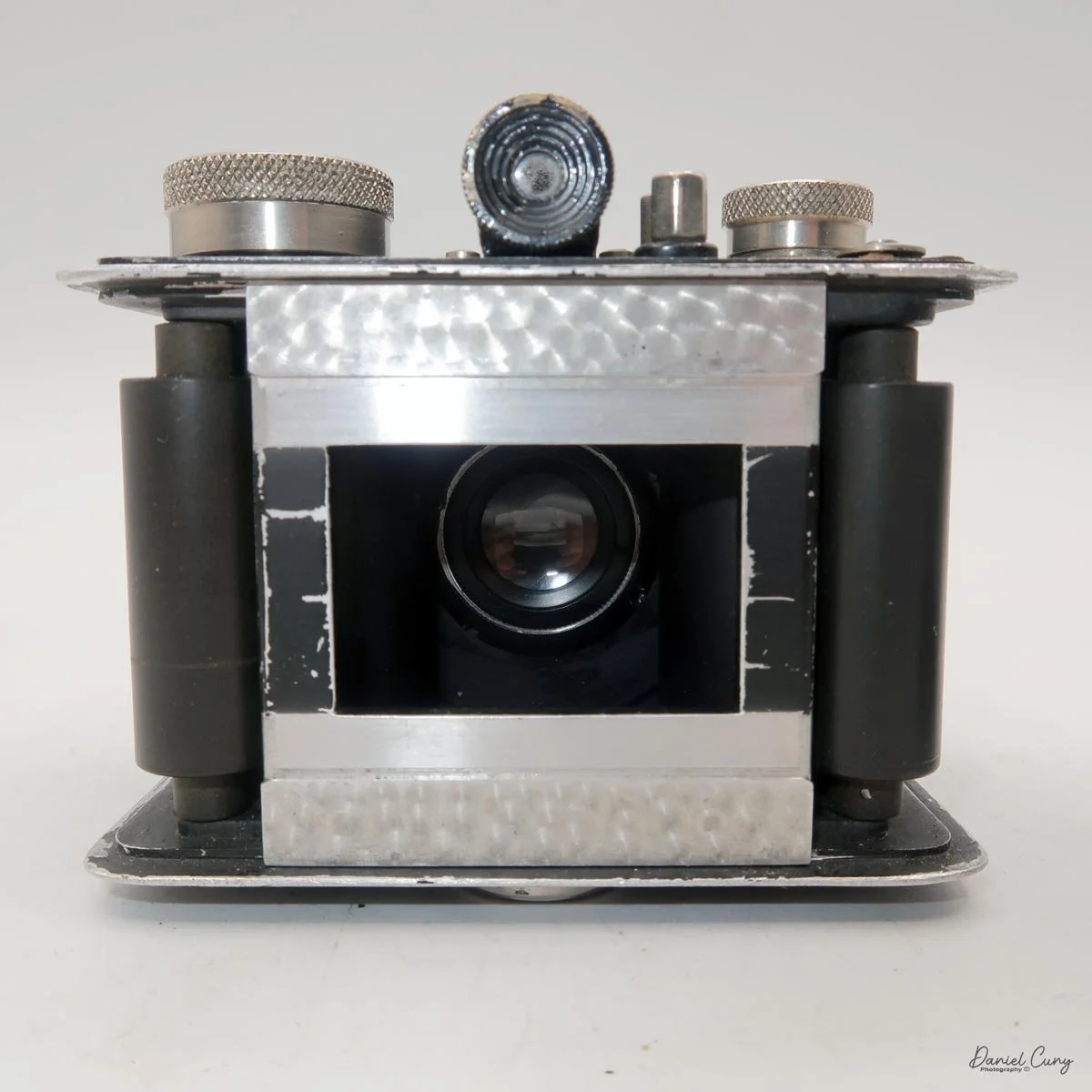
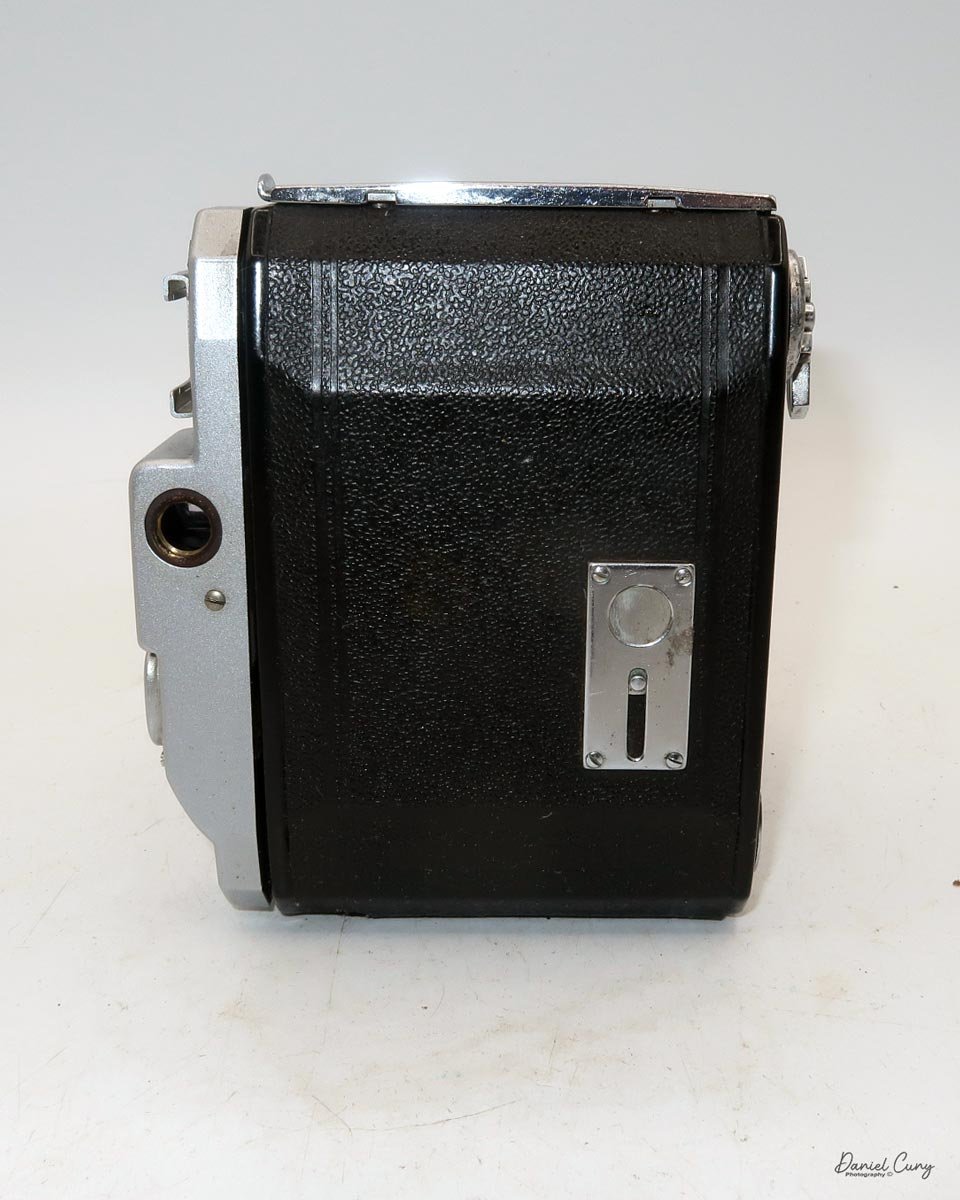
My Konica Pearl II camera, manufactured in 1951, is a 6x4.5cm vertical-format camera. The physical size of the camera is 4.75" wide by 4.5" tall and 1.5" deep with the lens closed in the camera body, and 4" deep when you depress the button on the top of the camera, located in front of the accessory shoe, to open the camera's lens door. The camera weighs 1 pound, 4 ounces without film loaded.
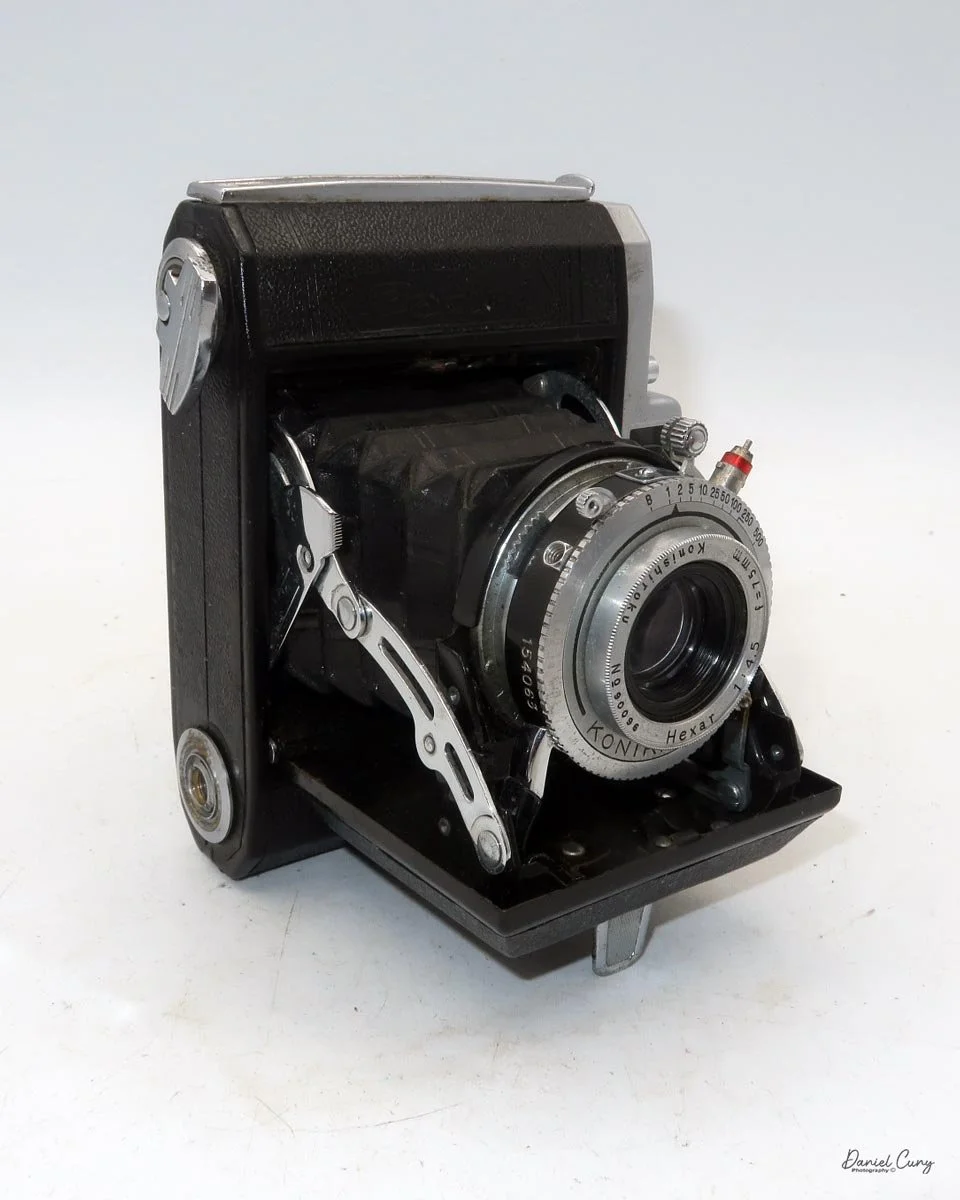
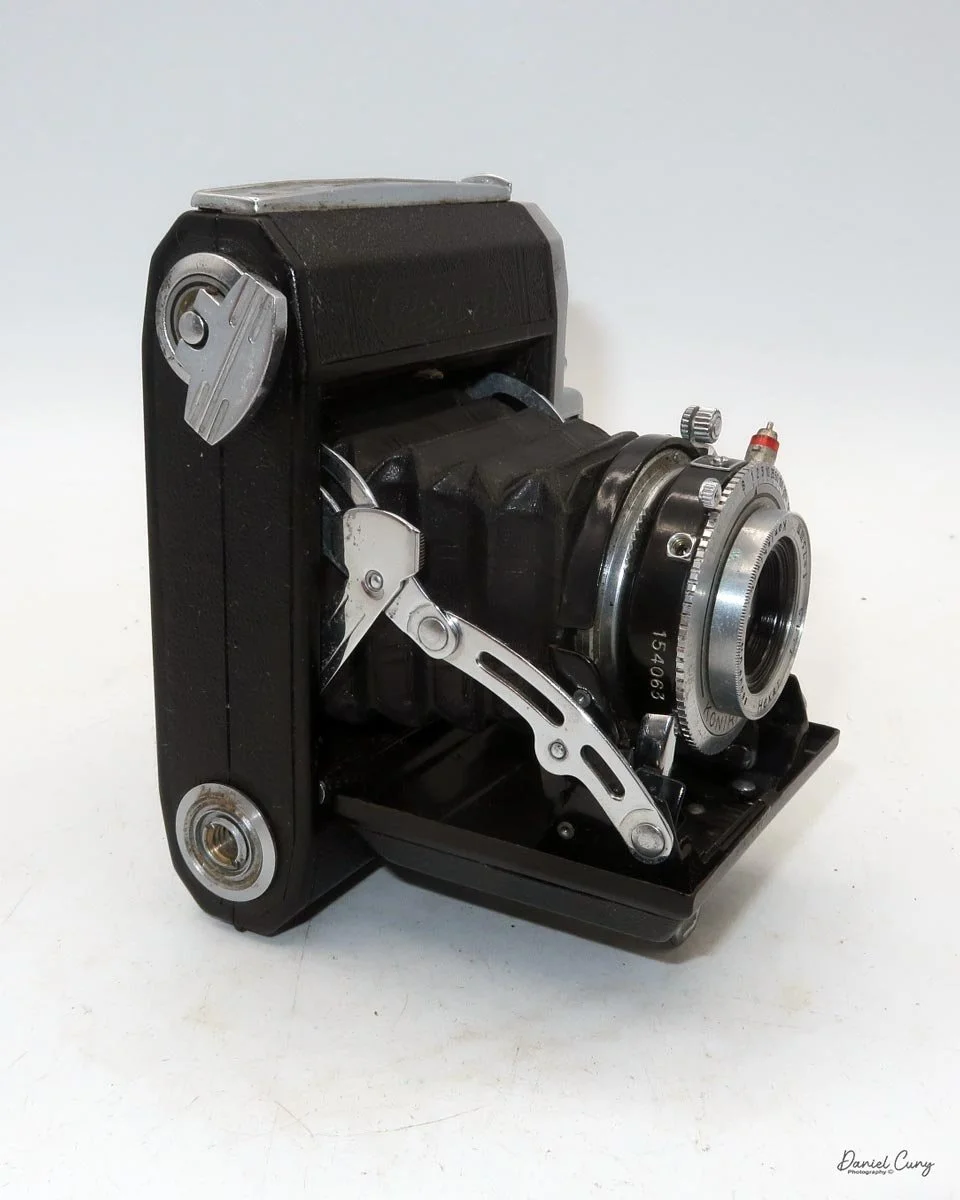
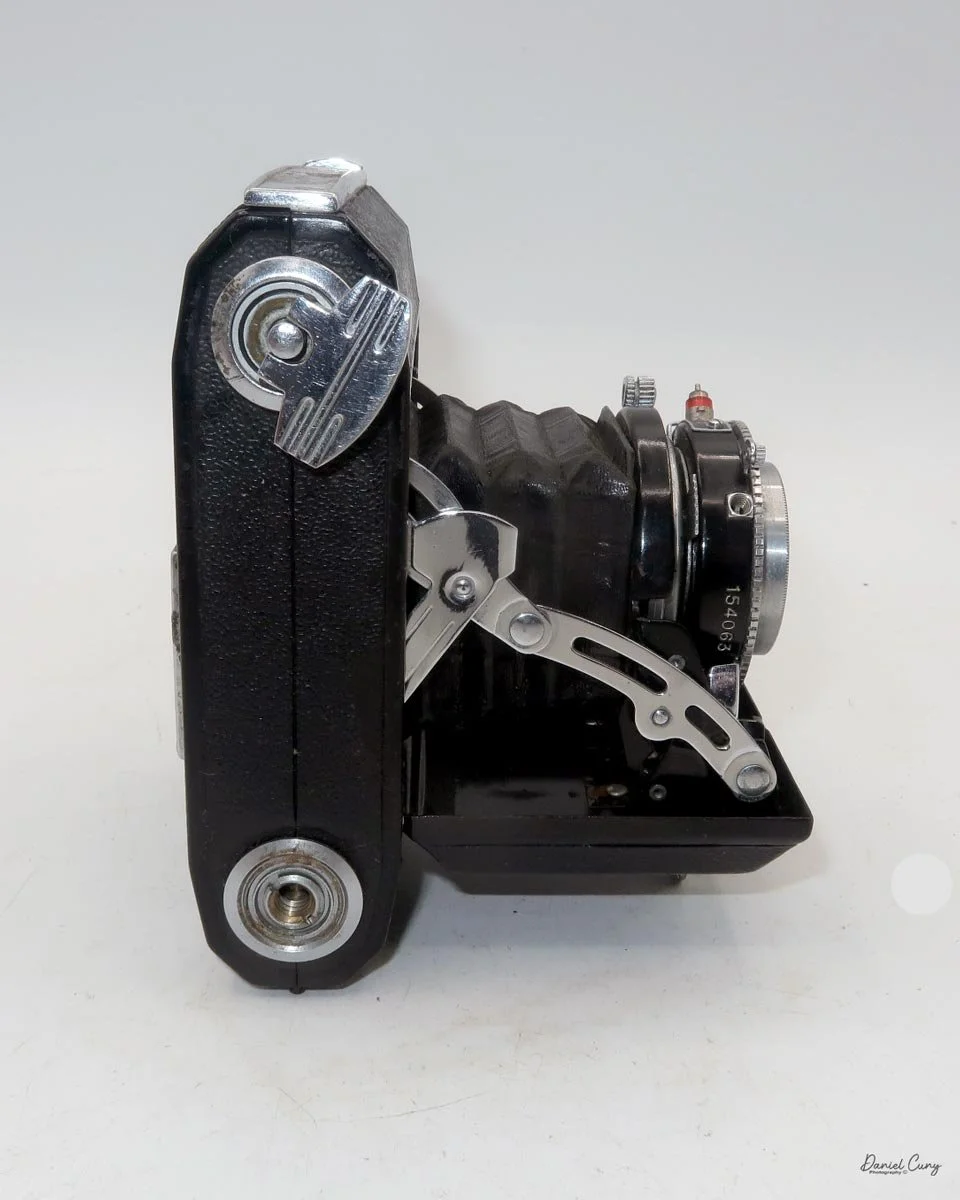
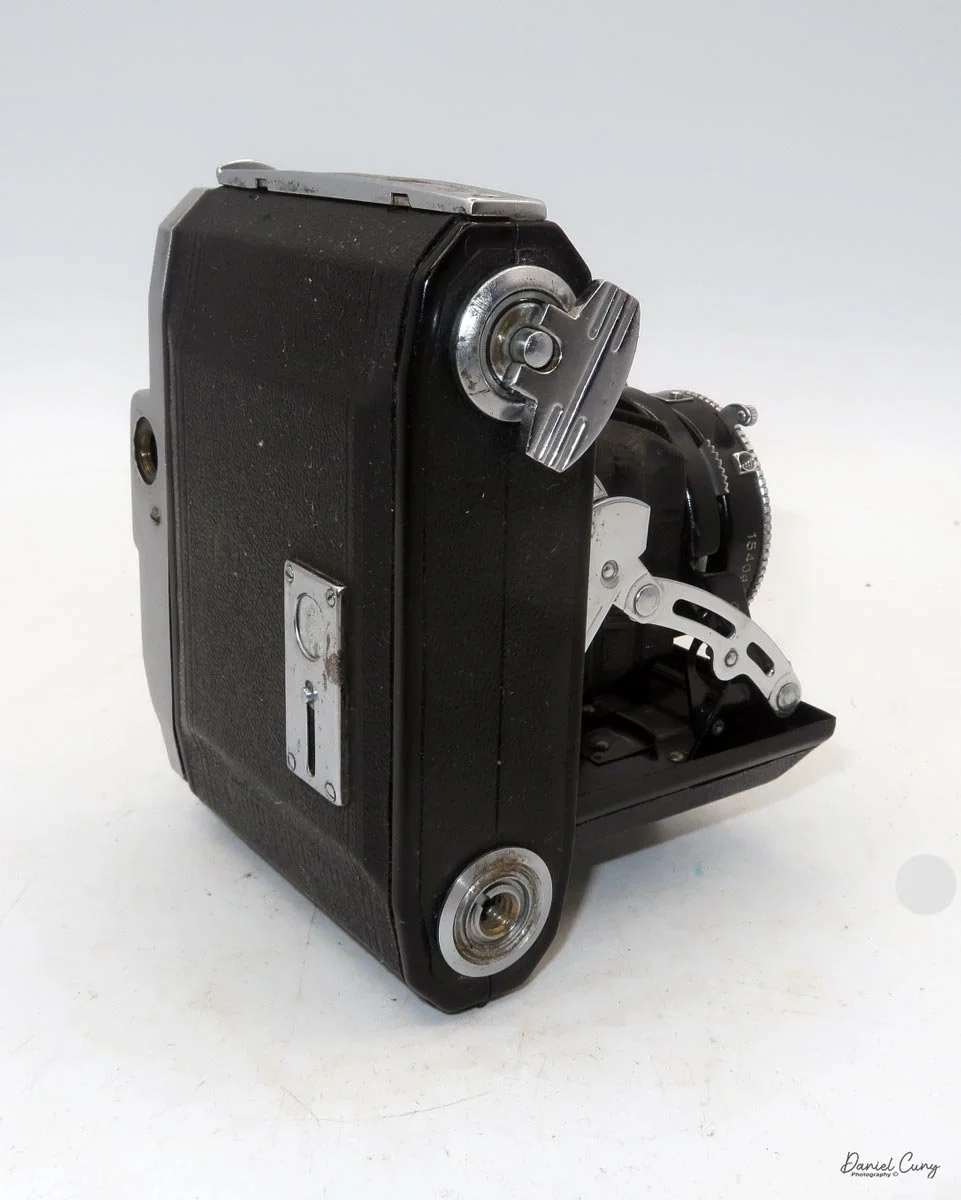
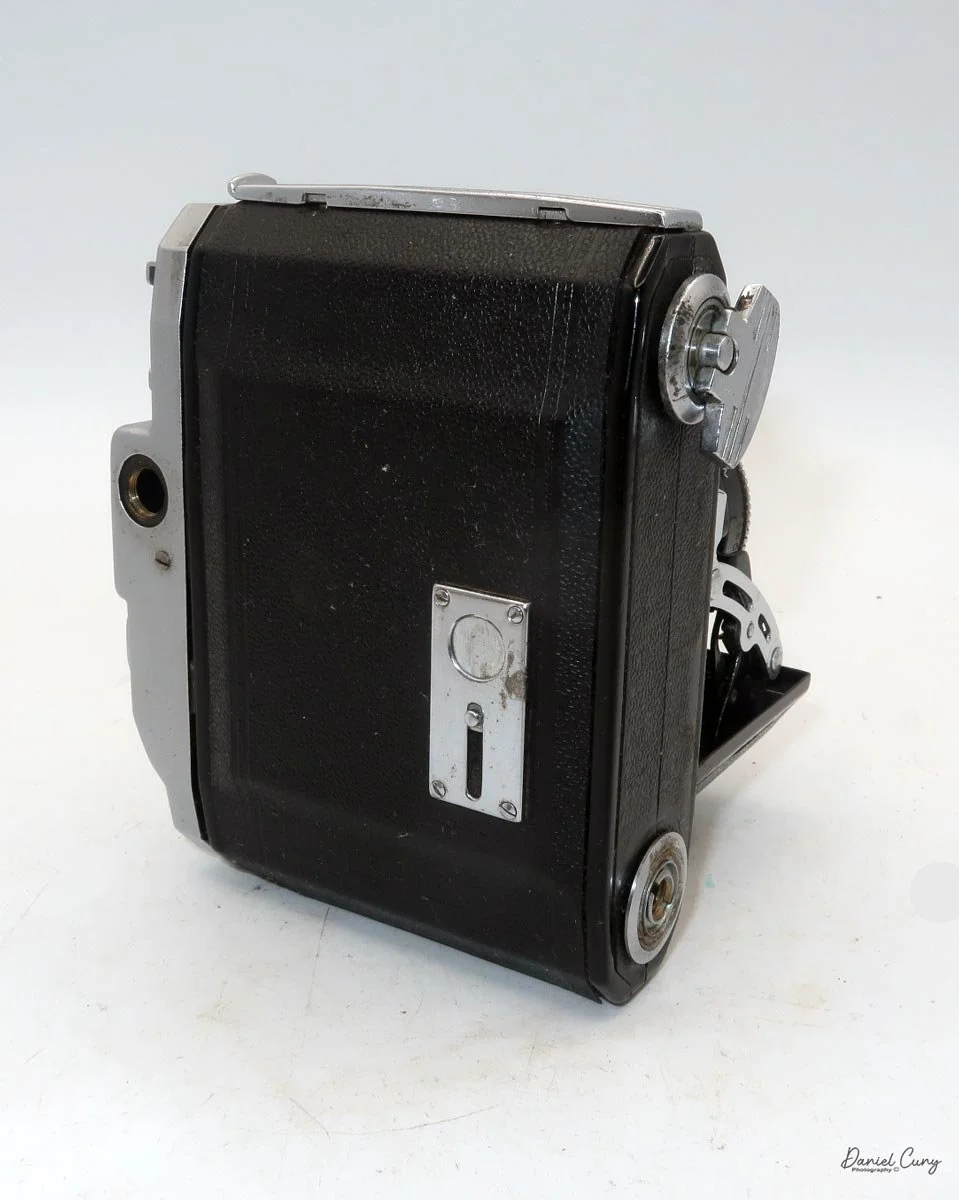
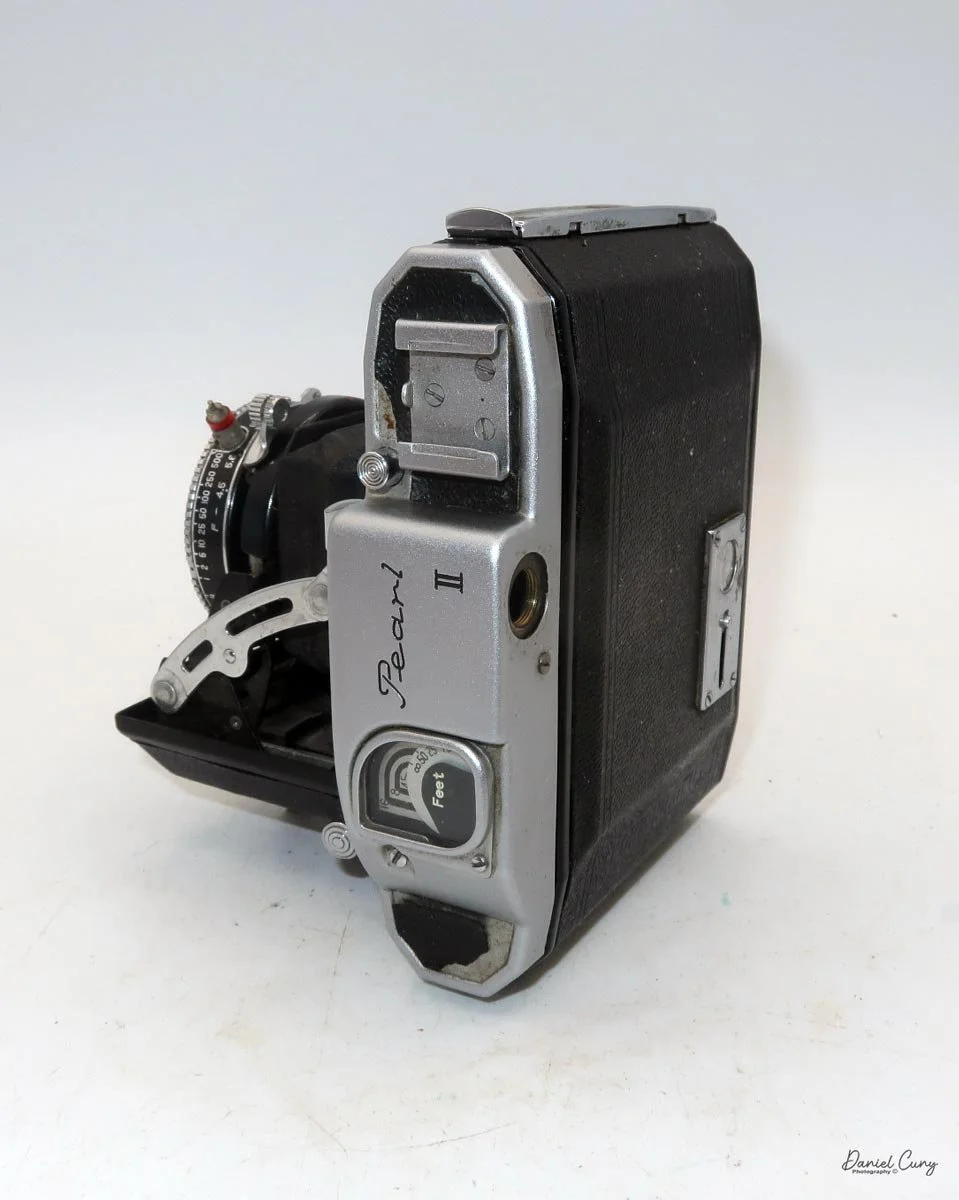
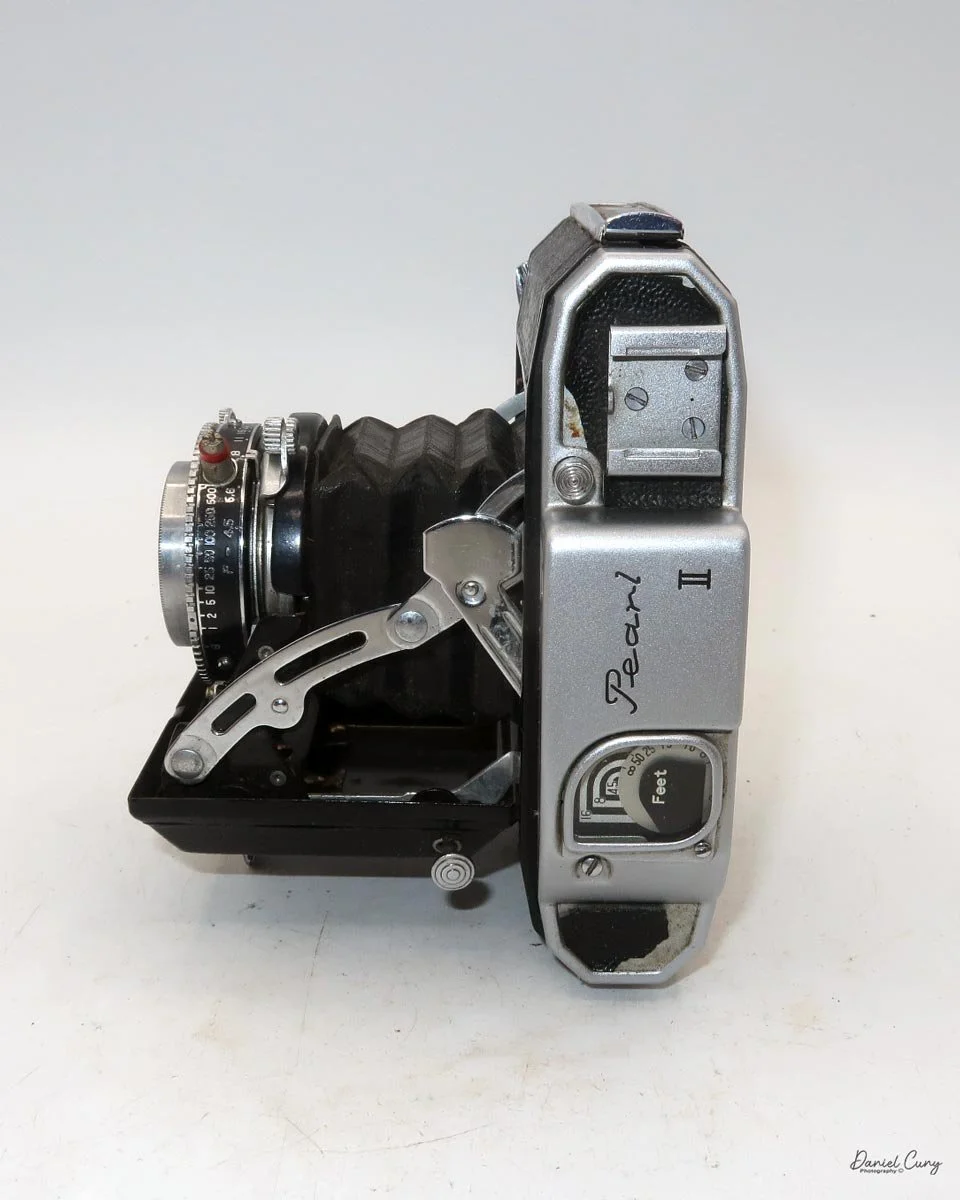
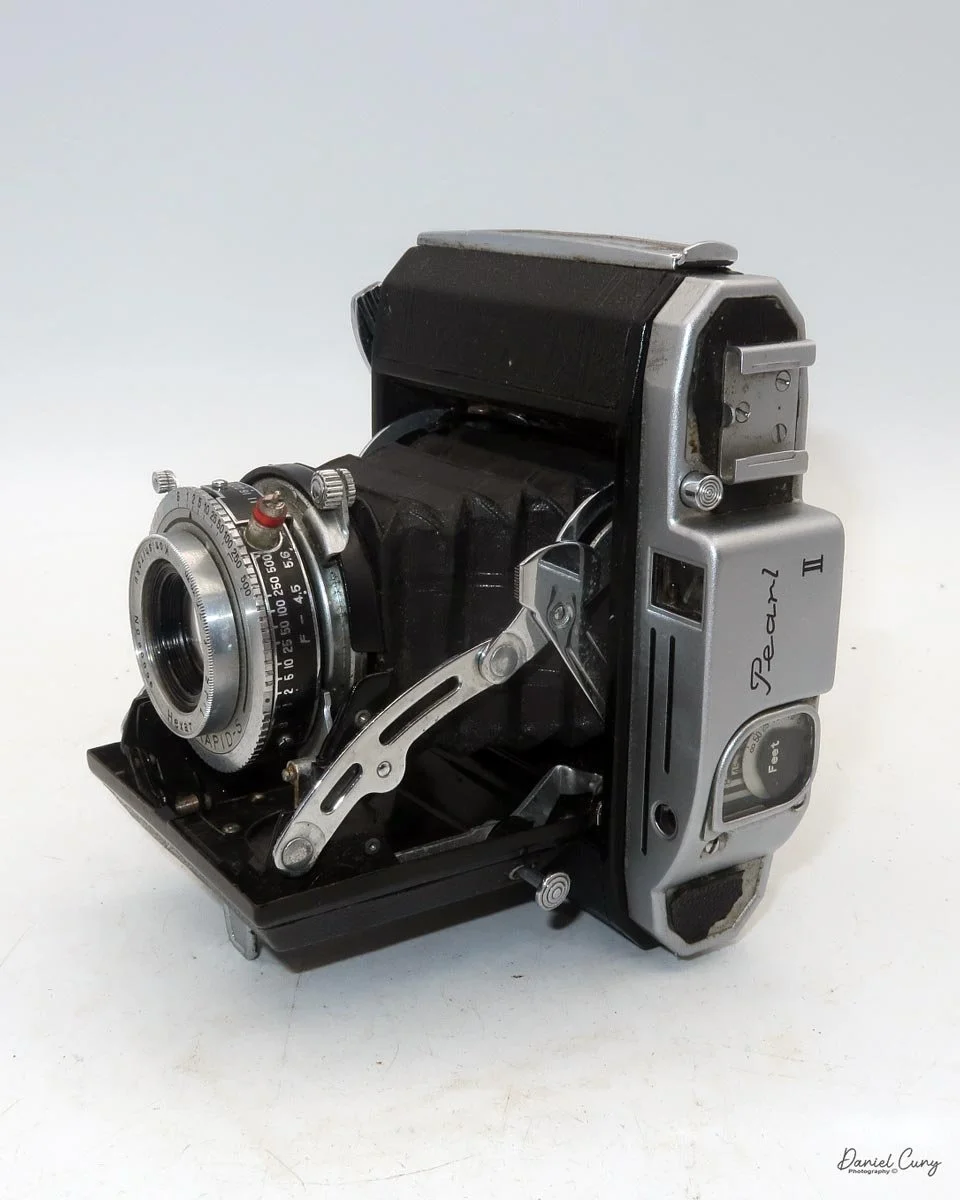
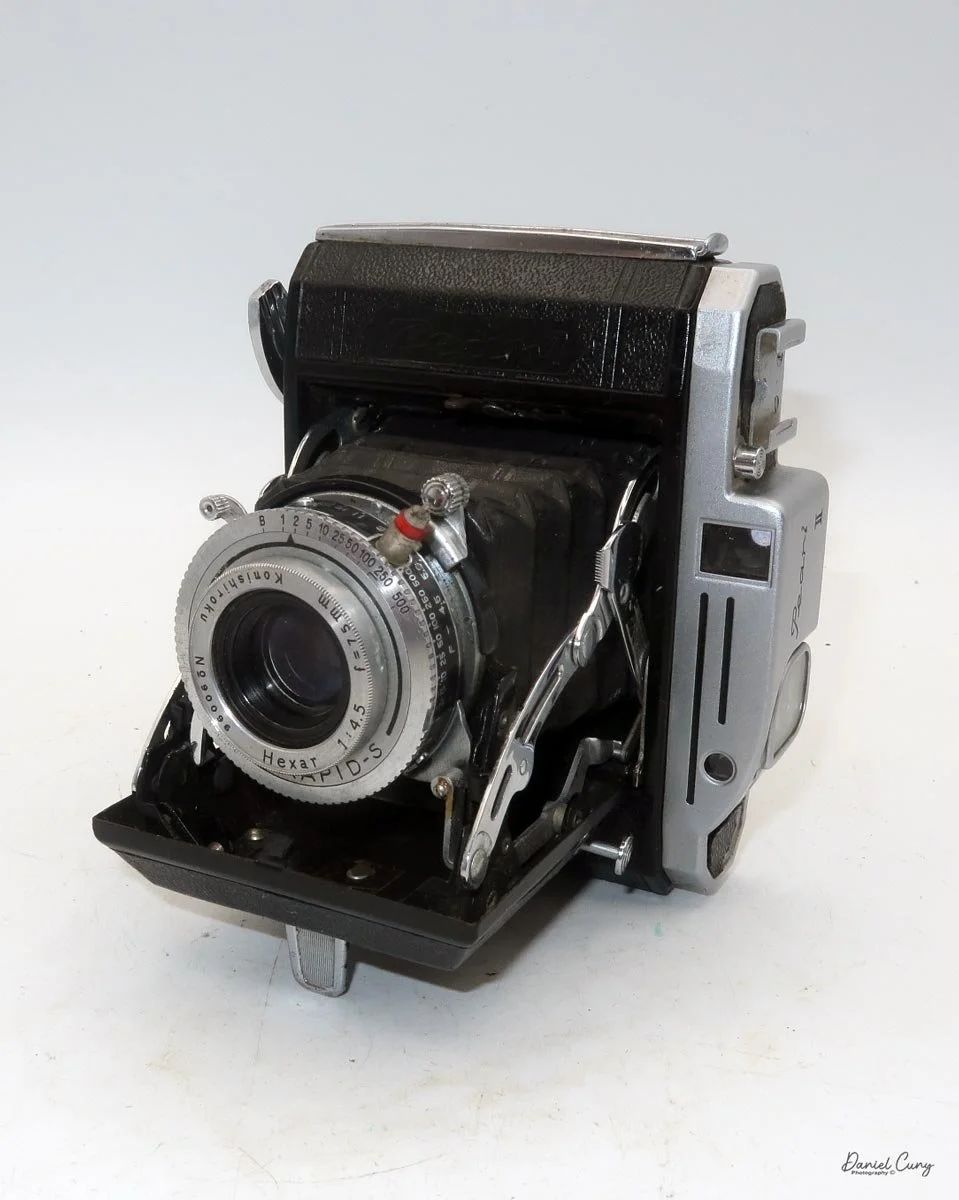
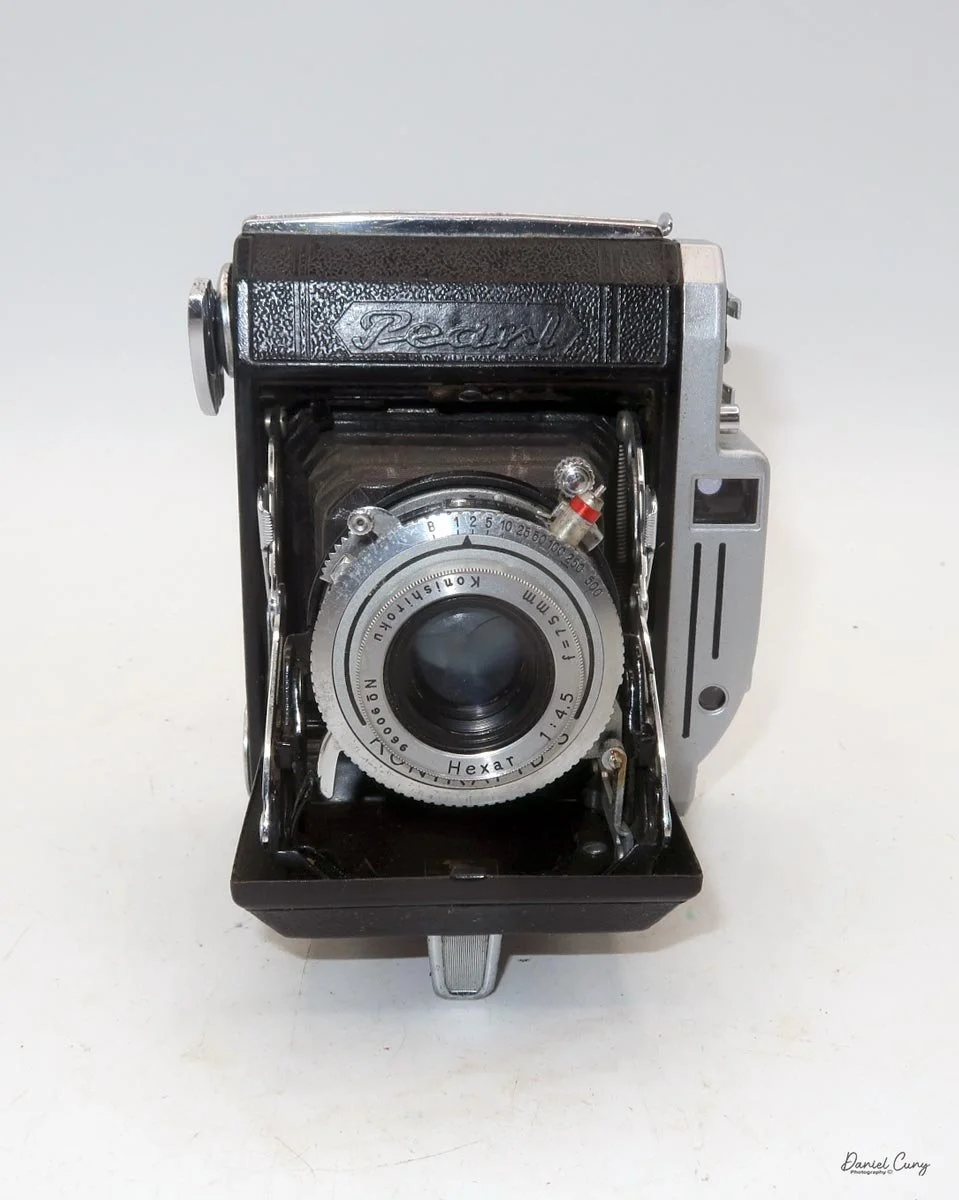
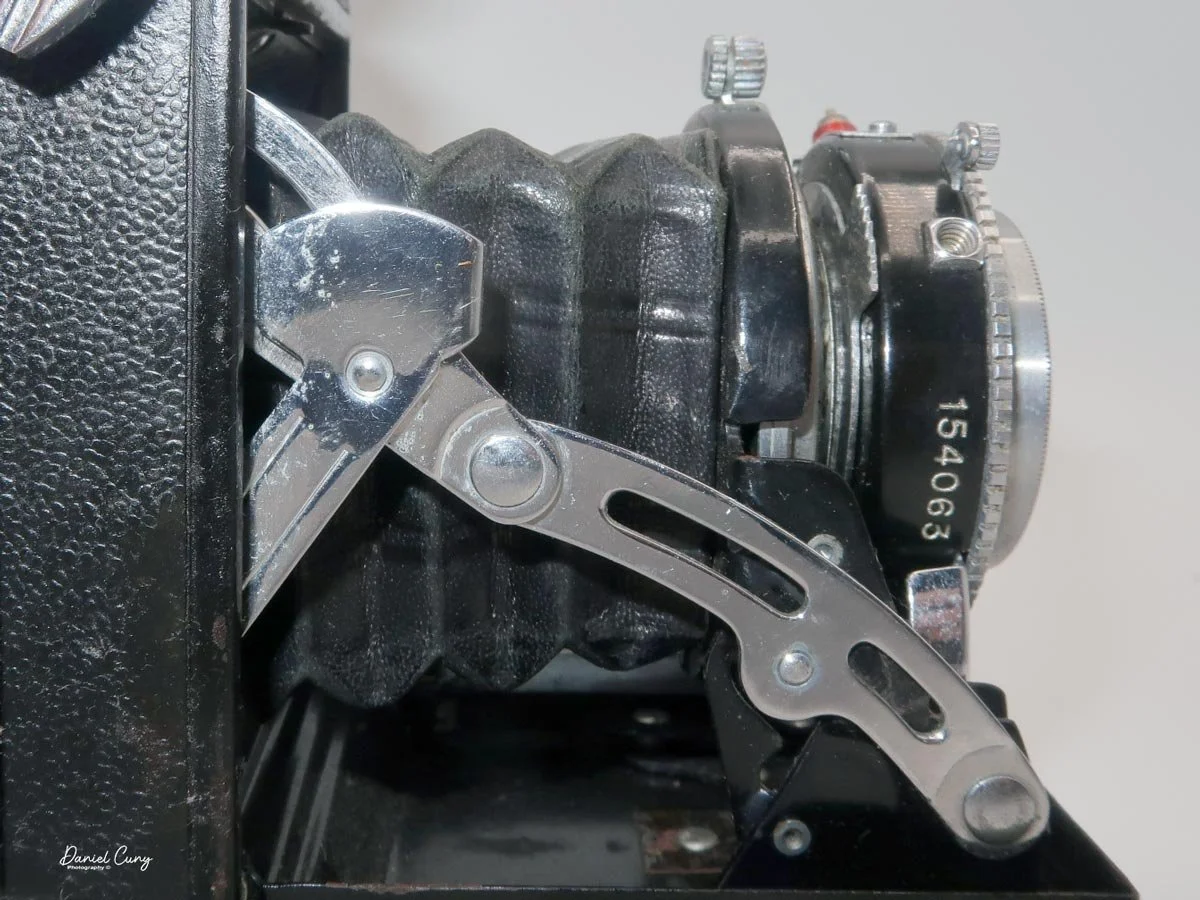
With the lens door open, it exposed the Konishiroku Hexar 75mm F/4.6 lens, serial #90096, in a Konirapid-S shutter with a range of 1/500 to 1 second, along with "B" for timed exposures. On so many cameras, shutter speeds are set by turning a ring to the desired value along the outer portion of the shutter. There is a shutter cocking lever located just behind the shutter speed setting ring on the shutter.
The camera's shutter release button is located on the lens door and trips the cocked shutter via a linkage to the shutter release. A cable release socket is also in the shutter just next to the cocking lever.
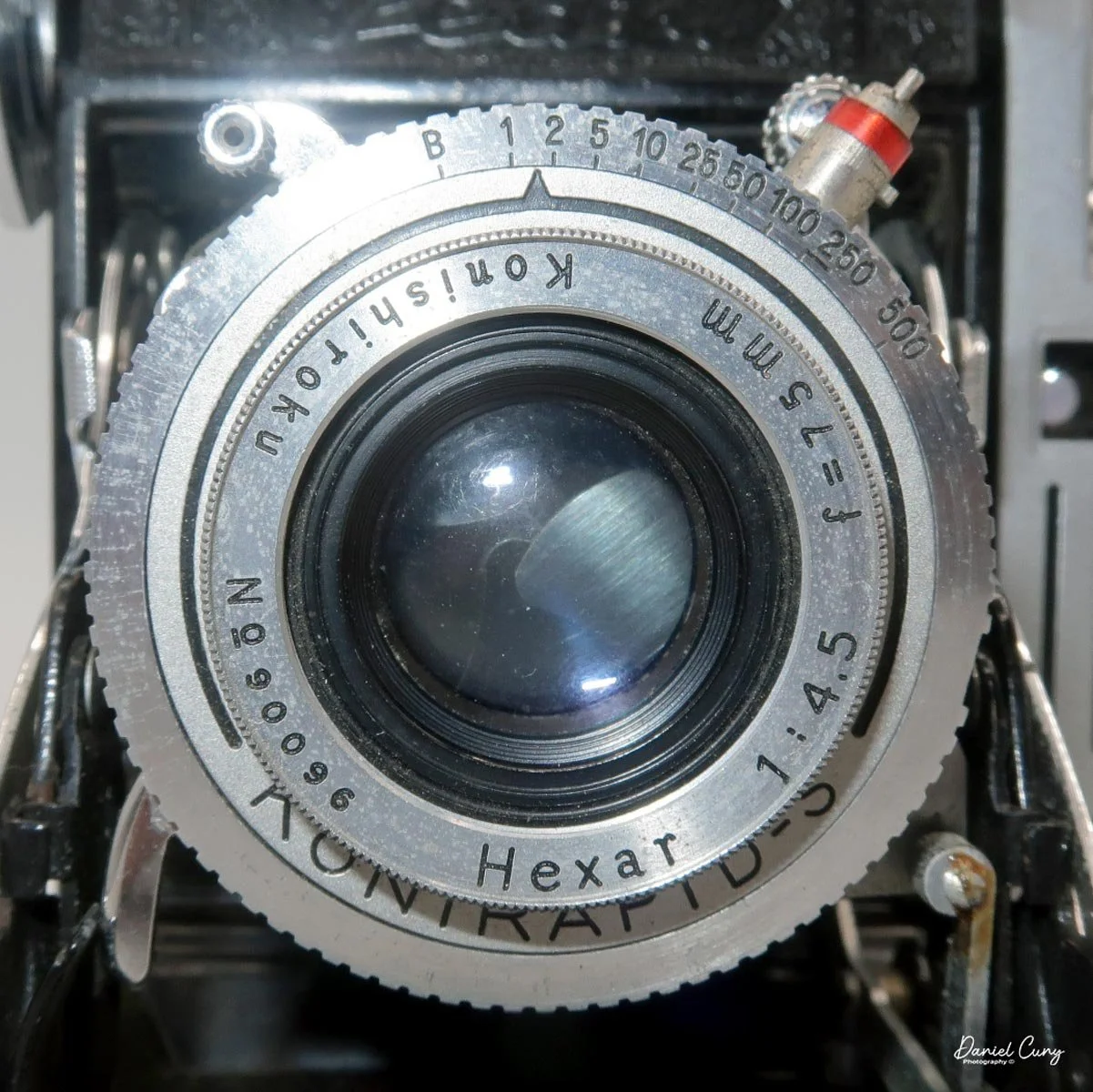
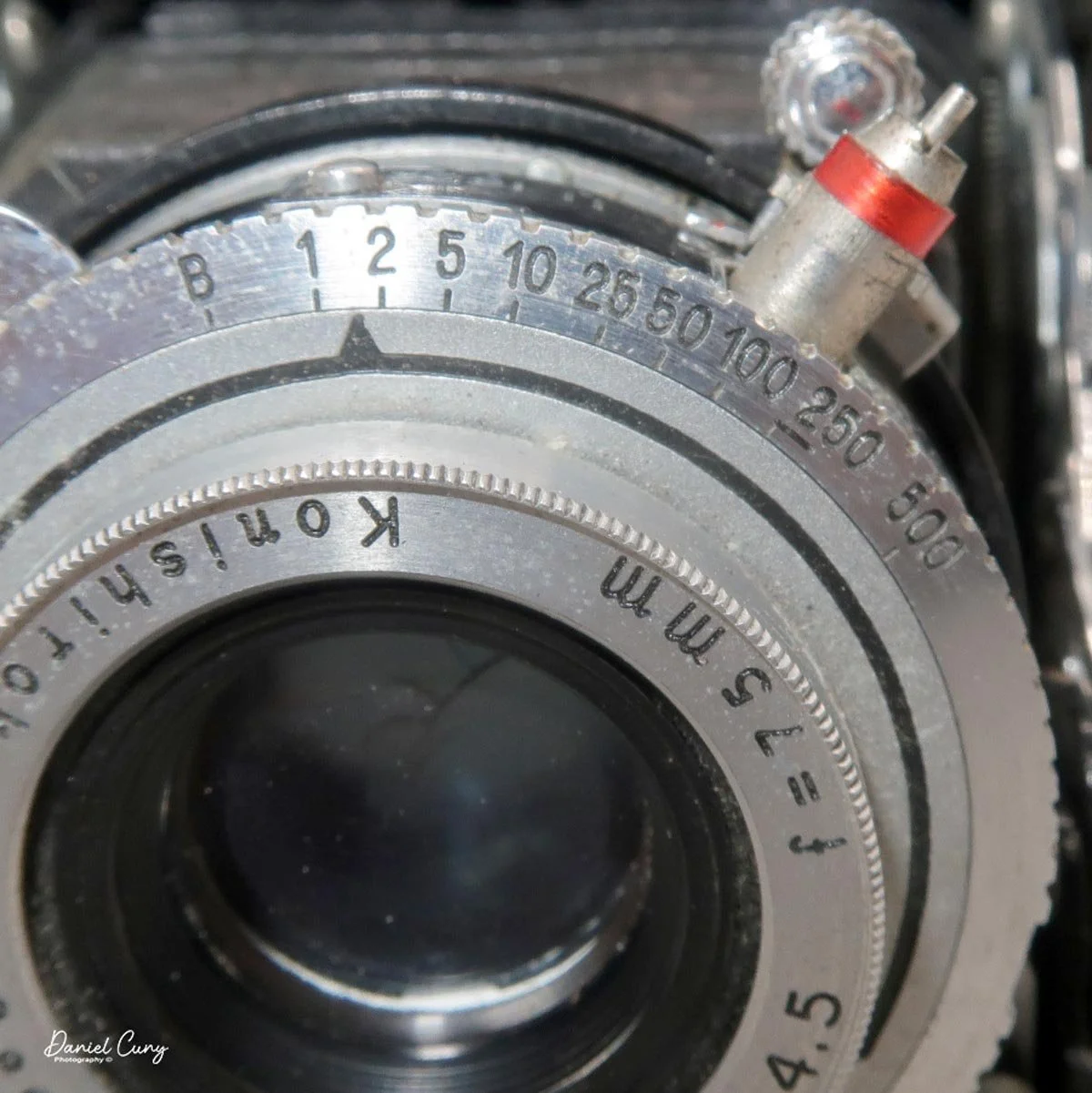
The aperture ranges from F/4.5 to F/22 and is adjusted by turning a knurled ring at the back of the shutter to the desired aperture, indicated by a red dot on the setting ring. Also on the camera's shutter is an ASA flash terminal, which would be used for bulb flash units popular at this time.
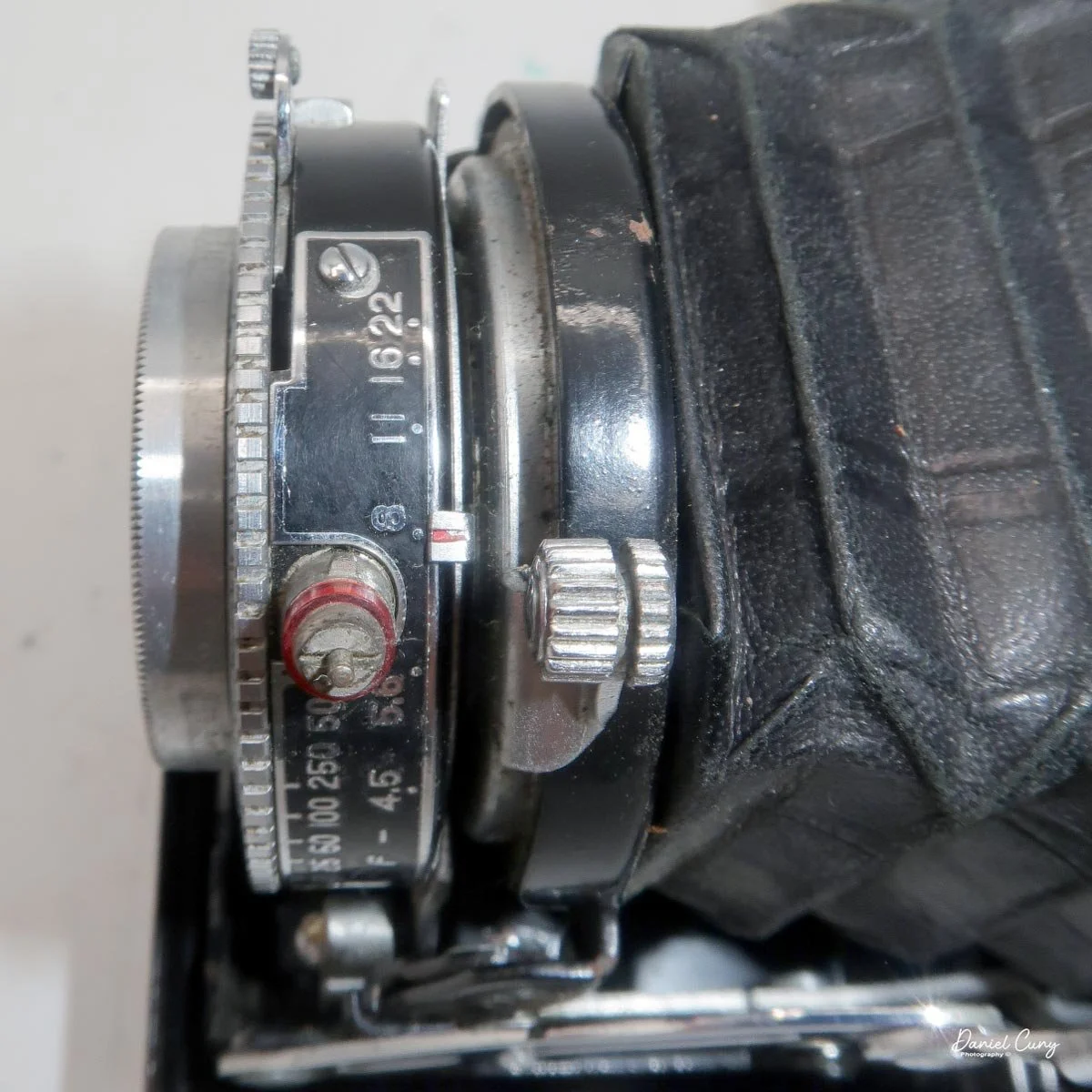
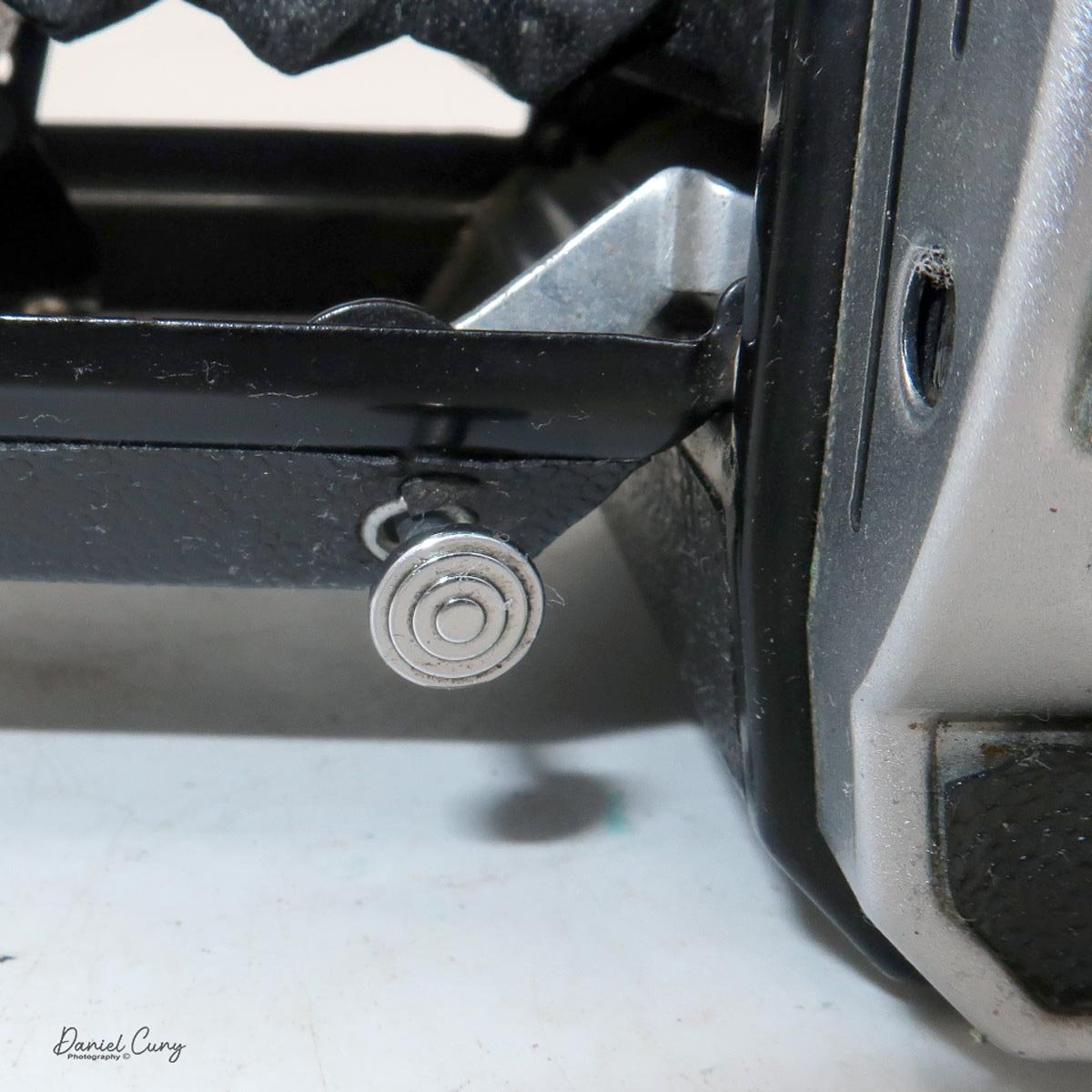
Behind the camera's shutter is a larger knob used to focus the camera through the rangefinder system. As mentioned earlier, I'm not sure whether my rangefinder is working. There's another way to check, and that's the method I used to get the photos for this article.
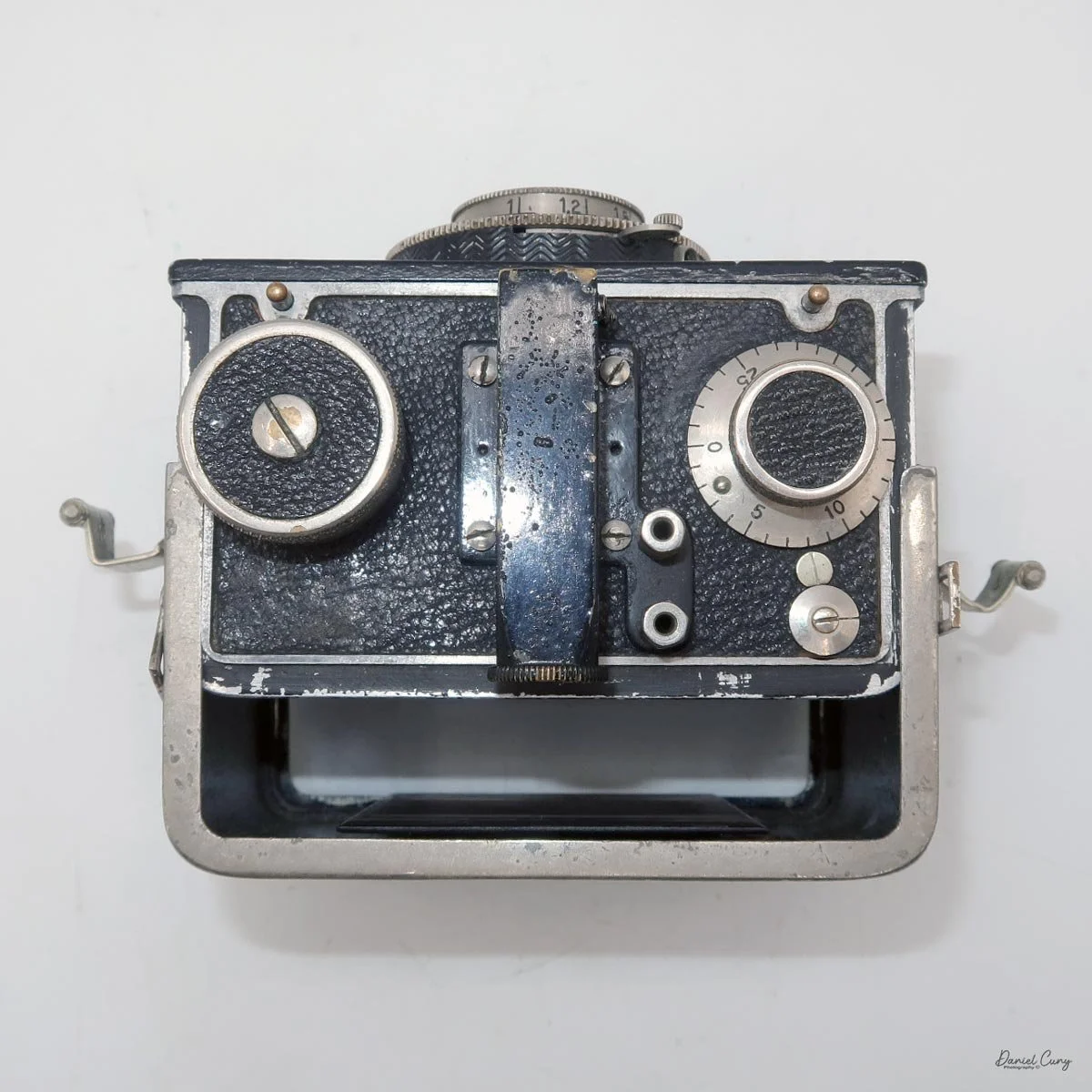
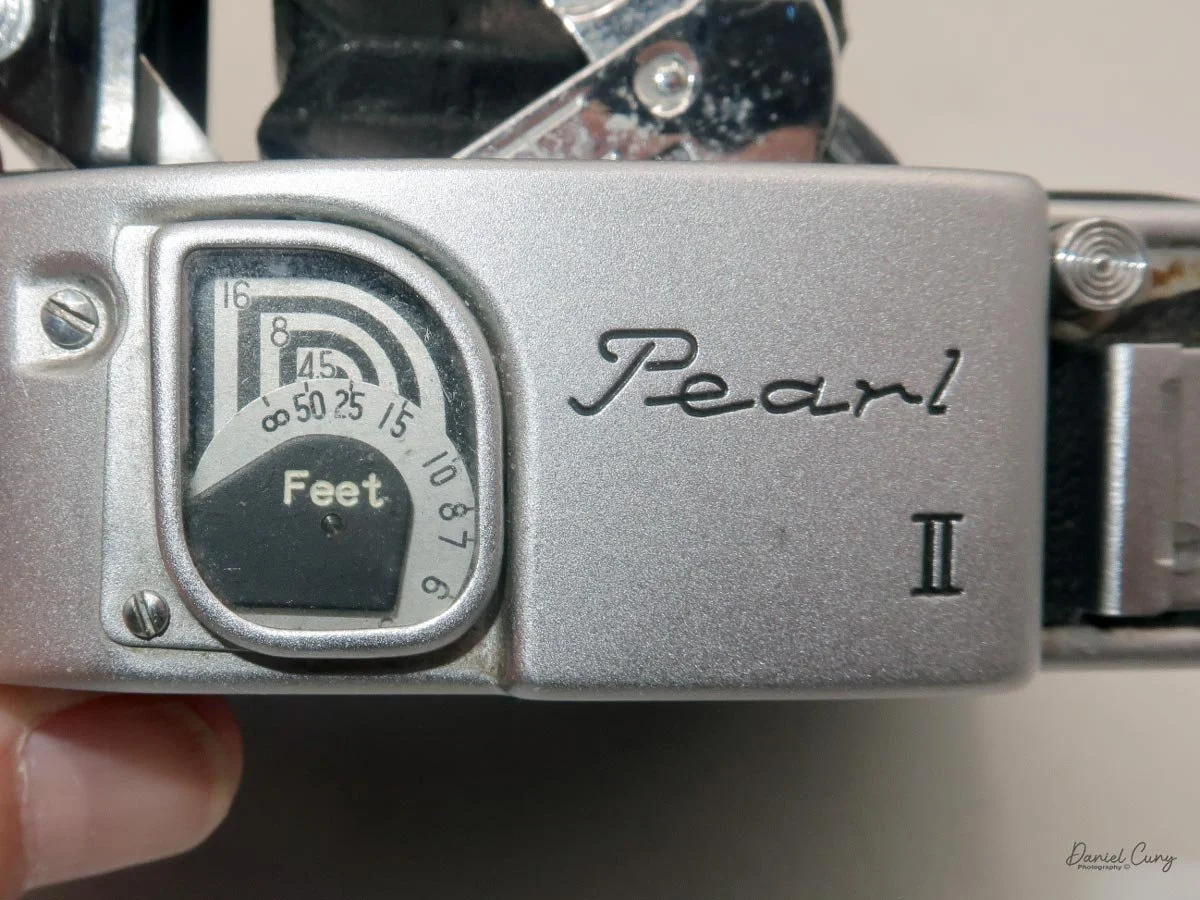
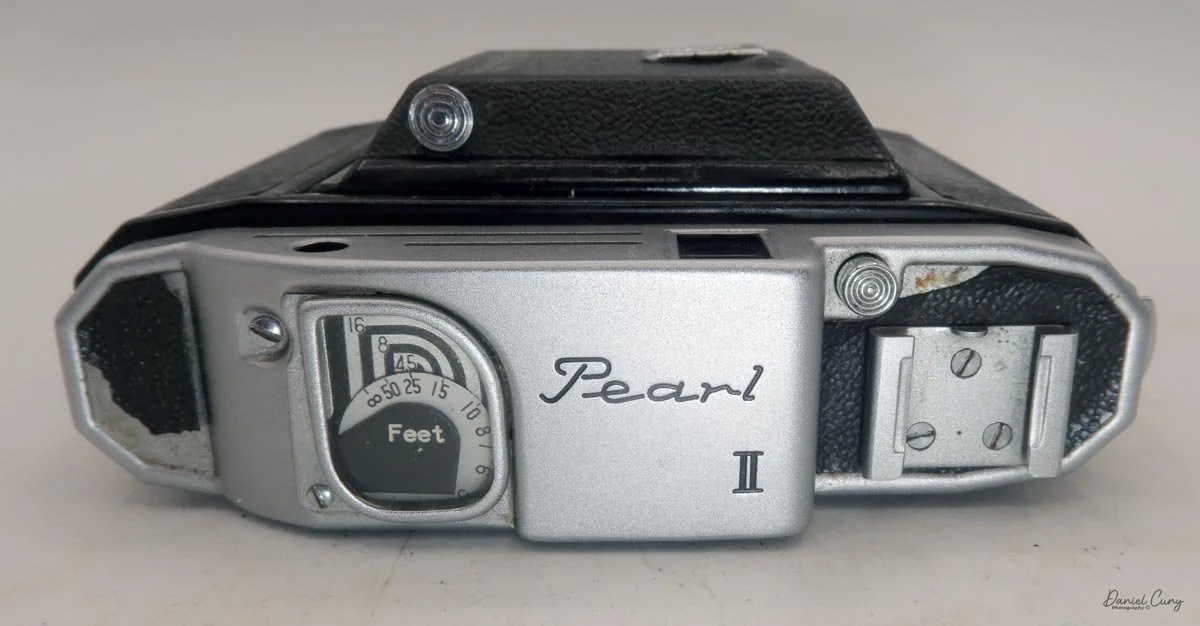
Moving the focus knob on the camera one way or the other moves a bar in and out located on the opposite side of the shutter release linkage. This bar's movement changes the focus distance to the subject, which you can see through a window on top of the camera. I find these simple features on cameras fascinating. I don't know why, but I do.
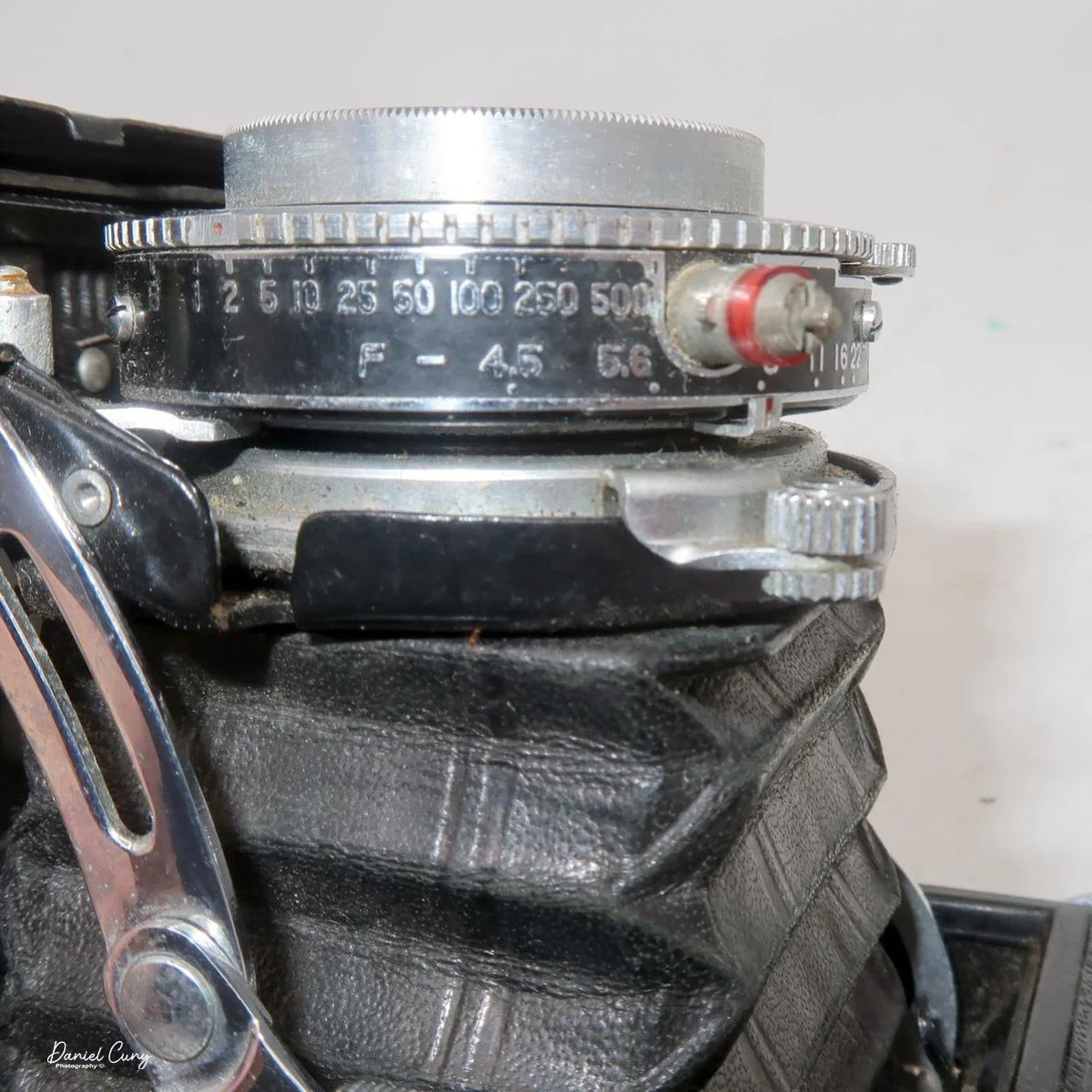
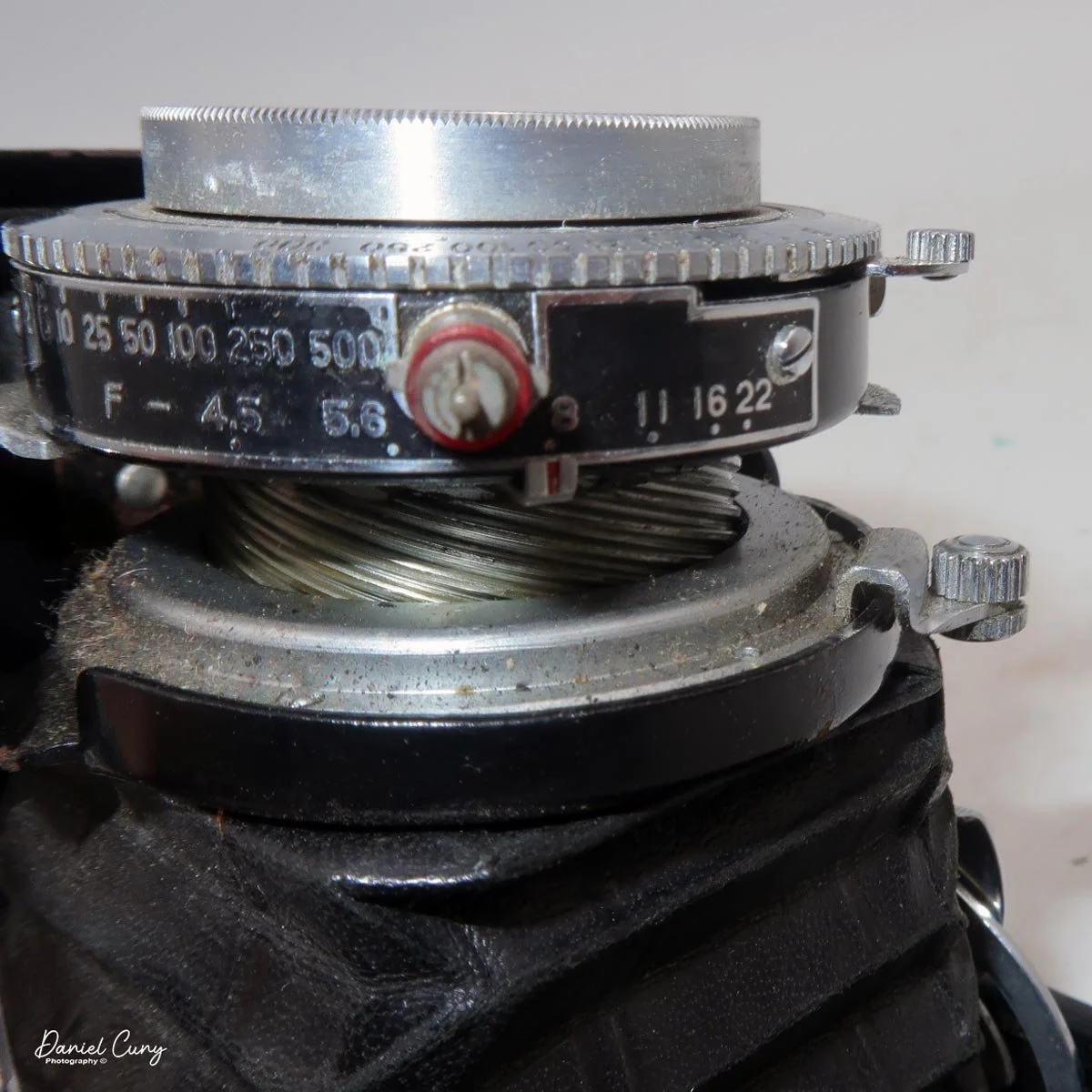
To close the lens door back into the camera body, press inward on the side struts holding the lens erect, and the struts will collapse, allowing you to fold the lens back into the camera's body. Pressing it back locks it into place. You'll also need to set the camera's focus to infinity before it will close all the way.
Looking down at the top of the camera, there are just a few objects to see. There is a small area on the front of the rangefinder housing that is losing some of its leatherette. The wonderfully designed focus window with a depth-of-field scale. The name "Pearl II" is in a modernistic font, with the camera's accessory shoe on a lower plane and the button for releasing the lens door.
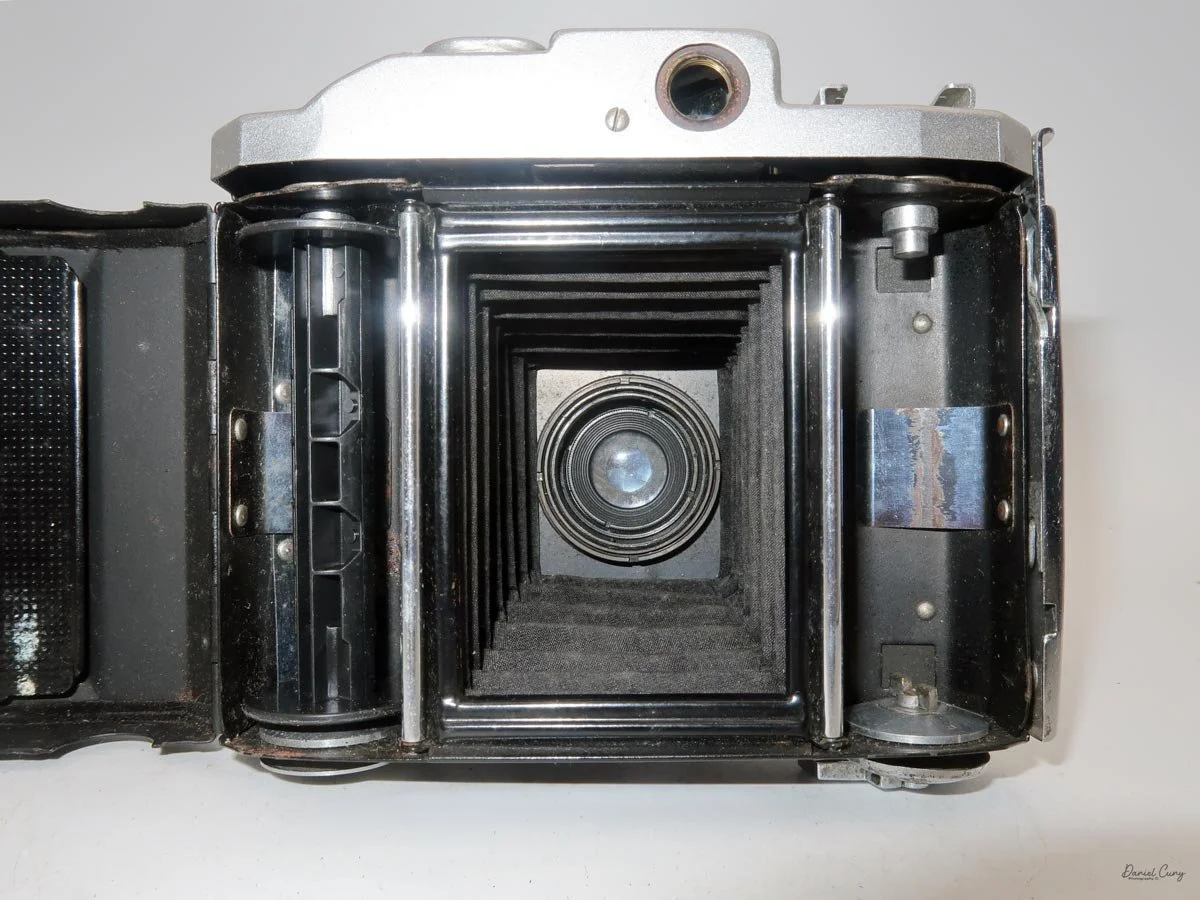
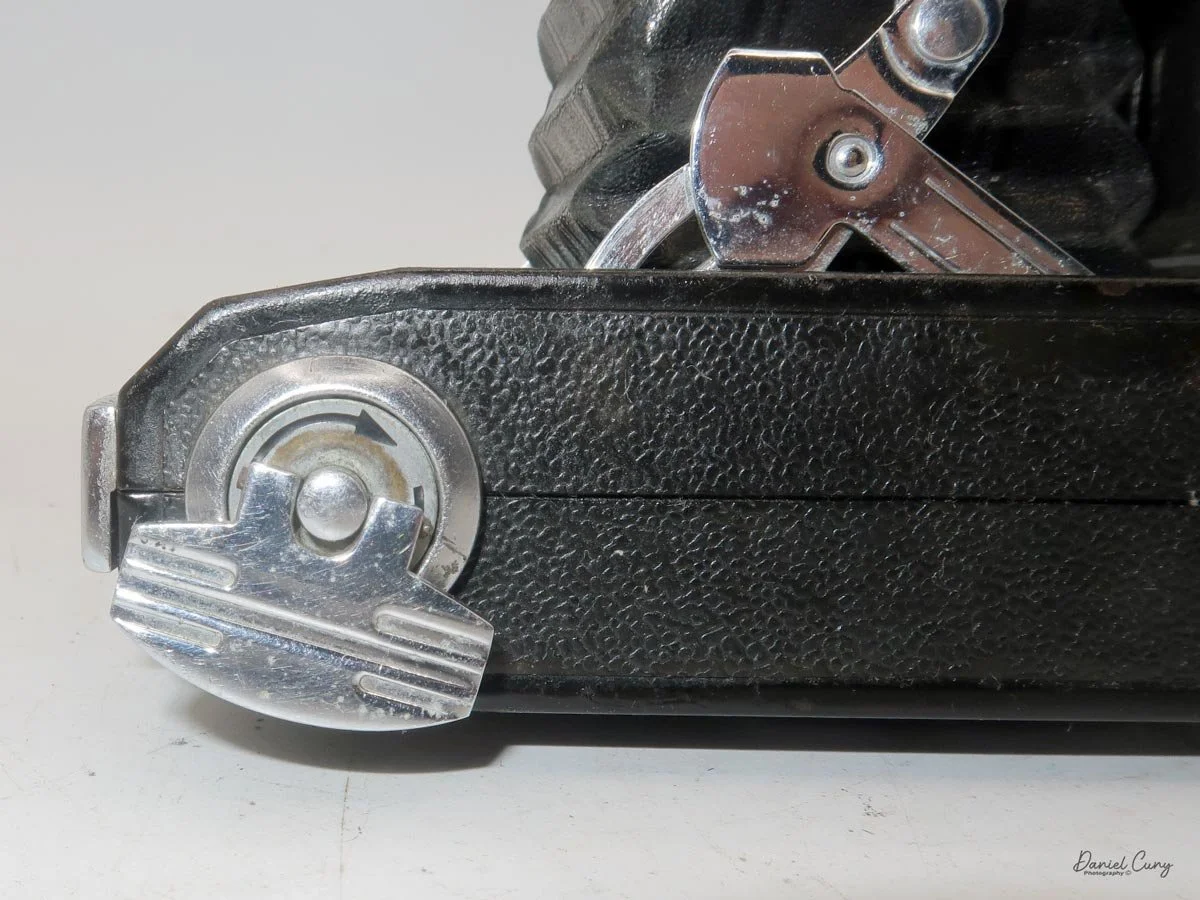
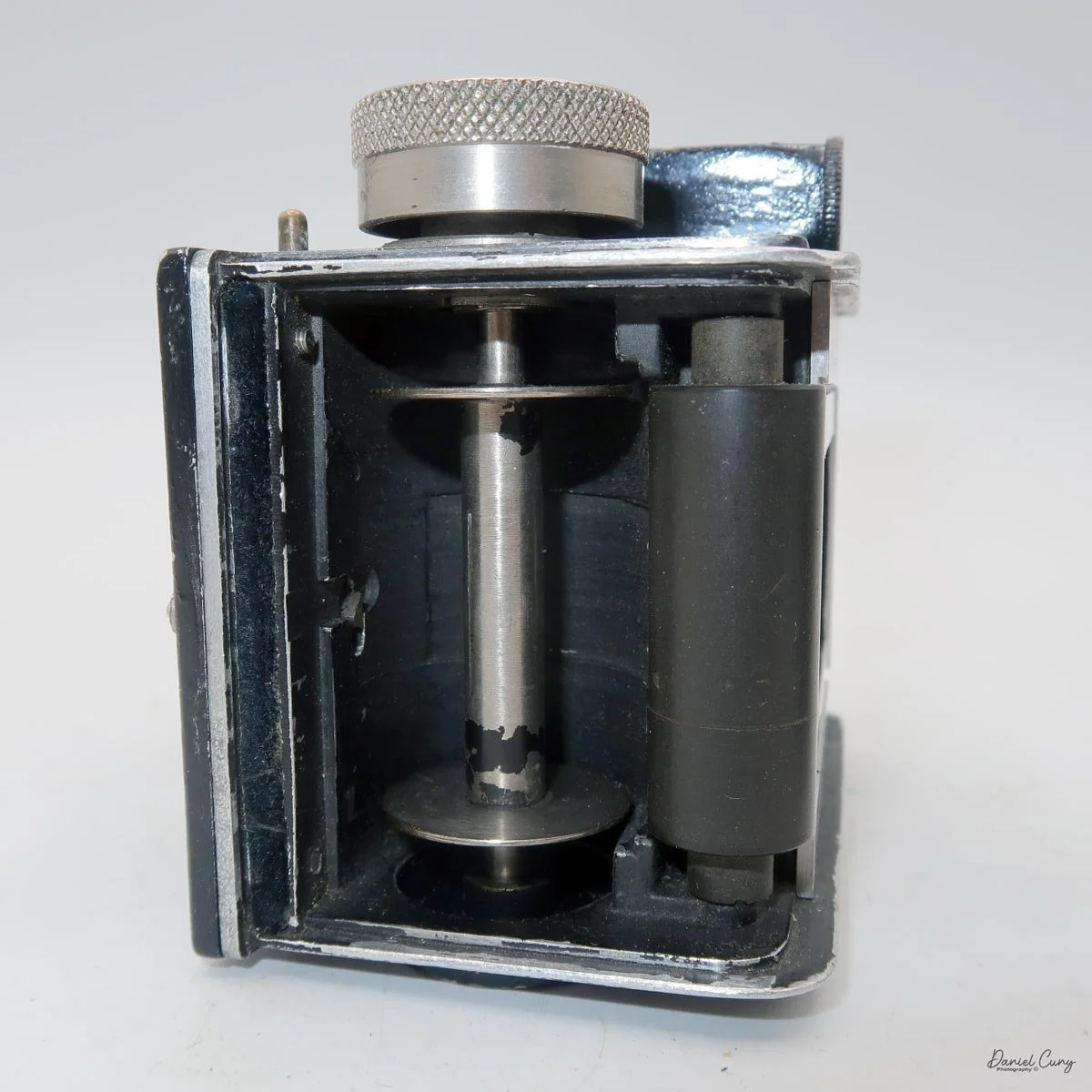
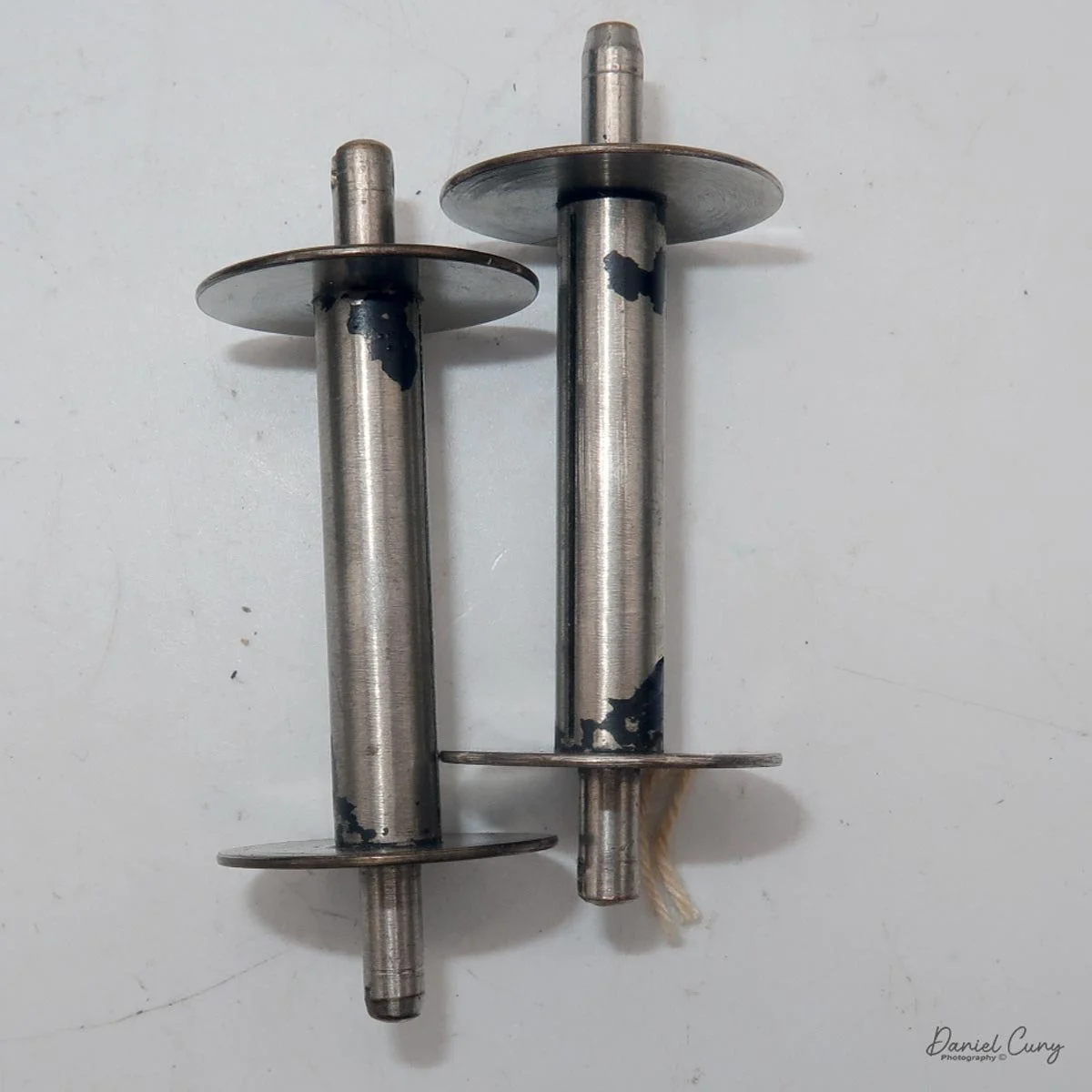
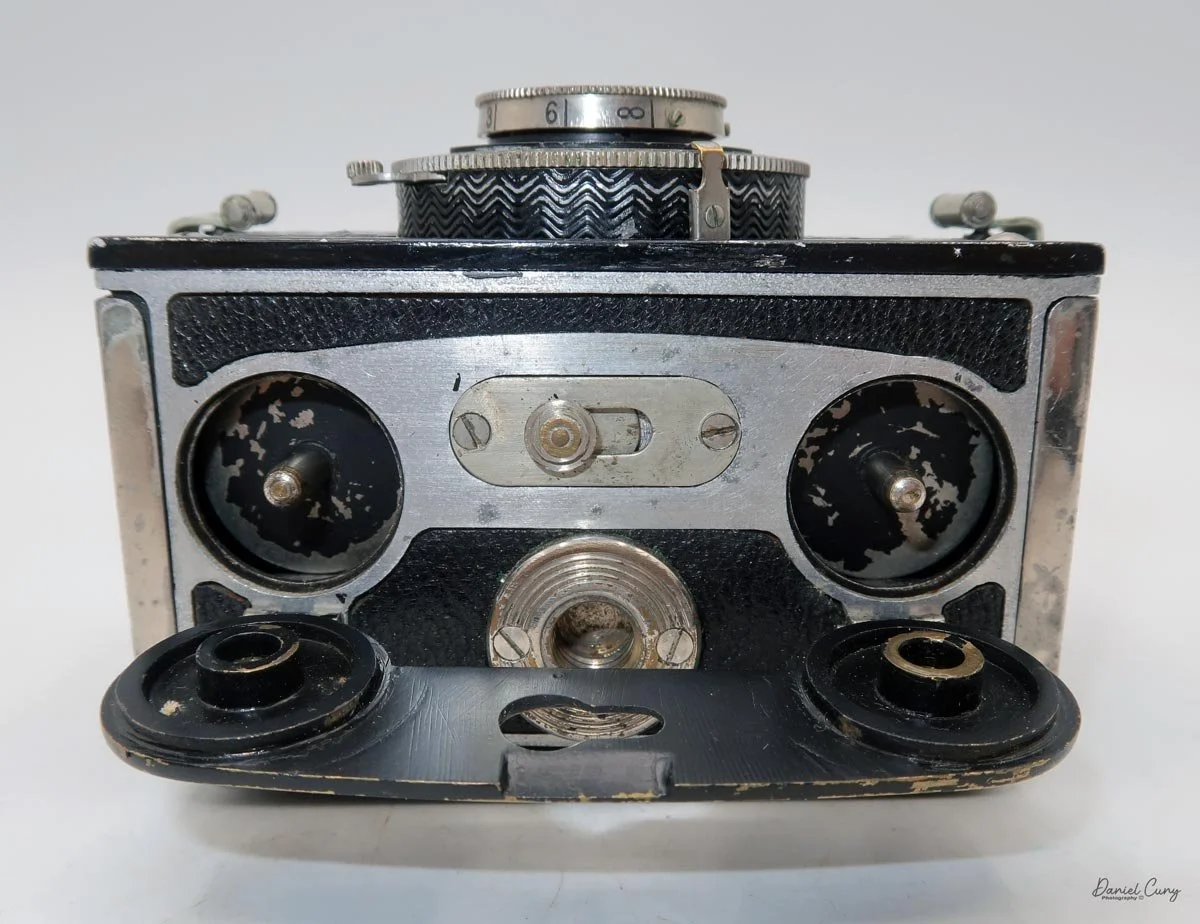
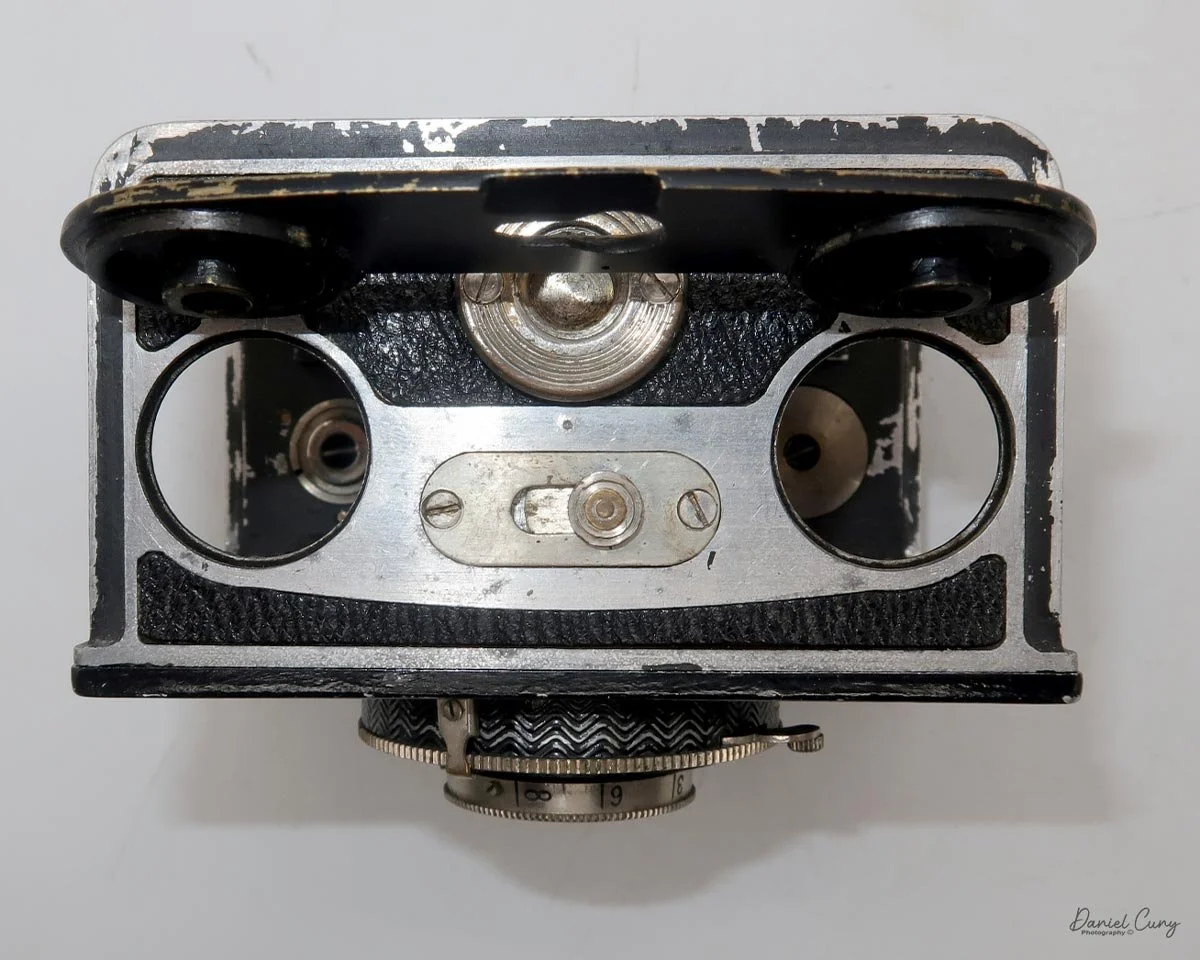
To load the camera with film, the film door release is on the right side of the Pearl II. Lifting the lever on top unlocks the film door, allowing you to open it and load film. The fresh roll fits on the left side, and the take-up spool will be on the right, where the larger key-style winding lever is located. Once loaded, close the back of the camera and wind until you see the number 1 in the rear chrome window, which has a sliding cover.
With the film loaded in the camera, let's take a walk through the neighborhood to see how it performs. Even though I don't have a usable rangefinder, the distance scale on top of the camera should help me take sharp photos.
My Results:
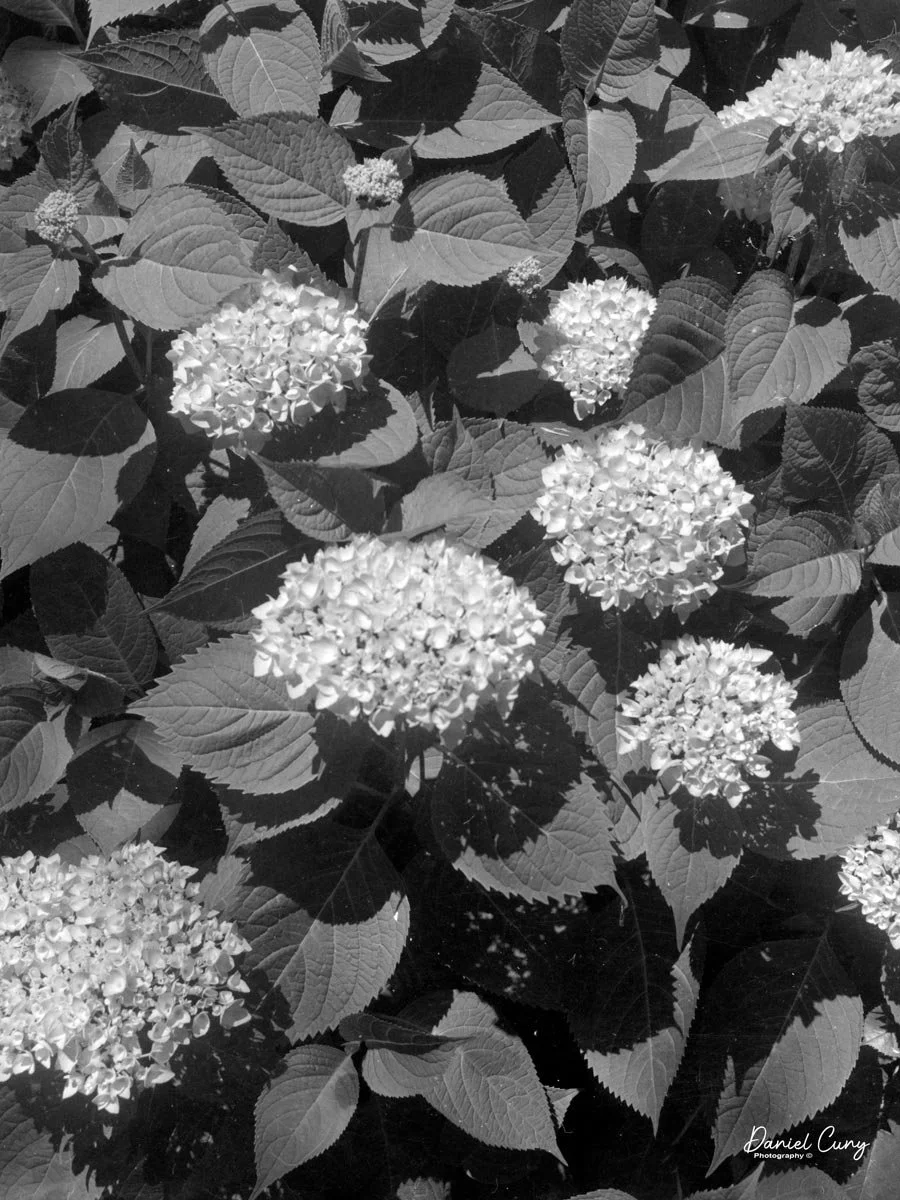
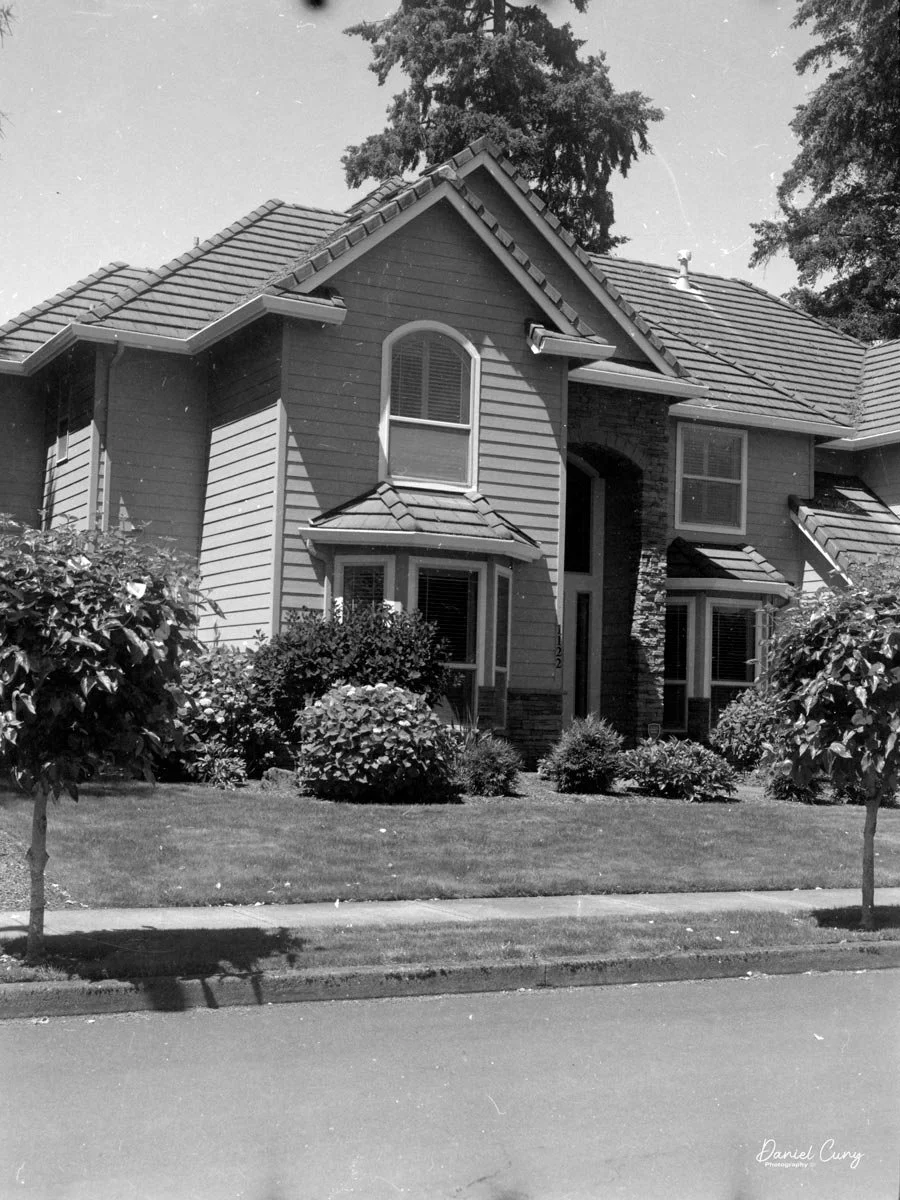
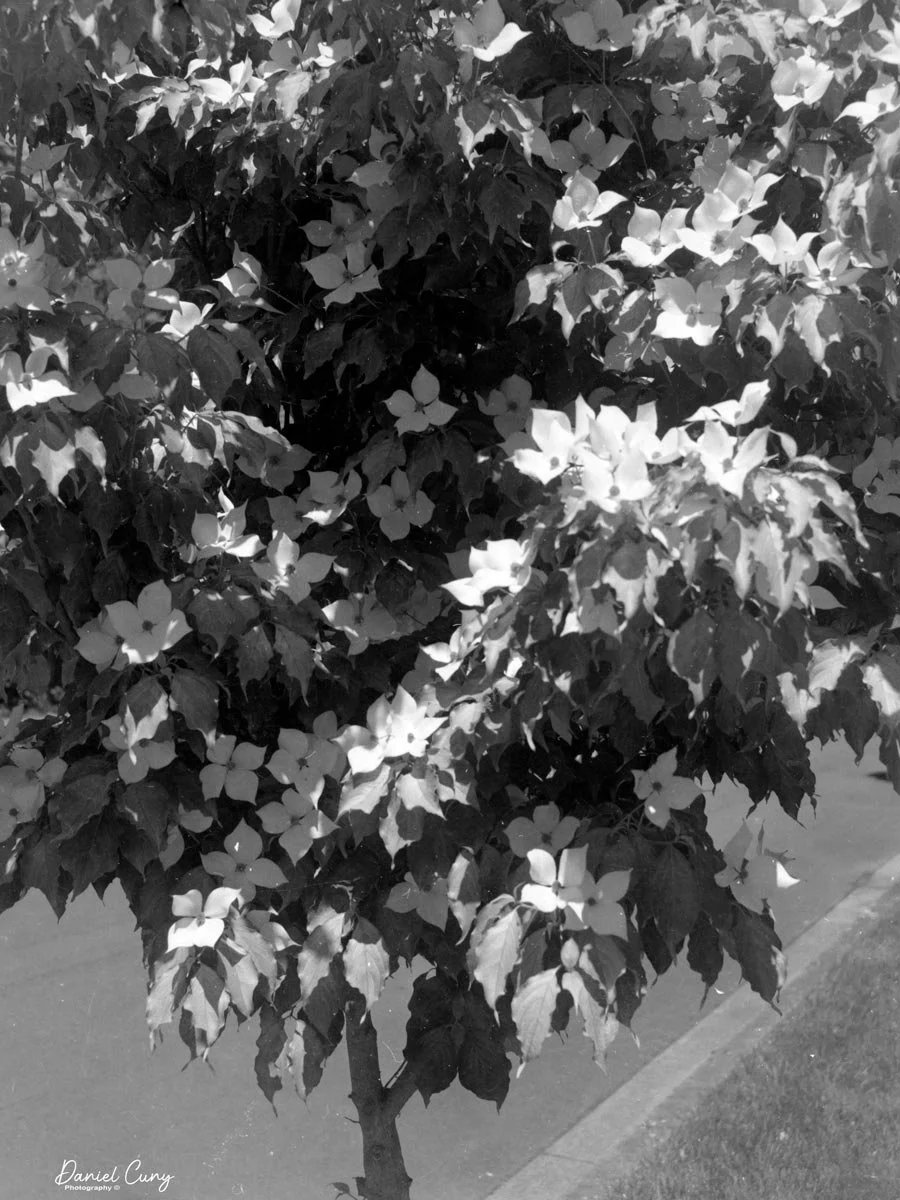
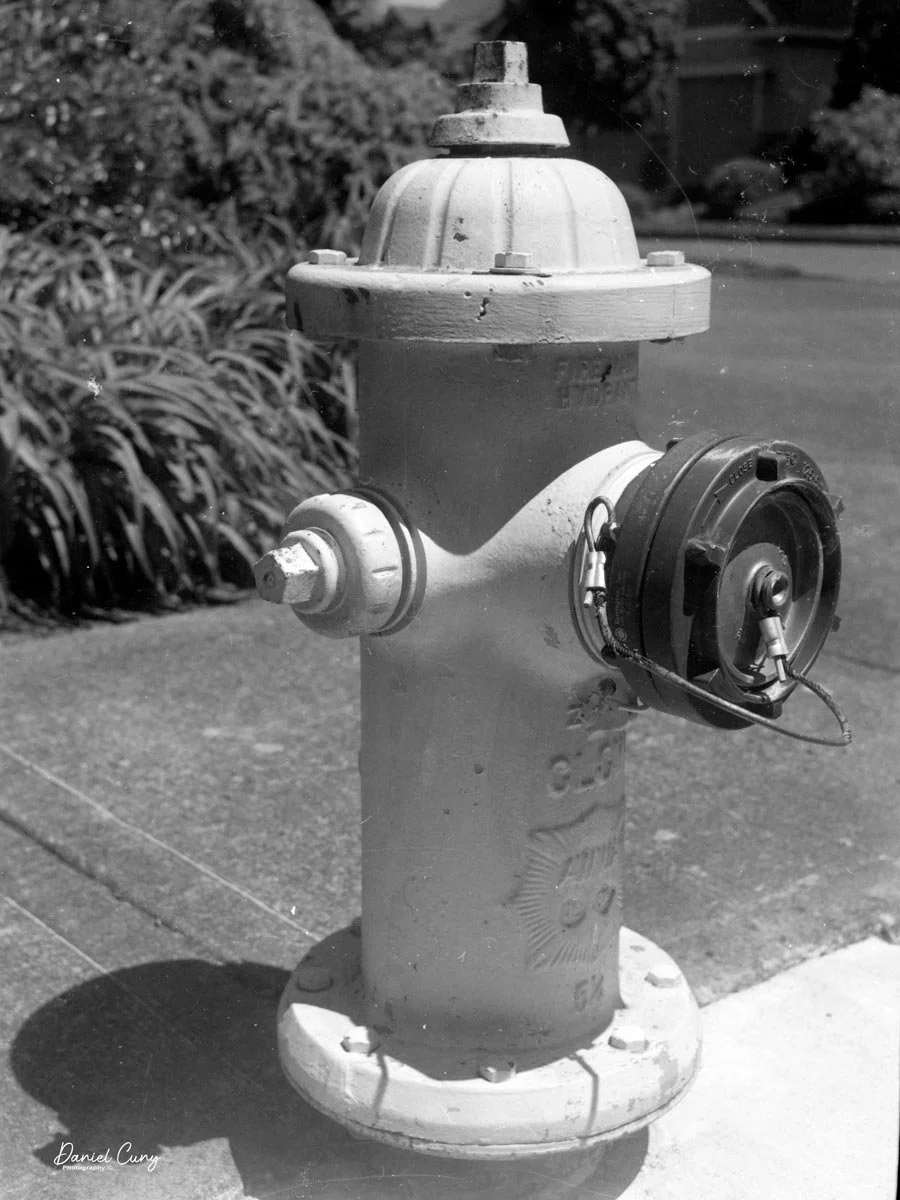
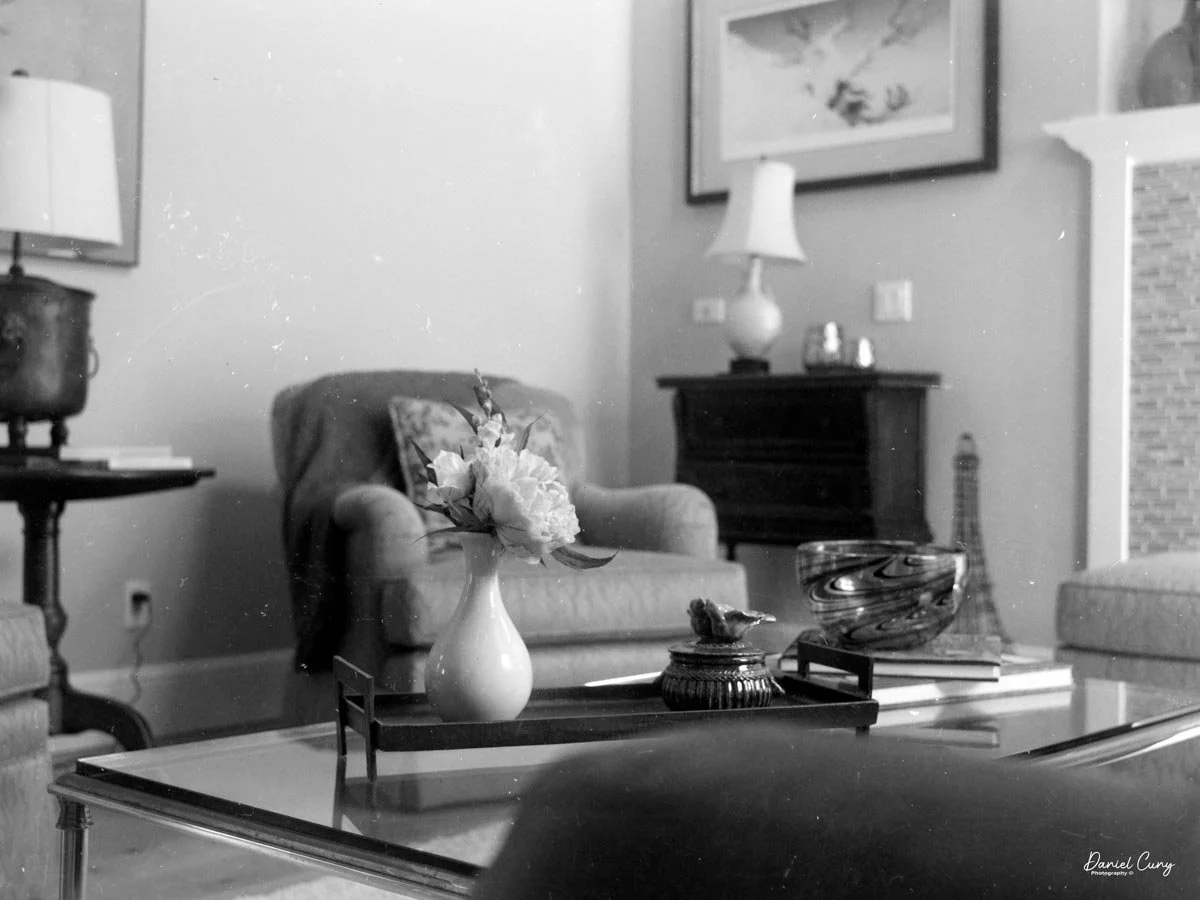
Since the camera has a vertical 6x4.5 format, you can take 16 images on a roll of 120 film. If you're taking a horizontal image, you'll need to turn the camera to landscape orientation.
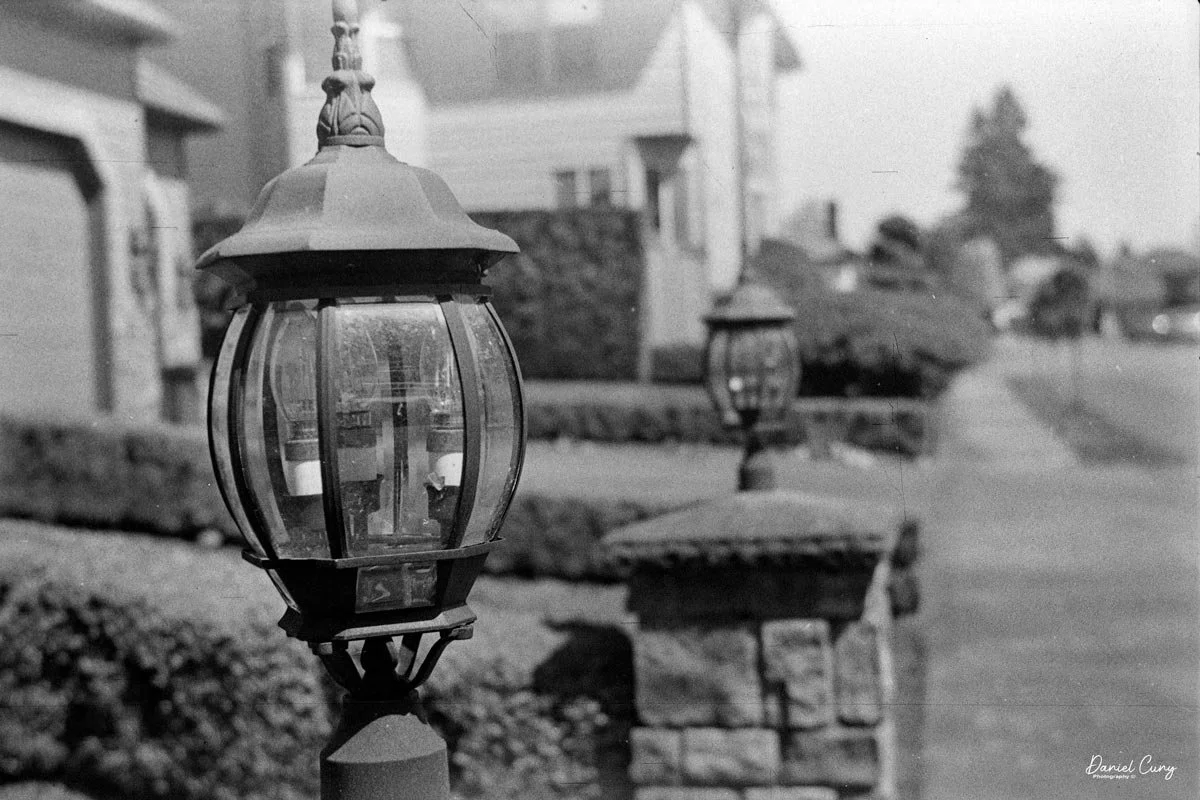
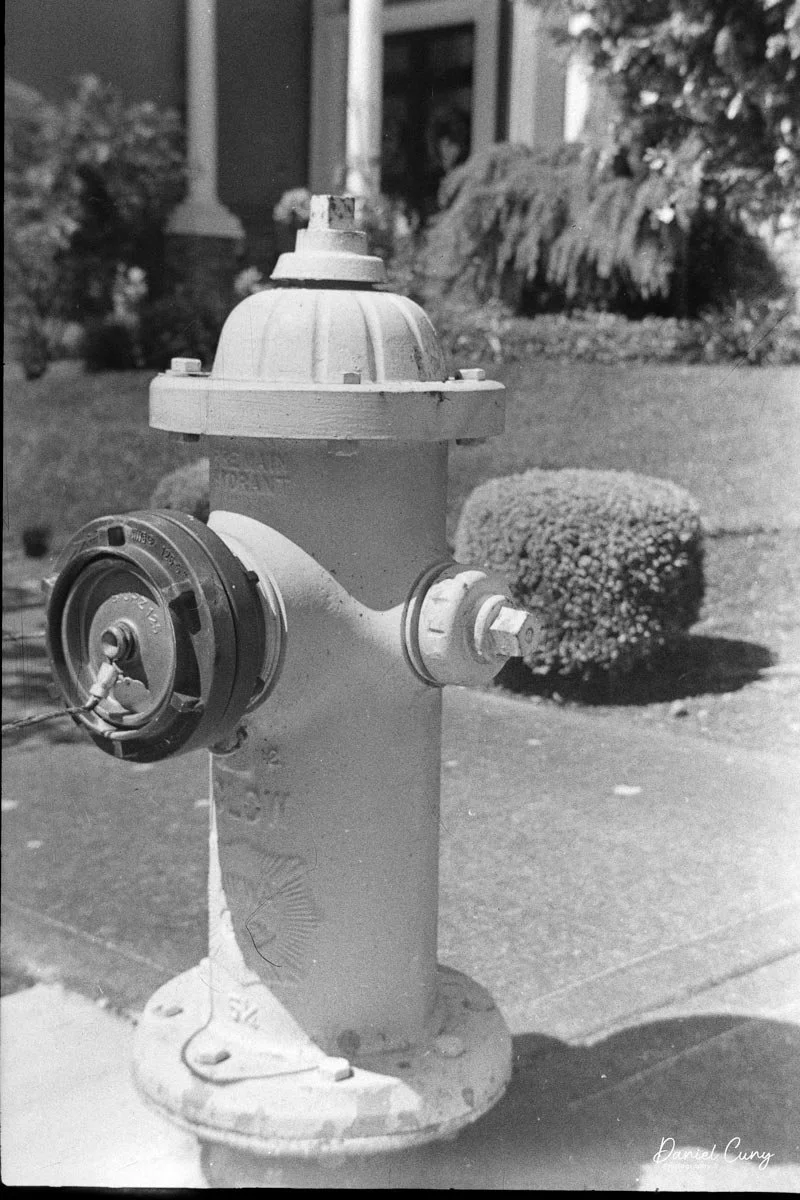
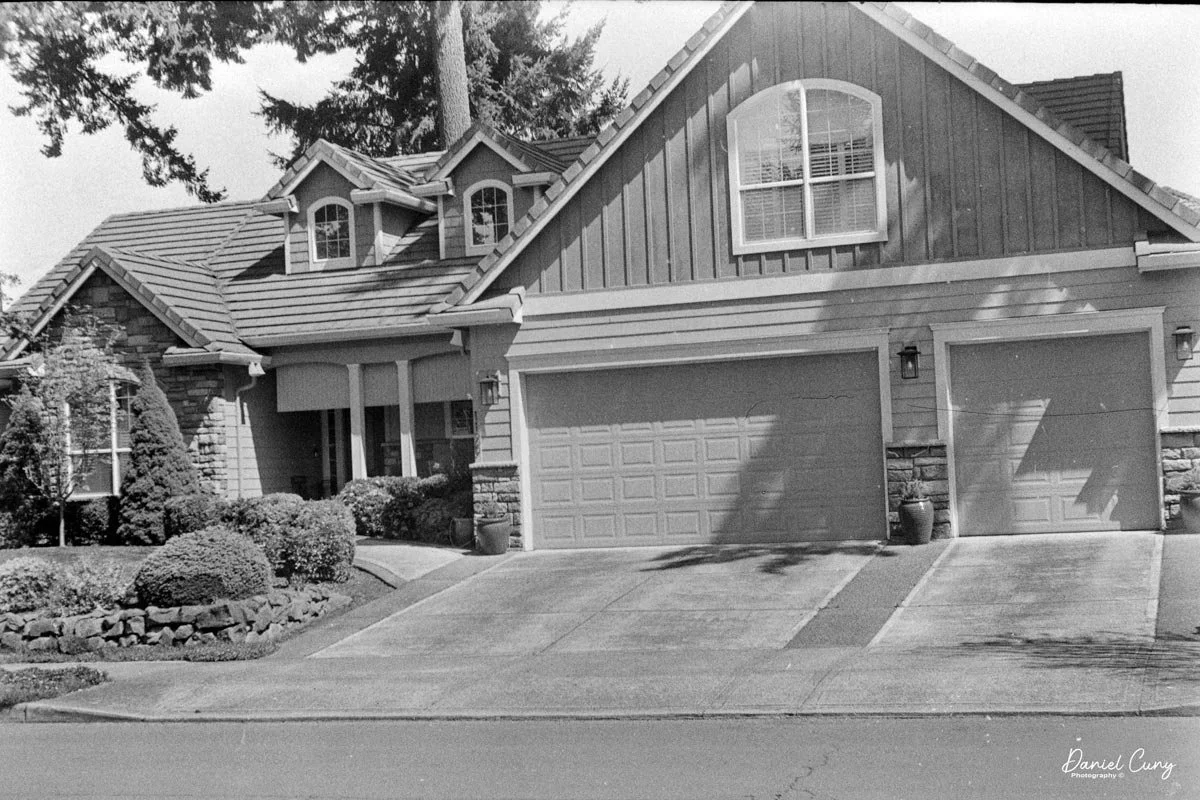
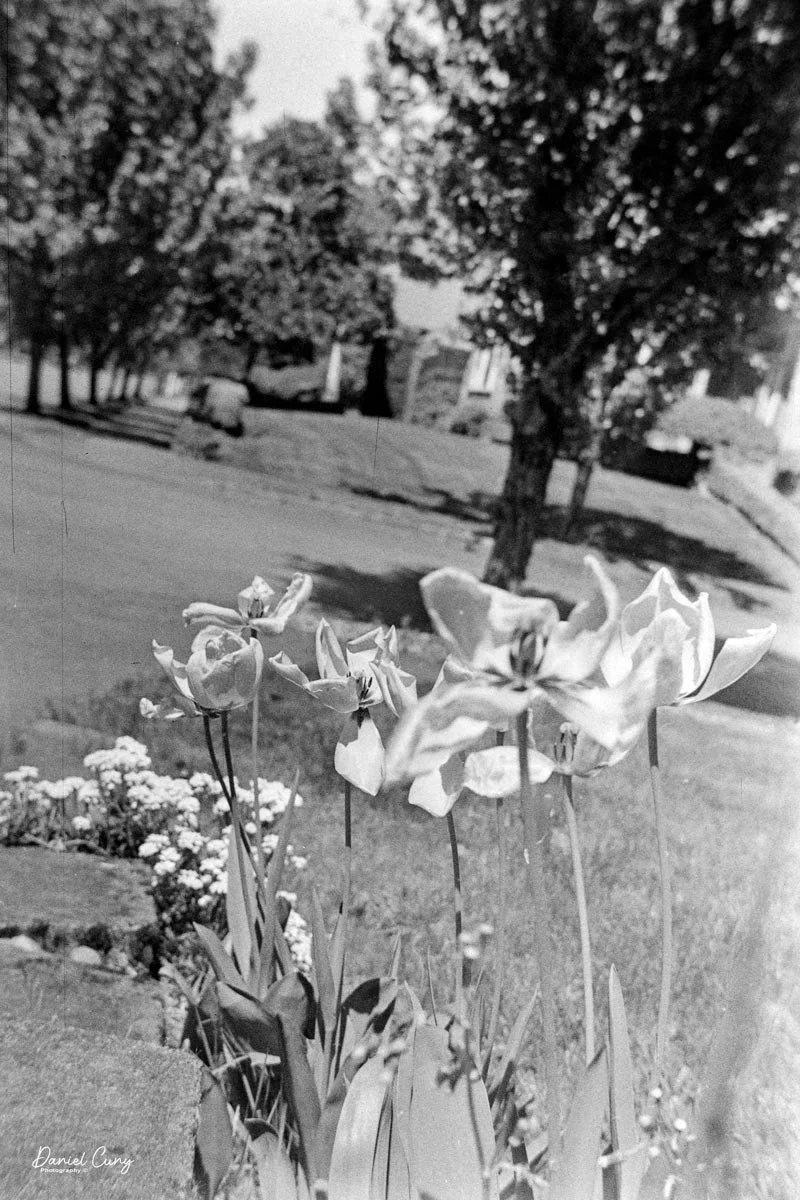
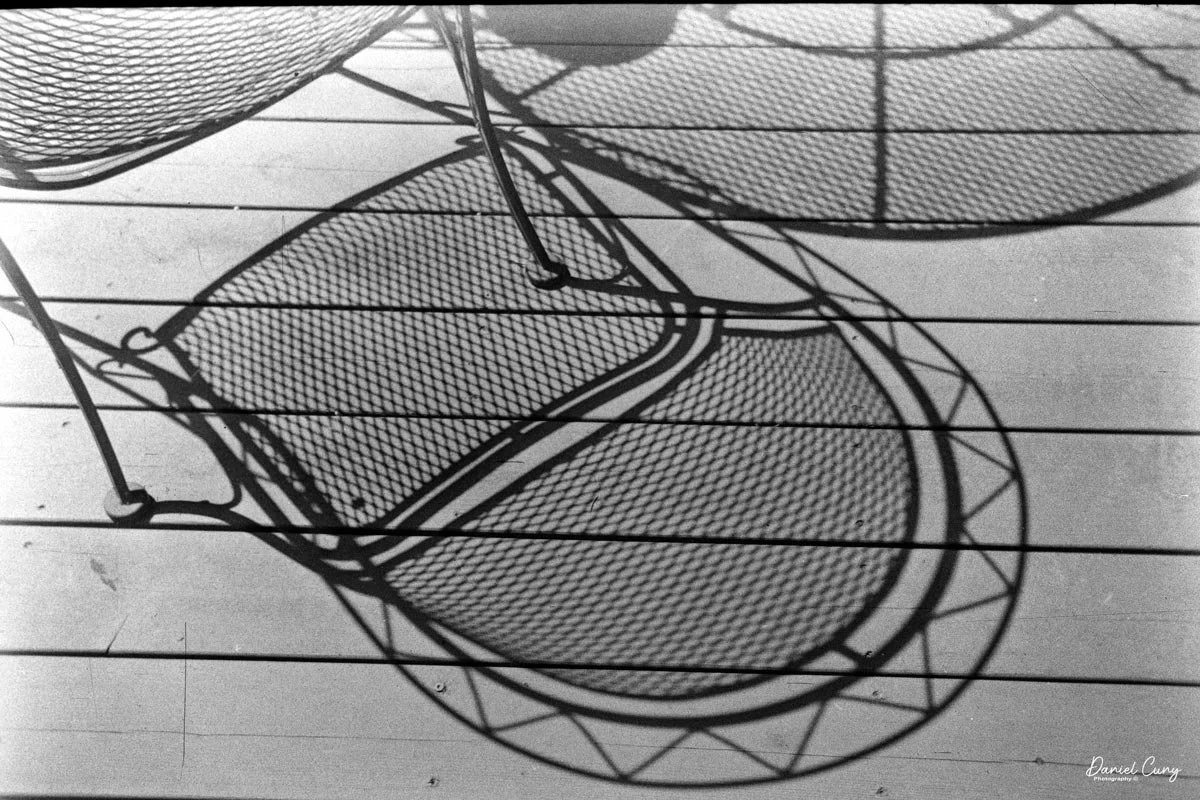
Here are some of the photos I took during my walk in our neighborhood.
Conclusion:
I understand why the Konica Pearl lineup is so desirable for an everyday pocketable film camera. It's sophisticated, yet simple. The camera can focus on your subject via an internal rangefinder system, rather than relying on a less desirable "guess" focus system.
The higher shutter speed of 1/500 for the time period allows for less camera or subject movement, and the iconic Konica Hexar lens is sharp and provides wonderful contrast to the images.
I'm very glad I purchased this camera, and am keeping my fingers crossed that the viewfinder glass will bring the camera's rangefinder back to life, allowing for even easier focusing and possibly a sharper image.
Thank you for taking the time to learn about this wonderful camera from Japan's early camera revolution after WWII, when many cameras had "Made in Occupied Japan" embossed somewhere on them, just like this one.
Here are some of my other Camera Reviews.
I also have a YouTube channel where you can view overview videos of some of the cameras I've written about.
Cuny's Camera and Photos is my online eBay store where I sell many of the cameras reviewed, along with other cameras, lenses, and photo oddities I've accumulated in my 50-plus years of collecting. Stop by and see if there's something for you there.
Until next week, please be safe.