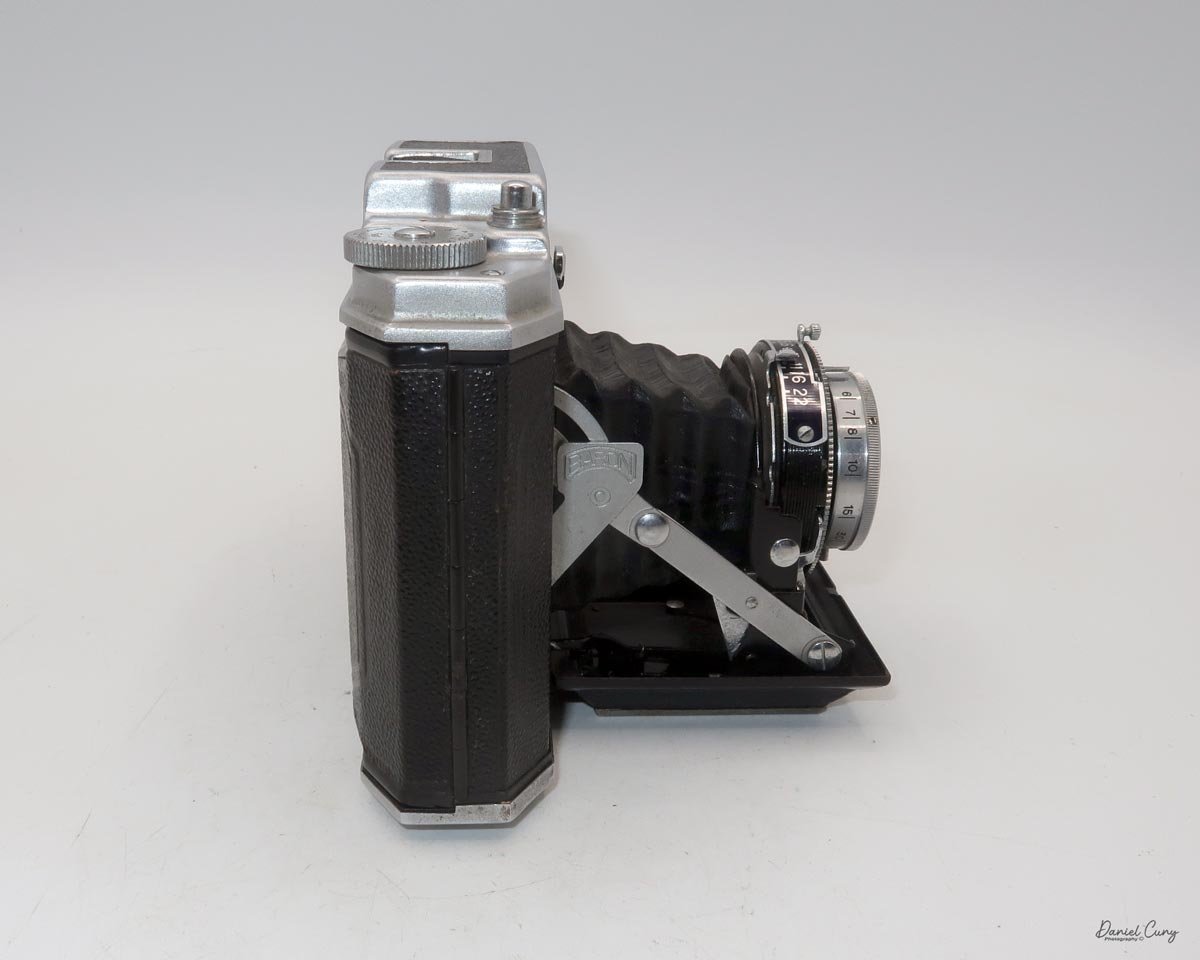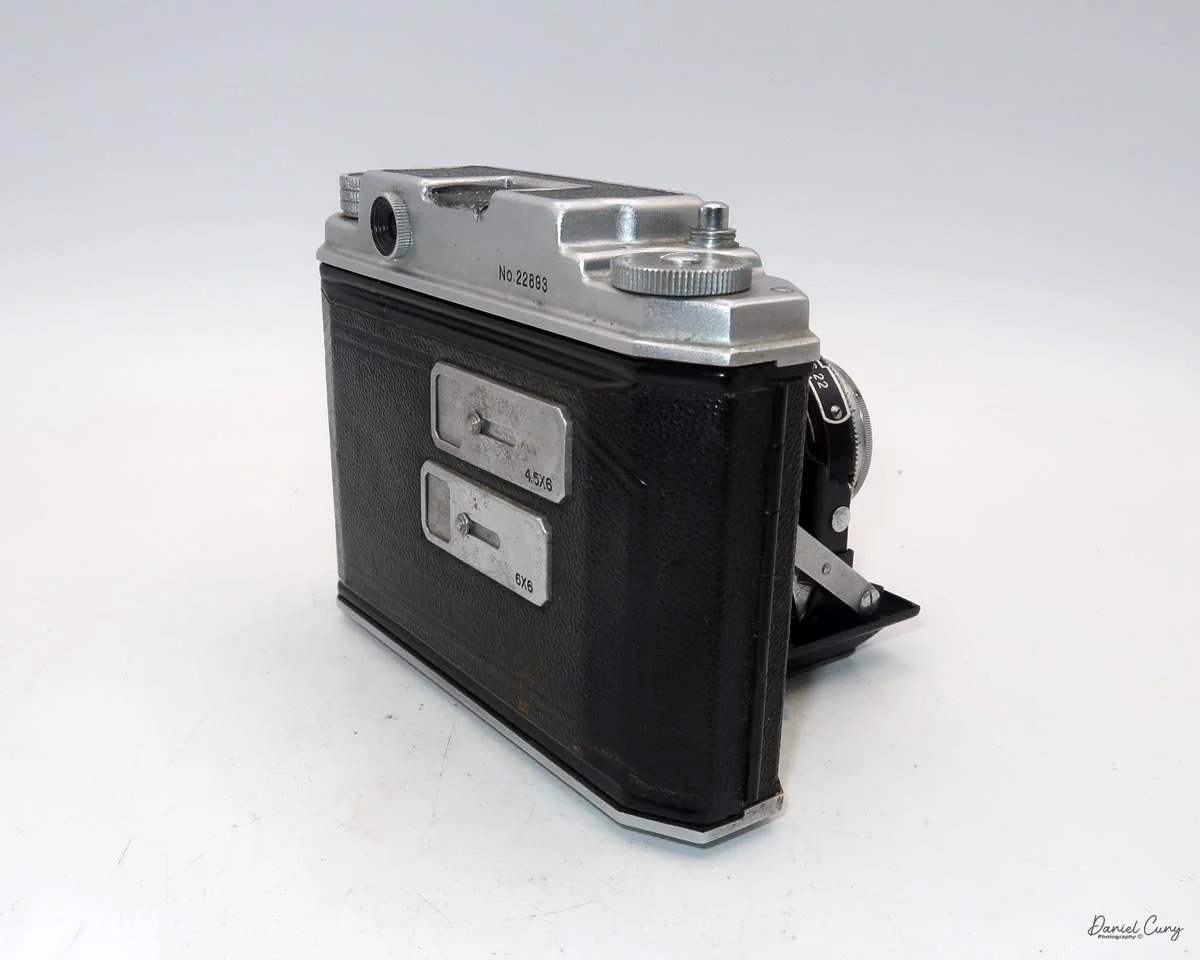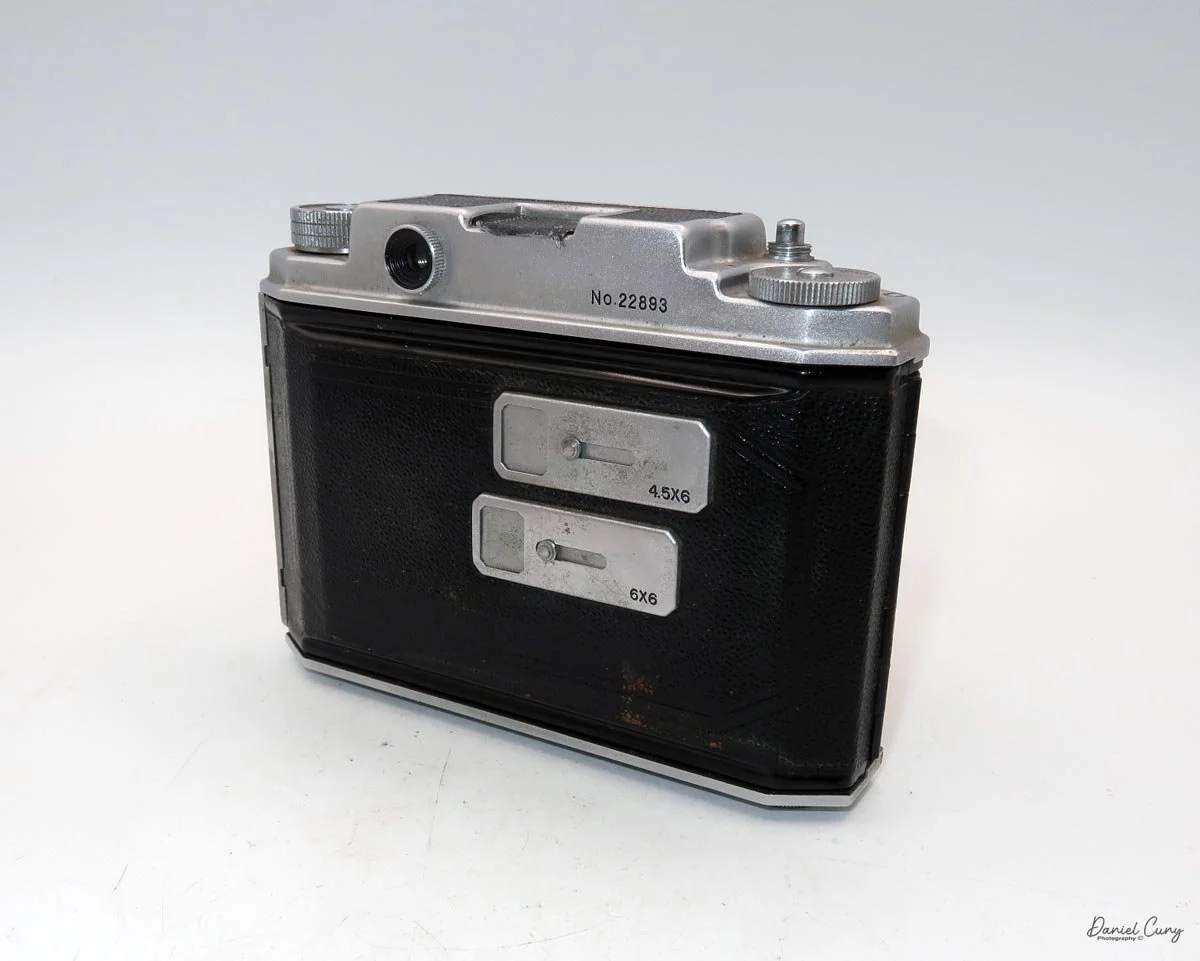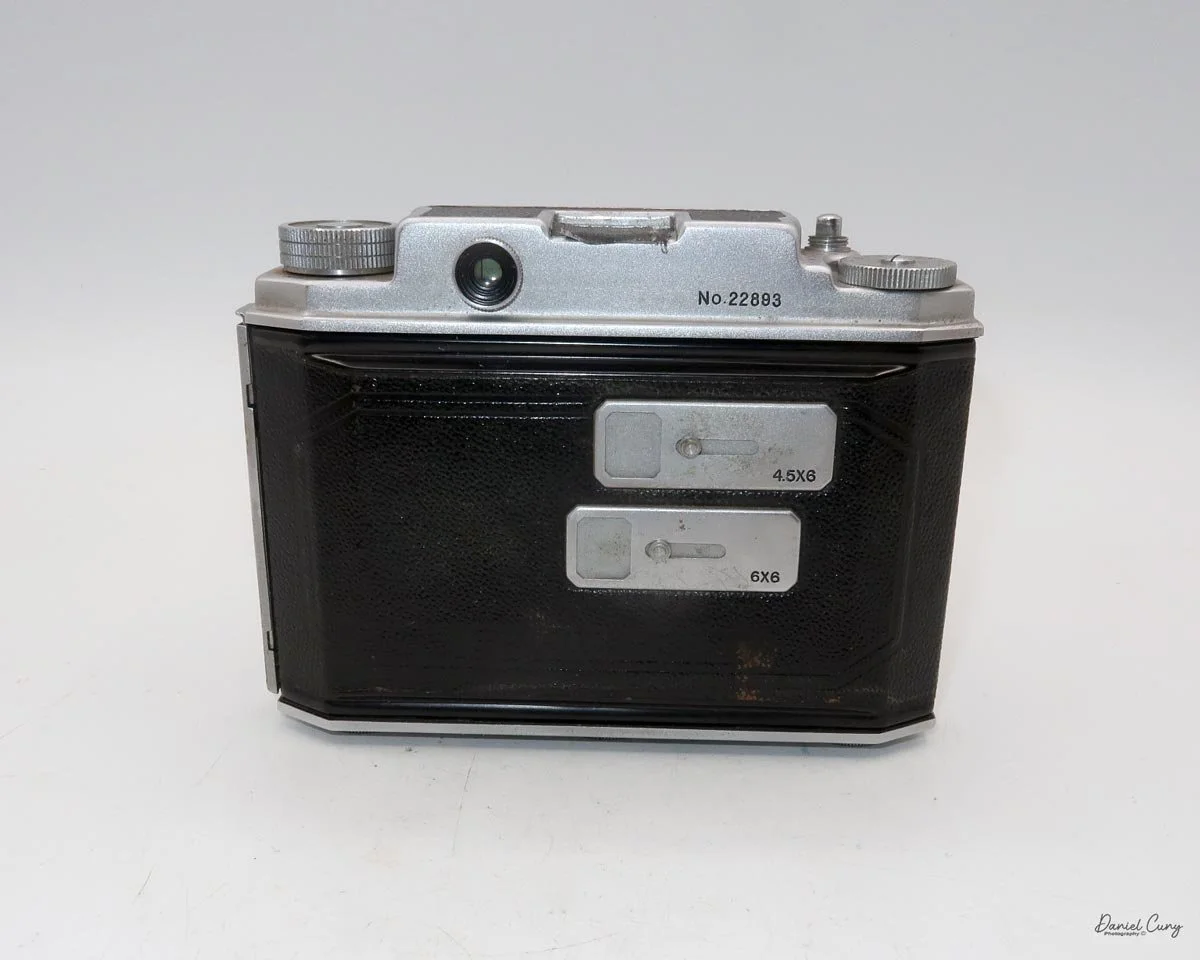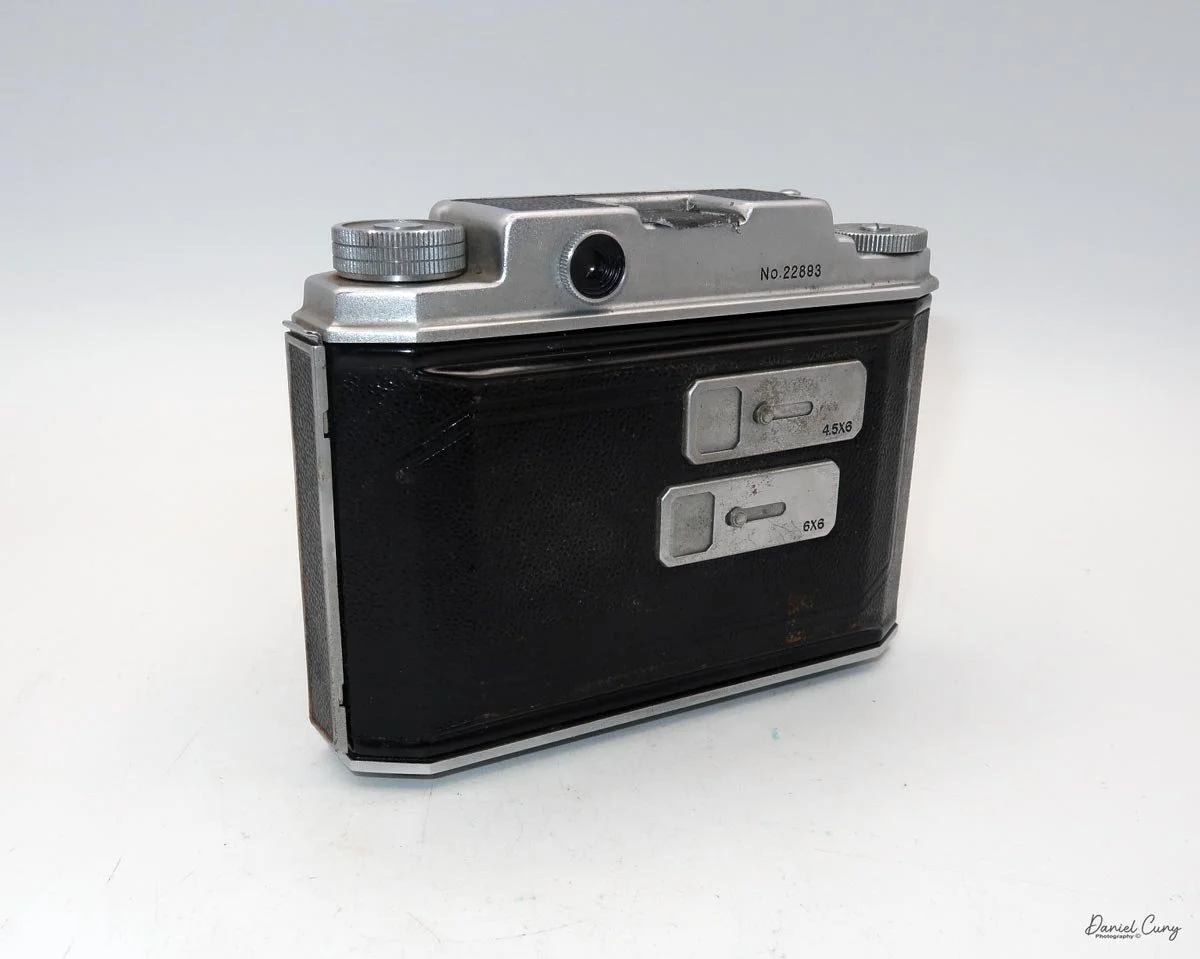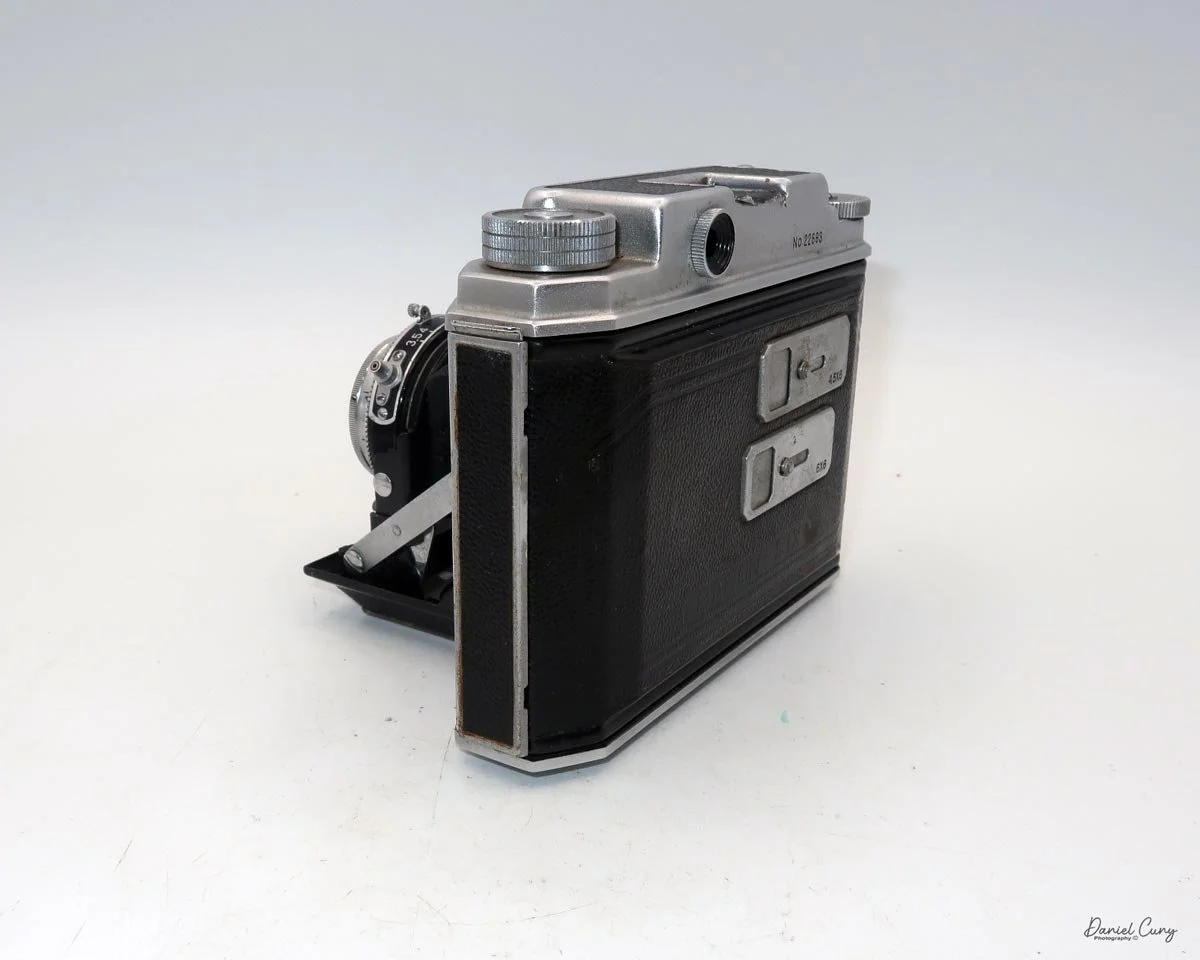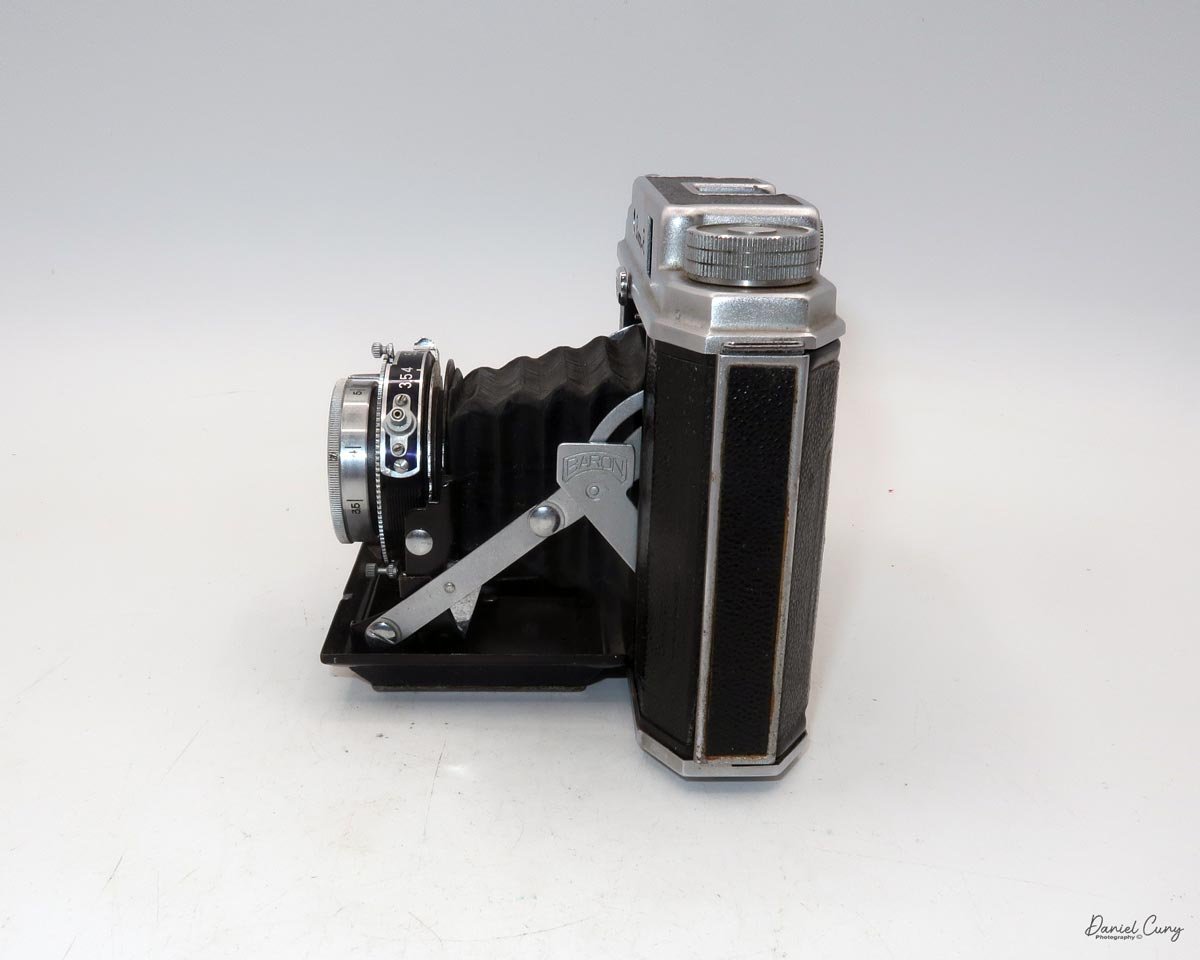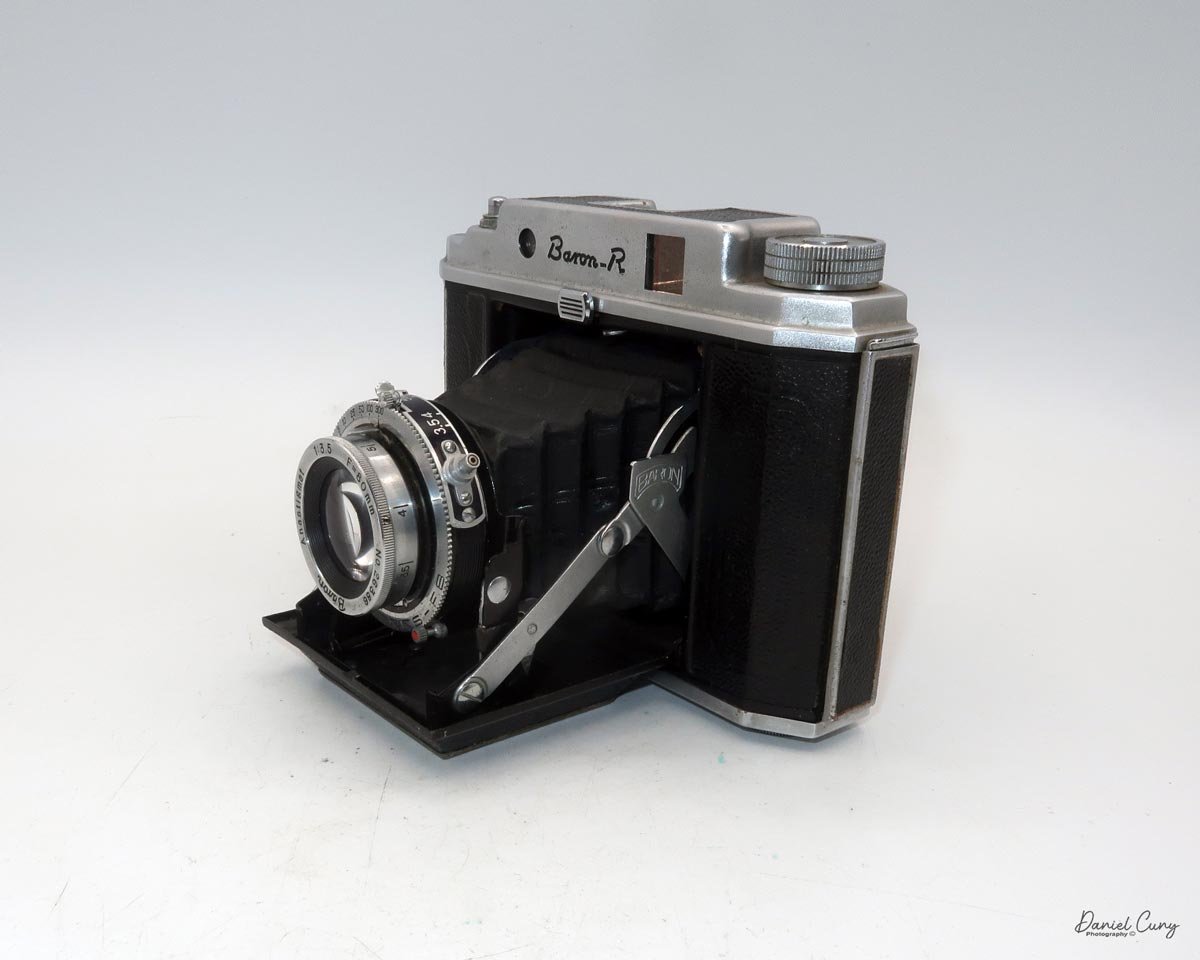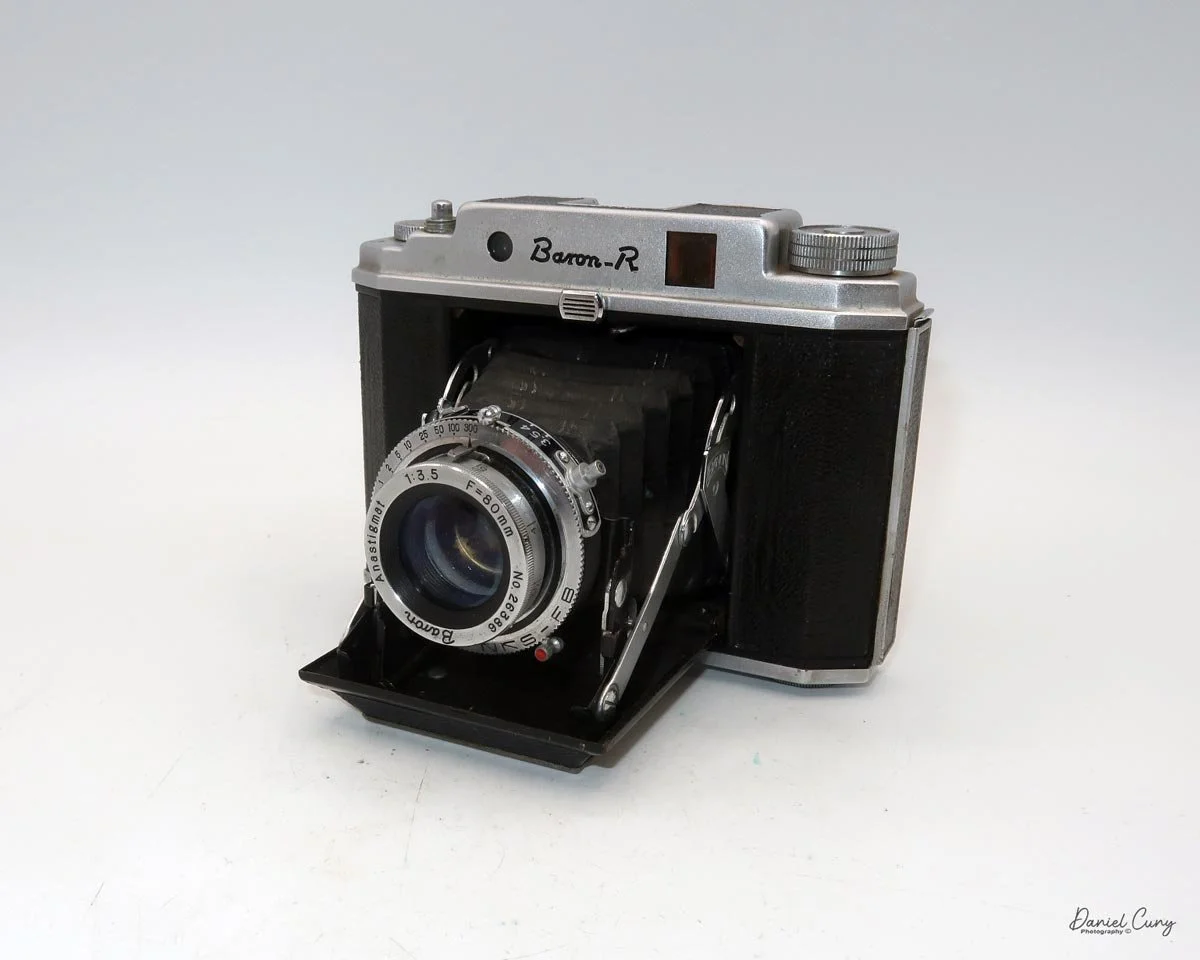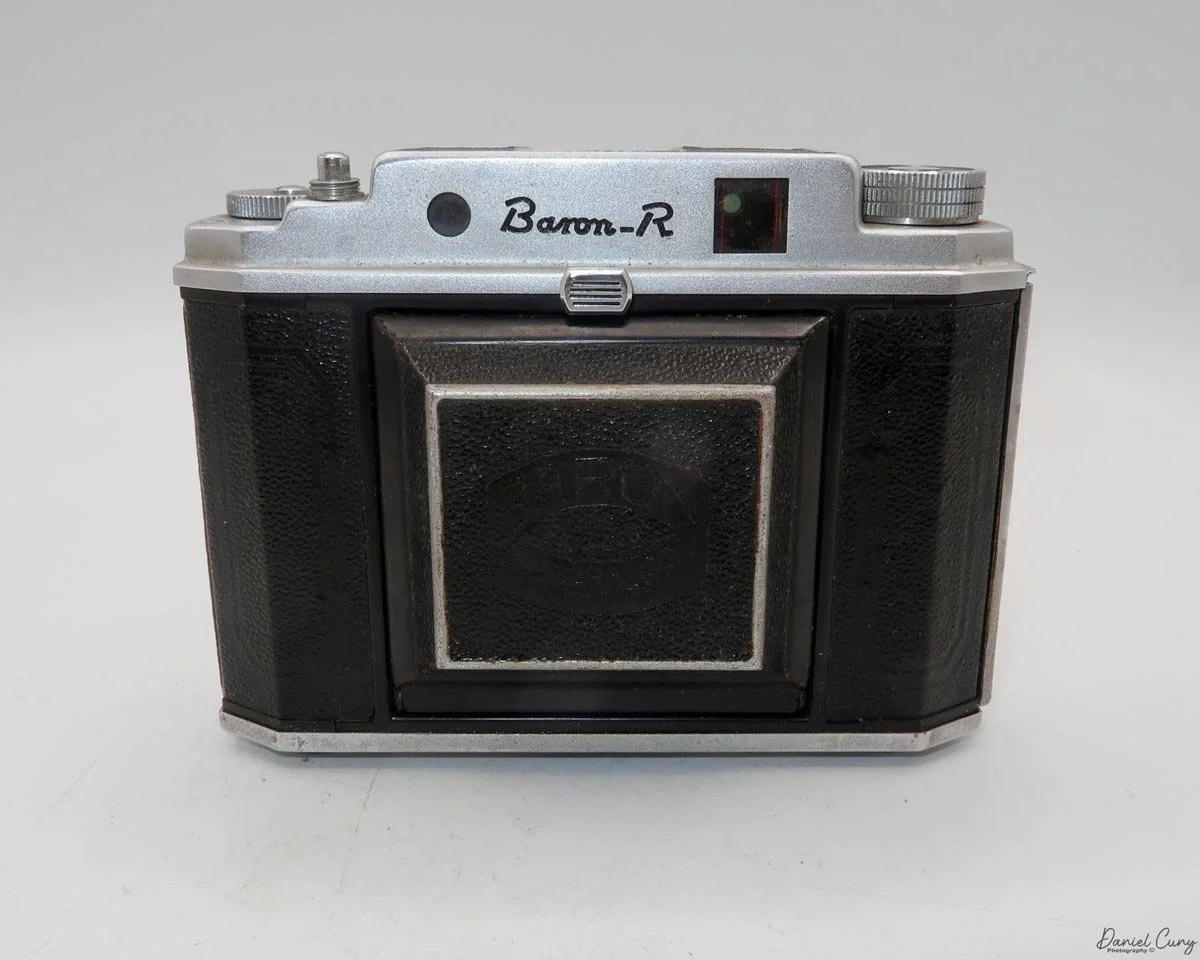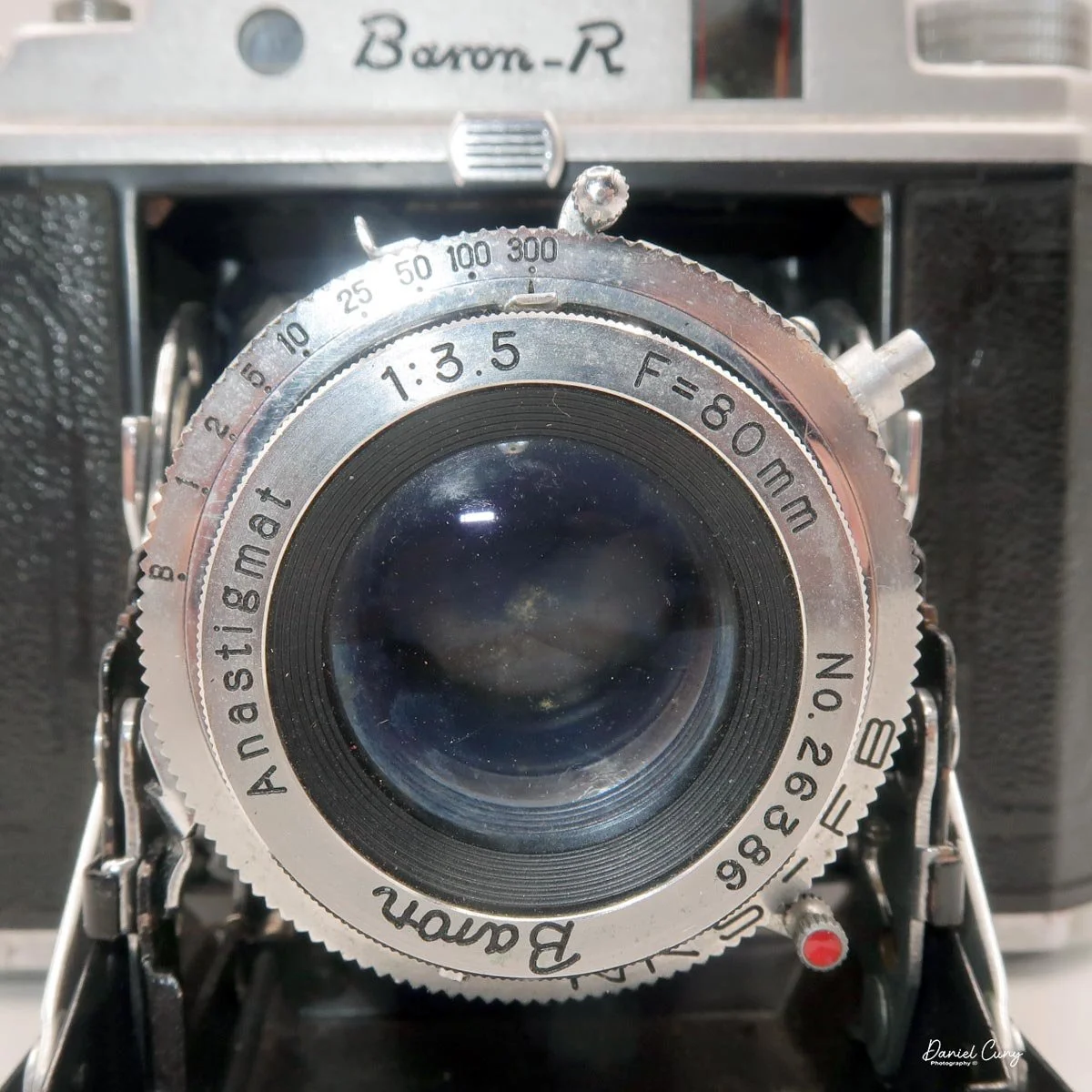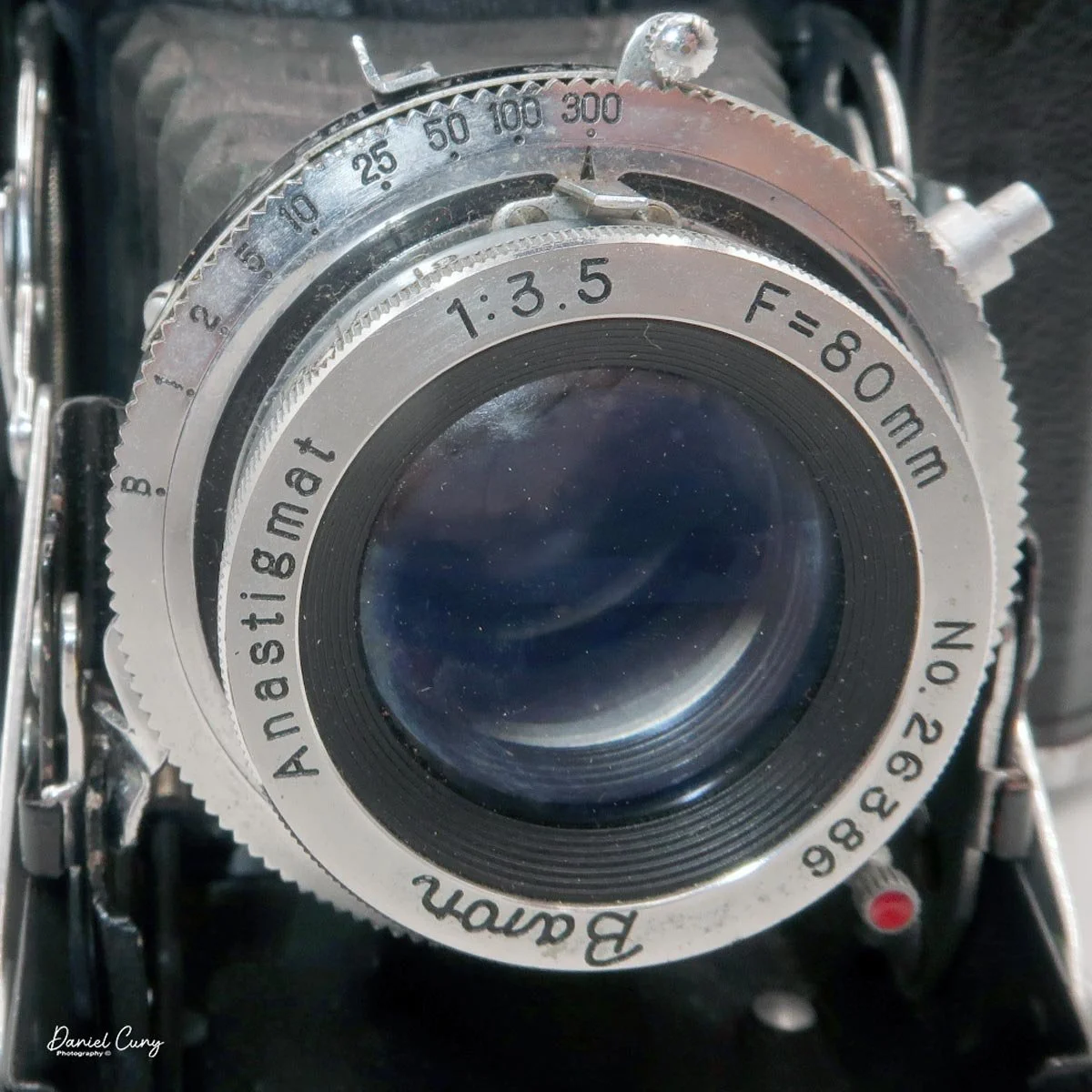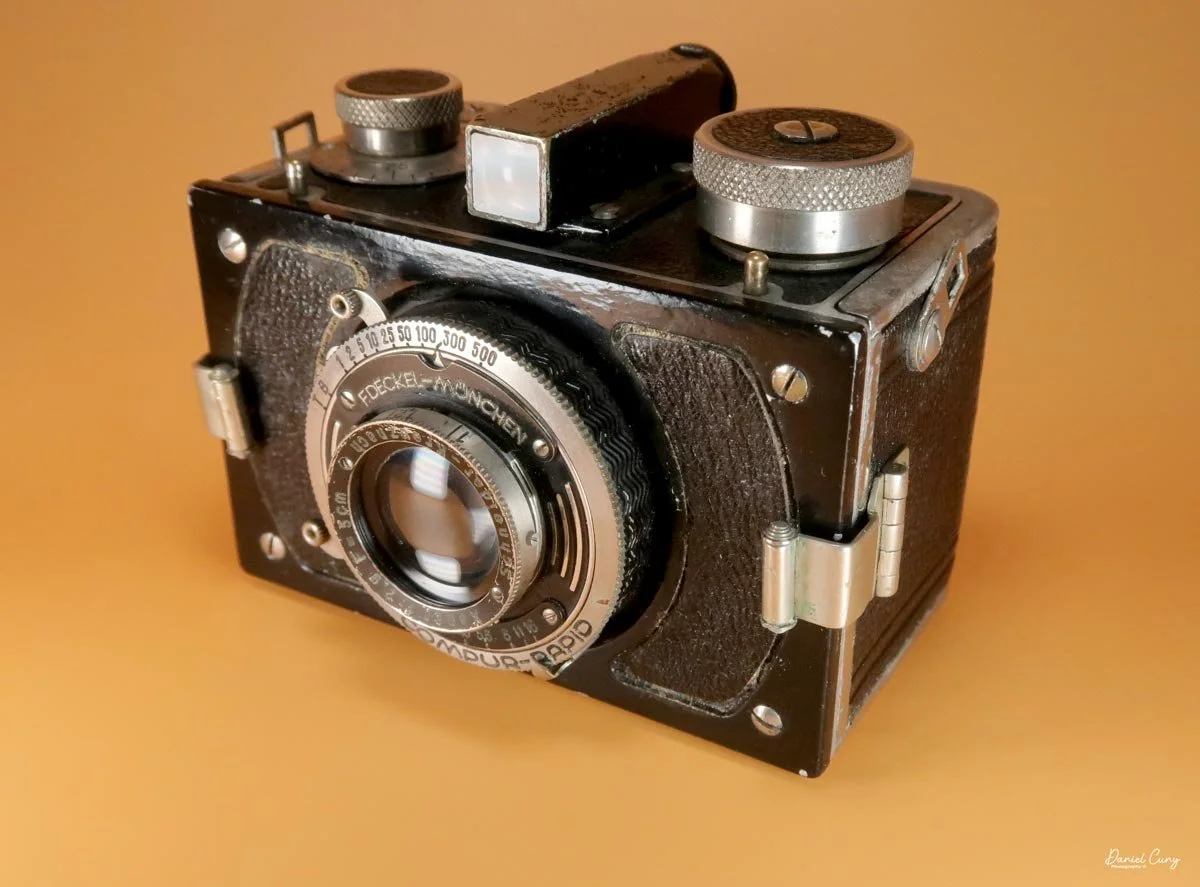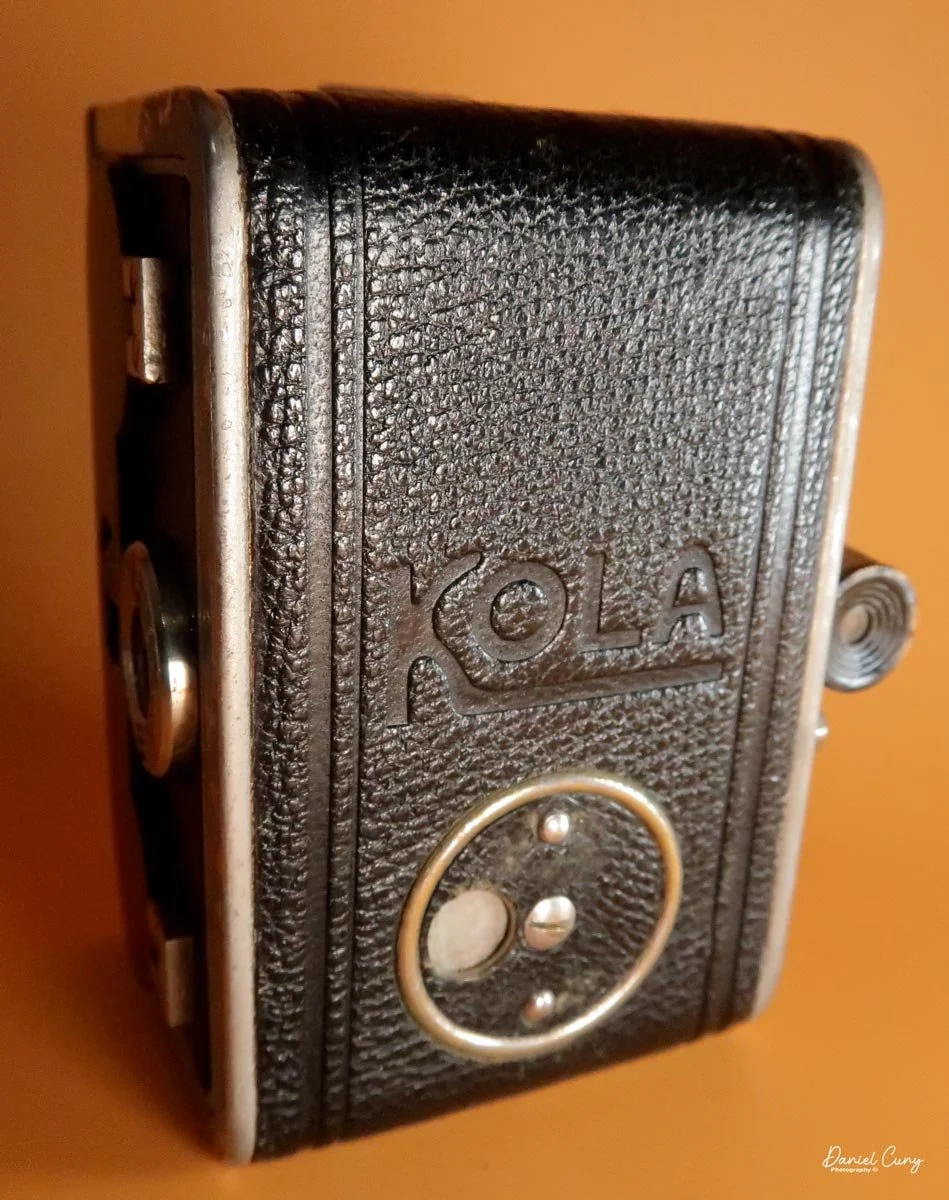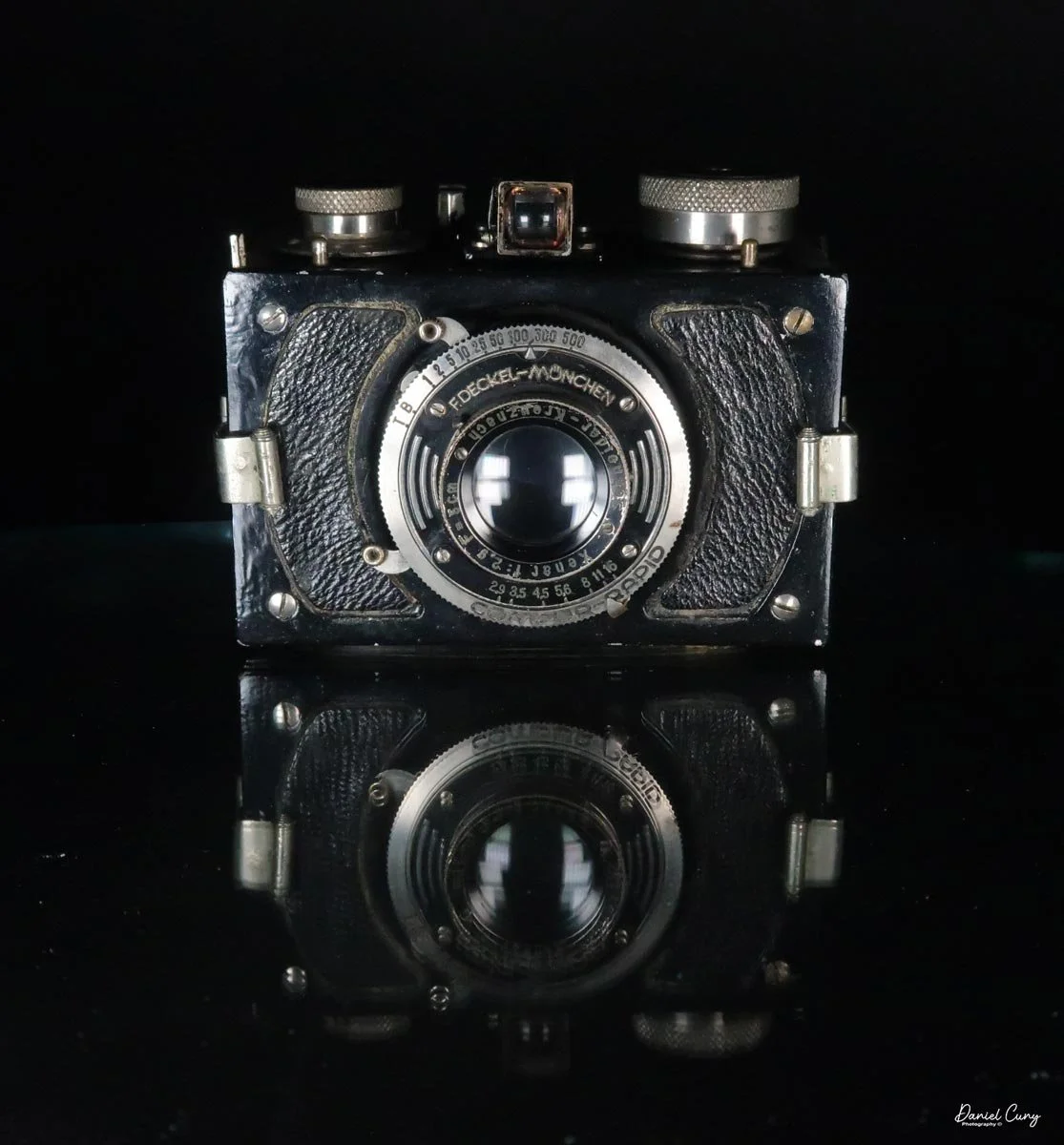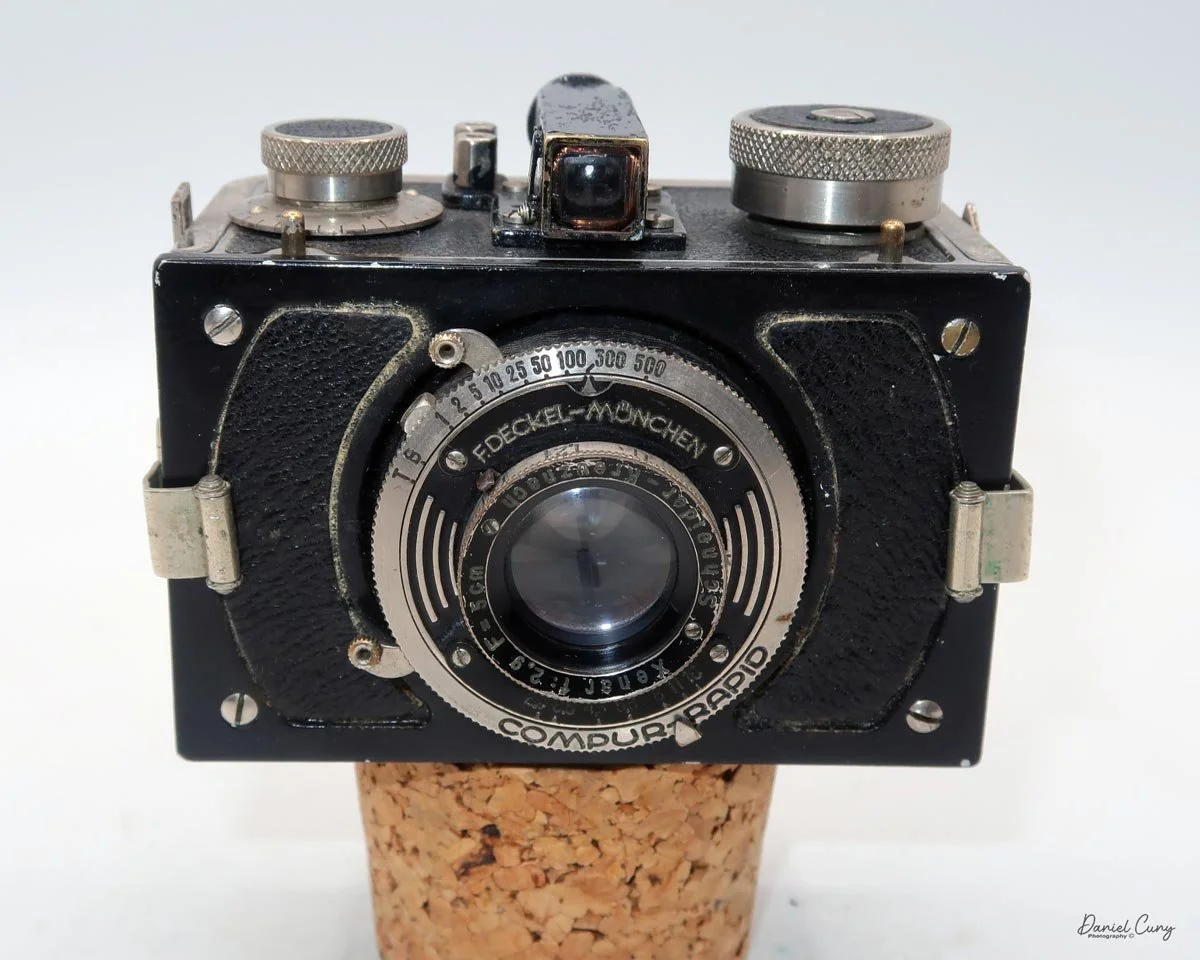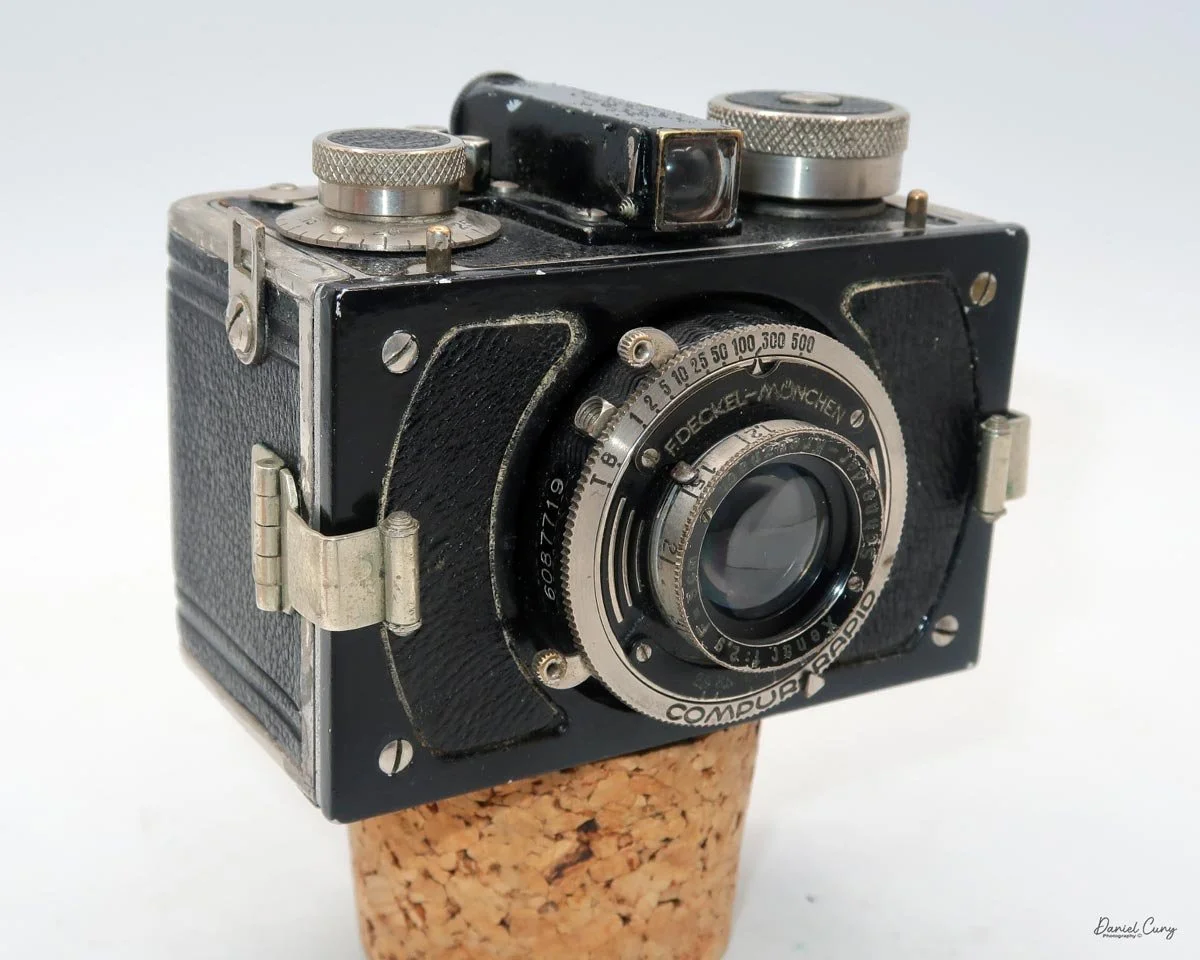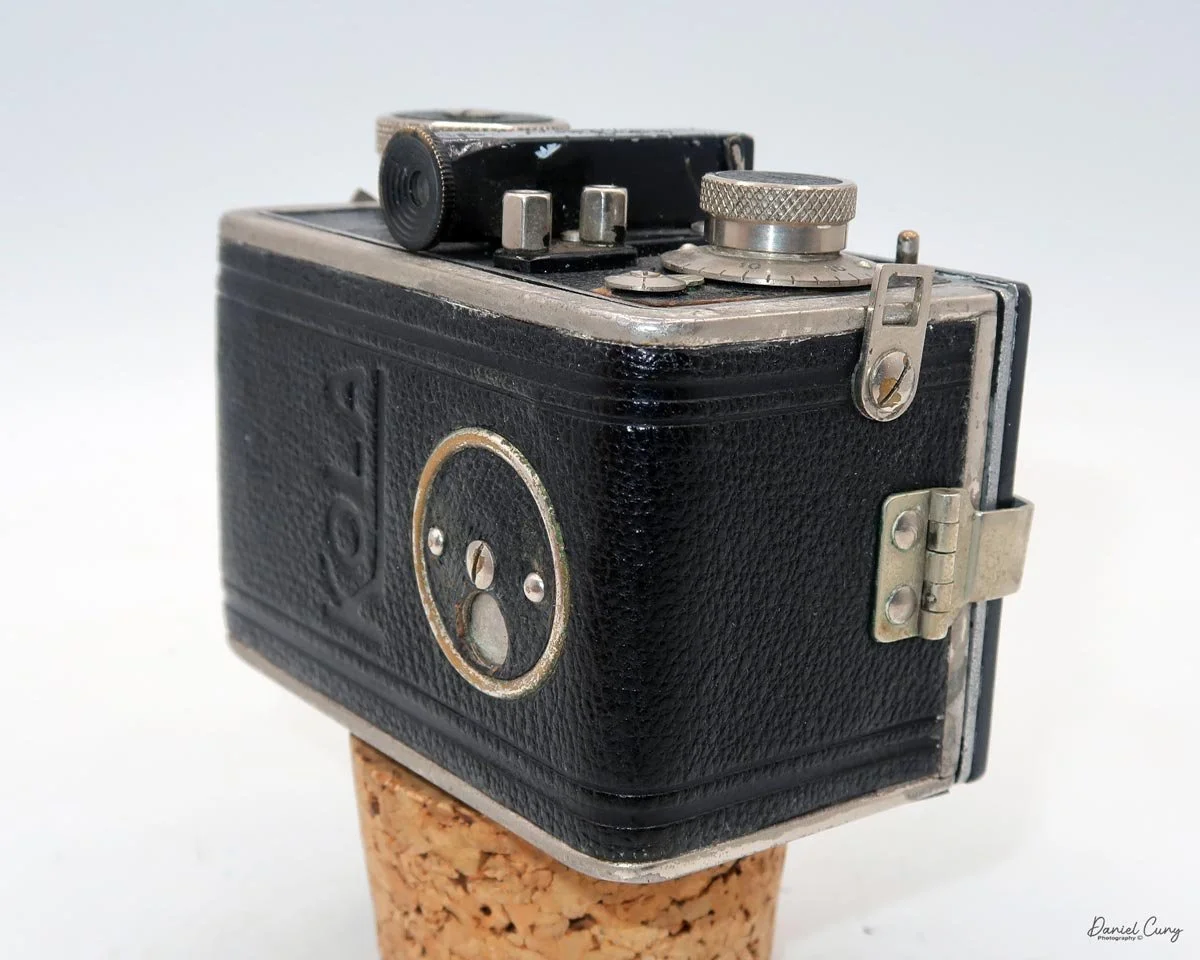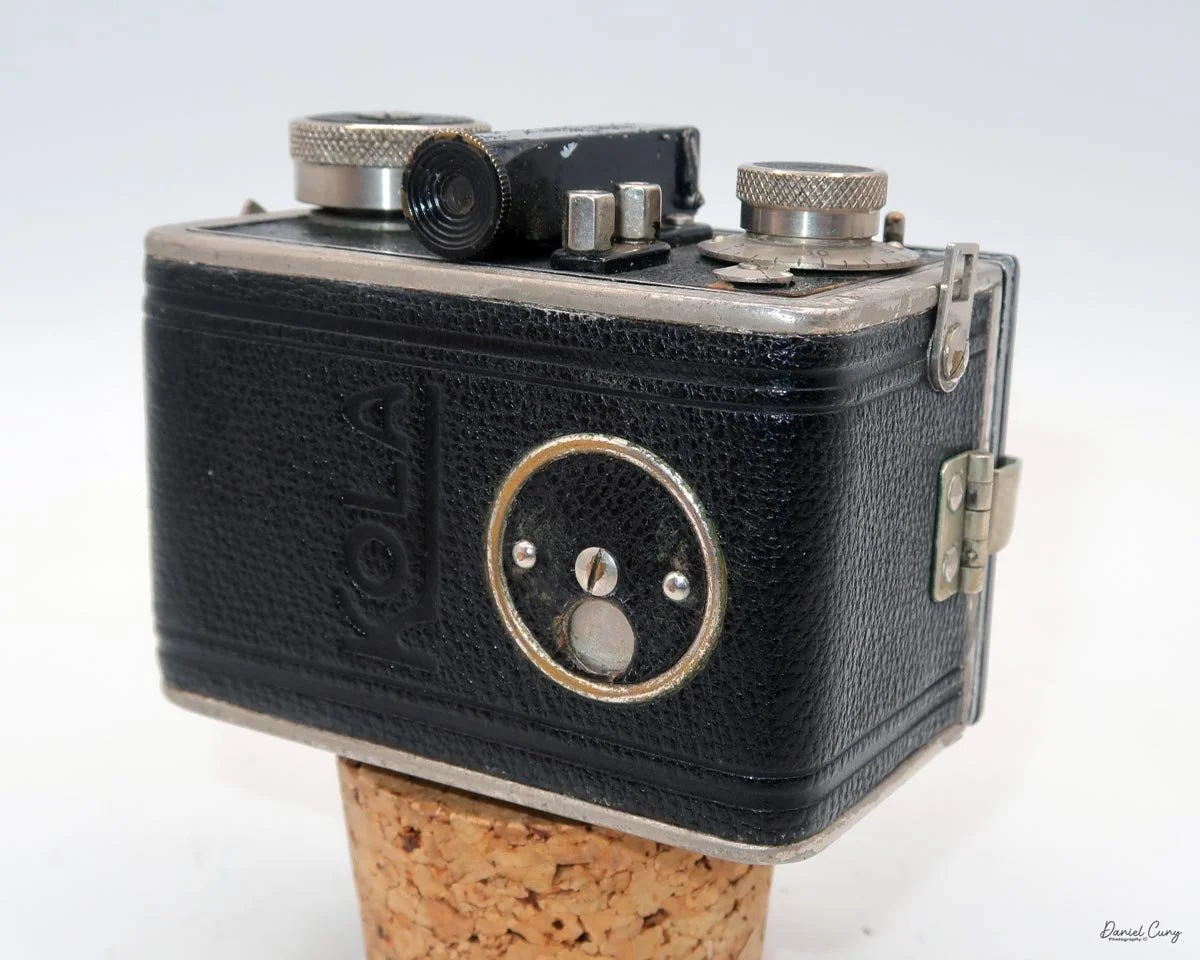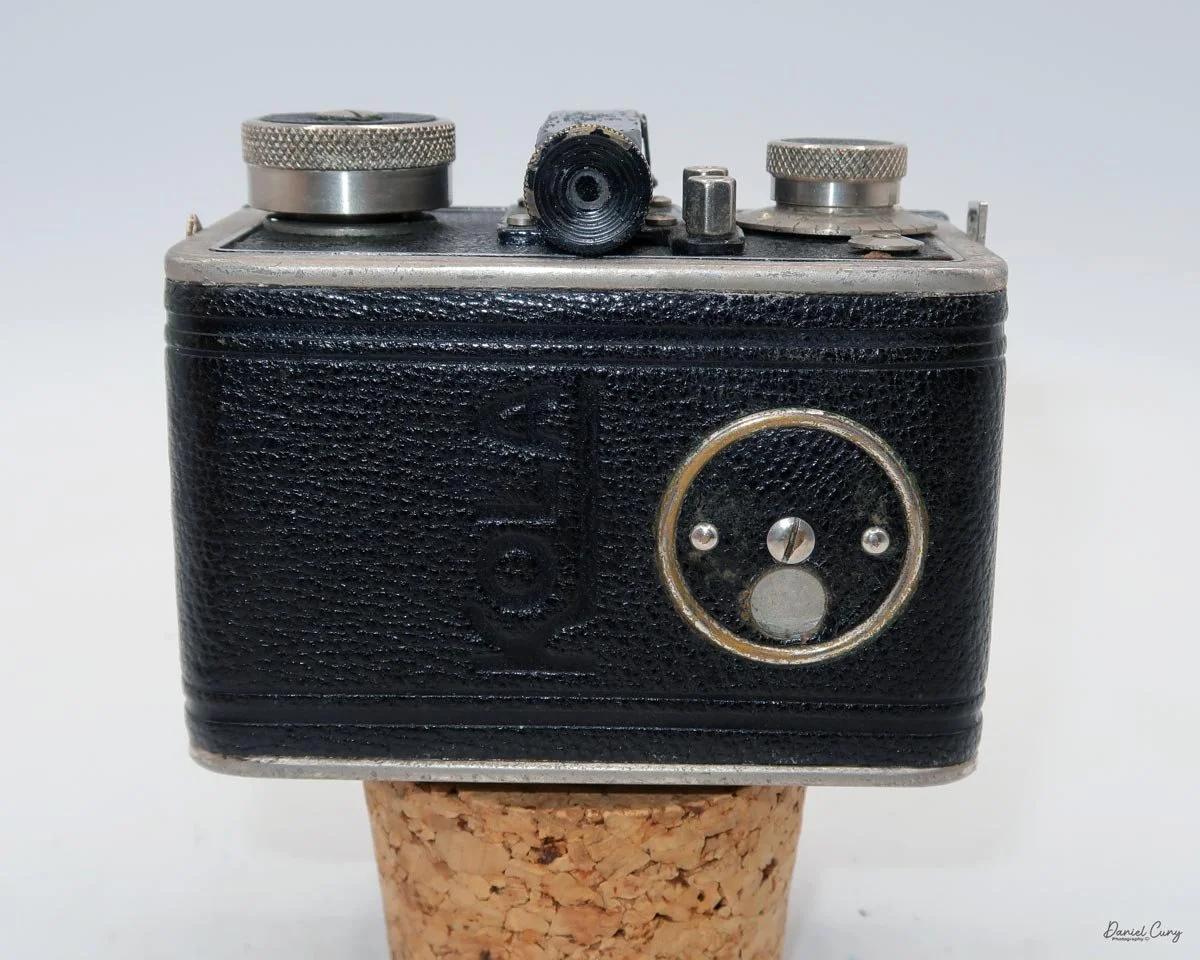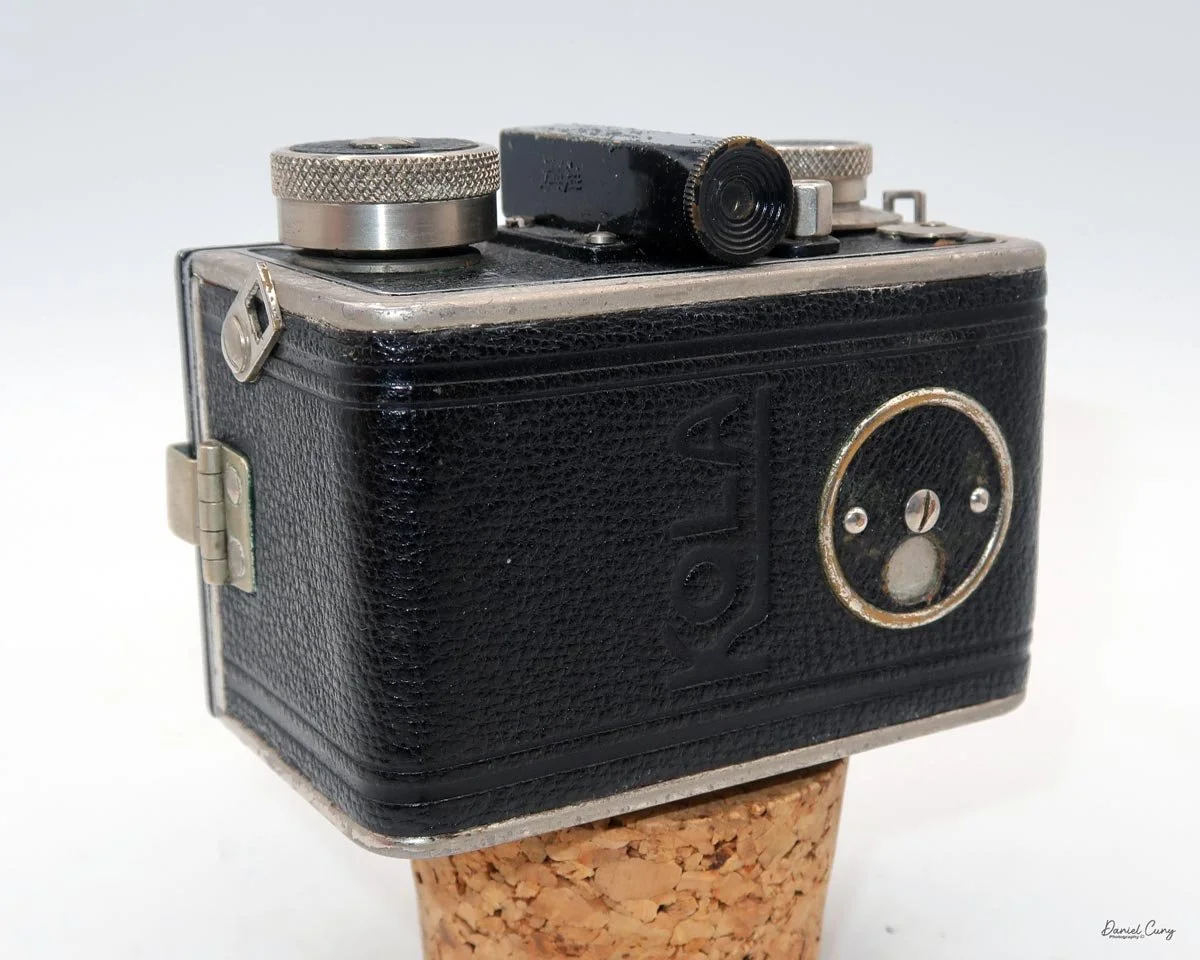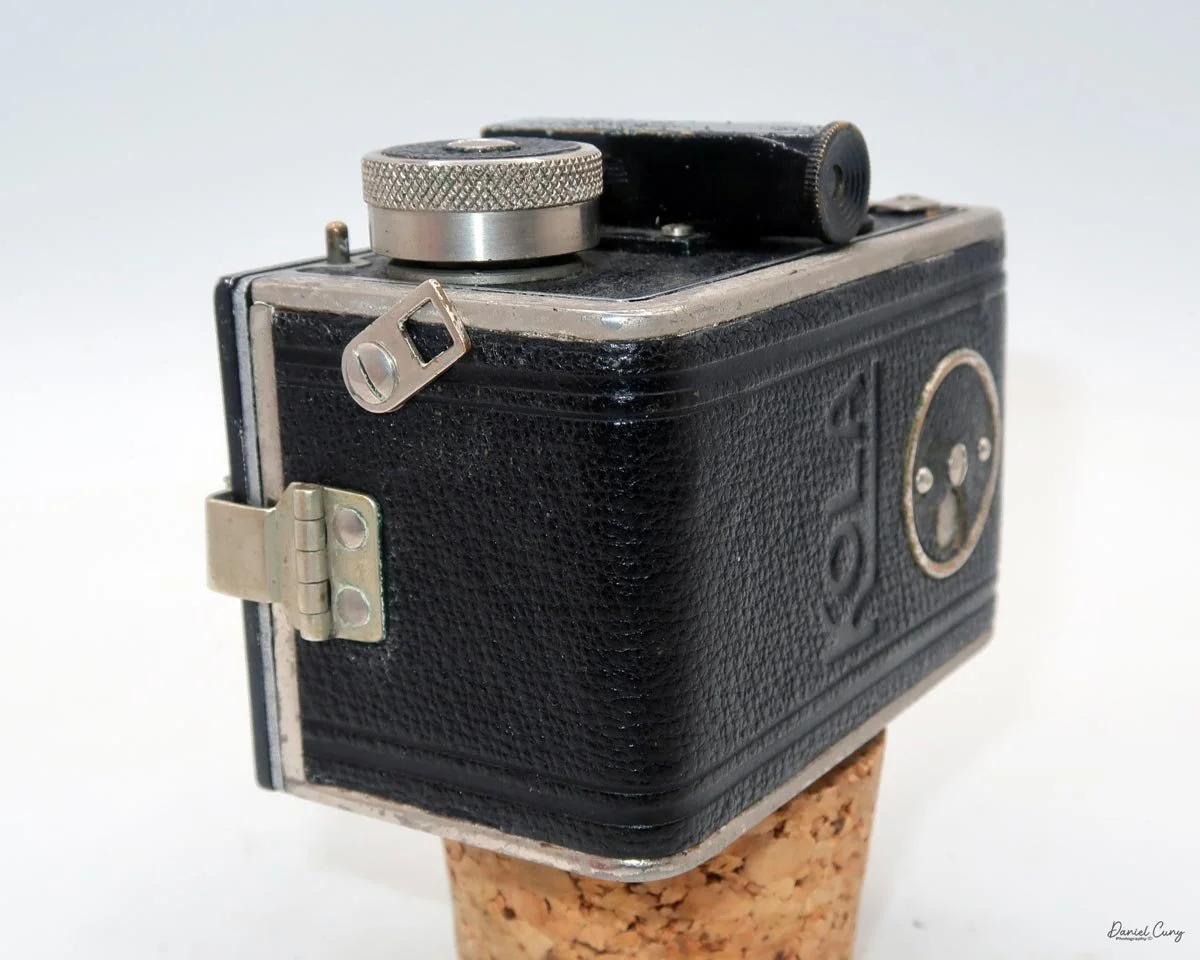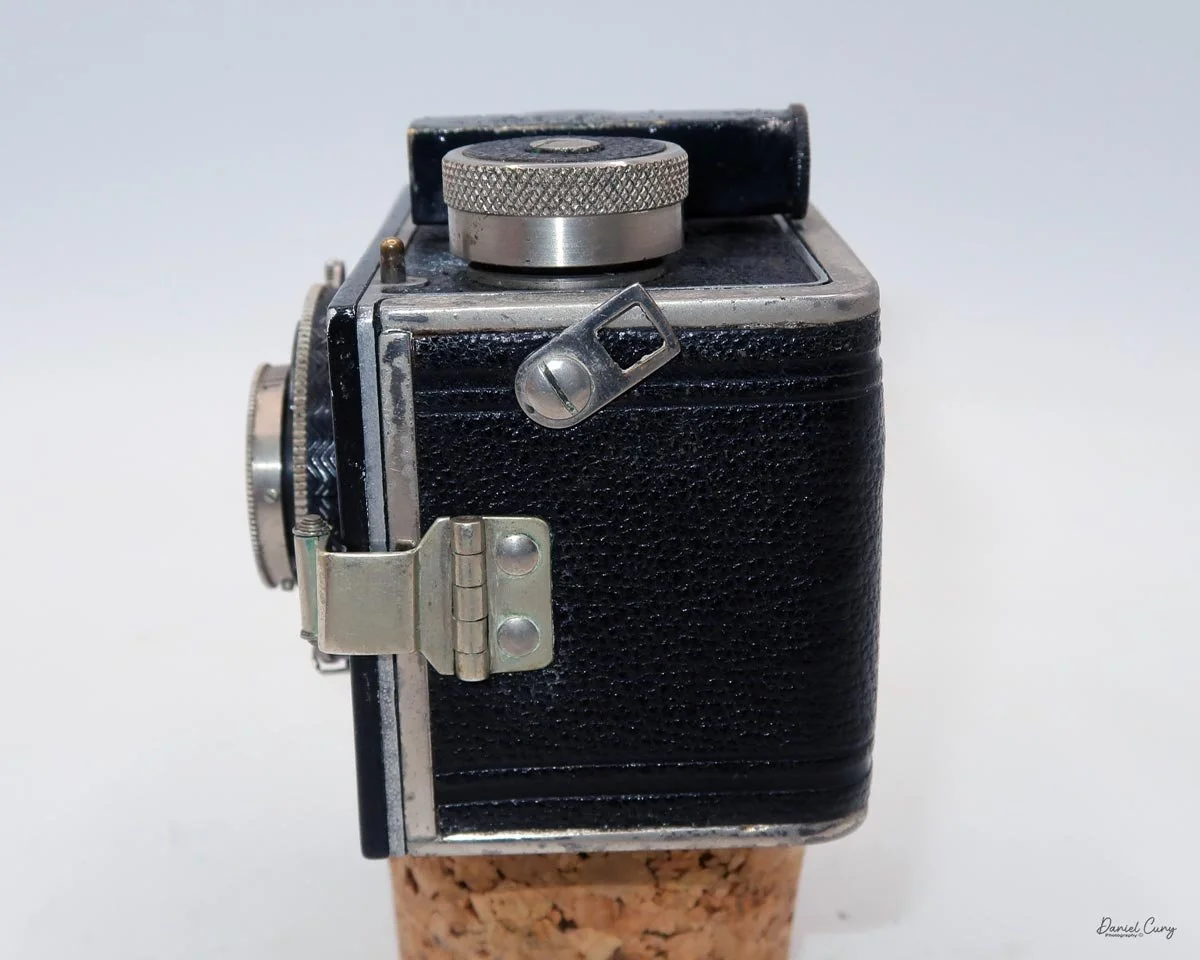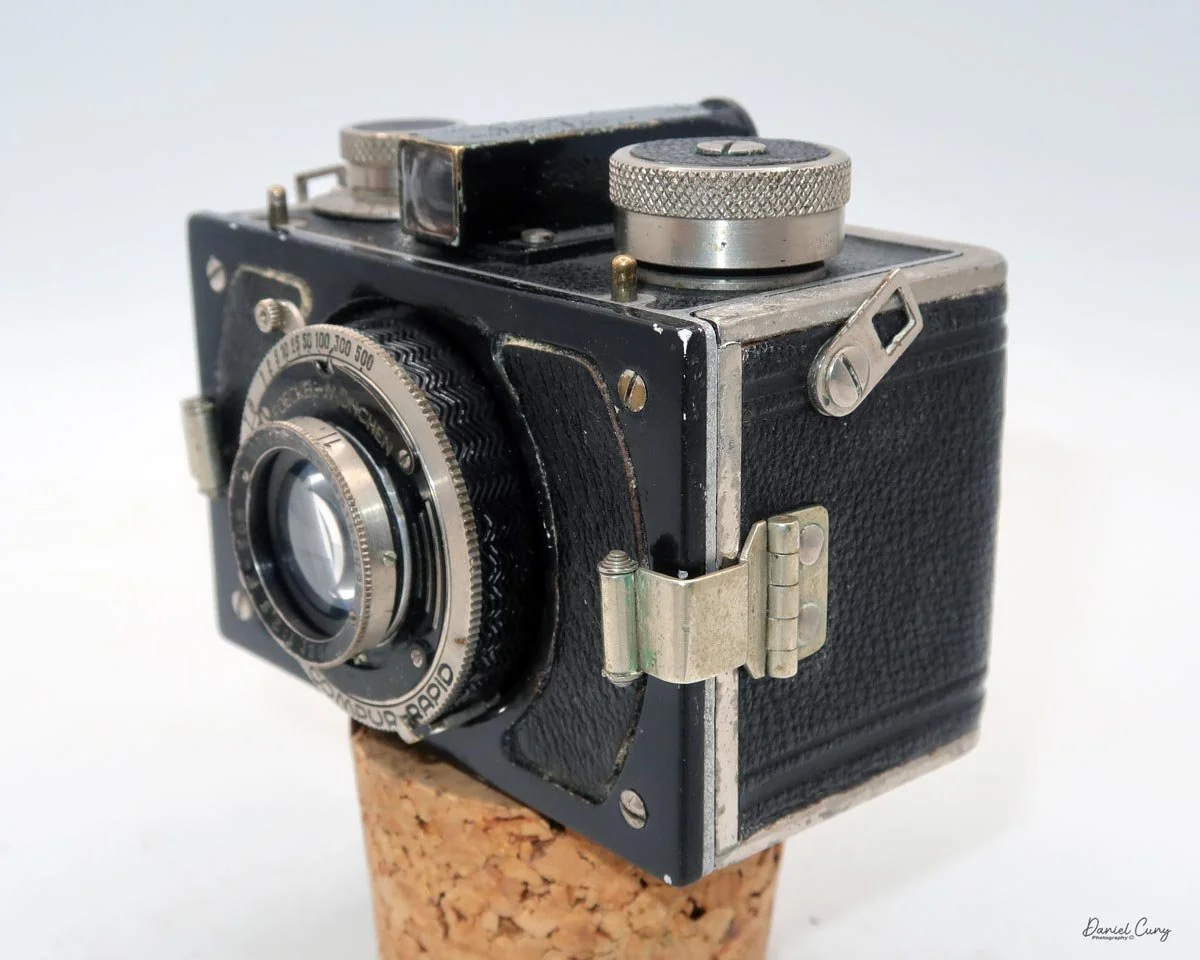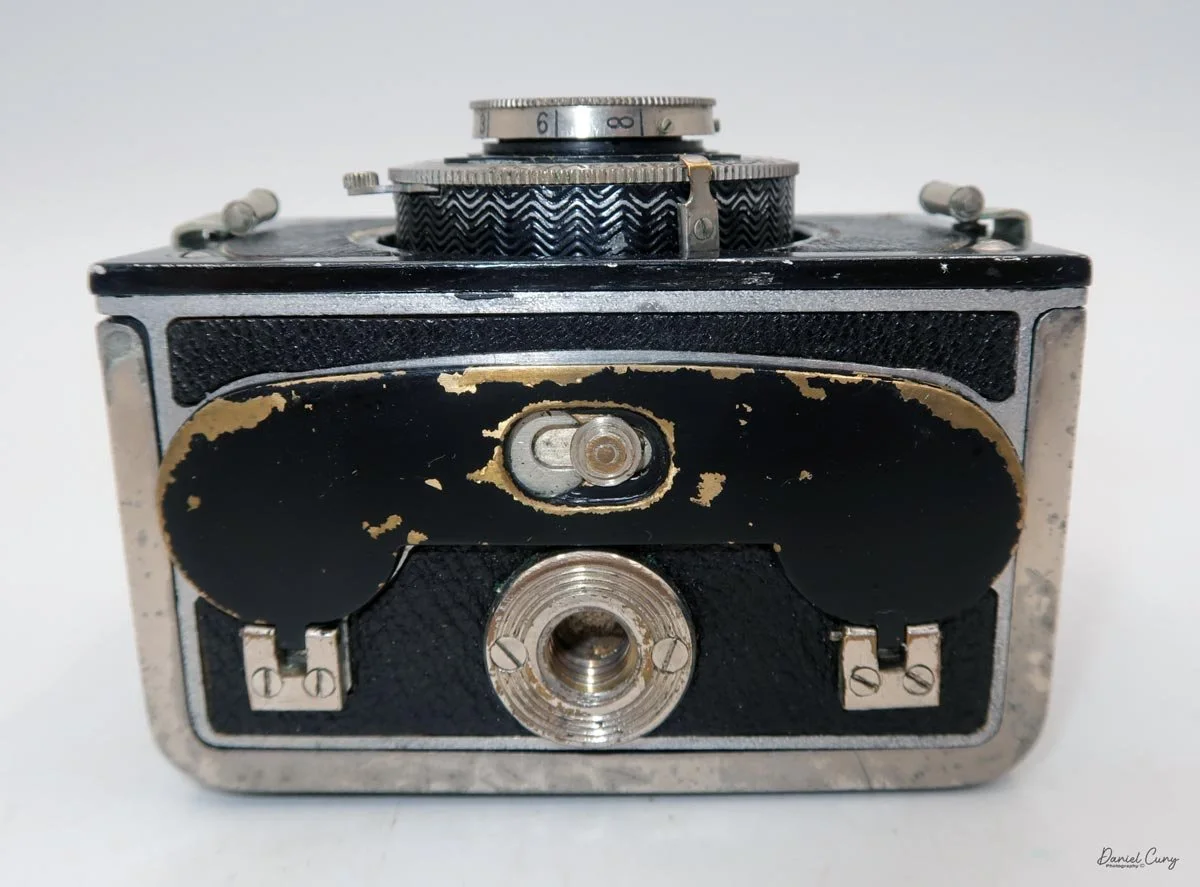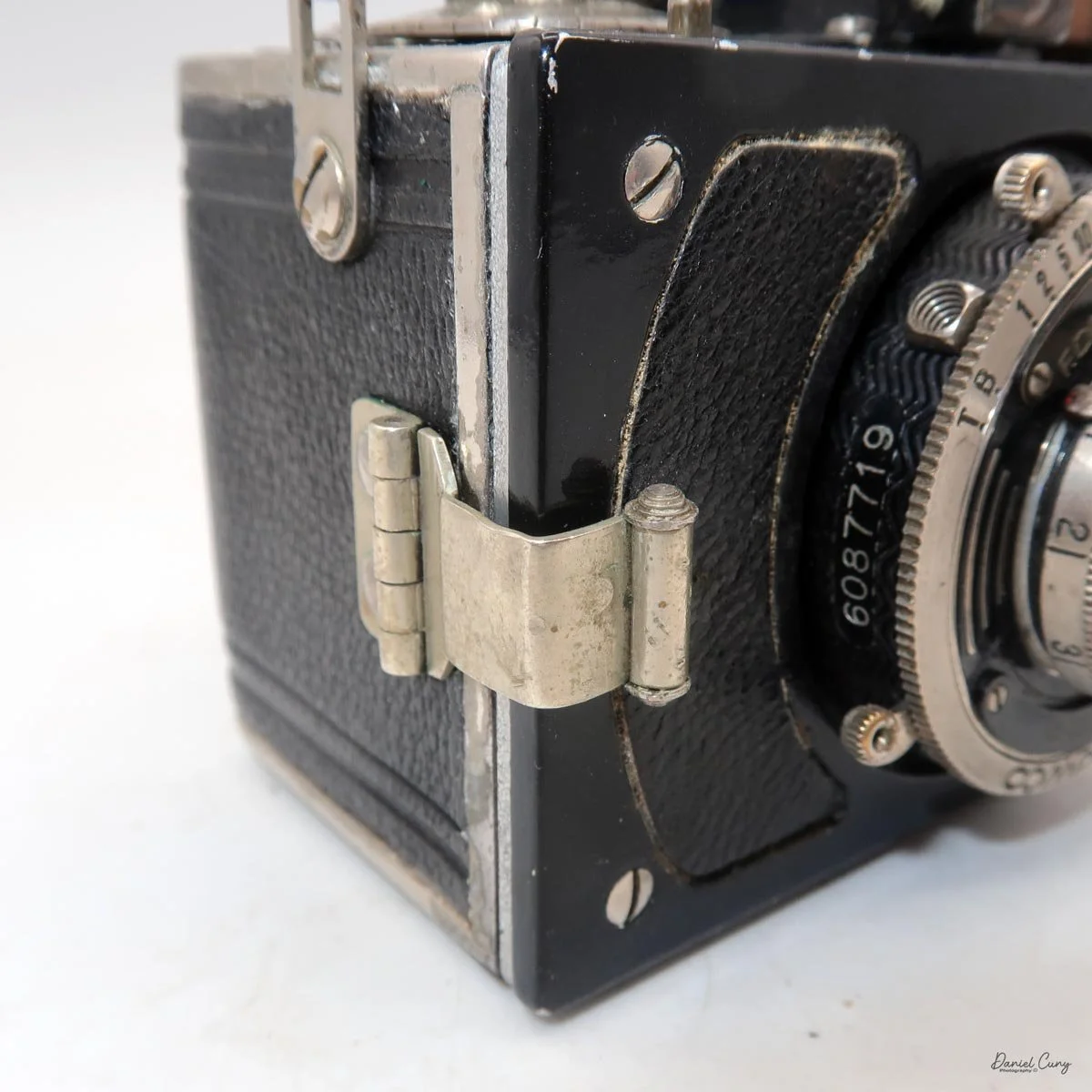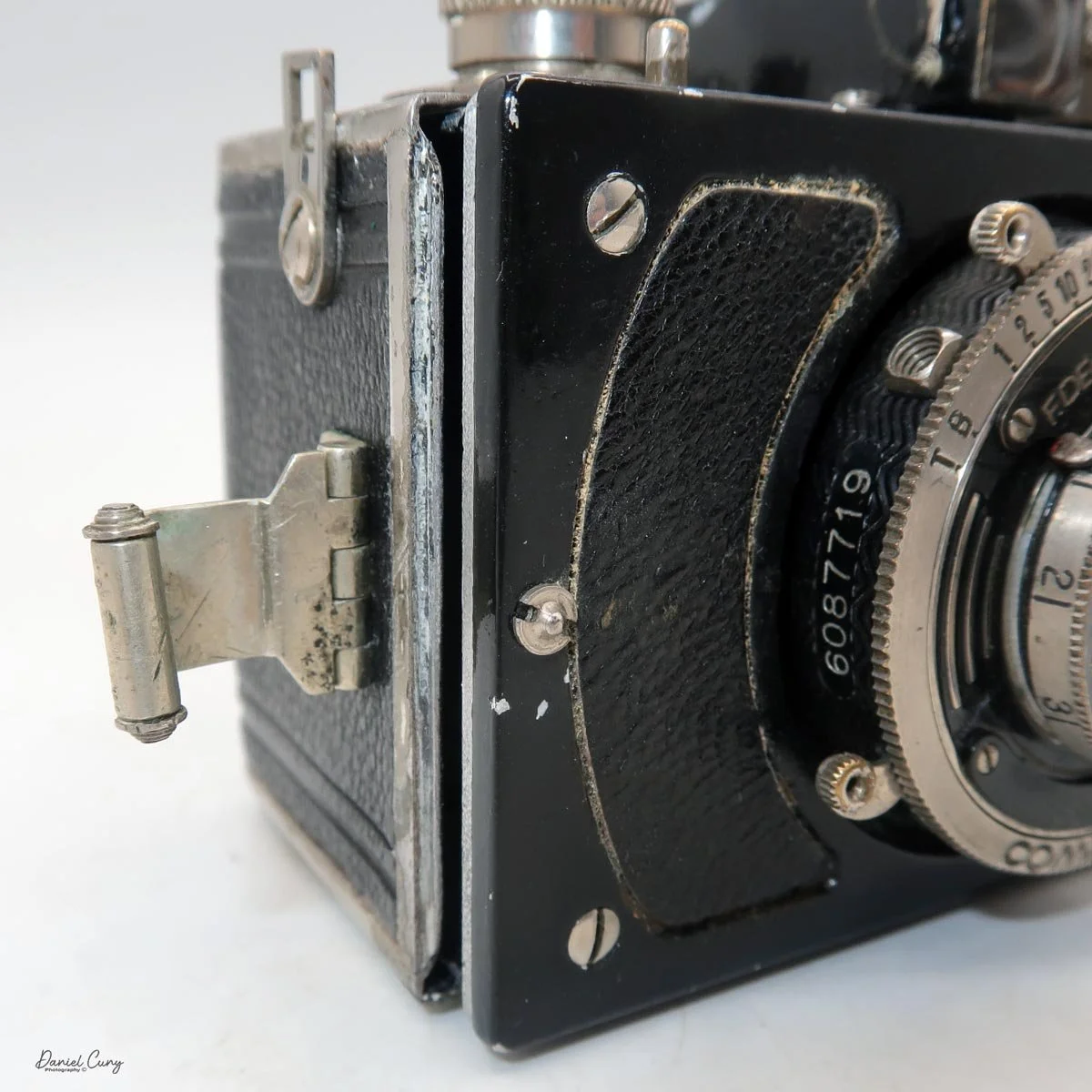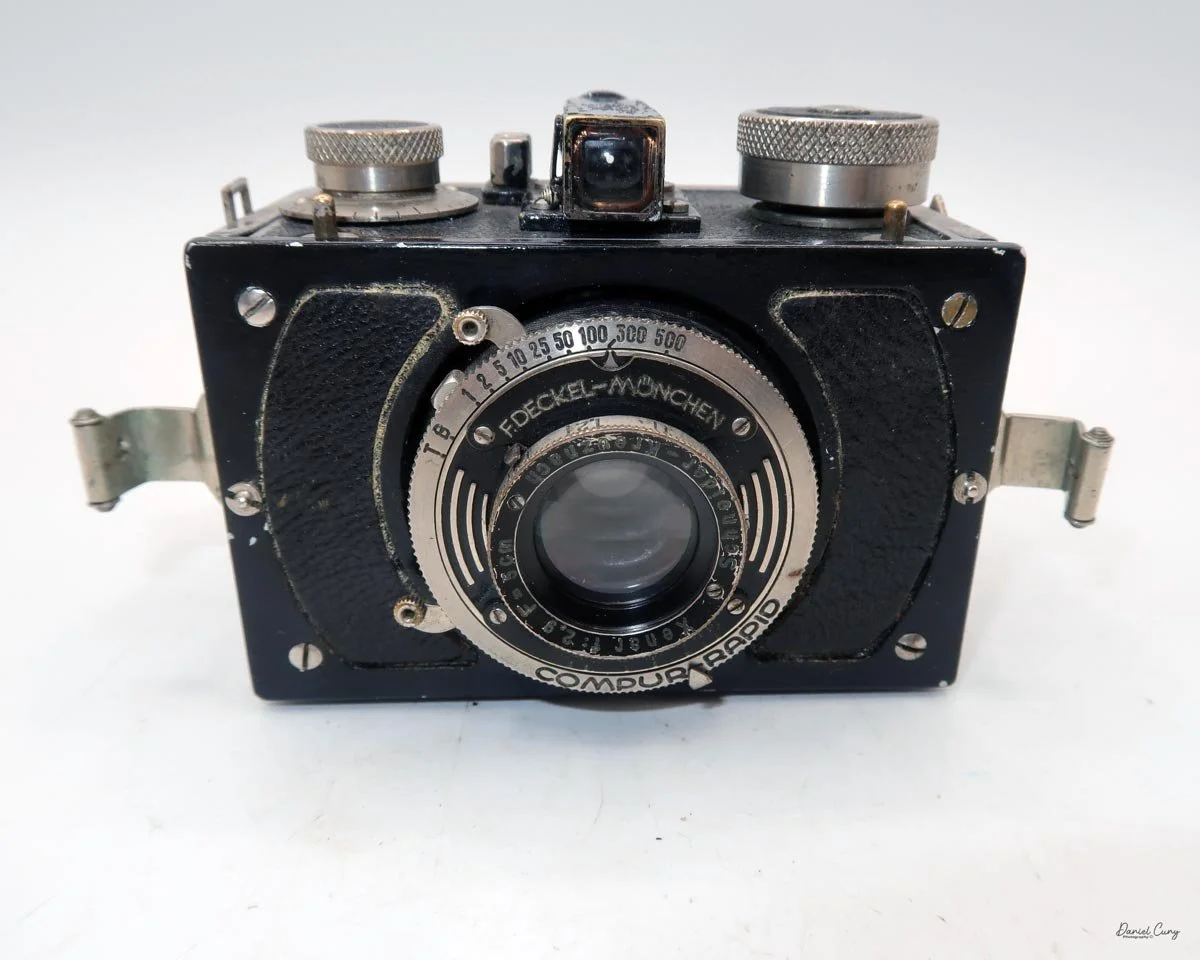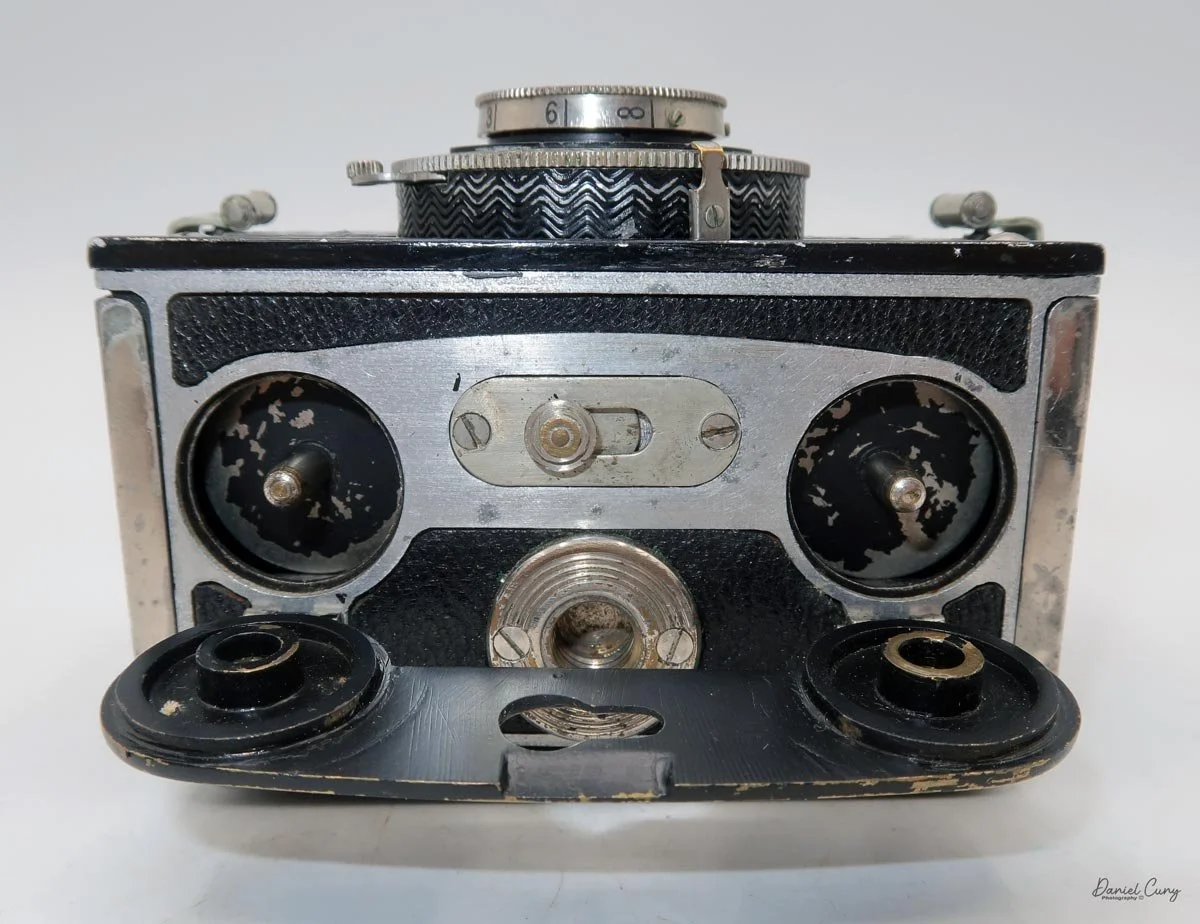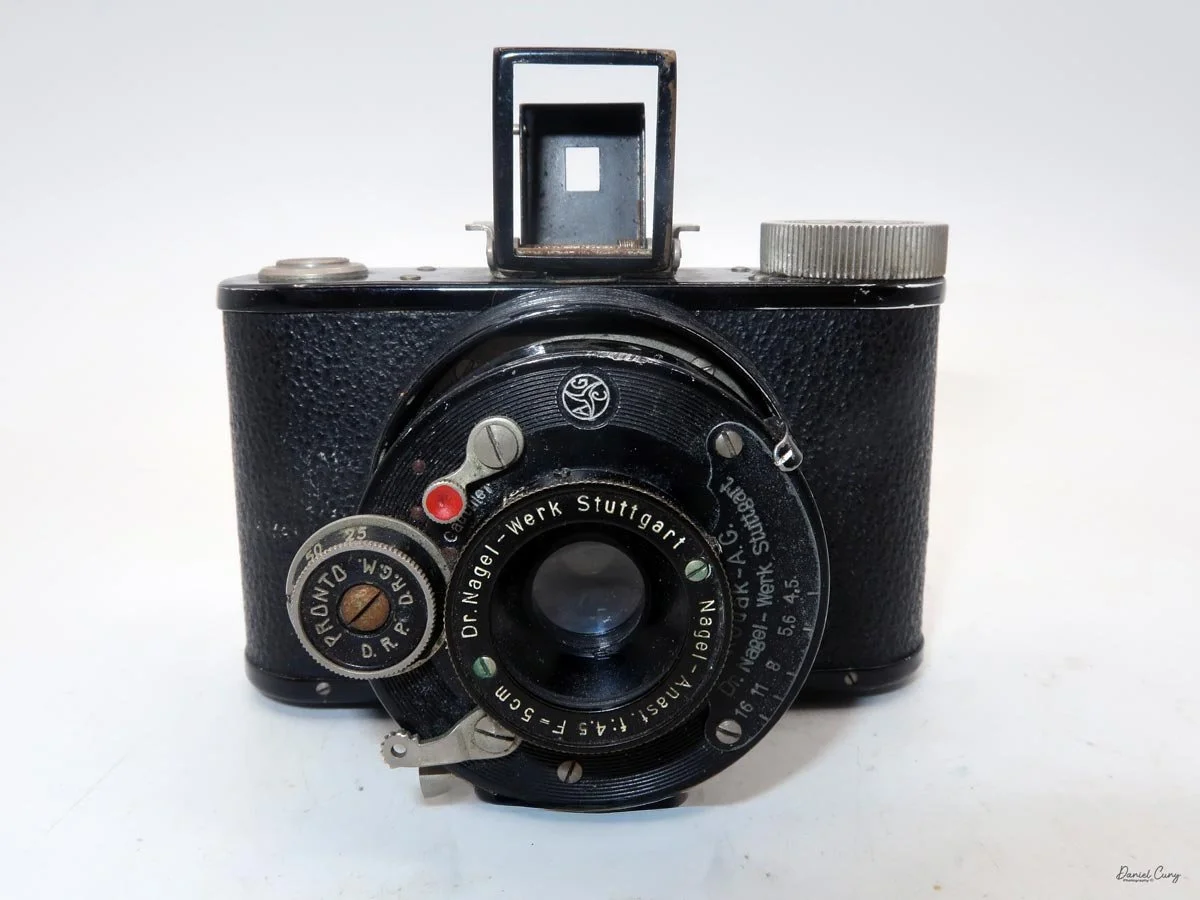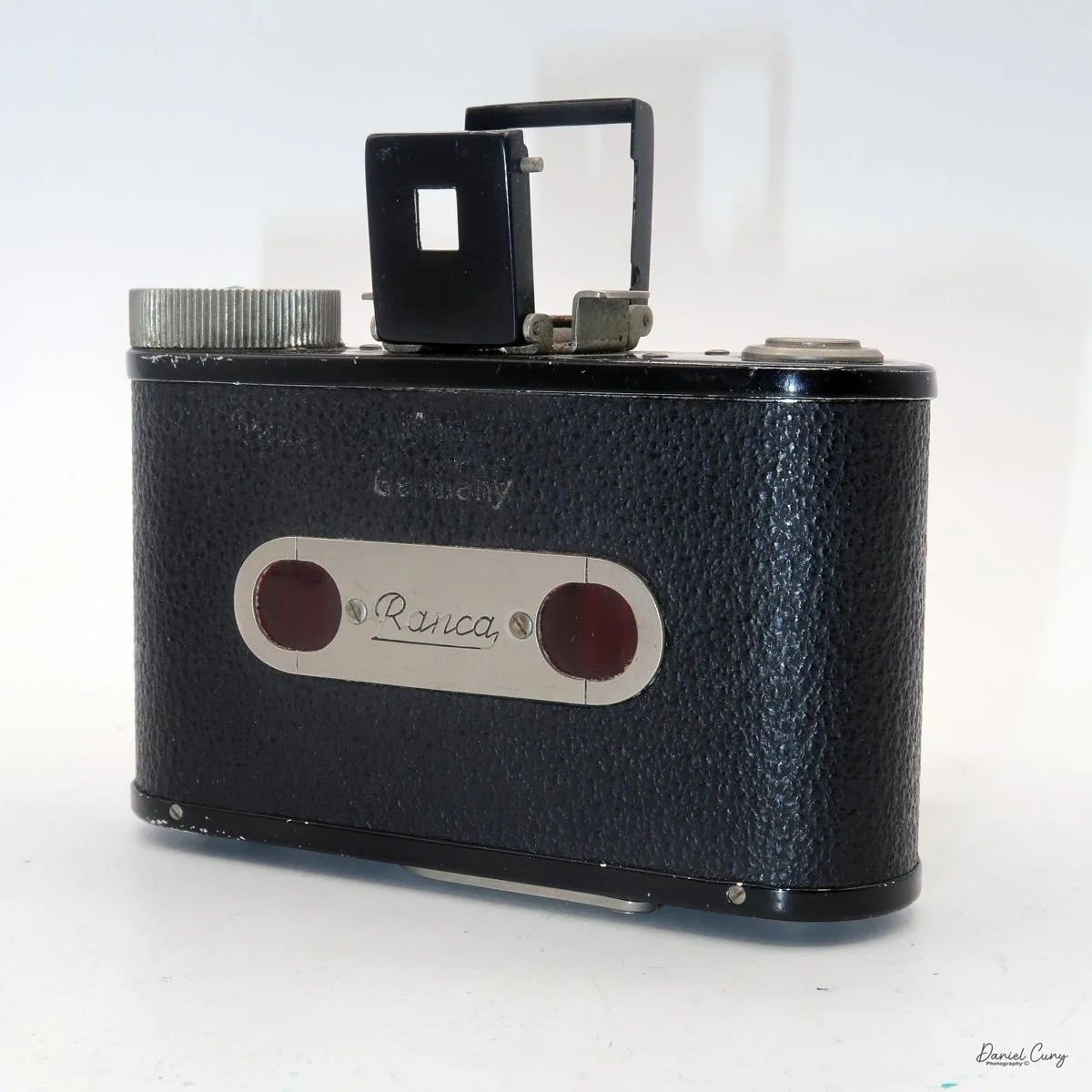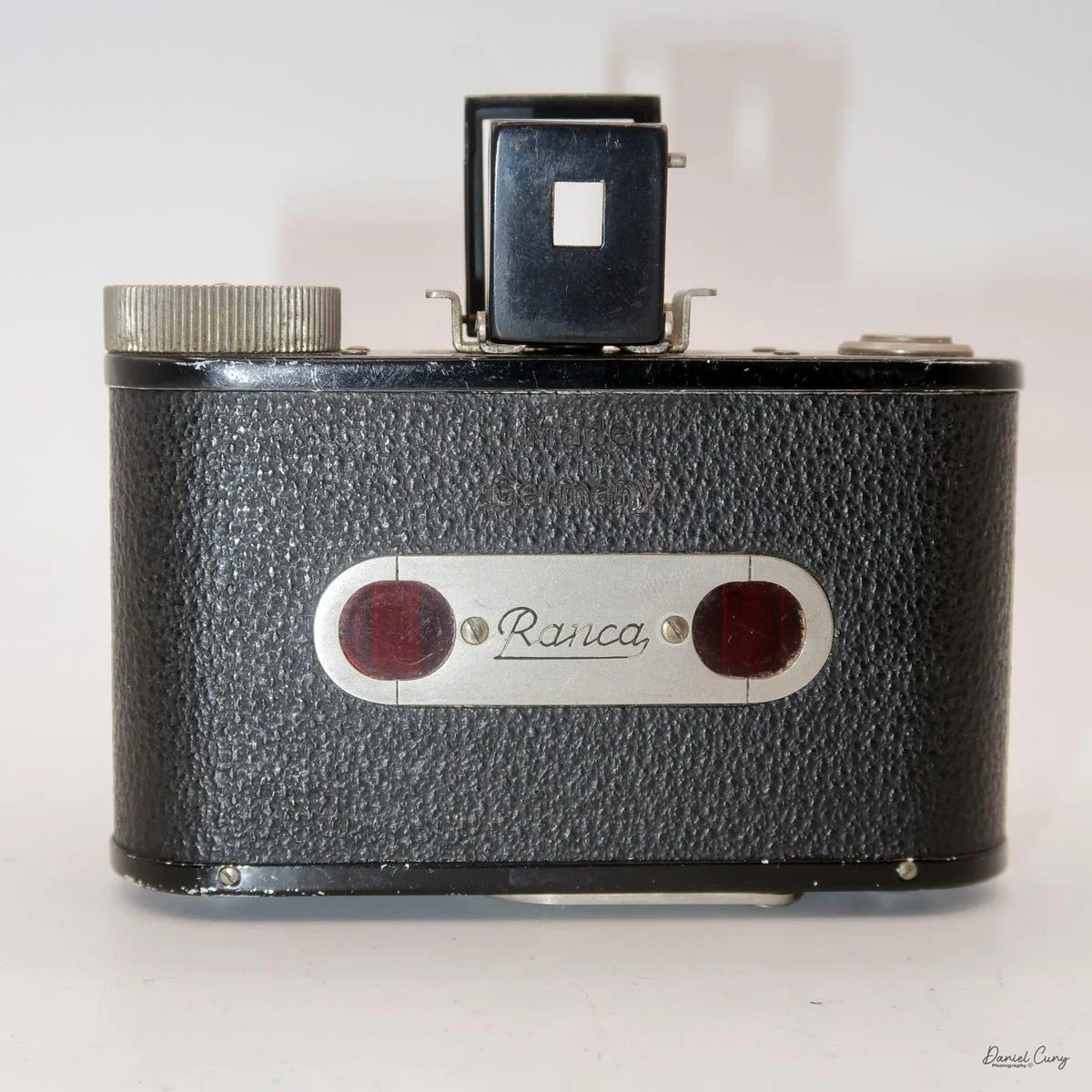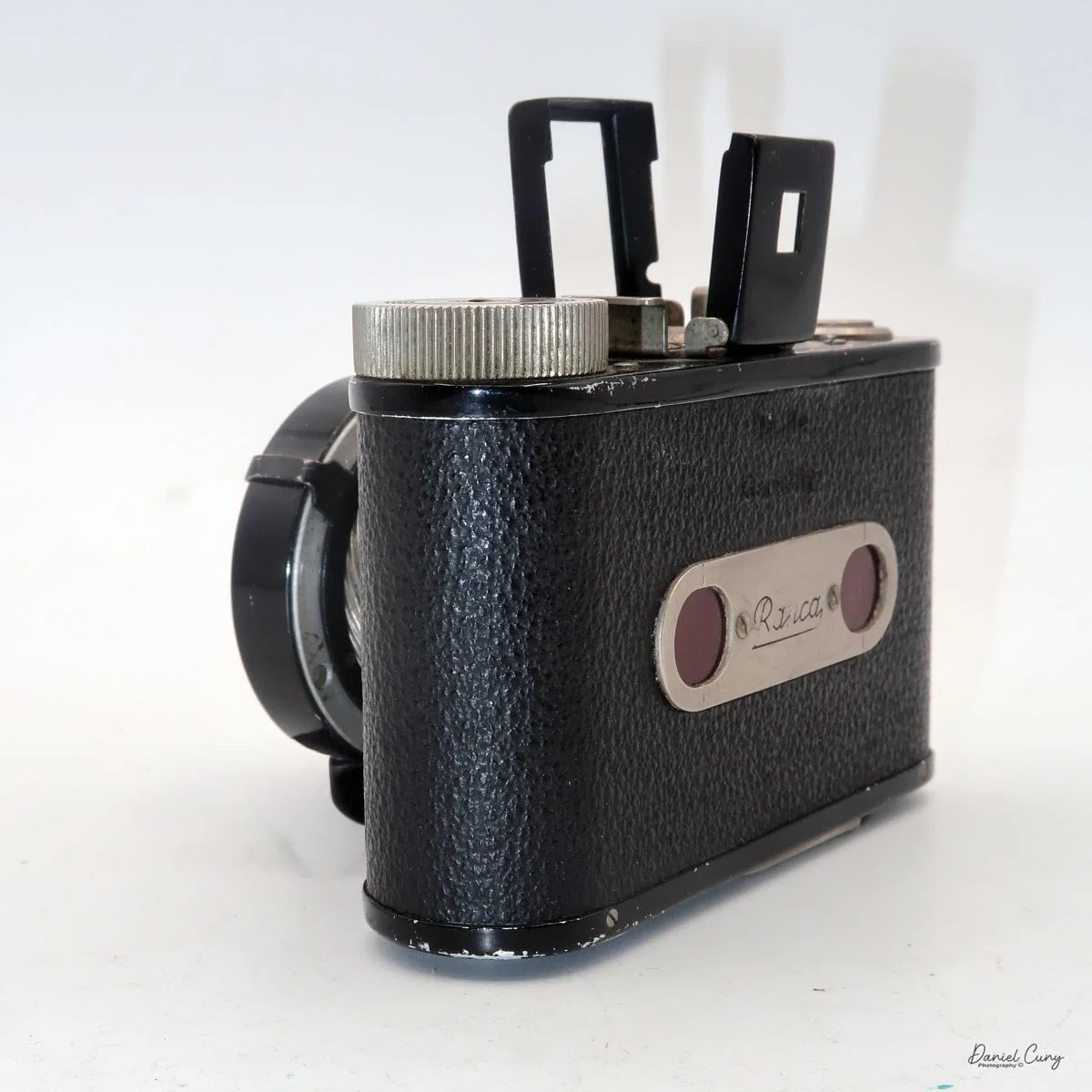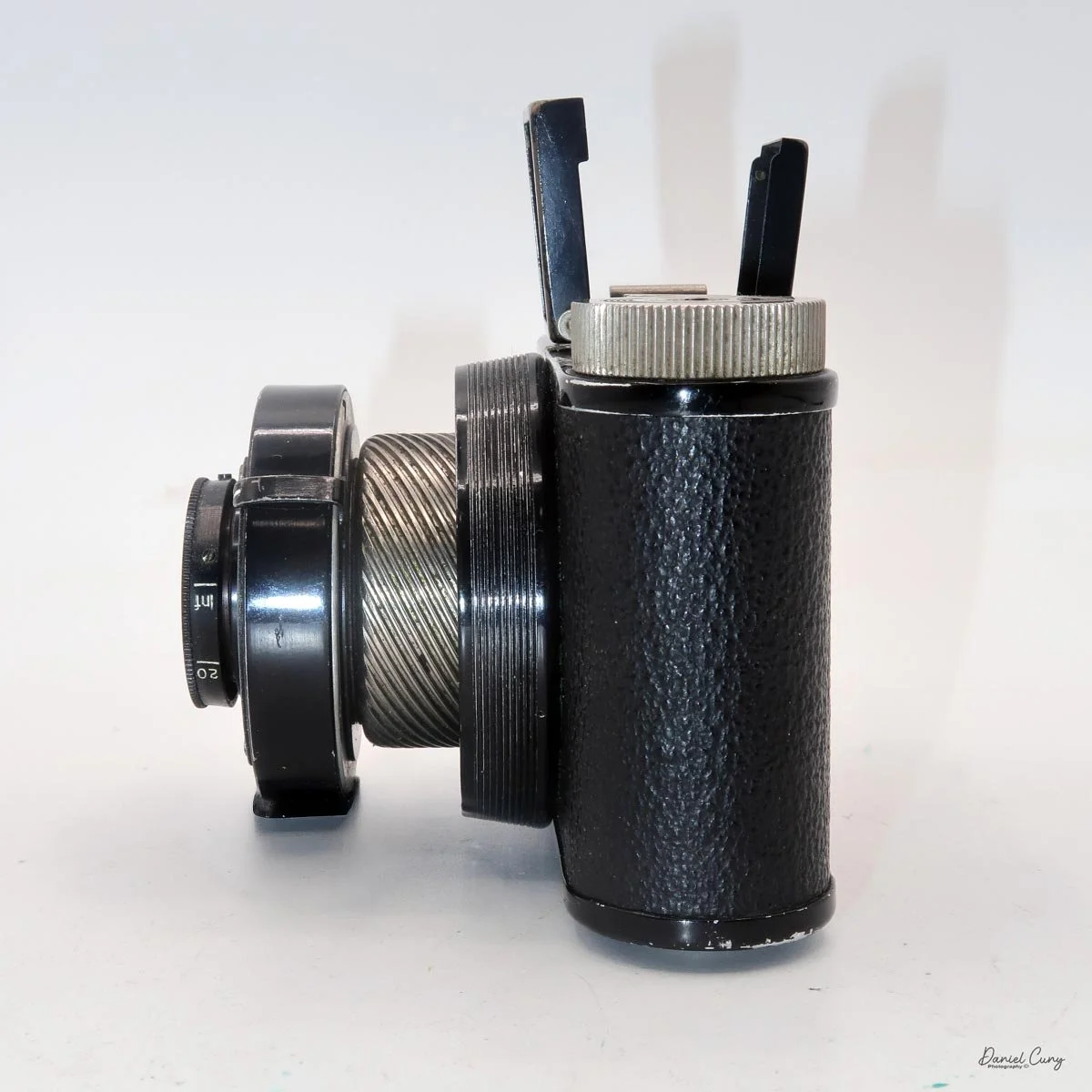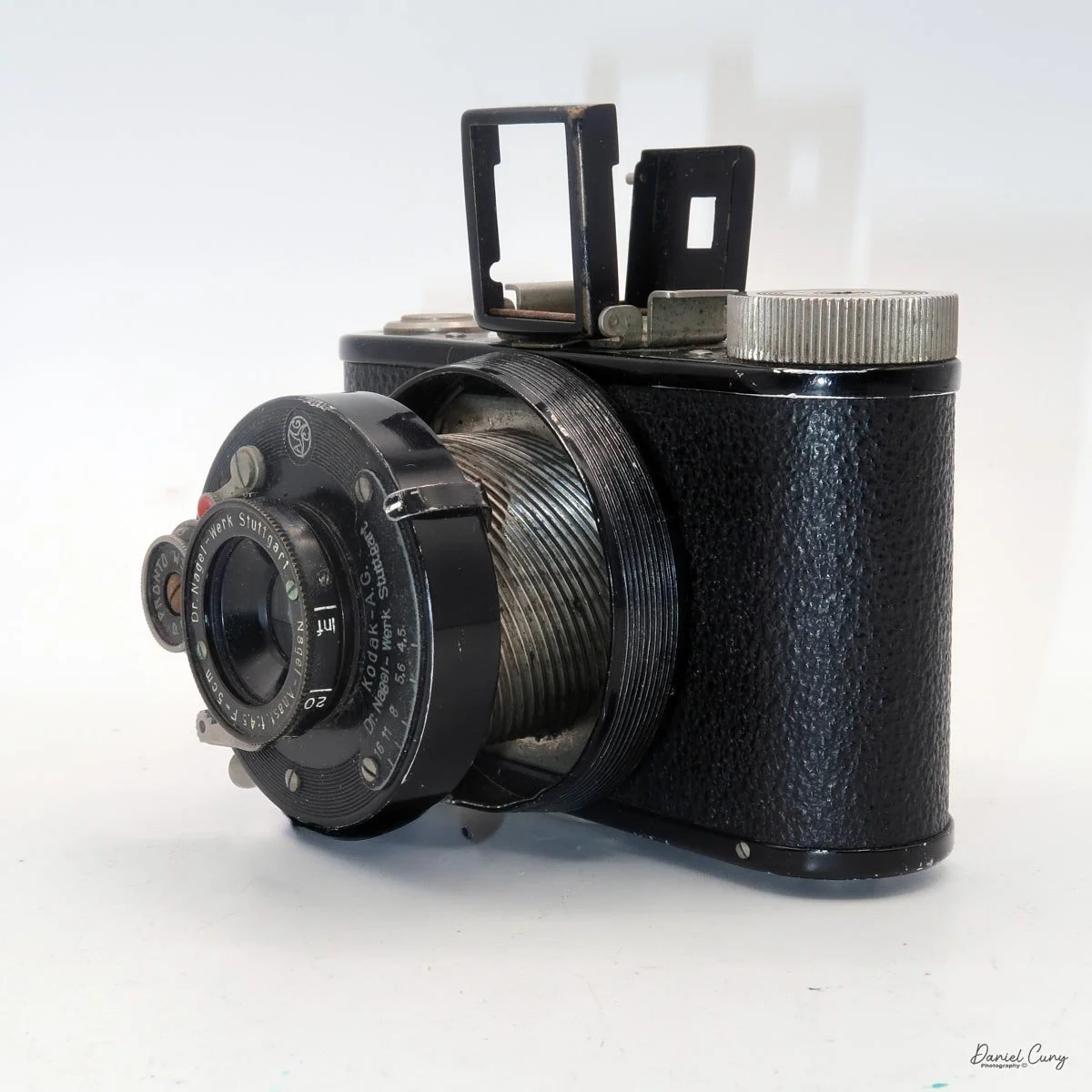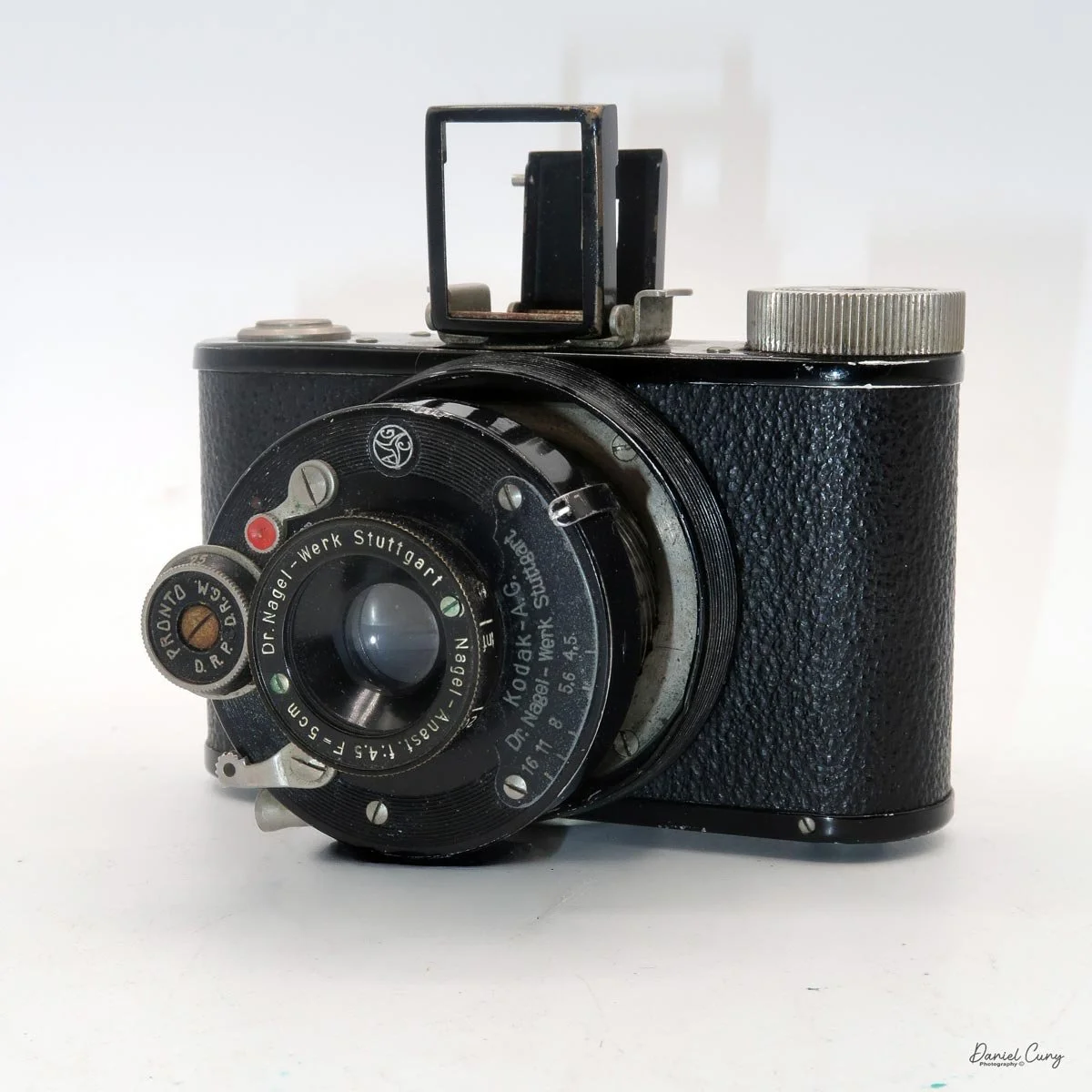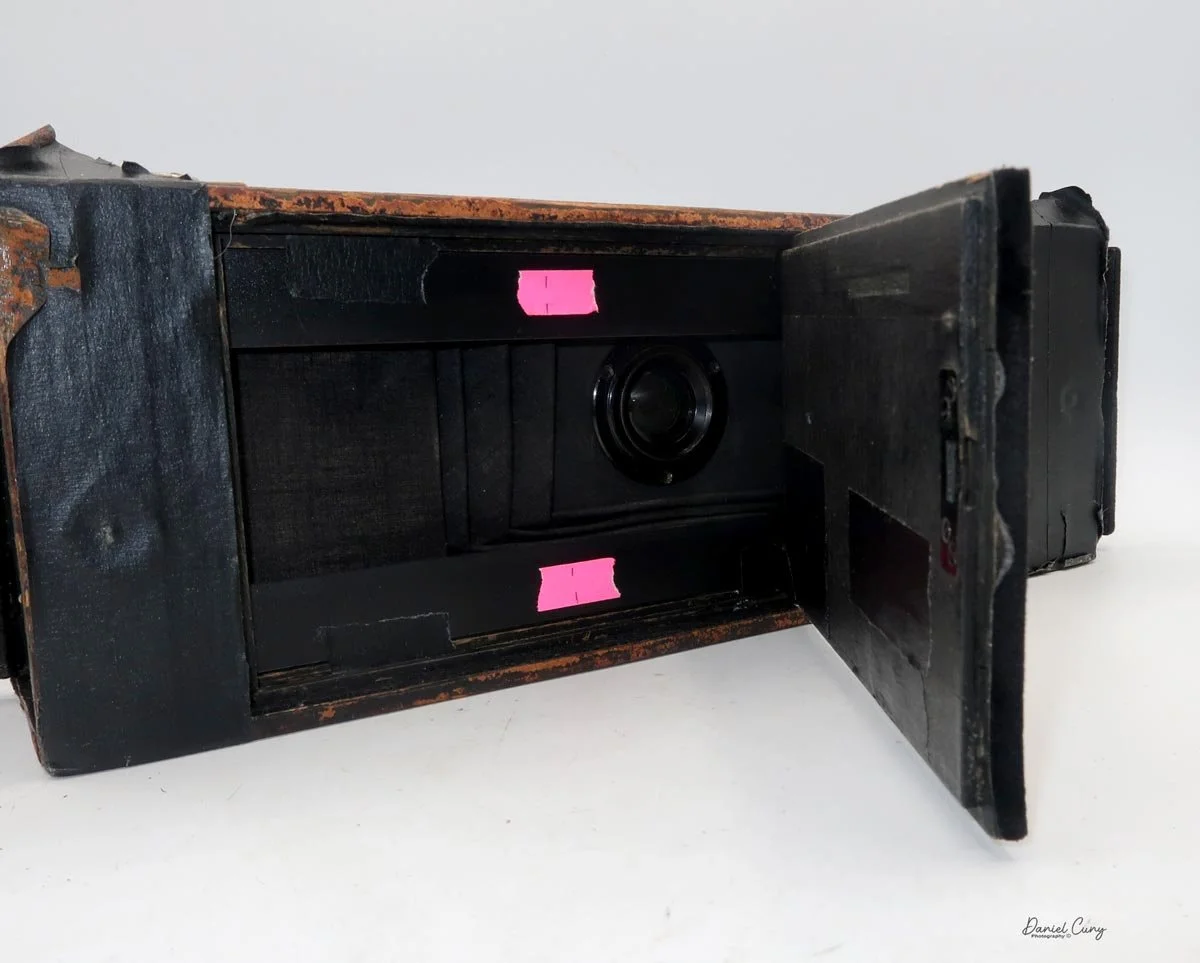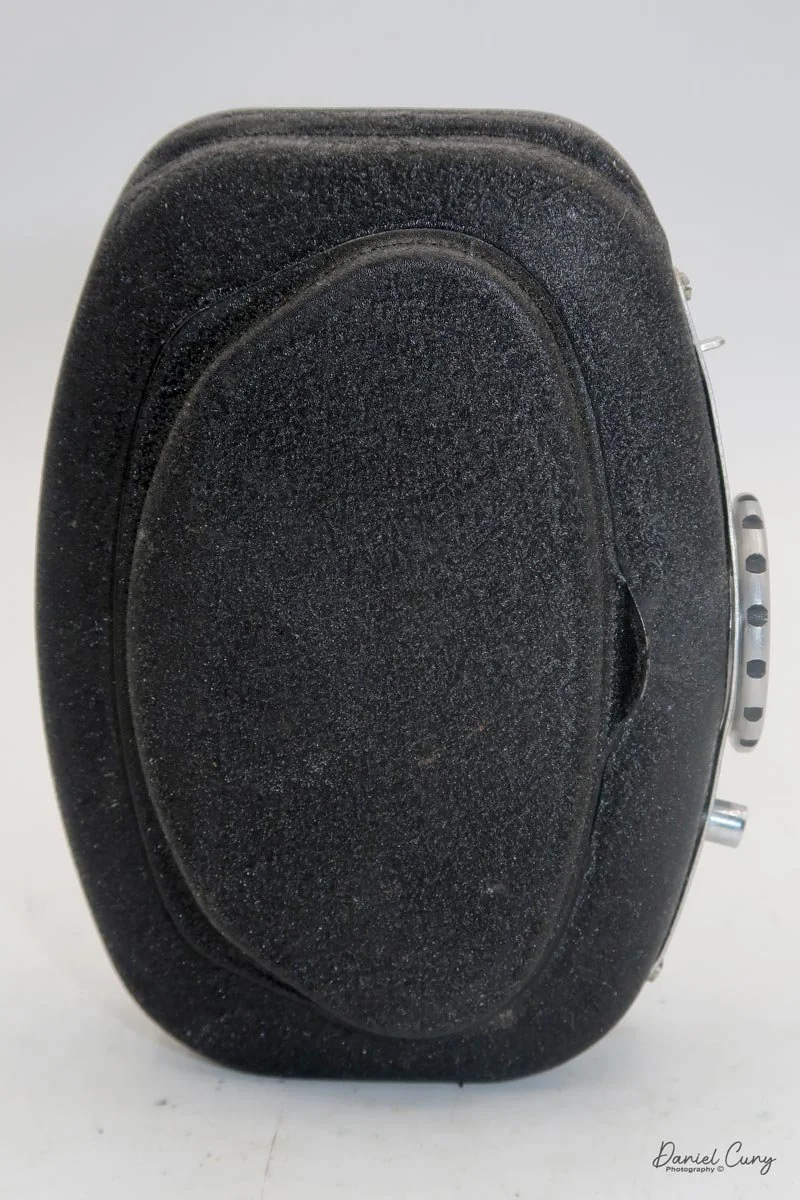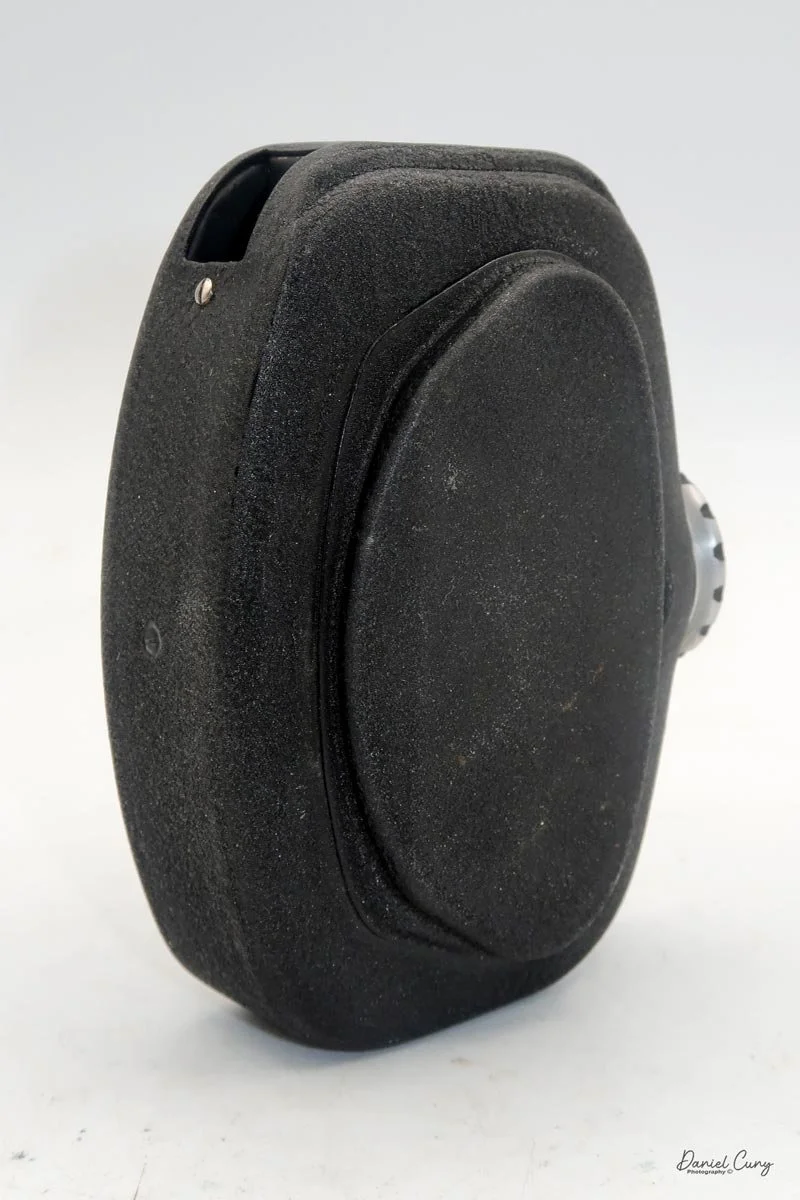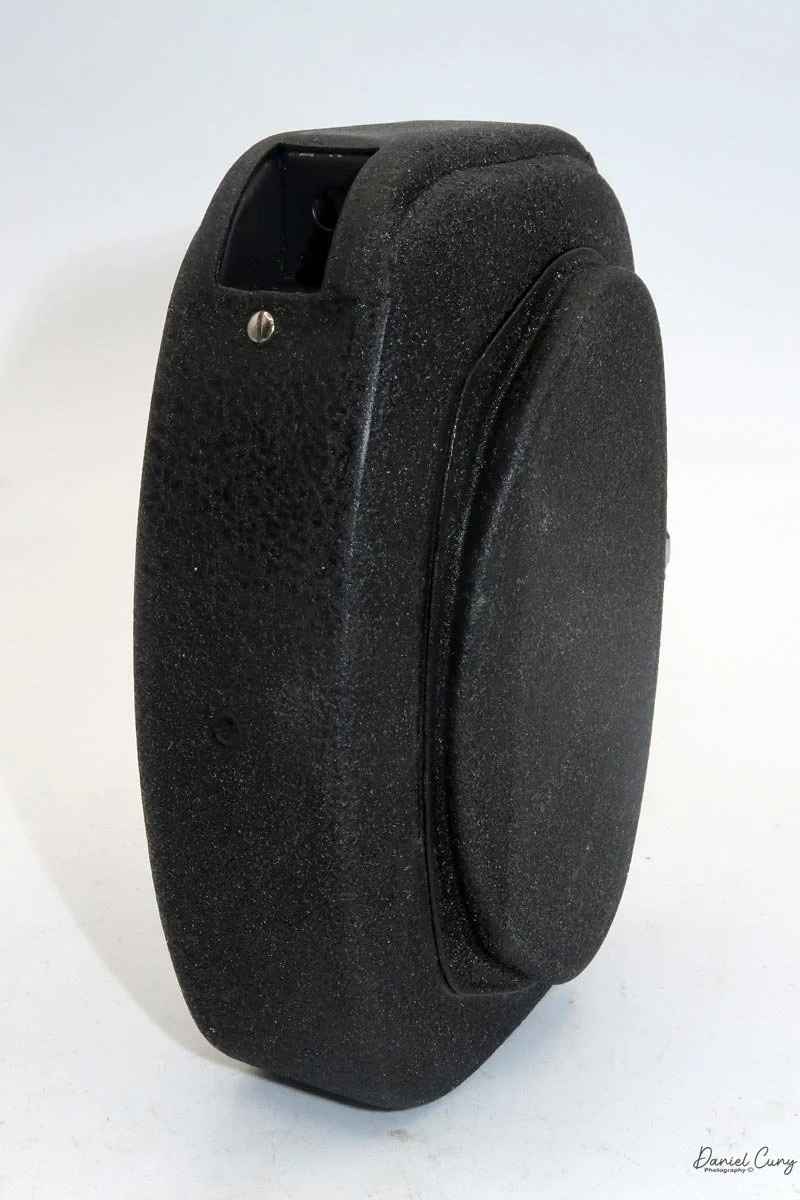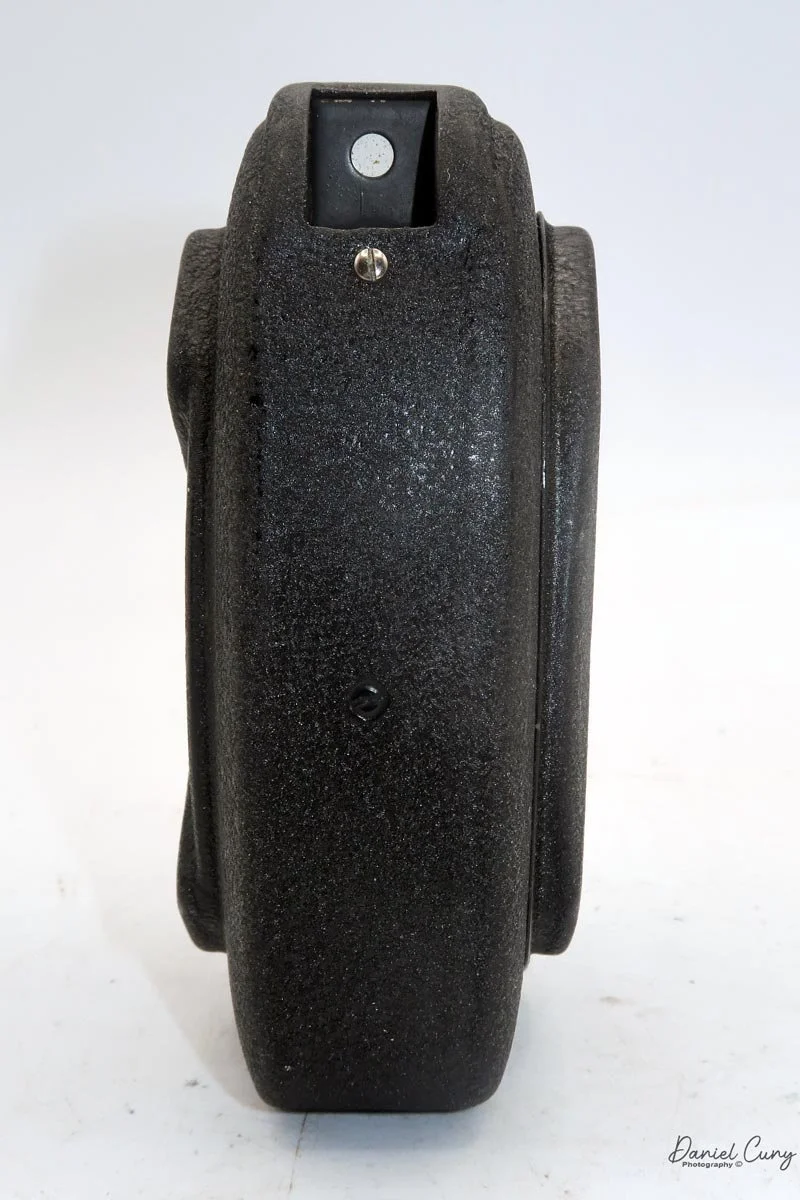
Kodak-Nagel Ranca camera

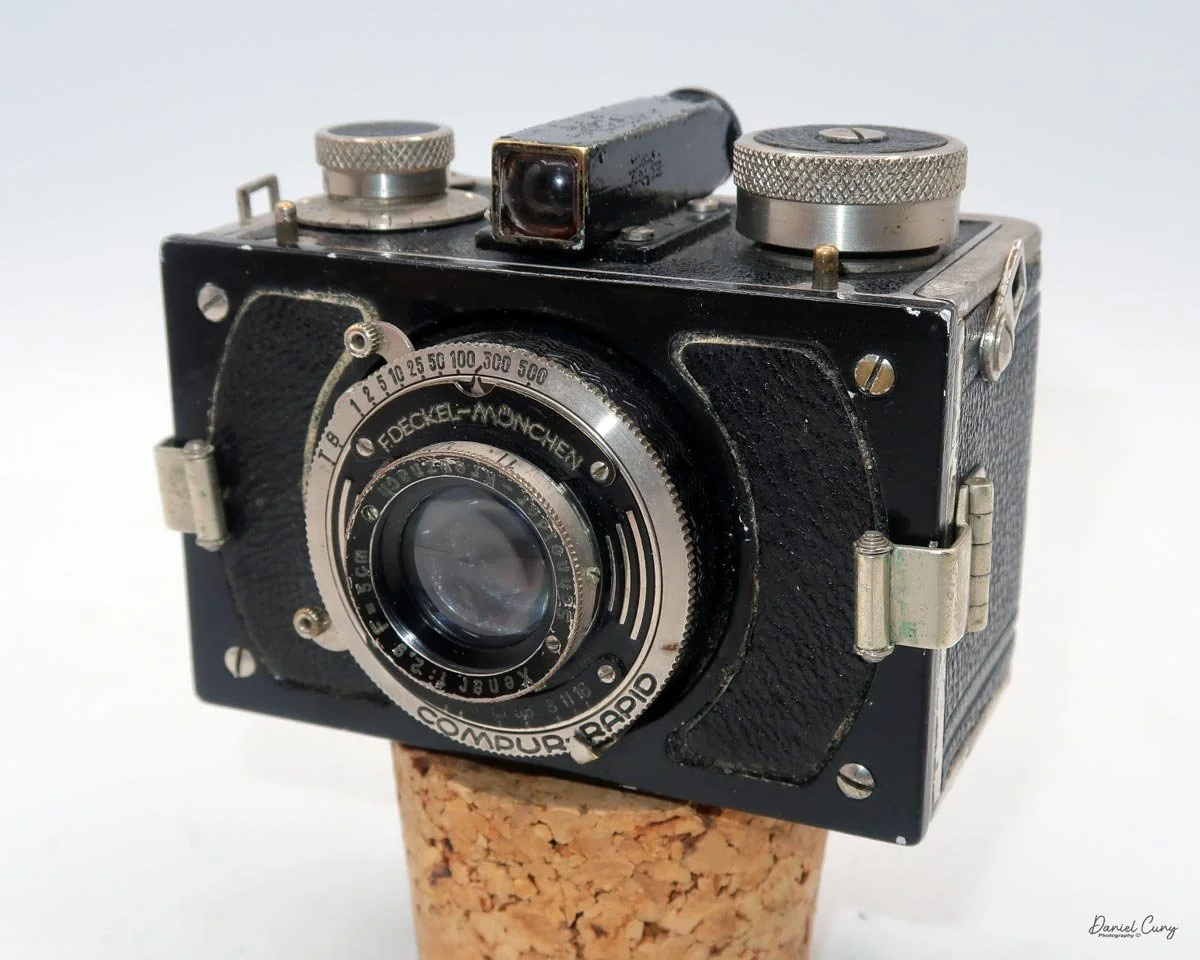
My Kodak-Nagel Ranca camera

Being a collector and working in the photo industry for more than 50 years, and, more specifically, in the photographic retail business for almost 20 of those years. My retail years were in the mid-1970s through to the early 1990s. It was the height of film photography with Nikon F's, Canon AE-1's, Minolta SRT's, Pentax, Rollei, Contax, etc. I can remember the introductions of many of the best-selling cameras from this era. I have seen and sold many cameras. But to this day, I still enjoy them.

 When I look at a camera, especially an older one I'm not familiar with, the first impression strongly influences whether I purchase it. I'm always on the hunt for the odd and unusual camera.  I imagine it's really about what you enjoy collecting. 

 Many collectors look for pristine examples of Leica, Rollei, Hasselblad, or items with a slight difference, making them a "rare" item. Still, if I see a camera I'm not aware of, and it has an unusual appearance or color that stands out, that's what catches my eye. It doesn't have to be expensive or rare; it just has to be unusual to me.

 That's where the camera I'm writing about this week comes in. The Kodak Ranca is a camera I first saw on my friend Mike Ott's website. Mike is the longtime owner of Pacific Rim Camera and one of the best photographic resources around. It's a website I often visit, very similar to Mike Butkus's Camera Manual, which offers information on cameras, catalogues, manuals, etc. 

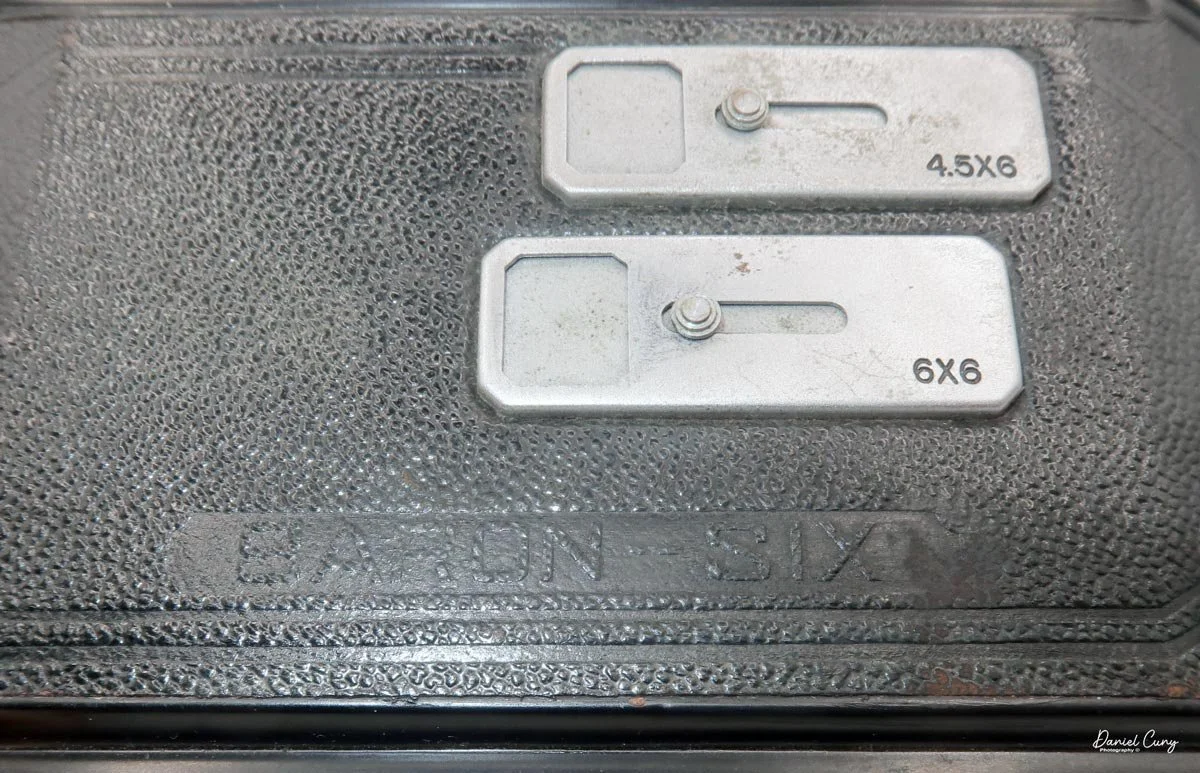
 I purchased the Kodak Ranca because it was a compact camera I wasn't familiar with. It wasn't until it arrived that the camera had a very similar look and feel. I was aware that it was a Nagel-made camera, which was another reason I was attracted to it. Still, when I dug into the camera after it was purchased, it's considered the "less expensive" version of the very popular Nagel Pupille camera, which I reviewed a few months ago.

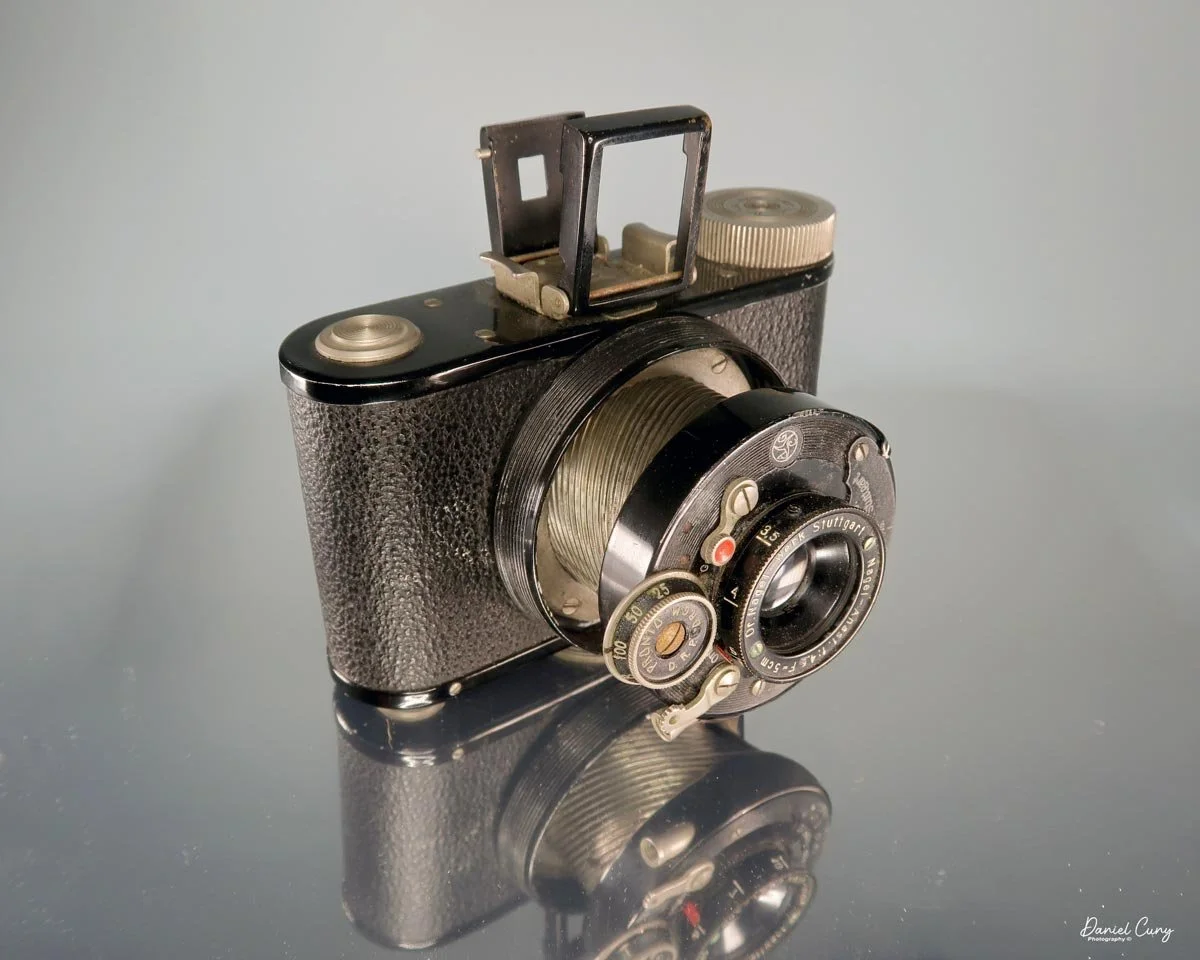
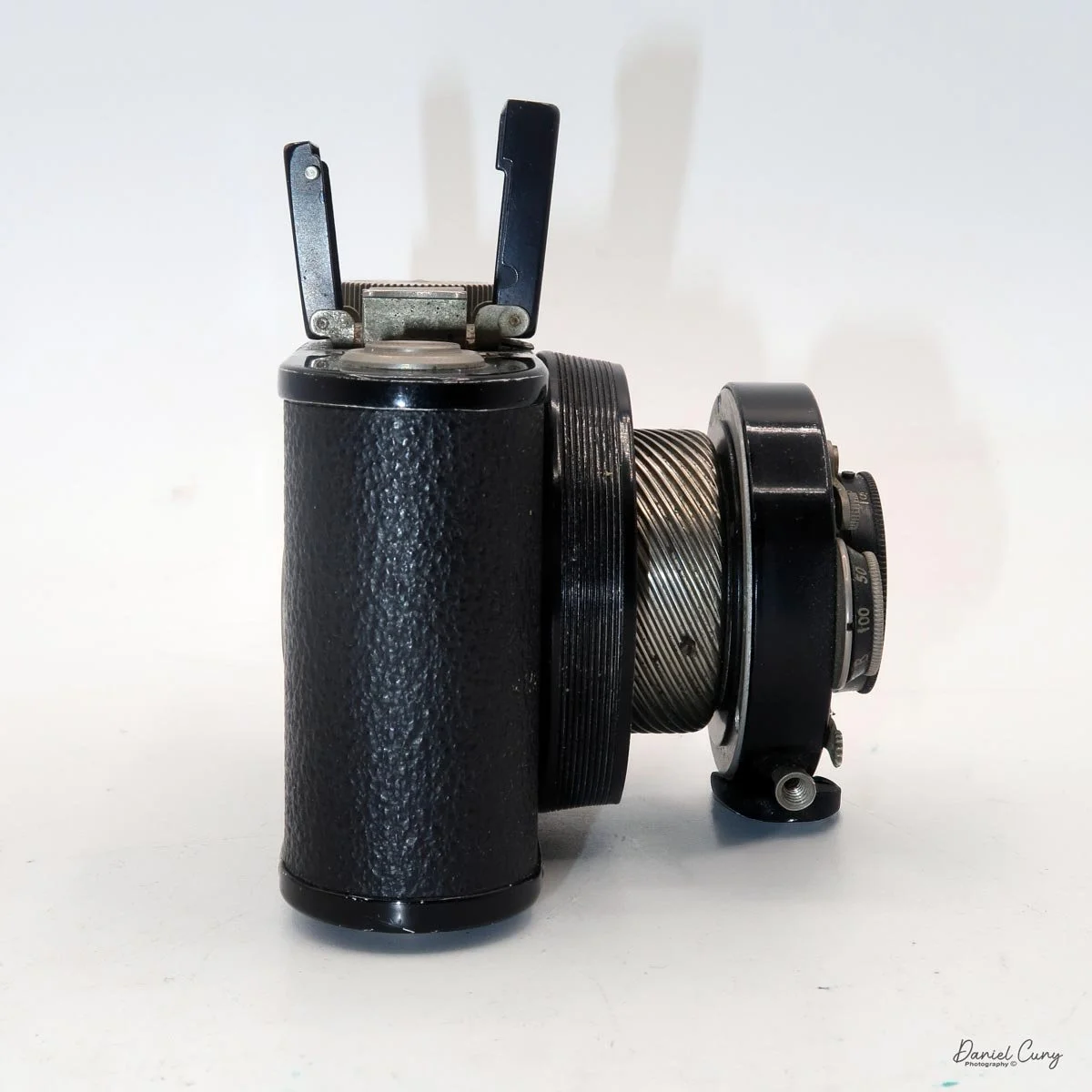
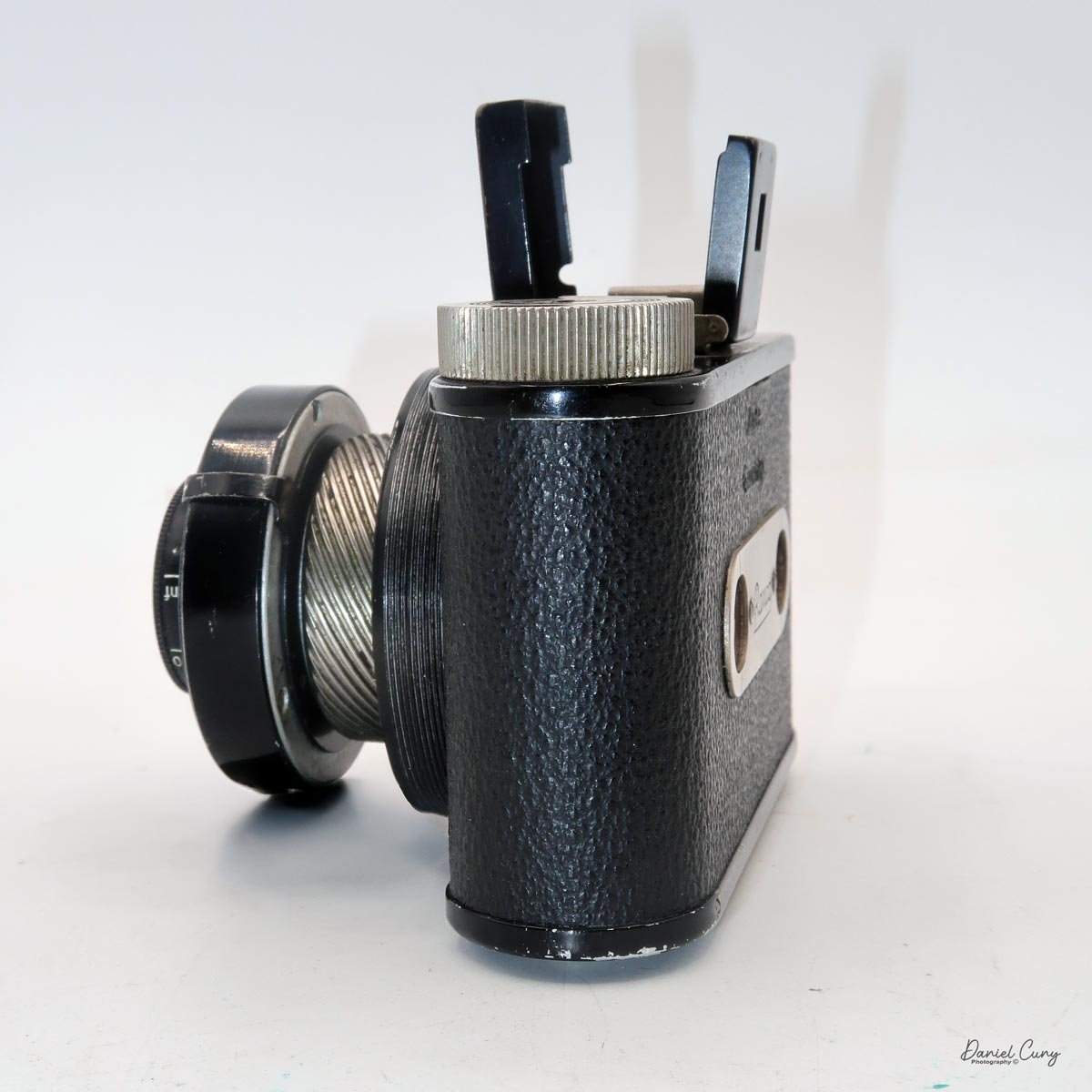
 According to my reading of the Ranca camera, there were two versions. The earlier model, known as 46/0, has a helicoid lens and shutter system that rotates out from the camera's body when you grip and rotate the shutter/lens area a quarter turn counterclockwise. This also exposes the helicoid on which the lens/shutter rotates. The second version is the 46/1, which has a rigid lens barrel with the lens and shutter on the end. 

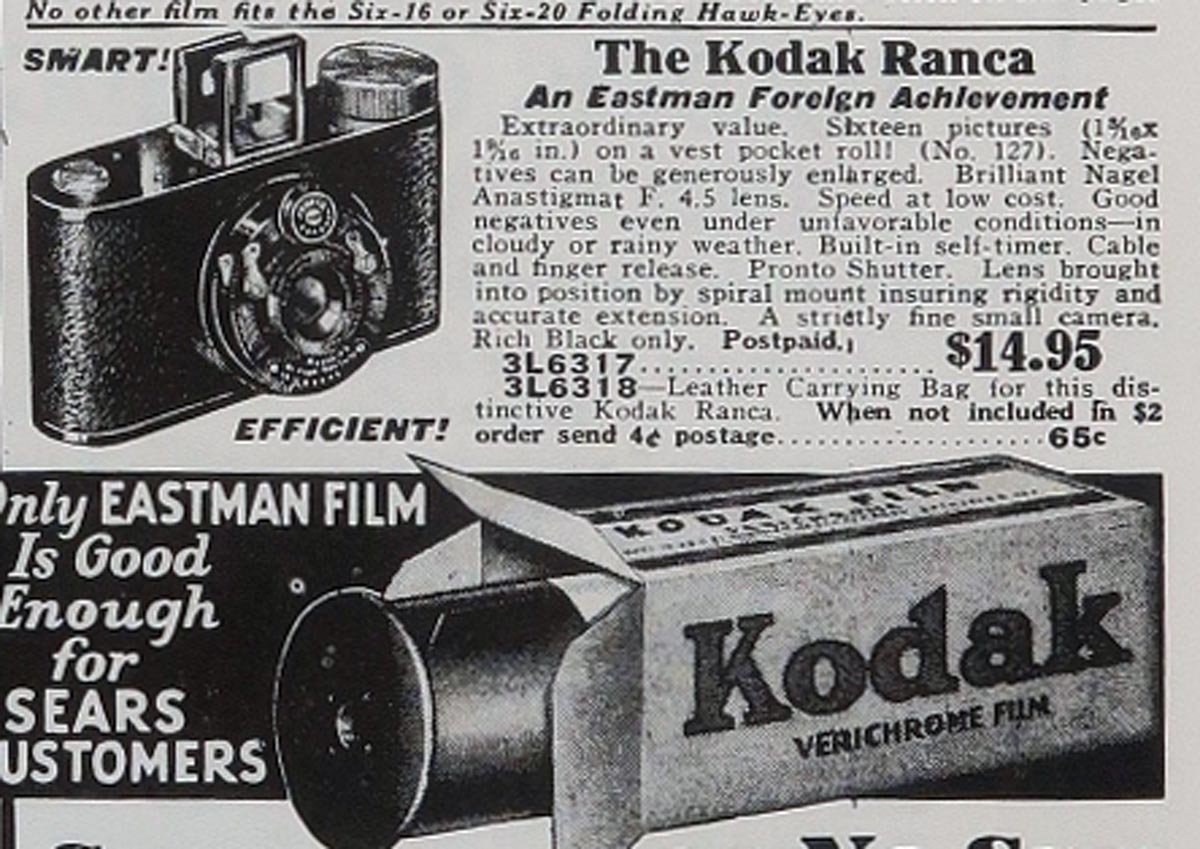
 The camera was introduced in the middle of 1930 and remained available for only approximately 1 year, until the latter part of 1931. Both the Nagel Pupille and Ranca camera take 127-size film, producing 16, 3x4cm images on the roll. 

 Sources state that a total of 2,200 Ranca cameras were produced, compared to 5,000 of the more expensive, better-featured Pupille cameras. While the Pupille has superior features, fewer Ranca cameras are produced. Yet, the Pupille is more of a collector's item and fetches a higher price, even today.

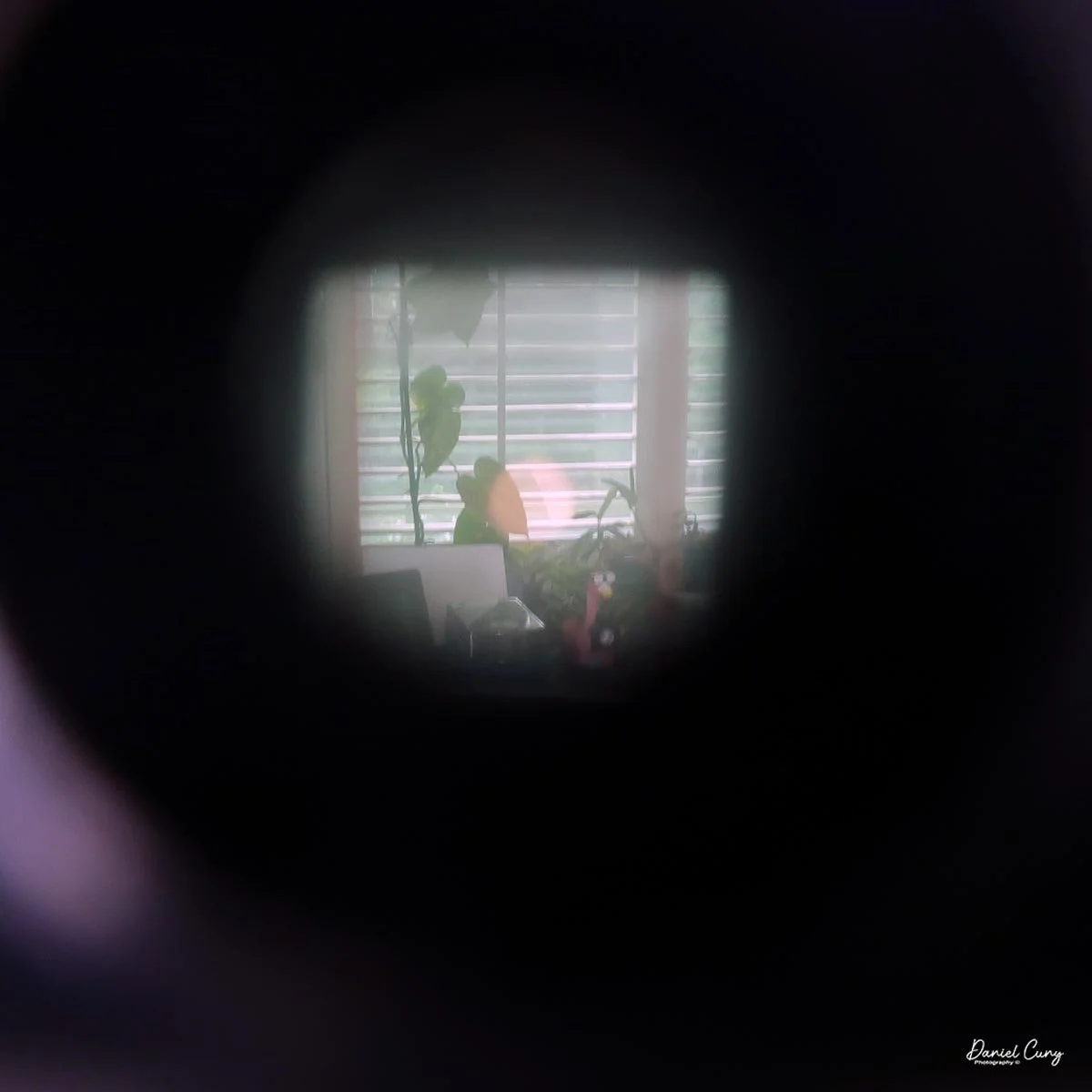
 Some of the other differences between the two models: both cameras have "sports"-style pop-up viewfinders; some have glass on the front, and some don't. Different shutters, either Prontor or Ibsor, were available. The camera uses a front focus system, with some cameras opting for a very simple distance scale for portrait, group, or landscape. In contrast, others have the distance in feet on the lens barrel. 

History:

 Dr. August Nagel was one of the most important European designers ever associated with Eastman Kodak, and their partnership reshaped Kodak's position in the precision‑camera market. In 1932, Eastman Kodak purchased Nagel's Stuttgart-based firm, Dr. Nagel-Werke, and reorganized it as Kodak A.G., retaining Nagel as managing director and head of design. Before this acquisition, Kodak was dominant in film and popular roll-film cameras. Still, German makers like Leica and Contax defined the high‑end miniature camera segment. Kodak wanted a German-built precision camera to compete directly, yet at a lower price and in a form that fit its mass‑market philosophy. Nagel, already respected for compact folding designs and his work on Contessa-Nettel and Zeiss Ikon models, was the ideal partner to bridge that gap.

Kodak Ranca advertismant

 Within Kodak A.G., Nagel used generous Eastman funding and Kodak's global reach to develop a compact 35mm camera that could rival the established German leaders. The result was the Kodak Retina, introduced in 1934 (Type 117), a folding 35mm camera that offered solid German construction and good optics at a far more accessible price than Leica or Contax. At the same time, Nagel introduced a new daylight-loading 35mm cartridge—what became known as Kodak 135 film—which fit not only the Retina but also Leica and Contax cameras. This cartridge standardized 35mm still photography worldwide. It made 35mm use far easier for ordinary photographers, who no longer needed to roll film into cassettes in the dark.

 Nagel's collaboration with Eastman Kodak extended beyond the Retina itself. Under the Kodak A.G. banner in Stuttgart, he and his team produced several notable pre‑Retina and companion models, such as the Recomar plate cameras, the compact Pupille, the Vollenda folding cameras, and the Duo 620 medium‑format folders. These cameras married Nagel's hallmark precision and compactness with Kodak's branding and distribution, giving Kodak an instant foothold in the "serious enthusiast" and professional market that had previously looked almost exclusively to other German makers. 

 Although Nagel died in 1943, the Retina line continued to evolve with the introduction of the rangefinder. Later SLR versions, and the 135 cartridge he introduced, remain the standard for 35mm film, making his association with Eastman Kodak one of the most consequential designer–manufacturer partnerships in camera history.

My Camera:

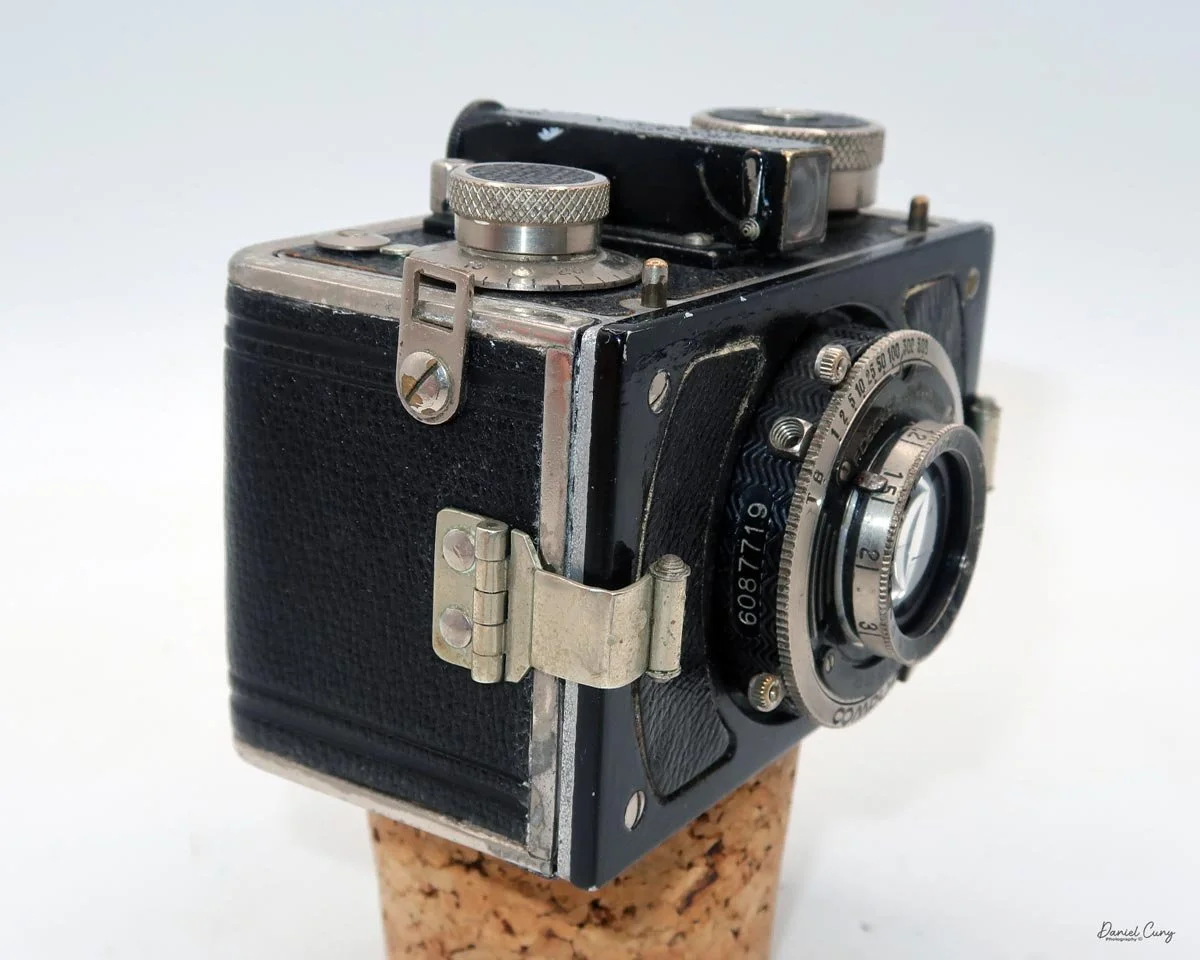
 My Nagel Ranca camera is 4" wide by 2.5" tall with the viewfinder retracted, and 3.25" tall with the viewfinder extended. The camera is 2.25" deep with the lens retracted into the camera body. When it's extended and ready to take a photo, it's 2.75" deep. The camera weighs 10.1 ounces when a roll of film is not loaded.

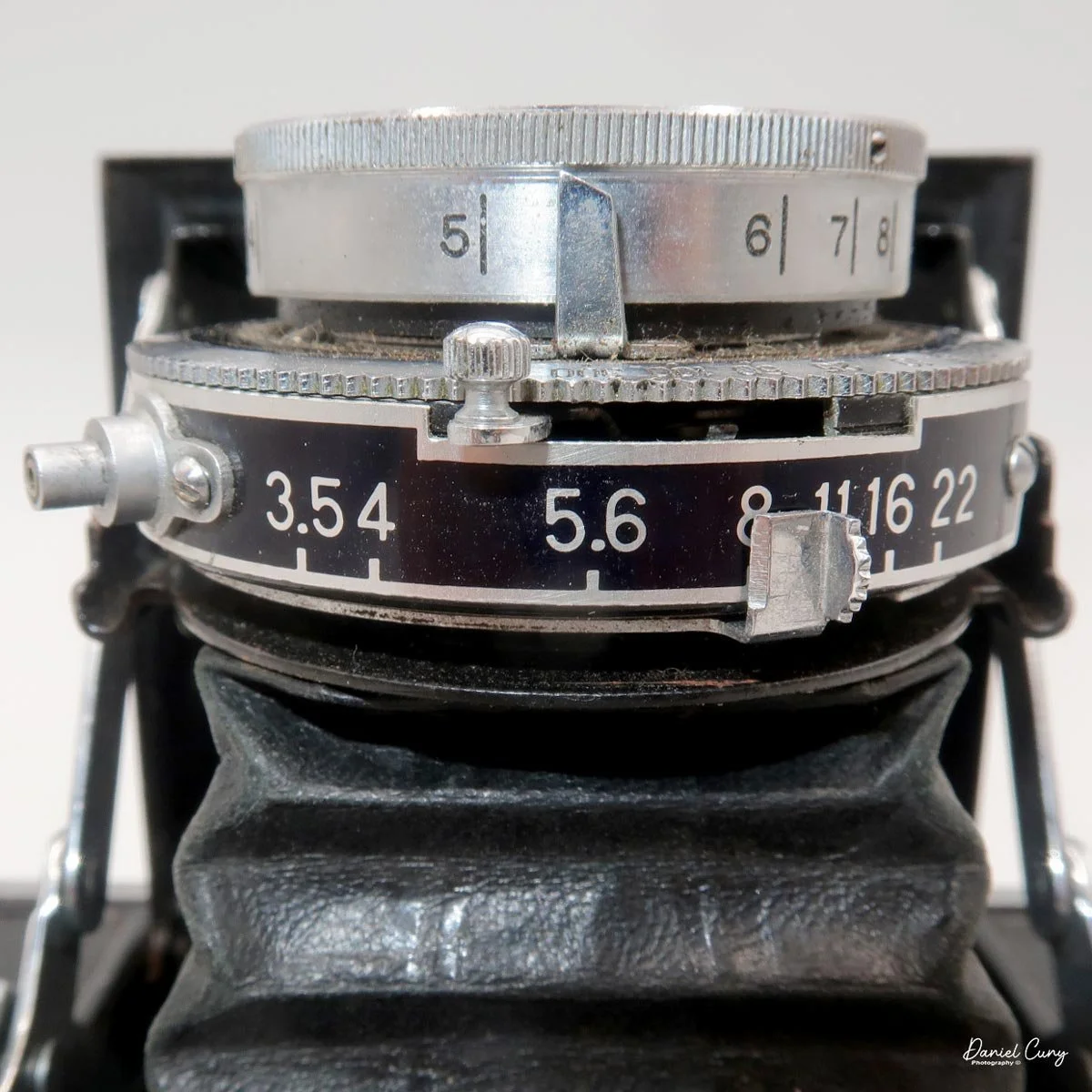
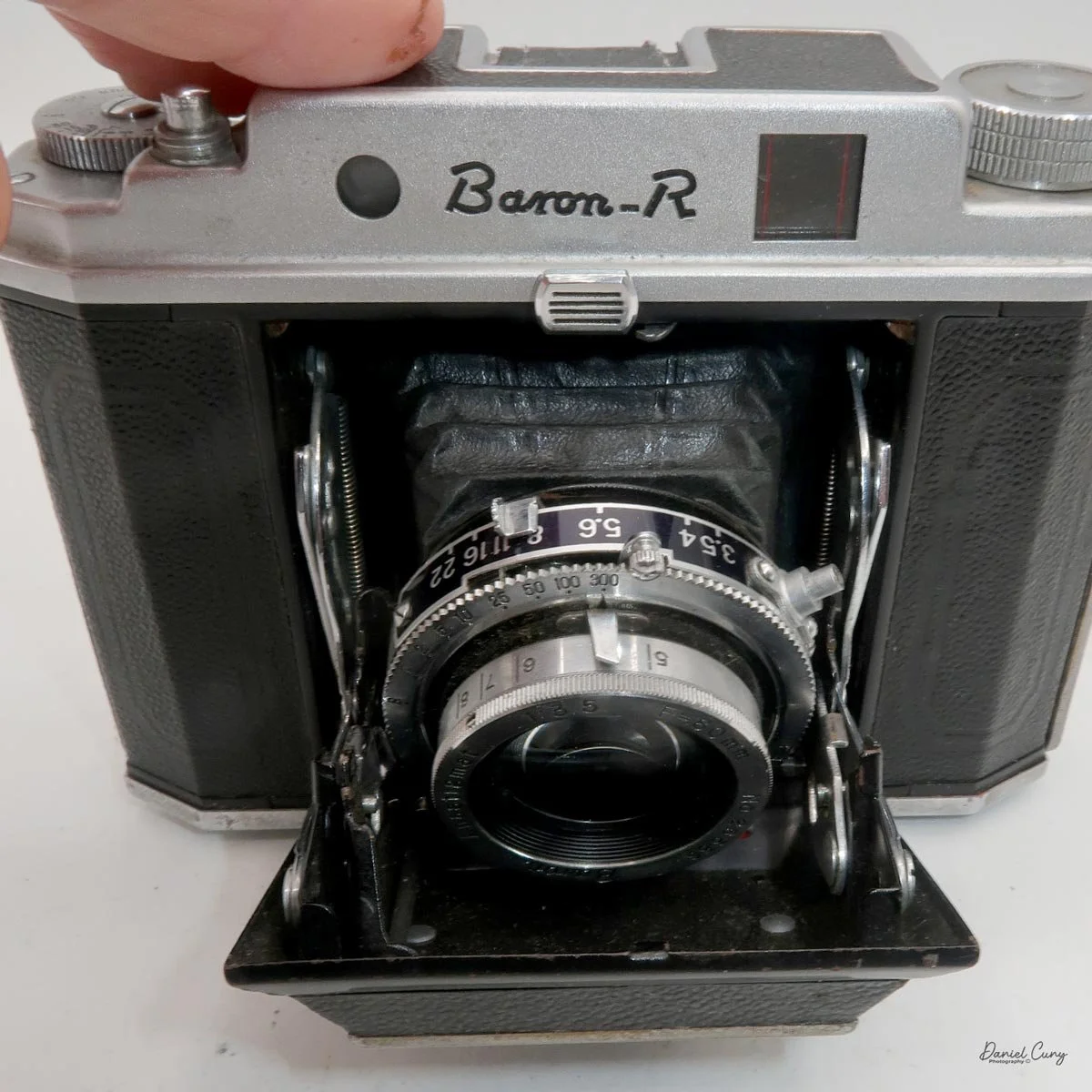
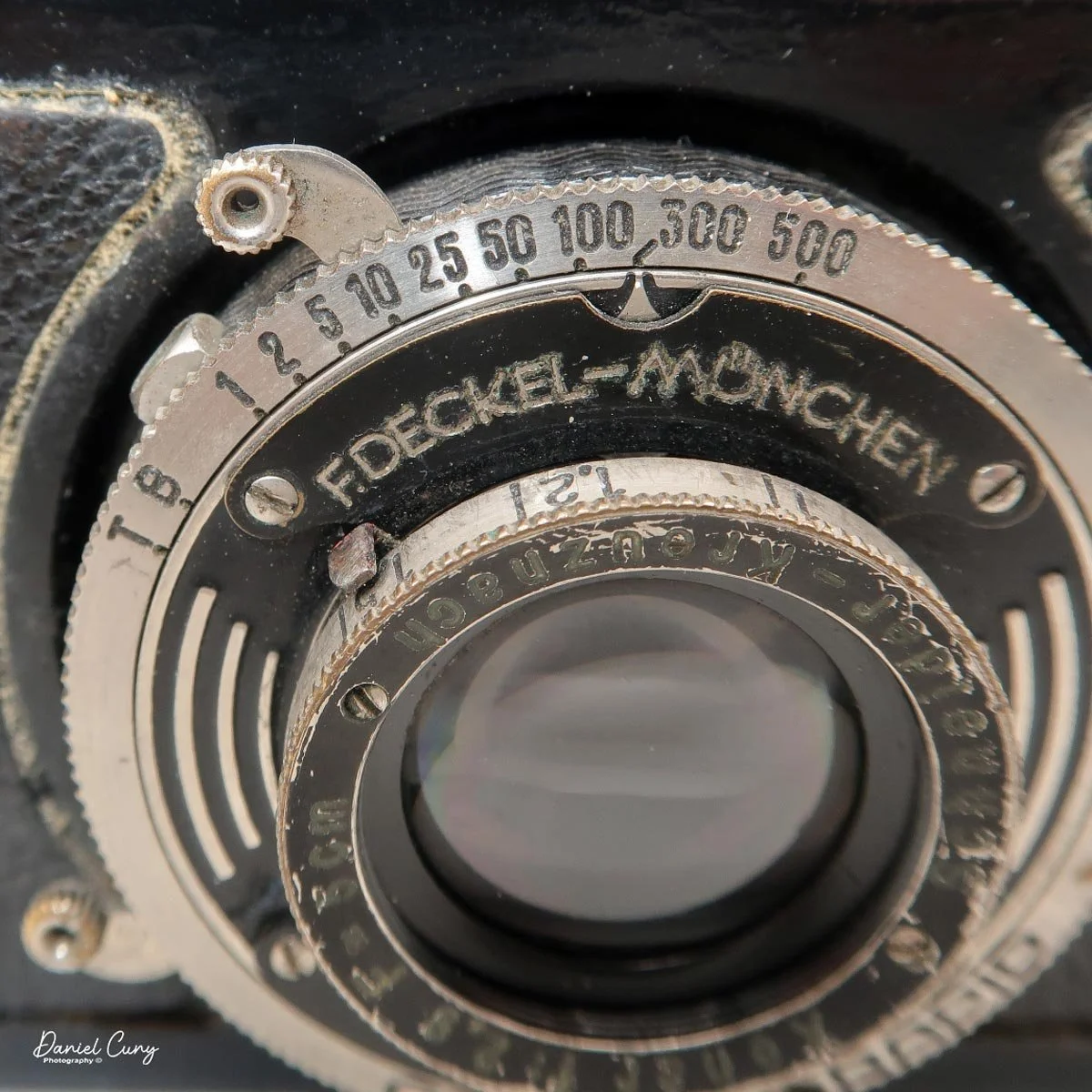
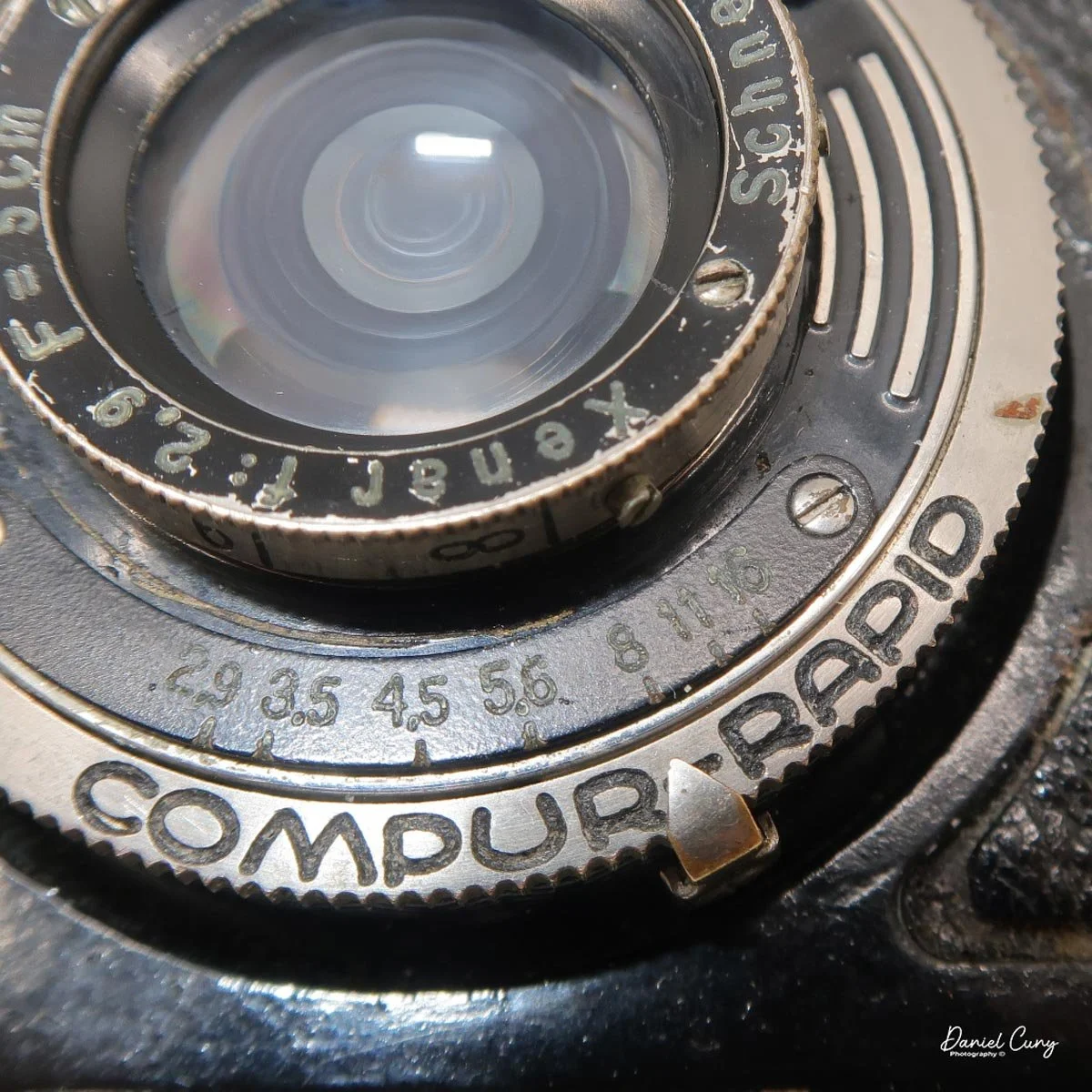
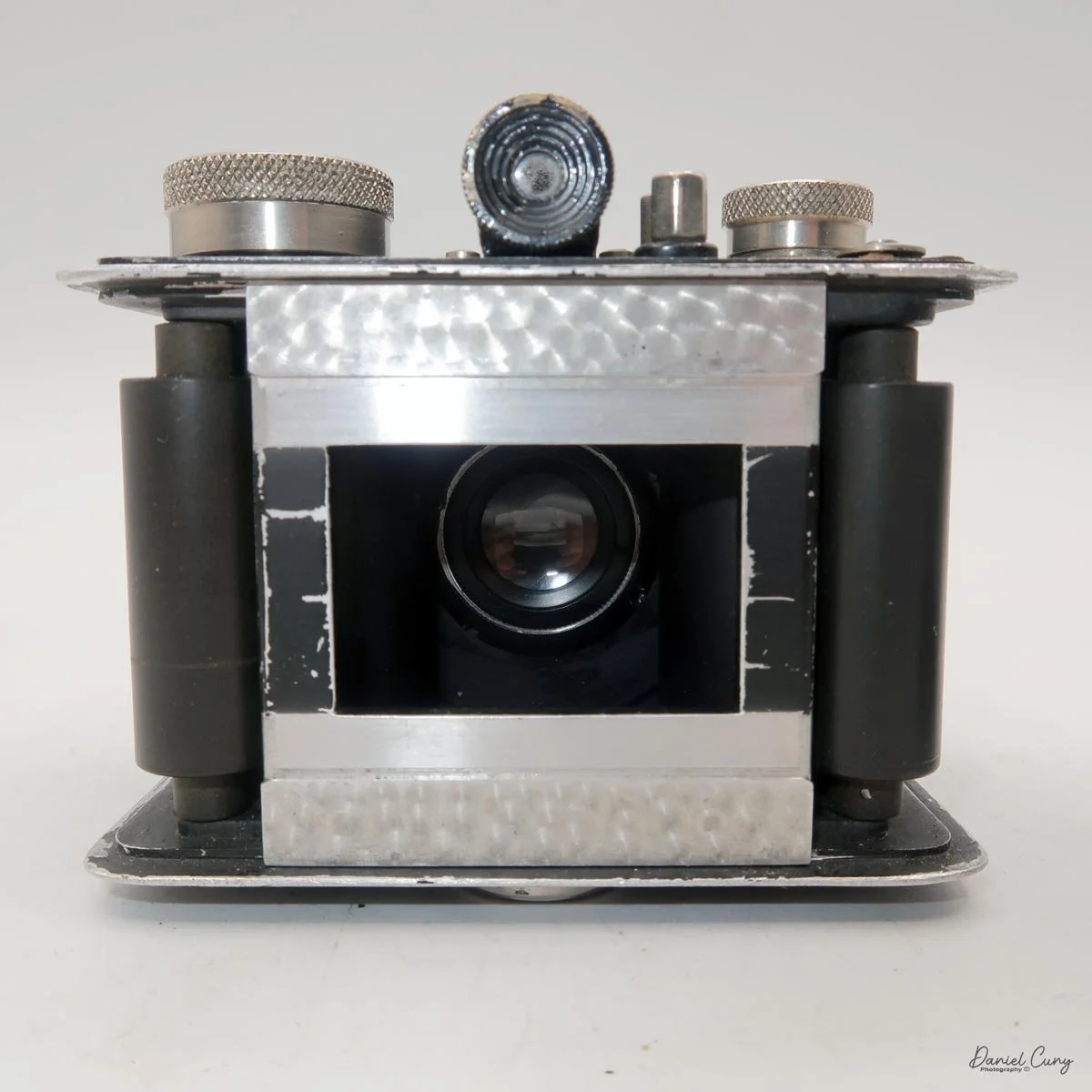
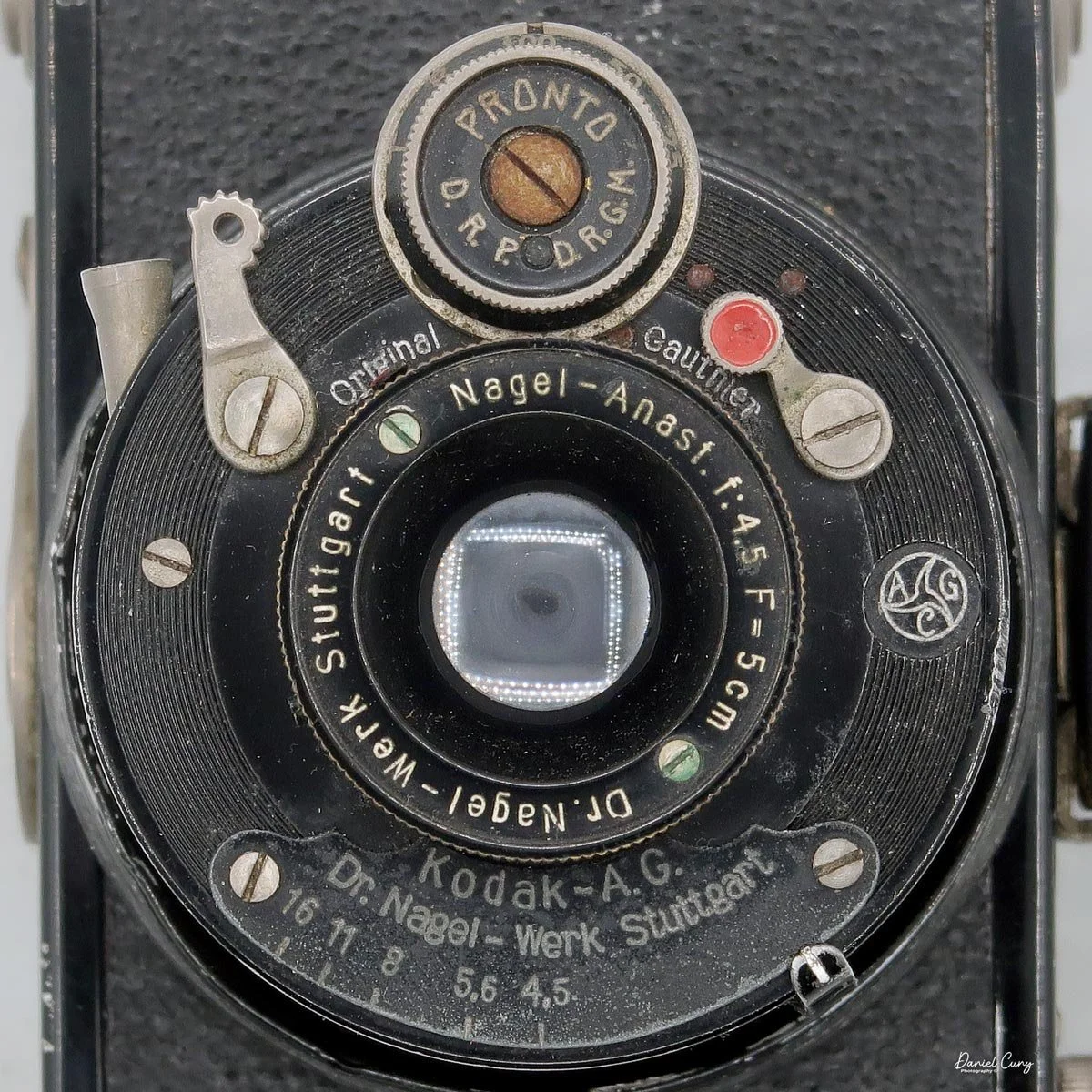
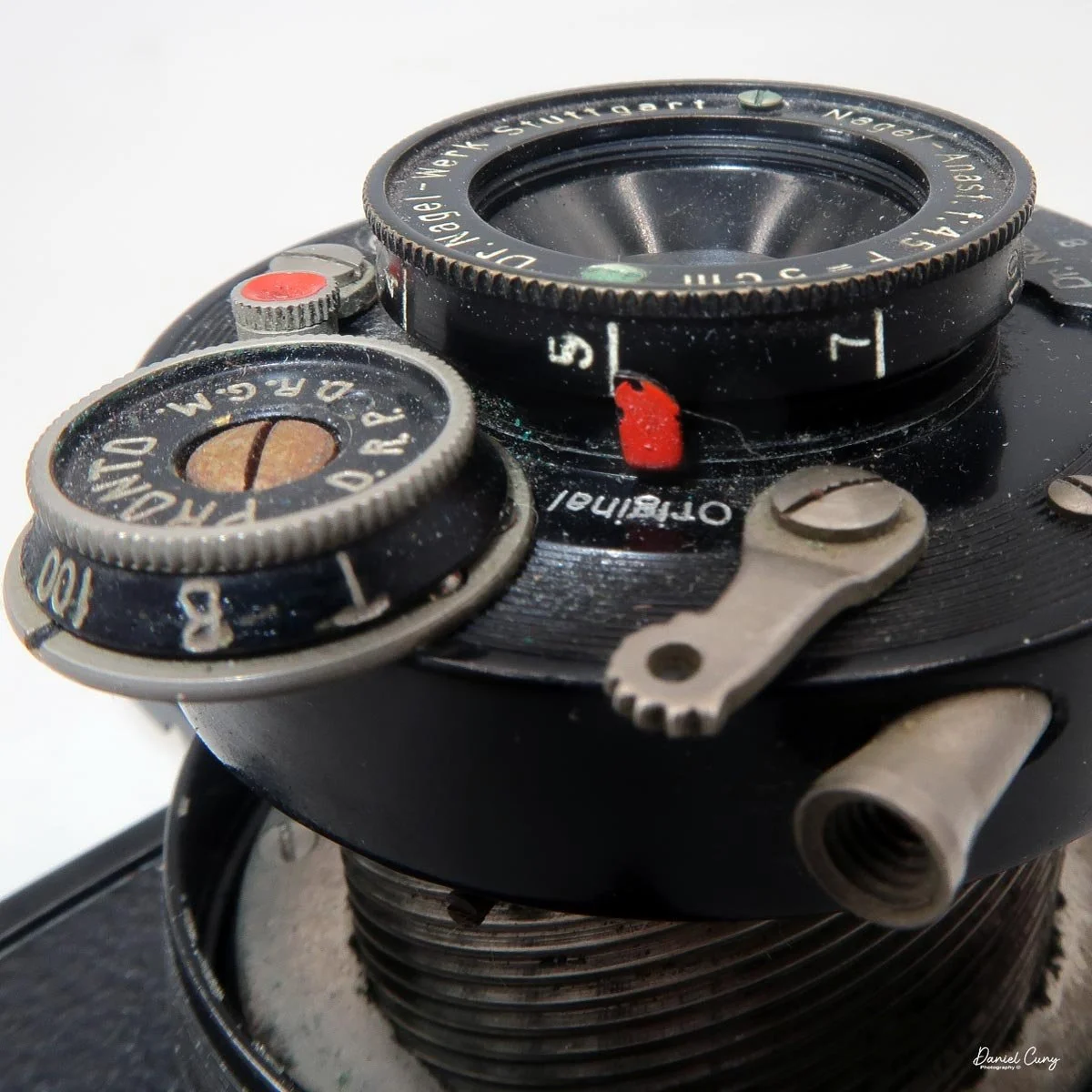
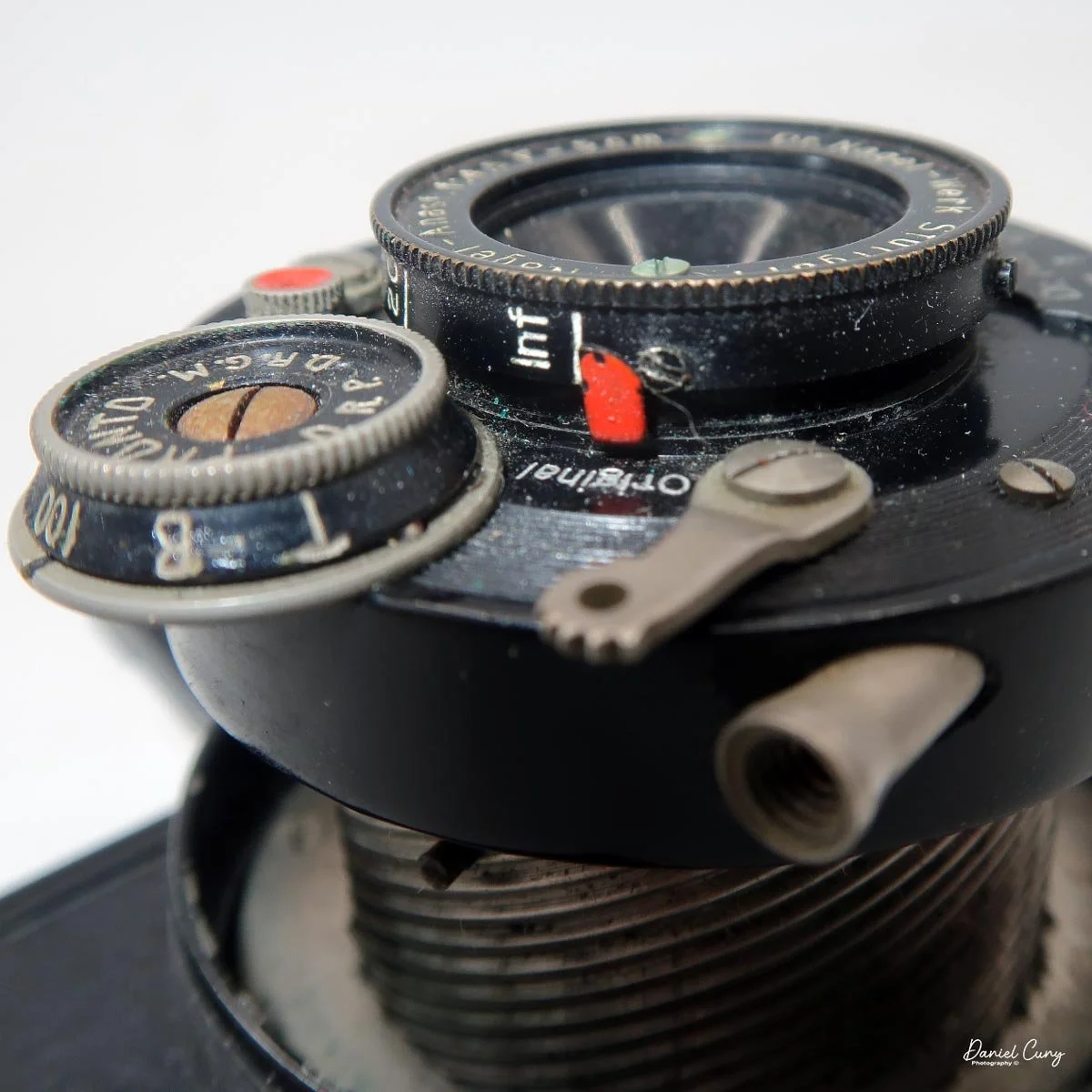
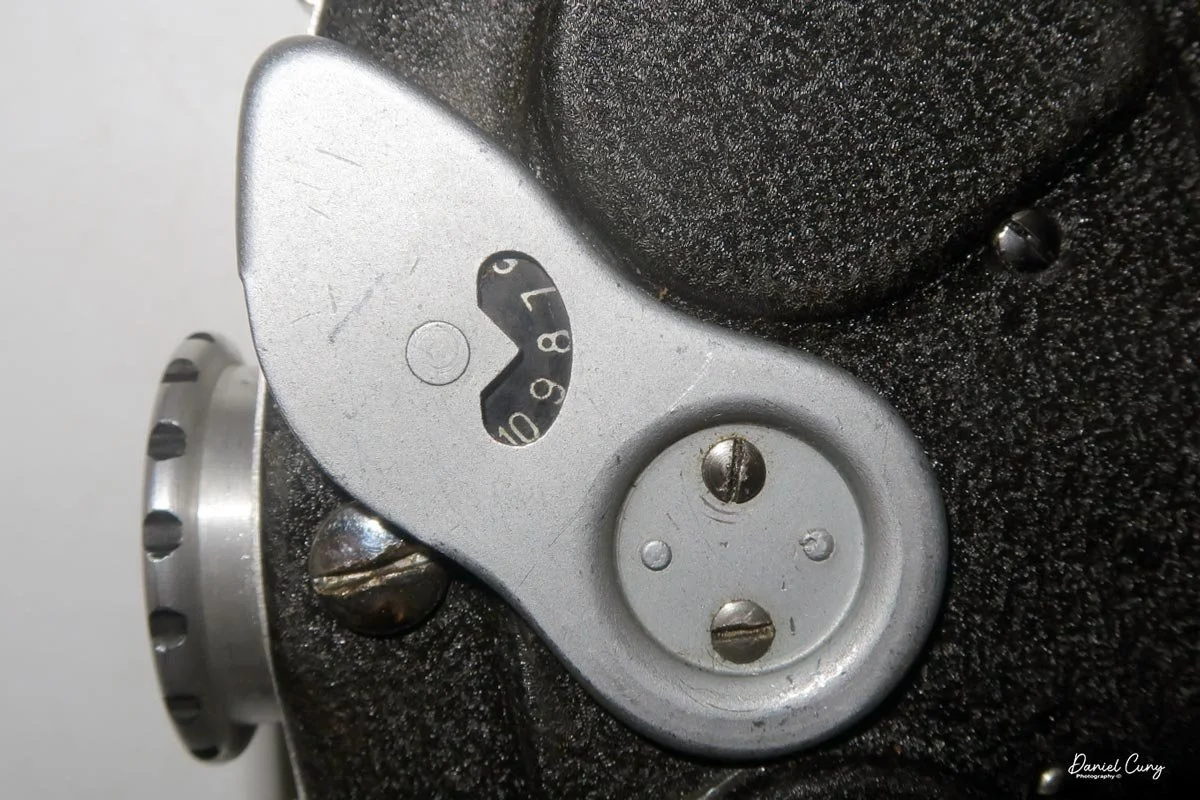
 My Nagel Ranca has a Nagel Anistigmat 5cm lens, an F/4.5 lens, a Protar shutter located above the lens with only three shutter speeds: 1/100, 1/50, 1/25, along with "T" for timed and "B" for Bulb. The aperture ring, which is located below the lens, has a slide that controls the aperture. The minimum aperture setting is F/16.

Shutter/Aperture settings on Kodak Ranca camera

As mentioned previously, the lens/shutter needs to be turned counterclockwise a quarter turn to extend the lens on the helicoid. The unusual thing about doing this is that the shutter release is now in an odd and awkward position for use. The lens/shutter is retracted, and the shutter release is in the 11:00 o'clock position, which is ideal for tripping the shutter. However, when the lens is extended, it puts the shutter release in the 7:00-8:00 o'clock position, making it a bit more awkward, in my opinion. 

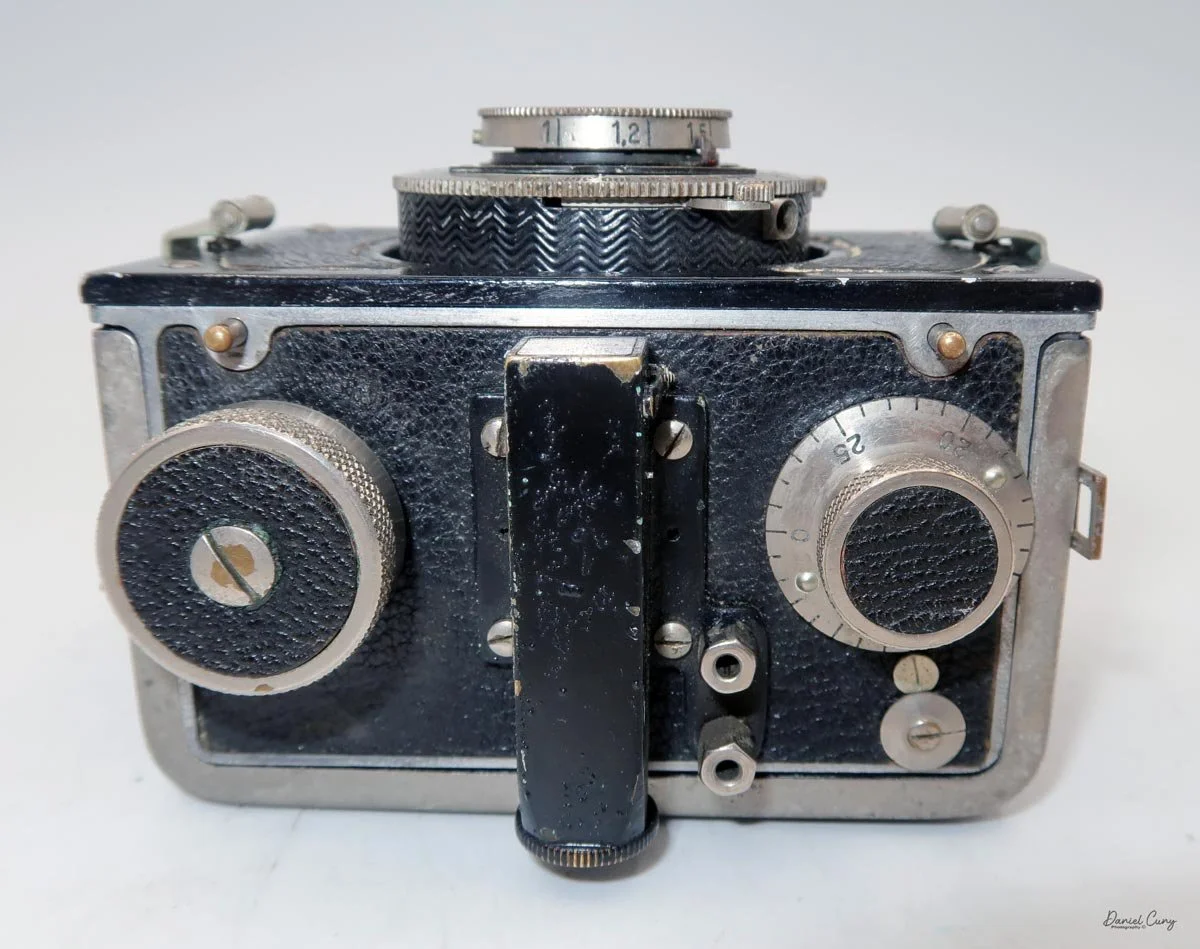
 There is a shutter release socket behind the shutter release if needed. On the right side of the shutter dial is a self-timer with a large red dot. Pull it down to set the self-timer, then press it to activate it. Mine isn't working properly, which is common for cameras from this era.

The lens is a front focusing lens. This means you rotate the lens itself to the desired distance from you to the subject. This is shown on the lens by a red line, which is also in an awkward position when the lens is extended. As opposed to being on the top, it's now on the side.

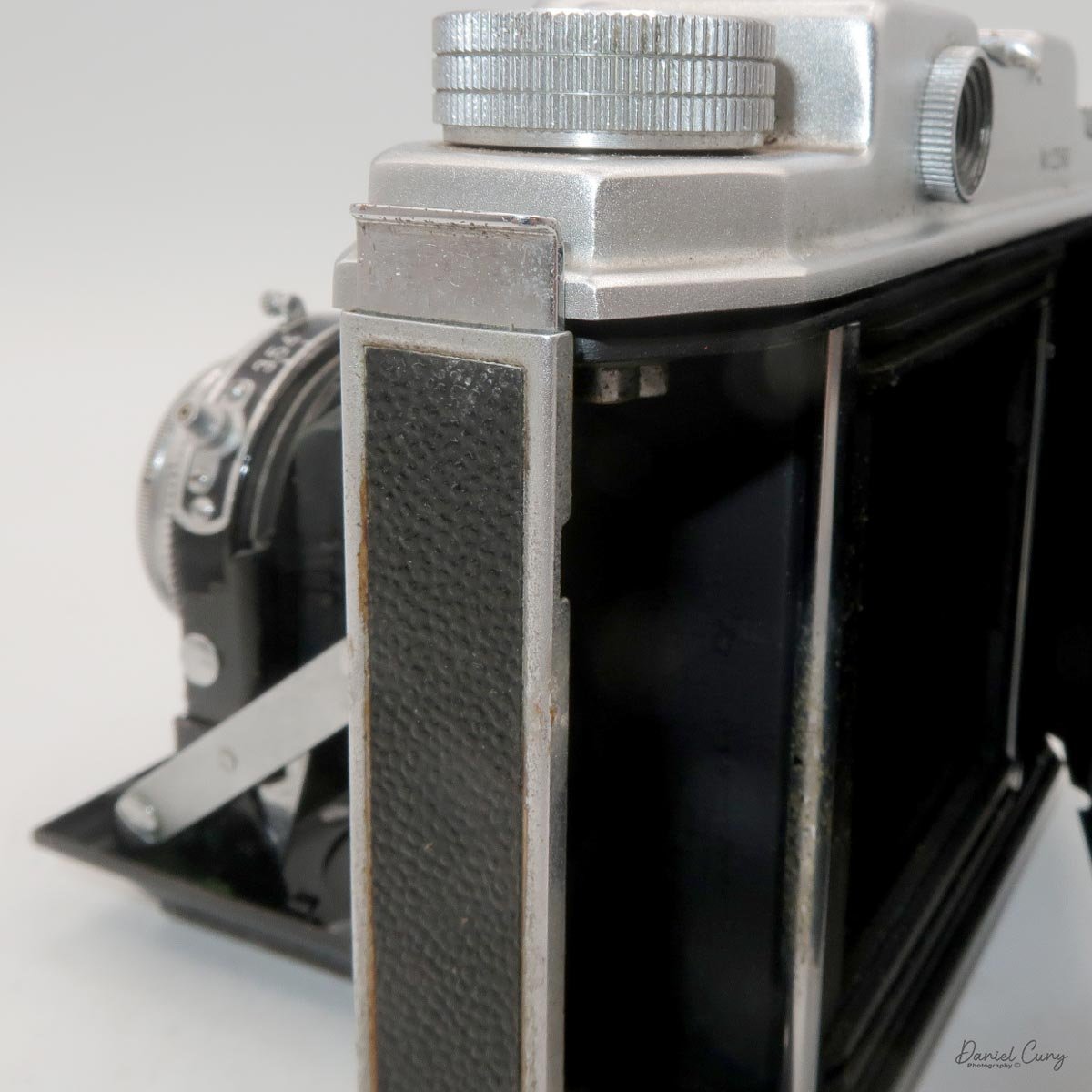
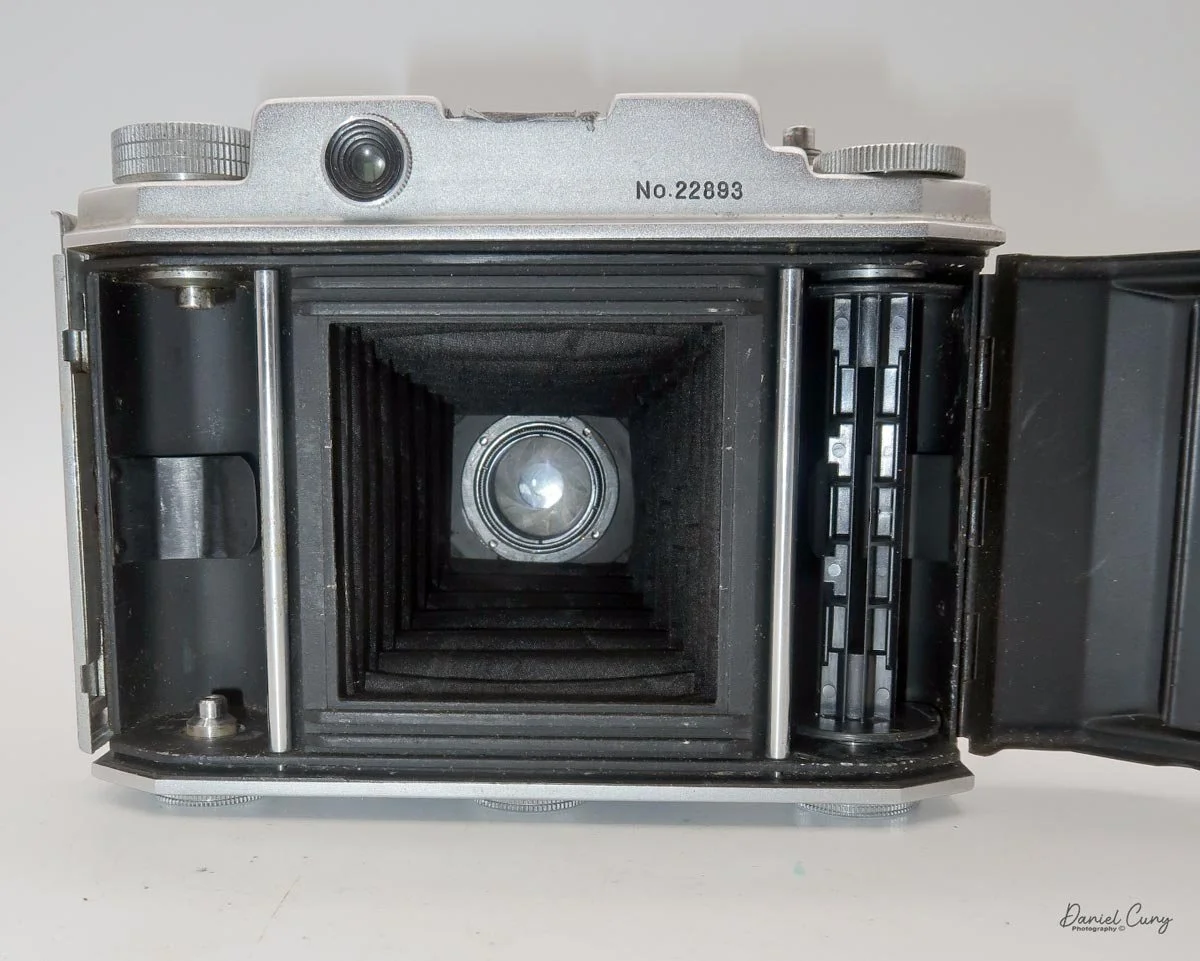
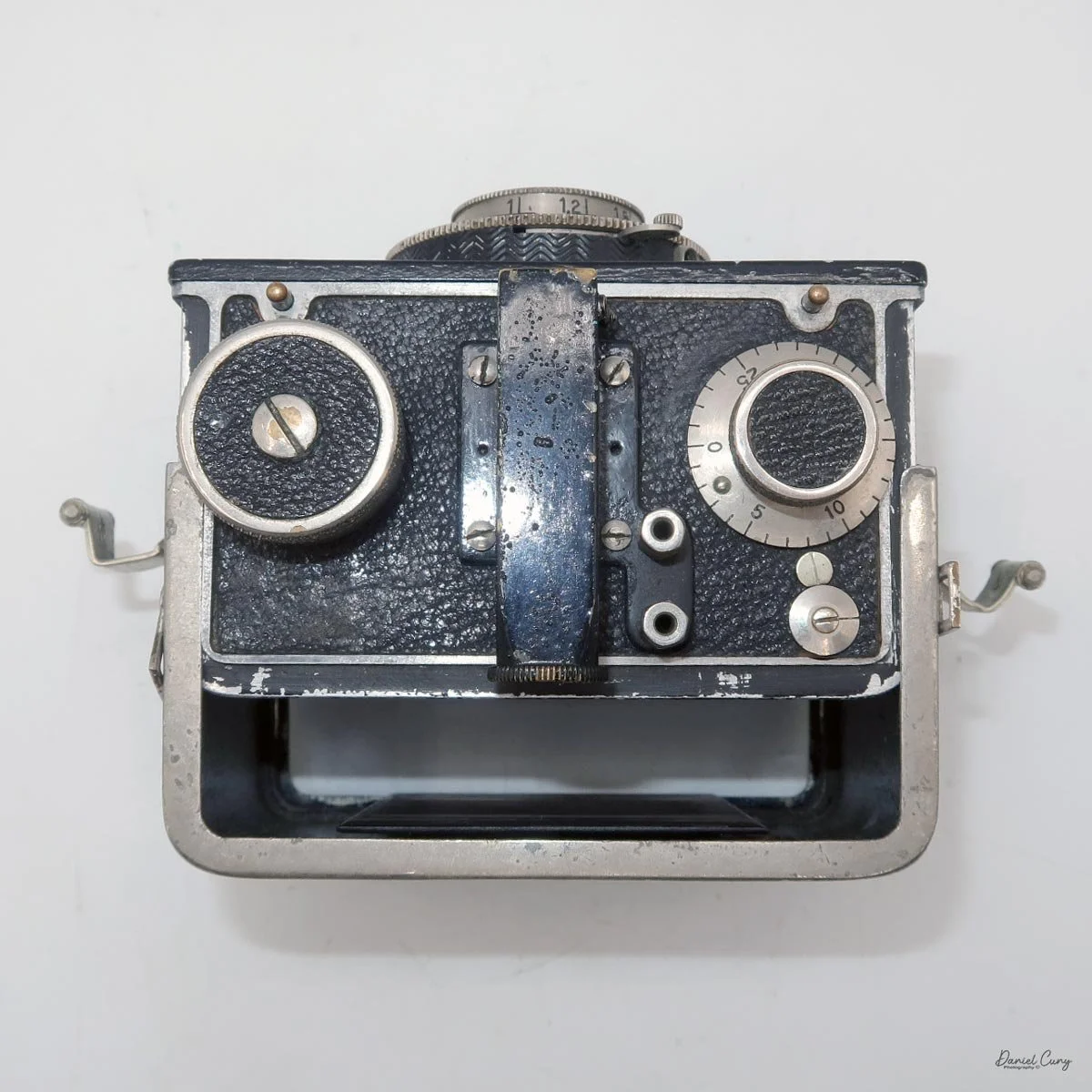
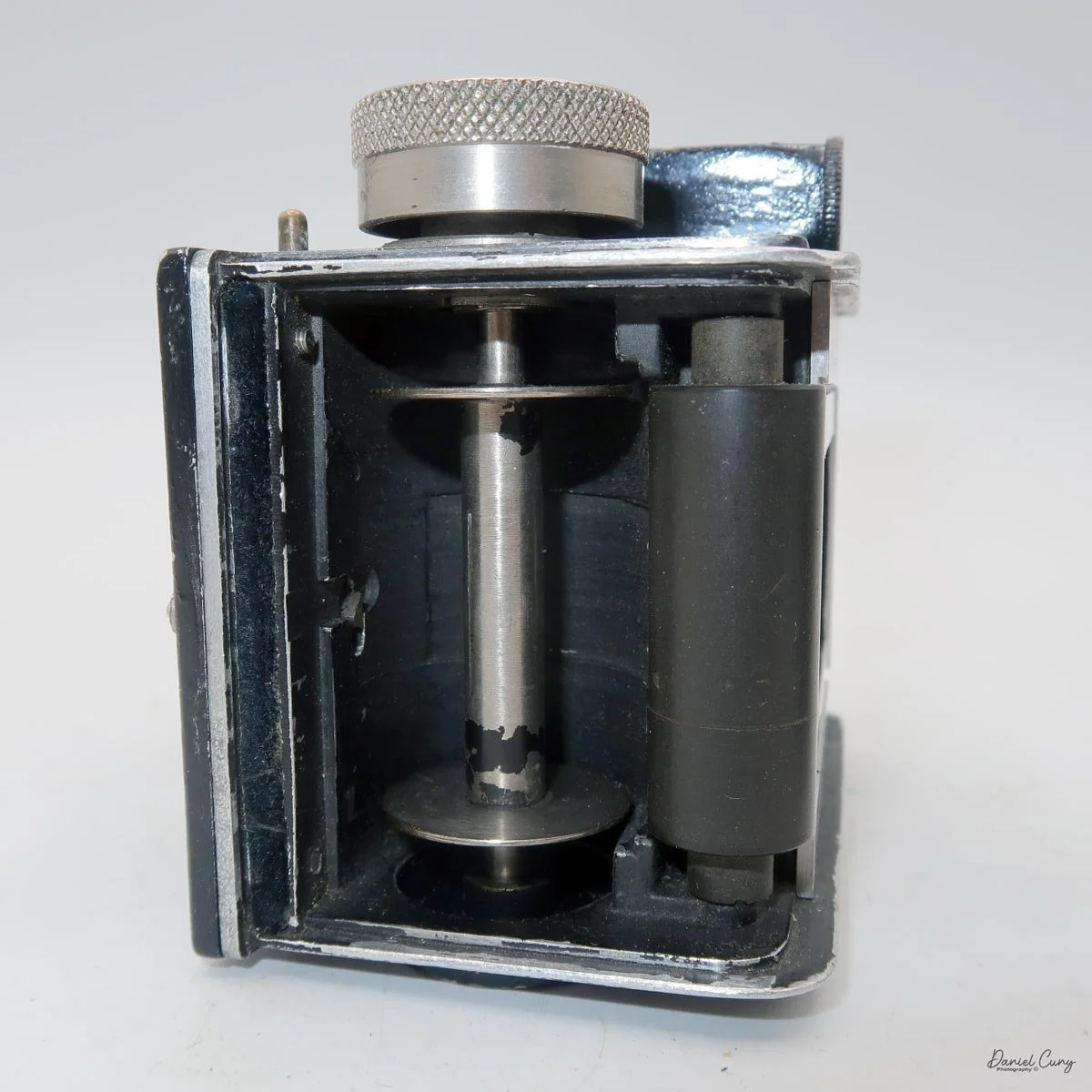
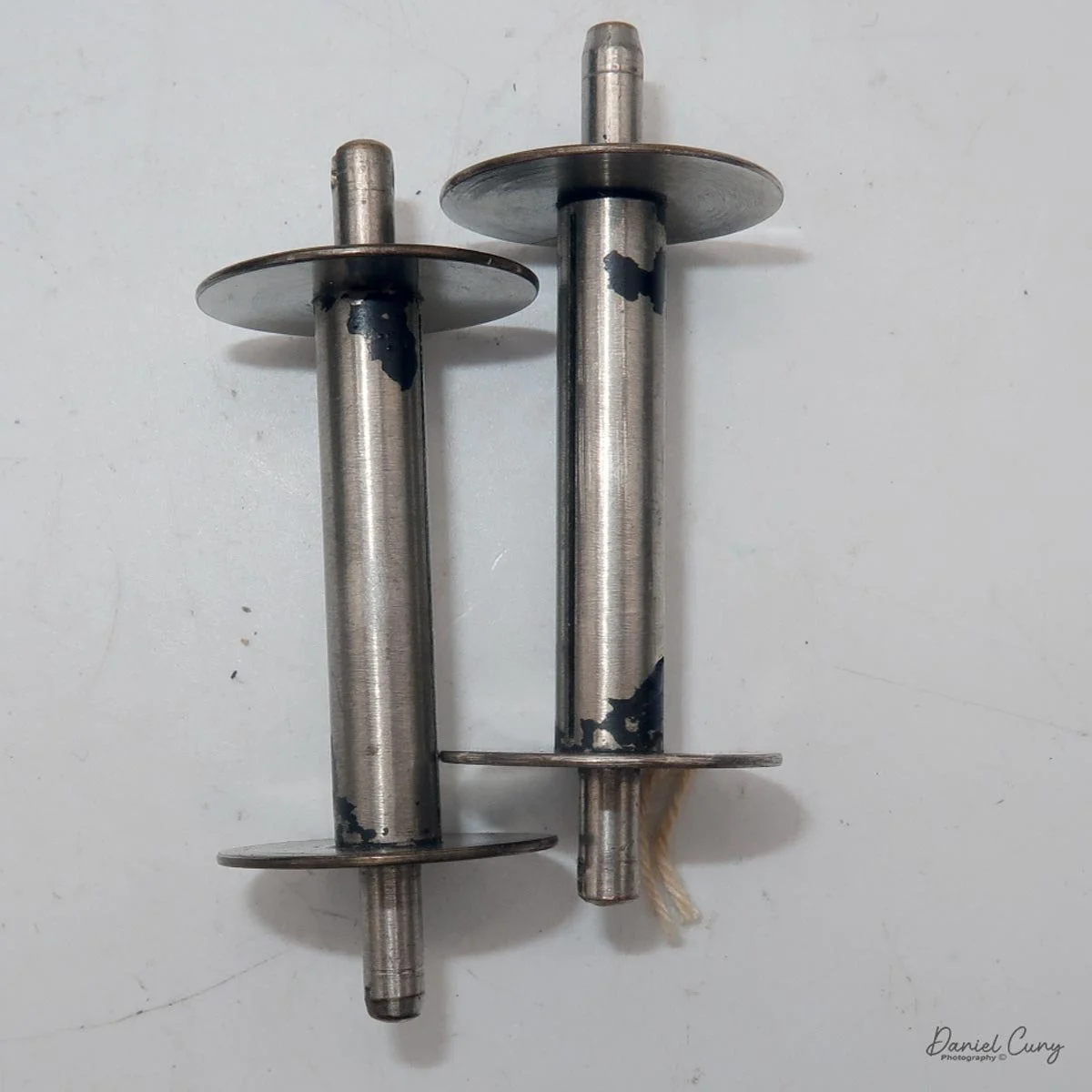
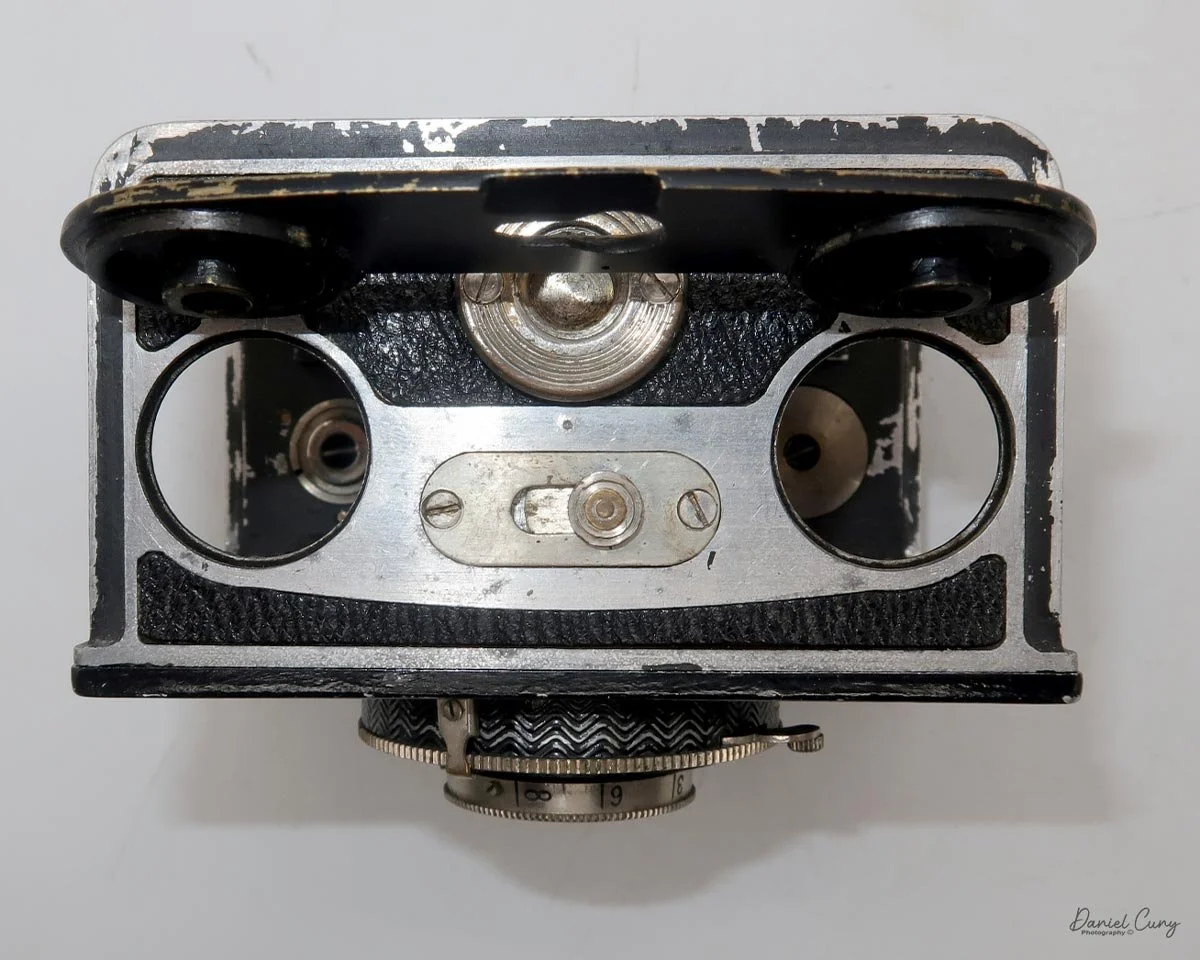
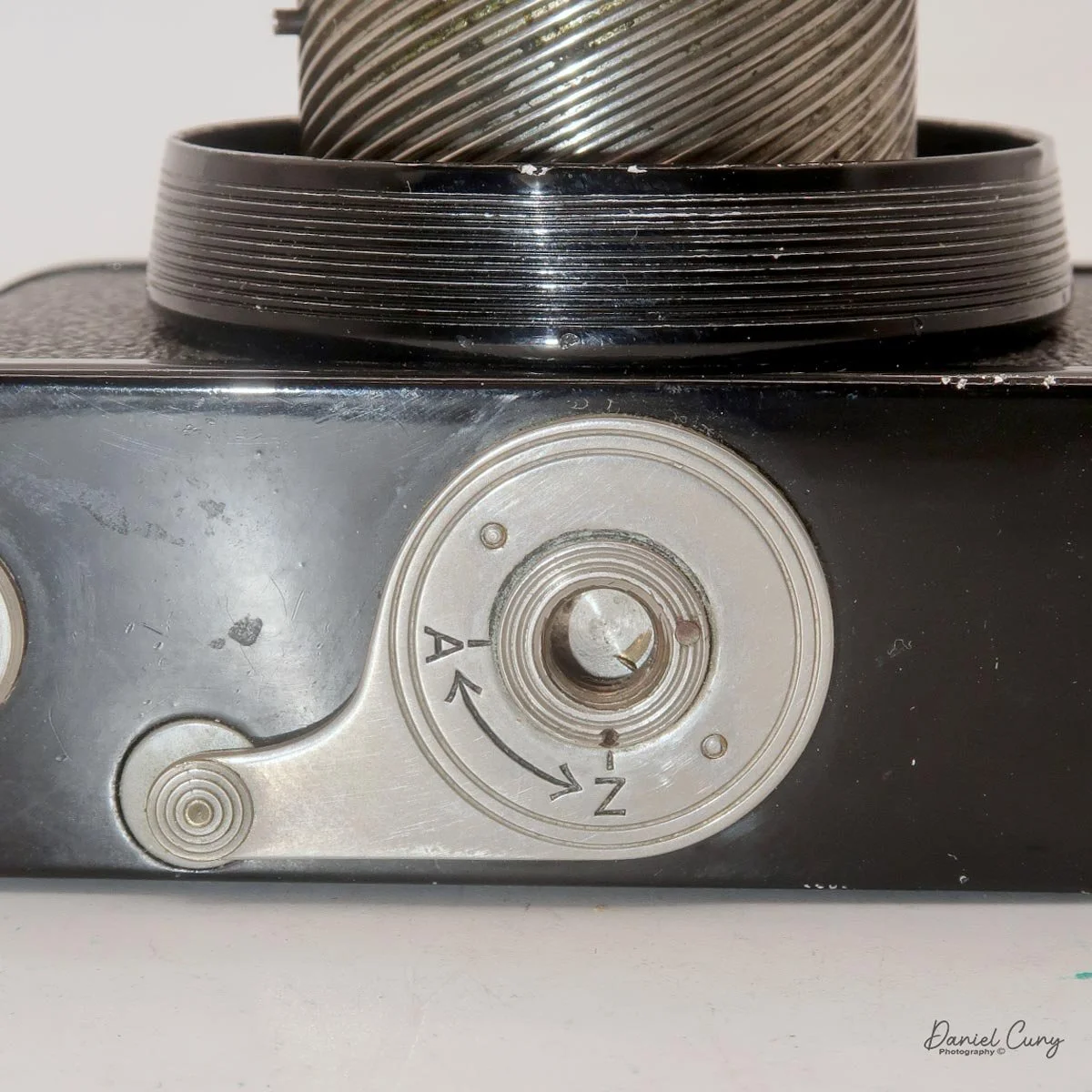
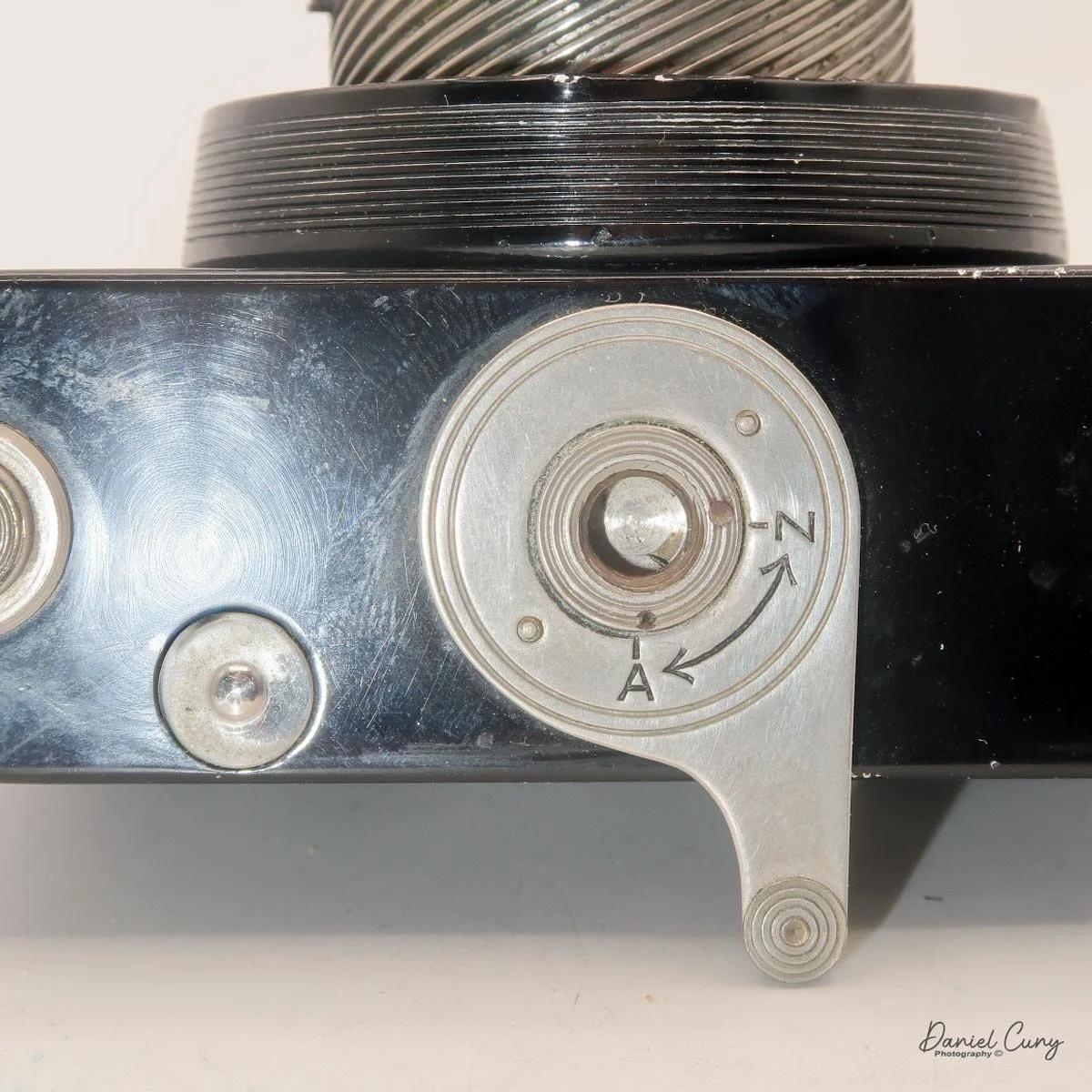
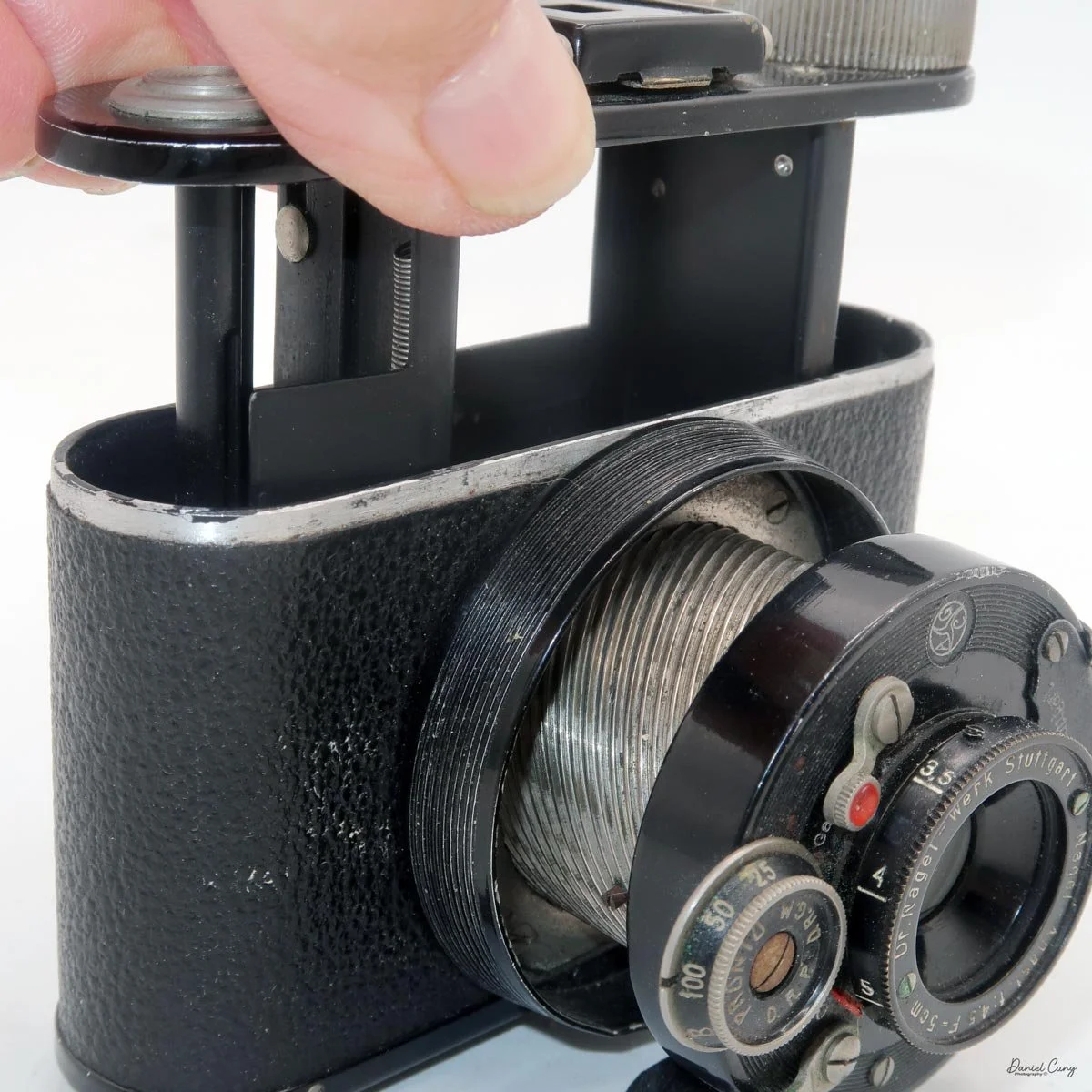
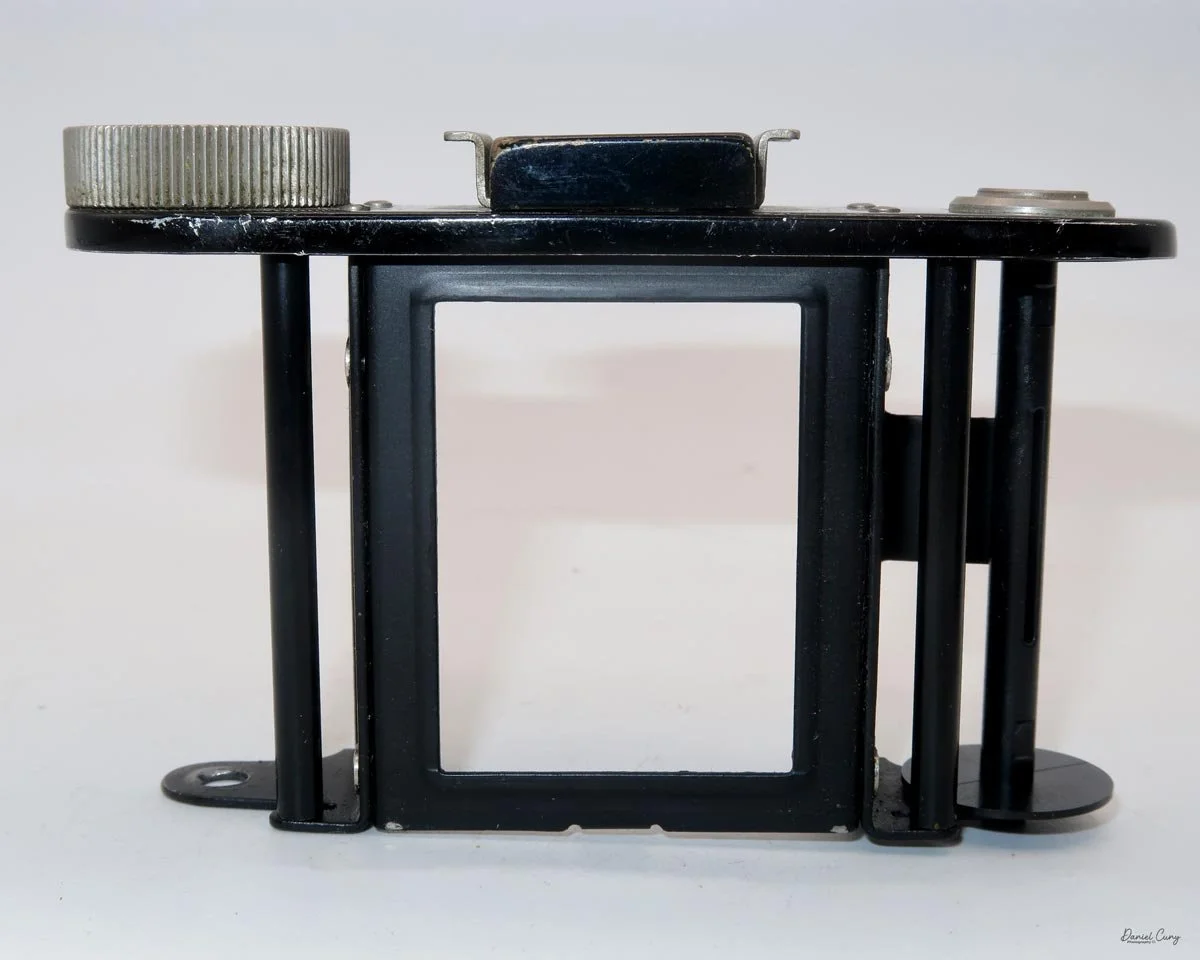
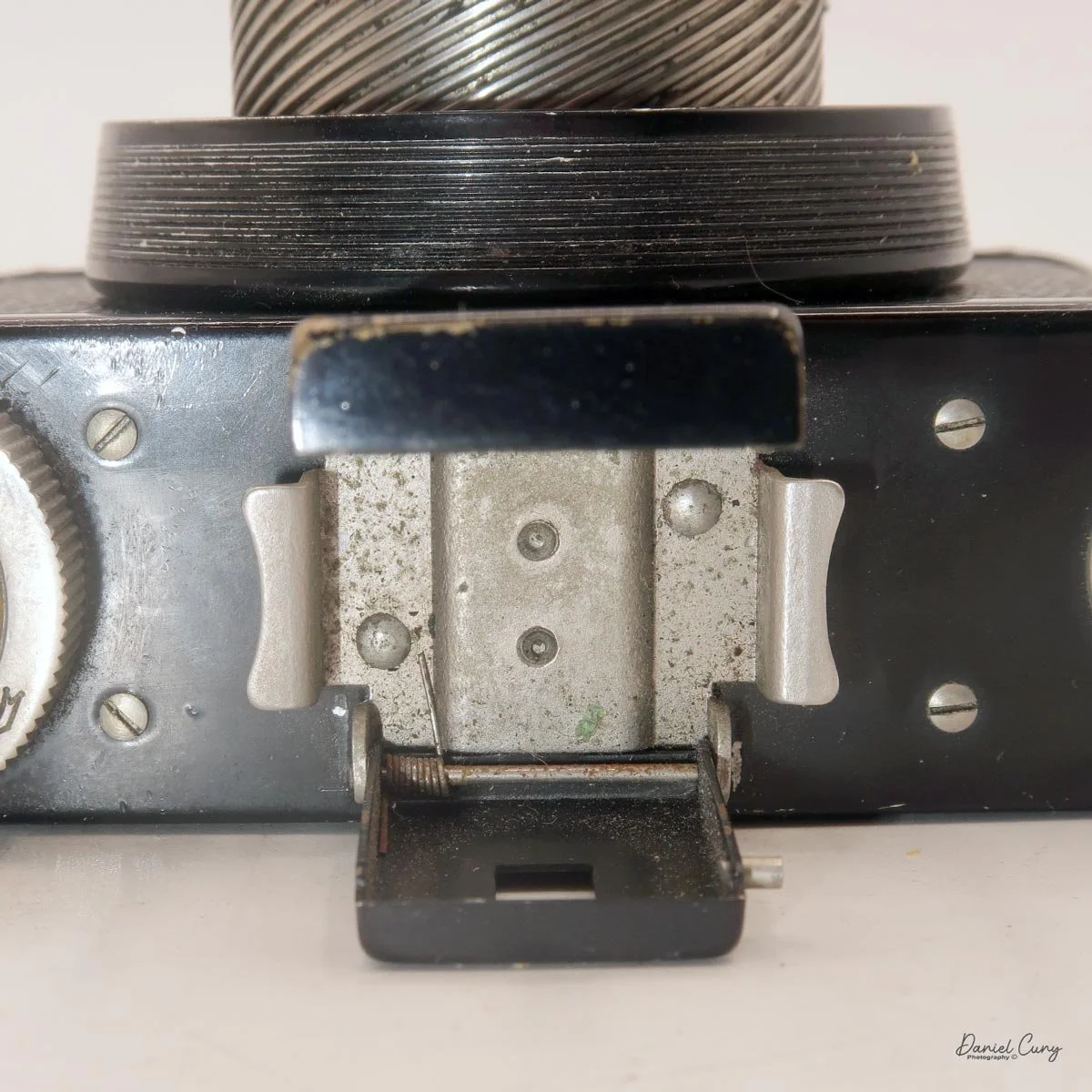
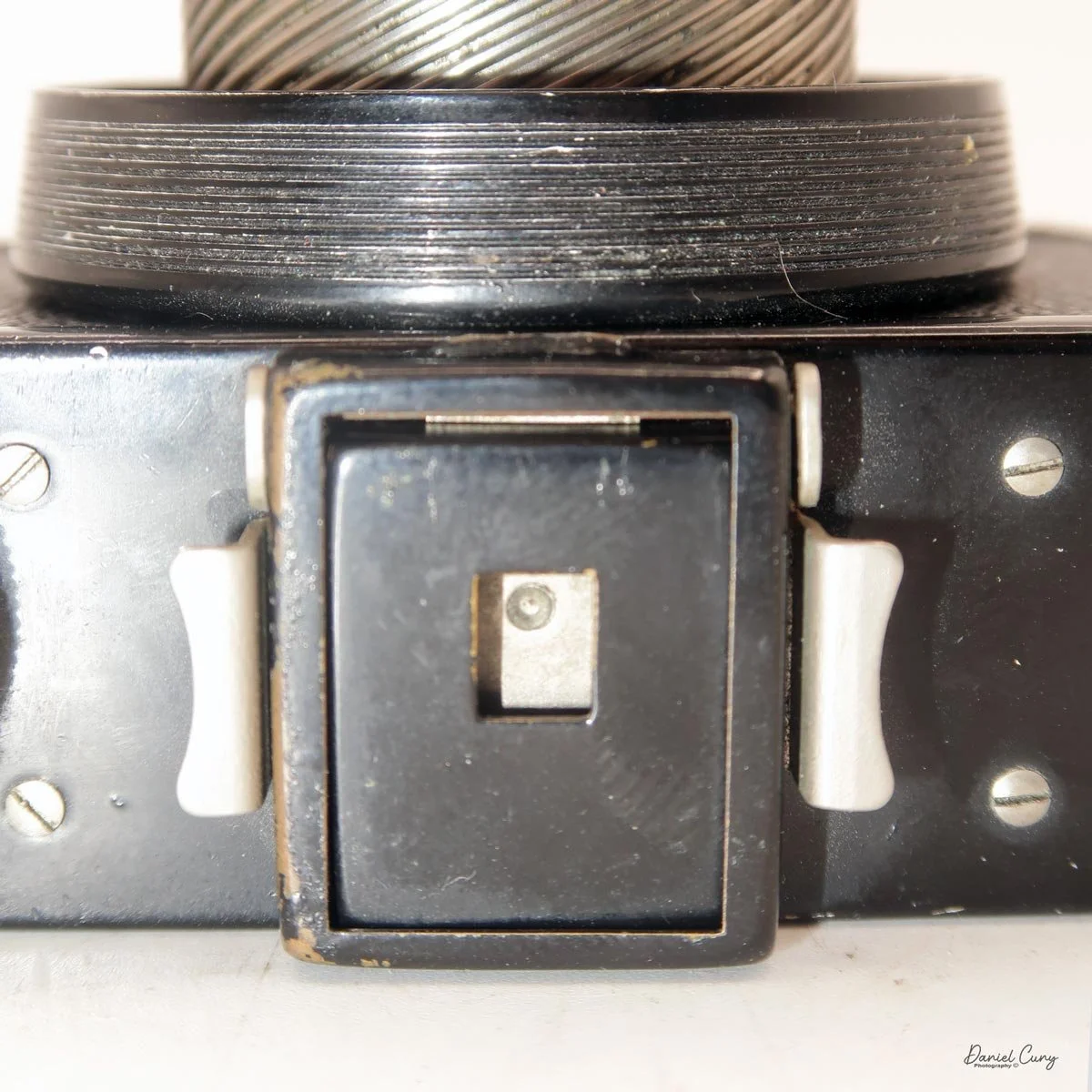
 The lens doesn't need to be extended to open the camera to load film into it. Slide the lever on the bottom of the camera to unlock the film chamber from the camera body. Gripping the chrome handles on either side of the viewfinder and lifting up allows you to remove the film chamber. Once removed, load the 127-size film into the film holder, then slide the film holder back into the camera body and lock it in place with the bottom locking mechanism.

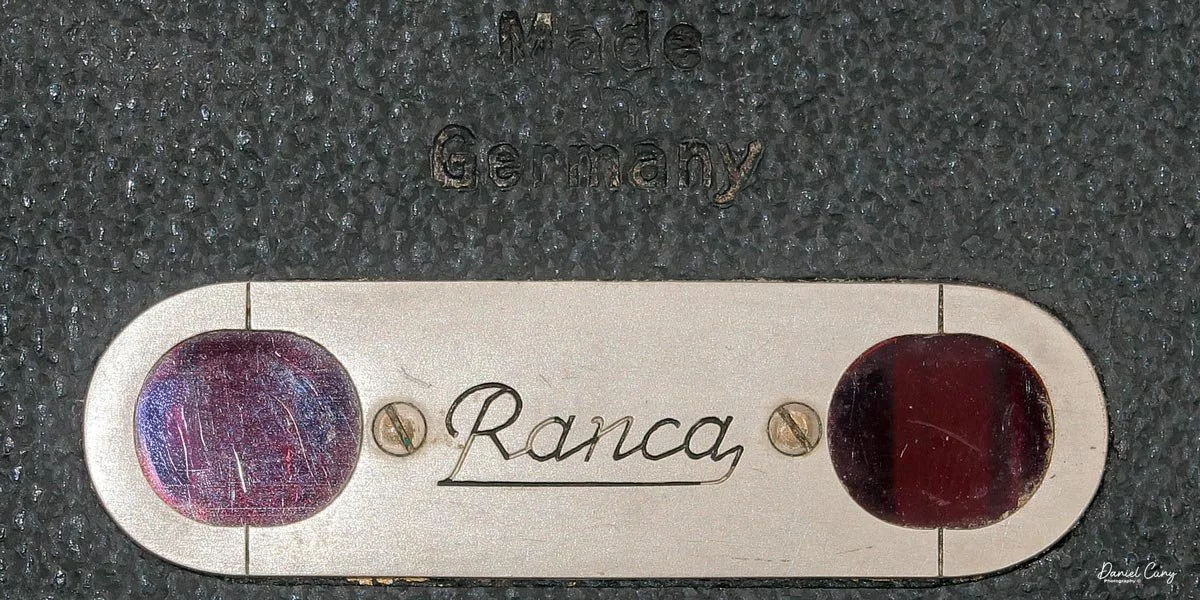
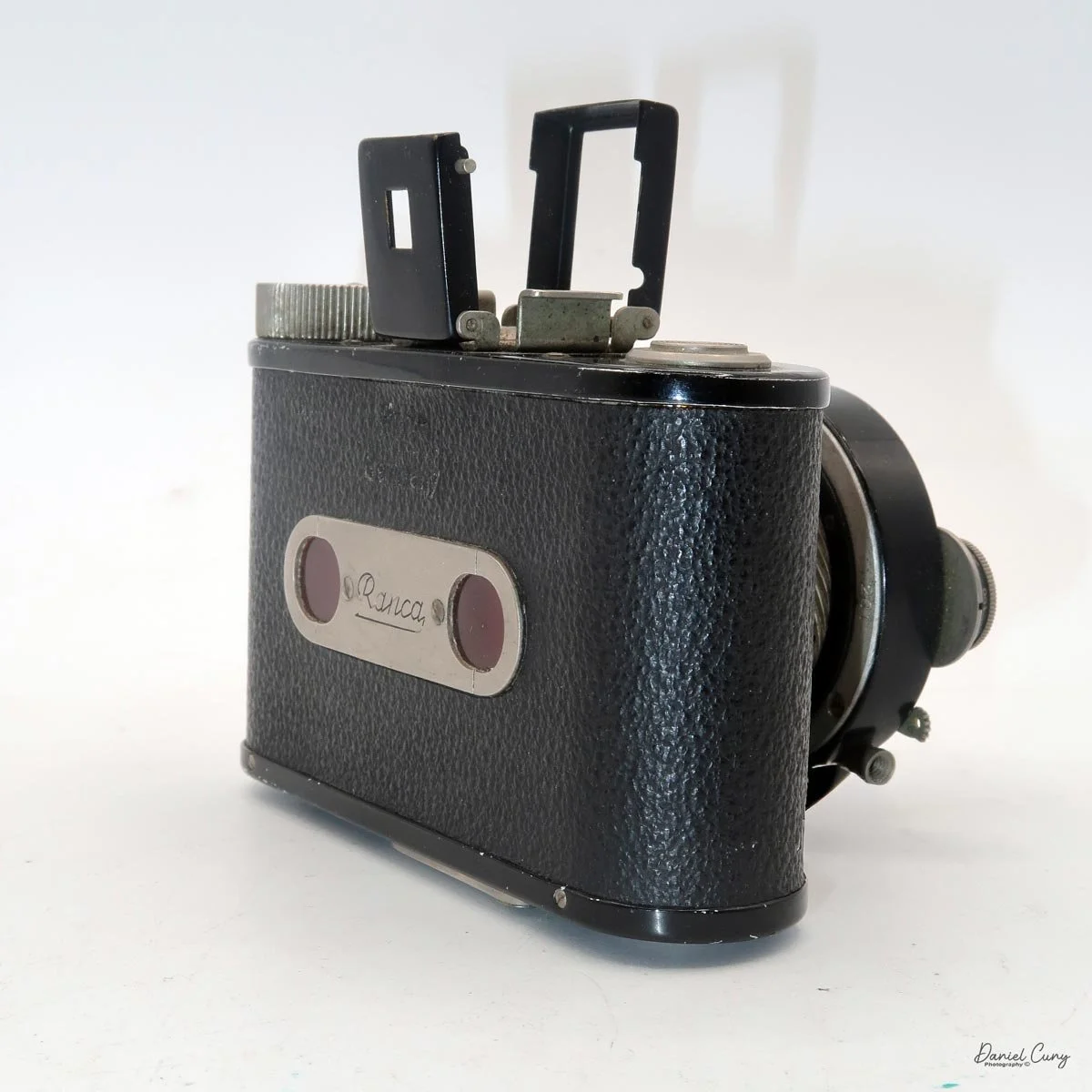
Since there are two red windows on the back, these are used to advance the film. First, wind the film until you see the number 1 in the right side window. Then take your photo. Now wind the film until you see the number 1 in the left side window. Take your next photo. Wind until you see the number 2 in the right side window. Then repeat this process through the number 8. At this point, you've taken 16 photos on your film, and it's time to get it processed, or process it yourself if you have the equipment and chemicals to do so.


My results:

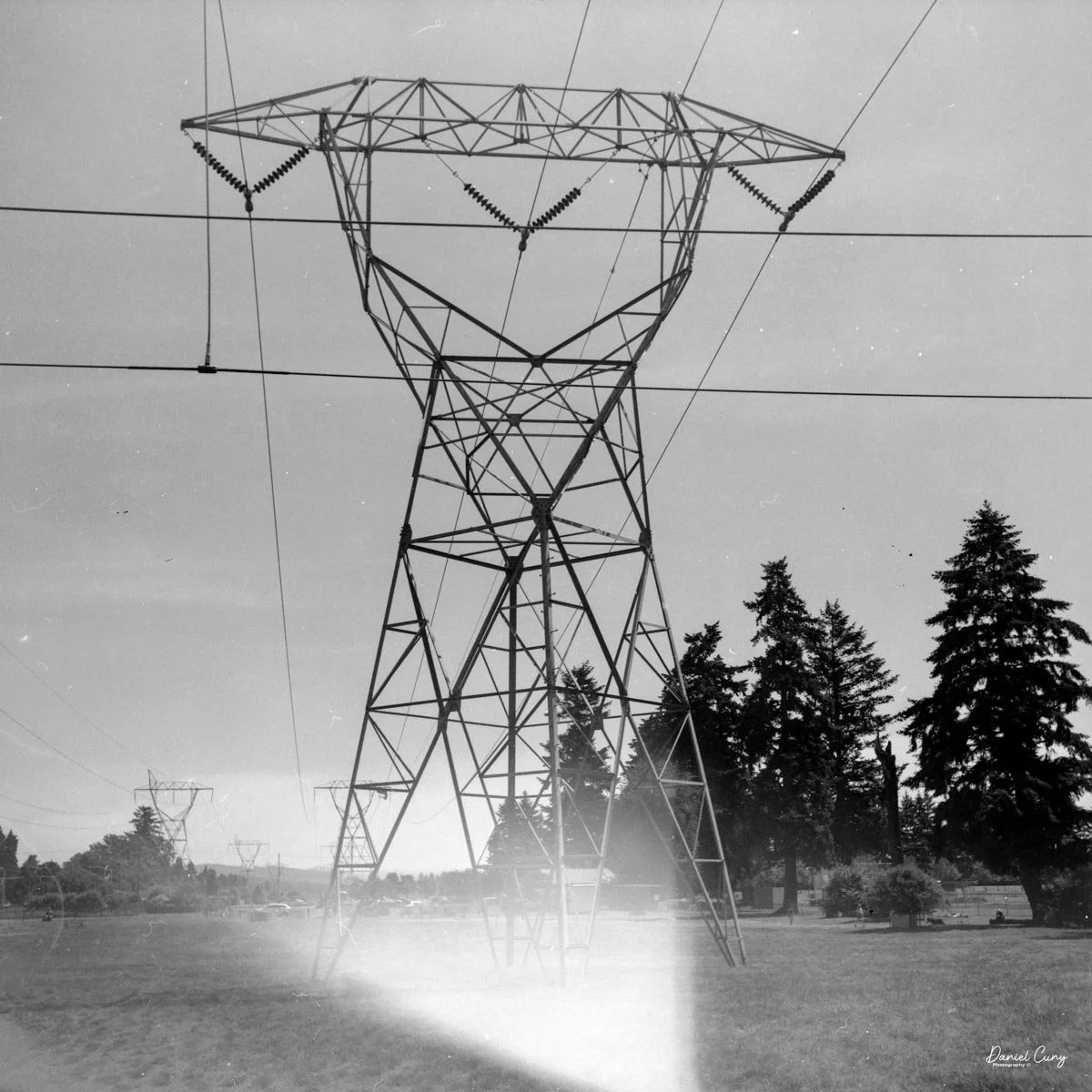
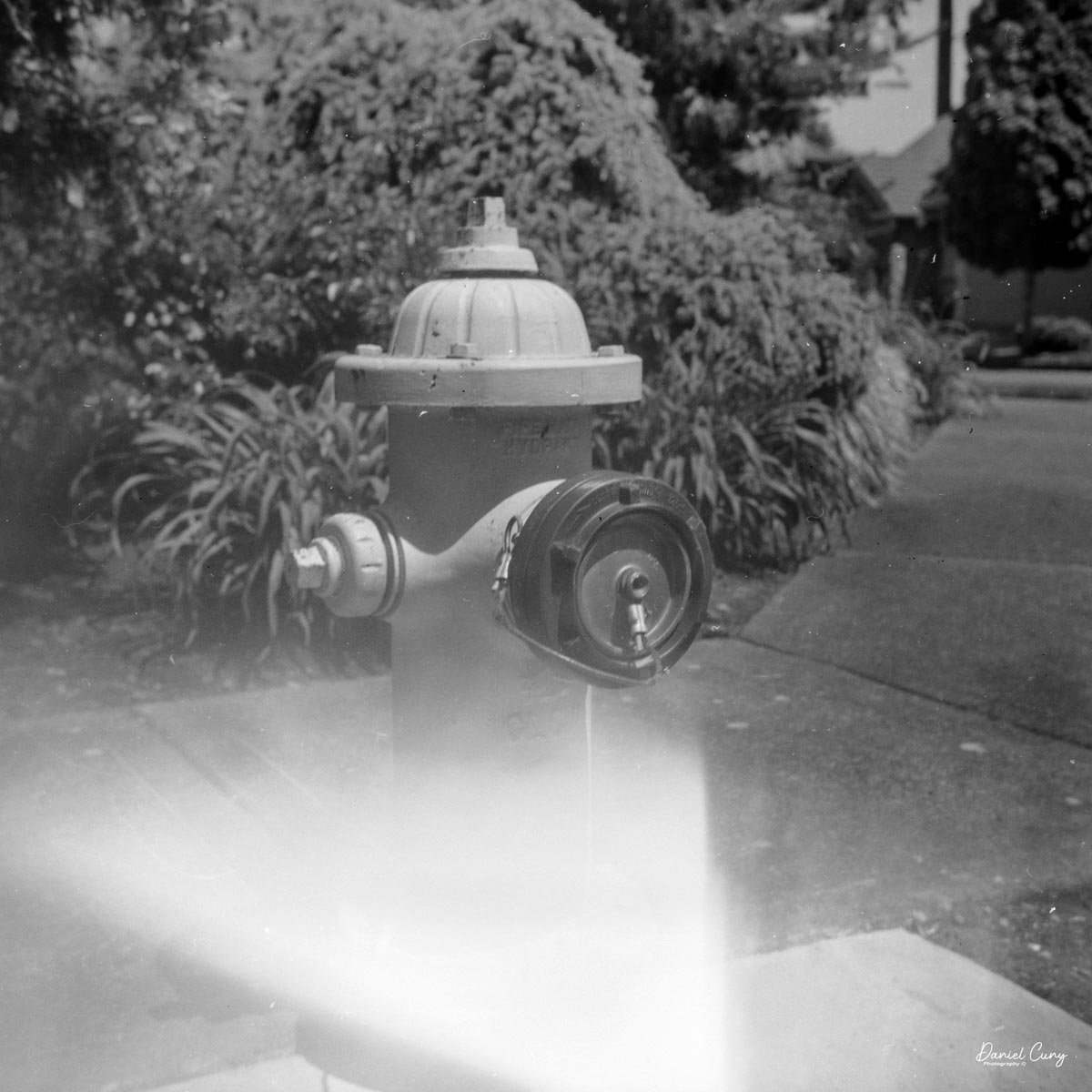
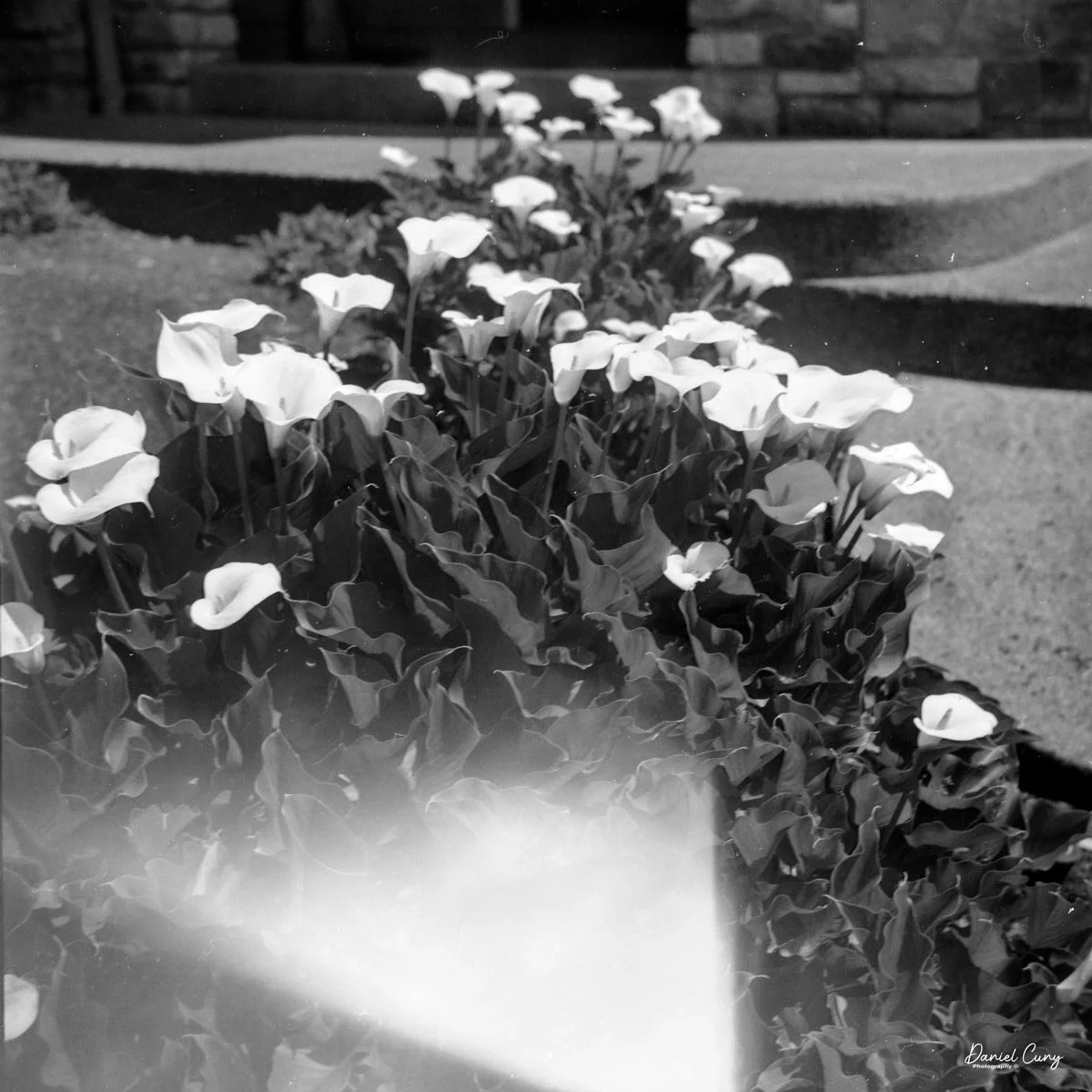
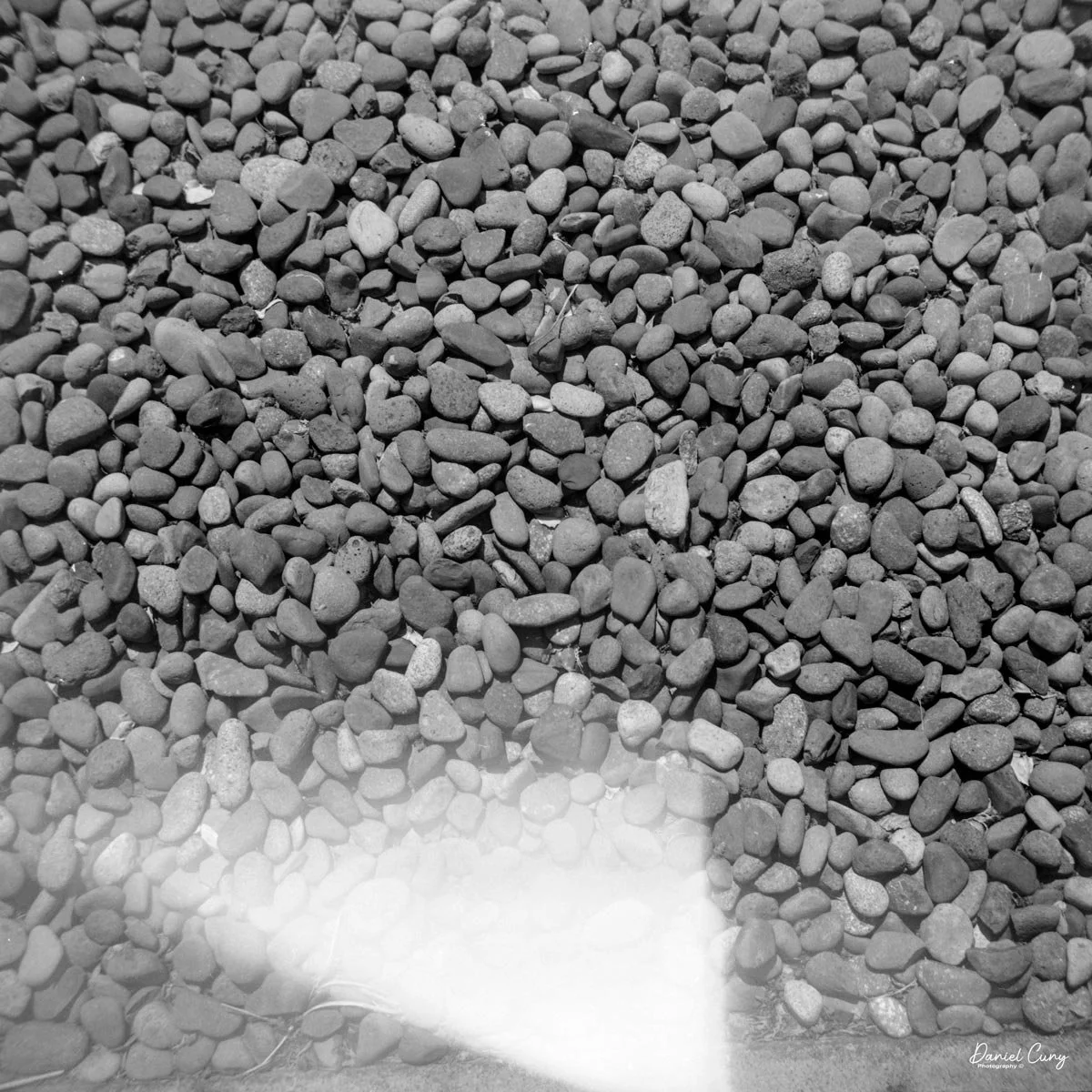
 I loaded a roll of 400 ISO film into the Nagel Ranca camera because the day started out overcast. With the limited shutter speeds available, I needed the extra sensitivity to make good images.

 The day turned out sunnier than expected, and the lack of a high-speed shutter meant I needed to shoot all the images at 1/100, f/16. Even then, the negatives turned out a bit denser than anticipated, but I made the corrections needed in post-processing.

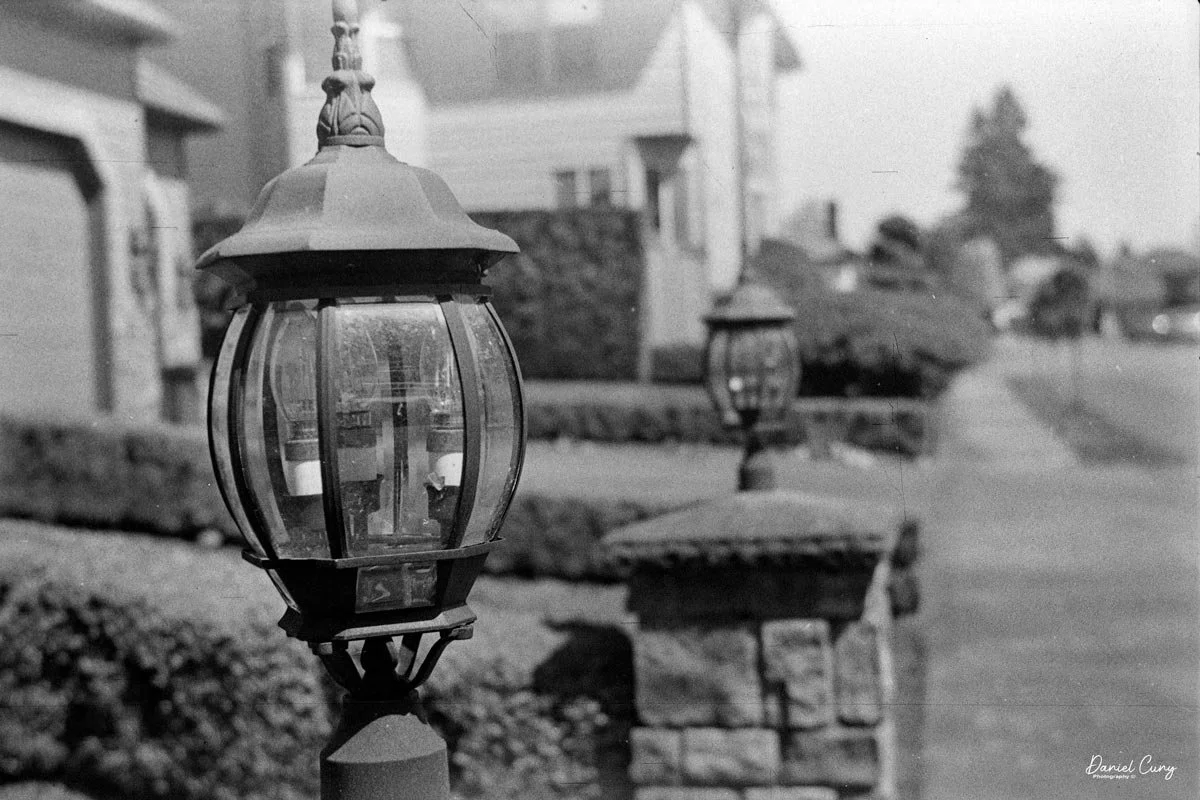
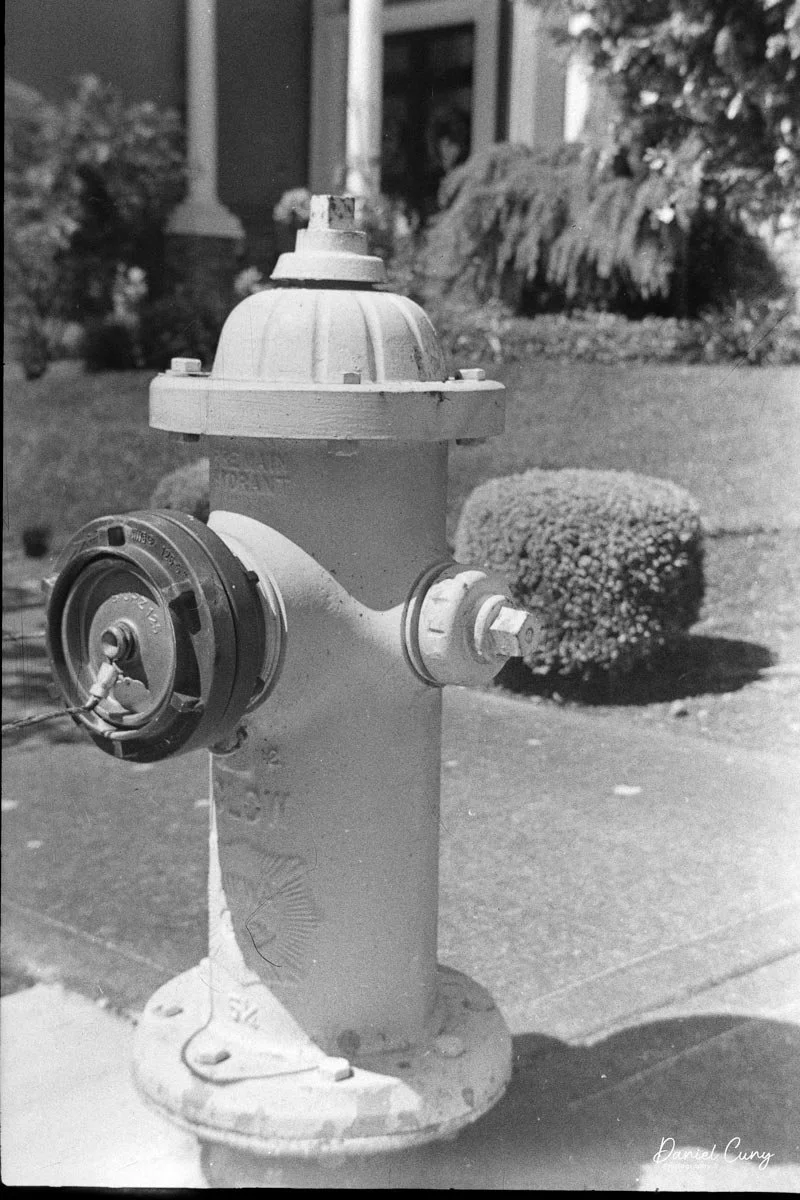
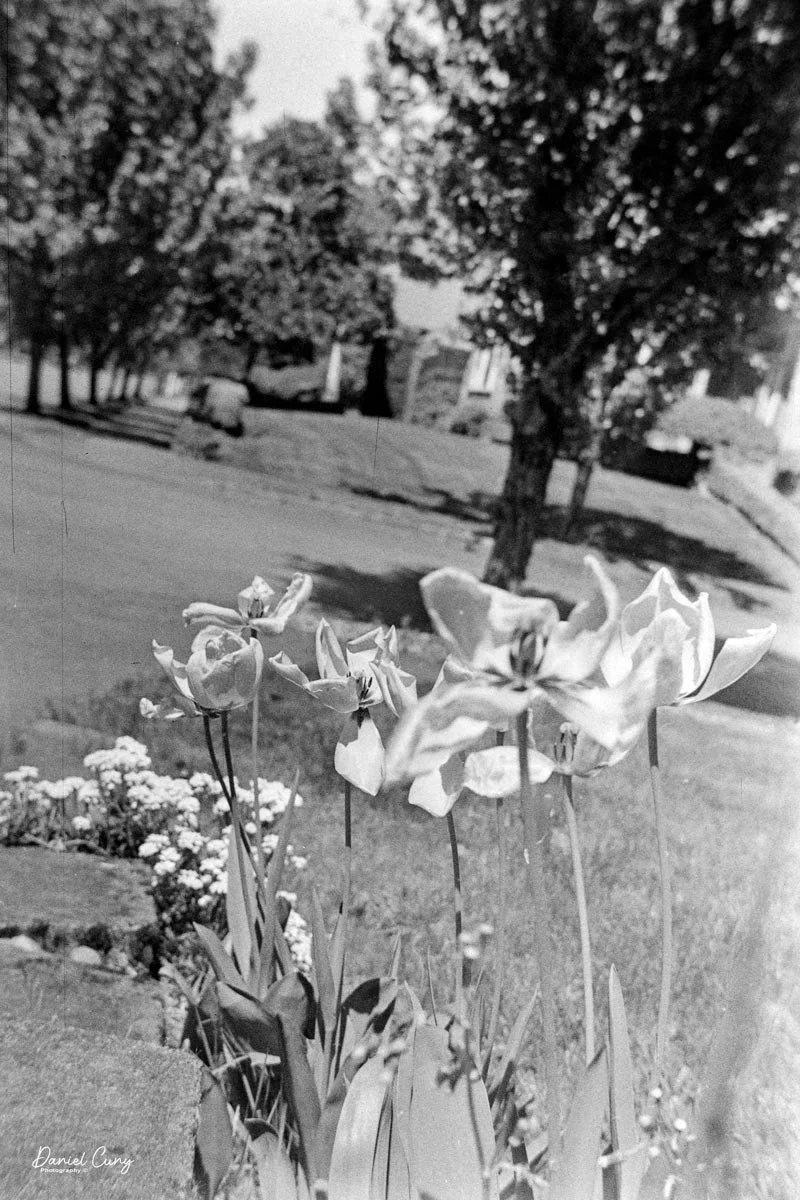
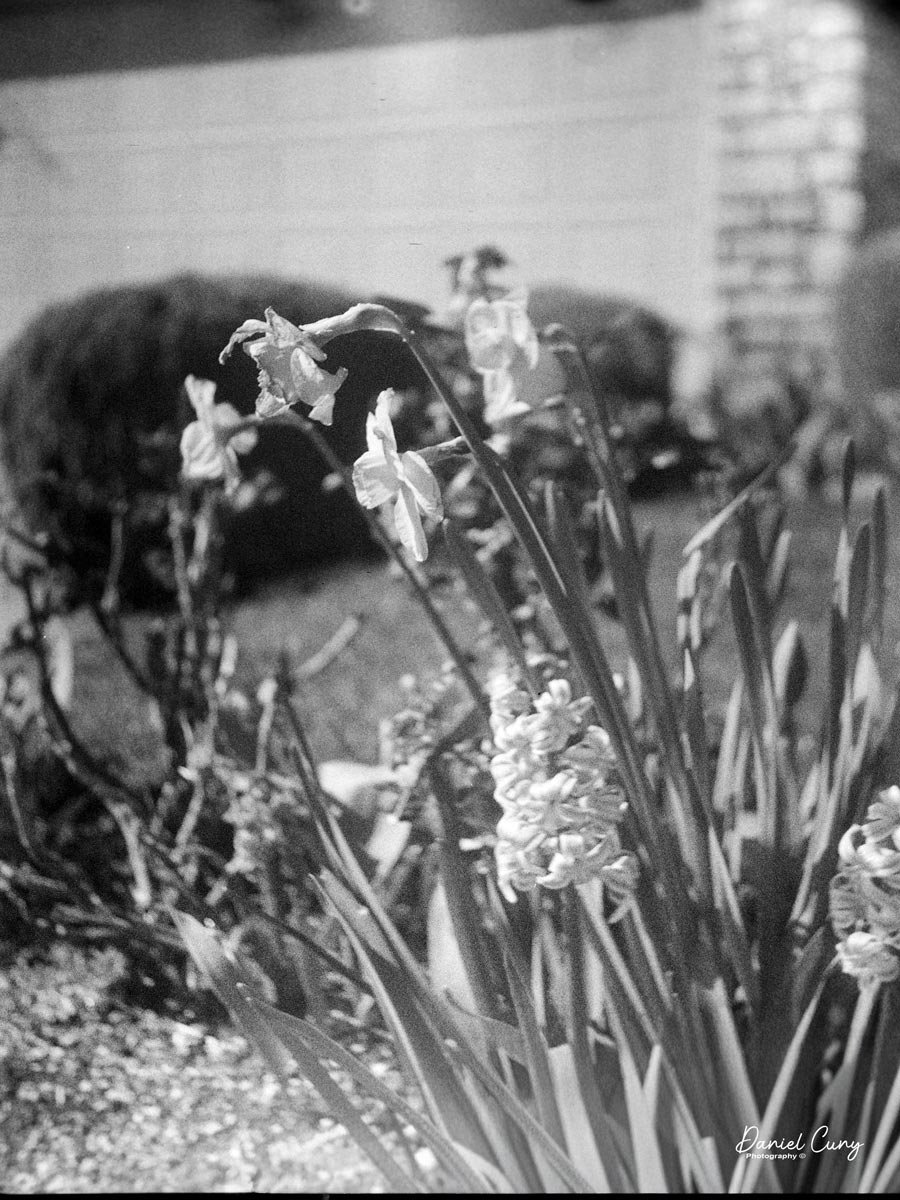
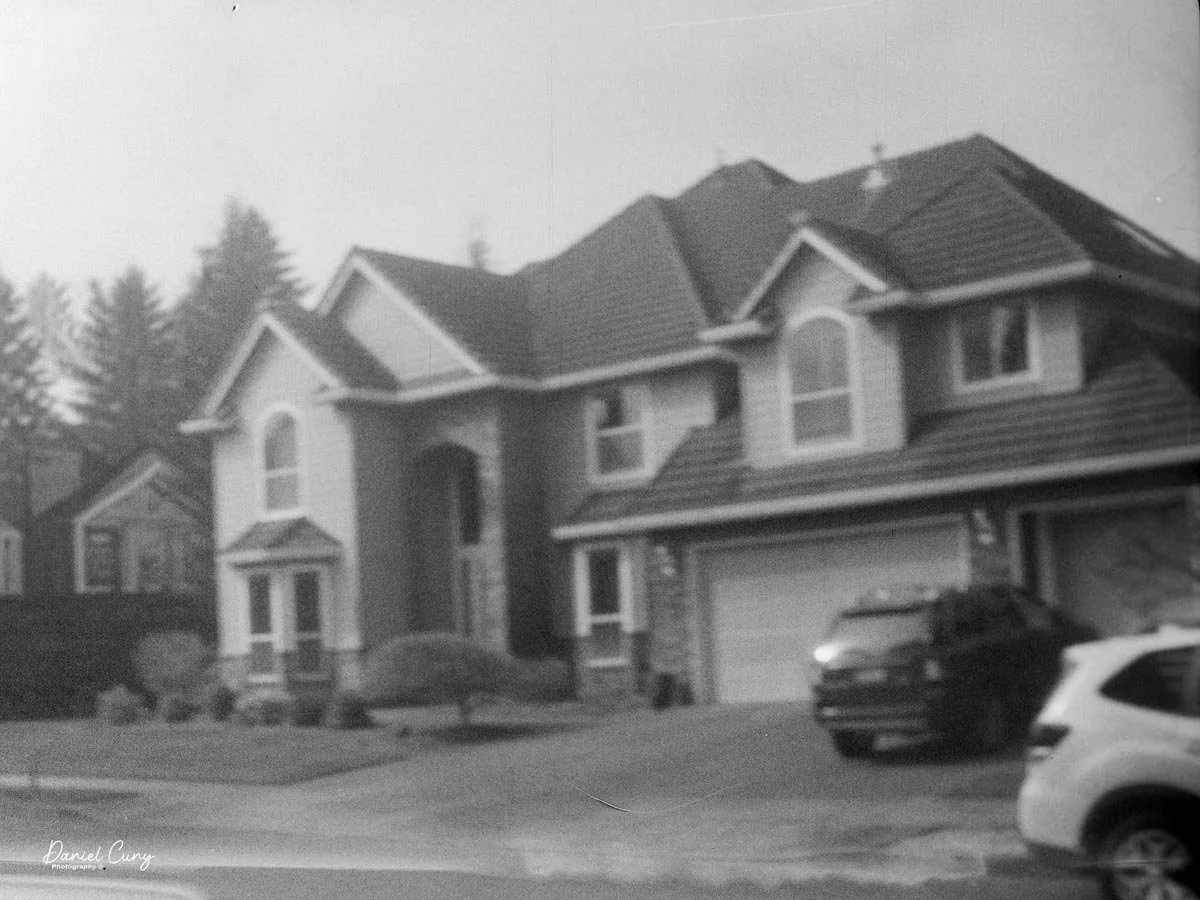
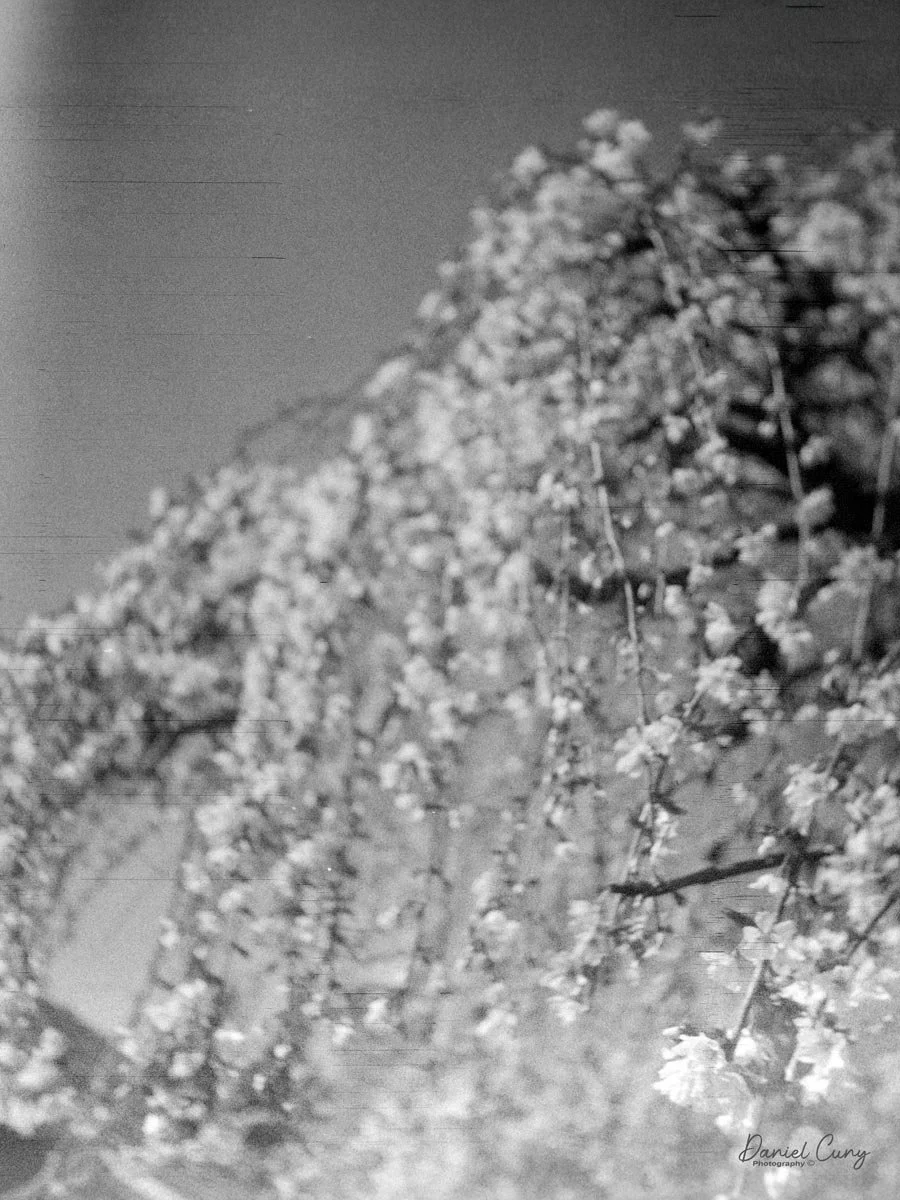
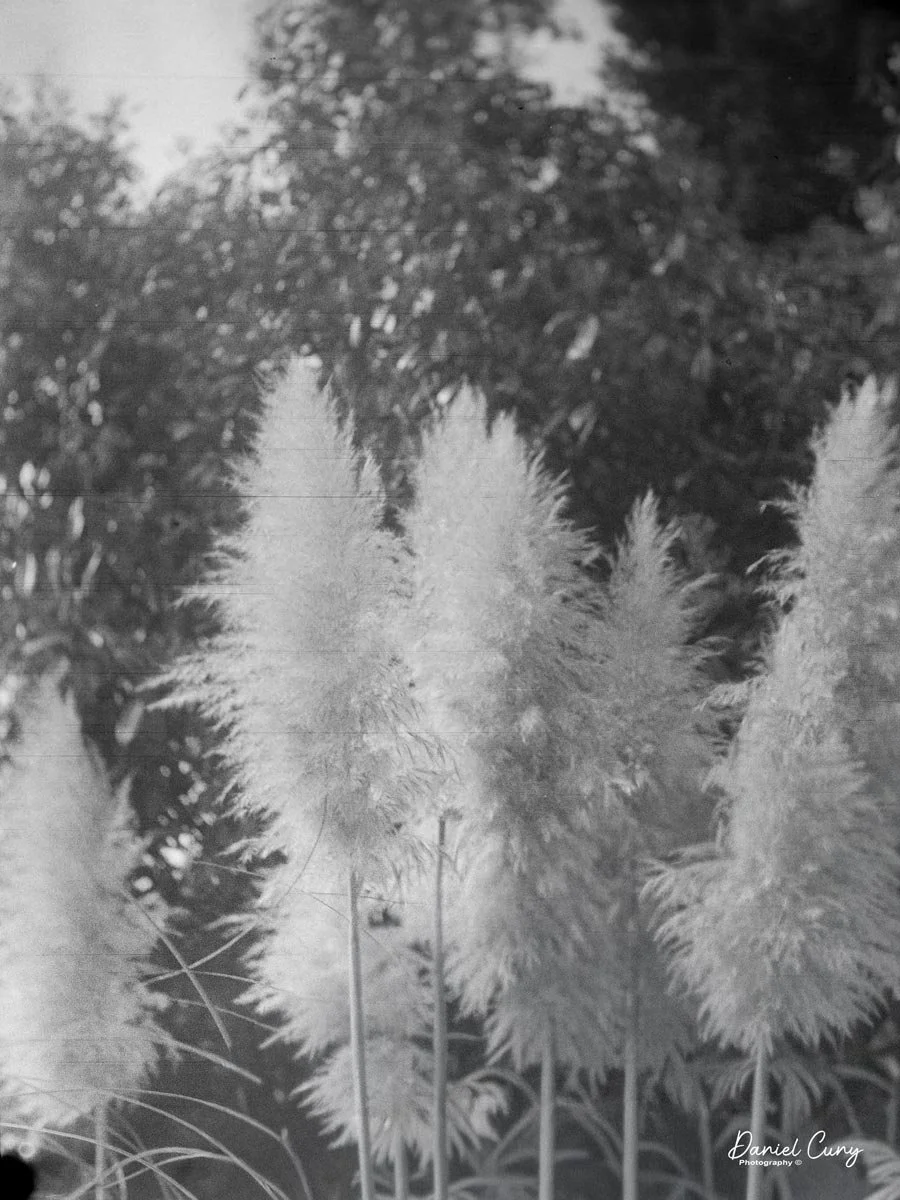
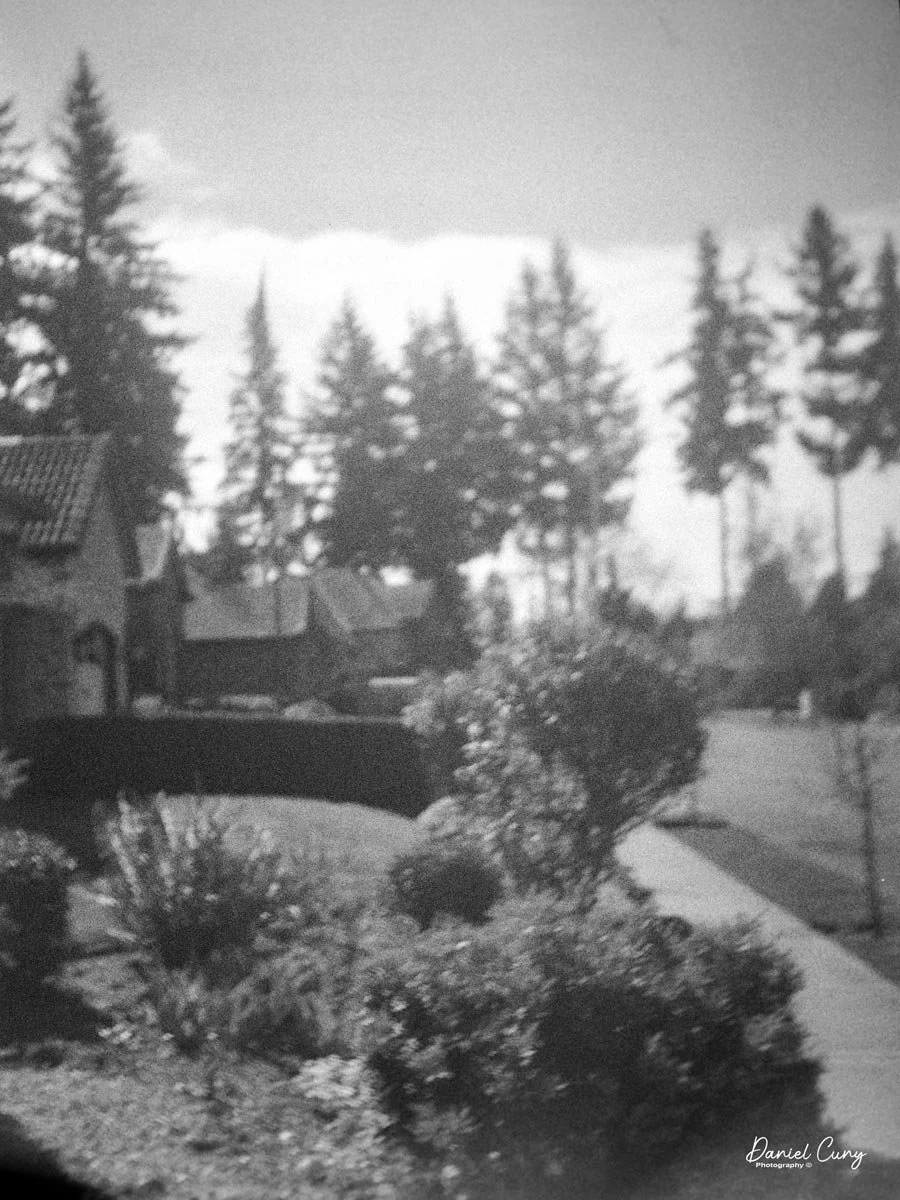
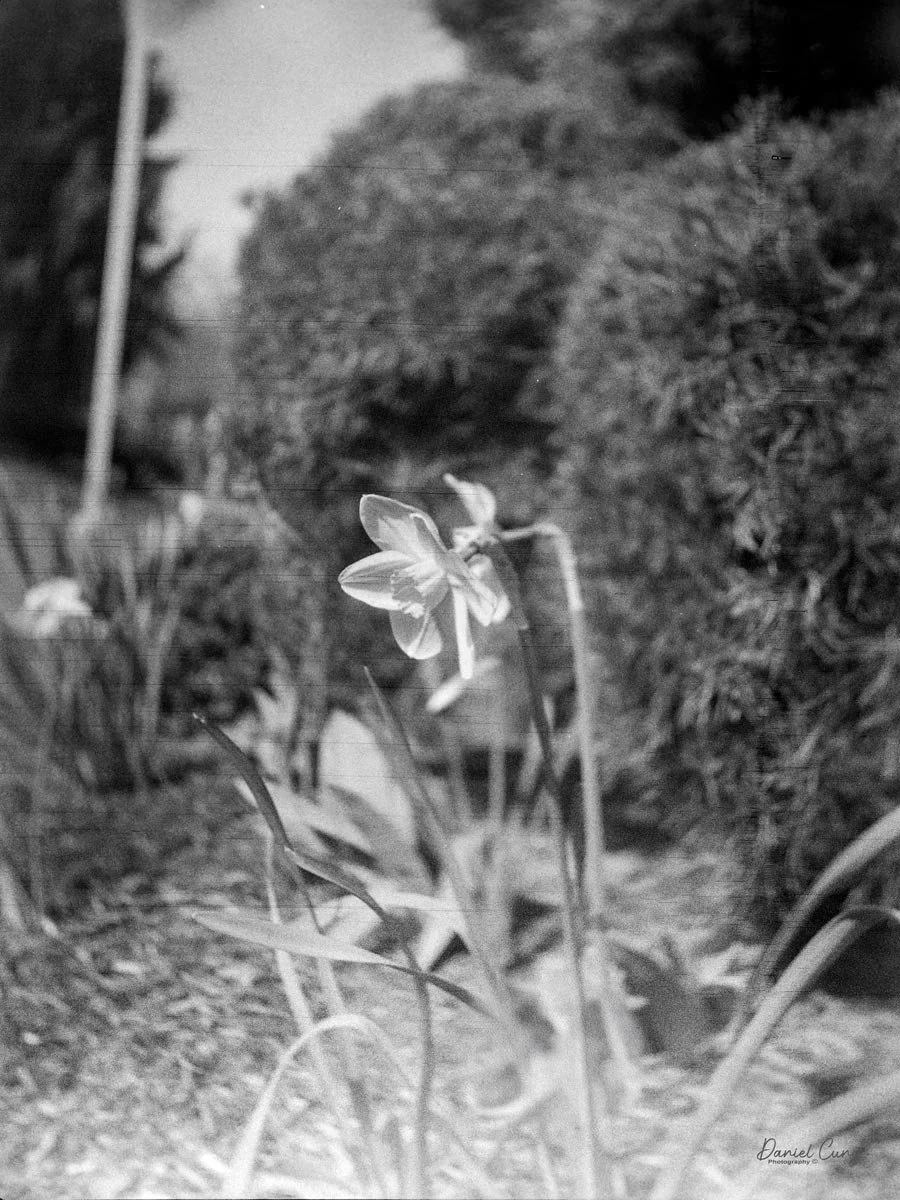
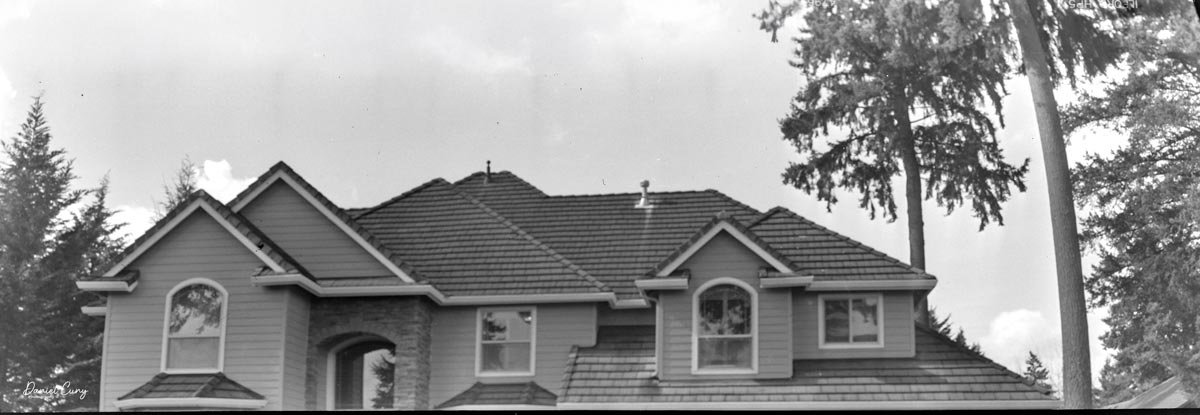
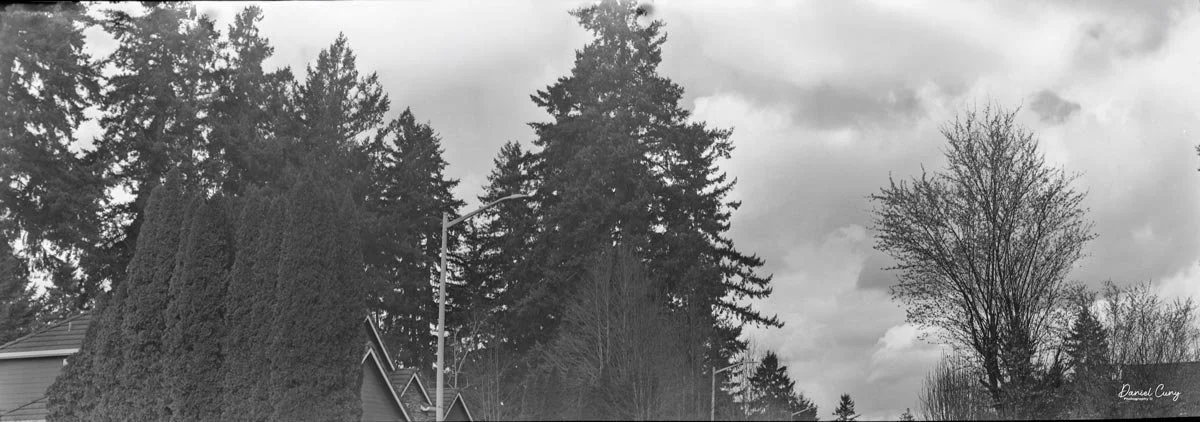
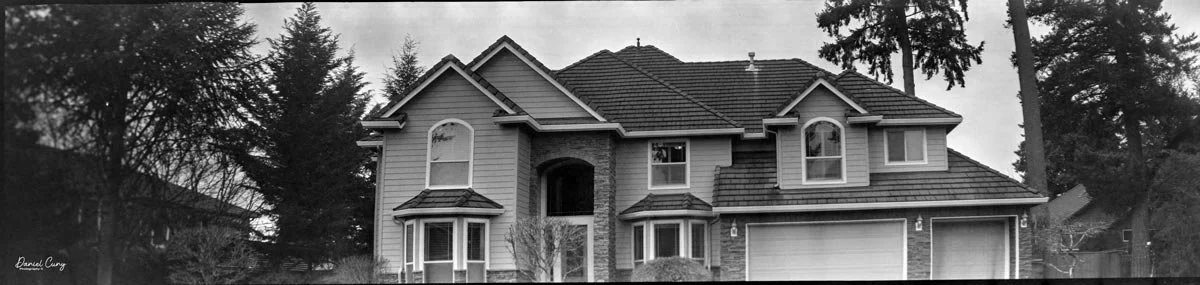
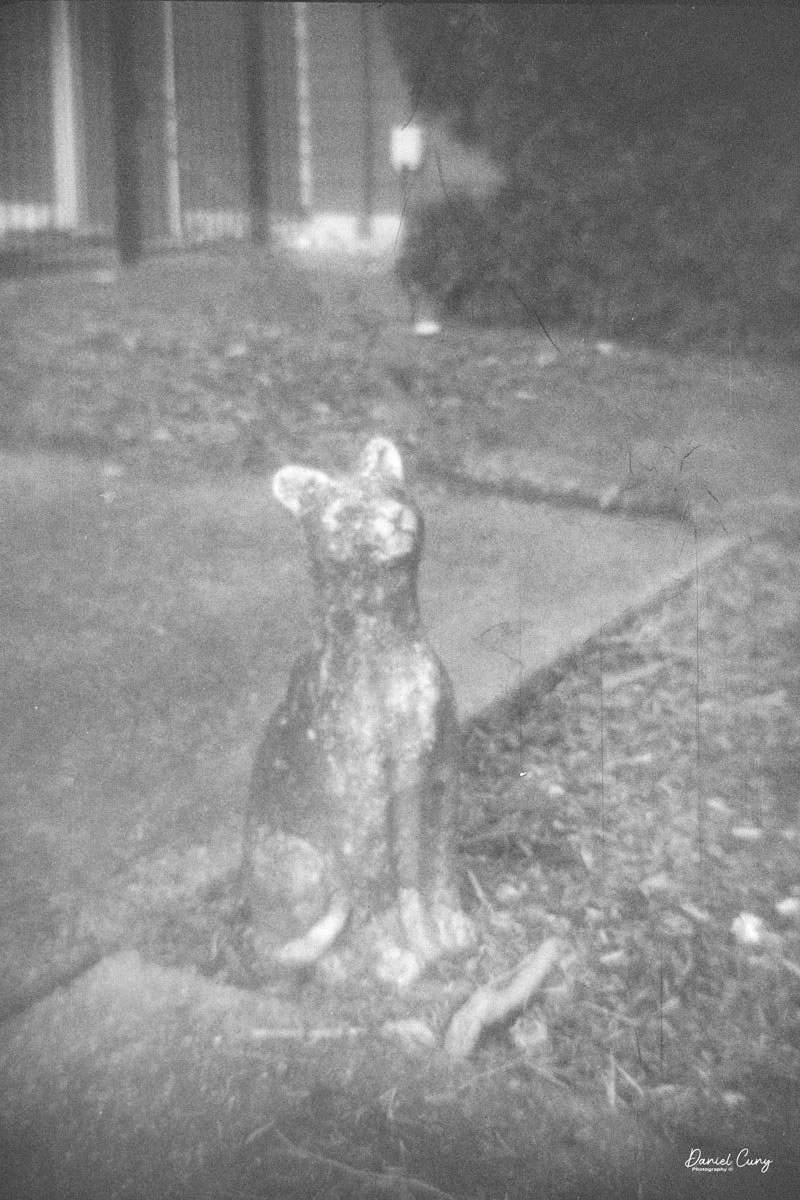
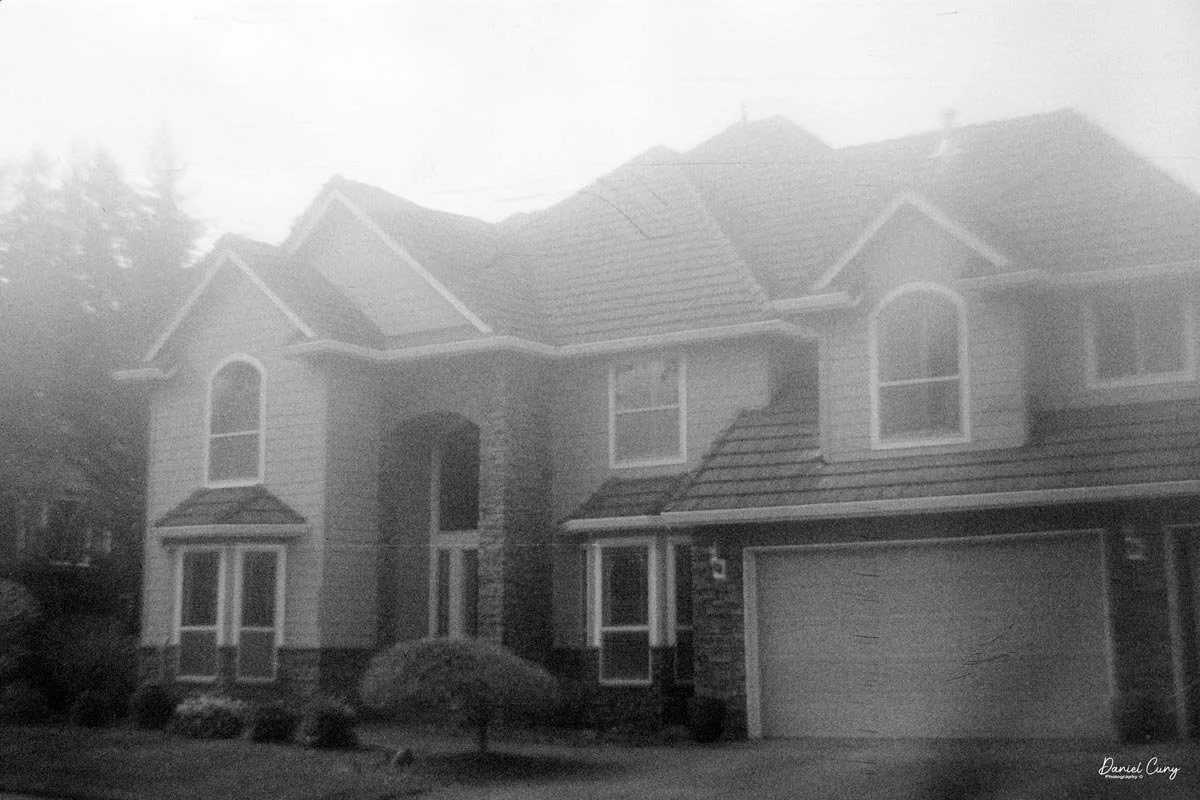
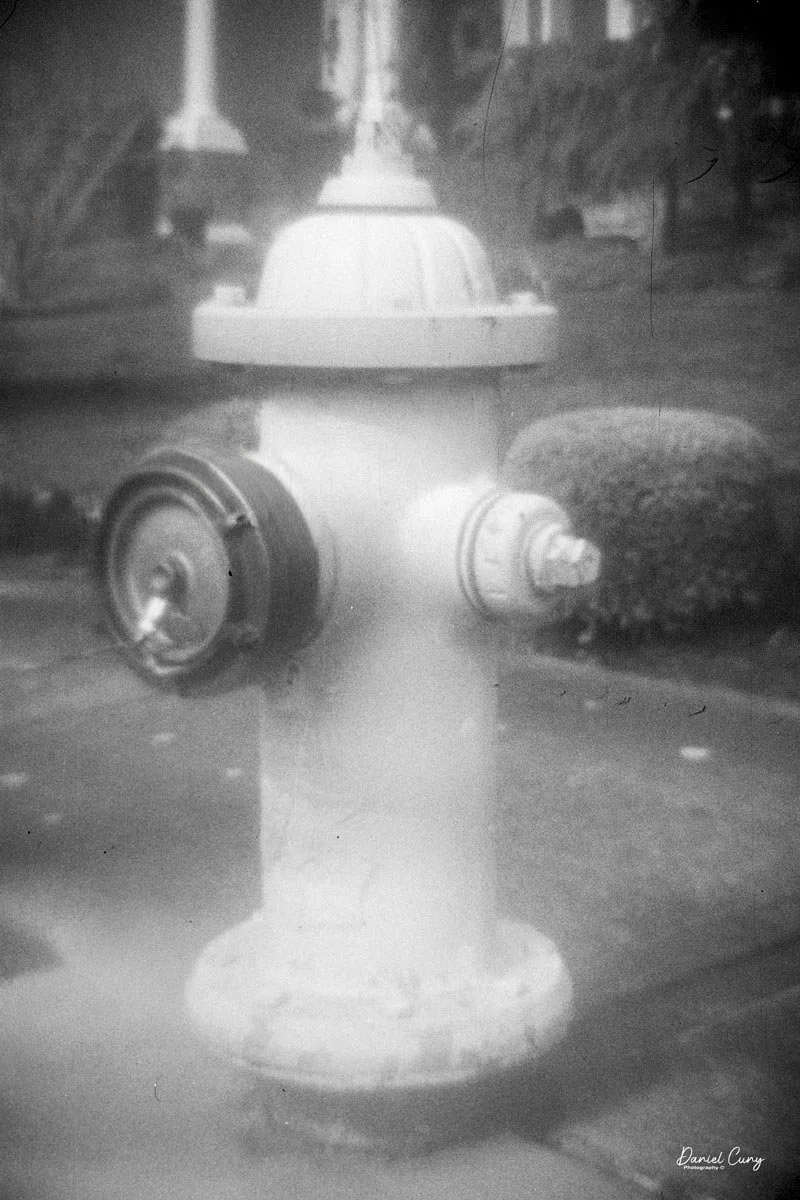
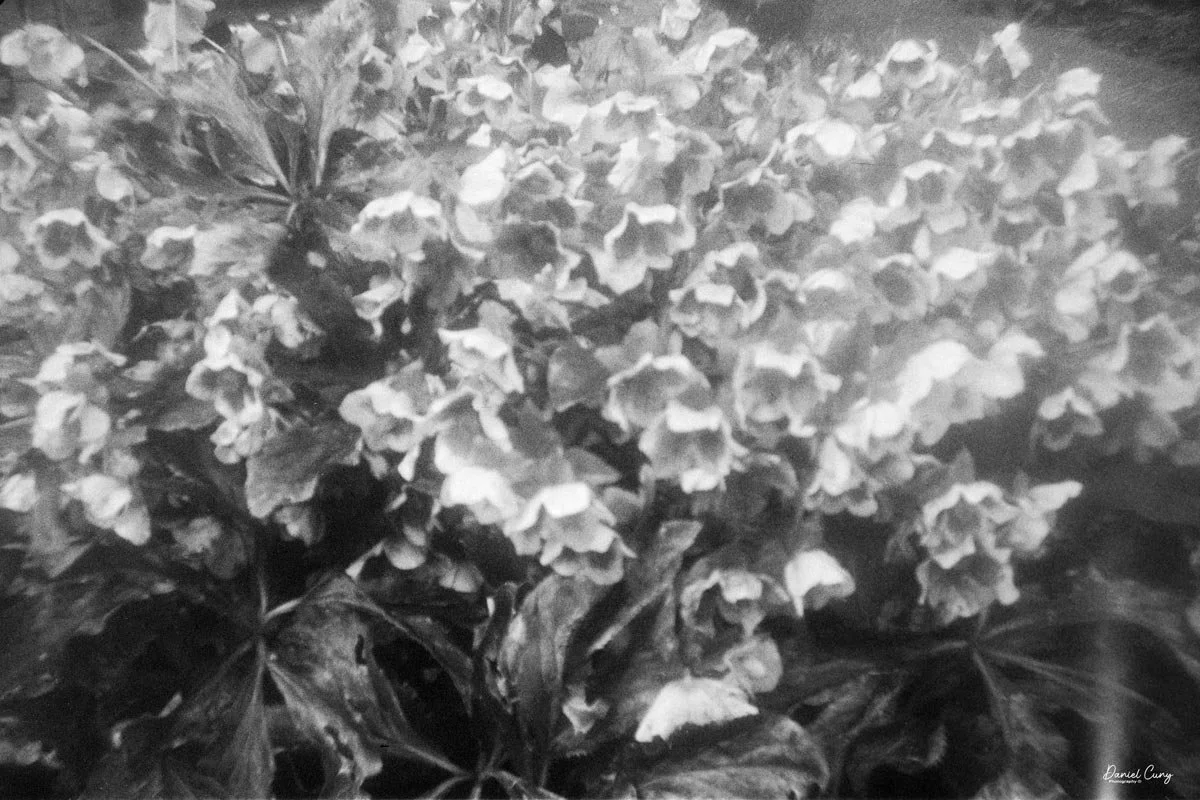
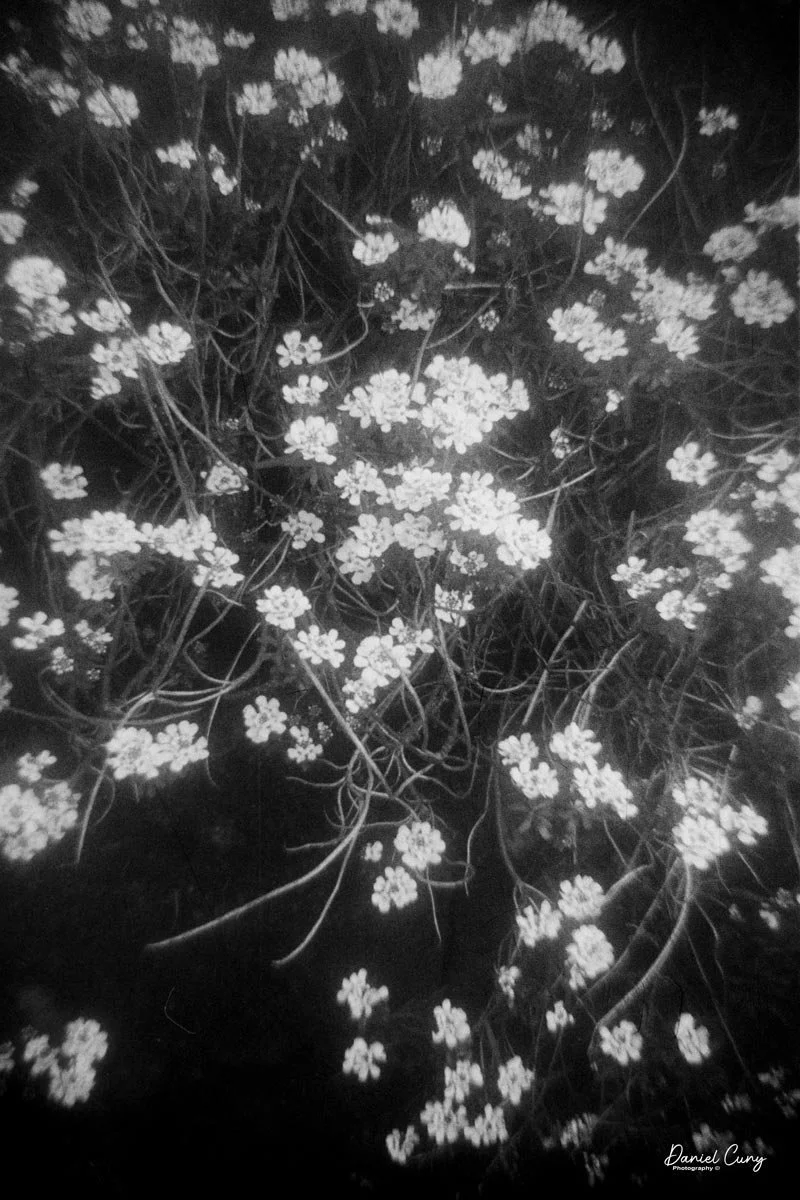
 I tried some close-ups and a few longer shots to assess the camera's lens quality. I was both surprised, in a good way, and surprised, in a bad way, by my results.

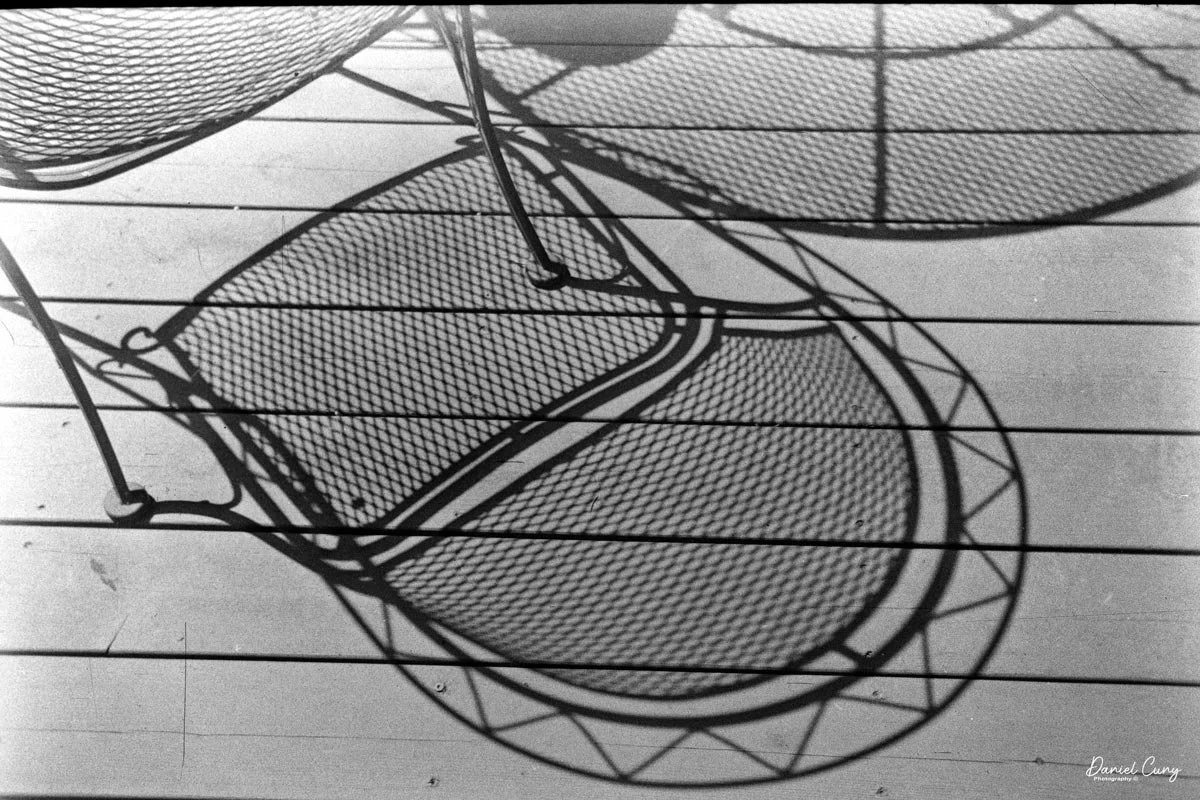
 Here are some of the photos from my walk through the neighborhood. 

Conclusion:

 To say I was disappointed by some of the results is an understatement. The closer images, which I thought wouldn't turn out very well, were the shining light of the camera roll. The images taken at infinity, assuming they would be sharp, especially at F/16, are unsharp and disappointing.

 The camera was fun to shoot with, and I always enjoy shooting 127 film in the 3x4cm format. Still, I was also disappointed with the shutter release's location after extending the lens to the "taking" position. The shutter release was in an awkward position, to the point that I had to shoot the camera with my thumb while resting it in my palm.

 I'll get used to it next time I take the camera out for a shoot, but I prefer using the Nagel Pupille.

 Thank you for taking some time to learn about the "lesser featured" brother of Nagel's Pupille, the Ranca camera. A compact 127 camera made in the early 1930s.

 Here are the other Camera Reviews I've done.

 Cuny's Cameras and Photos is my online eBay store where I sell some of the cameras reviewed, along with many other photo oddities I've accumulated over my 50-plus years with cameras and images.

 Until next week, please be safe.
Bell Panorama and Panel Camera

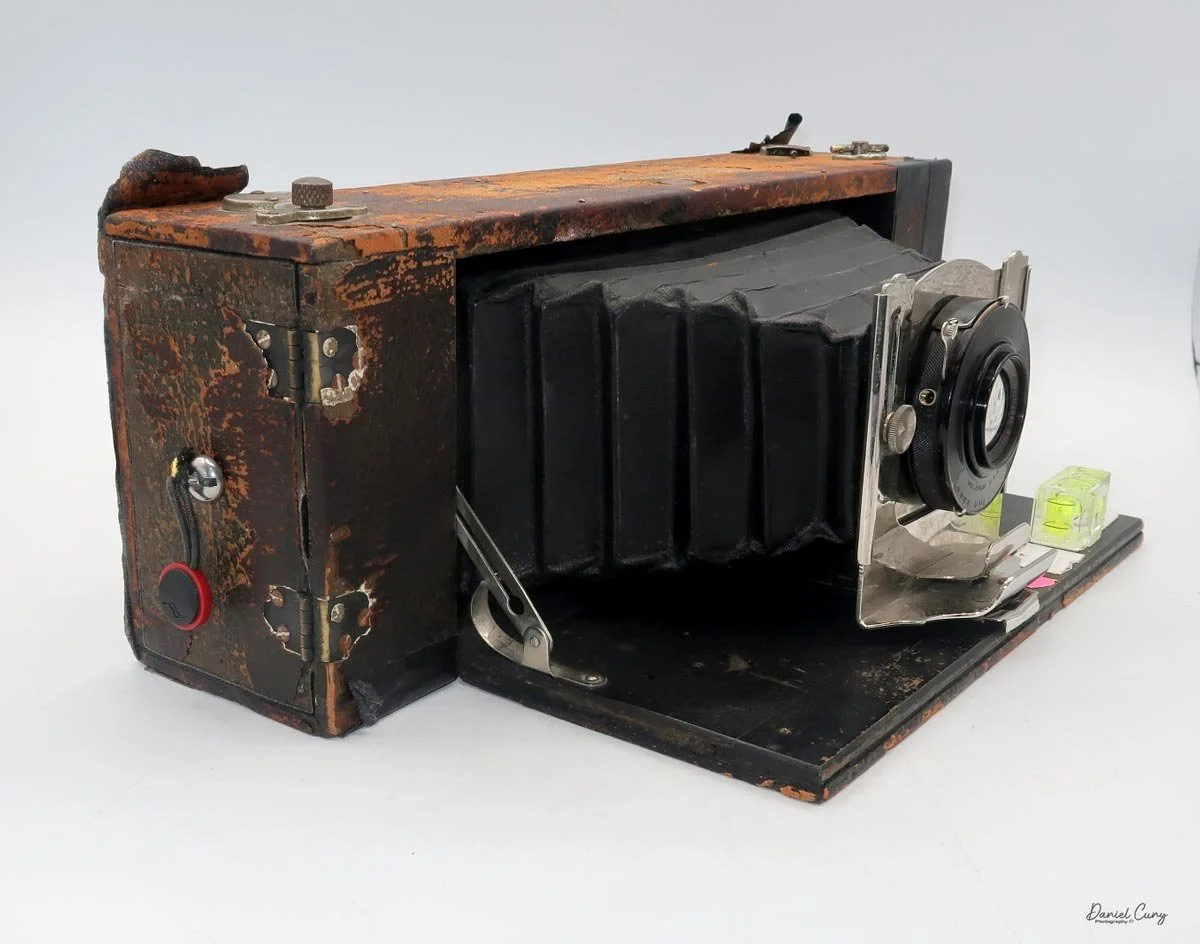
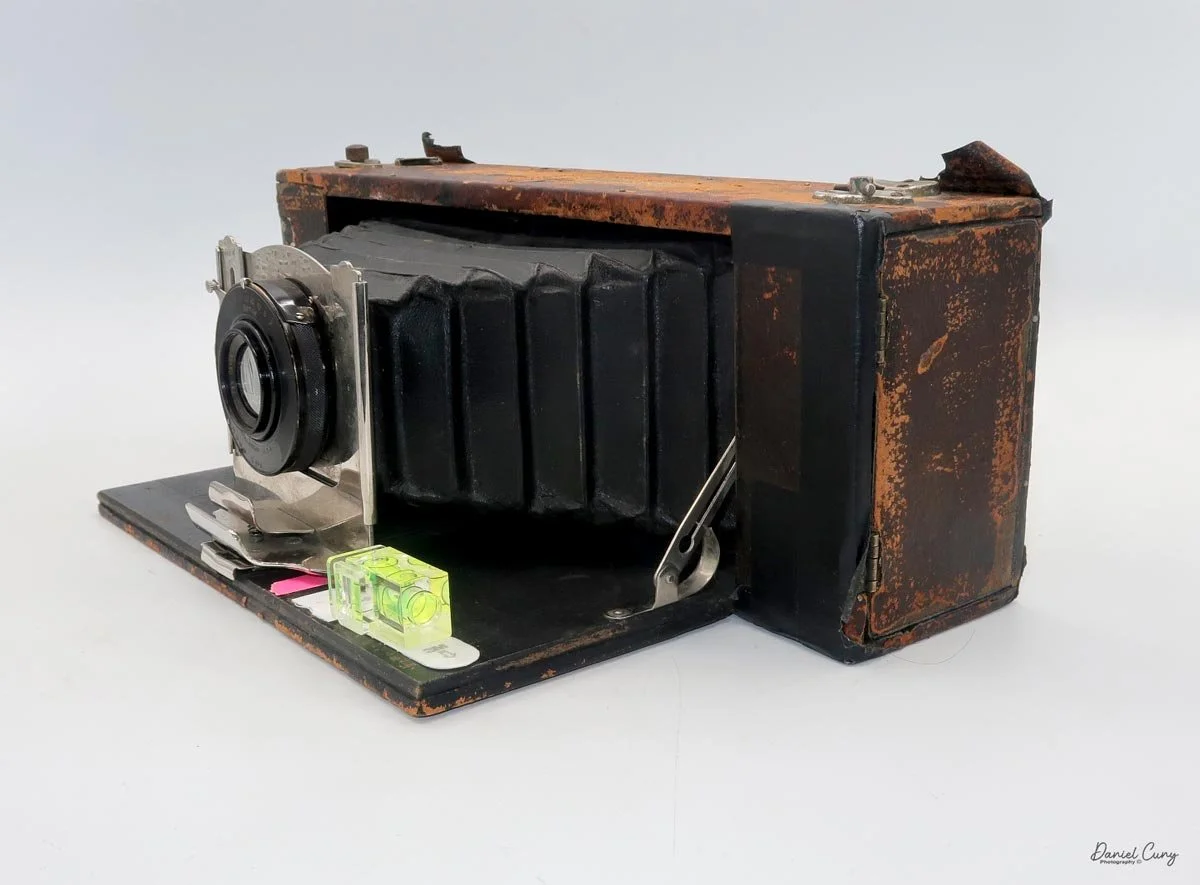
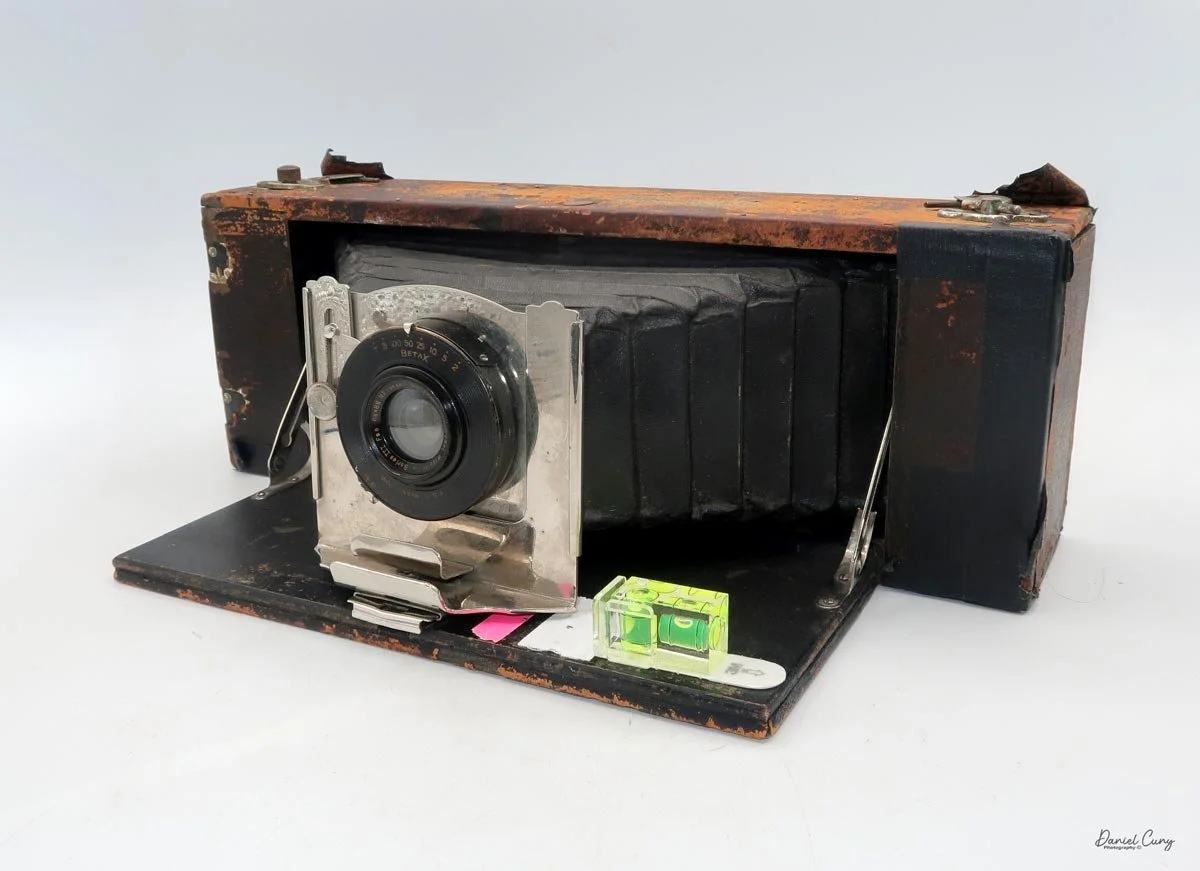
My Bell Panoraams & Panel camera

I didn’t start out chasing rare panoramic cameras like the Bell Panorama; my first love was colorful and unusual box cameras. As a new collector—newly married, young son at home, and a very limited budget—I hunted for Kodak Rainbow cameras, Univex AF models with painted faces, and bright Agfa and Falson colored folding cameras whenever I could afford to add another piece to the shelf.

 Somewhere in those early years, about 45 years ago, I spotted my first Bell Panoramic camera in a local antique shop. Sitting in a locked glass case, it looked like a strangely long box‑style camera, and I honestly had no idea what I was looking at. I asked the clerk to pull it out, turned it over in my hands, and saw a price tag of about 80 dollars—far more than I was paying for box cameras at the time—so I reluctantly handed it back and walked away, wondering why on earth this plain, elongated camera was priced like that.

 A few years later, flipping through one of the many camera guides in my collection, I stopped cold on a photo of an extremely long box‑style camera: a Bell Panorama. Instantly my mind jumped back to that antique‑store shelf, and the mystery price tag suddenly made sense. Now my interest in panoramic cameras was growing, fueled by swing‑lens classics like the Kodak Panoram, Al‑Vista, and Russian Horizont, but the big boys—Fujifilm 6×12 and 6×17 systems or the Horseman 6×17—were still well out of my price range, so the Bell stayed in the realm of daydreams.

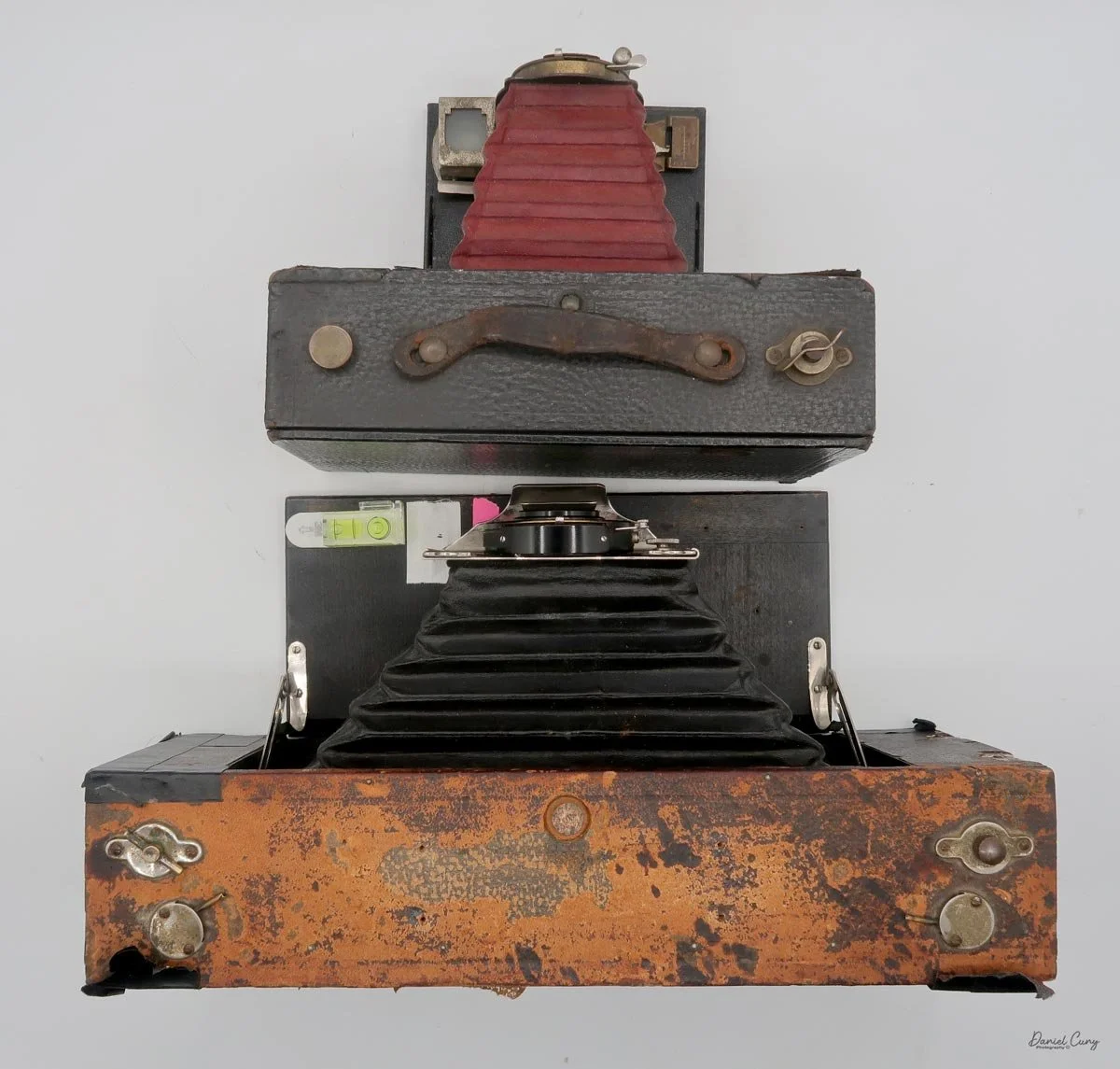
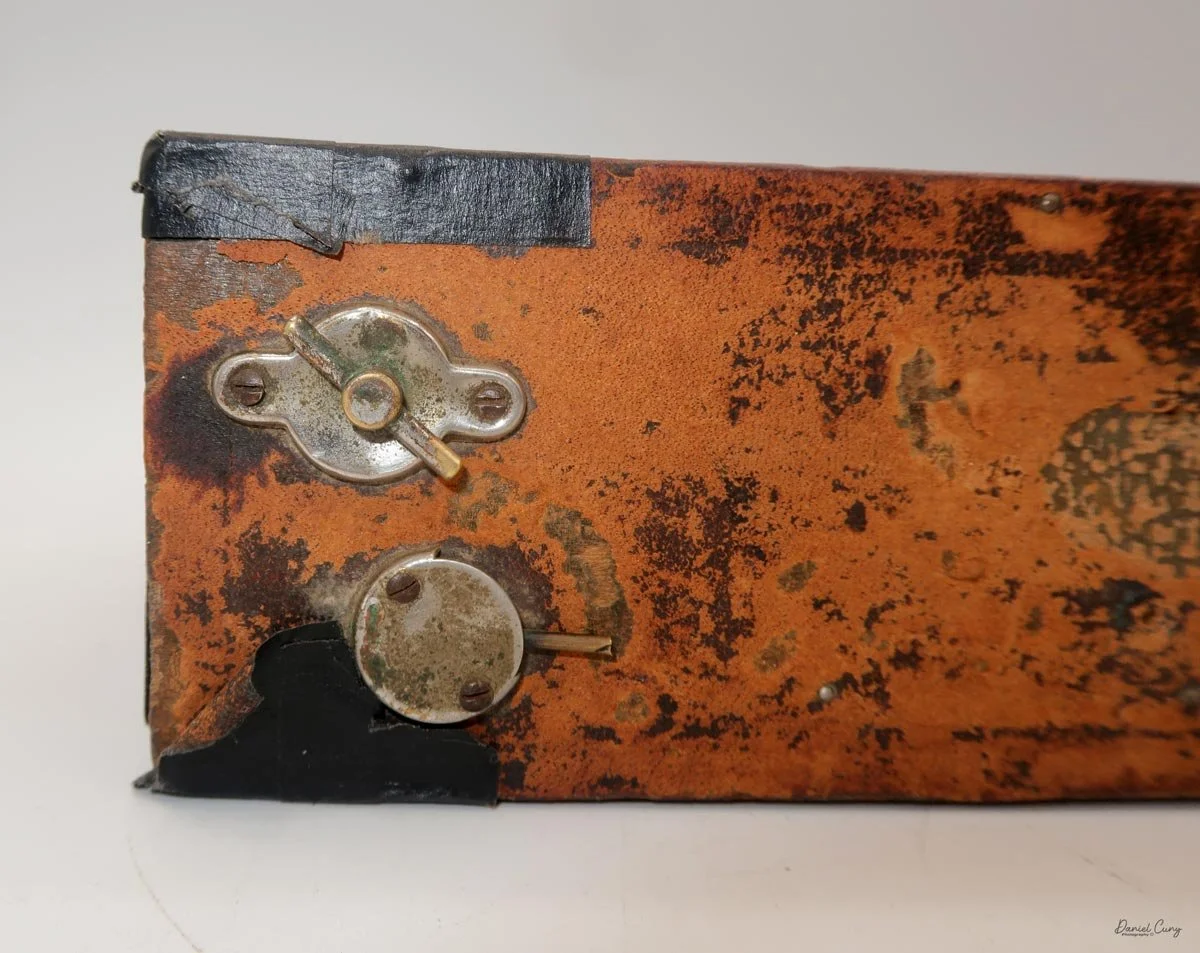
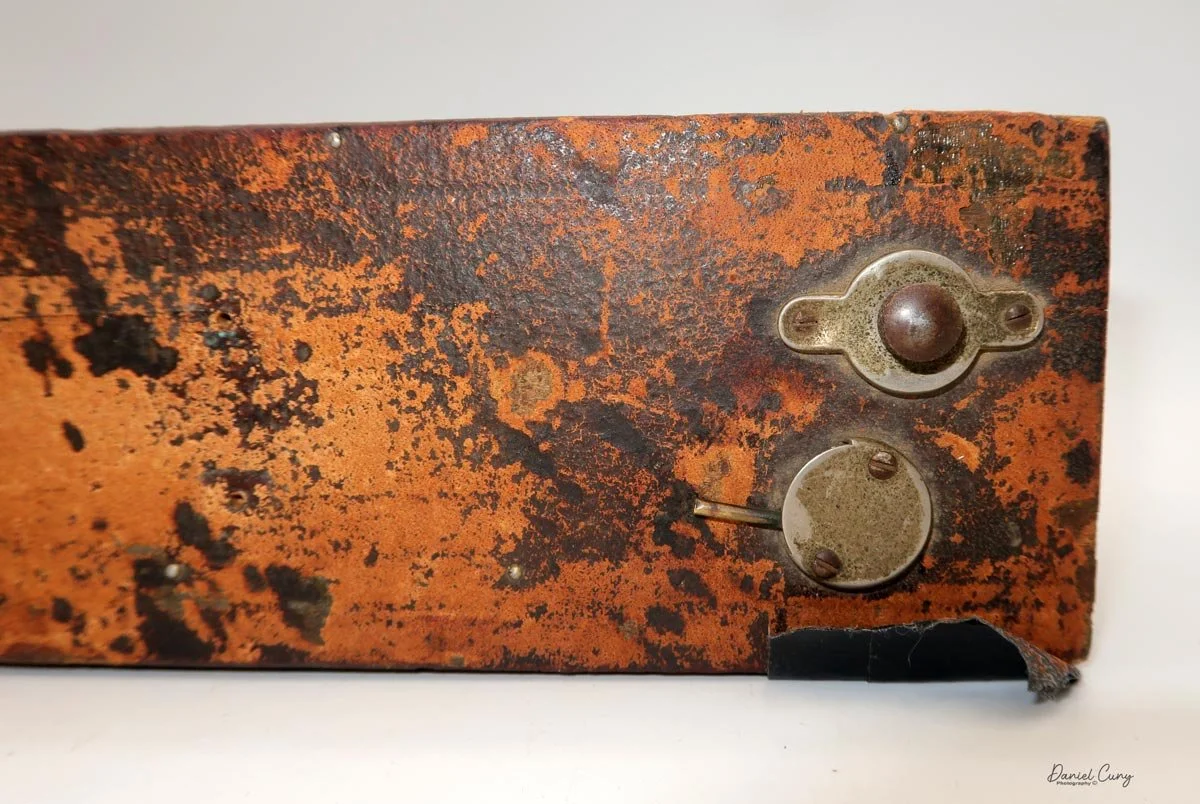
A Bell Panorama & Panel camera compared to a Kodak No. 3 Brownie

 Fast‑forward about 40 years. While browsing online listings for vintage panoramic cameras, I stumbled onto a modified Bell Panorama and Panel Camera that had been converted to shoot 120 film instead of its original 118/122 roll film. The seller mentioned the shutter was working but pointed out some odd “home‑brew” details. The price was finally in my comfort zone, so I messaged them, made the deal, and waited (not very patiently) for my first Bell panoramic camera to land on my doorstep.

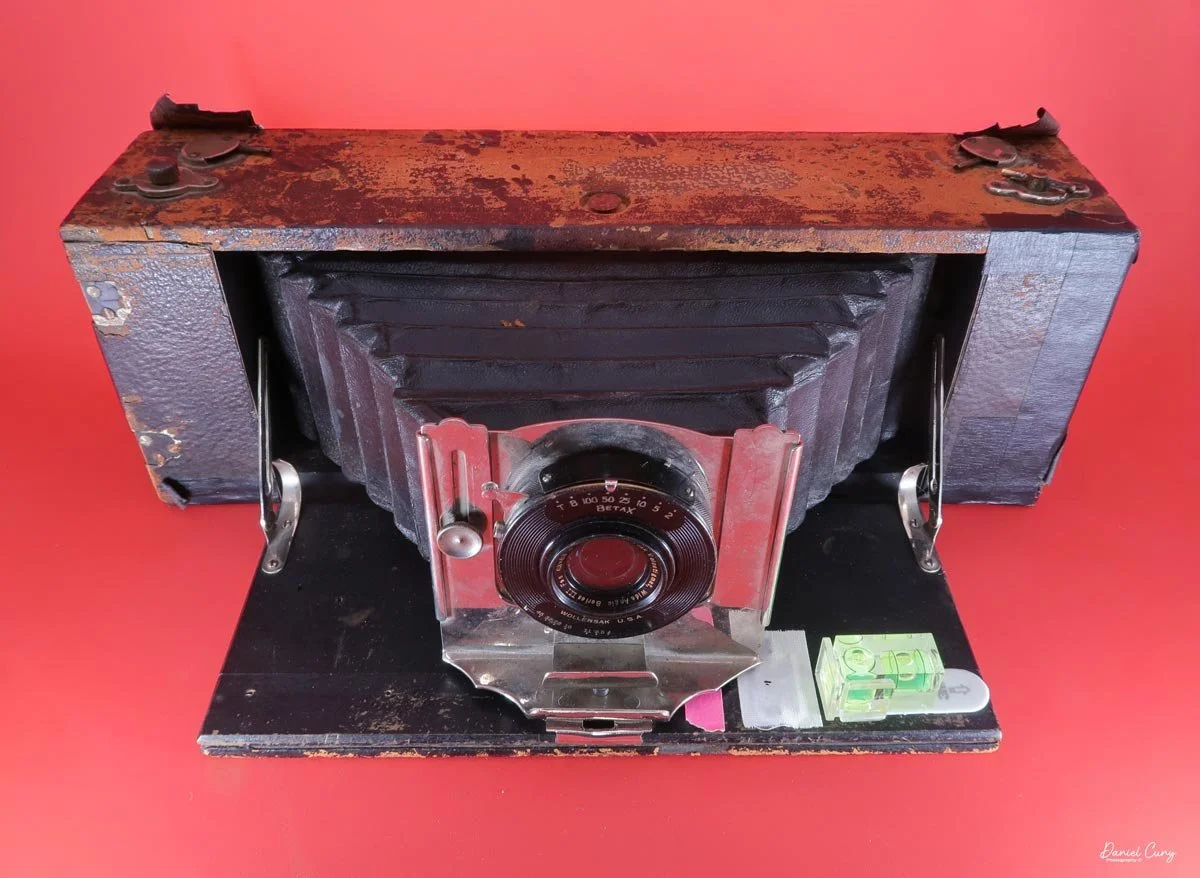
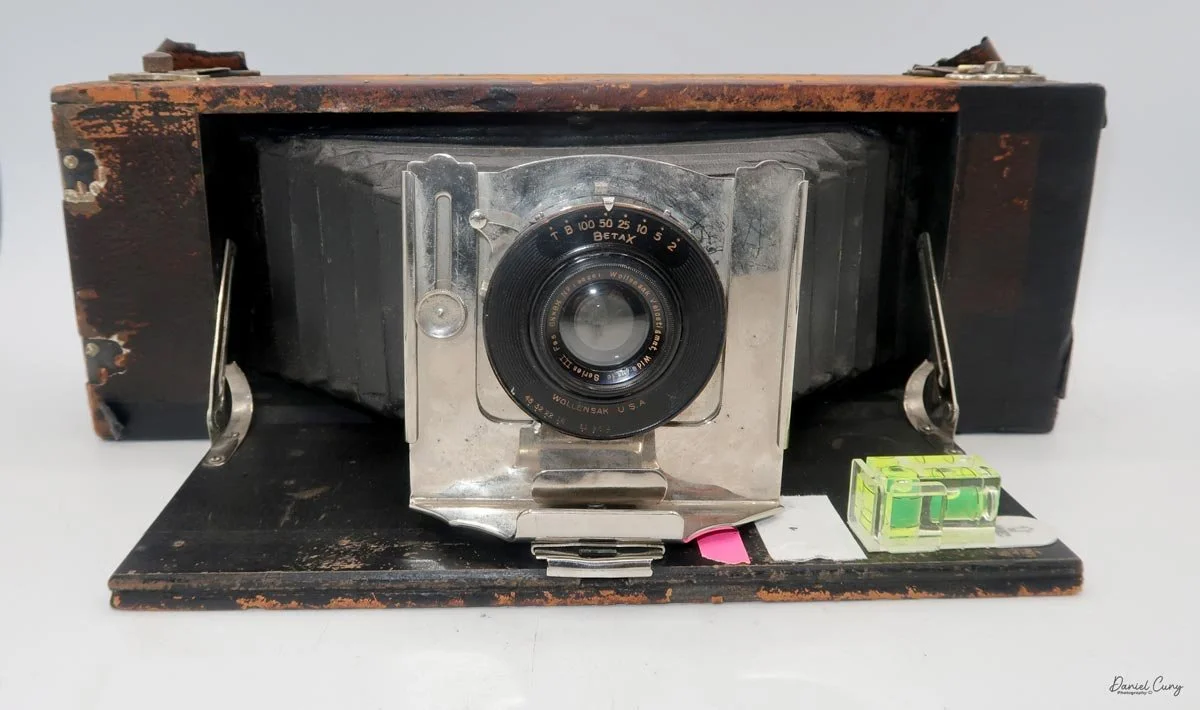
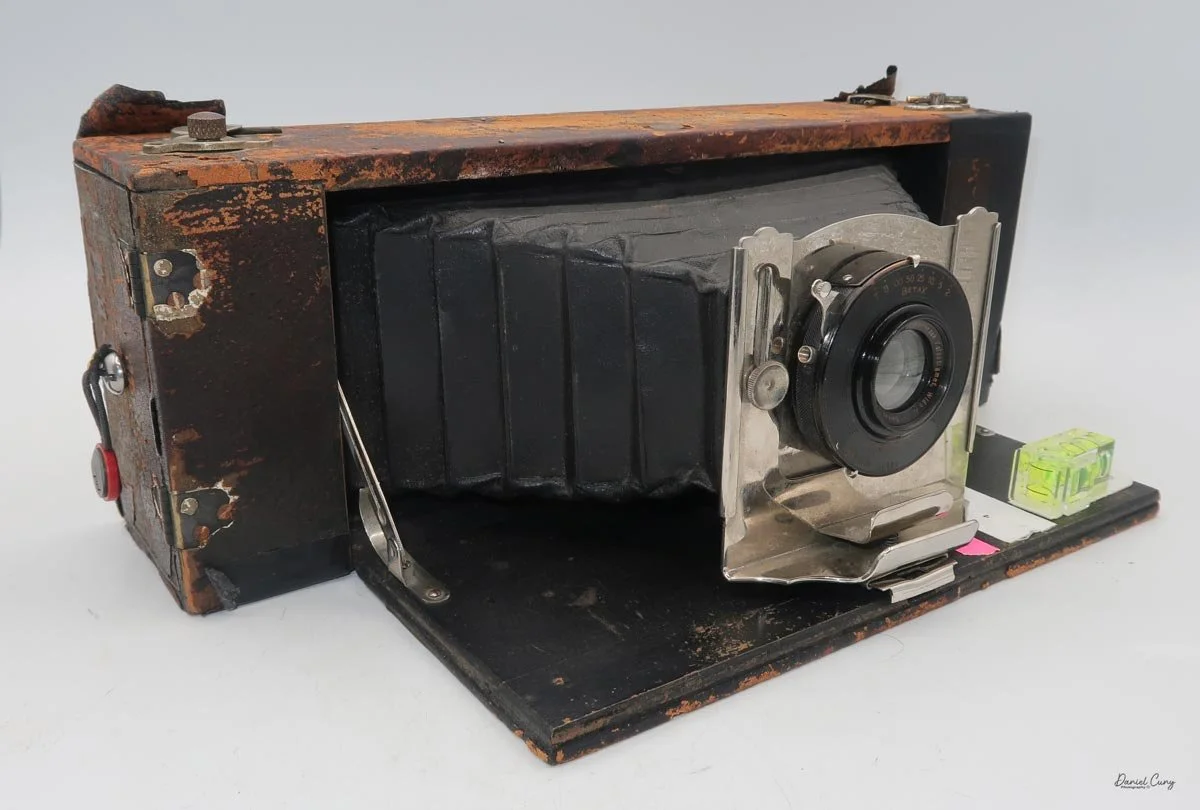
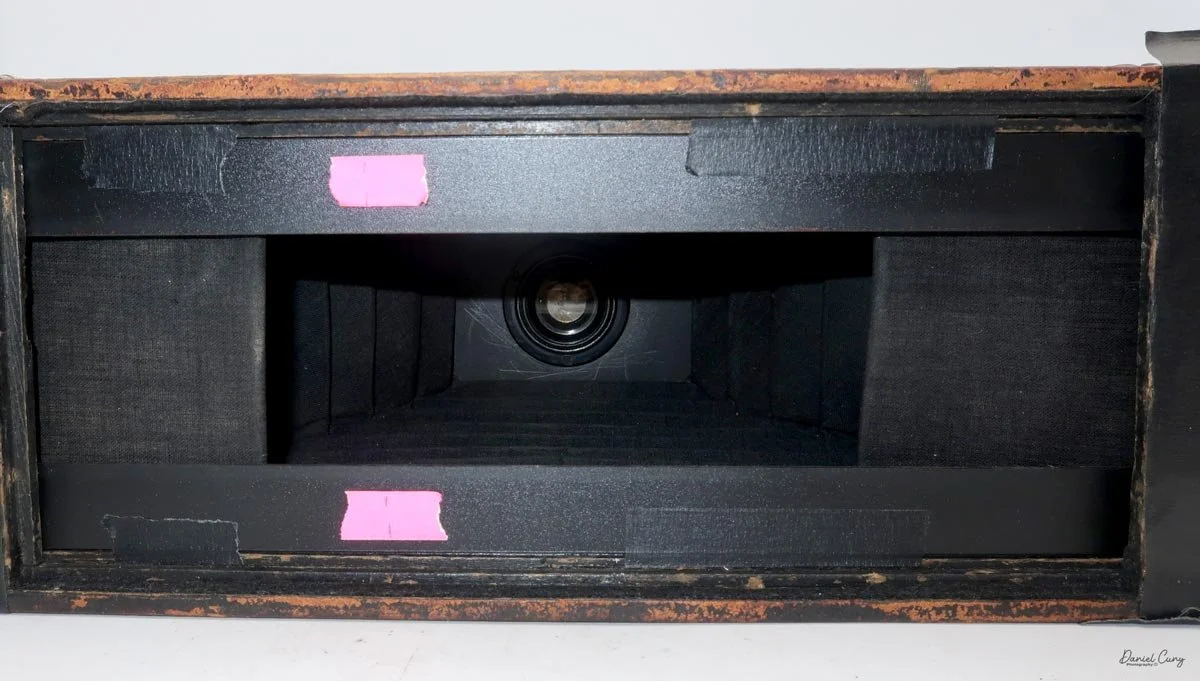
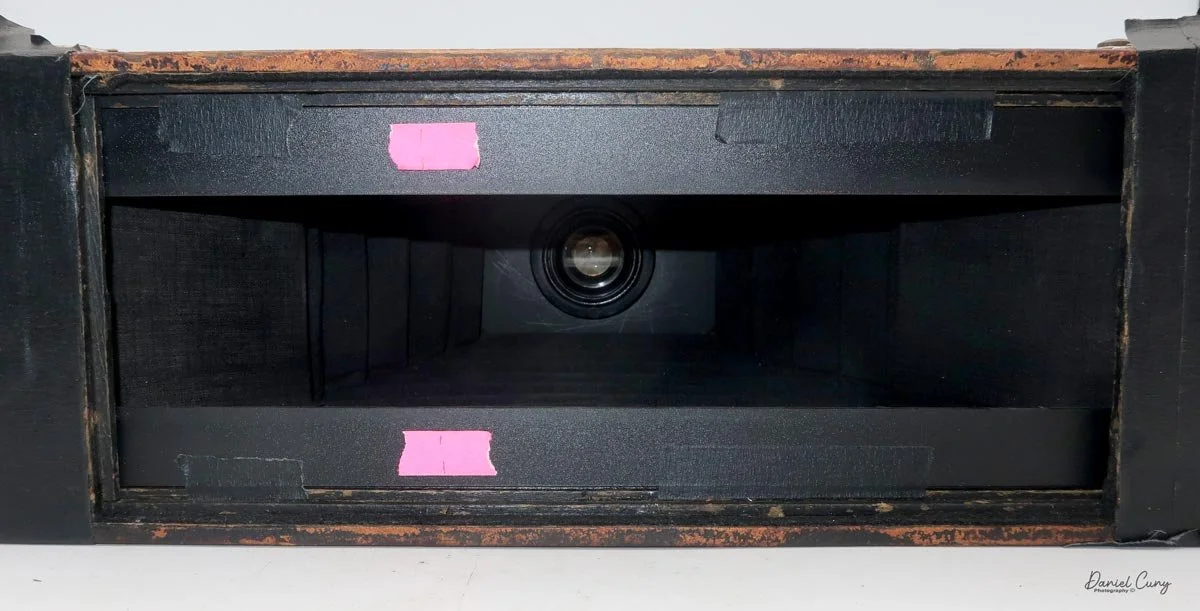
 Unlike swing‑lens panoramic cameras, the Bell Panorama uses a fixed wide‑angle lens and a huge image circle, more like a compact, wooden ancestor of a Horseman or Fujifilm 6×17. When the package arrived and I unboxed it, I was greeted by a lot of black masking tape on the body, a mysterious metal bar on top, and bellows that actually looked pretty healthy. The shutter sounded sluggish with the lens mounted, but once I unthreaded the retaining ring and tested the lens and Betax shutter off the camera, the speeds snapped back to life—turns out the ring was pinching the shutter housing just enough to slow everything down.

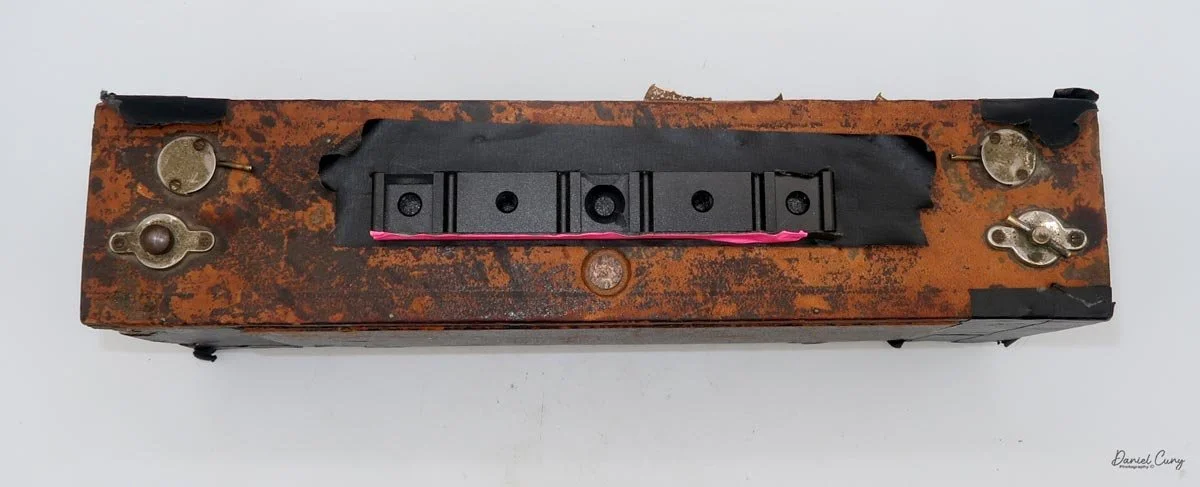
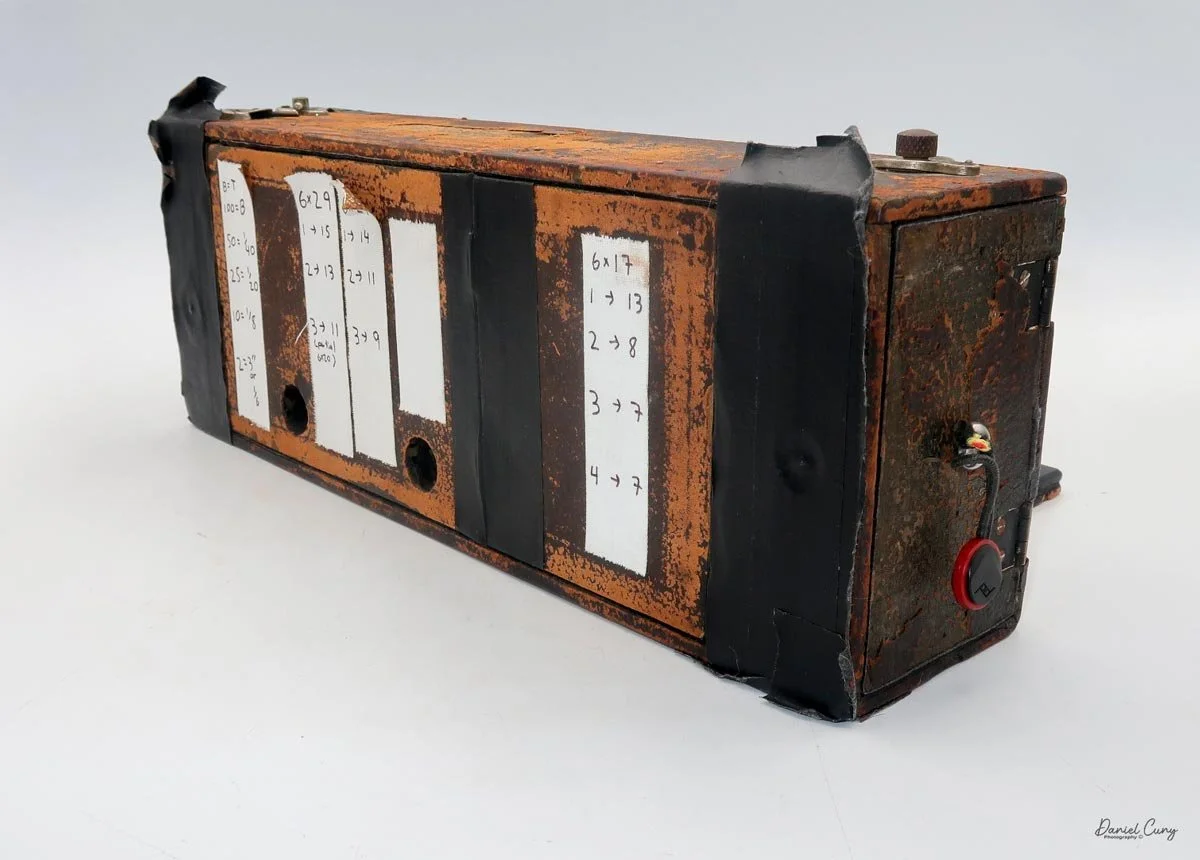
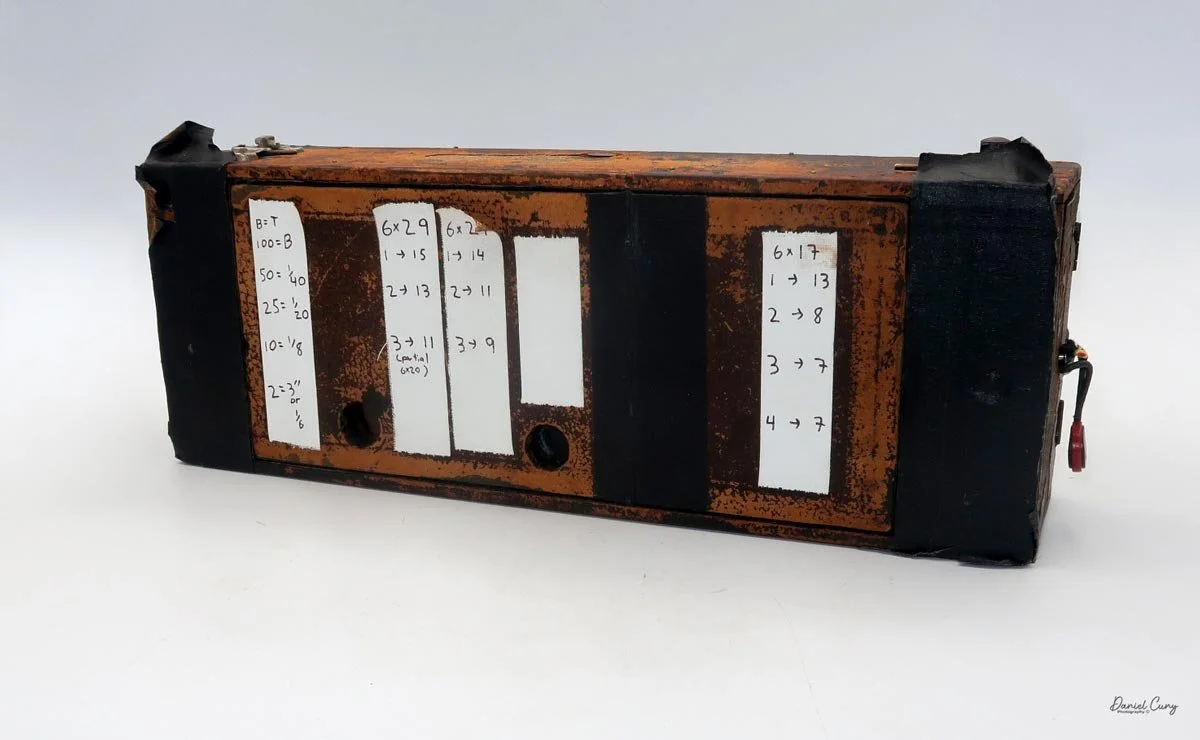
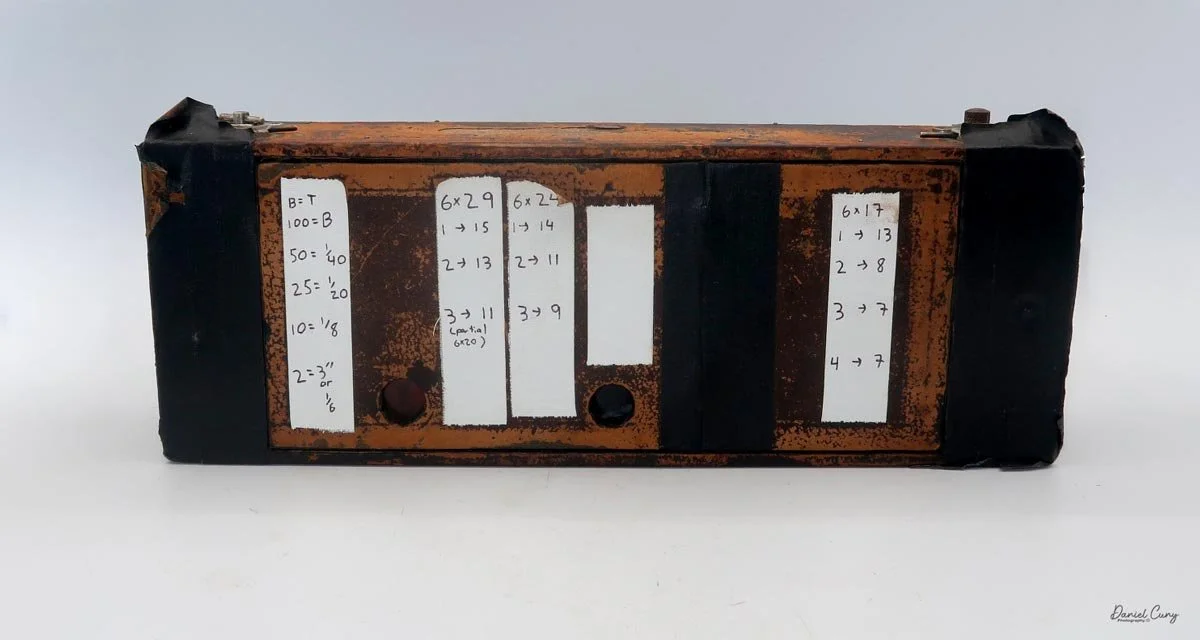
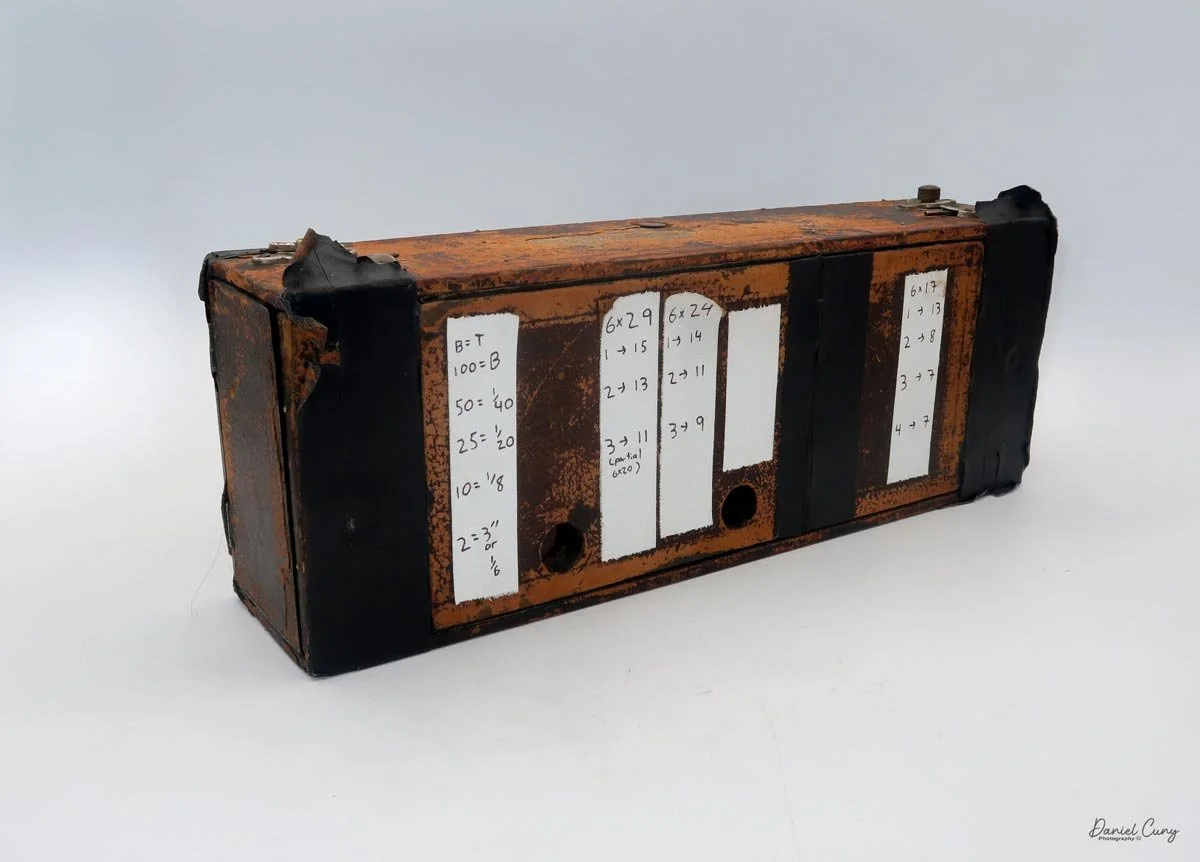
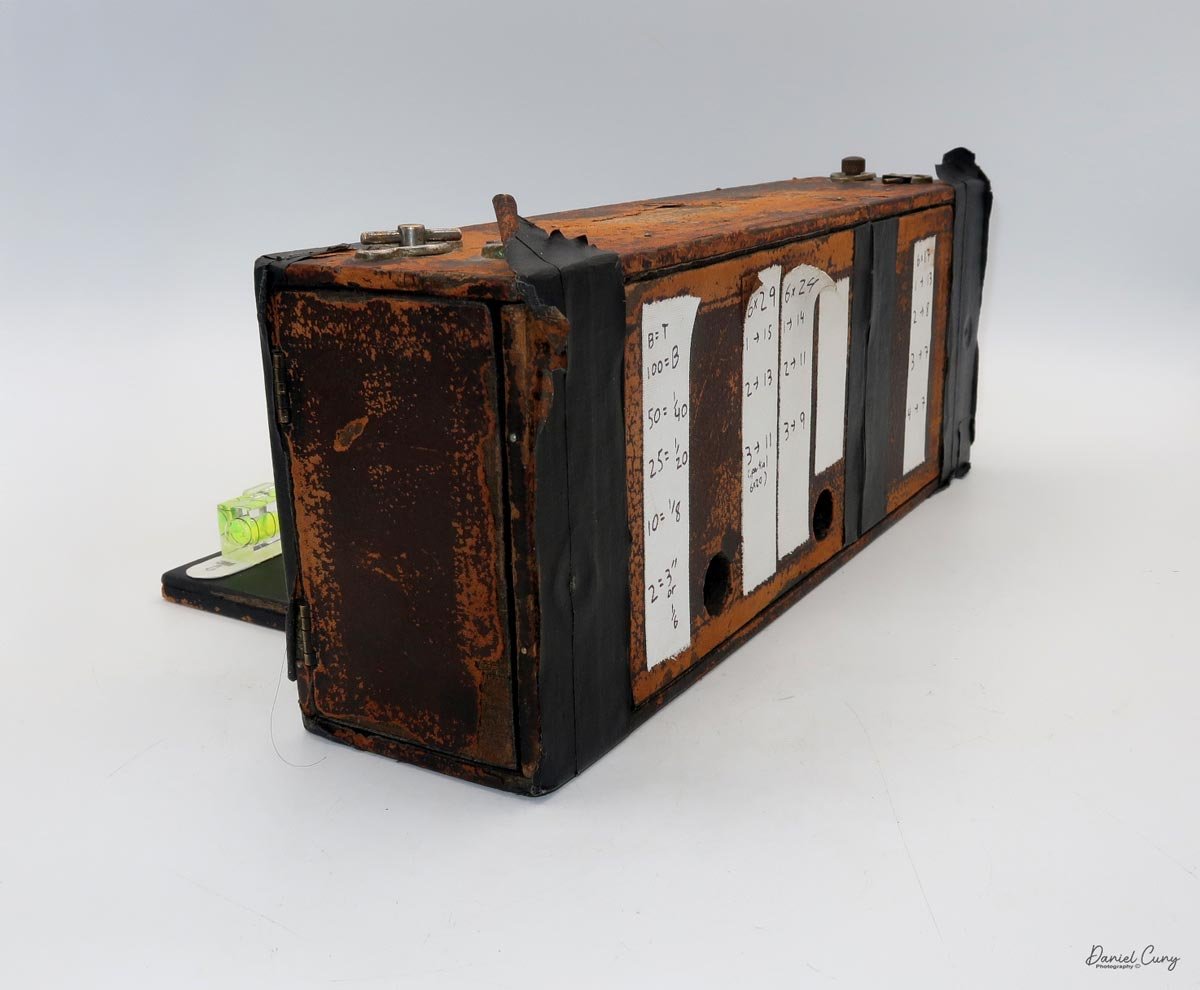
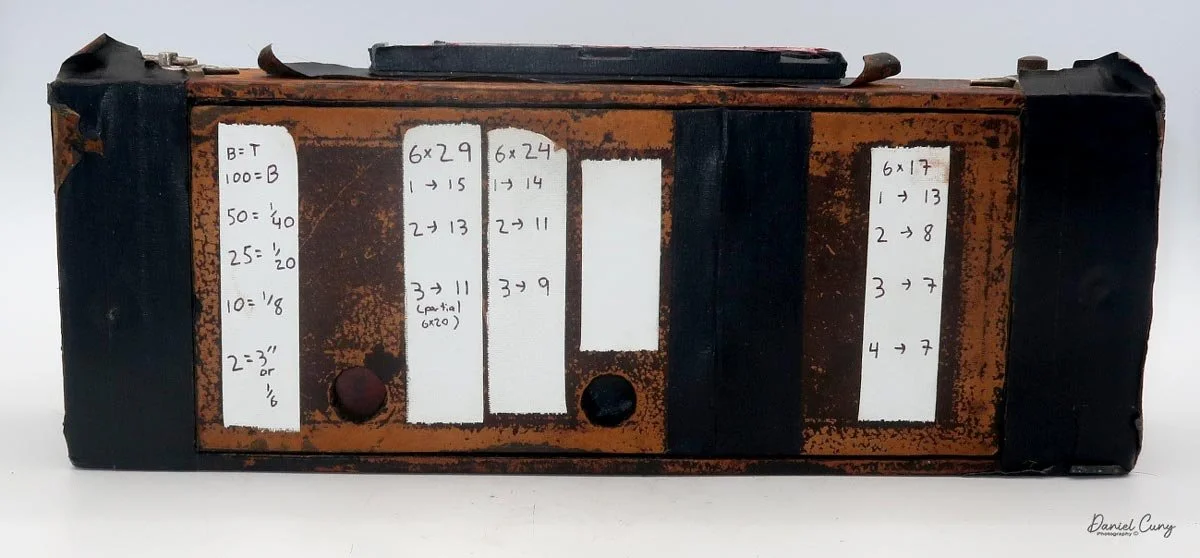
 On the back I noticed strips of white tape covered in handwritten numbers. Some clearly related to shutter accuracy tests, while others looked suspiciously like film‑advance notes—my best guess was someone had already mapped out how many turns of the advance knob you need between panoramic frames when shooting 120 film in this old #122 panoramic body.​

How my Bell Panorama & Panel camera arrived to me.

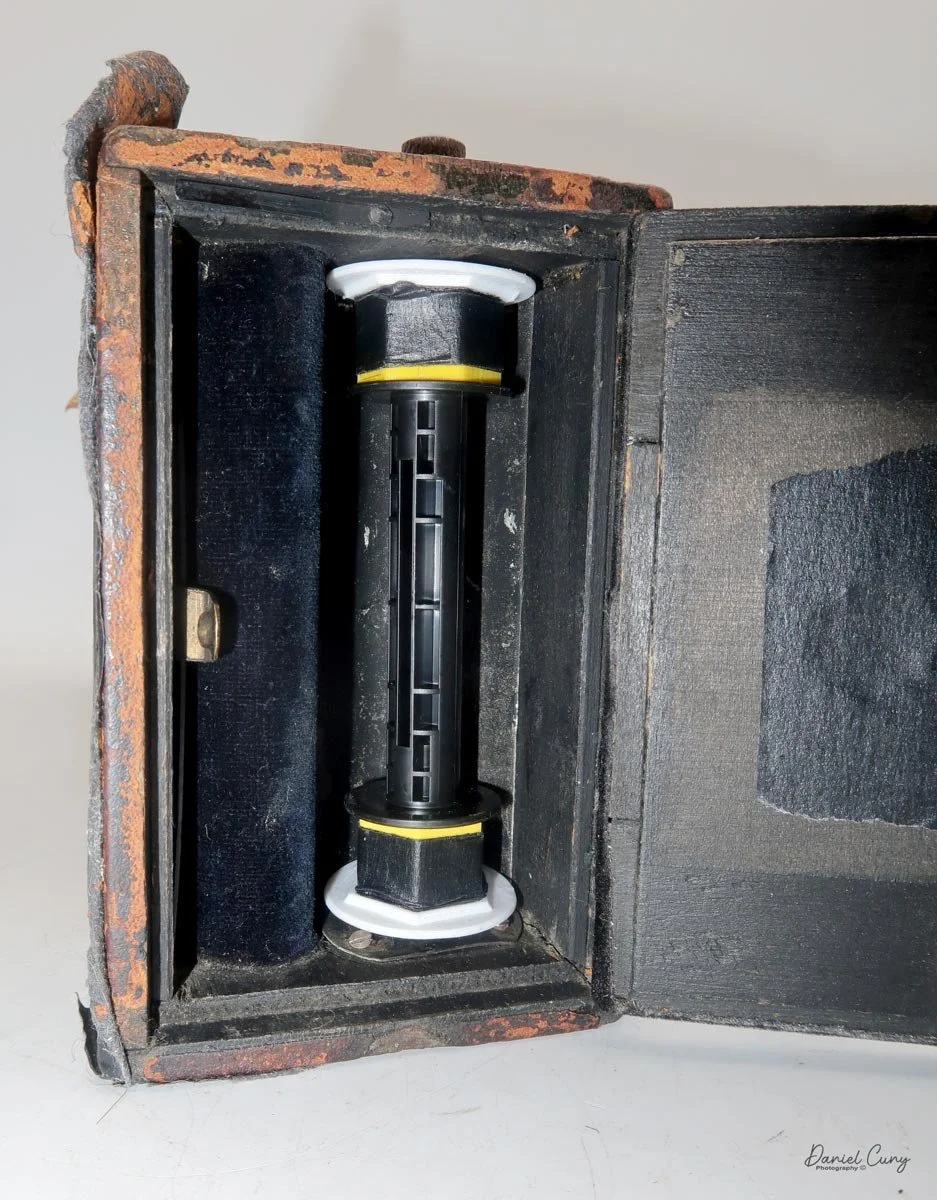
 Opening the back confirmed that a previous owner had done a thoughtful 120‑film conversion. One chamber already had a custom adapter so a 120 spool would sit where the original 118/122 spool once lived, but to actually shoot the camera I still needed a second adapter for the take‑up side. Thankfully, I’d already bought a pair of 120 adapters for my Kodak Quick Focus camera, and I was pretty sure they could be coaxed into service in the Bell Panorama as well.​

 If you’d like to dive deeper into the different Bell Panorama and Panel Camera models, I highly recommend David Silver’s excellent article, which goes into far more historical detail than I can fit here.​

History: 

 The Bell panoramic cameras were a short‑lived but important American attempt to make wide images simple and affordable for ordinary photographers in the early 20th century.

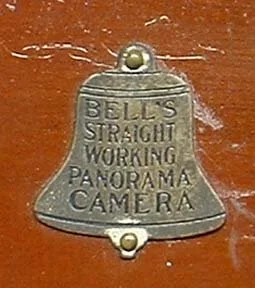
 In 1908, Iowa inventor Isaac A. Bell patented what he called Bell's Straight Working Panoramic Camera, produced by the Bell Camera Company in Grinnell, Iowa. At a time when most panoramic cameras used rotating or "swing" lenses and curved film planes, Bell's design stood out for its fixed wide‑angle lens and straight focal plane, eliminating the need for complex clockwork drives and curved backs. He built his camera around then‑standard #122 roll film, offering a generous 3¼ × 11 inch frame while still allowing normal postcard‑size exposures on the same roll, which made the camera attractive to amateurs who didn't want a dedicated specialty system.

Bell’s distinctive label on the original 1908 Bell Panorama camera.

 The first Bell Panorama combined a folding bellows body, a brass Gundlach shutter, and a wide‑angle lens that could cover the long negative at small apertures, trading speed for even coverage across the frame. While industrial reviewers praised the camera's practical engineering, it received little advertising and sold poorly, so surviving examples are rare and collectible today. Bell remained committed to the concept, refining the design and securing a second U.S. patent in 1911.

 In 1912, he introduced the revised Bell Panorama and Panel Camera, built more cheaply but upgraded with better Wollensak optics, stronger internal panel levers, and a redesigned reflex viewfinder that could be used for either postcard or panoramic framing. Distribution shifted to the American Northern Photo Supply Company, and then to Sears, Roebuck, which finally gave the camera a modest, stable market for several years. A smaller No. 10 model using #118 roll film appeared in 1916, but by 1918, changing tastes and newer panoramic systems ended Bell production. 

 In retrospect, Bell's panoramic cameras are seen as rare but influential examples of how existing rollfilm, folding‑camera ergonomics, and wide‑angle optics could be intelligently combined to democratize panoramic photography.

My Camera:

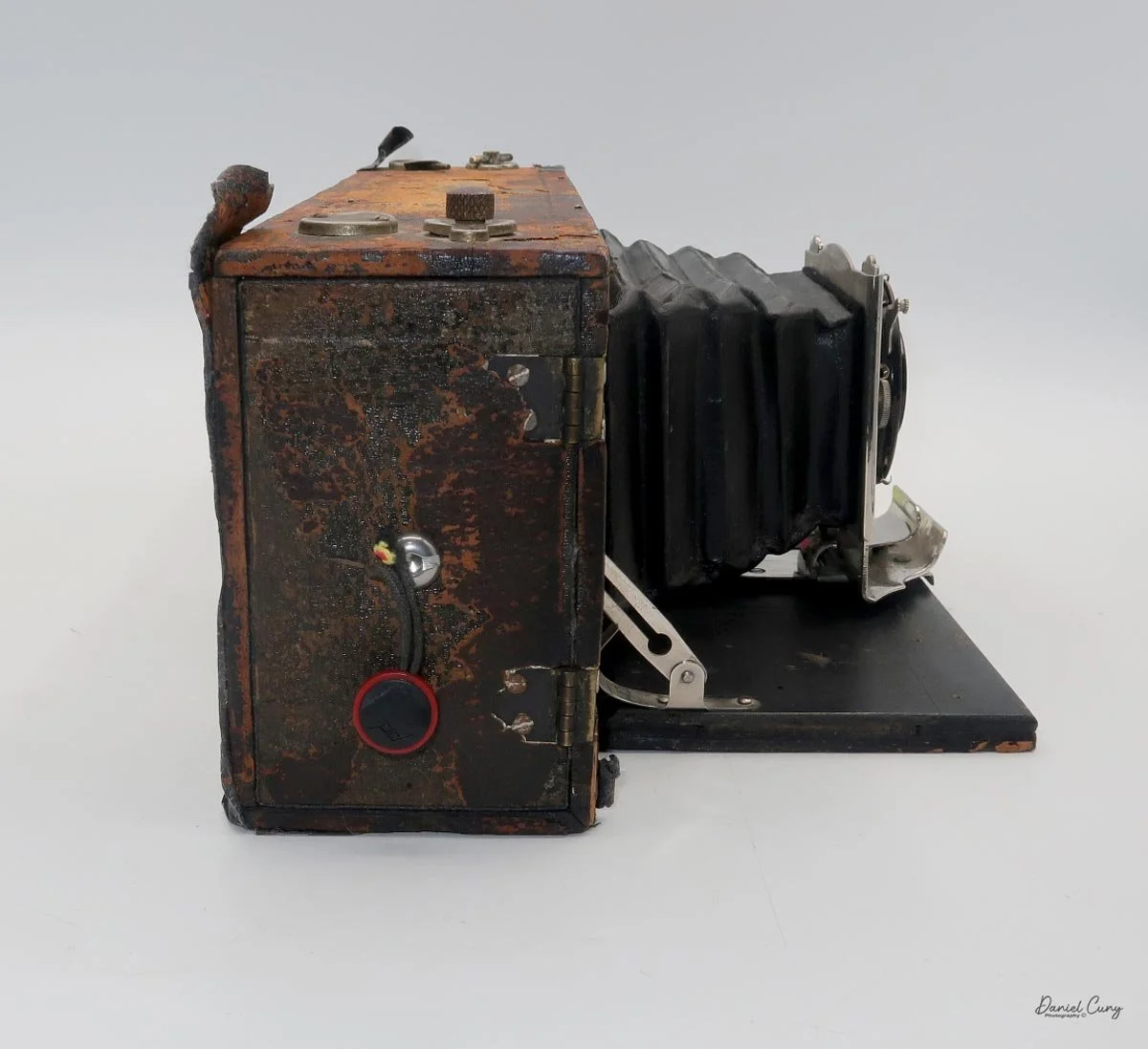
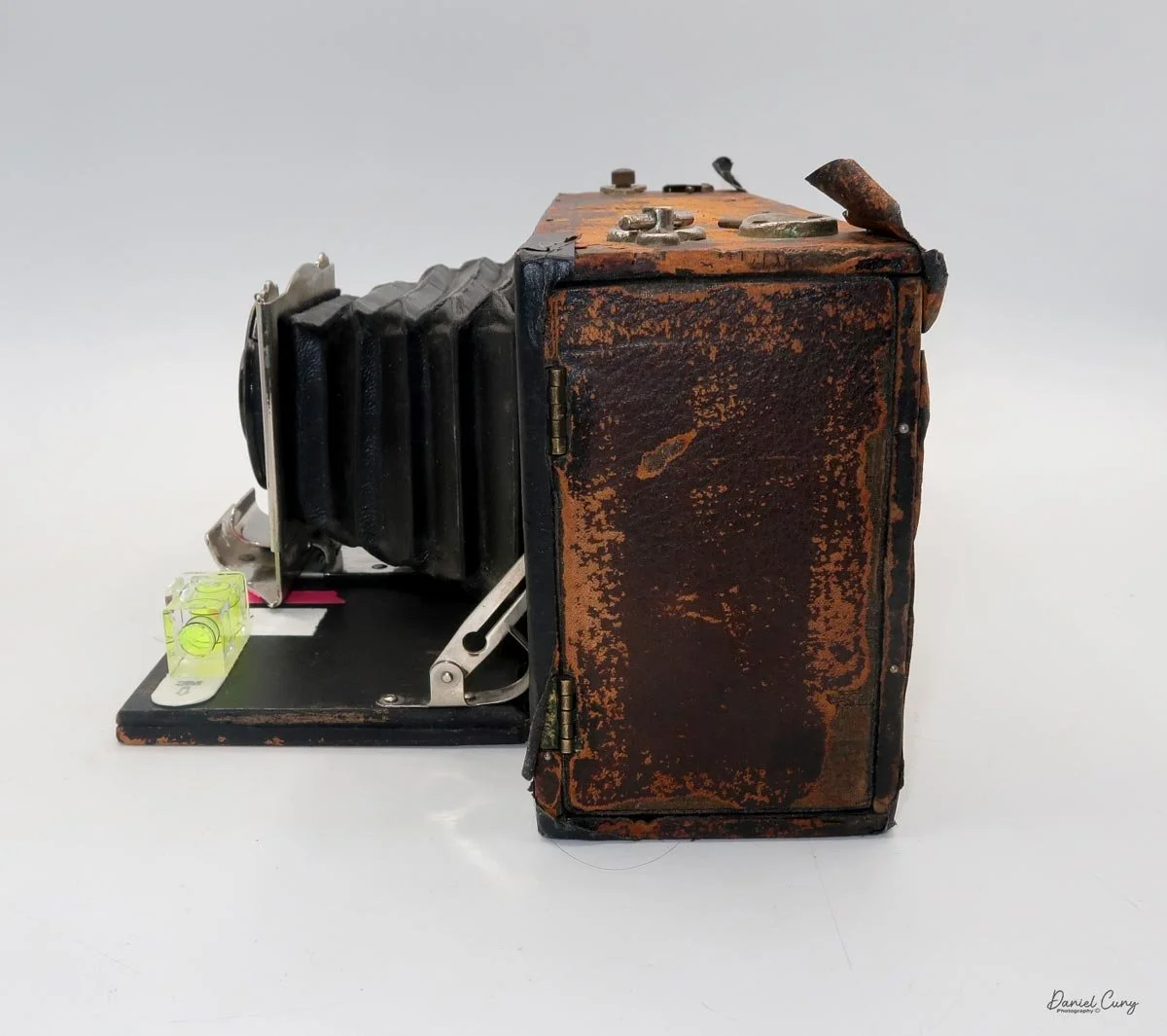
 My Bell Panorama camera is 13.5" wide by 4.75" tall and 3" deep with the lens retracted. With the front cover closed, the camera is 7.25 "deep. When the front cover is opened and the lens extended, the camera is 7.25" deep. The camera weighs just under 3 pounds, at 2 pounds, 14.6 ounces. 

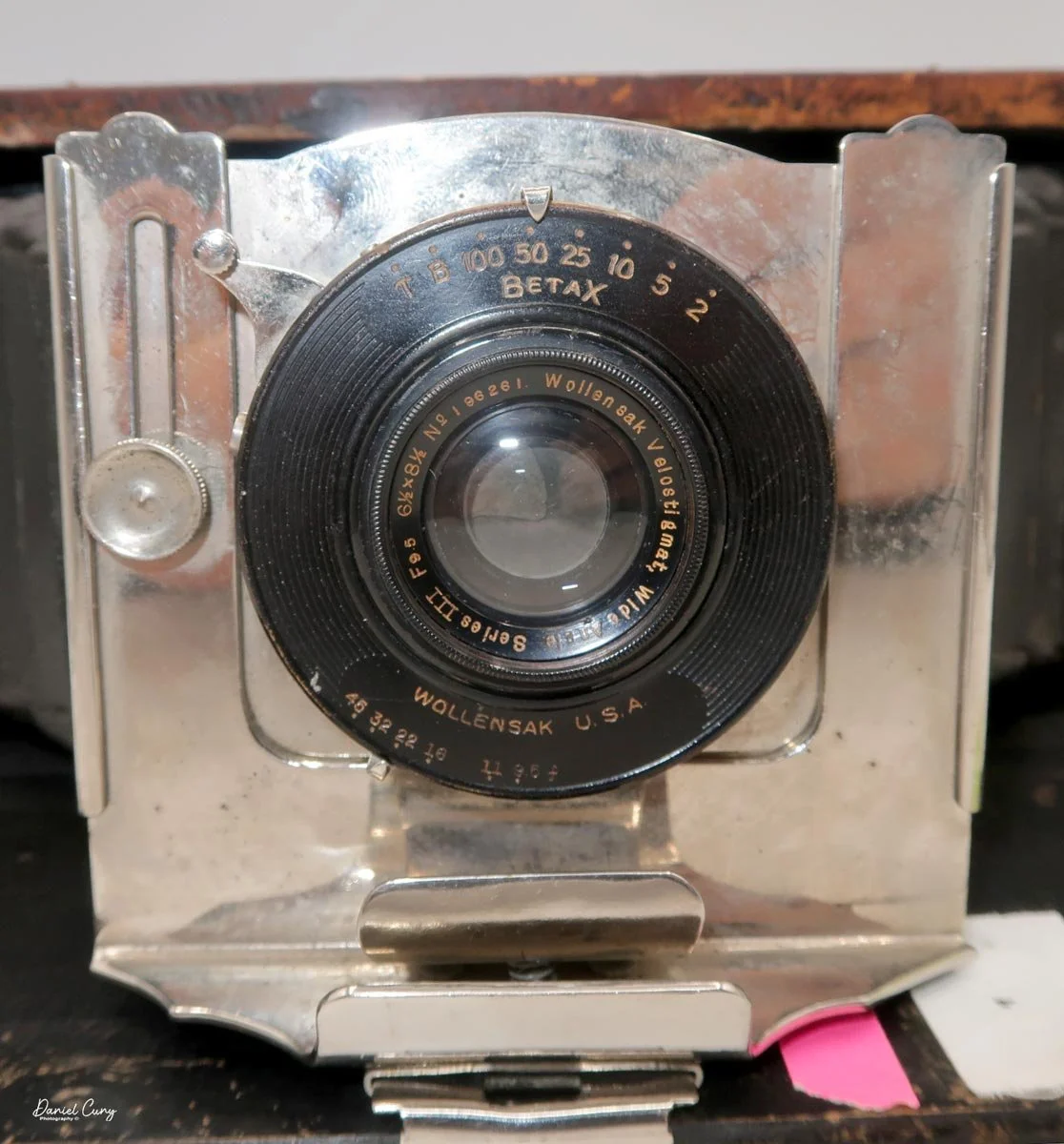
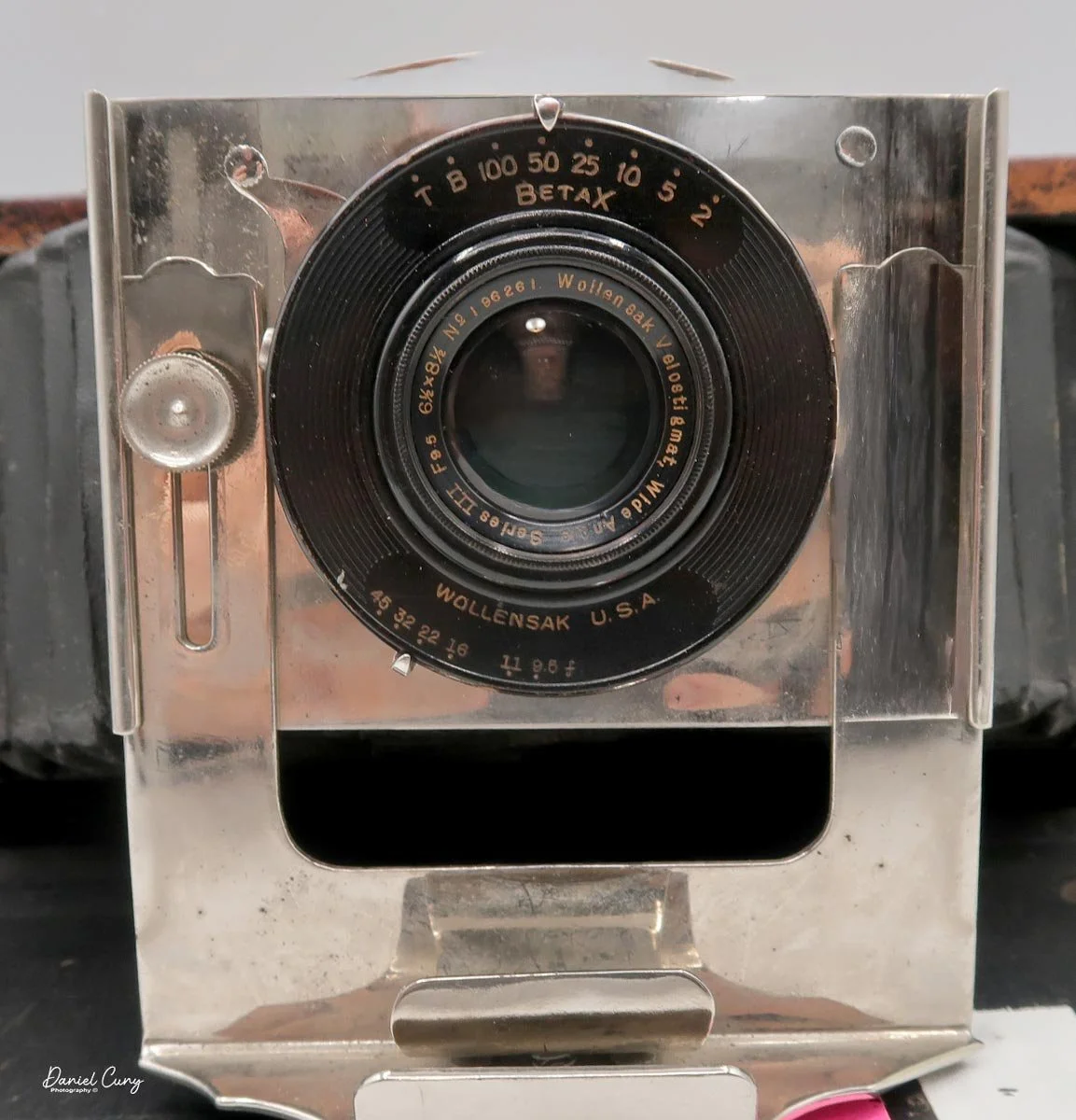
To open the front, press the button in the middle on top; you can then pull down the lens board and pull out the bellows. The Bell Panoramic camera has a Wollensak Velostigmat Wide Angle, series III, 6 1/2 x 8 1/2 lens, serial # 196261, in a Wollensak Betax shutter with speeds from 1/2 to 1/100, along with "T" for time exposures and "B". The aperture settings range from F/9.5 to F/45. The lens can also rise to correct perspective.

There are a couple of items missing from my camera: the viewfinder, which is usually on the lens, is missing, as with other folding-style cameras, and the handle is gone. When the camera arrived, a long metal piece was taped to its top. Since the long piece on top had accessory shoes, I'm guessing the long piece on the top had a removable finder which wasn't included with the camera. There is also a bubble level added to my camera, which they placed on the lens base, opposite to where the viewfinder would be.

 It also didn't have the secondary winding lever shown in the David Silver article. Still, it is a screw that holds the film adapter in the camera. It is very natural, but not original.

 My camera is a later version, specifically named the Bell "Improved" Panorama and Panel camera, because the back of the camera doesn't fully come off. The bellows are a thicker black material that replaced the original red bellows. The lens base is painted black in place of the original polished natural wood. Still, the flaps on the sides of the camera, which allow the photographer to change the negative format used to photograph their subject, are included and in good working condition. 

These flaps are controlled by two separate control arms, one for the right and one for the left. These arms are on the top of the camera, close to the film advance and the film locking pin. When the lens is extended, you can move the arms forward to move the flap out of the way, making the negative size longer. When these are pulled back, the flaps cover a portion of the negative, reducing its size.

 Depending on the number of flaps used, the camera can produce either a 6x17 when both flaps are used, a 6x24 when only one flap is used, or an astonishing 6x29 negative when both flaps are flipped forward. These are also the numbers on the white tape on the back of the camera. My guess is still the number of turns you do to advance the film to the next frame, because the red windows on the back of the camera are both taped over and not viewable on 120 film when used in the camera.

Back side of the Bell Panorama camera. Note numbers on the white tape.

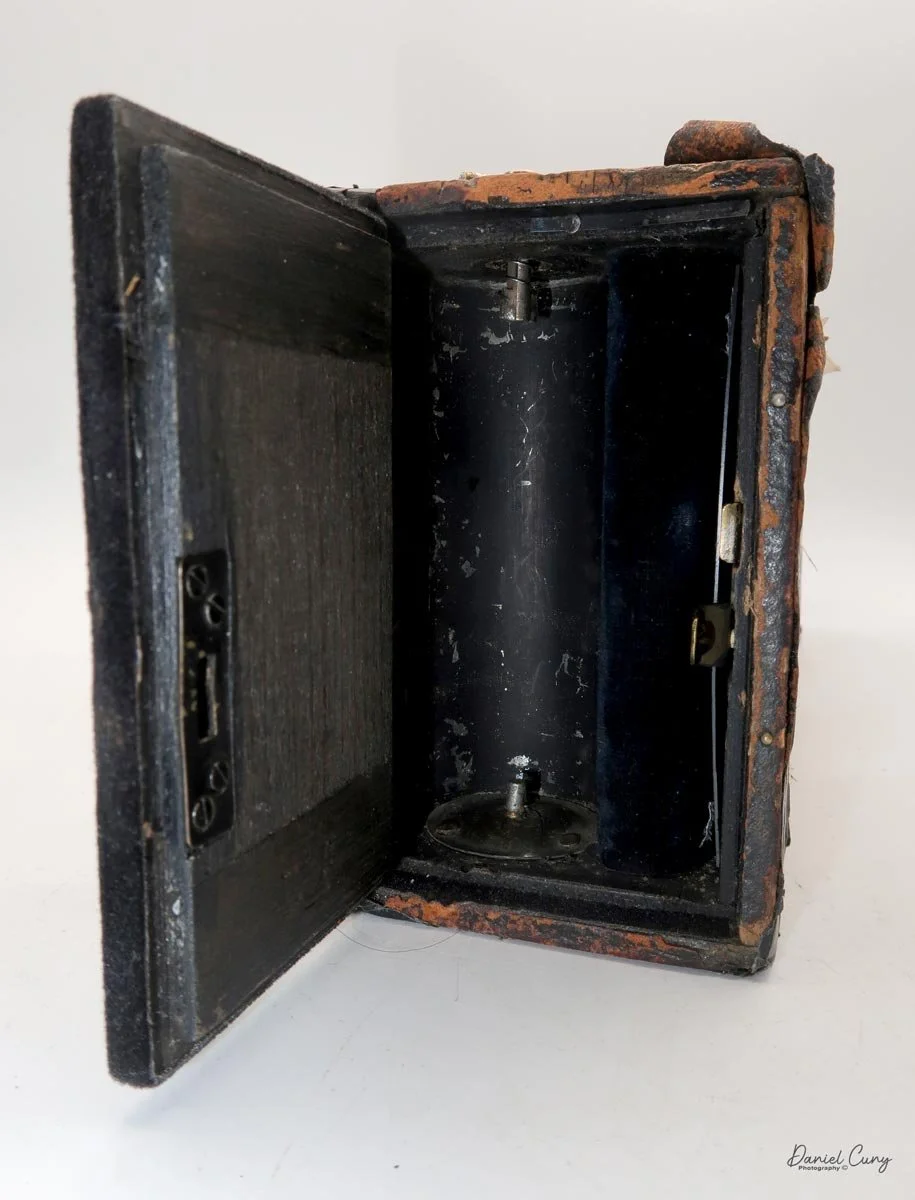
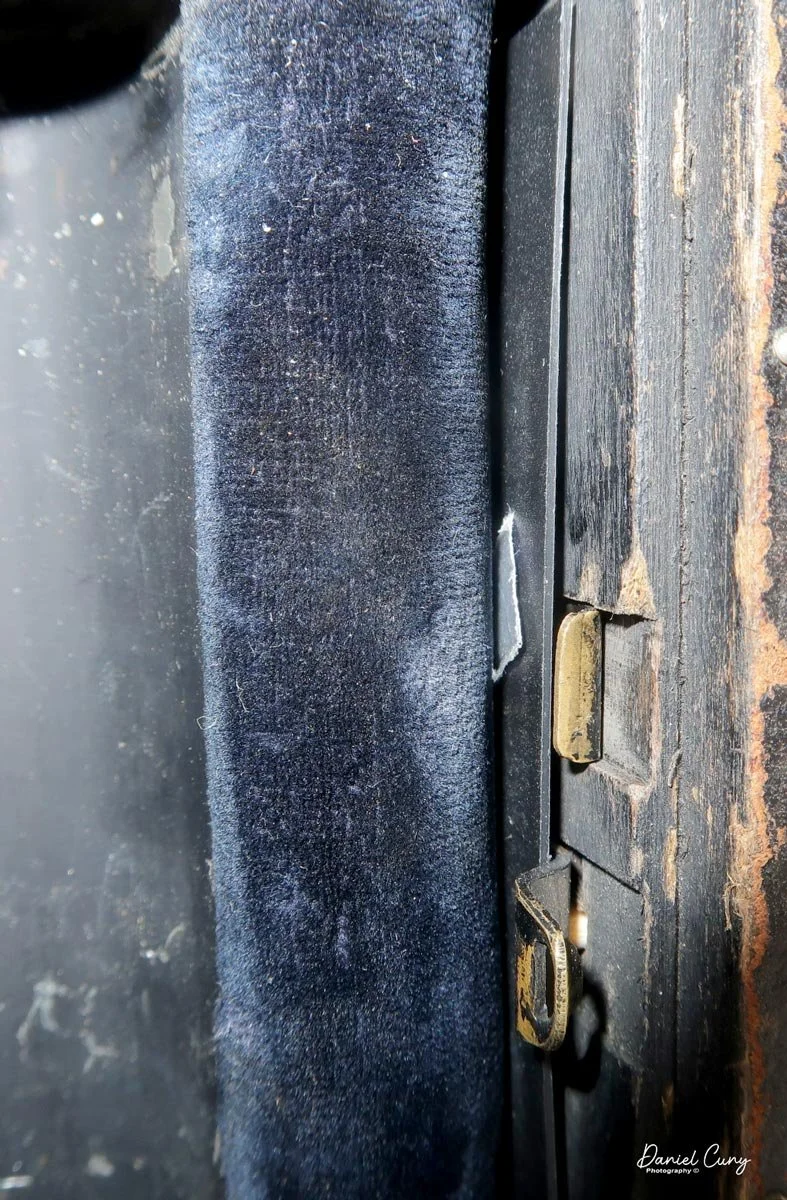
To open the back of the camera to load film, you first need to open each film chamber. This is done by pressing a small button on the back of the camera, close to the edge. Once pressed, you can open each side. On the left side, where the film takes up the reel and the advance handle is located, inside the chamber is a small handle you pull out that unlocks the back door. Pull out the handle, and with a fingernail or something thin, you can open the left side of the back and slide out the right side of the camera, exposing the film path.

 To load film, I unthreaded the right side, where the adapter is. I put in a fresh roll of 120 film into the camera, replacing the screw that holds the film and adapter in place. One of the tricky parts of this modified camera is threading the film over the plastic pieces taped into the camera's holding frame, which crops the pieces into place. I threaded the film in several times, but it always ended up under the cropping pieces rather than above them. I finally found a solution and got the film through.

With the 3D-printed adapters I used for the No. 3B Quick Focus Kodak, the take-up spool barely fit, and it was extremely tight. I needed to cut a channel into the side so I could slide the adapter over the bottom stem, since it was fixed in place. Usually, on folding cameras, there is a spring-loaded pin that you can pull down and slide the film reel into place, but this camera doesn't offer that. Cutting the channel into the adapter's side allowed me to slide the film into the camera and spool it onto the take-up reel.

 With the camera loaded, I went out to take some photos and see if the film advance numbering system actually works.

My Results:

 The old adage "Live and Learn" is very popular when I go out to shoot with cameras. It generally takes a couple of rolls of film to get to a normal comfort level with a new camera, and that's what happened with the Bell Panoramic camera.

 I shot my first roll of film, thinking the flaps would magically spread out during shooting. After carefully counting the turns to reach the next frame and "thinking" I was shooting in the 6x19 format, I noticed I had only two images on the roll, and they weren't in the widest format. 

 I also noticed the images were very "top-heavy on the negative, meaning the images almost bled off the top of the film, and there was more room on the bottom. This indicated that the adapter didn't work as it should, but the good news is that the exposures were good.

 Excited to know the camera didn't have any light leaks and the shutter was working well, I decided to make some changes and shoot another roll to see what I could get. The first thing I noticed was that when you pull out the lens, that's when you need to determine the format you want to shoot in. When the lens is closed, the flaps are always pulled back, leaving the film unexposed to the full width. That was the easy fix…. remember to flip the flaps forward AFTER you pull out the lens.

 I also needed to make adjustments to the film adapters for the take-up spool. Since the images were top-heavy, I trimmed off about 1/4" off the bottom of the lower adapter. This would push the film lower, making it easier to turn the film advance crank. 

 Loading the camera with a second roll of film, which was much easier than the first time, I headed out to my front yard to take more photos. Pulling the lens out of the camera's body, then flipping the wings forward this time. Now I knew I was going to get a longer image on the negative. Carefully counting the turns of the film advance crank, I took my first photo of the second roll. Advancing the film to the second frame, I leveled the camera using the bubble level and snapped my second photo. The third photo wouldn't be full-width because the film wasn't long enough to capture three full-frame images, so I shot a photo and hoped for the best.

 Here are the results from the first roll.

Here are the results from the second roll.

Conclusion:

 Here are my thoughts on this camera: it's extremely fun to shoot with, and I think the lens is sharp and produces great images. I'm anxious to try the camera out using the different formats, but here are some of my frustrations.

 Not having a viewfinder is rough. I needed to guess at what I was pointing the camera at. That's the first. I really didn't know what the angle of view was, and looking at the photos, it's wider than I anticipated. The Kodak Panoram and other panoramic cameras have lines on top that indicate the approximate angle of view. There's nothing on this camera that shows that.

 It's difficult to hold, but not too bad. I should use a tripod, especially when the top shutter speed is just 1/100. I also need to refine the number of turns to reach the first frame and the number needed to reach the next frame.

 Still, I absolutely LOVE this camera. The images are great, and it's compact and more lightweight than other panoramic cameras. It's a camera I'm extremely happy to have in my collection, and I will be on the lookout for more in the future.

 If you were the original owner or the person who owned this camera before me, great job on the modification. Reach out to me, I'd love to talk to you.

 Thank you for taking the time to read about this small, extremely wide panoramic camera that produced an almost 2.25" x 11" negative. Just incredible.

 Here are my other Camera Reviews.

 Cuny's Cameras and Photos is my online eBay store where I sell cameras I've reviewed, along with other photographic oddities. Stop by and see if there are items you're looking for.

 Until next week, please be safe.
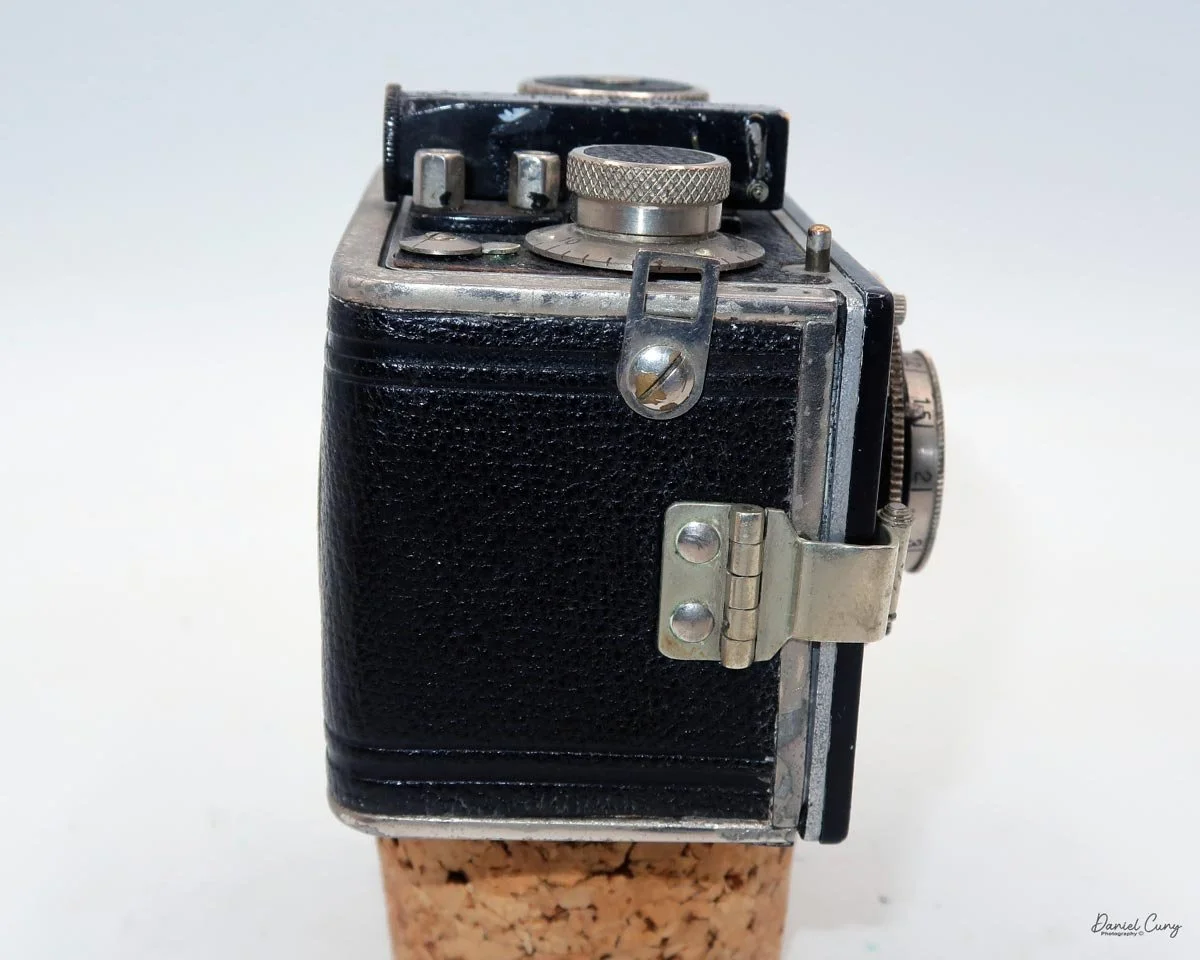
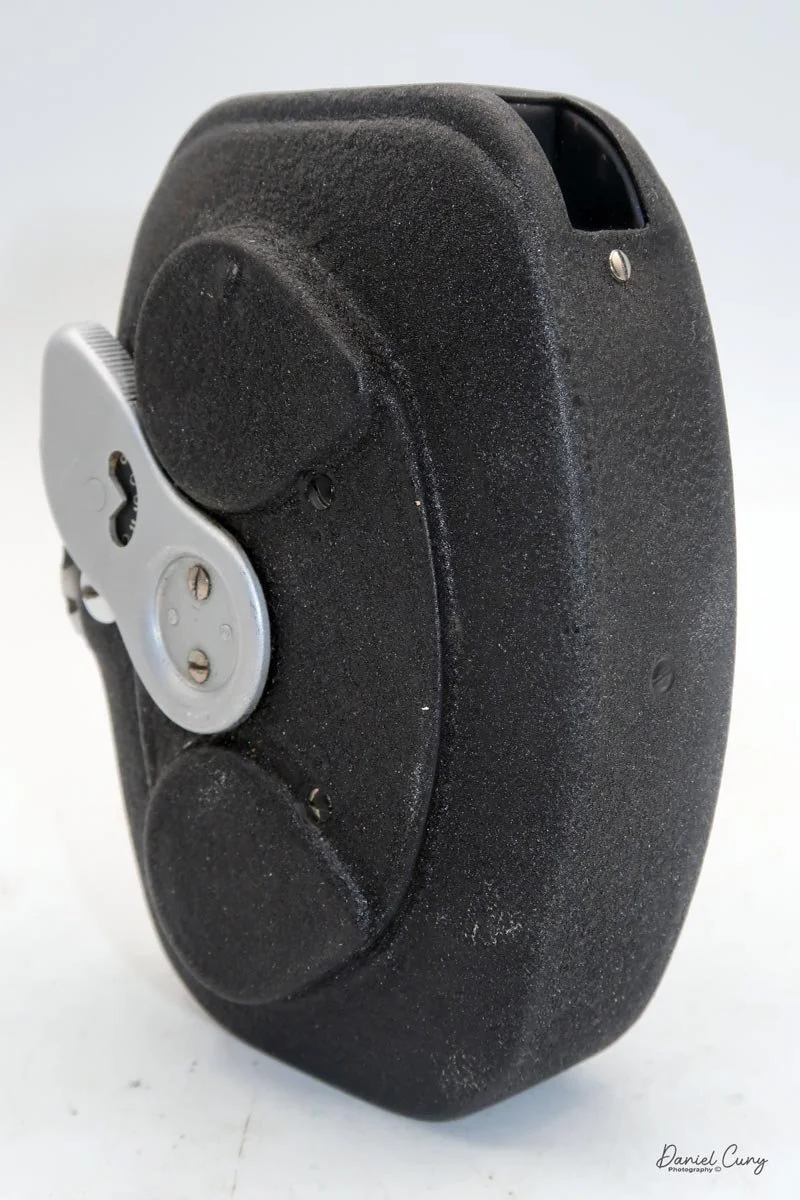
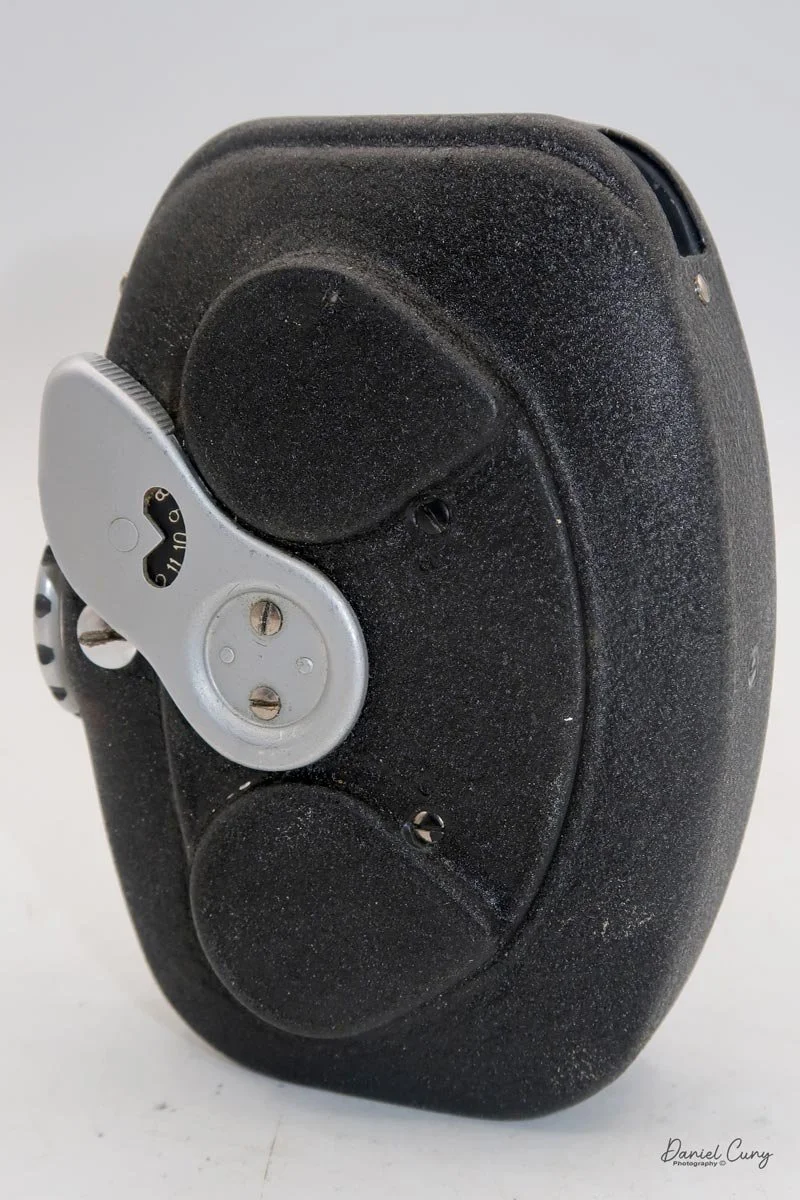
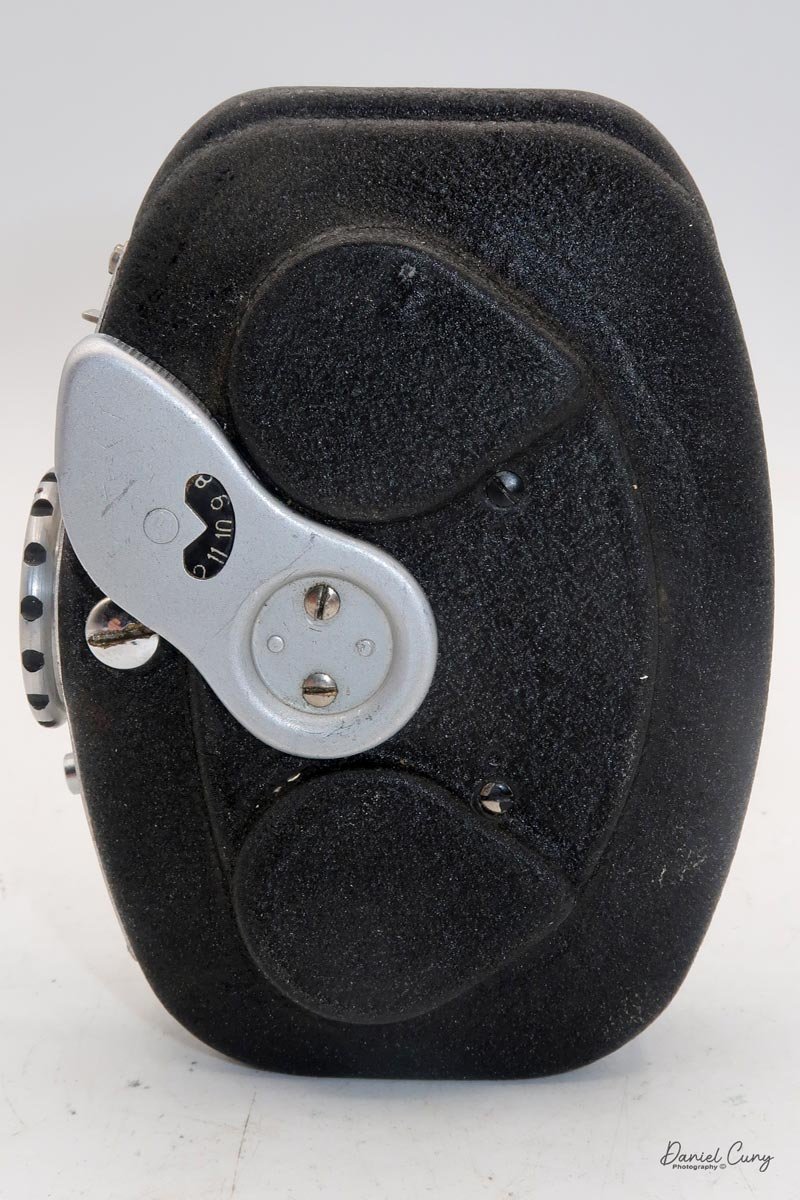
Durst Duca

A Tiny Full‑Frame Surprise: Shooting the Durst Duca

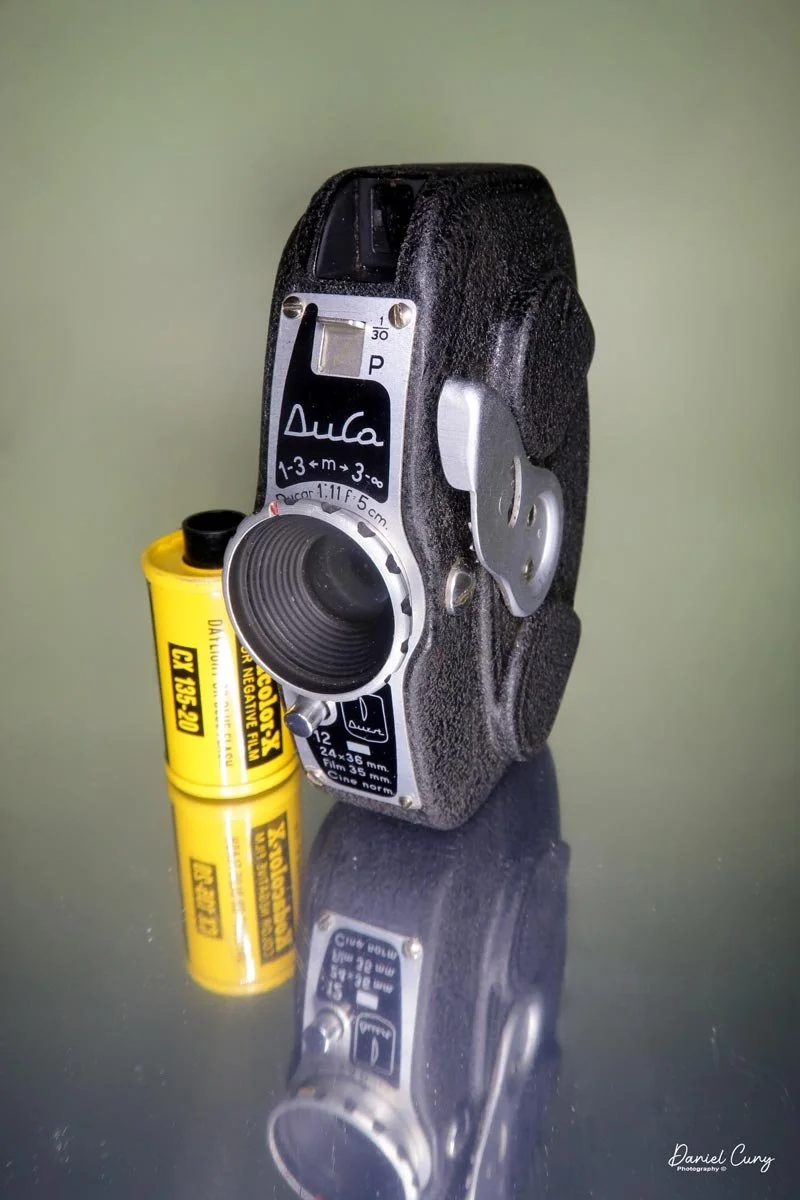
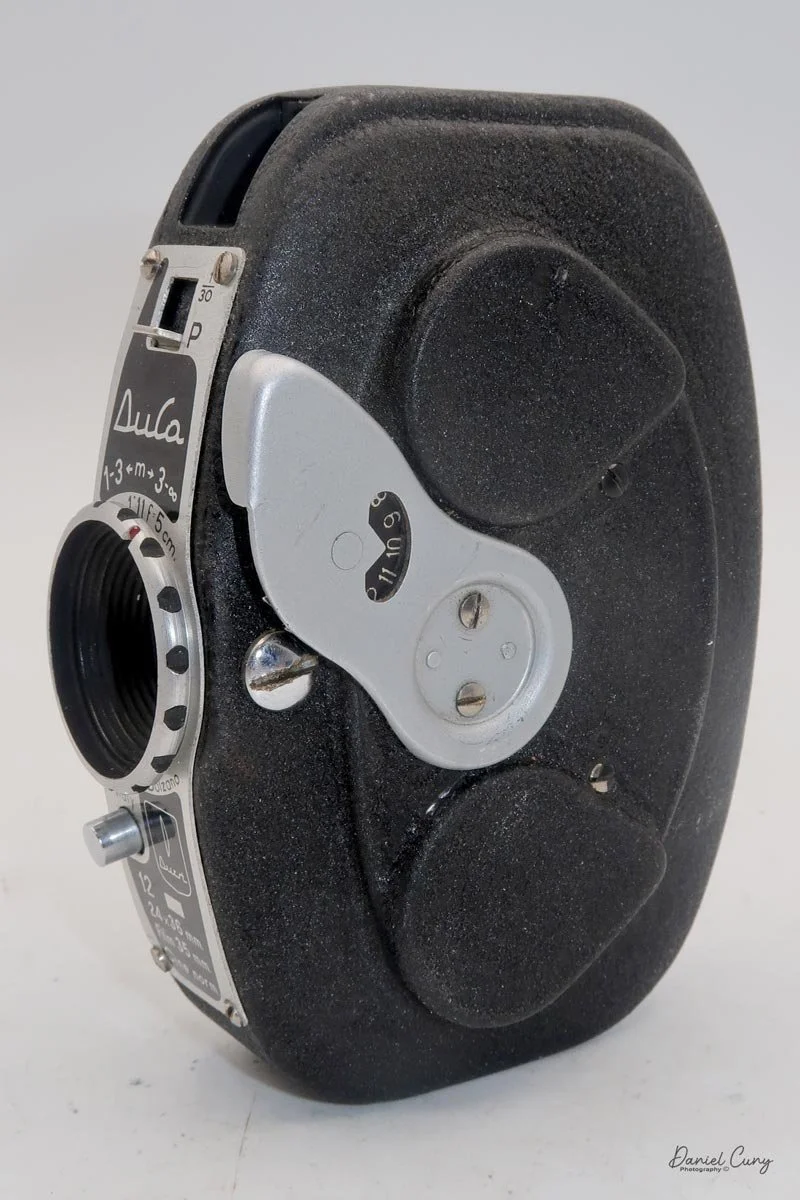
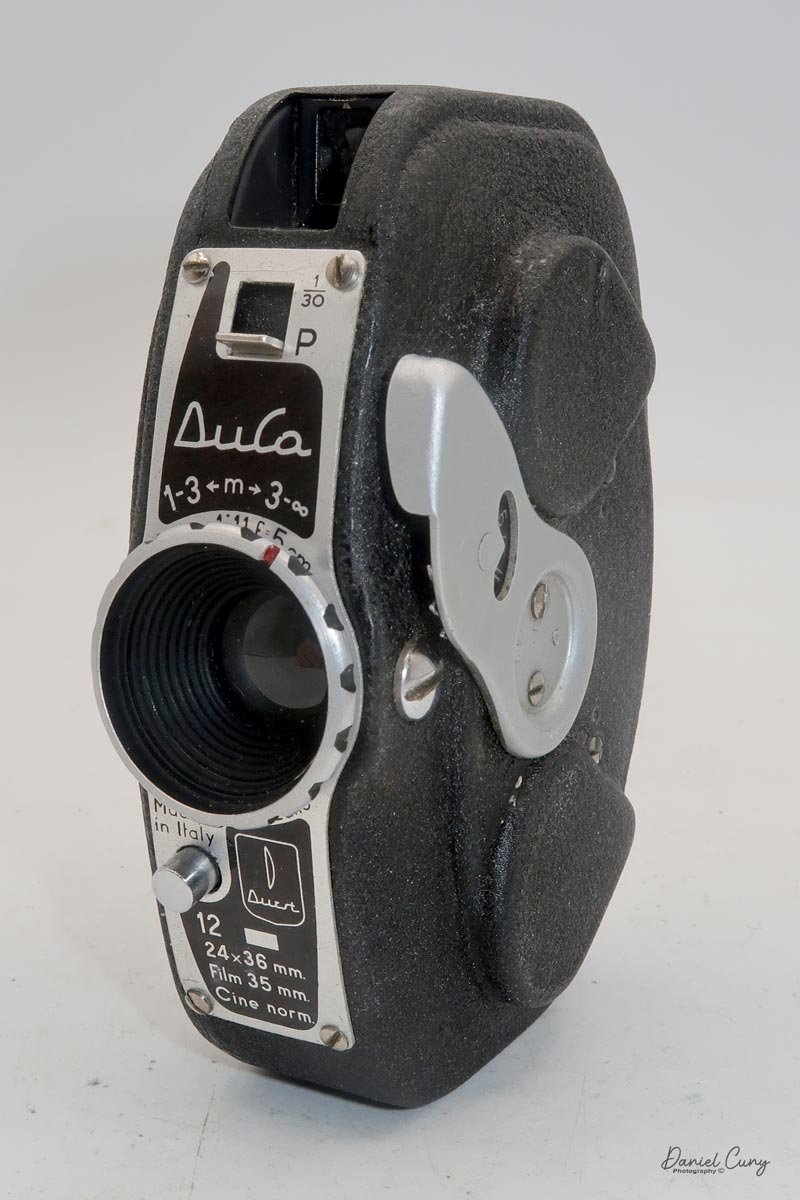
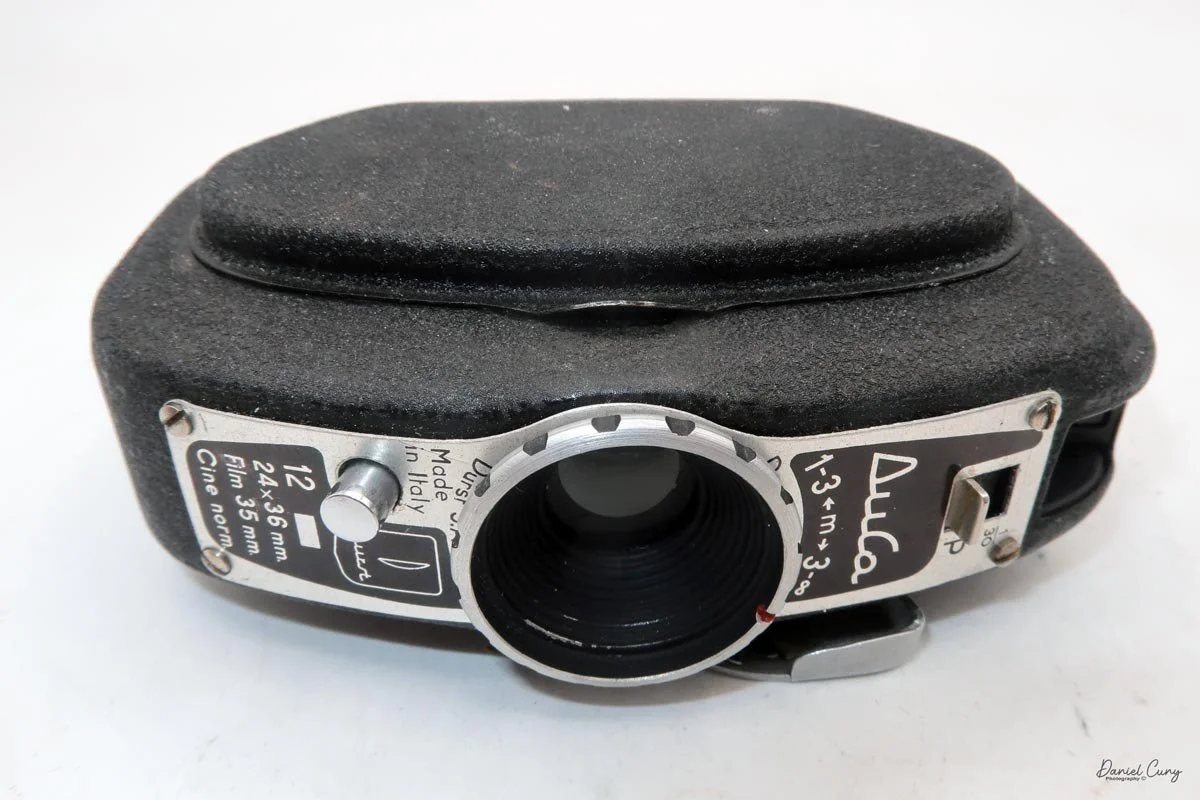
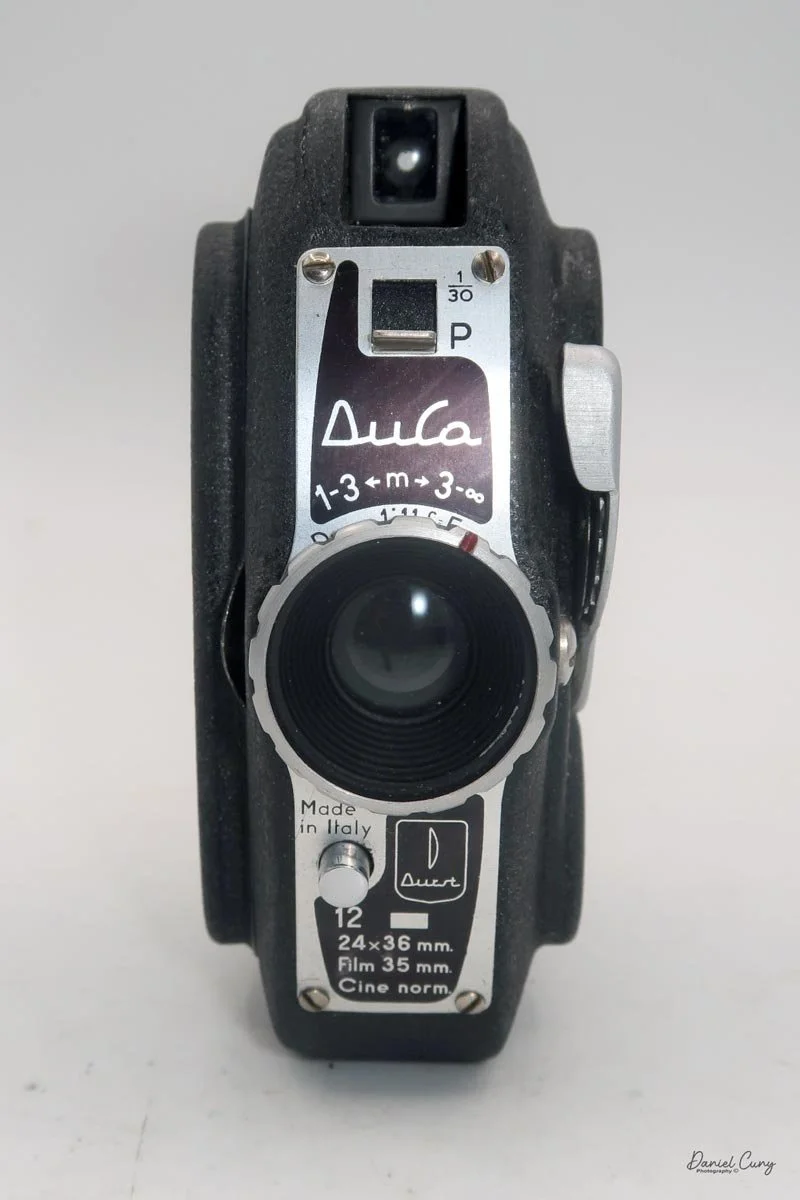
My Durst Duca camera.

I first saw the Durst Duca in McKeown's Camera Guide probably 30 years ago, and I can still remember my first instinct: this had to be a miniature camera. The tall, narrow body looked more like a tiny cine camera than anything that could handle standard 35mm film. With its vertical form, I assumed it used a 16mm cassette like a Minolta 16. So when I read that the Duca is actually a full‑frame 35mm camera, I was shocked.

 It just didn't seem possible. The camera looked too small and too skinny to hide a 35mm cassette sideways, especially with that unusual vertical format. For years, it stayed in the back of my mind as one of those oddball cameras I never expected to actually run across.

Finding My Duca

Being in the U.S., this little Italian camera rarely shows up at the usual places I haunt for gear—flea markets, garage sales, estate sales. On the big auction sites, I do see them once in a while. Still, they're usually priced higher than I'm willing to pay, especially once you tack on international shipping.

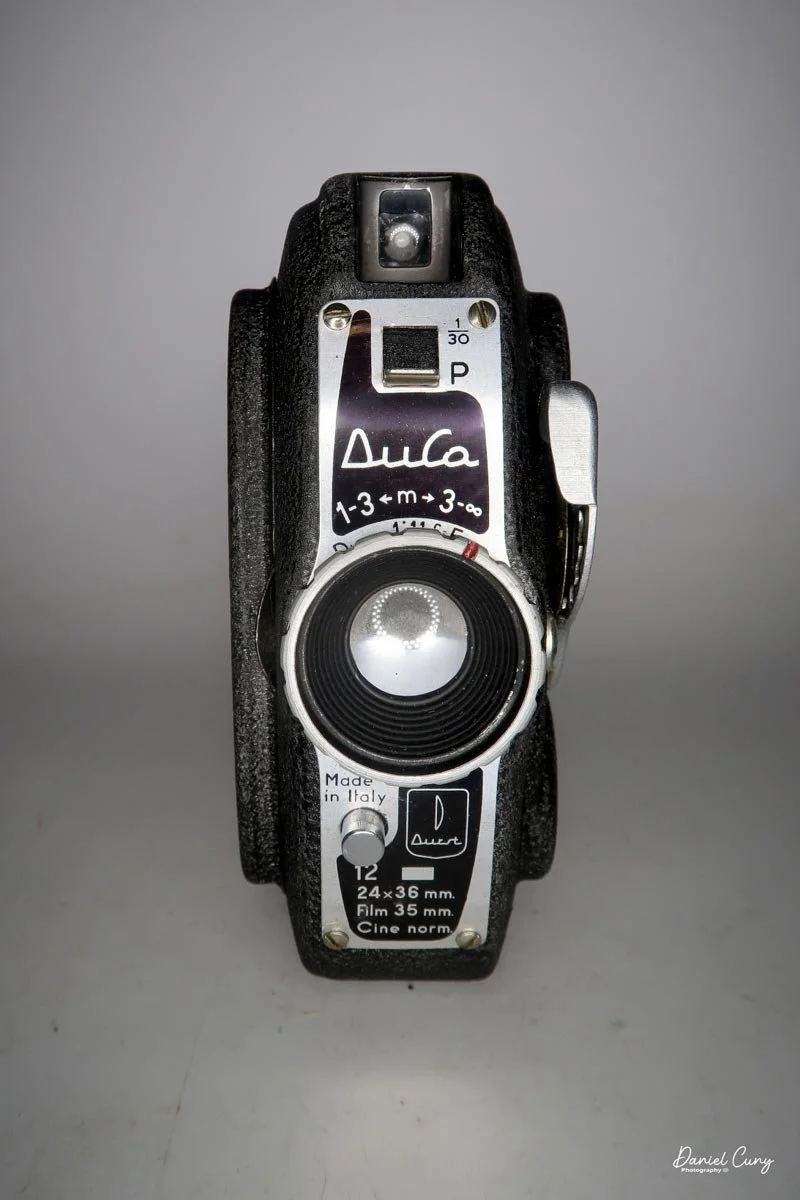
Front view of Durst Duca camera.

 When the auction was about to end, I logged in about 10 minutes before the finish. The price on the Duca had jumped up a bit, and I was outbid, so I nudged my max up—still on the low side—and watched the timer count down. No one else jumped in, and I ended up winning the camera.

The auction house shipped quickly. When I opened the box, I was still surprised by how small the camera is in person. It was even smaller than I'd pictured. I started to check it over, winding the advance lever on the side and cocking the shutter. I heard a faint click, but it was so quiet I wasn't sure the shutter was actually opening and closing.

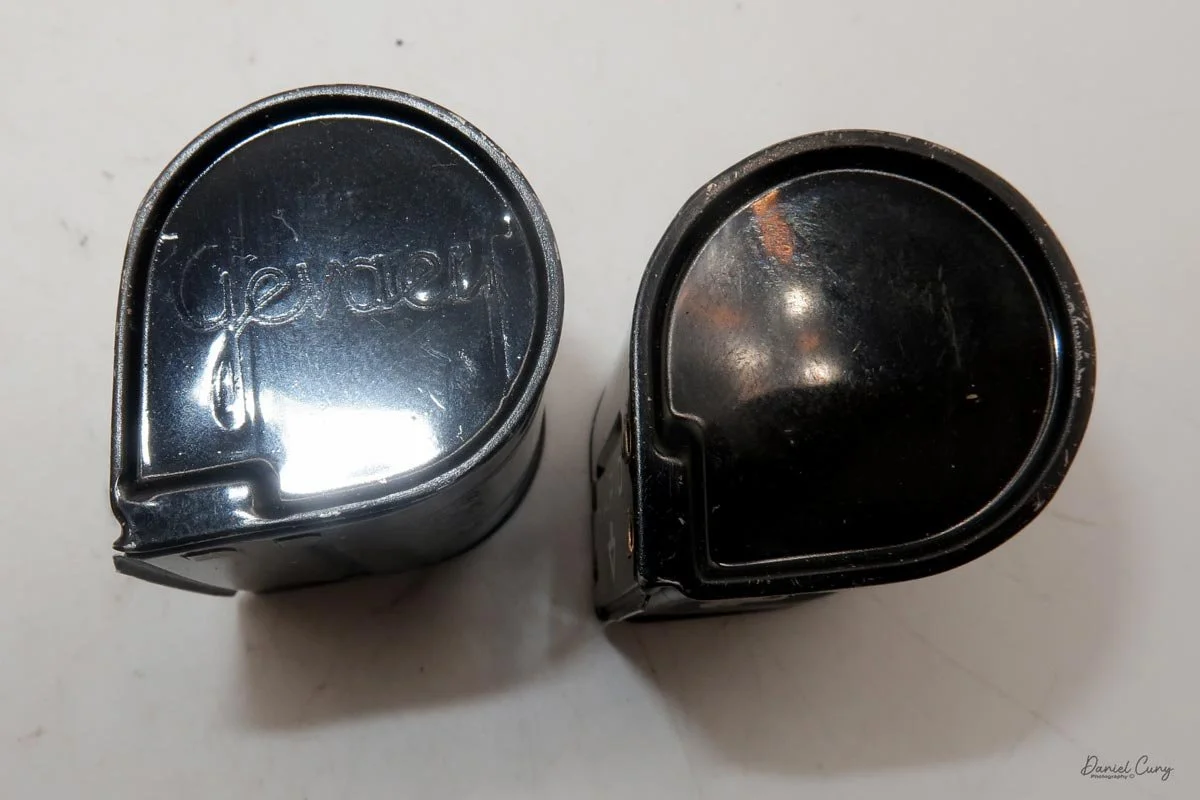
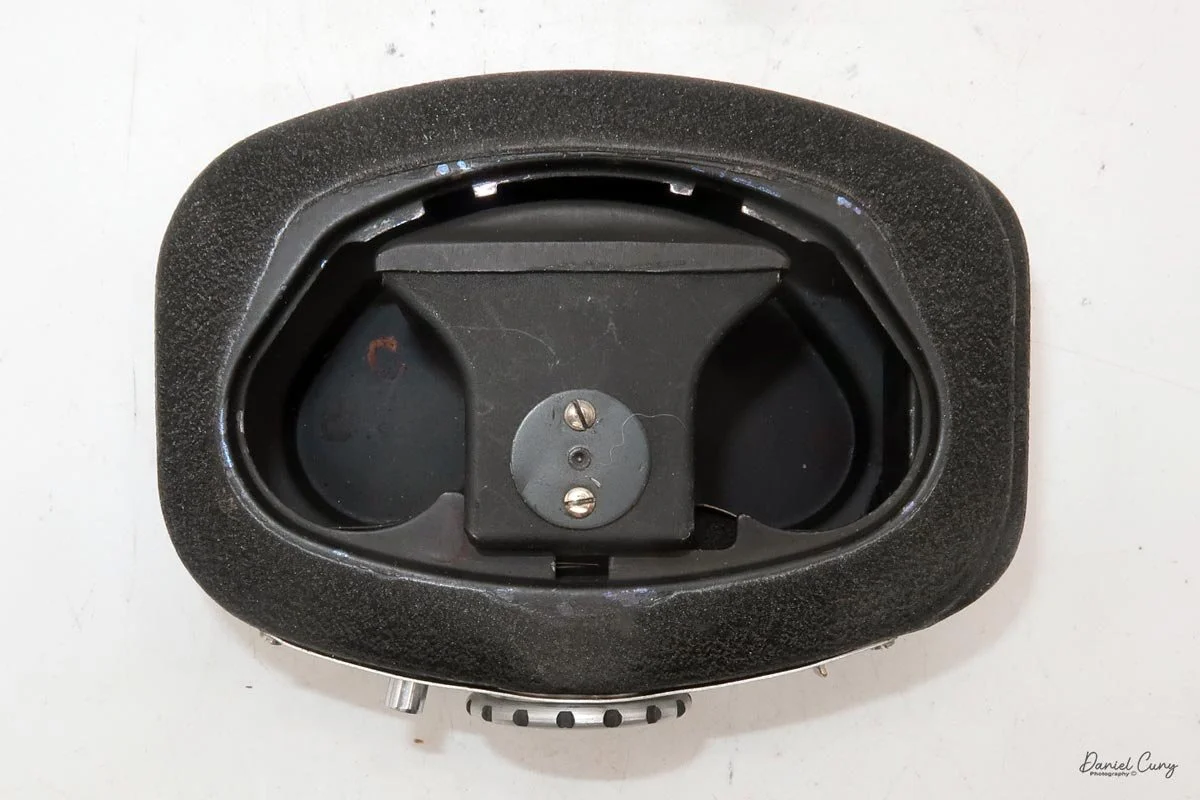
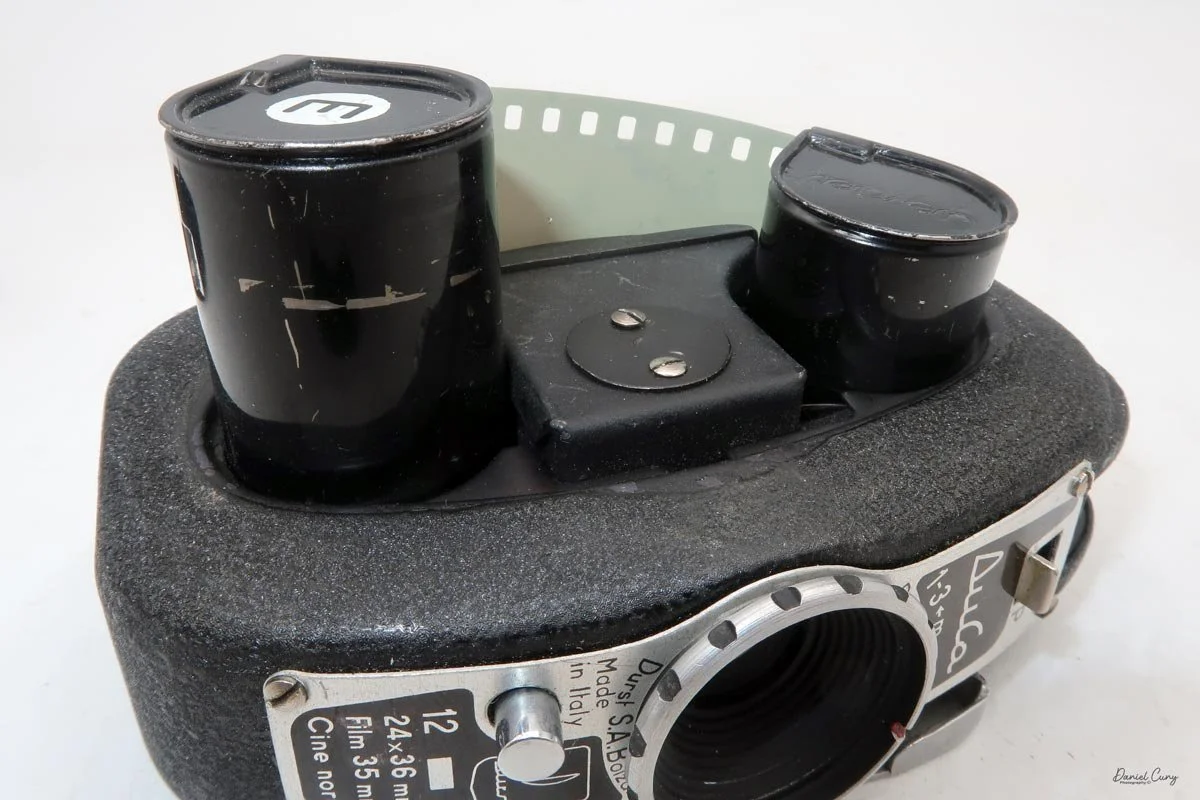
 I pulled the side of the camera off to get at the film chamber and saw that one of the two film cassettes was still inside—that was a nice bonus, since it meant I only needed to scare up one more cassette. Digging around in the drawer where I keep odds and ends of camera accessories, I found another cassette that would work.

 In my darkroom, I shone a flashlight through the lens and fired the shutter. At first, I saw no light at all, and my heart sank; I figured the camera might be dead. Then I noticed the pressure plate that holds the film flat against the rails. I pulled the pressure plate out, pointed the flashlight into the front of the lens again, and tripped the shutter. This time, I saw a brief flash of light through the gate—success. The shutter was working. That was the moment I decided the Durst Duca would be the camera I'd write about for this week's blog.

A Little Durst History

Durst is best known today for its darkroom enlargers. Still, for about 25 years, the company also made a small, innovative line of cameras that reflected the same experimental mindset they brought to the darkroom. Founded in 1936 in northern Italy by brothers Julius and Gilbert Durst, the firm quickly gravitated toward photographic equipment, especially enlargers, which eventually became its main business.

 Durst's camera story starts with the Gil, a simple 120 roll‑film box camera introduced in 1938 for the growing amateur market. After World War II, Durst resumed production of the Gil and then shifted toward more compact designs, setting the stage for its 35mm experiments.

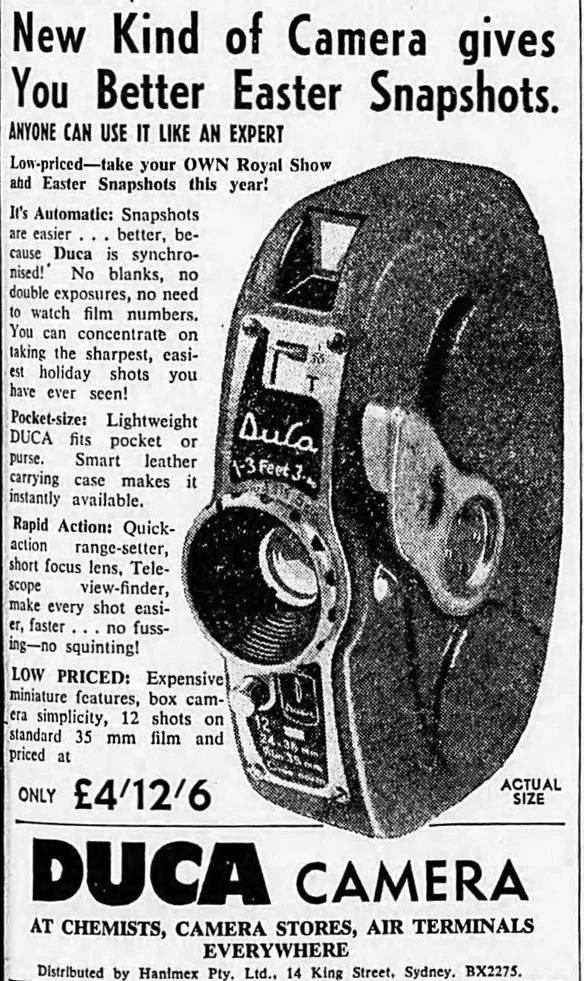
Australian Ad for Durst Duca camera

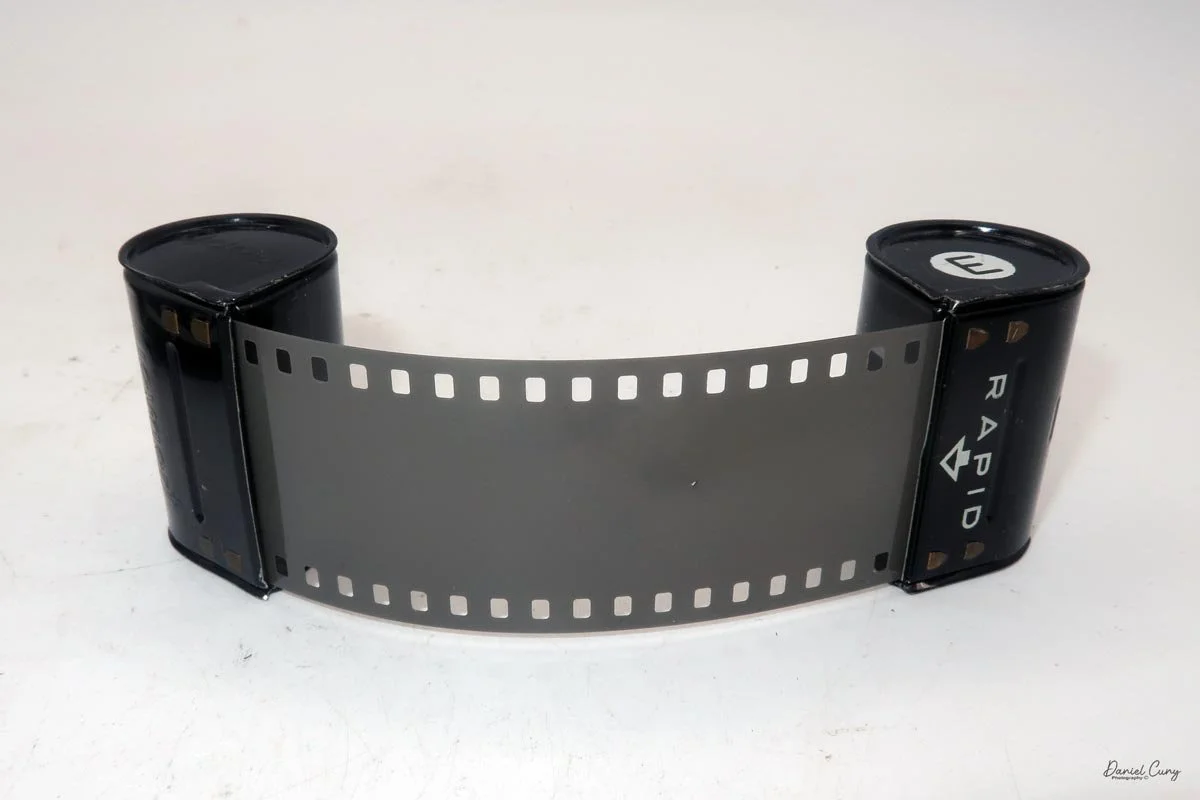
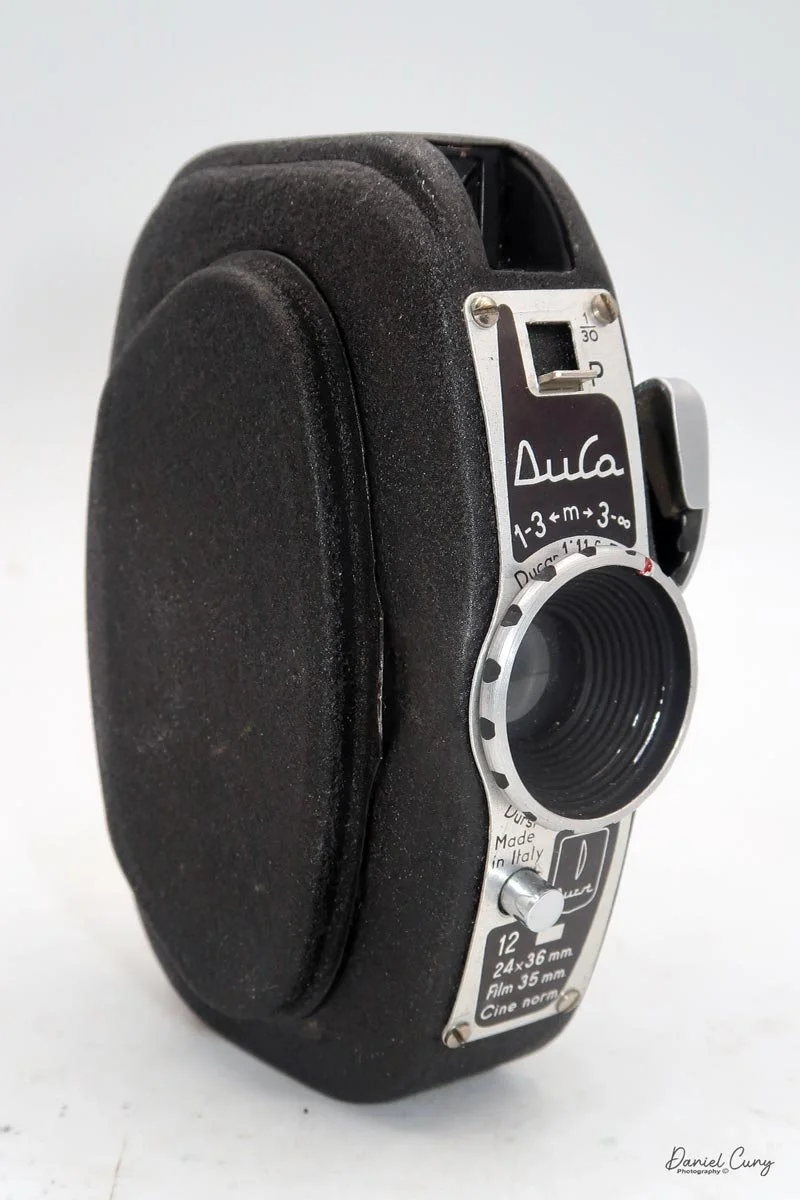
The Duca followed as a tiny 35mm still camera that used Agfa Karat cassettes instead of standard 35mm cartridges. That choice let Durst play with miniaturized body shapes: an oval, cine‑style form in a pocketable size, offered in several colors. This focus on unusual styling and packaging mirrored their enlargers, which often looked different from competitors but emphasized precision and usability.

 Next came the Durst 66, a modestly specified camera with an unconventional shutter and a quirky way of measuring exposure. You can already see Durst thinking outside the box, trying to rethink mechanisms rather than just copying others' work.

 All of that leads to the Durst Automatica, made from 1956 to 1963 and often regarded as the first 35mm camera with aperture‑priority automatic exposure. It used a pneumatic shutter derived from the Durst 66 and wrapped it in a very elegant body. For such a small camera line, it was an ambitious finale and shows how far Durst was willing to push design and automation.

My Durst Duca

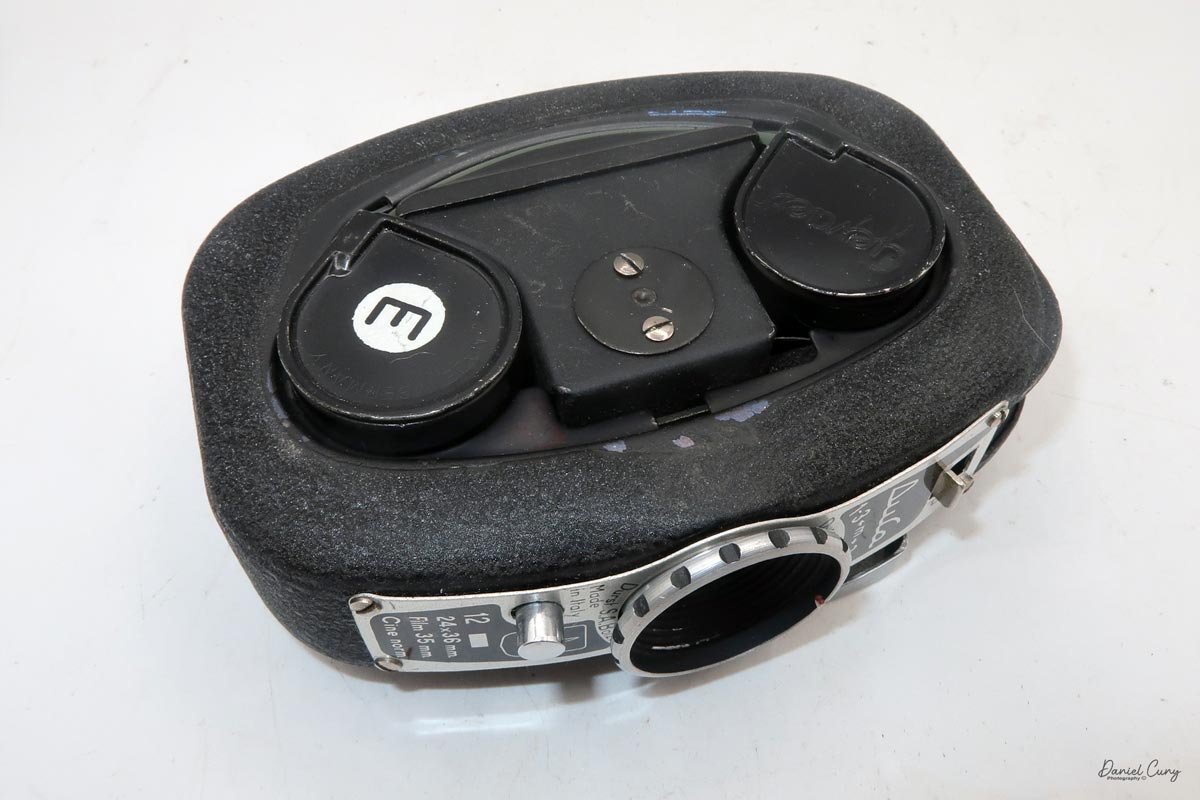
The Durst Duca was introduced at the Milan Trade Fair in September 1946 and stayed in production until around 1952. It's a vertical‑format, full‑frame 35mm camera that uses Agfa Karat cassettes, and it was available in five colors: black, blue, red, white, and brown. I've only ever seen the black, blue, and red versions in photos. Still, now that I know more are out there, I'll keep an eye out—even if I suspect the more unusual colors will be priced higher than I'm willing to pay.

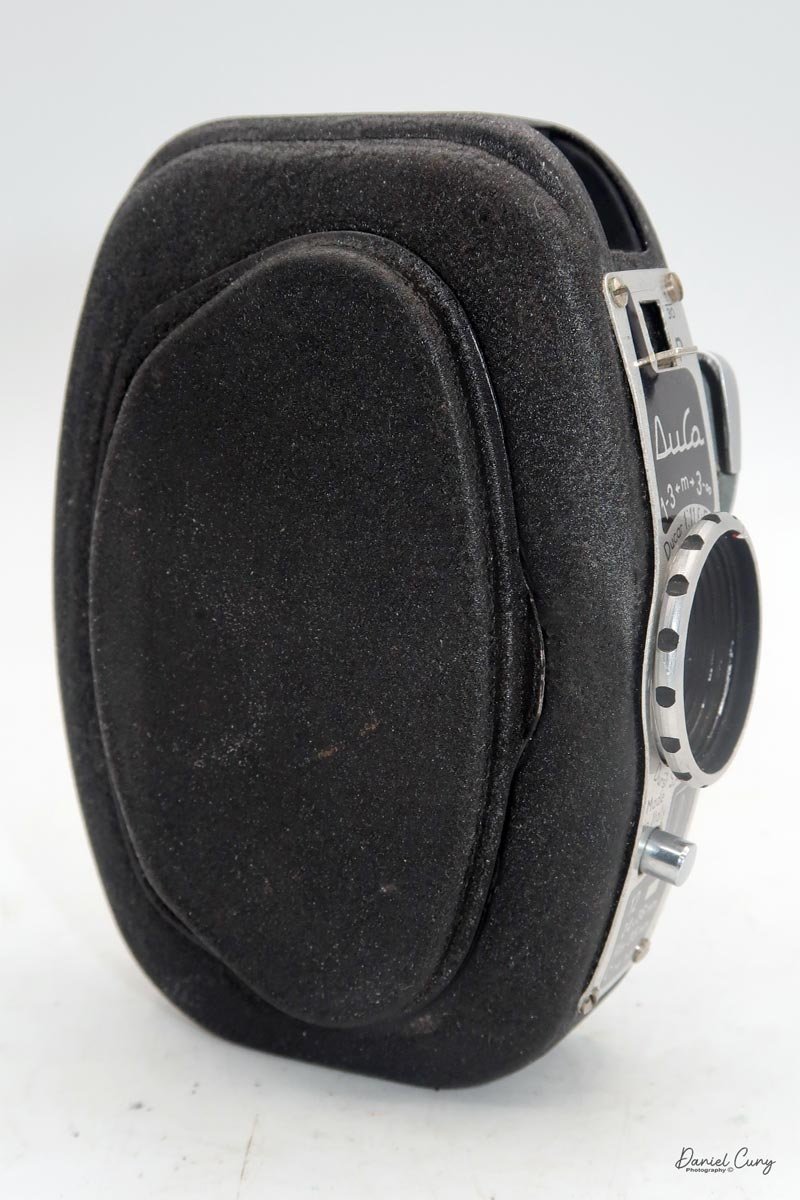
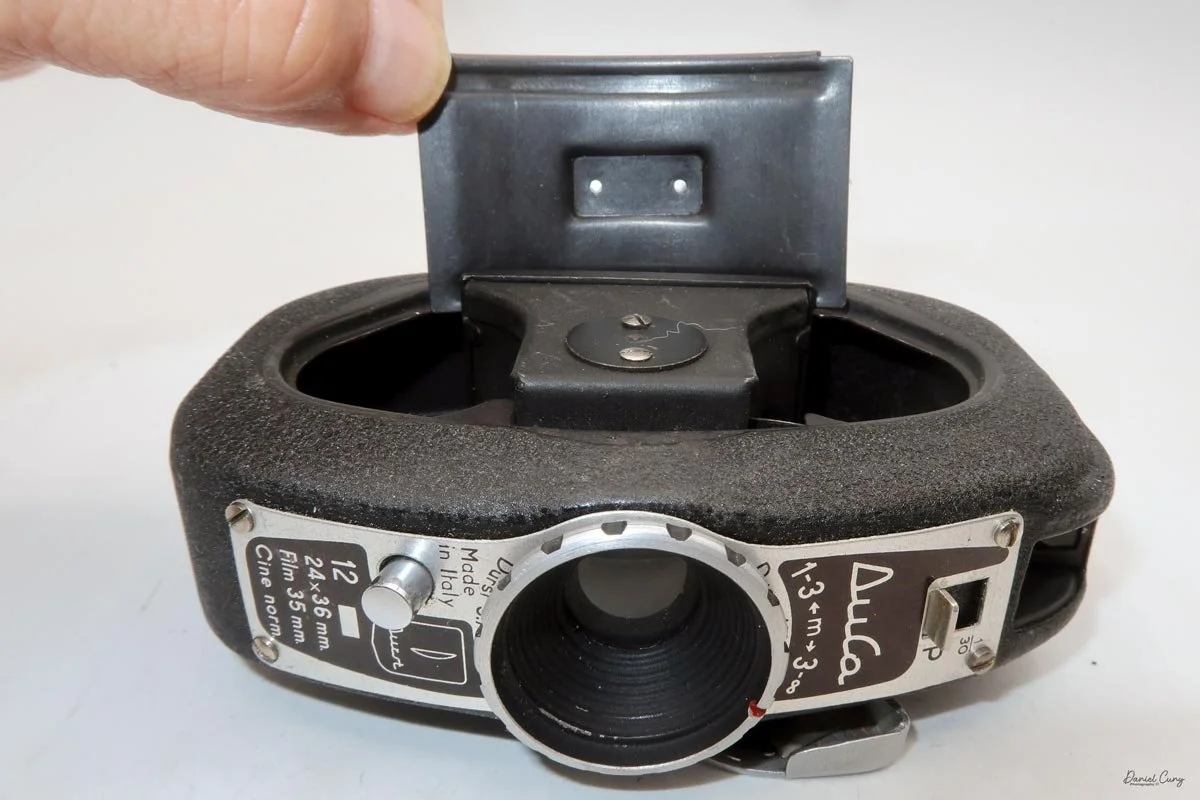
Physically, the Duca is tiny: only about 4 inches tall by 3.25 inches deep and just over 1.5 inches wide, and it weighs 10.1 ounces with the cassettes in place. The body is nicely rounded and fits well in the hand—definitely a camera you could drop in a coat pocket and forget about until you need it.

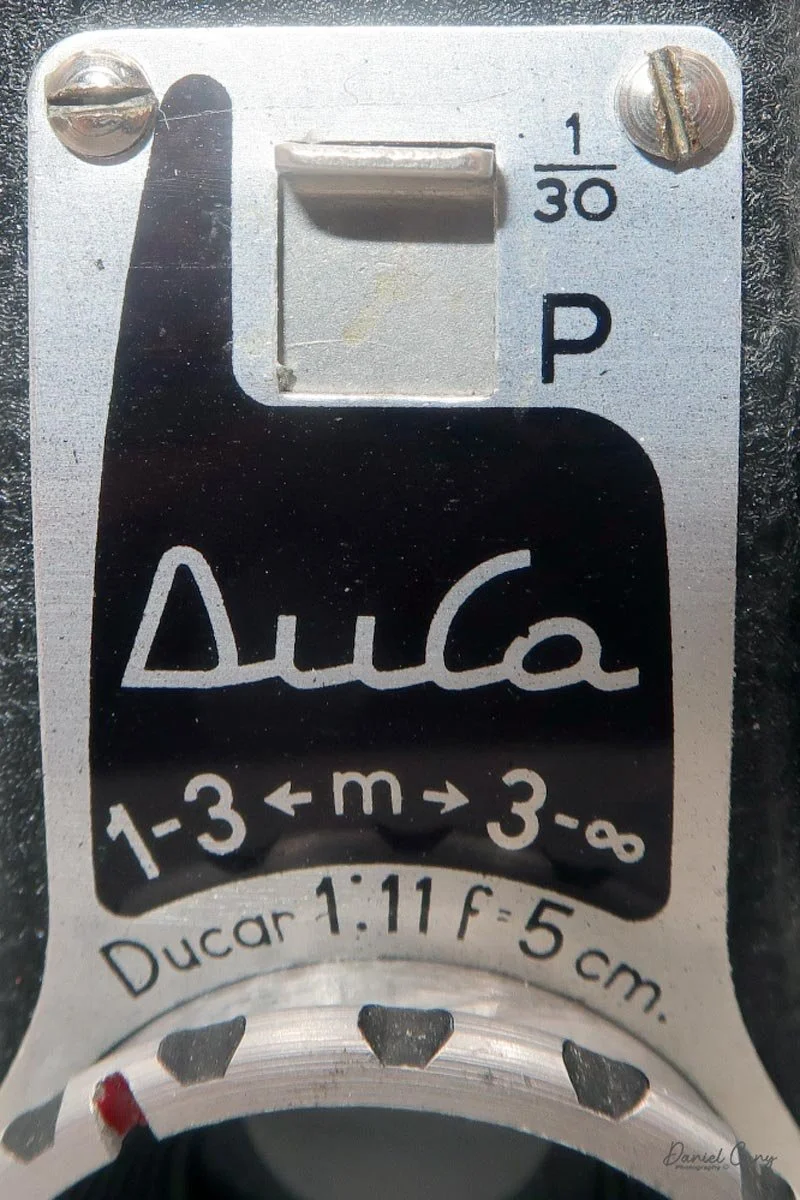
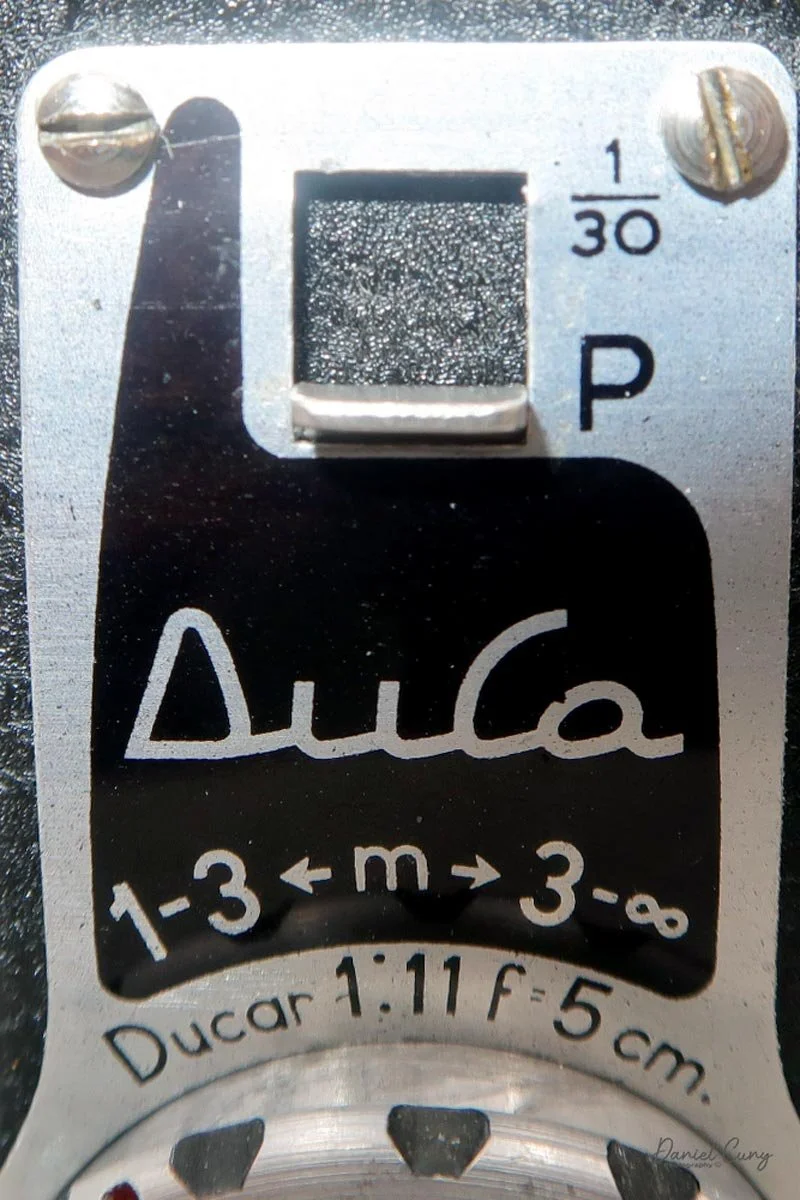
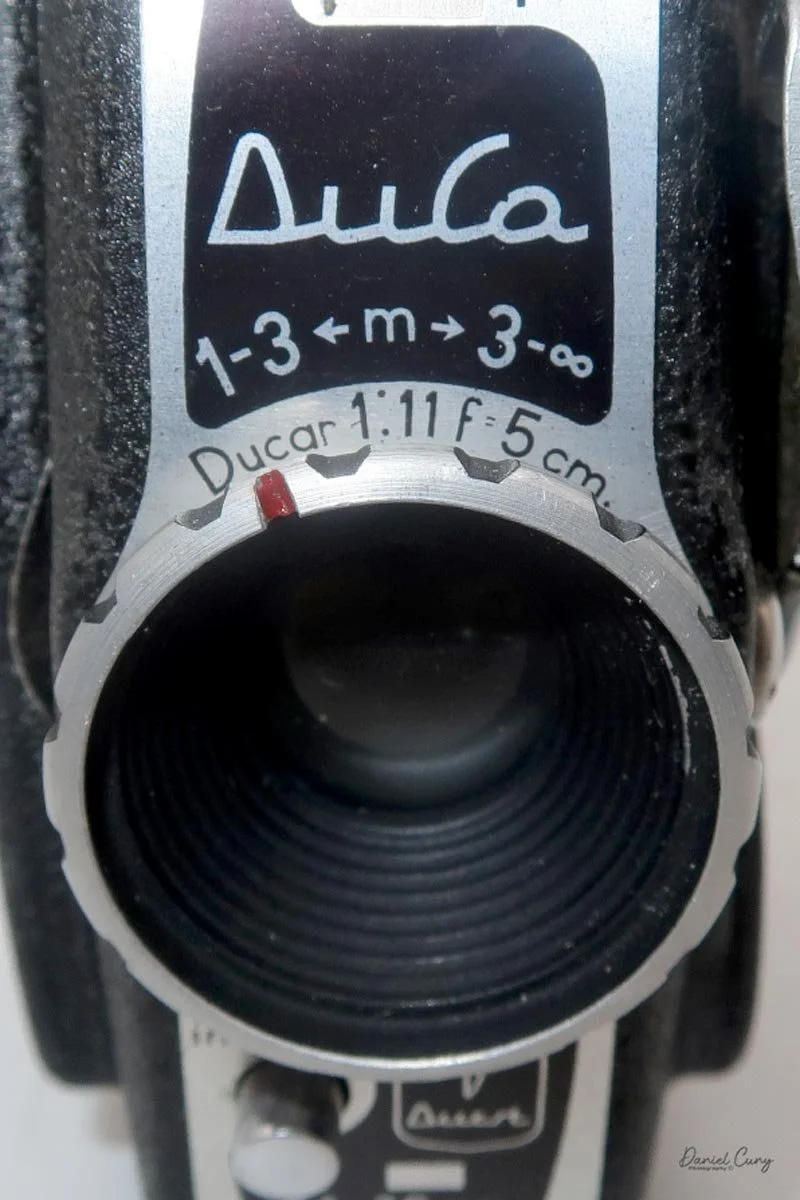
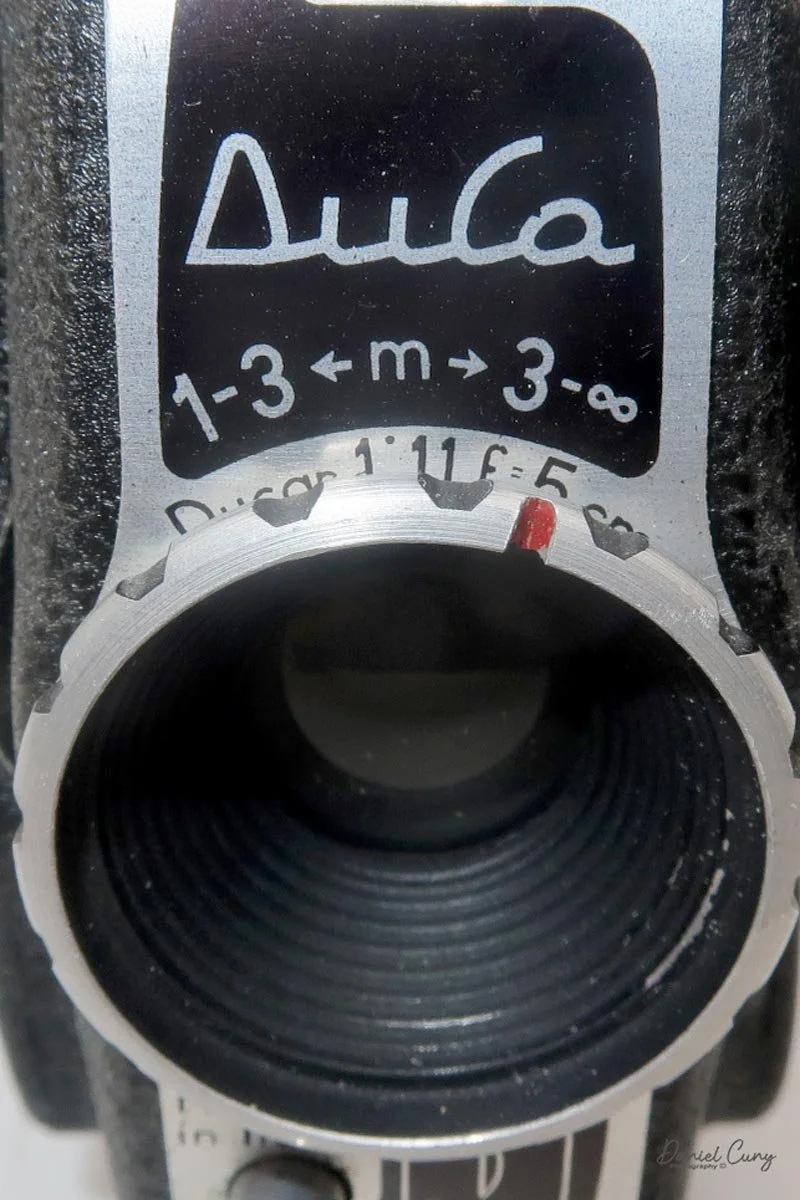
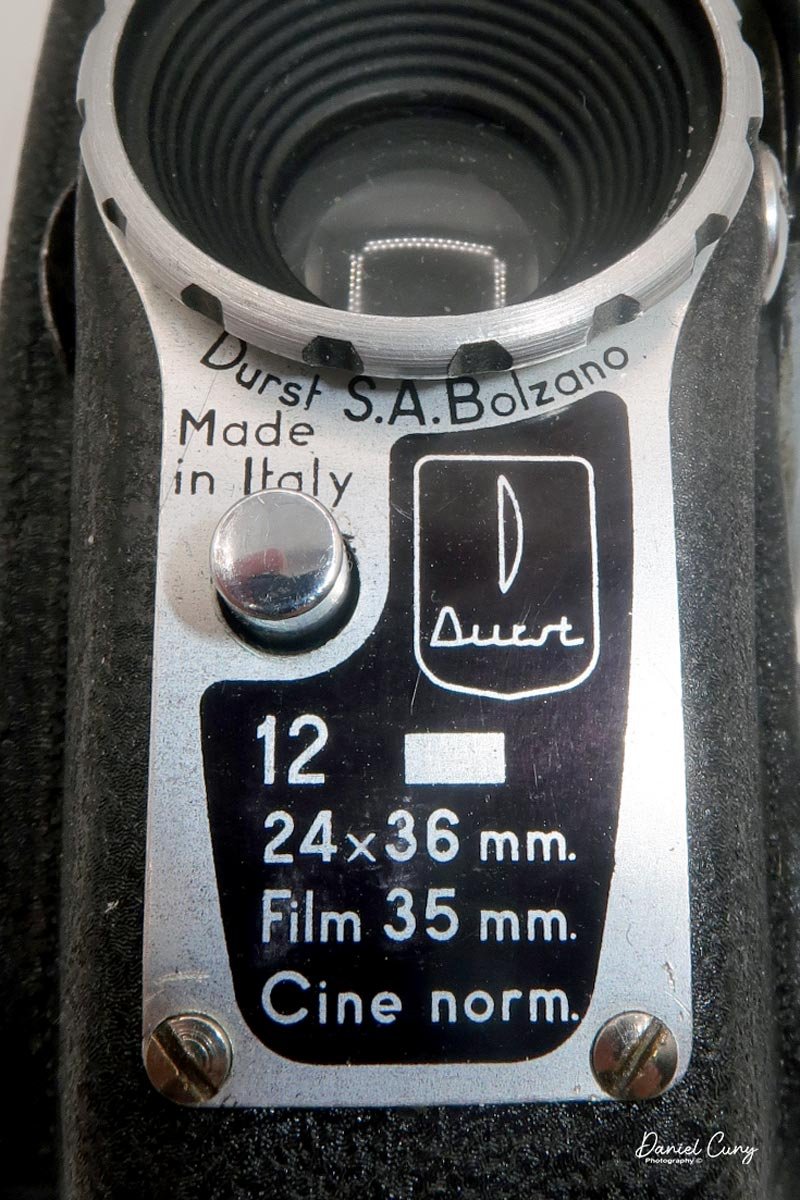
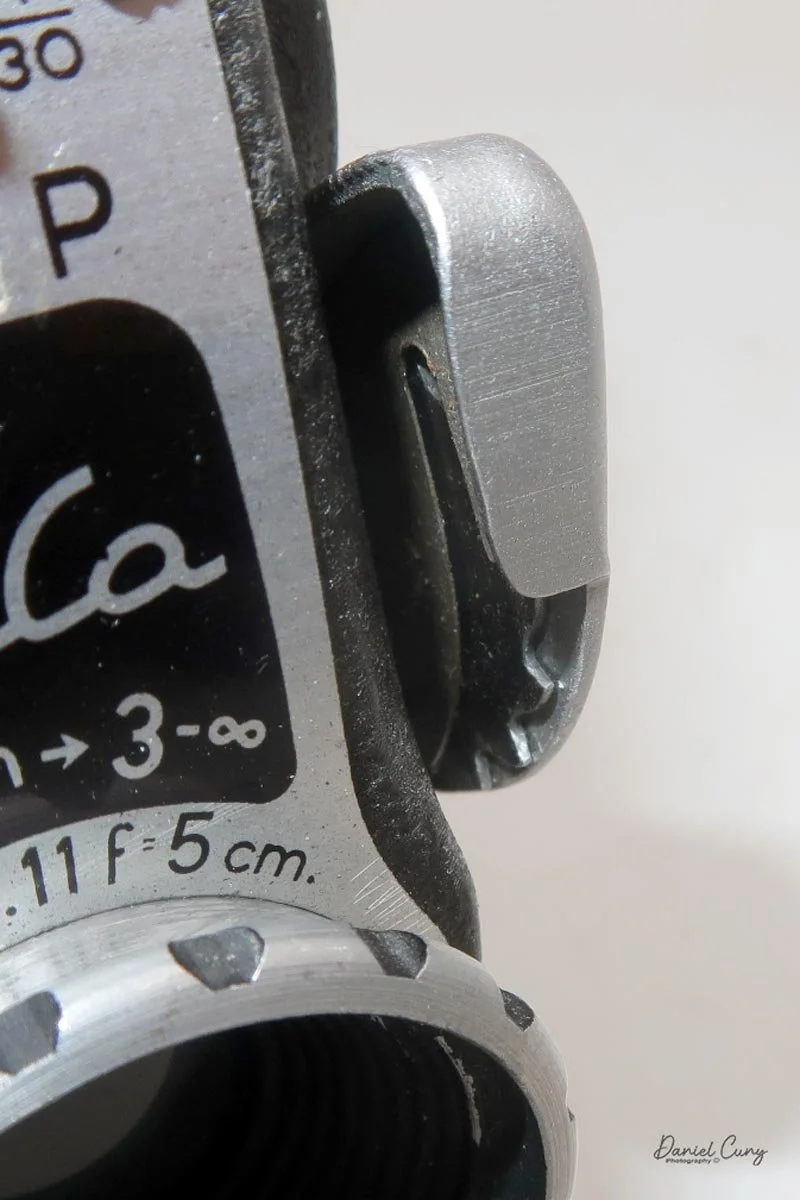
 The camera is very basic. The lens is a fixed 5 cm, f/11 meniscus design, though a rarer f/8 version is supposed to exist. Shutter speeds are limited to just two settings: 1/30 of a second and "P" for timed exposures. A small switch on the camera's faceplate, just below the viewfinder, sets the speed. I've also seen a version where the speeds are marked "I" for instant and "T" for timed. My guess is that mine is a later version, but I can't say that for sure.

 Focusing is done in only two zones. You can set the lens for 1–3 meters or 3 meters to infinity. To focus, you turn the outer ring of the lens until the red line points to the distance you want.

Loading Film and Getting the Duca Ready

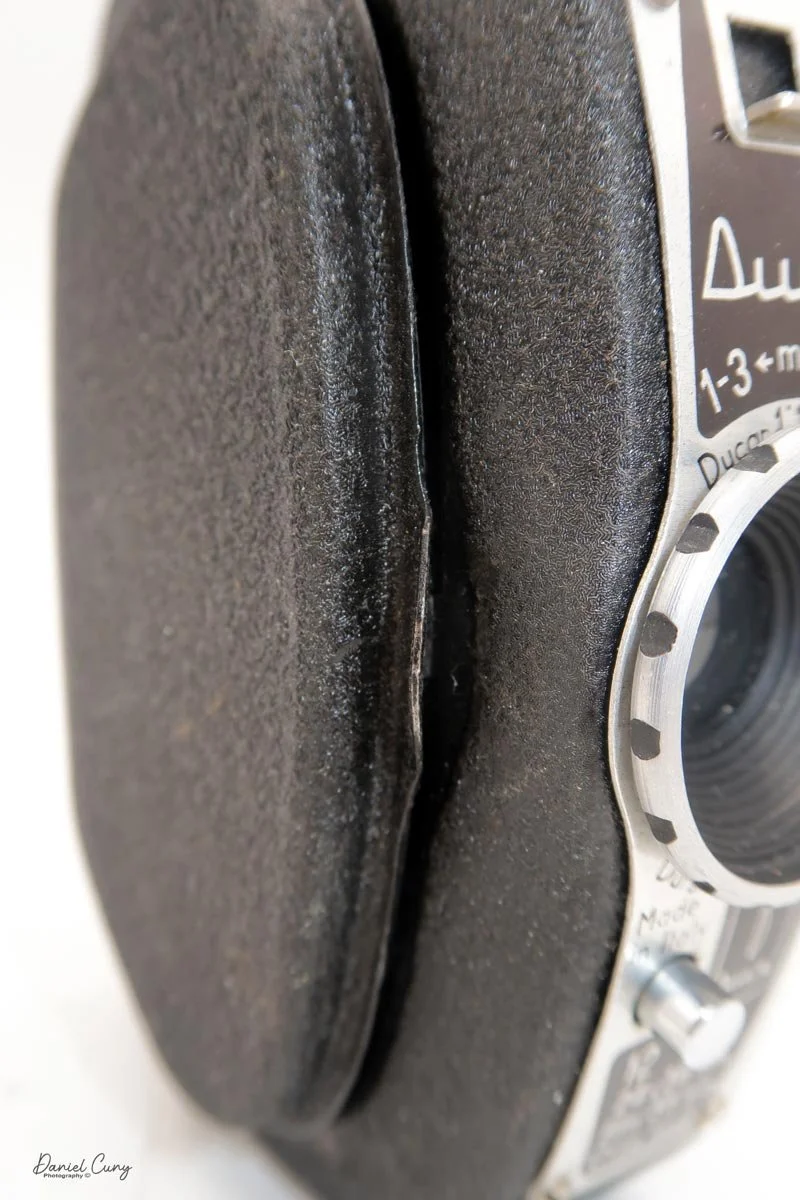
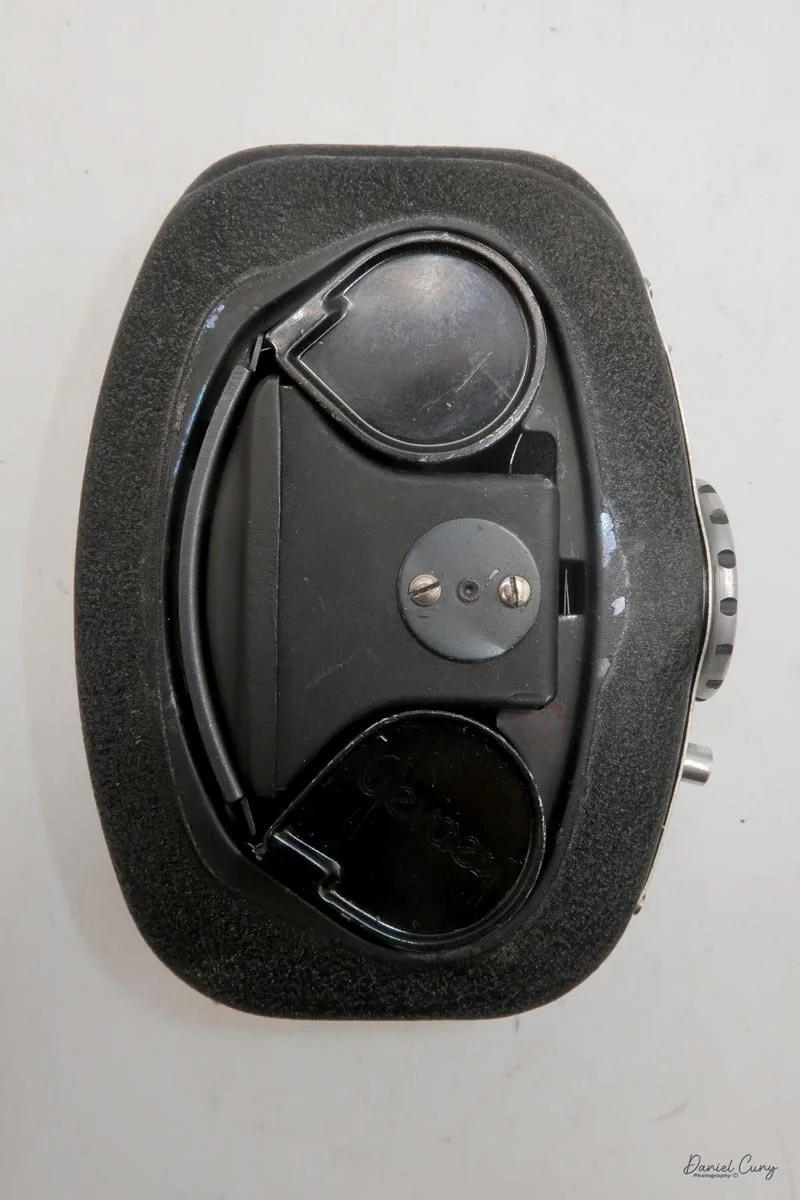
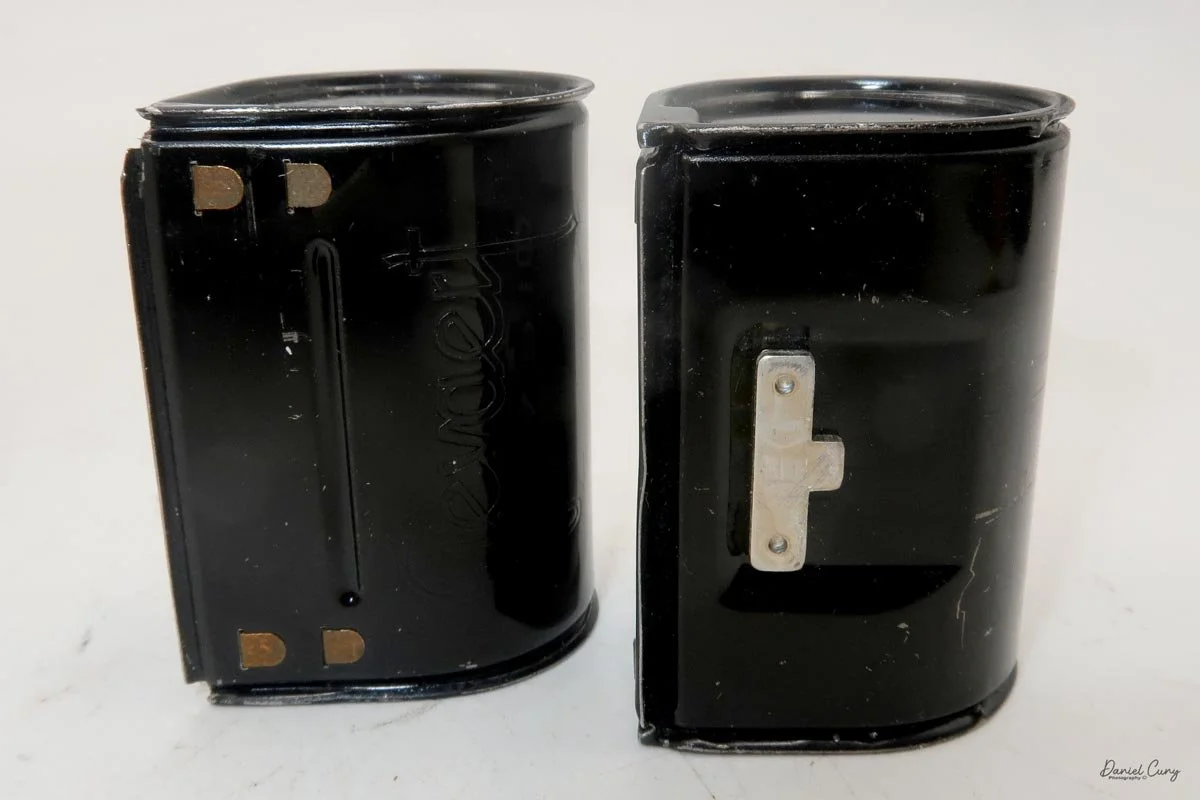
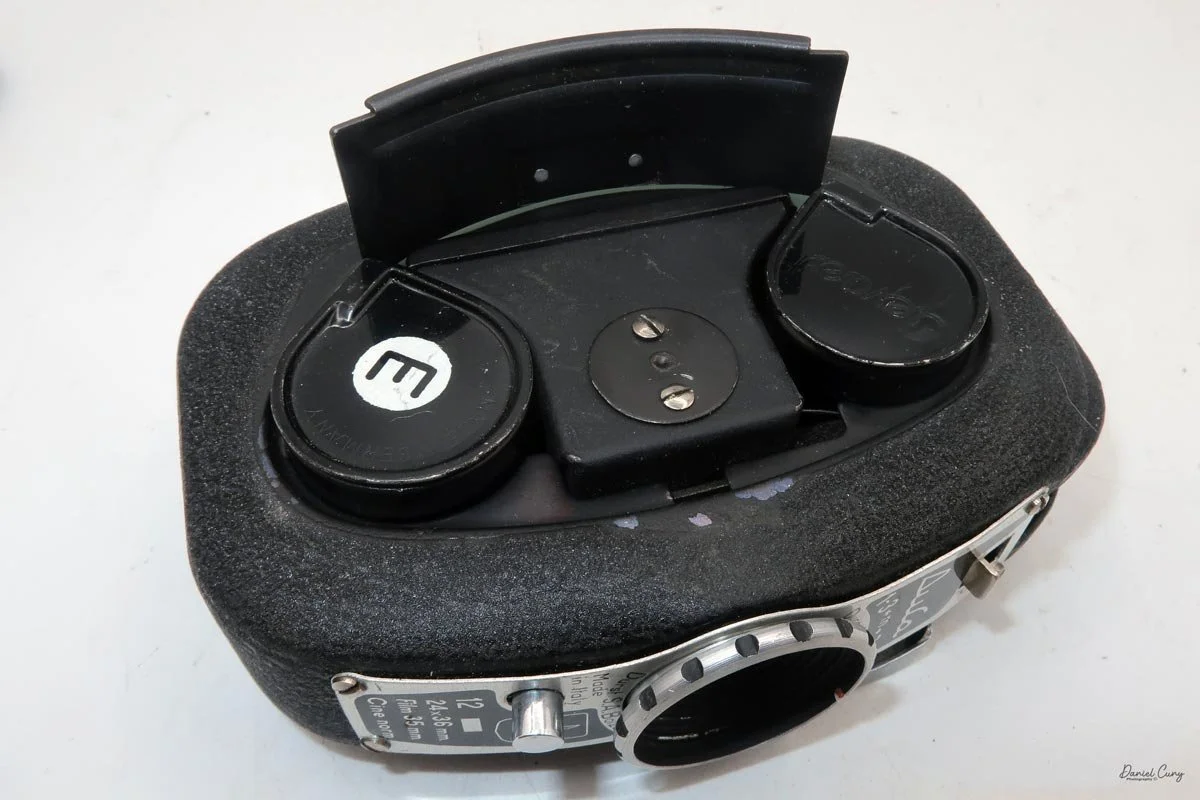
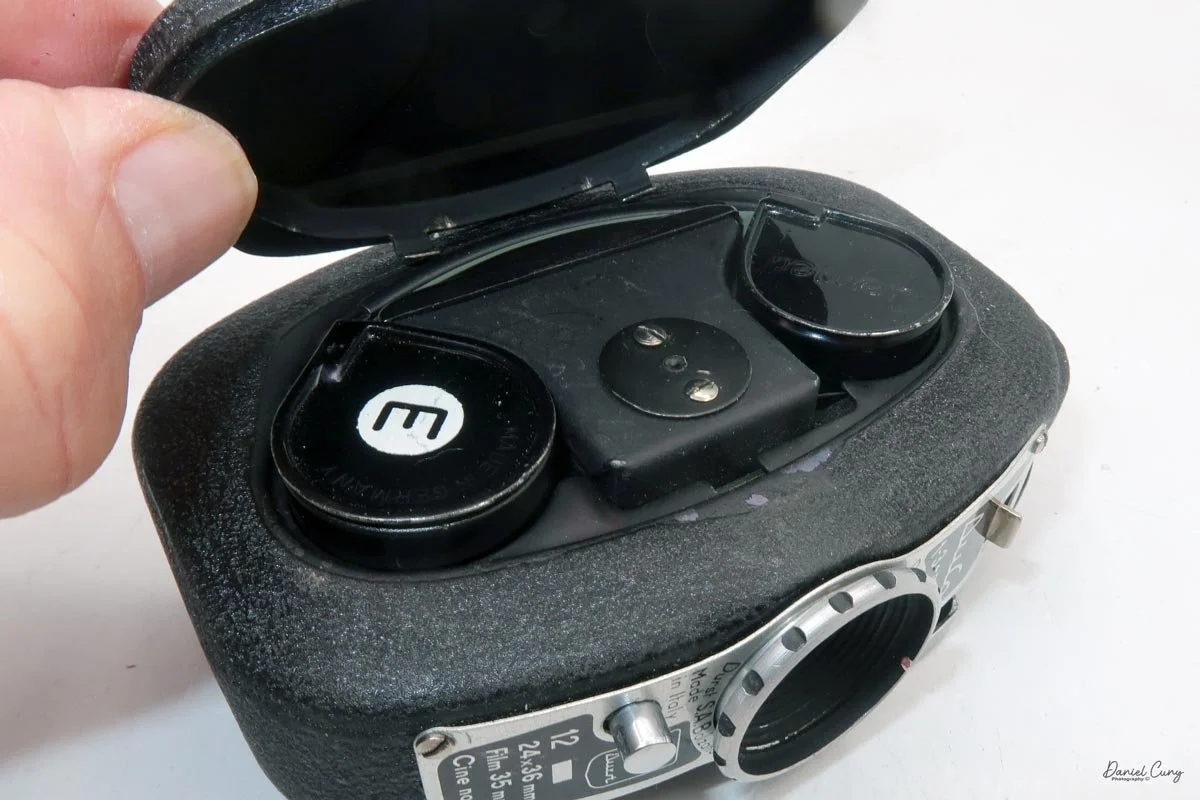
To open the camera for loading, there's a small curled‑up lip on the right side of the body that you lift to swing open the film door. Inside, you'll see the two Agfa Karat cassettes. They pop out along with the pressure plate, which sits just behind the film gate and pulls straight up and out for loading.

 As mentioned, the camera takes Agfa Karat cassettes. When these were sold new, each roll of 35mm film was cut for 12 exposures, and the front of the camera proudly states that it takes 12 photos per roll. Since I have bulk 35mm film and two cassettes, I loaded my own.

I put one of the cassettes and my bulk loader into a dark bag. Inside the bag, I opened the loader, pulled out what I guessed would be enough film for 12 exposures, and added a bit more to be safe. I fed the film into the first cassette and closed up the loader, leaving a short length to thread into the second cassette. Then I unzipped the dark bag and removed the loaded cassette.
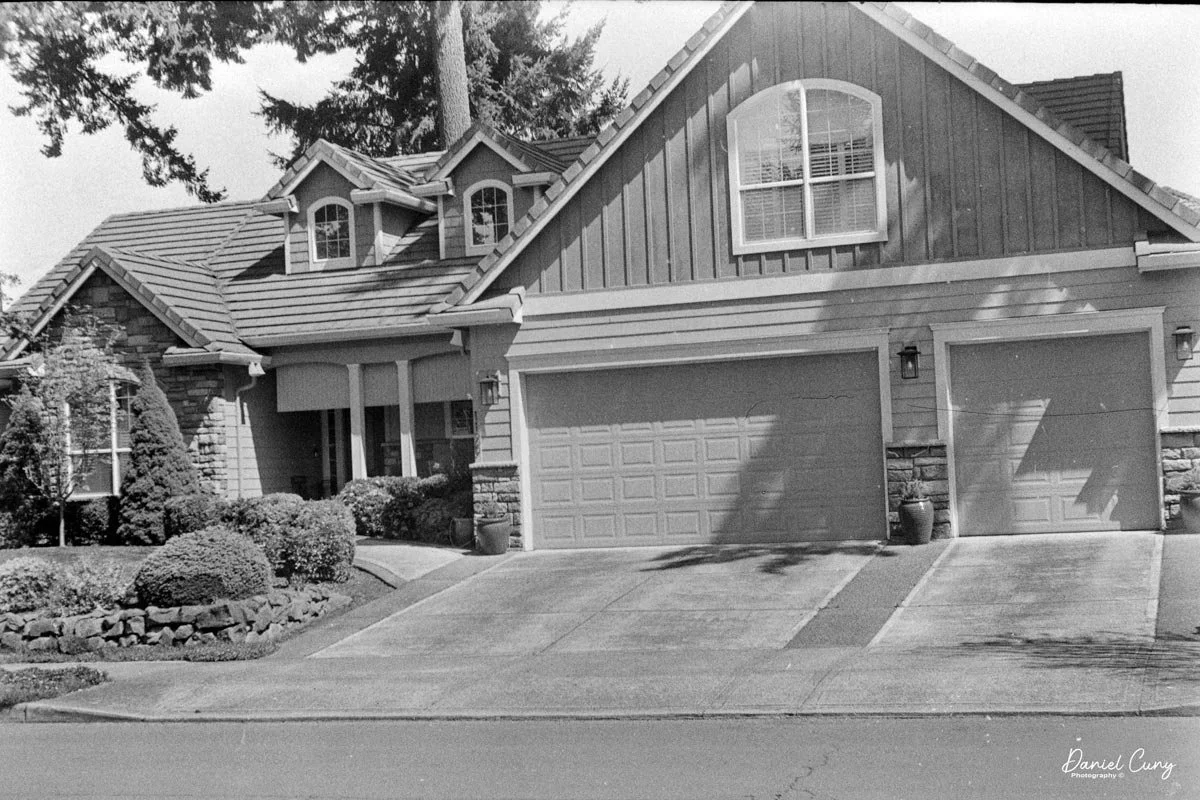
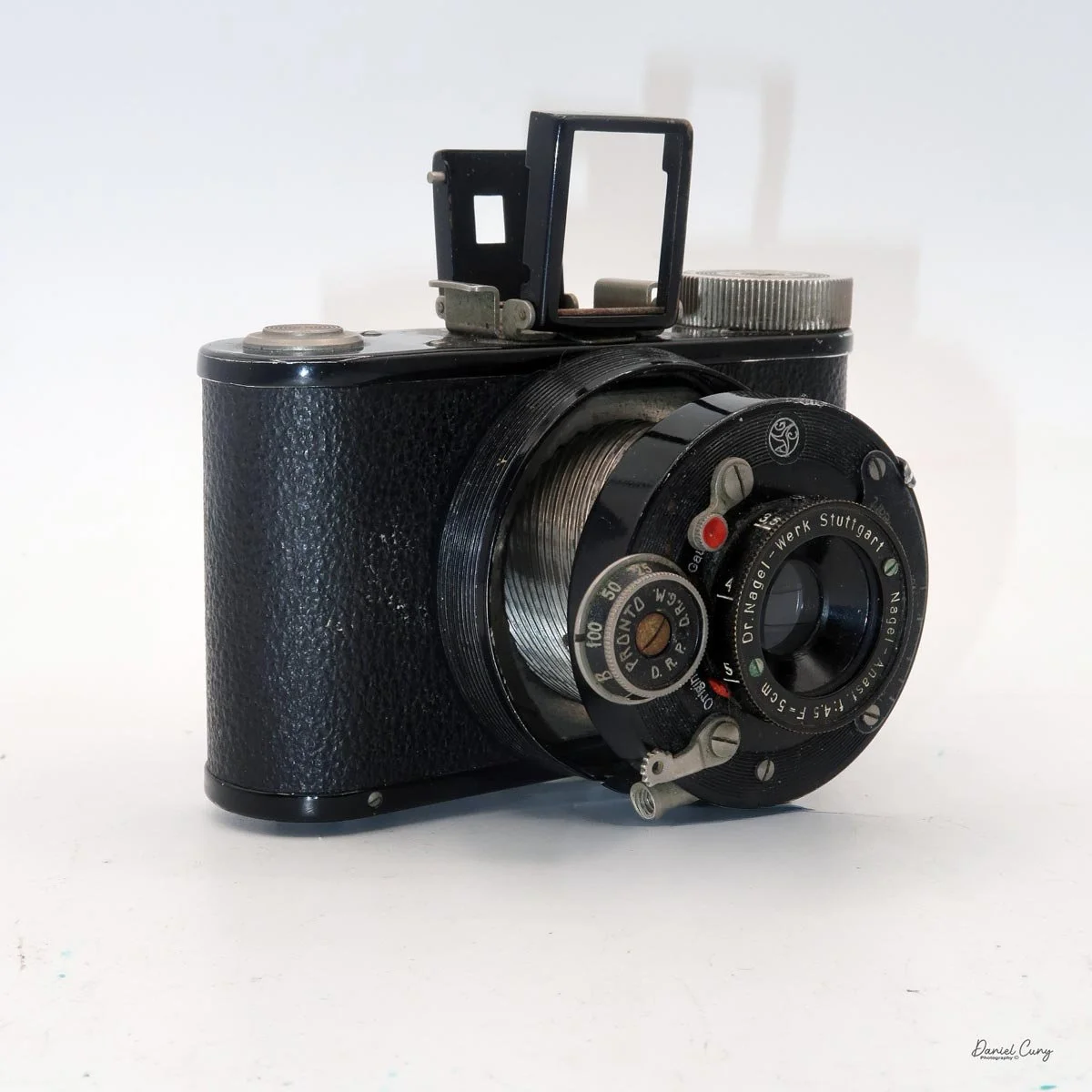
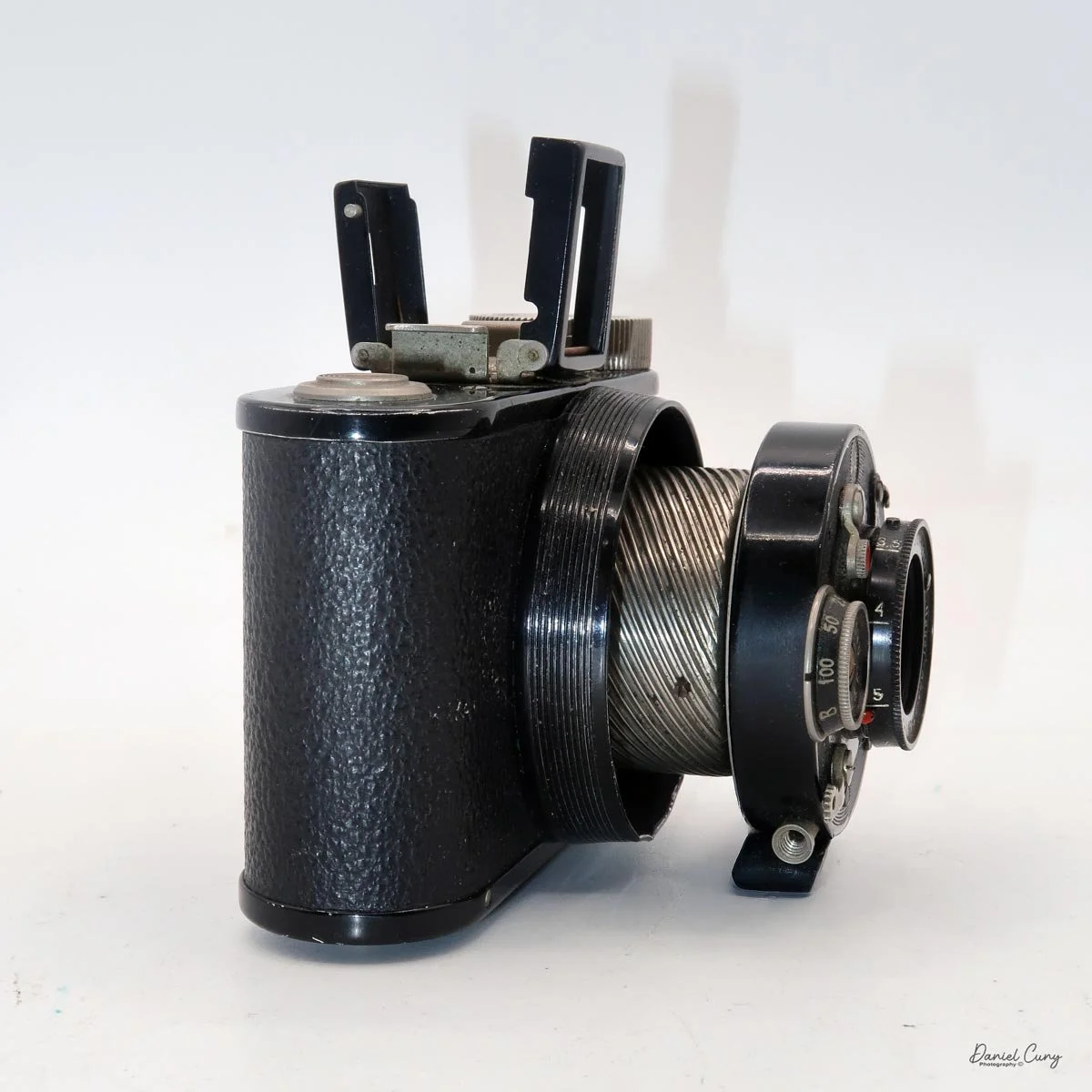
In the light, I could now feed the end of the film from the first cassette into the second one, slide both cassettes into the side of the camera, and drop the pressure plate back into place, making sure the film sat flat against the gate. Before closing the door, I advanced the film a bit to confirm that it was transporting. With the cassettes and pressure plate removed earlier, I'd noticed a small brass pin—very similar to the one in the Ansco Memo—that pops out, grabs a film sprocket, and moves up to advance the film.
Once everything looked right, I swung the back door into position and pressed it firmly against the body. Two small notches on the back have to line up with the body; if they're off even a little, the door won't sit snugly.

 Before heading out, I took a look at the lens and saw that the front element was pretty grimy. With some lens cleaner and tissues, I managed to clean the front, but because the camera is built the way it is, I couldn't get to the rear element at all. With the film loaded and the transport confirmed, I was ready to go for a walk through the neighborhood.


Shooting with a Vertical 35mm

With film in the camera, I headed out around the neighborhood, trying to photograph some of the same subjects I usually shoot—houses, parked cars, trees, little details I run across on my walks.

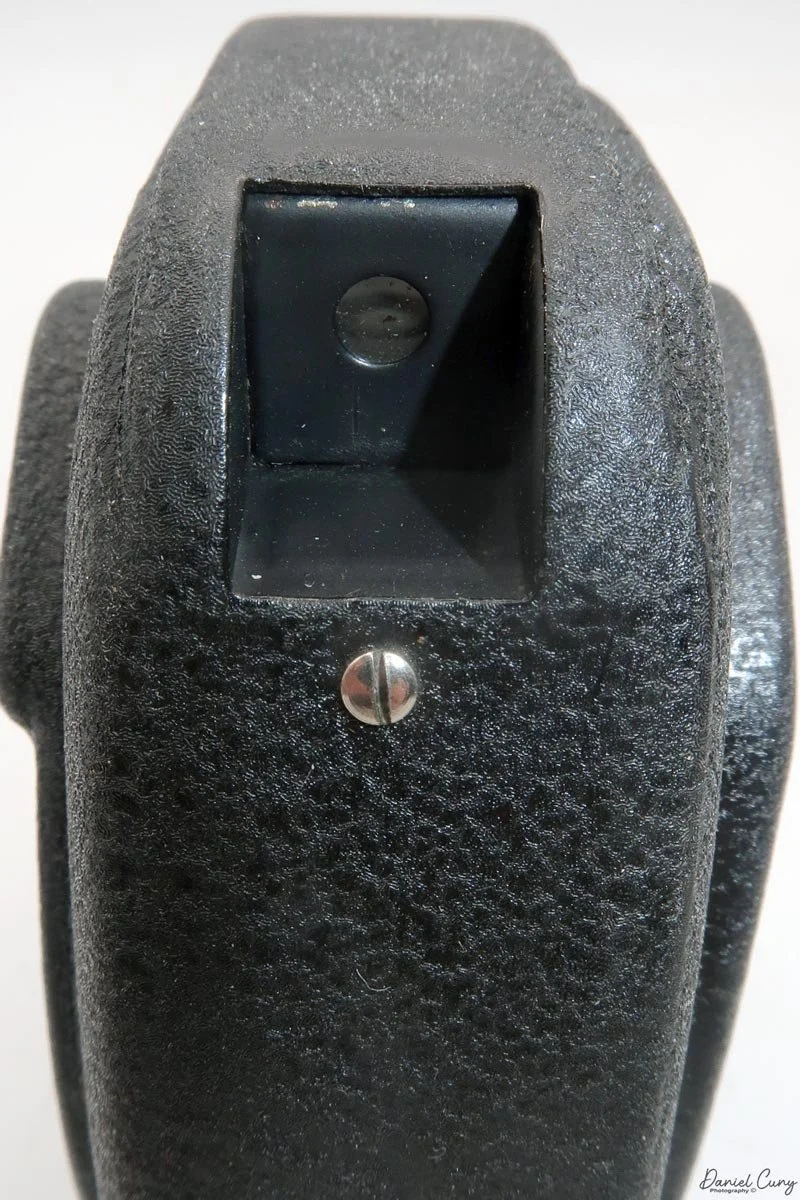
 The camera's faceplate shows a horizontal rectangle next to the number 12, while the viewfinder is vertical. I found that confusing at first. Was this meant to be a horizontal or a vertical camera? With only 12 exposures per roll, it seemed logical that they'd be in a horizontal orientation to match most 35mm cameras. Still, the vertical viewfinder was telling me otherwise. I wasn't sure, so I shot in both orientations early on, turning the camera back and forth.

 Once I processed the film and looked through the negatives, it was obvious: the Duca is a vertical‑format camera. If you want a horizontal image, you turn the whole camera on its side. It's not complicated, but it does take a little mental adjustment when you're used to most 35mm cameras being the other way around.

Results and Thoughts

Some of the images turned out great, and some didn't. There are a few reasons for that. One is focus—I didn't always remember to switch between the two focus zones when I changed subject distance. The other is exposure. With only one shutter speed and one aperture, you're basically at the mercy of the light. The negatives showed some variation, but nothing I couldn't deal with in post‑processing. It reminded me a lot of shooting with an Instamatic: pick a film with a wide exposure latitude and let it do the heavy lifting.

 I got 14 frames on the roll before the film refused to advance into the second cassette, which tells me my length estimate in the dark bag was close. The camera itself handled well. The viewfinder is on the small side and can be difficult to look through, especially if you wear glasses, but it's usable once you get used to it.

 The transport worked smoothly, and the shutter opened and closed as it should. The lens, however, is still dirty on the rear element, and there's really no easy way to clean it without taking the camera apart. That shows up in the photos as a general softness, almost like shooting with a soft‑focus filter. On some subjects, the look can actually be pleasant; on others, it just makes things a bit mushy.

 Overall, the Duca was a fun camera to use, and I'll definitely shoot it again. The whole process—from loading the Karat cassettes, to working with the vertical format, to seeing the results—was enjoyable. It's the kind of camera you could toss in a pocket when you head out on a trip and forget about until something catches your eye. I like that it's doing all of this as a full‑frame 35mm camera in such a tiny body.

 Thanks for taking the time to read about my experience with this little Italian wonder of a camera.

 If you'd like to see more of my camera adventures, here's a link to my other camera reviews. And if you're interested in cameras, lenses, or other photo gear I'm letting go of as I thin the collection, you can visit my Cuny's Cameras and Photos online store.

 Until next week, please be safe.