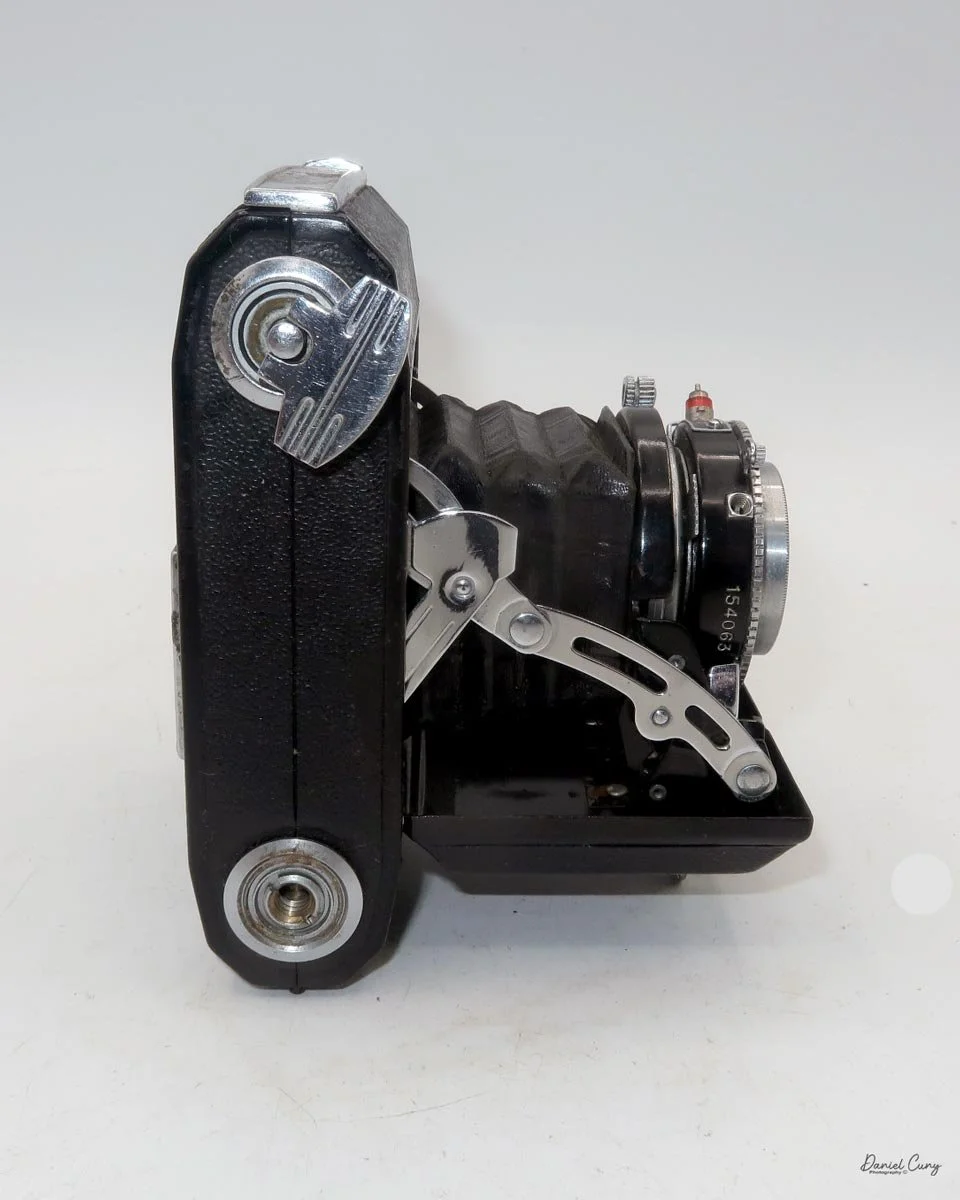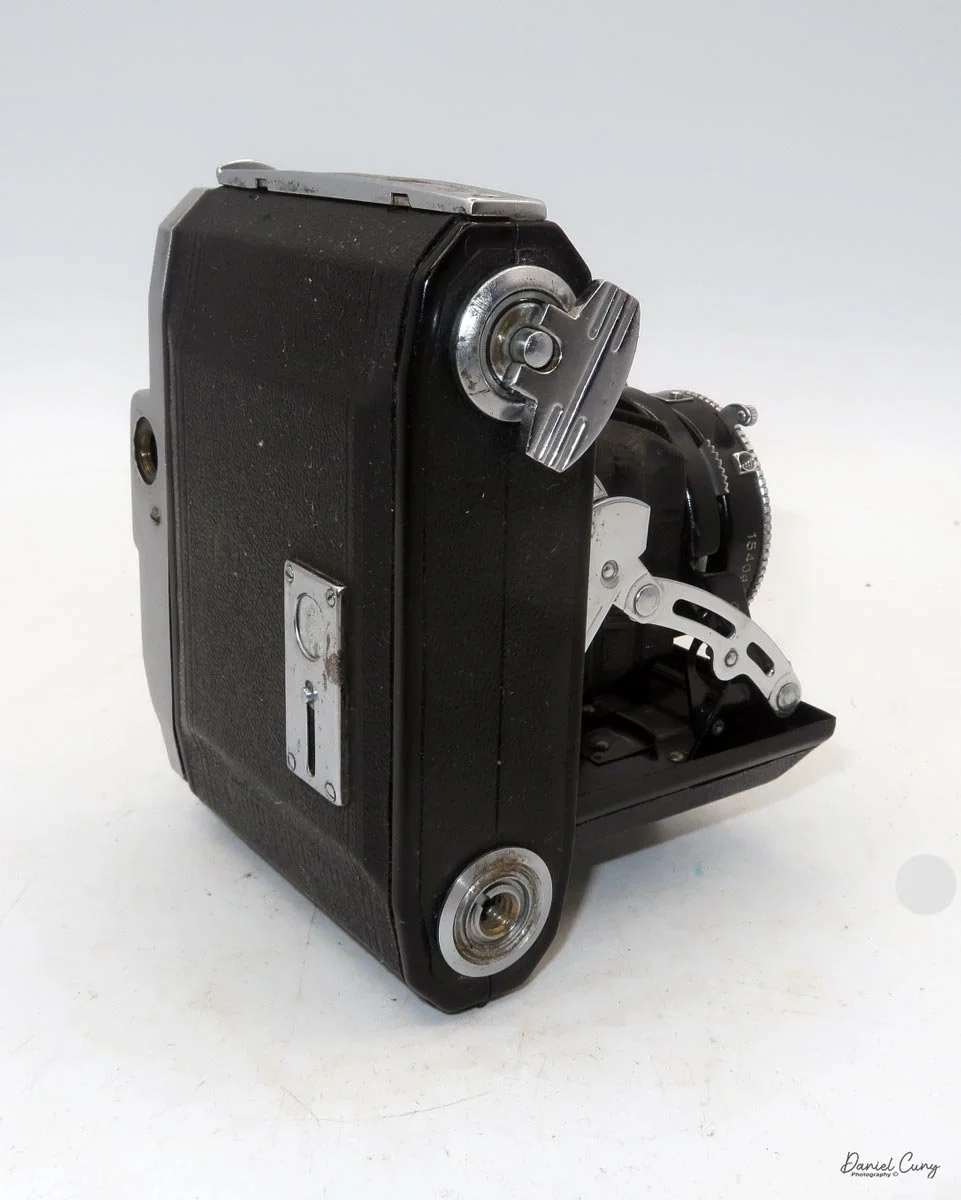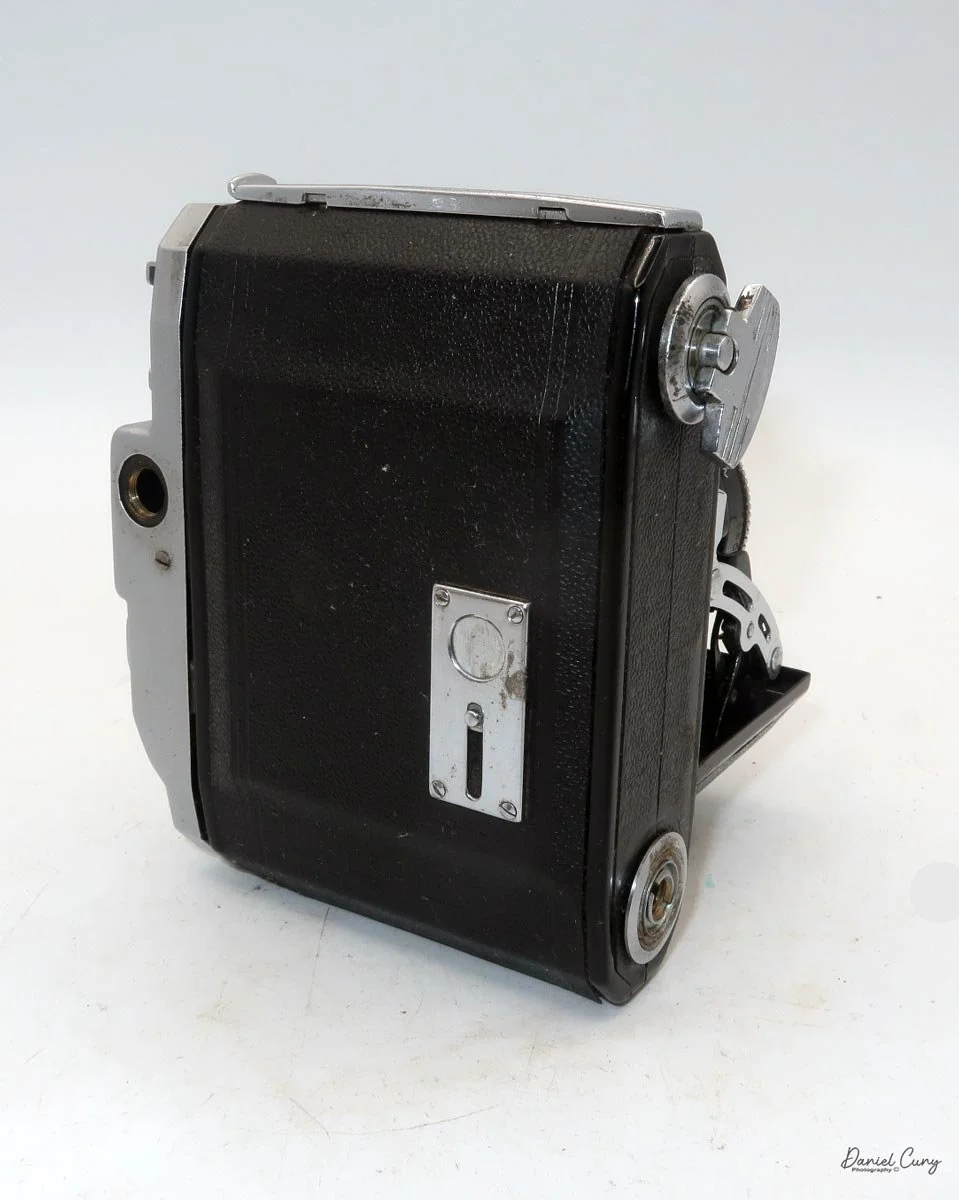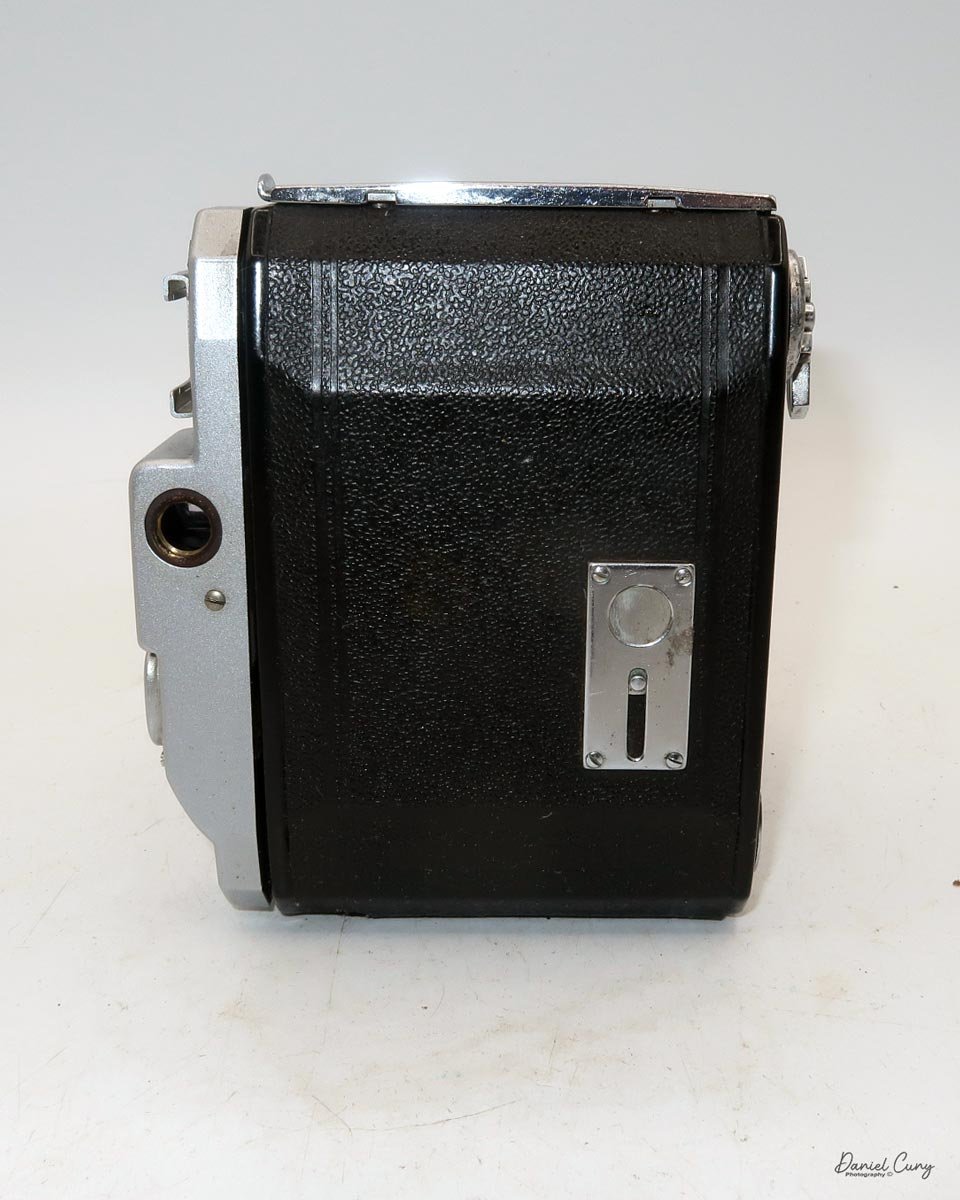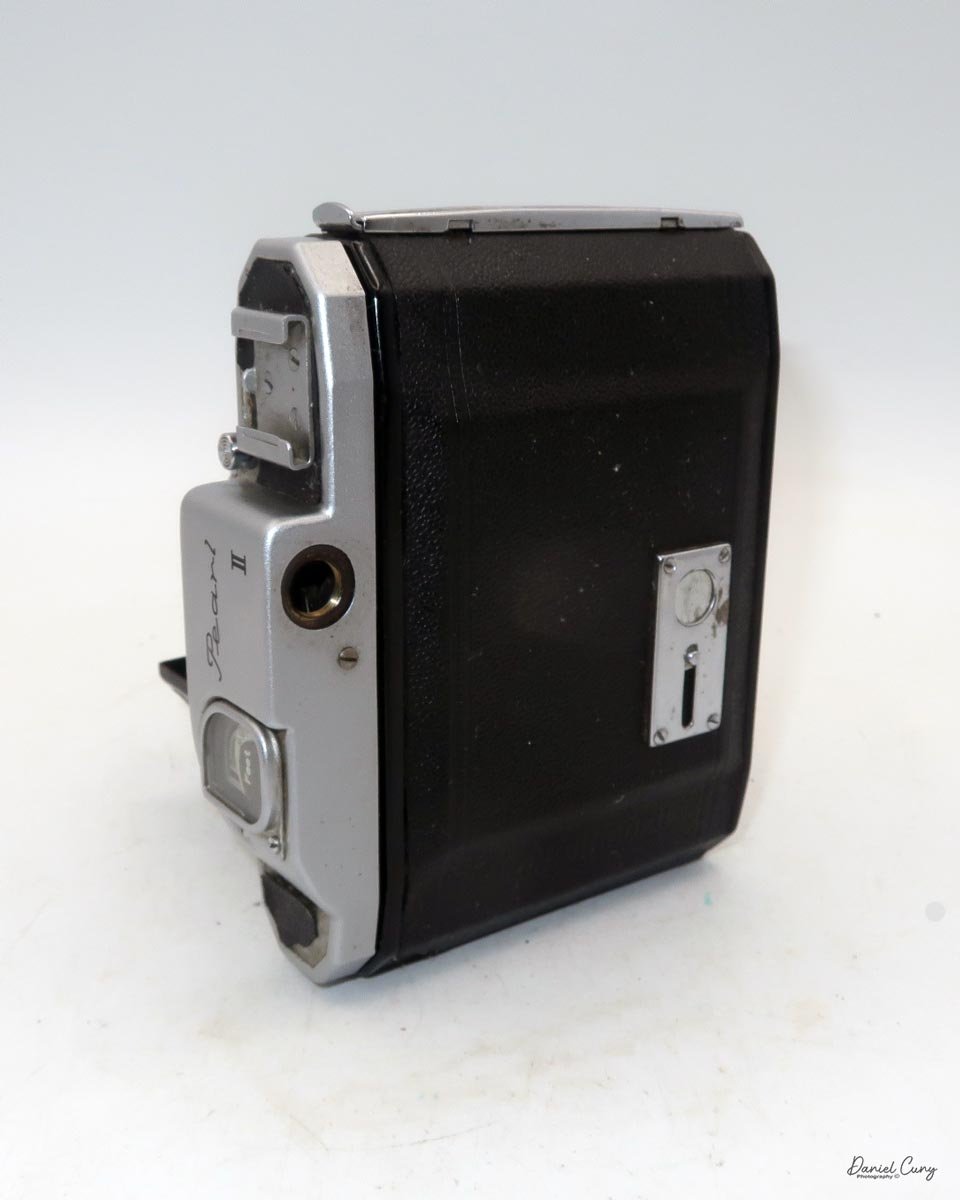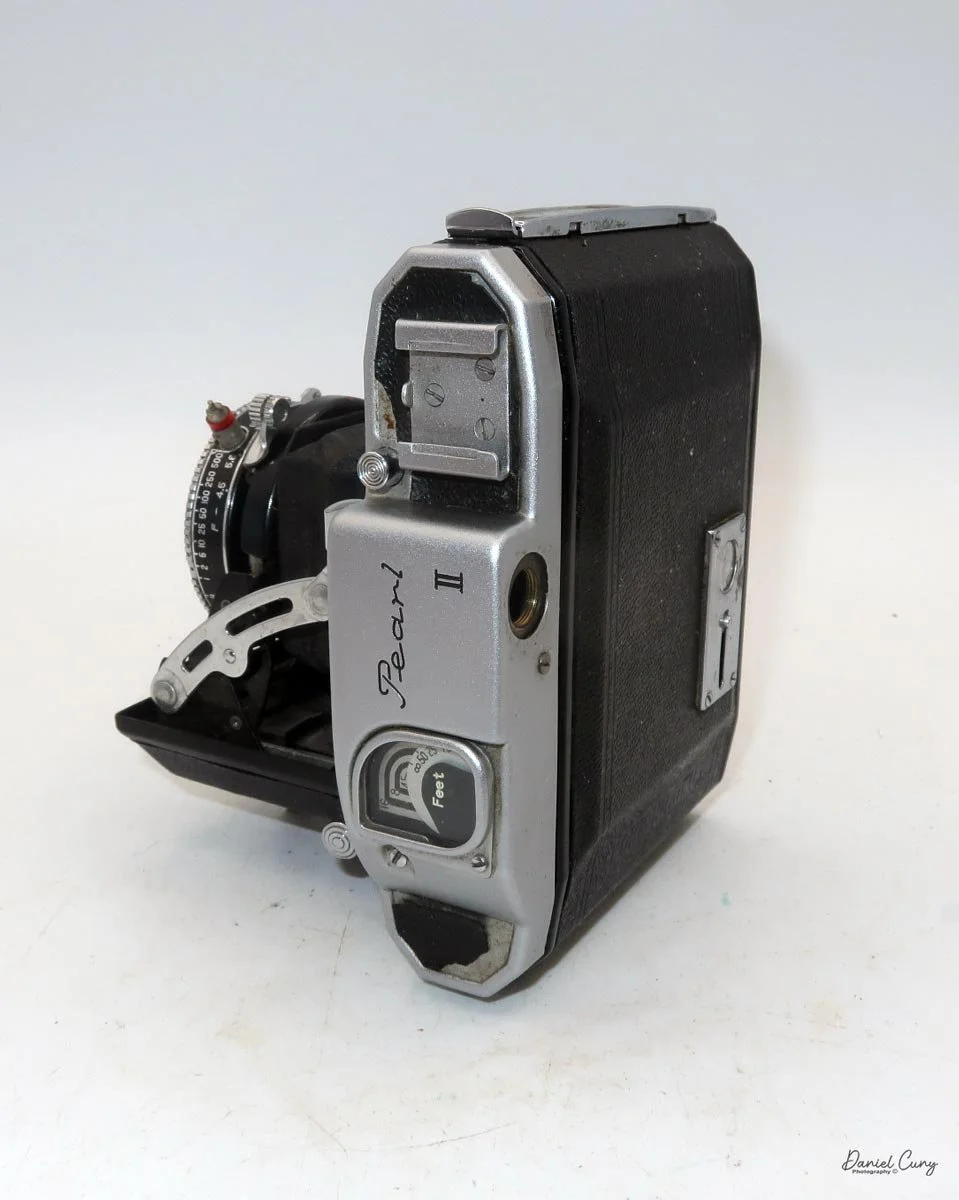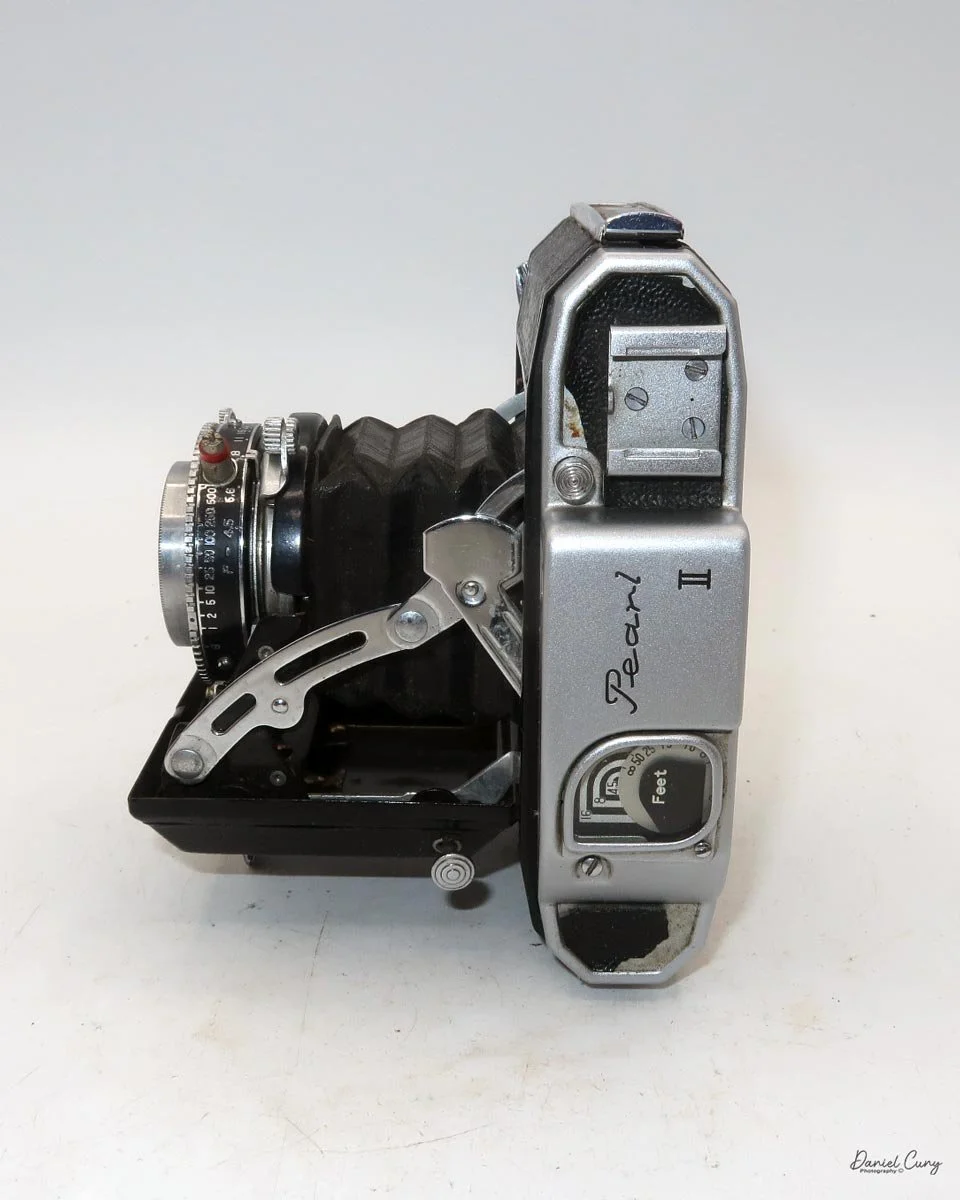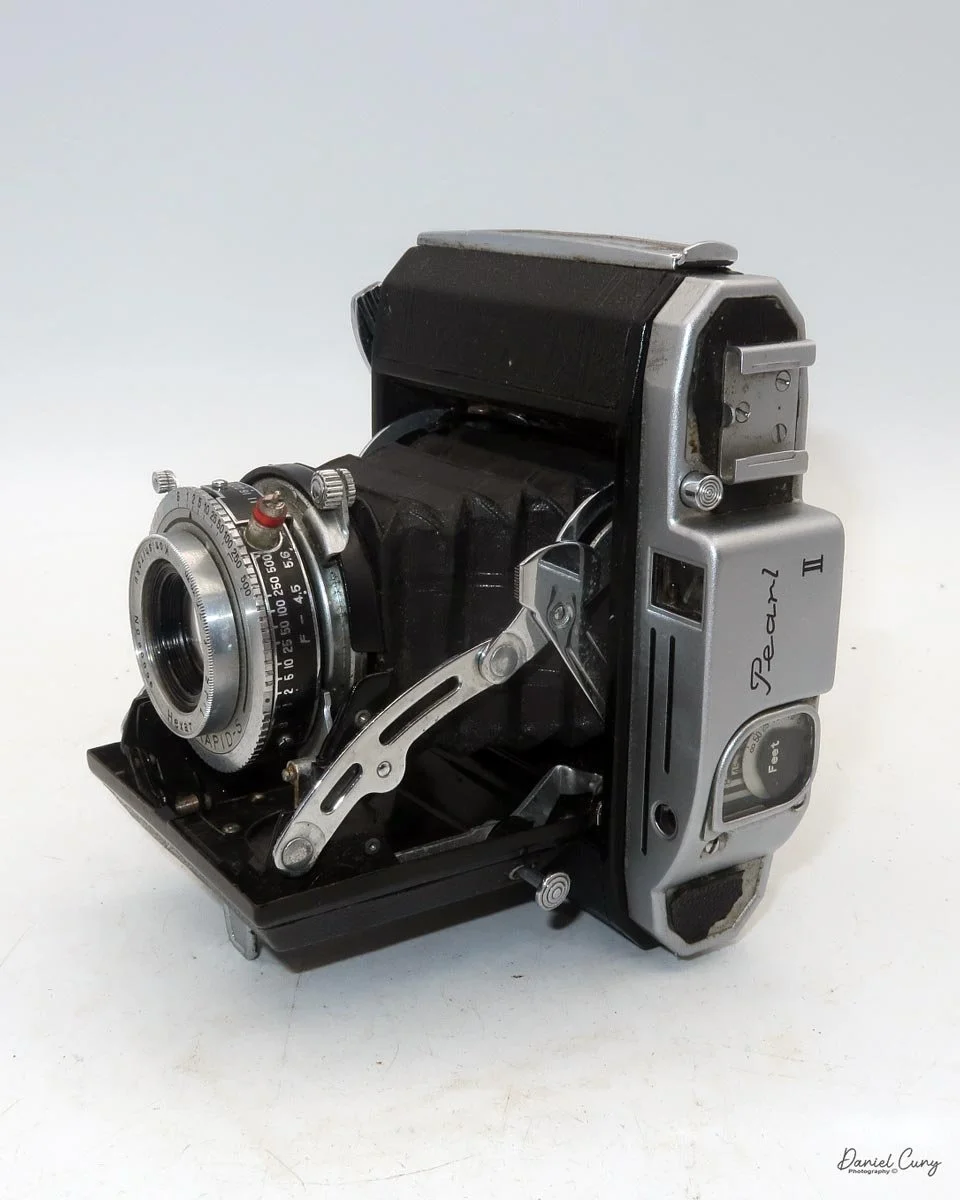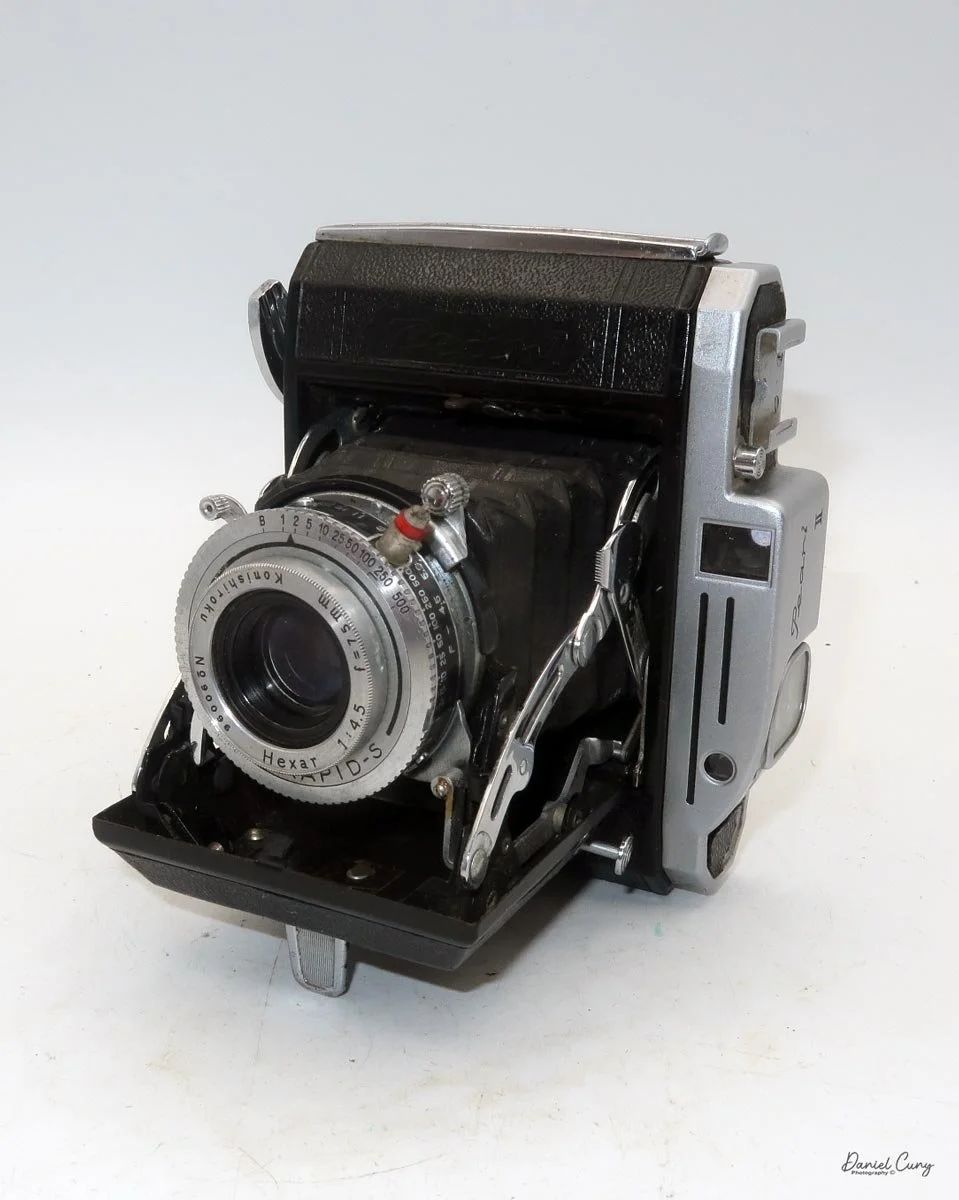
Konica Pearl II camera

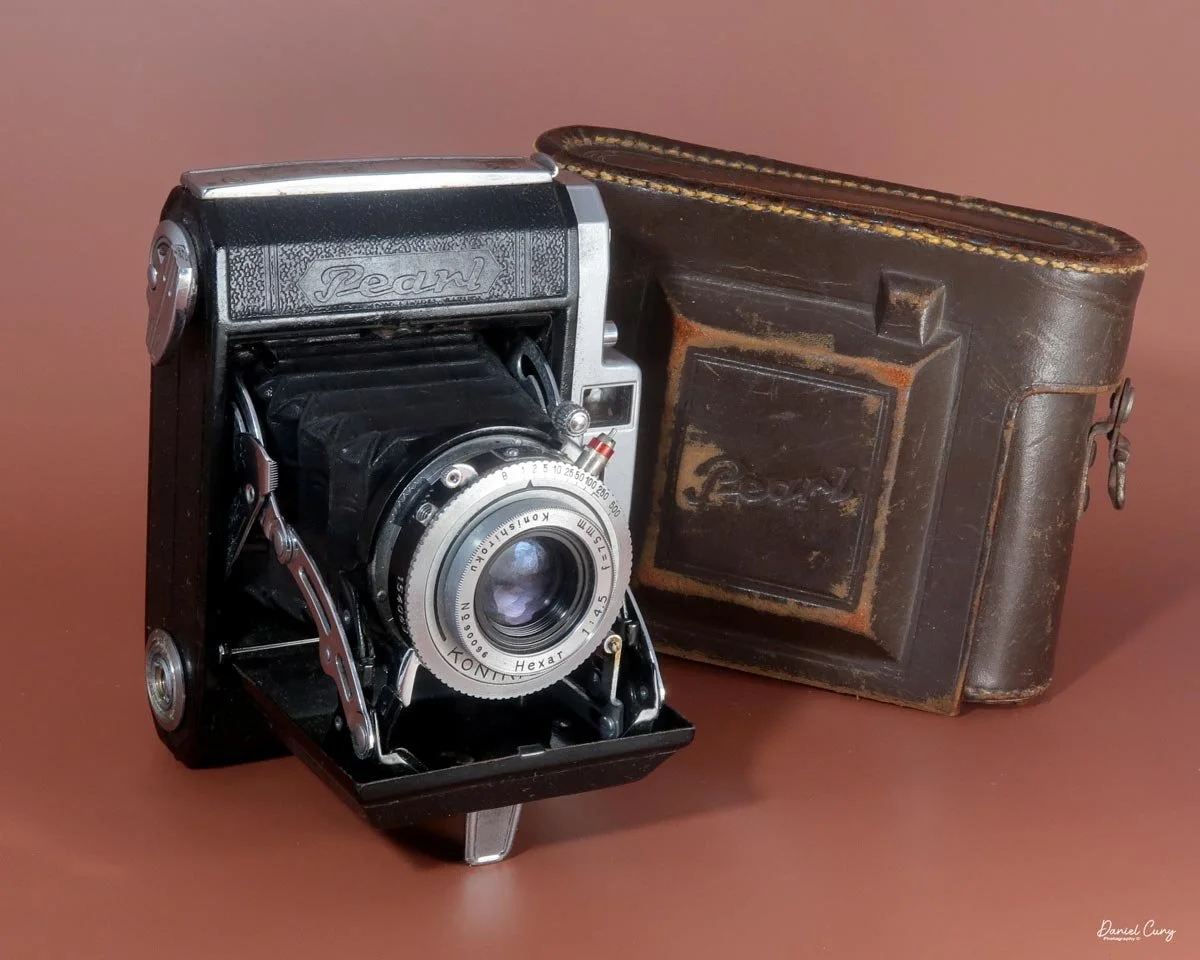
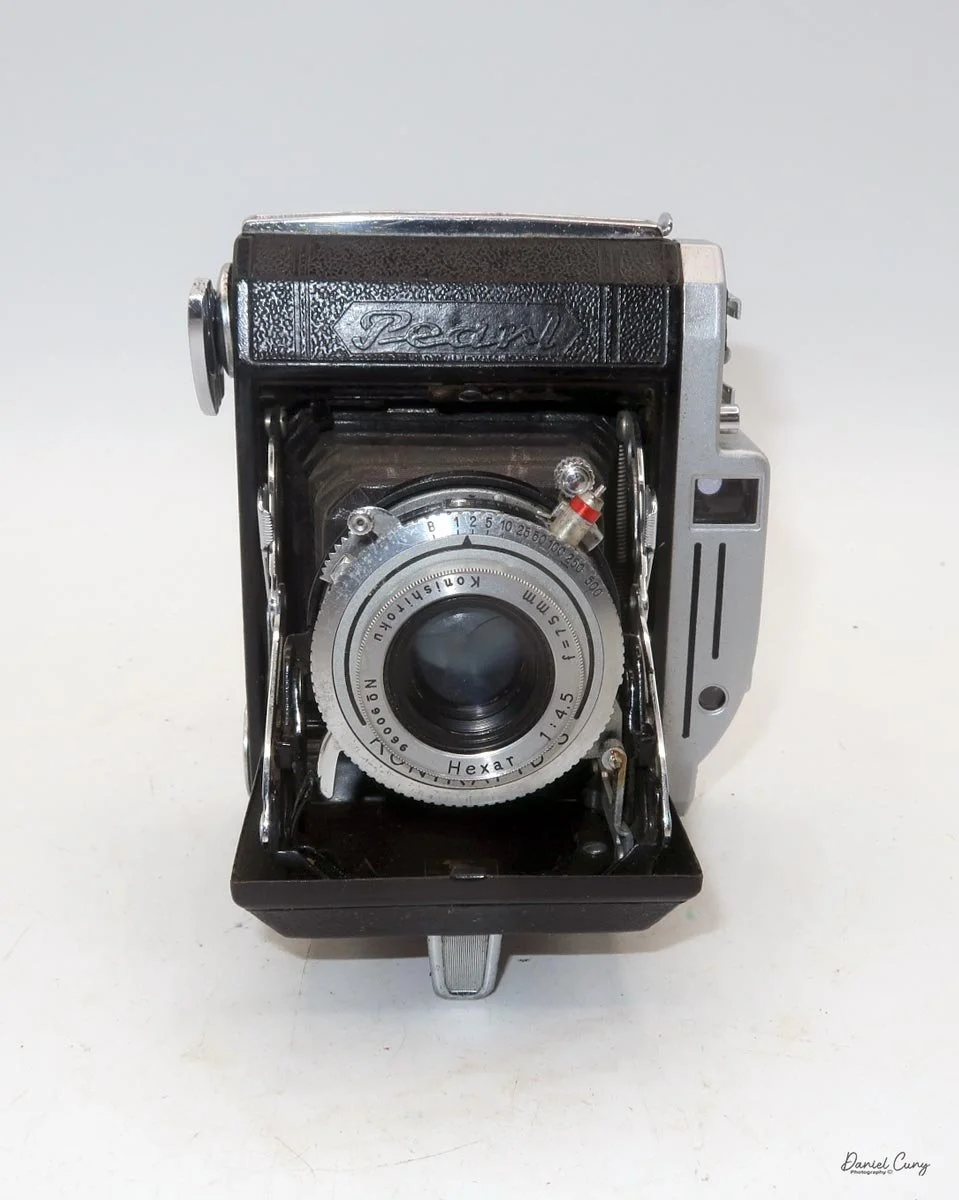
My Konica Pearl II camera & case

I purchased the Konica Pearl II on my first visit to Kitamura Camera, when I hired Bellamy Hunt of Japan Camera Hunter to show me many used camera stores in Tokyo. 

 It was our last stop on the half-day tour when we visited this massive, seven-story flagship store, which is one of more than 45 Kitamura Camera locations in Tokyo. It's on the fourth floor where they show their "high-end" items such as rare Leica cameras and lenses, Nikon rangefinders, Hasselblads, Rolleis, Mamiyas, and quite a few camera oddities. It's the floor that if you have an extra $10,000, $20,000, or even $100,000 burning a hole in your pocket to purchase rare photo items, they most likely have it.

 Unfortunately, I didn't win the lottery before coming to Japan, so I needed to be much more frugal in my camera purchases. Because of this, I much prefer the third floor of Kitamura's flagship store. It's where they have their "bargain" items. Personally, it has the items I'm much more accustomed to purchasing.

 The Konica Pearl II was a camera I didn't really notice until the second time I passed by a particular showcase. It was tucked in a back corner, not really visible except for the film winding knob, which I thought looked odd and different from many of the winding levers on this style of camera. It has more of a winding-key appearance rather than the standard round knob you see on most 120-style folding cameras.

 We asked one of the salespeople to get the camera out of the showcase for me to get a better look at, and he didn't even see the camera at first, tucked back in a corner of the showcase. But after guiding him to the correct camera I wanted to see, he took it off the shelf and put it on a mat in a lower showcase for me to look over.
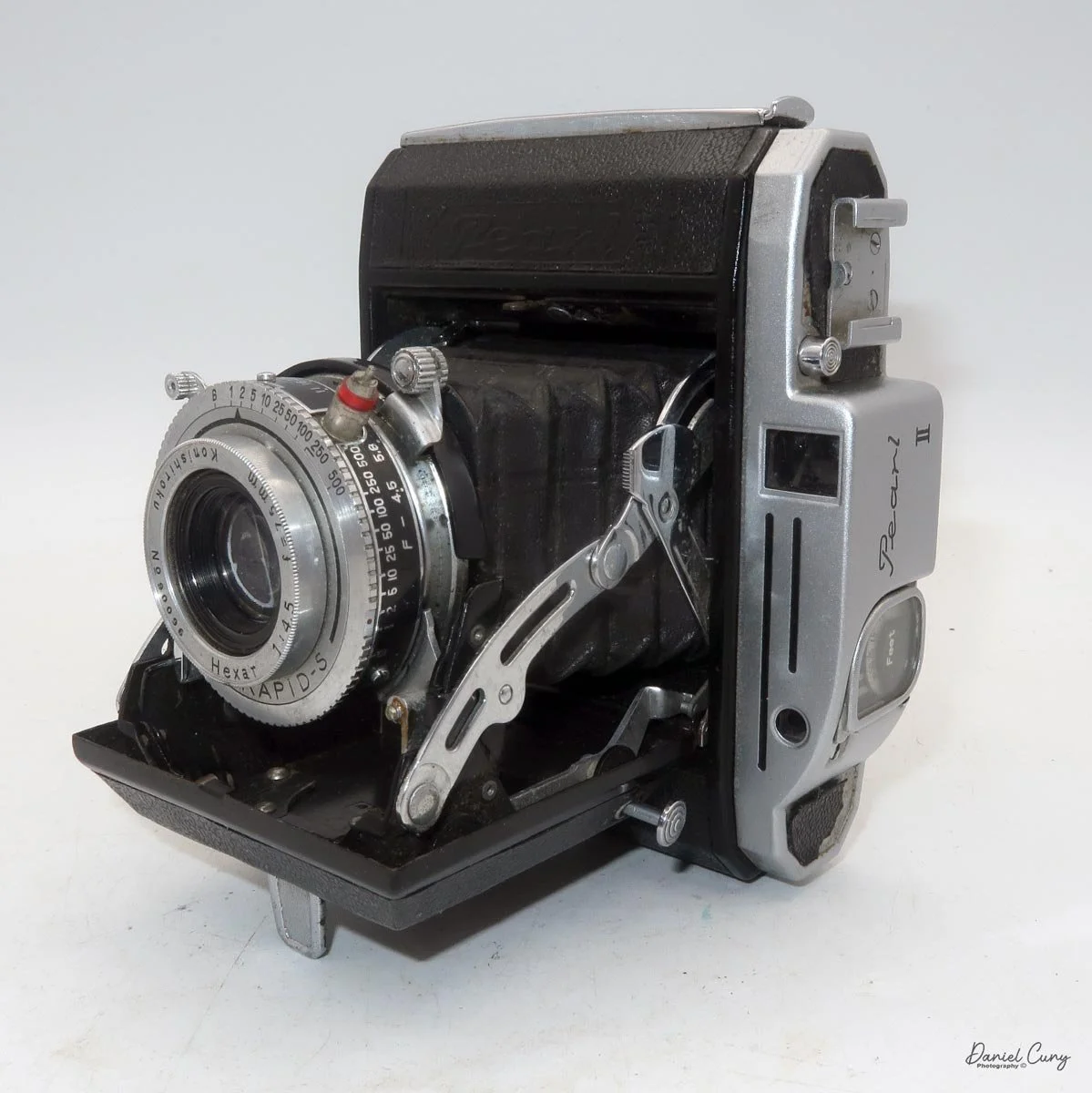
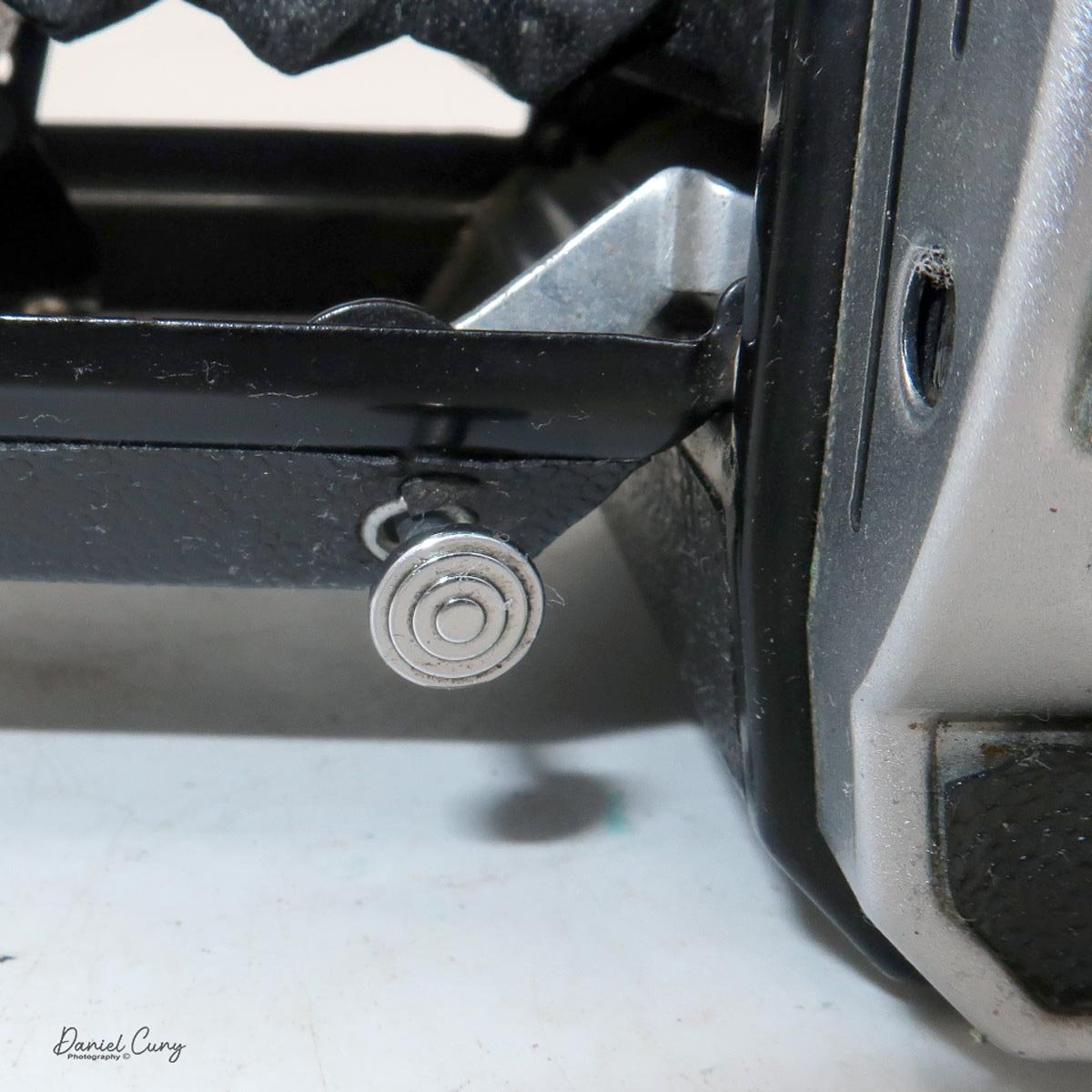
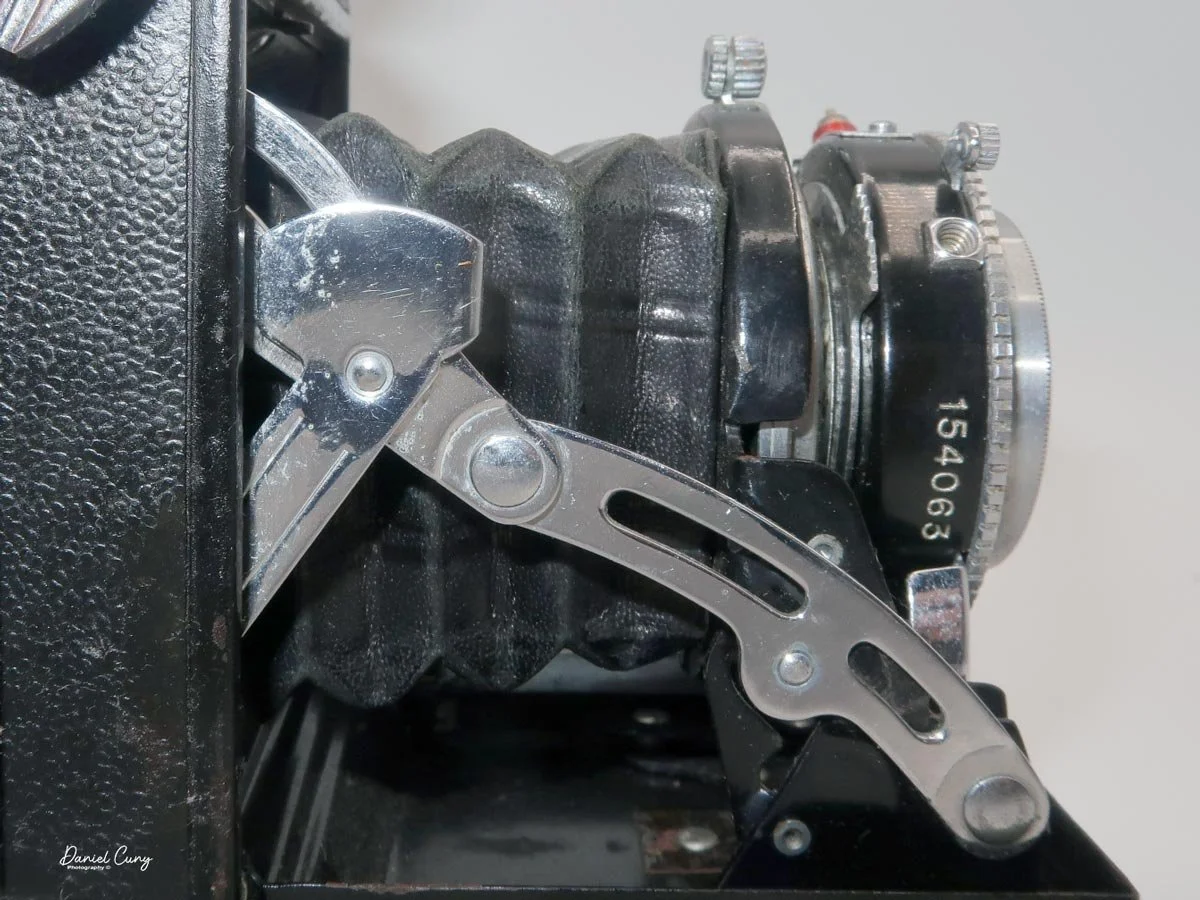
Different angle of the Konica Pearl II camera. Notice the shutter release on the lens door.

 To my surprise, the camera seemed to be in wonderful condition. The price for the camera seemed low, so I started to look over it with the thought in the back of my mind that there must be an issue. The shutter worked, the aperture moved smoothly. The camera opened and closed with ease, and the fitted leather case was also in good condition. 

 Putting the camera up to my eye to look through the viewfinder, I found the issue. The back eyepiece was absent from the camera. Because of that, there were a couple of issues. First, when you looked through the viewfinder, the image was blurry, and you couldn't really see or frame it well.

 The second issue was something I didn't realize until the salesperson mentioned it. You couldn't see the yellow center area on the rangefinder. Initially, when I first picked up the camera, I didn't notice the two windows on the front, which would indicate a rangefinder-style camera, but on second look, there were two windows, which makes perfect sense.

 For the price of the camera, they offered to acquire a very compact medium-format camera with a functioning shutter, smooth focus, a light-tight bellows, and a fitted case. I figured I couldn't go wrong. All I needed (hopefully) was to find a "parts" camera to source the viewfinder glass from, and make this wonderful early 1950s camera whole again.

 During my time in Tokyo, I did spend time looking for a "parts" camera, but it wasn't until just a few weeks ago that I came across one for a reasonable price that I could harvest the viewfinder glass, and try to make this camera whole again. Unfortunately, it hasn't arrived yet. I'm eager to write this post, so once the glass arrives, I'll update it with the camera's progress (or lack thereof) with the new glass.


History:

 Konica's early history begins in 1873, when Rokusaburō Sugiura started selling photographic materials in Tokyo, at a time when Japan was still importing nearly all such supplies from the West. That founding date makes the company older than Eastman Kodak, and it places Konica at the very start of Japan's photo industry.
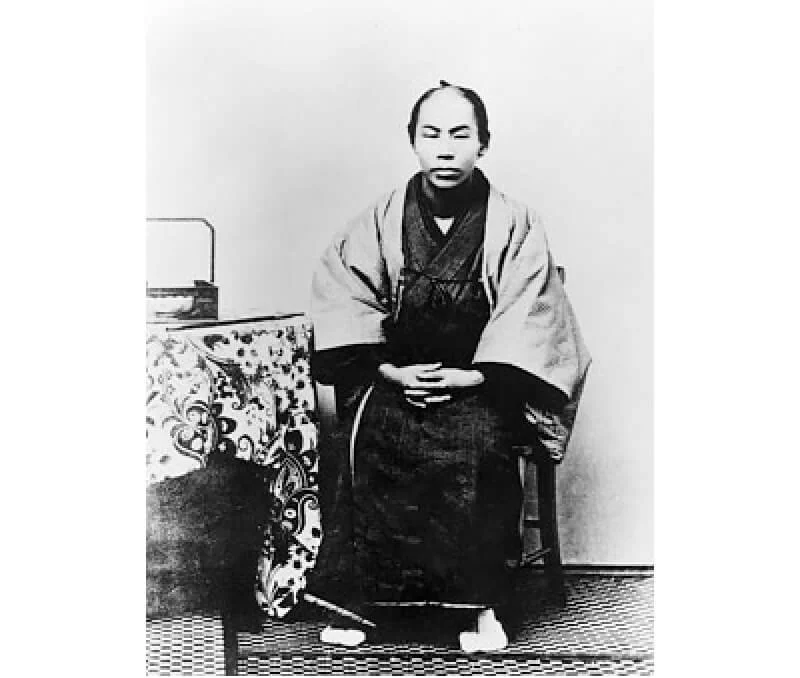
Early photo of Rokusaburō Sugiura. Credit Konicaminolta website.

 Sugiura first operated through the family business in Tokyo's Nihonbashi area, where demand for photographic goods was growing fast enough to justify a separate line of business. By 1878, he had founded Konishi Honten, and in the 1880s, the firm moved beyond retailing imported goods to producing its own photographic materials in Japan. This shift mattered because it helped move Japanese photography from dependence on foreign products toward domestic production.

 In 1902, Konishi began producing its own photographic plates and printing paper, and soon after, in 1903, it introduced the Cherry portable camera, widely described as Japan's first branded camera. That product established the company as a pioneer rather than just an importer. Over the next decades, Konishi built a reputation as one of Japan's leading camera and materials companies.

 During the 1910s and 1920s, the company continued to expand its manufacturing base and deepen its role in Japan's optical and photographic sectors. Its name evolved through several forms, including Konishi Honten and Konishiroku, reflecting both family succession and corporate growth. By the interwar period, the firm was part of a broader Japanese camera industry that was still small by global standards but increasingly capable of making its own products.
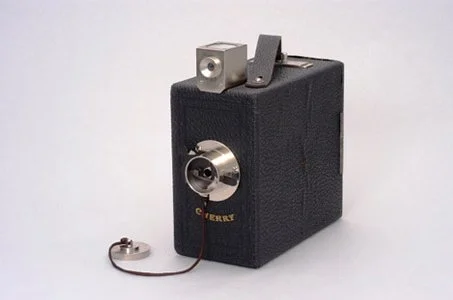
Popular Cherry camera: Credit Konicaminolta history page

 In the 1930s, Konishiroku pursued further camera development, including prewar prototype work that pointed toward later 35mm designs. Like much of Japan's industrial base, its development was increasingly shaped by the era's tensions, and the coming war would disrupt civilian camera production. Still, by the eve of World War II, Konica's predecessor had already established the core identity that would define the brand: a Japanese photographic pioneer rooted in import substitution, careful manufacturing, and gradual technological independence.

 In the 1950s, Konishiroku cemented its medium-format legacy with the exceptional Pearl series of folding cameras. Shooting 6x4.5cm frames on 120 film, these compact powerhouses combined portability with remarkable optical precision. The decade introduced the Pearl II (1951), the Pearl III (1955), and the pinnacle of the lineup: the Pearl IV (1958). These beautifully engineered models proved that medium format didn't have to be bulky, providing a professional-grade folding tool that easily slipped into a coat pocket.

My Camera:

 My Konica Pearl II camera, manufactured in 1951, is a 6x4.5cm vertical-format camera. The physical size of the camera is 4.75" wide by 4.5" tall and 1.5" deep with the lens closed in the camera body, and 4" deep when you depress the button on the top of the camera, located in front of the accessory shoe, to open the camera's lens door. The camera weighs 1 pound, 4 ounces without film loaded.
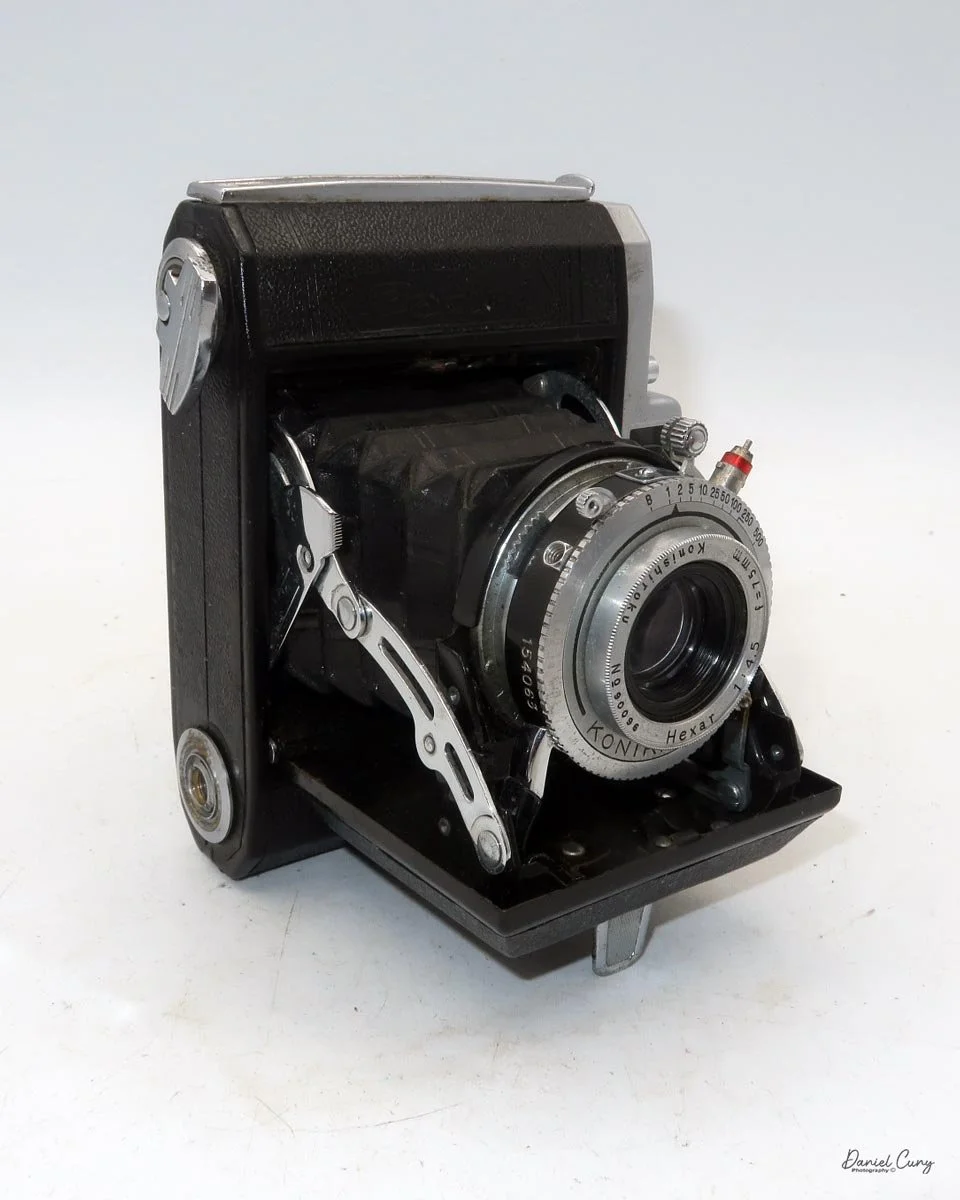
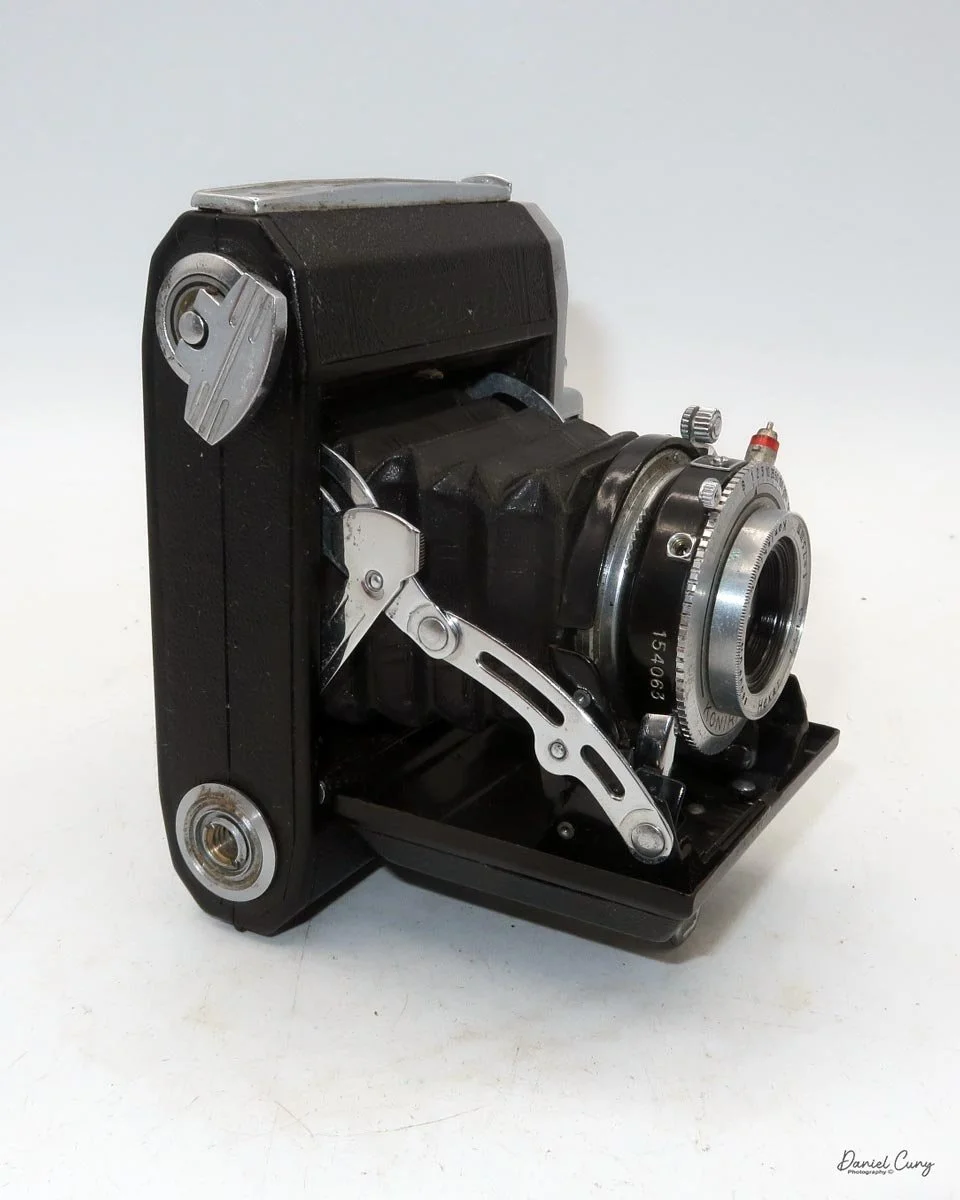
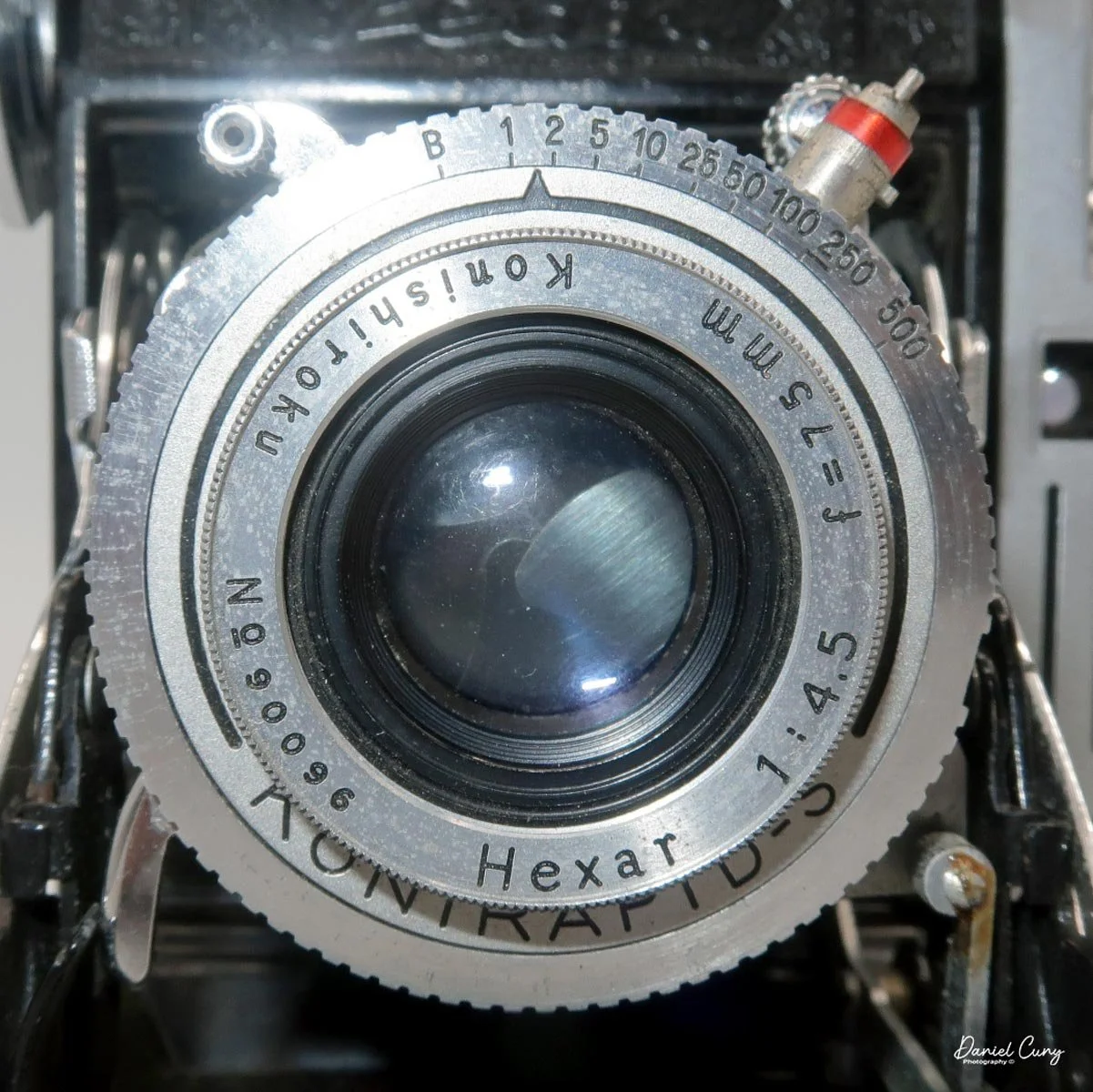
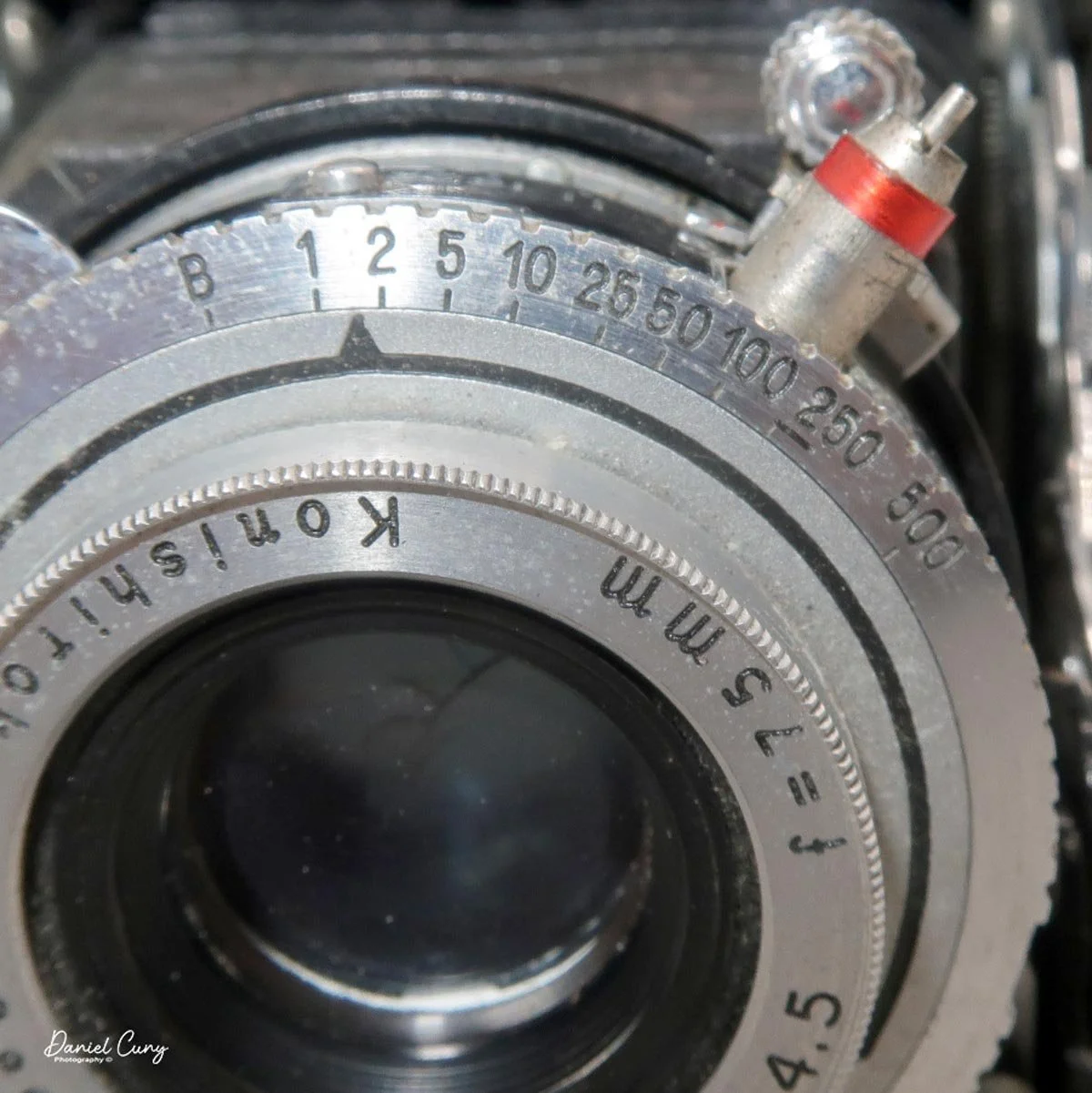
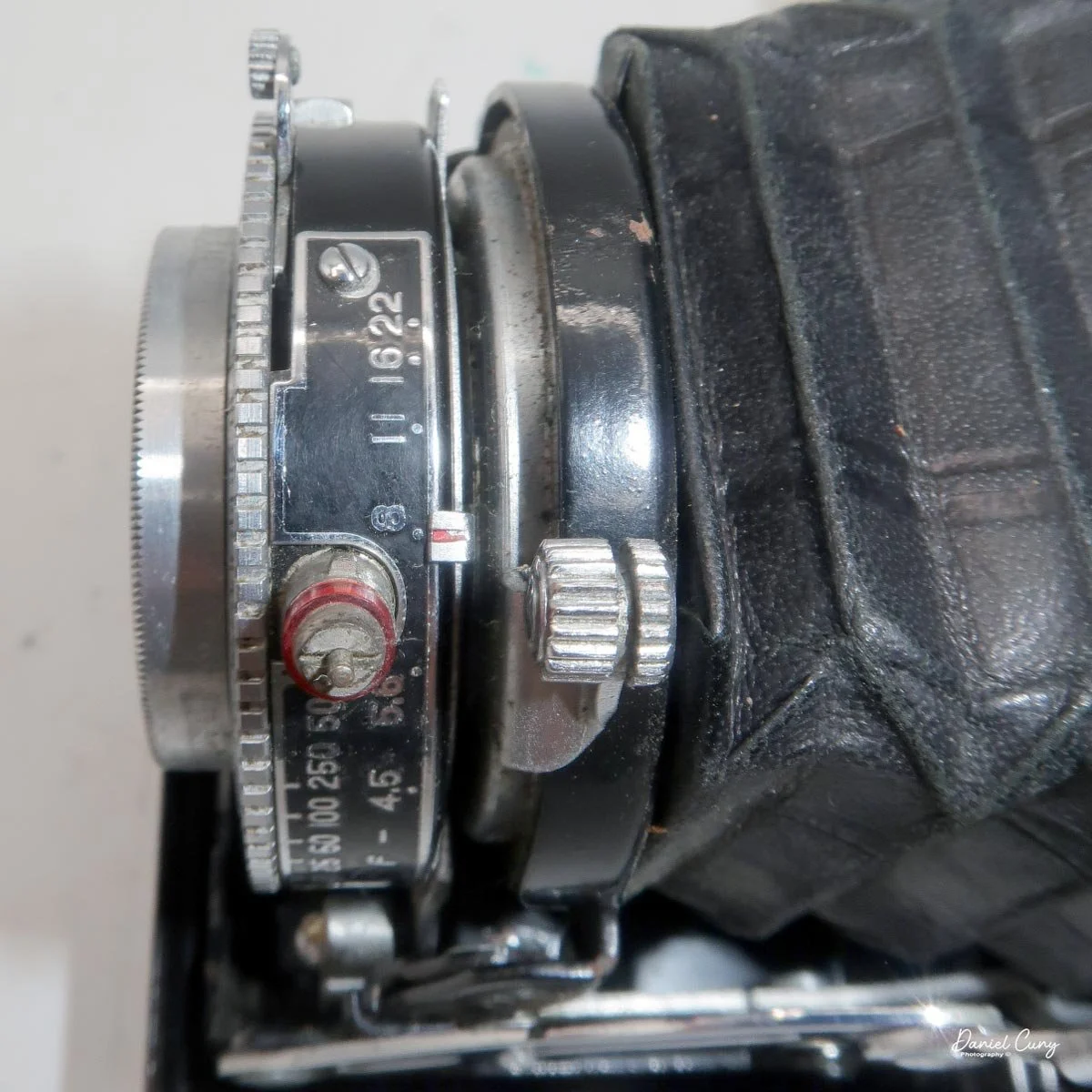
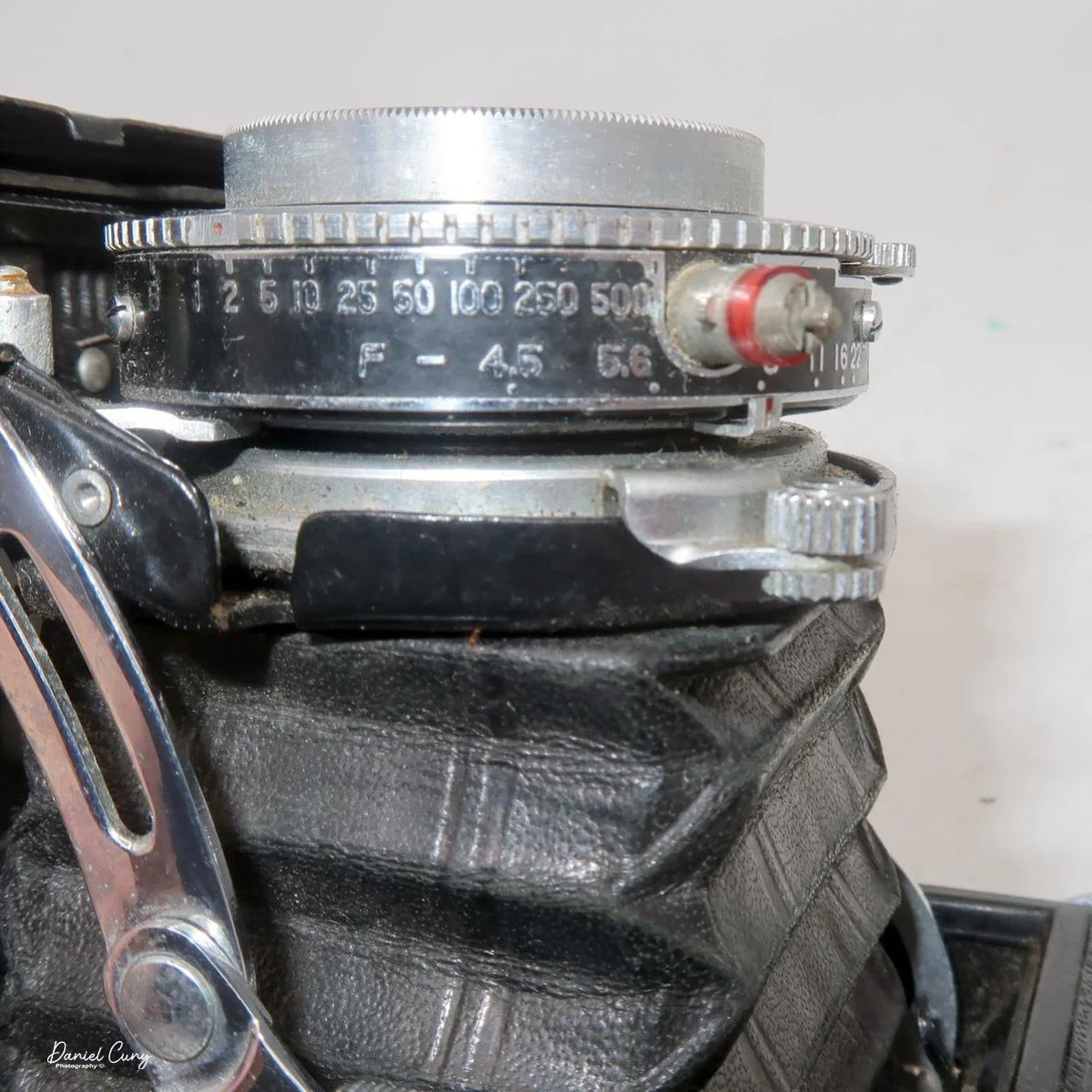
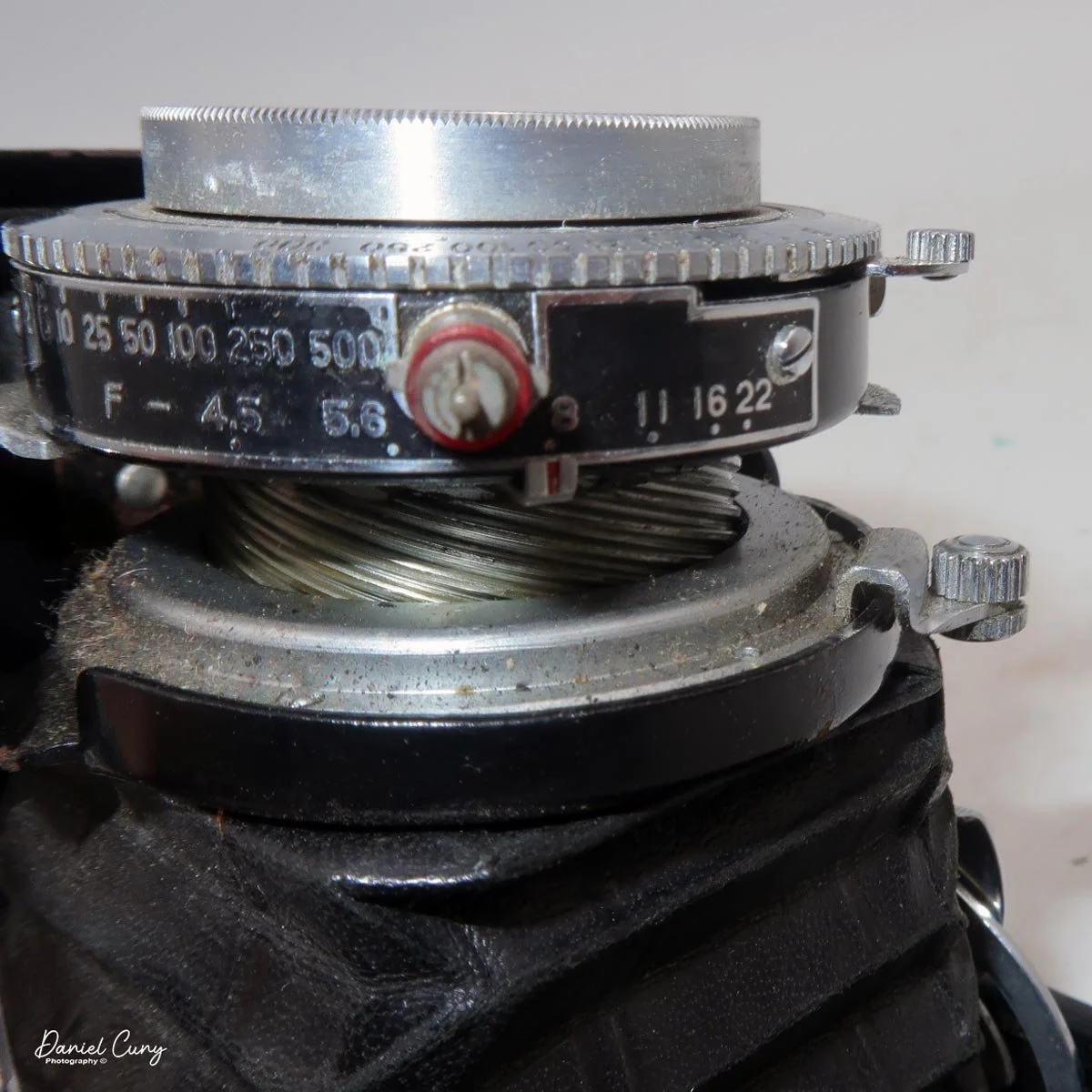
With the lens door open, it exposed the Konishiroku Hexar 75mm F/4.6 lens, serial #90096, in a Konirapid-S shutter with a range of 1/500 to 1 second, along with "B" for timed exposures. On so many cameras, shutter speeds are set by turning a ring to the desired value along the outer portion of the shutter. There is a shutter cocking lever located just behind the shutter speed setting ring on the shutter.

 The camera's shutter release button is located on the lens door and trips the cocked shutter via a linkage to the shutter release. A cable release socket is also in the shutter just next to the cocking lever.

The aperture ranges from F/4.5 to F/22 and is adjusted by turning a knurled ring at the back of the shutter to the desired aperture, indicated by a red dot on the setting ring. Also on the camera's shutter is an ASA flash terminal, which would be used for bulb flash units popular at this time.

Behind the camera's shutter is a larger knob used to focus the camera through the rangefinder system. As mentioned earlier, I'm not sure whether my rangefinder is working. There's another way to check, and that's the method I used to get the photos for this article. 

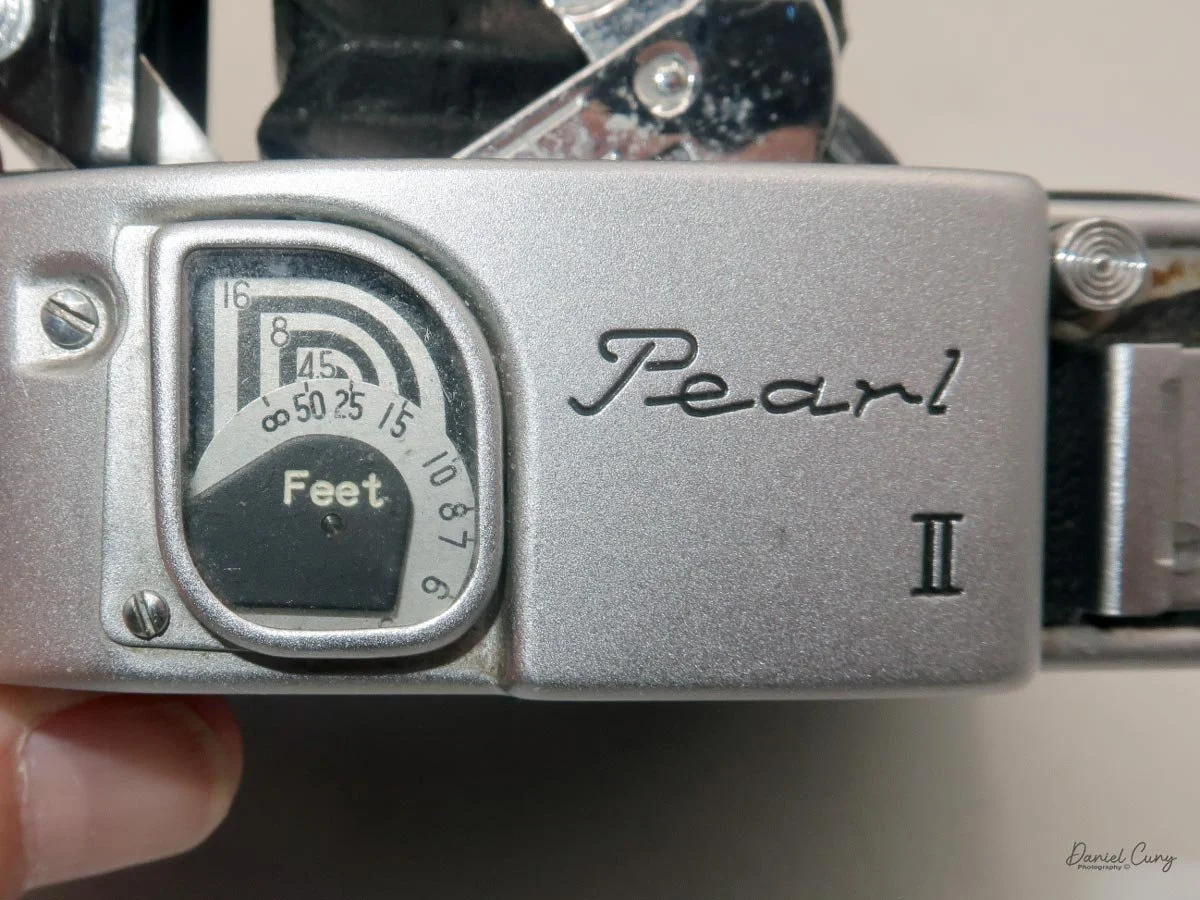
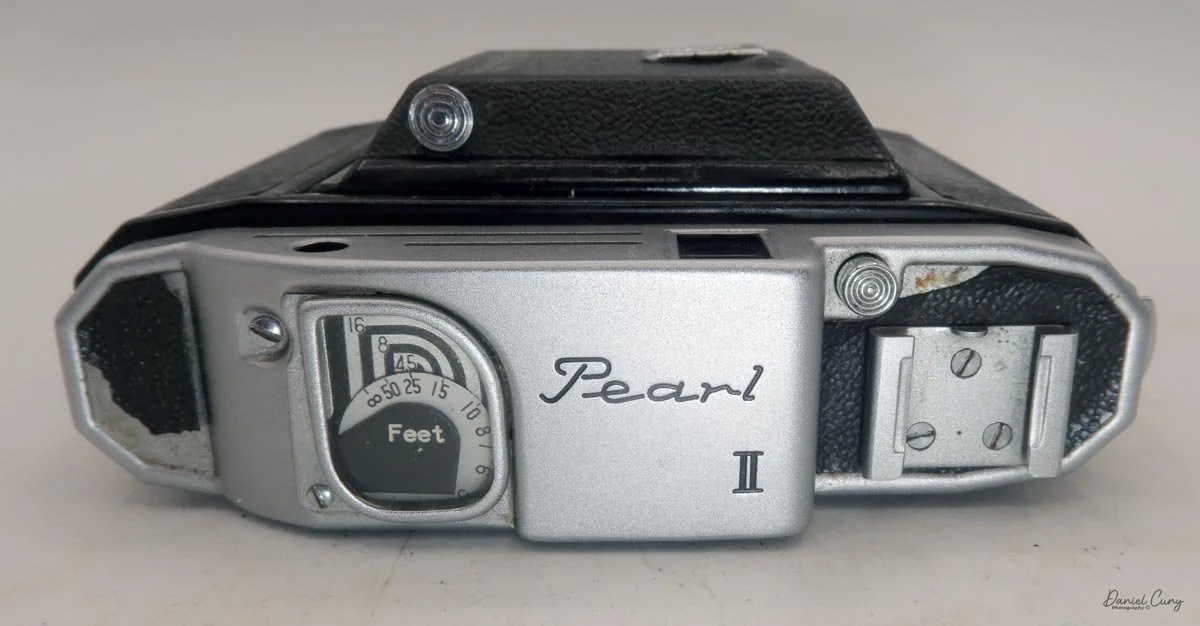
 Moving the focus knob on the camera one way or the other moves a bar in and out located on the opposite side of the shutter release linkage. This bar's movement changes the focus distance to the subject, which you can see through a window on top of the camera. I find these simple features on cameras fascinating. I don't know why, but I do.

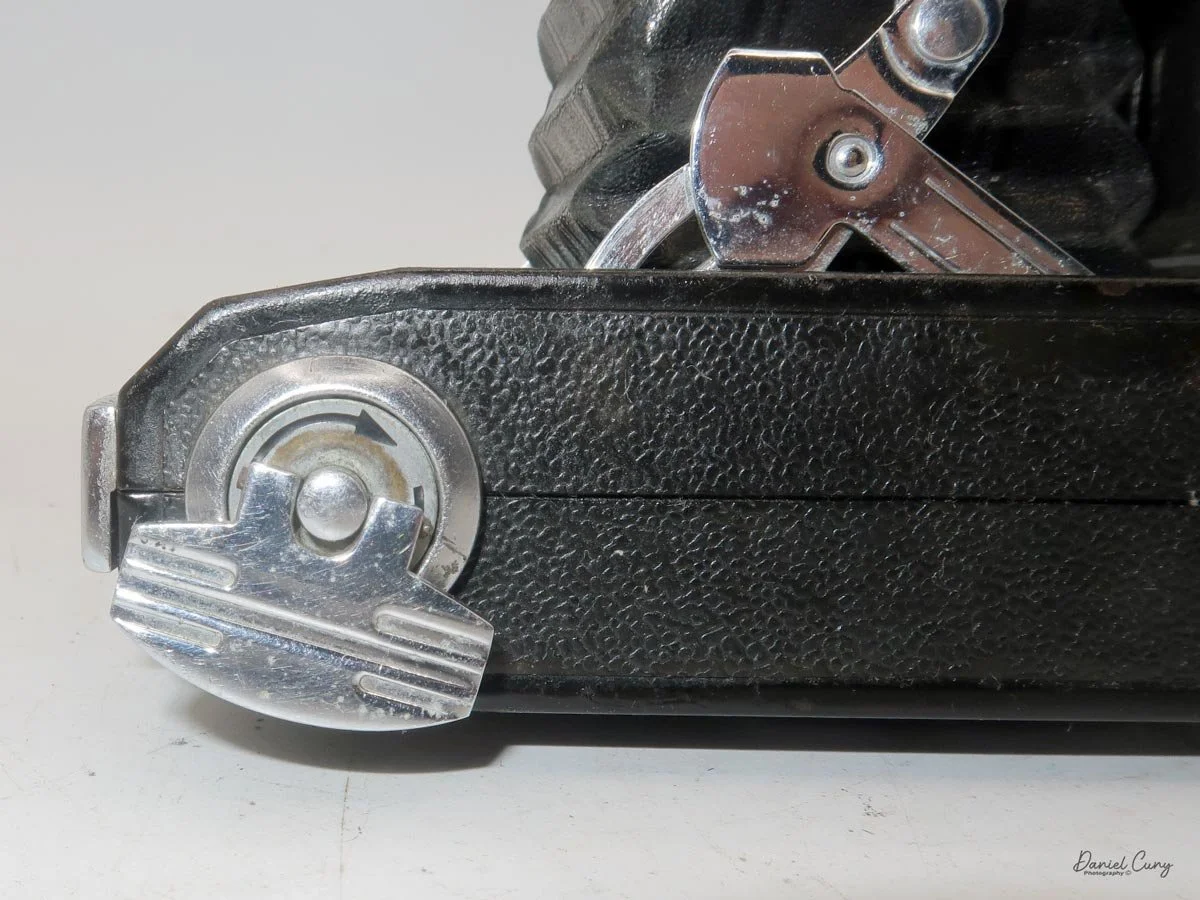
To close the lens door back into the camera body, press inward on the side struts holding the lens erect, and the struts will collapse, allowing you to fold the lens back into the camera's body. Pressing it back locks it into place. You'll also need to set the camera's focus to infinity before it will close all the way.

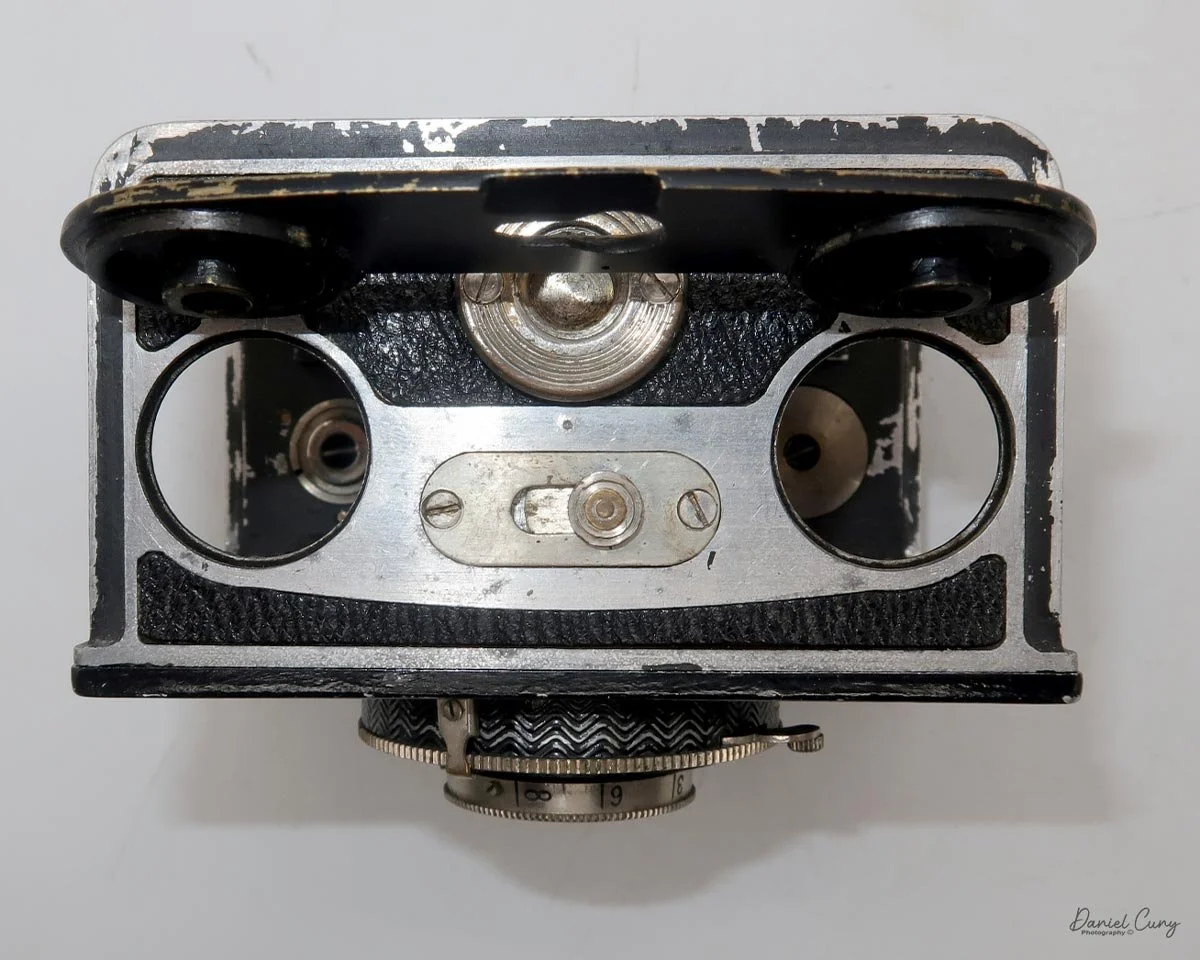
 Looking down at the top of the camera, there are just a few objects to see. There is a small area on the front of the rangefinder housing that is losing some of its leatherette. The wonderfully designed focus window with a depth-of-field scale. The name "Pearl II" is in a modernistic font, with the camera's accessory shoe on a lower plane and the button for releasing the lens door.

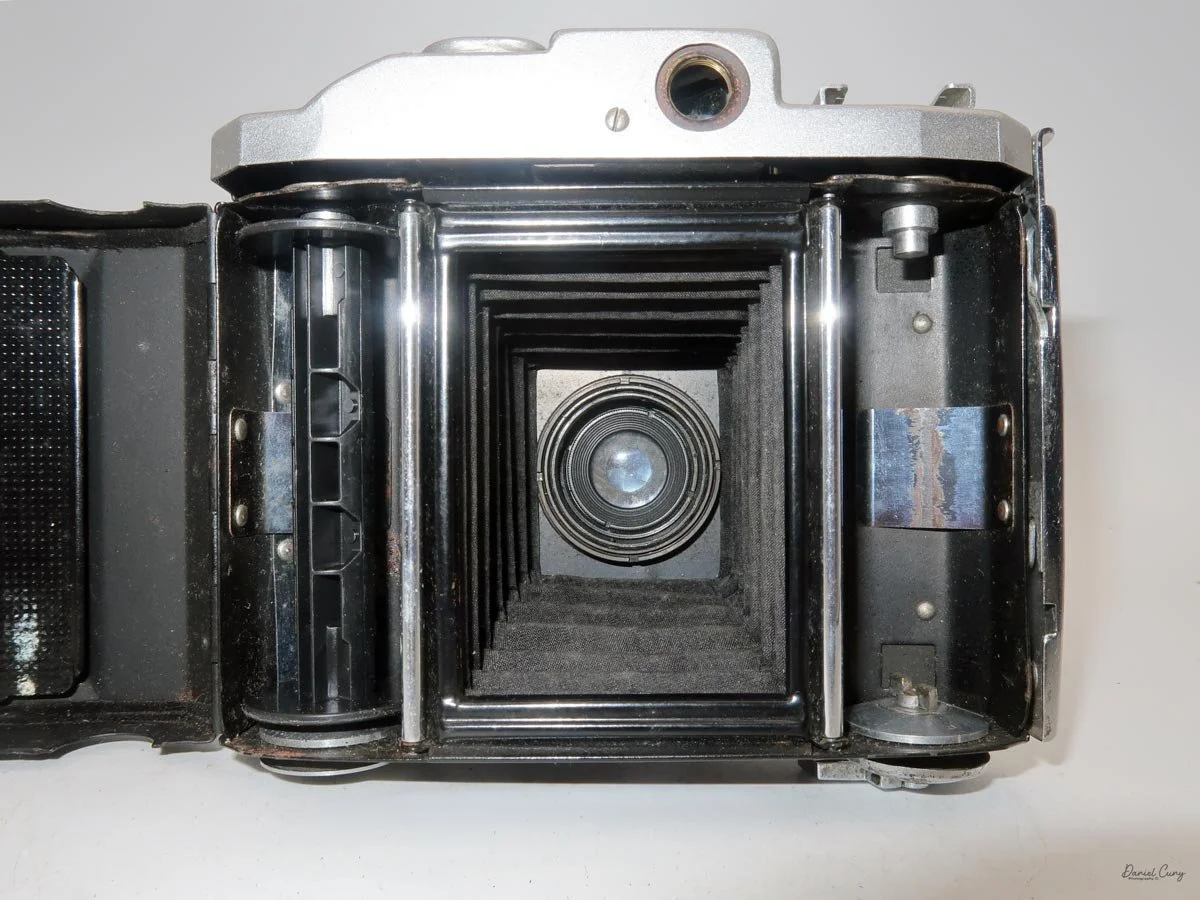
To load the camera with film, the film door release is on the right side of the Pearl II. Lifting the lever on top unlocks the film door, allowing you to open it and load film. The fresh roll fits on the left side, and the take-up spool will be on the right, where the larger key-style winding lever is located. Once loaded, close the back of the camera and wind until you see the number 1 in the rear chrome window, which has a sliding cover.

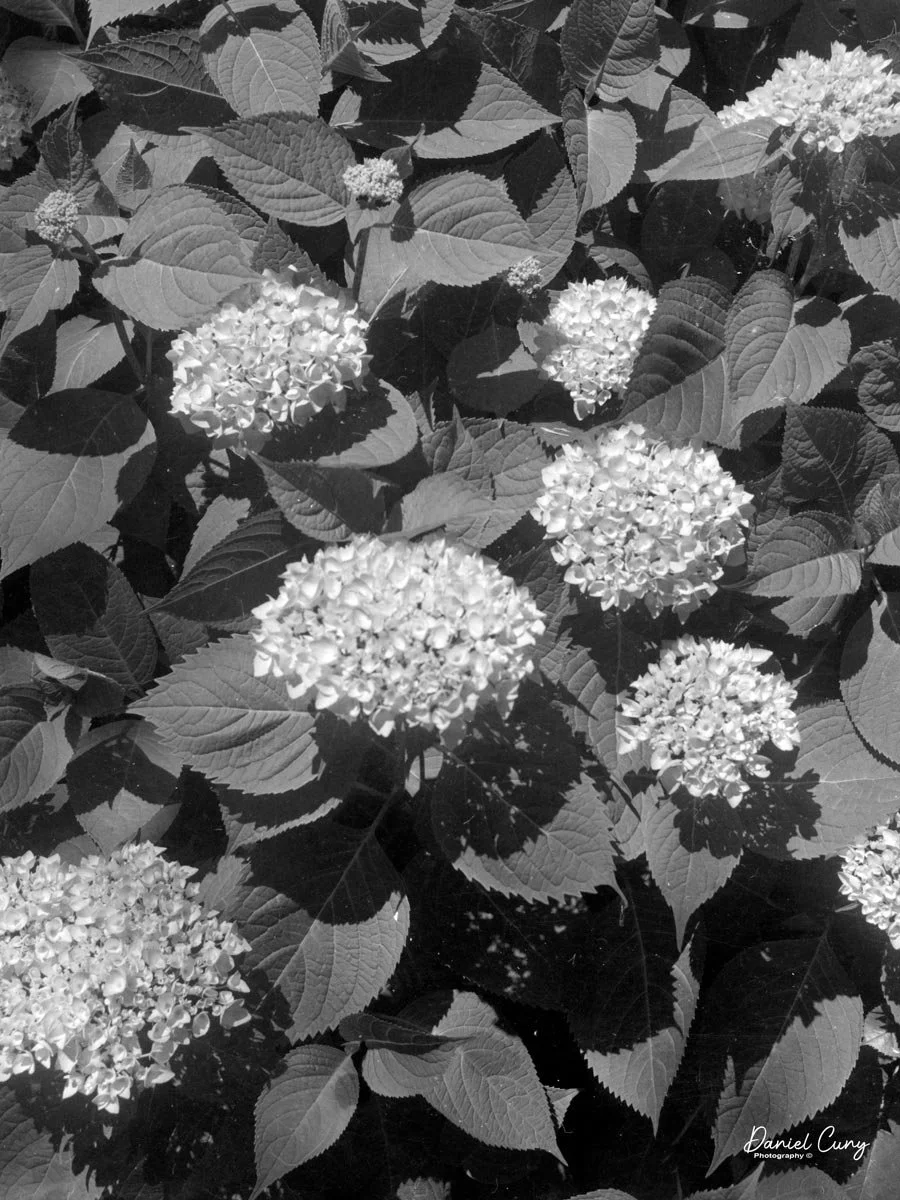
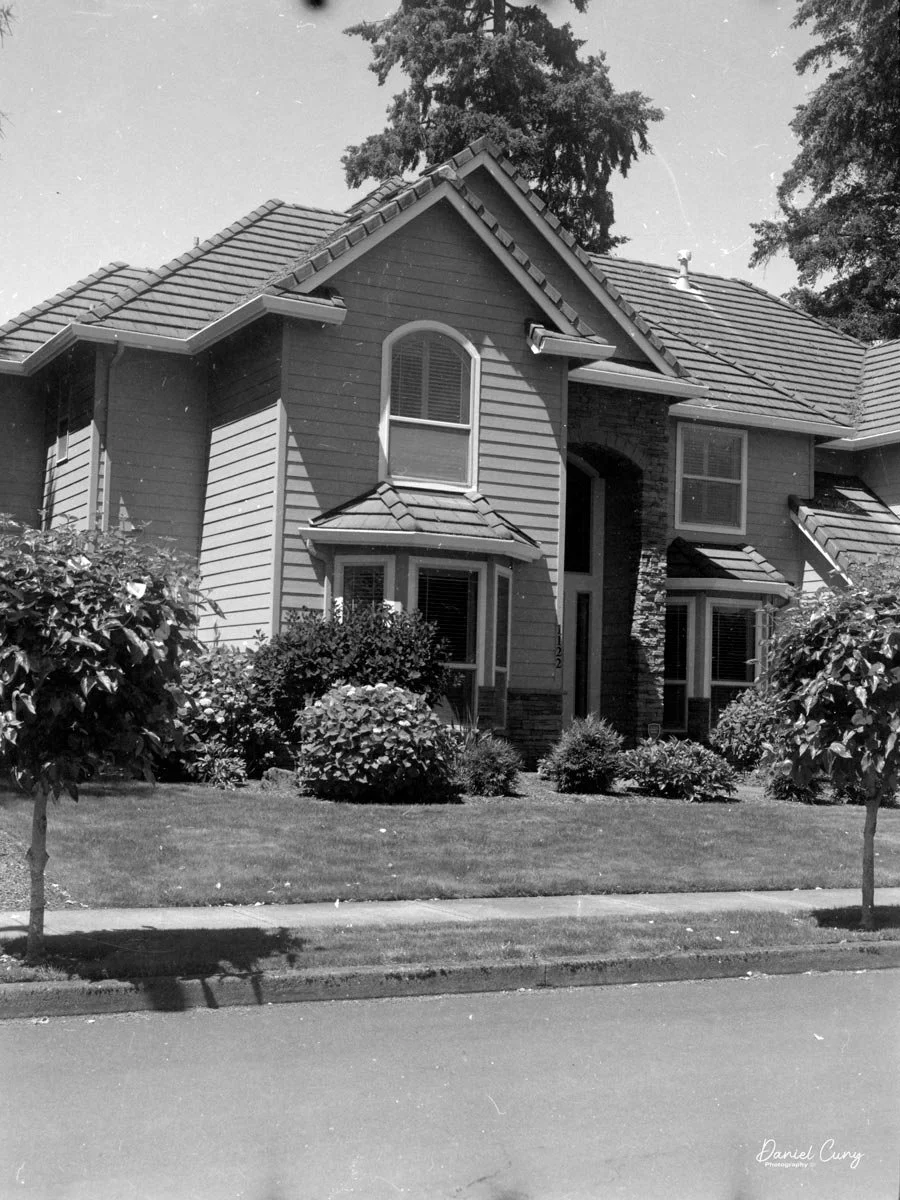
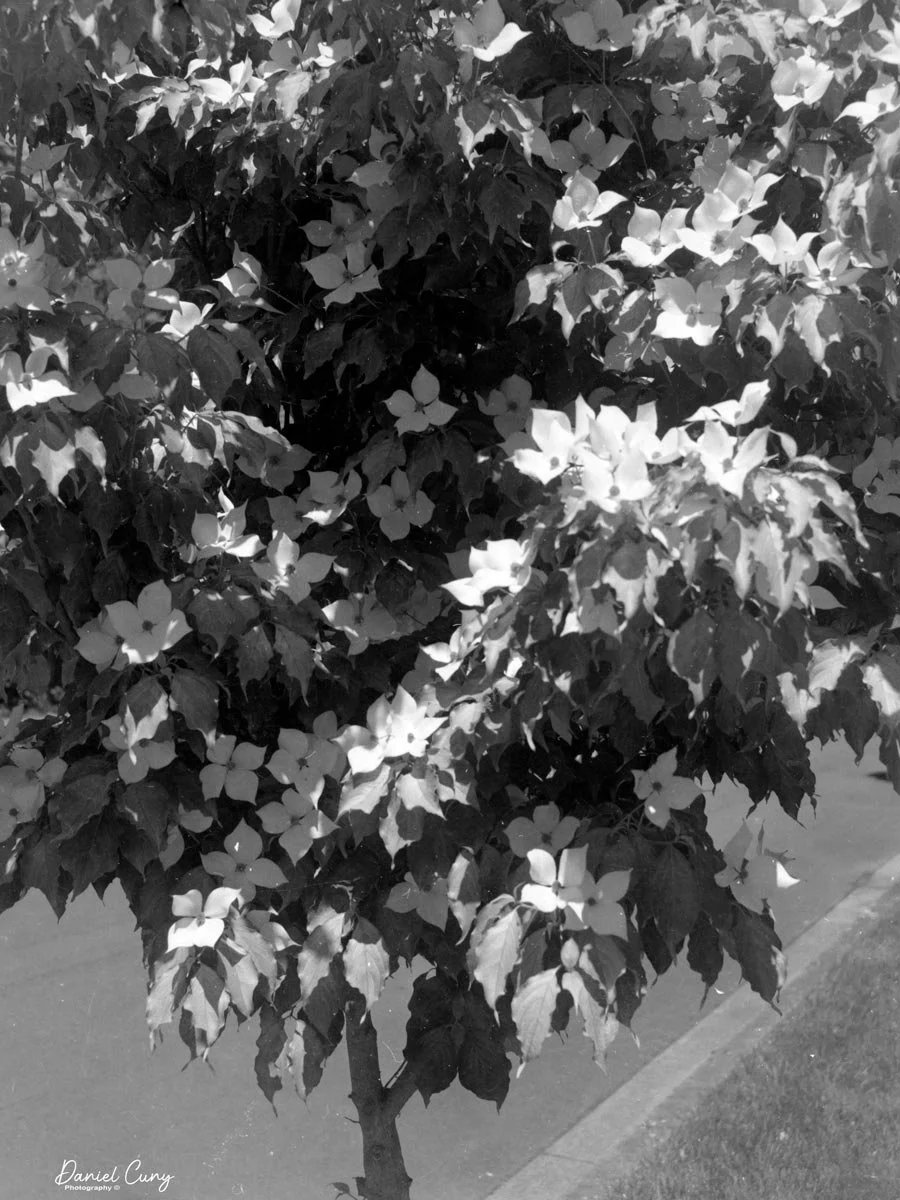
 With the film loaded in the camera, let's take a walk through the neighborhood to see how it performs. Even though I don't have a usable rangefinder, the distance scale on top of the camera should help me take sharp photos.

 My Results:

 Since the camera has a vertical 6x4.5 format, you can take 16 images on a roll of 120 film. If you're taking a horizontal image, you'll need to turn the camera to landscape orientation.

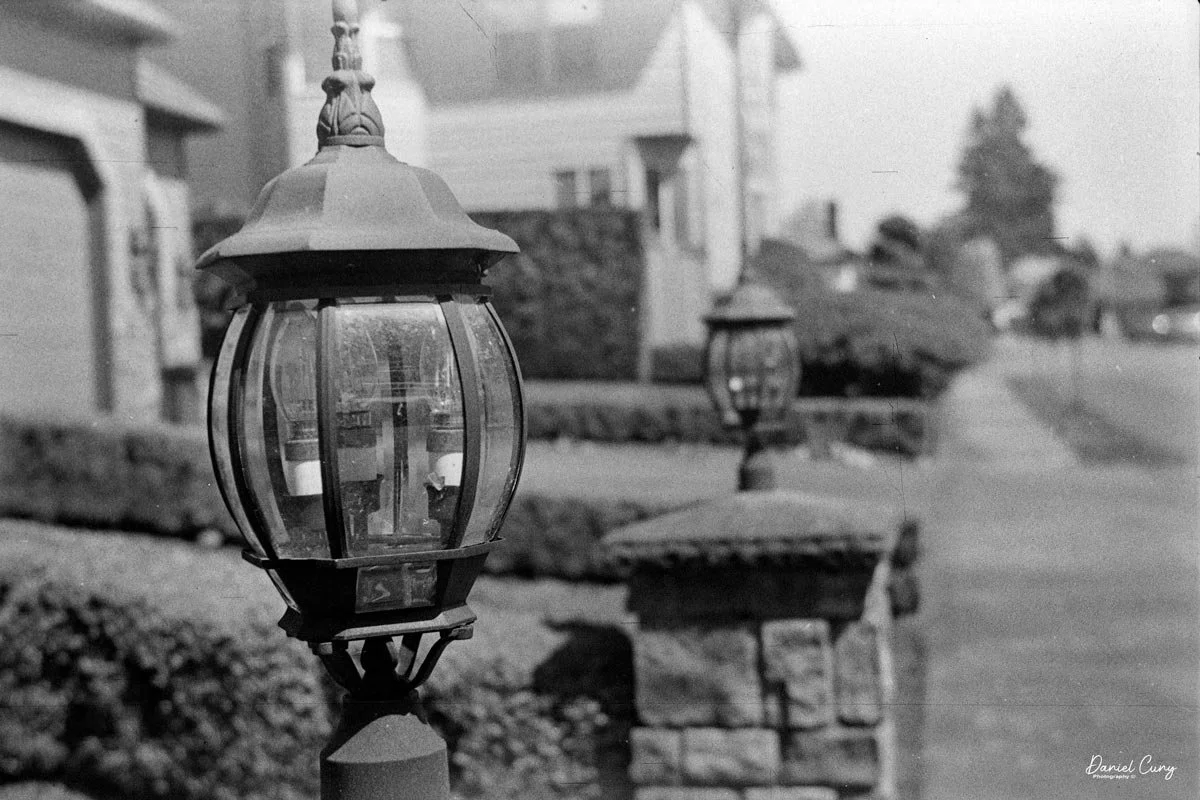
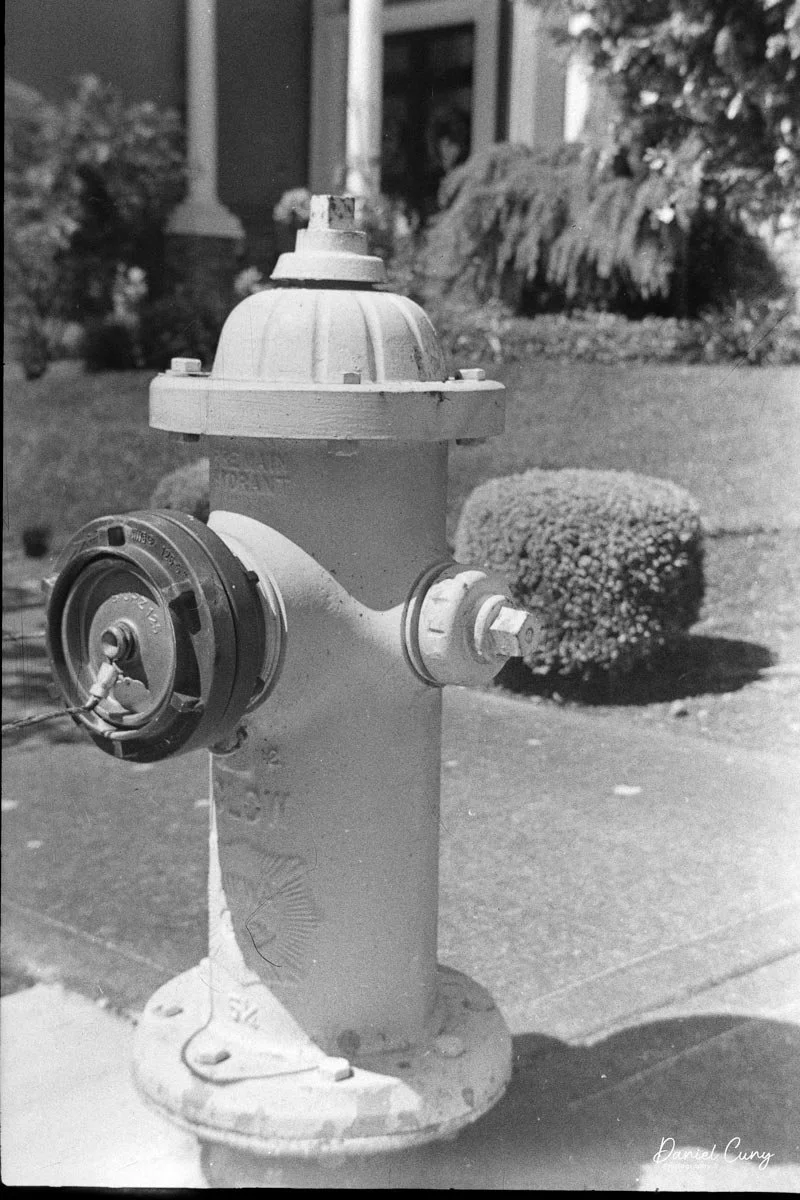
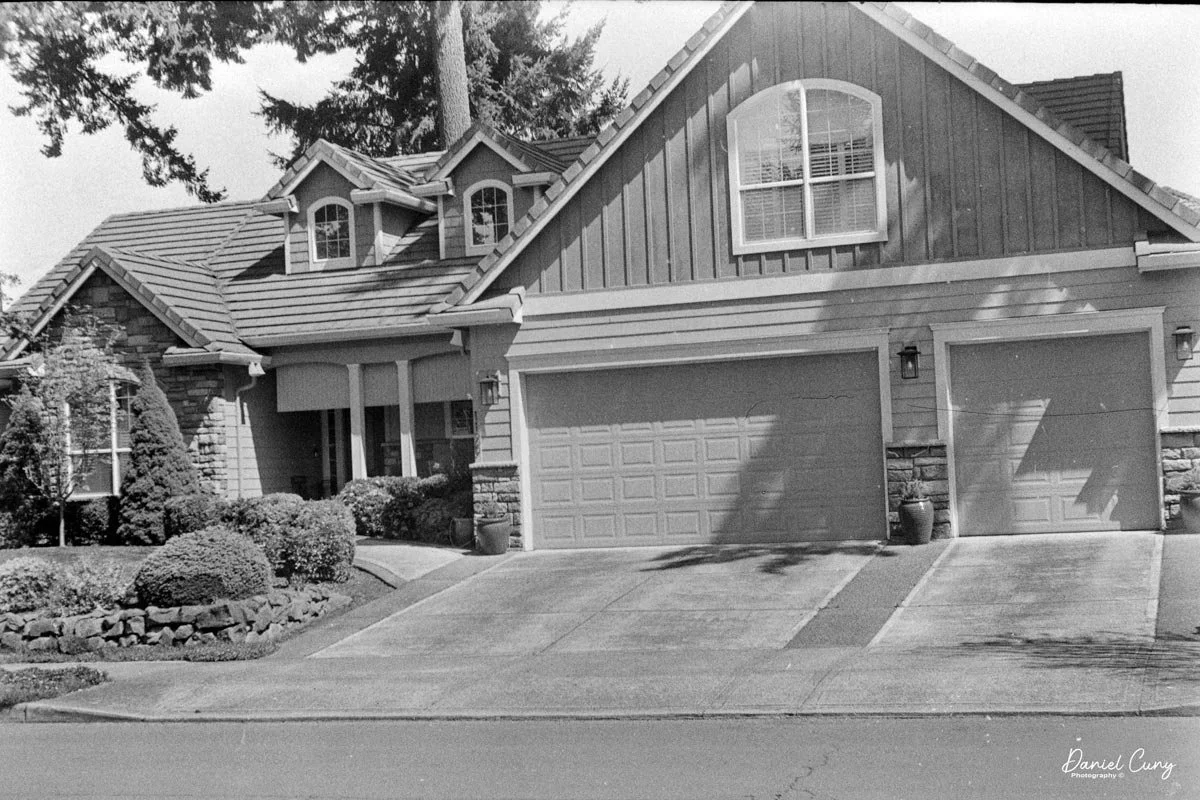
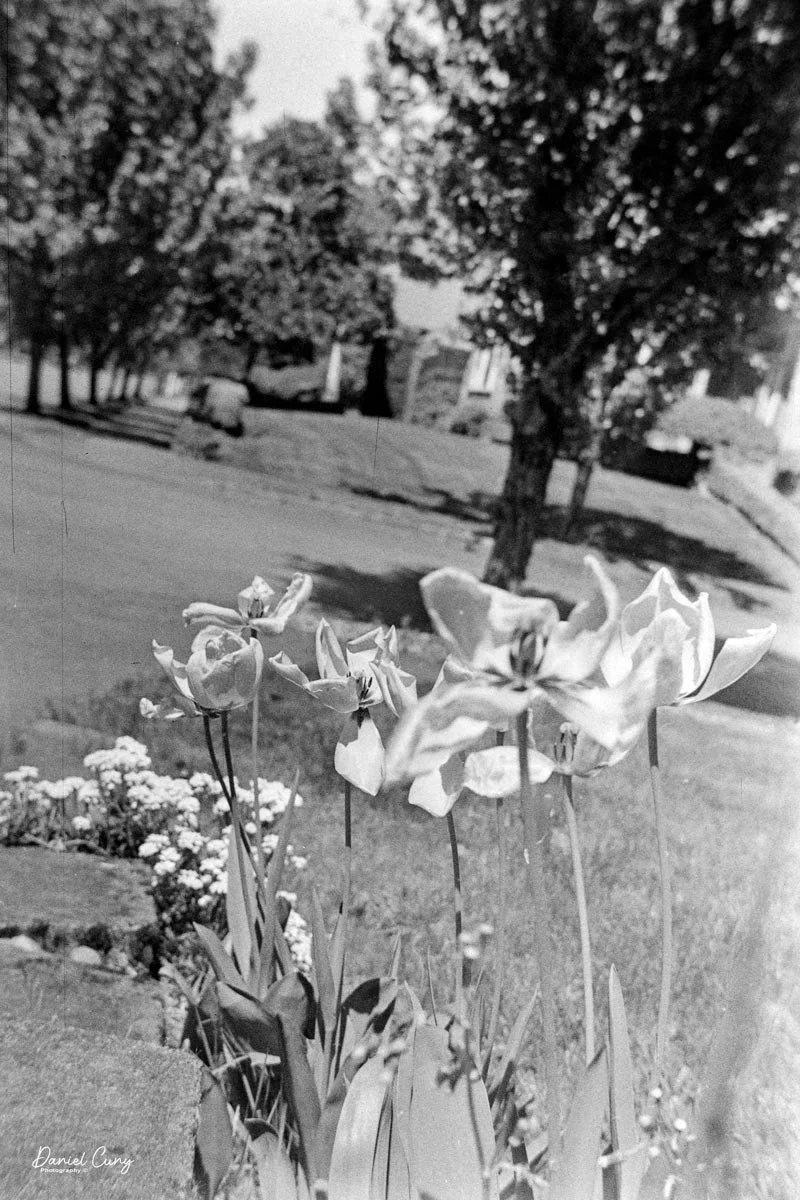
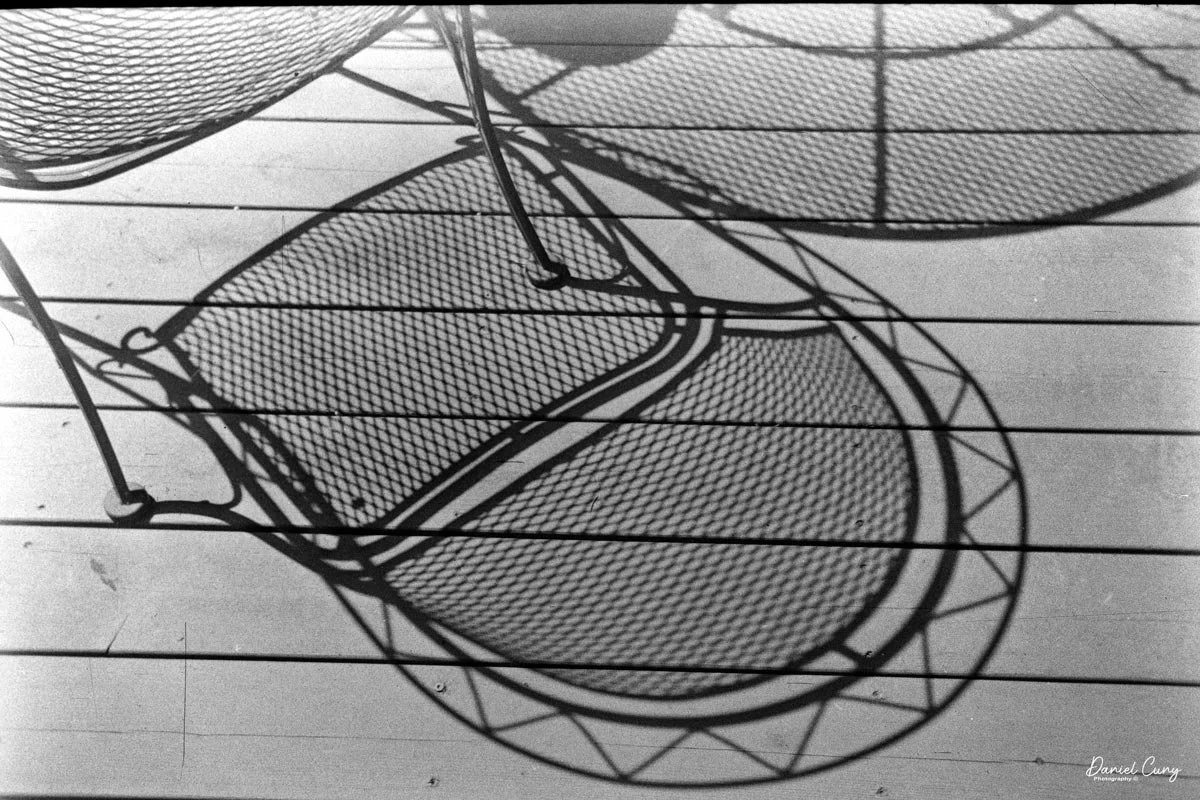
 Here are some of the photos I took during my walk in our neighborhood.

Conclusion:

 I understand why the Konica Pearl lineup is so desirable for an everyday pocketable film camera. It's sophisticated, yet simple. The camera can focus on your subject via an internal rangefinder system, rather than relying on a less desirable "guess" focus system. 

 The higher shutter speed of 1/500 for the time period allows for less camera or subject movement, and the iconic Konica Hexar lens is sharp and provides wonderful contrast to the images.

 I'm very glad I purchased this camera, and am keeping my fingers crossed that the viewfinder glass will bring the camera's rangefinder back to life, allowing for even easier focusing and possibly a sharper image.

 Thank you for taking the time to learn about this wonderful camera from Japan's early camera revolution after WWII, when many cameras had "Made in Occupied Japan" embossed somewhere on them, just like this one.

 Here are some of my other Camera Reviews

 I also have a YouTube channel where you can view overview videos of some of the cameras I've written about.

 Cuny's Camera and Photos is my online eBay store where I sell many of the cameras reviewed, along with other cameras, lenses, and photo oddities I've accumulated in my 50-plus years of collecting. Stop by and see if there's something for you there.

 Until next week, please be safe.

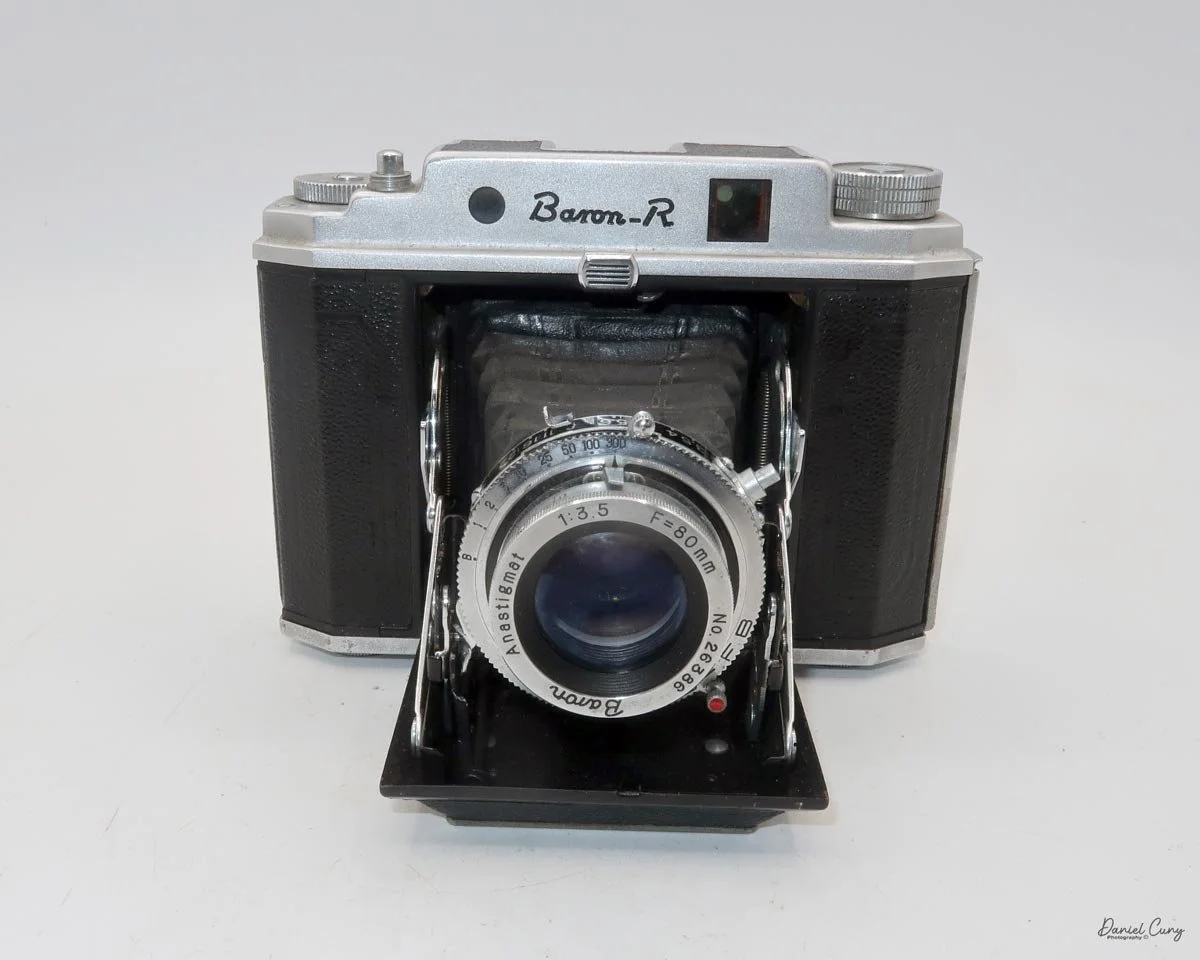
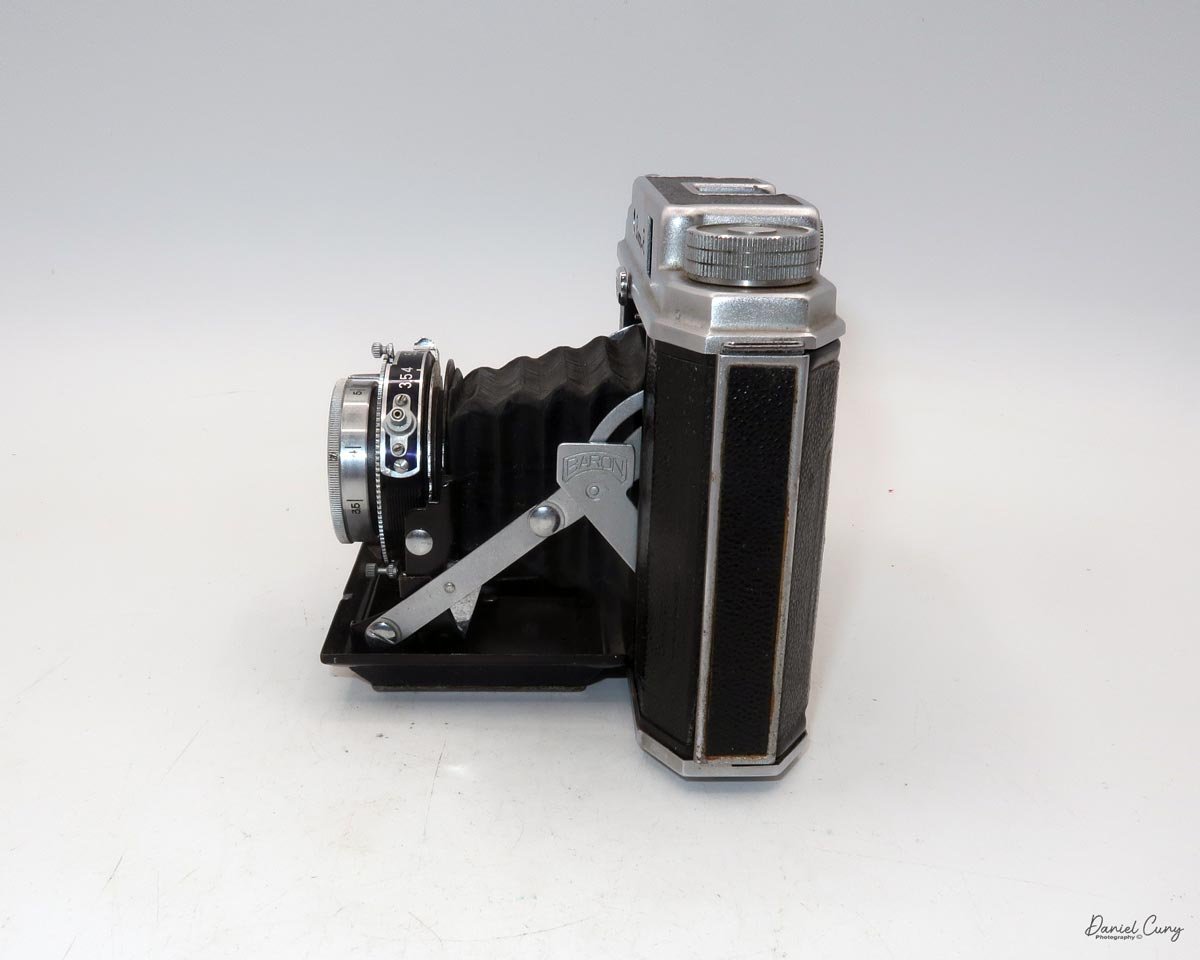
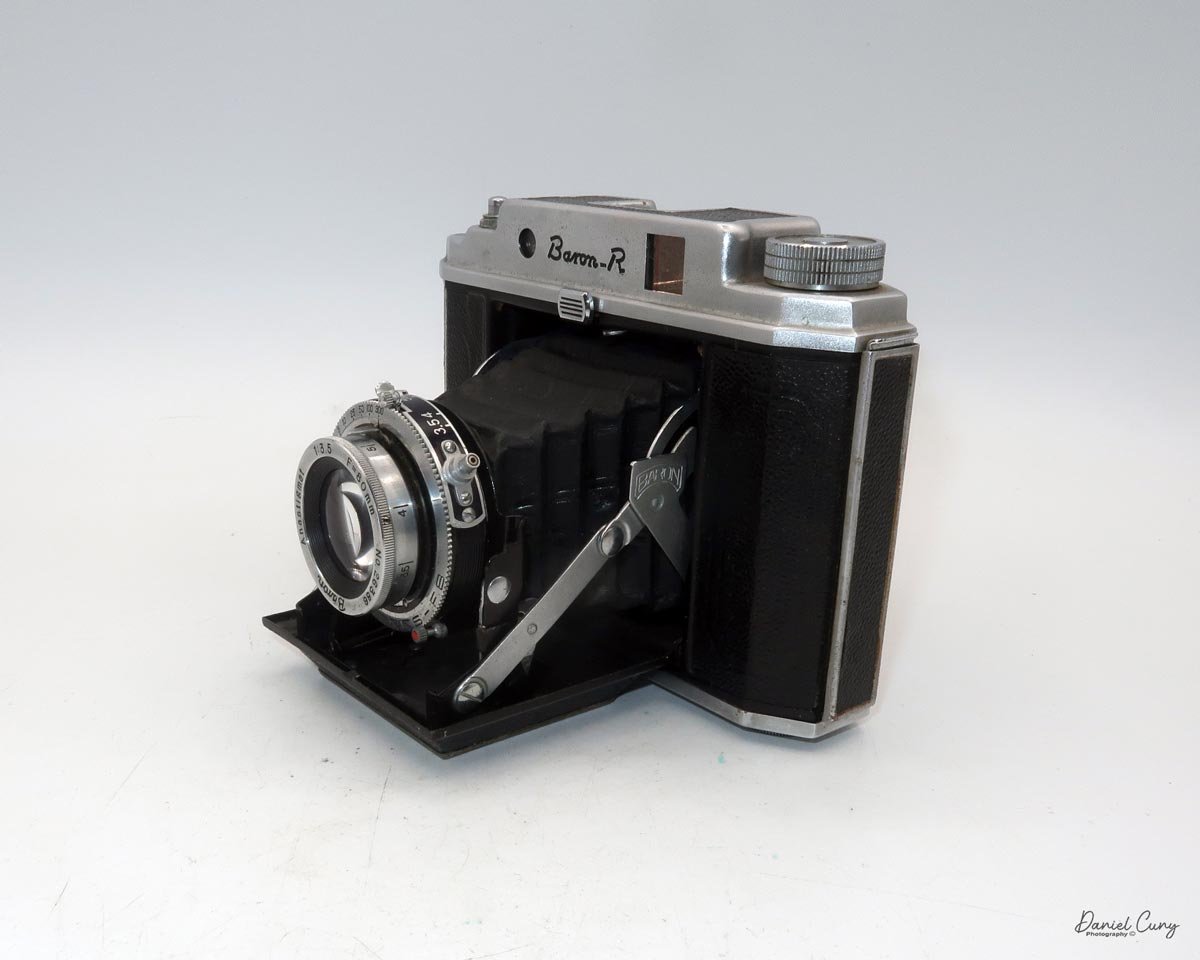
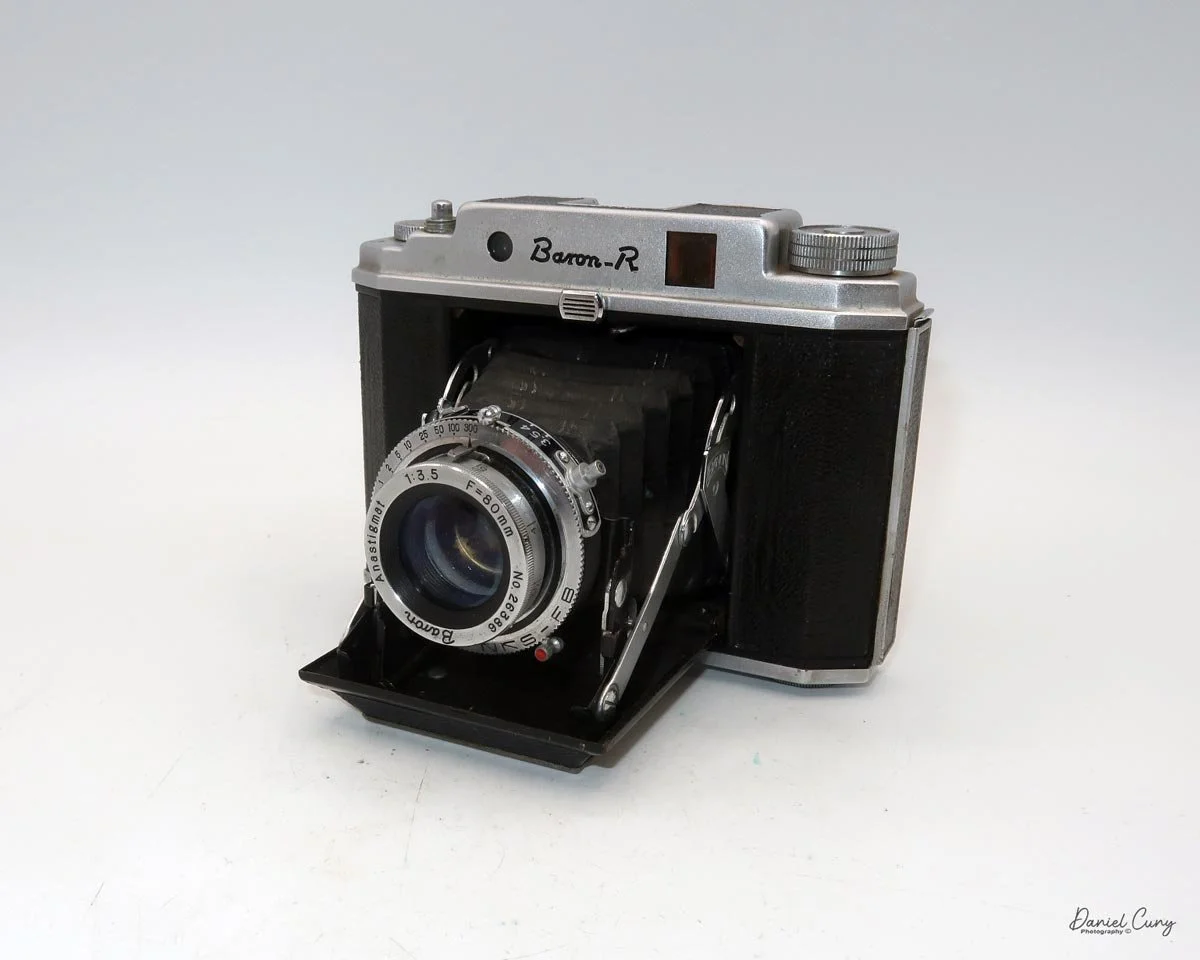
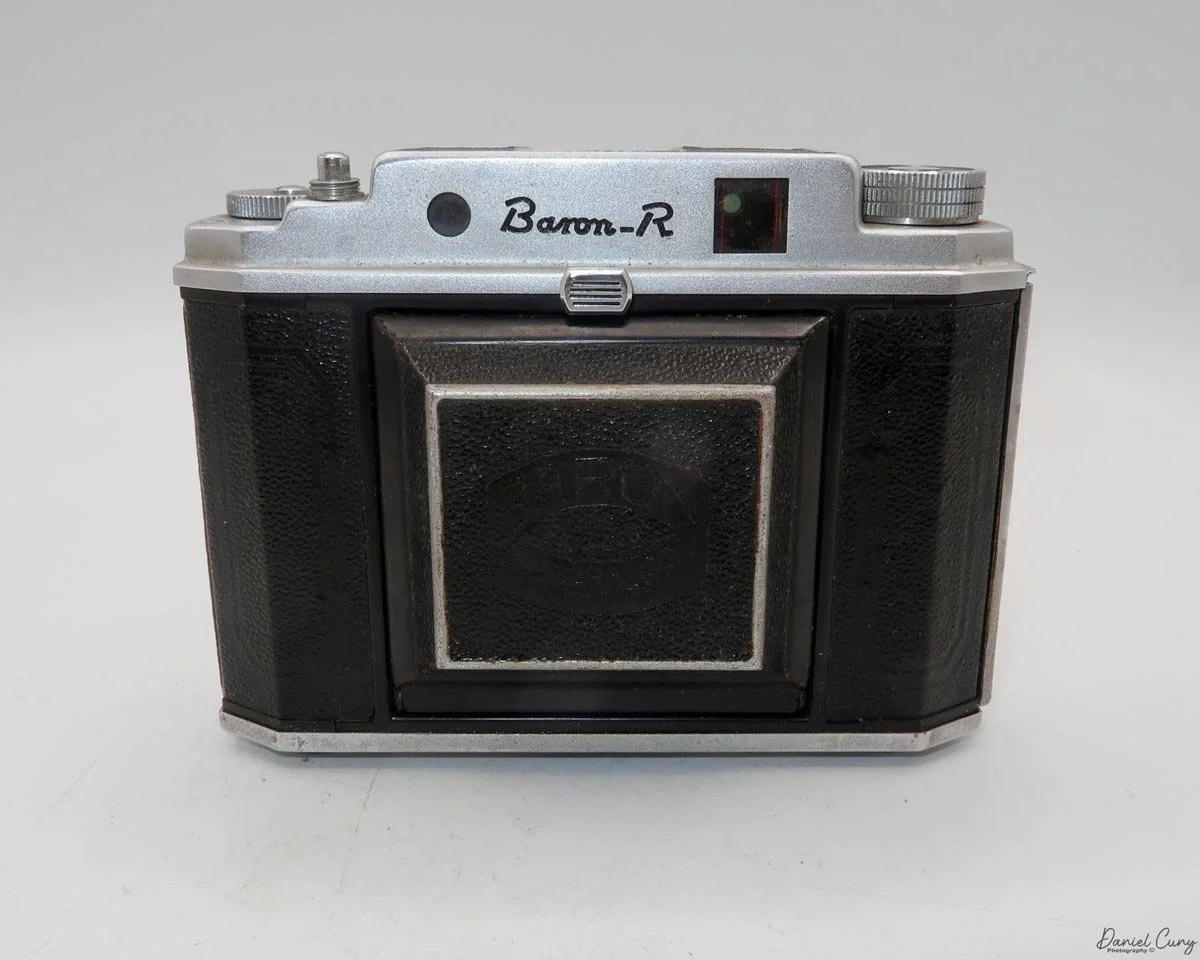
Baron RI camera

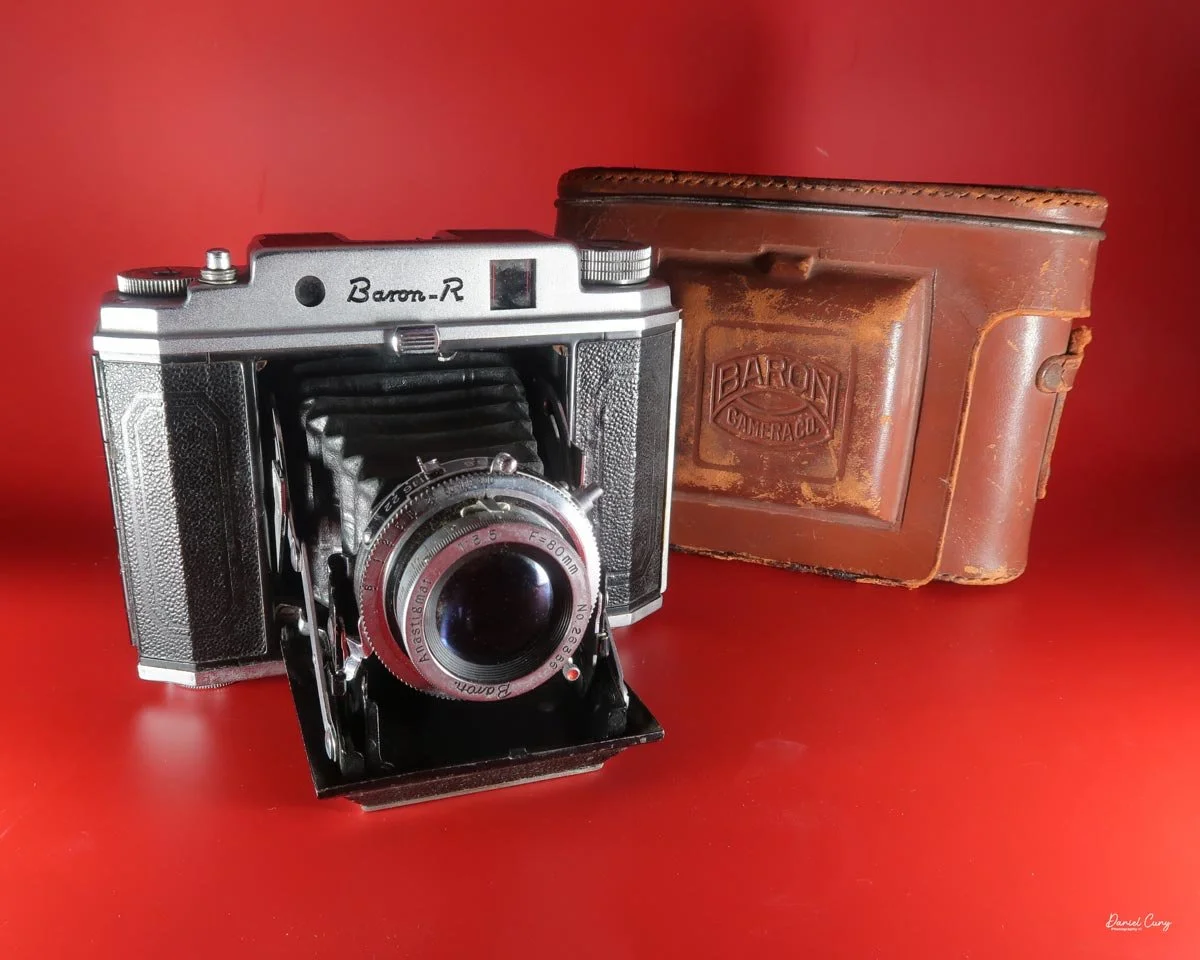
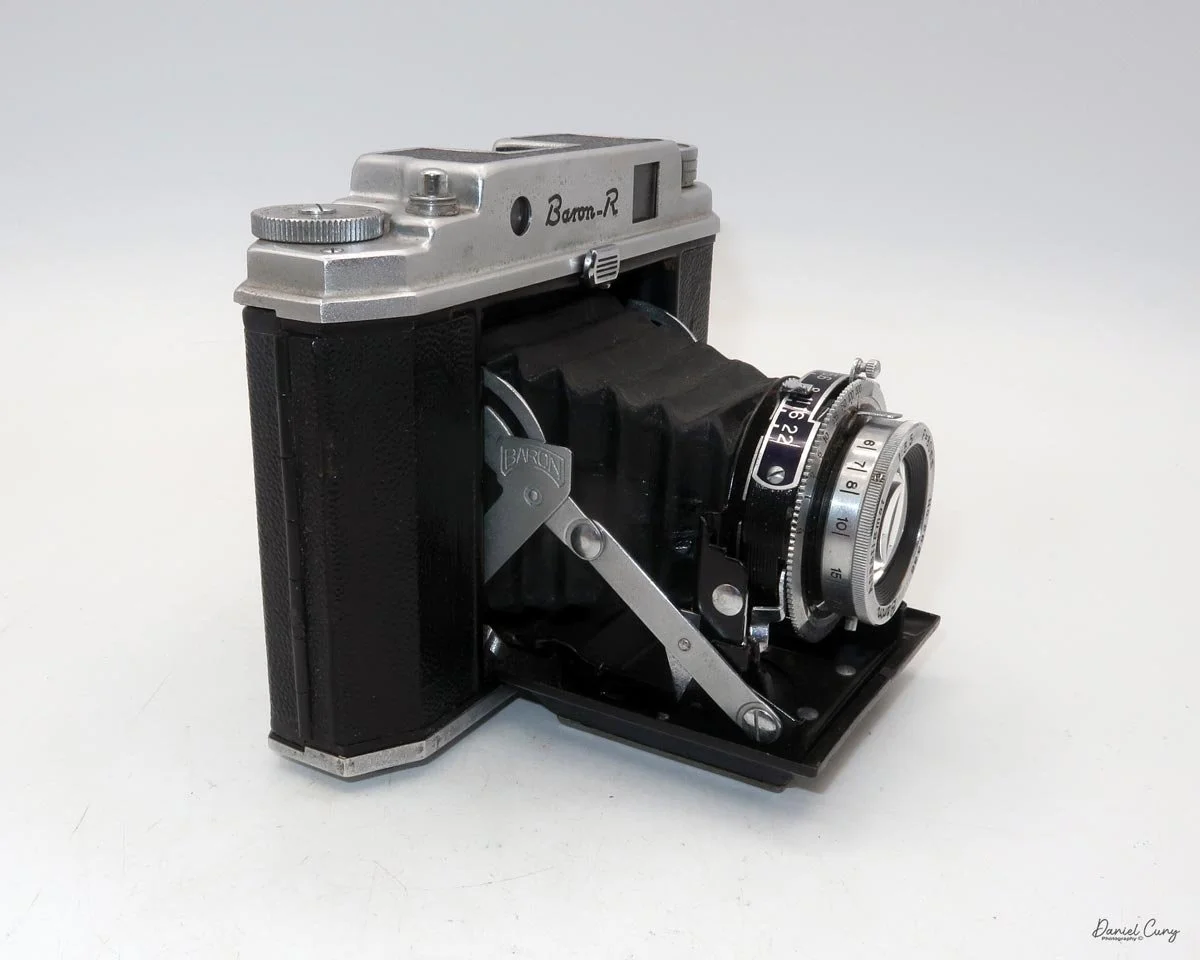
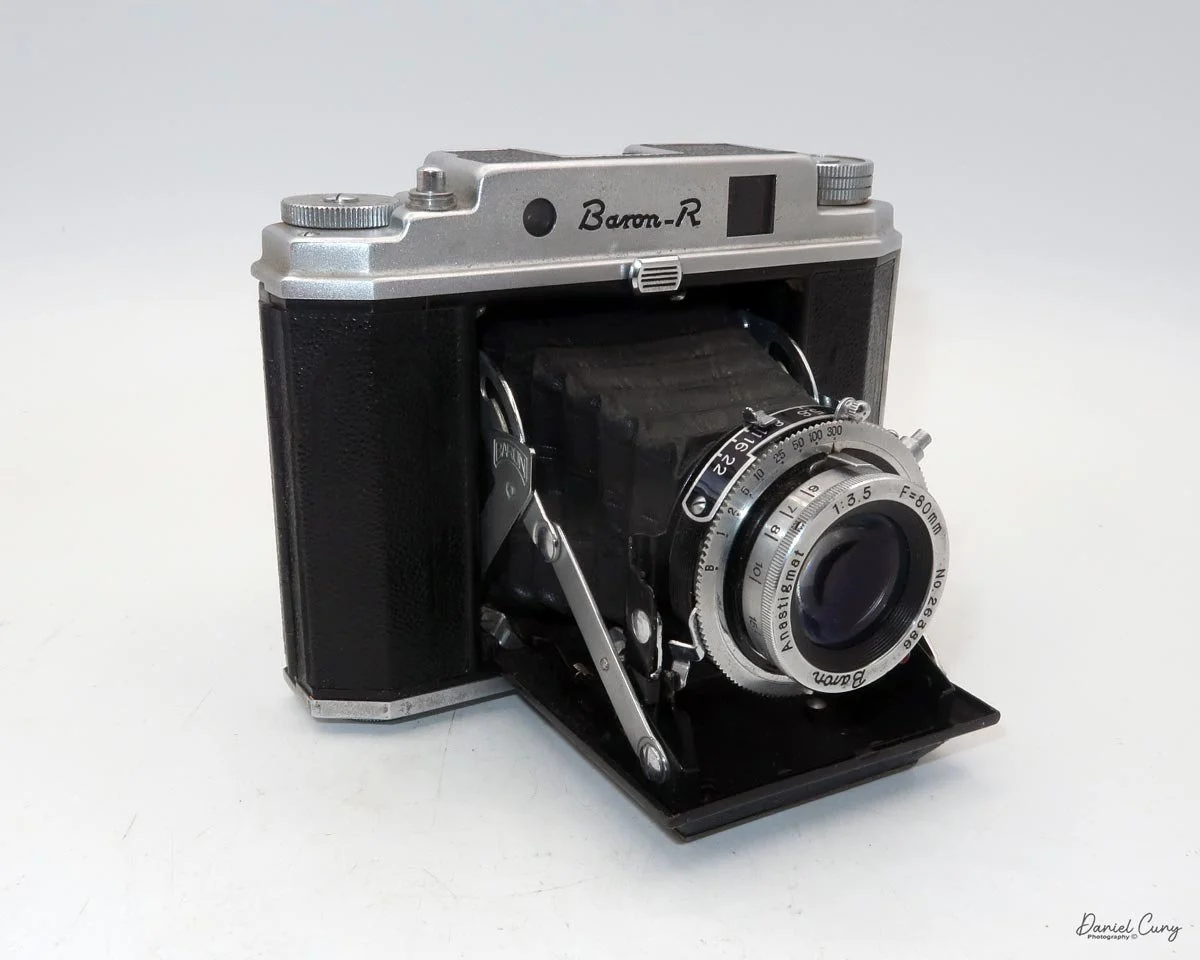
My Baron RI camera

When I visited Tokyo, Japan, a few weeks ago, one of my main objectives was to find odd, unusual, or little-known cameras that I could write about for this blog post. I found a few cameras that meet this criteria and will be writing about them over the next couple of weeks. 

 To get familiar with many of the used camera stores in Tokyo, I hired Bellamy Hunt from Japanese Camera Hunter for a half-day tour. Not only is he a wonderful, kind, and knowledgeable camera collector, but his background on how he started his company is intriguing. I had a wonderful time getting to know him and appreciated all his insights into collecting cameras.

 One of the shops he took me to was Used Camera Box at 1 Chome-13-7 Nishishinjuku, Shinjuku City, Tokyo 160-0023. It was, to me, a jaw-dropping experience. The camera store is not that big, but almost 90% of it is filled to the rafters with cameras. There are many showcases with cameras on top of cameras, and in front of these showcases are bins of more used cameras.

 Only two people were working there, so I didn't want to monopolize their time opening and closing different showcases. If the showcases had been opened and I had places to look through all the items they had, it would have easily taken a couple of days, which would have been something I would have done.

 During my time with Bellamy, we didn't spend much time there, but I found one or two items, paid for them, and left. It was a store I planned to come back to when I had more time, to spend a couple of hours going through the bins and looking through different showcases, trying to find the odd, unusual, or unknown items.

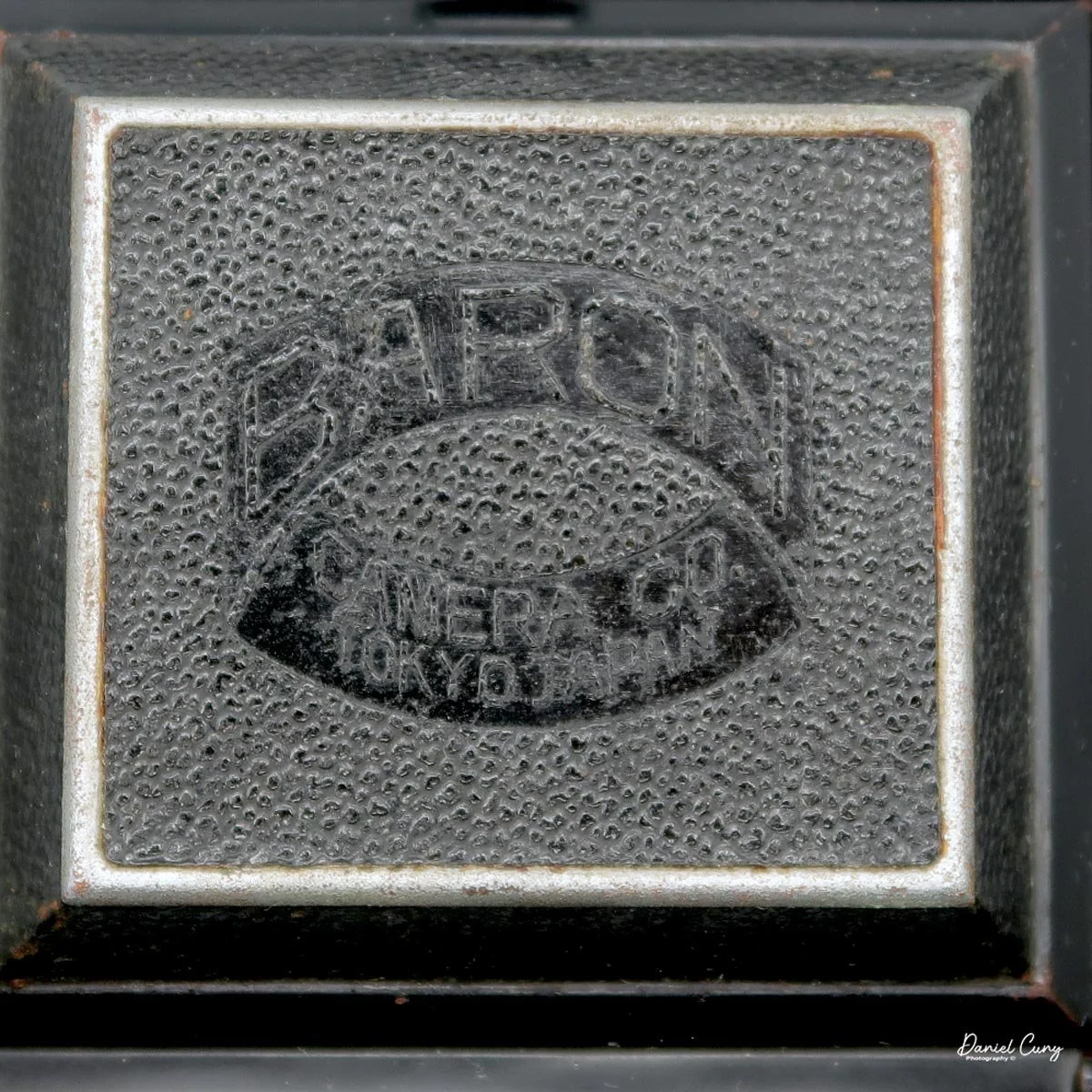
Embossing on the camera leans board.

 On my final day in Tokyo, I went back to Used Camera Box and did what I had planned. When I arrived in the morning, soon after they opened, there were no customers, so I had time to go through many of the bins and scour at least one or two of the showcases. 

 There was a showcase towards the rear of the store that looked like it had many interesting items. I noted the items I was interested in and called over one of the two salespersons. At this point, a couple of other customers were there, but I was determined to look at the items I wanted.

 The salesperson was very courteous and allowed me to pick and look at several items I was interested in. There were some very rare gems, but the pricing was considerably higher than I was willing to pay, so I decided on 3-4 cameras, paid for them, and left very happy.

 One of the cameras purchased in the last few days at Used Camera Box is the camera I'm writing about in this post: the Baron RI camera. 

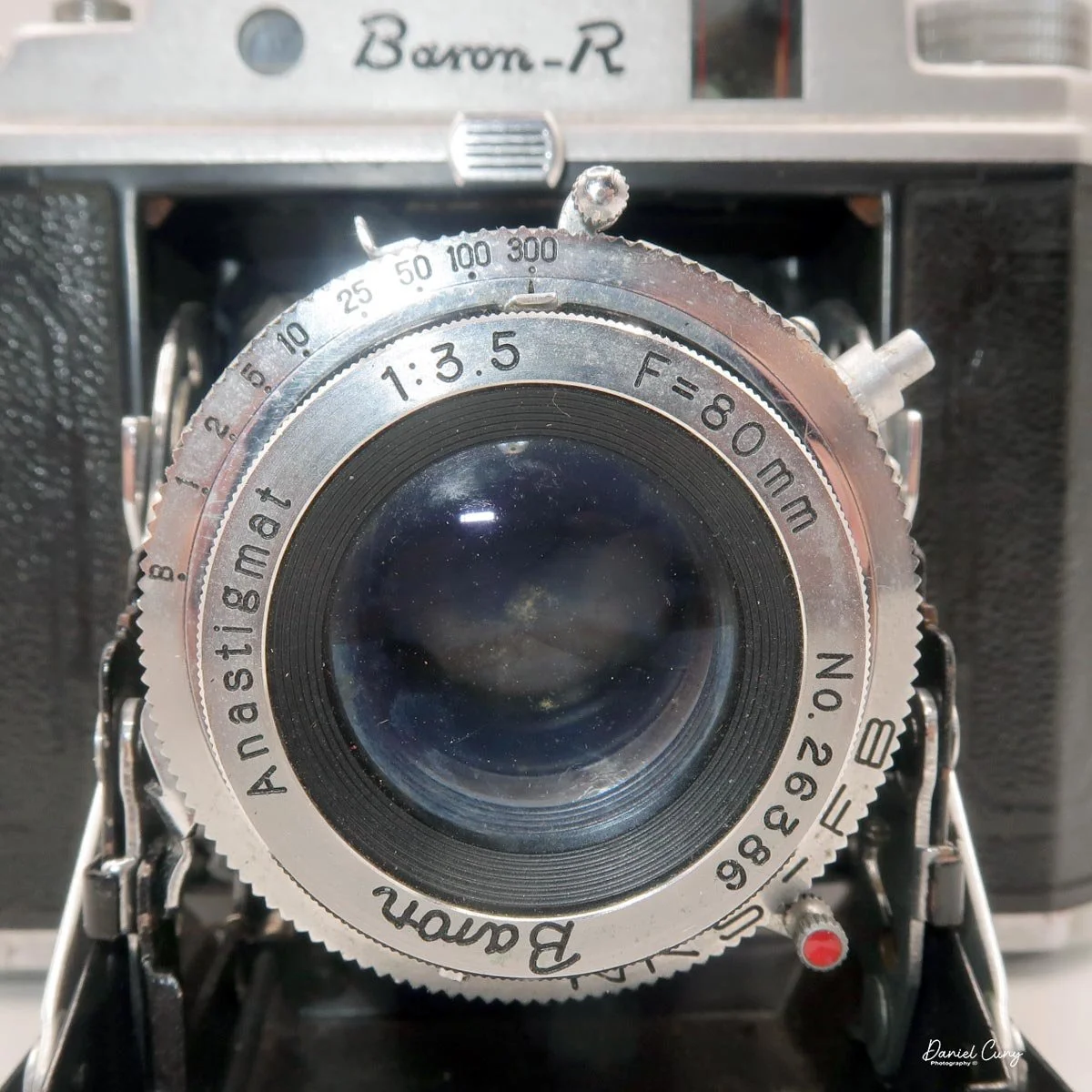
 The Baron RI camera is one I had never heard of or seen before, though it looks like so many other Japanese cameras from this timeframe. A folding 120, or 620 camera with a fold-out bed and nice Japanese shutter, taken from German manufacturers who made similar style cameras before World War II.

 Doing research on the camera, Baron cameras were made only by Chūō Seiki for a few years, between 1952 and 1956. They produced a few different models, but the company was short-lived, and the cameras are not very common.

History:

 Baron cameras were part of Japan's early postwar flood of small camera brands, emerging in the early 1950s when the country's photographic industry was rebuilding and rapidly expanding. These cameras reflect a period when dozens of manufacturers rushed to meet domestic demand and to compete in export markets, often by producing affordable 35mm and folding cameras inspired by European designs.

Japanese advertisment for Baron cameras

 In the early 1950s, Japanese camera makers were still working under the lingering effects of wartime disruption and occupation-era labeling rules. Many products carried "Made in Occupied Japan" markings until around 1952–1953, after which "Made in Japan" became standard as exports broadened and the industry gained a stronger international identity. Baron belongs to this wider ecosystem of small, fast-moving firms that relied on compact production runs, simple mechanics, and competitive pricing to find buyers.

 What makes Baron interesting is not that it was one of the biggest names, but that it represents the experimental, entrepreneurial side of the Japanese camera boom. The period was crowded with startups, subcontractors, and short-lived brands, many of which produced cameras that are now obscure but historically important because they show how Japan's industry learned to scale up, refine machining, and improve optical quality. That broader growth helped Japanese cameras go from largely unknown outside the country to serious competitors in overseas markets by the end of the decade.

 For collectors and historians, Baron cameras are valuable as artifacts of that transition. They sit at the intersection of postwar recovery, consumer optimism, and Japan's rise as a global center of photographic manufacturing. Even when the cameras themselves were modest, the brand is part of the larger story of how Japanese makers shifted from imitation and survival to innovation and global influence.

My Camera:

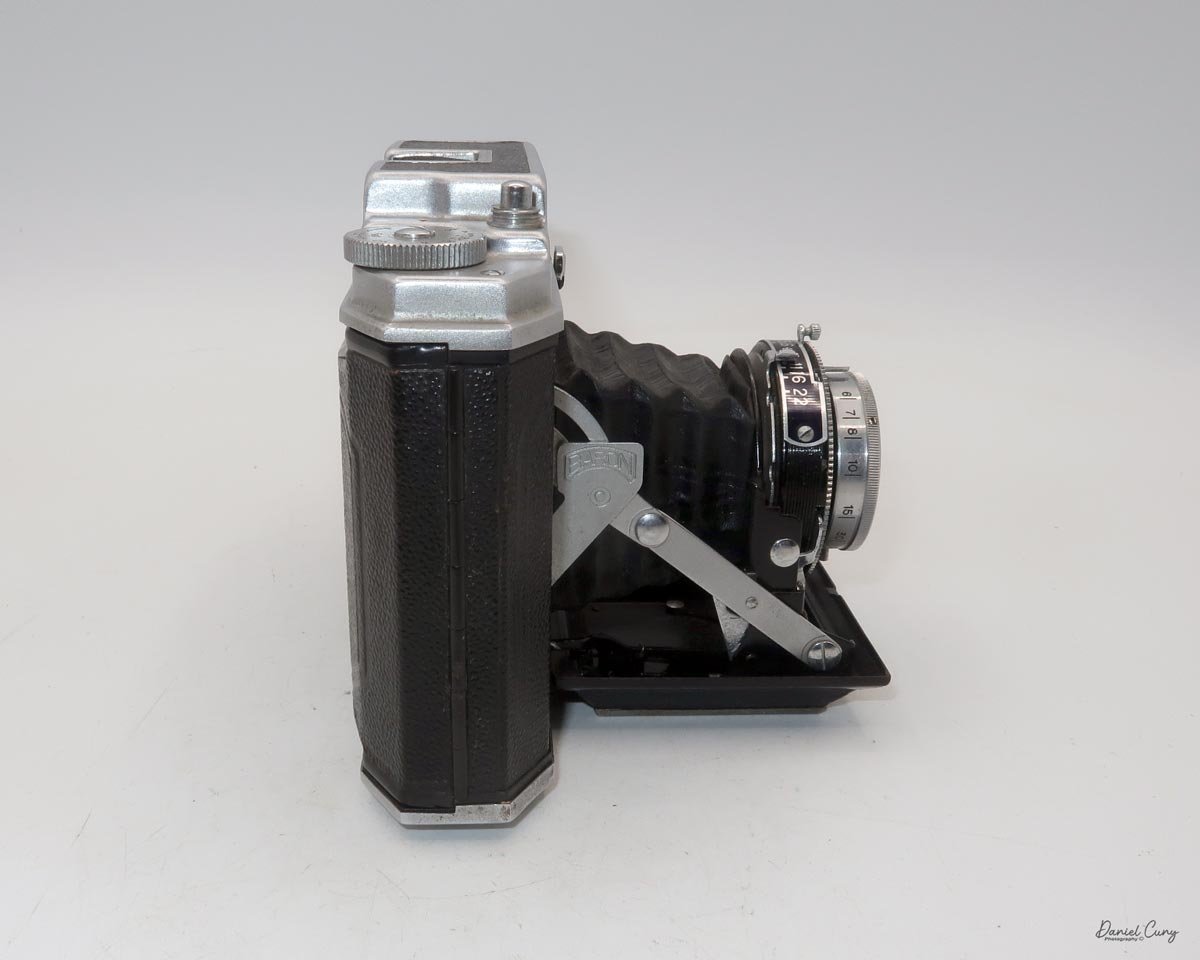
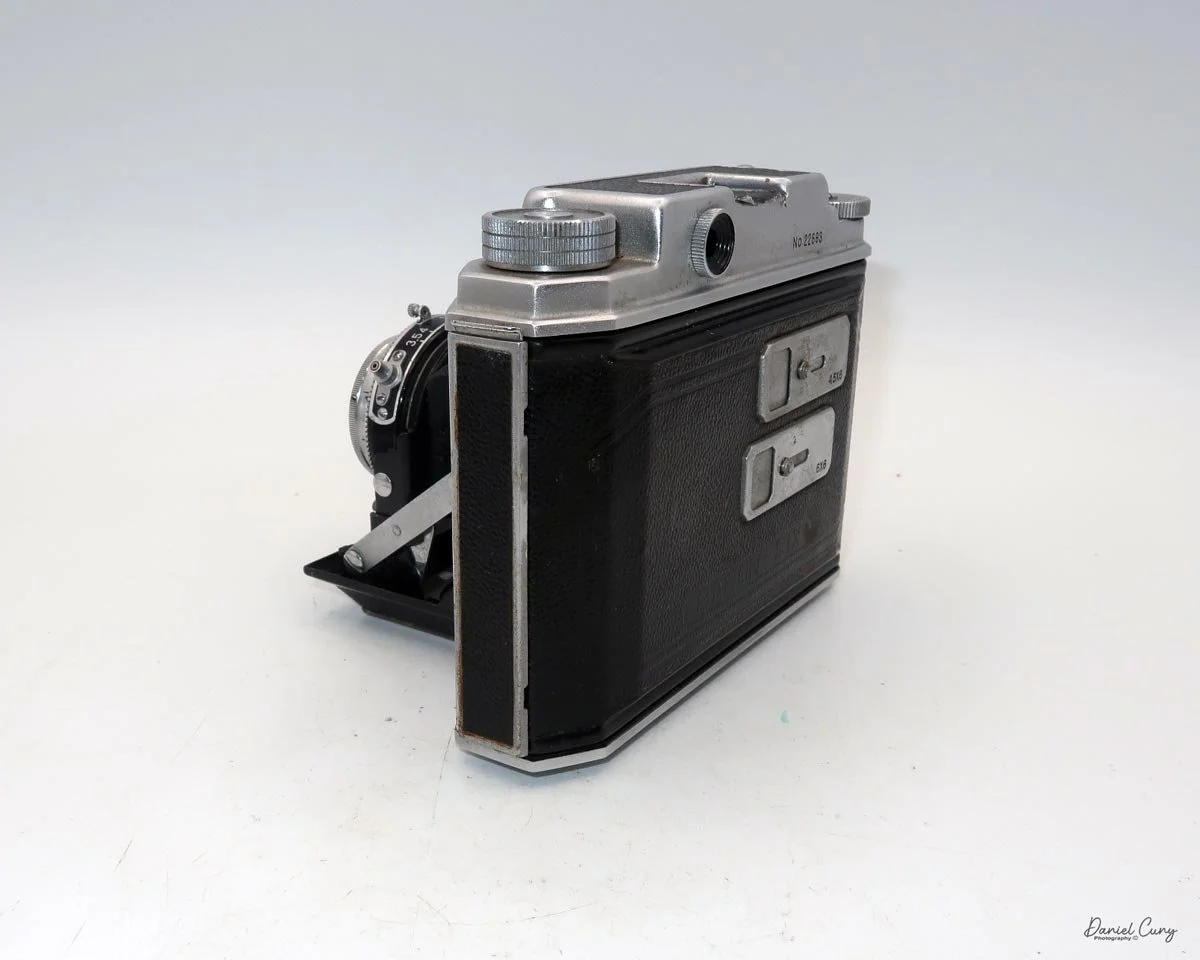
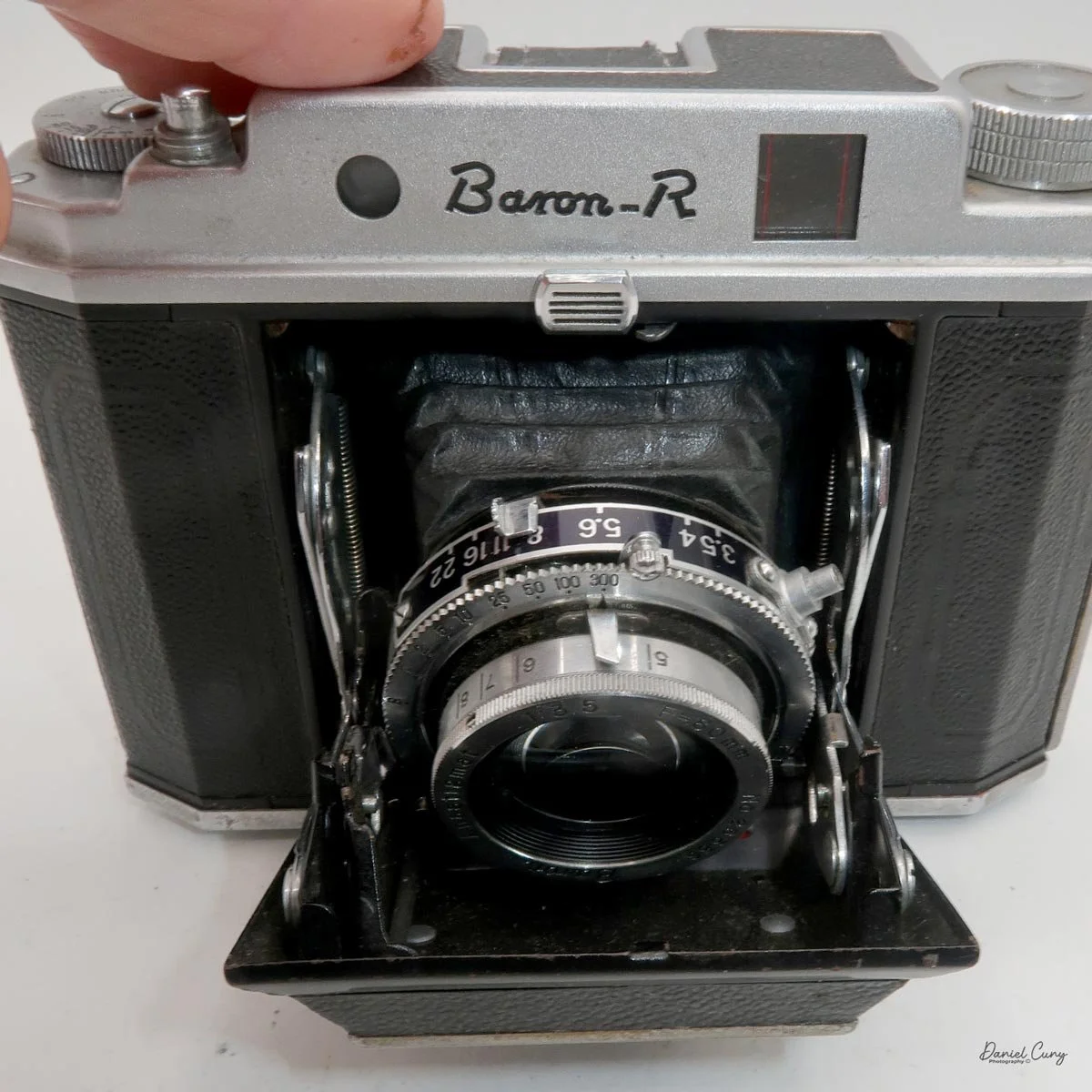
 My Baron RI camera is 4" tall, by 5.5" wide, and 2" deep when the lens is closed, and 4" deep with the lens extended. The camera weighs 1 pound, 8.1 ounces without film loaded. Embossed on the folding bed door is "Baron Camera Company, Tokyo, Japan."
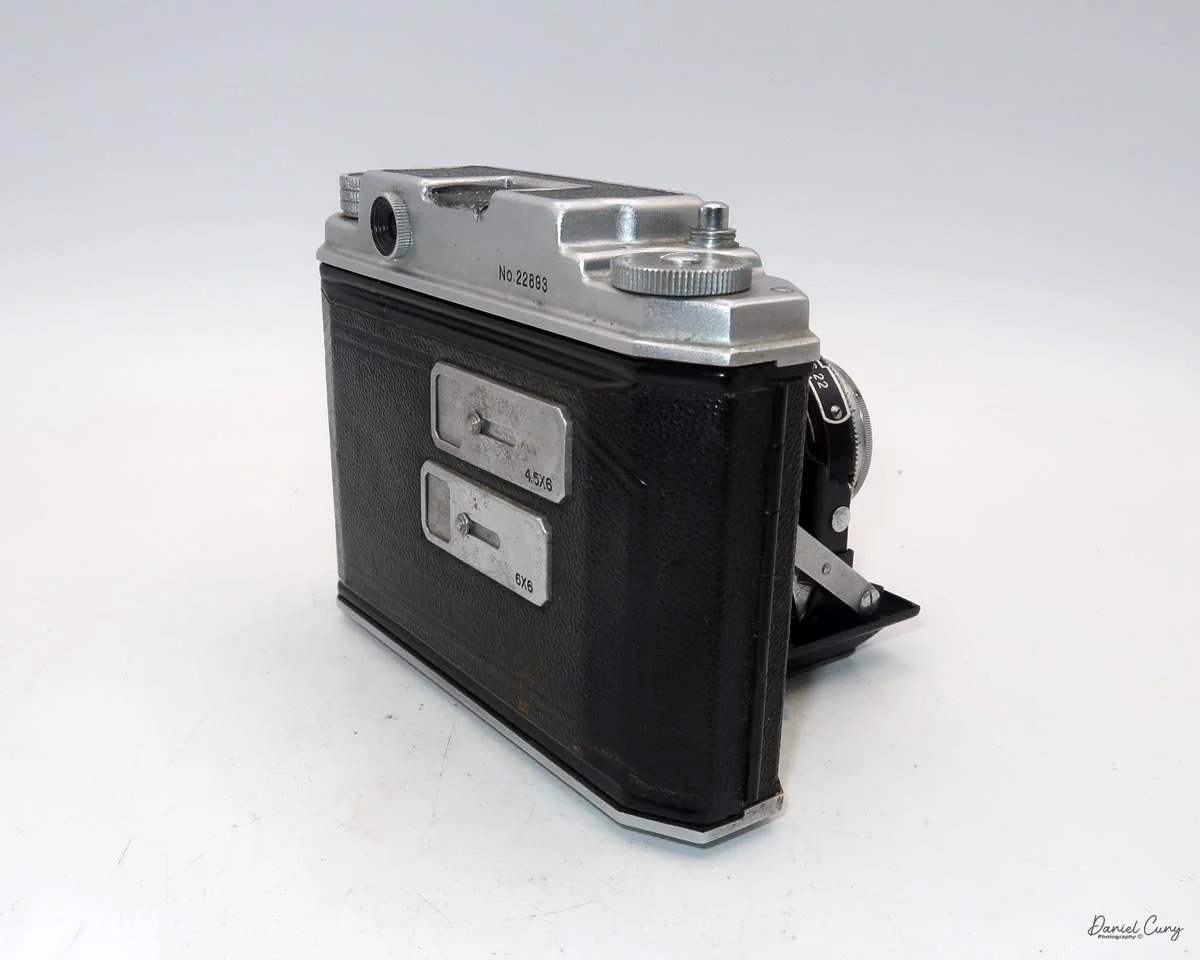
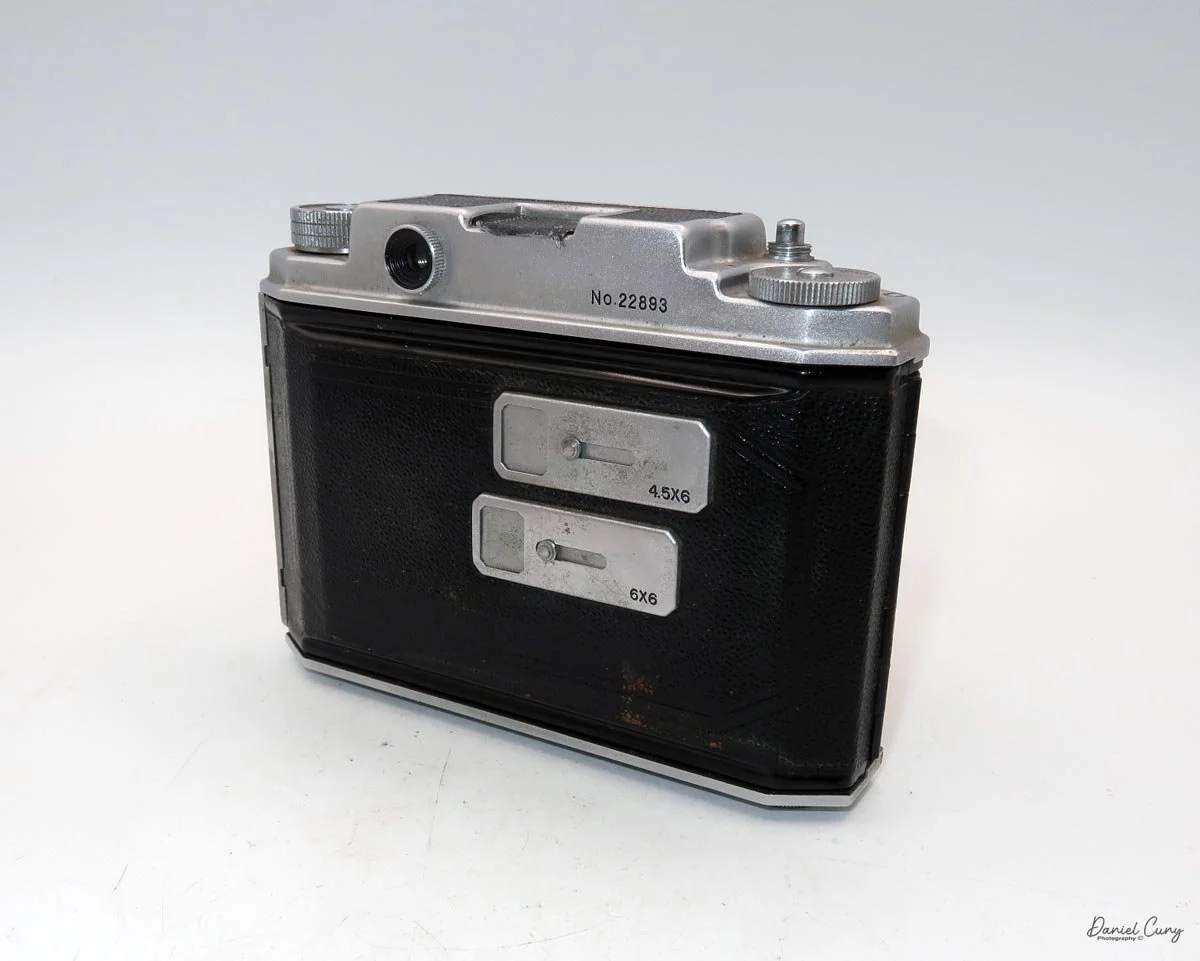
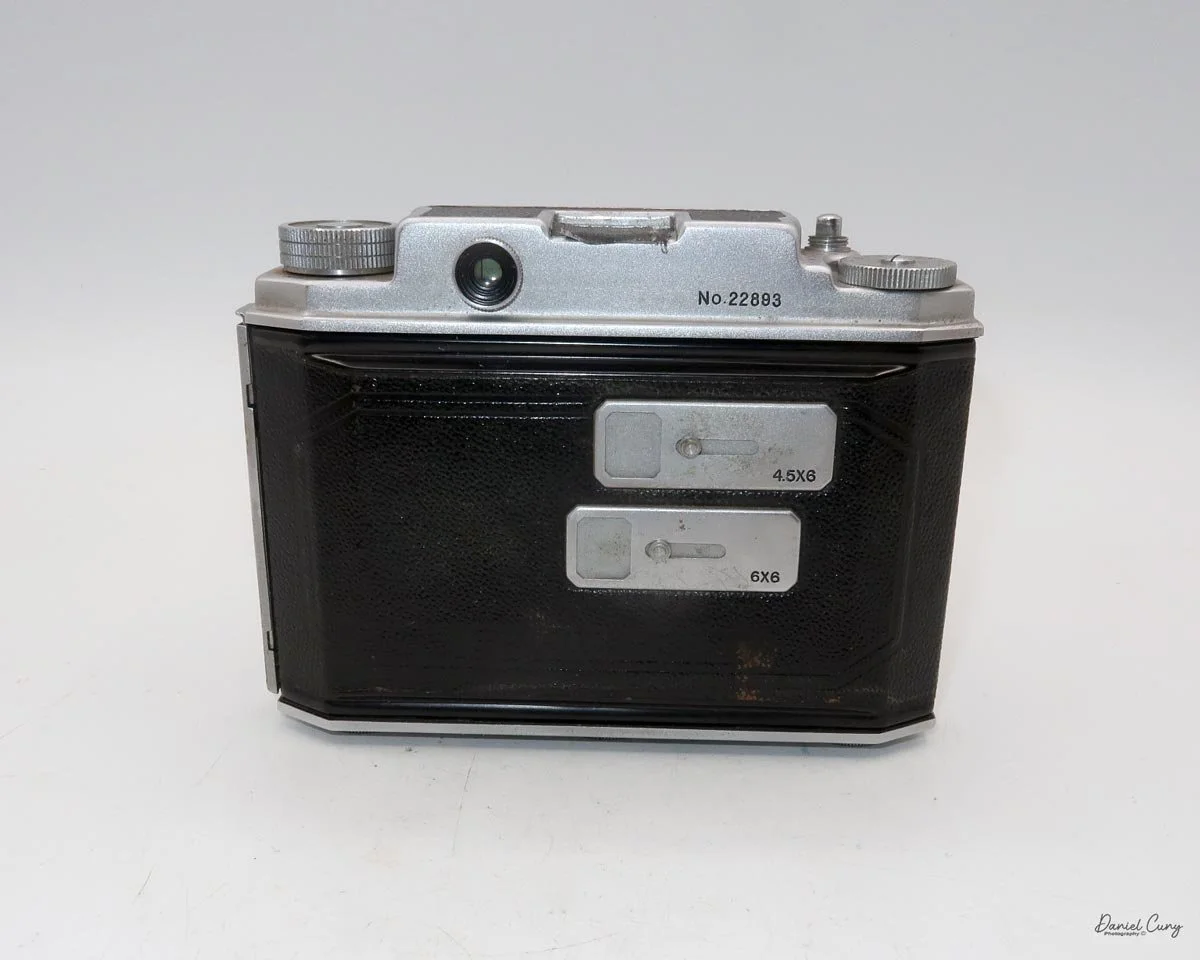
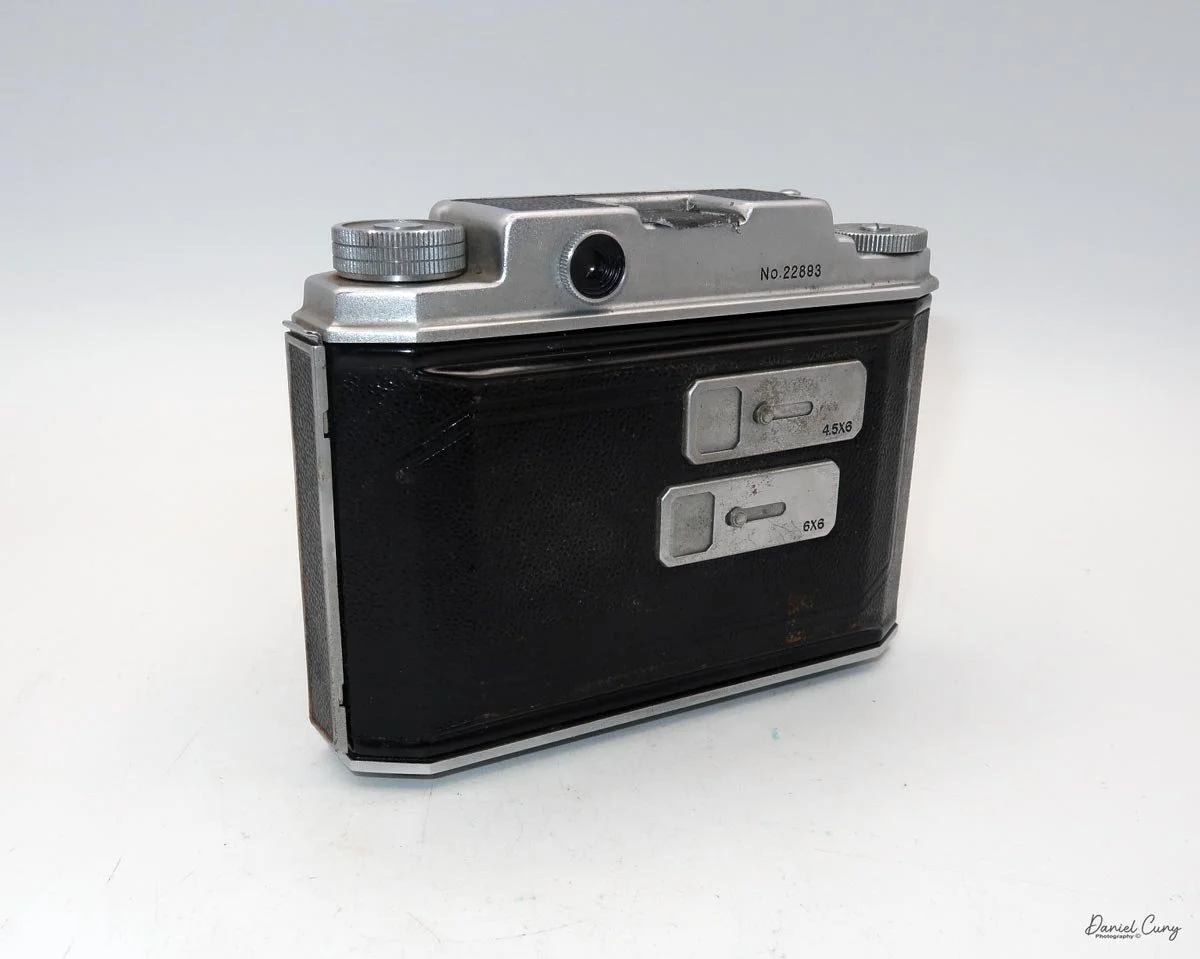
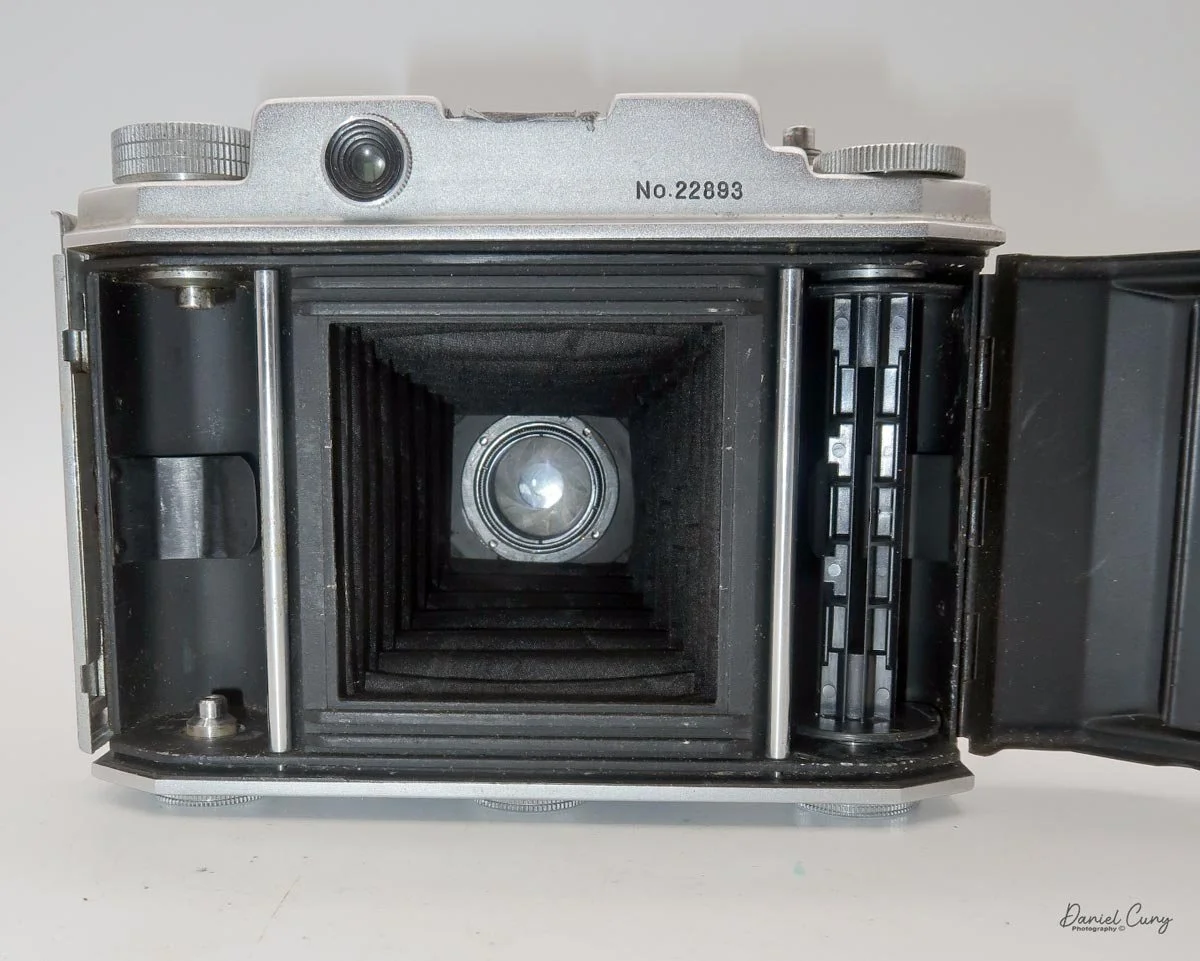
The camera came with a very nice brown leather-fitted camera case, though the strap is missing. The case still offers wonderful protection for the camera. The serial number for my Baron R camera is 22893, stamped on the top plate of the back of the camera.

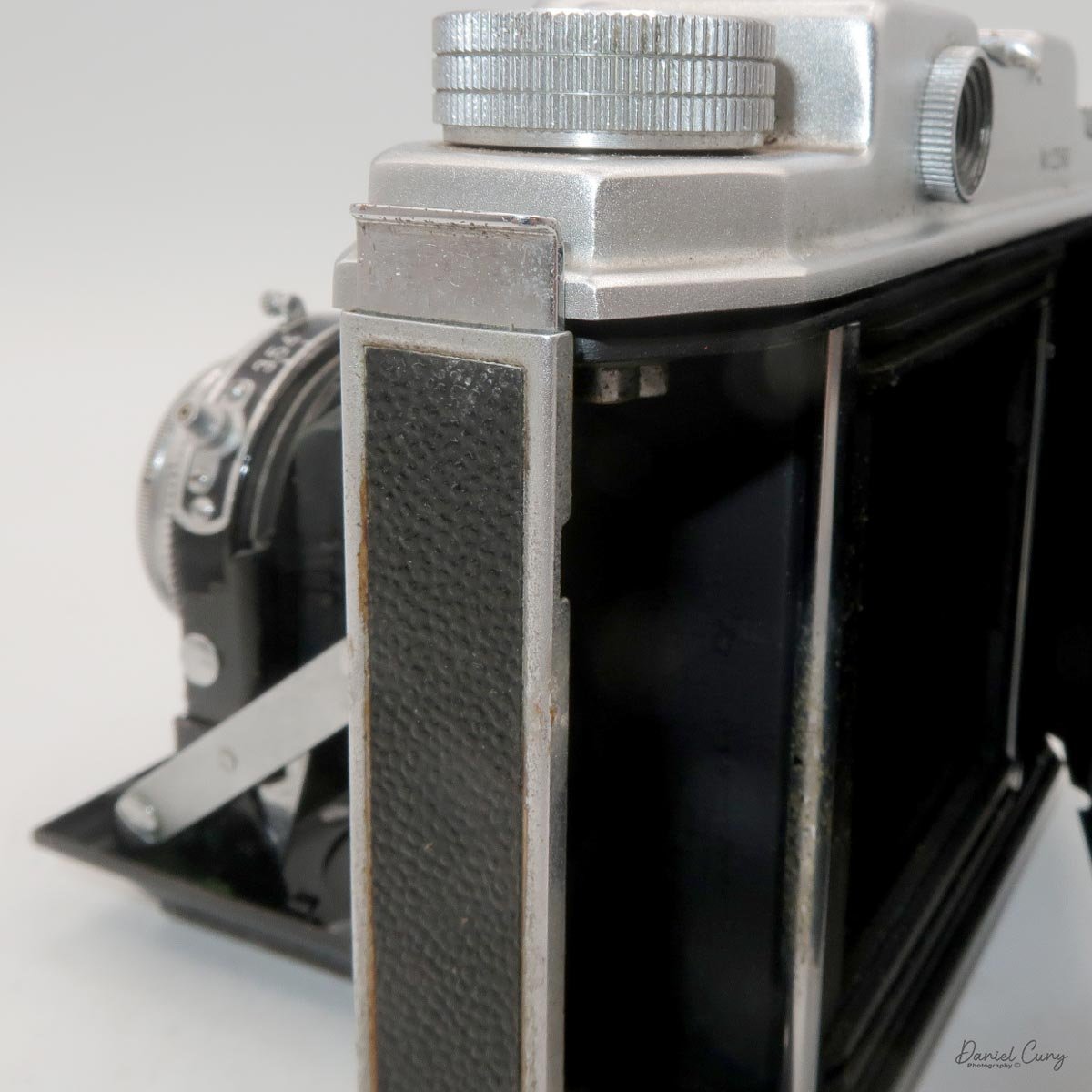
 To open the camera lens door, slide the chrome lever under the name "Baron-R," which unlocks the lens door and exposes the lens as it extends on chrome struts along the side of the lens door.

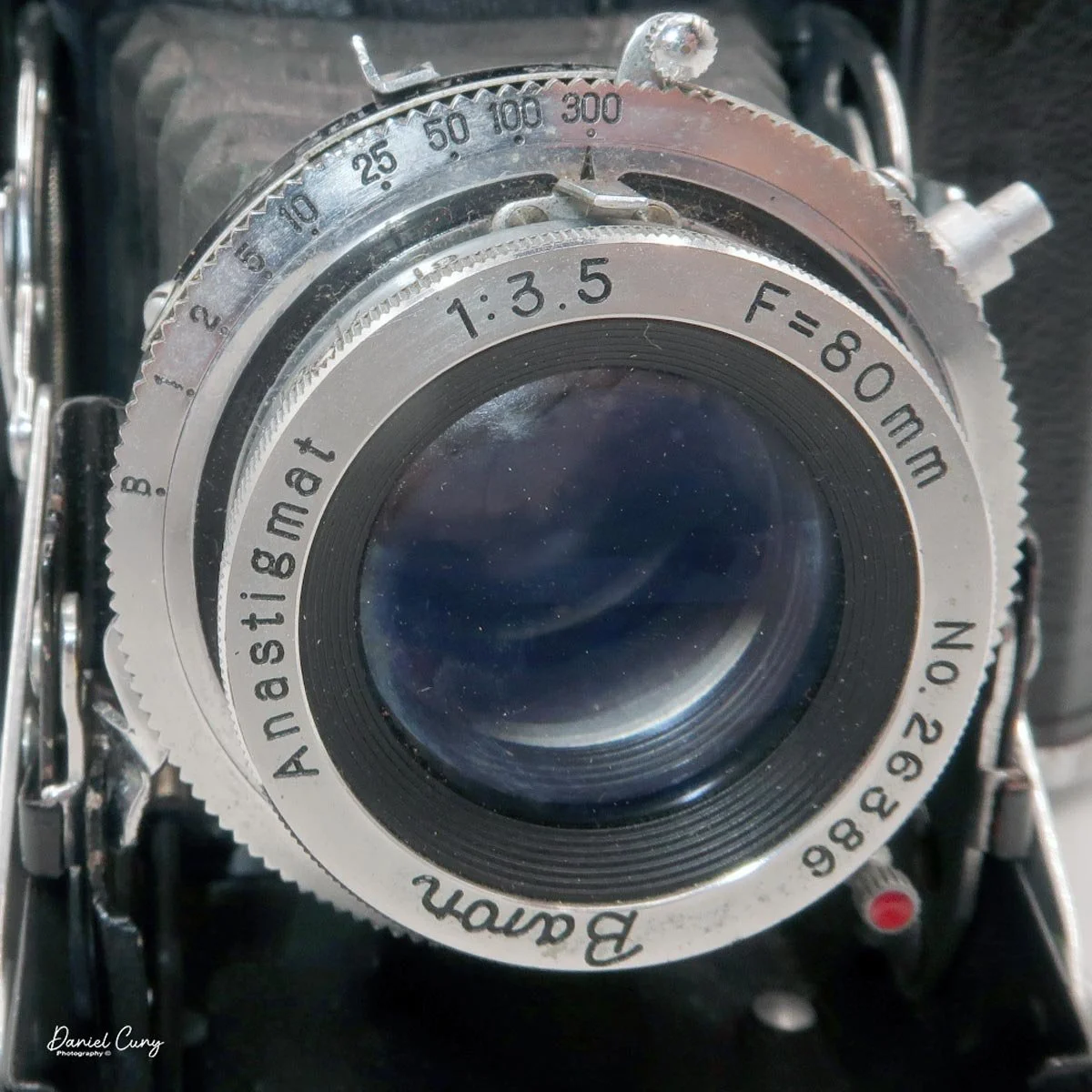
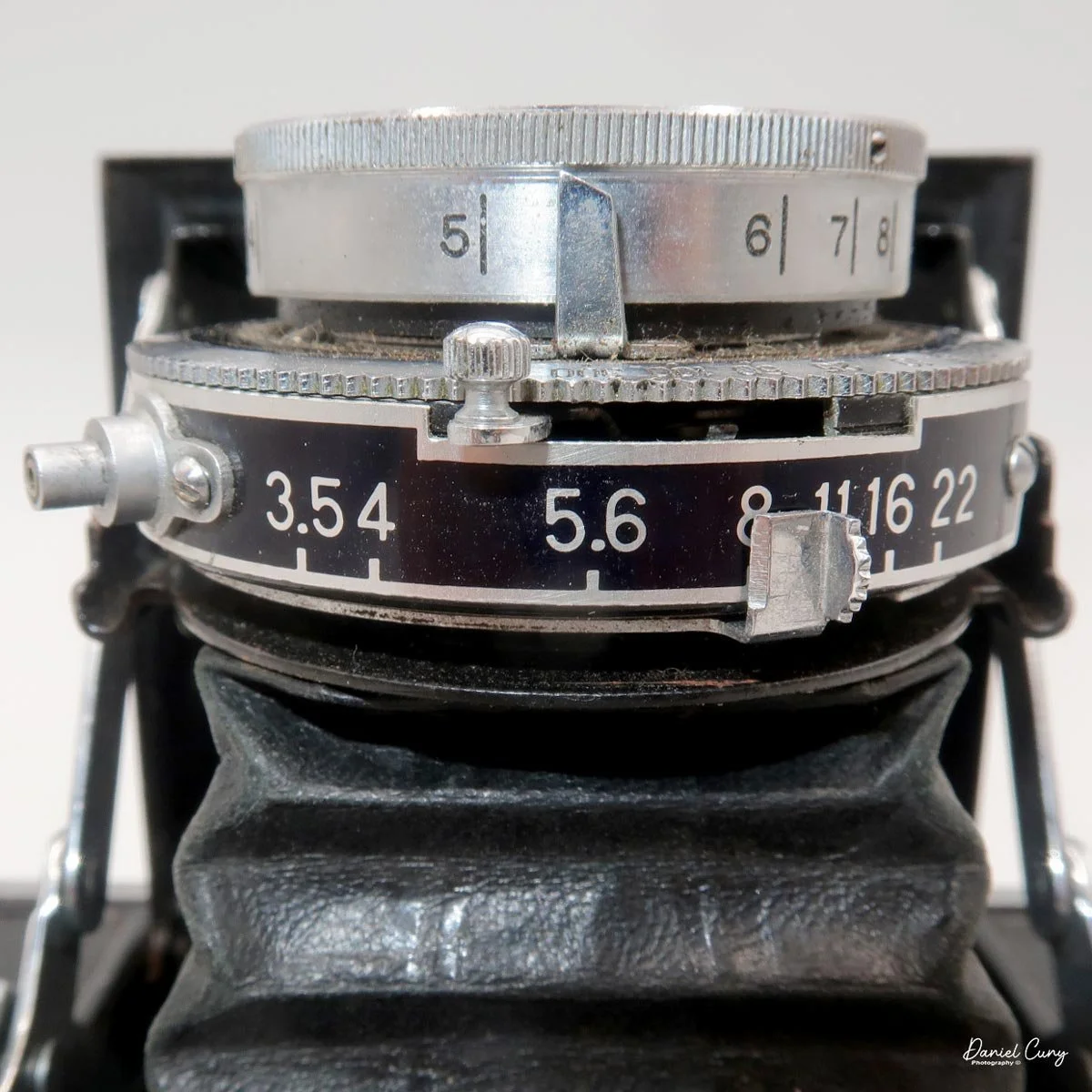
 The Baron RI camera has a Baron Anastigmat 80mm F/3.5 lens in an NKS-FB shutter. The shutter speeds range from 1/300 to 1 second, plus "B". To set the different shutter speeds, turn the dial around the lens to the desired shutter speed. There is a cocking lever for the shutter, located above the lens, with the shutter release on the lower left of the lens when viewed from the front. The shutter release is activated via a rod and linkage from the shutter release on the top of the camera, which pushes the shutter release when depressed.

The aperture range is from F/3.5 to f/22. The aperture is set by sliding the lever on top of the lens to the desired aperture setting. To the side of the aperture settings is a PC sync used for flash. There are no settings for "X" of "FP," though, so I'm unsure if this is for electronic or bulb flash.

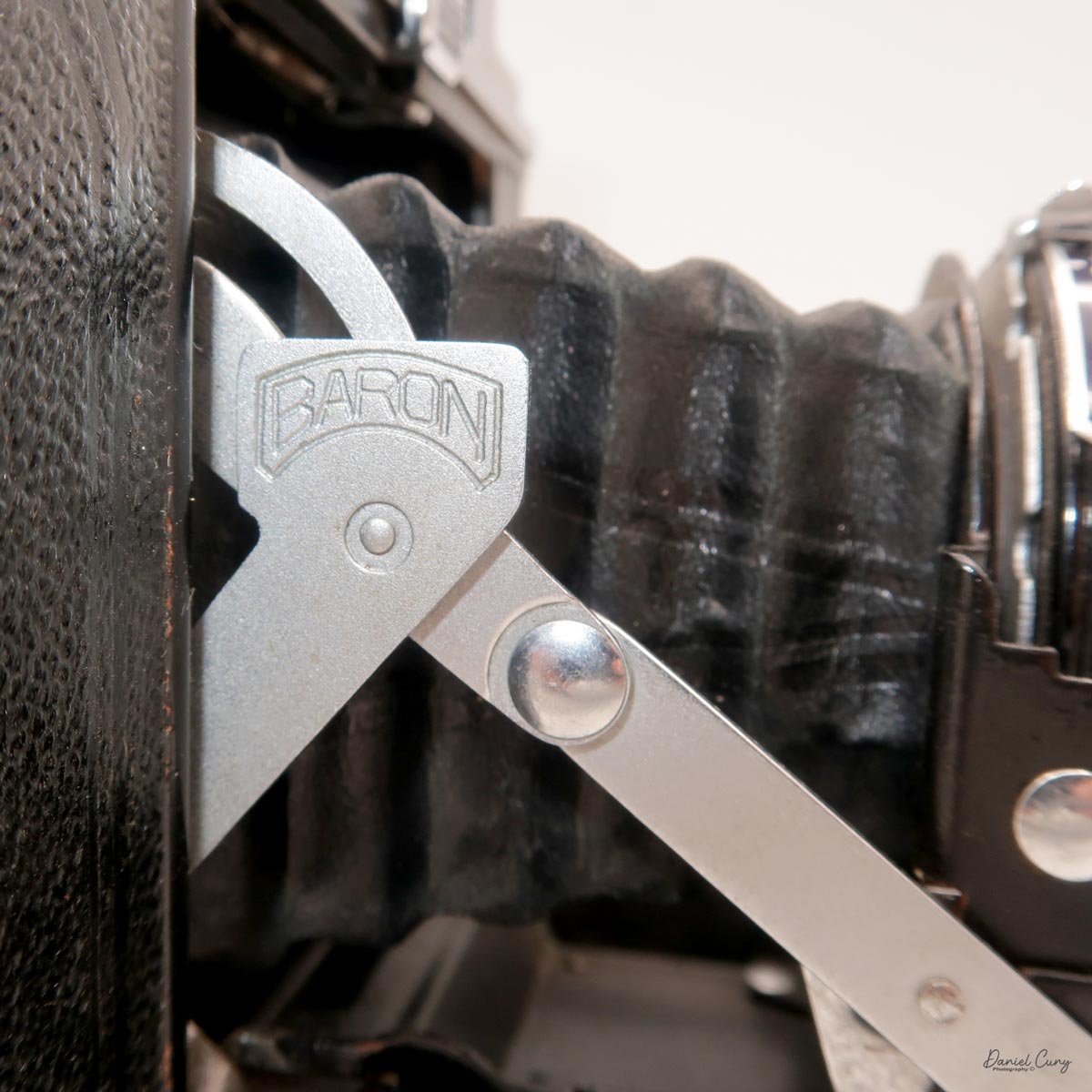
 To close the lens bed, you press back on the two sides of the struts, which have "Baron" embossed into them, and press back into the camera body, which collapses the lens door and allows it to fold back into the camera body. Pressing in will lock the lens door into the normal transporting position and allow the camera case to close.

 My Baron-RI camera does have a couple of issues. I'm confident that's why I paid so little for it. None of the issues are deal-breakers for me purchasing the camera. The main item, the accessory or cold shoe, is missing from the camera. That's not a huge deal, as I generally don't use them. I did put black fabric tape over the spot where the accessory shoe goes, to give the camera a better appearance.

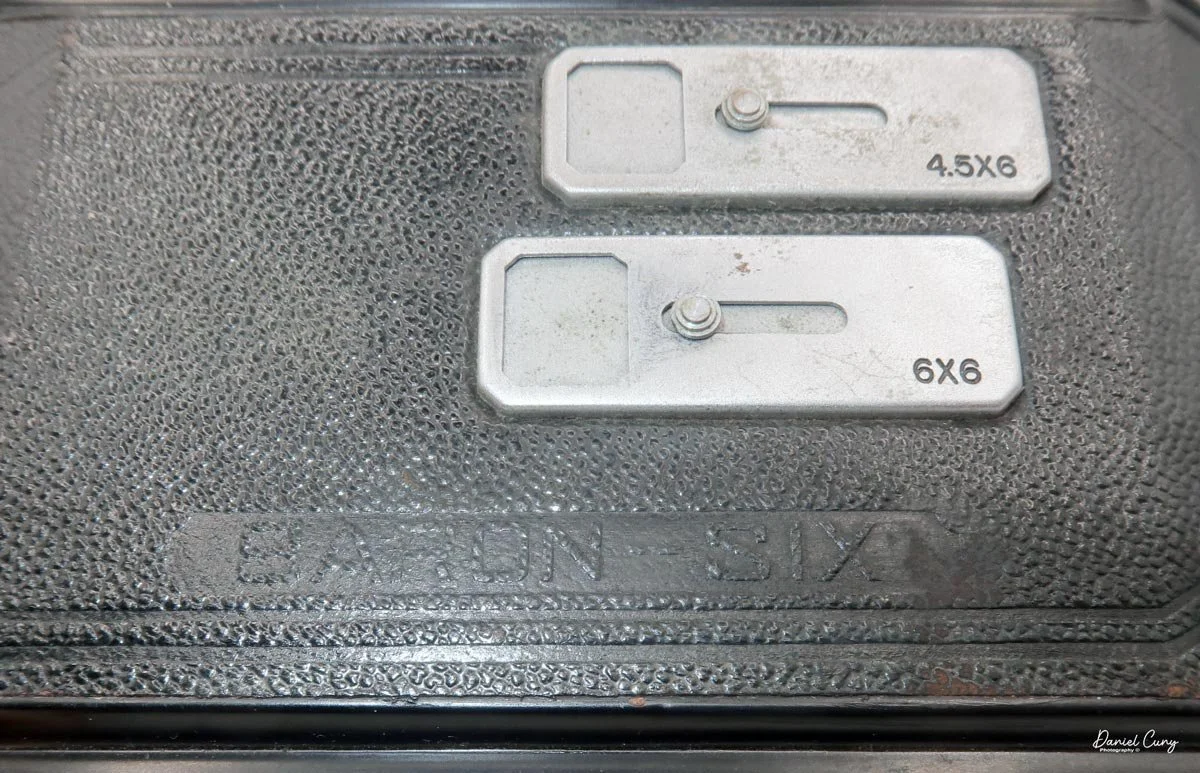
There is another item about the camera I'm not certain about. On the back of the camera, there are red windows with sliding covers for both 4.5x6 and 6x6 formats. I'm not sure whether the camera came with a mask for both formats, or if the company offered two different formats and only made one back for both cameras. Also stamped on the back of the camera, below the red windows, is "Baron-Six" embossed into the leather.

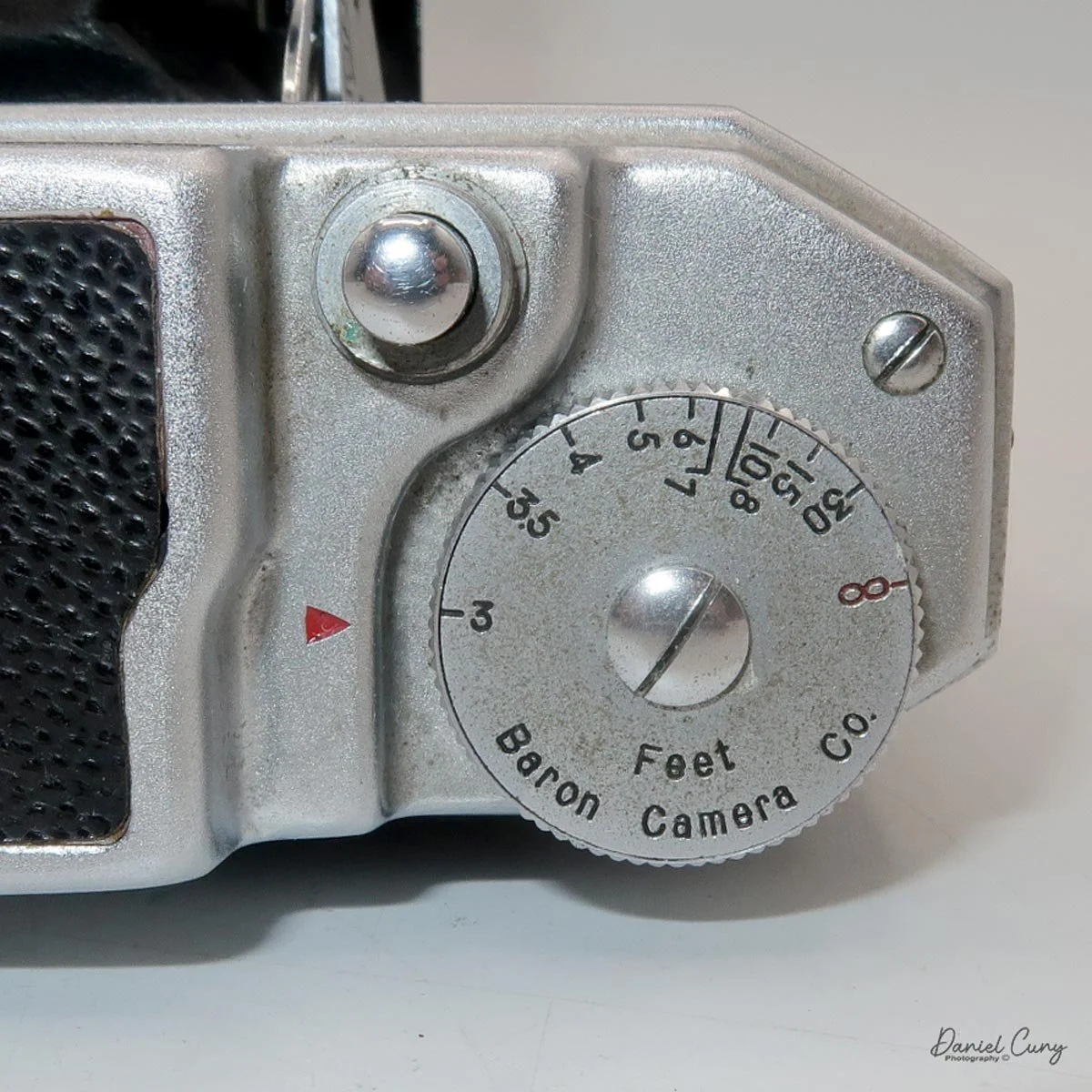
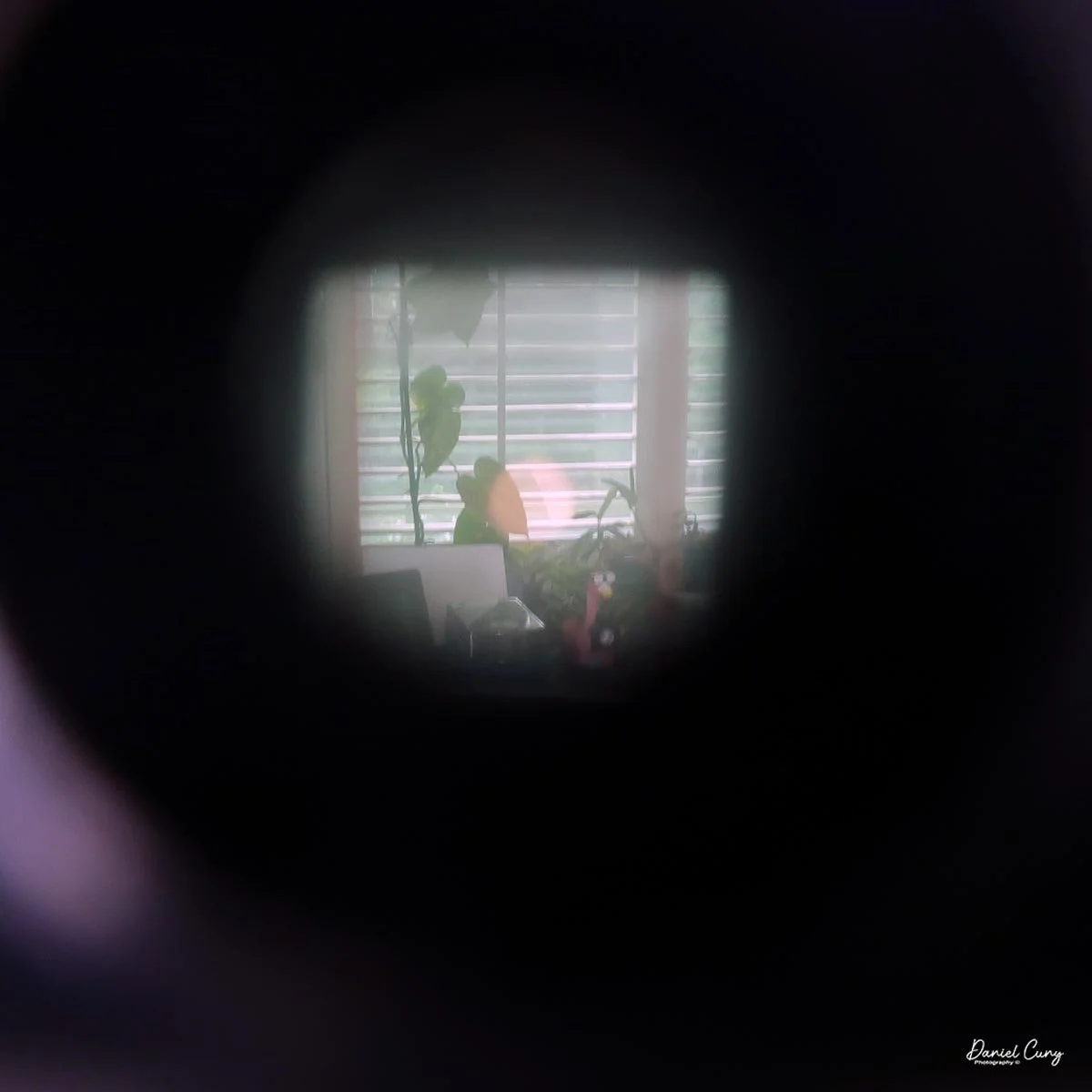
 An item on the Baron RI that I've never seen in a camera is an uncoupled rangefinder. When you look through the viewfinder on the rear of the camera, you view the rangefinder. On the right side, as you're holding the camera, there's a wheel that rotates, allowing you to focus the rangefinder. On my camera, it's bright and clear. You then transfer the distance from the internal rangefinder to the lens and set the distance to the subject. I'm confident that building an integrated rangefinder, which would focus the lens, would have added much more intricacy to the camera, but they either didn't want to bother or just wanted to keep the costs down. It's an interesting item built into the camera.

To load film into the Baron RI, on the left side of the camera is a lever you pull up, which opens the door to the right, exposing a standard roll film chamber. Load film as you would with any roll film camera by placing the take-up spool on the transport side and pulling down the knobs at the bottom of the camera. Put in the fresh roll in the empty area and bring the leader to the take-up spool. Thread the lead into the slot on the take-up spool and wind until you see the film is engaged and rolling onto the spool. Wait until you see the "arrows" pointing outward, close the back of the camera, and press down the locking bar, then wind the film advance knob until you see the #1 in the red window. Take your photo, and wind until you see the #2, and so on through the roll of film.

Now that I have film in the camera. Let's go around the neighborhood and see how the camera performs.

 My Results:

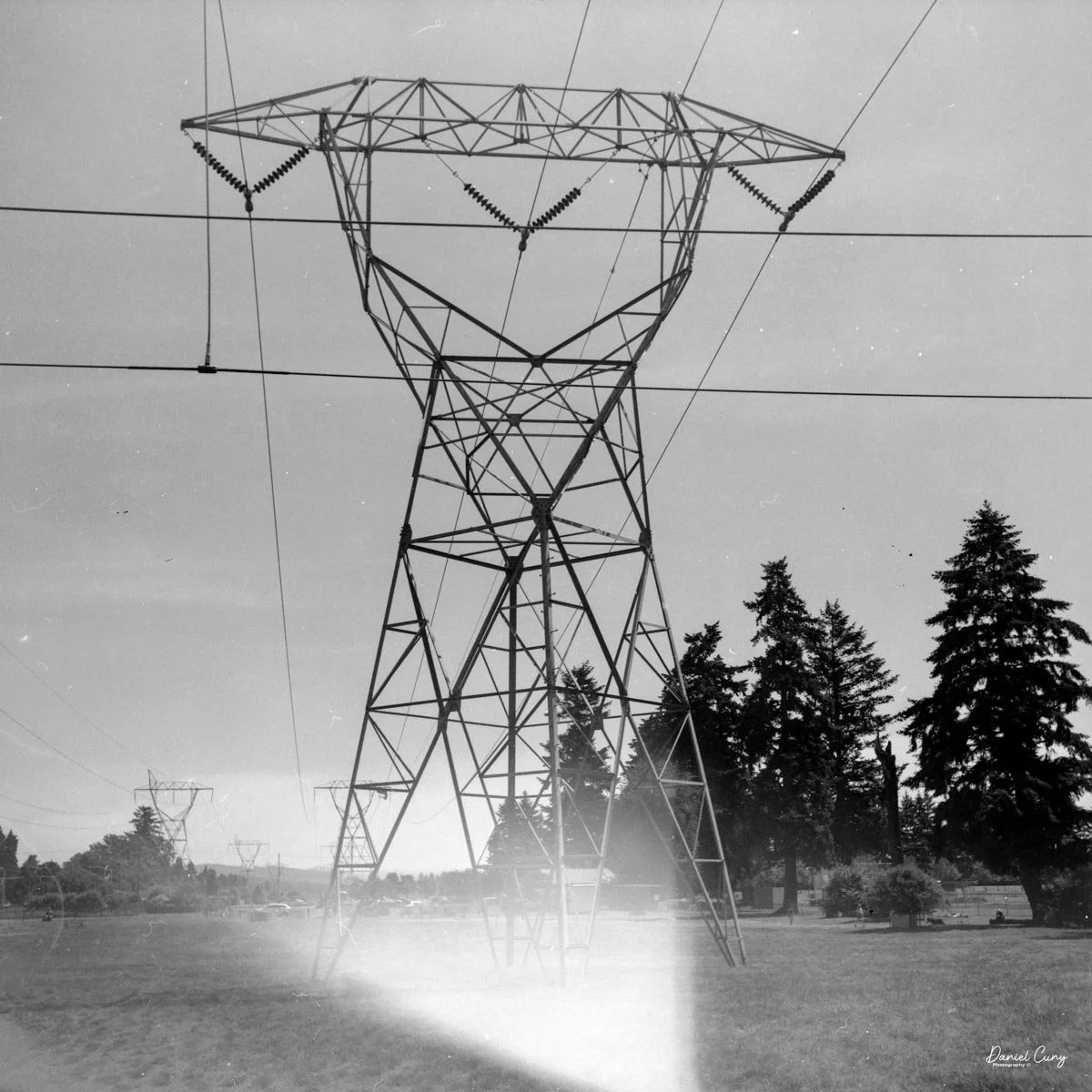
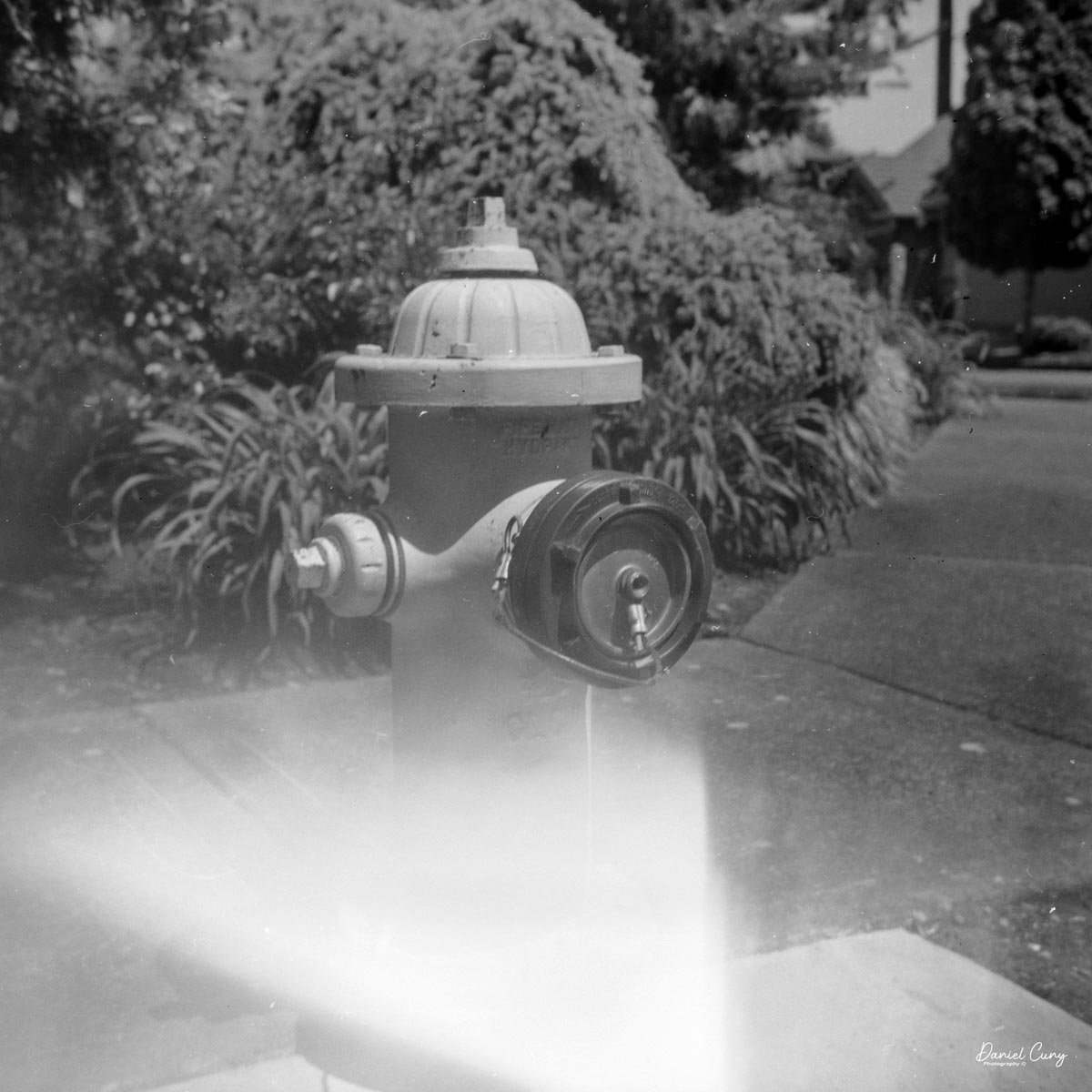
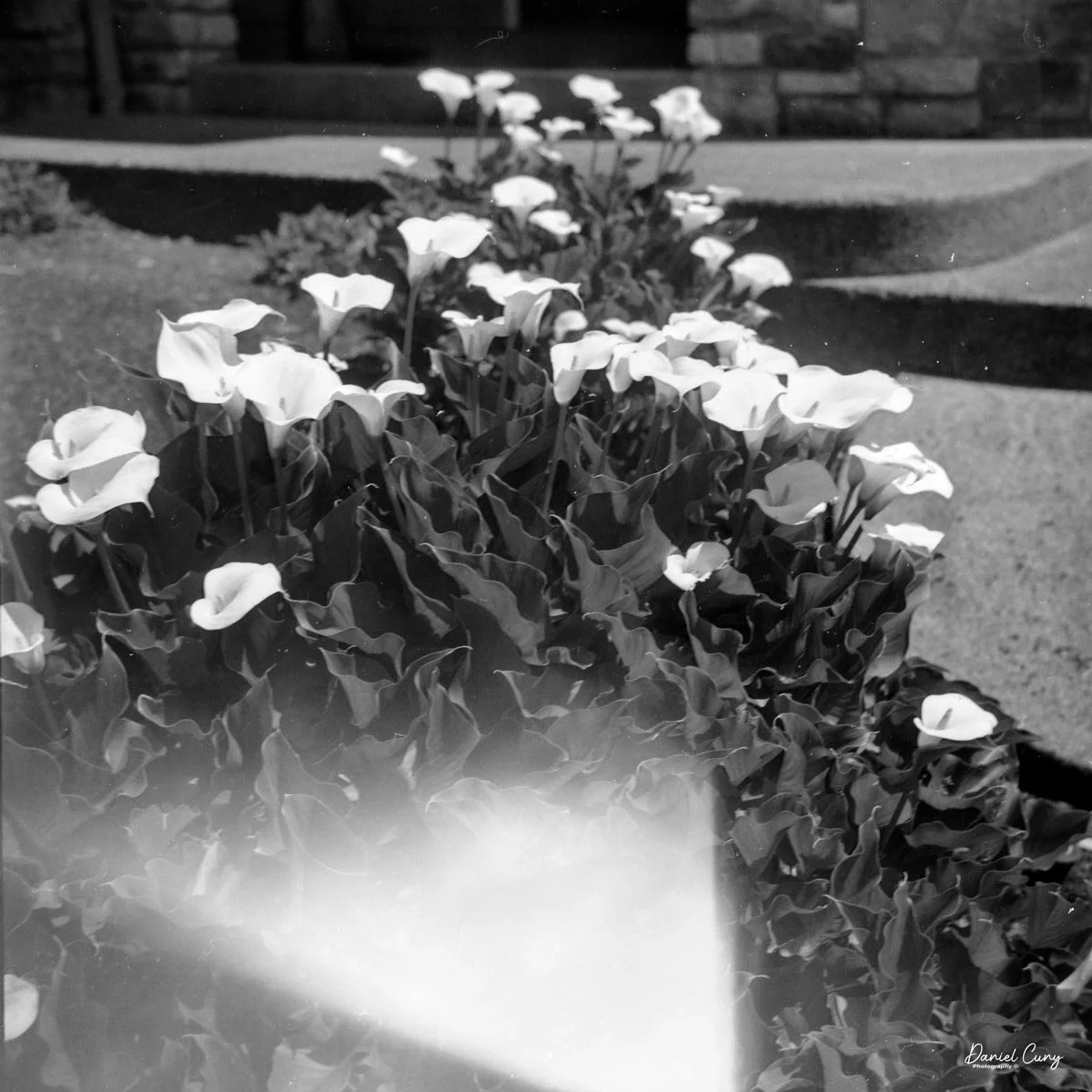
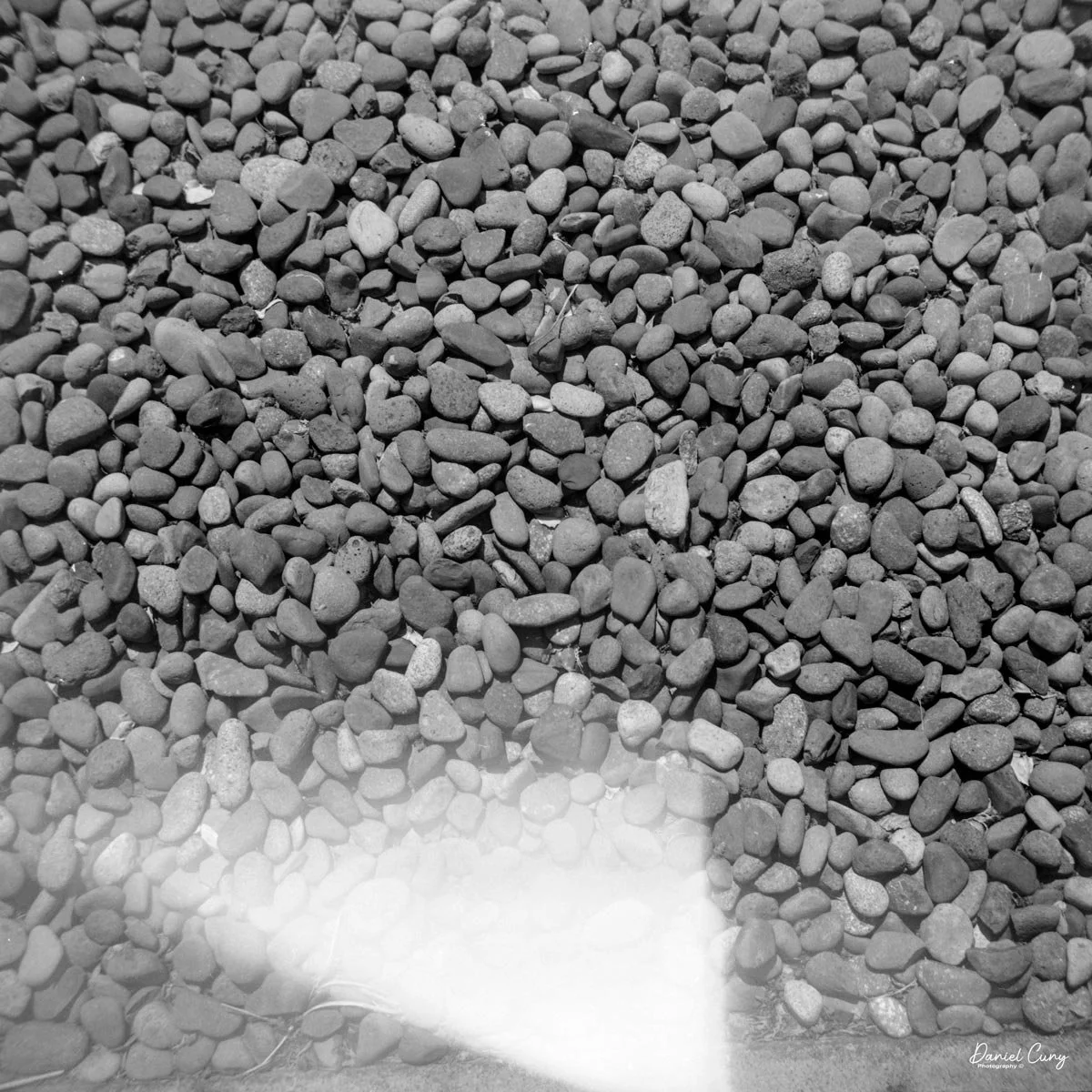
 I gave the camera a very quick look over. All the shutter speeds were working, and the aperture moved as it should. I loaded a roll of Ilford 125 film into the camera, went to the Dog Park with my daughter, and walked around the block, looking for flowers and other subjects to photograph.

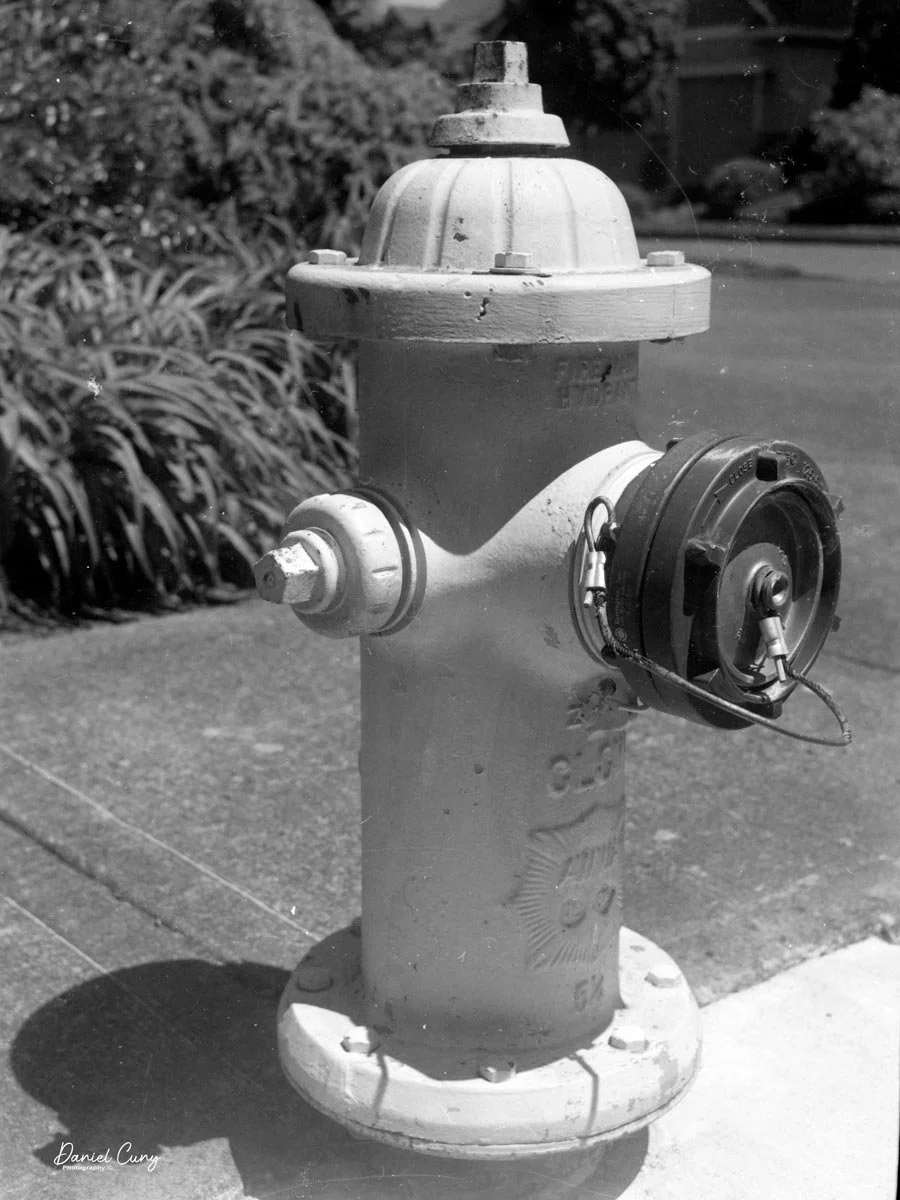
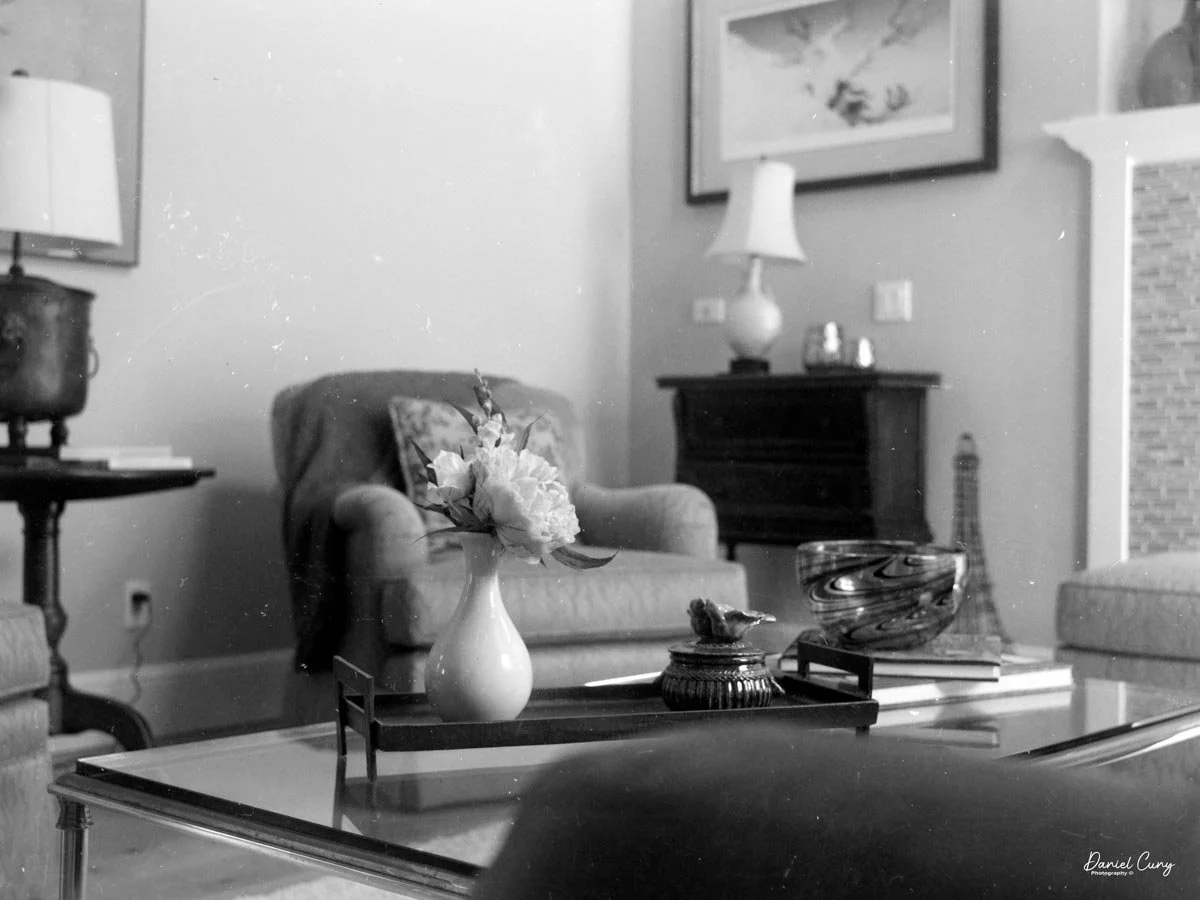
 Here are the results.

Conclusion:

 Overall, the camera was easy to use and fun to shoot with. 

 It wasn't until I processed the film that I dug further and noticed a pinhole in the camera's bellows. That's why the photos have this light streak, and not just a light streak, but a gush of light on the bottom of the images, consistent in all the photos taken.

 I liked the rangefinder, which was easy to use and much easier for me than guessing distance. After focusing, I then transferred the distance to the lens, which was fun, and produced sharp images. I'll need to go in and add some thin fabric tape and black liquid fabric to the bellows to eliminate the annoying light leaks. It's a camera I purchased on my trip to Tokyo, and I will keep it for the time being.

 Thank you for taking some time to read about this little-known camera at the beginning of the Japanese camera revolution in the early to mid-1950s.

 I'd like to hear from you if you have questions, or even if you have a Baron camera or one of the many similar-style cameras made in Japan during this timeframe.

 Please take a moment to look at some of my other Camera Reviews.

 Cuny's Cameras and Photos is my online eBay store where you'll see some of the cameras I've reviewed, along with many other lenses, and vintage camera accessories I have for sale.

 Until next week, please be safe.
 

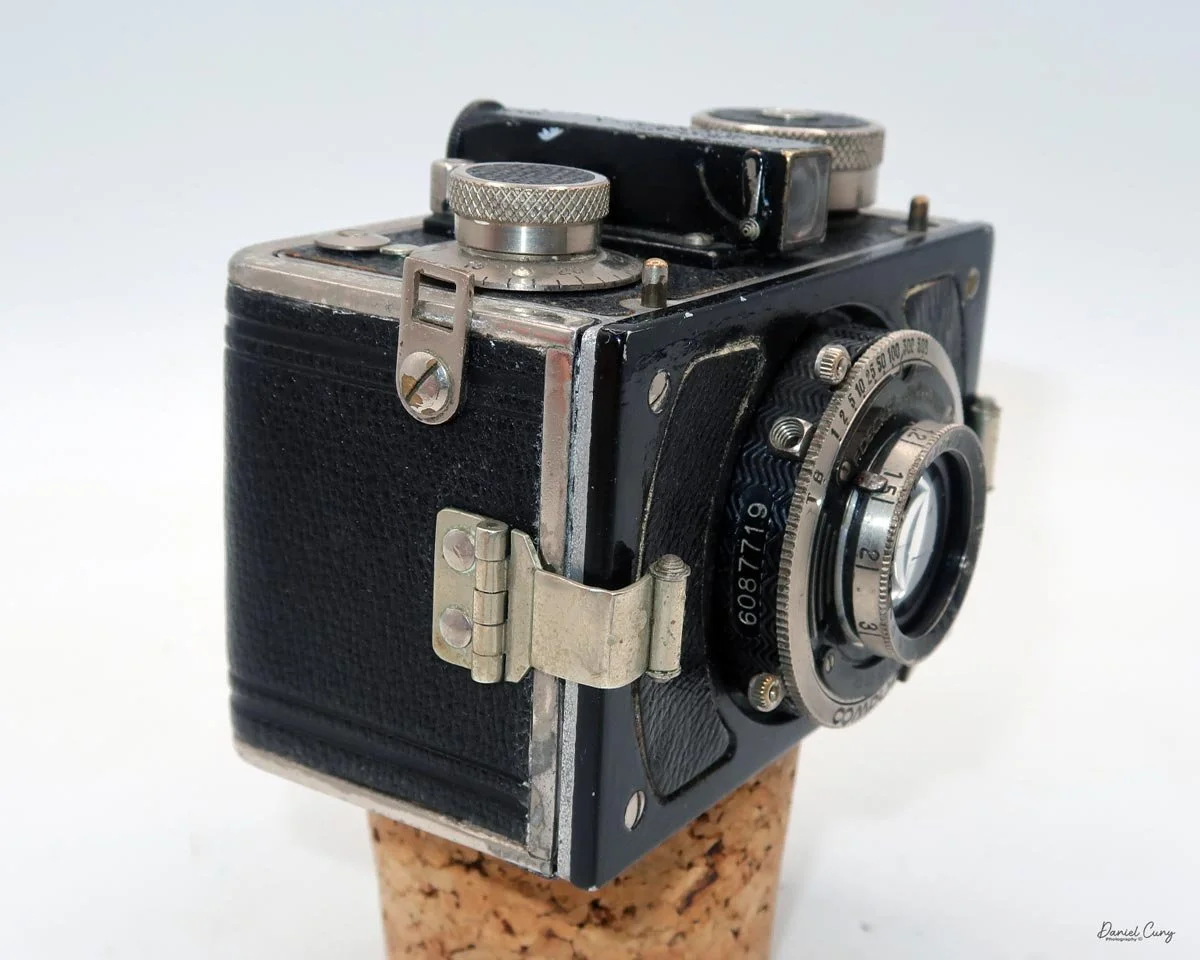
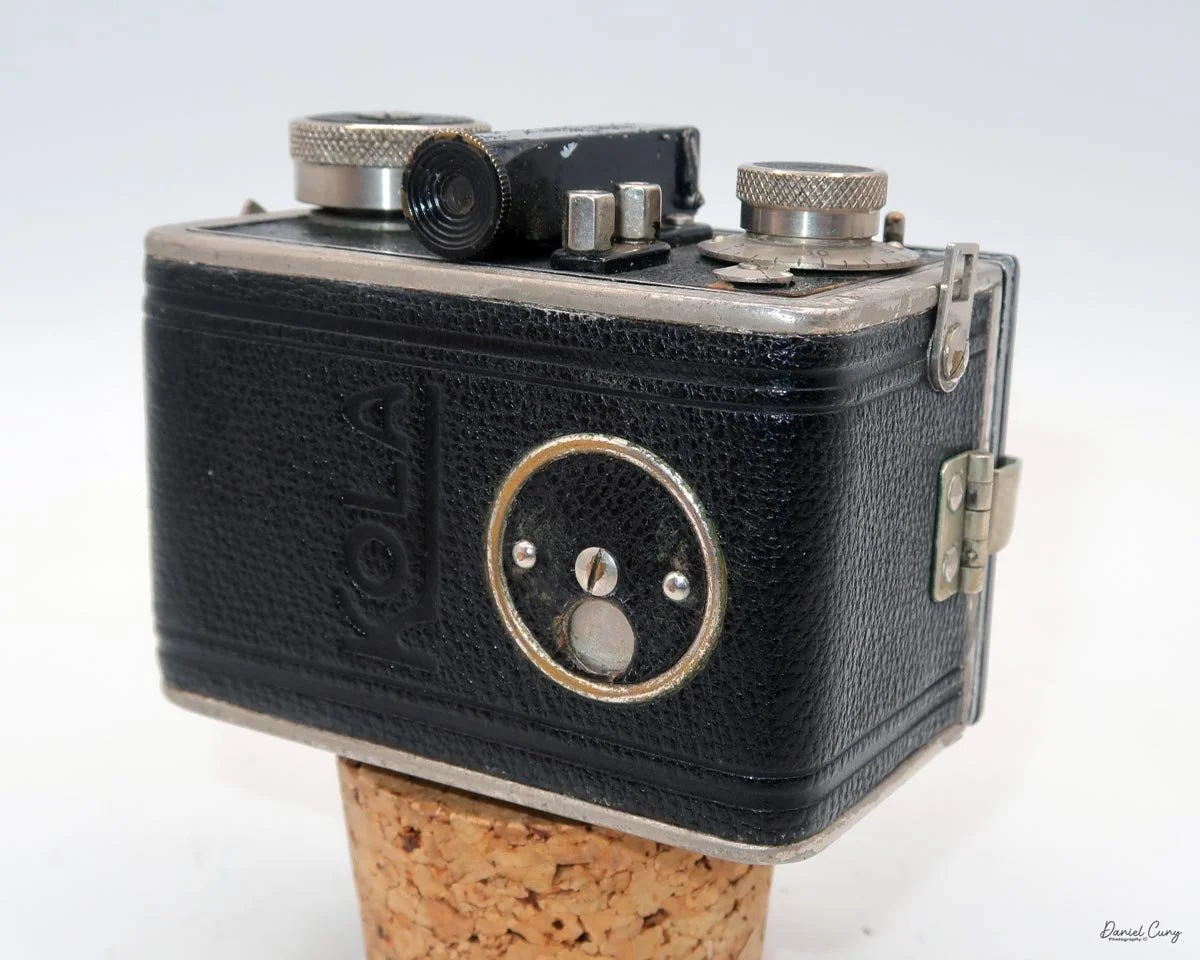
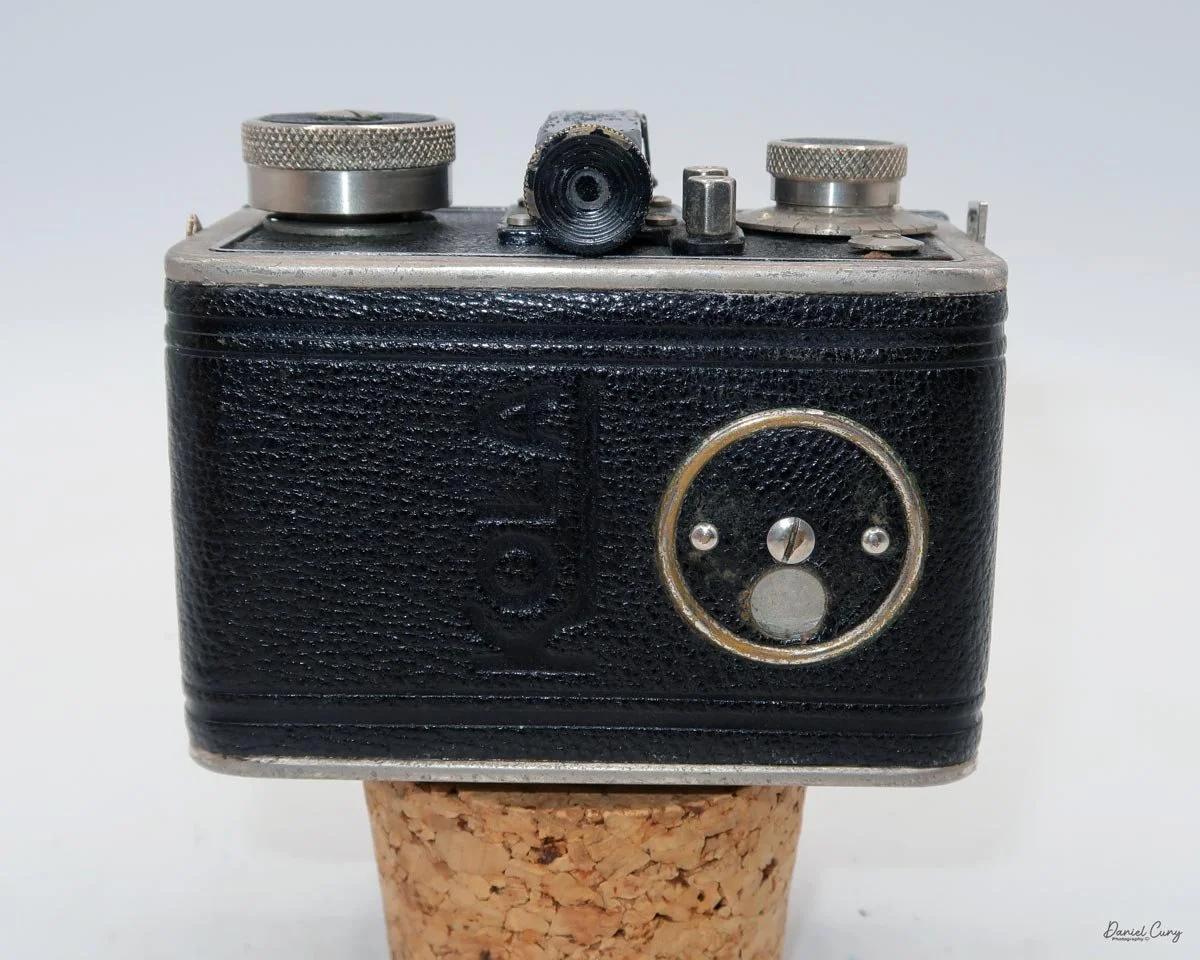
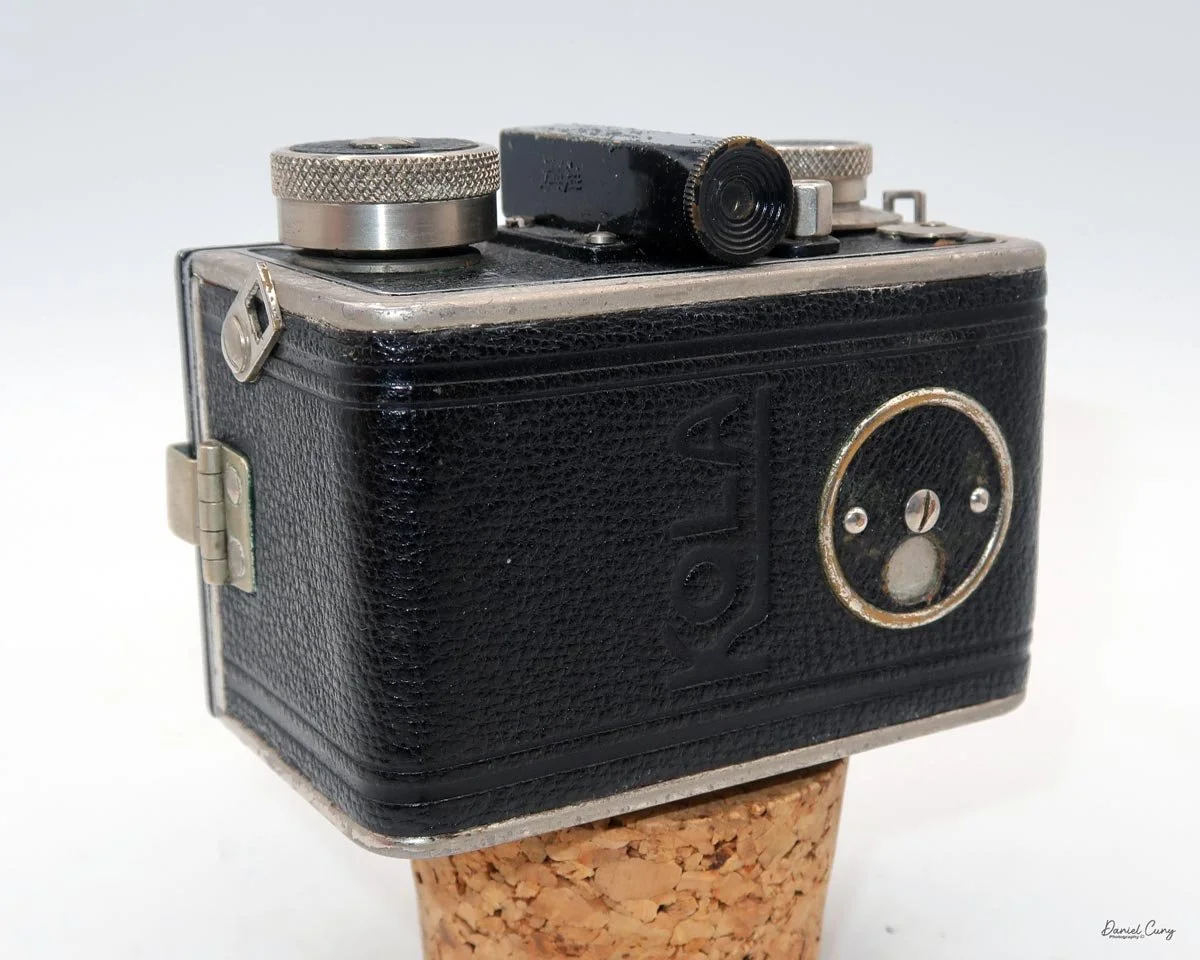
Kolar Kola camera

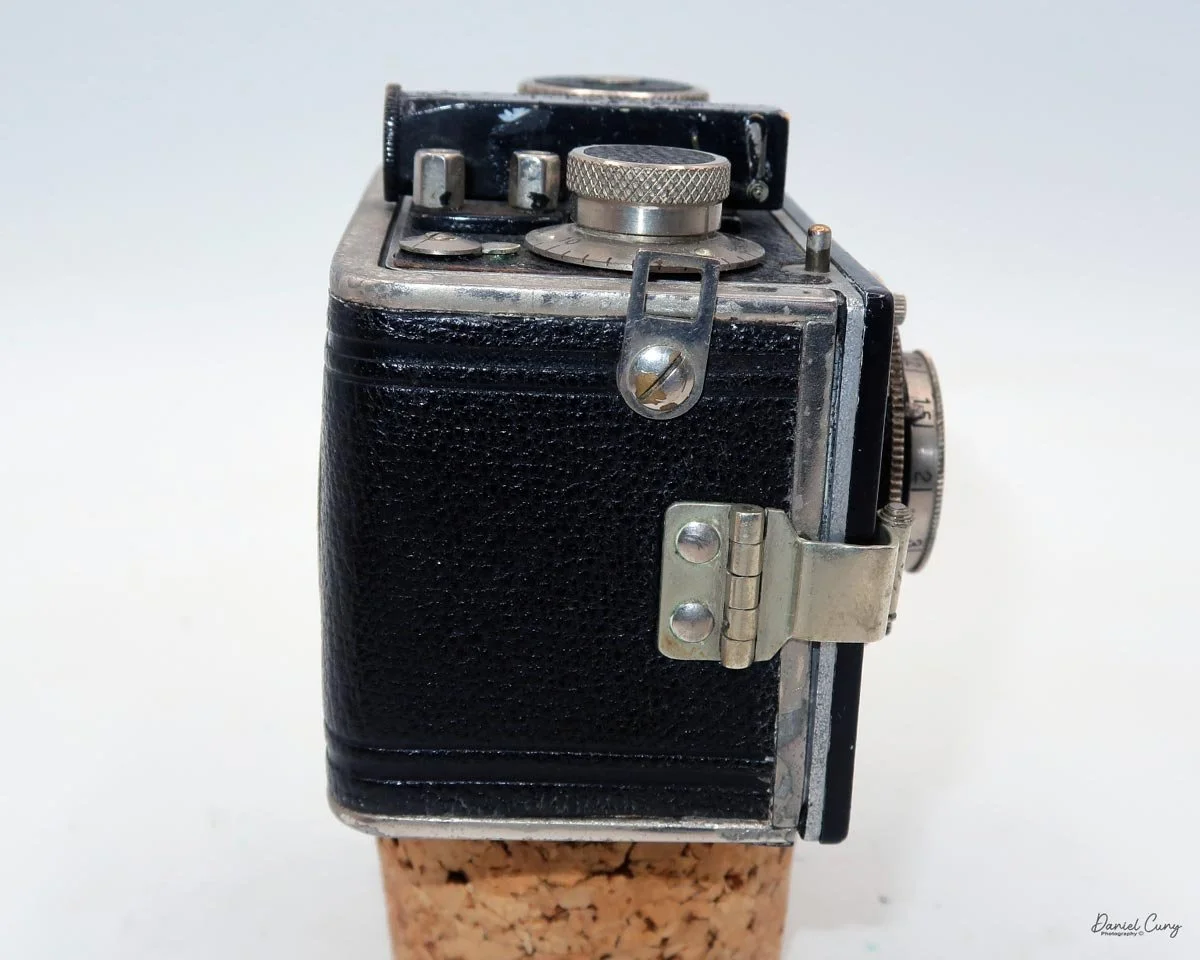
My Kolar Kola camera

I didn’t write a blog post last week because I was in Tokyo camera shopping and hoping to find something odd and unusual to write about in the coming weeks. I was successful in that search, and this week’s camera is one I bought at one of my favorite used camera stores in Japan, Kitamura Camera in the Shinjuku area of Tokyo. Kitamura has several locations, but this was their flagship store.
 Kitamura Camera is an impressive multi-floor store with just about everything a camera lover could want, from a photo studio to film sales and processing. The most impressive parts for me were the two used-camera floors. The fourth floor had an outstanding collection of rare Leica cameras and lenses, Nikon rangefinders and lenses, Hasselblad gear, and other medium format cameras and lenses. The third floor was where I spent the most time. That was their bargain floor, with many lesser-known cameras and others that were not quite perfect.
 They also had Leicas and Nikons there, but some had small defects or were not fully functional. These were not the kind of “junk” cameras you often see in used camera stores, where lenses have fungus and shutters no longer fire. These were cameras most people would probably buy for parts, but Kitamura still presented them in a much more appealing way.

 That third floor is where I found this week’s camera: an odd cube-shaped camera called the Kola. I had never heard of it before. When I checked it out, the lens was clean, the shutter fired at all speeds, the film spools were still in the camera, and the price was very reasonable.

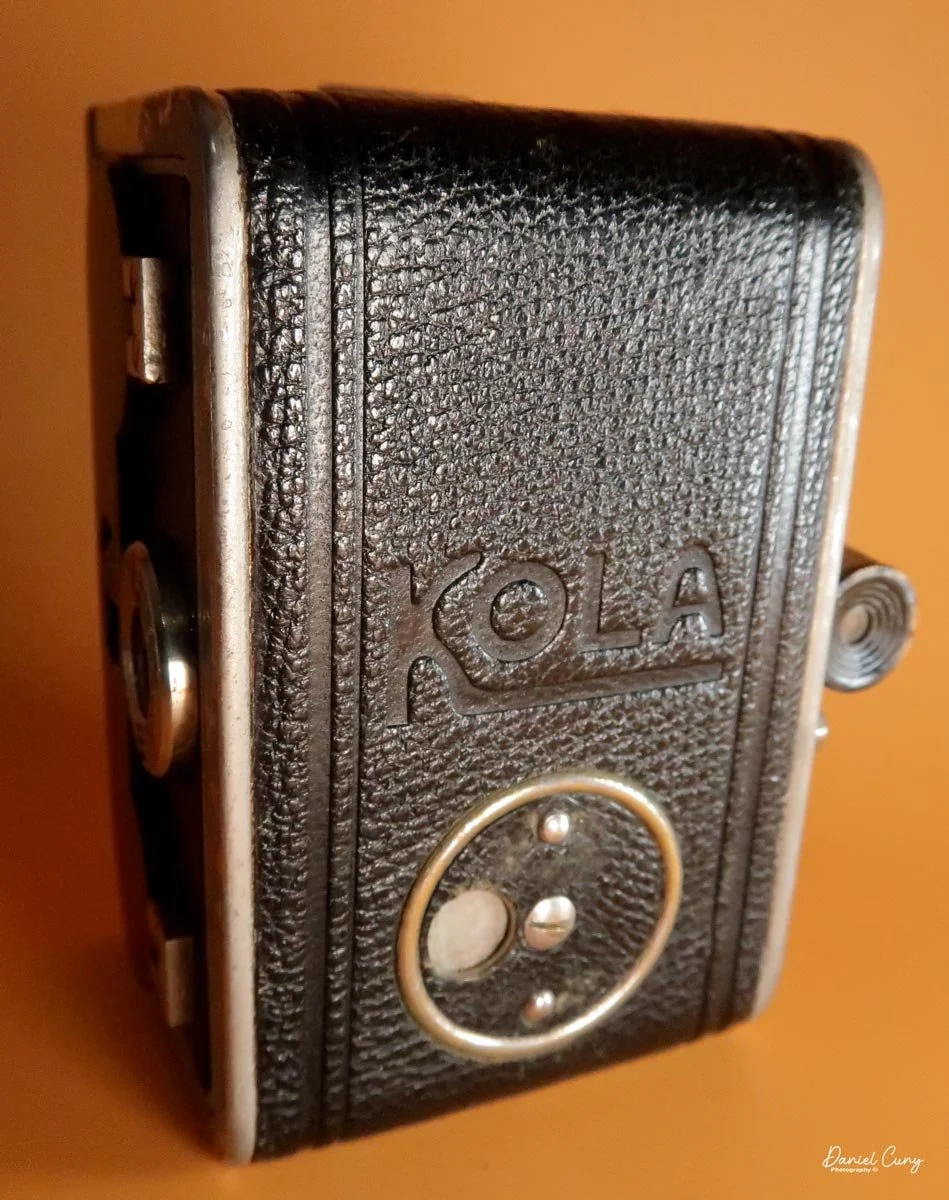
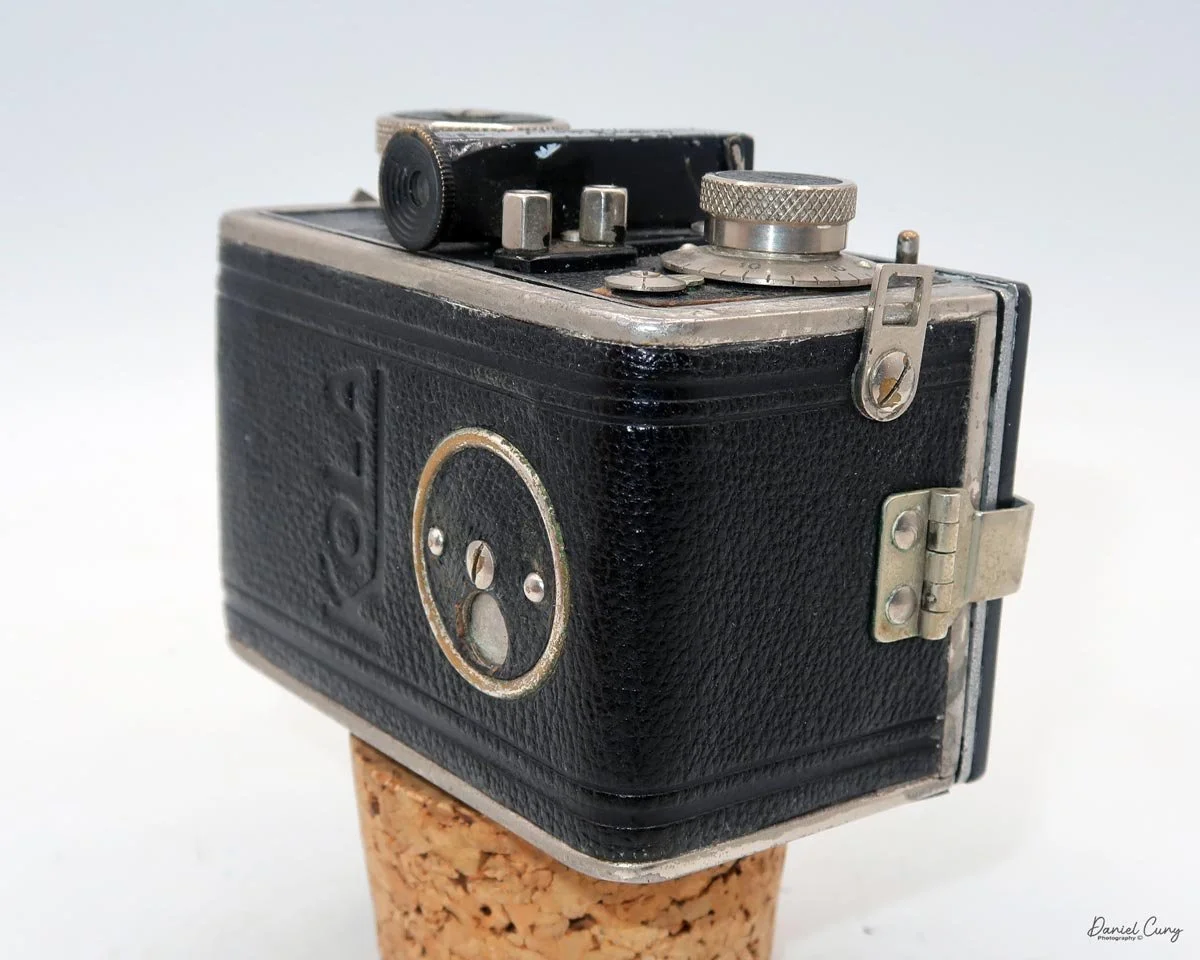
Back side of my Kolar Kola camera

 At first glance, I thought it might be a 127 film camera because of the film spools, but the frame size was marked 24 x 36, which meant it was a 35mm camera. That made me think it may have used paper-backed 35mm film, similar to the way some Bolta cameras were loaded.

It was certainly unusual enough to catch my attention, so I bought it along with a few other treasures from the shop. I planned to do the research later, but for the moment I set it aside and kept exploring the store. I knew I would be back before leaving Japan.

 Later that day, back at my hotel, the first camera I pulled out was the Kola. I wanted to know more about it right away. I soon learned that the camera was made in Czechoslovakia by a small and relatively obscure camera maker in the 1930s.

 Many examples I found online show Kola cameras in a 4 x 4 cm format on 127 film. Some earlier versions have a barrel lens, and the lenses I found were usually marked f/3.5 or f/4.5. I also found references to a paper-backed 35mm version. In my research, I saw that some Kola cameras used special 35mm cassettes and a different geared spool, but that spool arrangement did not match the camera I own.

 Here is a little more about the maker.

History

Václav Kolář was a significant, if short-lived, figure in prewar Czechoslovak camera manufacturing. Based in the Modřany district of Prague, Kolář operated his workshop during a period of experimentation and innovation in European photography. In the 1930s, small makers like Kolář were trying to compete with German giants such as Zeiss Ikon and Voigtländer.

 Kolář’s history appears to have been one of rapid innovation followed by financial difficulty. His company focused on precision engineering and often produced cameras that were mechanically sophisticated for their price point. However, the economic pressure of the Great Depression and fierce competition from Germany eventually led to bankruptcy in the mid-1930s. Today, his cameras are considered hidden gems of Central European camera history, prized for their rarity and distinctive design.

 His product line was surprisingly varied for such a small workshop. One of his best-known cameras was the Kola-Diar, a box-shaped roll-film camera. It was designed to be compact and practical, often using 127 film or unperforated 35mm film, which later gave it a bit of a spy-camera reputation among collectors. It featured a collapsing lens mount and a rugged build that stood out from the folding cameras of the period.

 Another notable model was the Kola-Flex, a twin-lens reflex camera made largely of Bakelite. Unlike many pseudo-TLR cameras of the era, the Kola-Flex often featured gear-linked lenses, allowing for more accurate focusing through the top viewfinder. Kolář also produced the Kolex, a traditional folding plate camera, and the Box-Reflex, an entry-level Bakelite model. These cameras were typically fitted with lenses bearing Kolář’s own names, such as Rekolar, Kolyt, and Kolar-Anastigmat, and were often paired with reliable German shutters like the Vario or Compur.

 Kolář’s legacy lies in his pioneering work in the Czech tradition of fine mechanical camera building. His designs showed that Czechoslovak workshops could produce serious photographic equipment, helping lay the groundwork for the later nationalized industry that would produce the Flexaret series.

My Camera

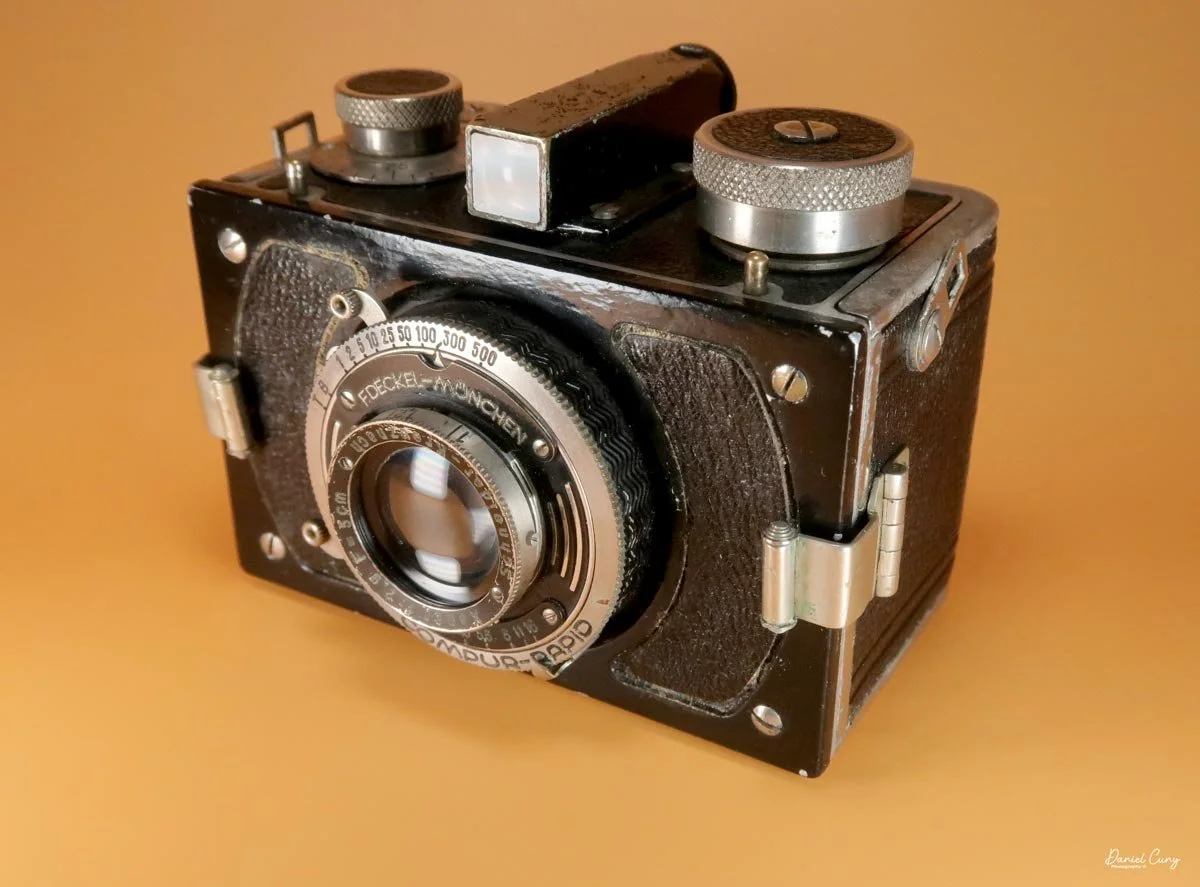
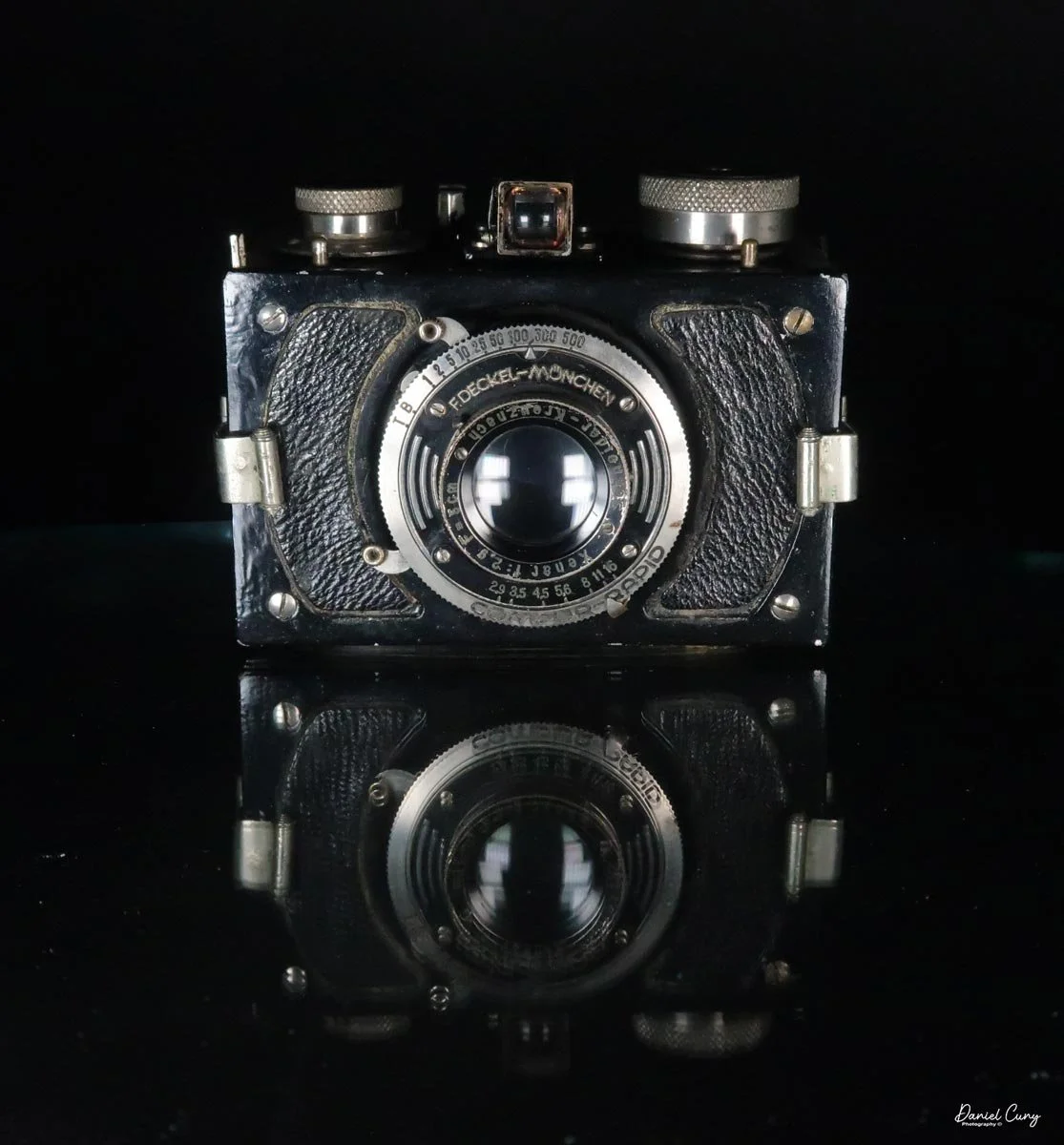
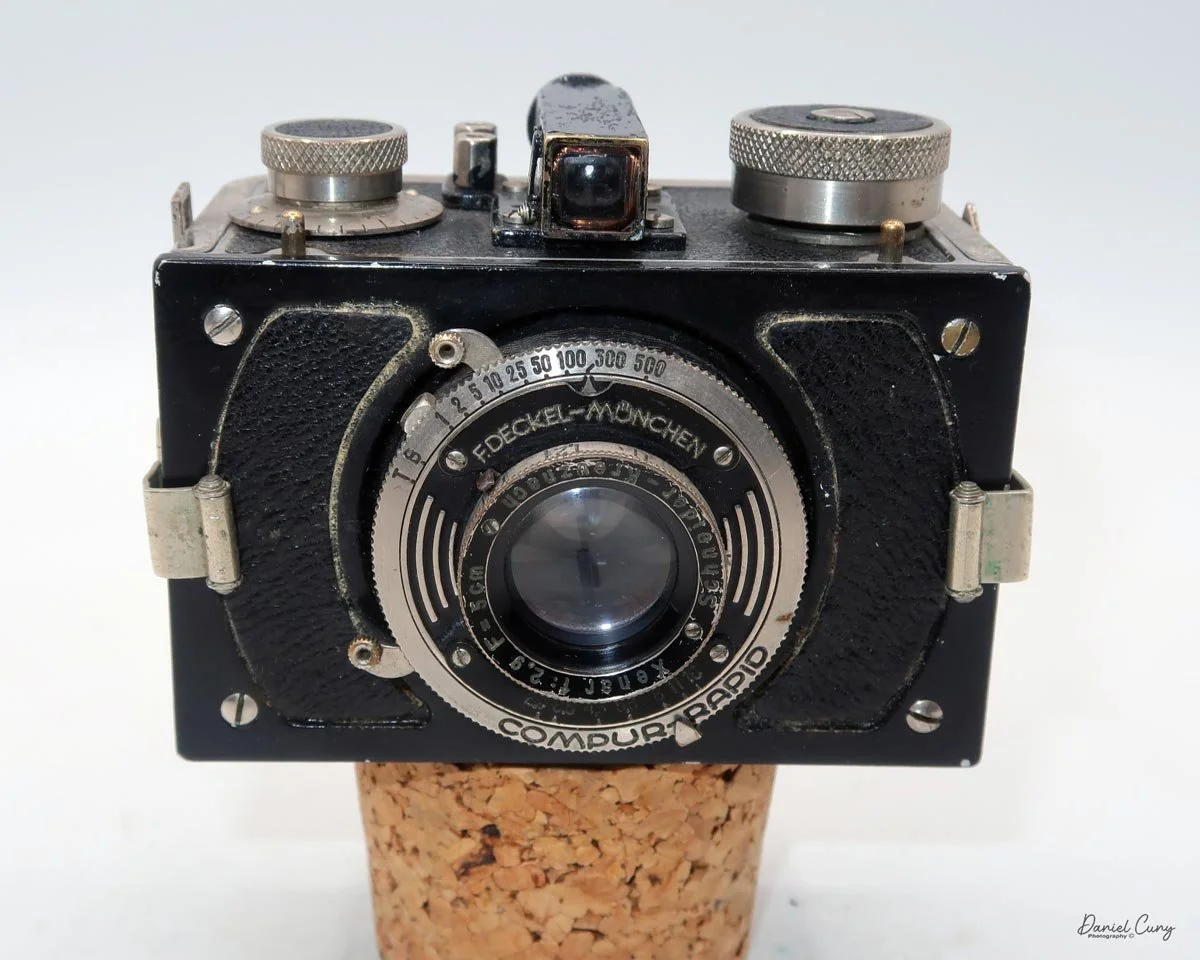
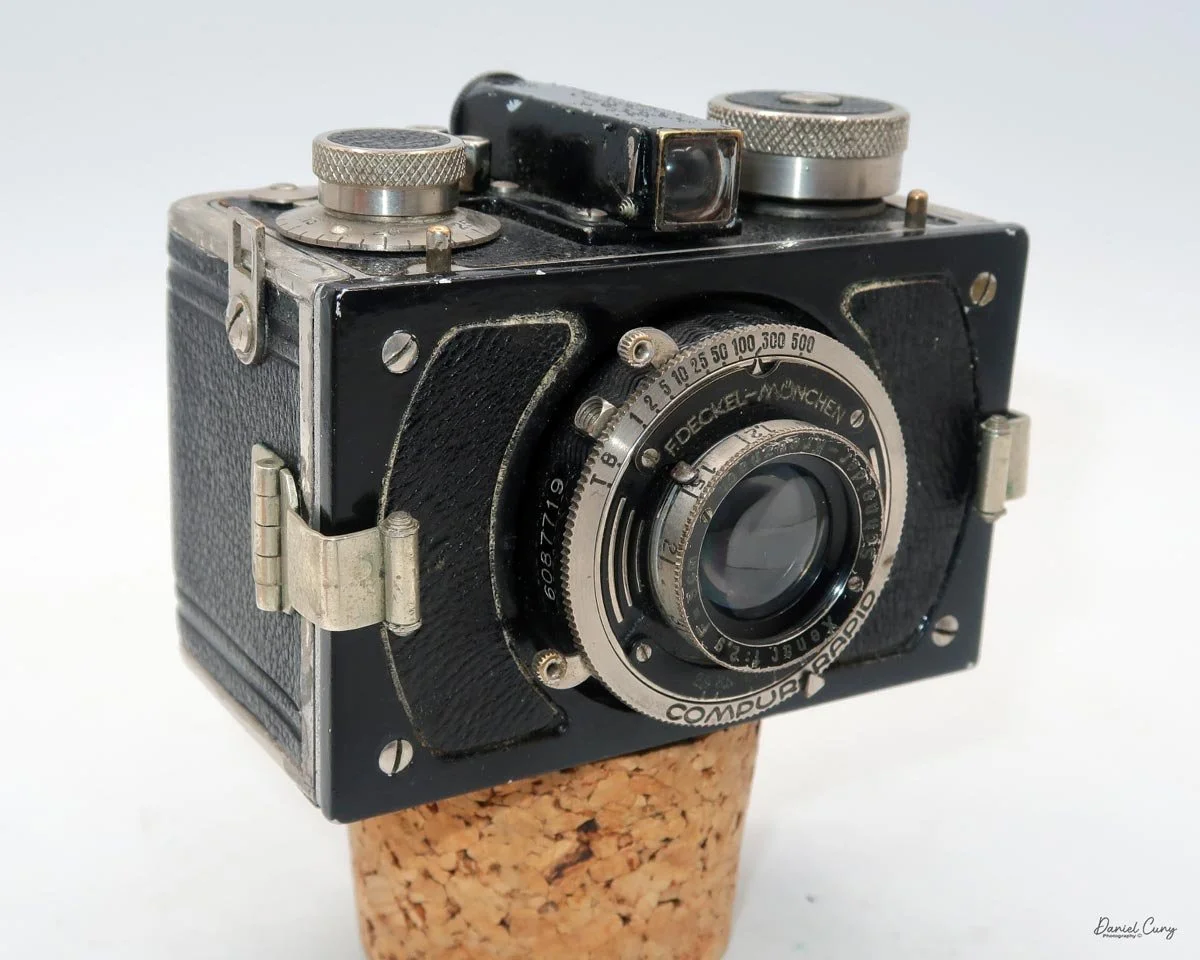
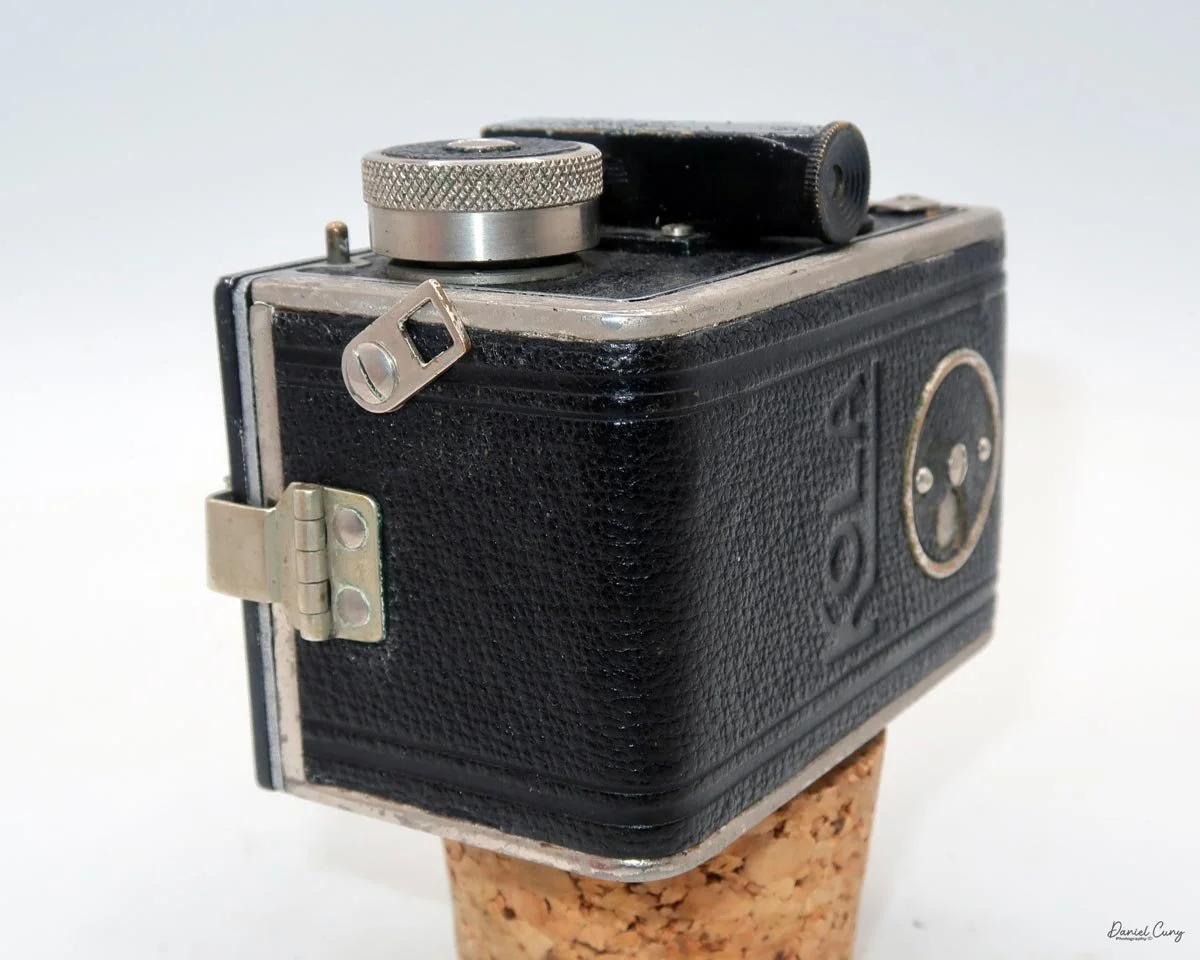
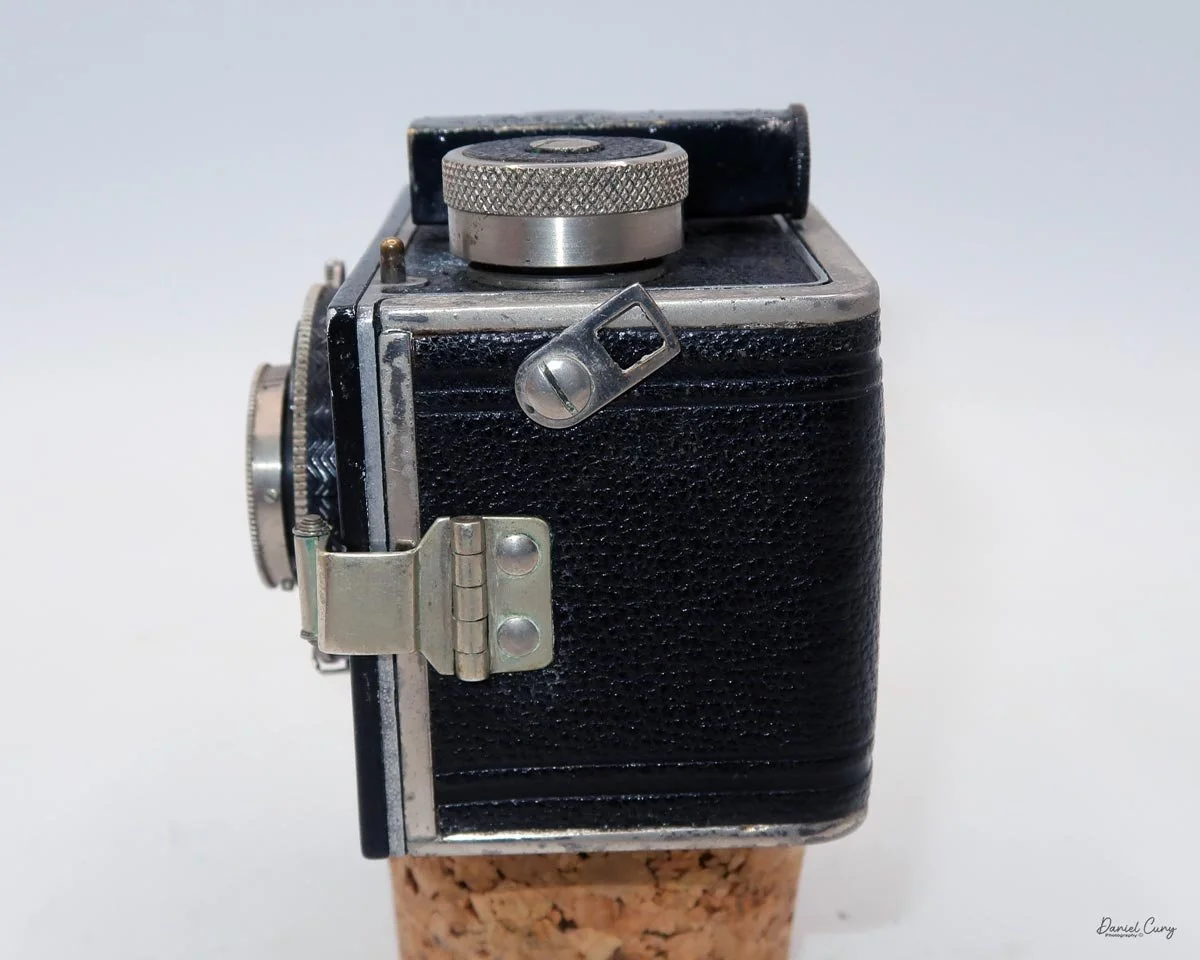
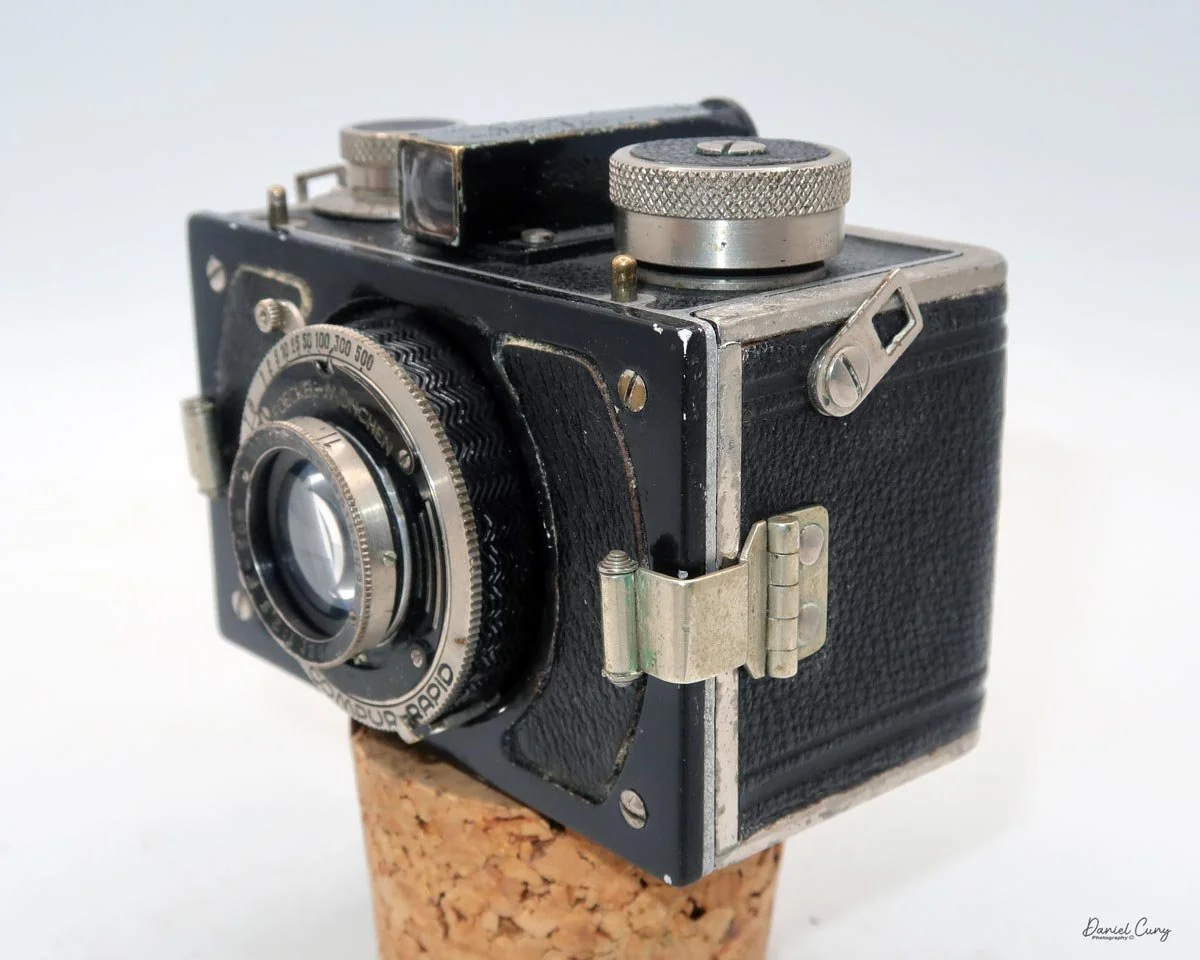
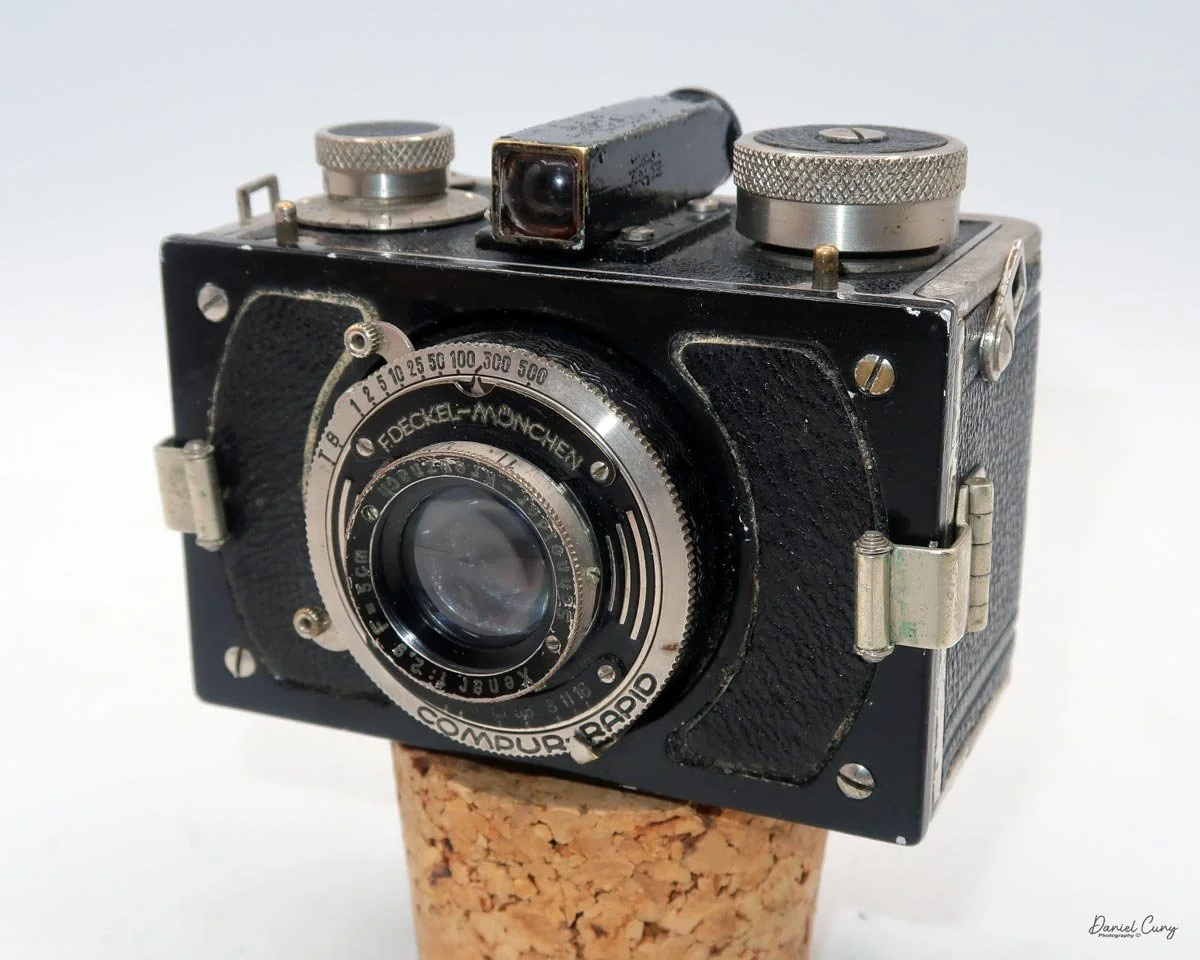
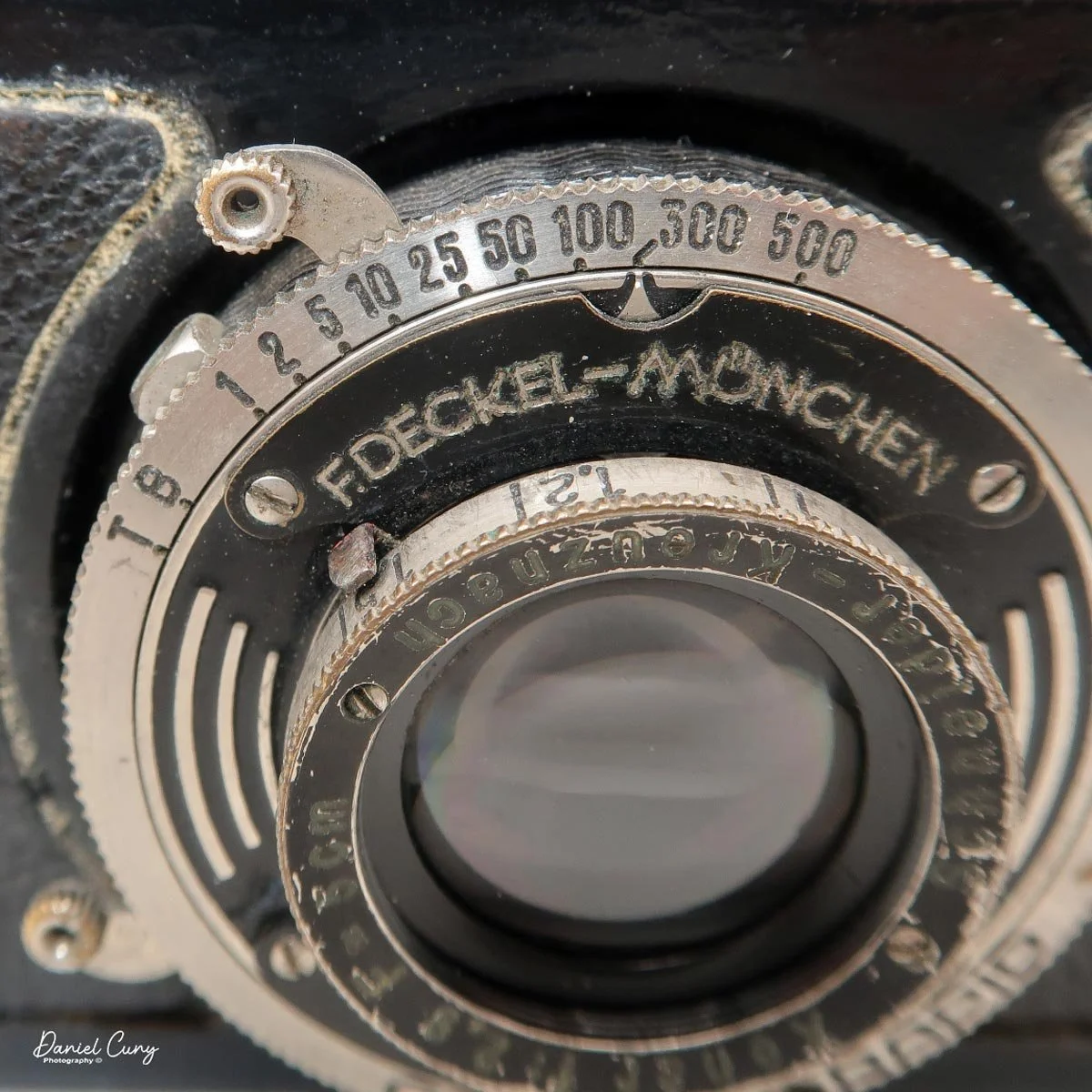
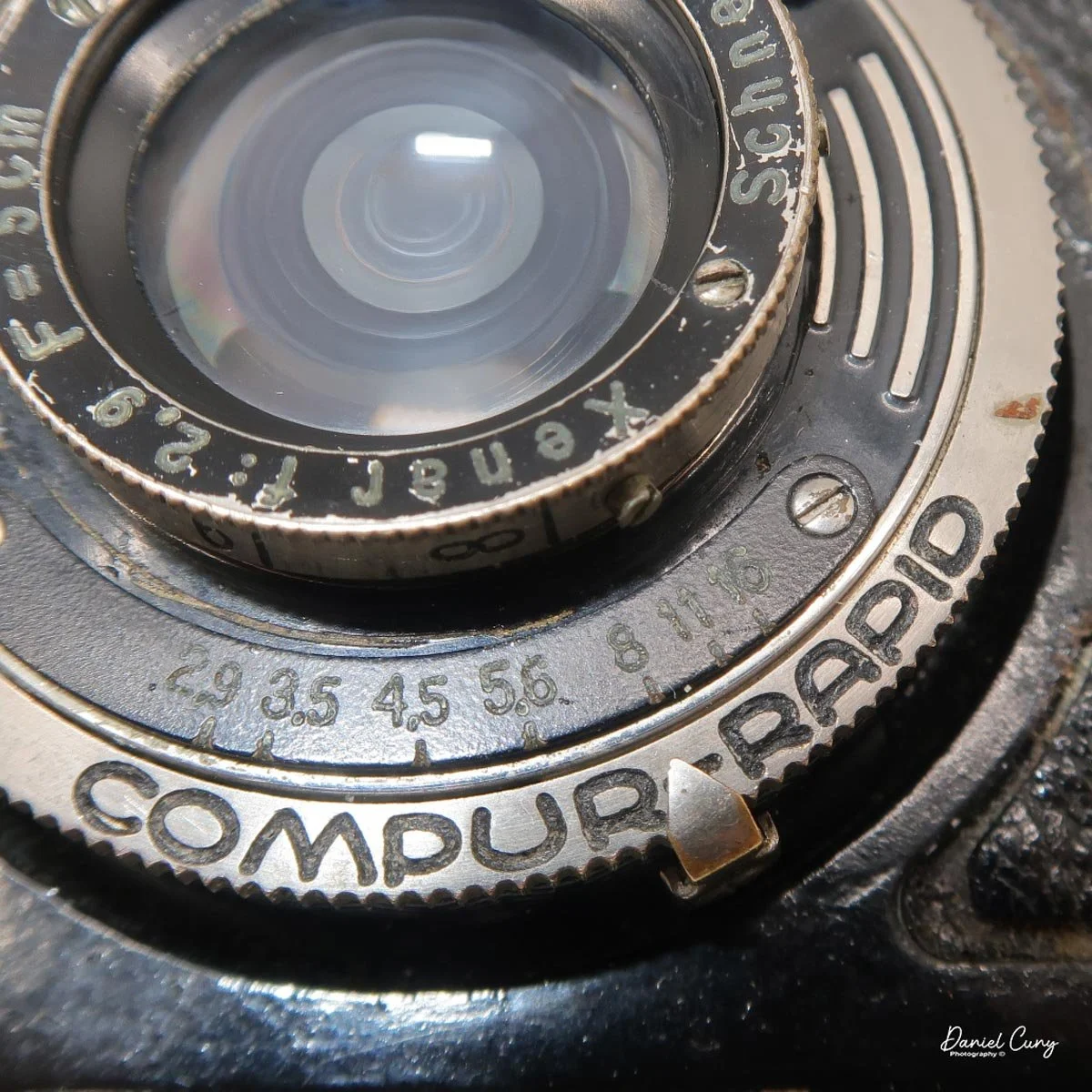
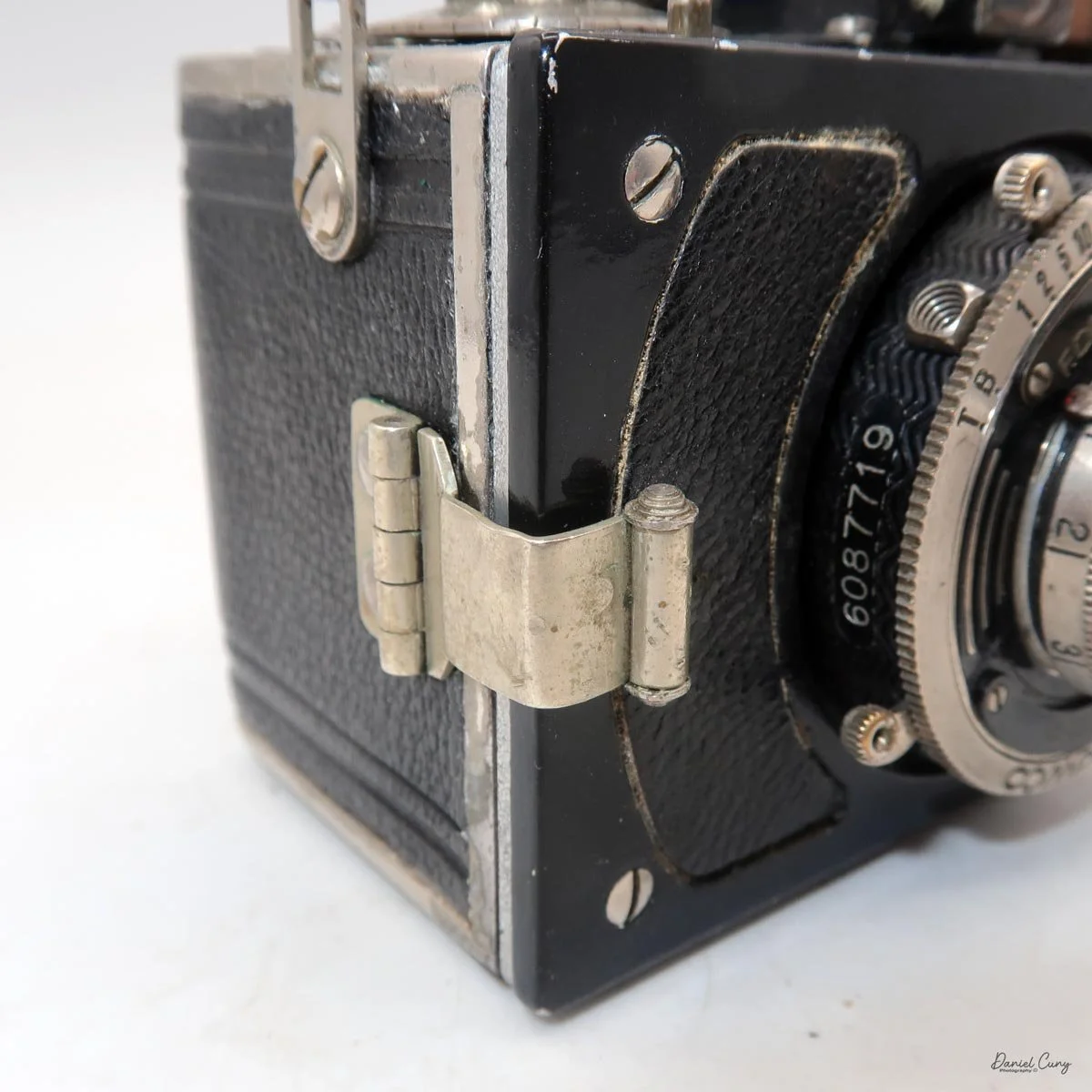
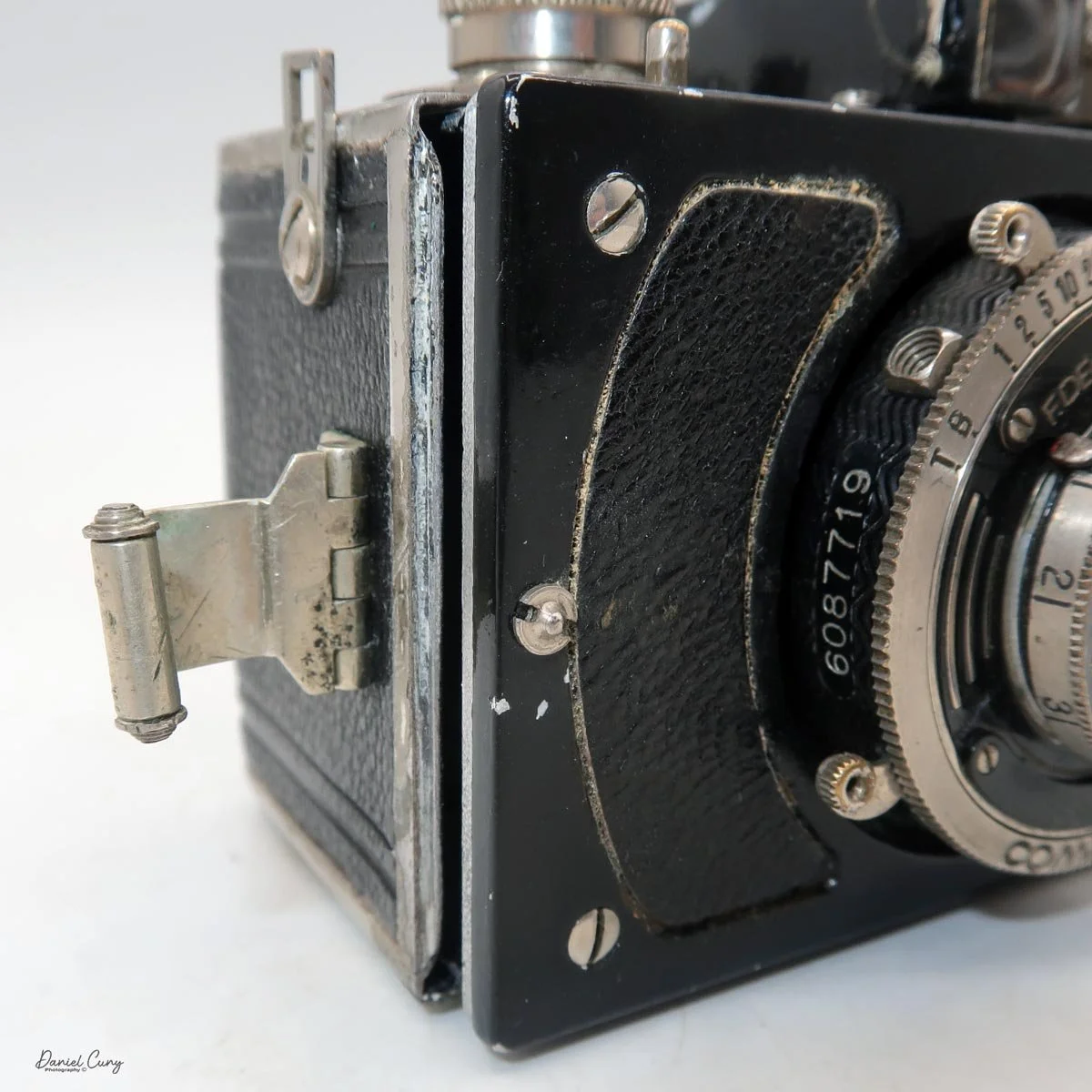
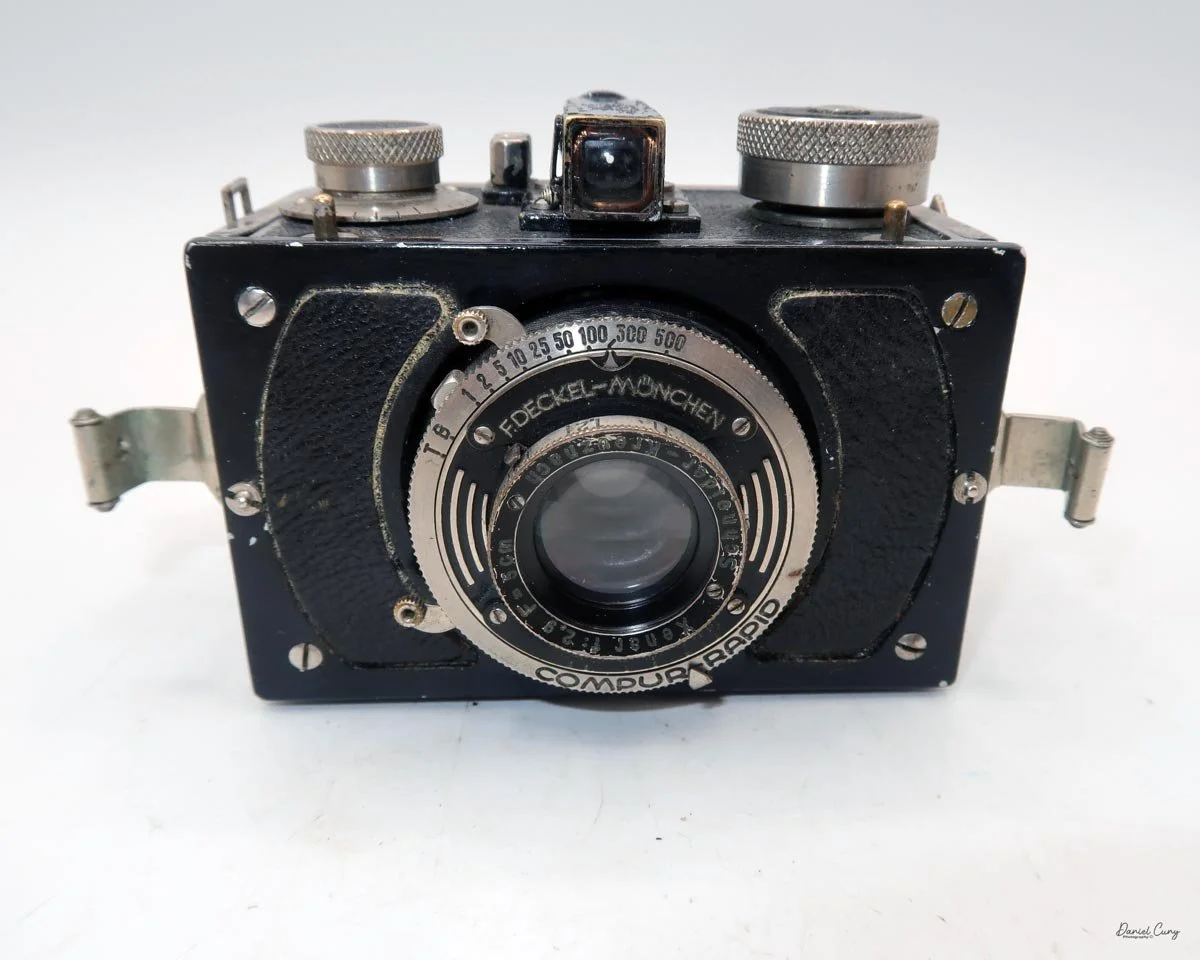
My Kolar Kola camera measures 3.5 inches wide, 3 inches tall, and 2.75 inches deep. It weighs 1 pound, 1.7 ounces, and has serial number 740 stamped into the back of the camera. It is fitted with a Schneider Xenon 5cm f/2.9 lens in a Comur-Rapid shutter. The shutter speeds range from 1/500 second to 1 second, with T and B settings for timed and bulb exposures. There is a cable release socket next to the shutter cocking lever on the top of the shutter, and the shutter release is positioned low at about the 8 o’clock position.

In my research, I found that many Kola cameras use a helical focus system mounted behind the shutter mechanism, but mine is a front-element focus model, meaning the lens itself rotates. Focus distances are marked on the outer ring of the lens in meters.

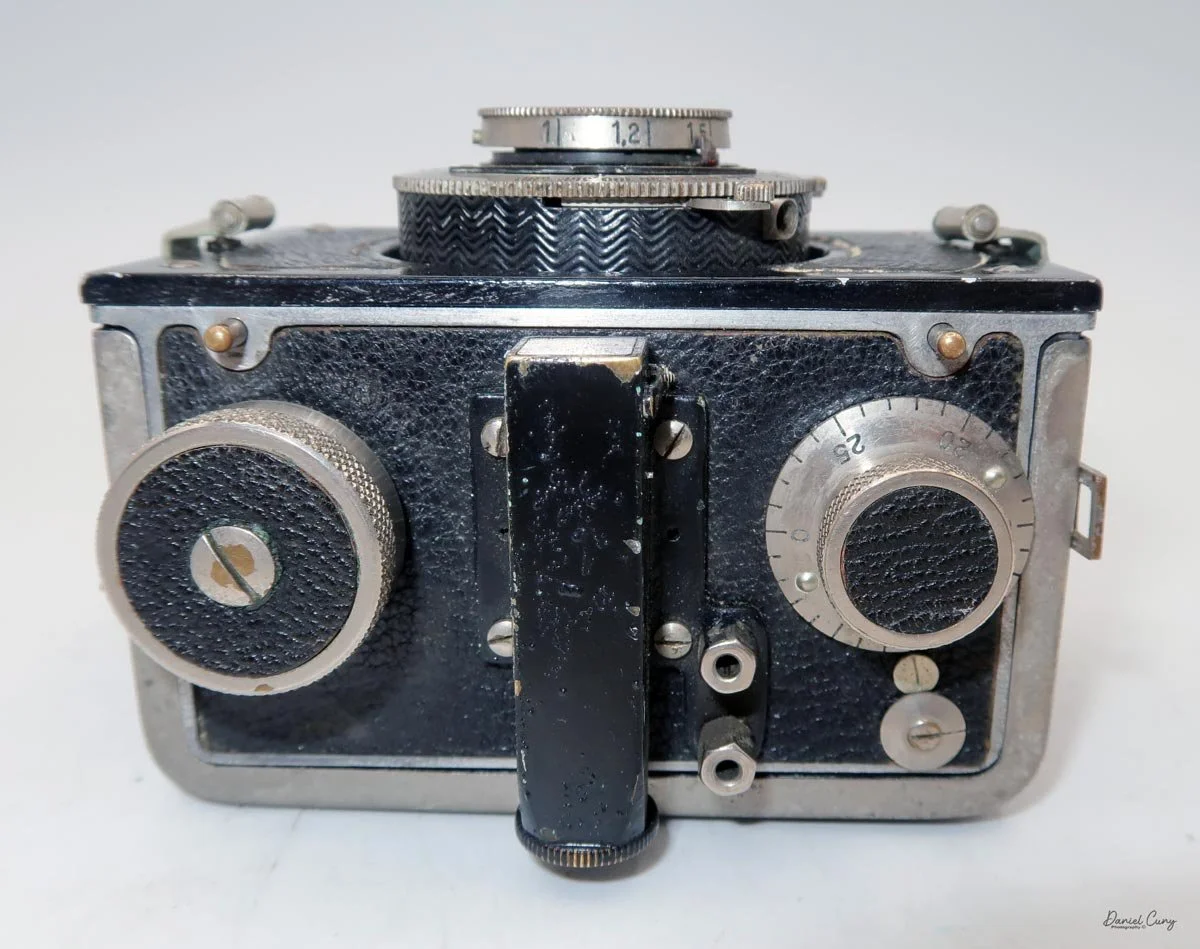
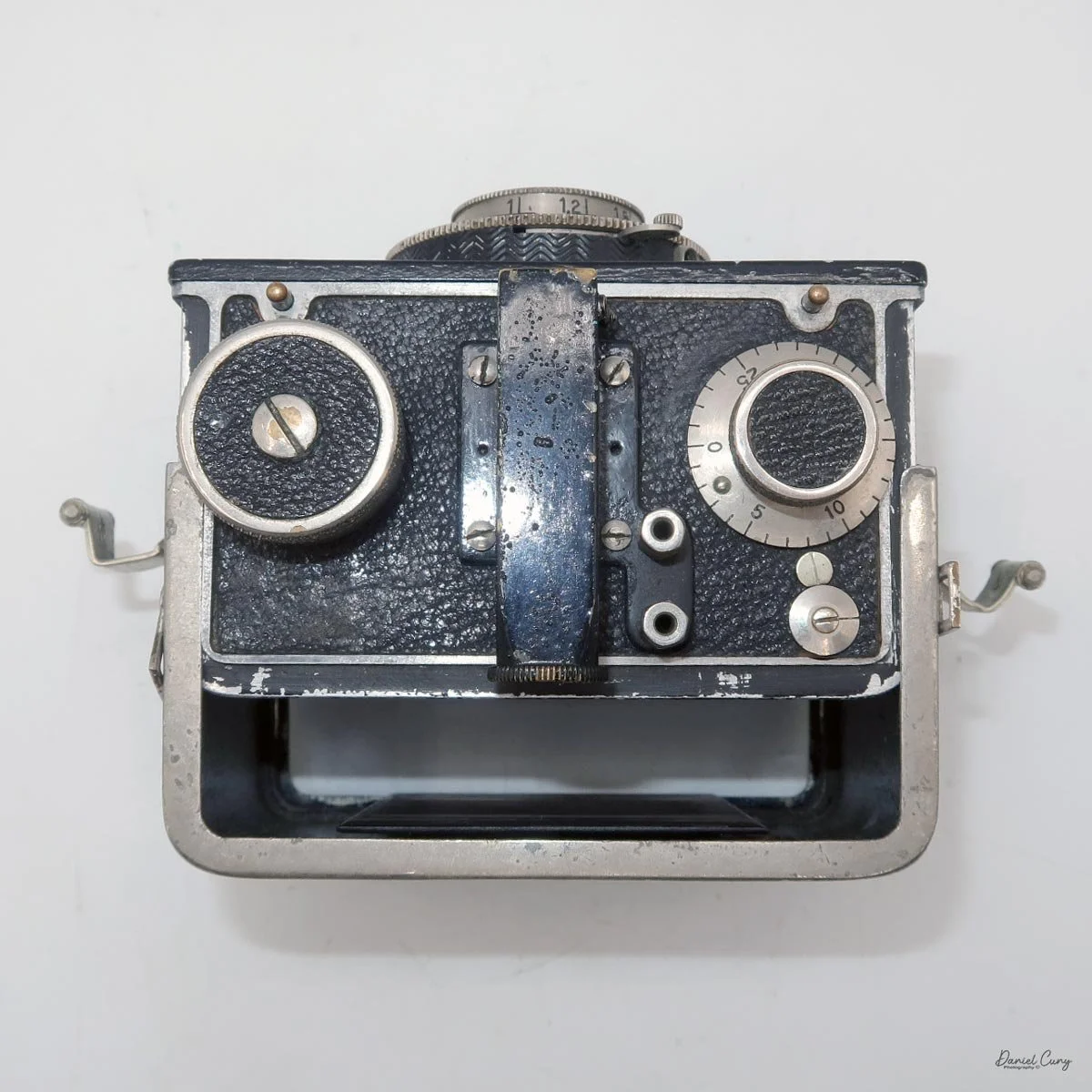
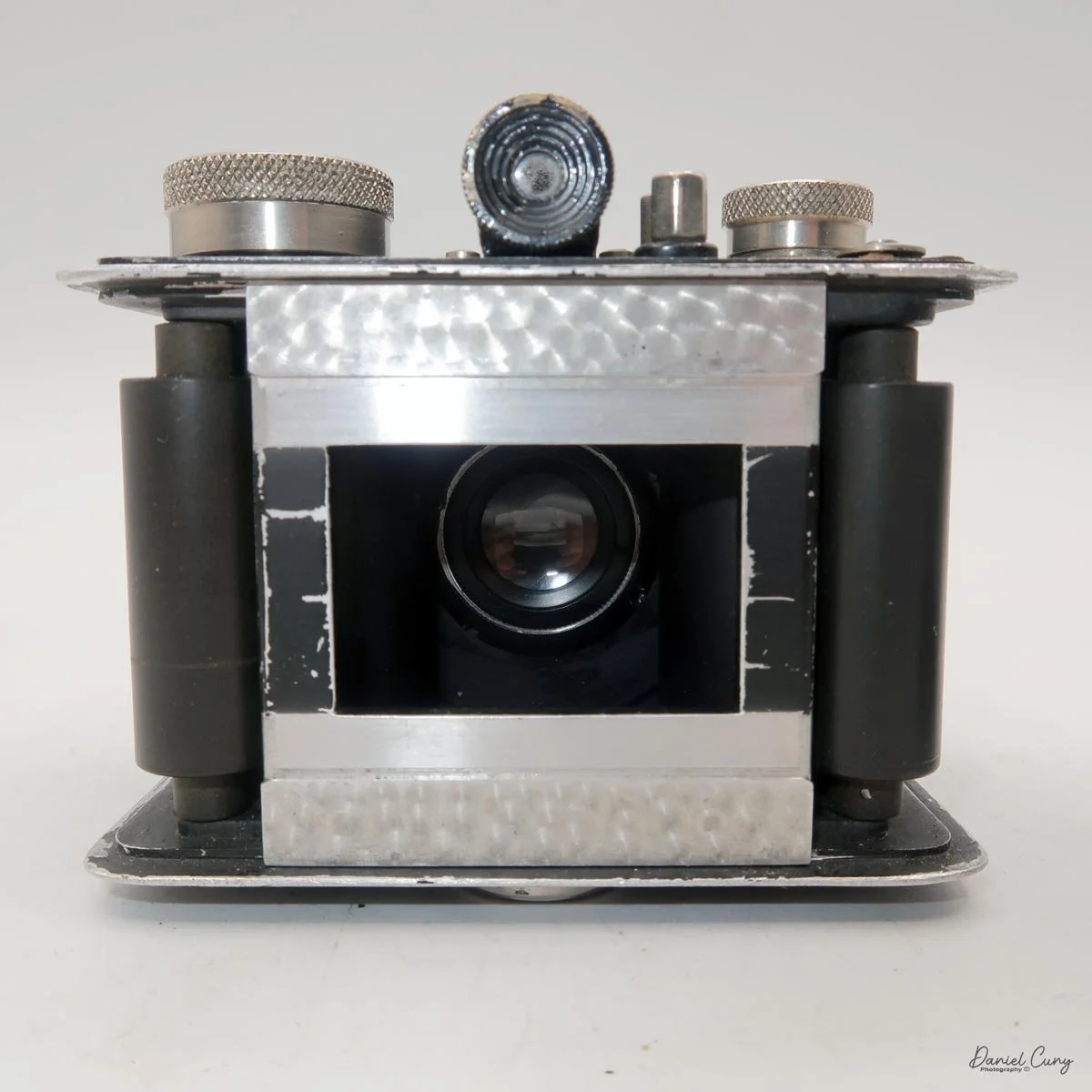
On top of the camera, from left to right, there is a large winding knob that advances the film clockwise. In the middle is a very small optical viewfinder, which is especially hard for me to use since I wear glasses. To the right of that are two small raised openings that can accept a cold shoe, much like the Nagle Pupille camera. An accessory rangefinder can be mounted there for critical focus.

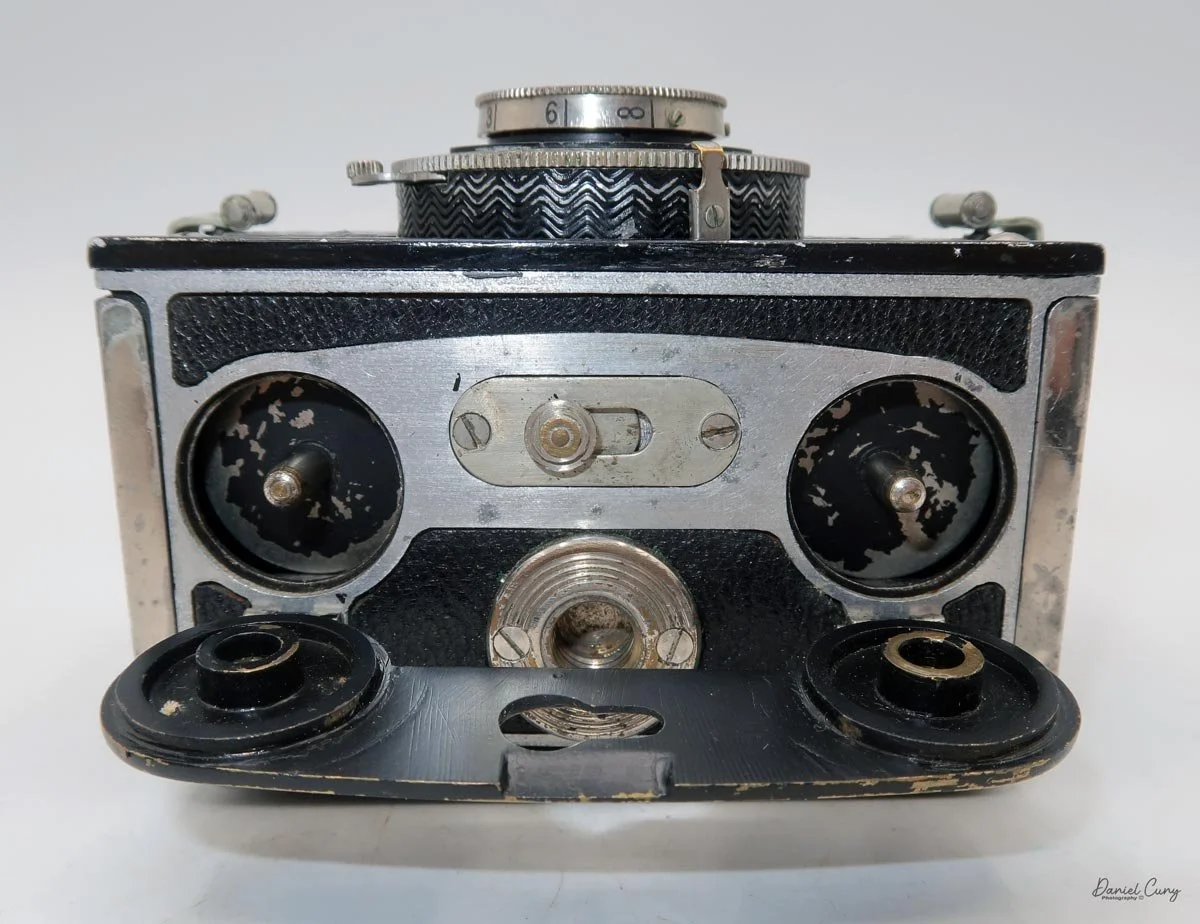
 To the right of the cold-shoe area is the frame counter, located inside the knob that holds the film in place. Behind the frame counter is a small round indicator attached to the wheel inside the film chamber. As the film moves across that wheel during winding, the indicator turns, and each full rotation advances the frame counter.

The more I look at this camera, the more similarities I see between the Kola and the Nagel Pupille camera. Both have helical-focus variations, both offer an accessory shoe for a rangefinder, and both have a solid, well-made feel.

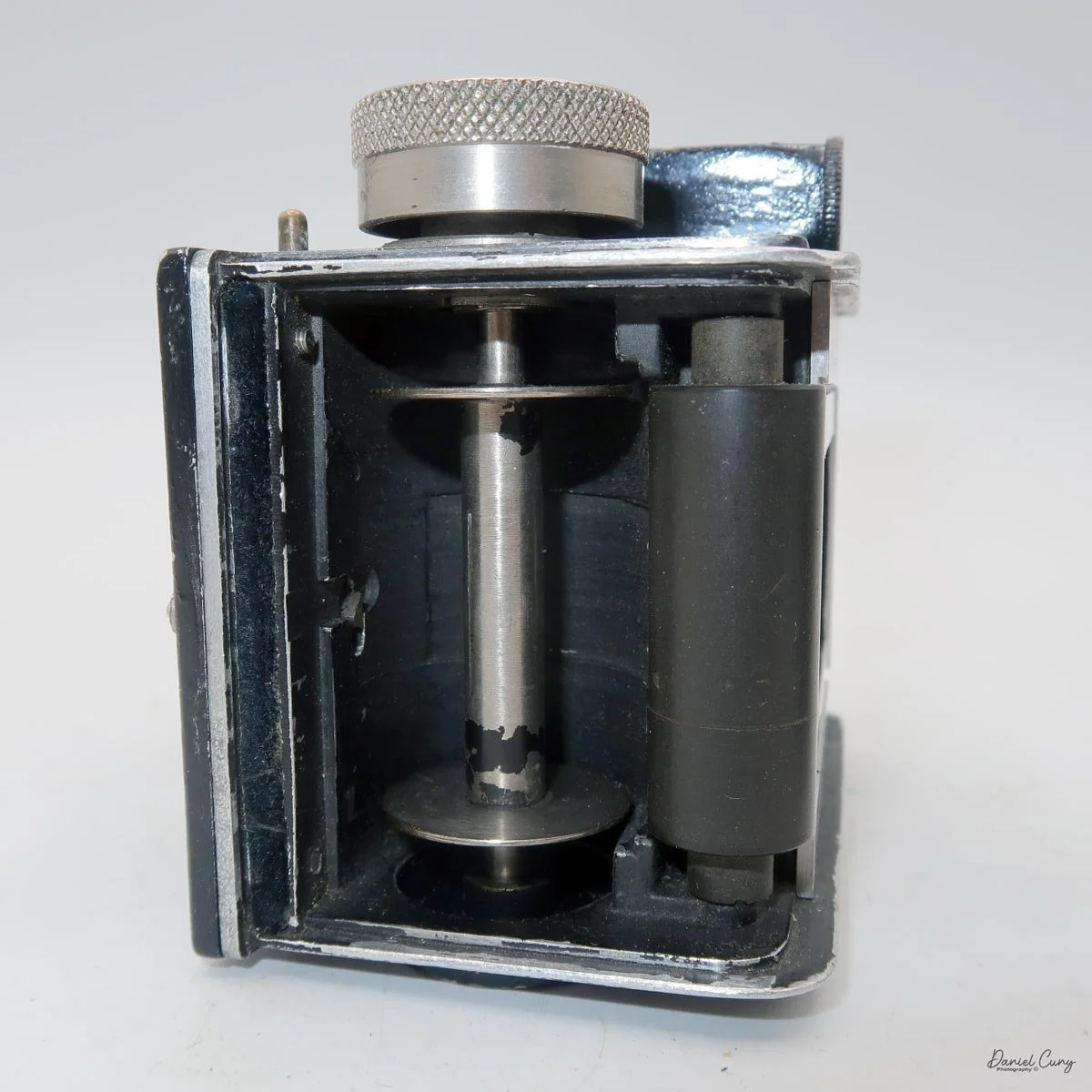
 To open the back and load film, there are two clips on either side of the camera that hold the back to the body. Pull those clips back, and the rear cover slides off, exposing the film chamber.

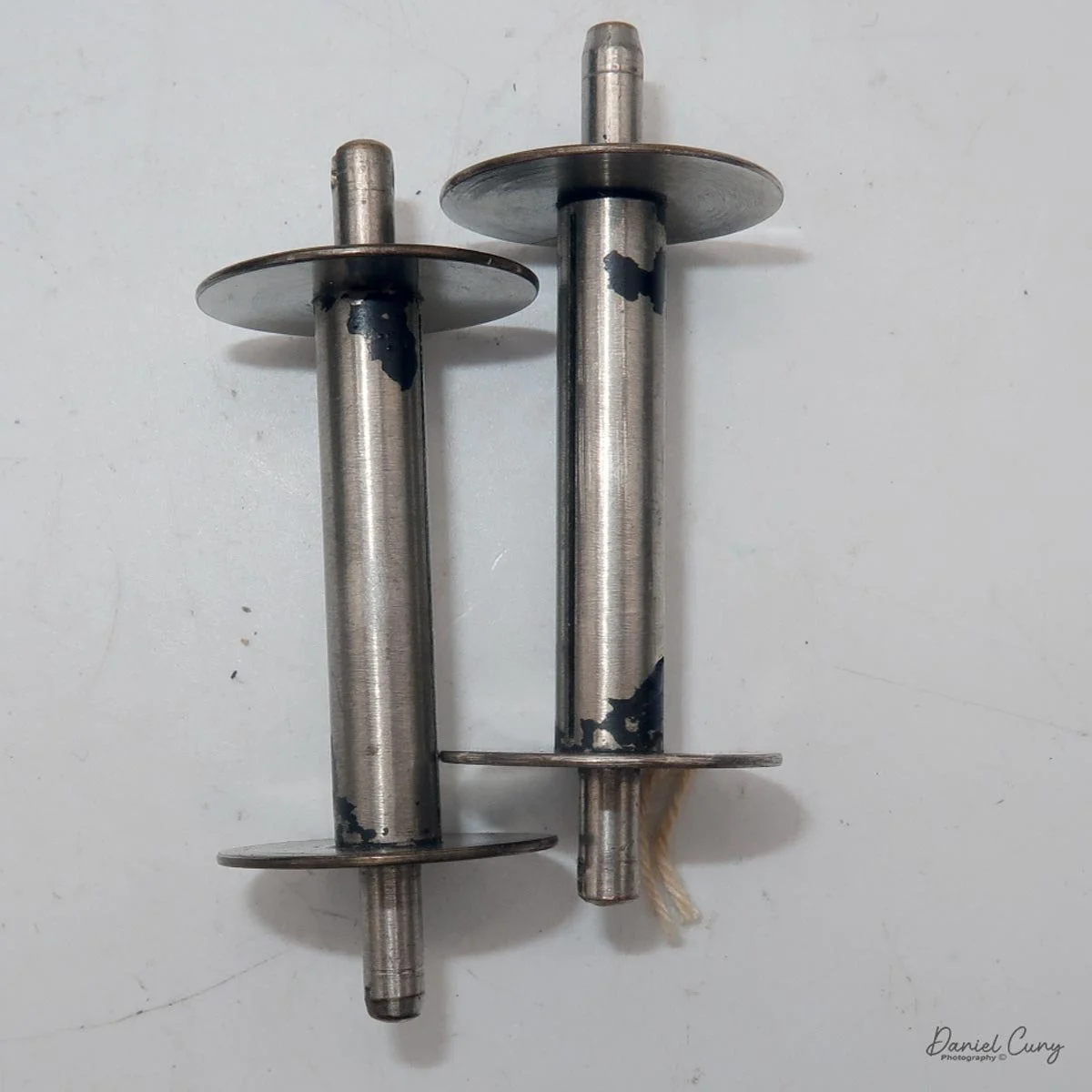
This is where the camera becomes especially interesting. There were already two spools inside, and they were just a little shorter than a 127 spool. The exposed frame area is 24 x 36, so the camera is definitely a 35mm model. My first idea was to use 127 backing paper with bulk-loaded 35mm film, but when I tried the 127 spools, they actually fit into the camera. Not perfectly, since the winding and holding knobs sit slightly higher, perhaps by about 1/16 inch, but they did fit.

I removed the 35mm spools that came with the camera and loaded it with 127 film I already had. On the back of the camera there is a red window, so I hoped I would be able to see the numbers pass by as I took pictures. If not, I could use the frame counter and the rotating wheel to estimate the proper spacing for 35mm-sized exposures on a roll of 127 film. I knew there would be some waste because the 127 film is wider than the image area the camera is using.

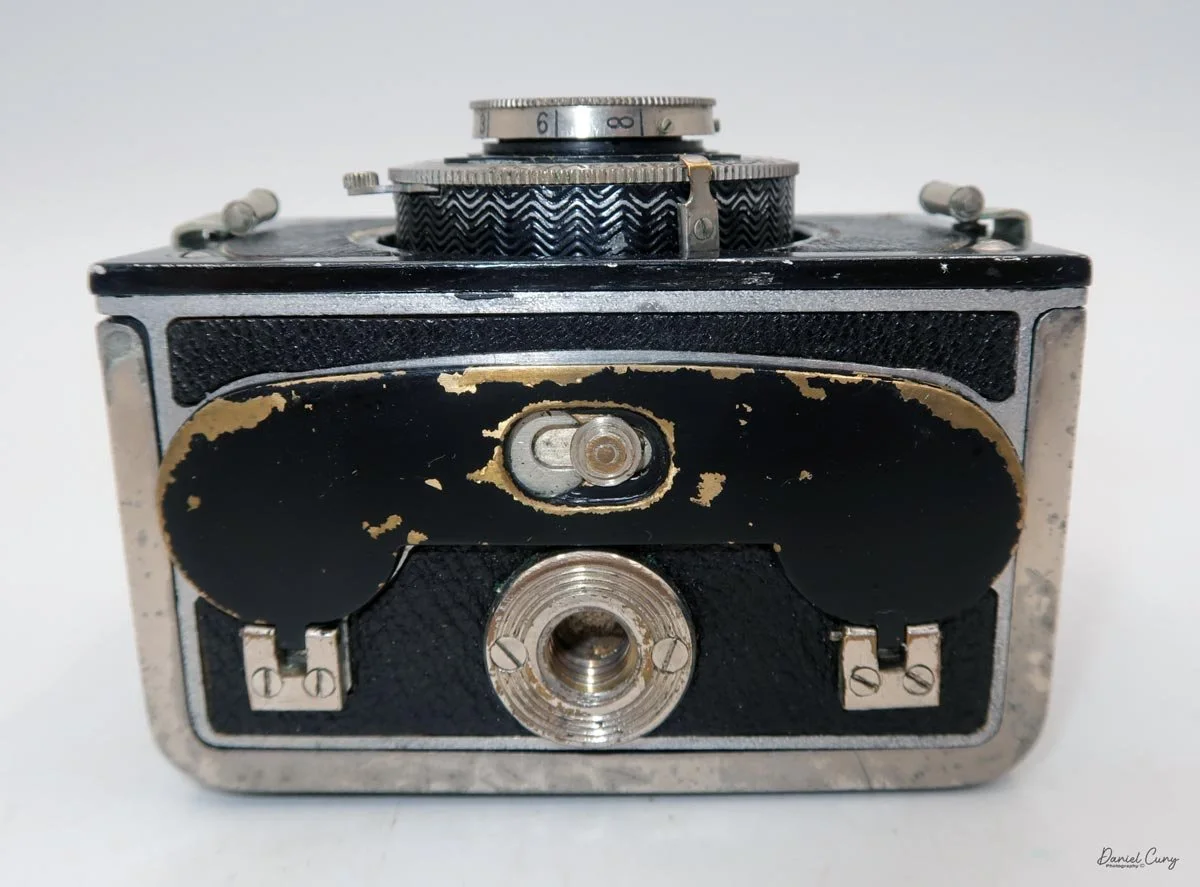
On the bottom of the camera there is a hinged door that allows the spools to be inserted into the body. The 35mm spools that came with the camera are too wide to fit through that opening, so if I were to use paper-backed 35mm film, I would need to open the hinged door to get the spools inside. The door is secured by a sliding latch that locks it in place.

Once the 127 film was loaded, I slid the back onto the camera body, latched the two clips, and headed out to make some photographs.

Results

With a roll of 127 film loaded, I walked through the neighborhood taking photos of the usual subjects to see how the Kola performed. At first, I guessed at the distance between frames, and that worked well enough. The frame counter behaved exactly as expected.

 Here are the results from my neighborhood walk.

Conclusion

WOW! I was very impressed with the sharpness and ease of use of this camera. The viewfinder is small and a bit difficult to use, especially for me since I wear glasses, but the sharpness of the images and the smooth film advance made up for the camera’s quirks.

 It would have been better to shoot 35mm film, since that would have avoided wasting image area the way 127 film does here. However, the hassle of paper-backed 35mm film, plus the unusual spool setup, made the wasted film area easier to accept.

 I am still puzzled by this particular Kola. It has a faster f/2.9 lens than the f/3.5 or f/4.5 lenses I found in my research, and it is also a 35mm version with spools that differ from those that came with the camera. That mystery makes it even more interesting to me.

 I am really happy with the results this Kola camera produced, and I am glad I found such a special camera on my trip to Tokyo.

 Here are my other Camera Reviews.

 Stop by Cuny’s Cameras and Photos to see what I have for sale in my eBay online store. It is filled with camera accessories, and you may even find a camera or two that I have reviewed in the past.

 Thank you for taking the time to learn about this small powerhouse of a camera made by a company in Czechoslovakia for such a short period of time. I am very happy to have one in my collection.

 Until next week, please be safe.