Whitehouse Beacon Cameras

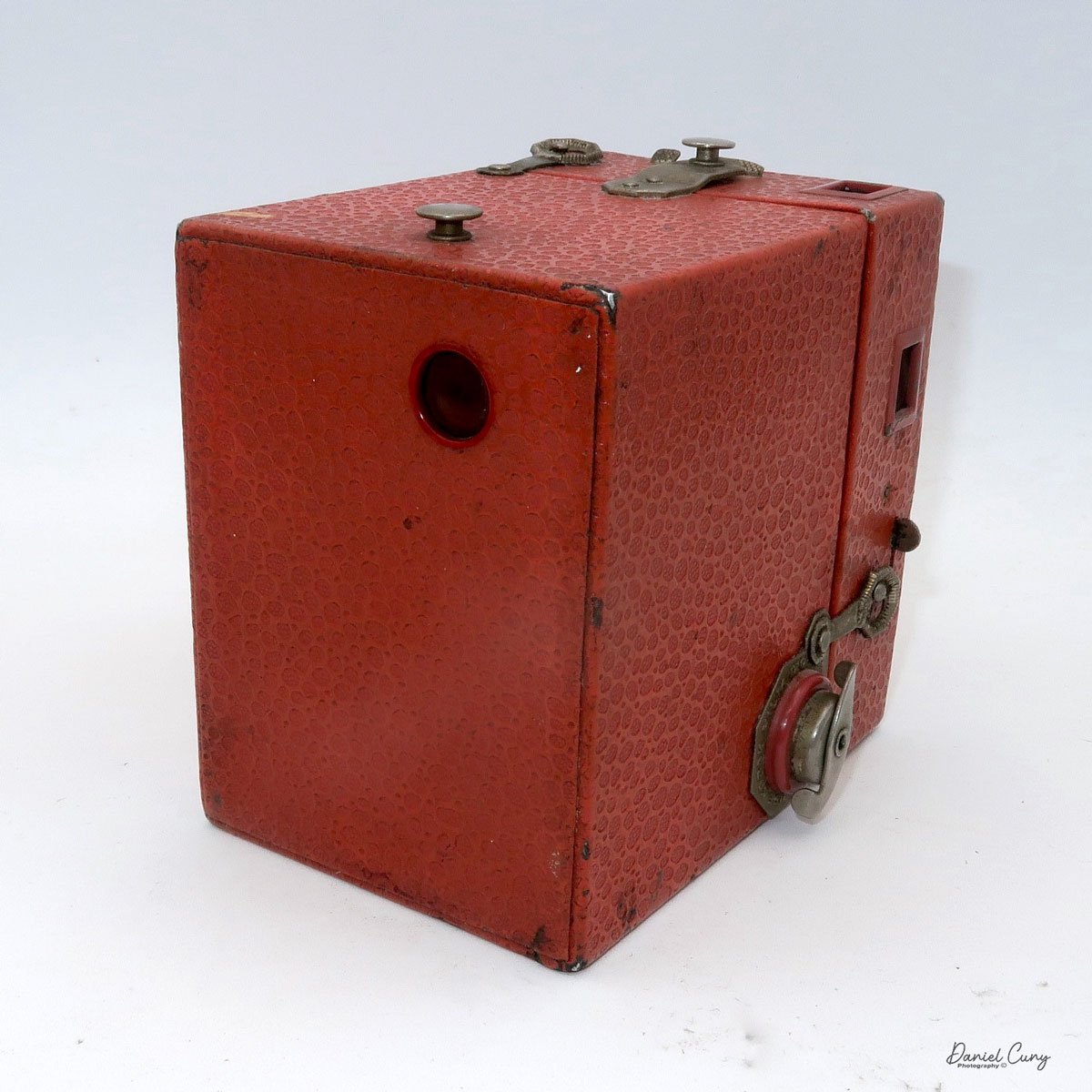
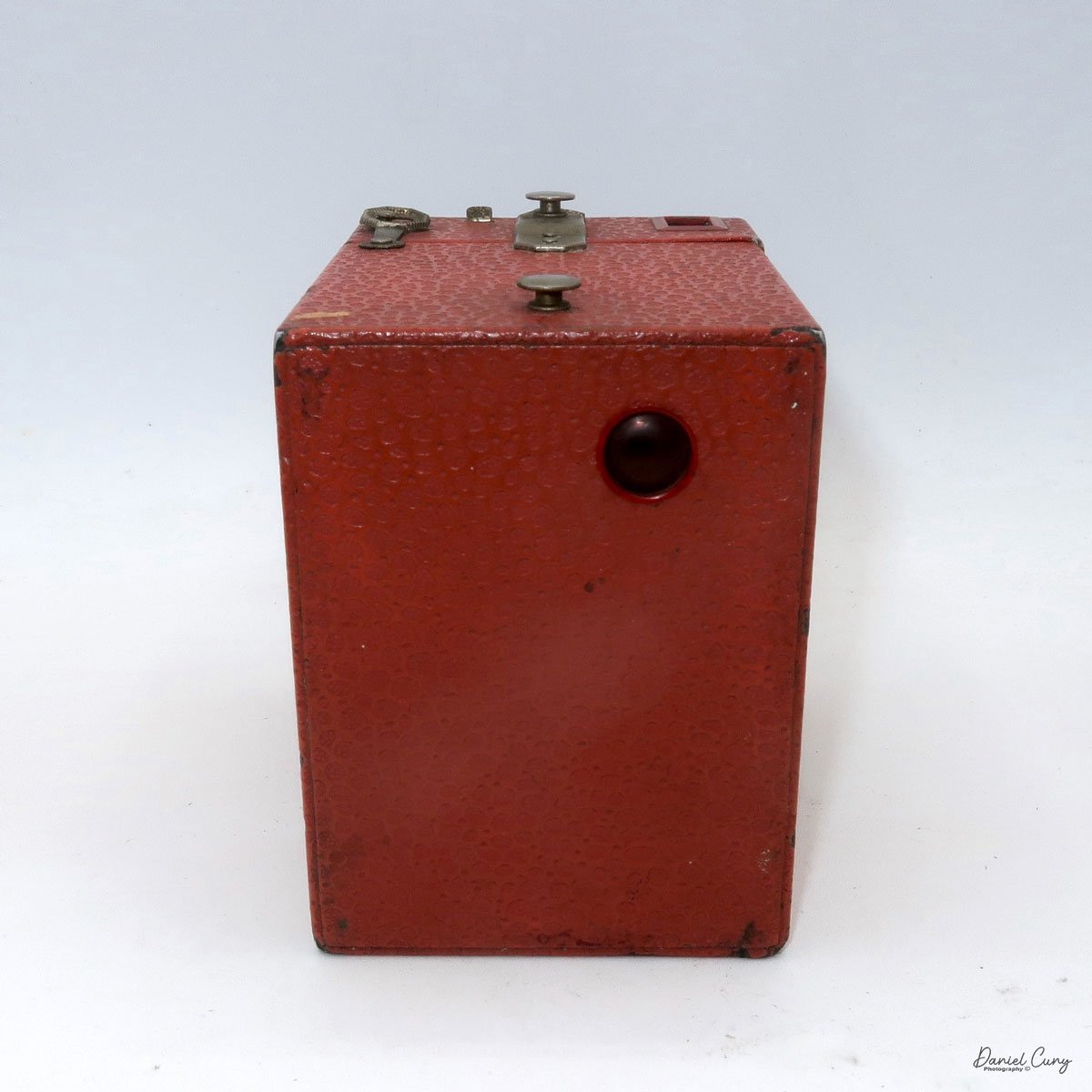
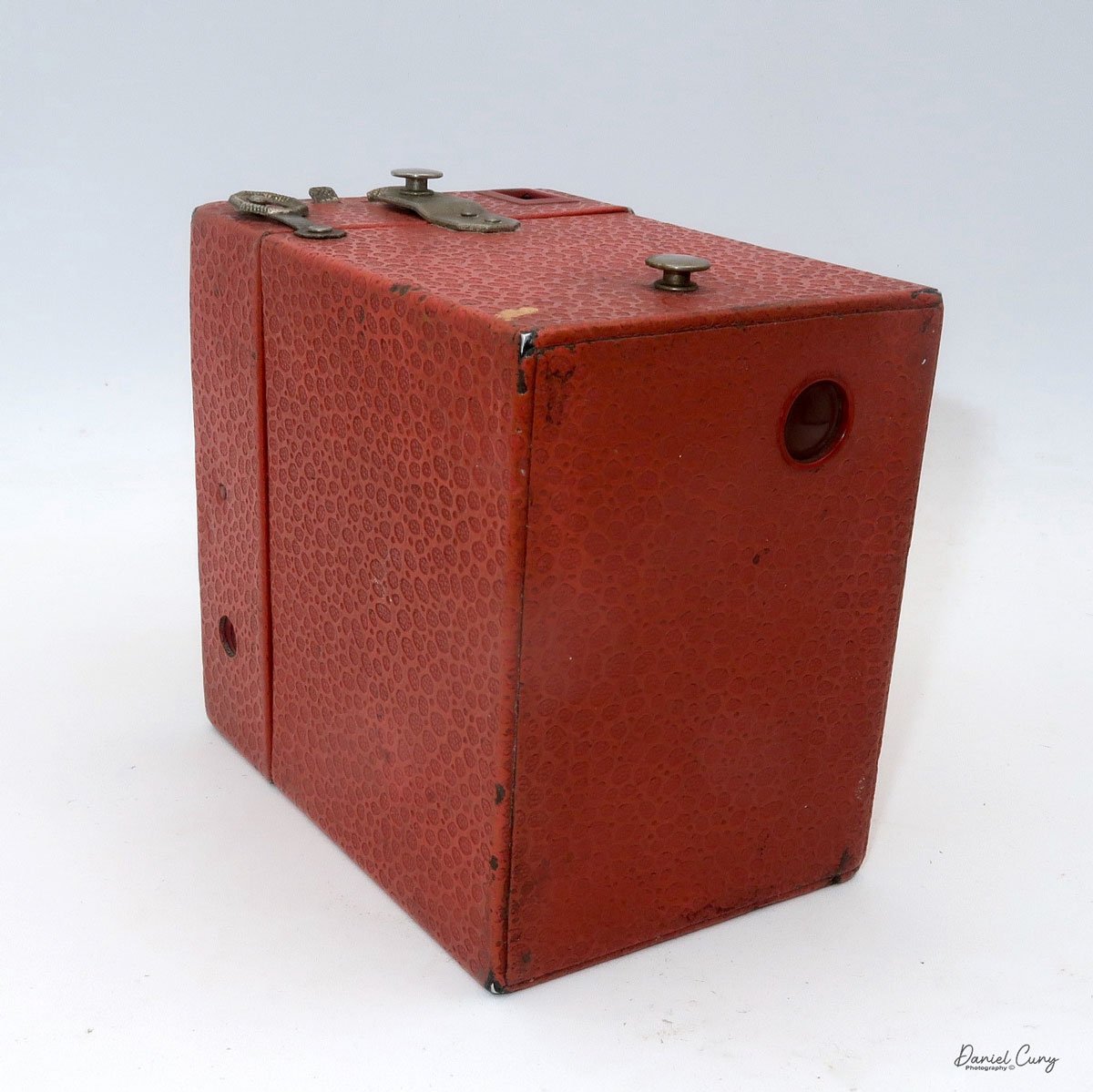
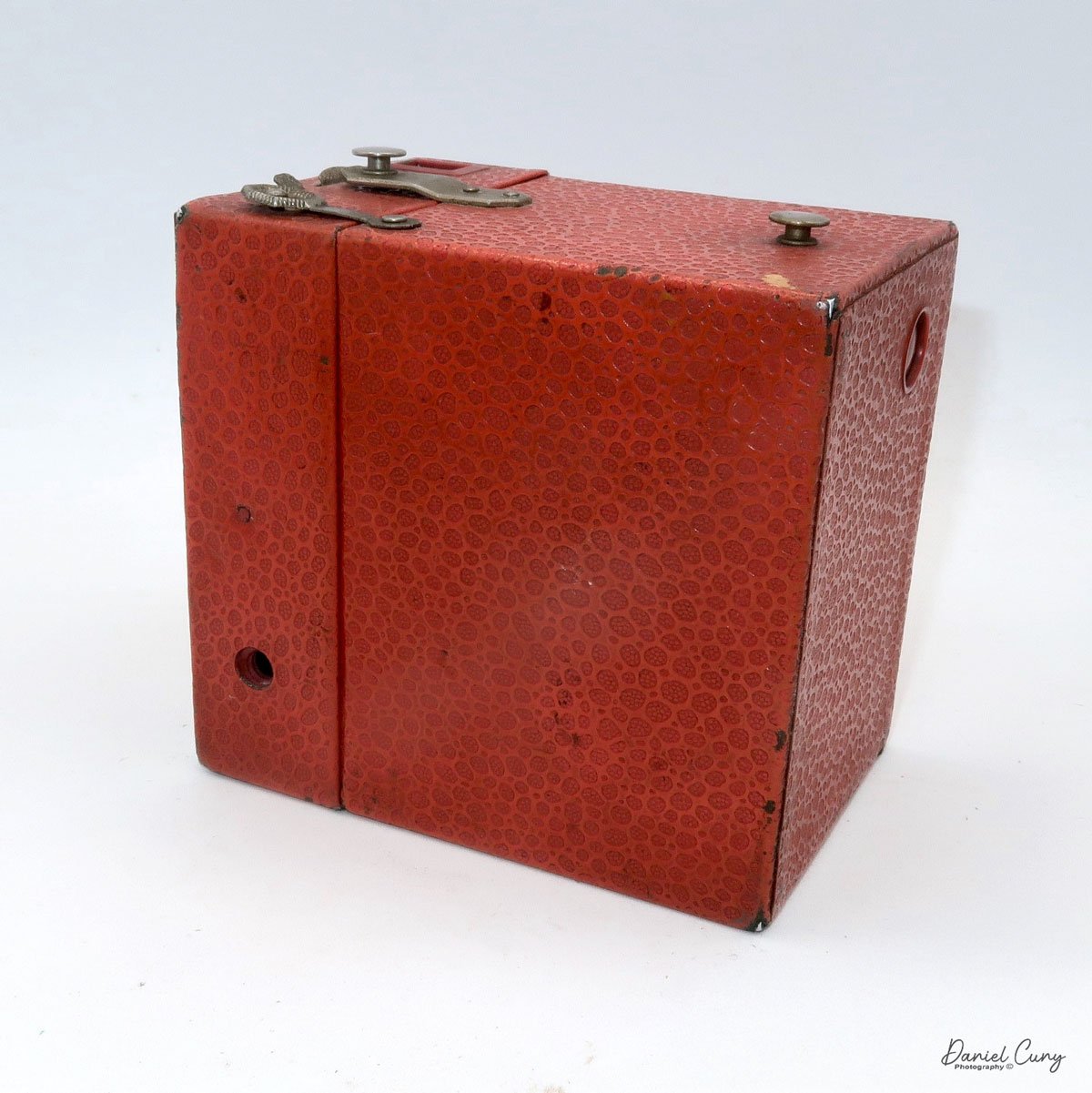
My Whitehouse Beacon cameras

When I was starting to collect cameras, I would collect anything —from straightforward box cameras and point-and-shoot cameras to fundamental bakelite cameras. As you begin to refine your interest in collecting a particular item, the focus becomes a bit more narrow, and the items that you see so often, like Kodak Brownies and bakelite holiday cameras, become less and less interesting. 

 I'm sure that's true with collecting anything. You're always on the hunt for odd, unusual, rare, or exotic items, whether it's cameras, firearms, cars, or sports memorabilia. Once I got over the initial phase of buying "any camera", I started collecting cameras with color to them. Kodak Rainbow box and folding camera, some of the bakelite Imperial camera, Boy and Girl Scout cameras, or even a box camera with odd and unusual faces on them, like the Bear Photo camera, or the Century of Progress cameras. To this day, it's difficult for me not to pick up and look at any colored camera, and I will most likely purchase one if the price is right.

 The Beacon camera was one of the cameras that started in my initial phase of collecting and continued into the next phase of collecting cameras with color. To this day, I can remember walking through a local flea market and seeing a familiar shape of the Beacon camera, but this one was in a different color. I had only owned the black version before, but this one was greenish-turquoise. When the seller quoted a few dollars, I snatched it up right away. The Beacon camera came in traditional black, as well as white, red, and green.

My three Beacons

 I purchased the red Beacon camera well over 35 years ago, when there was no internet, and the only places you could see items like this were at camera shows, camera collecting books, which usually weren't in color, or people selling things at garage sales or flea markets. I remember thumbing through the McKeown's Camera guide, which I had back then. It was considerably smaller, but it did mention whether cameras came in different color versions.

 When eBay launched in the late 1990s, I was an early adopter and joined in 1997. At that time, there were no product photos; only descriptions. It was more of a message board of people buying and selling items. My first number was 1034, this was even before you had a name on eBay. eBay changed the way people collect so many items. The market became flooded with items that were difficult to get before eBay, and their prices dropped. So many antique stores and other retailers were affected by them until they started selling on the marketplace, and it has now become such a vast entity.

 I can even remember starting a similar auction site aimed at the photo marketplace in the early 2000s, and I was going to call it Photo Flea Market, where people could buy and sell cameras, lenses, vintage gear, and even images like prints, Daguerreotypes, Ambrotypes, etc. Try to keep it more focused on one particular industry, but like many ideas, it went by the wayside.

Camera History:

Patent Drawing for Beacon camera

 The Beacon camera was manufactured by Whitehouse Products Inc. of Brooklyn, NY, starting in the late 1940s. My friend, podcaster, and excellent camera blogger Mike Eckman has a tremendous post on the History of Whitehouse Products where he deep dives into a famous woman named Vira Boarman Whitehouse, (Mrs. Norman De R. Whitehouse) who was mainly know as a suffragette leader in the 1920 that had a leather company who employed many women, and who also championed company's to go from a 48 hour work week to a 40 hour week. It's truly a fantastic read.

 Whitehouse Products produced the Beacon line of cameras, along with another simple camera in the 1960s, the Beacon Reflex camera, Automatic 705, and the Autoflash WH 127-A, which Ansco also sold. My favorite Whitehouse camera was the 1970s novelty Charlie Tuna Camera, which I also have in my collection.

 The one thing I can be sure of is that William L Lawson was the designer and inventor of the Beacon camera. I conducted a patent search and identified the initial design of the camera, produced in 1948. It's for the original Beacon camera, which also included two shutter speed settings. The two speeds were either "I" for instant or "B" for bulb, or timed exposures. The later Beacon II model removed the ability to set the shutter speed, as shown on my camera. The original Beacon and later Beacon II models took 16 images on 127-size film, producing a 3x4cm negative. 

 Later in the 1950s, Whitehouse produced the Beacon Two-twenty Five. A larger version of the Beacon and Beacon II, which took 12, 6x6cm images on 620 film. This is the camera I used to produce the images included in the post.

My Camera:

 My Beacon Two-Twenty Five is 4" tall by 5.5" wide by 3.5" deep with the lens extended, and 2.25" deep with the lens compressed into the camera body. It weighs 13.7 ounces. The camera has a 70mm Doublet lens with an aperture of F/8, which would be my best guess, possibly a bit faster. To say this camera has no bells or whistles is an understatement, and there are only a few things you need to do to take a photo.

To load the film, on the right side of the camera is the latch to open the back door. Slide the button down to open the back, and swing the door open to reveal where to load the film. This camera takes 620 film, but there is nothing to help load or unload the film roll from the film chamber. Since I had some 620 film, I needed to force the roll of film into place before I tore the tape off and slid the paper backing across the film plane to put the leader into the take-up spool. It wasn't very easy, but I got it done.

Once the film is on the take-up spool, I wound it until I saw the "start" arrows, then closed the back of the camera. I wound the take-up knob until I saw the number 1 in the viewfinder. The camera is now ready to take the first photo.

 Before taking the photos, you'll need to pull the lens area out of the camera body using the two grips on either side of the lens. Once the lens is pulled out, it snaps or locks into place with two wide silver bars located behind the grip. If you don't pull the lens out, your photos won't be blurry. To take the picture, the chrome shutter release is located on the top of the lens chamber. My guess is the shutter speed is around 1/60 of a second.

Once the photos have been taken, press in the two chrome bars that lock the lens into place at the rear of the camera body, and the lens chamber will slide back into the camera body.

 If you'll be using the Beacon flash attachment, attach the flash once the lens is extended. First, the flash takes two penlight batteries, which fit into the back of the flash attachment. On the back, under the reflector, is a small clip that needs to be pulled back to expose the battery compartment. Close the battery cover, slide the front of the flash unit under the lens chamber, then slide the flash over the top of the camera until it's in place, then screw it into the camera body using the small screw on the back of the flash.

The flash units take either size 5, 11, or 22 flashbulbs. Here's a link to Mike Butkus manual for the Beacon camera and the Beacon flash.

 The camera is fundamental to its functions, but let's take a look at the images it produces.


My results:

 I loaded up a roll of 620 film I keep for camera testing, and took a walk through the neighborhood. Since the day was cloudy, I had to wait for the sun to come out so I'd get better results.

 Here are a few of the images I took.

Conclusion:

 The Beacon did a better job than I anticipated, especially given its simple camera. No focus, shutter, or aperture settings. It's truly a "point and shoot" style camera, specifically designed for family snapshots. The edges are soft, as expected, but overall not too bad.

 I doubt I'll be taking the camera on an important vacation, but my curiosity got the better of me. I wanted to see how it would perform, and it wasn't horrible.

 Thank you for taking time from your day to read about this snapshot camera from the late 1940s, for the original Beacon, to the 1950s, for the Beacon Two-Twenty Five, which I used for the post.

 Here's a link to my other Camera Reviews.

 If you are looking for an odd or unusual photo item, be sure to stop by Cuny's Camera and Photo, my eBay store.

 Until next week, please be safe.

Kodak Beau Brownie Camera

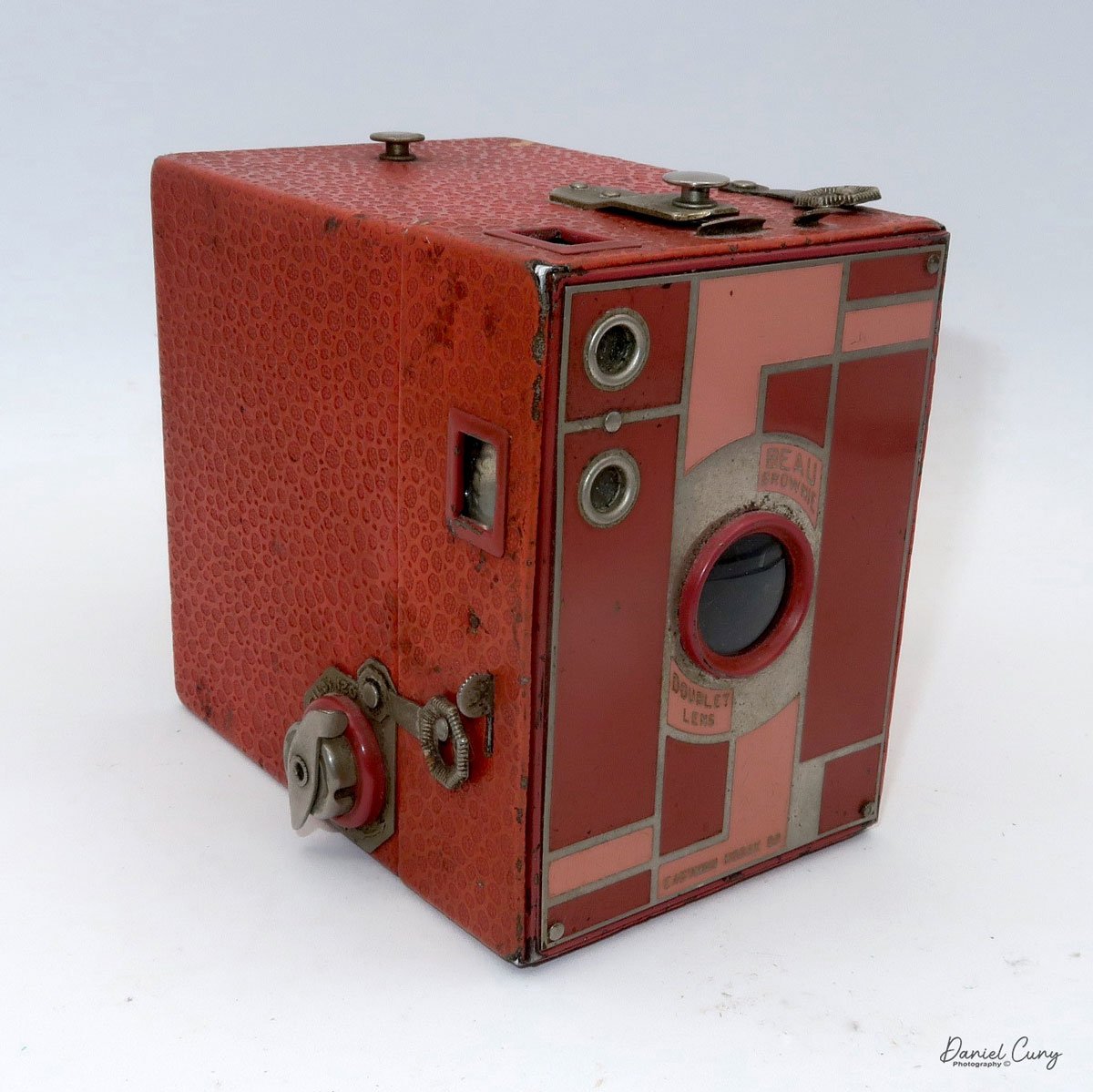
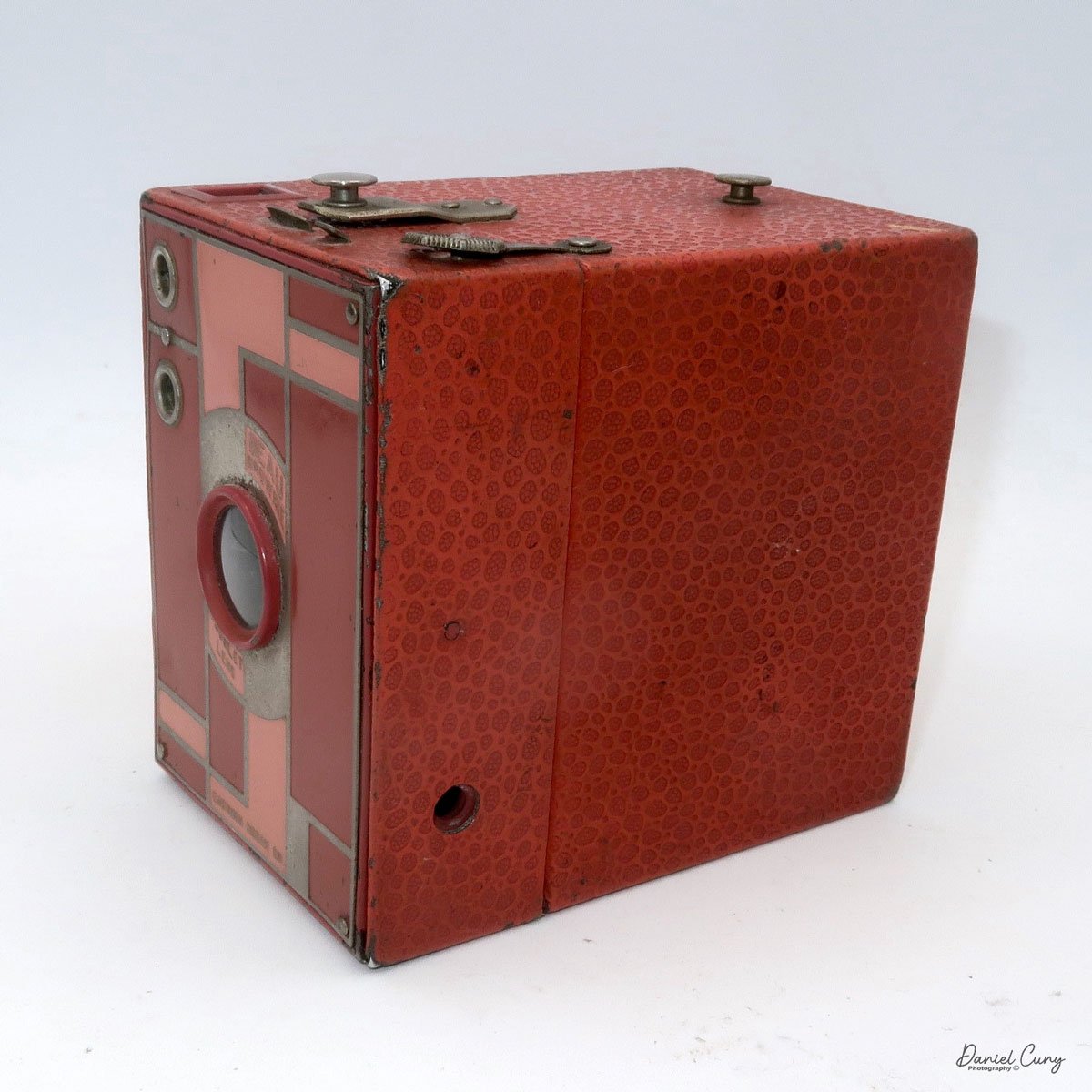
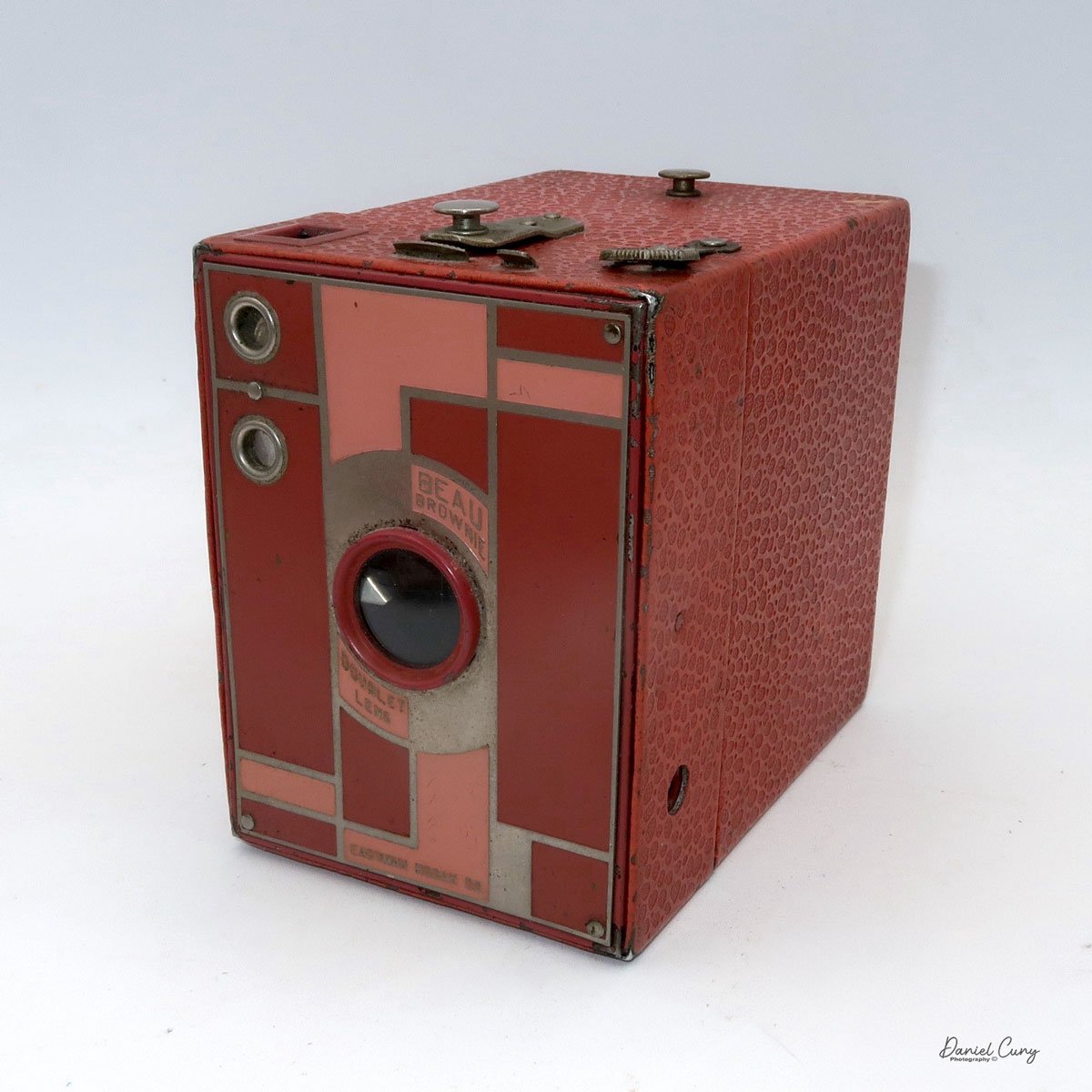
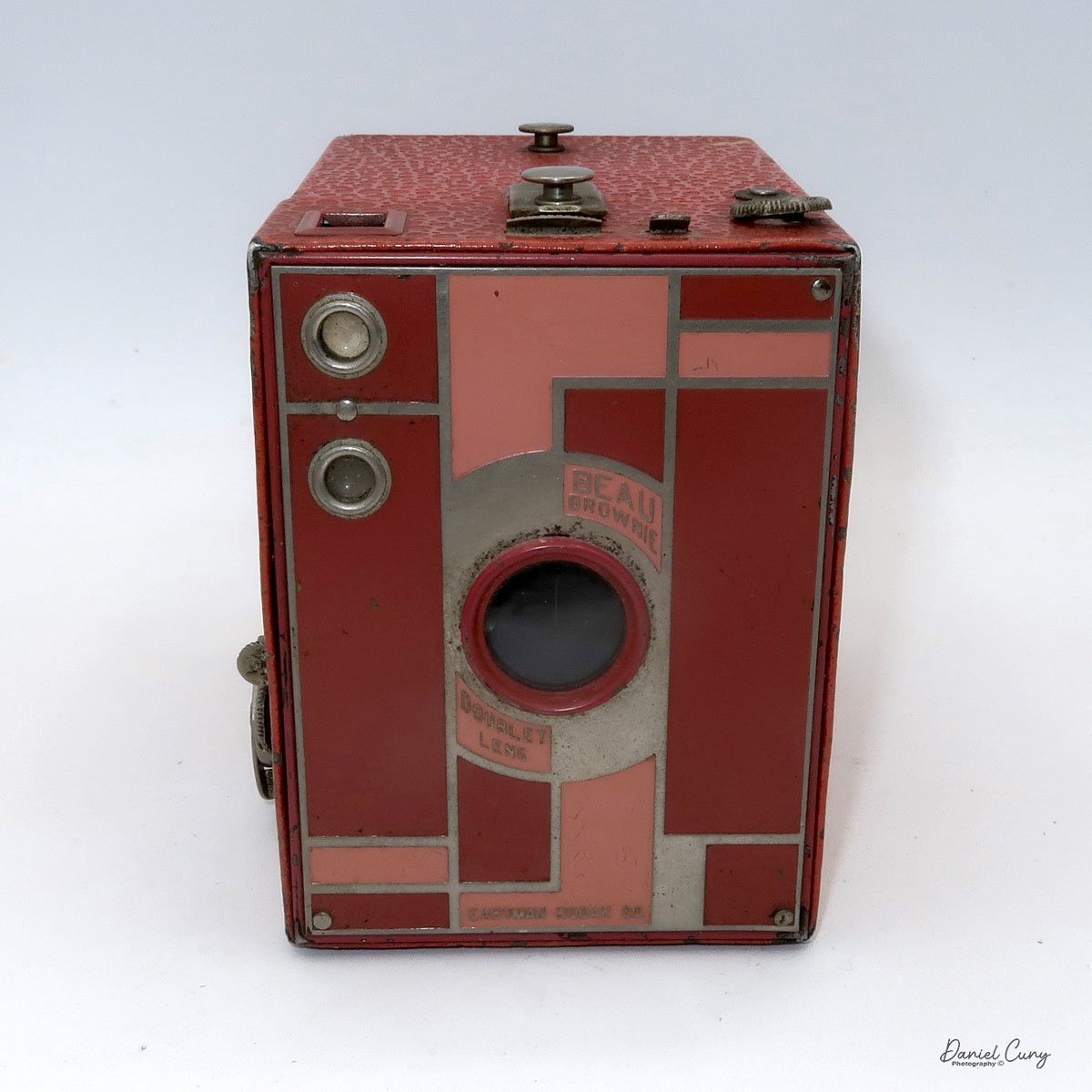
My Rose Beau Brownie Camera

To end the unofficial box camera month for my blog post, I was thinking about writing about a few different cameras, but my thoughts kept coming back to one specific model of Eastman Kodak camera, one of the most beautiful cameras made, the Beau Brownie camera.

 The two factors of the Beau Brownie line of cameras that I enjoy are the five different colors they come in: black, tan, blue, green, and the most sought-after rose. The art deco design by one of America's outstanding industrial designers, Walter Dorwin Teague, is also bundled into a very uncomplicated camera marketed more as a fashion statement than the ordinary black box camera. 

 George Eastman and his marketing team realized early on that to broaden the photographic marketplace, they needed to expand the scope of photographers using cameras. Until the early 1900s and into the 1910s, the vast majority of photographers were males due to the time-consuming process of making photographs. While Kodak didn't invent photography, much like Henry Ford, he sold cameras to the masses due to the newer methods of making glass plates easier to obtain and process, making roll films, film processing, and printing available to the masses.

My set of Nos. 2 Beau Brownie cameras

 In the late 1920s, Eastman Kodak started a relationship with Edwin Dorwin Teague, which forged a relationship and changed the design and quality of cameras for thirty to forty years until he died in the early 1960s.

The Relationship:

Walter Dorwin Teague, born Dec. 18, 1883, is often regarded as one of the pioneers of industrial design in America. He had a long and influential relationship with the Eastman Kodak Company. His collaboration with Kodak helped shape the visual and functional identity of the company's products, particularly its cameras, during the mid-20th century.

Portrait of Walter Dorwin Teague

 Teague, known for blending aesthetics with functionality, first worked with Kodak in the late 1920s. He continued influencing the company's product designs for several decades until his death on Dec. 5, 1960. His designs embodied the principles of streamlining, an artistic and engineering approach emphasizing smooth, flowing lines and modern, user-friendly aesthetics. Kodak sought to enhance its product appeal in an increasingly competitive market. Teague's expertise gave the company a fresh, contemporary design language that resonated with consumers.

 One of Teague's most iconic contributions to Kodak was the design of the Kodak Bantam Special, introduced in 1936. The Bantam Special was a masterpiece of Art Deco design, featuring a sleek, black enamel and chrome finish. It was visually striking, compact, and easy to use, aligning with Kodak's mission to make photography accessible to a broader audience. The camera became a symbol of modern design and demonstrated how industrial design could elevate consumer products beyond mere functionality.

Walter Teague designed Kodak Super Six-20 camera

 Teague's impact on Kodak extended beyond individual products; he played a key role in shaping the brand's overall aesthetic identity. His work helped Kodak establish a reputation for producing elegantly designed, high-quality, practical, and stylish cameras. His collaboration with Kodak set a precedent for integrating industrial design into mass-market consumer products, influencing Kodak's future designs and the broader field of product design.

 Beyond the Bantam Special, Teague worked on several other Kodak models, including the Kodak Baby Brownie and the Kodak Medalist. These cameras showcased his ability to balance form and function, making photography equipment more appealing and accessible to everyday users. His designs helped Kodak maintain its position as a camera industry leader, reinforcing its image as both innovative and consumer-friendly.

 Walter Dorwin Teague's relationship with Kodak was a testament to the power of industrial design in shaping consumer products. His work not only enhanced the usability and attractiveness of Kodak cameras but also set new standards for the role of design in consumer technology. Through this partnership, Teague left an enduring mark on both Kodak and the history of industrial design.

The Camera:

Beau Brownie cameras came in two sizes: the smaller Nos. 2, which takes 120 film, and the larger No. 2A, which takes 116 film. They were both introduced in October 1930 and ended production in 1933. However, the two rarer versions, the green and rose colors, were in production for 1 year, which ended in 1931. Luckily, I have all five colors in different sizes in my collection. I've had all five for many years, and this is the second time I've owned all five colors in both sizes. 

 The camera that I used for the blog post is the smaller Nos. 2 camera due to the easily accessible 120 film the camera uses. The Beau Brownie No. 2 camera is 4" tall by 3" wide or 3 3/8" wide if you include the film advance knob by 4 3/8" deep. The camera has a 6x9 negative size and weighs 14.1 oz.

 The larger Beau Brownie, Nos. 2A is 5" tall, by 3 3/8" wide, or 3 3/4" wide if you include the film winding knob, by 5" deep. The No. 2A film format is 2.5" x 4.25" on 116 film, weighing 1 lb.—3.8 oz. 

My Nos. 2A Rose Beau Brownie (L) and Nos. 2 (R). Note the size difference

Looking online, I found a Beau Brownie Camera Manual, which is where I look for manuals for the cameras in my collection. It's a fabulous website and something we all should support.

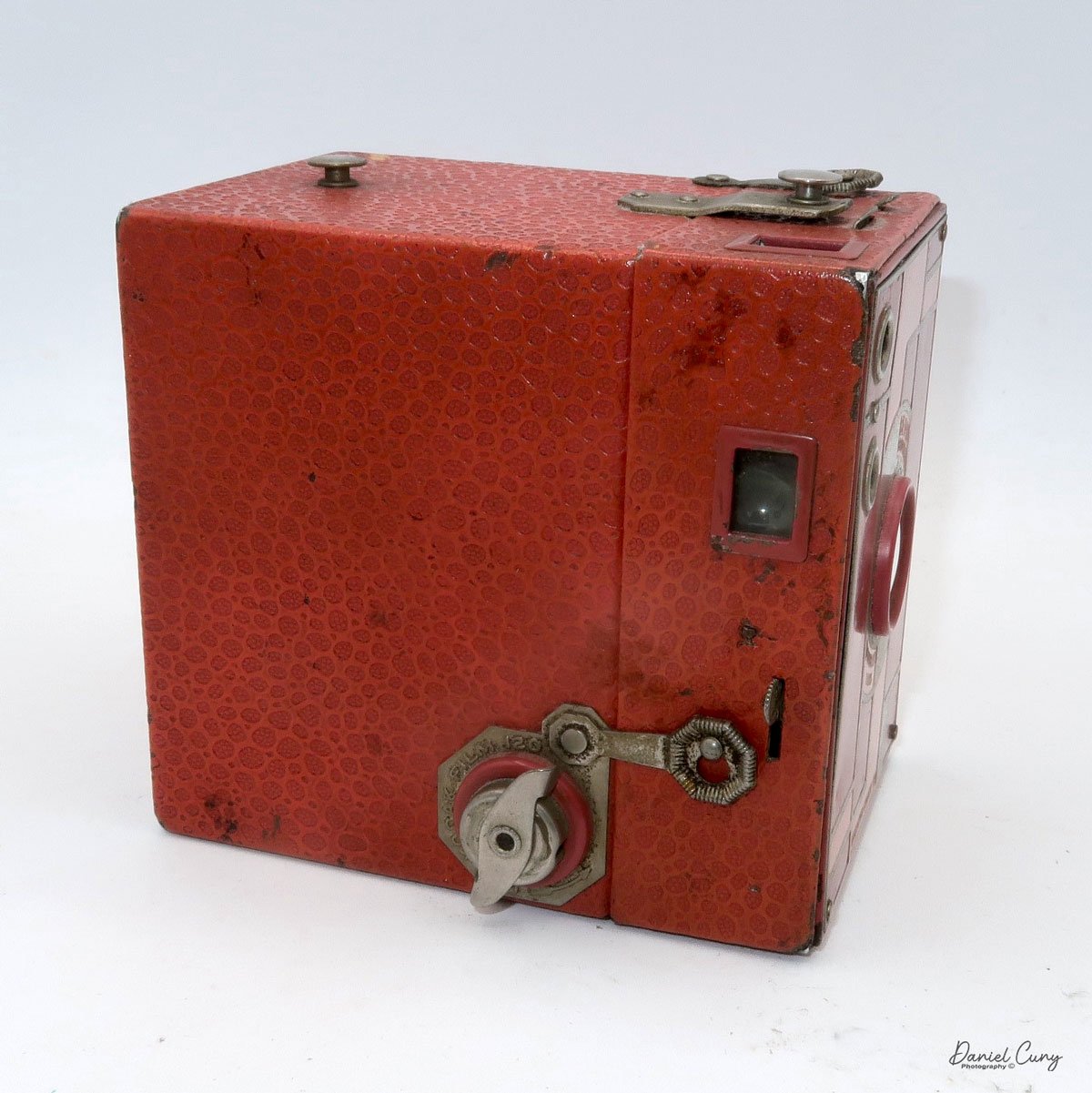
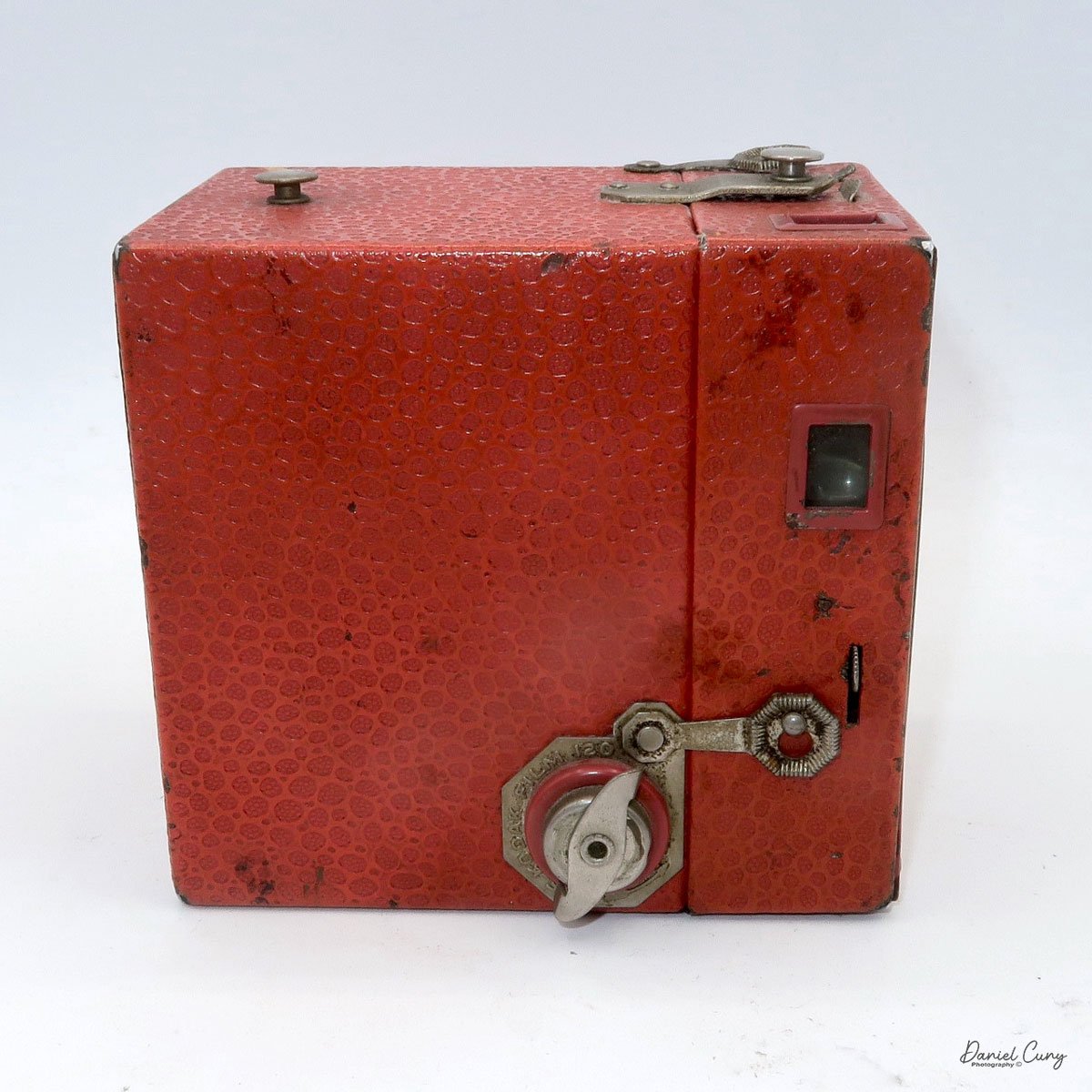
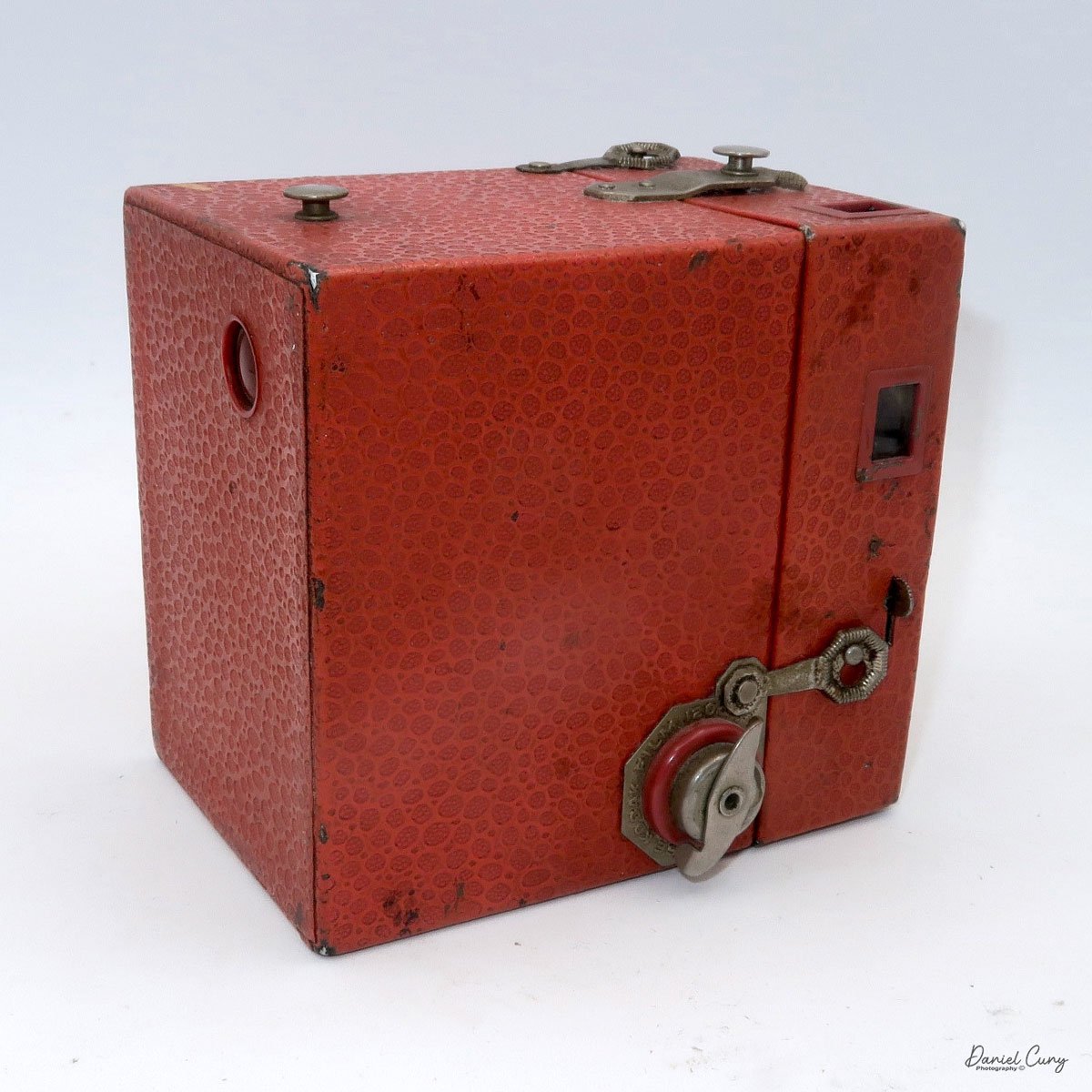
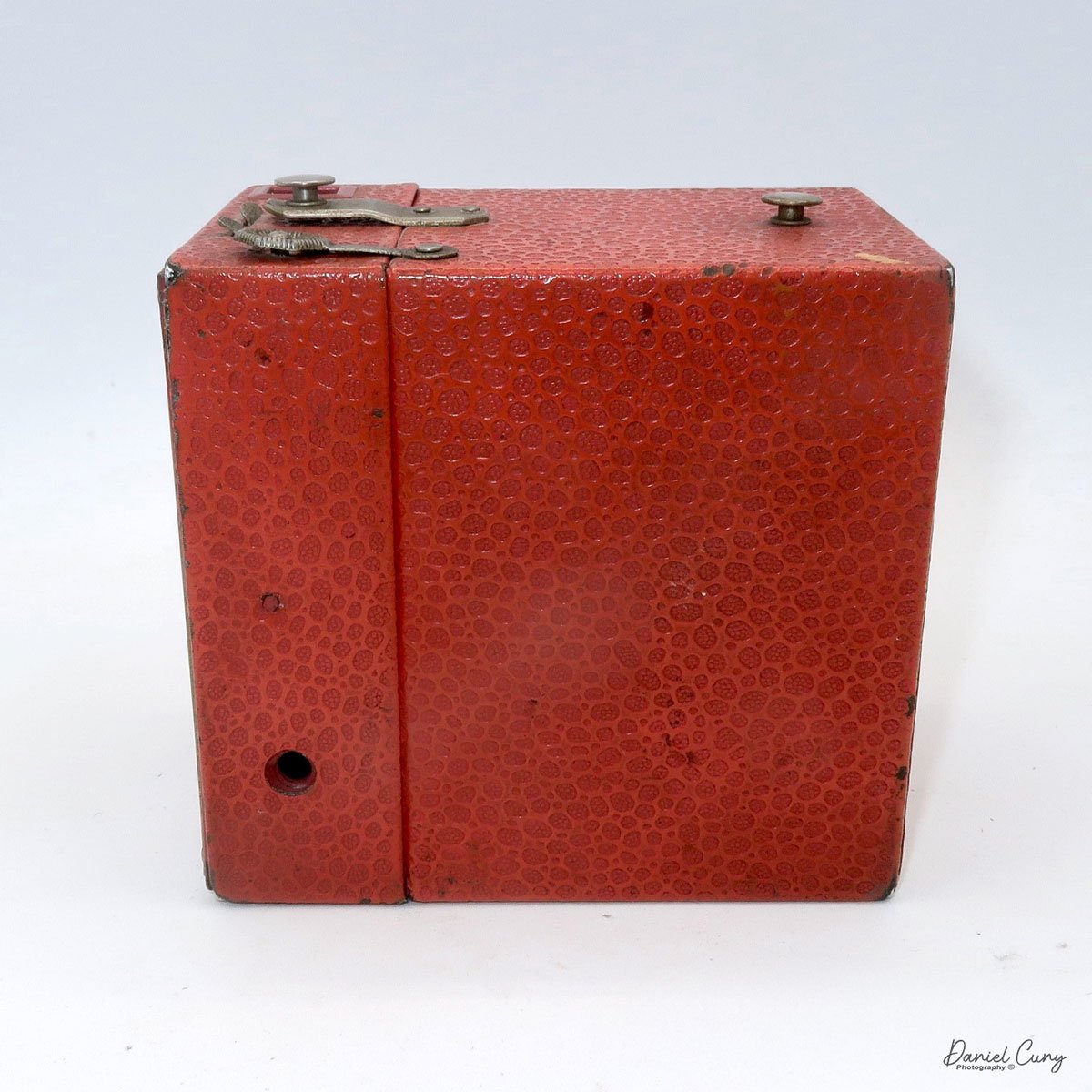
 The front of the camera has a beautiful, enameled Art Deco geometric design that is two-toned with an accent color to enhance the camera's beauty. The black version has a dark burgundy accent color. In contrast, the other colors have a lighter and darker version of the camera's color. The rest of the camera is made of thin metal material covered in pebbled imitation leather, the same color as the camera. The carrying handle is on the top of the camera, which is the same color as the camera's body.

Also, two round windows are used for the viewfinder on the front of the camera. The top circle is for viewing vertical-format photos from the top of the camera, and the bottom is used when you turn the camera on its side for horizontal-format photos. There is no focus on this meniscus doublet lens, so like many box-style cameras, the minimum focus is around 10 feet, but items around 8 feet may still be in focus.

 The Beau Brownie cameras have two latches securing the back of the camera to the front. One latch is on the top of the camera, and one is on the side of the camera. Before you open the camera, you'll need to pull out the winding knob, which is engaged with the film transport. The winding knob needs to be pulled out; otherwise, the camera's front and back won't slide apart easily.

Once you have the camera apart, you can load the roll of film into the camera. Take the empty film spool from the top of the camera and move it to the bottom. Ensure it's adequately engaged, which will move the film from frame to frame. The fresh, unexposed roll now gets loaded into the camera's top film holder. Break the tape holding the film together and pull the leader over the opening with the paper backing looking outwards. Feed the leader into the empty spool on the bottom and wind a bit so you know the film is transporting properly. Also, check that the film fits within the walls of the spool so it can be transported easily. Wind the film until you see arrows pointing outwards. Ince you see the arrows, put the back onto the camera, press the winding knob, and secure the two latches. Now wind the film until you see the #1 in the red window. That's the indication that you're ready to make the first exposures.

 There are only two controls for the camera, located on the top of the camera. There are two levers just in front of the handle. One is on the left, and the shutter speed controller is the smaller of the two controls. There are only two settings. When the lever is down, the camera is in "instant" mode and has a shutter speed of around 1/100 sec. Pulling that small lever up puts the camera in "B" or timed exposure mode. In this setting, you'll need to set the camera on some camera tripod or bracket to hold the camera still so as not to cause a blurry photo.

The other controller is the larger of the two levers that control the aperture settings. The lever can be in three positions to change the different apertures. When the lever is down, the camera has an approximate aperture of F11, the middle position is approximately F16, and the top position is approximately F22.


My Results:

I loaded the camera with Ilford 400 ISO/ASA film and walked through the neighborhood on a very overcast and sometimes rainy afternoon in February. The neighbors are getting used to the old man walking through the streets with an odd-looking camera in his hand, taking photos of houses, objects, or other items I find on my walks.

 Here's what I took.

Conclusion:

Other than the stunning beauty of this camera, it's a fundamental camera with minimal controls and a fixed Meniscus Doublet lens that takes a significant negative. According to the manual, the minimum focus is approximately 8-10 feet. My judgment of distance was off in some photos, as the images are out of focus.

 Overall, it was a fun camera to shoot with, and I'll need to take it out on a sunnier day to get more contrast images. There are a couple of filters available for the Beau Brownie, one of which is a portrait filter that allows for closer focus for portrait photos, so I'll need to dig through the box of old filters to see if I have one of the recommended filters to try on the camera.

 Thank you for taking a few minutes to read about one of the most beautiful cameras ever made. I'm truly honored to have one in my collection.

 Until next week, please be safe.