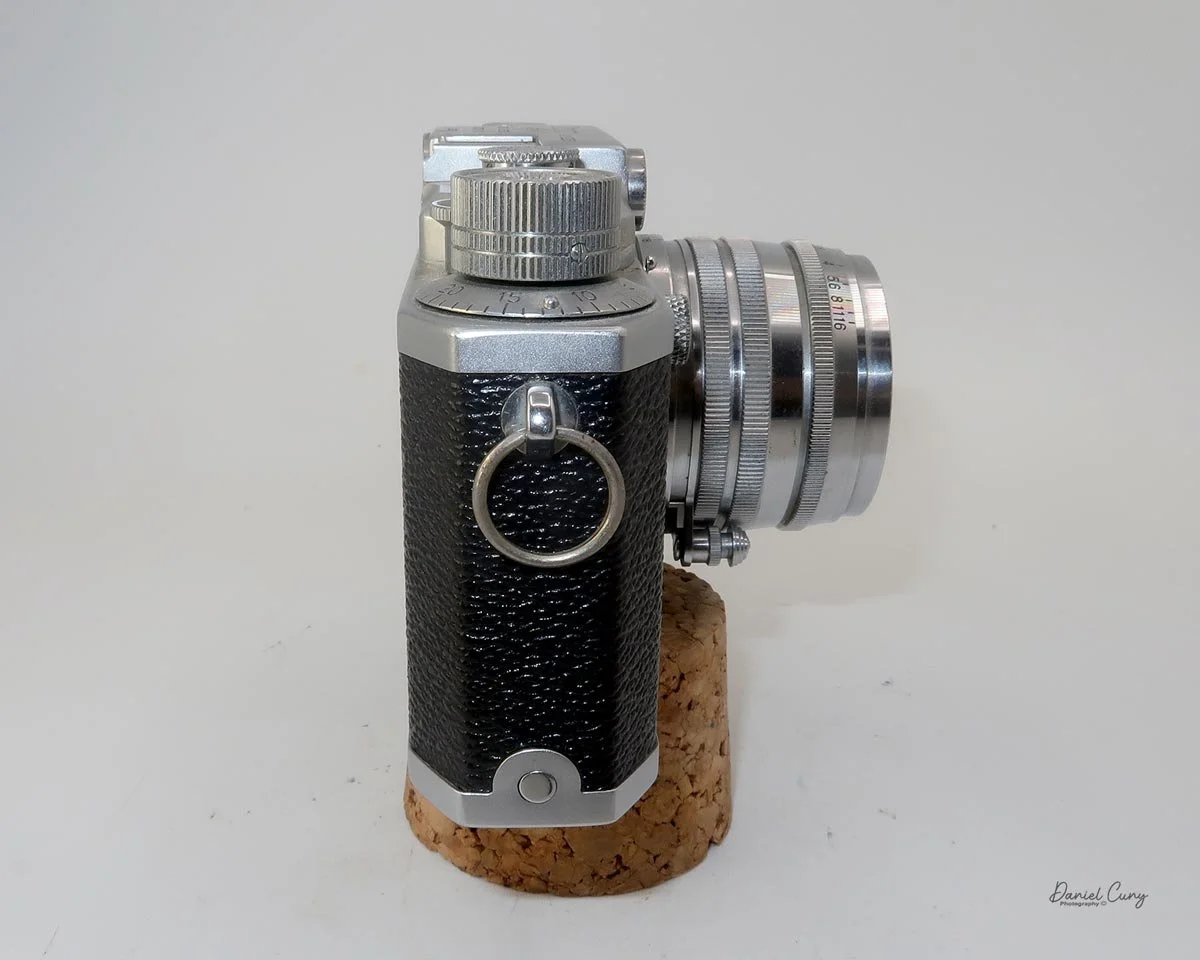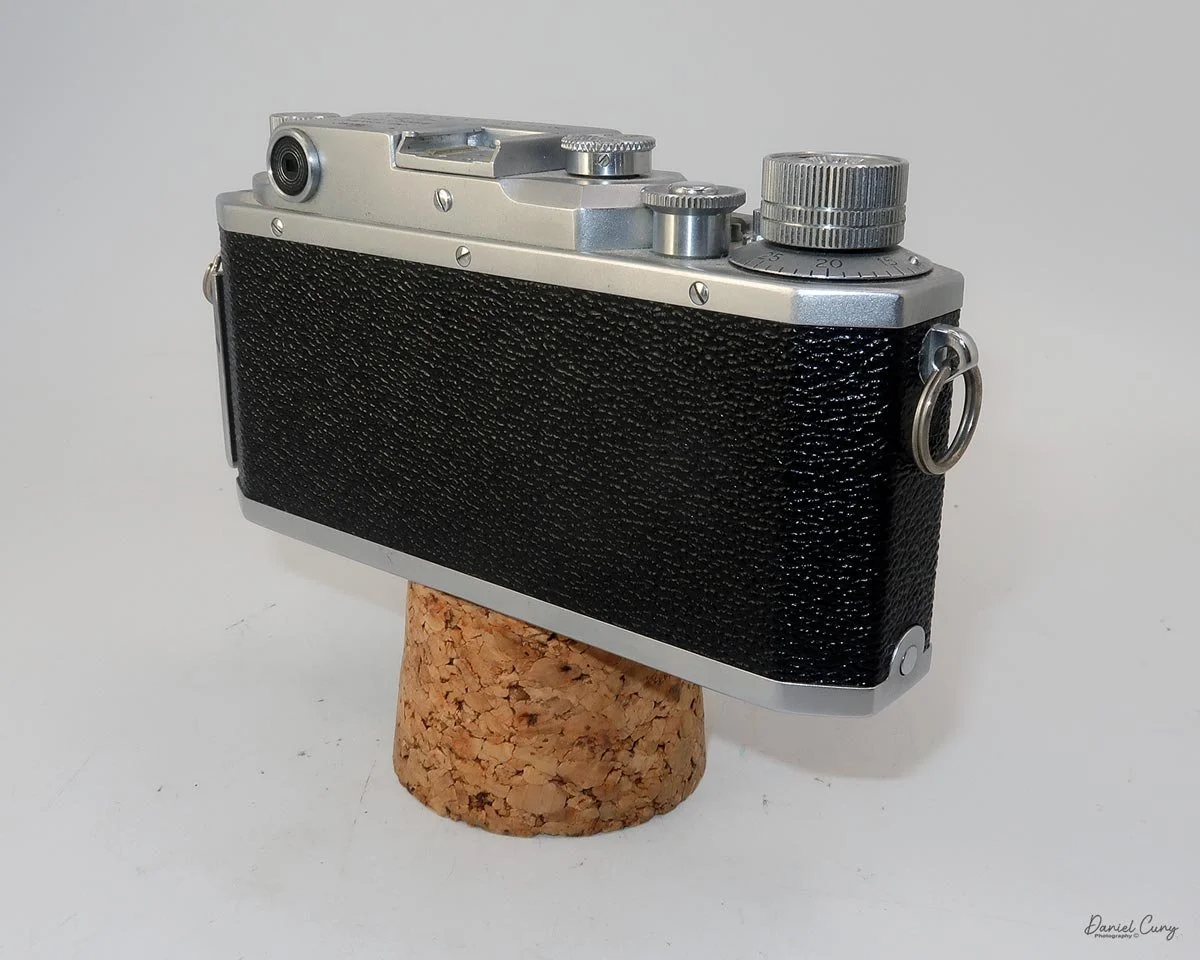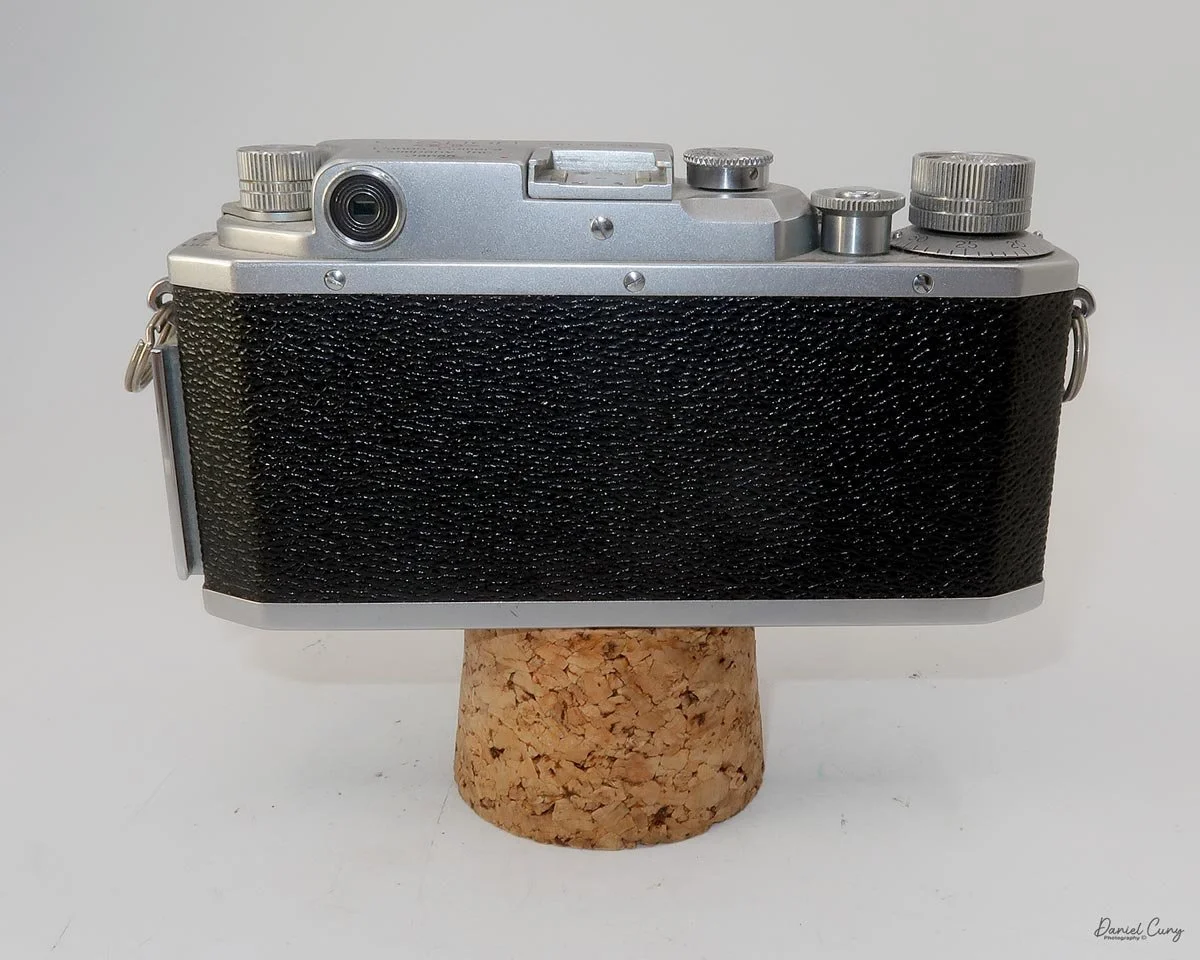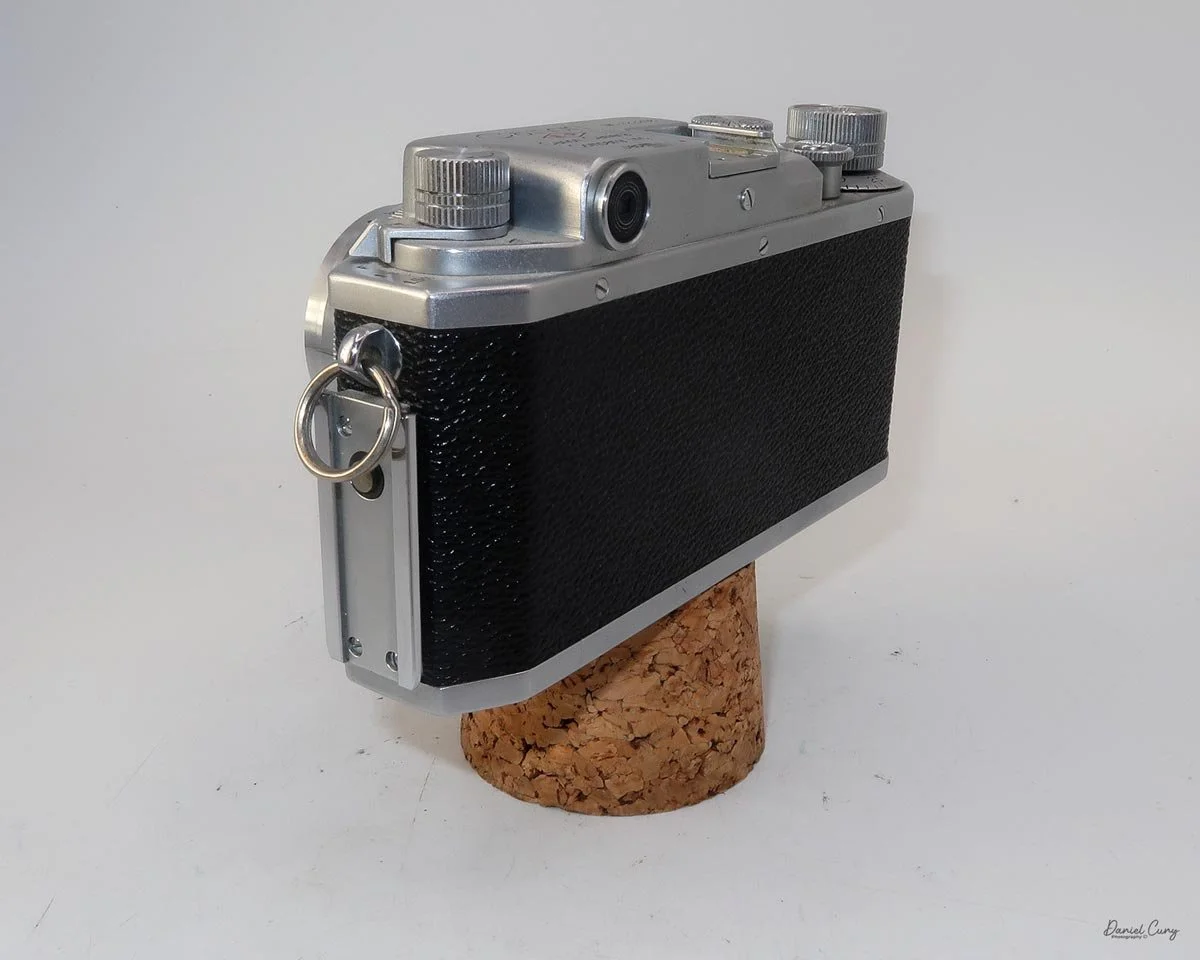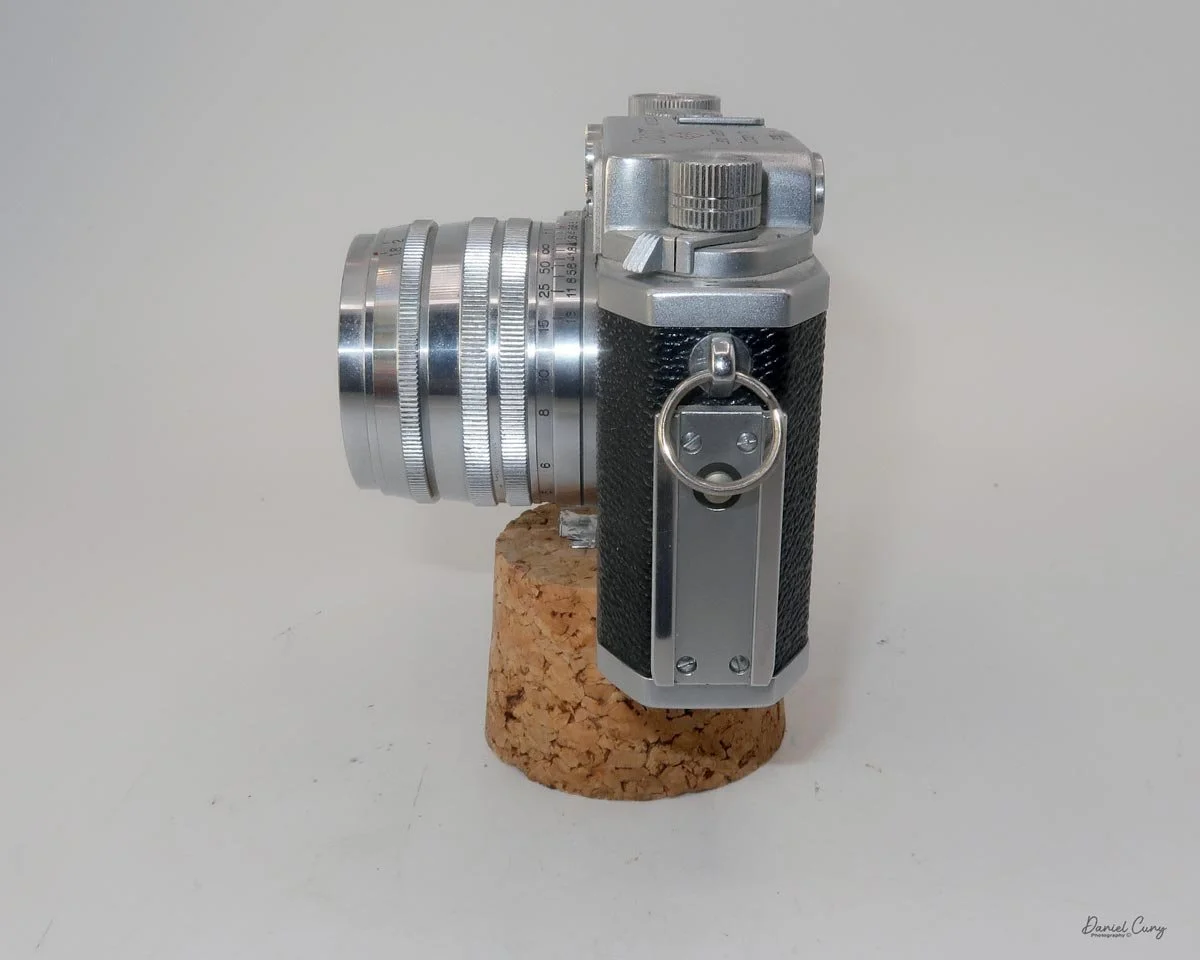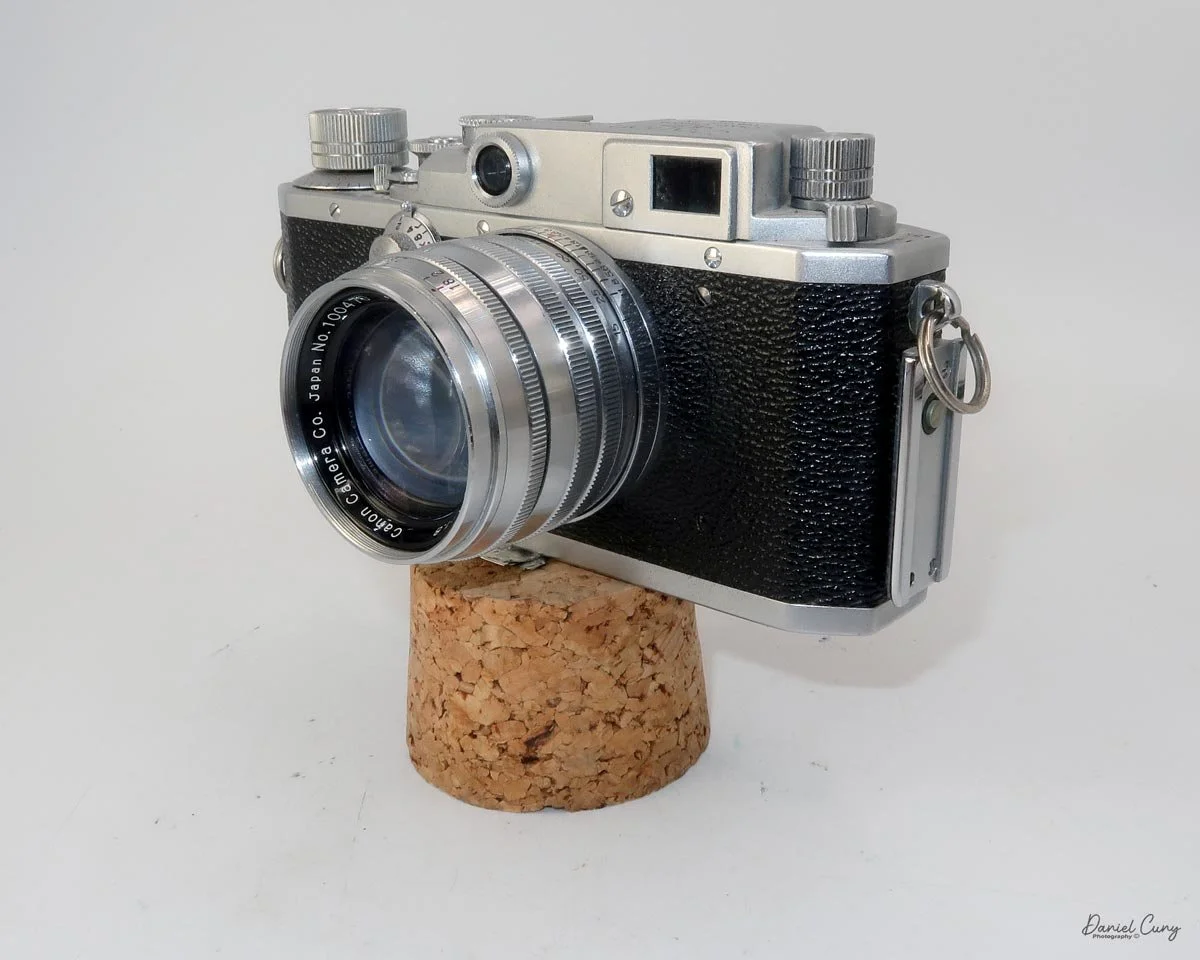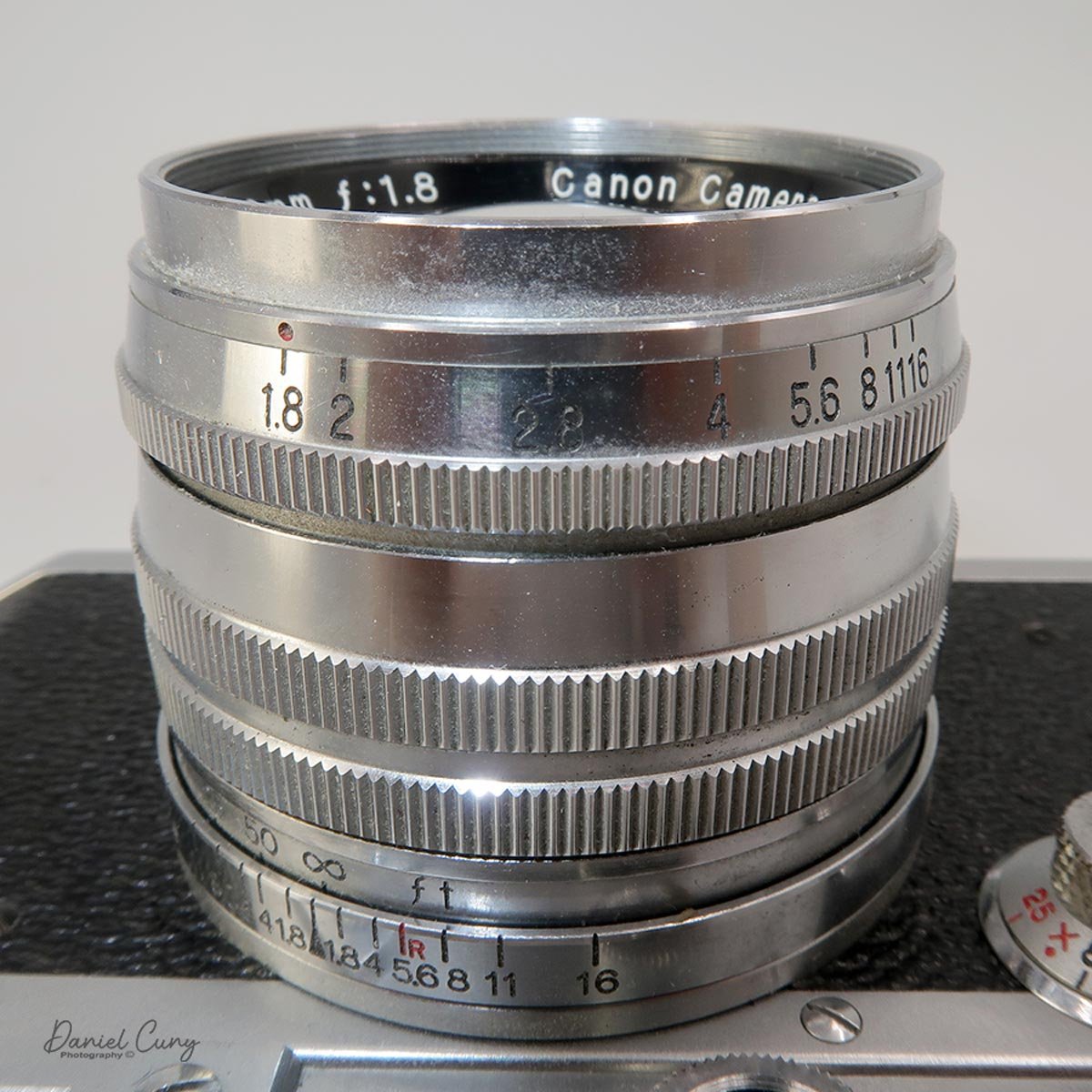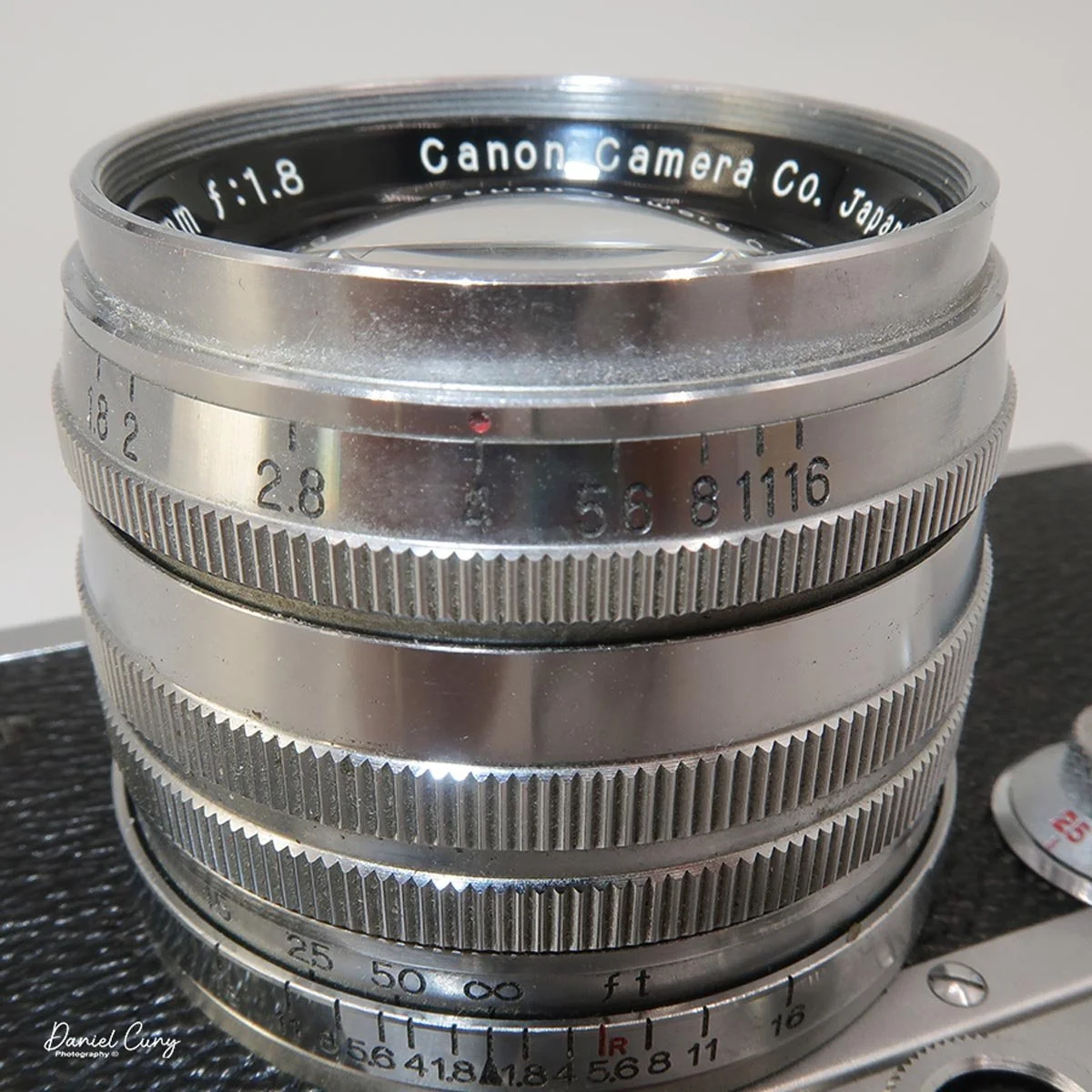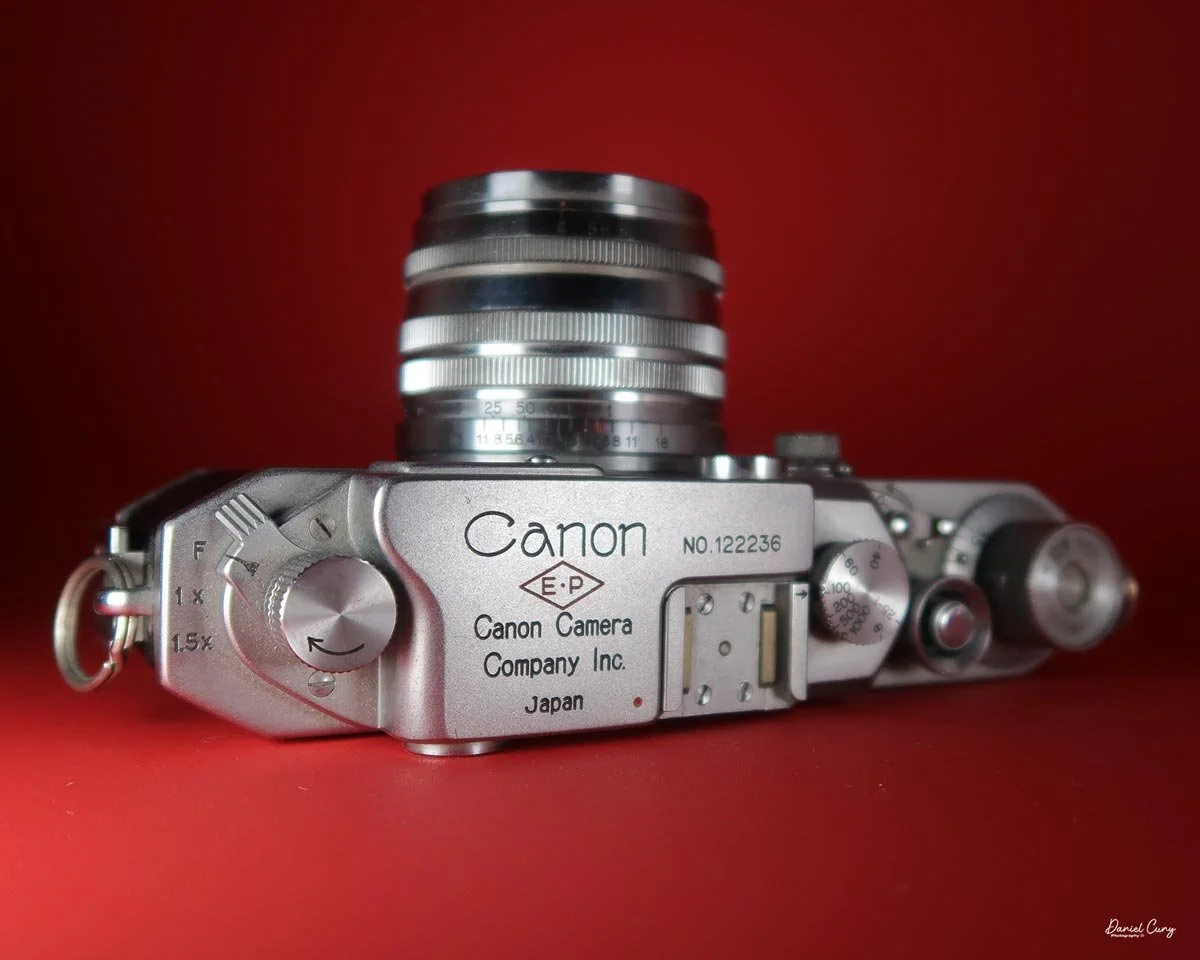
Canon IV Sb camera

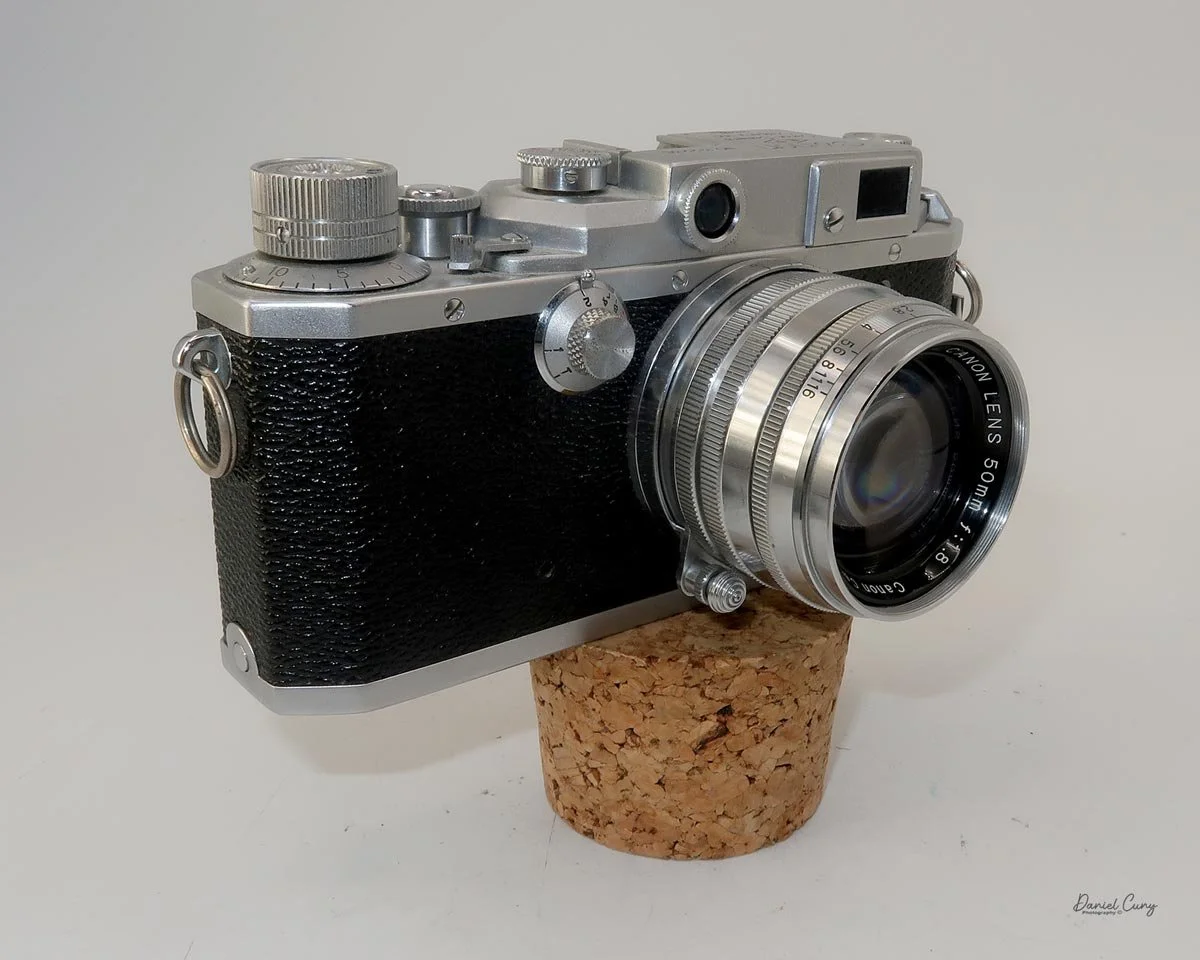
My Canon IV Sb camera

Being a lifelong Nikon shooter, along with working in the retail photo industry for nearly 20 years during the 1970s, I became very tired of Canon's dominance and marketing strategy around the Canon AE-1, which was the "hottest" camera around when it was released in 1976.

The Canon AE-1 was under restricted distribution, meaning demand far outstripped supply, and the camera was extremely sought after. There were people waiting months to get the camera. I say this because, as someone who was hounded almost daily for the camera, I started to dislike the brand.

Don't get me wrong, their cameras are decent, and even when they dominated the digital world with the 5D, 5D Mark II, and other cameras, it still irked me that they sold so many units. I was tired of them—especially as a member of the gold-and-black team (Nikon).

In Canon's early years, they made some extremely well-made and sought-after cameras, the Canon IV Sb being one of them. Companies like Nikon, Nicca, Minolta, and Leotax made some of the better rangefinder cameras coming from Japan during this timeframe. They competed well with the more sought-after German companies of Leica, Zeiss, and Voigtländer.
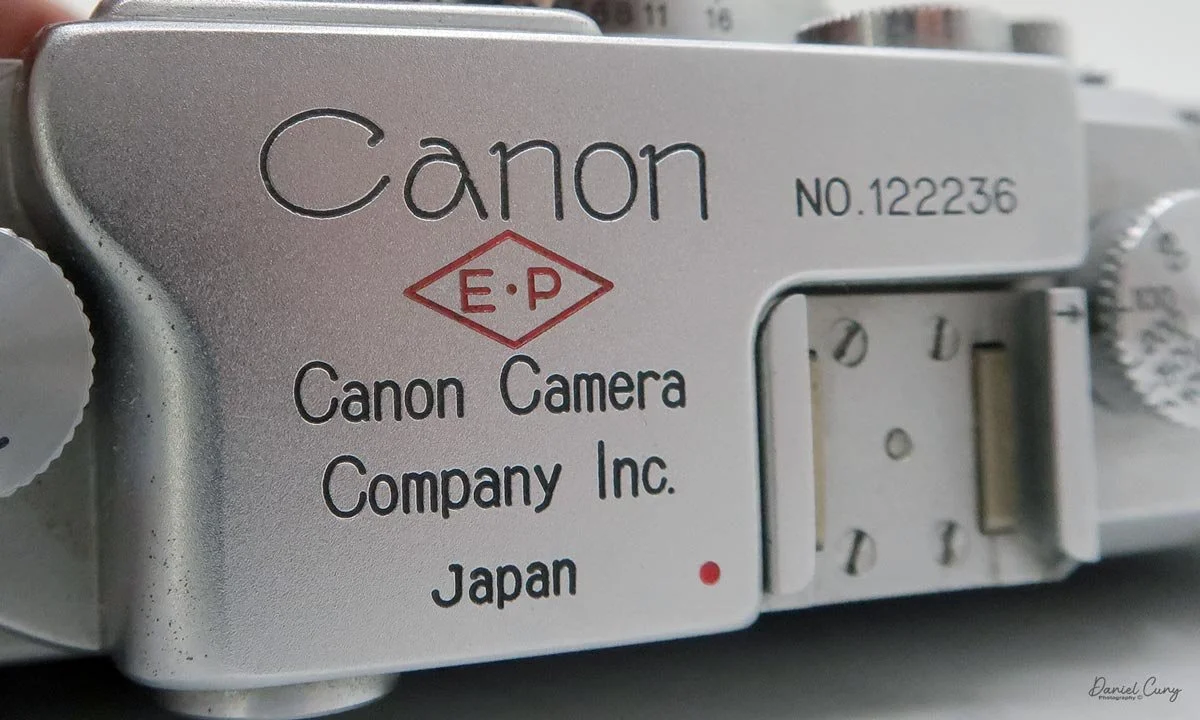
I enjoy the early font on the Canon name.

I say this because I've owned Canon rangefinder cameras in the past. Still, because of my past biases, I rarely look for them unless one comes up at a very good price or is included in a group lot I've purchased.

It's interesting that while Canon rangefinders have produced some amazing products—especially the extremely fast Canon 50mm f/0.95 lens—their cameras are generally priced less than their Nikon counterparts, which produced more "professional" products during the 1950s–1990s.

Fast forward to this week's blog on cameras in my collection: the Canon IV Sb, included in the camera lot I purchased in Las Vegas about a month ago. The camera is in very good condition, except for a repaired blemish on the second shutter curtain. The lens is bright and clear; the rangefinder is clean, bright, and seems accurate; the chrome shows no tarnish; and all shutter speeds sound accurate, even the slower ones.

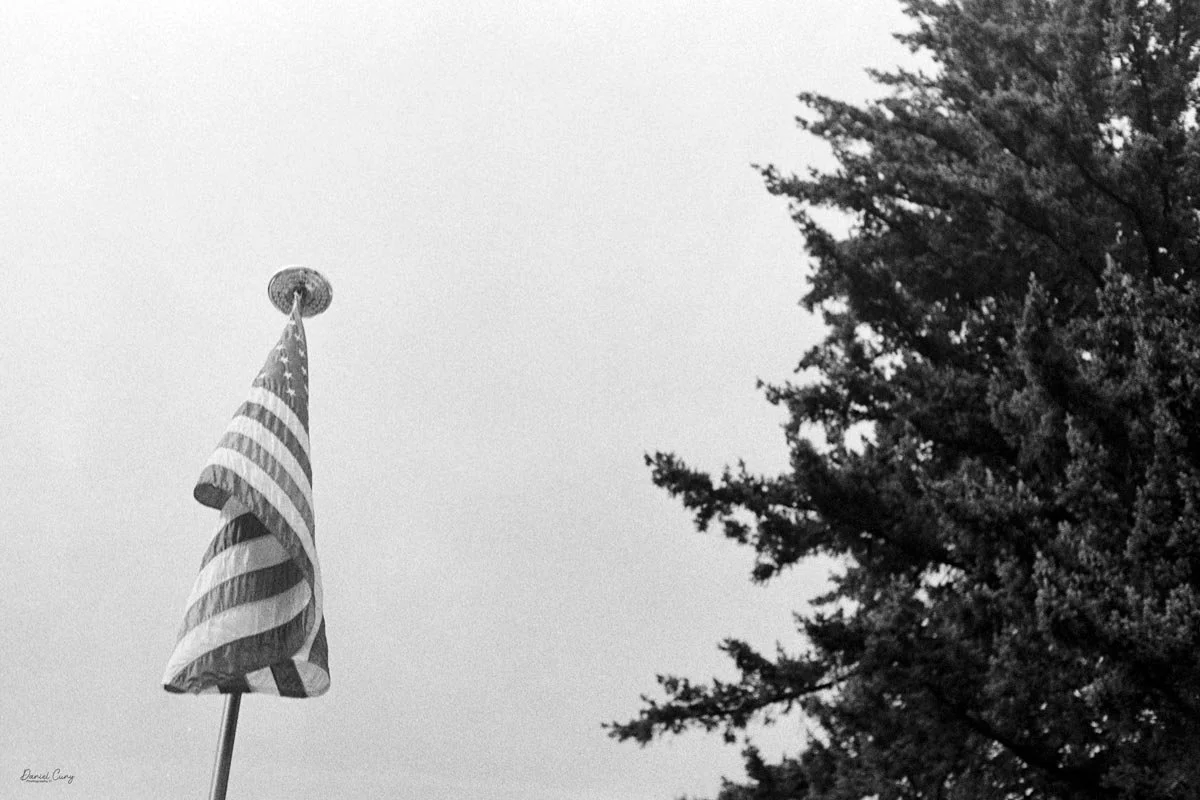
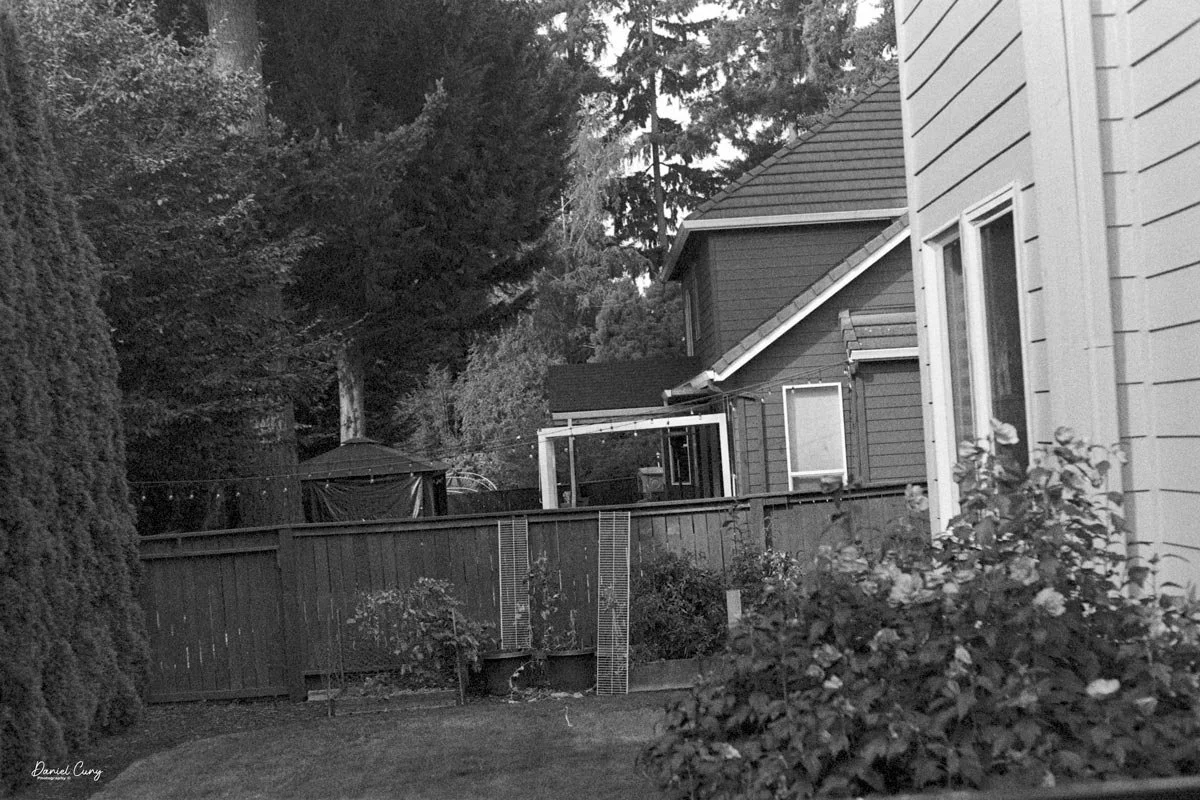
It's been quite some time since I ran film through one, so I figured now was a good time to put a roll of expired Plus-X 20-exposure film from my gaggle of film in, walk through the neighborhood, and take some photos.

History:

Canon started in 1933 in a small room in Tokyo's Roppongi district, where four men—Goro Yoshida, Saburo Uchida, Takeshi Mitarai, and Takeo Maeda—founded the Precision Optical Instruments Laboratory. Their goal was simple and ambitious: build a Japanese camera that could stand up to Germany's best. At the time, all the fine cameras came from Europe.
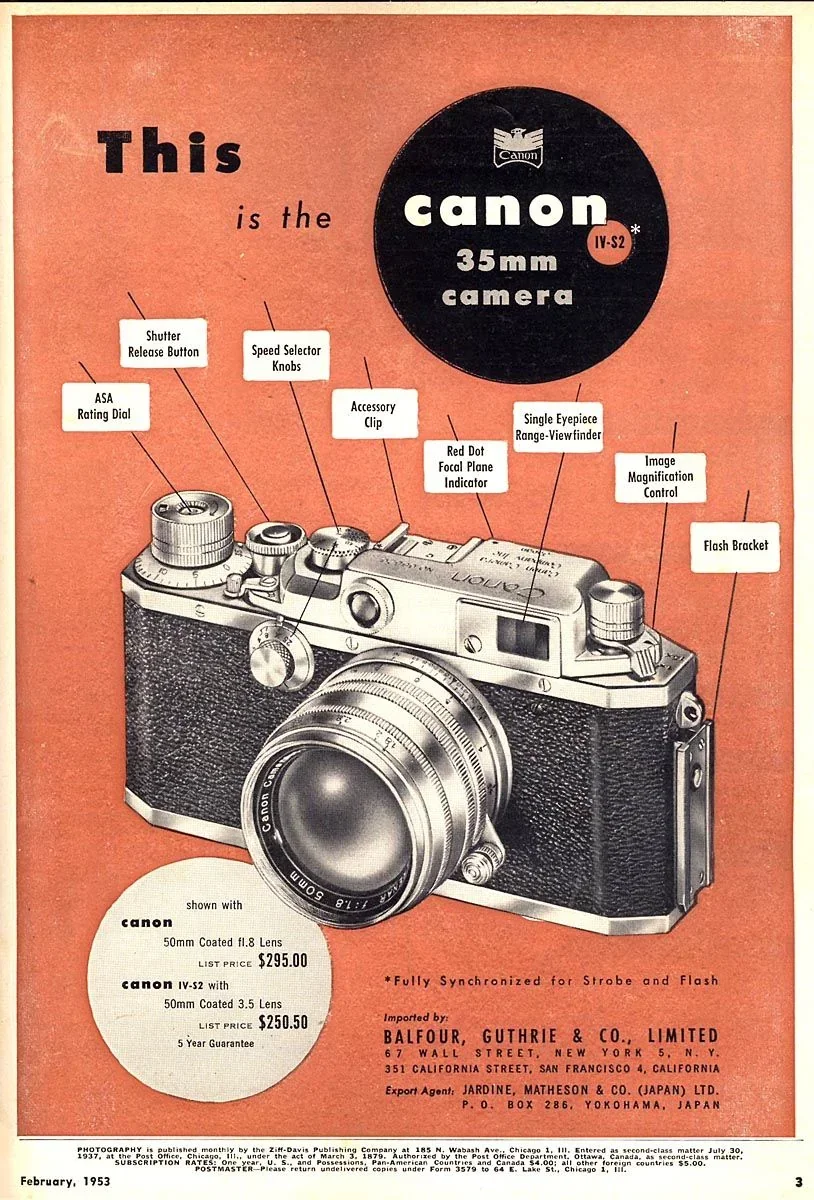
Canon IV Sb advertisment.

Their first effort, built in 1934, was the Kwanon, named after the Buddhist goddess of mercy. It was Japan's first 35mm focal-plane-shutter camera and only a prototype—it never went on sale. Yoshida had studied a Leica II to figure out how it all worked. In 1936, the company released its first commercial camera, the Hansa Canon, which became known by the name we'd all come to know. Since the little company couldn't make its own lenses yet, the earliest Canons shipped with Nikkor lenses from Nippon Kogaku—yes, Nikon. The two companies that would become lifelong rivals started as customer and supplier.

The company became Canon Camera Co. in 1947, and just Canon Inc. in 1969. Through the 1950s, it built fine rangefinders, but the future was the SLR. Canon's first one, the Canonflex, arrived in 1959. Then, in 1961, the Canonet arrived: a fixed-lens rangefinder that became one of the best-selling cameras of its day—a real people's camera.

The 1970s were Canon's big decade. The F-1 of 1971 was its first true professional system camera, and the new FD lens mount gave it its own mount. But the camera that changed everything was the AE-1 in 1976—the first 35mm SLR with a microprocessor inside. It was cheap, easy to use, and sold in the millions, putting real SLRs into the hands of ordinary shooters.

In 1987, Canon made its boldest move: the EOS system and the all-electronic EF mount. The old FD lenses wouldn't fit, which angered plenty of loyalists. Still, the clean-slate design let Canon leap ahead in autofocus. It was the right bet. Canon rode the autofocus era into the digital age with the EOS D30 in 2000, then broke new ground in 2005 with the EOS 5D, the first affordable full-frame digital camera.

Today, Canon's EF mount has given way to the RF mirrorless mount, introduced with the EOS R in 2018. From a four-person workshop in Roppongi to a photography giant, Canon got there by doing what its founders set out to do: build cameras for everyone, not just professionals.

The Camera:

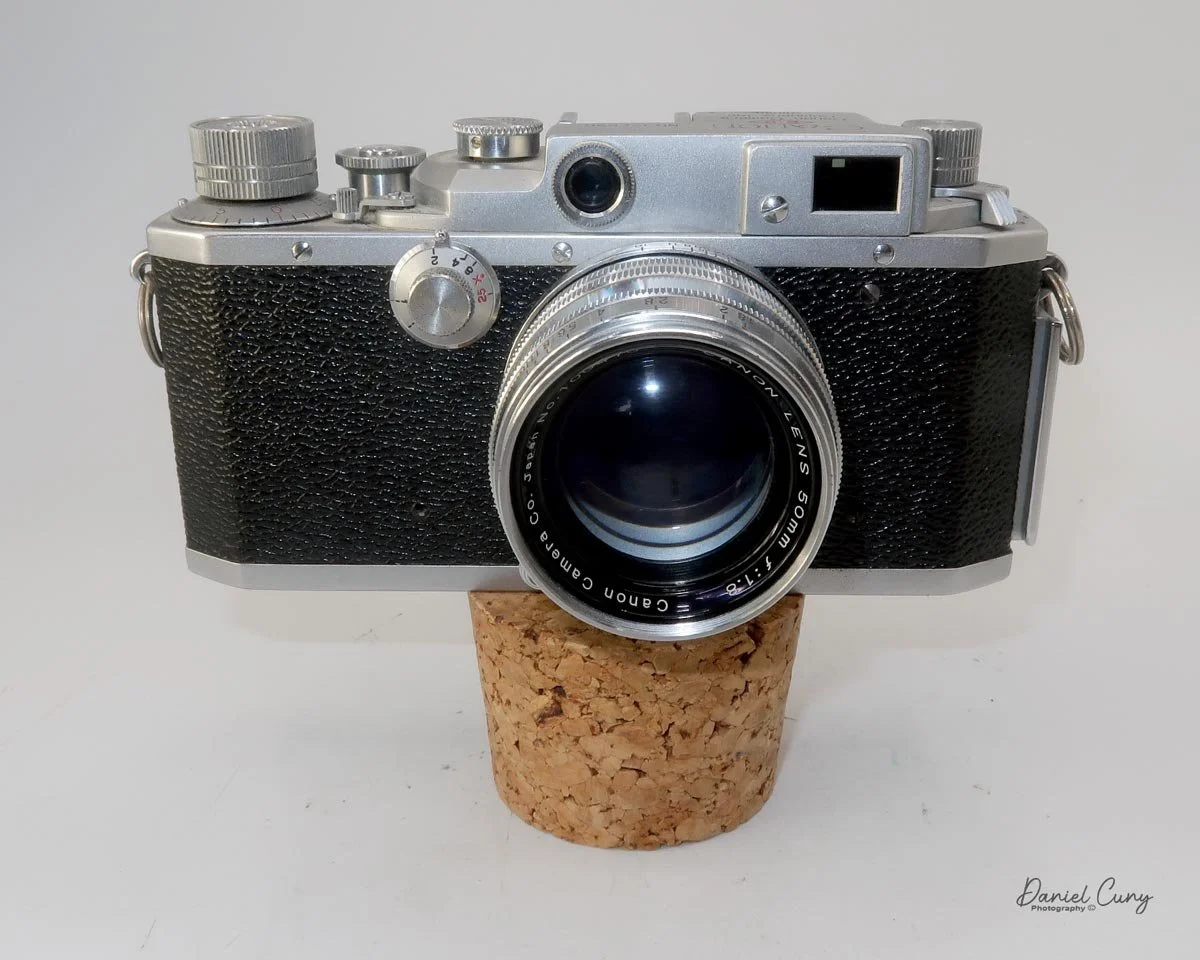
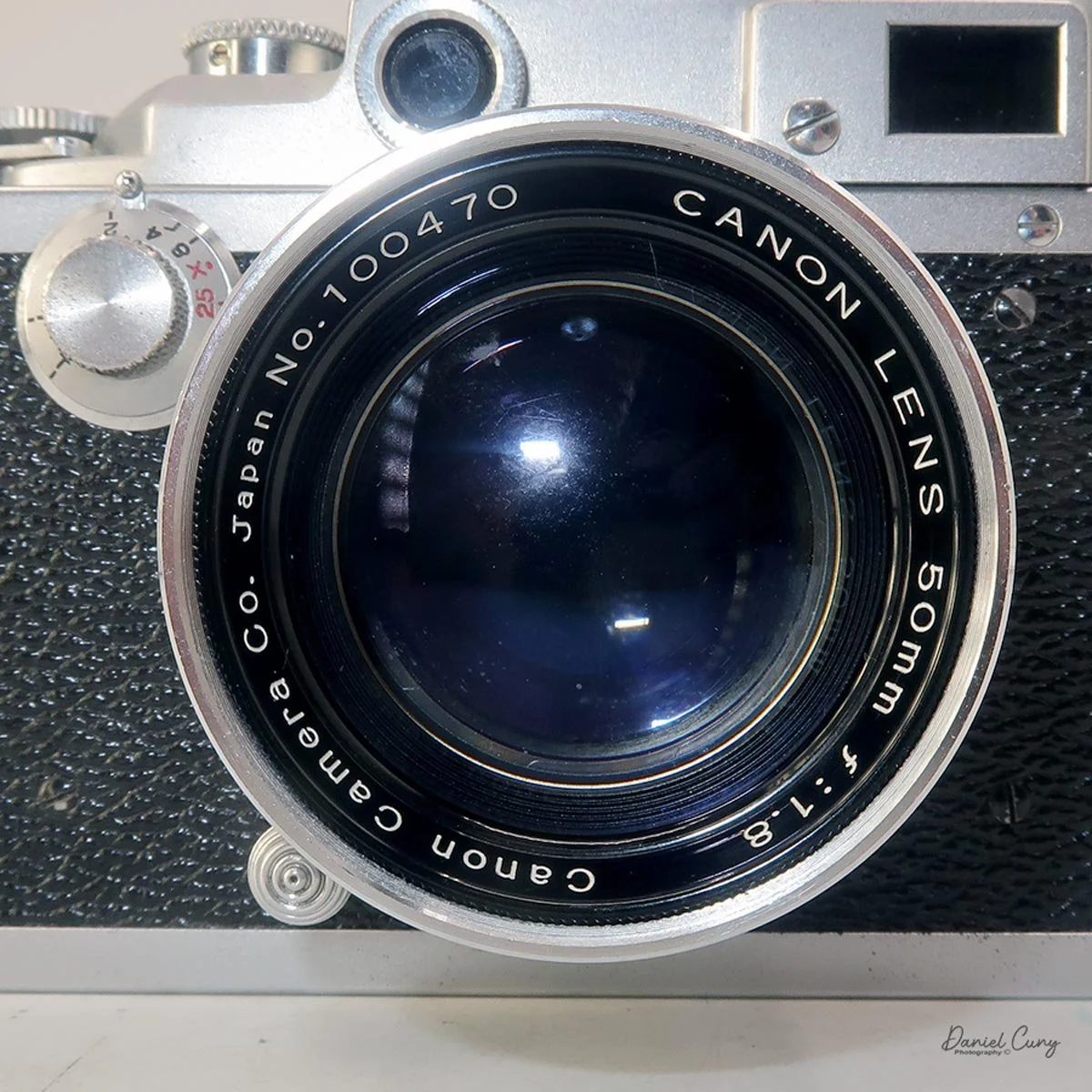
My Canon IV Sb came with a Canon 50mm f/1.8 lens and is similar in size to some Leicas, like the IIIB and others from the same era. The camera measures 5.5 inches wide by 3.75 inches tall and 2.75 inches deep, and weighs 1 pound, 11.7 ounces. The serial number on my body is 122236, and the lens is 100470.
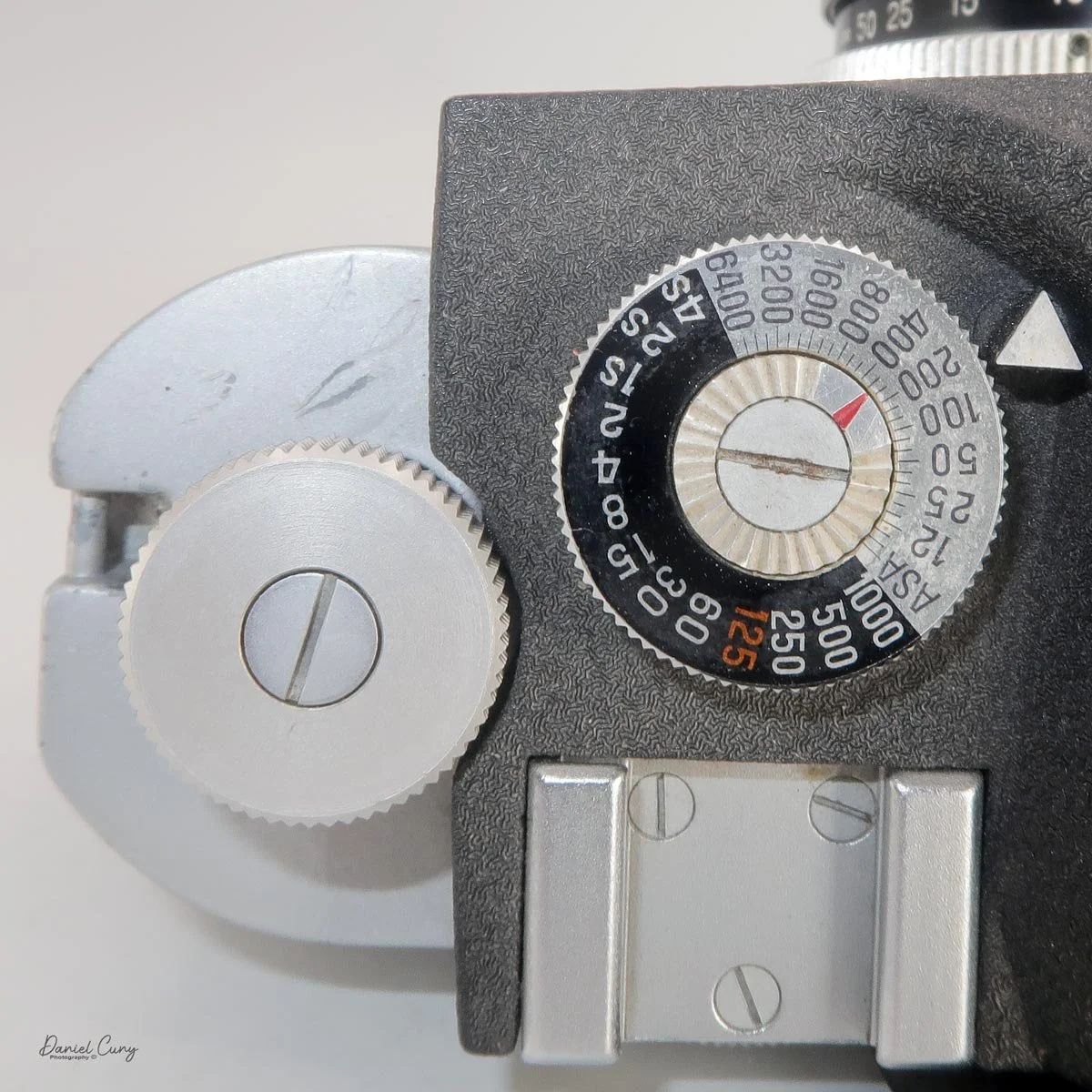
My camera is marked "E.P." in red, surrounded by a red diamond on the top plate. This doesn't necessarily make the camera more or less valuable than others. Still, it marks the camera as most likely purchased at a U.S. military base, identifying the camera and lens as duty-free or tax-free when imported into the U.S.

The Canon IV Sb was introduced in December 1952 and was available until the upgraded IV Sb2 was marketed in March 1954. The camera has an M39/LTM lens mount and offered either a Serenar or Canon f/1.8 or f/1.5 lens as a standard option.

The 50mm lens I have features the aperture ring on the outer knurled ring, with settings from f/1.8 to f/16. It has a locking lever, like other LTM lenses, that locks when focused at infinity, with a minimum focusing distance of 3.5 feet.
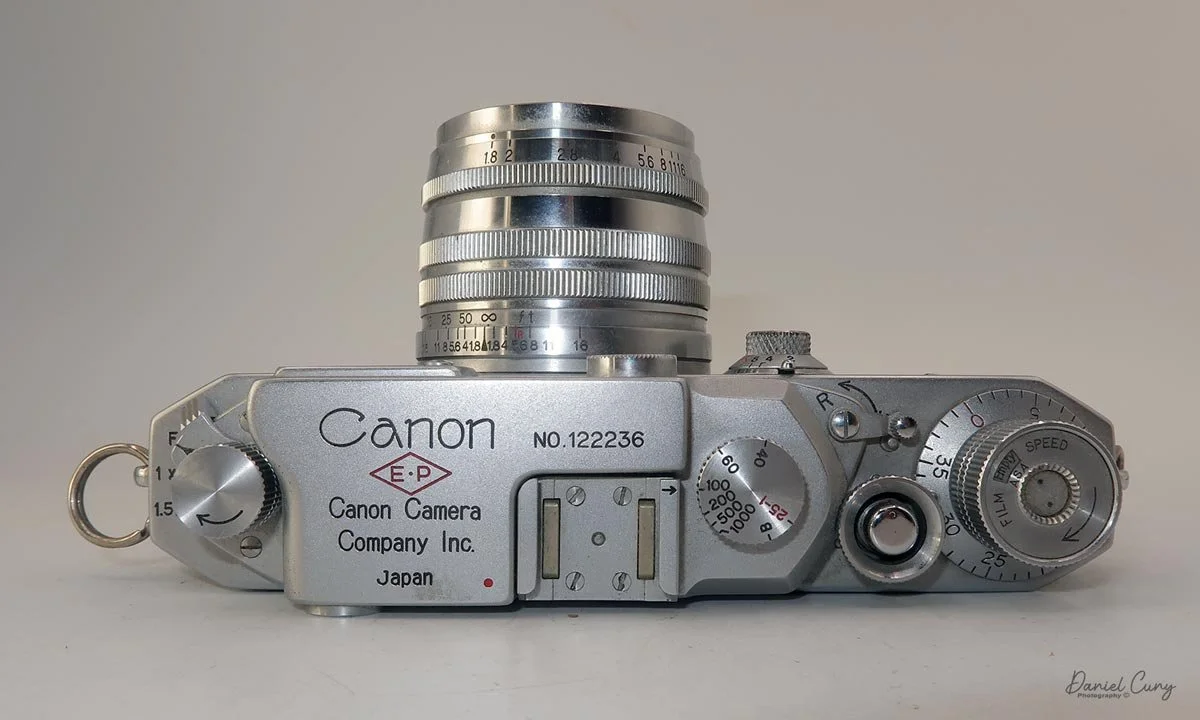
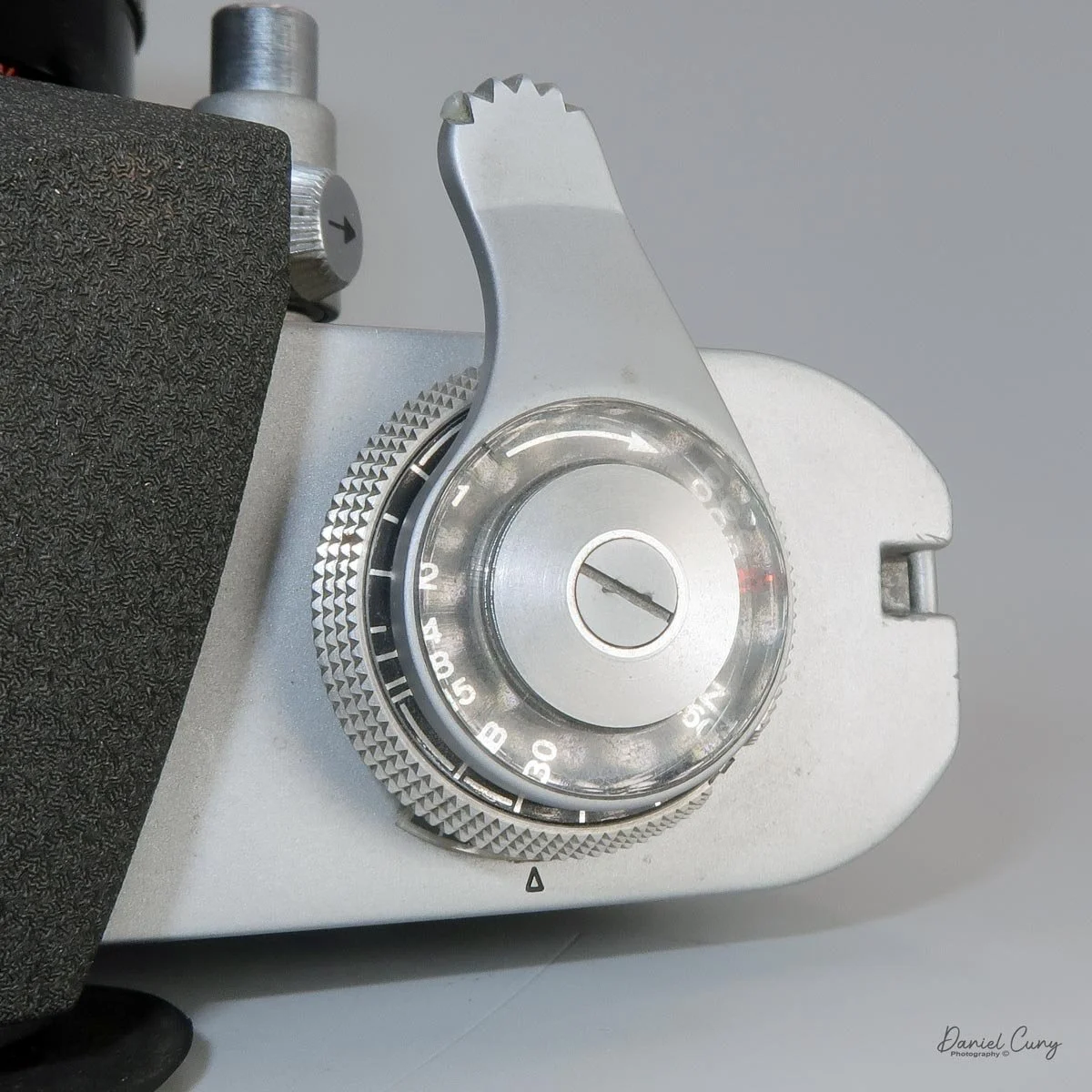
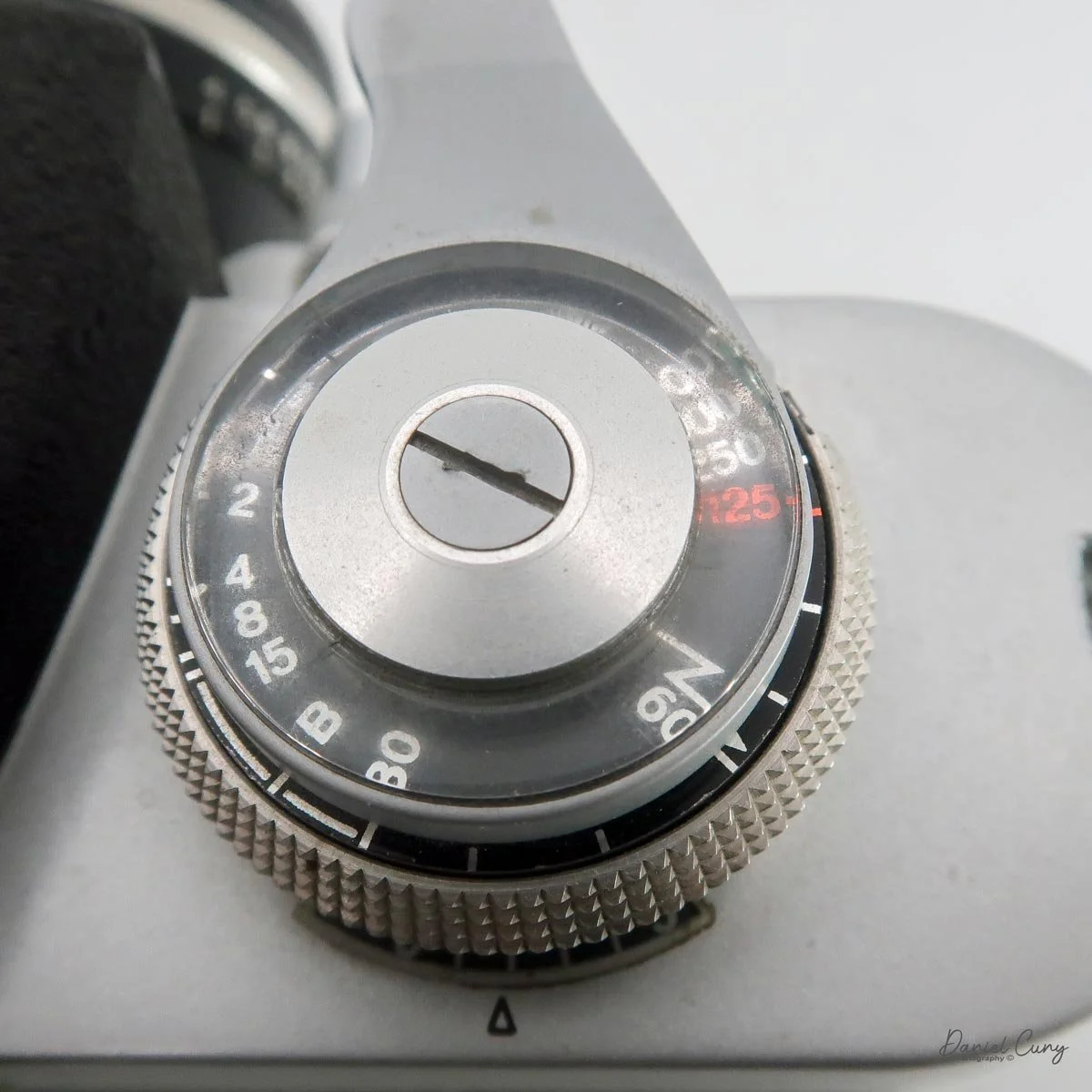
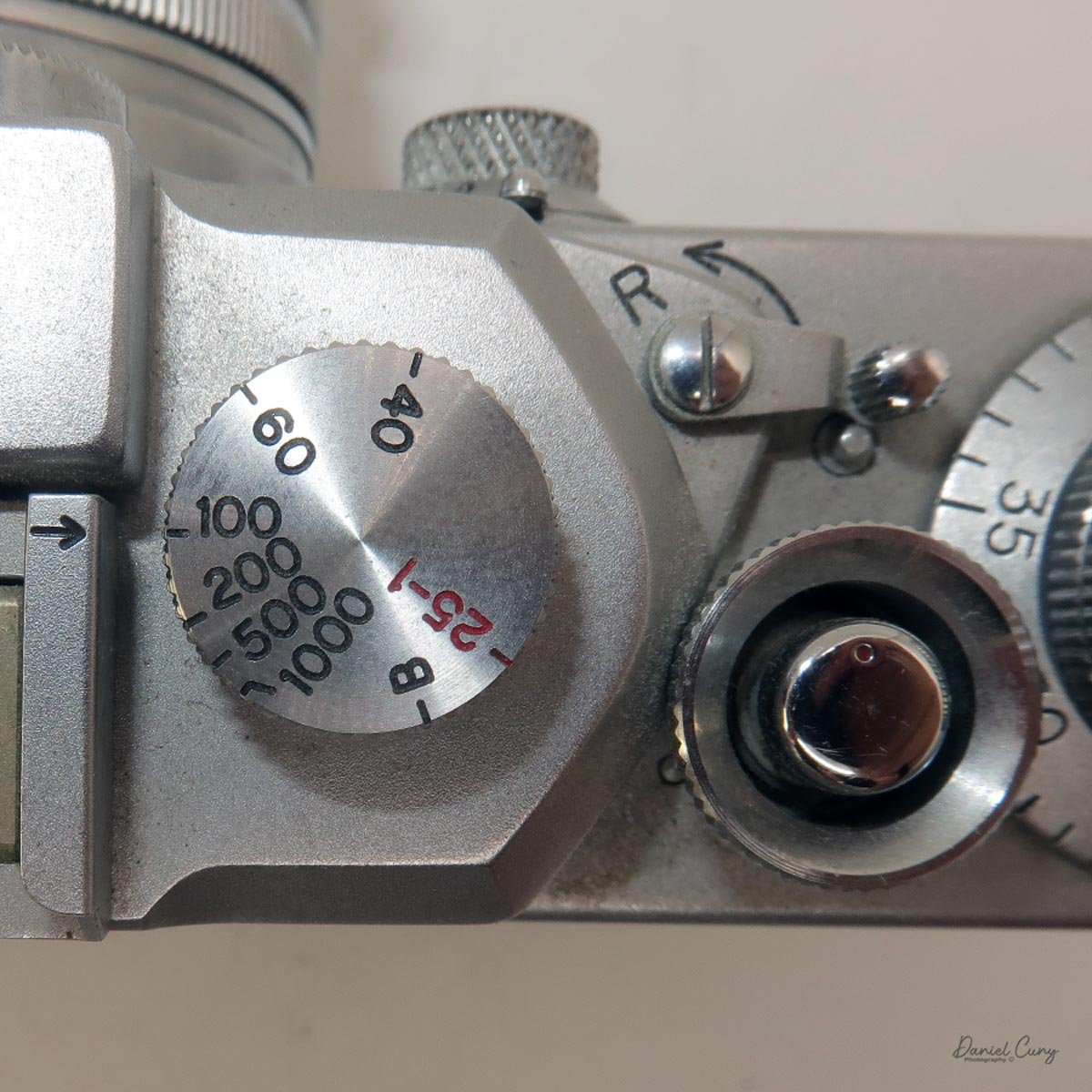
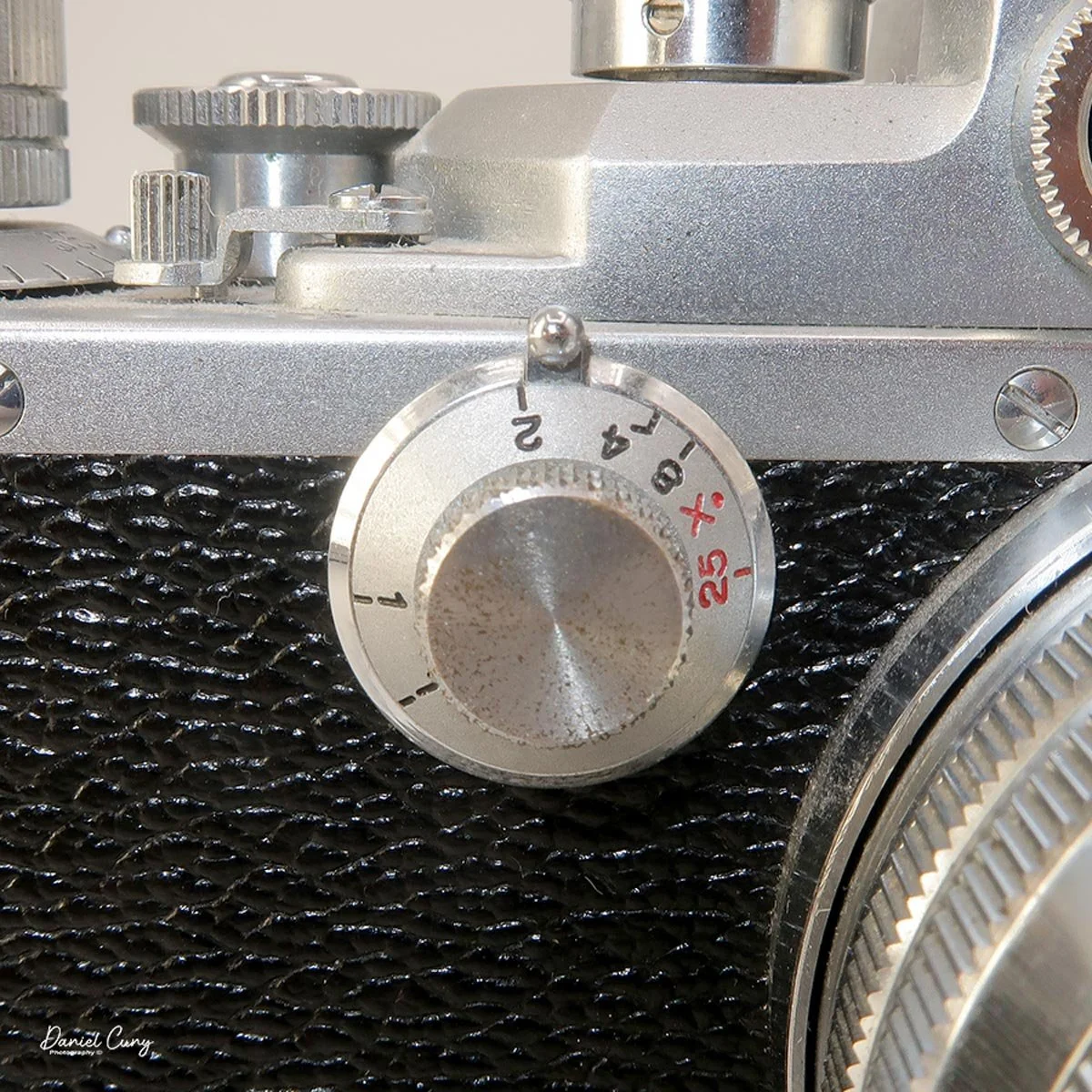
The camera has a vertical-traveling cloth shutter, with speeds from 1/1000 to 1/25 on the top shutter speed dial, and from 1/25 to 1 second (plus "B" for time exposures) on the secondary shutter speed dial on the front face of the camera. One distinguishing feature of the Canon IV Sb is the ability to lock the front secondary shutter speed dial with a small tab on top.

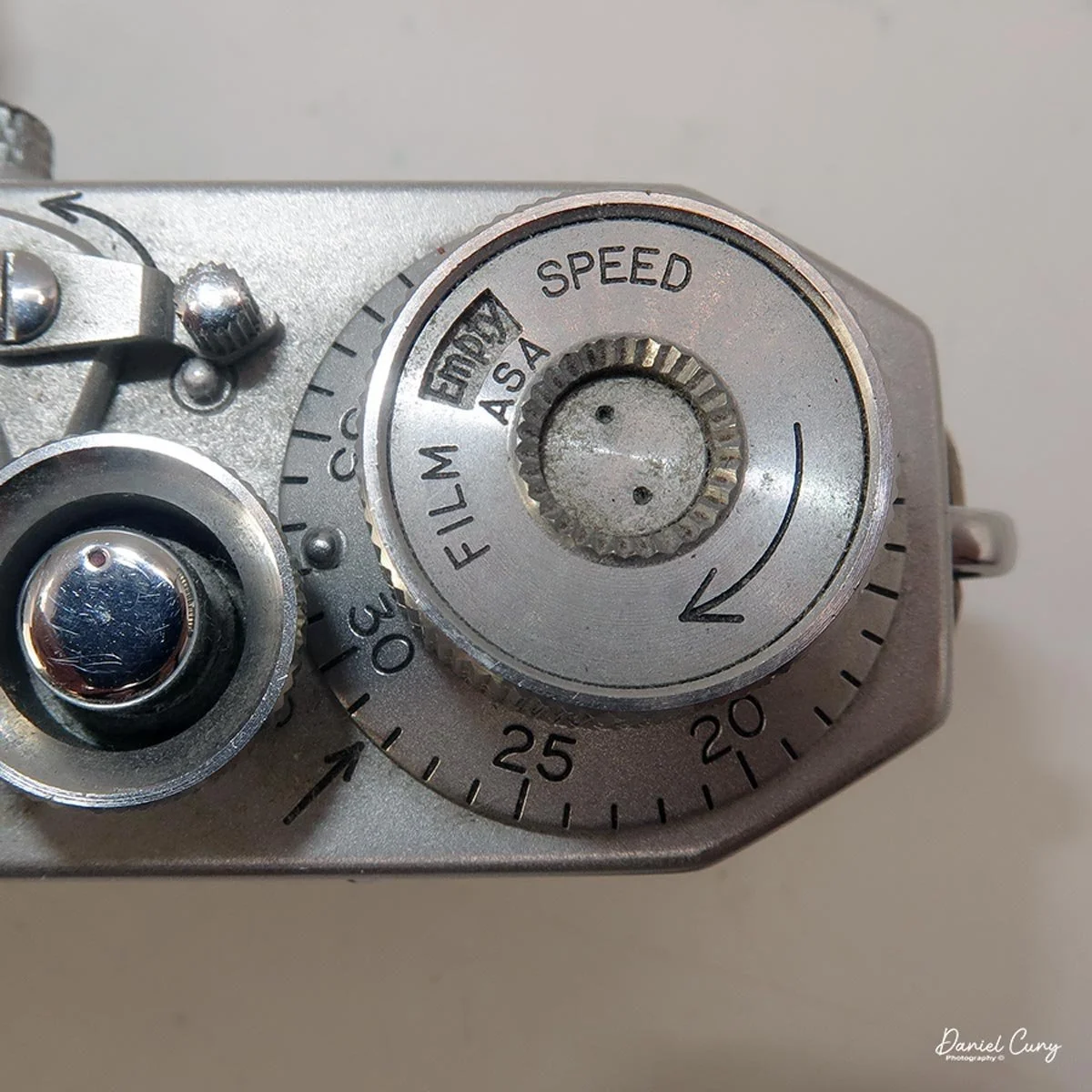
Like other cameras from this period, the film advance is a round knob that rotates clockwise to cock the shutter and advance the film to the next frame. Inside the film winding knob is a reminder dial to set the film speed (there is no meter in the camera, so this is just a personal reminder). The frame counter is on the bottom of the film advance knob and must be set manually when you load a roll of film into the camera.

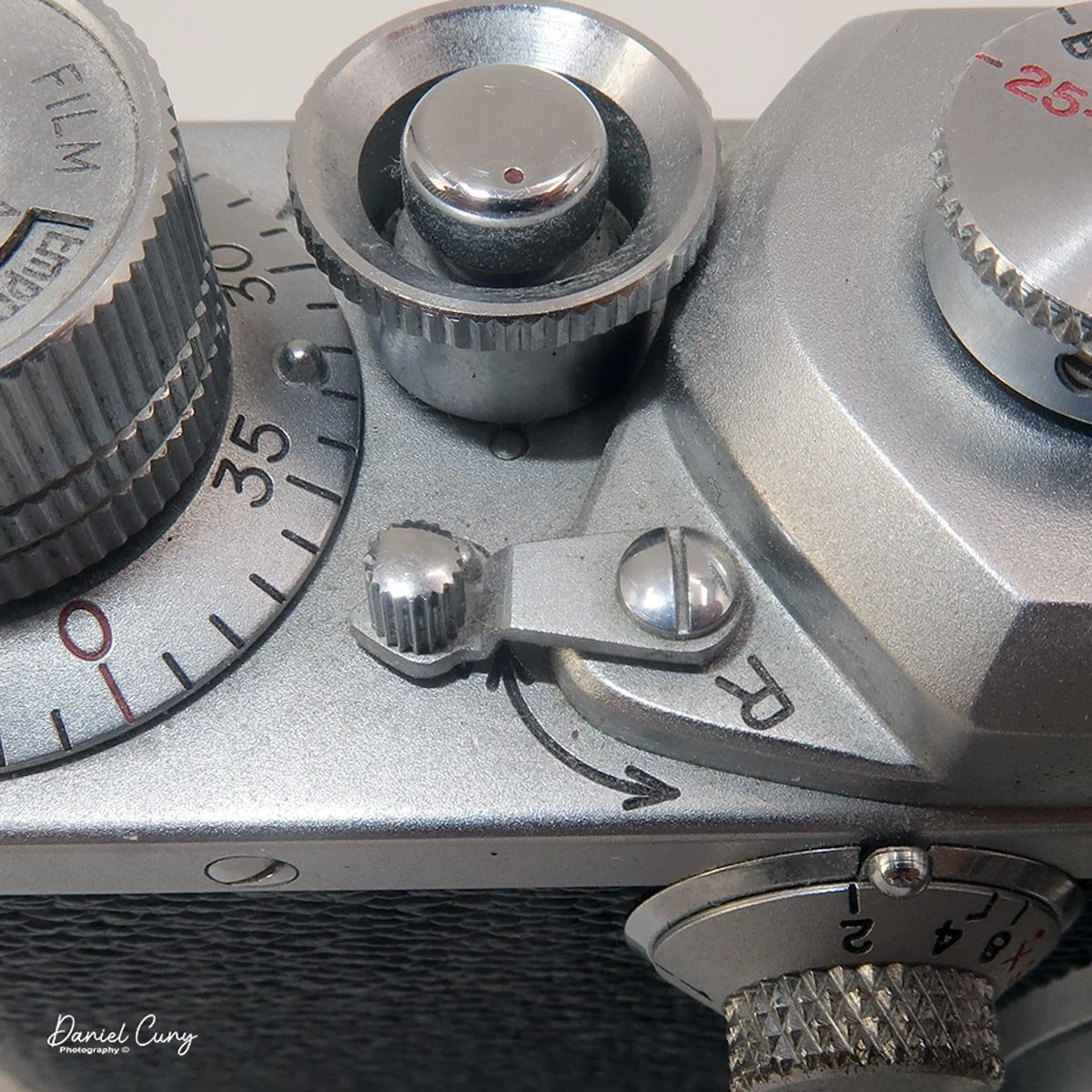
The shutter release is on top of the camera, just left of the film advance knob. Above the shutter release is the film rewind lever, which is lowered for normal film operation and flipped up to the "R" position to rewind the roll into the cassette when it's finished.

The Canon IV Sb also has an accessory shoe on top for auxiliary viewfinders. On the far left side of the camera is the film rewind knob, which can be pulled up to make the rewind process easier when you've exhausted the full roll of film.
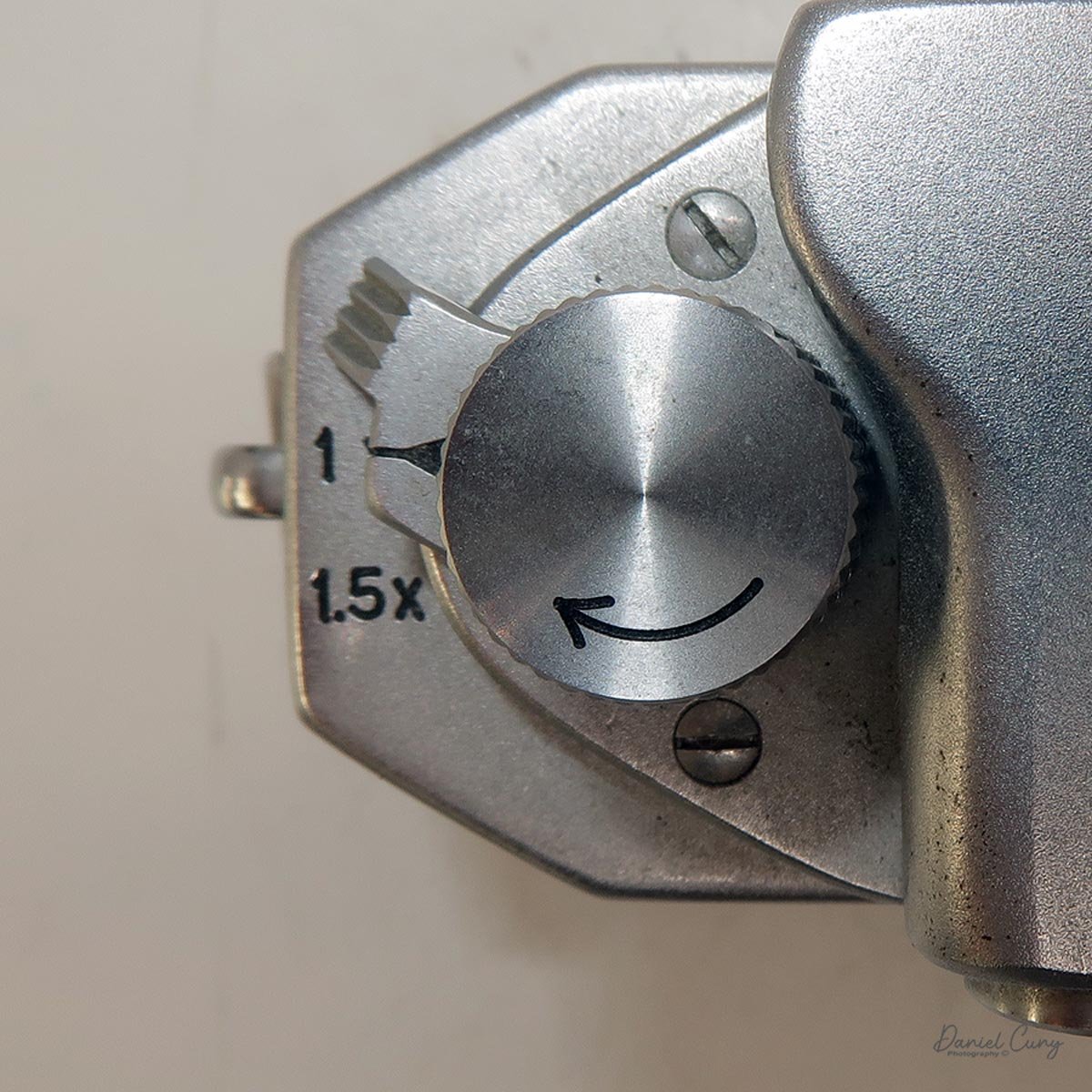
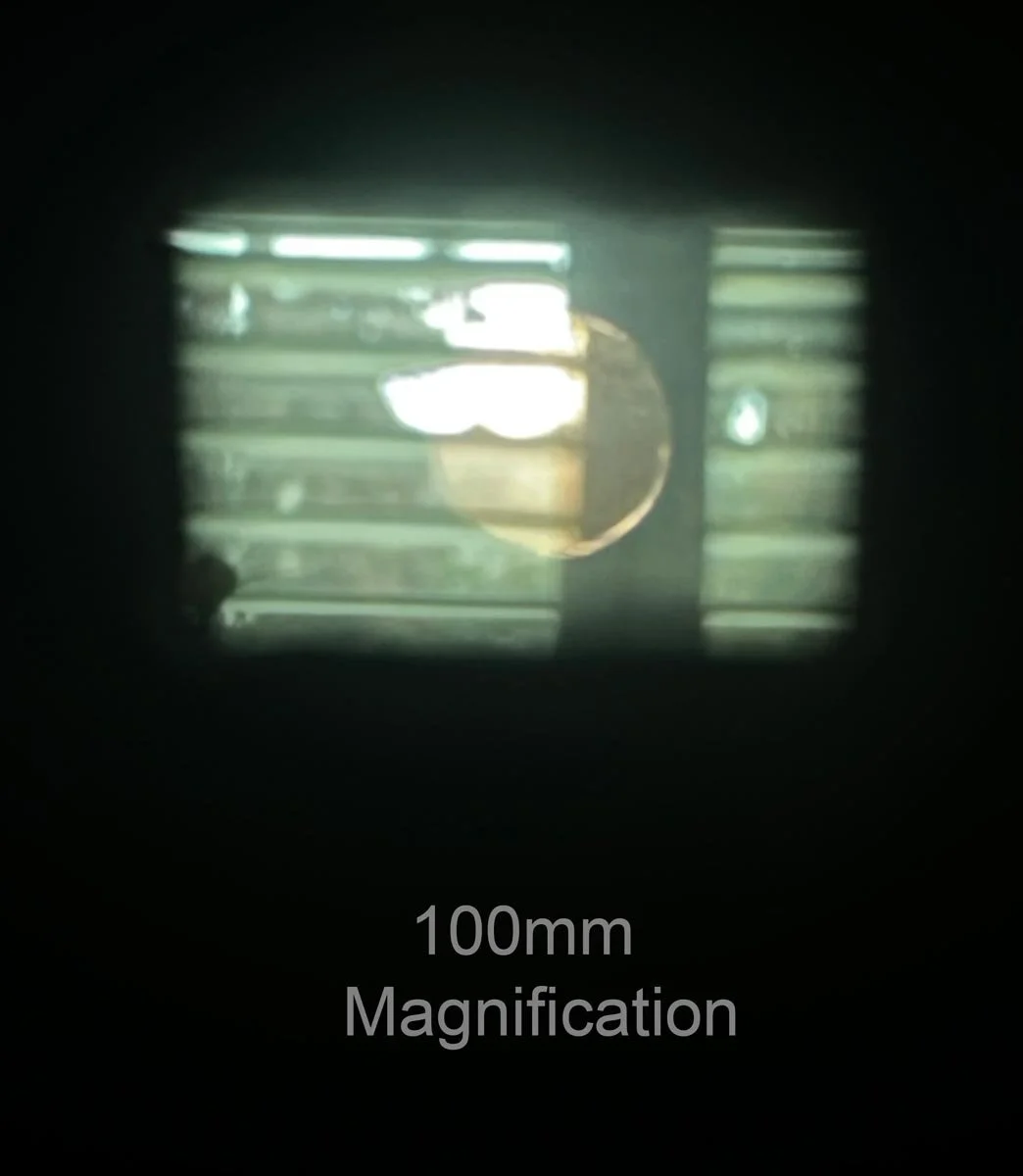
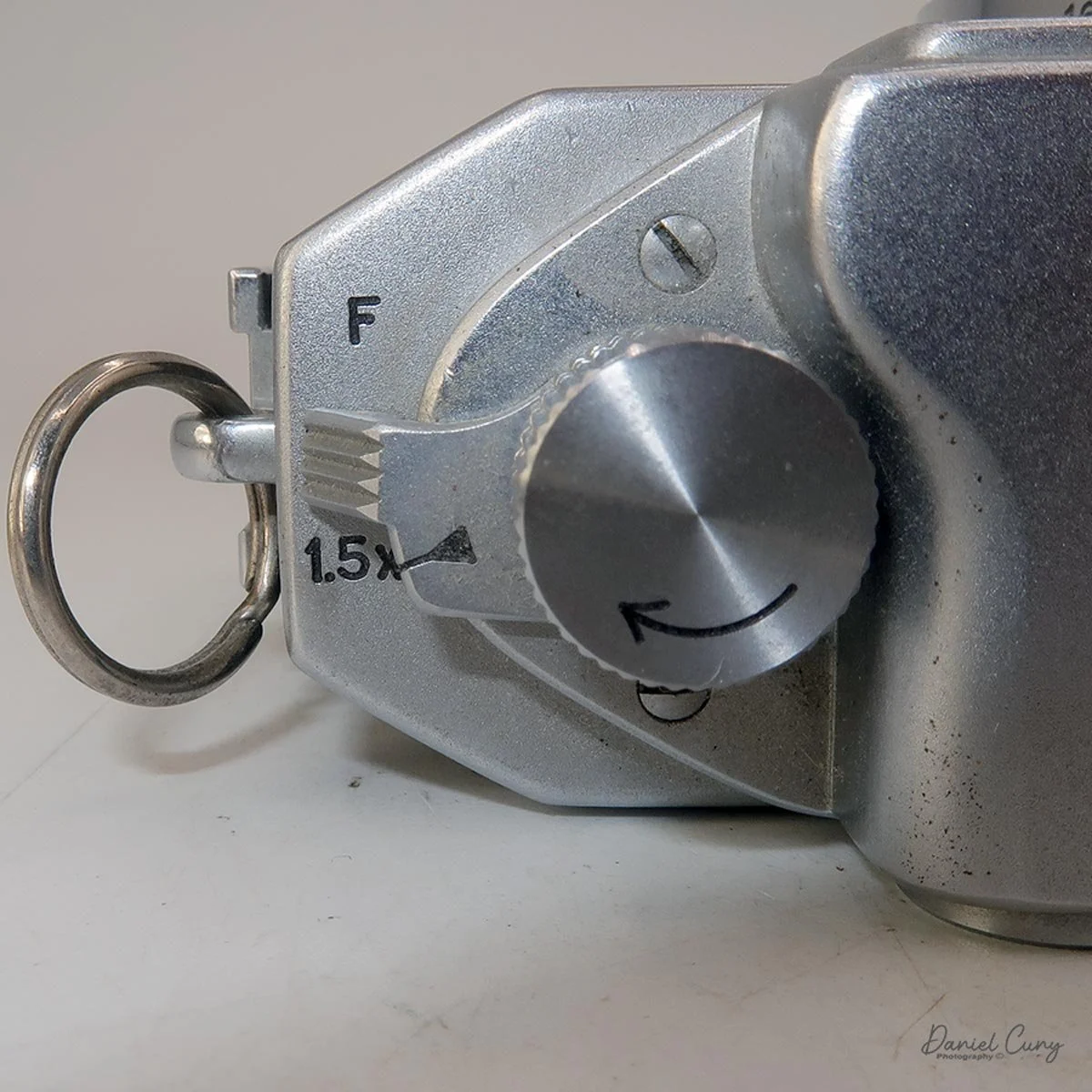
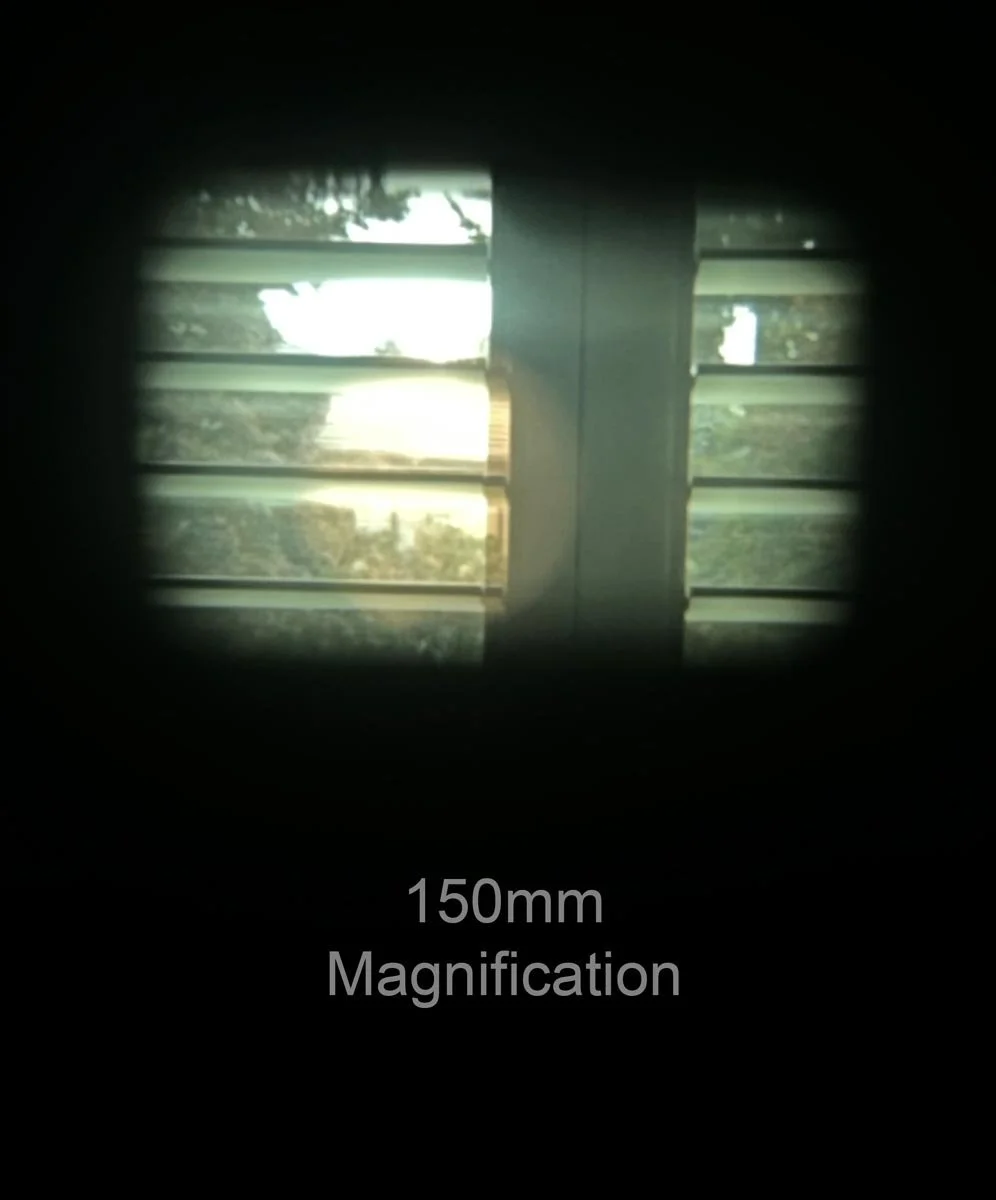
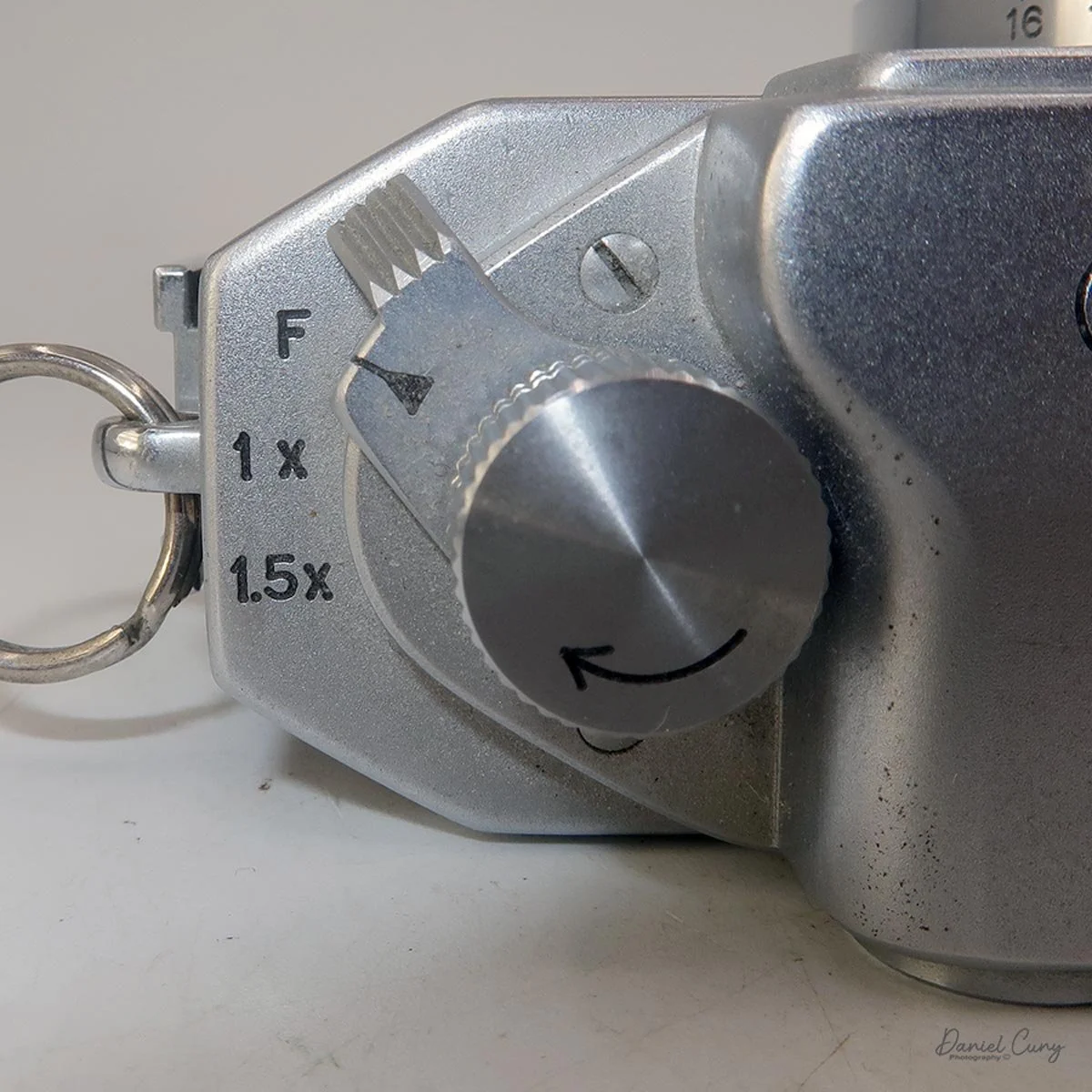
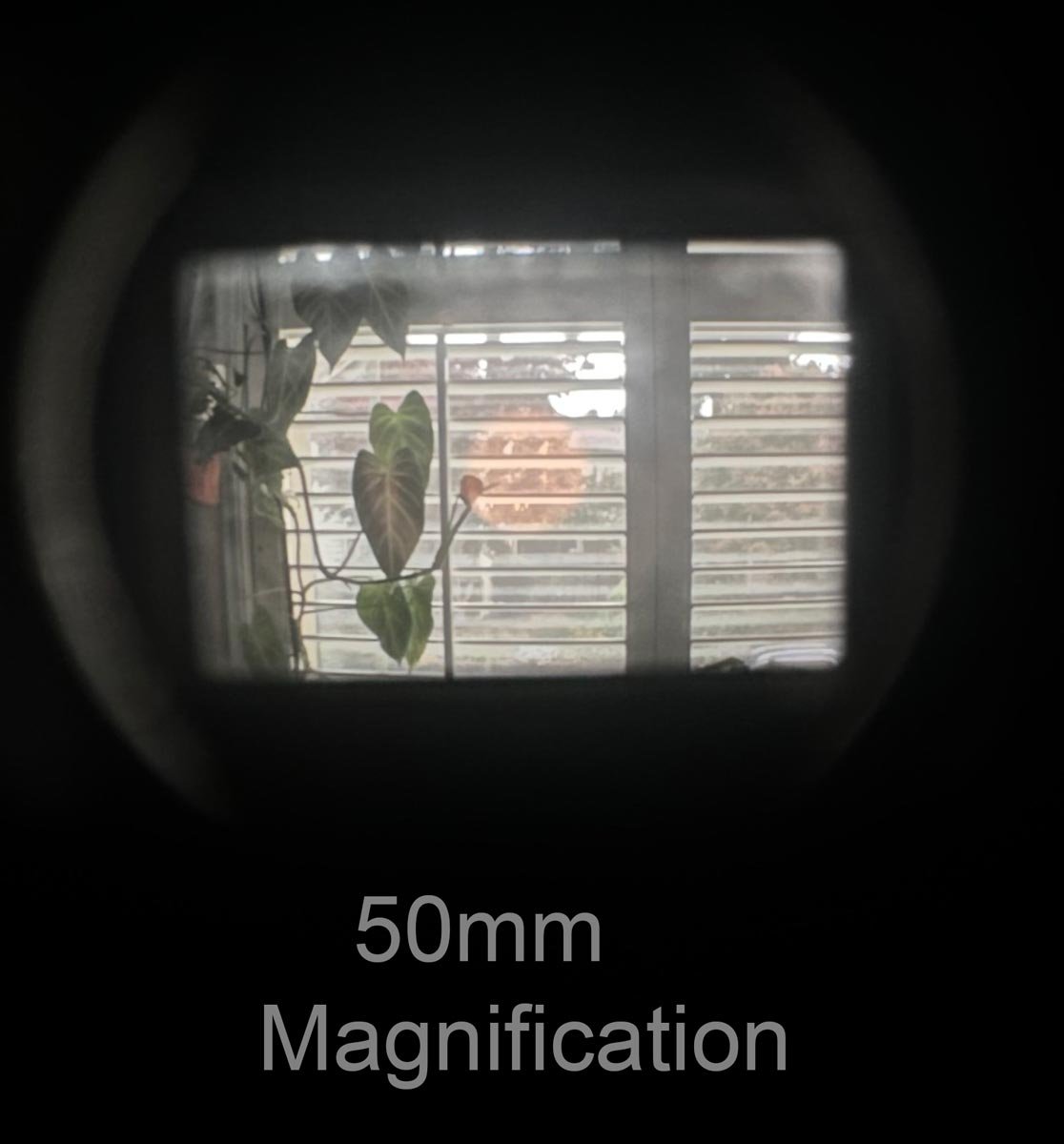
Just below the rewind knob is the viewfinder selector lever with F, 1x, and 1.5x settings, allowing you to magnify the viewfinder for use with 50mm, 100mm, or 150mm lenses. By choosing different magnifications, it slides a magnifying lens into the finder to replicate the crop for your chosen focal length. It's a great feature, and I really enjoyed it.
The camera body has no standard flash sync port, as the Canon IV Sb uses a proprietary flash connection system for bulb or electronic flash. The downside is that all contacts are made through a sliding bar on the camera's left side. Without the Canon Flash Unit Model Y and its accessories, traditional flash isn't readily available.
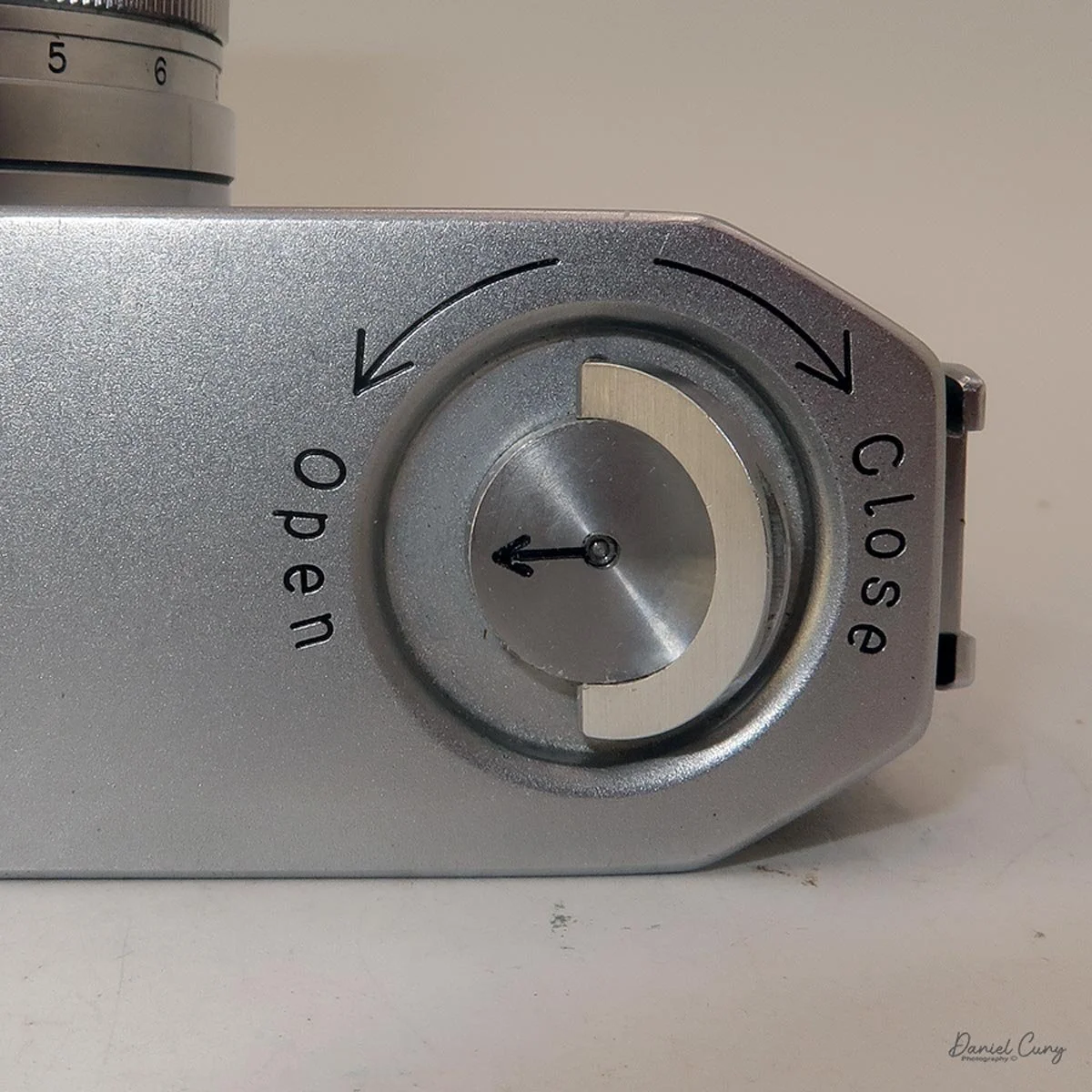
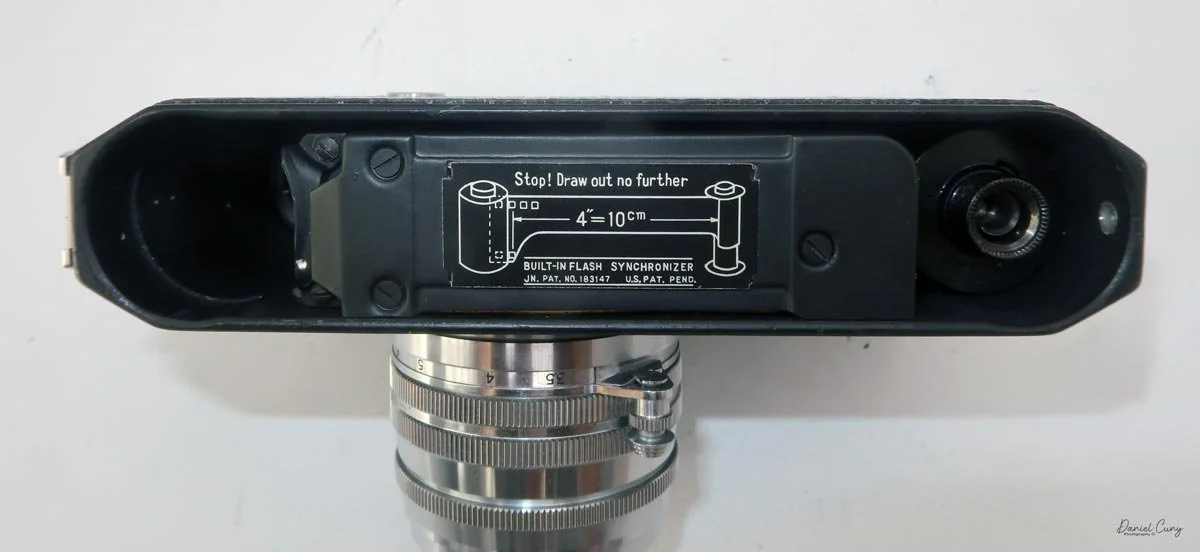
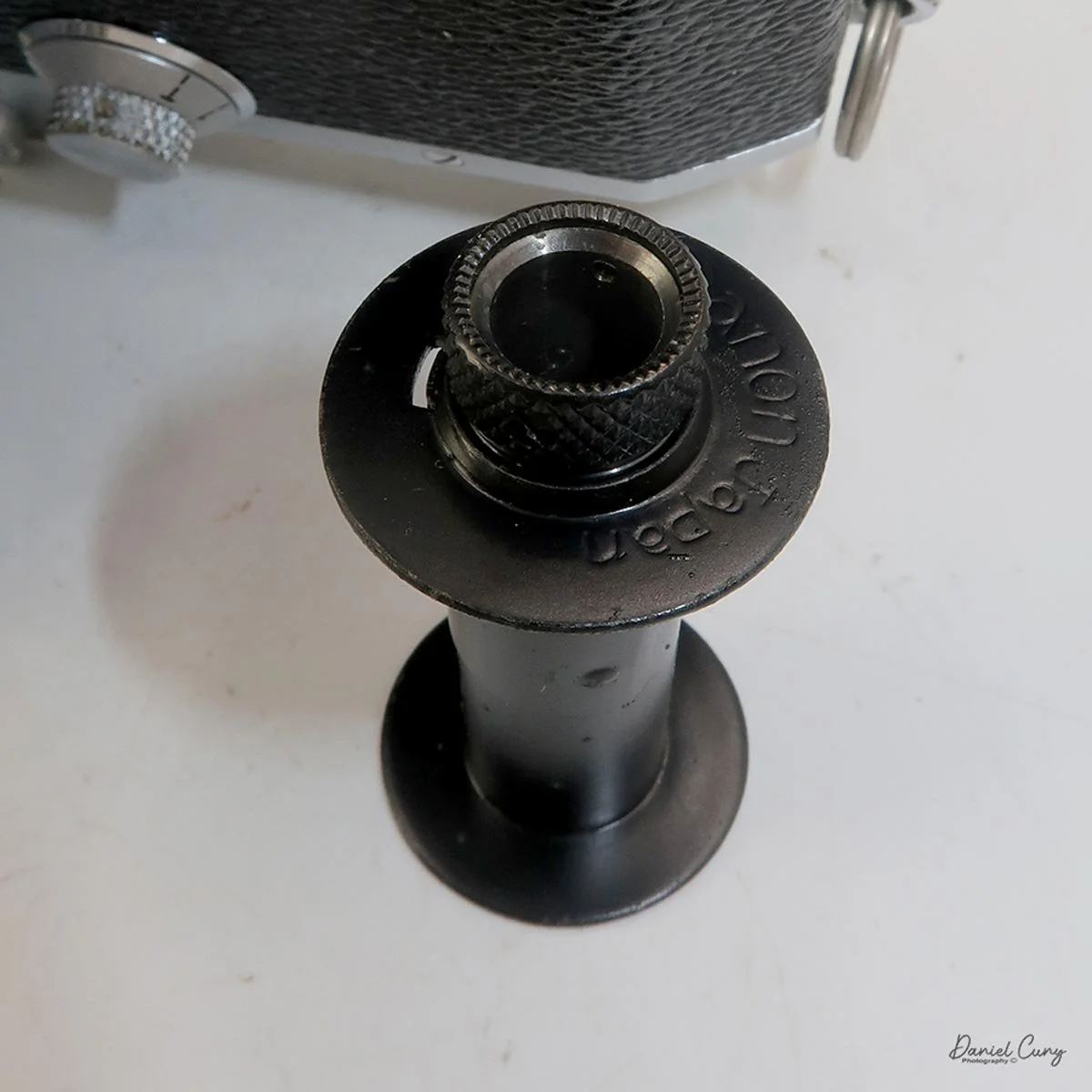
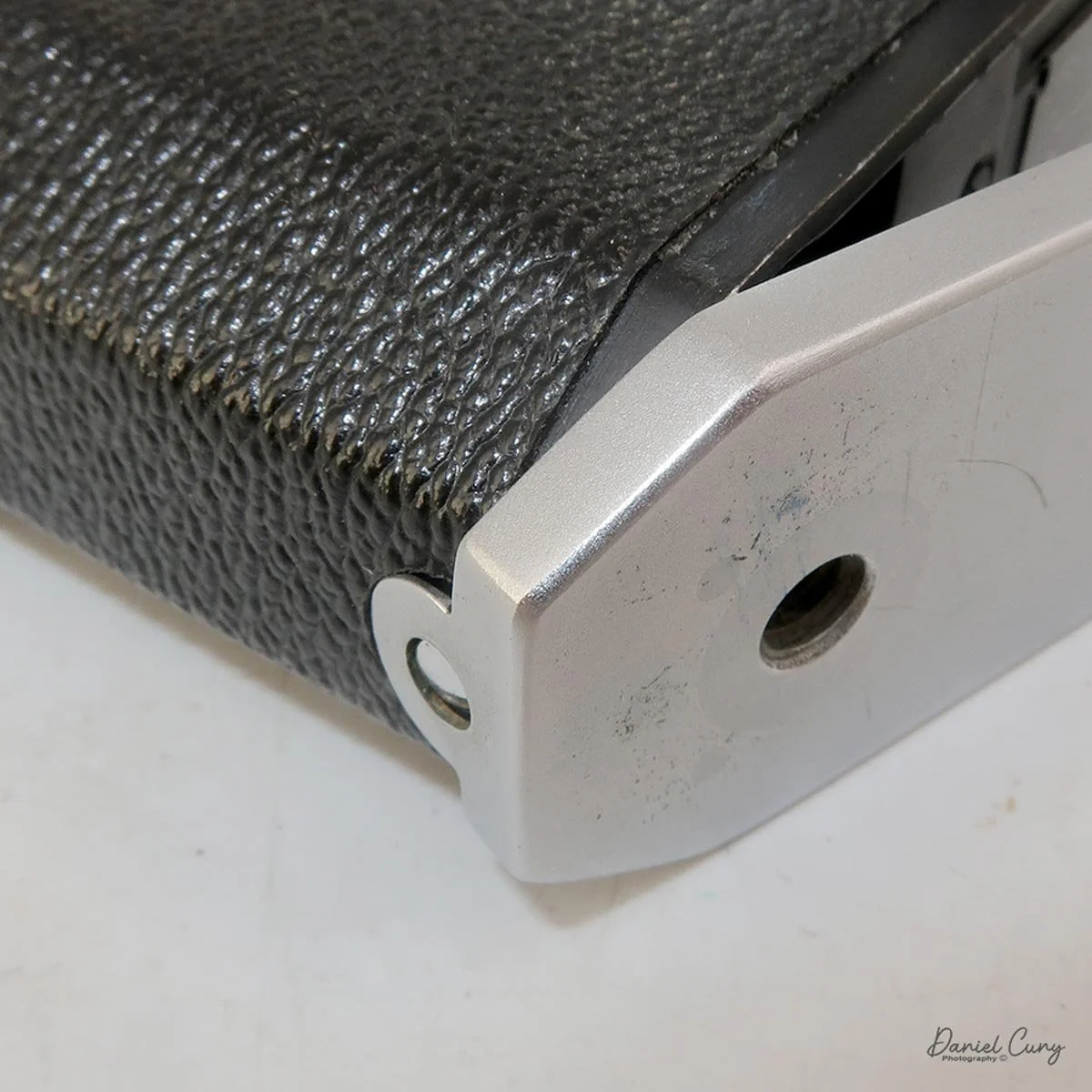
To load film into the camera—similar to other rangefinders of this era—unlatch the lock on the bottom plate and pull it off, exposing the film chamber and take-up spool. Pull out the take-up spool, thread the lead from a fresh roll of film into it, and slide both the spool and the film canister into the camera body. Take up the slack of the film with the film rewind lever and advance the film to the first frame. Reset the frame counter to one and start taking photos.

My Results:

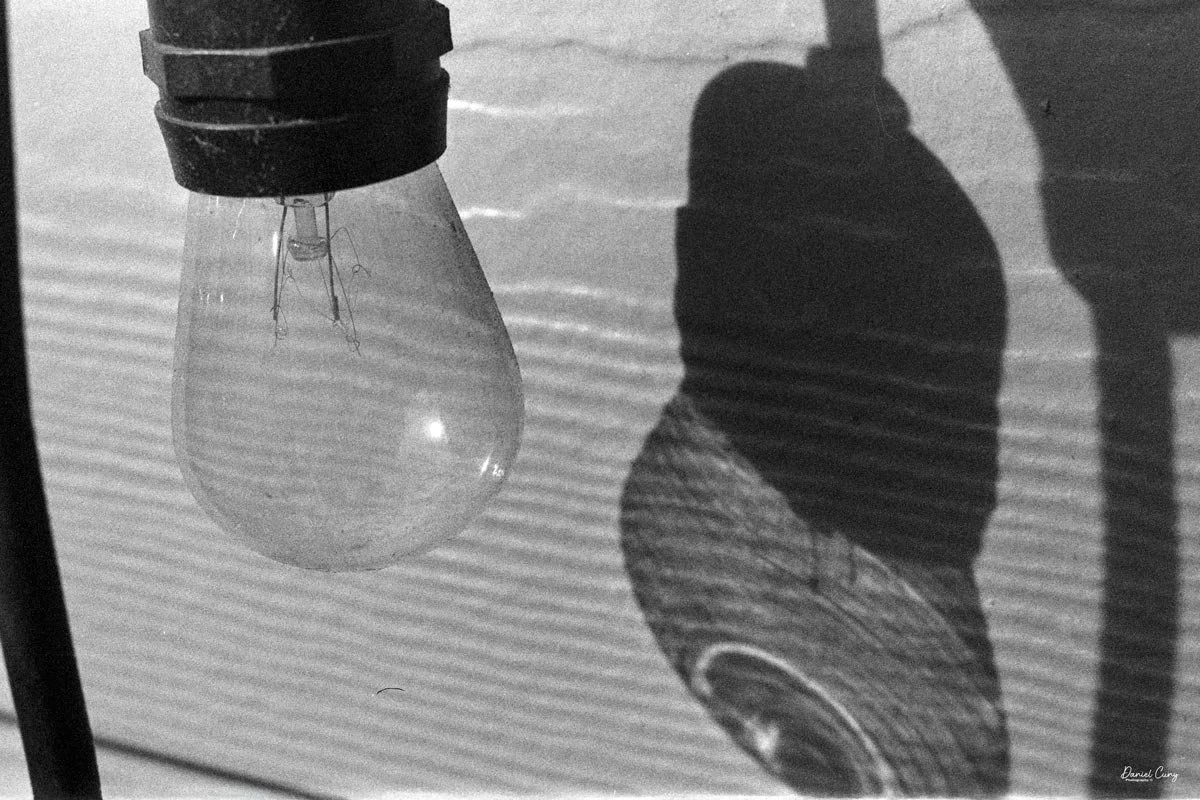
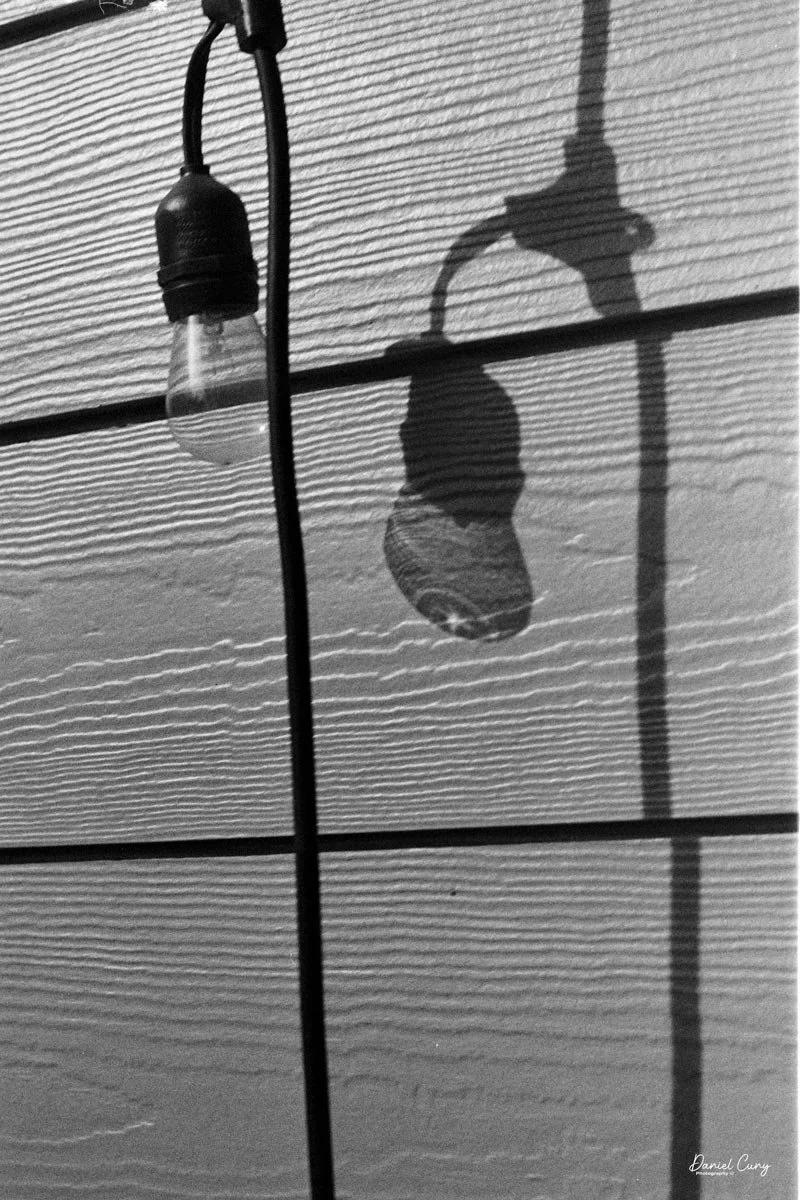
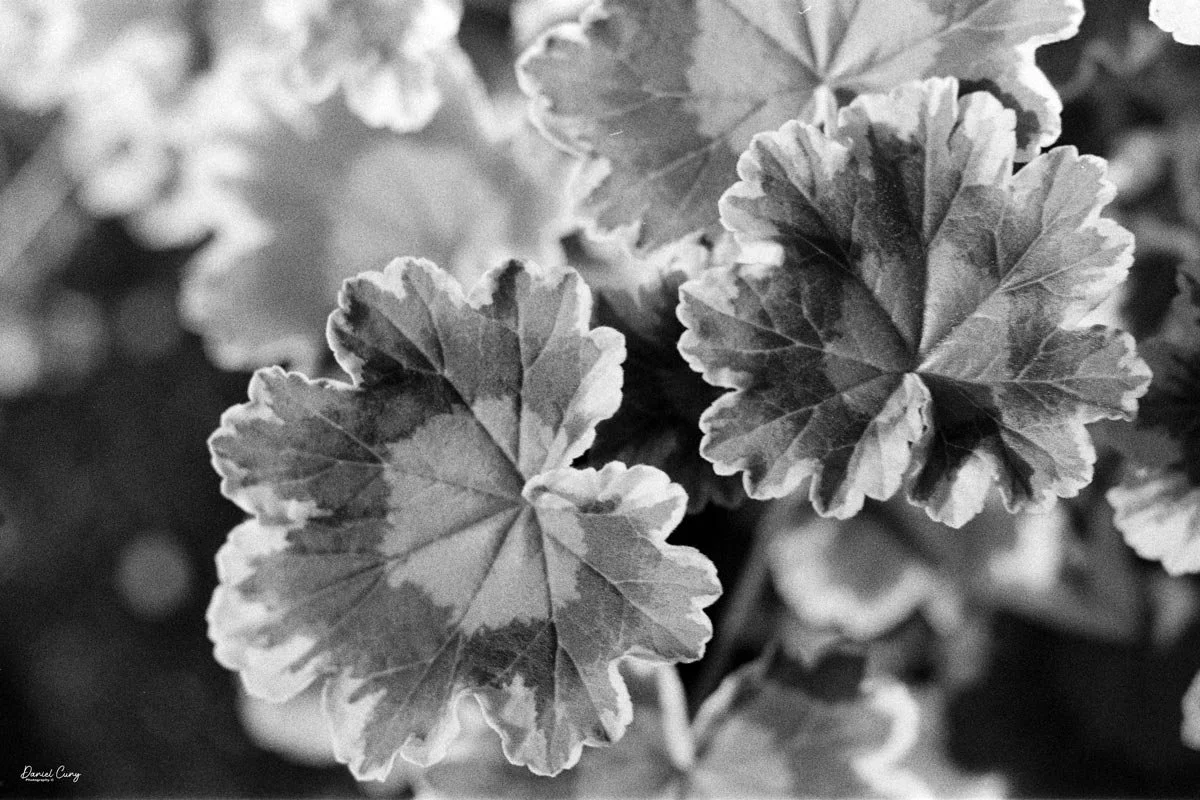
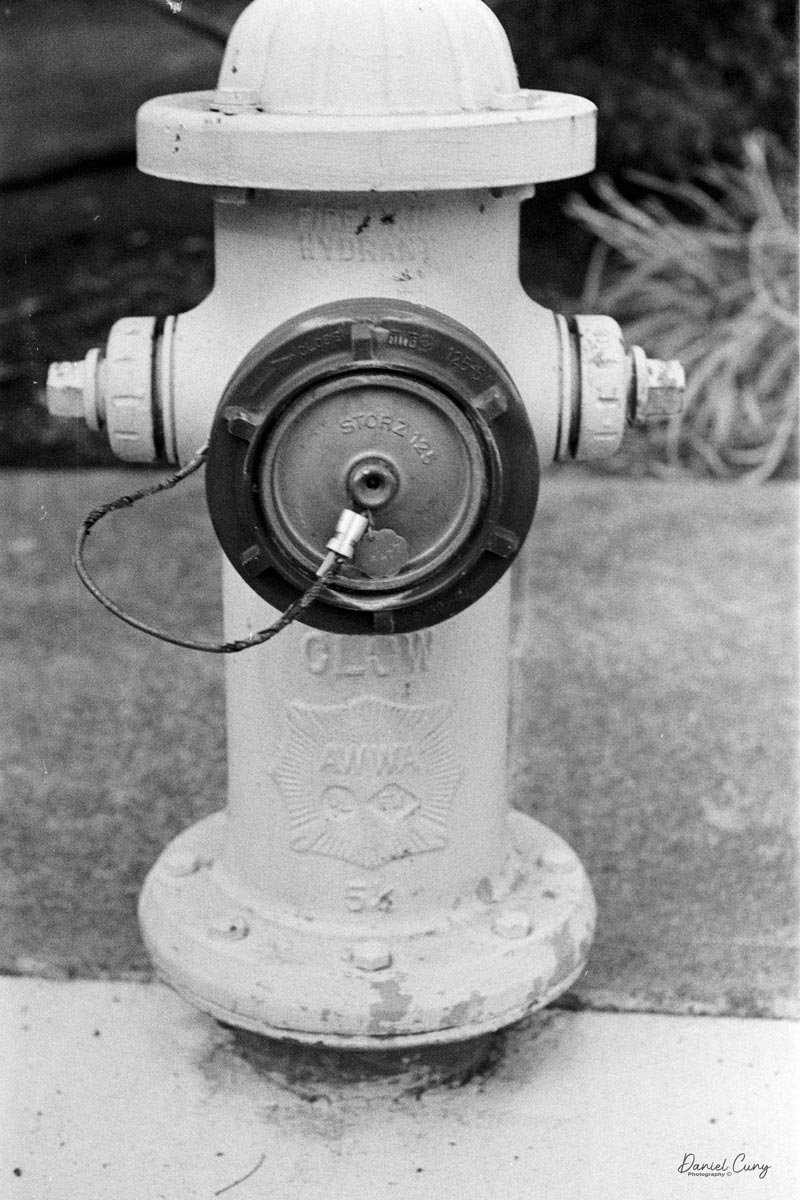
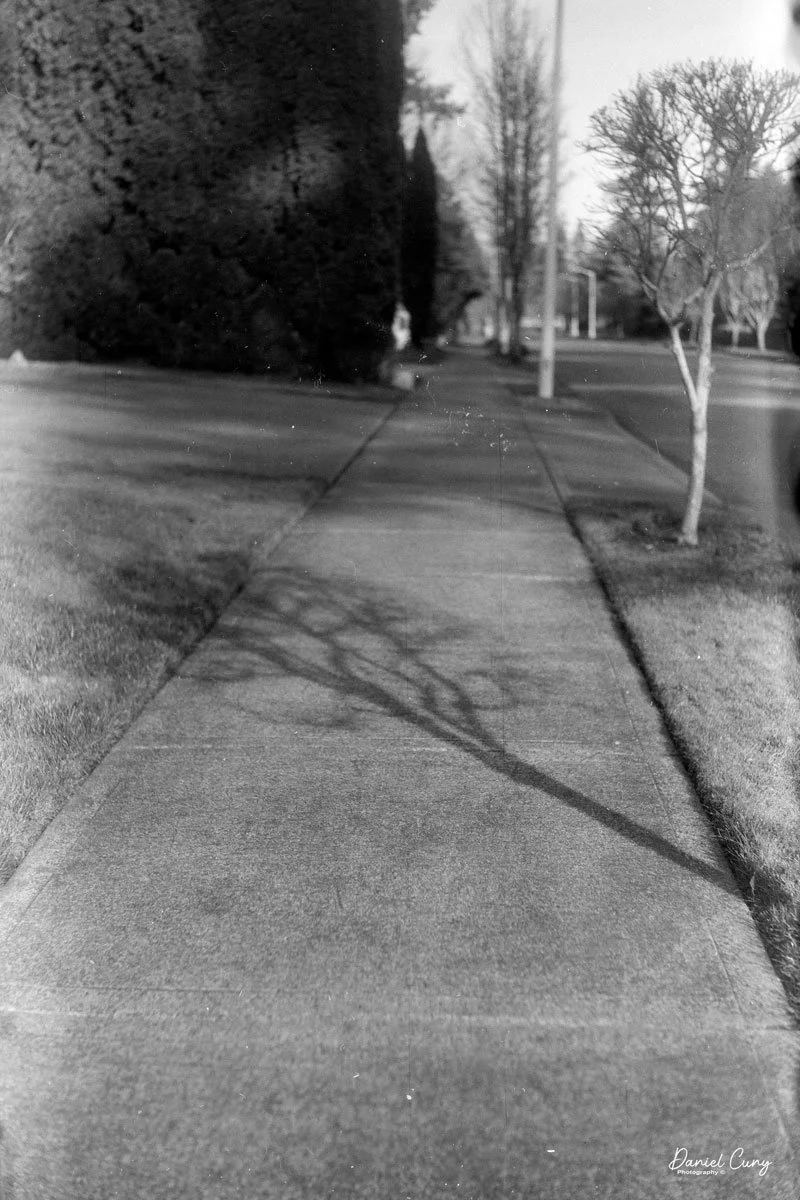
I loaded the camera with an expired roll of Plus-X that expired in June 1976. I like shooting this film because it has only 20 exposures, so I don't waste extra film when shooting for the blog.
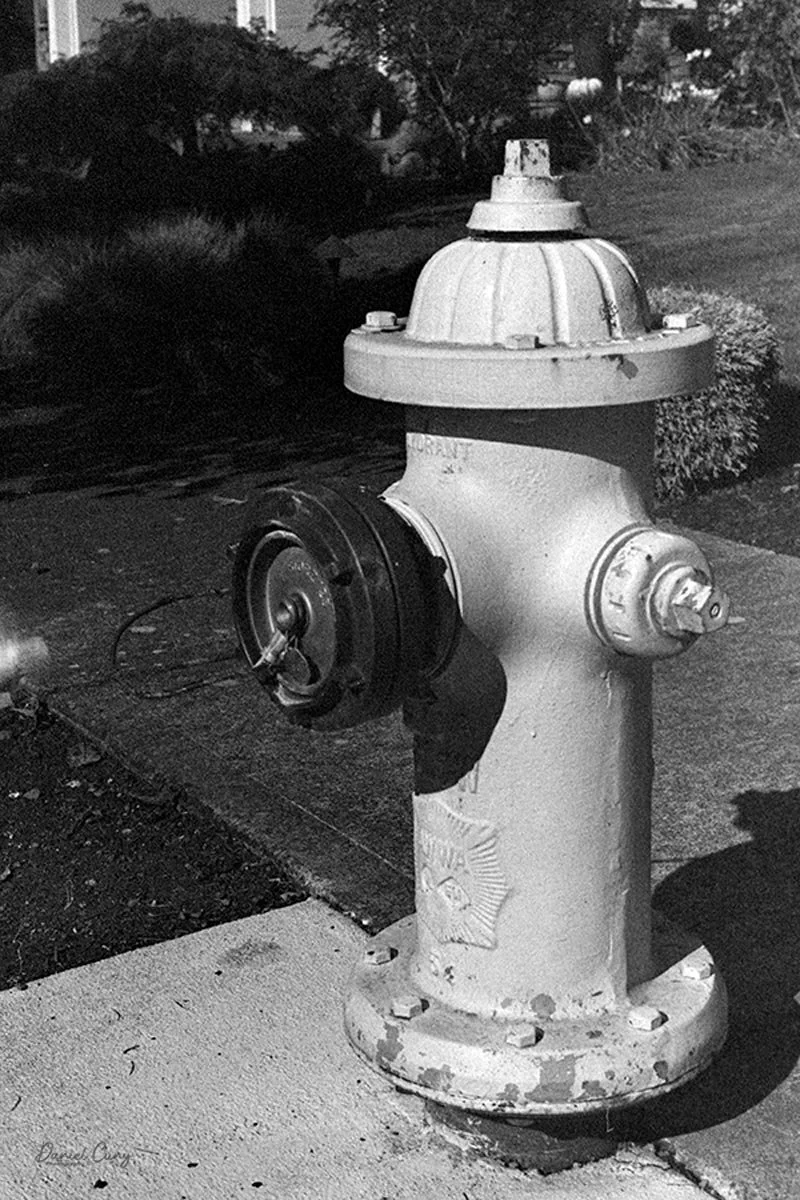
Conclusion:

The camera did a wonderful job and was fun to use. I really enjoyed the bright rangefinder focusing, and the ability to magnify the image through the viewfinder for the 100mm and 150mm lenses makes this a wonderful user camera. It would have been great if they'd also included a wider viewfinder window for wide-angle lenses, but that may be asking too much, especially for a camera made over 70 years ago.

For this period, I still prefer Nikon rangefinder cameras and completely understand why professionals chose them alongside Leica. While the Canon IV Sb is easy to use, its flash system is unusual for the time and forces photographers to use its proprietary ecosystem.

Are you interested in other cameras? Check out some of my other Camera Reviews.

Also, check out my Cuny's Camera Collection YouTube channel, where I'm putting together video overviews of the cameras I write about. Be sure to subscribe and like the channel!

You can also visit Cuny's Cameras and Photos, my online eBay store, where you'll find some of the cameras I've reviewed, along with a wide range of other cameras, lenses, and photography items from my collection that I'm thinning out.

Until next week, please be safe.
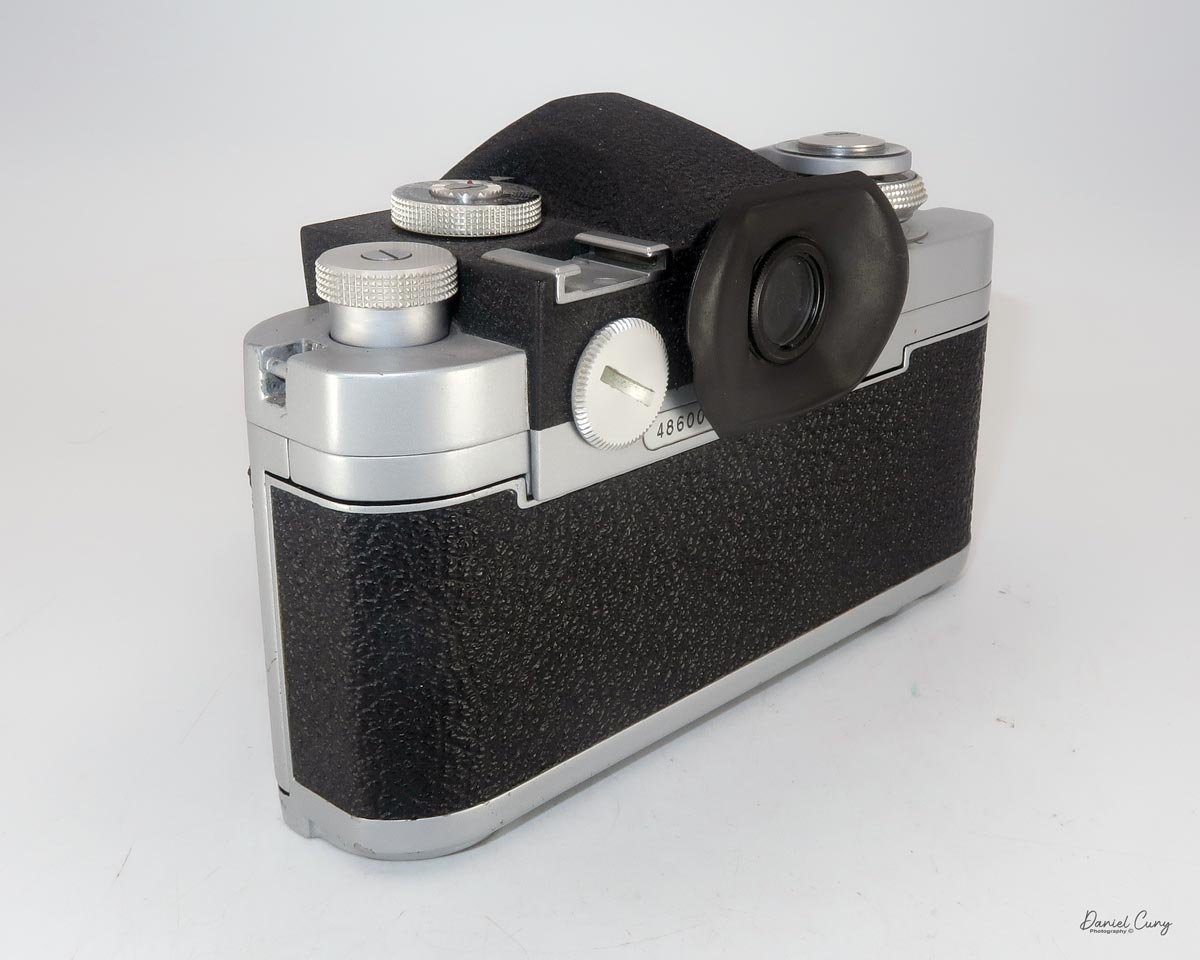
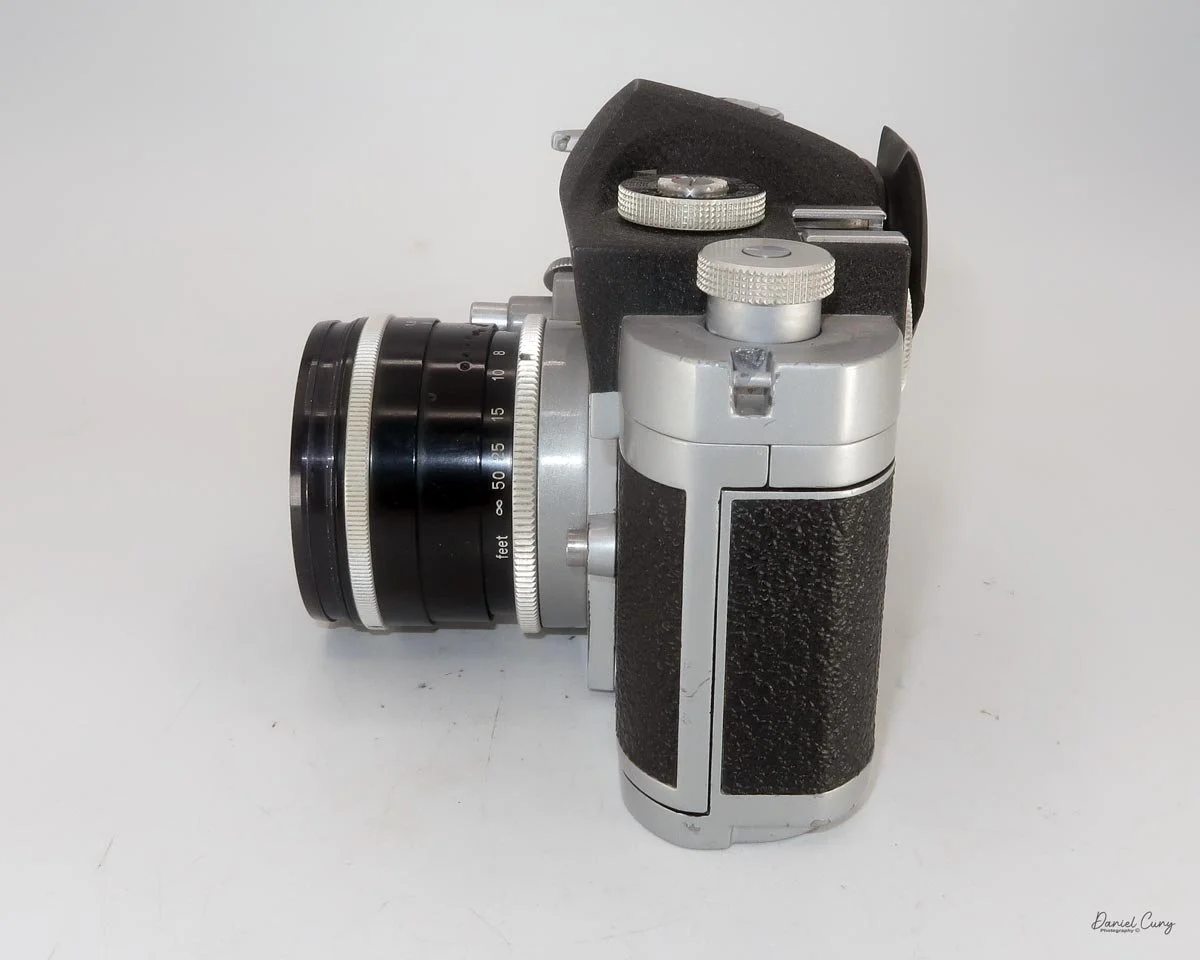
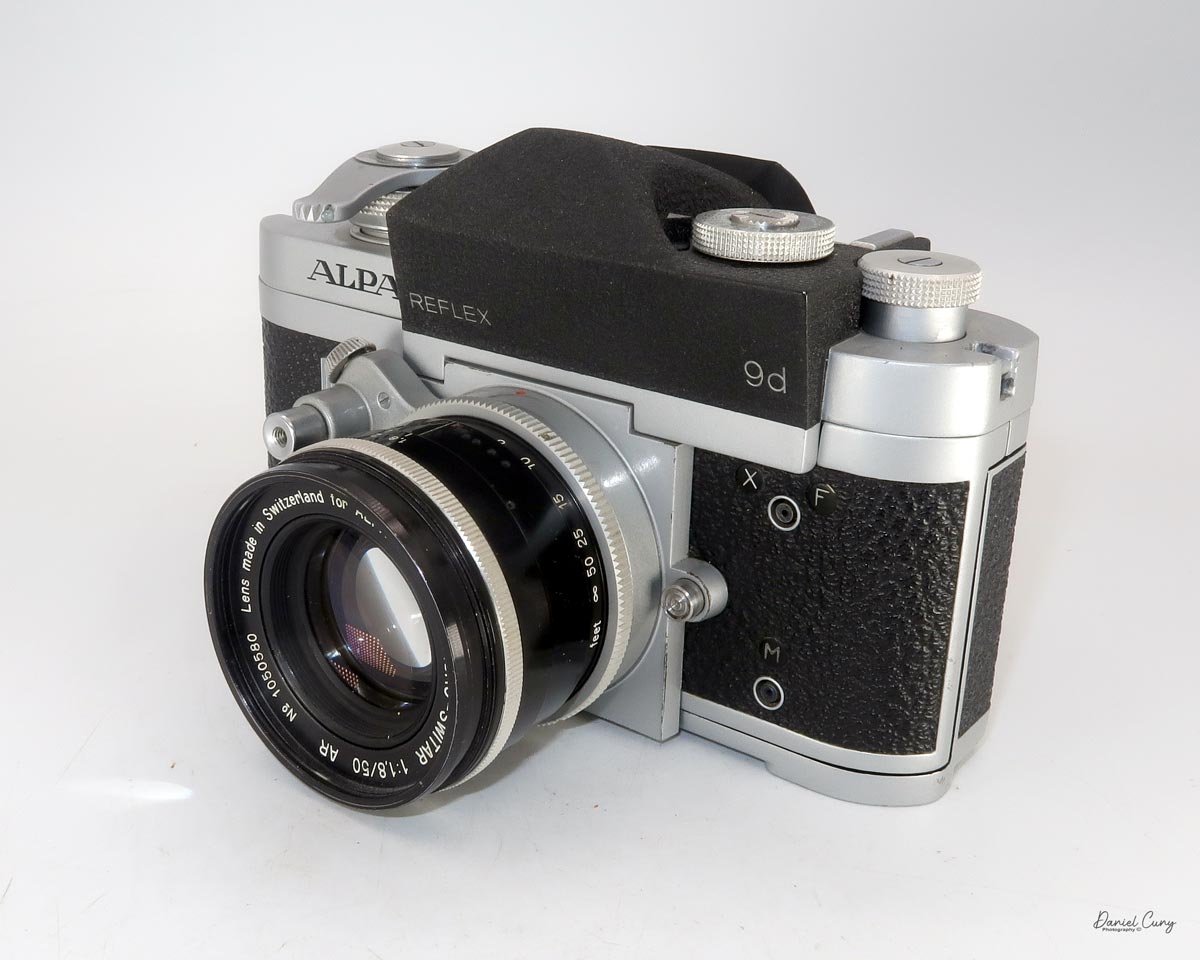
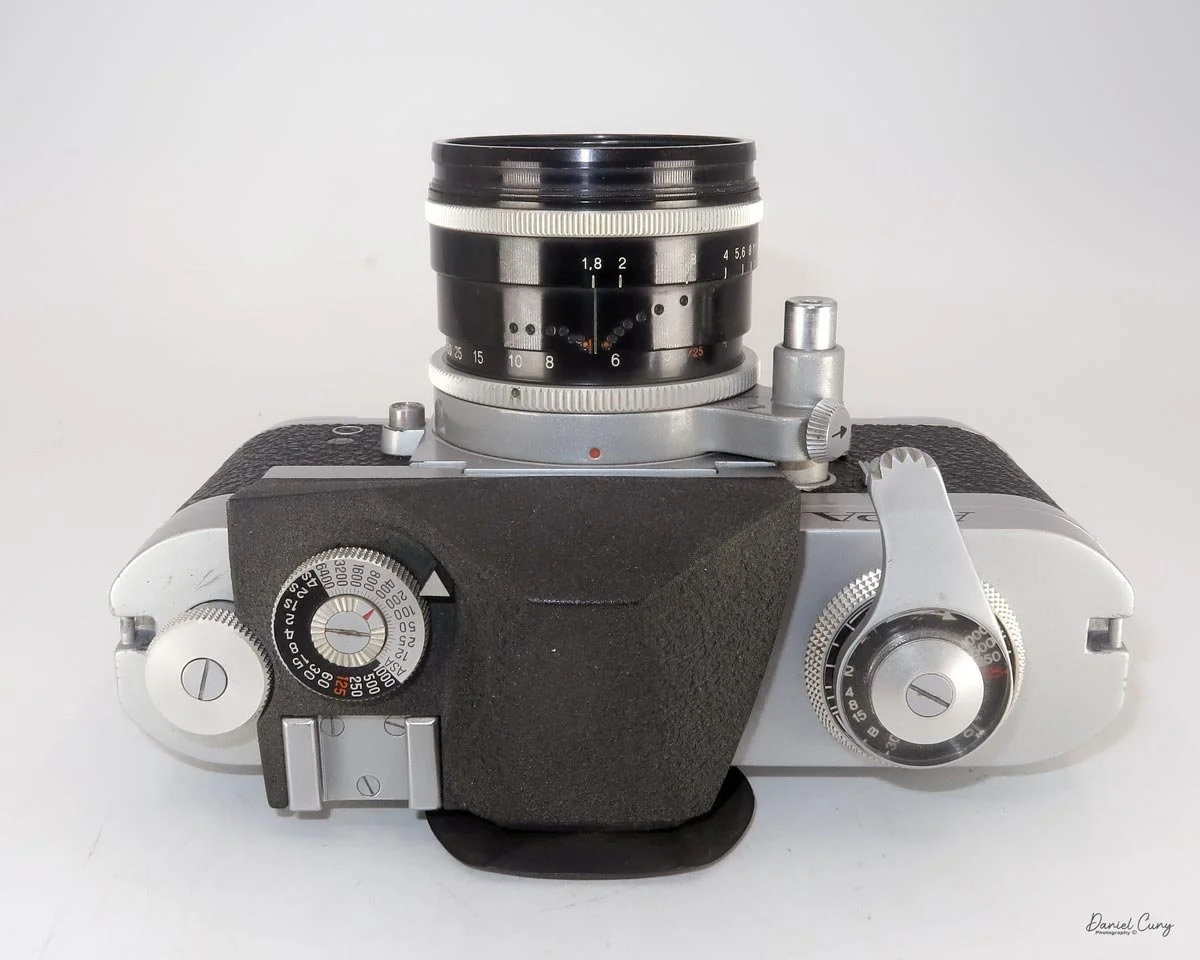
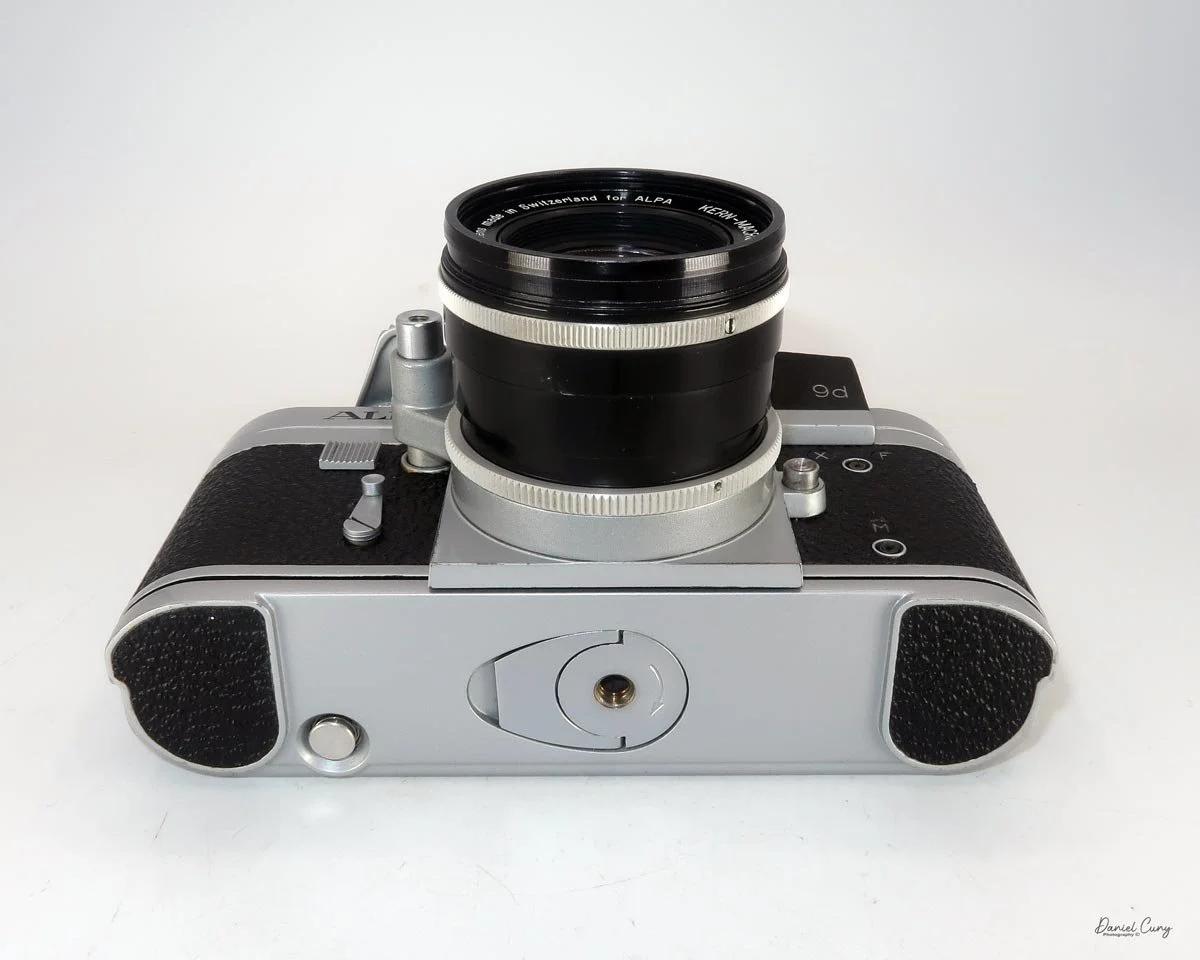
Alpa Reflex 9d camera

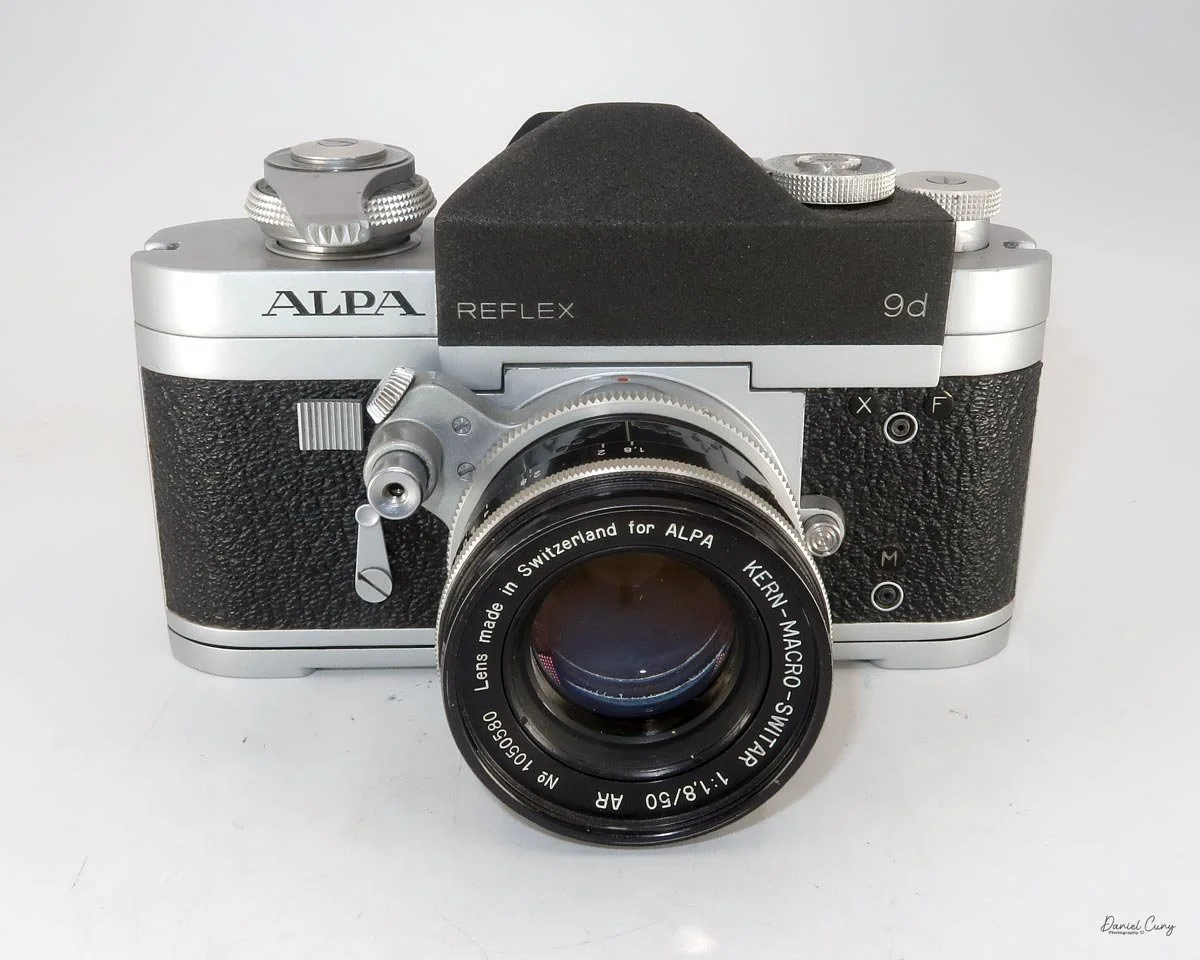
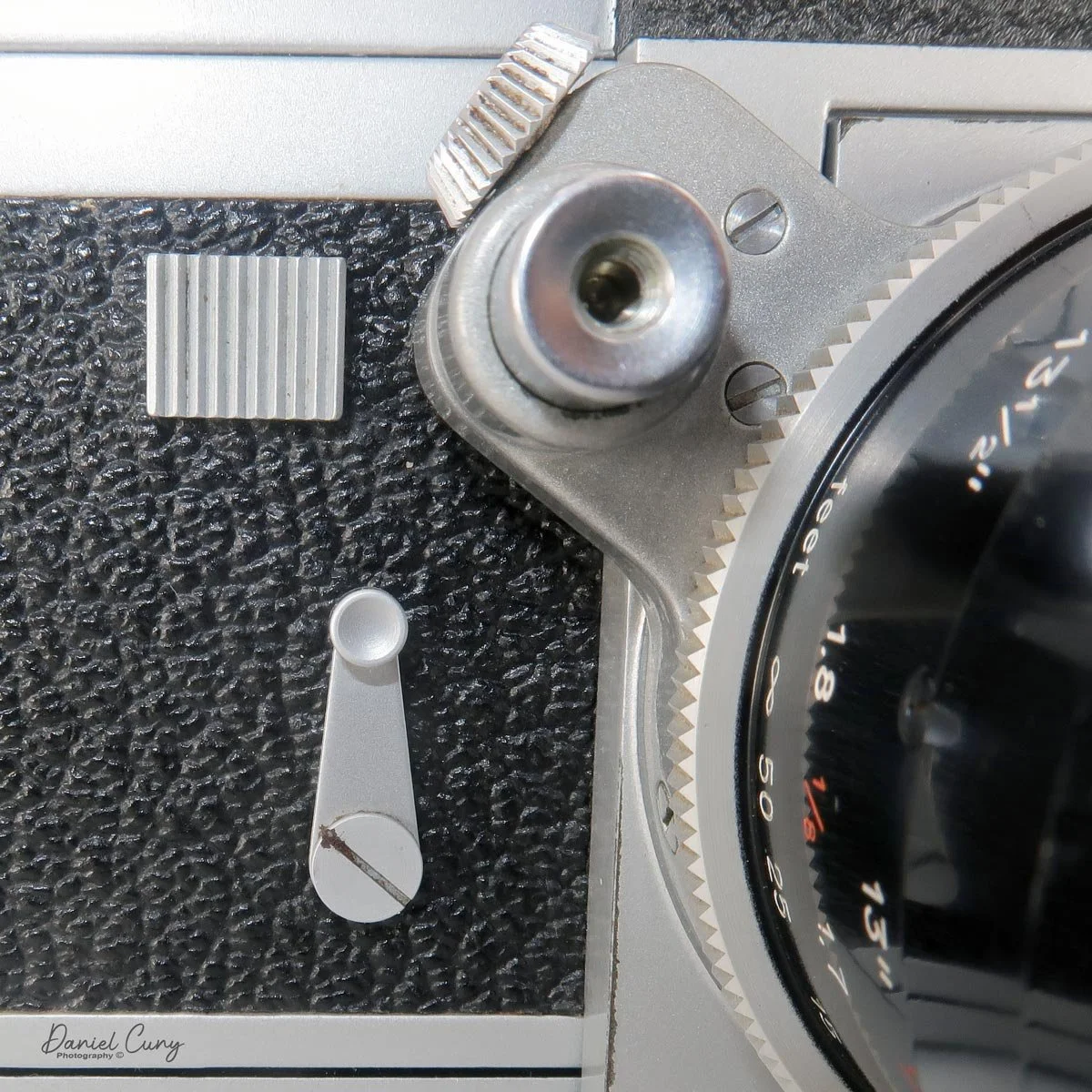
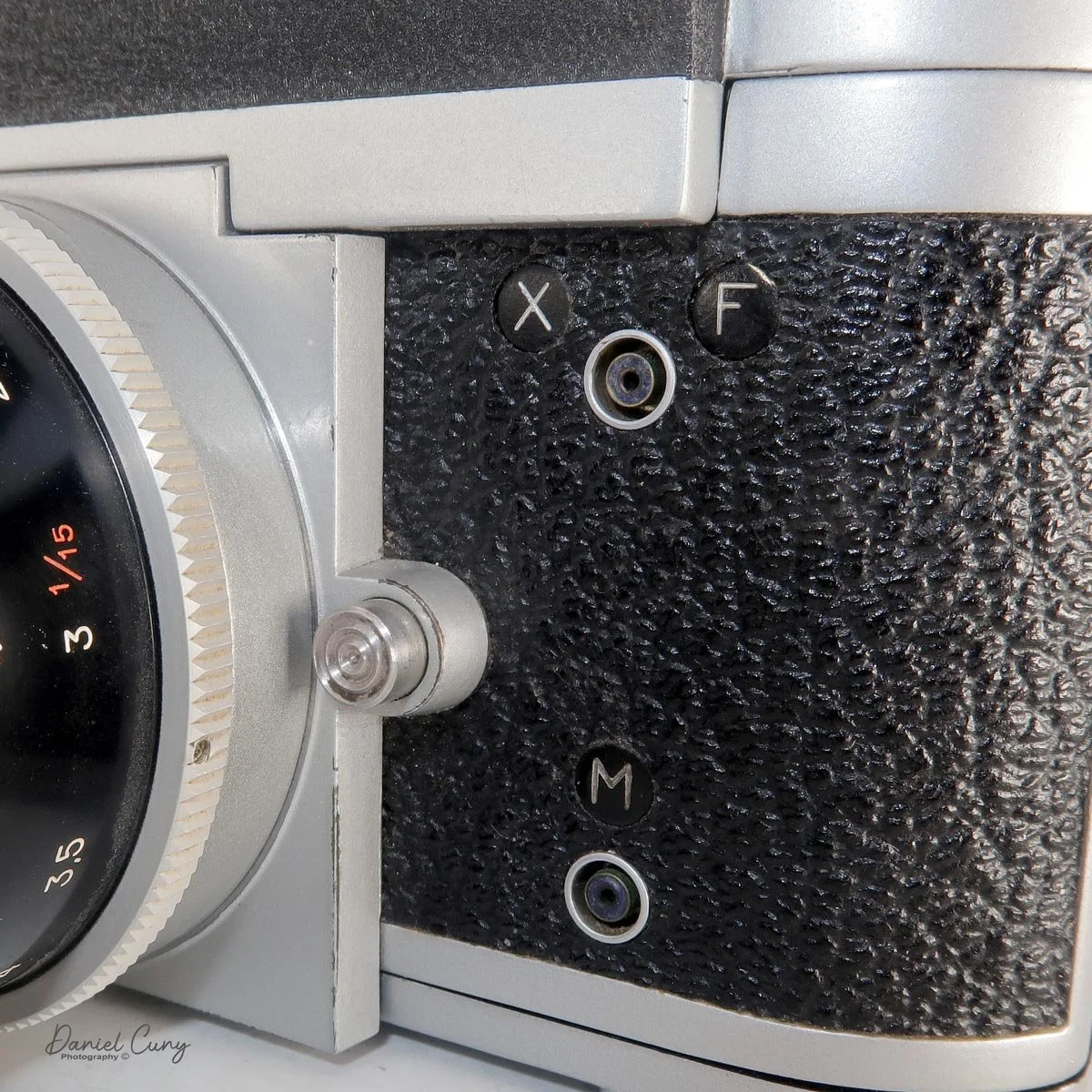
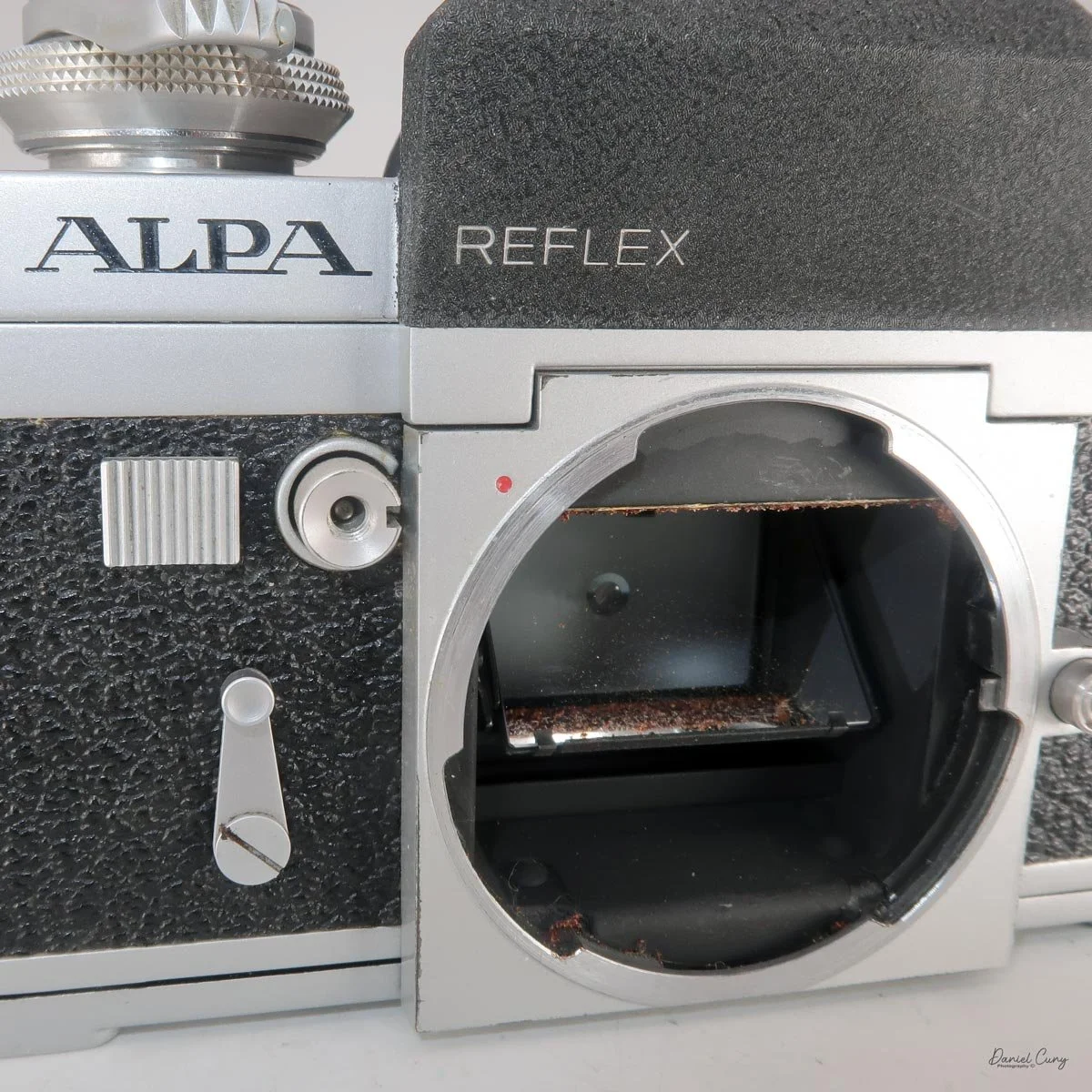
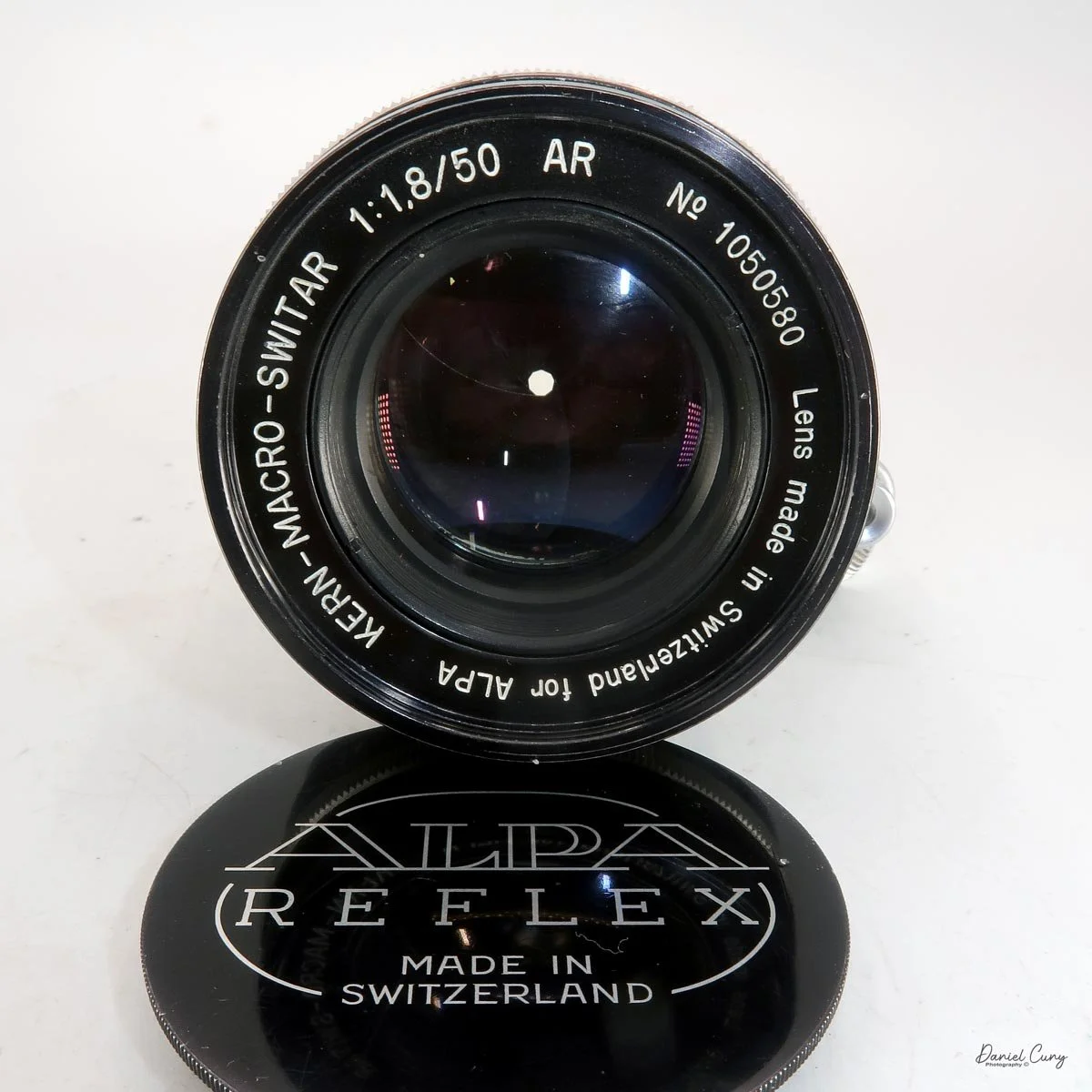
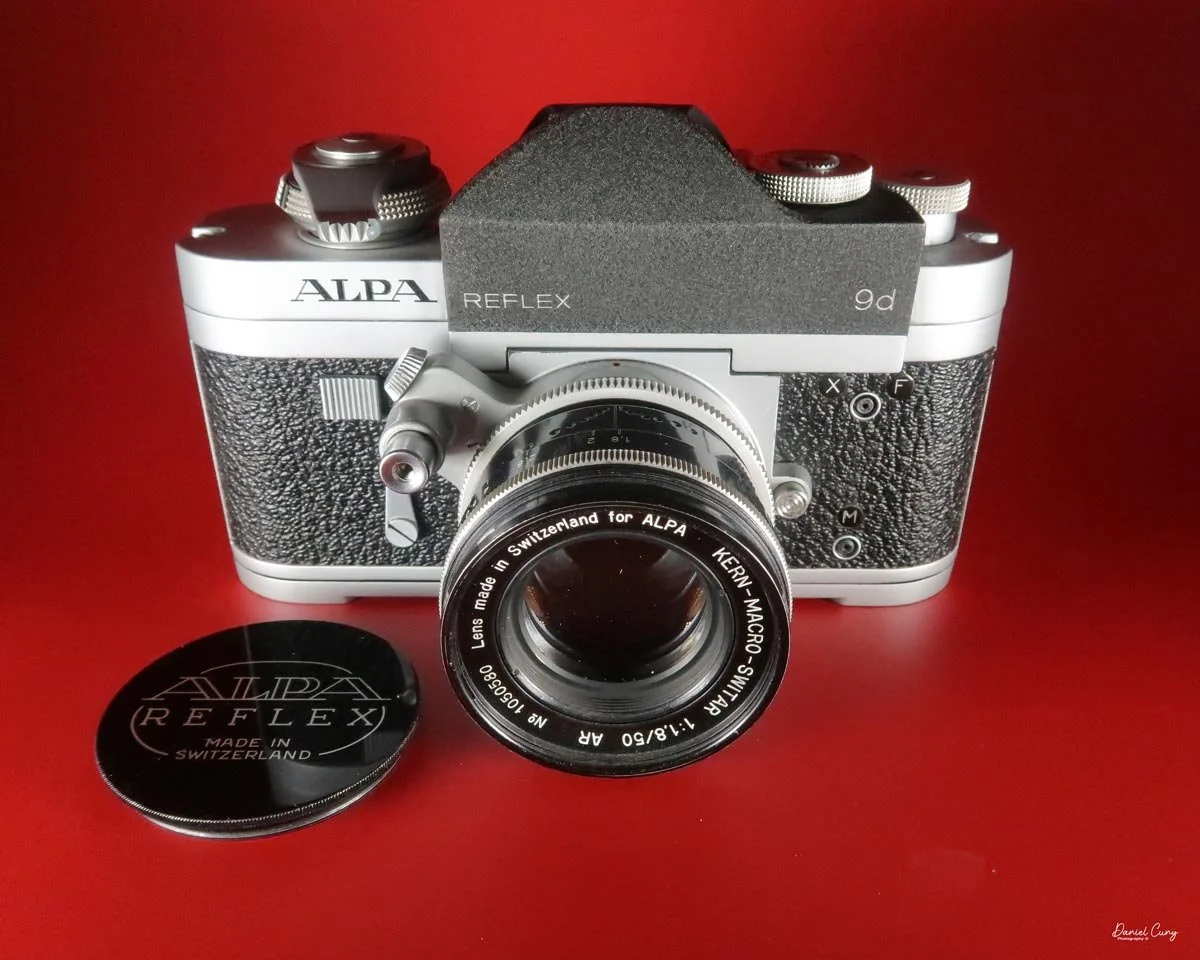
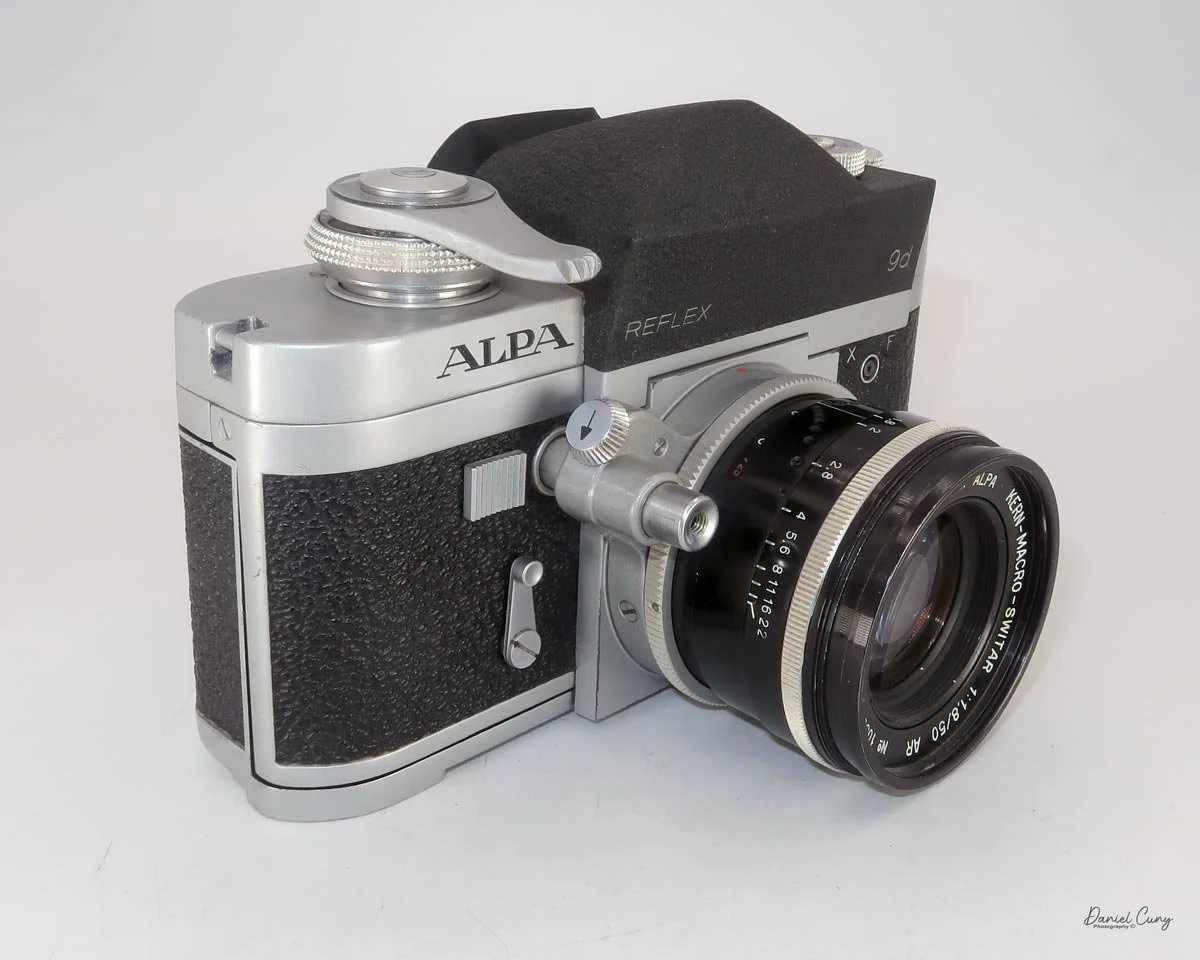
My Alpa Reflex 9d with Kern Macro Switar 50mm f/1.8 lens

A few months ago, I received a message from a friend of mine who lives in Las Vegas. She told me that one of her neighbors' husbands had passed away a while ago, and his wife was looking to sell his camera collection.

She had already gone through her usual friends, family, and other acquaintances to see if anyone was interested in the cameras, with the usual response of "no." My friend told her that he knew someone who might be interested, and that's when I started receiving messages asking if I would like to see what she had.

Of course, I said yes.

I'm always looking to buy and sell cameras, as well as keep certain cameras for special occasions, so I asked my friend to take some photos and send them to me.

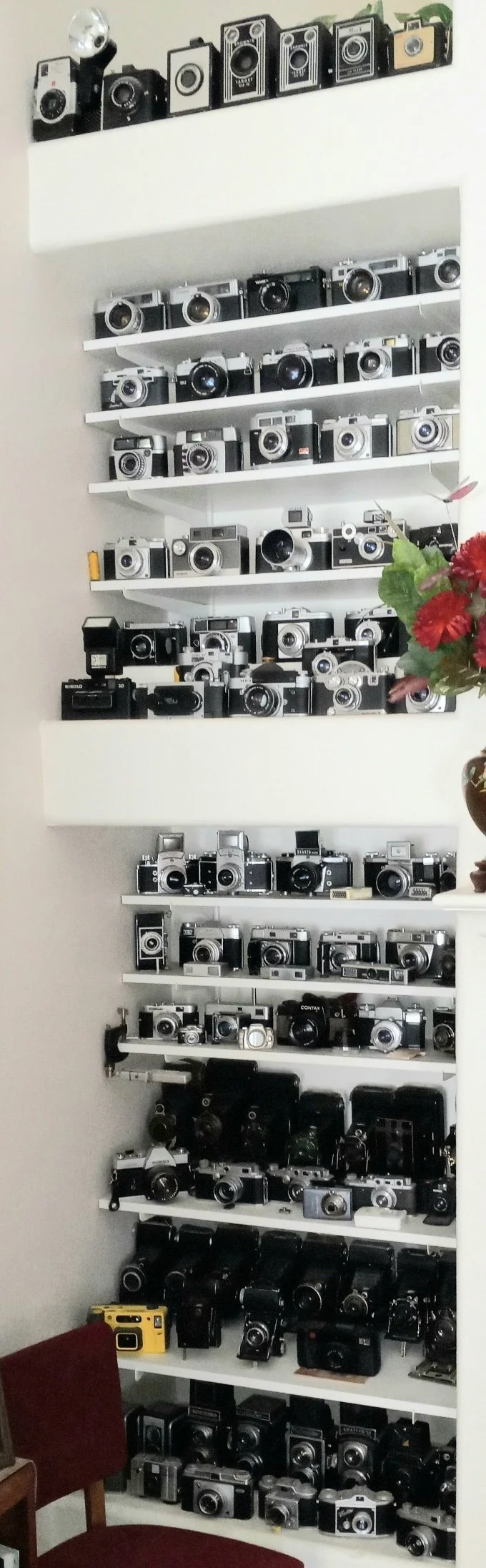
When the photos arrived, I wasn't expecting what I saw. This wasn't just a few cameras sitting in a closet. There was an entire wall of cameras next to the fireplace, neatly stacked on shelves. Doing a rough count, there appeared to be around 100 cameras.

There were plenty of very common cameras that I wasn't particularly interested in, but there were also quite a few really nice ones. In the photos I spotted a Leica IIIb, a Canon rangefinder, a Voigtländer Vitessa, a couple of Exaktas, a Fed I, and one camera that really caught my eye—the Alpa Reflex 9d.

Photo of the camera collection purchased.

I asked if she would be willing to sell just the cameras I was interested in, which amounted to around 25 to 30 cameras. Unfortunately, it was an "all or nothing" sale. She wanted all of the cameras out of her house to make some room, which I could certainly understand.

There was just one problem.

I live in Washington State, and the cameras were in Las Vegas. Shipping nearly 100 cameras would be expensive, and packing that many cameras would be a tremendous amount of work. Since the woman selling the collection was elderly, I also didn't think it was reasonable to expect her to pack and ship everything.

Fortunately, my wife and I were already planning a road trip.

We were going to drive down the Oregon coast to visit family, continue to the San Francisco Bay Area, where we had lived about 10 years ago, and then head to Southern California to visit my sister-in-law. If I could add another four-hour drive from Southern California to Las Vegas, I could pick up the cameras myself.

We agreed on a price, and my friend told me the cameras were in tip-top shape. The seller also agreed to wait until mid-September for me to make the trip.

That worked out perfectly.

While we were in San Francisco, we timed our visit to coincide with the monthly Alameda Point Antique Faire, held on the first Sunday of each month. Naturally, I couldn't be that close and not go. I came away with some great camera and photography-related items.

From San Francisco, we headed to Southern California, stayed with my sister-in-law for a few days, and then made the drive to Las Vegas.

Since we were traveling by car, I had plenty of room for the cameras. I brought a large spare suitcase and plenty of packing material so I could safely transport everything home.

Even though I had agreed to purchase the entire collection, I had already made it clear that I didn't want all of the cameras. I estimated that I would donate about 40 percent of them to Goodwill because they really didn't have much value. The seller told me that whatever I didn't want, I could simply box up because she had a young friend interested in photography who would love to have them.

When we arrived at her house, it was great to finally meet the person I had been talking with on the phone and emailing for quite some time. She was very happy that I had made the trip to pick everything up.

We sat and talked for a while, and then I got to work.

I put the cameras I wanted into the bubble bags I had brought and carefully packed them into the large suitcase. The cameras I wasn't keeping went into two separate boxes, which I carried into her garage.

Then, when I went to close the suitcase, it hit me.

This was going to be heavy.

Very heavy.

Fortunately, it wasn't completely unmanageable, and I was able to get the suitcase into the back of my car. But I'd estimate that it was very close to 100 pounds.

That was essentially what my wife and I had been doing for the previous three weeks—driving, visiting family, going to antique shows, and finally hauling a nearly 100-pound suitcase full of cameras home from Las Vegas.

We returned from the trip about a week ago, and I've now started sorting through the cameras we purchased, listing some of them in my Cuny's Cameras and Photos eBay store and preparing others for a camera show in Seattle on Saturday, October 3, 2026.

Of all the cameras in that collection, however, there was one I was particularly anxious to get my hands on.

The Alpa Reflex 9d.

And fortunately, it came with what may be an even more interesting piece of the package—the Kern Macro Switar 50mm f/1.8 lens.

After unpacking everything, the first thing I did was inspect the Alpa to make sure it was in as good a condition as my friend had described. I also checked the lens to make sure the glass was clean and clear.

Everything looked good.

So I loaded a roll of film into the Alpa, grabbed the camera, and headed out into the neighborhood to see what this vintage Swiss camera and lens could do.

History

Alpa cameras occupy a special place in the history of 35mm photography. Made in Switzerland, Alpa cameras were never mass-market products. Instead, they were precision instruments designed for photographers and collectors who appreciated exceptional mechanical construction, innovative designs, and meticulous craftsmanship.

The company's roots go back to Pignons S.A. in Ballaigues, Switzerland. In 1944, the company introduced the Alpa Reflex, designed by Jacques Bolsky. It was an unusual 35mm SLR that combined a compact body with a distinctive internal mechanism.

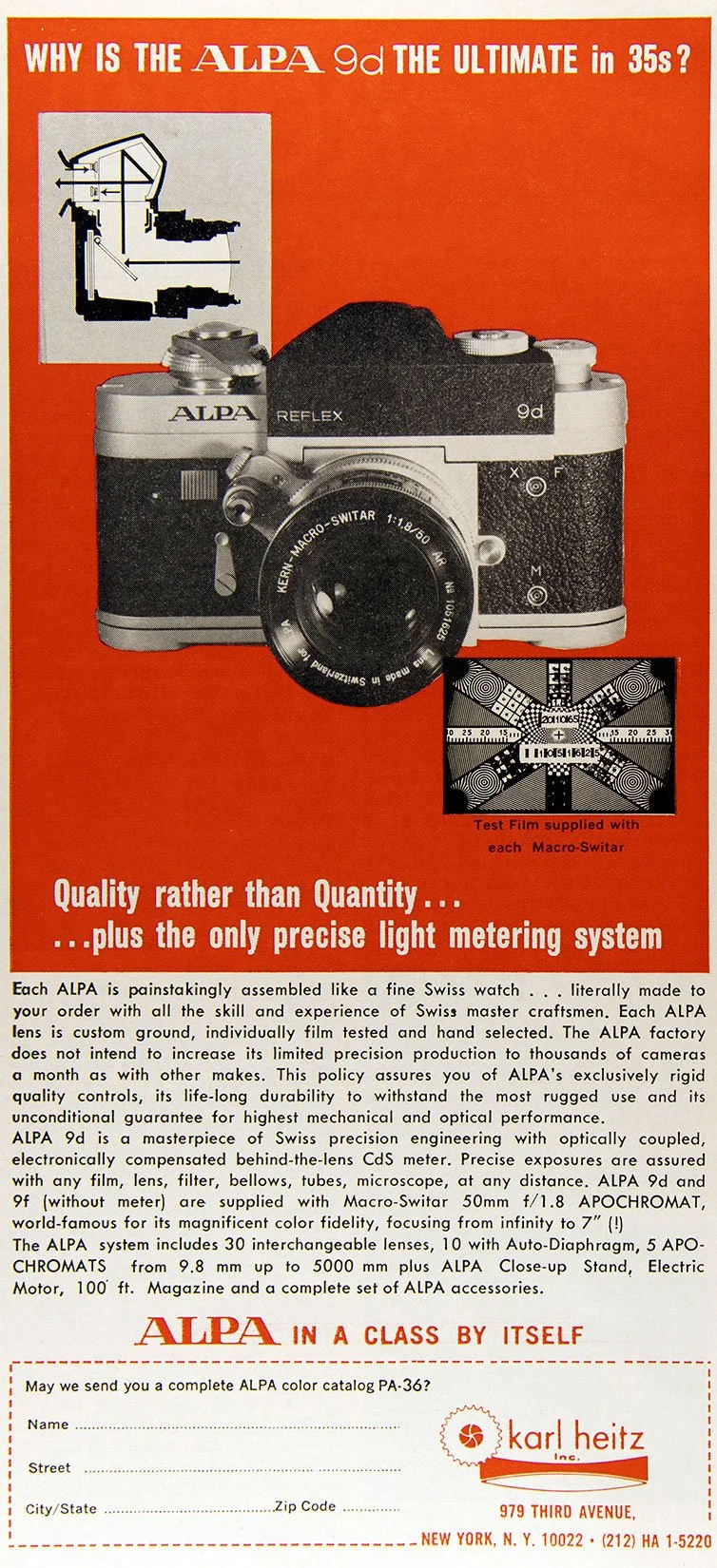
Alpa Reflex 9d advertisment.

From the beginning, Alpa cameras were different from the mainstream.

During the late 1940s and 1950s, Alpa developed a series of increasingly sophisticated 35mm SLRs. Models such as the Alpa-Standard, Alpa-Reflex, Alpa-6, and Alpa-7 helped establish the company's reputation for precision and quality.

Alpa cameras were considerably more expensive than many of the mainstream 35mm cameras being produced by manufacturers such as Leica, Nikon, Canon, and Pentax. Their relatively low production numbers and Swiss construction gave them an almost bespoke character.

One of the important developments in the Alpa story came with the Alpa 9d, introduced in the early 1960s. It incorporated a through-the-lens metering system while retaining the unusual mechanical design that made Alpa cameras so distinctive.

The Alpa 10d and later Alpa 11 series continued this tradition. Prestigious lens manufacturers supplied optics for Alpa cameras, including Schneider-Kreuznach, Kern Aarau, and Angénieux.

Perhaps the most famous Alpa cameras are the 9, 10, and 11 series, along with the later Alpa 12 cameras. Their precision construction, interchangeable lenses, and unusual operating characteristics made them particularly attractive to professional and specialist photographers.

The Alpa 11si, introduced during the 1970s, represented one of the final major developments of the original Alpa tradition. Its compact body, sophisticated metering, and exceptional build quality made it one of the most interesting Swiss 35mm SLRs of its era.

Despite the company's reputation, producing highly specialized cameras in relatively small numbers made it difficult for Alpa to remain profitable. Pignons S.A. eventually ceased camera production in 1990, bringing the original Alpa 35mm era to an end.

Today, Alpa 35mm cameras are highly regarded by collectors. Their limited production, distinctive engineering, unusual lens systems, and Swiss craftsmanship make them fascinating examples of high-end mechanical 35mm photography.

For collectors, an Alpa isn't simply another vintage SLR. It represents a uniquely Swiss interpretation of what a precision camera could be.

The Camera

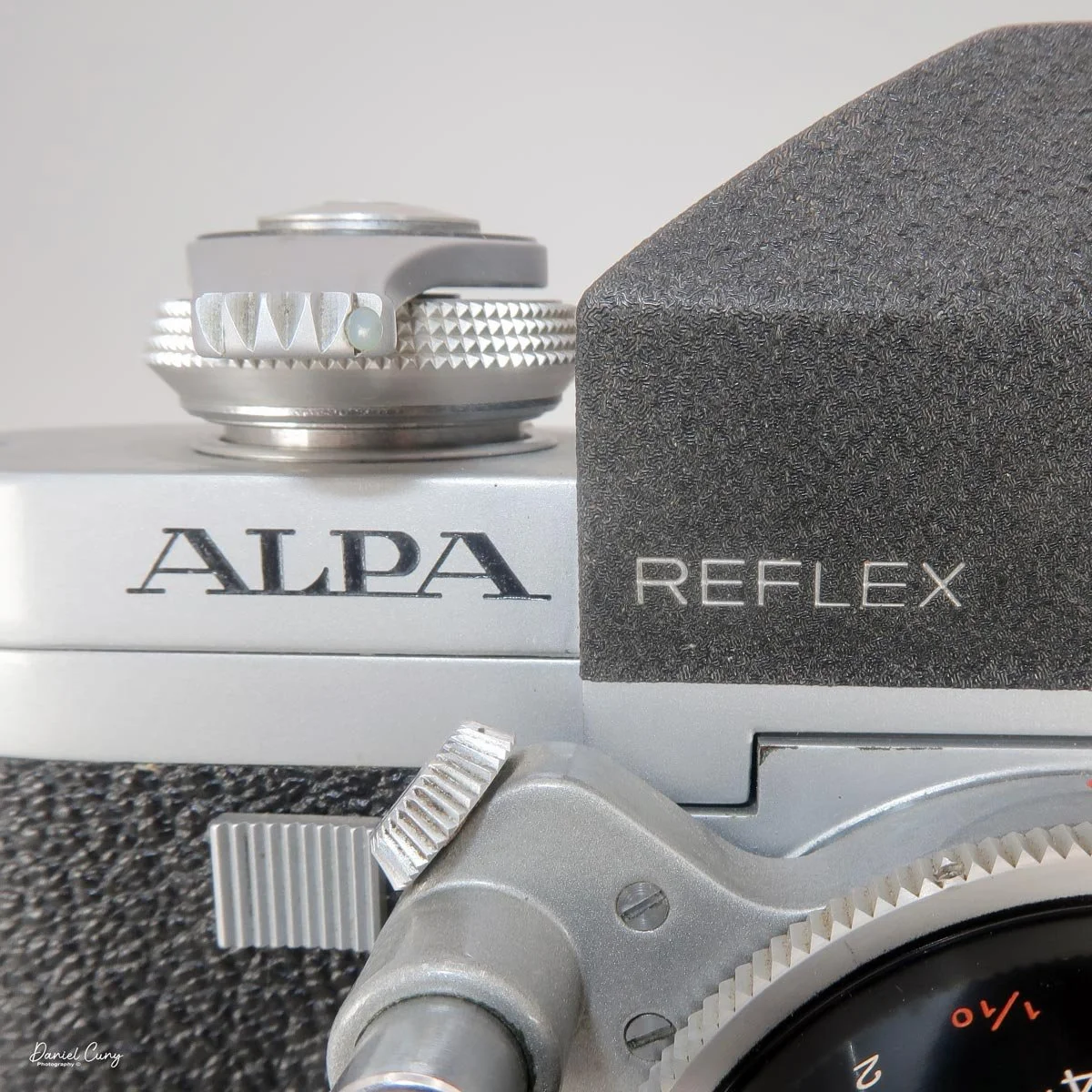
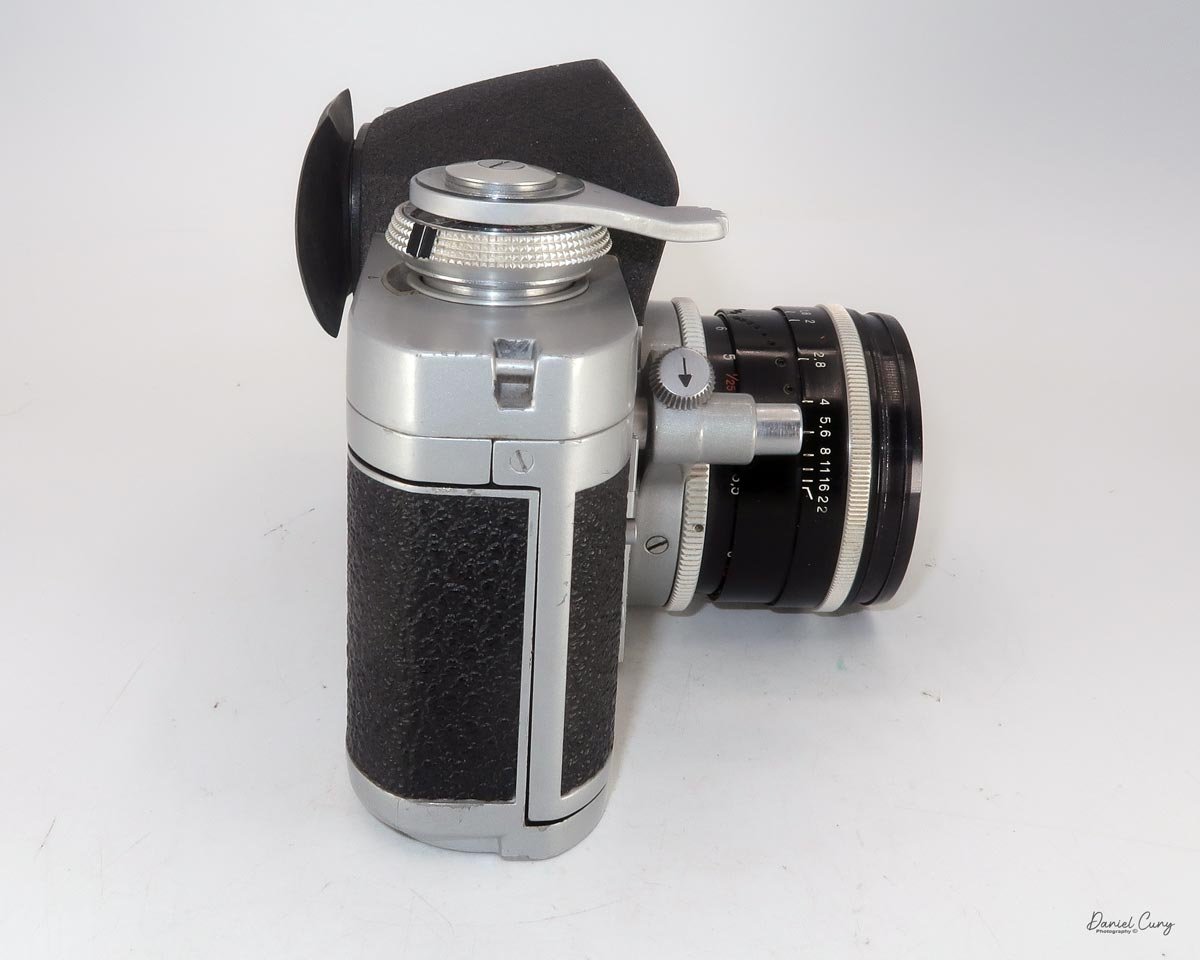
The Alpa Reflex 9d is a hefty, extremely solid camera. With the Kern Macro Switar 50mm f/1.8 lens mounted and focused to infinity, it measures approximately 6 inches wide, 4 inches tall, and 3.5 inches deep. At the lens's closest focusing distance, the overall depth increases to about 4.5 inches.

The camera and lens together weigh 2 pounds, 3.5 ounces.

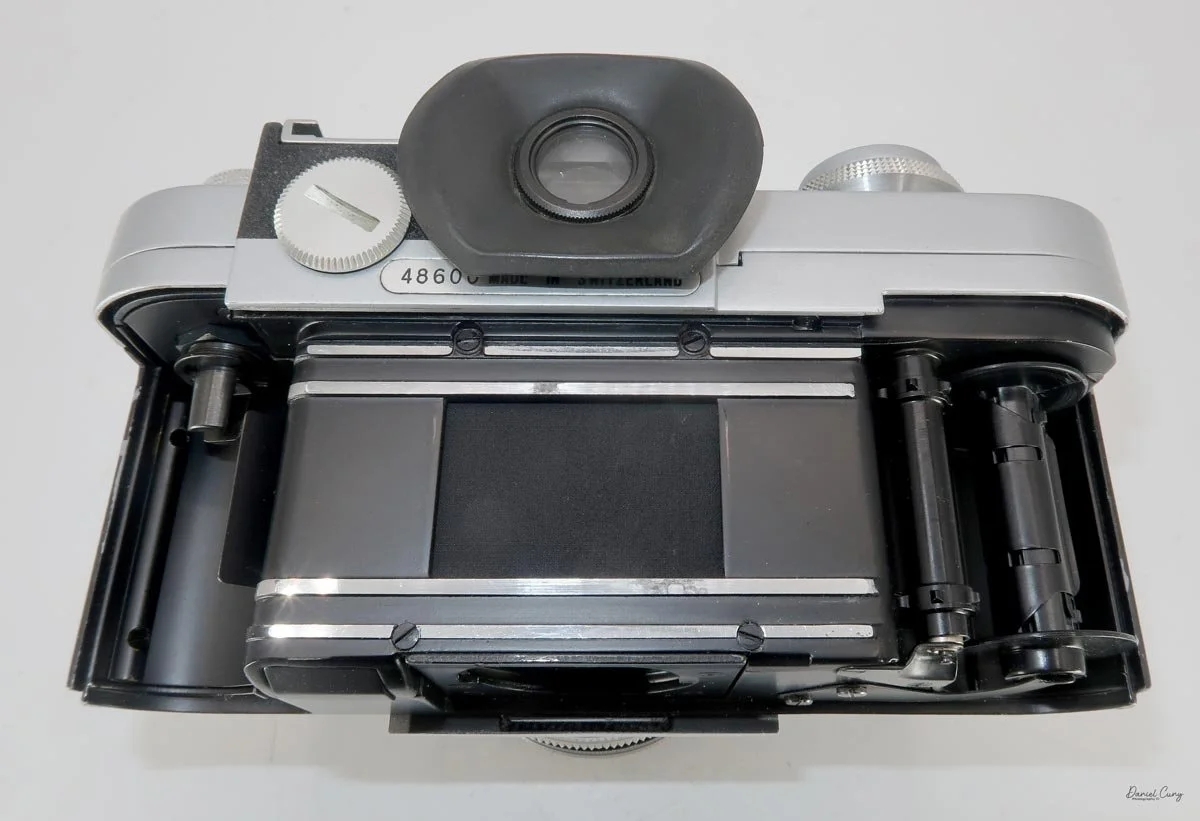
The body serial number is 48600, while the Kern lens has serial number 1050580.

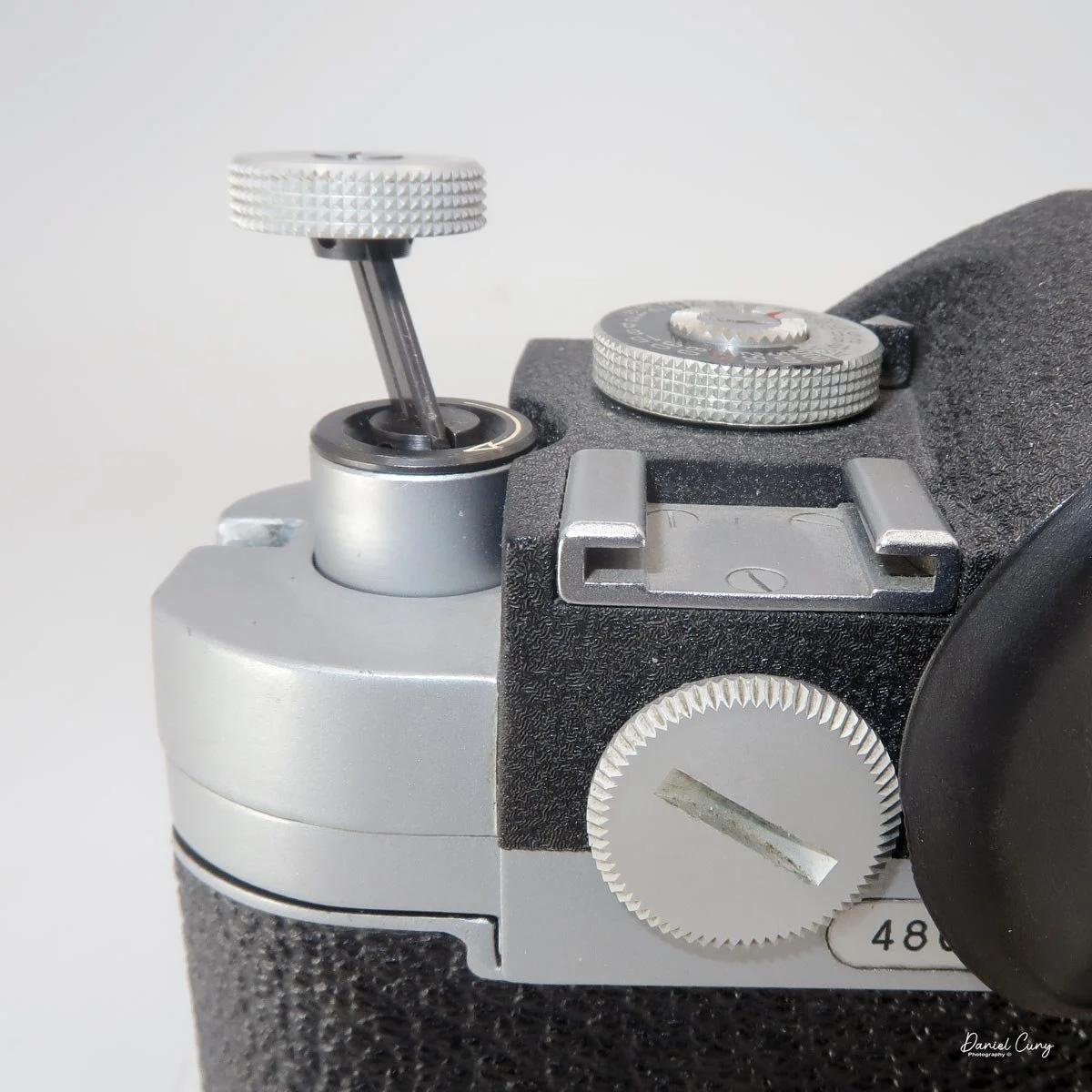
It took me a little while to get used to how this camera operates. The film does advance normally, but the winding lever is reversed from almost every other camera I've ever used.

Instead of using your thumb to push the film advance lever to the side, you grab the lever with your forefinger and pull it back to advance the film to the next frame.

It's one of those things that feels strange at first simply because I'm so accustomed to cameras working the opposite way.

Under the film advance lever is the shutter-speed control, which provides speeds from 1/1000 second down to 1 second, with a flash synchronization speed of 1/60 second.

Changing the shutter speed is also a little different. Pull down on the collar and rotate the ring to the desired shutter speed, indicated by a white line on the collar.

The camera can also make exposures longer than one second. By setting the shutter-speed dial to 1 second and rotating the collar, you can select exposures of up to 4 seconds.

The Meter

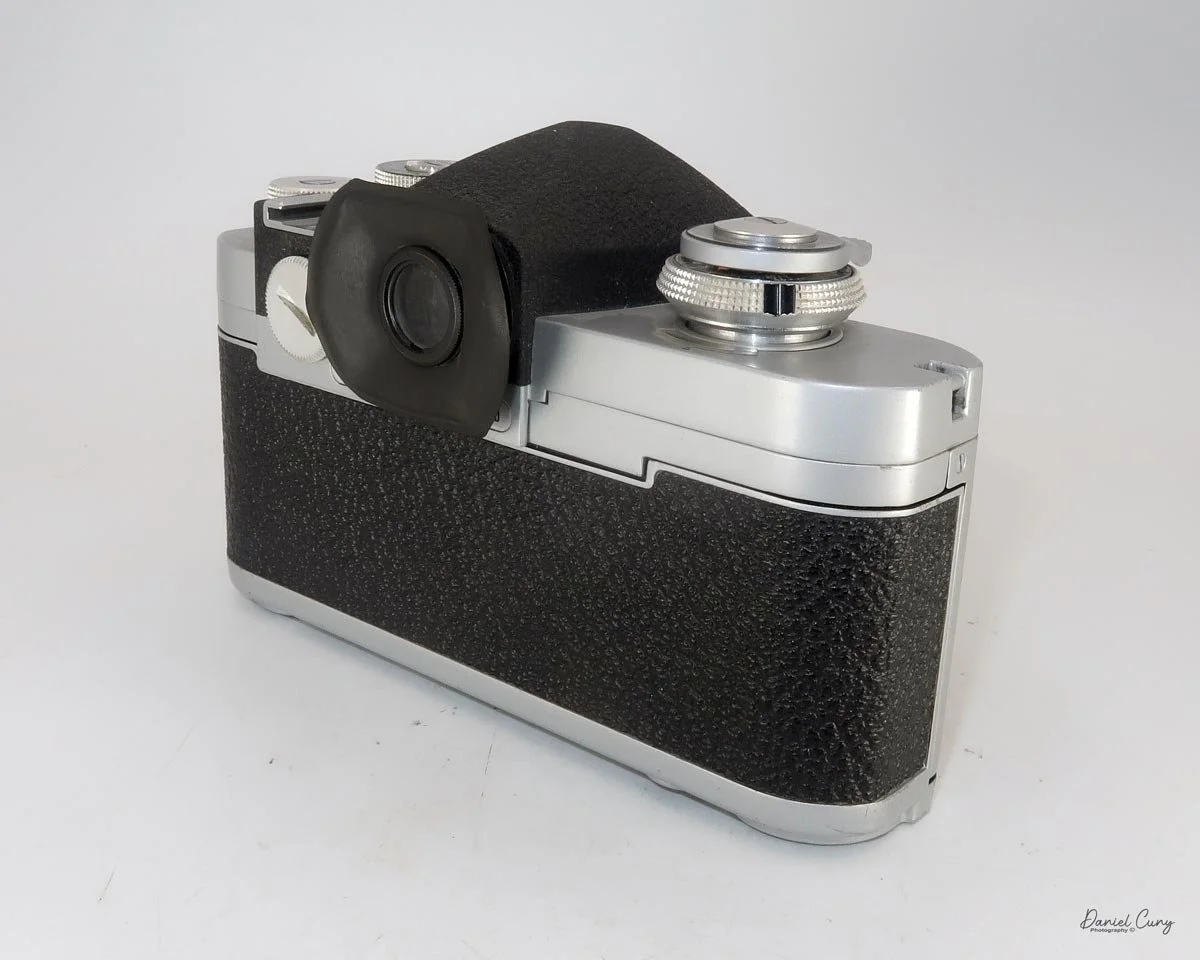
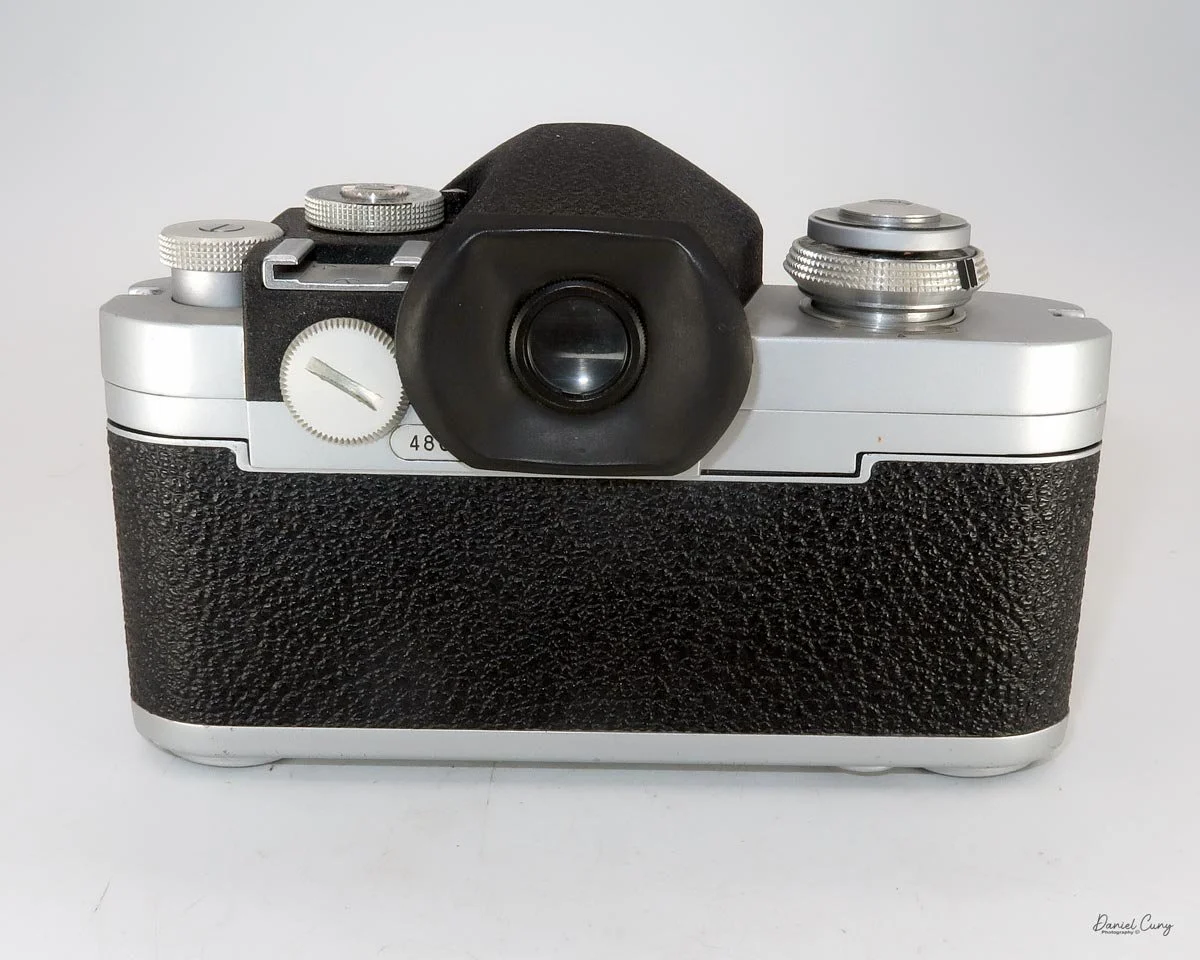
The Alpa Reflex 9d has a built-in light meter, with the battery compartment located on the back of the camera next to the viewfinder eyepiece.

The meter uses a match-needle system. Looking through the viewfinder, you see a needle with a circle on its end and another floating needle. The idea is to adjust the shutter speed or aperture until the two needles line up.

To activate the meter, you slightly depress the shutter release on the front of the camera. A lock next to the shutter release prevents you from accidentally firing the shutter while metering.

Unfortunately, the meter in my Alpa isn't working. The needle doesn't move when I depress the shutter release or change the shutter speed and aperture.

That's not a huge problem for me, however, since I normally carry a handheld meter anyway.

The ASA setting is controlled by a dial on top of the camera. If you prefer to select the aperture first, the meter system can tell you what shutter speed to use for the available light.

It took me a little while to understand the system, and I'll admit that it isn't the most intuitive metering arrangement I've used.

But once you understand what Alpa was trying to accomplish, it makes sense.

Other Controls

On the left front of the camera body is a square block that locks and unlocks the shutter and meter system. Moving it to the left unlocks the system, while moving it toward the lens locks it.

Below this is the self-timer, which provides a delay of up to approximately 20 seconds.

On the right side of the body are the flash synchronization terminals and the lens-release button.

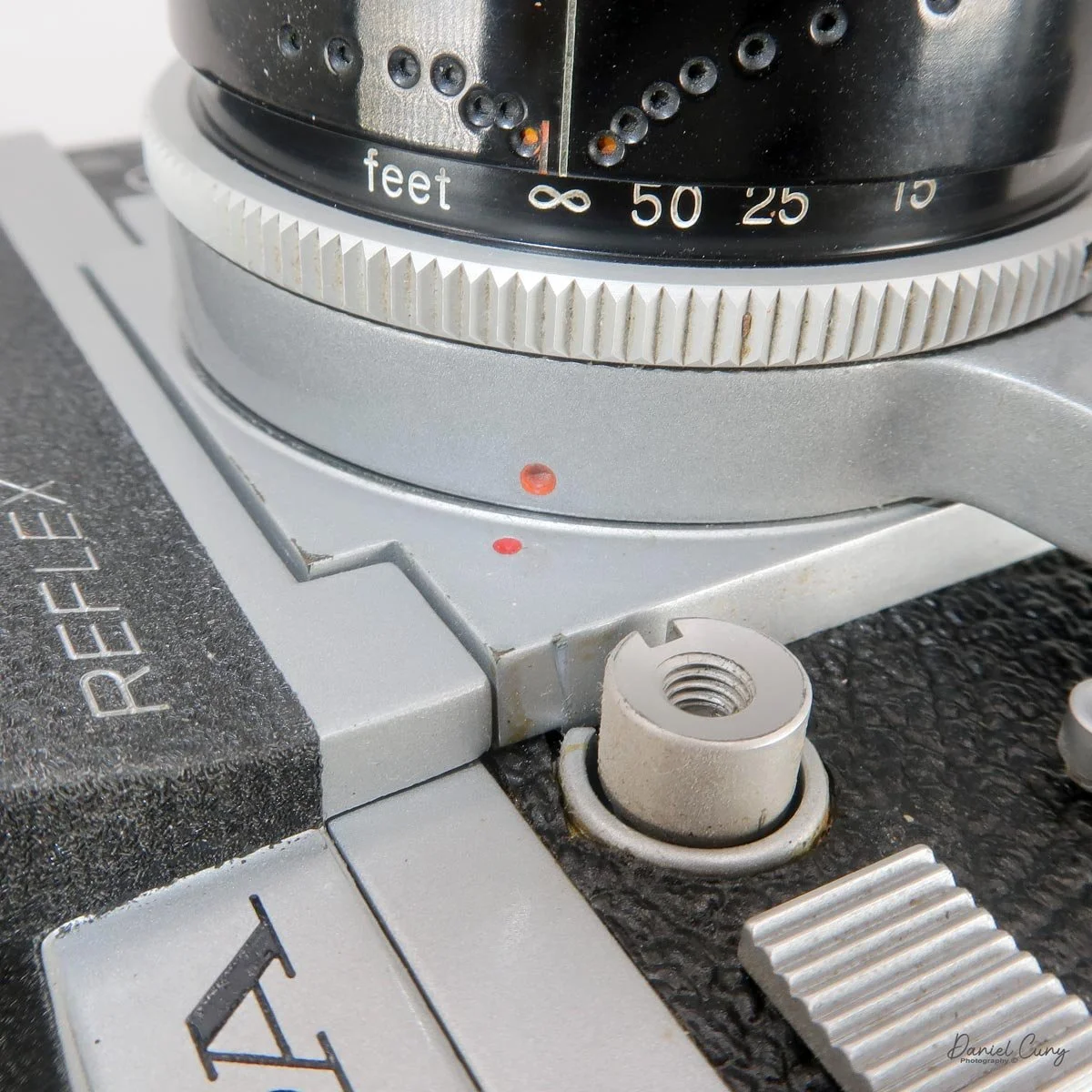
Removing the lens is straightforward. Press the lens-release button and rotate the lens counterclockwise. To install a lens, line up the two red dots—one on the camera body and one on the lens—and rotate the lens clockwise until it clicks into place.

The Kern Macro Switar 50mm f/1.8 lens

The Kern Macro Switar 50mm f/1.8 is a pretty wonderful lens.

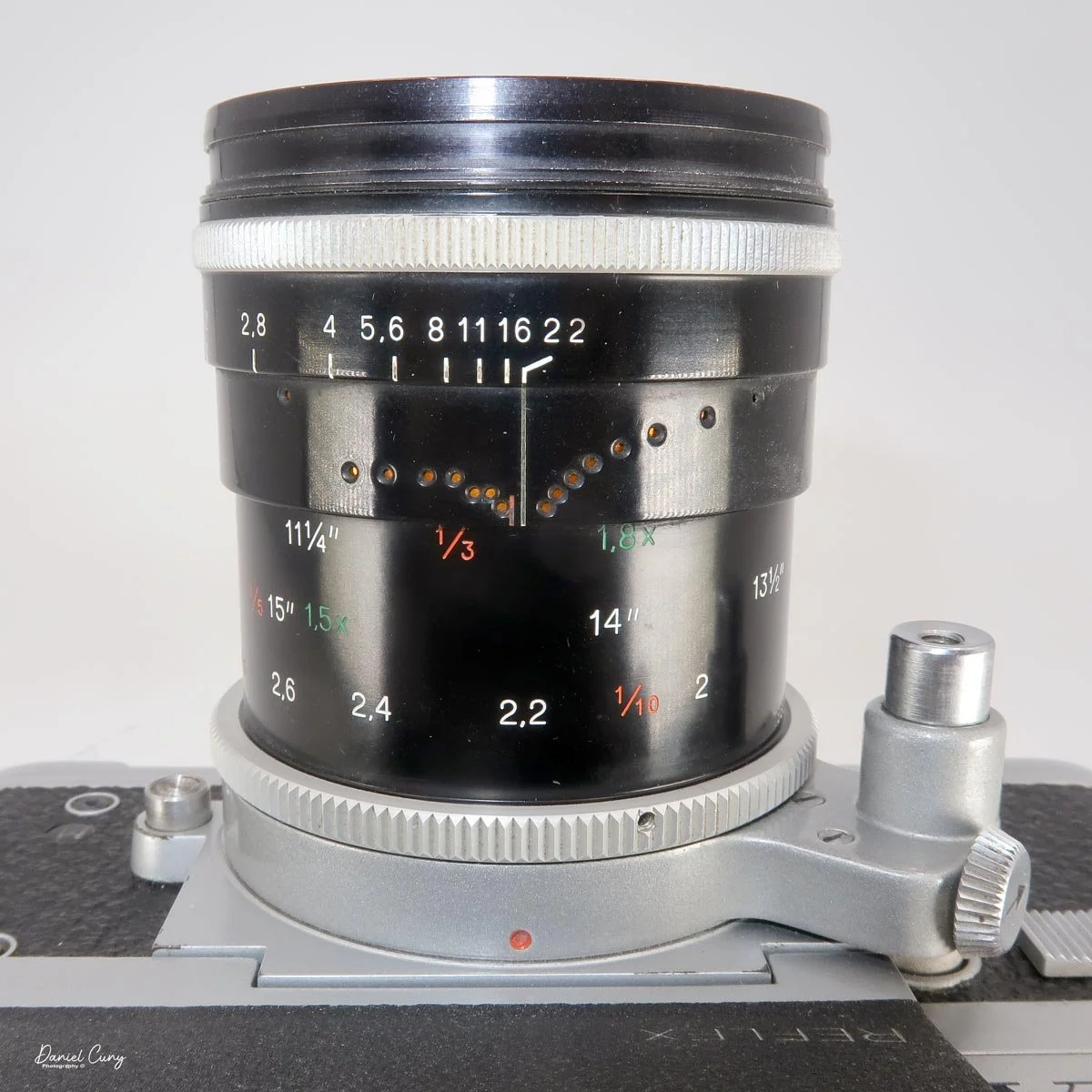
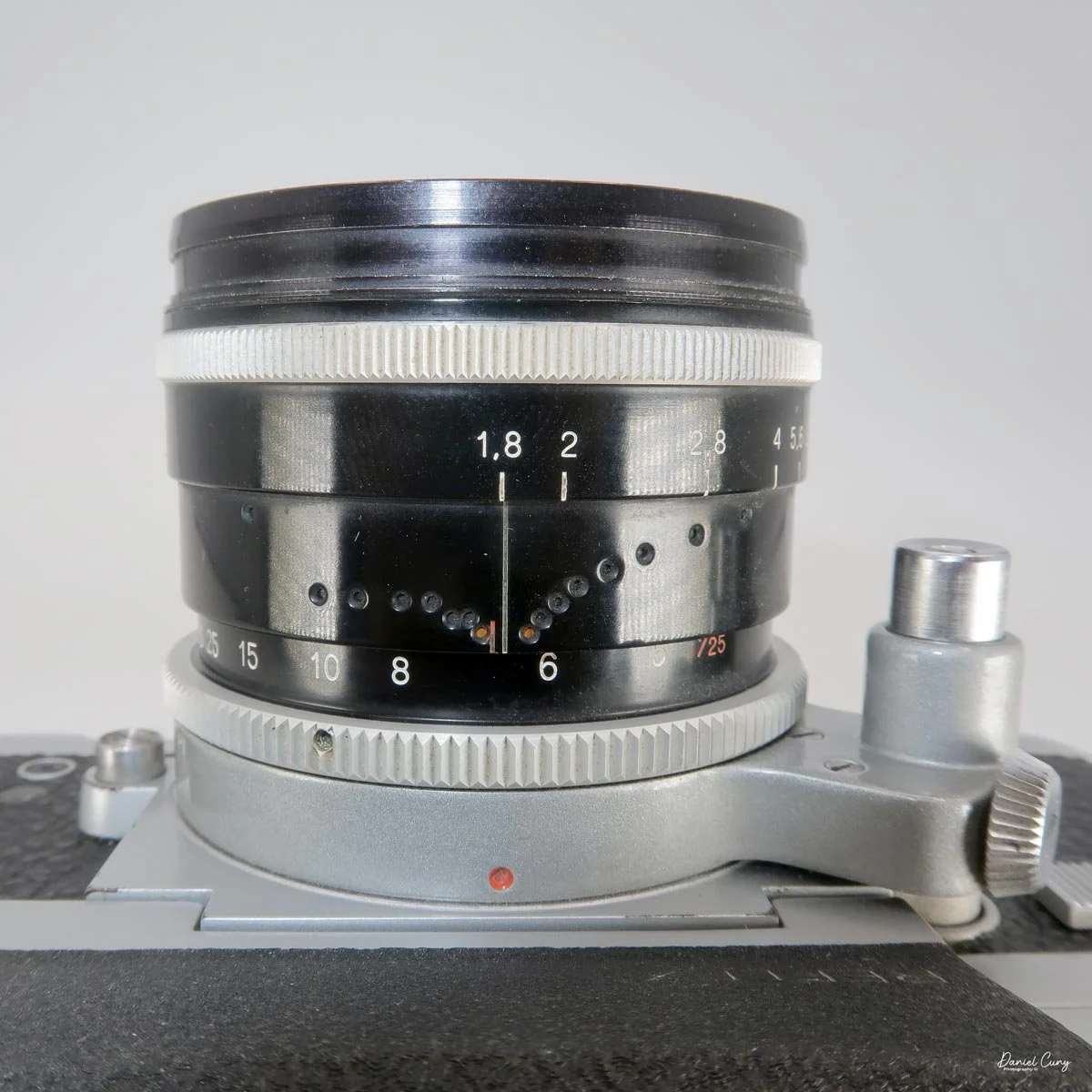
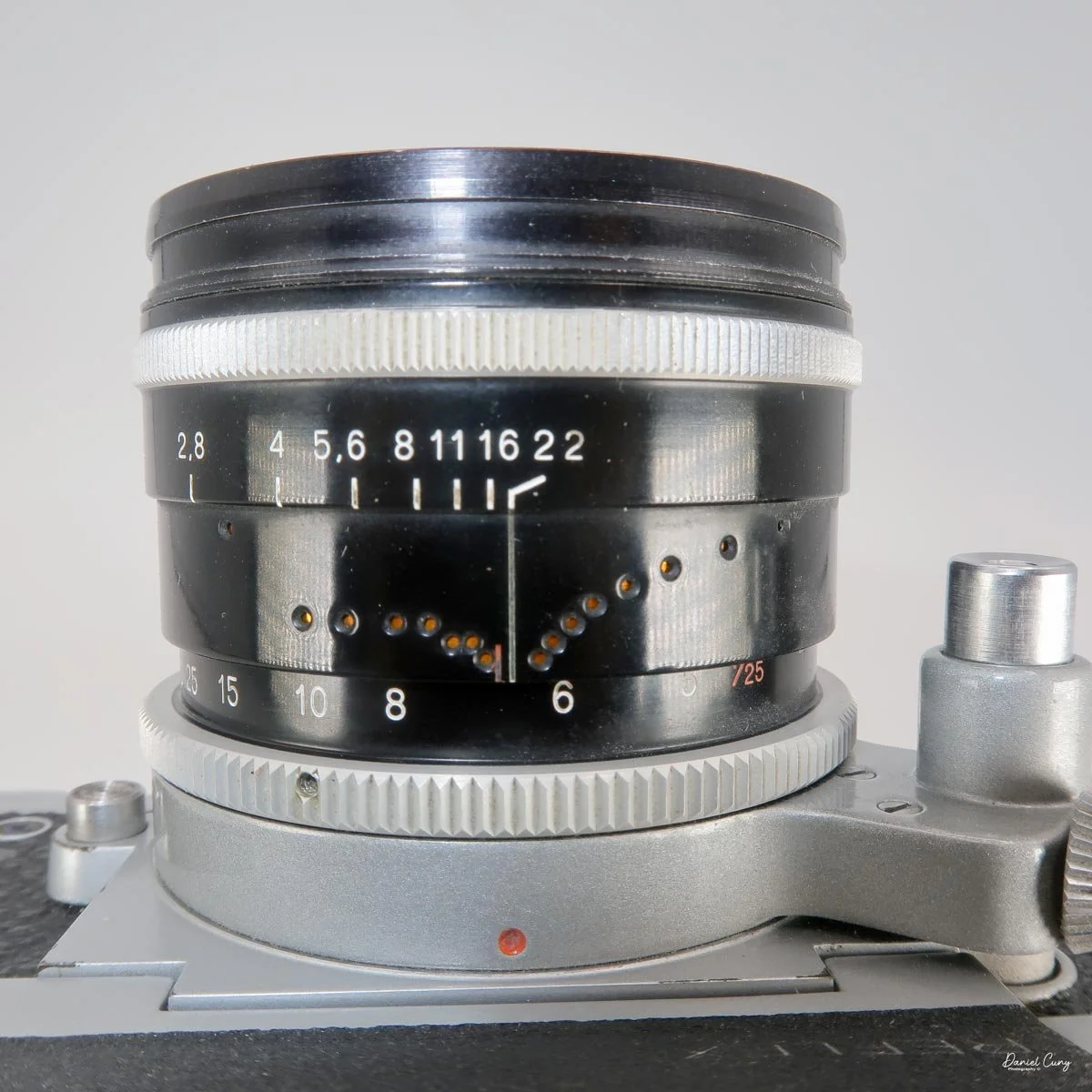
It focuses from about 11 inches to infinity, making it much more versatile than a typical 50mm lens. The focusing ring is toward the rear of the lens, while the aperture ring is toward the front and provides settings from f/1.8 through f/22.

The lens also has a distinctive automatic/manual control on the shutter-release shaft.

In the automatic position, the lens stays at maximum aperture while focusing and only stops down to the selected aperture when you release the shutter. In the manual position, the lens stops down as you change the aperture.

This makes the lens particularly nice to use when you're trying to focus accurately at close distances.

The depth-of-field scale is also unusual, using a series of colored dots to indicate depth of field at the various apertures.

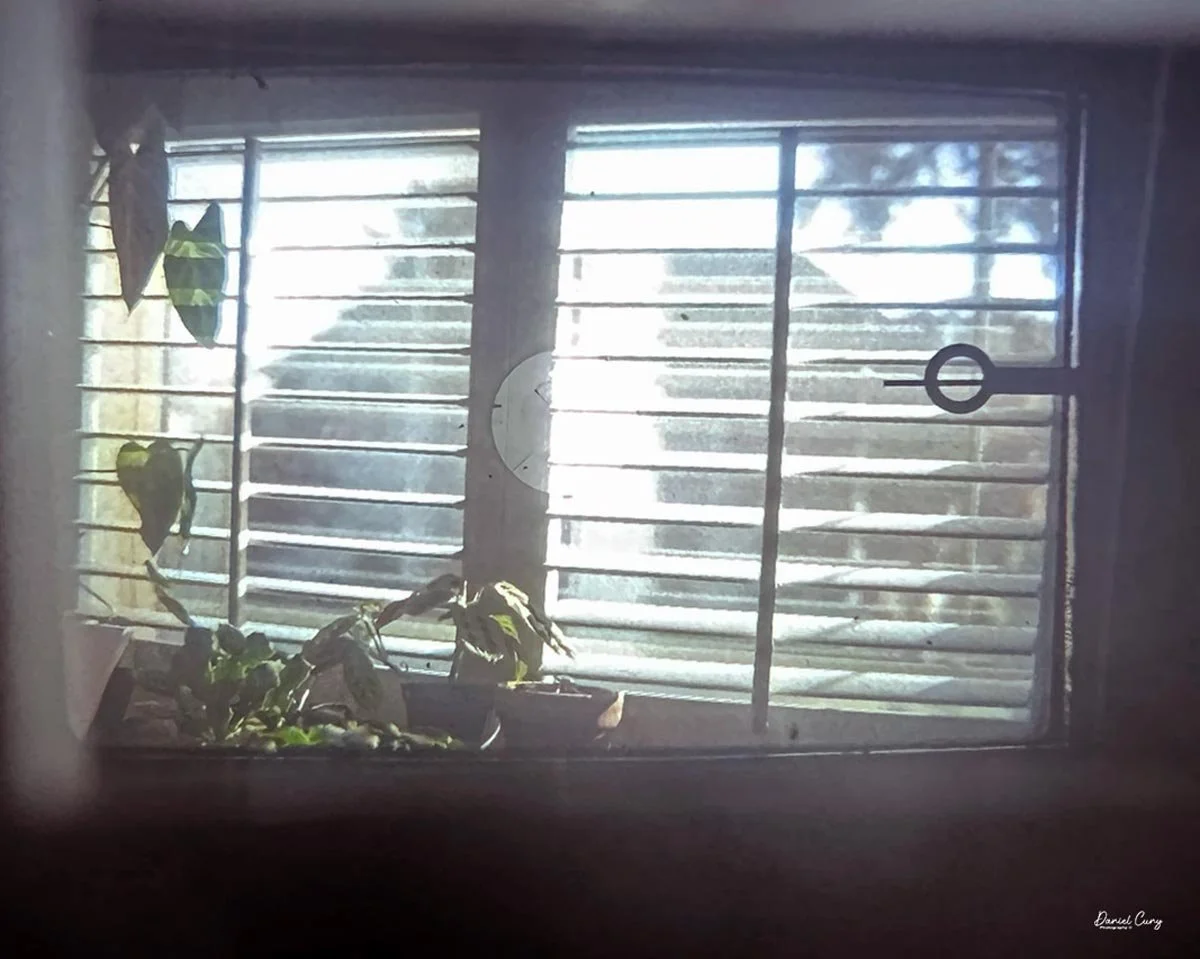
Looking through the viewfinder, the focusing screen has a 45-degree slanted split-image rangefinder in the center, surrounded by a fine ground-glass circle and a matte focusing area.

The meter needles are visible on the right side of the viewfinder.

Loading Film

Loading film is a little different from most 35mm SLRs I've used.

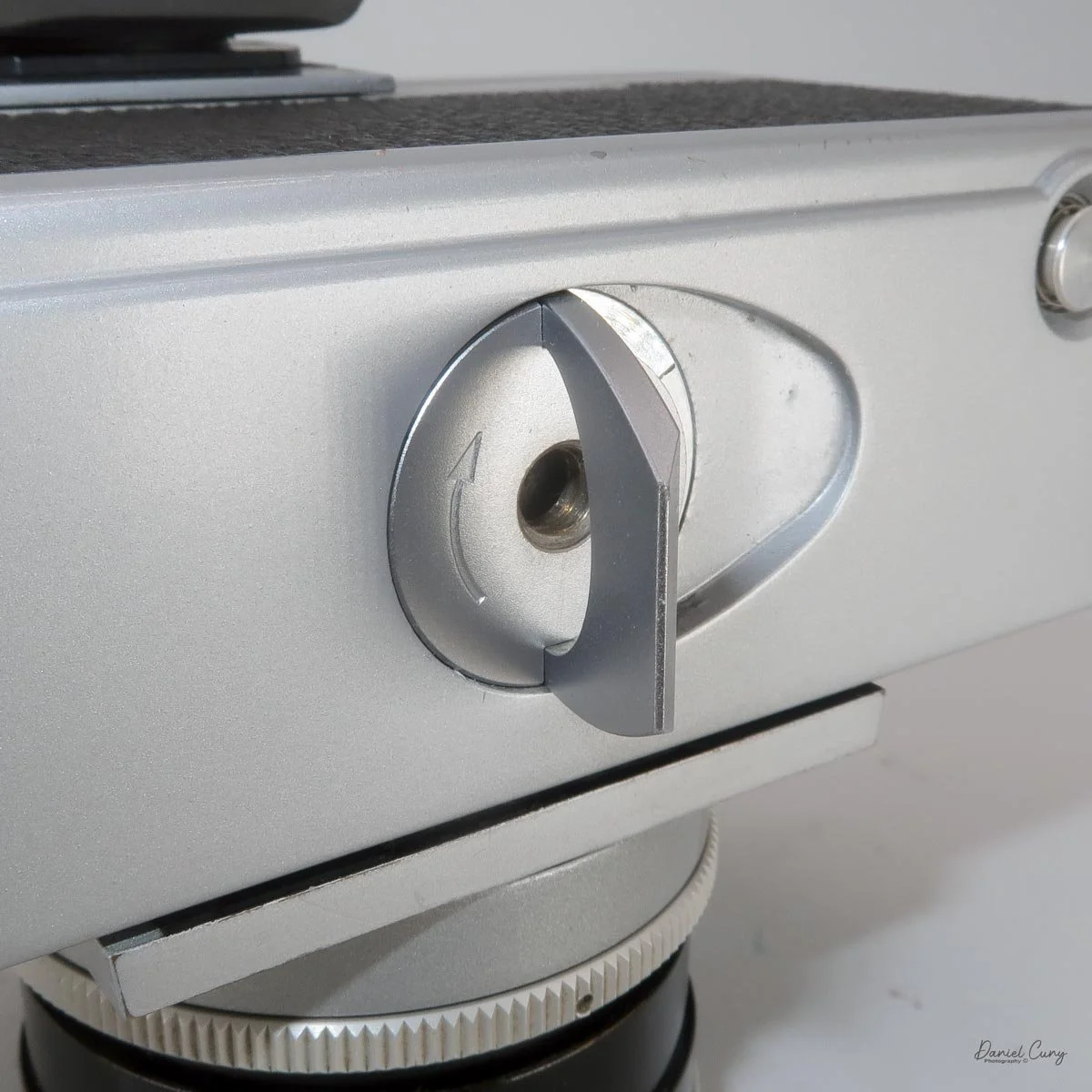
To open the camera, turn the large handle on the bottom in the direction indicated by the arrow and slide the back off the camera.

Once the back is removed, loading the film is fairly straightforward. Load the film as you would in most 35mm cameras, making sure the film travels across the shutter before replacing the back and locking it into position.

I then pull up the rewind knob and turn it several times to take up any slack in the film. When I advance to the first frame, the rewind knob should rotate, confirming that the film is advancing properly.

When the roll is finished, press the rewind button on the bottom of the camera, pull up the rewind crank, and rewind the film into the cassette.

Then you're ready for another roll.

My Results

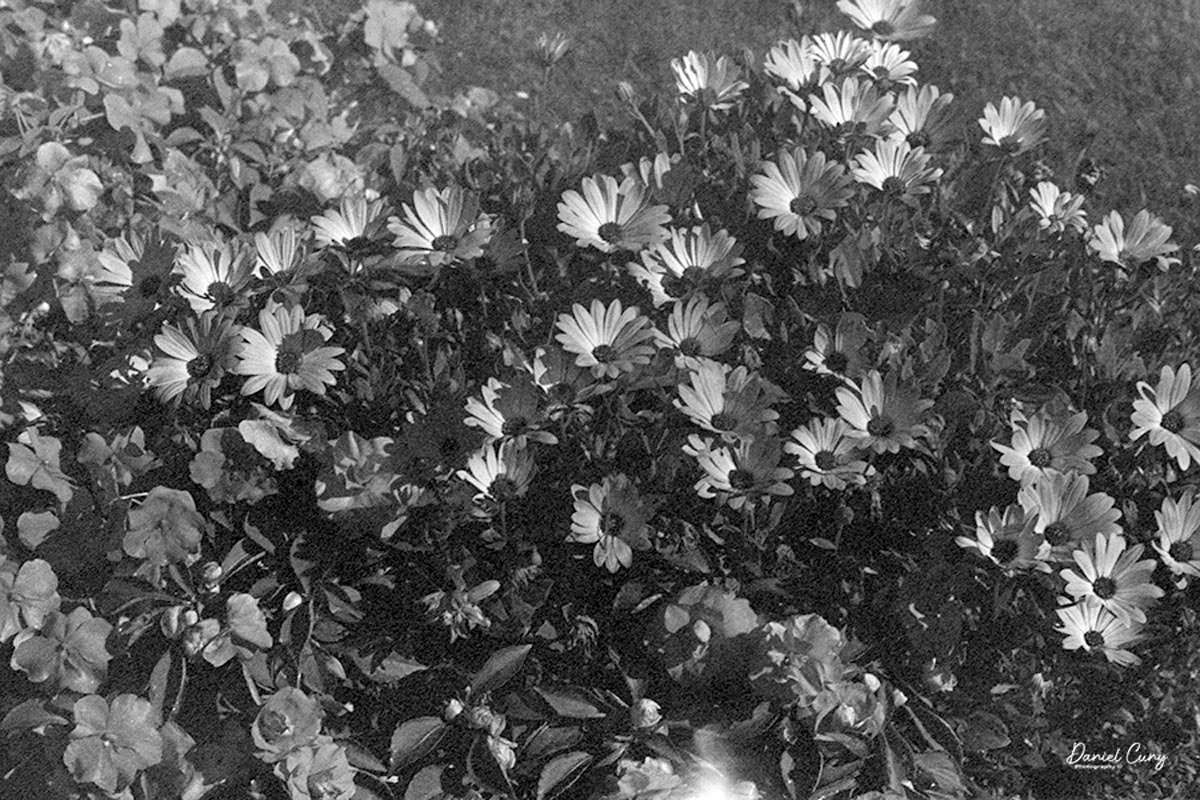
After loading the film and taking the Alpa out into the neighborhood, I was finally able to see what the camera and, more importantly, the Kern Macro Switar 50mm f/1.8 could do.


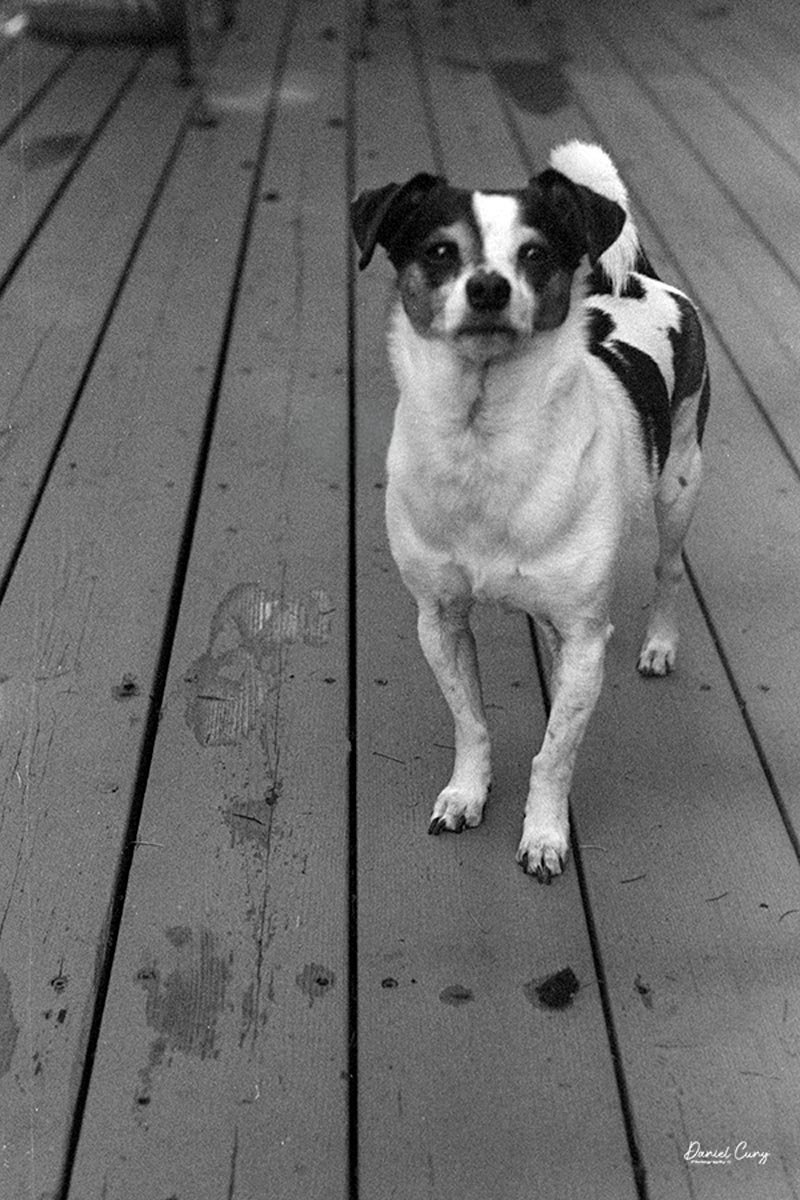
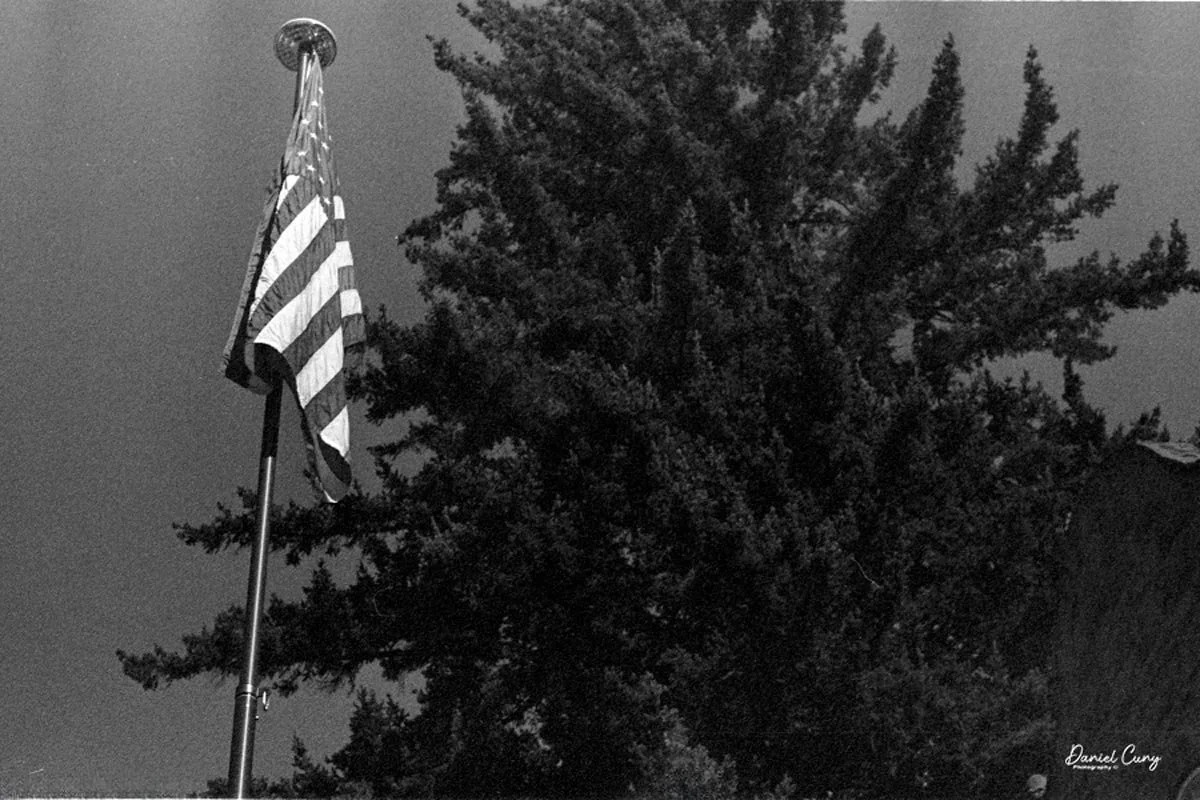
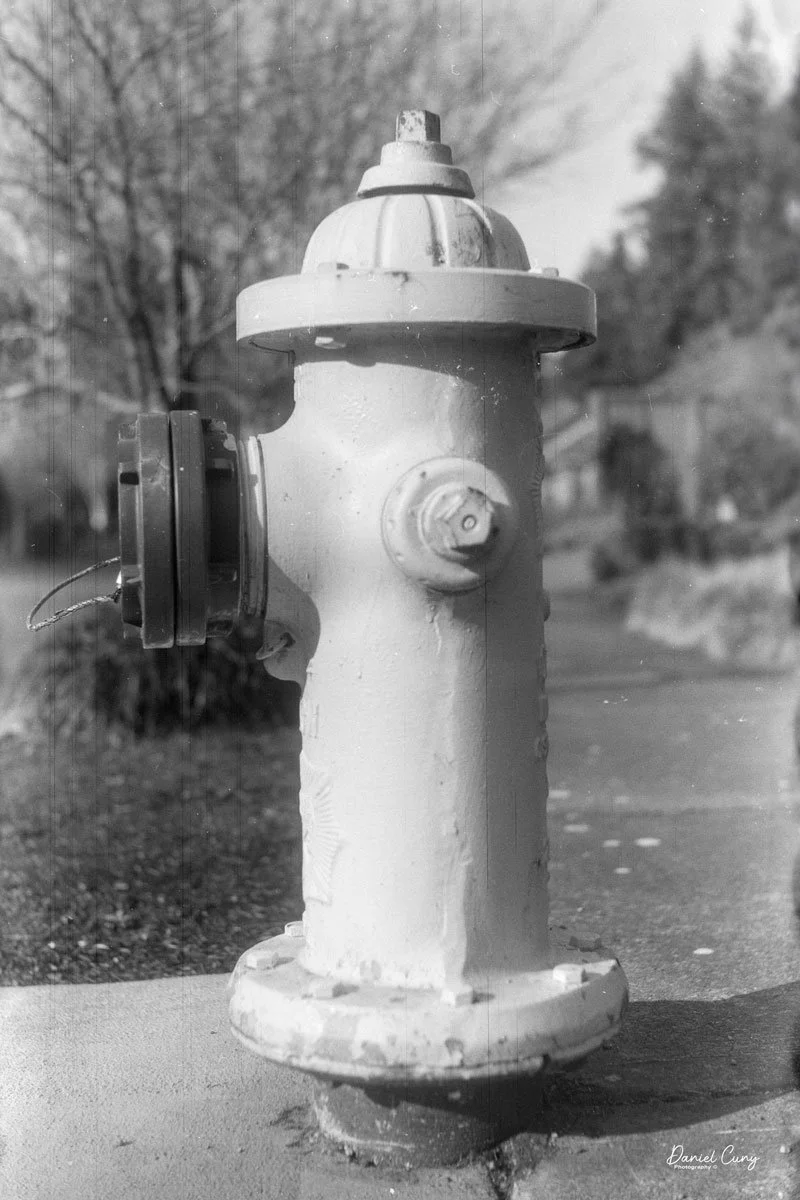
I shot these images on expired 6/70 Kodak Plus-X film, developed in Rodinal.

The results were exactly what I was hoping to see from this lens.

Conclusion

It took me some time to get used to the film transport system. After using cameras for roughly 60 years, I'm pretty accustomed to advancing film by pushing a lever with my thumb. Pulling the Alpa's lever toward me with my forefinger just feels backwards.

After using it for a while, though, it stopped feeling strange. It was simply different.

The Alpa Reflex 9d is also a very solid camera. You can feel the quality when you're holding it. This isn't a lightweight camera designed to disappear into a bag. It's a precision instrument, and it feels like one.

The advanced features took me some time to understand, and the shutter-speed controls aren't as quick to operate as I'm used to. But I don't think the Alpa was really designed for someone who wanted to shoot quickly.

This is a camera for taking your time.

For me, the real star of this particular combination is the Kern Macro Switar 50mm f/1.8 lens.

The lens is spectacular.

I love the close-focusing capability, and the images have a very creamy look while still retaining excellent sharpness. That's difficult to describe until you actually see the photographs, but I really enjoyed the results.

I wish the built-in meter worked, but that wasn't going to stop me from using the camera. I'm reasonably good at estimating exposure, and when I want to be more precise, I can always use my Sekonic L-308 meter.

So, was the Alpa Reflex 9d worth the four-hour drive from Southern California to Las Vegas?

For me, absolutely.

Actually, when I think about it, the Alpa was worth quite a bit more than the drive. It was one of those cameras in the collection that I saw in a photograph and immediately thought, "I want that one."

And after putting a roll of film through it, I'm glad I did.

Are you interested in other cameras? Check out some of my other Camera Reviews.

Also, check out my Cuny's Camera Collection YouTube channel, where I'm putting together video overviews of the cameras I write about. Be sure to subscribe and like the channel!

You can also visit Cuny's Cameras and Photos, my online eBay store, where you'll find some of the cameras I've reviewed, along with a wide range of other cameras, lenses, and photography items from my collection that I'm thinning out.

Until next week, please be safe.
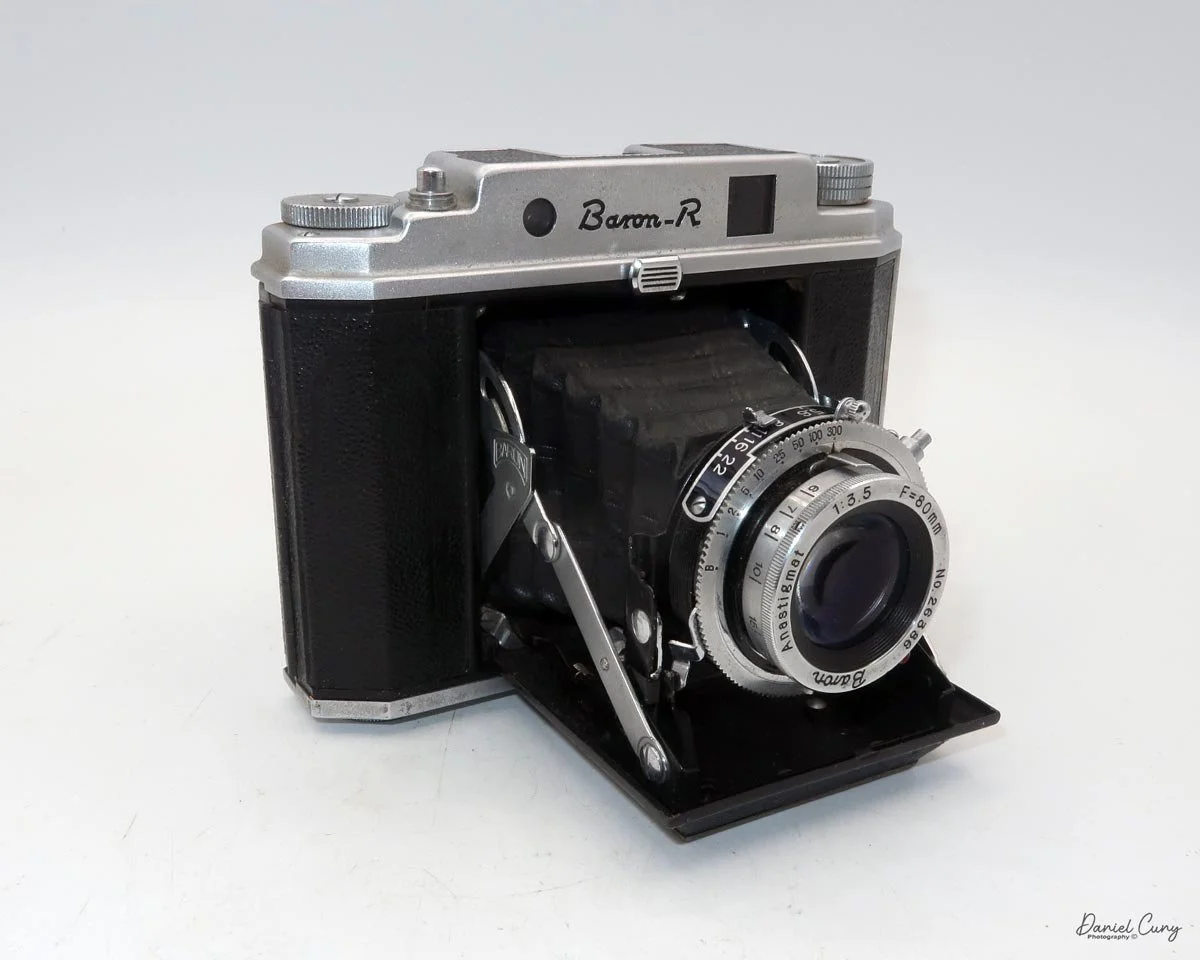
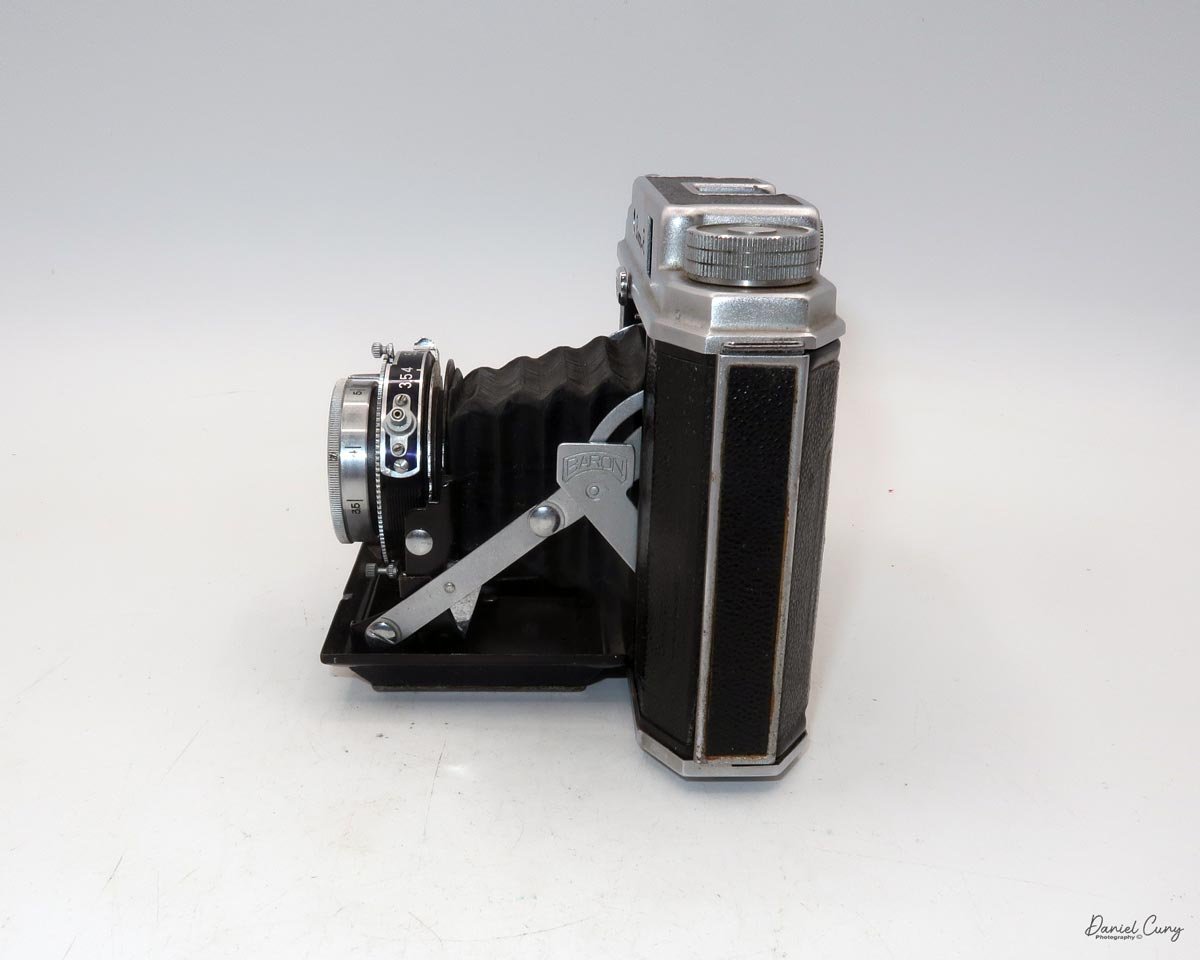
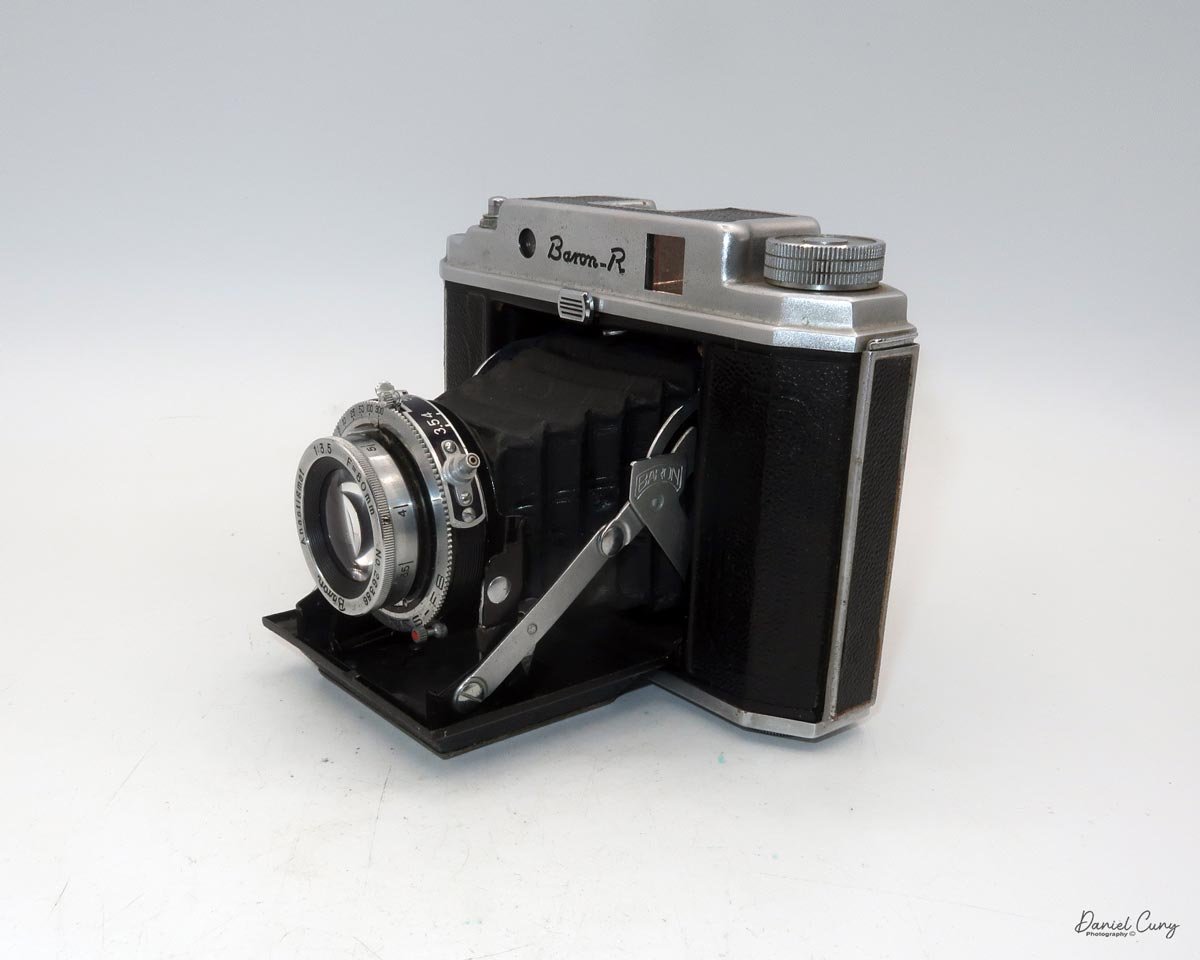
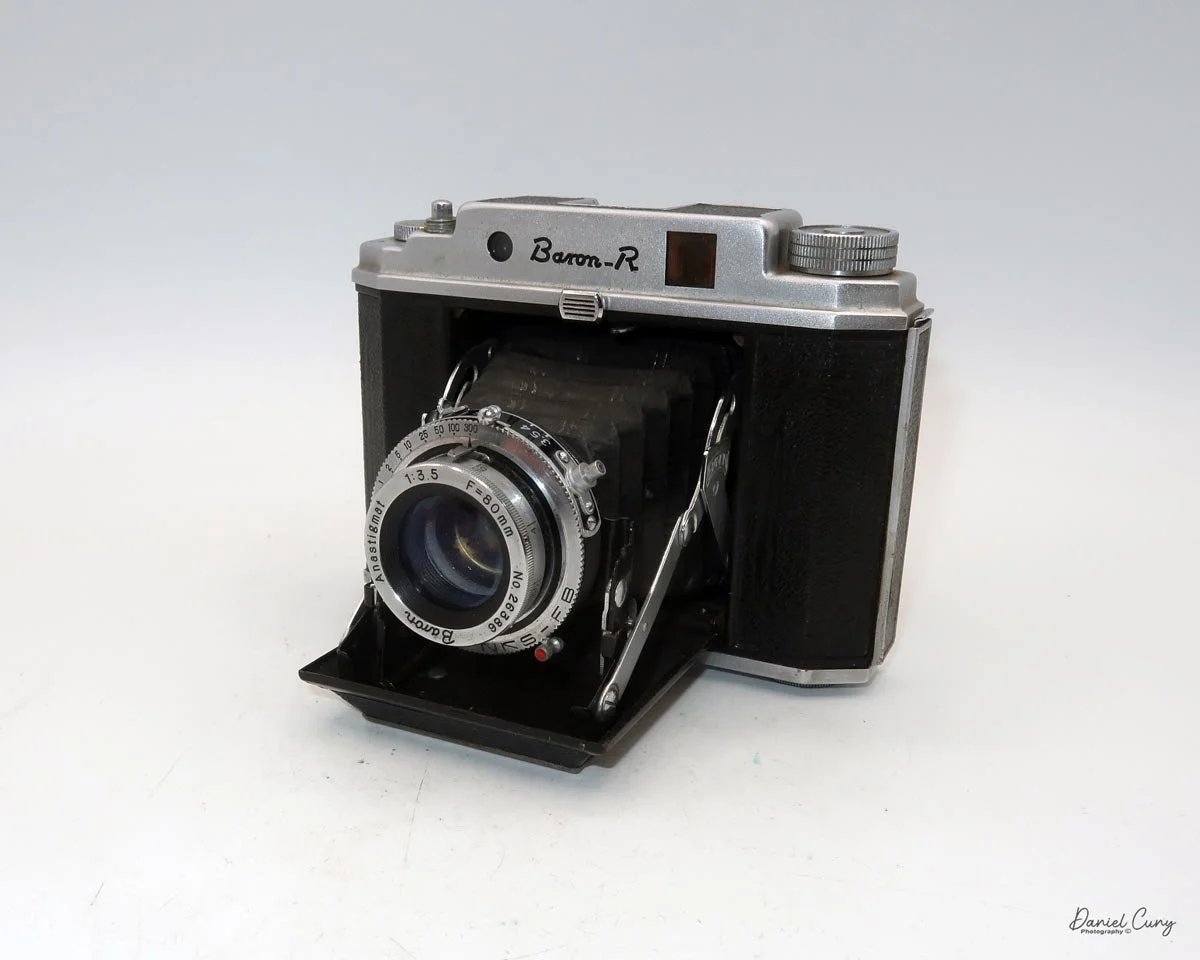
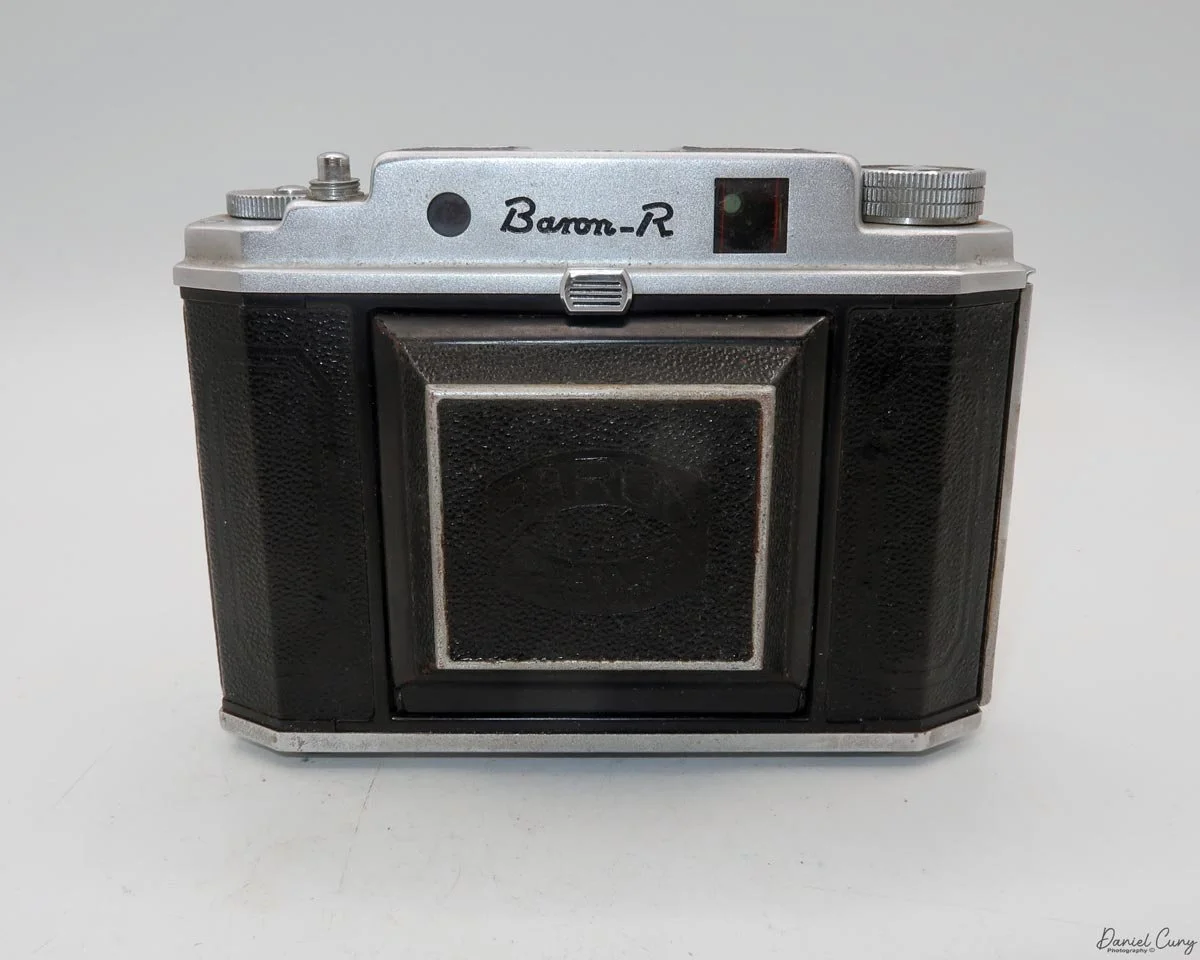
Baron RI camera

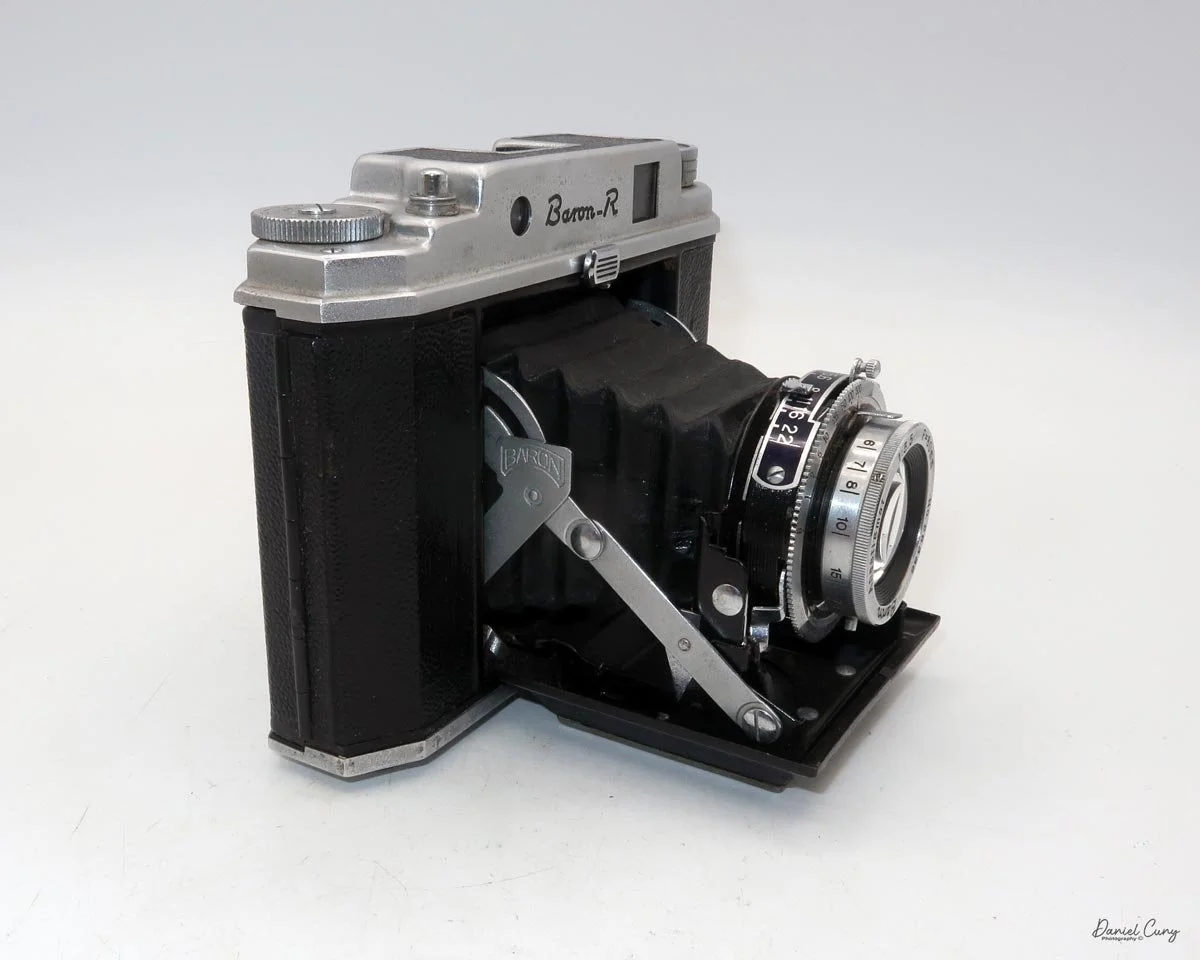
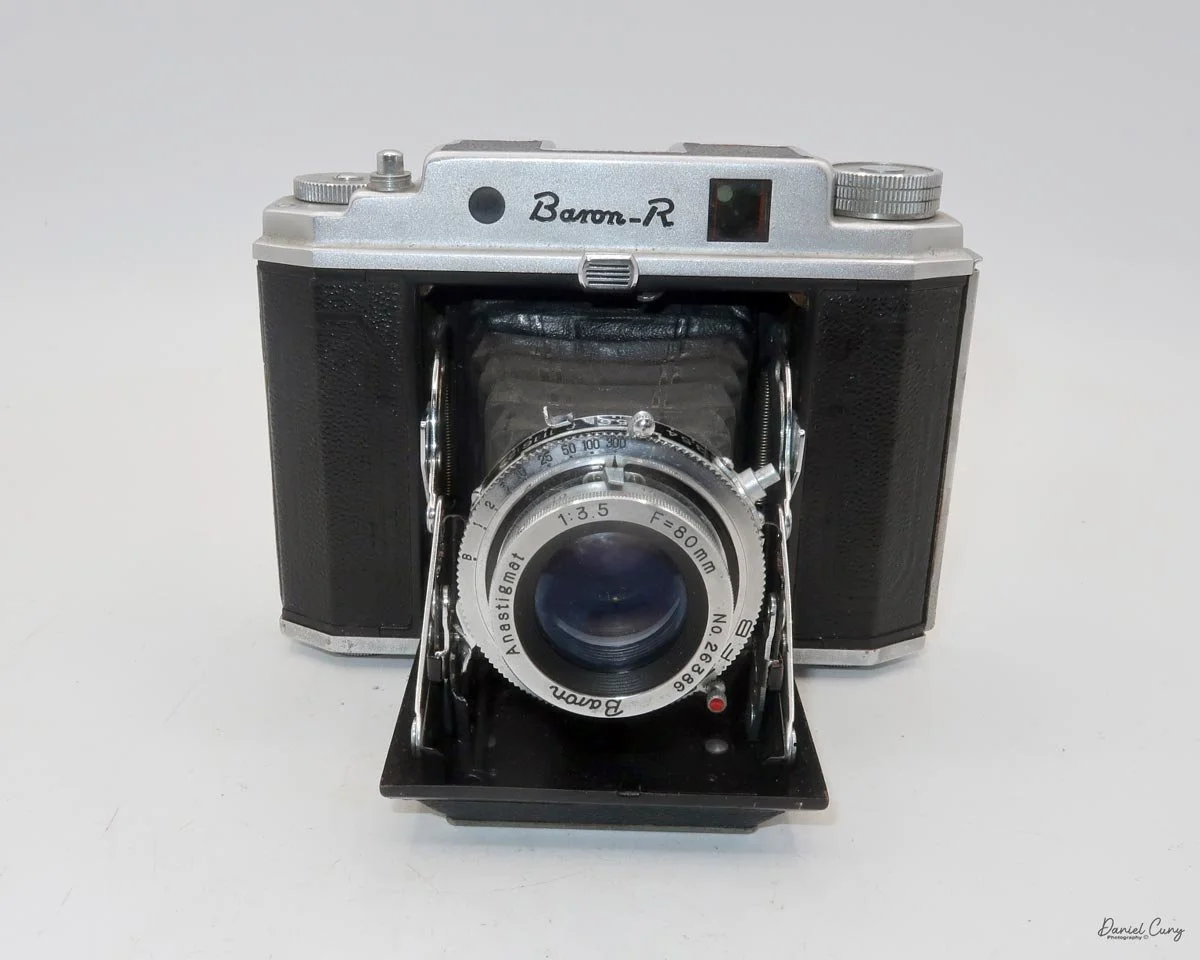
My Baron RI camera

When I visited Tokyo, Japan, a few weeks ago, one of my main objectives was to find odd, unusual, or little-known cameras that I could write about for this blog post. I found a few cameras that meet this criteria and will be writing about them over the next couple of weeks. 

 To get familiar with many of the used camera stores in Tokyo, I hired Bellamy Hunt from Japanese Camera Hunter for a half-day tour. Not only is he a wonderful, kind, and knowledgeable camera collector, but his background on how he started his company is intriguing. I had a wonderful time getting to know him and appreciated all his insights into collecting cameras.

 One of the shops he took me to was Used Camera Box at 1 Chome-13-7 Nishishinjuku, Shinjuku City, Tokyo 160-0023. It was, to me, a jaw-dropping experience. The camera store is not that big, but almost 90% of it is filled to the rafters with cameras. There are many showcases with cameras on top of cameras, and in front of these showcases are bins of more used cameras.

 Only two people were working there, so I didn't want to monopolize their time opening and closing different showcases. If the showcases had been opened and I had places to look through all the items they had, it would have easily taken a couple of days, which would have been something I would have done.

 During my time with Bellamy, we didn't spend much time there, but I found one or two items, paid for them, and left. It was a store I planned to come back to when I had more time, to spend a couple of hours going through the bins and looking through different showcases, trying to find the odd, unusual, or unknown items.

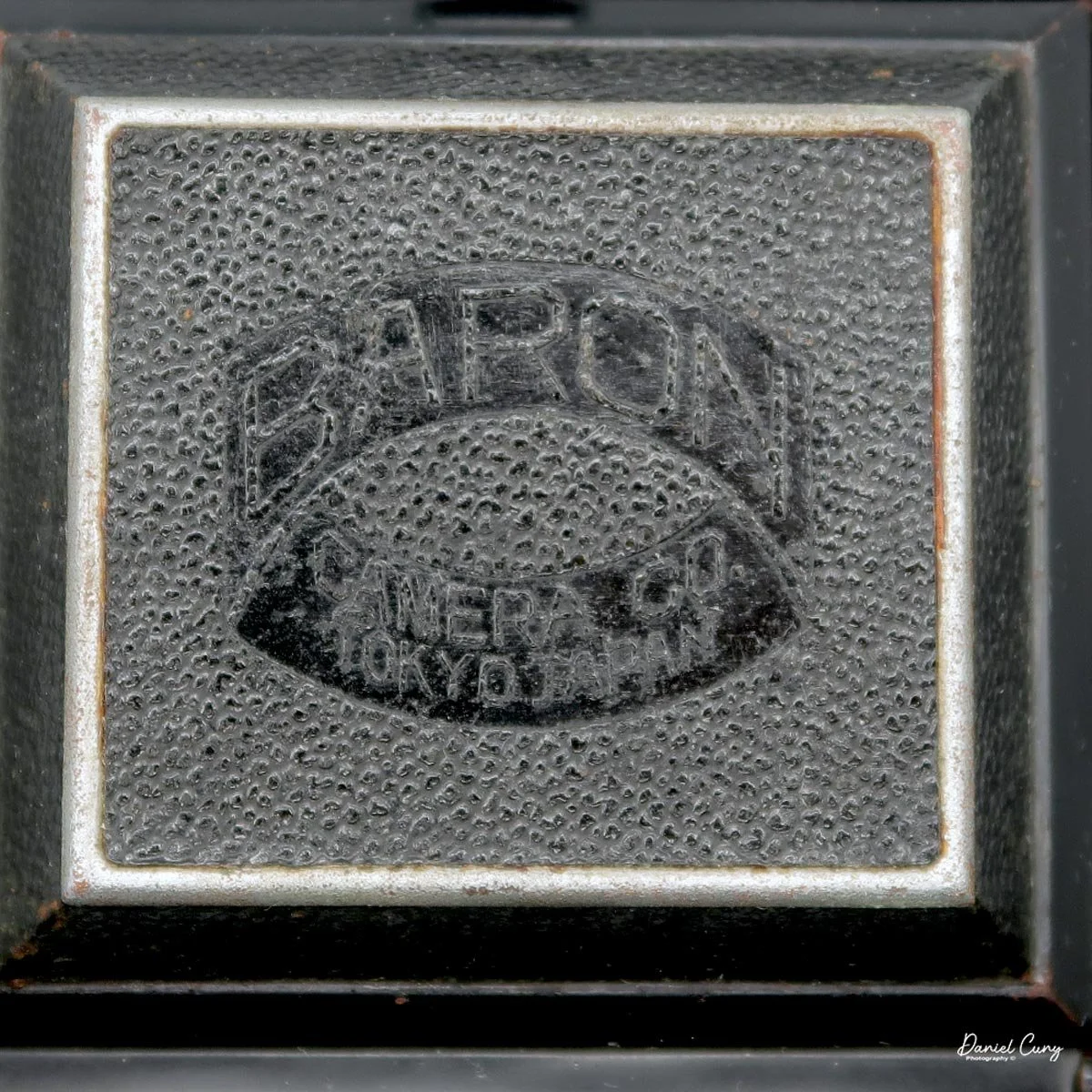
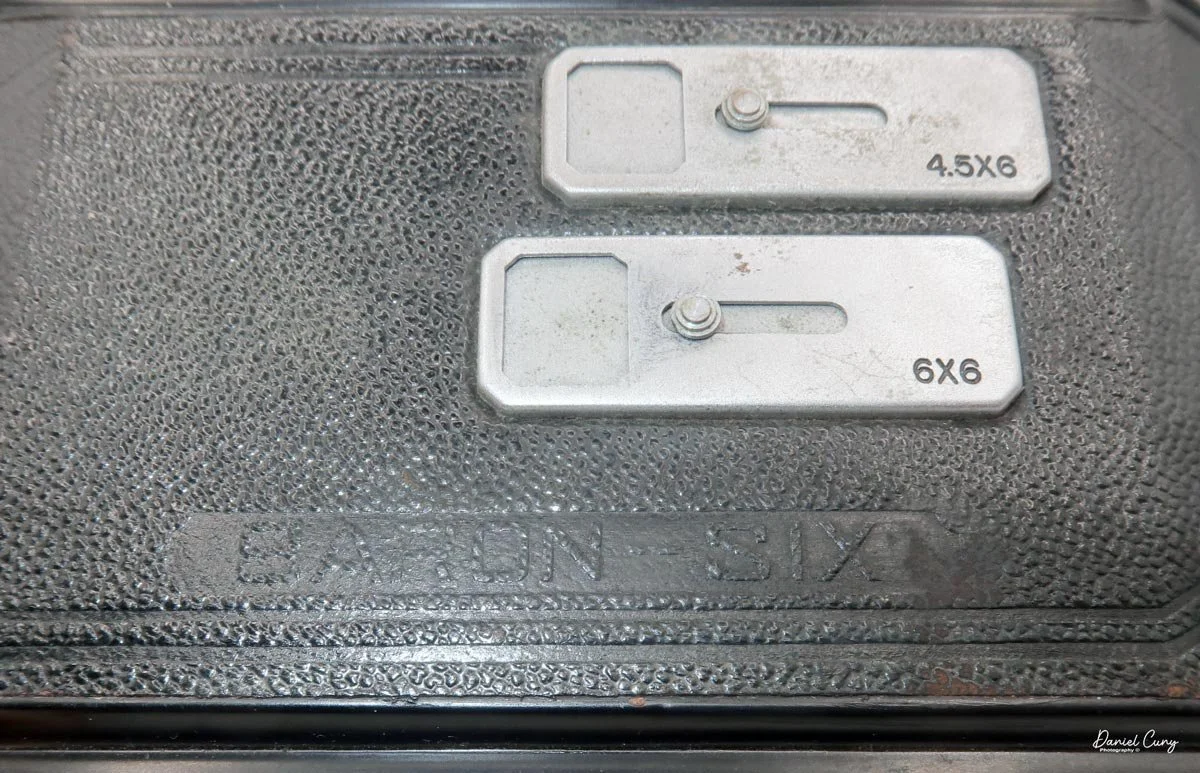
Embossing on the camera leans board.

 On my final day in Tokyo, I went back to Used Camera Box and did what I had planned. When I arrived in the morning, soon after they opened, there were no customers, so I had time to go through many of the bins and scour at least one or two of the showcases. 

 There was a showcase towards the rear of the store that looked like it had many interesting items. I noted the items I was interested in and called over one of the two salespersons. At this point, a couple of other customers were there, but I was determined to look at the items I wanted.

 The salesperson was very courteous and allowed me to pick and look at several items I was interested in. There were some very rare gems, but the pricing was considerably higher than I was willing to pay, so I decided on 3-4 cameras, paid for them, and left very happy.

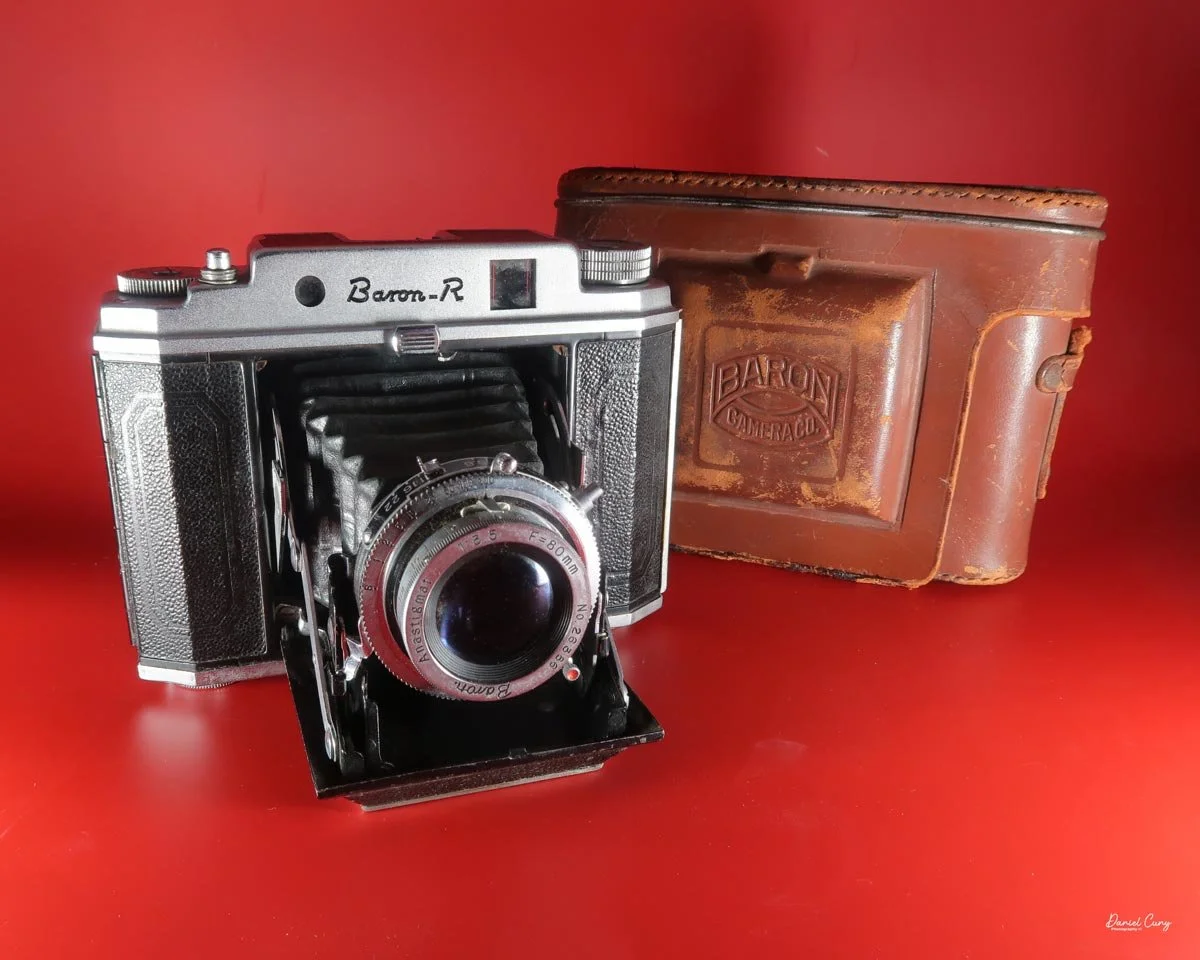
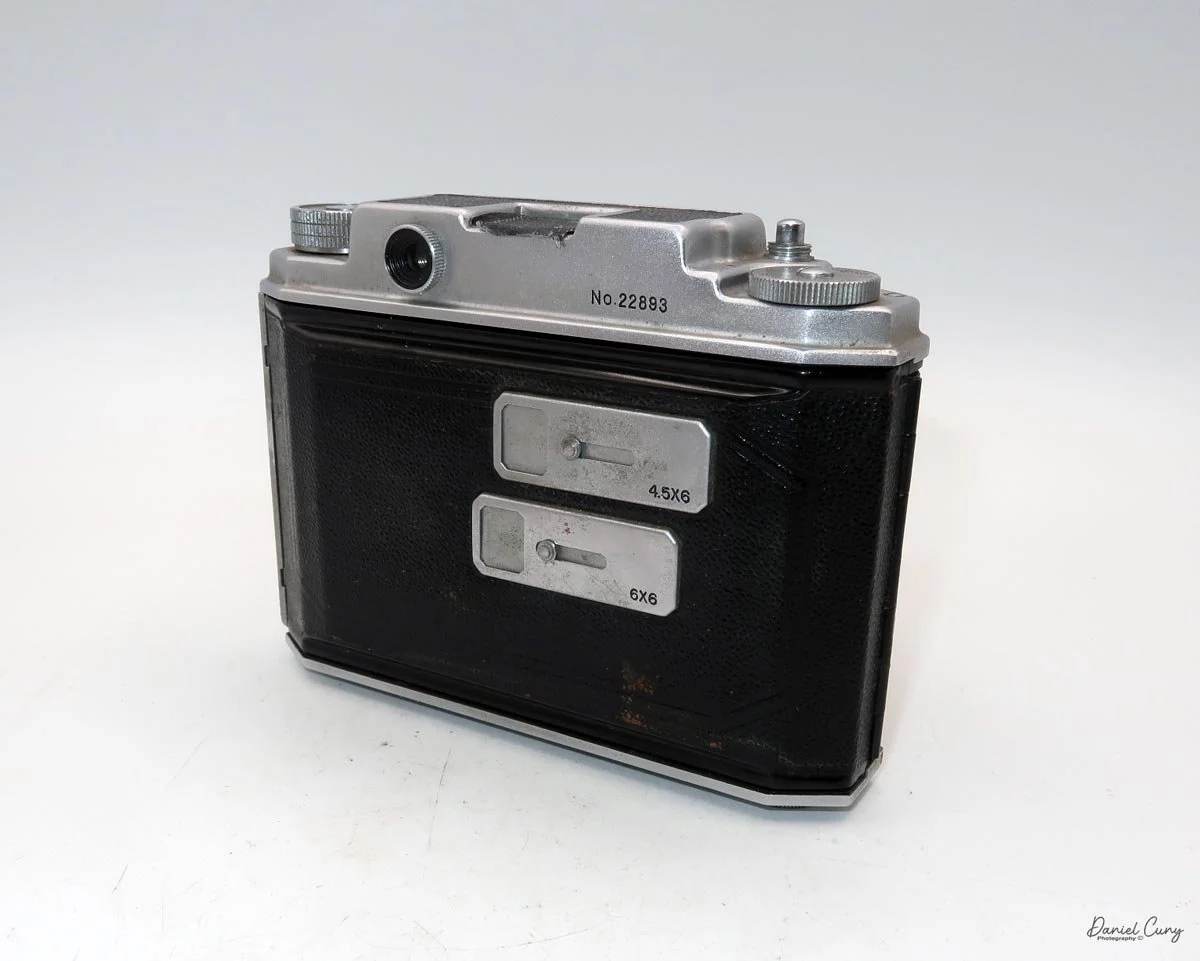
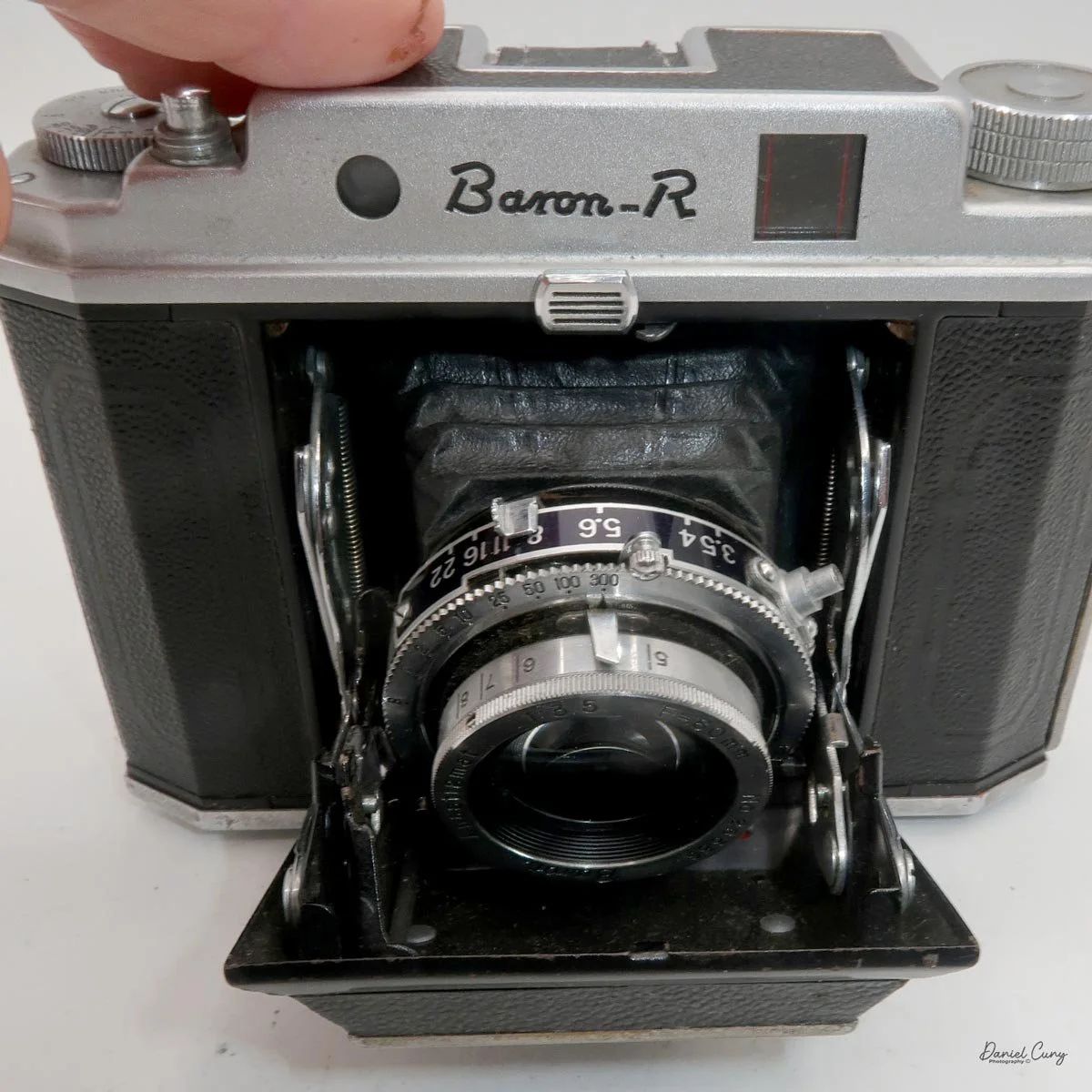
 One of the cameras purchased in the last few days at Used Camera Box is the camera I'm writing about in this post: the Baron RI camera. 

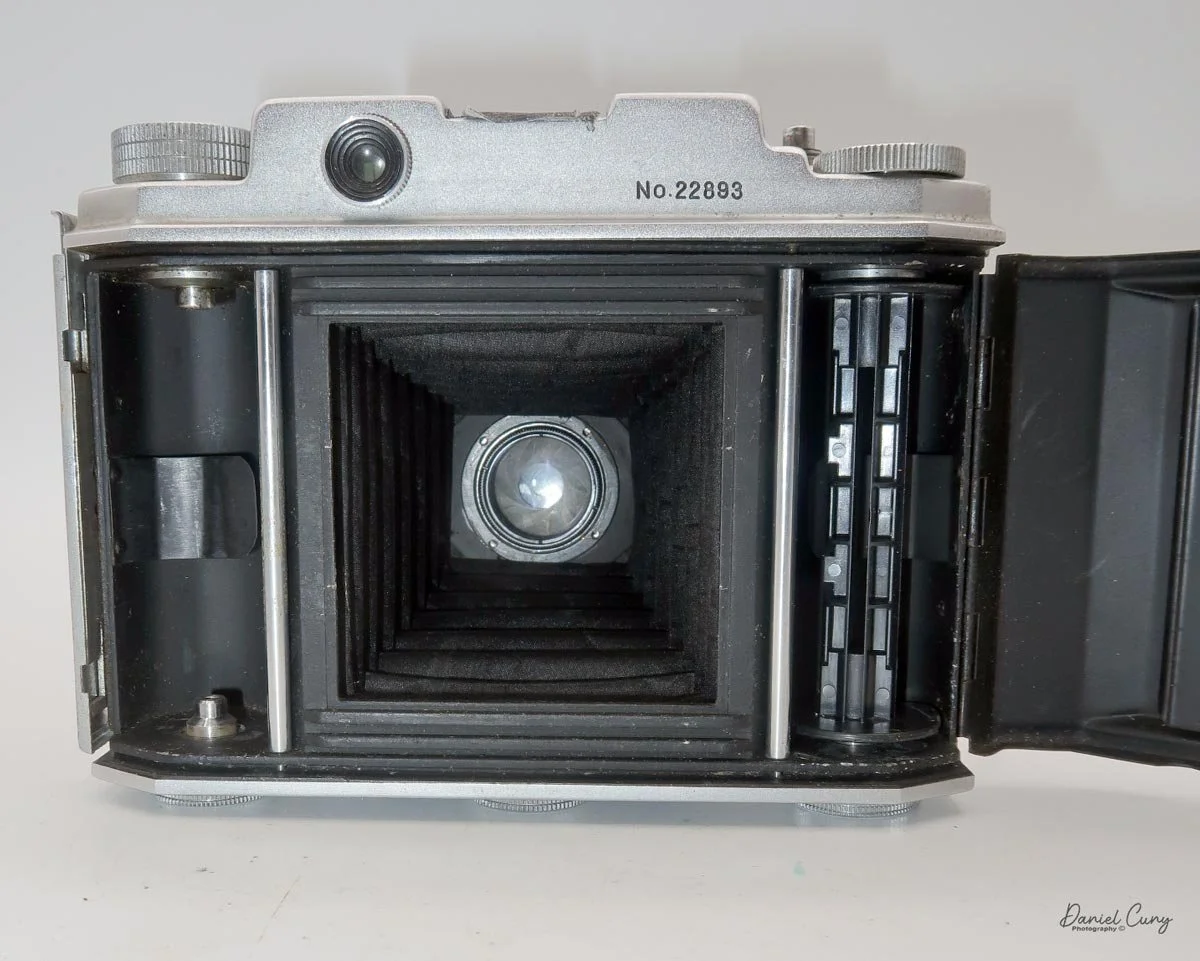
 The Baron RI camera is one I had never heard of or seen before, though it looks like so many other Japanese cameras from this timeframe. A folding 120, or 620 camera with a fold-out bed and nice Japanese shutter, taken from German manufacturers who made similar style cameras before World War II.

 Doing research on the camera, Baron cameras were made only by Chūō Seiki for a few years, between 1952 and 1956. They produced a few different models, but the company was short-lived, and the cameras are not very common.

History:

 Baron cameras were part of Japan's early postwar flood of small camera brands, emerging in the early 1950s when the country's photographic industry was rebuilding and rapidly expanding. These cameras reflect a period when dozens of manufacturers rushed to meet domestic demand and to compete in export markets, often by producing affordable 35mm and folding cameras inspired by European designs.

Japanese advertisment for Baron cameras

 In the early 1950s, Japanese camera makers were still working under the lingering effects of wartime disruption and occupation-era labeling rules. Many products carried "Made in Occupied Japan" markings until around 1952–1953, after which "Made in Japan" became standard as exports broadened and the industry gained a stronger international identity. Baron belongs to this wider ecosystem of small, fast-moving firms that relied on compact production runs, simple mechanics, and competitive pricing to find buyers.

 What makes Baron interesting is not that it was one of the biggest names, but that it represents the experimental, entrepreneurial side of the Japanese camera boom. The period was crowded with startups, subcontractors, and short-lived brands, many of which produced cameras that are now obscure but historically important because they show how Japan's industry learned to scale up, refine machining, and improve optical quality. That broader growth helped Japanese cameras go from largely unknown outside the country to serious competitors in overseas markets by the end of the decade.

 For collectors and historians, Baron cameras are valuable as artifacts of that transition. They sit at the intersection of postwar recovery, consumer optimism, and Japan's rise as a global center of photographic manufacturing. Even when the cameras themselves were modest, the brand is part of the larger story of how Japanese makers shifted from imitation and survival to innovation and global influence.

My Camera:

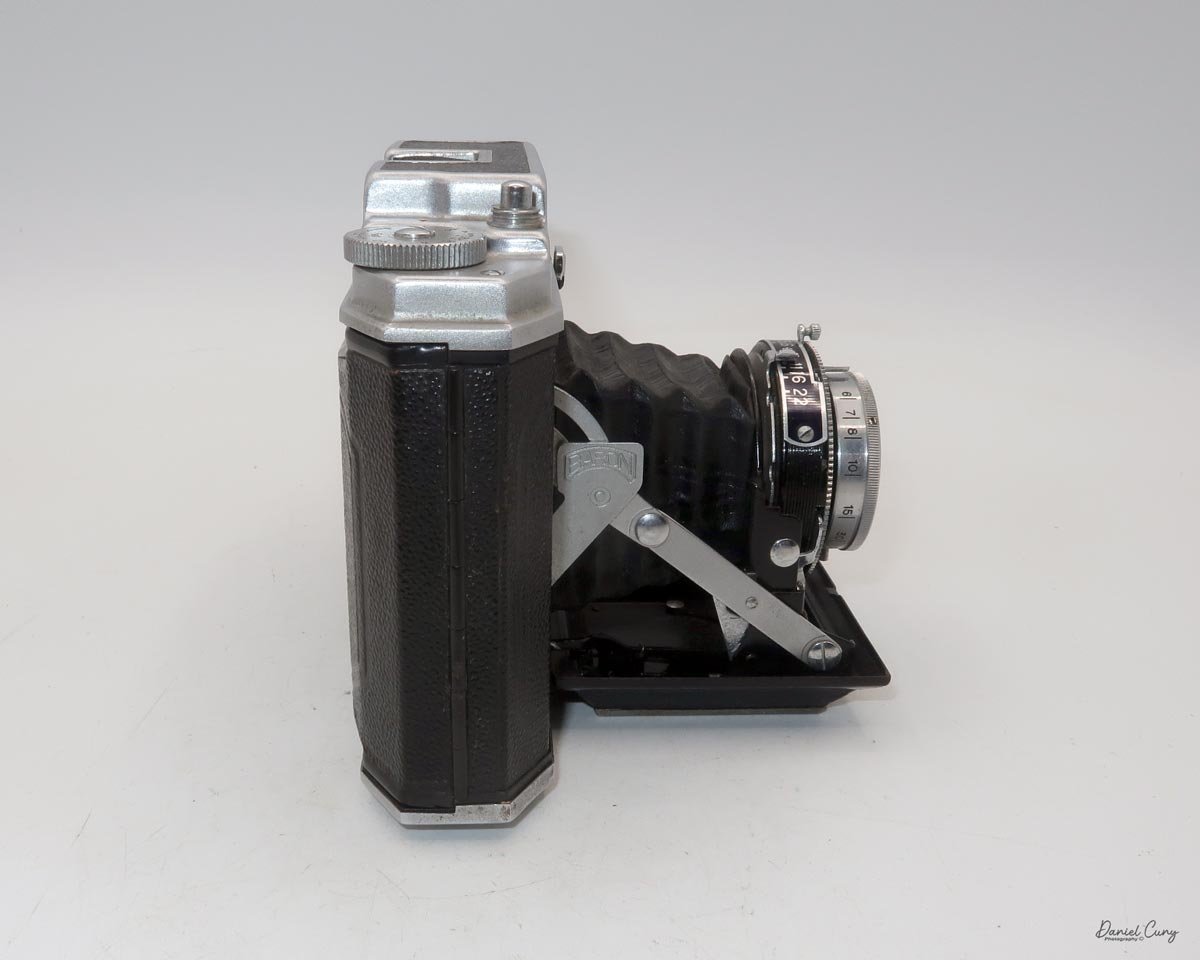
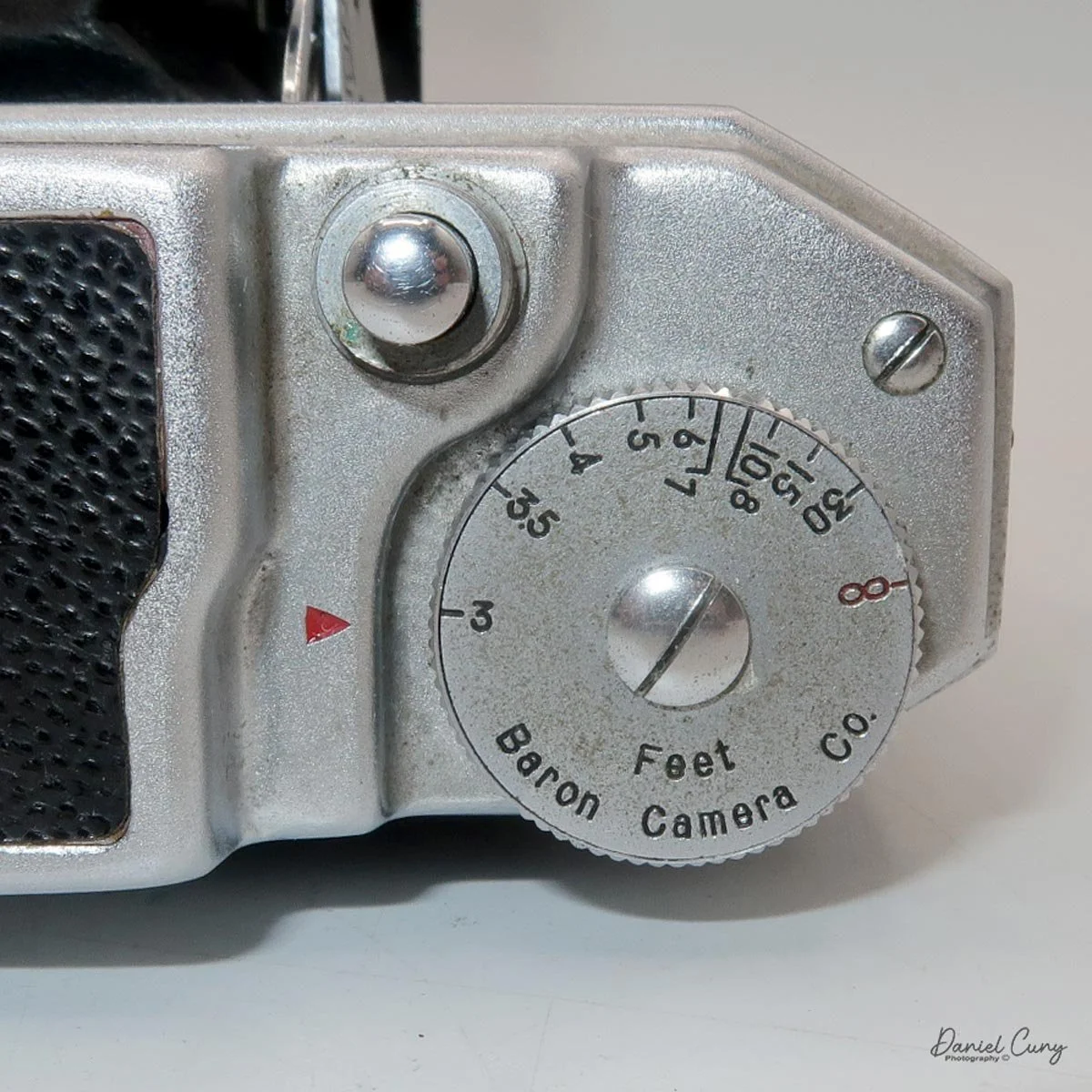
 My Baron RI camera is 4" tall, by 5.5" wide, and 2" deep when the lens is closed, and 4" deep with the lens extended. The camera weighs 1 pound, 8.1 ounces without film loaded. Embossed on the folding bed door is "Baron Camera Company, Tokyo, Japan."

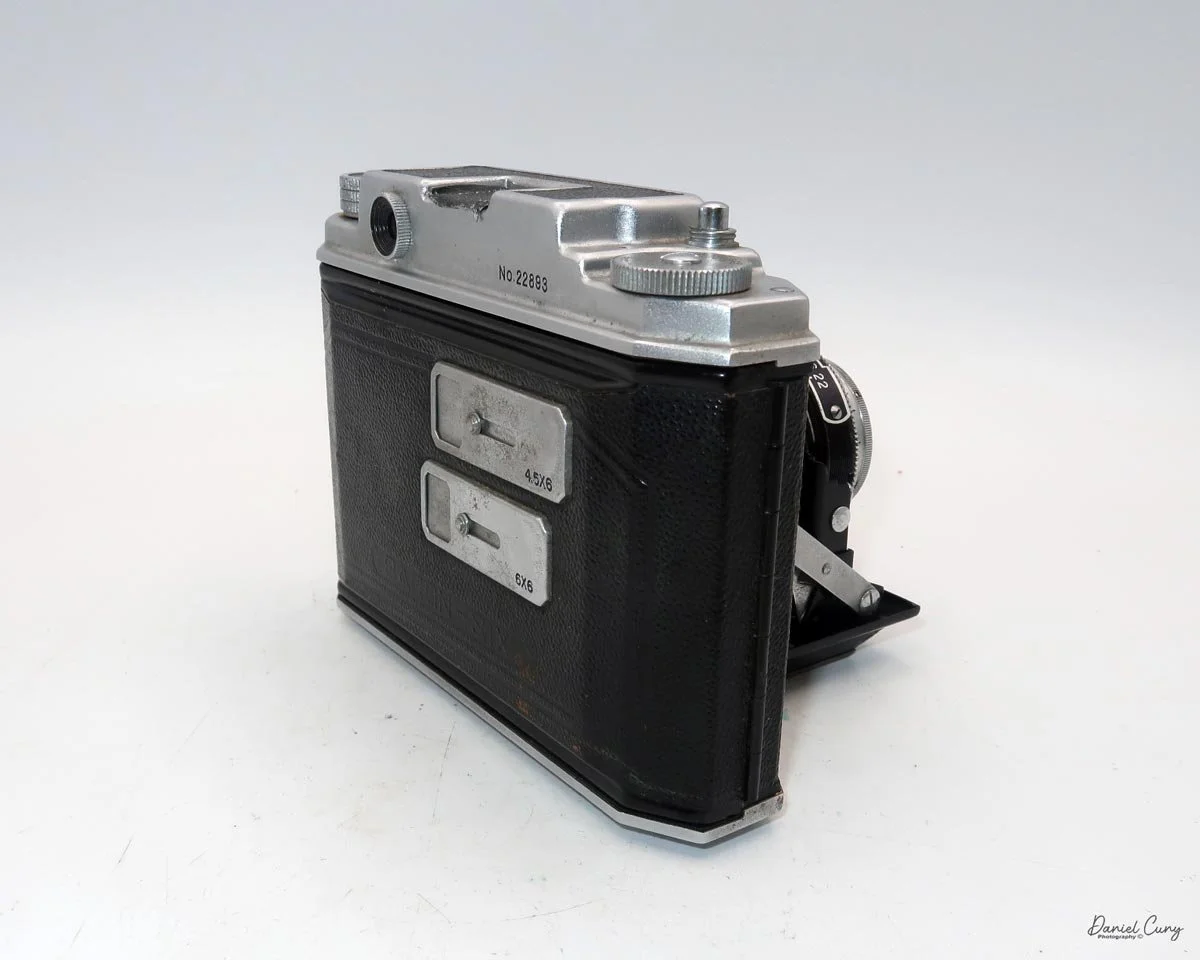
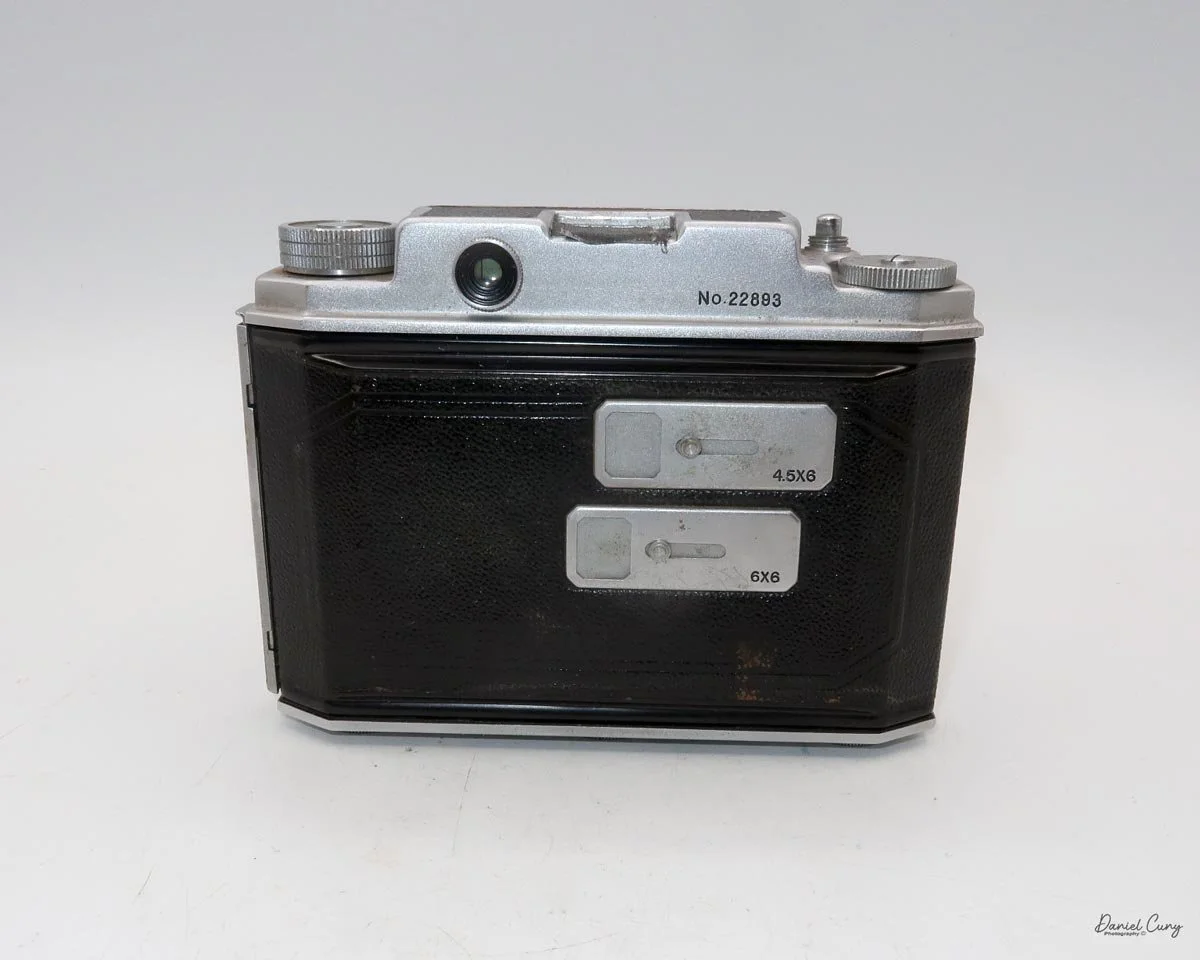
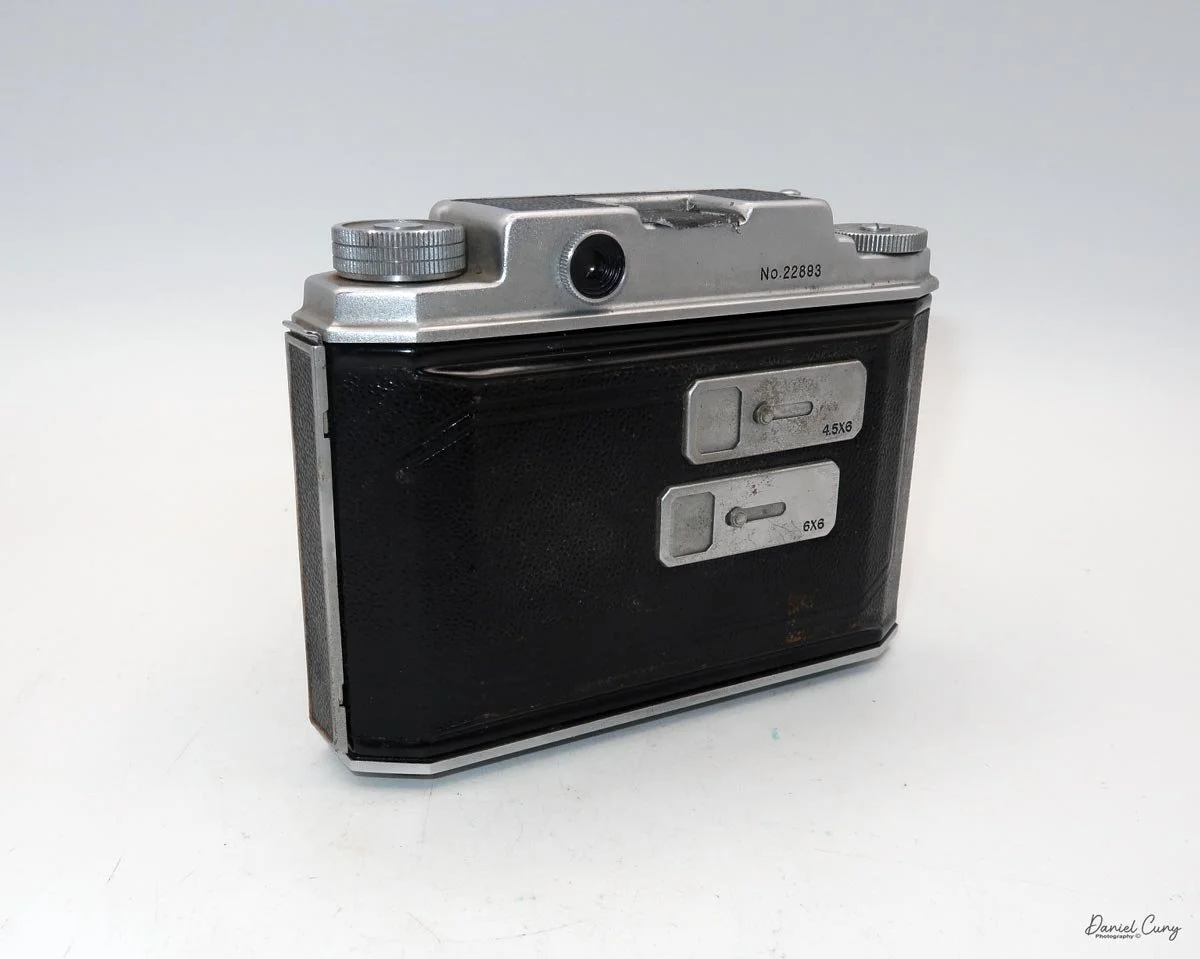
The camera came with a very nice brown leather-fitted camera case, though the strap is missing. The case still offers wonderful protection for the camera. The serial number for my Baron R camera is 22893, stamped on the top plate of the back of the camera.

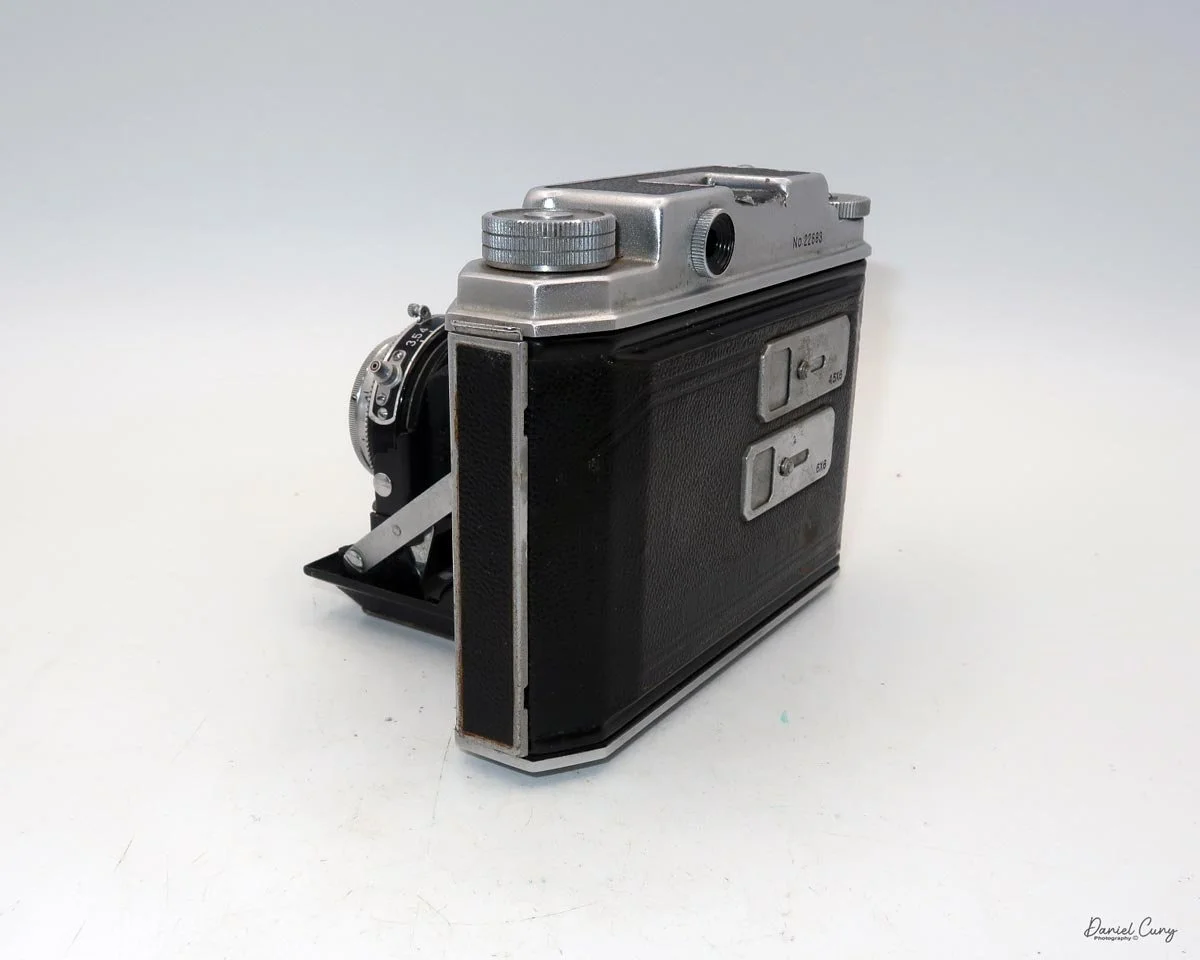
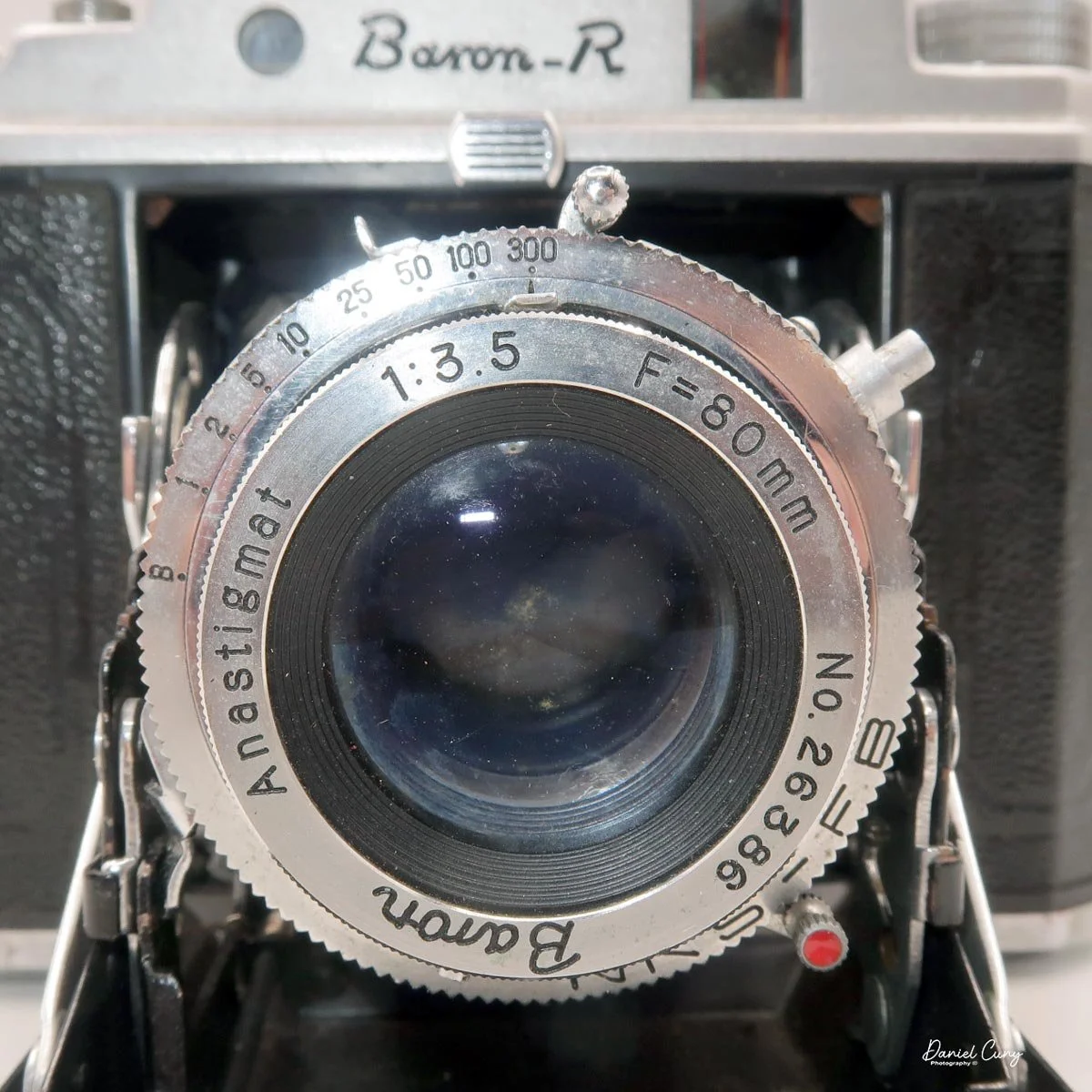
 To open the camera lens door, slide the chrome lever under the name "Baron-R," which unlocks the lens door and exposes the lens as it extends on chrome struts along the side of the lens door.

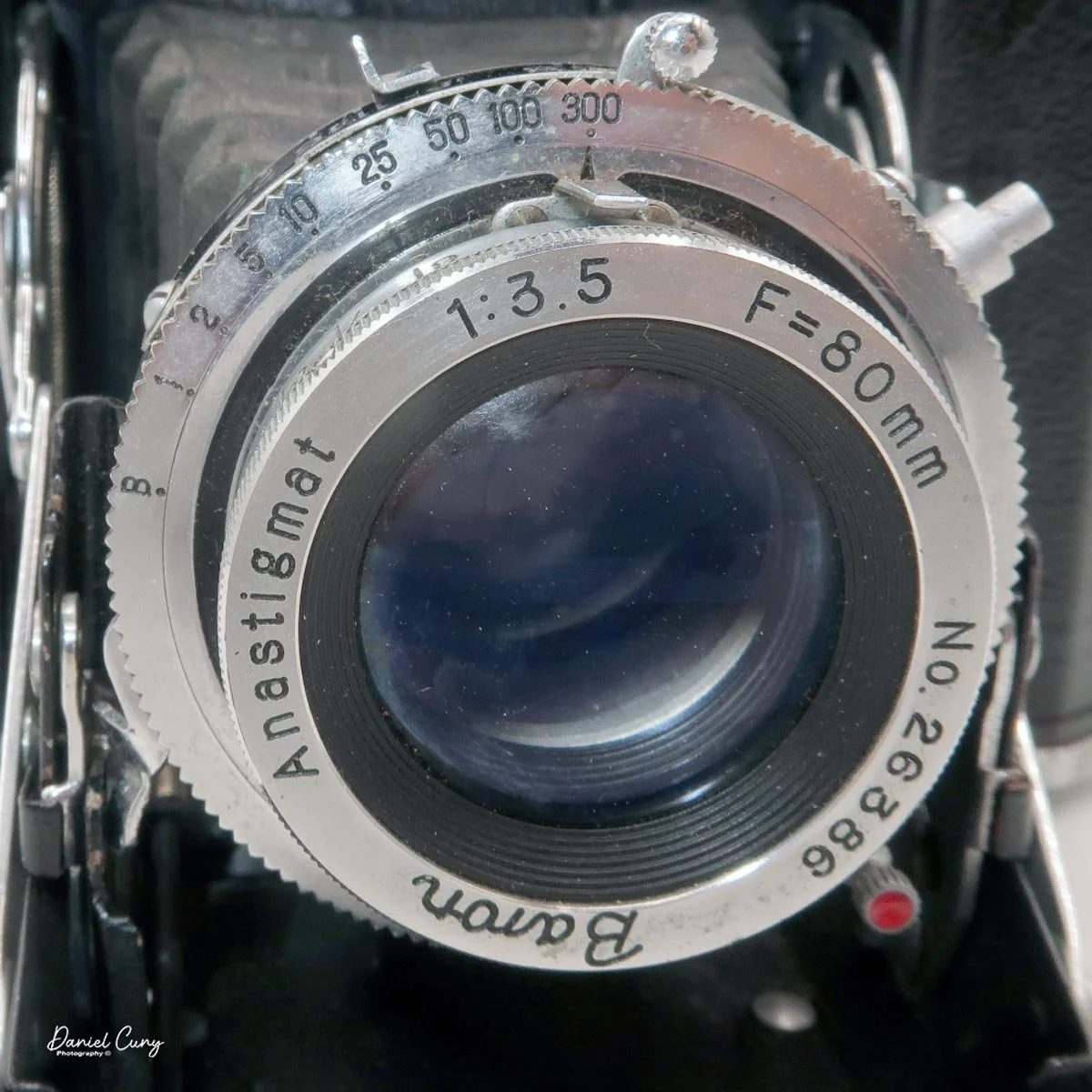
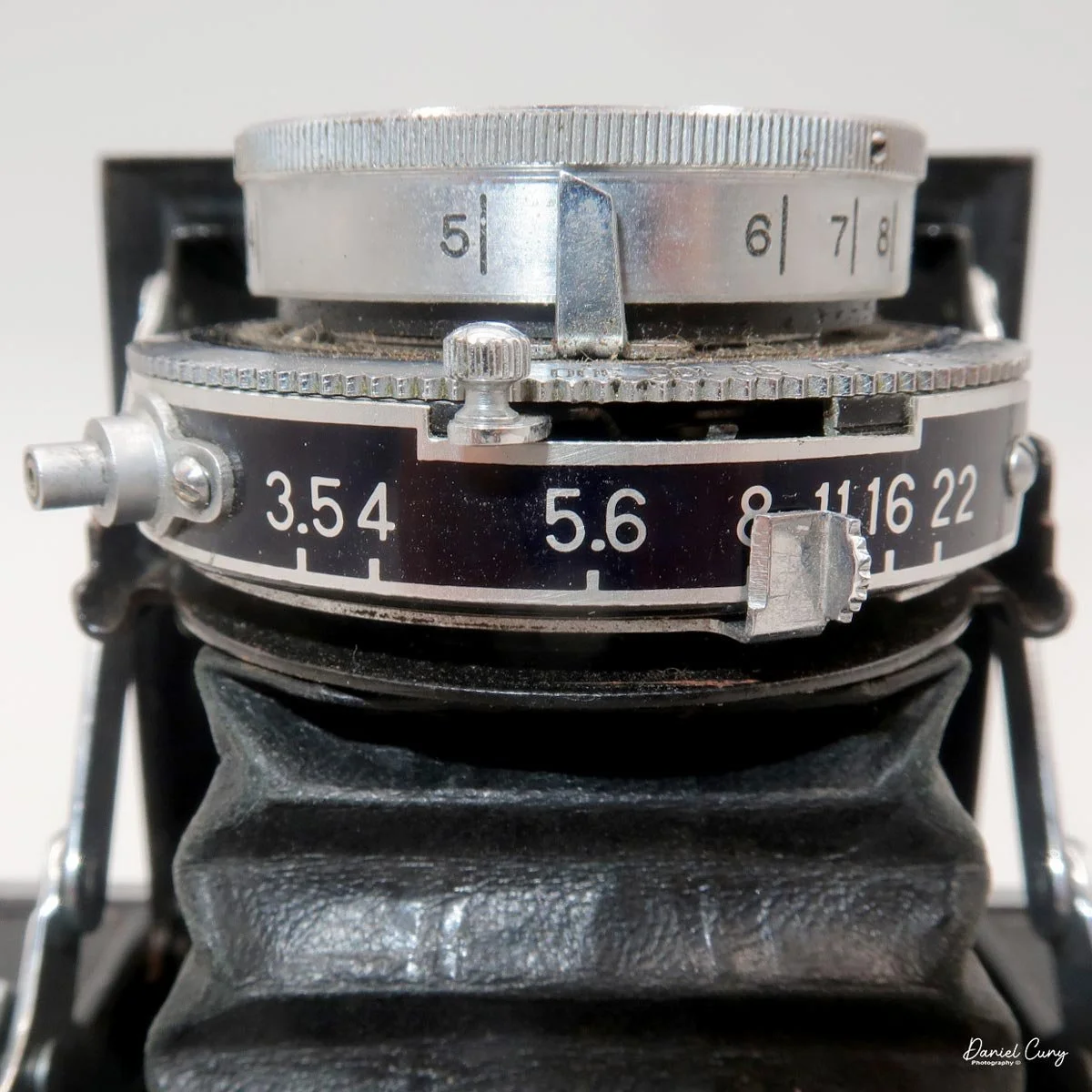
 The Baron RI camera has a Baron Anastigmat 80mm F/3.5 lens in an NKS-FB shutter. The shutter speeds range from 1/300 to 1 second, plus "B". To set the different shutter speeds, turn the dial around the lens to the desired shutter speed. There is a cocking lever for the shutter, located above the lens, with the shutter release on the lower left of the lens when viewed from the front. The shutter release is activated via a rod and linkage from the shutter release on the top of the camera, which pushes the shutter release when depressed.

The aperture range is from F/3.5 to f/22. The aperture is set by sliding the lever on top of the lens to the desired aperture setting. To the side of the aperture settings is a PC sync used for flash. There are no settings for "X" of "FP," though, so I'm unsure if this is for electronic or bulb flash.

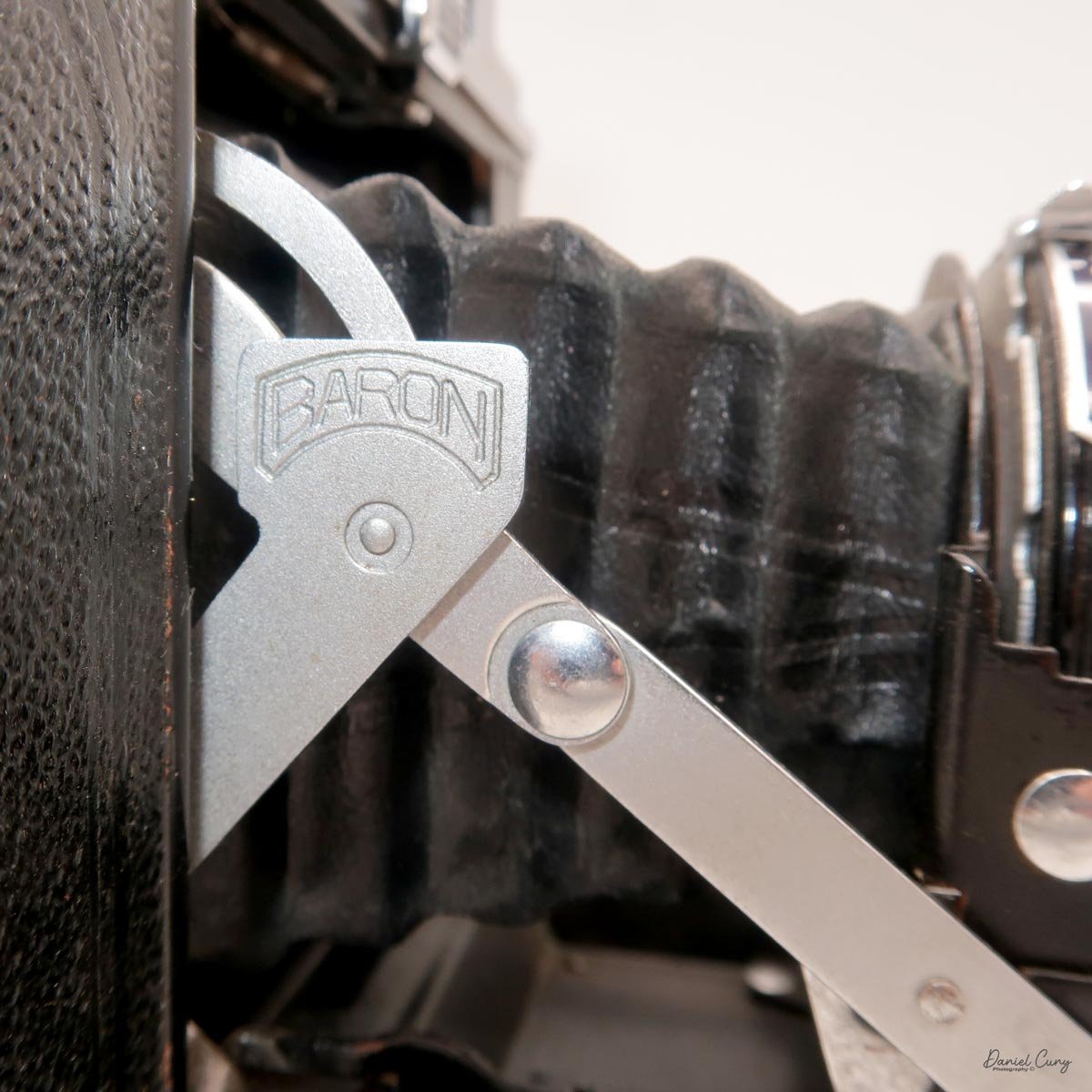
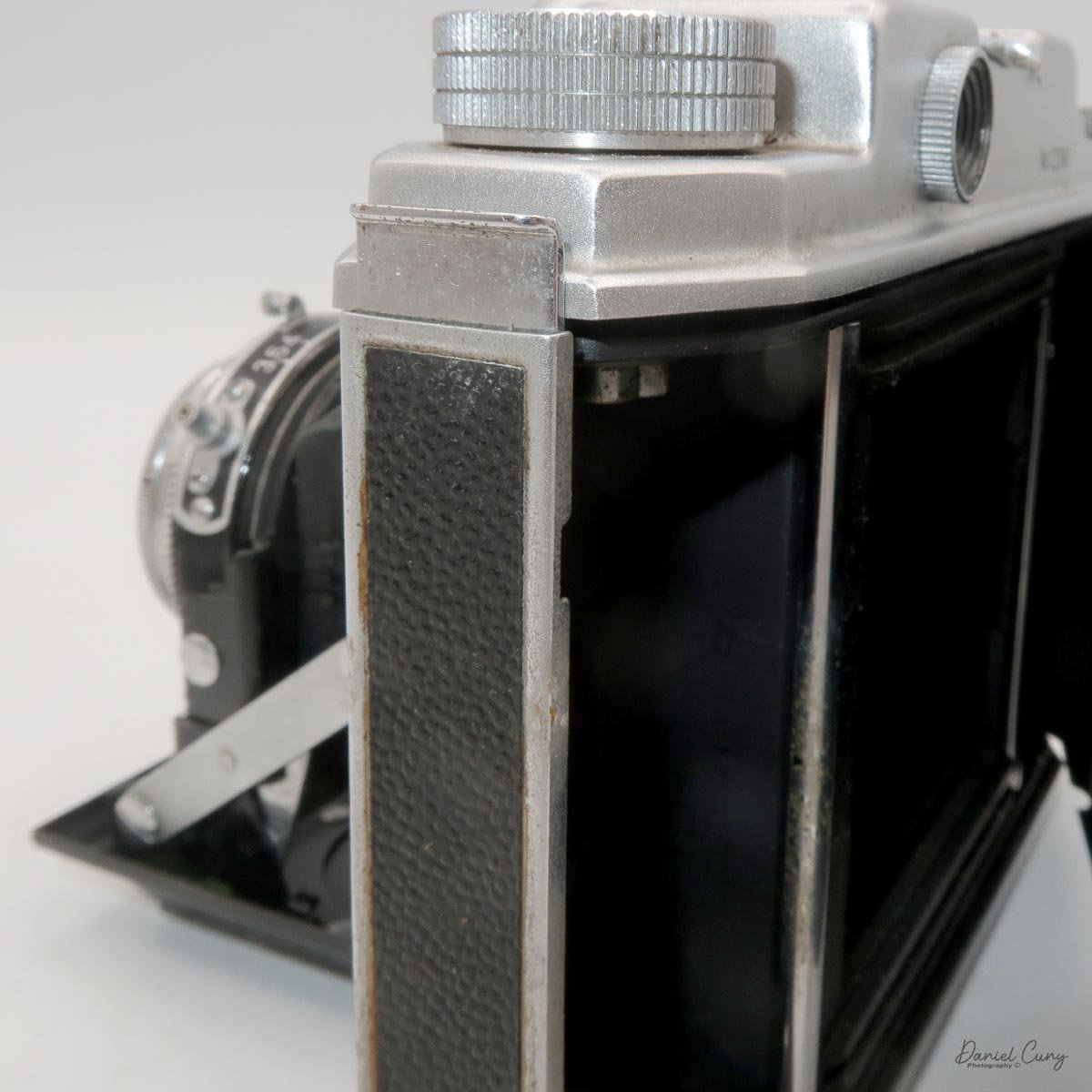
 To close the lens bed, you press back on the two sides of the struts, which have "Baron" embossed into them, and press back into the camera body, which collapses the lens door and allows it to fold back into the camera body. Pressing in will lock the lens door into the normal transporting position and allow the camera case to close.

 My Baron-RI camera does have a couple of issues. I'm confident that's why I paid so little for it. None of the issues are deal-breakers for me purchasing the camera. The main item, the accessory or cold shoe, is missing from the camera. That's not a huge deal, as I generally don't use them. I did put black fabric tape over the spot where the accessory shoe goes, to give the camera a better appearance.

There is another item about the camera I'm not certain about. On the back of the camera, there are red windows with sliding covers for both 4.5x6 and 6x6 formats. I'm not sure whether the camera came with a mask for both formats, or if the company offered two different formats and only made one back for both cameras. Also stamped on the back of the camera, below the red windows, is "Baron-Six" embossed into the leather.

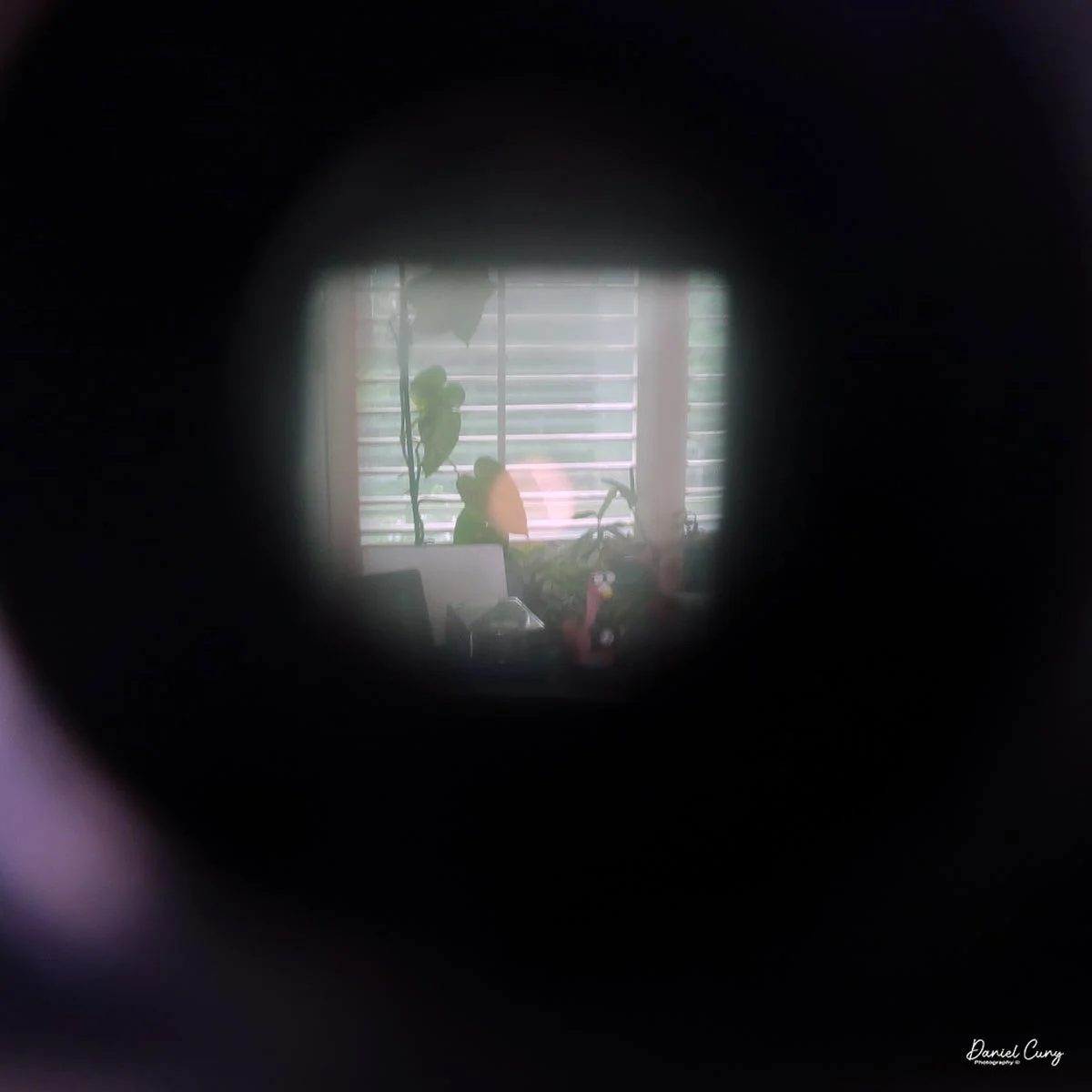
 An item on the Baron RI that I've never seen in a camera is an uncoupled rangefinder. When you look through the viewfinder on the rear of the camera, you view the rangefinder. On the right side, as you're holding the camera, there's a wheel that rotates, allowing you to focus the rangefinder. On my camera, it's bright and clear. You then transfer the distance from the internal rangefinder to the lens and set the distance to the subject. I'm confident that building an integrated rangefinder, which would focus the lens, would have added much more intricacy to the camera, but they either didn't want to bother or just wanted to keep the costs down. It's an interesting item built into the camera.

To load film into the Baron RI, on the left side of the camera is a lever you pull up, which opens the door to the right, exposing a standard roll film chamber. Load film as you would with any roll film camera by placing the take-up spool on the transport side and pulling down the knobs at the bottom of the camera. Put in the fresh roll in the empty area and bring the leader to the take-up spool. Thread the lead into the slot on the take-up spool and wind until you see the film is engaged and rolling onto the spool. Wait until you see the "arrows" pointing outward, close the back of the camera, and press down the locking bar, then wind the film advance knob until you see the #1 in the red window. Take your photo, and wind until you see the #2, and so on through the roll of film.

Now that I have film in the camera. Let's go around the neighborhood and see how the camera performs.

 My Results:

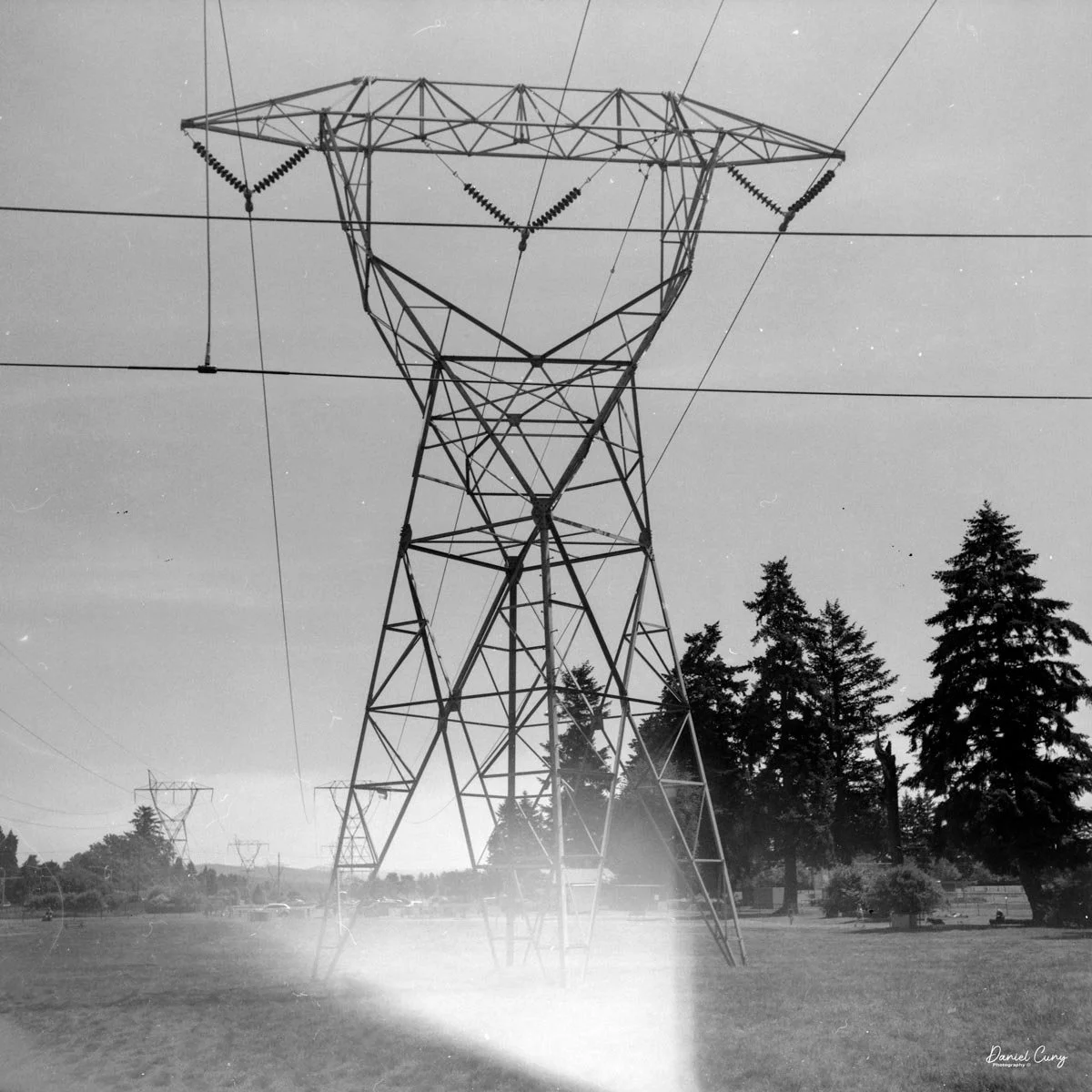
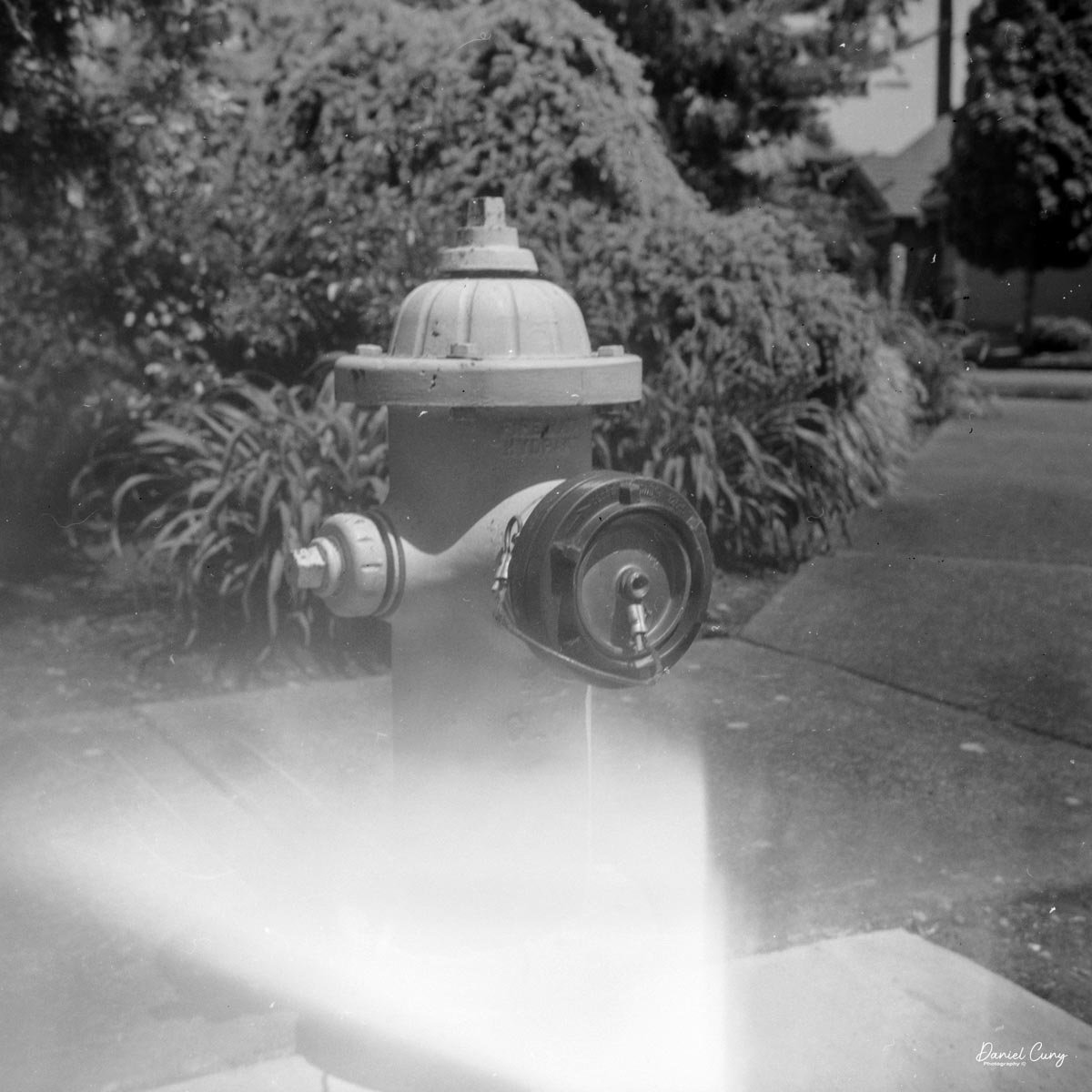
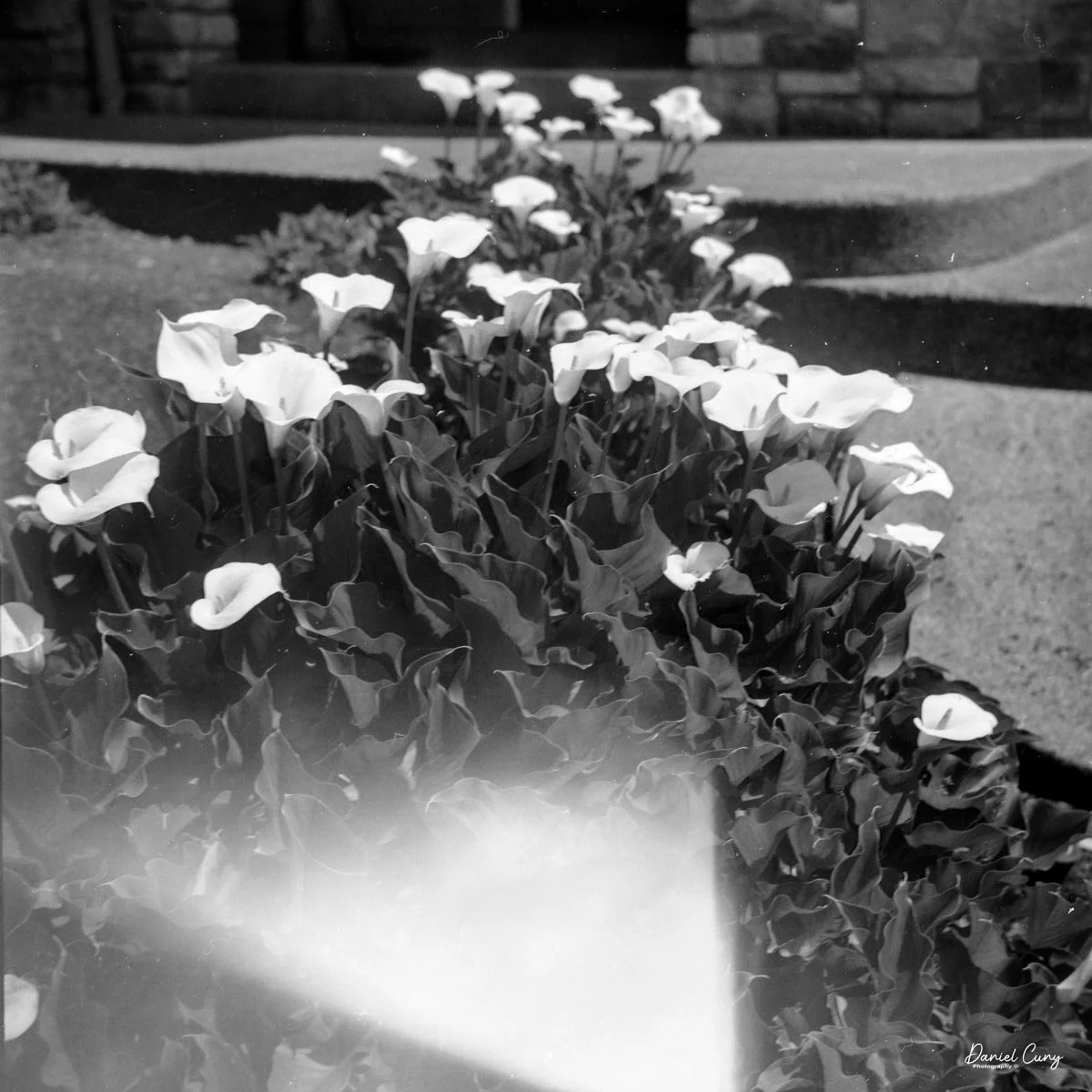
 I gave the camera a very quick look over. All the shutter speeds were working, and the aperture moved as it should. I loaded a roll of Ilford 125 film into the camera, went to the Dog Park with my daughter, and walked around the block, looking for flowers and other subjects to photograph.

 Here are the results.

Conclusion:

 Overall, the camera was easy to use and fun to shoot with. 

 It wasn't until I processed the film that I dug further and noticed a pinhole in the camera's bellows. That's why the photos have this light streak, and not just a light streak, but a gush of light on the bottom of the images, consistent in all the photos taken.

 I liked the rangefinder, which was easy to use and much easier for me than guessing distance. After focusing, I then transferred the distance to the lens, which was fun, and produced sharp images. I'll need to go in and add some thin fabric tape and black liquid fabric to the bellows to eliminate the annoying light leaks. It's a camera I purchased on my trip to Tokyo, and I will keep it for the time being.

 Thank you for taking some time to read about this little-known camera at the beginning of the Japanese camera revolution in the early to mid-1950s.

 I'd like to hear from you if you have questions, or even if you have a Baron camera or one of the many similar-style cameras made in Japan during this timeframe.

 Please take a moment to look at some of my other Camera Reviews.

 Cuny's Cameras and Photos is my online eBay store where you'll see some of the cameras I've reviewed, along with many other lenses, and vintage camera accessories I have for sale.

 Until next week, please be safe.
 

Welta Superfekta

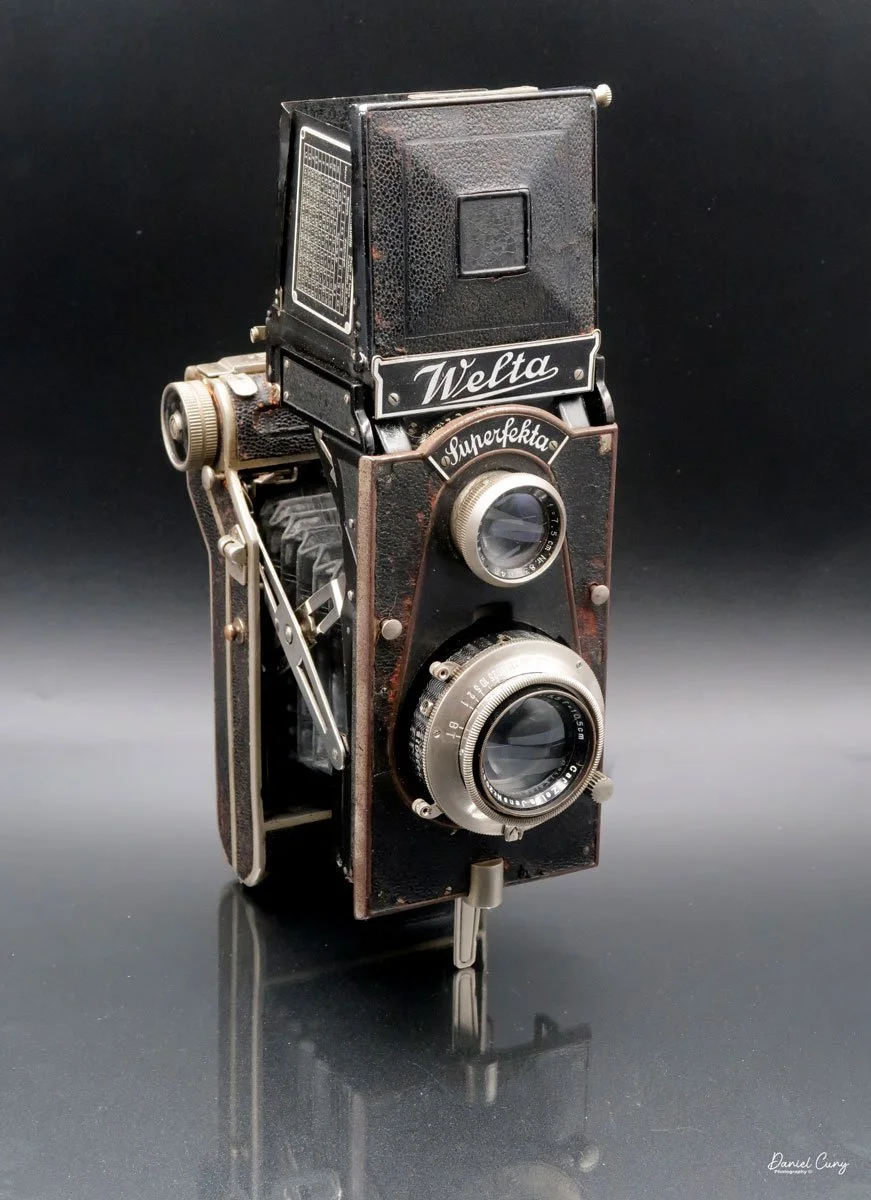
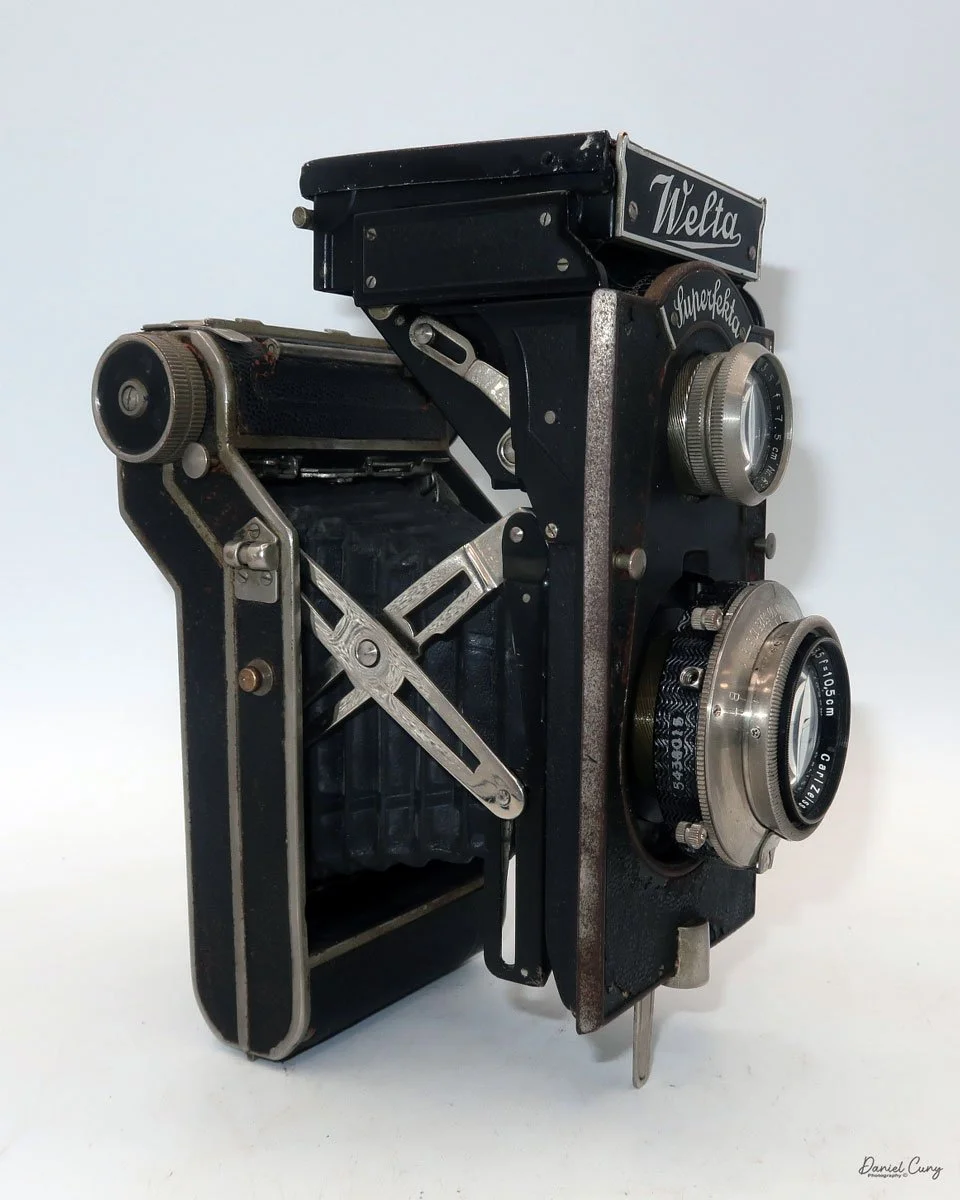
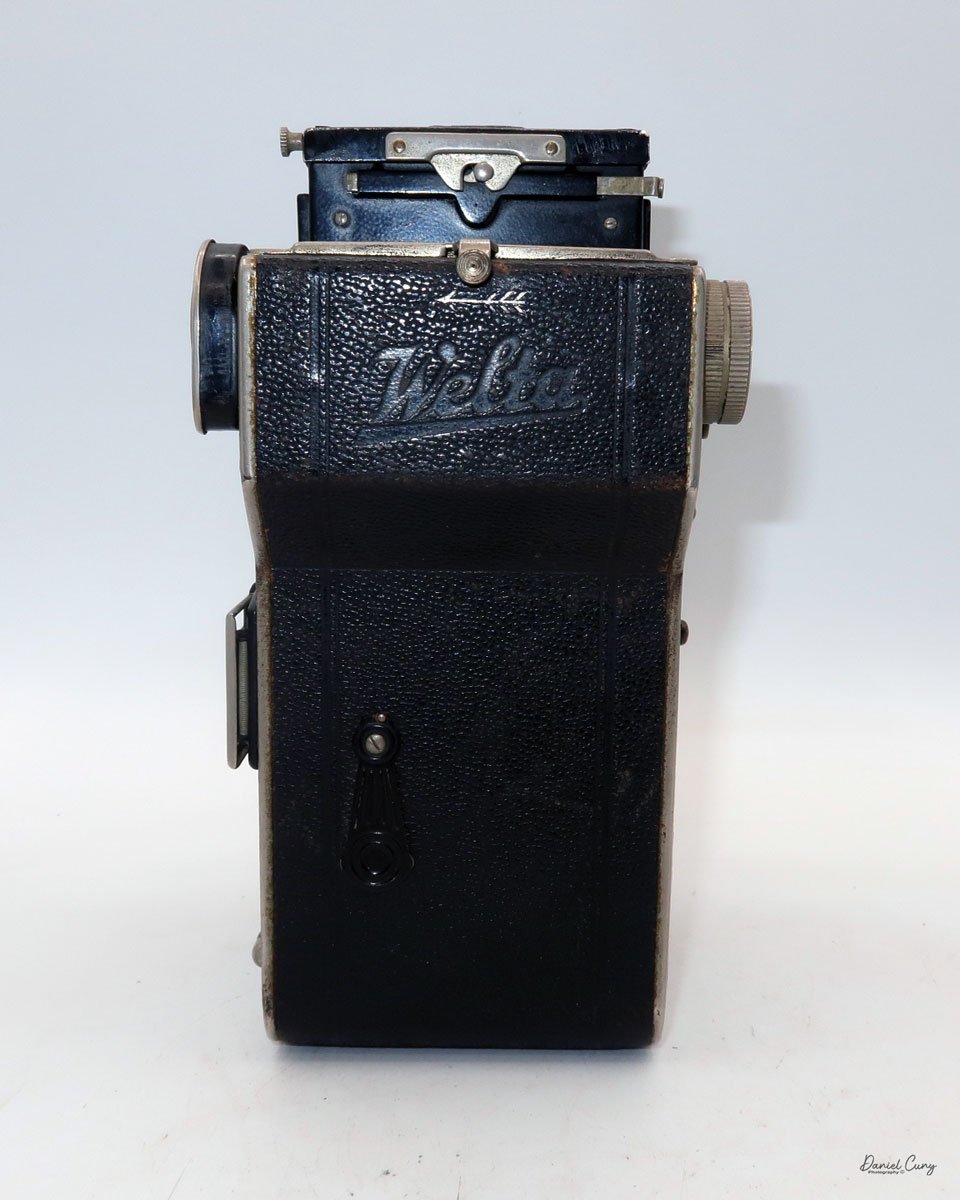
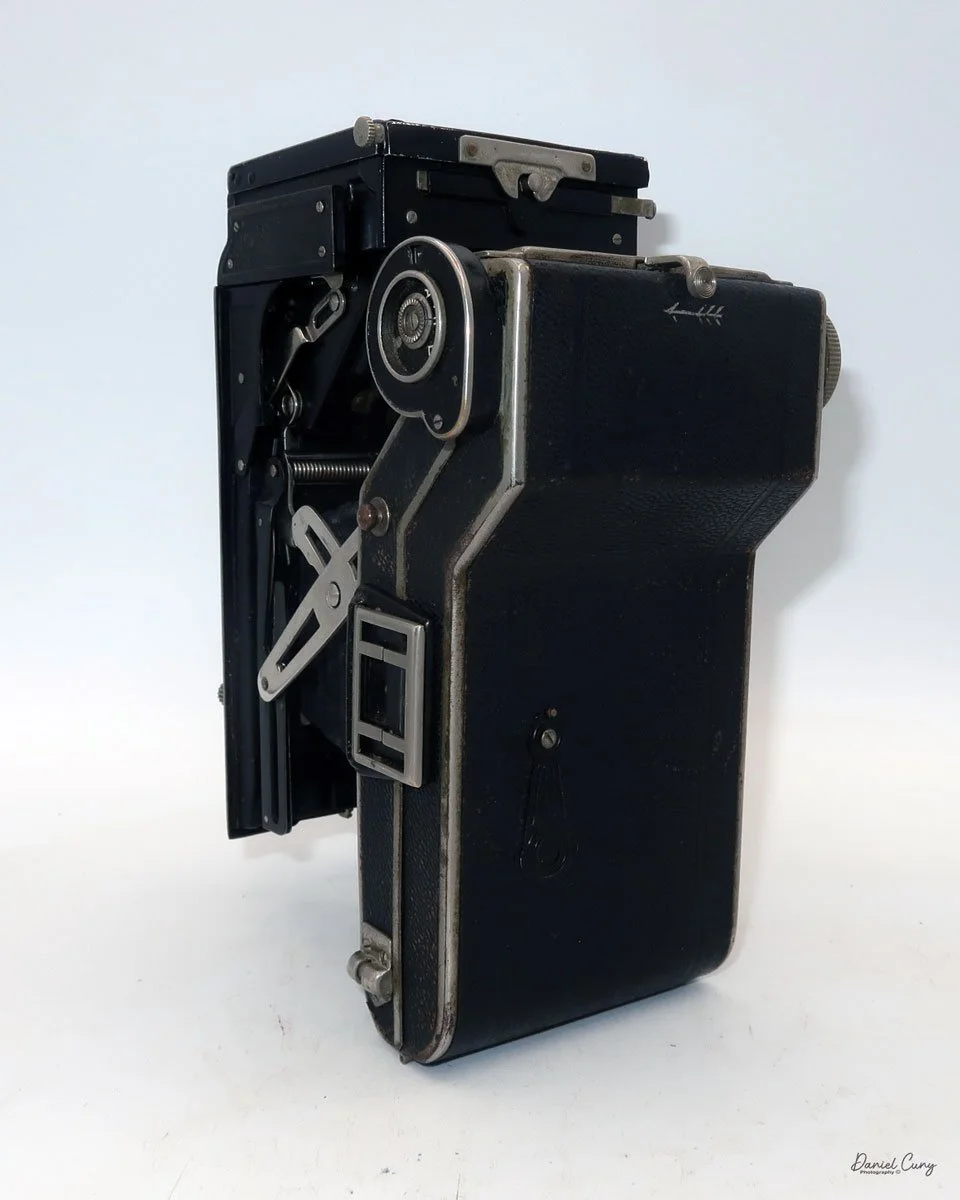
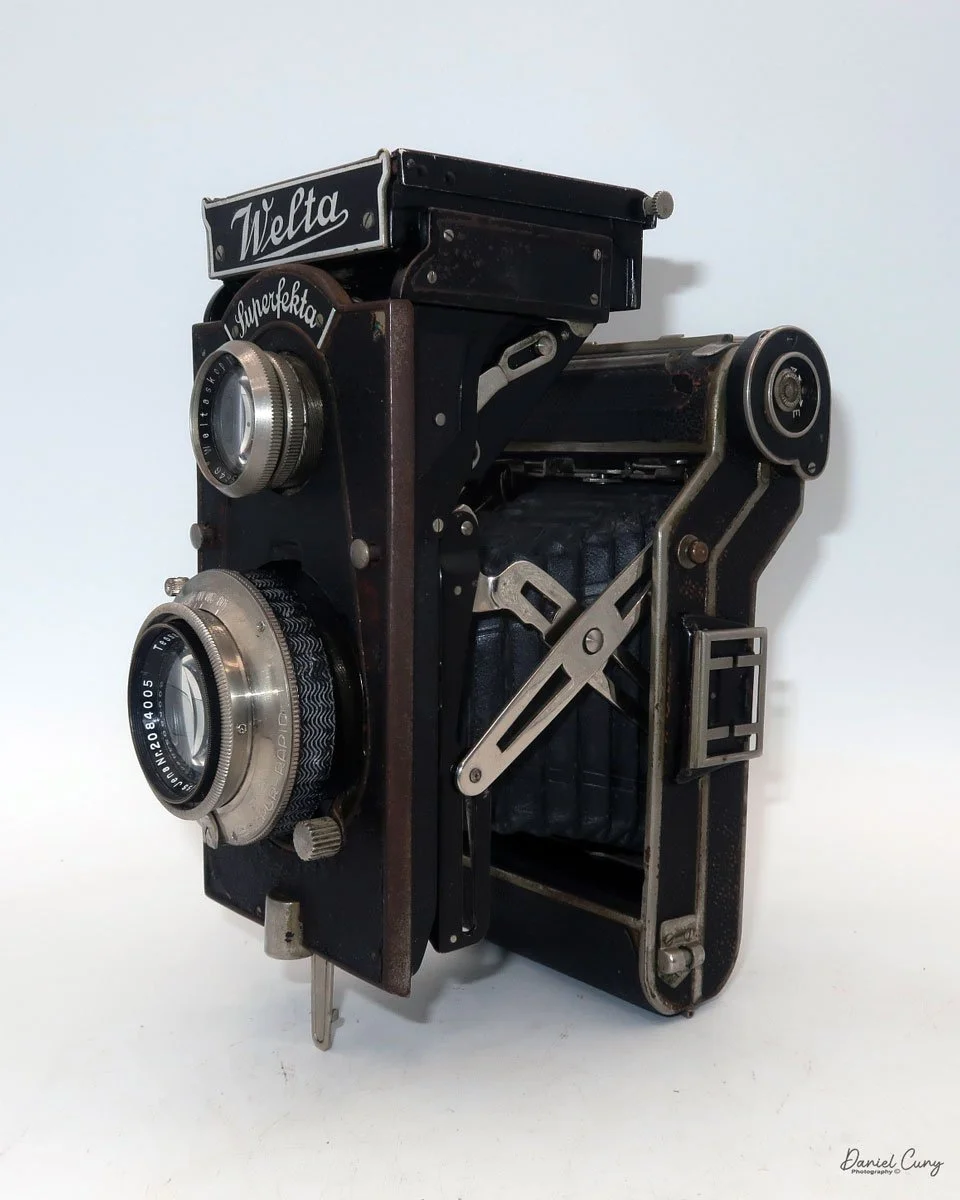
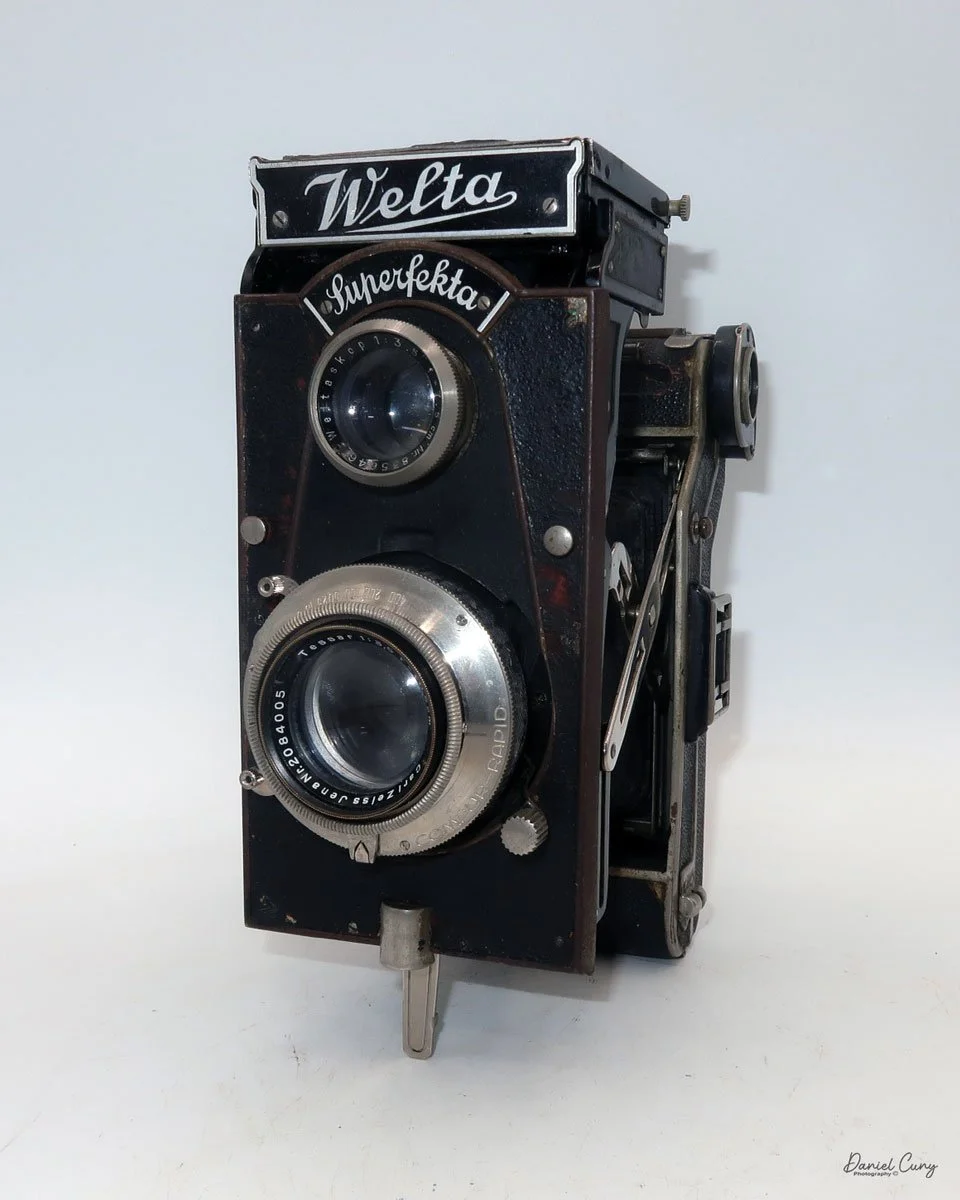
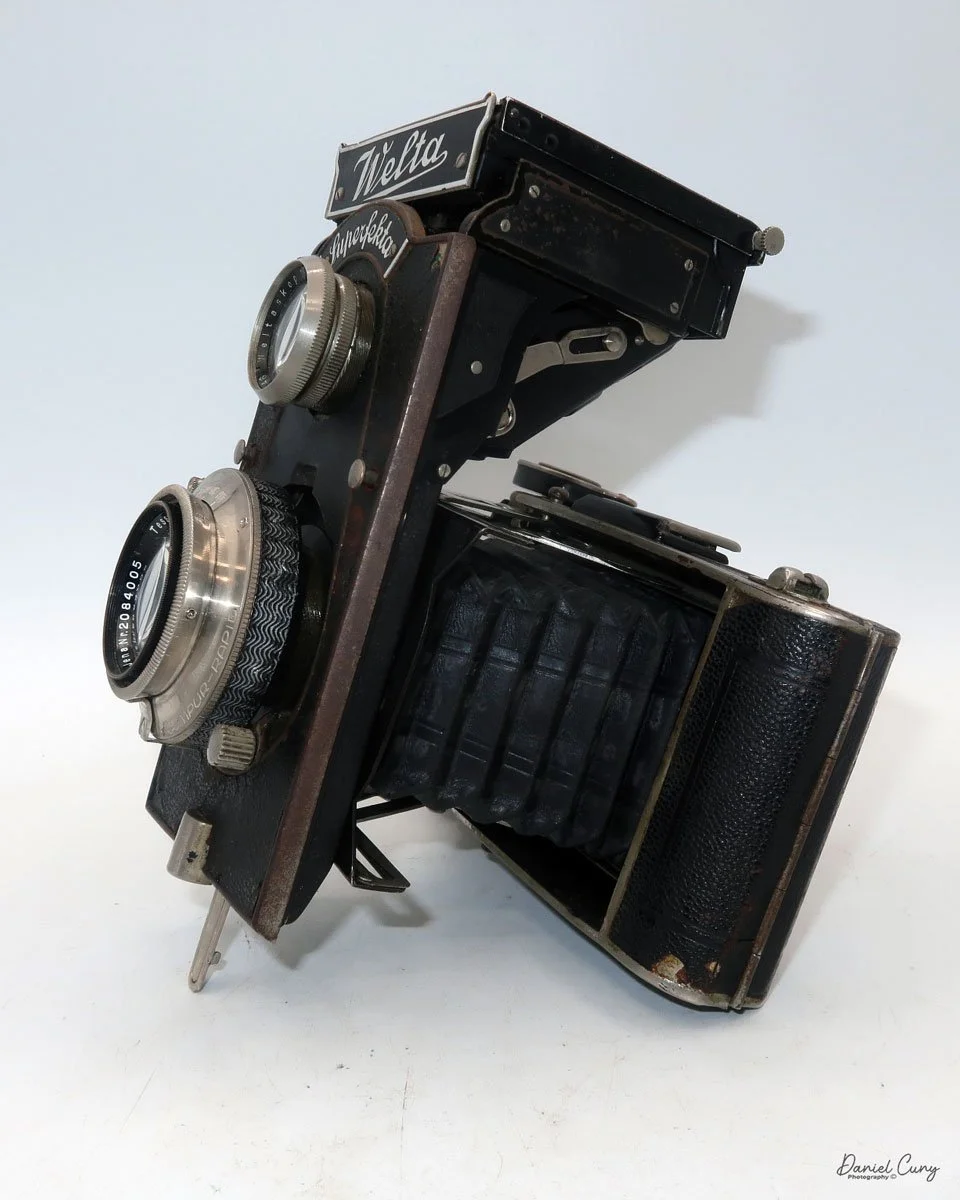
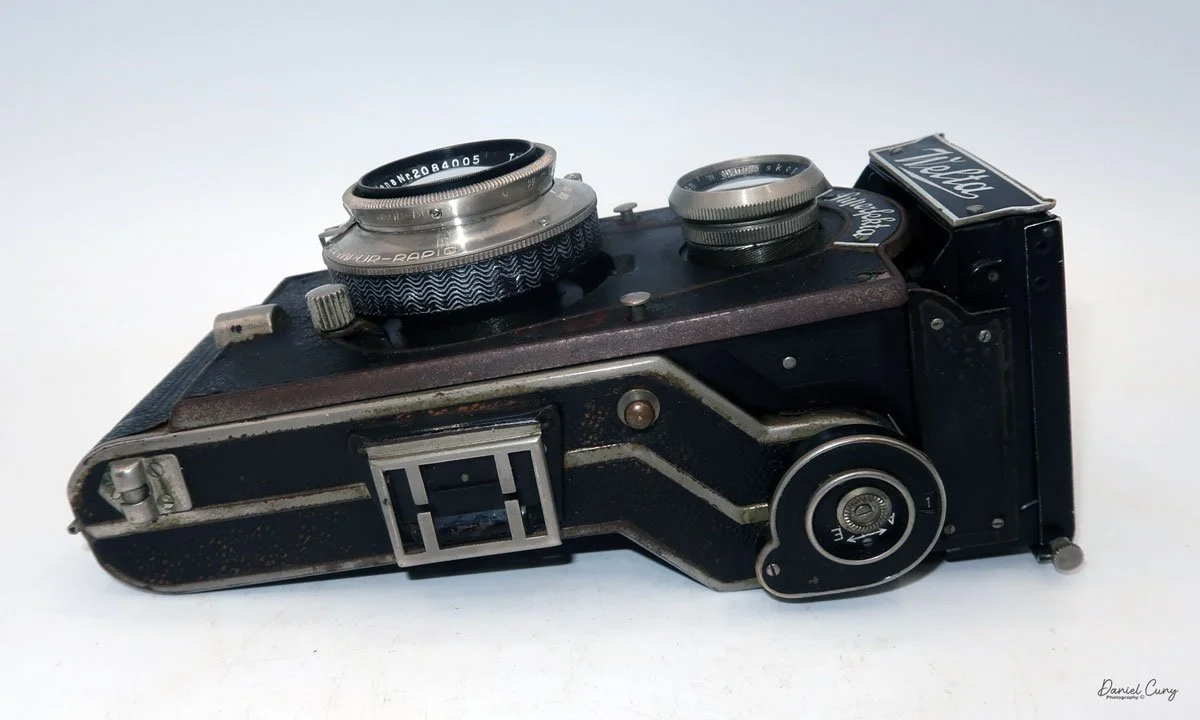
My Welta Superfekta camera

Not being wealthy, my collecting has always been focused on cameras well within our family's financial means. Up until my final ten years of working and before retirement, the cameras I purchased were items you could find at local flea markets and estate sales, or occasionally I made a trade for an item while selling at a camera show where I had a table.

 Being drawn to obscure and unusual cameras and having devoured McKeown's Camera Guide for many years, the Welta Superfekta is one camera I've always dreamed of adding to my collection. Due to its price and relative scarcity in the U.S., it's always been out of reach for me until this past few years.
 It wasn't until I looked at an online camera auction that I found the Welta Superfekta at a price that was not only reasonable but also inexpensive. Online, the camera looked in good to decent condition, but they said the shutter was erratic. To me, those words mean I'll need to send the camera in for a shutter repair, which isn't too uncommon for a camera reaching 100 years old. 
 I purchased the Welta Superfekta online, and when the camera arrived, as suspected, its shutter was extremely sluggish and needed to be CLA'd. I reached out to the person I usually send cameras for servicing, and he confirmed he could service the shutter but wasn't sure about other areas of the camera, as he wasn't too familiar with it.

The excitement of adding the Welta Superfekta to my collection was wonderful, especially since it's a 6x9 cm-format camera that takes 120 film. Still, the more exciting part of the camera is that it's very similar to the Cornu Ontoflex, which has a rotating back, allowing the photographer to shoot both vertically and horizontally without turning the camera sideways. Just rotate the back from vertical to horizontal and flip the image orientation, as with the Mamiya RB67.

 The one thing I noticed when I turned my camera from vertical to horizontal is that the back doesn't turn all the way, which makes me curious about its history. This flaw, while concerning, adds character and a story to the camera, resonating with collectors who appreciate Imperfections.  

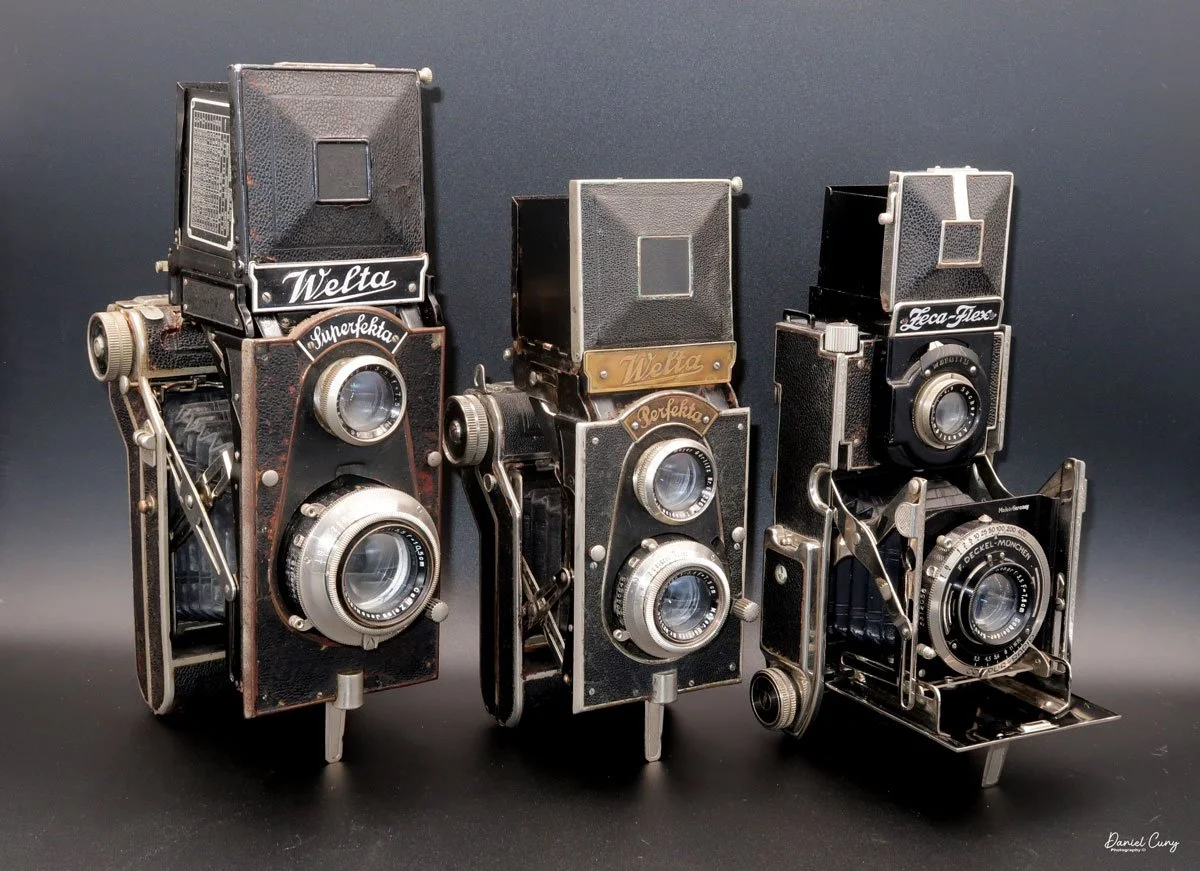
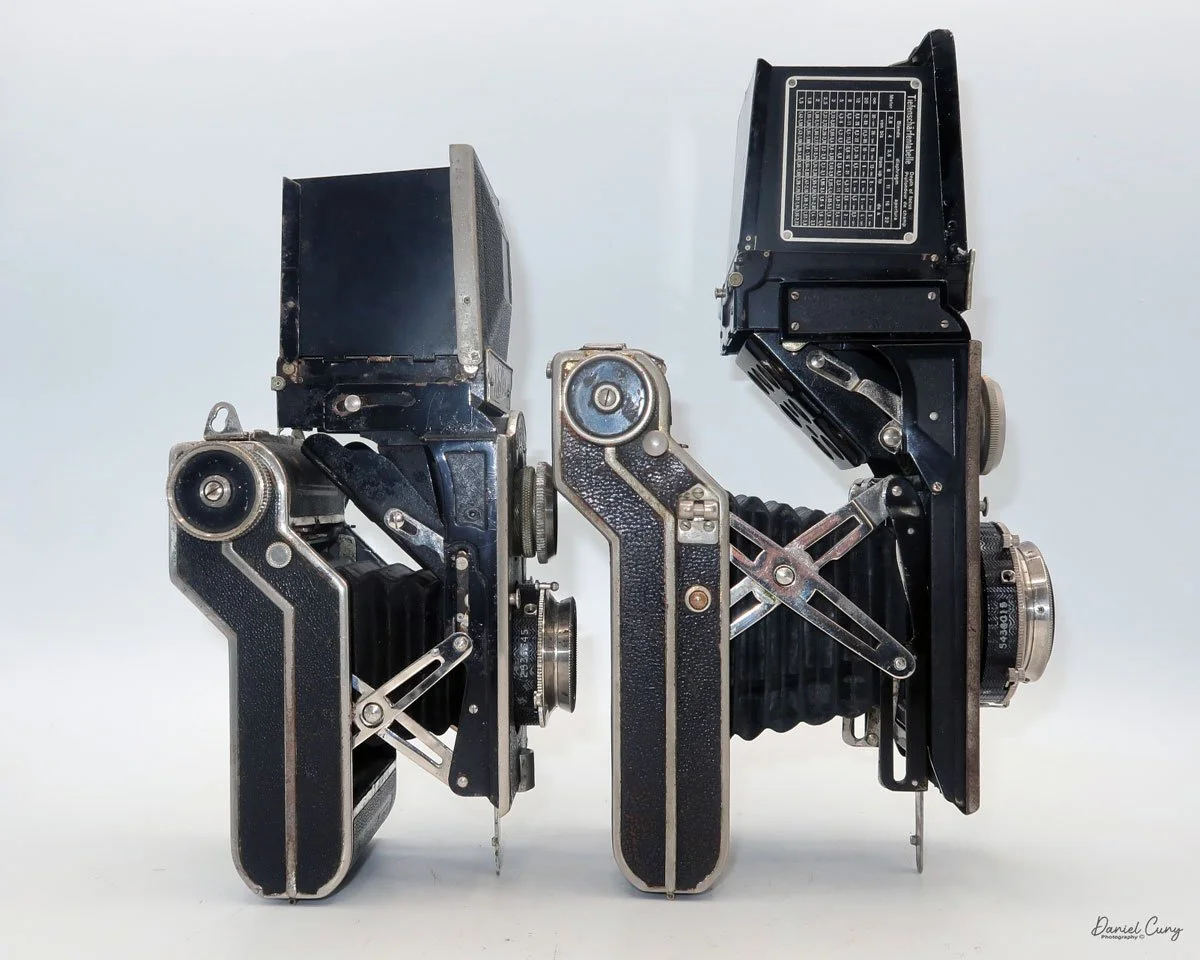
Another reason for my excitement to add the Welta Superfekta to my collection is that it would be the third folding Twin Lens camera in my collection. I had already purchased and written about both the Welta Perfekta and the Zeh Zeca-Flex cameras, making this the “Trifecta” of this camera style.

Welta Superfekta, Perfekta and Zeh Zeca-Flex camera.

Welta before World War II:

 The history of Welta Kamerawerke leading up to World War II is a testament to the rapid innovation and high-precision craftsmanship that defined the German photographic industry in the early 20th century. Founded in 1914 by Walter Waurich and Theodor Weber in Freital, near Dresden, the company began as "Waurich & Weber" before adopting the "Welta" brand name that would eventually become synonymous with high-end folding cameras.

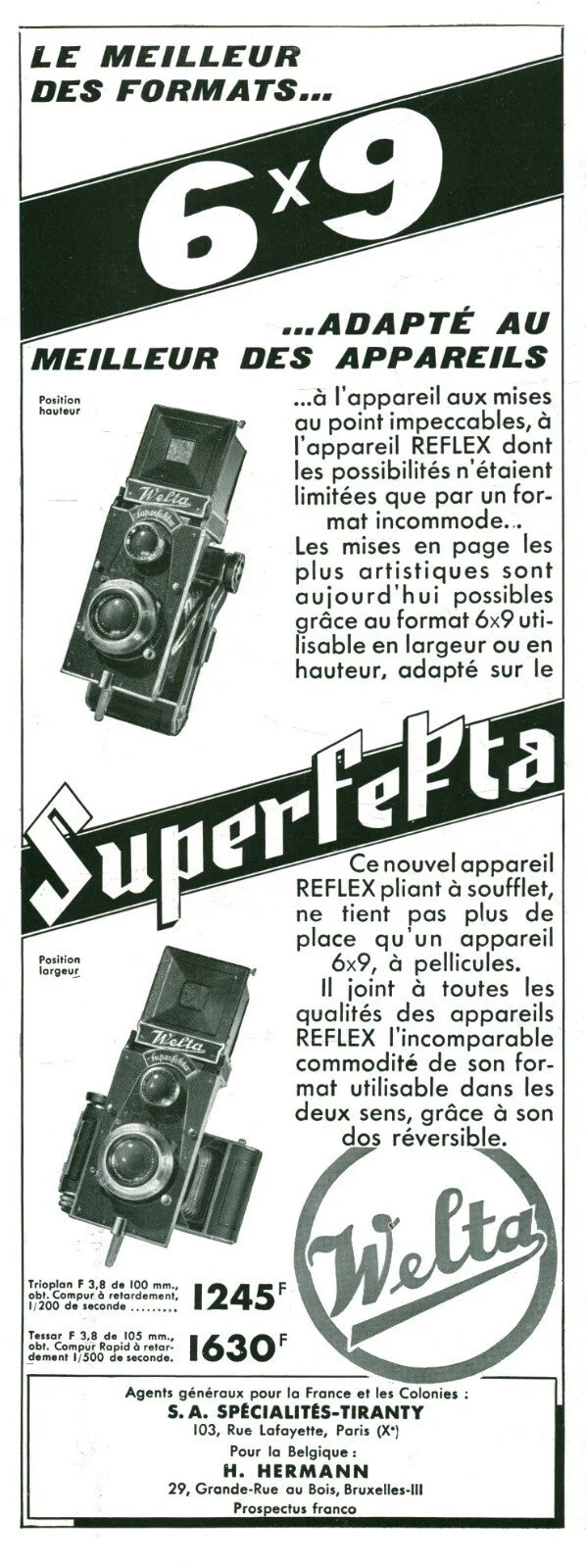
French ad for the Welta Perfekta and Superfekta cameras

 In its first decade, Welta focused on the transition from heavy glass-plate cameras to the more versatile roll-film formats. By the 1920s, Freital and the surrounding Dresden area had become the global epicenter of camera manufacturing, and Welta held its own against giants like Zeiss Ikon. Their early success was built on the folding camera—a design that allowed a high-quality lens and shutter to collapse into a slim, leather-covered metal body.

 The 1930s marked Welta's "Golden Era." During this decade, the company moved beyond standard designs to create some of the most mechanically complex cameras ever made. While competitors were focusing on the emerging 35mm trend, Welta mastered the 120 roll-film market with innovative models like:


  • The Weltur: A rangefinder folding camera known for its incredible build quality and integrated viewfinders.

  • The Perfekta and Superfekta: These folding Twin Lens Reflex (TLR) cameras were engineering marvels, offering the ground-glass focusing of a studio camera in a portable, collapsing frame.

  • The Welti: A foray into the 35mm market that proved Welta could compete with the Leica in terms of precision and optics, often featuring high-end Carl Zeiss Jena or Schneider lenses.

 Welta's pre-war philosophy was to offer a variety of price points without sacrificing mechanical integrity. You could find a simple Welta Trio for the casual hobbyist, or a Superfekta with a rotating back for the professional who demanded perfection. This versatility allowed Welta to export heavily to the UK and the United States, where their cameras were often rebranded for local retailers.

 By the late 1930s, Welta was a premier name in photography. However, as Germany shifted toward a war economy, production began to pivot away from consumer optics. After the war, Freital was part of the Soviet occupation zone (later East Germany), and Welta was eventually absorbed into the state-owned VEB Pentacon, marking the end of its era as an independent, family-founded innovator.

My Camera:

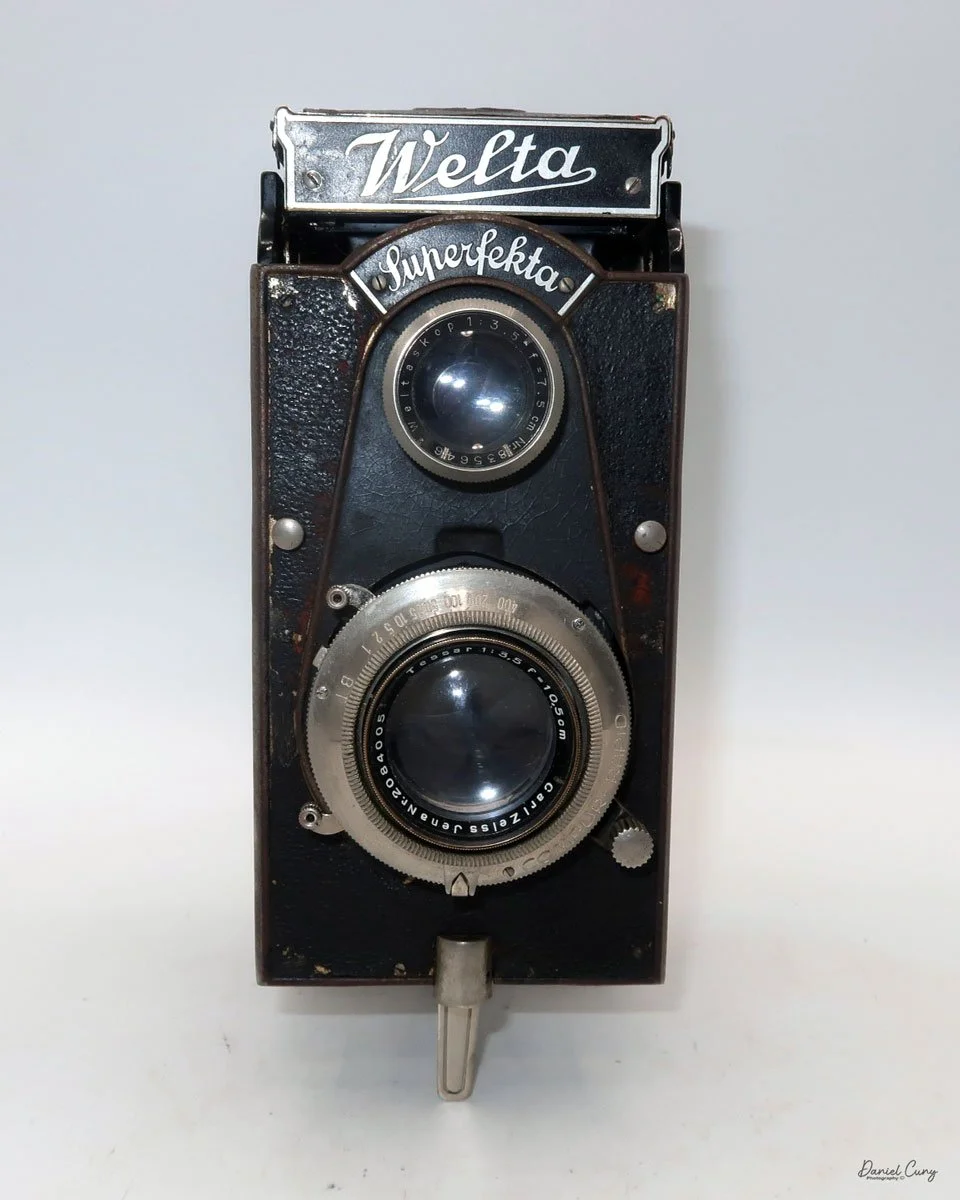
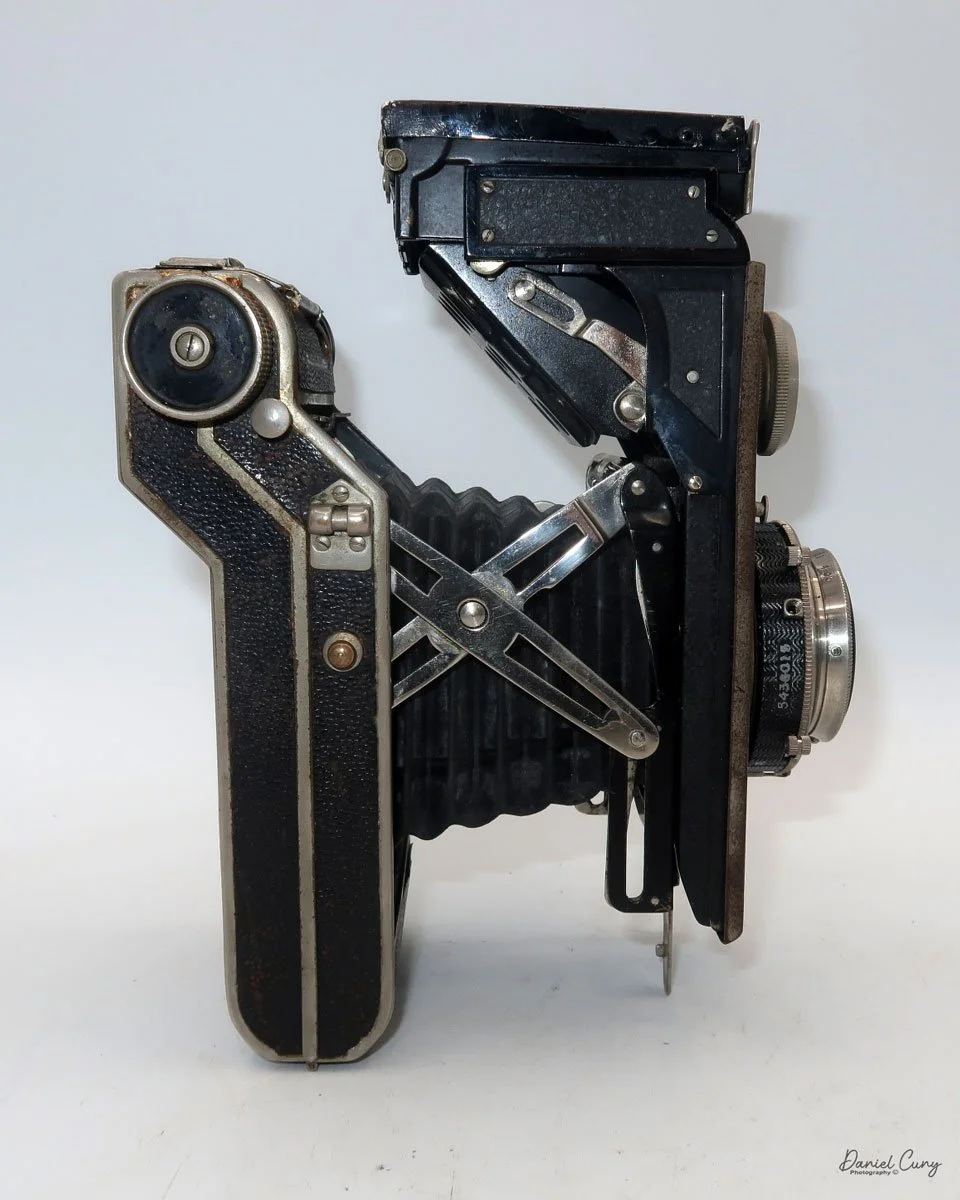
 My Welta Superfekta camera is 7.5" tall without the light chimney opened, and 10" with it opened, by 4" wide, and 3.5" deep with the body retracted, and 6.25" deep when the body of the camera is extended. The camera weighs 3 pounds, 0.2 ounces without film, so it has some heft.

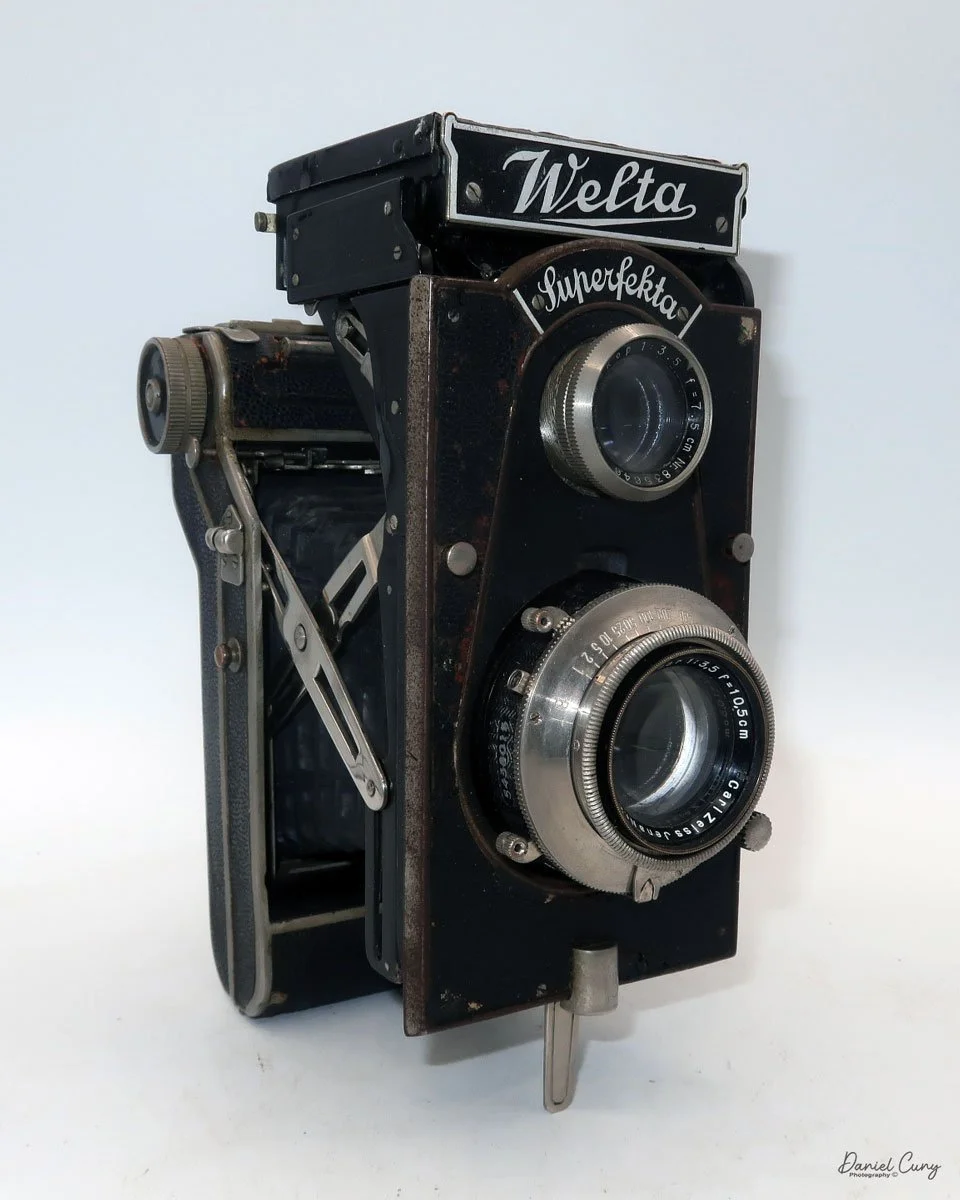
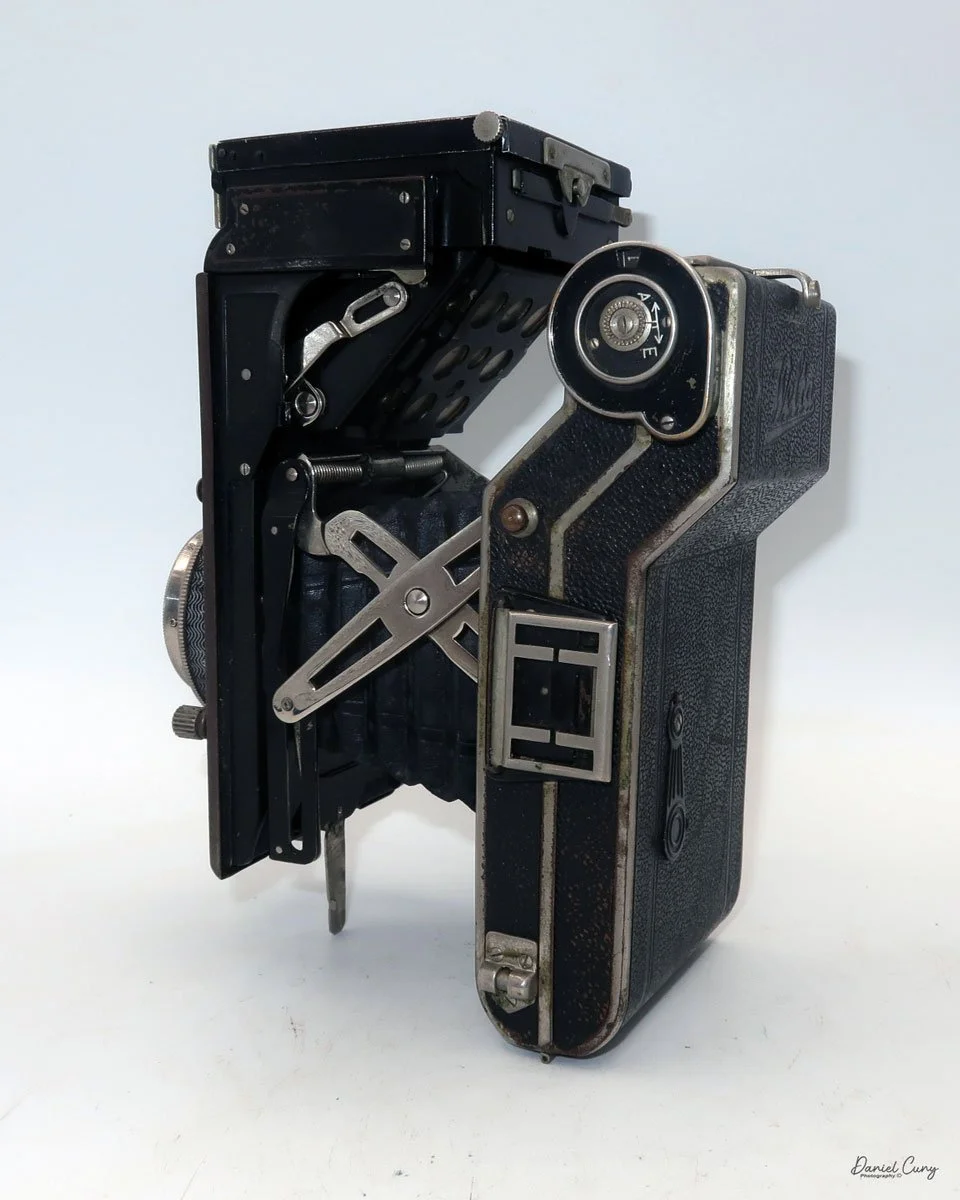
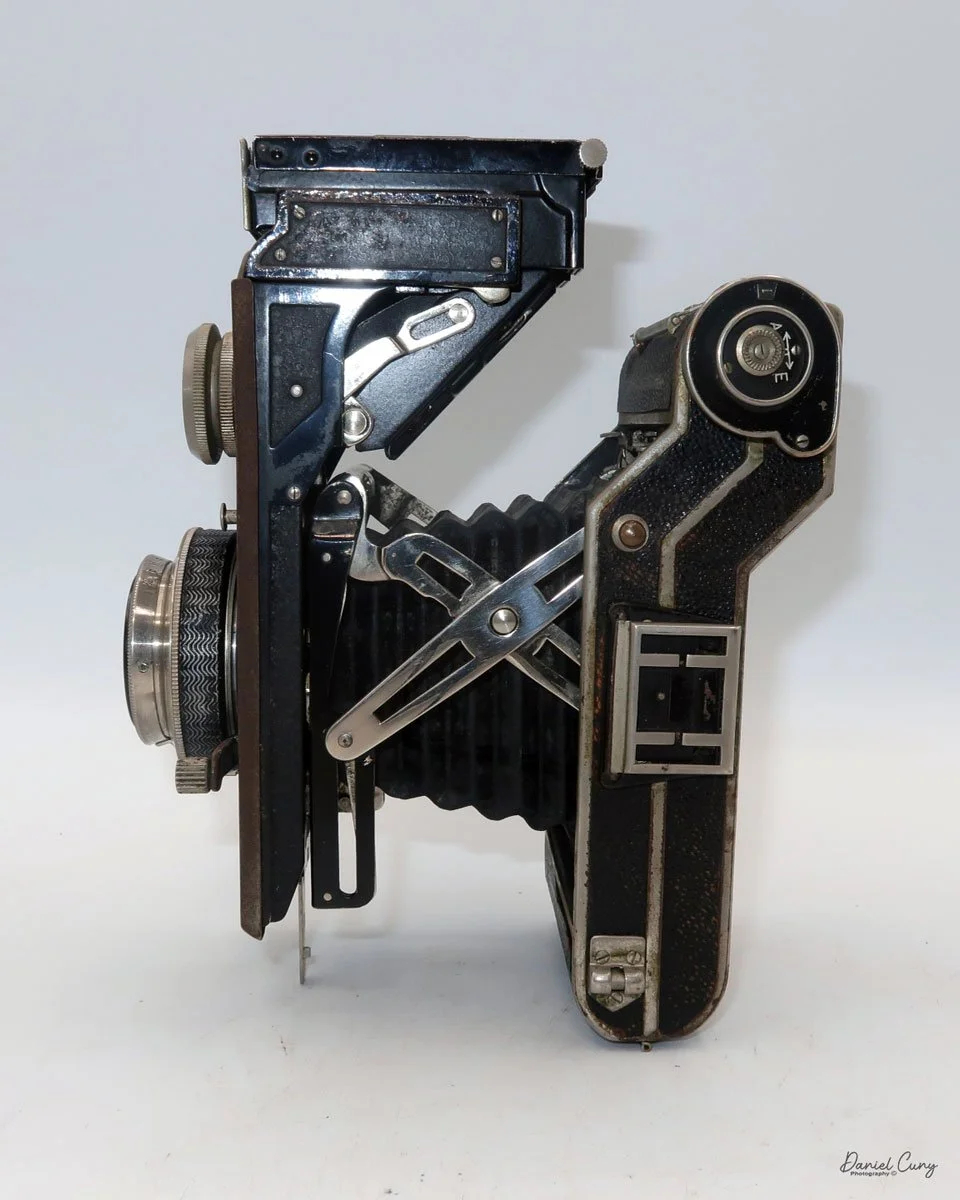
To extend the camera body away from the film chamber, press the silver button on the right side of the camera body, located just below the film winding lever. Pressing the button quickly extends the camera lens area, and you'll be able to see the bellows. By doing so, you'll see how the camera gets its name, a folding twin-lens camera. When I extended the camera's front from the rear, I noticed the bellows were in excellent light-tight condition.

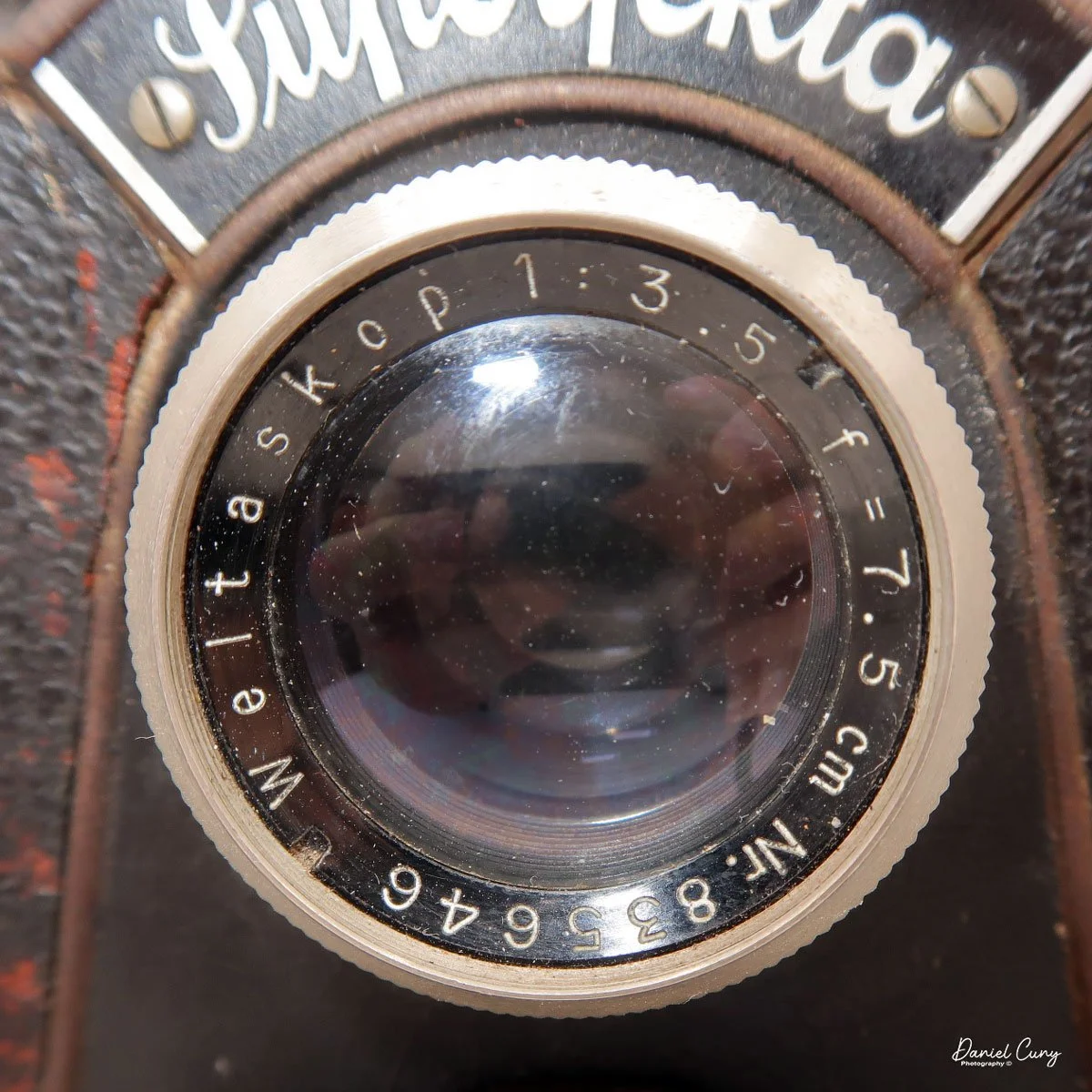
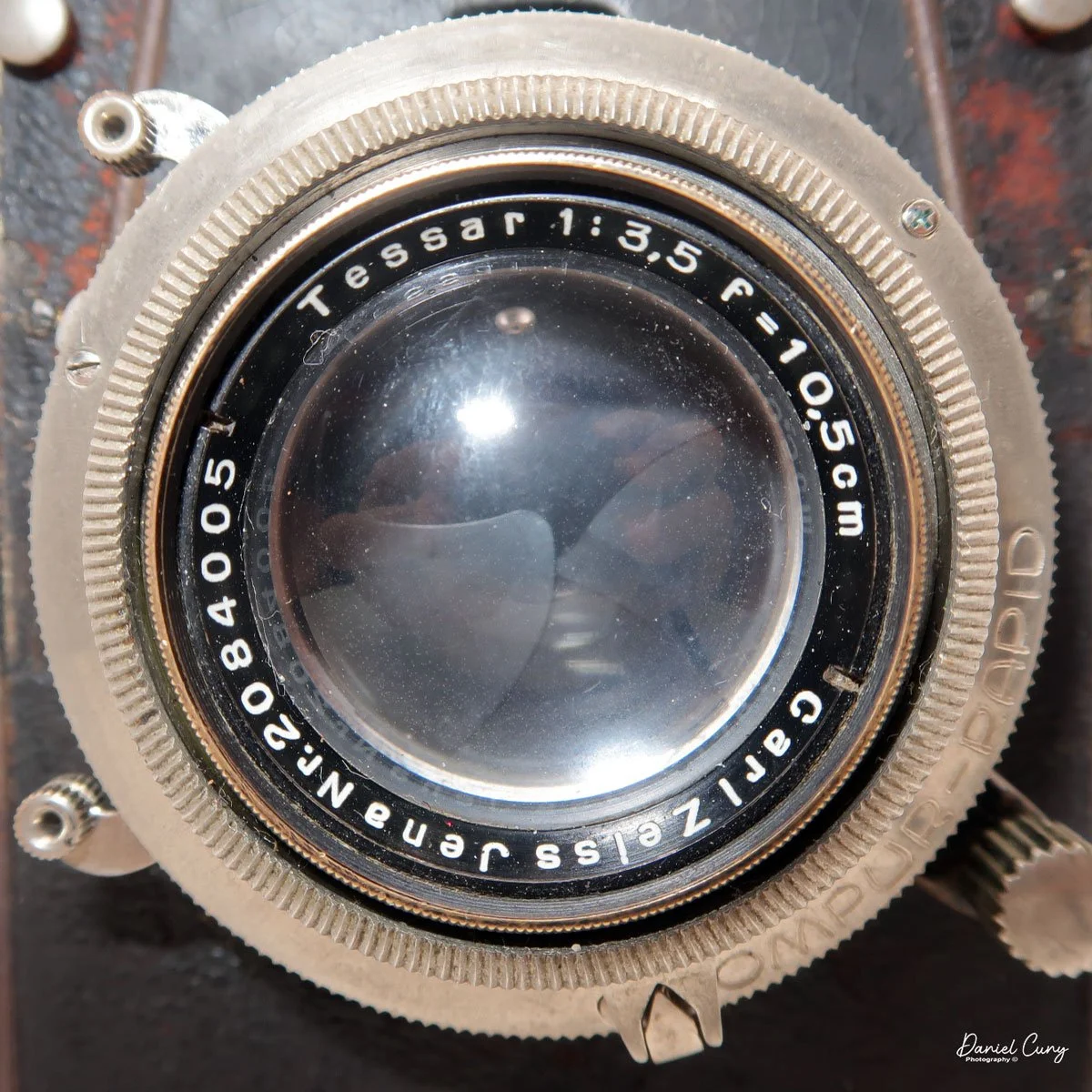
 My camera has a 7.5cm f/3.5 Weltaskop viewing lens, along with a Carl Zeiss Jena 10.5 F/3.5 Tessar taking lens, so the viewing lens is wider than the taking lens, and the taking lens is in a Compur-Rapid shutter with shutter speeds from 1/400 to 1 sec. along with "B", and "T". The focus lever is located on the left side of the lens when you're holding the camera, and it slides up and down to focus on your subject. 

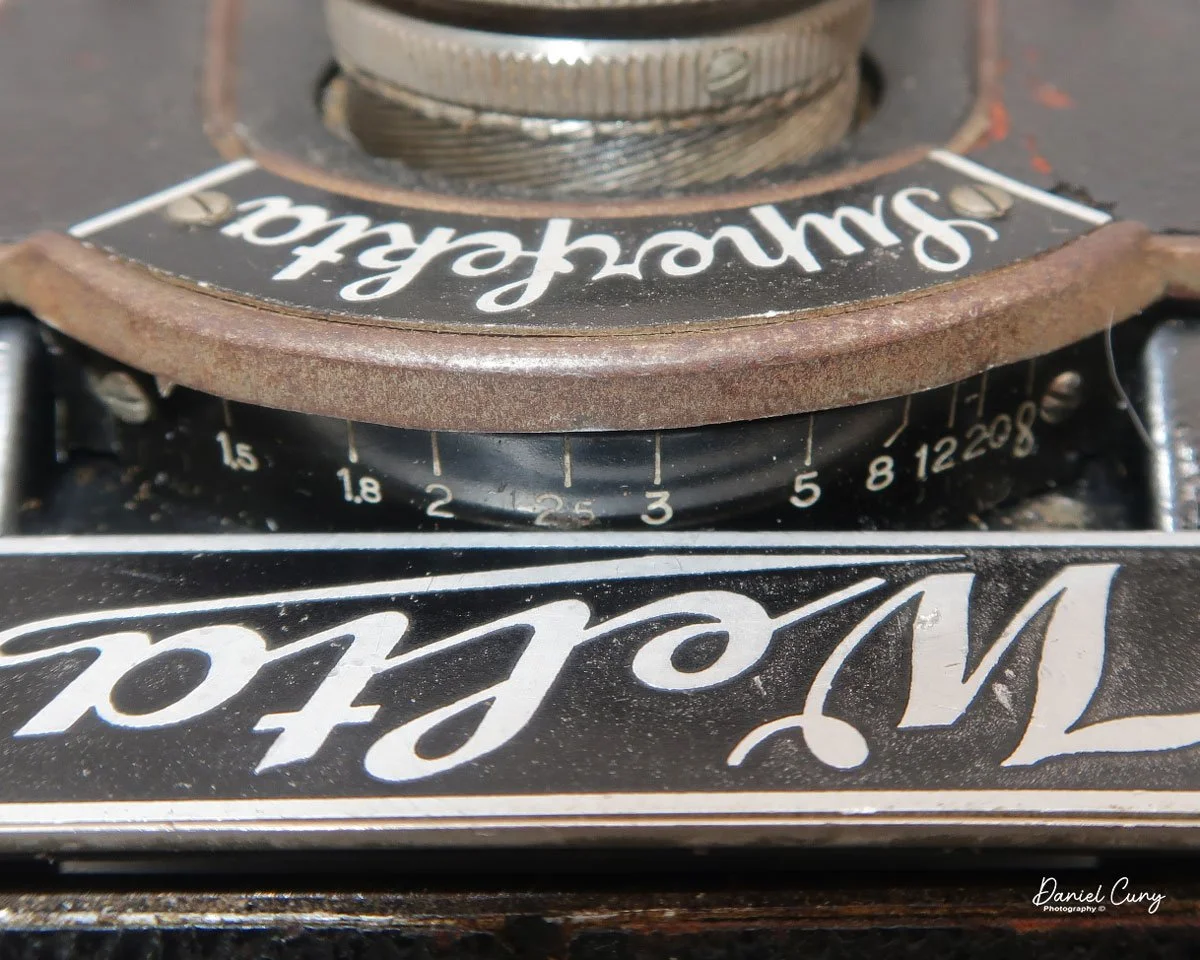
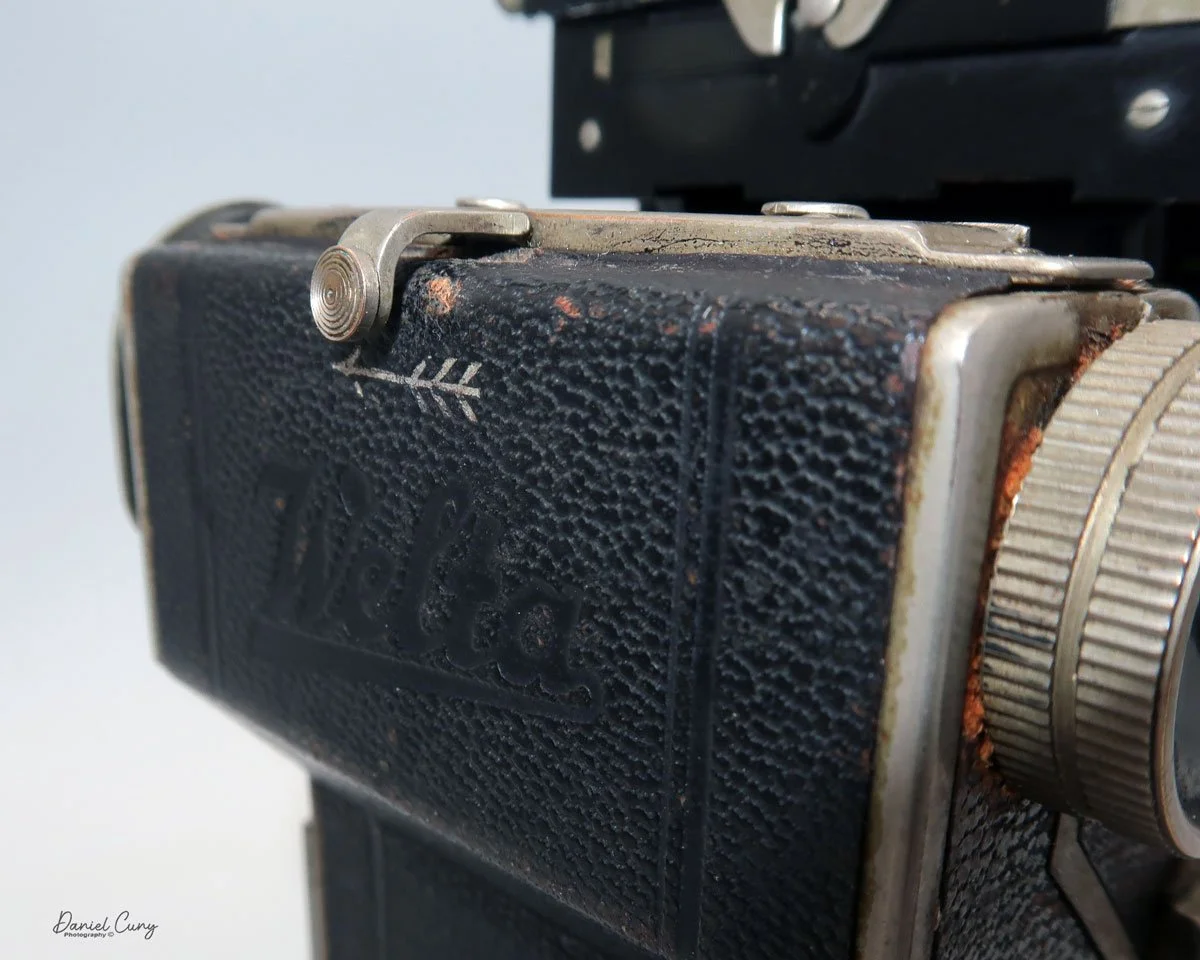
There is also a focus scale along the top of the camera, between the Welta sign on the film body and the Superfekta sign on the lens area. As you slide the focus lever up and down, you'll see a triangle move from side to side, indicating the distance to the subject on the focus scale, which is in meters.

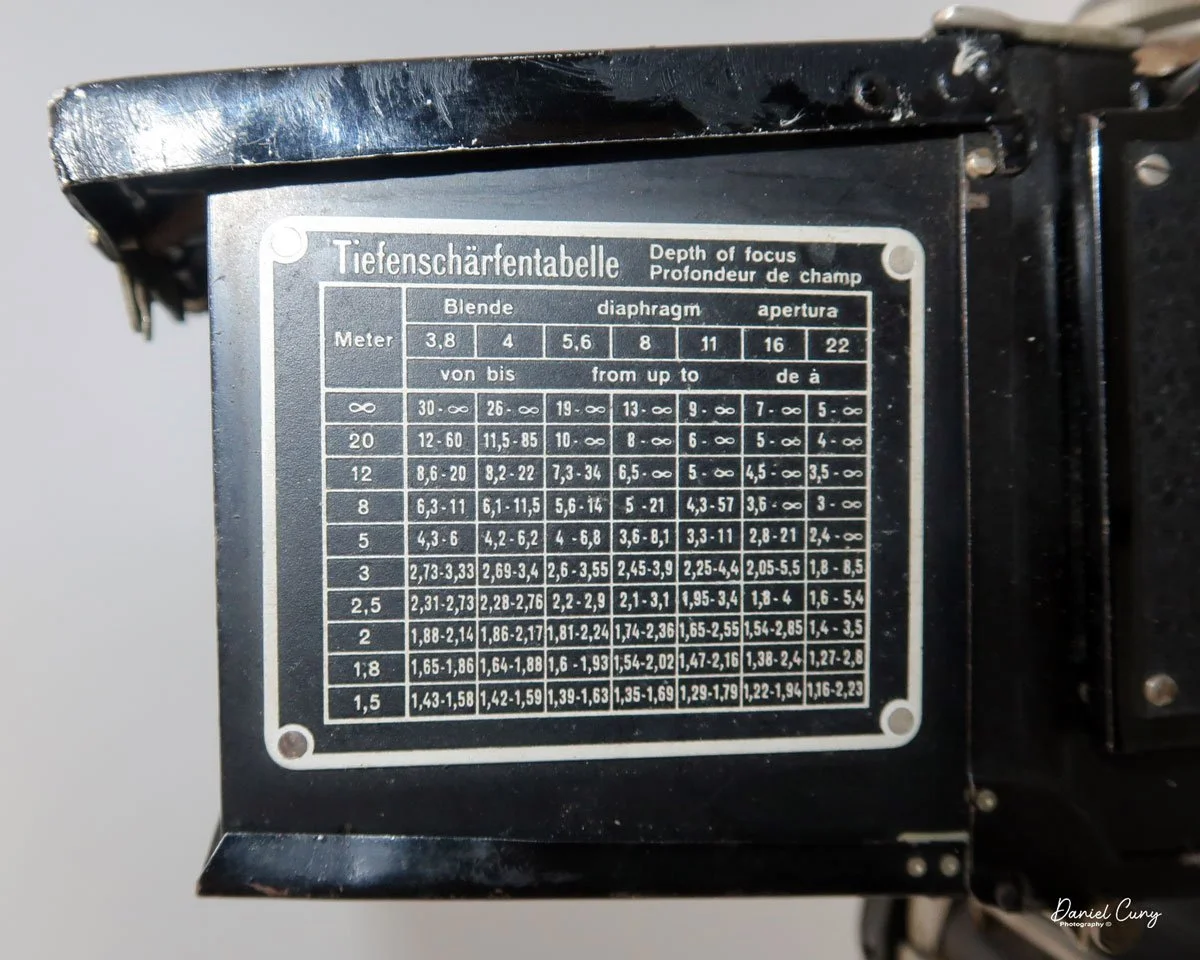
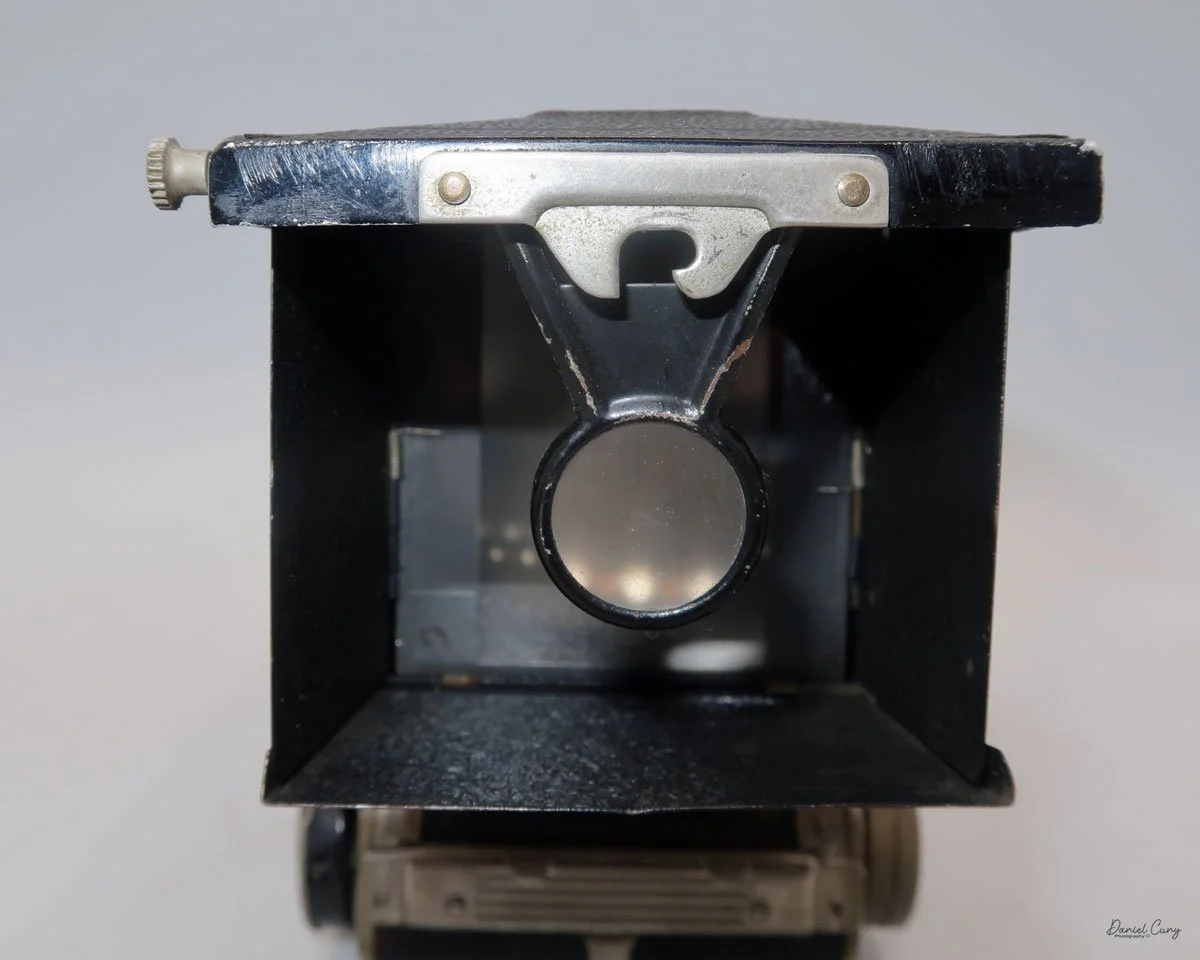
 Along the back of the camera, by the viewfinder, there is a button to press to open the light chimney. The light chimney popped up, and along one side is a depth-of-field scale for the camera, and on the front is the magnifying lens, which flips as it should. 

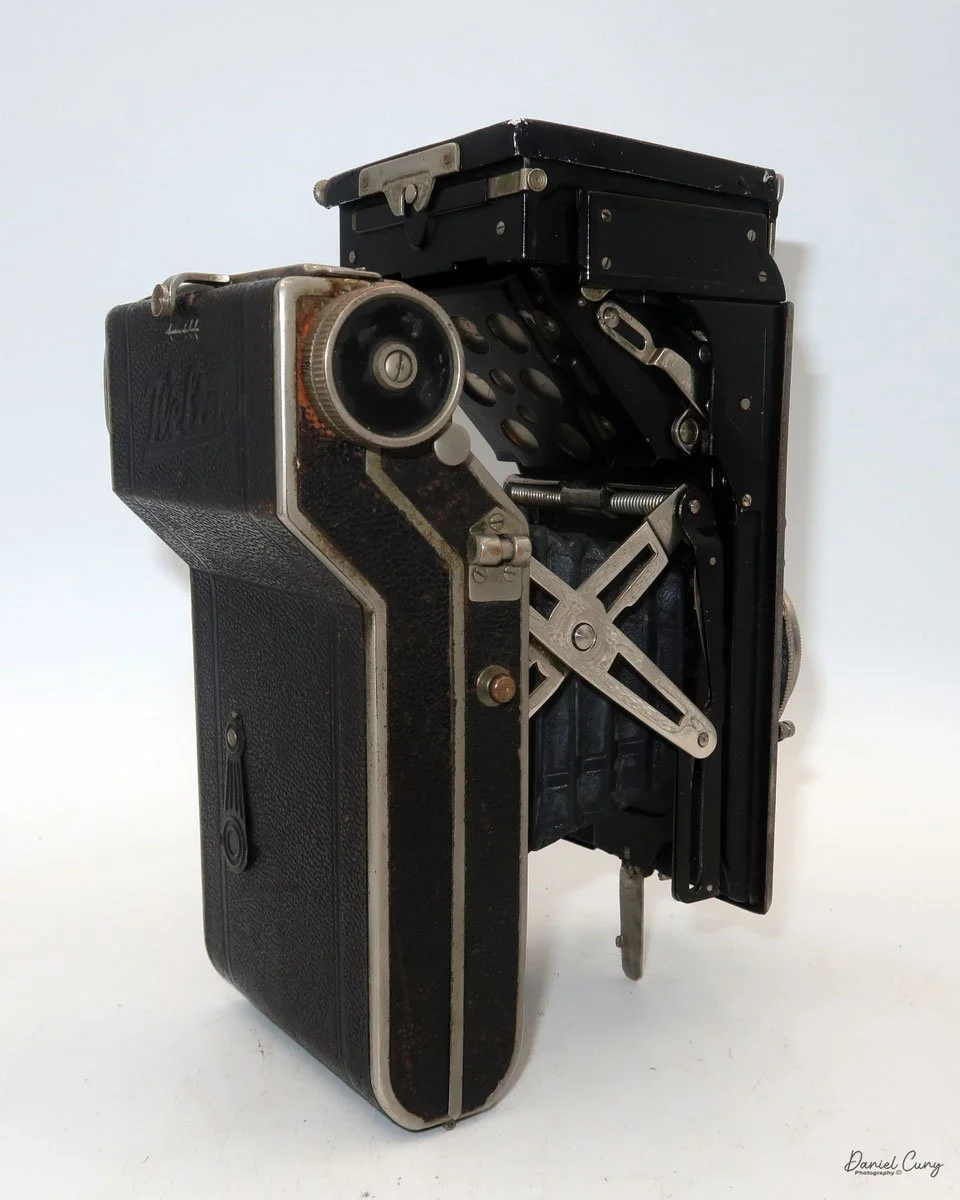
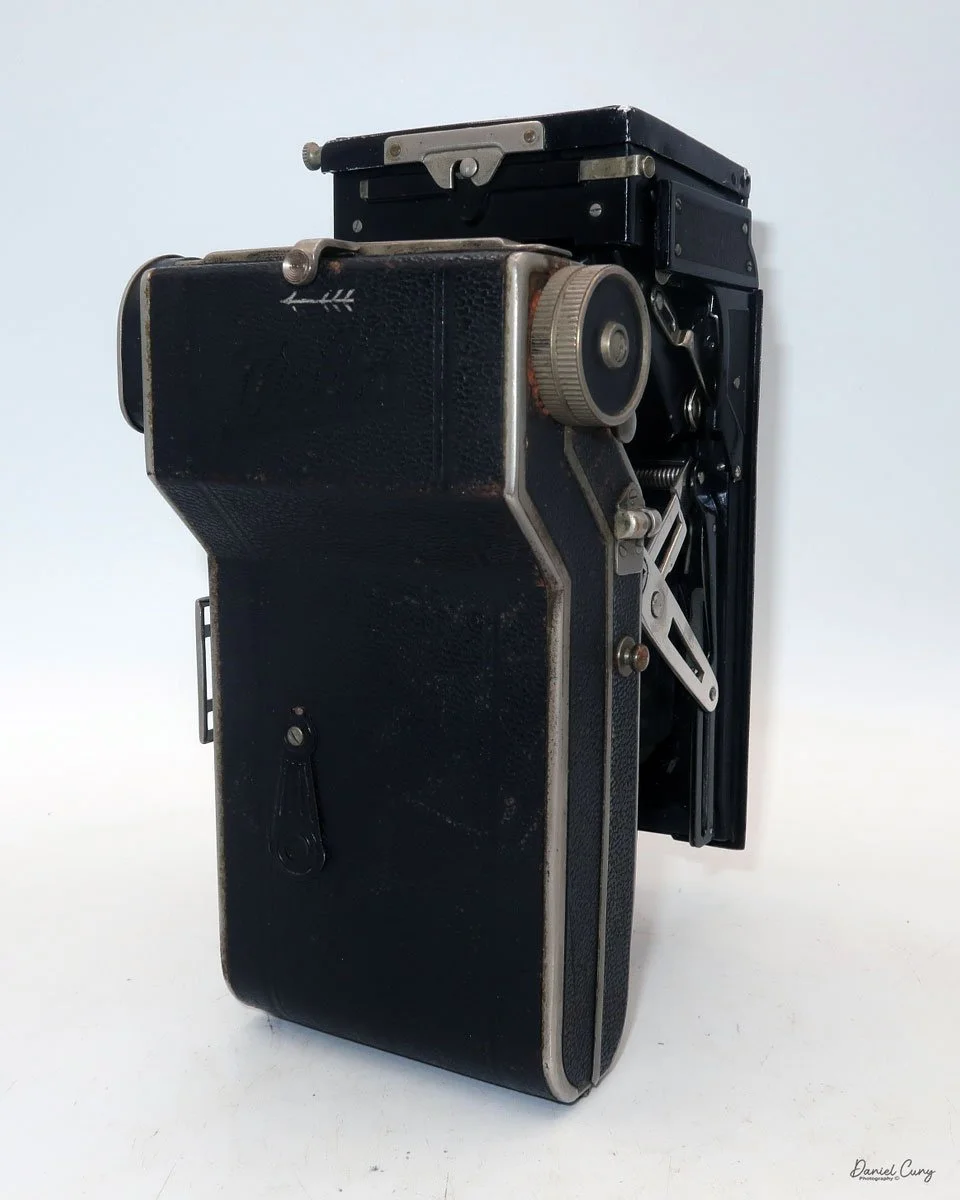
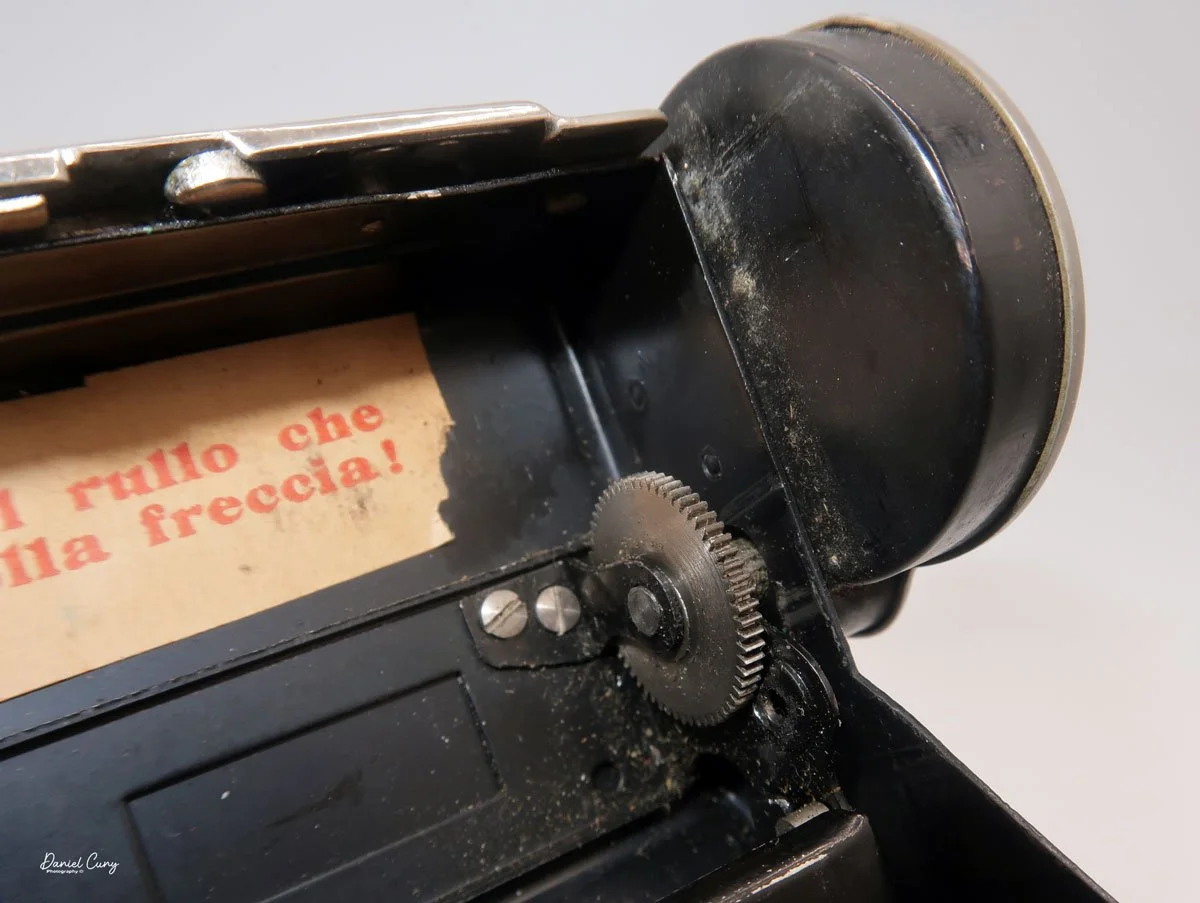
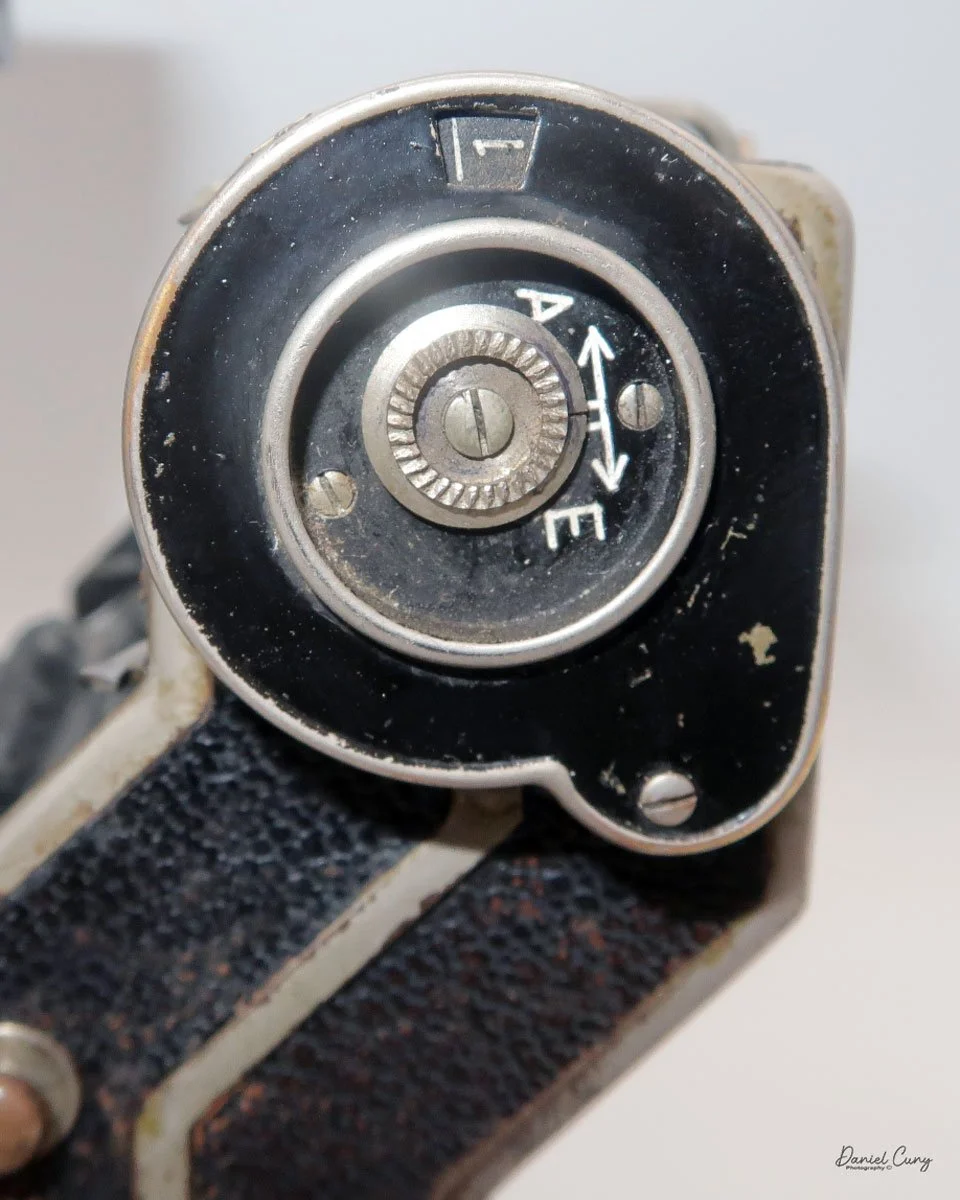
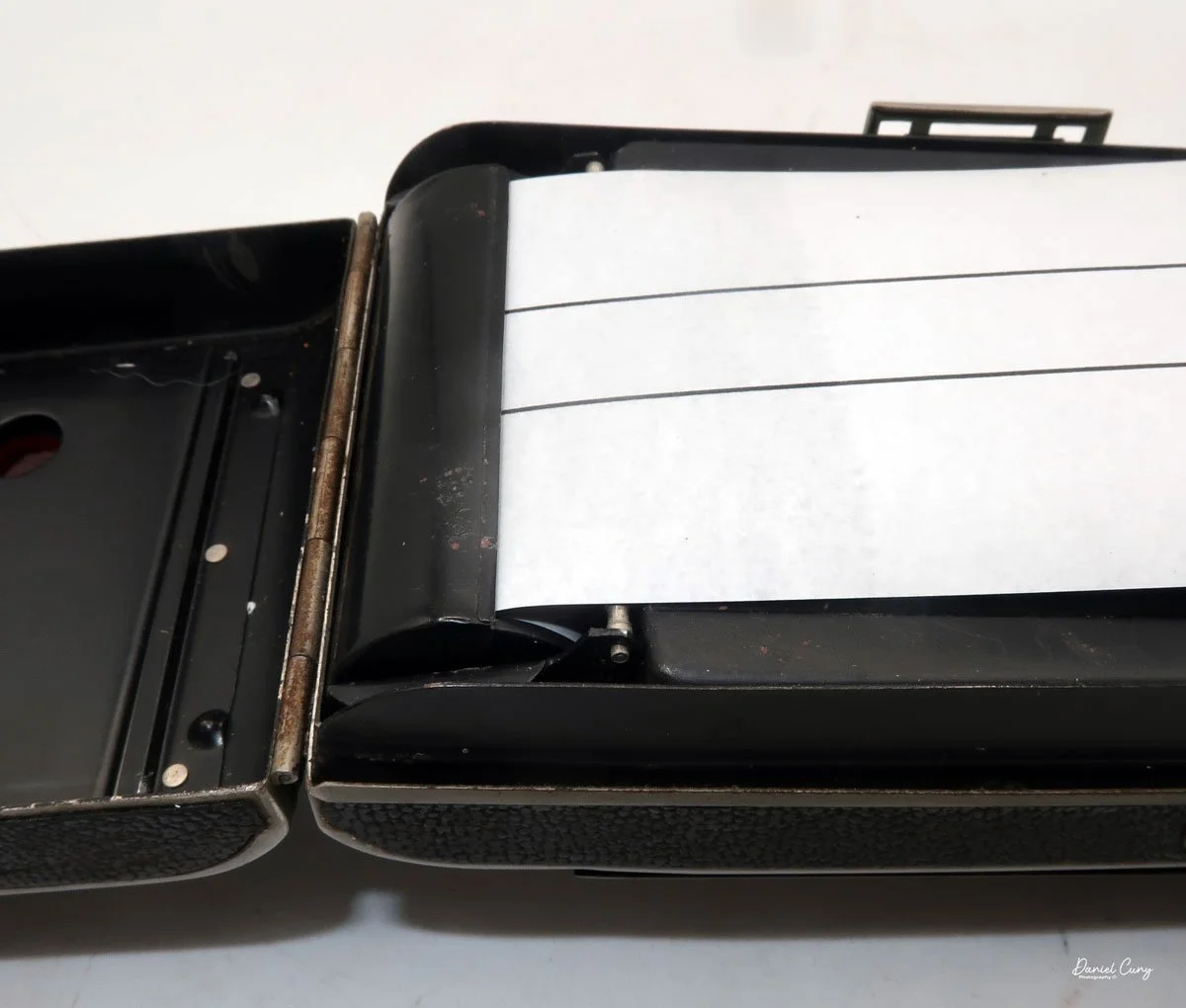
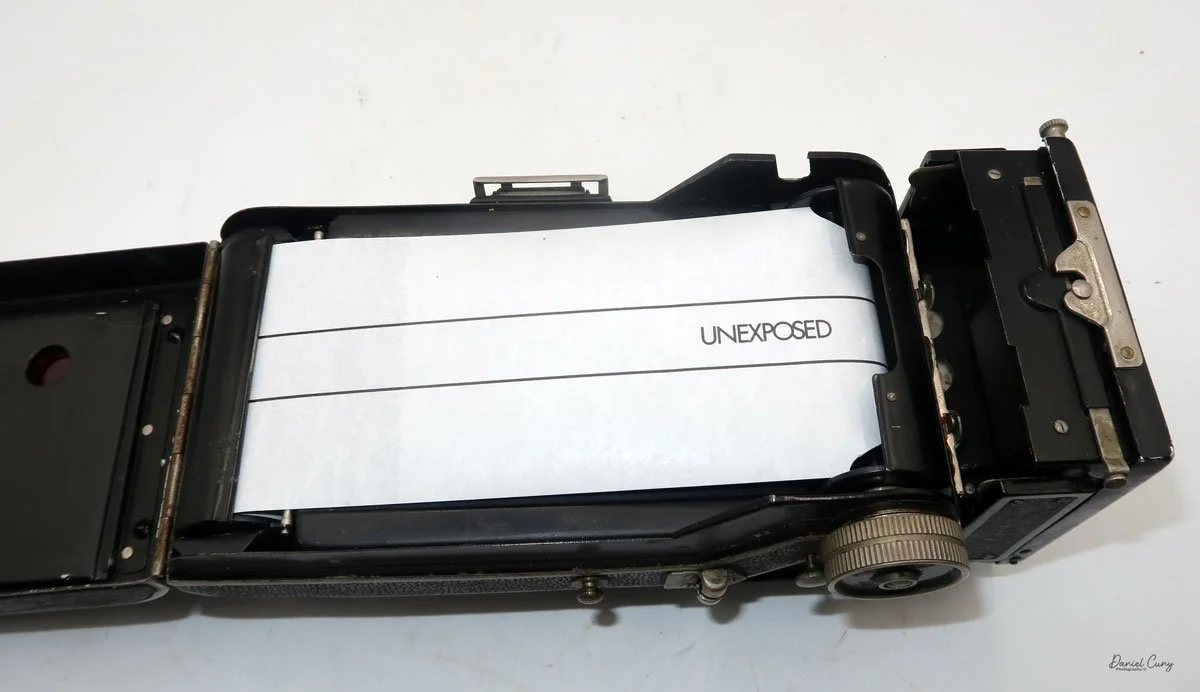
On the back of the film body is another sliding lever that you move to the left, in the direction of the arrow, and the back will open. Opening the back of the camera, I noticed that the film advance roller, which activates the frame counter, is missing, so the frame counter isn't operational on this camera. Luckily, there is a red window on the back door so you can see the numbers being transported as you roll the film from one image to the next. 

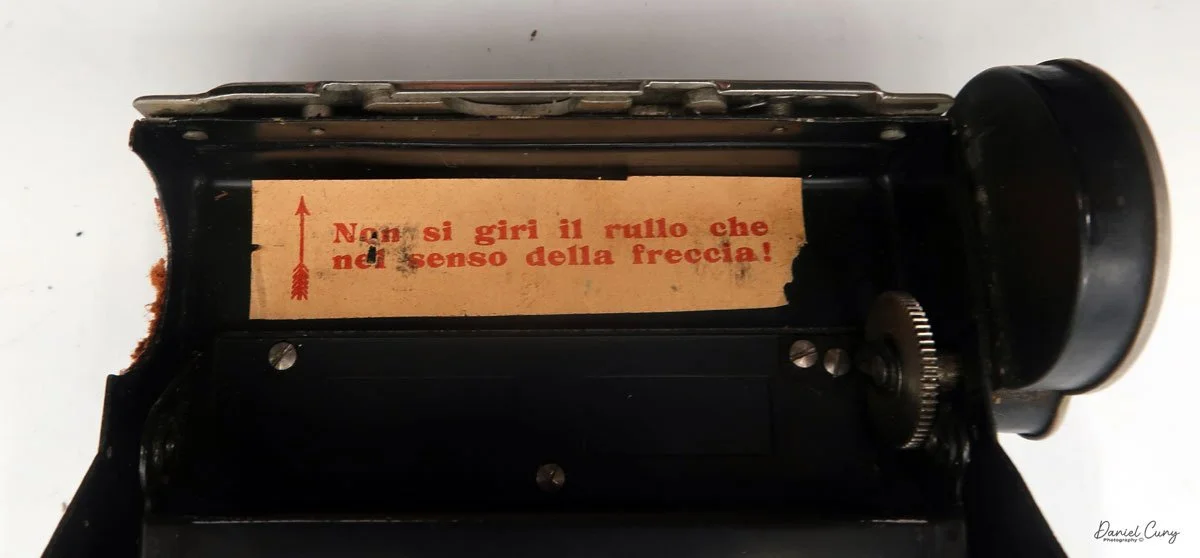
 I also noticed a paper sign glued to the inside of the back door at the top, which read, "non si girare il rullo che nel senso della freccia" (translation from Italian to English: "do not turn the roller in the direction of the arrow").  This message on the inside tells me the camera is originally from Italy. I guess the camera was made for the Italian market, but the reseller may have added that; I'm not certain. Still, it's interesting that a German camera was sold in Italy and found its way to the USA.

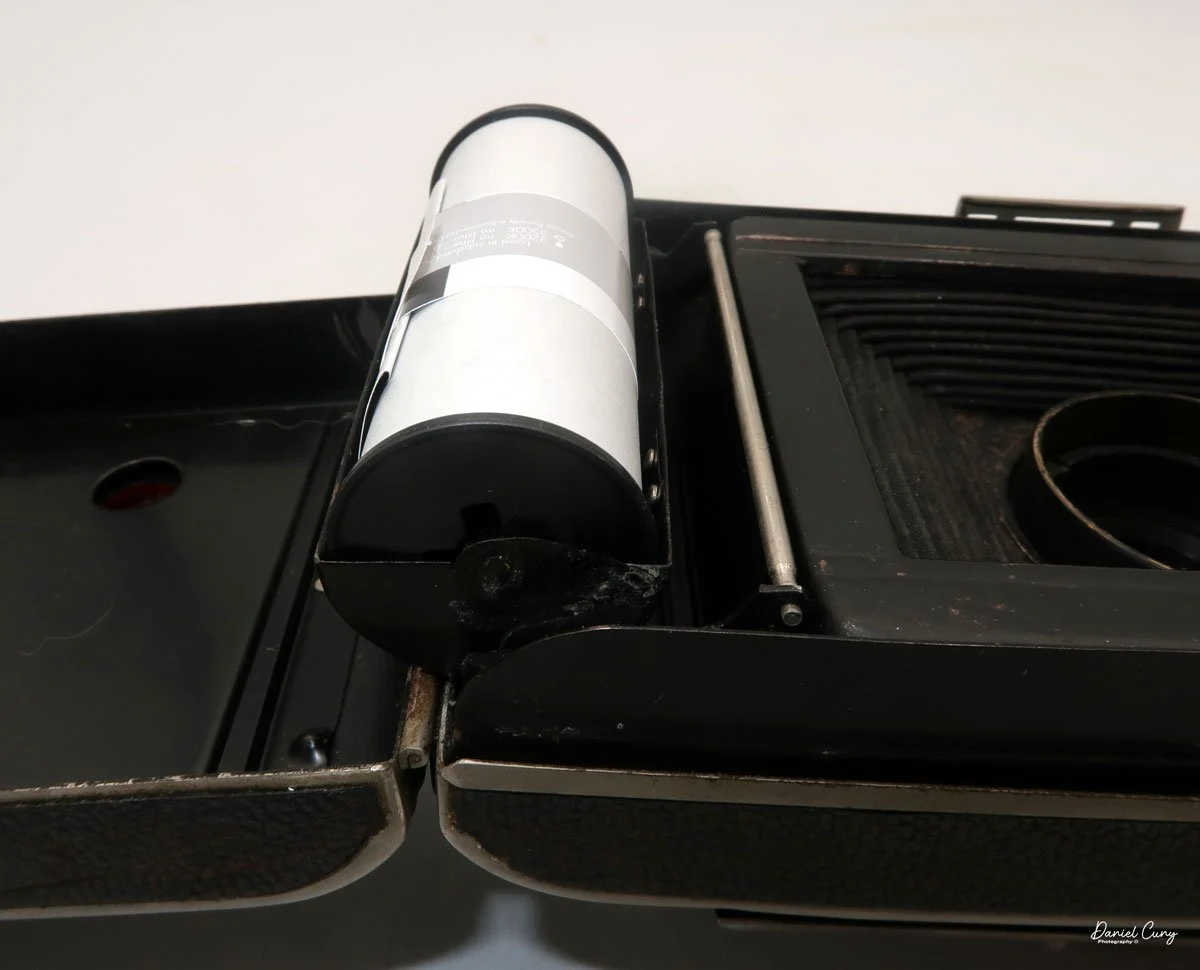
To load the camera with film, the chamber where you put in a fresh roll of film pulls up to make it easier to put in the film, which is a nice feature in the camera. Otherwise, the camera loads just like many roll film cameras, but it would have been nice to have a frame counter that advances from the roller on the back to indicate the frame numbers. I'll just have to do it the "old-fashioned" way and look through the red window to get to the next frame when I shoot.

To collapse the camera lens area into the camera body, you'll need to press in two silver buttons on the front of the camera, placed between the viewing and taking lens, and press the lens area into the film body, which is extended by a couple of scissor struts on each side of the camera. Be sure to retract the camera stand leg, under the front lens area, just behind the tripod socket, before closing the camera. If you don't do this, the camera will not close. I know because I've tried a few times by accident.

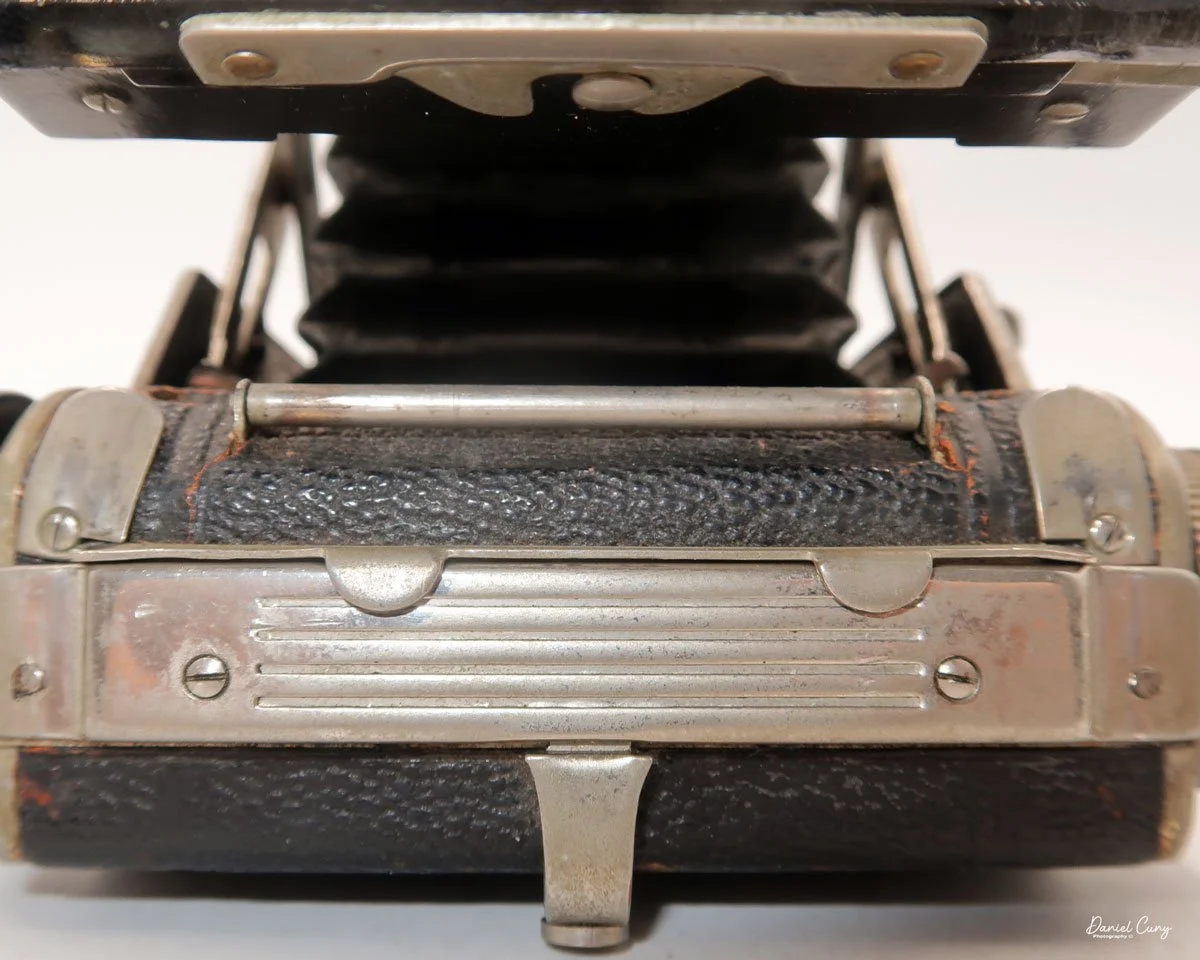
 When you close the camera, another interesting thing is that there's a roller at the tip of the film area on the outside. When you close the lens into the film body, the viewfinder rolls along the roller, sliding it forward and covering the focus scale. Given that the camera is almost 100 years old, it's still interesting how it opens and closes mechanically. 

If you don't want to rotate the film chamber when shooting, there is a flip-up sports-type finder on the side of the camera you can use if that's easier for taking horizontal images. It just gives the photographer another option when using the camera.


My Results:

 I don't have a case that fits my Welta Superfekta camera. The camera doesn't have the standard loops you can snap into a carrying strap, so when I went out shooting a few times, I just put it in a pouch-style case to carry it and took it out when I was ready to shoot.

 Looking at the side of the camera, there are a couple of studs and other areas where a strap might fit, but without a manual or a nomenclature for the items on the camera, I'm unsure what they are used for.

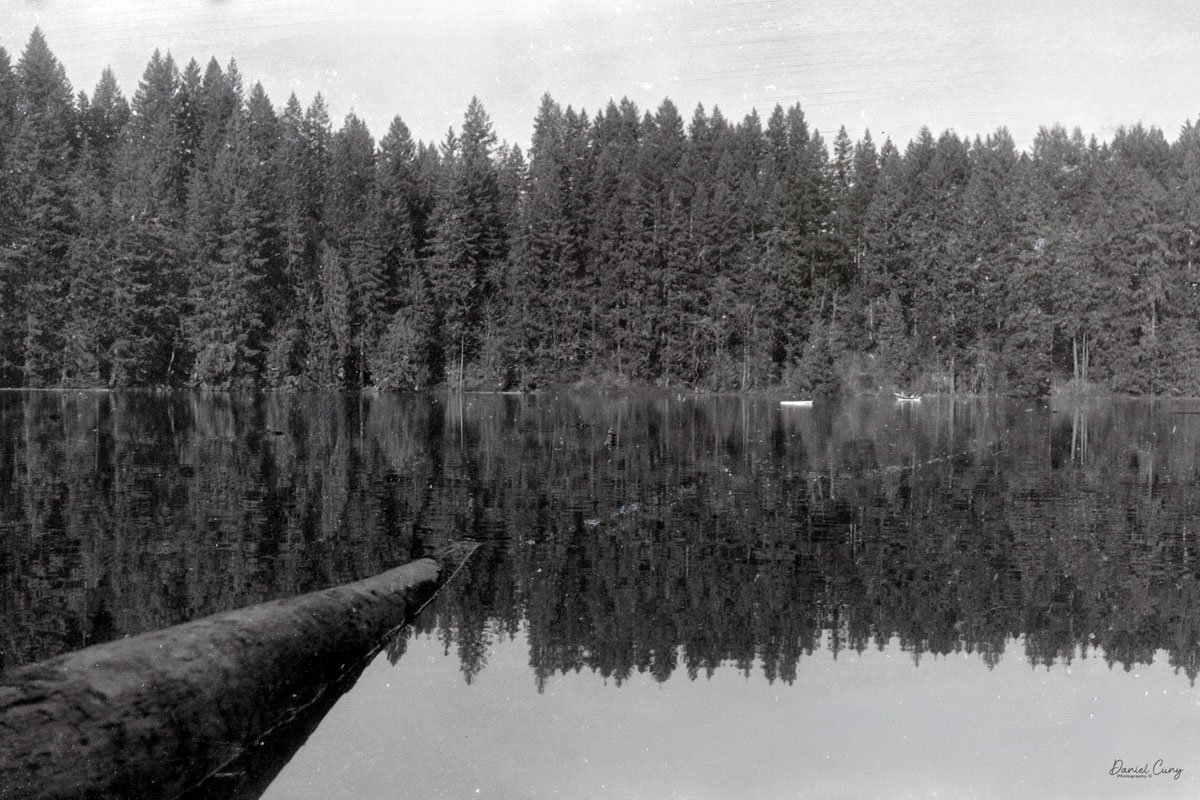
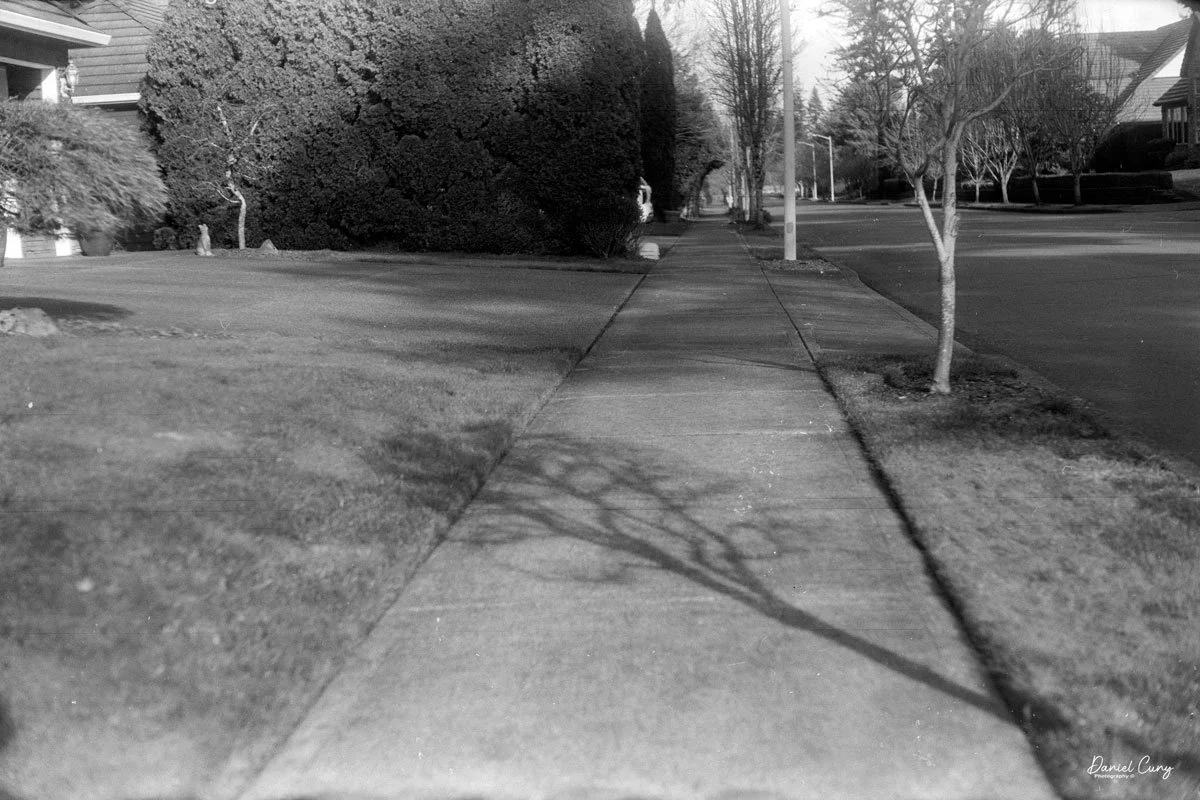
 I took the Welta Superfekta out a couple of times to shoot with: once to a local lake and another time while walking around the neighborhood to get closer-up images.

 Here are the results from my two times using the camera.

Conclusion:

 The camera's results underwhelmed me, as one of two things is happening. First, I didn't think the images would be as sharp as I had imagined; that may be because something happened to the camera, like a drop or impact, which is also why the camera doesn't flip all the way horizontally when shooting. 

 My weakening eyesight may also cause it, but because of eye surgery I had last year on my right and dominant eye, I'm becoming more and more dependent on using my left eye for focusing, which is difficult for me at times. Personally, I feel it's more the first issue: something tweaked the camera body, and the lens doesn't align properly, which is why I wanted to shoot the second, more close-up images walking through the neighborhood.

 Nonetheless, it's somewhat awkward to hold without a neck strap to keep it steady. Still, I absolutely love the camera's ability to rotate the film back for both vertical and horizontal photography. It's a wonderful camera to have in my collection, and for the price paid, even with the servicing, it's still a bargain.

Welta Perfekta and Superfakta side views

 Thank you for taking the time to learn about this wonderful photographic marvel from almost 100 years ago.

 Here's a link to my other Camera Reviews.

 Cuny's Cameras and Photo is my online eBay store, which sells some of the cameras reviewed, along with many camera and photo accessories.

 Until next week, please be safe.