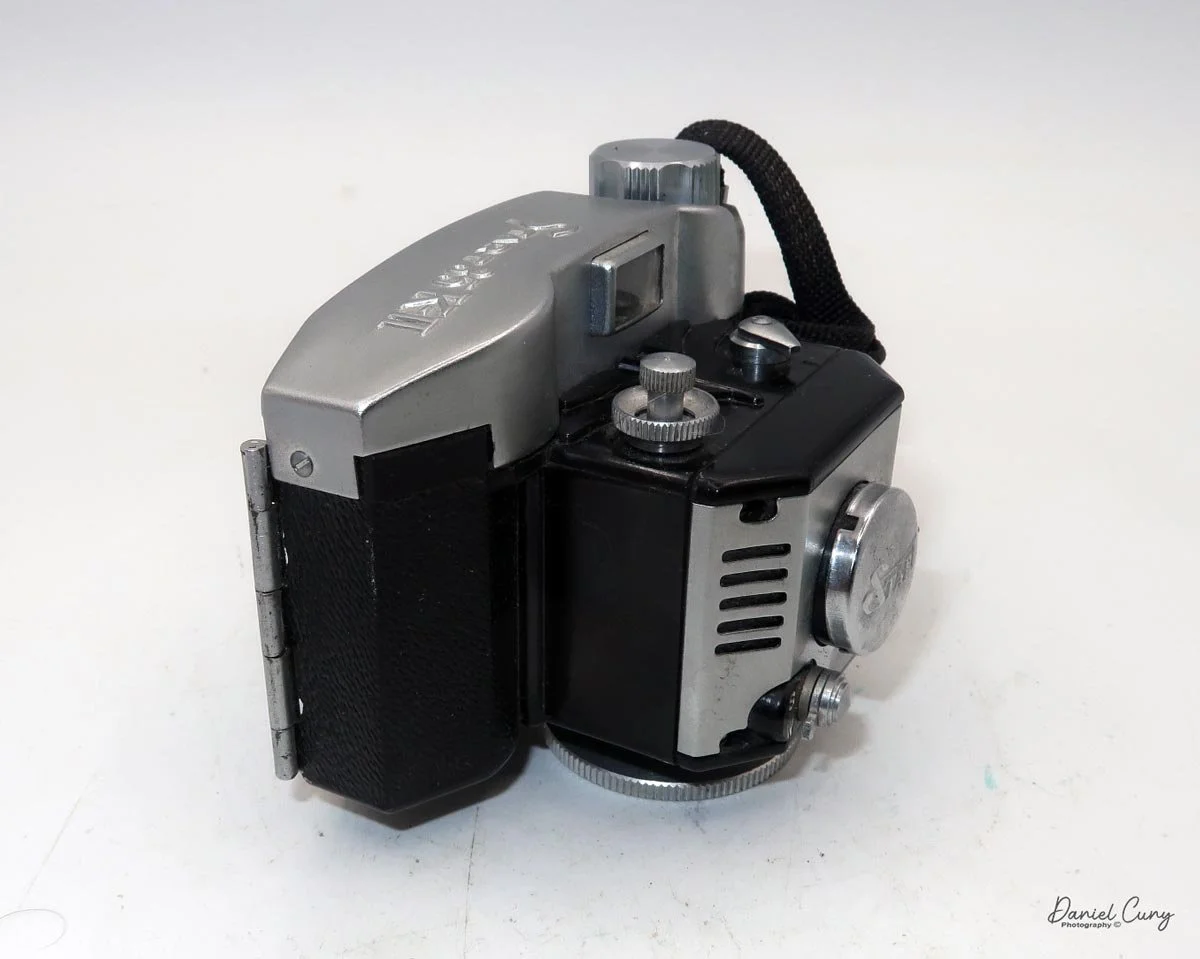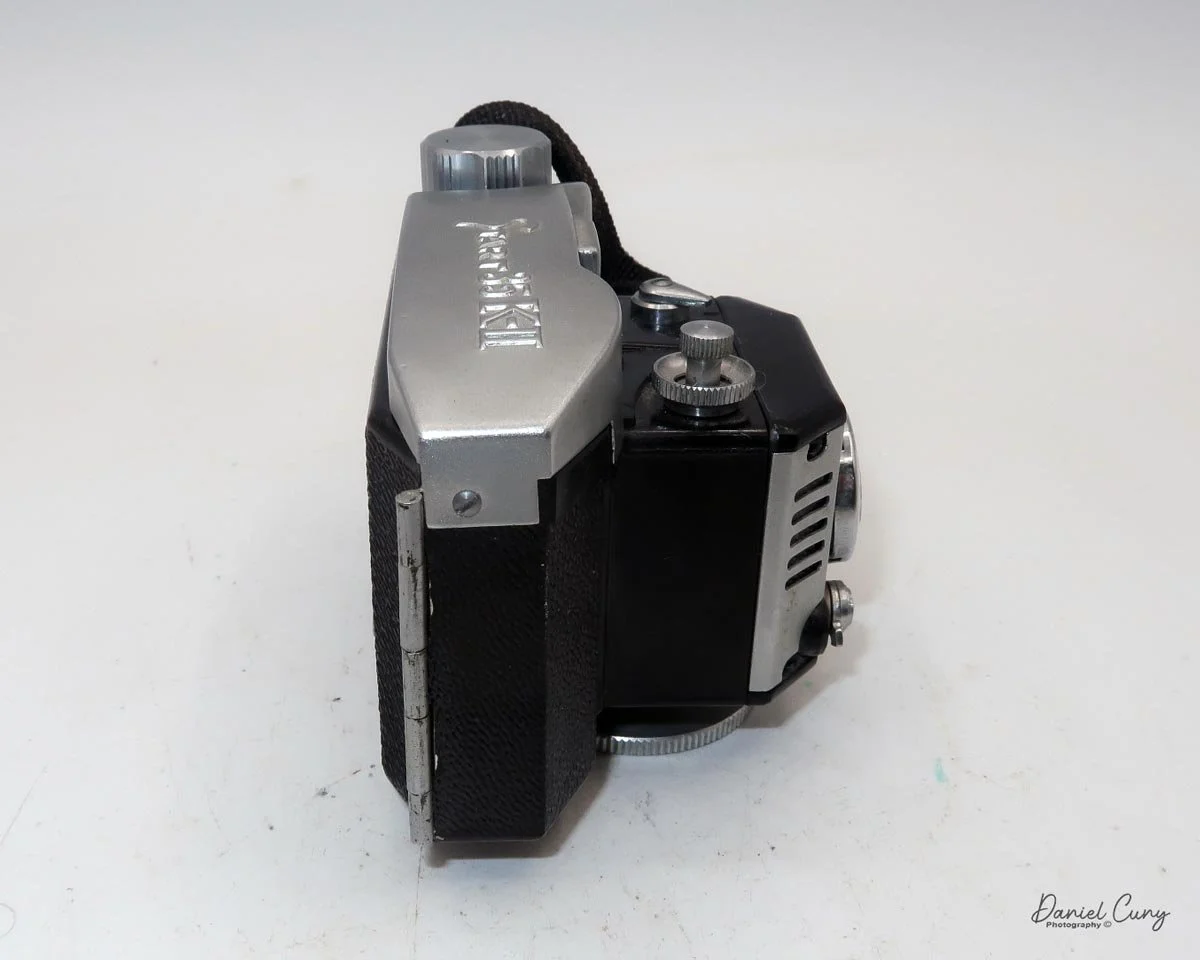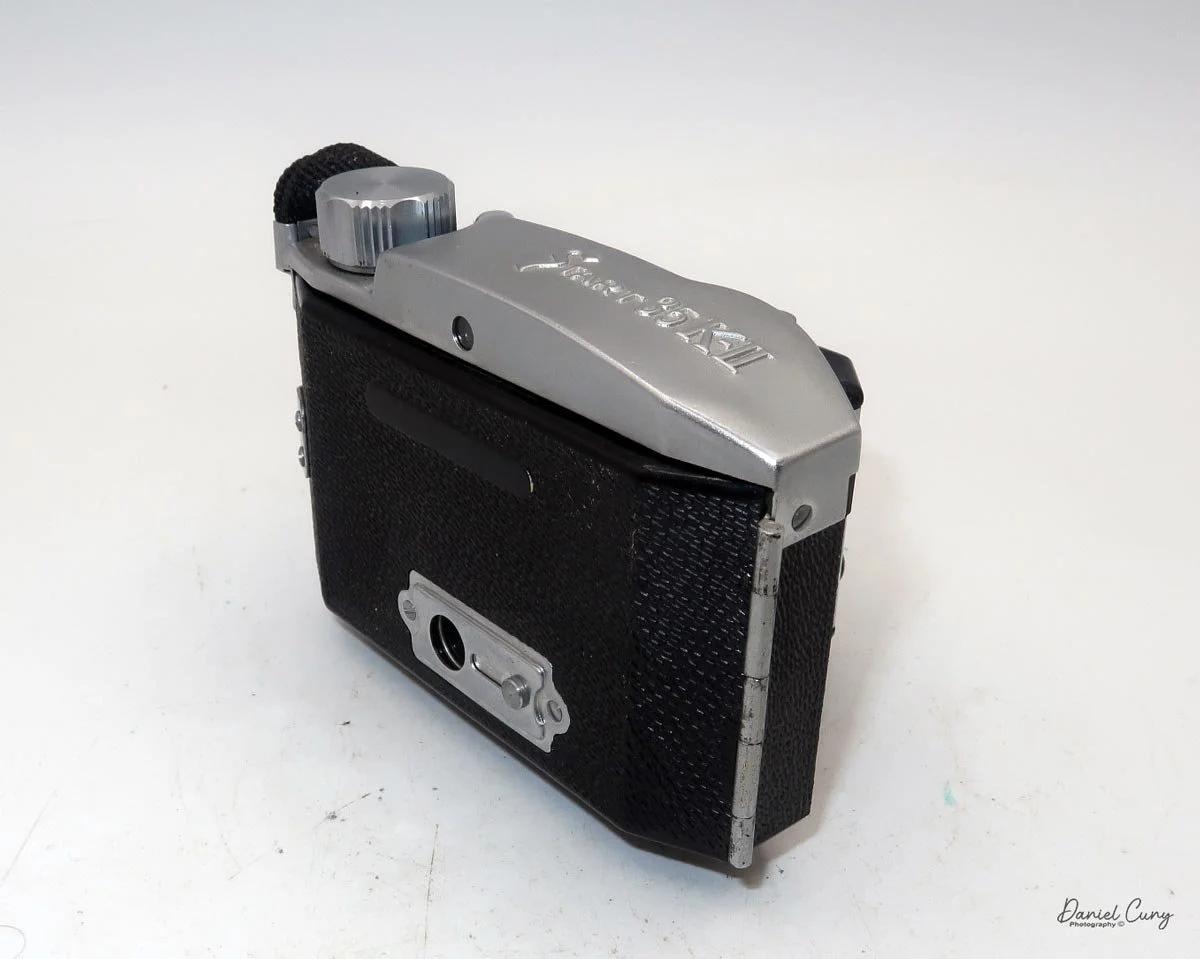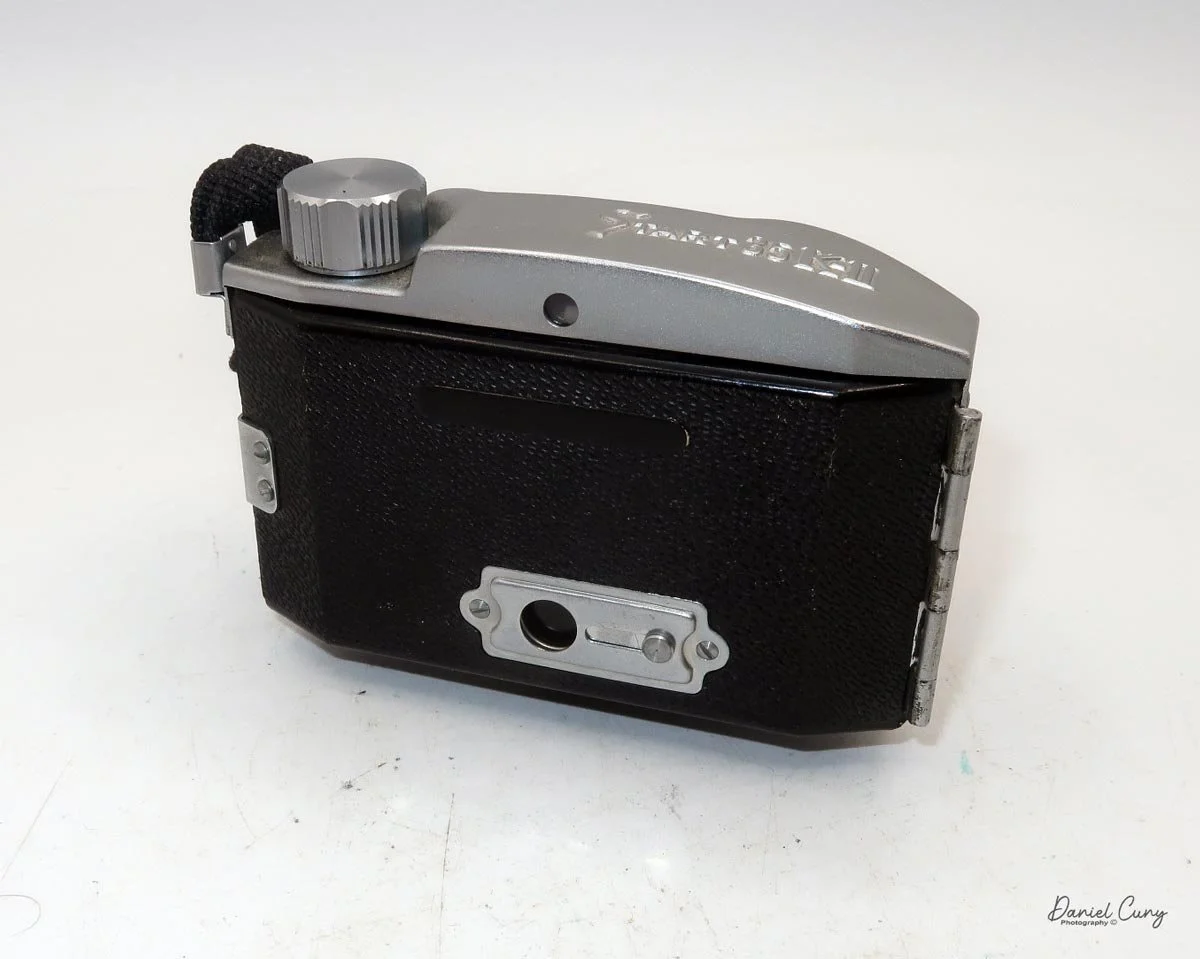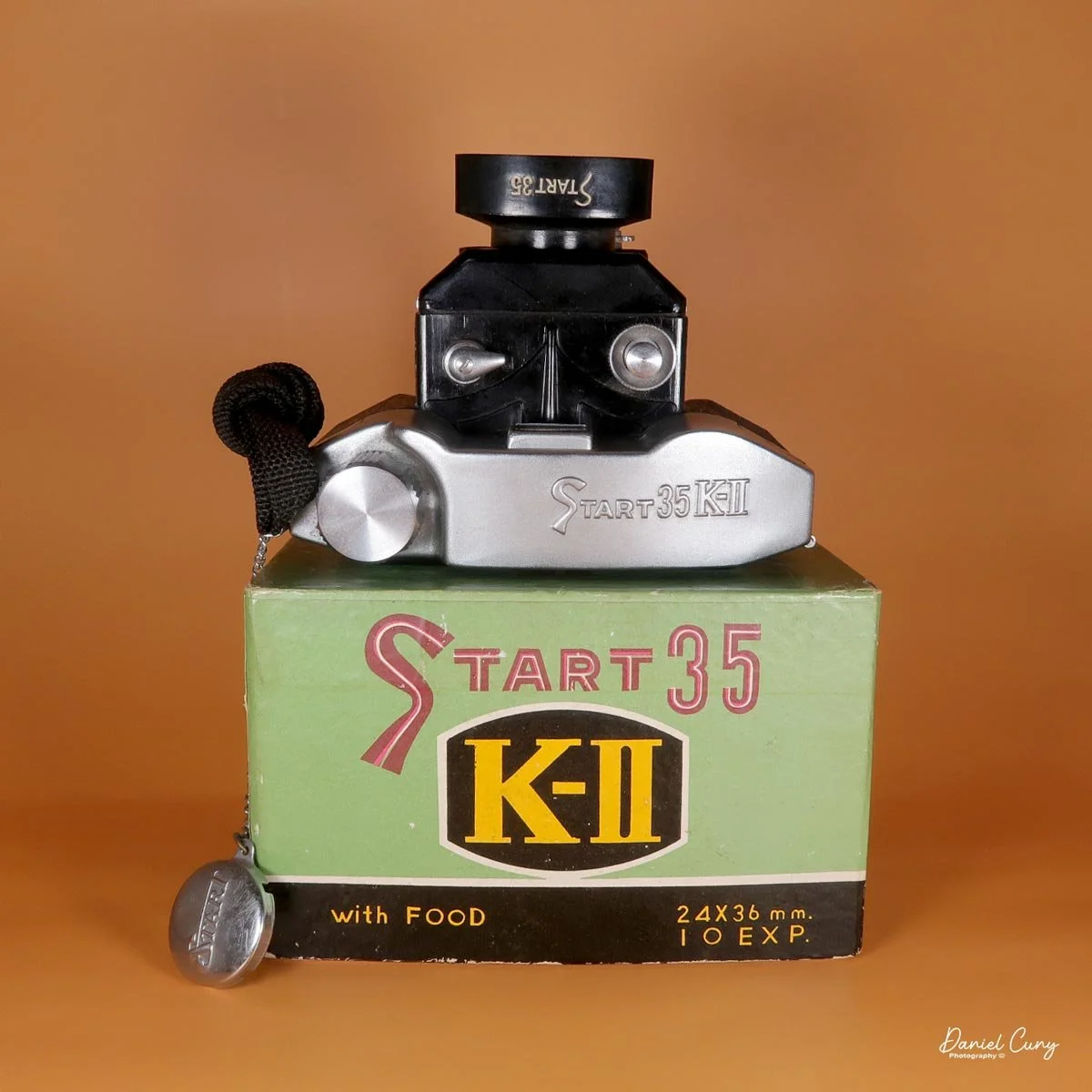
Start 35 K-II Camera

My Start 35 K-II camera with hood and complete box

I can remember when I purchased the Start 35 K-II camera because it was part of a fairly modest camera lot. There were several miniature and subminiature cameras in the group. All of the cameras came with fitted cases, and some even included their original boxes, which I think adds to a camera’s collectability.

 There were other examples of the Start series at camera shows, online, and in books, and I have always enjoyed the chrome and black Bakelite construction of the camera. To me, it has a modernist, almost space-age look. I suppose that was the style they were aiming for, especially for a camera built in the early 1950s.

 When I unpacked the camera lot, I found a few extra items in the box that I wasn’t expecting. While the Start 35 K-II camera itself does not have a fitted case, it did include the “Start” plastic lens hood, along with an aluminum item that appears to be some sort of stand or screw-in accessory used to hold a case onto a camera. The aluminum “stand” is much larger than a typical case-holding screw, so my guess is that it was probably used as a display stand in someone’s collection, since it seems too large to be anything else.
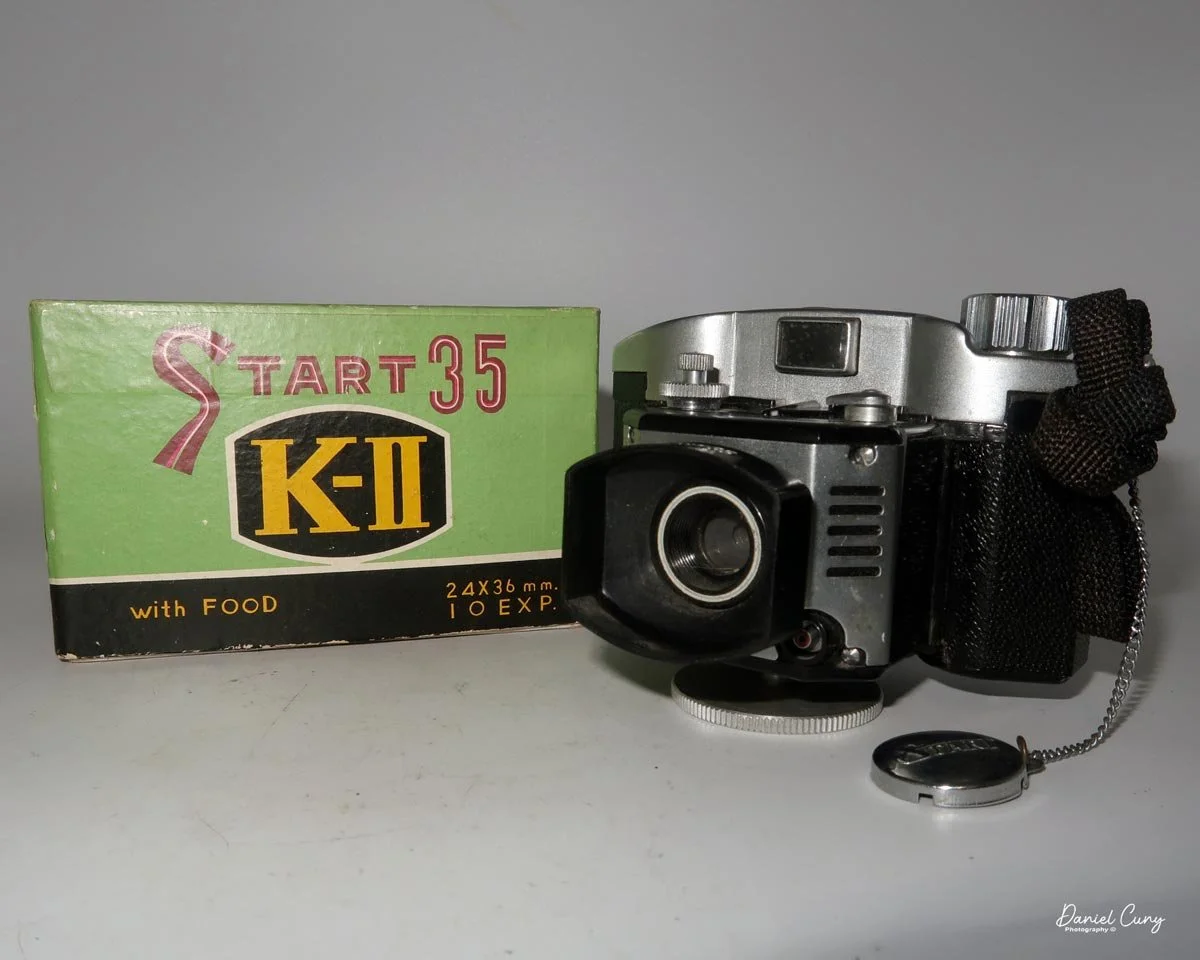
Start 35 K-II camera on stand. I still chuckle at “with Food” on the box.

 Another interesting detail about this camera still makes me smile whenever I see it: the box. The box itself is in wonderful condition, but just below the attractive graphics and the camera’s name, it says “with Food.” I have no idea what that means, or why it would appear on the box of a camera.

 The only explanation I can think of is that it was lost in translation. Perhaps the camera came with rolls of film, or a single roll of film, and the wording “with Food” was meant to indicate that the camera came with something it would consume. Other than that, I really do not know why that phrase appears on the box.

 The Start 35 K-II uses Bolta film, which during this period was a paper-backed 35mm film sold in short rolls and generally less expensive than standard 35mm film. Some cameras used special cassettes for Bolta film, but many Japanese cameras that used Bolta film relied on a special spool with a larger receptacle that fit into the camera, similar in concept to other roll-film systems such as 127 and 828.

History

Ikko Sha Co. Ltd. was a small Japanese camera maker active in the early postwar years, best remembered today for its Start 35 family of compact viewfinder cameras. While it never became a major household name like Canon or Nikon, the company is a good example of the many modest Japanese firms that helped shape the country’s camera boom after World War II.

 The Start 35 line appears to have begun around 1950, when Ikko Sha introduced a Bakelite 35mm camera designed for 24x24mm exposures on Bolta film rolls. That was followed by the Start 35 K in 1952, which added a hinged back door, and later by the Start 35 K-II around 1958, which brought flash synchronization, a metal top plate, a 24x36mm exposure area, and lens-surround caps. These incremental changes suggest a company refining a simple, practical product rather than chasing a wide model range.
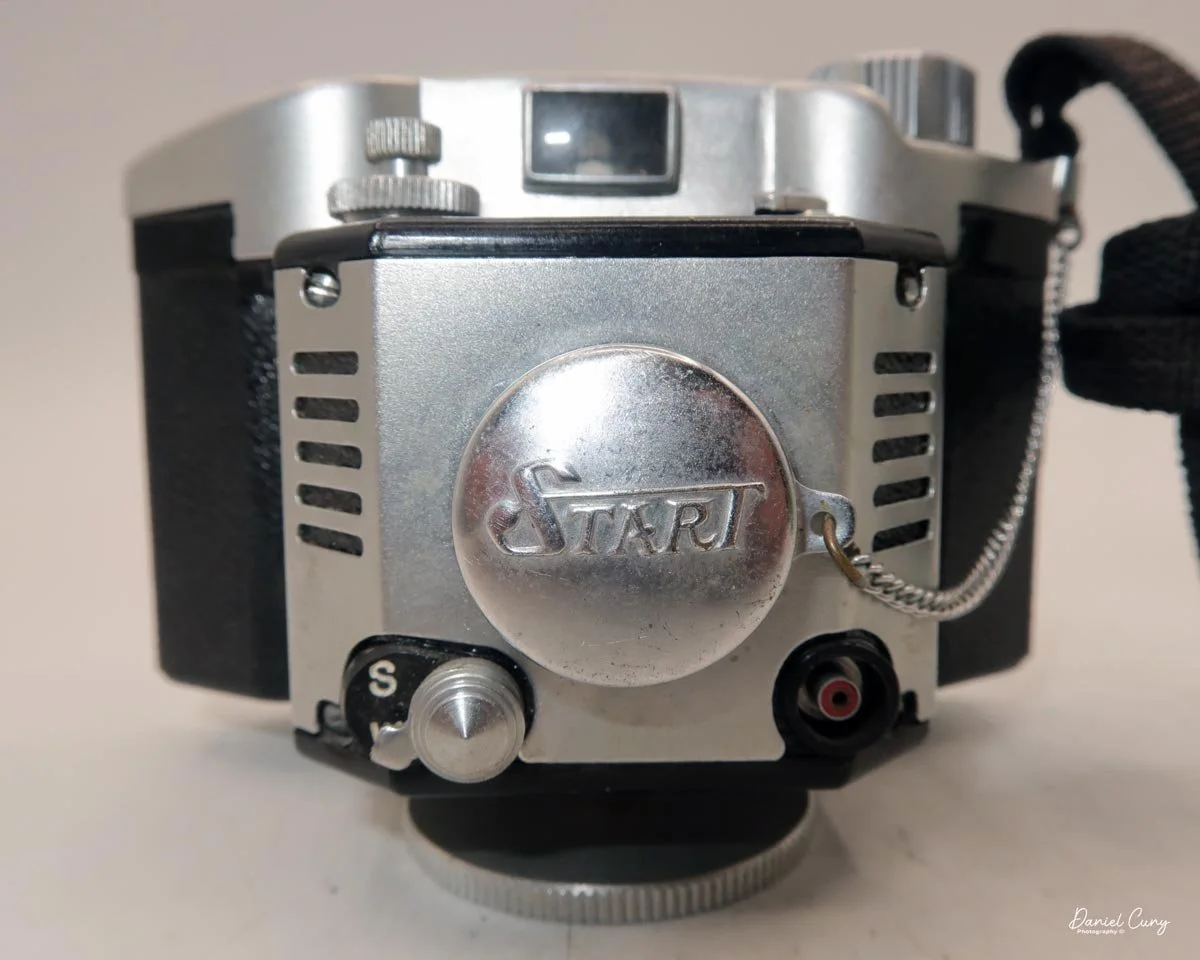
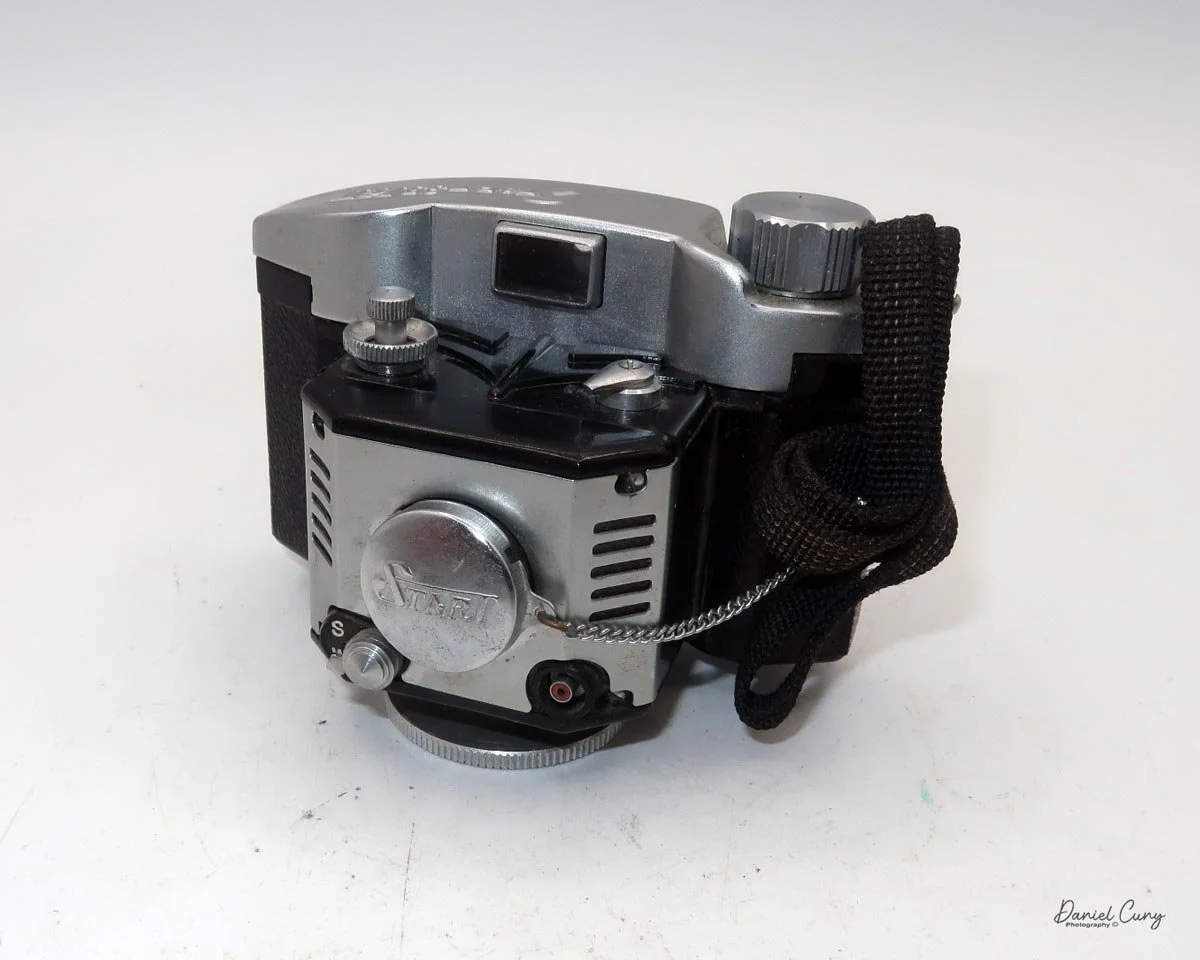
Front view of Start 35 K-II camera with embossed lens cap

 Ikko Sha’s place in camera history comes as much from context as from production volume. Postwar Japan produced dozens of small camera firms, many of them serving the growing demand for inexpensive 35mm cameras at home and abroad. Ikko Sha belonged to that energetic ecosystem, where innovation often came through compact designs, clever packaging, and steady model revisions rather than large-scale manufacturing power.

 For collectors, Ikko Sha cameras are appealing because they are uncommon and clearly rooted in a transitional moment in photographic history. The Start 35 series shows how Japanese manufacturers experimented with materials, formats, and user features before the industry consolidated around stronger global brands. A camera like the Start 35 K-II may be modest, but it captures the ingenuity of an era when even small firms could leave a lasting mark on the collecting world.

 Today, surviving Ikko Sha cameras are mostly encountered in collections, auctions, and enthusiast write-ups rather than in mainstream histories. That scarcity only adds to their charm, especially for collectors who enjoy tracing the overlooked branches of Japanese camera development.

My Camera

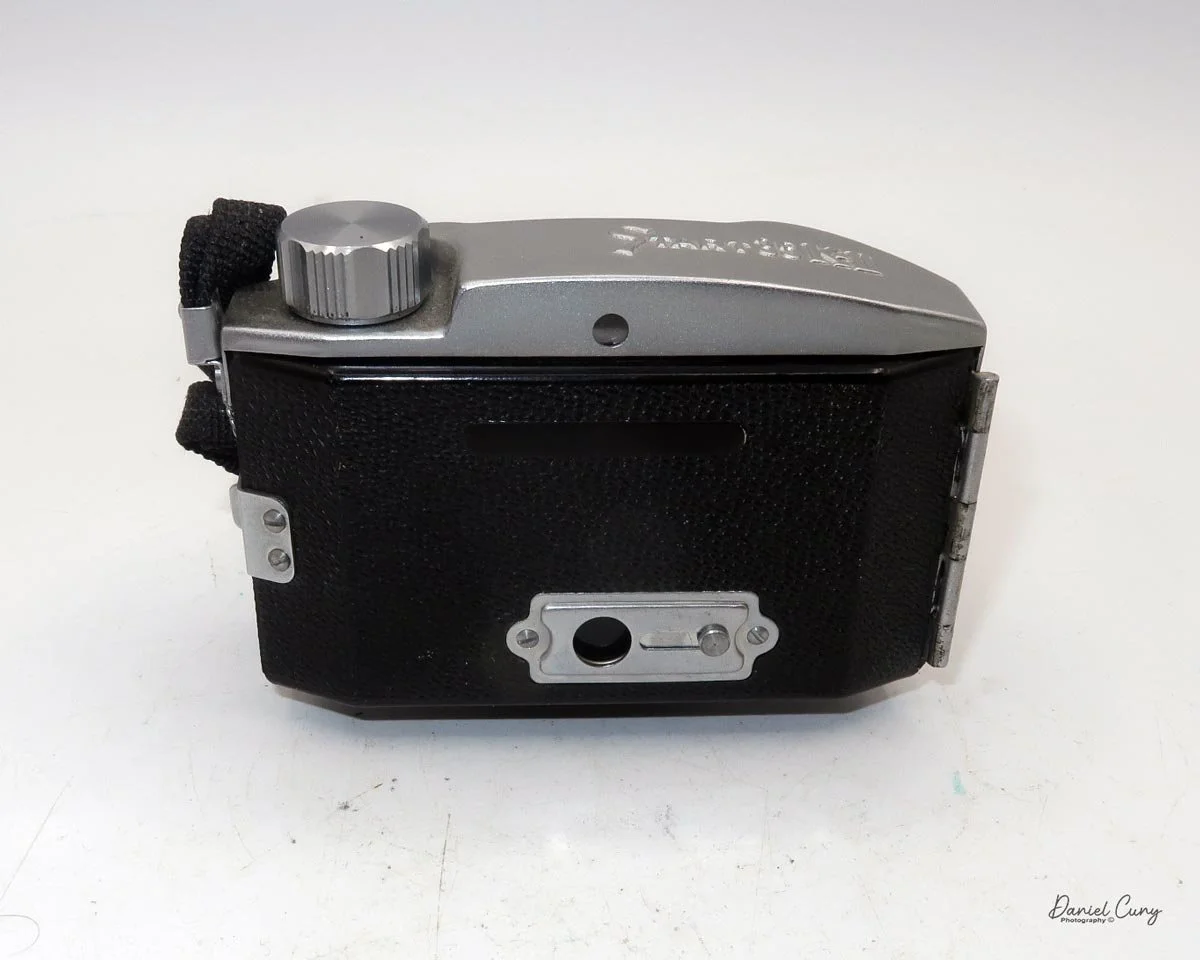
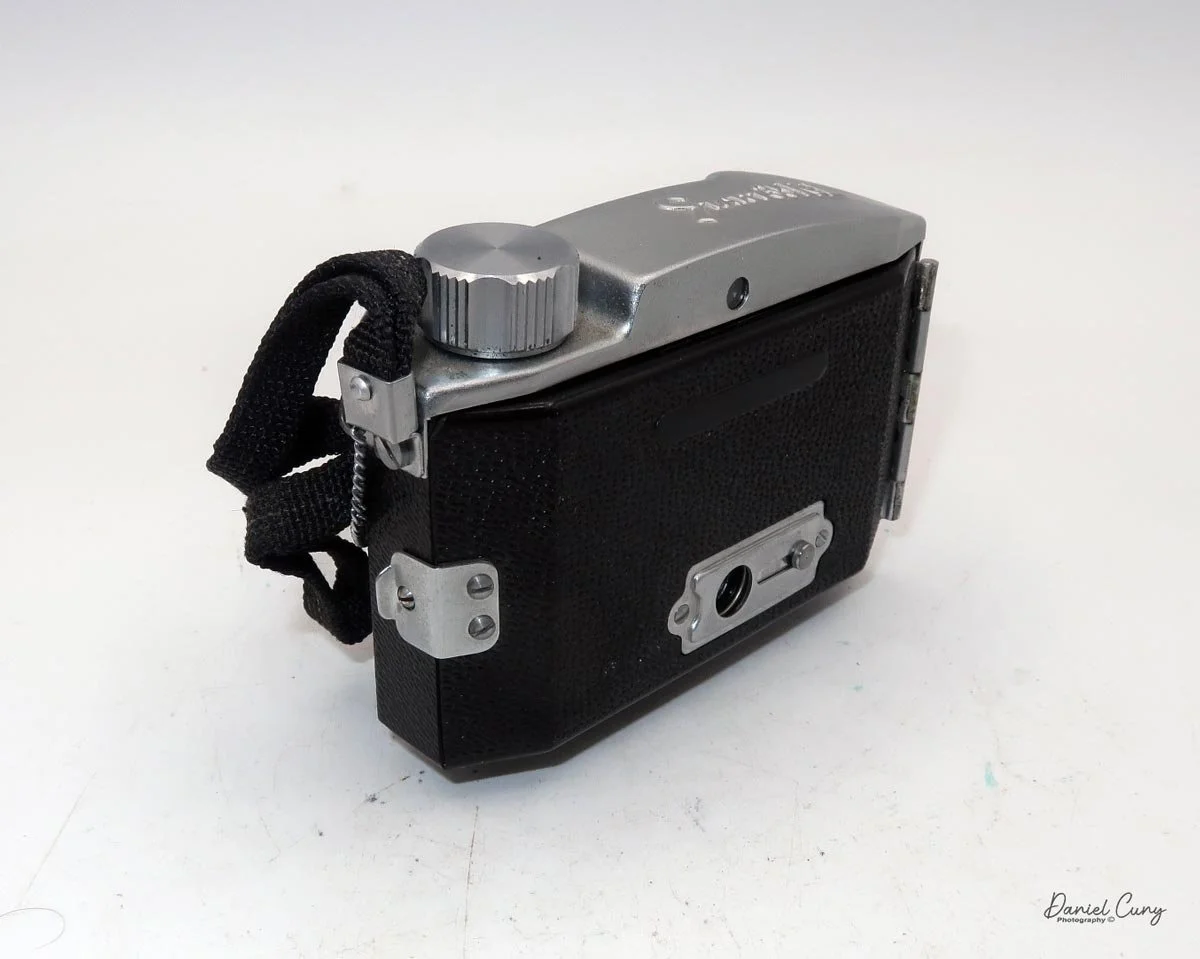
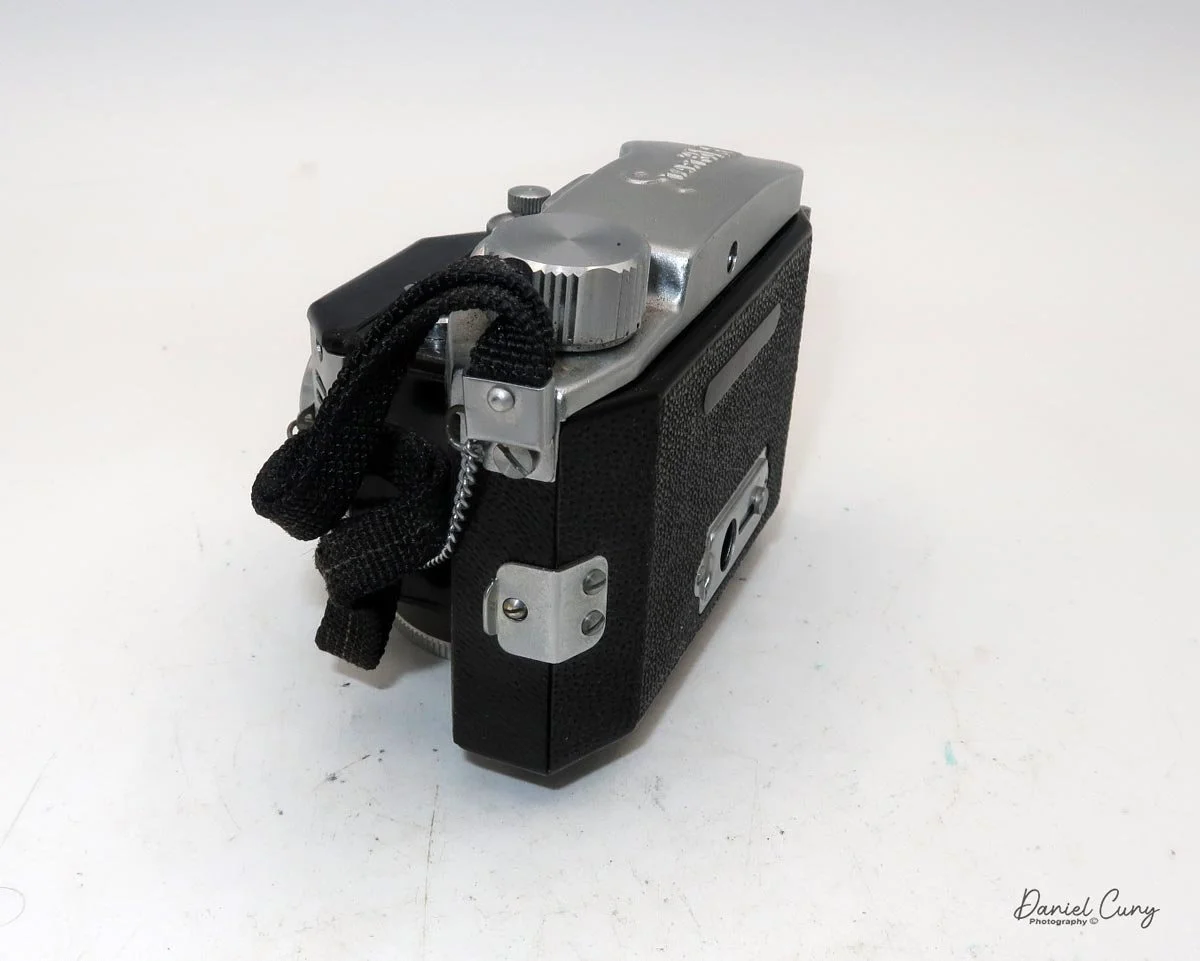
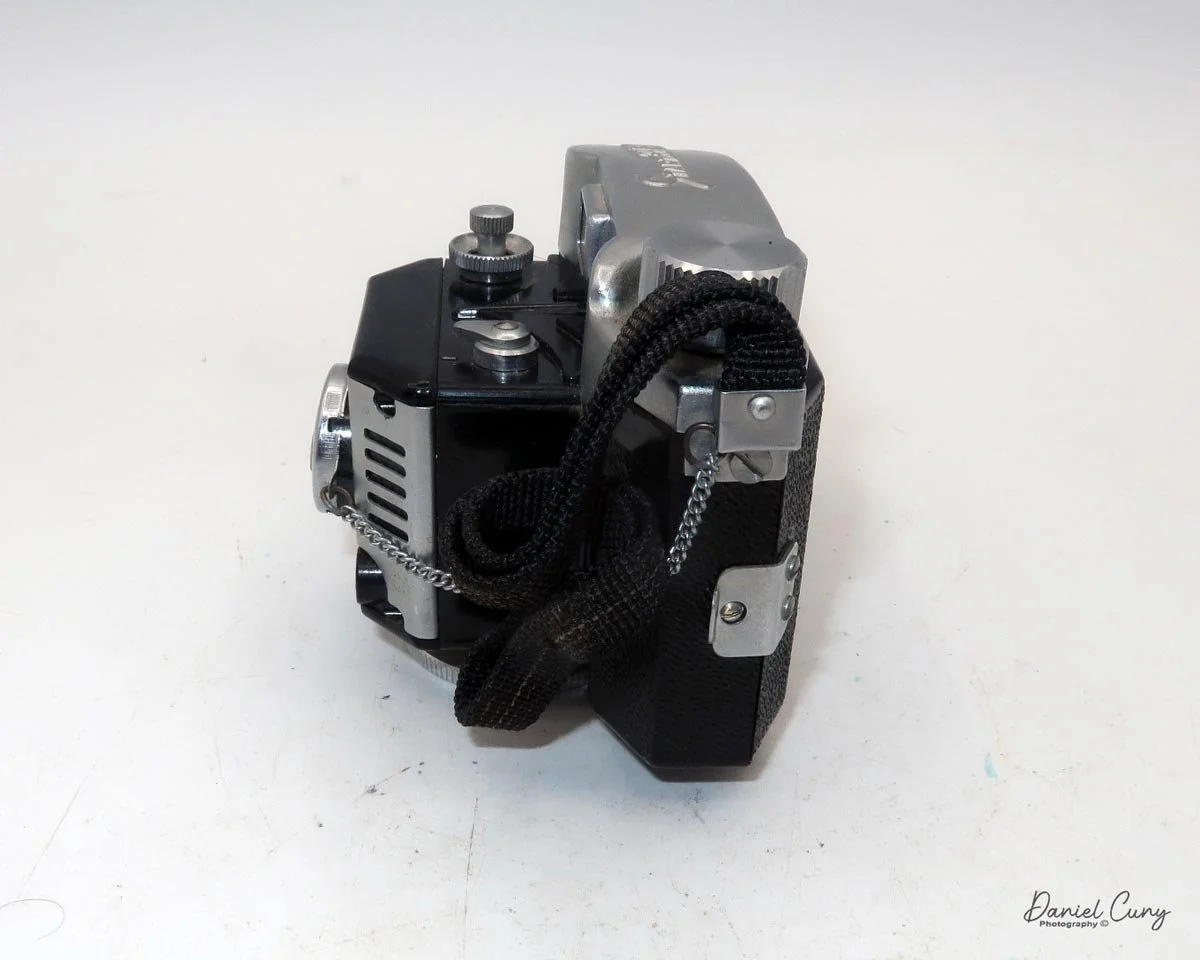
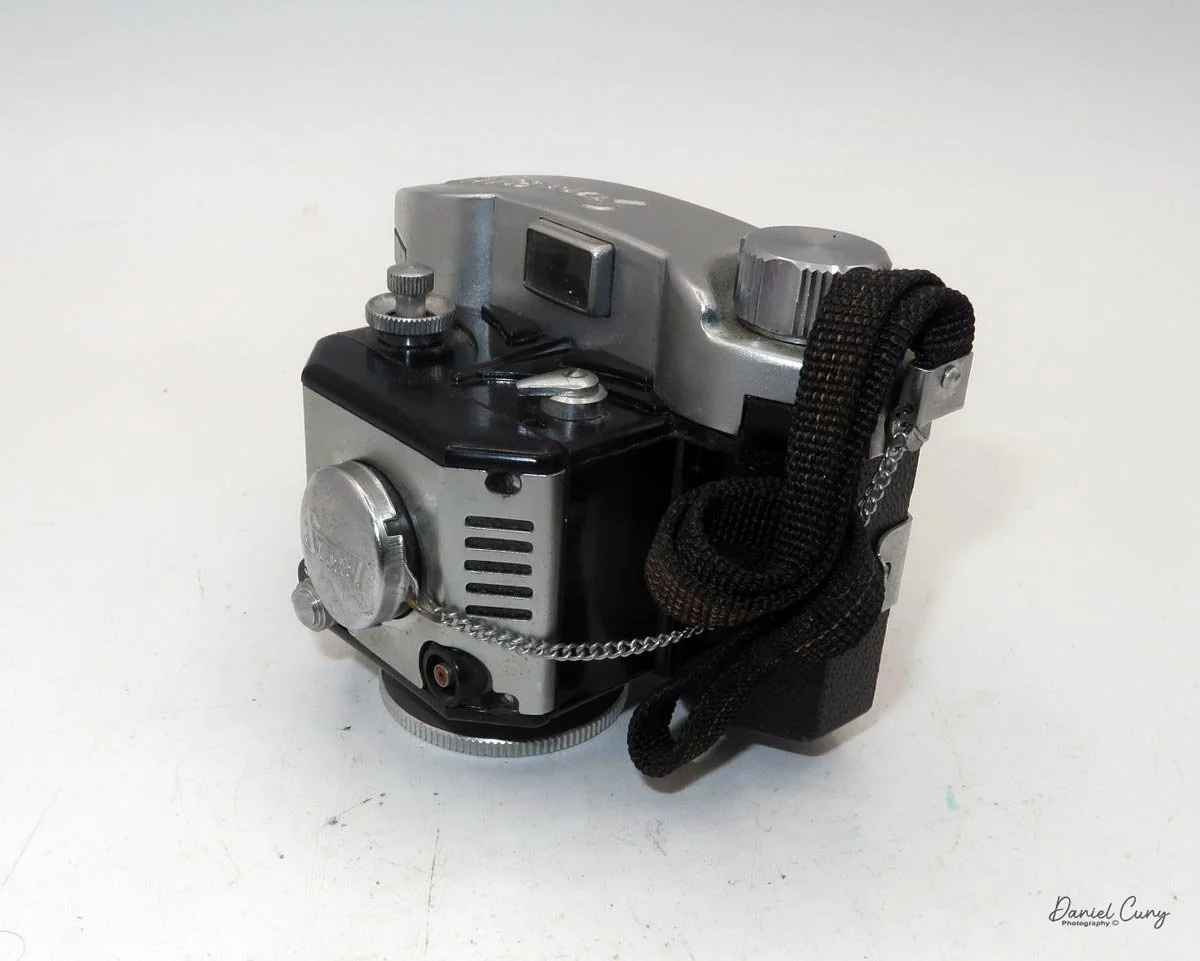
My Start 35 K-II camera measures 4 inches wide by 2.25 inches tall and 2.5 inches deep, not including the attached lens hood. The camera weighs 6.6 ounces without film loaded. It is made of black Bakelite with an aluminum top covering the viewfinder, and the metal also wraps around the lens with five slots on either side, giving the camera a modernist look.
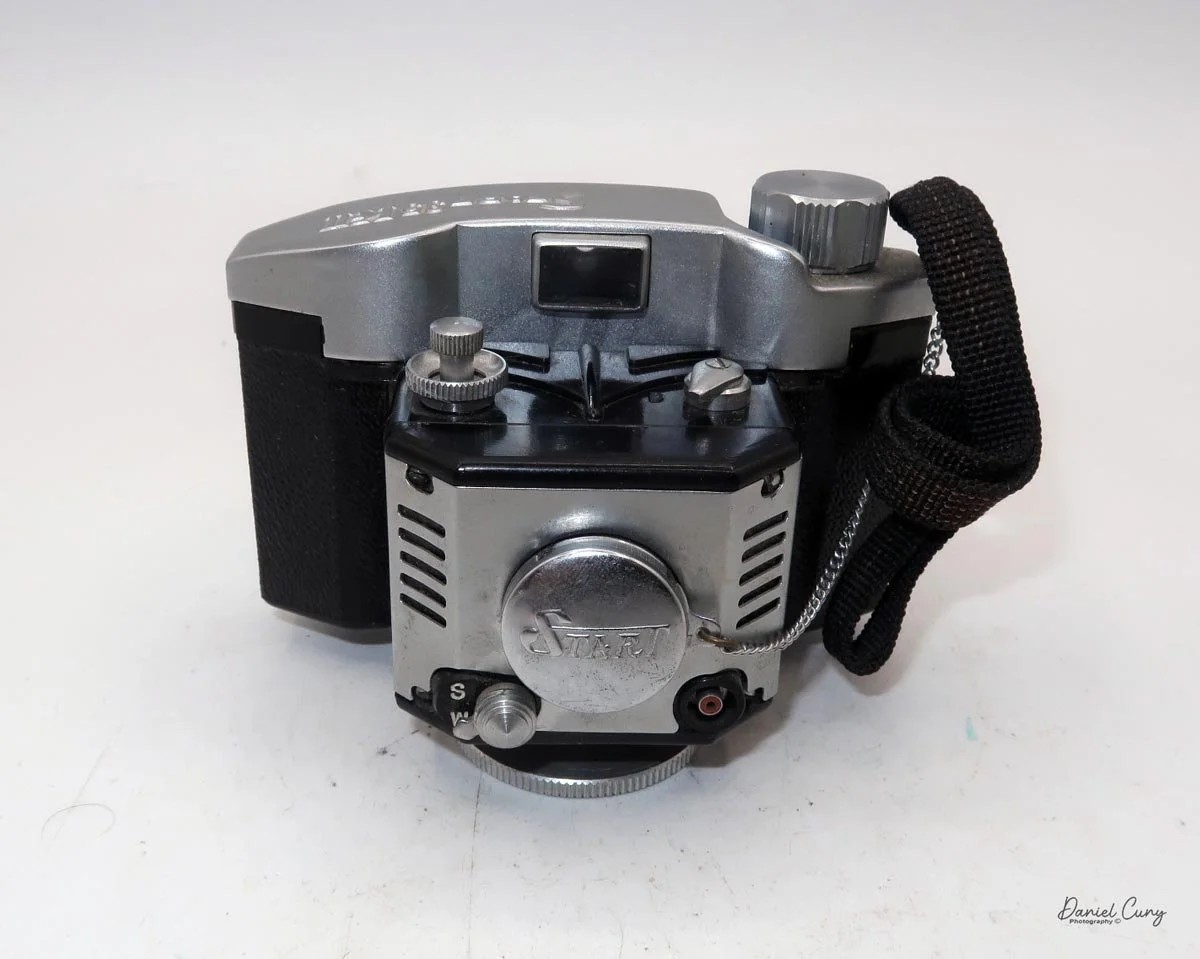
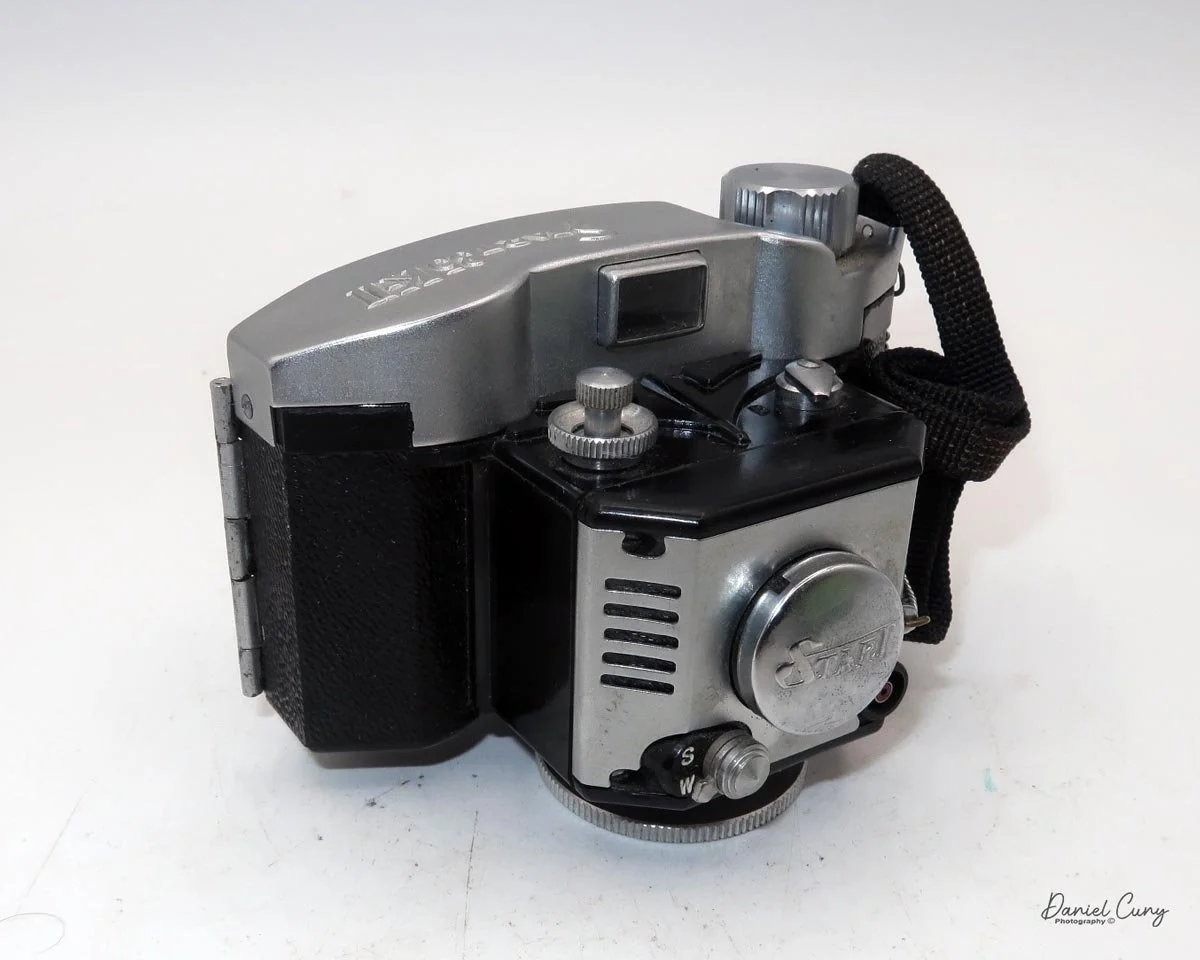
On the left side of the camera is a nylon wrist strap attached next to the film winding knob. Also attached to the strap is a metal chain with a metal lens cap embossed with a stylized “START” logo. On the bottom of the camera is a tripod socket, along with “Made in Japan” embossed into the Bakelite.

 The camera is very basic when it comes to controls. The shutter release is on the top right of the camera, located on the extending lens portion, and on the opposite side is the shutter control switch. You have the option of either “I” for instant or “B” for timed exposures.
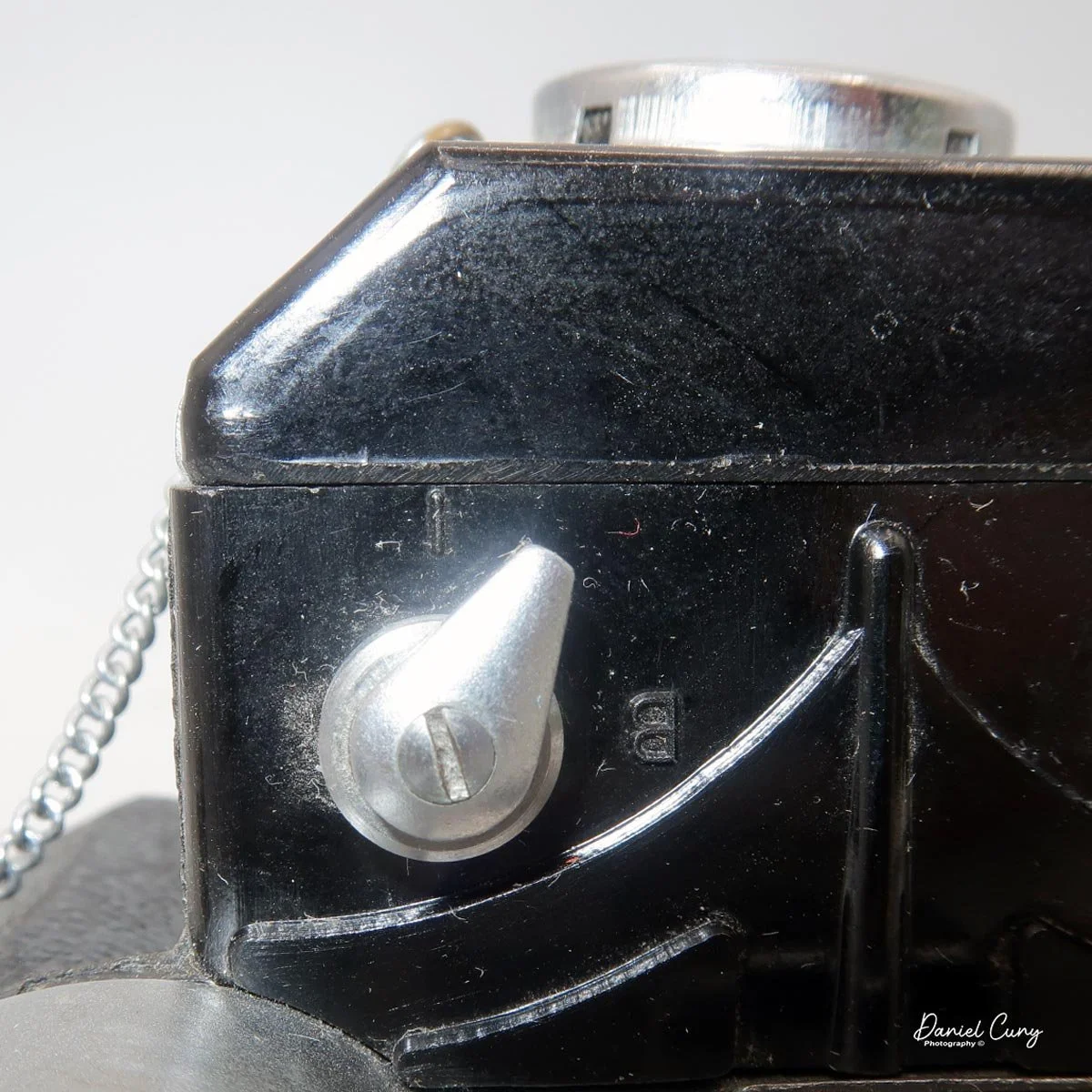
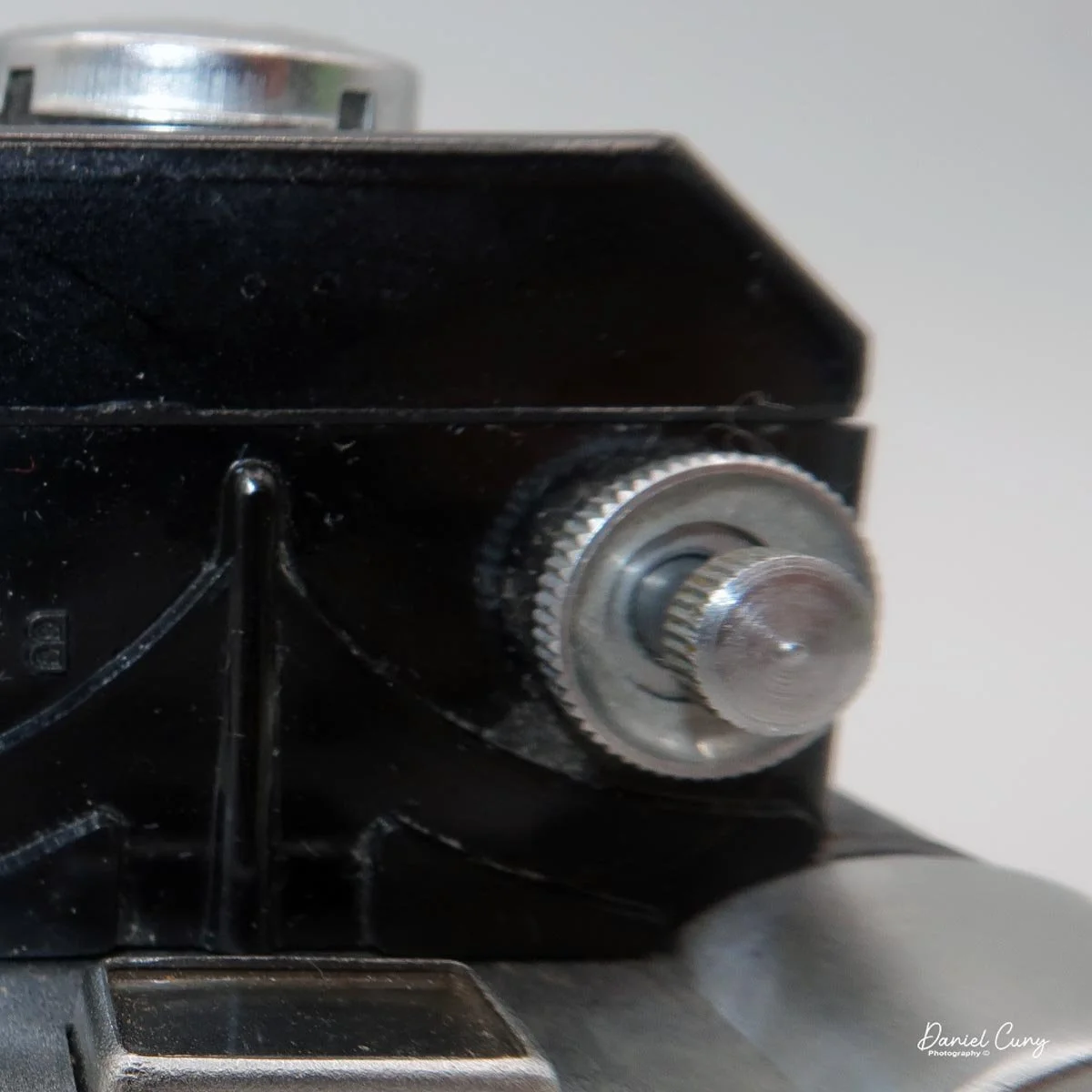
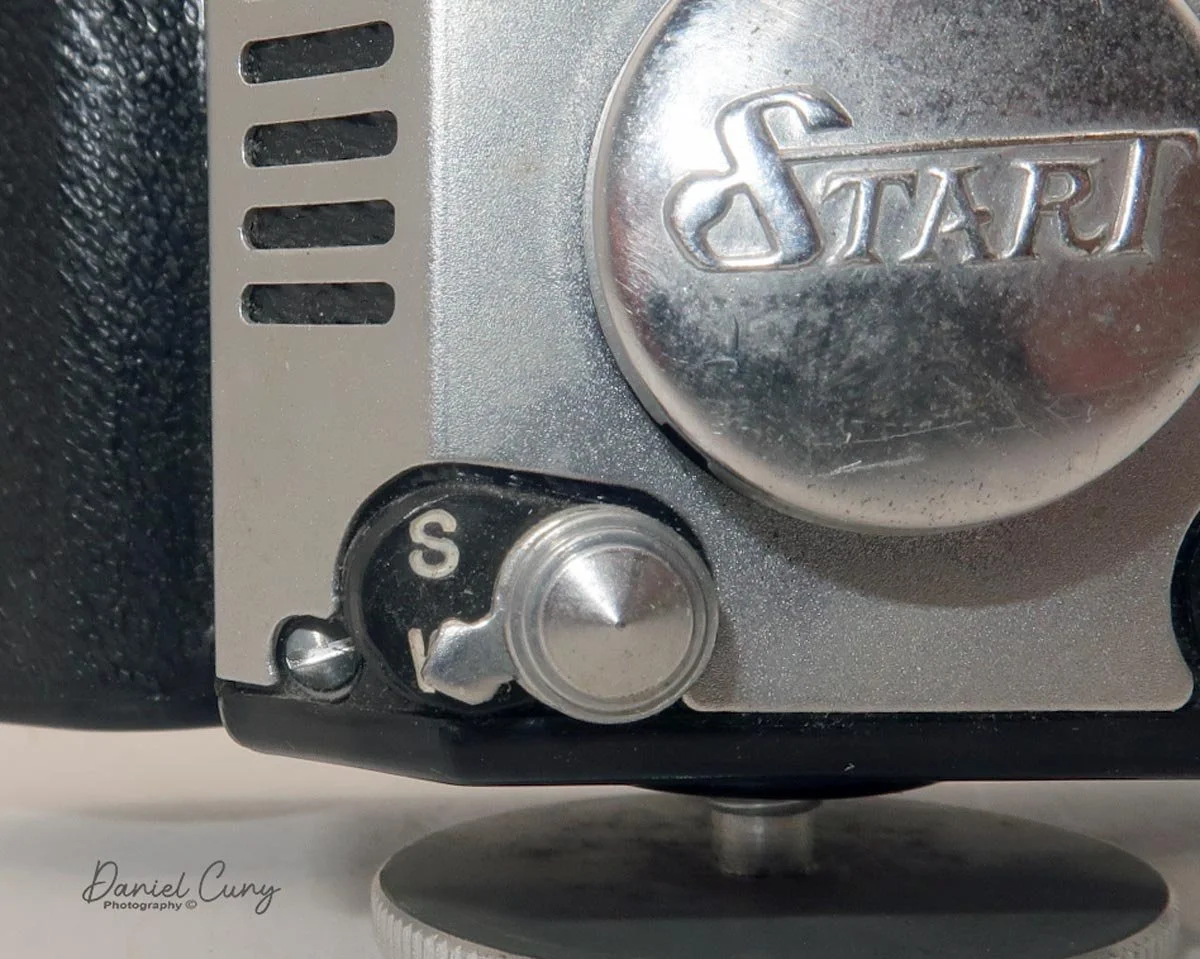
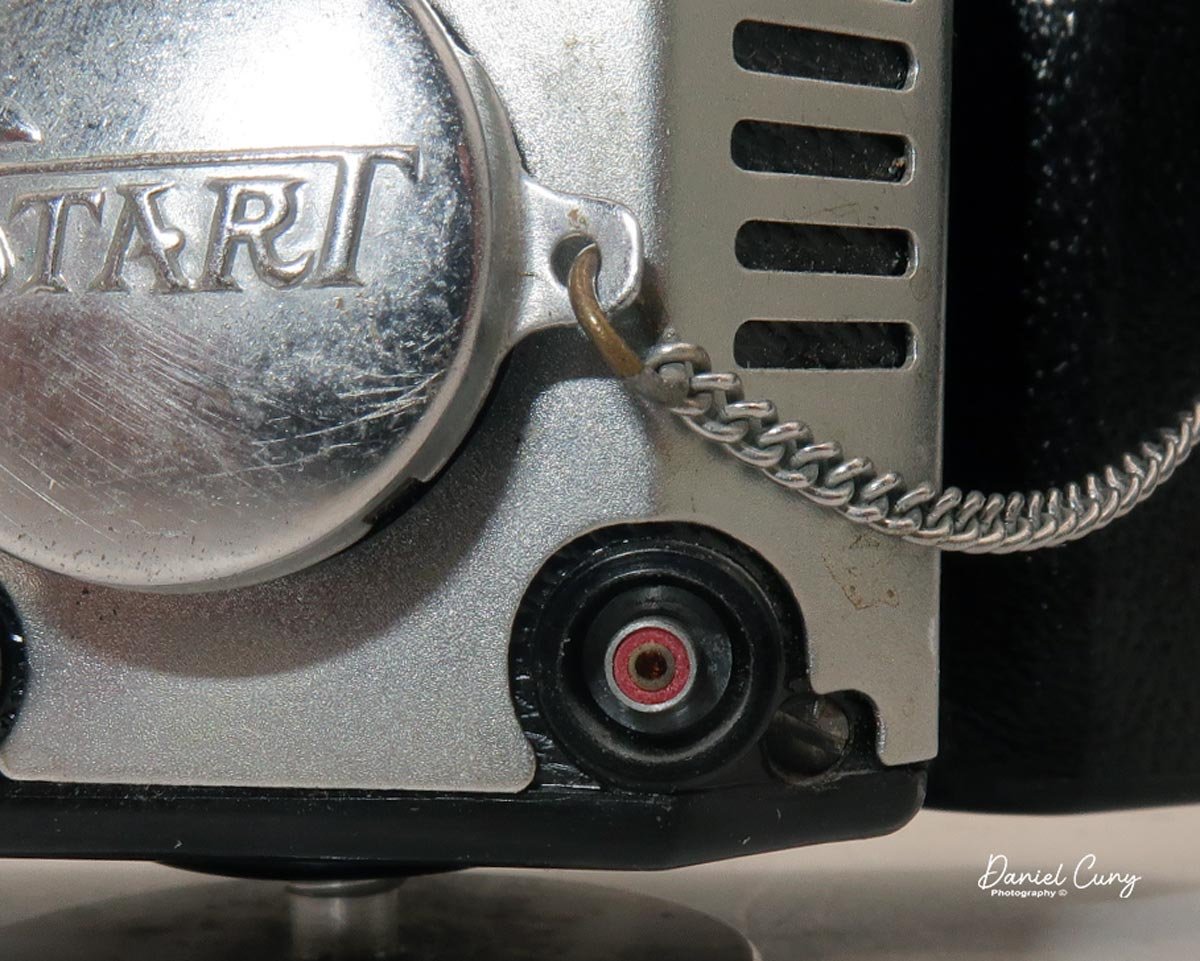
The lens is fixed and cannot be focused. Under the lens, on the left side, are two aperture settings, “W” and “S.” “W” is wider open, and switching to the “S” setting selects a smaller aperture. On the left side of the camera is a PC socket for flash. Since there is no accessory shoe, you need to use a bracket if you want to use flash with the Start 35 K-II.

 To open the camera for loading film, there is a simple latch on the left side that opens the back and exposes the film chamber. On the right side, you place a fresh roll of Bolta film, bring the leader across to the left, and thread it into the take-up spool. Start winding to make sure the film is seated properly, then close the back and advance the film until you see the number 1 in the window on the back of the camera.

 My Results

Since I do not have Bolta film, I used some bulk 35mm film and leftover paper backing from 127 film, which I cut down to fit the Bolta reels I have.

 Taping a short roll of 35mm film onto the paper backing in total darkness was not the easiest task, but it was manageable if most of the prep work was done ahead of time and the process was carefully thought through before turning off the light.

 I also loaded the film into the camera in the dark to make sure I had not made any mistakes when attaching the paper backing to the 35mm film. I knew the numbers on the backing paper would not line up exactly, so I simply guessed how many turns to advance the film.

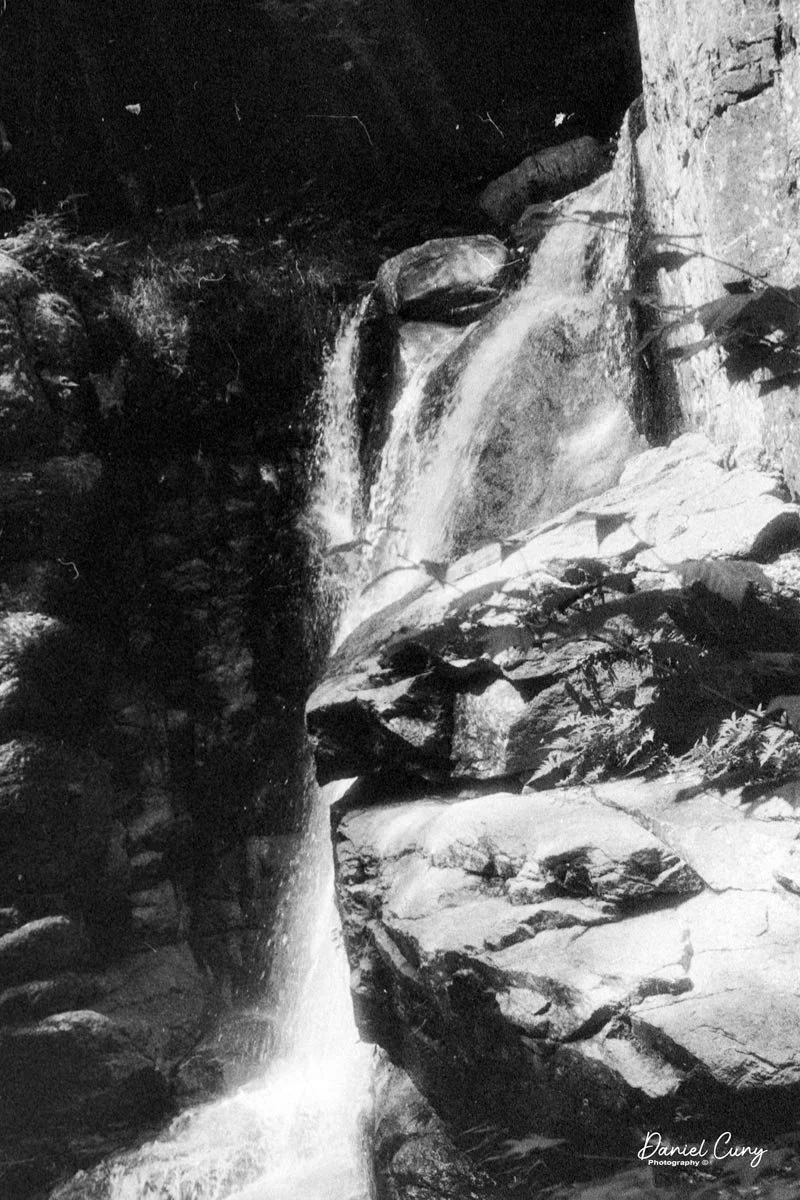
 With film in the camera, I took it to a local waterfall and walked through the neighborhood to make a few photographs.

 Here are the results from the Start 35 K-II camera:
Conclusion:

While the images from the Start 35 K-II were sharper than I expected, something must have gone wrong in processing, or perhaps light leaked through the paper backing, because there are some strange light streaks on many of the images. My guess is that it was operator error, most likely related to the paper-backing process.

 The next time I review a Bolta film camera, I will try to do a better job with the paper-backing method. Overall, though, the camera is pretty nice, easy to use, and produces some nice images for a camera that is close to 70 years old.

 Thank you for taking the time to learn about this unusual Bolta film camera made in the late 1950s.

 Here are some of my other Camera Reviews.

 Check out my YouTube channel, where I am putting together video overviews of the cameras I write about. Be sure to subscribe and like the channel, too.

 Cuny’s Cameras and Photos is my online eBay store, where you will find some of the cameras I have reviewed, along with a wide range of other cameras, lenses, and items from my collection that I am thinning out.

 Until next week, please be safe.
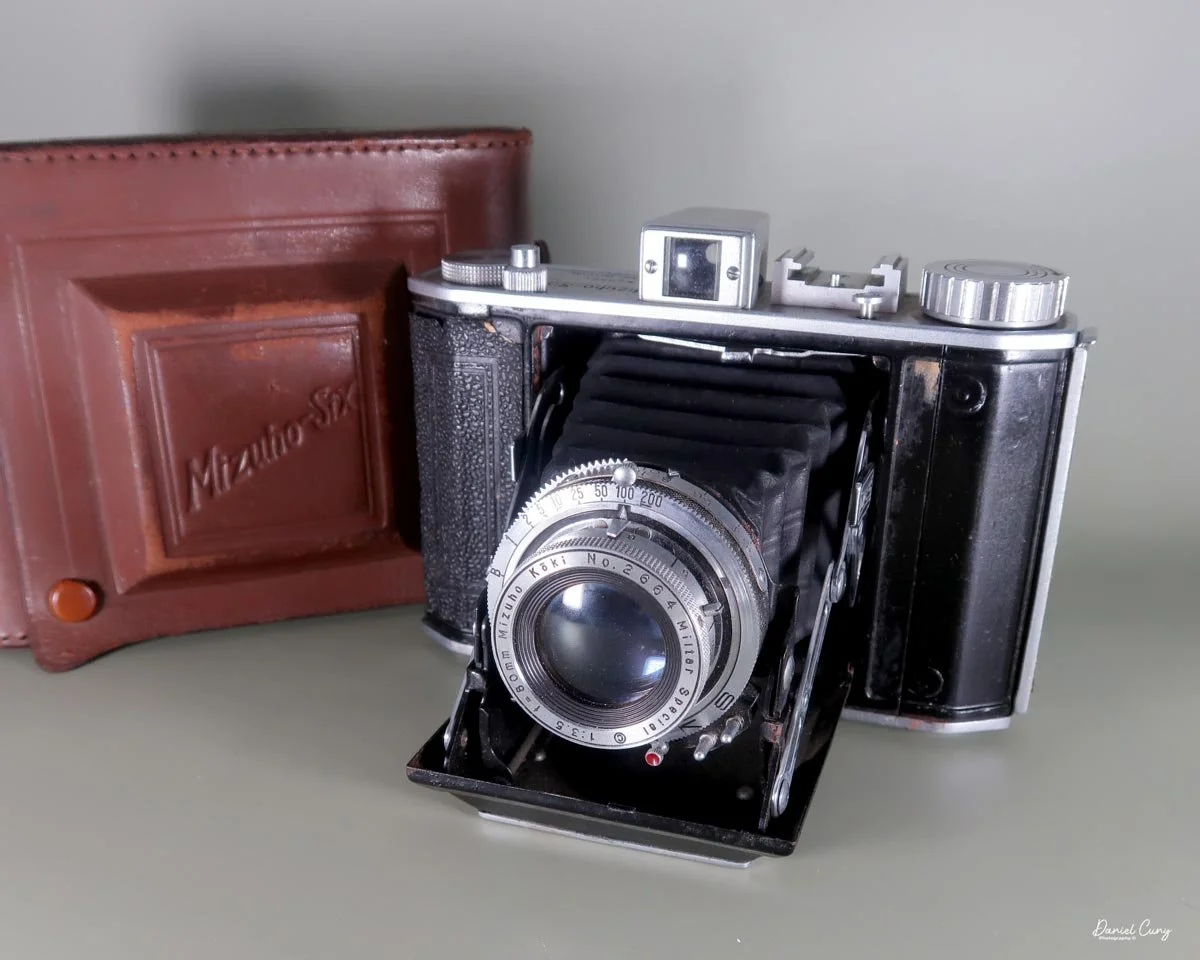
 

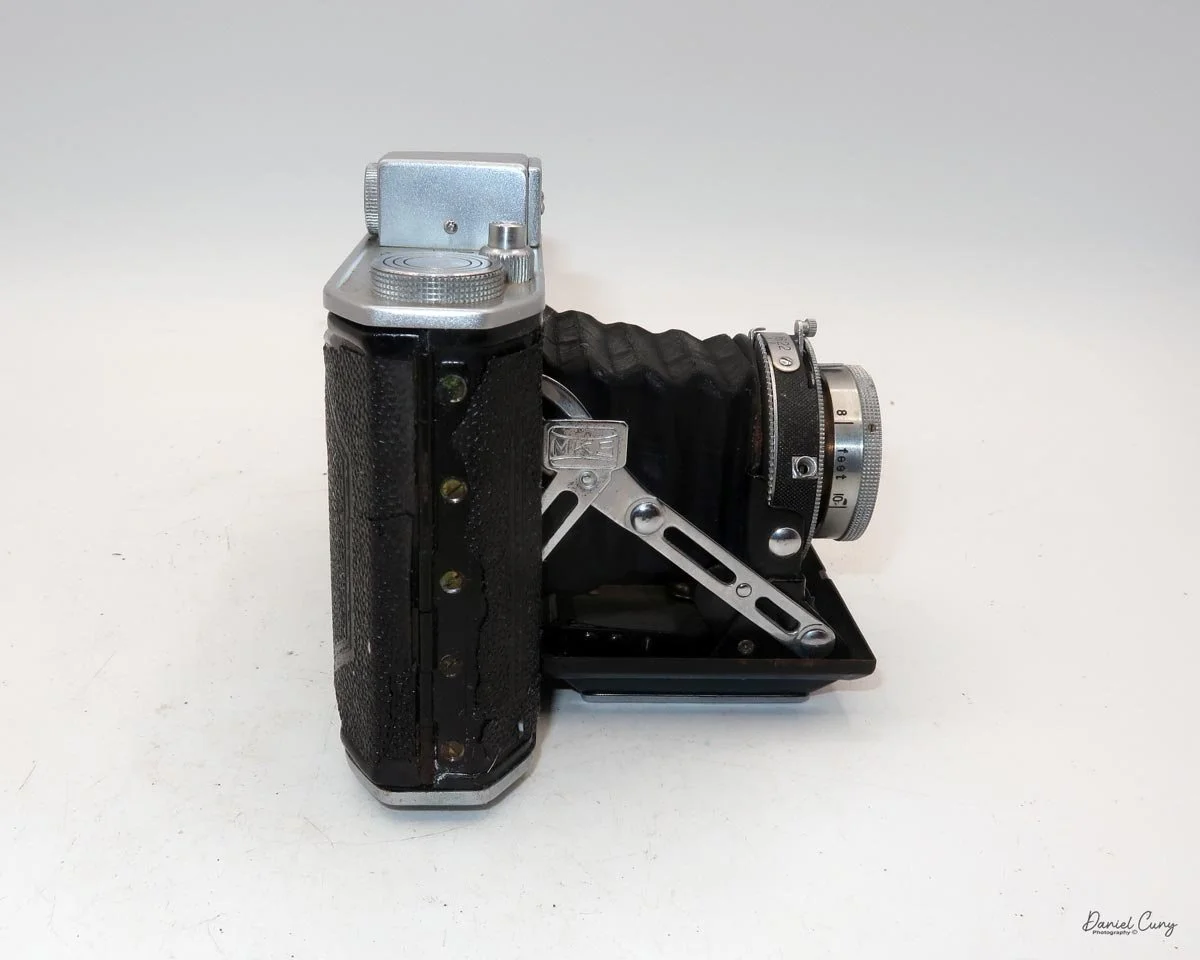
Mizuho Six camera

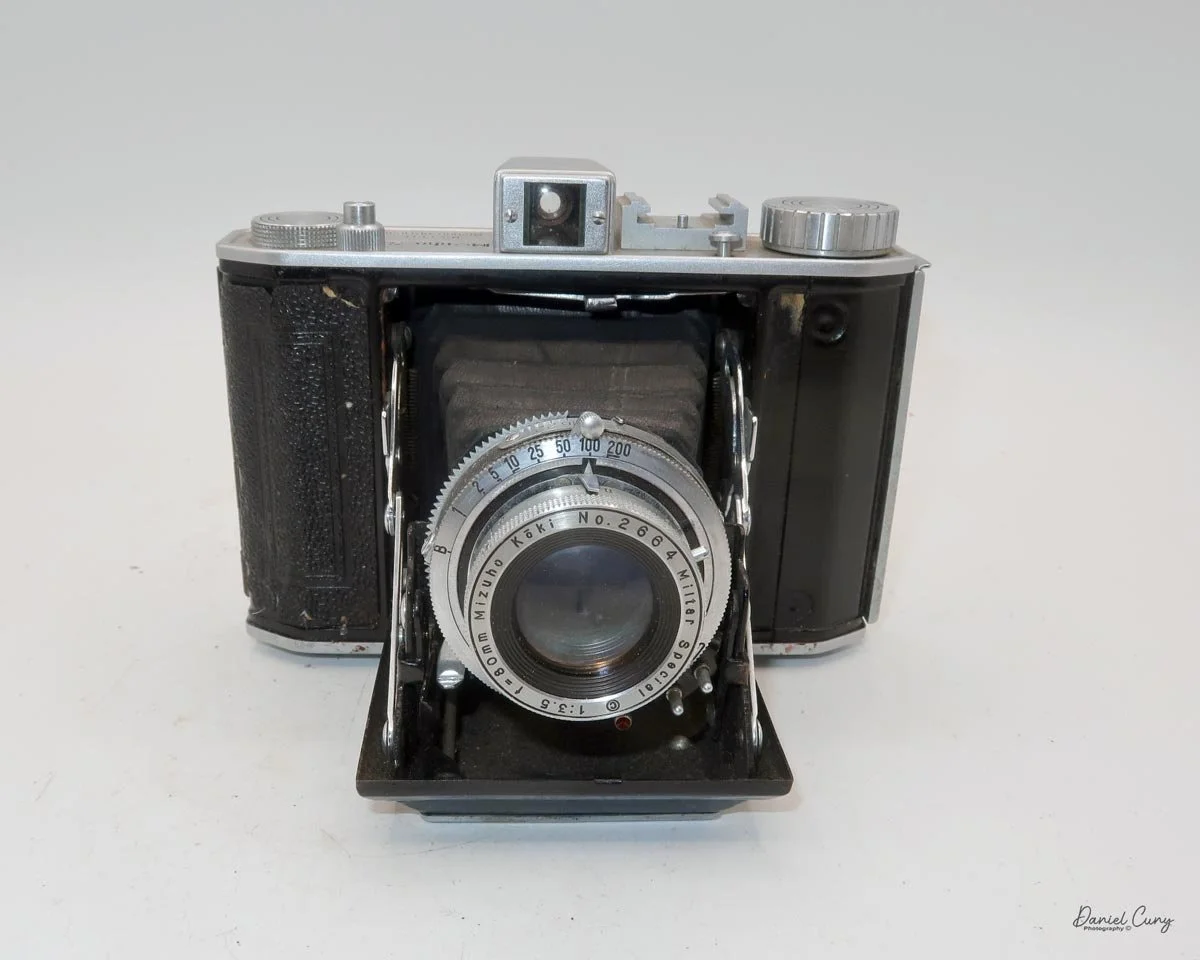
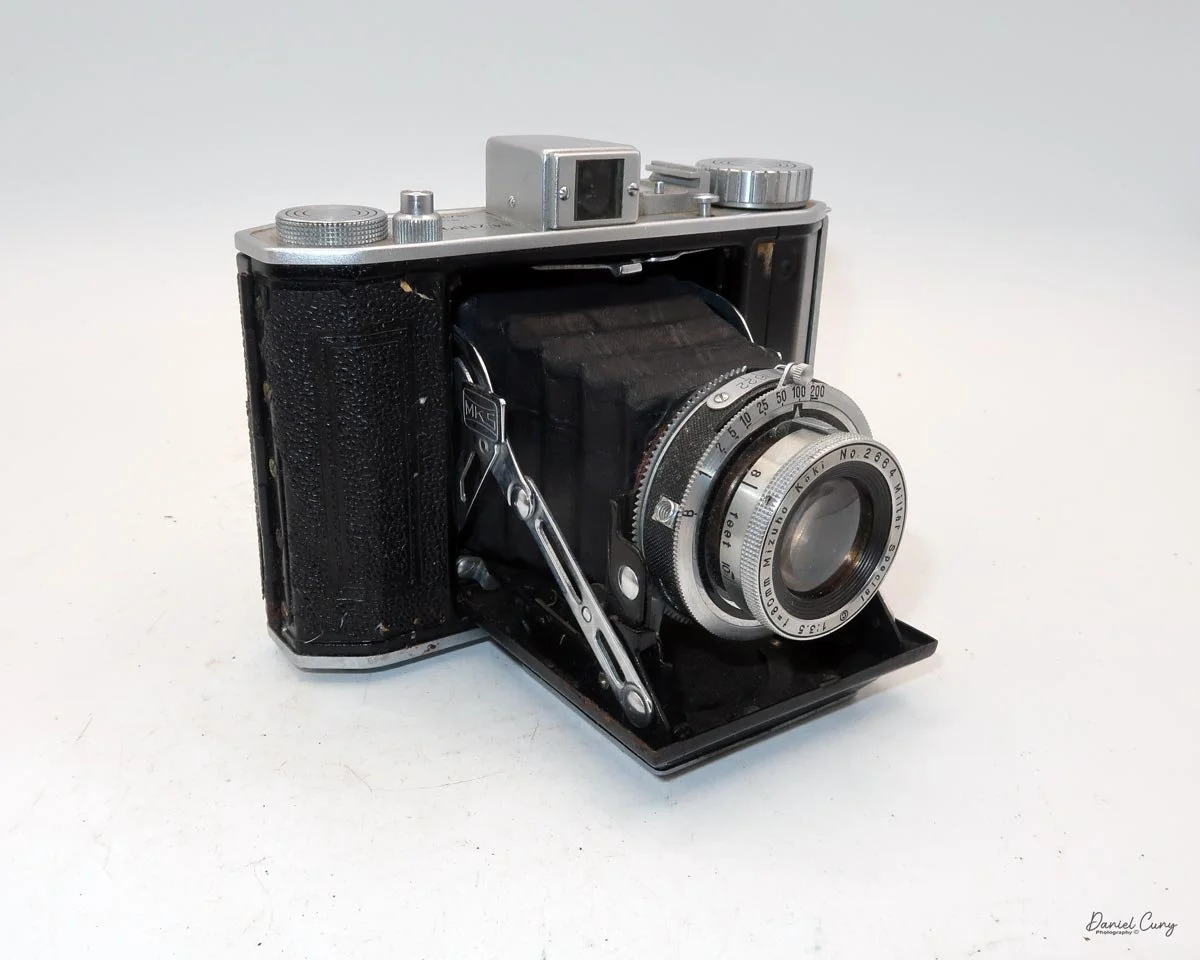
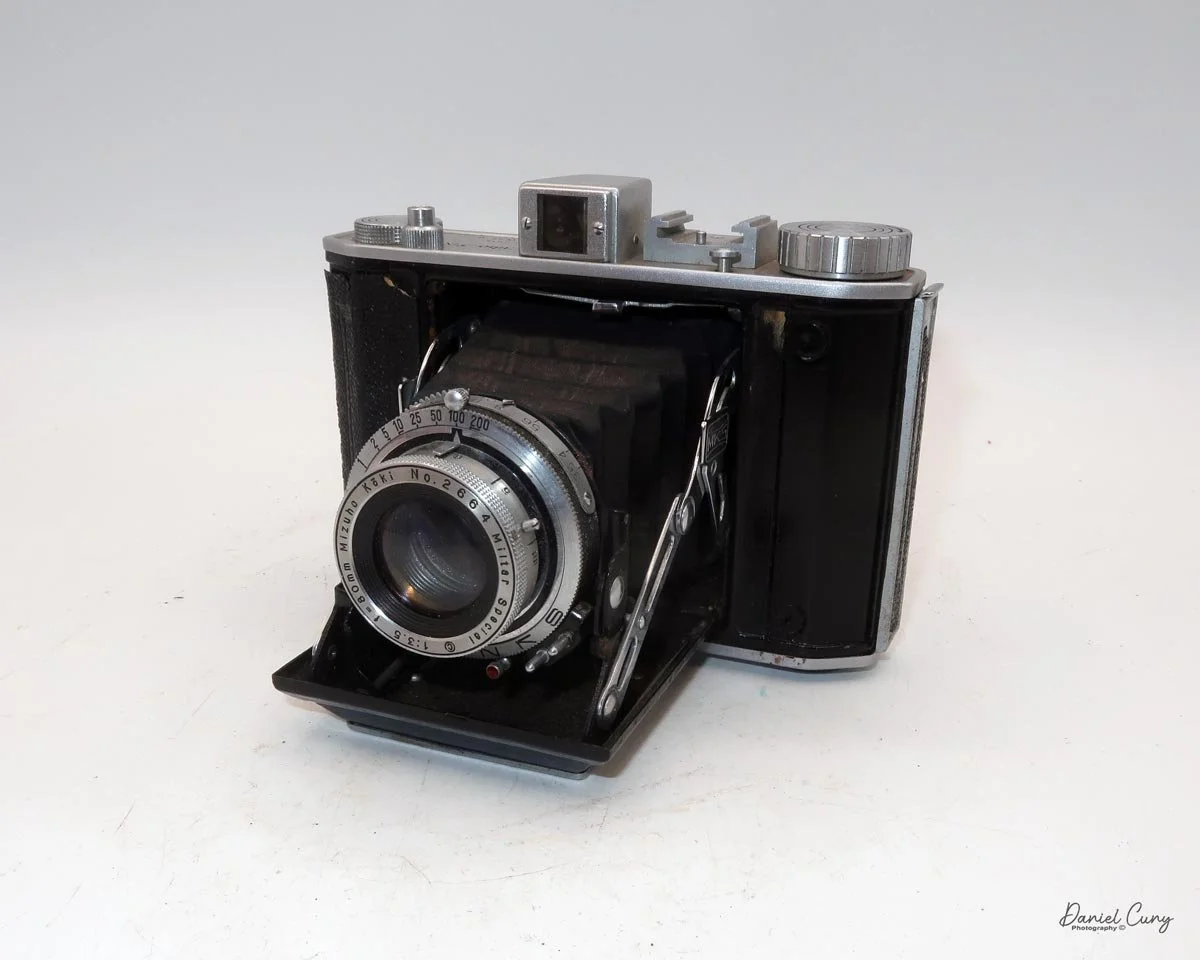
My Mizuho Six camera & case

During my trip to Tokyo a month or so ago, one of my primary goals was to find a little-known or unusual camera to write about for this camera-collecting blog.

 It was on my last day in Tokyo that I visited Used Camera Box for the second time. To say this camera store is filled to the rafters is beyond description. Most of the camera stores I visited in Tokyo were well laid out, with space between cameras. All the items with tags and prices are very visible. It's very similar to what you'd see in any city in the world, with cameras or other products displayed. 

 The Used Camera Box is unlike most camera stores you'll come across.  The shop is pretty small, but the amount of cameras they have is unbelievable.  Many of the showcases featuring the higher-priced, most desirable cameras are well displayed. 

 Then there are other areas of the store with showcases with cameras on top of cameras, on top of cameras. Stacked three high and so crammed next to each other, it's difficult to see what they have towards the back of the showcase. 

 There are the bins, many, many bin of cameras. All around the store's perimeter are tall showcases. In front of these tall showcases are plastic bins filled with more cameras. Many of the cameras in these bins are "bargain" items, which means they might have a part missing or not work. These bins are stacked three high, going around much of the store. Because of this, it's probably one of my favorite used camera stores. 

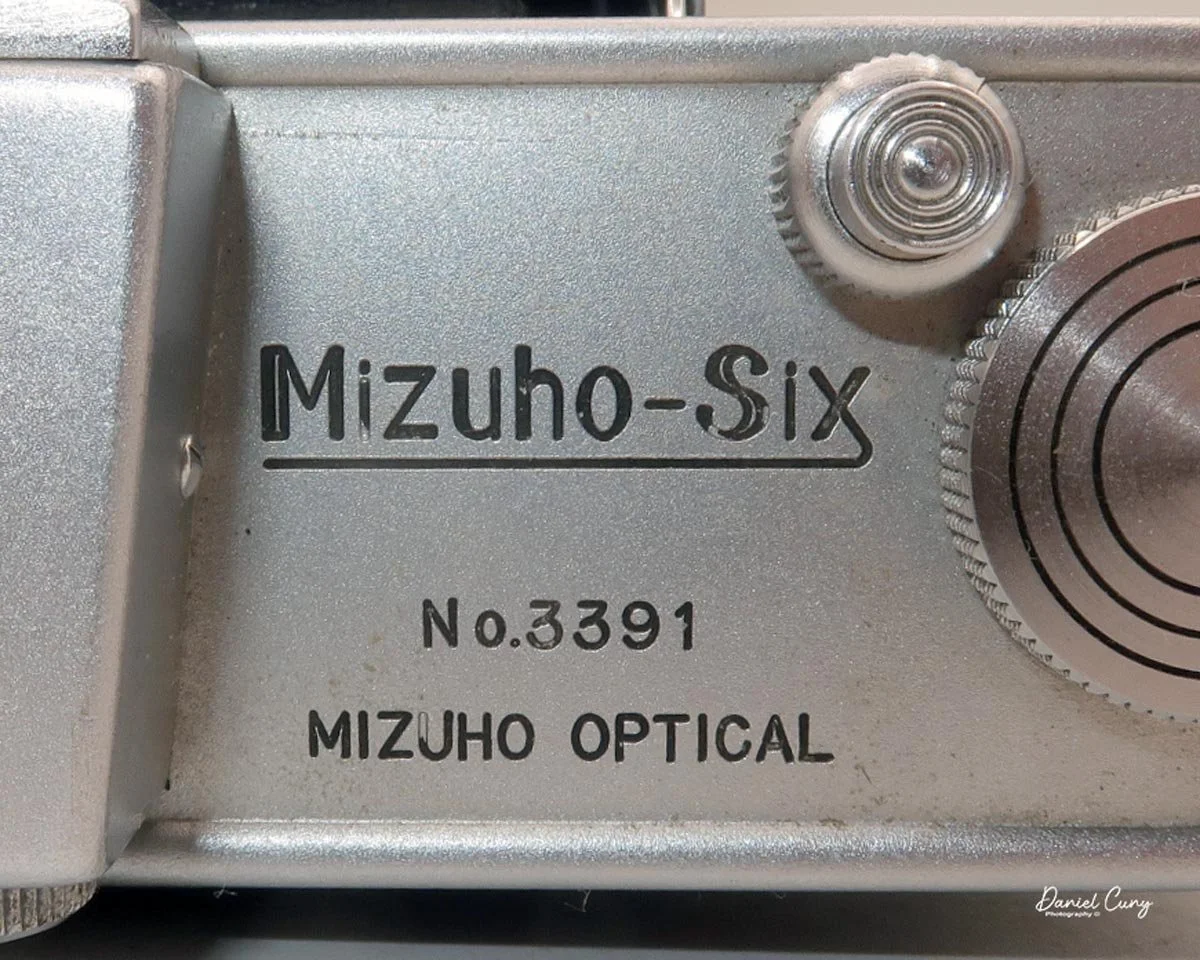
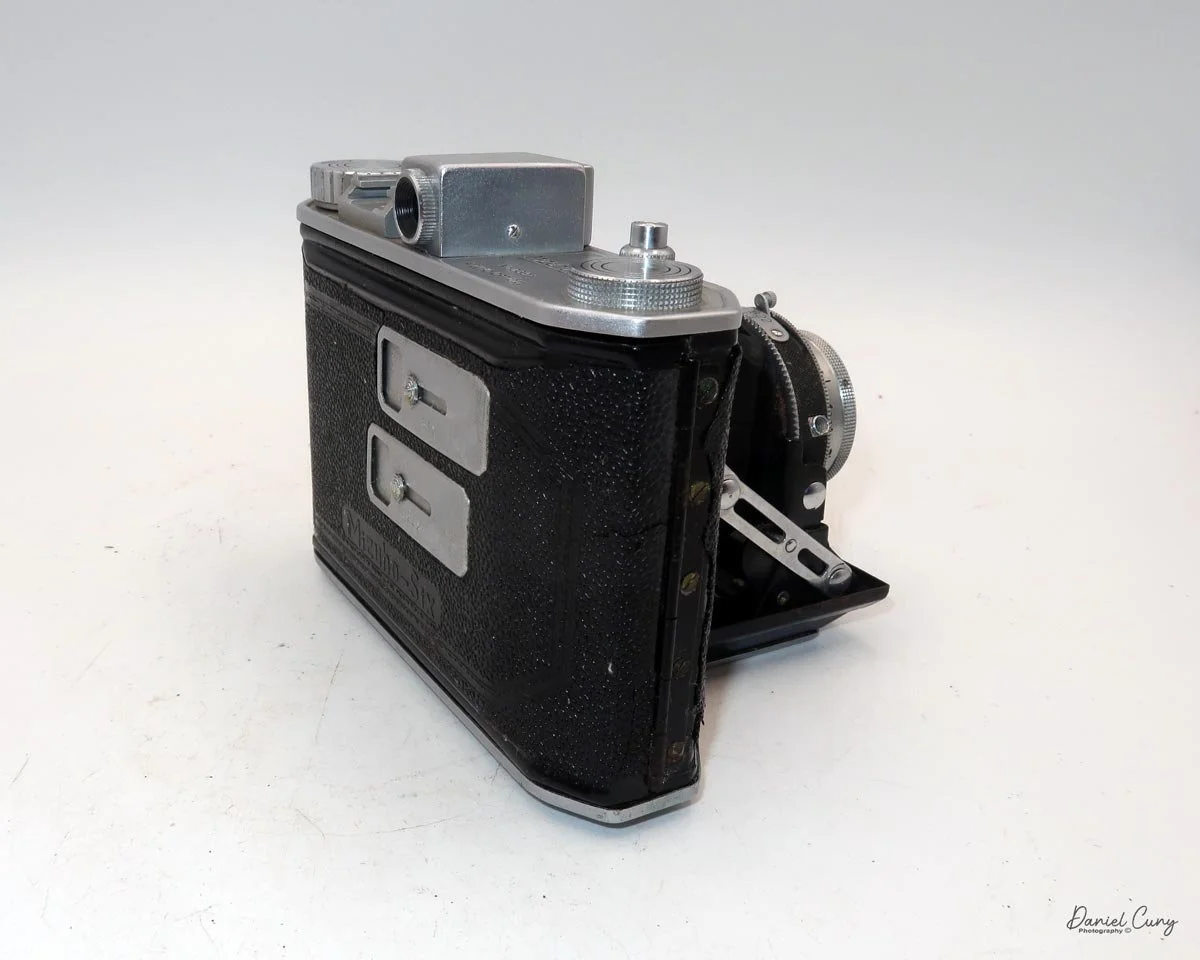
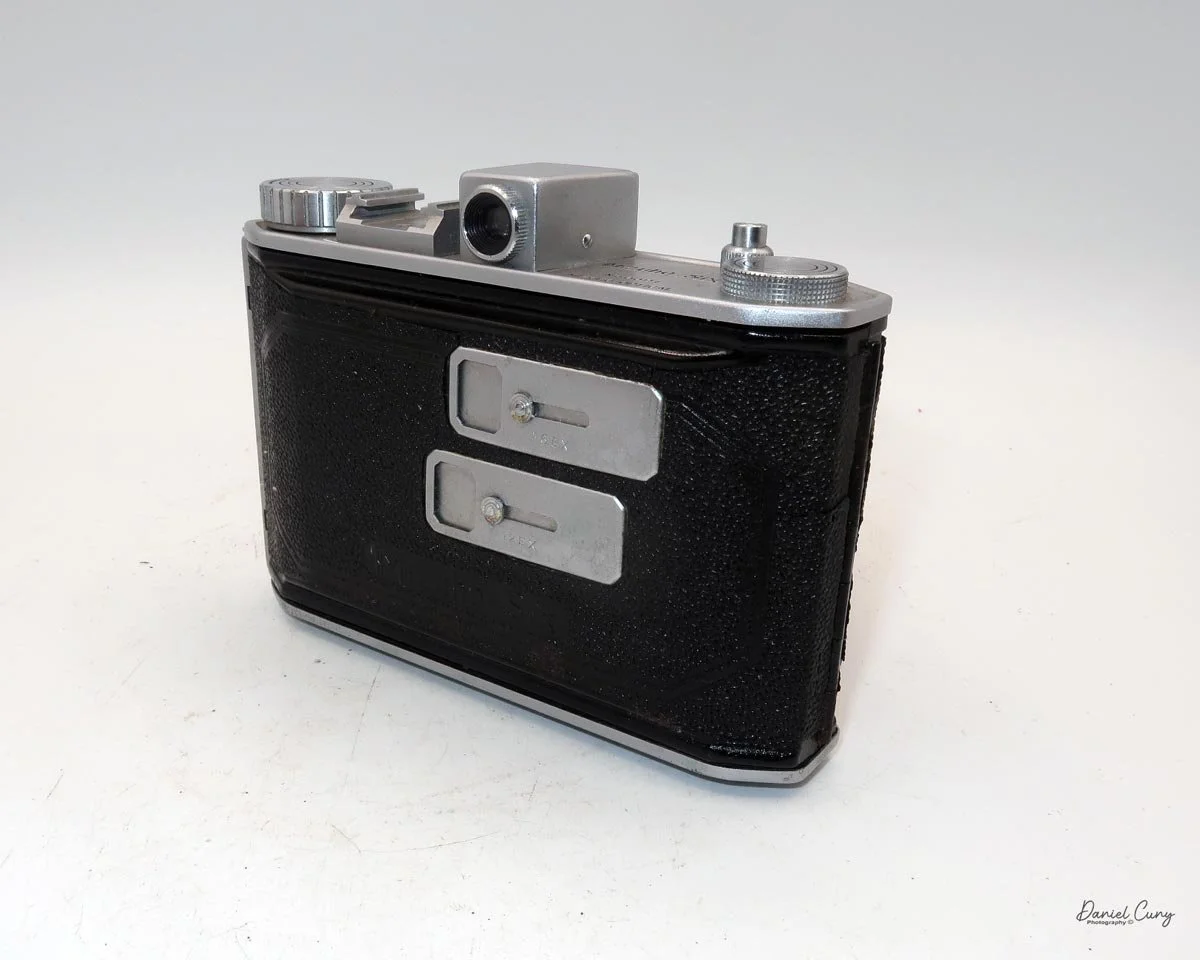
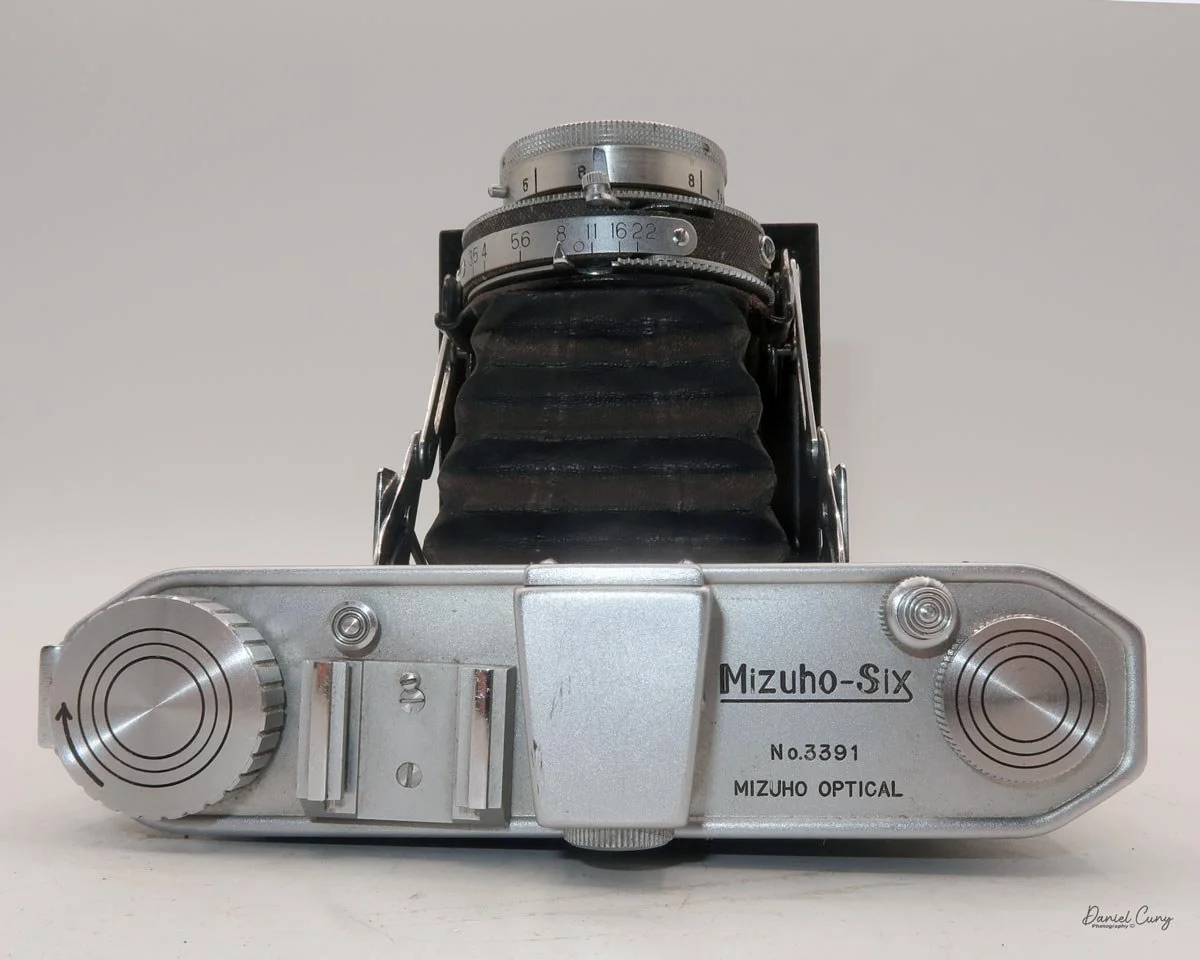
Name on top of the camera below the shutter release

 For me, the real pleasure of collecting is the hunt. The excitement of finding a real odd or unusual item at a bargain price. It's similar to going to a Flea Market, as there may be a real treasure in the next cabinet or stall. 

 I worked my way to one of my favorite showcases towards the back of the store. It's a showcase filled with many of the older cameras. It has a mix of higher-priced and lower-priced items. The patient salesperson let me pull items out and check them out. It was from this showcase that I found this week's camera, the Mizuho Six. The camera comes with a nice leather-fitted case, too. This, along with last week's Baron RI, was another camera I had never heard of until I researched it.

 Just like last week's blog about the Baron RI camera, this week's camera is another very similar style. It's a folding 120 camera made in the early 1950s, when Japan was rebuilding after World War II. 

 It was manufactured by another, smaller, and little-known company that later changed its name to Neoca. Here's some history on the brand.

History:

 The Mizuho Six began life in the early 1950s, when Mizuho Koki of Japan was producing folding medium-format cameras for a market that still valued compactness and simplicity. These early Mizuho-branded folders used 120 film and reflected the practical, postwar approach common among smaller Japanese camera makers.

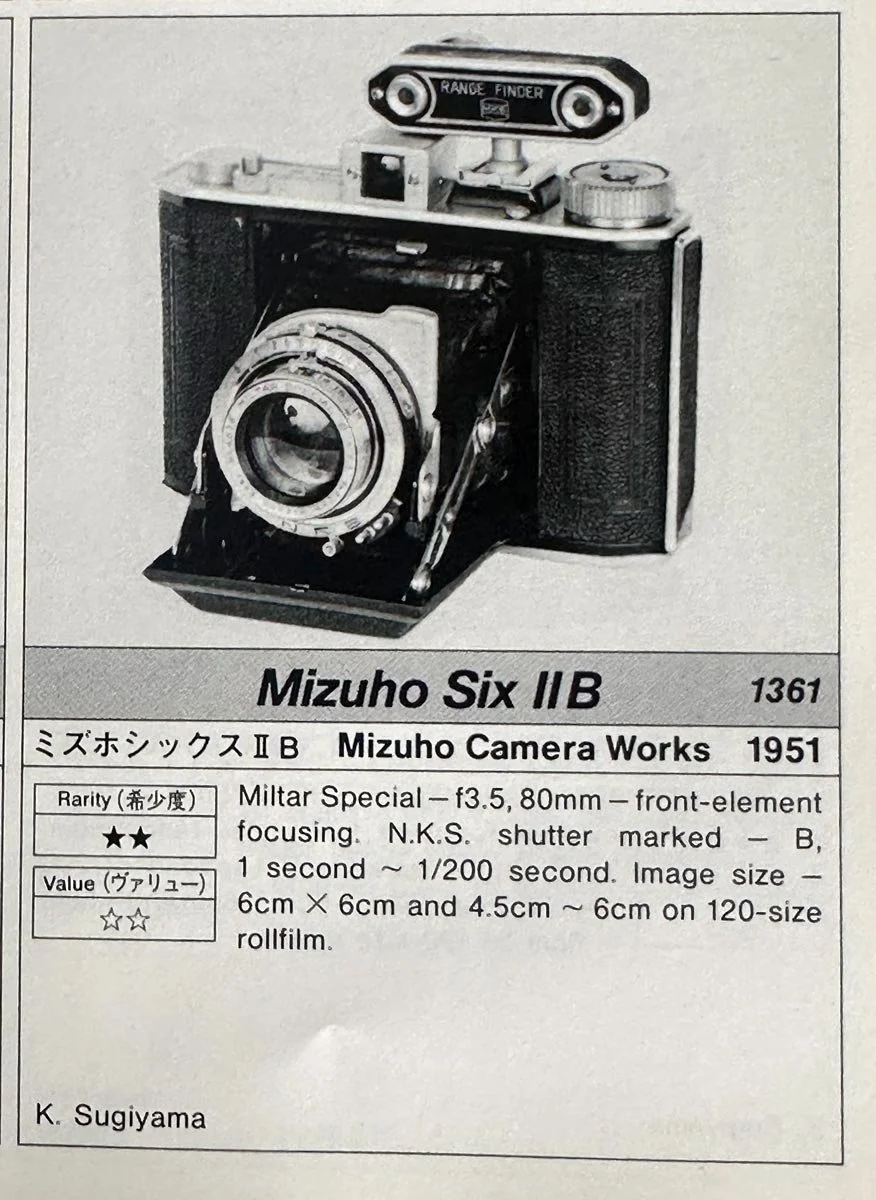
From my book on collecting Japanese Cameras

 In 1954, the company changed its name to Neoca, and the Mizuho Six line became part of that transition. The name change marked a shift from the earlier Mizuho identity toward a broader Neoca camera range. At the same time, the foldable medium-format design remained rooted in the company's first postwar products.

 The Mizuho Six itself went through a series of small but meaningful variations rather than a dramatic redesign. Known versions include the Mizuho Six I, II, III, IIB, IIIB, and V, as well as later Super models such as the Super, Super N, and Super T. These changes suggest the camera was gradually updated with different body details, finder arrangements, and lens or shutter combinations.

 The best-known early version, such as the Mizuho Six V a, was a folding camera that offered either 4.5x6 or 6x6 cm exposures and used an uncoupled rangefinder. That combination made it a flexible, straightforward tool for photographers who wanted medium-format image quality in a portable body.

 As Neoca moved into its own identity after 1954, the company shifted increasingly toward compact 35mm cameras. Still, the Mizuho Six remains important as a bridge between eras. It represents the company's early craftsmanship and the transitional period when Japanese manufacturers were moving from traditional folding cameras toward the more modern designs that would dominate later in the decade.

My Camera:

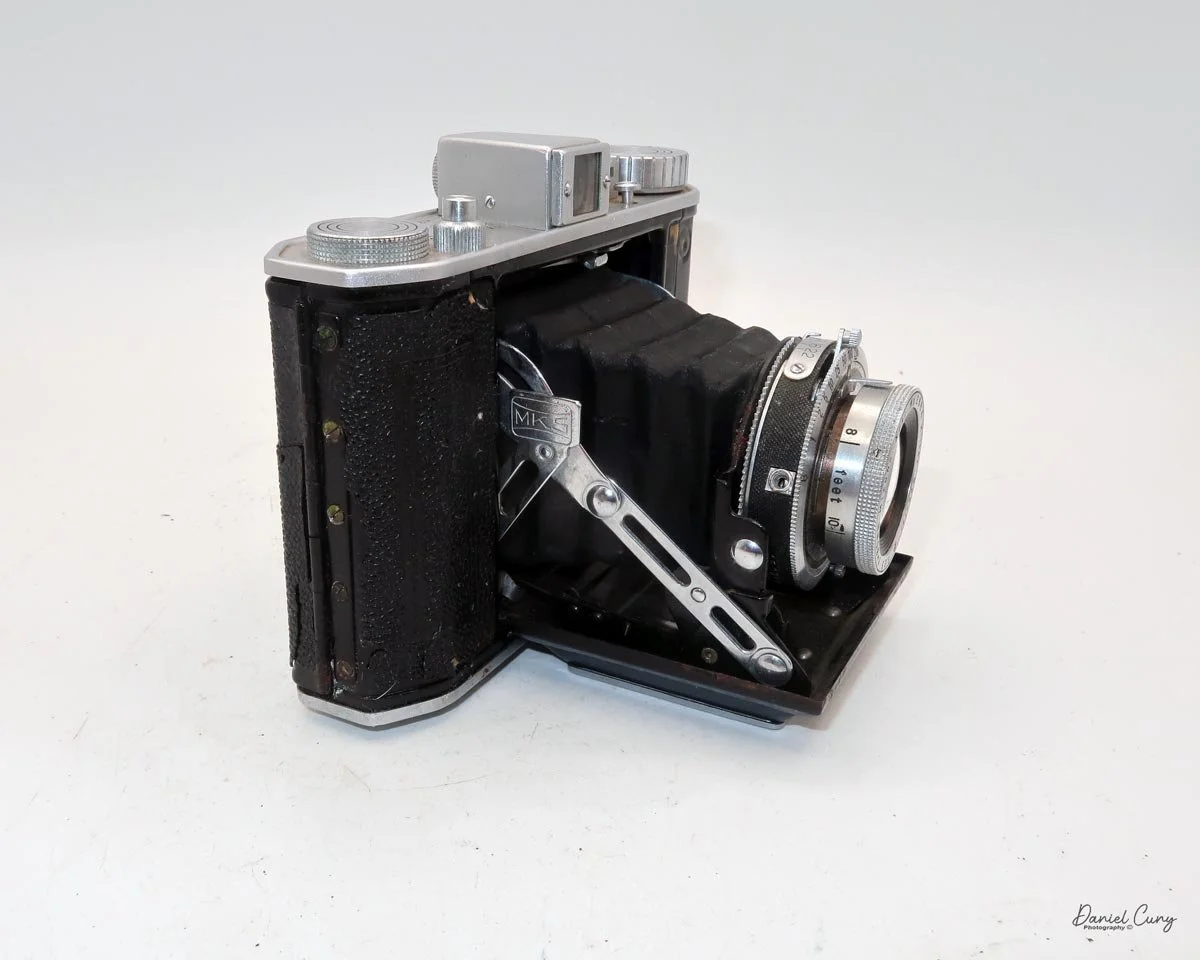
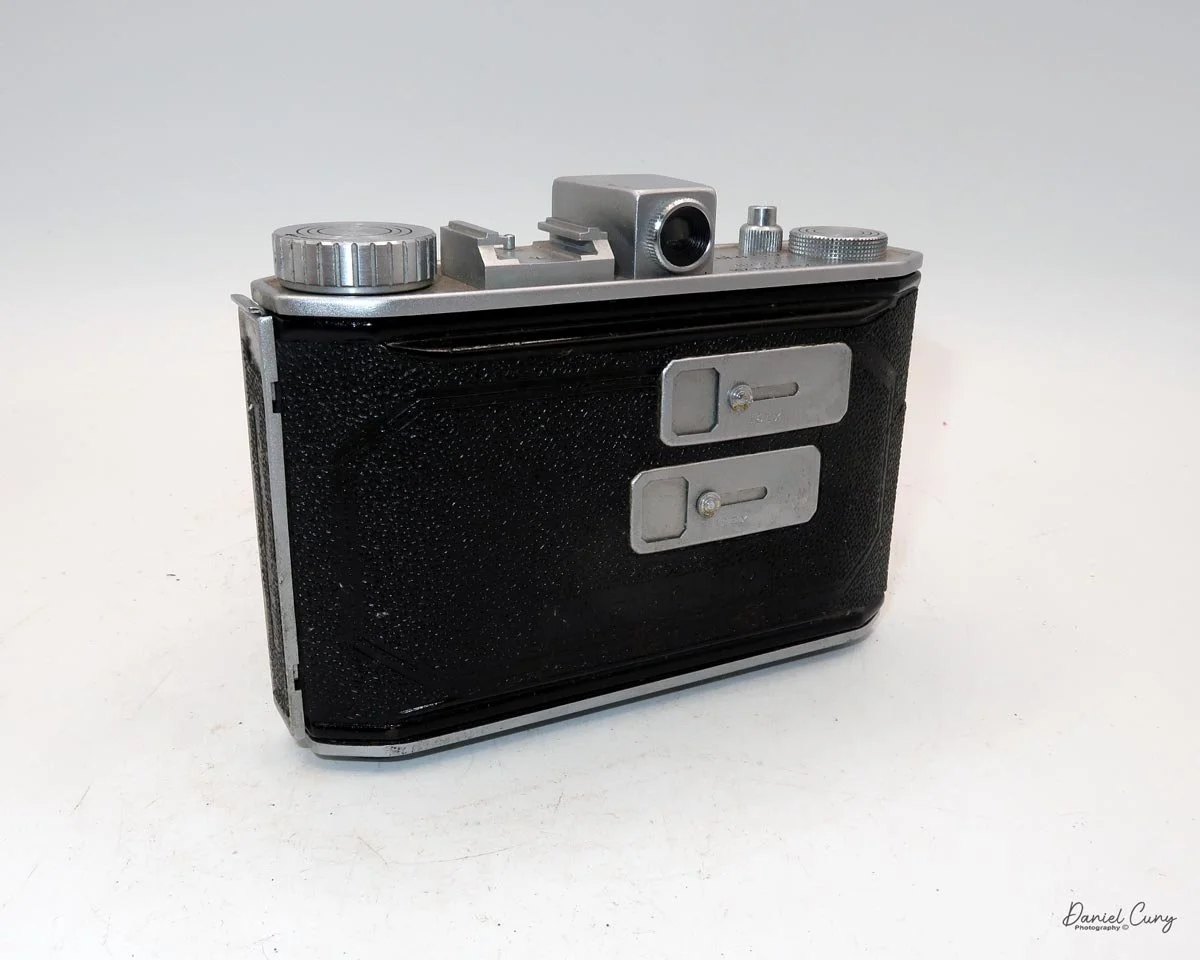
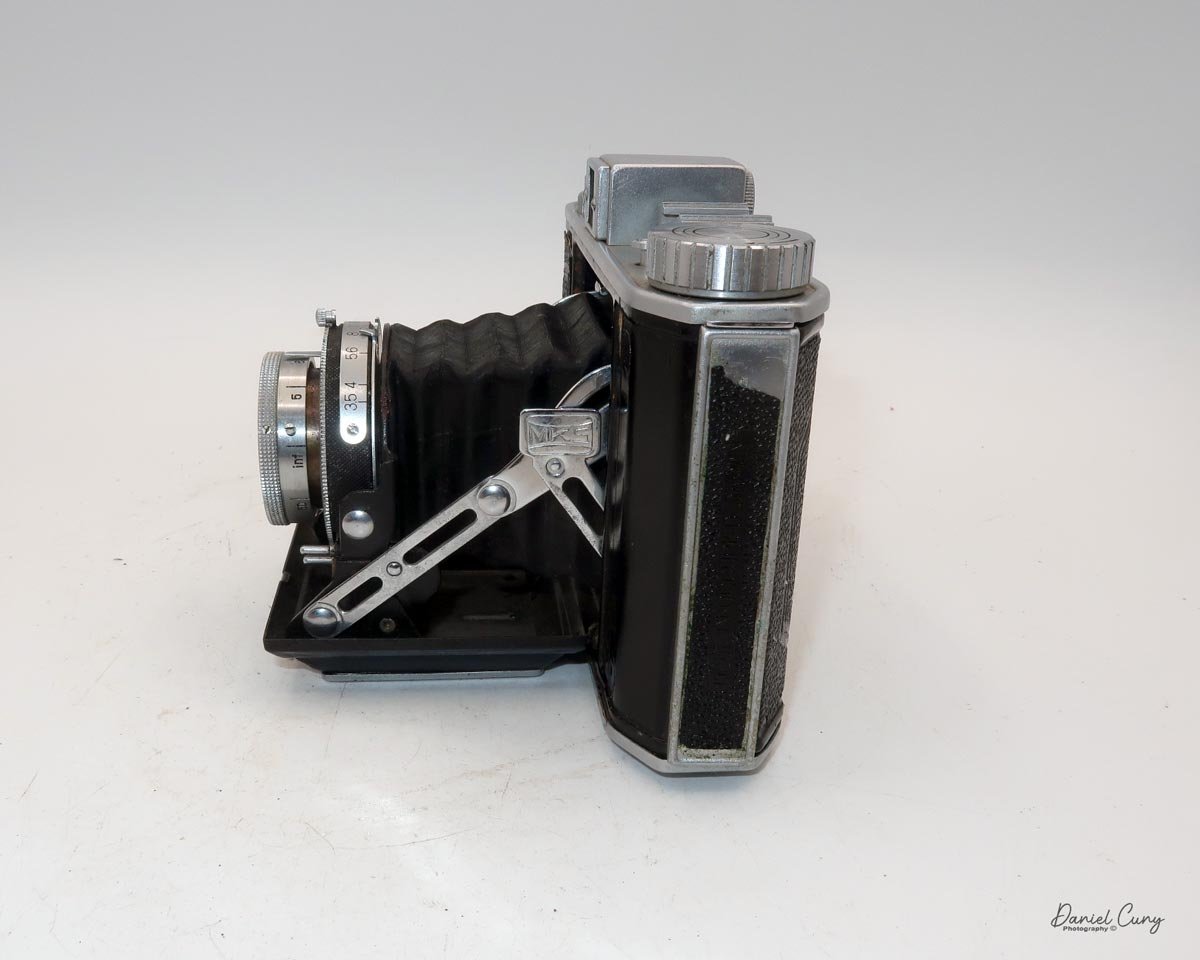
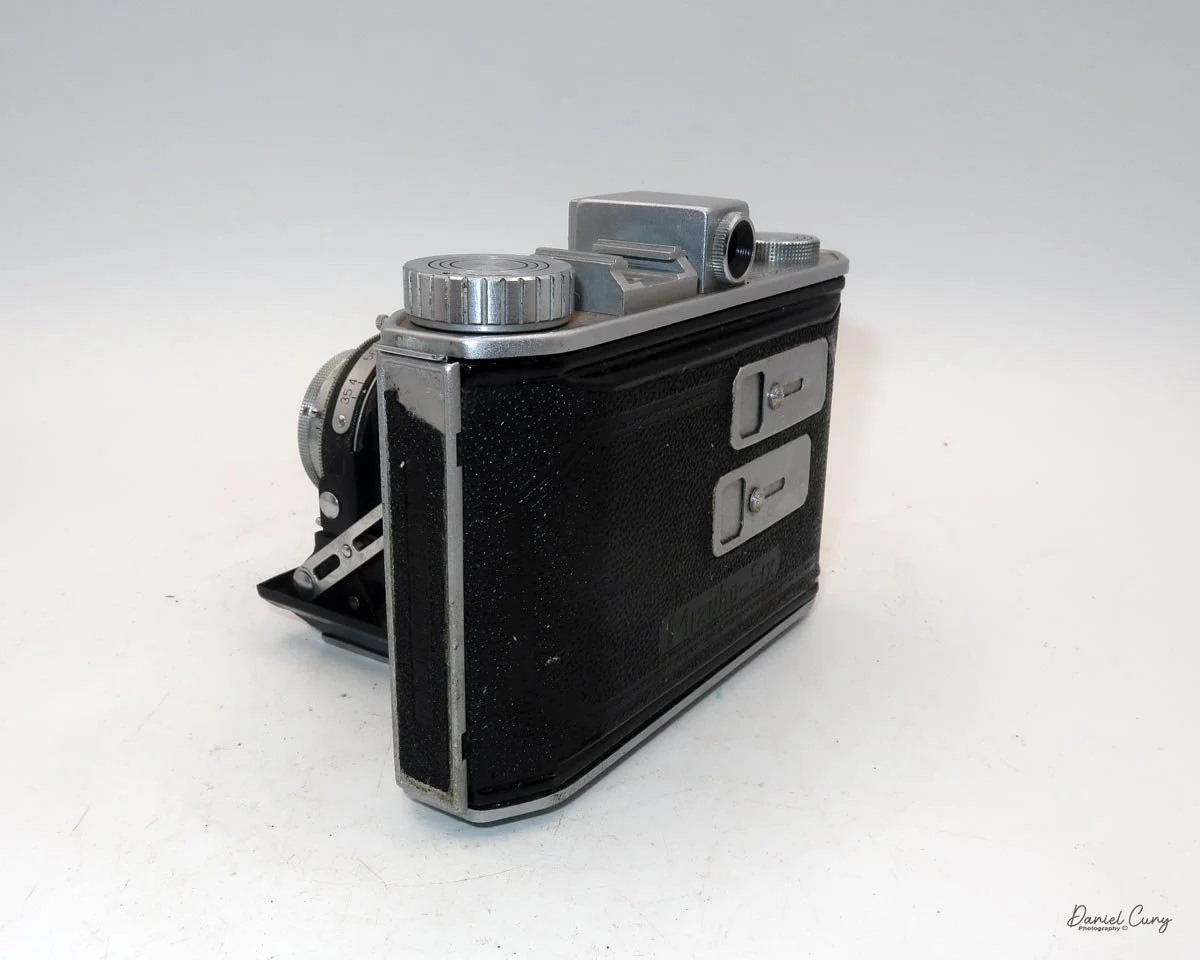
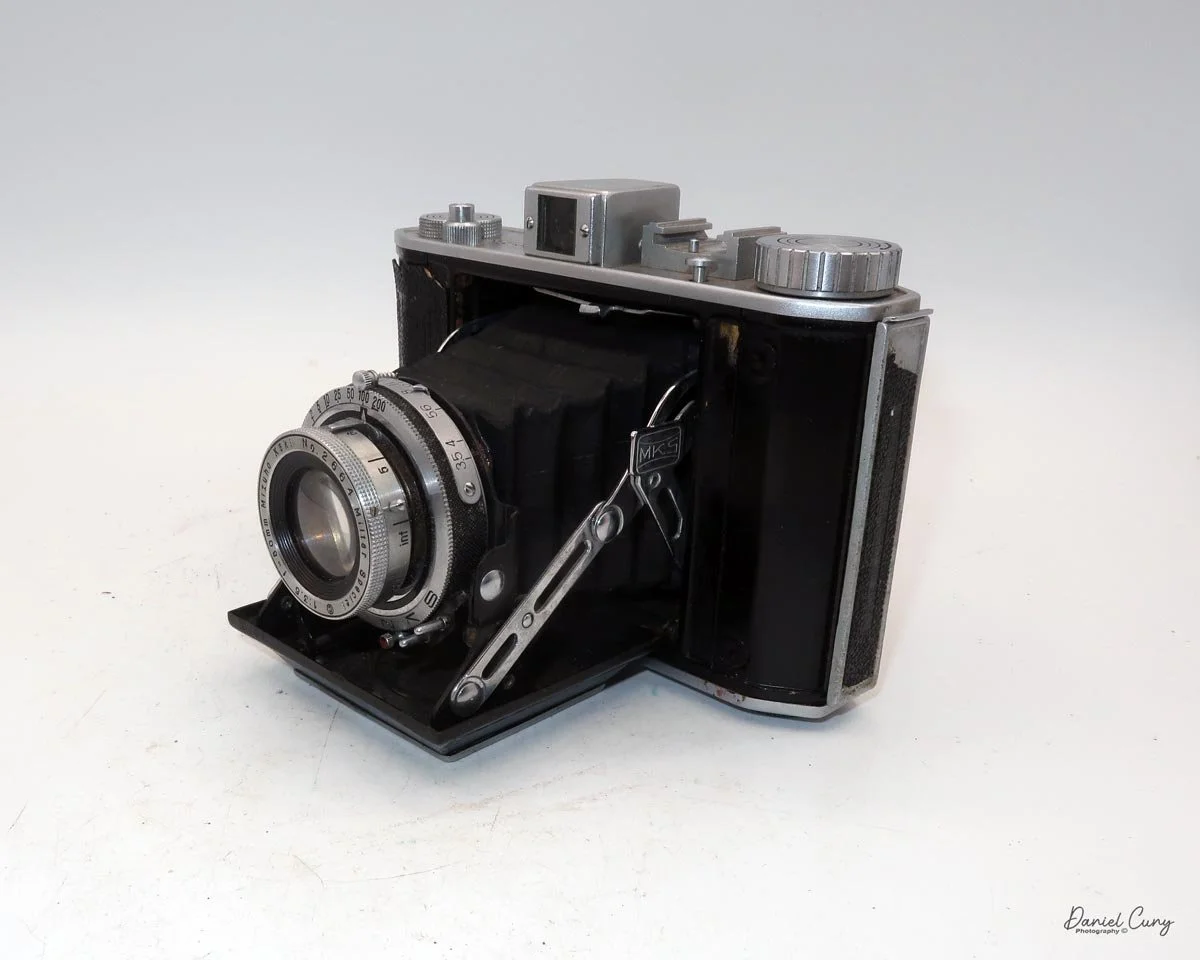
 Built in the early 1950s, my Mizuho Six camera is 5.5" wide, by 4" tall, by 2" deep with the lens closed, and 4" deep when the lens is extended into the taking position. The camera weighs 1 pound, 7 ounces without film loaded. The camera's serial number is 3391. The camera also has "Made in Occupied Japan" embossed on the side where the film door release is located.

To open the lens to take a photo, depress the small button on top of the camera located in front of the accessory shoe, and to the right of the film winding knob. Once depressed, the lens board opens, exposing the lens.

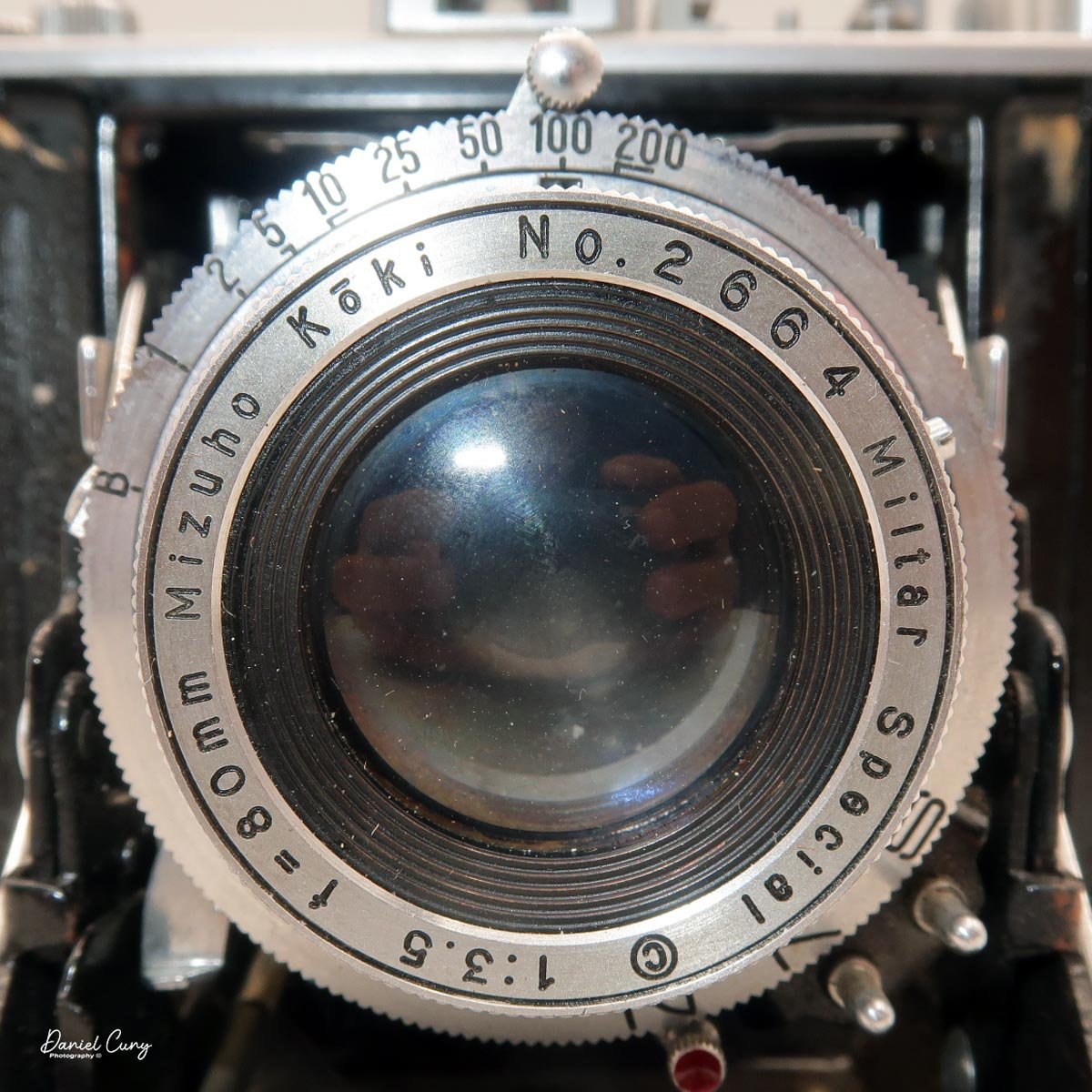
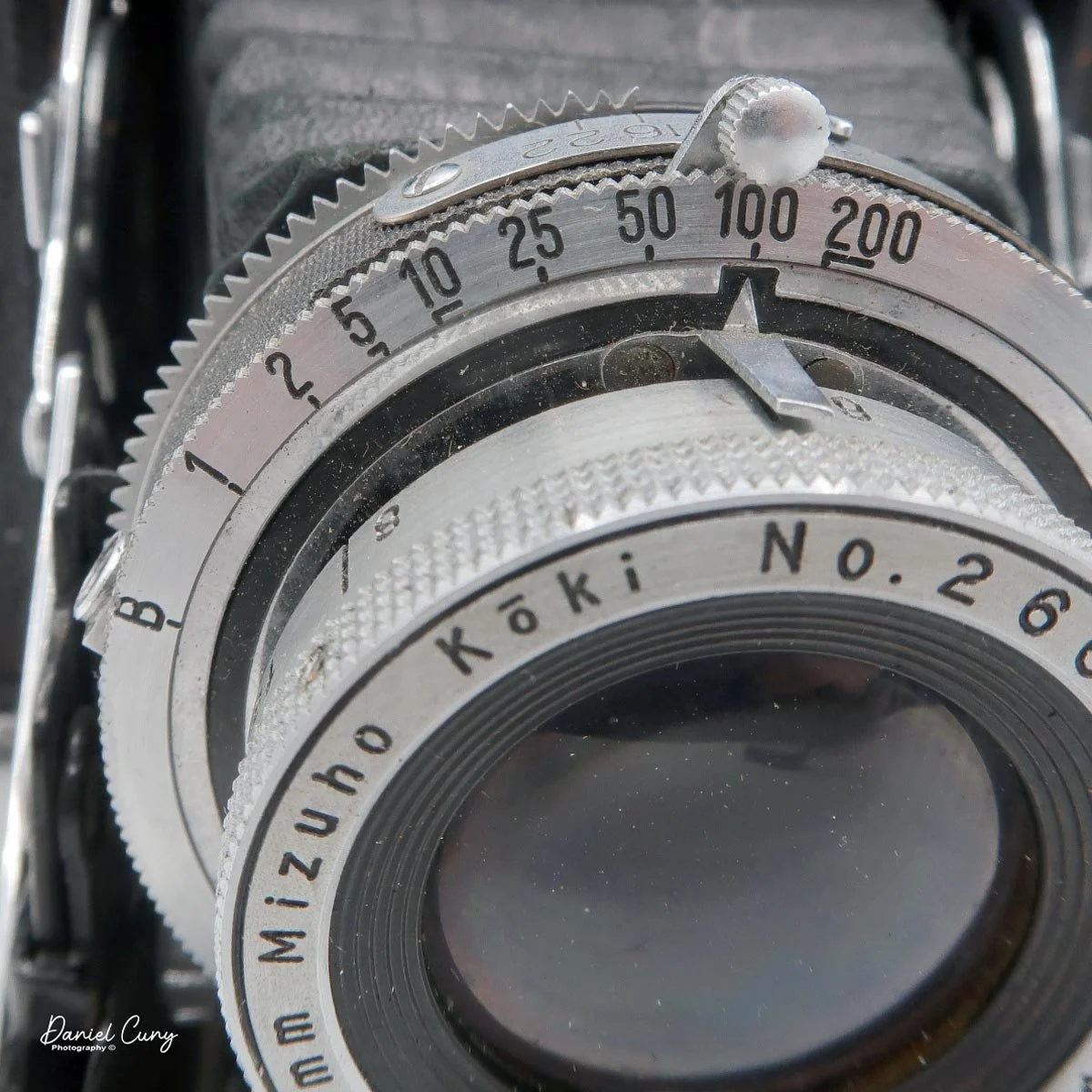
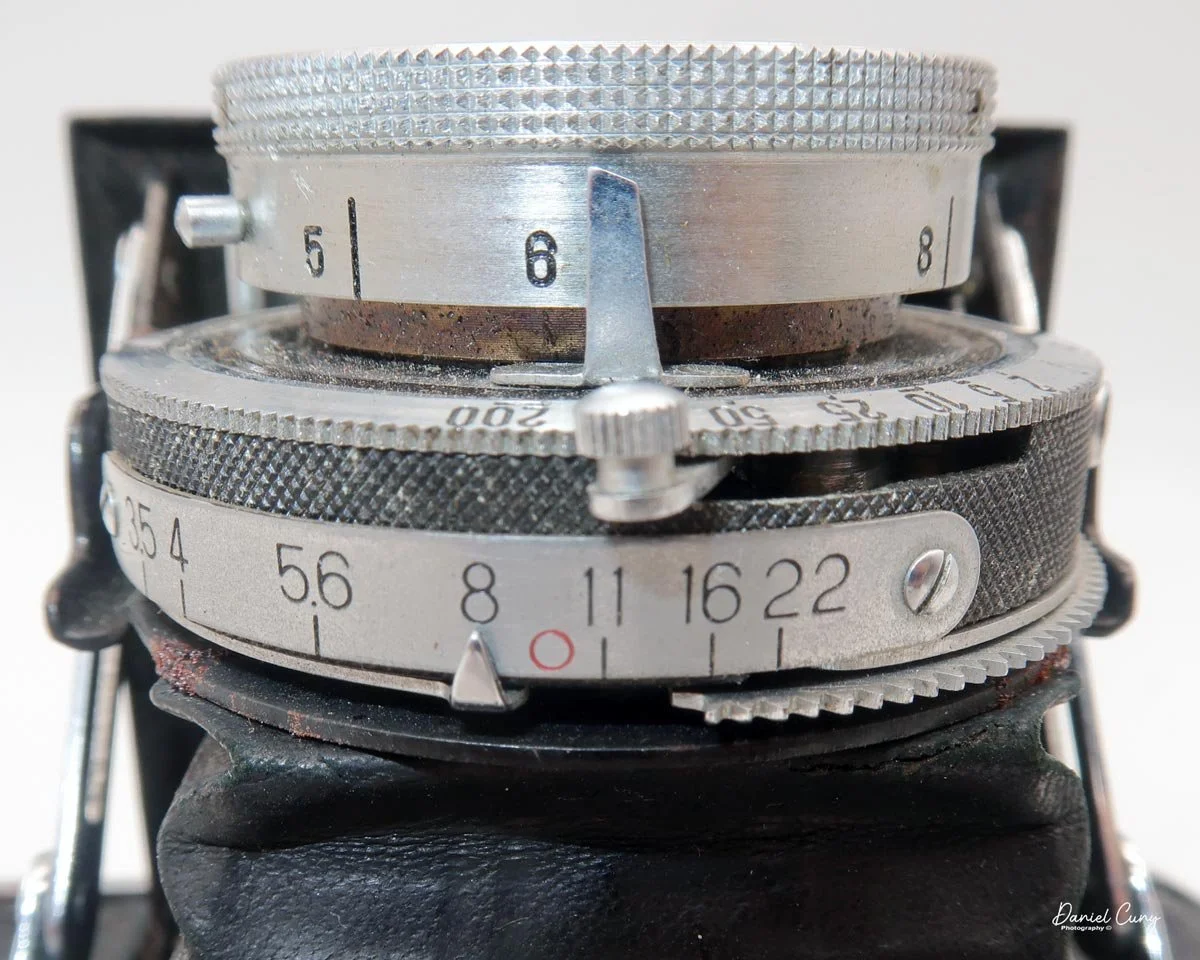
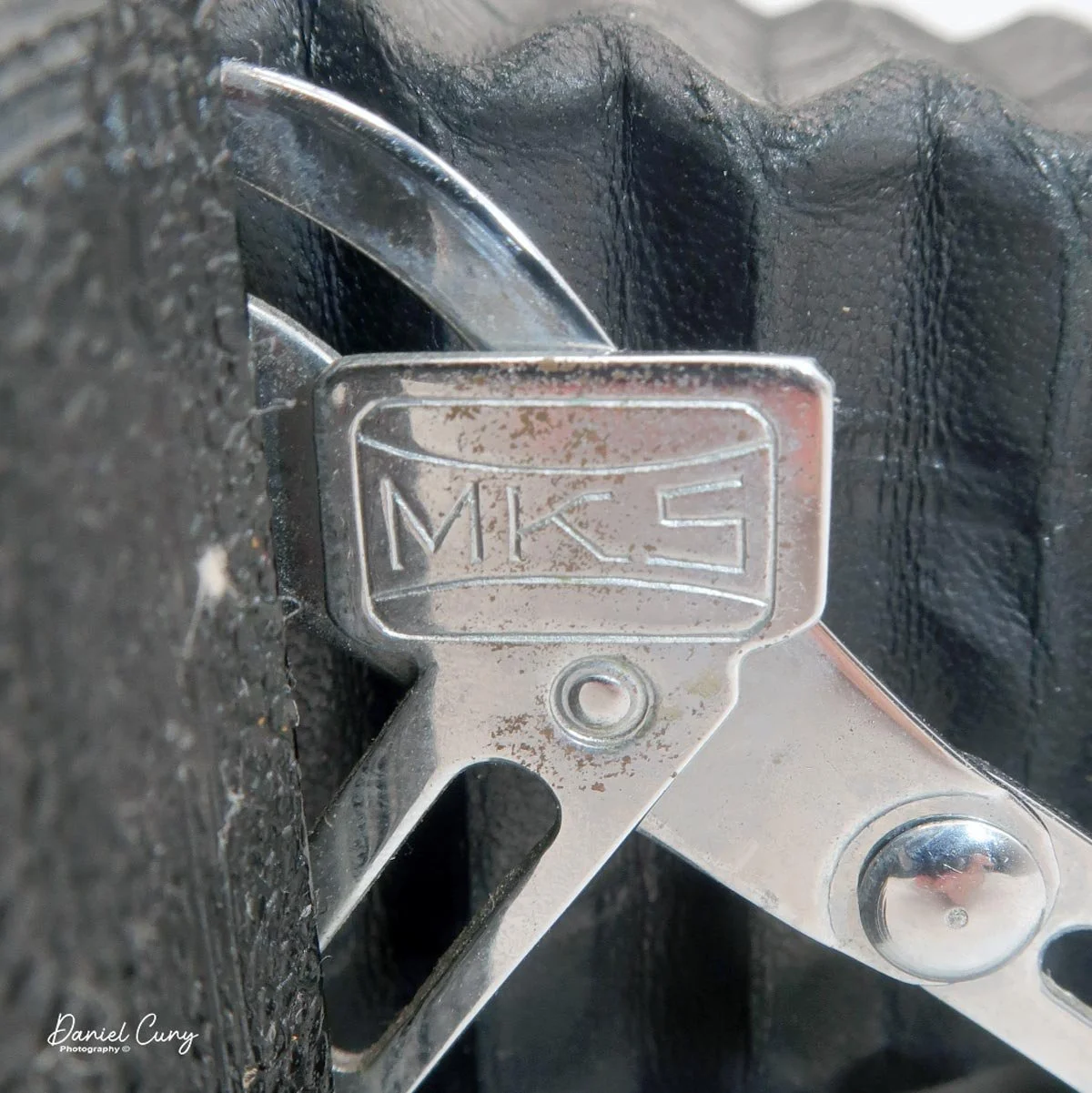
 The Mizuho Six has an 80mm Mizuho Kiko Miltar Special F/3.5 lens, serial # 2664, in an NKS shutter. The shutter speeds range from 1/200 to 1 sec, along with "B" for timed exposures. The shutter speed is set by turning the shutter speed dial around the lens to the desired speed. The shutter release is located on the top, right side of the camera, just in front of the "Mizuo-Six" name and serial number.

 The aperture is set similarly by sliding a knurled ring around the lens to the desired aperture, which ranges from F/3.5 to F/22.

It wasn't until I shot my first roll of film through the camera that I realized the shutter wasn't working properly, so I'll need to either get it fixed or sell the camera with the defect. The issue is when I cock the shutter, which is done with a small switch on the top of the lens, the shutter remains open until you depress the shutter release. It doesn't really "cock" the shutter as it should. 

 What I did notice was when I pulled the shutter cocking ever over to the farthest position, the shutter wouldn't open. It was when I released the lever after the cocking maneuver that the lens stayed open. If I pulled the lever all the way, held it, and then tripped the shutter release, the shutter would work as intended. This was awkward to use this way, but it's the method used to take the blog images.

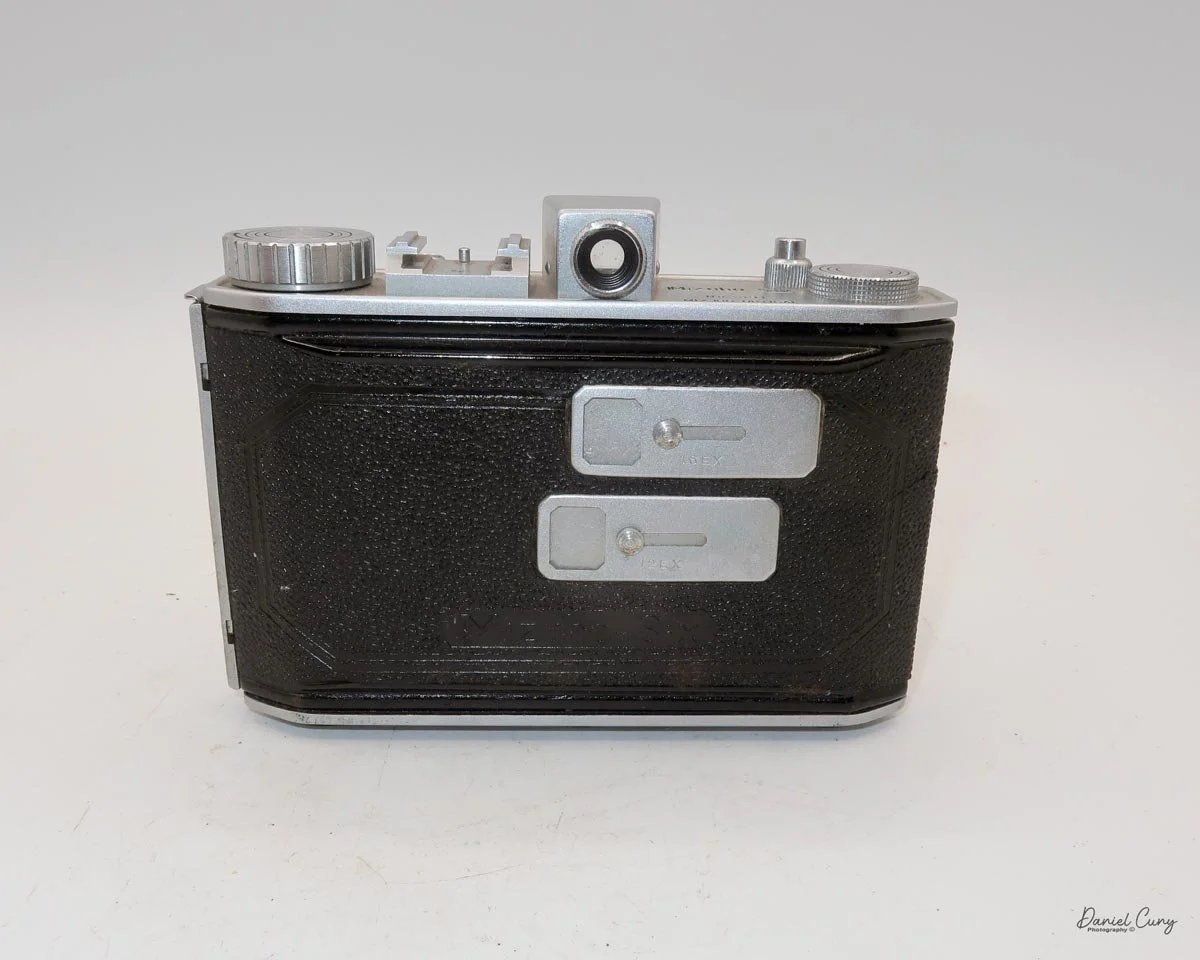
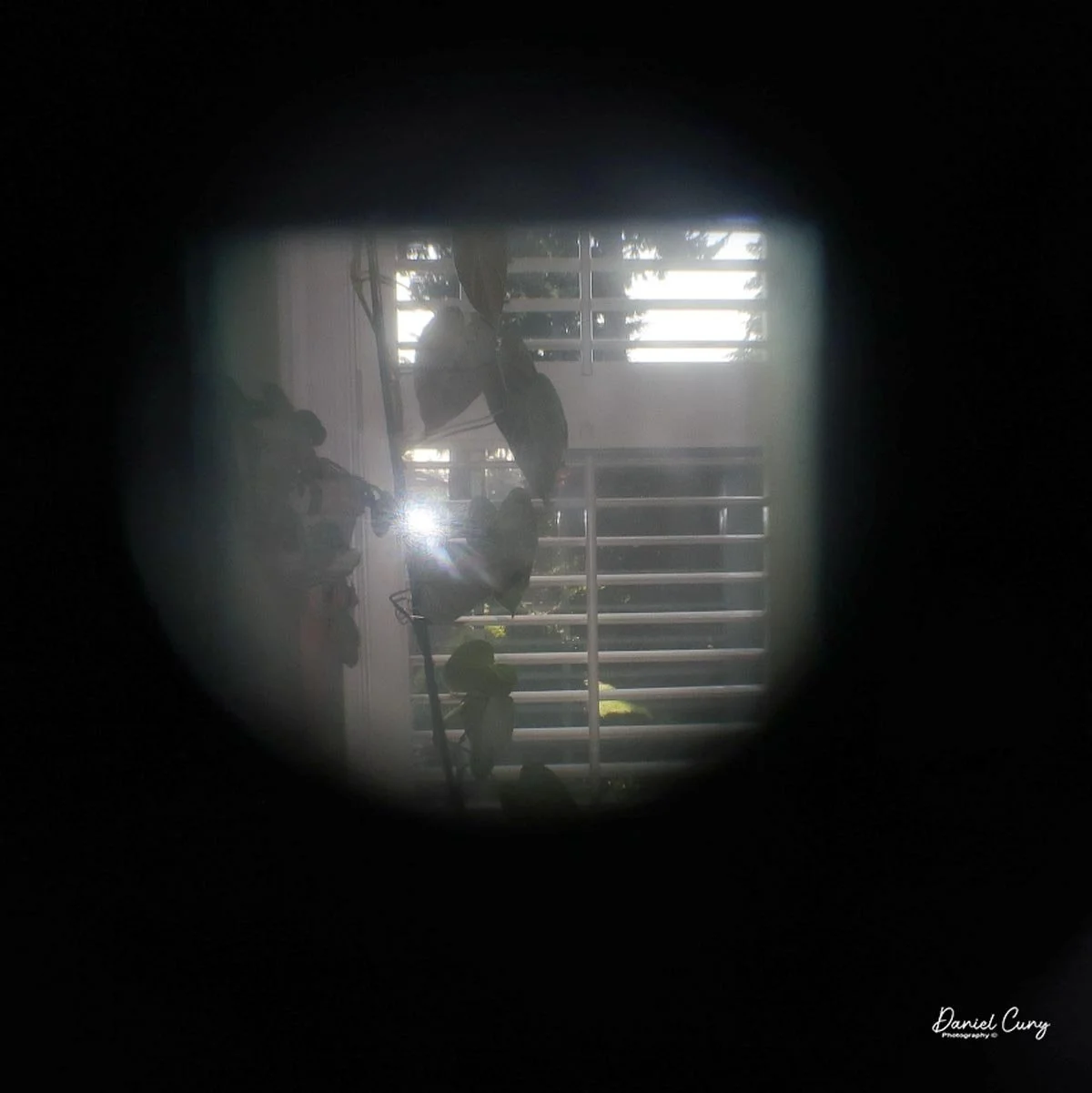
 There is no rangefinder in this camera; it has only an optical viewfinder on top to frame your images. To focus on the subject, rotate the lens manually to the "guessed" distance to your subject before taking the photo.

 To close the camera for transport, depress the two enlarged tabs on the camera's struts inwards. The lens board will collapse, and you can close it back onto the camera body, which will lock it into position.

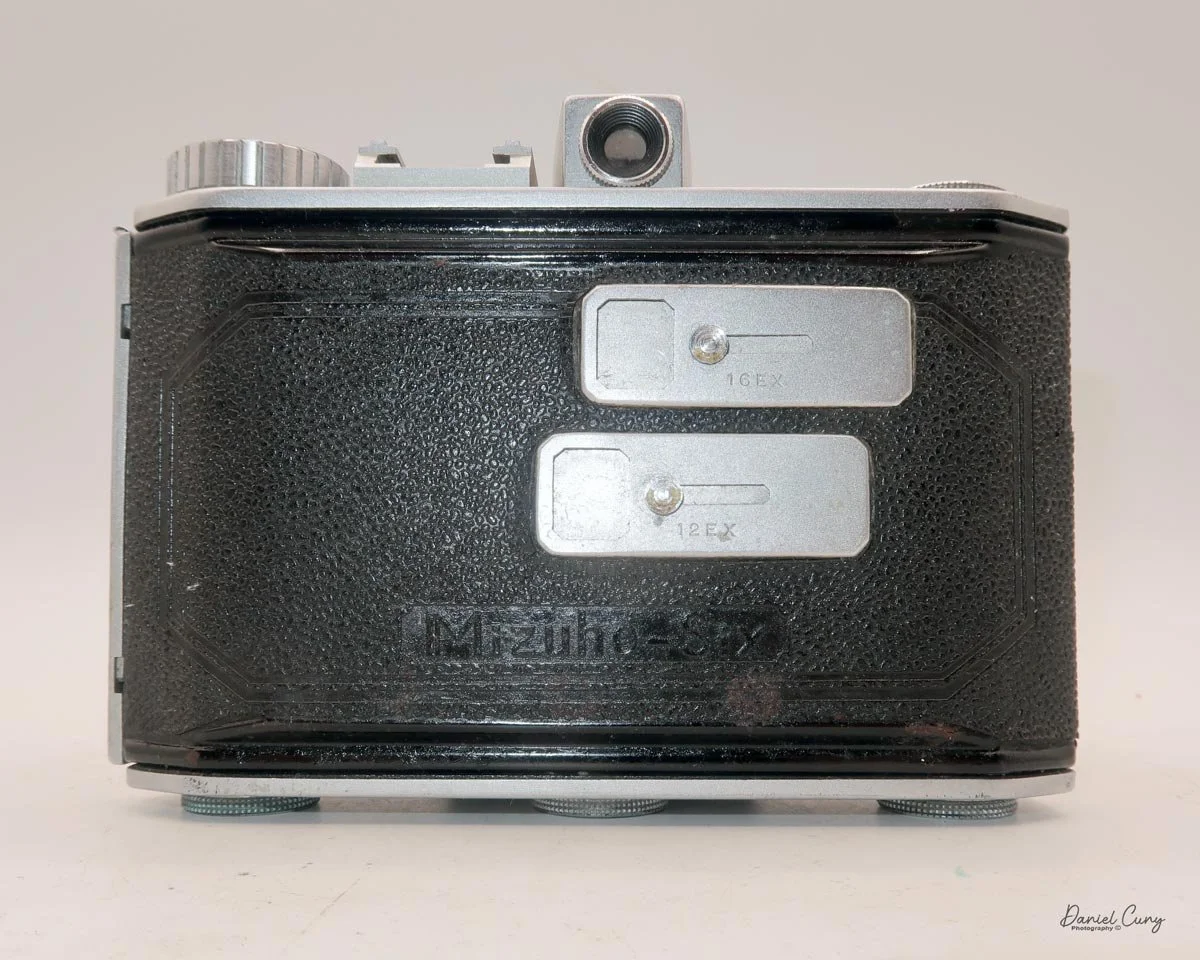
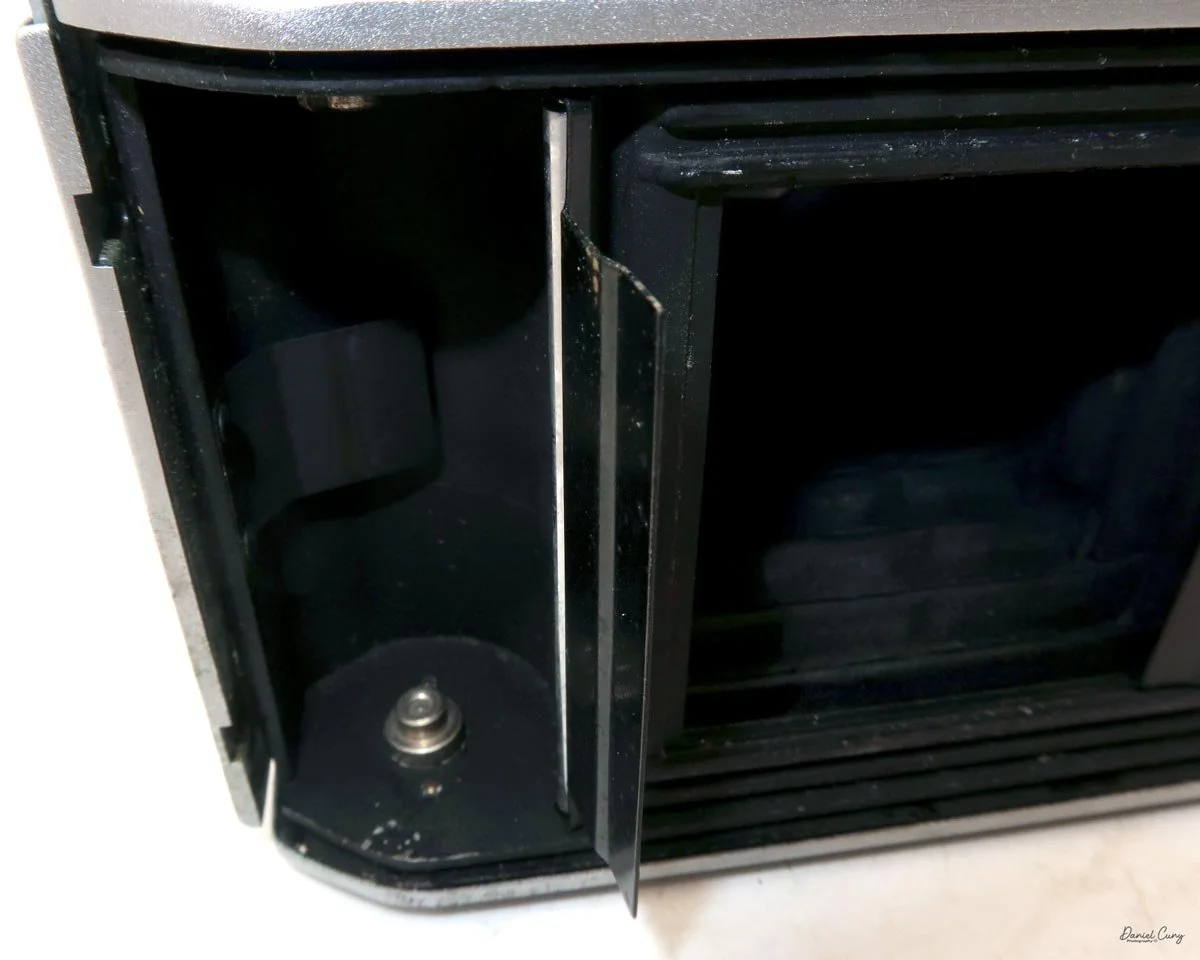
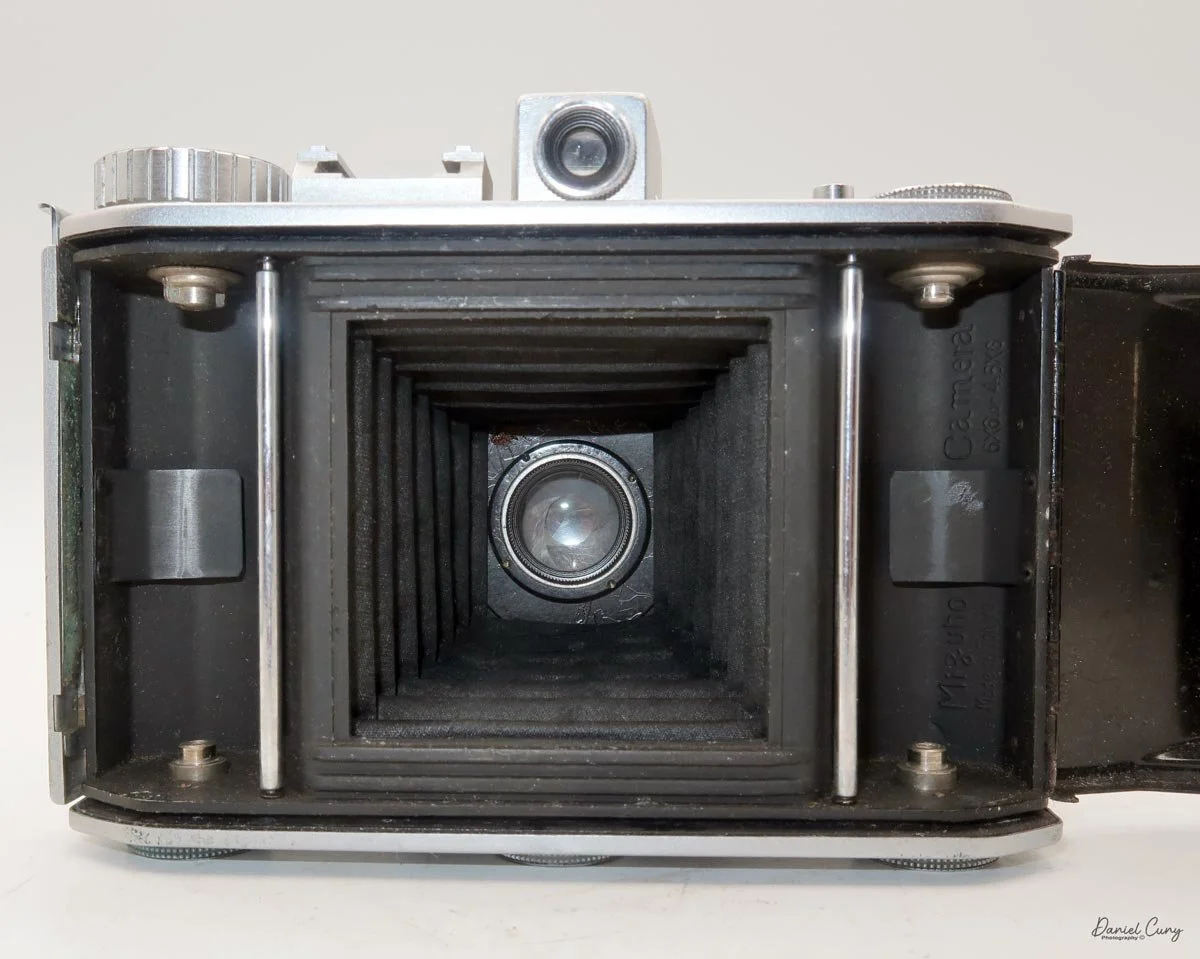
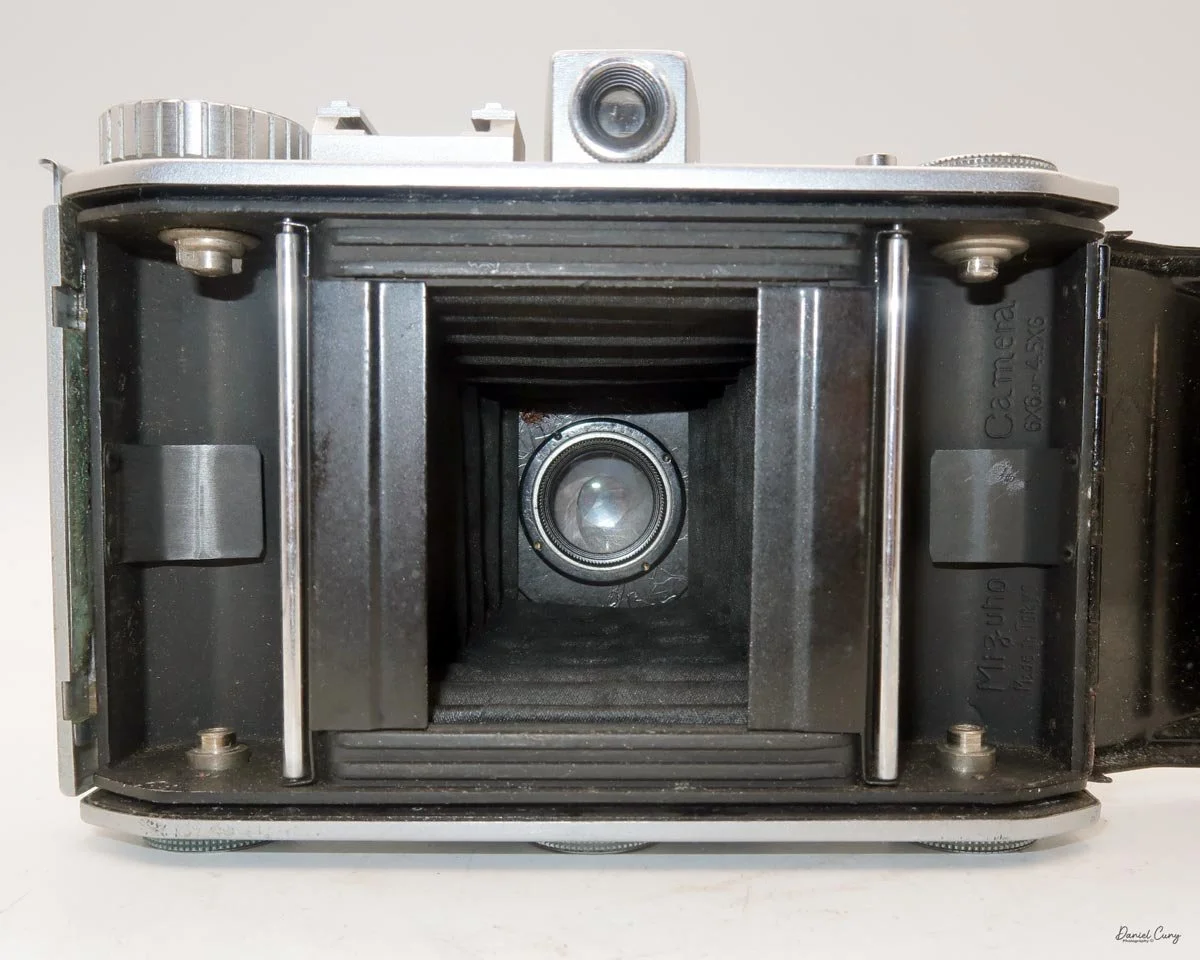
The one interesting feature of this camera is the ability to shoot either 6x6cm or 6x4.5cm. When you open the back of the camera to load film, there are two "wings" that can be pulled up from each side of the film chamber, covering a portion of the taking area and thus cropping the frame size from 6x6cm to 6x4.5cm.

 Once you make the change, you'll then use the appropriate red window on the back of the camera to count the frame numbers imprinted on the 120 rolls of film. It will also give the photographer four more images per roll, going from 12 images on a 6x6cm format to 16 on a 6x4.5 format camera. You'll need to shoot the entire roll in that format, as there's no way to change formats mid-roll.

You load the camera as you would any roll-film camera, with the take-up spool on the left side. Load the fresh roll on the right, and bring the film's leader to the take-up spool on the left,  making sure the leader is in the take-up spool. Then wind until you see the "start" arrows pointing outwards. Close the back of the camera and wind the film until you see the number 1 in the red window for the format you're using.

 Now that we have film loaded into the camera, let's take it out and see what results we get.

 My Results:

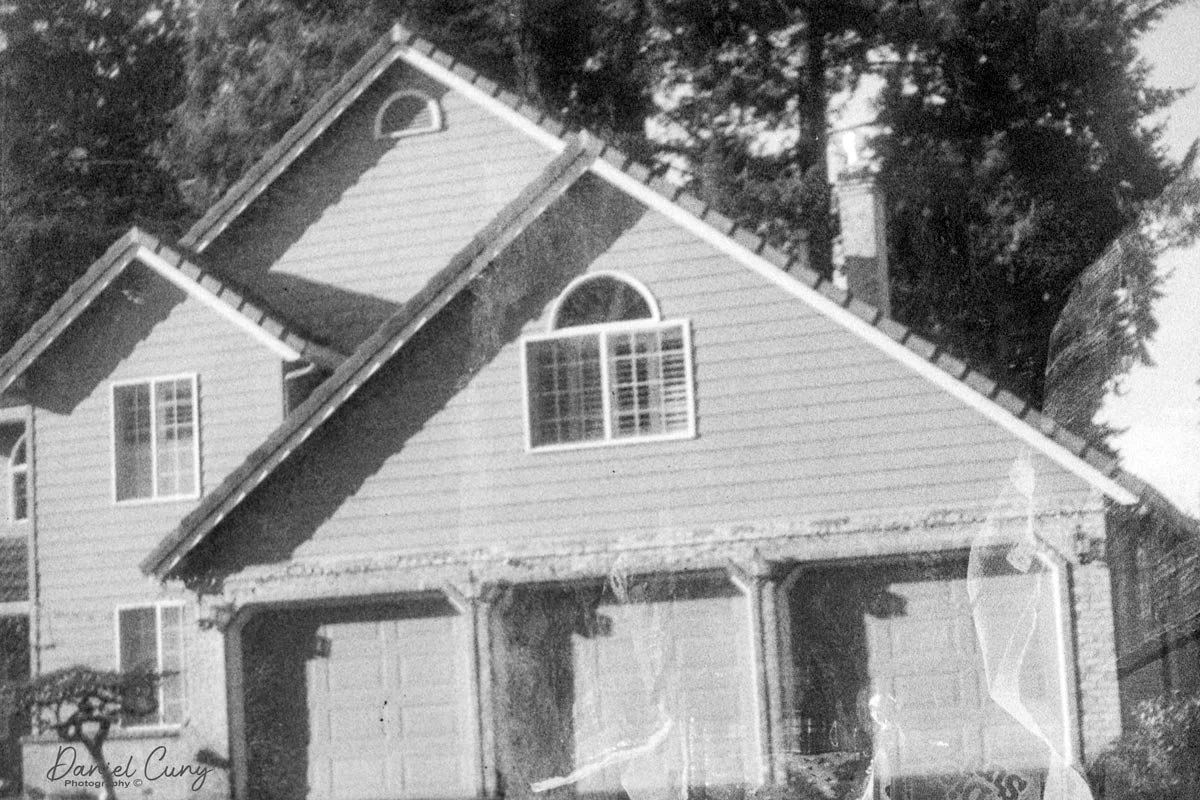
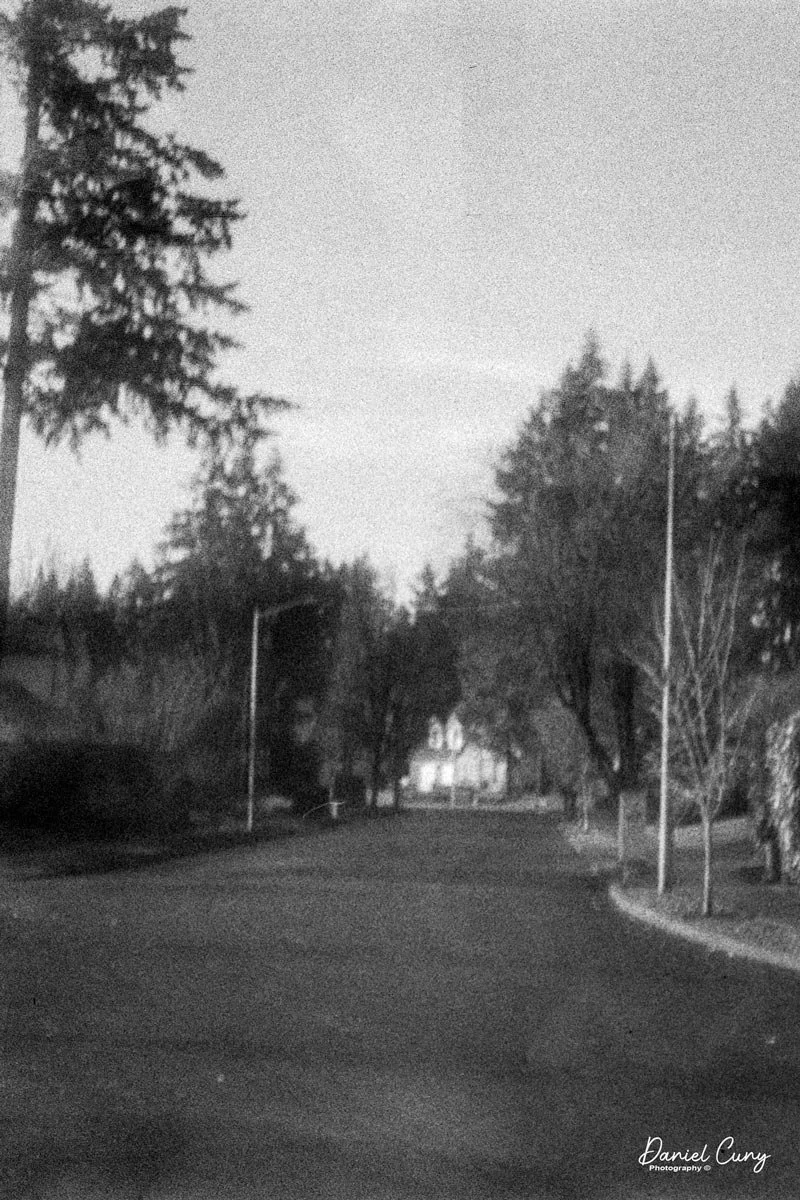
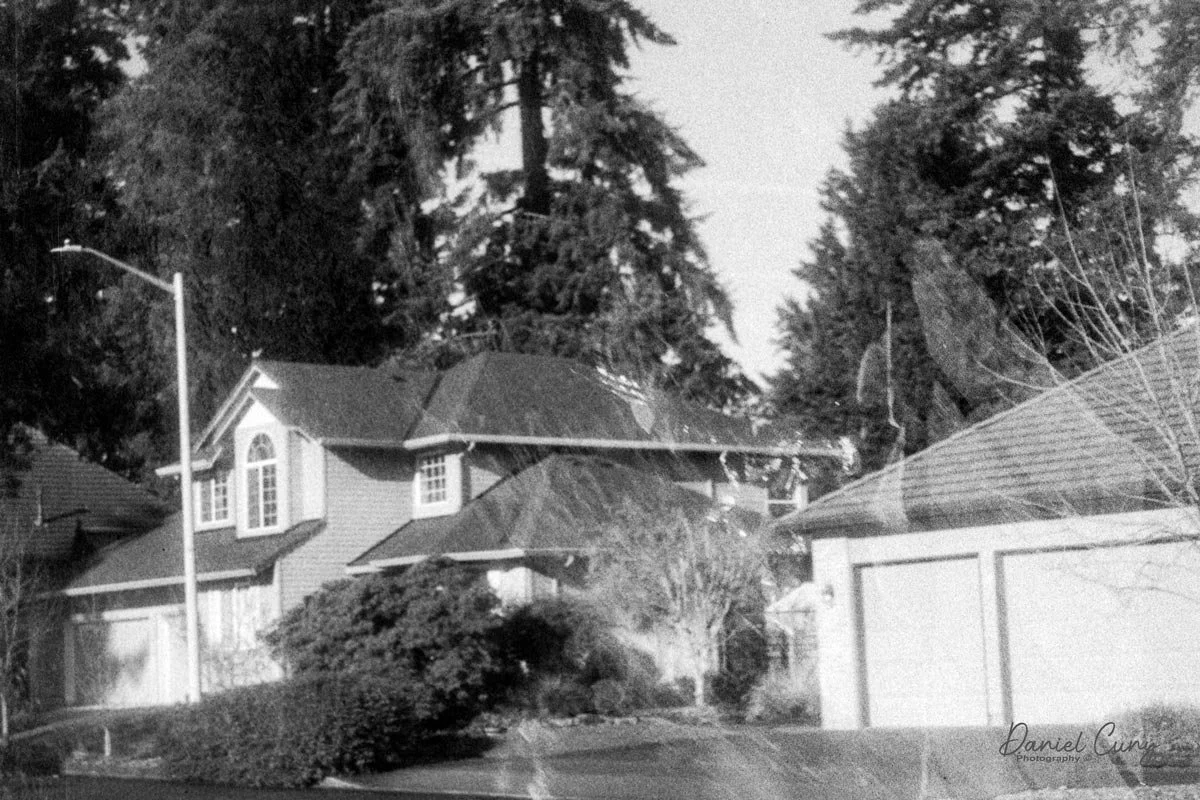
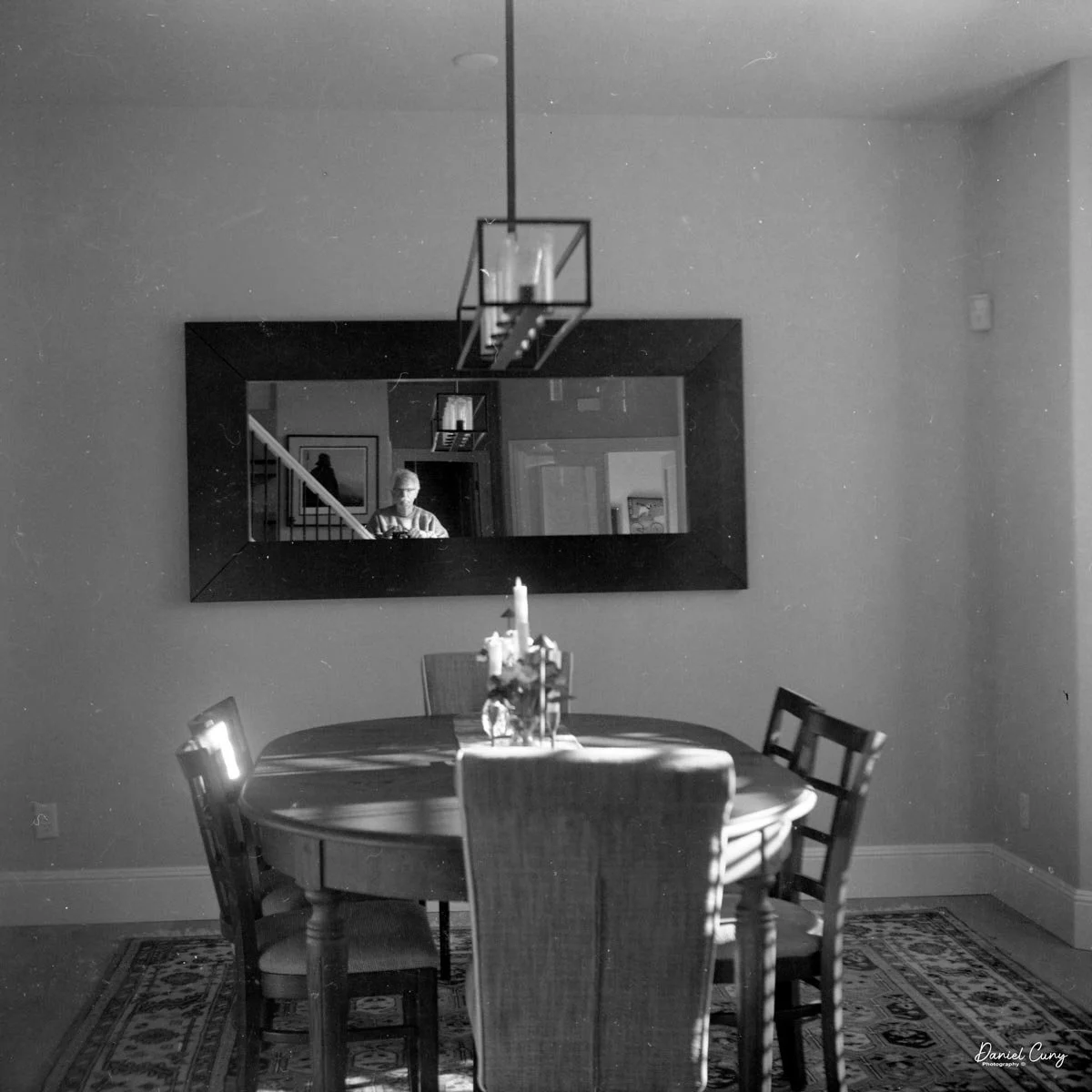
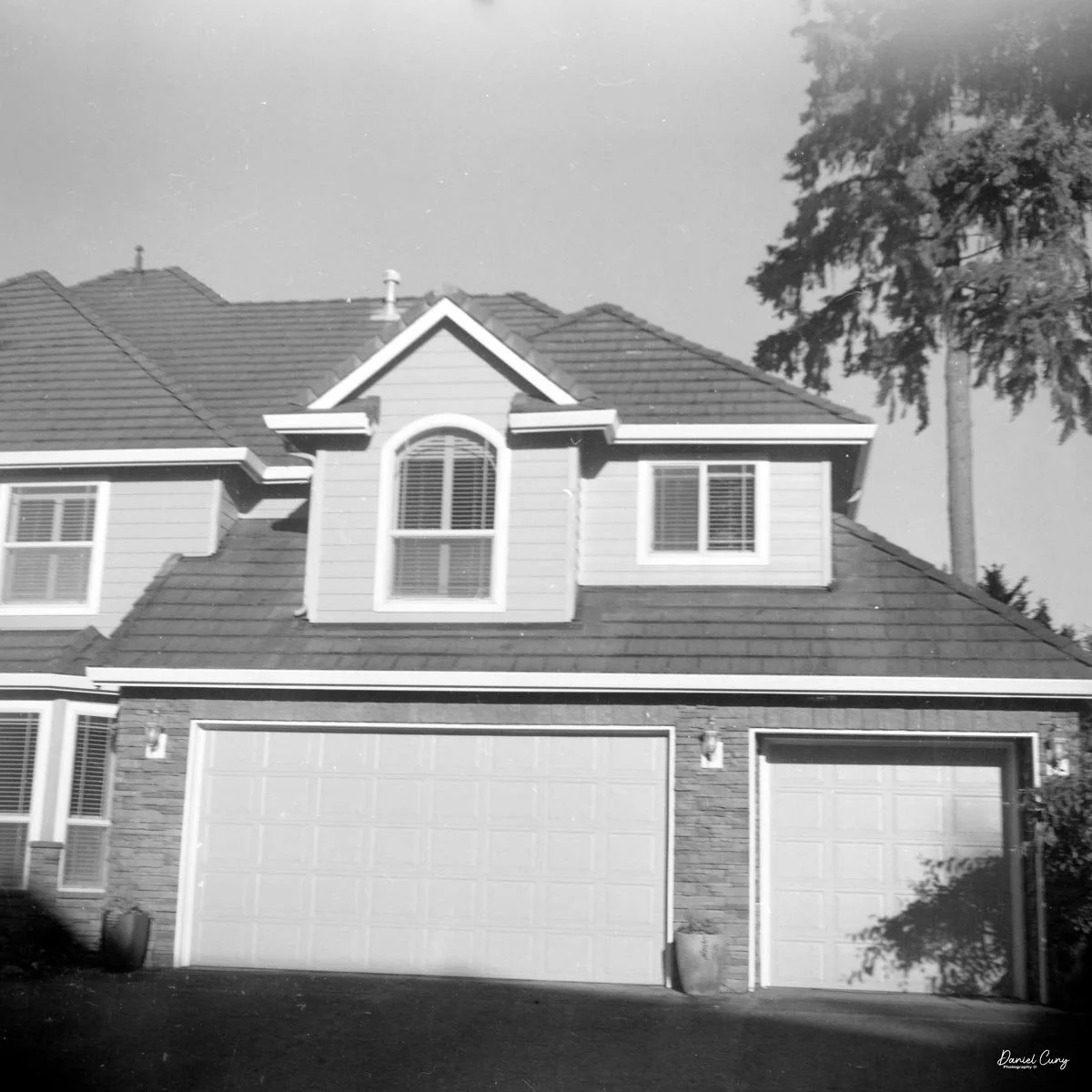
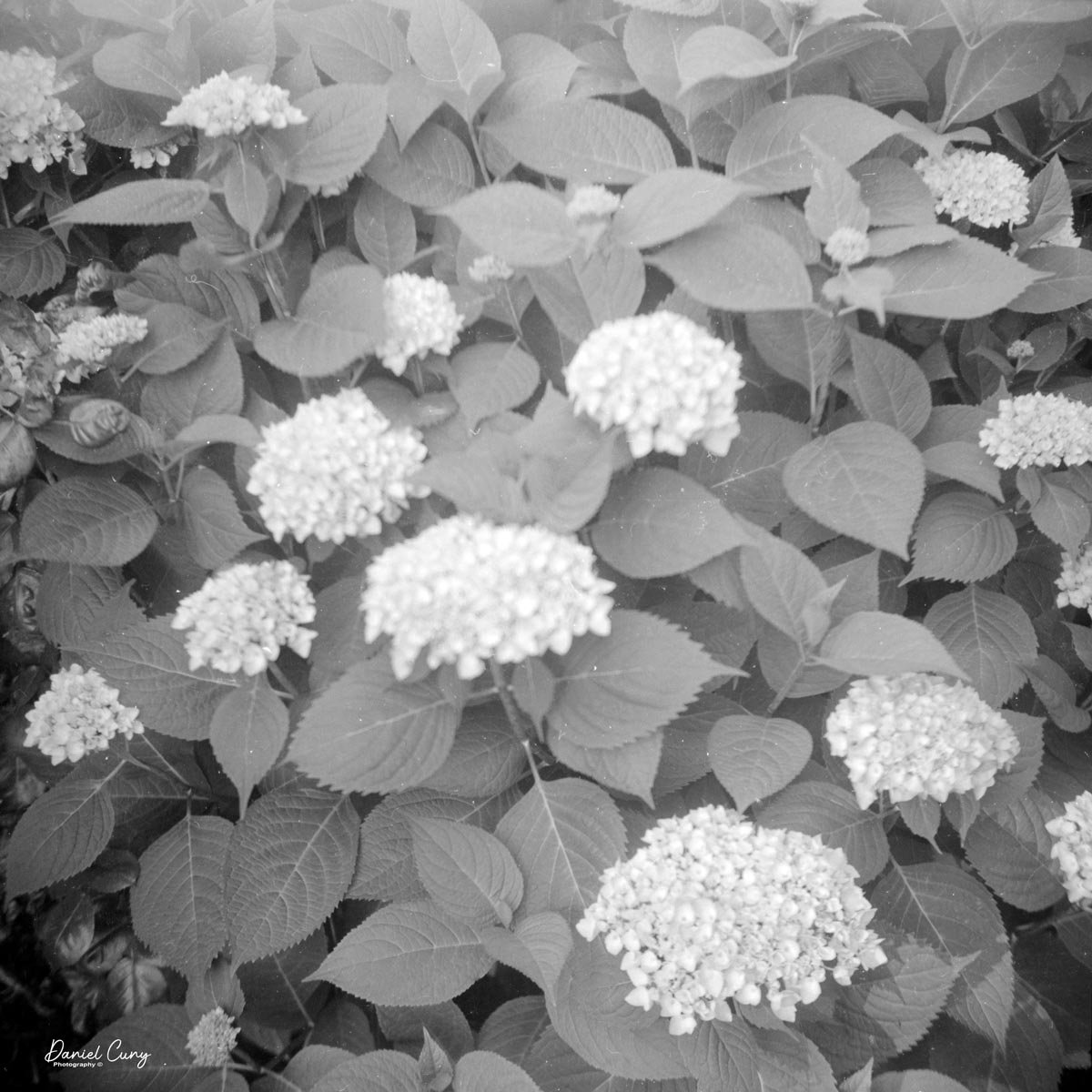
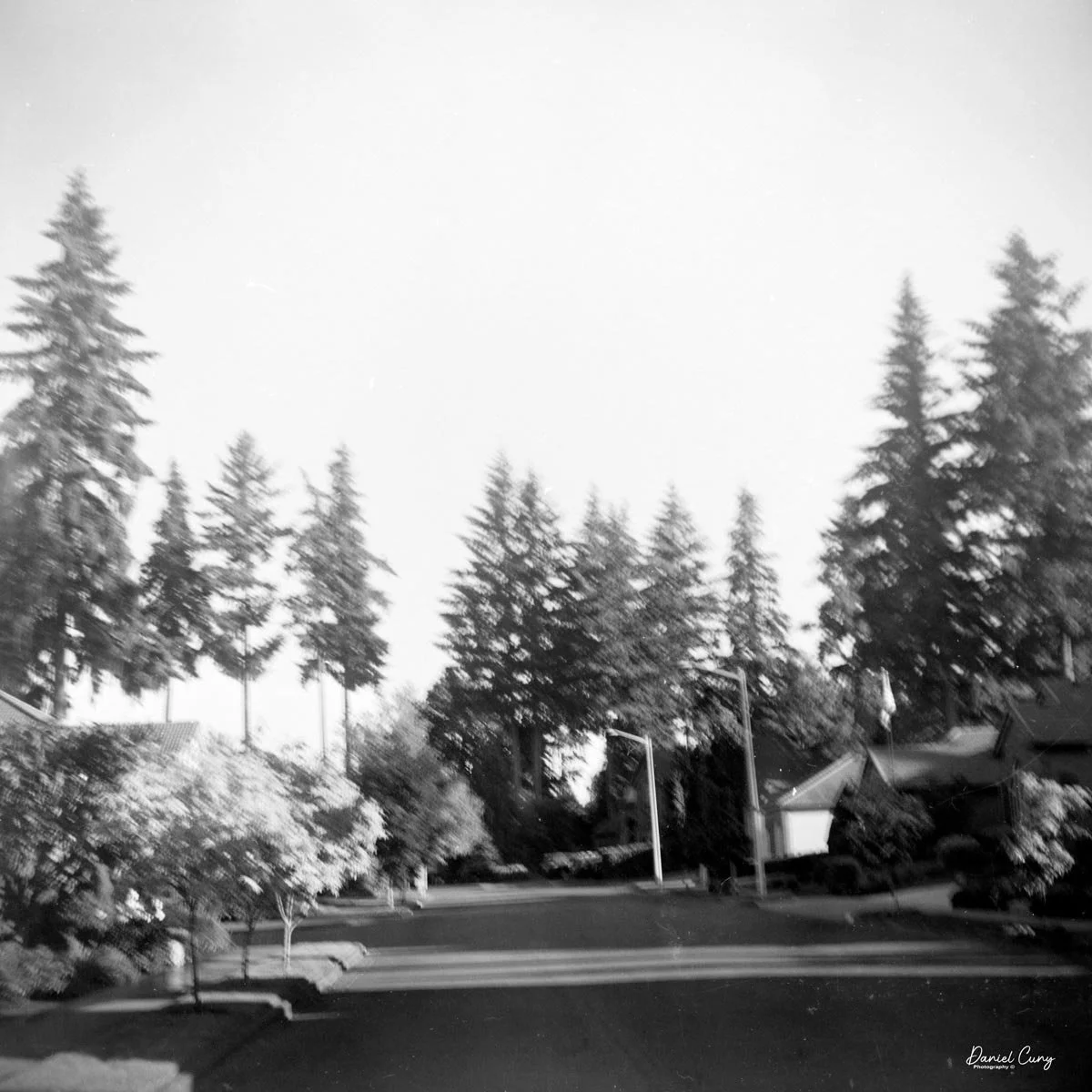
 Opening the Mizuho Six and cleaning both the front and rear elements of the lens before loading the camera. I had some T-Max 100 film that was just about out of date, so I loaded it into the camera. I chose the 6x6cm format so I could use a larger image size and assess the lens's sharpness.

 Here are the results from my walk around the neighborhood with the Mizuho Six camera

Conclusion:

 Well, I think the second roll of film turned out much better than the first roll, but I'm not overly impressed with the sharpness. This could be from a couple of different factors.

 While I cleaned the lens as best I could, it still seems to have some haze. The second factor is that the lens is slightly out of registration. I'm a fairly good guesser of distance, and the lens even at infinity seems a bit out of focus. I also think that some of the issues with the focus were caused by camera movement and what I needed to do to operate the shutter.

 The camera also has cosmetic issues. Some parts of the leatherette are missing and can be easily replaced. Given the shutter issues and the lenses' haze, this may not last long in my collection, and you'll probably see this in my online store soon.

 On the plus side, the camera can shoot in different formats, which is a nice feature, but I don't think it's going to overcome the camera's faults. It's a fun camera to shoot with, and I was happy to learn more about this camera.

 Thank you for taking some time from your busy day to learn a bit about this little-known camera from the beginning of the Japanese camera revolution.

 Here's a link to my other Camera Reviews.

 Cuny's Cameras and Photos is my online eBay store where you'll find some of the cameras I reviewed for sale, along with many other cameras, lenses, and photo items from my collection.

 Until next week, please be safe.