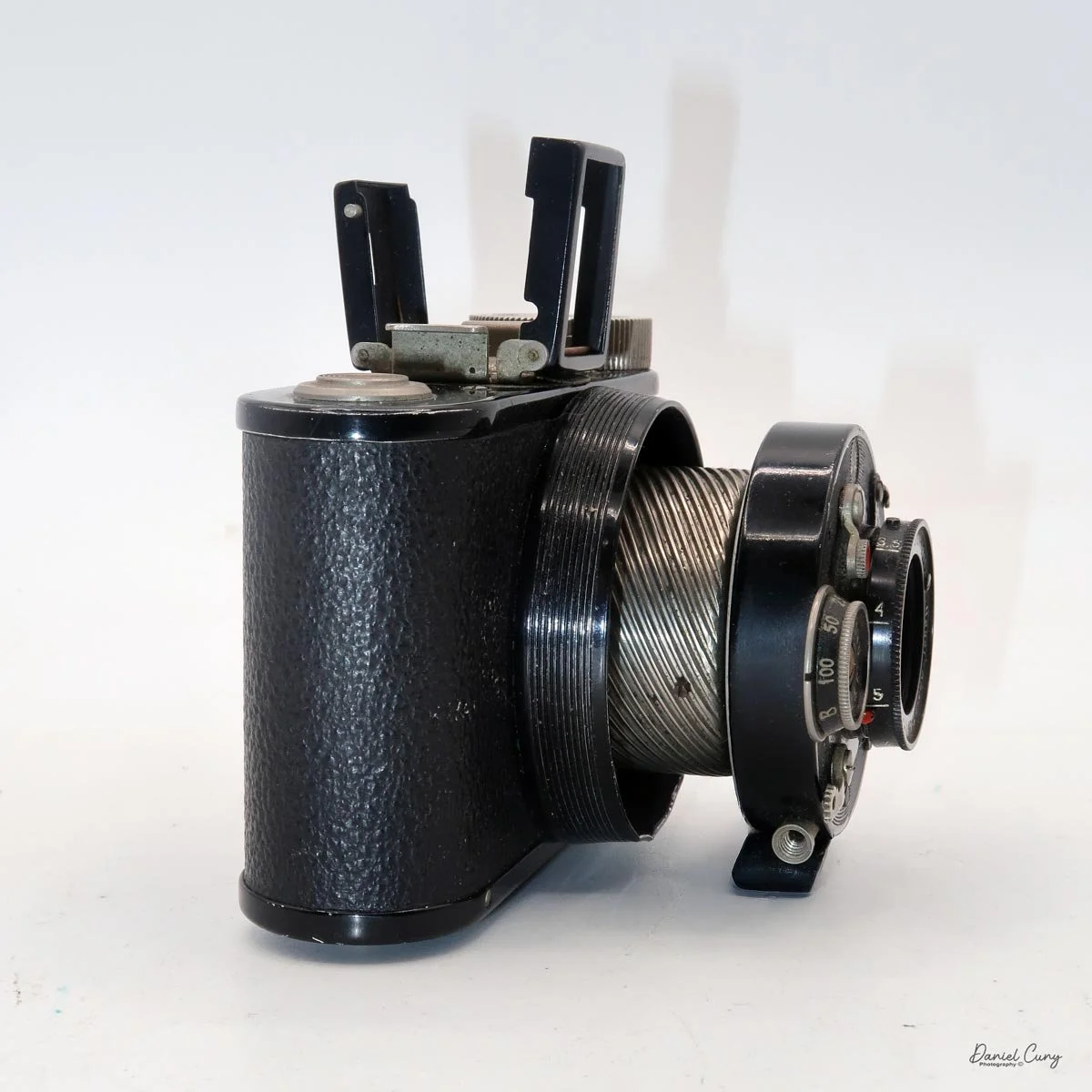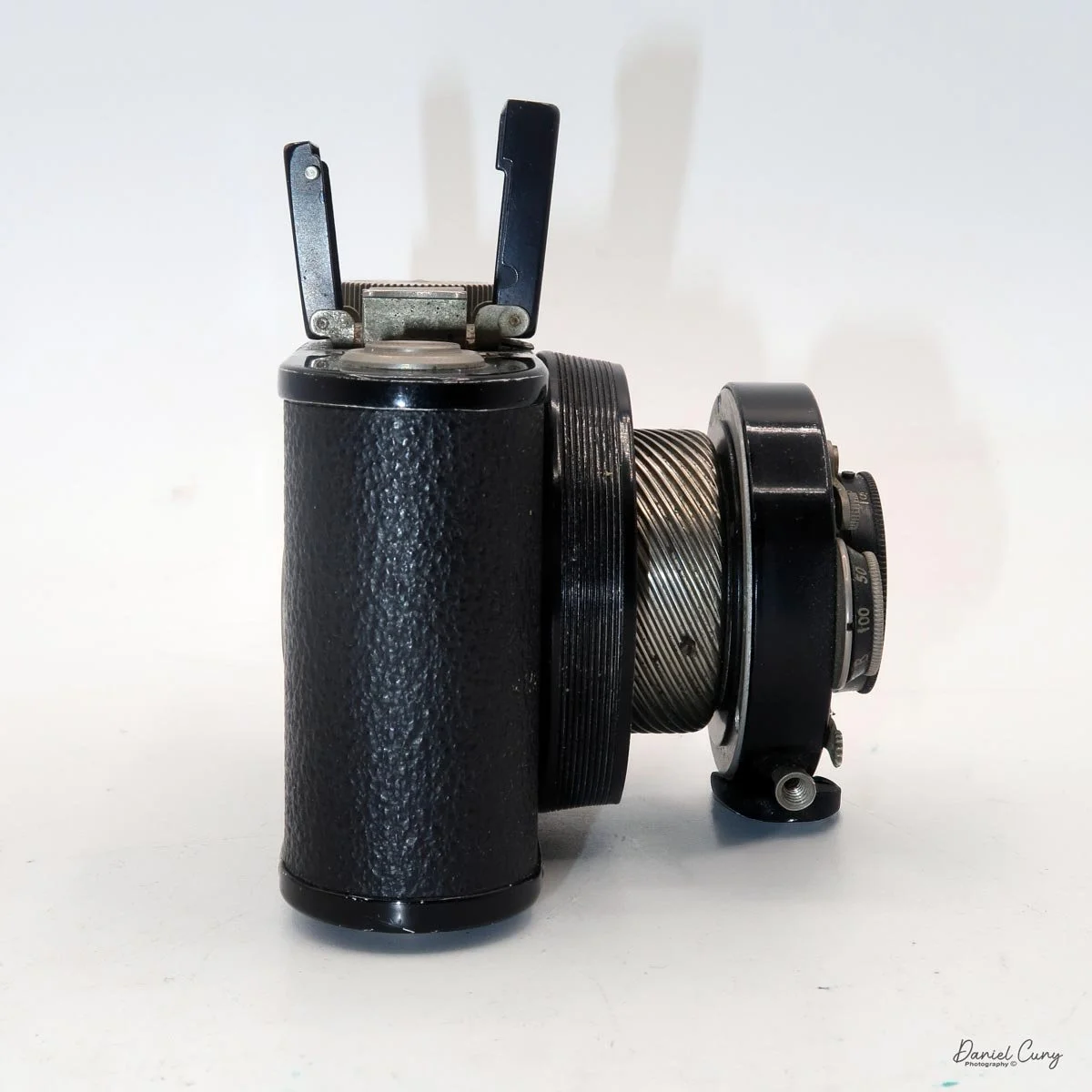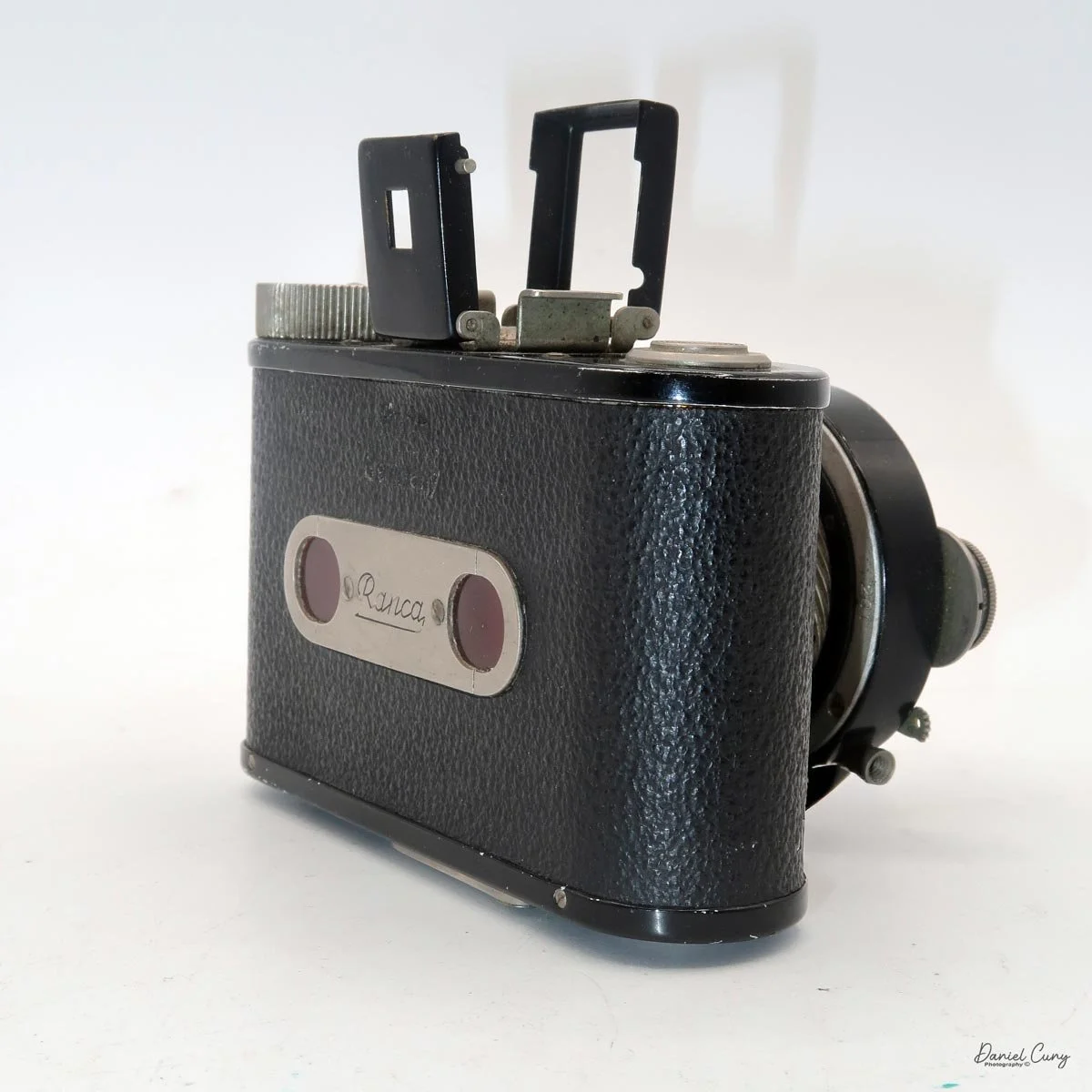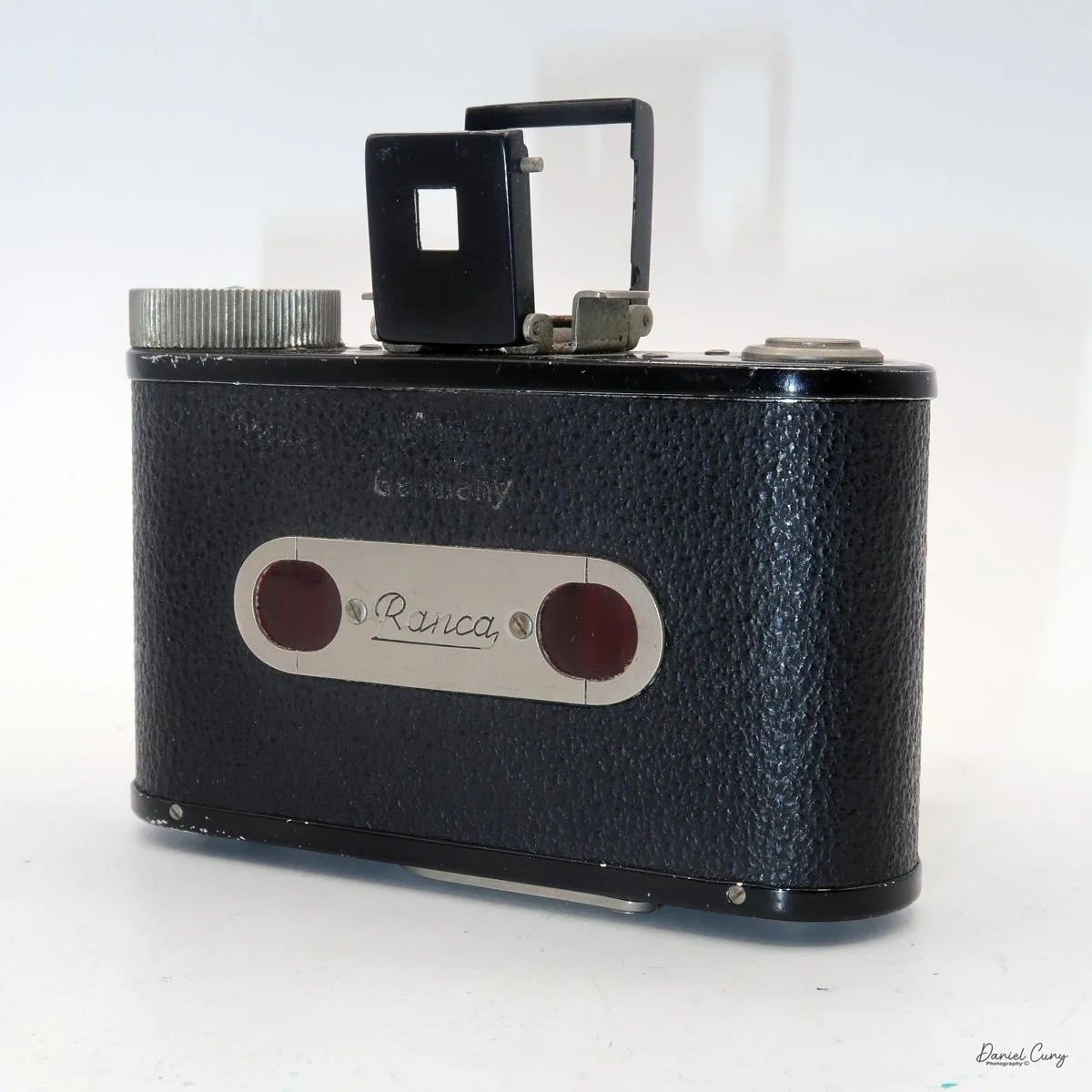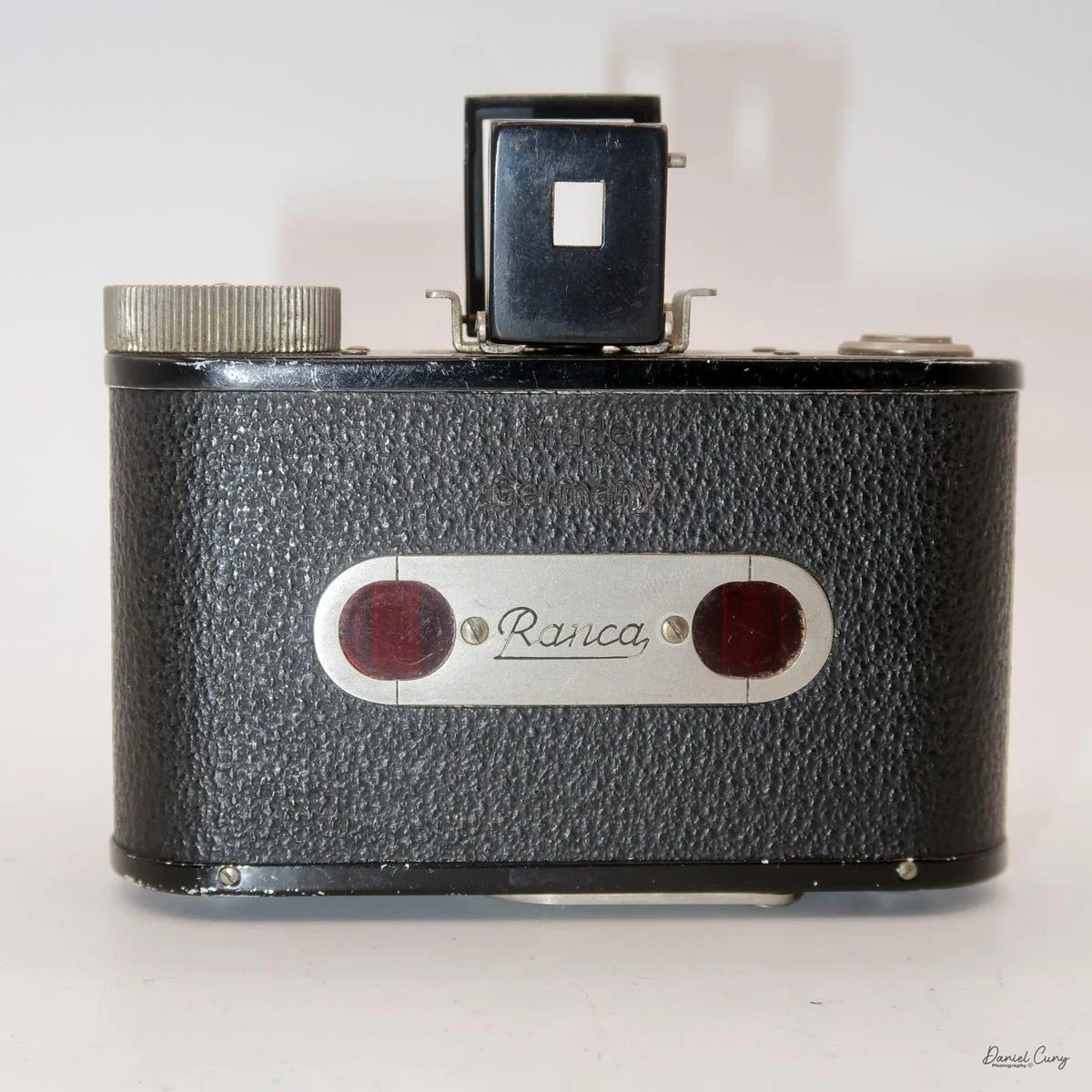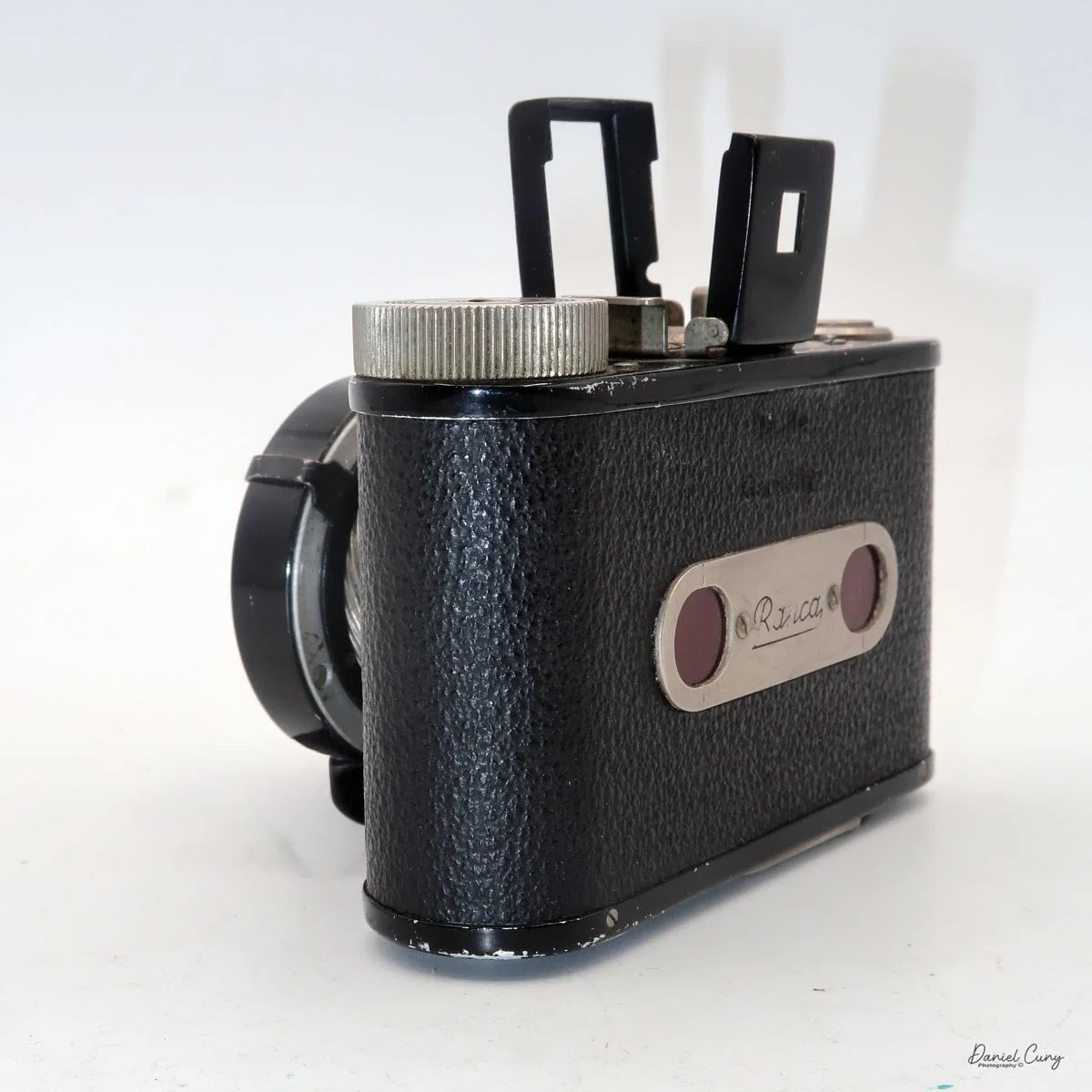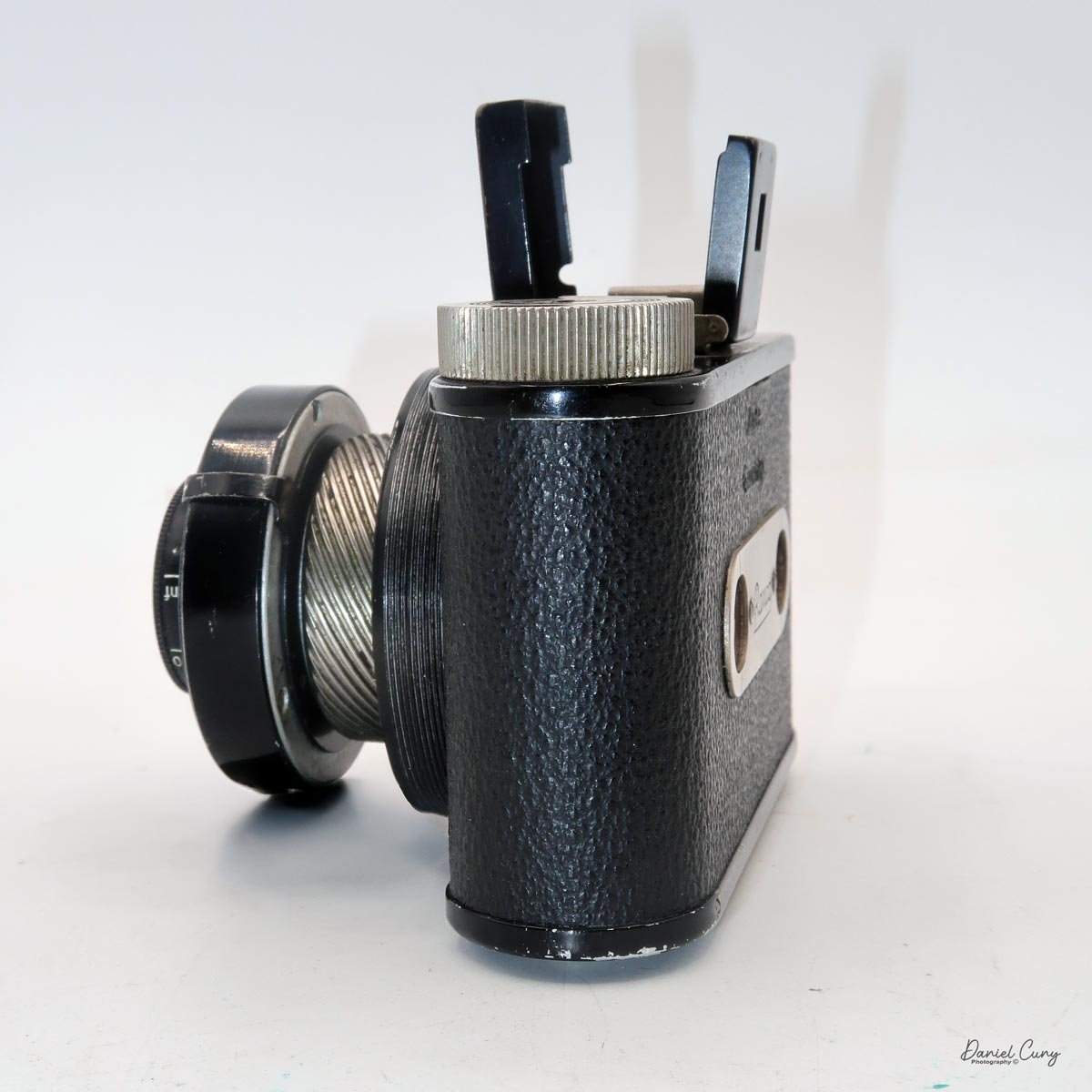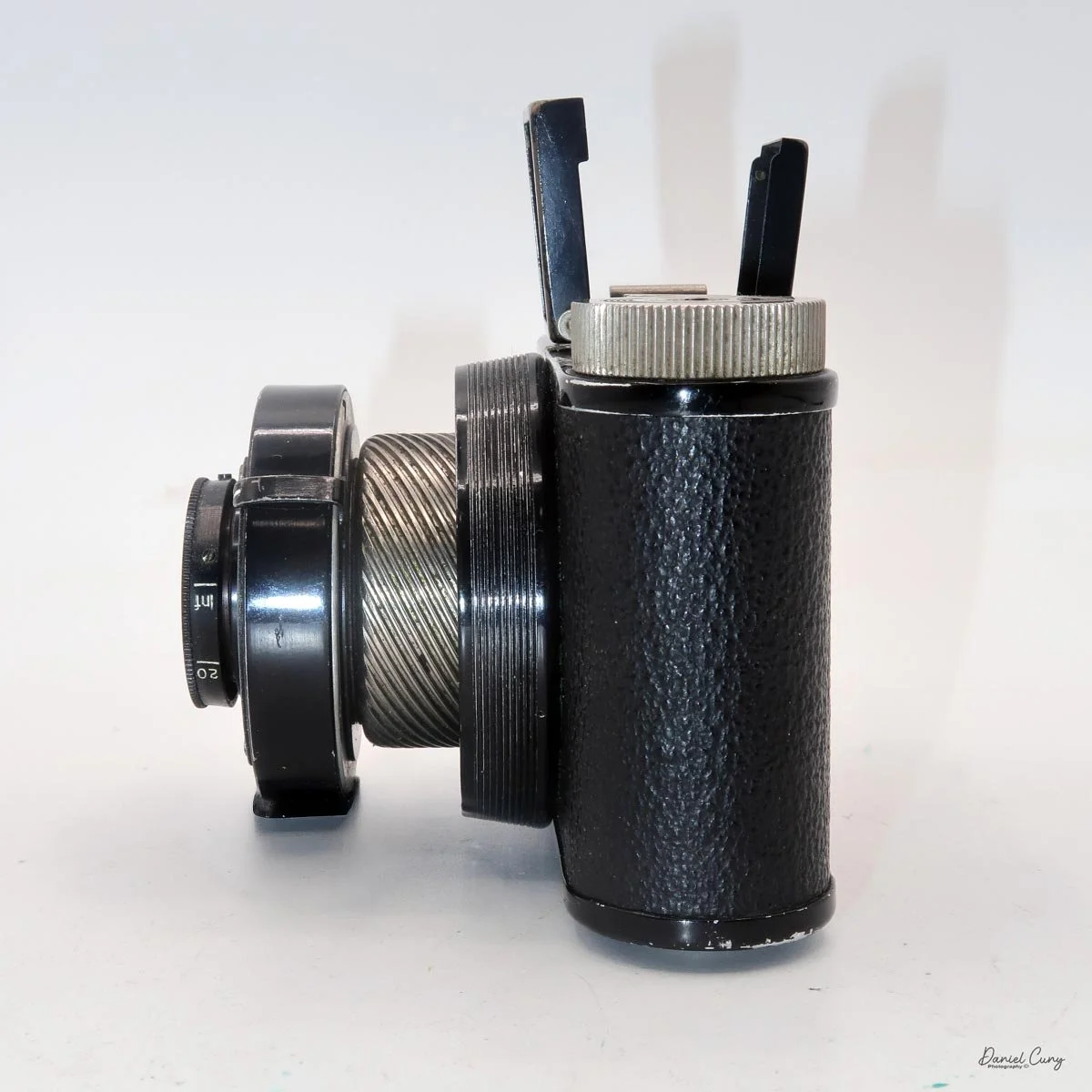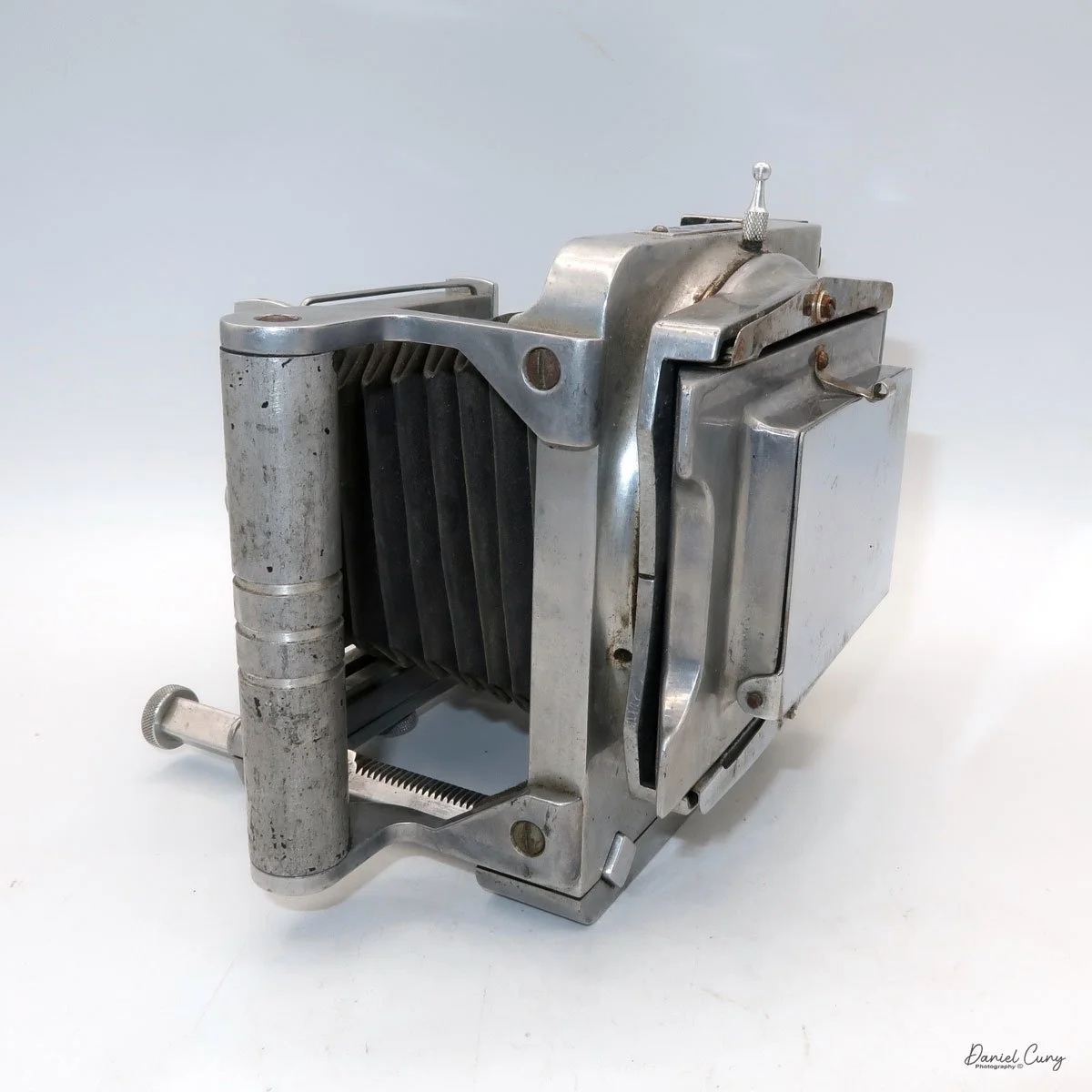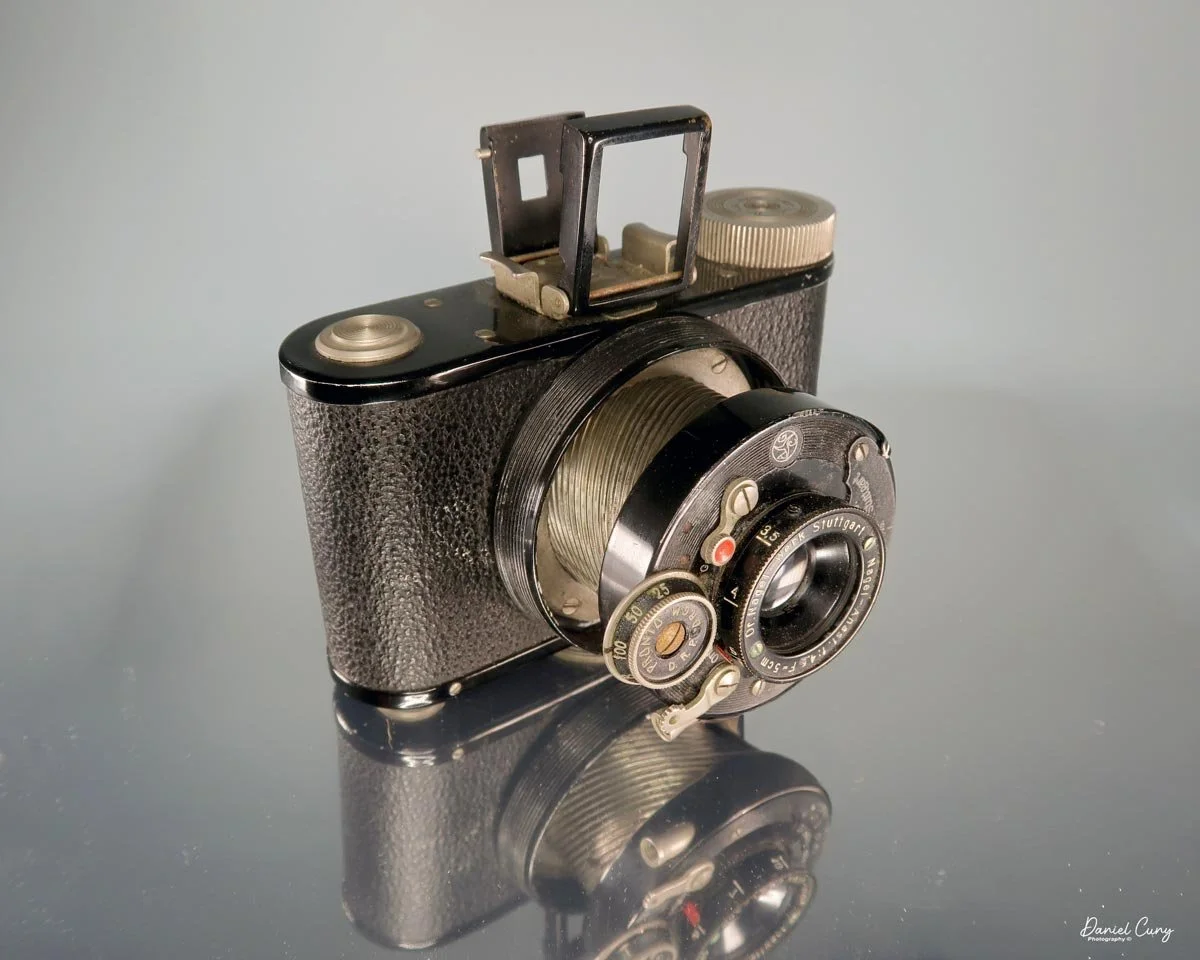
Kodak-Nagel Ranca camera

My Kodak-Nagel Ranca camera

Being a collector and working in the photo industry for more than 50 years, and, more specifically, in the photographic retail business for almost 20 of those years. My retail years were in the mid-1970s through to the early 1990s. It was the height of film photography with Nikon F's, Canon AE-1's, Minolta SRT's, Pentax, Rollei, Contax, etc. I can remember the introductions of many of the best-selling cameras from this era. I have seen and sold many cameras. But to this day, I still enjoy them.

 When I look at a camera, especially an older one I'm not familiar with, the first impression strongly influences whether I purchase it. I'm always on the hunt for the odd and unusual camera.  I imagine it's really about what you enjoy collecting. 

 Many collectors look for pristine examples of Leica, Rollei, Hasselblad, or items with a slight difference, making them a "rare" item. Still, if I see a camera I'm not aware of, and it has an unusual appearance or color that stands out, that's what catches my eye. It doesn't have to be expensive or rare; it just has to be unusual to me.

 That's where the camera I'm writing about this week comes in. The Kodak Ranca is a camera I first saw on my friend Mike Ott's website. Mike is the longtime owner of Pacific Rim Camera and one of the best photographic resources around. It's a website I often visit, very similar to Mike Butkus's Camera Manual, which offers information on cameras, catalogues, manuals, etc. 

 I purchased the Kodak Ranca because it was a compact camera I wasn't familiar with. It wasn't until it arrived that the camera had a very similar look and feel. I was aware that it was a Nagel-made camera, which was another reason I was attracted to it. Still, when I dug into the camera after it was purchased, it's considered the "less expensive" version of the very popular Nagel Pupille camera, which I reviewed a few months ago.

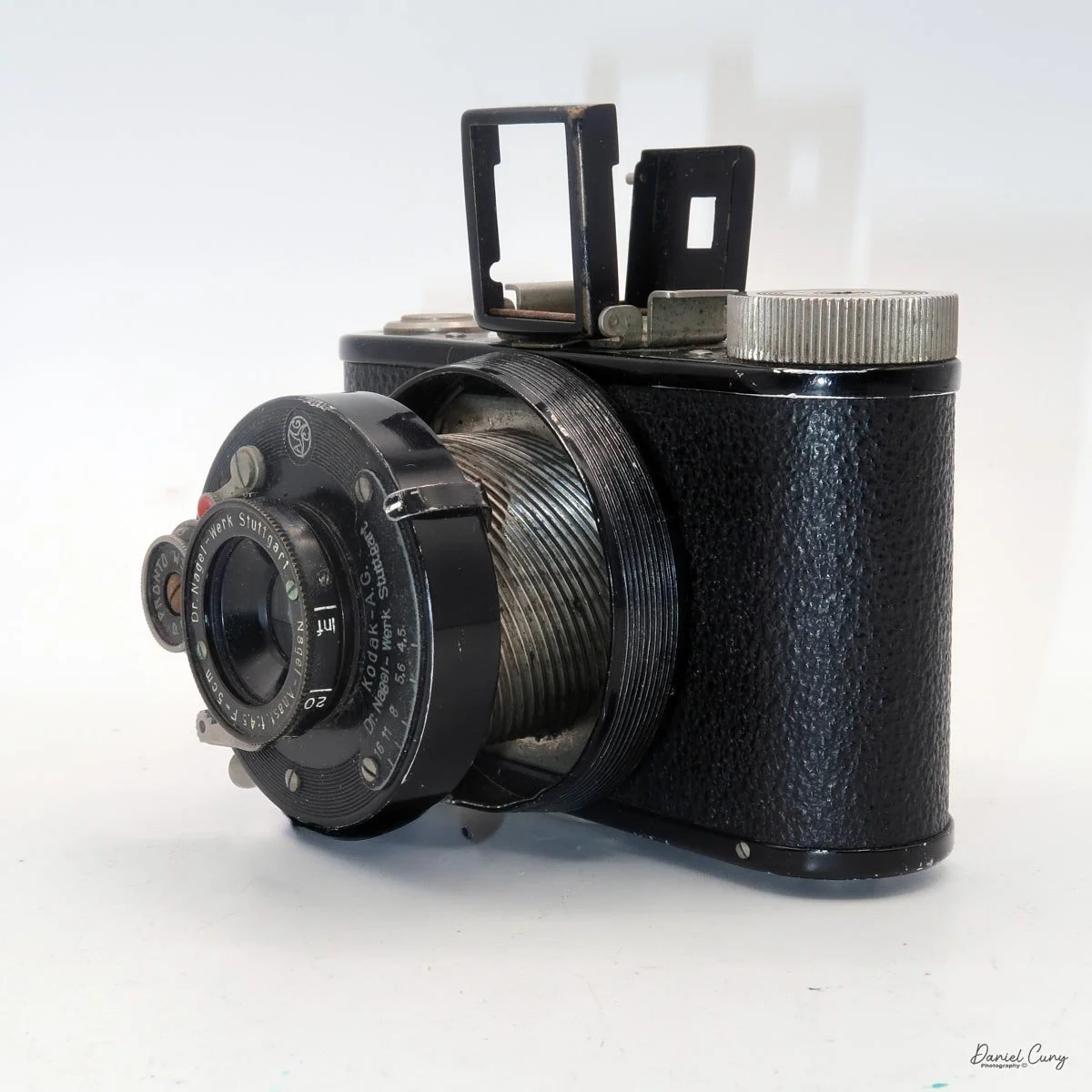
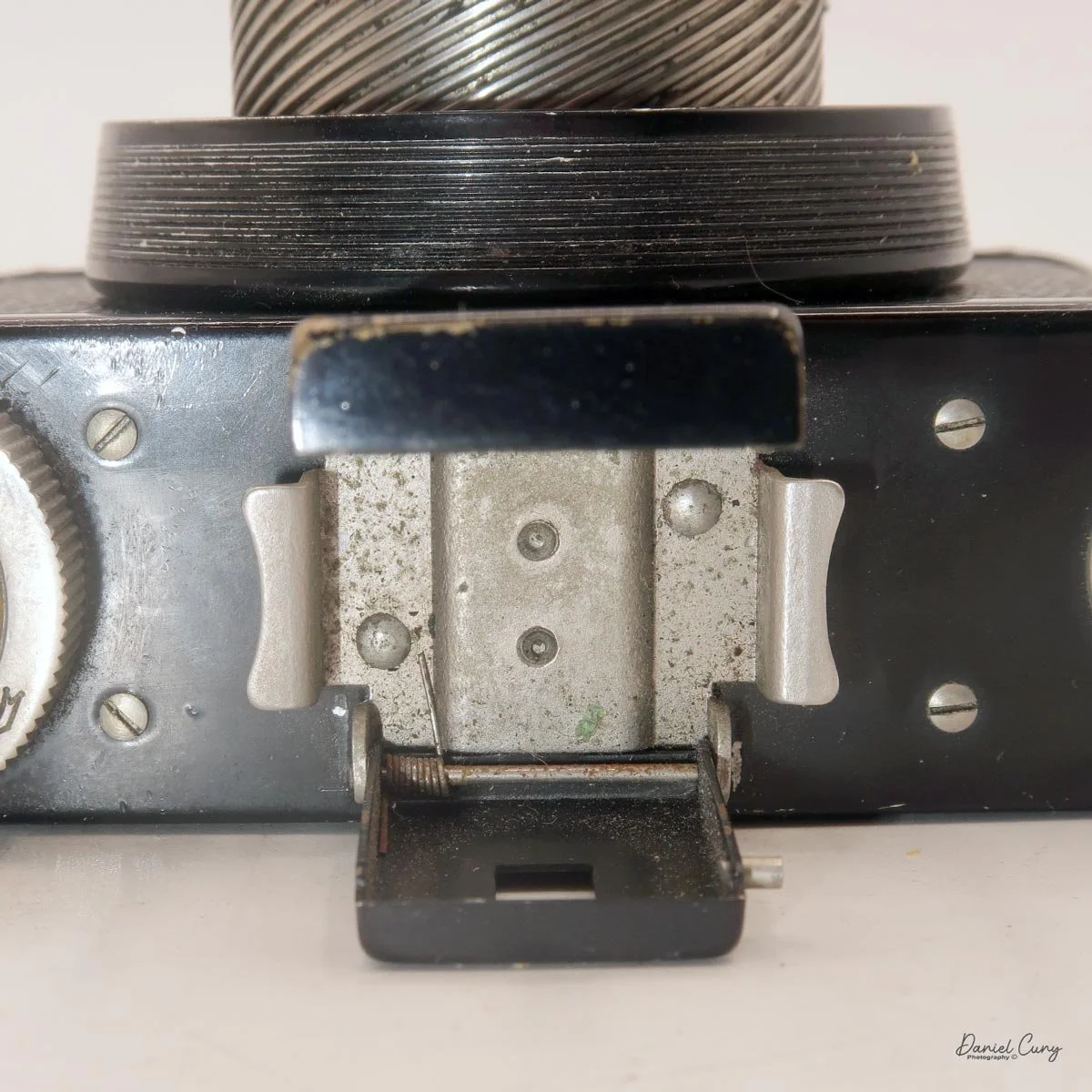
 According to my reading of the Ranca camera, there were two versions. The earlier model, known as 46/0, has a helicoid lens and shutter system that rotates out from the camera's body when you grip and rotate the shutter/lens area a quarter turn counterclockwise. This also exposes the helicoid on which the lens/shutter rotates. The second version is the 46/1, which has a rigid lens barrel with the lens and shutter on the end. 
 The camera was introduced in the middle of 1930 and remained available for only approximately 1 year, until the latter part of 1931. Both the Nagel Pupille and Ranca camera take 127-size film, producing 16, 3x4cm images on the roll. 

 Sources state that a total of 2,200 Ranca cameras were produced, compared to 5,000 of the more expensive, better-featured Pupille cameras. While the Pupille has superior features, fewer Ranca cameras are produced. Yet, the Pupille is more of a collector's item and fetches a higher price, even today.

 Some of the other differences between the two models: both cameras have "sports"-style pop-up viewfinders; some have glass on the front, and some don't. Different shutters, either Prontor or Ibsor, were available. The camera uses a front focus system, with some cameras opting for a very simple distance scale for portrait, group, or landscape. In contrast, others have the distance in feet on the lens barrel. 

History:

 Dr. August Nagel was one of the most important European designers ever associated with Eastman Kodak, and their partnership reshaped Kodak's position in the precision‑camera market. In 1932, Eastman Kodak purchased Nagel's Stuttgart-based firm, Dr. Nagel-Werke, and reorganized it as Kodak A.G., retaining Nagel as managing director and head of design. Before this acquisition, Kodak was dominant in film and popular roll-film cameras. Still, German makers like Leica and Contax defined the high‑end miniature camera segment. Kodak wanted a German-built precision camera to compete directly, yet at a lower price and in a form that fit its mass‑market philosophy. Nagel, already respected for compact folding designs and his work on Contessa-Nettel and Zeiss Ikon models, was the ideal partner to bridge that gap.
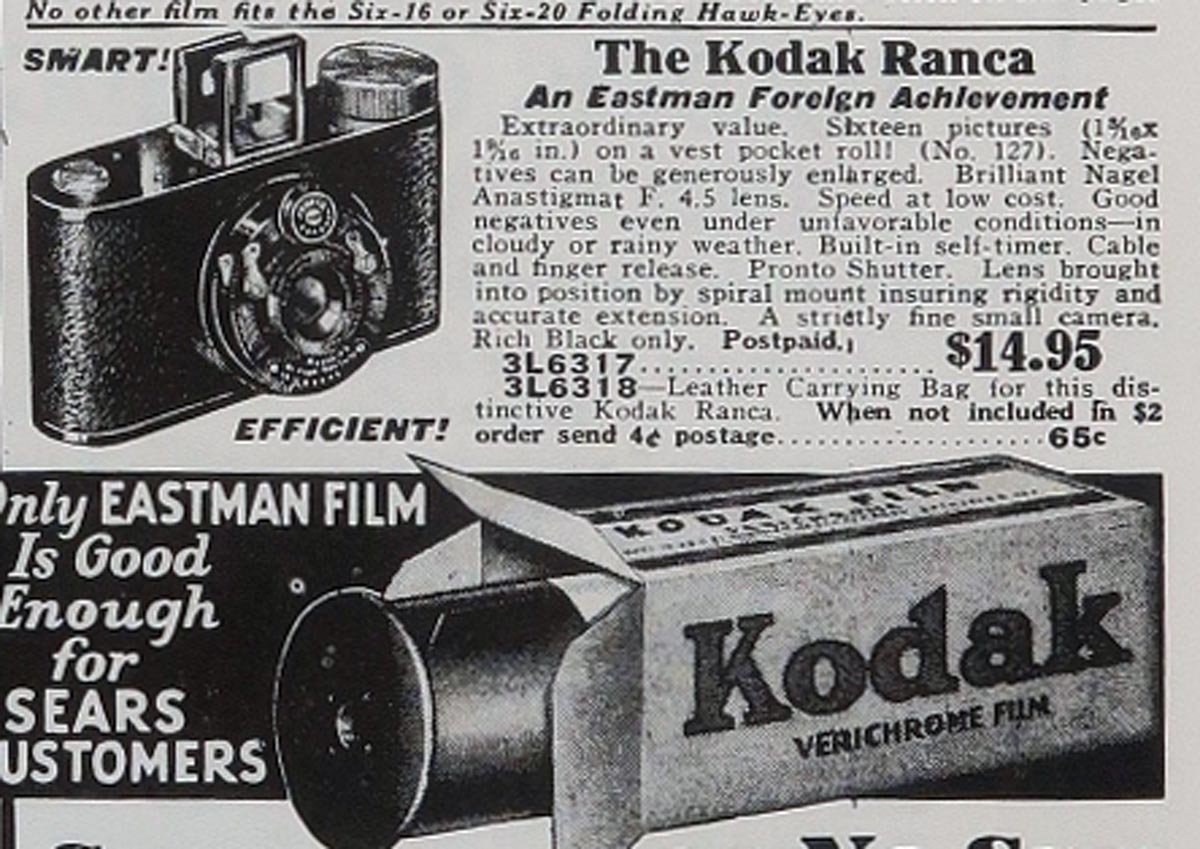
Kodak Ranca advertismant

 Within Kodak A.G., Nagel used generous Eastman funding and Kodak's global reach to develop a compact 35mm camera that could rival the established German leaders. The result was the Kodak Retina, introduced in 1934 (Type 117), a folding 35mm camera that offered solid German construction and good optics at a far more accessible price than Leica or Contax. At the same time, Nagel introduced a new daylight-loading 35mm cartridge—what became known as Kodak 135 film—which fit not only the Retina but also Leica and Contax cameras. This cartridge standardized 35mm still photography worldwide. It made 35mm use far easier for ordinary photographers, who no longer needed to roll film into cassettes in the dark.

 Nagel's collaboration with Eastman Kodak extended beyond the Retina itself. Under the Kodak A.G. banner in Stuttgart, he and his team produced several notable pre‑Retina and companion models, such as the Recomar plate cameras, the compact Pupille, the Vollenda folding cameras, and the Duo 620 medium‑format folders. These cameras married Nagel's hallmark precision and compactness with Kodak's branding and distribution, giving Kodak an instant foothold in the "serious enthusiast" and professional market that had previously looked almost exclusively to other German makers. 

 Although Nagel died in 1943, the Retina line continued to evolve with the introduction of the rangefinder. Later SLR versions, and the 135 cartridge he introduced, remain the standard for 35mm film, making his association with Eastman Kodak one of the most consequential designer–manufacturer partnerships in camera history.

My Camera:

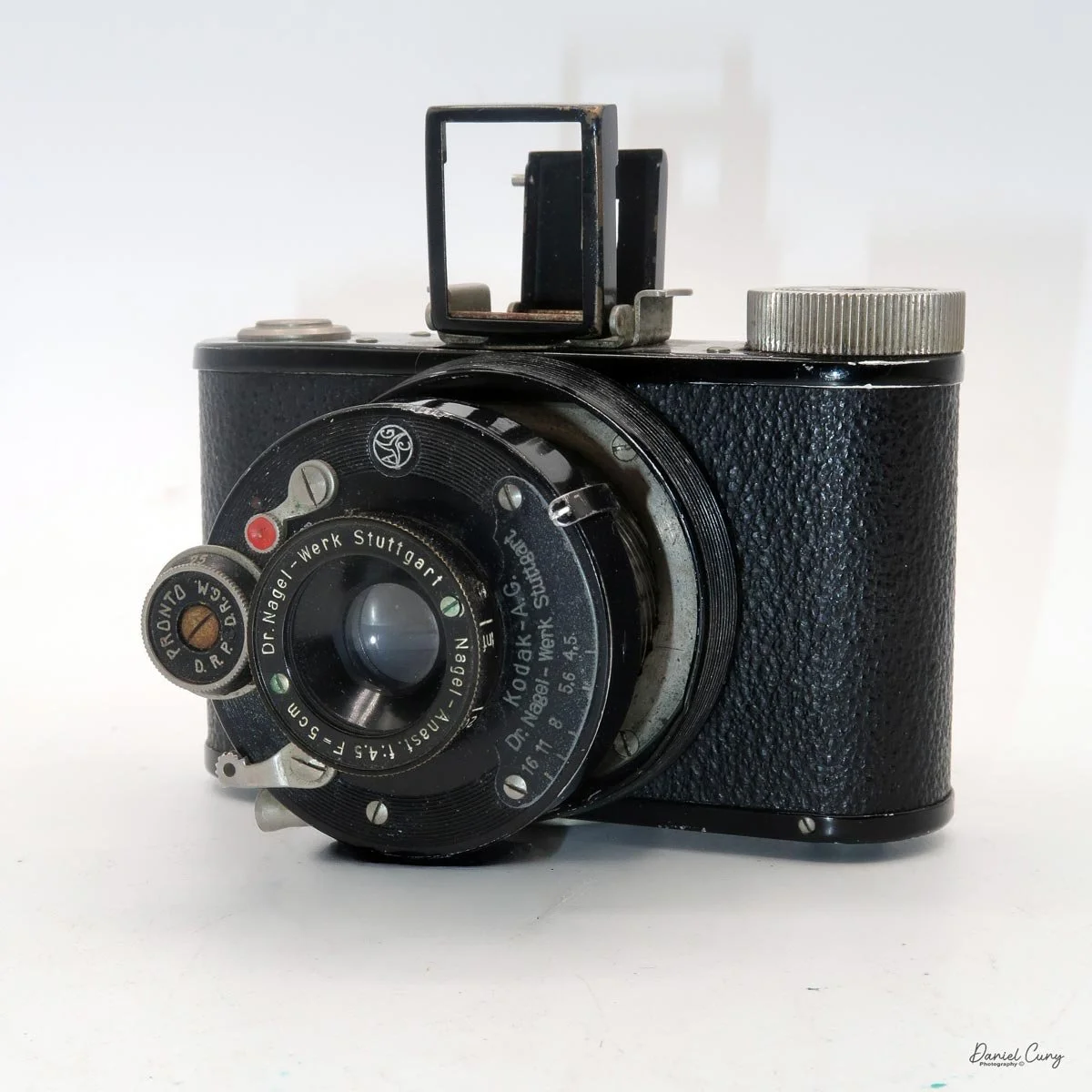
 My Nagel Ranca camera is 4" wide by 2.5" tall with the viewfinder retracted, and 3.25" tall with the viewfinder extended. The camera is 2.25" deep with the lens retracted into the camera body. When it's extended and ready to take a photo, it's 2.75" deep. The camera weighs 10.1 ounces when a roll of film is not loaded.
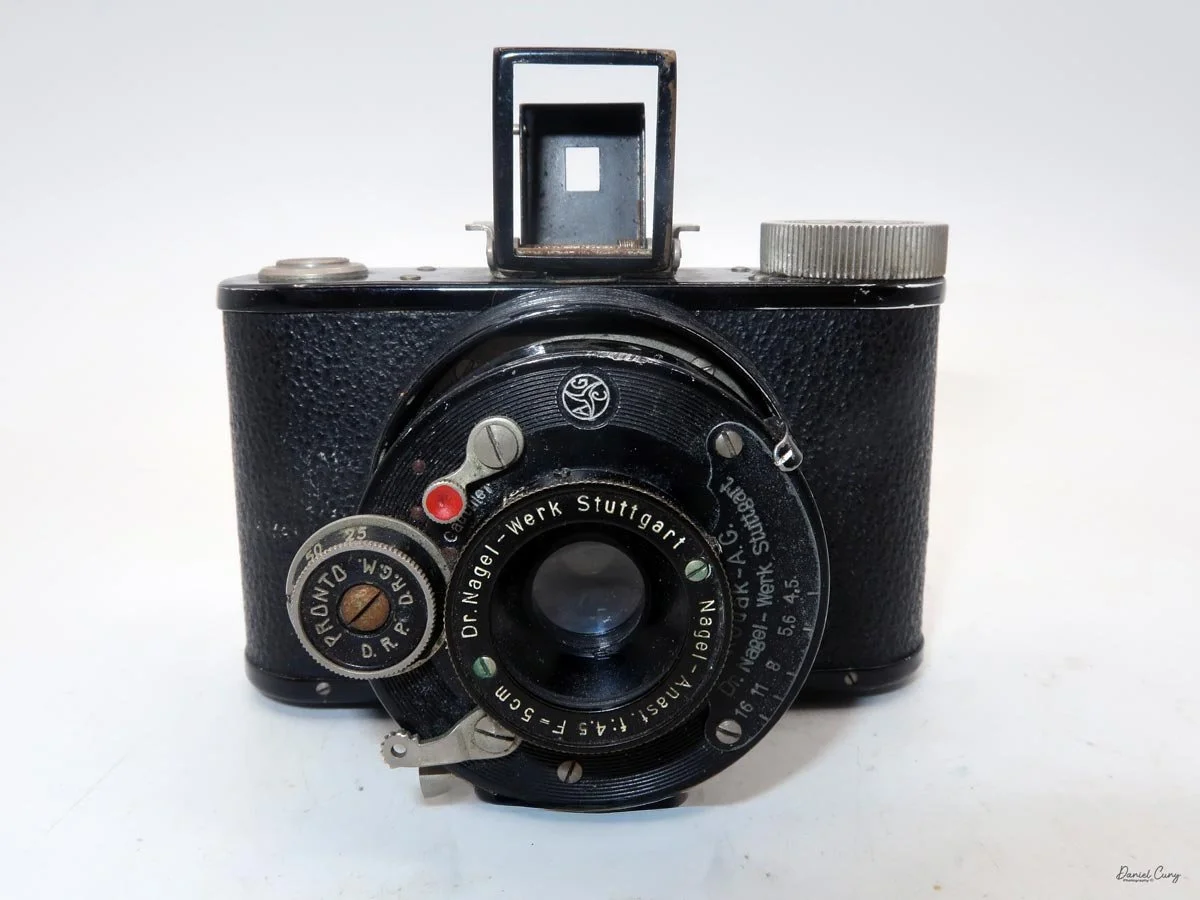
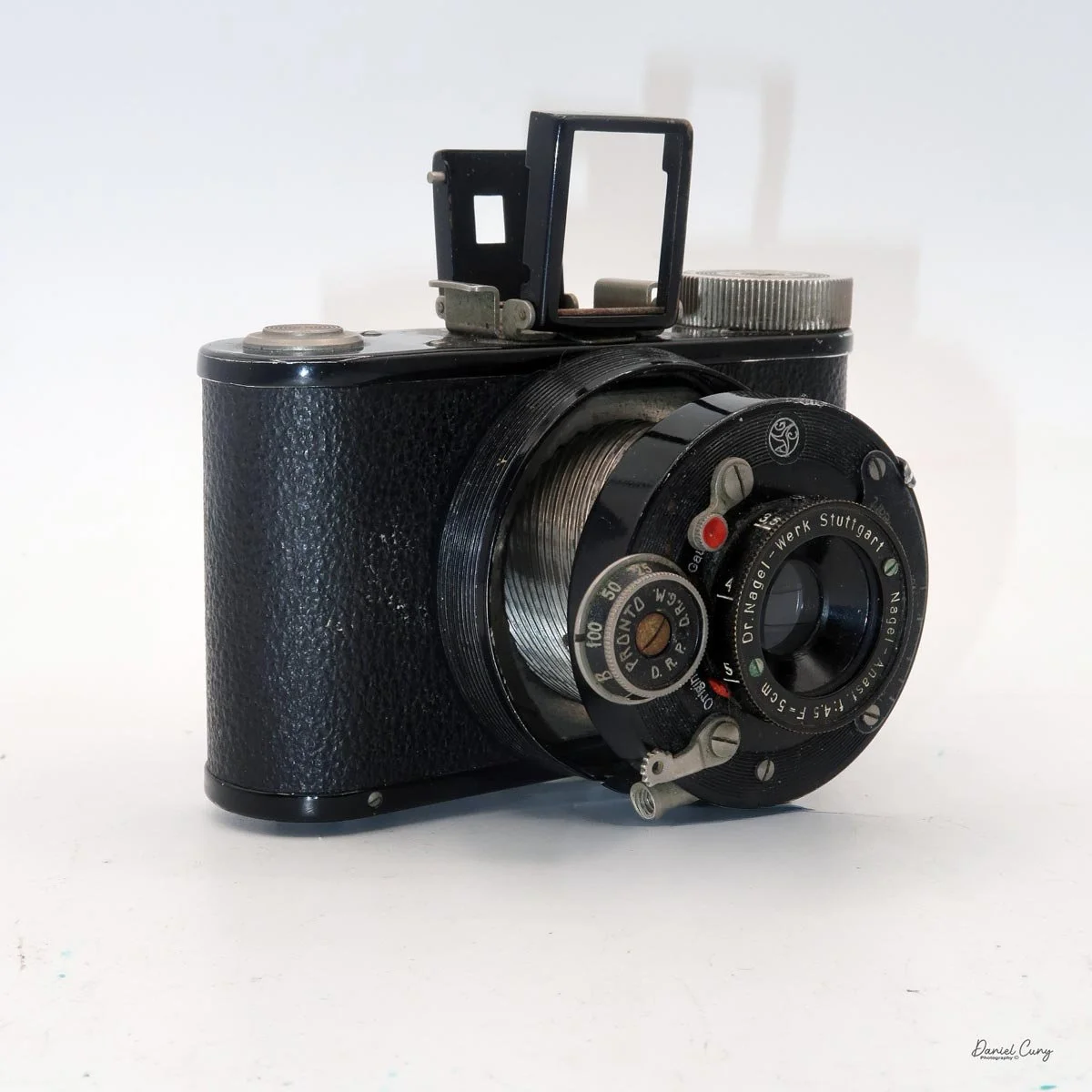
 My Nagel Ranca has a Nagel Anistigmat 5cm lens, an F/4.5 lens, a Protar shutter located above the lens with only three shutter speeds: 1/100, 1/50, 1/25, along with "T" for timed and "B" for Bulb. The aperture ring, which is located below the lens, has a slide that controls the aperture. The minimum aperture setting is F/16.
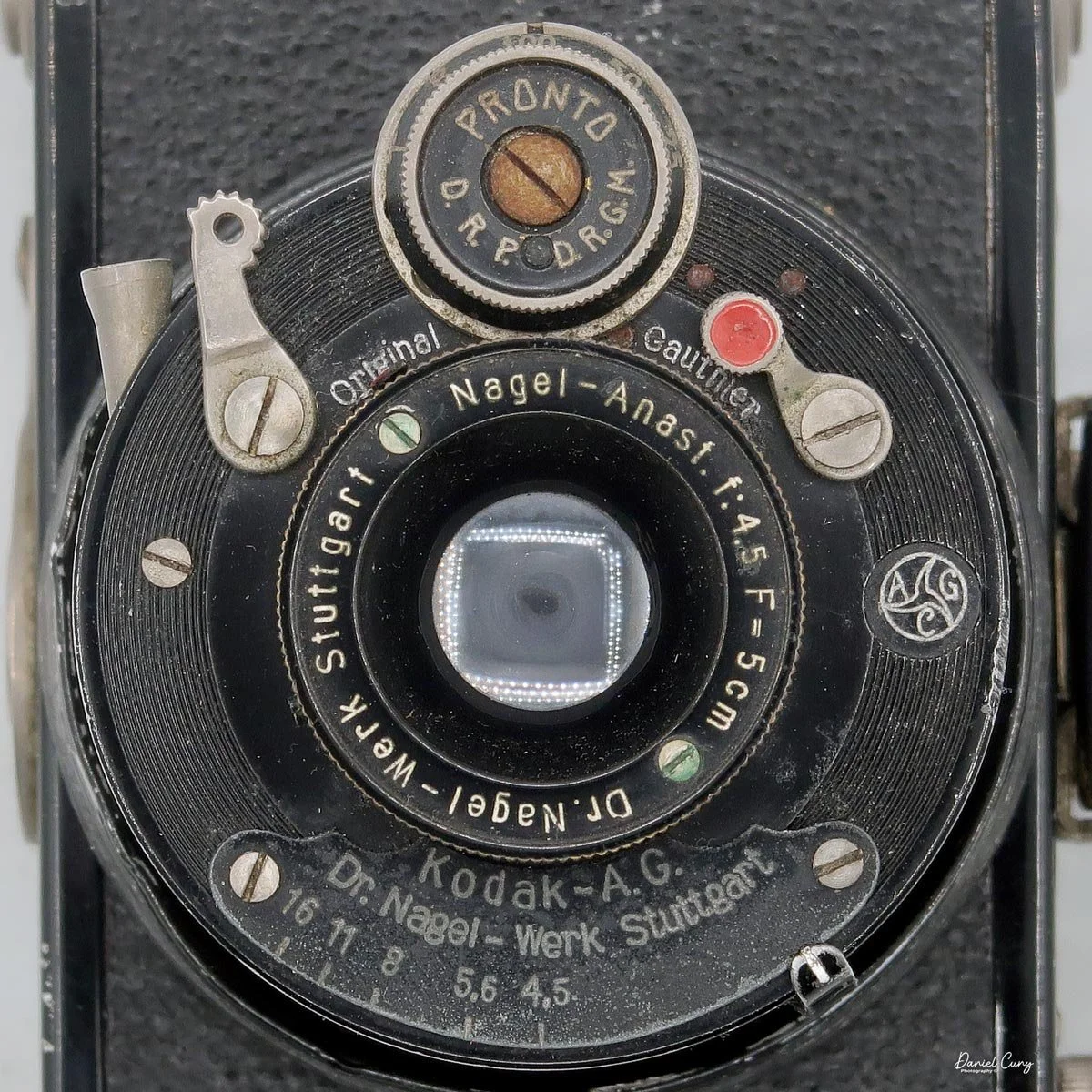
Shutter/Aperture settings on Kodak Ranca camera

As mentioned previously, the lens/shutter needs to be turned counterclockwise a quarter turn to extend the lens on the helicoid. The unusual thing about doing this is that the shutter release is now in an odd and awkward position for use. The lens/shutter is retracted, and the shutter release is in the 11:00 o'clock position, which is ideal for tripping the shutter. However, when the lens is extended, it puts the shutter release in the 7:00-8:00 o'clock position, making it a bit more awkward, in my opinion. 

 There is a shutter release socket behind the shutter release if needed. On the right side of the shutter dial is a self-timer with a large red dot. Pull it down to set the self-timer, then press it to activate it. Mine isn't working properly, which is common for cameras from this era.
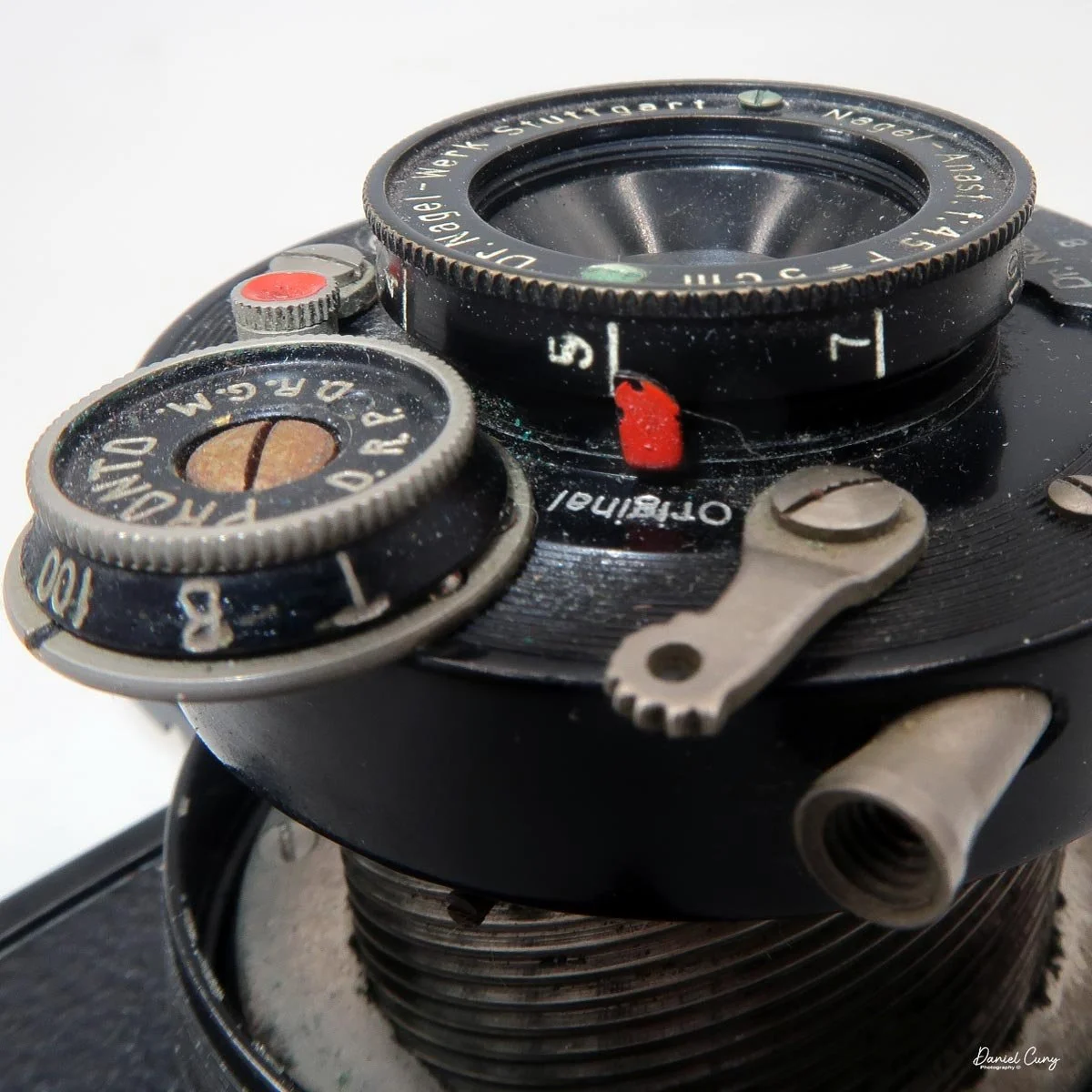
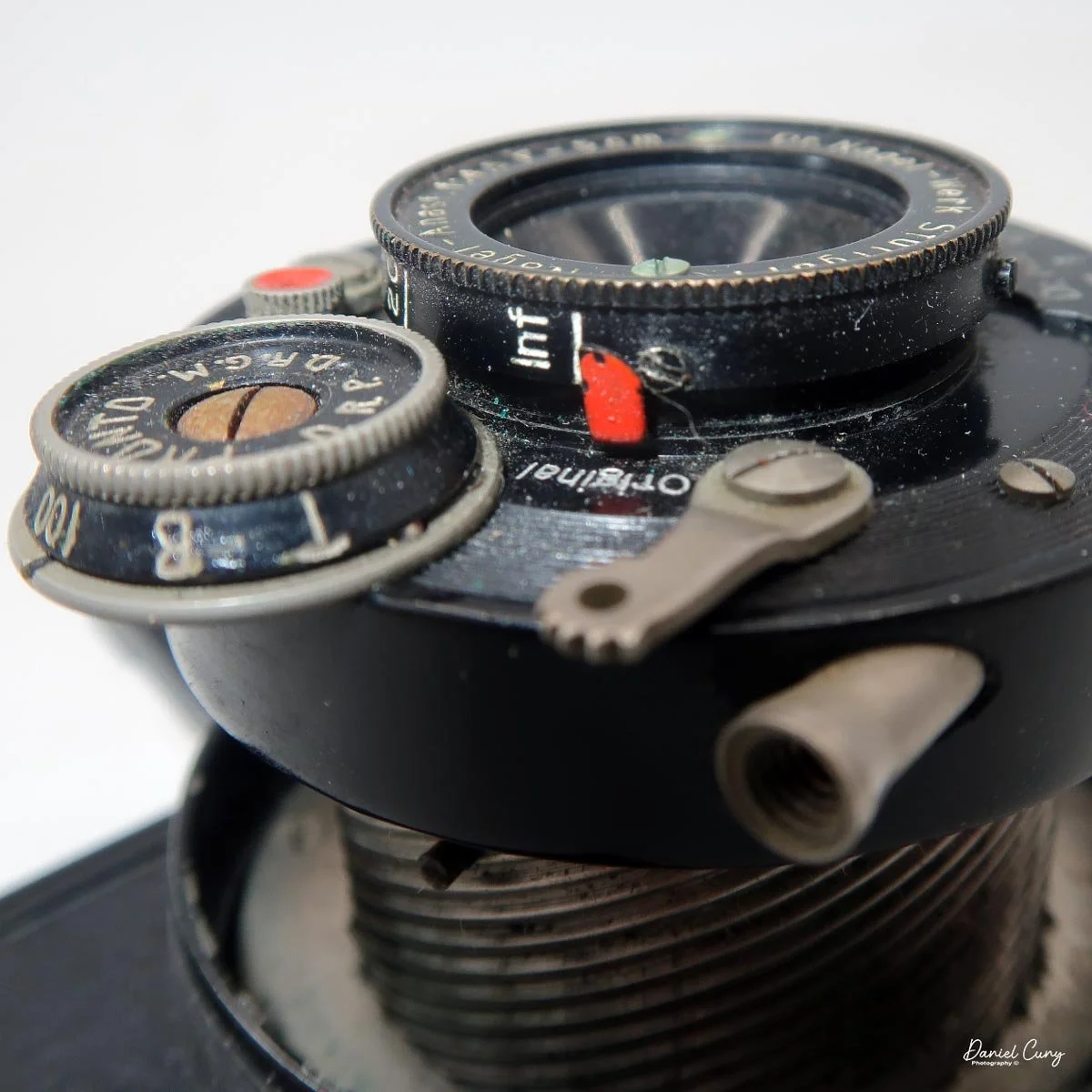
The lens is a front focusing lens. This means you rotate the lens itself to the desired distance from you to the subject. This is shown on the lens by a red line, which is also in an awkward position when the lens is extended. As opposed to being on the top, it's now on the side.

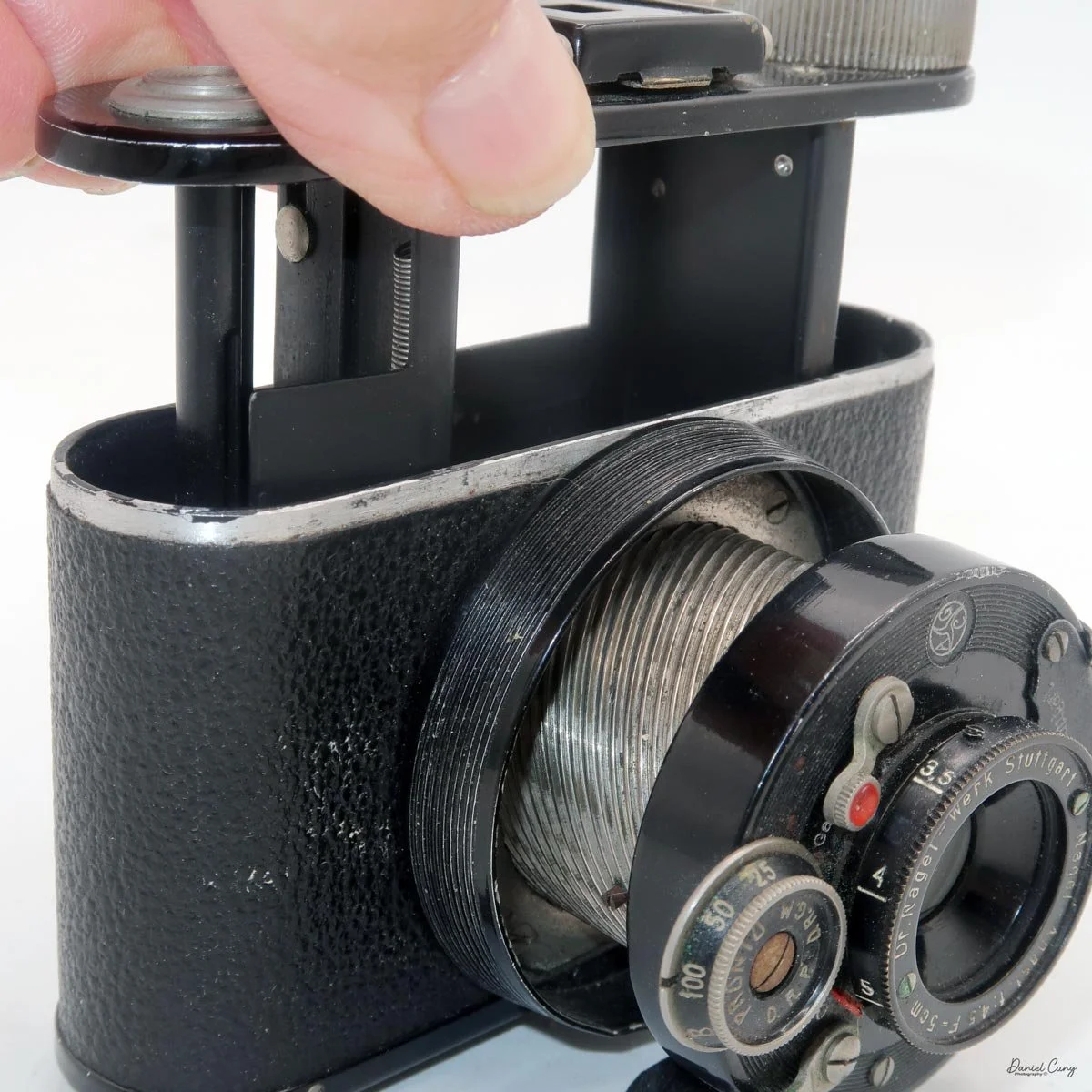
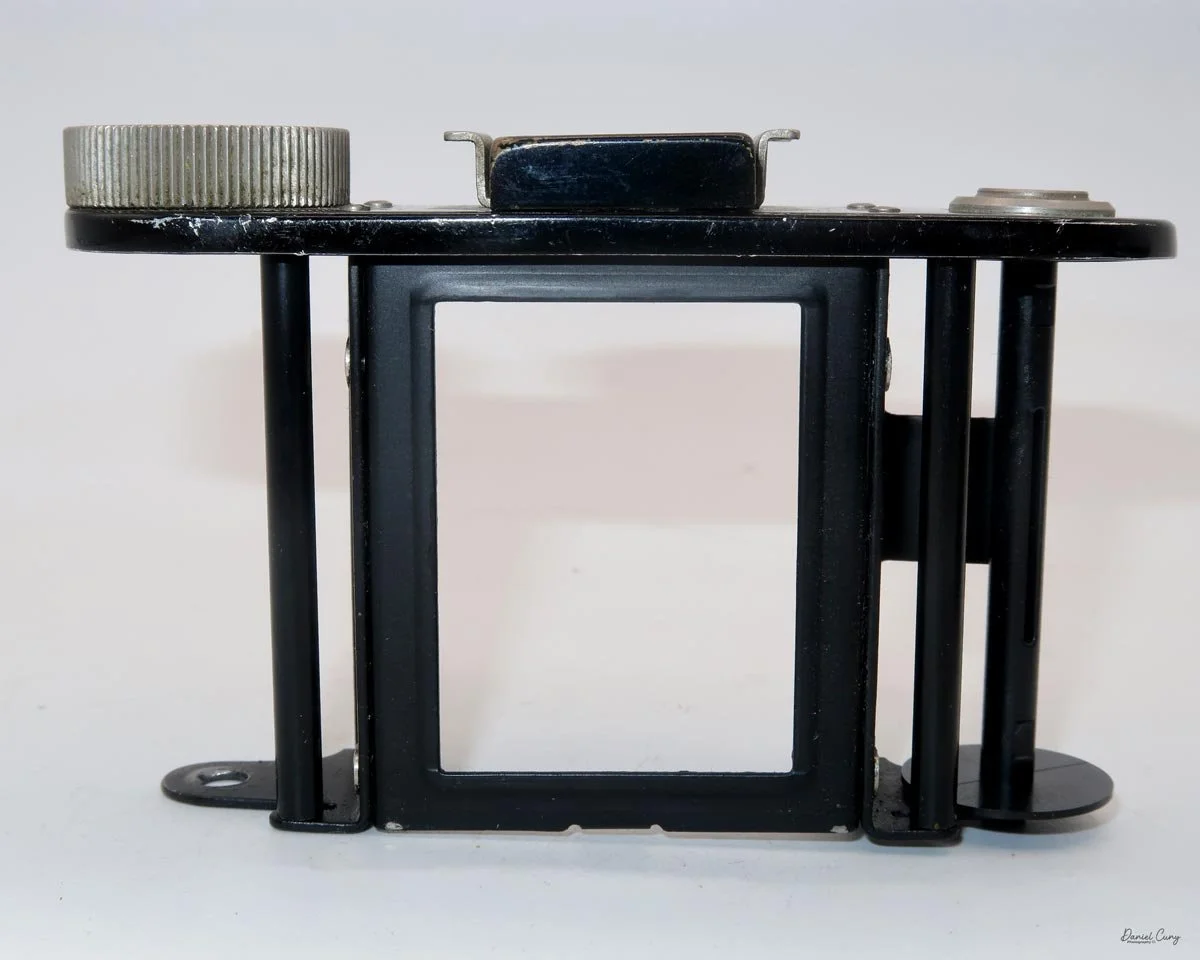
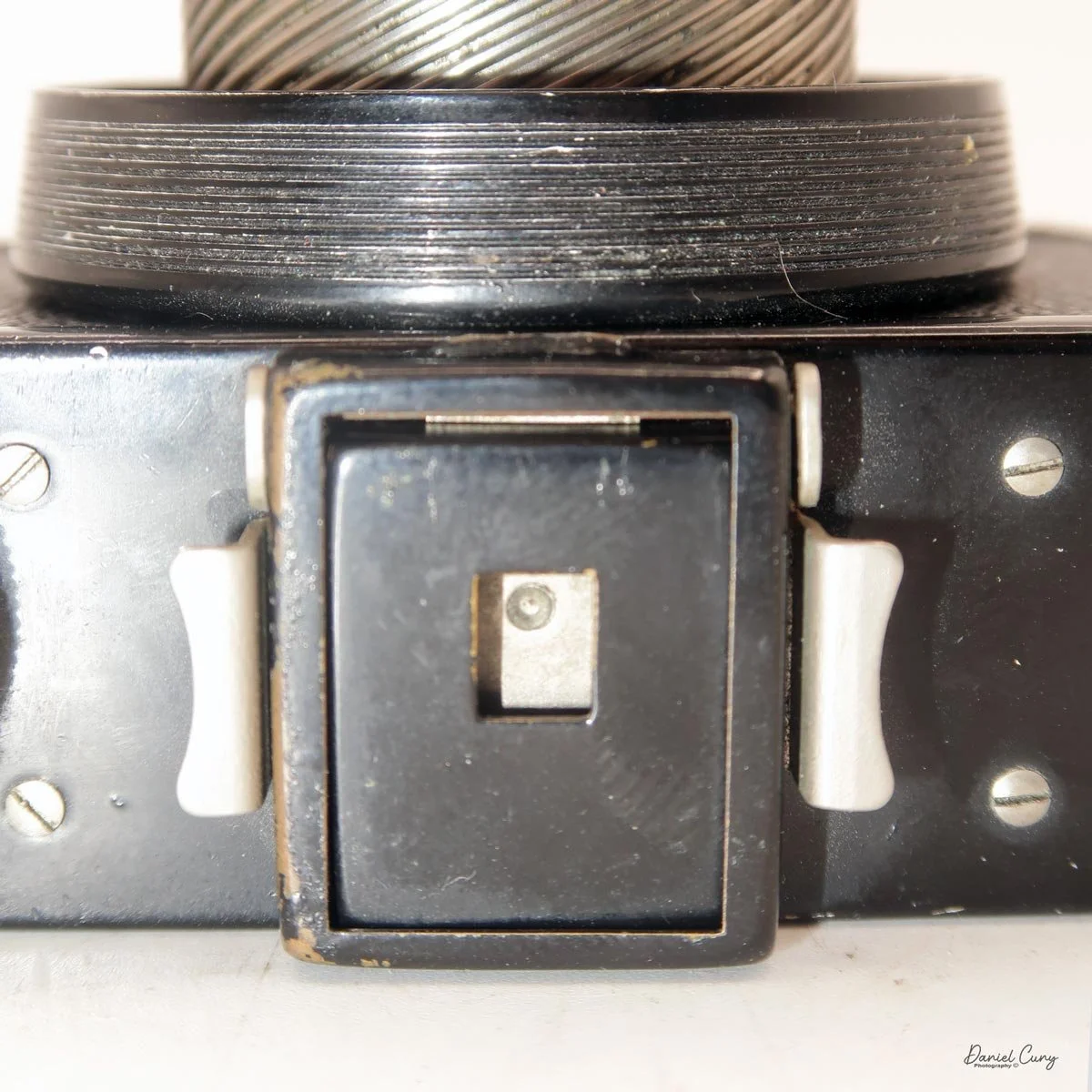
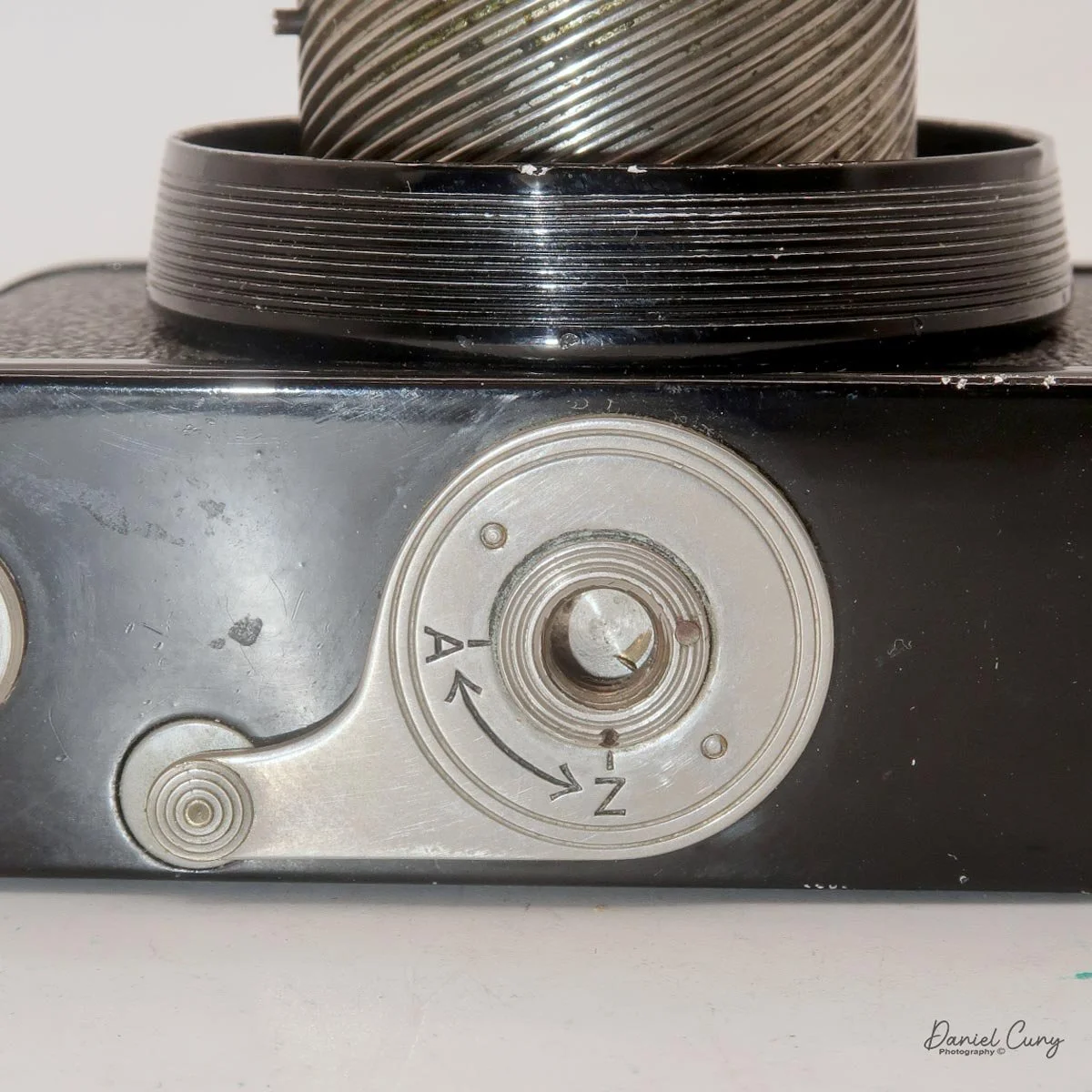
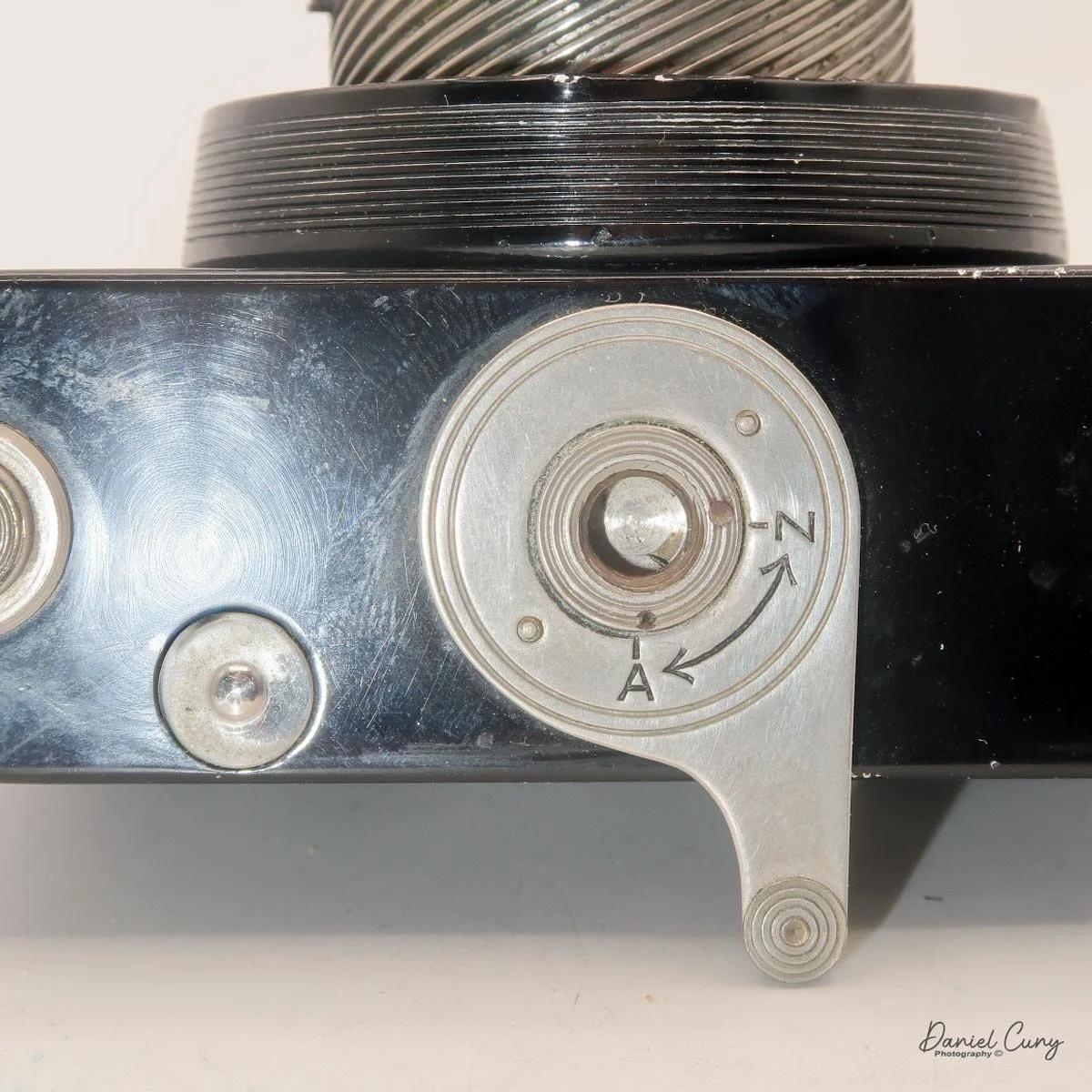
 The lens doesn't need to be extended to open the camera to load film into it. Slide the lever on the bottom of the camera to unlock the film chamber from the camera body. Gripping the chrome handles on either side of the viewfinder and lifting up allows you to remove the film chamber. Once removed, load the 127-size film into the film holder, then slide the film holder back into the camera body and lock it in place with the bottom locking mechanism.
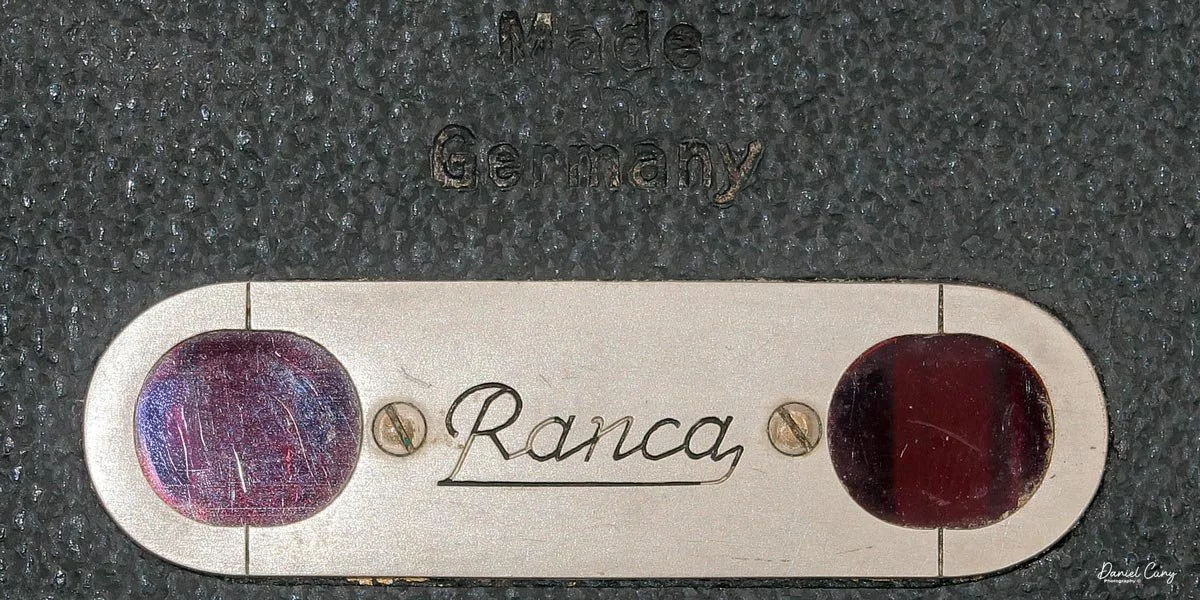
Since there are two red windows on the back, these are used to advance the film. First, wind the film until you see the number 1 in the right side window. Then take your photo. Now wind the film until you see the number 1 in the left side window. Take your next photo. Wind until you see the number 2 in the right side window. Then repeat this process through the number 8. At this point, you've taken 16 photos on your film, and it's time to get it processed, or process it yourself if you have the equipment and chemicals to do so.


My results:

 I loaded a roll of 400 ISO film into the Nagel Ranca camera because the day started out overcast. With the limited shutter speeds available, I needed the extra sensitivity to make good images.

 The day turned out sunnier than expected, and the lack of a high-speed shutter meant I needed to shoot all the images at 1/100, f/16. Even then, the negatives turned out a bit denser than anticipated, but I made the corrections needed in post-processing.

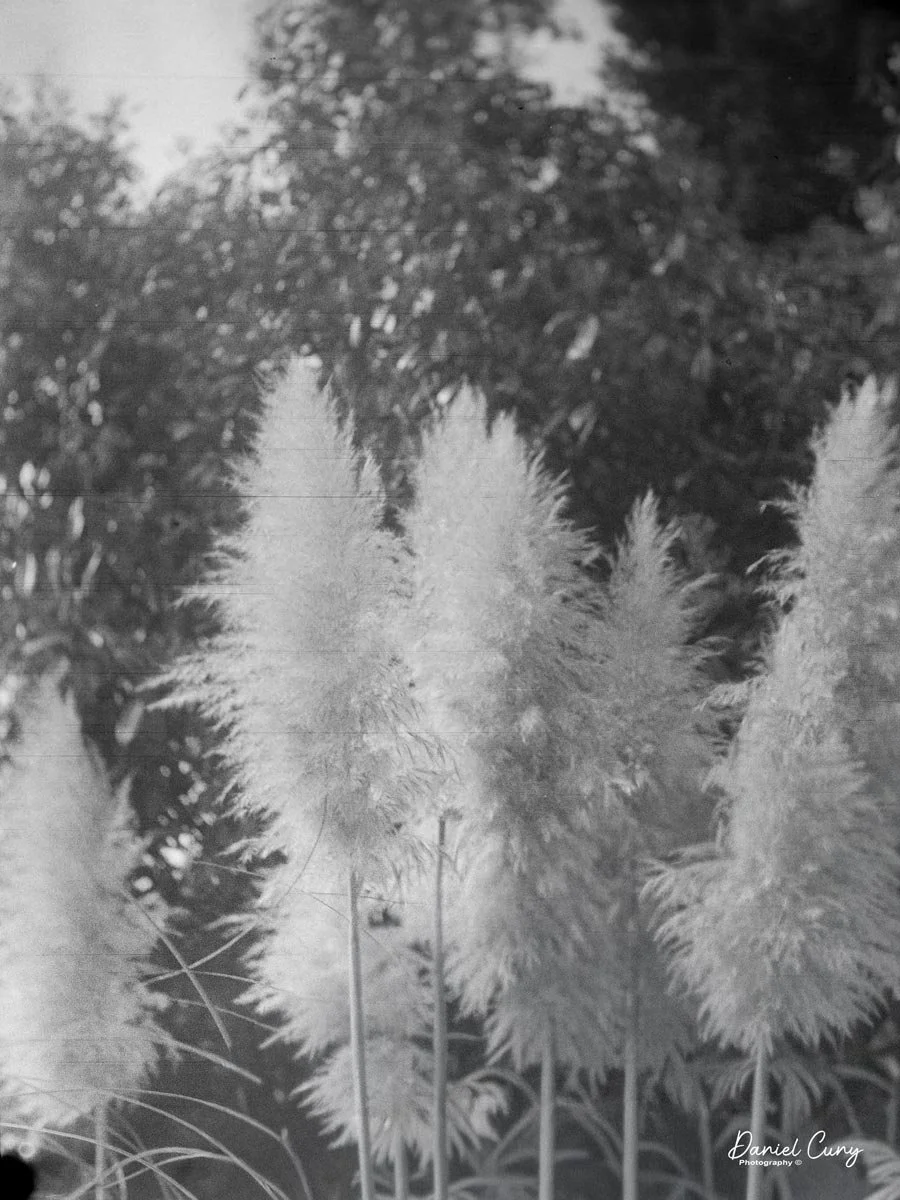
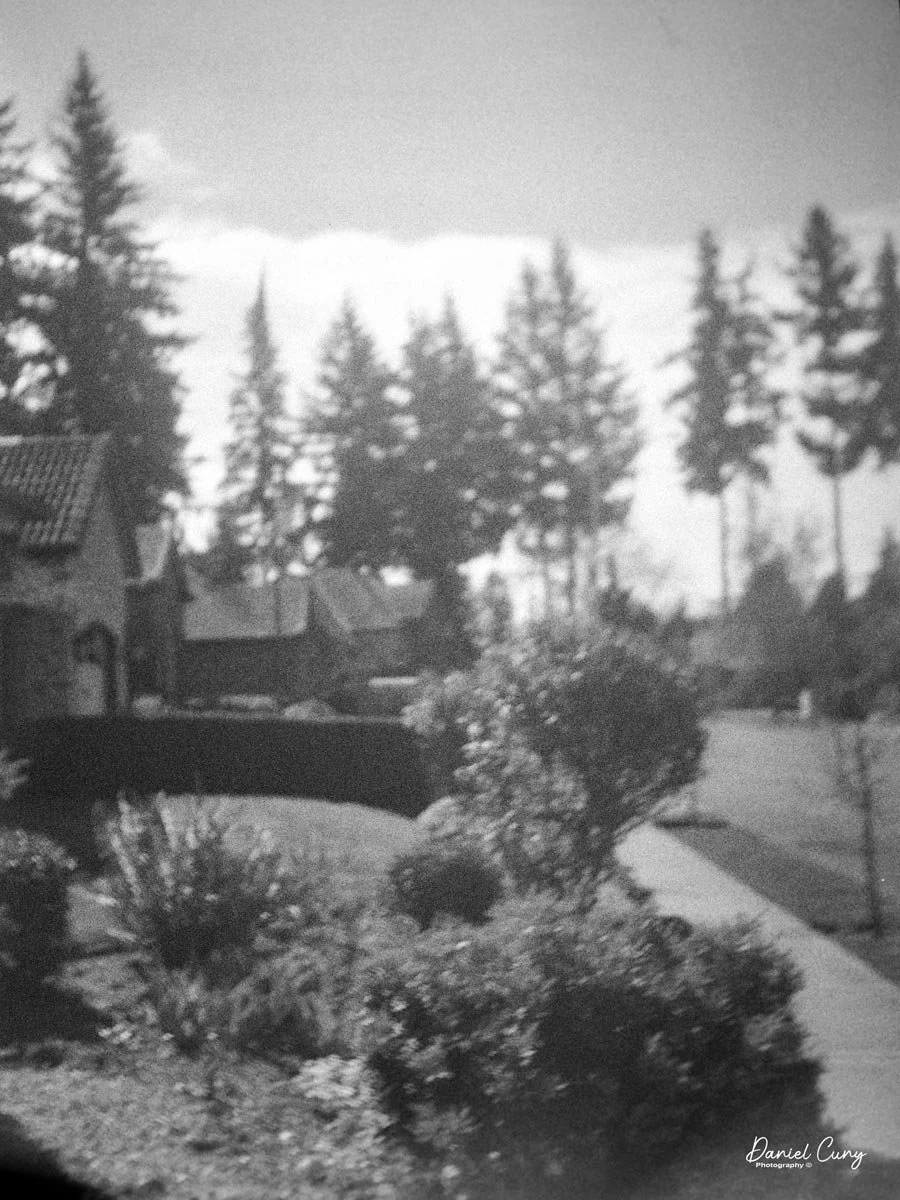
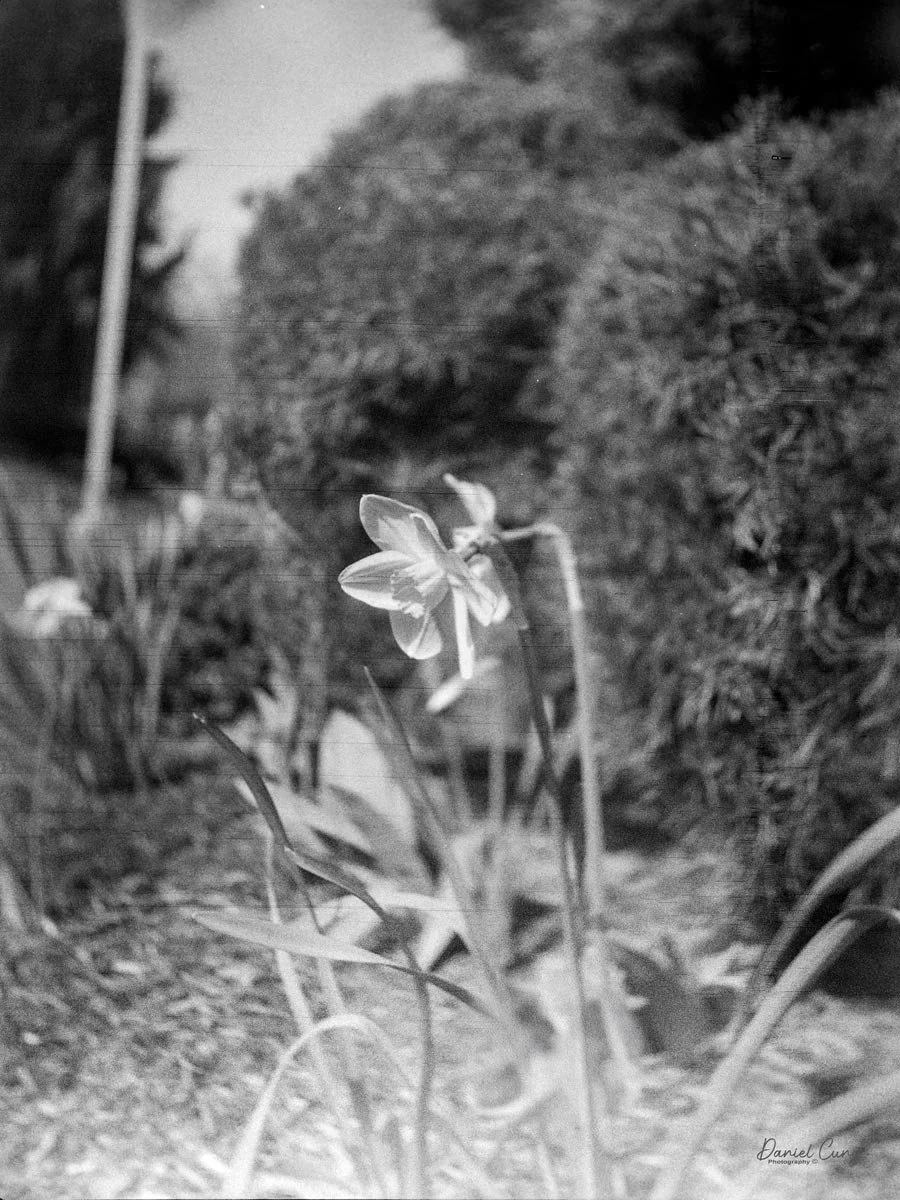
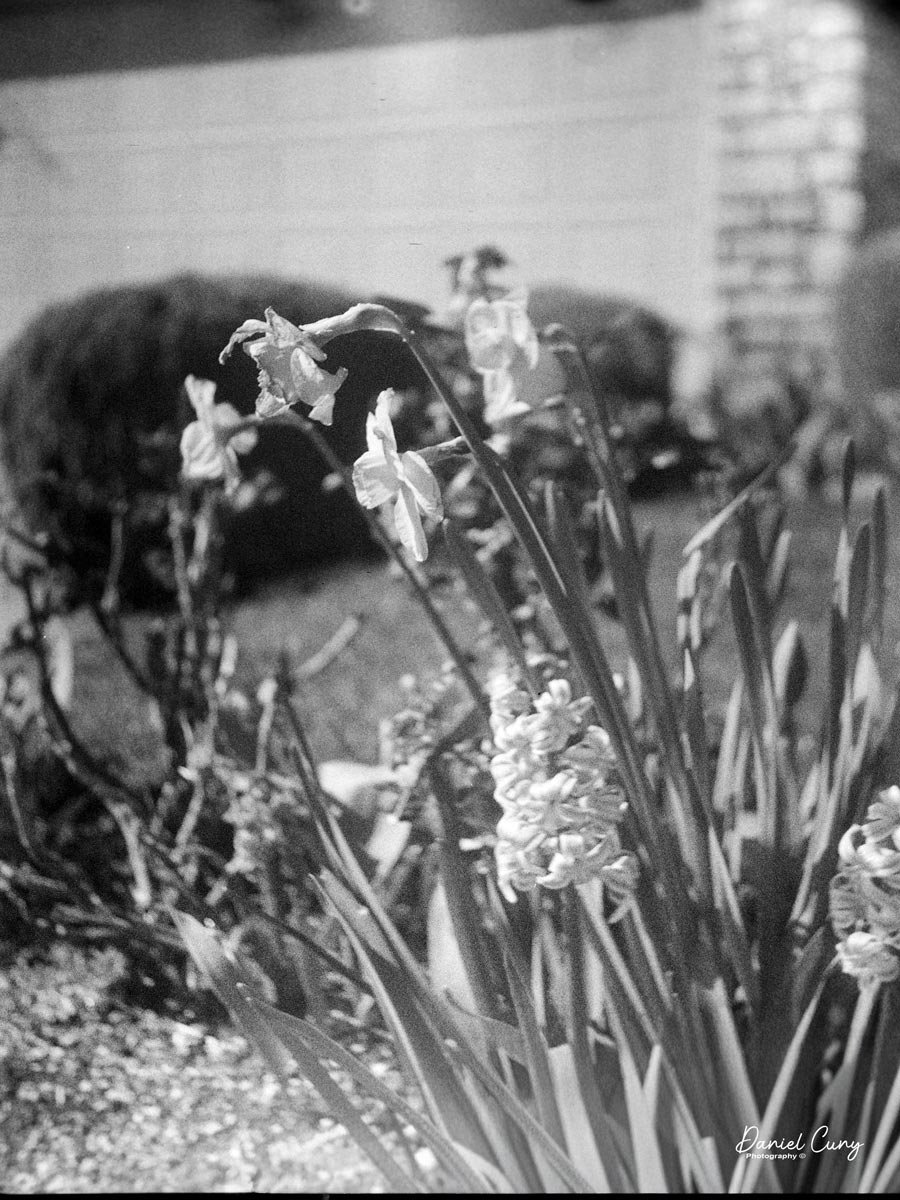
 I tried some close-ups and a few longer shots to assess the camera's lens quality. I was both surprised, in a good way, and surprised, in a bad way, by my results.

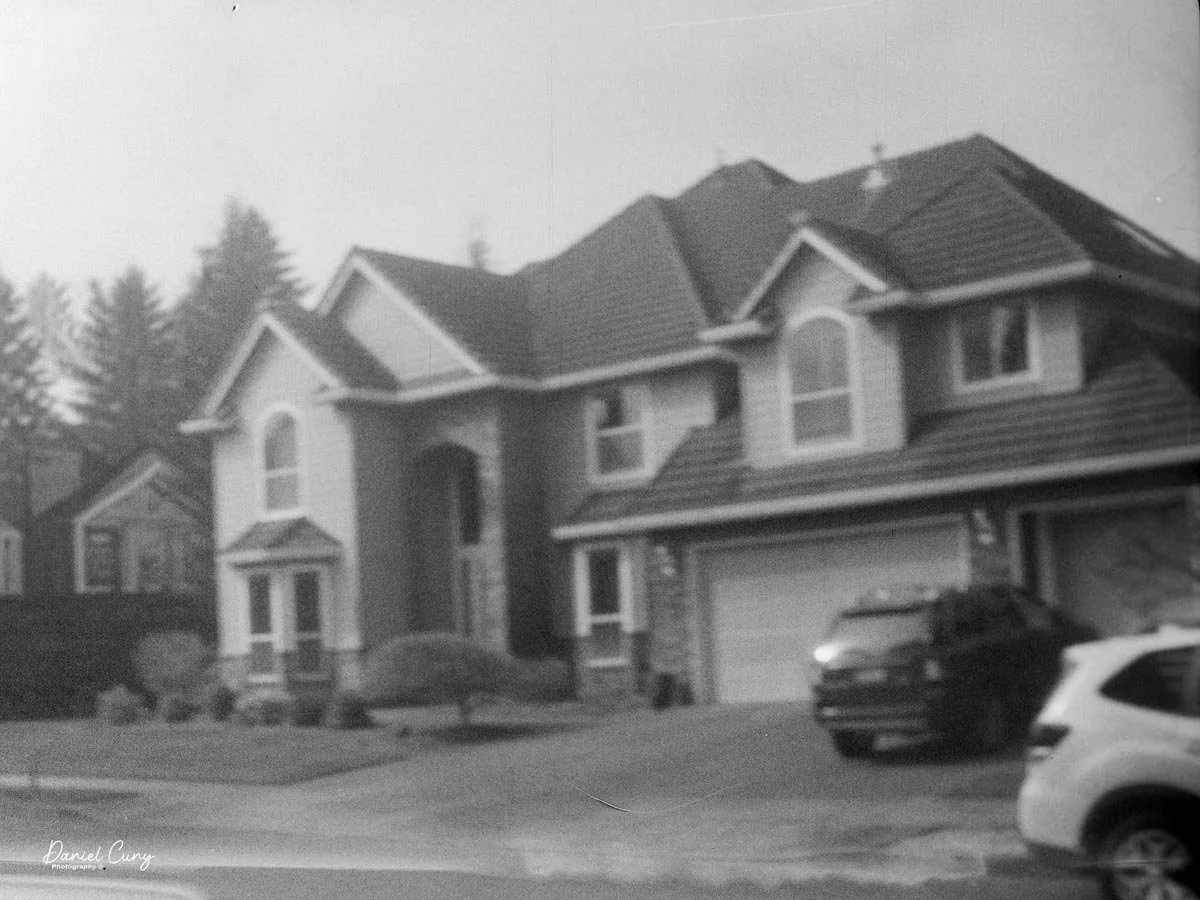
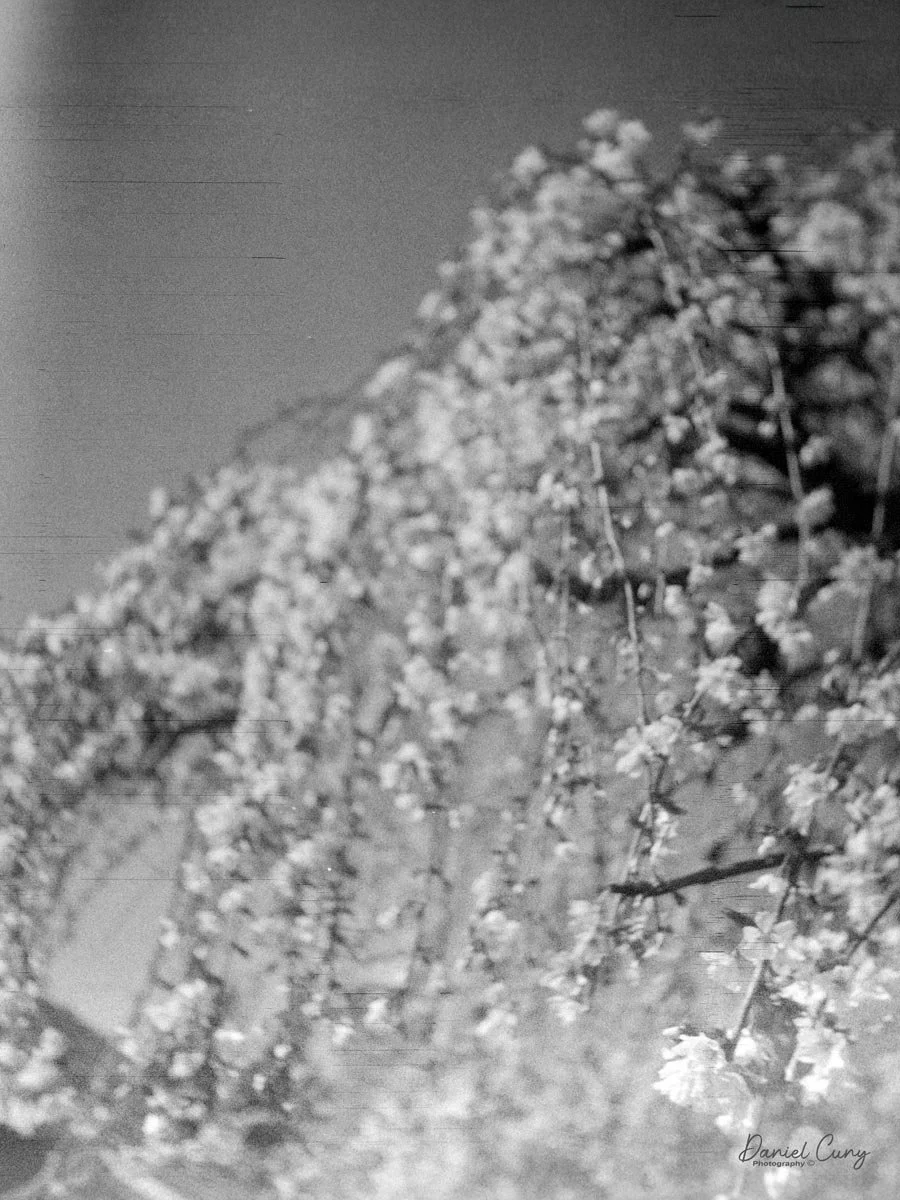
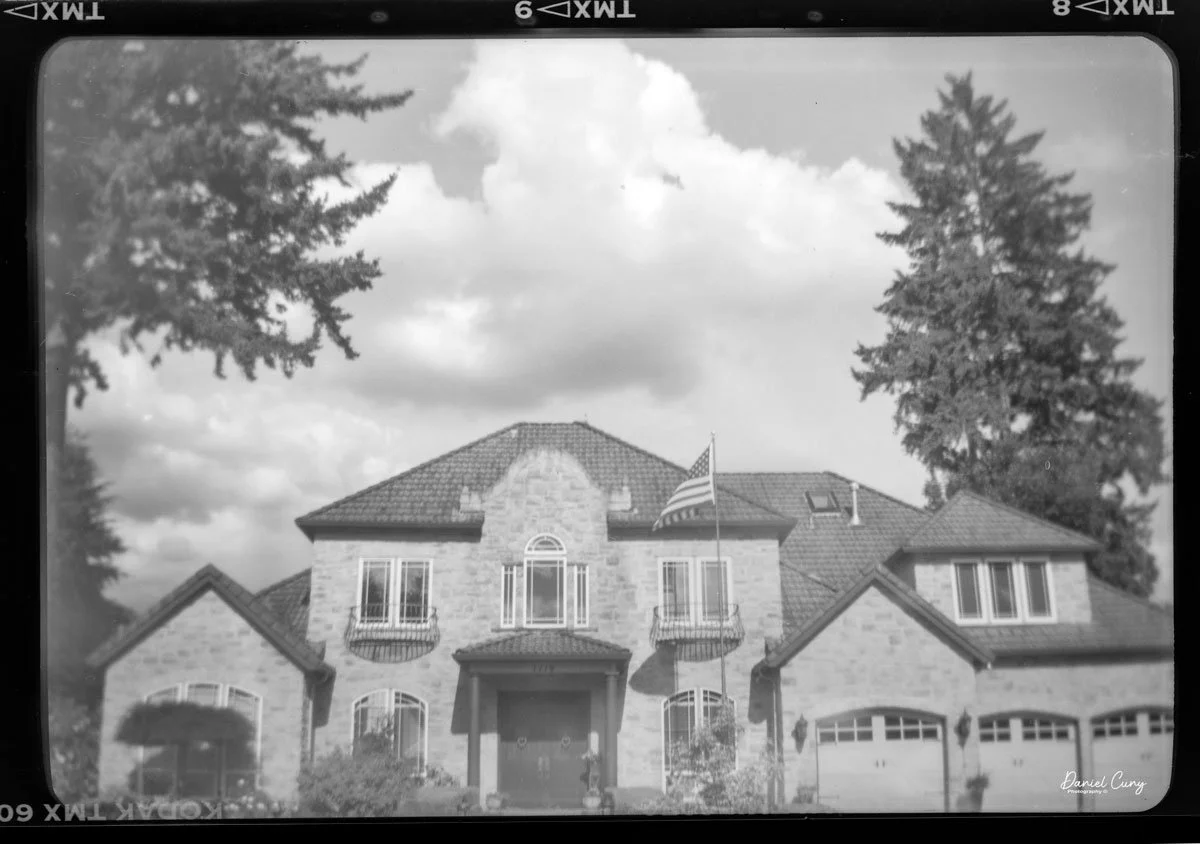
 Here are some of the photos from my walk through the neighborhood. 
Conclusion:

 To say I was disappointed by some of the results is an understatement. The closer images, which I thought wouldn't turn out very well, were the shining light of the camera roll. The images taken at infinity, assuming they would be sharp, especially at F/16, are unsharp and disappointing.

 The camera was fun to shoot with, and I always enjoy shooting 127 film in the 3x4cm format. Still, I was also disappointed with the shutter release's location after extending the lens to the "taking" position. The shutter release was in an awkward position, to the point that I had to shoot the camera with my thumb while resting it in my palm.

 I'll get used to it next time I take the camera out for a shoot, but I prefer using the Nagel Pupille.

 Thank you for taking some time to learn about the "lesser featured" brother of Nagel's Pupille, the Ranca camera. A compact 127 camera made in the early 1930s.

 Here are the other Camera Reviews I've done.

 Cuny's Cameras and Photos is my online eBay store where I sell some of the cameras reviewed, along with many other photo oddities I've accumulated over my 50-plus years with cameras and images.

 Until next week, please be safe.

Riley Rilex camera

My Riley Rilex camera

The first time I saw the Riley Rilex camera was at a camera show in Seattle, WA, about six months ago. I was selling cameras and other photo items at the show. A friend who had driven up from the same area I live in and know well approached me looking to sell the Riley Rilex camera.

 He handed me the camera, and my first impression was that it was an odd and unusual-looking press-style camera. It was a full-sized 4x5 press camera, but It's a more miniature 2 1/4 x 3 1/4 press-style camera. There's a large handle on one side, making it very easy to handle and carry, but what caught my eye was the bright aluminum camera body and how light and compact the camera was. A rangefinder was attached to the side of the camera, and the focusing method seemed sketchy and rudimentary but was in working condition. 

 Playing with the camera, the shutter worked well, the aperture moved as it should, the bellows were intact and seemed in excellent condition, and the focus was smooth. When my friend told me the asking price, I told him I didn't do much with this style of camera and handed it back to him, but then he lowered his price, and my thought was, this seems to be an odd and unusual camera, it would be fun to write about it. I had never heard of a Riley Rilex camera, so it would be fun to research it. I thought I had some holder back home, so I pulled the trigger and purchased the camera from him with the intent to write this article about it.

Nameplate on my Riley Rilex camera

 I've owned several Graflex Baby Graphic cameras, so I'm not unaware of the smaller press cameras made during the 1940s and early 1950s. The Baby Graphic cameras are fully enclosed within the camera body, which is covered in black leatherette. Here is the Riley Rilex camera, which is almost the direct opposite. It is bright and shiny, made from lightweight aluminum, and without a boxy case, the lens and bellows fit into. What an odd and wonderful-looking camera.

The Company:

Several camera companies opened up in Southern California just after World War II. Companies like Printex, which manufactured a 4x5 Press camera in Pasadena, CA; Newton Photo Products in Los Angeles, CA, which made a lightweight view camera; and Brand Camera Company, also of Los Angeles, also made a rail-style view camera. All of these companies opened right after World War II, between 1947 and 1947, giving returning soldiers employment and hoping to build onto the growing photographic industry of the time.

 Curtis Riley was a tinkerer, amateur inventor, and aircraft engineer at Lockheed in Los Angeles, CA, during the 1940s. A photographer friend, frustrated by the weight of press cameras during this time, mentioned to Curtis that the cameras were rugged to carry around. Curtis, at the time, was working with lightweight aluminum for the aircraft industry, so he took up the idea of coming up with a lighter-weight camera for the industry.

Ad for Rilex camera

This was the start of the husband and wife-owned company, Riley Research Company, located at 128 Berkeley Street, Santa Monica, CA. Curtis came up with the design of the Riley Rilex camera, and they started to produce the aluminum body camera. It's unknown how many employees they had or if they did most of the manufacturing themselves. The design is relatively simple, and once the camera pieces were machined, putting them together wouldn't be difficult. It was confirmed that Gay, Curtis's wife, would fold the bellows at the kitchen table, and from what I understand, it wasn't her favorite job.

It's estimated that The Reily Research Company produced around 800 cameras over three years, during which the company was in business. The cameras had the option of a Wollensak Raptar lens in an Alphax shutter. If you wanted the Rapax shutter with speeds up to 1/400 sec., that was an additional $12.00.

 Advertising of the camera started in the fall of 1948 with ads in Popular Photography and local camera stores. The Riley Rilex camera was advertised for $49.50, including a tax-free lens. The rangefinder was "optional Equipment." In the advertisement listing the included Lens and Rangefinder, the camera is listed at $99.80, with a savings of $35.24.

 Unfortunately, the Riley Rilex was only advertised for three years, from 1948 to 1951. Due to the success of this small camera company in filling a requested need, other larger manufacturers began building a similar style of camera. After 1951, Curtis and Gay moved on to other endeavors, and the Riley Rilex camera became a desired collectible camera. 

The Camera:

My Riley Rilex camera measures 7" wide, including the metal handle, by 6" tall, including the eyesight knob, which doubles as a tightening screw on the back of the camera by the rotating back, by 6.5" with the bellows extended or 5.25" with the lens and bellows retracted. My Riley Rilex camera weighs 2 lb. 14.6oz and includes a 101mm f4.5 Wollensak Raptar lens in a Rapax shutter. My camera was an upgrade to the information above. I also have the Model B camera with the serial number 617 

 The Riley Rilex camera was made in three models: A, AB, and B. The first model, the "A," was short-lived, as the recommendation of adding a rangefinder to the side of the camera was made. The first production run was halted to add a rangefinder and the focusing rod to the camera's right side. I've seen some examples of the Rilex camera with a Kalart or Hugo Meyer rangefinder. One of the other modifications was having a rangefinder that supported an external flash.

To use the external rangefinder on the Rilex camera, a focusing rod comes out of the top of the rangefinder and leans up against an aluminum block attached to the focusing rack and pinion rod for focusing capabilities. When you used the rack and pinion focusing on the camera, the focus rod would move, thus focusing on the rangefinder.

 You can also use the traditional ground glass on the back of the camera, which flips down or up depending on the orientation of the camera's back. The back of the camera is highly polished chrome, which adds to its look.

To change the orientation of the cameras back from horizontal to vertical, the eyesight, which can be used with the wire built into the front frame, can be used as an action finder, which can be turned to lock or unlock the back rotation. There is a small line just behind the eyesight knob to show the camera's back is level with the camera.

 The camera offers full swings, tilts, rises (no falls), and horizontal shifts from the front brace of the camera. Like the back, there are centering marks on the front to quickly return the camera to a level and even settings on the camera. One thing on my camera that I'm sure some have already noticed is that I'm missing one of the knurled nuts that hold the 2 3/8"  lens board onto the camera body. That wouldn't affect the clarity or ability to use the camera. It's more of a visual appearance flaw than anything.

Unfortunately, I don't have the film holder for this size of the film, and the back of the camera cannot be easily removed to use a roll film adapter, so I could not use the camera, which would have been fun to try.


Conclusion:

I've had the absolute pleasure of continuing correspondence with Curtis and Gay's granddaughter, Barbara. She has helped me with this article by providing fabulous family photos and advertising for the family company. I want to thank her for all the insight she's offered me, which is tremendously appreciated.

 The camera itself is marvelous. It's small, compact, and visually appealing. The bellows are made from a stronger material than most view or press cameras, and it's terrific to think they were all hand-folded.

 I need to find a small film holder to try out this camera. I know I've had them, but I must have sold them with other cameras or just separately. Once I actually use the camera, I'll be sure to update this post with some images it produces.

 Thank you for reading about this unique family-owned camera company from Los Angeles that filled a niche product people were asking for at the time.

 Are you interested in reading my other camera reviews?

 I also have a store on eBay, Cuny's Camera, which has some odd and unusual products, including cameras and lenses.

 Until next week, please be safe.

Rajar No. 6 Camera

My Rajar No. 6 camera

I don't know what it is about the Rajar No. 6 camera, but ever since I purchased my first McKeown's camera guide more than 40 years ago and spent hours leafing through the pages learning about all the different styles and shapes of cameras, I've always desired to have one in my collection.

 It wasn't until just a few months ago that I pulled the trigger and purchased one from a great reseller in the U.K. It was listed for parts that were not working. The seller was selling the camera for a friend and wasn't sure if it was in good working condition. They mentioned the shutter fired but couldn't guarantee the other working parts of the camera, so I took a chance and purchased it. I don't know why it took so long to get one.

 The shape of the face and the crosshatching on the camera's face drew me to it. It has a very classy and classic look, which is something I find on many cameras made during this timeframe.
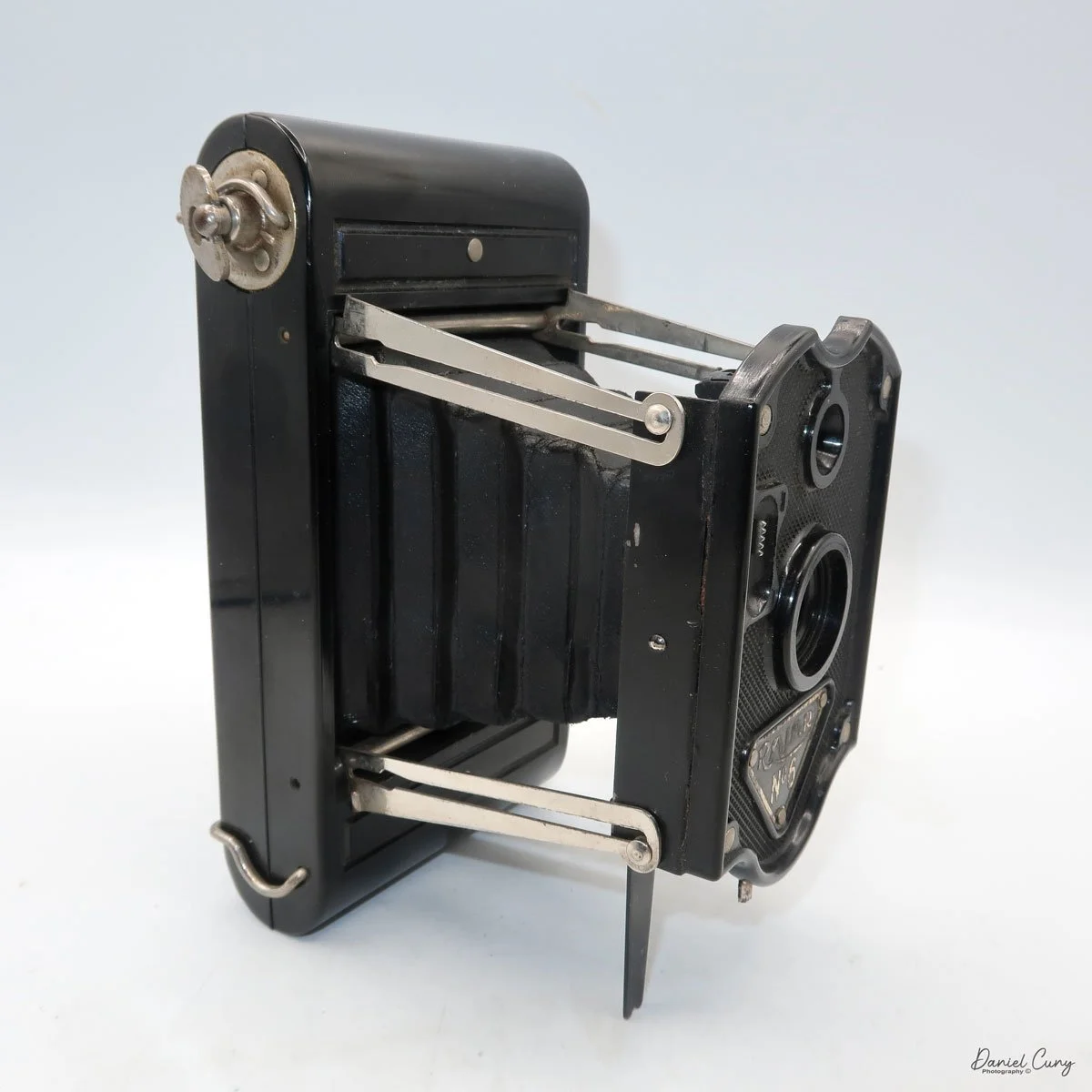
 It took a while for the camera to arrive from the U.K., but it arrived last week, and I was anxious to see its physical condition. To my surprise, the camera was not only in excellent physical condition with no chips in the Bakelite, but the shutter was firing, and there was a roll of film still in the camera, which the seller failed to mention, so I was doubly happy.

 I took hold of the film advance knob to see if the film was advancing, and it was so at this point, I didn't see anything wrong with the camera. Not knowing how old the film was, I went outside to take the last few frames on the included old roll of film, and it wasn't until I got to the final frame I found out what was wrong with the camera. 

 I wasn't aware of what was so different in the film spool until I took the film out of the camera, which I needed to do in a dark bag since the camera stopped winding right after I took the final photo on the roll of film included with the camera.

 The Rajar No.6 camera has a special take-up spool written right there on the back of the camera, "only the Rajar No. 6 spool will fit this camera". I saw that when the camera arrived and at first I thought I couldn't shoot with it because it took a different or special size of film. Nope, it's the take-up spool. At least in my camera, the take-up spool is special and has a square tip that fits into the take-up spool instead of a slot that fits into most 120 spools. 

 It appears the Rajar No.6 has a brass item attached to the metal take-up spool that had become loose, making it impossible for the camera to wind the film to the next frame. The drive portion came loose, and the film wouldn't advance anymore. The disconnect of the brass piece and the take-up spool must have happened during the winding of the film, as it was working for a few frames. Another explanation is that the brass portion was stuck to the take-up spool and became loose after the film was with a few frames.

The Company:

Rajar No. 6 nameplate

Rajar Ltd. was established in 1901 as an offshoot of Brooks-Watson Daylight Camera Company Ltd., which had a facility in Liverpool. The company produced camera film, paper, and Rajar film backs for daylight loading film. In 1904, it moved to Moberly and was renamed Rajar Ltd.

 In 1921, Rajar Ltd. They merged with six other companies to form APM, Amalgamated Photographic Manufacturers Ltd. In London, in 1928, four companies involved in film manufacturing formed APeM, Amalgamated Photographic Equipment Manufacturers Ltd. APeM, which would eventually be rolled into Ilford, which is still one of the major film companies today.

 The Rajar No. 6 camera was introduced in 1929, just a year after APeM started. APeM also produced box camera as well.

The one thing that makes the Rajar No.6 camera unique is that the camera body, faceplate, and back are all made from Bakelite. The Rajar No. 6  was the first camera to have the majority of the camera built with the new material. As I mentioned earlier, it's incredible that after almost 100 years, the Bakelite is still in fabulous condition. There are no chips to be found, and the camera still has the gorgeous shine of the new camera.

My Camera:

My Rajar camera measures 6.5" tall by 4" wide, including the winding key, by 4.5" deep when the camera is extended. My camera weighs 1 lb. 0,6 oz., so the camera is very light. The camera is extremely simple as it has a meniscus lens, and an "Everest" shutter, meaning it doesn't cock. When you move the shutter release from one side to the other, the shutter fires, and then when you move it back, the shutter fires again, so you'll need to wind the film right after taking the photo to avoid double exposures.

There is no aperture setting, as the lens aperture is set to what I'm guessing at F8. The only shutter speed setting is for instant or timed exposures. The Rajar No.6 camera is a strut-style folding camera, which means the camera body pulls away from the body on four chrome rigid arms, as opposed to the traditional folding bed style.

 It took me a few minutes to figure out how to pull the faceplate away from the body, but when I held the camera upside down, the faceplate dropped, and it was easy to pull it away from the body and lock it into position. To close the camera, you only need to pull outward on the four strut corners, and the faceplate folds back into the camera body. There is a small viewfinder on the top of the camera, but this only works for vertical photos. There is no viewfinder for horizontal images unless you tilt your head, which is very uncomfortable.

To open the back of the camera to load film, two clips hold the back onto the camera's body. Just flip back the clips, and the back can be lifted off easily. The Rajar No. 6 camera is a 6x9 format camera and takes eight exposures on a roll of 120 film. Yes, the only difference between the No. 6 spool is the take-up spool. It's not a different film size, as 120 film fits the camera well. I've even seen that Rajar made an adapter to fit onto its square proprietary film take-up end to fit into 120 film spools. I don't have one of the adapters, so I'll need to keep my special take-up spool and reuse it with each roll of film.

My Photos:

Since the take-up spool appeared to be broken and I couldn't pull the film from it, I glued the special square drive area directly onto the metal spool that it was spinning freely on. After waiting an hour or so for the glue to dry, I loaded a roll of 120 film into the camera and onto the special take-up reel. The take-up spool worked wonderfully, and I got through the roll of film without a hitch. In fact, the film transport was extremely smooth.

 Here are some results from walking through my neighborhood with the Rajar No. 6 camera.

Conclusion.

The images have a softness that I find appealing. They are very similar to Lomography-style cameras like the Diana. They seem a bit sharper than a Diana, but the lens has a creamy effect on the images (in my opinion). I enjoy that the corners are rounded on the negatives. I also see that the images extend into the rebate portion of the film's border, as I can see the film name and other information in the image area.

 The camera worked great. The shutter was smooth, and the film transport was even smoother. Once I glued the two pieces together and dropped the film into the camera, the photo-taking experience went flawlessly.

 The camera is compact, rugged, and a real "point-and-shoot" style camera. I aimed the camera for horizontal images and figured the lens on the camera was most likely for wide images, which proved to be true.

 Thank you for taking a few minutes to read about this fun and easy camera to shoot with.

 I'd love to hear from you, so if you have any experience with this camera or any of the others I've written about, please email me.

 Until next week, please be safe.