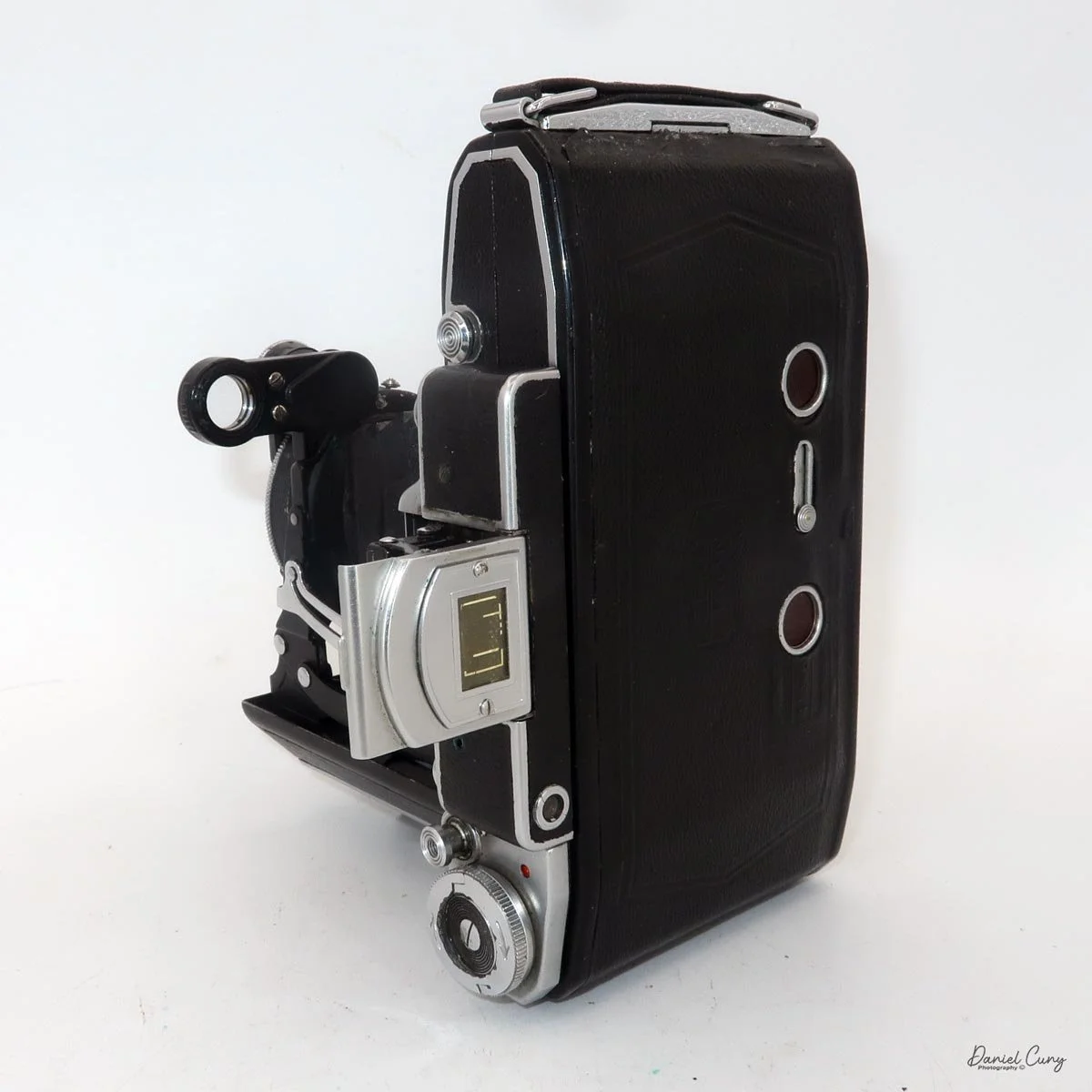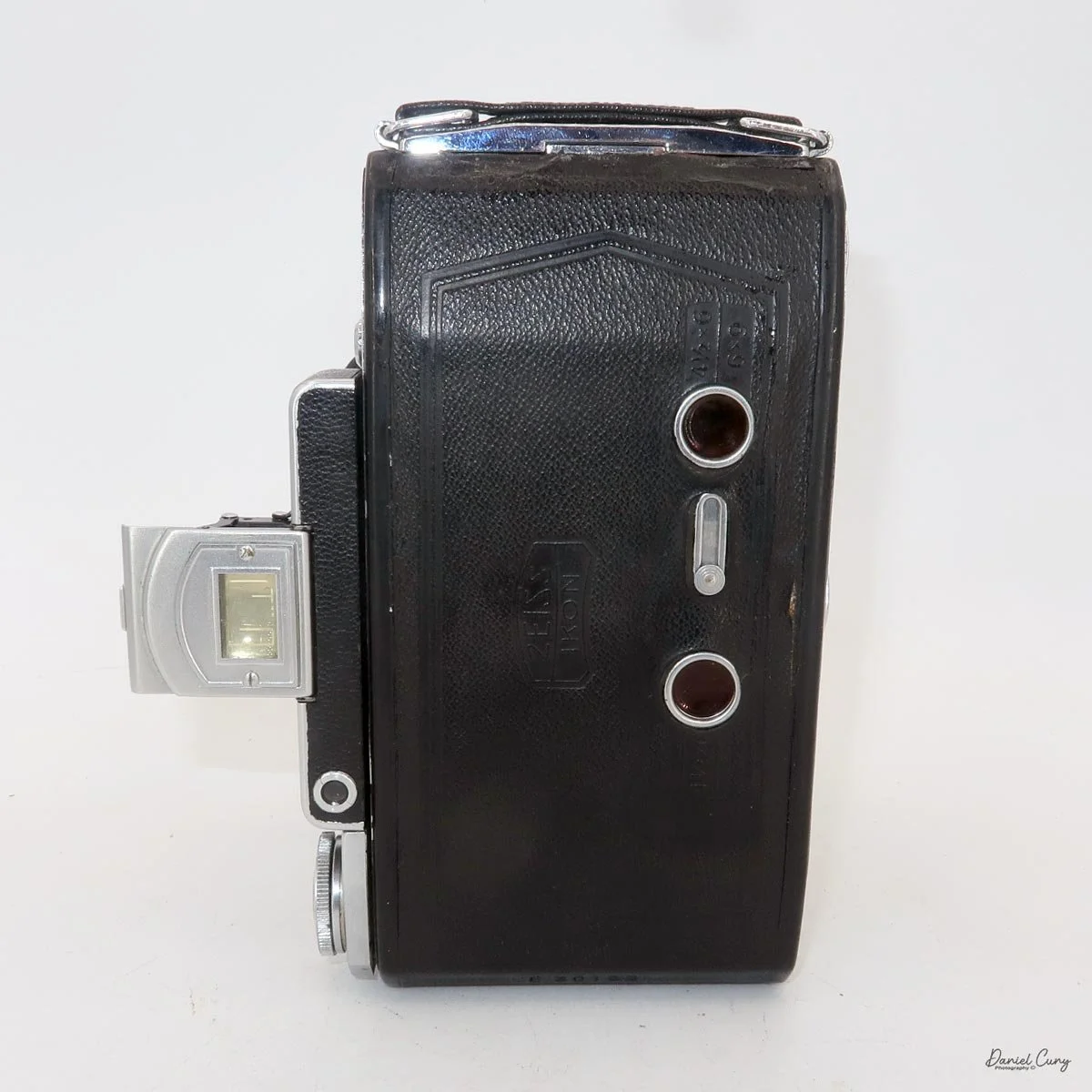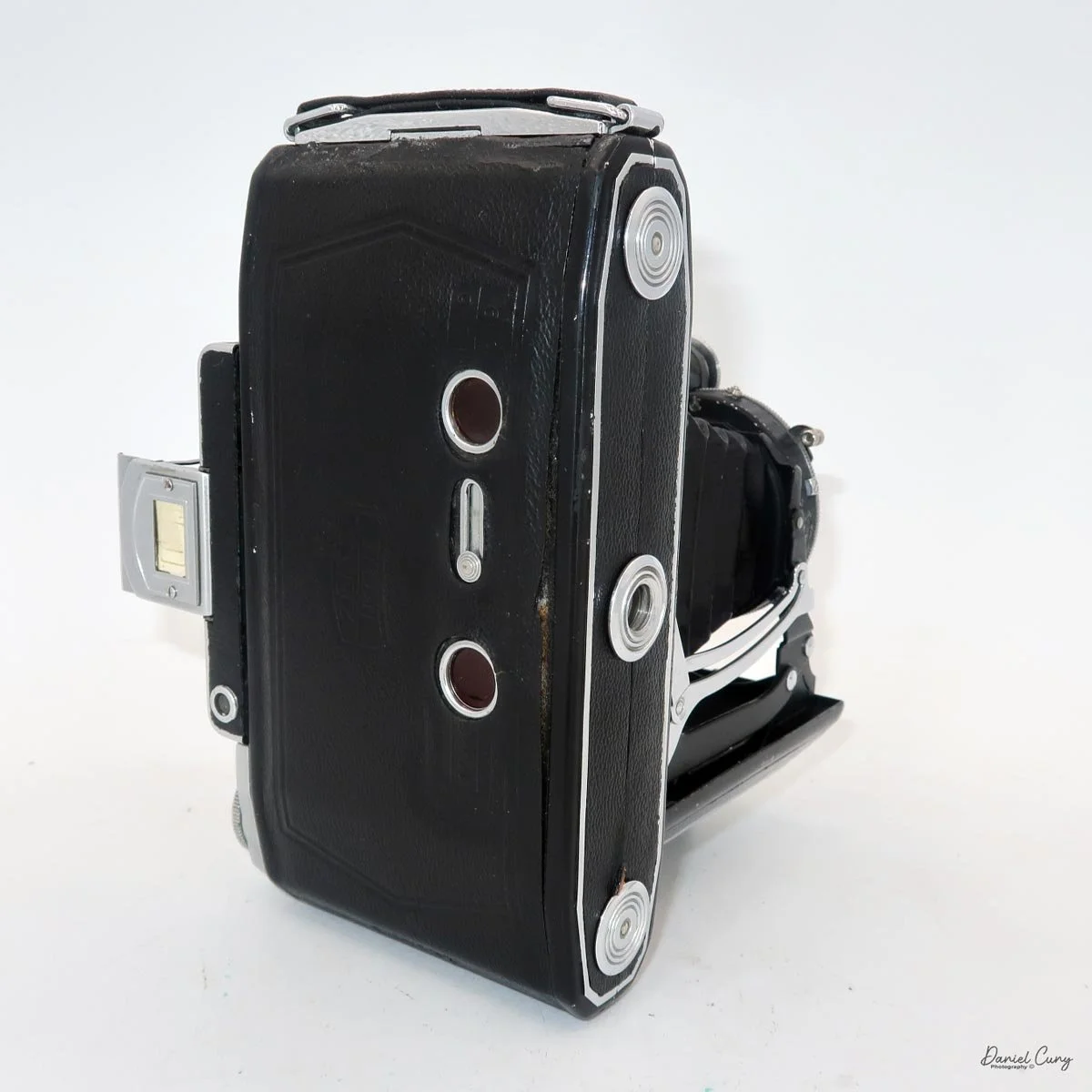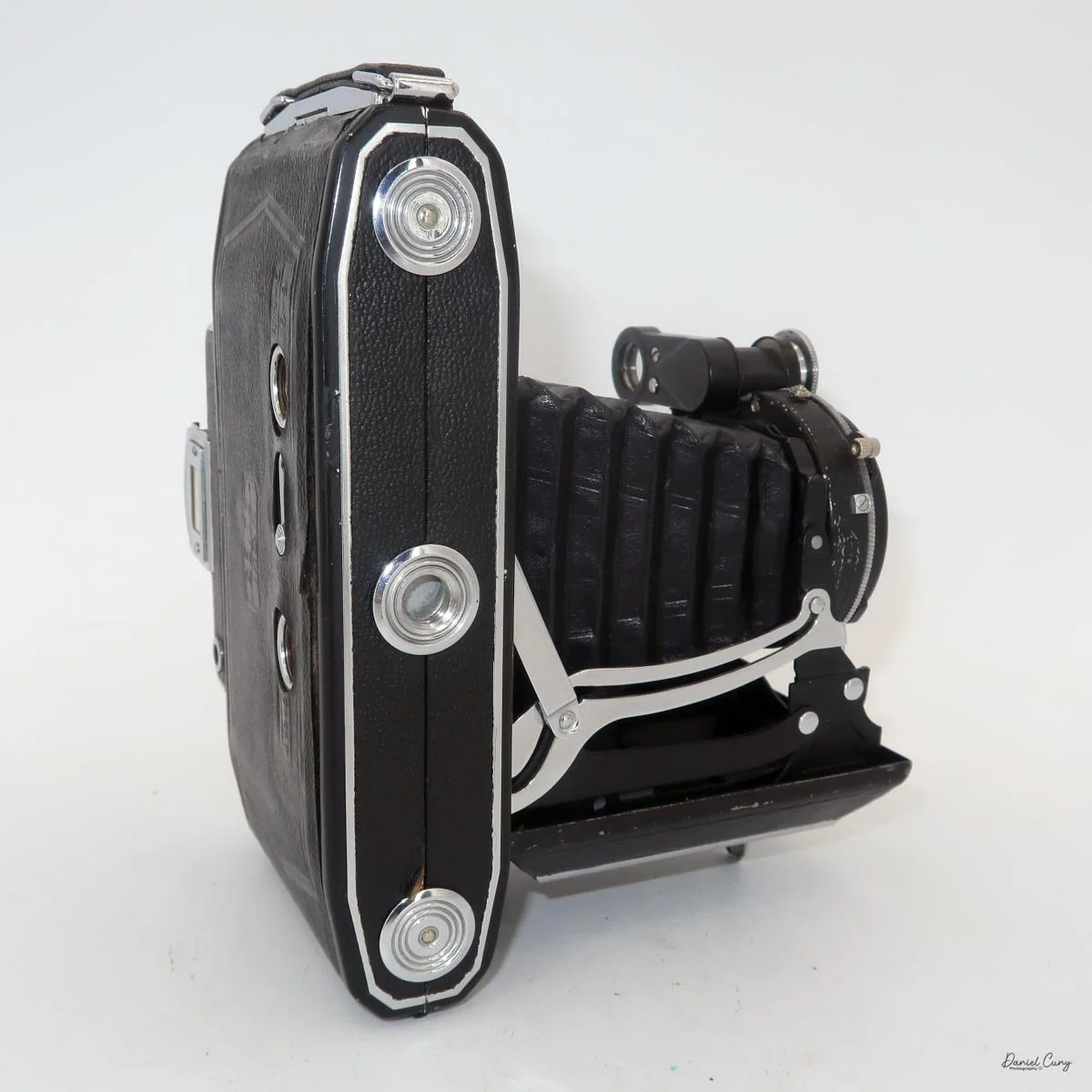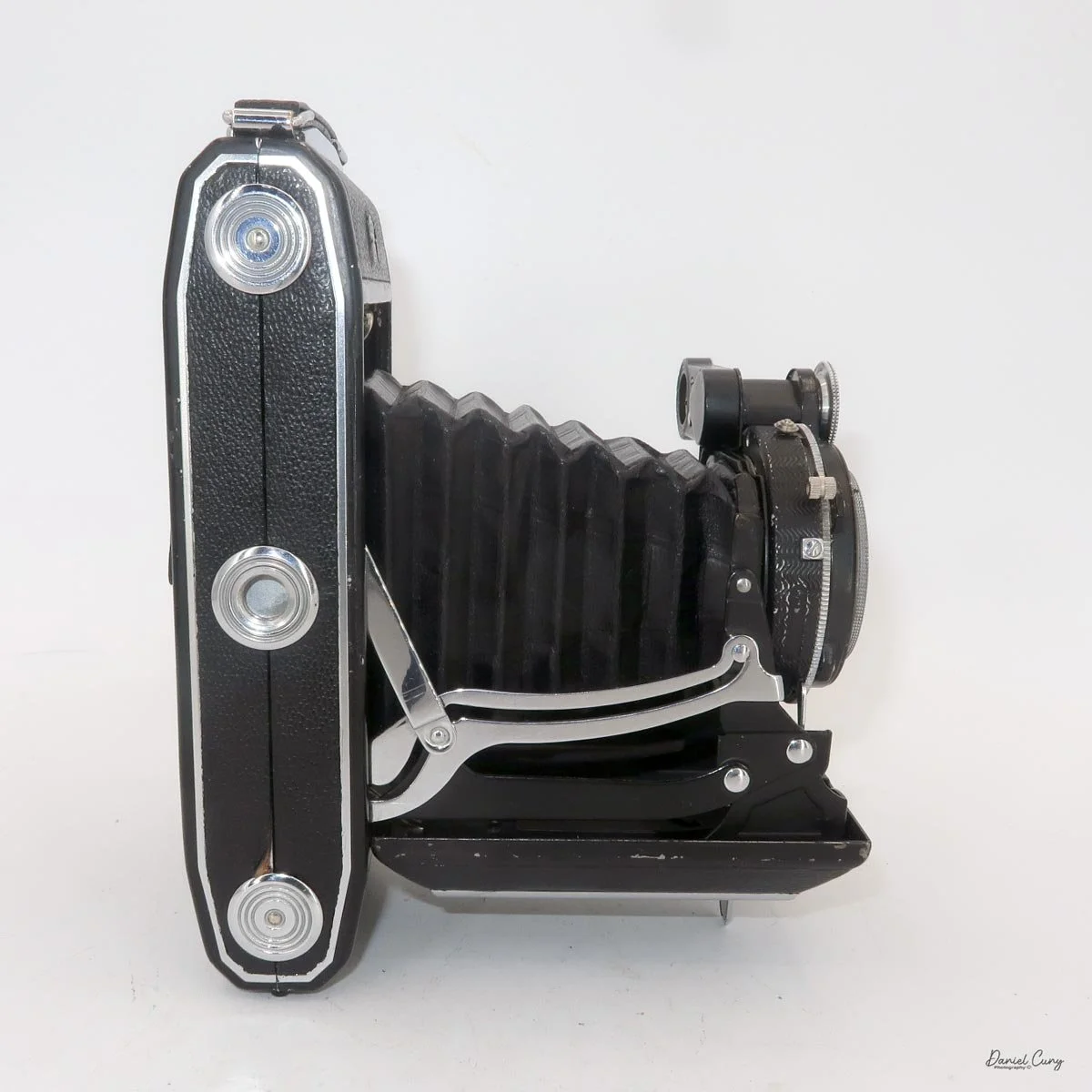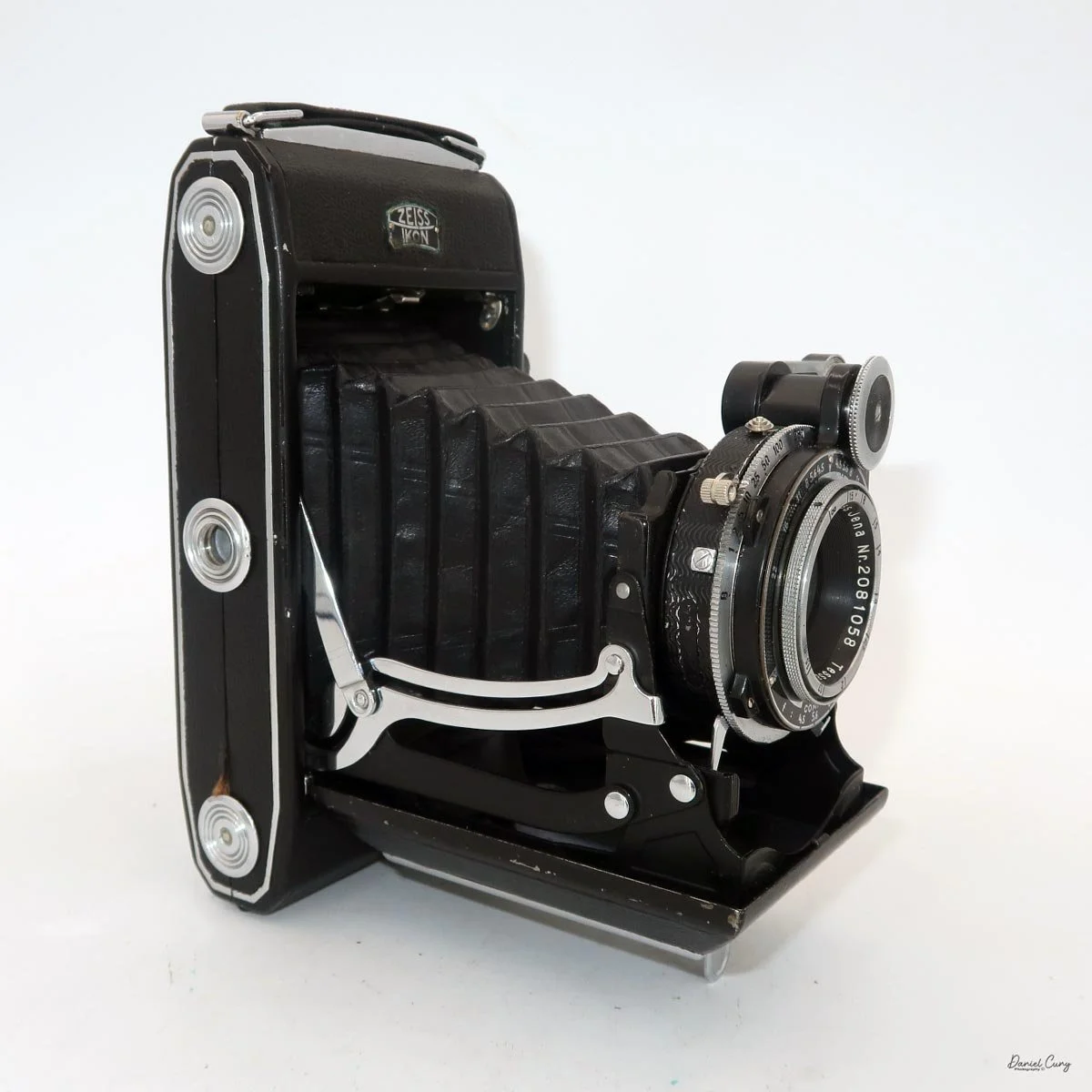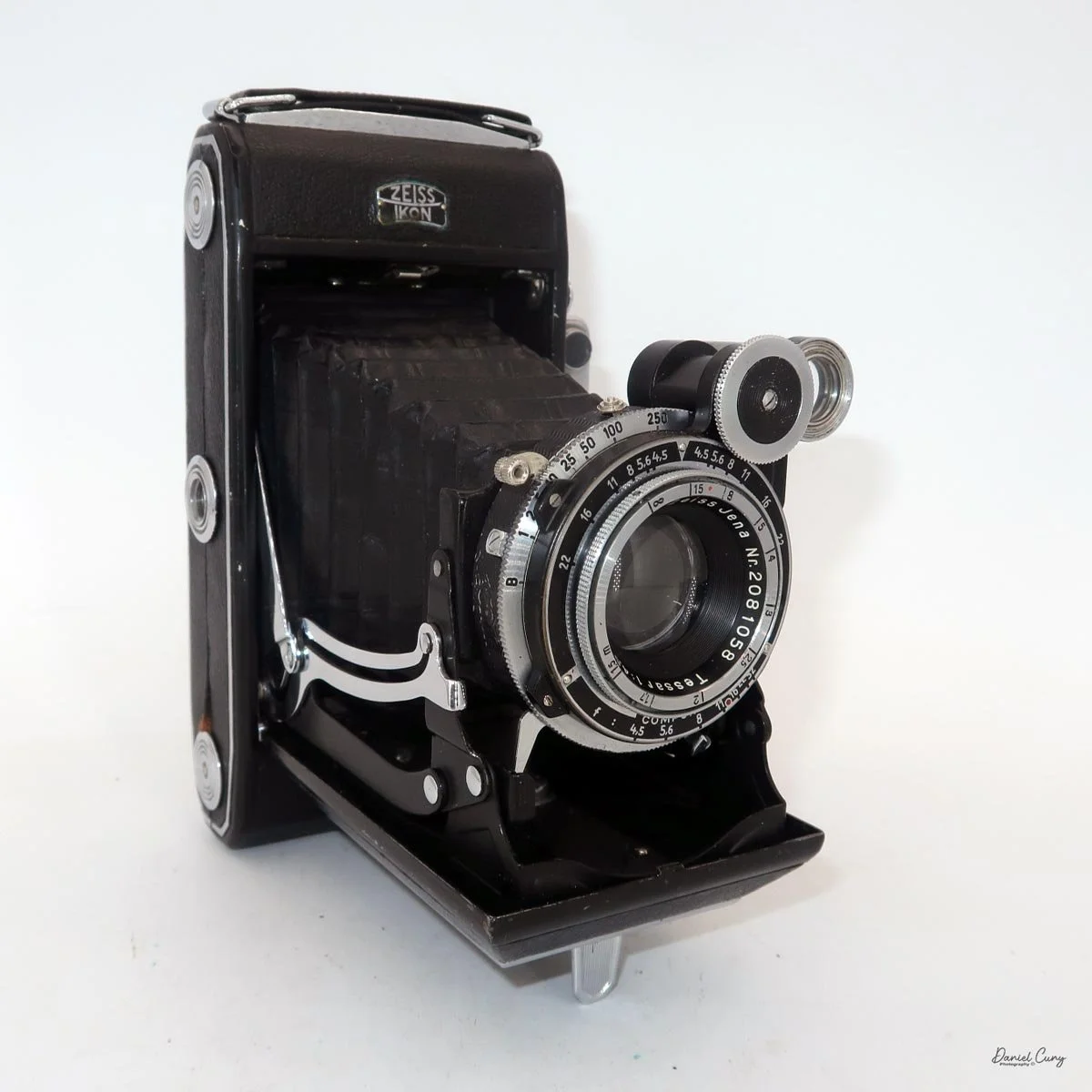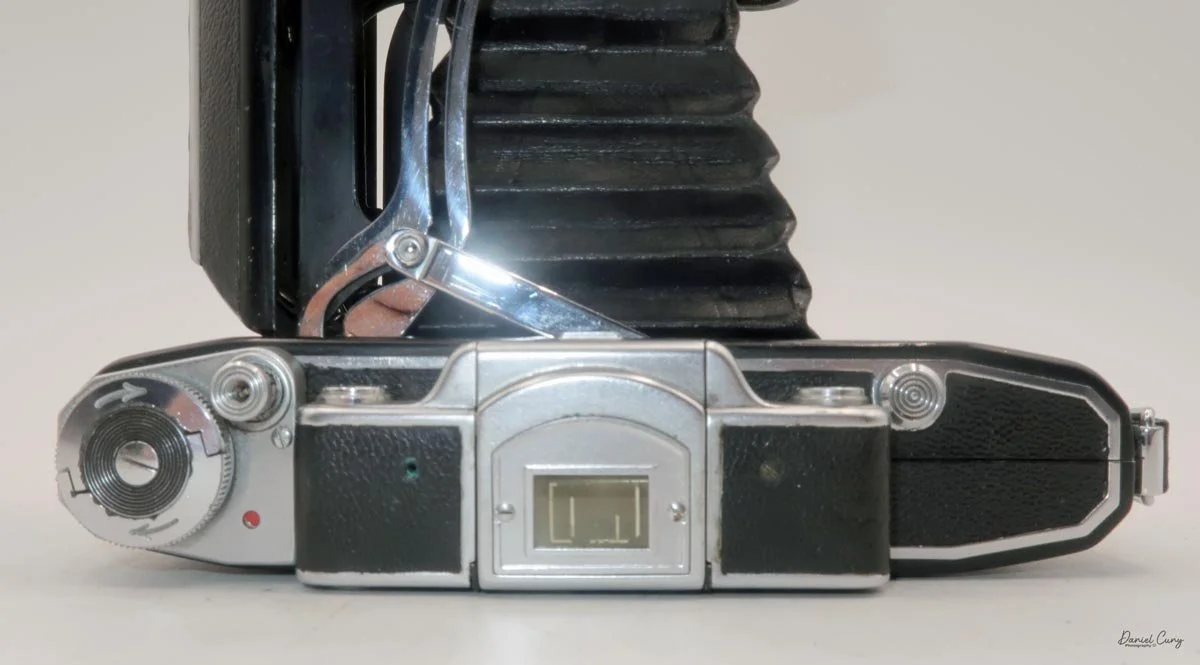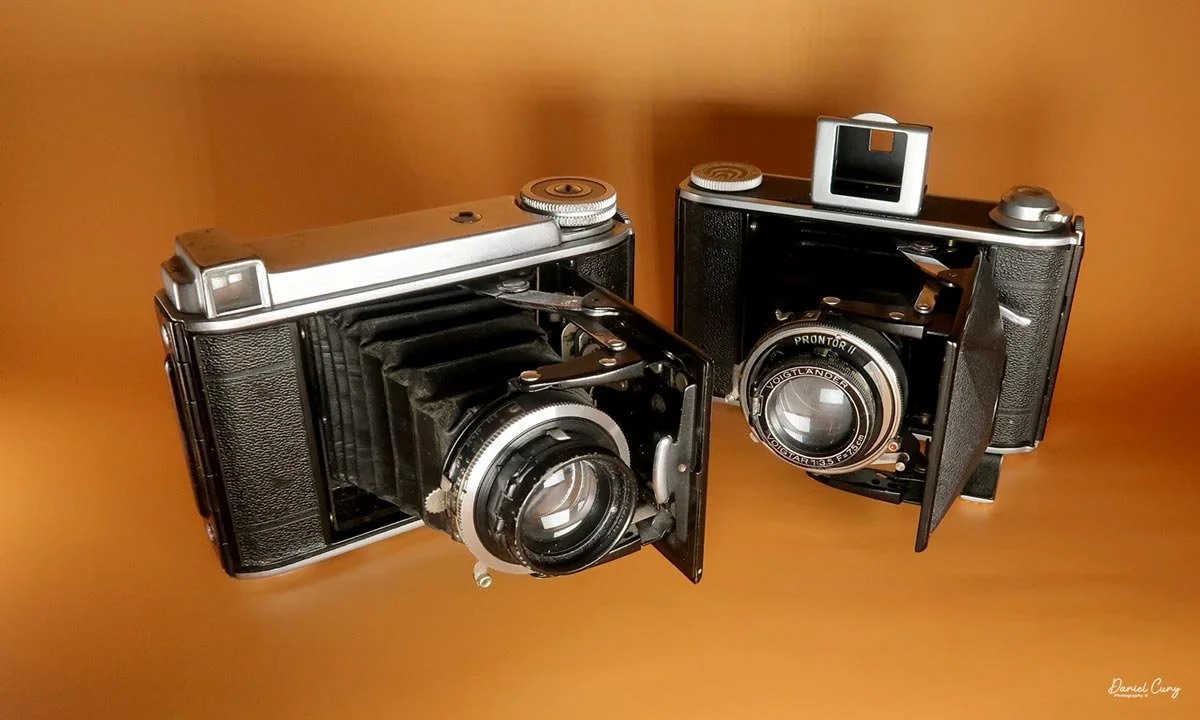
Voigtländer Bessa 66 cameras

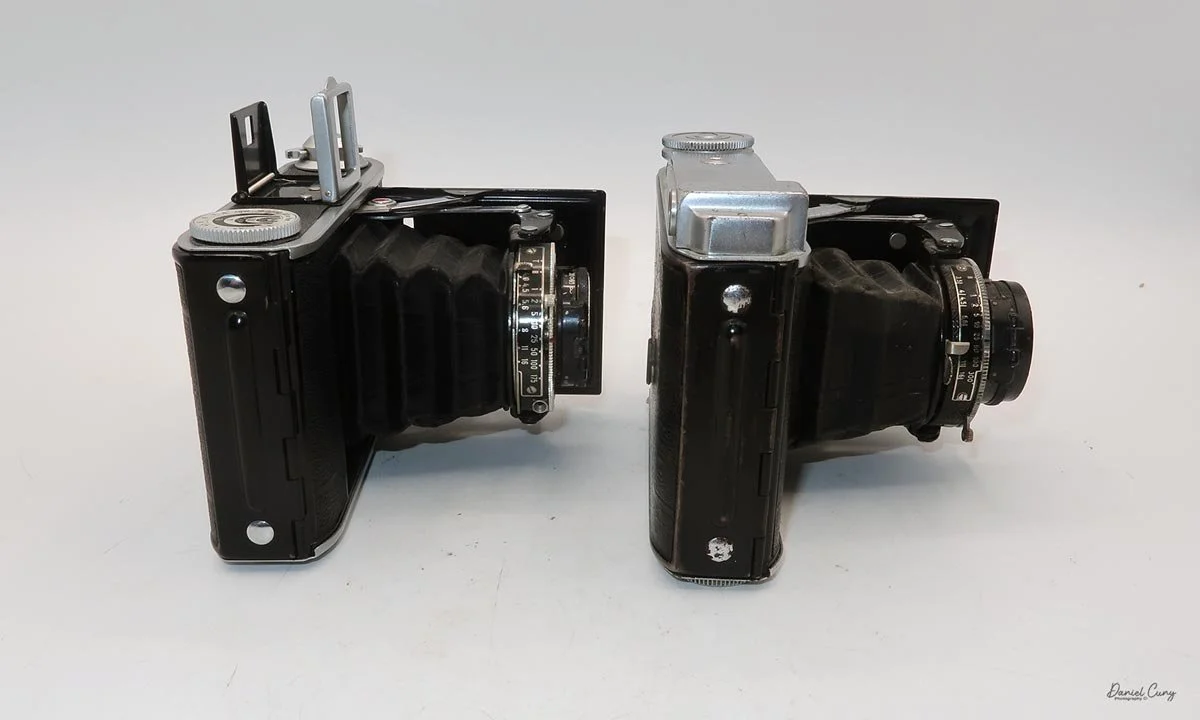
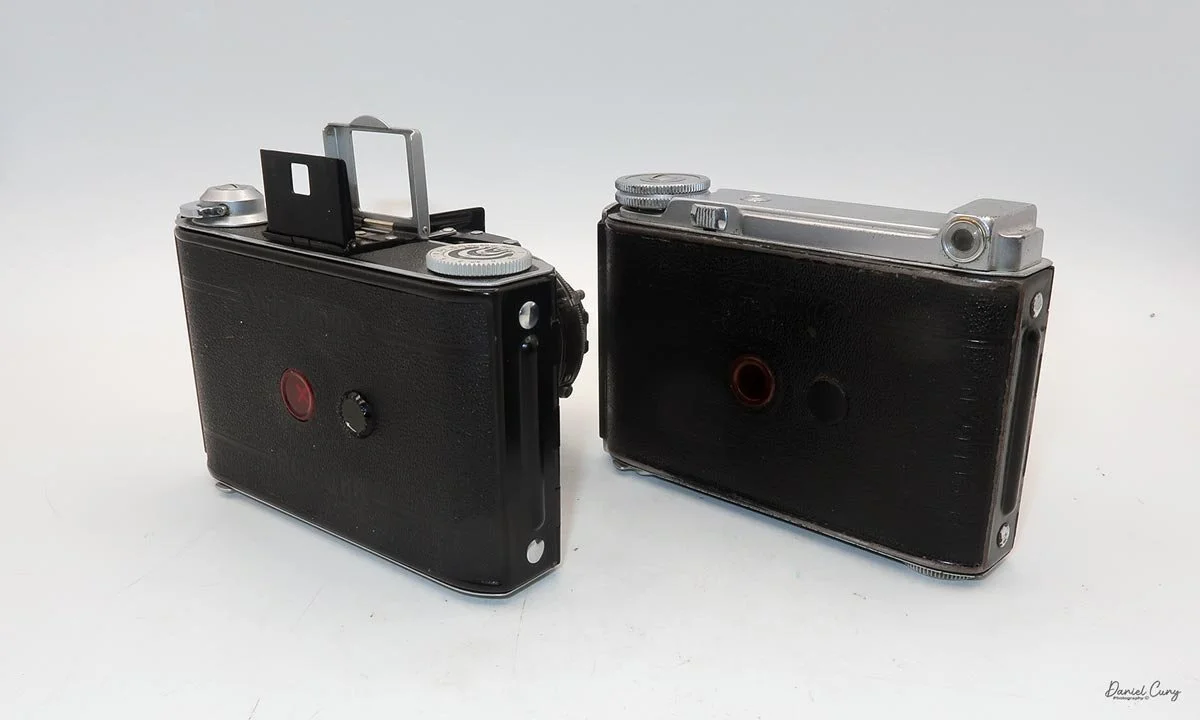
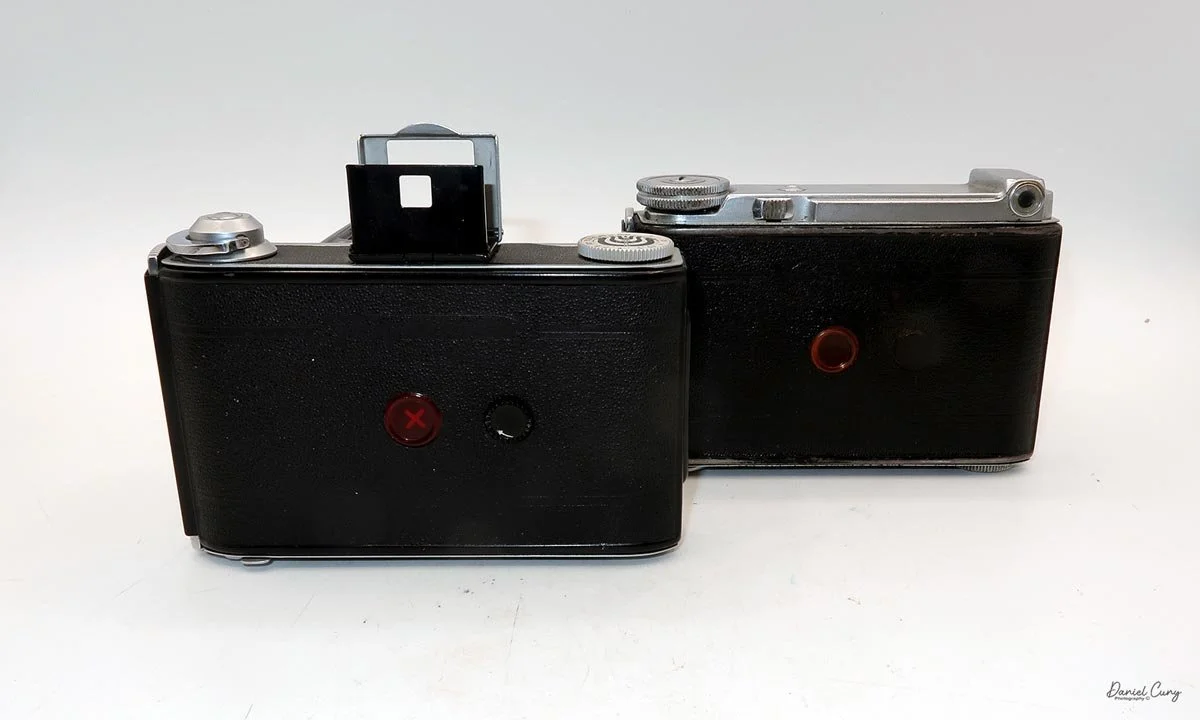
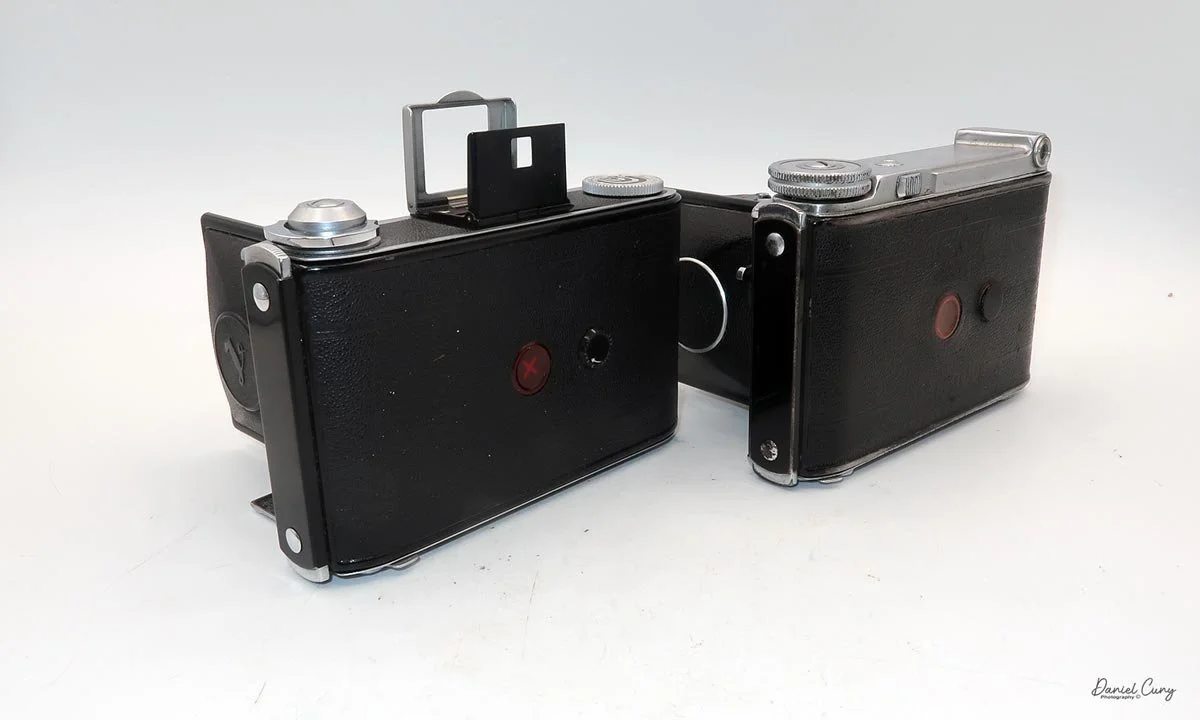
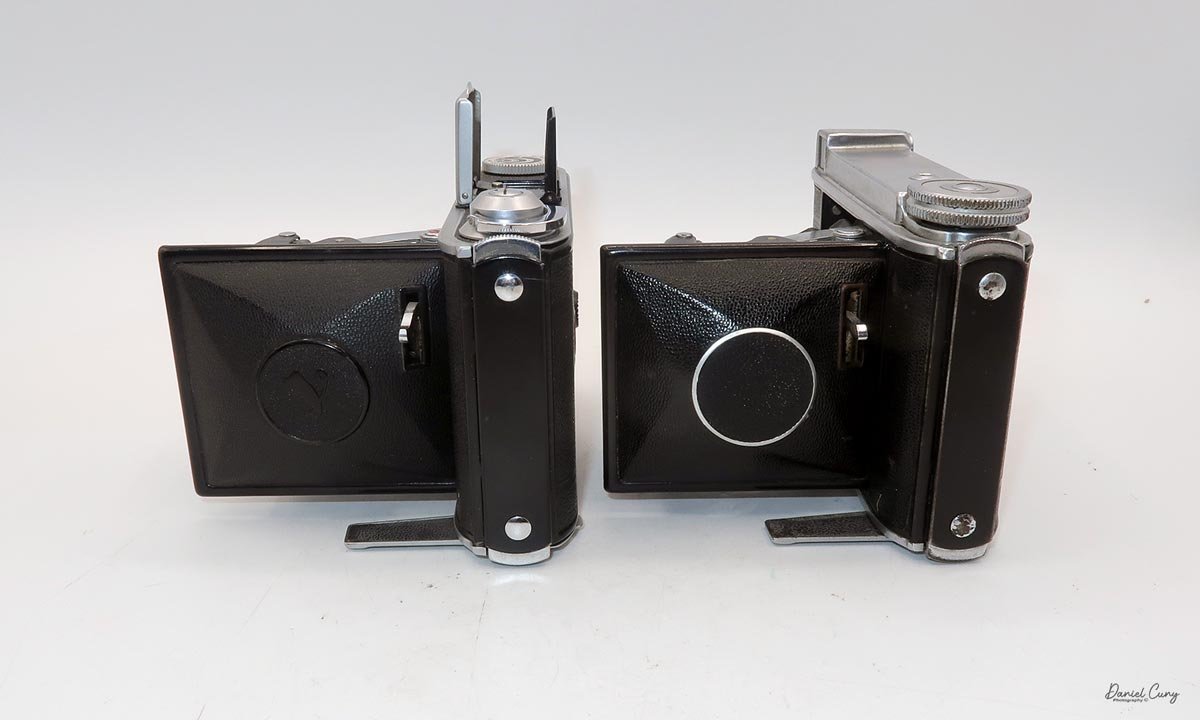
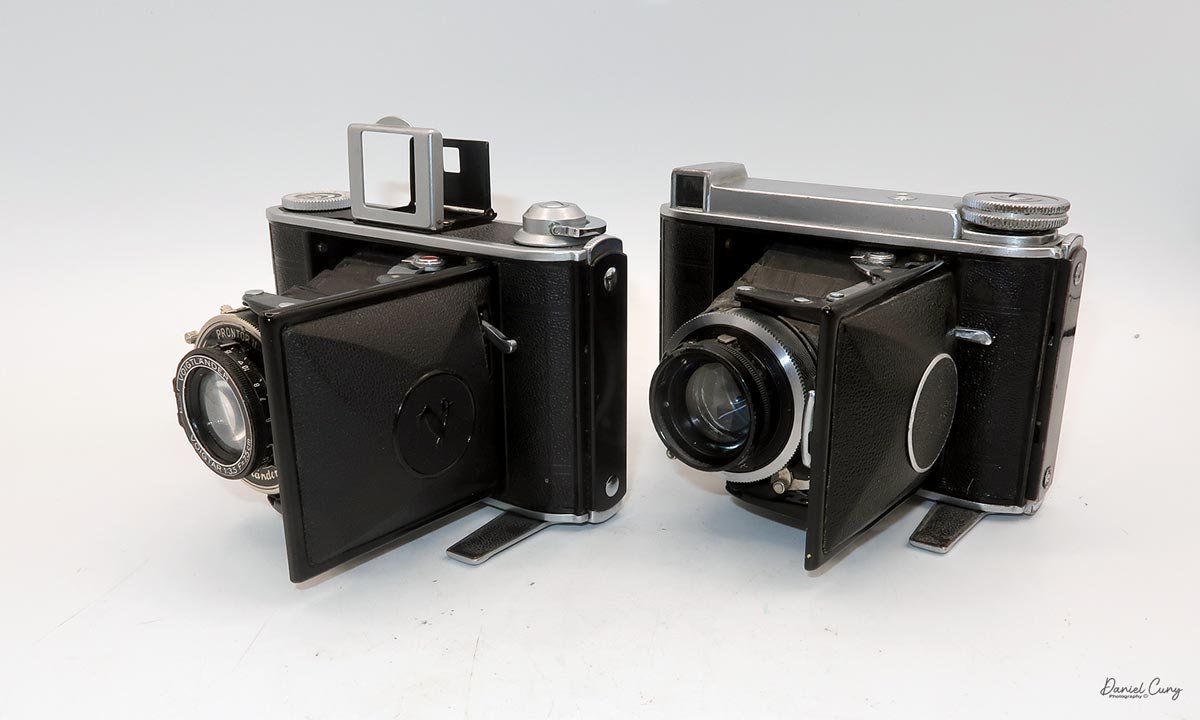
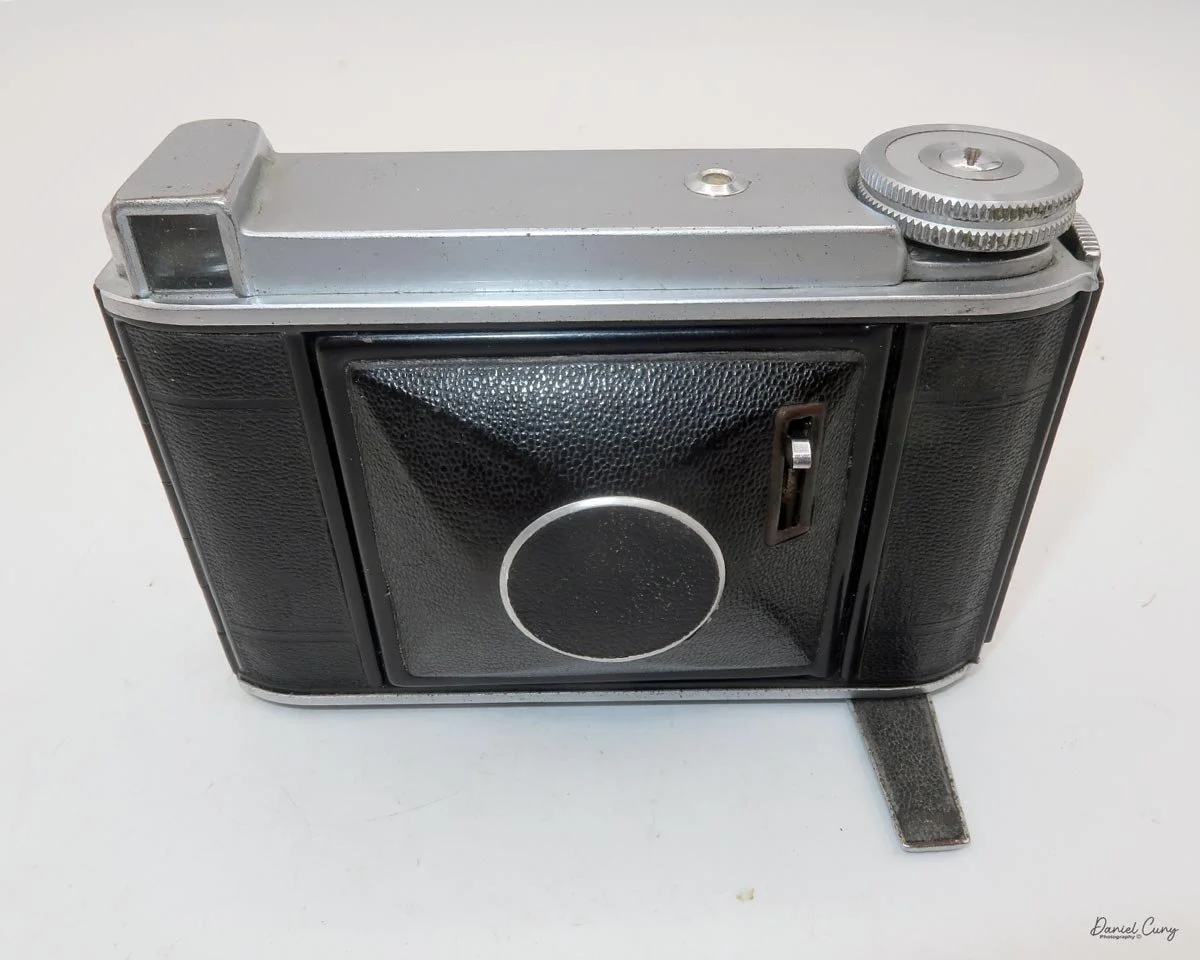
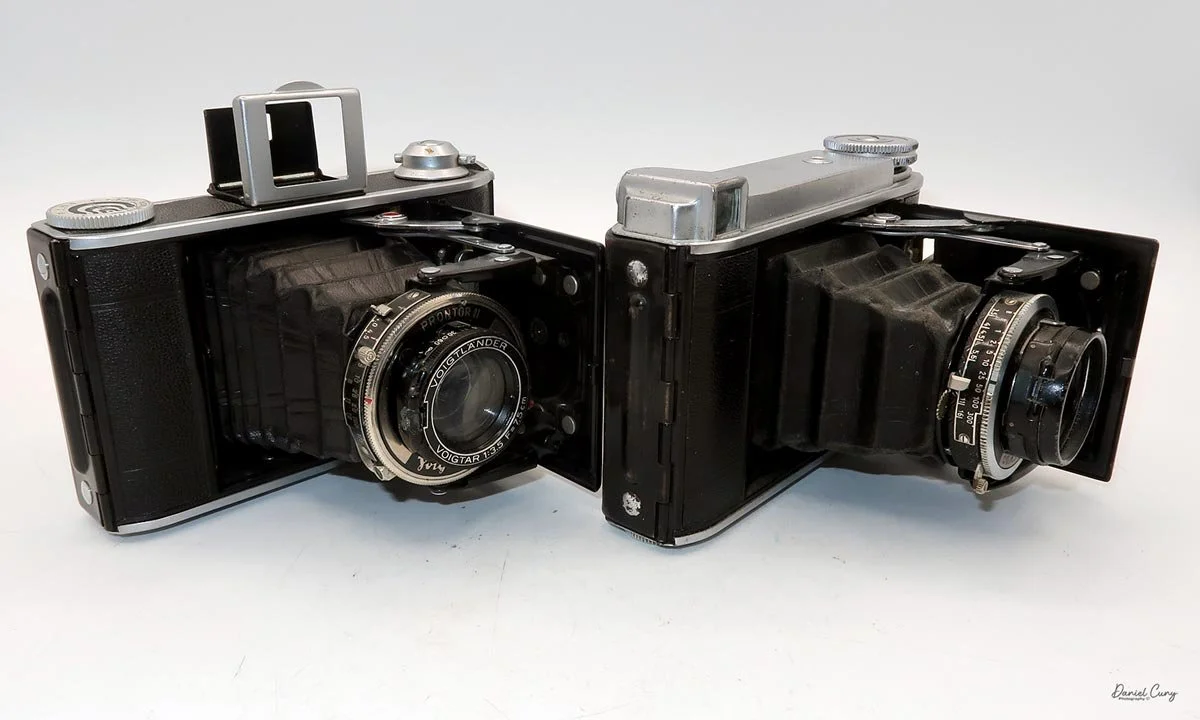
My two Bessa 66 cameras

It's interesting how you can notice some cameras and miss others at the same time.

While I've owned a Voigtländer Bessa in the past, I picked up the smaller Baby Bessa, or Bessa 66, from a collection in Las Vegas about a month ago. I dismissed the camera as I thought it was a similar-looking Voigtländer Vito, a much different 35mm camera than the Bessa 66, which is a compact, medium format 6x6cm camera.

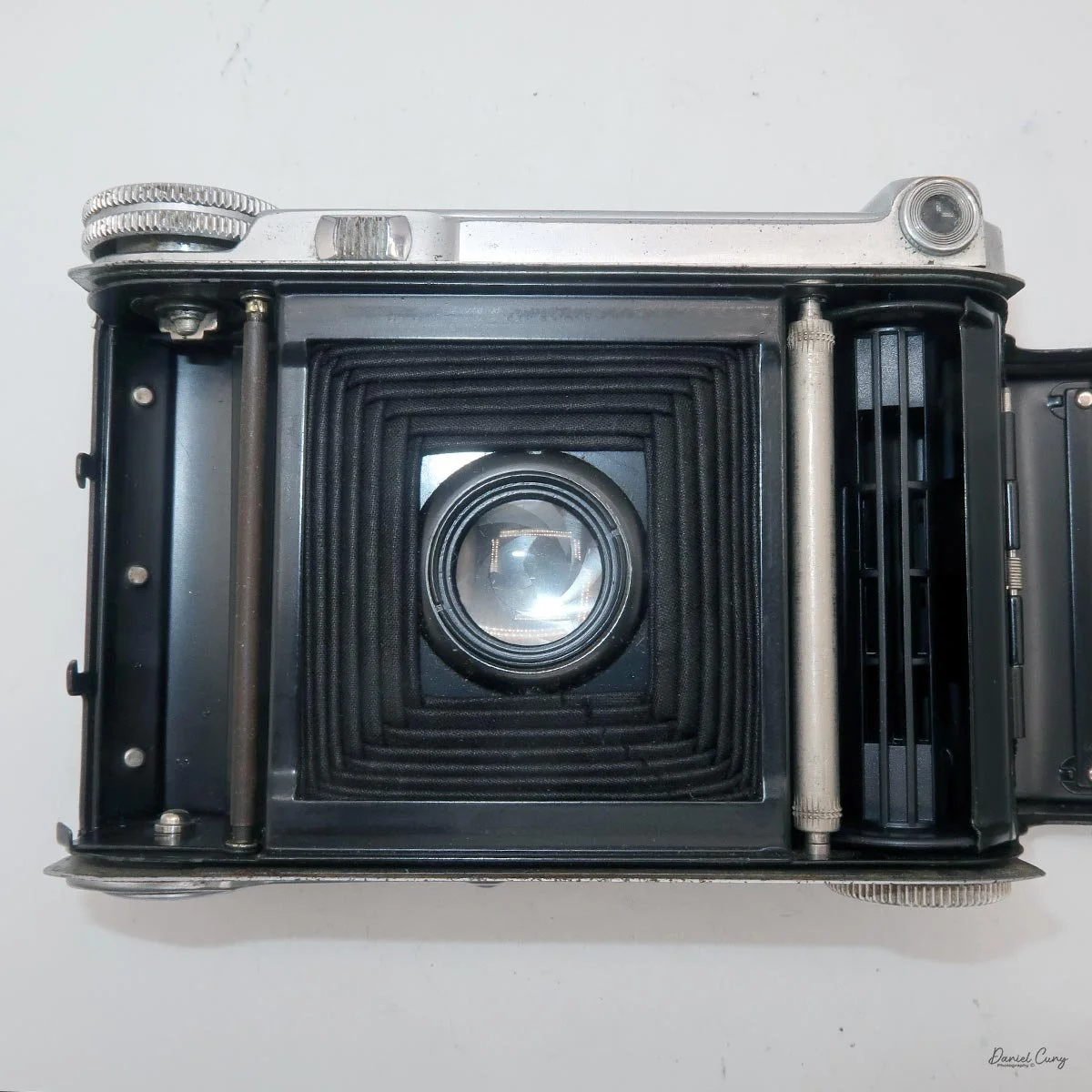
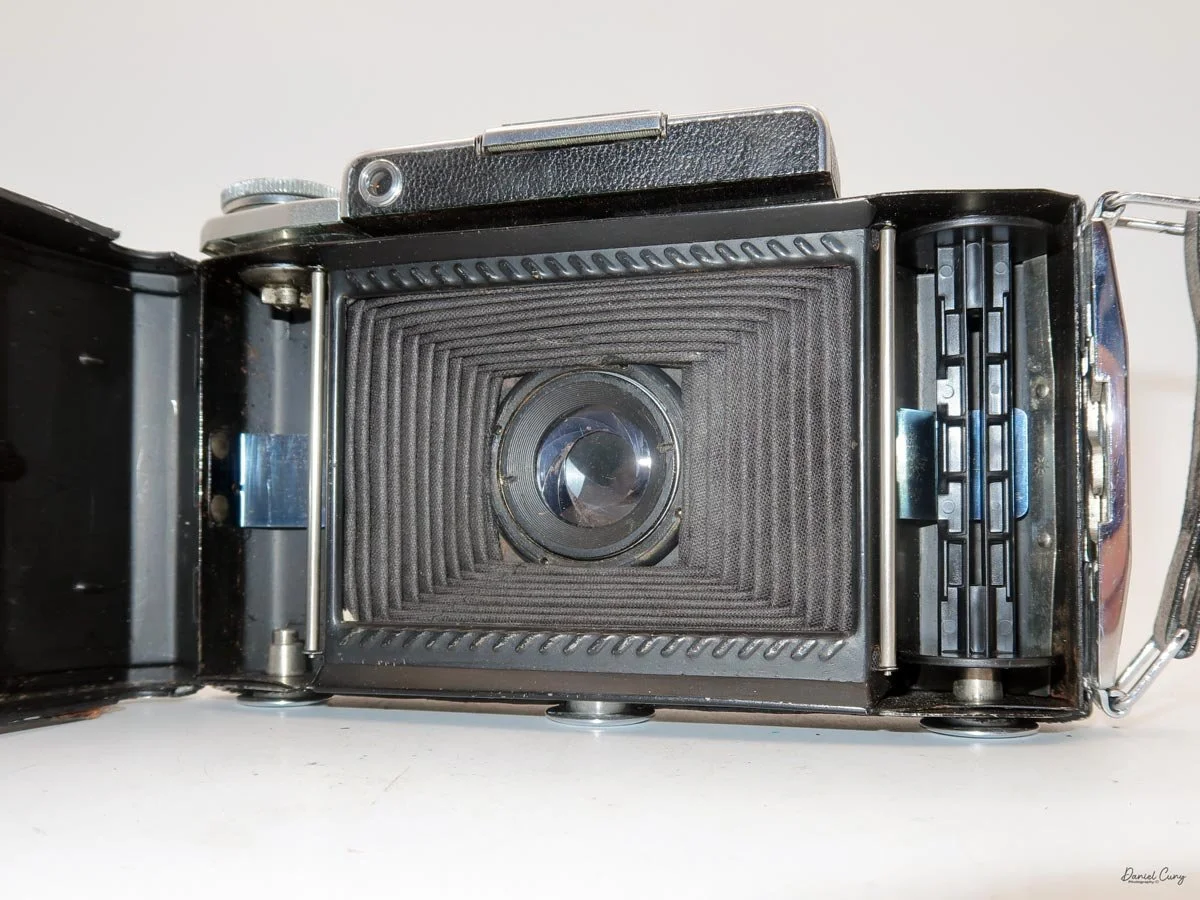
There were actually three similar-looking cameras in the group I had set aside because I had mistaken them for Voigtländer Vito cameras, but after popping the fronts open, I was surprised to see longer bellows and shutters.

As I turned over the camera, I then noticed the embossed BESSA 66 on the back of the camera, and realized that the camera was slightly bigger than the Vito cameras I've had in the past. I was going on merely the appearance of the camera's shape, which is similar. It's the domed front of the camera that houses the lens that is similar on many of the Voigtländer cameras.

After I gathered the three similar cameras for a thorough check-out, I mistakenly thought they were different. Still, I found out two were Bessa 66 cameras and the third was a more refined Perkeo I. At this point, I figured it would be fun to write about the two Bessa 66 cameras and put the Perkeo away for another day.

There were a couple of differences I noticed right away about the two Bessa 66 cameras. The main difference was the viewfinder on top of the cameras. One had a fold-out, pop-up finder, more like a sports finder. In contrast, the other has an optical finder incorporated into the top of the camera.

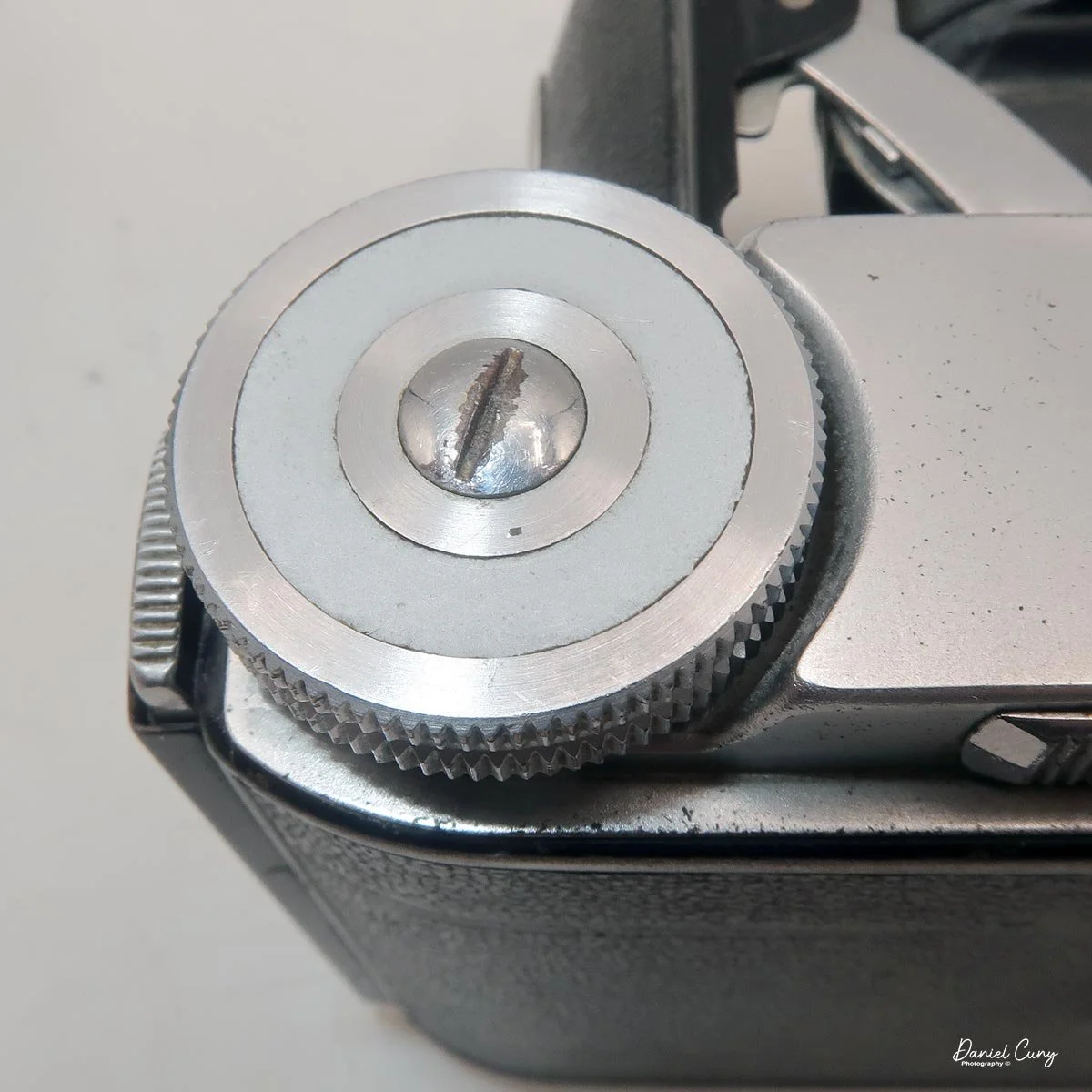
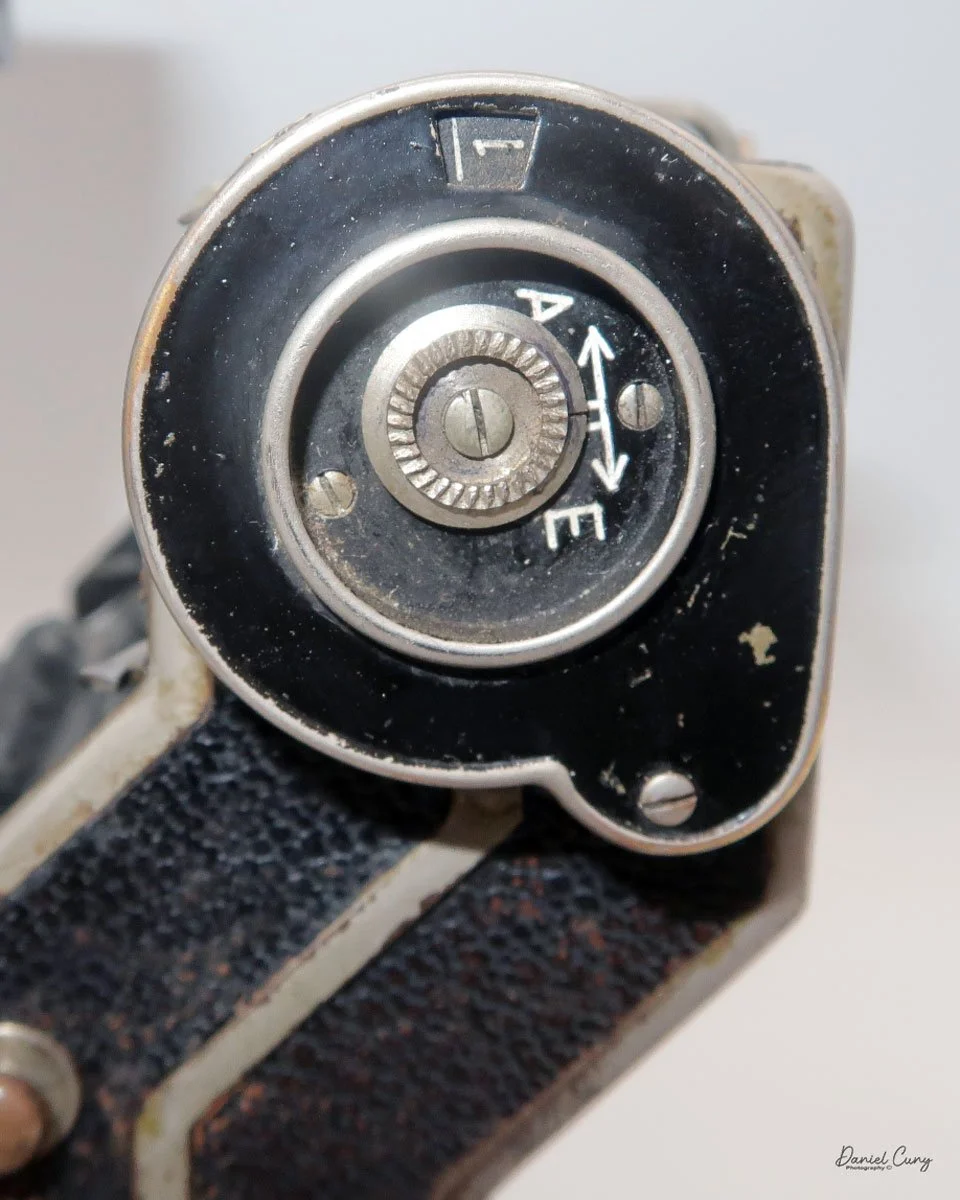
The second thing I noticed was that the film-advance knobs differed between the two cameras. One has a lift-up handle to advance the film, while the other has a more robust wheel, which makes advancing the film easier.
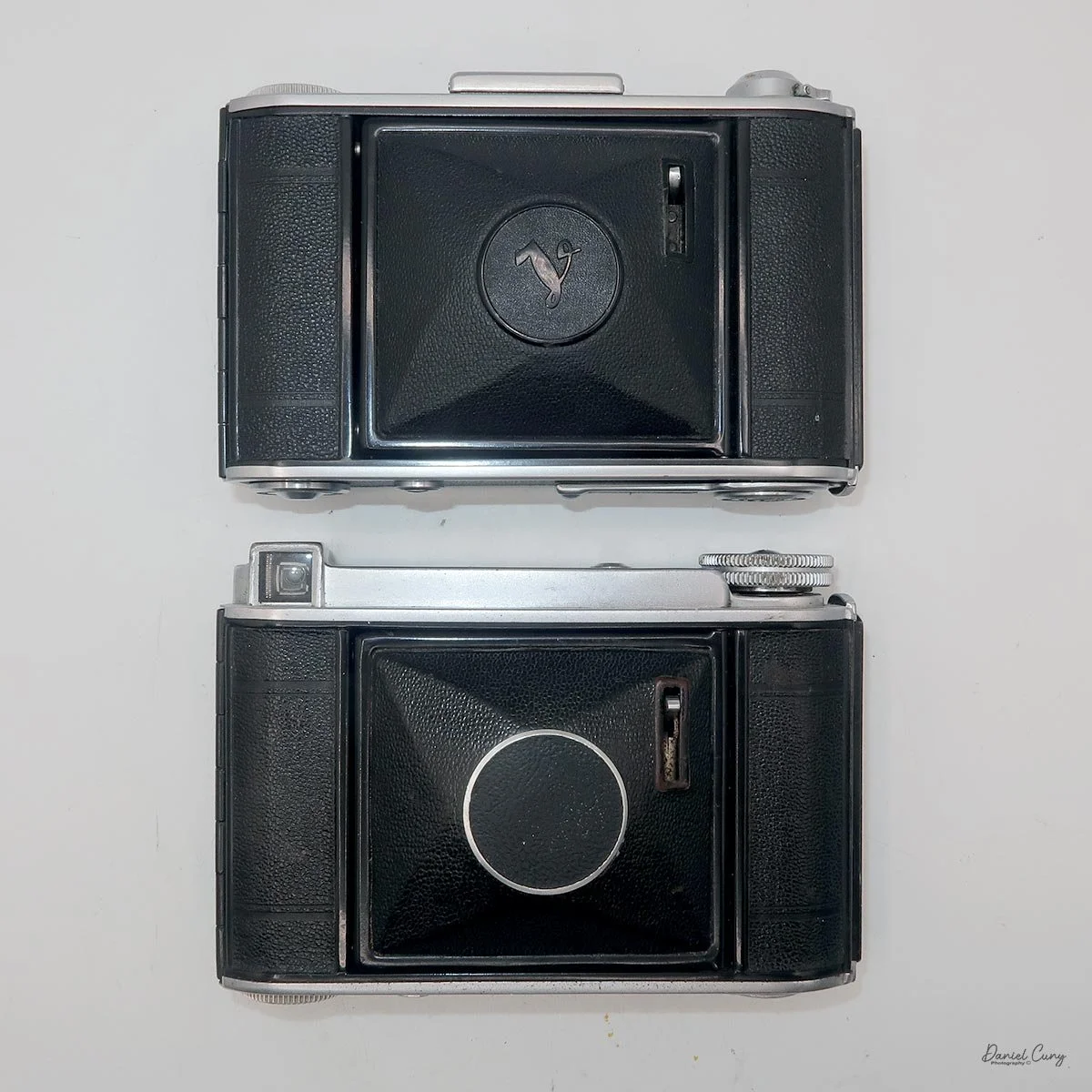
Bessa 66 Standard (top), and Bessa 66 Deluxe (bottom)

Looking online at the differences between the two cameras, one is an earlier "Standard" version with the pop-up finder and handle advance. In contrast, the later camera, which some people call the "Deluxe" version, has an optical viewfinder and a round film-advance knob.

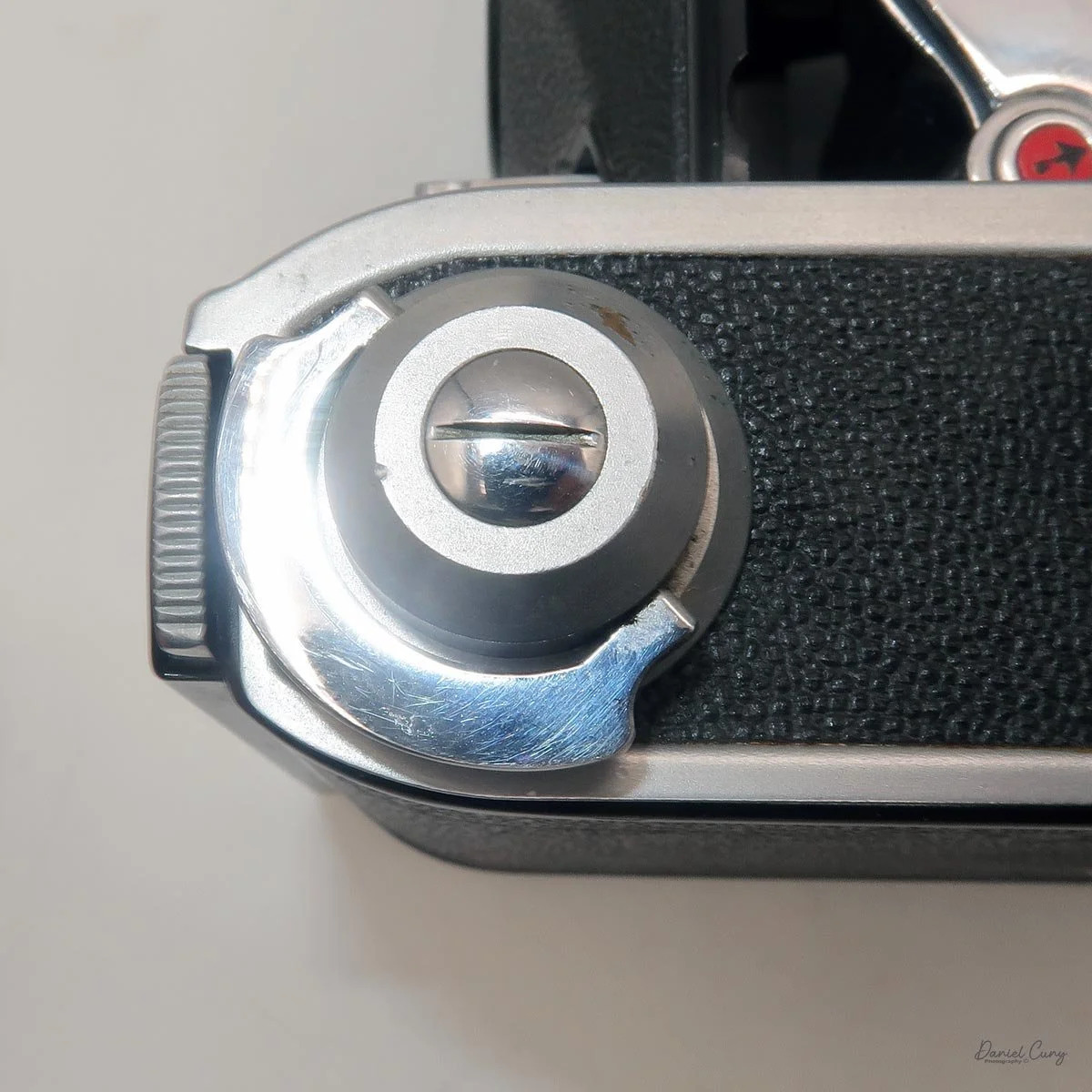
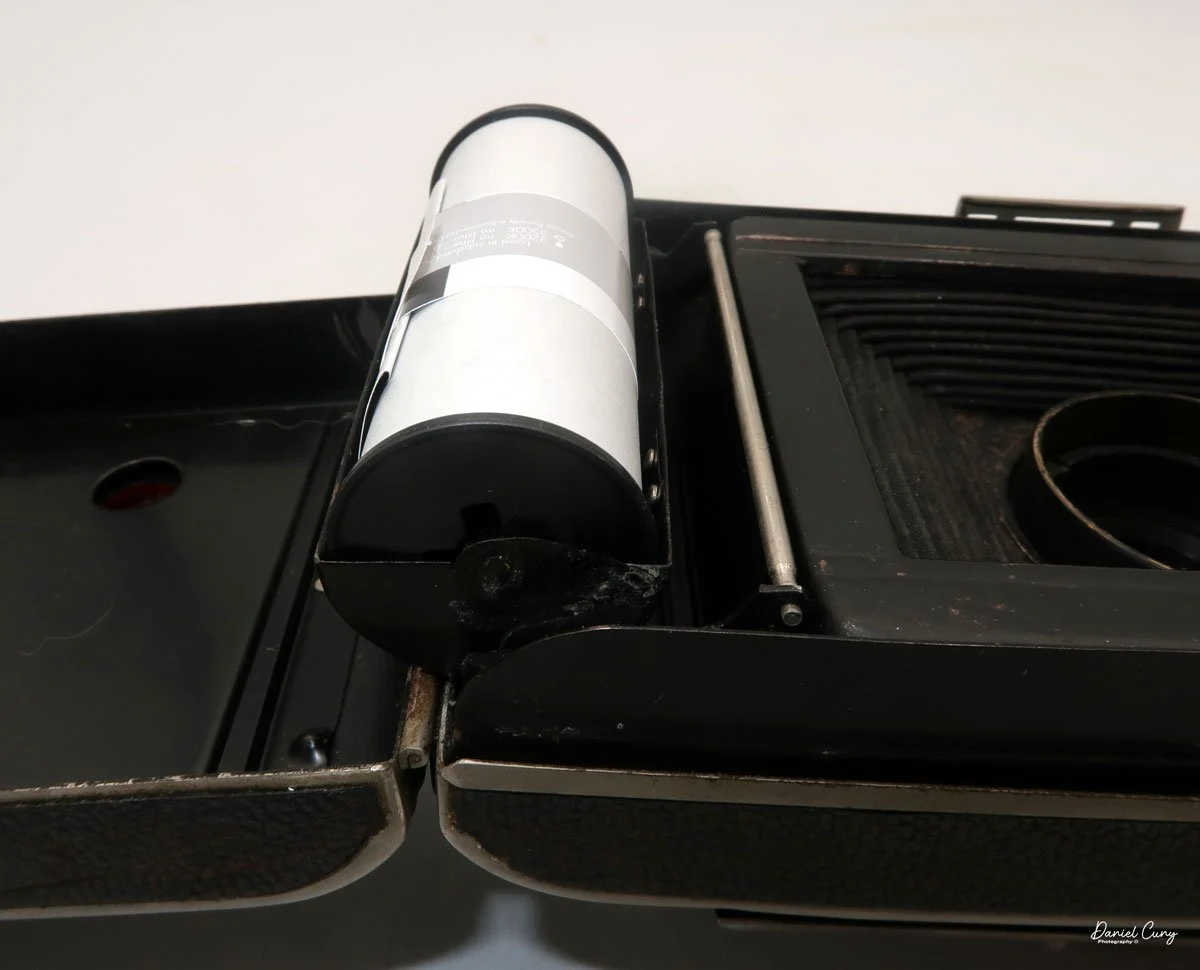
The only other thing I noticed looking at the cameras from the outside is that the Deluxe camera has a bigger and sturdier knob on the bottom where the new roll of film is placed, which resembles the winding knob on top, as opposed to a slightly different one on the "Standard" version. These knobs don't affect how the camera operates, since neither pulls out to let the fresh roll into the film chamber. Still, I'll get into loading the camera later in the post.

At this point, I'm impressed with the Bessa 66 cameras, as I am with many of the Voigtländer cameras. They feel very similar to other folding 6x6cm cameras from this timeframe, like the Zeiss Ikontas made before WWII, in size and artistry, along with other Japanese cameras like the Mamiya Six and Mizuho Six.

The larger film format makes them terrific travel cameras. They are small and compact, have wonderful lenses, shoot 6x6 (or, in some cases, 6x4.5 or 6x7), and fit in your pocket for easy transport.

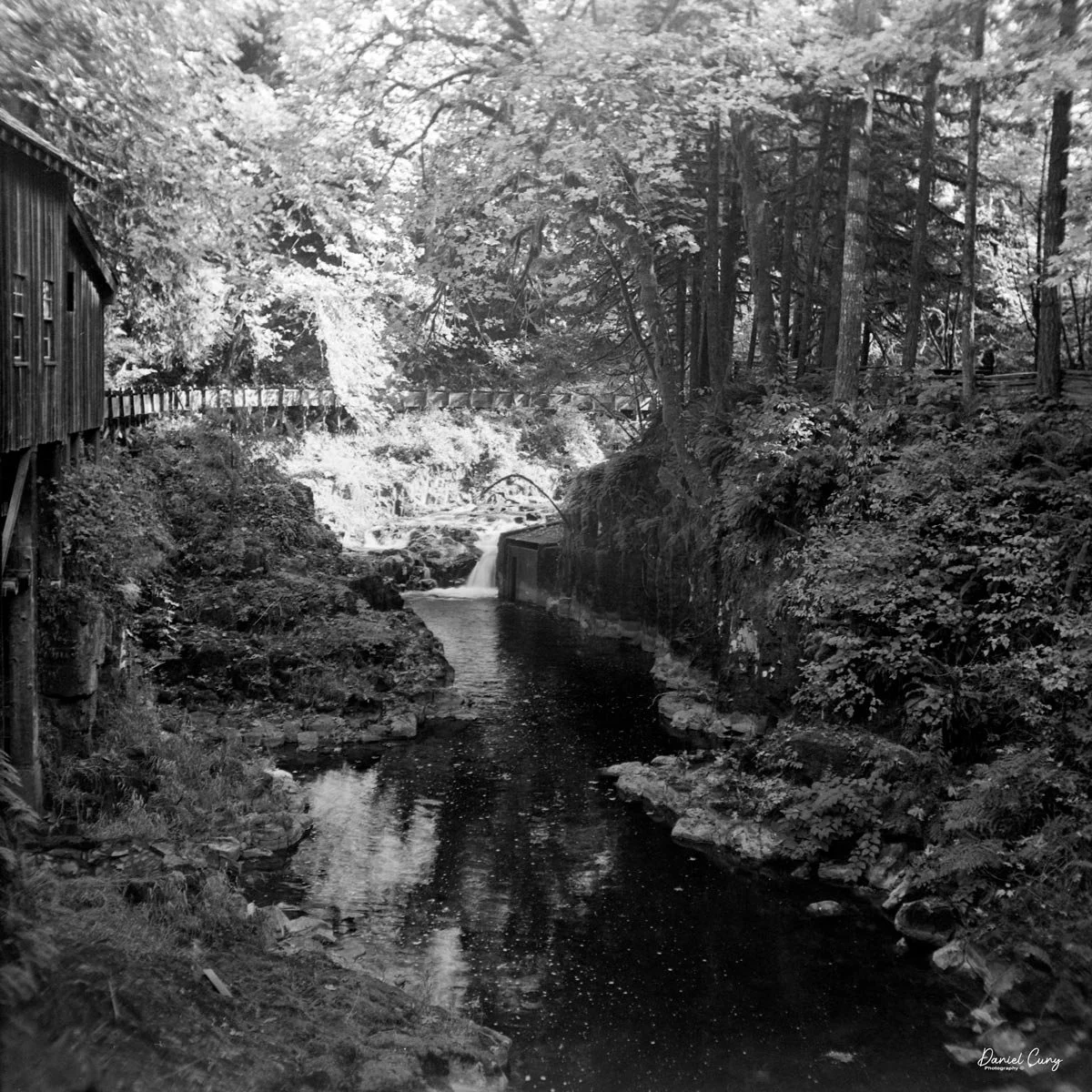
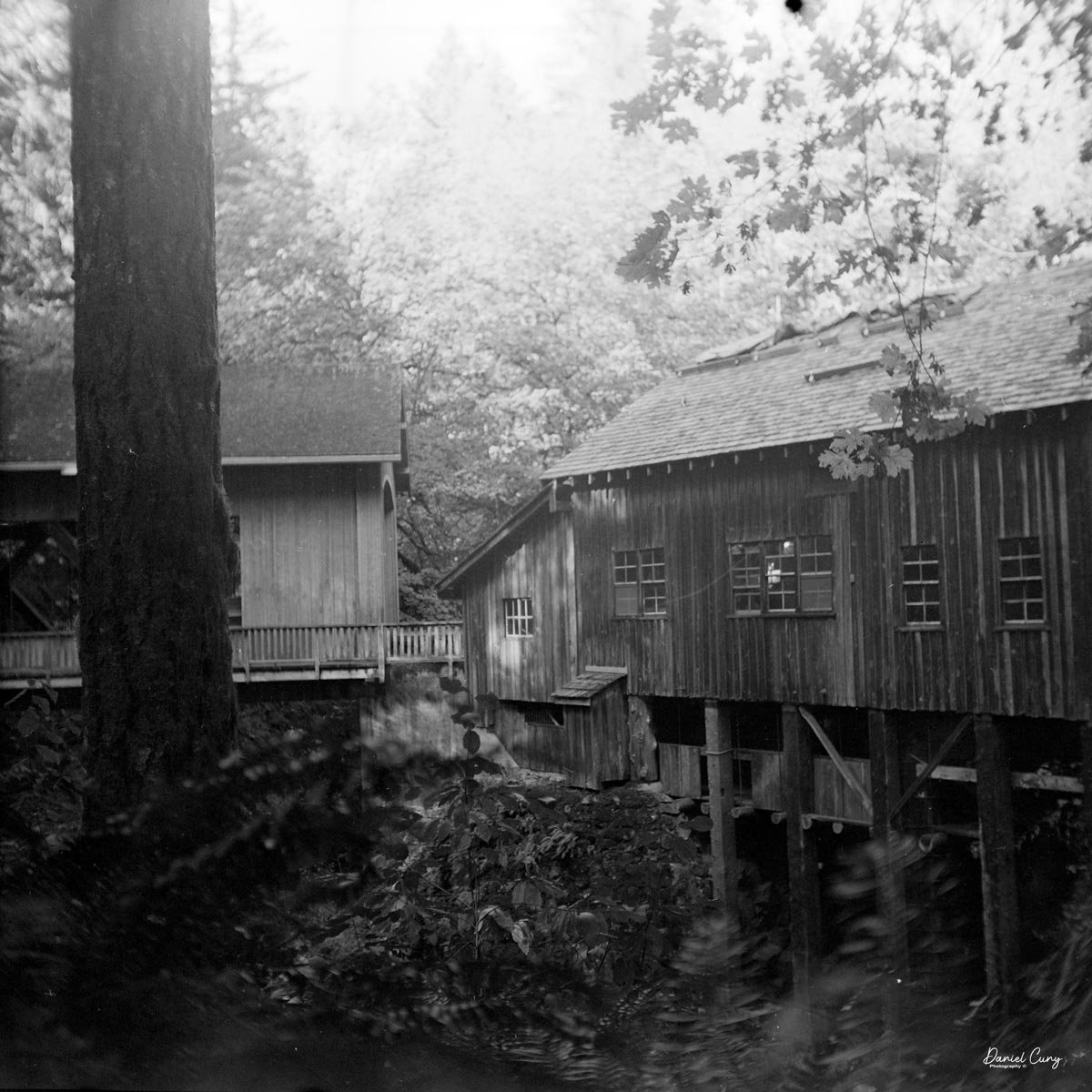
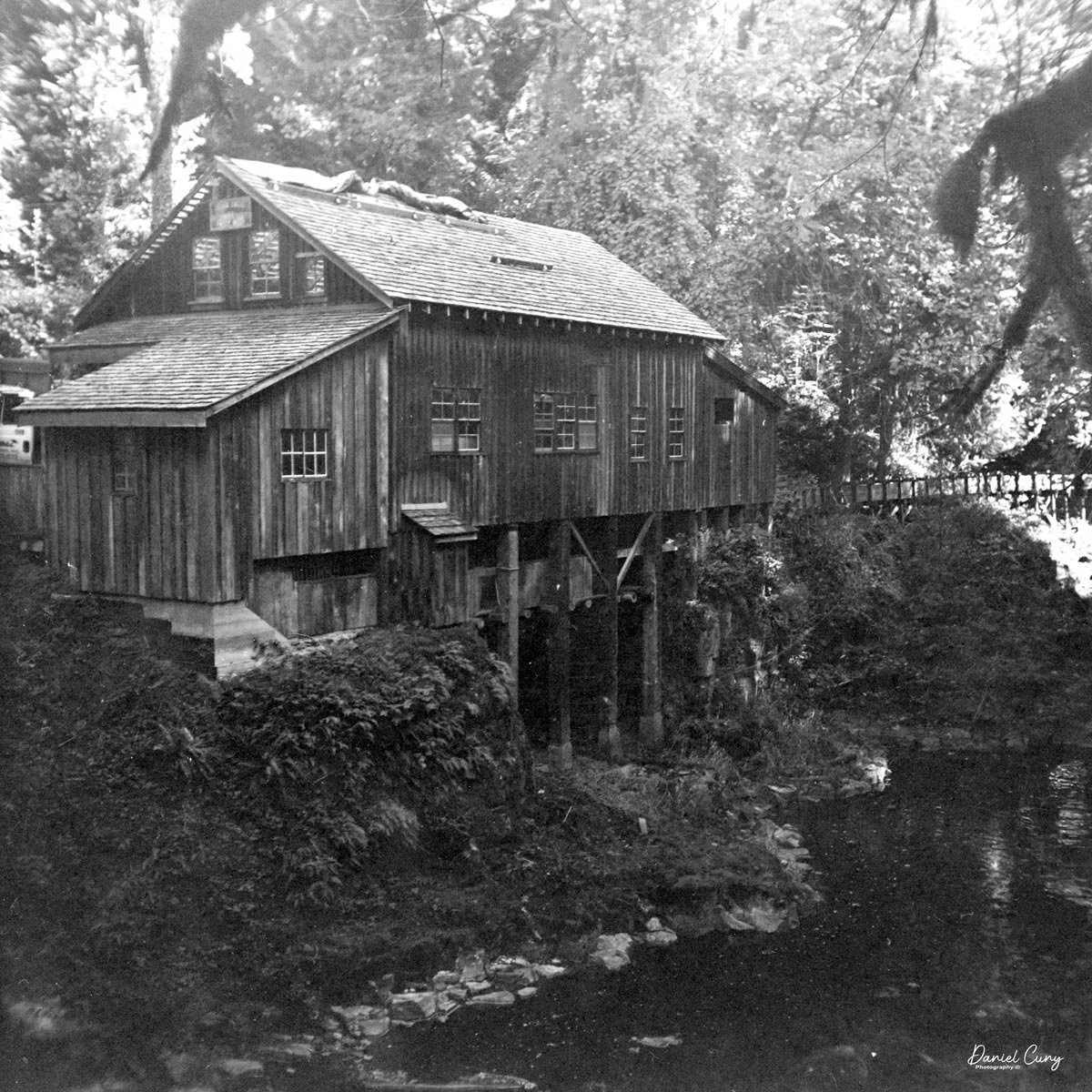
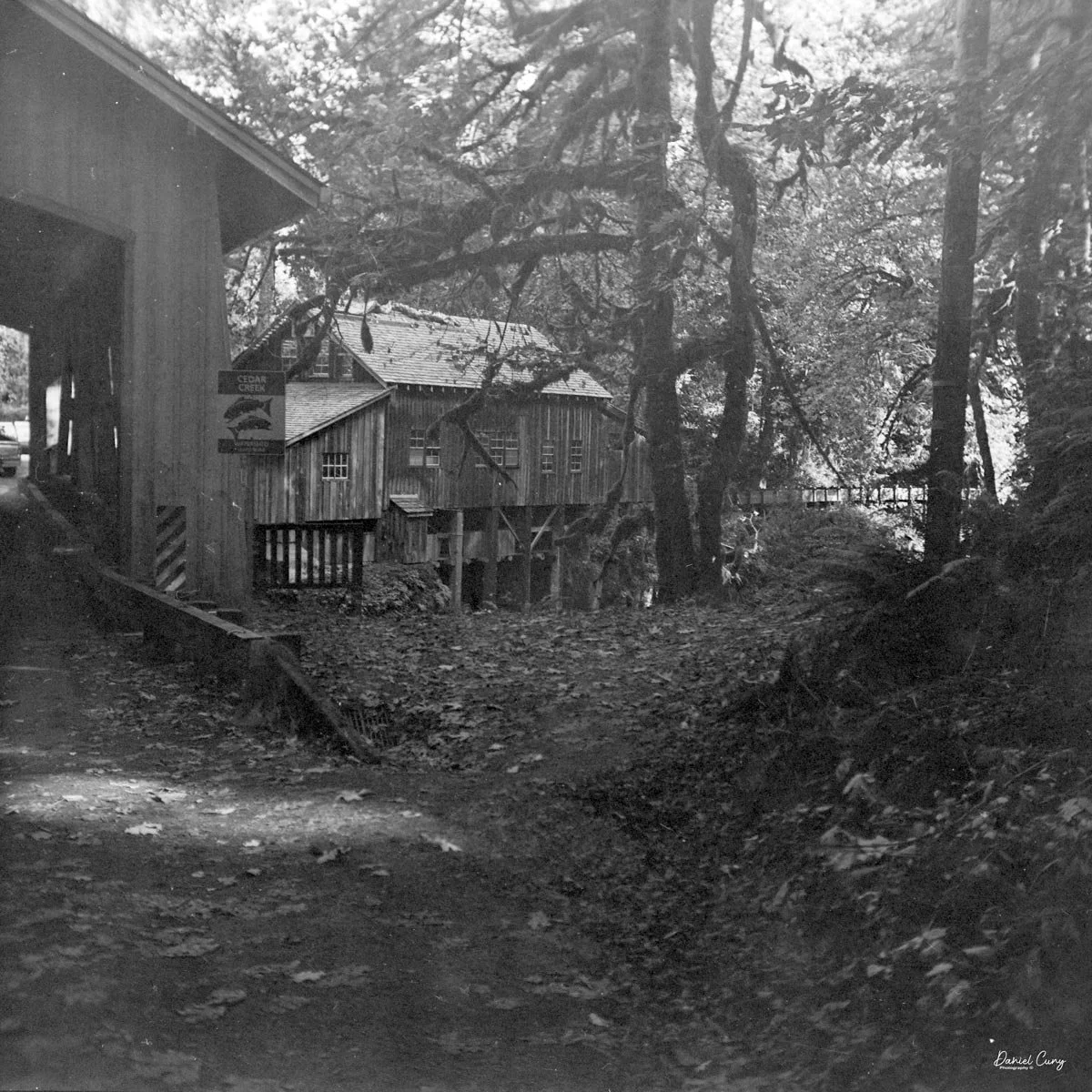
My wife wanted to go to a local Grist Mill, which is about 30 minutes from our house. So I loaded a roll of outdated Plus-X film into the Bessa 66 Deluxe, and off we went to see how the camera performed.

History: The Voigtländer Bessa Cameras

Voigtländer is the oldest name in photography. Johann Christoph Voigtländer founded the firm in Vienna in 1756, making optical instruments long before photography existed, and the company opened its Braunschweig, Germany, branch in 1849. By the time the Bessa arrived, Voigtländer had already been building cameras for nearly a century.
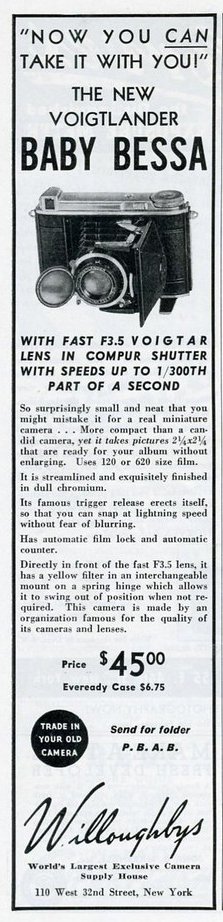
Bessa 66 advertisment

The Bessa line began in 1929 with a folding rollfilm camera that was clever in a very practical way: it was a dual-format camera, taking both 6x9 and 4.5x6 pictures on standard 120 film. A photographer could shoot large negatives or twice as many smaller ones by changing the mask. In 1935, Voigtländer added a coupled rangefinder version, the Bessa Rangefinder, and the line became one of Germany's best-known folding camera families.

The cameras most collectors mean by "Baby Bessa" came out in 1938. These were the single-format Bessa 46 and Bessa 66, smaller companions to the big Bessa. The Bessa 46 shot sixteen 4.5x6 frames on a roll of 120, while the Bessa 66 shot twelve square 6x6 frames. Both were self-erecting folders: press a button on the baseplate and the front springs open, ready to shoot. Focusing was by guesswork, using a scale on the lens, and neither Baby Bessa was ever sold with a coupled rangefinder.

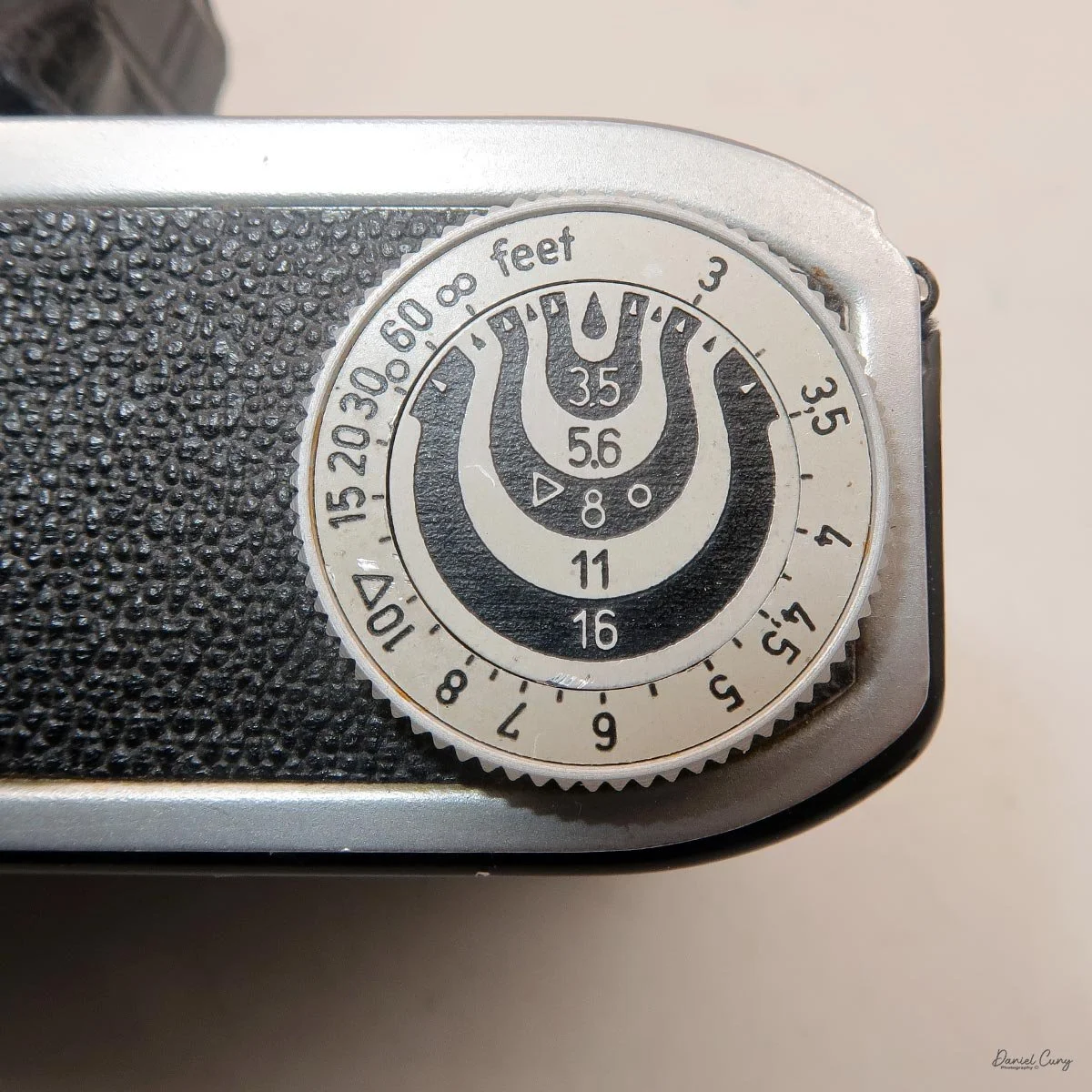
Like most German cameras of the period, the Baby Bessas came in a wide range of lens and shutter combinations, which is part of what makes collecting them fun. Entry-level models carried the three-element Voigtar or Vaskar. Better models got the four-element Skopar or the famous five-element Heliar, usually with a Compur or Prontor shutter. Early models had a folding frame finder; later ones got a proper optical viewfinder on the top plate, along with a film counter, a depth-of-field calculator, and a hinged yellow filter.

Production was interrupted by the Second World War, and after the war only the Bessa 66 came back, since the 4.5x6 format was already covered by the regular Bessa. Post-war Bessa 66 cameras came with coated lenses, a Vaskar version selling in America for $49.50 and a Color-Skopar version for $64.50. In 1950 the little folder was reborn under the older Perkeo name, and the Perkeo E of 1954 finally added a rangefinder the Baby Bessa never had. The line ended around 1955, shortly after the Carl Zeiss Foundation acquired Voigtländer.

The big Bessa lived on a little longer as the Bessa I and Bessa II of 1950, and the Bessa name itself would return decades later on Cosina's rangefinder cameras. But the Baby Bessa remains the line's sweet spot: a genuinely pocketable 120 folder, built by the oldest camera maker in the business, that still shoots beautifully today.

My Cameras

The two Voigtländer Bessa 66 cameras are virtually the same size, with the Deluxe slightly taller because of the optical viewfinder. I'll mainly talk about the Deluxe version, as it's the camera I put film in and shot with. The camera is 3.5" tall by 5" wide, and 1.75" deep with the lens closed and 4" deep with the lens extended. The camera weighs 1 pound, 2 ounces without film loaded.
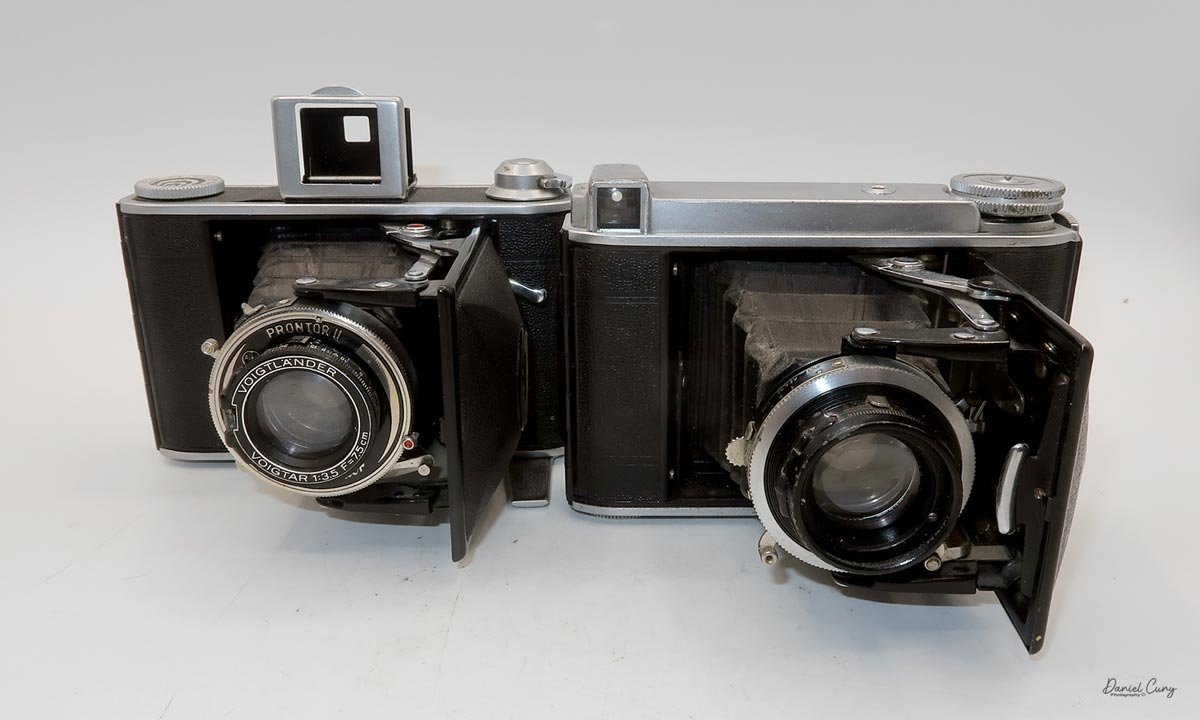
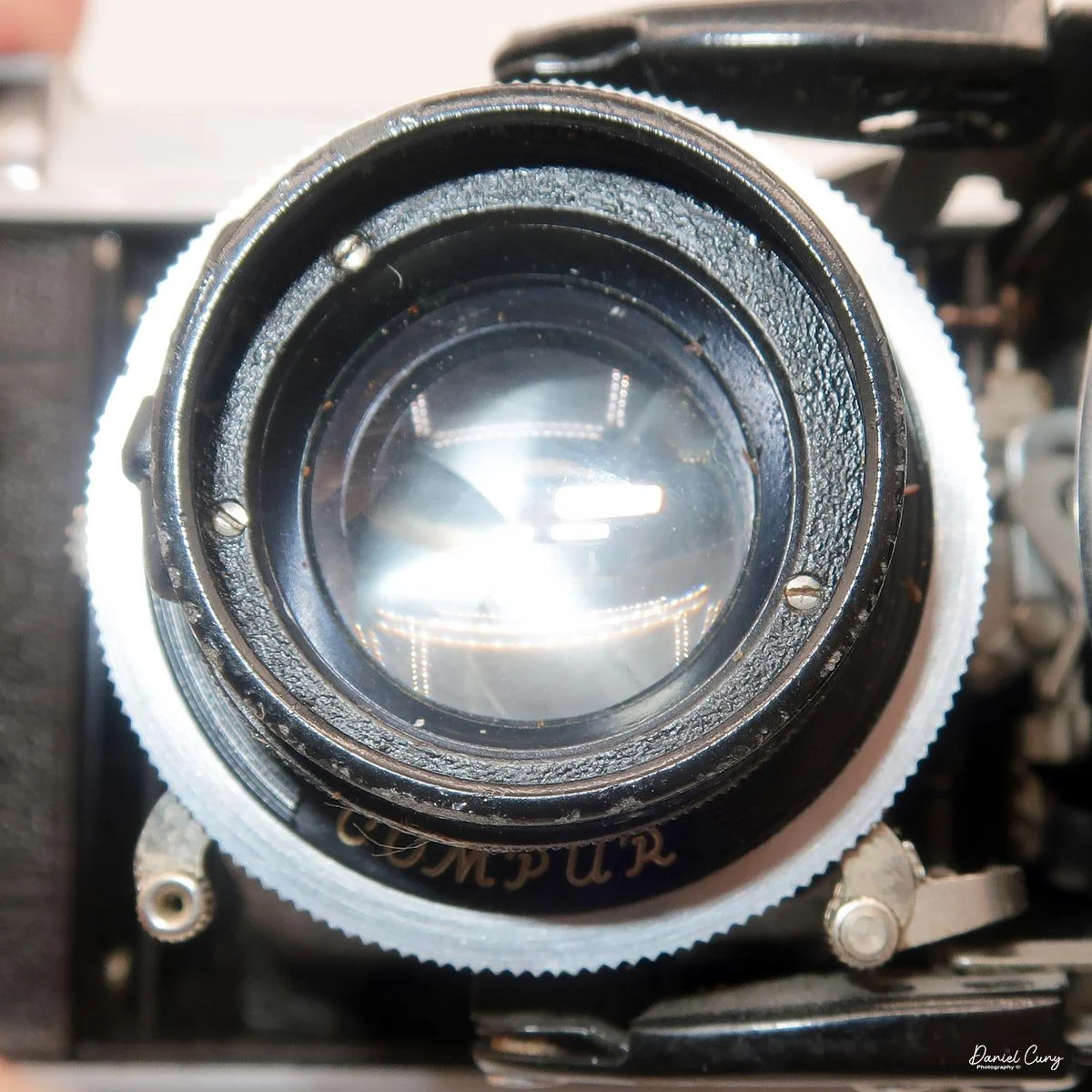
My Bessa 66 Deluxe version has a few issues. One of the nice things about the pre-war Bessa 66 versions is that it has a flip-up yellow, or contrast, filter for black-and-white film. Unfortunately, the glass part of the filter is gone on the camera I have. It also looks like the ring around the lens with the lens name, focal length, and maximum aperture is missing from my Deluxe camera but is on the Standard camera. So I'm not sure if the Deluxe camera has the four-element Skopar or the famous five-element Heliar lens.

The lenses on either of the Bessa 66 cameras are manual, meaning there is no rangefinder for focus, so you'll have to manually guess the distance to your subject and turn the lens to that "guessed" distance, then take your photo.
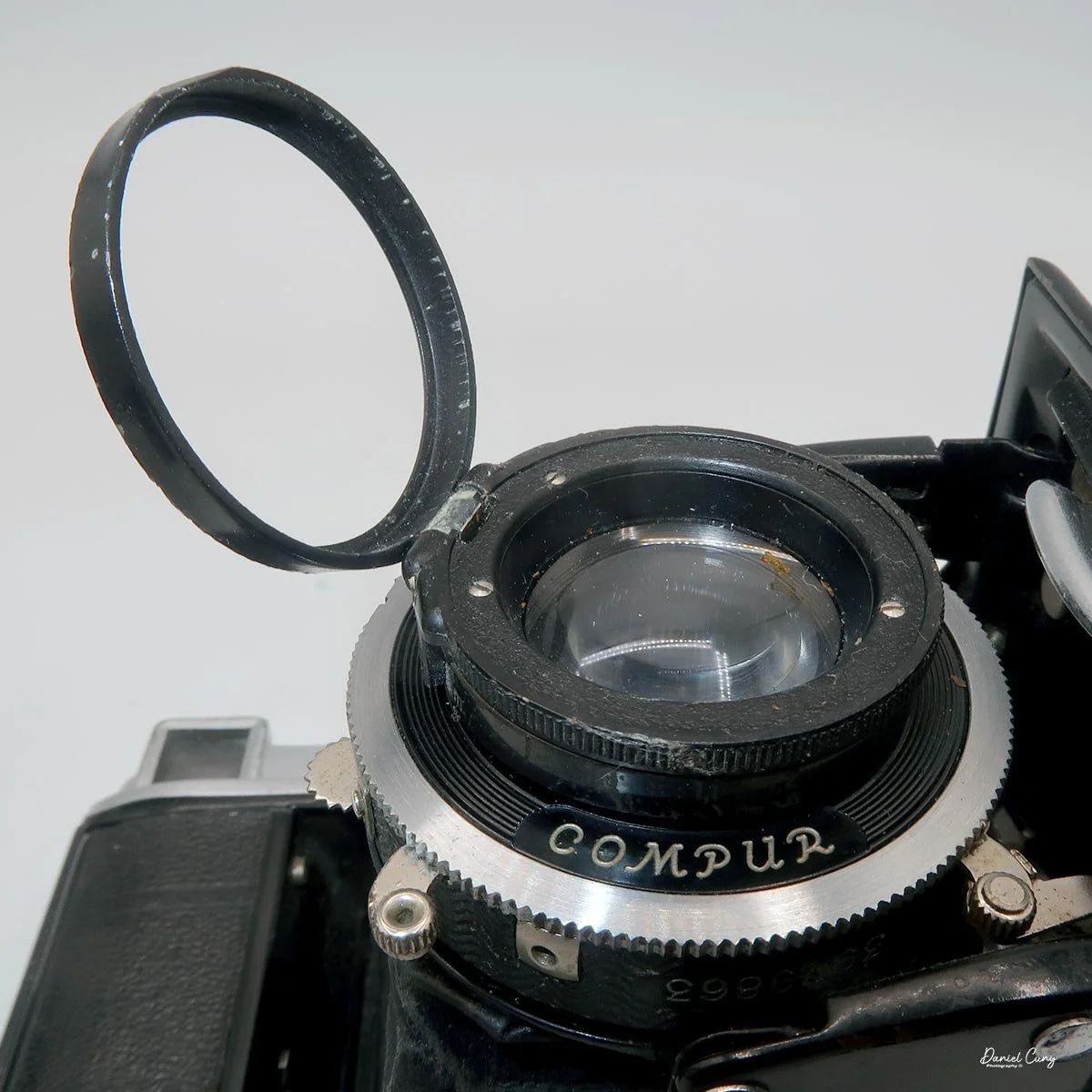
The pre-war Bessa 66 cameras had the hinged filter, which was not fitted to the post-war cameras. Because the filter was fragile, many cameras had it broken off through use. On the Standard camera I have, it looks like the filter has been broken off the camera.

To open the camera to expose the lens and shutter, which is on a black bellows, press the chrome button on the bottom of the camera; the lens/shutter then pops out.

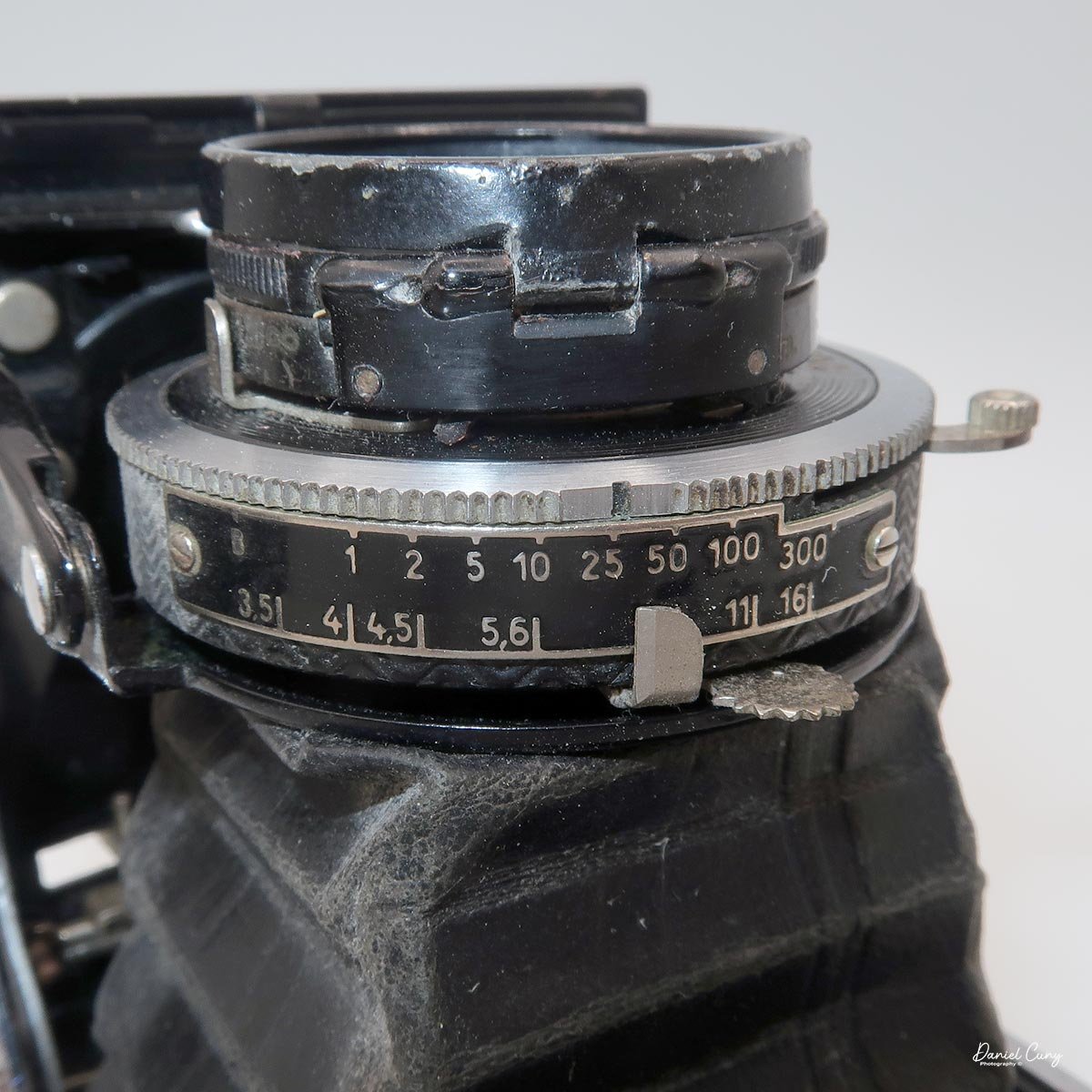
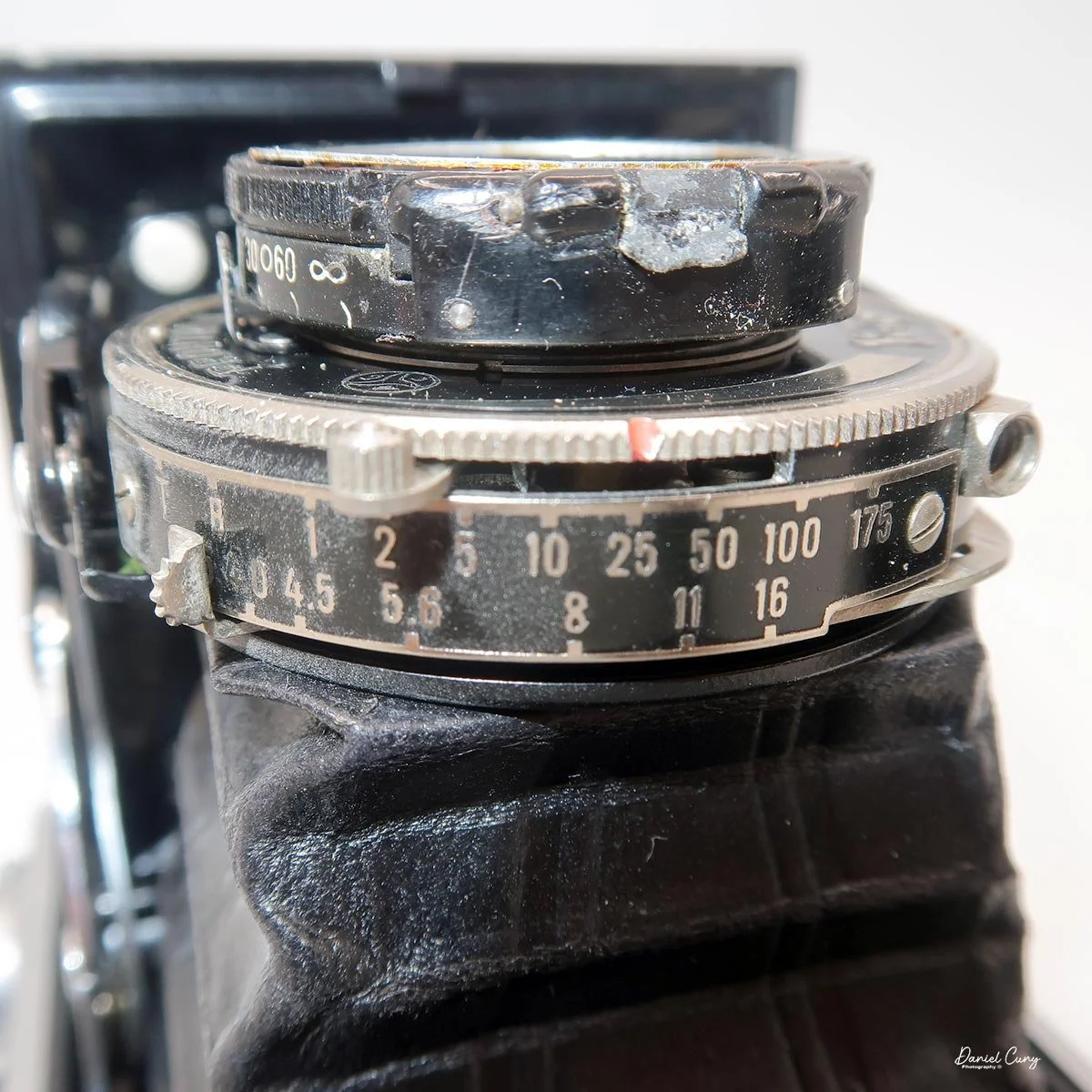
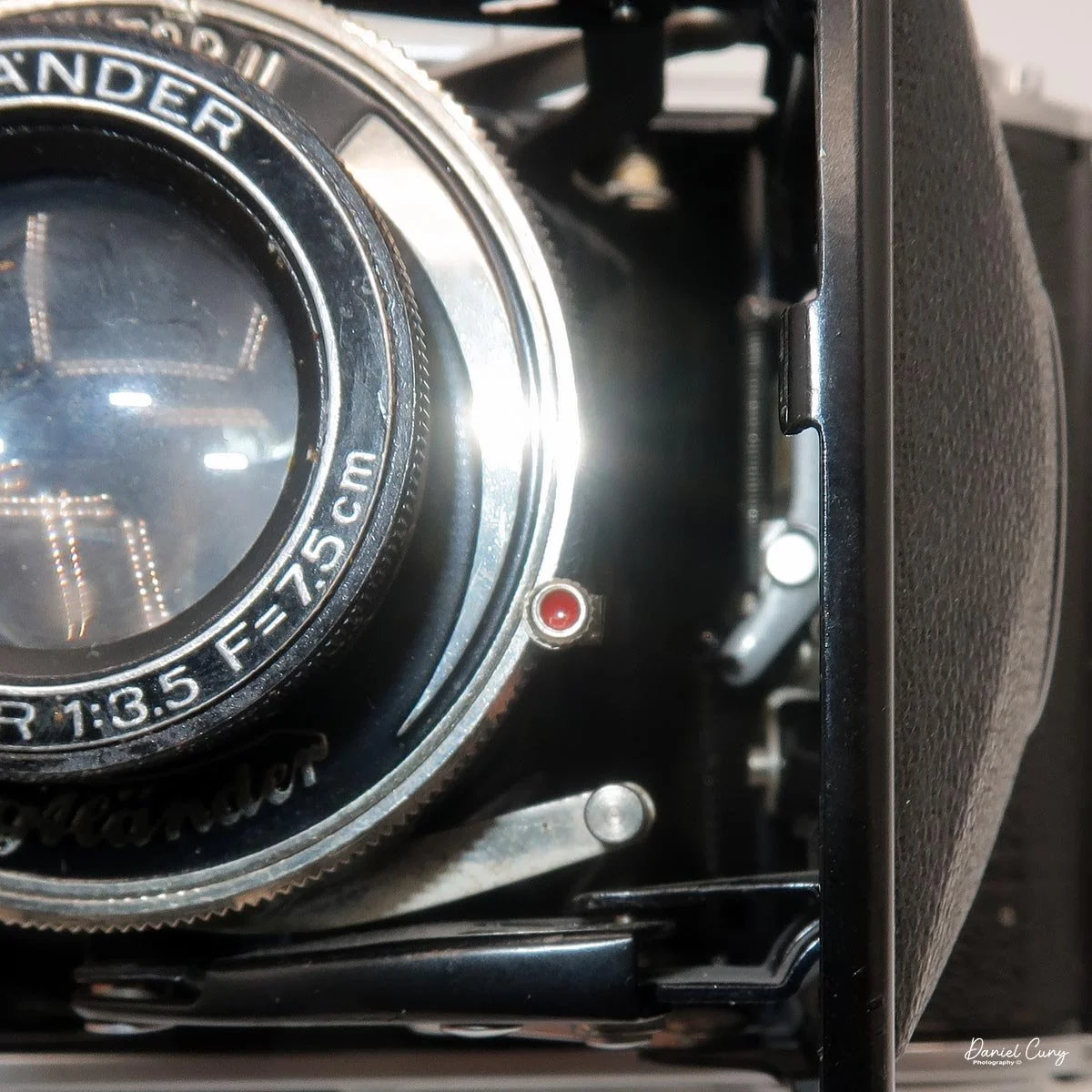
My Deluxe camera has a Compur shutter with shutter speeds from 1/300 to 1 second, plus B for timed exposures. The Standard camera has a Prontor II shutter, which offers shutter speeds from 1/175 to 1 second and "B" for timed exposures. Both cameras have maximum apertures of f/3.5 and go to f/16.

Once the camera is opened, the shutter speeds can be changed by turning the outer ring around the shutter. A red dot points towards the desired shutter speed. The aperture is set via a sliding lever which will point to the desired aperture setting. You cock the shutter by pulling back the cocking lever on the right side of the shutter.

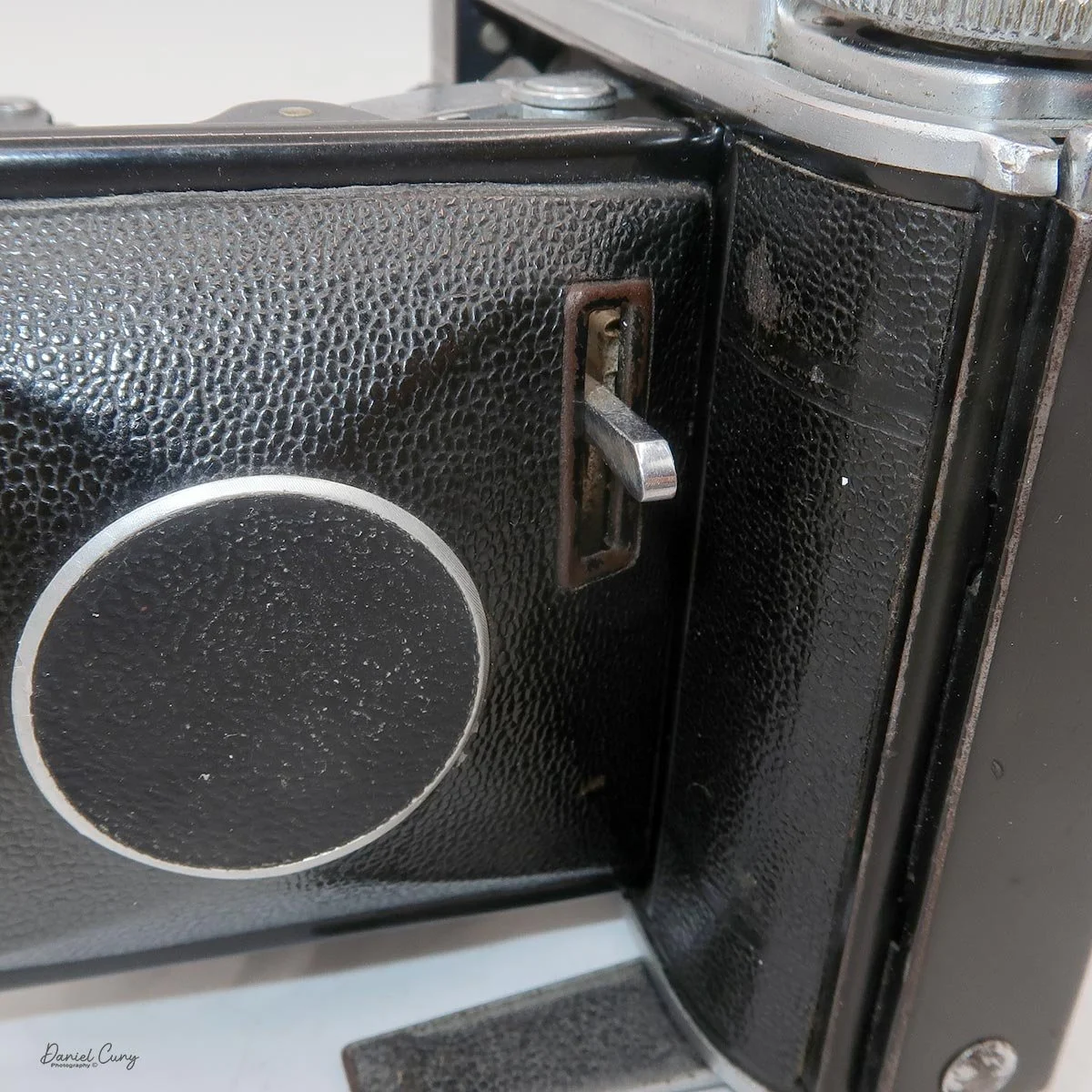
Both the Standard and the Deluxe Bessa 66 release the shutter by the shutter release that is incorporated into the lens door, which trips the shutter via linkage inside the lens door. You'll need to get used to this shutter release, as it's an uncommon place for one.

To close the lens/shutter back into the camera, pull out the hinged locking Standard on either side of the Standard camera; the camera starts to collapse, then press in the front door to close it.
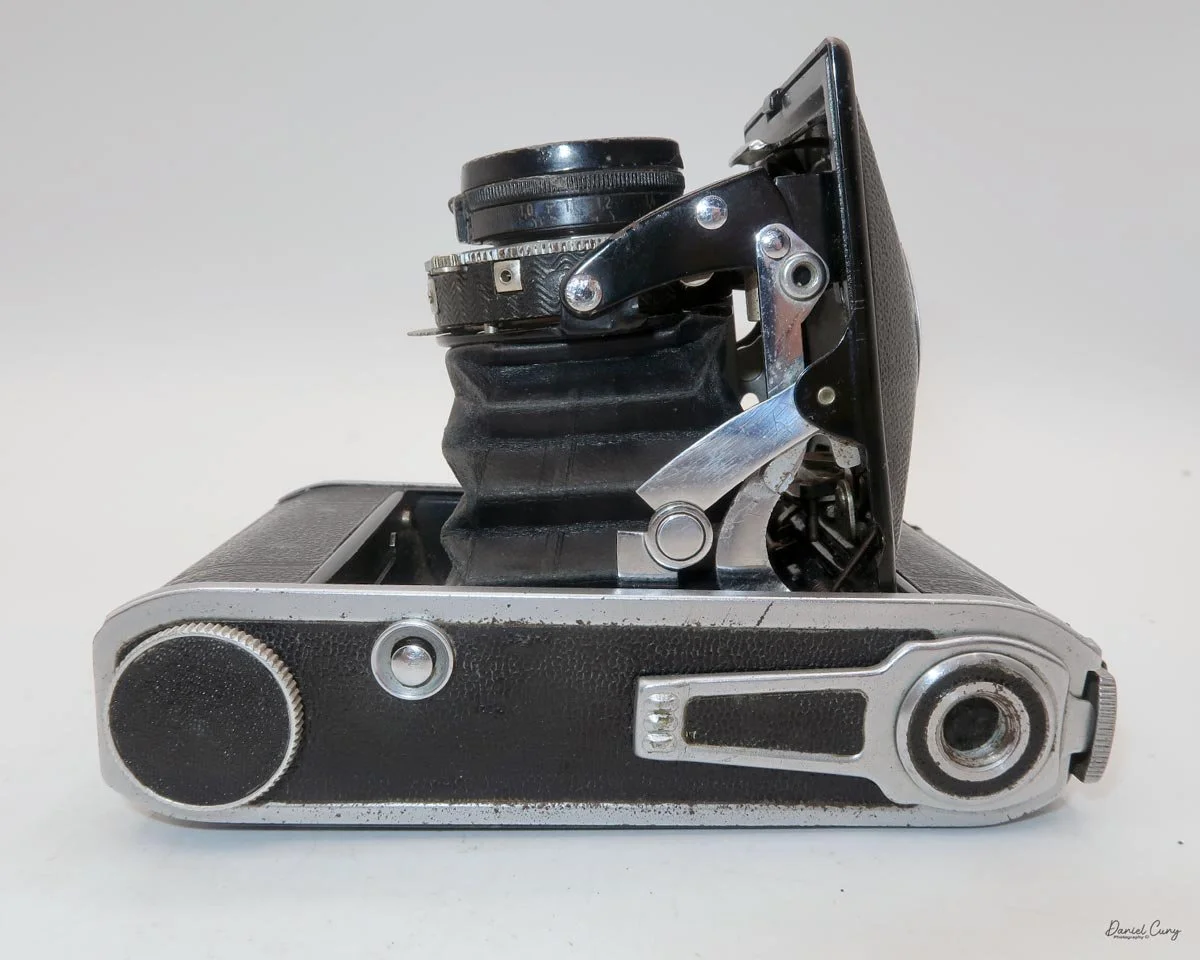
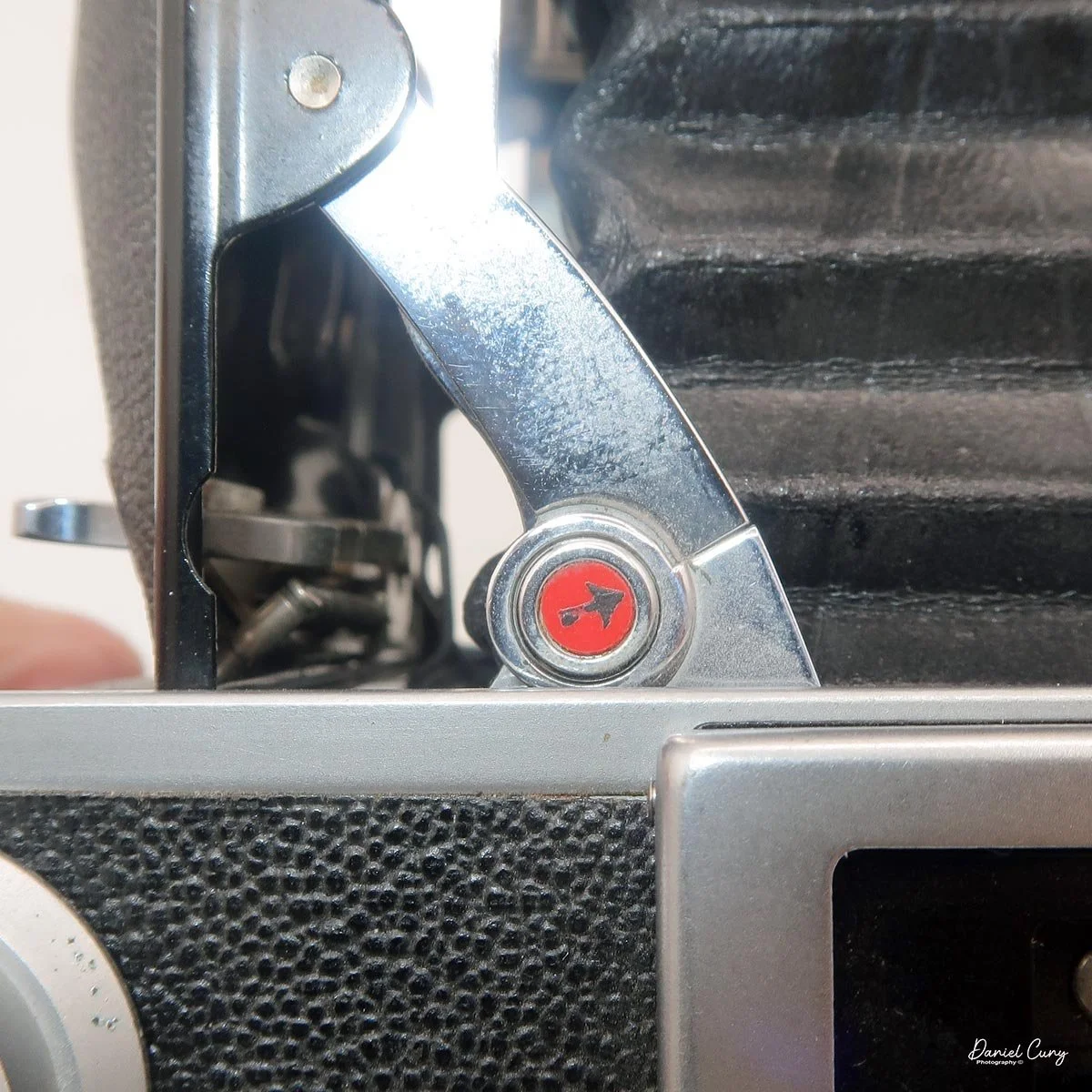
The Deluxe camera closes a bit differently. In the front, just below the lens, press in the chrome bar to release the locked hinge holding the lens rigid; then press in the lens door to close it. Both are similar, but the Deluxe camera is simpler and more of a nicety, which makes closing it easier.

To open the back of the camera to load film, slide the chrome-and-black foot on the bottom of the camera. This foot has two features. One keeps the back locked, as one end slides under the bottom latch needed to open the film back. This prevents anyone from pressing the bars together to open the film back. The other feature, and the more useful one, is that sliding the leg out creates a base that keeps the camera upright and prevents the front from tipping forward onto the lens.
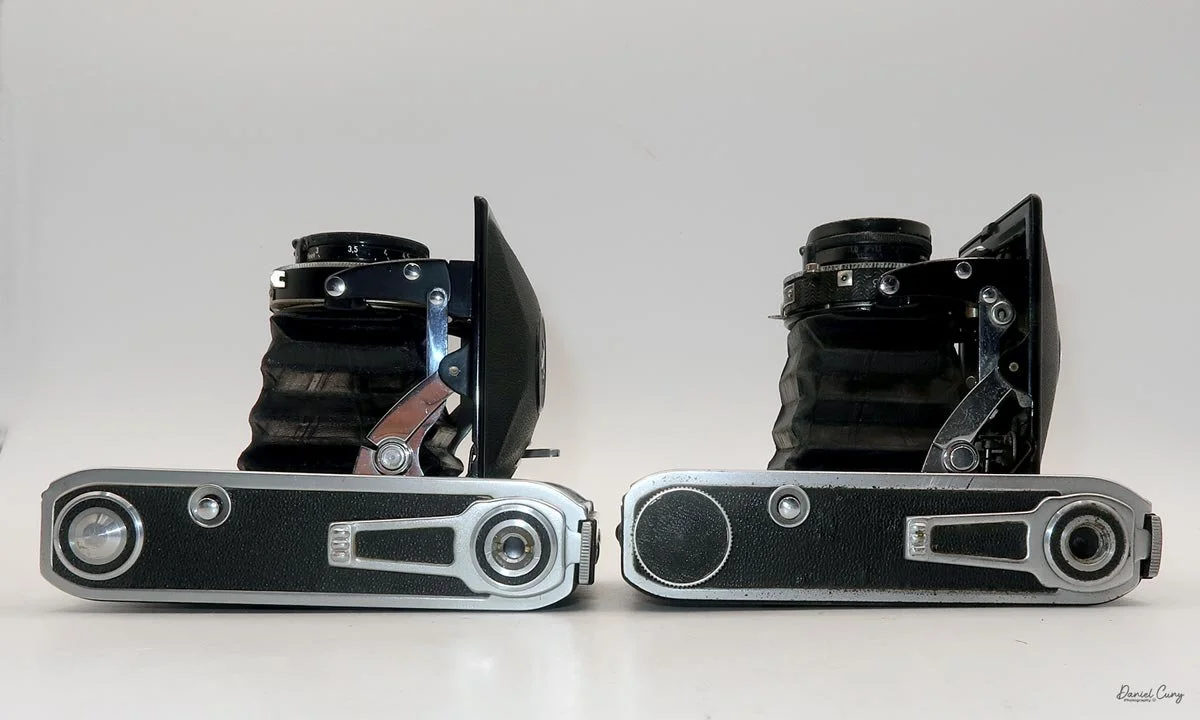
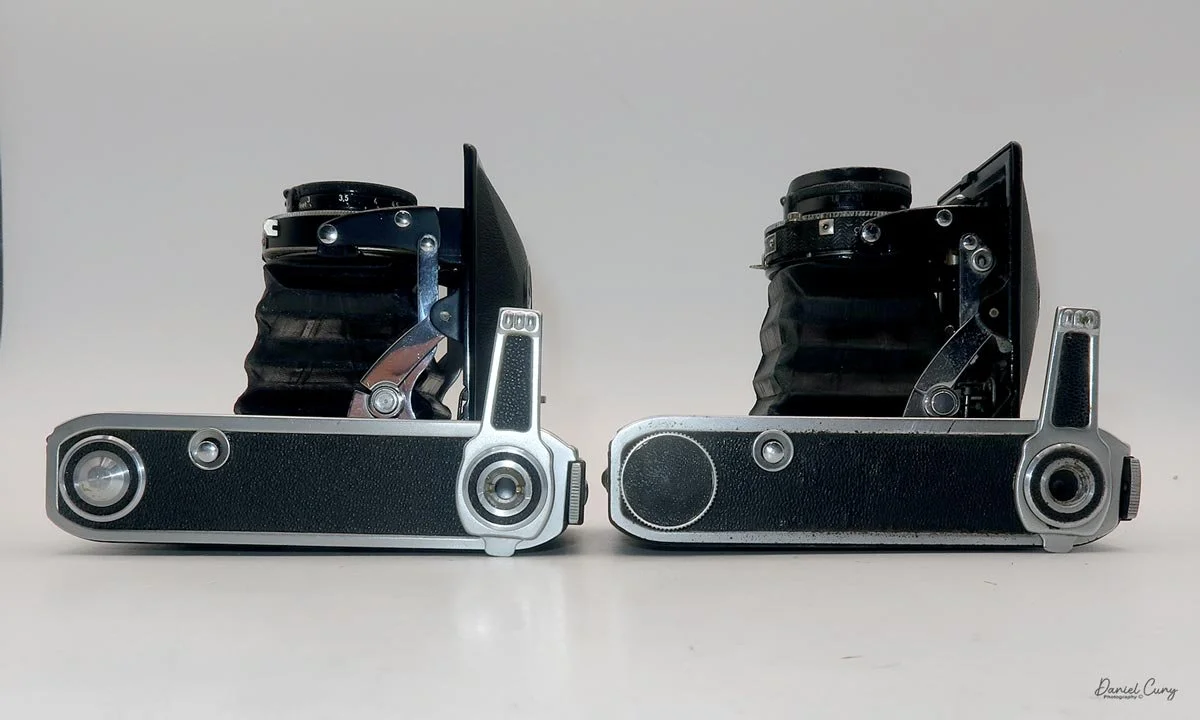
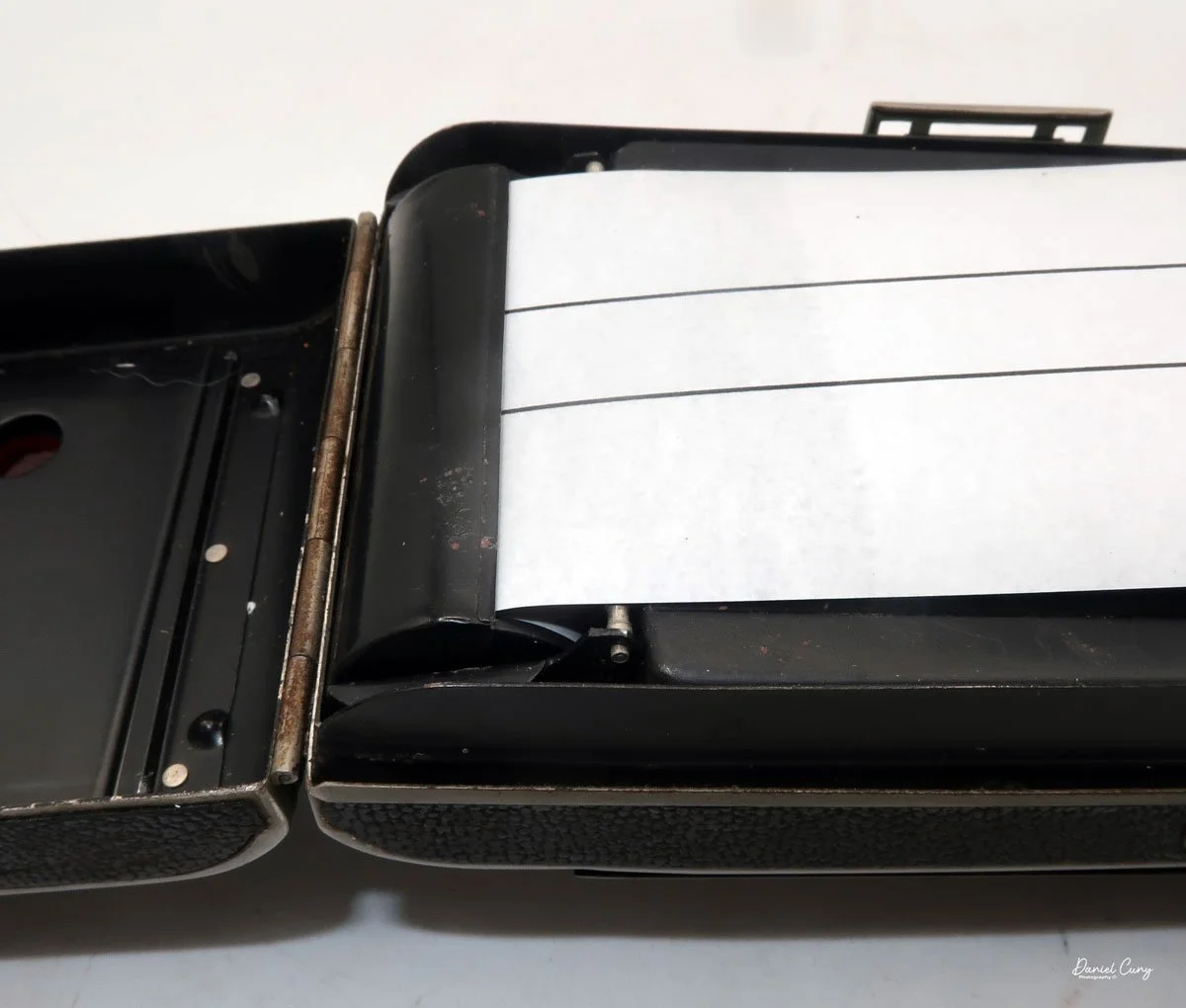
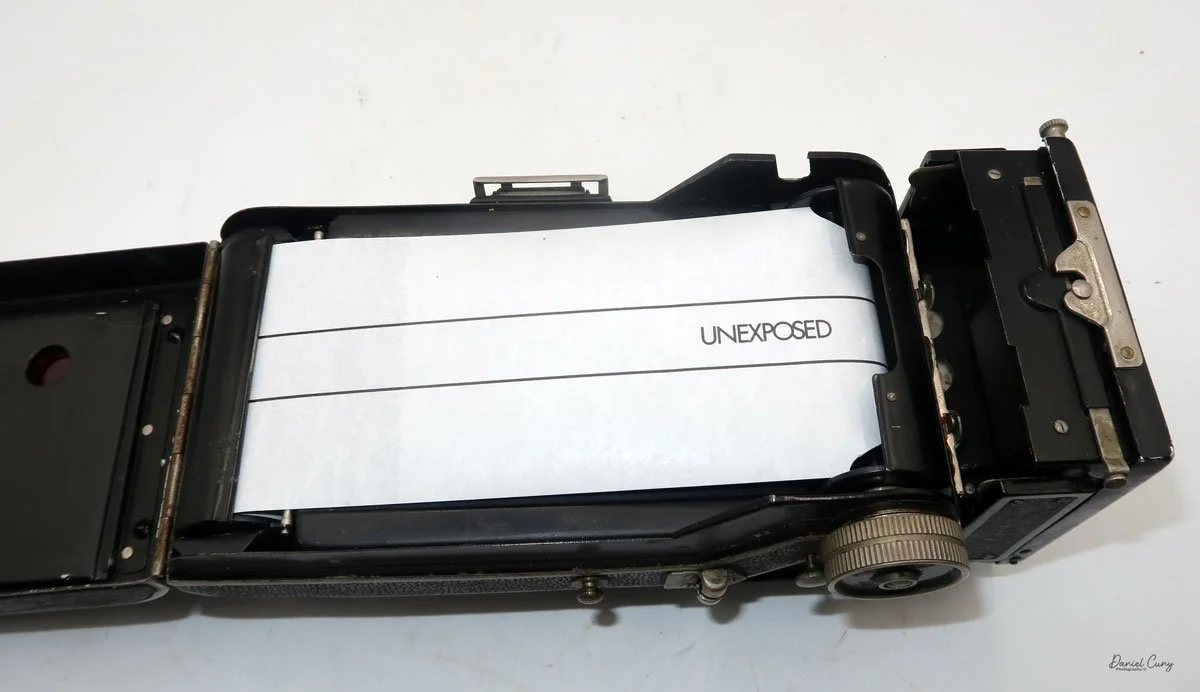
Once the foot is in the out position, press the two bars together on the film door to open the back. At this point, load film into the Bessa as you would any 120 film camera: thread the lead into the take-up spool, wind until you see the start arrows, then close the back of the camera.

Both the Deluxe and Standard cameras have a red window on the back to wind until you see the next frame number. These windows also have a cover you can open or close via a small black knob next to it. When closed, the window shows an "X" so you know it's closed.
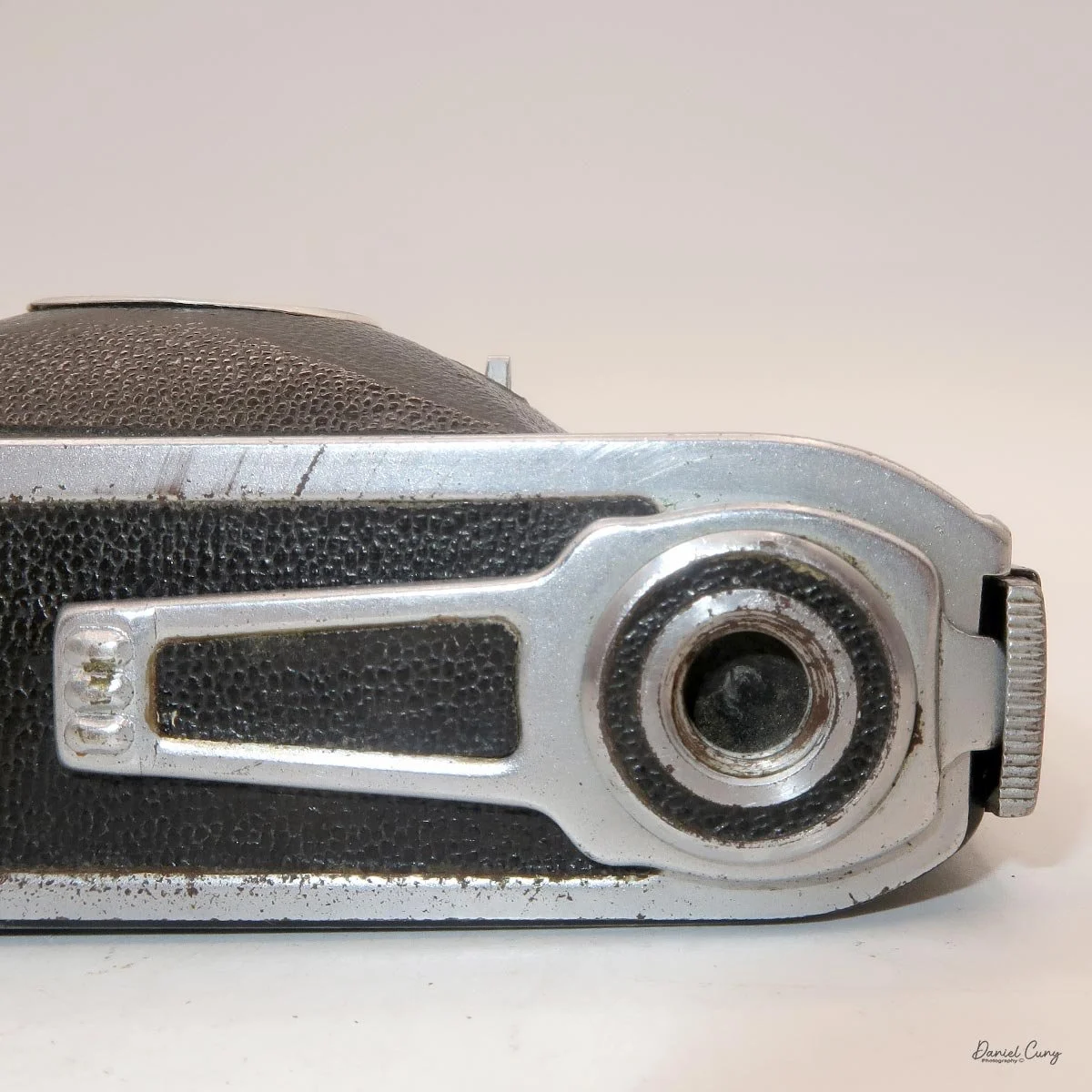
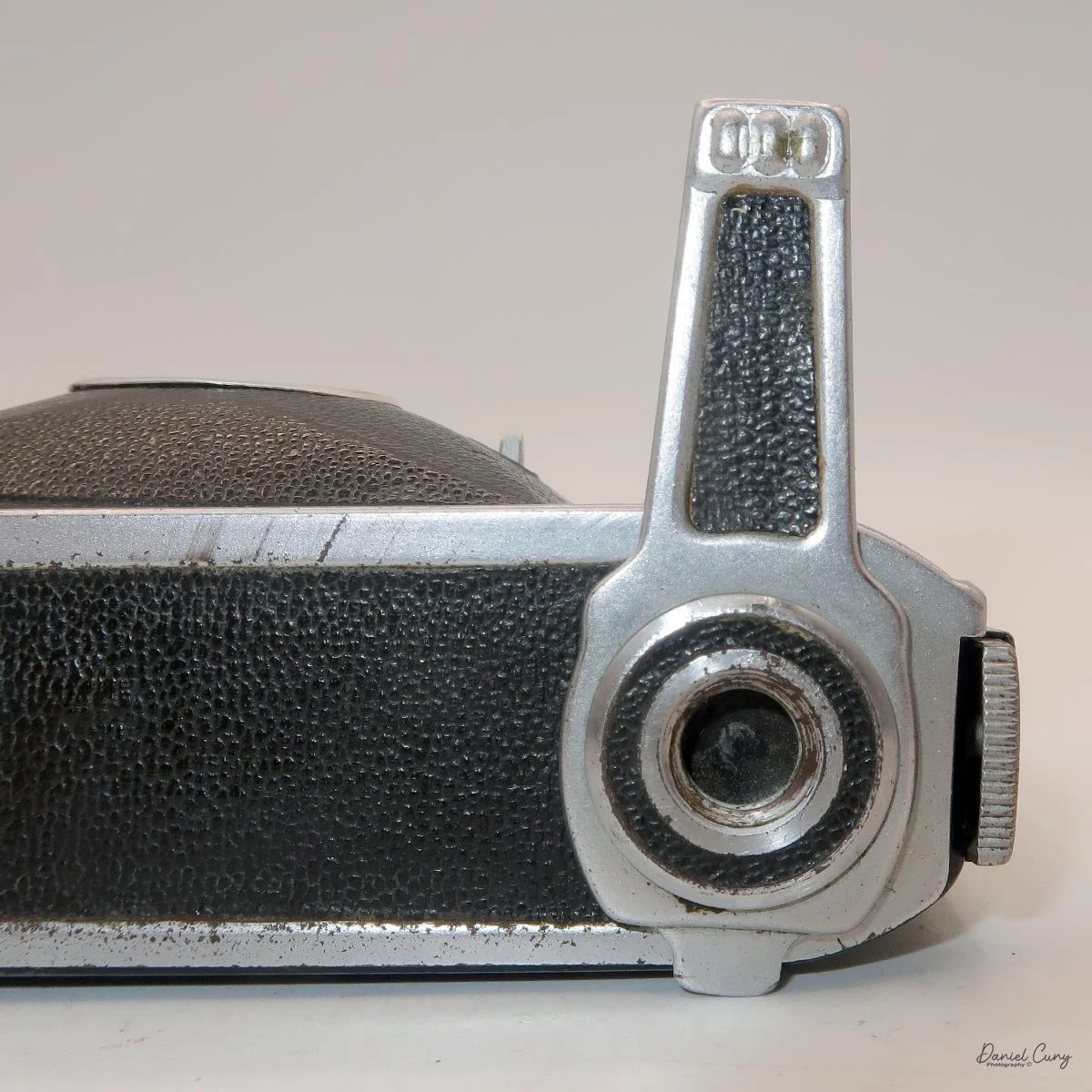
The Deluxe camera has a "Semi-Automatic Film Advance system," as described in Mike Butkus's manual and his other incredible camera manuals. The camera has a switch on the back and a frame counter on top.
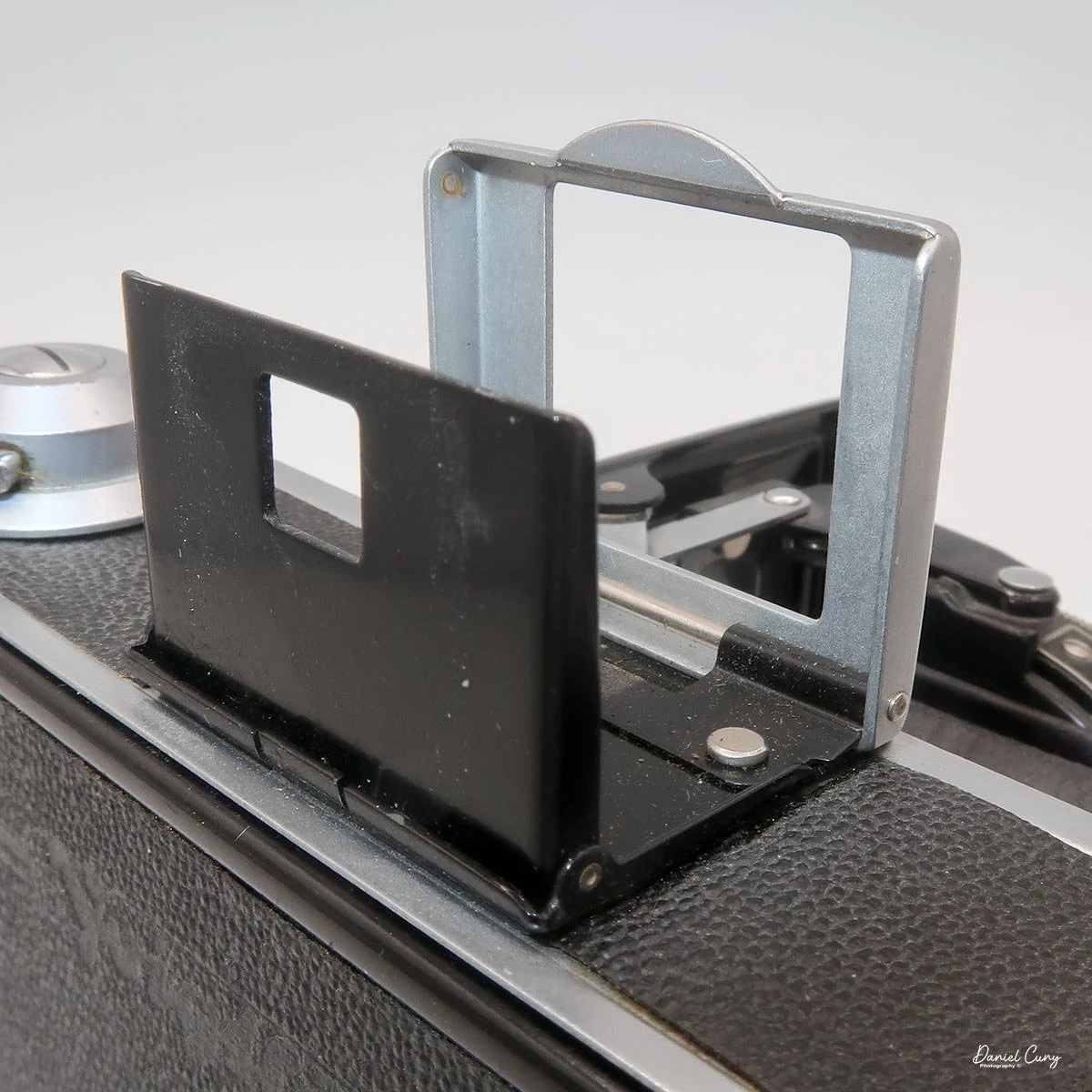
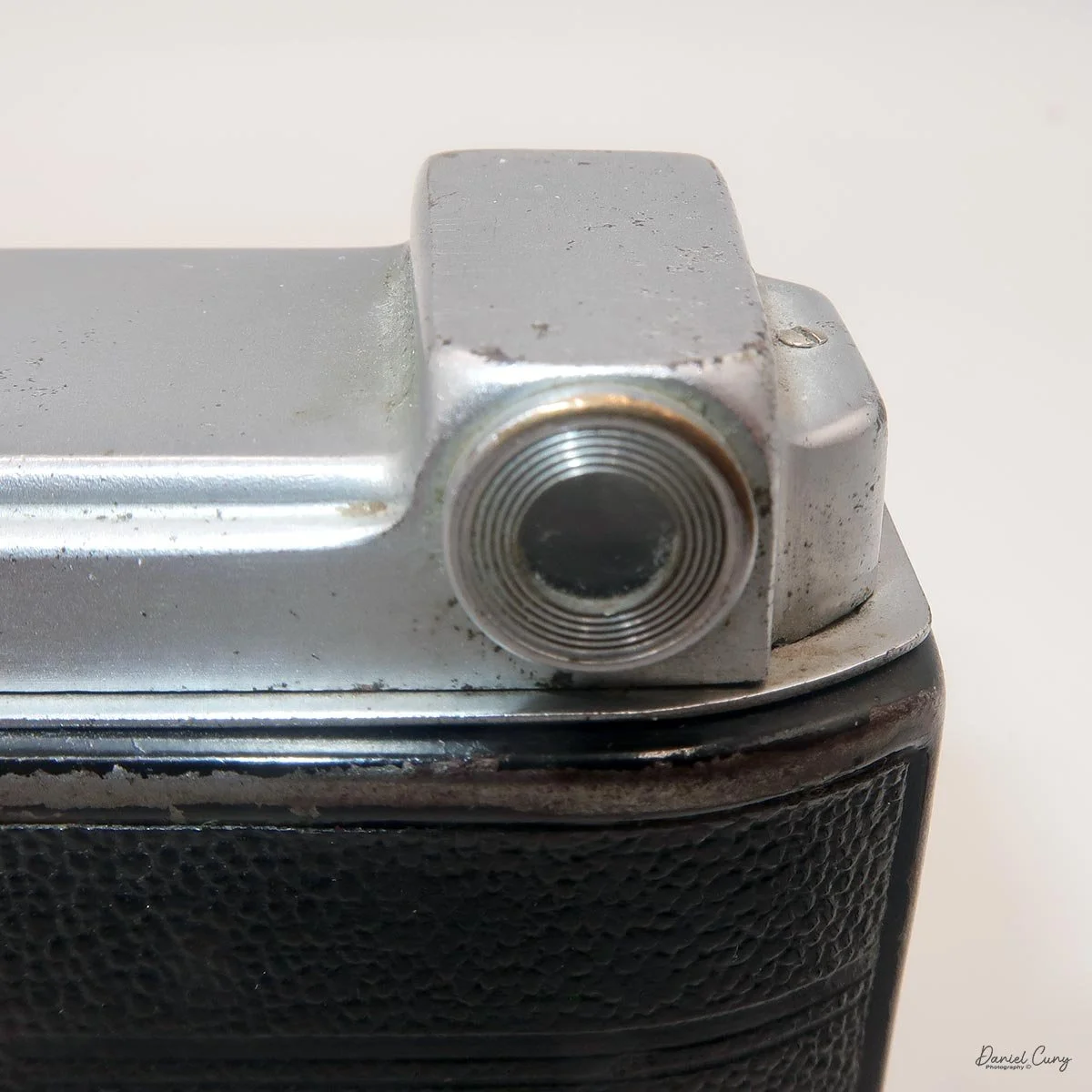
Here's how the film advance works on the Deluxe camera:

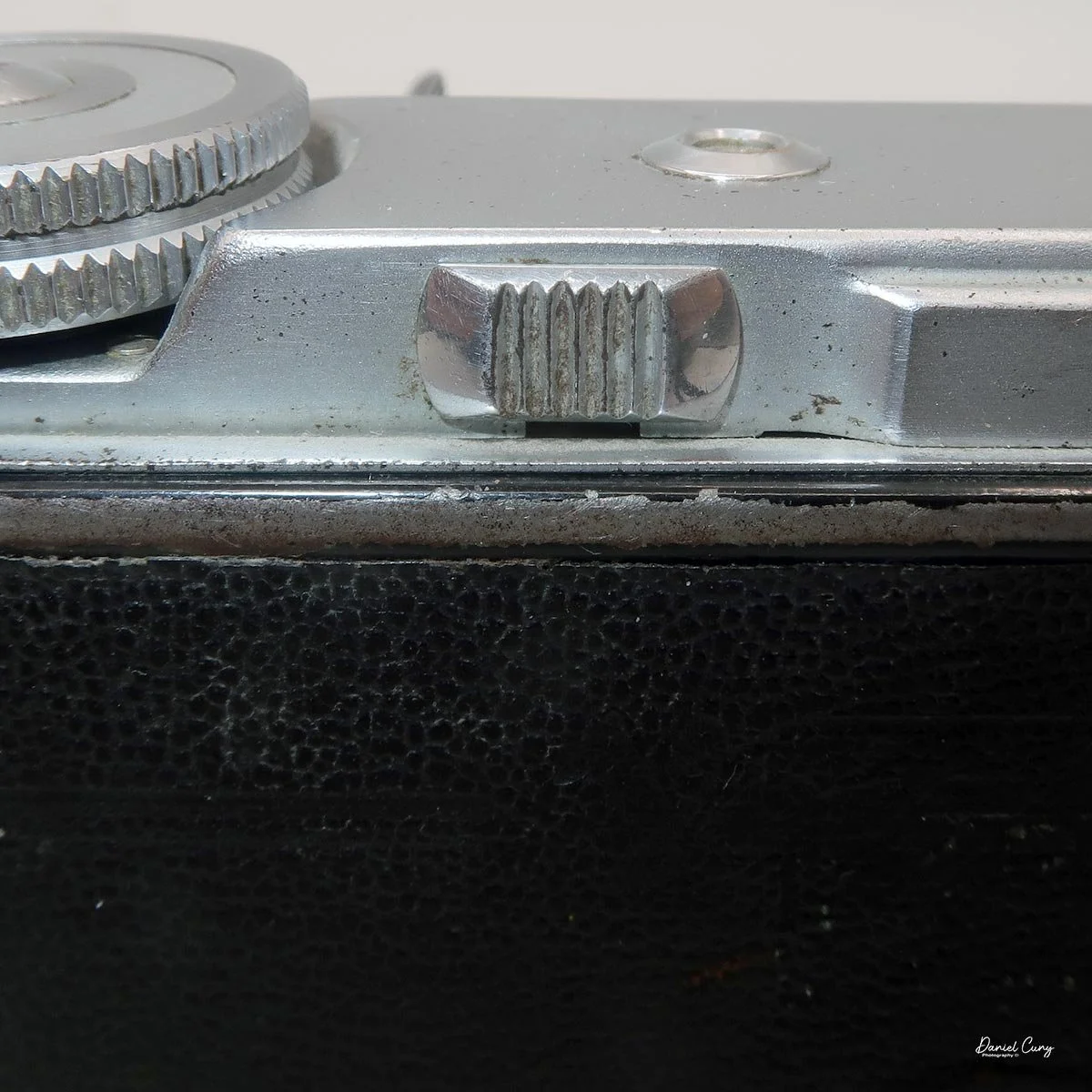
  • -- On the back and front of the camera, just under the top, next to the film winding knob, are two sliding latches. If the frame counter on top doesn't show 0, slide these latches to the left and right, back and front in turn until the frame counter shows 0.

  • -- On the back of the camera is a red window that will show an X. To the right of it is a flat serrated wheel of equal diameter.

  • -- Open the red window by turning the wheel 90 degrees clockwise. Turn the winding knob until the number 1 appears in the red window.

  • -- Turn the wheel back to close the red window.

  • -- Looking at the top of the camera, slide the latch on the back to the left. The frame counter on top will show 1. The camera is now ready to take the first picture.

  • -- To advance the film, slide the latch on the front to the right. The frame counter will show 2. Turn the winding knob until it stops. Take the second picture. Repeat until the counter shows 12 and take the last picture. Slide the front latch one more time until the counter shows 0, then turn the knob until the film is completely wound.

My Results:

Here are a few of the frames I took while my wife and I visited the Grist Mill, which is beautiful this time of year.
Conclusion:

I've always been a big fan of Voigtländer cameras. To have one that is both medium format and pocket-sized, with sharp lenses, is a real bonus and makes it one of my favorites. The only thing that would make it better would be rangefinder focus. That's what makes cameras like the Zeiss Super Ikontas and other Japanese cameras like the Mamiya Six or Konica Pearl so desirable.

Thank you for taking the time to read about the Bessa 66 cameras I recently added to my collection.

Are you interested in other vintage gear? Here are some of my other Camera Reviews.

Check out my Cuny's Camera Collection YouTube channel, where I am putting together video overviews of the cameras I write about. Be sure to subscribe and like the channel, too!

Cuny's Cameras and Photos is my online eBay store, where you will find some of the cameras I have reviewed, along with a wide range of other cameras, lenses, and items from my collection that I am thinning out.

Until next week, please be safe.
Zeiss Ikon Super Ikonta 531/2

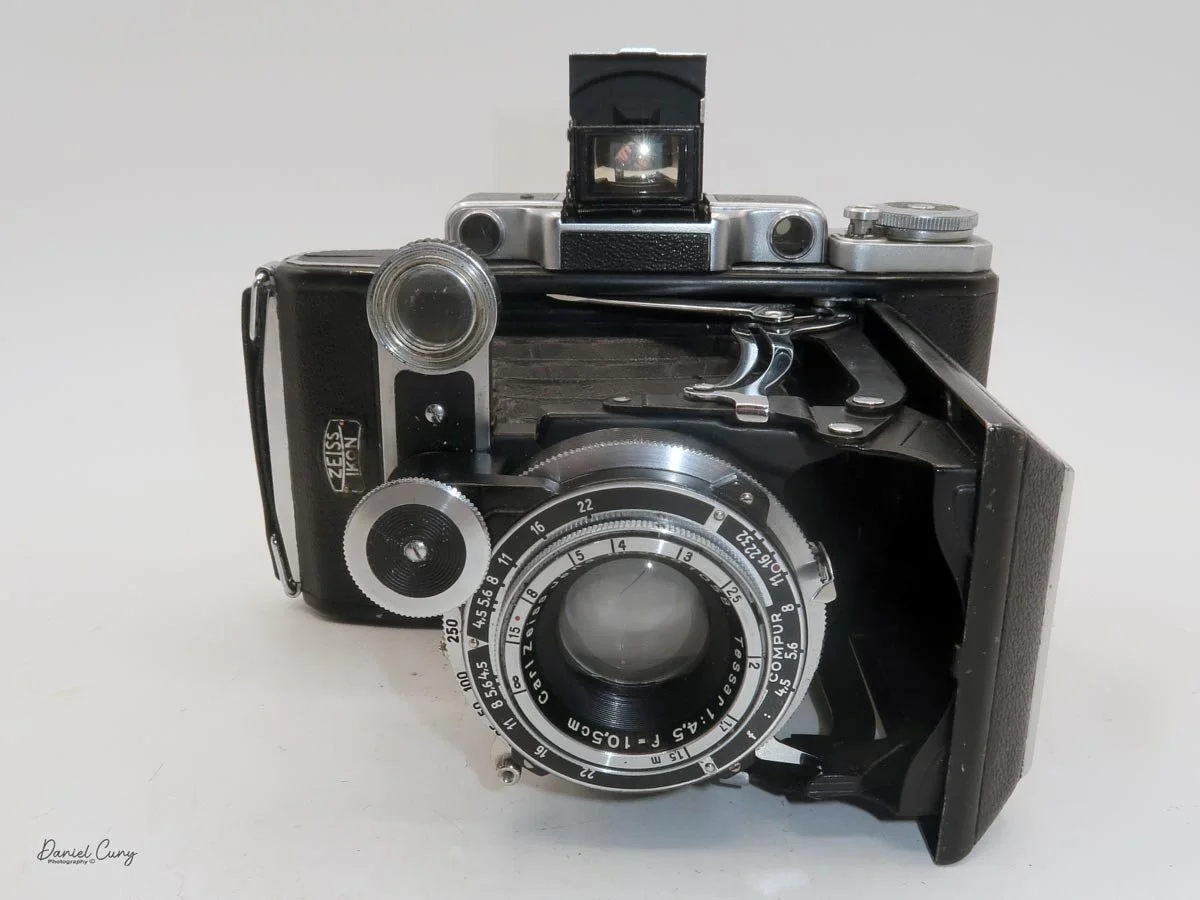
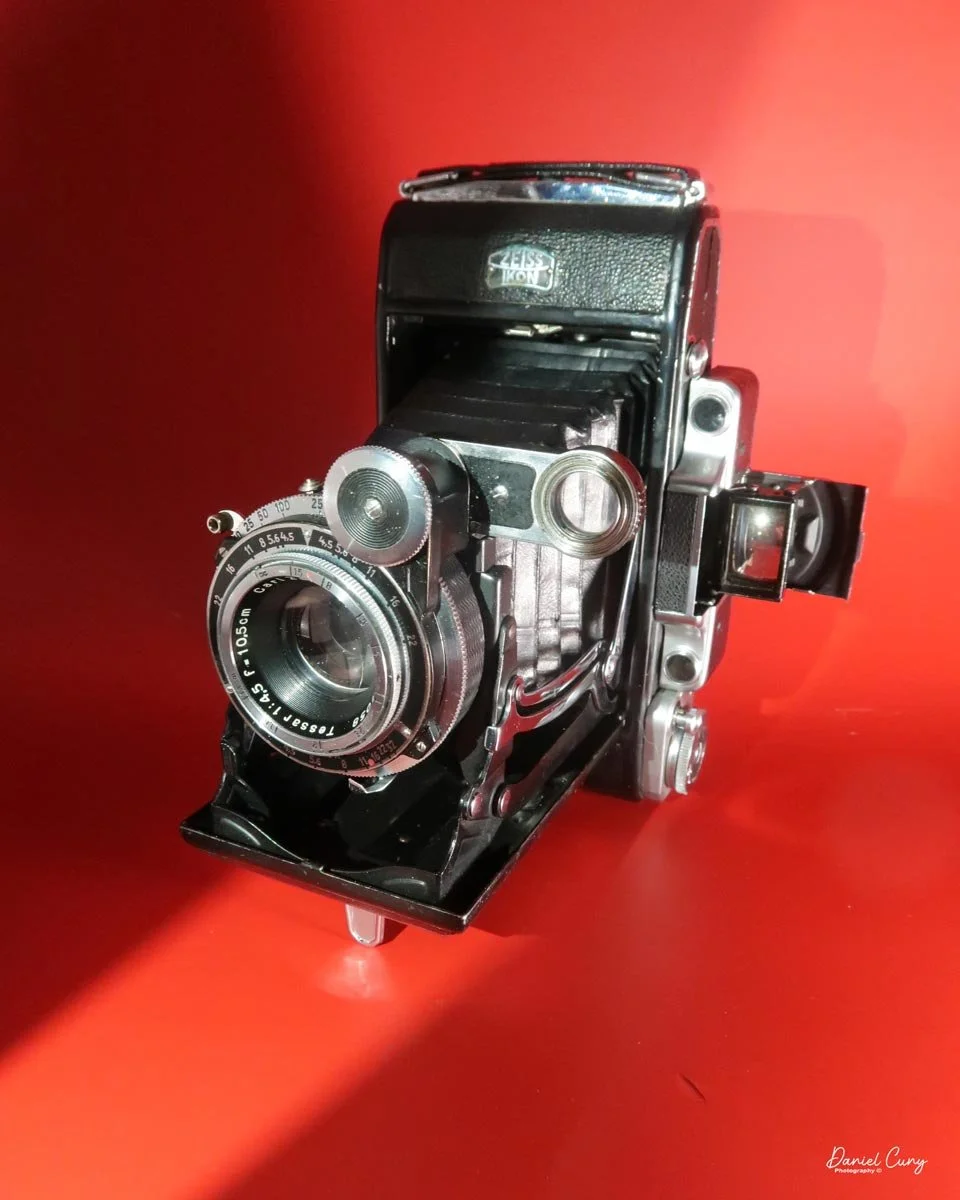
My Zeiss Ikon Super Ikonta 530/2 camera

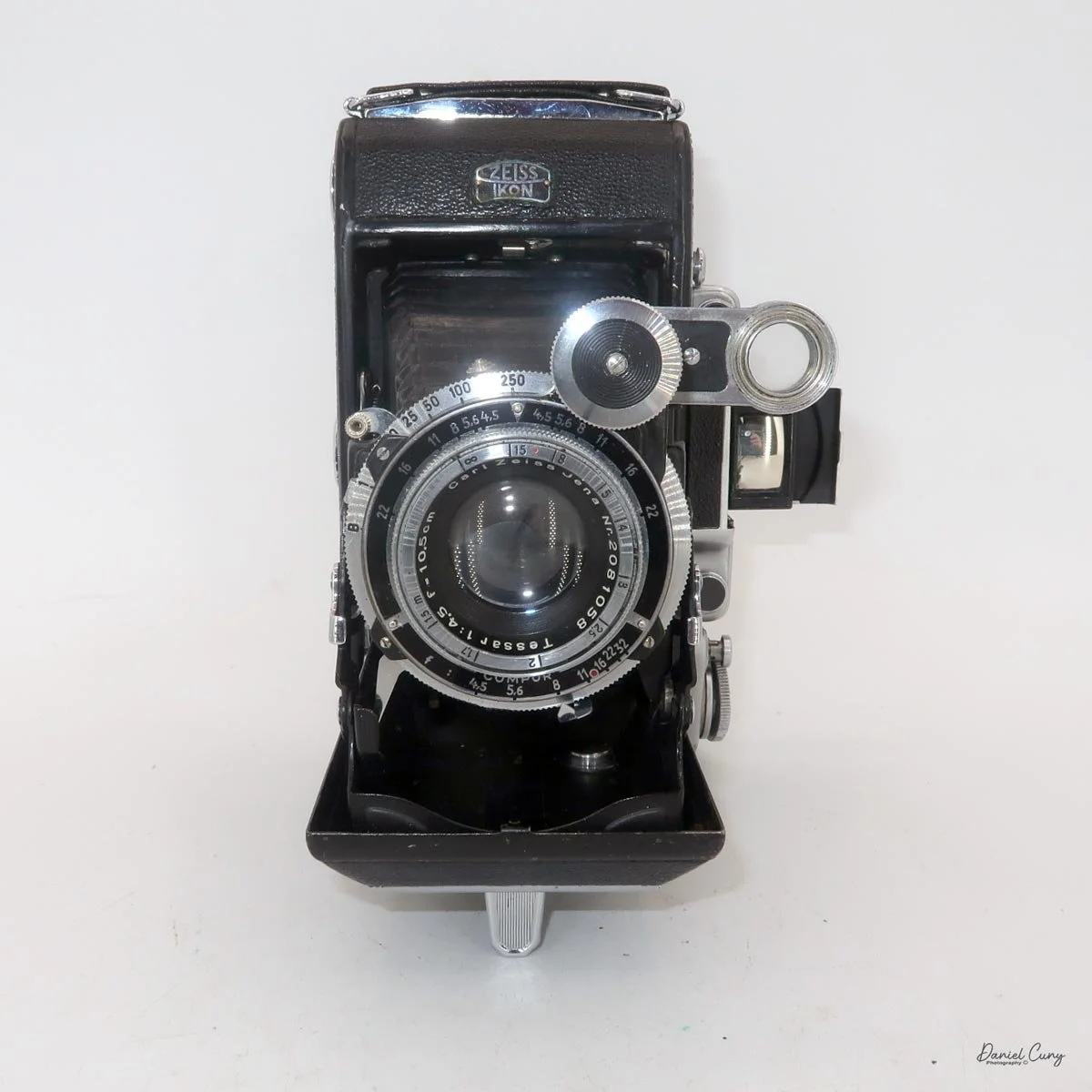
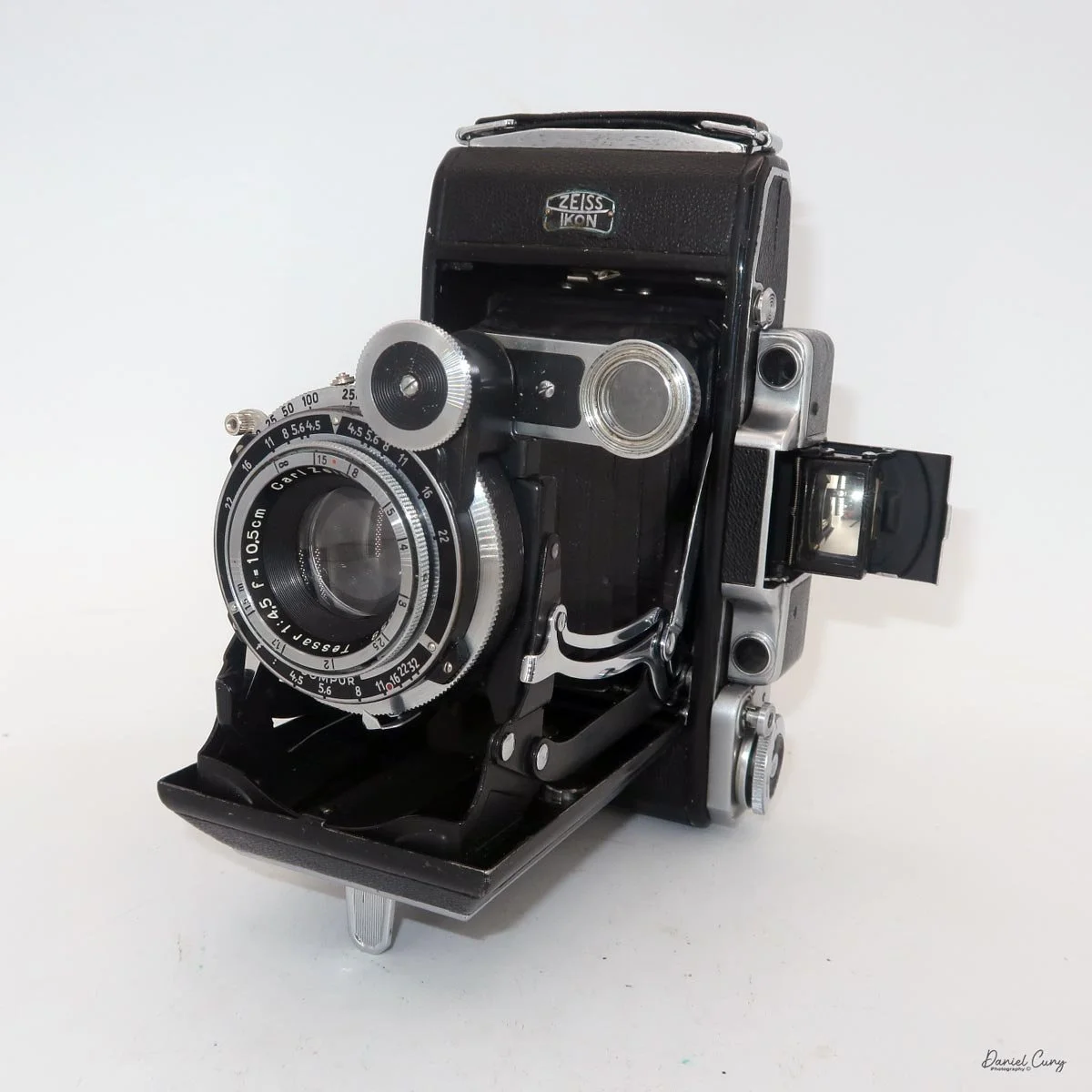
Walking through flea markets, garage sales, or camera shows, I always stop to look at what Zeiss cameras they have, and the cameras that I always pick up to look over are any of the Zeiss Ikon Super Ikonta cameras. Not only because they look impressive even when closed, but also because I'm always struck by how well-made and intricate they are for a camera that's 90 years old.

 To me, the Super Ikonta cameras are like looking at a masterpiece of art. They are timeless in their form, compactness, and mechanical intricacies. When closed, they are compact and sturdy. They have a heft to them that you know they were manufactured to last a long time.

 Zeiss Ikon made four different Super Ikonta styles. There were the smaller models in 6x4.5 or 6x6cm formats, then they also made a larger, specifically longer version that shot 6x9, and a rare version that shot 6x11cm. The 6x9cm version came with a metal insert that reduced the image size to 6x4.5, essentially allowing the photographer to get twice as many images on the 120 roll film loaded in the camera.

 Having owned both in my life, I'm torn between them. On the one hand, I prefer the longer negatives, so the 6x9cm version is appealing, but it's also a bit bigger to carry. The more compact 6x6cm version is a terrific camera to carry when you travel. They are compact, fit in your pocket, have wonderful optics, and use a rangefinder to focus.

 Looking at the cameras on my shelf for a camera to write about, the Zeiss Ikon Super Ikonta 530/2 was a camera I recently got back from a full CLA, so I knew, or at least hoped there wouldn't, or shouldn't be an issue putting film in the camera and running a roll of film through it. 

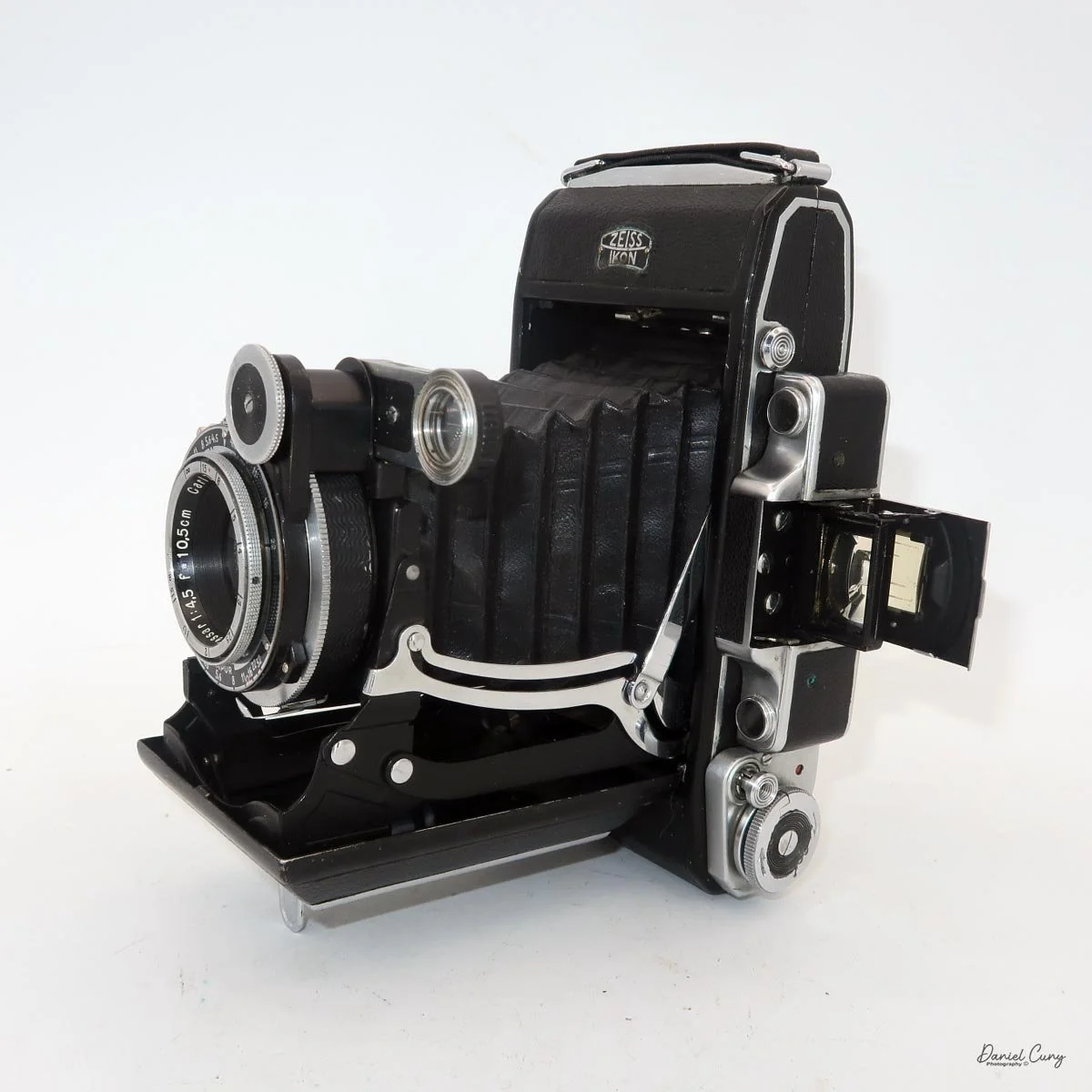
Horizontal view of my Zeiss Ikon Soper Ikonta 530/2 camera

 The camera I had purchased almost a year ago was from an online auction. I saw it at the auction along with a few other cameras, placed a fairly low bid, and won it. The camera was shipped to me, and upon inspection, I noticed the shutter wasn't working. It worked at higher speeds, but the camera needed servicing, so I sent it for CLA.

 My camera came back from the technician and looked flawless. The rangefinder was bright and accurate, the lens was bright, the focus was smooth, and the lens popped out of the camera as if it were new. 

 Whenever I see a Zeiss Ikon Super Ikonta or another rangefinder folding camera, the first thing I check is the shutter to see if it's opening/closing, especially at slower speeds. Then I check the focus to see how smoothly the lens and focus knob turn. It seems that many of the cameras have very stiff focusing, so when the camera came back, and the focus knob turned so nicely, I must have had a large grin on my face, as this was a new experience for me: a smooth focus.

 With all that said, it was time to put a fresh roll of 120 film into the camera and take a walk through the neighborhood on a wonderful spring afternoon. The sun was out, and so many of the trees and flowers were in bloom, it was the ideal opportunity to take my newly CLA'D Zeiss Ikon Super Ikonta for a spin.

Brief History of the Zeiss Ikonta Cameras:

 Zeiss Ikon and the Ikonta cameras sit at an important crossroads in European camera history. Formed in 1926 from the merger of four major German makers—Contessa-Nettel, Ernemann, Goerz, and Ica—Zeiss Ikon became one of the largest and most influential camera companies in the world, backed by the Carl Zeiss optical tradition.

 The Ikonta line emerged around 1929 as Zeiss Ikon's premium folding-camera family. It was introduced in several sizes, including 6x4.5, 6x6, and 6x9 roll film frames, and represented the company's effort to rationalize and modernize the crowded product lines inherited from the merger. These cameras were built as elegant folders: compact when closed, but capable of producing high-quality medium-format images when opened.

 What made Ikonta especially significant was its market position. Zeiss Ikon used better lenses and more refined construction on Ikonta models, while cheaper versions sometimes carried the related Ikomat name. The line became closely associated with Carl Zeiss lenses, such as the Tessar, which helped the cameras earn a strong reputation for sharpness and image quality.

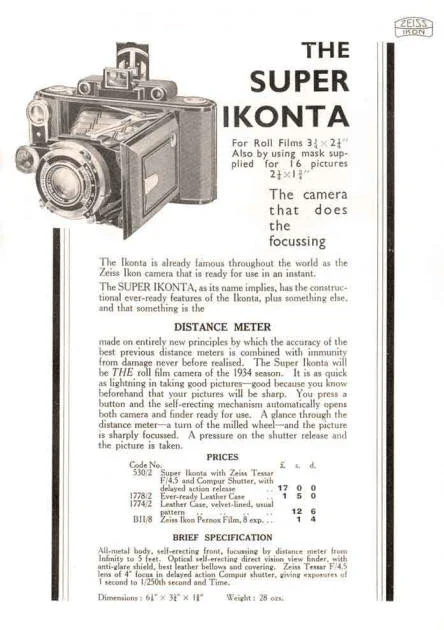
 A major step forward came with the Super Ikonta series, introduced in 1933. The "Super" name indicated the addition of a coupled rangefinder, making focusing far easier and more accurate than the original scale-focusing Ikontas. That innovation helped define some of the best prewar folding cameras available.

 Production continued through the war years and into the postwar period, but folding cameras gradually lost favor as photography shifted toward more modern fixed-lens designs and 35mm systems. Even so, Ikonta and Super Ikonta remain admired today for their craftsmanship, portability, and classic Zeiss optical quality.

My Camera:

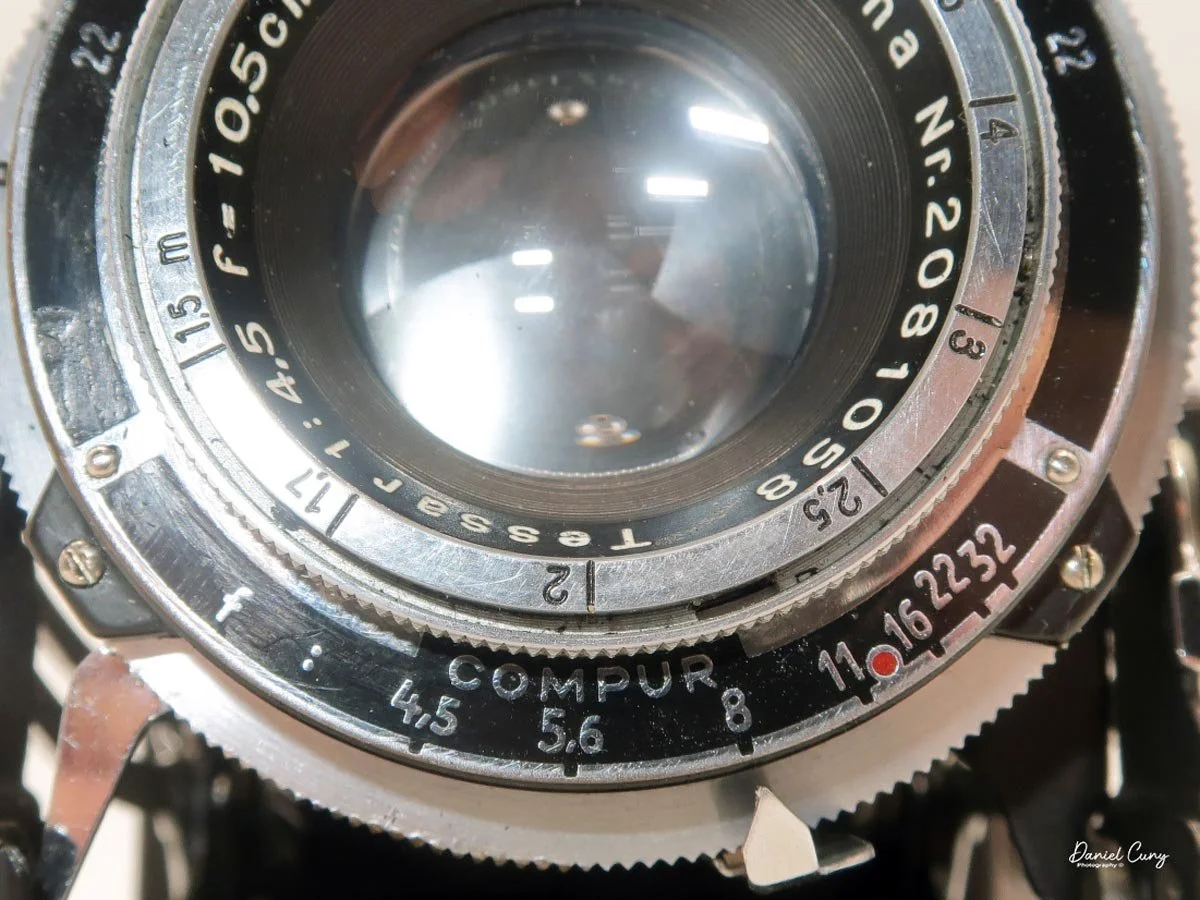
 My Zeiss Ikon Super Ikonta 531/2 is 7" wide by 4" tall and 2 "deep when the lens is retracted, and it's 5" tall when you open the camera, and the viewfinder pops up, and 5.5" deep when the lens is extended. The camera weighs 1 pound 15 ounces without the case or film loaded. My serial number is E30192.

The Zeiss Ikon Super Ikonta 531/2 camera has several different options for lens and shutter combinations:

  • Tessar 10.5 cm f/4.5 in a Compur shutter. This combination is the best-documented early setup for the 530/2, especially on black-enamel versions from the early 1930s.

  • Triotar 10.5 cm f/4.5 in a Klio shutter. Some early examples were fitted this way, making it a less common but real configuration.

  • Tessar 10.5 cm f/4.5 in a Klio shutter. At least one documented example shows this pairing, indicating that Zeiss Ikon used multiple shutters during the model's production.

  • Later or related Super Ikonta variants appear with Tessar lenses in Compur Rapid or Synchro-Compur shutters, though those are more typical of later Super Ikonta models.

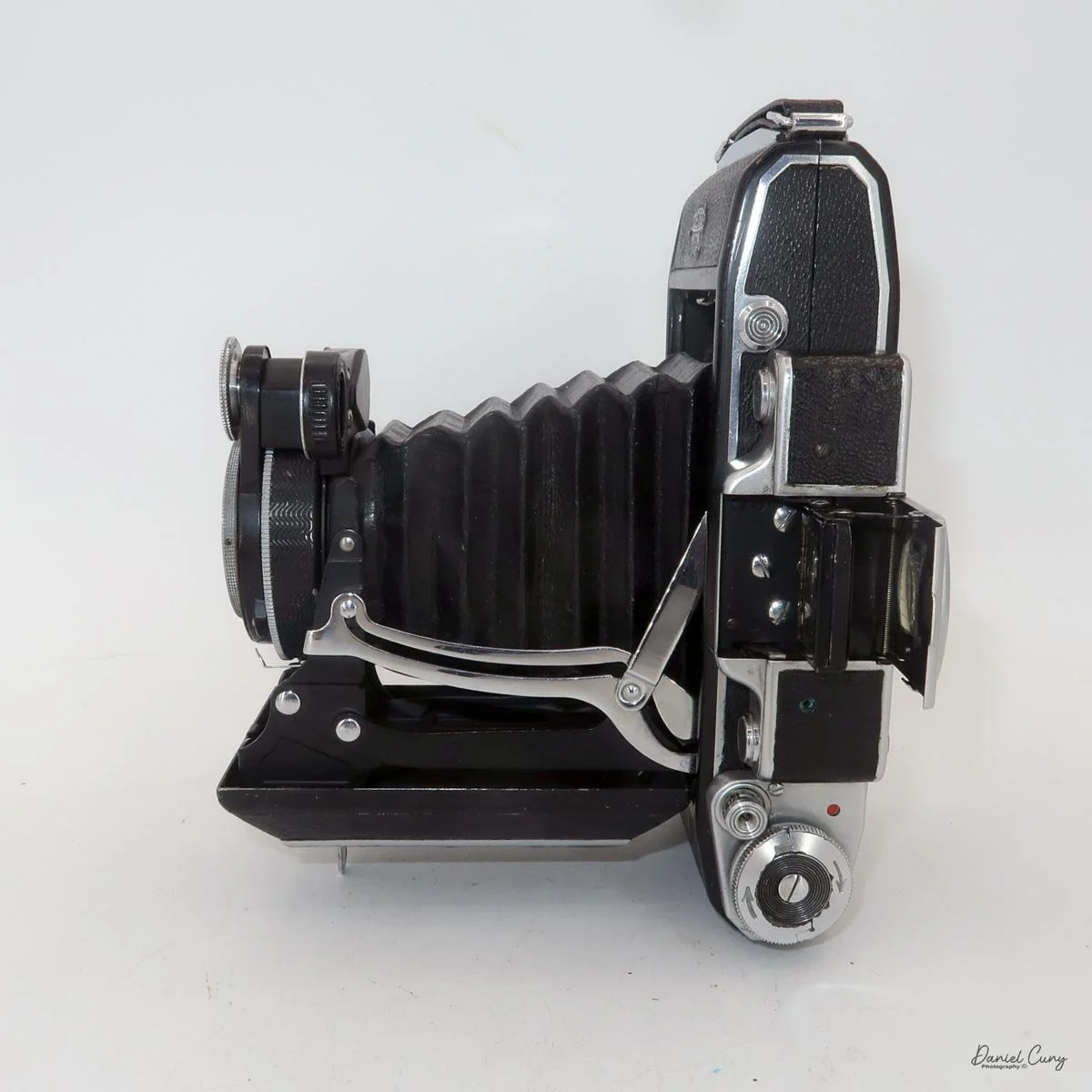
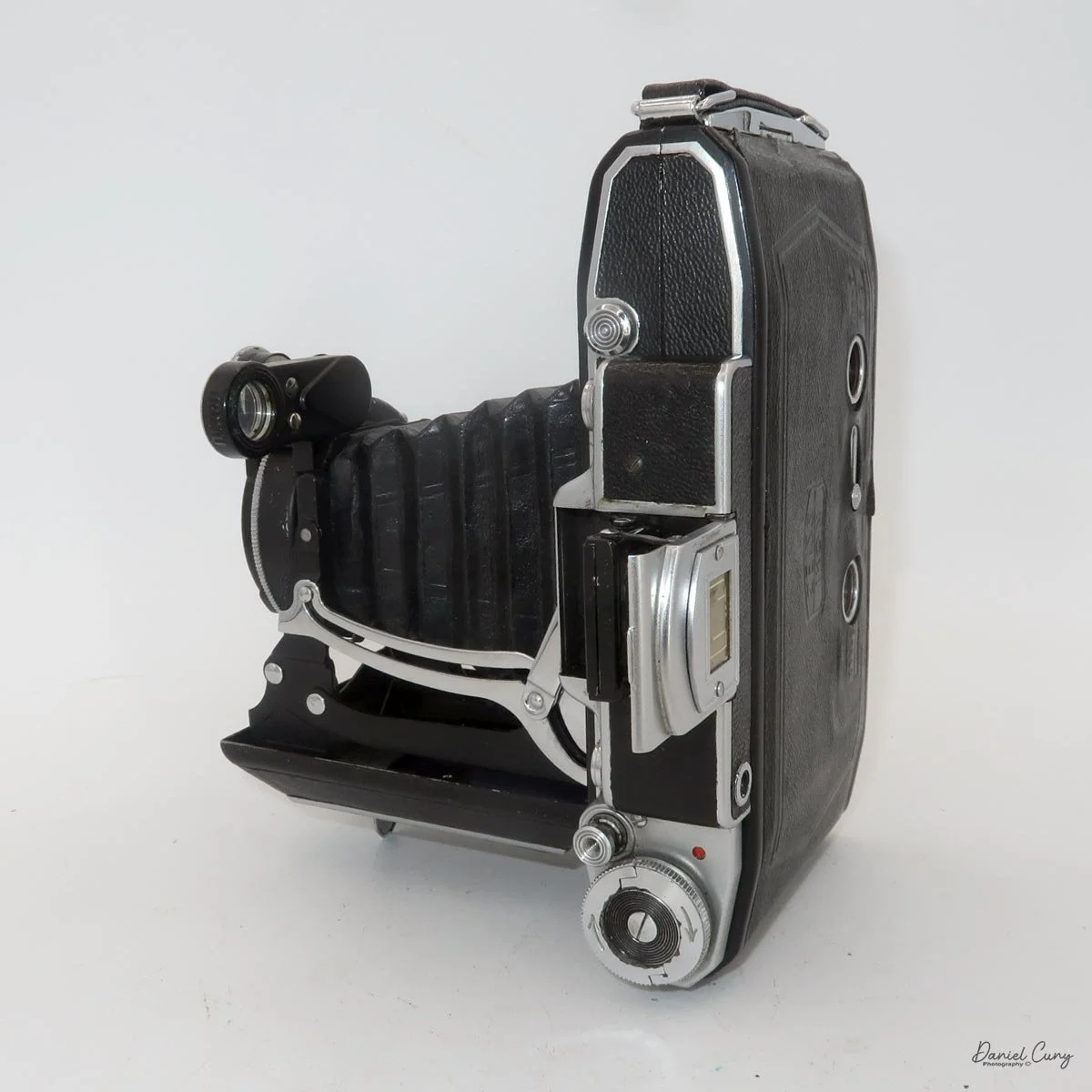
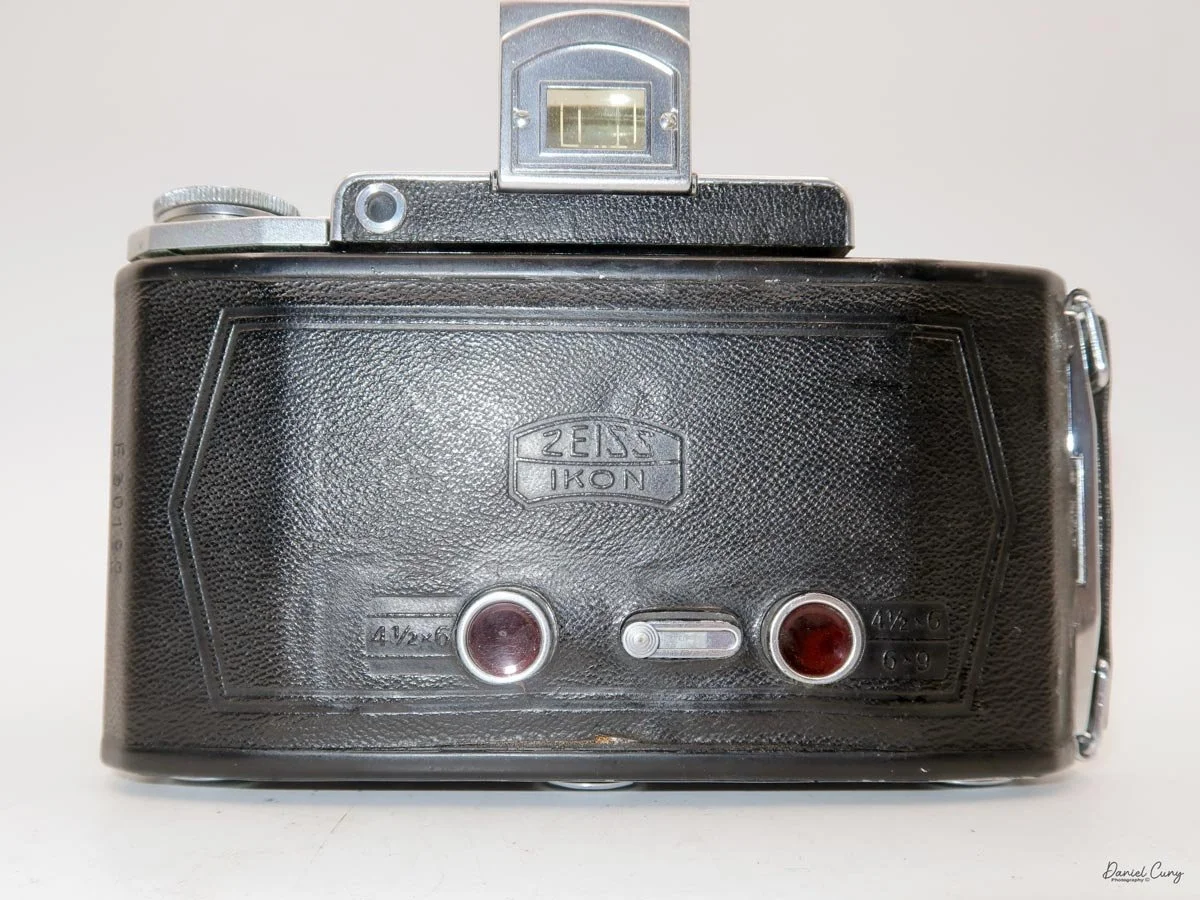
Looking at the top of the camera, on the right side of the rangefinder, is a button that opens the camera when it's closed. According to the Zeiss Ikon Super Ikonta manual. Hold the camera in your right hand, with the front slightly pointed down. Press the button, and the camera should open slightly. Then pull down on the front cover so the bellows and lens extend to the taking position. Once the lens is extended, you'll need to swing the arm holding the small round lens into place so you can use the rangefinder for focusing. Also, when you open the camera, the Albada (sports) finder springs open. Look through the Albada finder; it has lines for both 6x9cm images in a horizontal format and for 6x4.5cm images for a vertical subject.

Now that the camera is open, you're ready to make exposures once the film is loaded, which we'll get to in just a moment. The shutter and aperture settings are located around the lens. Shutter speeds from 1/250 to 1 sec, plus "B," are set by turning the ring to the desired speed. The aperture is set by sliding the arrowed lever at the bottom of the lens to the desired aperture, which ranges from F/4.5 to F/32 on my camera.

 The focus wheel is on the front of the swing arm you moved over for the rangefinder, just above the lens when the camera is in the vertical position. For focusing, look through the small window on the back of the camera. Turn the dial to use rangefinder focus, which includes a small yellow area in the middle of the finder. When out of focus, the subject will appear as two images. Your main subject, and a second image in the yellow area. Turn the wheel until both images merge into one, indicating the subject is now in focus. 

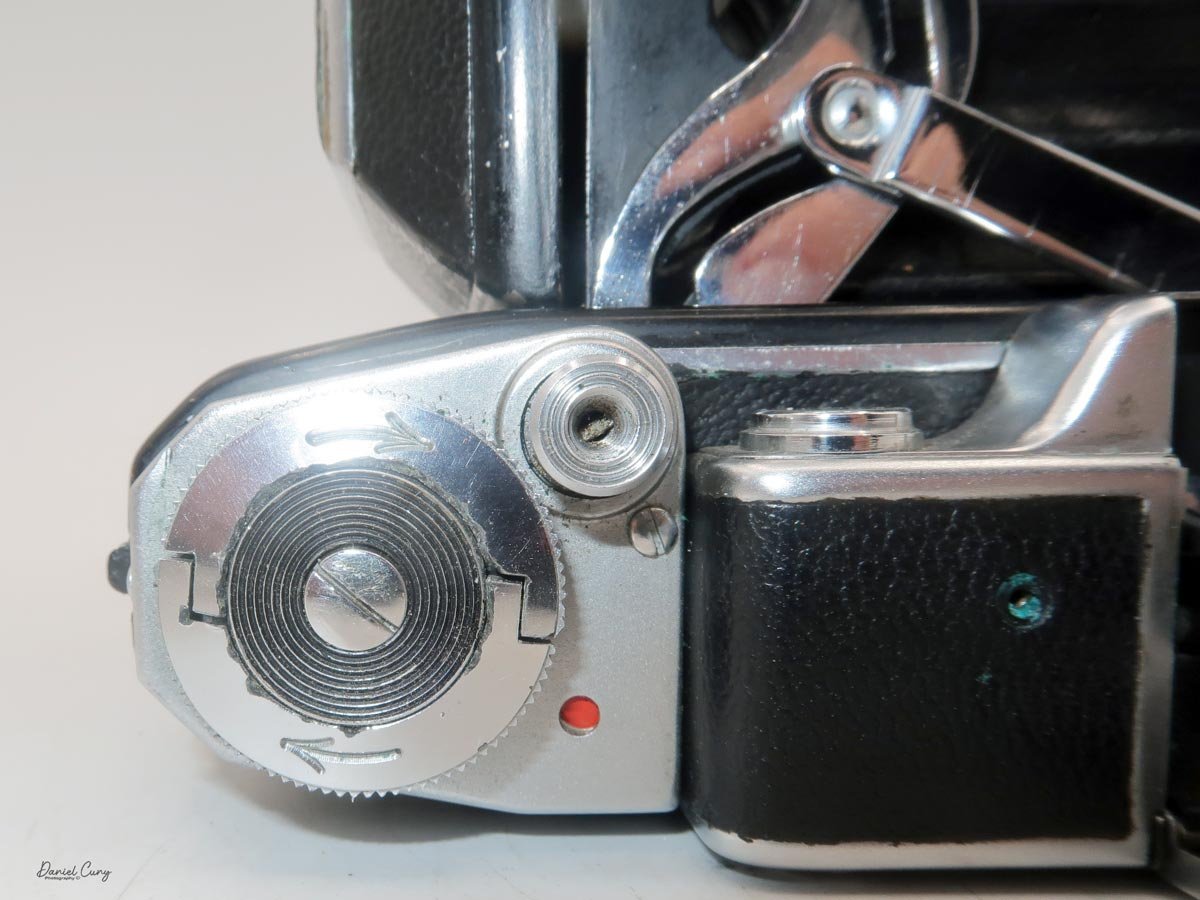
Set your shutter speed and aperture setting, and don't forget to cock the shutter. The shutter release is on the top, left side of the camera. Press the shutter release, which will trip the shutter via a series of linkages that run along the bottom of the lens bed. Just behind the shutter release is a small window. When the window is grey, the shutter has been tripped, and you'll need to turn the film winding lever until the small window turns red. At this point, you can re-cock the shutter and release it. 

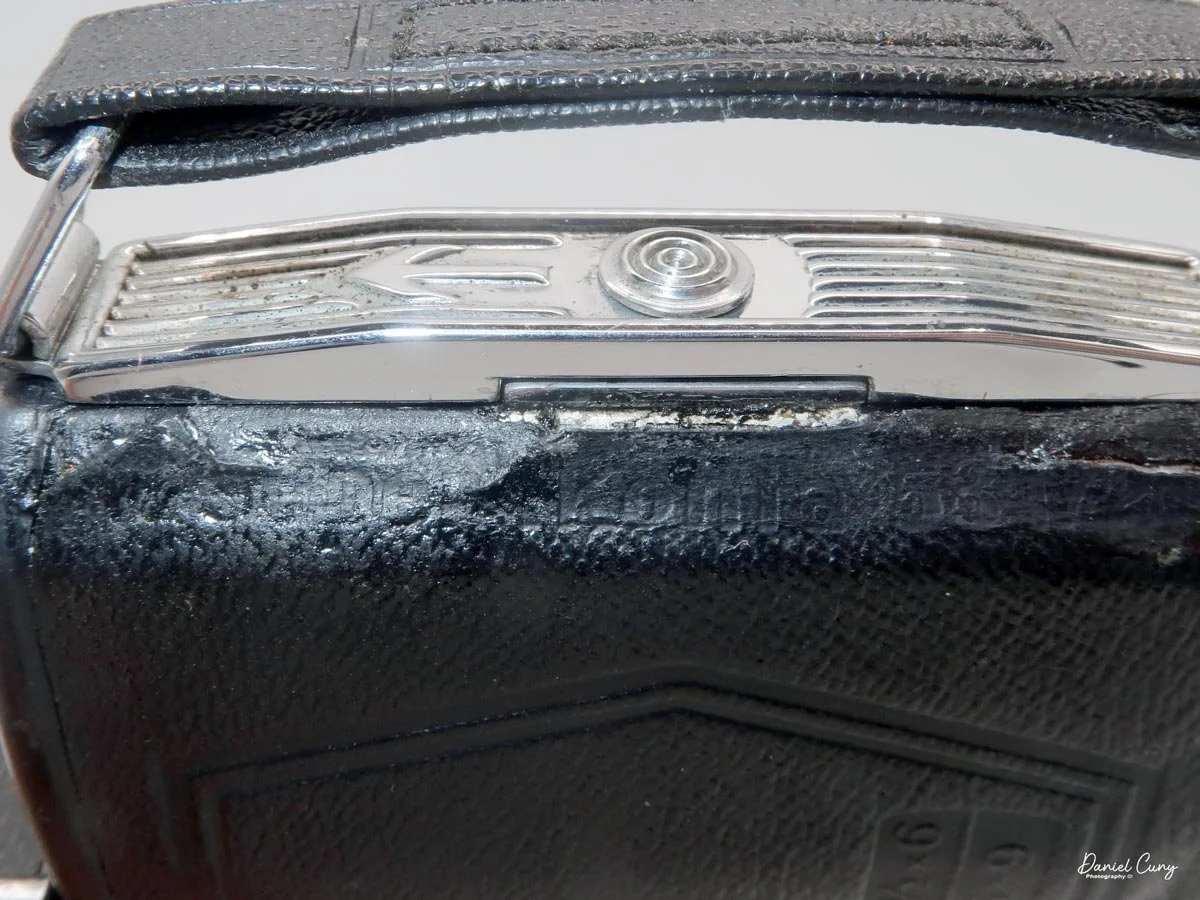
To open the back of the camera to load film, under the camera's handle is a small slider with an arrow pointing toward the opening. Slide the small knob in the direction of the arrow, and the camera back will open. Load the film as you would any 120 roll film camera, roll the film so the "start" arrows are showing, then close the back of the camera, and wind the film advance knob so the number 1 shows up in the appropriate window on the back of the camera. 

There are two red widows on the back of the camera: one for 6x9cm images and one for 6x4.5 cm images, if you have the metal insert in. If you have the insert in the camera, you'll use both windows for film advance, as you would with a 127 film camera with two windows. Stop at the number 1 on the far right window, then take your photo. Wind the film until the number 1 appears in the second window on the left, then take your photo. Then wind the film until the number 2 shows up on the first window on the right side, and so on through the number 8. For 6x9cm images, you'll get 8 exposures per roll; for 6x4.5, 16.

 To close the camera for transport, slide the arm you extended for focus back over the bellows. Holding the camera with both hands, press in on the locking arms on the struts to lock the bellows and lens into place; the bed will collapse a bit. Fold the lens back into the camera until the camera clicks closed, then flip down the Albana finder.

My Images:

 Let's take a look at how the images turned out. Here are a few of the images I took with the Zeiss Ikon Super Ikonta camera.

Conclusion:

 The first few images were incredibly sharp, well-exposed, and as I expected. I noticed that towards the end of the roll, the images became softer and less sharp, which concerned me. What did I do wrong?

 To give some background, I had eye surgery on my right eye, which is my dominant eye, about a year or two ago. When I went to see the eye doctor, I could barely make out details with my right eye, so surgery was necessary. Since then, it's gotten a bit better, but not as good as it used to be. Now I'm getting used to putting the camera up to my left eye, which is considerably better than my right. It still feels awkward, but it's my new normal.

Missing pressure plate

 I thought this contributed to the images being soft. Then I remember what a good friend, Mike Eckman, said a few weeks ago when we were discussing image sharpness. He said that he had a similar instance and noticed that the film's pressure plate was missing. At this point, I opened the back of the camera, and sure enough, the pressure plate was missing. 

 How could I miss that when I'm loading the camera? You get so used to looking at and loading cameras that you miss that a camera doesn't have a pressure plate.

 At this point, I'm sure I could manufacture one out of something like thin foamcore and just cut out circles for the red window. Still, it's a lot of fun to use, and the images are incredible. I'll chalk it up as a learning experience and double-check to be sure they have the pressure plate from now on.

 Here are some of the other Camera Reviews I've done.

 Cuny's Cameras and Photos is my online eBay store where I sell some of the cameras I've reviewed, along with other camera accessories, lenses, etc.

 Please feel free to comment on this or any of the other camera reviews I've done. I'd love to hear from you.

 Until next week, please be safe.
 

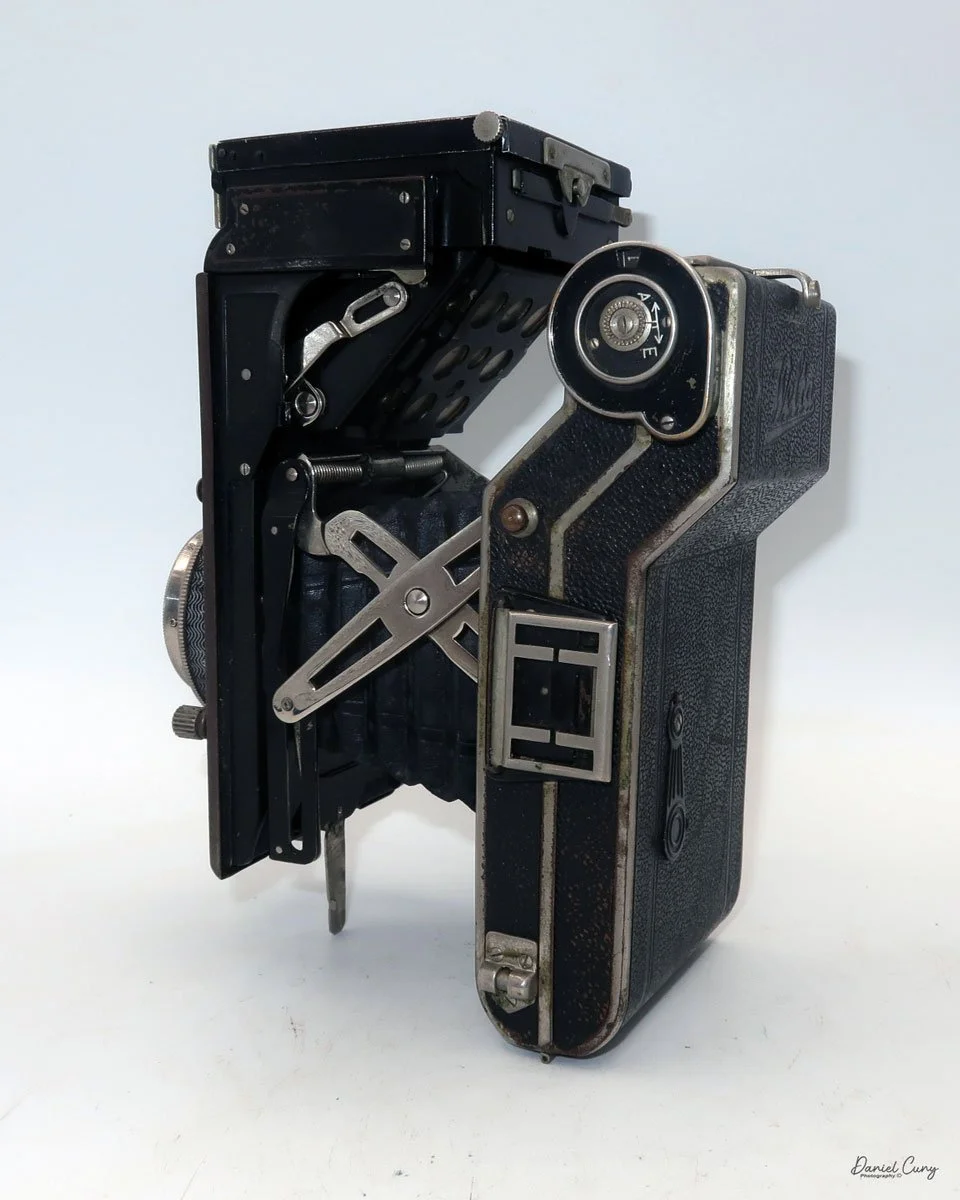
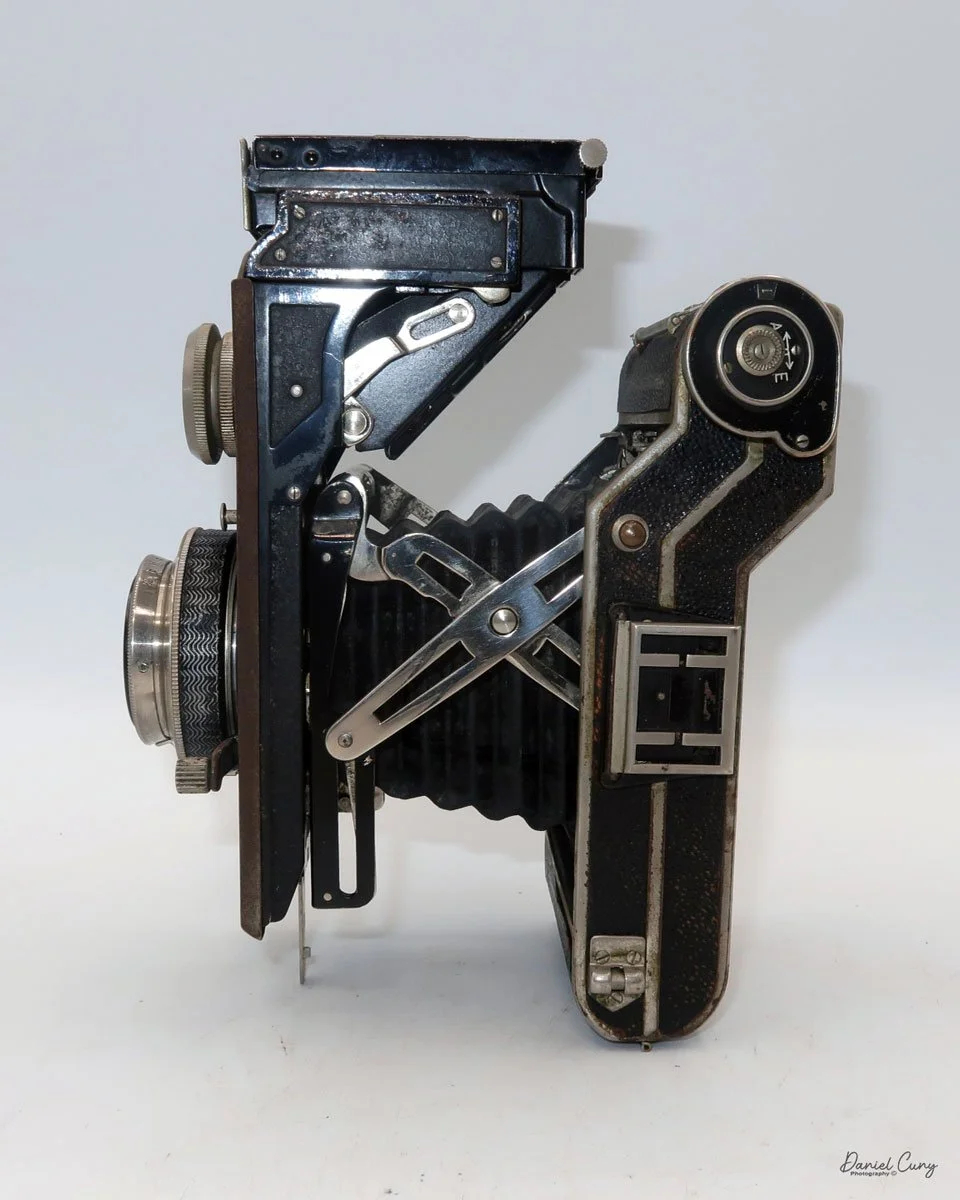
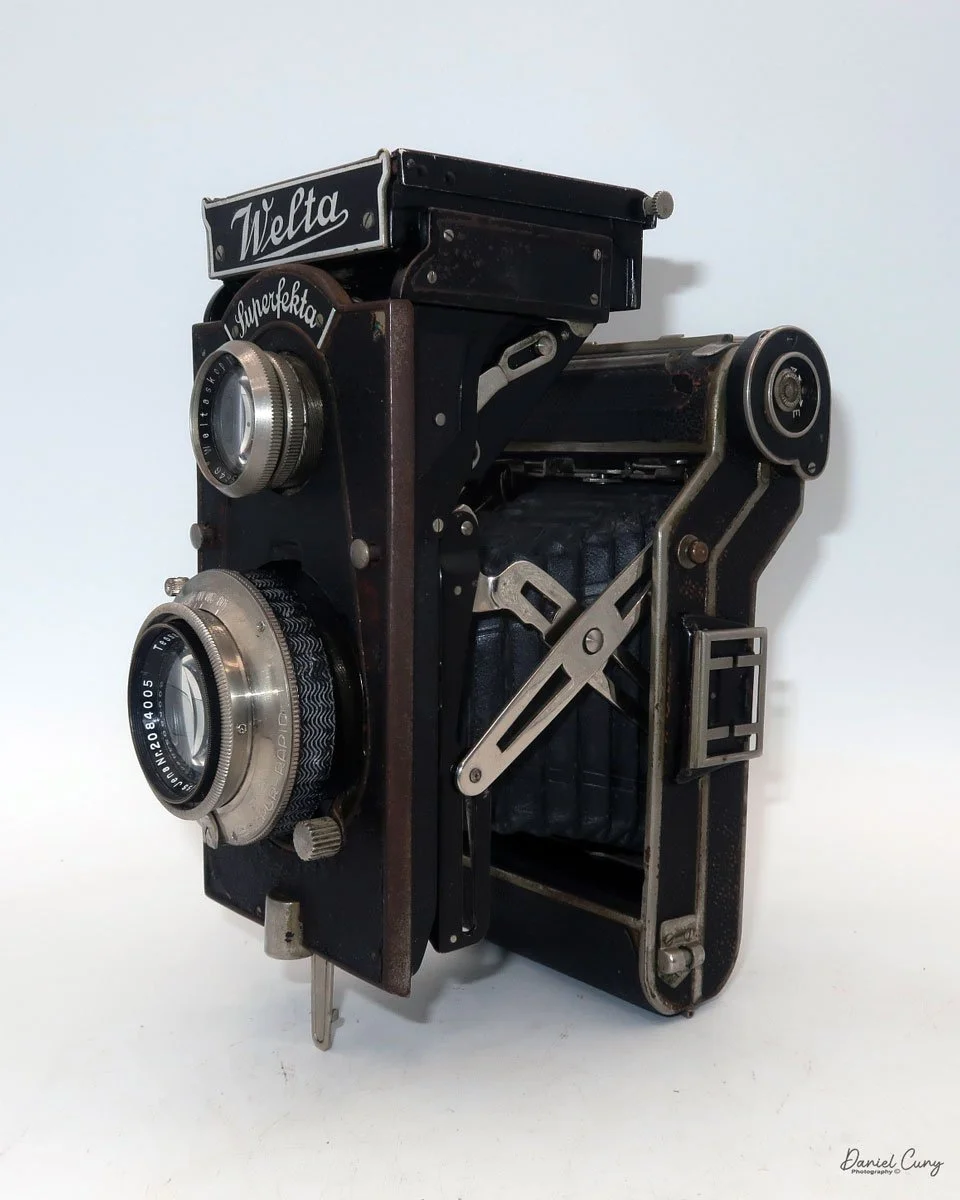
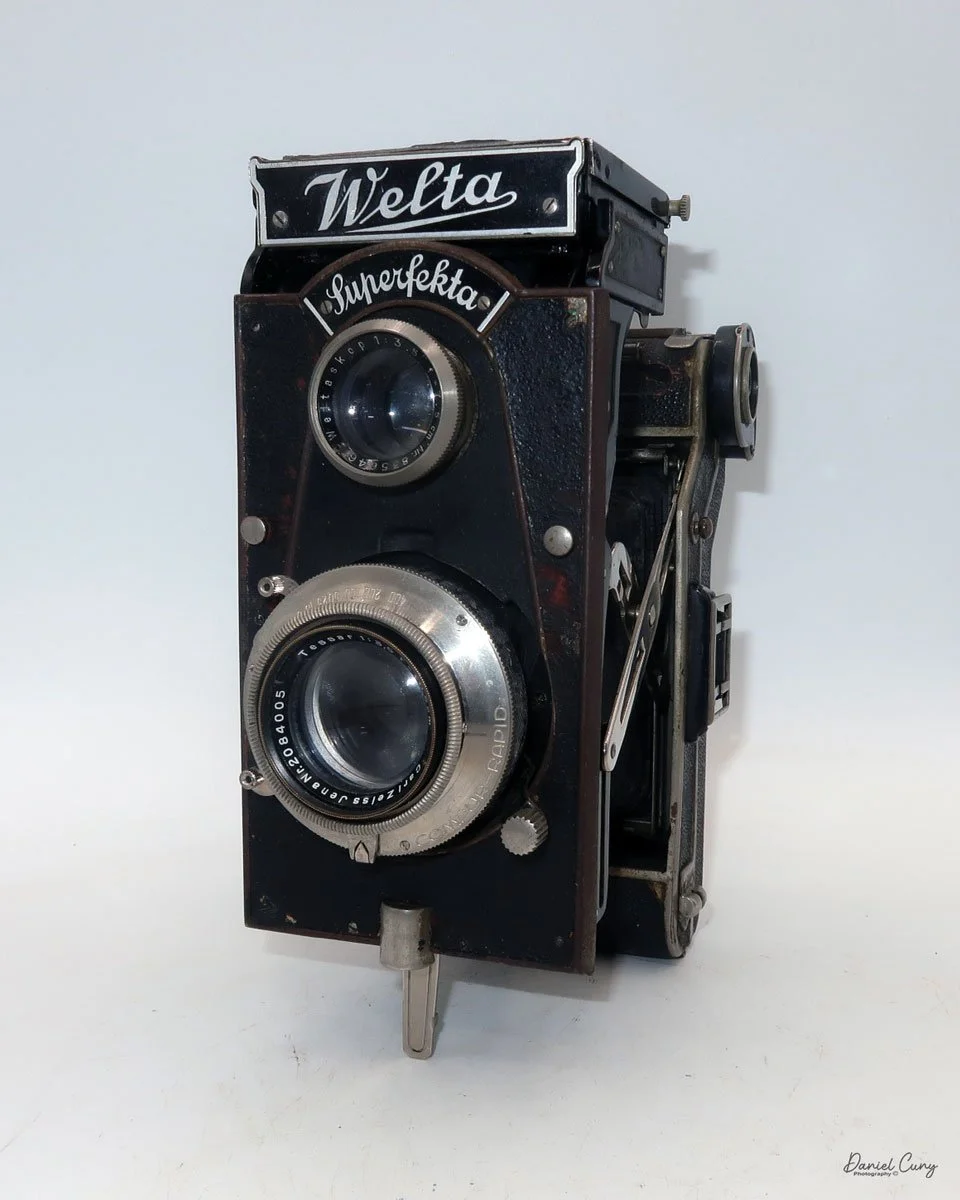
Welta Superfekta

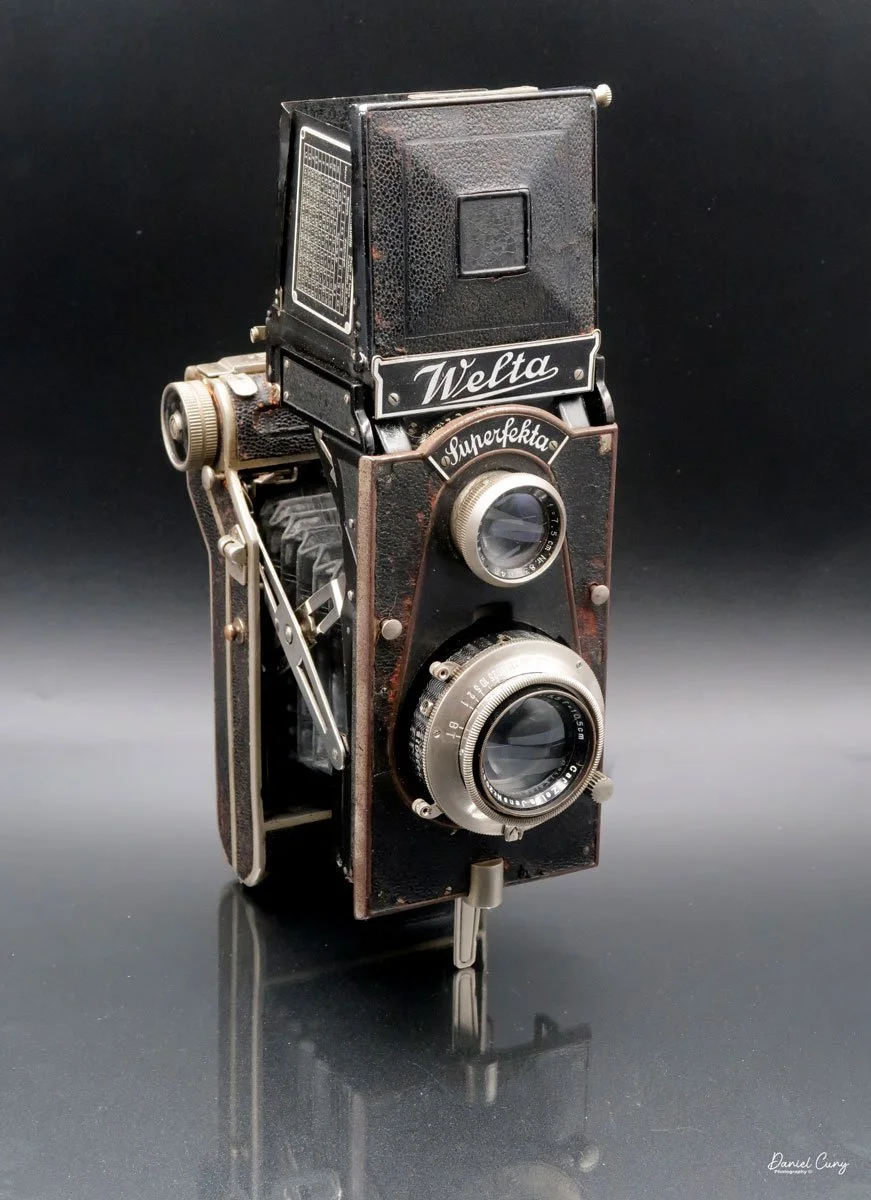
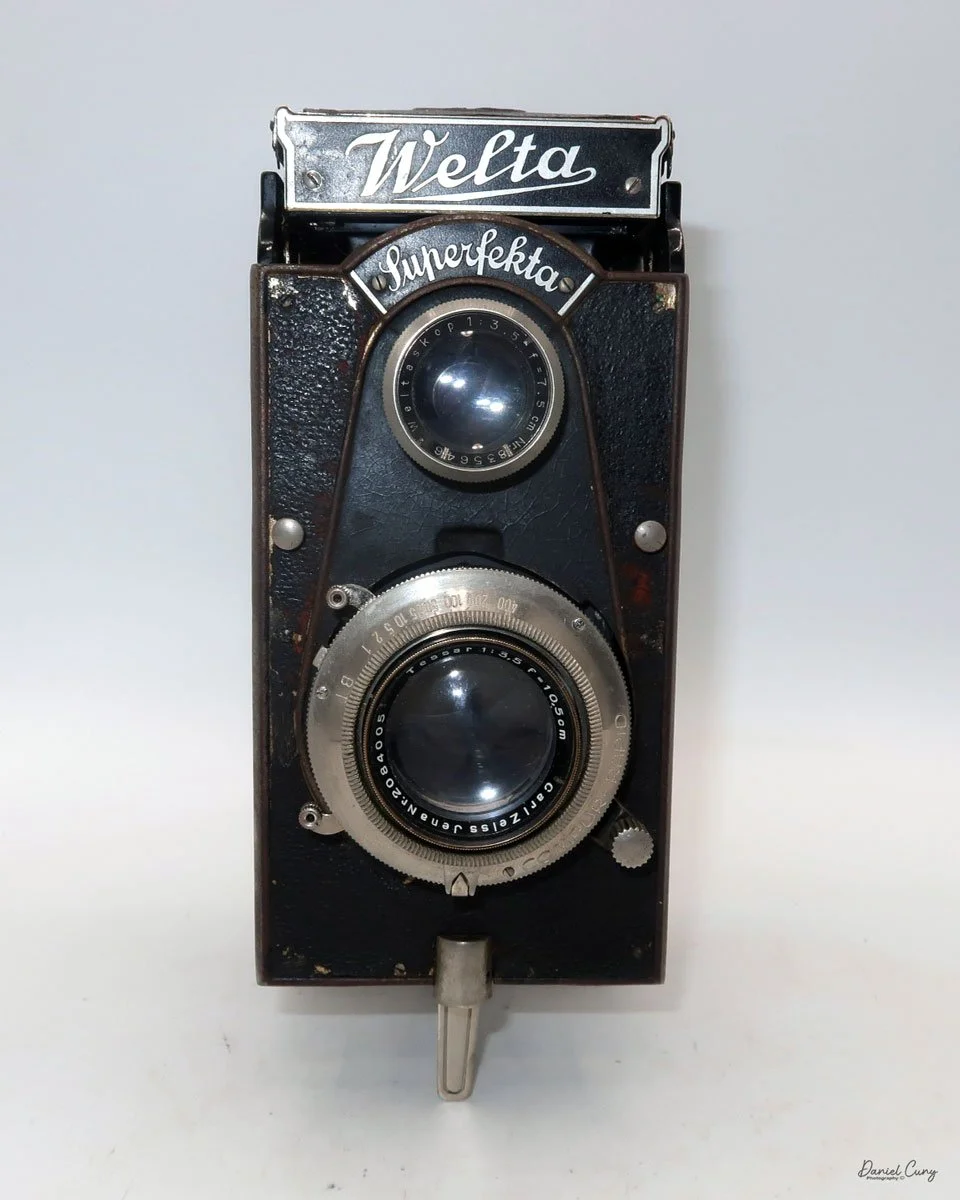
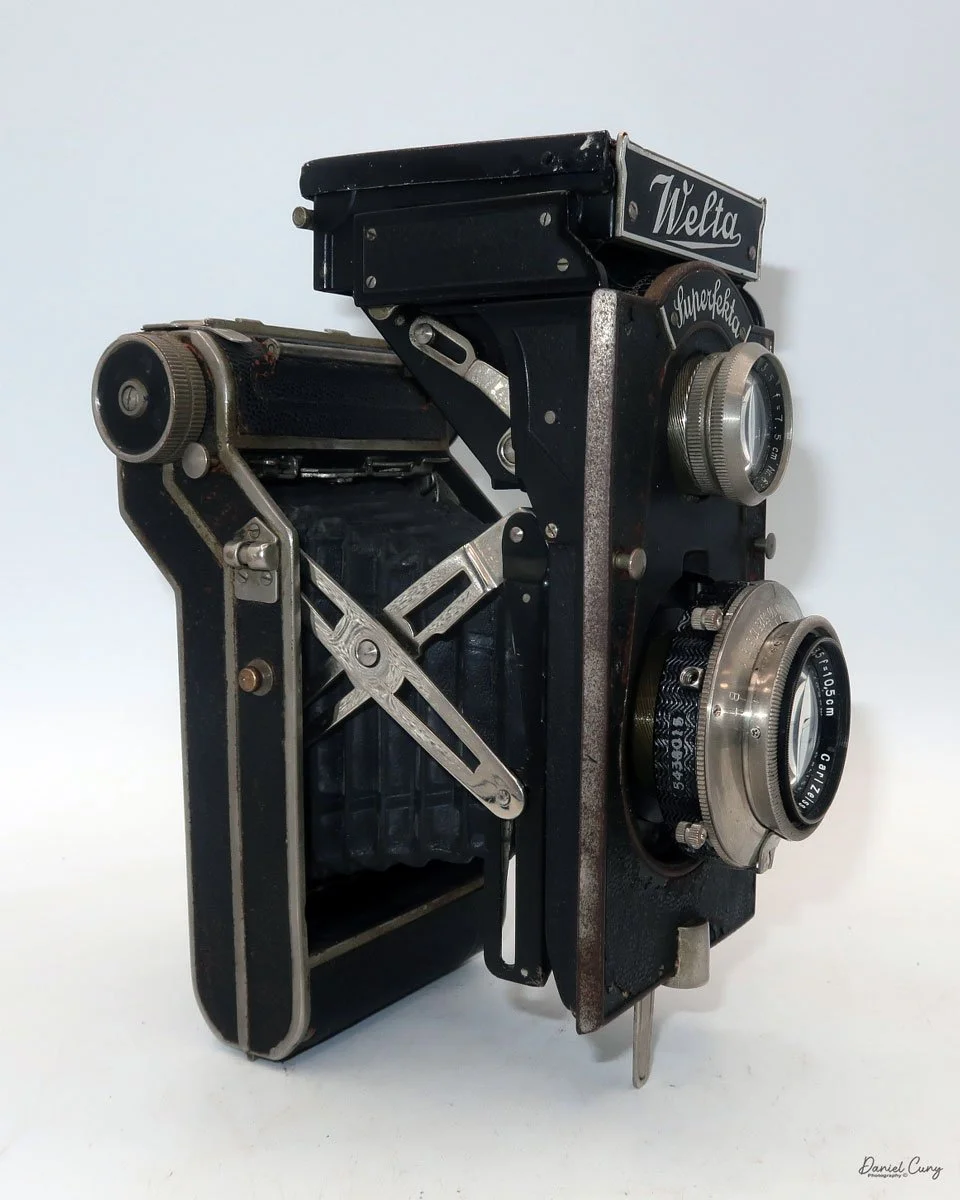
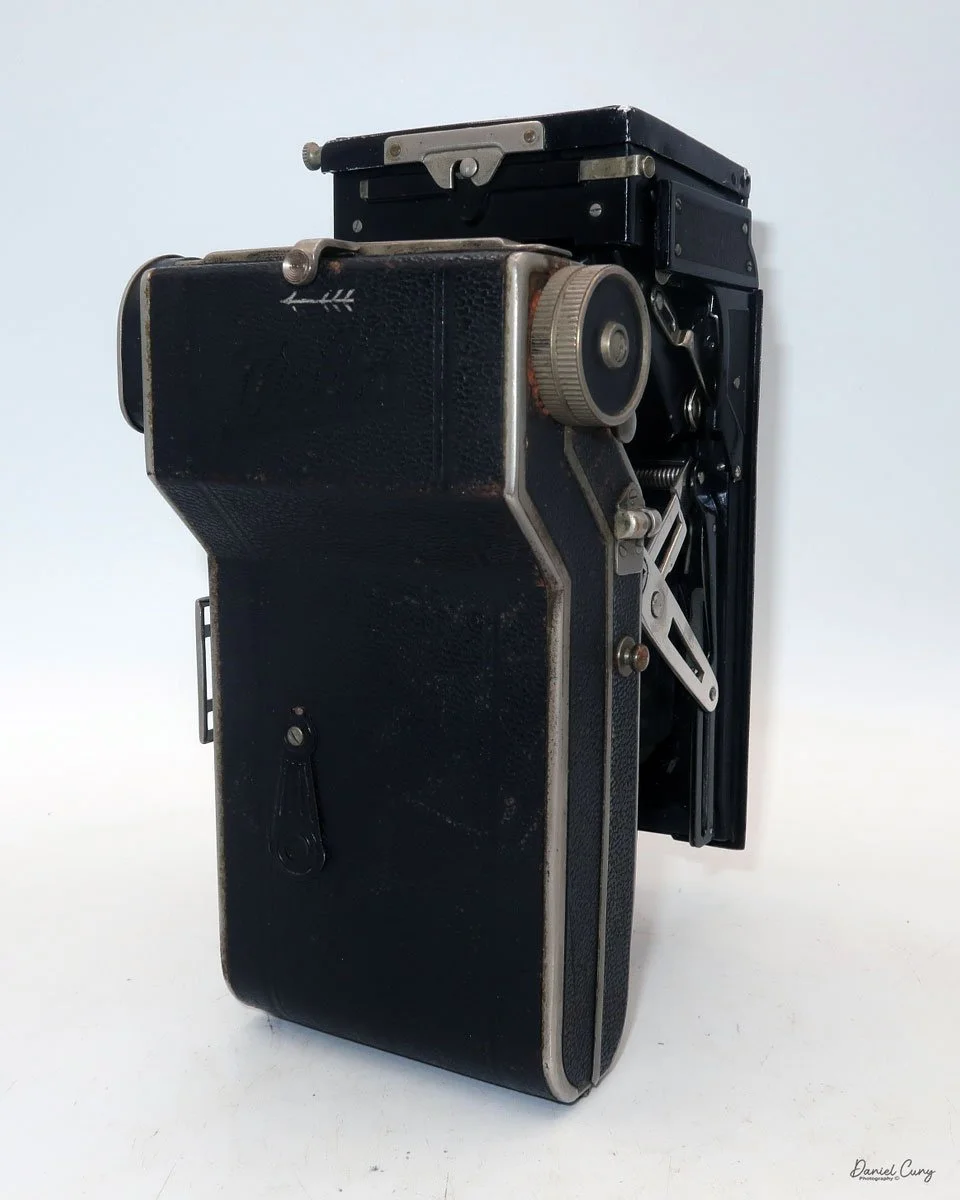
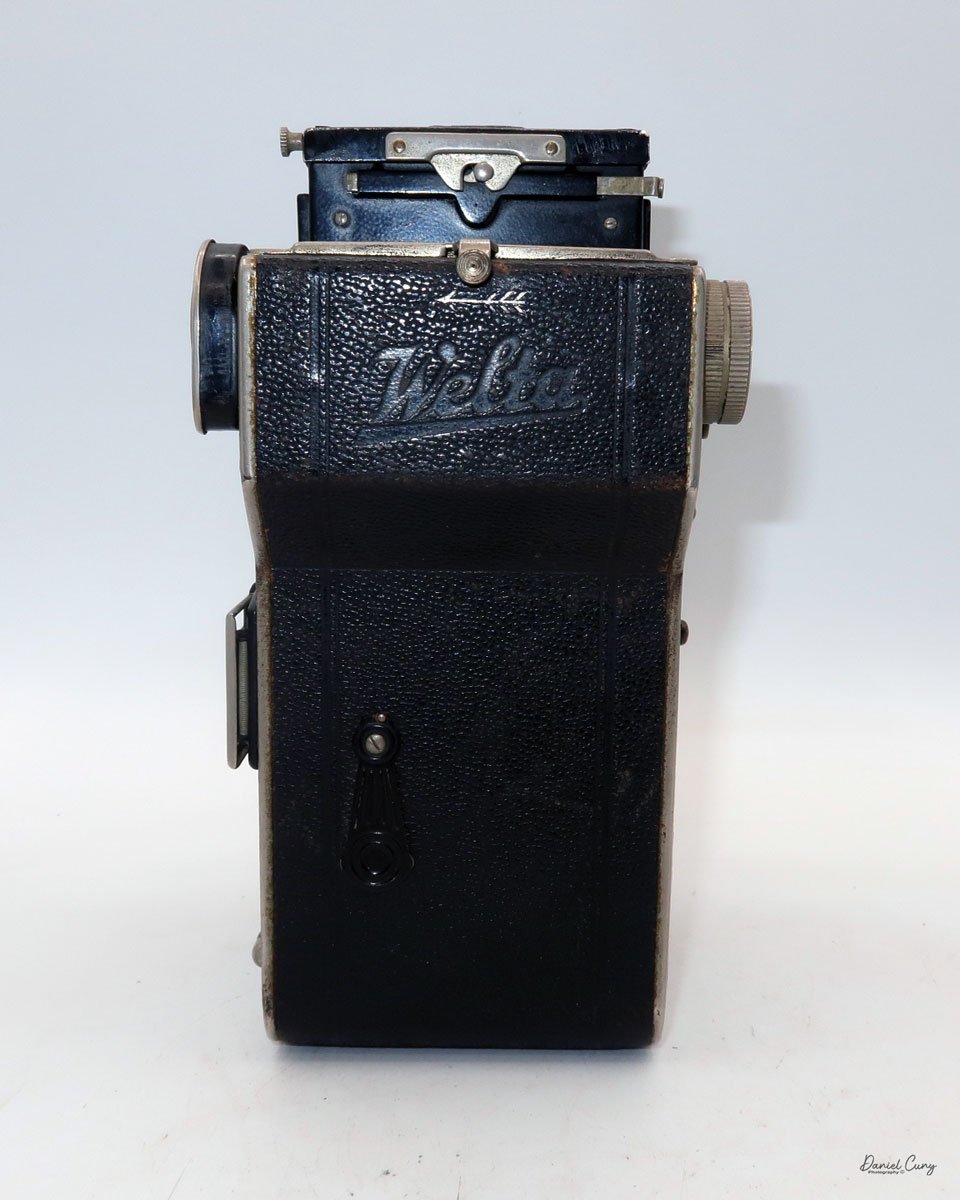
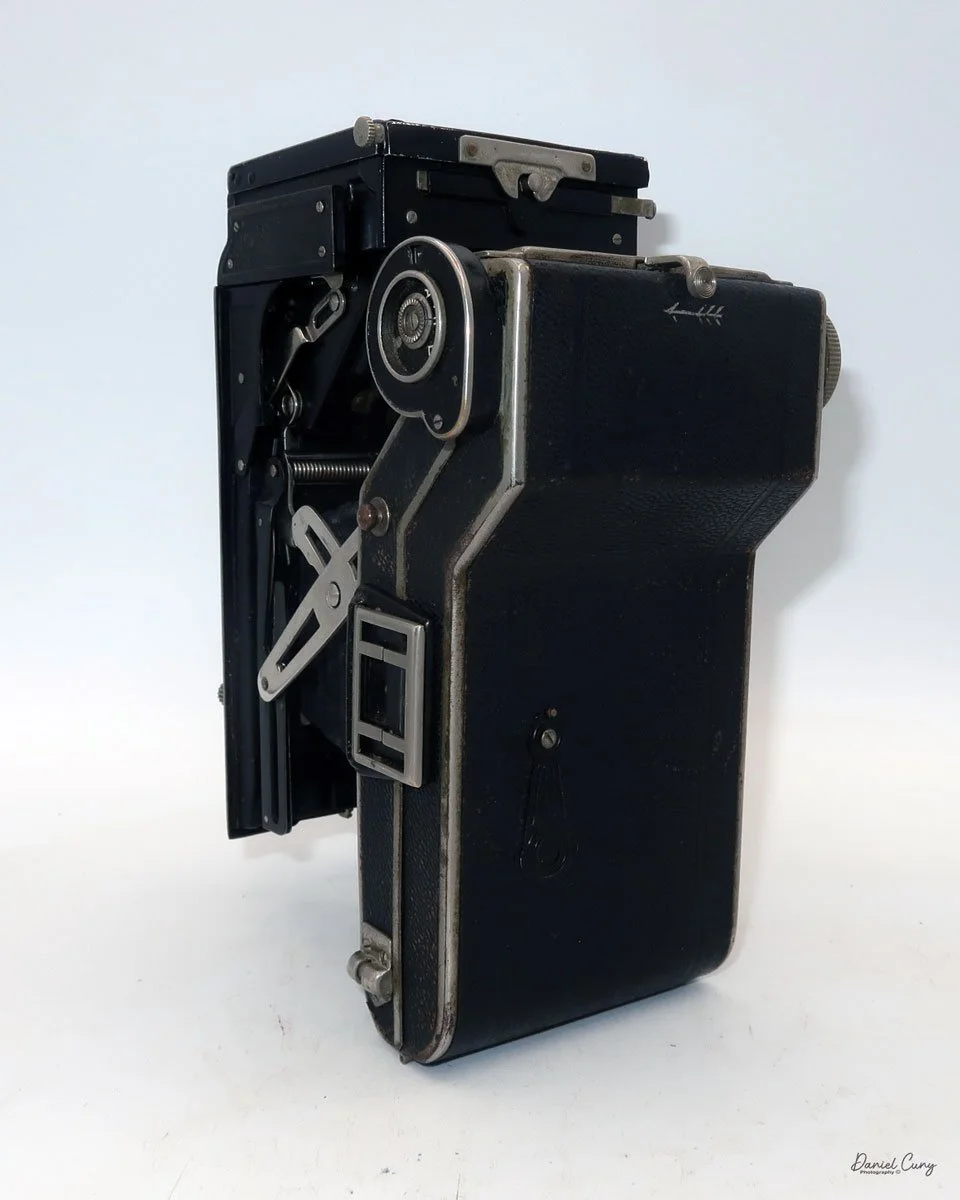
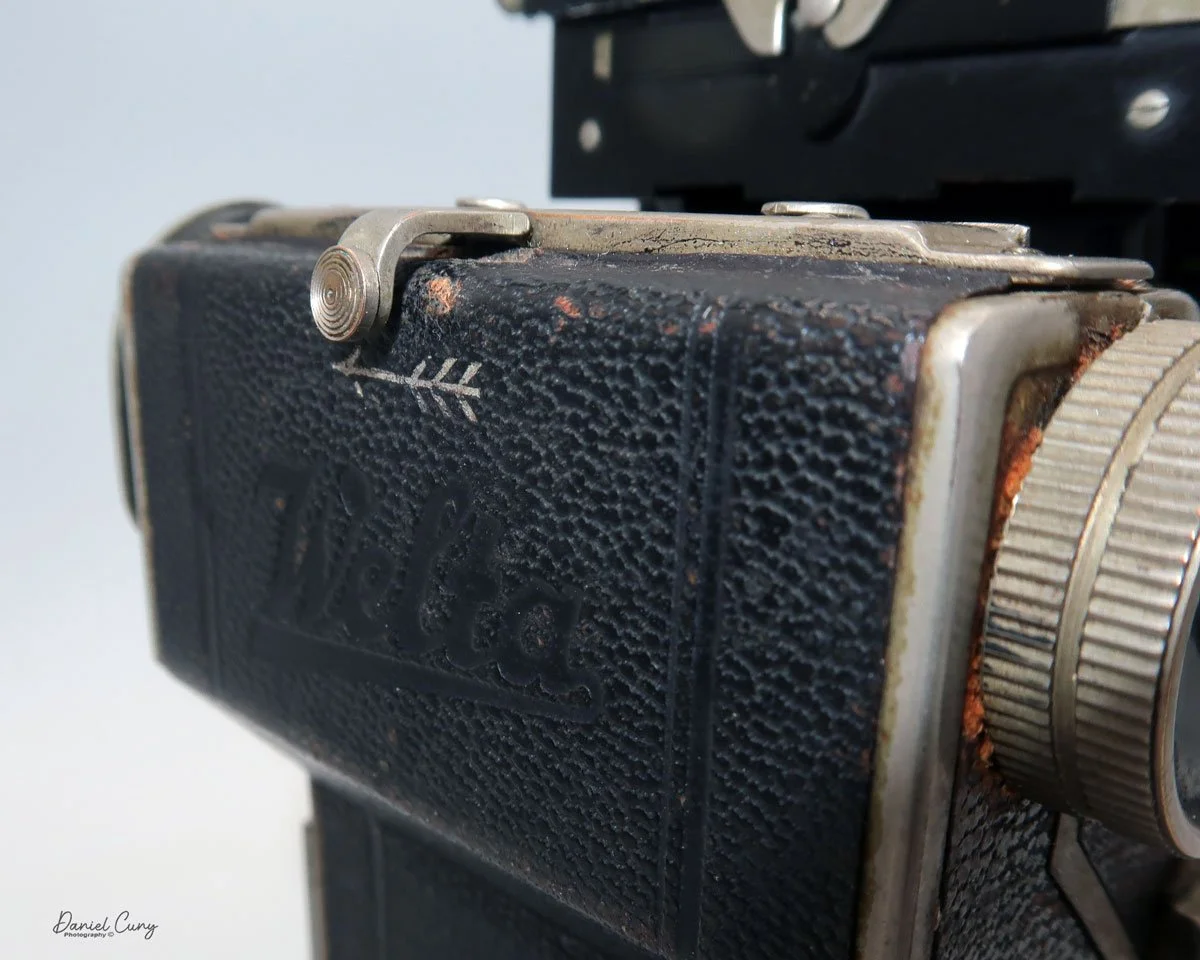
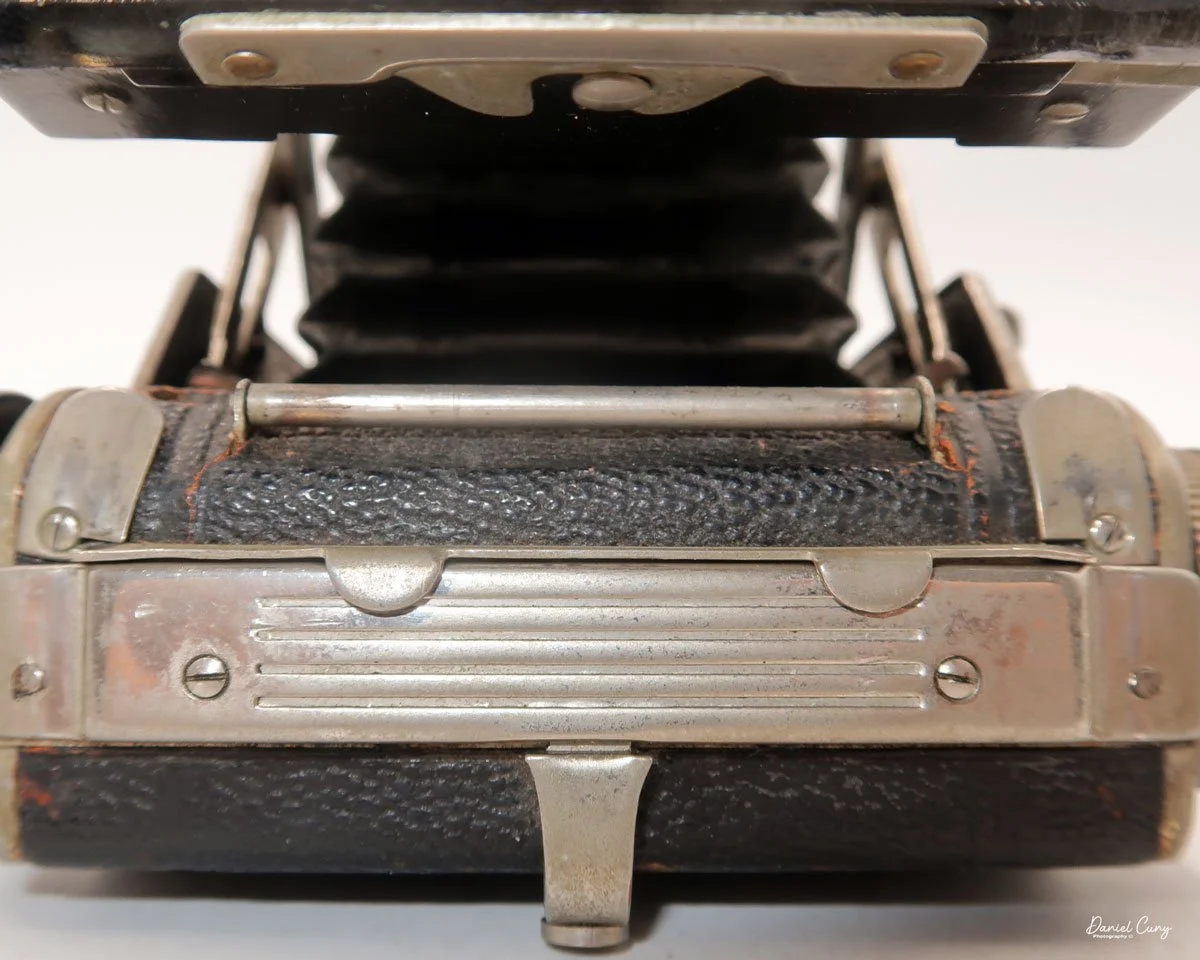
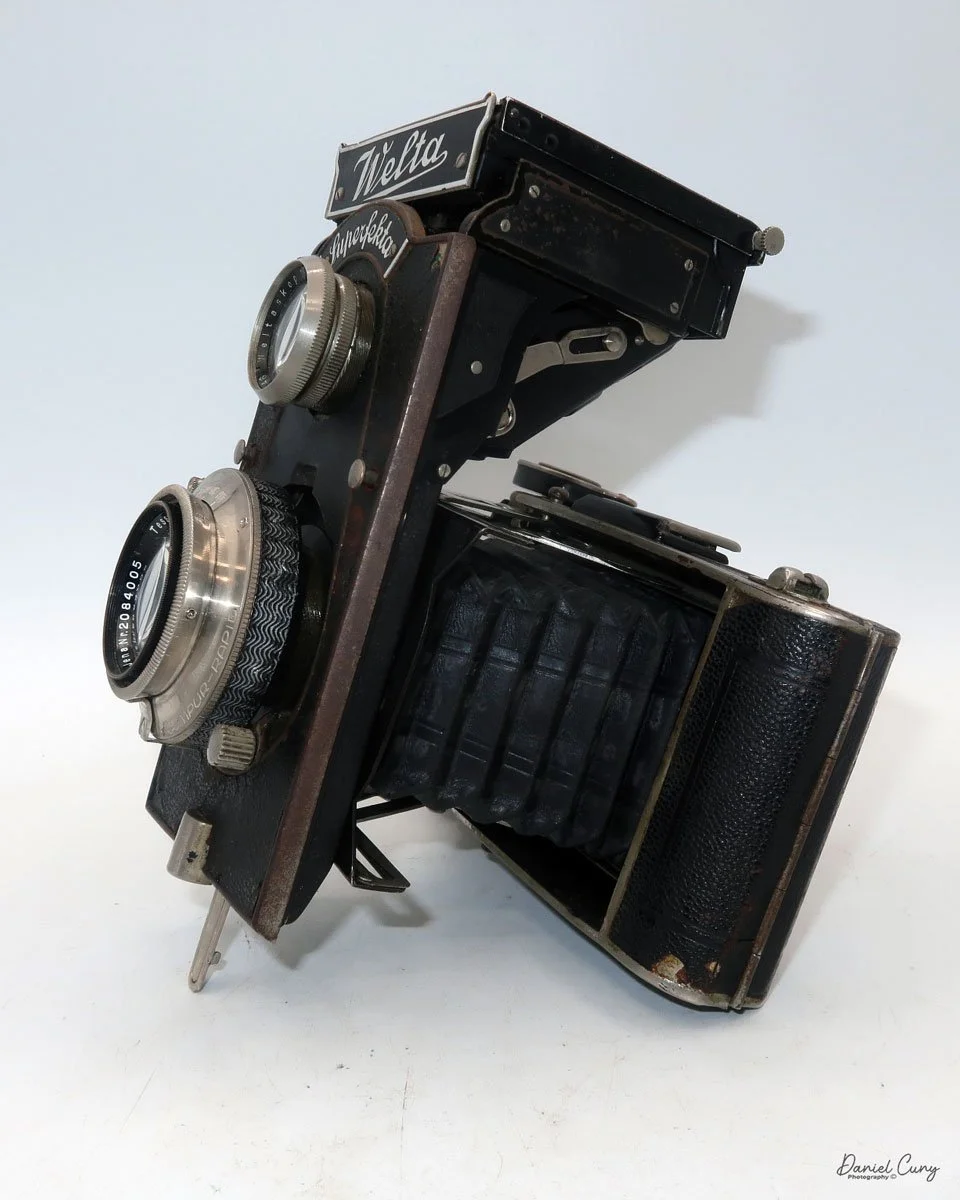
My Welta Superfekta camera

Not being wealthy, my collecting has always been focused on cameras well within our family's financial means. Up until my final ten years of working and before retirement, the cameras I purchased were items you could find at local flea markets and estate sales, or occasionally I made a trade for an item while selling at a camera show where I had a table.
 Being drawn to obscure and unusual cameras and having devoured McKeown's Camera Guide for many years, the Welta Superfekta is one camera I've always dreamed of adding to my collection. Due to its price and relative scarcity in the U.S., it's always been out of reach for me until this past few years.
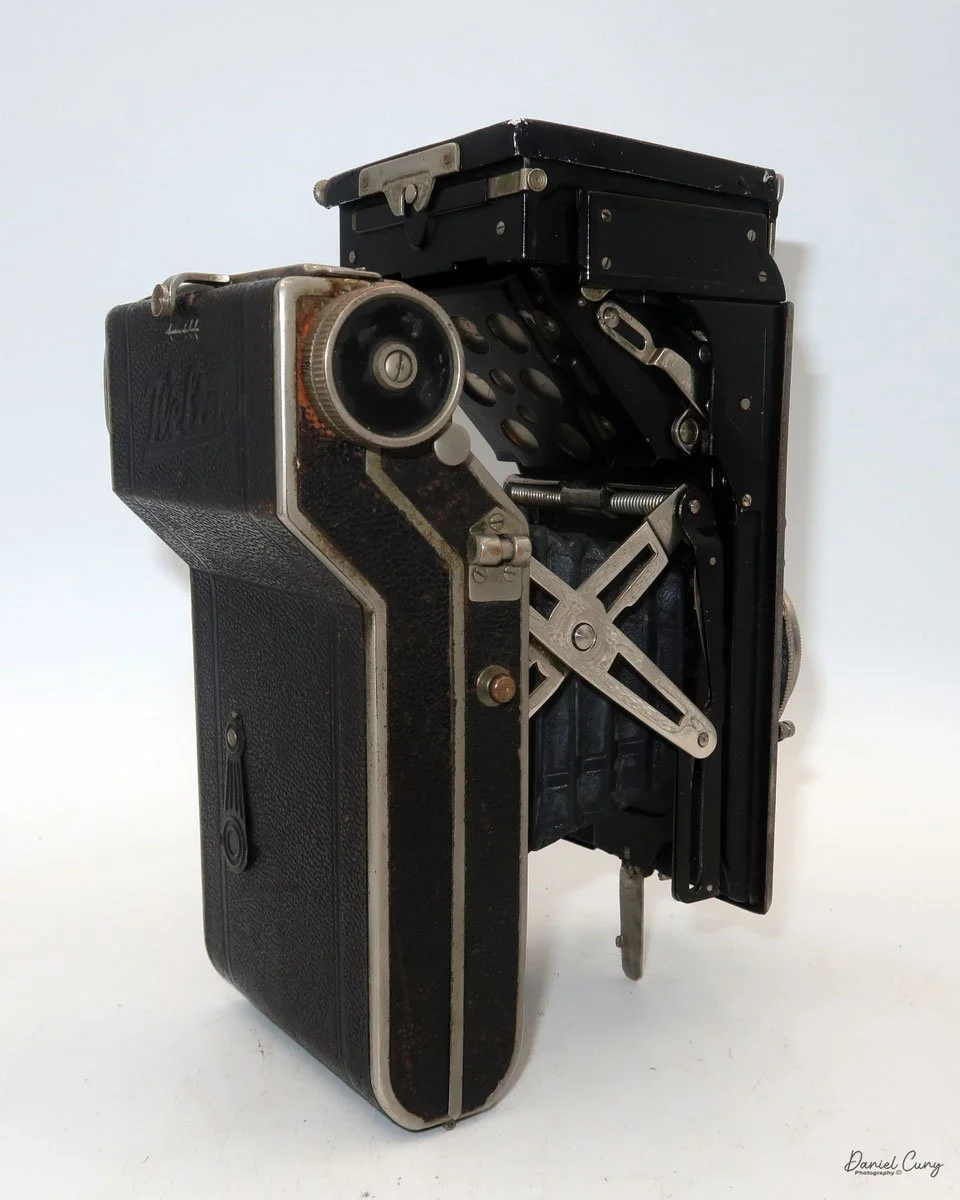
 It wasn't until I looked at an online camera auction that I found the Welta Superfekta at a price that was not only reasonable but also inexpensive. Online, the camera looked in good to decent condition, but they said the shutter was erratic. To me, those words mean I'll need to send the camera in for a shutter repair, which isn't too uncommon for a camera reaching 100 years old. 

 I purchased the Welta Superfekta online, and when the camera arrived, as suspected, its shutter was extremely sluggish and needed to be CLA'd. I reached out to the person I usually send cameras for servicing, and he confirmed he could service the shutter but wasn't sure about other areas of the camera, as he wasn't too familiar with it.

The excitement of adding the Welta Superfekta to my collection was wonderful, especially since it's a 6x9 cm-format camera that takes 120 film. Still, the more exciting part of the camera is that it's very similar to the Cornu Ontoflex, which has a rotating back, allowing the photographer to shoot both vertically and horizontally without turning the camera sideways. Just rotate the back from vertical to horizontal and flip the image orientation, as with the Mamiya RB67.

 The one thing I noticed when I turned my camera from vertical to horizontal is that the back doesn't turn all the way, which makes me curious about its history. This flaw, while concerning, adds character and a story to the camera, resonating with collectors who appreciate Imperfections.  

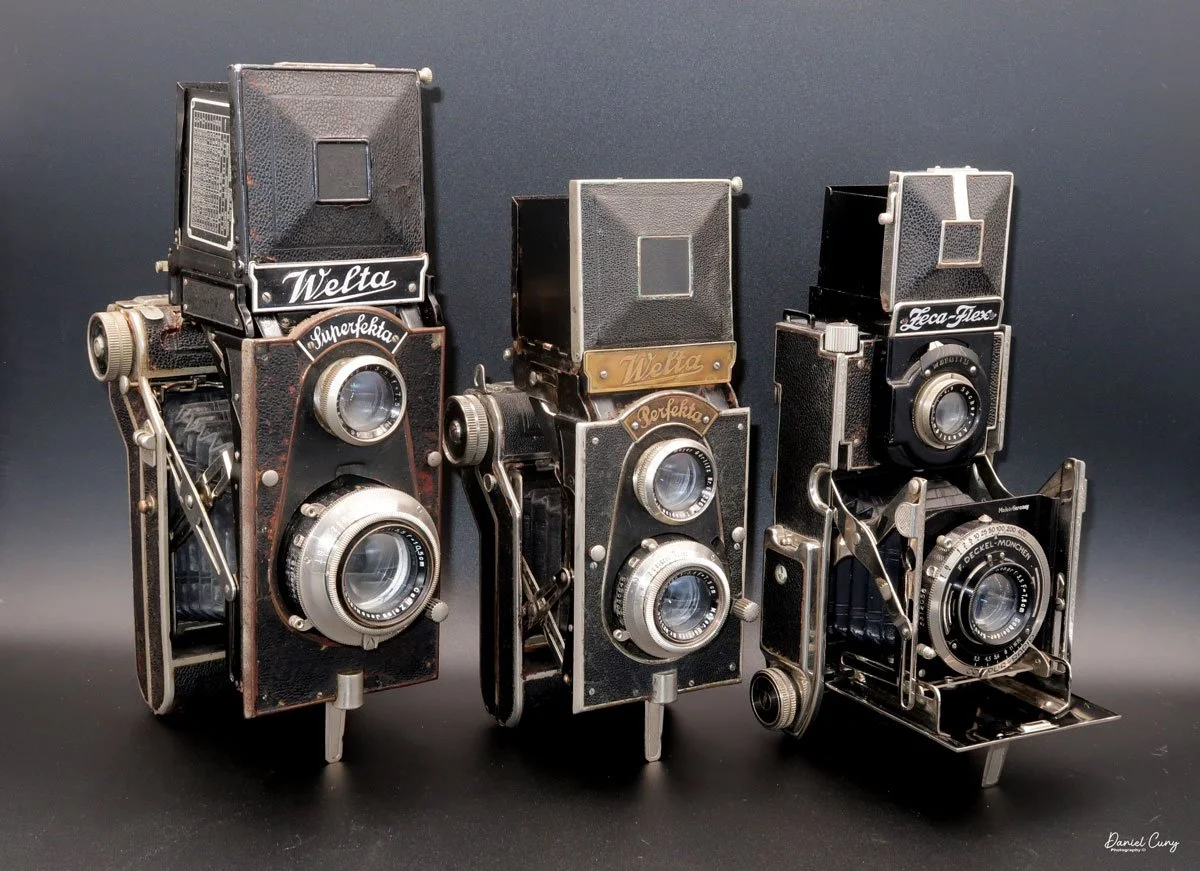
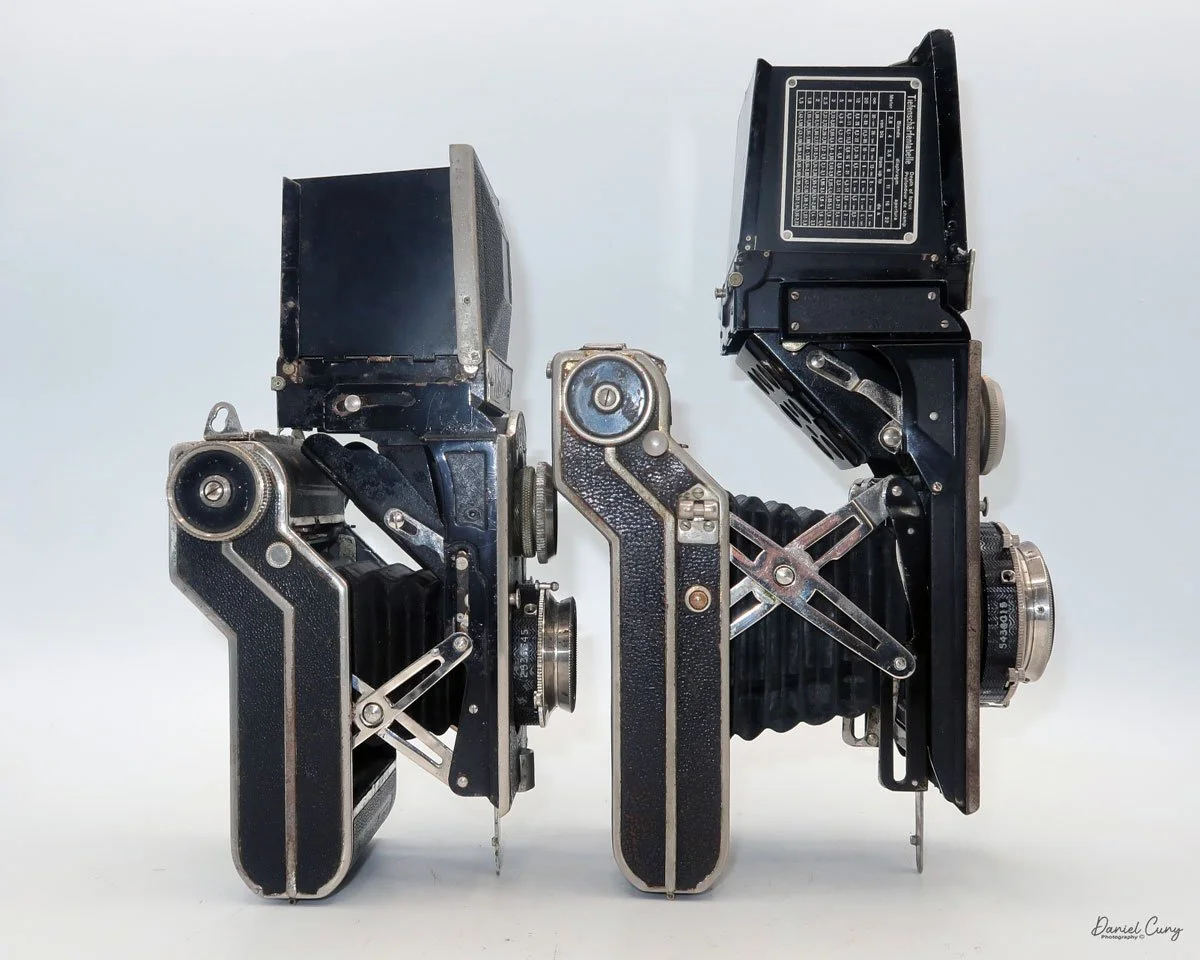
Another reason for my excitement to add the Welta Superfekta to my collection is that it would be the third folding Twin Lens camera in my collection. I had already purchased and written about both the Welta Perfekta and the Zeh Zeca-Flex cameras, making this the “Trifecta” of this camera style.

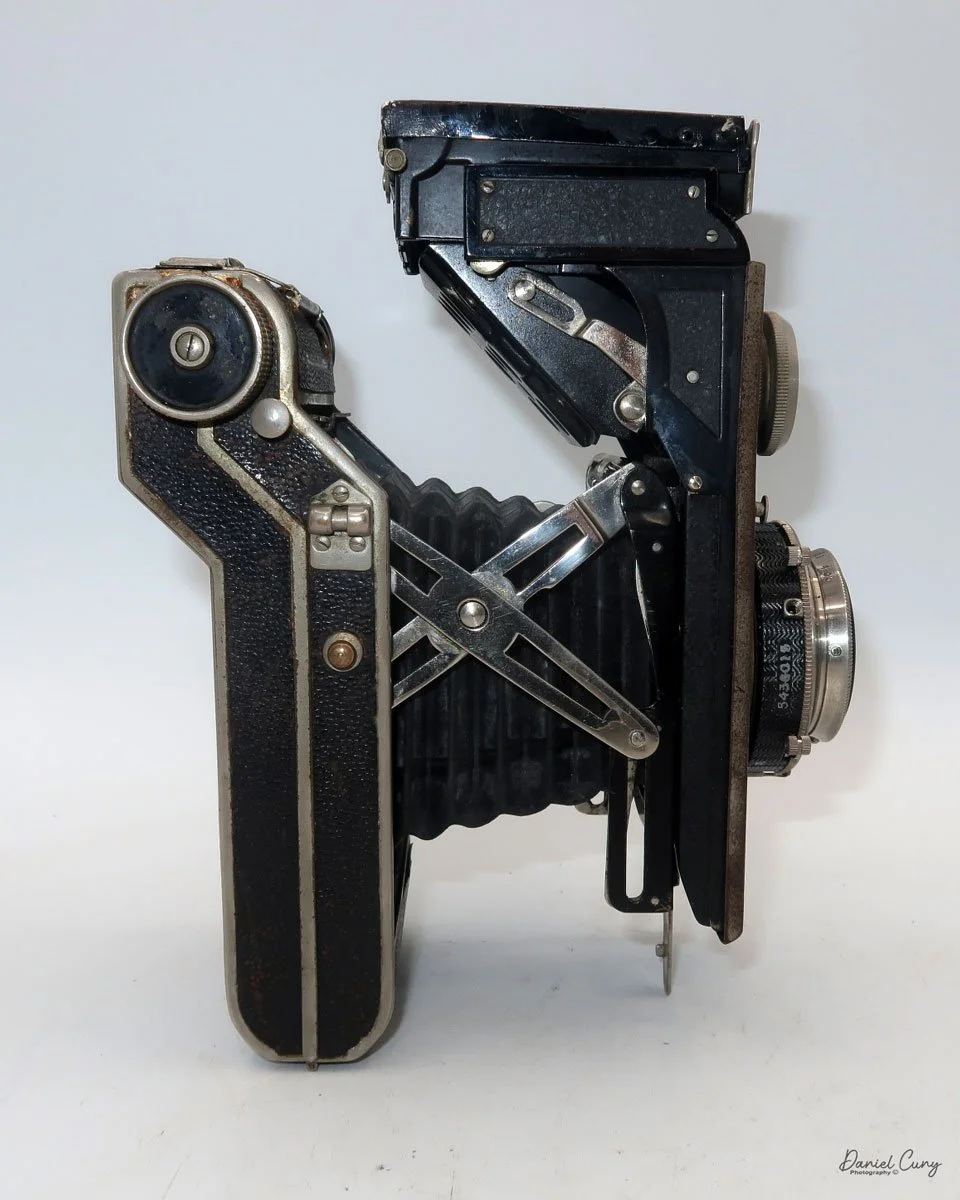
Welta Superfekta, Perfekta and Zeh Zeca-Flex camera.

Welta before World War II:

 The history of Welta Kamerawerke leading up to World War II is a testament to the rapid innovation and high-precision craftsmanship that defined the German photographic industry in the early 20th century. Founded in 1914 by Walter Waurich and Theodor Weber in Freital, near Dresden, the company began as "Waurich & Weber" before adopting the "Welta" brand name that would eventually become synonymous with high-end folding cameras.

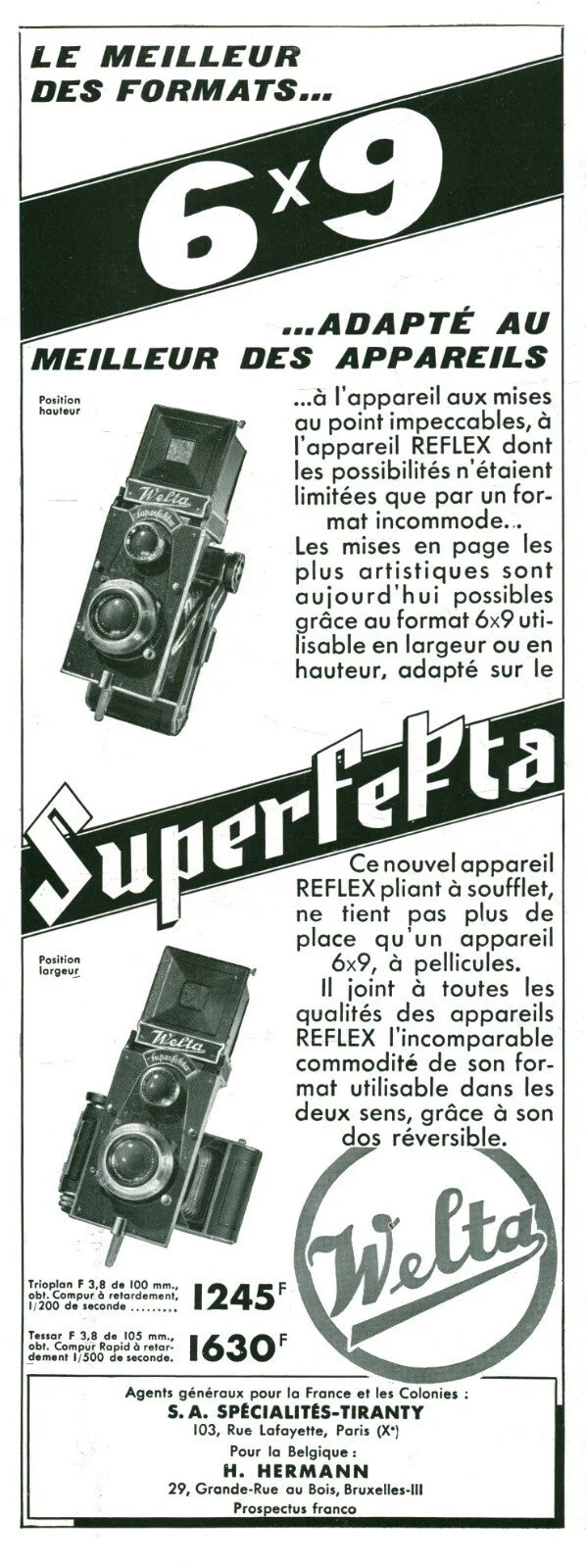
French ad for the Welta Perfekta and Superfekta cameras

 In its first decade, Welta focused on the transition from heavy glass-plate cameras to the more versatile roll-film formats. By the 1920s, Freital and the surrounding Dresden area had become the global epicenter of camera manufacturing, and Welta held its own against giants like Zeiss Ikon. Their early success was built on the folding camera—a design that allowed a high-quality lens and shutter to collapse into a slim, leather-covered metal body.

 The 1930s marked Welta's "Golden Era." During this decade, the company moved beyond standard designs to create some of the most mechanically complex cameras ever made. While competitors were focusing on the emerging 35mm trend, Welta mastered the 120 roll-film market with innovative models like:


  • The Weltur: A rangefinder folding camera known for its incredible build quality and integrated viewfinders.

  • The Perfekta and Superfekta: These folding Twin Lens Reflex (TLR) cameras were engineering marvels, offering the ground-glass focusing of a studio camera in a portable, collapsing frame.

  • The Welti: A foray into the 35mm market that proved Welta could compete with the Leica in terms of precision and optics, often featuring high-end Carl Zeiss Jena or Schneider lenses.

 Welta's pre-war philosophy was to offer a variety of price points without sacrificing mechanical integrity. You could find a simple Welta Trio for the casual hobbyist, or a Superfekta with a rotating back for the professional who demanded perfection. This versatility allowed Welta to export heavily to the UK and the United States, where their cameras were often rebranded for local retailers.

 By the late 1930s, Welta was a premier name in photography. However, as Germany shifted toward a war economy, production began to pivot away from consumer optics. After the war, Freital was part of the Soviet occupation zone (later East Germany), and Welta was eventually absorbed into the state-owned VEB Pentacon, marking the end of its era as an independent, family-founded innovator.

My Camera:

 My Welta Superfekta camera is 7.5" tall without the light chimney opened, and 10" with it opened, by 4" wide, and 3.5" deep with the body retracted, and 6.25" deep when the body of the camera is extended. The camera weighs 3 pounds, 0.2 ounces without film, so it has some heft.

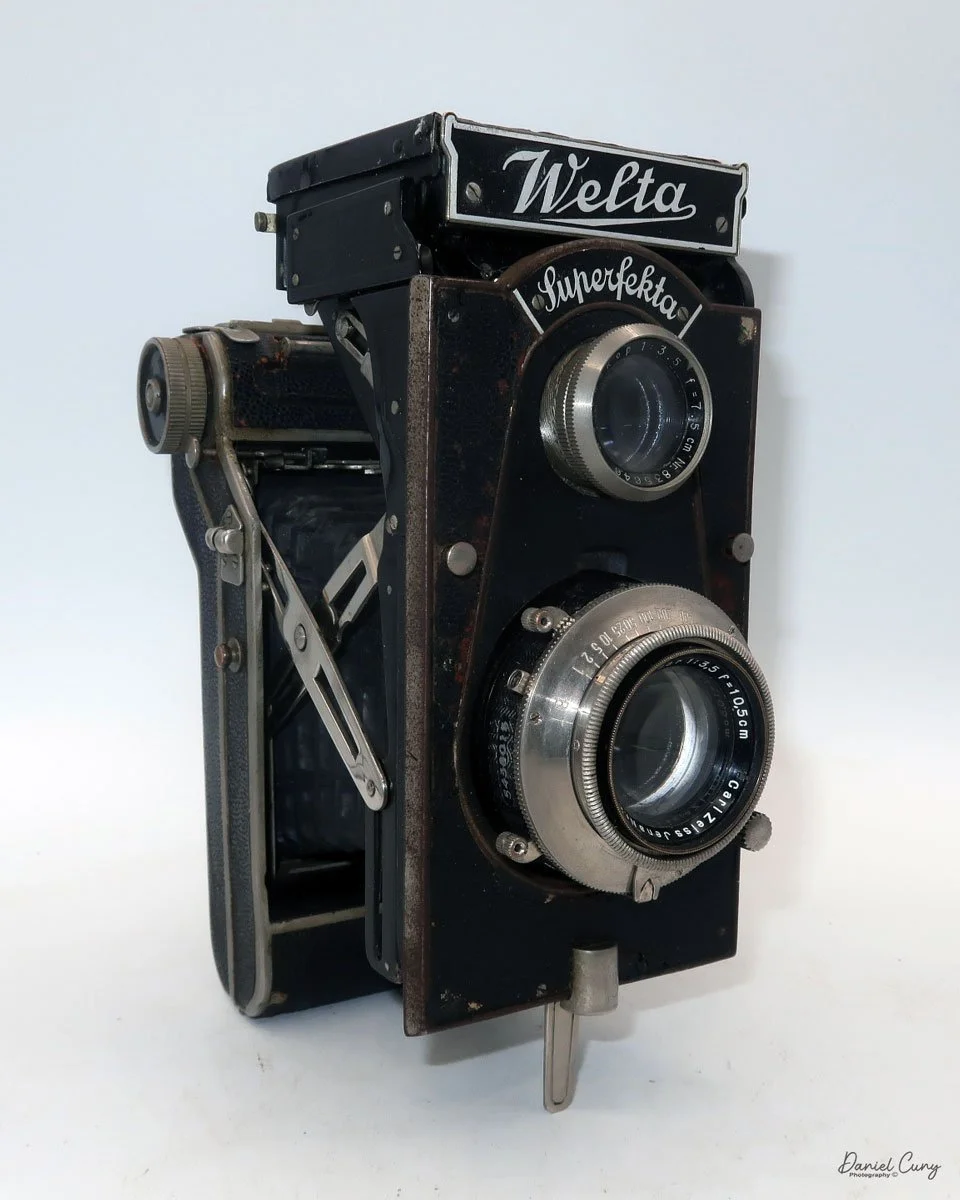
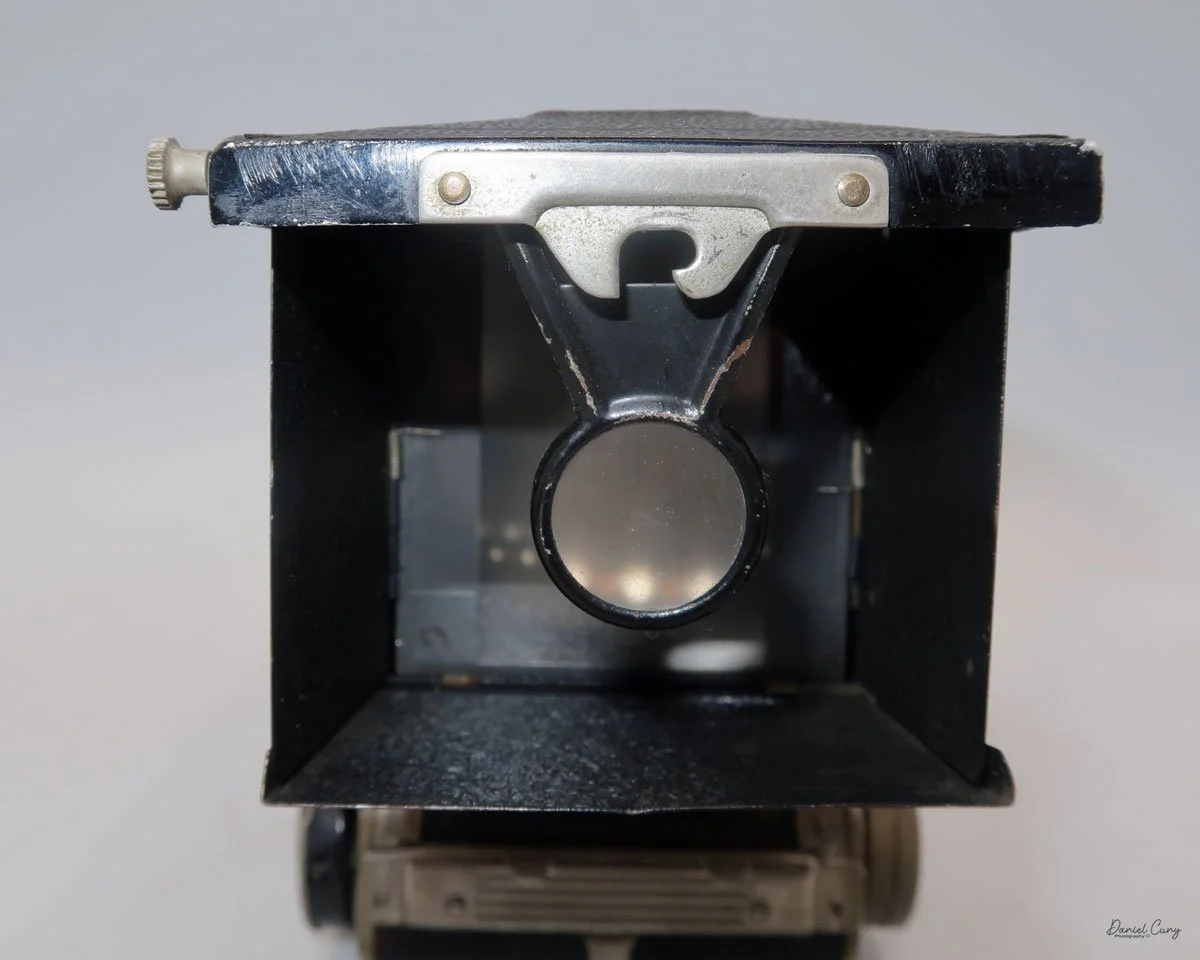
To extend the camera body away from the film chamber, press the silver button on the right side of the camera body, located just below the film winding lever. Pressing the button quickly extends the camera lens area, and you'll be able to see the bellows. By doing so, you'll see how the camera gets its name, a folding twin-lens camera. When I extended the camera's front from the rear, I noticed the bellows were in excellent light-tight condition.

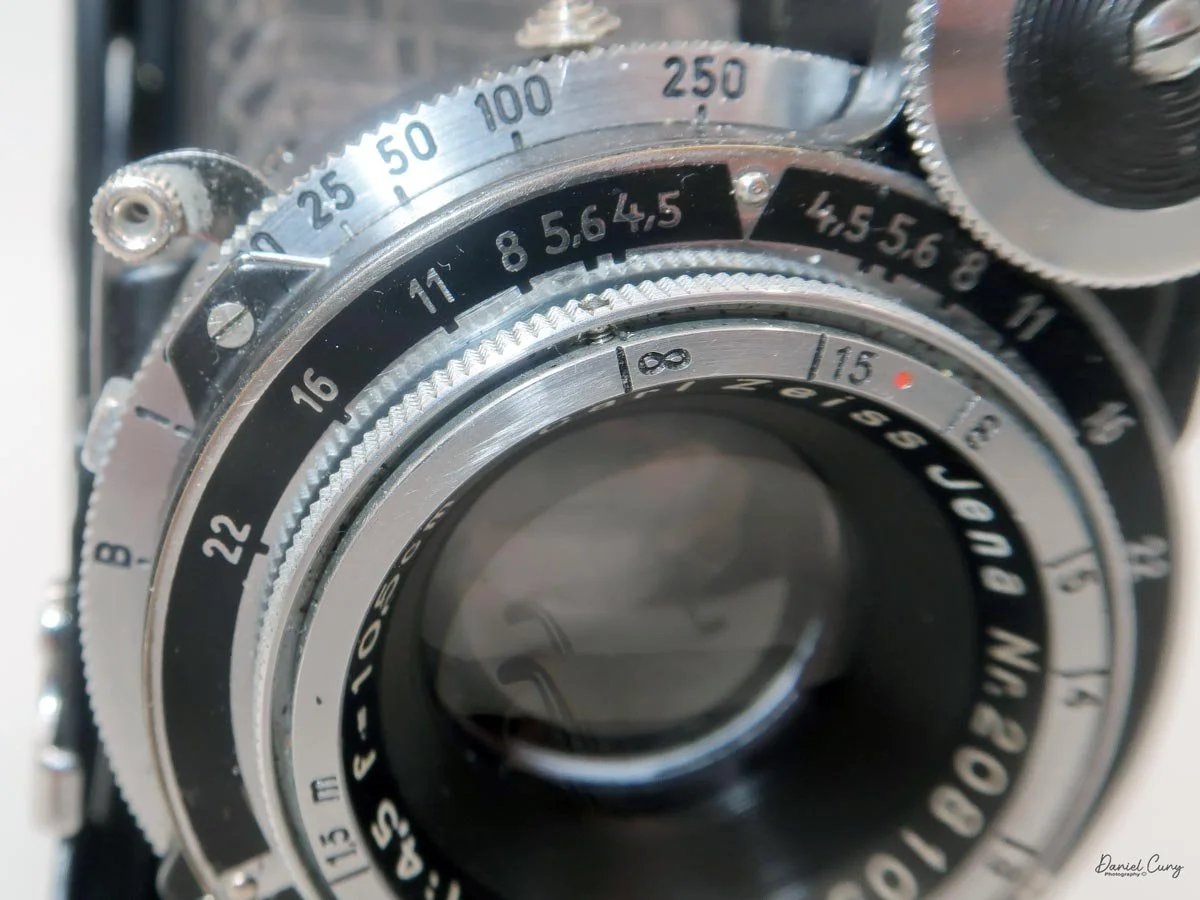
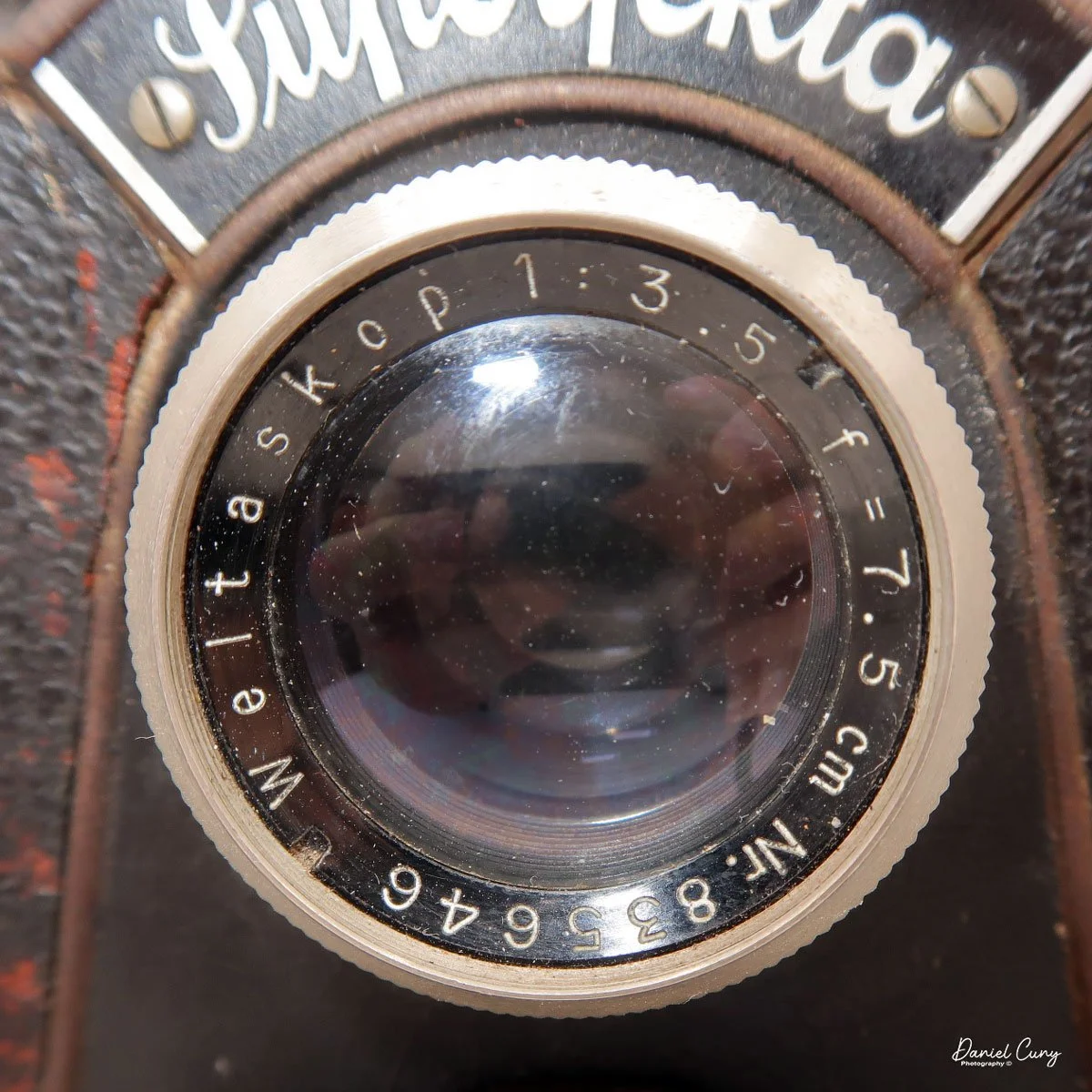
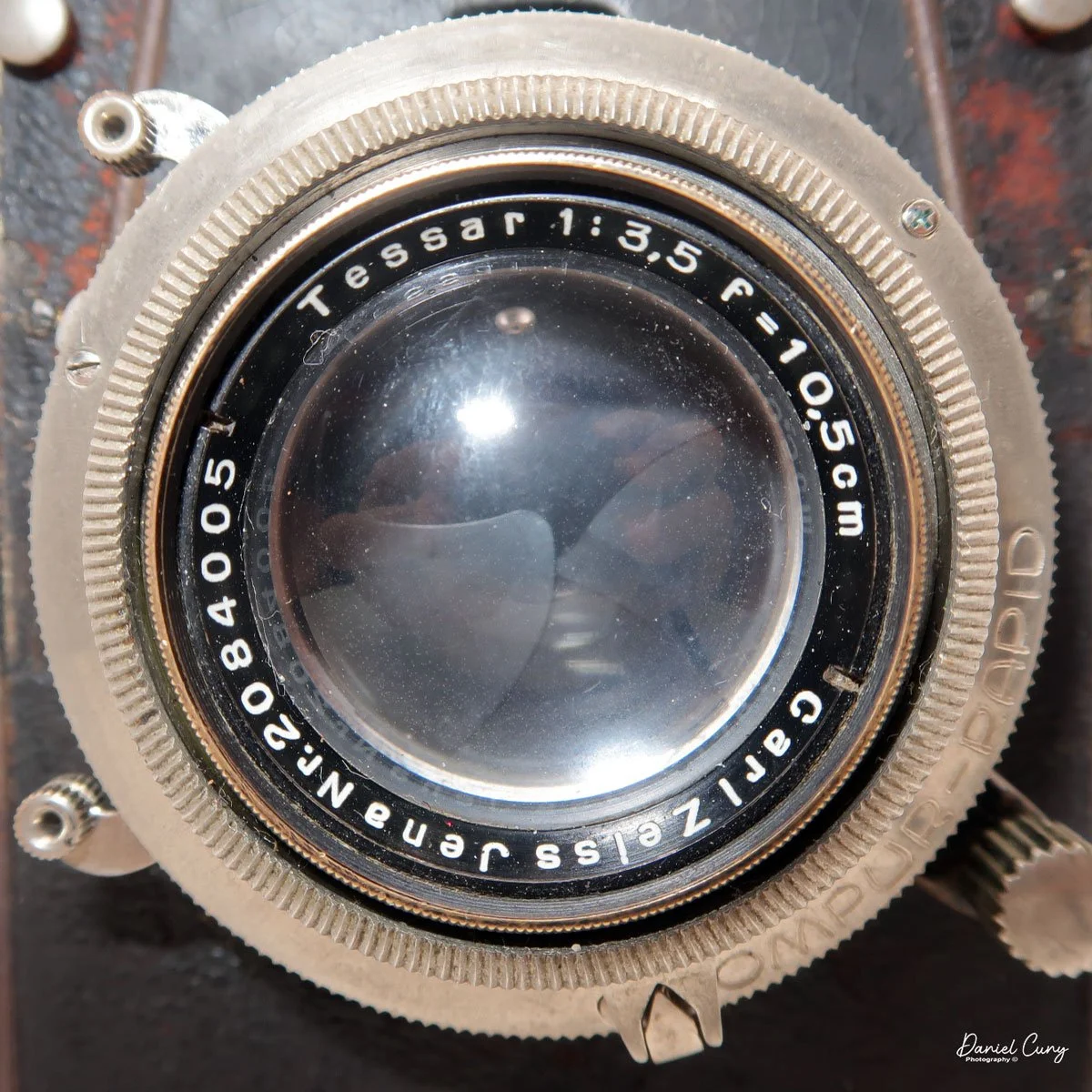
 My camera has a 7.5cm f/3.5 Weltaskop viewing lens, along with a Carl Zeiss Jena 10.5 F/3.5 Tessar taking lens, so the viewing lens is wider than the taking lens, and the taking lens is in a Compur-Rapid shutter with shutter speeds from 1/400 to 1 sec. along with "B", and "T". The focus lever is located on the left side of the lens when you're holding the camera, and it slides up and down to focus on your subject. 

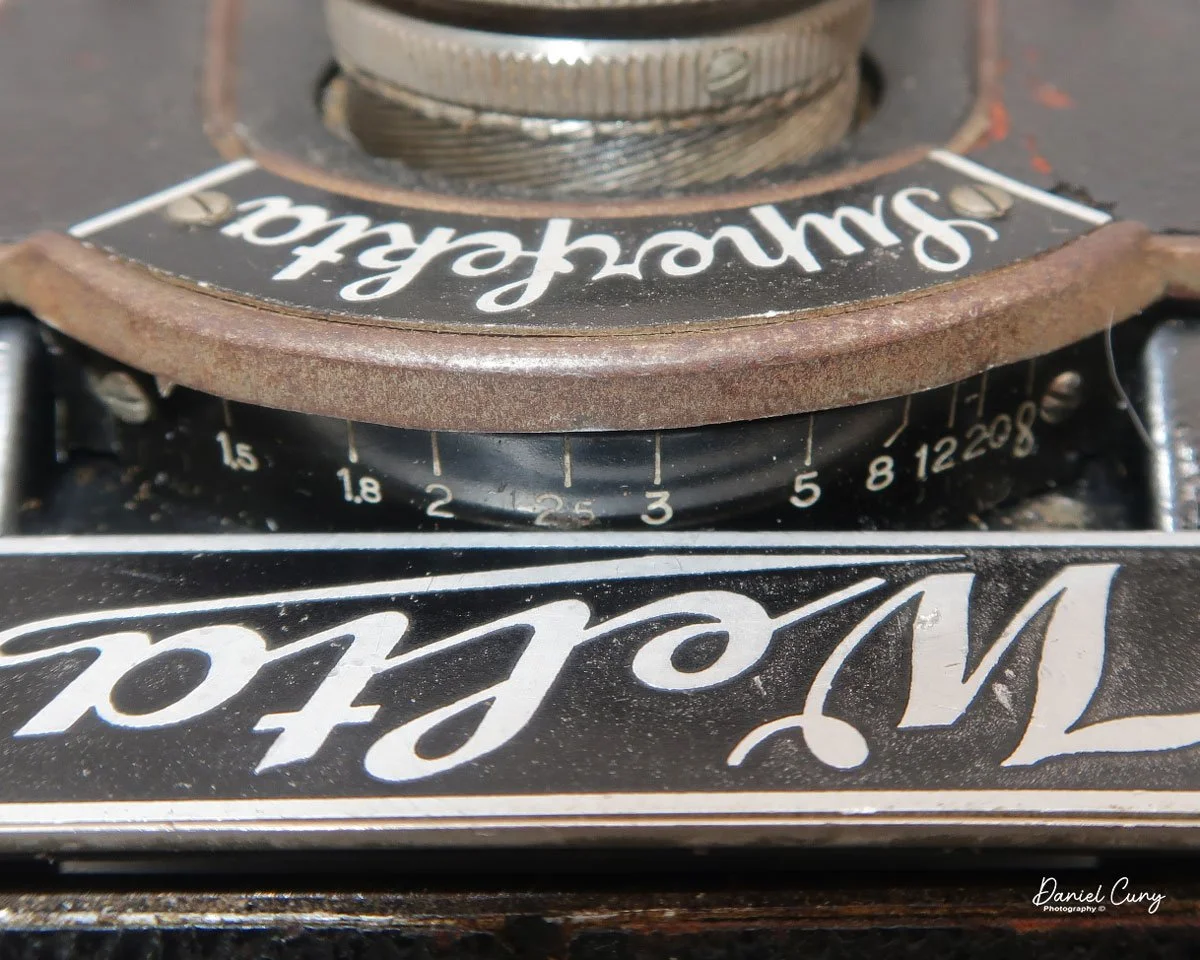
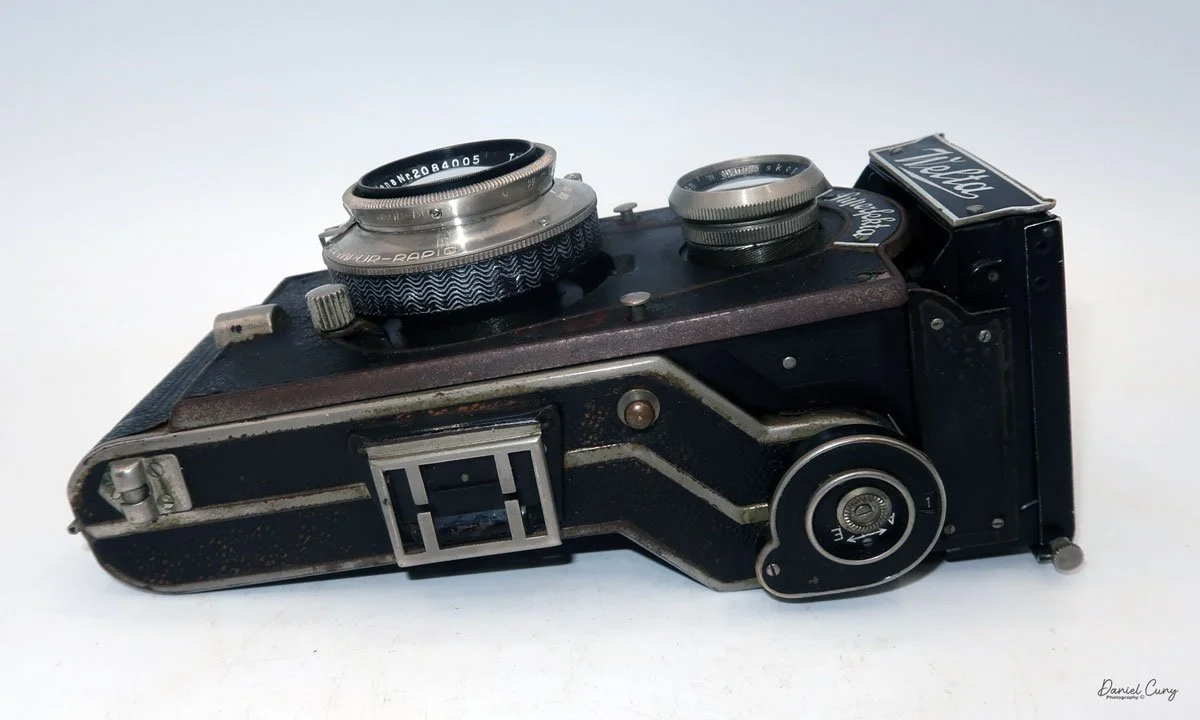
There is also a focus scale along the top of the camera, between the Welta sign on the film body and the Superfekta sign on the lens area. As you slide the focus lever up and down, you'll see a triangle move from side to side, indicating the distance to the subject on the focus scale, which is in meters.

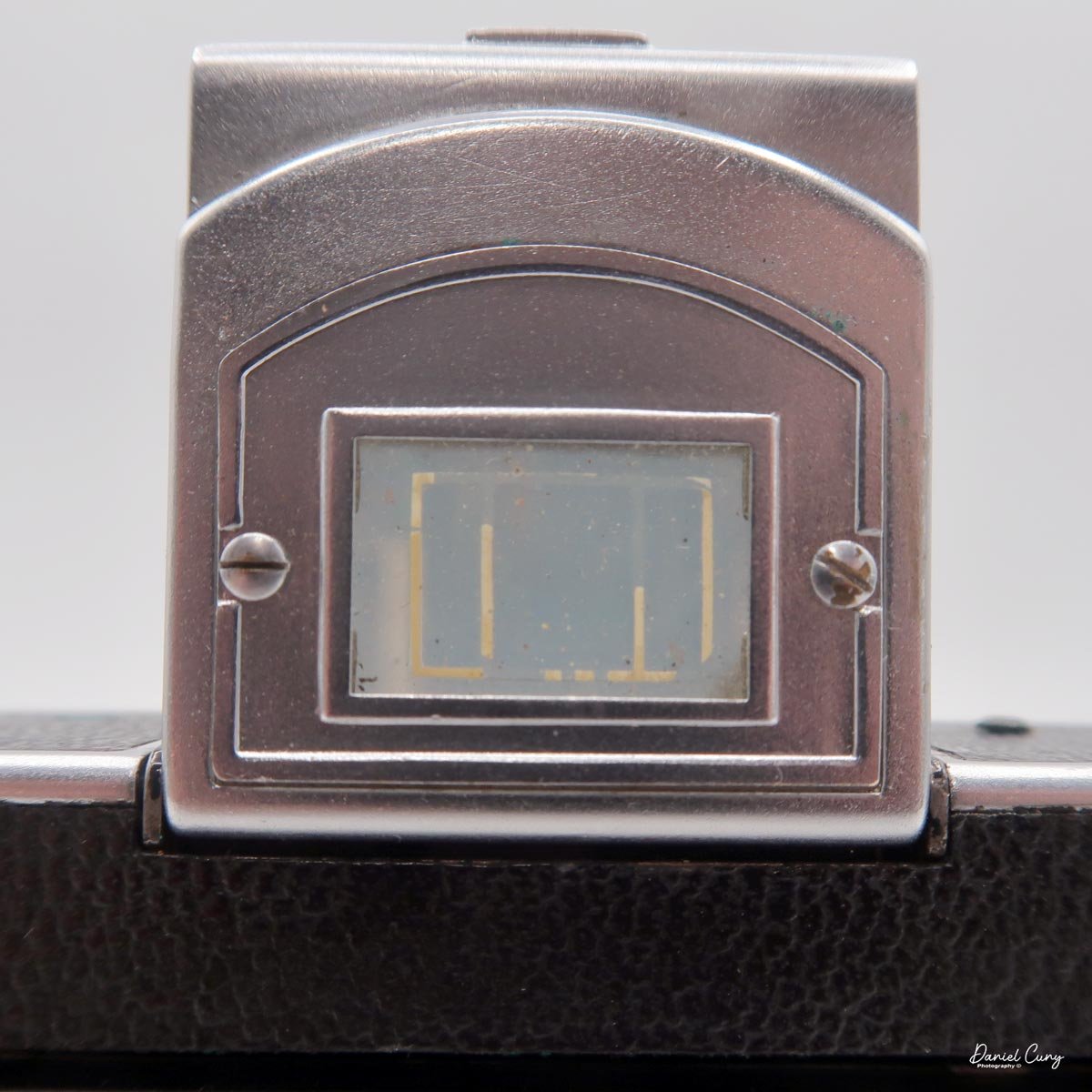
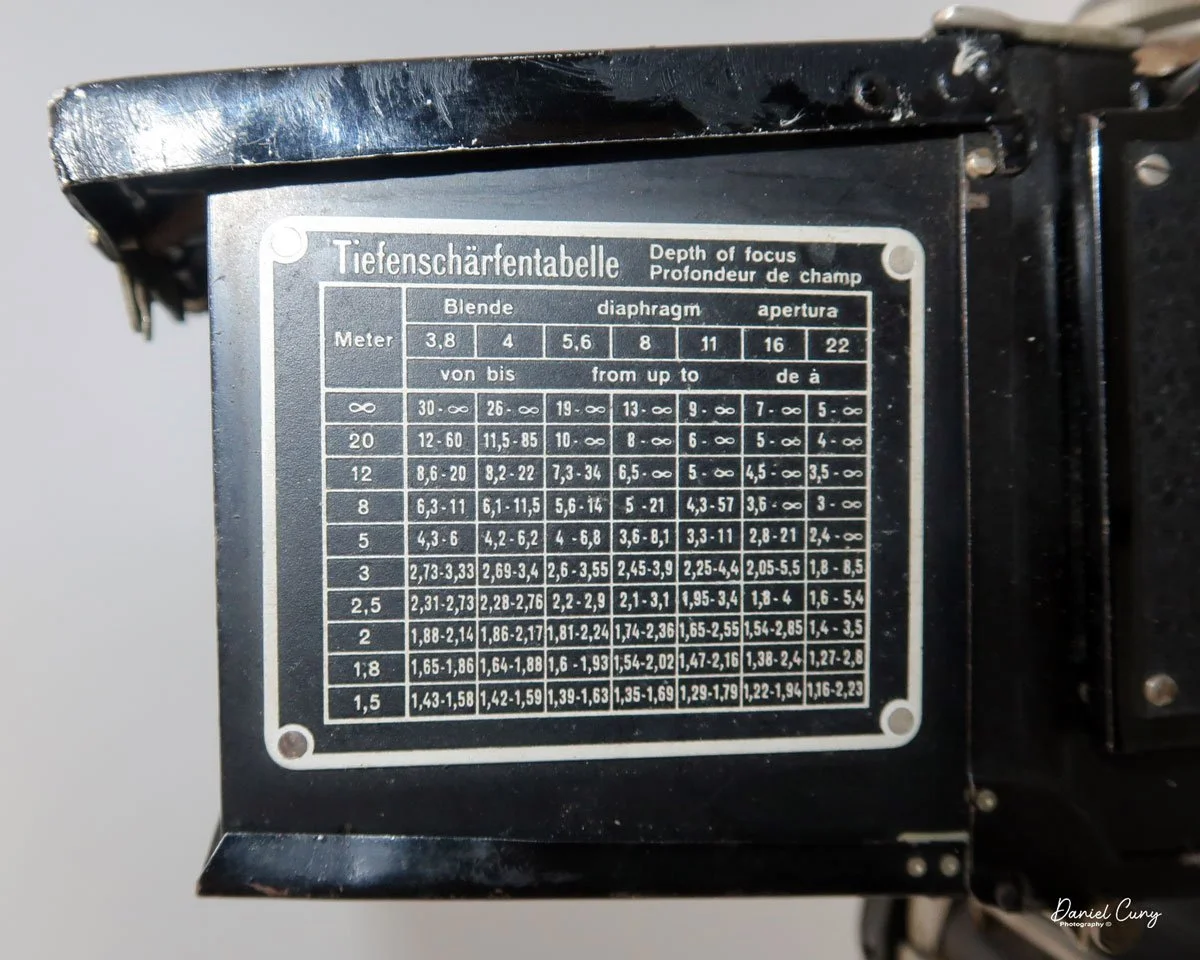
 Along the back of the camera, by the viewfinder, there is a button to press to open the light chimney. The light chimney popped up, and along one side is a depth-of-field scale for the camera, and on the front is the magnifying lens, which flips as it should. 

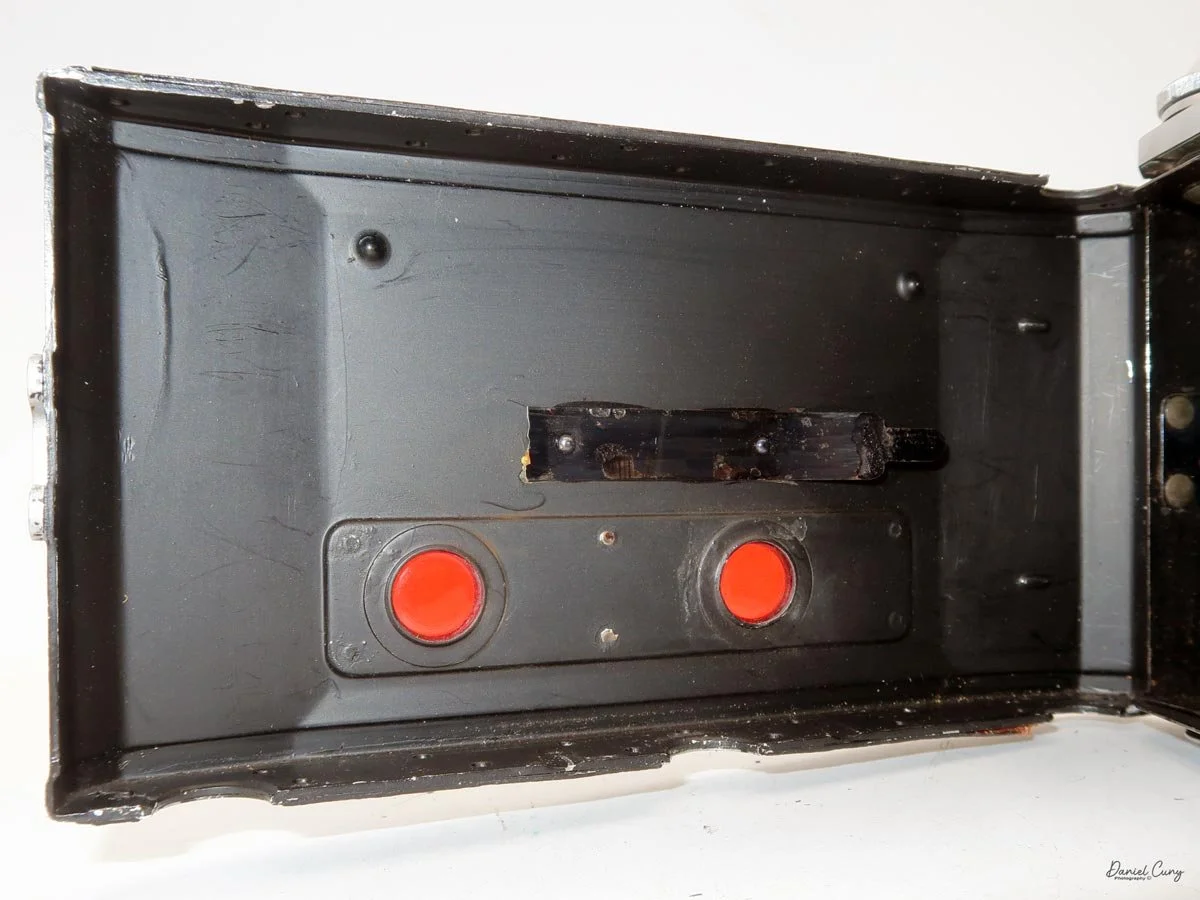
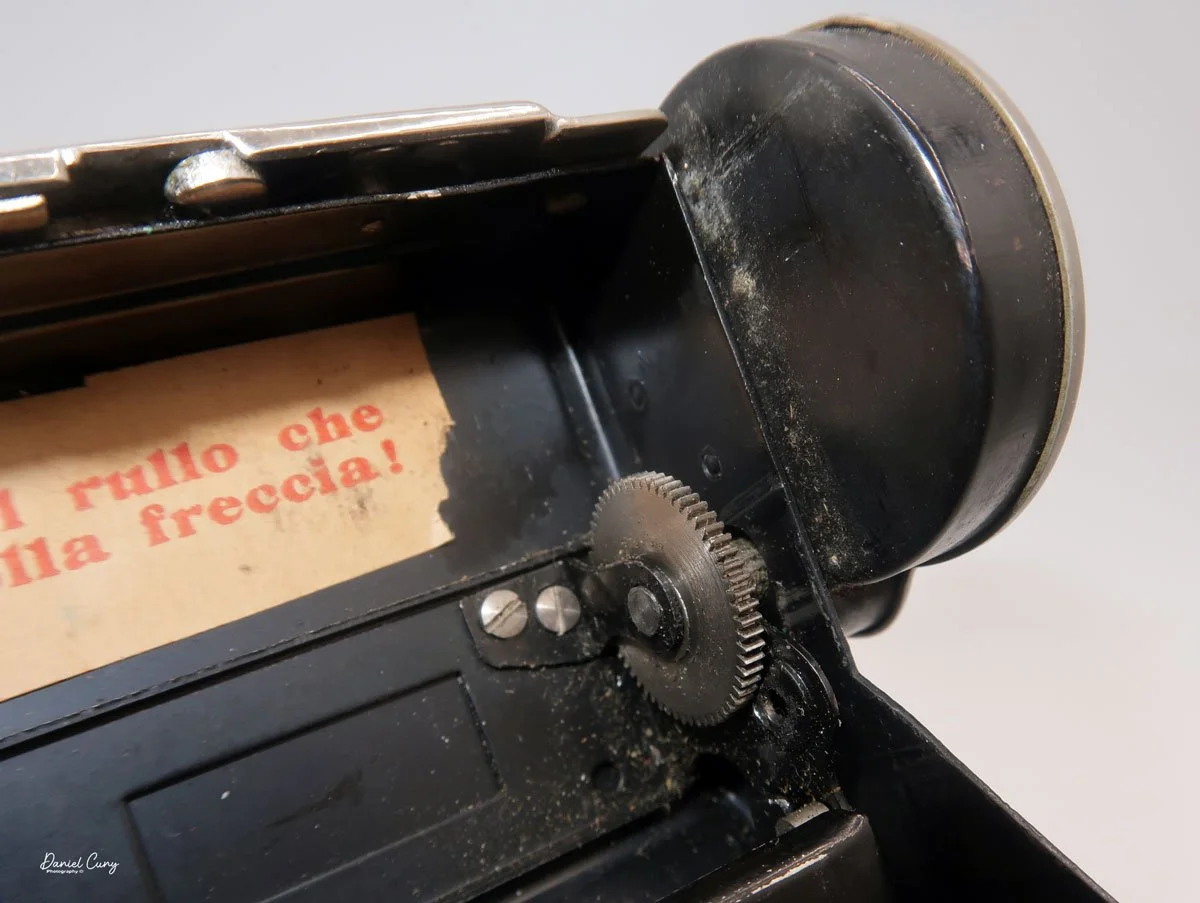
On the back of the film body is another sliding lever that you move to the left, in the direction of the arrow, and the back will open. Opening the back of the camera, I noticed that the film advance roller, which activates the frame counter, is missing, so the frame counter isn't operational on this camera. Luckily, there is a red window on the back door so you can see the numbers being transported as you roll the film from one image to the next. 

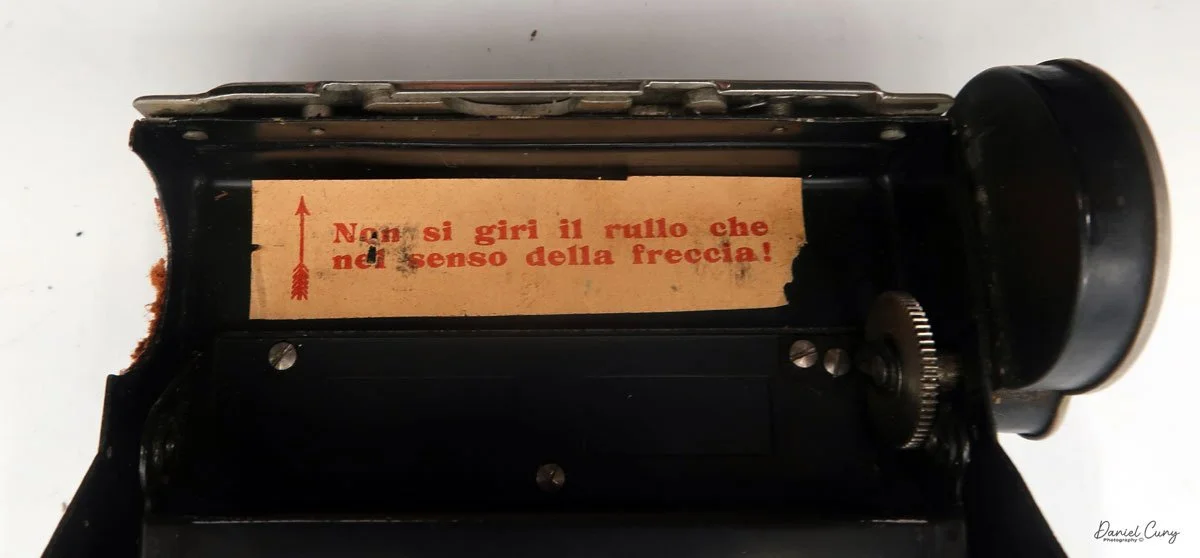
 I also noticed a paper sign glued to the inside of the back door at the top, which read, "non si girare il rullo che nel senso della freccia" (translation from Italian to English: "do not turn the roller in the direction of the arrow").  This message on the inside tells me the camera is originally from Italy. I guess the camera was made for the Italian market, but the reseller may have added that; I'm not certain. Still, it's interesting that a German camera was sold in Italy and found its way to the USA.

To load the camera with film, the chamber where you put in a fresh roll of film pulls up to make it easier to put in the film, which is a nice feature in the camera. Otherwise, the camera loads just like many roll film cameras, but it would have been nice to have a frame counter that advances from the roller on the back to indicate the frame numbers. I'll just have to do it the "old-fashioned" way and look through the red window to get to the next frame when I shoot.

To collapse the camera lens area into the camera body, you'll need to press in two silver buttons on the front of the camera, placed between the viewing and taking lens, and press the lens area into the film body, which is extended by a couple of scissor struts on each side of the camera. Be sure to retract the camera stand leg, under the front lens area, just behind the tripod socket, before closing the camera. If you don't do this, the camera will not close. I know because I've tried a few times by accident.

 When you close the camera, another interesting thing is that there's a roller at the tip of the film area on the outside. When you close the lens into the film body, the viewfinder rolls along the roller, sliding it forward and covering the focus scale. Given that the camera is almost 100 years old, it's still interesting how it opens and closes mechanically. 

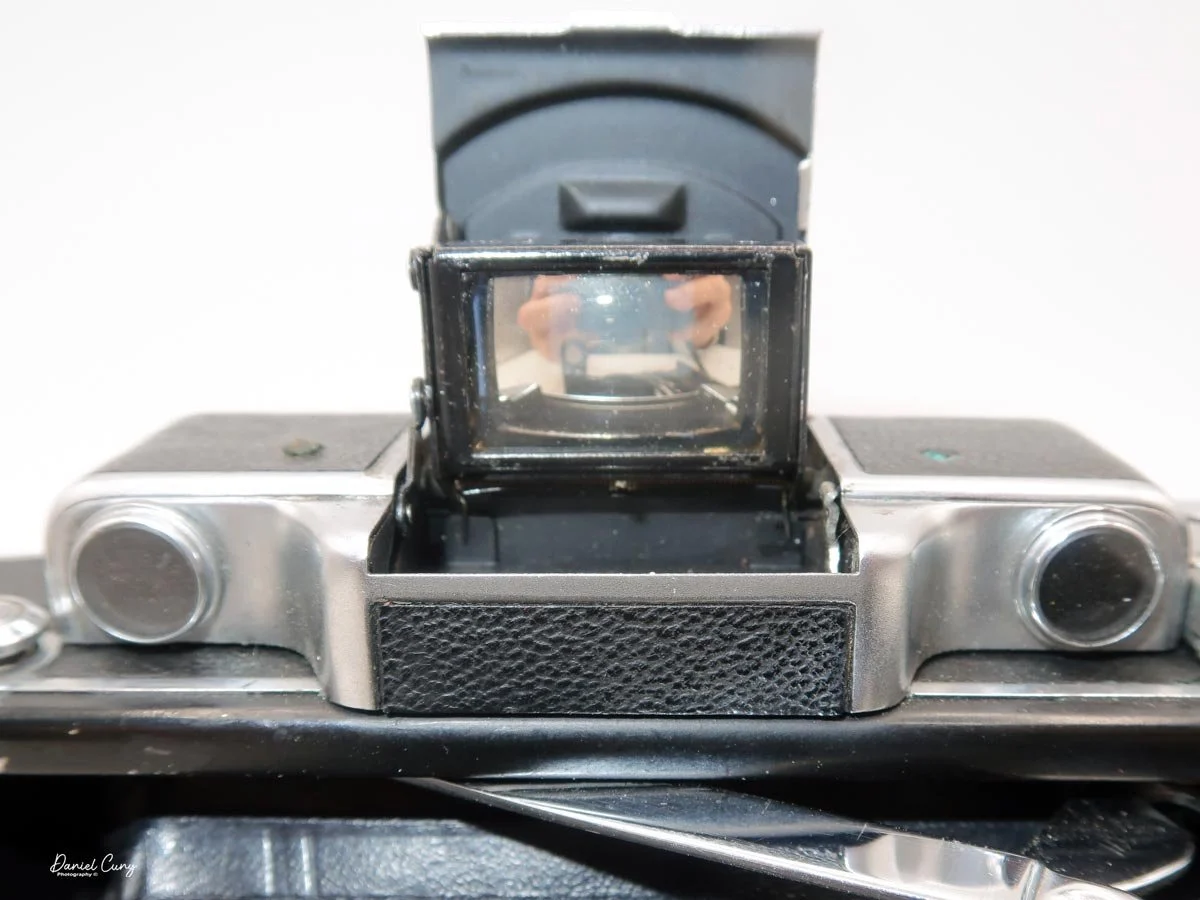
If you don't want to rotate the film chamber when shooting, there is a flip-up sports-type finder on the side of the camera you can use if that's easier for taking horizontal images. It just gives the photographer another option when using the camera.


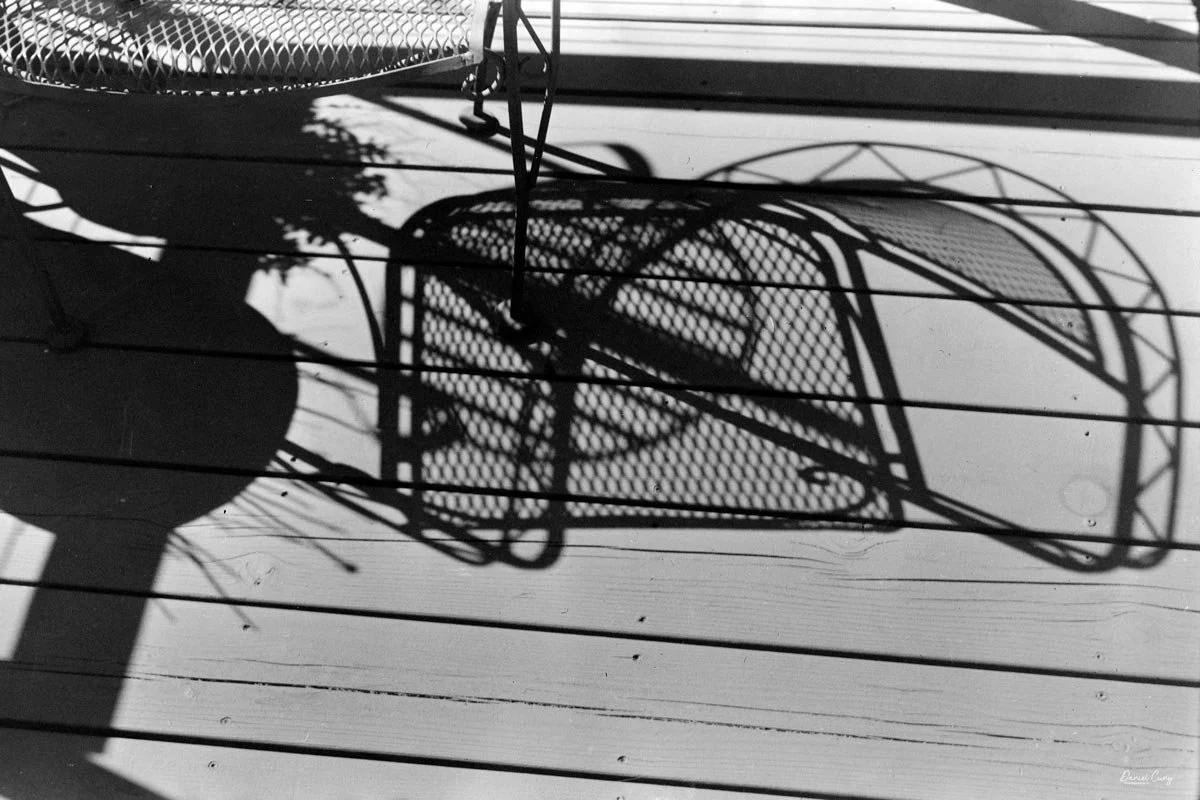
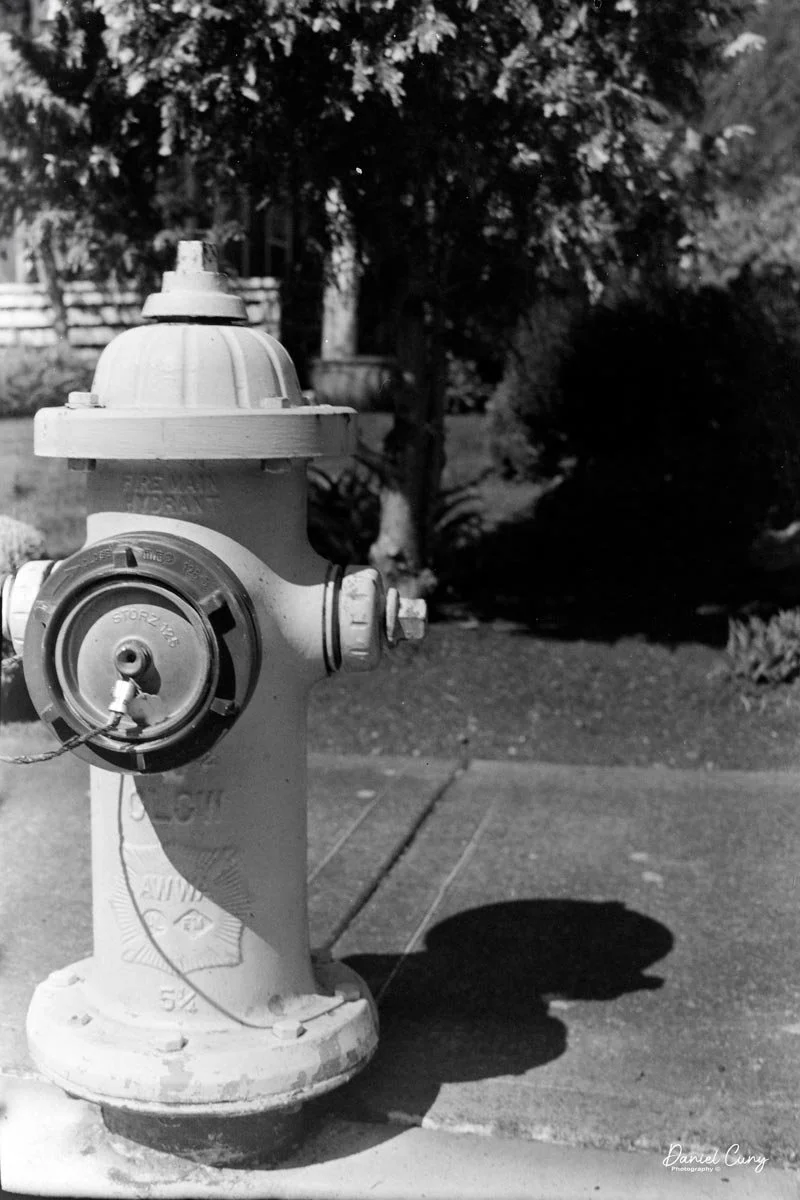
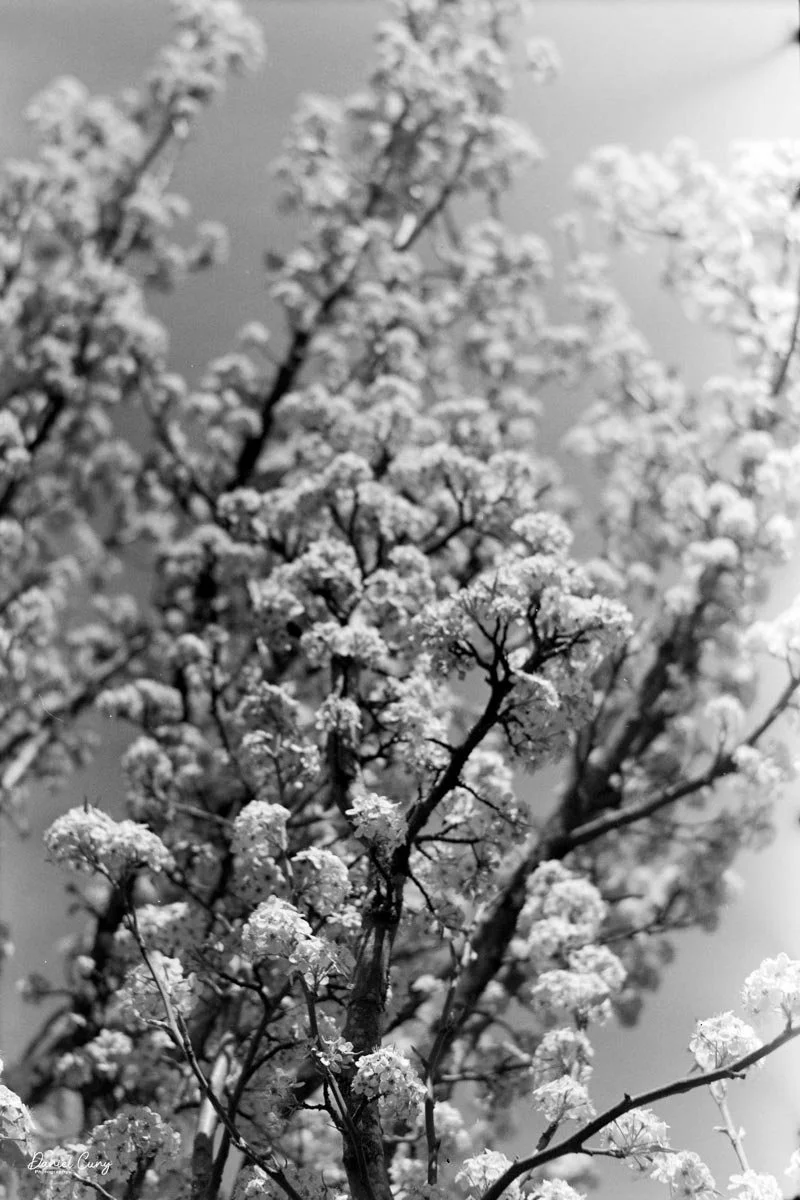
My Results:

 I don't have a case that fits my Welta Superfekta camera. The camera doesn't have the standard loops you can snap into a carrying strap, so when I went out shooting a few times, I just put it in a pouch-style case to carry it and took it out when I was ready to shoot.

 Looking at the side of the camera, there are a couple of studs and other areas where a strap might fit, but without a manual or a nomenclature for the items on the camera, I'm unsure what they are used for.

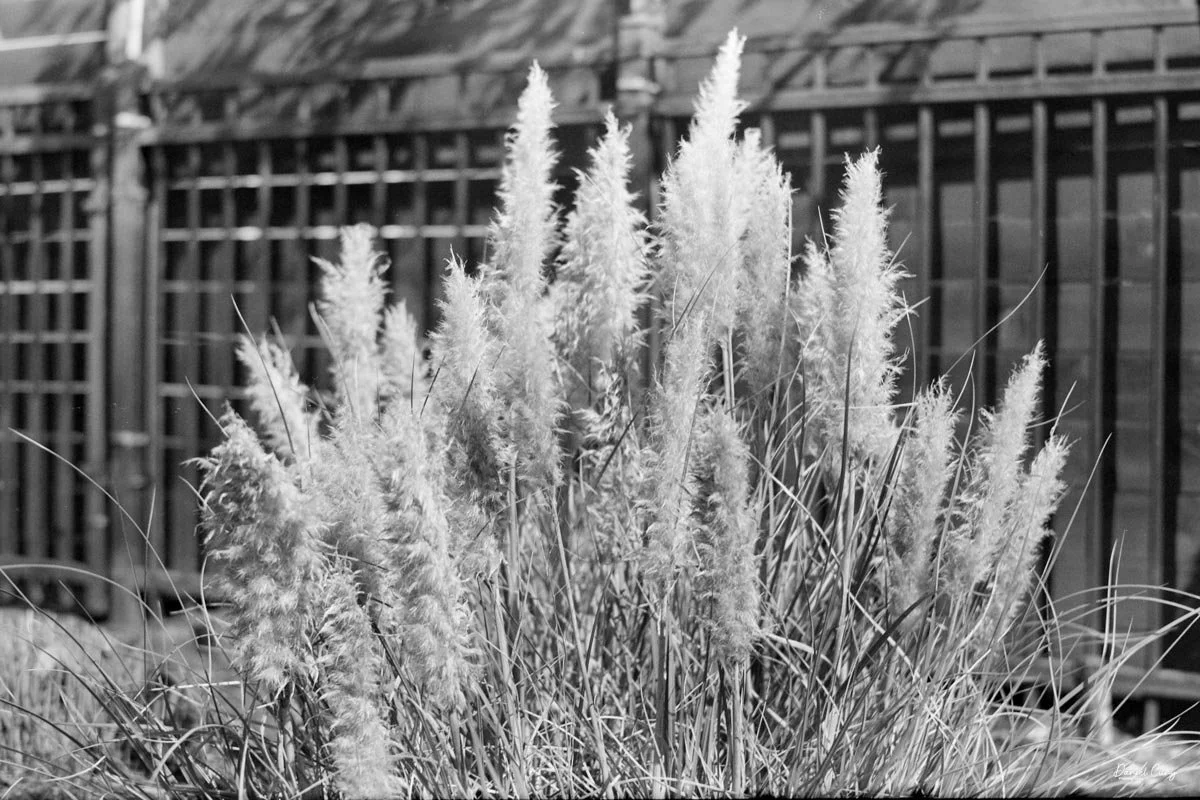
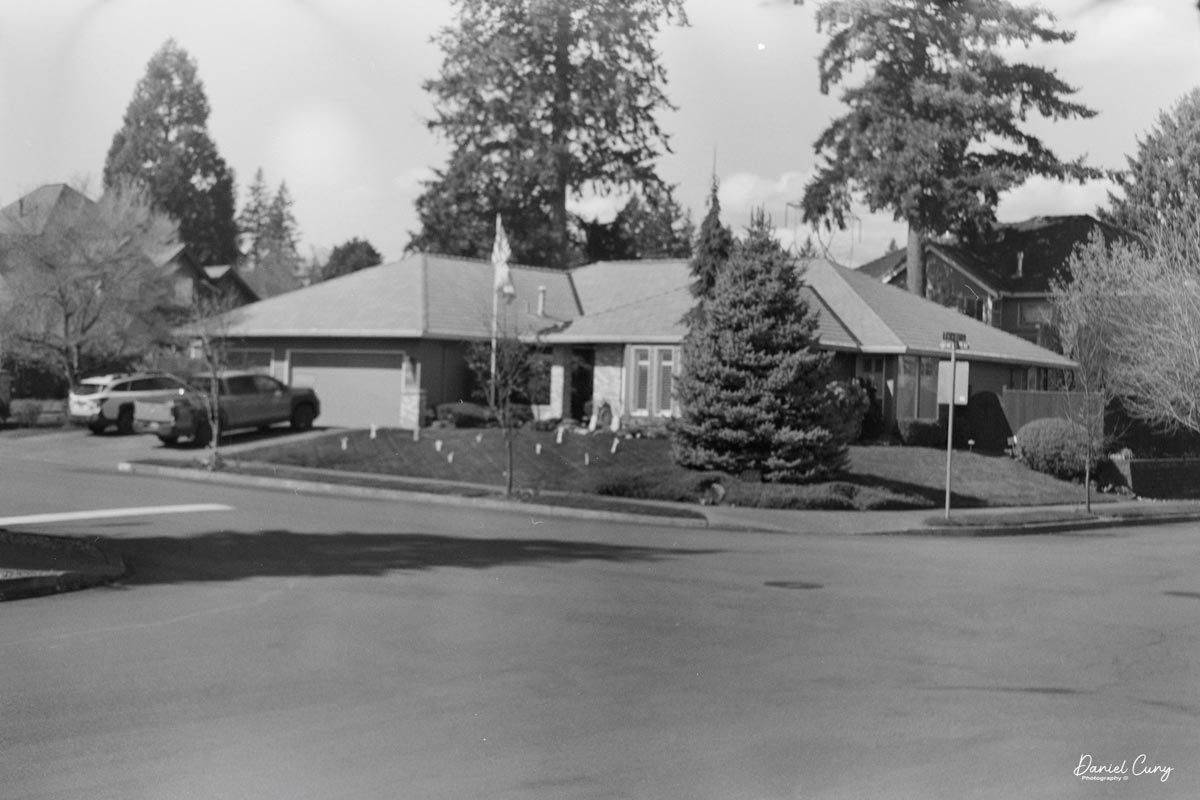
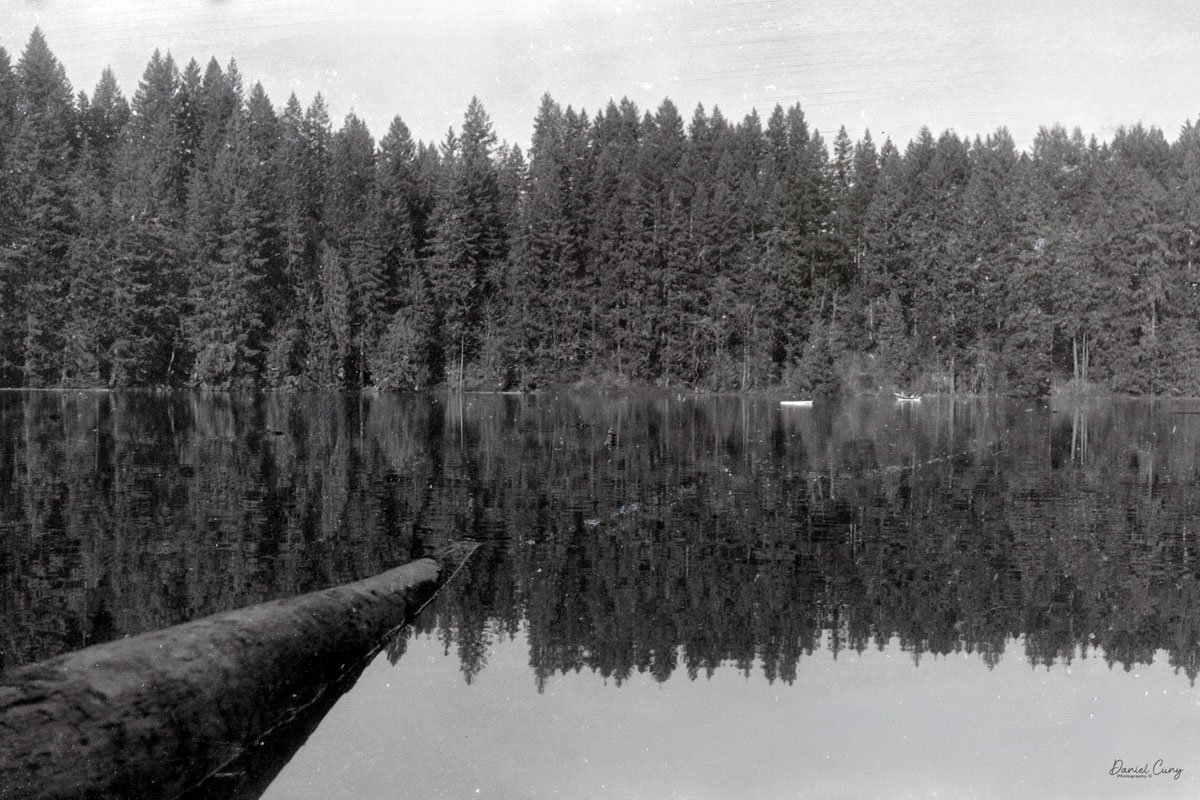
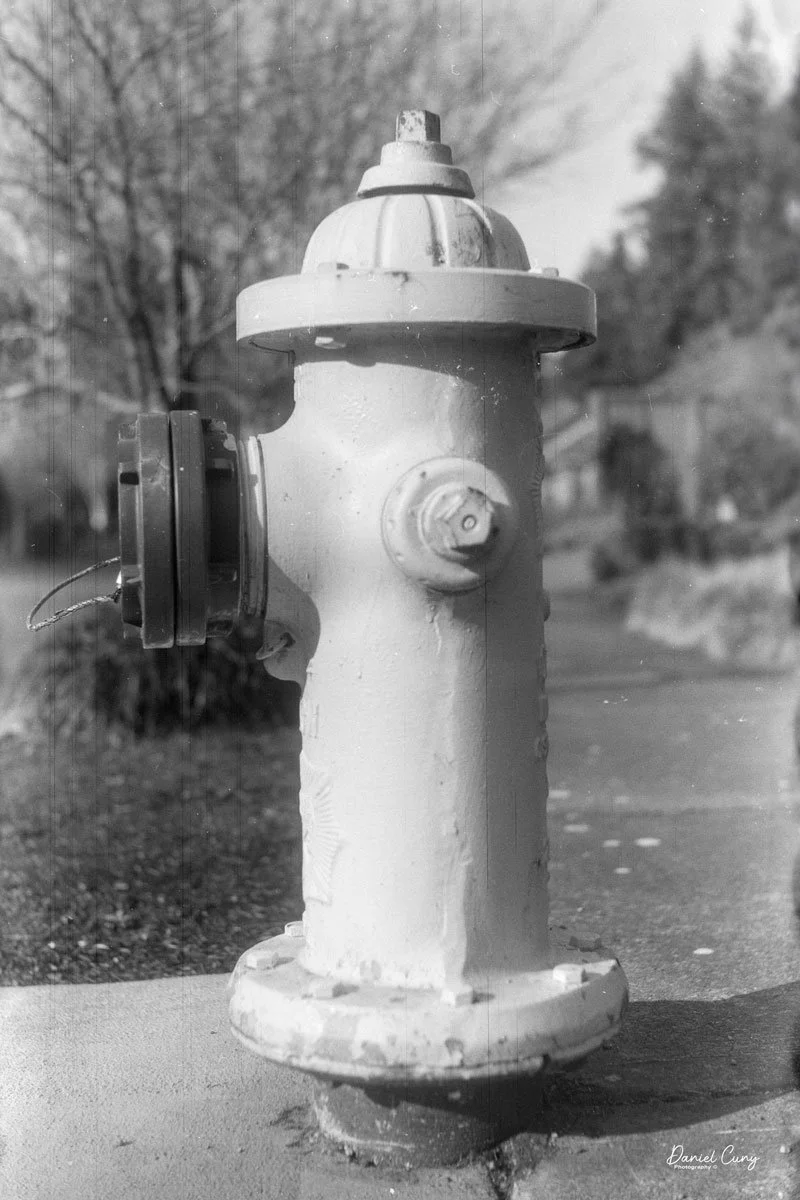
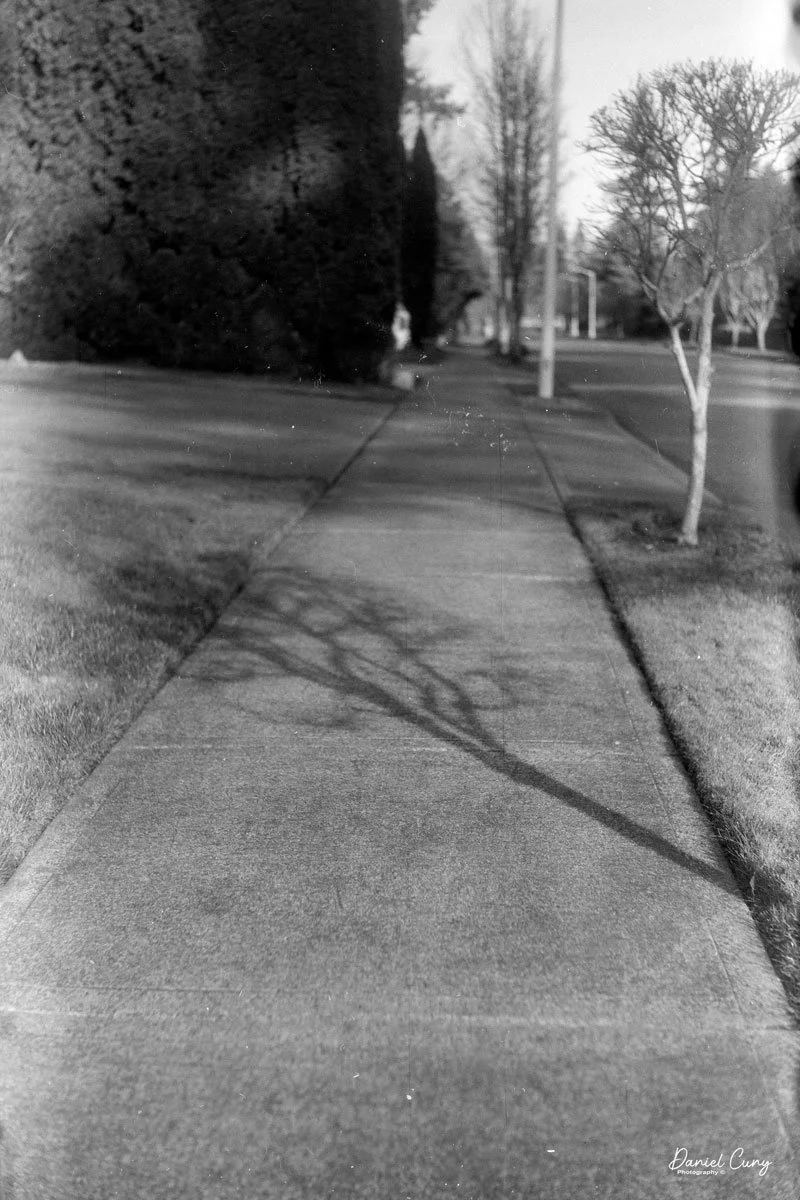
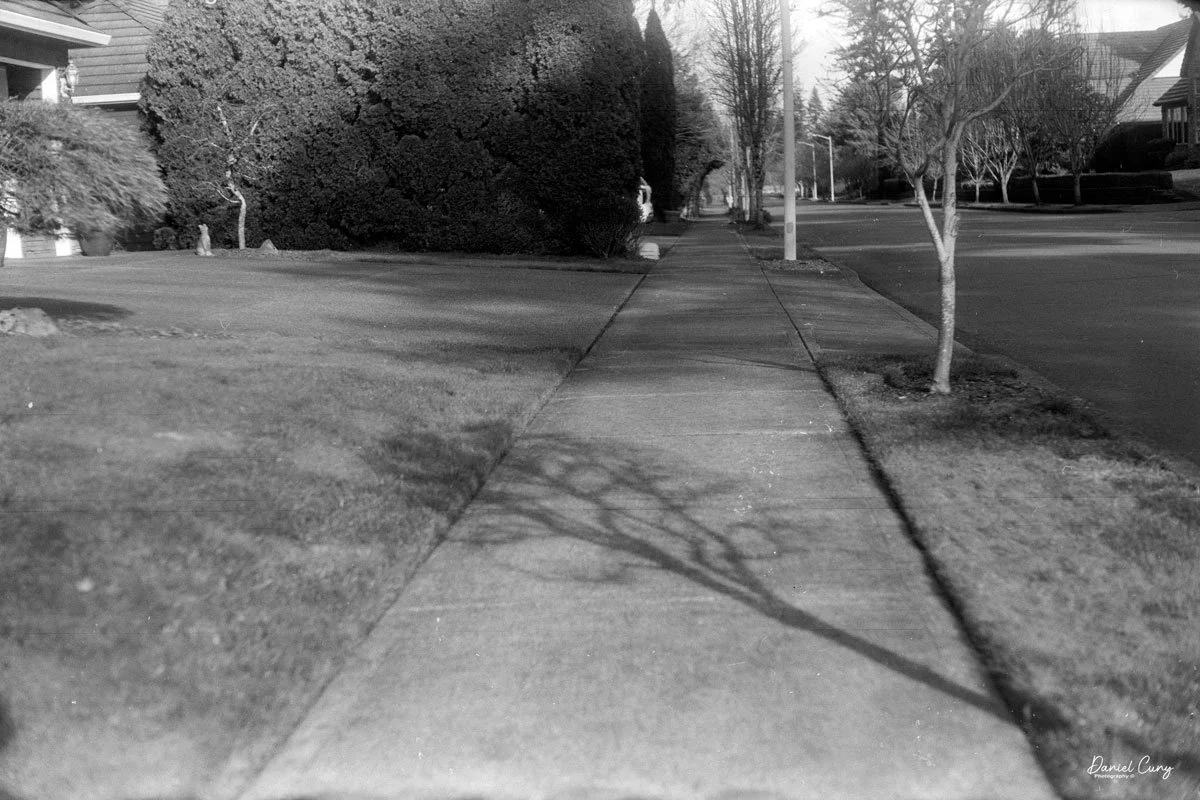
 I took the Welta Superfekta out a couple of times to shoot with: once to a local lake and another time while walking around the neighborhood to get closer-up images.

 Here are the results from my two times using the camera.

Conclusion:

 The camera's results underwhelmed me, as one of two things is happening. First, I didn't think the images would be as sharp as I had imagined; that may be because something happened to the camera, like a drop or impact, which is also why the camera doesn't flip all the way horizontally when shooting. 

 My weakening eyesight may also cause it, but because of eye surgery I had last year on my right and dominant eye, I'm becoming more and more dependent on using my left eye for focusing, which is difficult for me at times. Personally, I feel it's more the first issue: something tweaked the camera body, and the lens doesn't align properly, which is why I wanted to shoot the second, more close-up images walking through the neighborhood.

 Nonetheless, it's somewhat awkward to hold without a neck strap to keep it steady. Still, I absolutely love the camera's ability to rotate the film back for both vertical and horizontal photography. It's a wonderful camera to have in my collection, and for the price paid, even with the servicing, it's still a bargain.

Welta Perfekta and Superfakta side views

 Thank you for taking the time to learn about this wonderful photographic marvel from almost 100 years ago.

 Here's a link to my other Camera Reviews.

 Cuny's Cameras and Photo is my online eBay store, which sells some of the cameras reviewed, along with many camera and photo accessories.

 Until next week, please be safe.